Lanhydrock House, Cornwall

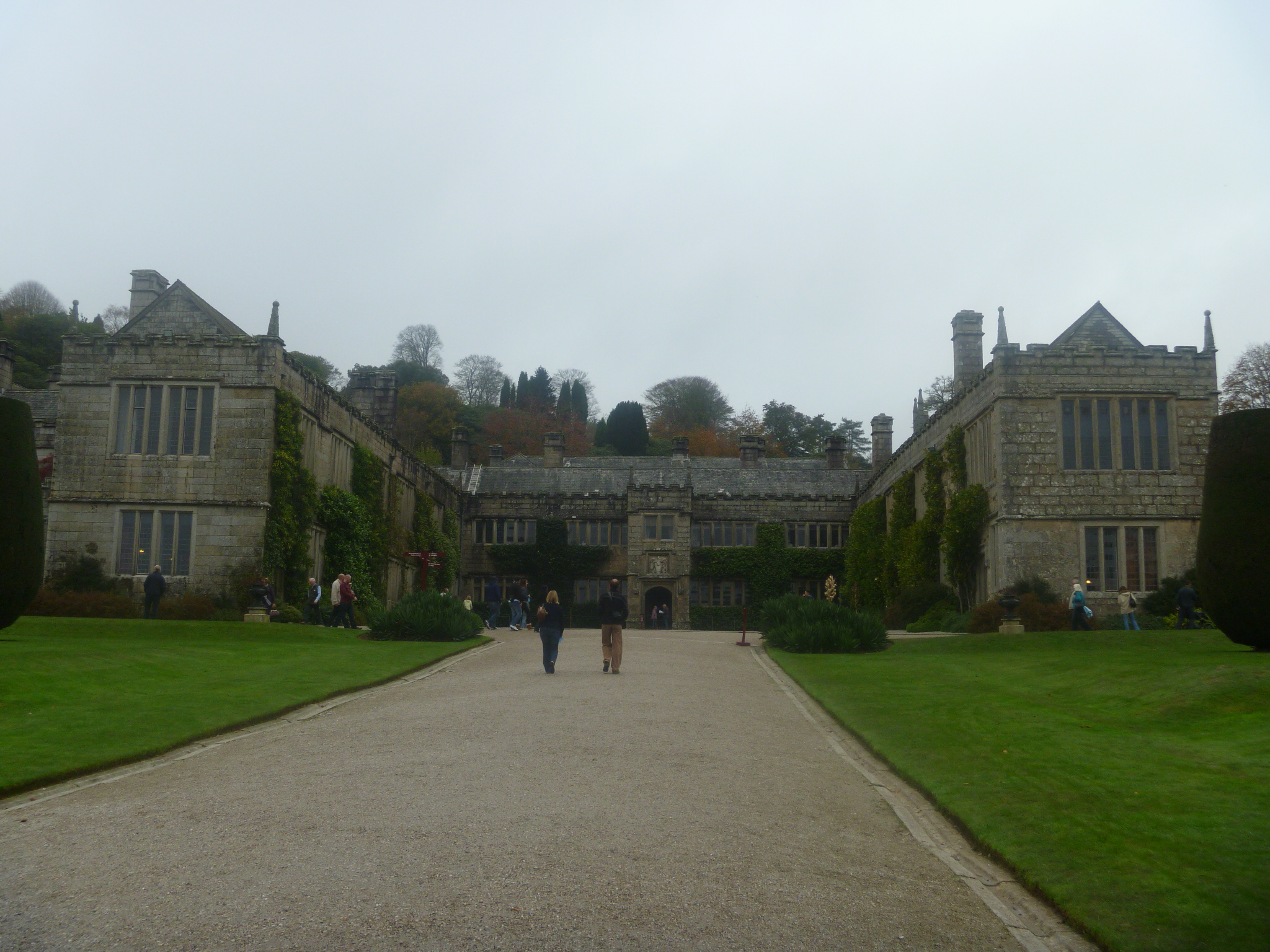
Yesterday I took the train from Totnes, in Devon, to Bodmin, in Cornwall, from where, I had discovered recently, it is possible to walk along the carriage drive for a mile and three quarters to Lanhydrock House“The finest house in Cornwall”.  The weather stayed dry but the clocks were put back an hour on Saturday night so the days are now shorter.
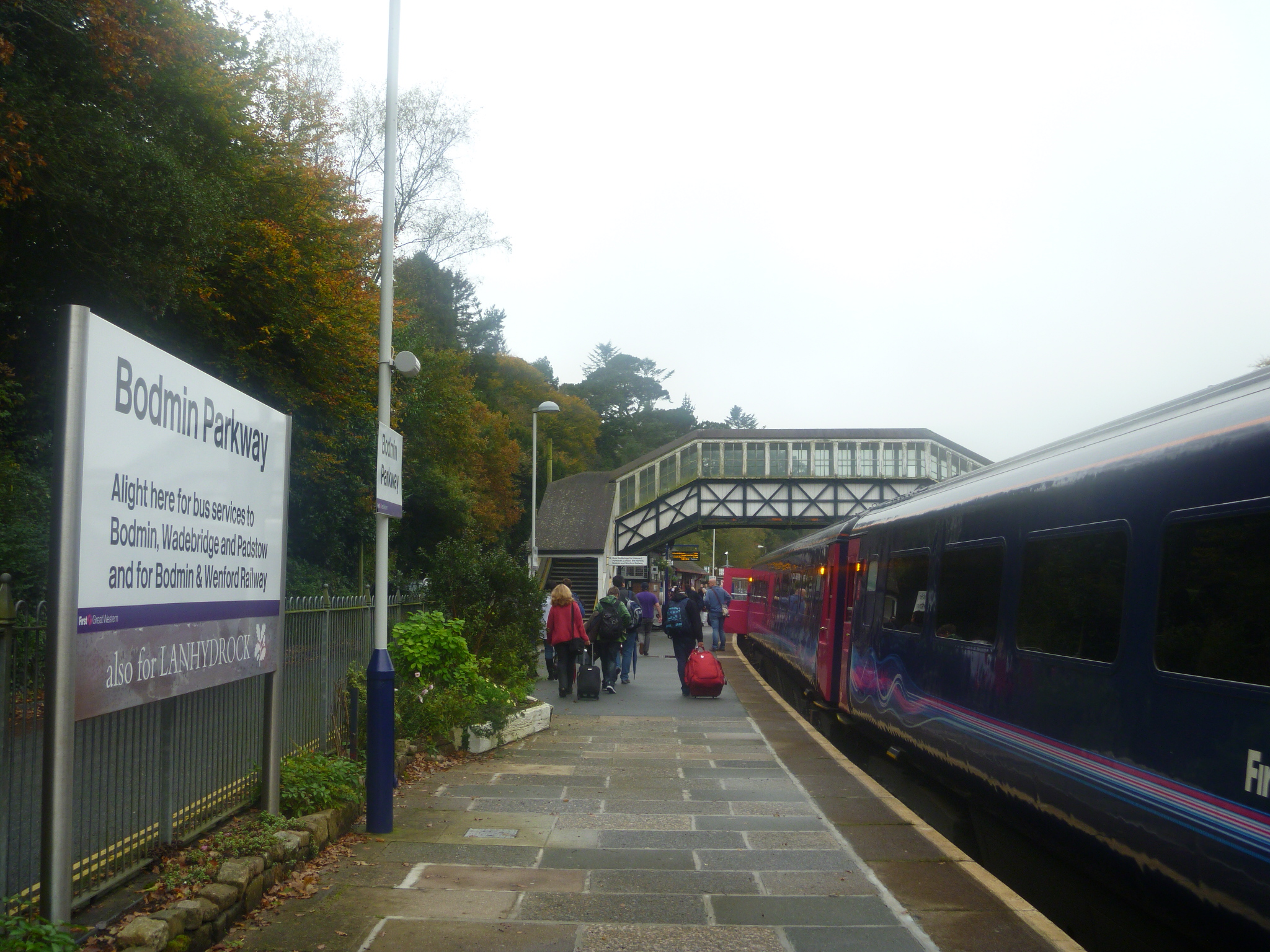
When you alight from the train at Bodmin Station it is a bit like stepping back in time. There’s a hustle and bustle as people are met and packed into waiting cars and there’s a delightful station buffet … in the former signal box. Then the London train pulls out of the station on its way to Penzance, the cars roar away and all is still and quiet and you can hear the birds sing. But maybe it was just the whistle of a steam train whose line shares the station that took me back to earlier days.
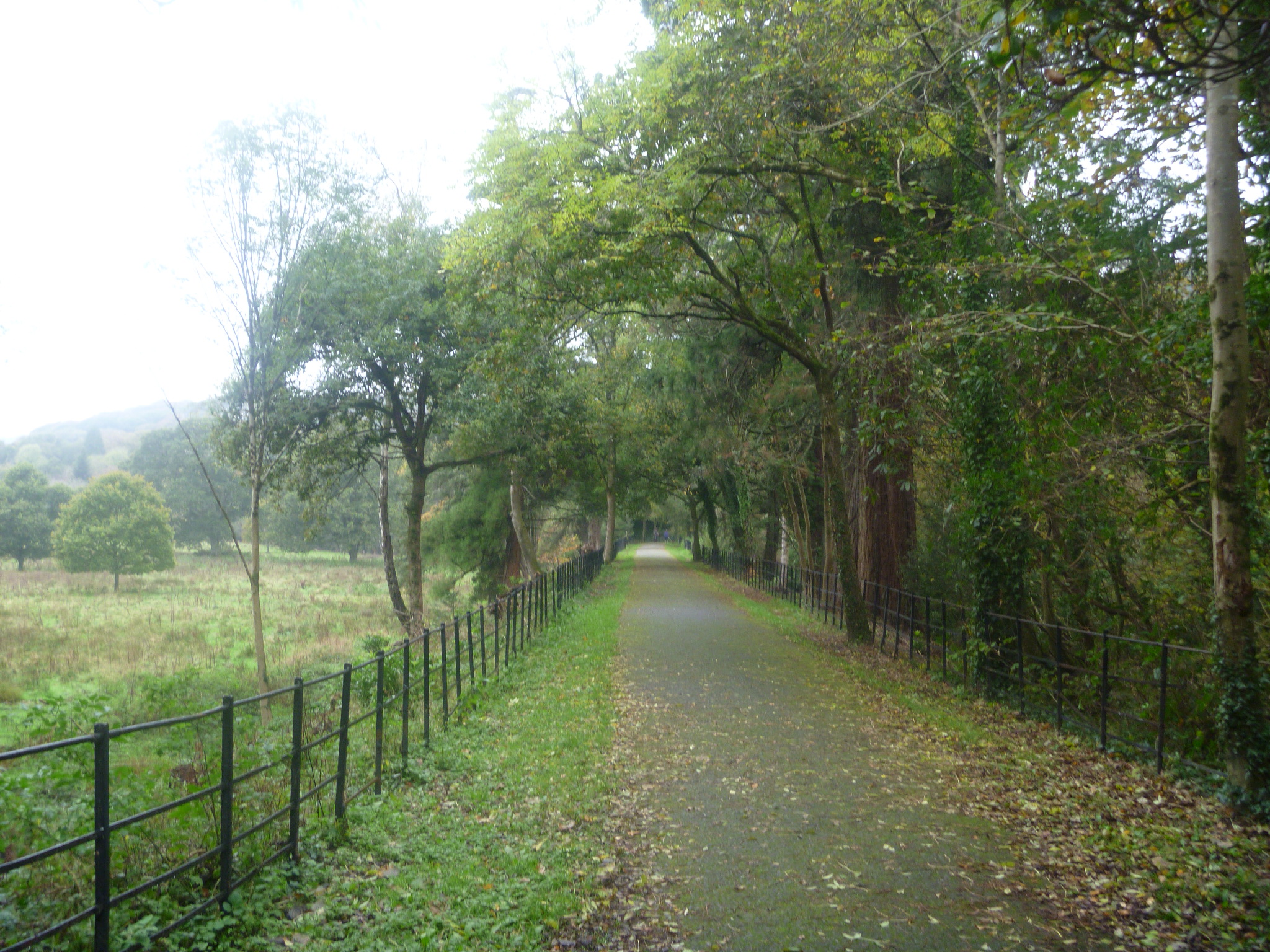
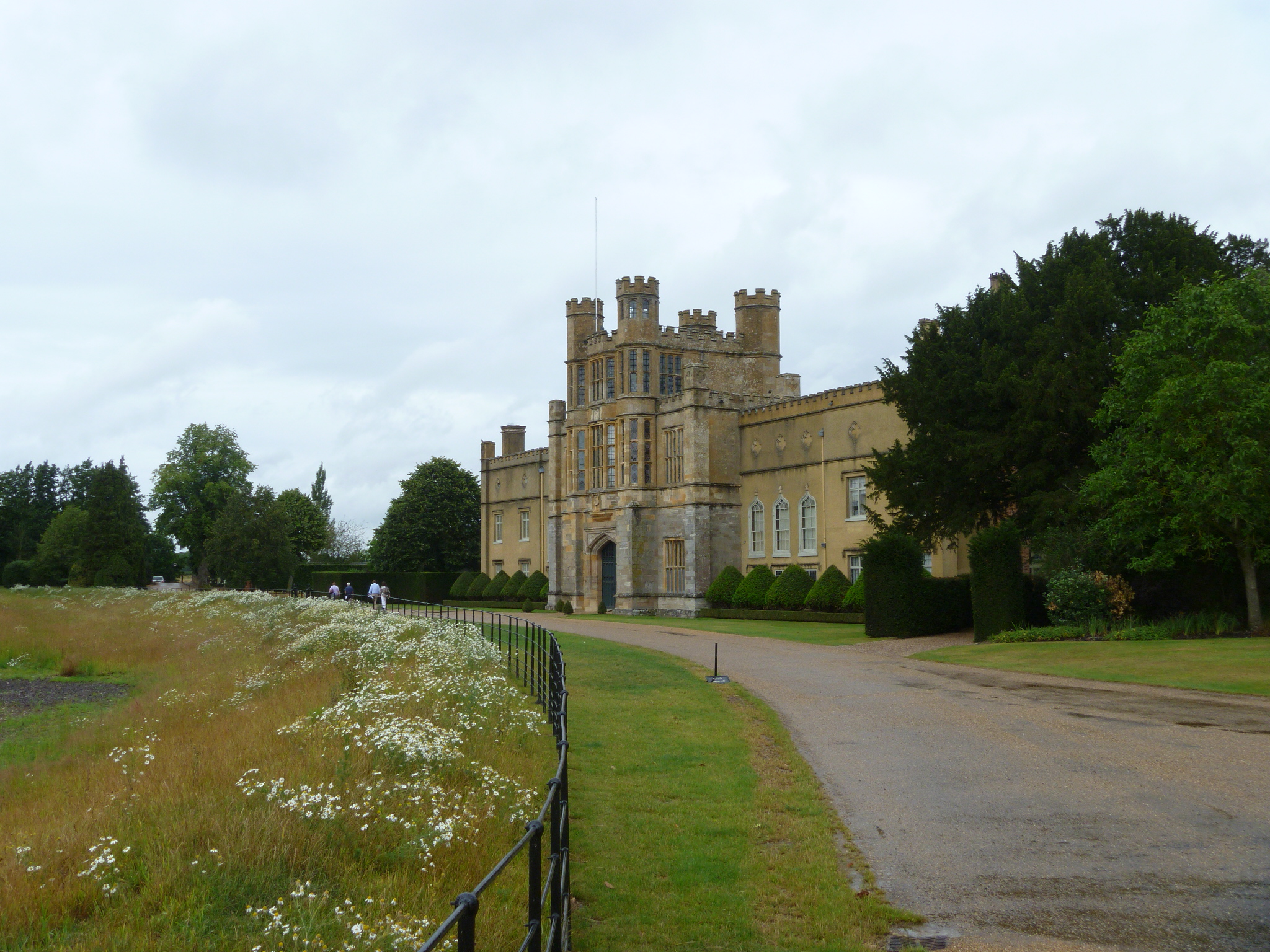
At the end of the car park there’s a red gate. Go through it and you are already on the Lanhydrock House Carriage Drive.  At first you walk through woodland alongside the River Fowey. After about a mile there’s a lodge house and car park. Cross the road and head uphill to another lodge, go through another gate and at the brow of the hill you can see the seventeenth century Gatehouse and Lanhydrock looms into view.
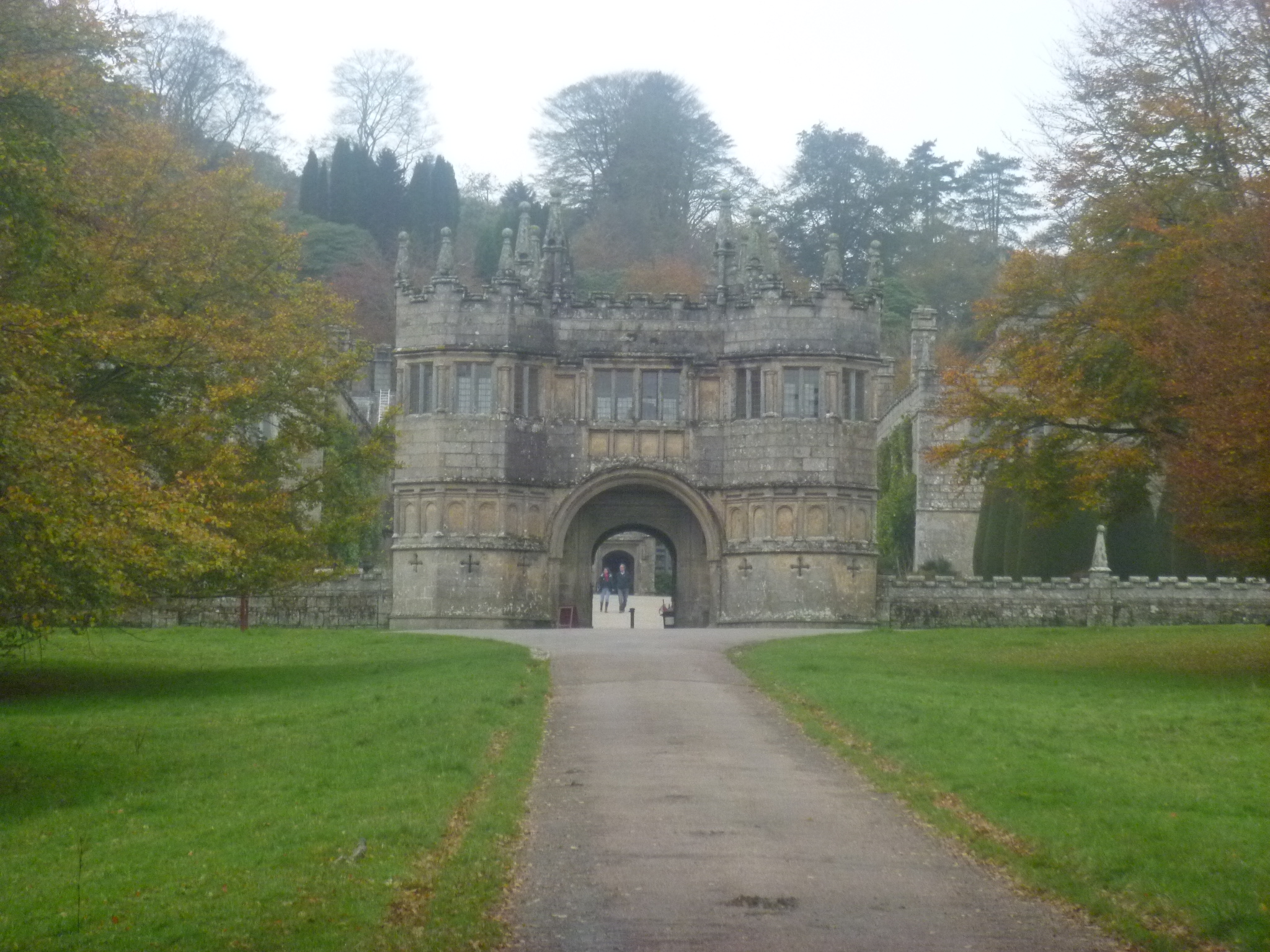
A bit of investigation before setting out lead me to discover in my Blue Guide to Literary Britain by Ian Ousby that Thomas Hardy based his description of Endelstow House, the home of the Luxellians in A Pair of Blue Eyes, on Lanhydrock House, moving it to St Juliot near Boscastle for the story.

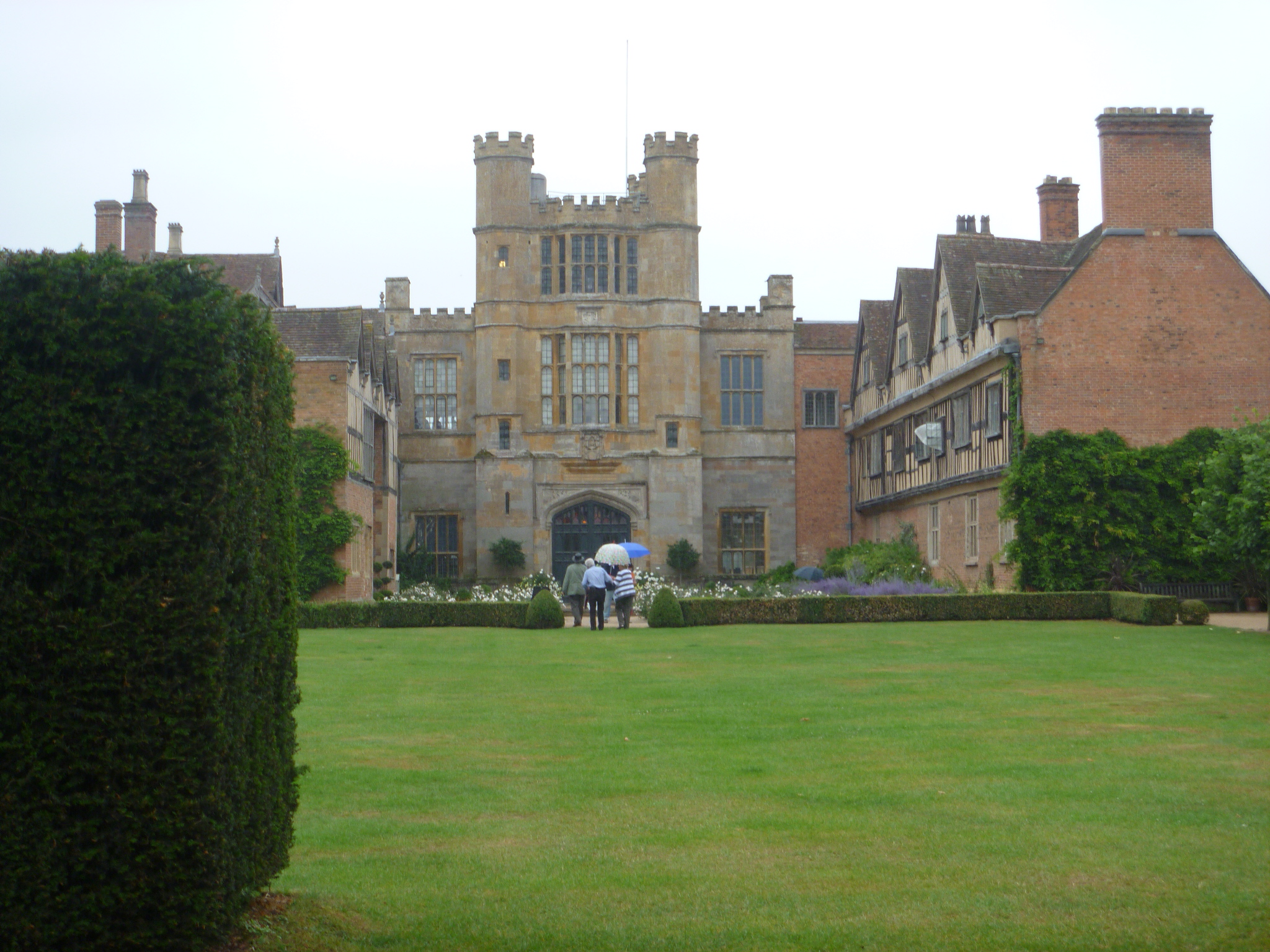
“For by this time they had reached the precincts of Endelstow House. Driving through an ancient gate-way of dun-coloured stone, spanned by the high-shouldered Tudor arch, they found themselves in a spacious court, closed by a facade on each of its three sides. …  The windows on all sides were long and many-mullioned; the roof lines broken up by dormer lights of the same pattern. The apex stones of these dormers, together with those of the gables, were surmounted by grotesque figures in rampant, passant, and couchant variety. Tall octagonal and twisted chimneys thrust themselves high up into the sky, surpassed in height, however, by some poplars and sycamores at the back, which showed their gently rocking summits over ridge and parapet. In the corners of the court polygonal bays, whose surfaces were entirely occupied by buttresses and windows, broke into the squareness of the enclosure; and a far-projecting oriel, springing from a fantastic series of mouldings, overhung the archway of the chief entrance to the house.” 

A Pair of Blue Eyes by Thomas Hardy (Ch.5)

The house today is not the original seventeenth century edifice but a late Victorian reconstruction following a disastrous fire which destroyed most of the earlier building in 1881. It was taken over by the National Trust in 1953. After refreshments and a browse in the second-hand bookshop I toured the fifty rooms in the house open to the public. These rooms included many below stairs: kitchen, scullery, bakehouse, dry larder, fish larder, meat larder, dairy – all very Downton Abbey. Most interesting to me amongst the family’s rooms were a Family Museum, Captain Tommy’s dressing and bed rooms, the drawing room and the Long Gallery.

The obligatory visit to the shop revealed that the popular author E. V. Thompson based many of his novels on Lanhydrock.
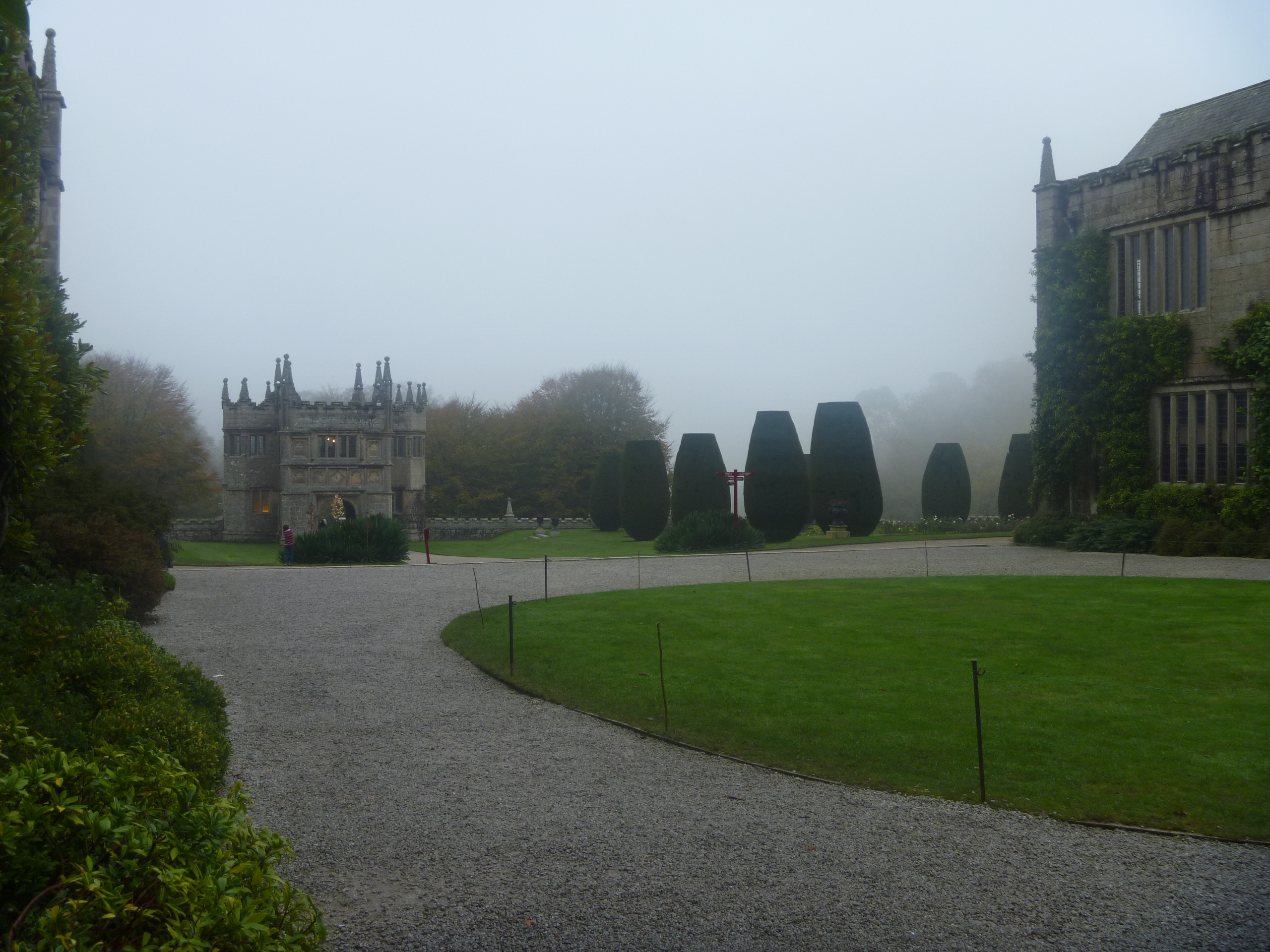
By 3.30pm the mist was beginning to thicken so I made my way back to the Carriage Drive and enjoyed the reverse walk back to the station for my 4.25pm train back to Totnes. The cafe was closed, the steam engine was being shunted away and we stood in the gloomy, misty, light rain waiting for our Paddington-bound train.
The Literary Connection of North Lees Hall

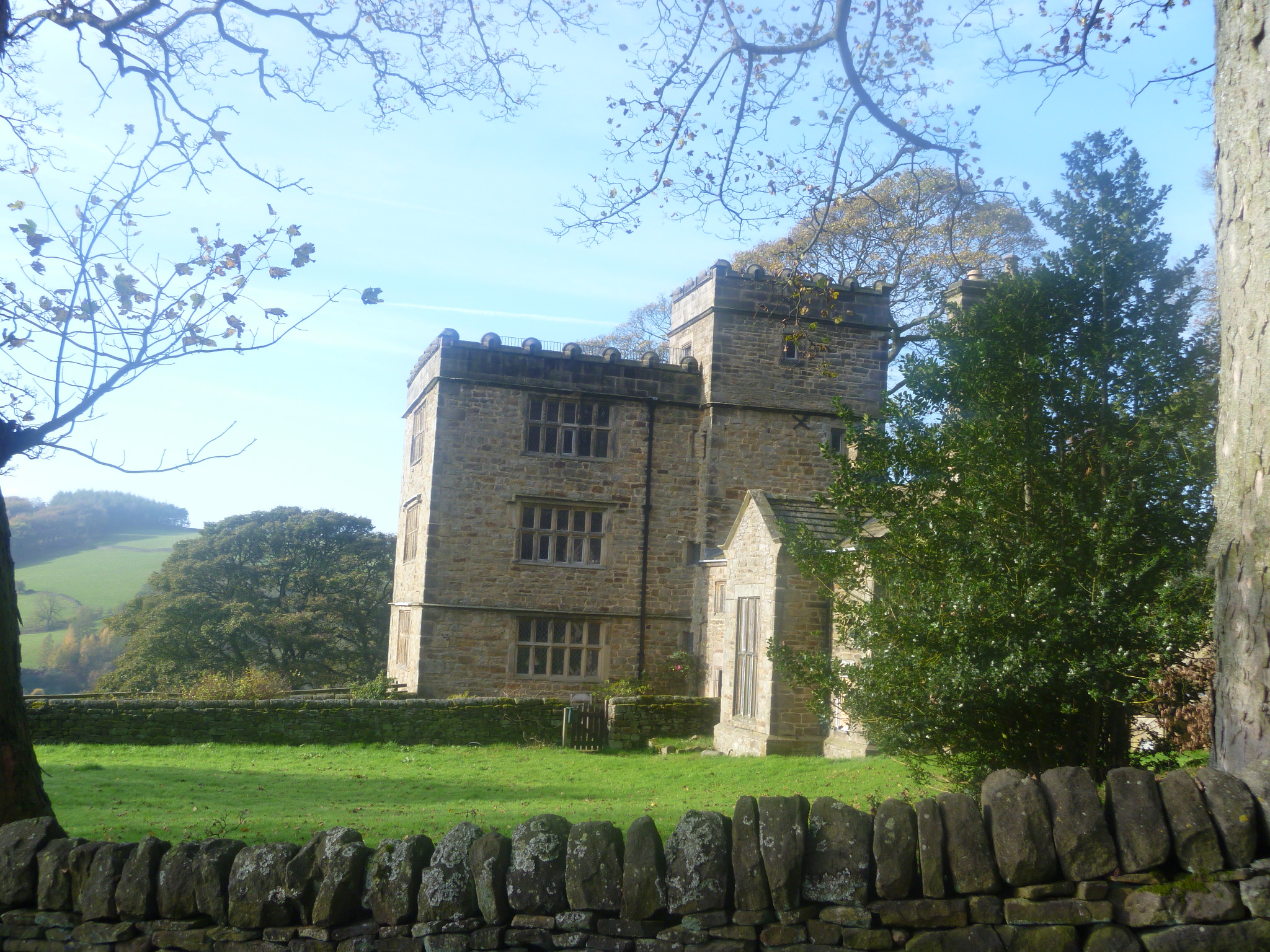
“It was a fine autumn morning; the early sun shone serenely on embrowned groves and still green fields; advancing on to the lawn, I looked up and surveyed the front of the mansion. It was three storeys high, of proportions not vast, though considerable: a gentleman’s manor-house, not a nobleman’s seat: battlements round the top gave it a picturesque look.

Its grey front stood out well from the background of a rookery, whose cawing tenants were now on the wing: they flew over the lawn and grounds to alight in a great meadow, from which these were separated by a sunk fence, and where an array of mighty old thorn trees, strong, knotty, and broad as oaks, at once explained the etymology of the mansion’s designation.

Farther off were hills: not so lofty as those round Lowood, nor so craggy, nor so like barriers of separation from the living world; but yet quiet and lonely hills enough, and seeming to embrace Thornfield with a seclusion I had not expected to find existent so near the stirring locality of Millcote. A little hamlet, whose roofs were blent with trees, straggled up the side of one of these hills; the church of the district stood nearer Thornfield: its old tower-top looked over a knoll between the house and gates.”

Jane Eyre  (Chapter 11)

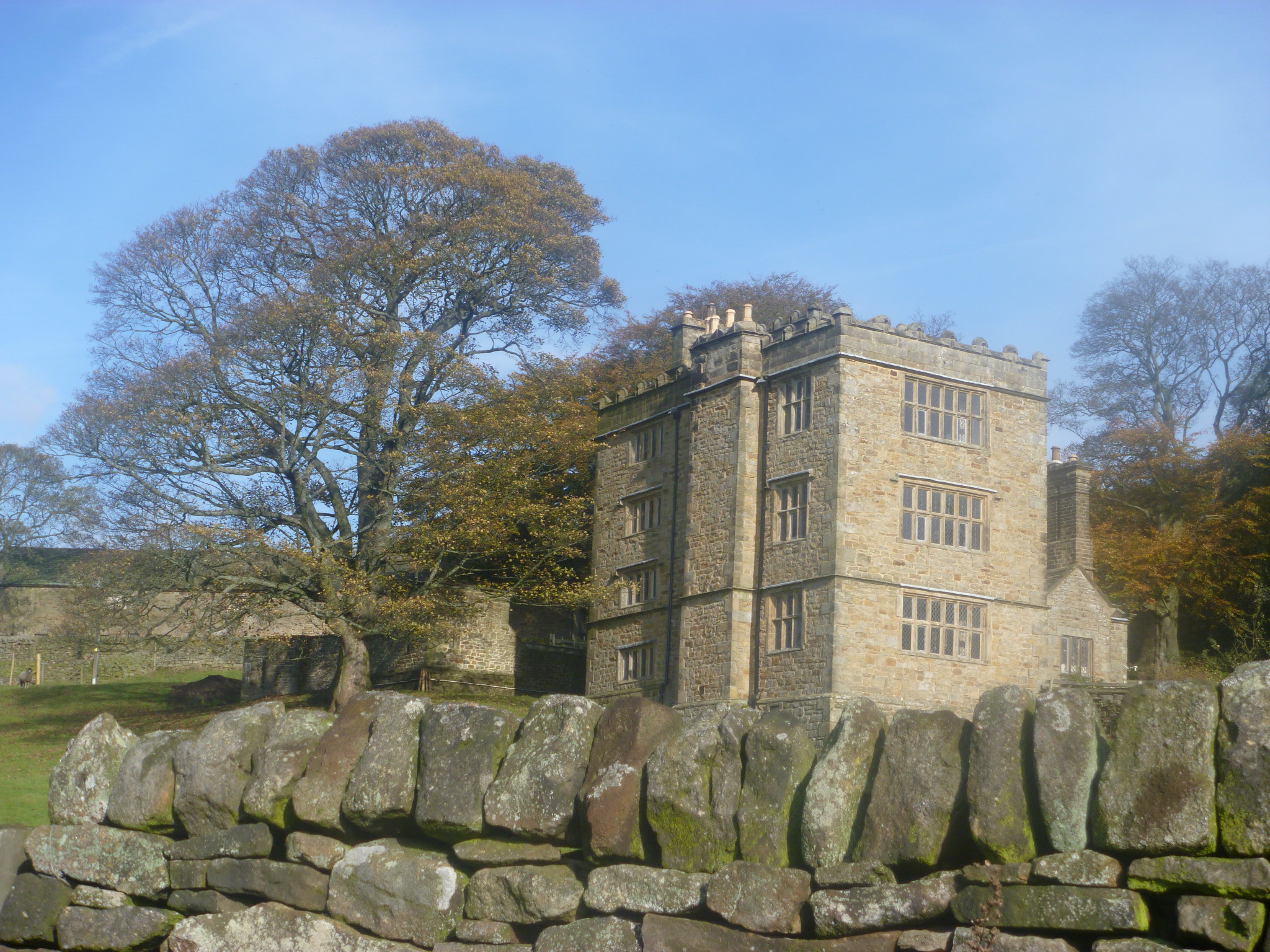
Today I visited a friend and former neighbour who, with her husband, moved to work in Sheffield. They now live in the Hope Valley in the beautiful Derbyshire Peak District . Our plan was to take a walk from her house to visit North Lees Hall, visited by Charlotte Bronte and her friend Ellen Nussey. Bronte later based Mr Rochester’s home Thornfield Hall on North Lees Hall.

The Vivat Trust has similar aims to The Landmark Trust. I have never stayed in one of their properties but my feeling is that they do everything much more comfortably or even luxuriously but that they don’t have such a ‘low’ (ruinous?) starting point. North Lees Hall is a Vivat Trust property.

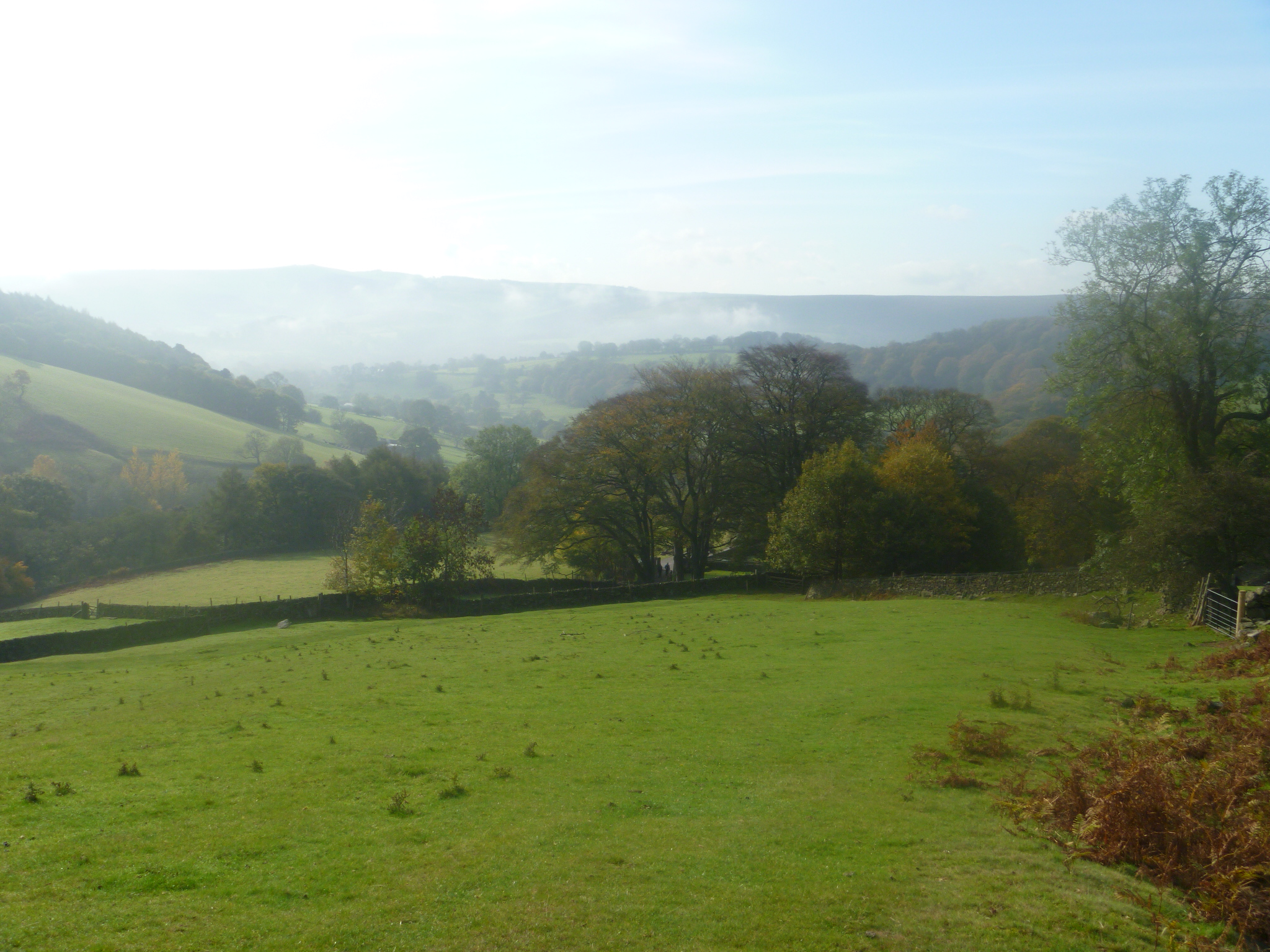
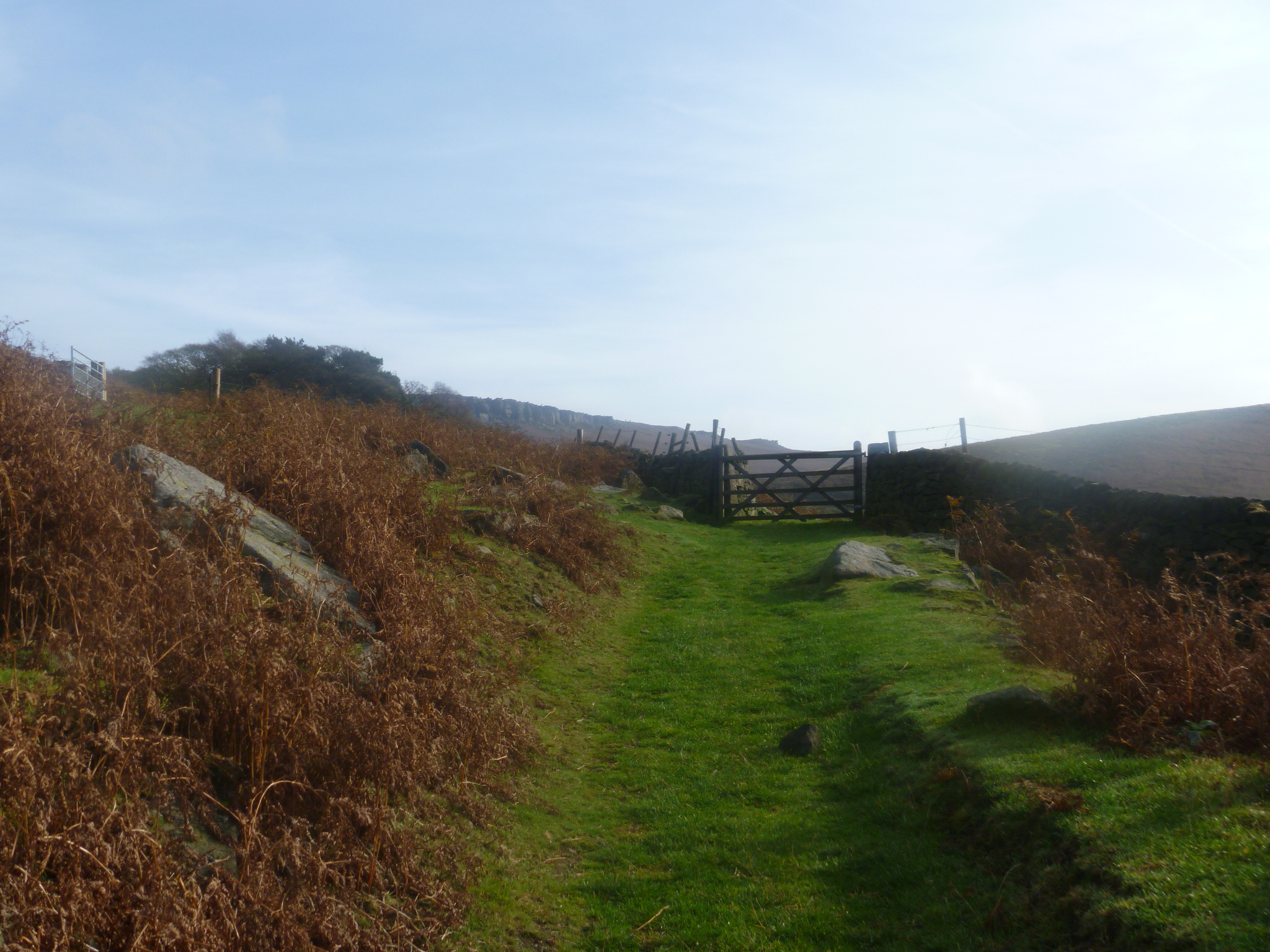
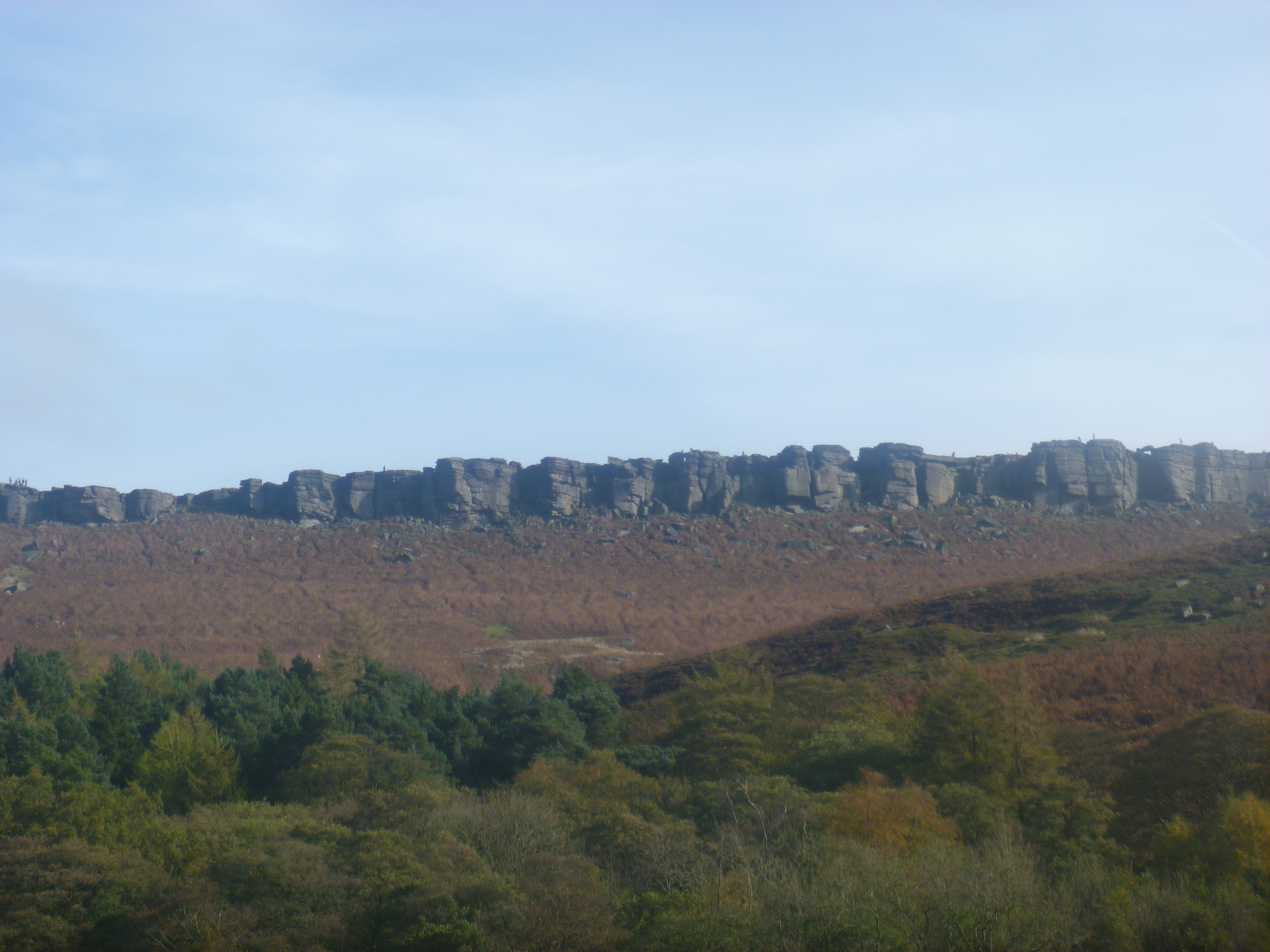
The day started off very misty – but these always turn out the best. After a cup of tea and brief chin-wag we headed off up the hill from her house. It was a perfect walk – a climb up the lane to begin and over a couple of stiles and then green grassy paths for a good hour or so with wonderful views of Stannage Edge (a climbers paradise, apparently). Eventually through a wooded copse we spied the Hall. By this time the sky was fully blue and cloudless (Jane Eyre’s “fine autumn morning” indeed).  Another hour’s walk via an Ice Cream Parlour  (Hope Valley Ice Cream) brought us across a golf course and home for lunch.

Stannage Edge, Derbyshire

Coughton Court, Warwickshire

Remember, remember the fifth of November

Gunpowder, treason and plot.

I see no reason why gunpowder, treason

Should EVER be forgot…

Actually, I have read recently that there is a move afoot to gradually replace our traditional Guy Fawkes Night or Bonfire Night with Hallowe’en which seems rather a shame. I shall digress briefly and reminisce about Bonfire Nights past. When I was a young girl November 5th was a low key family event. After tea, about 6 to 6.30pm, when dad was home from work, we would take our box of fireworks (bought from the special counter set up for that purpose at the local newsagent’s) into the back garden. The box would usually contain a Roman Candle, a Vesuvius, a Catherine Wheel, some Jumping Jacks, a couple of bangers and a couple of packets of sparklers. You can’t have a ‘firework party’ without sparklers. We never actually had a bonfire with a guy but I knew people who did! We would stand back the obligatory 6 paces whilst dad lit the blue touch paper and admire the whoosh and sparkle and sniff the smell of cordite in the air. Invariably, the Catherine Wheel would need a bit of encouragement to help it spin. for this reason it was usually the most disappointing. On Hallowe’en we would just fill a pail with water and duck for apples. Rather boring – but then we always had Guy Fawkes Night to look forward to a week later.

Early in August on my way to visit The Runner (younger son) I visited Coughton Court in Warwickshire where there is definitely no intention of letting the Gunpowder Plot be forgotten. It was to this house in 1605 that the news of the failure of The Gunpowder Plot was brought in the early hours of the 6th of November. The house has been in the hands of the Throckmorton family for 600 years.

“The mothers of two of the conspirators, Robert Catesby and Francis Tresham were the sisters Anne and Muriel Throckmorton, grandaughters of the original builder, Sir George Throckmorton, and sisters as well of the lord of the manor in 1605, Thomas Throckmorton. Two other conspirators, Robert and Thomas Wintour, were also great-grandchilden of Sir George Throckmorton.” Read more about the Gunpowder Plot and Coughton Court connections here :

The Gunpowder Plot

Coughton Court from the gardens behind the house.

Coughton Court is now run by the National Trust but the Throckmorton family appear to be very much involved still, especially with the gardens. As you can see it was a wet day when I visited so I didn’t get the chance to walk all round the extensive gardens. Instead I did a tour of the house, had tea in the restaurant, visited the shop and browsed in the secondhand bookshop.

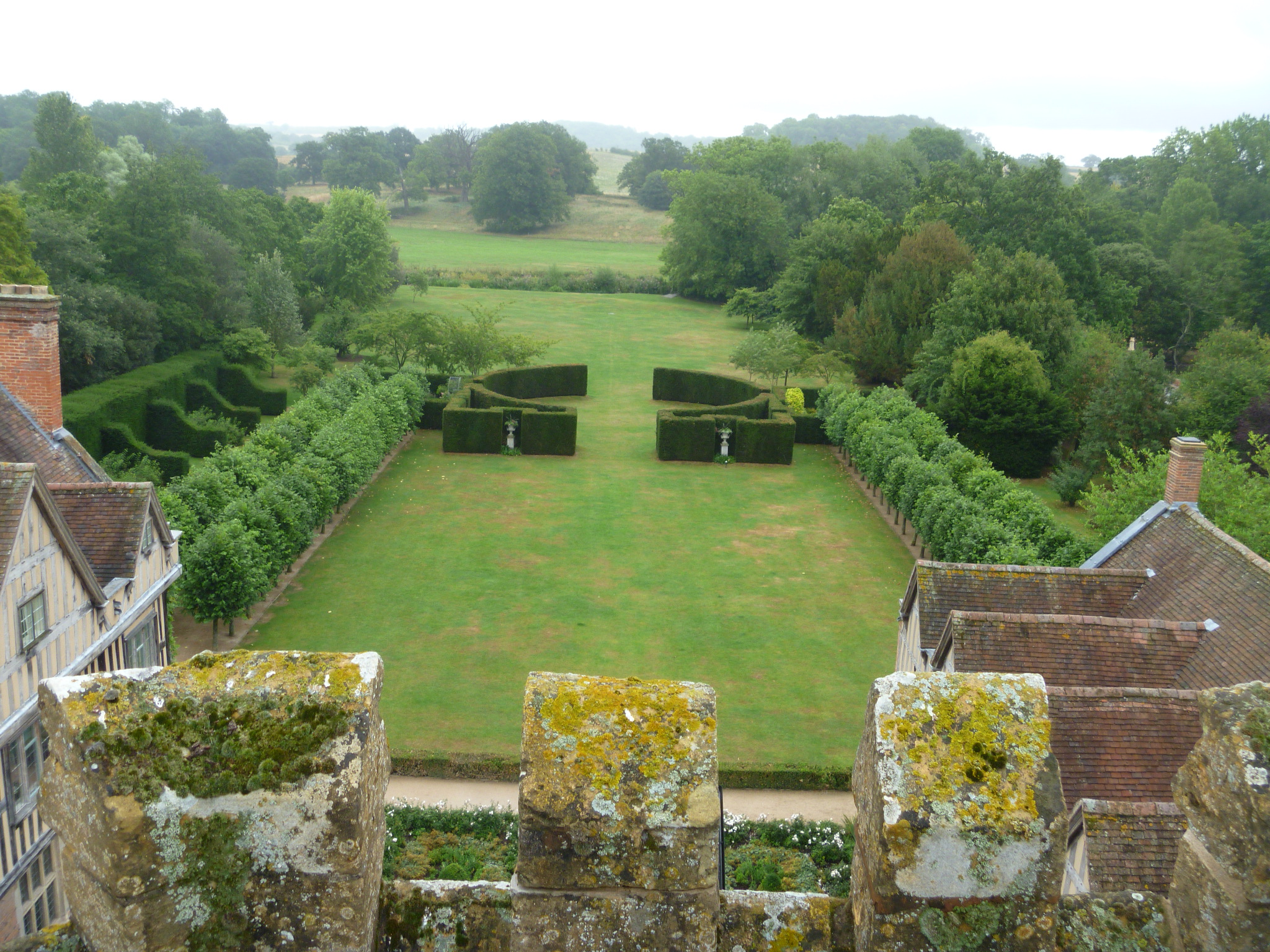
It is possible to climb right to the top of the tower and view the surrounding countryside and the lovely gardens and try to imagine how it might have looked and felt if you were a member of the group of Catholics waiting for news of the success (or failure) of Guy Fawkes and his colleagues in their attempt to blow up the King and parliament in November 1605.

View from the tower at Coughton Court

There are several unrelated things that I particularly remember noticing as I toured the house.

  • The famous Newbury Coat is on display in the Hall. Read here about Sir John Throckmorton winning his coat in 1811. It was made in one day in June between sunrise and sunset from shearing the wool from the sheep to being tailored into a coat :
  • The Newbury Coat
  • There is an annual Gunpowder dinner or Fawkes Feast held here each year :
  • Fawkes Feast 2011
  • The abdication letter, written by Edward VIII, is displayed in the Hall. The letter was acquired by Geoffrey Throckmorton in the 1930s, when he was Clerk of the Journals at the House of Commons. It has been passed on through the family and can now be seen on display. I’ve been reading a lot about Wallis and Edward this year so this was a special surprise and thrill for me to come across on my visit to Coughton (pronounced Co-ton) Court.
By coincidence this very morning I have just read about this forthcoming exhibition at Compton Verney, also in Warwickshire :

A Sentimental Journey

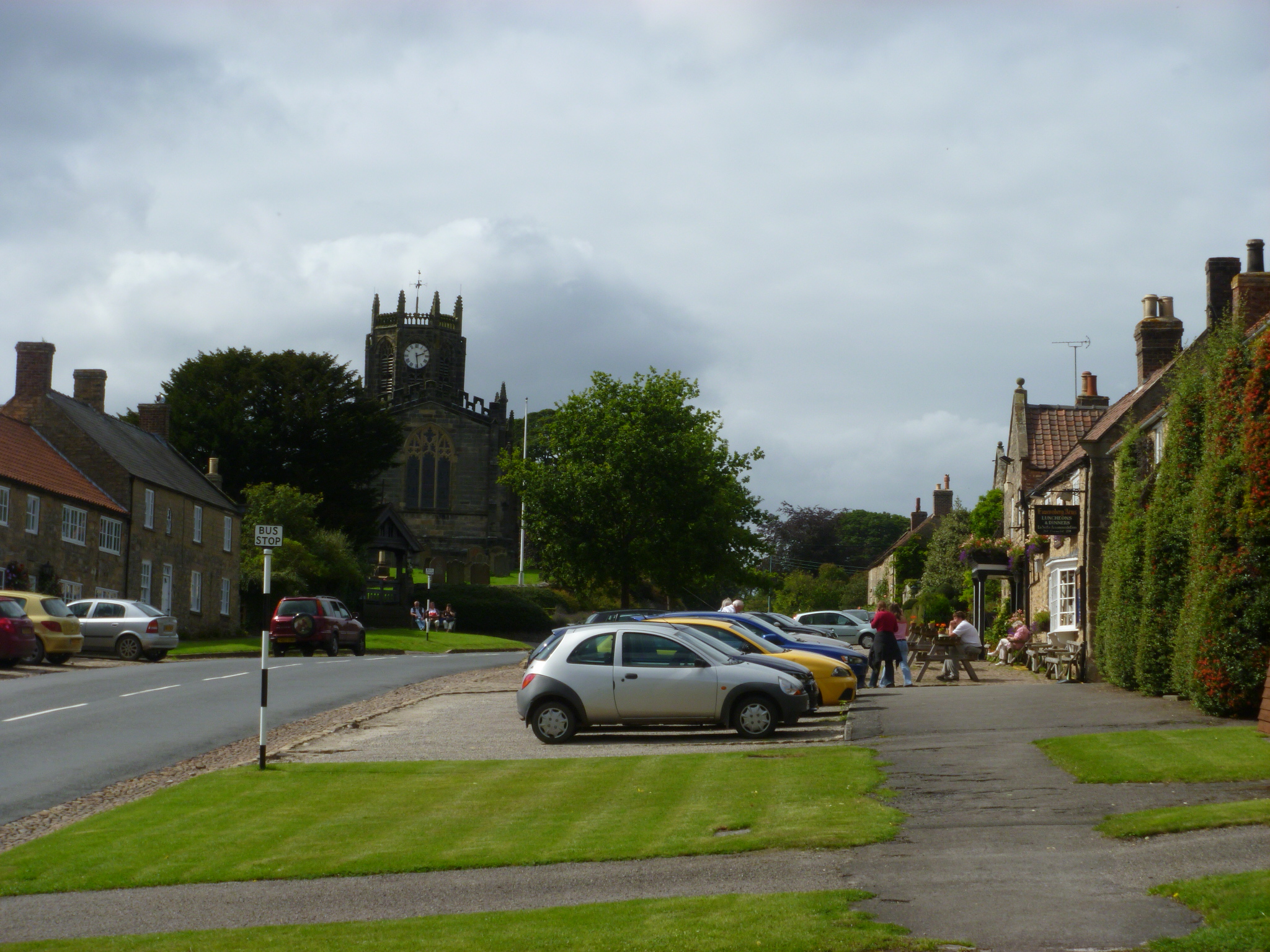
Just an hour’s drive from Leeds, Coxwold is one of the prettiest villages in North Yorkshire. It has a lovely tearoom, The Coxwold Tearooms :

an attractive and popular pub, The Fauconberg Arms

and an impressive church, Saint Michael’s.

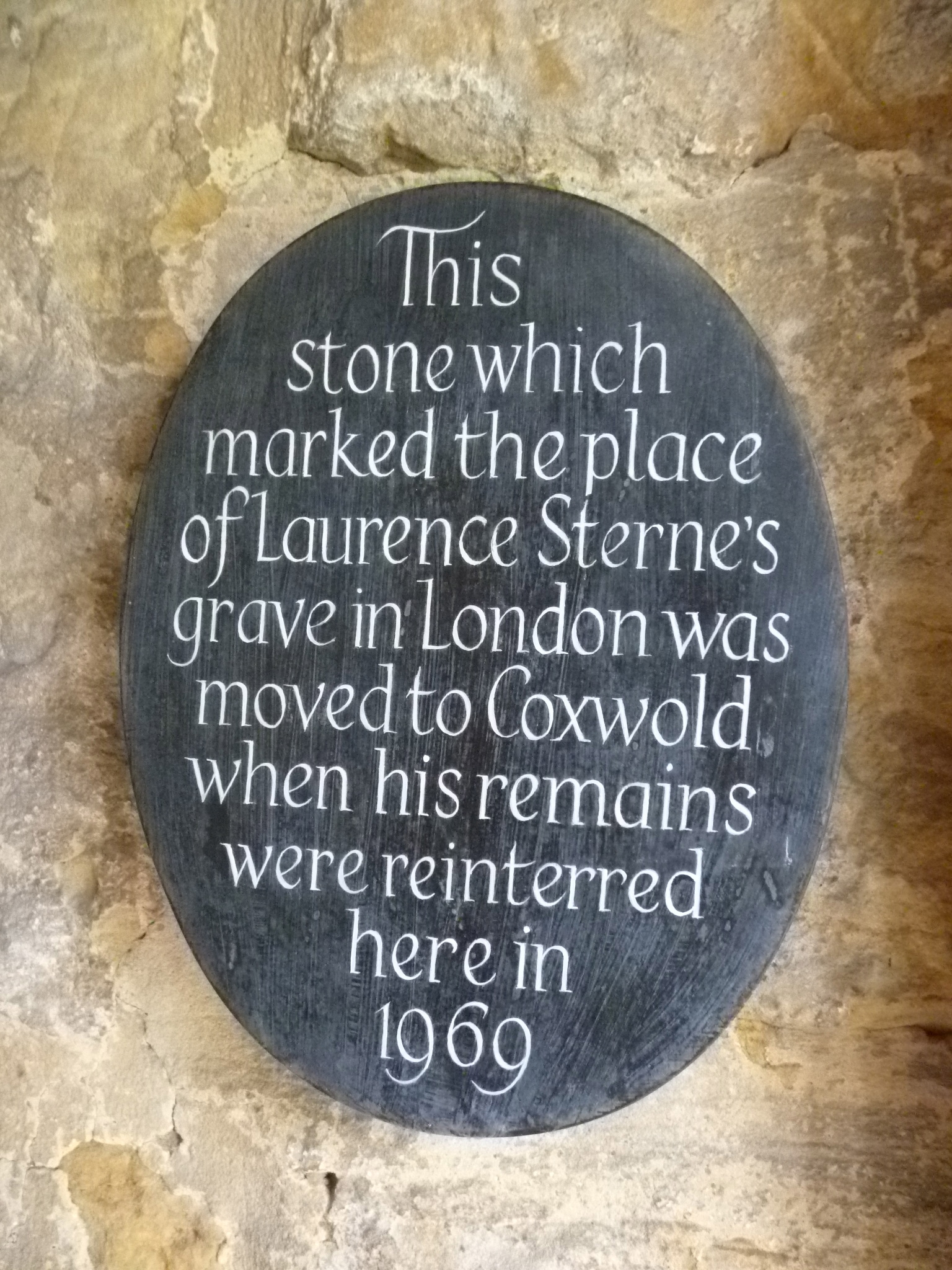
It was also home to one of the most intriguing authors of the eighteenth century – Laurence Sterne. Born of an anglo-Irish family in Clonmel in County Tipperary in 1713 Sterne was educated in Yorkshire and at Cambridge and was ordained as a Church of England clergyman in 1738. He held two Yorkshire livings before being appointed to Coxwold by Lord Fauconberg. Apart from travels in Europe and visits to London Sterne spent the rest of his life here. He died in London in 1768.

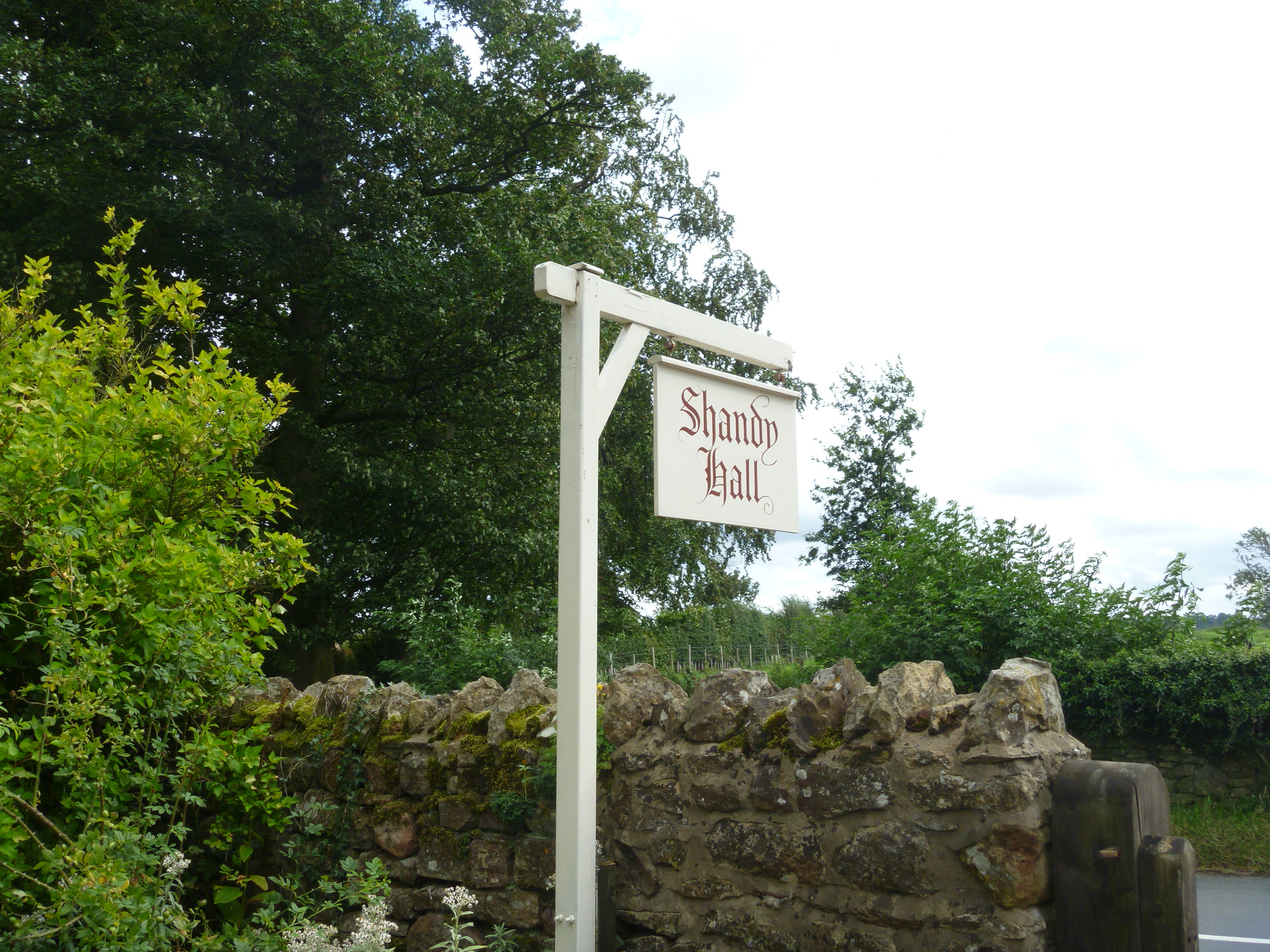
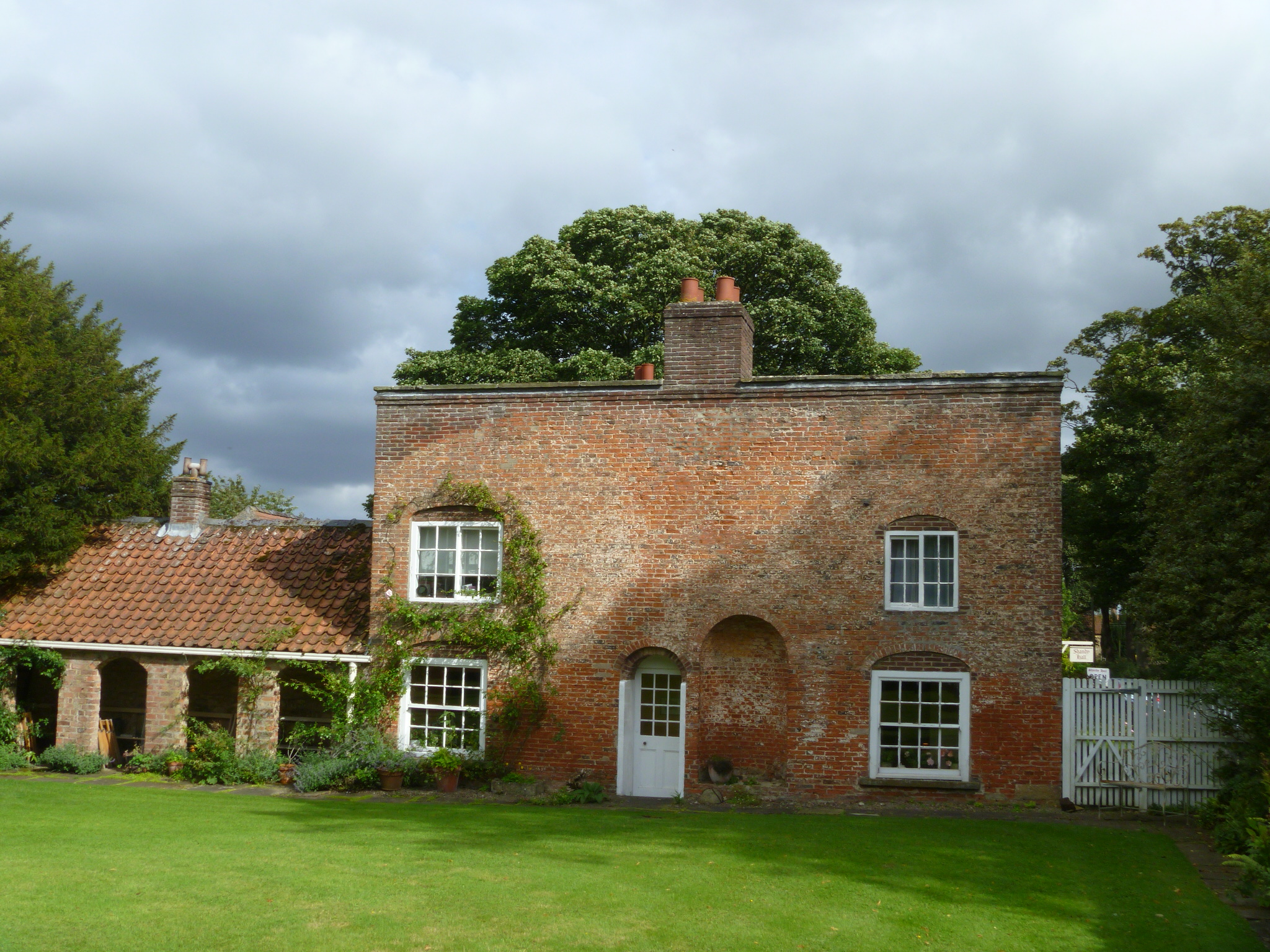
Sterne was the author of two famous books. At least they were very well known and popular during his lifetime and after but generally he is much less well known today. The Life and Opinions of Tristram Shandy, Gentleman and A Sentimental Journey. Shandy Hall, his former home in Coxwold, is run by the Laurence Sterne Trust and is open to groups by appointment throughout the year and to the general public on Wednesday and Sunday afternoons during the summer. The gardens – which include one acre of woodland – are open every day except Saturday during the same summer season.

The Laurence Sterne Trust

As eccentric as Sterne himself the house is a delight to visit. There’s an introduction by the resident curator – a true Sterne enthusiast who, by the way, will be promoting Sterne at the forthcoming Ilkley Literature Festival

and is also organising a visit to Shandy Hall from Ilkley.

Ilkley Literature Festival – Shandy Hall visit

The 2005 film A Cock and Bull Story starring Rob Brydon, Jeremy Northam and Steve Coogan demonstrates just how unfilmable the novel is :

Shandy Hall and garden.

And finally, the shop! Besides the souvenir fridge magnets, postcards and new books there is a large selection of secondhand books.