In The Magician’s Footsteps : Words, Land and Landscape

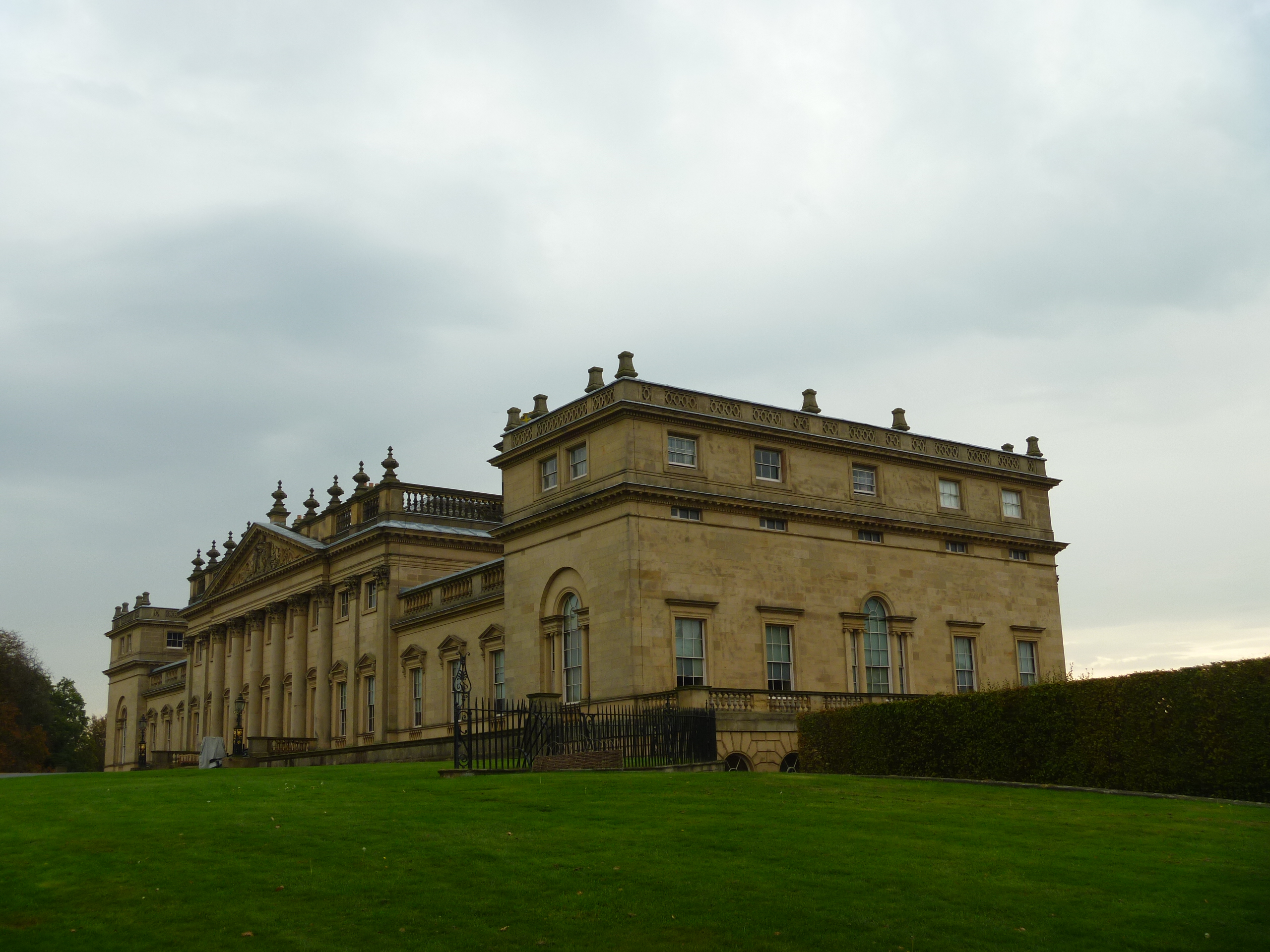
Harewood House. Today’s main entrance looks north and not over the park.

Every October The Ilkley Literature Festival in Yorkshire features a vast programme of talks, discussions and events from which it is difficult sometimes to choose just a couple. This year I had no problem with my selection and today’s choice includes more than one love of mine – books, country walking and a historic house visit: the ‘Capability’ Brown Walk.
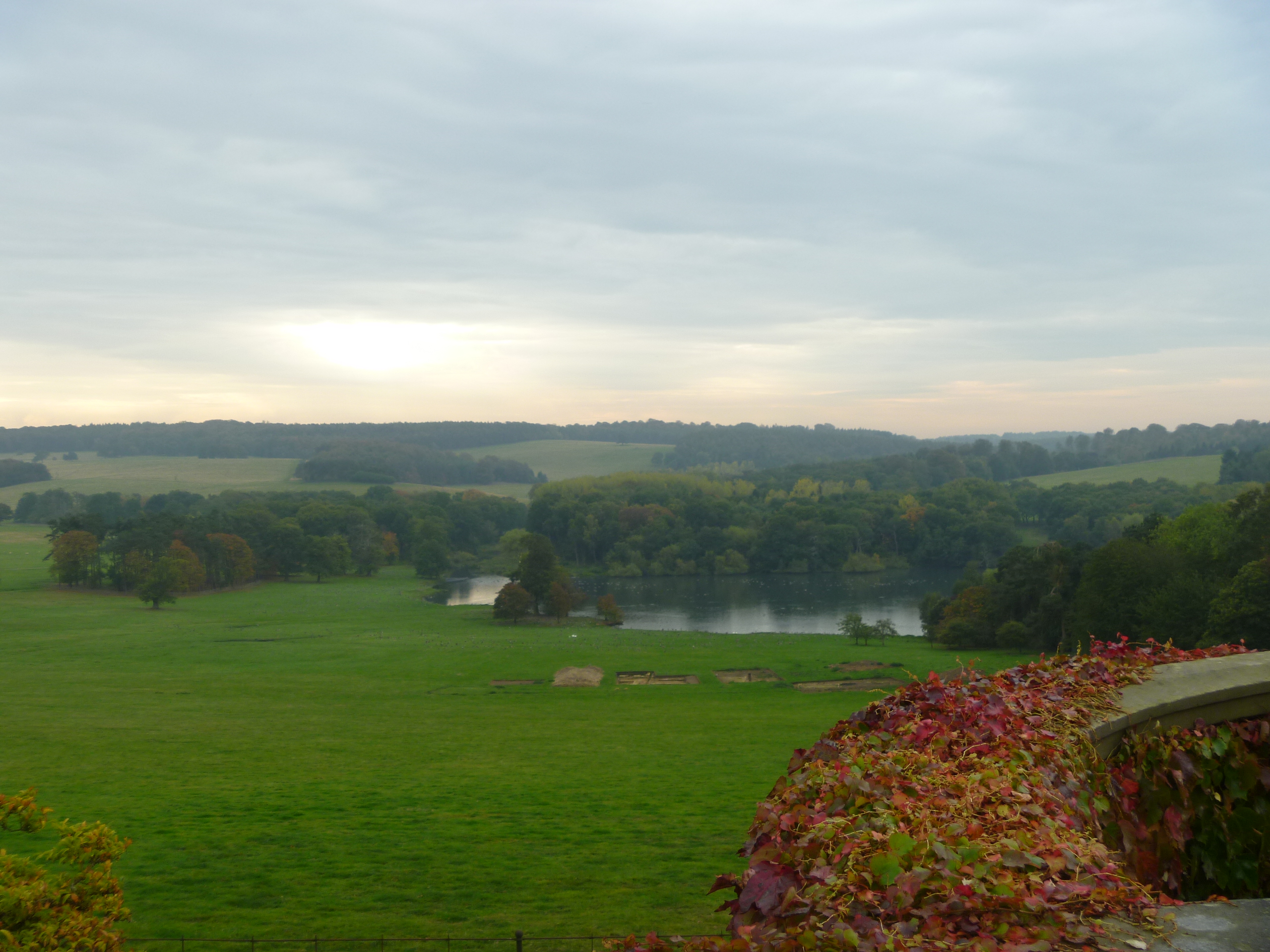
Looking south over the parkland from the Terrace.

A mixed group of us met on Sunday morning in the grounds of Harewood House, just a few miles from Leeds, to follow on the heels of Head Gardener, Trevor Nicholson and author of the book “The Omnipotent Magician: Lancelot ‘Capability’ Brown, 1716-1783″, Jane Brown (no relation). We were all there to find out more about the eighteenth century landscape designer extraordinaire – ‘Capability’ Brown. Naturally, the focus today was Brown’s influence on the superb outlook from Harewood (pronounced Harwood) House. My pictures just don’t do the scene justice.
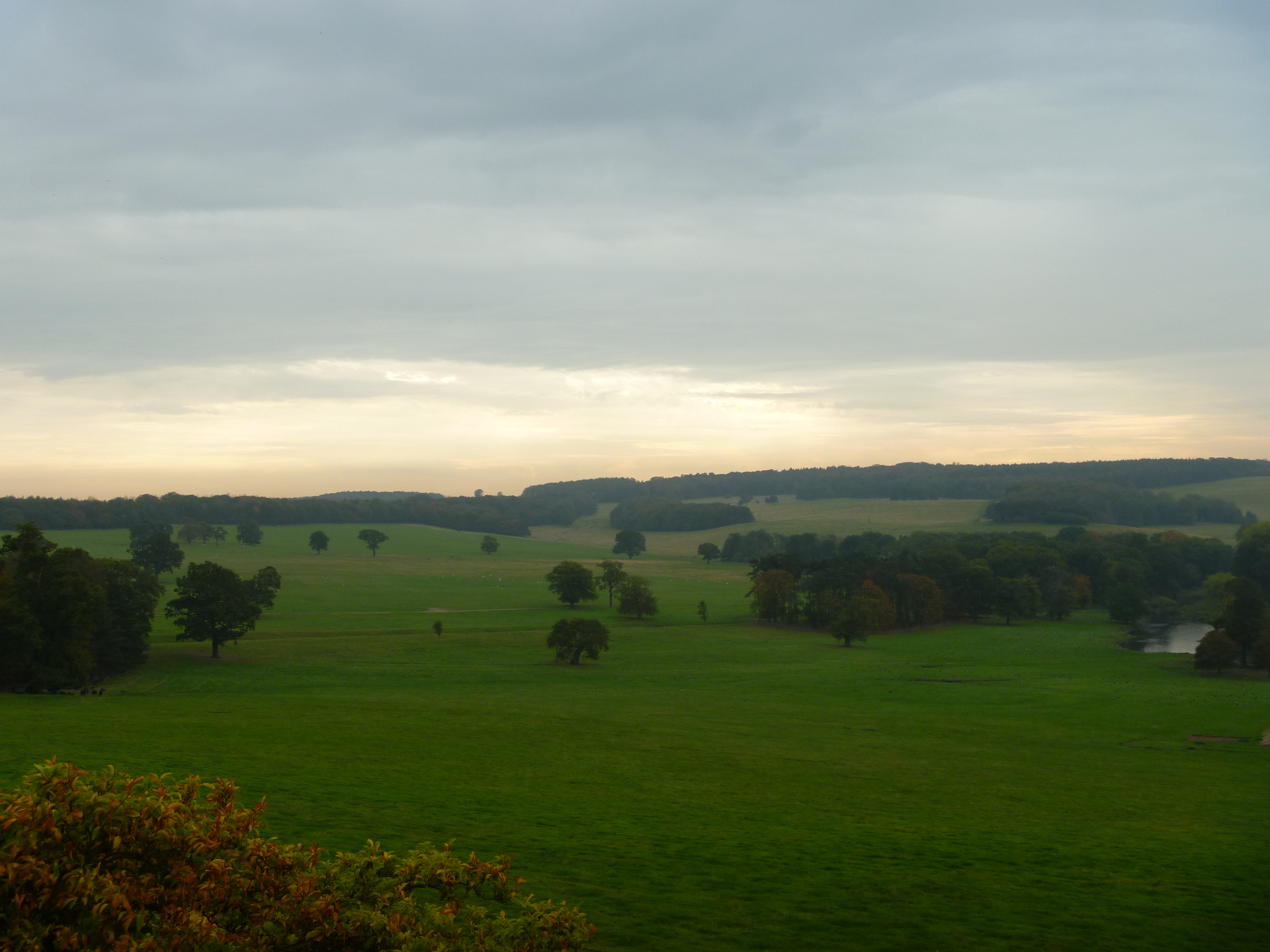
We were told that the ornamental parkland was set out in the 18th century by Brown. He came to Harewod in 1758 and proceeded to wave his magic wand over the next few years (helped by his Foremen and a large band of local labourers). This parkland is a fine example of Brown’s characteristic arrangements – native trees, gently sweeping hillsides, a lake. He got rid of all field boundaries and each and every tree is located just where Brown decided it would have the most impact. Hahas were dug in order to restrict the movement of the sheep, deer and other animals.
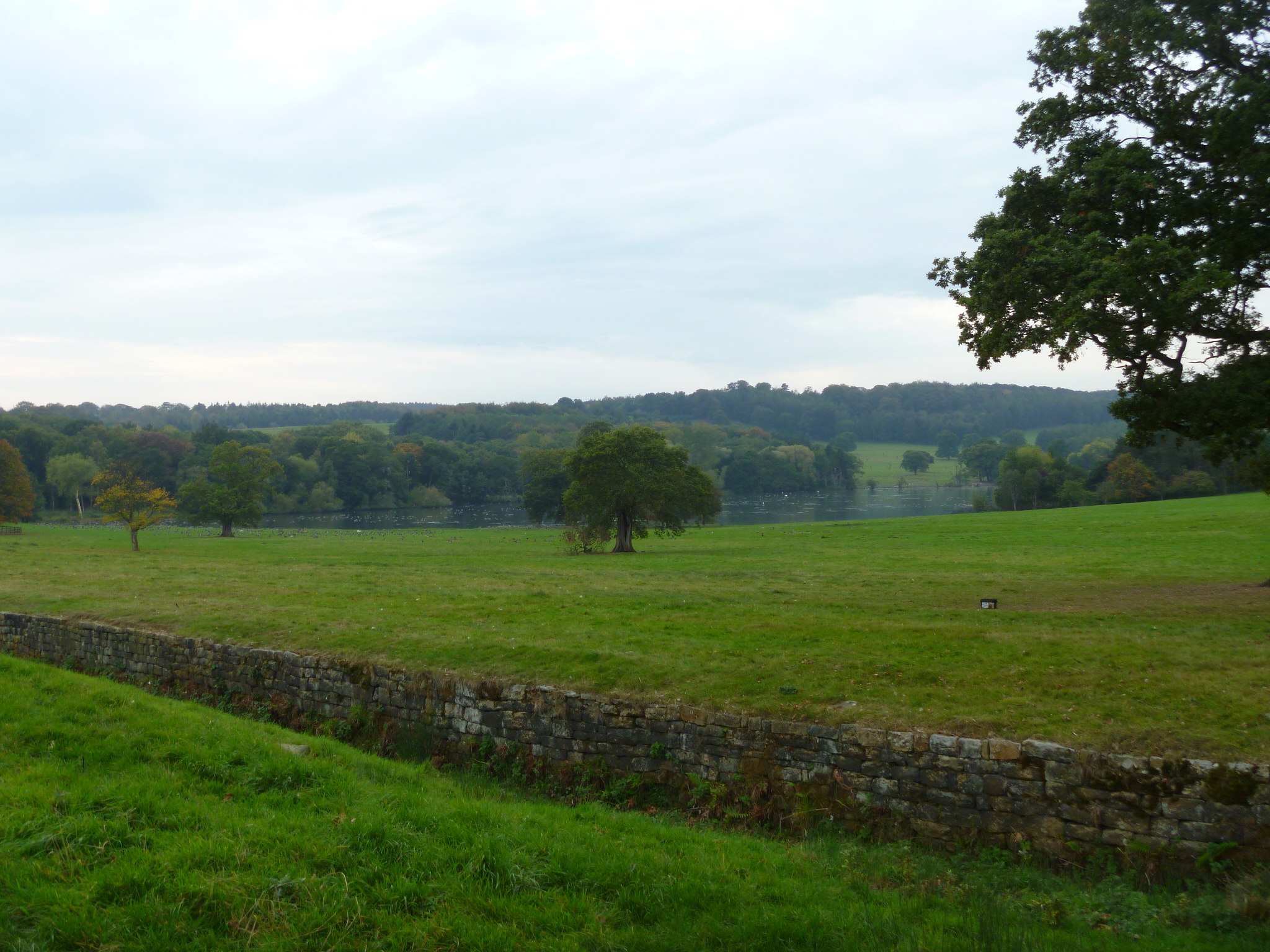
The Haha also forms a drainage conduit.

The original manor house (Gawthorpe Hall) had been demolished and during the time that Brown was working here a new house was being built by John Carr of York and Robert Adam on a spur of land looking south. Part of Brown’s plan was to create a carriage drive to the house in order to impress visitors arriving from London.
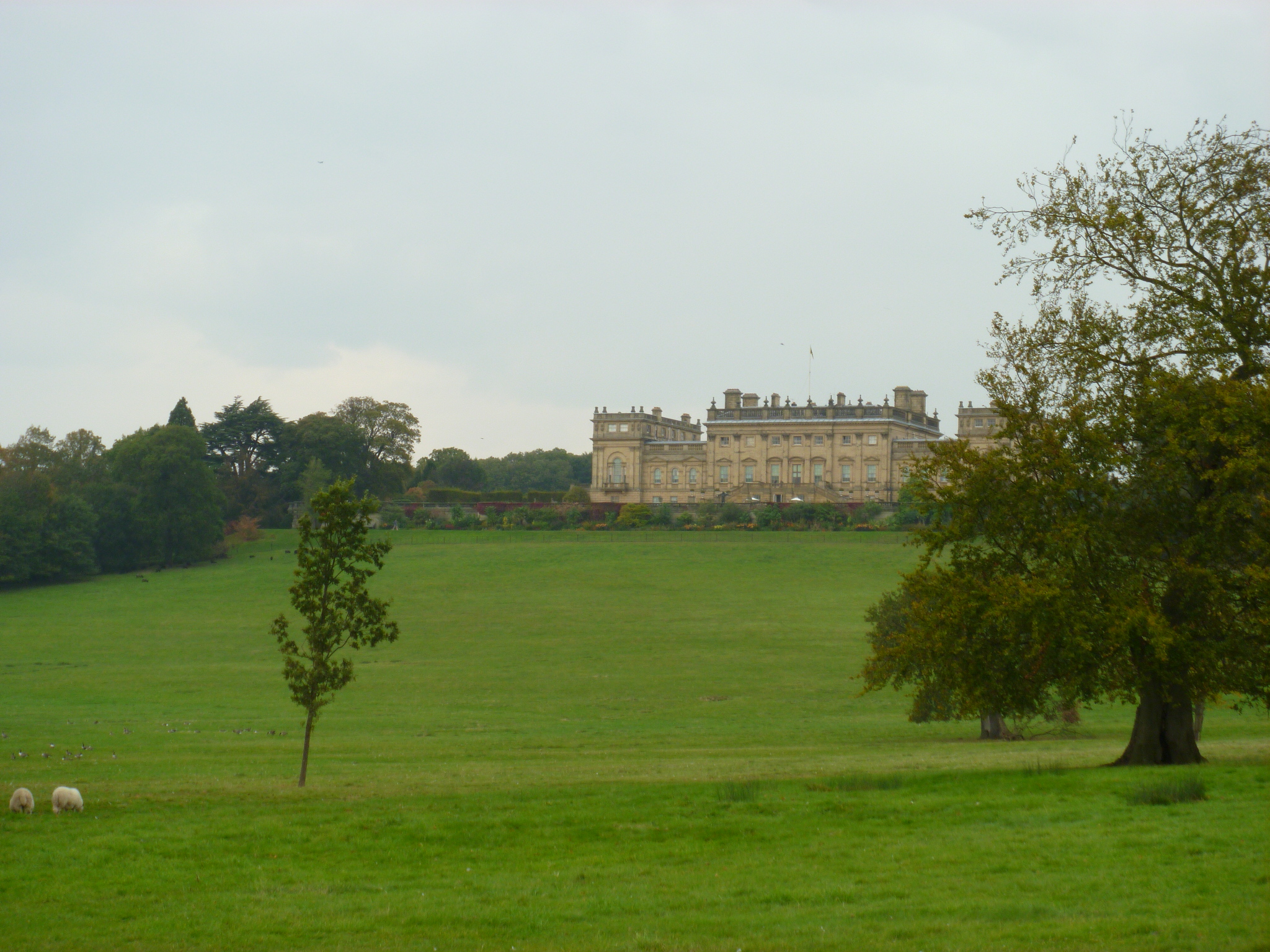
After admiring the view we were taken down this drive (which is not open to the general public) from where we gained glimpses of the house as visitors would have done since the 1770s. Brown’s plan was to improve on nature and it resulted in our typical English countryside. This is recognised as a truly English style and contrasted greatly with the French formal style. Of course, later the Victorians made changes to both the house and the gardens, but fortunately not to the park.
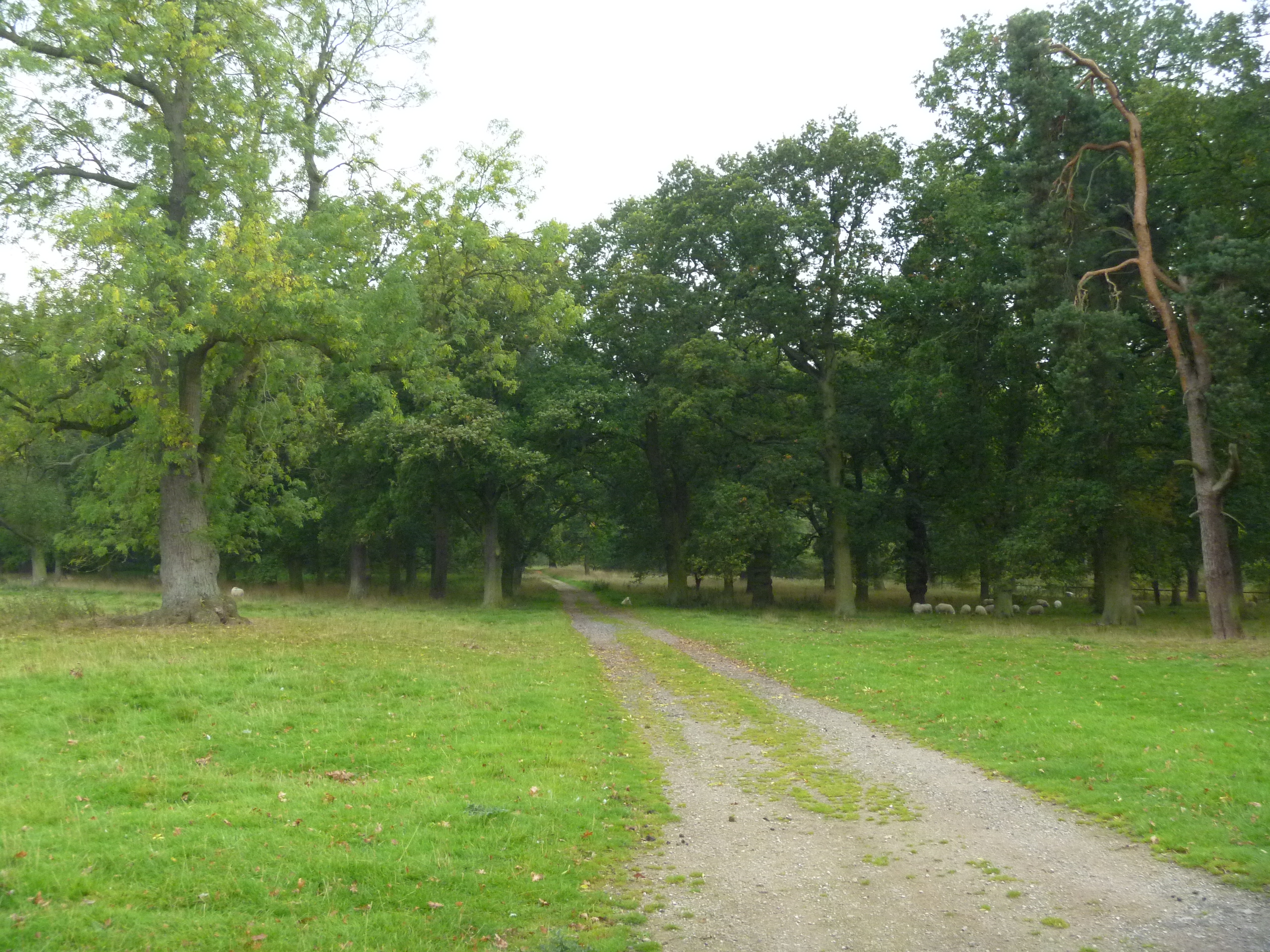
The Carriage Drive today as it emerges from the woodland.

Not only did he pay attention to views and aspects but also planned cascades under bridges for the sound effects! Everything was done to impress visitors.
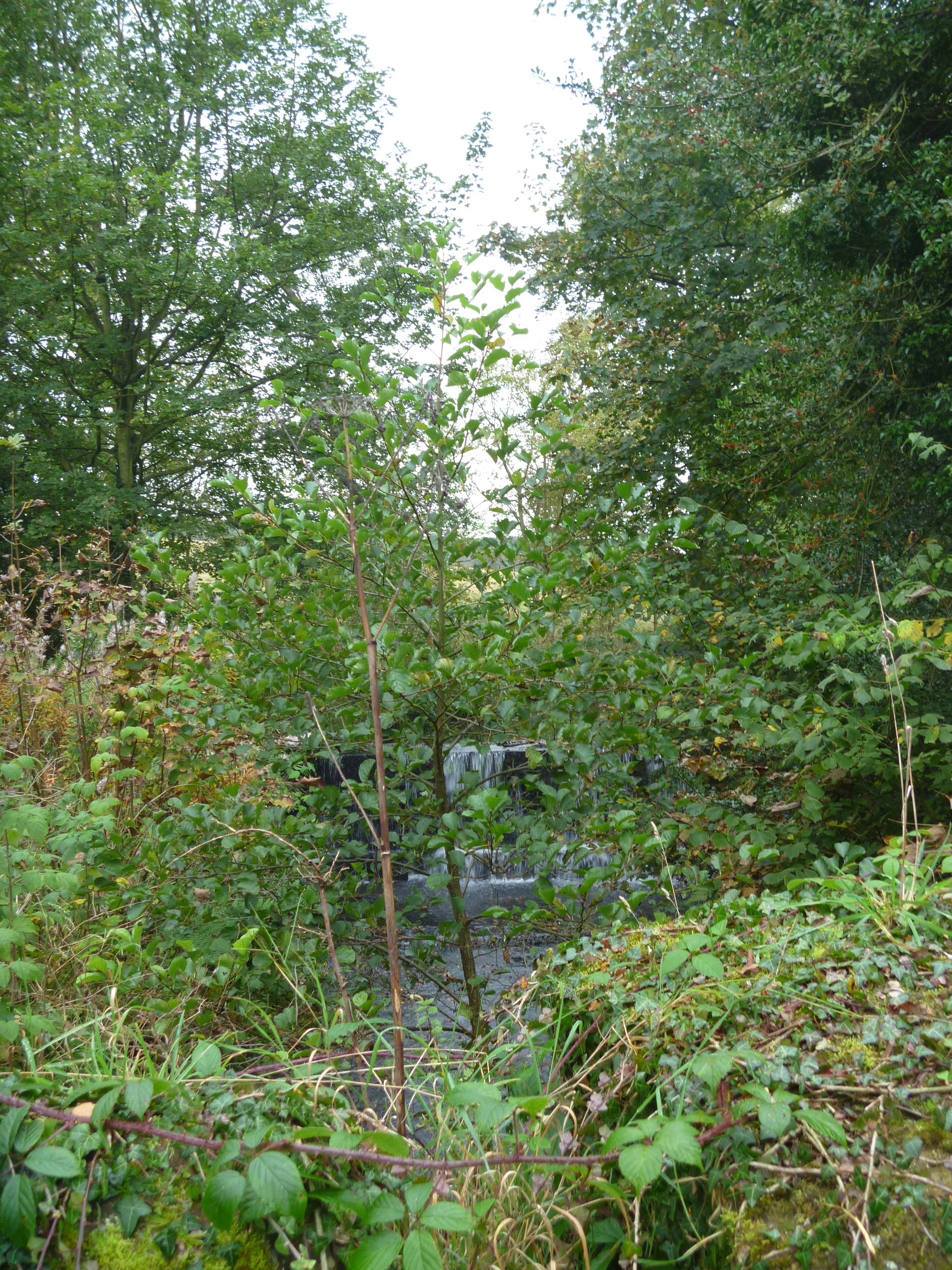
Cascade by the Rough Bridge

Brown seems to have had a boundless supply of energy. He travelled around the country visiting projects, extolling on the virtues of views and their ‘capability’ for improvement, collecting his fees and, according to Jane, took on at least 200 major projects.

Our walk took us across the fields by the lake in front of the house and through some delightfully wooded gardens back to the house itself where a sandwich lunch was served in the Steward’s Room where “Capability’ himself would have been entertained on his visits to Harewood. Yet again no photography is allowed in the House!
My Historic Maine Coast 2

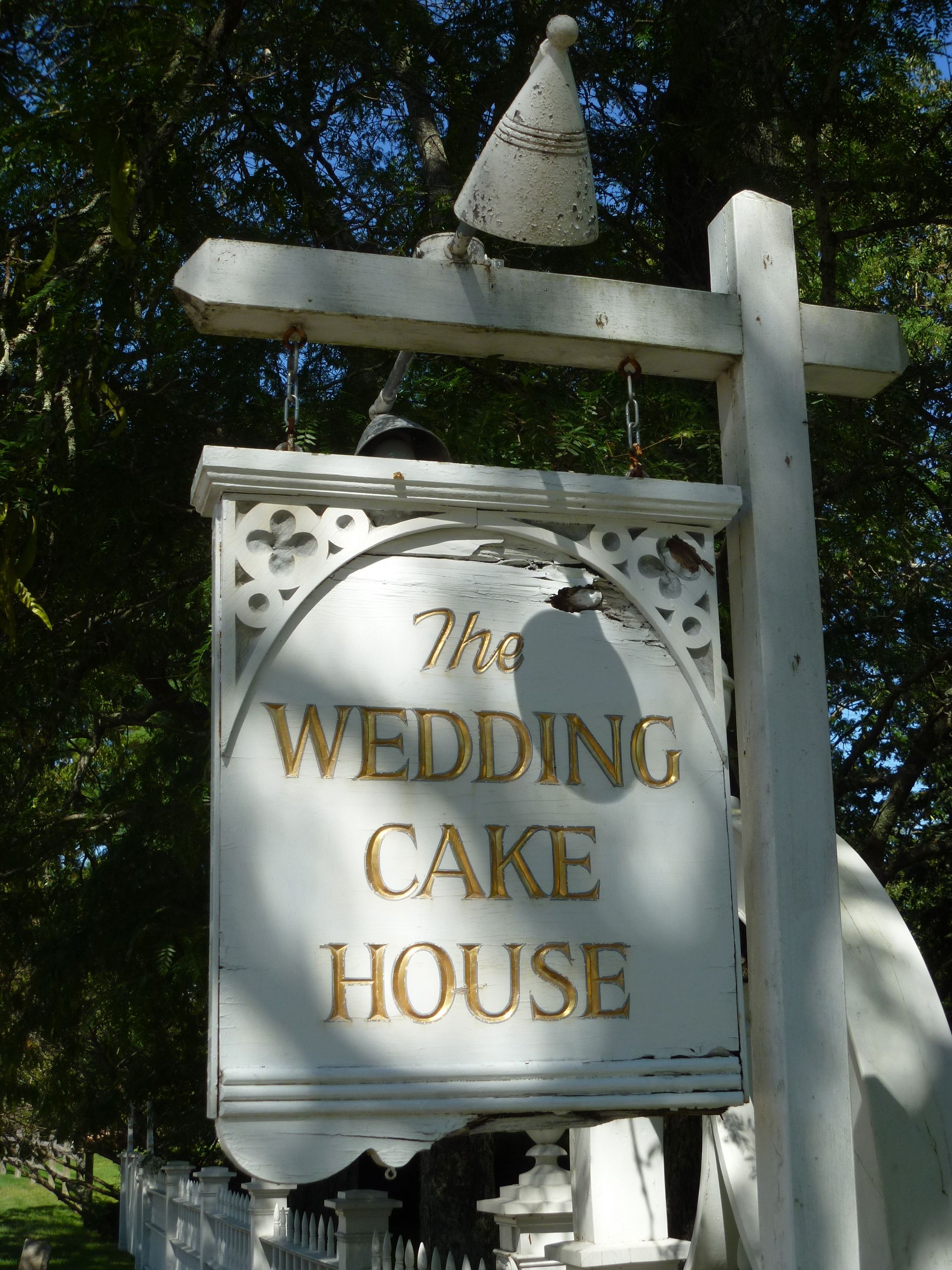
The Wedding Cake House in Kennebunk is said to be one of the most photographed houses in Maine and you can certainly see why!

The local myth is that it was built by a sea captain for his bride as an apology for leaving for his ship before the ceremony reached the cutting-the-cake stage! It’s a private home so not open to the public at all but I understand that a fund-raising event was held a few years back in aid of Hurricane Katrina victims.

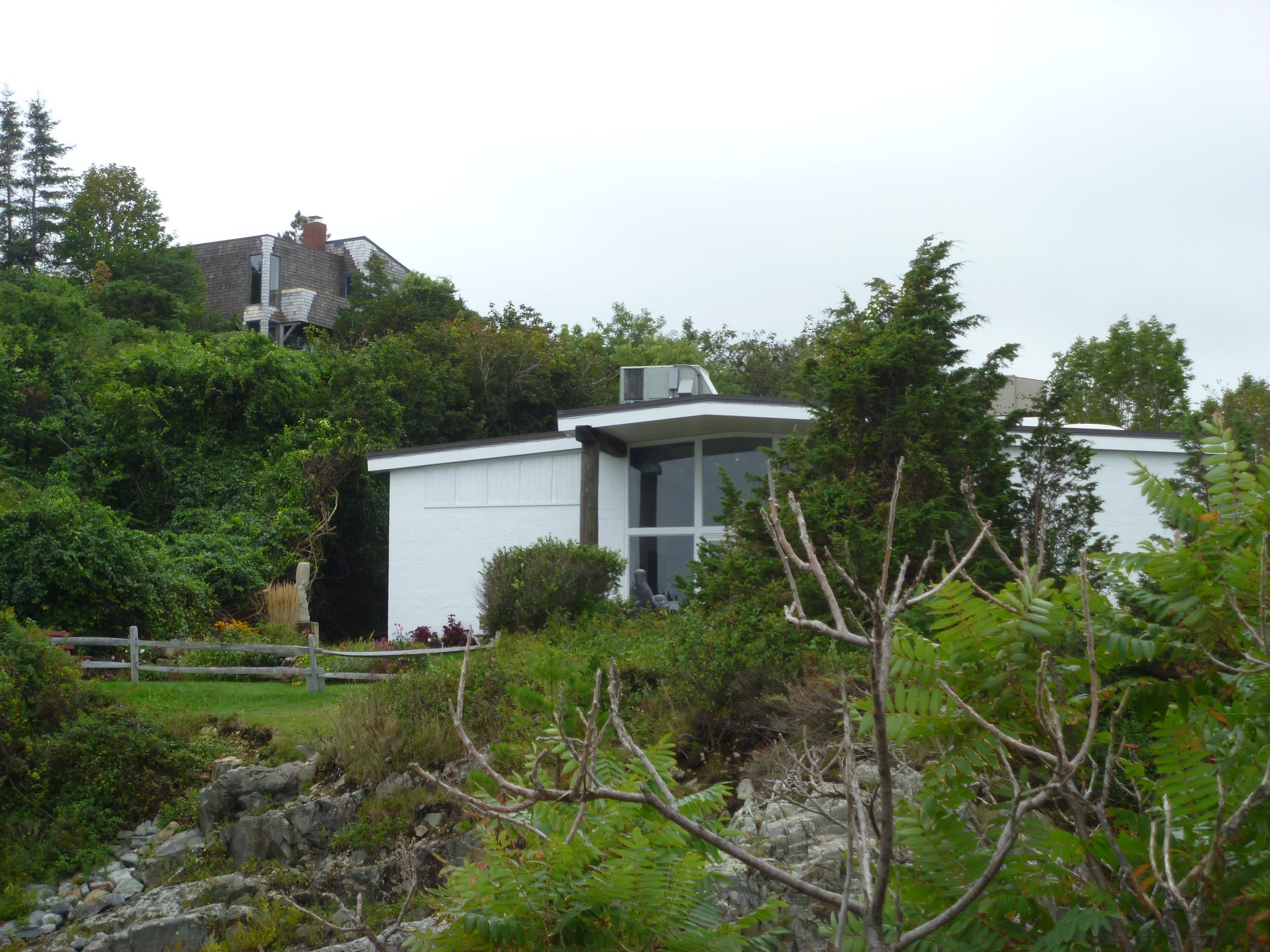
The Ogunquit Museum of American Art is the least historic of my selection of Historic Maine Coast visits. The Museum first opened in 1953 but has been extended since. Artist Henry Strater founded the Museum at 543 Shore Road, Ogunquit by first buying the Ocean facing plot of land on which it stands in 1950. Ogunquit and the Maine Coast area had long been the haunt of artists – an Ogunquit Art Colony was founded here in 1898.

In 2009 we visited The Portland Museum of Art and it was an exhibition there “Call of the Coast: exploring art colonies of New England” that drew my attention to the significant contribution of the Ogunquit colony to the American art scene in the 20th century.

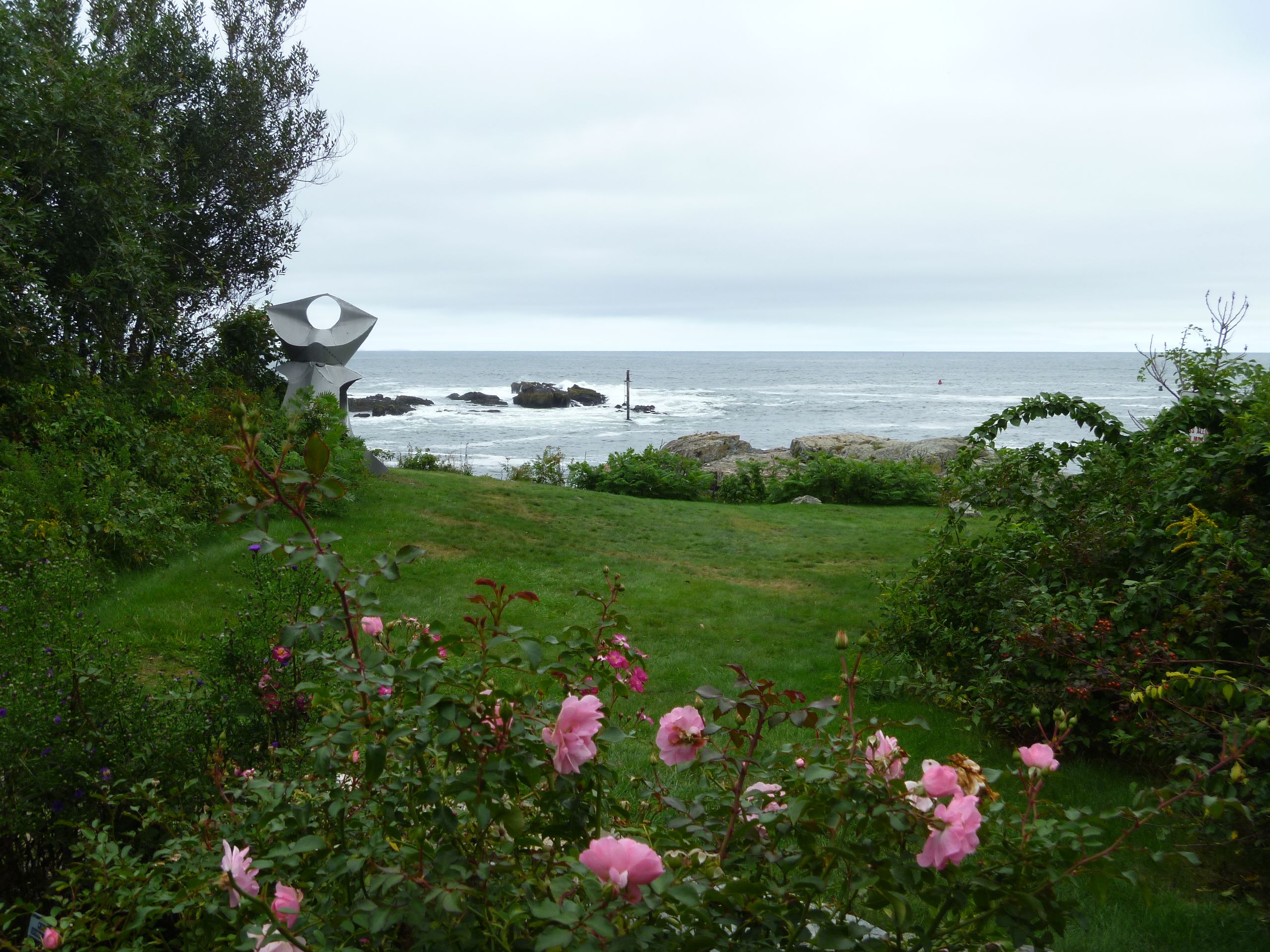
The Museum is surrounded by beautiful sculpture gardens with a wonderful view of the Ocean. The Museum and Gardens are a delight to visit during the Summer months and it is no surprise that it rates as one of the finest small art museums in the United States.

My Historic Maine Coast 1


” The last day of October in 1777, Colonel Jonathan Hamilton came out of his high house on the river bank with a handsome, impatient company of guests, all Berwick gentlemen. They stood on the flagstones, watching a coming boat that was just within sight under the shadow of the pines of the farther shore, and eagerly passed from hand to hand a spyglass covered with worn red morocco leather

‘The Tory Lover’ by Sarah Orne Jewett (1901)

Hamilton House is another property of Historic New England. This beautiful house is situated overlooking a peaceful and very wide stretch of the Salmon Falls River, just a couple of miles outside the town of South Berwick, Maine. It wasn’t always like this. When it was built in 1785 Jonathan Hamilton’s graceful Georgian home overlooked his busy shipping and ship building business and quayside.

The decor of the house today reflects the more recent ownership of Emily Tyson and her stepdaughter Elise. The Tysons made it their summer retreat during the late 19th and early 20th centuries. This “Colonial Revival” style characterises the house today. Again no photography is allowed inside but it’s a large, light and airy summer house with breathtaking painted murals on the walls of the downstairs reception rooms. There are antiques, hooked rugs and other handcrafted decorative arts in all rooms.

The house has limited opening hours but the beautiful garden is free for all to visit and admire daily from dawn to dusk.

Sayward-Wheeler House is in York Harbor and like The Hamilton House stands on a bank above a wide river – in this case the York River.

On the obligatory house tour we are told that this house is unique amongst all 36 Historic New England properties in that it is the least changed over the centuries with virtually all its original furnishings, including wall coverings, in tact. The most curious room in the house is the Parlour where the larger items of furniture (that can be dated back to when the house was built) never fitted properly! A clock has had its finials removed, a cabinet, too tall for the room, had its pediment removed and it’s always been a mystery as to how the sideboard ever got into the room in the first place – by its dimensions it could not fit through any of the room’s doorways in any direction!

In The Country of The Pointed Firs

Just before leaving for my trip to New England I discovered the existence of an organisation that sounded like just my cup of tea: Historic New England. A close study of the website lead me to list 3 properties within easy reach of places where I’d be staying AND that would be open on a day or days when I would be able to visit.  I was especially happy to discover an author’s home just a 30 minute drive from our lodgings (The Dunes on the Waterfront) in Ogunquit, Maine.

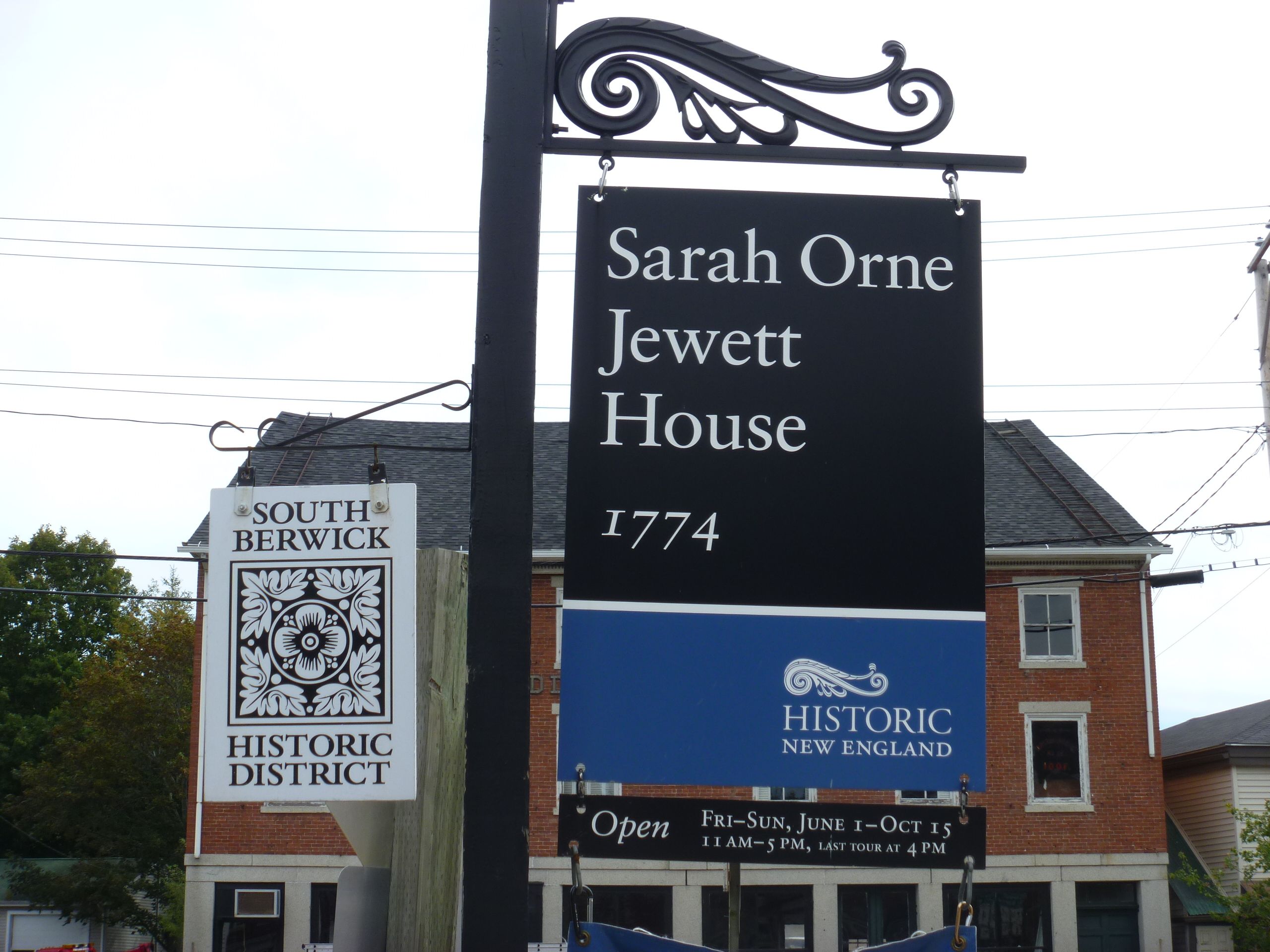
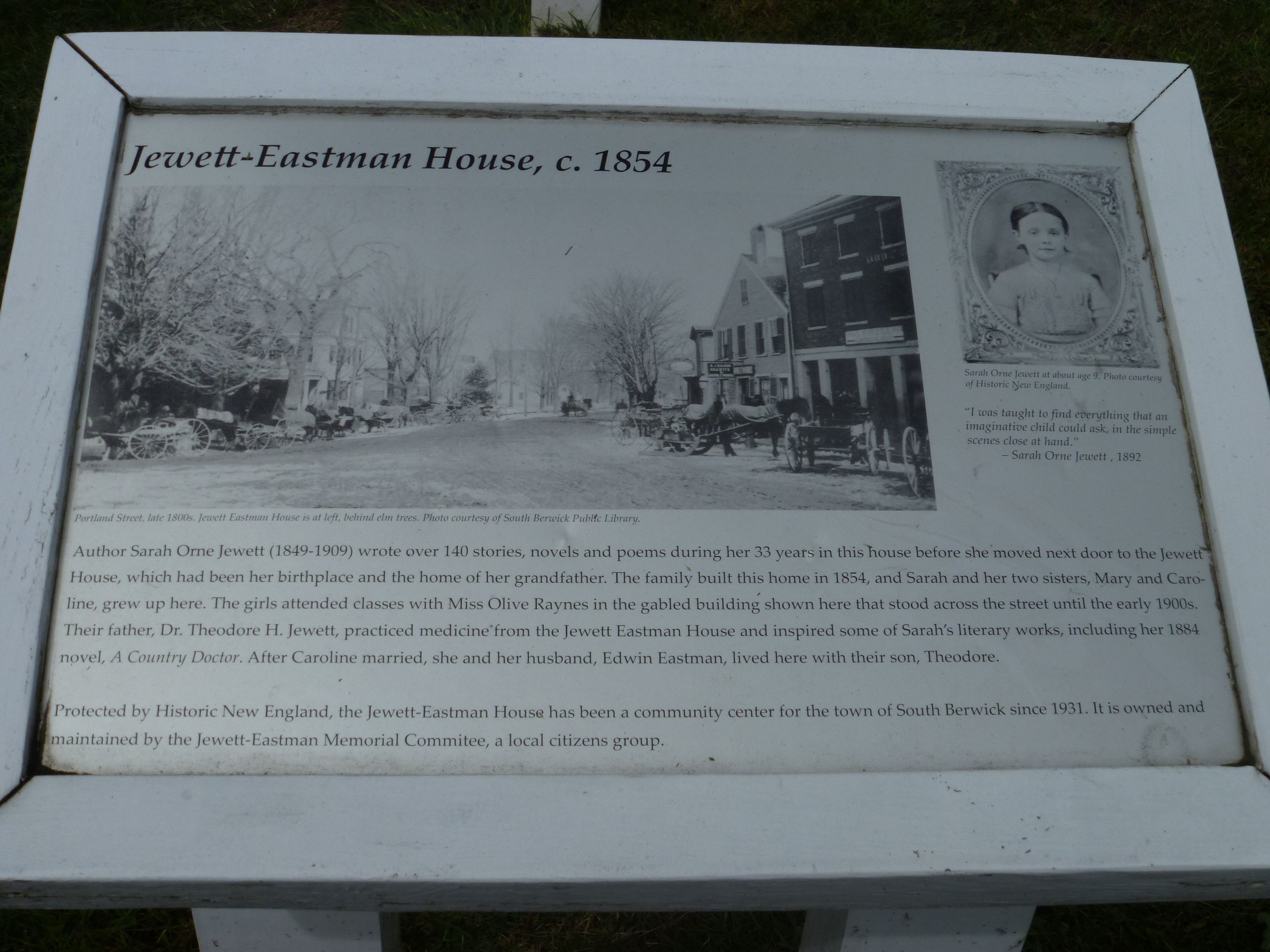
Sarah Orne Jewett (1849-1909) lived much of her life in the town of South Berwick, Maine. She was born in this house at 5, Portland Street when it belonged to her shipbuilding grandfather but soon the family built a home of their own next door (now the town’s public library).

Sarah and her sister moved back to the original house in 1887. She spent much of her time in Boston and travelling but this house was always home. No photography is allowed  in the house but it was fascinating to see the decor is still the same as Sarah and her sister Mary chose for it. Following their deaths a lot of the furniture was distributed to members of the family but Historic New England have bought back many original pieces at auction.

Having discovered the existence of the house I was anxious to read one of her books in advance of my visit. I chose a good one! A Country Doctor was first published in 1884. Like most of Jewett’s writing it is concerned with the everyday lives of the people living in the countryside of Maine. In particular Doctor Leslie is based on her beloved father, Dr Jewett.

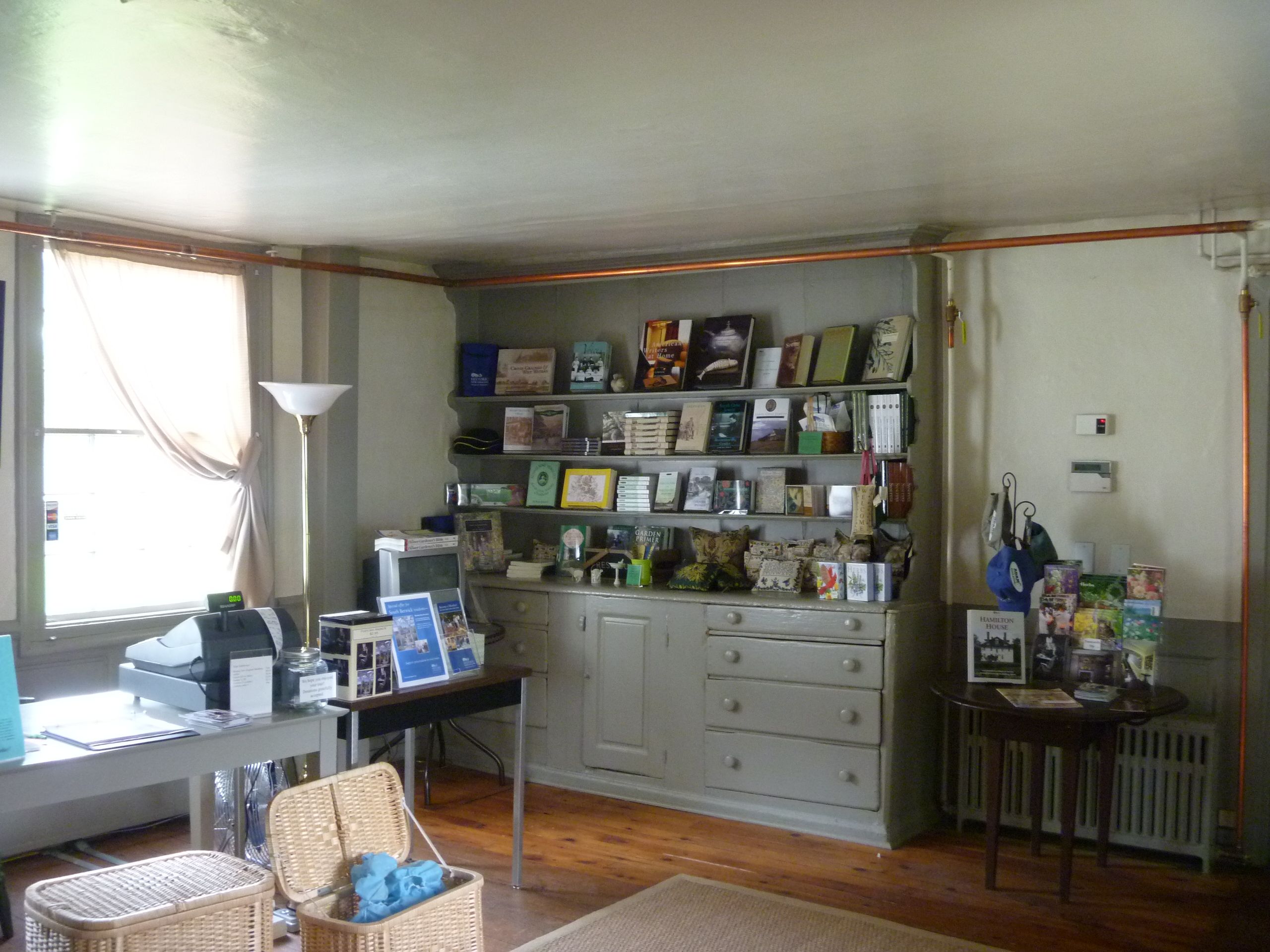
My friend Marion kindly gave me an illustrated copy of what is probably Jewett’s best known work The Country of The Pointed Firs. Her (Jewett’s) Deephaven is still in print in the USA and is set in the coastal Maine area around Ogunquit. Her books (those still in print) and other related works are available in the shop (where photography was allowed!).

There is a small garden around the house where today a gardener still carefully tends many of the herbs of the types that the Jewett sisters grew there during the nineteenth century.

On my way back to Ogunquit I sought out Sarah Orne Jewett’s grave on Agamenticus Road just outside South Berwick. I had been given instructions as to where to find it by the guide at the house. I expected a well-tended grave and was sorry that I hadn’t brought my own flowers. The tombstone was just about legible and the area filled with weeds. Sarah lies peacefully surrounded by various relatives including her sister. On the following Sunday a special ‘party’ was planned at the house in celebration of her birthday but sadly her grave is rather a forgotten memorial.

“Until the day breaks and the shadows flee away”

Coughton Court, Warwickshire

Remember, remember the fifth of November

Gunpowder, treason and plot.

I see no reason why gunpowder, treason

Should EVER be forgot…

Actually, I have read recently that there is a move afoot to gradually replace our traditional Guy Fawkes Night or Bonfire Night with Hallowe’en which seems rather a shame. I shall digress briefly and reminisce about Bonfire Nights past. When I was a young girl November 5th was a low key family event. After tea, about 6 to 6.30pm, when dad was home from work, we would take our box of fireworks (bought from the special counter set up for that purpose at the local newsagent’s) into the back garden. The box would usually contain a Roman Candle, a Vesuvius, a Catherine Wheel, some Jumping Jacks, a couple of bangers and a couple of packets of sparklers. You can’t have a ‘firework party’ without sparklers. We never actually had a bonfire with a guy but I knew people who did! We would stand back the obligatory 6 paces whilst dad lit the blue touch paper and admire the whoosh and sparkle and sniff the smell of cordite in the air. Invariably, the Catherine Wheel would need a bit of encouragement to help it spin. for this reason it was usually the most disappointing. On Hallowe’en we would just fill a pail with water and duck for apples. Rather boring – but then we always had Guy Fawkes Night to look forward to a week later.

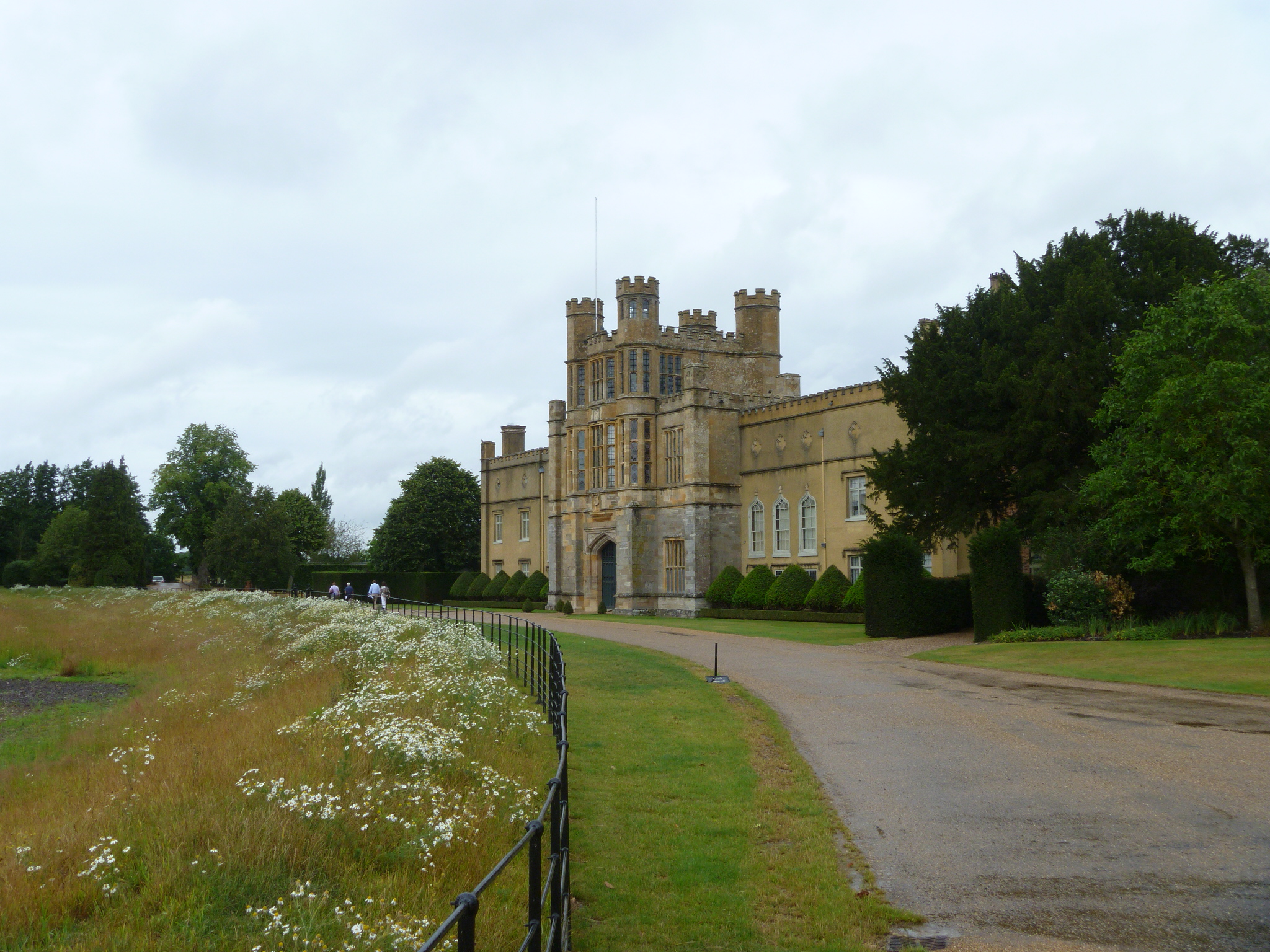
Early in August on my way to visit The Runner (younger son) I visited Coughton Court in Warwickshire where there is definitely no intention of letting the Gunpowder Plot be forgotten. It was to this house in 1605 that the news of the failure of The Gunpowder Plot was brought in the early hours of the 6th of November. The house has been in the hands of the Throckmorton family for 600 years.

“The mothers of two of the conspirators, Robert Catesby and Francis Tresham were the sisters Anne and Muriel Throckmorton, grandaughters of the original builder, Sir George Throckmorton, and sisters as well of the lord of the manor in 1605, Thomas Throckmorton. Two other conspirators, Robert and Thomas Wintour, were also great-grandchilden of Sir George Throckmorton.” Read more about the Gunpowder Plot and Coughton Court connections here :

The Gunpowder Plot

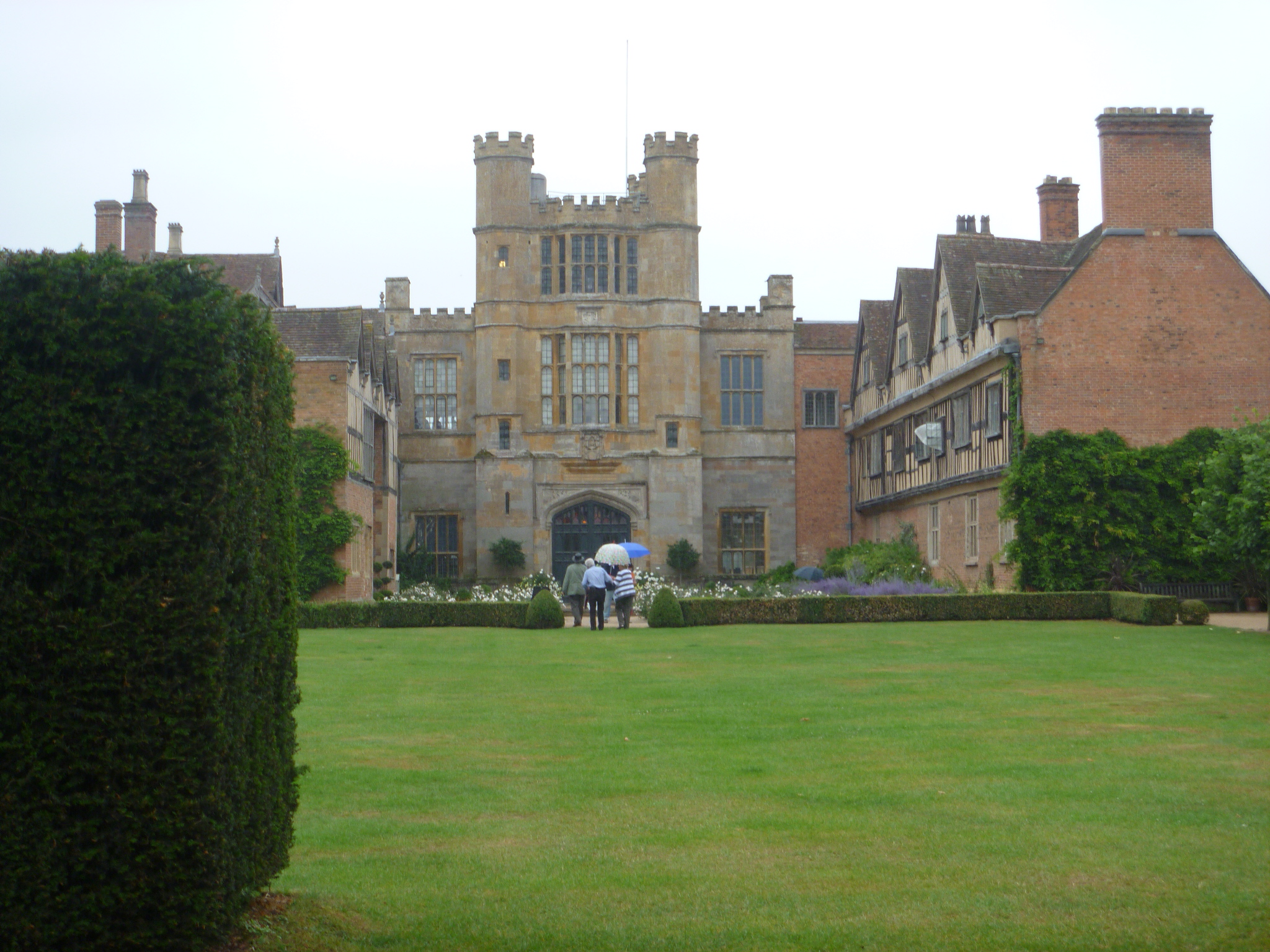
Coughton Court from the gardens behind the house.

Coughton Court is now run by the National Trust but the Throckmorton family appear to be very much involved still, especially with the gardens. As you can see it was a wet day when I visited so I didn’t get the chance to walk all round the extensive gardens. Instead I did a tour of the house, had tea in the restaurant, visited the shop and browsed in the secondhand bookshop.

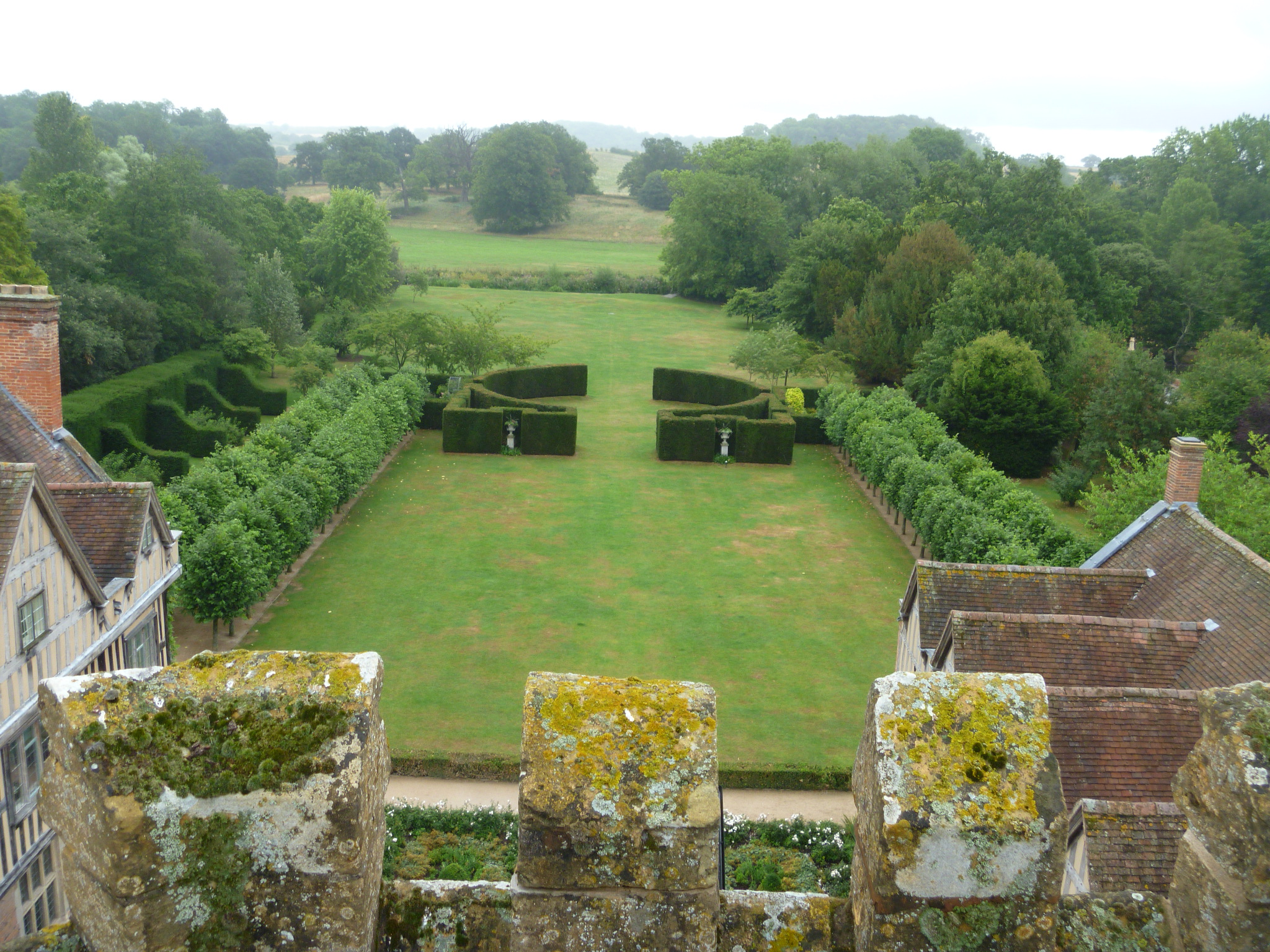
It is possible to climb right to the top of the tower and view the surrounding countryside and the lovely gardens and try to imagine how it might have looked and felt if you were a member of the group of Catholics waiting for news of the success (or failure) of Guy Fawkes and his colleagues in their attempt to blow up the King and parliament in November 1605.

View from the tower at Coughton Court

There are several unrelated things that I particularly remember noticing as I toured the house.

  • The famous Newbury Coat is on display in the Hall. Read here about Sir John Throckmorton winning his coat in 1811. It was made in one day in June between sunrise and sunset from shearing the wool from the sheep to being tailored into a coat :
  • The Newbury Coat
  • There is an annual Gunpowder dinner or Fawkes Feast held here each year :
  • Fawkes Feast 2011
  • The abdication letter, written by Edward VIII, is displayed in the Hall. The letter was acquired by Geoffrey Throckmorton in the 1930s, when he was Clerk of the Journals at the House of Commons. It has been passed on through the family and can now be seen on display. I’ve been reading a lot about Wallis and Edward this year so this was a special surprise and thrill for me to come across on my visit to Coughton (pronounced Co-ton) Court.
By coincidence this very morning I have just read about this forthcoming exhibition at Compton Verney, also in Warwickshire :

A Sentimental Journey

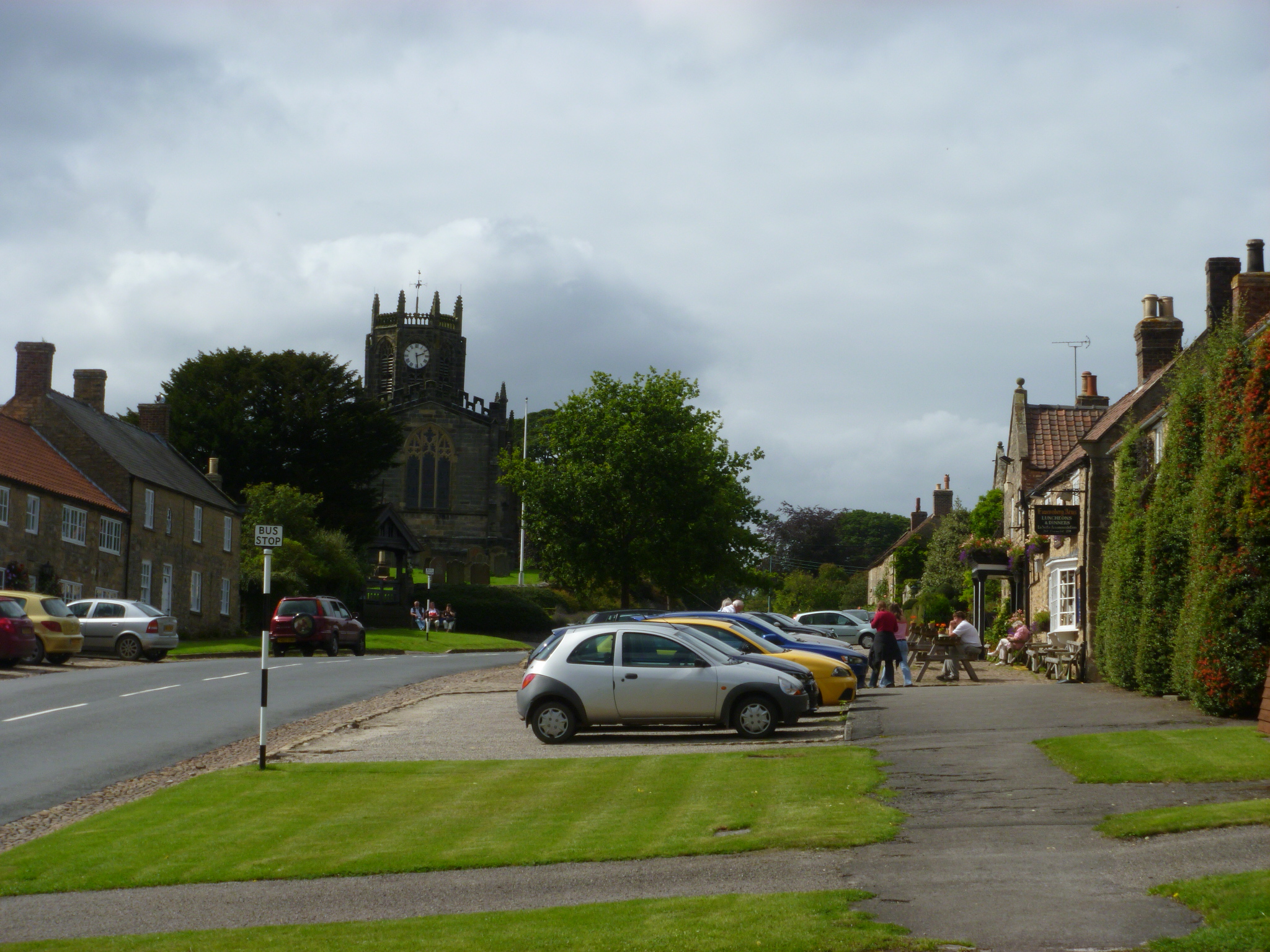
Just an hour’s drive from Leeds, Coxwold is one of the prettiest villages in North Yorkshire. It has a lovely tearoom, The Coxwold Tearooms :

an attractive and popular pub, The Fauconberg Arms

and an impressive church, Saint Michael’s.

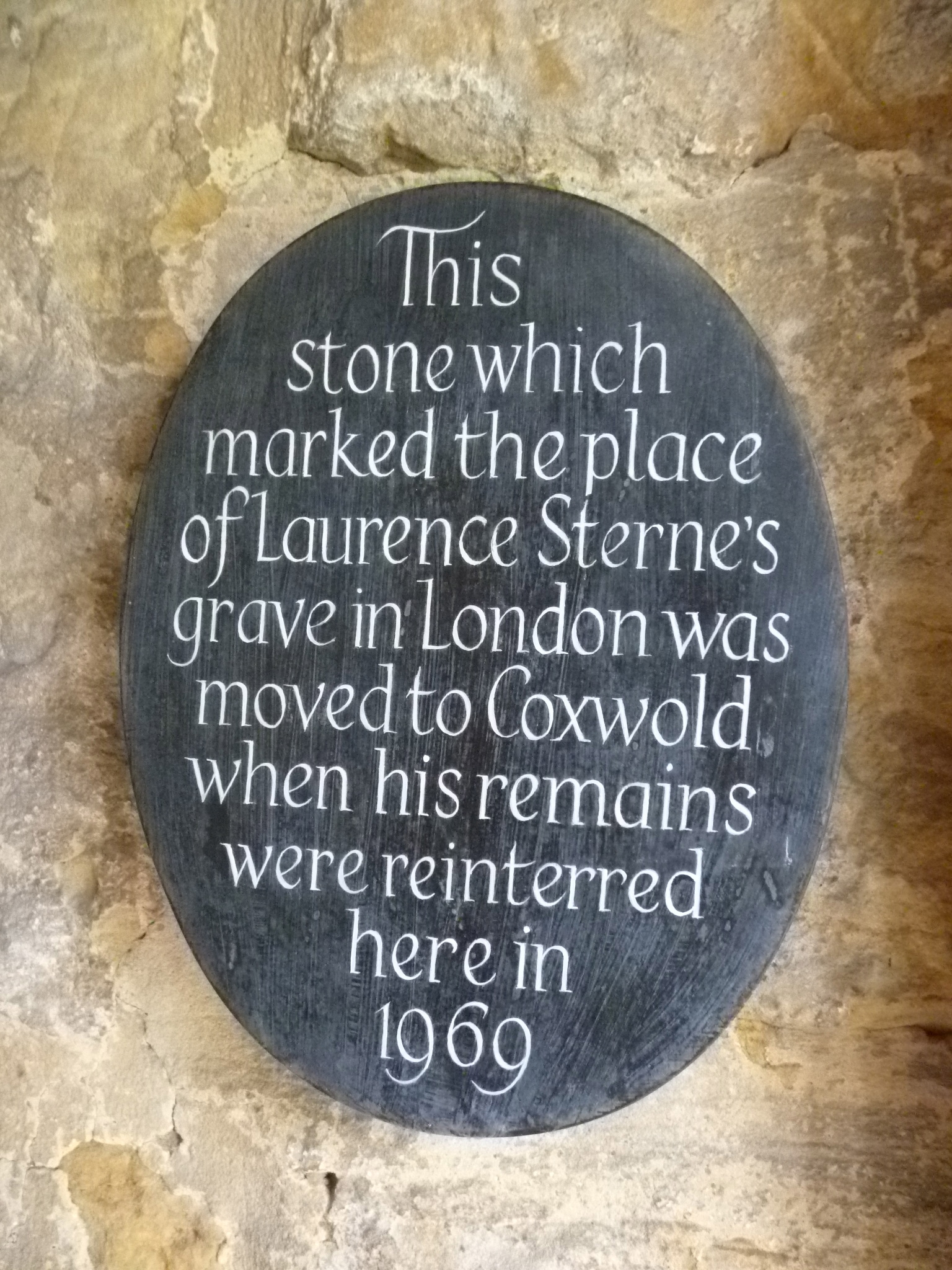
It was also home to one of the most intriguing authors of the eighteenth century – Laurence Sterne. Born of an anglo-Irish family in Clonmel in County Tipperary in 1713 Sterne was educated in Yorkshire and at Cambridge and was ordained as a Church of England clergyman in 1738. He held two Yorkshire livings before being appointed to Coxwold by Lord Fauconberg. Apart from travels in Europe and visits to London Sterne spent the rest of his life here. He died in London in 1768.

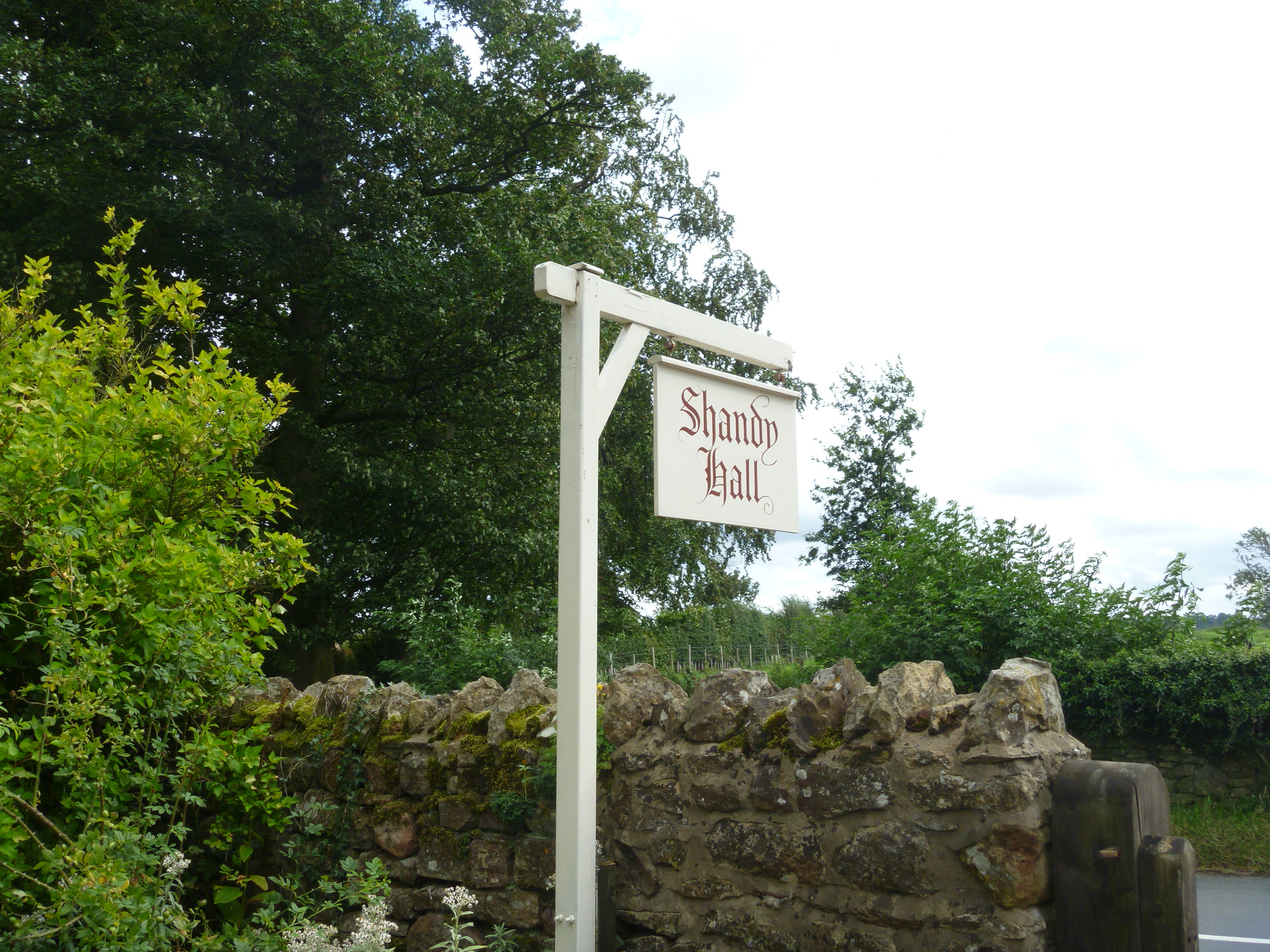
Sterne was the author of two famous books. At least they were very well known and popular during his lifetime and after but generally he is much less well known today. The Life and Opinions of Tristram Shandy, Gentleman and A Sentimental Journey. Shandy Hall, his former home in Coxwold, is run by the Laurence Sterne Trust and is open to groups by appointment throughout the year and to the general public on Wednesday and Sunday afternoons during the summer. The gardens – which include one acre of woodland – are open every day except Saturday during the same summer season.

The Laurence Sterne Trust

As eccentric as Sterne himself the house is a delight to visit. There’s an introduction by the resident curator – a true Sterne enthusiast who, by the way, will be promoting Sterne at the forthcoming Ilkley Literature Festival

and is also organising a visit to Shandy Hall from Ilkley.

Ilkley Literature Festival – Shandy Hall visit

The 2005 film A Cock and Bull Story starring Rob Brydon, Jeremy Northam and Steve Coogan demonstrates just how unfilmable the novel is :

Shandy Hall and garden.

And finally, the shop! Besides the souvenir fridge magnets, postcards and new books there is a large selection of secondhand books.