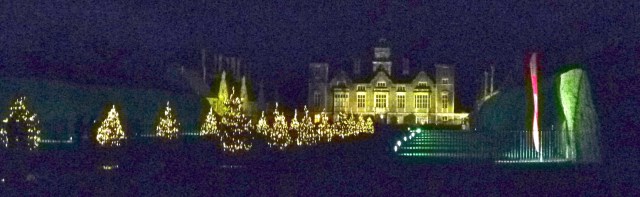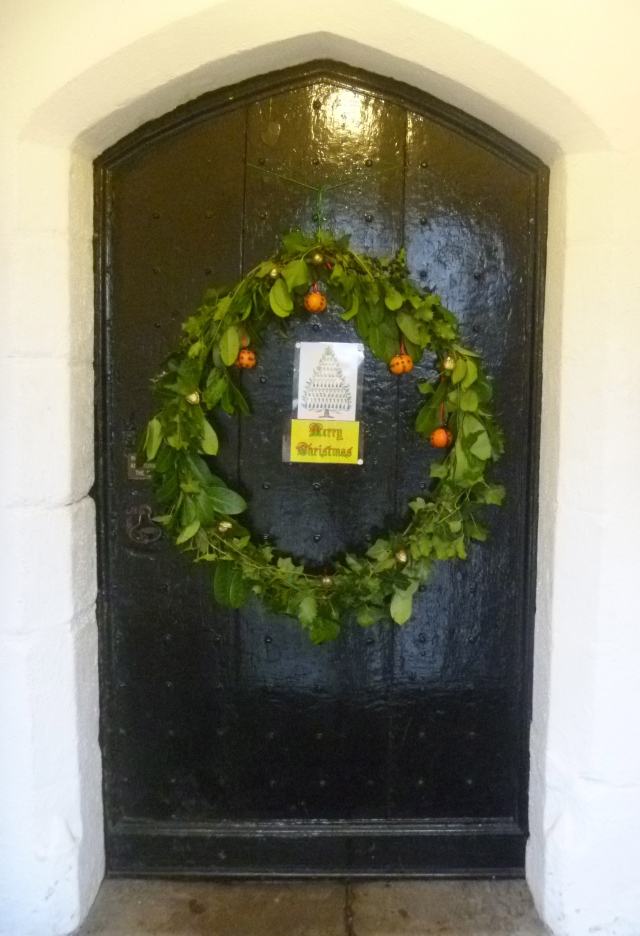
‘Deck the halls’ at Oakwell

Oakwell Hall

Step back in time and enjoy Oakwell Hall’s period rooms decorated with greenery from the park with the theme of traditional Christmas carols. Enjoy the rich and historic splendour of Oakwell Hall, decorated for a 1690 Christmas.”

Oakwell Hall

“It was neither a grand nor a comfortable house; within
as without it was antique, rambling and incommodious.”

Charlotte Brontë’s description of ‘Fieldhead’ (Oakwell Hall) from ‘Shirley’.”

We have had days and days of constant rain. The dark misty clouds mean that the days seem even shorter than the time of year supposes that they should be, so I decided to ‘step back in time’ to a nearby house with Bronte connections – Oakwell Hall in Gomersall. It is now owned by Kirklees Council but has had an interesting history and the lovely house dates back to the 16th century. Read about the fascinating study of the timbers, panelling, layout and construction of Oakwell Hall here. It is such a shame that photography is no longer allowed inside Oakwell Hall as the greenery and decorations brighten up the rooms at this time of year.
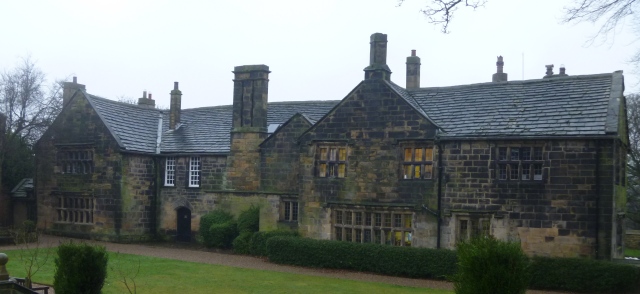
Oakwell - rear

Rear view of Oakwell Hall

Thought to be built by one John Batt, whose initials appear above the door, Oakwell was occupied by him and his family for way over a century. Between 1789 and 1927 when the hall was bought by the local council it had several owners and was at times a private residence, at times occupied by short term tenants (families and schools) and at one point was threatened to be “taken down, brick by brick, and shipped to America”. A local appeal was then launched and with the help of two particular wealthy benefactors (Sir Henry Norman Rae and John Earl Sharman) the house was saved and passed to Batley Corporation (now Kirklees Council). Since 1927 the house has been a museum and more recently the surrounding parkland has come into Council ownership and the whole is now Oakwell Hall Country Park.

As you tour the house, after being greeted in the Great Hall, at one point on the ground floor you pass into the Buttery. This bare room with stone floor is now a small information space and here I read more about the Bronte connection with Oakwell Hall.

Whilst a pupil at Roehead School in Mirfield Charlotte Bronte made friends with Ellen Nussey and Mary Taylor. Ellen later attended a school at Oakwell Hall and CB frequently visited her here. She was inspired to base her descriptions of the house Fieldhead on Oakwell Hall and she also based The Yorke family in the same book on her friends The Taylors.

Accurate descriptions of the house interior and exterior can be lifted straight from Chapter 11 “Fieldhead” in Shirley.

“If Fieldhead had few other merits as a building, it might at least be
termed picturesque. Its regular architecture, and the gray and mossy
colouring communicated by time, gave it a just claim to this epithet.
The old latticed windows, the stone porch, the walls, the roof, the
chimney-stacks, were rich in crayon touches and sepia lights and shades.
The trees behind were fine, bold, and spreading; the cedar on the lawn
in front was grand; and the granite urns on the garden wall, the fretted
arch of the gateway, were, for an artist, as the very desire of the eye.”

“Mr. and Miss Helstone were ushered into a parlour. Of course, as was to
be expected in such a Gothic old barrack, this parlour was lined with
oak: fine, dark, glossy panels compassed the walls gloomily and grandly.
Very handsome, reader, these shining brown panels are, very mellow in
colouring and tasteful in effect …”

Talking with one of the Museum staff I also discovered that several filmings had taken place at Oakwell over the years. Notably in 1921 a silent film version of Shirley. 

A 2009 TV version of Wuthering Heights used Oakwell for its interior scenes. Fast forward to around 48 minutes in if you are only interested in seeing some interior shots of Oakwell. The exterior shots look to me as if they were filmed using East Riddlesden Hall near Keighley.

The interior scenes of  The Secret Diaries of Miss Anne Listeralso made for TV was filmed here at Oakwell. The true home of Miss Lister was nearby Shibden Hall at Halifax but I was told that the rooms at Oakwell were much larger to allow for all the cameramen’s paraphernalia.

Oakwell Gardens

On leaving the cosiness of the hall you enter the lovely, beautifully ordered, Elizabethan gardens. I made a mental note to revisit these on a less wet and grey day. I hurried home to light my own Christmas tree lights and relax with a mince pie.

My own Christmas tree

A MERRY CHRISTMAS EVERYONE!

A Dam Busters Walk and A Damn Good Lunch

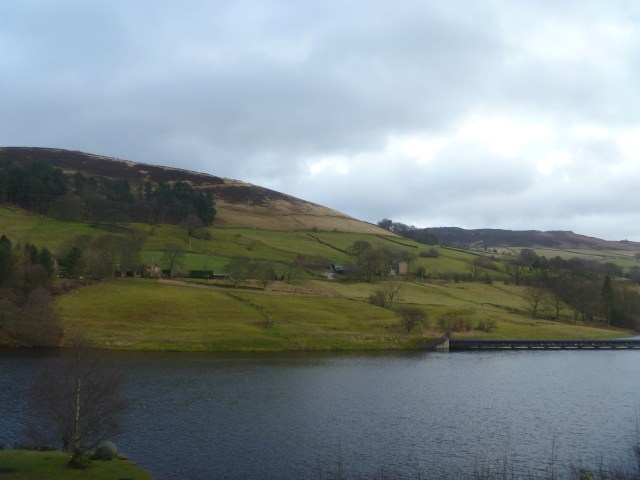
Our younger son lives in Sheffield so we arranged to go Christmas Shopping (with a difference) together today. We met up at The Ladybower Inn then headed to a small car park beside the upper part of Ladybower Reservoir in the Derbyshire Peak District National Park.

Ladybower2

Lovely Ladybower

There are good paths along the edge of the ‘lake’ and there’s a visitor centre and cafe and other facilities at the northern end of the reservoir.

Dambuster books

A Selection of Dam Busters Books in the Visitors Centre

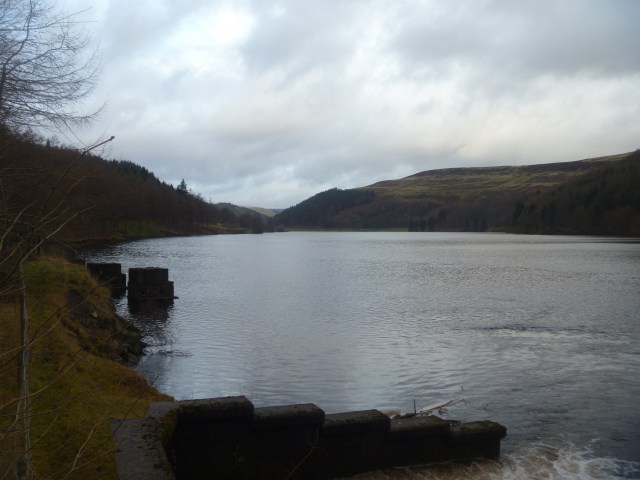
From there it’s a bit of a climb up to the Upper Derwent Reservoir where the ‘Dam Busters’ trained and practiced their low level flying during the Second World War.

Upper Derwent Reservoir

The Upper Derwent Reservoir

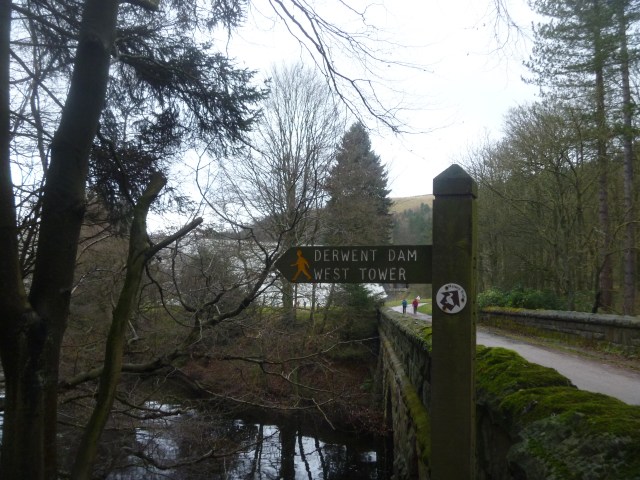
Derwent Dam and Sign

Note the Derwent Dam (very loud!) in the background

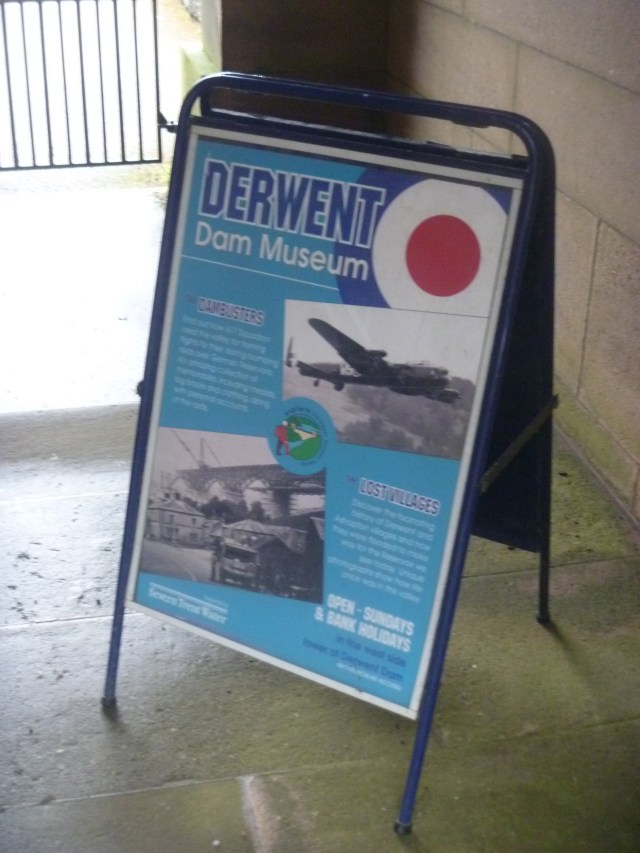
Derwent reservoir was used by the RAF’s Dambusters to practise their low level flying techniques during 1943, in preparation for delivering Barnes Wallis’ famous ‘bouncing bombs’ to German dams. Located in the West Tower of the Derwent Valley Dam is the Derwent Dam (617 Squadron) Museum which houses a collection of memorabilia dedicated to the famous Dams Raid carried out by 617 “Dambusters” Squadron.

Dam Museum

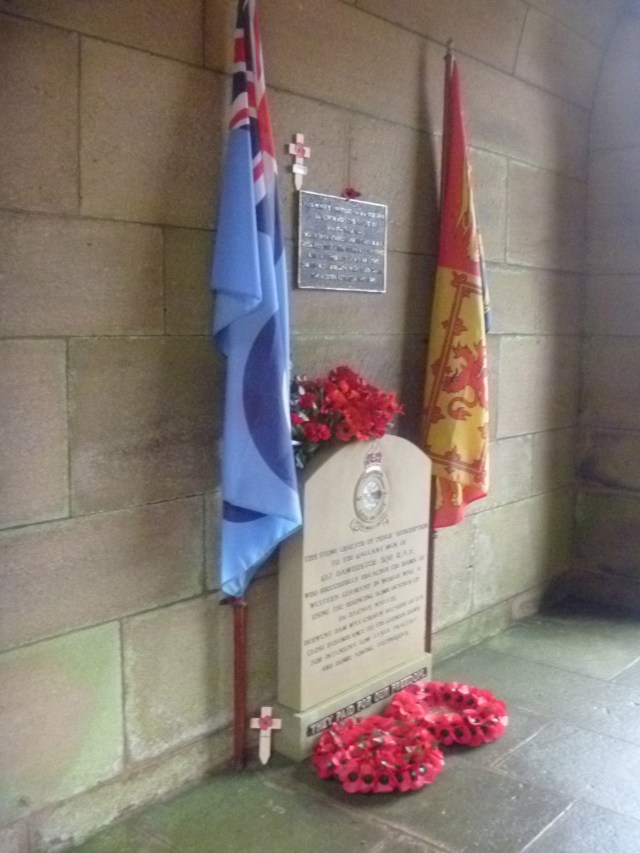
Dam Busters Memorial

Dam Buster’s Memorial

It includes photographs and other material covering all aspects of the Dams Raid, including details of the training flights carried out by 617 Squadron over the Derwent Dam and material relating to the film “The Dambusters” starring Richard Todd as Guy Gibson, made in 1954. There is also an example of the famous “Bouncing Bomb”, which forms the centrepiece of the museum’s display. Opening times are 10.00am to 4.00pm on Sundays and Bank Holidays only.” 

[from http://www.derbyshireuk.net/derwentvalley_reservoirs.html website]

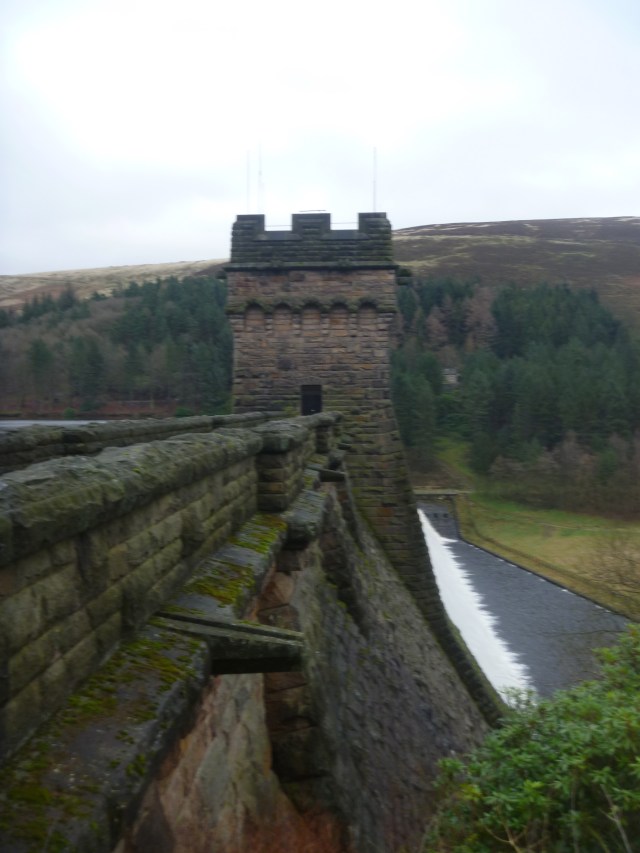
West Tower

The Museum is housed in the West Tower

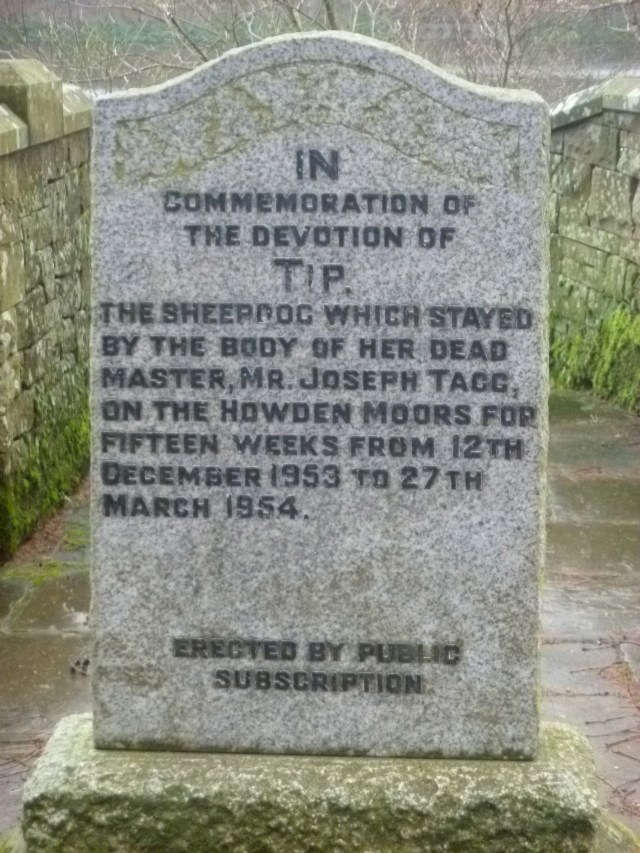
The museum was closed as our visit was on a Saturday but definitely worth a return visit. We climbed up to the see the West Tower and were intrigued to see a memorial to a loyal dog nearby.

TIP Memorial

The Memorial to faithful Tip

Our walk continued on the eastern side of the reservoir past a National Trust owned farm but only too soon it was time to turn back to the cars. N often runs right round Ladybower: a total of 11km including the additional 2 km to and from the car park at the Ladybower Inn. But the days are short at this time of year and we hadn’t even started our shopping.

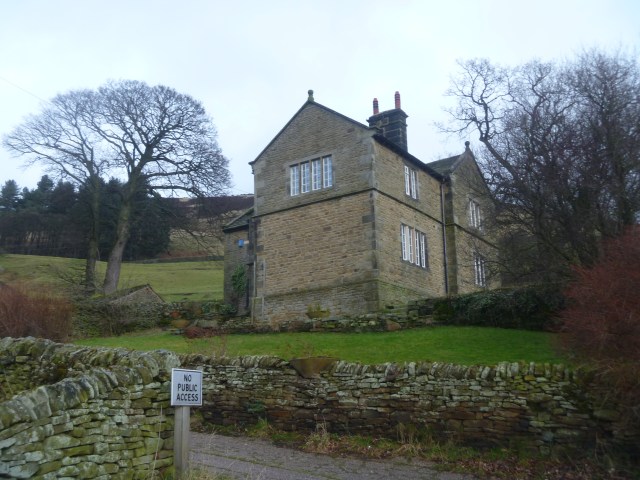
Old House Farm

Old House Farm

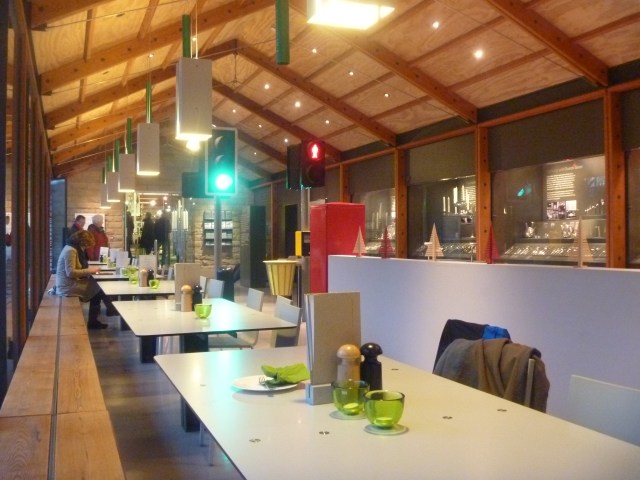
So, back at the cars we headed for Hathersage and the lovely Country Shop at David Mellor’s Round Building. I also recommend the Cafe where we had fresh warm soup and chunky bread for our late lunch. There’s also a Design Museum showcasing David Mellor’s work within the building.

Design Museum

The David Mellor Design Museum (yes, those are his traffic lights!) and Café

By 4 o’clock it was dark and time to head back up the M1 to Leeds. Yesterday the weather was icy and  freezing cold (-3C)  but with typical British contrariness today the temperature hit 8C. I’m glad I was able to make the journey without any hitches. It was well worth the trip. I hope the recipients enjoy their gifts. We certainly enjoyed shopping for them!!

Spotting Man’s Best Friends – in Norfolk and in Bedfordshire

Finally, for these posts about my trip down to eastern England last week just a few pictures and doggie-connections!

Billy in snow

Billy in the snow

Billy, lives with his master and mistress at the B&B in Norwich where I stay. He is very quiet and very much behind the scenes but it’s always a joy to see him when he pops into the breakfast room or has a little toddle round the garden in the summer. I think Billy is quite old now and he’s a bit shaky on his pins so on each visit I’m pleased to see him again and renew acquaintance.

Of course, the whole idea behind the very existence of Keeper’s Cottage is that it was home not only to the gamekeeper but also, and very importantly, to his dogs. They lived in separate accommodation a few yards down from the house.

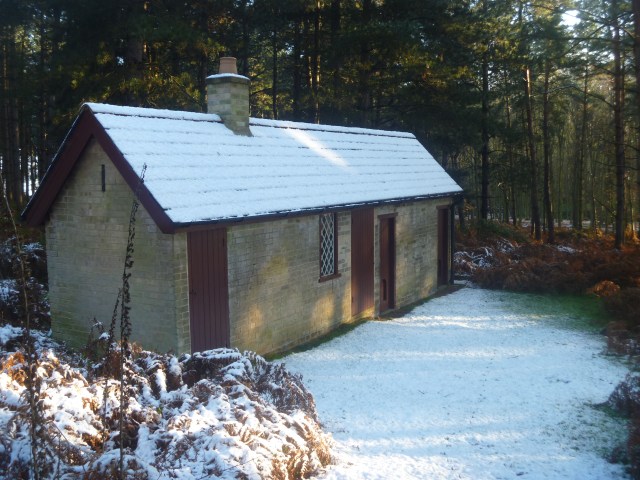
A short distance down the slope was a four-stalled kennel block, where the head keeper kept his dogs for retrieving the game. One of the stalls had a hearth and copper boiler for the keeper to boil up scraps and bones for the dogs’ mash.”

Keeper's Kennels

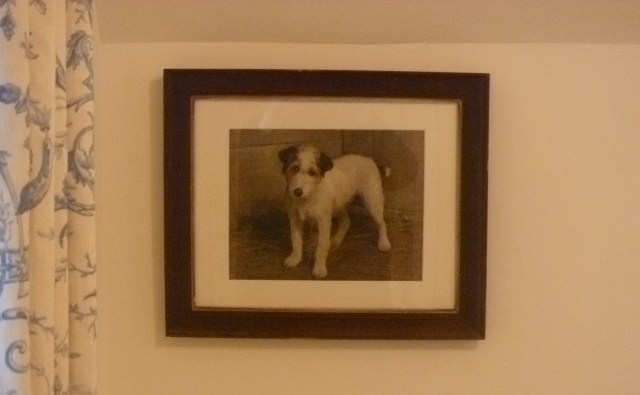
The pictures on the walls of Landmarks usually have some connection with the property. In the case of Keeper’s there are a number of dog pictures and most notably to me the one in the bathroom :

Dog picture

For some reason he reminded me of Billy.

Alfie in snow

Alfie dislikes the snow and won’t keep still to be photographed!

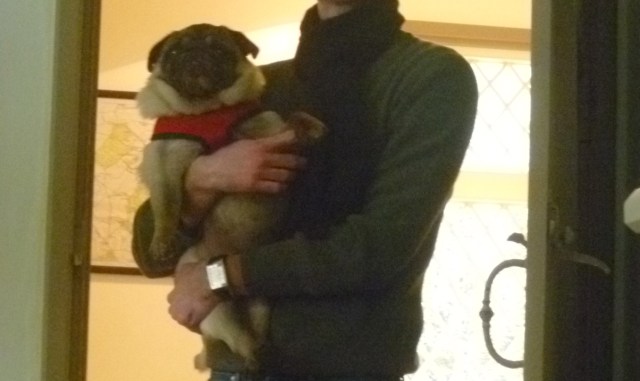
We did, of course, have our own pug dog with us at Old Warden. Alfie is fast becoming a seasoned Landmarker. He already accompanied us to La Maison des Amis, the Windsor’s place near Paris, earlier in the year. And now he’s been to Keeper’s. Where next for Alfie?- you just have to wait and see ….

Alf at Keeper's

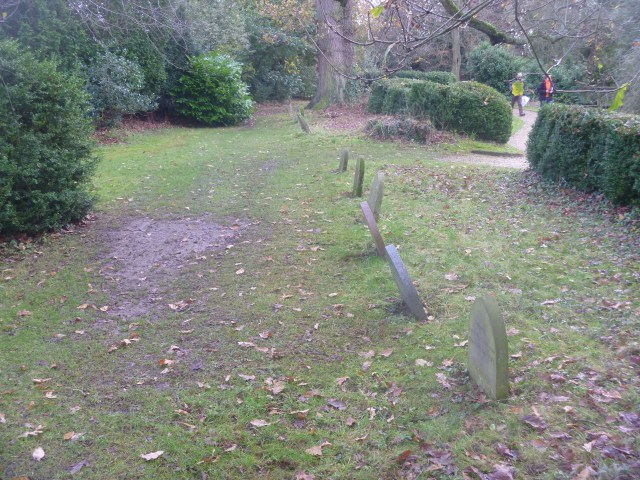
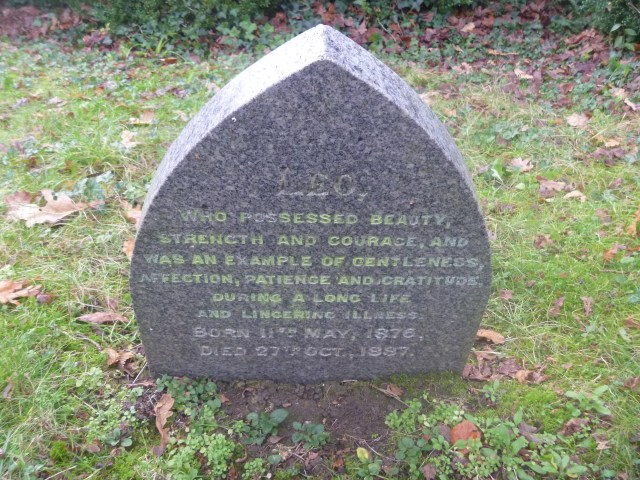
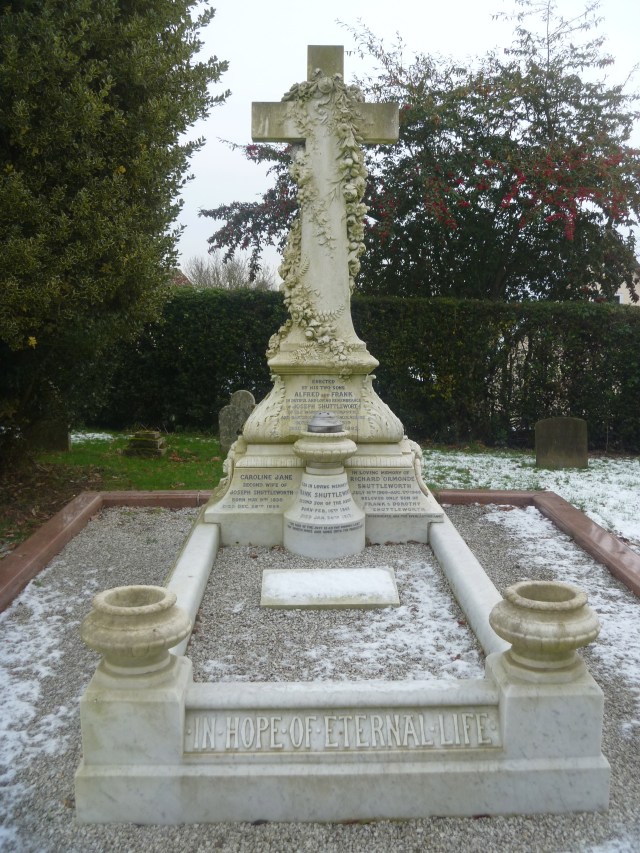
Eventually all dogs pass away and go to the great kennels in the sky. The Shuttleworths were no different from the Windsors, from Edith Wharton or from Agatha Christie. They also  had a great love and respect for their four-legged friends and in the Swiss Garden are 14 gravestones each marking the burial spot of a much-loved pet.

Dog graves in Swiss Garden

The Doggie Graves in the Swiss Garden despite their age each name can be clearly read

Leo's stone

Shuttleworths, Shuttleworths everywhere … some Old Warden history

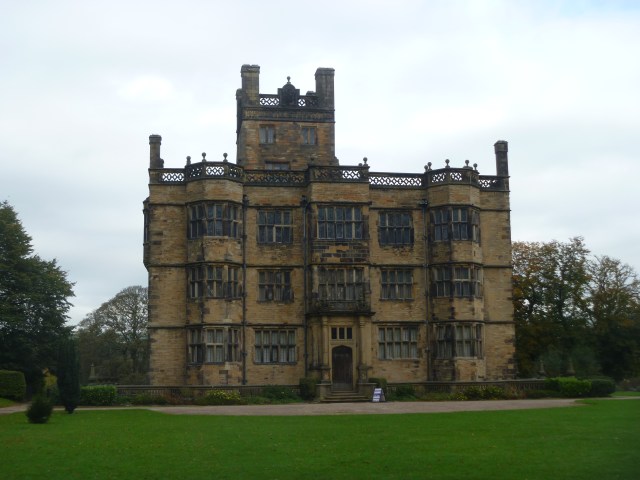
Gawthorpe Hall

Gawthorpe Hall in Lancashire

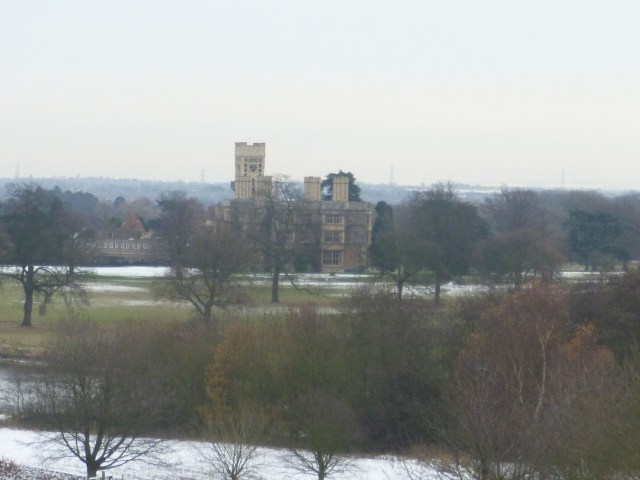
Shuttleworth College

Shuttleworth College in Bedfordshire

See how similar the two buildings above are – they are connected only by the name “Shuttleworth”. In October I met a former work colleague, who lives in Lancashire, at Gawthorpe Hall. I knew the owners were the Kay-Shuttleworths but I never at all linked their name with the Collection with the same name down in Bedfordshire.

I was fascinated to read in the Keeper’s Cottage History Album :

What is intriguing is that there seems to have been no connection whatsoever between Joseph Shuttleworth and the Gawthorpe (by then Kay) Shuttleworths. In seeking to establish his own pedigree in Bedfordshire, Joseph seems to have wished to imply a connection with these ancient, Lancastrian namesakes that was apparently without foundation. He adopted a crest that was similar to their own and the family arms also feature the Gawthorpe Shuttleworth’s ‘three shuttles sable tipped and fringed with quills of yarn and threads bend or; a cubit arm in armour proper grasping in the gauntlet a shuttle of arms.’

… the estate at Old Warden represented a perfect fit for the new dynasty, with a model village half begun by an expiring family (the Ongleys) offering the opportunity for benevolent philanthropy as well as revivication of an ancient estate.”

Old Warden Booklet

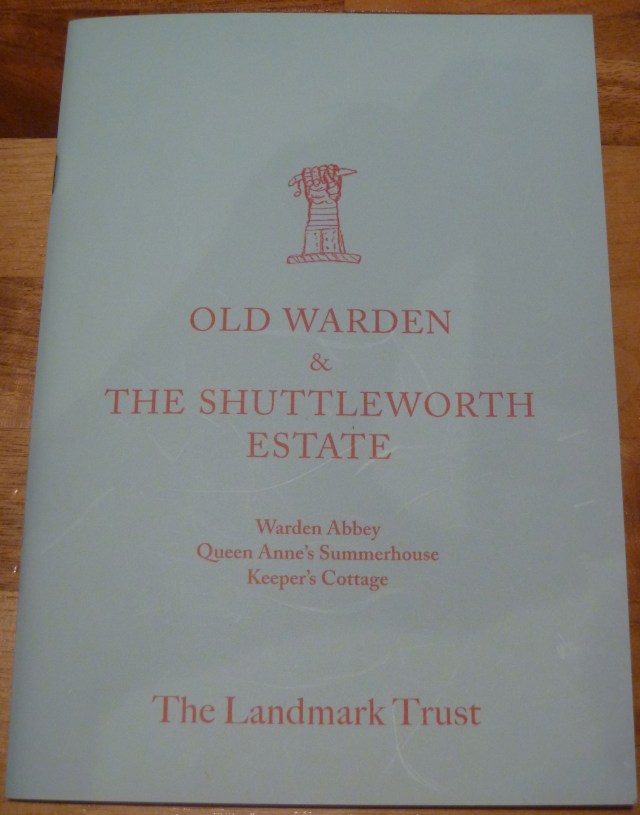
The Landmark Trust have published a history booklet “Old Warden and the Shuttleworth Estate : the history of Old Warden told through three buildings; Warden Abbey, Queen Anne’s Summerhouse and Keeper’s Cottage”. 

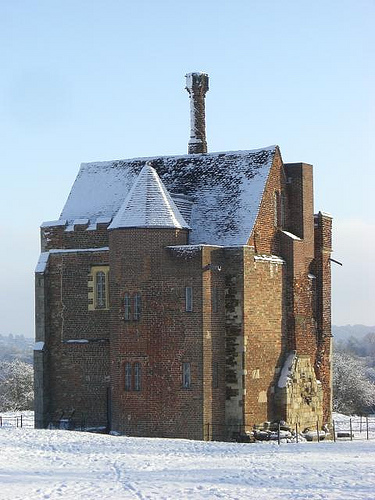
Warden Abbey

Warden Abbey (now also a Landmark Trust property)

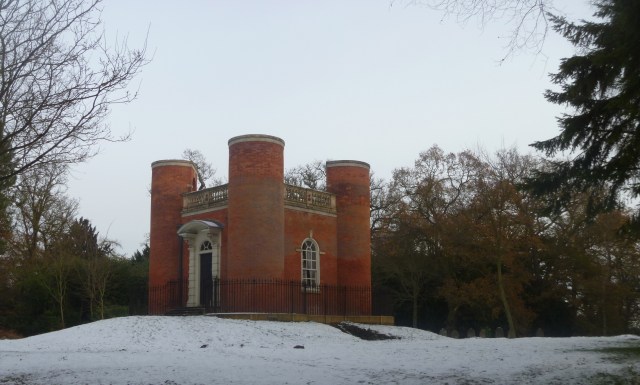
Queen Anne's Summerhouse

Queen Anne’s Summerhouse (now also a Landmark Trust property)

I was able to buy a copy from the housekeeper at Keeper’s and it tells the history, briefly, of the area from the foundation of the Cistercian Warden Abbey in 1135 to the present day  co-operation between the Shuttleworth Trust and The Landmark Trust.

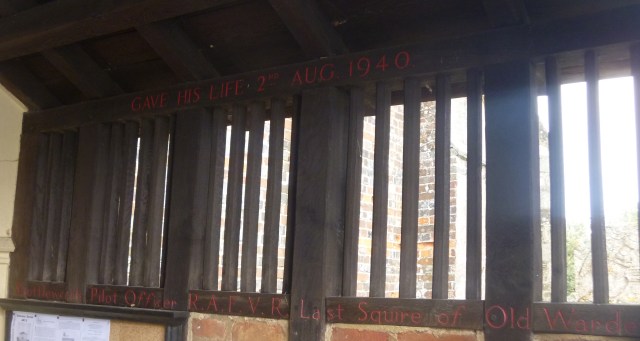
The Shuttleworth Trust was set up by Dorothy Shuttleworth following the early death in 1940 during an RAF flying accident of her only  son and the squire of Old Warden, Richard Ormonde Shuttleworth. The hall became a hospital during the War and afterwards the devastated mother turned the entire estate into a charitable trust in his memory. The hall is now a College  specialising in running outdoor and country-based courses. Richard’s collection of old aeroplanes formed the original Shuttleworth Collection.

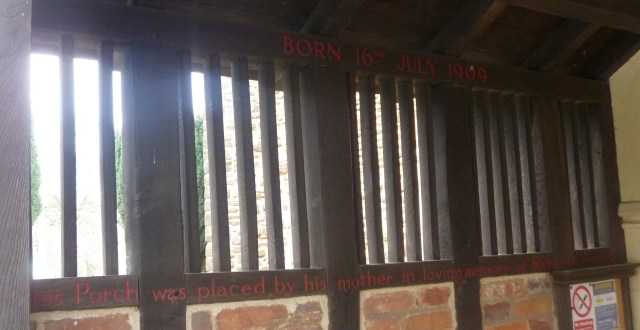
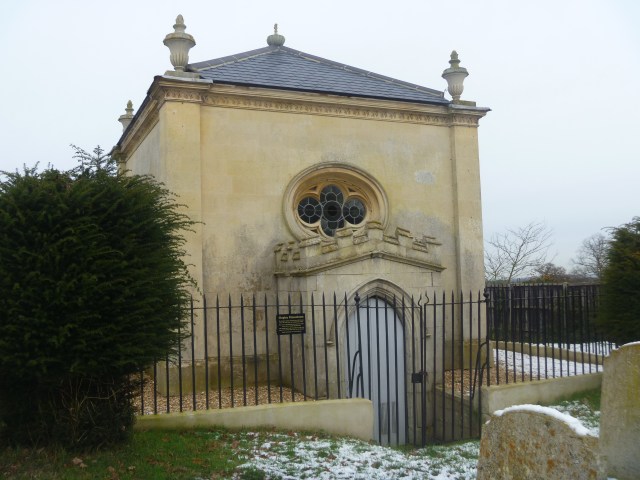
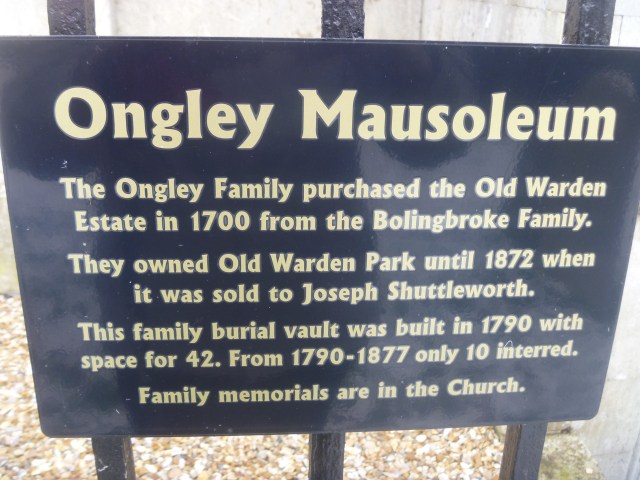
I took a walk one day to visit St Leonard’s church, in Old Warden (2 stars in Jenkins’s book). Unfortunately it’s only open at the weekend so I wasn’t able to inspect the various Ongley and Shuttleworth memorials and the 14th century window depicting an abbot in a white habit from the Cistercian Warden Abbey. But in the porch Richard is commemorated and the Ongley Mausoleum and the Shuttleworth graves lie in the churchyard.

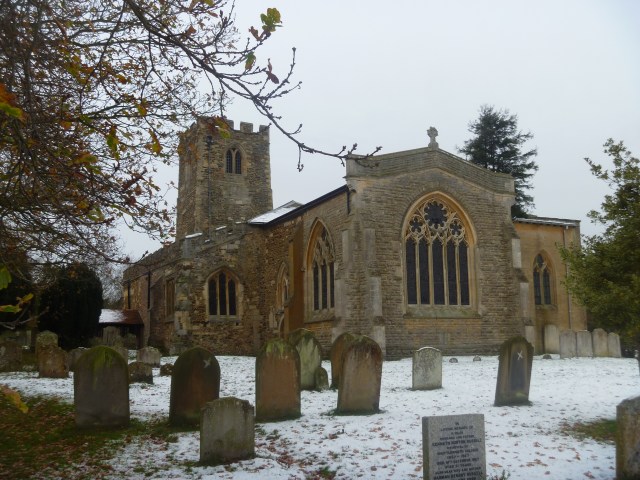
St Leonard's Old Warden

St Leonard’s Church

Porch 1

Porch 2

The porch is a memorial to Richard Shuttleworth

The Ongley Mausoleum

Ongley notice

The Ongley Mausoleum

Shuttleworth grave

The Shuttleworth Grave

Additional Note :

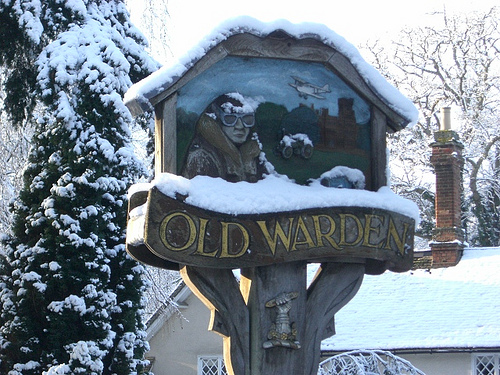
Old Warden sign 2009

Village sign in 2009

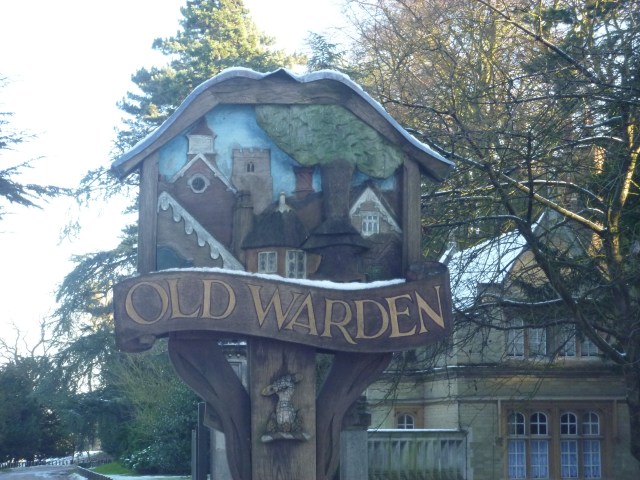
Old Warden sign 2012

The Sign today in 2012

I’m not sure that I don’t prefer the older, more distinctive one.

The Pilgrim’s Progress and A Winter’s Tale – Some Literary Remains in Bedfordshire

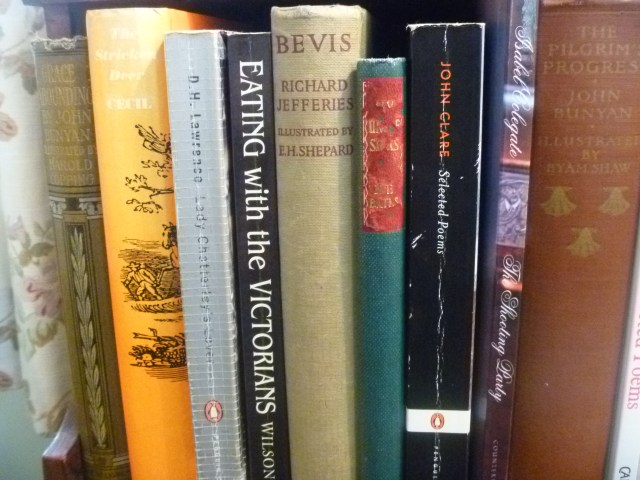
The clues to the literary connections in the local area can always be found in the Landmark Library of any property.

Keeper's book case

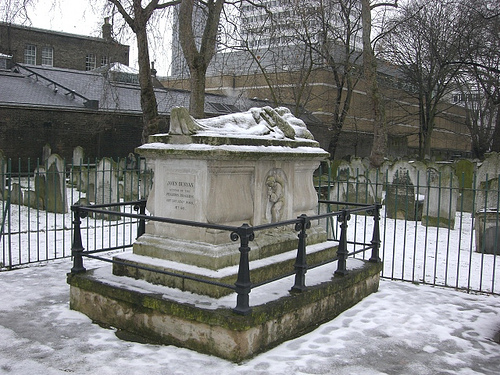
John Bunyan was a Bedfordshire man. He was born in the village of Elstow in 1628 and he spent 12 years as a prisoner of conscience in Bedford Jail where he had the idea to write his most famous work. The Pilgrim’s Progress was published in two parts in 1678 and 1684. Bunyan died in Holborn in London in 1688 and I have seen his grave and memorial in Bunhill Fields Cemetery in London.

Bunyan in Bunhill Fields

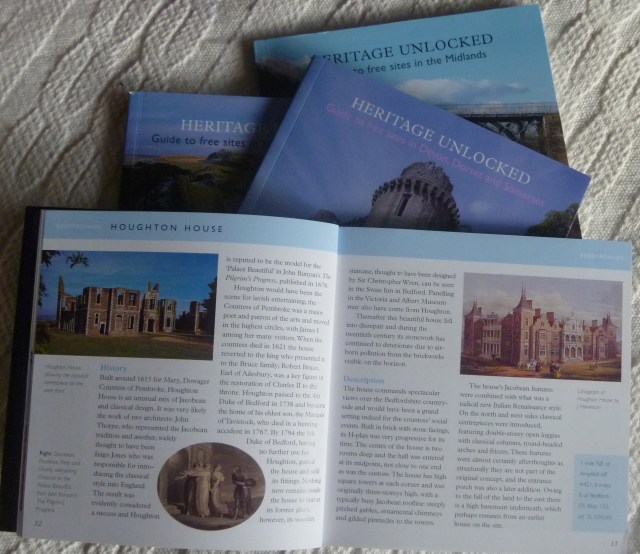
I discovered the existence of Houghton House not too far from Old Warden from another little series of books which I consult before making trips; the Heritage Unlocked series published by English Heritage.

EH Heritage Unlocked

I’m not a member of EH and to visit the remains of Houghton House, just outside the busy little town of Ampthill, it’s no advantage to be because it’s free to visit during daylight hours.

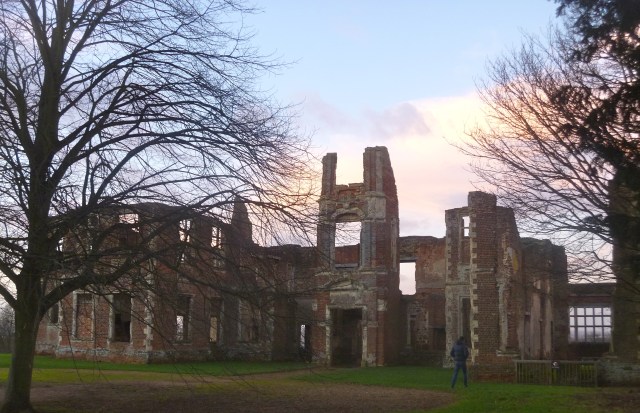
Houghton House

From the EH website :

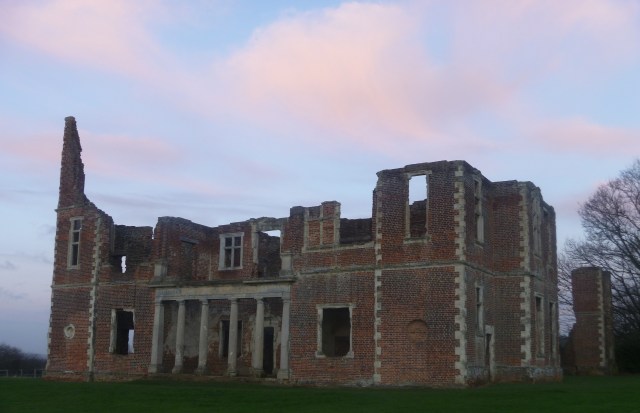
Houghton House today is the shell of a 17th century mansion commanding magnificent views, reputedly the inspiration for the ‘House [or Palace] Beautiful in John Bunyan’s Pilgrim’s Progress.

It was built around 1615 for Mary, Dowager Countess of Pembroke, in a mixture of Jacobean and Classical styles: the ground floors of two Italianate loggias survive, possibly the work of Inigo Jones.

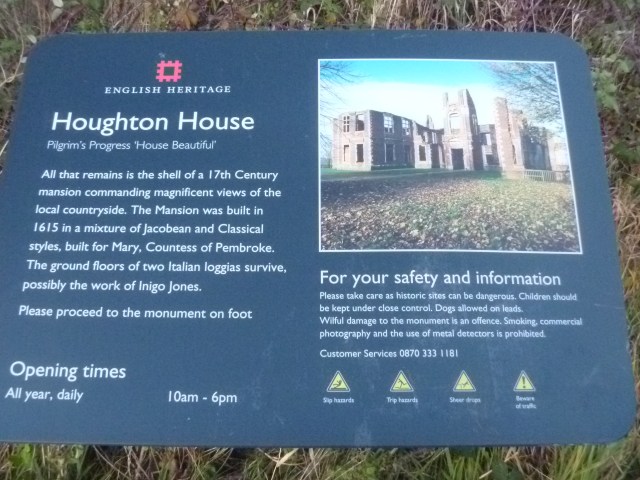
EH Information board

Information panels describe the house, its owners and the surrounding hunting estate.”

Approaching HH

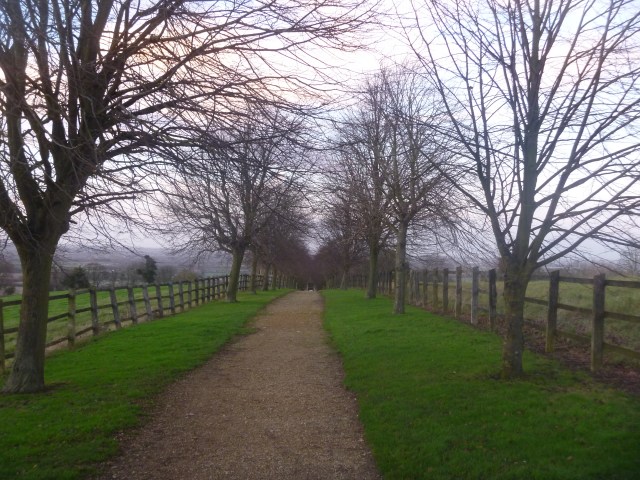
The ruin of Houghton House is approached along a tree-lined track.

Tree with mistletoe

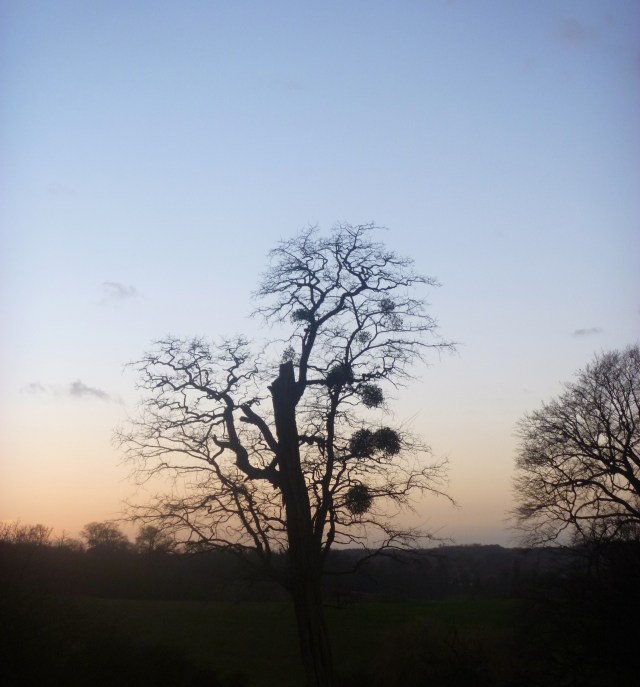
There are also many trees laden with mistletoe – giving quite a seasonal feel. Also, it was approaching dusk which increased the dramatic effect of the ruin but maybe my photos turned out a little on the dark side.

HH south

Houghton House “commands spectacular views over the Bedfordshire countryside and would have been a grand setting indeed for the countess’ social events.”

And in the History Album at Keeper’s Cottage we are informed of a Shakespearean connection to Old Warden :

Warden Pear. A small pear used for cooking, the Warden Pear was the key ingredient in Warden Pies, which crop up here and there in Elizabethan and Stuart literature, most notably in Shakespeare’s Winter’s Tale , where the Clown almost gives the recipe : “I must have saffron to colour the warden pies; mace; dates? …nutmegs, seven; a race or two of ginger, byut that I may beg, four pounds of prunes and as many raisins o’ the sun” [Act IV, sc. Iii] Hot Warden Pies were still sold in Bedford in the nineteenth century.”

The Winter's Tale

A Walk to a Swiss Garden

I’m always amazed at the talents of Landmarkers as reflected in the Log Books at each property. For me it’s usually a very last minute scribble listing a few suggestions of places I’ve enjoyed visiting during my stay or some other usually inane comment. There are wonderful examples of calligraphy, witty poems and imaginative prose, sometimes photographs and some beautiful drawings, sketches, watercolours and cartoons.

P1070848

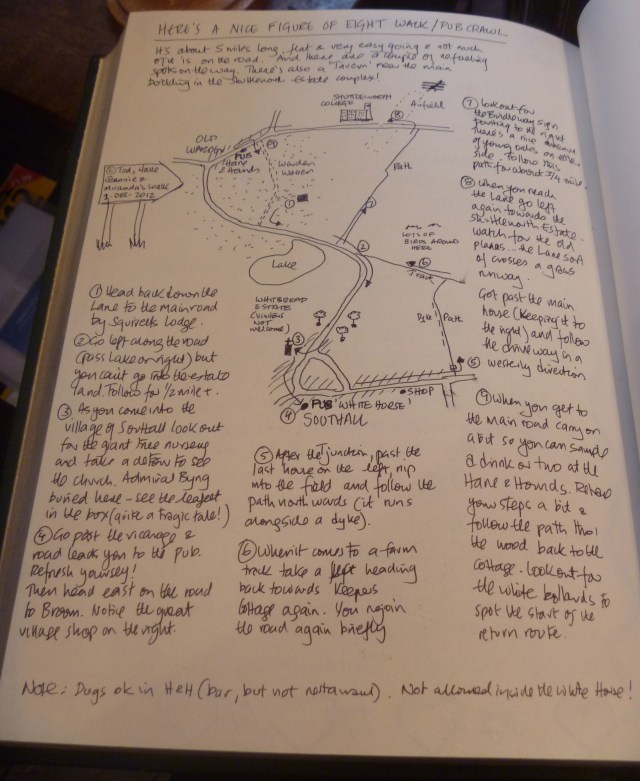
The visitors before us at Keepers devoted some time to illustrating and commenting on a walk that they had done straight from the cottage door – my favourite kind. I would have loved to have completed this walk but I was longing to visit the renowned Swiss Garden at The Shuttleworth Collection so decided on the first morning to just do part of the walk and extend it to the garden which, amazingly, is open all year.

Little Cottage in a Wood

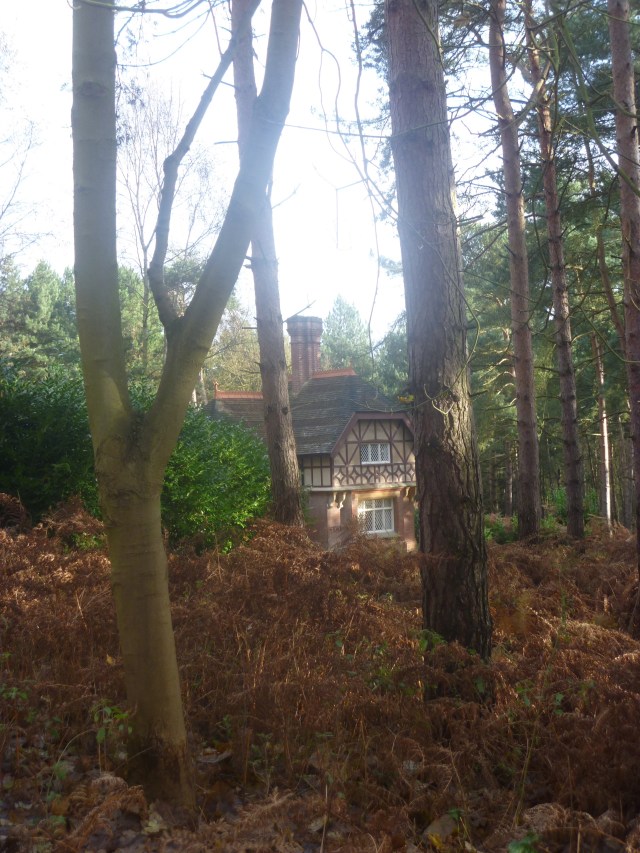
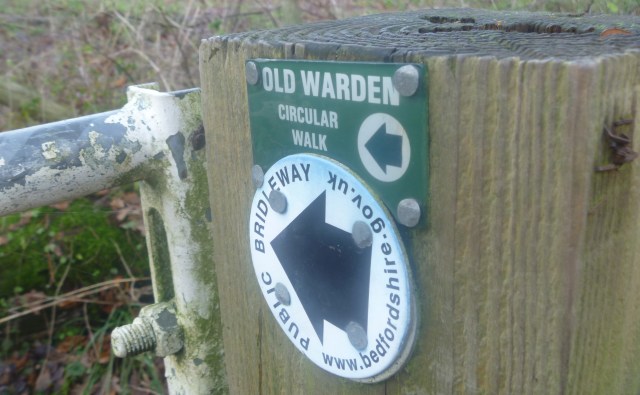
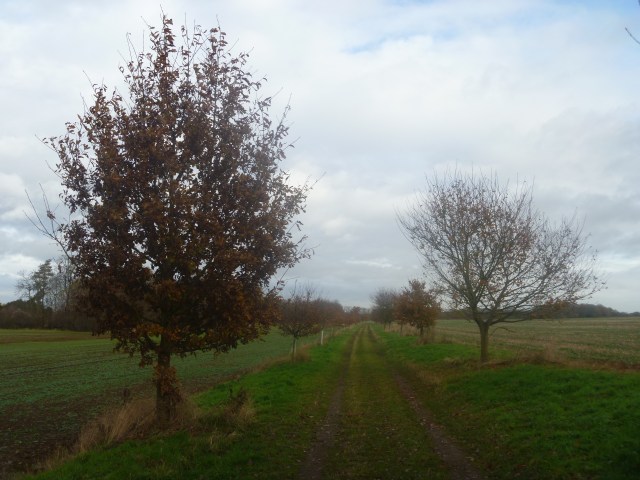
Keeper’s Cottage lies deep in the woods of Warden Warren and you need to unlock two gates and drive along bumpy tracks to get to it by car but on foot it is much simpler – open one gate and pass through a kissing gate to emerge onto the road. It’s a quiet road and not far along is the familiar ‘Public Footpath’ sign and I set off on a tramp along a field edge path.

Footpath signs

Field path Warden Warren

Not far away the guns were out but as I approached the ‘Shooting party’ were returning to their vehicles and, no doubt, some hot coffee and toddy.

Shooting party

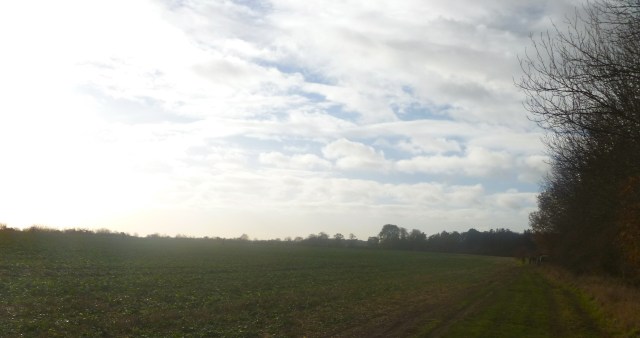
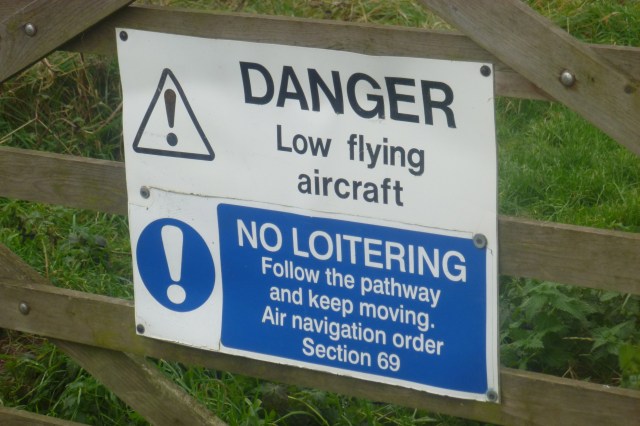
The path skirts the woodland and then suddenly there’s a roar and an old ‘plane could be seen taxiing in the neighbouring field. I’d arrived at the edge of the famous Shuttleworth Collection.

Shuttleworth Warning

Eventually the path joined another tarmac road and turning left and keeping well into the side I finally arrived at the Shuttleworth Museum entrance. There’s a separate charge and entrance to the Swiss Garden.

The Swiss Garden

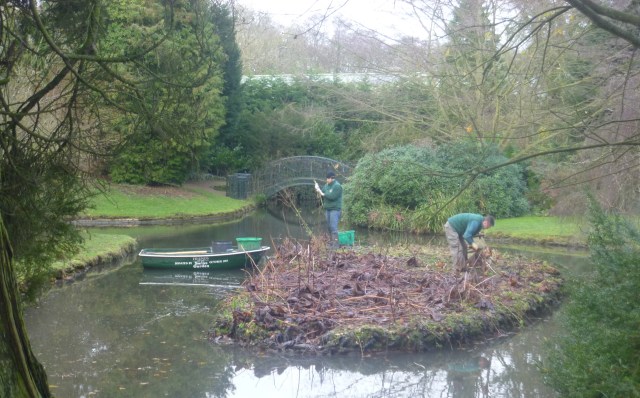
Apart from gardeners busily clearing an island in one of the lakes as you go in I think I was the only person, and certainly the only visitor that morning.

From the guidebook :

“The Swiss Garden is a late regency, nine acre garden, which forms an integral part of the designed landscape in Old Warden Park, Bedfordshire. The garden was created by the third Lord Ongley between 1820 and 1835 and is laid out in the Romantic and Swiss Picturesque manner.

In 1872, Old Warden Park was purchased by Joseph Shuttleworth who began a series of improvements to the Park. Victorian fashions were introduced into the landscape of the Swiss garden, such as the Pulhamite features, and some cast iron work.”

Since 1976 the garden has been in the care of the local county council and I see from the website that a major renovation is to take place next year with much financial assistance from the Heritage Lottery Fund. This will be exciting work and the garden will be closed until at least 2016. I’m glad that I got to see it “before” and hope maybe to return and see the “after” effect.

After spending about two hours at the garden, including hot warming soup in the Shuttleworth cafe, D picked me up to bring me back to the cottage and plan another expedition.

An illustrated tour of the Swiss Garden :

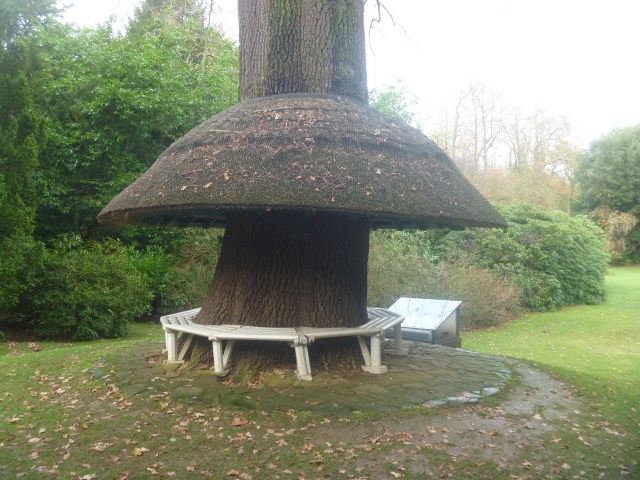
Thatched seat and poem

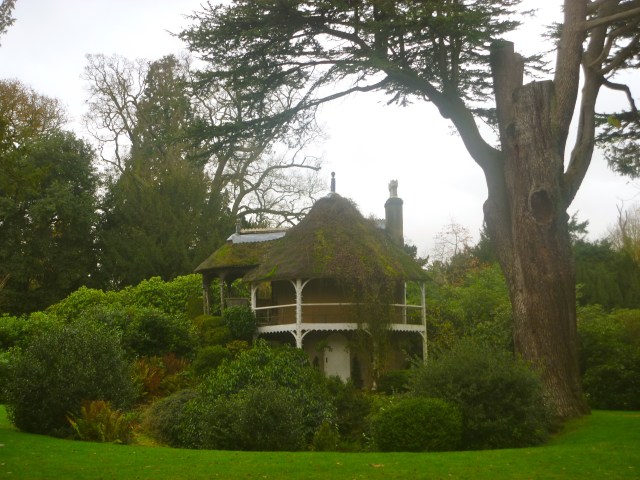
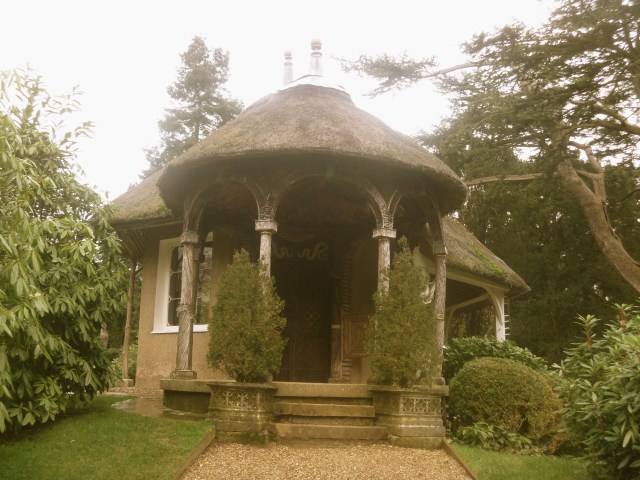
The Thatched Seat “ingeniously built to accommodate the annual growth of the tree” 

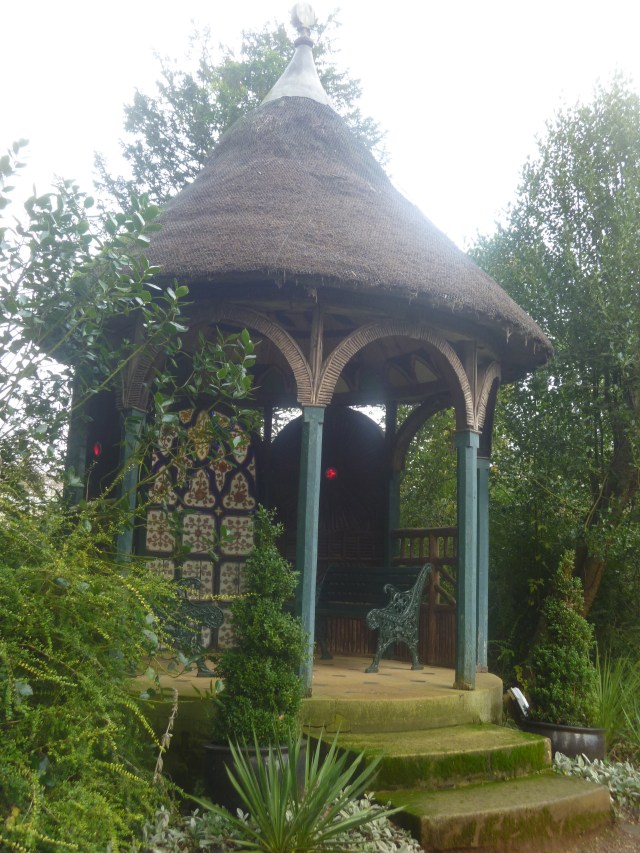
Indian kiosk

Indian Kiosk

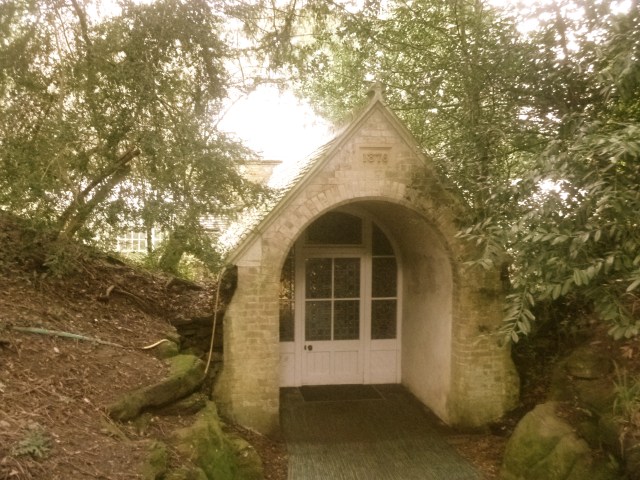
Grotto entrance

Entrance to the Grotto and Fernery

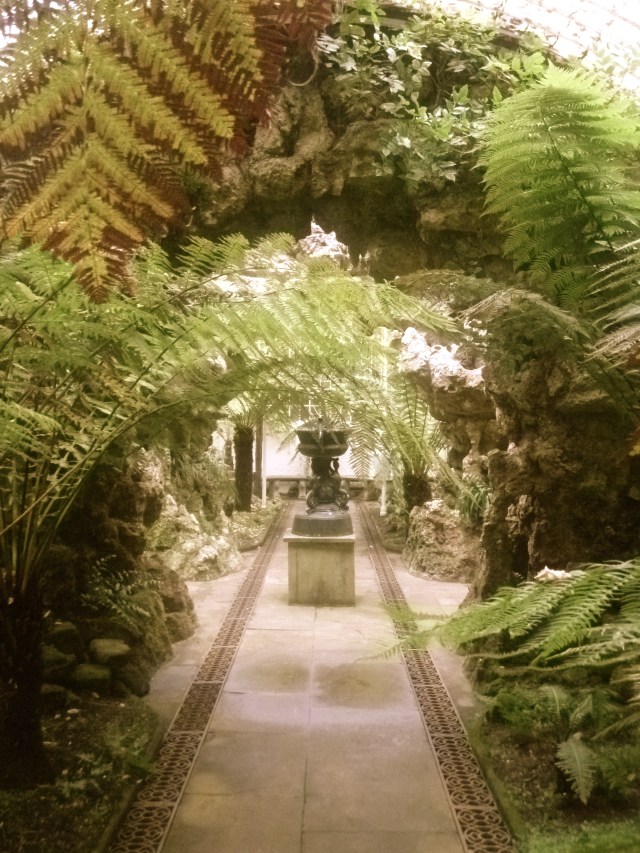
Inside the grotto

Inside the Grotto

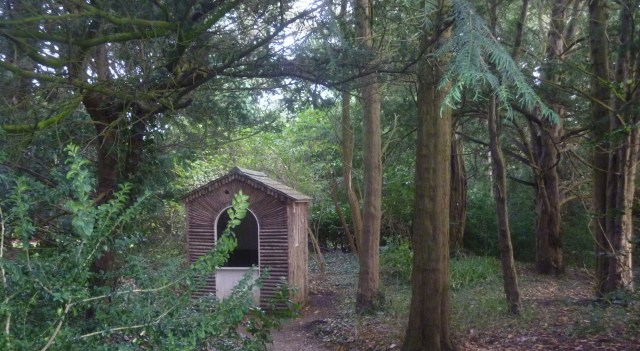
Privvy

The Two-Seater Privy

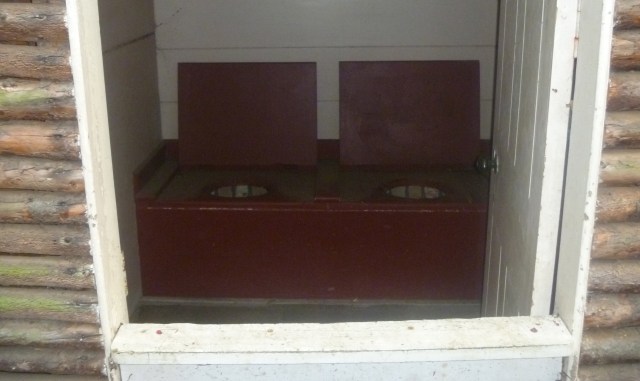
Two seater privvy

The Two Seats – “The privy is a traditional earth closet. One seat would be locked for six months while the other was open”.

Upper Pond

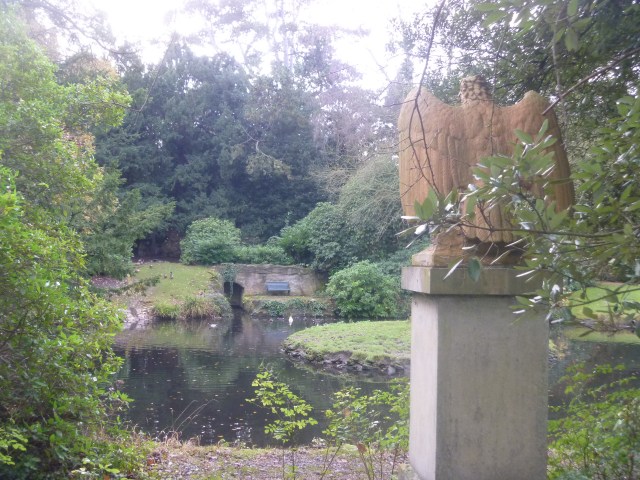
Eagle, Upper Pond and Harbour

Swiss cottage2

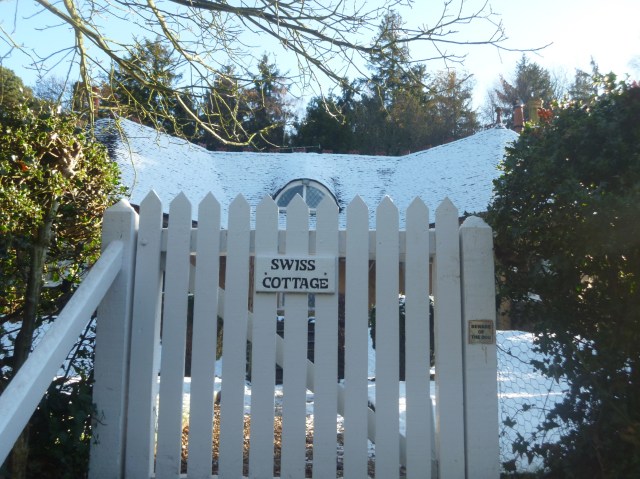
The Swiss Cottage – focal point of the garden and licensed for civil weddings

Swiss cottage

Quite what is Swiss about this garden I am not too sure but it comprises an interesting collection of plants and trees and a peacock and follies and had I visited a day later I should have seen it looking slightly more Swiss than usual with a covering of snow!

Bedfordshire Cottages

Keepers and Keepers

Keeper’s Cottage with miniature Lilliput Lane model “Bark, the Herald Angels sing”

Last week I had a wonderful treat! My son booked a week (Monday to Friday) for us to stay at a Landmark Trust property in Bedfordshire as a gift to me on my retirement in June. So, last Sunday I travelled down to London from Norfolk and on the Monday D and I drove up to Old Warden in Bedfordshire to spend the week at Keeper’s Cottage in the Warden Warren woods which make up part of the Shuttleworth Estate.

Keepers Dec 2009

Keeper’s in the snow, December 2009

In fact we stayed at Keeper’s in December 2009 but had such a lot problems with snow and ice and moving the car and I fell and sprained my ankle that the stay was only memorable for it being such a disaster. Surely we couldn’t be dogged by snow and ice again?? But we were. On Wednesday we woke to a thick covering of snow which looked beautiful but our hearts sank wondering whether we would have a repeat experience. Luckily the roads and tracks were not so bad and the snow added to the charm of the cottage and the woodlands.

Keepers Dec 2012

Keeper’s in the snow, December 2012

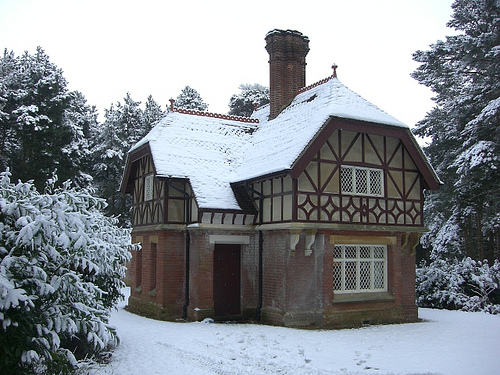
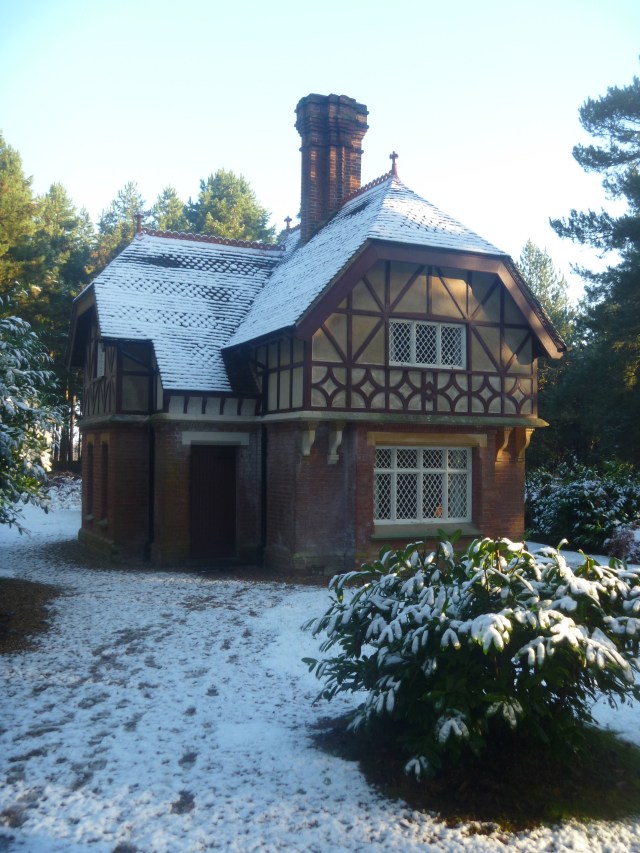
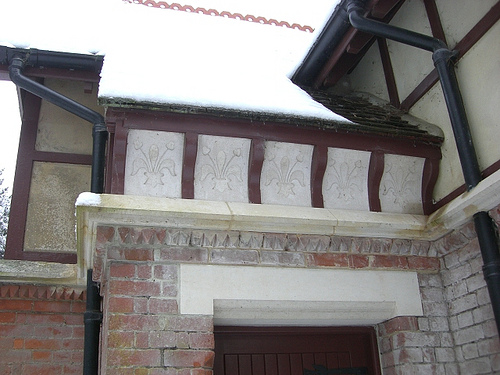
Keeper’s Cottage was built by the local Bedford builder and architect John Usher in about 1877 when Joseph Shuttleworth, owner of the Old Warden Estate, decided to rehouse his gamekeeper Richard Aireton. It was built in accordance with the architectural pattern books of the day and is a sampler of features including decorative fleur de lys plasterwork, timber framing, hipped gables and decorative roof and ridge tiles. The cottage comes with a set of outbuildings which include a bakehouse, washhouse, earth closet and, down the slope from the living quarters, a four stalled kennel block. Keeper’s (like all Landmarks) has a detailed history album for the cottage which makes fascinating reading. Before the Landmark Trust took over the property all the outbuildings had been lost but it was decided to totally rebuild them as the detailed plans were still available.

Fleur De Lys plasterwork

The Fleur De Lys plasterwork above the door

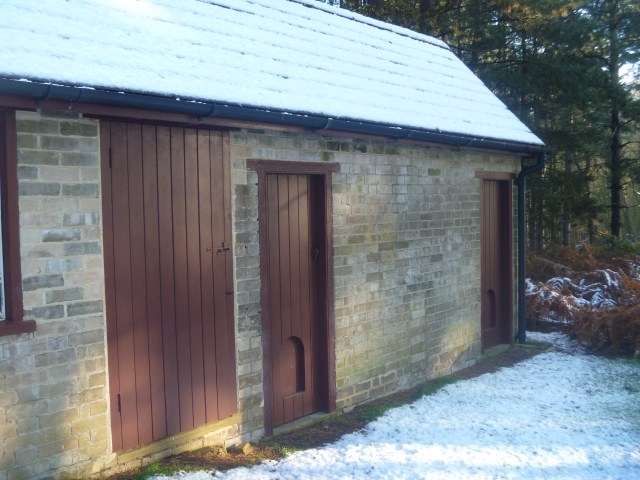
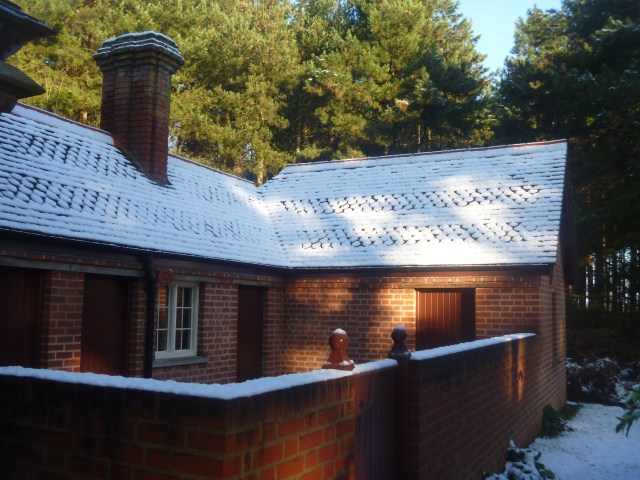
Former washhouse and bakehouse

The former washhouse and bakehouse

Keeper's Kennels

The former kennels at Keeper’s Cottage

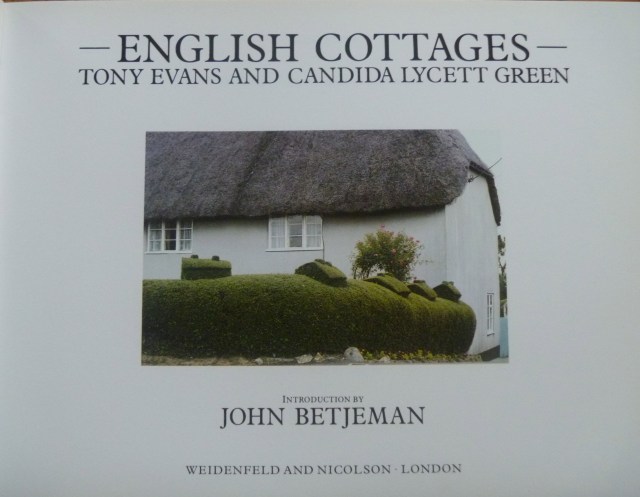
Before setting off on a trip I usually check my ‘Places’ bookcase for books which might add to my knowledge of the region to be visited and amongst the books which I check are those in the Country Series published by Weidenfeld and Nicolson. You’ll probably know them as they are often to be found in remainder book shops.

English Cottages book

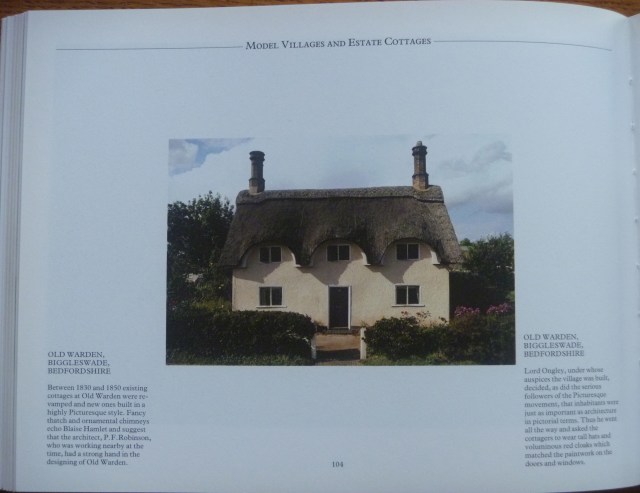
I own quite a few and flicking through my copy of ‘English Cottages’ I noticed a double-page spread of pictures of cottages at Old Warden.

Old Warden page

The Old Warden Page in English Cottages

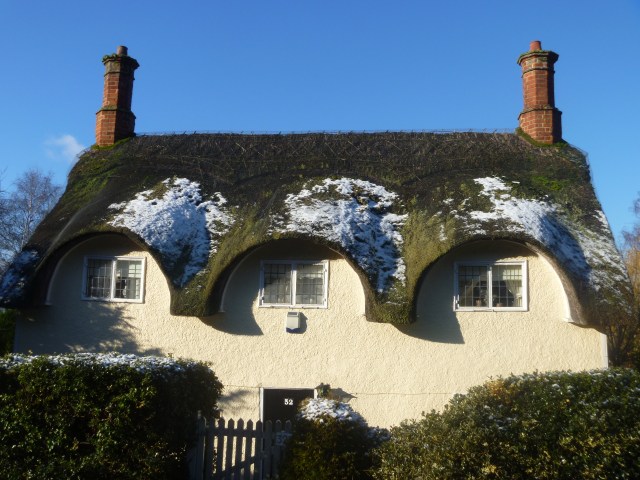
Old Warden Cottage

I *think* this is the cottage featured in my book but there are many others :

Old Warden Cottage 1

Old warden Cottage 2

Old Warden Cottage 3

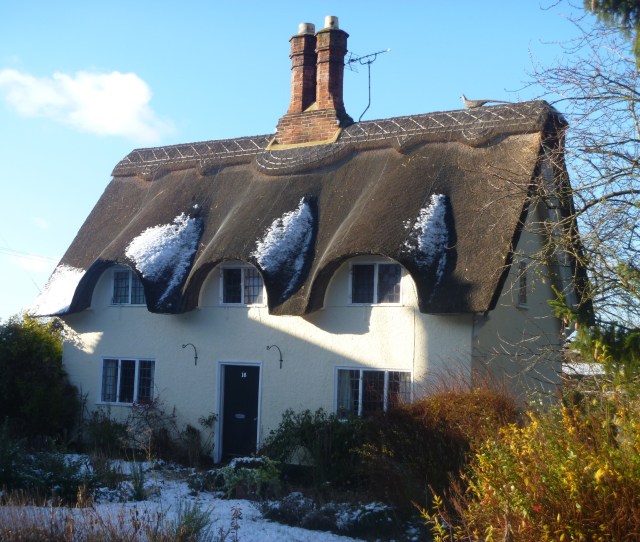
Between 1830 and 1850 existing cottages at Old Warden were revamped and new ones built in a highly Picturesque style. Fancy thatch and ornamental chimneys … suggest that the architect, P.F.Robinson, who was working nearby at the time, had a strong hand in the designing of Old Warden”

Old Warden house

Lord Ongley, under whose auspices the village was built, decided, as did the serious followers of the Picturesque movement, that the inhabitants were just as important as architecture in pictorial terms. Thus he went all the way and asked the cottagers to wear tall hats and voluminous red cloaks which matched the paintwork on the doors and windows.”

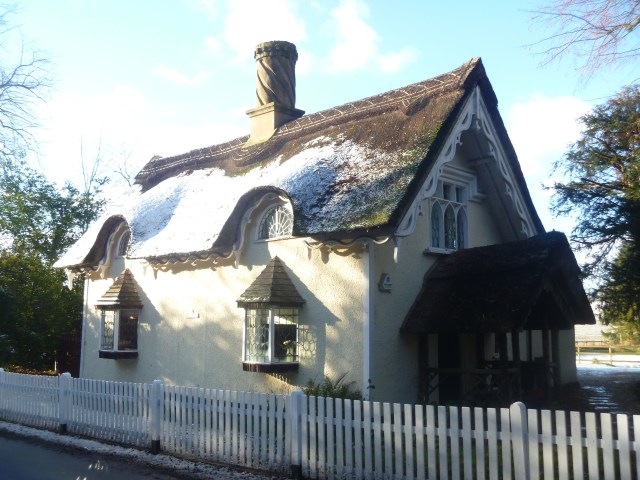
Old Warden Swiss

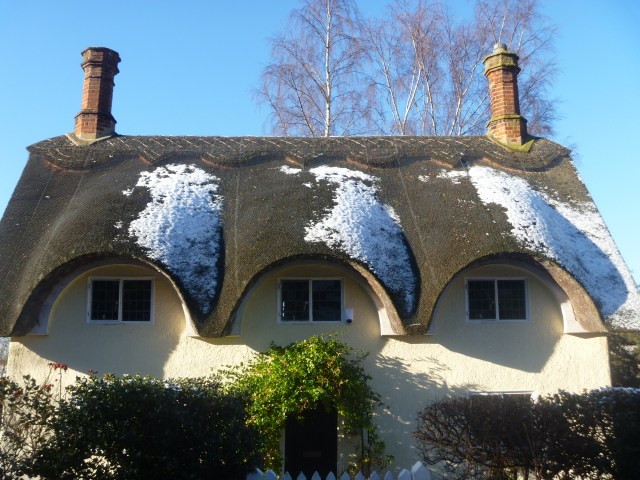
I actually did not see a single villager as I walked along the main street (actually called The Village) let alone one dressed in a tall hat and red cloak. My guess is that today the village is inhabited chiefly by London commuters who are probably the only people who can afford to live in such beautiful cottages.

The Three Halls, Norfolk, Walk

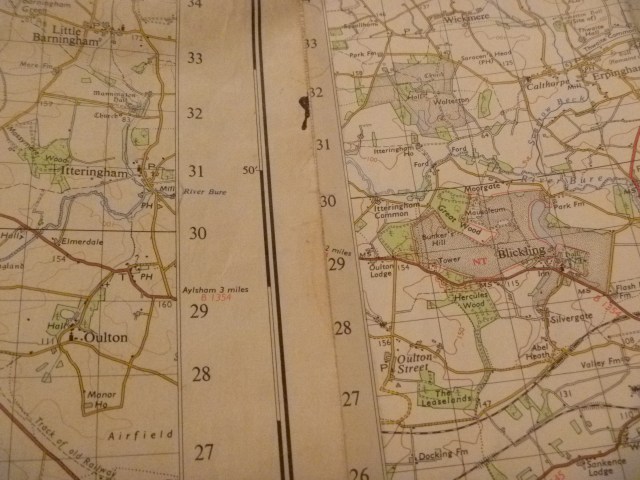
1950s OS Maps

The walk crossed the join of my two 1950s treasured OS maps of Norfolk (Sheets 125 and 126 Seventh Series)

“Blickling Hall is a masterpiece of Jacobean architecture famed for its spectacular long gallery, superb library and exceptional gardens. The estate has been home to Falstaffs, Boleyns and Saxon Kings. We walk from Blickling Hall, in the heart of the Norfolk countryside, through the 5000 acre estate northwards to Wolterton, the seat of the Walpole family. From Wolterton we follow country lanes to Mannington Hall, with its famous gardens, before turning south to Itteringham for lunch. After lunch we head back to the Blickling Estate for tea. 11.5 miles.” [From the ATG-Oxford website]

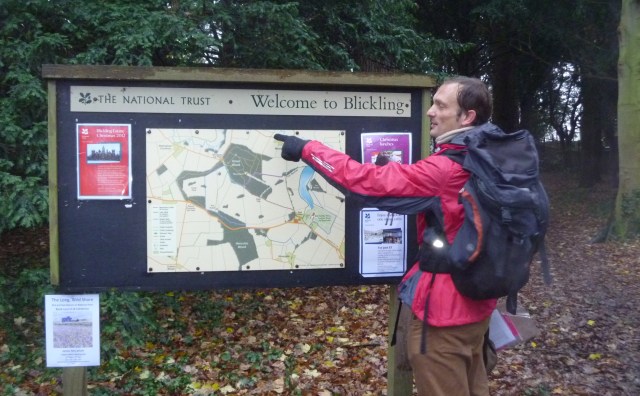
Adrian shows the way

Adrian, our leader, shows the route we’ll follow

This has been my day today! ATG Oxford The Alternative Travel Group organise walking holidays in this country and abroad – both escorted and self-guided. In fact my walking holiday in Alsace in June was an ATG (Footloose) holiday. As a supplement to these, mainly summer holidays, ATG organise a series of Saturday Walks throughout the year in order to raise money for chosen charities and as a ‘subtle’ marketing ploy; for we are like-minded people and keen to hear others’ experiences of walks.

As I left Norwich snow began to fall and in the car the outside temperature measured -1C. By the time I left the outskirts of Norwich behind me the snow had turned to rain and the temperature had risen to +1C. The group of intrepid walkers met by the Buckinghamshire Arms and we set off in misty drizzle past the beautiful Jacobean Blickling Hall and, after a quick look inside the church (even colder than outside!), began our muddy tramp around the icy Blickling Lake and across the estate.

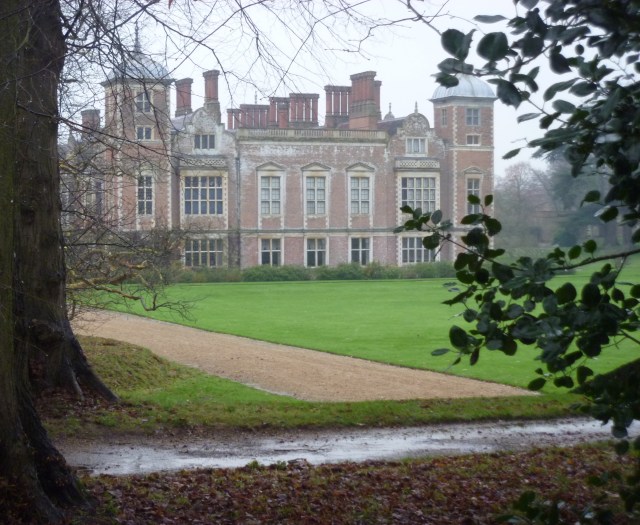
Blickling Hall

Rear of Blickling Hall one-time home of Anne Boleyn

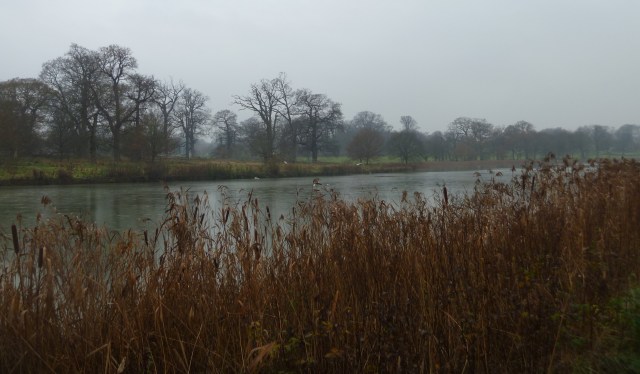
Frozen lake

The half frozen lake at Blickling

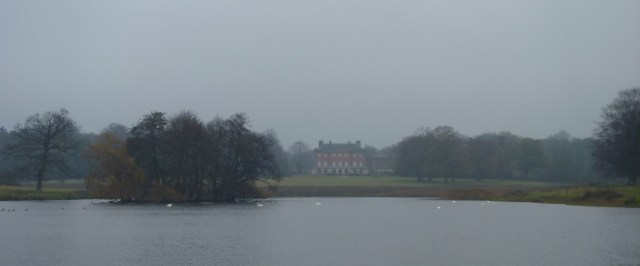
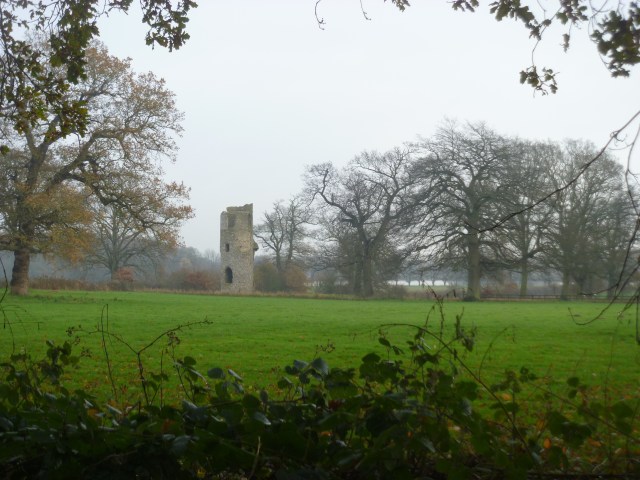
Our next Hall – a Palladian design – Wolterton appeared empty and unused but looked quite beautiful from across the Lake. There’s a ruined church in the field next door. Read here about Simon Knott’s delightful birthday visit to the ruin.

Wolterton Hall

Wolterton Hall across its lake

Wolterton church ruin

The Ruin of St Margaret’s Wolterton

As we tramped through muddy fields and along wet lanes I talked with many of the group (about 17 of us) about where we had come from. Had we been on any of the holidays? Had we been on Saturday Walks before – if so where? I don’t think there were any local people most had come from London and Cambridge and one or two of us from further afield and making a weekend (or longer) of it – Leeds, Manchester, Stow-on-the-Wold.

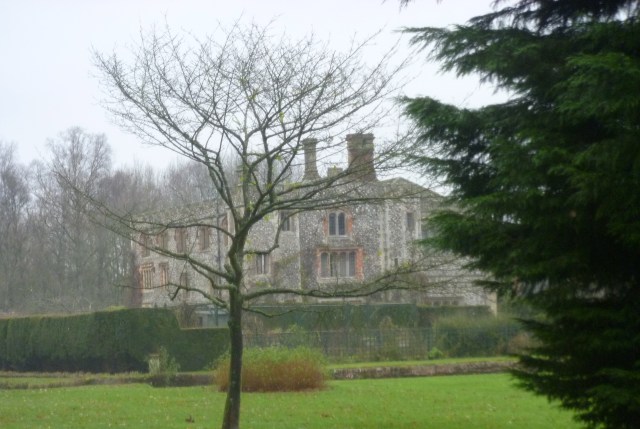
Mannington Hall

Mannington Hall

Our next and final Hall was the lovely Tudor Mannington Hall whose gardens are renowned in the area and where popular summer events are held. It looked rather bleak today but it definitely has a lived-in feel and is the home of the current Lord and Lady Walpole (they own Wolterton too). Read here an interesting article about owning two stately homes and access to them.

Mannington church ruin

Saxon Church Remains

Our walk continued across more muddy fields and we were just able to glimpse the remains of the Saxon chapel at Mannington. Not far now …

Bure Centre

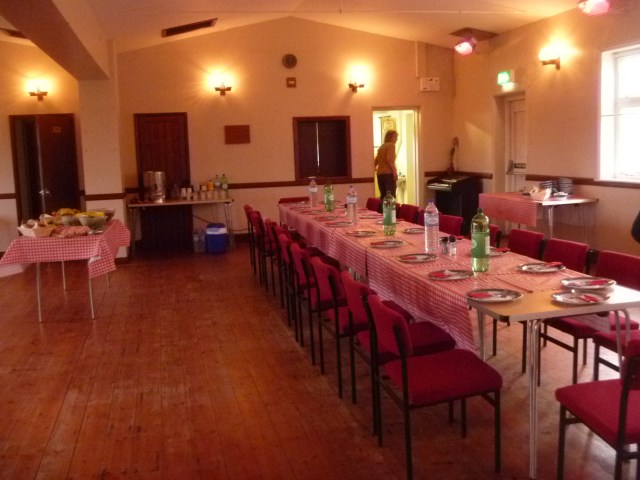
Lunch is about to be served at Itteringham Village Hall

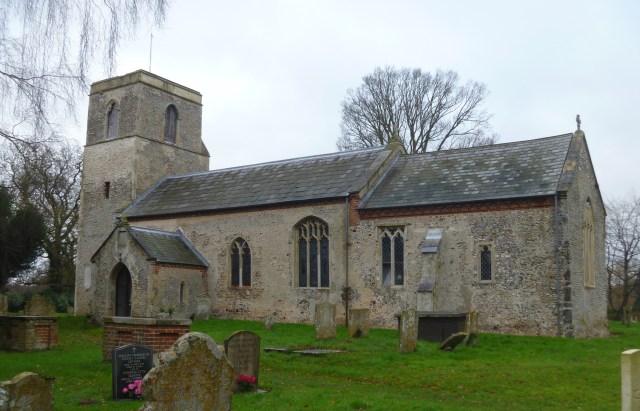
And we arrived at our lunch spot. ATG lay on a super lunch – mulled wine, creamy hot soup, a choice of salads, breads, meats and cheeses. I noticed some chocolate tarts for pudding but opted for fresh fruit – grapes and a tangerine. The lunch was served by ATG’s  Sarah in Itteringham Village Hall or The Bure Valley Community Centre as it is known locally. It’s right opposite another Norfolk flint church – St Mary’s Itteringham – with its neighbouring ruined chapel and the preservation of which has been aided by The Churches Conservation Trust.

Itteringham Church

St Mary’s Itteringham

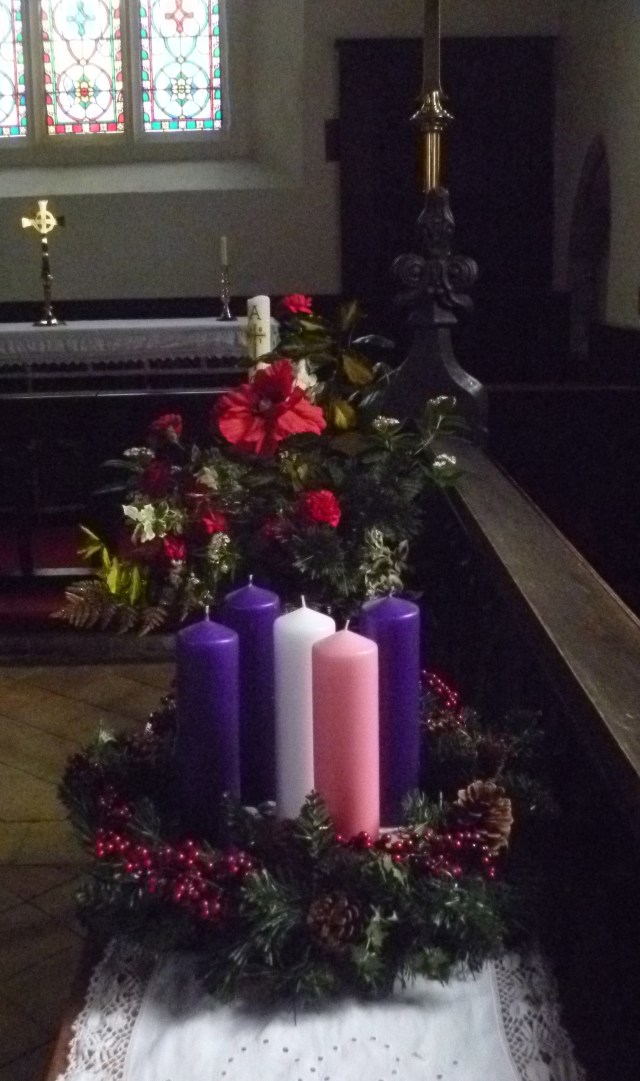
Advent at Itteringham

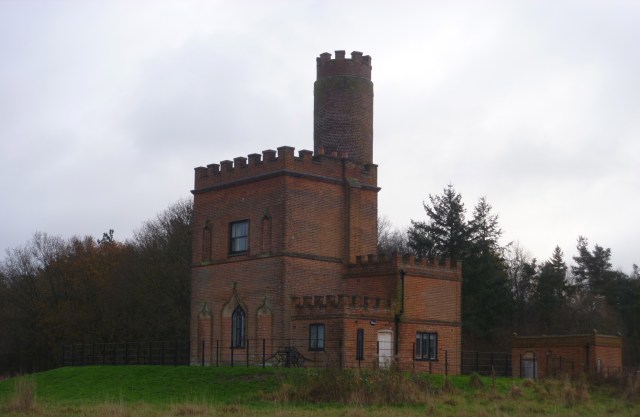
The lunch was served at the 7.2 mile point so a further 4 miles were walked to our destination. The rain began to fall as we re-entered the Blickling Estate and passing The Grandstand – a strange and rather industrial-looking building (erected for the purpose of viewing the shooting and horse racing on the Blickling Estate) and is now a holiday-let.

The Grandstand

We were glad to spot the Blickling Lake and smell the wood smoke of the stoves in the Buckinghamshire Arms where afternoon tea was served. There we heard more tempting morsels about dry, stony Italian tracks, drinks on sunny terraces, gorgeous picnics served on craggy peaks in Spain and Italy and generally about locations that had rather more appeal by 4pm on a very wet, cold Saturday afternoon in December.

Blickling at night

Blickling at night (actually 4.30pm)