Writers’ Gardens

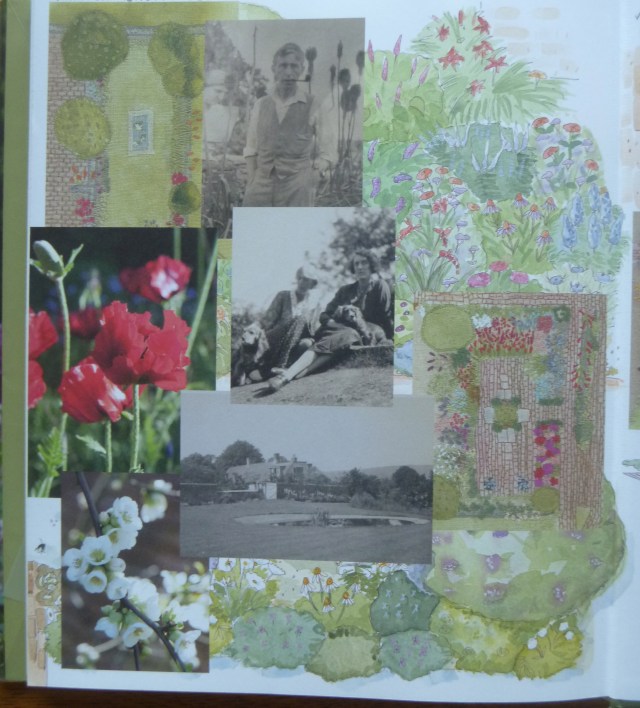
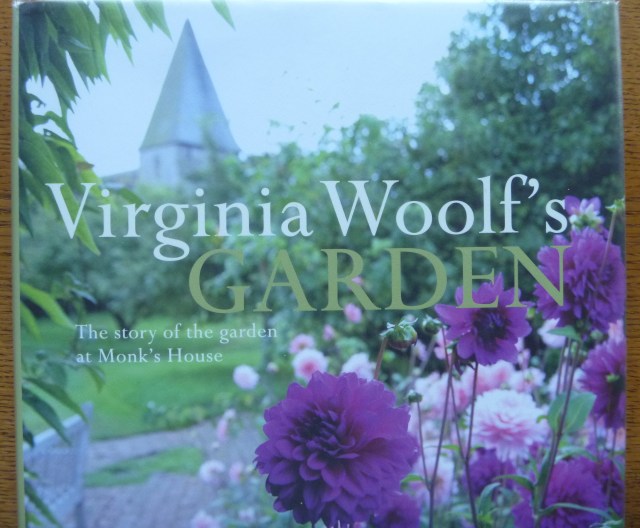
In these the dull, grey February days it’s been a great pleasure for me to read two coffee table-style books back-to-back with glorious photographs but also very informative text. VW's Garden The first was Virginia Woolf’s Garden by Caroline Zoob. There’s lots of nice background information about Leonard and Virginia Woolf but also about the author. Caroline Zoob and her husband were the National Trust tenants in the house for about 10 years. They also took responsibility for the garden. Endpaper VW's

Endpaper Collage

Really the book should be called Leonard Woolf’s Garden since it was almost entirely his creation and Virginia admits to doing little more than a bit of dead-heading and, of course, being inspired by gardens in general for her writing.

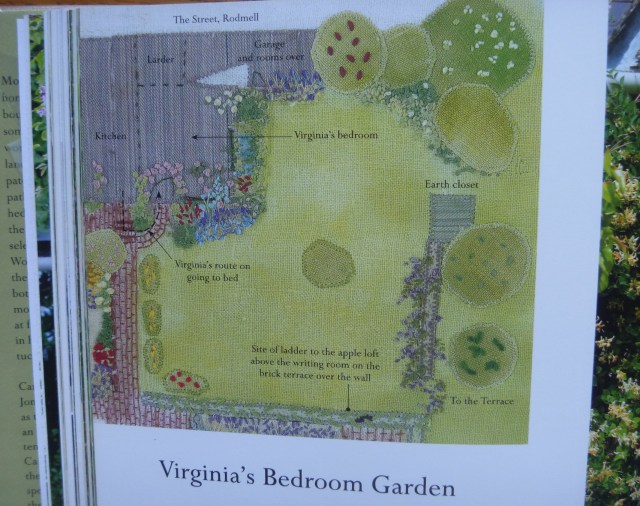
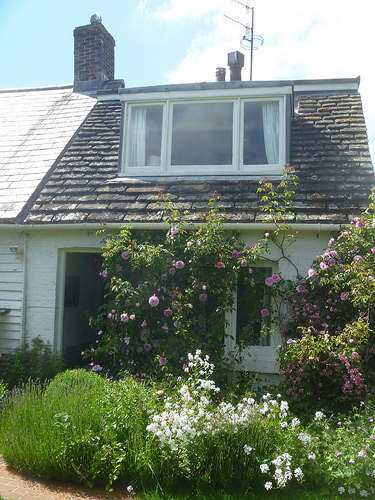
VW Bedroom Garden
VW bedroom garden
Virginia Woolf’s Bedroom Garden May 2014
Reading it and studying the lovely photos I was reminded of my visit to Monk’s House last May. I preferred it to Charleston as it had a very much more relaxed atmosphere. I’ve written here already about my visit to Virginia and Leonard Woolf’s home and garden at Rodmell in East Sussex.
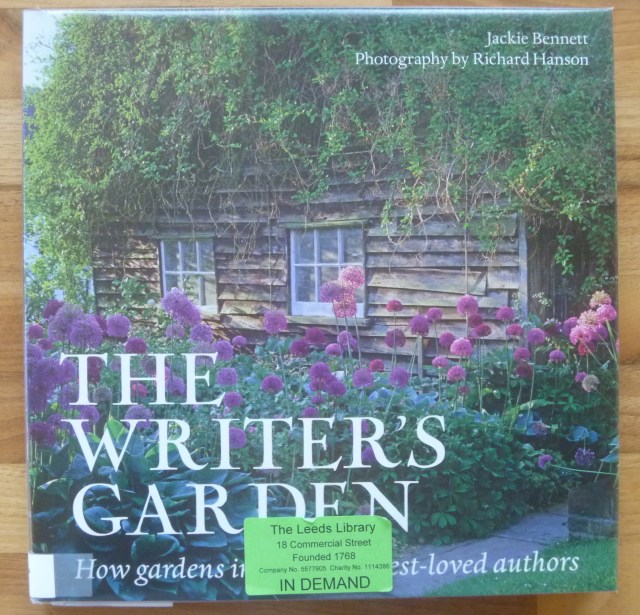
The writer's garden
The Writer’s Garden : how gardens inspired our best-loved authors is by Jackie Bennett.
Writer's garden
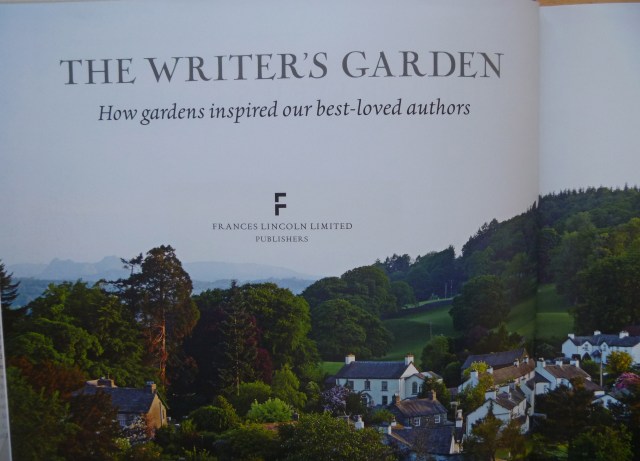
Title Page – Near Sawrey in the Lake District with Beatrix Potter’s Hill Top in the Bottom Left Corner
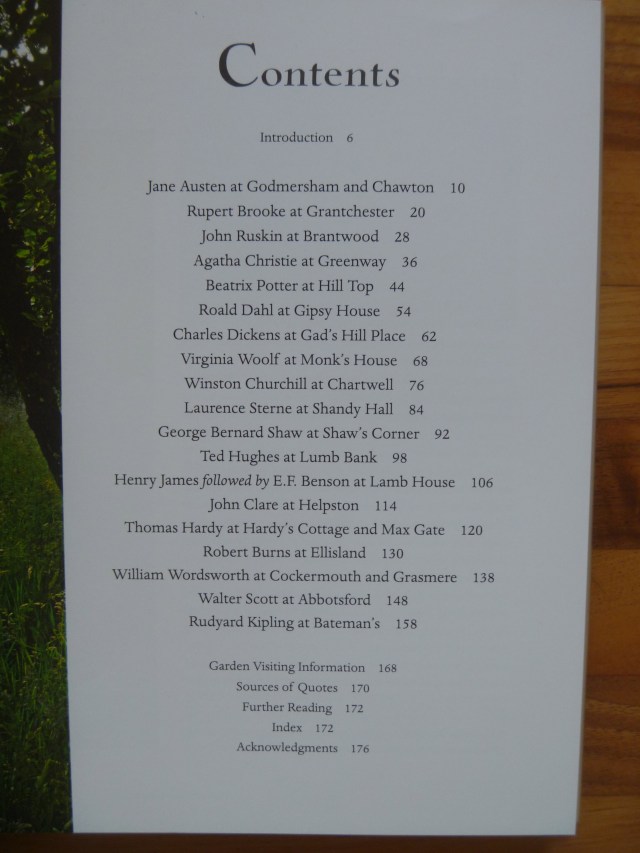
Contents Page
Contents Page
Many of the gardens mentioned I have already visited – Jane Austen’s in Chawton in Hampshire long before the digital photography; same goes for Ruskin’s Brantwood which we approached from Lake Coniston by Gondola; Agatha Christie’s Greenway in 2009; Beatrix Potter’s Hill Top in 2005 or 2006; Laurence Sterne’s Shandy Hall the topic of one my first posts here and, of course, Virginia Woolf’s garden mentioned above.  I do hope I can get to the ones I haven’t visited some time as all were inspiring, not to say, beautiful.
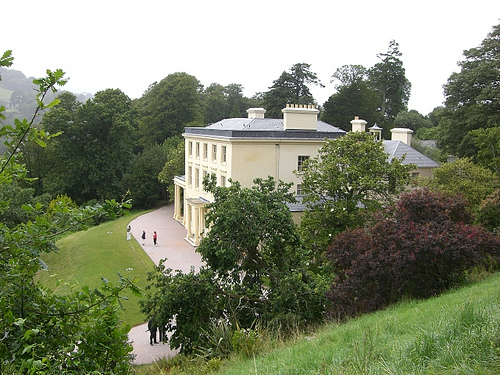
Greenway
Agatha Christie’s Greenway overlooking the Dart Estuary in Devon
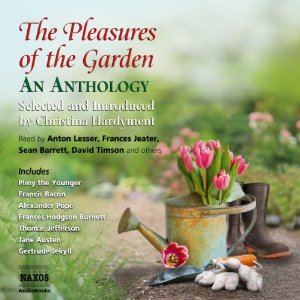
I borrowed both books from the library but also by coincidence my current audio listen is Christina Hardyment’s The Pleasures of the Garden: an anthology. It’s selected and introduced by Christina and includes passages by Pliny The Younger, Francis Bacon, Frances Hodgson Burnett (The Secret Garden, of course), Thomas Jeffereson, Jane Austen and Gertrude Jekyll.
51KTun4xj8L._SL300_
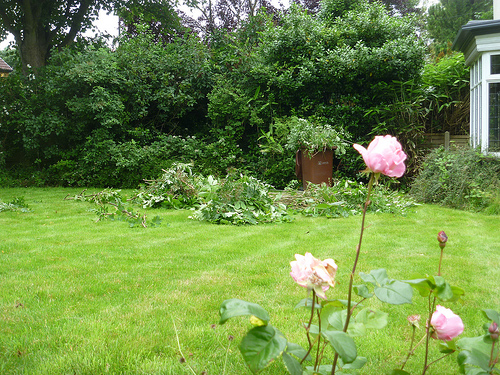
Having said all this – I am not, myself, a gardener! I love to visit gardens and read about them but I know nothing at all about plants and their care.
unnamed
My title for this photo on Flickr is “You won’t catch me gardening!”

Germany : Memories of a Nation

Over the last couple of days I’ve been reading the book of this title that accompanied the British Museum exhibition of the same name and the series of BBC Radio 4 talks by its author (and British Museum director), Neil MacGregor.

http://www.britishmuseum.org/whats_on/past_exhibitions/2014/germany_memories_of_a_nation.aspx

http://www.bbc.co.uk/programmes/b04dwbwz

Memories of a nation

It’s a weighty hardback book, nearly six hundred pages long and with masses of photos and maps. There are 30 chapters. This is no conventional history of Germany. Instead, MacGregor chooses to focus (as he did in his ground-breaking History of the World in 100 Objects exhibition, talks and book which  has generated umpteen spin-offs) on objects and pictures which he feels relate to a “German history [which] may be inherently fragmented, but … contains a large number of widely shared memories, awarenesses and experiences”. Quotations here are all taken from the book.

8 Johann Wolfgang von Goethe

Each of the chapters was absorbing but several held particular interest for me. I studied German for four years at school to A-level and have visited Germany a few times. So when I read the chapter “One Nation under Goethe” I was straightaway reminded of his “Urfaust” (the earliest form of his Faust work) which we studied for A-level. But most of the chapter presented a picture of the German equivalent of William Shakespeare which I did not recognise.

Goethe and Faust

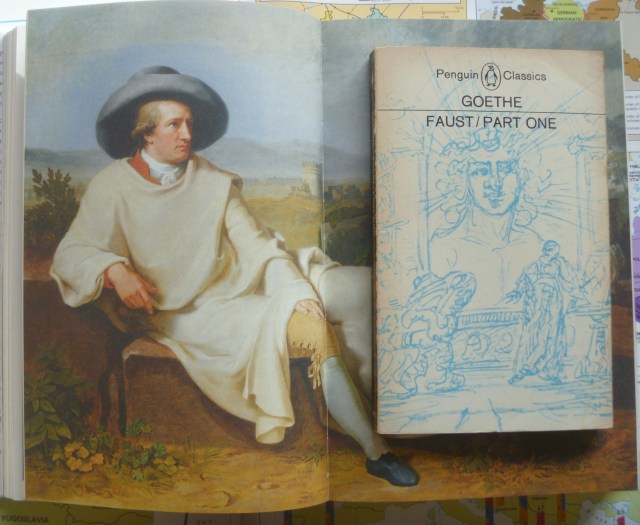
Johann Wolfgang von Goethe by Johann Tischbein and my 1968 edition of Faust Part One

The object  MacGregor focuses on is the Tischbein portrait of Goethe (1786-7) which shows the playwright (and polymath) in a classical setting “out of these survivors of a dead culture, Goethe will make something living”. Interestingly, for his fourth birthday Goethe was given, by his father, a toy puppet theatre which can still be seen today in his birthplace museum in Frankfurt. Goethe later wrote that this gift was to change his life. He was to become especially interested in Shakespeare and it was the influence of his (Shakespeare’s) writing that led Goethe to write his first work “The Sorrows of Young Werther“. MacGregor declares “Werther established German for the first time as a European literary language”.

17 An artist for all Germans

Durer self portrait

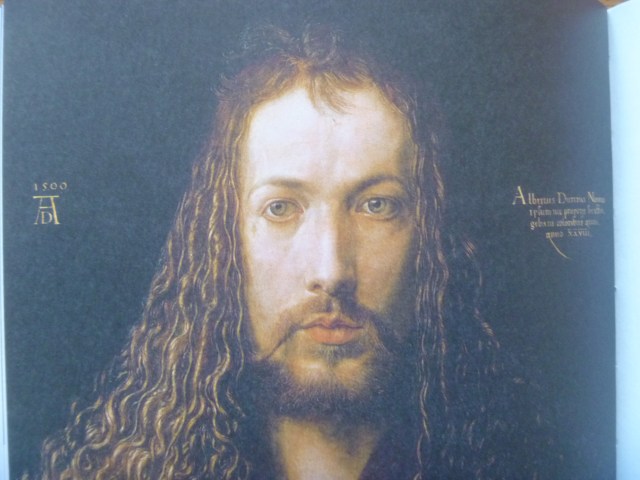
Self-Portrait – Albrecht Durer (1500)

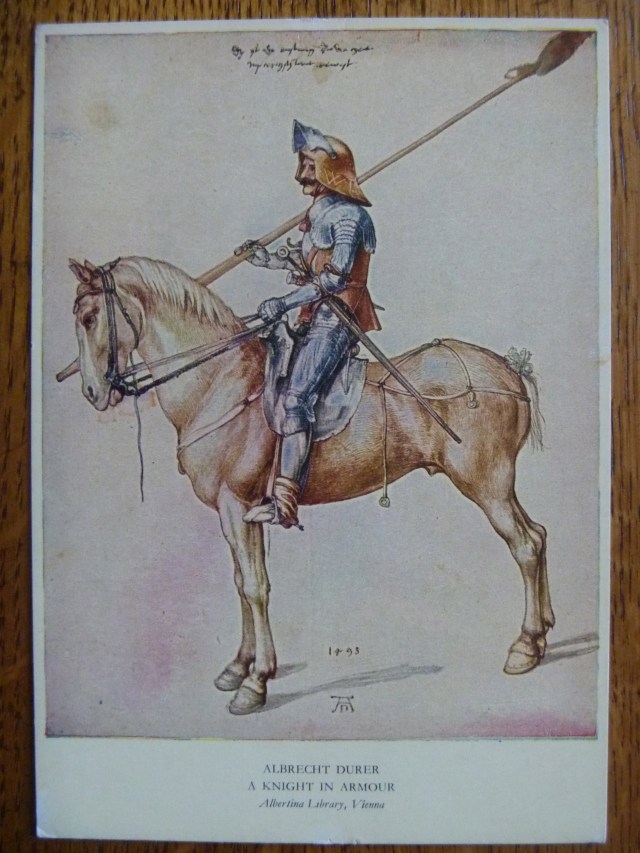
The artist Albrecht Durer (1471-1528) created the first and possibly the most celebrated logo of all German logos. I remembered visiting the British Museum as a student to see The Graphic Work of Albrecht Durer in late 1971 or early 1972. This was an exhibition of Durer’s prints and drawings in celebration of the 500th anniversary of his birth. I remember seeing his Praying Hands drawing and Young Hare etching in a beautiful dark room where only the pictures were lit. More recently I visited a show of his work at the Lady Lever Art Gallery in Port Sunlight on Merseyside, ‘Durer and Italy’, in the summer of 2010.

knight in armour

20 Cradle of Modernism

weimar_bauhaus_bassinet_large

 [source]

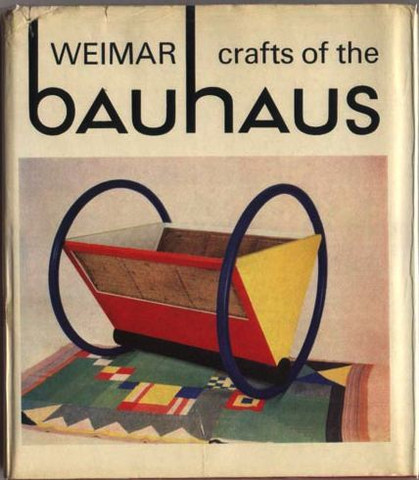
The cradle in question was designed by Peter Keler in 1922 and is still in production today and the modernist movement with which chapter 20 is concerned is Bauhaus. Elegant and simple sums up Bauhaus design established in Weimar in 1919 by Walter Gropius. Inspired by historic German values it was to “combine the medieval-guild traditions of communal working with the most rigorous principles of modern design and the enormous potential of industrial production”. Funding for the Bauhaus was cut in 1924 when the Social Democrats lost power in Thuringia. In 1925 it moved to Dessau. Although intending to be apolitical, when the Nazis took control of Dessau the Bauhaus moved again and to Berlin but was finally closed in 1933 when it had been “condemned by the Nazis as a centre of cultural Bolshevism”. There is now a Bauhaus Archive in Berlin which I have seen from a tour boat but not yet visited (it’s on my list!).

bauhaus archive

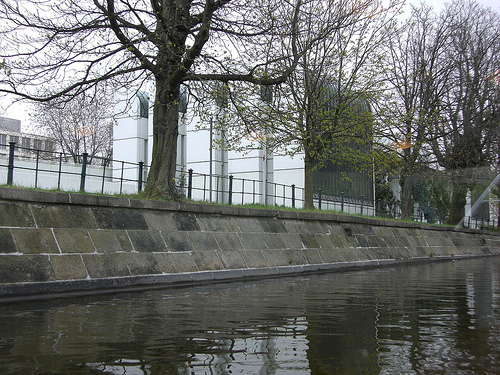
 Bauhaus Archive, Berlin

22 The Suffering Witness

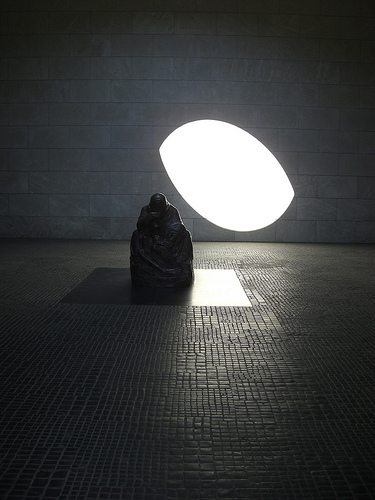
Neue Wache

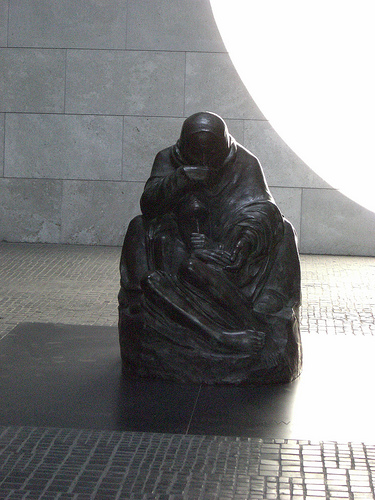
Here is my photo (2009) of the Neue Wache or “New Guard House” built by Karl Friedrich Schinkel in Berlin. The sculpture is an enlarged version of “Mother with her dead son” by Kaethe Kollwitz. The light is from the oculus in the roof. The memorial to the fallen of the war lies directly under the oculus exposed to all the Berlin weather.

mother and son

In this chapter MacGregor talks about the life and work of the sculptor and printmaker Kaethe Kollwitz (1867-1945). The sculpture above, within the Neue Wache, was chosen by Chancellor Helmut Kohl in 1993 as a “memorial to the Victims of War and Tyranny” to be placed in this “austere neo-classical building in the heart of Berlin”.

I also recommend the chapters on Gutenberg (16 In the Beginning was the Printer); on the Hanseatic city-states (13 The Baltic Brothers) and on beer and sausages (10 One People, Many Sausages)!

Christmas in Black and White and Colour

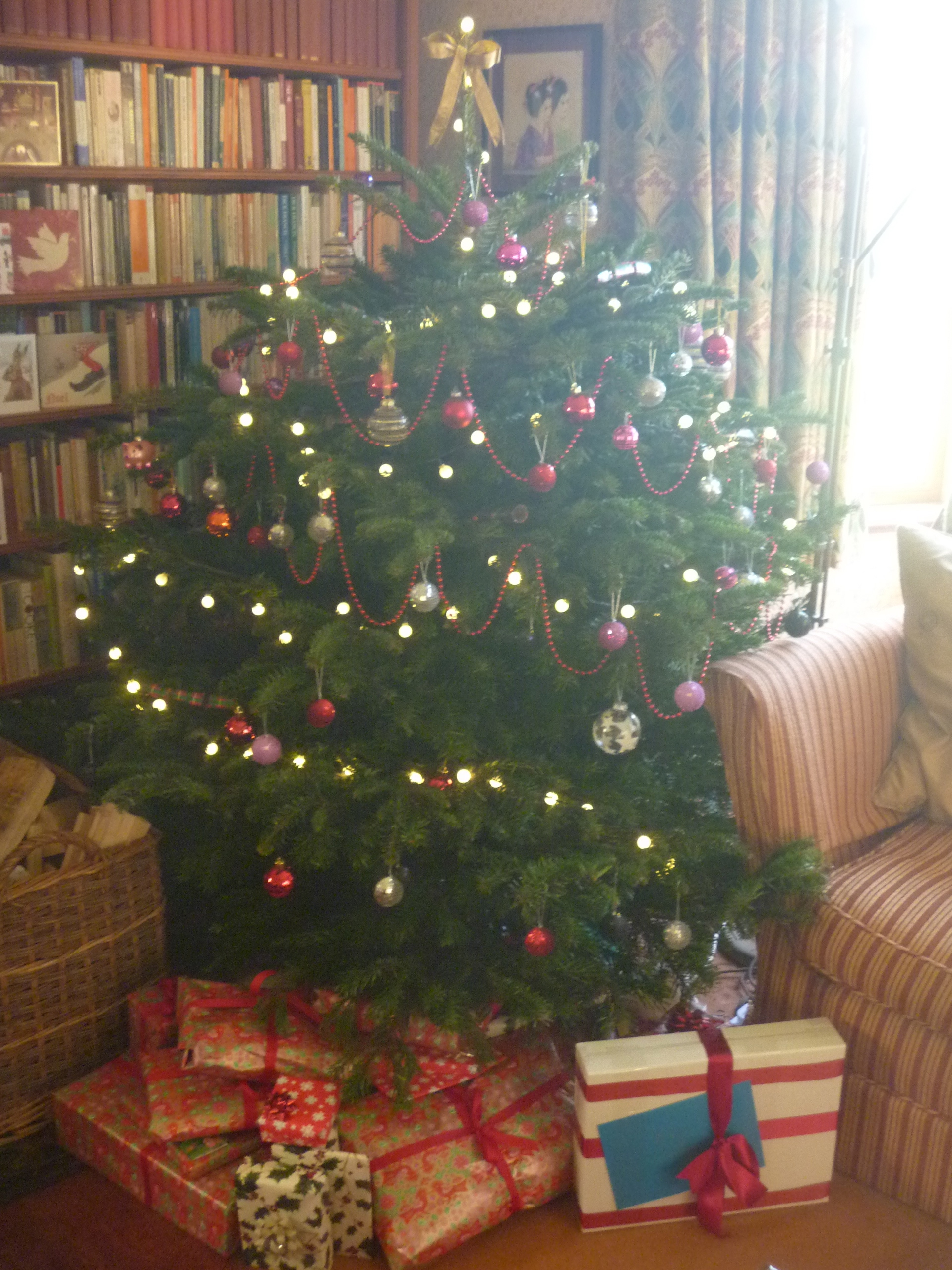
2014 tree

Compliments of the Season to Everyone.

Two weeks ago I slipped on black ice and fractured my right wrist. This is severely limiting my typing ability and posts will be very intermittent for a while.

However, I’d like to share pictures of the lovely gifts I received this Christmas. As often happens they fall into themes. Each gift has been especially and thoughtfully chosen with ME in mind. I could not have chosen better myself.

black and white

Black and White Gifts

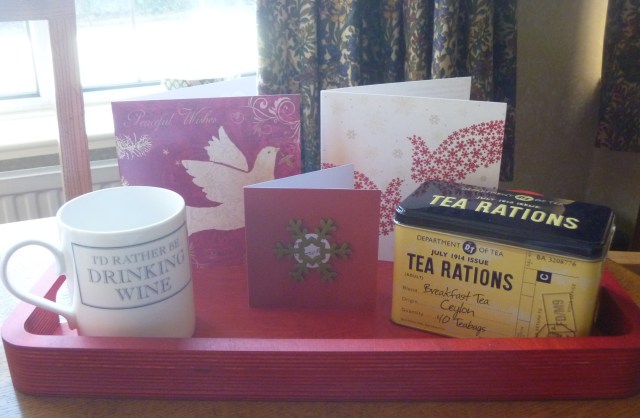
tea tray

Tea Related Gifts (although someone thinks I’d rather be drinking wine!)

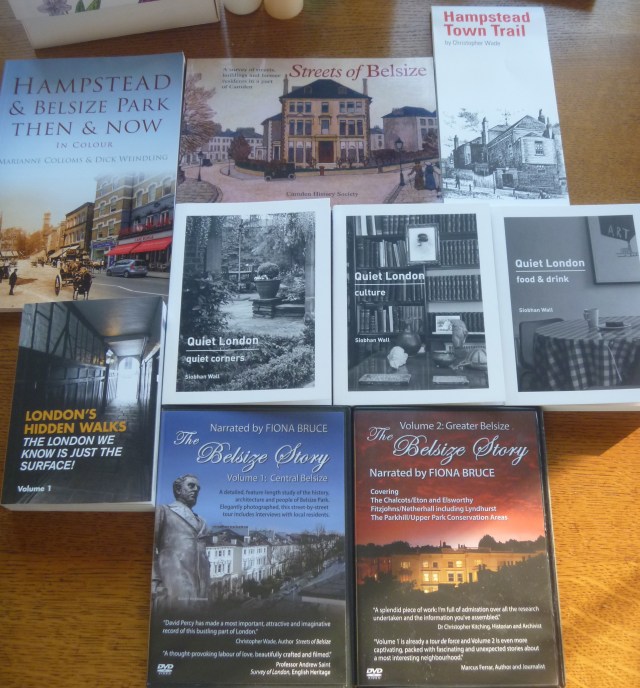
london books

London Books, DVDs and Walk Map

I enjoy London walks and exploring the Hampstead and Belsize Park areas when I’m walking my son’s dog. I have the original Quiet London book and it has now spawned three more. I’m happy to spend the next weeks planning future explorations in London.

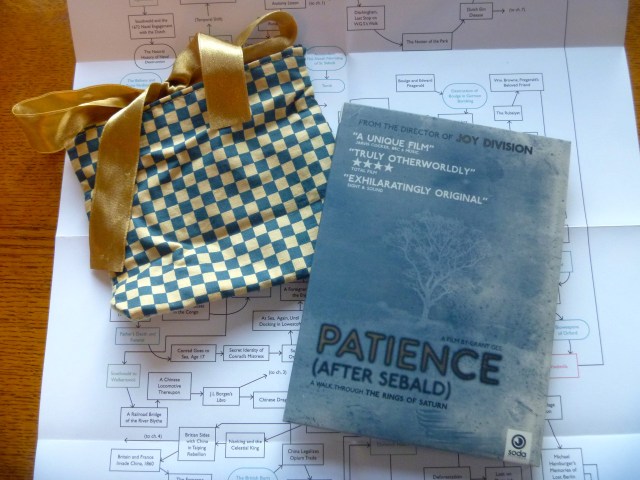
I’ve read W G Sebald‘s ‘The Rings of Saturn’ and seen this film. I’m looking forward to watching ‘Patience (after Sebald)’ again. Much of it is filmed in East Anglia where ‘Max’ Sebald lived and was professor at the University of East Anglia in Norwich. Sadly, when his very original writing was taking he off, he was killed in a motor accident near his home in 2001.

patience

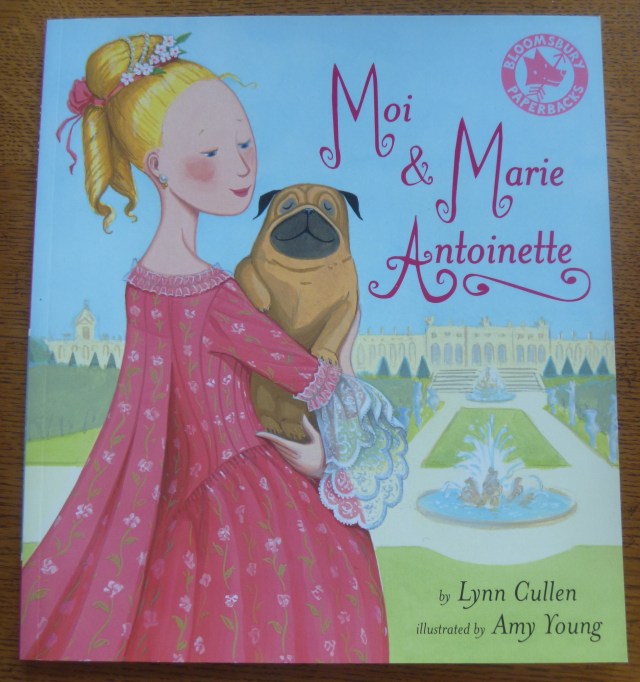
Moi and MA

A story about a Pug called Moi set at Versailles

Alfie at Gif

Alfie at Gif-Sur-Yvette

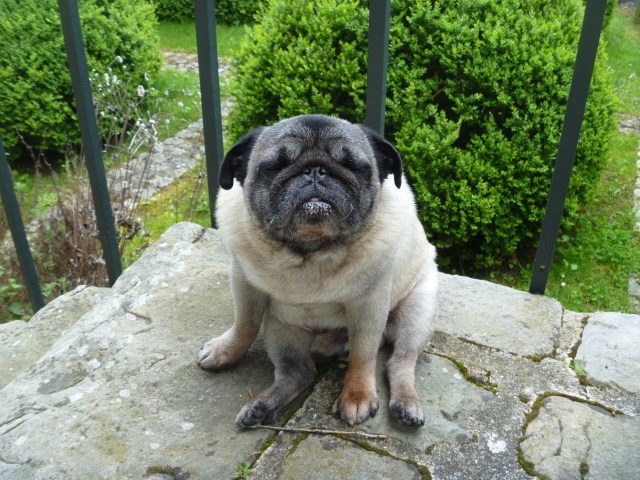
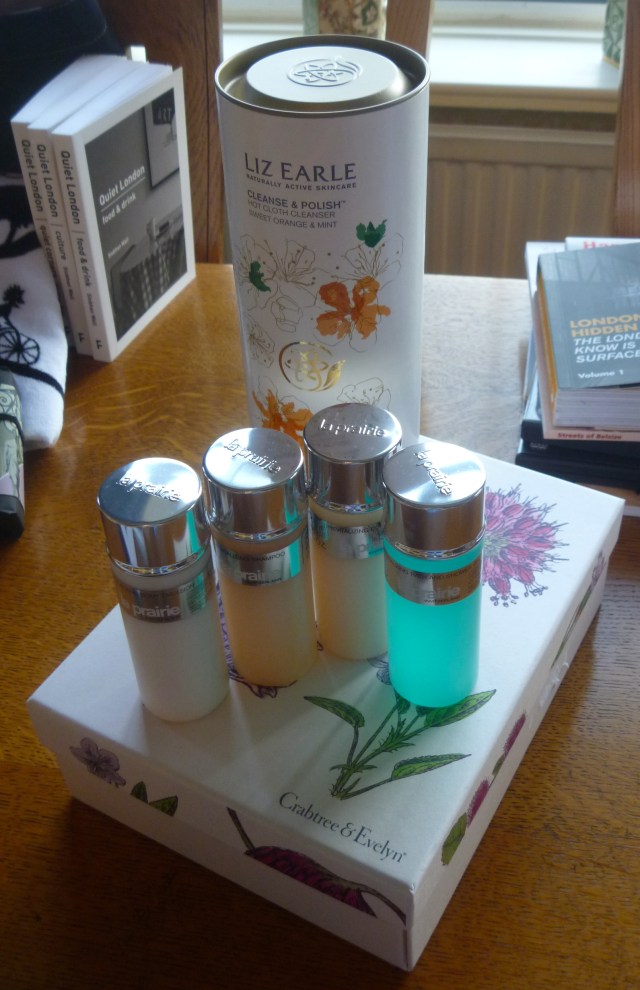
We took my son’s pug with us when we stayed at the Windsor’s place near Versailles in 2012. In addition I had other smellies; plus a box of cards for me to write my thank you notes – if I can manage that this year!

smellies

smythson

My thanks to everyone for these special gifts!

Pure Vermont Maple Syrup

Pure Vermont Maple Syrup

Do you know about maple syrup? Vermont is famous for it. You see farms and smallholdings with ‘maple syrup for sale’ everywhere in the Brattleboro and Dummerston townships.

Apple books

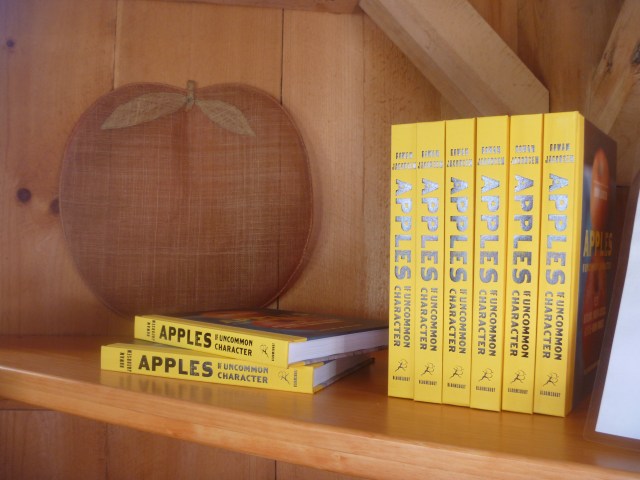
 Apple books for sale at the Farm Shop

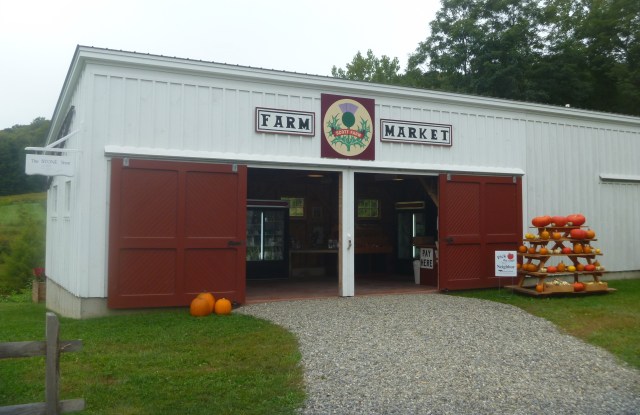
You can also buy it at the Scott Farm, Dummerston where the Landmark Trust USA have their offices. I always like to visit the farm and shop as it is a pleasant walk along the quiet, dusty road from Naulakha/The Carriage House.

Scott Farm Shop

The Scott Farm Shop

I wrote about my previous visits to the farm and Landmark Trust offices here.

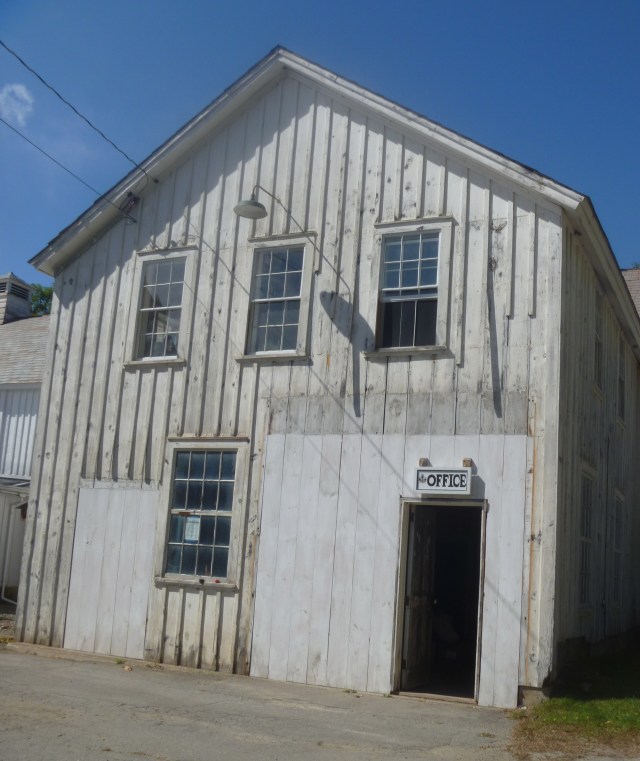
LMT USA Office

Landmark Trust USA Offices at Scott Farm

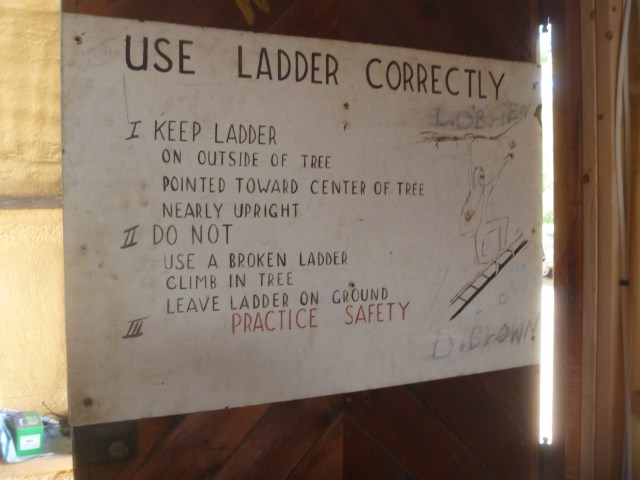
Ladder instructions

Ladder Instructions Notice in the Offices

On Dummerston Road

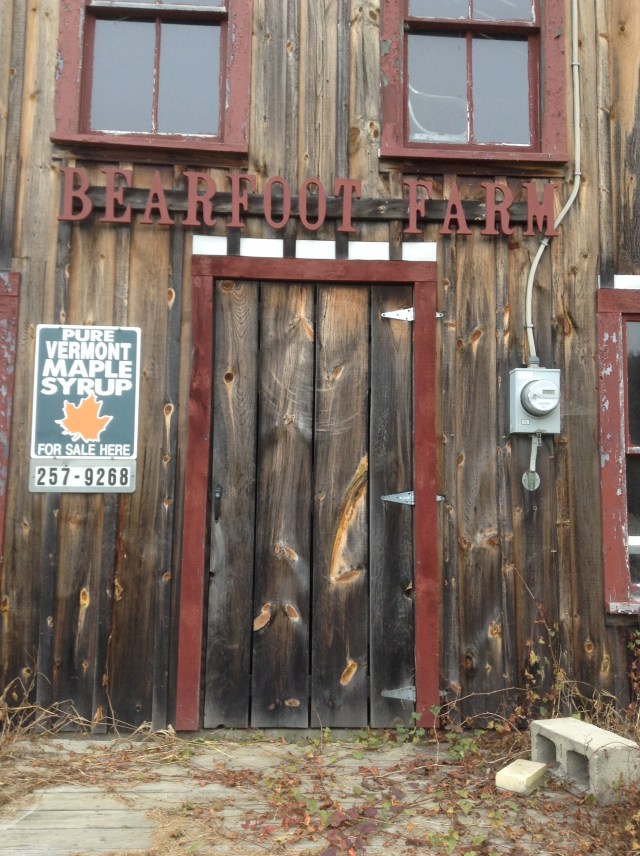
Just beyond the Scott Farm is an old sugarhouse. It doesn’t look as if it used any more although there’s a decent wood pile alongside.

Maple Syrup door

In order to try to find out more about the life of Emily Dickinson I took with me the novel “The Sister” by Paola Kaufmann. I found this excellent book a lighter read than perhaps a serious biography (and certainly a lot lighter to carry than Lives Like Loaded Guns the biography by Lyndall Gordon). In an early chapter Lavinia describes a local expedition to collect maple syrup (this was in northern Massachusetts in about the 1850s). I reproduce these paragraphs here :

“The history of the maples is a beautiful one. Throughout the summer, and thanks to the sun that for so many hours bronzes the tree canopy, sugars begin to accumulate in the leaves, which later are converted into sap, amassing like treasure in the trunks of the trees. This is the sweet soul of the maple. Towards the end of the summer and during autumn, the maple sheds these very leaves that have acted as sponges, soaking up sunlight. These leaves – some reddish, others yellowish – fall with the first frosts. Then, sweet soul of sap, protected behind layer after layer of living tissue; dead pulp and bark, remains intact, becoming sweeter and sweeter while the snow builds up on the dry, dead-looking branches and against the sleeping trunks; and the farmers keep the surrounding area clear so that should a tree fall it should not damage one of the young maples.

Maple leaves?

Then spring arrives, and thanks to the sweet sap hidden away on the inside, the maples return to life; the new shoots appear timidly to greet the sun that slowly grows more and more yellow, and this is when the work of the sugar-maker really begins: the maple harvest. Sometimes, if spring comes early or if winter has not been too severe, the operation begins in the middle of February, but normally the maple harvest is during March, although there is no one simple precise sign: the time is usually called the “sugar season”. Some believe that the sugar season is announced during the day by the crows, unable to wait in silence for the arrival of warmth.

The sugar-men know exactly where, amidst the dense woodlands, the edible syrup is to be found: it takes 40 years for a tree to grow from planting to sugar production. The men head off to these places with the sledges, as snow is still thick in the drifts, armed with wooden pails girdled to perfection with metal rings. The night before the first harvest they hang these pails outside the cabins full of hot water, then cold water, so that the slats swell into each other, helping to seal them. And they go, with their sledges, their pails and their tools, to bore into the maples a hole no more than three inches wide, three feet up, like a small wound through which the soul of the tree willingly bleeds. The healthiest and largest of the maples will tolerate up to three of these holes, and the sugar-men try never to wound the tree twice in the same place, always allowing wounds of the previous year to scar over completely. The pails hang from the spouts and they are left to collect the clear sap that drips down, slowly at first, then as time goes by, much quicker, until there is none left. When the pails are full, their collective contents are poured into enormous boilers, and either fires are lit in special spots in the forest, or the pails are carried to the cabins, where a more industrialized system helps to evaporate the water from the sap. In the forest, when the harvest is small, the dense liquid is poured into metal receptacles that are placed like gigantic kettles above the fire, boiling the syrup. And when it is at the right point, it can be thrown onto the snow, where the syrup acquires its wax-like consistency. If two drops melt as they fall, it means that the syrup is ready to be jarred.

And in this way, each spring, pails are hung from their small taps, and the maples, day after day, continue with their slow and sweet bleeding.”

I usually buy a couple of small bottles to pack in my suitcase and give to our sons. Like liquid gold it is probably just as heavy.


Emily Dickinson Museum : The Homestead and The Evergreens

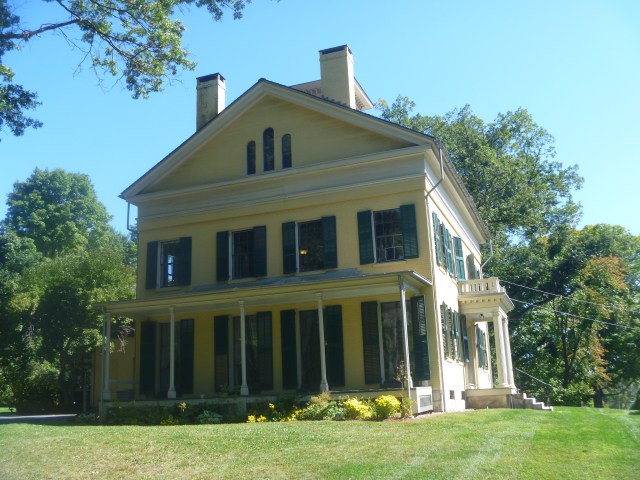
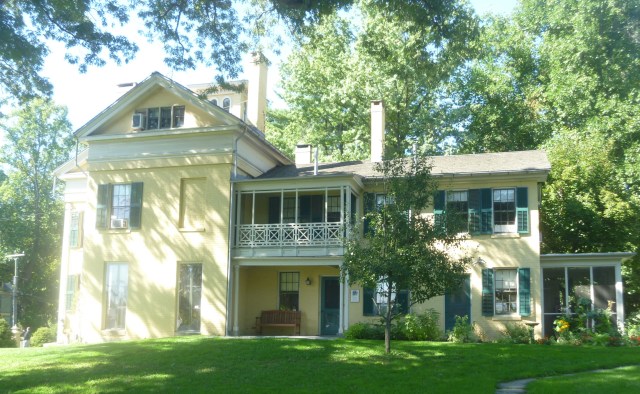
The Emily Dickinson Home

This year we made our third visit to Brattleboro, Vermont and on each visit I have wanted to make the trip an hour south to Amherst where the former home of the poet Emily Dickinson is open to the public as a museum. Amherst is an attractive College town – five in all in the area – with some interesting shops and plenty of eateries.
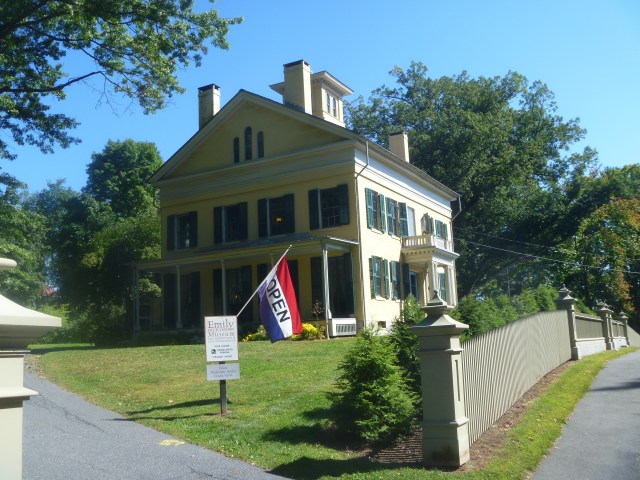
Emily Dickinson Homestead

On the Friday of our stay I drove myself back down into Massachusetts. The museum was easy to find and I was able to book onto the second tour of the day : Emily Dickinson’s World a 90-minute guided tour of both the Homestead (Emily Dickinson’s house) and The Evergreens (Austin and Susan Dickinson’s home). This constitutes an in-depth focus on Emily Dickinson’s life and family and the major influences on her writing. Includes the parlors, library, and the poet’s bedroom at the Homestead; the library, parlor, dining room, kitchen, maid’s room, water closet, nursery, and “Emily Room” at The Evergreens.
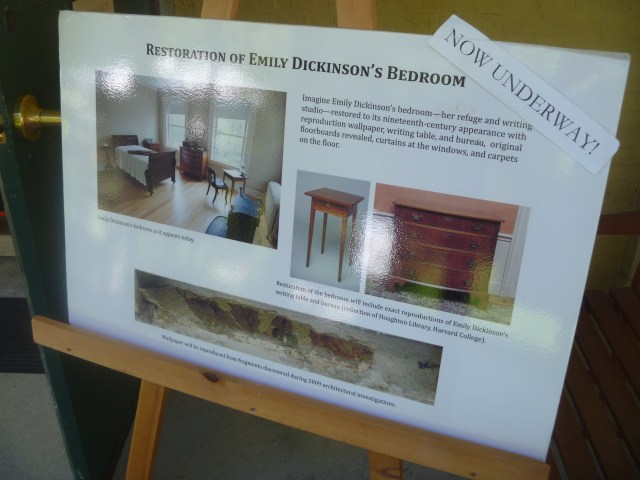
Emily Dickinson room

The Poet’s Bedroom is currently under renovation

As I had just missed the first tour by a few minutes I decided to buy the tour of the grounds which is an audio and self-guided.

“Grounds of Memory: a guide to the Dickinson landscape” The audio tour of the outdoor Dickinson grounds (duration of full-length tour is 60 minutes; visitors may tailor the tour to fit their needs) Explores Emily Dickinson’s fascination with the natural world and her family’s deep interest in the land and  includes eighteen stops outside the Homestead and The Evergreens. Stops may be visited in any order. Each stop offers a 2- or 3-minute narration and at least one Dickinson poem appropriate to that stop.

Narrated by poet laureate Richard Wilbur
Voice of Emily Dickinson provided by poet Mary Jo Salter
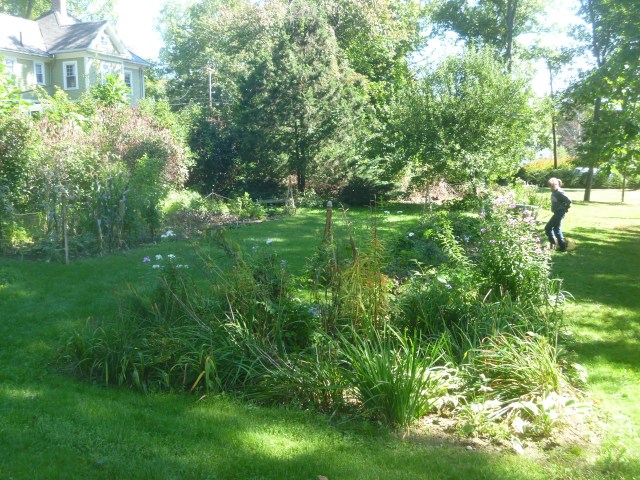
The Flower Garden

 First three stops are at the Flower Garden
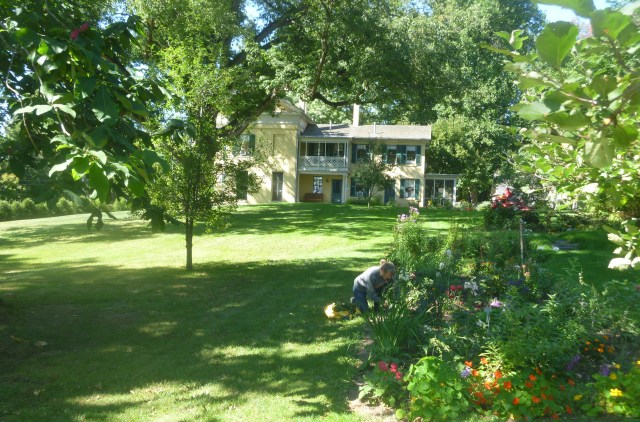
Flower Garden and Home

The Ornamental Flower Garden and the Homestead
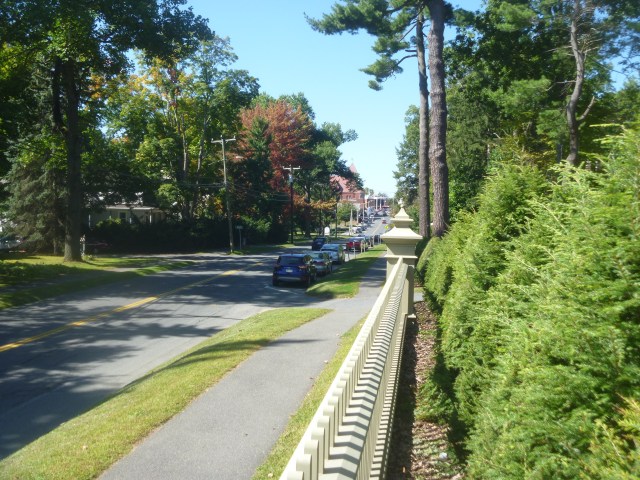
Main St and Amherst

Main Street looking towards Amherst

Evergreens

The West Bedroom (1st floor, RHS) was Emily’s
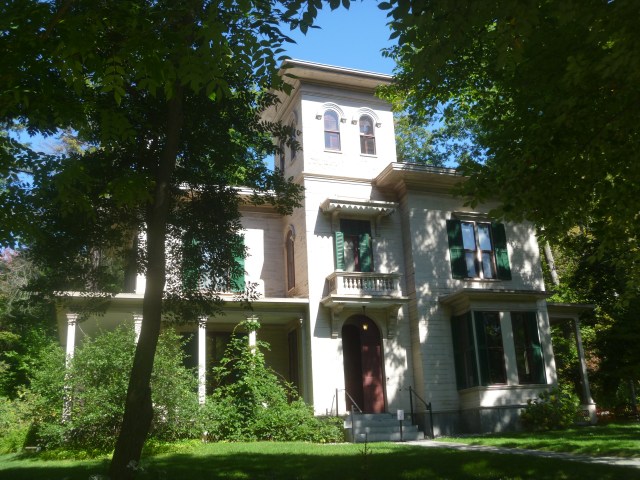
The Evergreens

The Evergreens – built by Edward Dickinson as a wedding gift to his son and daughter-in-law on their marriage
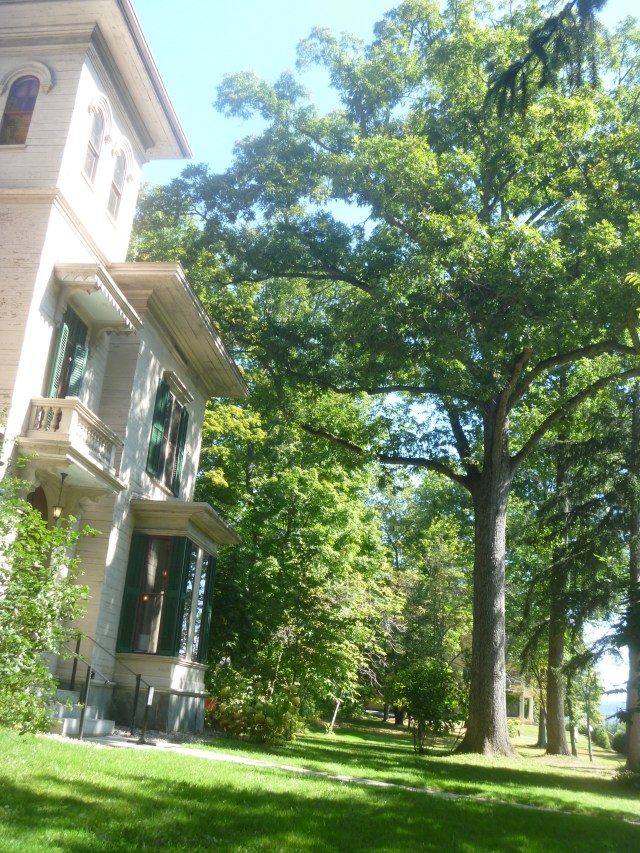
The grassy path

The grassy path between the two homes – “Just wide enough for two who love” (ED)

Here is a brief biography of the poet but the tour really brought to life her life and the lives of her family in particular her sister, Lavinia, her mother and father and her brother, Austen and his family.

EMILY DICKINSON was born in Amherst at the Homestead on December 10, 1830. Her quiet life was infused with a creative energy that produced almost 1800 poems and a profusion of vibrant letters.

Her lively childhood and youth were filled with schooling, reading, explorations of nature, religious activities, significant friendships, and several key encounters with poetry. [She was not always the recluse that many choose to characterise her – at one  time she called herself The Belle of Amherst.] Her most intense writing years consumed the decade of her late 20s and early 30s; during that time she composed almost 1100 poems. She made few attempts to publish her work, choosing instead to share them privately with family and friends. In her later years Dickinson increasingly withdrew from public life. Her garden, her family (especially her brother’s family at The Evergreens) and close friends, and health concerns occupied her.

With a few exceptions, her poetry remained virtually unpublished until after she died on May 15, 1886. After her death, her poems and life story were brought to the attention of the wider world through the competing efforts of family members and intimates.” [source]

This was a house visit par excellence. The 90 minute houses tour was filled with interest and insight into the lives. The Dickinson Landscape self-guided audio tour complete with poetry readings added to almost complete immersion into ED’s life and thoughts. Our house guide was entertainment herself and added poetry quotations and a quick ‘class’ in the importance of word choice in a ‘schoolroom’ – in which we all participated. No photography was allowed in the house but the tour was such fun and so informative that I will forgive them for that. Having visited the home of a poet I had barely heard of I came away feeling as if I met her myself. Well done, Emily Dickinson House Museum!

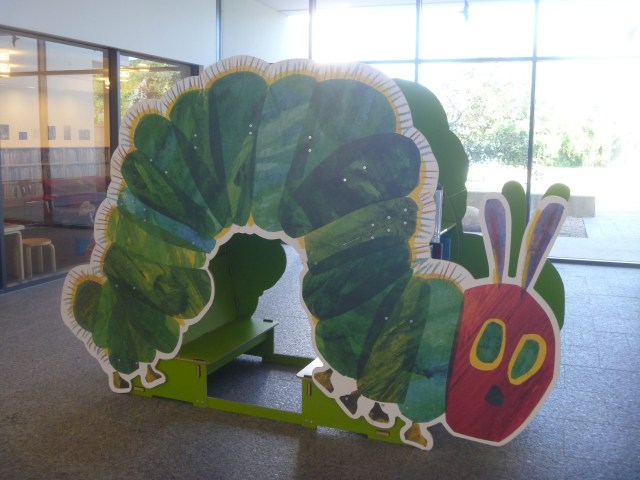
On leaving the Museum I couldn’t resist a quick visit to another nearby museum – almost from the sublime to the ridiculous – The Eric Carle Museum of Picture Book Art. A purpose-built centre devoted to the art of contemporary children’s book illustrator Eric Carle. We still have a very dog-eared copy of The Very Hungry Caterpillar at home.
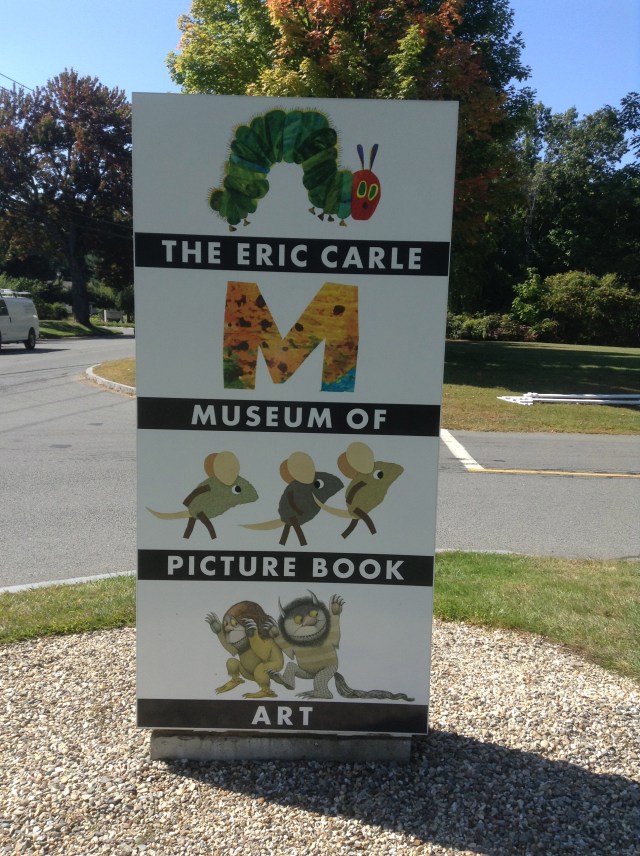
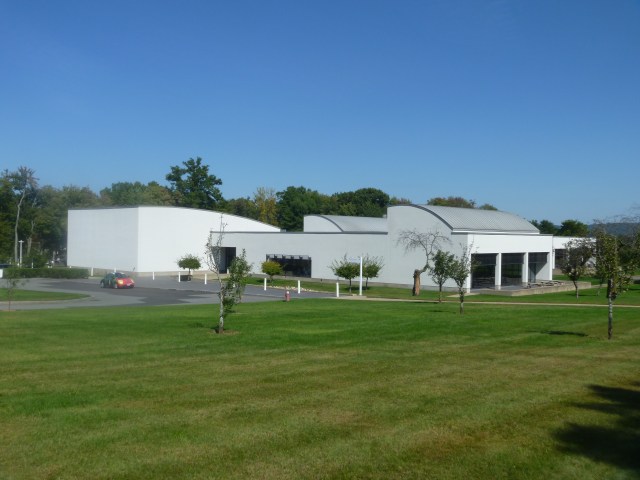
Picture Book Art


Carle Museum

 The Eric Carle Museum

The very hungry caterpillar

This is what a Very Hungry Caterpillar looks like!

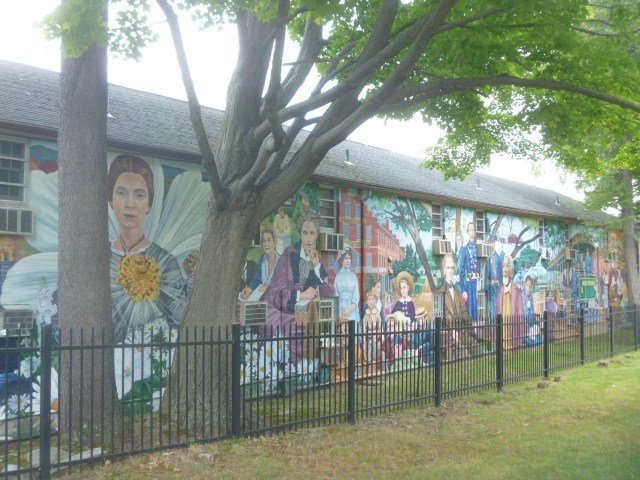
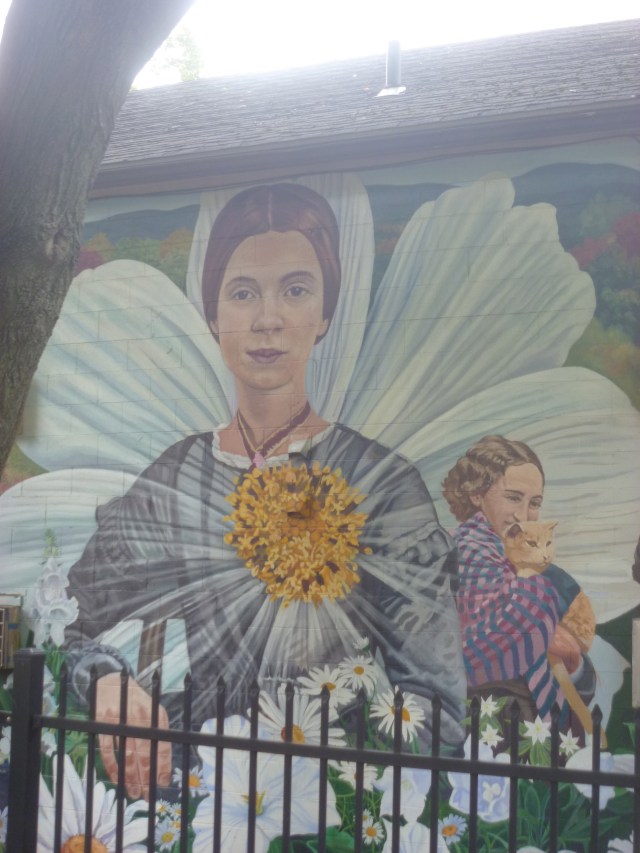
And finally, the next day we both made the journey back down to Amherst, enjoyed a decent lunch and I tracked down the Dickinson graves in West Cemetery where there is also a Community History Mural featuring characters from the Amherst story from all fields of experience (farming, literature, domestic life, education, military, industry and economic life) and including, of course, Emily Dickinson herself.
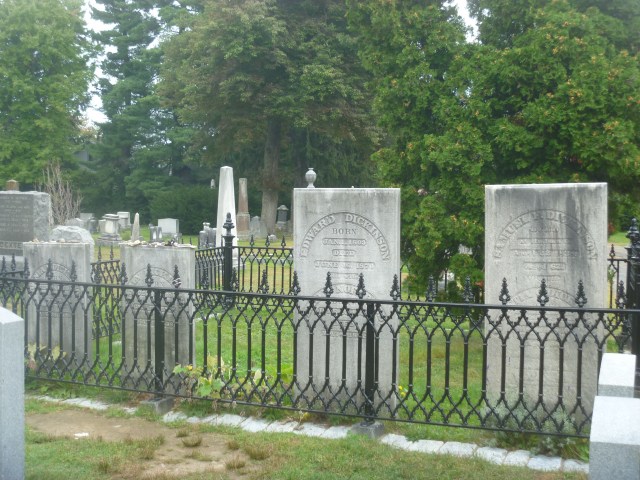
Dickinson family graves

The Dickinson Graves in West Cemetery, Amherst
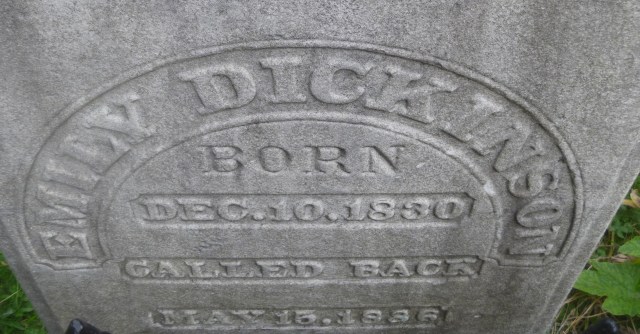
Emily Dickinson grave stone

Wording on Emily’s Gravestone

History Mural West Cemetery Amherst

The Amherst Community Mural, West Cemetery
Emily Dickinson on History Mural

Emily Dickinson (Lavinia behind) on the Community Mural
Elizabeth Gaskell’s House and Home

GH Blue Plaque

In the 28 September Arts and Books supplement to The Independent on Sunday I was pleased to read about the imminent opening in Manchester of the former home of Elizabeth Gaskell – more commonly known as the novelist Mrs Gaskell. Her Cranford books have been serialised on TV recently. But there is much much more to Mrs Gaskell and her writing than this rather cosy drama portrays. I recently read “Ruth” and for a novel written by the respectable wife of a Unitarian Minister it is really quite an eye-opener but an excellent read. Read a resumé here. In addition two excellent miniseries of her books ‘North and South‘ and ‘Wives and Daughters‘ were first broadcast on BBC TV in 2004 and 1999 respectively.

I straightaway headed to the house website and read this :

Tuesday, October 14, 2014 – 14:30 to 16:00

Book Launch: Carolyn Lambert ‘The Meanings of Home in Elizabeth Gaskell’s Fiction”

Book

Join us for the launch of Carolyn Lambert’s new book ‘The Meanings of Home in Elizabeth Gaskell’s Fiction’. Lambert explores how Gaskell challenges the convention of the Victorian home as a place of safety in her novels. In particular she illustrates her theme through the importance of homelessness in Gaskell’s work. Lambert’s book draws not only on the novels but also Gaskell’s letters and non-fiction writings and has recently been shortlisted for the Sonia Rudikoff Prize for the best Victorian book by a first time author.

A tour of the house and refreshments are included in the ticket price. Copies of the book will be on sale at a special price.

Gaskell House

84 Plymouth Grove, Manchester

So I booked a ticket for the talk and for the train and yesterday set off for Manchester. I’m afraid I don’t find Manchester any easy city to get around. Perhaps I don’t know it well enough. I eventually found a bus that would take me to Plymouth Grove and which  dropped me off outside number 84.

Welcome to Gaskell House

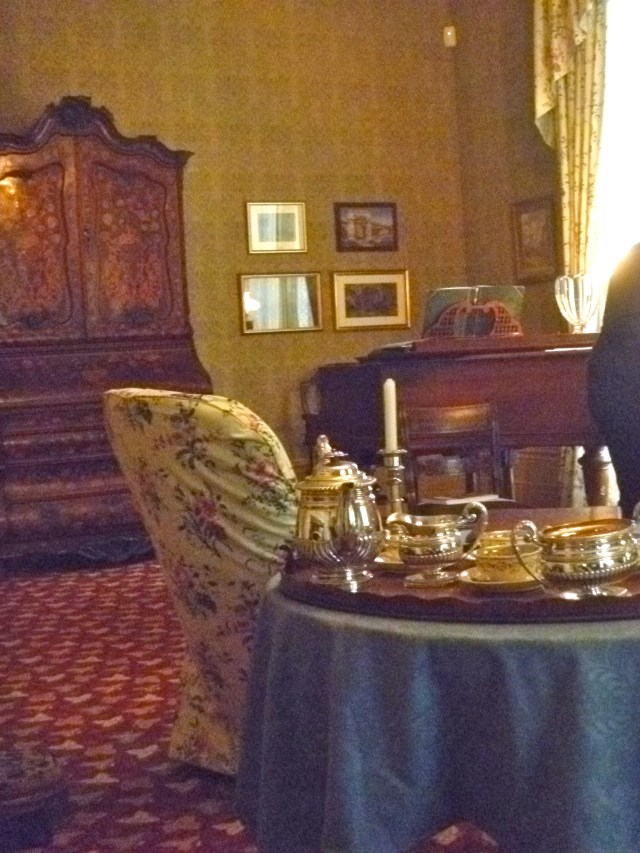
Carolyn’s talk took place in the Gaskell’s sitting room – yes, the very room in which Charlotte Bronte hid behind the curtains in order to avoid being seen by guests! Photography is allowed and we could sit on the comfy chairs, sofas and chaise longues. I was told that items covered in perspex were original to the house and had been gifted or lent by various donors or galleries and the rest of the furnishings and fittings were either of the period and style of the house during the time when the Gaskells had lived there or were reproductions.

Sitting room

The comfortable, relaxed sitting room

Carolyn began her talk with a resumé of Mrs Gaskell’s life. I have lifted this from the House website :

Elizabeth Cleghorn Gaskell was born in 1810 and lived at 84 Plymouth Grove with her family from 1850 until her death in 1865.

“To begin with the old rigmarole of childhood…” Wives and Daughters

She was born as Elizabeth Cleghorn Stevenson in London in 1810. A year later, on the death of her mother, she was taken to live in Knutsford, Cheshire, with her aunt, Hannah Lumb. The arrangement was a happy one – she was to refer to her aunt as “my more than mother” and was to use Knutsford as the inspiration for her fictitious town of Cranford. Knutsford also became ‘Hollingford’ in Wives and Daughters.

In 1832 Elizabeth married William Gaskell, the assistant minister at Cross Street Unitarian Chapel in Manchester. Their third home was a large house near open fields – 42 (now 84) Plymouth Grove. Here they grew flowers and vegetables, and kept a cow, pigs and poultry. The House was always bustling and the family entertained a stream of visitors, including many eminent people. Gaskell connections included such people as the Wedgwoods, the Darwins and the Nightingales, but girls from the Sunday School also came to the house regularly, as did William’s students and fellow clergy.”

She then went on to discuss some of the aspects of home touched upon in the Gaskell novels as well as in Mrs Gaskell’s own life. (Interestingly, she was a keen traveller and some years spent only half the year at home). The home in the novels symbolises security, it’s where relationships develop, it’s a place for creativity and self-expression. But she also wrote about homelessness and the role of servants. Elizabeth Gaskell was ambivalent about Manchester and was torn between family and a longing for the rural environment. Her large house looks rather incongruous these days amidst modern buildings and areas of wasteland on Plymouth Grove but when she was living and writing here it was rural area and the house had a long garden stretching back down Swinton Grove but now built upon by flats.
There wasn’t time in the end to do the full tour – so I will have to return on another occasion and make a more full report of the house but I did peep into ground floor rooms :

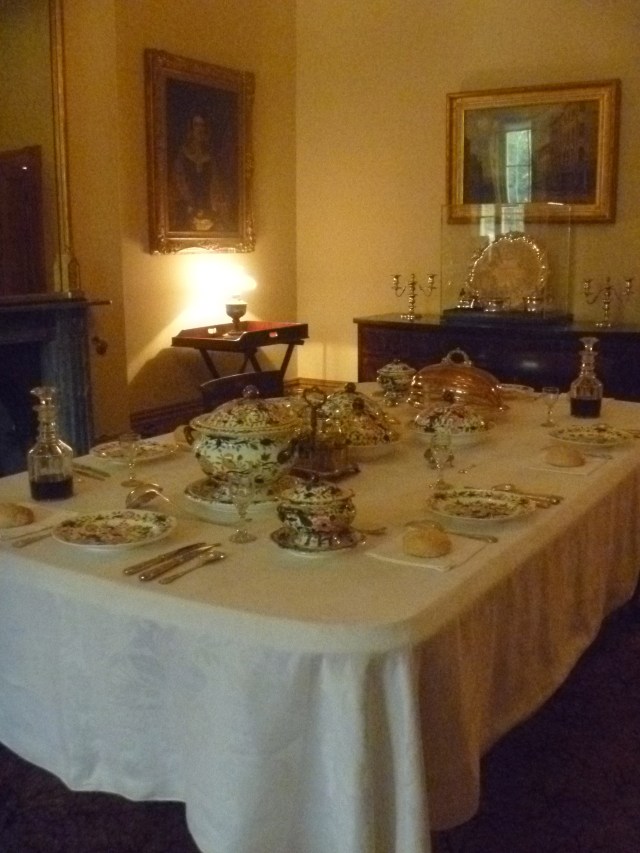
Dining Table

The Dining Room

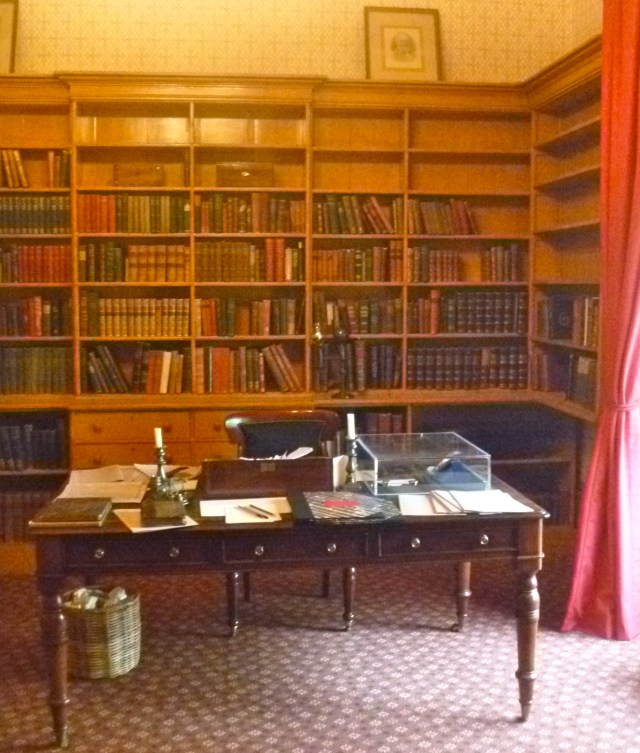
Gaskell writing desk

Mrs Gaskell’s Desk at one end of the Dining Room

William's study

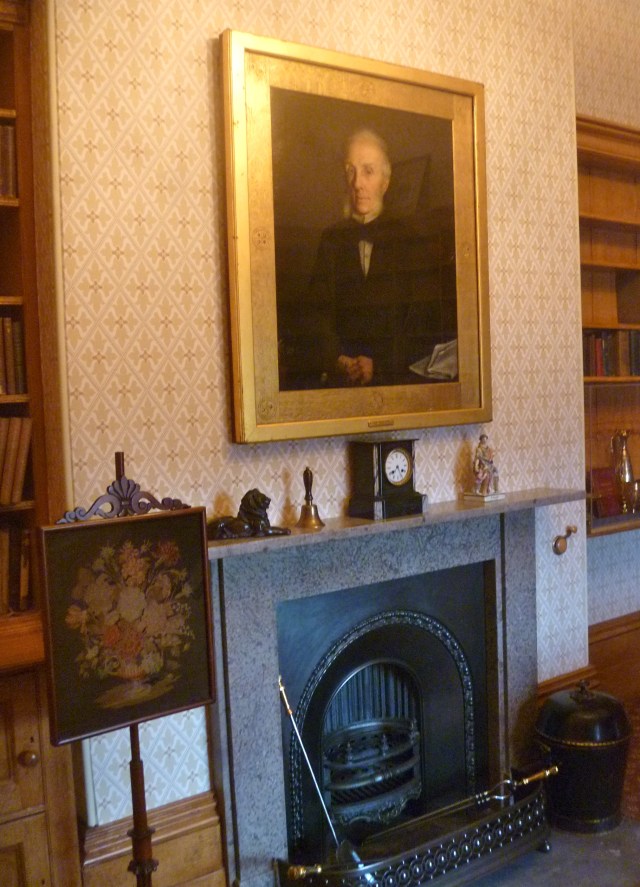
William Gaskell’s Study

William portrait in study

William Gaskell

and refreshments were served downstairs in the basement tea room and bookshop (new and secondhand).

Tea room

The Tea Room

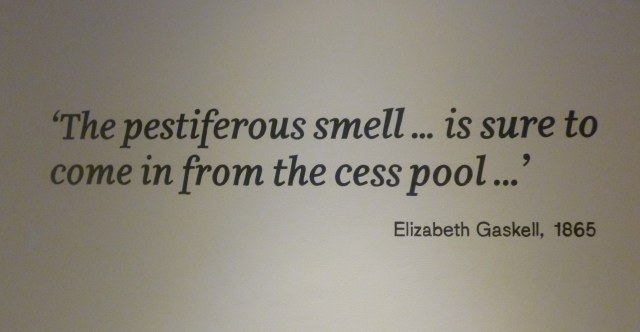
Pertinent quotations from Mrs Gaskell add a touch of humour

Quote 1


Quote 2

And in the Ladies Loos :

Ladies' quote

As the instructions for finding a bus that would take me back to Piccadilly Station didn’t work out I was thankful for one thing about Manchester – taxis with lights were easy to hail and thus I made my way back to the train and thence to my own home in comfort.

GH Rear view

Rear of Gaskell House


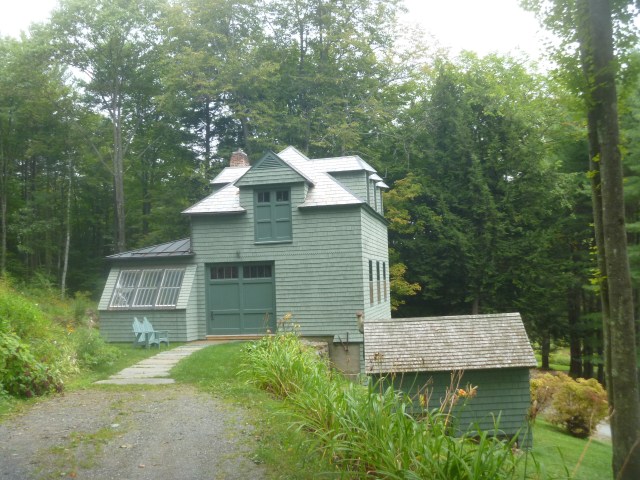
The Carriage House

The Carriage House

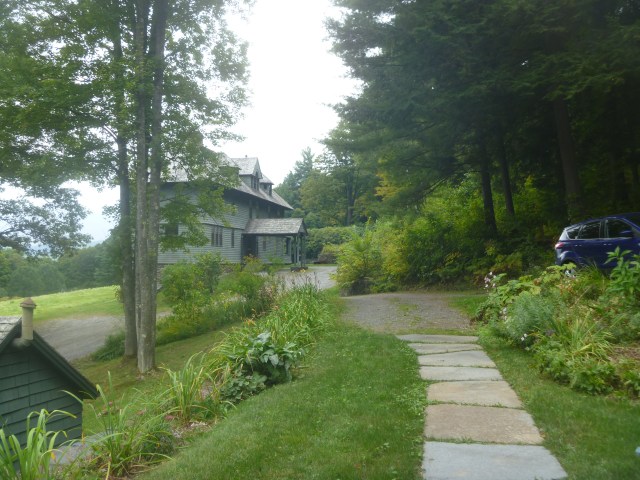
This September just past we made our third visit to Brattleboro Vermont. We stayed again in a property that had once belonged to poet and novelist Rudyard Kipling and which is now owned and run under the auspices of The Landmark Trust USA. The house is on a much smaller scale than Naulakha and sits on the same driveway a little way down from that grand, commanding house.

Naulakha from Carriage House

Naulakha from The Carriage House

Here is the description of it from the Landmark Trust USA website :

When you stay at this Landmark, you’ll awaken wonderful memories. Formerly this was the barn where Rudyard Kipling’s carriage was kept, then it was converted to housing for his staff. This beautiful smaller example of the tones, designs and appointments of Naulakha, accommodates 4, has one bathroom, a complete spacious kitchen, and beautifully landscaped lawn area where you can relax in an adirondack chair or picnic in the shaded backyard.

Adirondack chairs

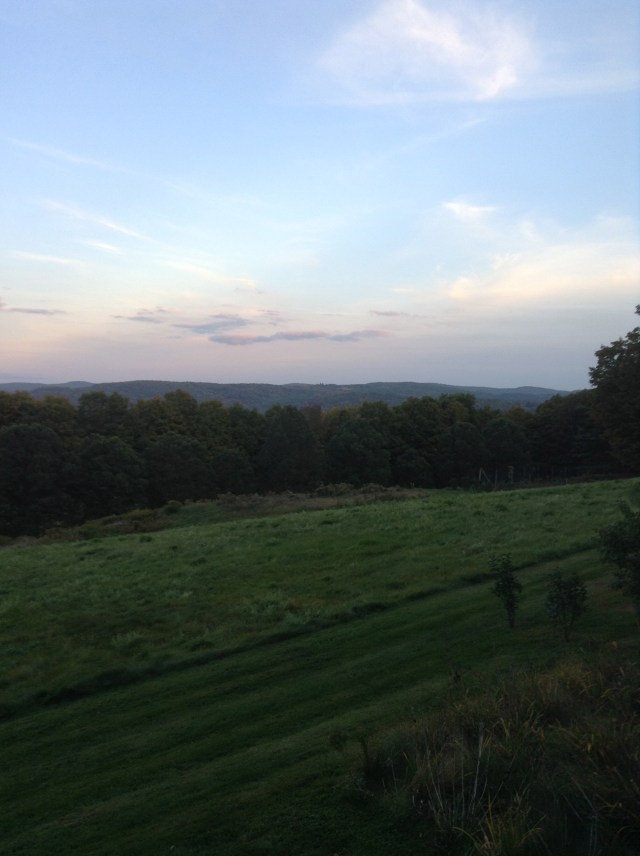
The view NH from those chairs

The View from the Chairs : New Hampshire

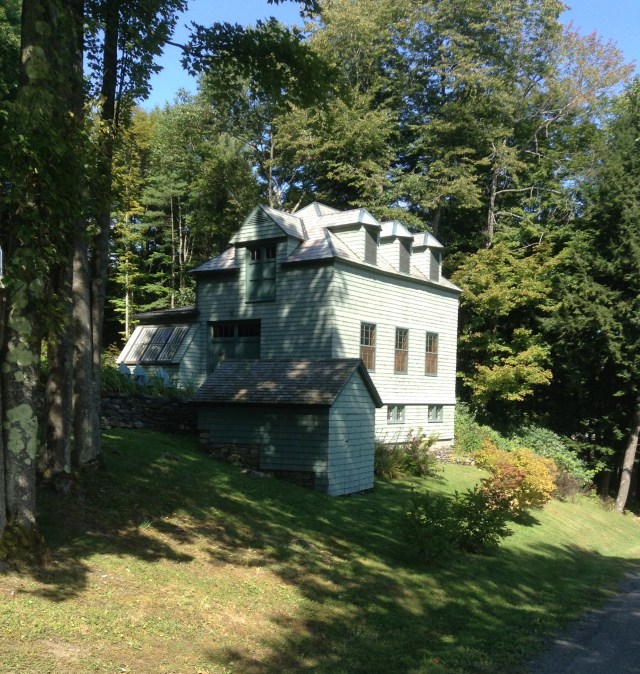
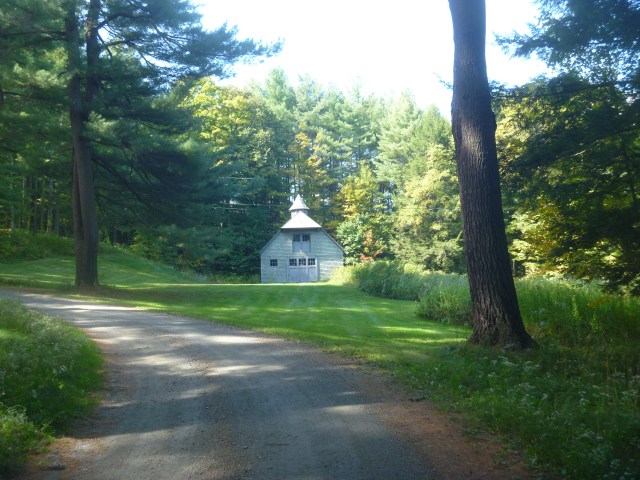
 From the patio outside the kitchen, there is a stone pathway which will lead you from the lawn area to the barn where Kipling’s horses, Nip & Tuck, were stabled.

Barn

 The Barn

This property is super comfortable, nestled in among the trees, and banked by perennials. You’ll feel a certain sense of having lived in a cabin in the woods, with comfort.”

Sooooo, comfortable :

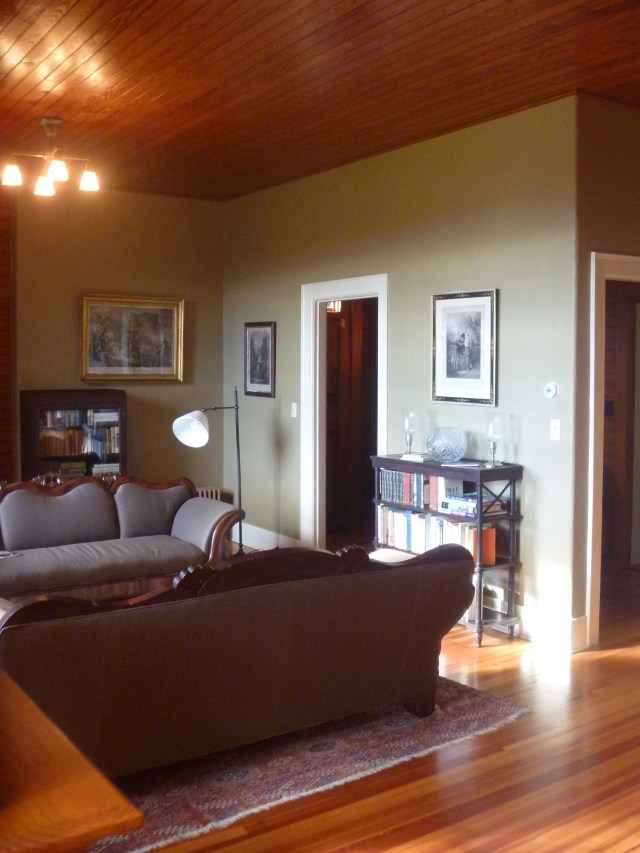
Sitting Room CH

The Sitting Room

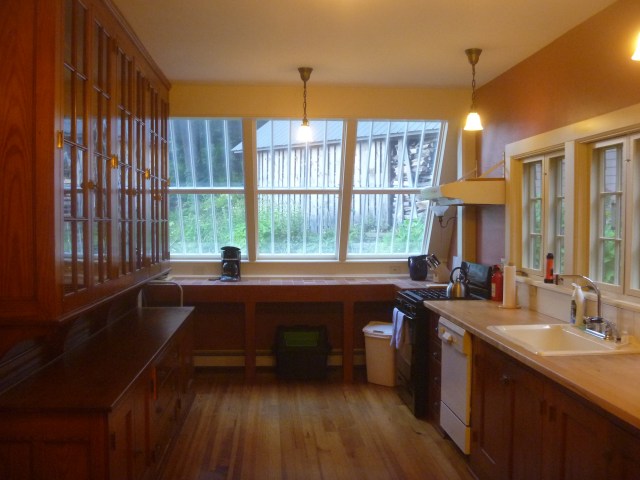
Carriage House Kitchen

The Kitchen

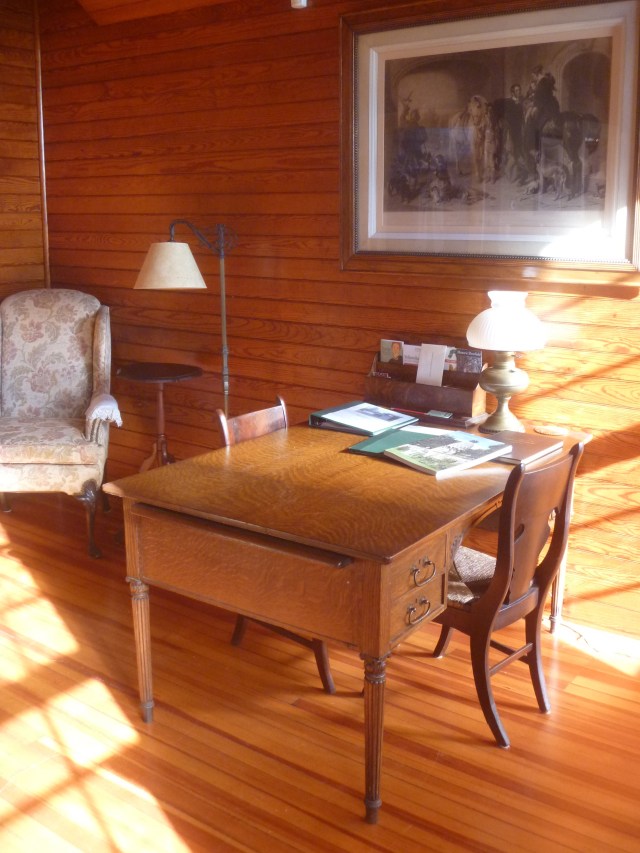
Desk. Carriage House

Desk at rear of Sitting Room

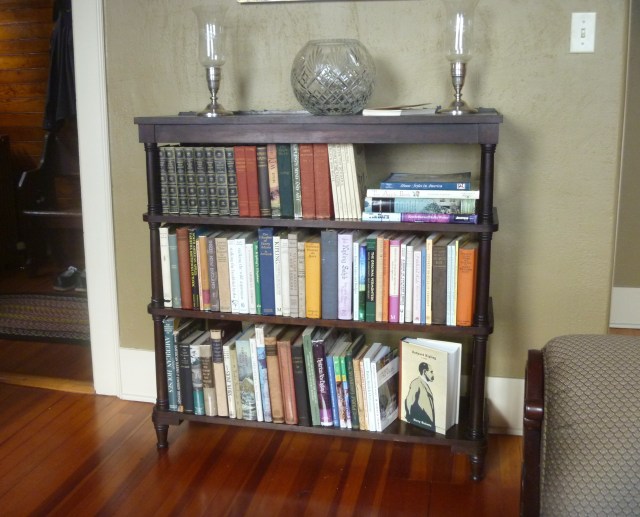
Carriage House bookcase

One of the Bookcases

Kipling still predominates on the shelves but I read and enjoyed :

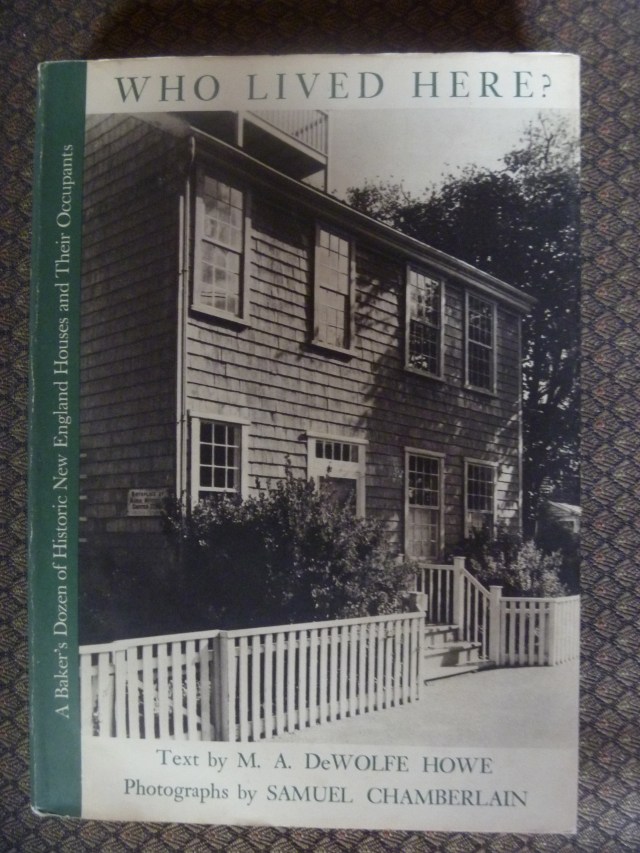
Who lived here book

Who lived here?

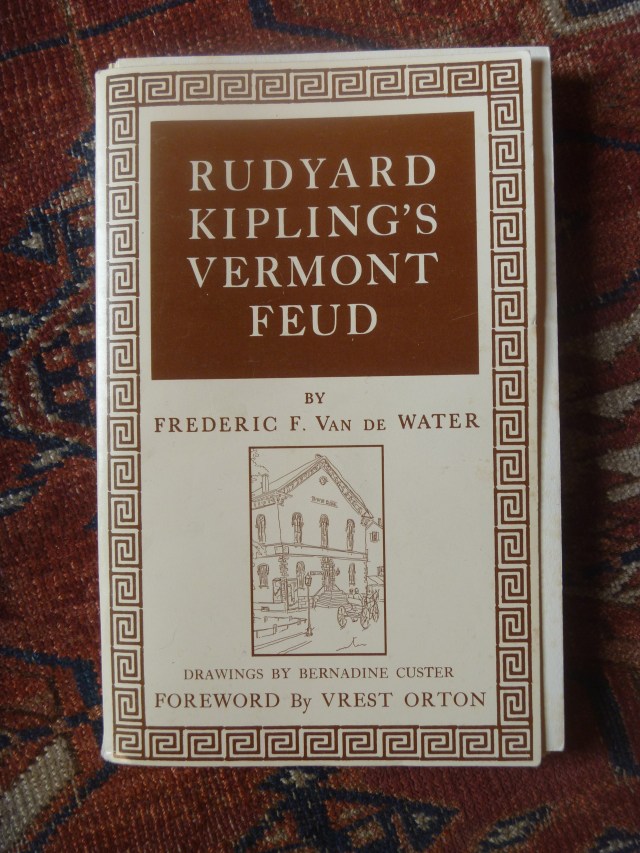
vermont Feud

Rudyard Kipling’s Vermont Feud

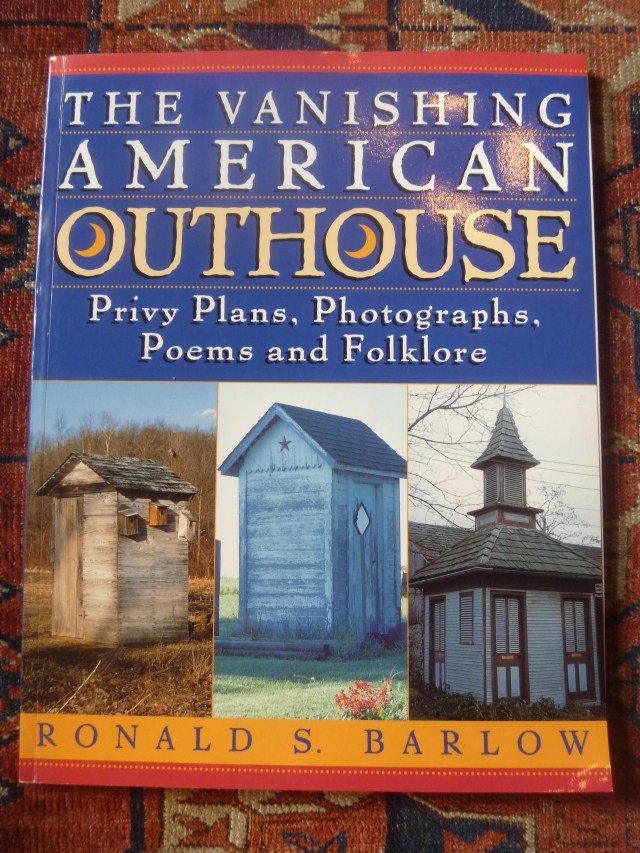
American Outhouse

The Vanishing American Outhouse

RK picture

Rudyard Kipling was keeping a watchful eye on us!

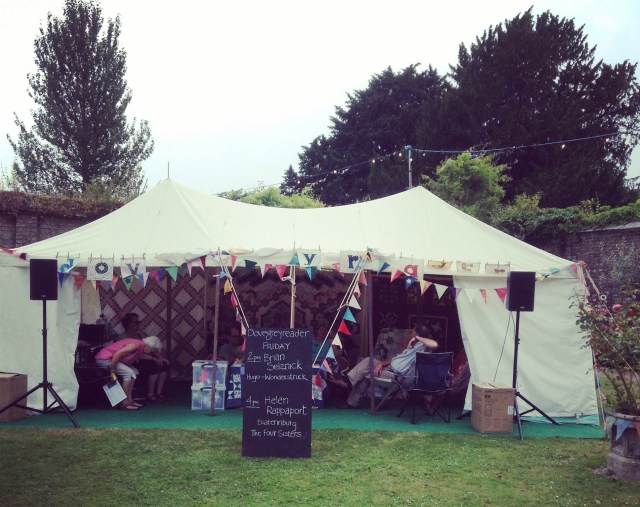
The Dovegreyreader Tent at Port Eliot Festival

NB This post was prepared back in July during the Port Eliot Festival

Ready for the off

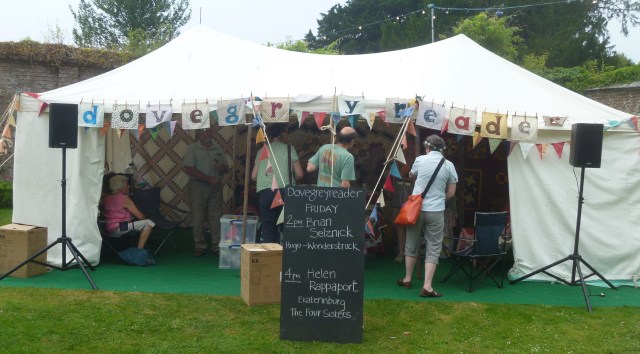
Welcome to the Dovegreyreader Tent at Port Eliot Festival!

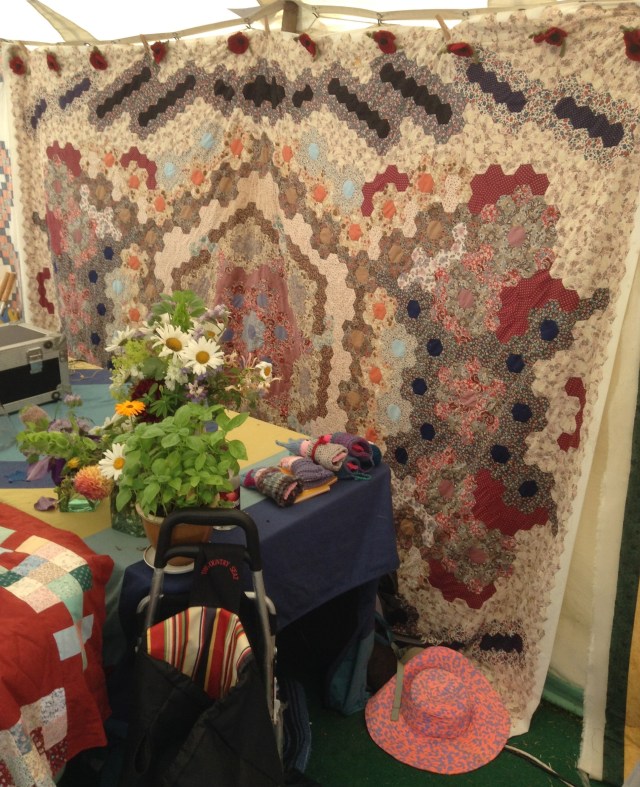
It’s an Aladin’s Cave of quilted, patchwork and knitted hangings and of crocheted and sewn bunting: all stitched with love and care.

Quilt

 All Her Own Work

What writer could not feel relaxed in these surroundings, plumped down on the comfy couch with DGR (DoveGreyReader, alias Lynne) quietly and humourously encouraging them to speak about their work? It’s a far cry from the usual literary festival round of upright chairs, microphones, spotlighting and a hushed audience. We did have microphones and the spotlight (sun) shone all the time. We weren’t able to turn down the heating but we offered our guests a fresh cup of tea served in china teacups.

Table

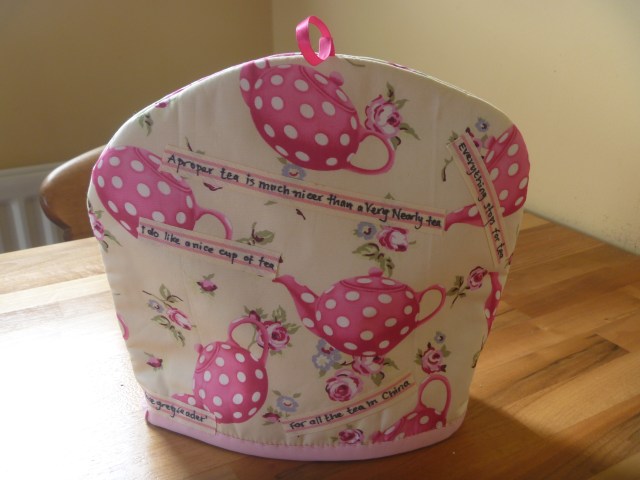
The Festival itself is not all literary. There’s music and food and comedy and a Flower and Fodder Show. The FFS is open to all attendees and beyond. We were encouraged to make a tea cosy for the Fortnum and Mason competition and ‘we’ submitted an entry to the Flower Show. Yes, I, even I, who can neither sew nor knit nor crochet made a tea cosy. And here it is:

The Cosy

My Tea Cosy … on a theme of Tea Sayings

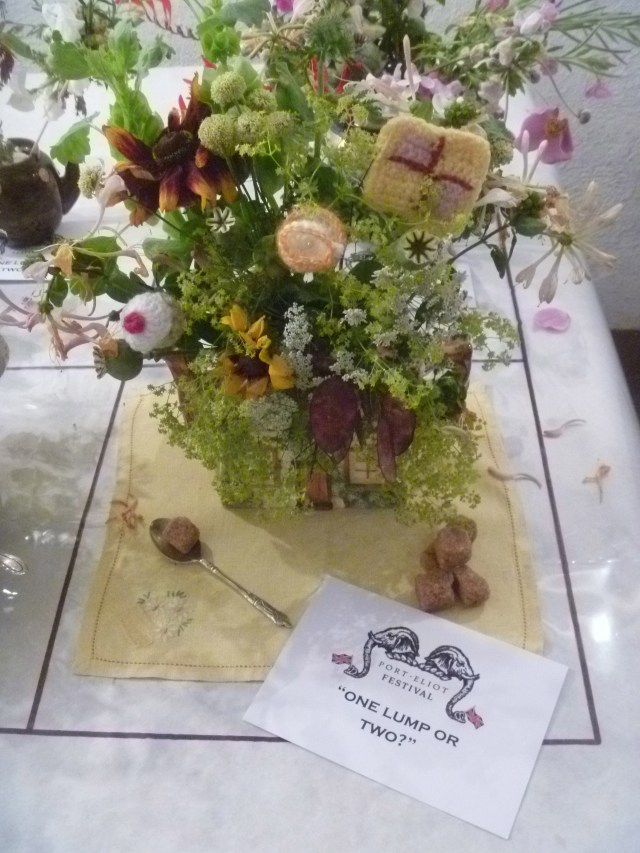
And we had an entry in the Flower Show – the theme was One Lump or Two. Fran made this beautiful display with knitted contributions by Liz. Designer Jane Churchill awarded it Second Prize. Well done, Fran!

P1140344

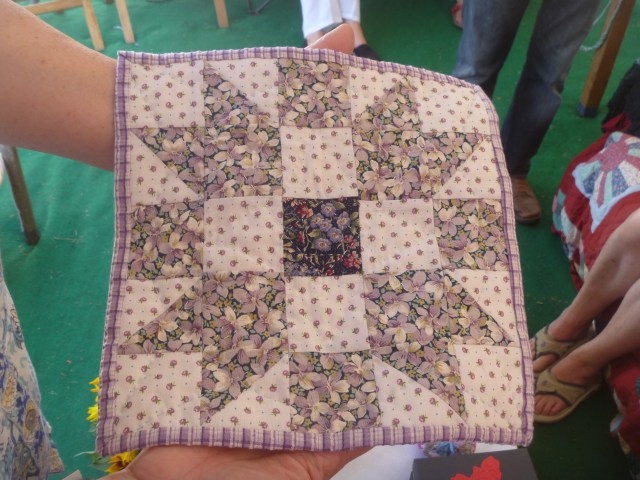
Each of our guests received a well thought-out gift for taking part. Needless to say it was handmade with care and relevant to the topics discussed. Our Knit Angel, Liz, produced the knitted or crocheted gifts. In addition the ladies received a quilt block again in a design connected with their topic and made by Lynne.

P1140293

Helen Rappaport (author of Four Sisters) received Sister’s Choice Design

P1140292

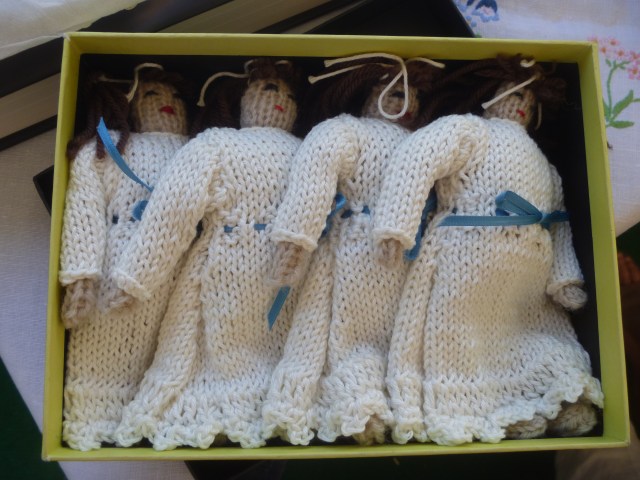
Helen also received Four Sisters of her own

Comfortable, informal, relaxed  and inspiring – and all in glorious colour!

It is easily overlooked that what is now called vintage was once brand new!

NB This report was prepared back in July during the Port Eliot Festival

programme

And that includes me! I spent yesterday afternoon at Port Eliot. I went straight there on the train from Par Station. Alight St Germans for Port Eliot. From the station it’s a mere few steps to Never Never Land the Festival. For many months now I have been wondering whether I am going to “fit in” at a festival and whether I will really be any help as I neither knit nor crochet nor sew nor flower arrange. After one afternoon I still felt as if I was an observer and not a participant. Even though I had a wristband that said “Port Eliot Festival Crew”.

DGR Tent

I think I will be quite safe from full festival conversion in the Dovegreyreader Tent. I already knew a couple of people and have now met four new ones including the very welcoming and hospitable Dave, the Dovegreyreader’s husband, who makes the tea and hands out food and generally turns his hand to anything that is required of him.

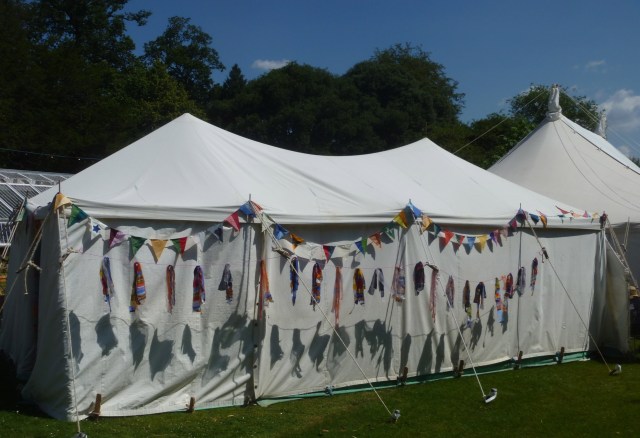
Rear dove grey tent

The decorations were just finished when I turned up and it was time for a cuppa and sandwich – most welcome but I felt I had done nothing to deserve them.

There’s a big programme of events (in both meanings of the word); the festival bookshop is right next door to us; there is food everywhere; there are stalls selling vintage stuff and there will be events all over the place.


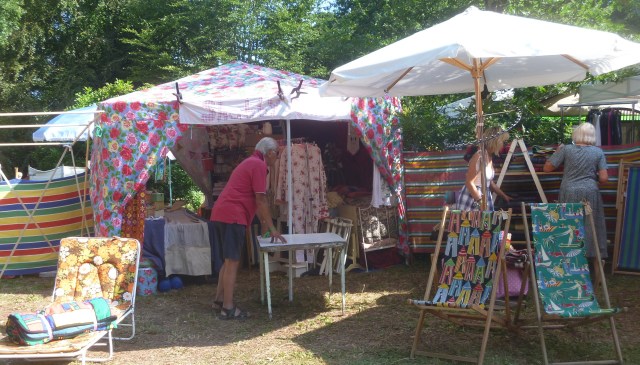
Vintage deckchairs

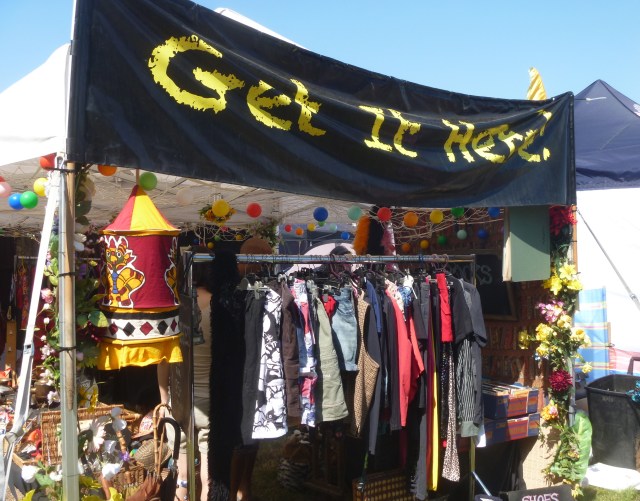
Get it here


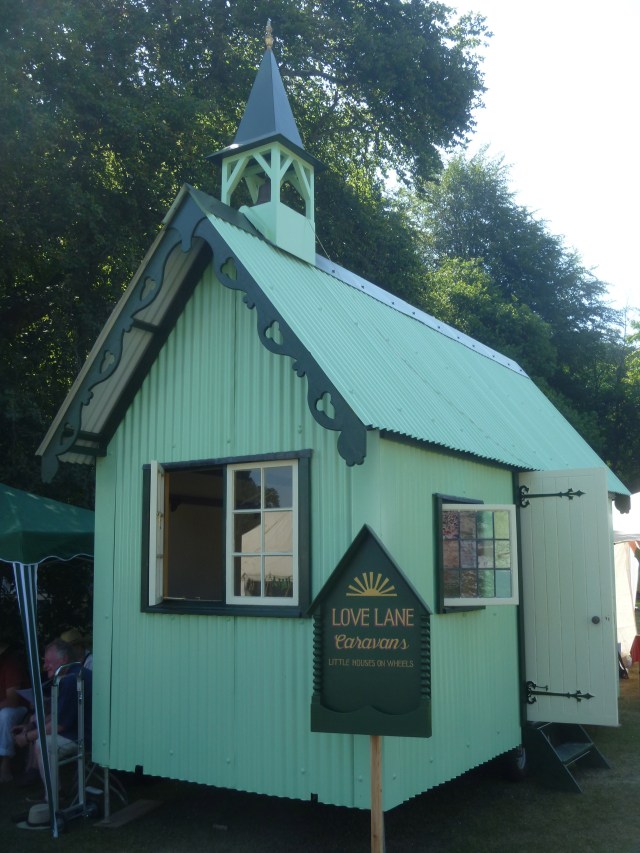
Love Lane Caravans


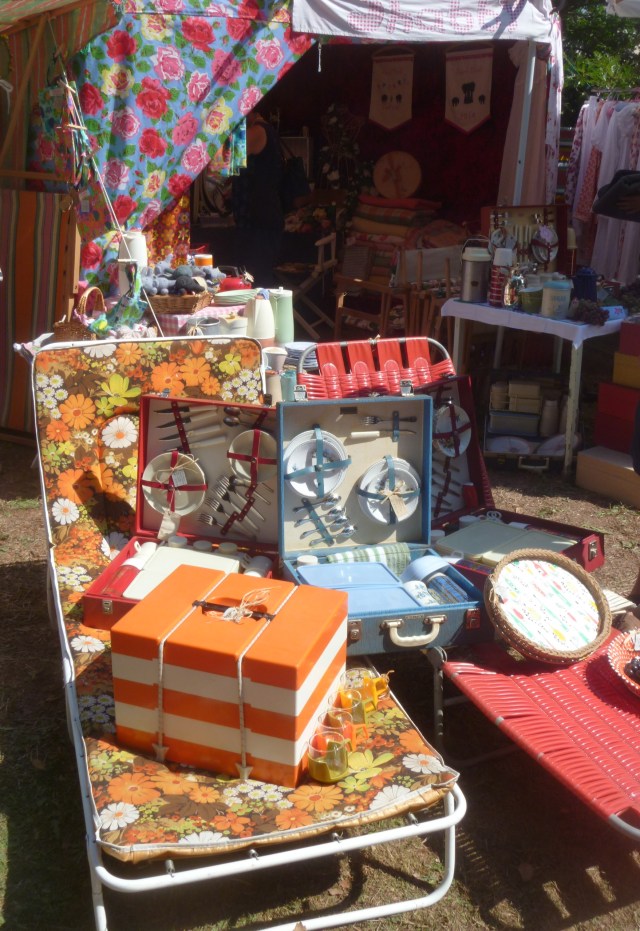
More vintage stuff


More vintage


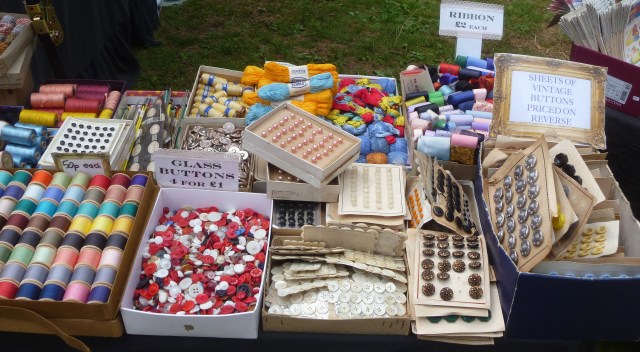
Old buttons and stuff


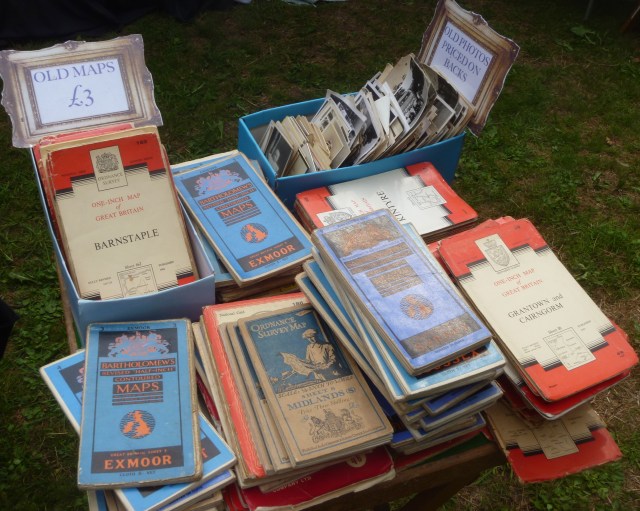
Old maps

Somewhere near the heart of Port Eliot House is the Big Kitchen – just as somewhere near the heart of the festival is a passion for food. Over the weekend, local chefs and foodie legends give talks and demonstrations, celebrating all aspects of food from planting and growing to prepping and eating.”

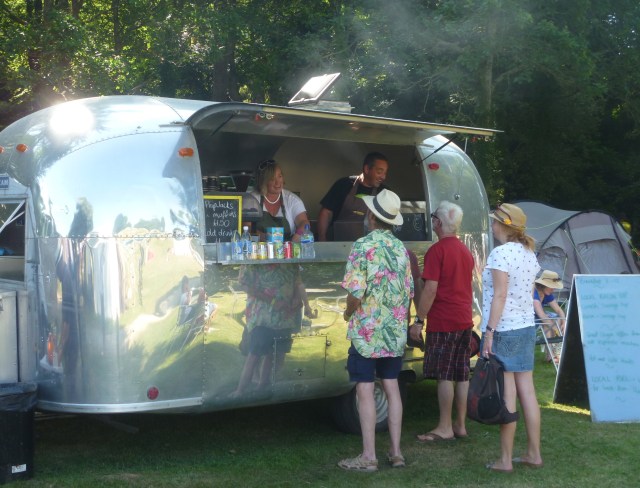
Vintage Airstream


Lemon Jelli

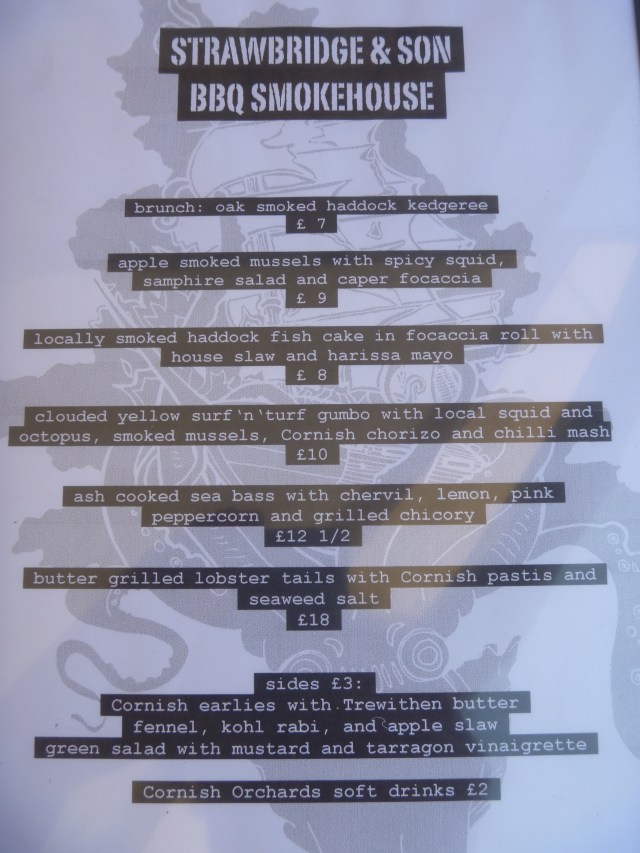
My first taste was a delicious Gumbo from Strawbridge & Son BBQ Smokehouse which I took back with me to the B&B.

BBQ Smokehouse

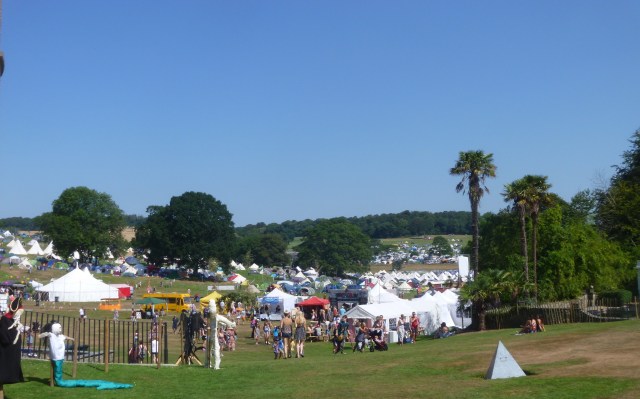
Also there are many many campers. From in front of the house you see a sea of tents of all shapes and sizes and colours … but I’m glad that’s not me. I will take the train back to my B&B each evening. Being vintage myself I am past that sort of thing!

Sunny PE

Port Eliot Festival

It is all great fun and I couldn’t wait to get back today and to get started …

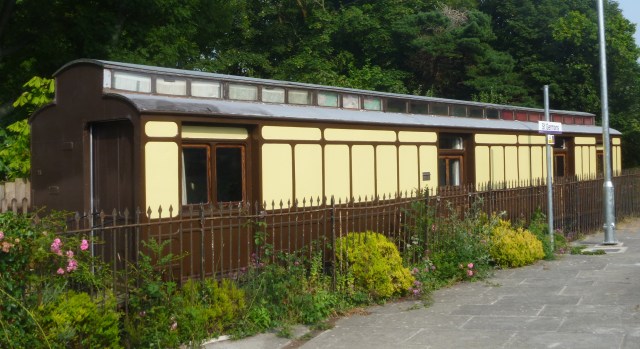
Railholiday

As I made my way to the station I noticed you can even stay in a vintage railway carriage at St Germans station.

Great for Rail fans


When in Doubt Add Twenty More Colours! Kaffe Fassett at The American Museum in Bath


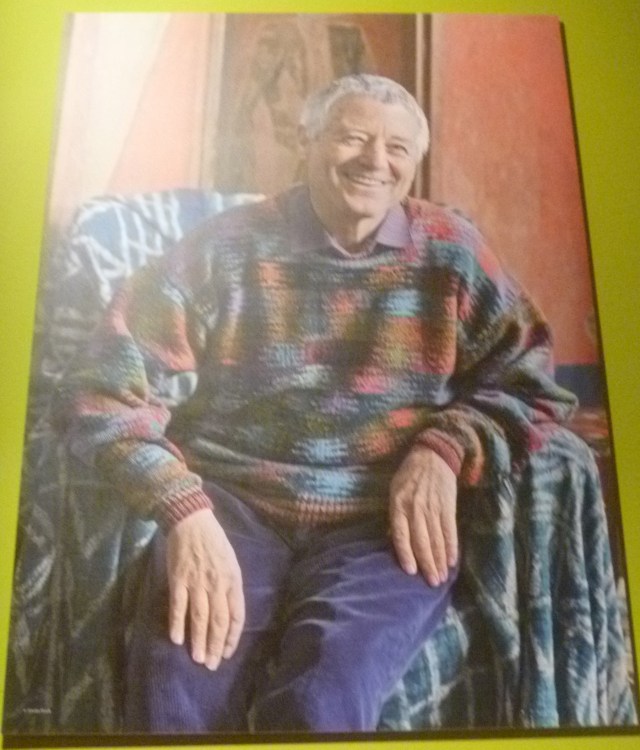
Kaffe himself

Last year I read ‘Dreaming in Colour : an autobiography’ by Kaffe Fassett. I’d always been aware of his knitting books and collaboration with Rowan Yarns of Holmfirth and vaguely knew that he had created some veggie designs for cushions for Ehrman but had been unaware of the person behind these enterprises and the prolific output and inspiration of the man. The Amazon Book Description sums it all up :

Kaffe Fassett has led an extraordinary life and is a captivating storyteller with a vivid memory. Born in 1937 in San Francisco, he spent much of his youth in Big Sur, where his parents bought a log cabin from Orson Welles and transformed it into the world-famous Nepenthe restaurant, a gathering place of artists of all sorts. After attending a boarding school run by the disciples of Krishunamurti, an Indian guru, he studied painting on scholarship at the School of the Museum of Fine Arts in Boston, but left after less than one year and travelled to England, where he ultimately made his home. After struggling to make a living as a fine artist for several years, Fassett met the fashion designer Bill Gibb and began designing knitwear for his collection. He went on to design knitwear for Missoni and for private clients and to revolutionise the hand knitting world with his explosive use of color. Further explorations led him to needlepoint, mosaics, rug-making, yarn and fabric design, set design and quilting. Now in his 70s, Fassett continues to produce new work in his studio in London and to travel worldwide to teach and lecture. This intimate autobiography is lavishly filled with Fassett’s amazing stories about his bohemian childhood, his hard-earned rise to fame, and all of his creative pursuits. It includes photos of him throughout his life, his home (which is an artwork in itself), his work (everything from childhood drawings to pencil sketches, to oil paintings, to massive tapestries and set designs, to hand knits and quilts) as well as the people and places around the world that have inspired him.”

Opening display

The Display that hits you as you enter the show!

So, inspired by this book and the riot of colour in Kaffe’s designs when I decided to drive down to Cornwall I thought it would be a good opportunity to see his work for myself. It’s currently on display at The American Museum in Bath until 2nd November 2014.

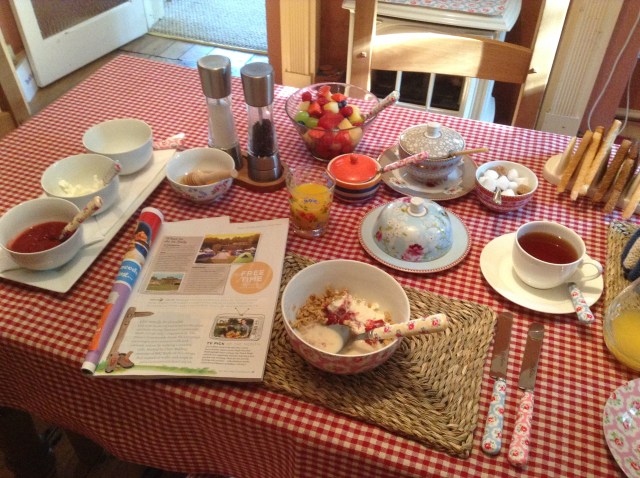
Colourful breakfast

My Colourful Breakfast Table (I’m reading about Port Eliot in Waitrose Kitchen magazine)

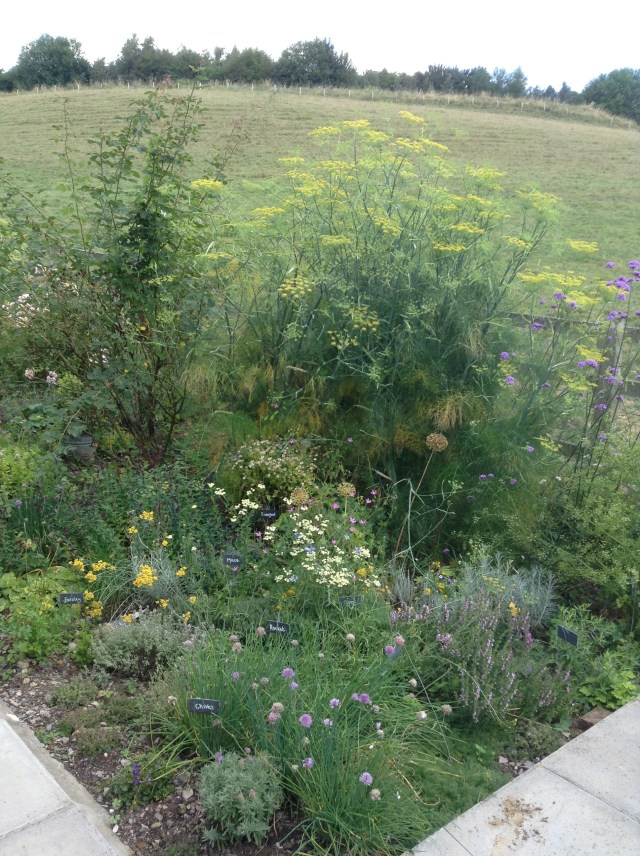
It was a day of colour, really, which began with a lovely breakfast : a combination of fruits and Cath Kidston tableware, moved on to meeting a friend at the Galleries Cafe at Freshford with its colourful herb garden and culminated with the exhibition and gardens at The American Museum.

Herbs

Herbs at The Galleries – A Magnet for Butterflies

Museum, Bath

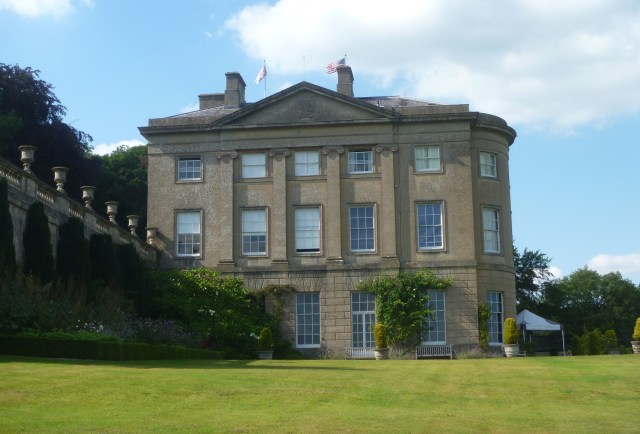
The American Museum at Bath

artist reminder

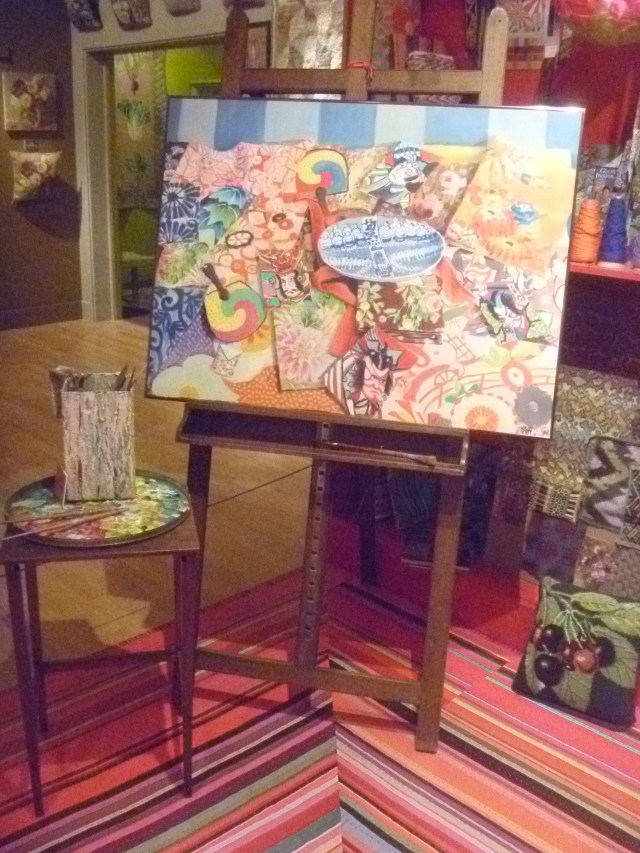
A Reminder that Kaffe was initially an artist

Red quilt

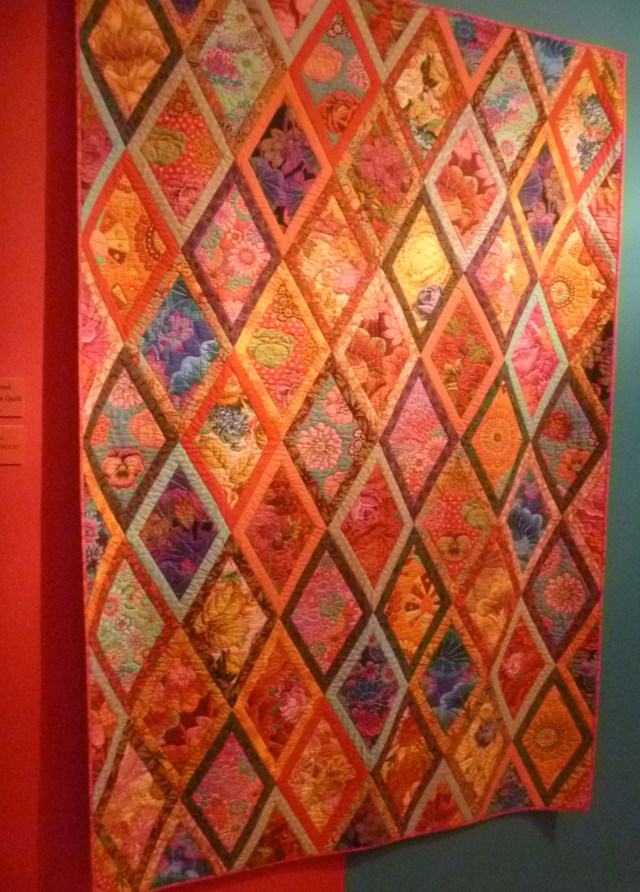
Red Quilt

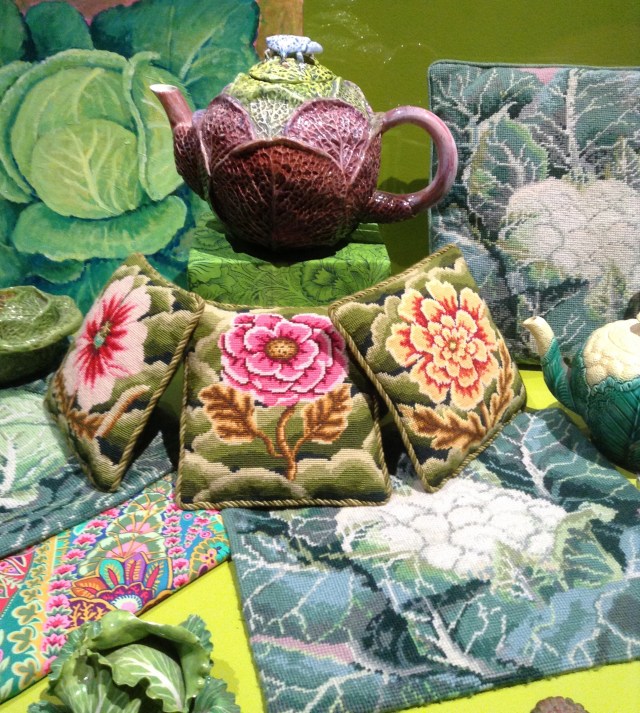
VEGGIE THAME

Veggie Theme Garden Bench

Teapot and cosy

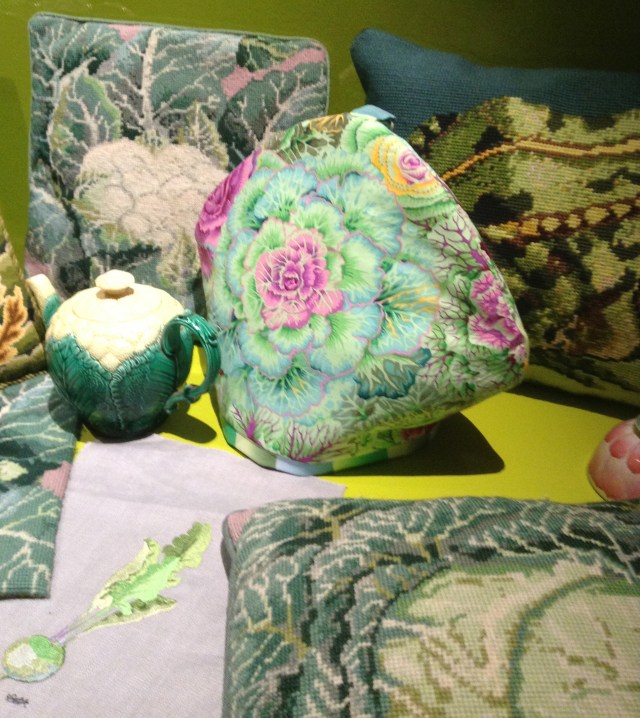
Teapot and Cosy

On a garden theme

Tea and Gardens Theme

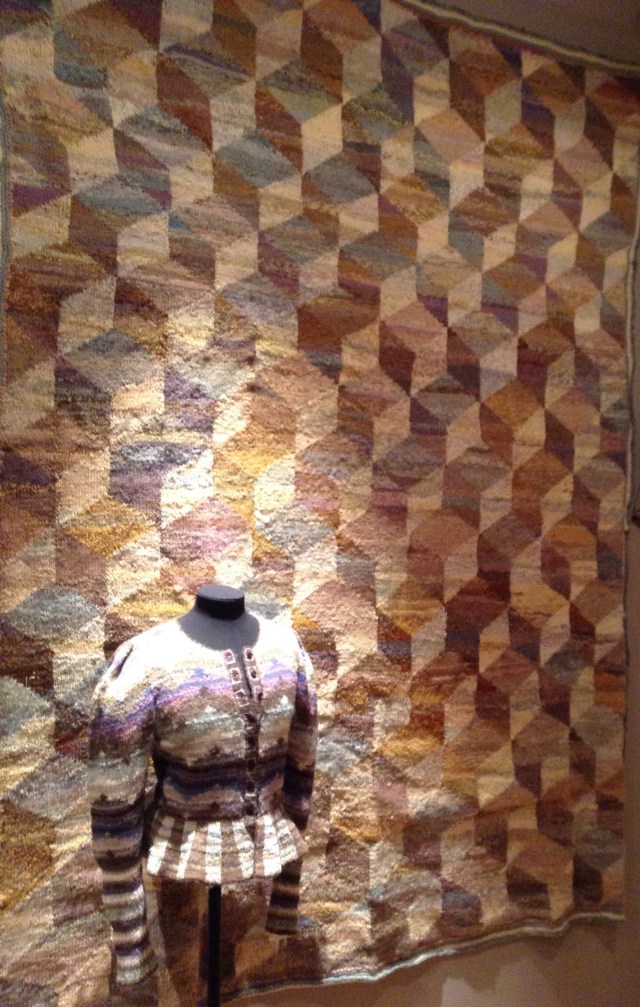
Knitted blocks

Muted Knitted Blocks Hanging and Cardy

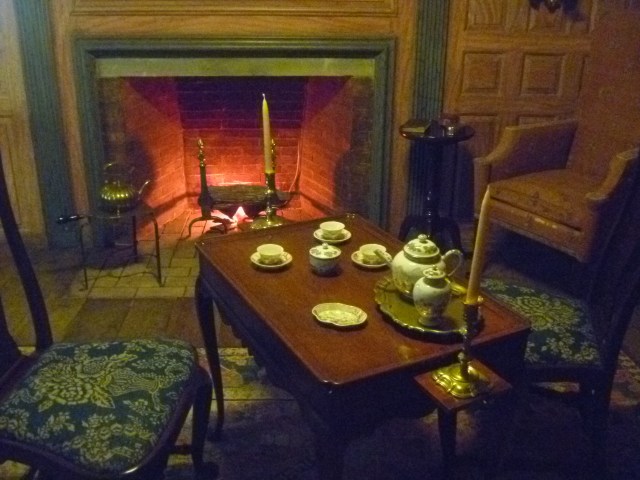
Tea at American Mus

Period Room Setting with 1750s Tea Table – Connecticut or Massachusetts

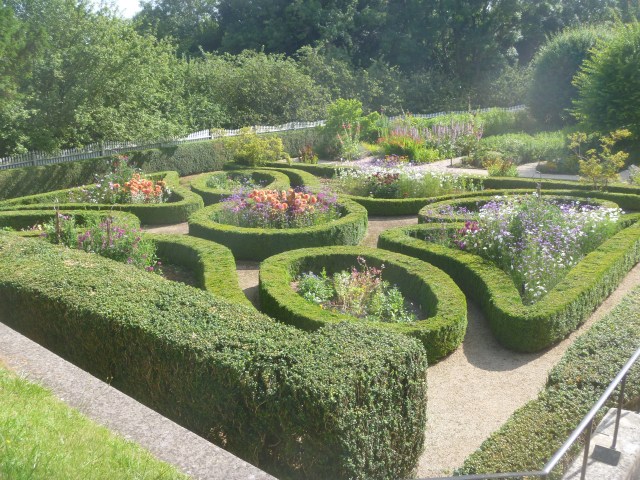
G Washington garden

George Washington Mount Vernon Garden

K Fassett hare

Remember the Kaffe Fassett Hare from Yesterday?