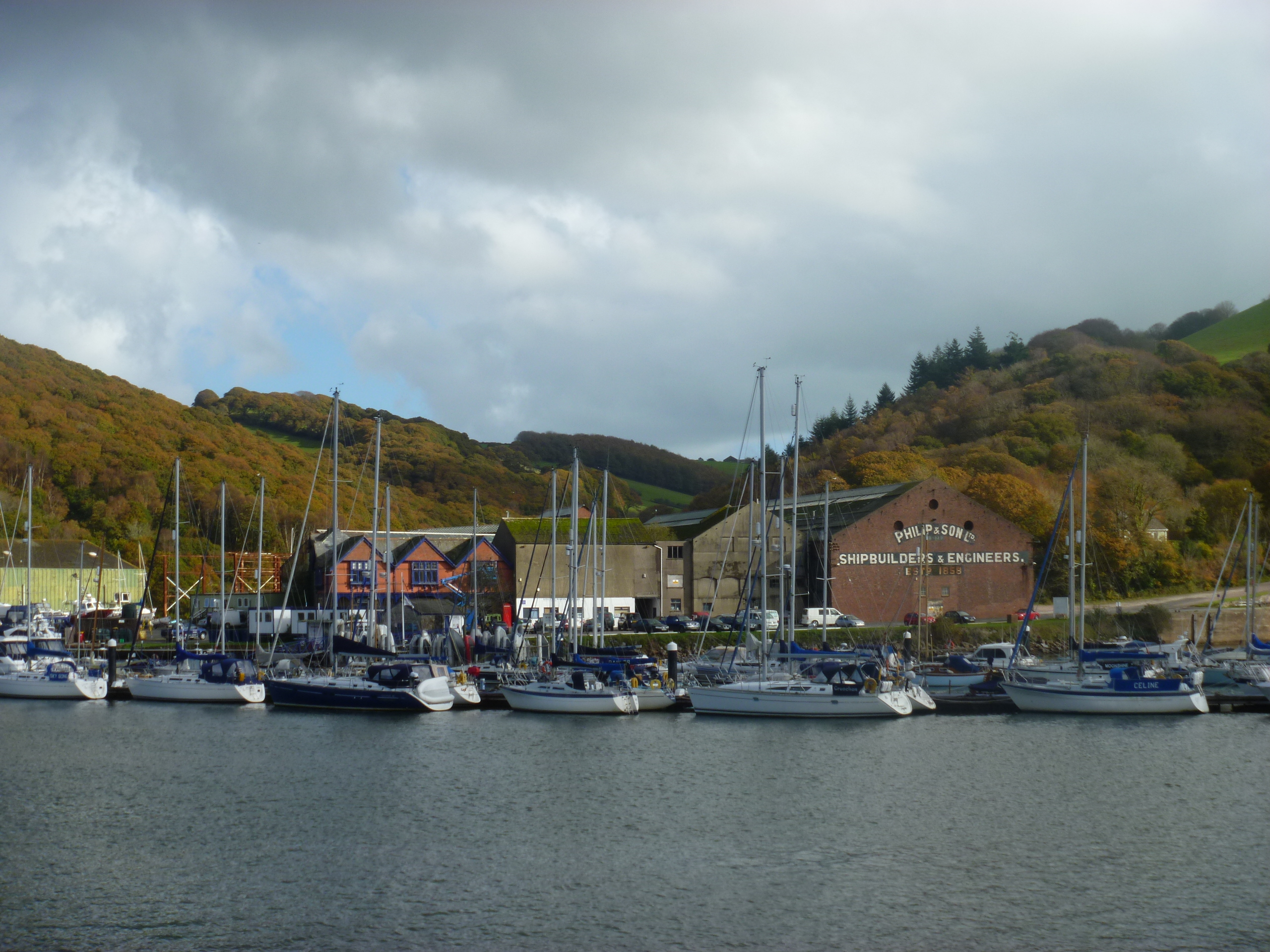
Overbecks to Bolt Head : a Devon Coastal Walk

Each year at this time when we visit Devon we spend an afternoon having the cobwebs blown away by walking from Overbecks to Bolt Head by coastal path and returning on a higher path a total walk of only 4 or 5 miles but sufficient to enjoy different coastal views and work up an appetite for dinner! We are on holiday after all.

Back in 1972 my husband, The Optimist, spent one heavenly summer working as the male assistant warden at Salcombe Youth Hostel. It was  obviously a fantastic experience for him and he has relived it ever since, so much so that I now feel as if I worked there too. Besides the work itself which was fairly mundane, he enjoyed snorkelling and swimming and diving and generally messing about in boats and the sea through one long warm sunny summer … yes, those were the days! I don’t think a single drop of rain fell on South Devon that summer. I must say, that having seen this Youth Hostel, I do think it is located in one of the most idyllic locations imaginable.

The Tower Bedroom – reserved for the male assistant warden

So, as I say, each year when we spend a week in October/November in Devon we make an excursion to the Salcombe area and in particular to the National Trust estate of Overbecks Sharpitor. The gardens stretch steeply down the cliff face from the house and the influence of the local microclimate has lead to a singular garden of luscious tropical vegetation.
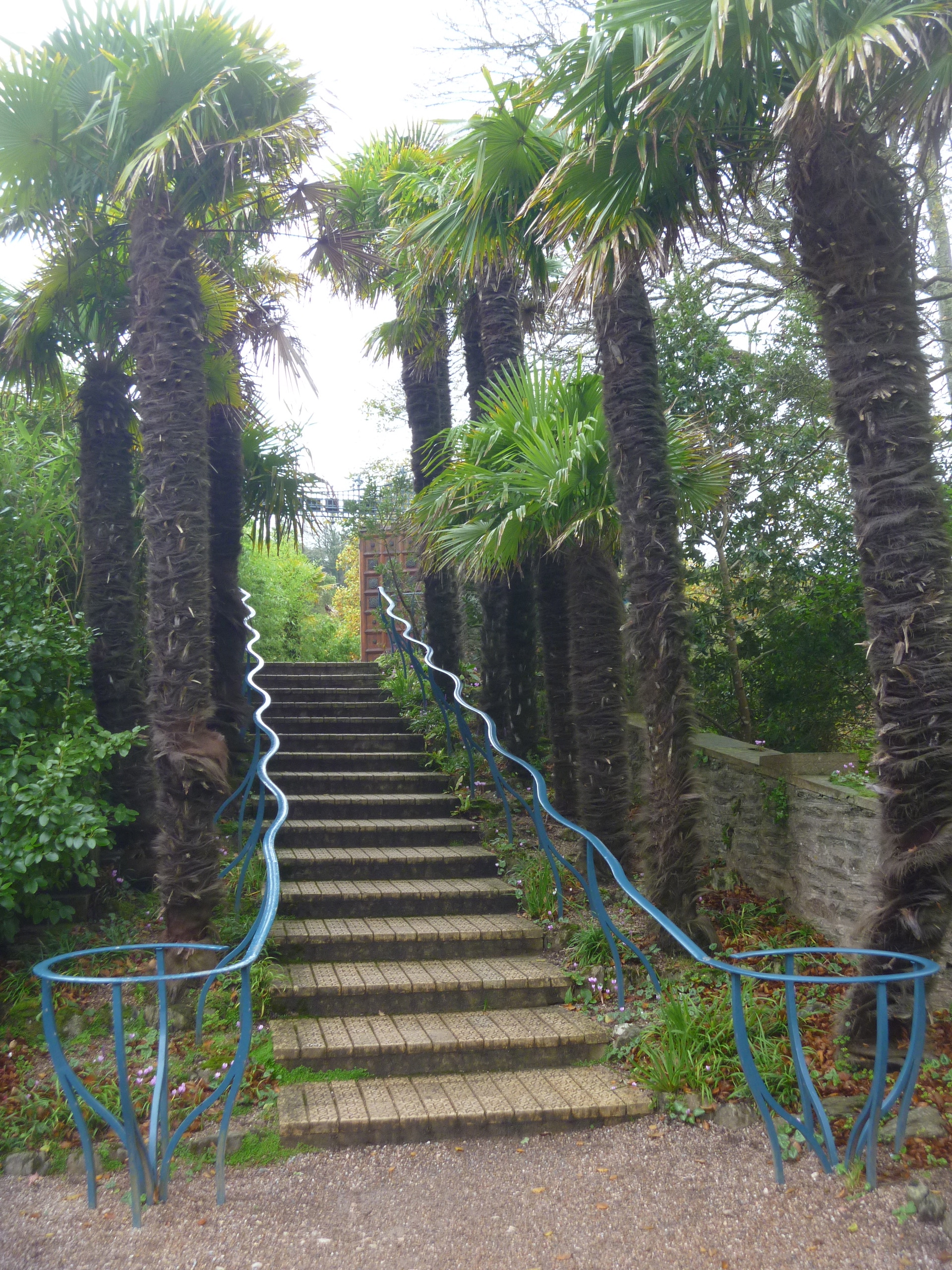
A hidden paradise of subtropical gardens and eclectic collections…
An exotic and fascinating hidden treasure perched high on the cliffs above Salcombe. Explore the banana garden, meander through the woodland, or relax beneath the palms. Walk along the coast path and soak up the spectacular panorama across miles of beautiful coastline and estuary.”

So, walk along the coast path and soak up the panorama we did. A few paces down from the Overbecks car park there is a sign inviting one to join the footpath to Starehole Bay. This clearly defined path clings to the cliff face and in each direction are wonderful views down the ria (a tidal inlet with no major fresh water source flowing through it) to Salcombe or out, over the bar :

This shallow sandbank, evoked by Tennyson in his poem ‘Crossing the Bar’, lies across the ria’s mouth and is barely 60cm (23 inches) below water on an ebb tide. Devon’s worst life boat loss occurred here on 22 October 1916, when the ‘William & Emma’ capsized rowing back from a rescue.” (NT Website)

to the English Channel.

Salcombe and Ria from the lower footpath

Salcombe and the Ria from The South West Coastal Path

The path is dotted with handily placed seats upon which one may rest and enjoy the view but last Friday there was a misty rain blowing so we tended to keep walking.

Official Long Distance Footpaths are indicated by an Acorn on the sign posts

Starehole Bay from the NT site :

“On calm days you’ll see the dark patch of seaweed beneath the north waters of the cove, marking the Hezogin Cecile wreck. This grain clipper ran aground off Soar Mill Cove on 24 April 1936. For seven weeks the ship lay stranded whilst sightseers in their thousands lined the cliffs, holding their noses from the stench of rotting wheat. The ship was smashed in a July gale after being towed to Starehole Bay.”

From Starehole Bay there is a steep a path up to Bolt Head and from there it’s possible to join the SouthWest Coast Path and return to Overbecks along the cliff top.

Starehole Bay

Bolt Head from the NT site :

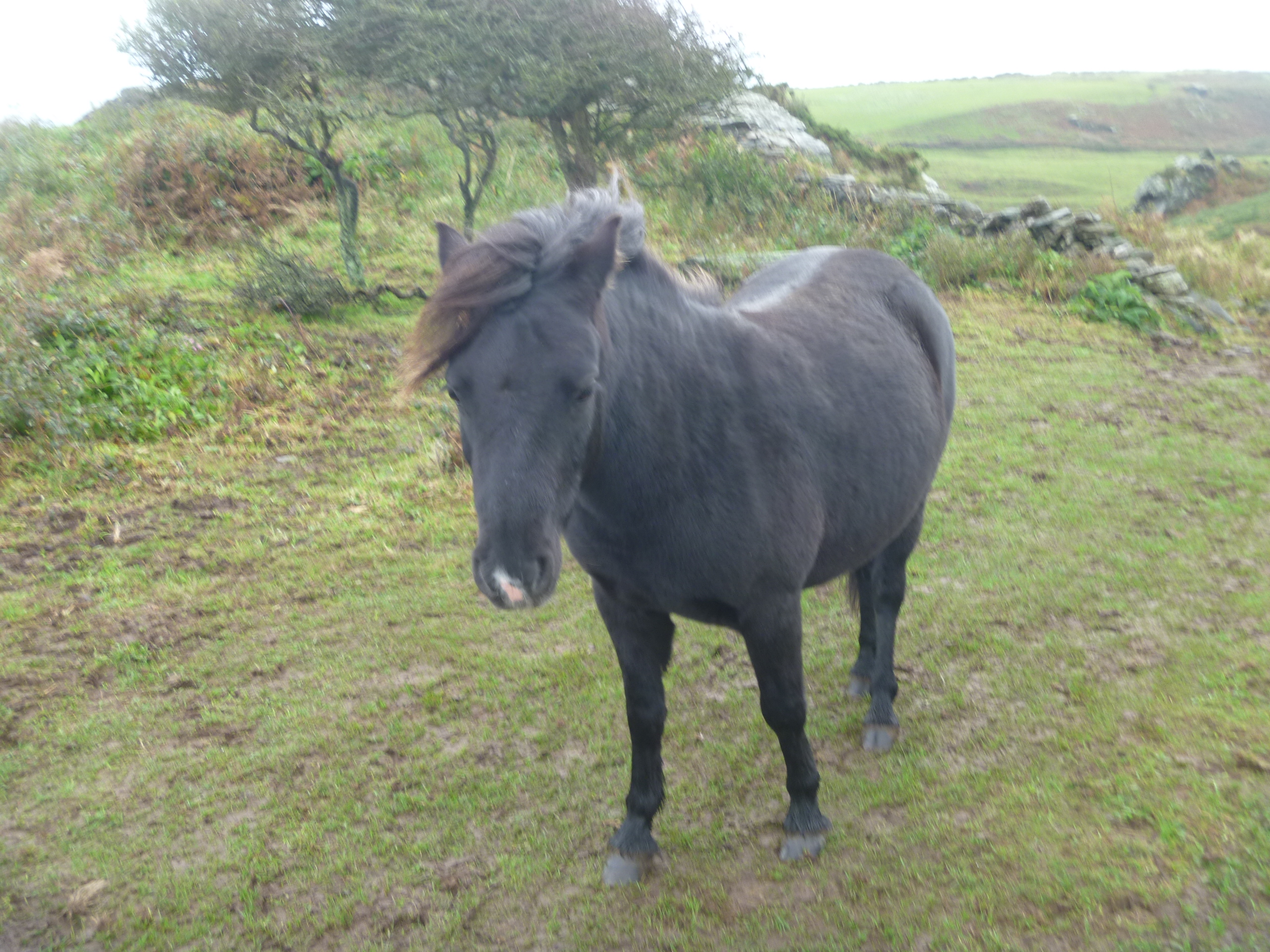
People have been farming at Bolt Head for centuries and the cliffs are dotted with the remains of field boundaries and animal enclosures, some dating back to the Bronze Age. Today, Dartmoor ponies graze on the cliffs, preventing blackthorn and gorse from smothering the slopes. Look out for grey bush crickets and their great green cousins (the largest in the British Isles). Fulmars, gulls, cormorants and shags bred on the cliff-faces. The headland was the site of a Second World War lookout until it was demolished in 2007, and is also a stop over for migrating swallows and house martins.”

Funnily we didn’t see a Dartmoor pony on Dartmoor this year – just  cattle. We did see the cliff top grazing ponies at Bolt Head, though.
The cliff top path descends again into Starehole Bay before climbing up again for the final mile and a half or so back to Overbecks. There’s a tempting sign very strategically placed to encourage one into the tea shop (also the Youth Hostel dining room) but we had a table booked for dinner so didn’t linger for refreshments on this occasion.

Time for a Cuppa?
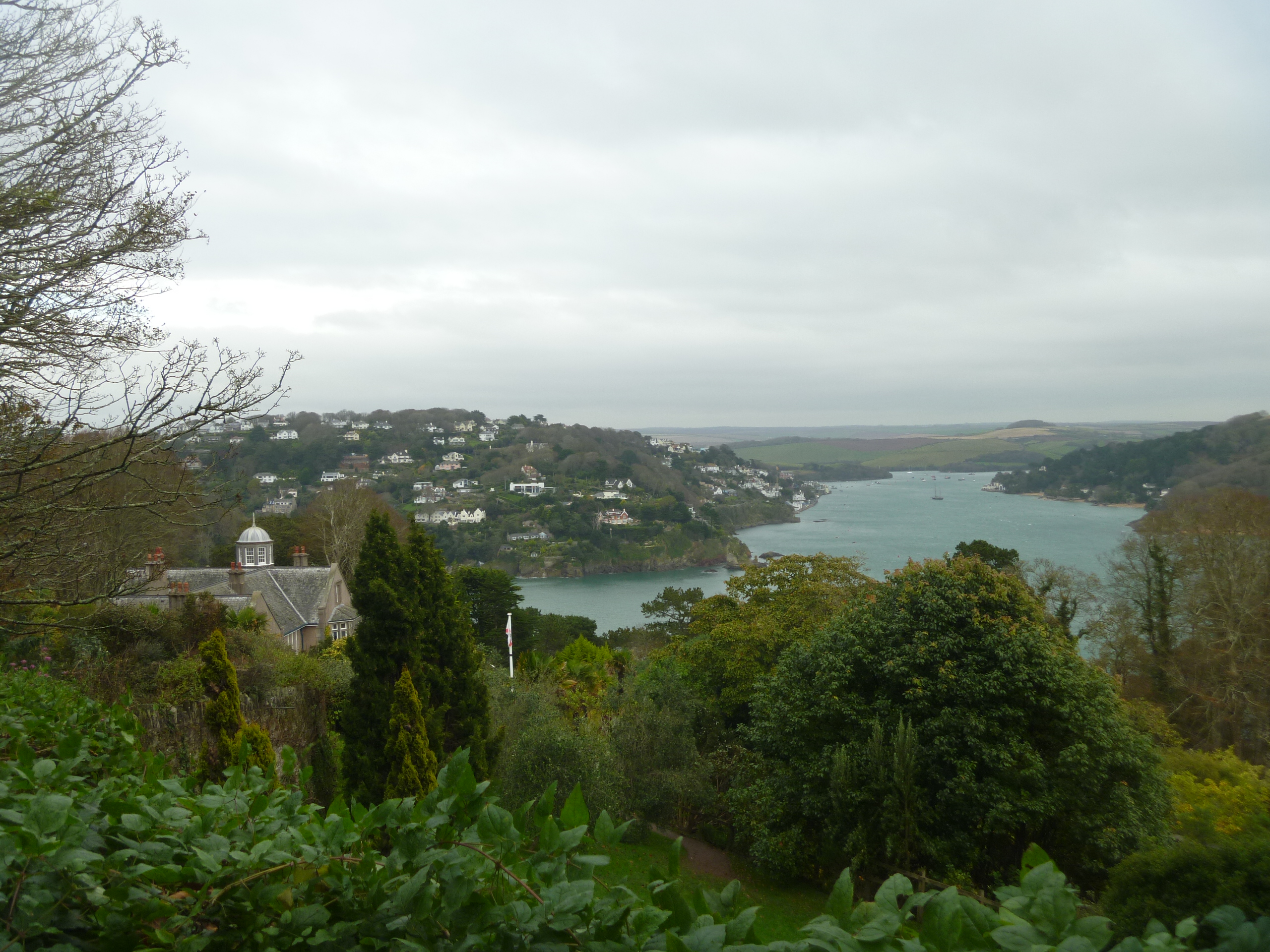
Final view of Overbecks and Salcombe from the SW Coastal Path

Day Out at Dartington Devon with Dovegreyreader

The Dovegreyreader has made several comments to me to the effect that reading Milady’s posts here save her a great deal of time and expense and the bother of travelling when she can read about the places that appeal – with her feet up by the fire in winter or in her deckchair in the garden in summer. Well, last Thursday she was persuaded to leave home and travel a few miles across misty Dartmoor to join me and act as guide for the day at the Dartington Estate near Totnes.

The arrangement was to meet late morning at The Cider Press Centre, now called simply, and to the point, Dartington Shops. This was the part of the Estate that I was already familiar with and it was by mutual consent that we headed straight for Cranks Restaurant. I’d eaten here many times over the years since the early 1980s and I have the cookery book still. It’s been well-used and the recipes are well-loved. The restaurant and the food were little-changed and with tea and cake followed later by soup and cheese scones we clung to our table for probably three hours (who’s counting the time when there is so much book and family talk to catch up with??).

Eventually we decided a walk was in order as that had been the ‘plan’ for the day in the first place and our reason for meeting at Dartington; besides we needed to work up an appetite in order to take afternoon tea at some point later in the day!

We headed straight out of the car park along a public path (past the former Dartington School) and along the main approach road to Dartington Hall to our first port-of-call the School’s  former Headmaster’s House – High Cross House.

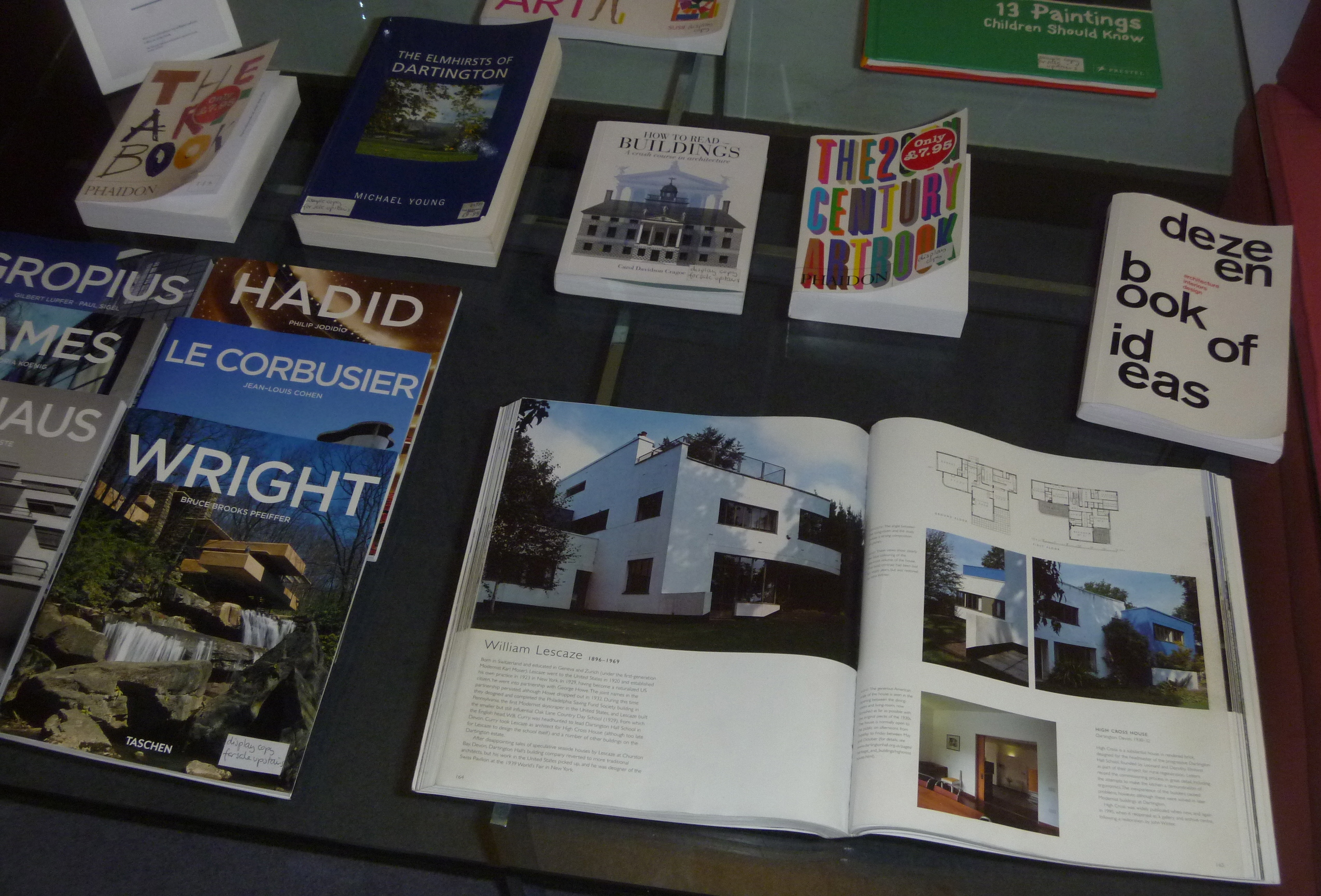
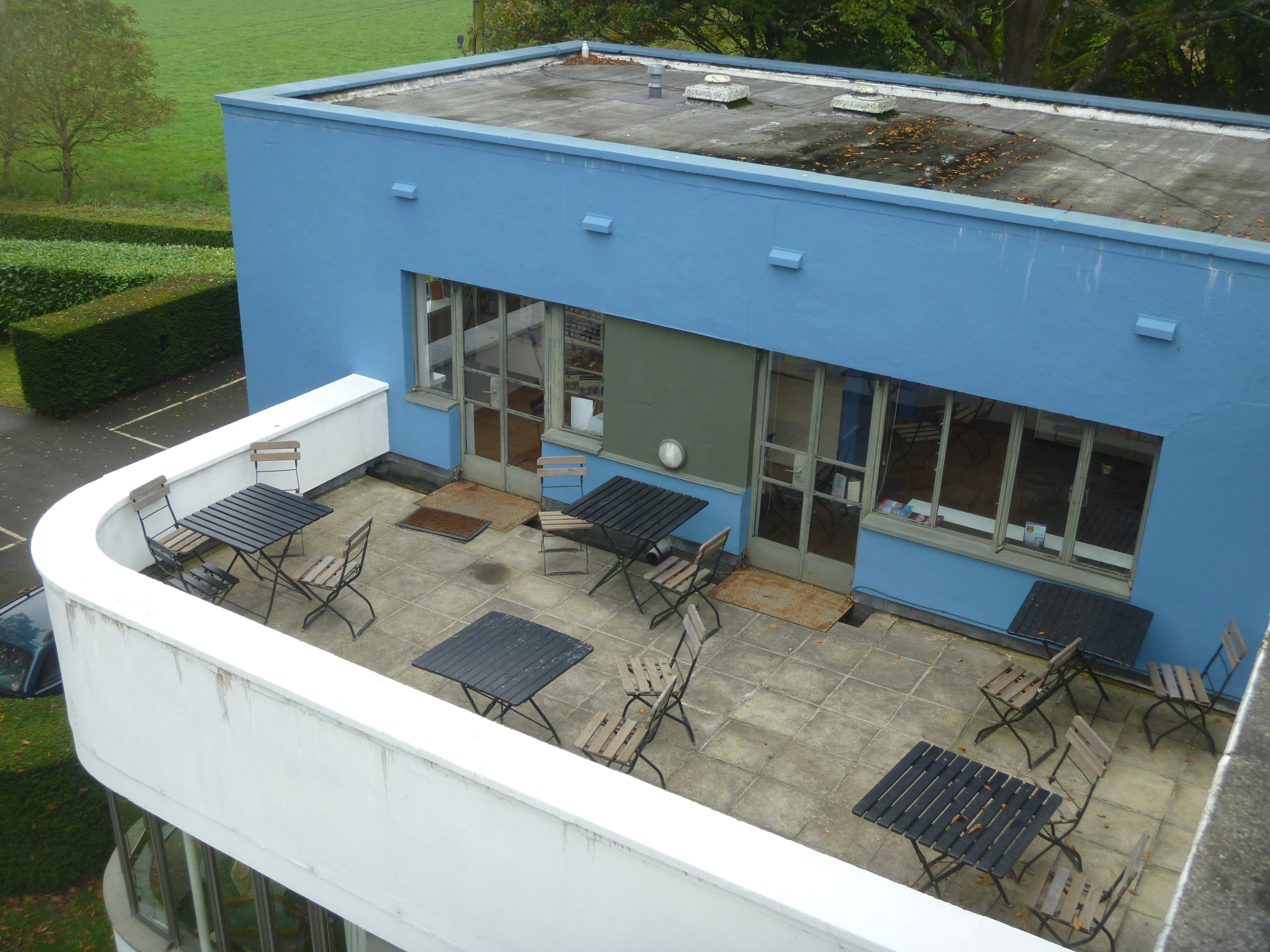
It’s now under the auspices of The National Trust and is a fine example of Modernist architecture and a host to a number of exhibitions and resident artists. There’s a cafe (that spreads out onto a roof terrace in summer) and small bookshop. The house has a relaxed atmosphere and you may sit on the chairs and handle the books.

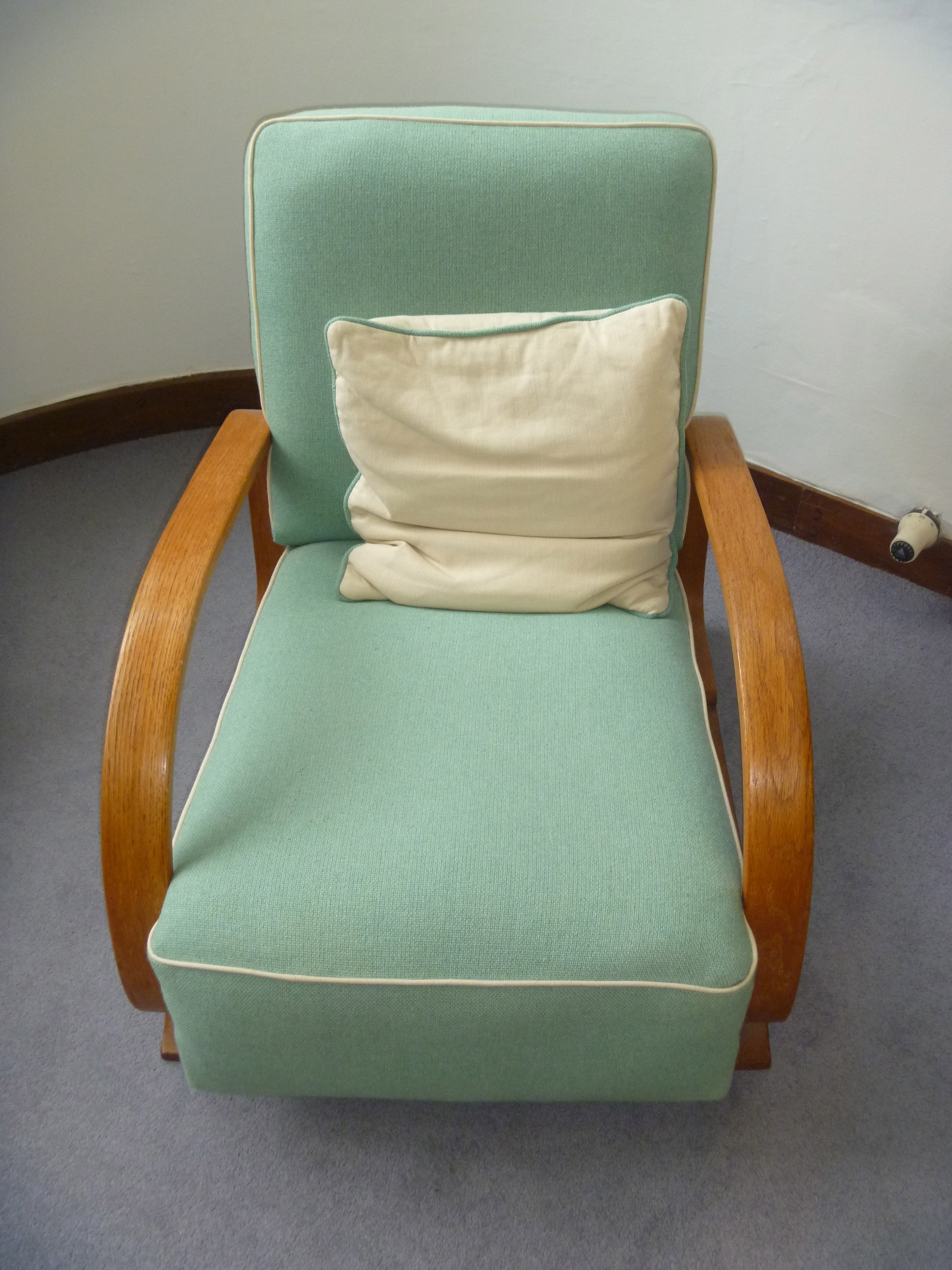
Comfy chair originally to be found in the common rooms at Dartington Hall residences

Cafe Terrace

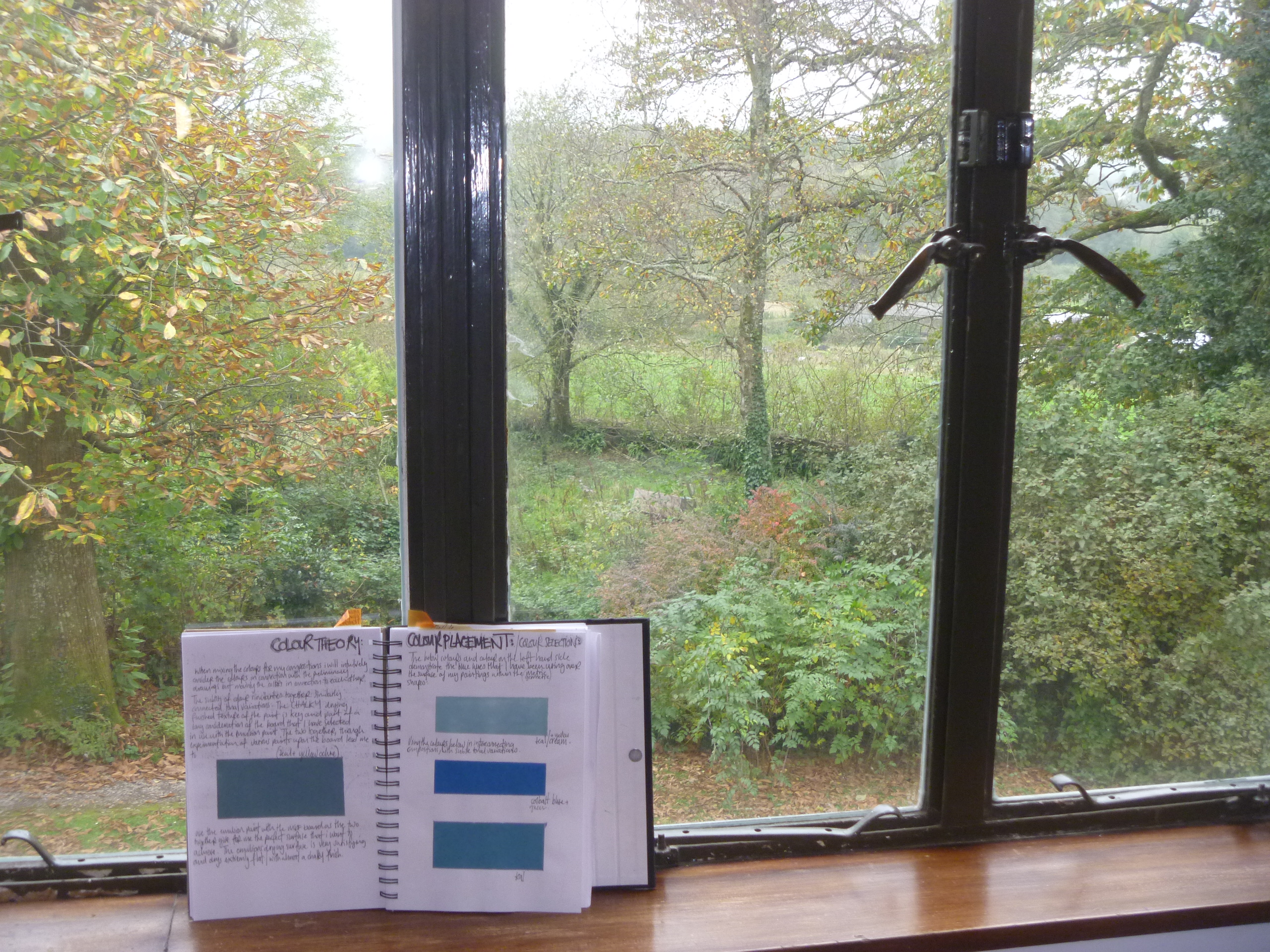
Colour Theory and the View of  High Cross House Garden

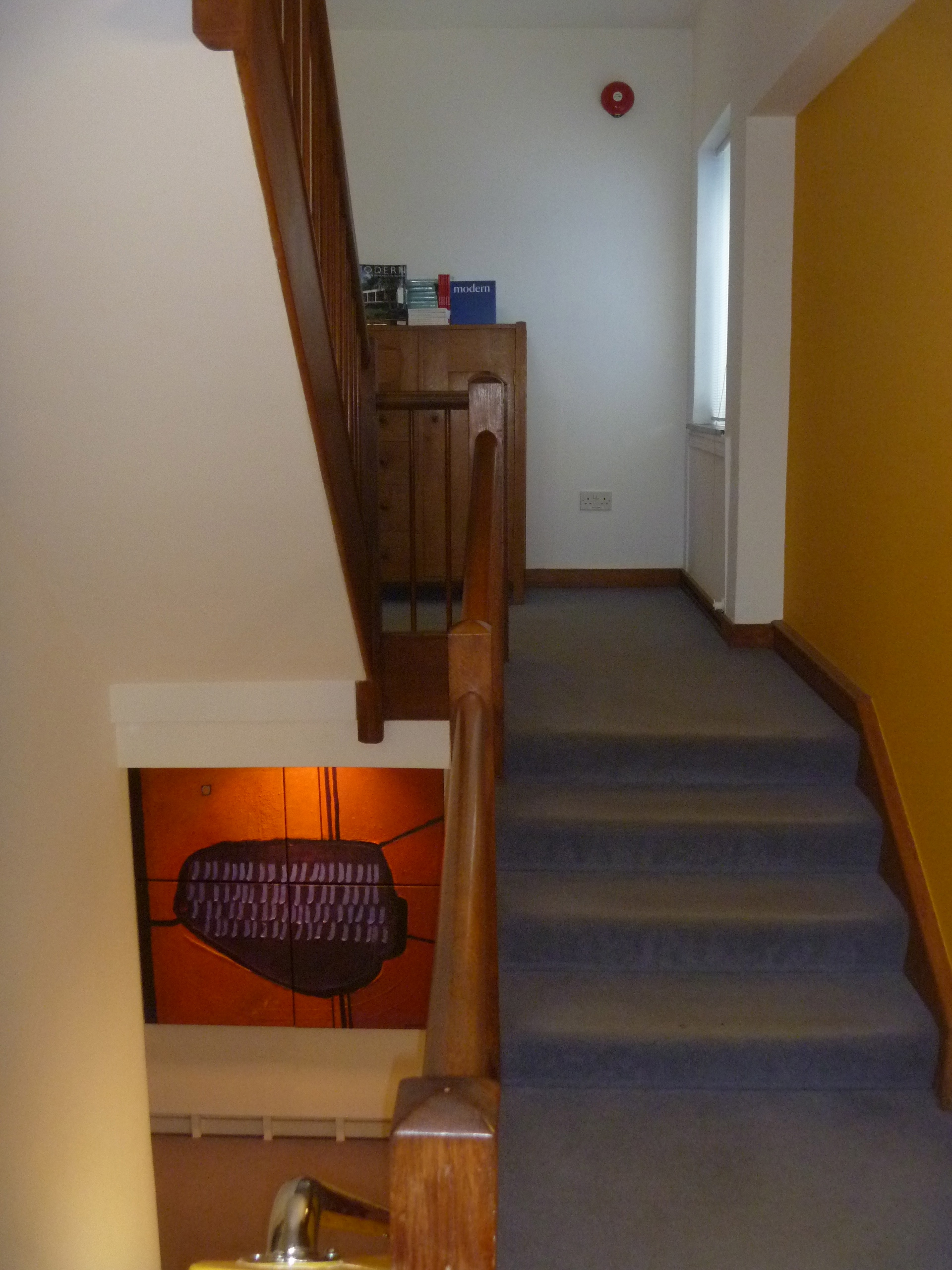
Staircase at High Cross House

Any artist who is in residence that day and helpful room stewards will also answer any questions you may have. Here is the NT brief resumé of the house :

“Built for William Curry, headmaster of Dartington Hall School, this Modernist gem was commissioned by Leonard Elmhirst and designed by William Lescaze in 1932. The house still evokes the ‘serenity, clarity and a kind of openness’ described by Curry.

High Cross is one of Britain’s most celebrated Modern residences, and we are excited to be presenting it to the public under our management, working in partnership with the owners of High Cross House, the Dartington Hall Trust.

The architecturally important building is playing host to contemporary art exhibitions and sales, talks, demonstrations and musical evenings, and is a perfect and unusual space for events. High Cross is to become a local centre for contemporary arts, as a community-led sustainable model of management.”

View from the footpath – High Cross House to Dartington Hall

From the HCH we headed towards Dartington Hall which I particularly know of as host to the summer Ways With Words literary festival. I’ve only heard of it and read about it but DGR has attended and participated there. This makes her the perfect guide to the estate and buildings.

In the gardens we admired the autumn colours and sculptures and topiary and we entered the Hall and the Residences. Lynne painted a vivid picture of leisurely picnic lunches, crowded halls of participants on tiered seating and comfy common room chats bringing the summer festival alive for me.

Dartington Hall and Garden Topiary

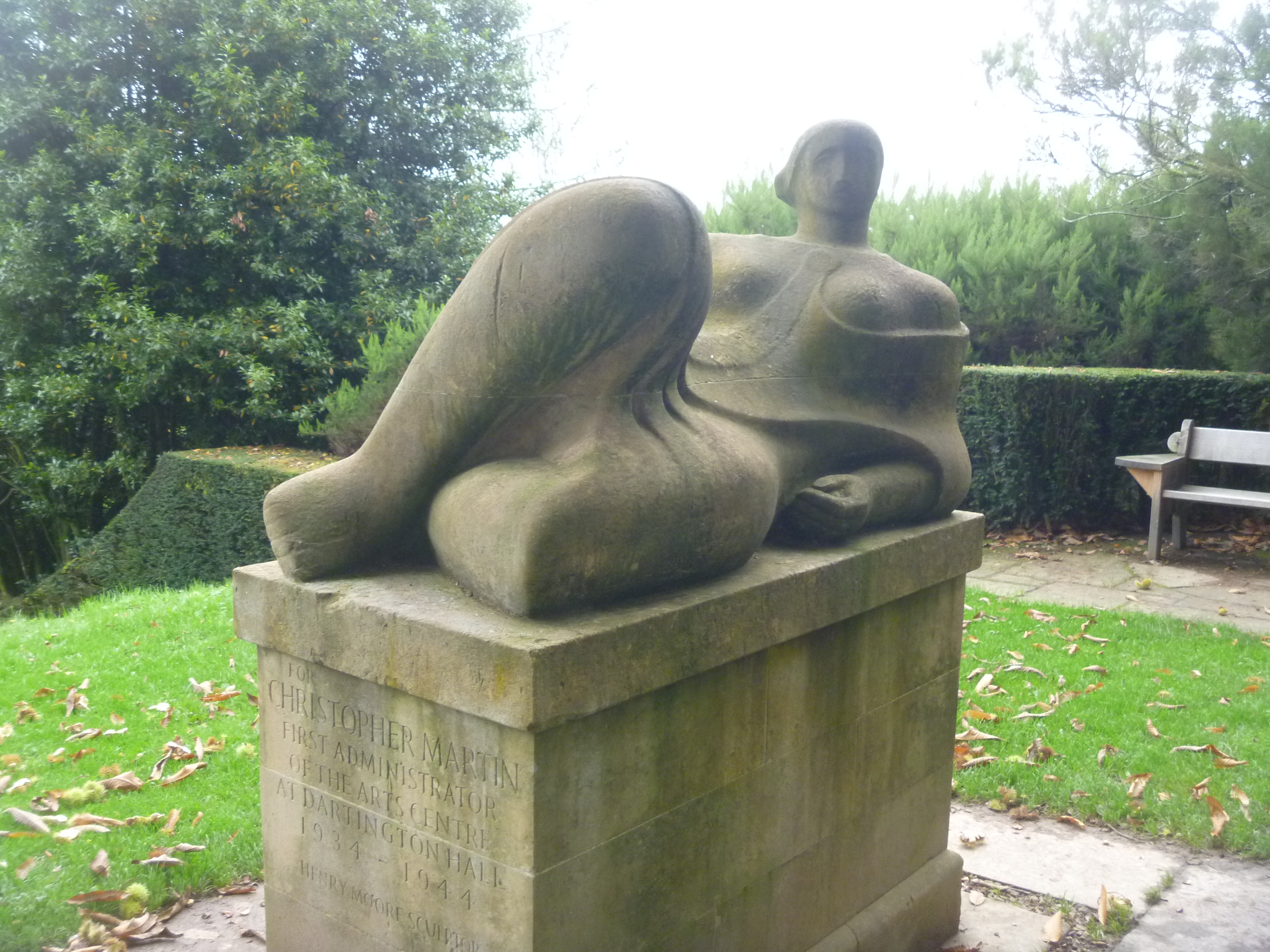
Henry Moore Reclining Figure Sculpture

The Dartington Hall

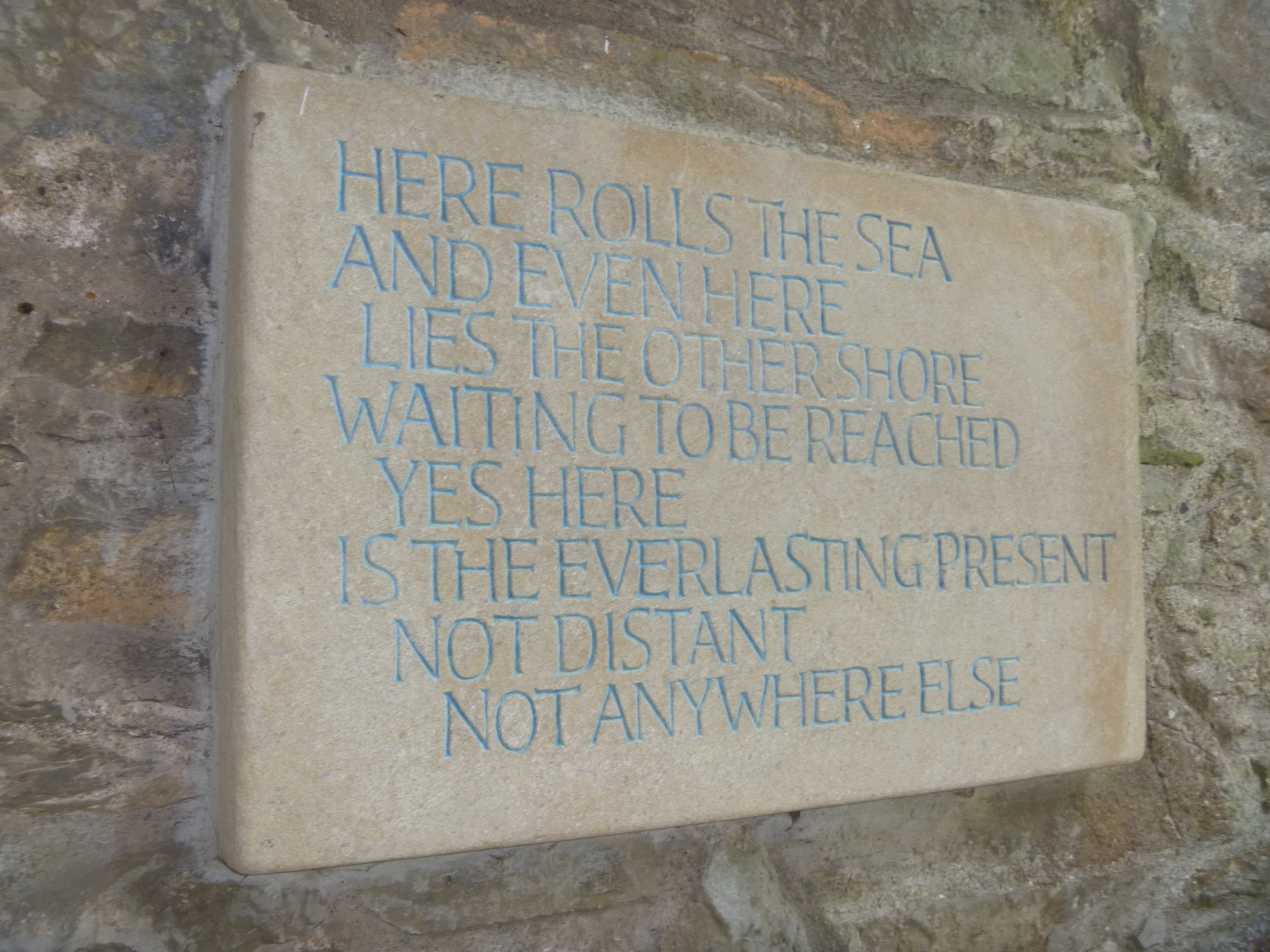
Calligraphy at Dartington

Lundy – Cooking on My Island of Dreams

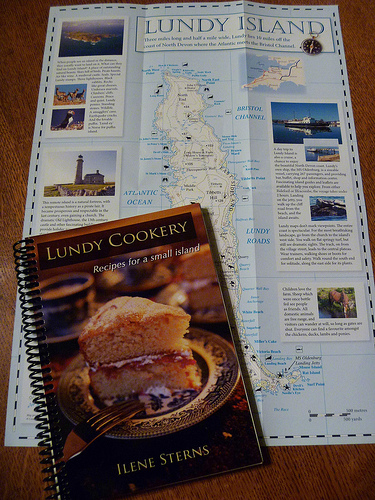
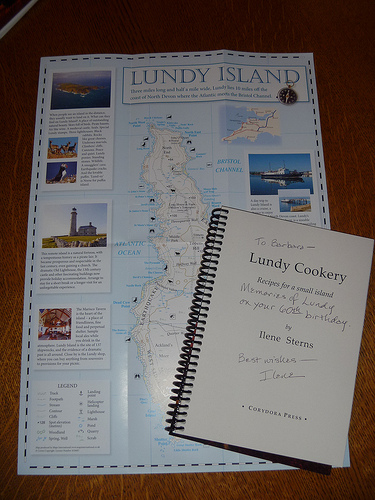
I’ve been celebrating my birthday over the past few days. I’ve received lots of cards and flowers and some lovely gifts including several books. Only one of these book gifts was what I would call a ‘reading book’.  The other books include a photo book celebrating a friendship and places visited, a set of LV European City Guides, a book by Rob Ryan and … ‘Lundy Cookery: recipes for a small island‘ by Ilene Sterns. The book is published by Corydora Press who have formed their own FlickR group ‘Lundy Cookery Around The World’. My friends also managed to get Ilene to sign it especially for me!

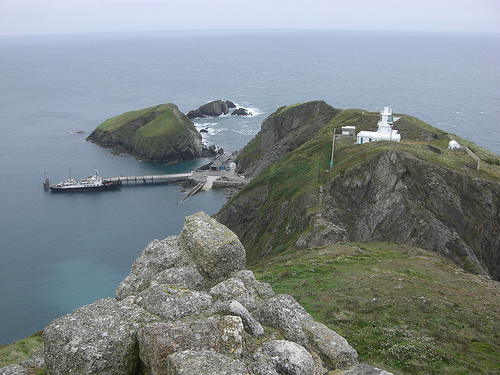
I’ve twice visited Lundy, an island in the Bristol Channel 3 miles long by half a mile wide, as a day tripper by boat from Ilfracombe. The journey takes about two hours on the MS Oldenburg and fortunately on both occasions the Bristol Channel was as still as a millpond! Sailings are in the spring and summer months from about the beginning of April to the end of  October. During the remaining months Lundy is a mere 7 minute helicopter ride from Hartland Point, 20 miles west of Bideford on the north Devon coast.

The MS Oldenburg tied up at the Lundy quayside

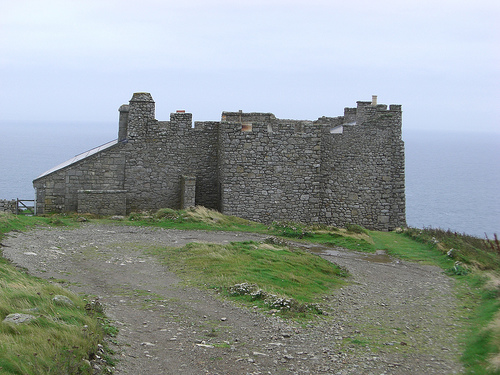
Lundy, or Puffin Island, is owned by the National Trust (so there’s a small discount on the sailing price for members) and the 23 self-catering holiday properties are managed by the Landmark Trust. It’s an uphill trek from the quay to the village but when you get there there’s a pub – The Marisco Tavern – and a shop and a cluster of buildings – some farm and some holiday accommodation. My first stop has been at the pub each time for sustenance and then a call at the shop for postcards and Lundy stamps and then I have taken a walk. There are marvellous views of the north Devon coast and the paths are clear and grassy. One walk was up the east side to Threequarters Wall and across to the west side and back down to the Old Light, the cemetery and St Helena’s Church. On my second visit a much shorter walk was to the Castle, the South West Point and back up to the Old Light. Then a final cup of tea at the Marisco before heading back down to the Quay and the awaiting boat.

Lundy Castle and Approach Track

In her introduction to Lundy Cookery Ilene reminded me what a treasure trove and Aladdin’s Cave the shop was despite its remote location. All Lundy Landmark kitchens are well equipped with basic cooking equipment but they do lack weighing scales, liquidisers, toasters and loaf tins. Ilene’s recipes manage to get around these would-be problems. In particular her recipes specify quantities by volume rather than by weight. She has also included a useful section which she has called ‘Salmagundi’ *- it’s about minimising food waste and lists ingredients alphabetically linking them to recipes in the book. For example under Honey she lists 6 dishes included in the book including Honey Mustard Vinaigrette (p.98), Lundy Mess (p.116) and then suggests some other uses. Waste not want on Lundy Island. There’s a useful index too.

*Definition: a salad plate of chopped meats, anchovies, eggs, and vegetables arranged in rows for contrast and dressed with a salad dressing. (http://www.merriam-webster.com/dictionary/salmagundi) Sounds good to me!

“Most of the book’s recipes are simple and quick to prepare, so you won’t be stuck in the kitchen when you’d rather be outdoors.” (p. 2) Now that’s my kind of cookery book!

A River Runs Through It


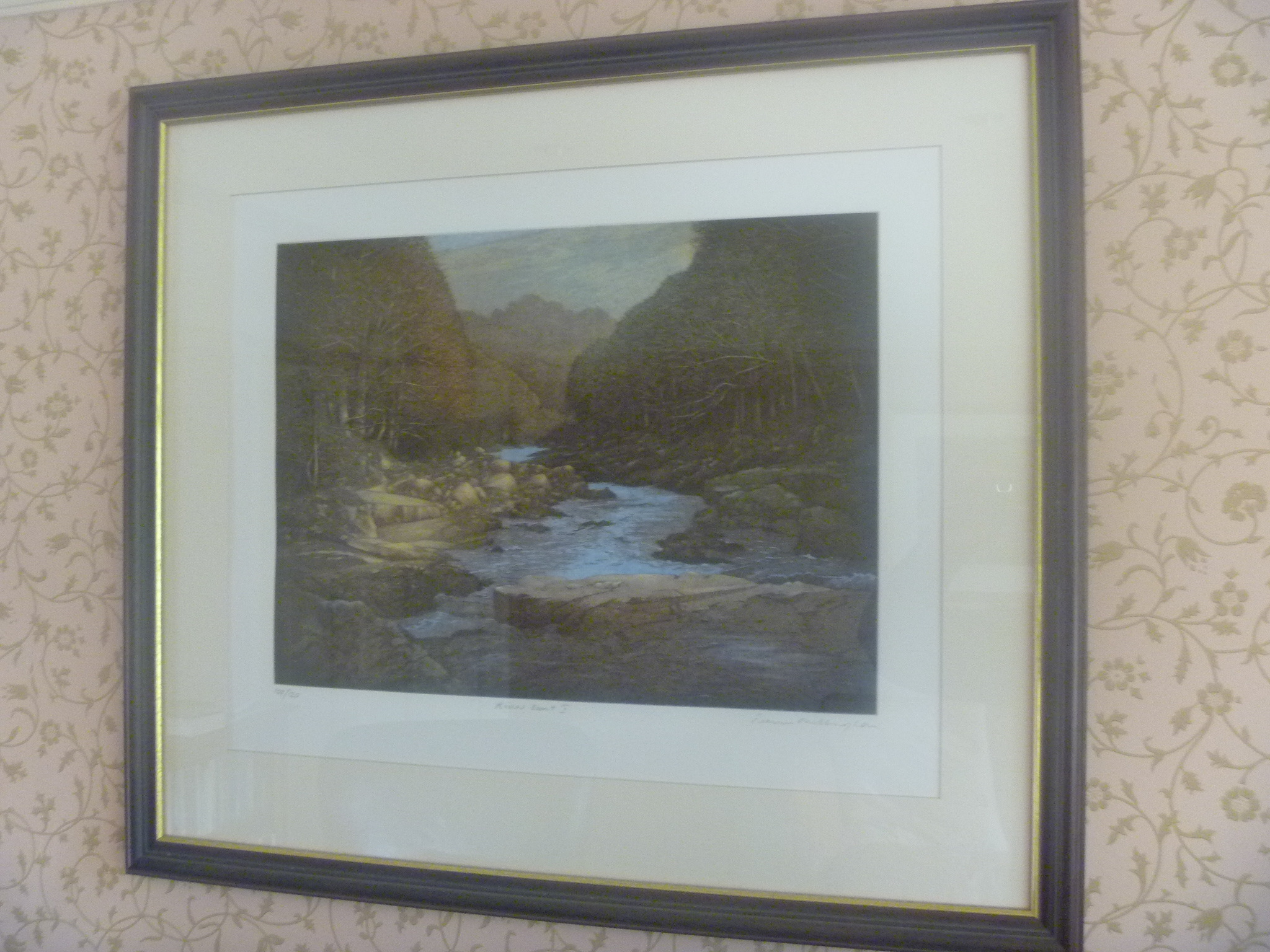
We have a print hanging on our sitting room wall called River Dart by Terence Millington.

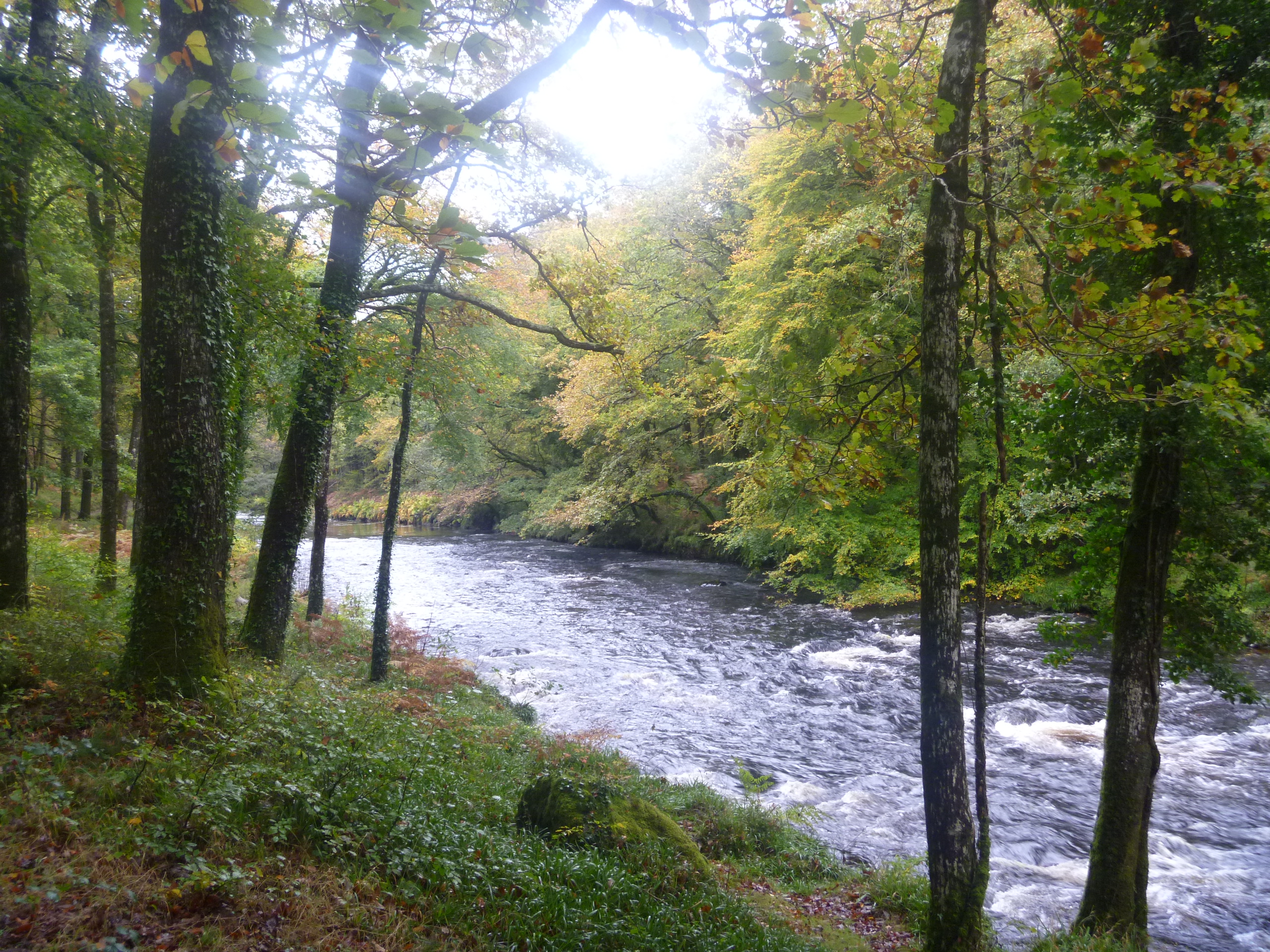
The River Dart at Holne

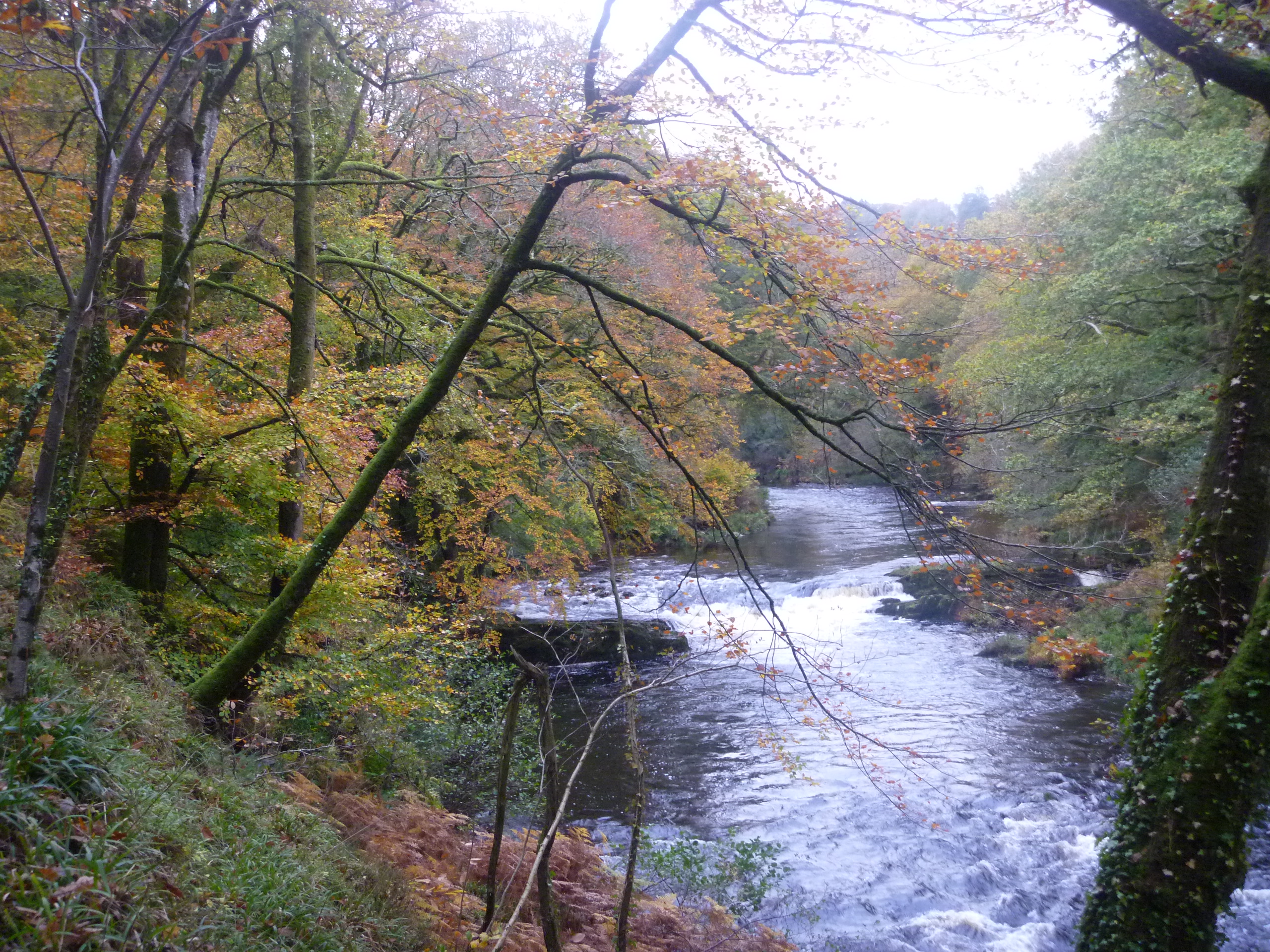
Devon is one of our favourite holiday destinations and this week we’re staying near the lovely Stannary town of Ashburton. Our cottage is on an estate that borders the beautiful River Dart. There’s a path from our cottage that takes you right down to the swift-flowing river which borders the Holne Chase estate.

The River Dart near New Bridge

This 42 mile long river rises as 2 branches – East and West Dart – in the Okehampton area of Dartmoor.  The two branches join on Dartmoor at Dartmeet and from then on the single river slips past our cottage ‘home’, flows swiftly down under Holne Bridge and then runs parallel with the road and the railway line towards Totnes, from where for the final 8 miles the river is navigable.

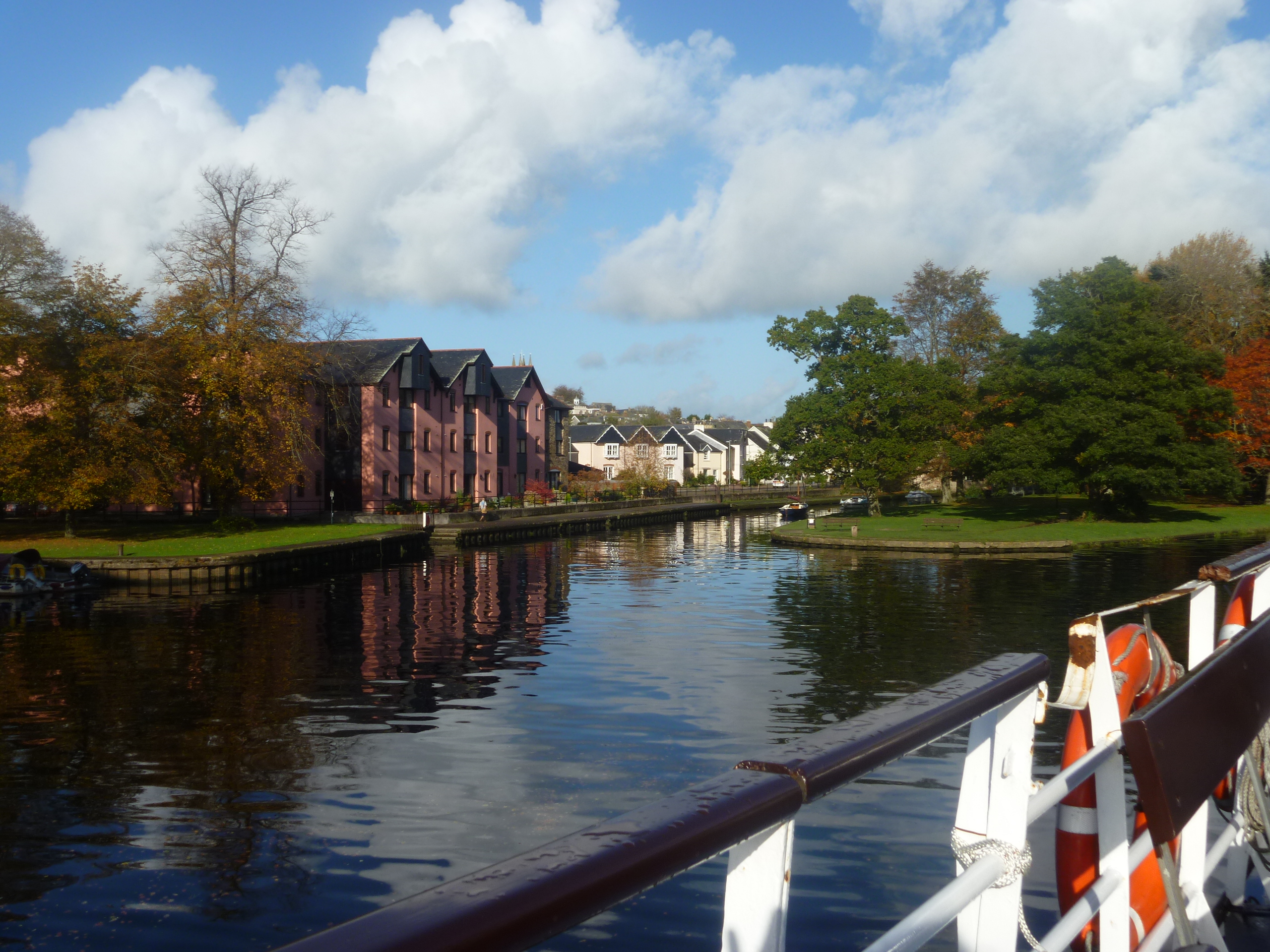
At Steamer Quay, Totnes

It was  at Totnes, on a beautiful November morning, that I boarded the Dart Venturer for a gentle cruise down the river to Dartmouth.

Sharpham Vineyard

Not far from Totnes is the Sharpham Estate, an award-winning vineyard that hugs the right-hand bank of the river for about two and a half miles.

We passed three villages: Duncannon, Stoke Gabriel and Dittisham, Agatha Christie’s former home Greenway (above) and Sir Walter Raleigh’s boat-house. As the boat glided through the still waters it was fascinating to look out for wildlife along the banks – we even spotted a seal bobbing in the water. Bird life included egrets, herons, swans, a cormorant, a buzzard and masses of Canada geese.

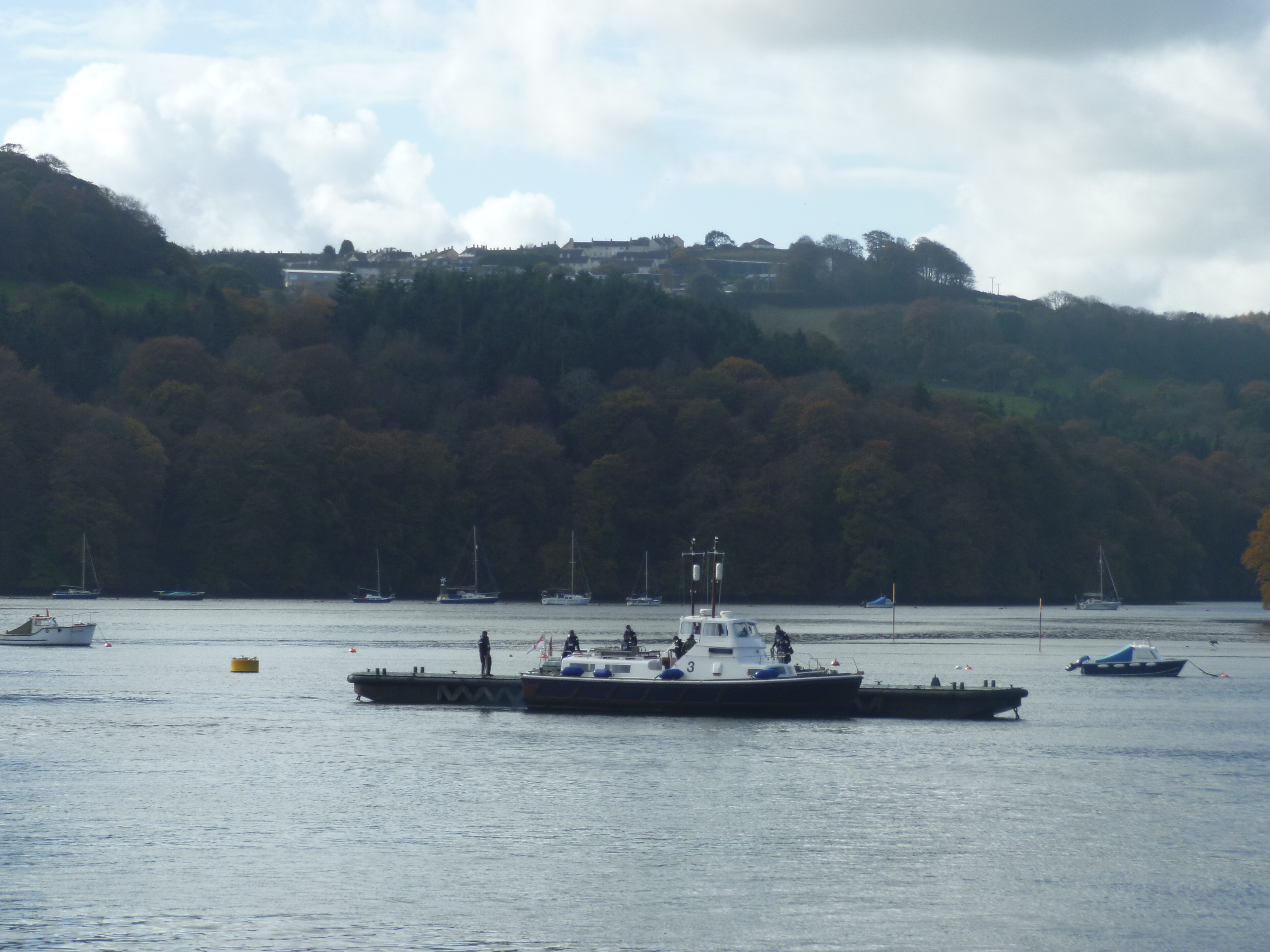
As we neared Dartmouth (and its opposite neighbour, Kingswear) the river broadens and we watched naval cadets (above) from the nearby Britannia Royal Naval College for Officer Training (below),

and saw empty and forlorn looking boat building yards that had supplied the nation with over 400 craft during the Second World War. Have a hanky ready if you want to watch the following video about the demise of Philip’s.

At Dartmouth we disembarked from the cruise an hour and a quarter later at the only railway station in Britain that has never been served by a railway line. It was built in anticipation of the railway reaching the town but local efforts to prevent it crossing the Dart were successful and in the end the line had to terminate at Kingswear.

The Dart Estuary at Dartmouth