Tea and Books and Two London Gems

I was in warm, sunny London on Thursday. The original plan was to meet a friend from my online book group and attend a showing of the 1953 film “Little Boy Lost” organised by the Persephone Book Shop. I always book my cheap train tickets way ahead and when we came to enquire about the film all the places had been taken but I still had my train tickets. In the end it turned happily as the weather was so warm and sunny that it might have been a shame to have been cooped up in the BFI.

Our Plan B was to visit the National Trust property Sutton House instead. I’ll copy and paste Clare’s summary of the history of the house as she summed it up perfectly to our group yesterday :

“It is a Tudor house, with lots of later additions, and a
fascinating history. It was first owned by Ralph Sadleir, an important
official in four reigns starting with Henry VIII. After that it was owned by
other individuals plus passing through the hands of two separate girls’
schools, a boys’ school, a church institute which ran all sorts of
activities for young men, and in the 1980s it was occupied by squatters who
wanted to form an arts community there.”
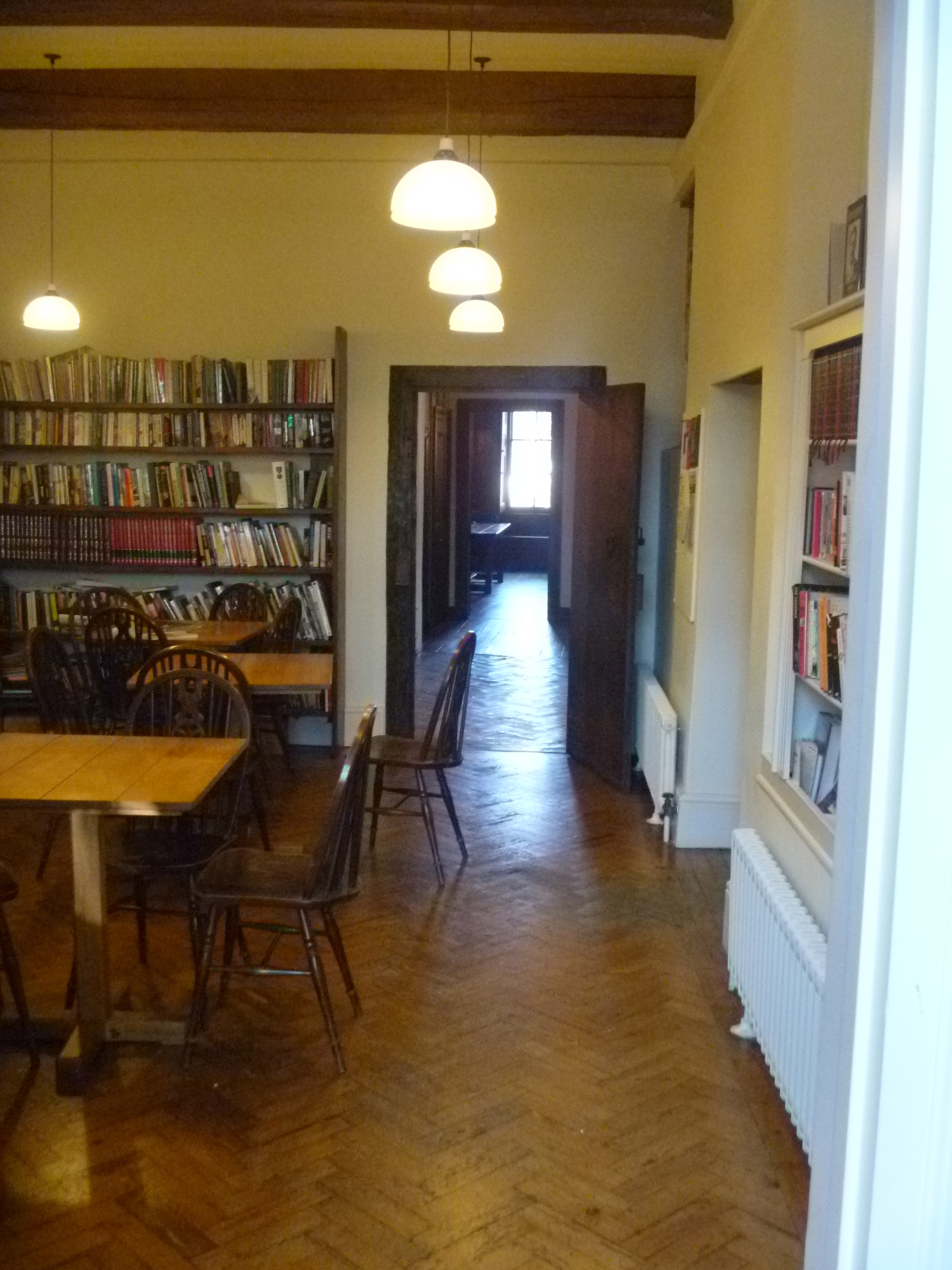
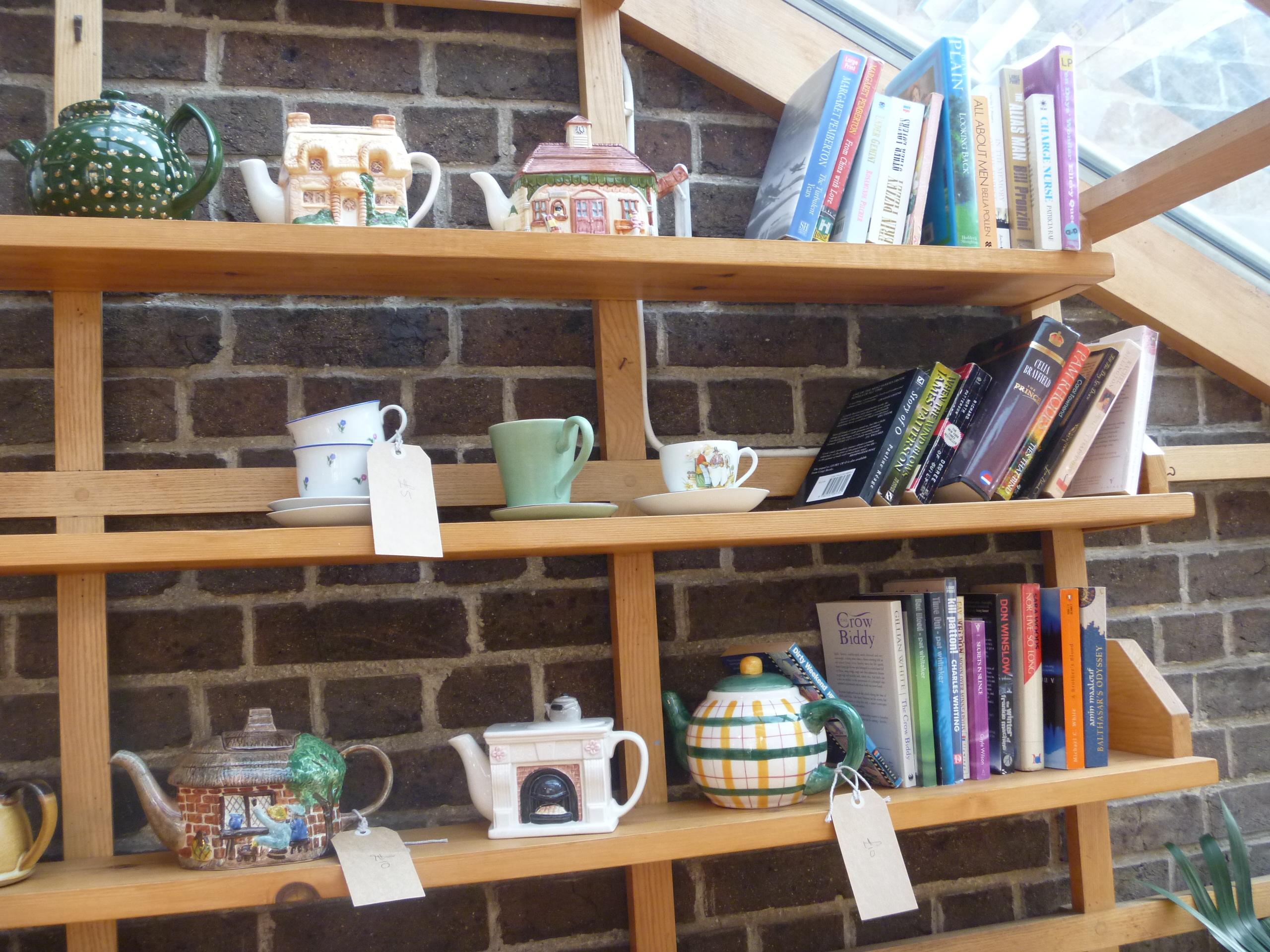
Today Sutton House is very much a part of the local community and the only staff we came across were volunteers all of whom were friendly, helpful and knowledgable. You can check out the website to see the variety of activities organised at the house – not surprisingly it’s booked up for over a year for school party visits. At one point I spotted a flyer for ‘Sutton House Book Brunchers’ who meet at the Bryck Place Tea Room once a month. Bryck Place is the original name for Sutton House and the tea room is a delight – a book lovers’ and tea drinkers’ paradise! There was a bit of renovation going on in the tea room on the day we visited so it was a matter of help-yourself to drinks and cake or scones and jam and drop a contribution in the box. So we did! The tea rooms are surrounded by shelves mostly stacked with secondhand books but some also with secondhand cups and saucers and jugs and teapots all for sale.
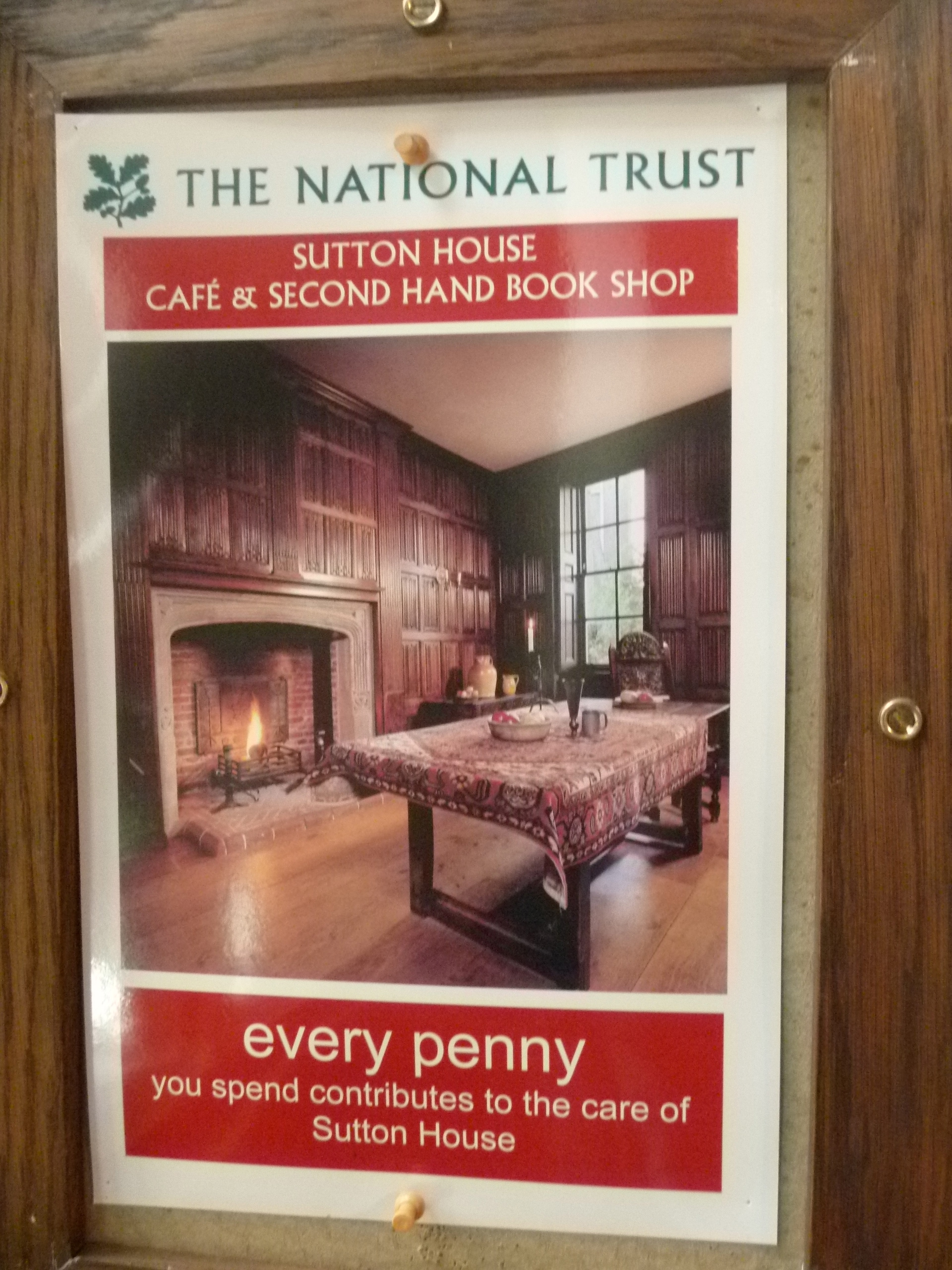
The tour of the house began in the Linenfold Parlour (see the poster pictured above). This would have been an important room in Sadleir ‘s original building in what was at the time (1535) a quiet, rural village. You then can visit the cellars, climb the Painted Staircase to the Gallery, the Little Chamber and the Great Chamber, a bedroom now decked out as a Victorian study and climb up again to an exhibition and history room on the second floor. A further staircase takes you right down to the ground floor again where, on this east side of the house, is a Tudor kitchen with access to an enclosed courtyard and a Georgian Parlour. This last room had a corner devoted to tea and it’s accoutrements and I was happy to note the following little verse :

 “In lands near or far

or wherever you be

friendship is welded by

a good cup of tea”
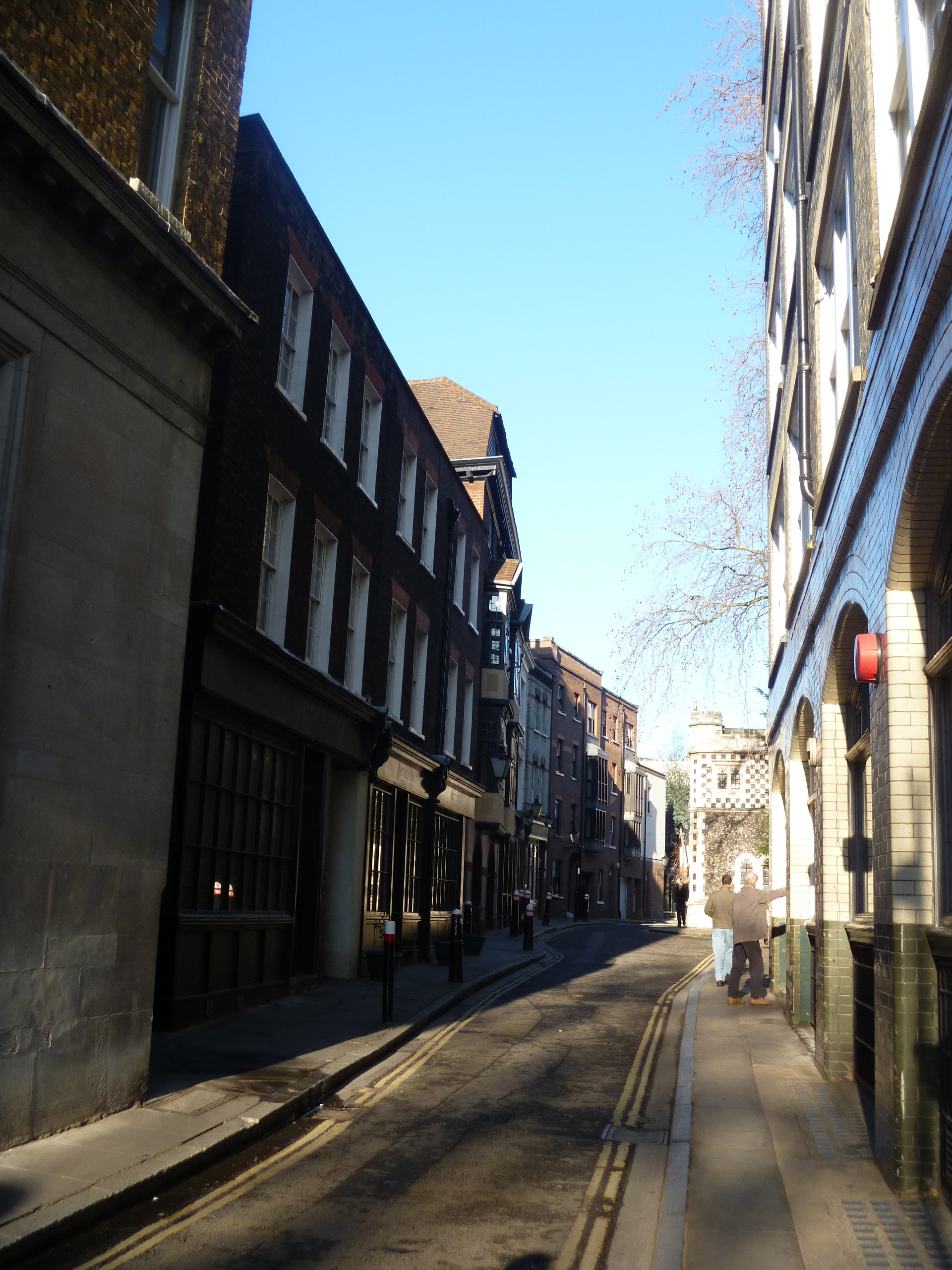
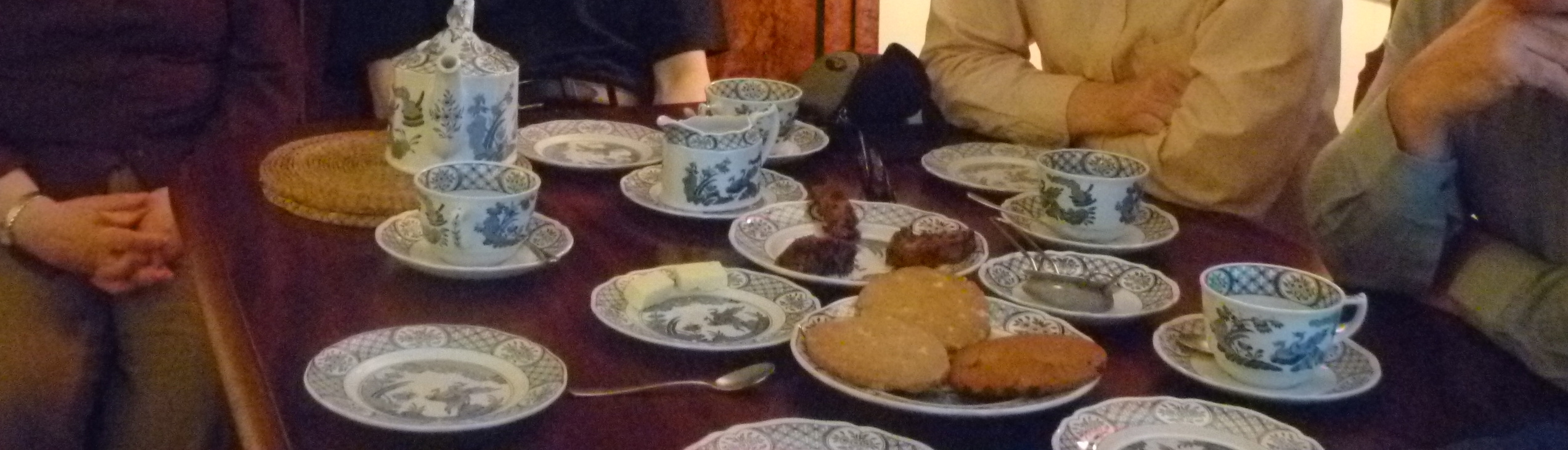
From Sutton House it’s a short walk to Hackney Central Station where we boarded our London Overground trains in opposite directions. As I sat on my train heading towards Whitechapel the following text came through on my ‘phone : “Afternoon tea now available at 45a!”  Some friends, staying at the Landmark Trust property 45A Cloth Fair this week, were inviting me to join them for (another) cuppa and more cake. I’ve stayed at 45A in the heart of Smithfield between Barbican and St Paul’s tube stations half a dozen times already so it was like arriving home as I climbed the creaking staircase to the first floor sitting room and joined my friends for tea and cake.
Tappington Hall and The Ingoldsby Legends

“THE JACKDAW sat on the Cardinal’s chair!
Bishop and abbot and prior were there;
        Many a monk, and many a friar,
        Many a knight, and many a squire,
With a great many more of lesser degree,—         5
In sooth, a goodly company;
And they serv’d the Lord Primate on bended knee.”

Did you read The Jackdaw of Rheims at school? We did. And it all came back to me last Monday when I visited my friend Sarah’s family in Kent. Sadly, Sarah died in November 2008. We’d known each other since our first days at university in 1970 and met up several times a year ever since. Sarah’s parents and other family live near Canterbury in Kent and one of my reasons for travelling down there for a birthday treat was to visit them and talk with them about Sarah and our friendship.
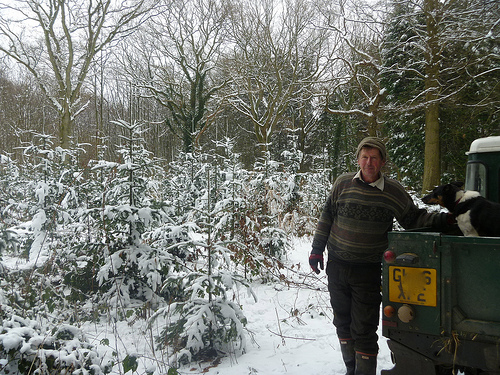
It was the snowiest day of the winter but I was not deterred from my journey. Luckily Sarah’s brother was clearing snow at his parents’ home and kindly turned my car round in the drive. After my initial welcome Andrew took me in his steadfast farm Landrover to see the Ginko tree that had been planted in Sarah’s memory and on to the area of woodland on the farm where her ashes had been scattered.

After a few moments’ quiet contemplation Andrew offered to take me to visit his own home and meet his wife Sue. Tappington Hall near Denton is a lovely old house tucked away down a farm track a few miles from his parents’ place. Sue and Andrew offer bed and breakfast on an informal arrangement. They were expecting two Canadians that evening and hoping that they would find it warm enough. I think Canadians are probably used to snowy weather!

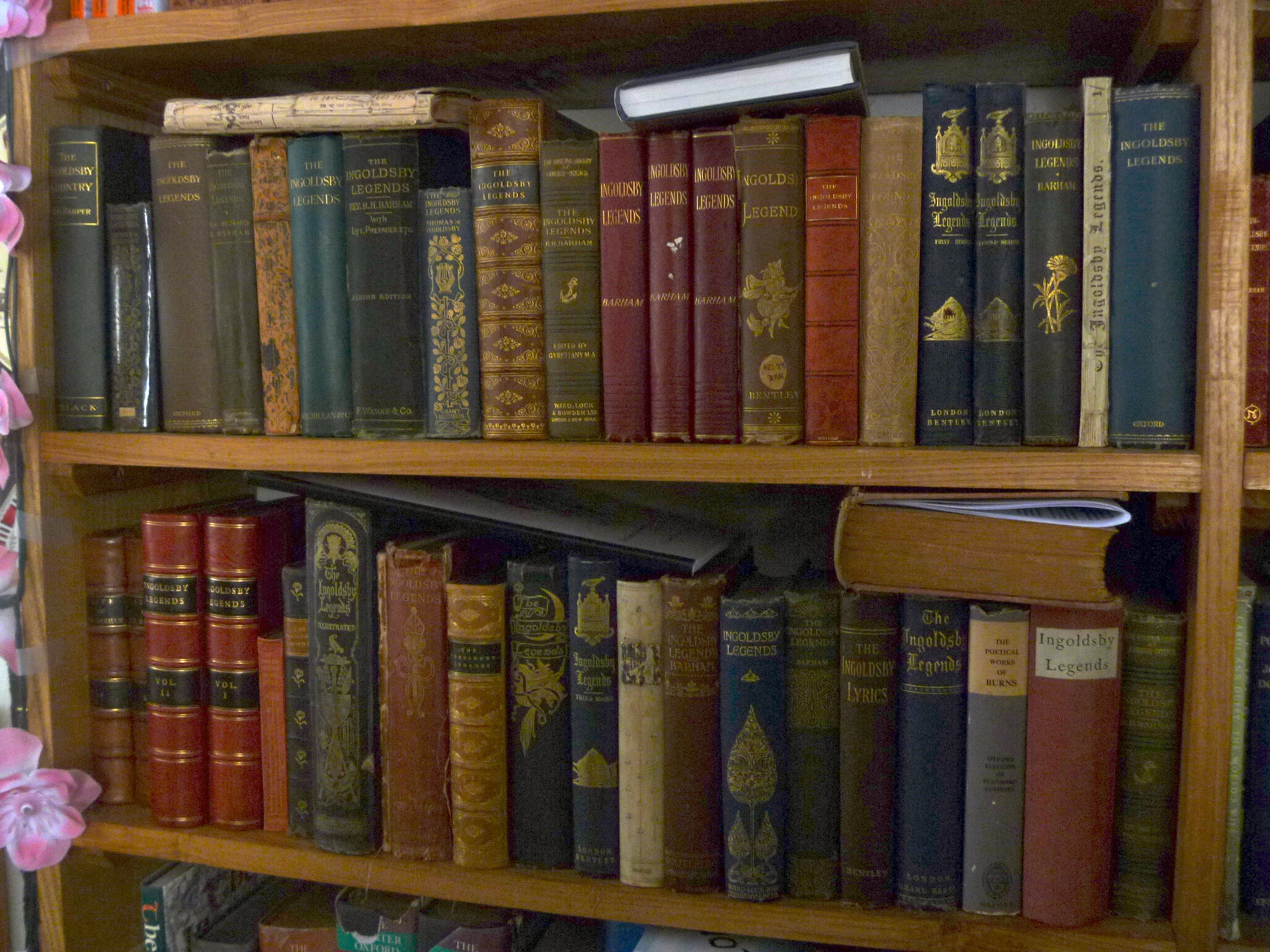
Of great interest to me was the fact that Tappington Hall was the former home of The Reverend Richard Harris Barham  (1788-1845) alias Thomas Ingoldsby of Tappington Everard in Kent. Sue and Andrew have a vast book collection which includes many versions of Barham’s Ingoldsby Legends. Unbeknown to me until I opened one of the books was that The Jackdaw of Rheims poem is one of these Legends.

Barham was ordained in 1813 appointed to the parish of Westwell in Kent and later to the living of Snargate and Warehorn, on Romney Marsh. He and his wife and children later moved to London where he was appointed to a post at St Pauls although he kept his Romney Marsh living as well.

His writing  and journalism took off when he got to London and he was published in several periodicals including Blackwoods and  Bentley’s Miscellany. He seems to have enjoyed mixing in literary circles in London, knew Charles Dickens and Richard Bentley and was a founder member of the Garrick Club (1832). Probably he is best known for

” … his Ingoldsby Legends, which began to appear in 1837 in Bentley’s Miscellany. Under the guise of Thomas Ingoldsby of Tappington Everard in Kent, Barham ‘discovered’ old documents which provided the basis for his tales. In effect, most of these are reworkings of other narrative sources, from medieval chronicles to Kentish legends and Sir Walter Scott. The mixture of crime and the supernatural, in both verse and prose, is given a comic and grotesque dimension, immediately appealing to Barham’s readers.”

Extracted from : The Oxford Dictionary of National Biography.

The Legends passed through very many editions some with illustrations by such artists as Tenniel, Cruikshank, and Rackham and Sue kindly showed me several of these. Many of the editions were best sellers in their day.

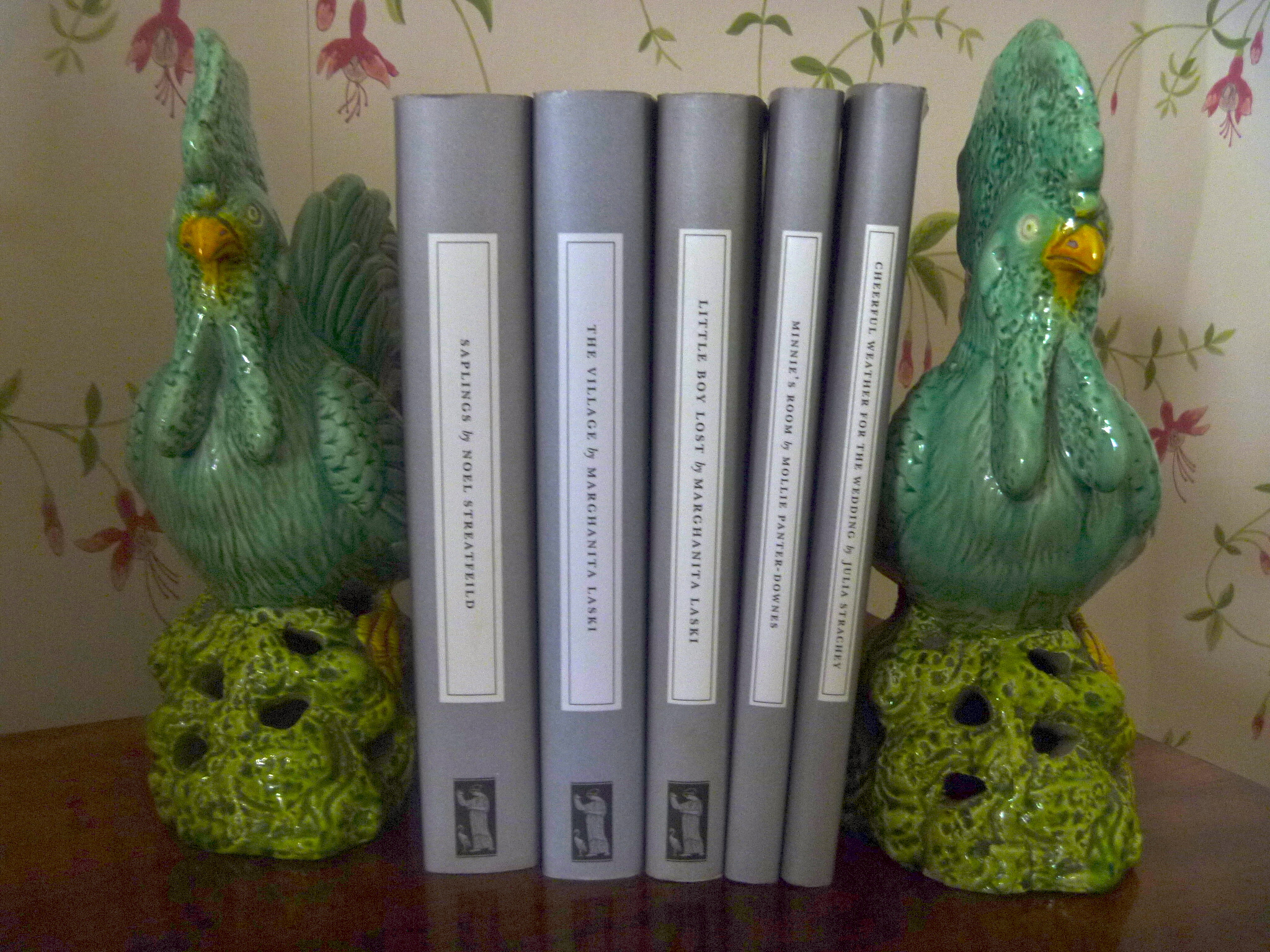
On the Sunday night before my visit to Barham and Tappington I stayed at a B&B between Sittingbourne and Faversham. I was delighted to find a selection of Persephone Books beside my bed at Dadmans – even though I had read them all.

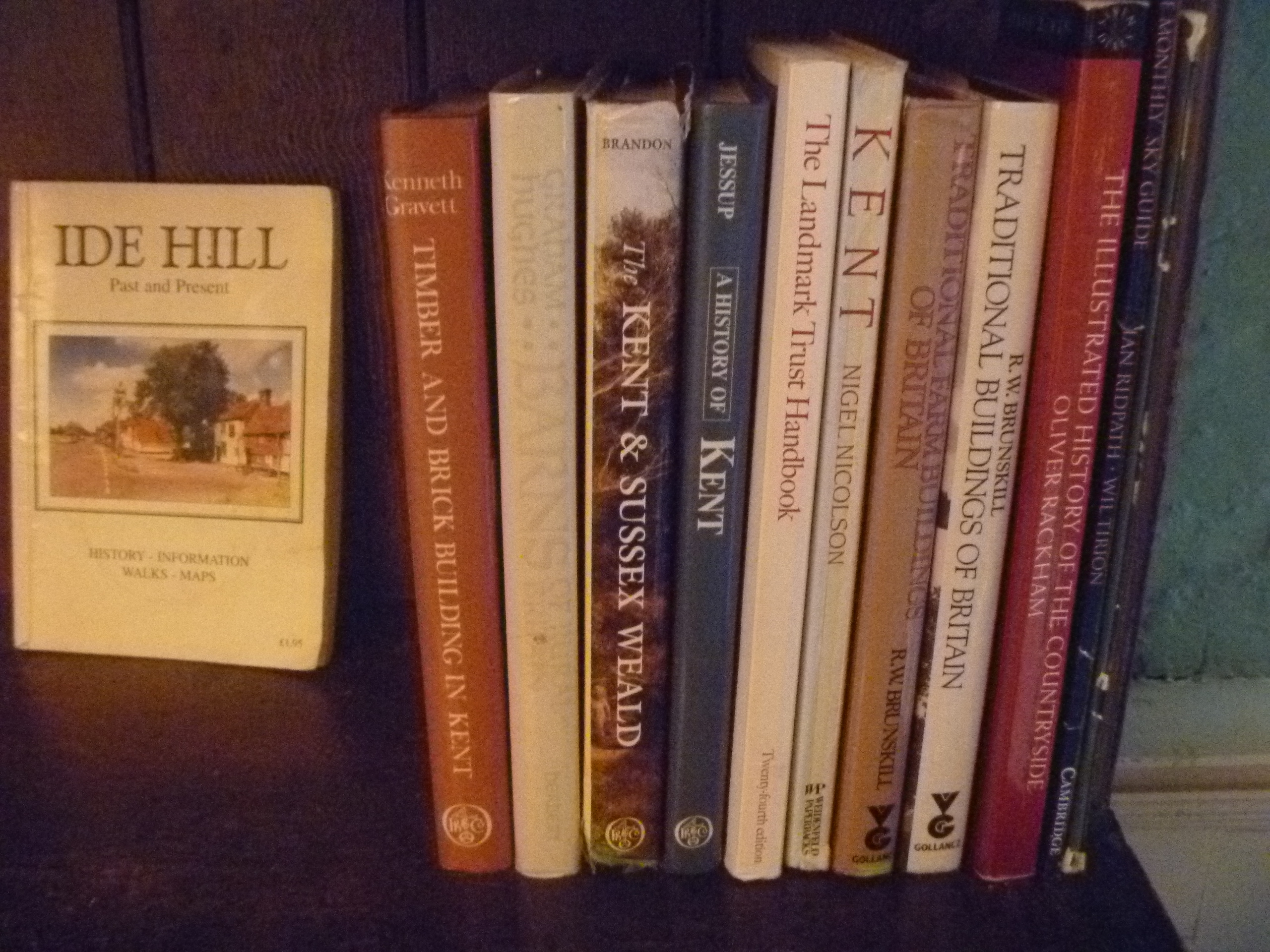
A further selection of Kentish books made up the library at Obriss Farm. There is no shortage of reading materials at Landmarks.

The Snowy Hills of Kent: Toys Hill, Ide Hill and The Octavia Hill Centenary Trail

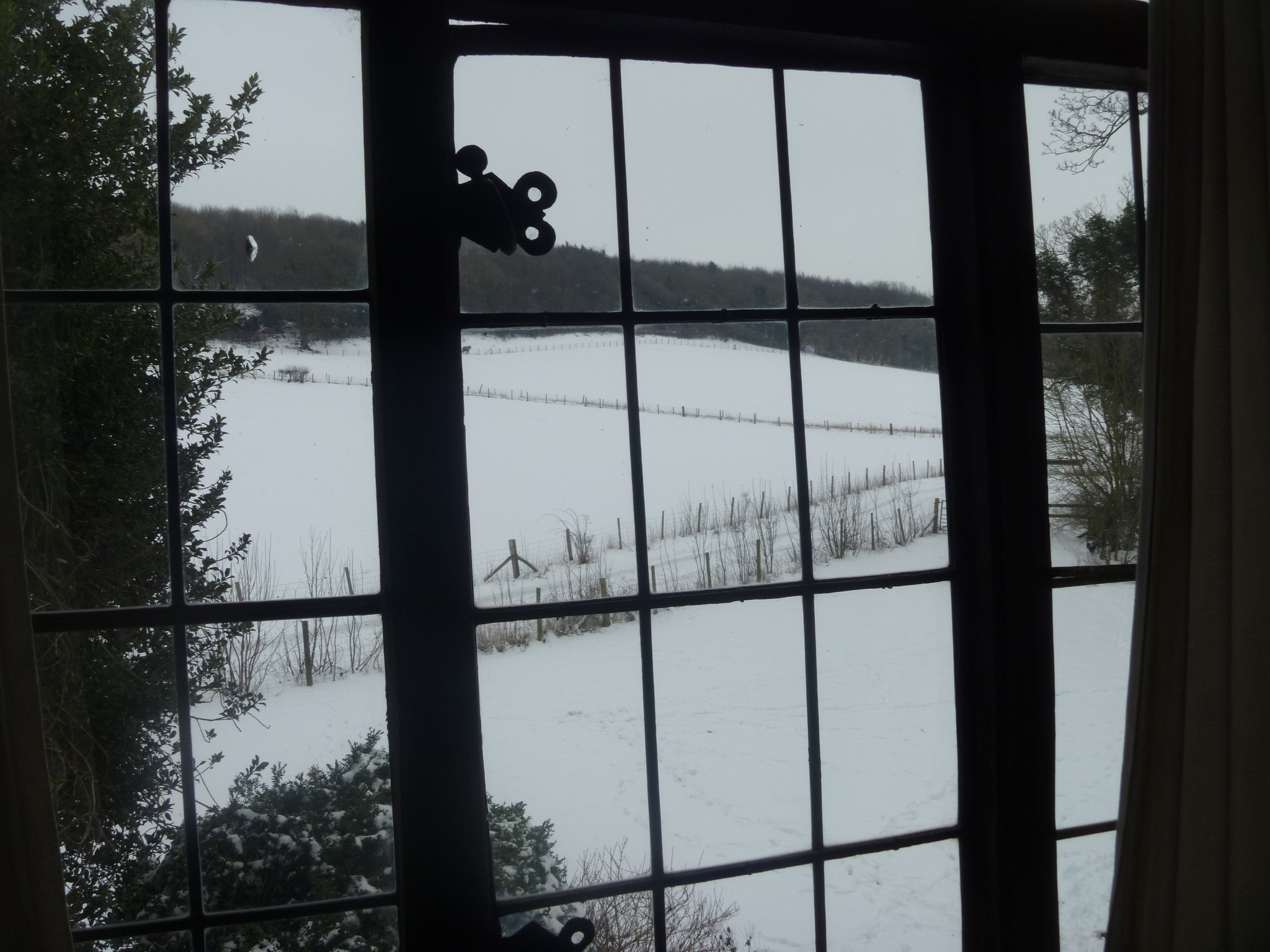
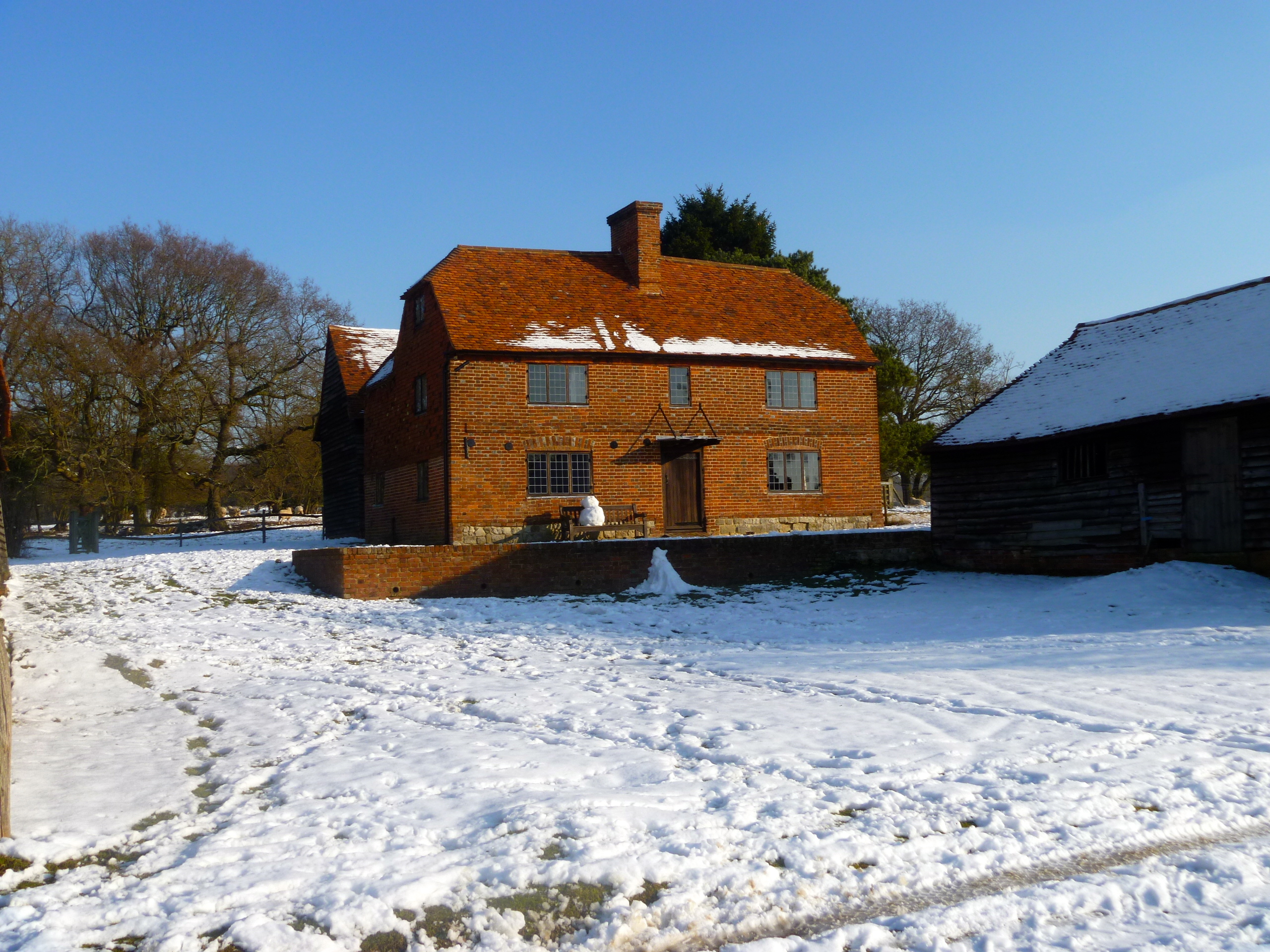
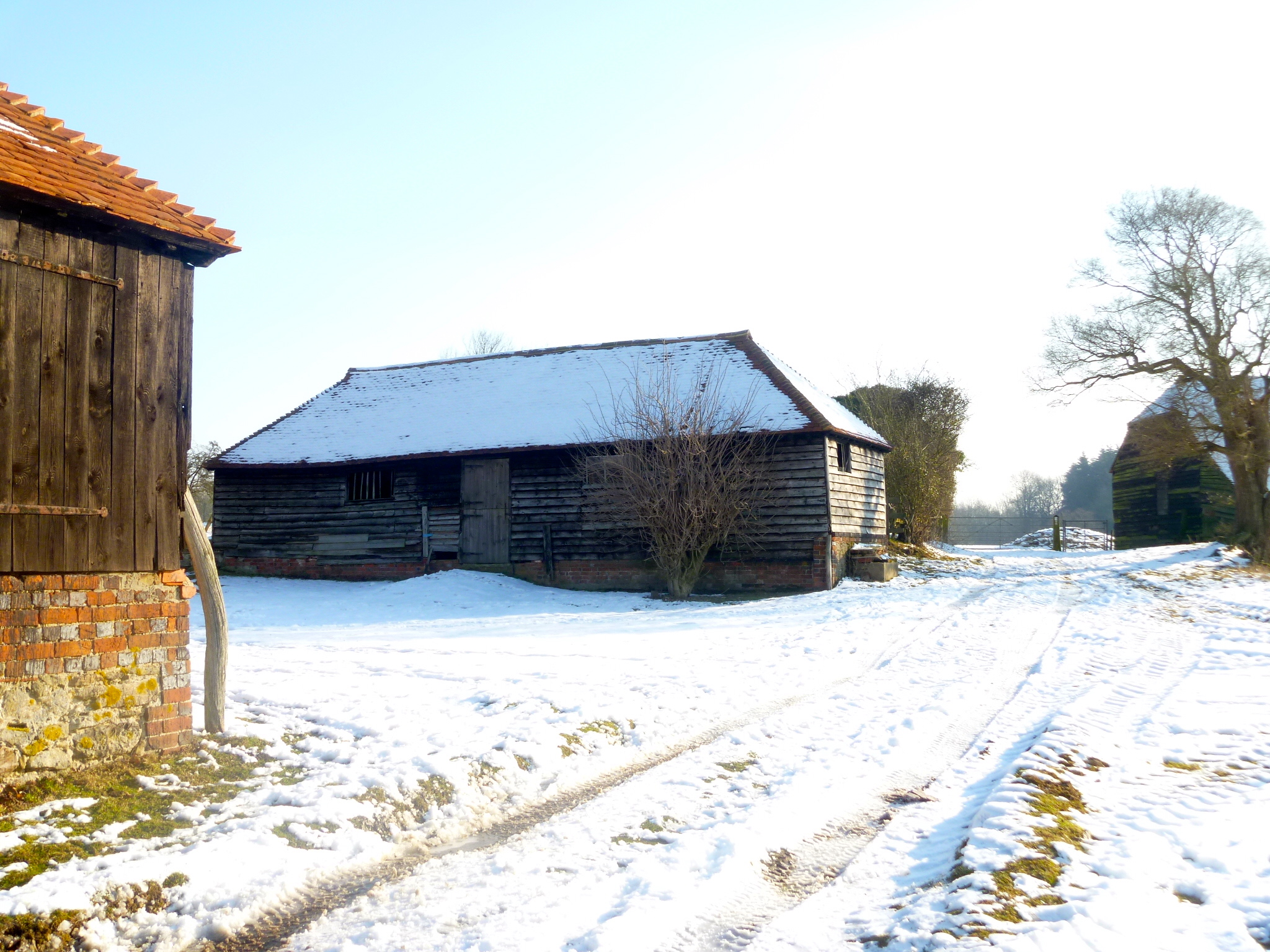
I was staying in very snowy Kent last week. Temperatures were around or below freezing but that didn’t prevent me and my sister enjoying some decent tramps around the countryside directly from the back door of our Landmark – Obriss Farm.

On the Tuesday, the first day’s walking, we very soon came across The Octavia Hill Centenary Trail (OHCT) signs and it seemed that this trail coincided very closely with the walking route that we had picked out from the mass of public footpaths and bridleways criss-crossing the local fields and woodlands.

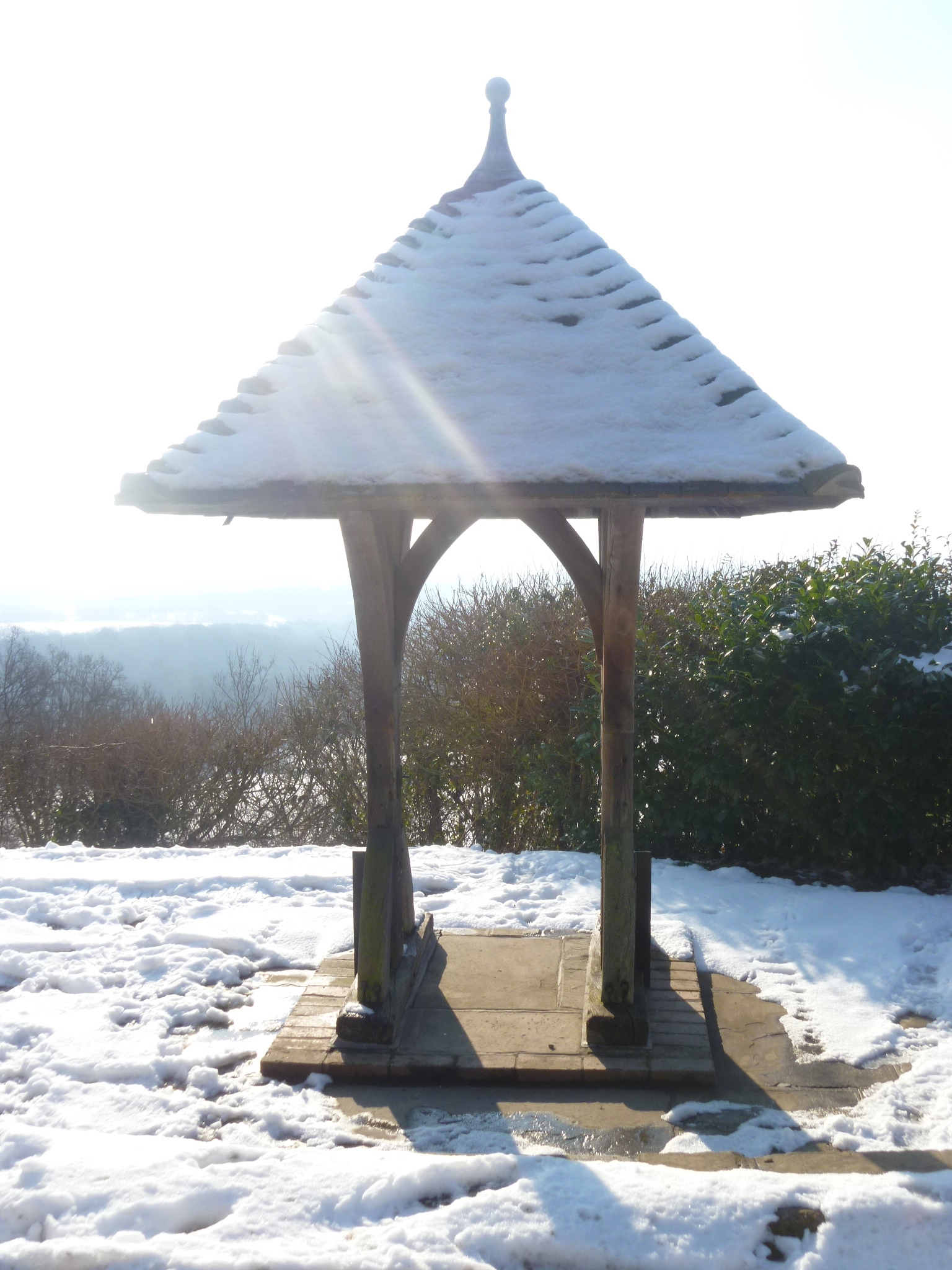
We began our walk that day by tramping over snow covered fields behind the farm to Toys Hill hamlet where the Octavia Hill Memorial Well (restored in 1999 in her honour by The National Trust of which she was a founder) marks the start of both the East and the West trails.

The Octavia Hill Memorial Well in Toys Hill hamlet

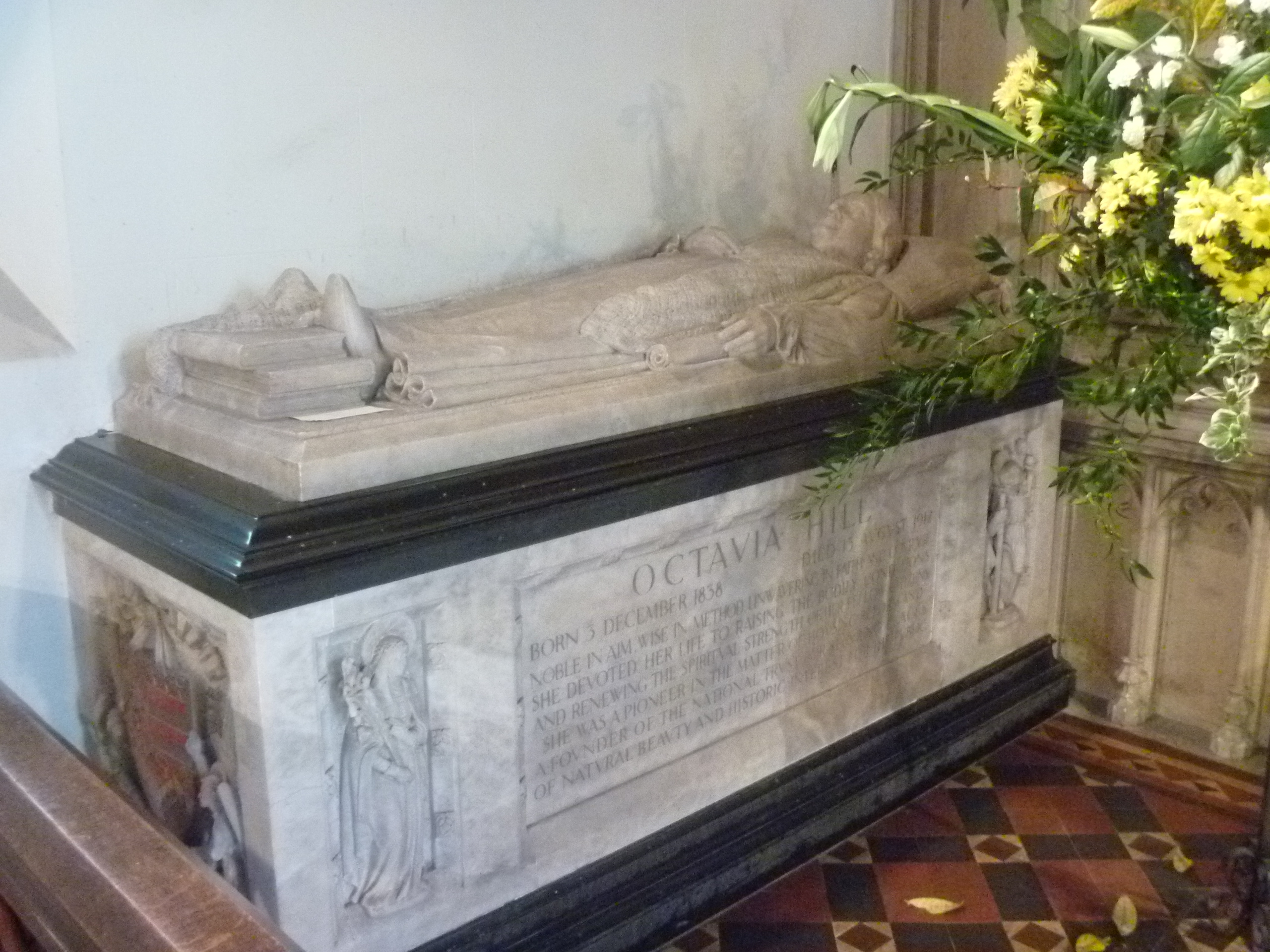
The path passes through the grounds of Chartwell (but sadly with no view of the house itself at this point) to the church and graveyard at Crockham Hill where Miss Hill is buried in the churchyard and where there is a Memorial to her in the chancel lying next to the altar.

The Royal Oak in Crockham serves decent bar snacks (and full lunches) and our circular walk finished a couple of miles later at the private track leading back to Obriss Farm. Obriss Farm doesn’t feature on the OHCT but it is only about half a mile or so from the start of the Trails at the well in Toys Hill hamlet.

To hear more about this walk click here to listen to Clare Balding on Ramblings on BBC Radio 4 undertaking the walk and which we listened to on our return from the second OHCT walk on the Thursday!

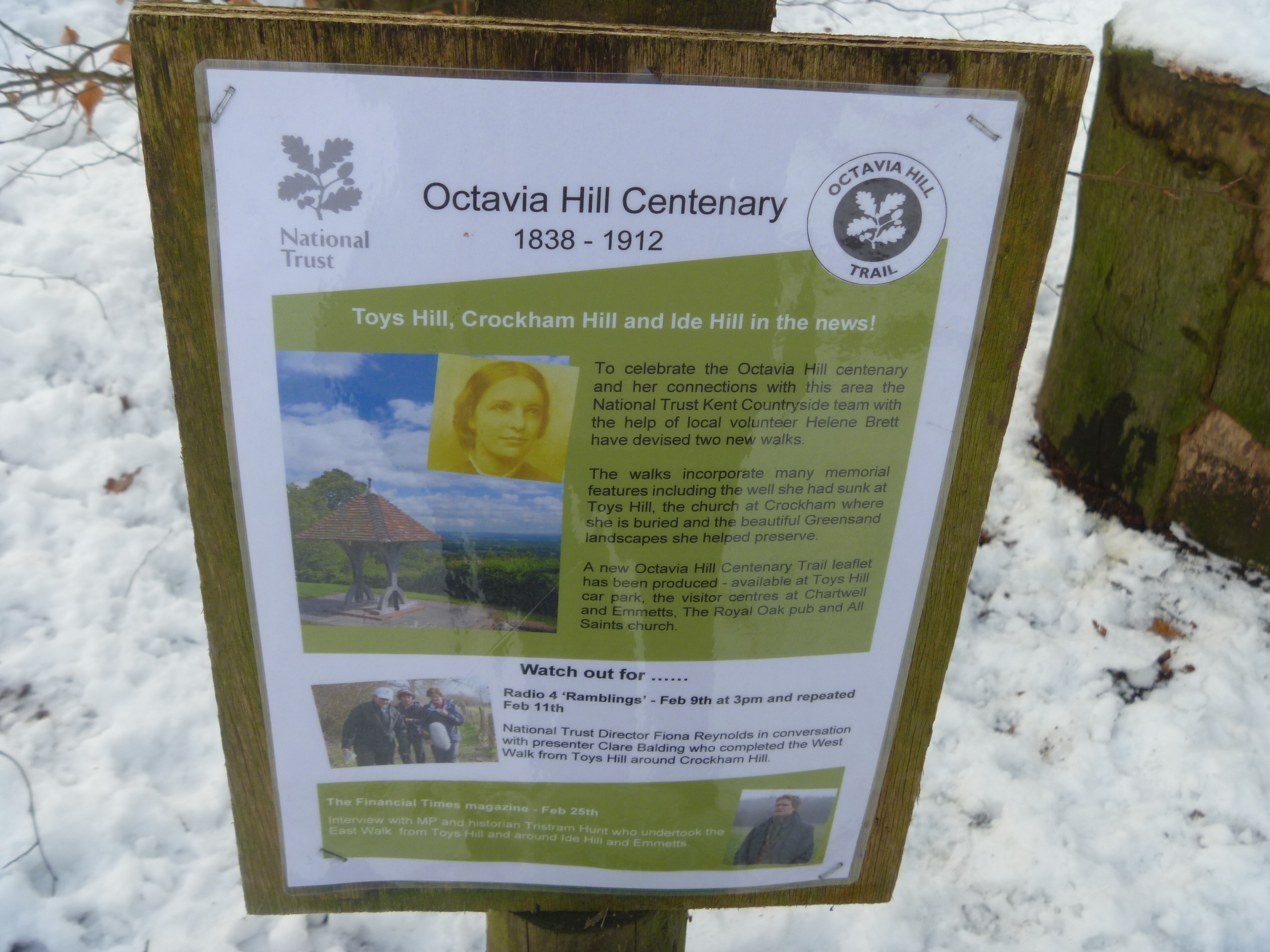
At The Royal Oak we also picked up a copy of the leaflet that outlines the two routes of the Trail which has been inaugurated as a commemoration of the centenary of the death of Octavia Hill in 1912. Our trail on Tuesday had more or less followed Walk 2 – the West Walk.

We’ve been interested in Octavia Hill for some years now via an initial interest in Beatrix Potter and visits to her (BP’s) Lake District home (Hill Top), farm and gallery and an exhibition of her work on display at The Dulwich Art Gallery back in 2006.

In August 2006 we visited Octavia Hill’s Birthplace Museum in Wisbech and came across the results of her philanthropic efforts in Marylebone on one of those London Walks : Saturday Afternoon’s Old Marylebone Walk

On Thursday we decided to do the East Walk from Toys Hill which included more hills and steep ascents than we had expected to find in Kent!

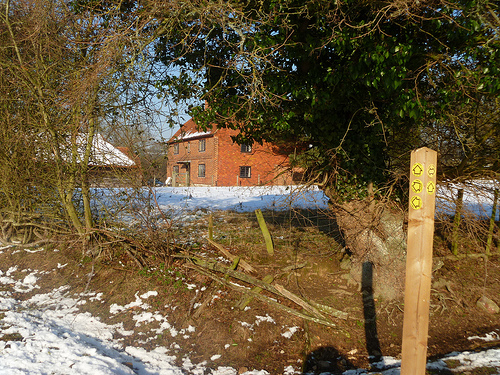
A choice of footpaths at Obriss Farm

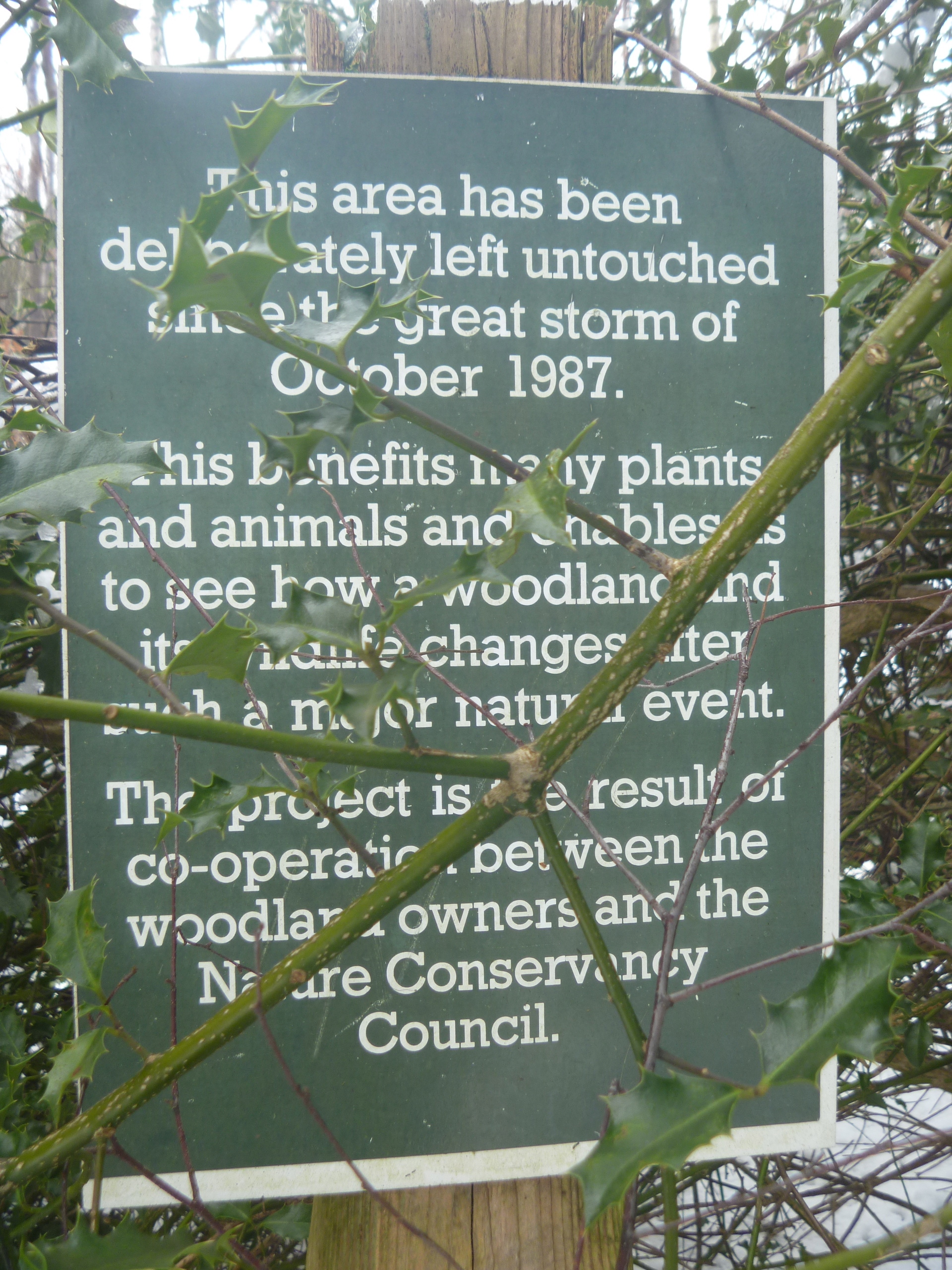
From Toys Hill hamlet we followed the path to the village of Ide Hill via the Octavia Hill stone memorial seat and from thence to Emmetts Gardens, Scords Wood and the (yes, you guessed) Octavia Hill Woodland. We were shocked to notice so many fallen trees just lying around the woods and then we saw a sign that explained what this was all about :

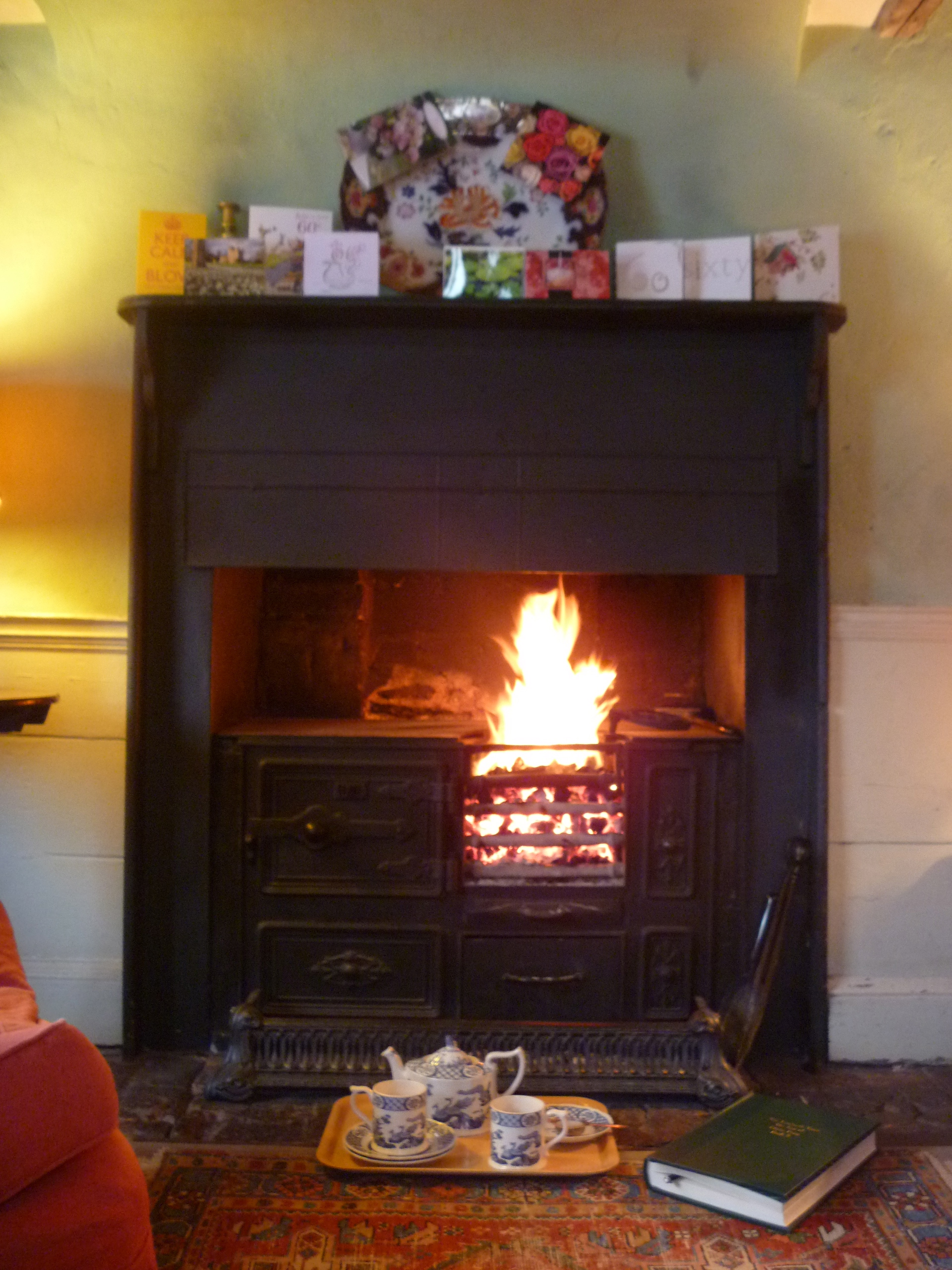
After several uphill climbs the path finally downhill to Toys Wood village and our track back to the farm and the cosy parlour with its open fire in the range.

Princelet Street – A Landmark Library Reviewed

One thing I should point out about in case you didn’t already know is that there are no tellys at Landmark Trust properties. Self-made entertainment is the order of the day. Each property usually has a small supply of jigsaws and every one also has its own library. I have already mentioned Landmark Libraries here.

There are all the reference books needed to find your way around the area, check spellings during Scrabble games or whilst doing a crossword, the trusty latest edition of The Handbook, a Bible and some recipe books NB here these consist of a Madhur Jaffery and The Paupers’ Cookbook and there is always the local Pevsner architectural guide.

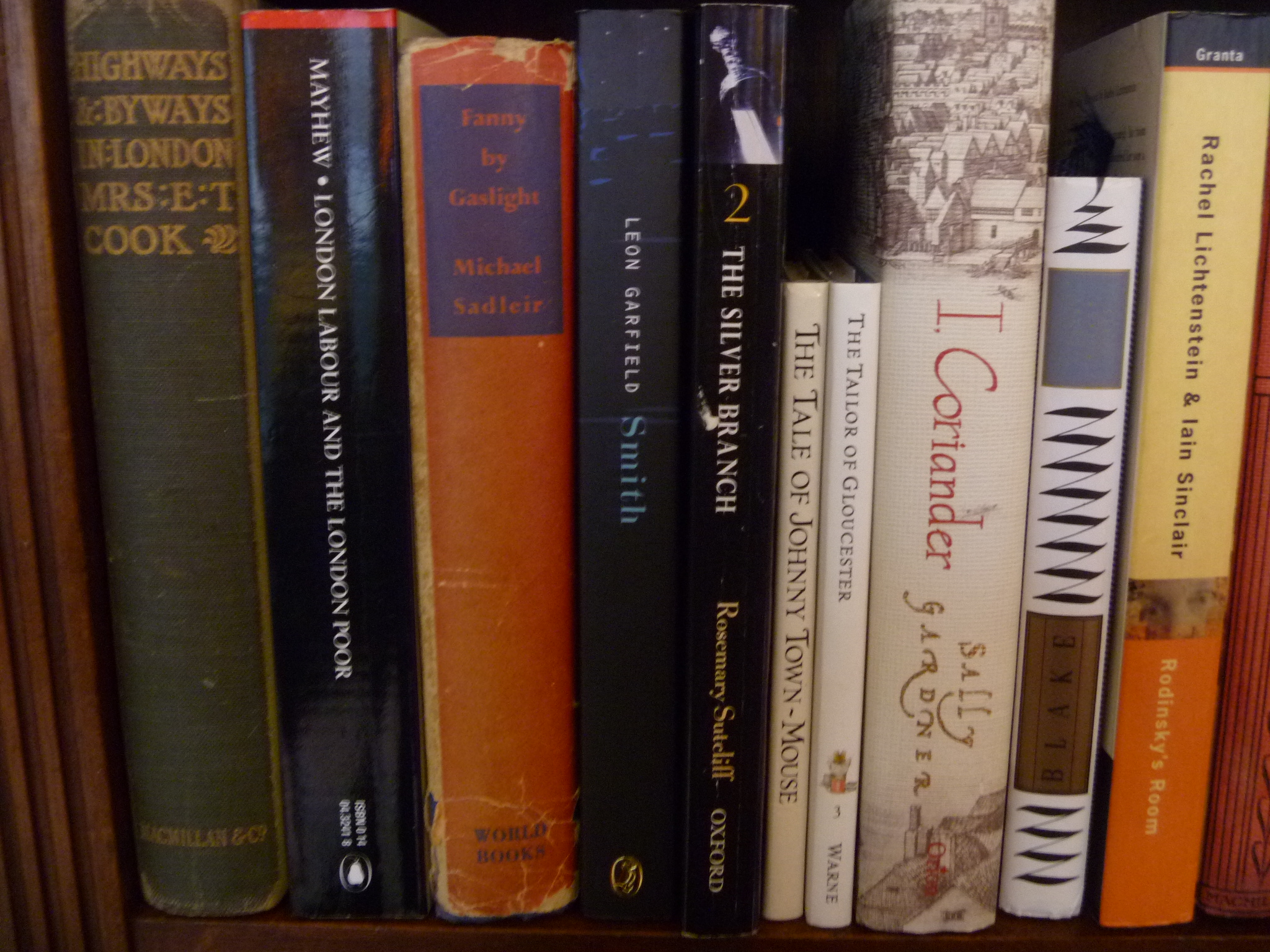
Here at Princelet Street the children’s and young people’s books include that lovely ‘This is London’ featured in the previous post about The Tower of London, some Beatrix Potter books and well-chosen titles by Rosemary Sutcliff, Leon Garfield and Sally Gardner.

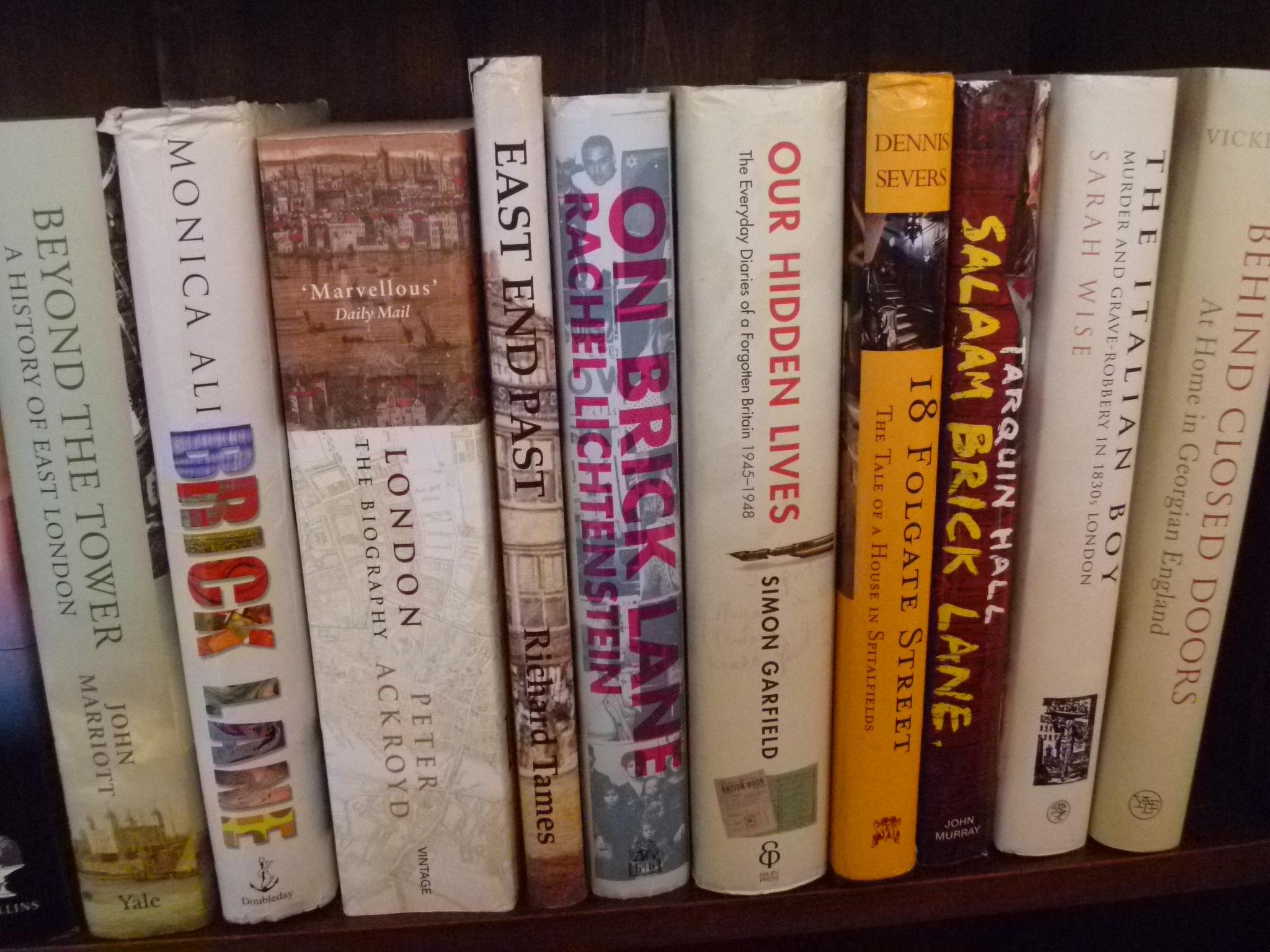
Of course, you can’t stay within a stone’s throw of Brick Lane without finding a copy of Monica Ali’s book of the same name on the bookshelves.

There is also ‘On Brick Lane’ by Rachel Lichtenstein (her grandparents came here from Poland in the 1930s). A book I noticed on a previous visit and read shortly after. It’s a history of the neighbourhood and the different nationalities and cultures that lived here in Spitalfields and an excellent introduction to the area. ‘Rodinsky’s Room’ is another of Rachel L’s books and the result of her investigation together with Iain Sinclair into the strange mystery of the disappearance in the 1960s of David Rodinsky from his room above the synagogue in Princelet Street itself. It’s another book that I bought after seeing it here although I haven’t read it yet.

“Rodinsky’s world was that of the East European Jewry, cabbalistic speculation, an obsession with language as code and terrible loss. He touched the imagination of artist Rachel Lichtenstein, whose grandparents had left Poland in the thirties. This text weaves together Lichtenstein’s quest for Rodinsky -which took her to Poland, to Israel and around Jewish London -with Iain Sinclair’s meditations on her journey into her own past, and on the Whitechapel he has reinvented.” [From Amazon product description].

The area has been well researched, not only by Lichtenstein. My sister read me all sorts of stuff about the churches in the City and about walks in the East End. And not surprisingly, books on architecture feature strongly, and not only church architecture. I loved this title and mused for a while flicking through looking at the sketchy illustrations of buildings.

Peter Ackroyd’s biography of London is here as well as his novel ‘Hawksmoor’ a dramatisation of which was broadcast on the radio a few years ago. It’s about the architect Nicholas Hawksmoor and the building of Christ Church, Spitalfields, a couple of streets away. I could not find that recording but I have found an interview with Ackroyd talking about ‘Hawksmoor’ with James Naughtie on Book Club on Radio 4, here.

And here also, is dear Amanda Vickery’s ‘Behind Closed Doors’. Very apt for this house as the TV programme ‘At Home with the Georgians’ featured nearby Denis Severs House (that book is here too: 18, Folgate Street).

It would also be impossible to have a library books in London without featuring several Charles Dickens titles.

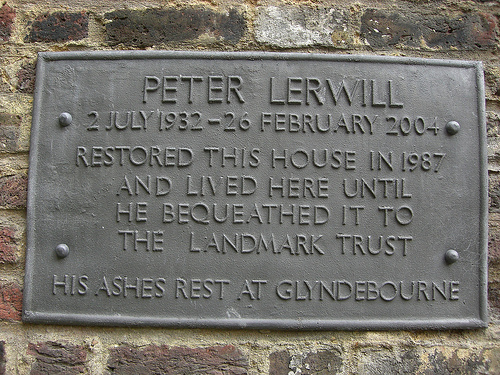
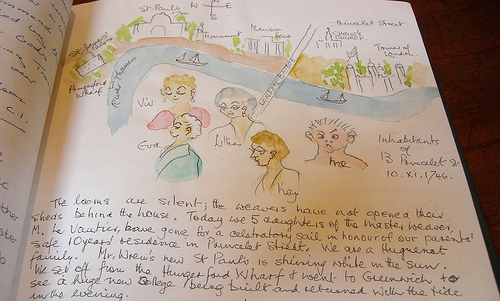
Finally, the Landmark Trust supply their own History Album at every property. This makes fascinating reading as their investigations into the buildings and their histories are rigorous to a degree. 13, Princelet Street was left to the Trust by Peter Lerwill who bought the house and renovated it very much in the LT fashion. There was little more for the Trust to do when they took over other than decorate, equip and furnish the house ready for its guests . There is still a detailed history album on the shelves.

But possibly the best source of Landmark entertainment of an evening is the reading aloud of the many comments in The Log Book.


Looking Back on the Missed Months of 2011

A Happy New Year to You All!

Transferring stuff from one year’s diary to the next’s made me think I might make a note here on an event/category from each month of 2011 up to my starting this blogging lark in August. One event with one picture is quite a tough call – especially in the summer months – but I will give it a go.

January 2011 : Landmarking with Milady

The year started well with my usual London Landmarking Trip but this January I was fortunate enough to get a double dose of London Landmarks. I stayed in the 45A Cloth Fair property for 3 nights and visited friends at the Hampton Court Georgian House on one of the days. There is so much to see and do at Hampton Court that we have booked our January 2013 London stay at Fish Court in order to experience more. If you stay there is no extra charge for visiting the Palace. On the other day at Cloth Fair we took tea at the recently totally renovated Savoy Hotel – an out-of-this-world experience from the moment your carriage arrives to the moment you are driven away.

February 2011 : Milady gets culture

An early wet and windy two night excursion to Cambridge led to the wonderful discovery of Kettles Yard. Our trip was planned around a visit to The Scott-Polar Research Institute whose museum had just re-opened after extensive renovation work. But interesting as it was to see the exhibits at the SPRI the highlight of my visit was Kettle’s Yard. We even went there twice. On the Thursday afternoon of our arrival we took a walk from the hotel and ended up at the house that is Kettles Yard. It is like walking into someone’s home – you ring the doorbell and are welcomed, photography is no problem, you may sit and look at the books and the place is crammed full of art and artefacts of what I suppose is called the modern era. It was on this visit that we heard about the Friday Lunchtime Concerts so from the SPRI we headed back to KY and joined a winding queue of keen concert-goers and enjoyed with them a chamber group of student musicians.

March 2011 : Milady gets Culture

Photograph: Robert Workman

At the end of March Out of Joint brought their play  “A Dish of Tea with Dr Johnson” to The Carriageworks in Leeds. I’d read quite a bit a bit about Dr Samuel Johnson and visited his house in Gough Square in London so was intrigued to see this well-reviewed piece. I was not disappointed. It is quite short, full of fun but with some pathos and there is also the most wonderful dog actor who must have been standing in for Johnson’s cat, Hodge. I would have loved to have seen the performance actually at Dictionary Johnson’s House but this was the next best thing. Highly recommended although I think the tour is finished now.

April 2011 : Landmarking with Milady

Friday 29th April 2011 must have seen the high point of the year in Britain – The Royal Wedding of HRH Prince William and Miss Catherine Middleton. That very day I had booked (long before the wedding date was announced) to spend the May Day Holiday Weekend in France at Gif-Sur-Yvette the former weekend home of the Duke and Duchess of Windsor just outside Paris and now managed as a holiday let by The Landmark Trust. I was visited there on one of the days by my good friend MN and we spent a literary day visiting Alexandre Dumas’ The Chateau of Monte Cristo at Port-Marly and La Maison Litteraire de Victor Hugo at Bievres, Île de France. It was such a good trip that we’ve booked to go back again next May so I’ll be posting in more detail then.

May 2011 : Milady Visits

Window shopping at Didier Ludot in the Jardin du Palais Royale

On 12th May the Optimist celebrated a special birthday! And on that very day we were booked to travel – in style, I might add – by Eurostar train from Yorkshire to Paris to attend our nephew’s wedding in Vincennes, just outside Paris, on the Saturday. What a fab weekend we had – lovely hotel quiet but right in the centre of Paris, lovely weather, except that it rained on the Sunday as we were leaving, excellent company and good food and wine with some “flanez” and pavement cafes thrown in for good measure.

June 2011 : Milady Reads and Visits

In Spring 2011 Persephone Books published a reprint of Adam Fergusson’s “The Sack of Bath”. On June 16th there was an Afternoon of Walks in Bath led by Caroline Kay, of the Bath Preservation Trust, and Adam Fergusson. We met at The Circus cafe for a lovely two course lunch and were then taken on a walking tour to view the effects of City planning policy on Bath during the 1960s. The walk ended at The Museum of the Building of Bath where we were served tea and cakes. But before all those pleasures I had the great pleasure of spending the morning with my online reading group friend Carol who lives in Bath and took time out to show me all the bookish delights of that city – of which there are very many. It was one of those days where looking back it seems impossible to have fitted so much into a mere 7 hours.

July 2011 : Milady Steps Out

On 30th June I set out with my sister on my first long distance walking trail – Wild Edric’s Way in Shropshire. The ‘holiday’ was organised by a local company with the delightful name of Wheely Wonderful Cycling Holidays which deals mainly in cycling holidays but with some walking tours also on their books. I say ‘holiday’ but at times it was jolly hard work!  We walked from the Stiperstones to Ludlow over 3.5 days. Approximately 40 miles was covered in total with 4 overnight stops. For the most part it followed the route of The Shropshire Way which coincided also with The Kerry Ridgeway and Offa’s Dyke National Trail. There were several places of interest on the route – churches at More, Churchtown and Ludlow and castles at Clun, Stokesay and Ludlow. We met other walkers and some lovely B&B owners along the way. I was glad to have done it and it felt like quite an achievement but I was not sure whether I wished to repeat the experience. However, the further away it has become the more I think maybe I would indeed like to do another such walk in the future.


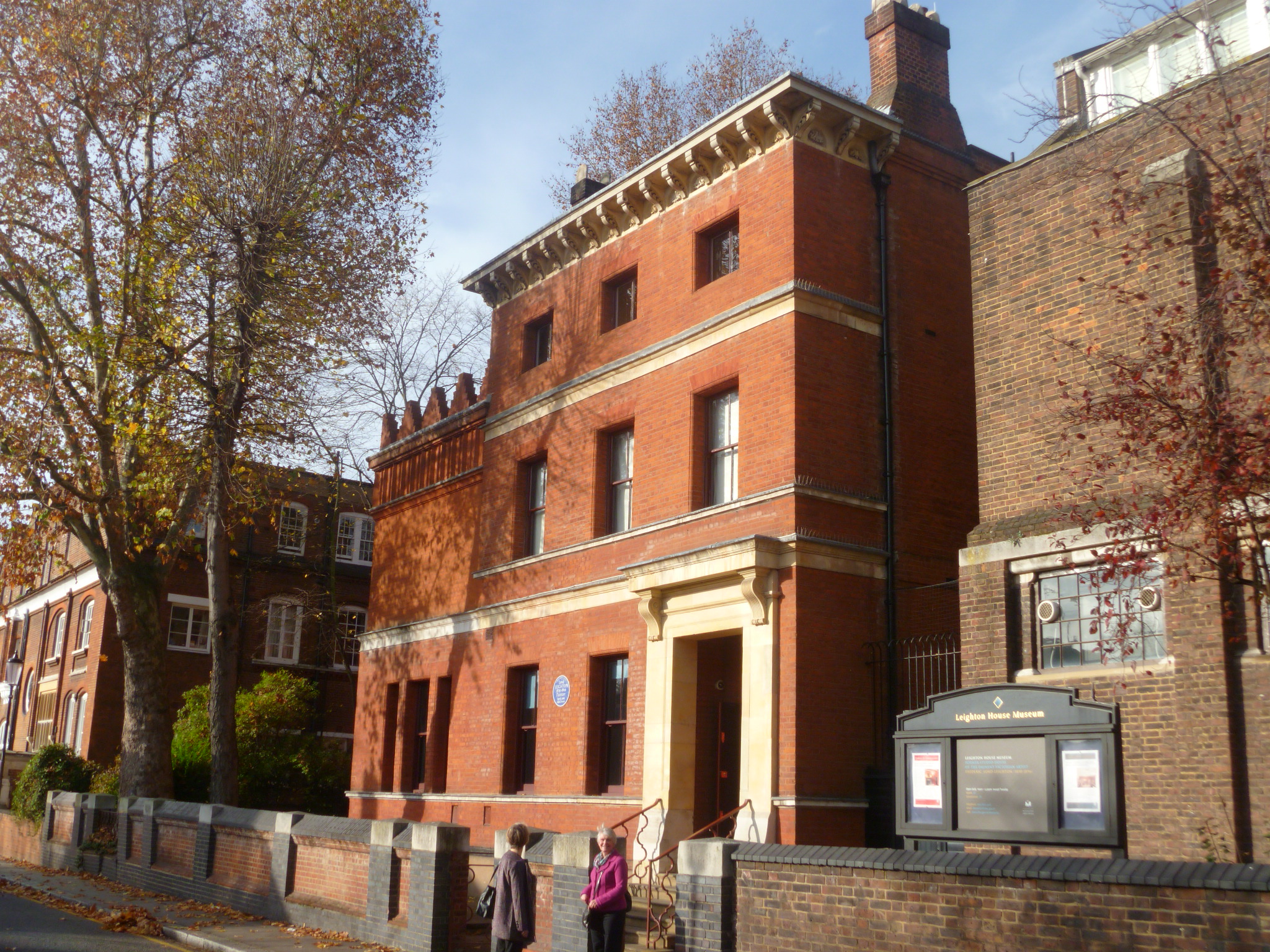
Leighton House in Kensington.

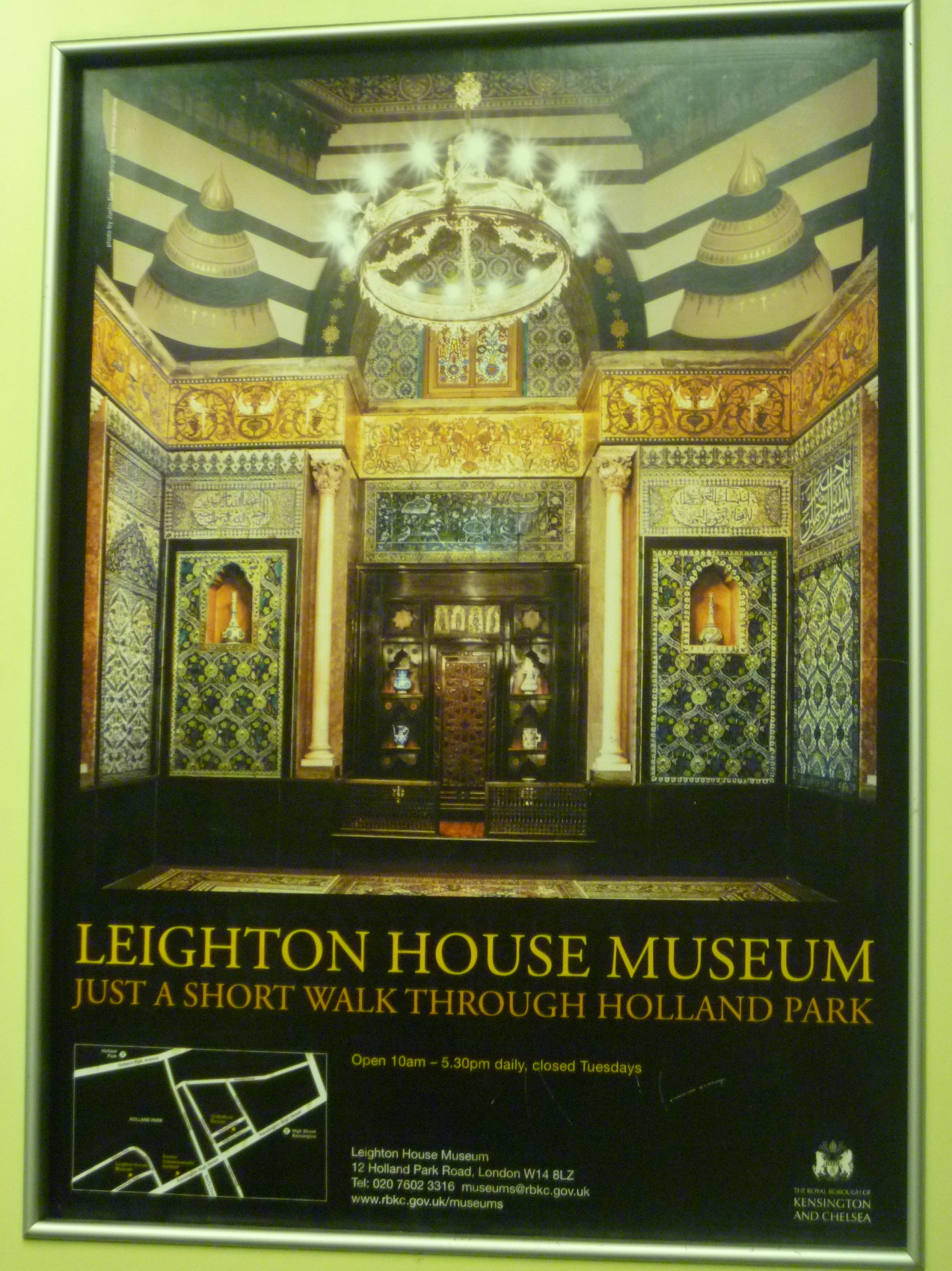
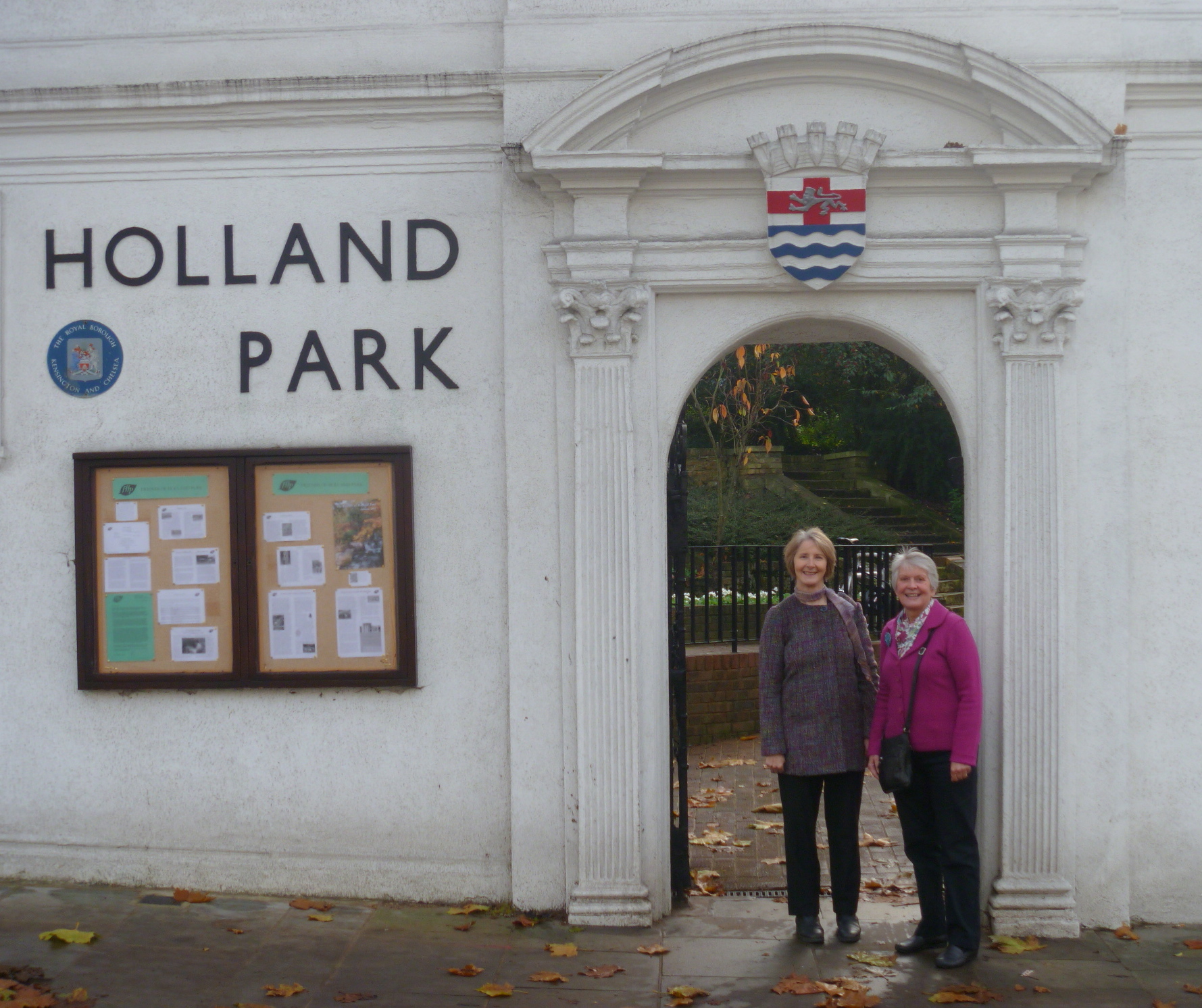
Today I met up with my sister and friend and visited Leighton House in Kensington. It was a beautiful day – unseasonably warm – and we met at Holland Park Tube Station. It’s short walk from there to Holland Park itself. Once inside the park you could be miles away from the busy metropolis that is central London. It was easy to forget that we were only just in Zone 2!

There’s a modern cafe in the middle of the park and it was here that we stopped for coffee (or, in my case, tea) and a chat before heading to the house.

Frederic, Lord Leighton (1830 – 1896), was born in Scarborough, my favourite Yorkshire seaside resort. His father was a doctor and so was his grandfather. In fact his grandfather was primary physician to the Russian royal family in St Petersburg. He amassed a large fortune and because of this Leighton was cushioned for the rest of his life. Although his parents were unhappy with his choice of career they agreed to it and expected him to become “eminent in art”. His successes were many – not least that Queen Victoria bought his first major painting and in 1878 he was appointed President of the Royal Academy. On his death his sisters ensured that the house was left to the nation, or at least to the Royal Borough of Kensington and Chelsea.

As usual no photography is allowed in the house. You enter a huge staircase hall, narcissus hall and the fabulous Arab hall. Leighton was a consummate collector of things Middle Eastern – tiles, textiles, ceramics, woodwork and other crafts collected on his travels – and art – from paintings by  Corot and Tintoretto to his contemporaries G. F. Watts, John Everett Millais and William de Morgan. Despite all the oriental artefacts the house struck me as rather spare and un-Victorian. There’s a lovely big garden at the back but it’s closed in winter. I noticed that they also plan some entertaining events. There’s an Operatic Evening and a Carol Singing evening coming up in December.

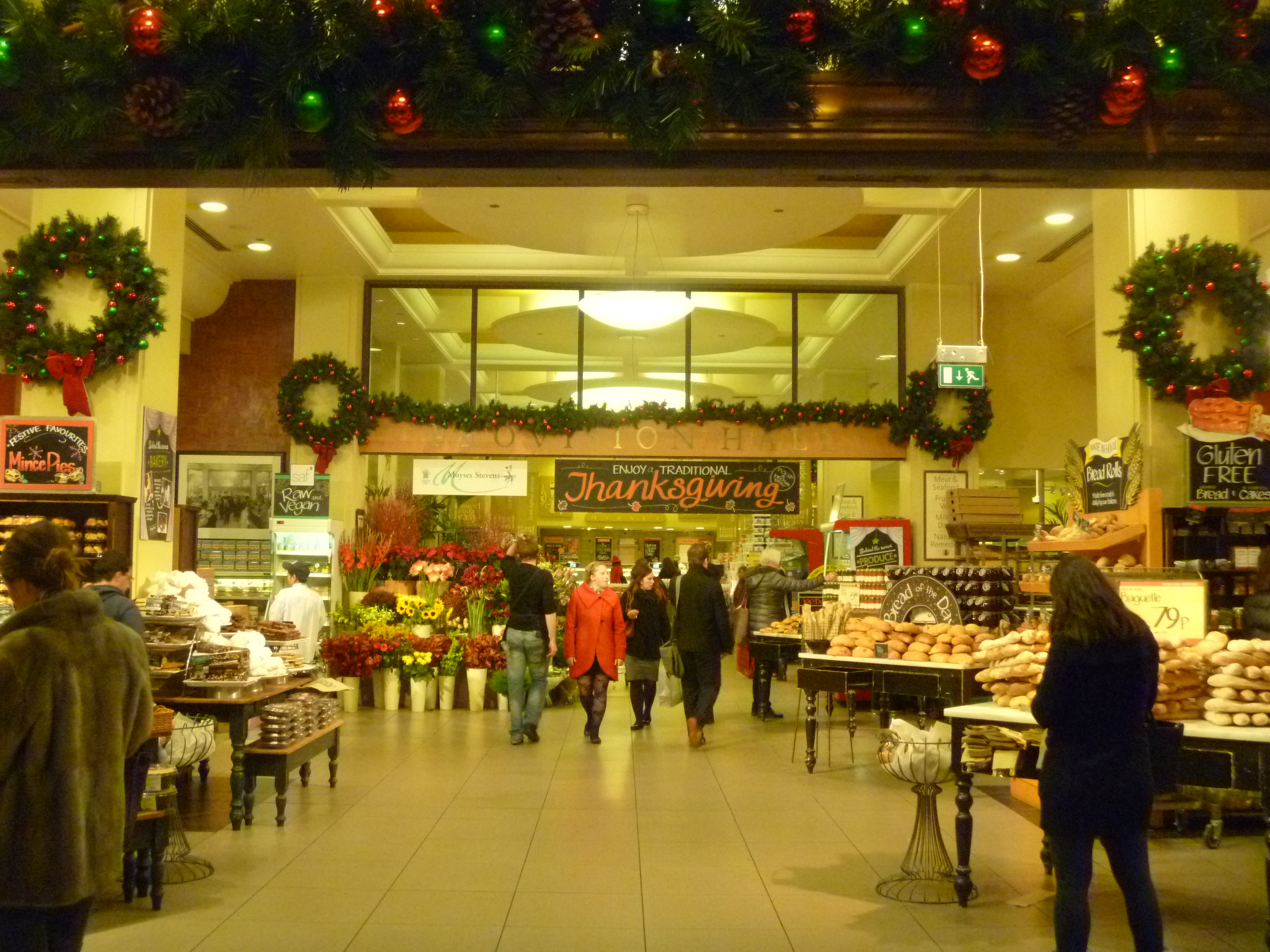
For lunch we headed down High Street Kensington to Whole Foods Market where Thanksgiving was in full swing!

I love Lucy! A Cavalier at Bolsover Castle

B

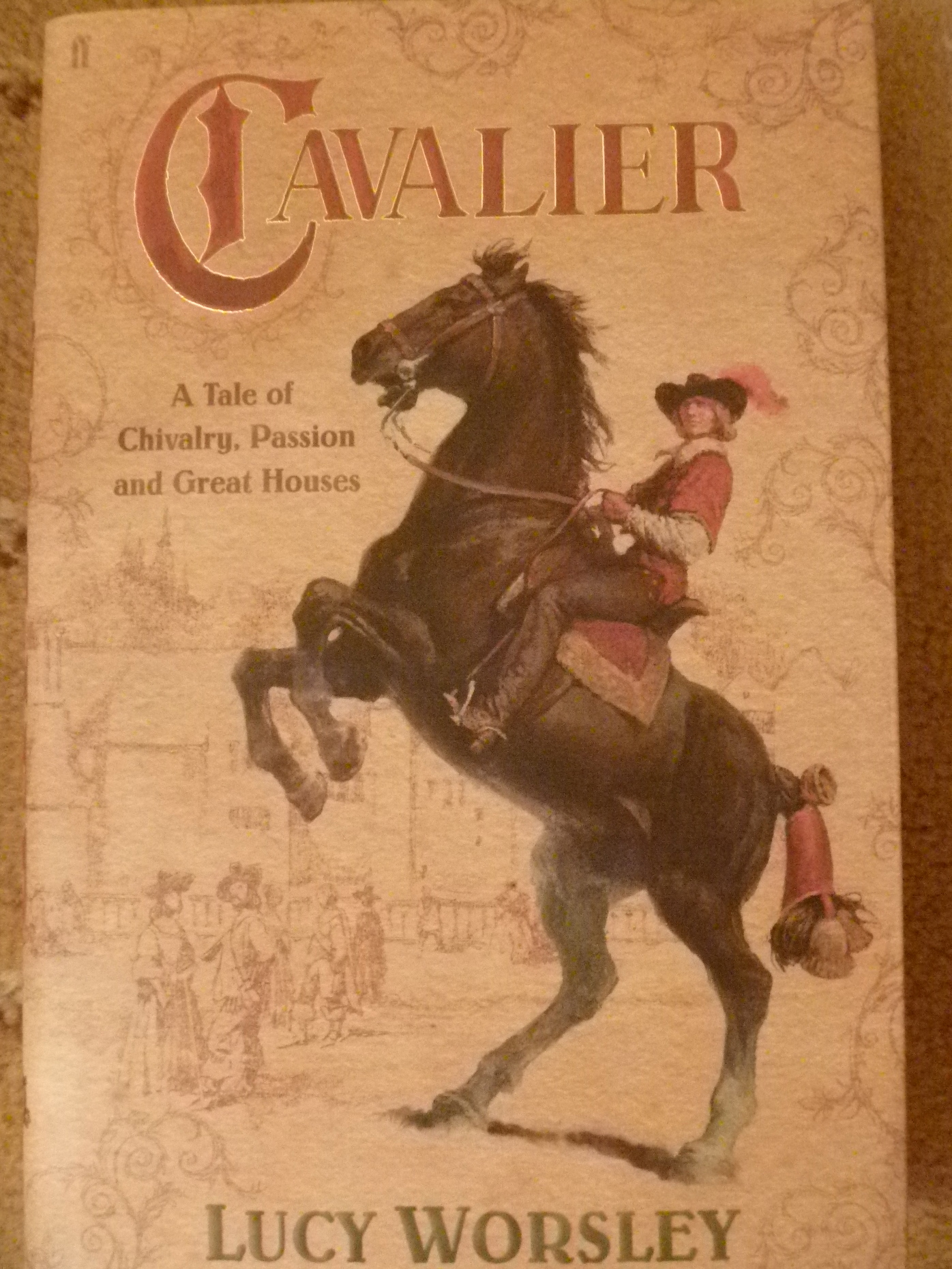
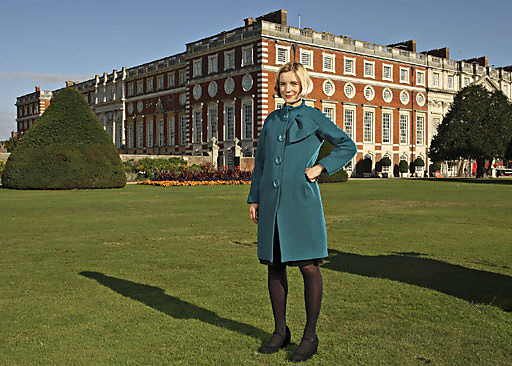
I’m really looking forward to reading this book. But it won’t be until the new year as I have a number of others to get through before I start on Lucy Worsley‘s ‘Cavalier: a story of chivalry, passion and great houses‘. I heard Ms Worsley speak at the Edinburgh International Book Festival in August this year. But even before that I was a fan of her  ‘If Walls Could Talk’ shown on BBC television in the spring. In this fab programme the lovely Lucy trots around our modern day homes pointing out all the historical details and stories of the evolution of our bedrooms, living rooms, bathrooms and kitchens from the earliest times until the present day. She even volunteered to dress up and play various roles in order to represent to us the differences between previous generations and our own.

For many years Lucy Worsley (she is now Chief Curator of The Historic Royal Palaces) was based at Bolsover Castle in Derbyshire and over ten years she researched the story of William Cavendish and his family and the result is ‘Cavalier’.

Bolsover Castle itself isn’t really that far away from me – about 60miles south straight down the M1 motorway.

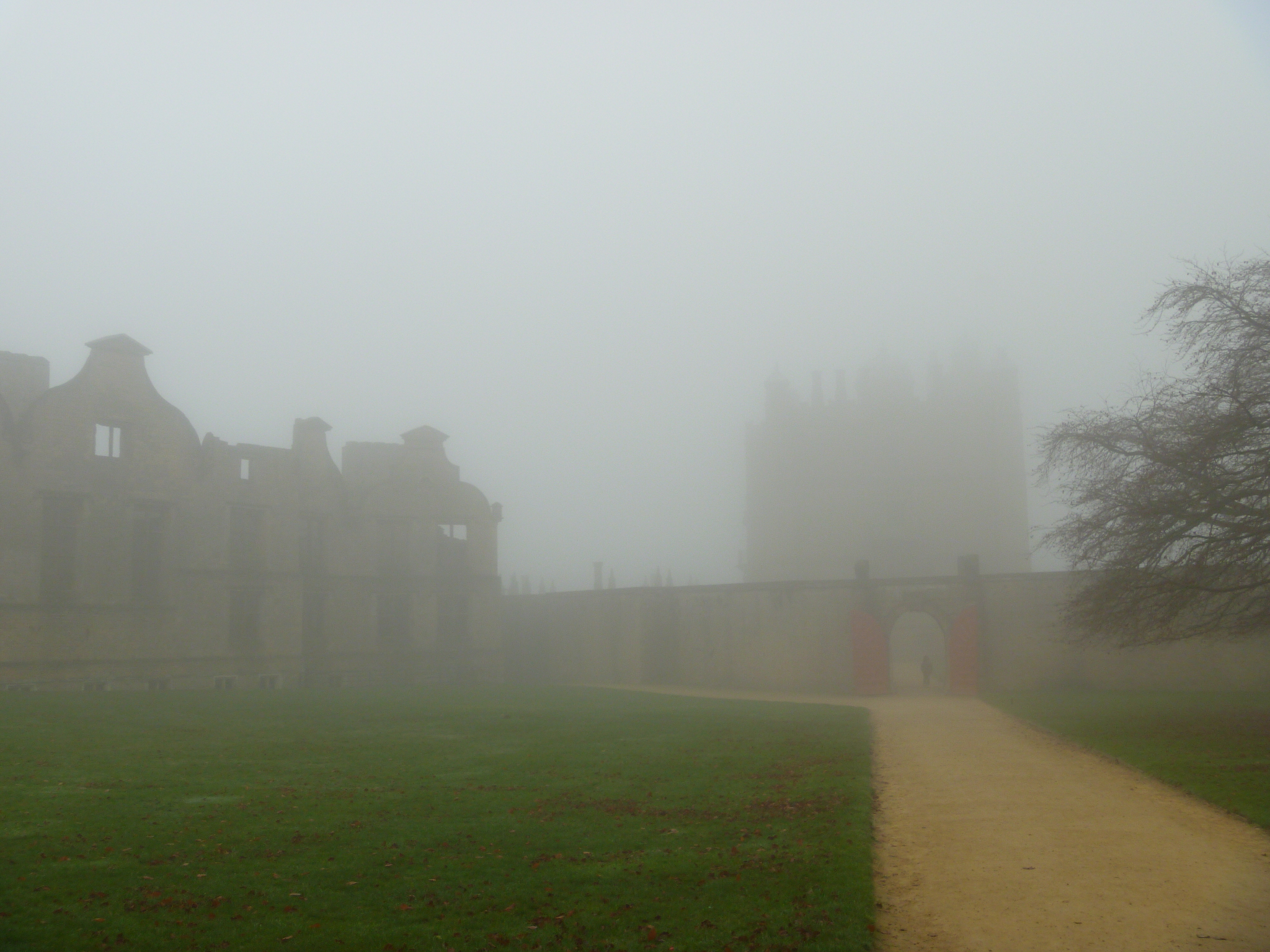
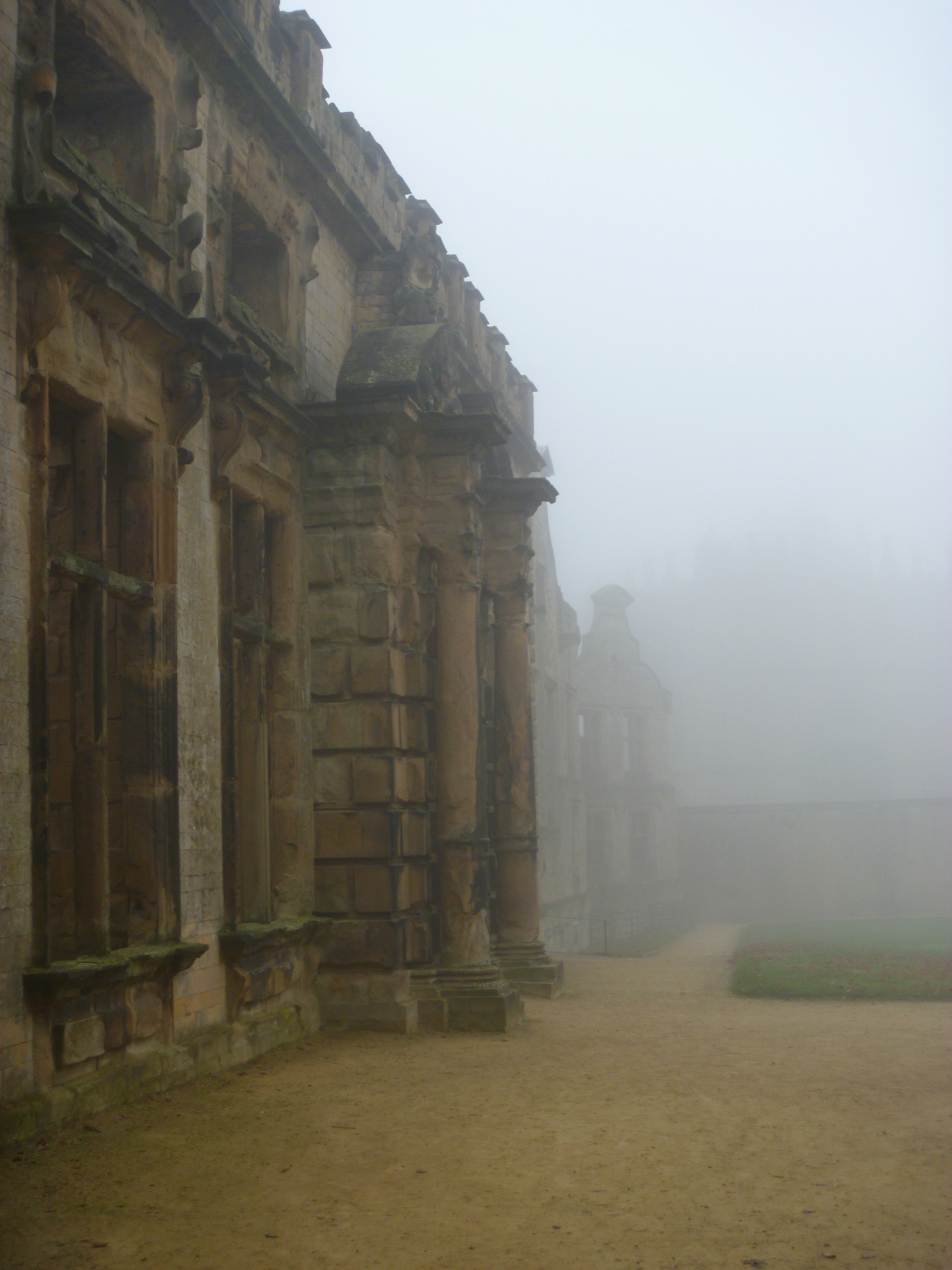
First,  forget the idea of castle. Seen from the M1 Bolsover may look like a fortress but it is rather a fairytale palace on a hill” says Simon Jenkins in one of my ‘bibles’ “England’s thousand best houses“. As you can see we chose a very atmospheric day to take a trip to Bolsover and give it the once over. The fog should have lifted but try as it might the sun just could not get through all day.

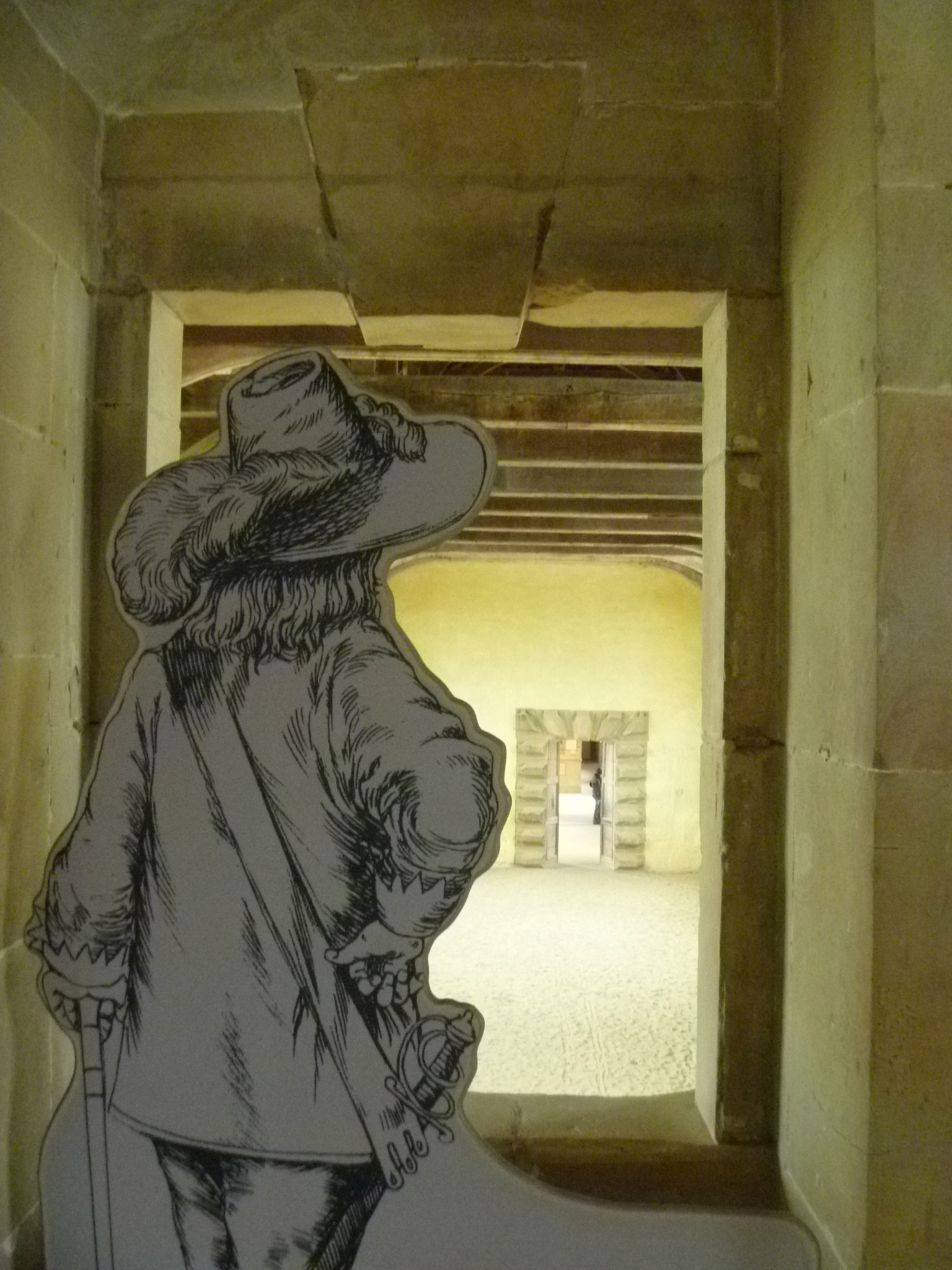
The Riding House from the Shoeing House – complete with cardboard cavalier!

After the obligatory cup of tea in a very nicely appointed cafe and a quick glance round the English Heritage gift shop we switched on our audio guides and made our way falteringly towards the castle itself, stopping every so often to listen to the character actors and narrator tell us more about Bolsover and its creator and inhabitants. Once through the huge entrance gate (or tradesman’s entrance as it was called on the audio guide) you’re in an impressive courtyard.

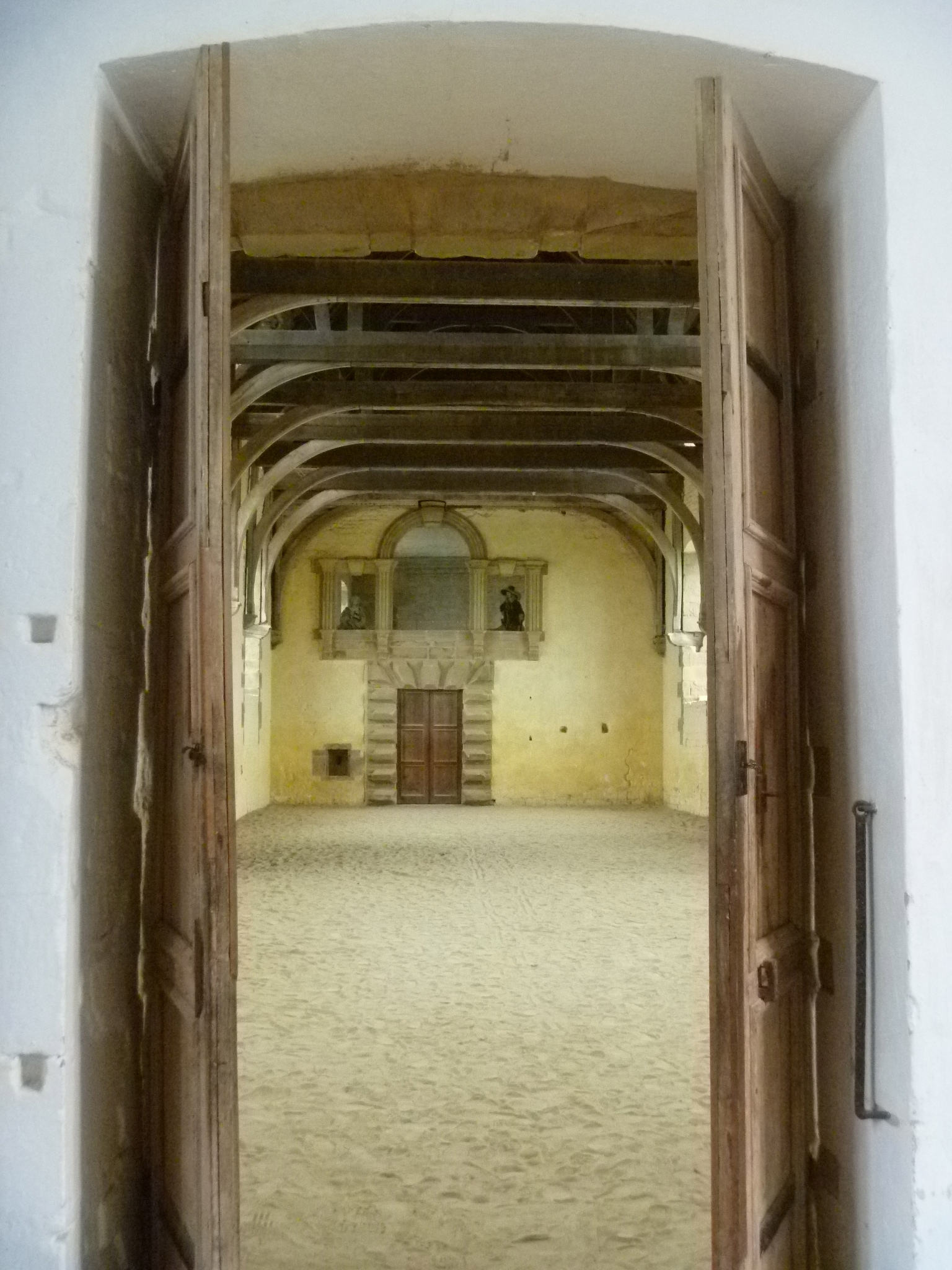
The Riding House

The first building on the left is called The Riding House Range and it contains “the finest surviving example in England of this rare, specialised type of building” (Bolsover Castle guidebook, also written by Lucy Worsley). Like the famous act by the white stallions of the Spanish Riding School in Vienna this huge room was for training horses in the art of  “manege”  (circling, leaping, jumping). William Cavendish, 1593-1676) was the cavalier responsible for the greatest part of the building and development of the site at Bolsover. He had two obsessions – women and horses – and Bolsover was his “pleasure dome”.

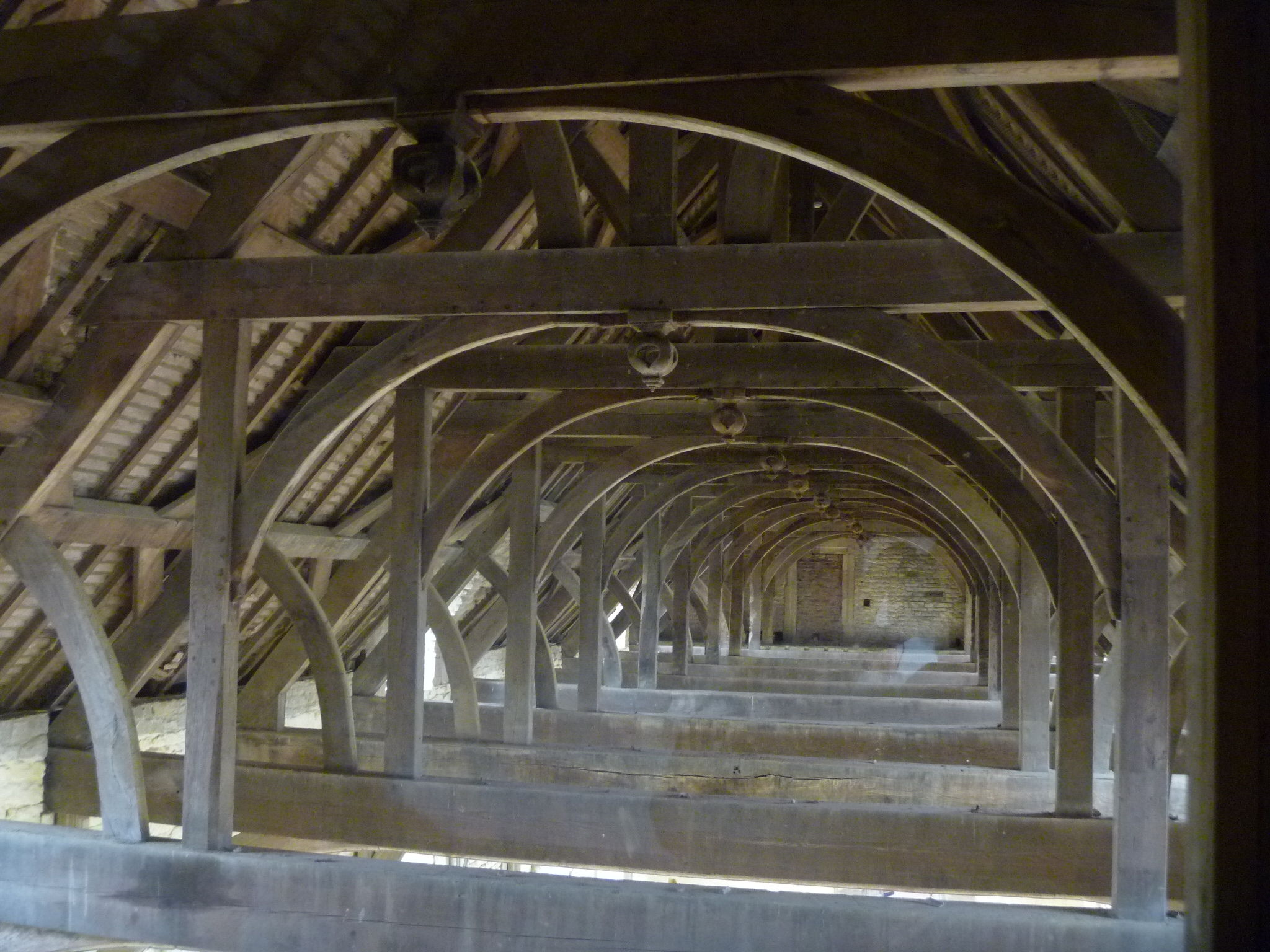
The great oak roof of the Riding House

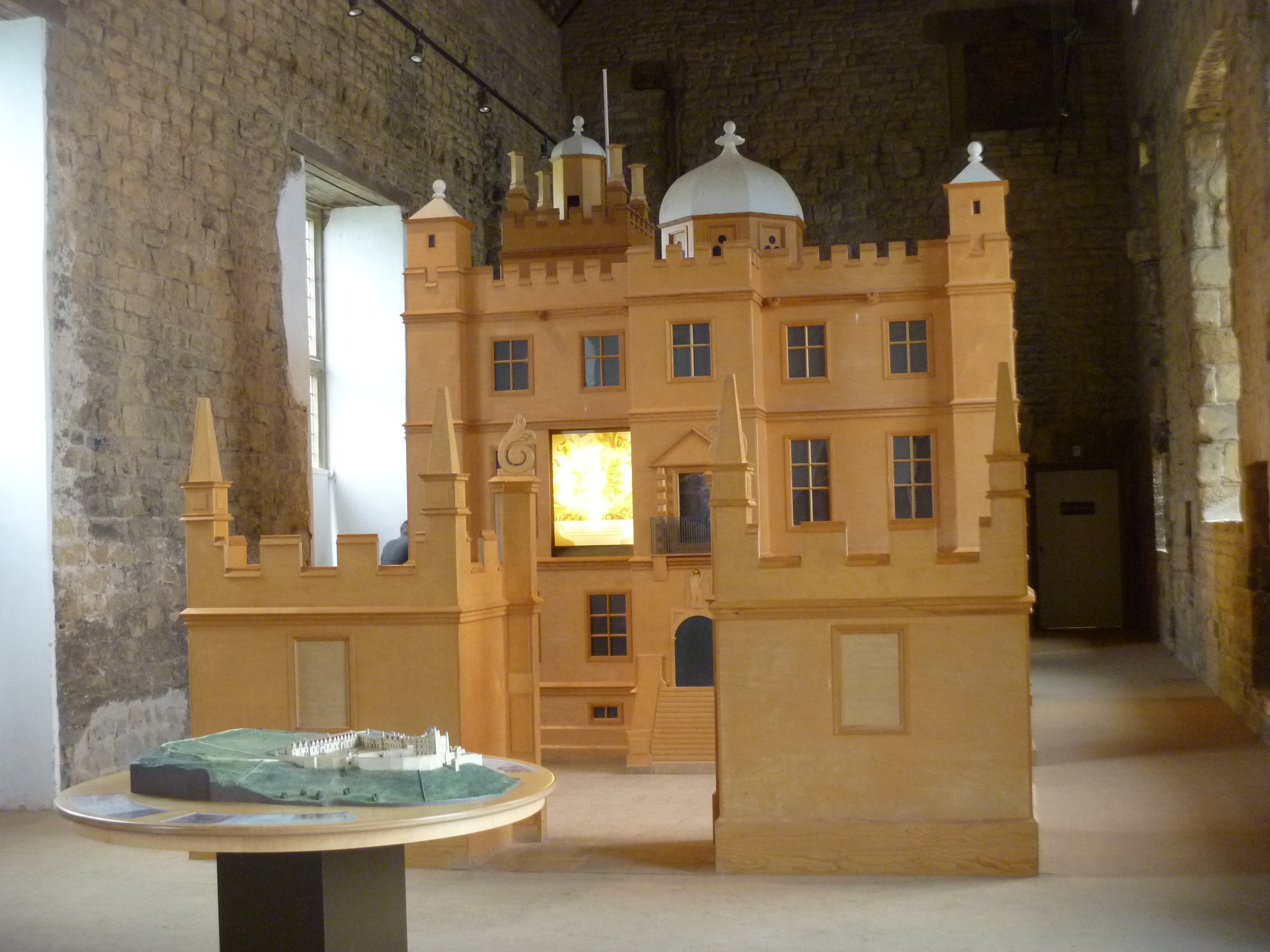
In the stables is an exhibition about the history of Bolsover and its place in English history, an excellent 15 min. video about The Little Castle and even a large model of it. We seemed to gain enough information from this room to make the audio guides superfluous.

Walk-in model of the Little Castle in the Stable

A walk around the Terrace Range, (with all the usual appointments of chambers and kitchens etc) and from where we should have had (but for the persistent fog) a long-ranging view over the valley and down towards nearby Hardwick Hall, lead us quickly to the romantic Little Castle itself.

Terrace Range and approach to The Little Castle

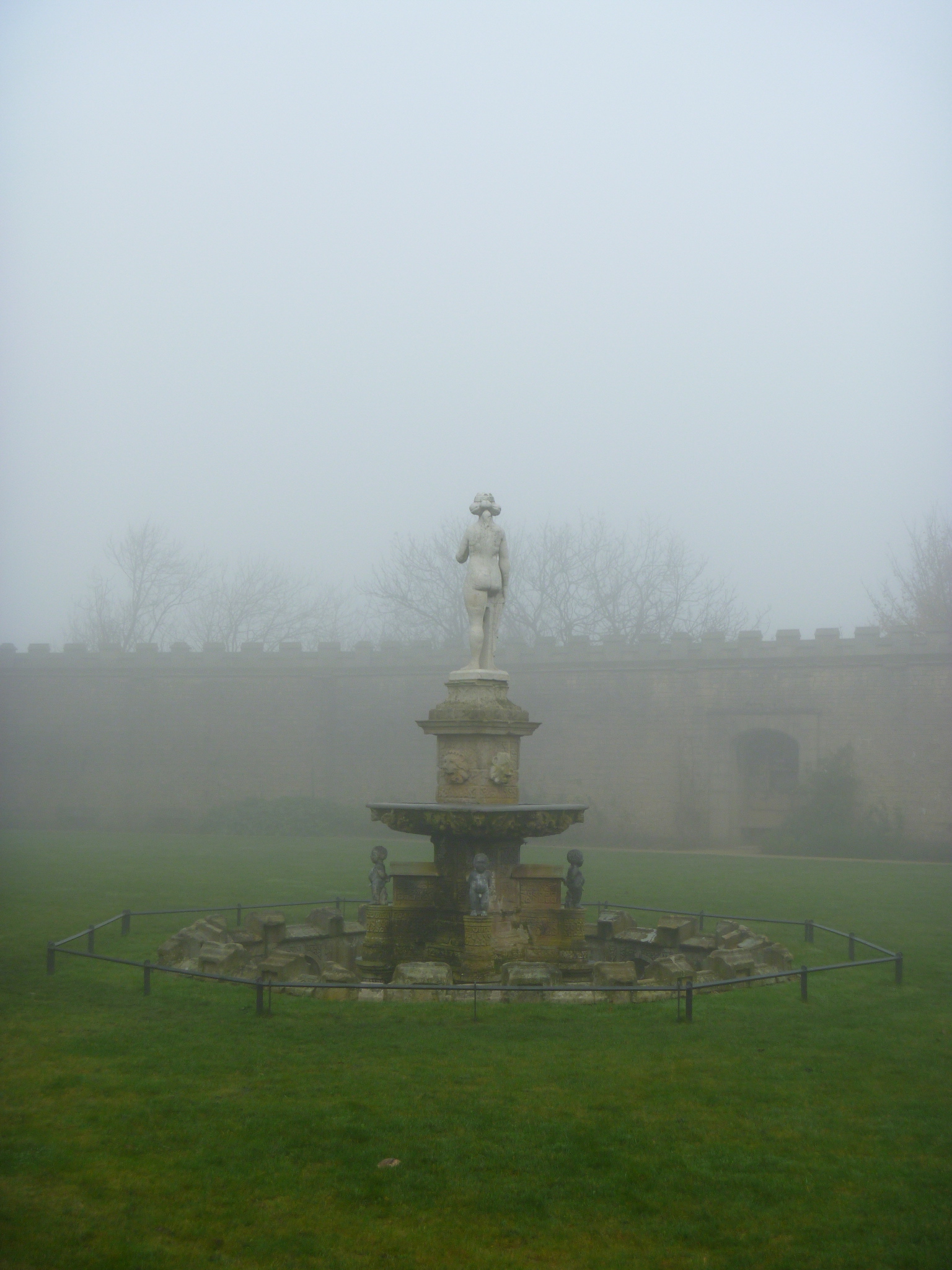
Here we saw for ourselves the incredibly preserved and restored artwork: the Pillar Parlour, the Star Chamber, the Marble Closet, the Bedchamber, Heaven and Elysium. This final chamber with elaborately decorated panelling depicting the heaven of the gods and goddesses of ancient Greece appropriately overlooks the garden and its Fountain of Venus.

Bolsover, I’ll be back on a sunny day to walk the terrace, admire the view, picnic in the gardens and relax in full view of your Venus fountain!

Lanhydrock House, Cornwall

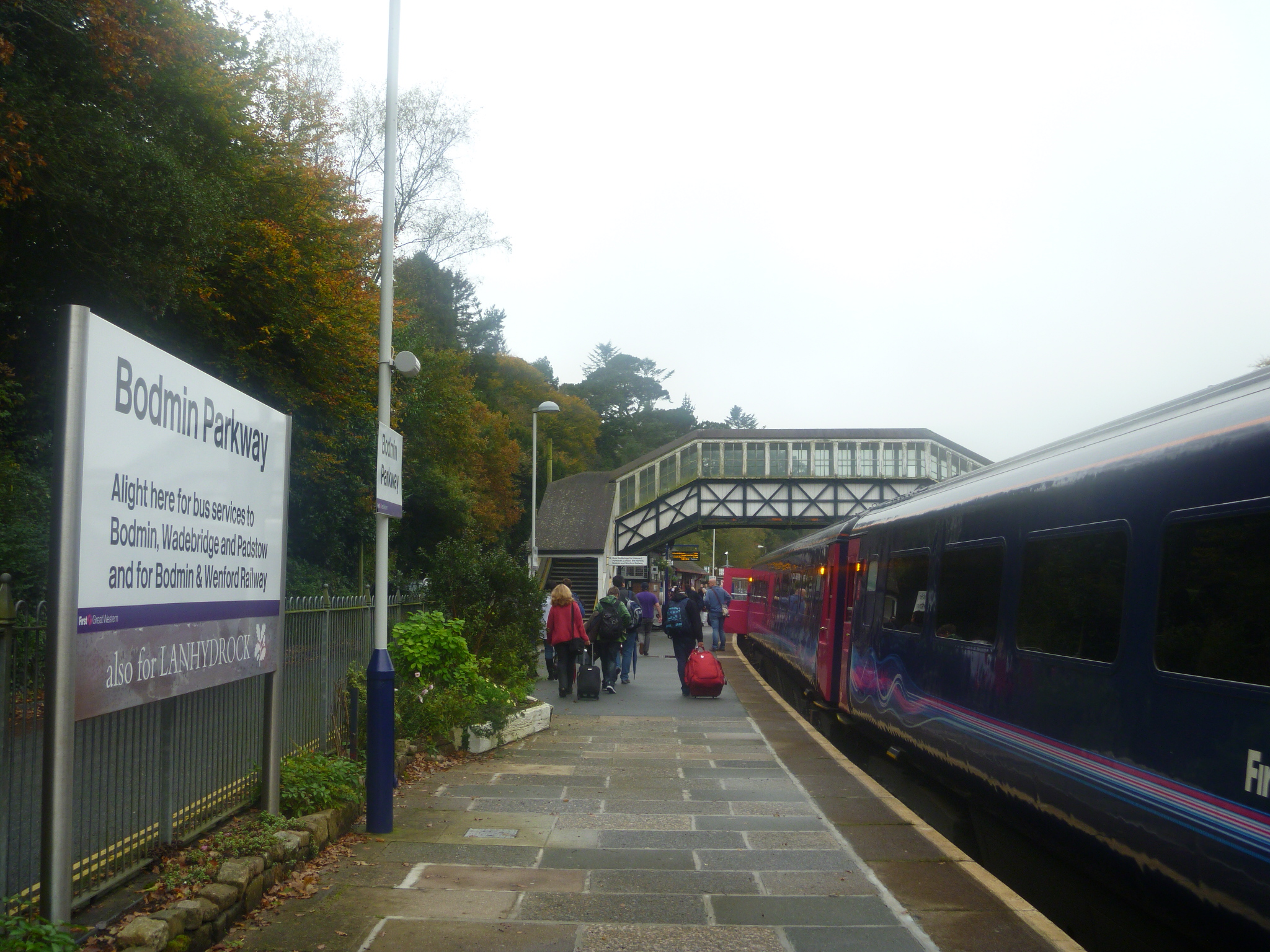
Yesterday I took the train from Totnes, in Devon, to Bodmin, in Cornwall, from where, I had discovered recently, it is possible to walk along the carriage drive for a mile and three quarters to Lanhydrock House“The finest house in Cornwall”.  The weather stayed dry but the clocks were put back an hour on Saturday night so the days are now shorter.

When you alight from the train at Bodmin Station it is a bit like stepping back in time. There’s a hustle and bustle as people are met and packed into waiting cars and there’s a delightful station buffet … in the former signal box. Then the London train pulls out of the station on its way to Penzance, the cars roar away and all is still and quiet and you can hear the birds sing. But maybe it was just the whistle of a steam train whose line shares the station that took me back to earlier days.

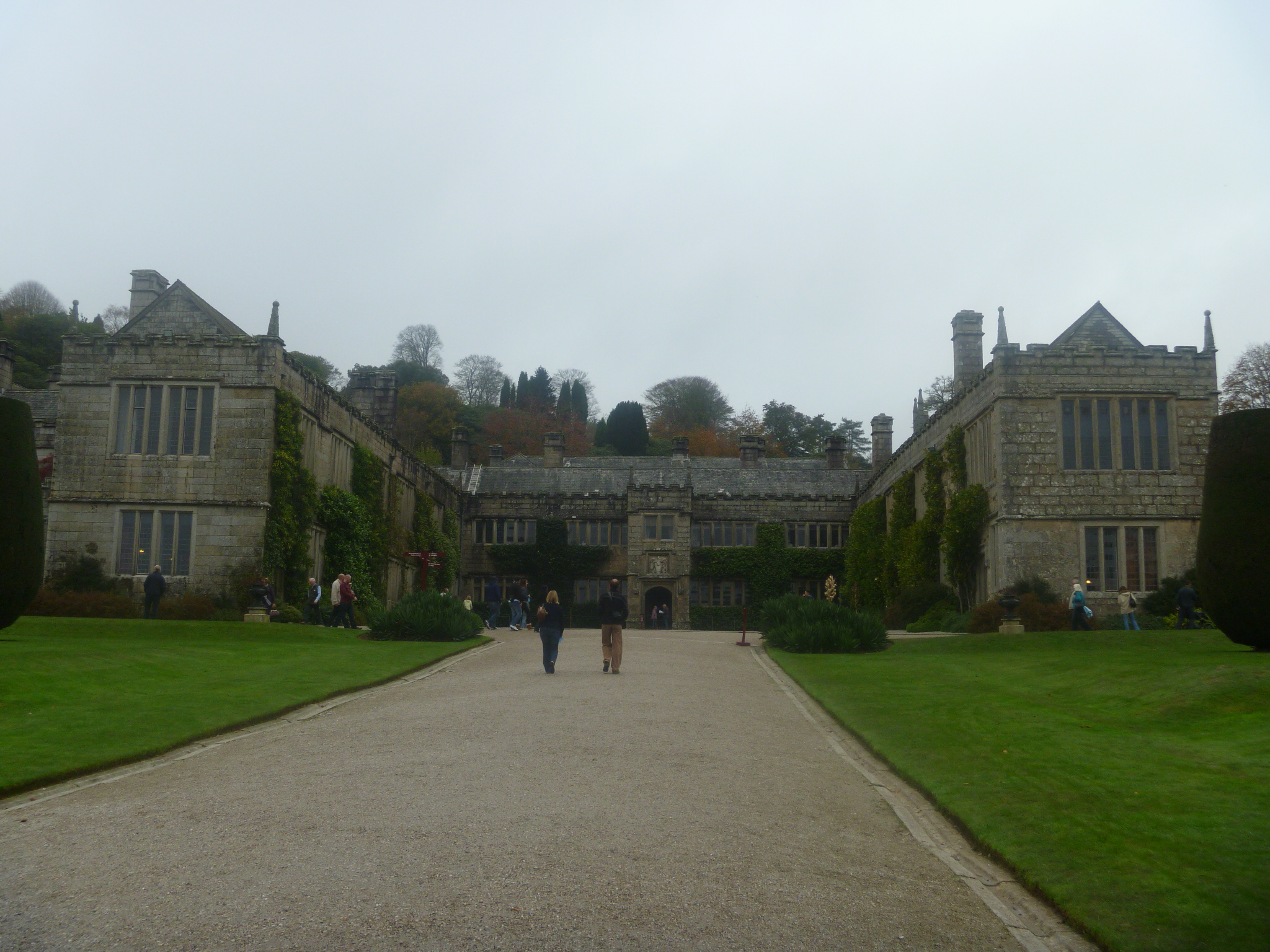
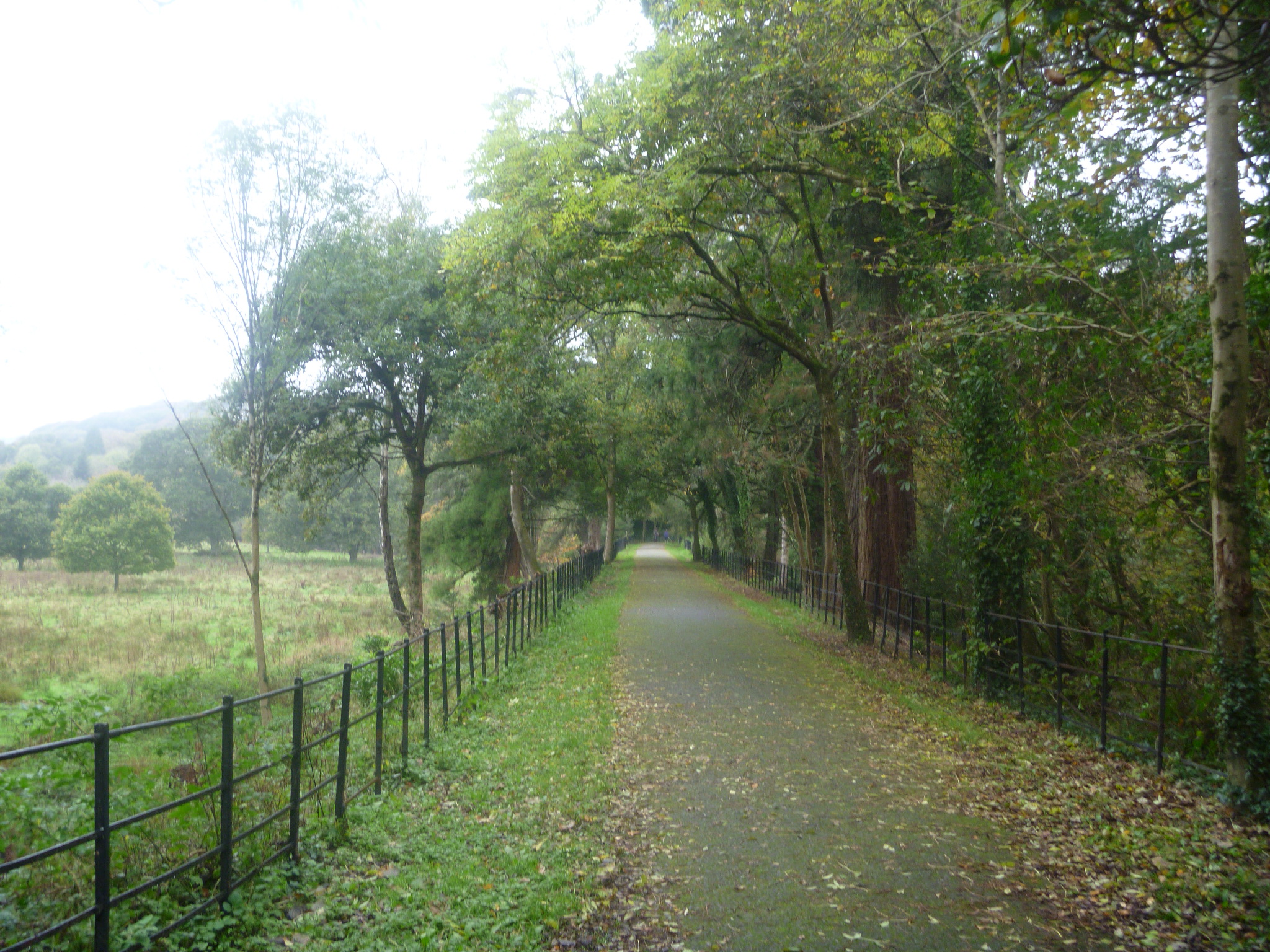
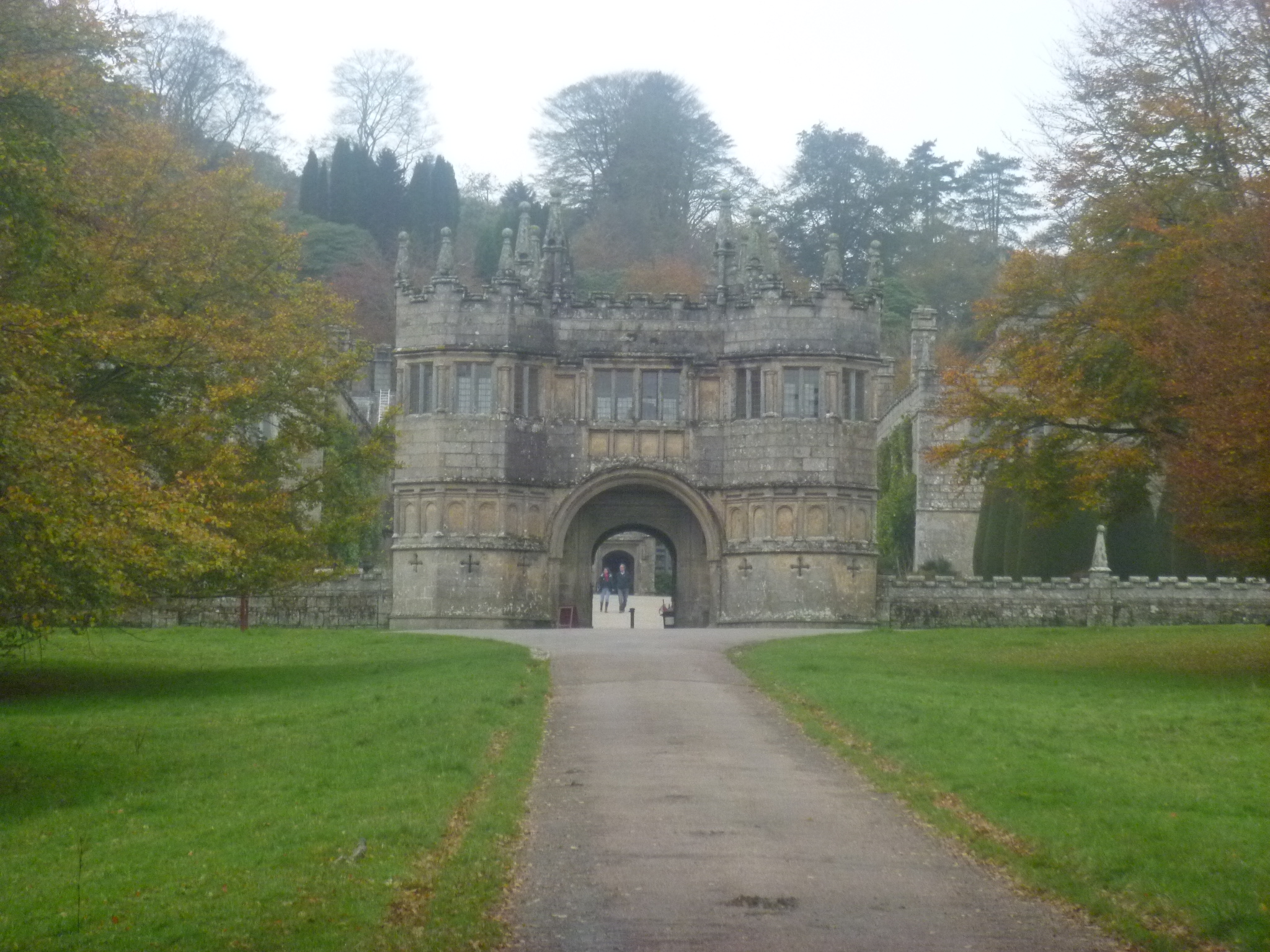
At the end of the car park there’s a red gate. Go through it and you are already on the Lanhydrock House Carriage Drive.  At first you walk through woodland alongside the River Fowey. After about a mile there’s a lodge house and car park. Cross the road and head uphill to another lodge, go through another gate and at the brow of the hill you can see the seventeenth century Gatehouse and Lanhydrock looms into view.

A bit of investigation before setting out lead me to discover in my Blue Guide to Literary Britain by Ian Ousby that Thomas Hardy based his description of Endelstow House, the home of the Luxellians in A Pair of Blue Eyes, on Lanhydrock House, moving it to St Juliot near Boscastle for the story.

“For by this time they had reached the precincts of Endelstow House. Driving through an ancient gate-way of dun-coloured stone, spanned by the high-shouldered Tudor arch, they found themselves in a spacious court, closed by a facade on each of its three sides. …  The windows on all sides were long and many-mullioned; the roof lines broken up by dormer lights of the same pattern. The apex stones of these dormers, together with those of the gables, were surmounted by grotesque figures in rampant, passant, and couchant variety. Tall octagonal and twisted chimneys thrust themselves high up into the sky, surpassed in height, however, by some poplars and sycamores at the back, which showed their gently rocking summits over ridge and parapet. In the corners of the court polygonal bays, whose surfaces were entirely occupied by buttresses and windows, broke into the squareness of the enclosure; and a far-projecting oriel, springing from a fantastic series of mouldings, overhung the archway of the chief entrance to the house.” 

A Pair of Blue Eyes by Thomas Hardy (Ch.5)

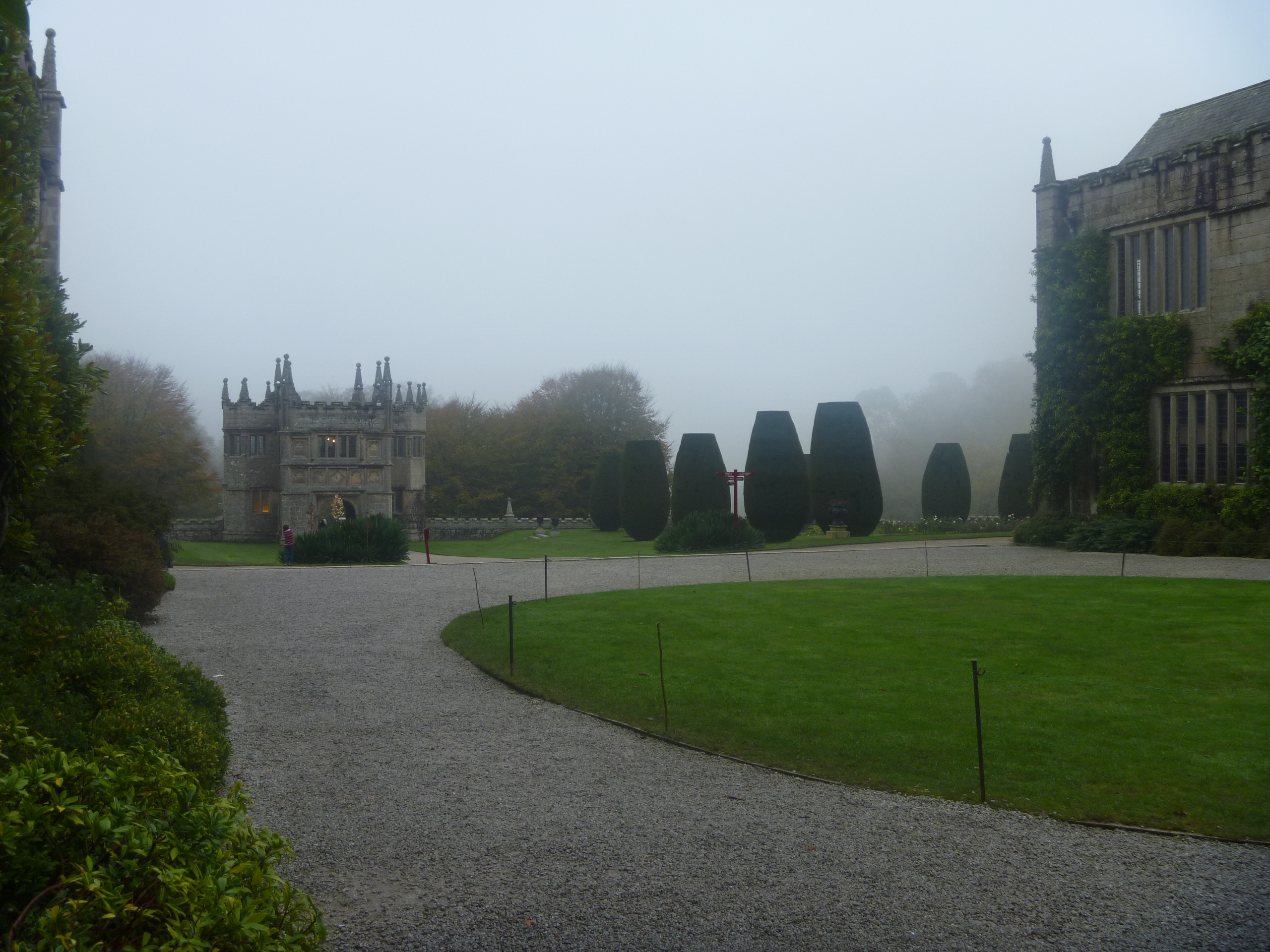
The house today is not the original seventeenth century edifice but a late Victorian reconstruction following a disastrous fire which destroyed most of the earlier building in 1881. It was taken over by the National Trust in 1953. After refreshments and a browse in the second-hand bookshop I toured the fifty rooms in the house open to the public. These rooms included many below stairs: kitchen, scullery, bakehouse, dry larder, fish larder, meat larder, dairy – all very Downton Abbey. Most interesting to me amongst the family’s rooms were a Family Museum, Captain Tommy’s dressing and bed rooms, the drawing room and the Long Gallery.

The obligatory visit to the shop revealed that the popular author E. V. Thompson based many of his novels on Lanhydrock.

By 3.30pm the mist was beginning to thicken so I made my way back to the Carriage Drive and enjoyed the reverse walk back to the station for my 4.25pm train back to Totnes. The cafe was closed, the steam engine was being shunted away and we stood in the gloomy, misty, light rain waiting for our Paddington-bound train.

The Literary Connection of North Lees Hall

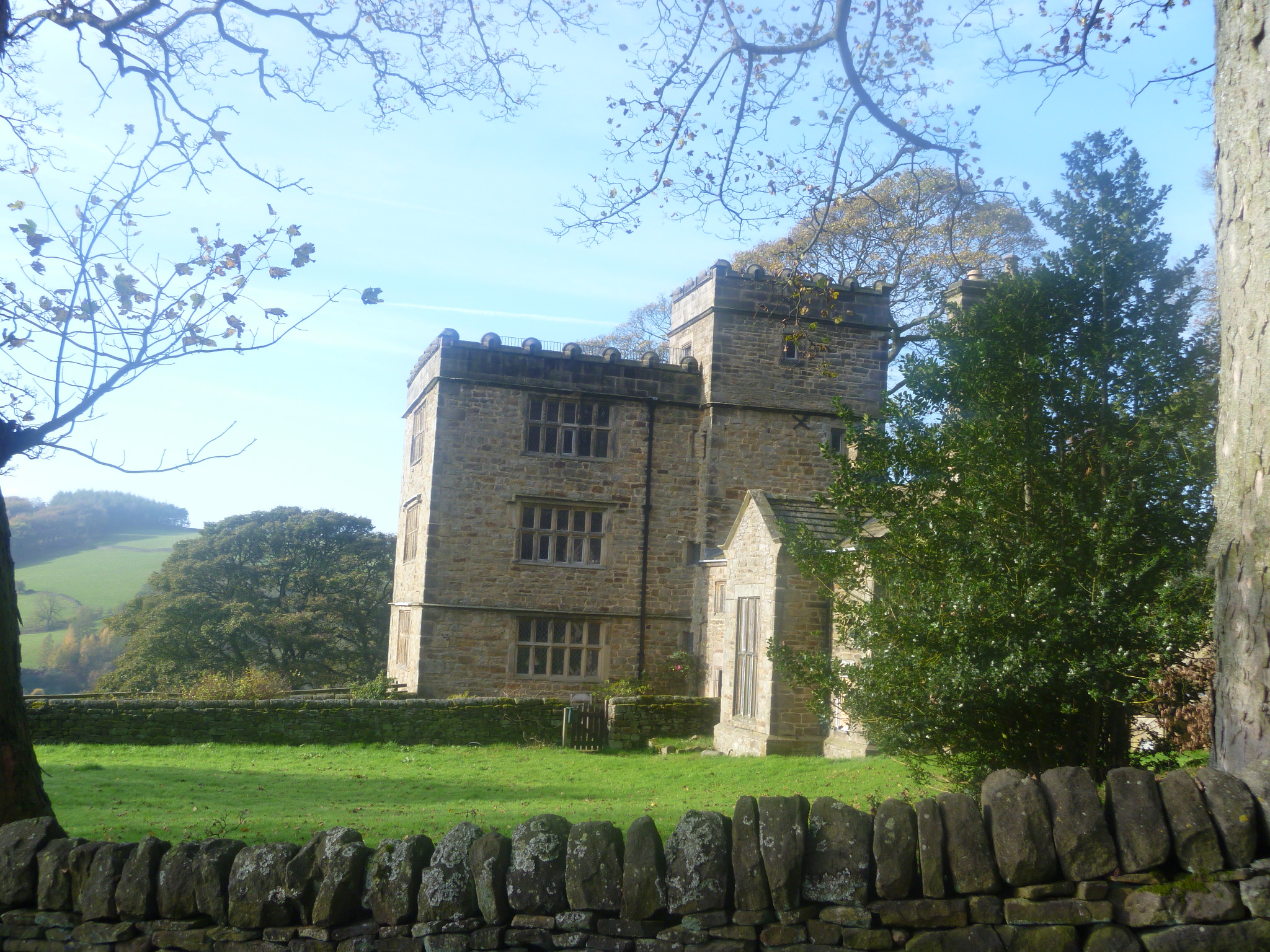
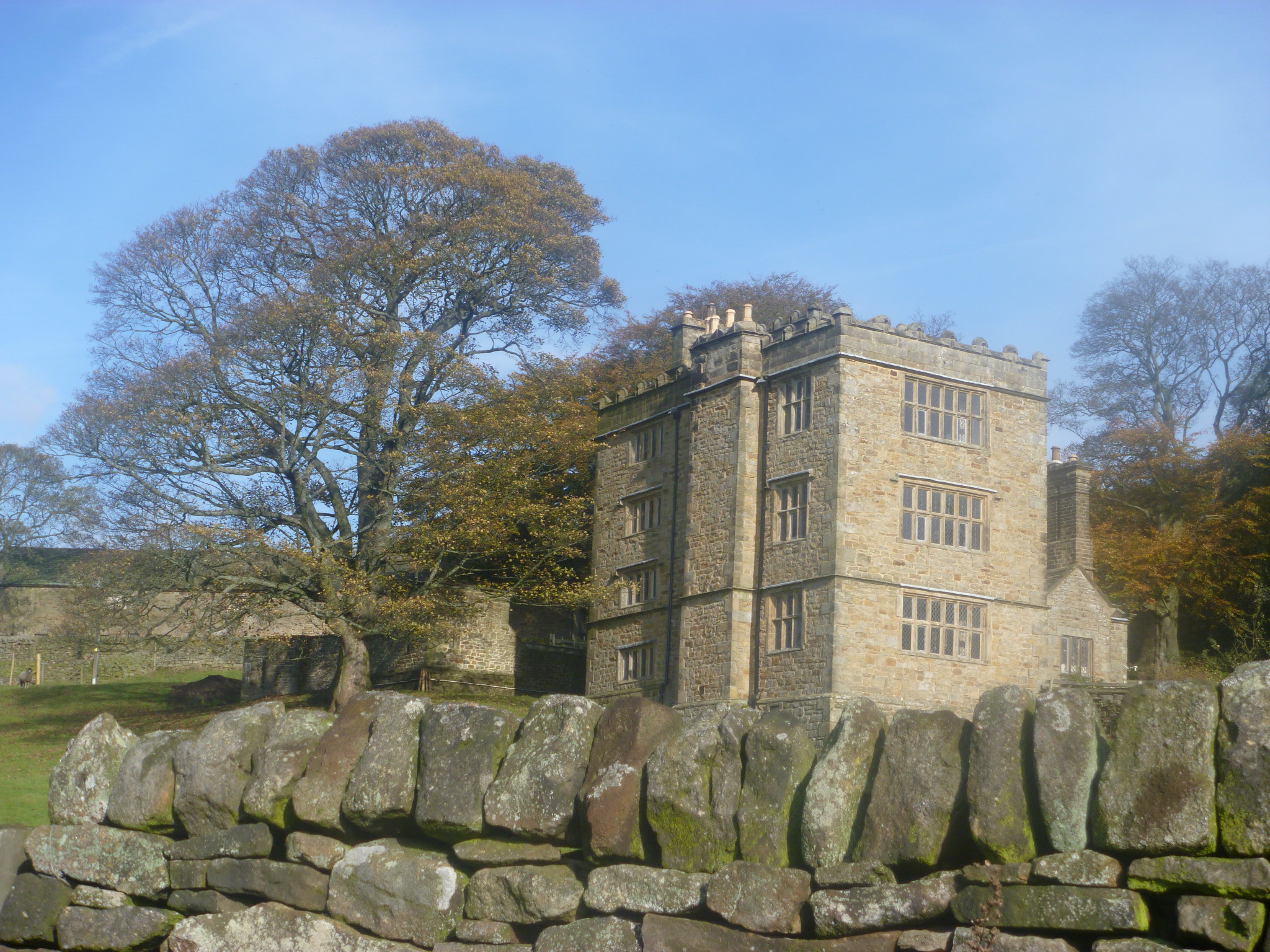
“It was a fine autumn morning; the early sun shone serenely on embrowned groves and still green fields; advancing on to the lawn, I looked up and surveyed the front of the mansion. It was three storeys high, of proportions not vast, though considerable: a gentleman’s manor-house, not a nobleman’s seat: battlements round the top gave it a picturesque look.

Its grey front stood out well from the background of a rookery, whose cawing tenants were now on the wing: they flew over the lawn and grounds to alight in a great meadow, from which these were separated by a sunk fence, and where an array of mighty old thorn trees, strong, knotty, and broad as oaks, at once explained the etymology of the mansion’s designation.

Farther off were hills: not so lofty as those round Lowood, nor so craggy, nor so like barriers of separation from the living world; but yet quiet and lonely hills enough, and seeming to embrace Thornfield with a seclusion I had not expected to find existent so near the stirring locality of Millcote. A little hamlet, whose roofs were blent with trees, straggled up the side of one of these hills; the church of the district stood nearer Thornfield: its old tower-top looked over a knoll between the house and gates.”

Jane Eyre  (Chapter 11)

Today I visited a friend and former neighbour who, with her husband, moved to work in Sheffield. They now live in the Hope Valley in the beautiful Derbyshire Peak District . Our plan was to take a walk from her house to visit North Lees Hall, visited by Charlotte Bronte and her friend Ellen Nussey. Bronte later based Mr Rochester’s home Thornfield Hall on North Lees Hall.

The Vivat Trust has similar aims to The Landmark Trust. I have never stayed in one of their properties but my feeling is that they do everything much more comfortably or even luxuriously but that they don’t have such a ‘low’ (ruinous?) starting point. North Lees Hall is a Vivat Trust property.

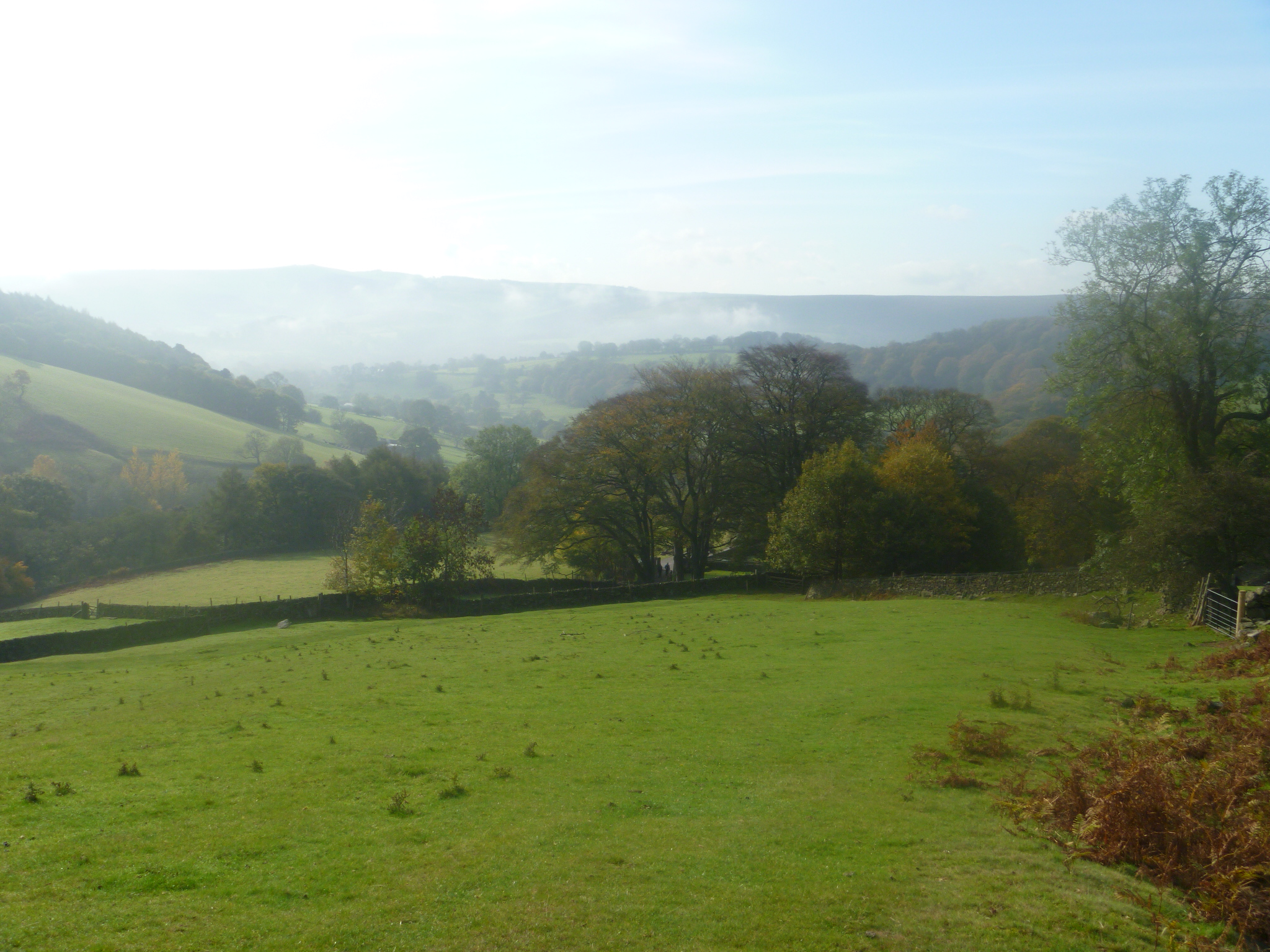
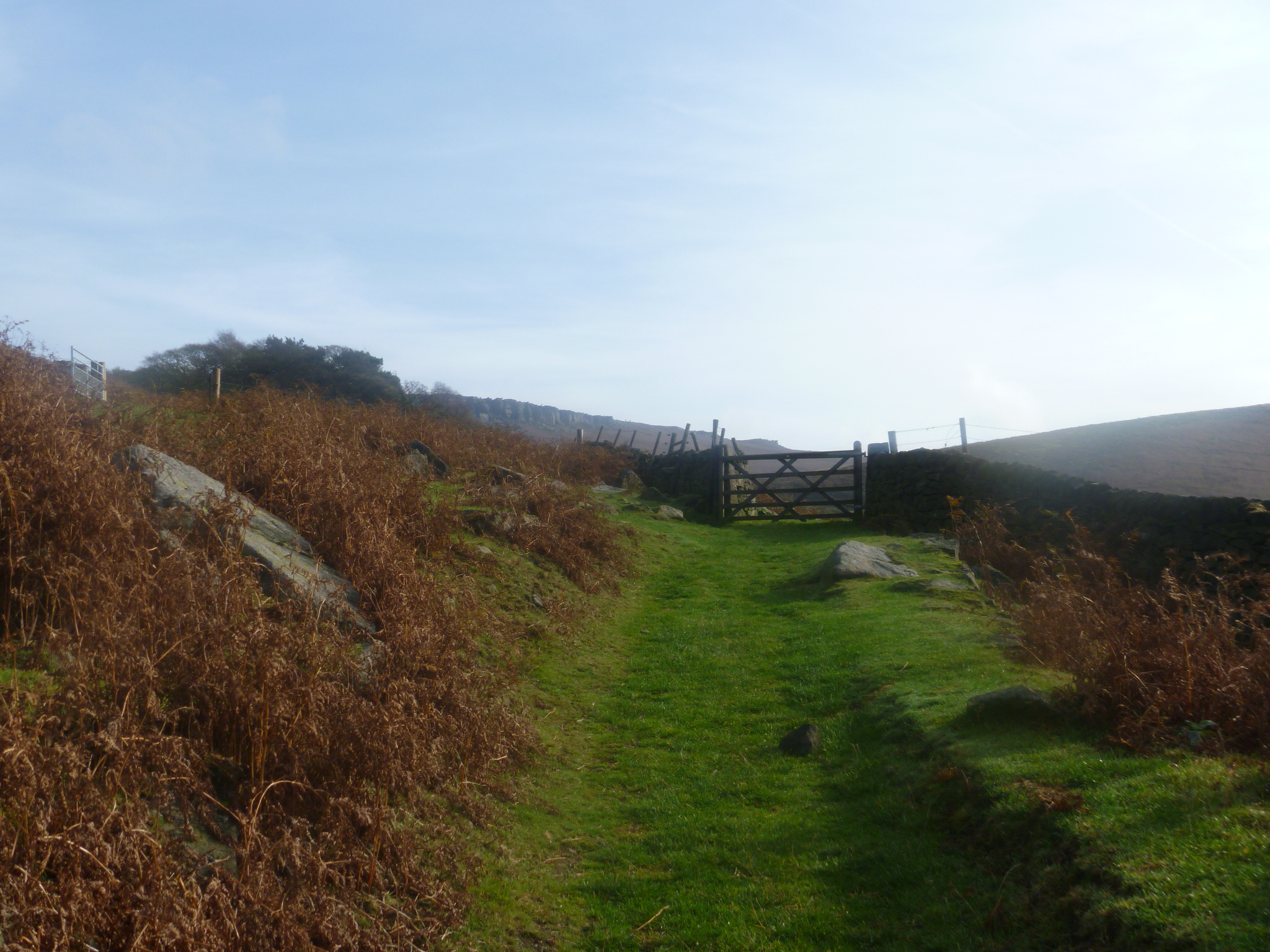
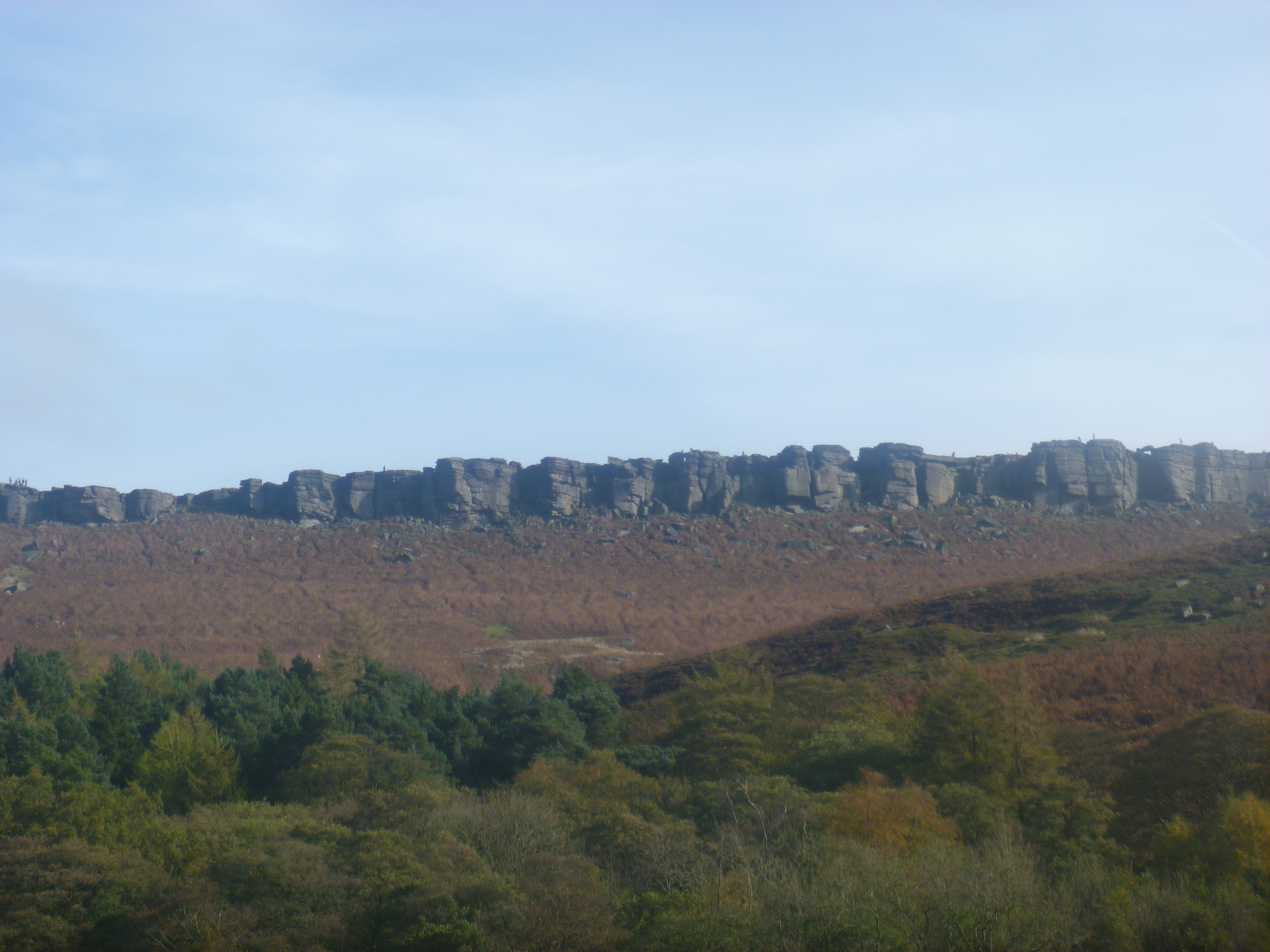
The day started off very misty – but these always turn out the best. After a cup of tea and brief chin-wag we headed off up the hill from her house. It was a perfect walk – a climb up the lane to begin and over a couple of stiles and then green grassy paths for a good hour or so with wonderful views of Stannage Edge (a climbers paradise, apparently). Eventually through a wooded copse we spied the Hall. By this time the sky was fully blue and cloudless (Jane Eyre’s “fine autumn morning” indeed).  Another hour’s walk via an Ice Cream Parlour  (Hope Valley Ice Cream) brought us across a golf course and home for lunch.

Stannage Edge, Derbyshire

My Friends in the East End: Princelet Street Life

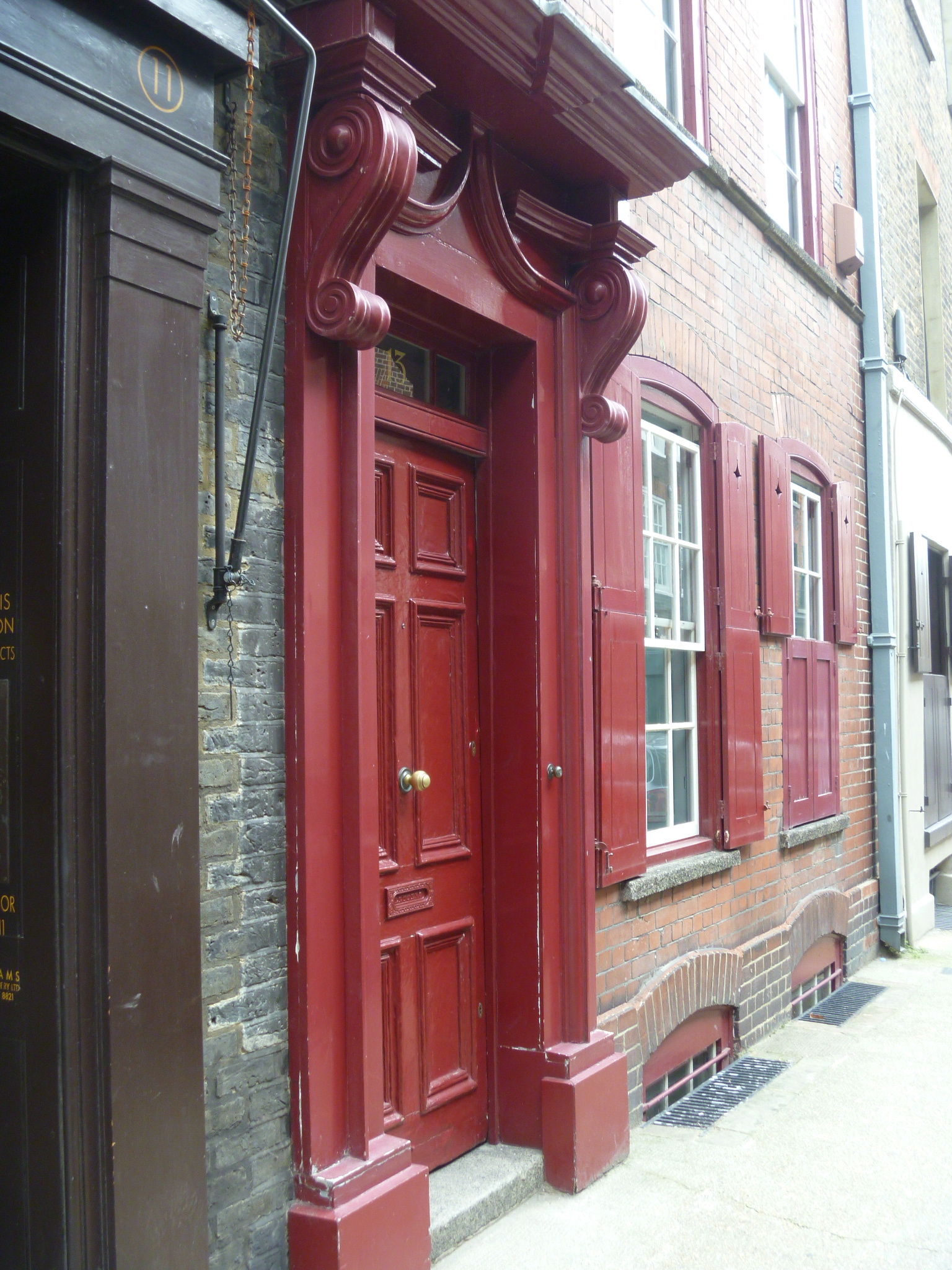
13 Princelet Street, Spitalfields

I’m a huge fan of the Landmark Trust. It is the charitable organization that rescues interesting buildings, brings them back to life and then rents them out as holiday homes so that everyone may experience, for a short time, living in these remarkable buildings. I applaud the work and the vision involved and as Capability Brown before them seemingly waved his magic wand on the eighteenth century landscape The Landmark Trust seemingly waves its magic wand and transforms total ruins into beautiful buildings using the best of workmanship and the highest quality fittings and good solid furnishings.

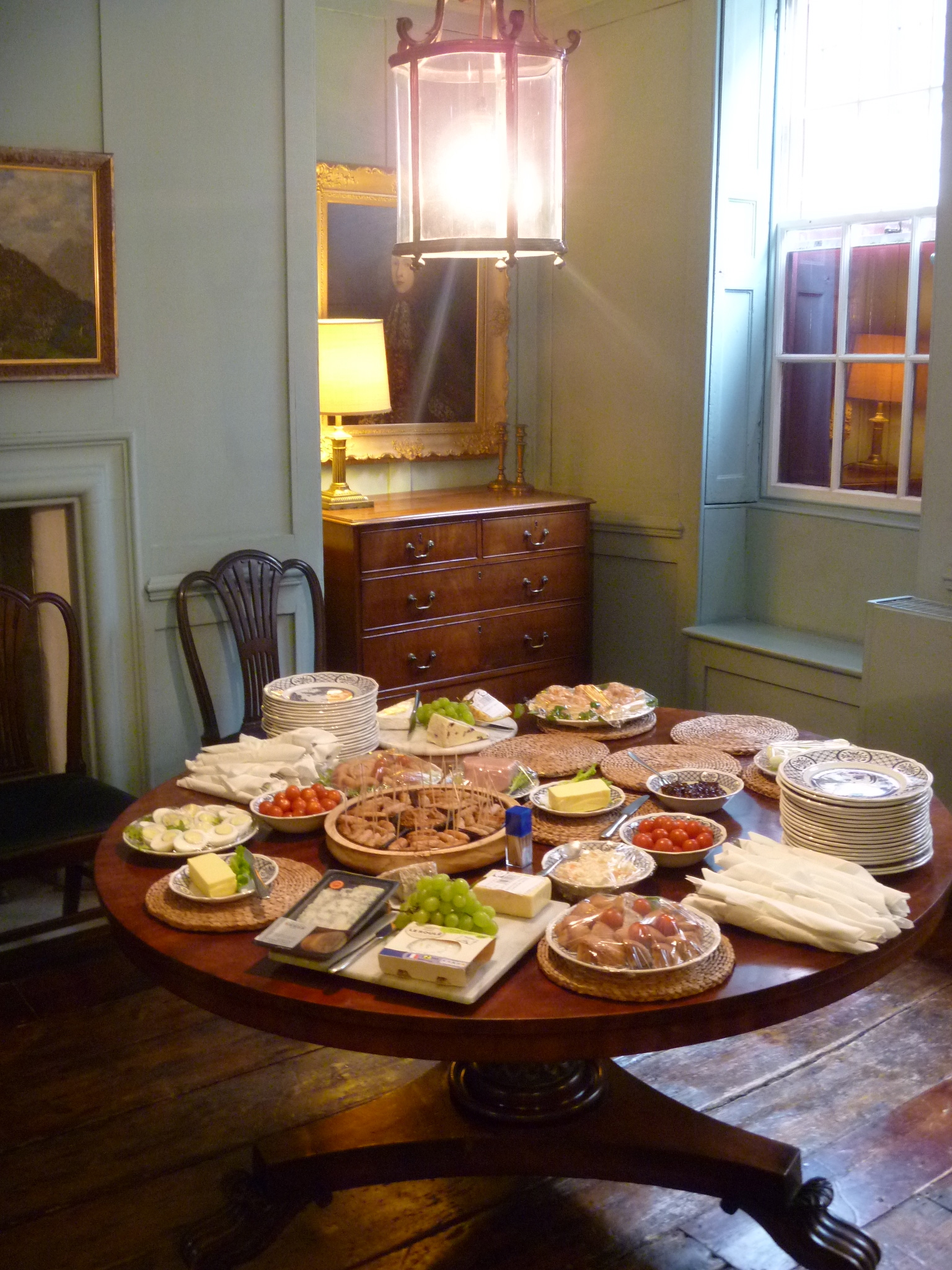
Just some of the buffet lunch in the front dining room.

As I said, I’m a fan, but for some people visiting and staying at Trust properties is an obsession! In order to cultivate and encourage this obsession The Trust started a group called The Friends of the Landmark Trust. Run by volunteer co-ordinators, the Friends organise stays (which they call Houseparties) at larger properties so that singles and couples or small groups of friends may experience staying in Landmarks which they would not normally be able to afford or feel that they would not properly appreciate to their fullest extent. In addition, during the Houseparty weeks all Friends are invited to a Reception which usually includes a buffet lunch, a talk and a chance to look around the property and meet fellow like-minded members. All profits from these events go to support further renovation work.

Friends enjoy the garden at 13 Princelet Street

I’m also a fan of the blog Spitalfields Life. The Landmark Trust’s property at 13, Princelet Street featured in the blog last year. I’ve stayed there twice already and have another booking for the early new year. However, I couldn’t resist the Friends’ invitation to attend a Reception at Princelet Street on Wednesday. It was a chance to meet up with friends (small f) and Friends (capital F). Houseparties and Receptions ‘up north’ are rare but London is accessible to me. My elder son ‘The Banker’ lives down there; and it’s always good to meet up.

One of the volunteer co-ordinators gave a brief talk about the history of the house and the Spitalfields area in general. In the case of Princelet Street there didn’t have to be too much magic wand waving by the Trust. Mr Peter Lerwill a supporter of the Landmark Trust very generously bequeathed the house to the Trust for the enjoyment of Landmarkers. Only a lick of paint was required to make it ready for letting.