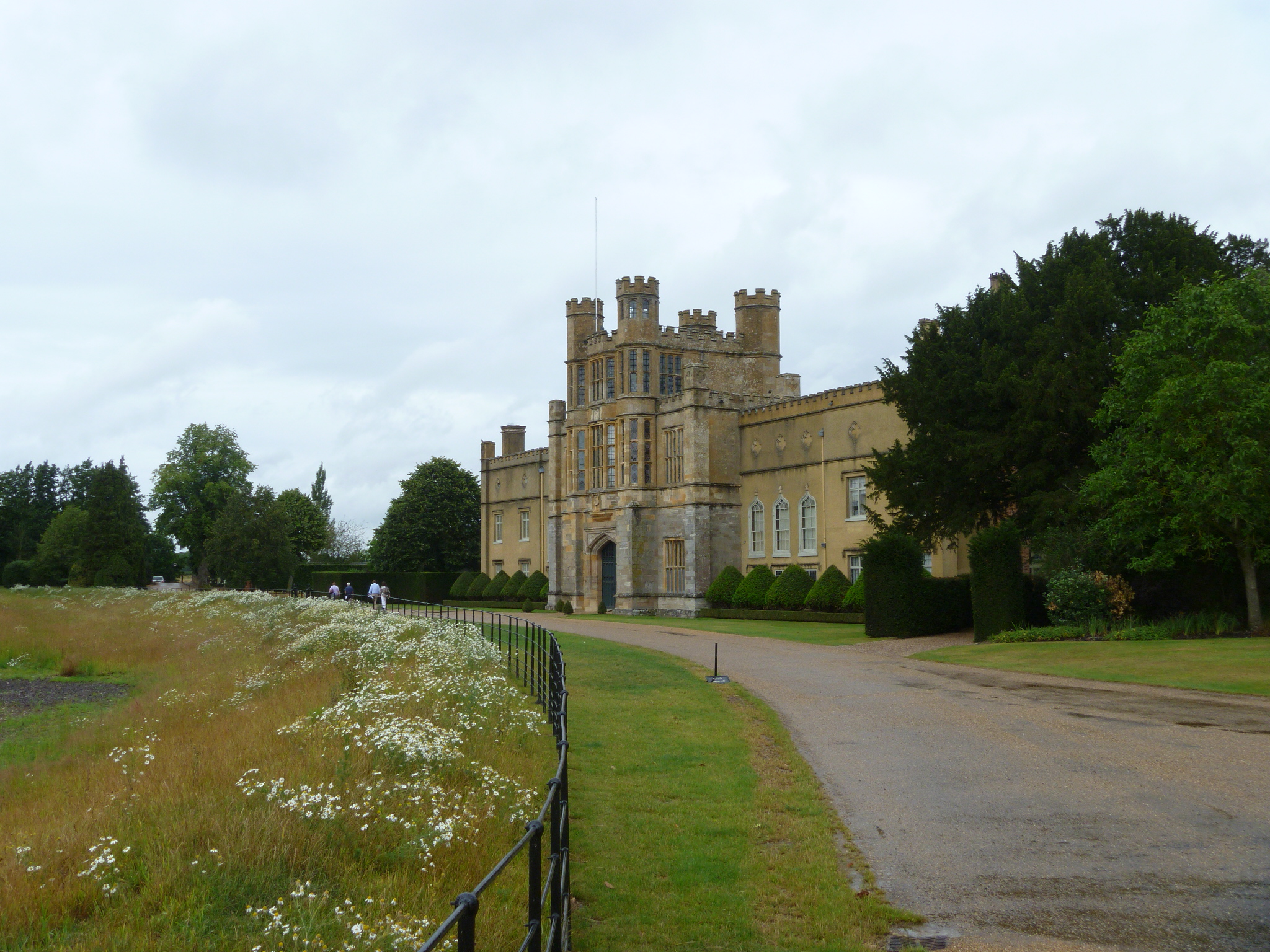
The Snowy Hills of Kent: Toys Hill, Ide Hill and The Octavia Hill Centenary Trail

I was staying in very snowy Kent last week. Temperatures were around or below freezing but that didn’t prevent me and my sister enjoying some decent tramps around the countryside directly from the back door of our Landmark – Obriss Farm.
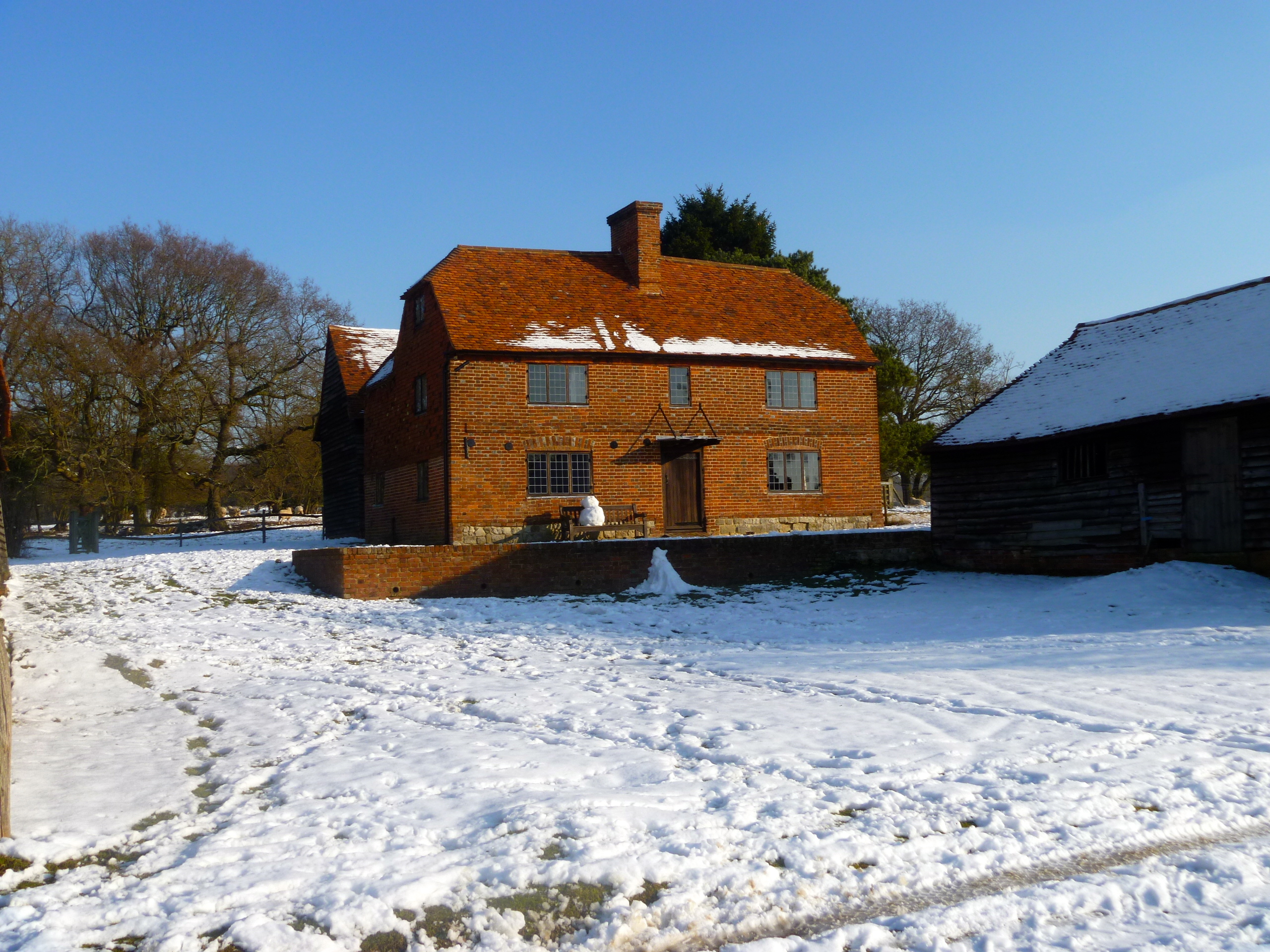
On the Tuesday, the first day’s walking, we very soon came across The Octavia Hill Centenary Trail (OHCT) signs and it seemed that this trail coincided very closely with the walking route that we had picked out from the mass of public footpaths and bridleways criss-crossing the local fields and woodlands.
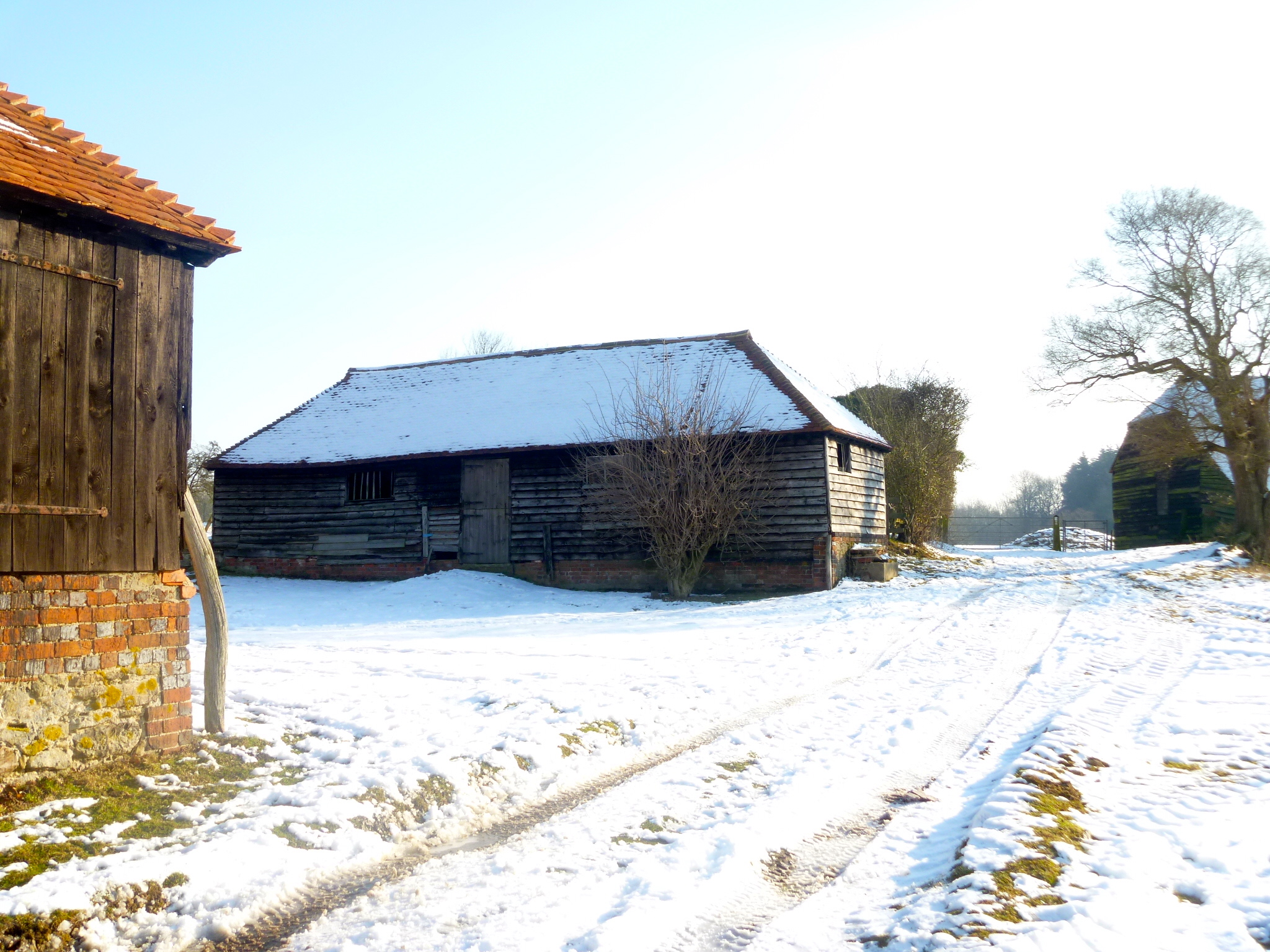
We began our walk that day by tramping over snow covered fields behind the farm to Toys Hill hamlet where the Octavia Hill Memorial Well (restored in 1999 in her honour by The National Trust of which she was a founder) marks the start of both the East and the West trails.
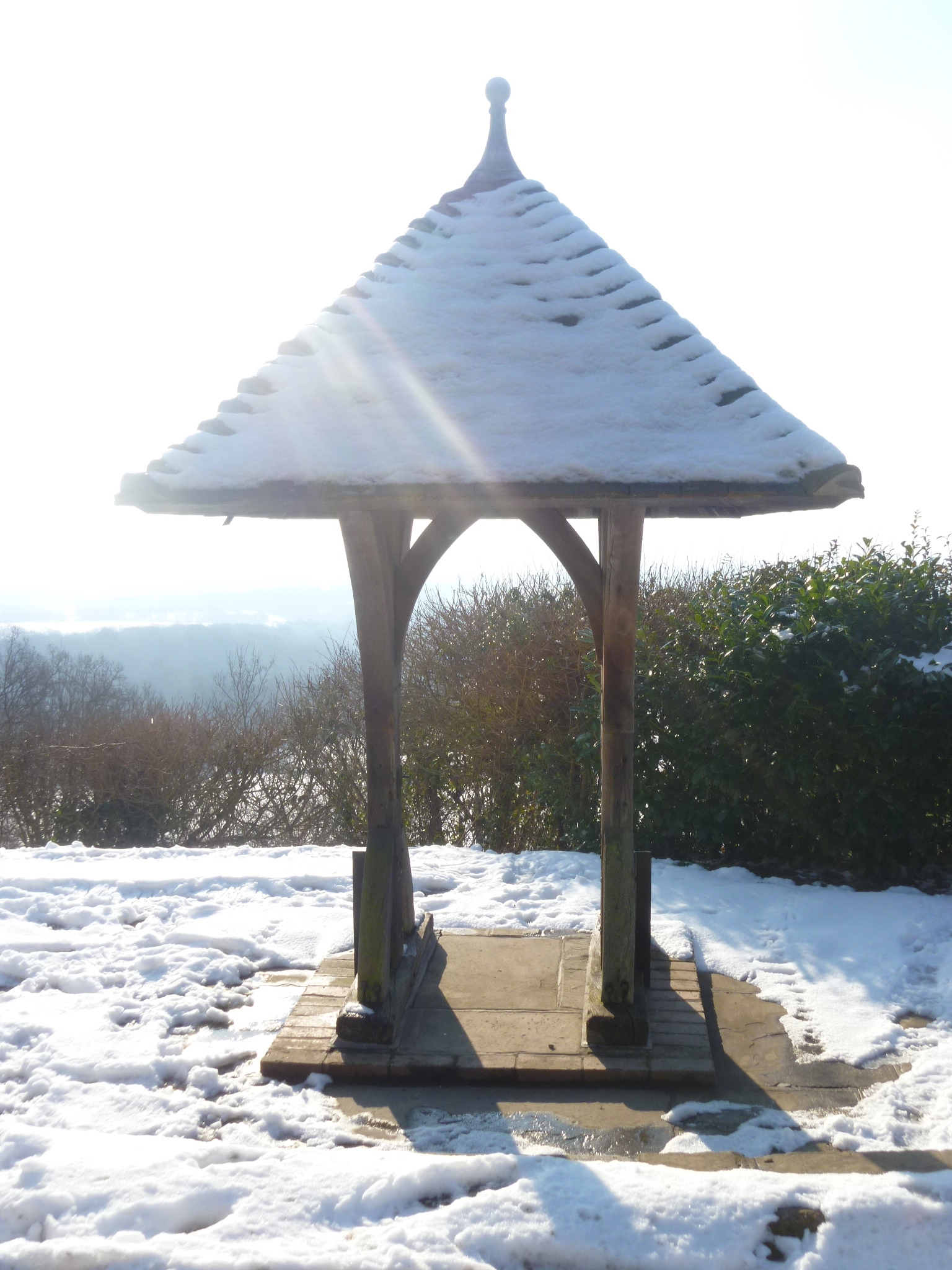
The Octavia Hill Memorial Well in Toys Hill hamlet

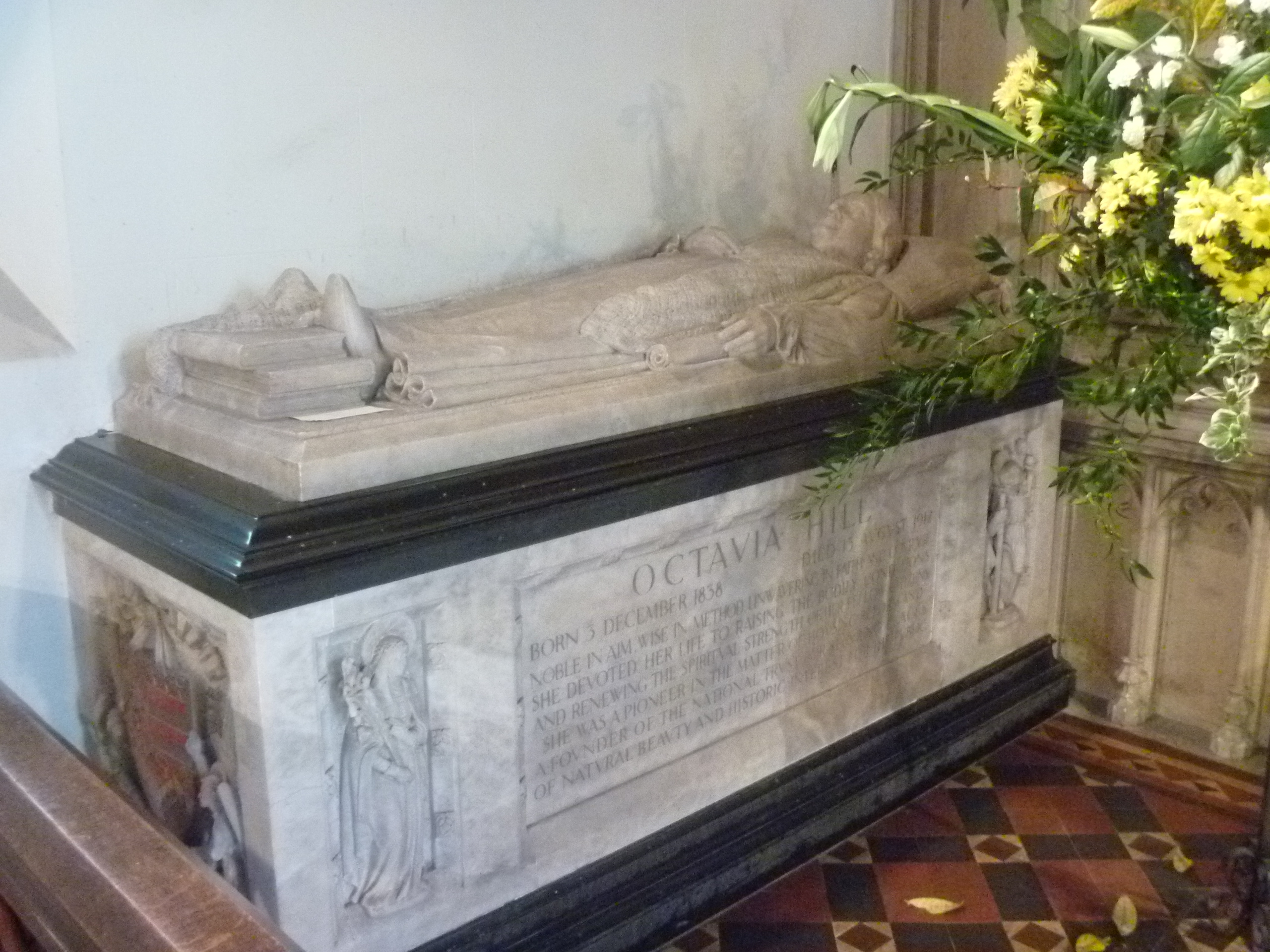
The path passes through the grounds of Chartwell (but sadly with no view of the house itself at this point) to the church and graveyard at Crockham Hill where Miss Hill is buried in the churchyard and where there is a Memorial to her in the chancel lying next to the altar.
The Royal Oak in Crockham serves decent bar snacks (and full lunches) and our circular walk finished a couple of miles later at the private track leading back to Obriss Farm. Obriss Farm doesn’t feature on the OHCT but it is only about half a mile or so from the start of the Trails at the well in Toys Hill hamlet.
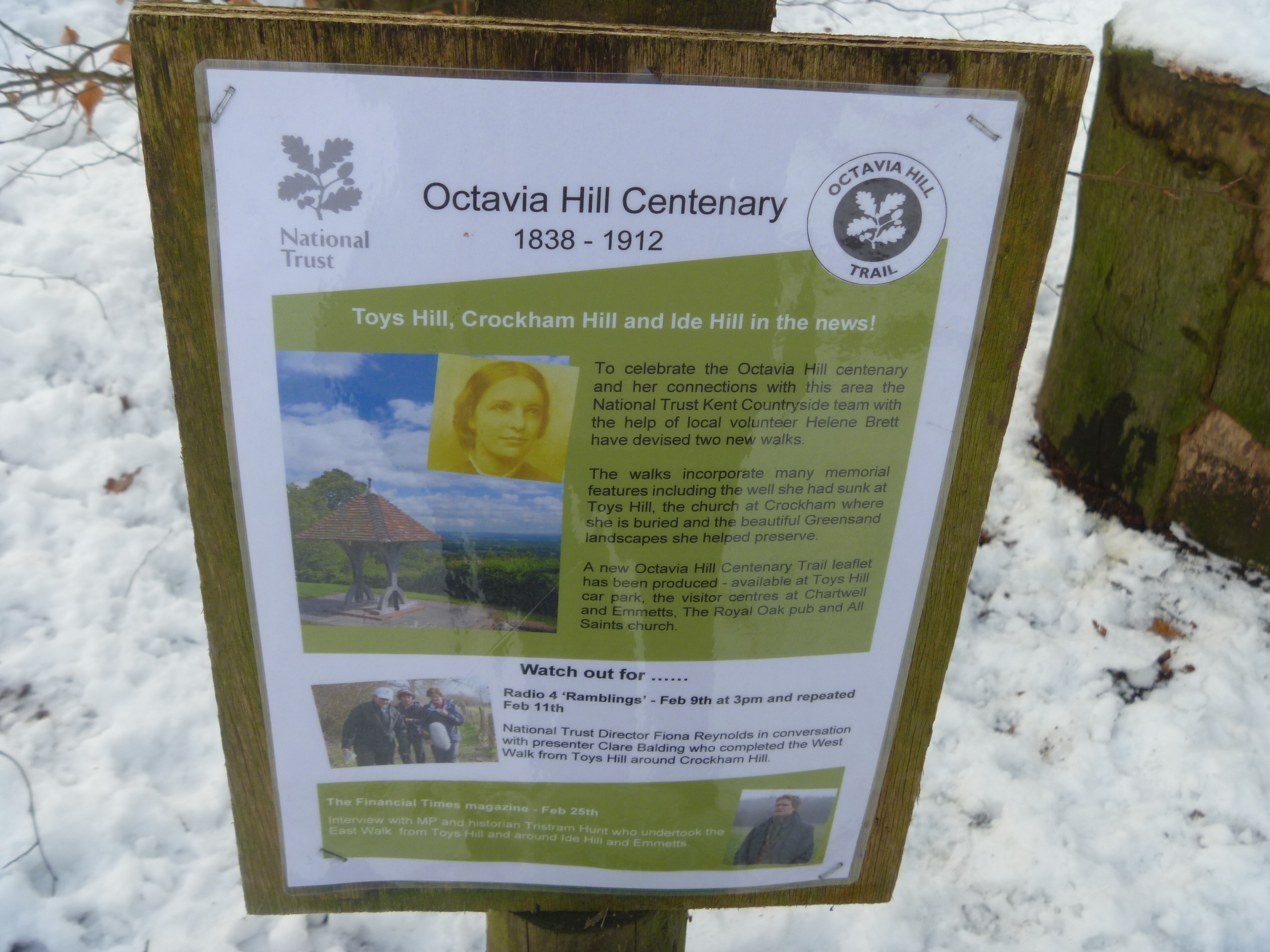
To hear more about this walk click here to listen to Clare Balding on Ramblings on BBC Radio 4 undertaking the walk and which we listened to on our return from the second OHCT walk on the Thursday!

At The Royal Oak we also picked up a copy of the leaflet that outlines the two routes of the Trail which has been inaugurated as a commemoration of the centenary of the death of Octavia Hill in 1912. Our trail on Tuesday had more or less followed Walk 2 – the West Walk.

We’ve been interested in Octavia Hill for some years now via an initial interest in Beatrix Potter and visits to her (BP’s) Lake District home (Hill Top), farm and gallery and an exhibition of her work on display at The Dulwich Art Gallery back in 2006.

In August 2006 we visited Octavia Hill’s Birthplace Museum in Wisbech and came across the results of her philanthropic efforts in Marylebone on one of those London Walks : Saturday Afternoon’s Old Marylebone Walk

On Thursday we decided to do the East Walk from Toys Hill which included more hills and steep ascents than we had expected to find in Kent!
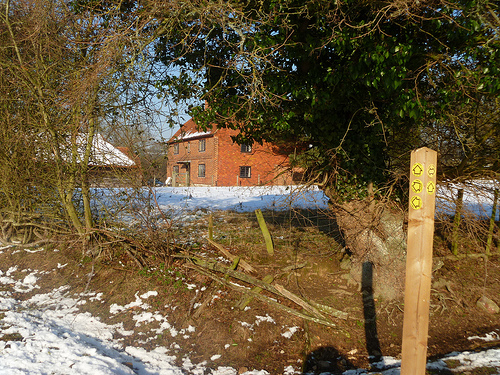
A choice of footpaths at Obriss Farm

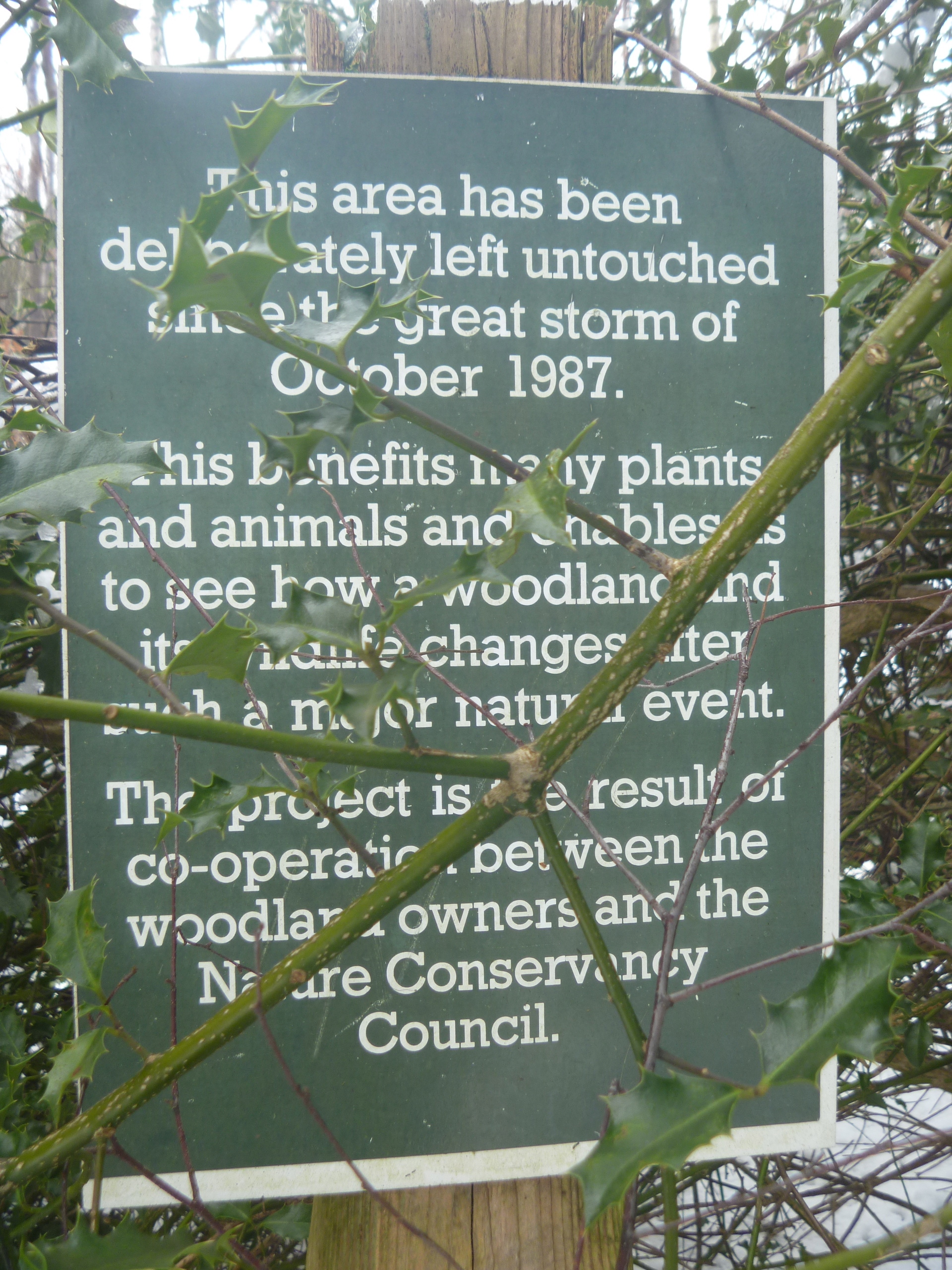
From Toys Hill hamlet we followed the path to the village of Ide Hill via the Octavia Hill stone memorial seat and from thence to Emmetts Gardens, Scords Wood and the (yes, you guessed) Octavia Hill Woodland. We were shocked to notice so many fallen trees just lying around the woods and then we saw a sign that explained what this was all about :
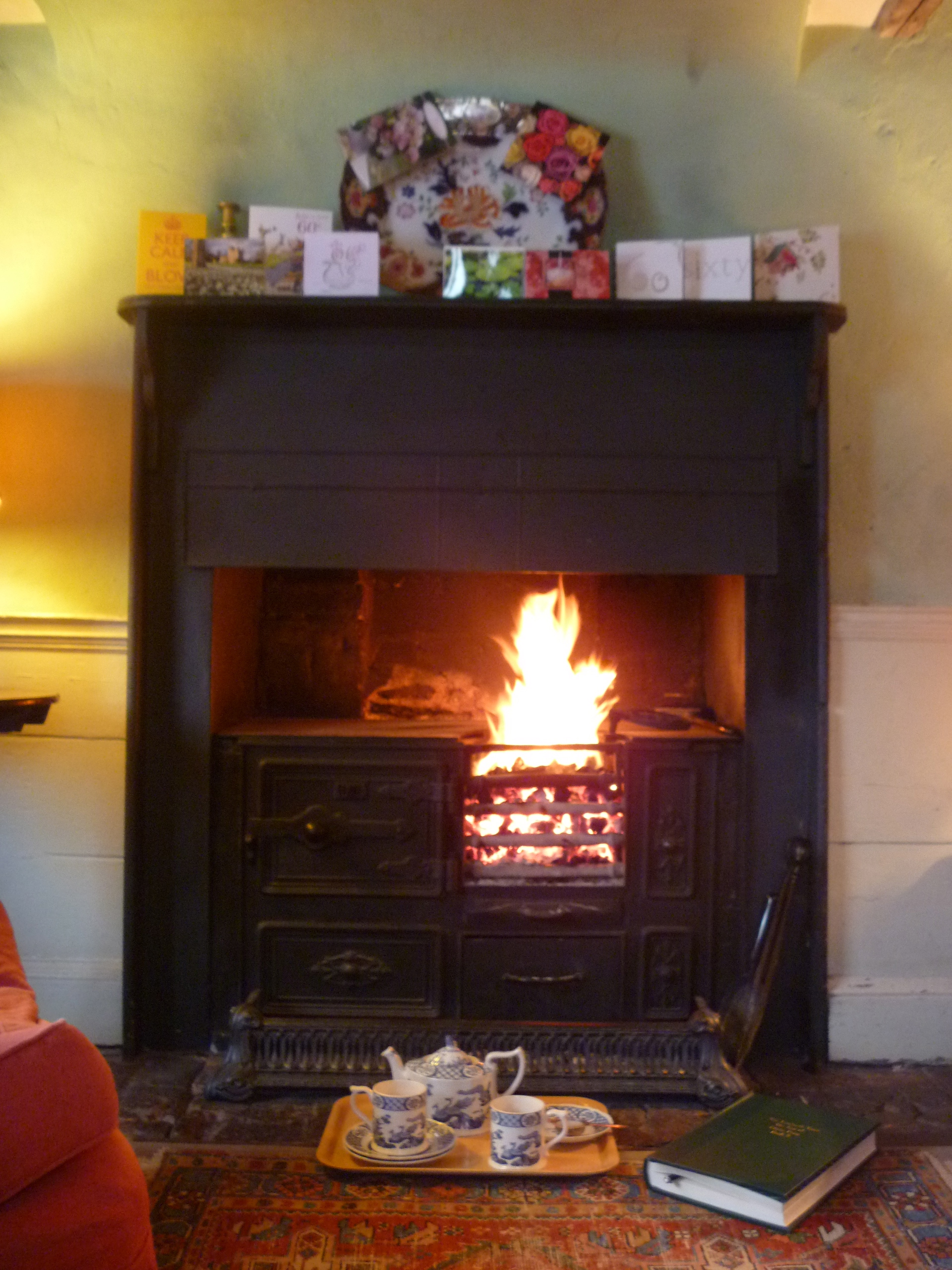
After several uphill climbs the path finally downhill to Toys Wood village and our track back to the farm and the cosy parlour with its open fire in the range.
Lundy – Cooking on My Island of Dreams

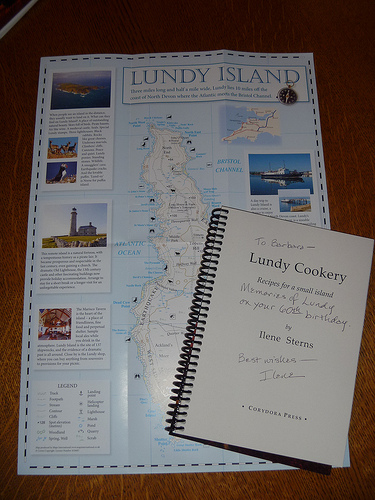
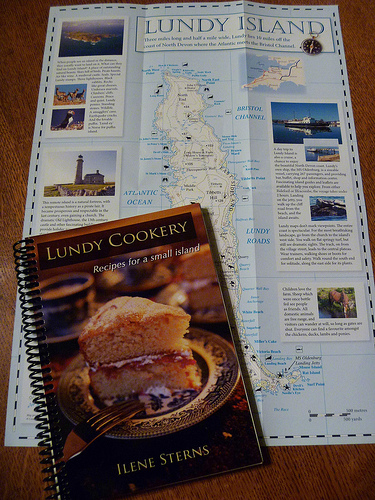
I’ve been celebrating my birthday over the past few days. I’ve received lots of cards and flowers and some lovely gifts including several books. Only one of these book gifts was what I would call a ‘reading book’.  The other books include a photo book celebrating a friendship and places visited, a set of LV European City Guides, a book by Rob Ryan and … ‘Lundy Cookery: recipes for a small island‘ by Ilene Sterns. The book is published by Corydora Press who have formed their own FlickR group ‘Lundy Cookery Around The World’. My friends also managed to get Ilene to sign it especially for me!

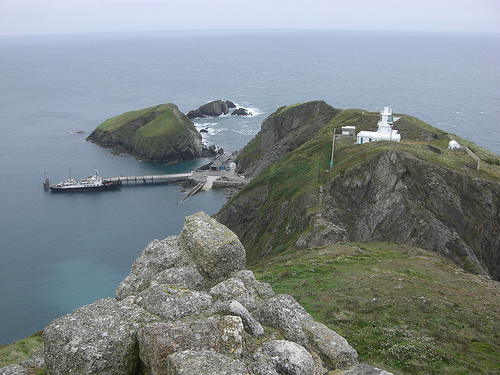
I’ve twice visited Lundy, an island in the Bristol Channel 3 miles long by half a mile wide, as a day tripper by boat from Ilfracombe. The journey takes about two hours on the MS Oldenburg and fortunately on both occasions the Bristol Channel was as still as a millpond! Sailings are in the spring and summer months from about the beginning of April to the end of  October. During the remaining months Lundy is a mere 7 minute helicopter ride from Hartland Point, 20 miles west of Bideford on the north Devon coast.

The MS Oldenburg tied up at the Lundy quayside

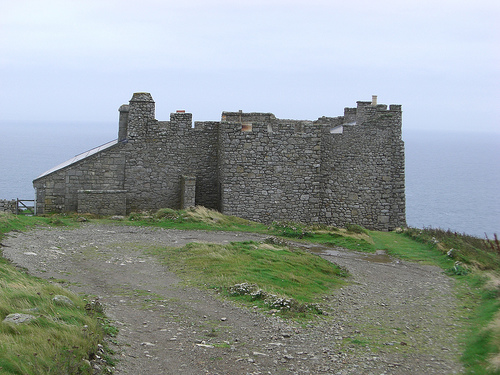
Lundy, or Puffin Island, is owned by the National Trust (so there’s a small discount on the sailing price for members) and the 23 self-catering holiday properties are managed by the Landmark Trust. It’s an uphill trek from the quay to the village but when you get there there’s a pub – The Marisco Tavern – and a shop and a cluster of buildings – some farm and some holiday accommodation. My first stop has been at the pub each time for sustenance and then a call at the shop for postcards and Lundy stamps and then I have taken a walk. There are marvellous views of the north Devon coast and the paths are clear and grassy. One walk was up the east side to Threequarters Wall and across to the west side and back down to the Old Light, the cemetery and St Helena’s Church. On my second visit a much shorter walk was to the Castle, the South West Point and back up to the Old Light. Then a final cup of tea at the Marisco before heading back down to the Quay and the awaiting boat.

Lundy Castle and Approach Track

In her introduction to Lundy Cookery Ilene reminded me what a treasure trove and Aladdin’s Cave the shop was despite its remote location. All Lundy Landmark kitchens are well equipped with basic cooking equipment but they do lack weighing scales, liquidisers, toasters and loaf tins. Ilene’s recipes manage to get around these would-be problems. In particular her recipes specify quantities by volume rather than by weight. She has also included a useful section which she has called ‘Salmagundi’ *- it’s about minimising food waste and lists ingredients alphabetically linking them to recipes in the book. For example under Honey she lists 6 dishes included in the book including Honey Mustard Vinaigrette (p.98), Lundy Mess (p.116) and then suggests some other uses. Waste not want on Lundy Island. There’s a useful index too.

*Definition: a salad plate of chopped meats, anchovies, eggs, and vegetables arranged in rows for contrast and dressed with a salad dressing. (http://www.merriam-webster.com/dictionary/salmagundi) Sounds good to me!

“Most of the book’s recipes are simple and quick to prepare, so you won’t be stuck in the kitchen when you’d rather be outdoors.” (p. 2) Now that’s my kind of cookery book!

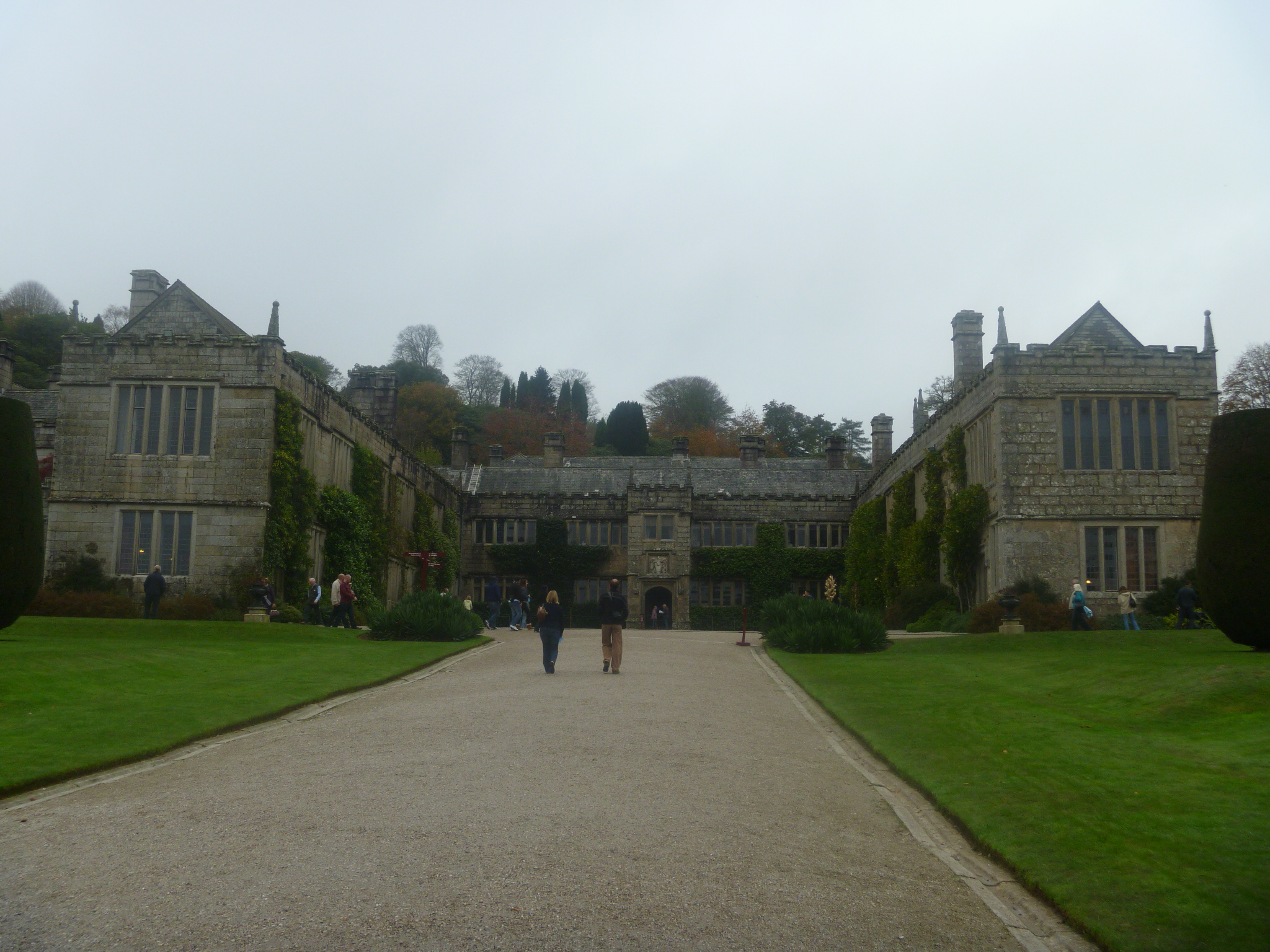
Lanhydrock House, Cornwall

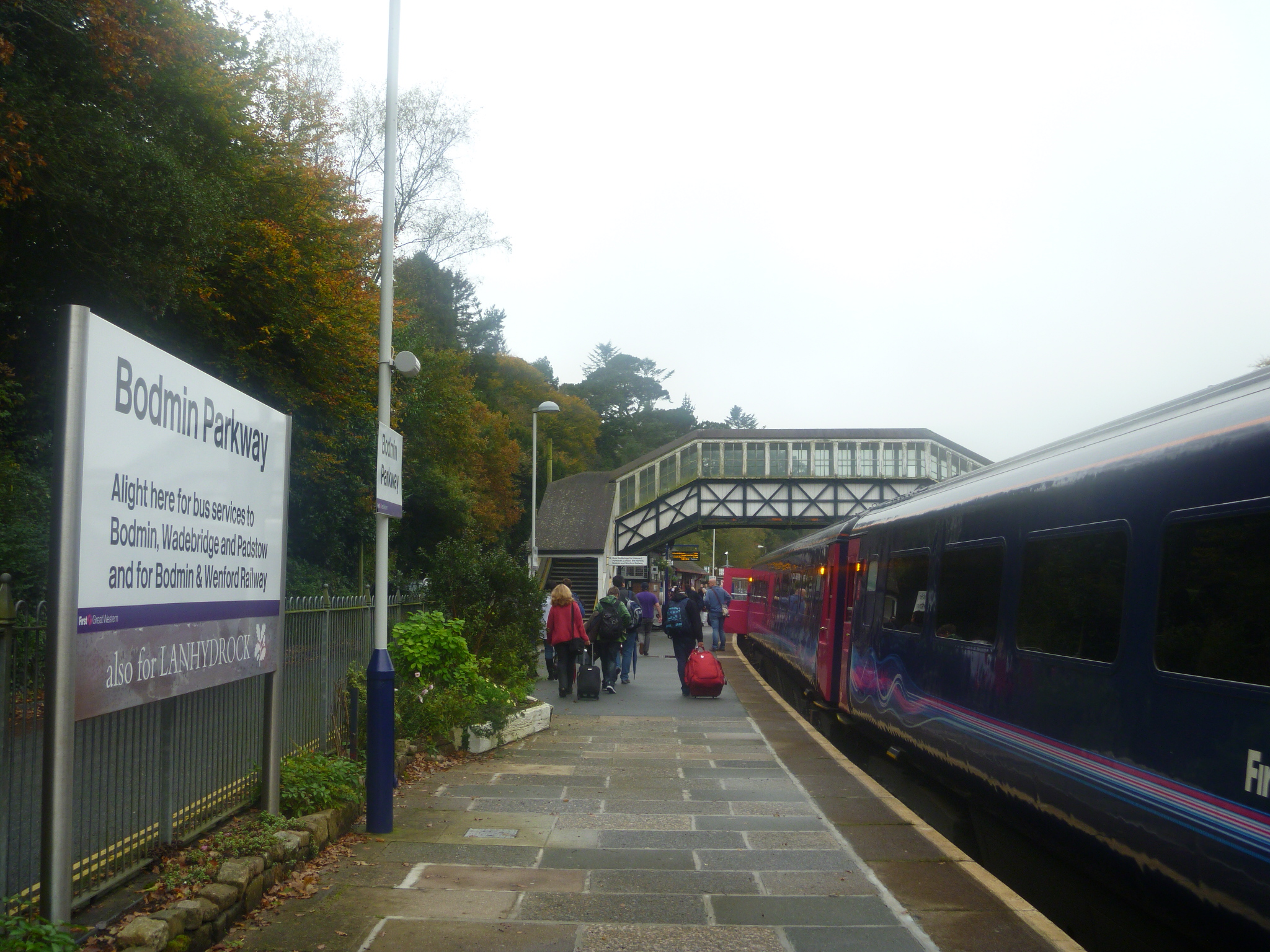
Yesterday I took the train from Totnes, in Devon, to Bodmin, in Cornwall, from where, I had discovered recently, it is possible to walk along the carriage drive for a mile and three quarters to Lanhydrock House“The finest house in Cornwall”.  The weather stayed dry but the clocks were put back an hour on Saturday night so the days are now shorter.

When you alight from the train at Bodmin Station it is a bit like stepping back in time. There’s a hustle and bustle as people are met and packed into waiting cars and there’s a delightful station buffet … in the former signal box. Then the London train pulls out of the station on its way to Penzance, the cars roar away and all is still and quiet and you can hear the birds sing. But maybe it was just the whistle of a steam train whose line shares the station that took me back to earlier days.

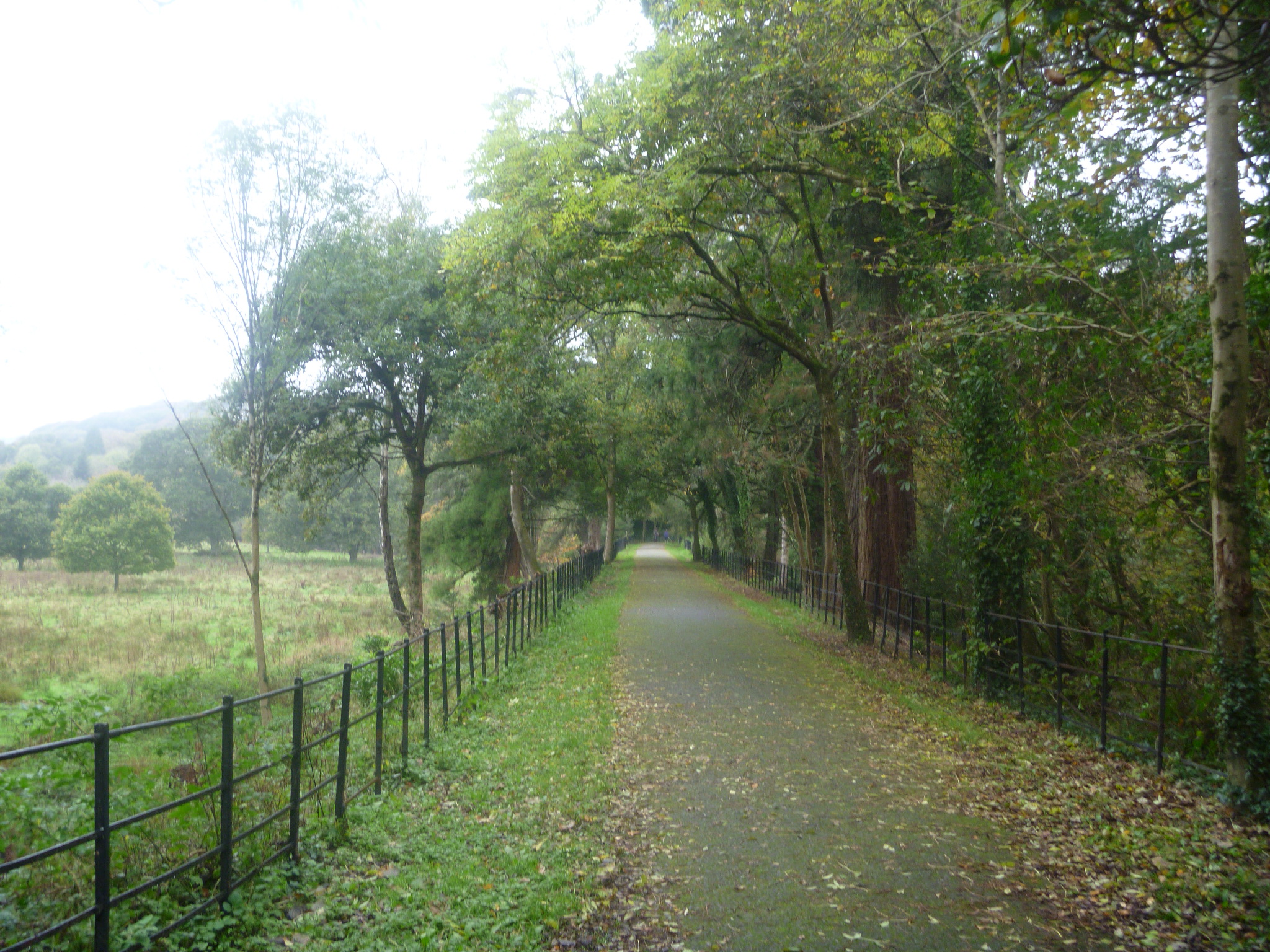
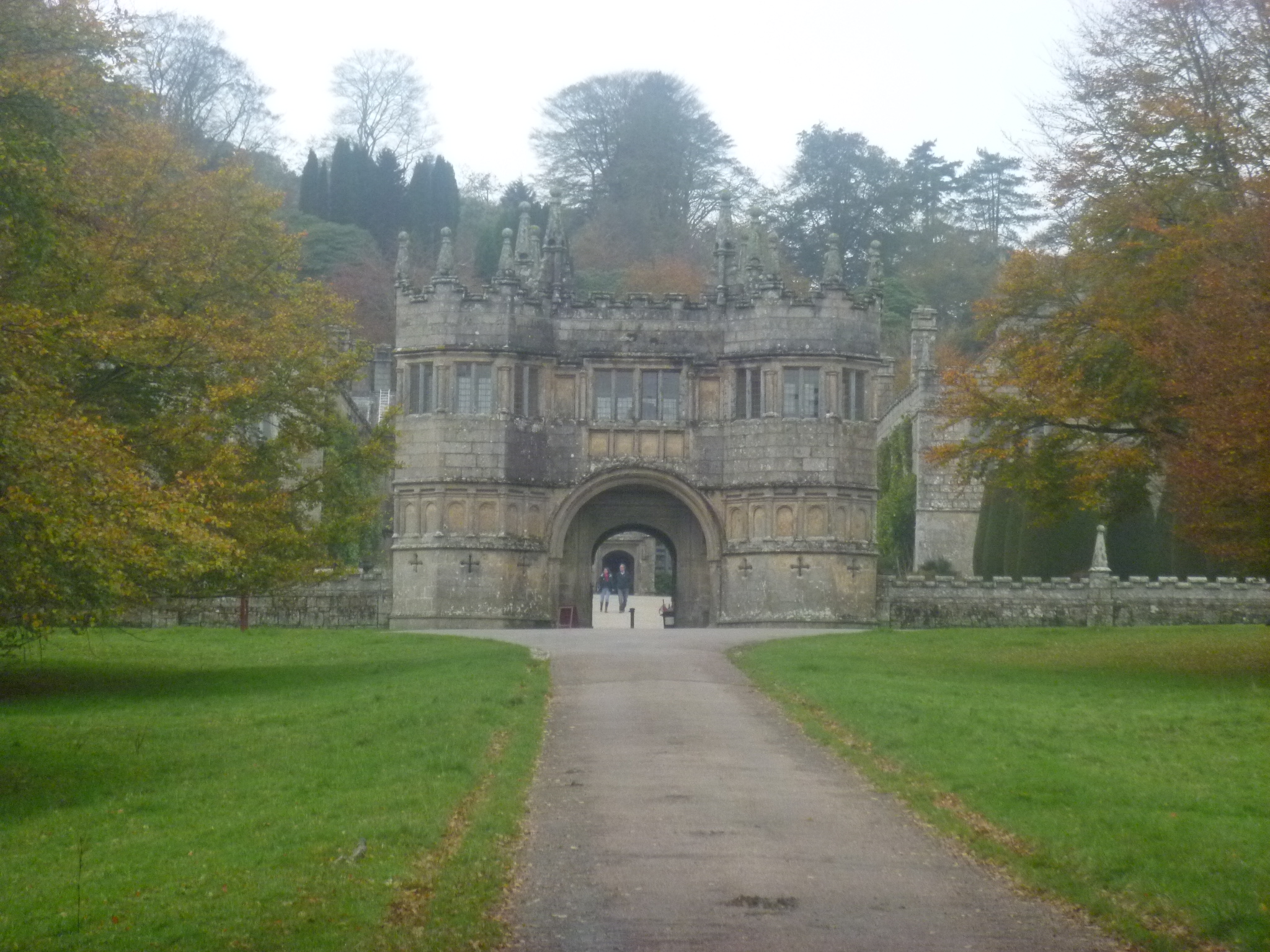
At the end of the car park there’s a red gate. Go through it and you are already on the Lanhydrock House Carriage Drive.  At first you walk through woodland alongside the River Fowey. After about a mile there’s a lodge house and car park. Cross the road and head uphill to another lodge, go through another gate and at the brow of the hill you can see the seventeenth century Gatehouse and Lanhydrock looms into view.

A bit of investigation before setting out lead me to discover in my Blue Guide to Literary Britain by Ian Ousby that Thomas Hardy based his description of Endelstow House, the home of the Luxellians in A Pair of Blue Eyes, on Lanhydrock House, moving it to St Juliot near Boscastle for the story.

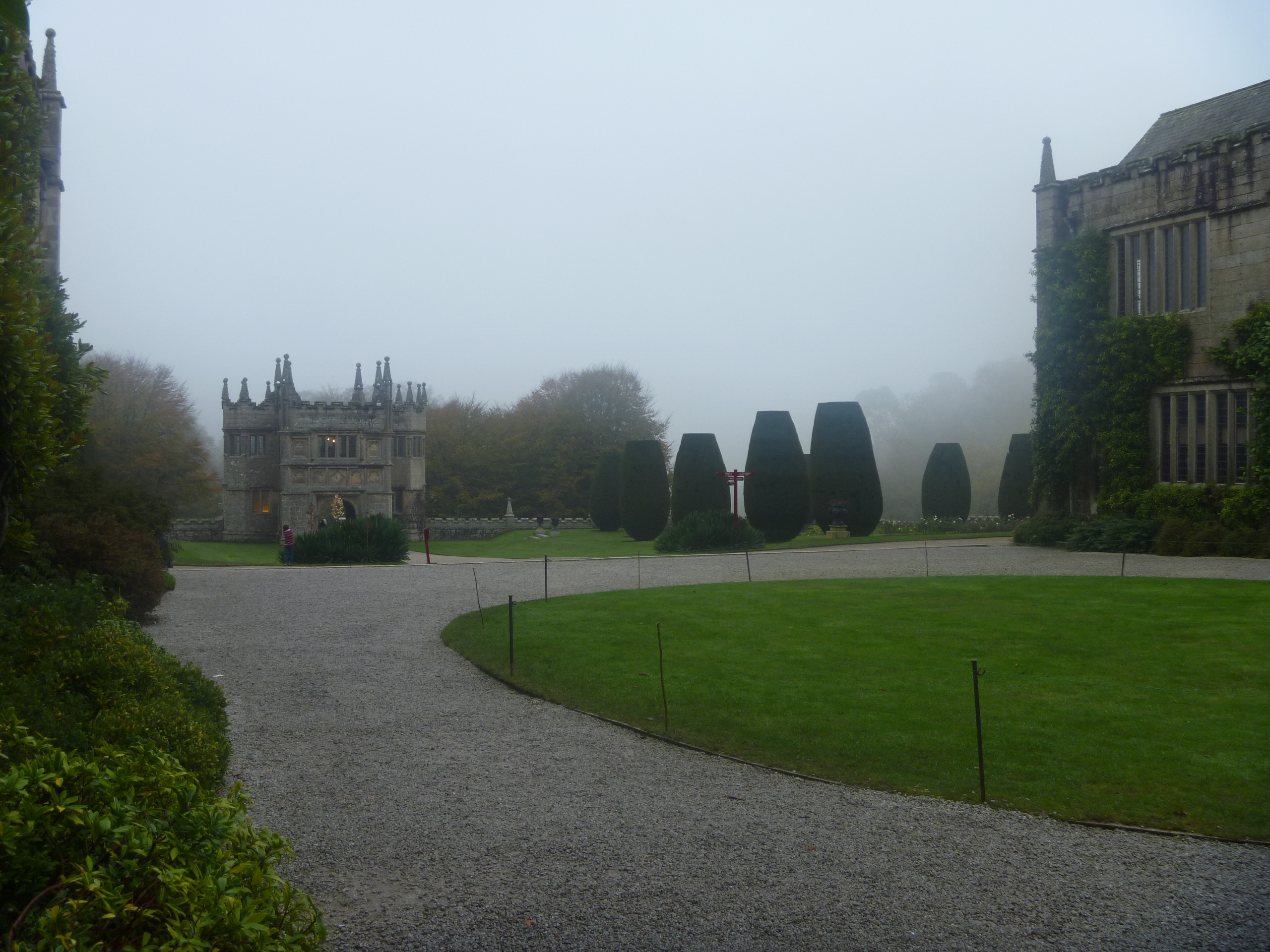
“For by this time they had reached the precincts of Endelstow House. Driving through an ancient gate-way of dun-coloured stone, spanned by the high-shouldered Tudor arch, they found themselves in a spacious court, closed by a facade on each of its three sides. …  The windows on all sides were long and many-mullioned; the roof lines broken up by dormer lights of the same pattern. The apex stones of these dormers, together with those of the gables, were surmounted by grotesque figures in rampant, passant, and couchant variety. Tall octagonal and twisted chimneys thrust themselves high up into the sky, surpassed in height, however, by some poplars and sycamores at the back, which showed their gently rocking summits over ridge and parapet. In the corners of the court polygonal bays, whose surfaces were entirely occupied by buttresses and windows, broke into the squareness of the enclosure; and a far-projecting oriel, springing from a fantastic series of mouldings, overhung the archway of the chief entrance to the house.” 

A Pair of Blue Eyes by Thomas Hardy (Ch.5)

The house today is not the original seventeenth century edifice but a late Victorian reconstruction following a disastrous fire which destroyed most of the earlier building in 1881. It was taken over by the National Trust in 1953. After refreshments and a browse in the second-hand bookshop I toured the fifty rooms in the house open to the public. These rooms included many below stairs: kitchen, scullery, bakehouse, dry larder, fish larder, meat larder, dairy – all very Downton Abbey. Most interesting to me amongst the family’s rooms were a Family Museum, Captain Tommy’s dressing and bed rooms, the drawing room and the Long Gallery.

The obligatory visit to the shop revealed that the popular author E. V. Thompson based many of his novels on Lanhydrock.

By 3.30pm the mist was beginning to thicken so I made my way back to the Carriage Drive and enjoyed the reverse walk back to the station for my 4.25pm train back to Totnes. The cafe was closed, the steam engine was being shunted away and we stood in the gloomy, misty, light rain waiting for our Paddington-bound train.

Cowside Open Day – A New Landmark Hits the Handbook!

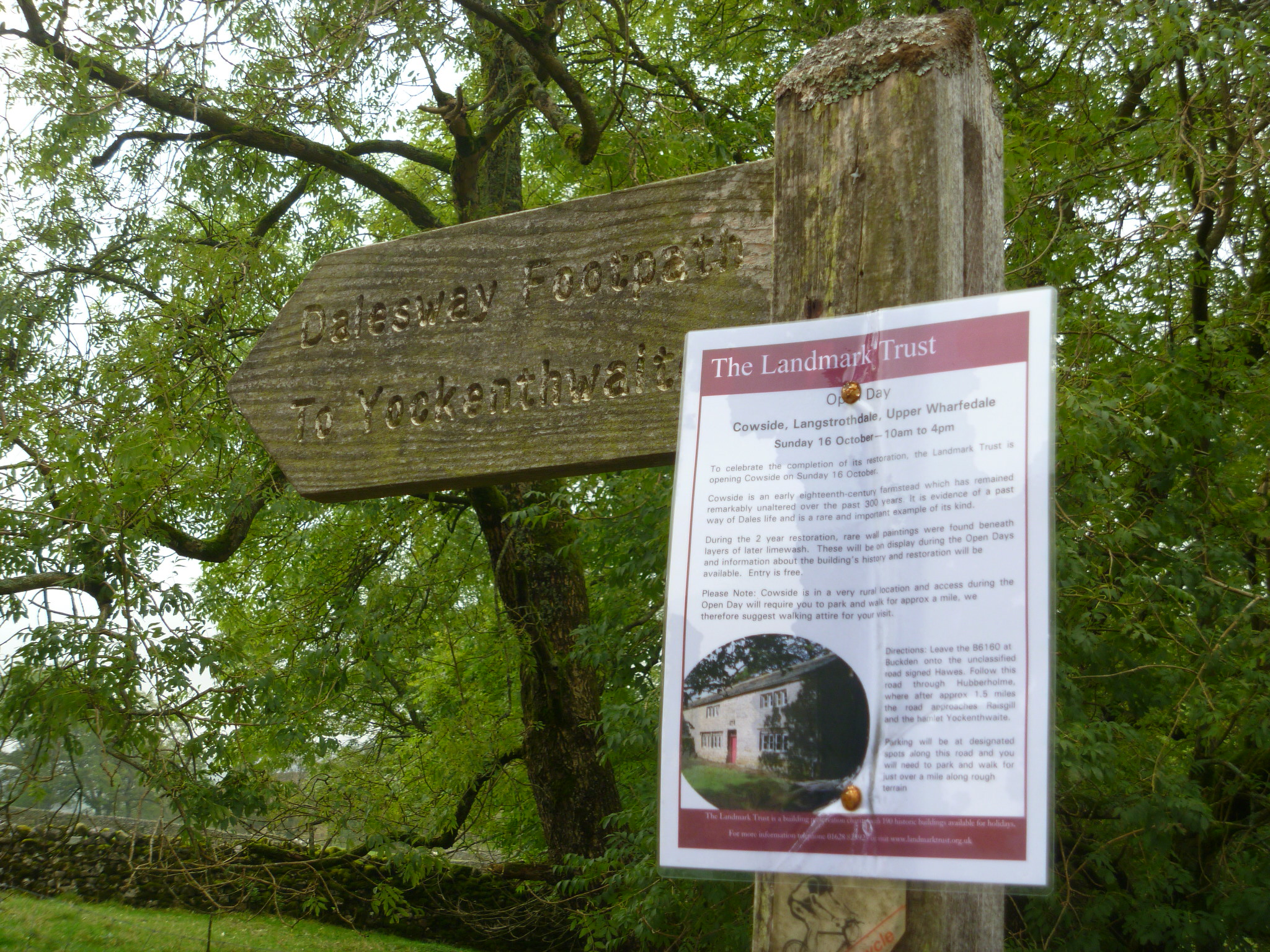
What luck! Two invitations to visit Landmarks in one week – and I can manage both. Cowside is an extremely remote farmhouse way away in Upper Wharfedale in the Yorkshire Dales that even the National Trust (who are the owners) could not contemplate renovating as a holiday home. No mains electricity, no mains water supply – not even an access road or track. They passed it on to The Landmark Trust who seem to thrive on such challenges! Friday was my 4th visit. In April 2009 I first ventured off the Dales Way to have a peep at Cowside of which the Landmark Trust had only recently announced their intentions. In October 2010 when work was well underway I was invited to view progress and again in May 2011 when I could not believe the transformation that had taken place. The winters of both 2009/2010 and 2010/2011 have been the worst in decades. But now the work is complete and the property ready for its first guests – arriving on the 21st October – just one week away!

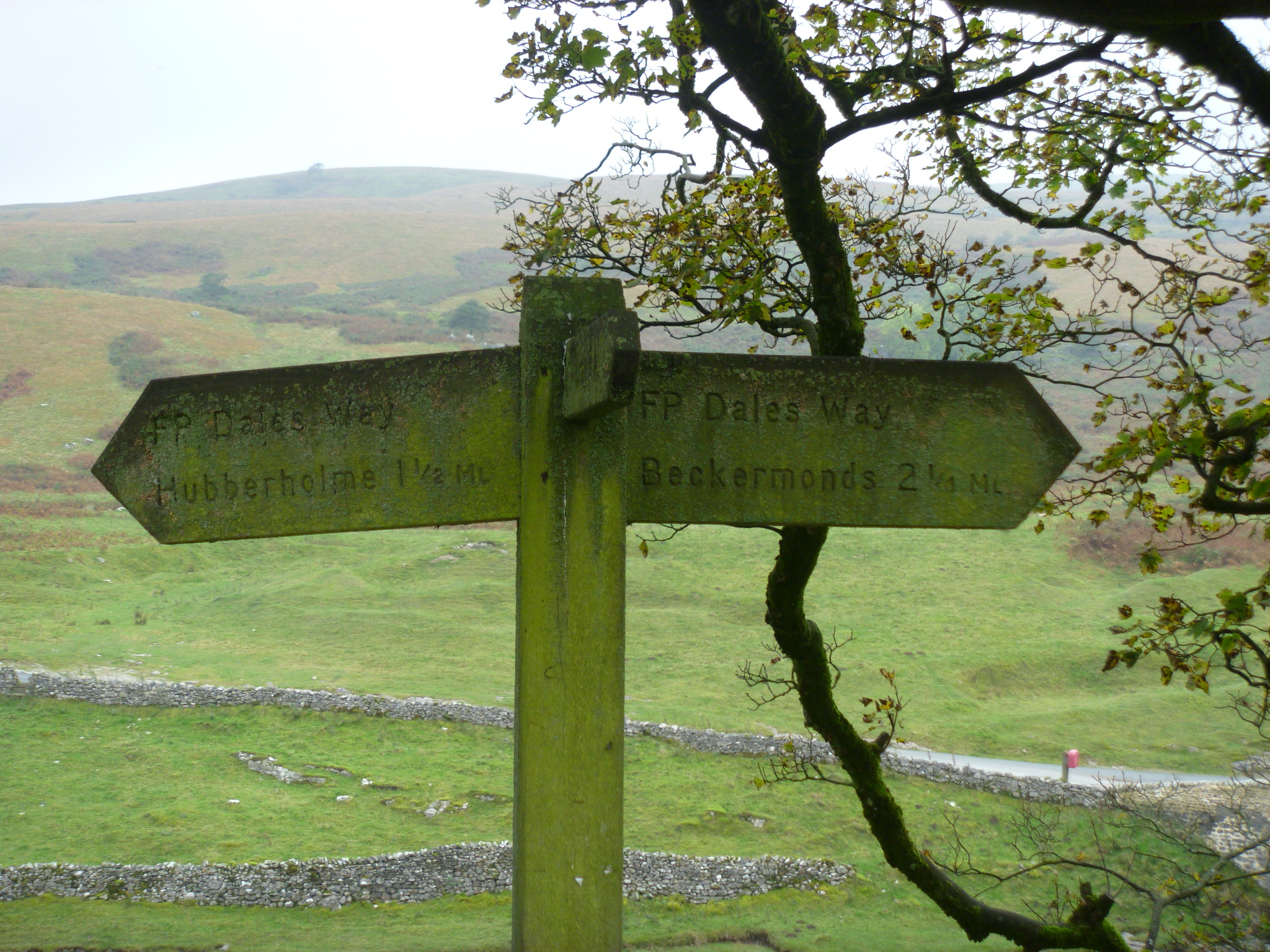
As visitors we had to park nearly two miles away but I enjoy hiking so the chance to step it out along part of the Dales Way was an additional pleasure for me.

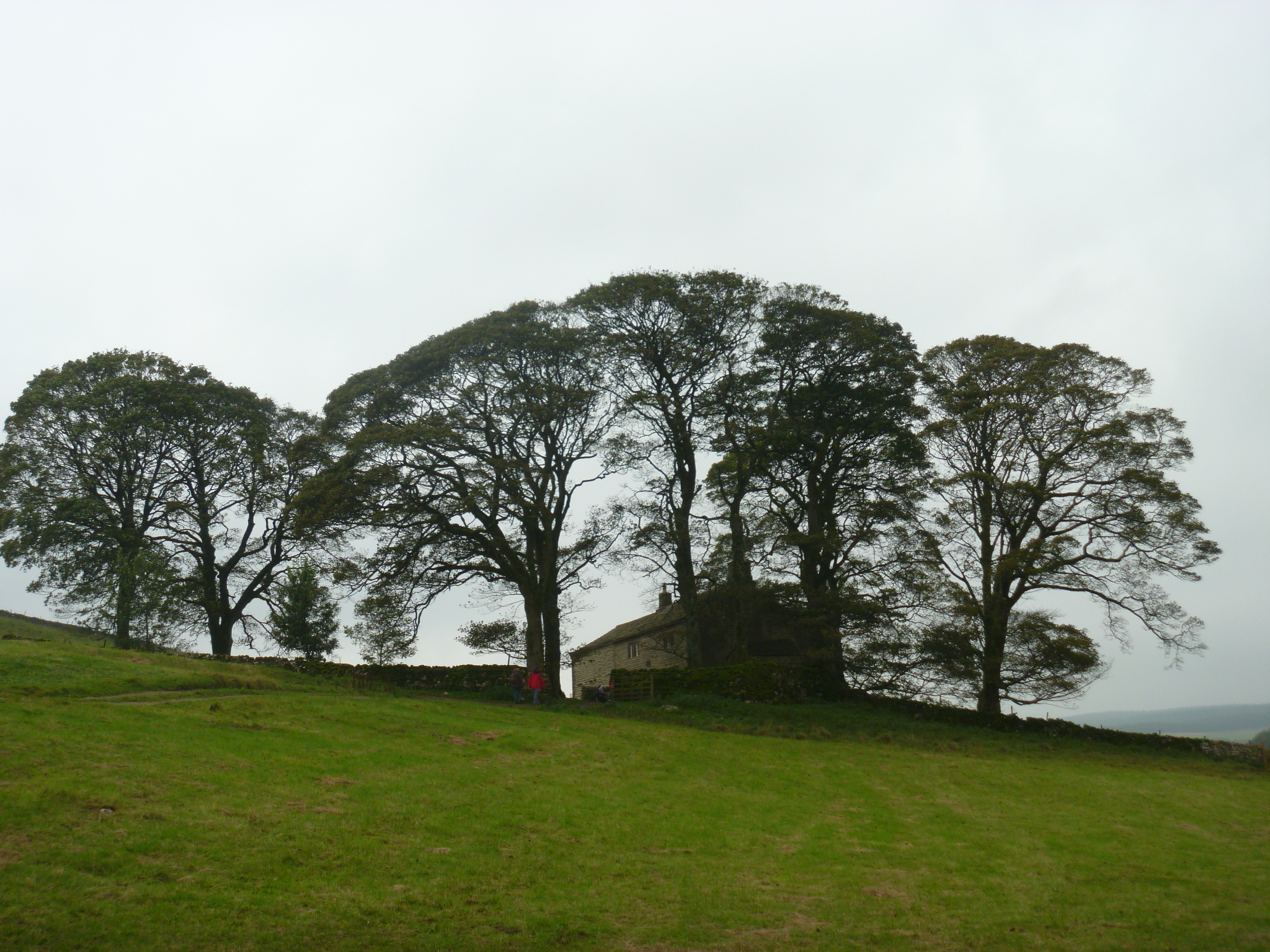
The final uphill approach to Cowside. No vehicular access so everything must be brought from the bottom of the field via the grassy track.

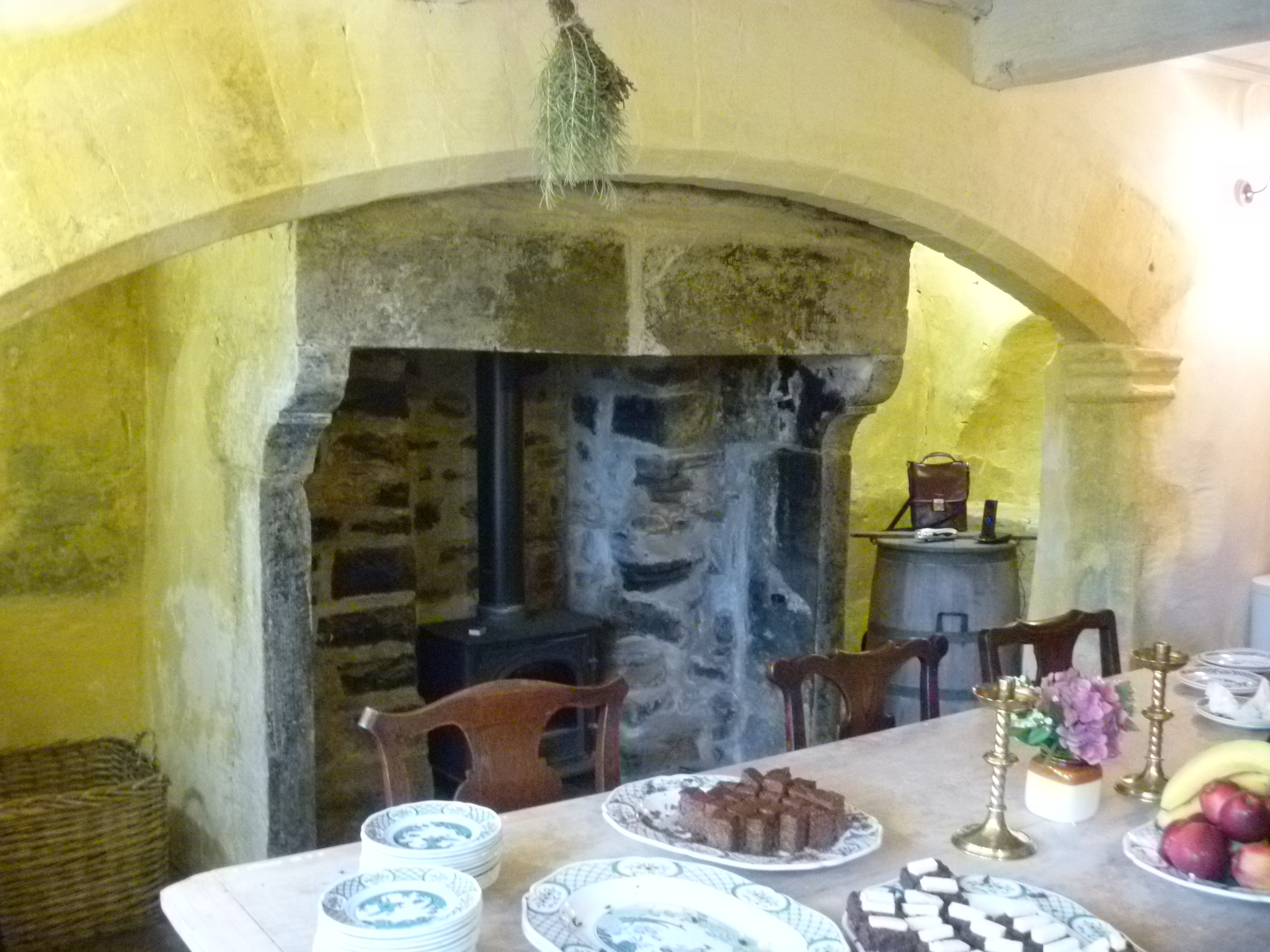
A warm welcome to Cowside. Cake on the table and a log fire in the stove in the Kitchen, or Housebody, as it is to be known.

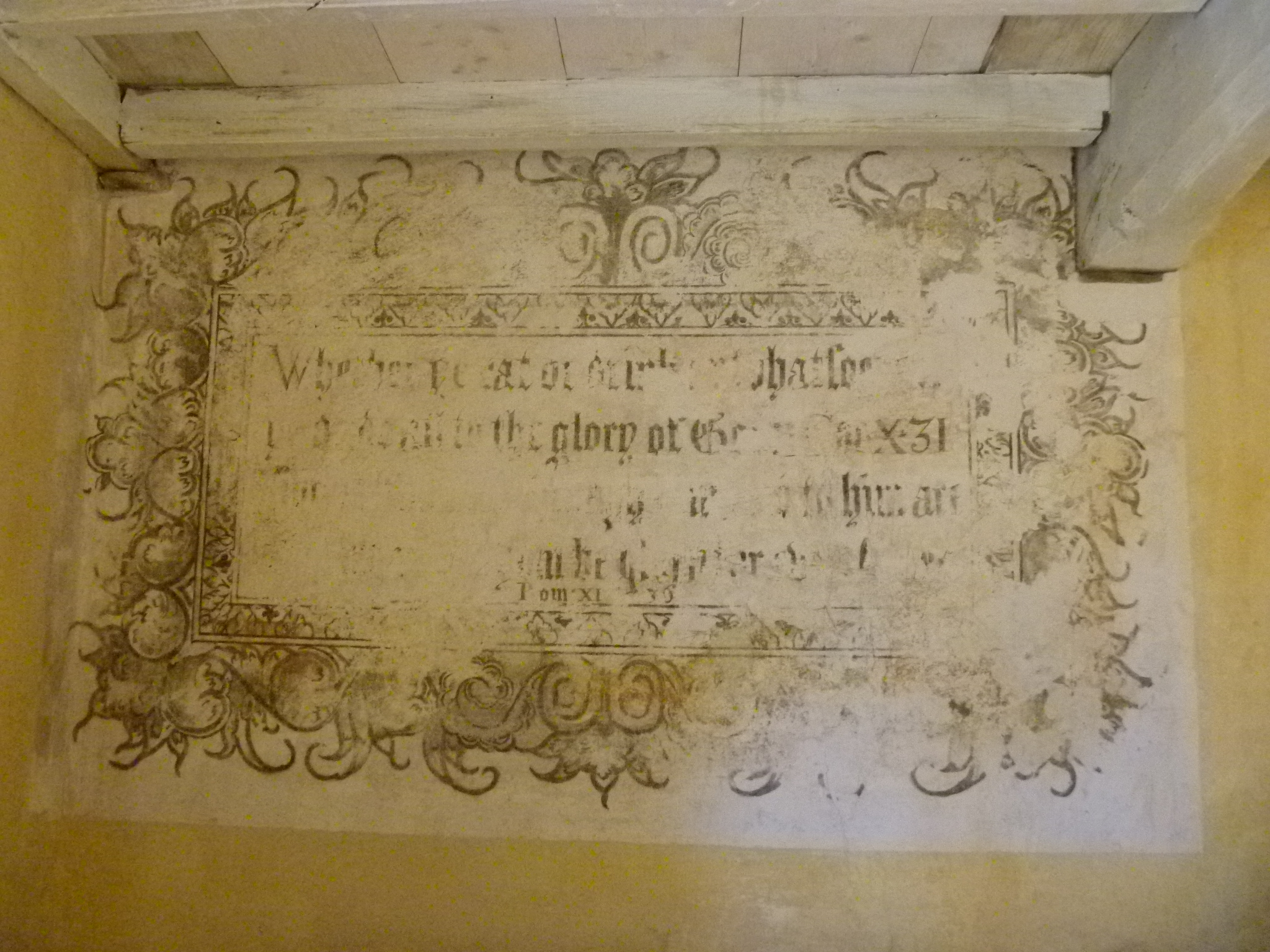
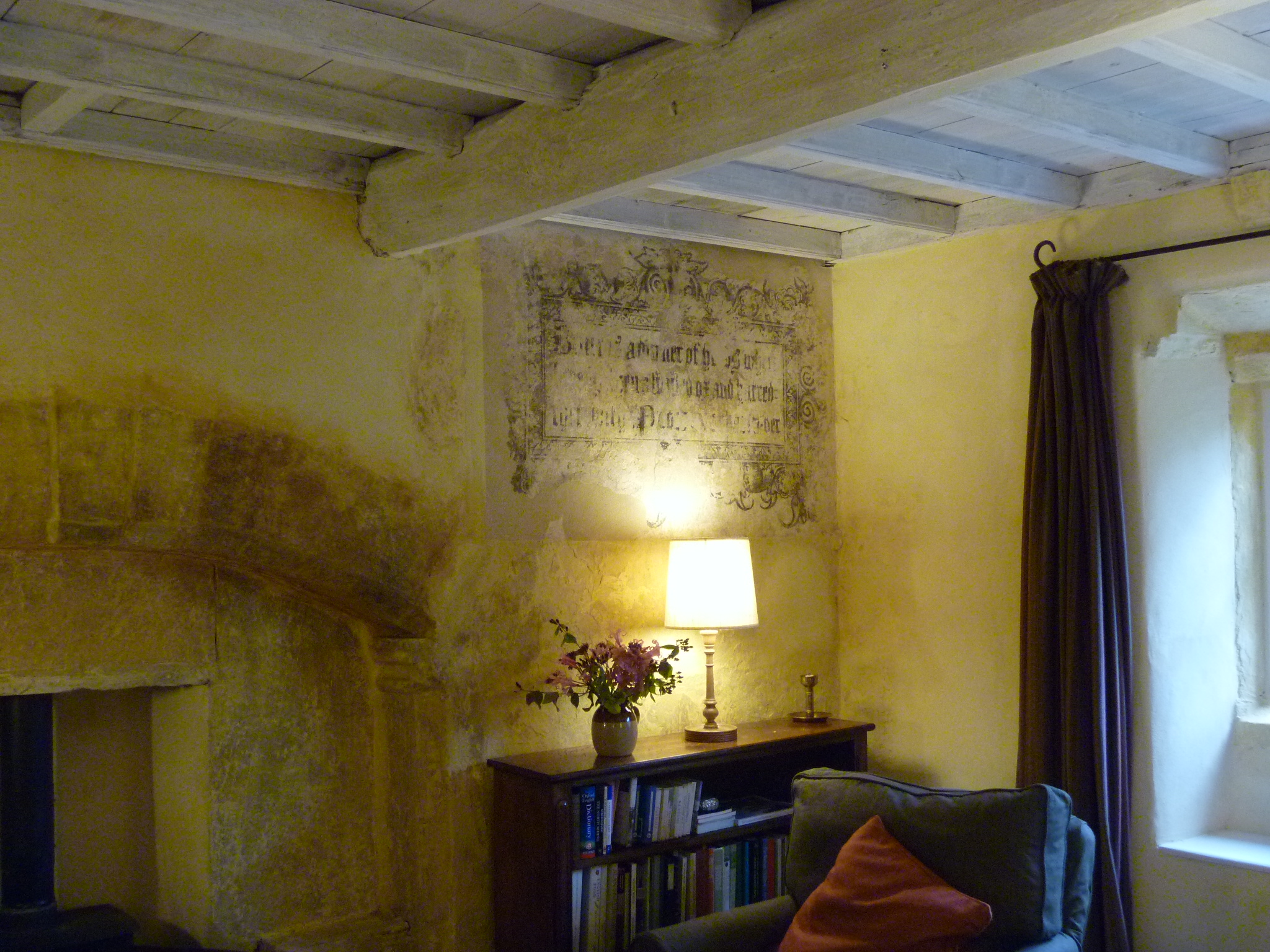
During early archaeological investigations these fantastic wall paintings were discovered. Monochrome Biblical texts in Gothic script they adorn two walls in the Parlour. “On the west wall is Whether ye eat, or drink or whatsoever ye do do all to the glory of God Cor[inthians] X:31 and For of him and through him, are all things: to whom be glory for ever. Amen. Rom[ans] XI: 36. On the east wall is Better is a dinner of herbs where love is than a stalled ox and hatred therewith Pro[verbs] XV: Cha[pter] 17 ver[se].”  From the Cowside History Sheet.

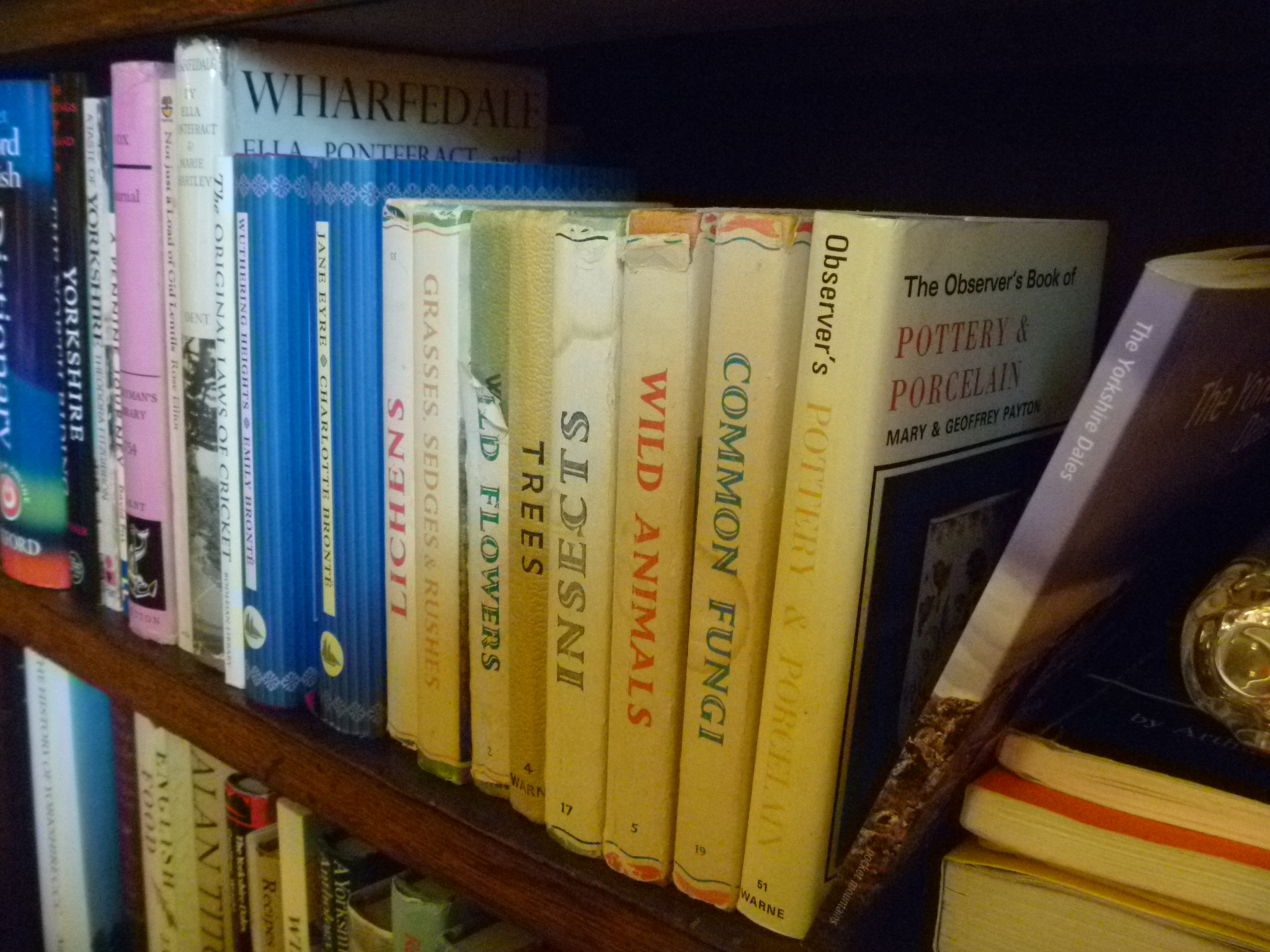
One thing I particularly appreciate when staying in Landmarks is the Landmark Library. This is not shelves of old books bought by the yard but a well chosen selection of relevant titles for adults and children alike.

“There will be a bookcase containing the sort of relevant and interesting books you might expect from a well-read host, as well as those standard reference books you sometimes need to get the most out of a good walk or conversation.”

Coughton Court, Warwickshire

Remember, remember the fifth of November

Gunpowder, treason and plot.

I see no reason why gunpowder, treason

Should EVER be forgot…

Actually, I have read recently that there is a move afoot to gradually replace our traditional Guy Fawkes Night or Bonfire Night with Hallowe’en which seems rather a shame. I shall digress briefly and reminisce about Bonfire Nights past. When I was a young girl November 5th was a low key family event. After tea, about 6 to 6.30pm, when dad was home from work, we would take our box of fireworks (bought from the special counter set up for that purpose at the local newsagent’s) into the back garden. The box would usually contain a Roman Candle, a Vesuvius, a Catherine Wheel, some Jumping Jacks, a couple of bangers and a couple of packets of sparklers. You can’t have a ‘firework party’ without sparklers. We never actually had a bonfire with a guy but I knew people who did! We would stand back the obligatory 6 paces whilst dad lit the blue touch paper and admire the whoosh and sparkle and sniff the smell of cordite in the air. Invariably, the Catherine Wheel would need a bit of encouragement to help it spin. for this reason it was usually the most disappointing. On Hallowe’en we would just fill a pail with water and duck for apples. Rather boring – but then we always had Guy Fawkes Night to look forward to a week later.

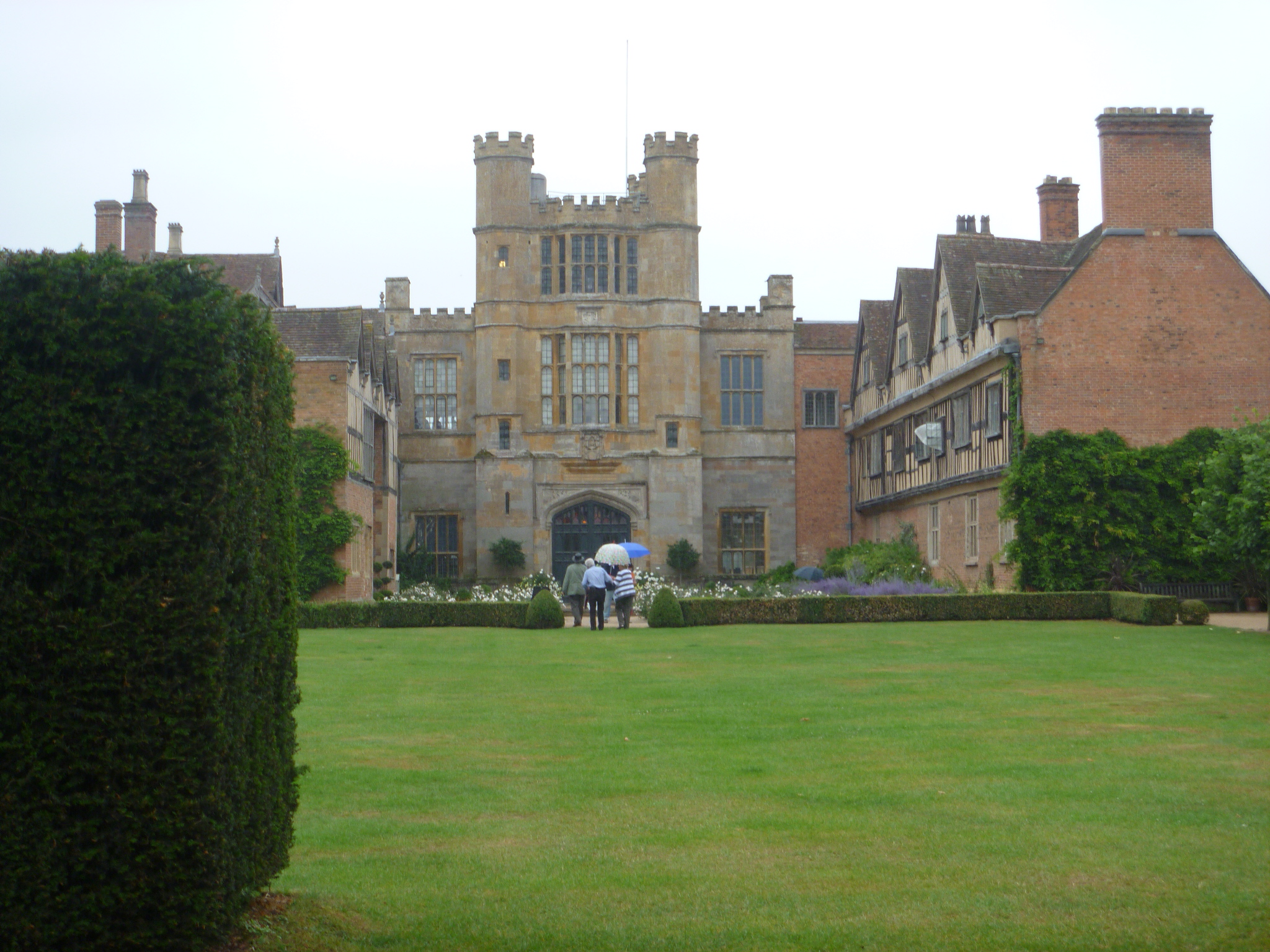
Early in August on my way to visit The Runner (younger son) I visited Coughton Court in Warwickshire where there is definitely no intention of letting the Gunpowder Plot be forgotten. It was to this house in 1605 that the news of the failure of The Gunpowder Plot was brought in the early hours of the 6th of November. The house has been in the hands of the Throckmorton family for 600 years.

“The mothers of two of the conspirators, Robert Catesby and Francis Tresham were the sisters Anne and Muriel Throckmorton, grandaughters of the original builder, Sir George Throckmorton, and sisters as well of the lord of the manor in 1605, Thomas Throckmorton. Two other conspirators, Robert and Thomas Wintour, were also great-grandchilden of Sir George Throckmorton.” Read more about the Gunpowder Plot and Coughton Court connections here :

The Gunpowder Plot

Coughton Court from the gardens behind the house.

Coughton Court is now run by the National Trust but the Throckmorton family appear to be very much involved still, especially with the gardens. As you can see it was a wet day when I visited so I didn’t get the chance to walk all round the extensive gardens. Instead I did a tour of the house, had tea in the restaurant, visited the shop and browsed in the secondhand bookshop.

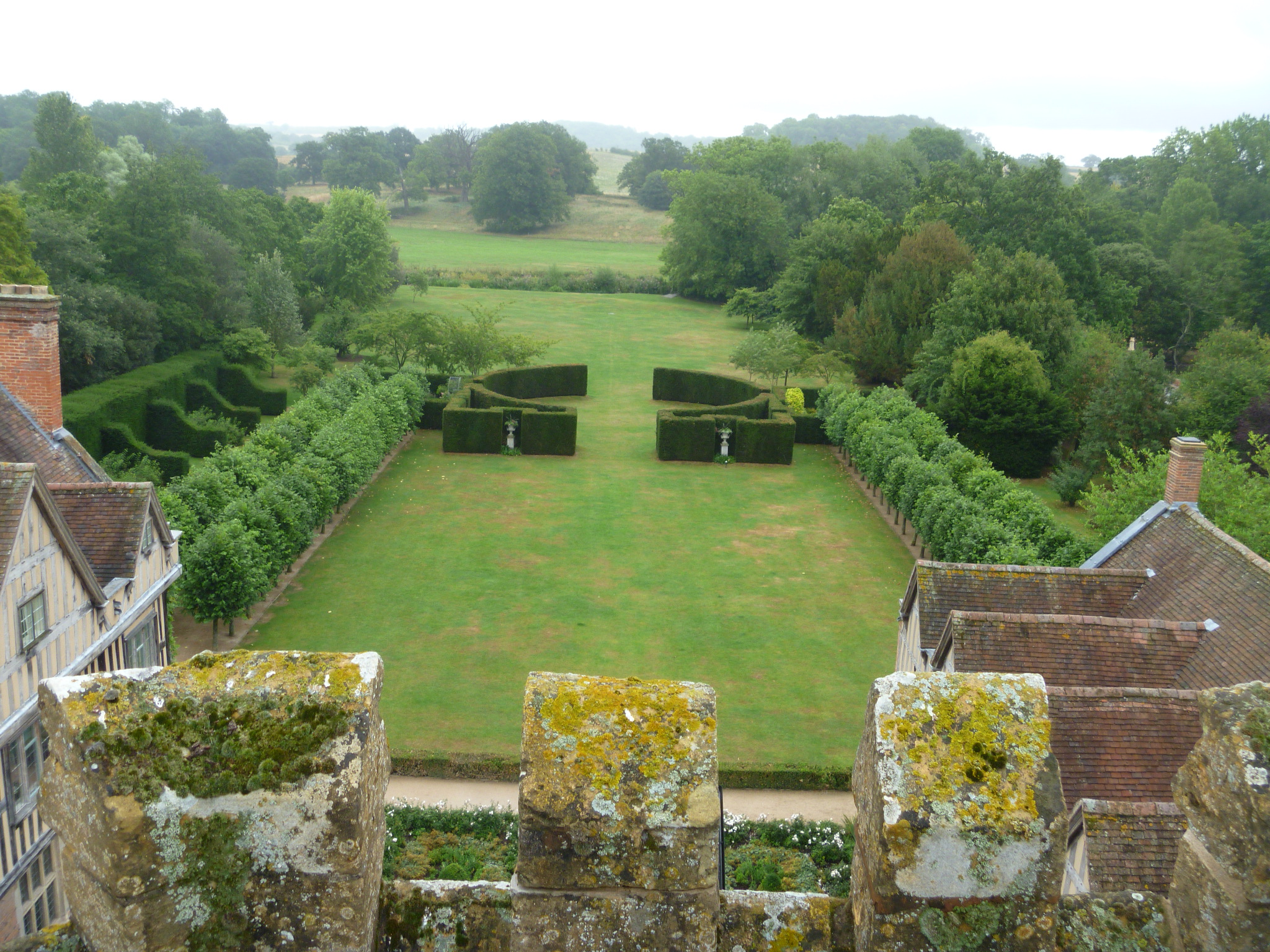
It is possible to climb right to the top of the tower and view the surrounding countryside and the lovely gardens and try to imagine how it might have looked and felt if you were a member of the group of Catholics waiting for news of the success (or failure) of Guy Fawkes and his colleagues in their attempt to blow up the King and parliament in November 1605.

View from the tower at Coughton Court

There are several unrelated things that I particularly remember noticing as I toured the house.

  • The famous Newbury Coat is on display in the Hall. Read here about Sir John Throckmorton winning his coat in 1811. It was made in one day in June between sunrise and sunset from shearing the wool from the sheep to being tailored into a coat :
  • The Newbury Coat
  • There is an annual Gunpowder dinner or Fawkes Feast held here each year :
  • Fawkes Feast 2011
  • The abdication letter, written by Edward VIII, is displayed in the Hall. The letter was acquired by Geoffrey Throckmorton in the 1930s, when he was Clerk of the Journals at the House of Commons. It has been passed on through the family and can now be seen on display. I’ve been reading a lot about Wallis and Edward this year so this was a special surprise and thrill for me to come across on my visit to Coughton (pronounced Co-ton) Court.
By coincidence this very morning I have just read about this forthcoming exhibition at Compton Verney, also in Warwickshire :