The National Commemoration of the Centenary of the Gallipoli Campaign 25 April 2015

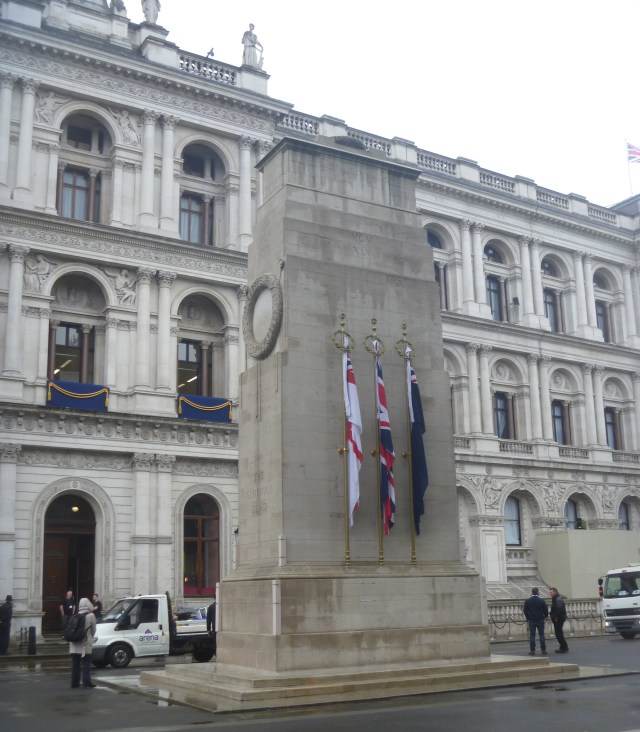
cenotaph before

What a difference a day made! On Saturday morning 25 April (ANZAC Day) it was pouring with rain as we made our way to Whitehall where we were attending The National Commemoration of the Centenary of the Gallipoli Campaign and ANZAC Day.
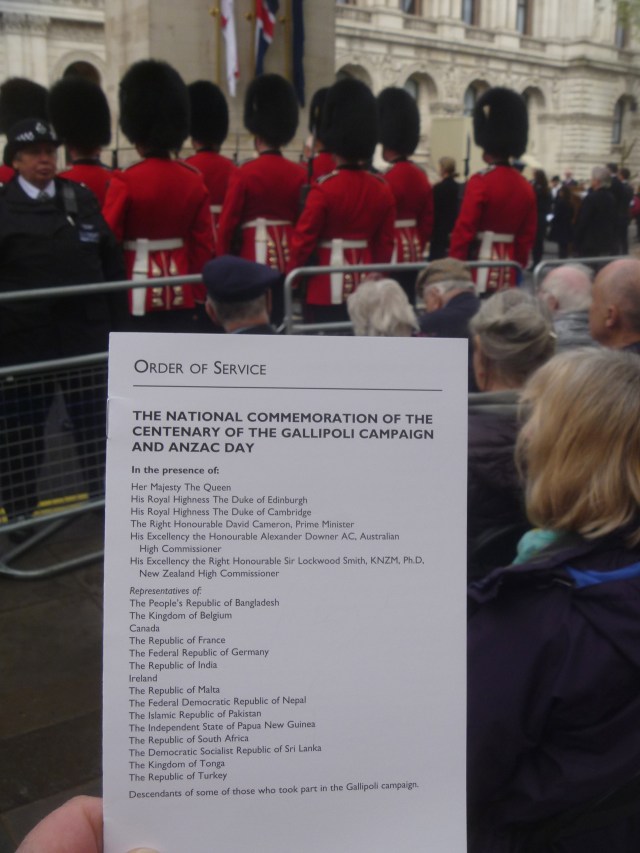
order of service

There we are at the bottom of the page!

You may remember that I did some research to find out more about the life and death of my great uncle, Marshall Howman, who was killed at Gallipoli on 21st August 2015. The Gallipoli Association very kindly supplied me with relevant information and I decided to sign up and support them. Through the Association we received an invitation to join the proceedings, in a specially reserved area for Gallipoli Descendants.

We arrived early and  after passing through tight security secured for ourselves (me, my sister and our Australian friend, Ann) a pretty good position within the Descendants Viewing Area. We stood immediately behind the limited seating and right by the Cenotaph itself with a view of the Foreign and Commonwealth Office door and red carpet and had a diagonal view of the Royals. That was about 9am. Gradually the rain stopped altogether and we managed to dry out.

There was plenty going on and it was interesting to see one of these events from behind the scenes. Eventually Guards with busbies stood in front of us; but I could still just about see most of what was going on.
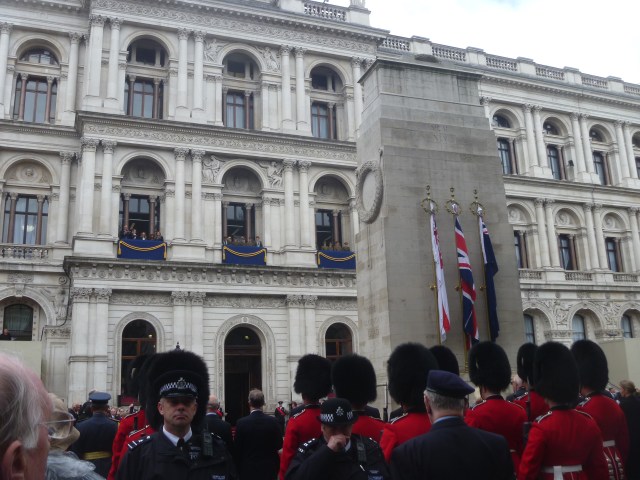
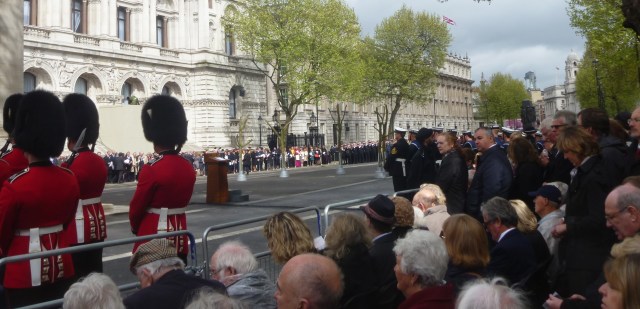
not a bad view

Not a Bad View

Dan Snow

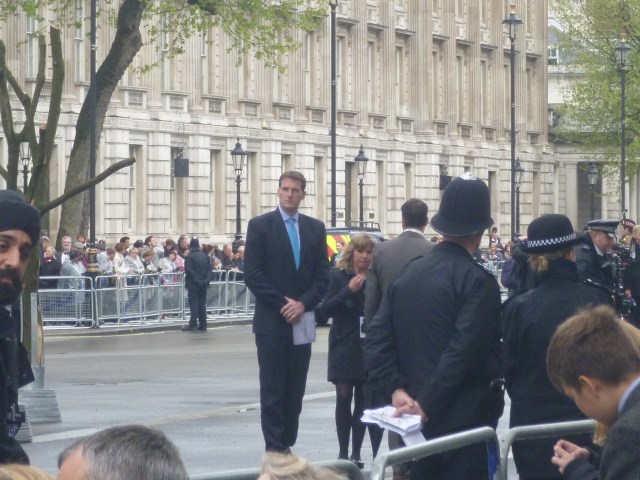
Dan Snow (BBC) ready and waiting

Tree sculpture

If you look closely in the middle of the photo you can see the tree sculpture Gallipoli 1915 by Nadir Imamoglu. It’s a small-scale reproduction of one which forms part of the ‘Gallipoli 1915’ memorial at the National Arboretum in Staffordshire. The leafless branches symbolise the hands of soldiers on the beaches of the Gallipoli Peninsula, raised to distinguish them from their dead comrades. [From the Souvenir Brochure]
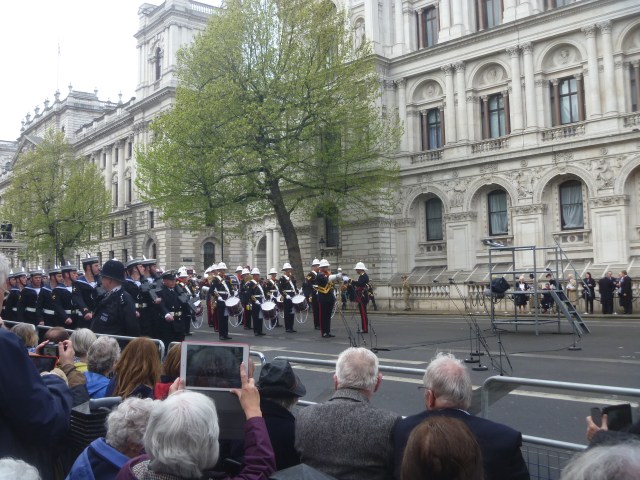
Bands arrive

The Military Bands Arrive

Just before 11 the Queen, the Duke of Edinburgh, Prince William and other VIPs – British, Australian, New Zealand, Turkish and representatives of many other other nations involved in the Gallipoli Campaign (and the sun!) came out. As Big Ben struck the hour we began a Two Minute Silence. This was followed by The Last Post, A Reading : For The Fallen by Lawrence Binyon :

They shall grow not old, as we that are left grow old:
Age shall not weary them, nor the years condemn.
At the going down of the sun and in the morning,
We will remember them.
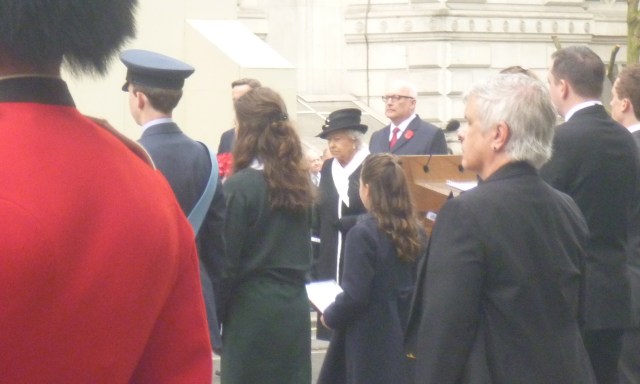
My view 2

And the Laying of Wreaths. A short service of readings, a hymn and national anthems then followed.
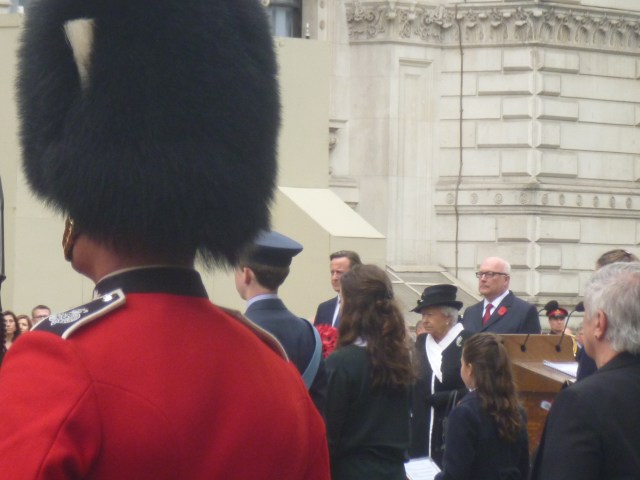
my view

After the Service there was a march past made up of representatives of UK and foreign forces and various associations including, of course, our own Gallipoli Association. When, as descendants, we were invited to join the Commemoration we were given the option to either attend the service or join the march past.
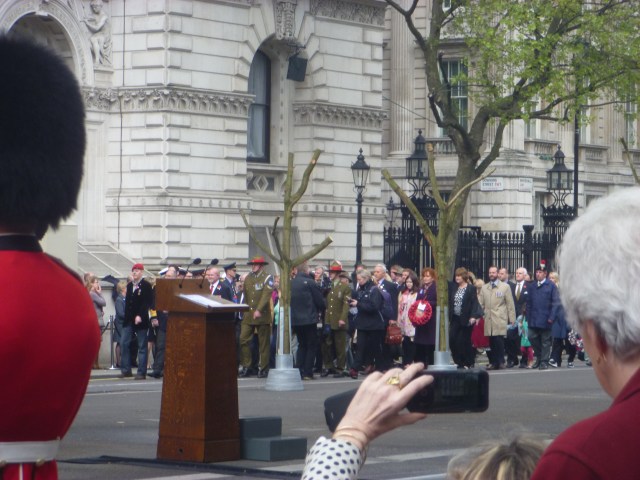
march past

The March Past

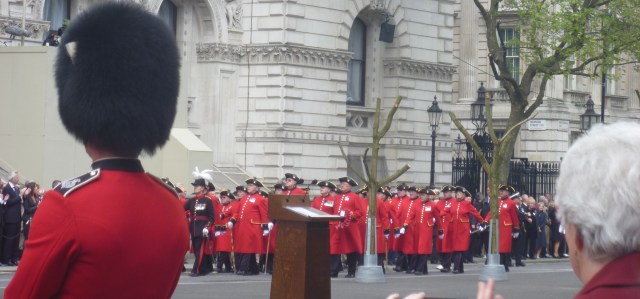
chelsea pensioners march past

Everyone Applauded the Chelsea Pensioners
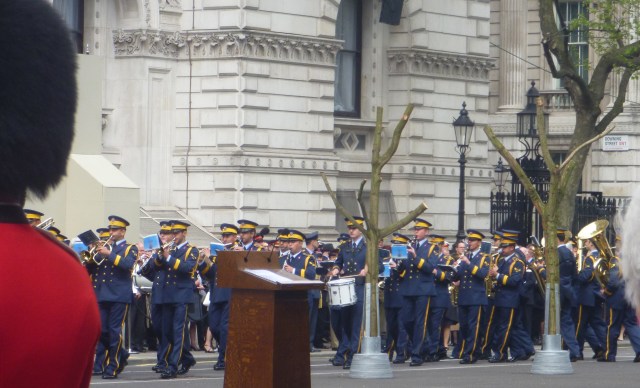
Turkish air force band

The Turkish Air Force Band March Past

At home I recorded the BBC coverage of the morning and on Monday enjoyed watching in comfort the very moving and memorable event that I had witnessed at first hand on the Saturday.
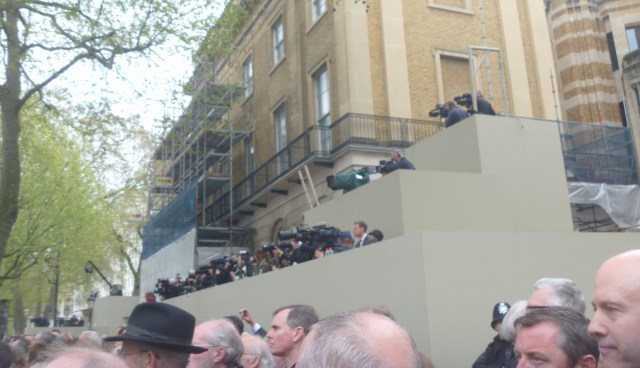
Cameras behind us

Cameras at the ready!

http://www.bbc.co.uk/iplayer/episode/b05sz6cp/world-war-one-remembered-gallipoli-episode-1
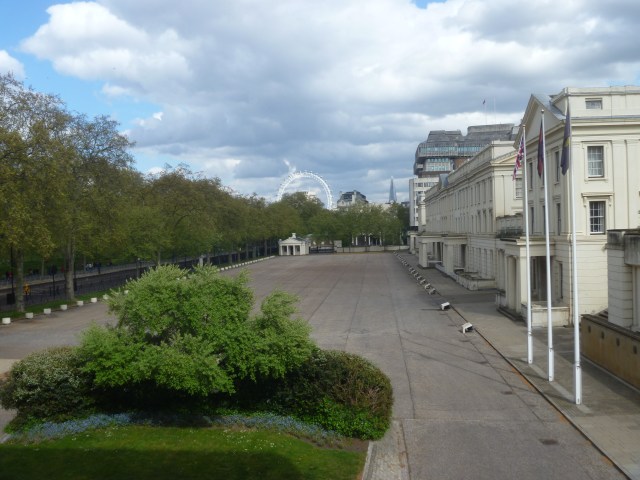
wellington barracks

At The Wellington Barracks, Birdcage Walk

After the Cenotaph Service members of the Gallipoli Association were invited to a Buffet Lunch at the Wellington Barracks. I was happy to meet other members and officers of the Association.
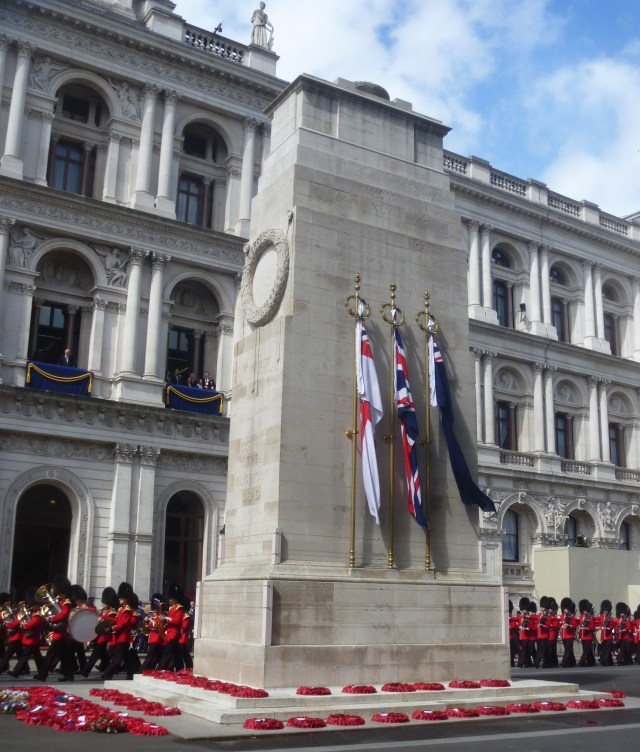
Cenotaph after

“We will remember them”
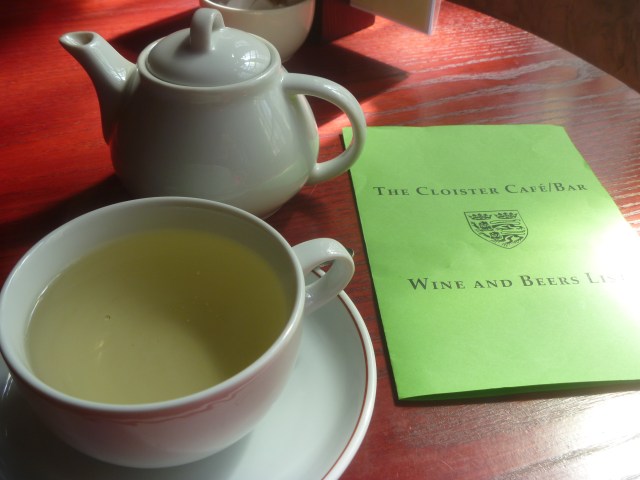


Chelsea Physic Garden : Where Plants Really Matter

On Friday my sister arrived to join me for the weekend and we checked into our hotel just behind Harrods. This was a relatively new area for us. We had decided to avoid the Central London and City areas as the London Marathon on the Sunday meant big crowds and closed roads and limited access everywhere.

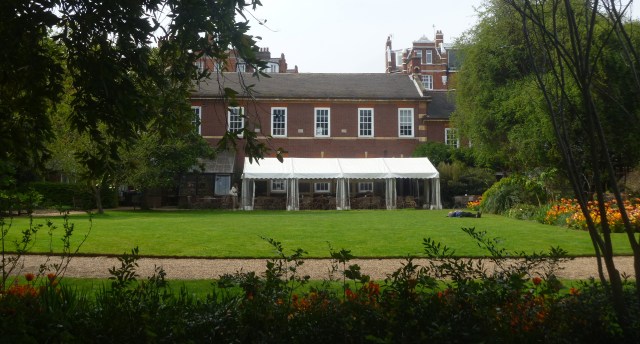
So, being in the Belgravia area seemed a good opportunity to visit lesser known places in the Chelsea area. For many years I’ve wanted to visit the Chelsea Physic Garden but haven’t been in the right place at the right time. Friday being beautifully warm and sunny we decided to step out down Sloane Street and Royal Hospital Road where, next door to the Royal Hospital (think, Chelsea Pensioners), we found the high walls surrounding another oasis of peace and calm.

CPG Rock gdn

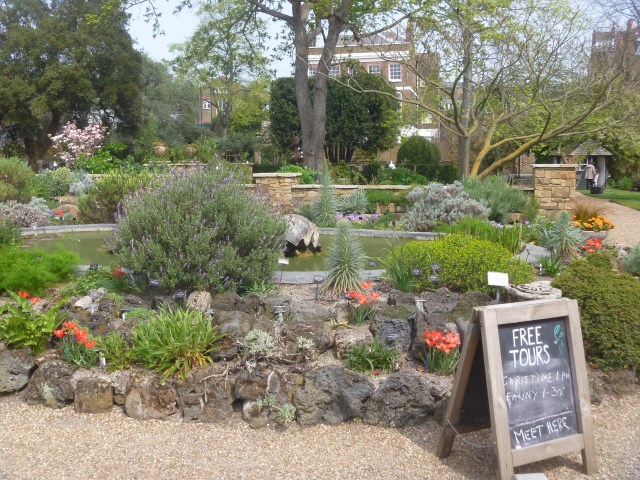
The rock garden of basalt rocks is a listed monument

Tucked away beside the Thames, Chelsea Physic Garden is a celebration of the beauty and importance of plants. This walled Garden was founded in 1673 by the Worshipful Society of Apothecaries for its apprentices to study the medicinal qualities of plants and it became one of the most important centres of botany and plant exchange in the world. Today, as an independent charity the Garden relies on the support of visitors and Friends to help protect and nurture the Garden for future generations.” [From the website]
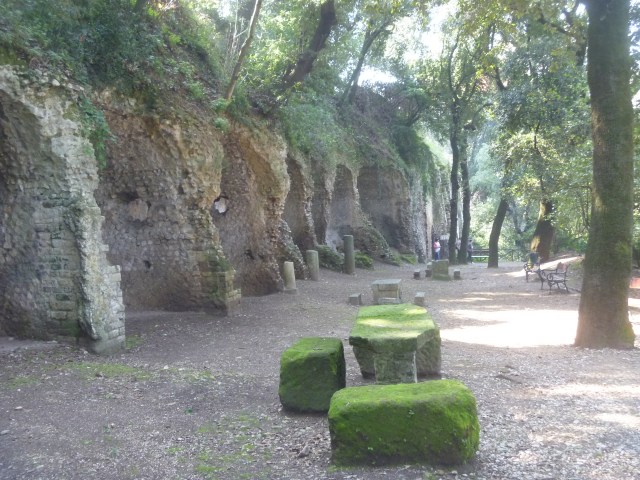
tangerine dream

The Cafe in the 17th century curator’s house

There are free tours every half hour with a volunteer guide so we decided to join one of these first, before having lunch outside the Tangerine Dream Cafe.

CPG gates

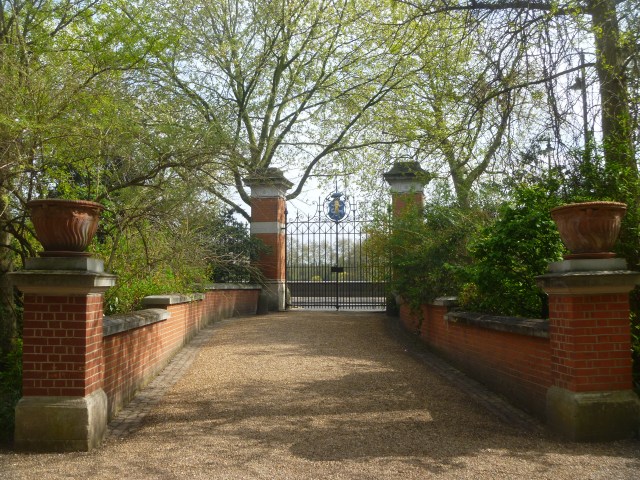
The Gates lead to the Chelsea Embankment and beyond that to the River Thames which was so important to the Garden bringing boats alongside with their cargoes of exotic plants

volunteers and gardeners at work

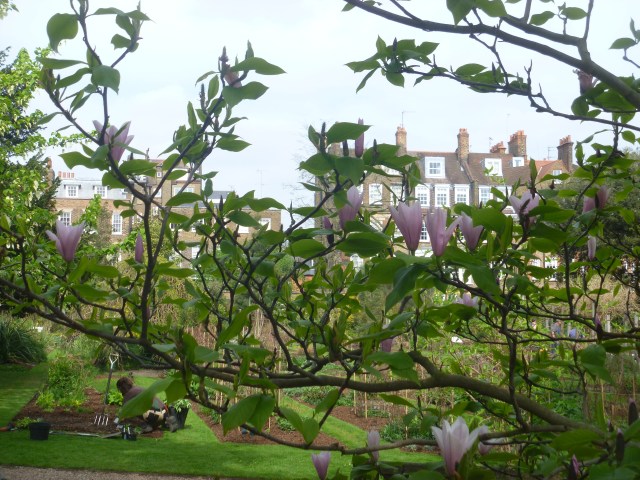
Gardeners and volunteers at work in the Systematic Order Beds

It was impossible for our introductory tour to include all of the gardens on the site :

Garden of Medicinal Plants
The Pharmaceutical Garden
World Woodland Garden
The Garden of World Medicine
The Garden of Edible and Useful Plants
Historical Walk
Botanical Order Beds
Island Endemic Flora

[Each garden is explained on the website.]

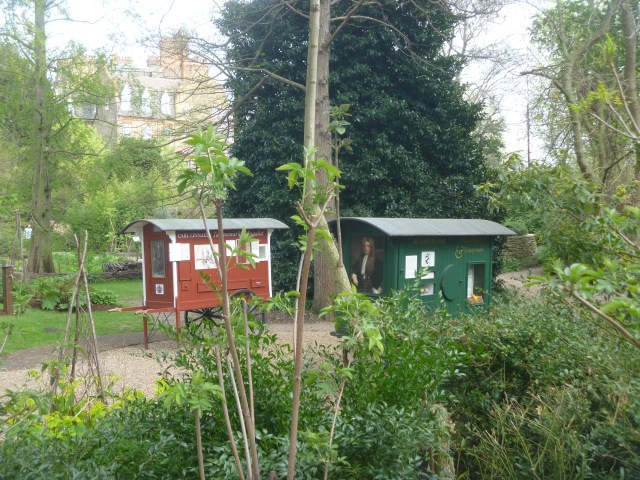
so after lunch we visited most of the rest – the greenhouses, the new world woodland garden and had a closer look at the two information point caravans devoted to Sir Hans Sloane and the Swedish plantsman Linnaeus.

Sloane and Linnaeus

Each cart contains information about Carl Linnaeus and Sir Hans Sloane

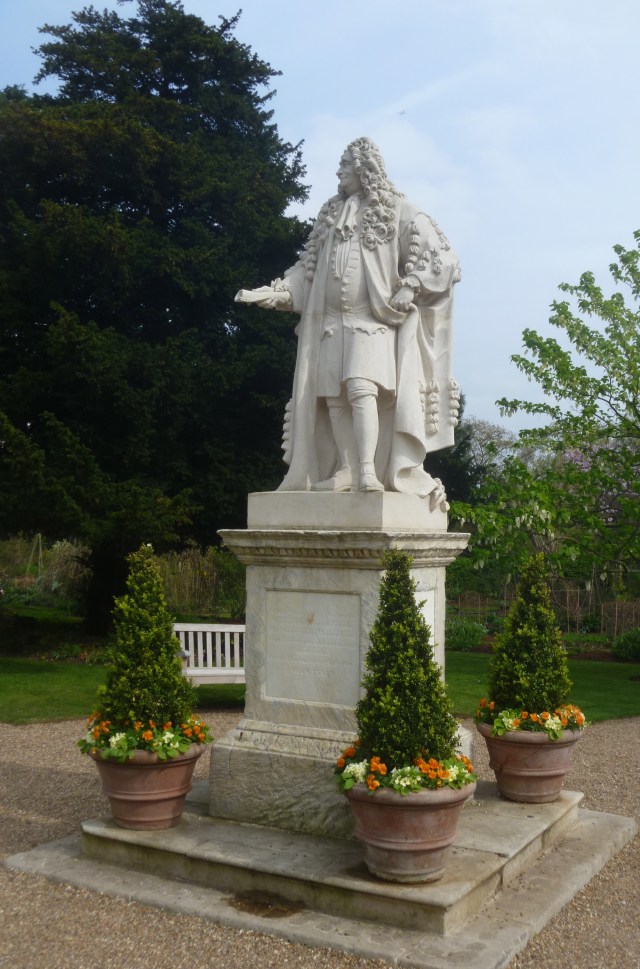
Hans Sloane

Sir Hans Sloane (a copy of the original)

Dr. Hans Sloane, after whom the nearby locations of Sloane Square and Sloane Street were named, purchased the Manor of Chelsea from Charles Cheyne. This purchase of about 4 acres was leased to the Society of Apothecaries for £5 a year in perpetuity. Sloane was also a founder of the British Museum.

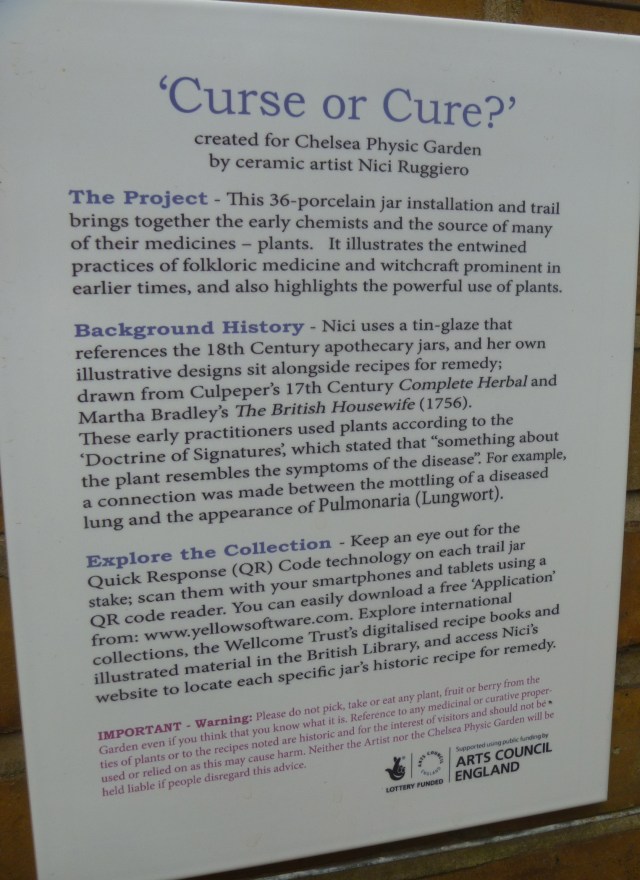
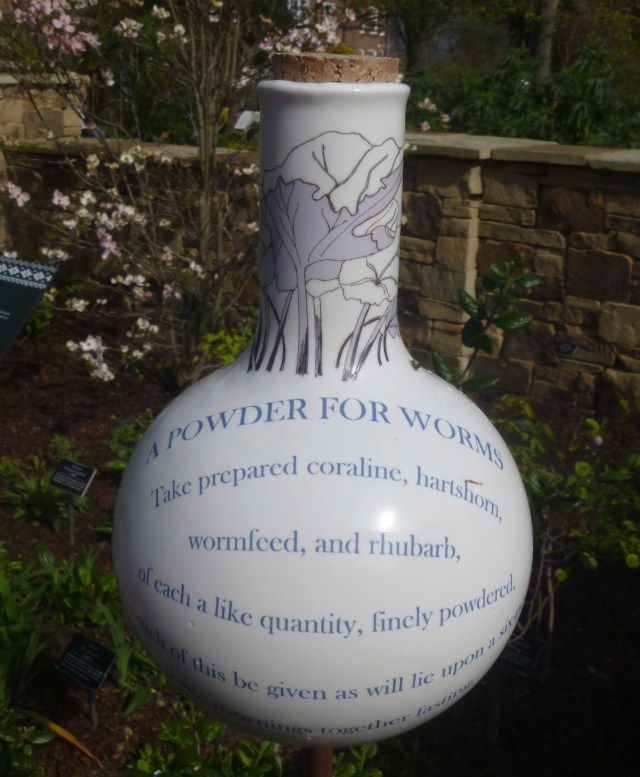
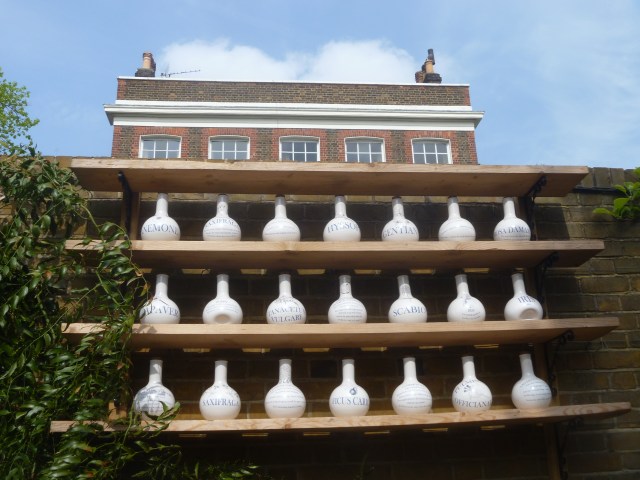
‘Curse or Cure?’ is the title of the 2015 temporary outdoor art installation created for the Garden by ceramic artist Nici Ruggiero. It consists of a trail of 15 inscribed apothecary jars displayed on metal spikes amongst the plants and a larger display of 21 jars against the wall.

curse or cure descrip

Description of the Installation

curse or cure jar

A Jar on a Spike

curse or cure jars

The 21 Jars

Read here an article by Lisa Jardine which appeared in the Financial Times Magazine in 2013. You may need to register to read.


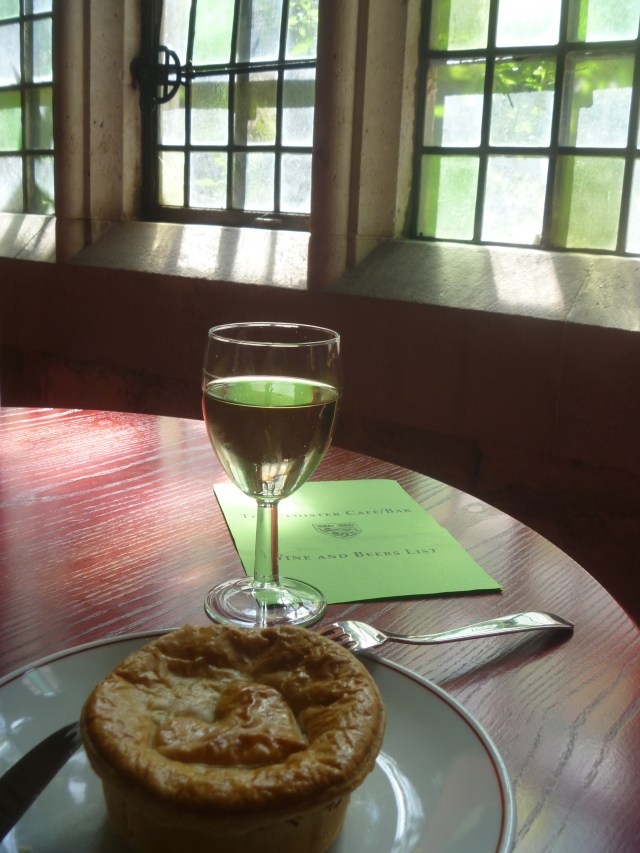
The Cloister Cafe Great St Bartholomew’s

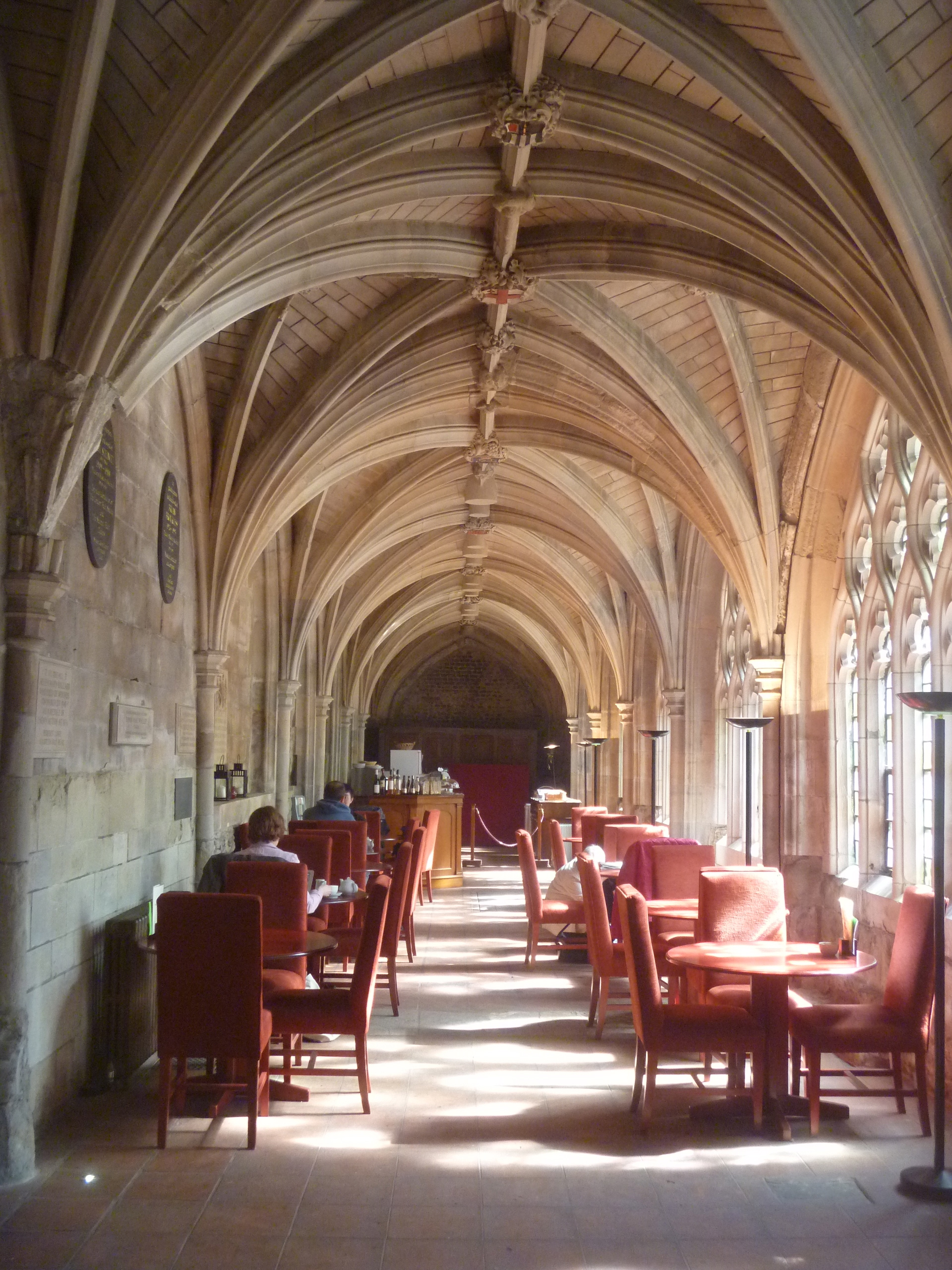
There are three new Quiet London books. In the volume “food and drink” there are lots of ‘new’ listings. Flicking through I noticed that a cafe has now opened in the cloister of St Bartholomew The Great church, West Smithfield. Over the years I’ve stayed half a dozen times at 45A Cloth Fair one of three Landmark Trust properties in Central London.

cloister

Last week a friend of mine was staying there and invited me to join her on Thursday afternoon. I travelled down that morning for a big event on Saturday (more later). We decided to try out the cafe and it was indeed quiet. But then it was a lovely warm day and there were plenty of people in the churchyard having their offices lunches in the sunshine.

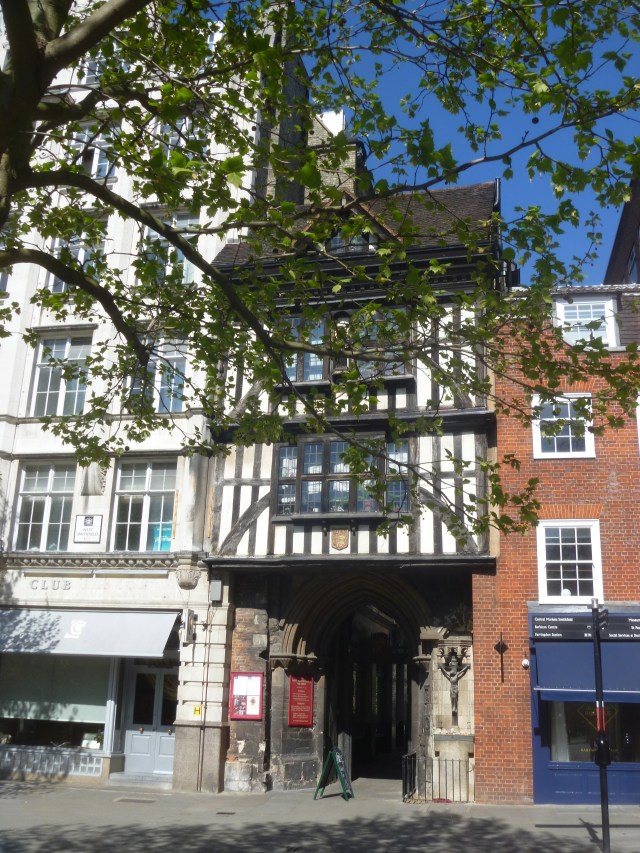
Gatehouse

Enter the beautiful Great St Bartholomew’s church by passing underneath the Elizabethan gatehouse” writes Siobhan Wall.

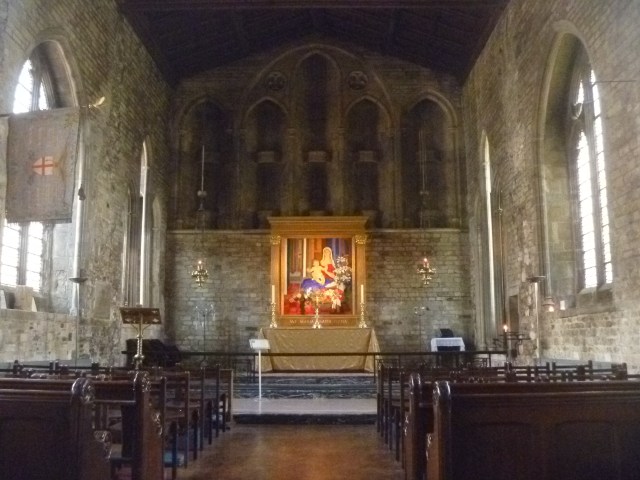
Inside St Barts

After slowly wandering round its hallowed interior,  find a table in this tranquil cafe to the right of the main porch.”

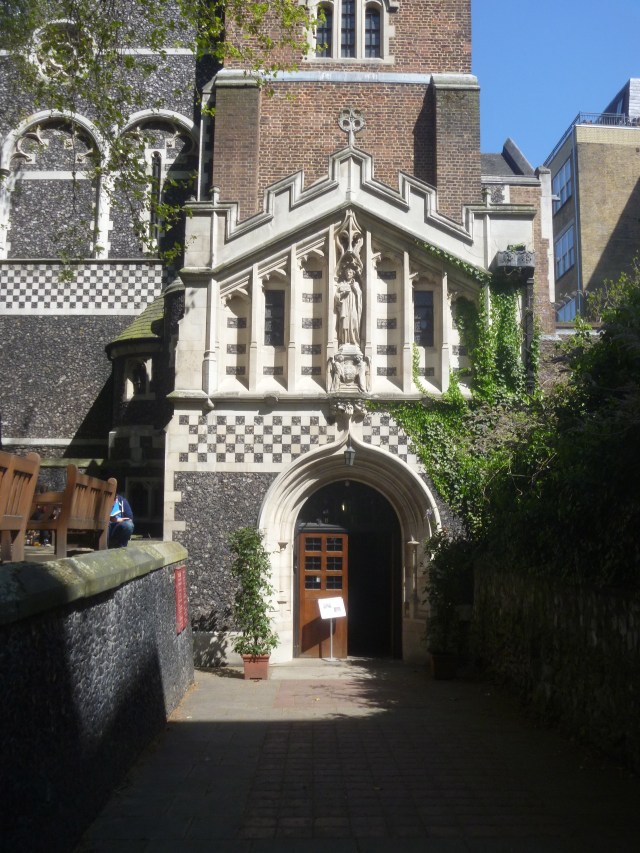
main porch

Main Porch

higgidy pie

There aren’t many places where you can sit and have a slice of chocolate cake [or a Higgidy pie, for that matter] among fifteenth-century cloisters, but the ancient surroundings make this one of the nicest cafes in London to have afternoon tea.”

green tea

Fresh mint tea is served in white china pots, and with the pale green light filtering through the leaded glass windows this is one of the most peaceful corners in England.”

Milady goes to the Emerald Isle

For the month of May I’ll be away; mostly in Ireland but I’m driving to South Wales first and combining my trip with a visit to a dear friend in Powys.

My Itinerary :

1st – 5th May in Wales

5th May Ferry from Fishguard to Rosslare

6th to 11th May staying at Cappoquin, near Lismore, Co. Waterford

11th to 14th May staying with family in Co. Kildare

14th to 18th May volunteer helper at Ballymaloe Lit Fest, Co. Cork

18th to 26th May back in Co.Kildare

26th to 29th May at National Trust, Crom Estate, Co. Fermanagh

29th to 31st May at Glenarm on the Antrim coast

31st May Returning home from Belfast to Liverpool (actually, Birkenhead)

I had initially applied to ‘Workaway’ as I did in Switzerland two years ago but out of nine applications only four responded. Of those that did respond one has invited me to visit and another put me in touch with the Ballymaloe Festival.

I’m hoping to post daily again as I did in 2013 (although I may not have internet access each day) : so if you’re interested sign up to follow me here : My Irish Times : Round Ireland with a Book Box. The subtitle is from Tony Hawks’s book : Round Ireland with a Fridge. But I won’t be hitching – I’m taking my car – and I won’t have a fridge. I thought about saying ‘with a cool box’ but as I wrote this to a friend I thought, no, I’m more likely to have a box of books than a cool box of food.

Leeds Dublin

As Seen at Leeds City Station

A Beautiful Oasis of Peace and Tranquility in the Heart of Durham City : Crook Hall and Gardens

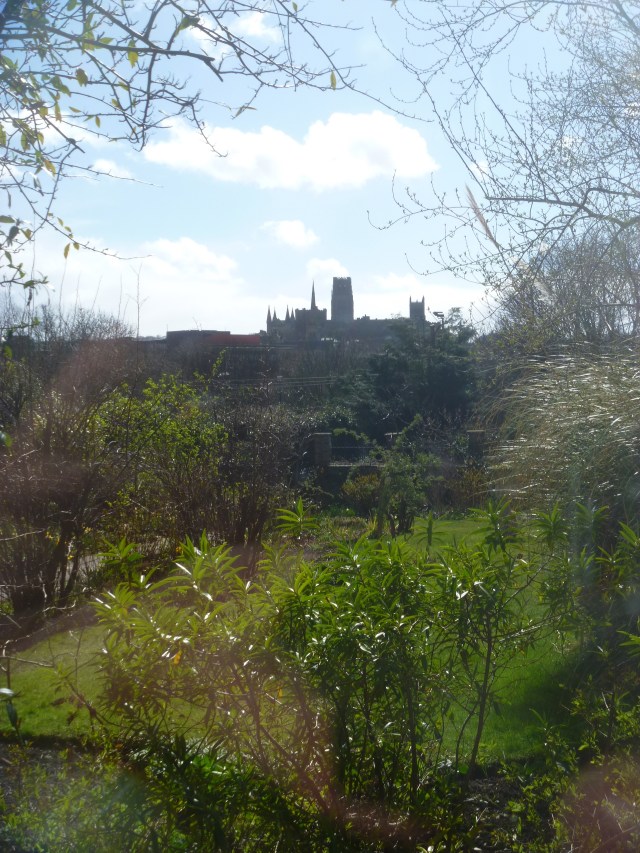
Durham Cathedral

Durham Cathedral from Crook Hall Tea Room

Writing this on a warm sunny Easter Monday it’s hard to believe that last Tuesday in Durham I managed to avoid snow showers whilst meeting a friend from my online book group for a day out at Crook Hall and Gardens in Durham.

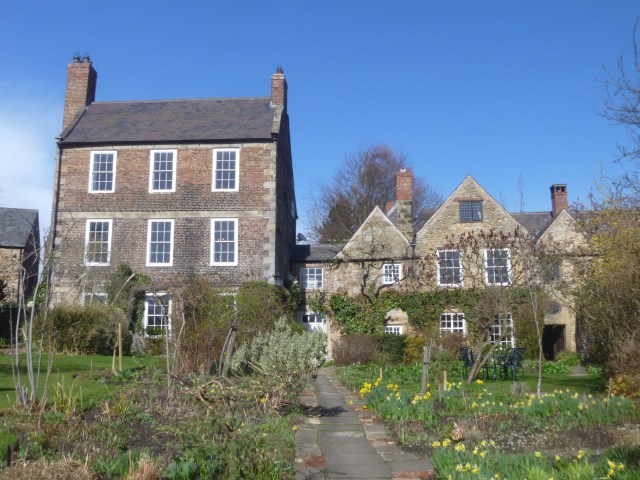
Crook Hall

This fascinating house and garden deserve another visit in the summer time when there will be more colour and a less forbidding sky. However, we did manage to visit each garden and delighted in what we saw.

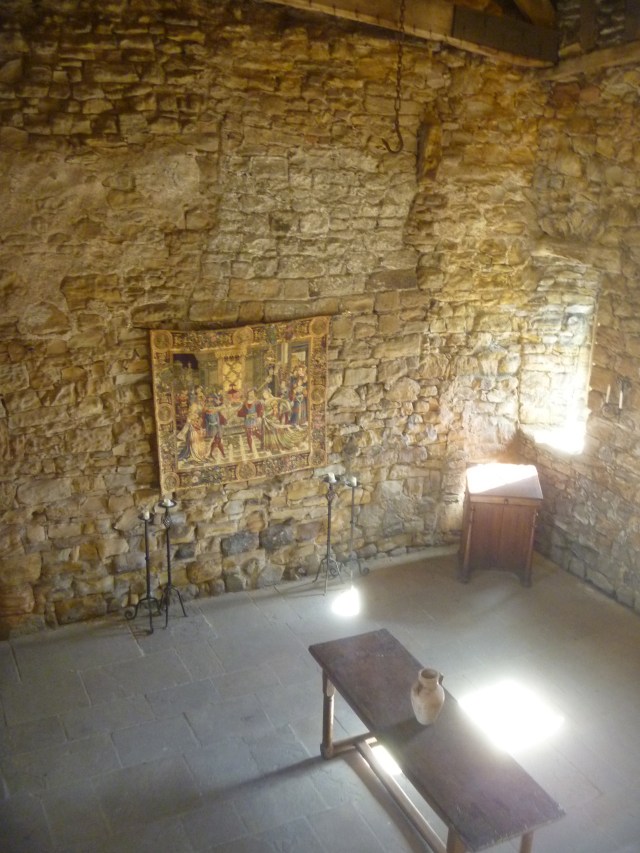
The Hall


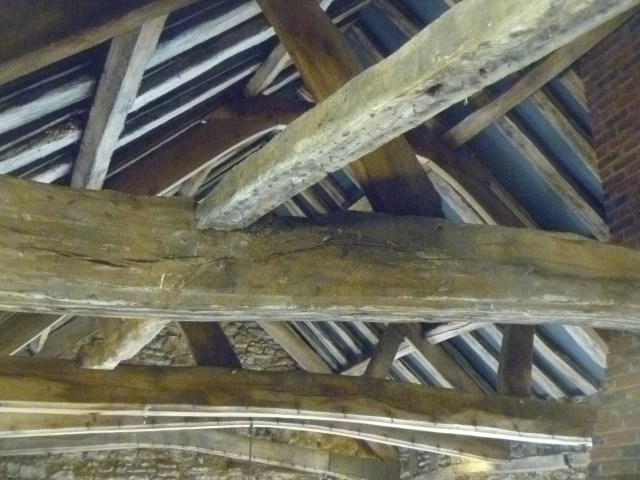
Beams

The Hall is 13th century and provides a spectacular backdrop to the stunning gardens. It’s a short walk from the bustling city centre to this oasis of peace. There’s a tea room in the Georgian wing served by the house kitchen and you can visit many of the rooms in the house including the medieval hall with exposed beams.

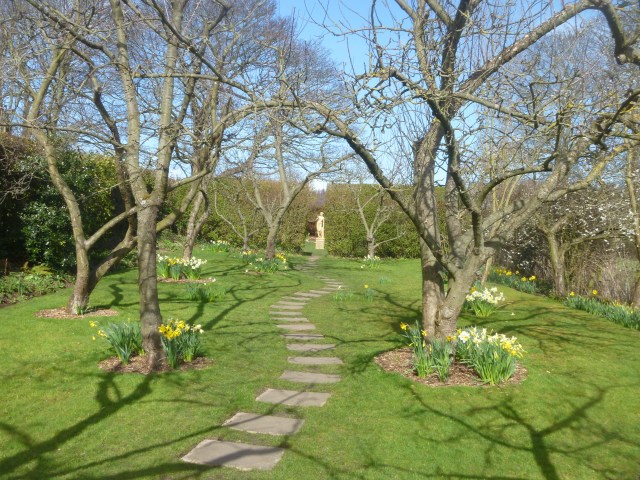
The Orchard

The Orchard

Shakespeare garden

The Shakespeare Garden inspired by a book on plants in Shakespeare’s plays

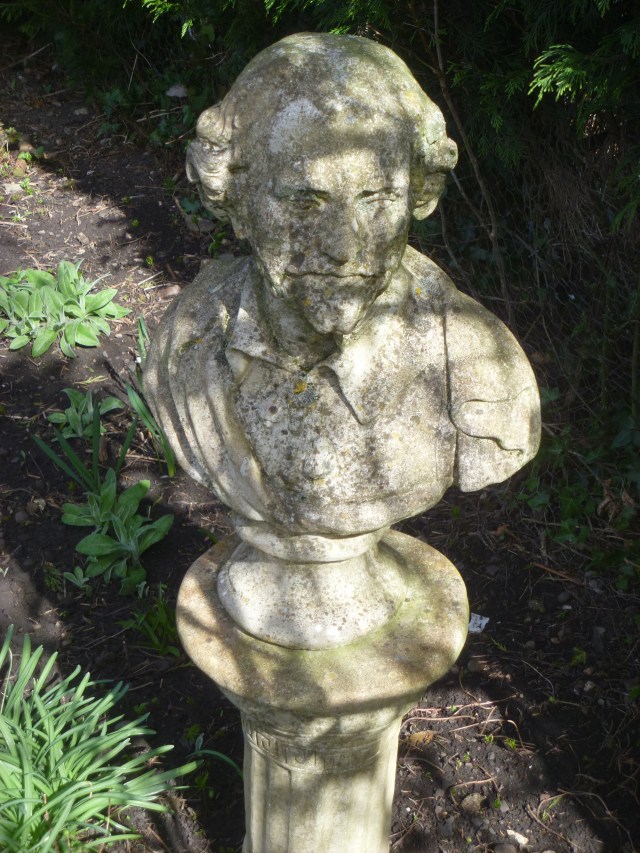
Shakespeare in his garden

Shakespeare in his garden

Moat

The Moat Pool

Cathedral garden

The Cathedral Garden : the beds echo stained glass windows

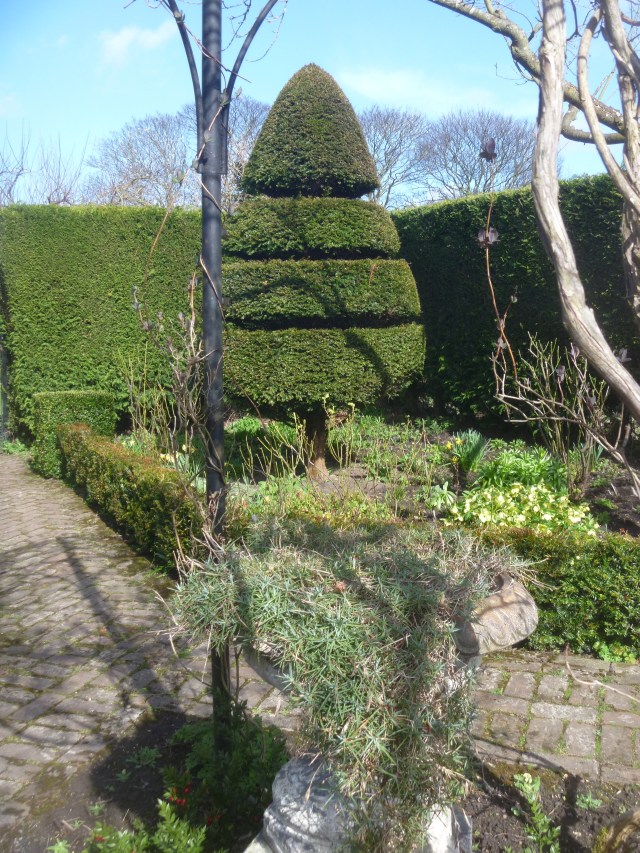
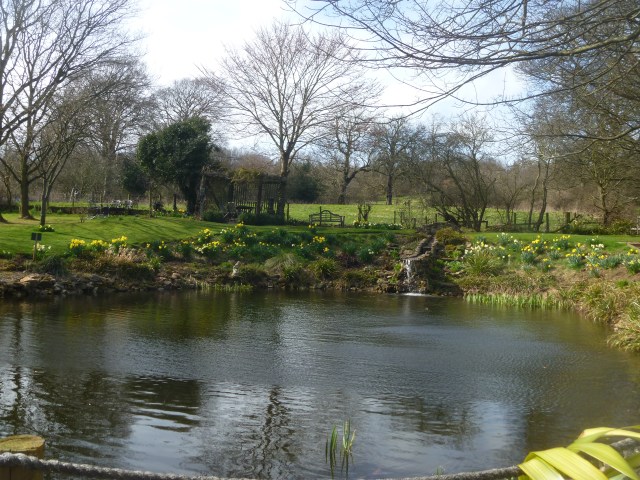
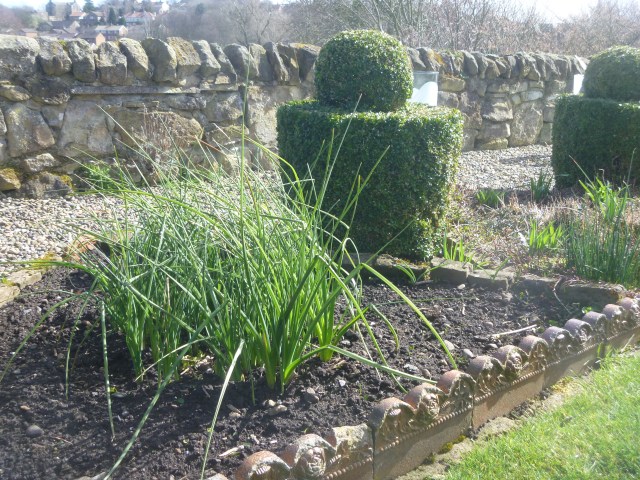
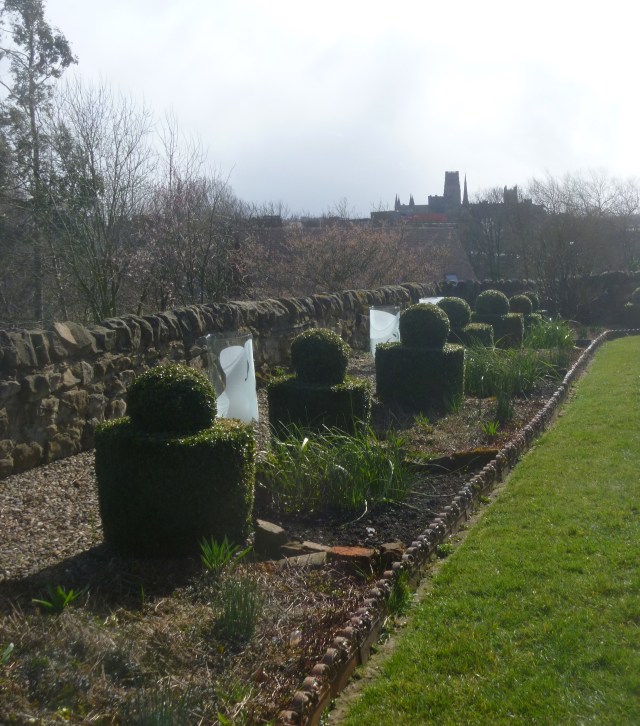
Monks in garden

Durham Cathedral from the Cathedral Garden: the Topiary Box represent the Monks

Be entertained by Clare Balding as she takes a walk with the owners of Crook Hall and finds out about the history of Crook Hall and Gardens :

Crook Hall on Ramblings

More Watery Landscapes in Tivoli : The Villa D’Este and The Villa Gregoriana

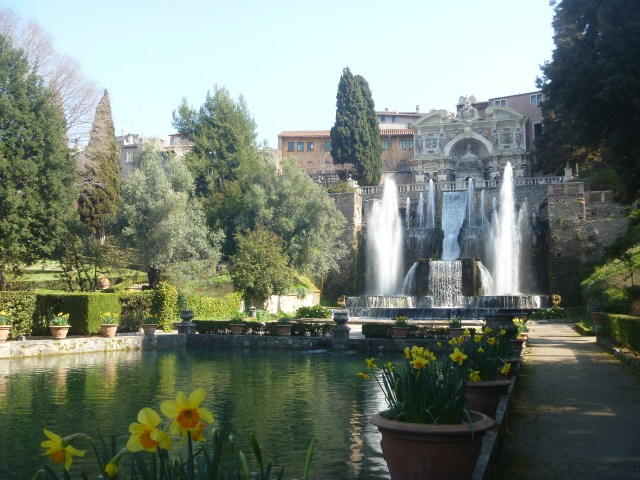
Perhaps the most famous location in the town of Tivoli itself is the Garden of the Villa D’Este. The sun was shining on my last day at Sant’ Antonio and I decided that I would visit the garden and that of the nearby Villa Gregoriana.

Vd'este 1

Thursday 19 March just happened to be St Joseph’s Day (Father’s Day) and a big celebration filled the town centre of Tivoli. Was this the reason why the Gardens of the Villas D’Este and Gregoriana were practically deserted that morning? Anyway, it was very pleasant to have the gardens virtually to myself.

v d'este2

Cardinal Hippolyte D’Este (1509-1572) became governor of Tivoli and set about establishing a garden. Today it’s approached from the house but originally the entrance was at the bottom of the garden and visitors slowly climbed the hill to take in the wonders of the garden. Upon reaching the top, where the Cardinal would be waiting, you’d be in a ‘sense of breathless awe’. (According to Monty Don in the 2011 series of BBC programmes visiting Italian Gardens).

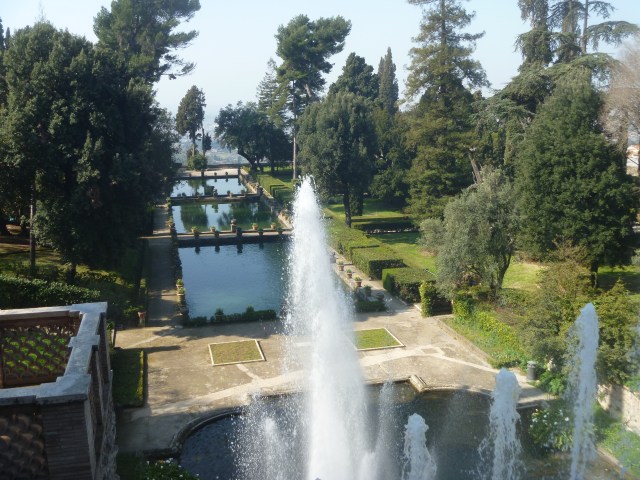
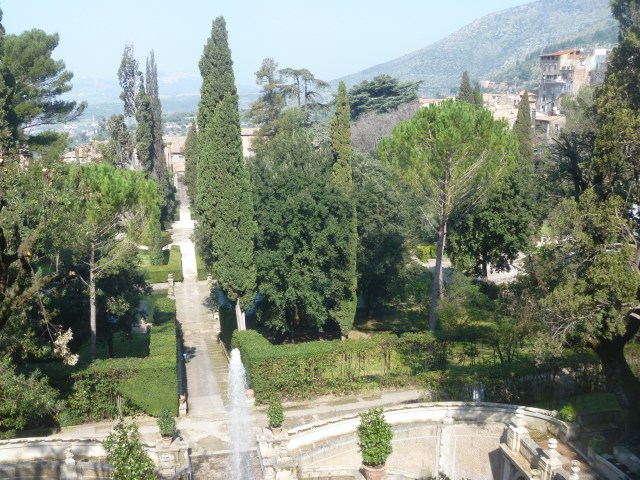
d'este gardens view

The View from the Villa

D’Este had great wealth but the one thing he wanted above all was to be Pope. He failed in 1549. So he demolished streets and had water brought to the site by a sophisticated method from a nearby aqueduct. All the water still comes from this same source and using the same methods. No pumps are used and the whole is still powered by pressure. The speed and movement of the water are still controlled by different sized pipes and spouts.

V d'este 3

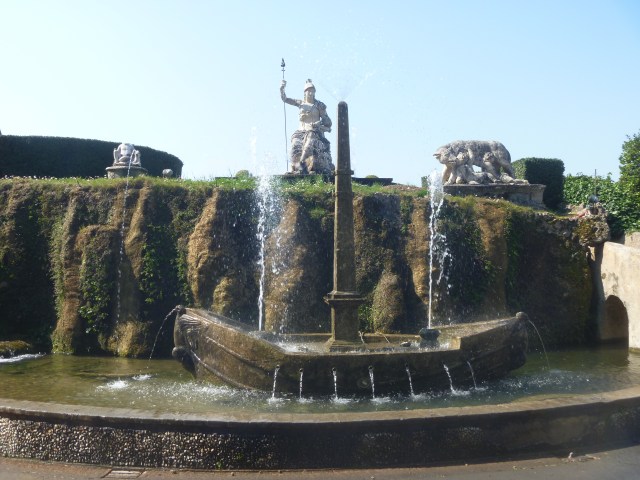
The whole estate took 20 years to construct during which time the Cardinal made 5 attempts to become Pope. Here “Rometta” is his model of Rome – he never did achieve his goal. Here is an expression of power built to impress. But he ran up huge debts: the whole project is said to have cost the equivalent of £100 million in today’s money.

fontana di rometta

Fontana di Rometta

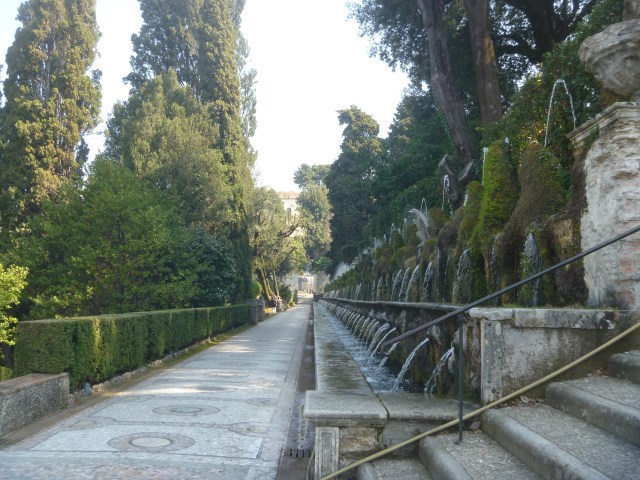
100 fountains

The 100 Fountains – they have the same rhythm and sound as you walk along beside them

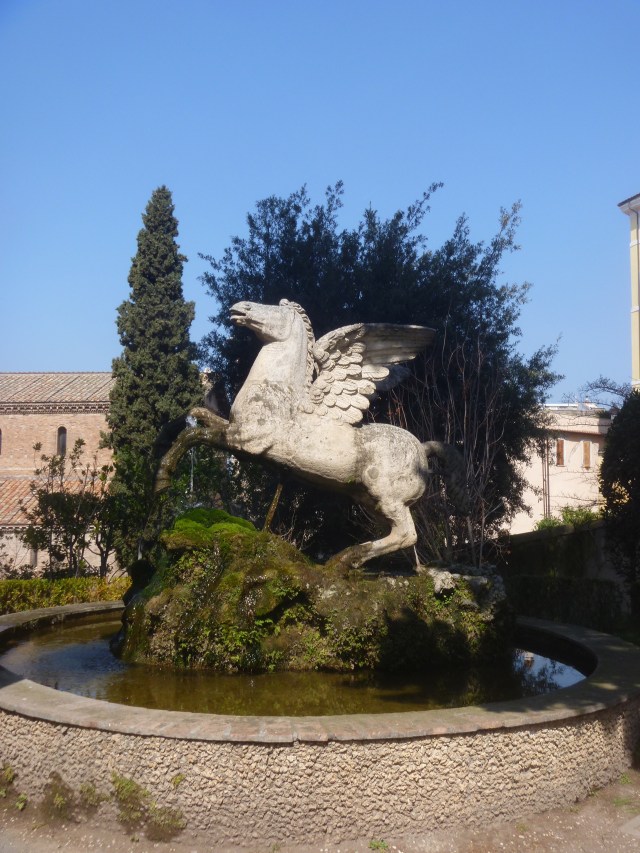
pegasus fountain

Pegasus Fountain

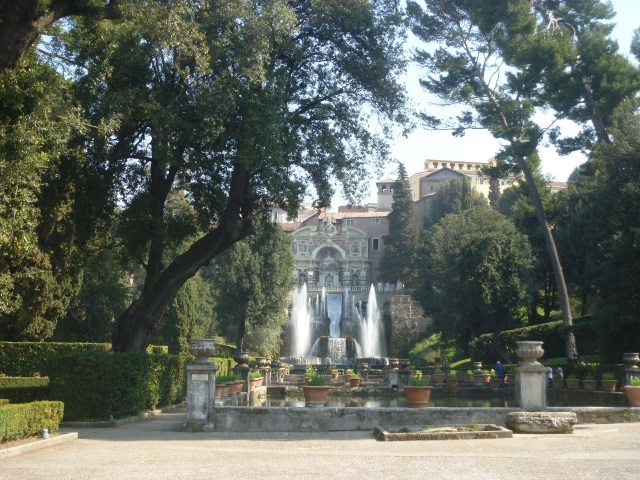
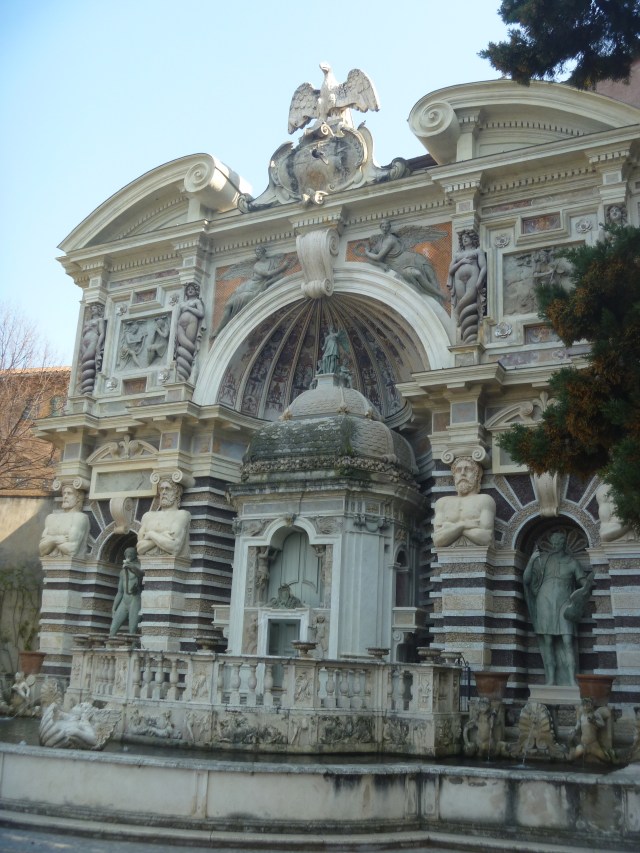
Organ fountain

The Organ Fountain Plays Every Two Hours on the Half Hour

It’s a wonderful theatrical performance full of drama and excitement; entertainment and playfulness with surprises and jokes. In addition to the gardens you can visit the mansion atop the hill the mansion is open too – room after room of breath-taking painted ceilings but little else. Like Hadrian’s Villa the Villa D’Este is a UNESCO World Heritage Site.

I spent over two hours wandering around the gardens and house but felt the call of the Villa Greogoriana and, ultimately, Sant’ Antonio.

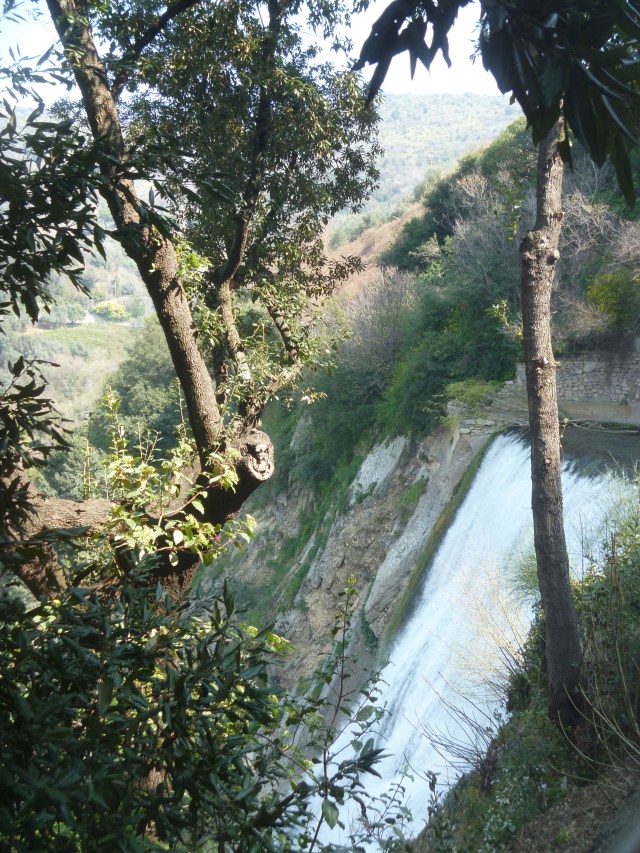
VG Grand Cascade

The Grand Cascade

Cascade from window

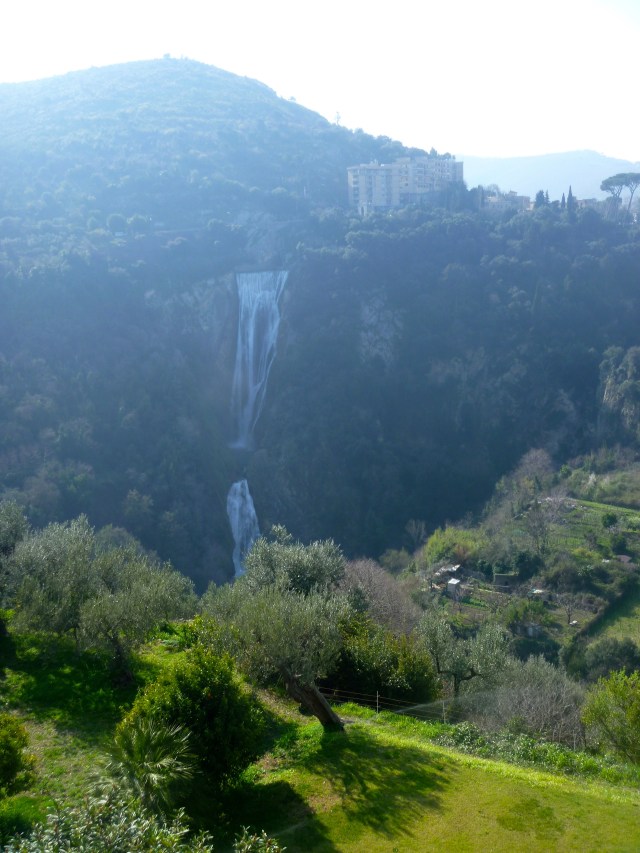
The Grand Cascade from my window at Sant’ Antonio

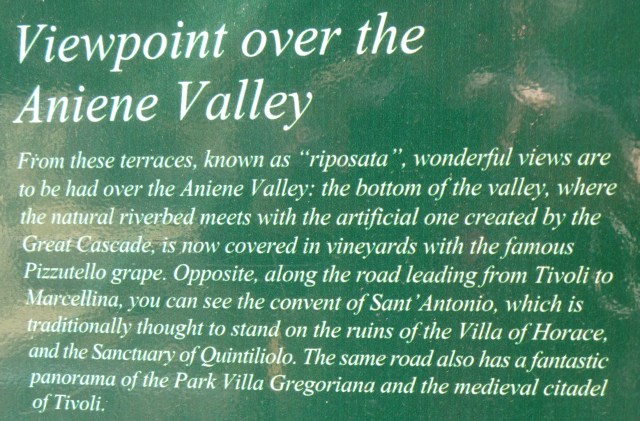
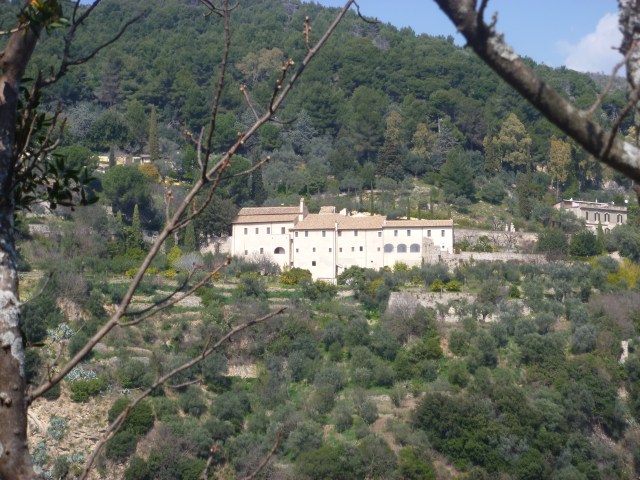
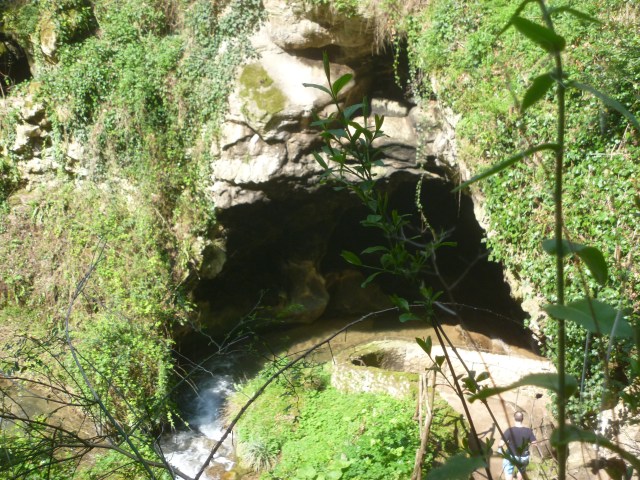
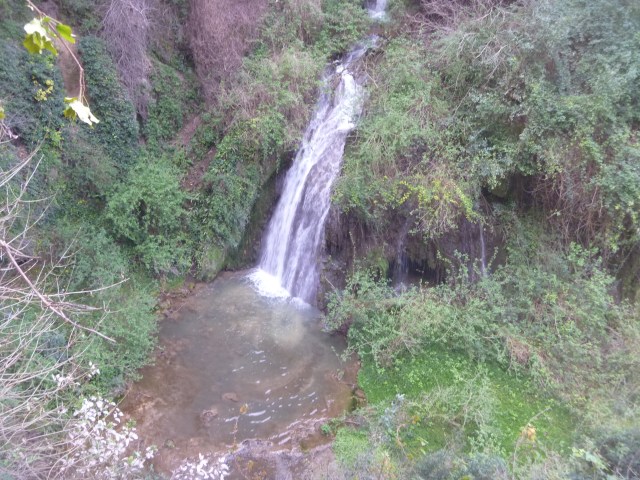
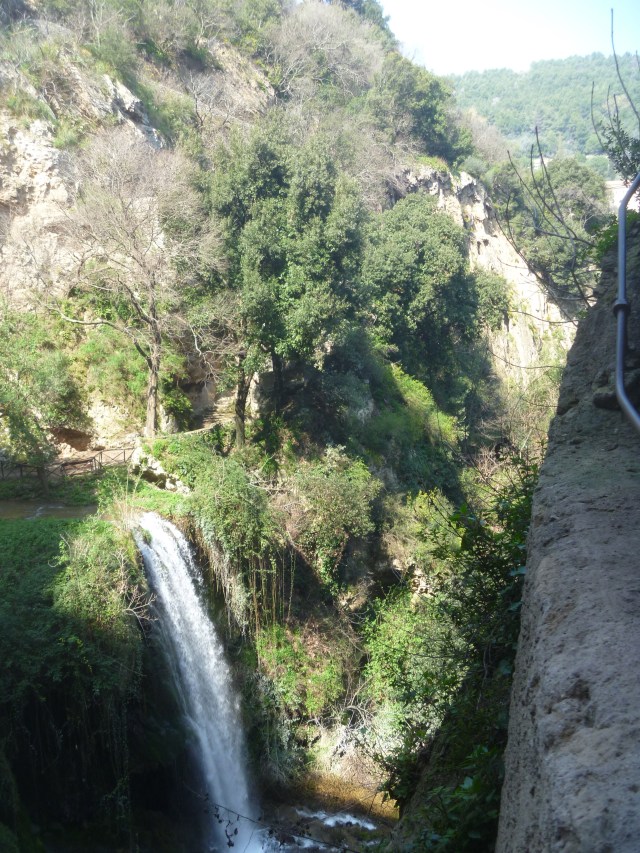
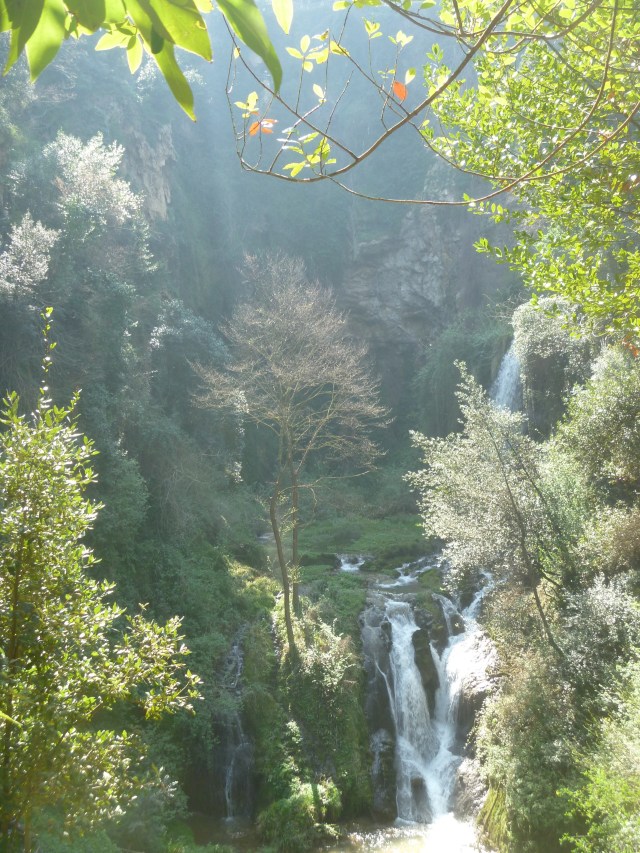
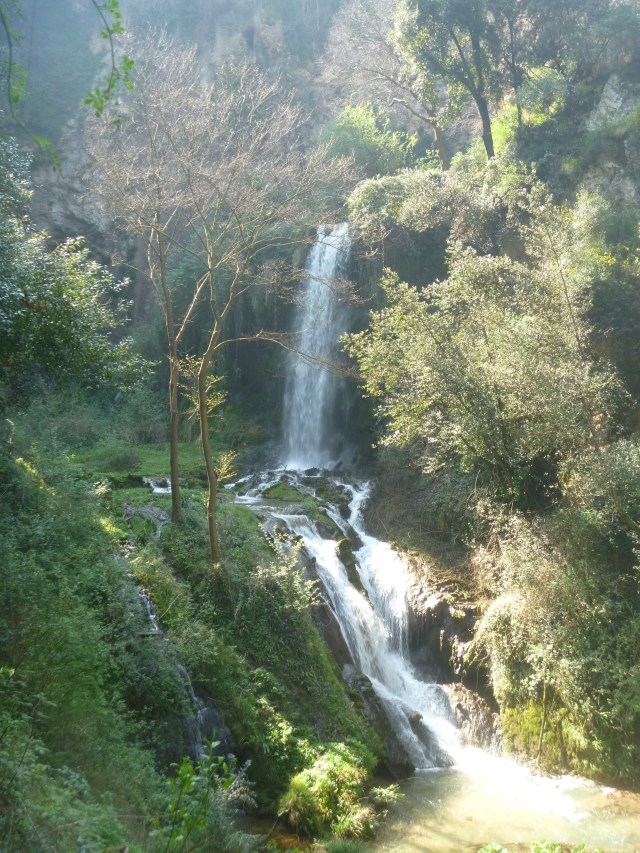
The Park of the Villa Gregoriana, for the Villa itself is no more, fills both sides of a wooded gorge where the waters of the River Aniene spill over precipices and lie still in pools in the valley bottom, is perhaps my favourite of the three gardens of Tivoli. Much of it, including the huge waterfall, can be seen from Sant’ Antonio and it appears more natural and less planned than the other two. Sant’ Antonio can be seen from the park.

SA view info

SA view

Sant’ Antonio from the Villa Gregoriana

If you ever plan to visit be sure to wear strong, rubber-soled walking shoes as the paths and steps are uneven and slippery when wet and take your National Trust card with you, if you’re a member. Entry is free to NT members. The FAI in Italy aims to preserve Italy’s art, nature and landscape and has reciprocal arrangements with our National Trust.

Remains of VG

Remains of the Villa of Manlius Vopiscus

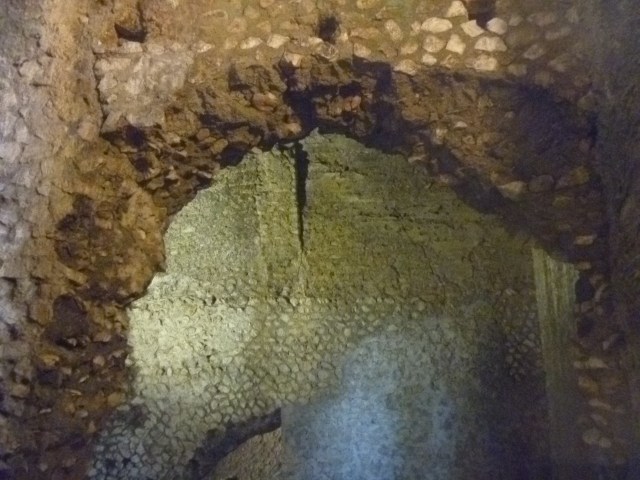
Inside the ruins

Roman Wall inside the Villa remains

The park was commissioned by Pope Gregory XVI to rebuild the bed of the Aniene River, which had been damaged by the terrible flood of 1826. It had fallen into rack and ruin by the end of the 20th century, but has been reopened to the public in 2005 thanks to a major landscape recovery project orchestrated by FAI, the Italian National Trust.

It was in 1835, after the Aniene River had burst its banks yet again, that Pope Gregory XVI decided to transform this enchanting but extremely dangerous location into a model of integration between art and nature. The project saw a tunnel being dug through Mount Catillo in order to deviate the river and thus preserve the town of Tivoli. This was then followed by the construction of an extraordinary natural garden dominated by the acropolis with Vesta and Tiburno’s Temples.

As you walk through the thick woodland of Parco Villa Gregoriana you will discover the delightful combination of the majestic landscape and the tranquillity of the paths that meander through it. En route, you will get to the caves of Neptune and of the Sirens, which form part of an incredible series of gorges and cascades, and to the Great Waterfall, with its whirling mass of water that seems to fall directly onto those who stand and gaze at it.”

cave of sirens

The Cave of the Sirens

Valley of Hell upper viewpt

valley of hell 2

valley of hell 3

valley of hell 4

Views of the Valley of Hell from Upper Viewpoints

According to the leaflet/map guide to the gardens “Goethe was among those who were amazed by the area. ‘I was recently in Tivoli, where I admired a breathtaking natural spectacle. The sight of the waterfall there, along with the ruins and the whole landscape, greatly enriches the soul’. Goethe visited during the heyday of the Grand Tour, when Italy was the destination of choice for upper-class travellers from all across Europe, affording them and unrivalled classical education.” And this was long before Pope Gregory XVI’s re-creation of the original garden.


Goethe’s Italian Journey

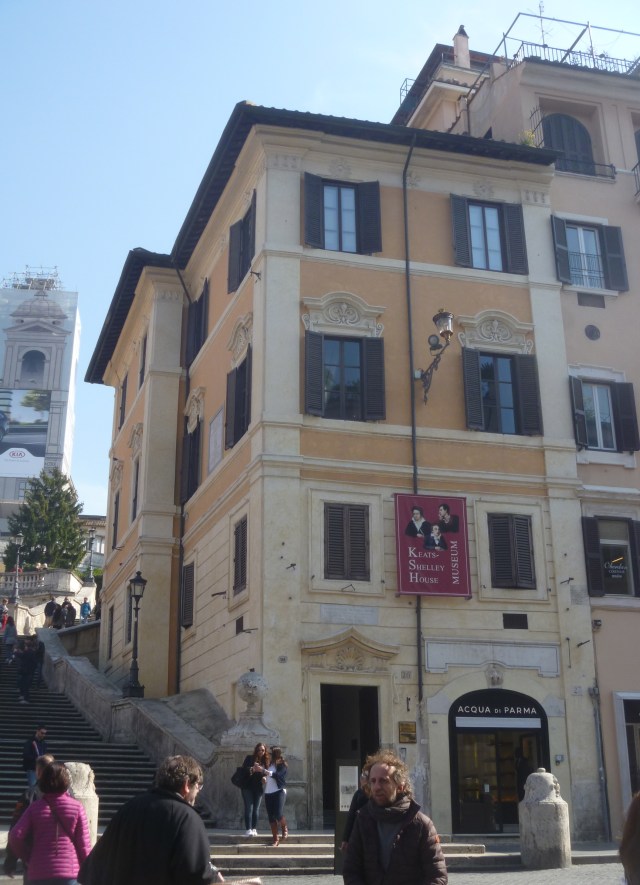
Probably my favourite of the museums and locations I’ve visited in Rome on previous trips is the Keats-Shelley Museum by the Spanish Steps. It’s a quiet oasis of 18th century England amidst the crowds of tourists milling around the Piazza di Spagna. It’s a few years since I was there and I didn’t repeat the visit on this recent trip.

K S House

Keats Shelley House, Rome, on Second Floor with Landmark Trust Apartment Above

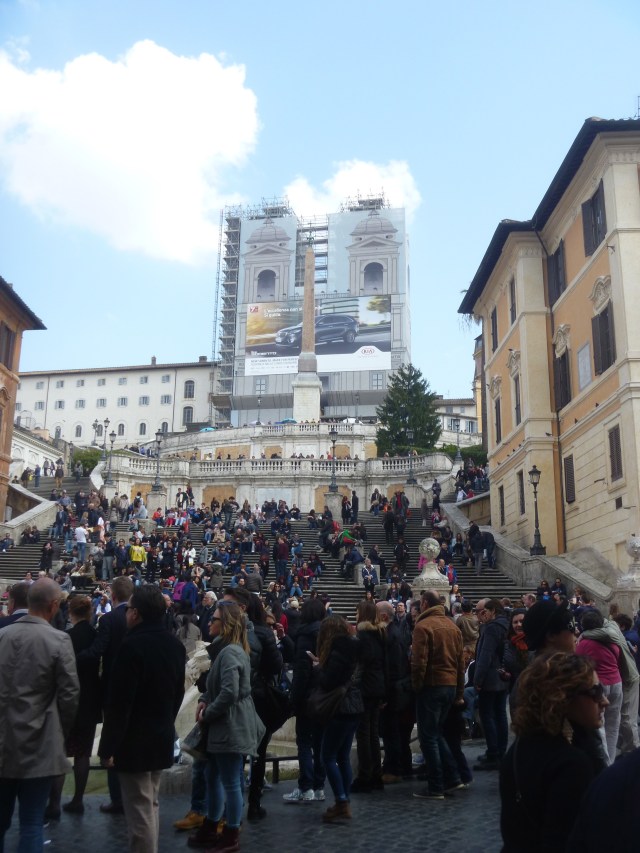
Spanish Steps in March

Crowds on the Spanish Steps – in early March

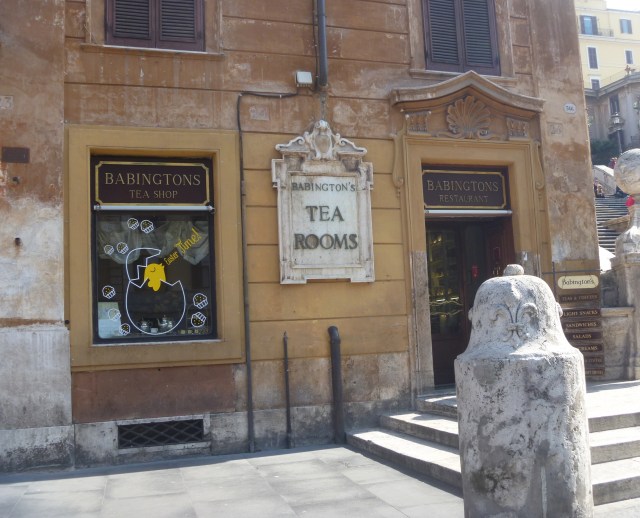
Babbingtons

Babington’s English Tea Room by the Spanish Steps

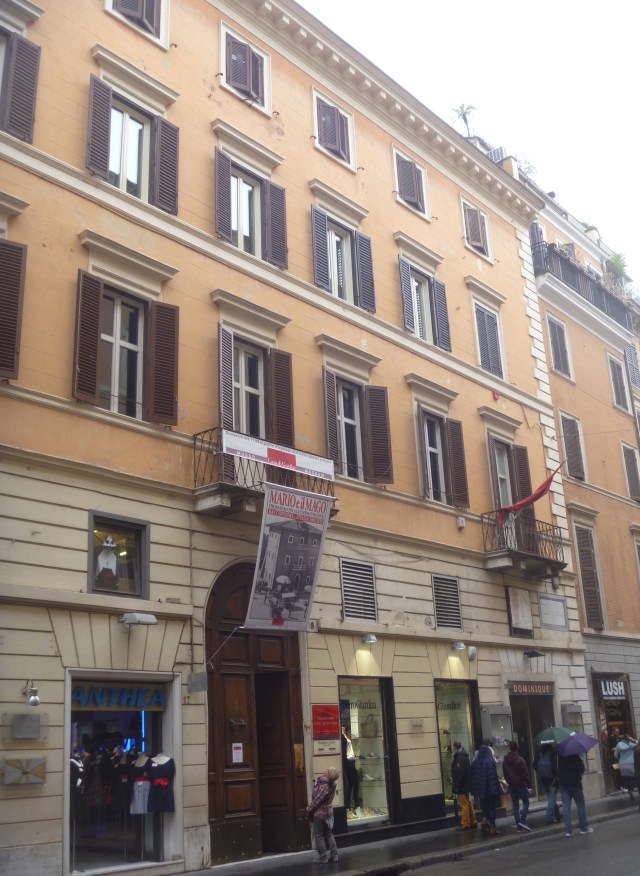
But I did discover the existence of the Casa di Goethe in my LV Guide Bari, Milan, Naples, Rome 2012. So my final port of call in the City of Rome itself (after fortification at Canova) was a visit to the Casa di Goethe on the Via del Corso nearby. I wrote a little bit about Goethe earlier this year. Here is another place of peace and calm and amazingly right on the Via Del Corso.

via del corso

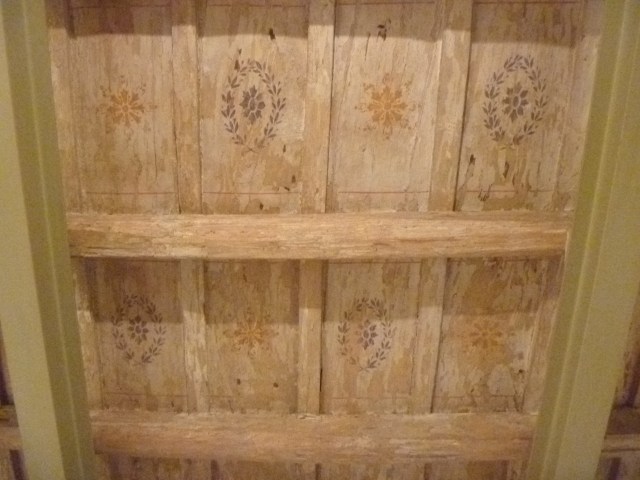
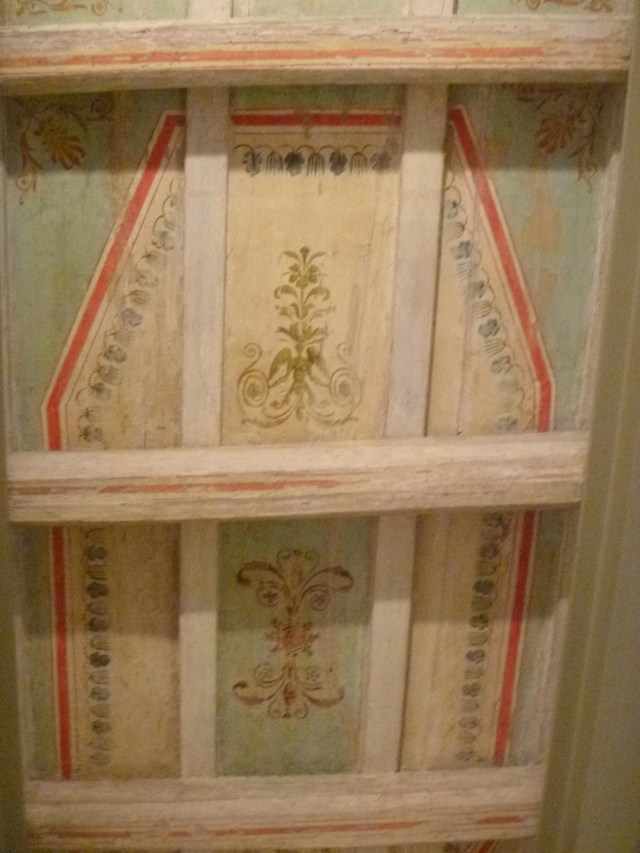
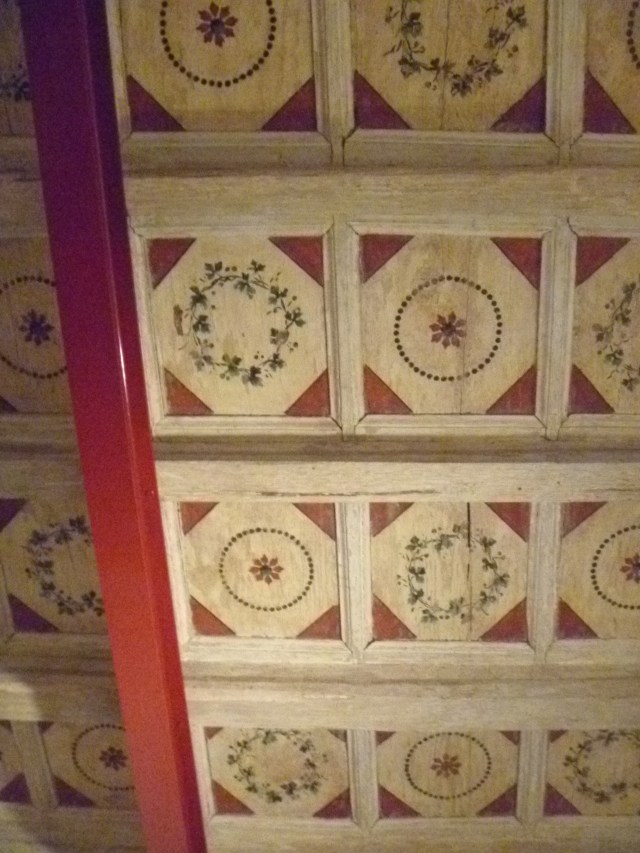
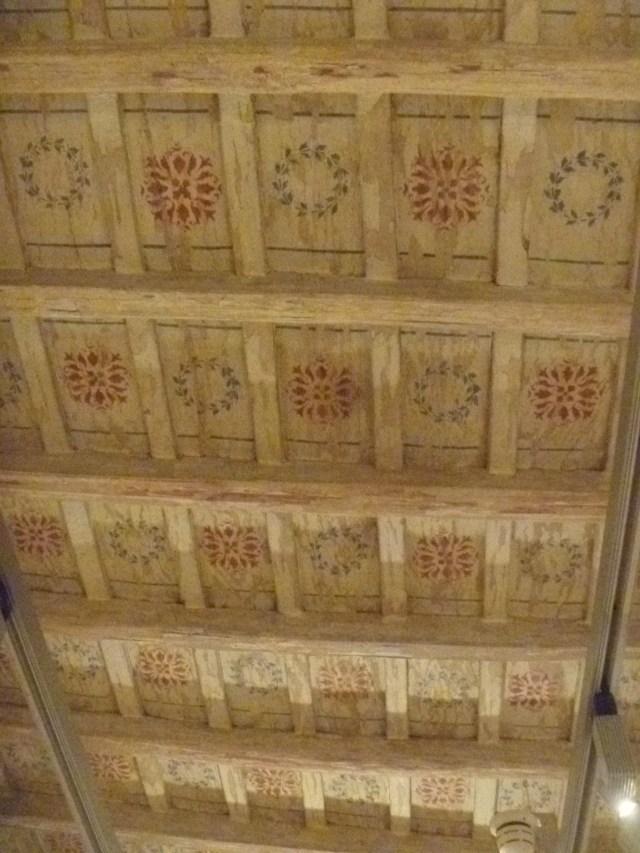
In September 1786, Goethe started out on the longest journey of his life. He was 37 when he achieved his dream of visiting Italy. He later wrote in his journal “Italienische Reise”, that he had spent the happiest period of his life there. On his arrival in Rome he stayed on the Via del Corso with his painter friend Johann Heinrich Wilhelm Tischbein, scion of a dynasty of renowned artists. This huge apartment, which gives onto the Piazza Del Popolo, is still redolent of Goethe’s time here during his Grand Tour of 18th-century Italy. It has superbly painted coffered ceilings which are set off by the white of the walls. On display are writings, letters, annotations, and drawings, as well as the paintings of his friend Tischbein.

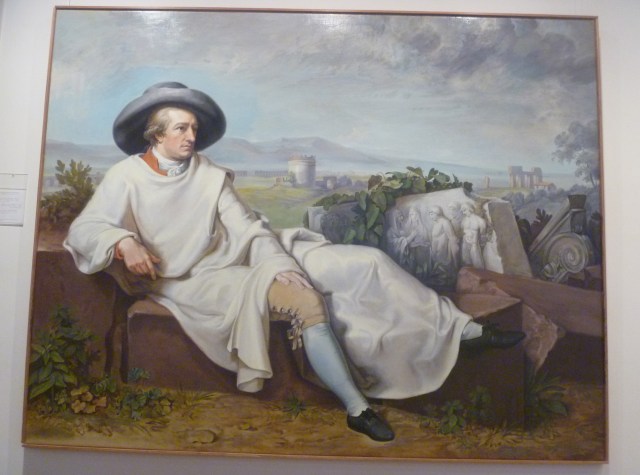
g in roman countryside

The most famous of them, Goethe in the Roman Campagna, was painted on this very spot in 1787, although the version seen here is only a copy, the original being in the Staedelsches Kunstmuseum in Frankfurt. It never fails to impress all the same. This sumptuous collection of artworks and documentary material gives us an idea of what the journey to Italy meant at the time for artists and cultivated travellers. The Casa di Goethe also offers temporary exhibitions that encourage German-Italian cultural relations. By appointment it’s possible to visit the Library which holds a number of first editions of Goethe’s work.” [LV Guide Rome 2012]

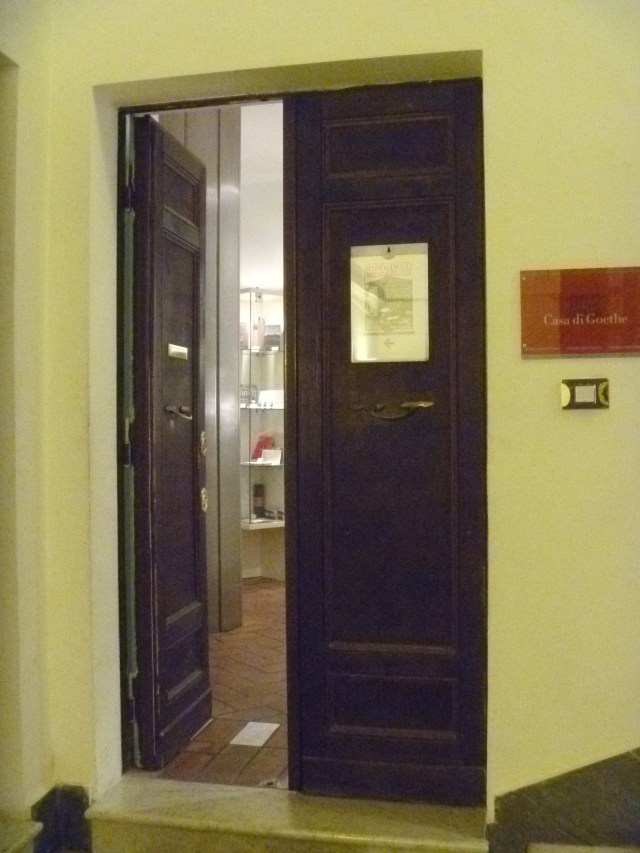
welcome

Welcome to the Casa!

This is the only German Museum on foreign soil and it was opened to the public in 1997 with support of the German Government and German cultural associations. Regular events are held here – readings, lectures, conferences, discussions and concerts – followed by gatherings and discussions in the library over a glass of wine. The Museum is also able to offer scholarships (sponsored by DaimlerChrysler) to literary figures, publishers, scientists, translators, and artists, allowing them to spend a few months in Rome collecting ideas and inspiration for their own work or finishing off projects. The work doesn’t have to be related to Goethe.

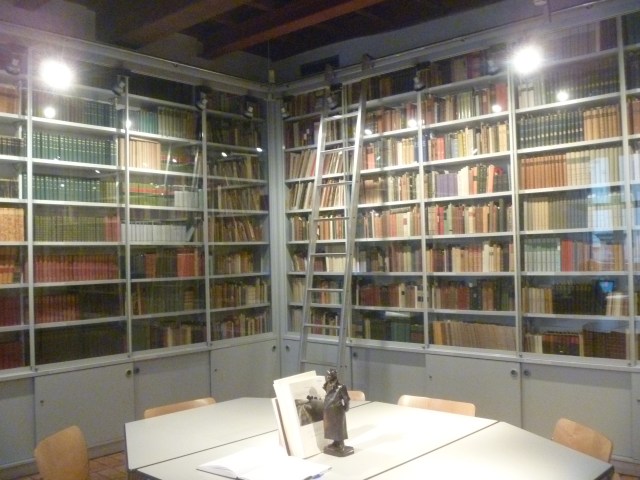
library

Goethe Library in Rome

The first few rooms are dedicated to the temporary exhibitions; currently Thomas Mann and his Italian novella Mario and the Magician. Displays relate to the historical and political background as it was written during the rise of Nazism and Fascism. The notes were all in German and as time was tight I didn’t spend much time in these rooms but moved on to the rooms occupied by Goethe at the front of the building.

ceiling 1

ceiling 2

ceiling 3

ceiling 4

Painted Coffered Ceilings

The restored painted wooden ceilings, which date back to Goethe’s time, contrast well with the pale walls which show off the displays and pictures. No furniture or furnishings dating back to Goethe’s time here. To me they are reminiscent of Swiss and German chalet decorations.

I was glad that I bought the excellent illustrated guide book. The first section, as in the rooms themselves, tells the story of Goethe’s time in Rome and Italy. There then follow pages of quotations by Goethe himself from his letters and his journal Italian Journey and by his friends and colleagues. Many of these quotations also accompany the room displays.

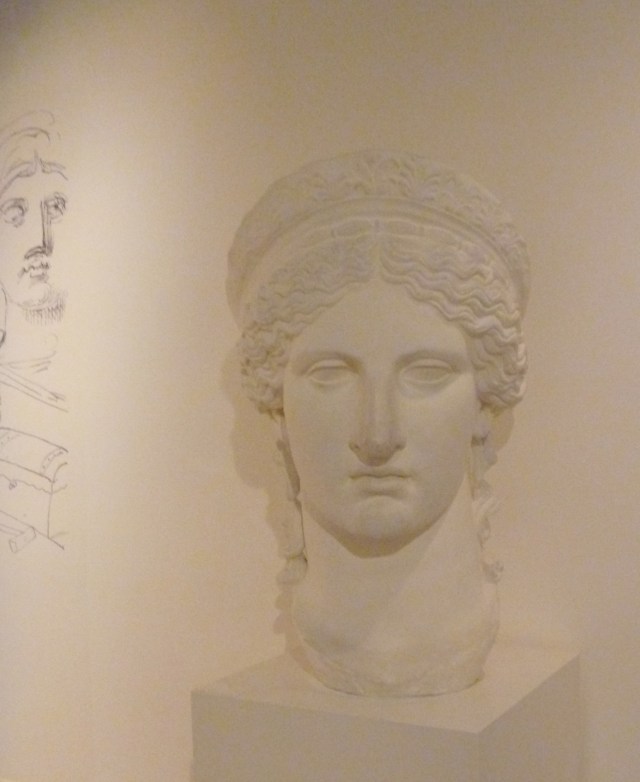
cast of jupiter

“I could not resist buying the cast of a colossal head of Jupiter . It now stands in a good light facing my bed, so that I can say prayers to him the first thing in the morning.” (Italian journey 25 December 1786

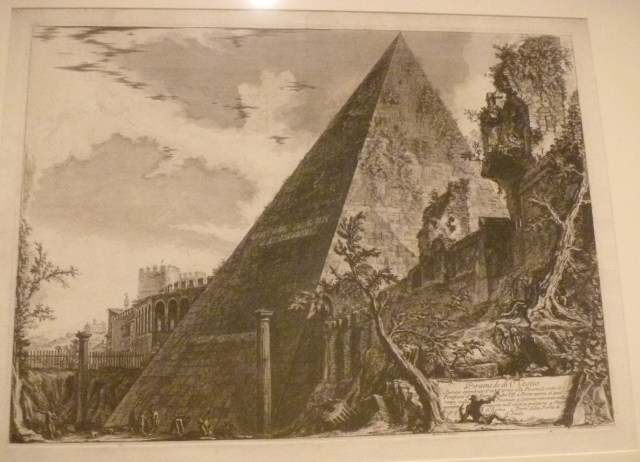
Piranesi print

Piranesi Print of the Caius Cestius Pyramid

“Water pipes, baths, theatres, amphitheatres, the stadium, temples! And then the palaces of the Ceasars , the graves of the great – with these images I have fed and strengthened my mind.” to Carl Ludwig von Knebel 17 November 1786

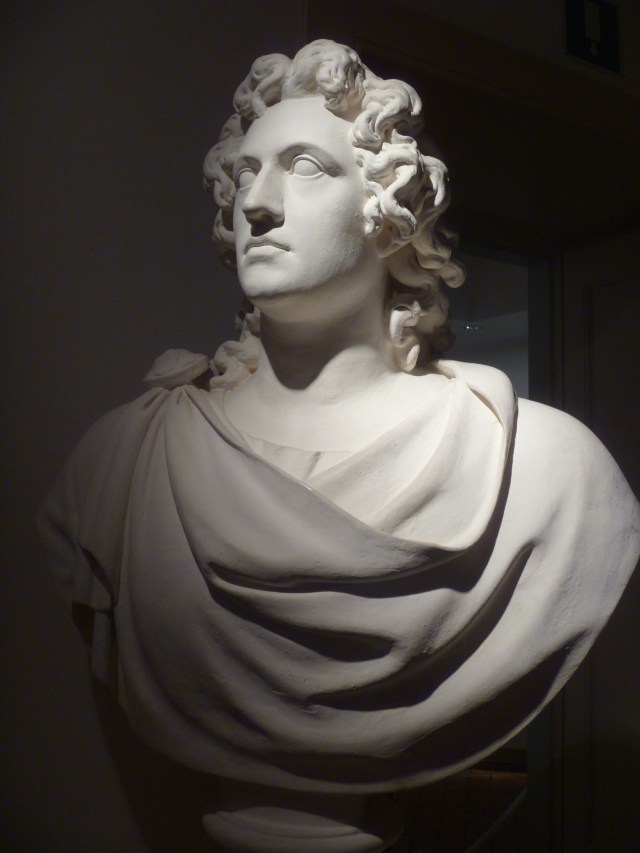
bust by trippel

1787 bust of J. W. v. Goethe by Alexander Trippel

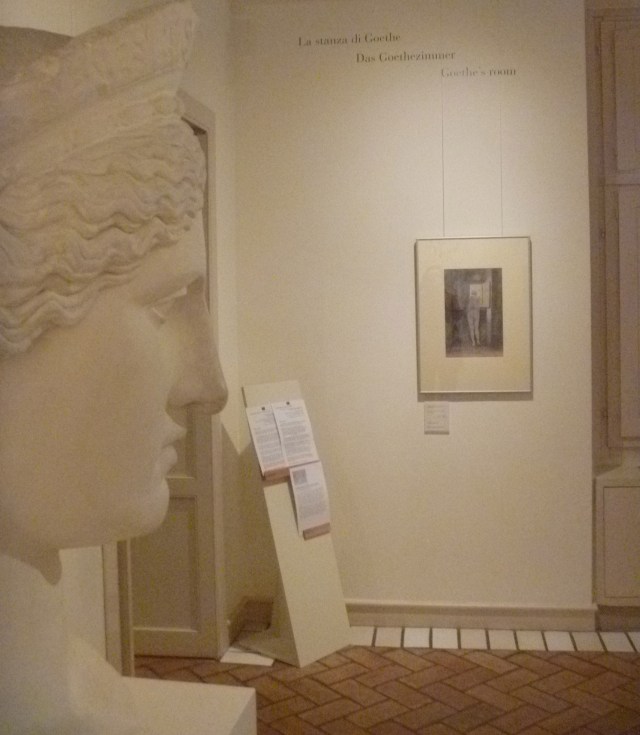
In goethe's room

Goethe’s Room

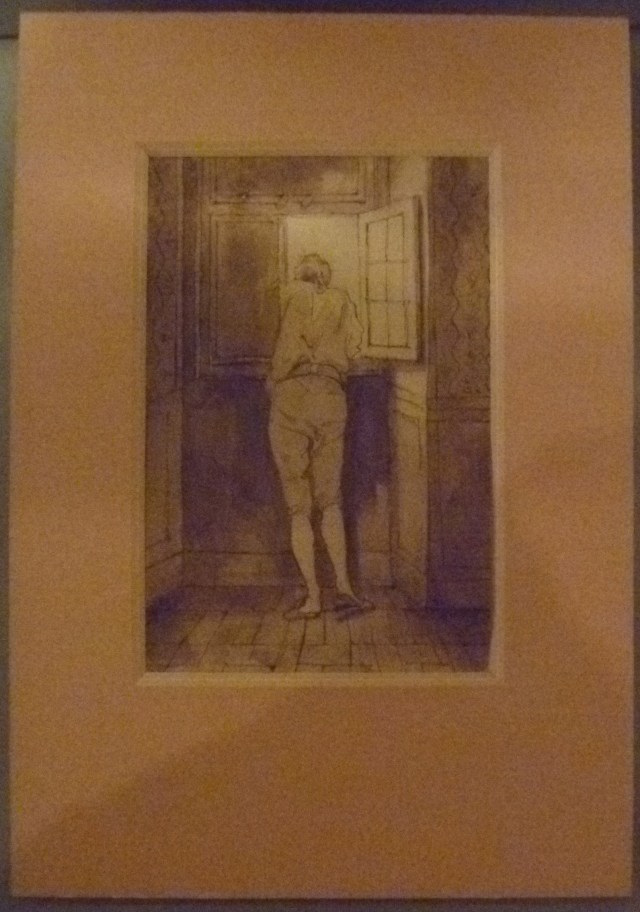
G at window

Tischbein ‘s watercolour of Goethe at the window

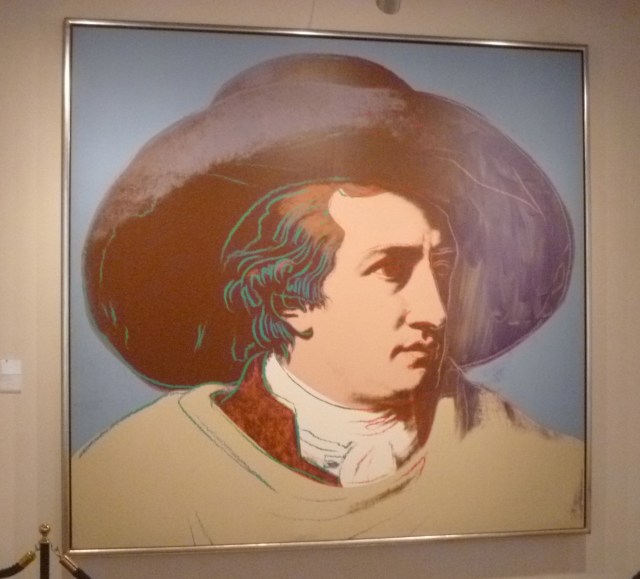
1991 and 1992 were excellent years for the acquisition of many Goethe related papers, books and artefacts by the Casa including the Andy Warhol iconic contemporary adaptation of Tischbein ‘s portrait. Also some autographs of Goethe’s including a letter card written in his own hand and giving his rome address and the Goethe library of publisher Richard Dorn.

Warhol

Screen Print and Acrylic on Linen 1982

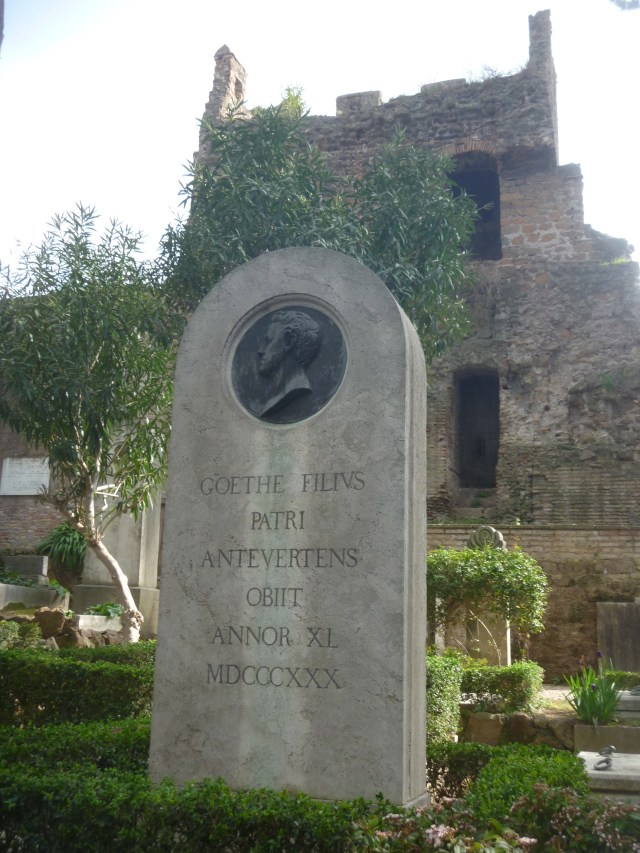
At the very end of the guide book is a list of museums and memorials to Goethe in both Italy and in Germany. Amongst those listed is the grave of his son, August, in the Protestant Cemetery. Interestingly, even though he was an adult at death his father arranged for the following to be inscribed on his gravestone.

GOETHE FILIVS / PATRI / ANTEVERTENS / Obiit / Annor [VM] XL / MDCCCXXX (Goethe’s son / father / above / died / 40 years / 1830)

August Goethe