Looking Back on the Missed Months of 2011

A Happy New Year to You All!

Transferring stuff from one year’s diary to the next’s made me think I might make a note here on an event/category from each month of 2011 up to my starting this blogging lark in August. One event with one picture is quite a tough call – especially in the summer months – but I will give it a go.

January 2011 : Landmarking with Milady

The year started well with my usual London Landmarking Trip but this January I was fortunate enough to get a double dose of London Landmarks. I stayed in the 45A Cloth Fair property for 3 nights and visited friends at the Hampton Court Georgian House on one of the days. There is so much to see and do at Hampton Court that we have booked our January 2013 London stay at Fish Court in order to experience more. If you stay there is no extra charge for visiting the Palace. On the other day at Cloth Fair we took tea at the recently totally renovated Savoy Hotel – an out-of-this-world experience from the moment your carriage arrives to the moment you are driven away.

February 2011 : Milady gets culture

An early wet and windy two night excursion to Cambridge led to the wonderful discovery of Kettles Yard. Our trip was planned around a visit to The Scott-Polar Research Institute whose museum had just re-opened after extensive renovation work. But interesting as it was to see the exhibits at the SPRI the highlight of my visit was Kettle’s Yard. We even went there twice. On the Thursday afternoon of our arrival we took a walk from the hotel and ended up at the house that is Kettles Yard. It is like walking into someone’s home – you ring the doorbell and are welcomed, photography is no problem, you may sit and look at the books and the place is crammed full of art and artefacts of what I suppose is called the modern era. It was on this visit that we heard about the Friday Lunchtime Concerts so from the SPRI we headed back to KY and joined a winding queue of keen concert-goers and enjoyed with them a chamber group of student musicians.

March 2011 : Milady gets Culture

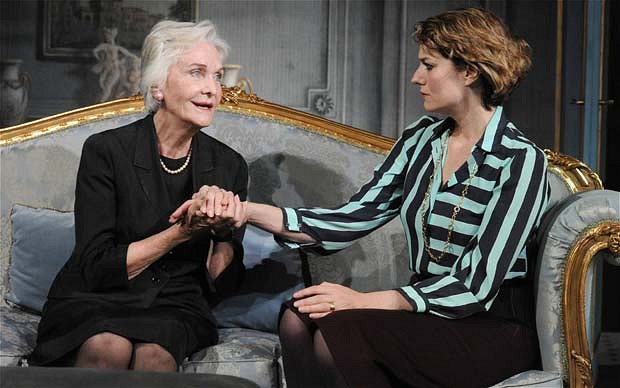
Photograph: Robert Workman

At the end of March Out of Joint brought their play  “A Dish of Tea with Dr Johnson” to The Carriageworks in Leeds. I’d read quite a bit a bit about Dr Samuel Johnson and visited his house in Gough Square in London so was intrigued to see this well-reviewed piece. I was not disappointed. It is quite short, full of fun but with some pathos and there is also the most wonderful dog actor who must have been standing in for Johnson’s cat, Hodge. I would have loved to have seen the performance actually at Dictionary Johnson’s House but this was the next best thing. Highly recommended although I think the tour is finished now.

April 2011 : Landmarking with Milady

Friday 29th April 2011 must have seen the high point of the year in Britain – The Royal Wedding of HRH Prince William and Miss Catherine Middleton. That very day I had booked (long before the wedding date was announced) to spend the May Day Holiday Weekend in France at Gif-Sur-Yvette the former weekend home of the Duke and Duchess of Windsor just outside Paris and now managed as a holiday let by The Landmark Trust. I was visited there on one of the days by my good friend MN and we spent a literary day visiting Alexandre Dumas’ The Chateau of Monte Cristo at Port-Marly and La Maison Litteraire de Victor Hugo at Bievres, Île de France. It was such a good trip that we’ve booked to go back again next May so I’ll be posting in more detail then.

May 2011 : Milady Visits
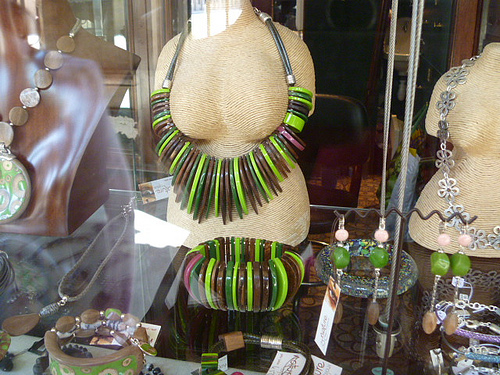
Window shopping at Didier Ludot in the Jardin du Palais Royale

On 12th May the Optimist celebrated a special birthday! And on that very day we were booked to travel – in style, I might add – by Eurostar train from Yorkshire to Paris to attend our nephew’s wedding in Vincennes, just outside Paris, on the Saturday. What a fab weekend we had – lovely hotel quiet but right in the centre of Paris, lovely weather, except that it rained on the Sunday as we were leaving, excellent company and good food and wine with some “flanez” and pavement cafes thrown in for good measure.

June 2011 : Milady Reads and Visits
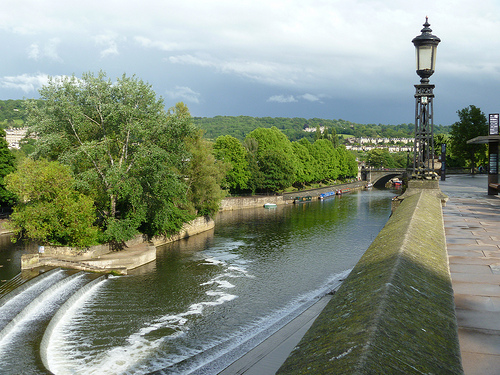
In Spring 2011 Persephone Books published a reprint of Adam Fergusson’s “The Sack of Bath”. On June 16th there was an Afternoon of Walks in Bath led by Caroline Kay, of the Bath Preservation Trust, and Adam Fergusson. We met at The Circus cafe for a lovely two course lunch and were then taken on a walking tour to view the effects of City planning policy on Bath during the 1960s. The walk ended at The Museum of the Building of Bath where we were served tea and cakes. But before all those pleasures I had the great pleasure of spending the morning with my online reading group friend Carol who lives in Bath and took time out to show me all the bookish delights of that city – of which there are very many. It was one of those days where looking back it seems impossible to have fitted so much into a mere 7 hours.

July 2011 : Milady Steps Out

On 30th June I set out with my sister on my first long distance walking trail – Wild Edric’s Way in Shropshire. The ‘holiday’ was organised by a local company with the delightful name of Wheely Wonderful Cycling Holidays which deals mainly in cycling holidays but with some walking tours also on their books. I say ‘holiday’ but at times it was jolly hard work!  We walked from the Stiperstones to Ludlow over 3.5 days. Approximately 40 miles was covered in total with 4 overnight stops. For the most part it followed the route of The Shropshire Way which coincided also with The Kerry Ridgeway and Offa’s Dyke National Trail. There were several places of interest on the route – churches at More, Churchtown and Ludlow and castles at Clun, Stokesay and Ludlow. We met other walkers and some lovely B&B owners along the way. I was glad to have done it and it felt like quite an achievement but I was not sure whether I wished to repeat the experience. However, the further away it has become the more I think maybe I would indeed like to do another such walk in the future.
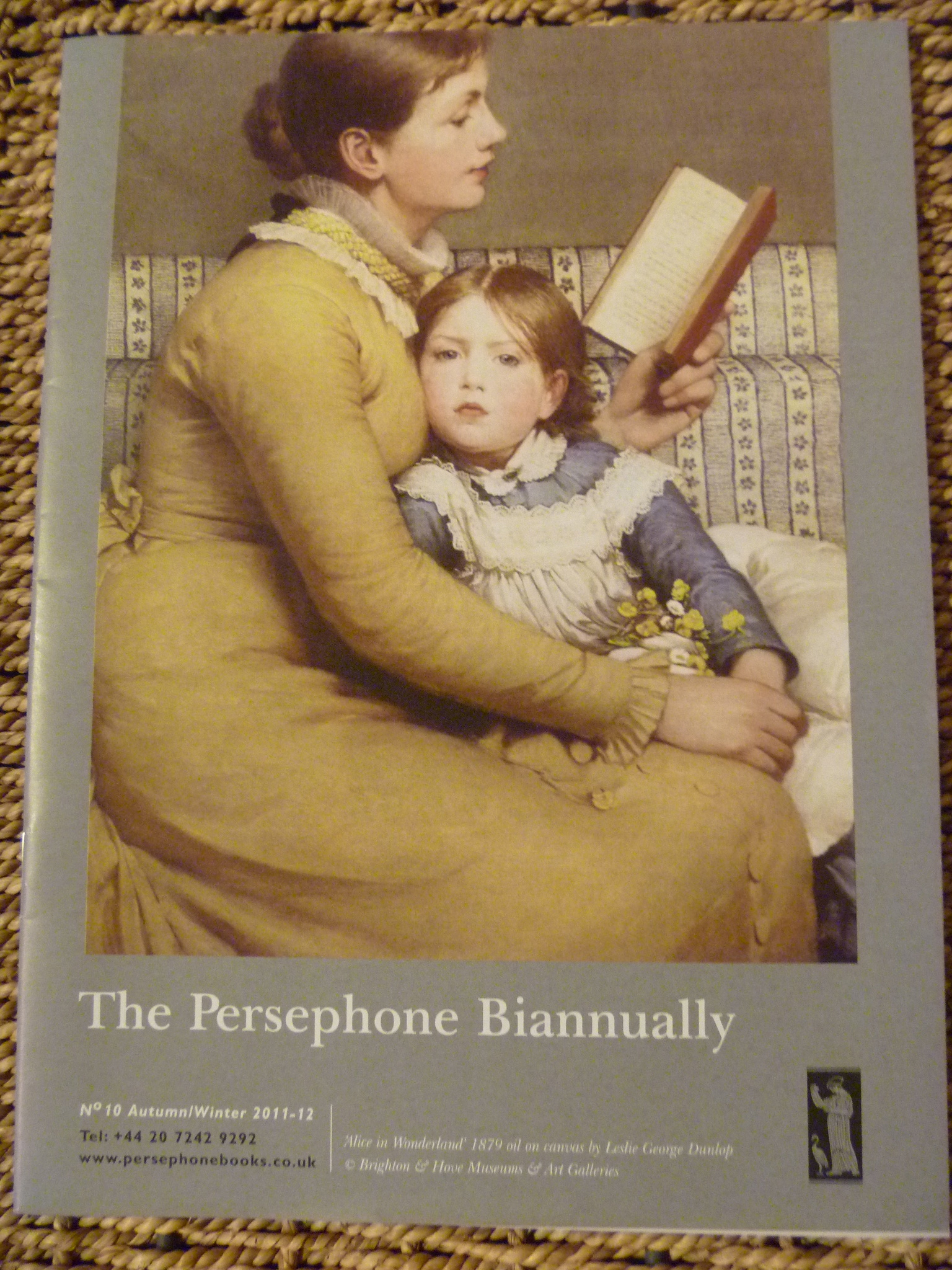
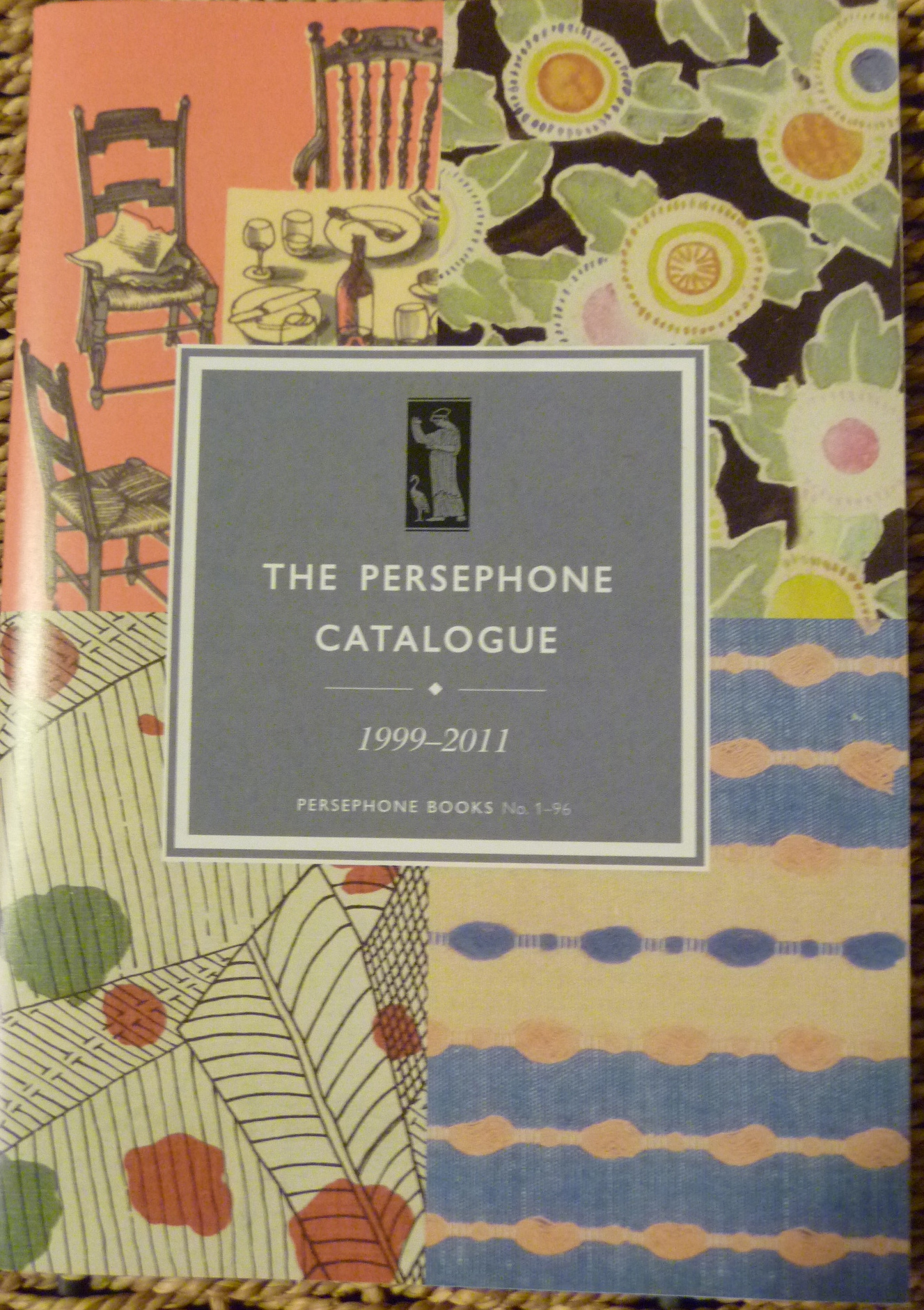
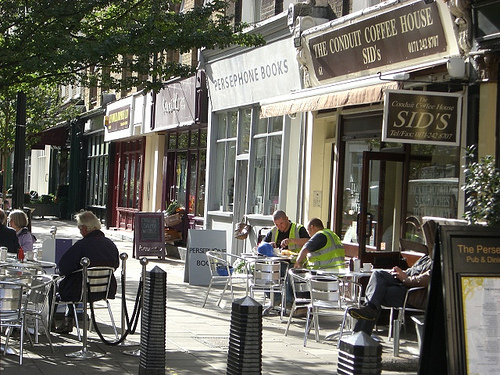
Neglected classics – but not any more thanks to Persephone Books.

“Persephone Books reprints neglected classics by C20th (mostly women) writers. Each one in our collection of 96 books is intelligent, thought-provoking and beautifully written.”

As you know I love to sit in my boudoir reading. Some of you may have noticed the uniform grey bindings of the books on the shelves just behind my chair.

Persephone Books produce the most beautiful books, ever – totally thought through with care from beginning to end – from the simple grey covers to the endpapers to the quality paper and print to the Forewords and Afterwords written by well-known authors and others relevant to each book’s content or its provenance.

Each book comes complete with its own bookmark.

As long as you keep buying the books – is that a problem? – they send out a lovely printed newsletter “The Persephone Biannually” free of charge twice a year. In the past it was “The Persephone Quarterly” and  so I have to wait a bit longer these days for my new copy to arrive – Spring/Summer in April and Autumn/Winter in October. The Biannually is always accompanied by a new bookmark.

If you request a copy they’ll also send you their latest annual catalogue. Generally this is published to coincide with the Autumn/Winter magazine.

The publishers operate from their own shop premises in Lambs Conduit Street in Bloomsbury which are a delight to visit. Besides their own books they sell copies of the 50 books which they wish they had or wish they could publish and a selection of relevant secondhand  titles too. Besides books there are some household textiles, some pottery, cards, postcards and their notebook for sale.

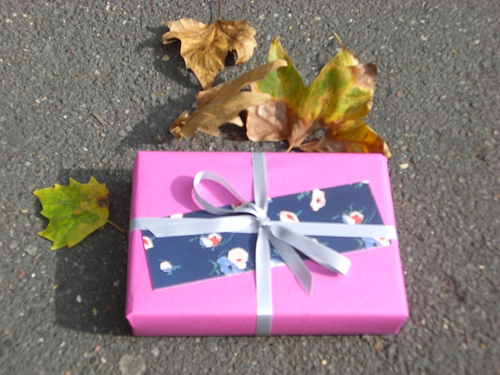
Not all of the books are fiction – there’s some cookery, a gardening book, a book about The Sack of Bath in the 1960s, personal memoirs, biography. I certainly don’t have them all. Books can be ordered online, bought from the shop and from good booksellers. For a small extra payment they’ll gift wrap any book. They make perfect presents.

To keep your interest, just in case it is beginning to wane between book publications, you can sign up for an online Persephone Post to drop into your Inbox every day – mine arrives about 9pm each evening. There is also an online book group forum with a new book under discussion each month and you can receive email offers occasionally.

Then there are the real live discussions, talks, films, tea parties and book groups – usually held in London but they have been known sometimes to travel out of town – even as far as Scotland – and once they even went  to New York – to promote their wares and meet their customers.

And what’s best about them is that it was through them that I joined my lovely online reading group of friends around the world in 2004. I have met many of the members, mainly in the UK and mainly in London but also in Stratford upon Avon, Edinburgh, Berlin, Potsdam, Chicago and Massachusetts!

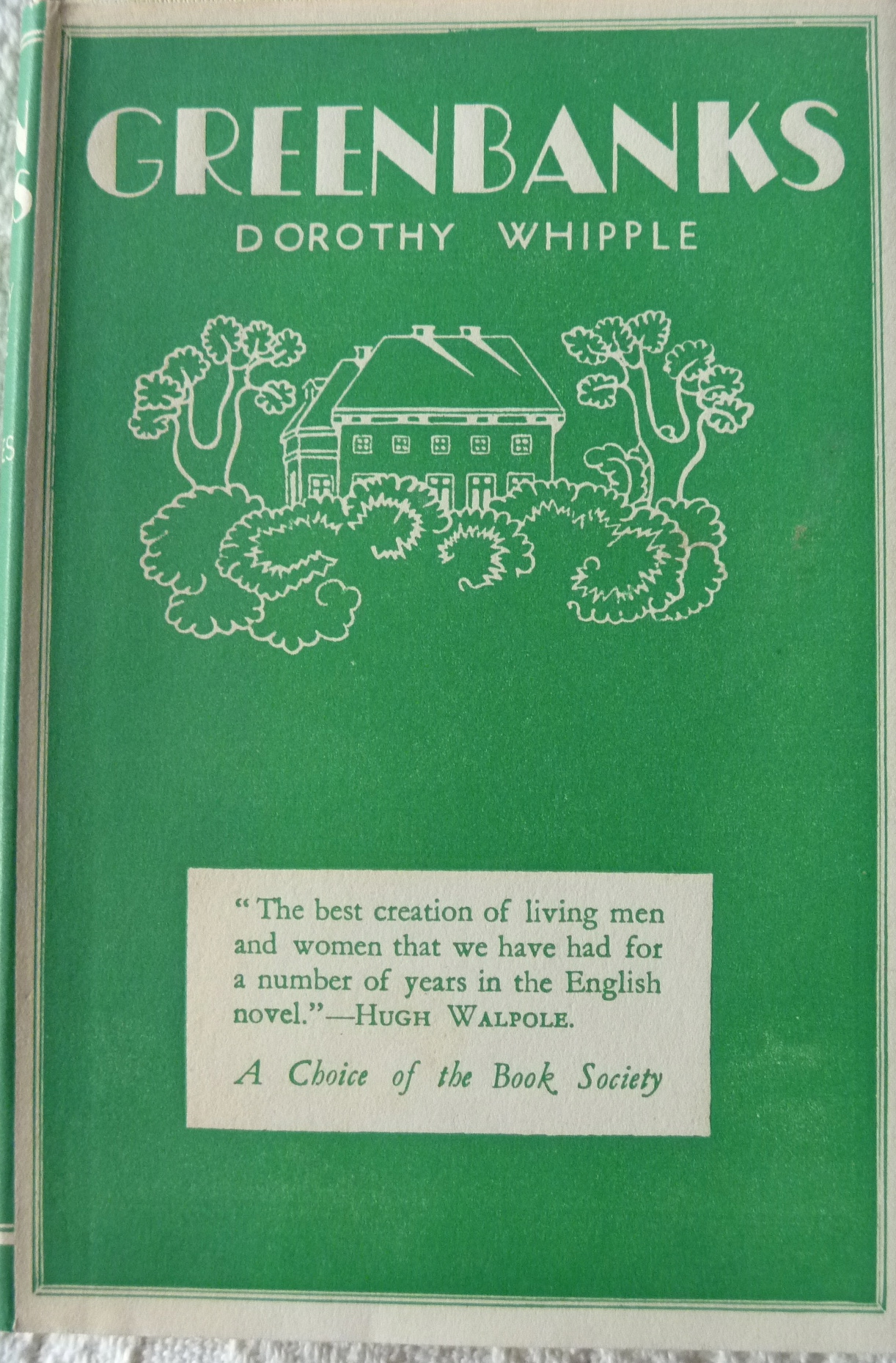
What’s my next Persephone read? In the new year I’ll be reading, along with the group, the latest Dorothy Whipple book to be republished in a smart grey cover – Greenbanks PB95. I already had an ‘original’ copy of the book!

Christmas Past: 400 Years of Seasonal Traditions in English Homes, plus Seven Years of Friendship

It’s becoming an annual Christmas tradition to meet up with some of my fellow online book discussion group members around the very beginning of December. Last year 10 of us planned to meet up at the London Review of Books Cake Shop on Bury Street near The British Museum. Then the snow fell … and fell and fell … so that in the end we were much reduced in number. Those who made it were mainly from way outside London – me from Yorkshire, also Bath, Oxford, plus two nearby Londoners from Chiswick and Dulwich.

This year 9 of us descended on The Geffrye Museum in Kingsland Road, east London. We’d booked a table in the restaurant to meet formally for lunch at 2.30pm. Travelling down from Leeds for the day this arrangement suited me fine. In fact I made the booking myself, just to make sure it would happen!

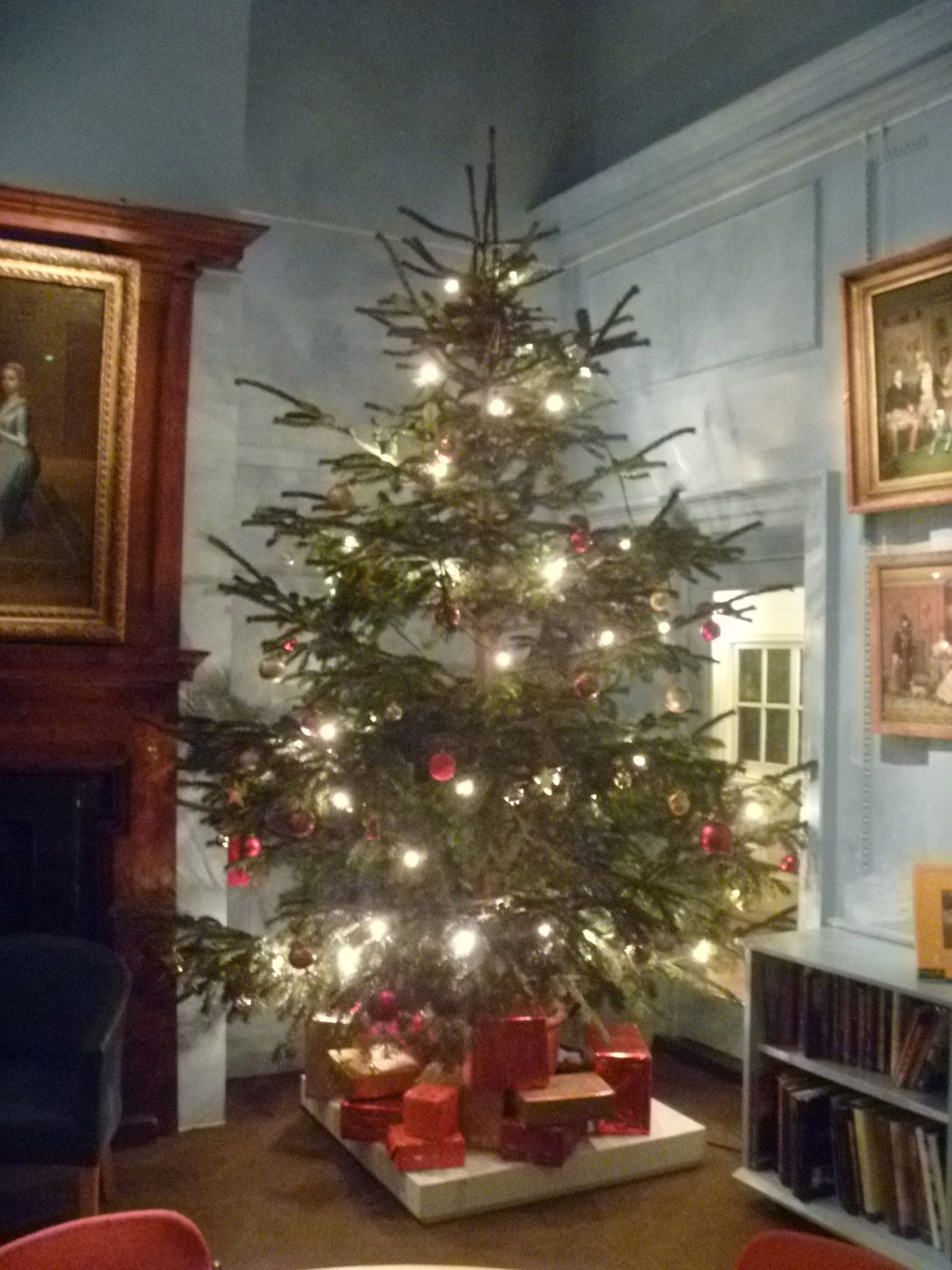
Christmas at the Geffrye Museum

The weather was certainly kinder to us this year. Although there was rain I hardly noticed it as almost all of my time was spent under cover. The Museum consists of a series of period rooms which at this time of year are decorated for Christmas according to the period. We didn’t really have much time to study the rooms in any depth as our main reason for being there was for lunch, book swops and natter. Our suburban London and Essex members had no problem getting here this time and Eurostar behaved itself so that our member living in Brussels was able to join us as well.

Two tall piles of book swops disappearing fast!

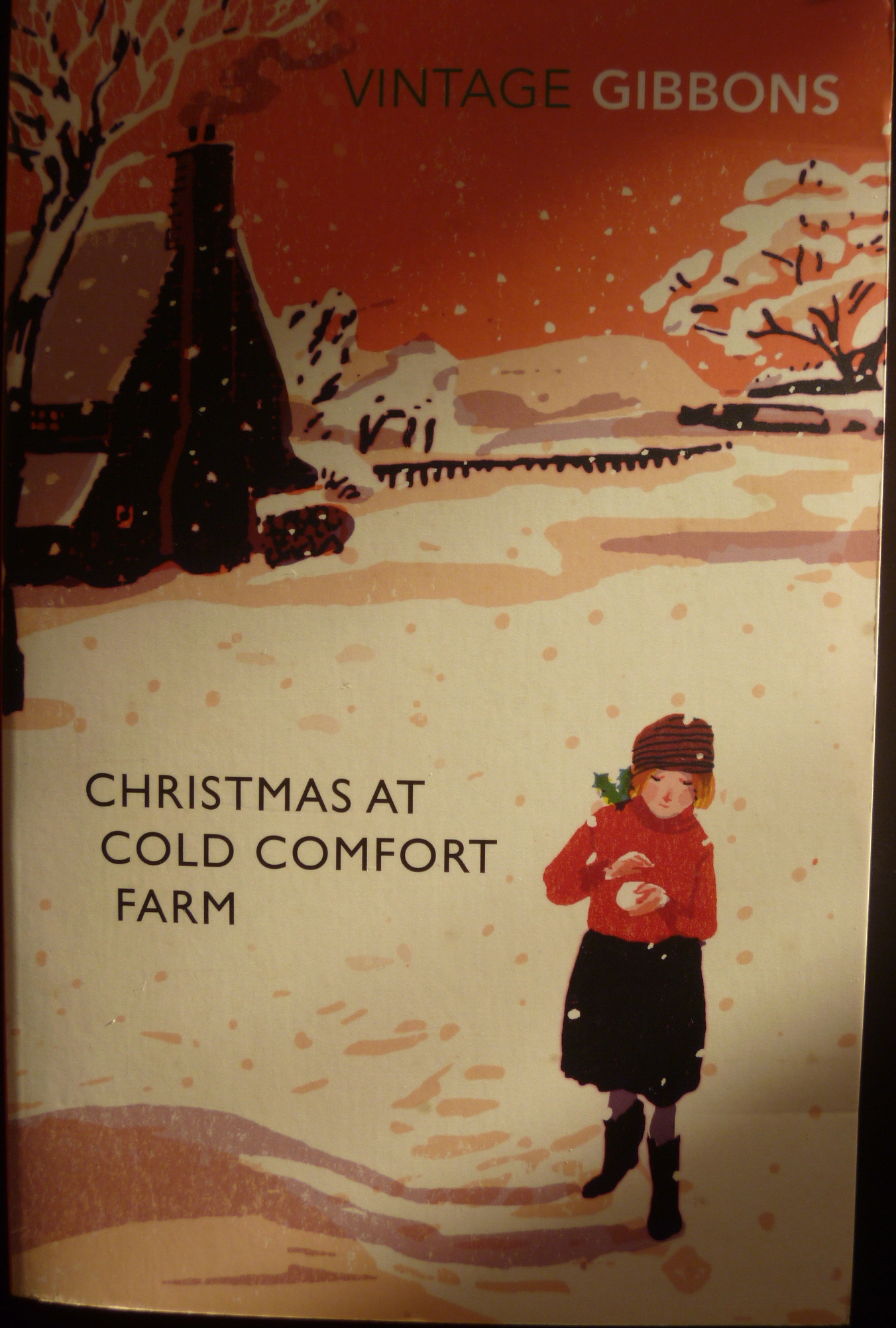
What happens is this. There are two parts to our celebration apart from the meal and tea. Those who wish to do so bring a gift-wrapped book – one they think that it will be unlikely that others will not own or will not have read – not an easy challenge but it was successful. These are all collected up and then the bag full is passed round so that we can each have a ‘lucky’ dip. This we did between courses i.e. after the Geffrye Pie but before the Christmas pudding. I’m now the owner of “Christmas at Cold Comfort Farm” by Stella Gibbons. It’s a collection of short stories previously published in magazines such as The Lady, The Bystander, Good Housekeeping and now reprinted in a lovely new paperback edition by Vintage.

We also bring along some unwrapped swops and throw them all into the ‘ring’. These made two fair-sized piles which we put aside until after we’d finished eating. There is none of that “After you Cecil” “No, after you Claude” – we speak up straightaway when we see a book we should like to have. The picture shows a much-diminished pile but by the end there were just 2 books left to donate to the charity shop.

Long may this ‘Countdown to Christmas’ tradition last!

A library is not a luxury but one of the necessities of life – The Leeds Library

Actually, the Leeds Library is my luxury!

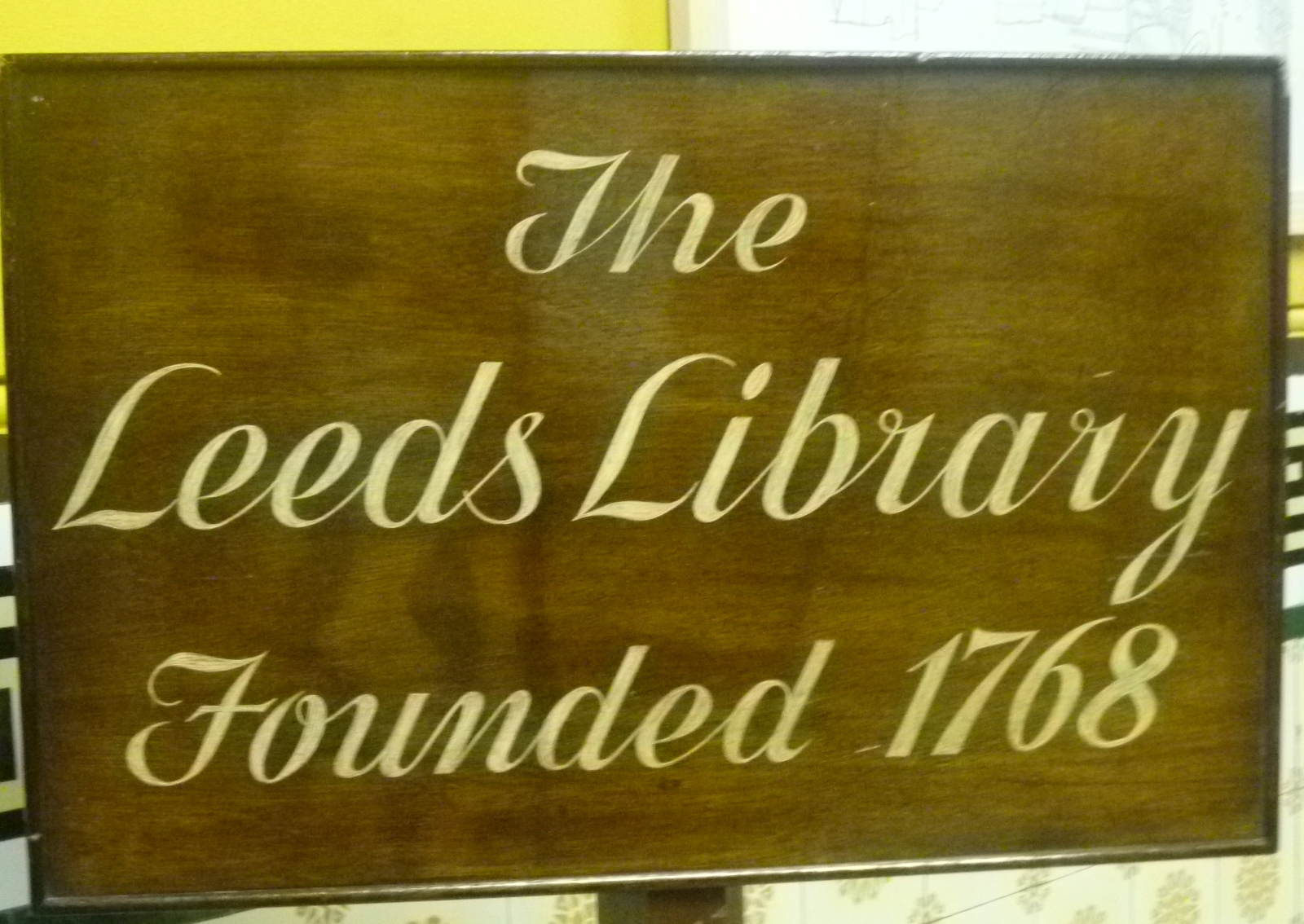
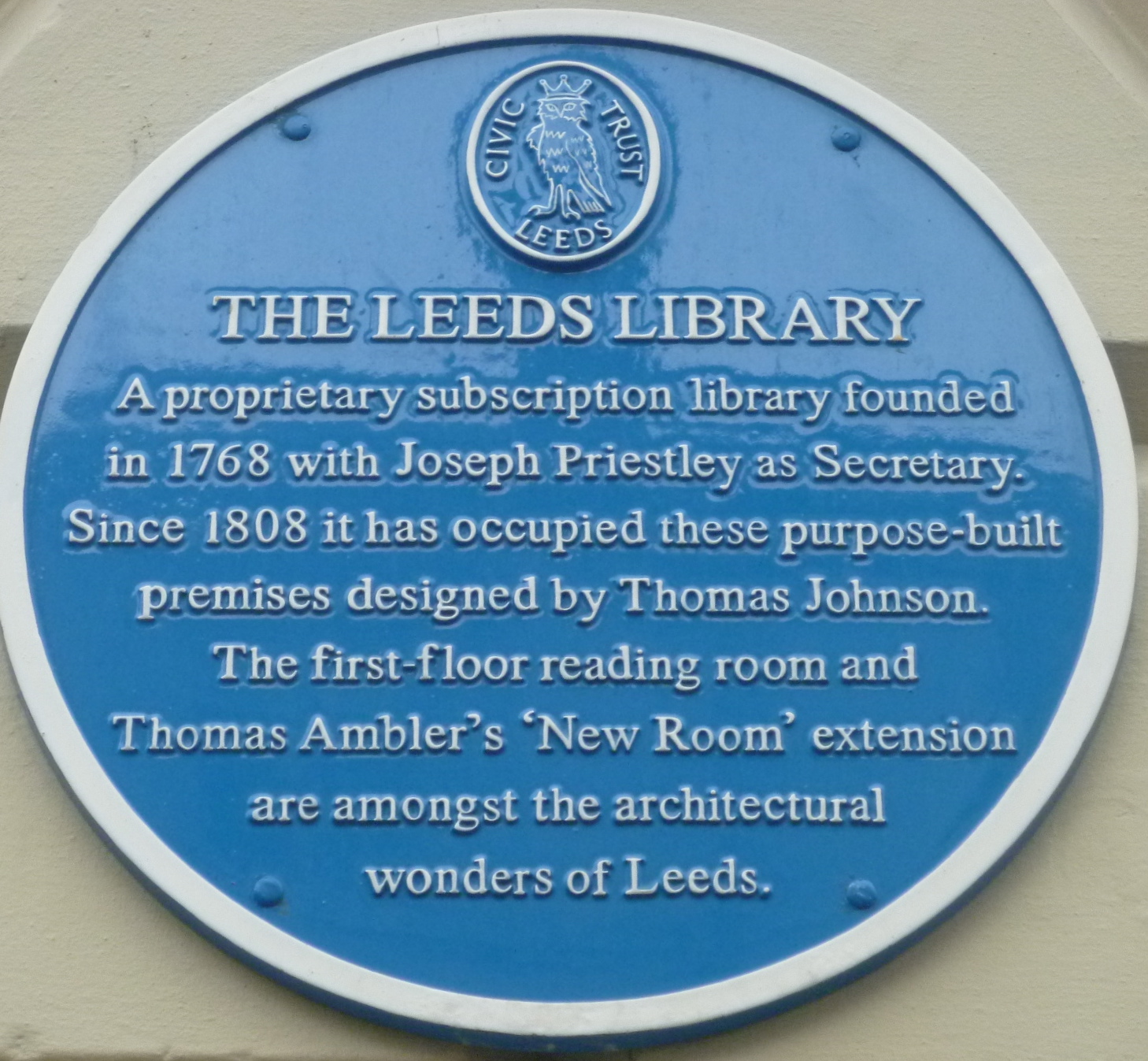
I signed up to join The Leeds Library on 5 March 2008 and have never looked back. In fact I don’t know why I didn’t do so decades ago but there were several reasons for this. Membership was a bit more restricted in the old days, one had to buy shares. I thought I would never manage to get into Leeds every week or so. And I thought it would be outrageously expensive. But it’s turned out that none of those reasons apply now.

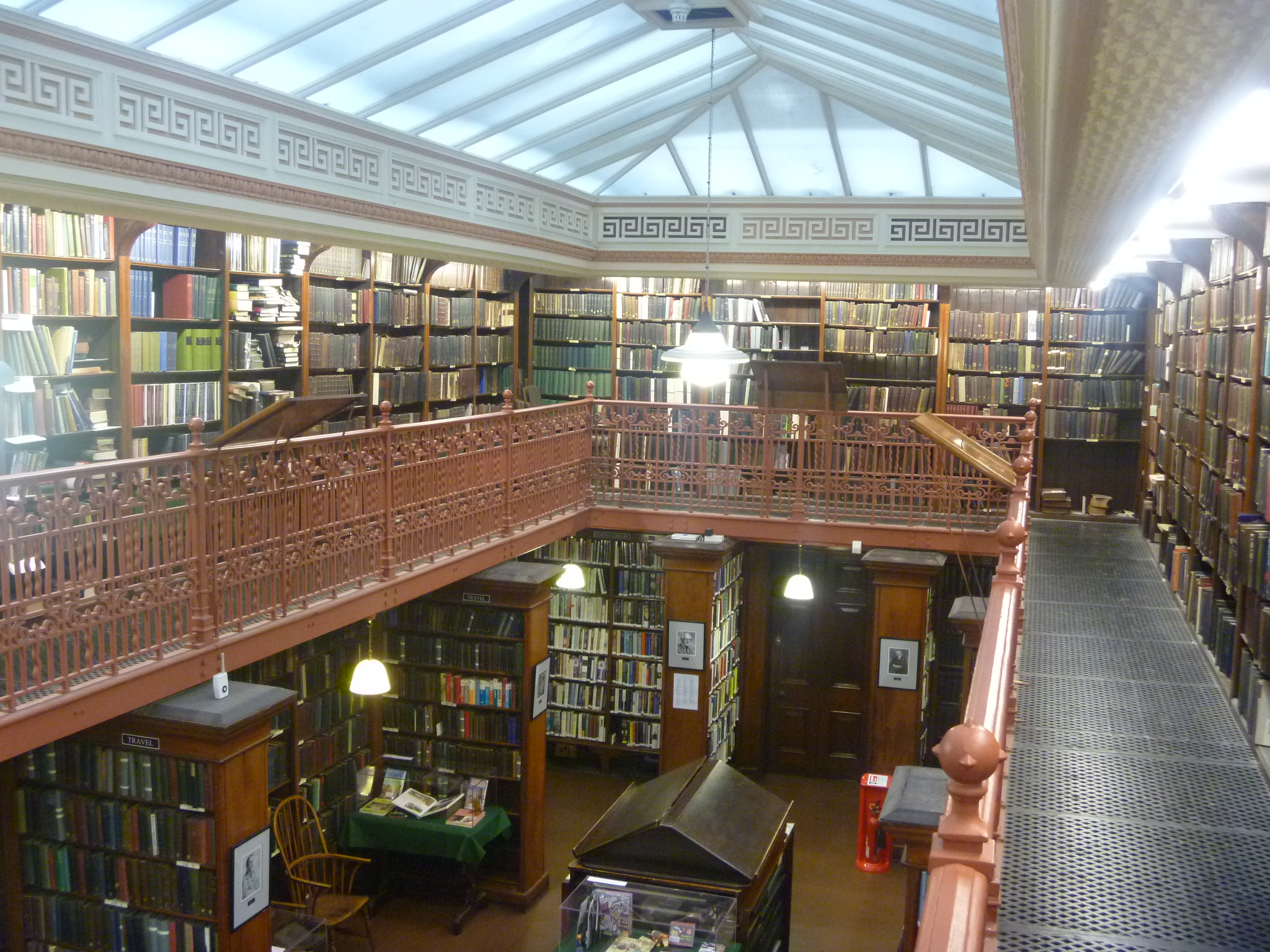
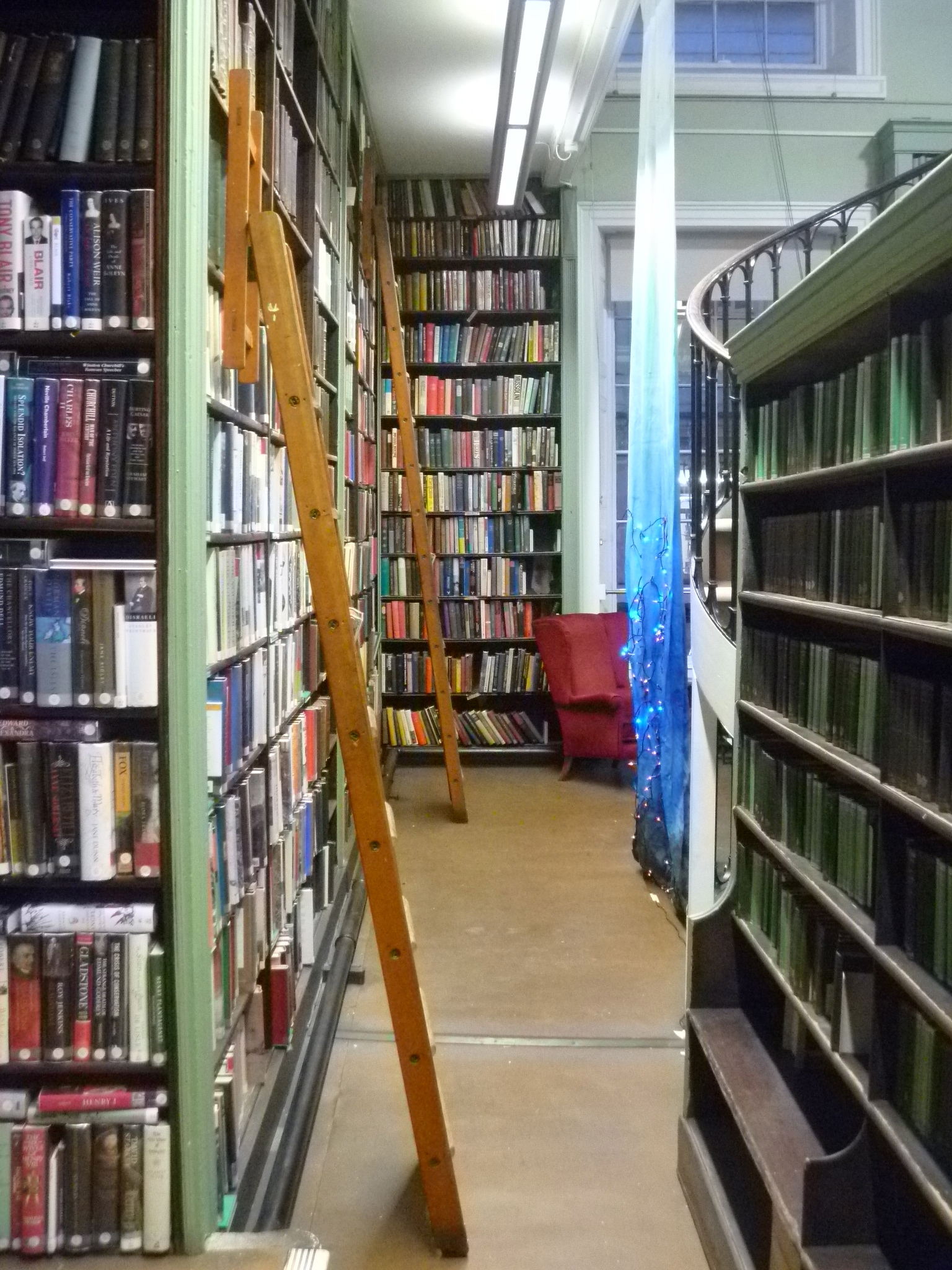
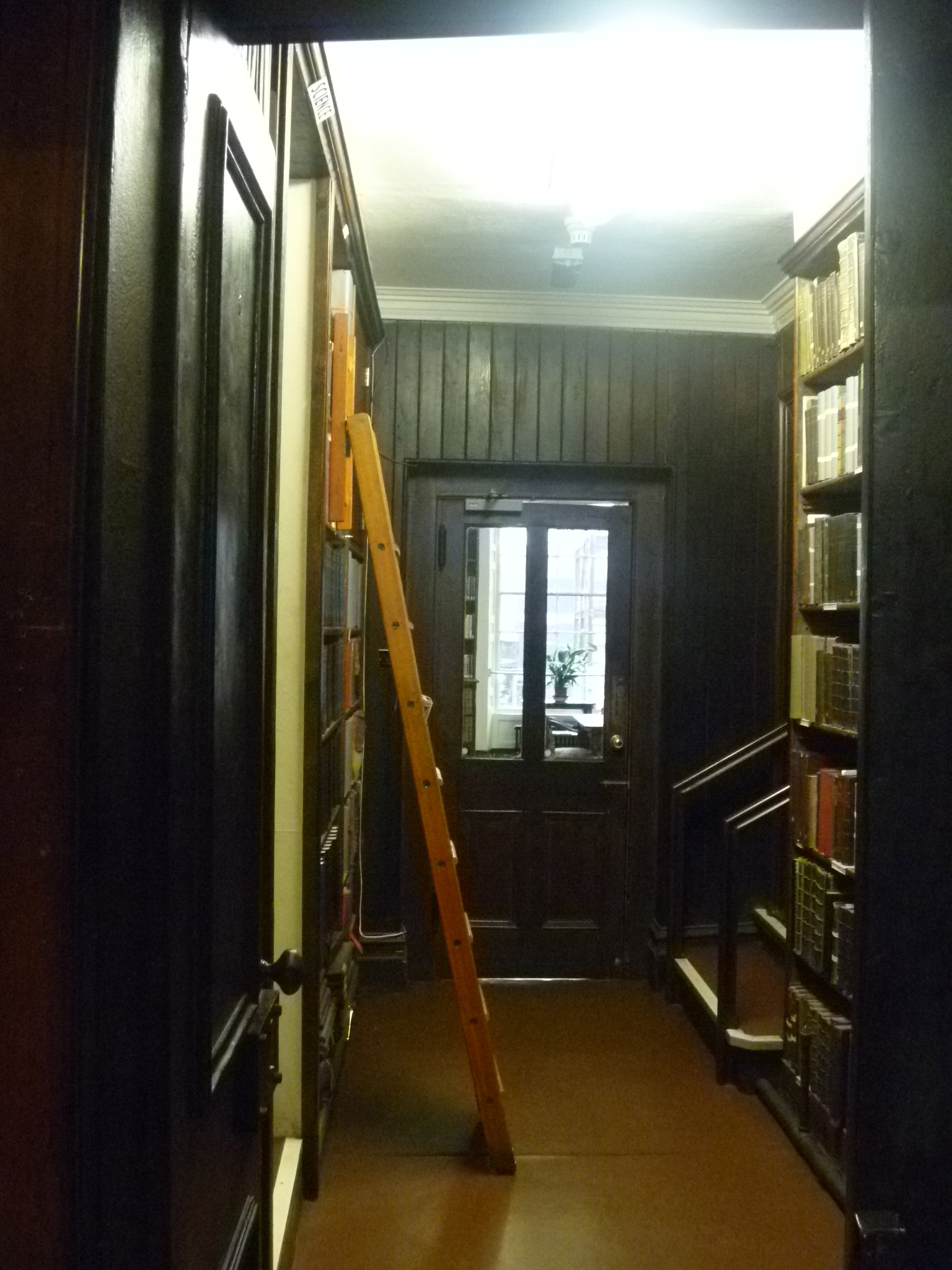
Each time I push the door open I enter a paradise – the smell, the smiles of the counter staff, the walls and walls of books, the lovely solid polished library furniture all combine to give me the most uplifting feeling imaginable. And I’m there almost every week.

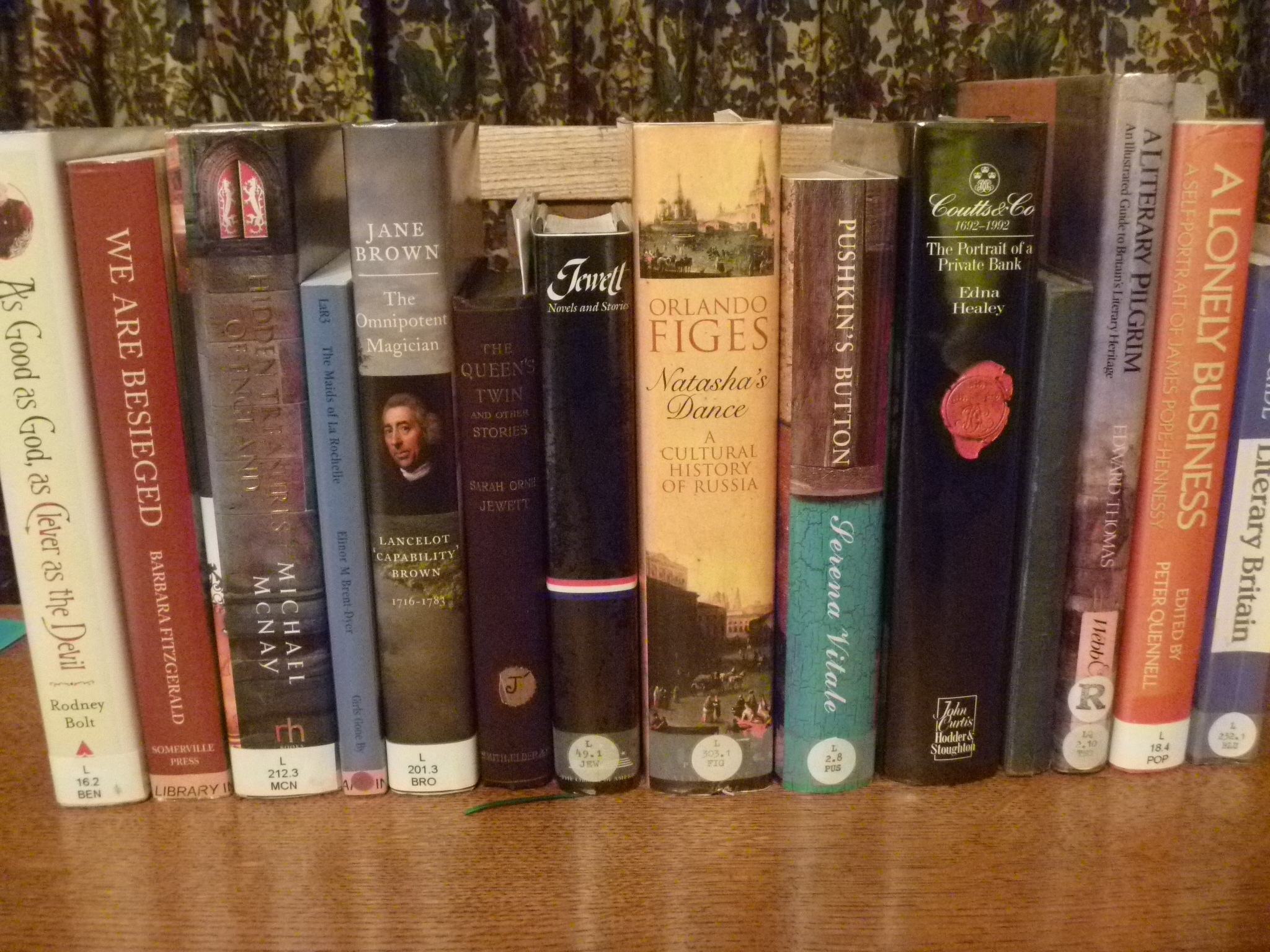
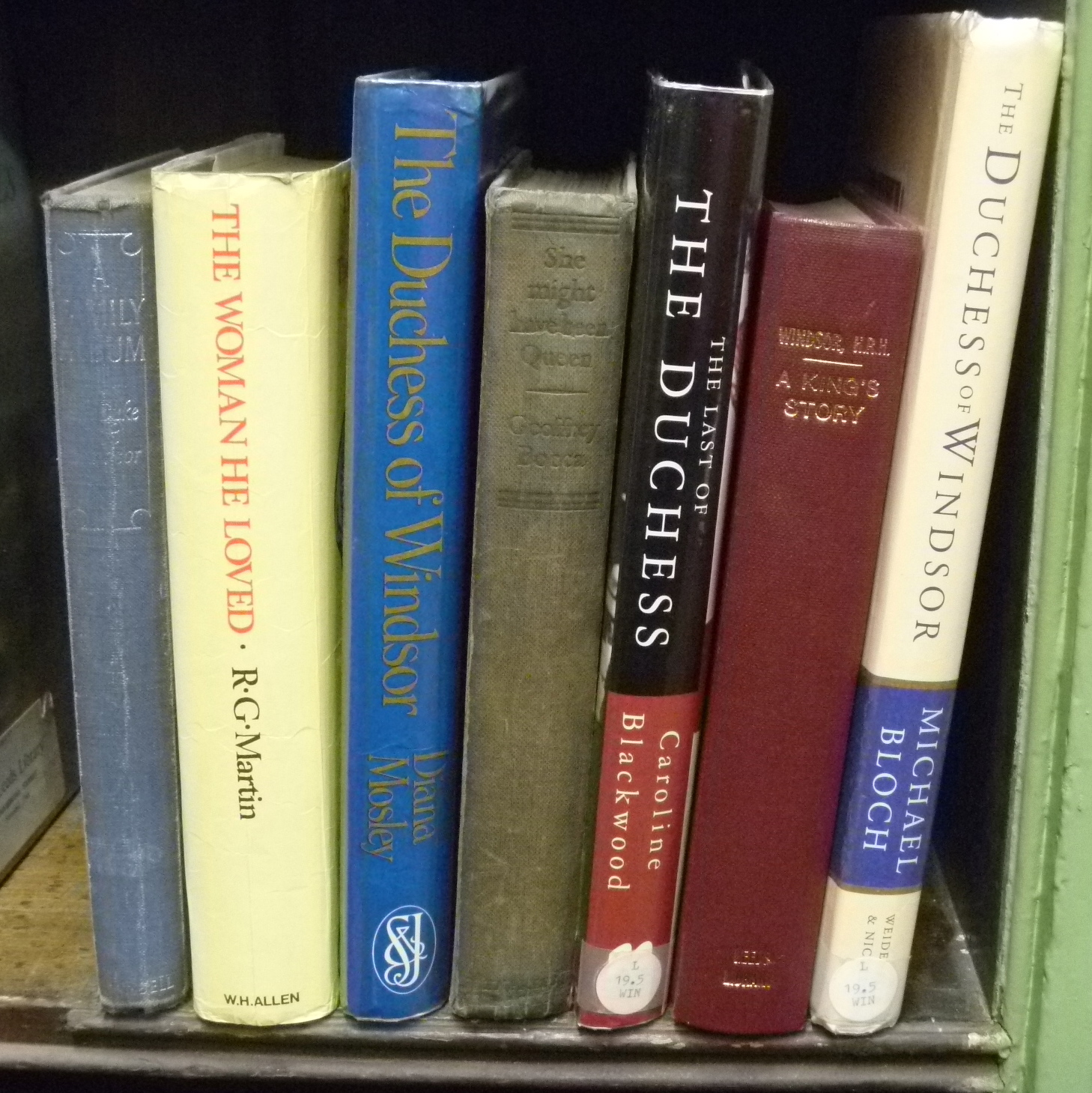
I think there are rules but I have not yet fallen foul of them. I currently have 15 books on loan one of which is a 12 week loan and has been renewed 13 times! If another borrower requests it I’ll take it back straight away but I need time to read these huge tomes – there’s a time and a place for Orlando Figes’ ‘Natasha’s Dance’ and Edna Healey’s ‘Coutts & Co.: a portrait of  a private bank’. I’m still working my way through the 8 times renewed ‘Queen Mary’. I have another 2 books brought up from the depths of the basement stack especially for me: Joanna Cannan’s ‘Little I understood’ and Sarah Orne Jewett’s ‘The Queen’s Twin and other stories’. Waiting patiently to be read are some brand new books (Jane Brown’s ‘The omnipotent magician’ and ‘The Maids of La Rochelle’ by Elinor Brent-Dyer) which I’m the first person to borrow. I have several other books, taken straight from the shelves, (‘Pushkin’s Button’ by Serena Vitale, ‘A literary pilgrim’ by Edward Thomas) or the waiting list has finally got down to me (‘We are Besieged’ by Barbara Fitzgerald, ‘Hidden Treasures of England’ by Michael McNay).

In addition to books we can borrow magazines and DVDs. I’m on the list for The New Yorker which has at least one long article well worth reading alongside a couple of shorter ones and I absolutely love the cartoons. On the back page there is a competition – a new cartoon with no caption, a cartoon with 3 selected captions for readers to vote for and finally the winning caption with its cartoon. Never a dud! The other weekly magazine I’m on the list for is Country Life. This is because they often feature old houses, buildings, gardens and sometimes Landmark Trust properties. It’s almost as entertaining looking at the property pages in Country Life as it is studying the cartoons in the New Yorker!

Who needs Lovefilm? I don’t. On Friday I will be returning ‘Mildred Pierce’. Over the years I’ve caught up with missed TV programmes like ‘Who do you think you are?’, ‘Any human heart’ and the complete ‘Pallisers’ and I see from my Reservations List that ‘Daniel Deronda’ is waiting for me to enjoy on a winter evening next week. Now how civilised is that?

Not The Last of the Duchess

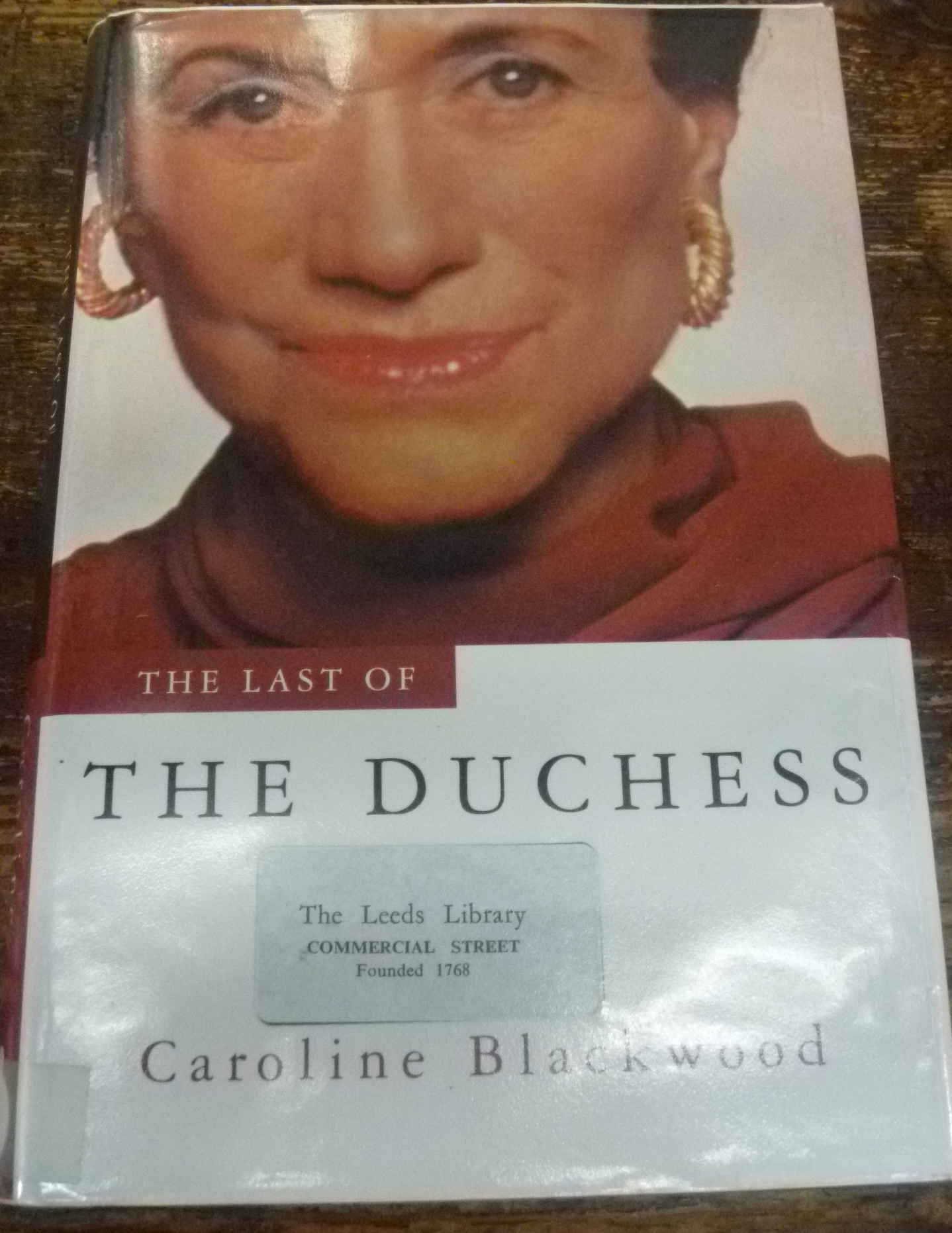
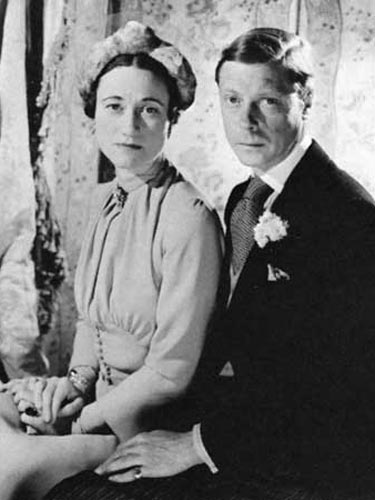
My interest in the Windsors dates back to earlier this year when I stayed at their weekend retreat near Paris, now handily converted for self-catering holidays by the Landmark Trust. Back in the spring I read this book and the biography by Michael Bloch “The Duchess of Windsor”, and the one by Hugo Vickers “Behind Closed Doors: the Tragic, Untold Story of the Duchess of Windsor” and then most recently Anne Sebba’s new biography “That Woman”. The authors of each book, it seemed to me, had an agenda and I still feel I am nowhere nearer knowing what the Duke and Duchess of Windsor were really like. Of course we can never ever know for sure!

Reading the last sentences I realise that all my reading has concentrated on Wallis and not so much on Edward. I need to address that. I’m currently reading James Pope-Hennessy’s life of Queen Mary which will go a little way to adjust the balance. I think perhaps the library can help too!

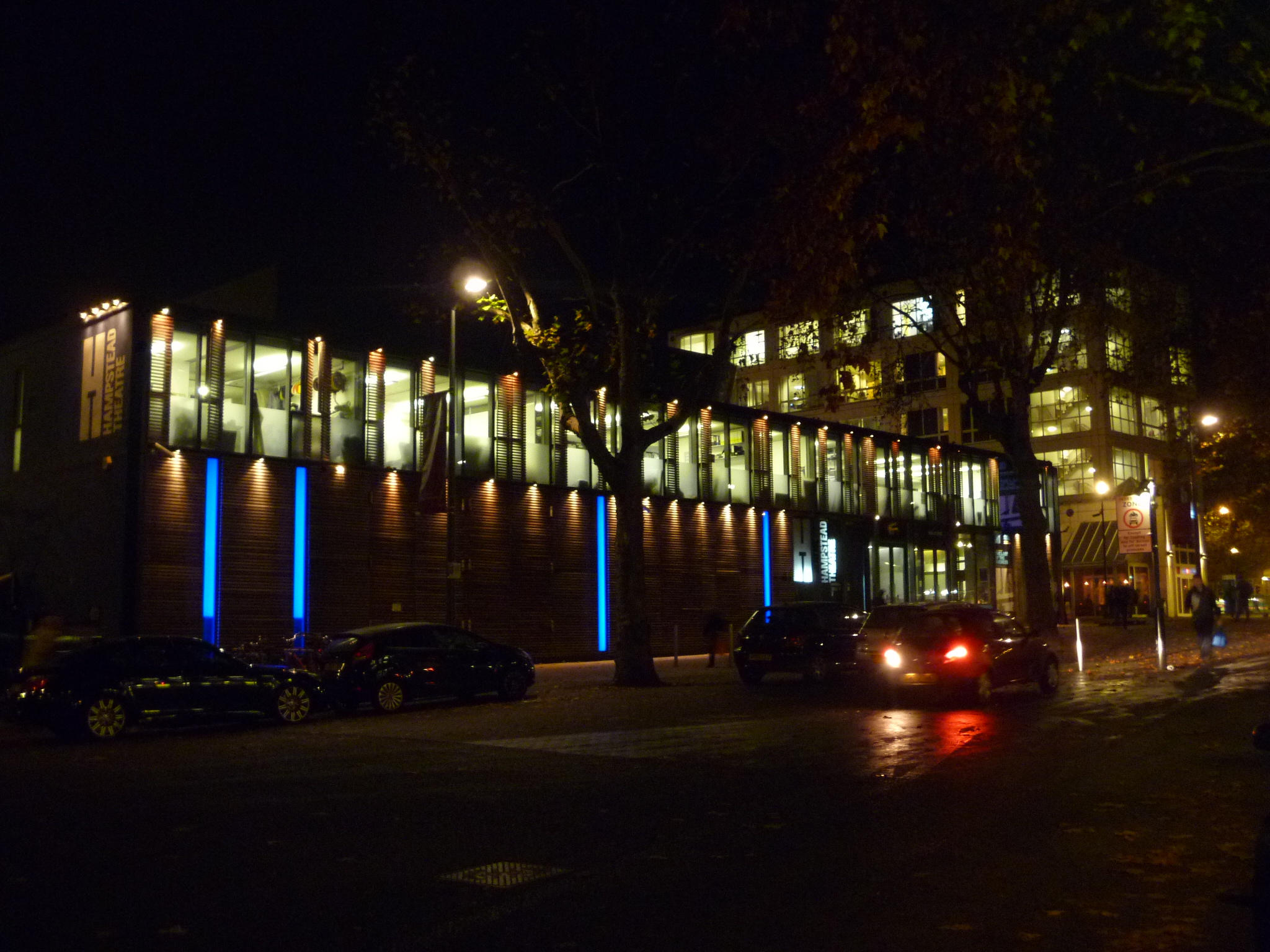
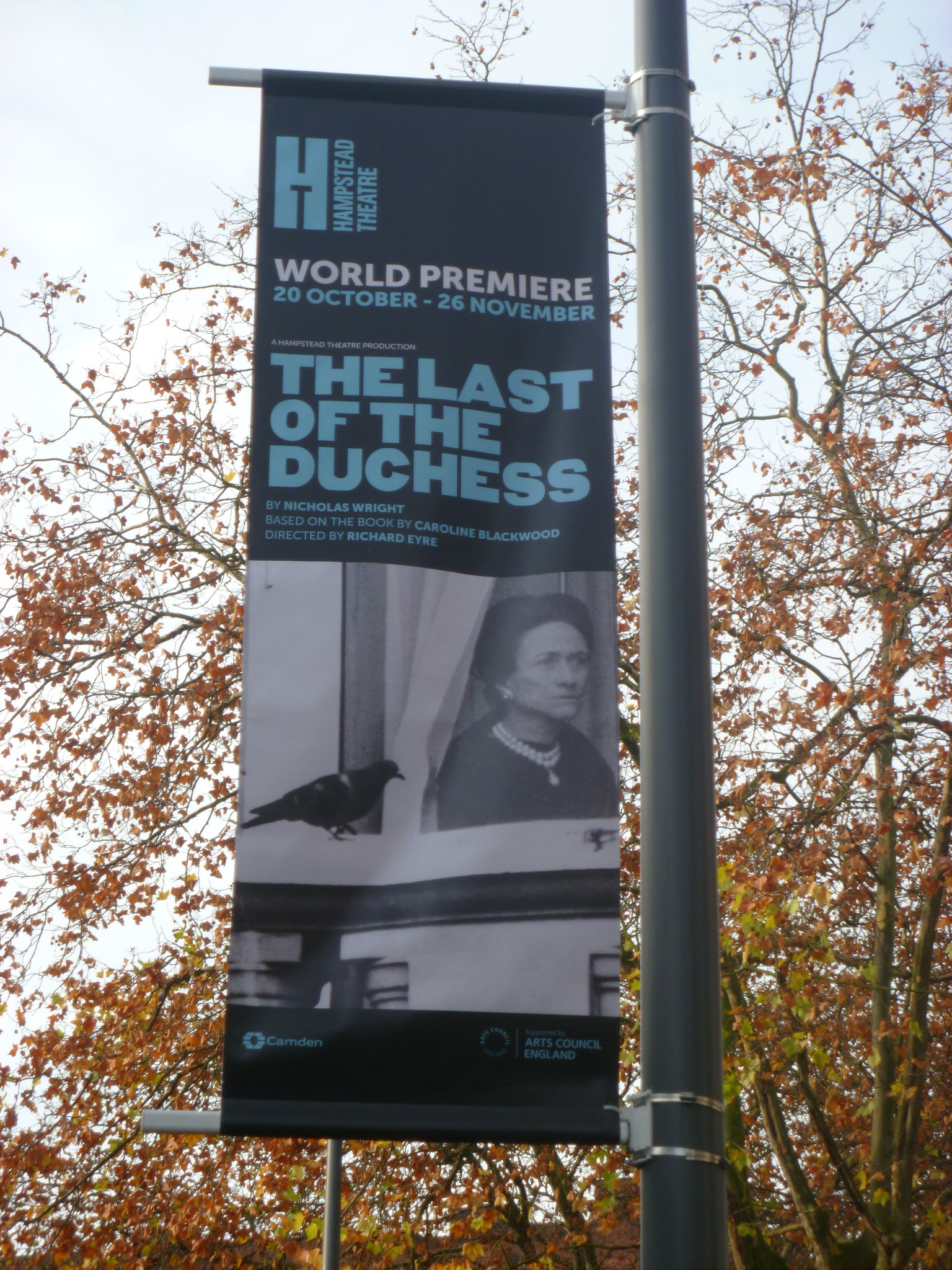
Last evening the Duchess was the main subject of the play I went to see at the Hampstead Theatre. This was a performance of the world premiere of “The Last of the Duchess” adapted by Nicholas Wright but based closely on Blackwood’s book.
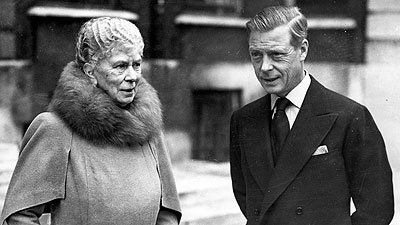
I booked tickets when I came upon a link to it by chance via Google. At the time I was searching for more information about Lady Caroline Blackwood, the author of the book I had just read, back in May or June this year. At the time there was no inkling as to the cast but I knew that I wanted to see it. And anyway the theatre is just steps away from my elder son’s flat.
The casting was inspired. Sheila Hancock played, as if she were a Frenchwoman herself, the role of Maitre Blum, the Duchess’s Parisian lawyer. Her accent, her French, her dress and demeanor all had that je ne sais quoi of Parisian style that is so hard for Englishwomen to replicate. Of course, that meant that Caroline Blackwood , played so wonderfully by Anna Chancellor, would be the antithesis of the smart, immaculate, maybe teetotal, Blum. There were touches of humour throughout but the major protagonist of act two was Lady Diana Mosley who was played magnificently by Angela Thorne (great buddy of Penelope Keith in TV’s To The Manor Born). Mosley was a Mitford sister and close friend of the Duchess. At this period in her life she was profoundly deaf and forbidden by butler Georges, on instructions from Blum, to see her dear friend.

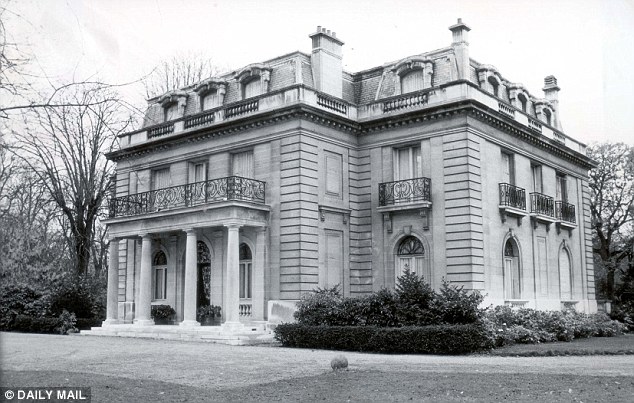
http://www.dailymail.co.uk/femail/article-1367933/Wallis-Simpson-Robbed-abused-Duchess-Windsors-days.html

Photo from Daily Mail (http://www.dailymail.co.uk/femail/article-1367933/Wallis-Simpson-Robbed-abused-Duchess-Windsors-days.html)

The setting is the house in the Bois de Boulogne leased to the Duke and Duchess by the City of Paris. The Duke has died some time before and the Duchess appears briefly at the beginning of the first act, in a kind of dream of Blackwood’s. That is the Last we see of her. From then on she is upstairs helpless in her bed as the arguments and contretemps continue below. Lady Caroline, thrice married  journalist, has come to Paris to interview the Duchess but Blum will have none of it. There’s a suggestion that Lord Snowdon has been appointed to take her photograph. This Blum forbids but somehow as a kind of bribe she manages to arrange her own photo shoot with Snowdon. This takes place offstage during the second act. In the final act Blum coolly responds to every accusation of Blackwood’s as she herself becomes more and more intoxicated. I came away from the play with the same feeling of uncertainty as after reading the book. Was Blum a consummate liar and villain or was she, in some strange way honestly  protecting the Duchess from exploitation?

http://www.telegraph.co.uk/culture/theatre/theatre-reviews/8851278/The-Last-of-the-Duchess-Hampstead-Theatre-review.html

As it turns out, in the end, it is almost the last of Lady Blackwood. She died only months after the publication of her book whereas the Duchess of Windsor was to live for a further 12 years.

I love Lucy! A Cavalier at Bolsover Castle

B

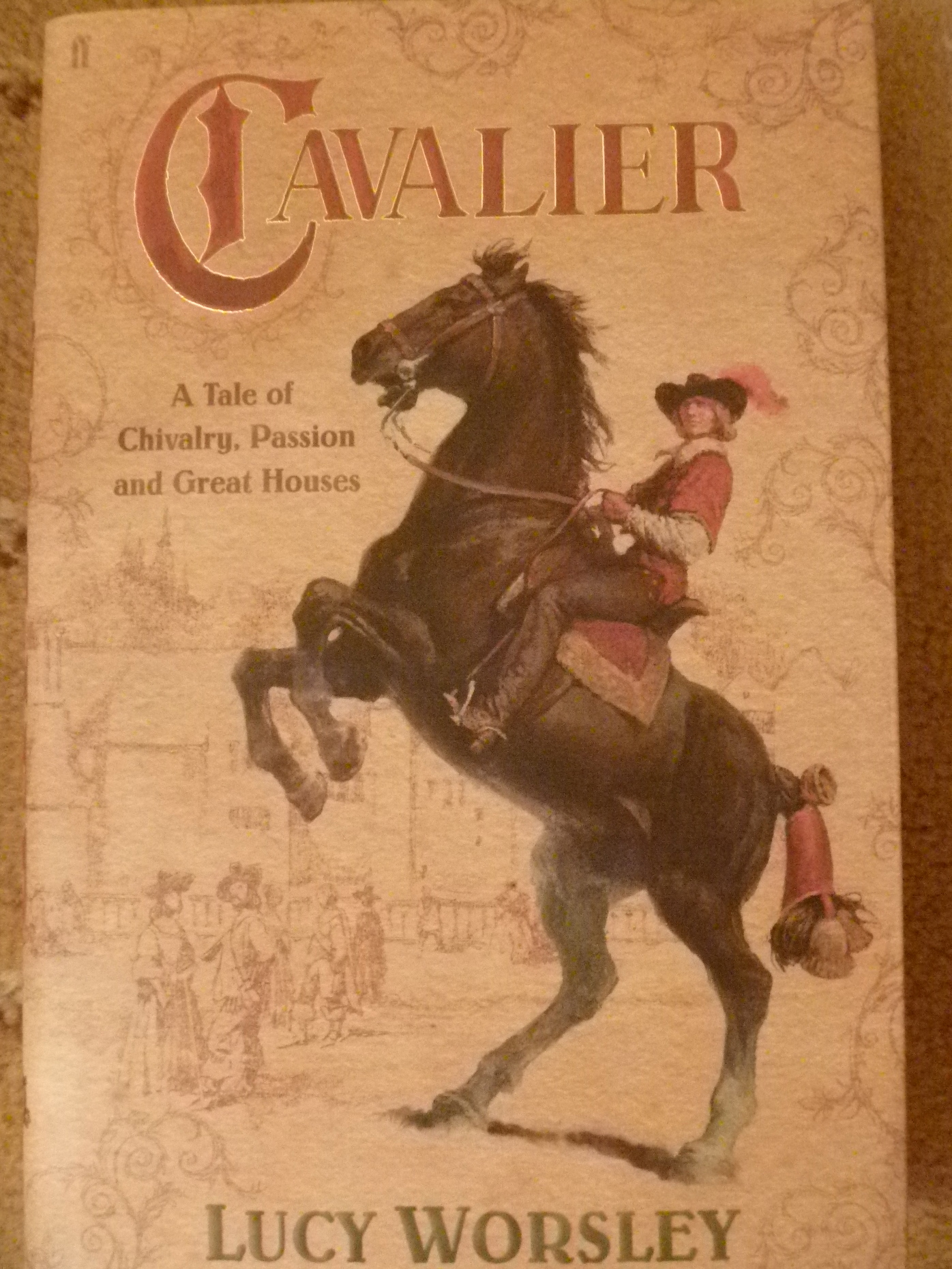
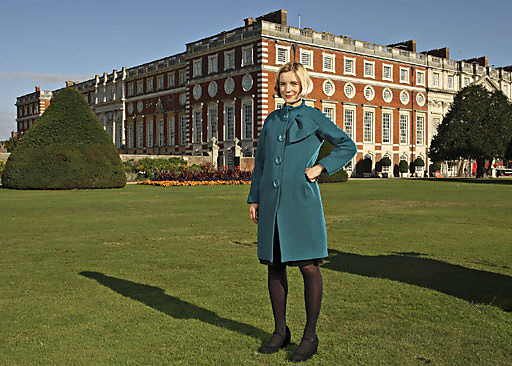
I’m really looking forward to reading this book. But it won’t be until the new year as I have a number of others to get through before I start on Lucy Worsley‘s ‘Cavalier: a story of chivalry, passion and great houses‘. I heard Ms Worsley speak at the Edinburgh International Book Festival in August this year. But even before that I was a fan of her  ‘If Walls Could Talk’ shown on BBC television in the spring. In this fab programme the lovely Lucy trots around our modern day homes pointing out all the historical details and stories of the evolution of our bedrooms, living rooms, bathrooms and kitchens from the earliest times until the present day. She even volunteered to dress up and play various roles in order to represent to us the differences between previous generations and our own.

For many years Lucy Worsley (she is now Chief Curator of The Historic Royal Palaces) was based at Bolsover Castle in Derbyshire and over ten years she researched the story of William Cavendish and his family and the result is ‘Cavalier’.

Bolsover Castle itself isn’t really that far away from me – about 60miles south straight down the M1 motorway.

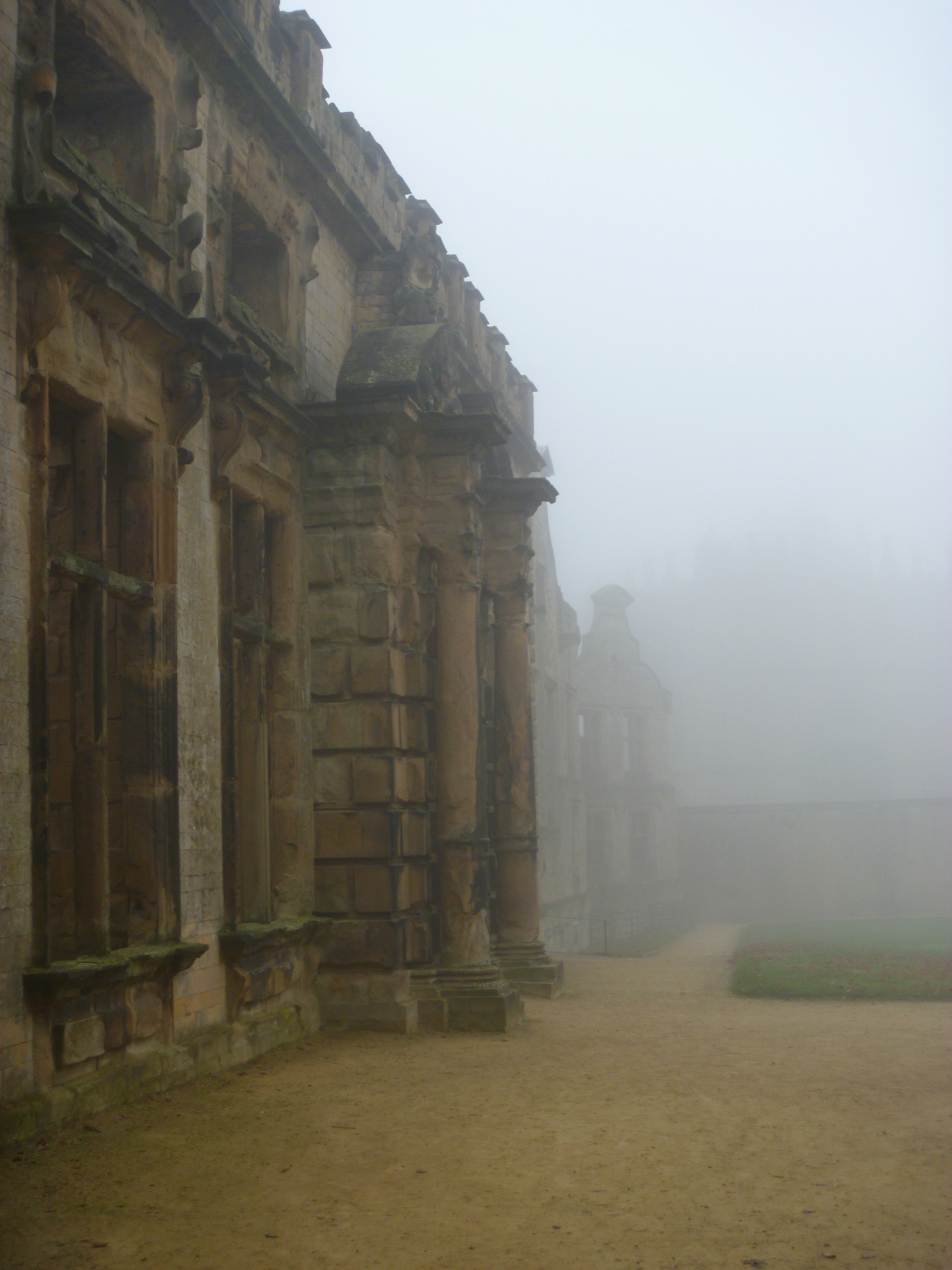
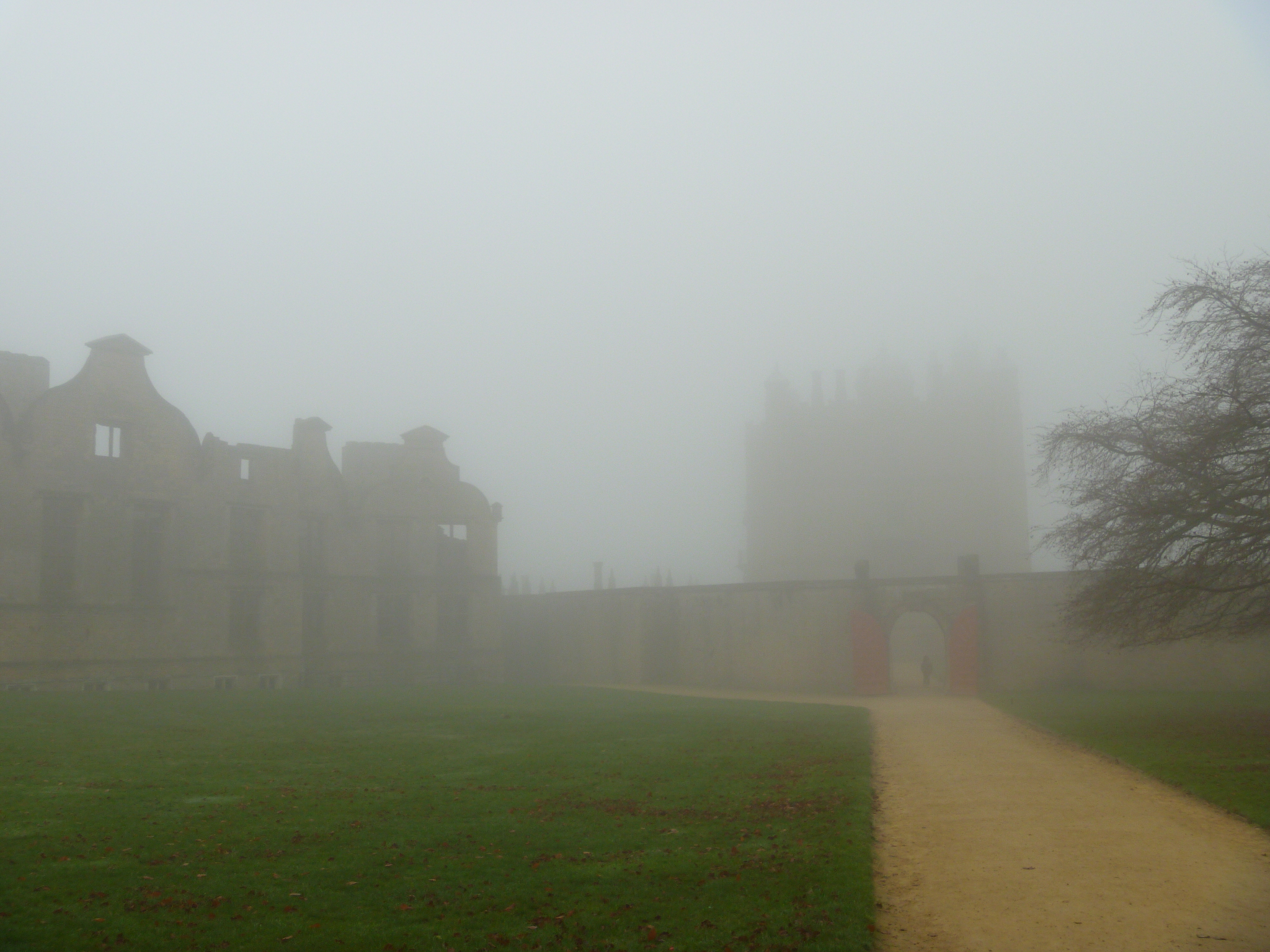
First,  forget the idea of castle. Seen from the M1 Bolsover may look like a fortress but it is rather a fairytale palace on a hill” says Simon Jenkins in one of my ‘bibles’ “England’s thousand best houses“. As you can see we chose a very atmospheric day to take a trip to Bolsover and give it the once over. The fog should have lifted but try as it might the sun just could not get through all day.

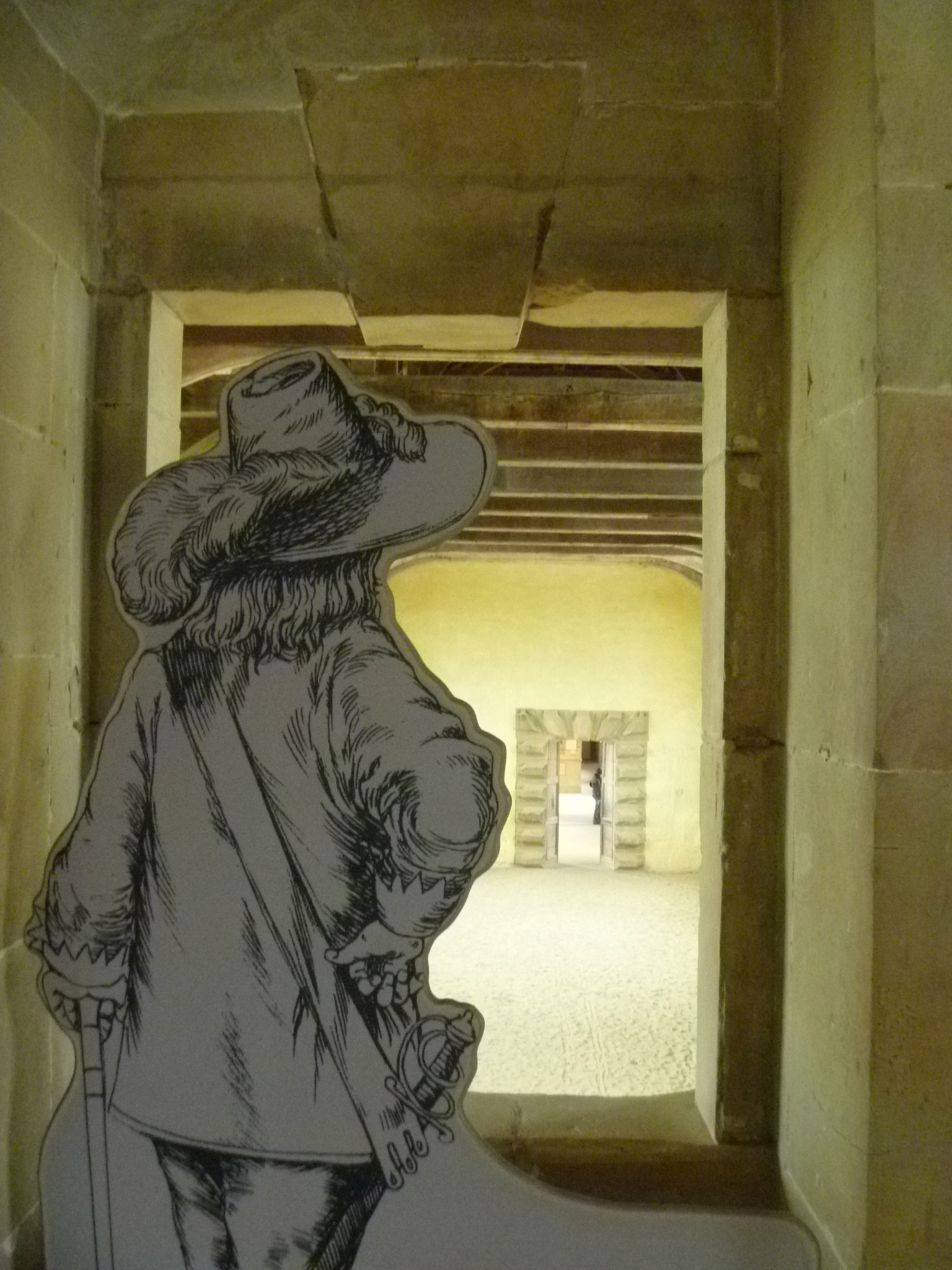
The Riding House from the Shoeing House – complete with cardboard cavalier!

After the obligatory cup of tea in a very nicely appointed cafe and a quick glance round the English Heritage gift shop we switched on our audio guides and made our way falteringly towards the castle itself, stopping every so often to listen to the character actors and narrator tell us more about Bolsover and its creator and inhabitants. Once through the huge entrance gate (or tradesman’s entrance as it was called on the audio guide) you’re in an impressive courtyard.

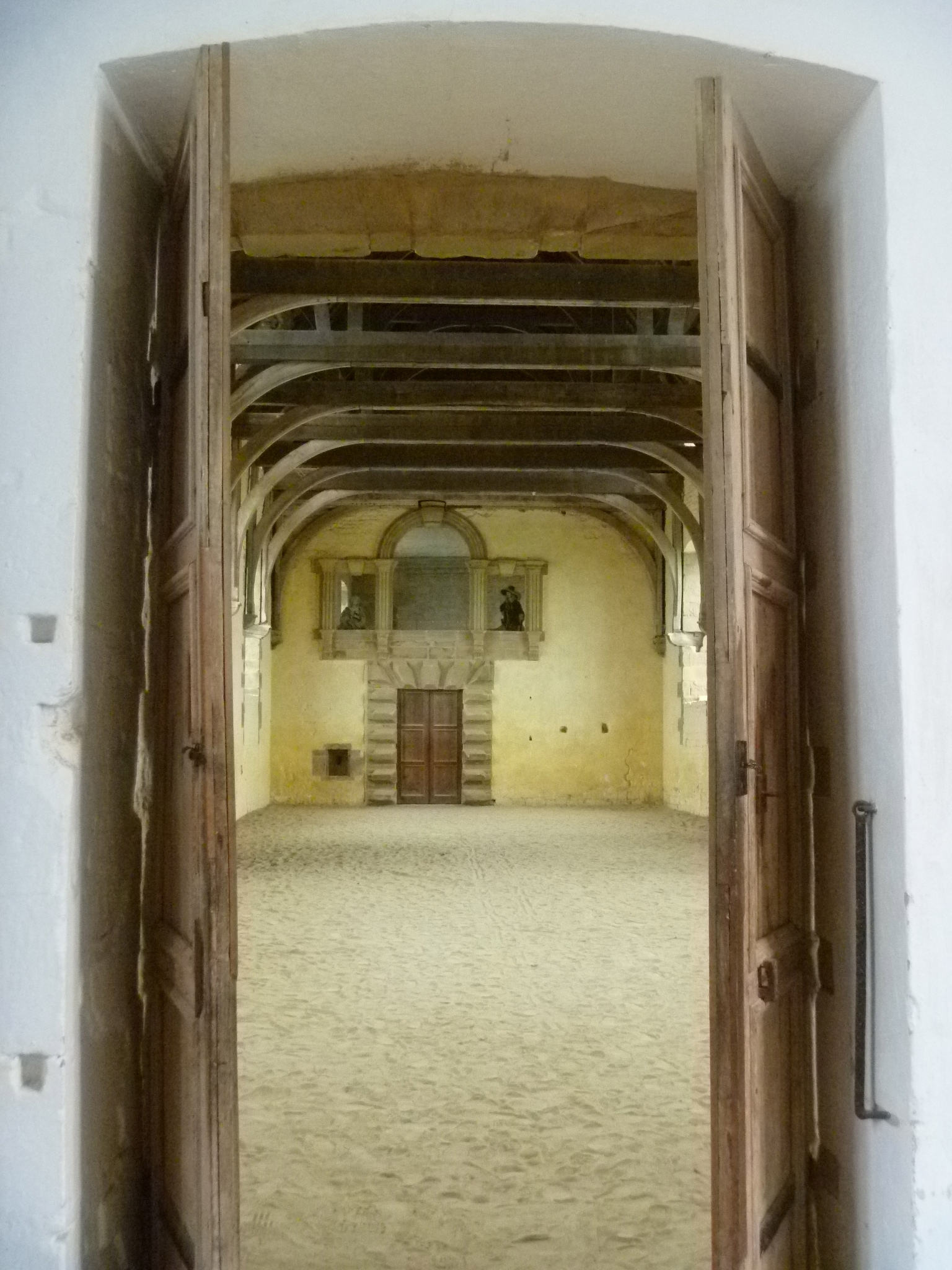
The Riding House

The first building on the left is called The Riding House Range and it contains “the finest surviving example in England of this rare, specialised type of building” (Bolsover Castle guidebook, also written by Lucy Worsley). Like the famous act by the white stallions of the Spanish Riding School in Vienna this huge room was for training horses in the art of  “manege”  (circling, leaping, jumping). William Cavendish, 1593-1676) was the cavalier responsible for the greatest part of the building and development of the site at Bolsover. He had two obsessions – women and horses – and Bolsover was his “pleasure dome”.

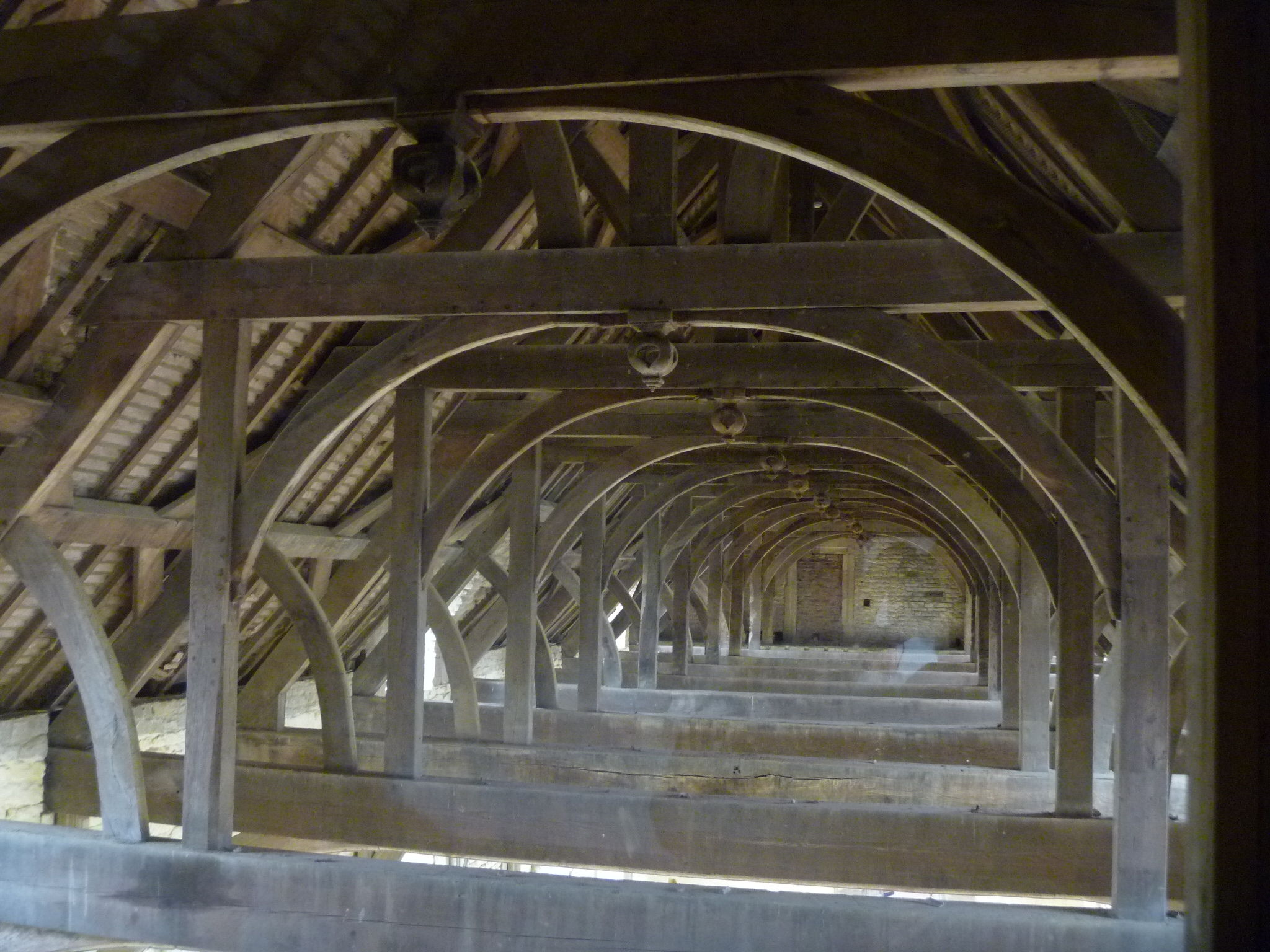
The great oak roof of the Riding House

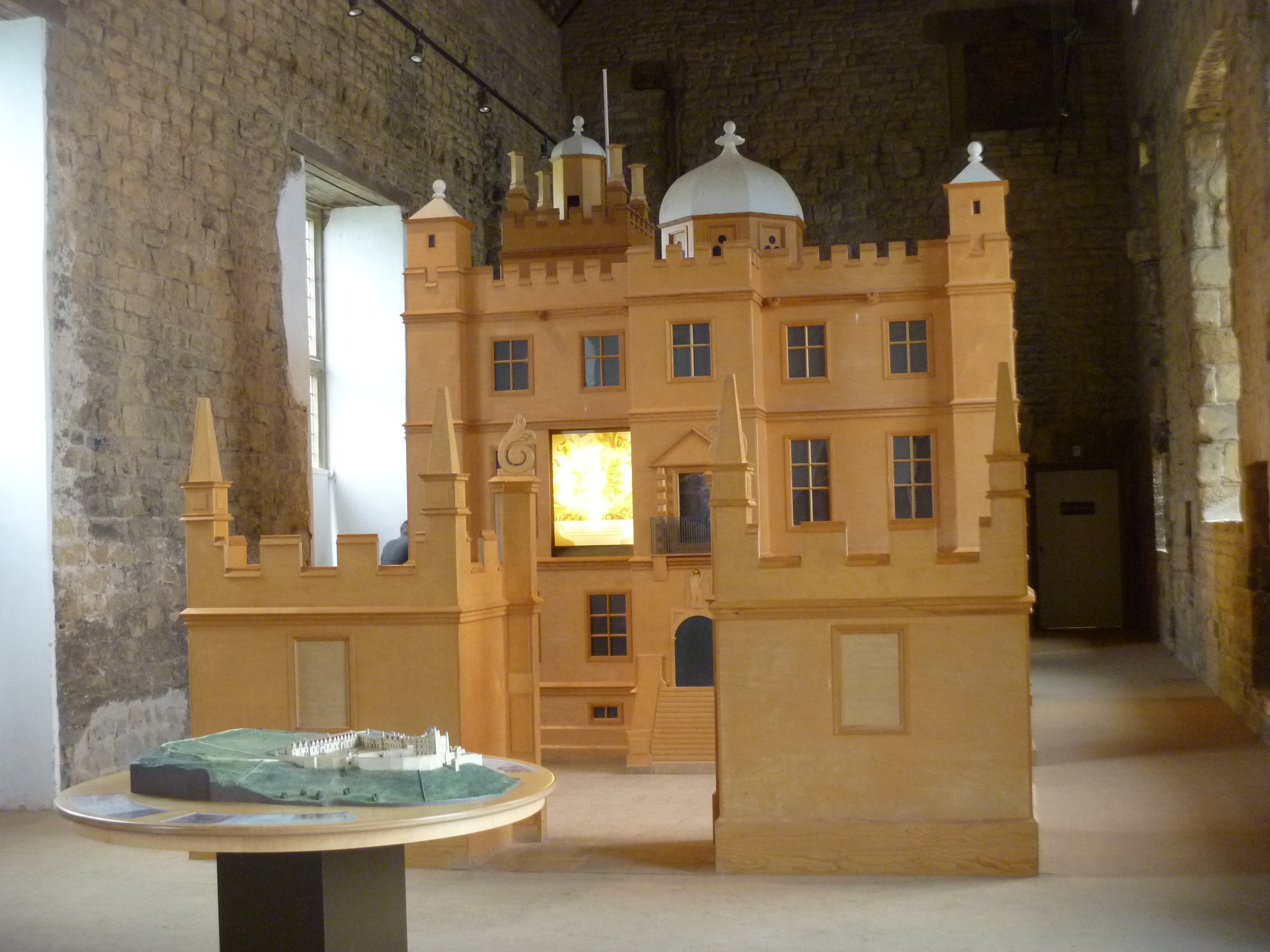
In the stables is an exhibition about the history of Bolsover and its place in English history, an excellent 15 min. video about The Little Castle and even a large model of it. We seemed to gain enough information from this room to make the audio guides superfluous.

Walk-in model of the Little Castle in the Stable

A walk around the Terrace Range, (with all the usual appointments of chambers and kitchens etc) and from where we should have had (but for the persistent fog) a long-ranging view over the valley and down towards nearby Hardwick Hall, lead us quickly to the romantic Little Castle itself.

Terrace Range and approach to The Little Castle

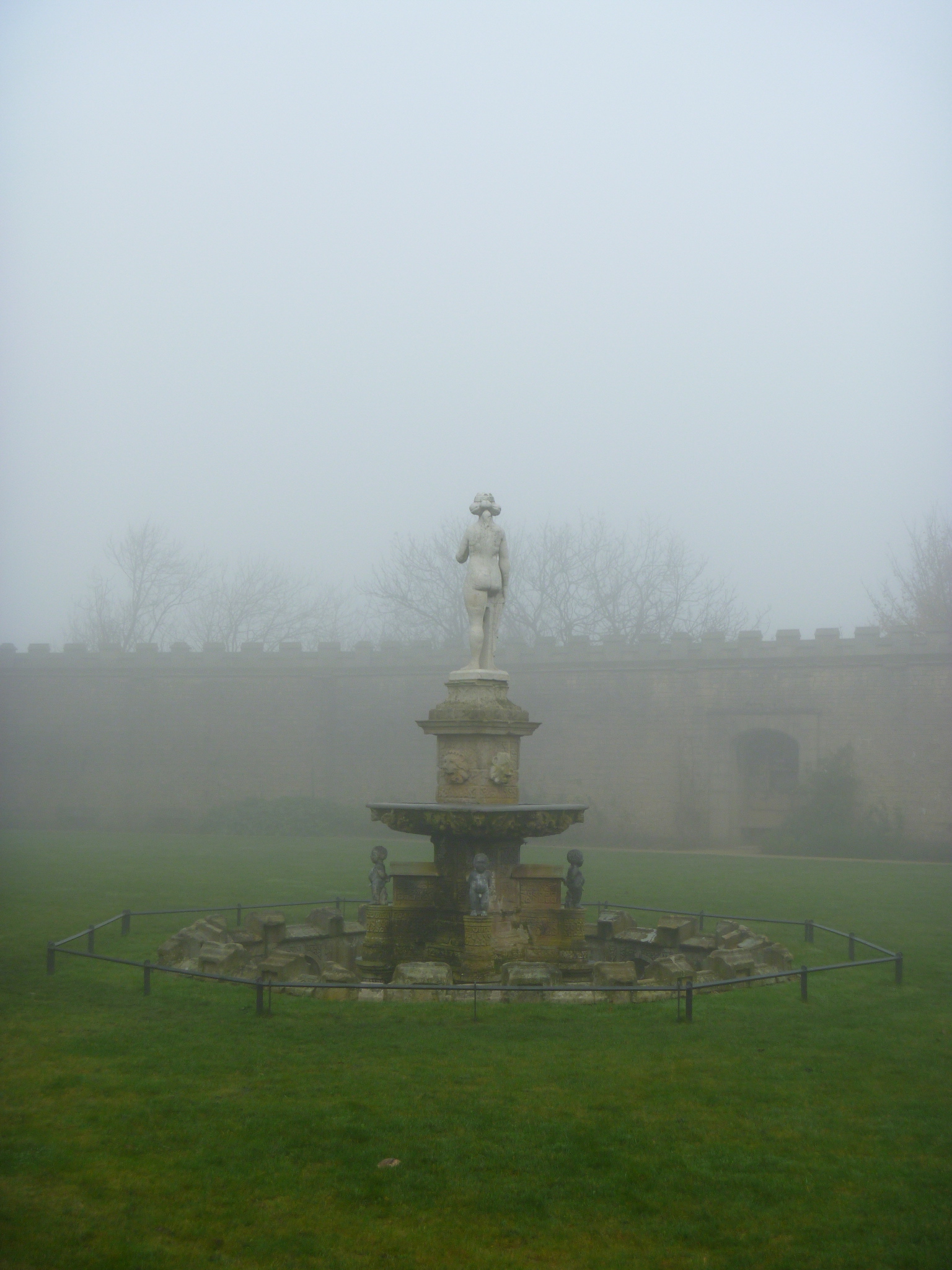
Here we saw for ourselves the incredibly preserved and restored artwork: the Pillar Parlour, the Star Chamber, the Marble Closet, the Bedchamber, Heaven and Elysium. This final chamber with elaborately decorated panelling depicting the heaven of the gods and goddesses of ancient Greece appropriately overlooks the garden and its Fountain of Venus.

Bolsover, I’ll be back on a sunny day to walk the terrace, admire the view, picnic in the gardens and relax in full view of your Venus fountain!

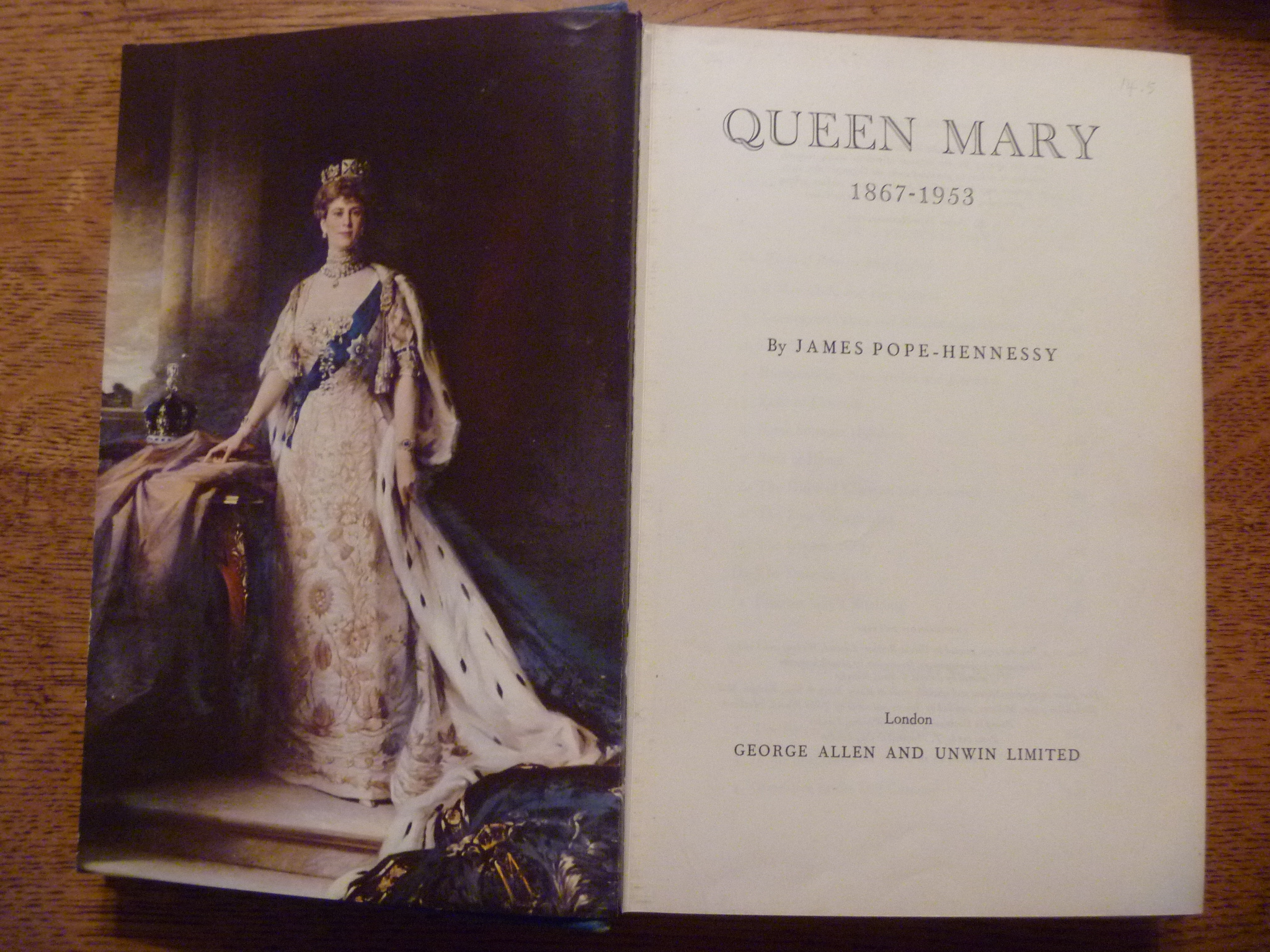
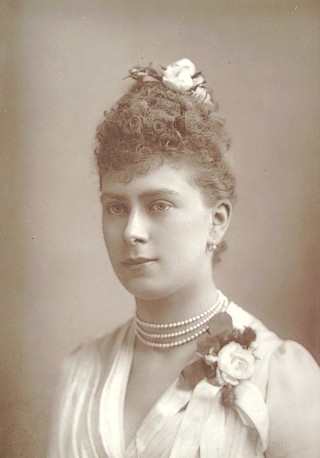
Queen Mary, 1867-1953, by James Pope-Hennessy

This library book (published in 1959) has been sitting on my table waiting for me to read it for probably two years! It was recommended to me by a dear friend as the perfect biography and so it seems to be. Upon request it was brought up from the depths of the library stacks (by a librarian in overalls and a mask), fumigated  and then issued to me a week later. Upon collection I realised that I would have to choose carefully the appropriate time to read this book. It is just too heavy to carry with me each day to work or when travelling, so when I knew we’d be going down to Devon by car  a couple of weeks ago I decided to take it with me and to give it a go.

There is something else I should explain; earlier this year I began to take a special interest in Edward, the Duke of Windsor and Wallis Simpson, the Duchess of Windsor and I will be writing much more about them in future posts. This year really had to be the year to read Queen Mary.

The 685 page volume is divided into 4 books of which Book One: Princess May is by far the longest. I’ve just finished this part. Princess May was born into a family with a great many hyphenated German names – if you can manage to wade through the first couple of chapters then the story becomes much easier to follow. The biggest surprise to me was that she had been engaged in the first place to George’s elder brother Albert Victor and it was only following his death not long after their engagement that she became betrothed to the then future king.

James Pope-Hennessy was approached in 1955 and invited to undertake the writing of Queen Mary’s biography. He was given access to the whole Royal Archive by Her Majesty the Queen. His notes are meticulous but do not impede the flow of the text. Carefully selected photographs are dispersed throughout the book rather than all bunched together in the middle. When you are just reading about someone or some place you turn the page and there is the relevant photograph.

I’m looking forward to reading more about this woman whose son was the only modern monarch to abdicate the British throne.

Pass the Postal Book Parcel – Every One a Winner!

Well, the clocks have gone back,  the temperatures have descended, autumn is well and truly here and my travelling is more or less done for the year. I’ve a couple of trips to London due before Christmas but now my thoughts are turning back to the boudoir and I mean to write a bit more about books and reading and more home-based or local topics.

For many years and as many of you know I have been a member of an online book discussion group. It was a brilliant idea and I joined when recovering from a bad bout of ‘flu one new year and have never looked back. Many members have met in person in many different countries. I don’t know if there are many (or even any) other such groups but this one is very special. Besides discussing books in general and some books in particular we often choose a nineteenth century novel – usually one that was originally published in parts – and read this a part at a time over a few weeks or months.

Some Postal Book Group reads – that I also own.

Several years ago we established what is known by us as The Postal Book Group. It works like this: one member volunteers to organise it for the duration of one ’round’ and those who wish to join in send their addresses to that member who makes a list and distributes to the Postal Book Group members. On the 1st of a chosen month everyone sends their own book choice to the next person on the list, along with a notebook explaining why they have selected that particular book and a bit of background information. A few days later all PBG members should have received their first book. You then read the book, comment in the notebook and on the first day two months later send on the book to the next person. The most exciting thing is when the mystery package lands on the doormat with the next book inside! I did drop out one round but I couldn’t wait to re-join as I missed so much the arrival of the mystery book and its notes.

The current Postal Book Group has the most members yet. There are 14 of us. This particular round started in February this year and will run until April 2013 when we should get our own books back complete with everyone’s thoughts written in the notebook. I can’t tell you anything more about the current round as we keep the book titles a secret so that no-one knows which book will arrive next.

Unfortunately I know of two instances where the books have gone astray but they’ve been replaced and as far as I know only one part-filled notebook has been lost for good. As the books even cross continents I do think this is pretty good going. Currently participants live as far apart as the UK – from Somerset to Cumbria – Ireland, Belgium and the USA – from Oregon and California to Massachusetts and Tennessee. I can tell you it is great fun!

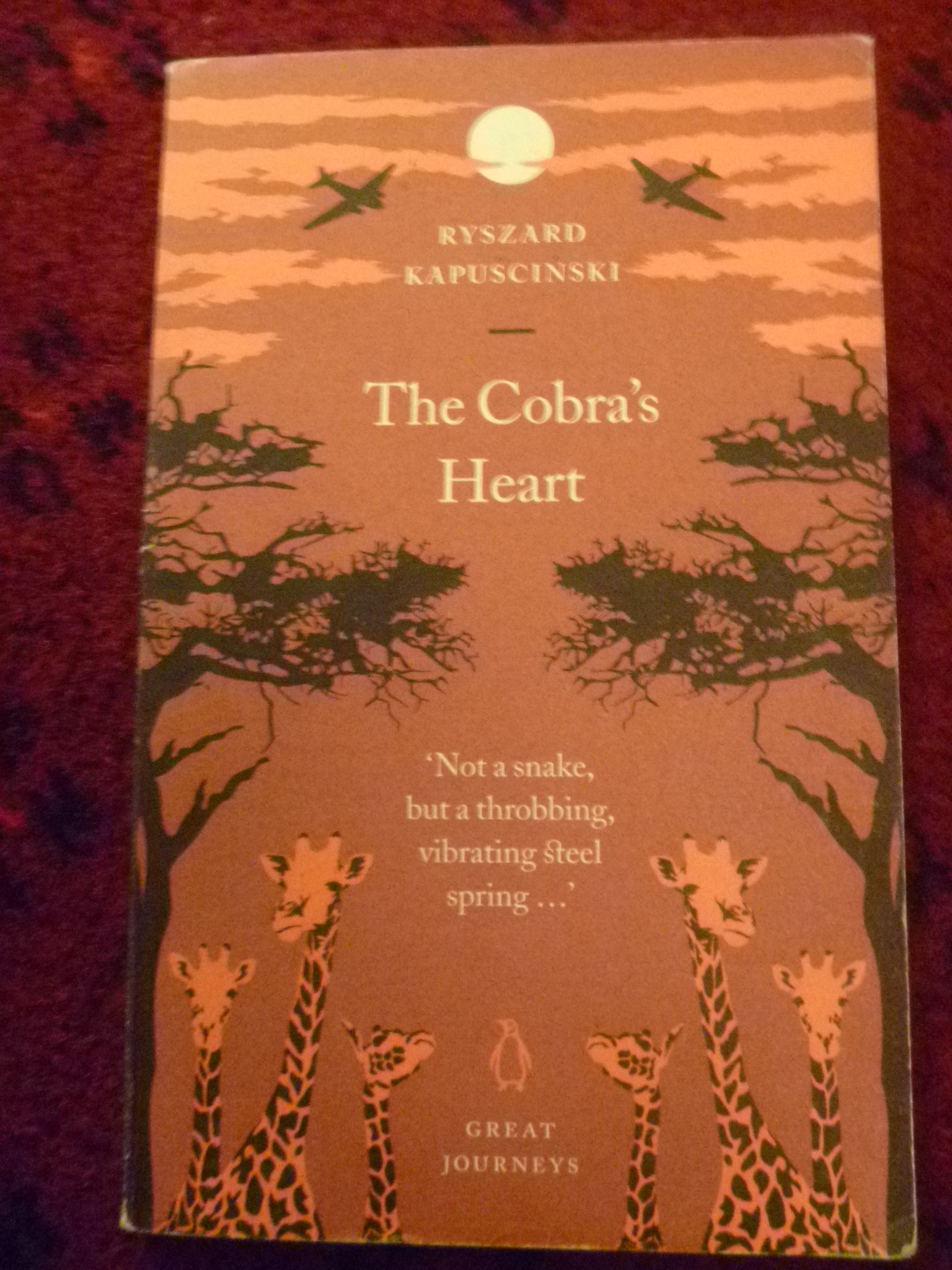
The second most exciting thing is getting the book back and reading the comments that readers have made about your own choice! In the last round I sent out Ryzard Kapuscinski’s The Cobra’s Heart. It’s nice and short – less than 100 pages long – we have to fit the postal book in with all our other reading! It was recommended on the Radio 4 programme ‘A Good Read’ in October 2007 and, I’m pleased to say, it was pretty well received.

Here’s an extract from what I wrote in my notebook before sending it on its way :

“Maybe you know lots about Africa already. I’m ashamed to admit that I do not. All of the things Kapuscinski writes about are new to me. Things I had never thought about such as the sudden difference between day and night, about white people who are not from colonial countries, sickness, wizards, and, of course, cobras. … The book is extracted from a fuller version of this Polish journalist’s writings about Africa “The Shadow of the Sun”. I hope you will find something of interest in this little book of travel writing about Africa.”

In The Country of The Pointed Firs

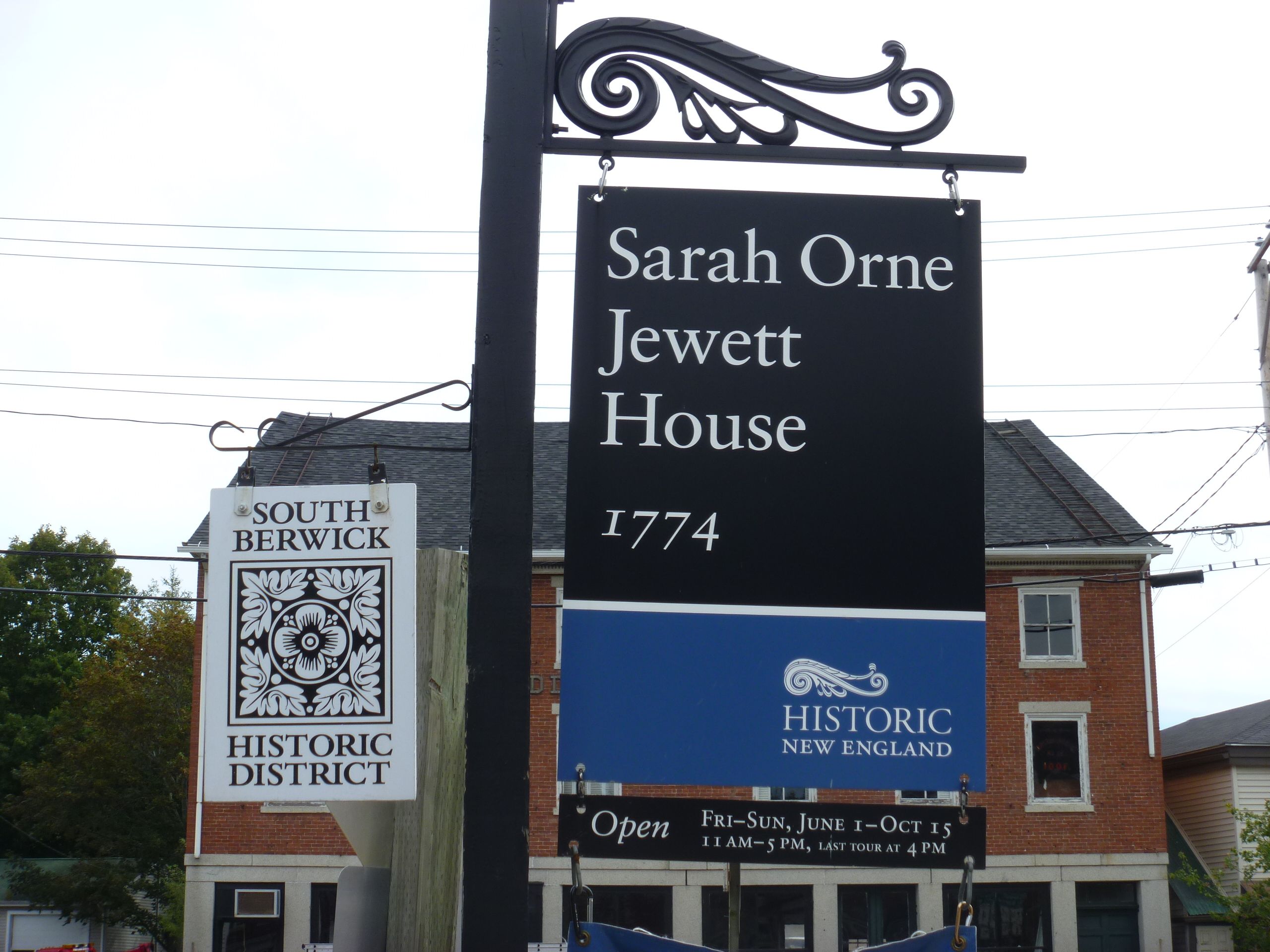
Just before leaving for my trip to New England I discovered the existence of an organisation that sounded like just my cup of tea: Historic New England. A close study of the website lead me to list 3 properties within easy reach of places where I’d be staying AND that would be open on a day or days when I would be able to visit.  I was especially happy to discover an author’s home just a 30 minute drive from our lodgings (The Dunes on the Waterfront) in Ogunquit, Maine.

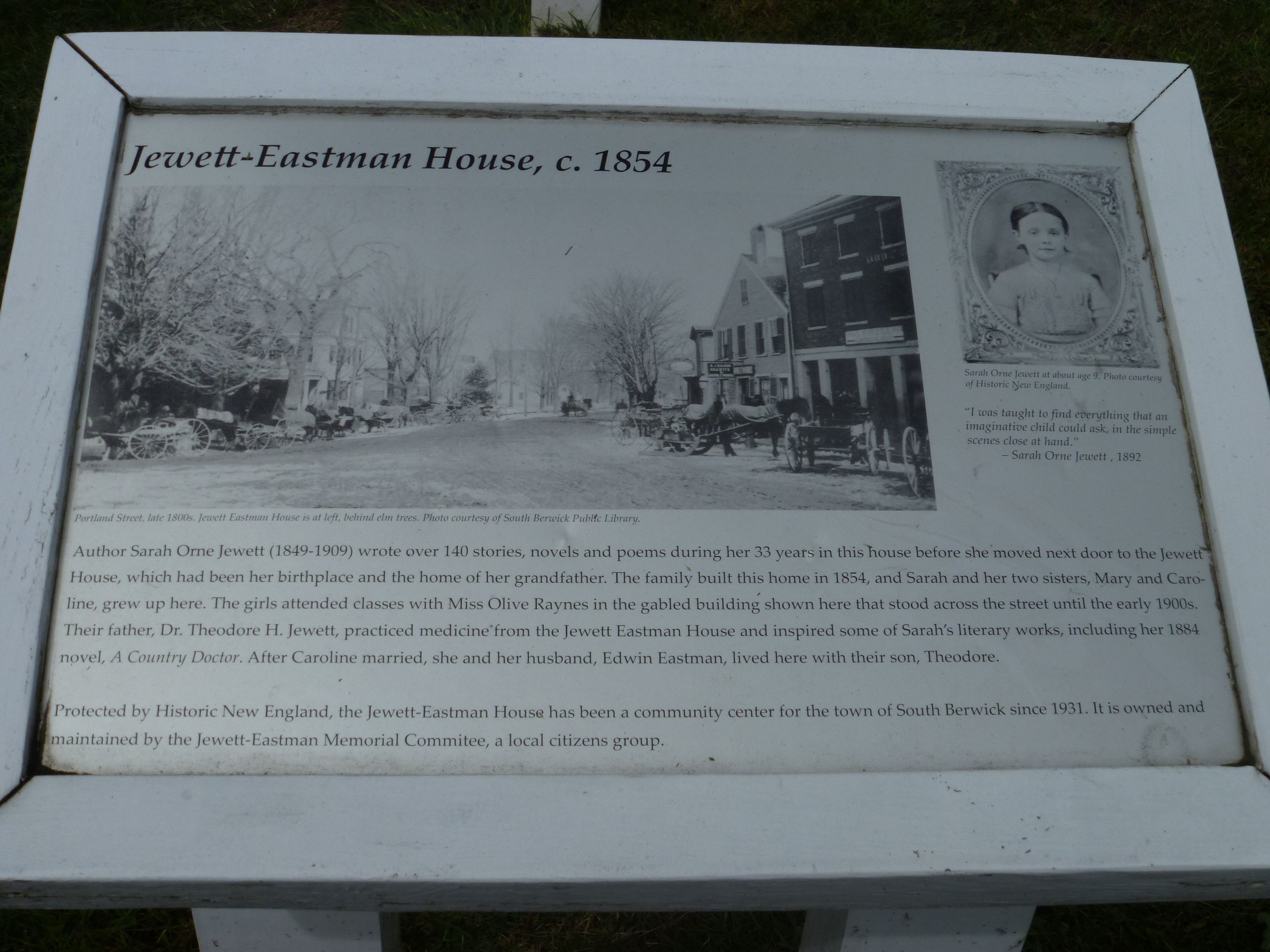
Sarah Orne Jewett (1849-1909) lived much of her life in the town of South Berwick, Maine. She was born in this house at 5, Portland Street when it belonged to her shipbuilding grandfather but soon the family built a home of their own next door (now the town’s public library).

Sarah and her sister moved back to the original house in 1887. She spent much of her time in Boston and travelling but this house was always home. No photography is allowed  in the house but it was fascinating to see the decor is still the same as Sarah and her sister Mary chose for it. Following their deaths a lot of the furniture was distributed to members of the family but Historic New England have bought back many original pieces at auction.

Having discovered the existence of the house I was anxious to read one of her books in advance of my visit. I chose a good one! A Country Doctor was first published in 1884. Like most of Jewett’s writing it is concerned with the everyday lives of the people living in the countryside of Maine. In particular Doctor Leslie is based on her beloved father, Dr Jewett.

My friend Marion kindly gave me an illustrated copy of what is probably Jewett’s best known work The Country of The Pointed Firs. Her (Jewett’s) Deephaven is still in print in the USA and is set in the coastal Maine area around Ogunquit. Her books (those still in print) and other related works are available in the shop (where photography was allowed!).

There is a small garden around the house where today a gardener still carefully tends many of the herbs of the types that the Jewett sisters grew there during the nineteenth century.

On my way back to Ogunquit I sought out Sarah Orne Jewett’s grave on Agamenticus Road just outside South Berwick. I had been given instructions as to where to find it by the guide at the house. I expected a well-tended grave and was sorry that I hadn’t brought my own flowers. The tombstone was just about legible and the area filled with weeds. Sarah lies peacefully surrounded by various relatives including her sister. On the following Sunday a special ‘party’ was planned at the house in celebration of her birthday but sadly her grave is rather a forgotten memorial.

“Until the day breaks and the shadows flee away”