The Snowy Hills of Kent: Toys Hill, Ide Hill and The Octavia Hill Centenary Trail

I was staying in very snowy Kent last week. Temperatures were around or below freezing but that didn’t prevent me and my sister enjoying some decent tramps around the countryside directly from the back door of our Landmark – Obriss Farm.
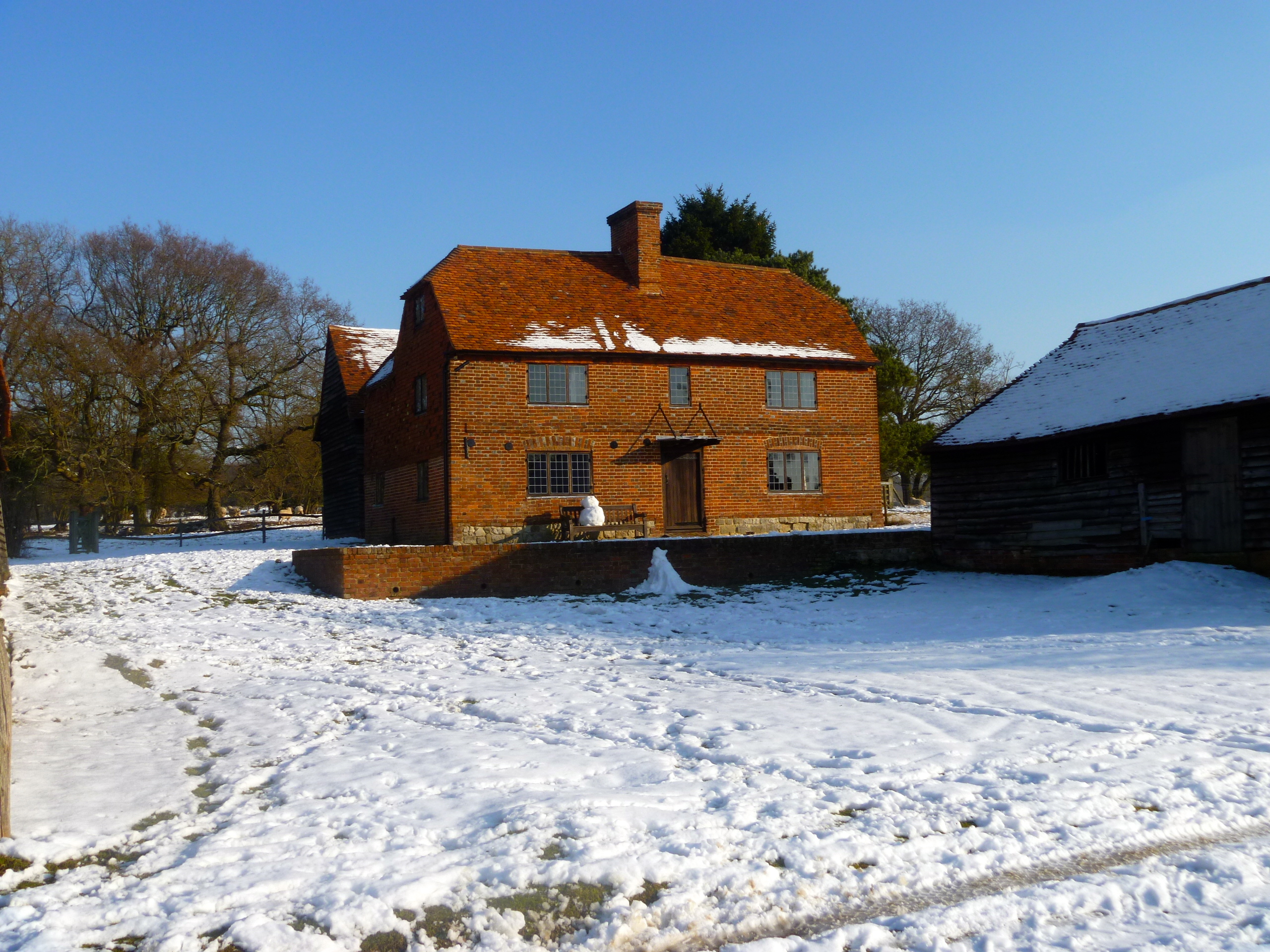
On the Tuesday, the first day’s walking, we very soon came across The Octavia Hill Centenary Trail (OHCT) signs and it seemed that this trail coincided very closely with the walking route that we had picked out from the mass of public footpaths and bridleways criss-crossing the local fields and woodlands.
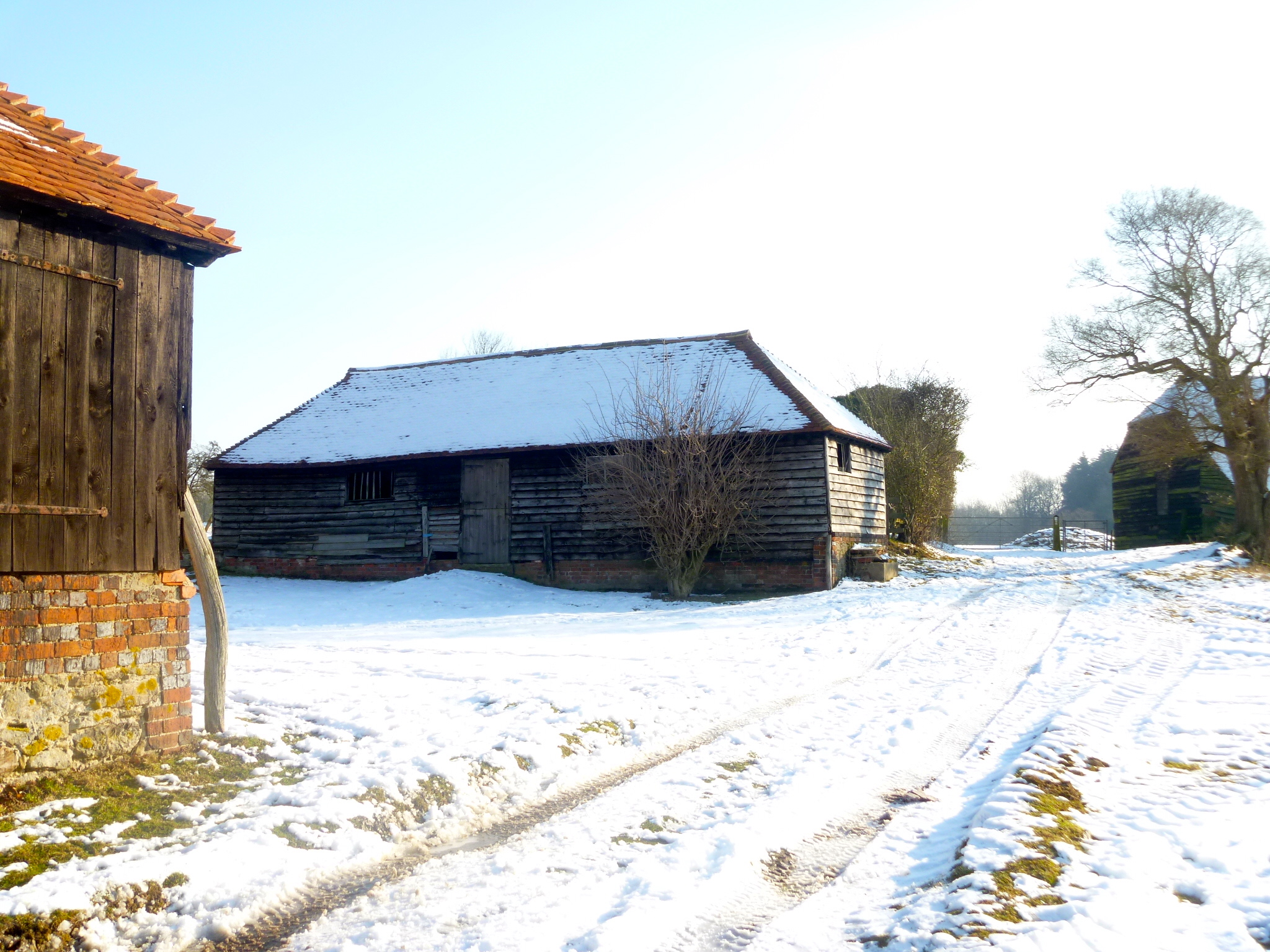
We began our walk that day by tramping over snow covered fields behind the farm to Toys Hill hamlet where the Octavia Hill Memorial Well (restored in 1999 in her honour by The National Trust of which she was a founder) marks the start of both the East and the West trails.
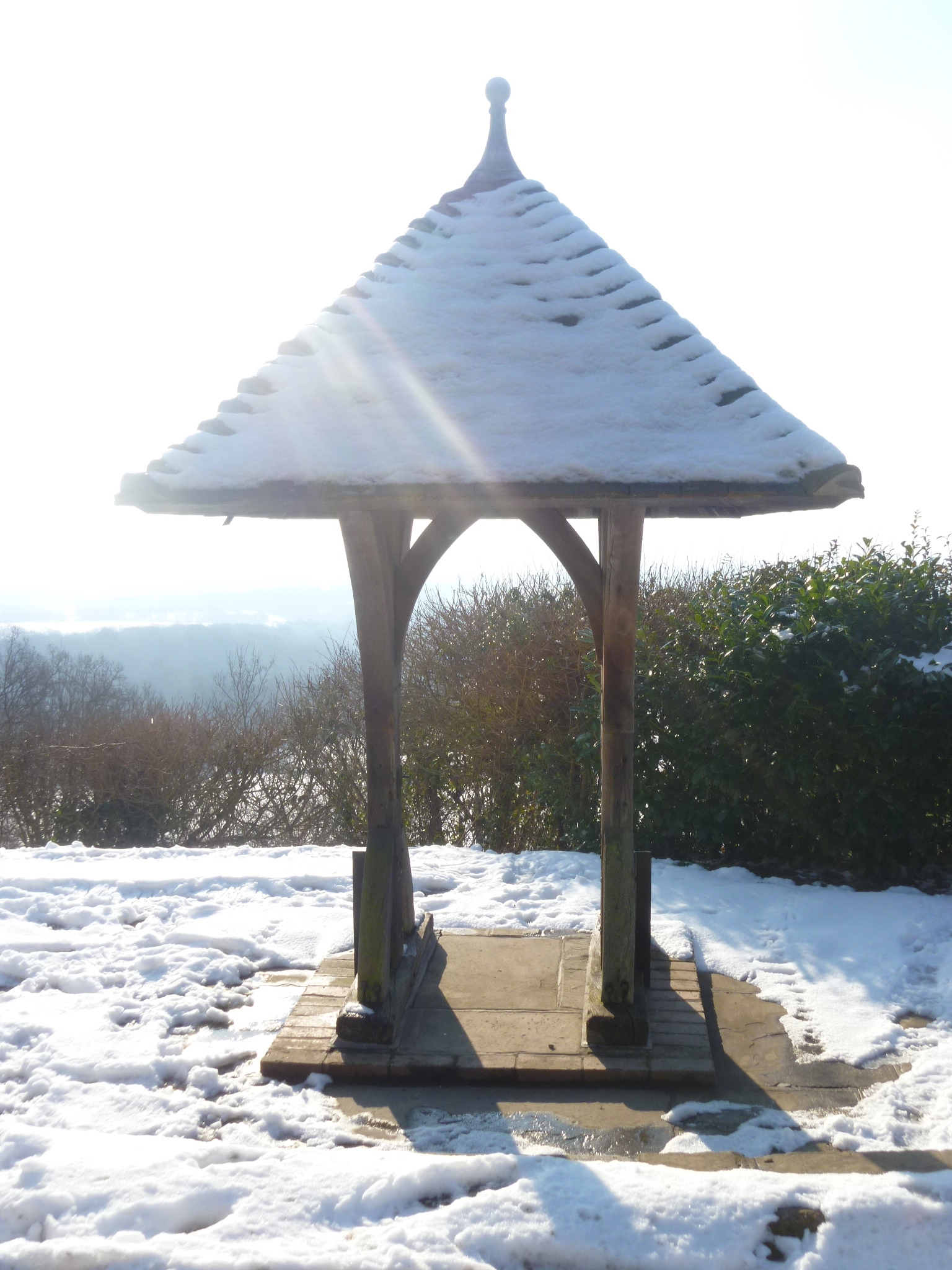
The Octavia Hill Memorial Well in Toys Hill hamlet

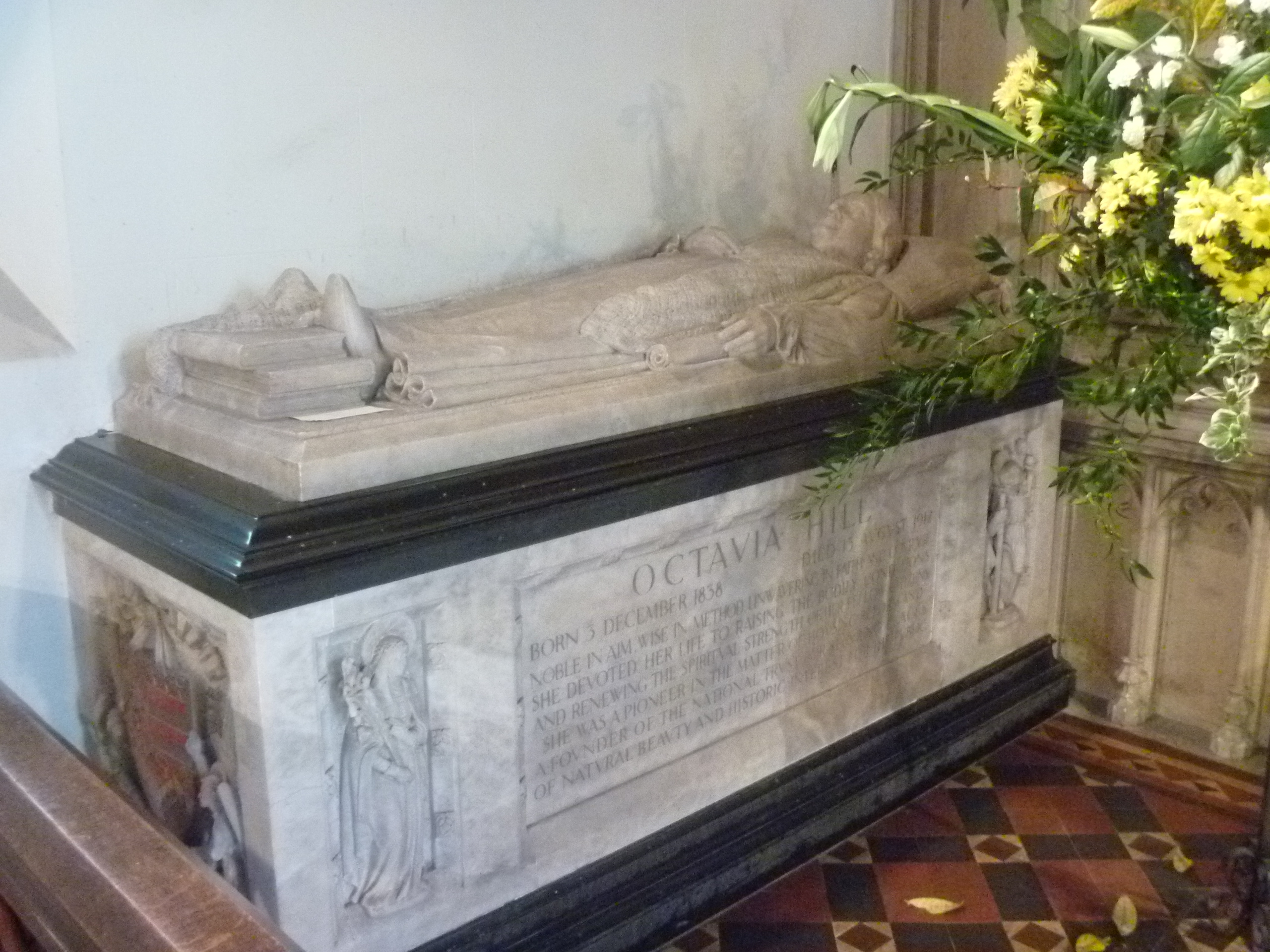
The path passes through the grounds of Chartwell (but sadly with no view of the house itself at this point) to the church and graveyard at Crockham Hill where Miss Hill is buried in the churchyard and where there is a Memorial to her in the chancel lying next to the altar.
The Royal Oak in Crockham serves decent bar snacks (and full lunches) and our circular walk finished a couple of miles later at the private track leading back to Obriss Farm. Obriss Farm doesn’t feature on the OHCT but it is only about half a mile or so from the start of the Trails at the well in Toys Hill hamlet.
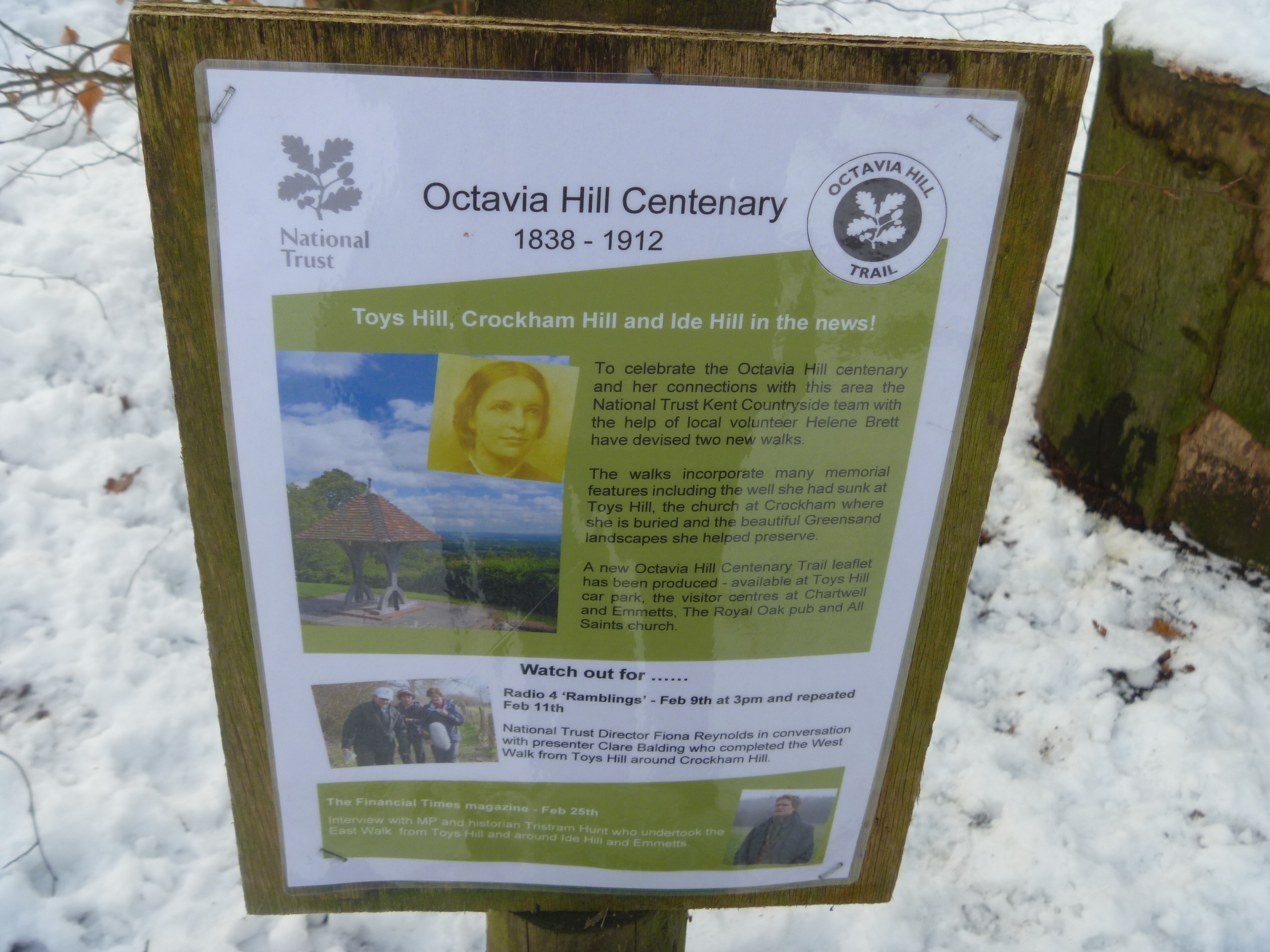
To hear more about this walk click here to listen to Clare Balding on Ramblings on BBC Radio 4 undertaking the walk and which we listened to on our return from the second OHCT walk on the Thursday!

At The Royal Oak we also picked up a copy of the leaflet that outlines the two routes of the Trail which has been inaugurated as a commemoration of the centenary of the death of Octavia Hill in 1912. Our trail on Tuesday had more or less followed Walk 2 – the West Walk.

We’ve been interested in Octavia Hill for some years now via an initial interest in Beatrix Potter and visits to her (BP’s) Lake District home (Hill Top), farm and gallery and an exhibition of her work on display at The Dulwich Art Gallery back in 2006.

In August 2006 we visited Octavia Hill’s Birthplace Museum in Wisbech and came across the results of her philanthropic efforts in Marylebone on one of those London Walks : Saturday Afternoon’s Old Marylebone Walk

On Thursday we decided to do the East Walk from Toys Hill which included more hills and steep ascents than we had expected to find in Kent!
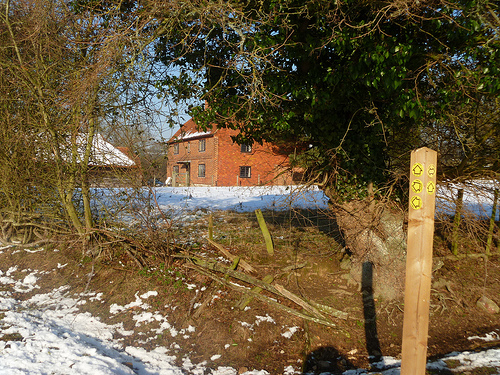
A choice of footpaths at Obriss Farm

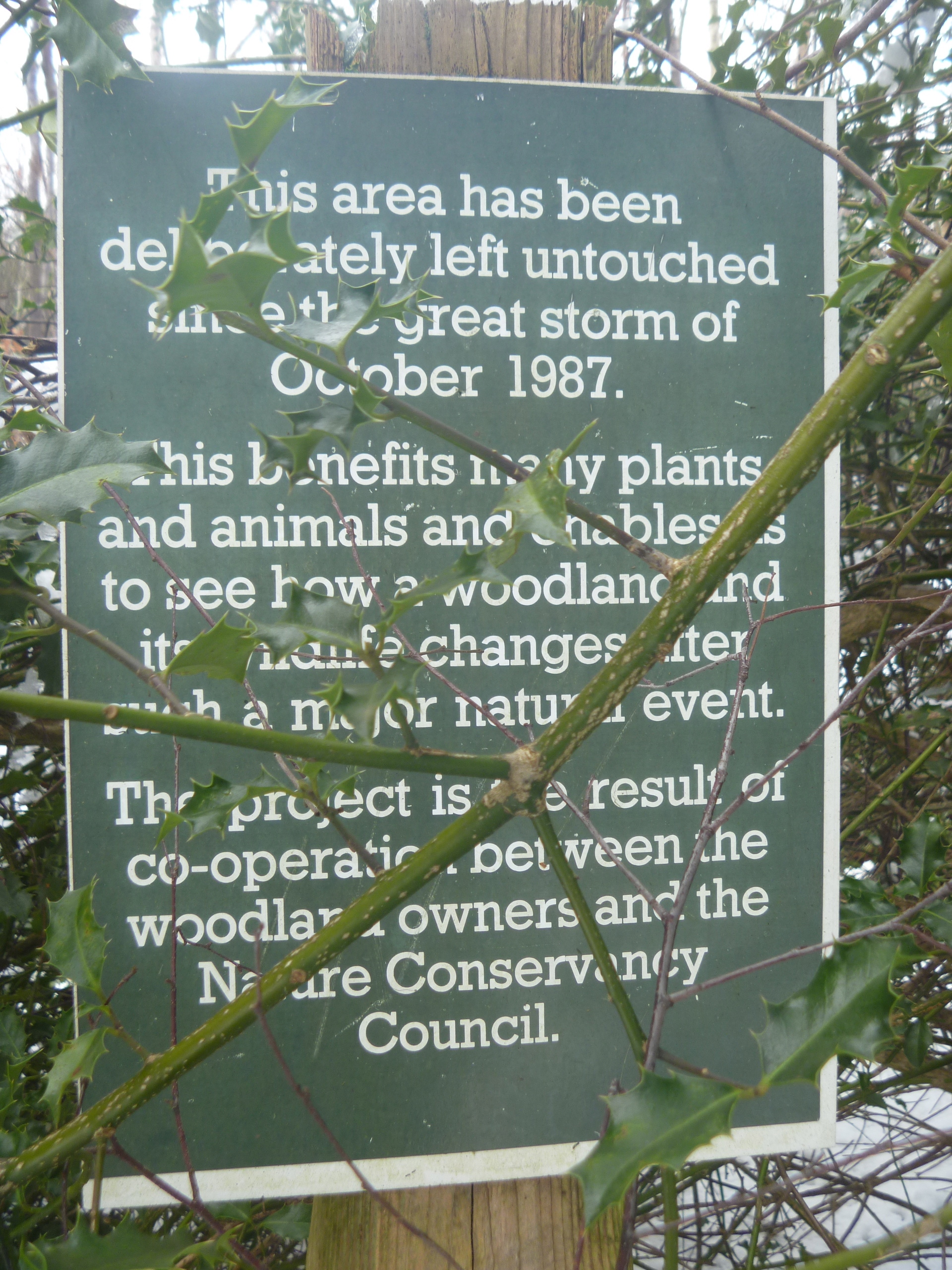
From Toys Hill hamlet we followed the path to the village of Ide Hill via the Octavia Hill stone memorial seat and from thence to Emmetts Gardens, Scords Wood and the (yes, you guessed) Octavia Hill Woodland. We were shocked to notice so many fallen trees just lying around the woods and then we saw a sign that explained what this was all about :
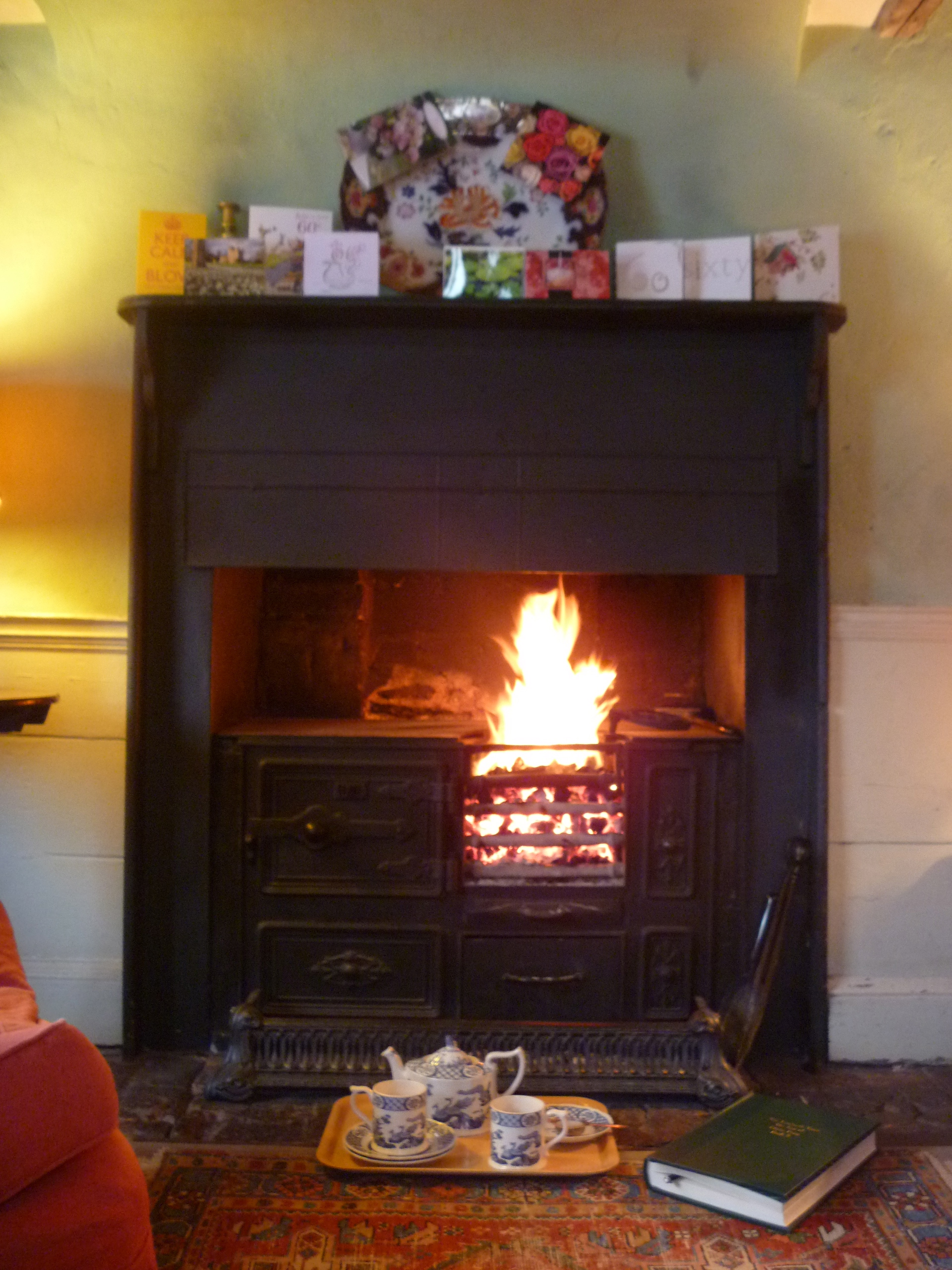
After several uphill climbs the path finally downhill to Toys Wood village and our track back to the farm and the cosy parlour with its open fire in the range.
Lundy – Cooking on My Island of Dreams

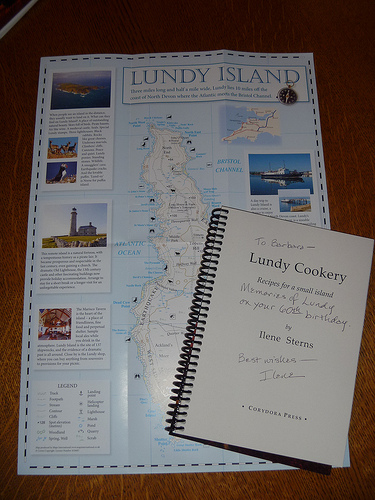
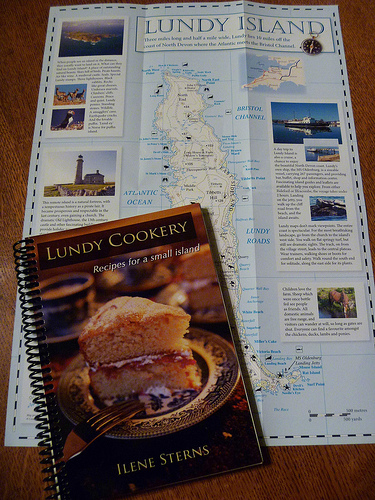
I’ve been celebrating my birthday over the past few days. I’ve received lots of cards and flowers and some lovely gifts including several books. Only one of these book gifts was what I would call a ‘reading book’.  The other books include a photo book celebrating a friendship and places visited, a set of LV European City Guides, a book by Rob Ryan and … ‘Lundy Cookery: recipes for a small island‘ by Ilene Sterns. The book is published by Corydora Press who have formed their own FlickR group ‘Lundy Cookery Around The World’. My friends also managed to get Ilene to sign it especially for me!

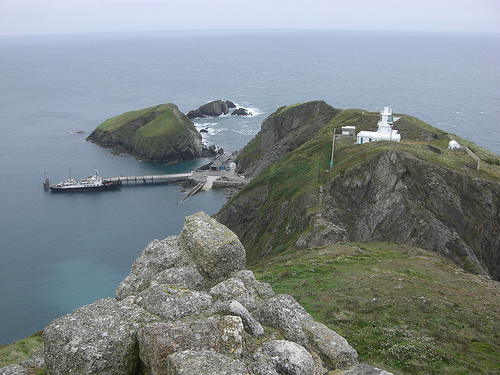
I’ve twice visited Lundy, an island in the Bristol Channel 3 miles long by half a mile wide, as a day tripper by boat from Ilfracombe. The journey takes about two hours on the MS Oldenburg and fortunately on both occasions the Bristol Channel was as still as a millpond! Sailings are in the spring and summer months from about the beginning of April to the end of  October. During the remaining months Lundy is a mere 7 minute helicopter ride from Hartland Point, 20 miles west of Bideford on the north Devon coast.

The MS Oldenburg tied up at the Lundy quayside

Lundy, or Puffin Island, is owned by the National Trust (so there’s a small discount on the sailing price for members) and the 23 self-catering holiday properties are managed by the Landmark Trust. It’s an uphill trek from the quay to the village but when you get there there’s a pub – The Marisco Tavern – and a shop and a cluster of buildings – some farm and some holiday accommodation. My first stop has been at the pub each time for sustenance and then a call at the shop for postcards and Lundy stamps and then I have taken a walk. There are marvellous views of the north Devon coast and the paths are clear and grassy. One walk was up the east side to Threequarters Wall and across to the west side and back down to the Old Light, the cemetery and St Helena’s Church. On my second visit a much shorter walk was to the Castle, the South West Point and back up to the Old Light. Then a final cup of tea at the Marisco before heading back down to the Quay and the awaiting boat.

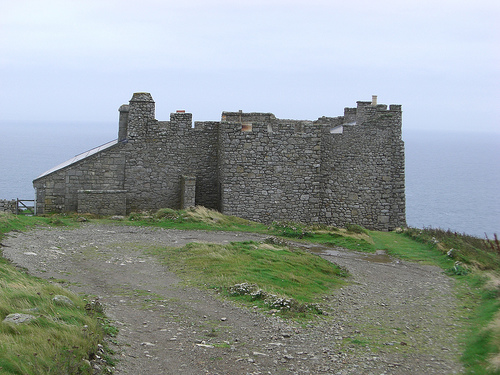
Lundy Castle and Approach Track

In her introduction to Lundy Cookery Ilene reminded me what a treasure trove and Aladdin’s Cave the shop was despite its remote location. All Lundy Landmark kitchens are well equipped with basic cooking equipment but they do lack weighing scales, liquidisers, toasters and loaf tins. Ilene’s recipes manage to get around these would-be problems. In particular her recipes specify quantities by volume rather than by weight. She has also included a useful section which she has called ‘Salmagundi’ *- it’s about minimising food waste and lists ingredients alphabetically linking them to recipes in the book. For example under Honey she lists 6 dishes included in the book including Honey Mustard Vinaigrette (p.98), Lundy Mess (p.116) and then suggests some other uses. Waste not want on Lundy Island. There’s a useful index too.

*Definition: a salad plate of chopped meats, anchovies, eggs, and vegetables arranged in rows for contrast and dressed with a salad dressing. (http://www.merriam-webster.com/dictionary/salmagundi) Sounds good to me!

“Most of the book’s recipes are simple and quick to prepare, so you won’t be stuck in the kitchen when you’d rather be outdoors.” (p. 2) Now that’s my kind of cookery book!

A walk in the woods: a Ruin, follies and another Turner view

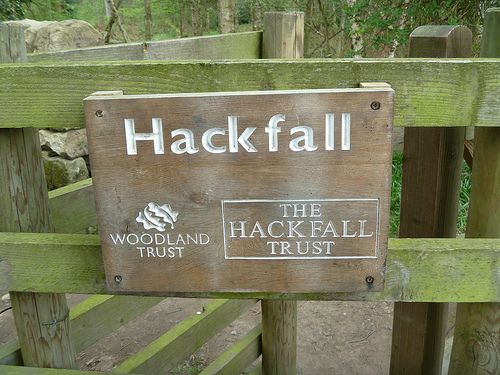
A Walk in the Woods‘ is one of my favourite walks in Yorkshire. I made three visits last year. The walk starts from Masham car park and initially follows the Ripon Rowel route alongside the River Ure. After about 3 miles you enter Hackfall Woods.

There’s a choice of walks through the woods and all of them include views of the river and follies. The first viewpoint is Limehouse Hill. At the top turn and look back to see the river and the spire of Masham Church from where you have just walked. I think you can just about spot it right in the middle of the picture.

The next view is pretty special. There’s a seat at Sandbed Hut and from this point William Mallord Turner painted his view of Hackfall. The painting itself forms part of the Wallace Collection in London. In the distance is Mowbray Castle a mock ruin thought to have been built for William Aislabie some time between 1750 and 1767.

John Aislabie of Studley Royal bought Hackfall in 1731 but it was his son William who set about transforming the woods into an ornamental landscape in 1749/1750 and this work continued until around 1767. The Hackfall website includes a potted history of the site and here’s a list of the features Aislablie created :

“1750 Fisher’s Hall was completed, inscribed on plaque above the door.

1751 The view from Limehouse Hill to Masham church was created by felling trees and digging a ditch.

1752 Work on the reservoir above the 40 foot Fails and ‘Alcoves in ye wood’.

1755 Kent’s Seat completed.

1755 Planting and work on a wooden stable at Hackfall it is thought near to Fishers Hall.

1756 Fountain Pond dug and Rustic Temple completed.

1766 Work started on the Banqueting House at Mowbray Point. The pond at the entrance to the Grewelthorpe Beck valley and wiers had been completed; Fisher’s Hall was used for entertaining guests; Nicholas Dall the landscape artist painted two views of Hackfall.

(1768 William Aislabie purchased Fountains Abbey ruins and set about incorporating the Abbey into Studley Royal gardens.)”

William died at Studley Royal in 1781.

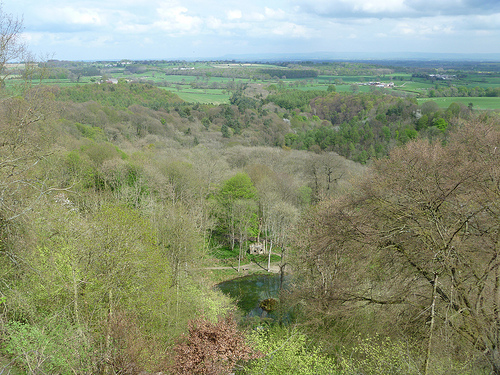
It’s good to see that the Hackfall Trust, founded in 1988, are restoring many of the paths and features. But they are not the only ‘Trust’ to be involved in preservation and conservation at Hackfall. The piece de resistance is the former Banqueting House mentioned above which is now owned by the Landmark Trust and let as holiday accommodation for two people. The public path out of Hackfall Woods (after a gentle climb) emerges onto the terrace of the Ruin (as it is now called) from where there’s a marvellous view over the wood and landscape beyond.

 View of Hackfall from the terrace at The Ruin
The Landmark Trust hold regular Open Days at some of their properties throughout the year and the Ruin is one that is regularly open one weekend each September :

The Ruin

Hackfall, North Yorkshire

Saturday 8 to Sunday 9 September 2012 10am to 4pm

As part of Heritage Open Days

This little pavilion is dramatically perched above a steep wooded gorge, in the remnants of an outstanding mid eighteenth-century garden at Hackfall, conceived and created by the Aislabies.

The walk then leaves this fascinating area of woodland and continues through Oak Bank, Nutwith Common (sounds like somewhere out of a Rupert Bear story!), along Roomer Lane and with a glance at Swinton Park the last section of the walk is along the quiet roadside between the Park and Masham.

Swinton Castle, near Masham, now a posh hotel, was bought in 1882 by Samuel Cunliffe-Lister born at Calverley Old Hall (another Landmark Trust property) and later owner of Lister’s Mill (also known as Manningham Mill) in Heaton, Bradford.

If you’ve time there are some good tea shops and pubs for refreshments in Masham and I recommend The White Bear Hotel where, if the weather is fine, as it was for me, you can have tea or something stronger on their terrace outside.

Jerusalem, Alabaster Heads and The Heart of Trees in Yorkshire

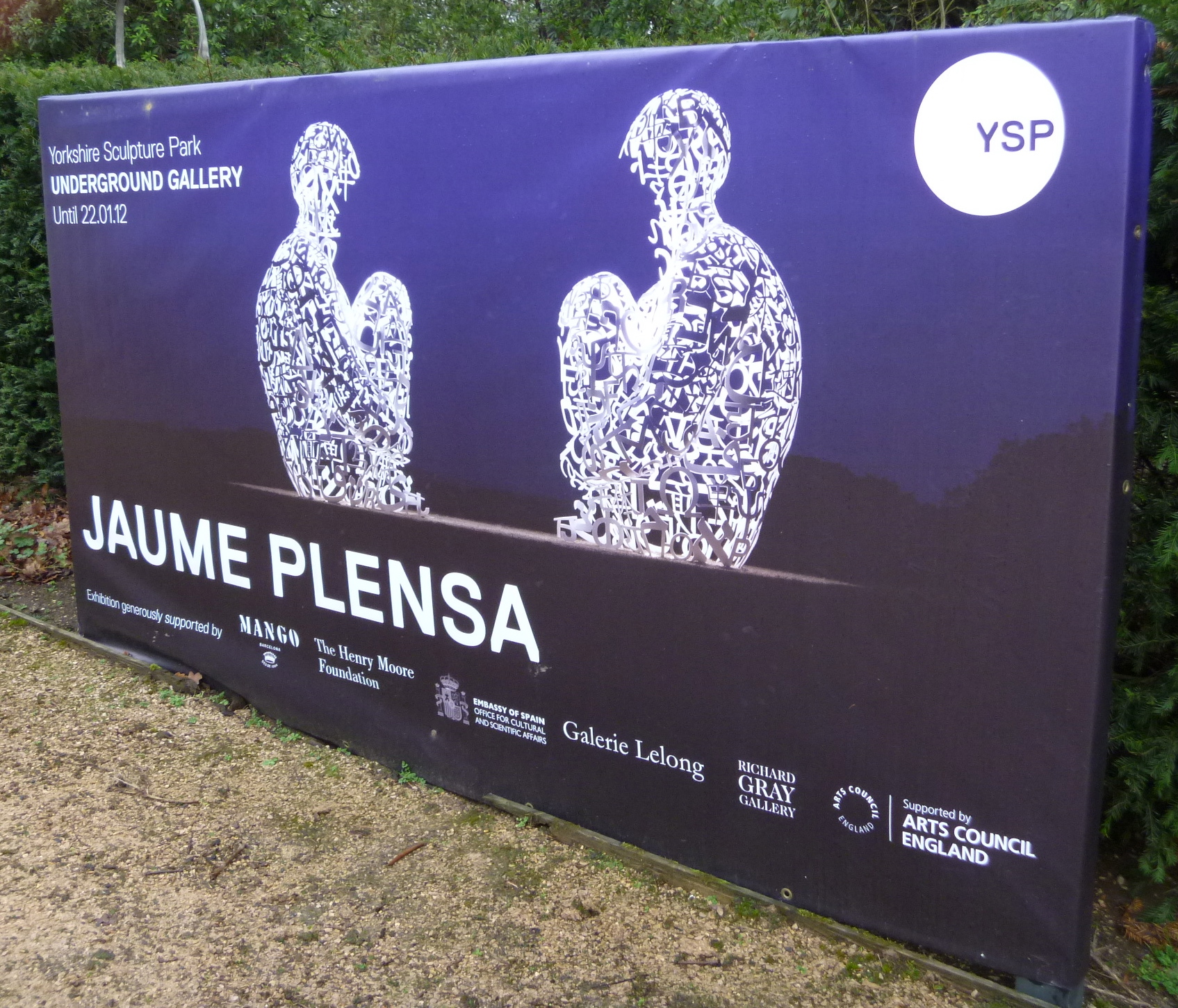
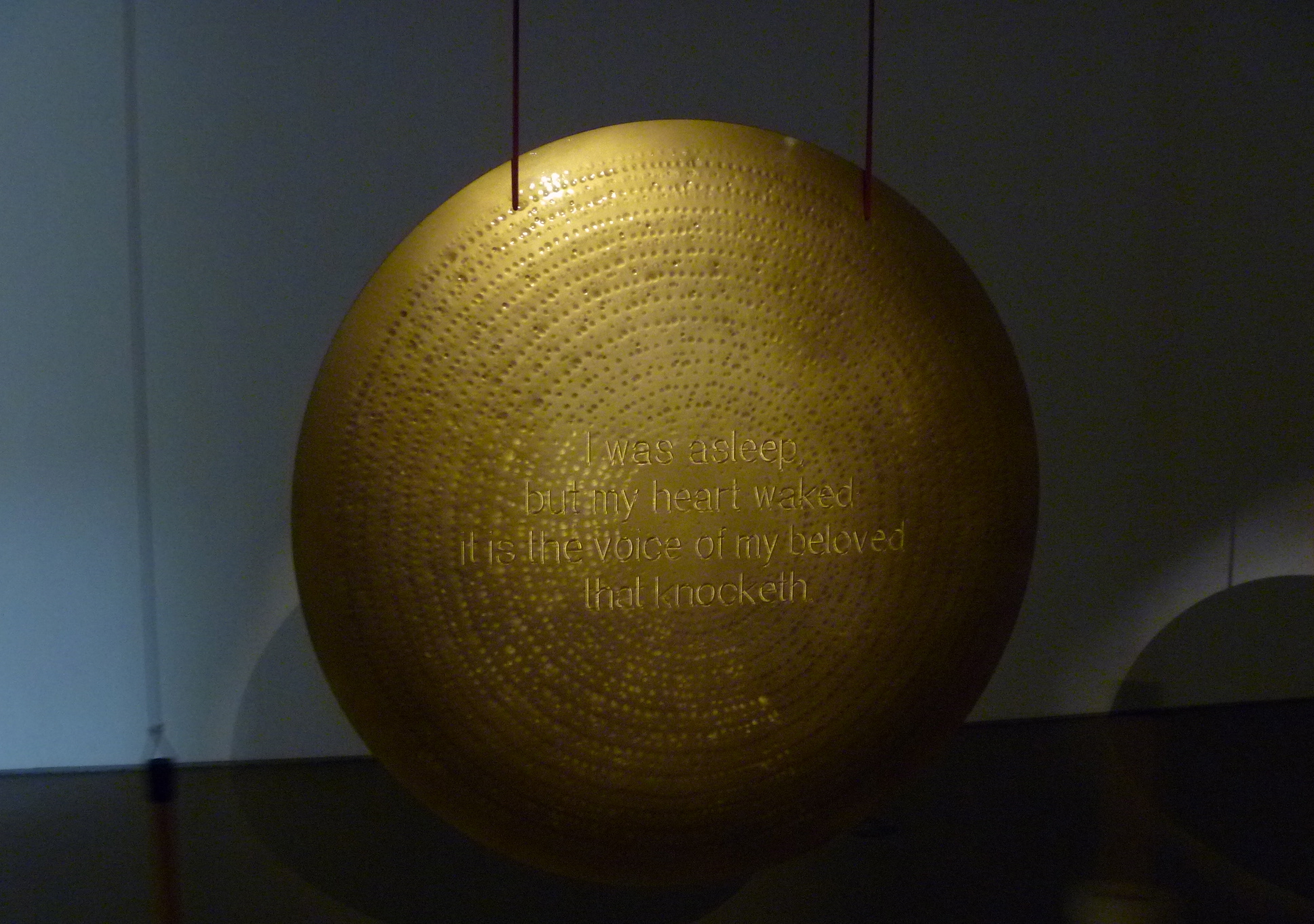
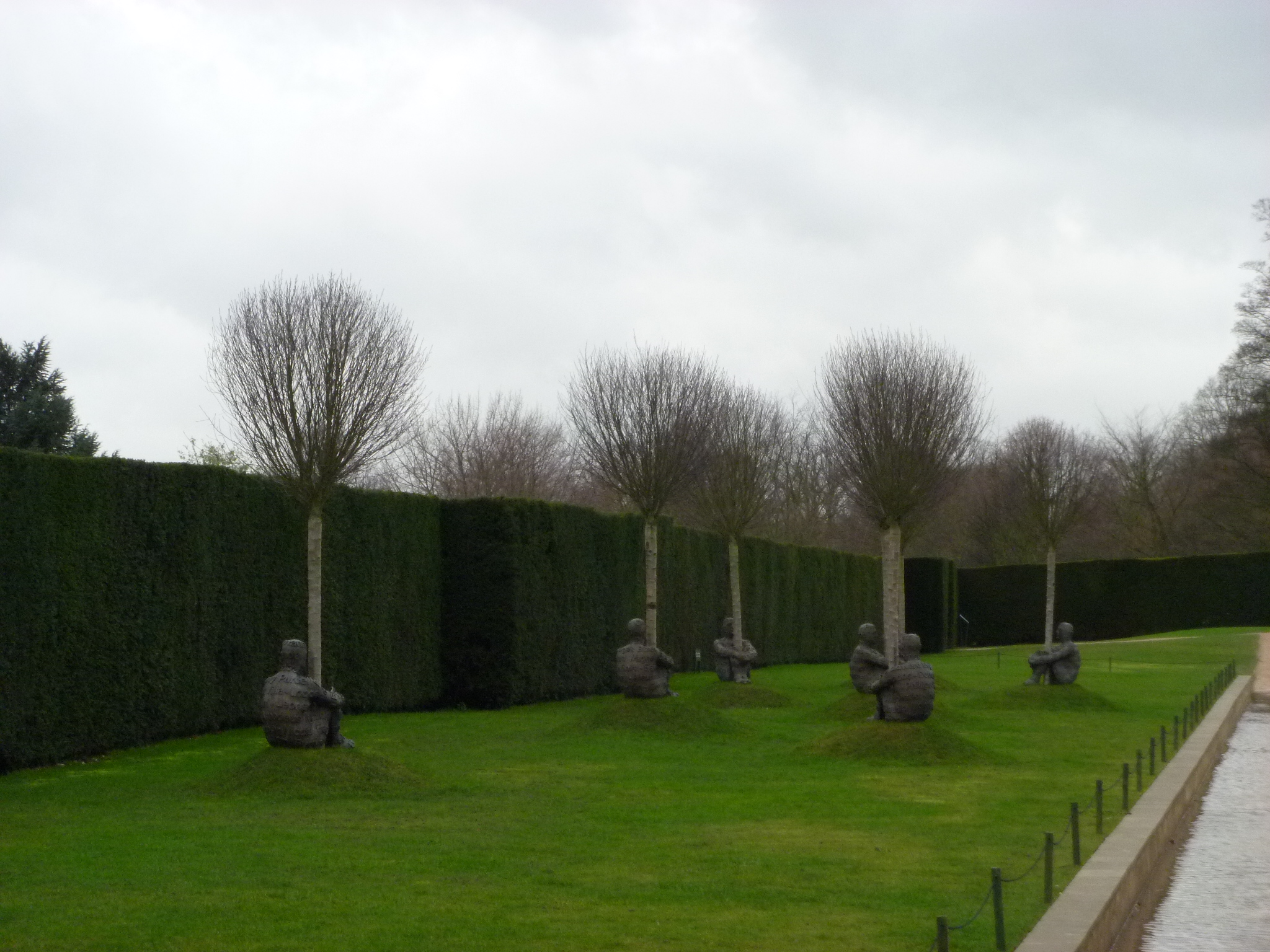
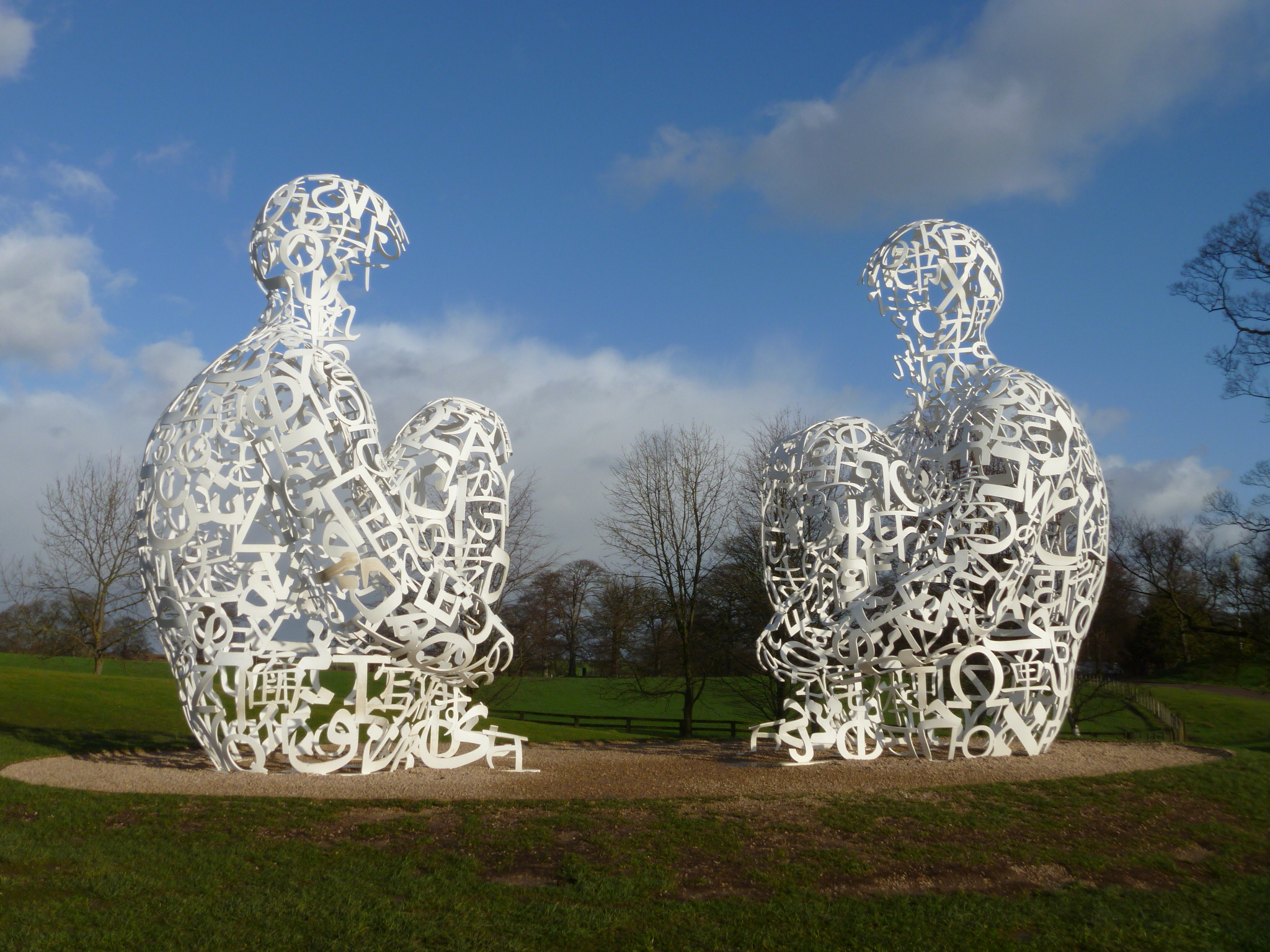
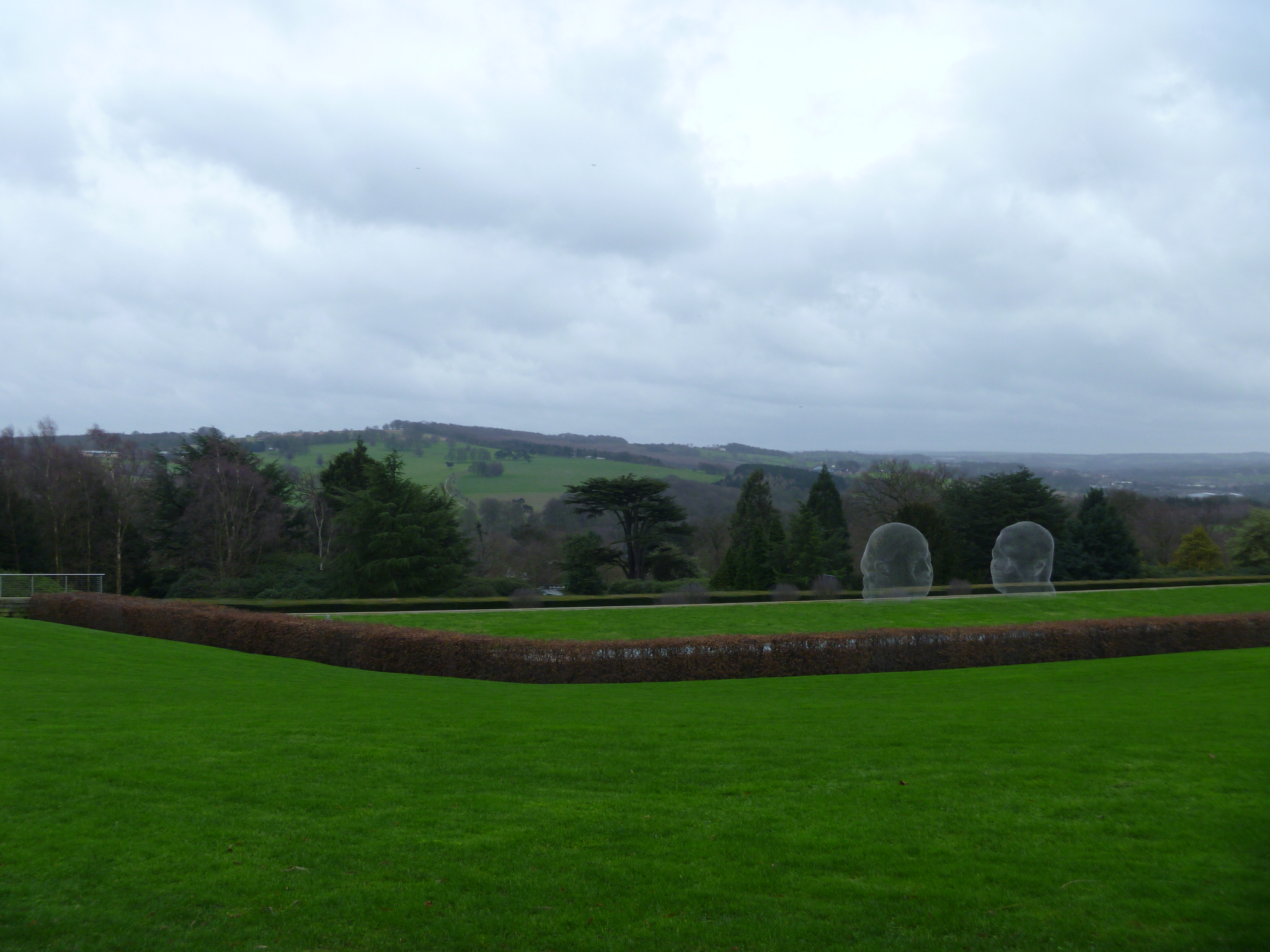
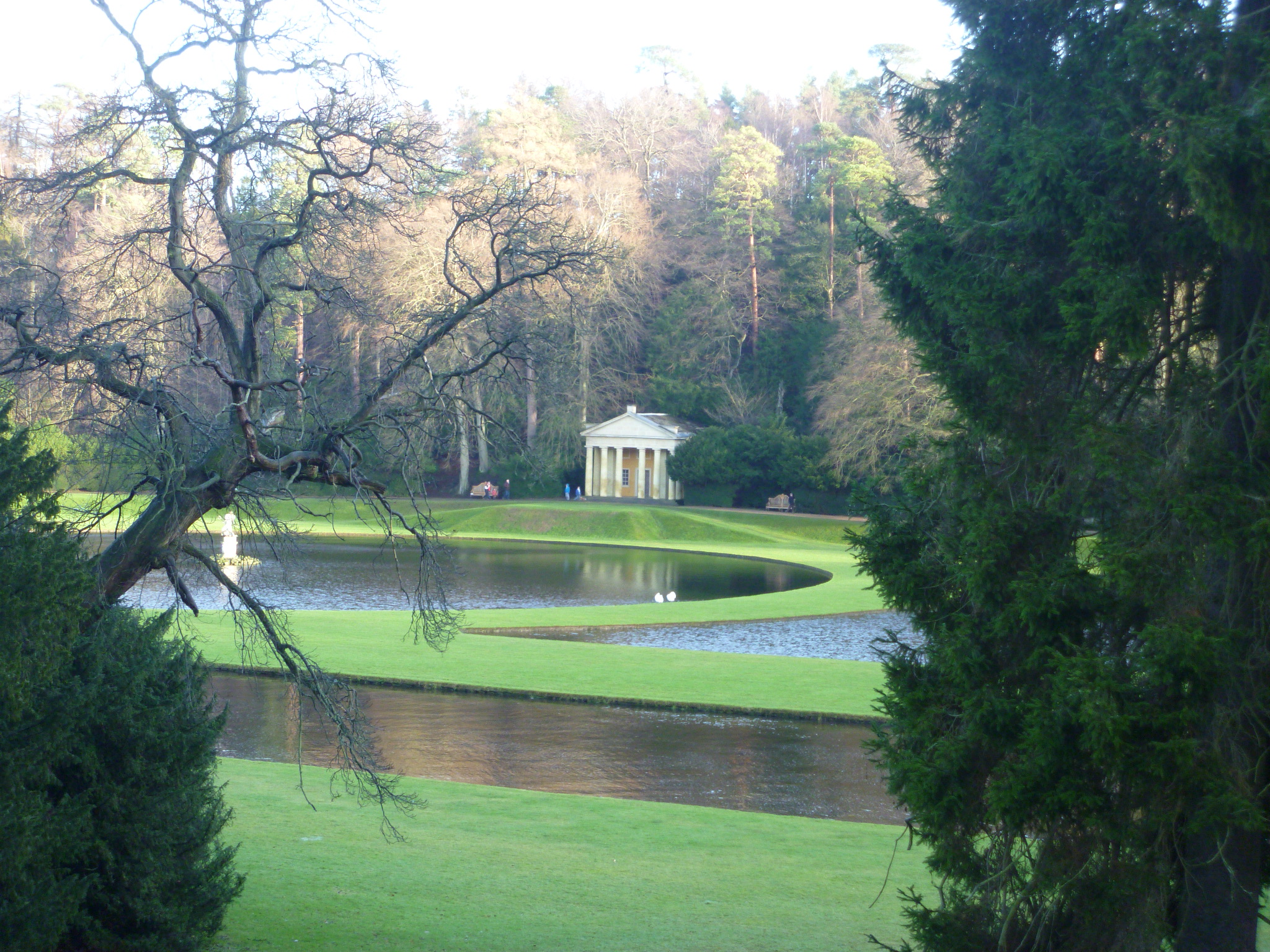
I love a tramp in the countryside but I also love to see something new and/or interesting and that is often possible in Yorkshire. We’ve been generously given an extra day off work today as a substitute day for the Queen’s Diamond Jubilee Bank Holiday in June. We already get two days holiday then anyway. So what better way to spend it than to drive for 20 minutes down the M1 to the Yorkshire Sculpture Park. I’ve visited many times in the past but there is always something new to see and on every visit the park seems to have extended its boundaries. Today was no exception. There are some new paths around the Upper Lake and some renovated 18th century garden features to inspect – a Shell Grotto, a Boathouse, an Obelisk and a Greek Temple. The wind was blowing a gale and we had to watch our step along some of the muddier tracks but there were still some good photo opportunities to be had around the park. The main feature of these were the extraordinary work of Spanish artist Jaume Plensa. The exhibition was due to close in the autumn but has been extended until 22 January 2012. I’d seen friends’ photos of these stunning metalwork sculptures but it’s something else to see them for real many of them appearing suspended in the Yorkshire countryside. After our exertions we headed for the cafe for excellent homemade soup and a look round the also excellent shop.

Jerusalem in The Underground Gallery

Alabaster Heads in The Underground Gallery

The Heart of Trees

Jaume Plensa Sculptures

Jaume Plensa

The Park and Estate – with Talking Heads

Lovely stuff in the YSP Shop

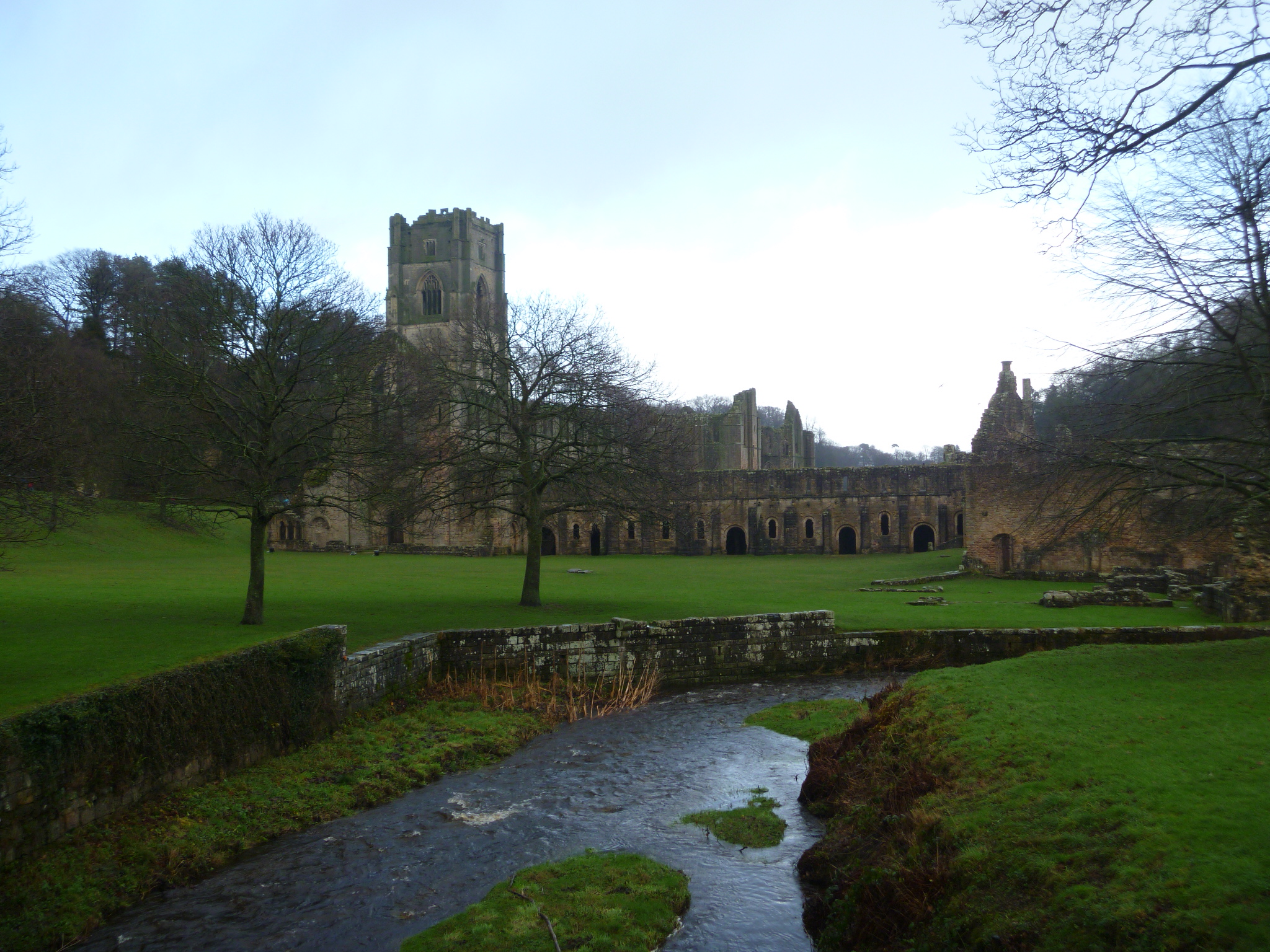
Studley Royal Park including the Ruins of Fountains Abbey

When I wrote about Saltaire and Salts Mill last year I mentioned how lucky I was here in Yorkshire to have TWO Unesco World Heritage Sites on my doorstep. Today I visited the other site in North Yorkshire – Studley Royal Park and the ruins of Fountains Abbey.

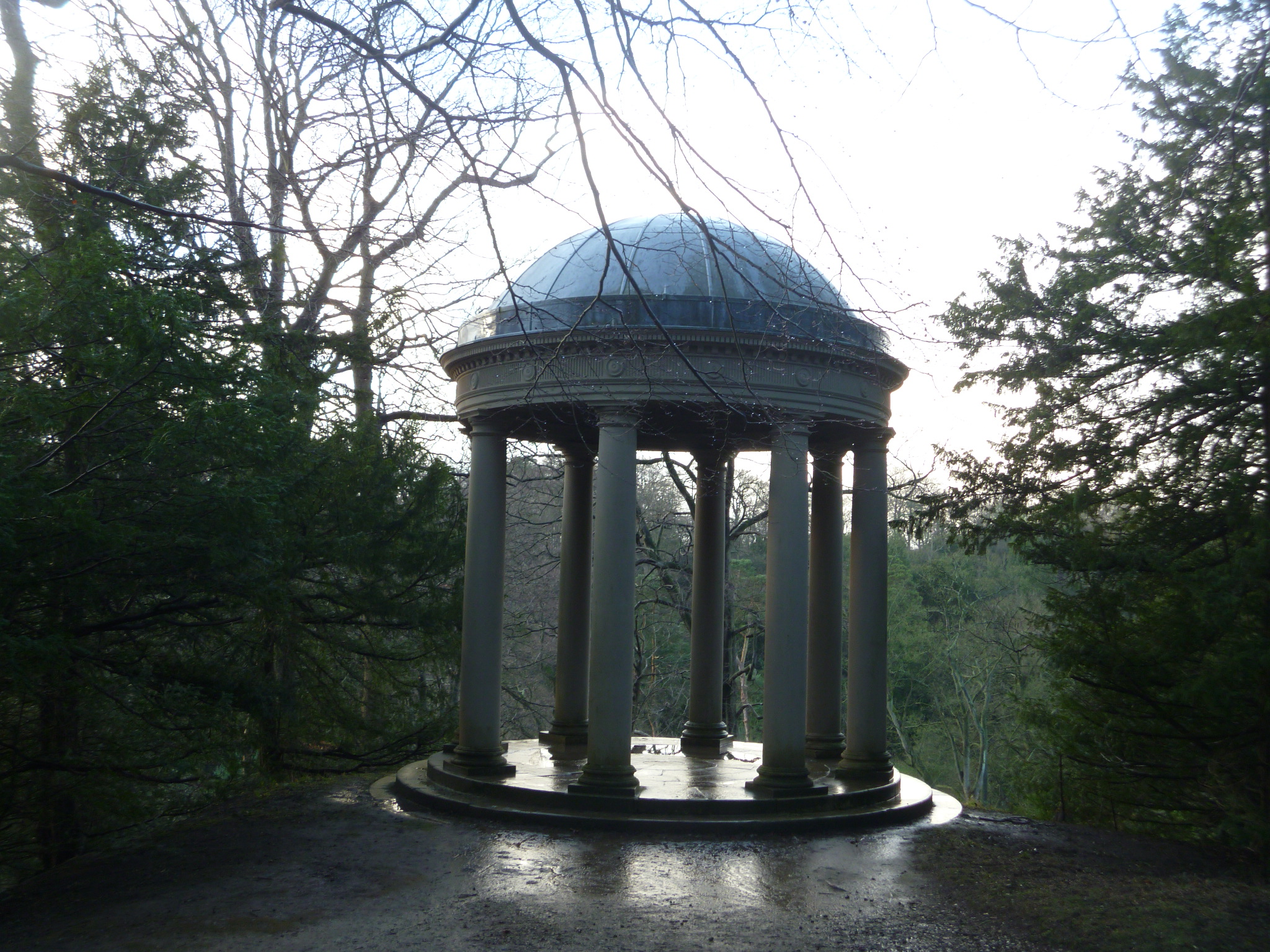
Fountains Abbey is about 23 miles and a world away from busy Leeds. That is not to say that the car parks weren’t empty and there weren’t queues at the restaurant counter today and the shop wasn’t a-buzz with bargain hunters – the world and his wife had come to breathe the fresh air and walk around the gravel paths and let his children climb over the ruins. But it is easy to get away from the crowds and follow some of the paths that lead to higher levels and peace and tranquility. Every step of the paths around the estate reveals something of interest whether it’s a temple, a tower, a banqueting house, a surprise view, a river, waterfalls, a lake. It’s easy to see why the whole area is classified as a World Heritage Site.

The Temple of Fame

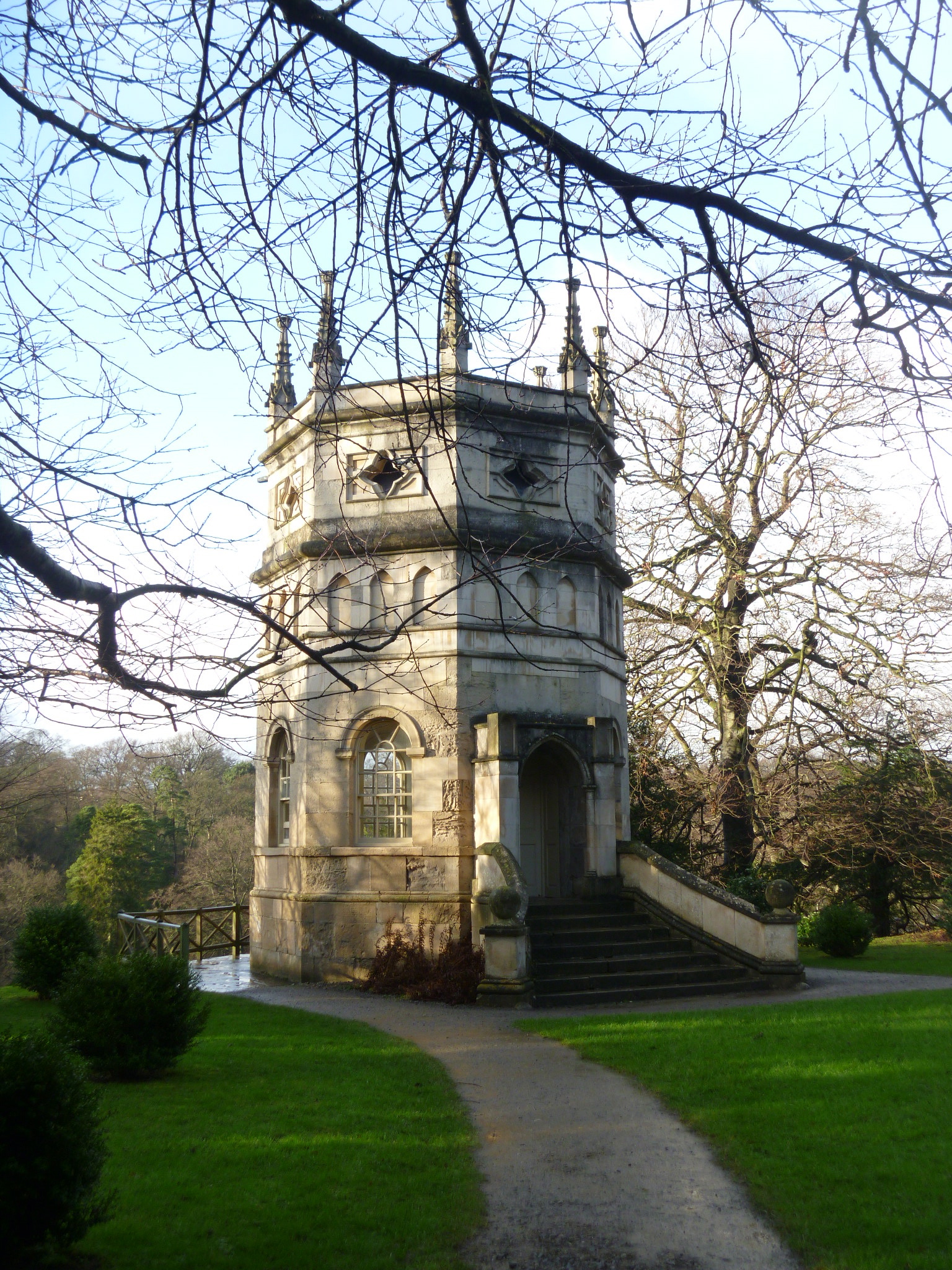
The Octagon Tower

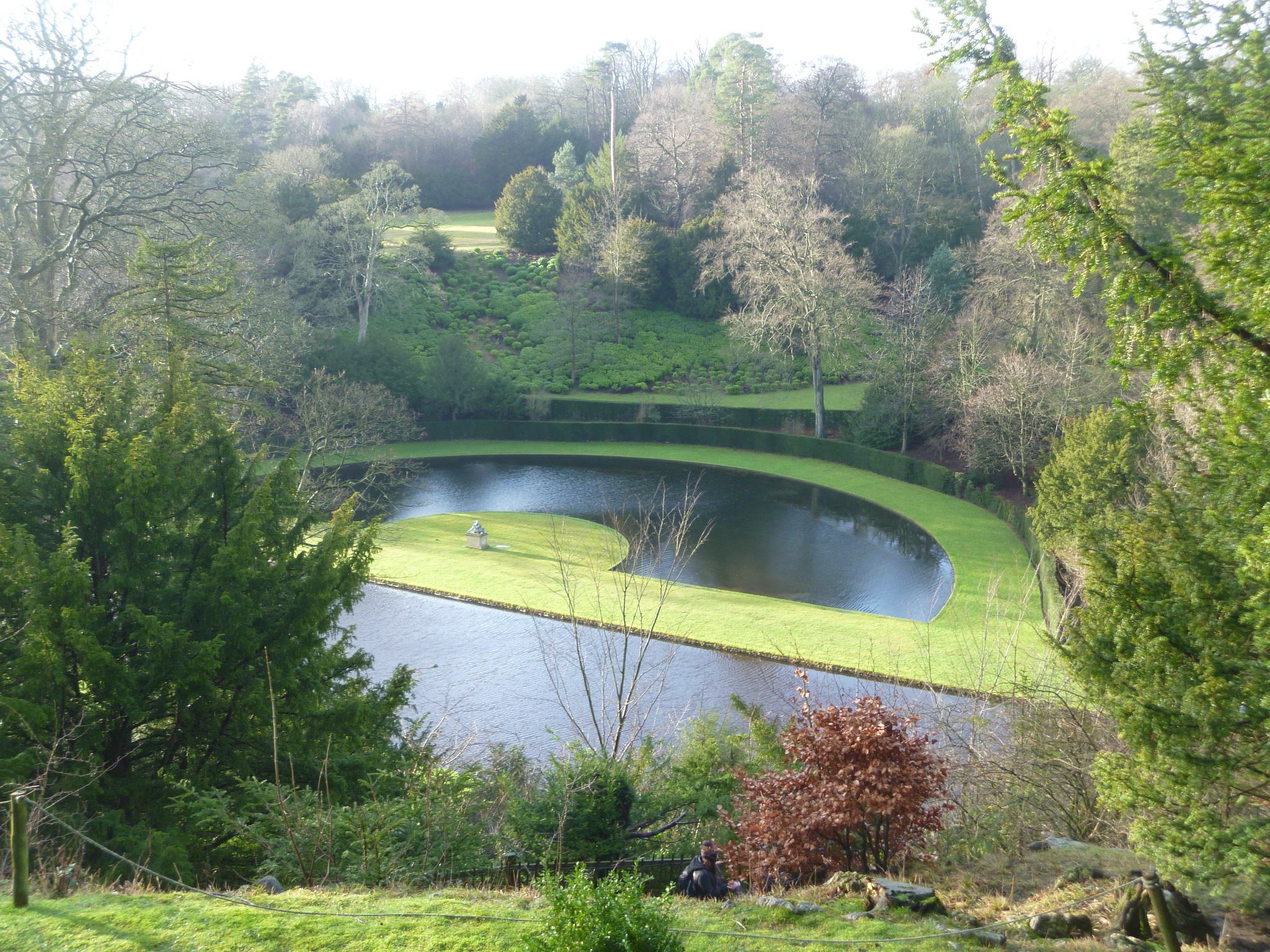
The Gardens of Studley Royal

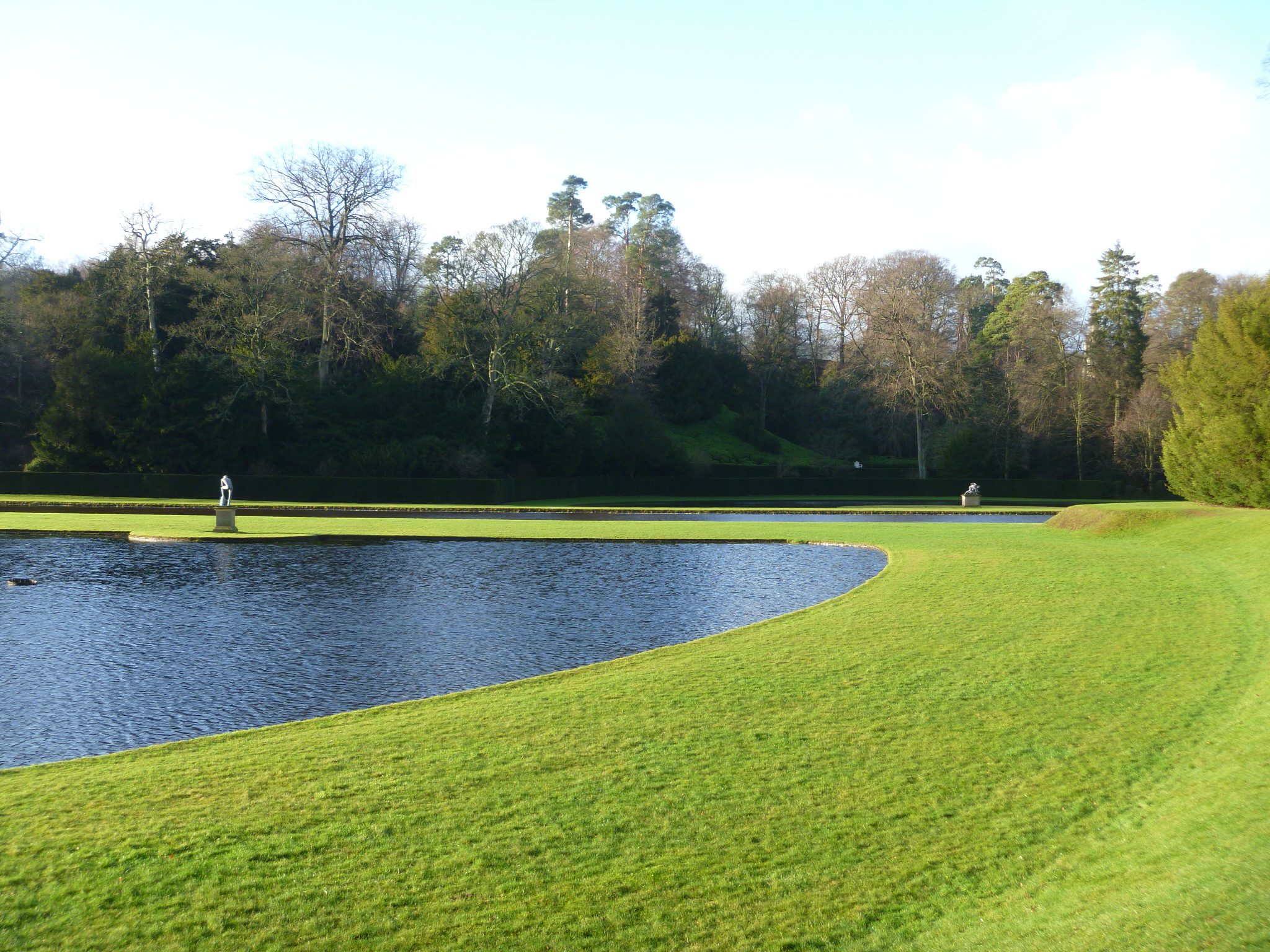
The Water Gardens with Statues

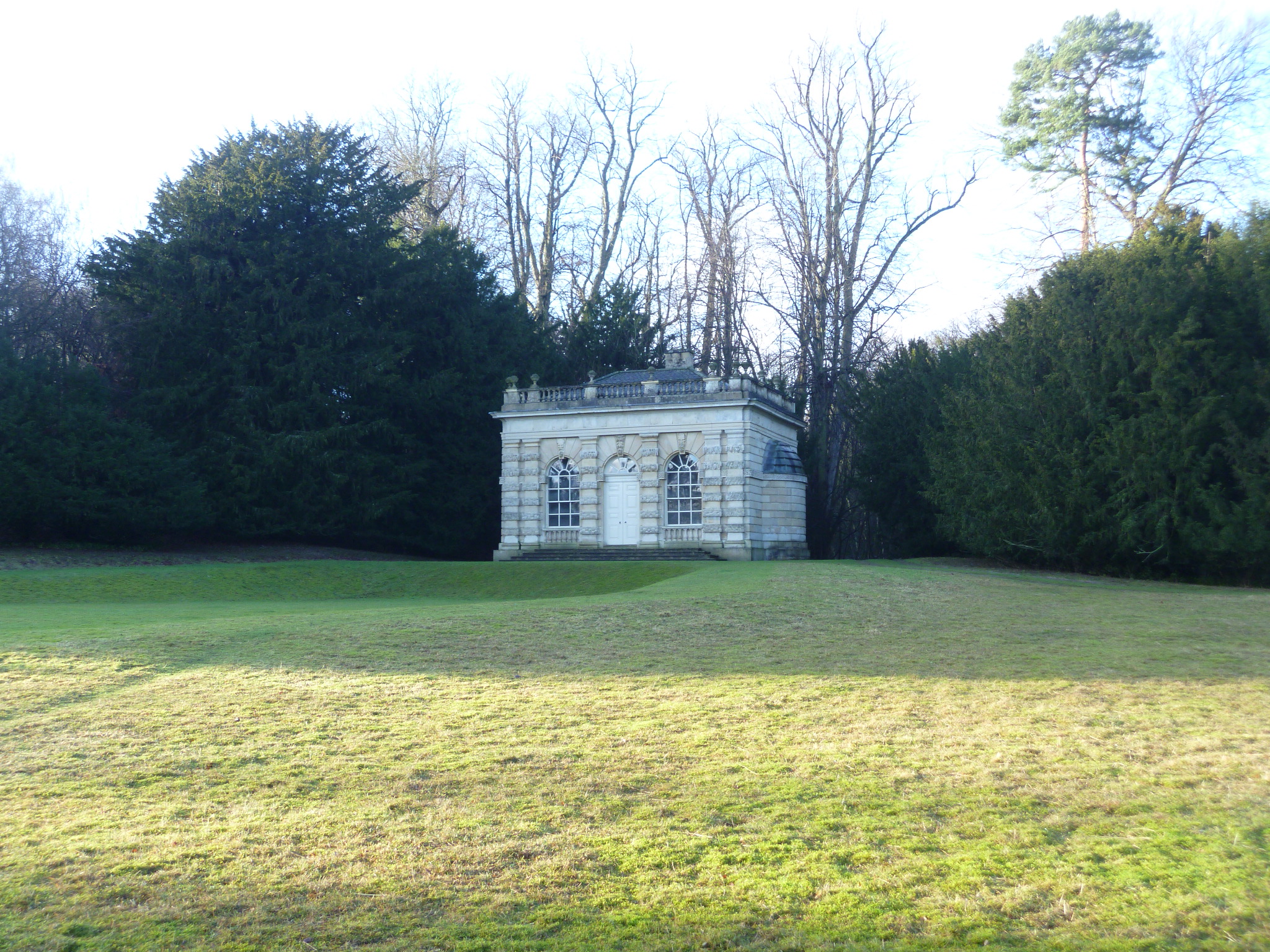
The Banqueting House

The Temple of Piety and Moon Pond

As you can see this Yorkshire World Heritage Site has a lot more than 25 trees and the time is nearly here already to take down my own Christmas Tree. I’ll be visiting Fountains Abbey a lot more times throughout the different seasons. I hope you will join me here again.

Looking Back on the Missed Months of 2011

A Happy New Year to You All!

Transferring stuff from one year’s diary to the next’s made me think I might make a note here on an event/category from each month of 2011 up to my starting this blogging lark in August. One event with one picture is quite a tough call – especially in the summer months – but I will give it a go.

January 2011 : Landmarking with Milady

The year started well with my usual London Landmarking Trip but this January I was fortunate enough to get a double dose of London Landmarks. I stayed in the 45A Cloth Fair property for 3 nights and visited friends at the Hampton Court Georgian House on one of the days. There is so much to see and do at Hampton Court that we have booked our January 2013 London stay at Fish Court in order to experience more. If you stay there is no extra charge for visiting the Palace. On the other day at Cloth Fair we took tea at the recently totally renovated Savoy Hotel – an out-of-this-world experience from the moment your carriage arrives to the moment you are driven away.

February 2011 : Milady gets culture

An early wet and windy two night excursion to Cambridge led to the wonderful discovery of Kettles Yard. Our trip was planned around a visit to The Scott-Polar Research Institute whose museum had just re-opened after extensive renovation work. But interesting as it was to see the exhibits at the SPRI the highlight of my visit was Kettle’s Yard. We even went there twice. On the Thursday afternoon of our arrival we took a walk from the hotel and ended up at the house that is Kettles Yard. It is like walking into someone’s home – you ring the doorbell and are welcomed, photography is no problem, you may sit and look at the books and the place is crammed full of art and artefacts of what I suppose is called the modern era. It was on this visit that we heard about the Friday Lunchtime Concerts so from the SPRI we headed back to KY and joined a winding queue of keen concert-goers and enjoyed with them a chamber group of student musicians.

March 2011 : Milady gets Culture

Photograph: Robert Workman

At the end of March Out of Joint brought their play  “A Dish of Tea with Dr Johnson” to The Carriageworks in Leeds. I’d read quite a bit a bit about Dr Samuel Johnson and visited his house in Gough Square in London so was intrigued to see this well-reviewed piece. I was not disappointed. It is quite short, full of fun but with some pathos and there is also the most wonderful dog actor who must have been standing in for Johnson’s cat, Hodge. I would have loved to have seen the performance actually at Dictionary Johnson’s House but this was the next best thing. Highly recommended although I think the tour is finished now.
April 2011 : Landmarking with Milady

Friday 29th April 2011 must have seen the high point of the year in Britain – The Royal Wedding of HRH Prince William and Miss Catherine Middleton. That very day I had booked (long before the wedding date was announced) to spend the May Day Holiday Weekend in France at Gif-Sur-Yvette the former weekend home of the Duke and Duchess of Windsor just outside Paris and now managed as a holiday let by The Landmark Trust. I was visited there on one of the days by my good friend MN and we spent a literary day visiting Alexandre Dumas’ The Chateau of Monte Cristo at Port-Marly and La Maison Litteraire de Victor Hugo at Bievres, Île de France. It was such a good trip that we’ve booked to go back again next May so I’ll be posting in more detail then.
May 2011 : Milady Visits

Window shopping at Didier Ludot in the Jardin du Palais Royale

On 12th May the Optimist celebrated a special birthday! And on that very day we were booked to travel – in style, I might add – by Eurostar train from Yorkshire to Paris to attend our nephew’s wedding in Vincennes, just outside Paris, on the Saturday. What a fab weekend we had – lovely hotel quiet but right in the centre of Paris, lovely weather, except that it rained on the Sunday as we were leaving, excellent company and good food and wine with some “flanez” and pavement cafes thrown in for good measure.

June 2011 : Milady Reads and Visits

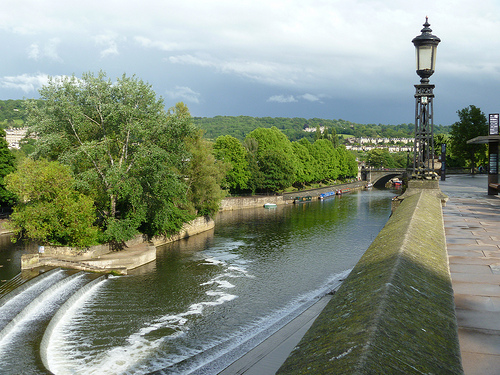
In Spring 2011 Persephone Books published a reprint of Adam Fergusson’s “The Sack of Bath”. On June 16th there was an Afternoon of Walks in Bath led by Caroline Kay, of the Bath Preservation Trust, and Adam Fergusson. We met at The Circus cafe for a lovely two course lunch and were then taken on a walking tour to view the effects of City planning policy on Bath during the 1960s. The walk ended at The Museum of the Building of Bath where we were served tea and cakes. But before all those pleasures I had the great pleasure of spending the morning with my online reading group friend Carol who lives in Bath and took time out to show me all the bookish delights of that city – of which there are very many. It was one of those days where looking back it seems impossible to have fitted so much into a mere 7 hours.

July 2011 : Milady Steps Out

On 30th June I set out with my sister on my first long distance walking trail – Wild Edric’s Way in Shropshire. The ‘holiday’ was organised by a local company with the delightful name of Wheely Wonderful Cycling Holidays which deals mainly in cycling holidays but with some walking tours also on their books. I say ‘holiday’ but at times it was jolly hard work!  We walked from the Stiperstones to Ludlow over 3.5 days. Approximately 40 miles was covered in total with 4 overnight stops. For the most part it followed the route of The Shropshire Way which coincided also with The Kerry Ridgeway and Offa’s Dyke National Trail. There were several places of interest on the route – churches at More, Churchtown and Ludlow and castles at Clun, Stokesay and Ludlow. We met other walkers and some lovely B&B owners along the way. I was glad to have done it and it felt like quite an achievement but I was not sure whether I wished to repeat the experience. However, the further away it has become the more I think maybe I would indeed like to do another such walk in the future.


Milady Steps Out – The Beacons Way

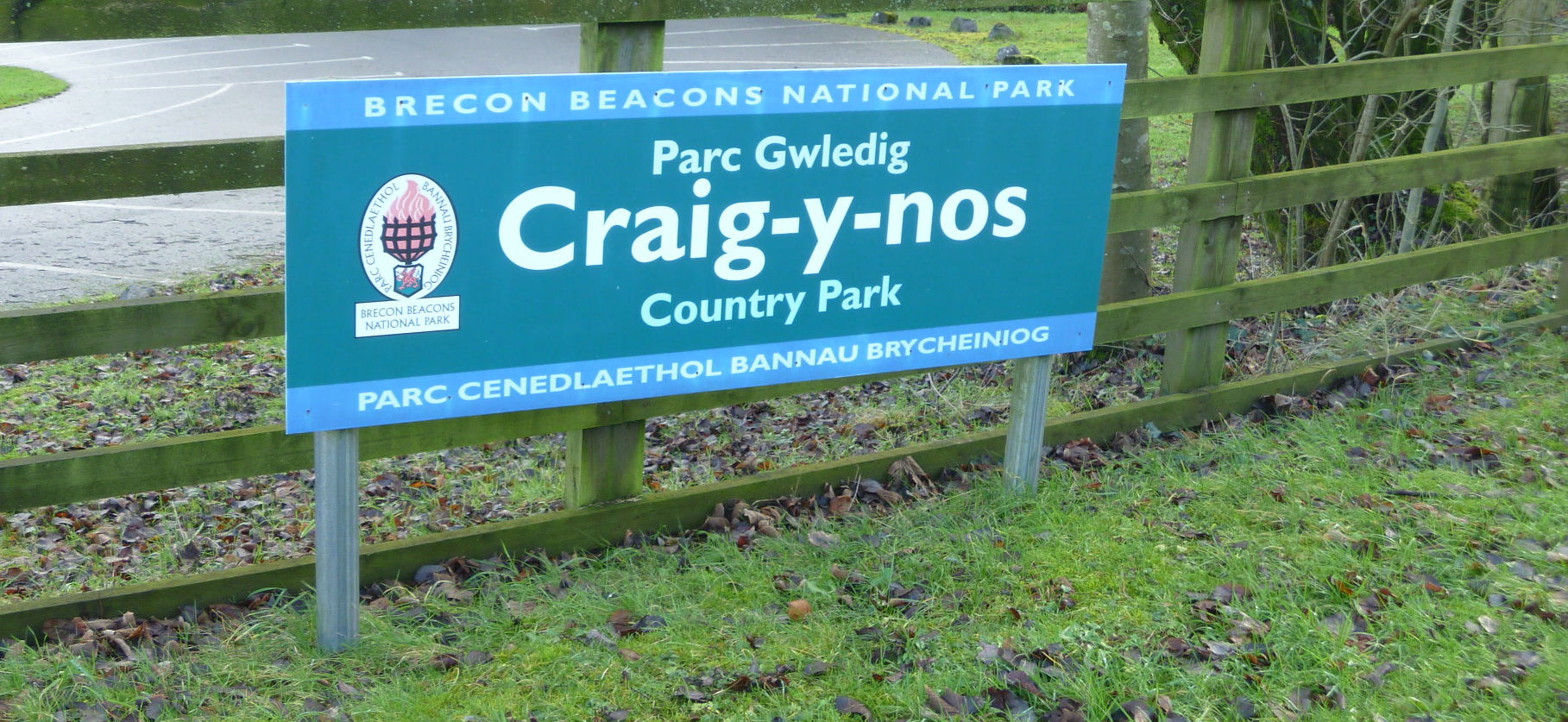
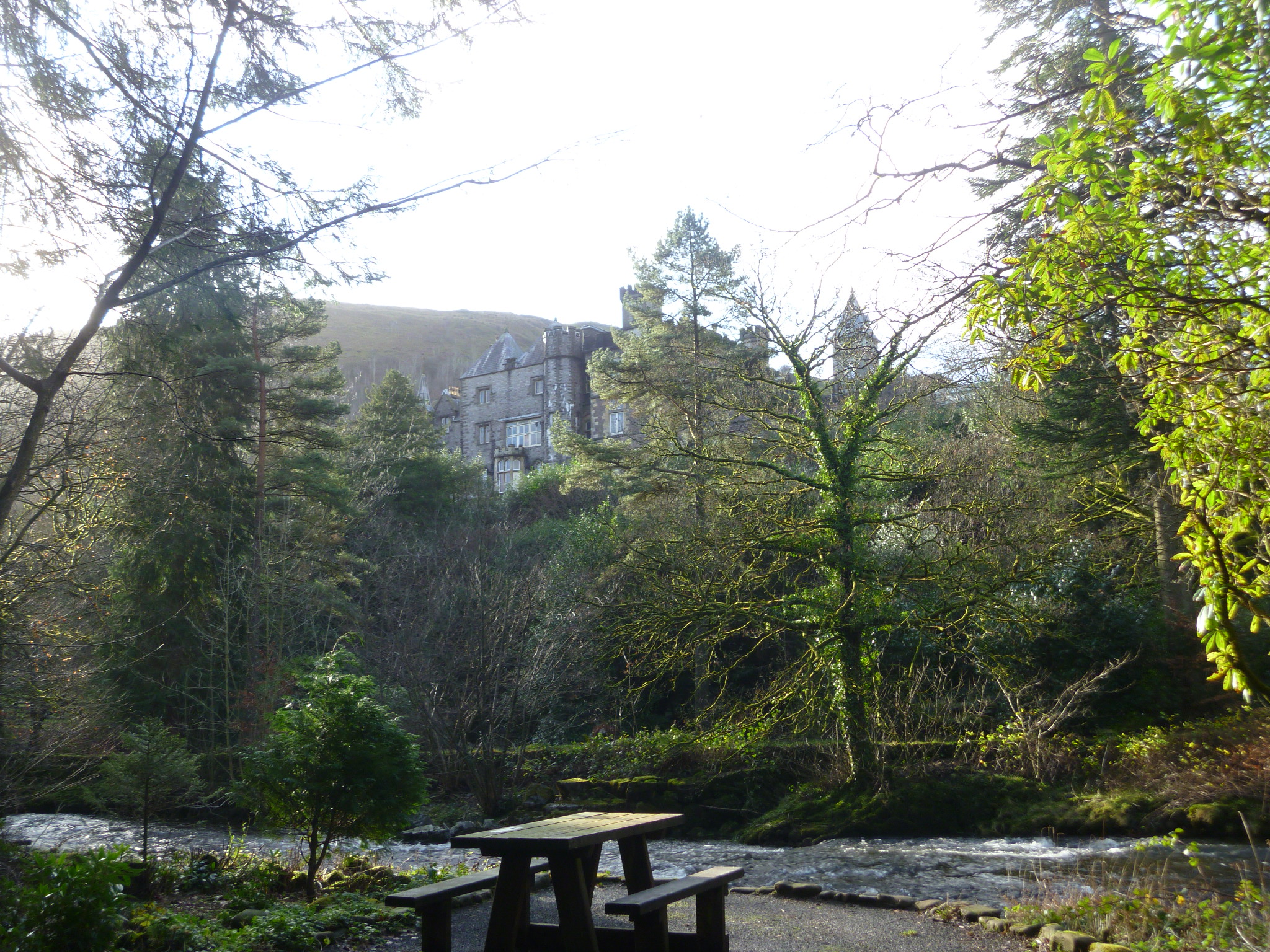
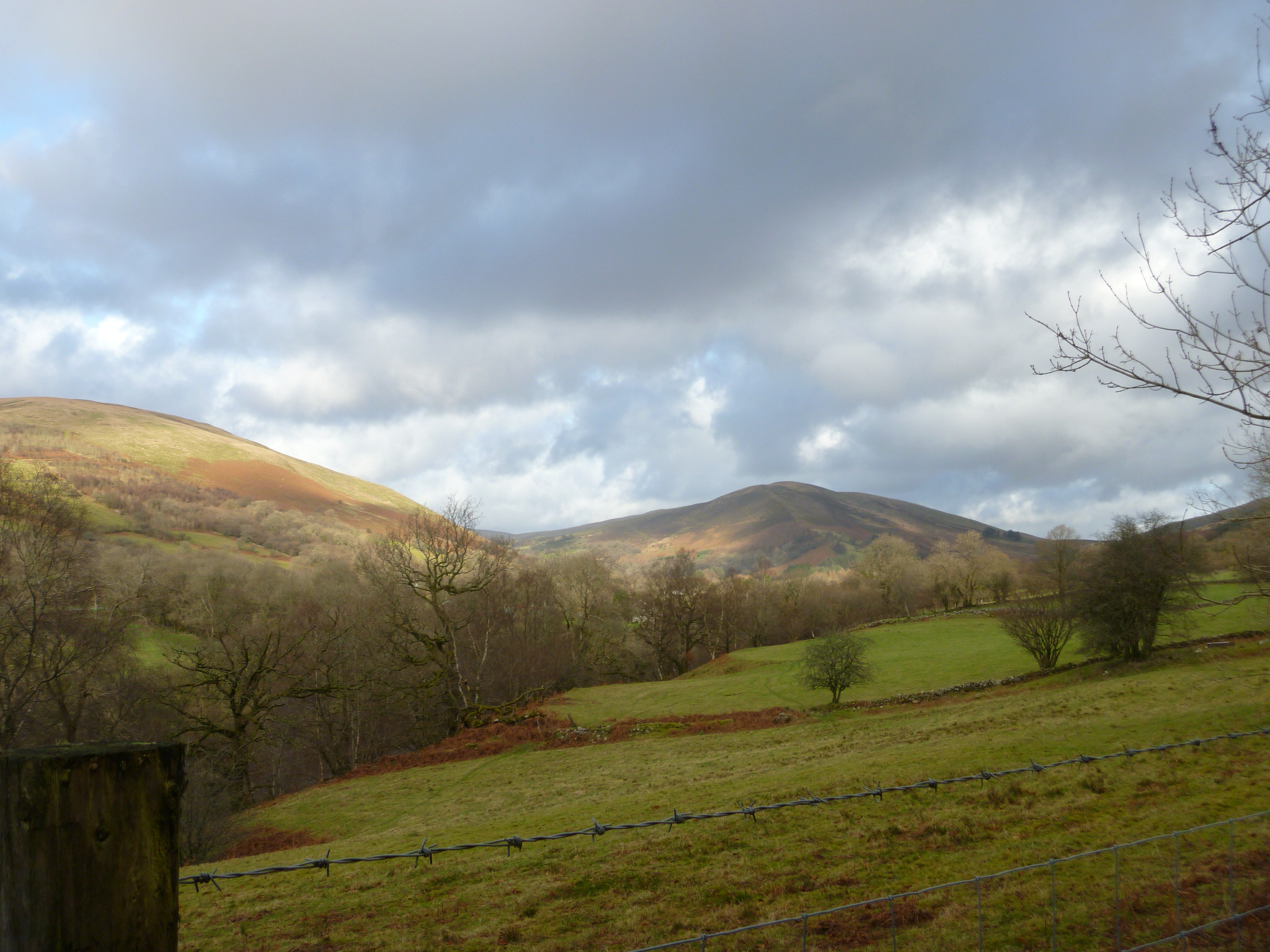
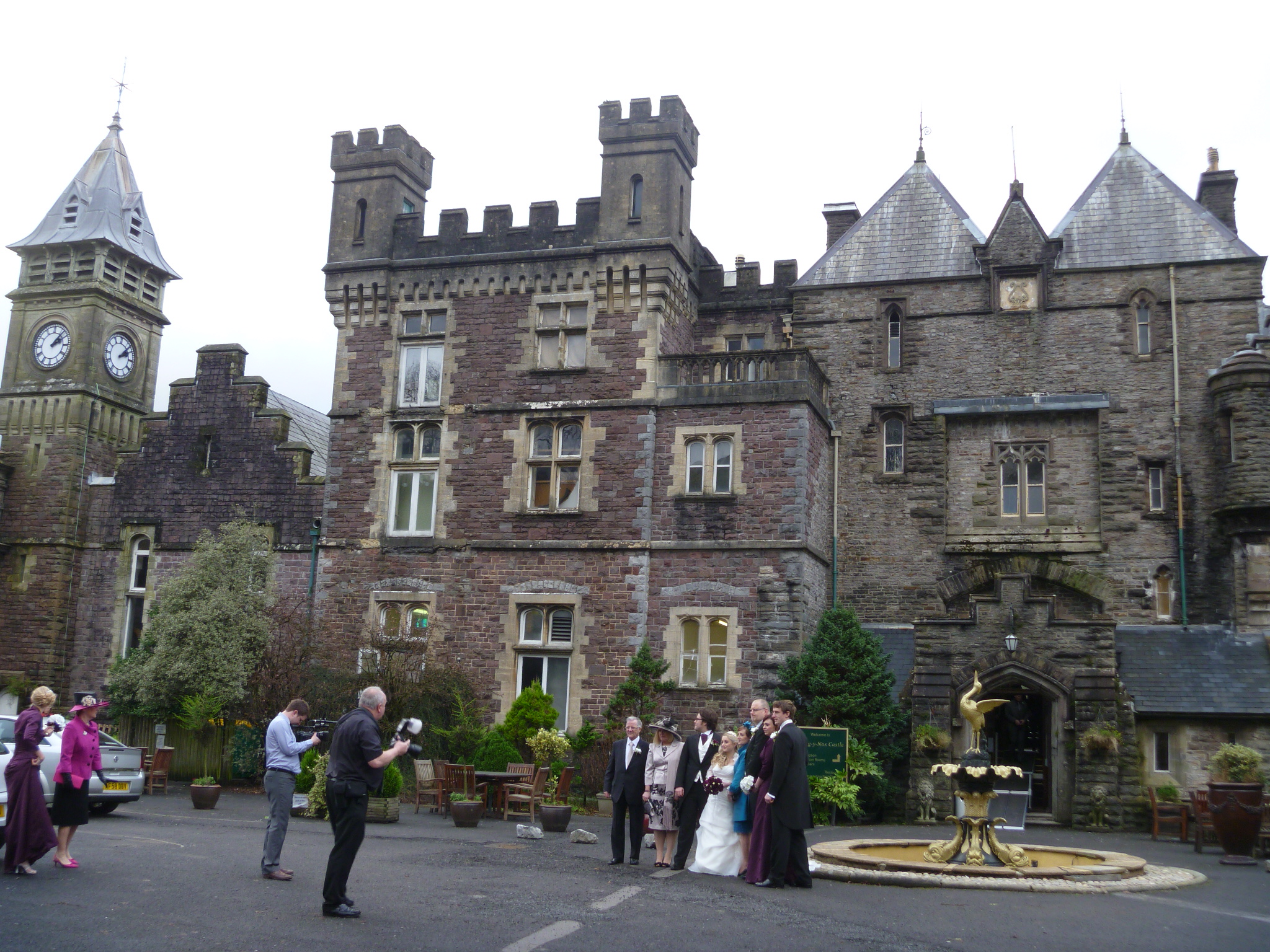
I’m taking a brief trip away from the Boudoir to spend a few days here in Wales between Christmas and New Year. I have managed to include a gentle walk in the Brecon Beacons. We parked the car near Craig-y-nos Castle and approached the Beacons Way after a  meander around the Craig-y-nos Country Park.

Craig-y-nos Castle was the former home of the world famous nineteenth century Italian opera singer Adelina Patti (1843-1919). It stands above the steep ravine of the River Tawe.

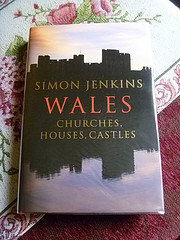
Simon Jenkins, in his book ‘Wales: Churches, Houses, Castles‘, writes of her “She performed before emperors, tsars, monarchs and tycoons and was paid 5,000 gold dollars for one performance of La Traviata in Boston … The daughter of a Sicilian and a Roman, she first married Ernest Nicolini, Napoleon’s equerry, then a French tenor, then, at the age of 56, a 30-year-old Swedish ‘nobleman and masseur’.” Jenkins then asks “So how did this remarkable woman come to live in a dark and wet corner of the Brecon Beacons, in a house with Wagnerian name of the ‘rock of the night’?” This came about through her friendship with Lord Swansea who brought her to the Tawe Valley where she fell for the house. In 1878 at the age of 35 she moved in. The fresh air was good for her lungs. Ten years later she had a theatre built at the house and enjoyed entertaining locals and the famous alike. She died here in 1919 but is buried at Pere Lachaise Cemetery in Paris.

The house fell into disuse, was for a long time a geriatric hospital and is now a wedding hotel. The theatre still exists and is occasionally used for operatic performances.

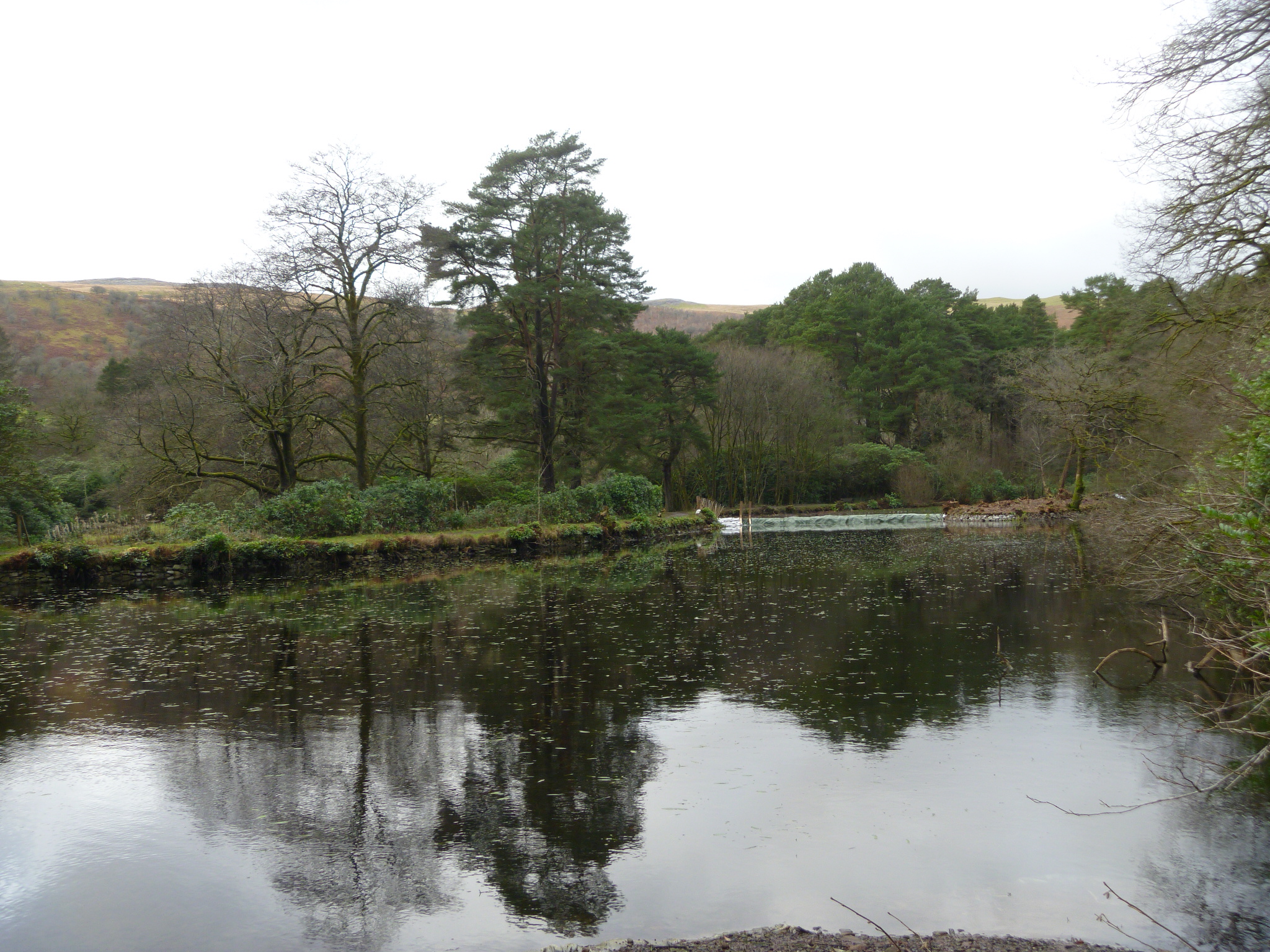
Our walk took us through the country park which had once been the pleasure gardens of the house. It appears that these may be gradually being re-established. There are a couple of small meadows, a lake and a fishpond in the park but mainly it consists of woodland – beech woods, conifer stands, rhododendron walks and pine woods. Once out of the park the land, and the Beacons Way path with it, rises gradually and the view opens to reveal the Brecon Beacons at their finest.

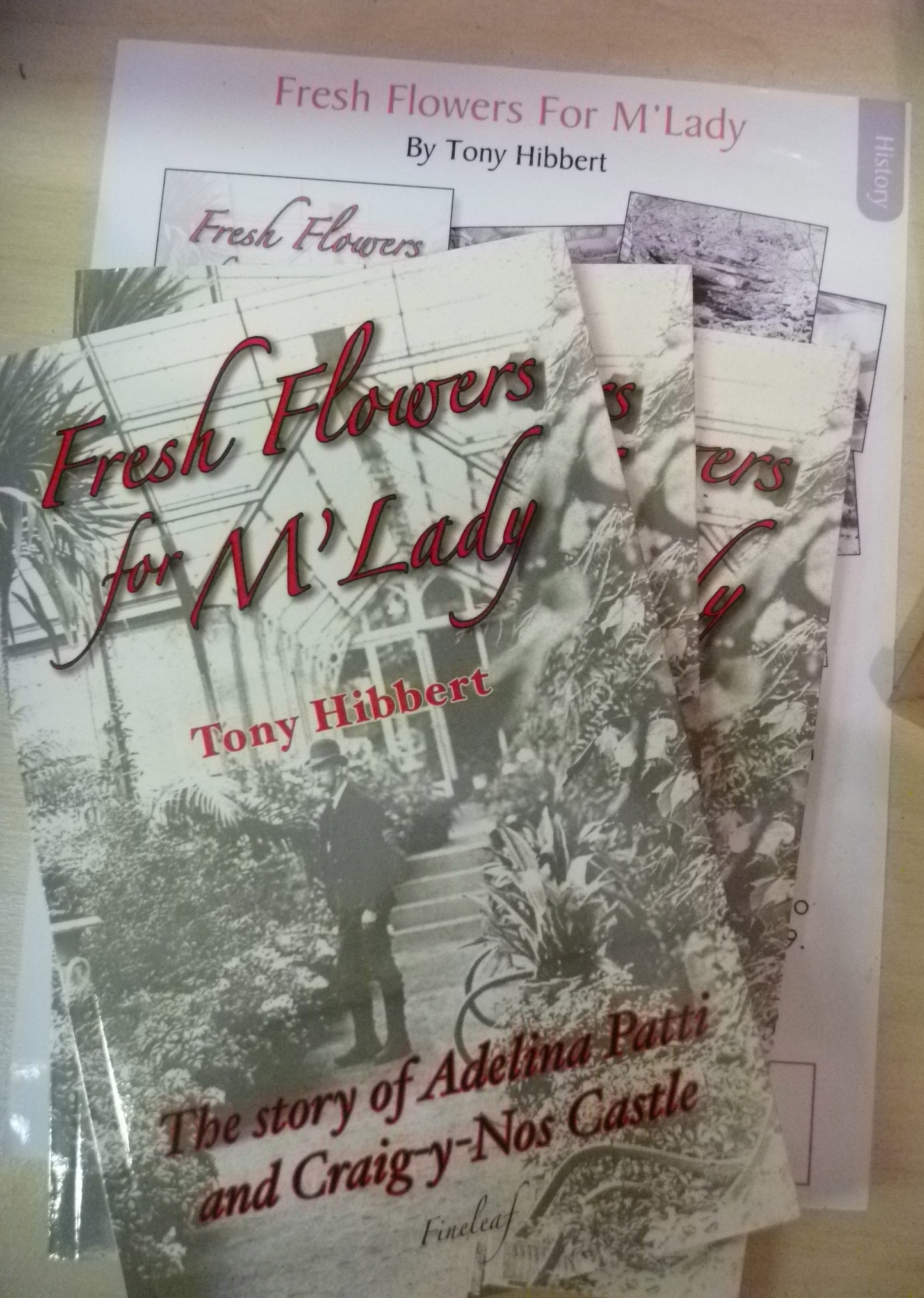
Before returning to the car we called at the shop where I spotted an interestingly titled book about about Adelina Patti!

Weekday Wanderers

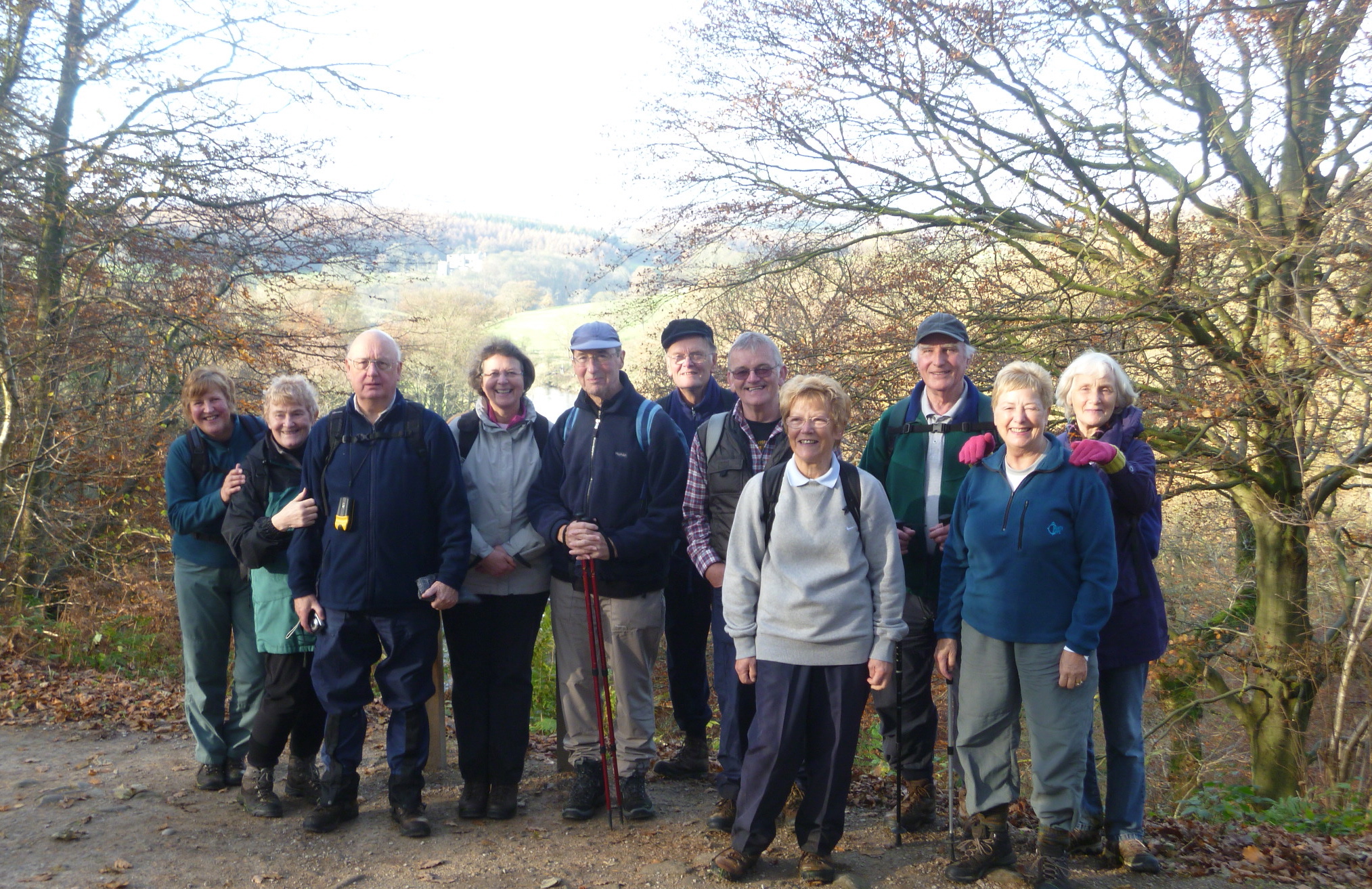
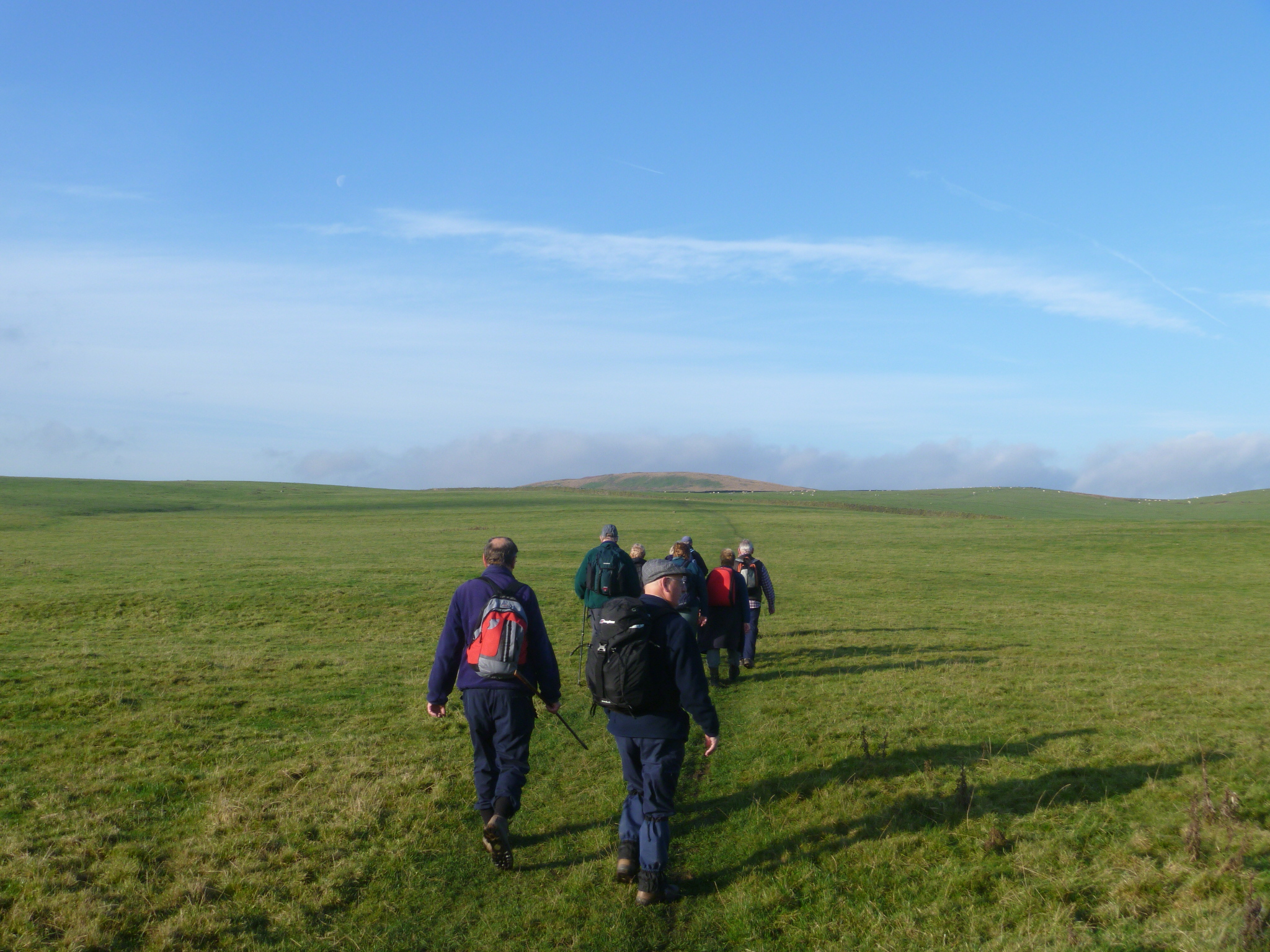
Since November 2004 I have been a member a very informal, friendly, local walking group. I was reminded of this date earlier today as the beginning of the walk followed exactly the same route. We meet on Thursdays (usually the third Thursday in the month) and take ourselves off for a hike – come rain or shine. But we definitely prefer shine, of course. At 9am on the appointed day we assemble at a local church car park, decide who will drive and car share appropriately. We take it in turns to lead and plan the walk which is usually 8+ miles. Today’s walk was a little shorter as we welcomed back a leader and fellow wanderer after a third hip operation!

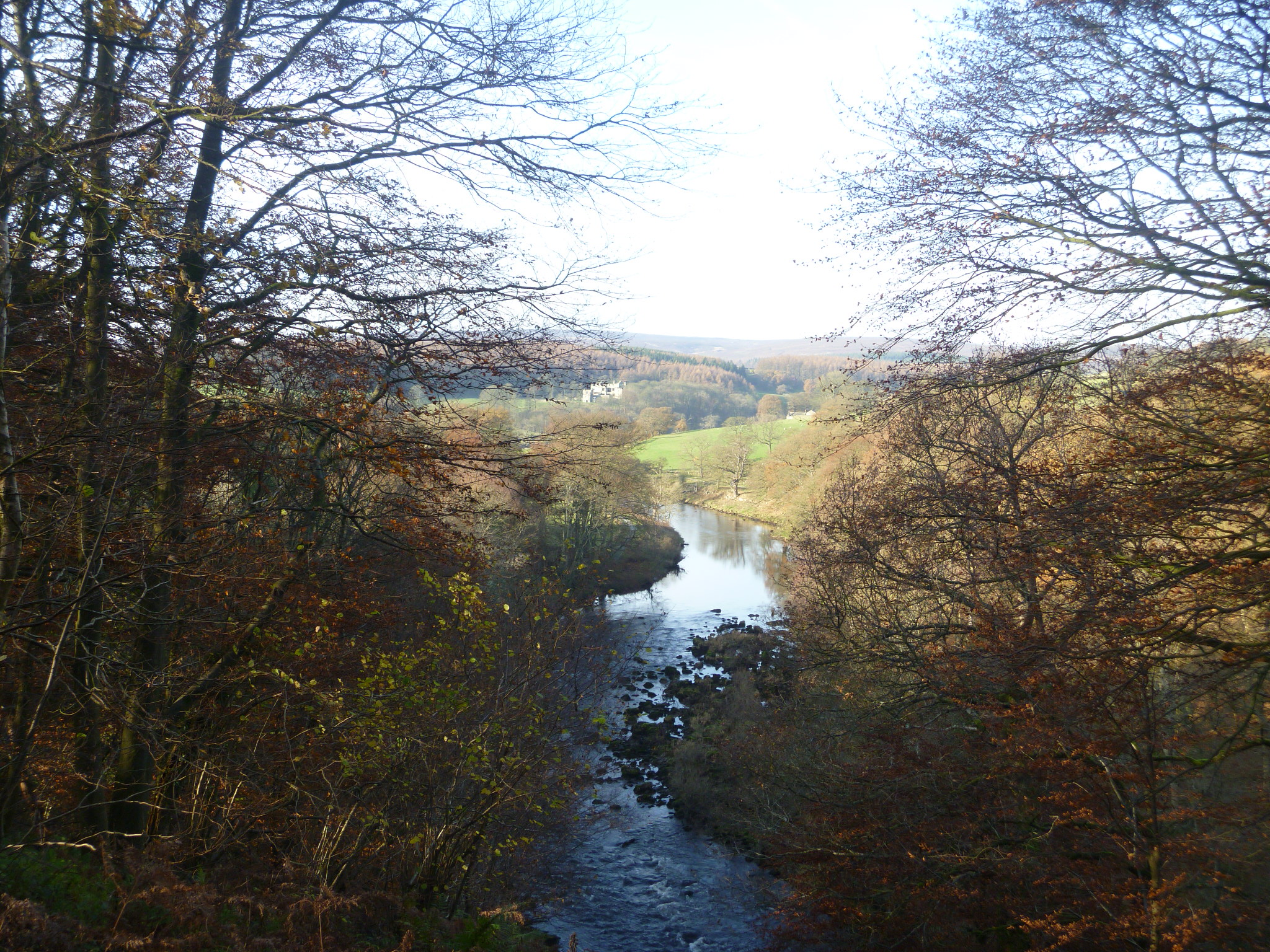
We certainly had shine today! A fifty minute drive from home brought us to beautiful Bolton Abbey in the Yorkshire Dales. A handy tip is that parking at all Bolton Abbey car parks is free on weekdays between 31st October and 16th March (except for during school holiday weeks). After a short bit of road walking we headed off through fields and woods and up above the Wharfe valley where the views and colours were spectacular.

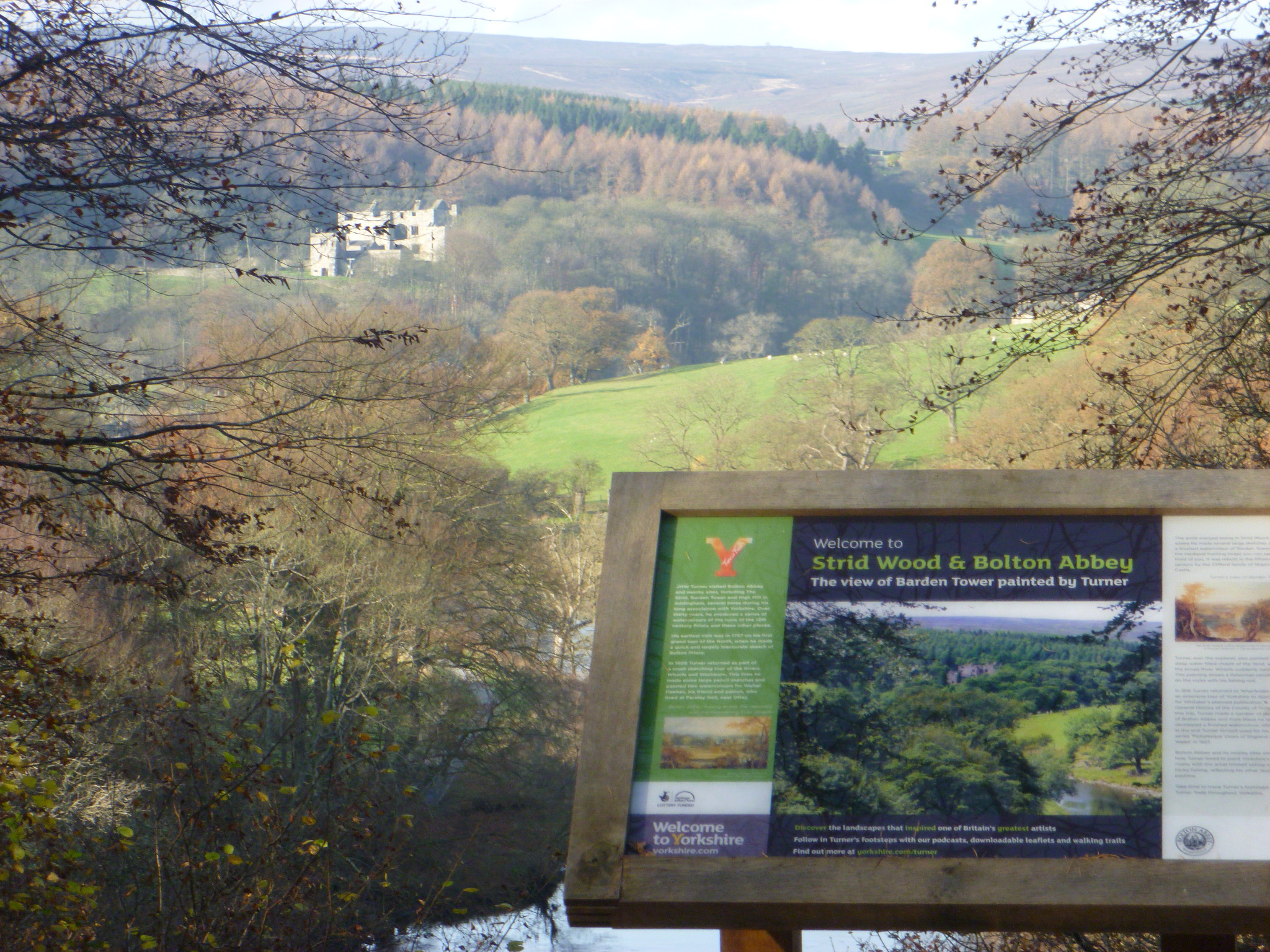
Eventually our path brought us down to what is called The Strid car park. From here our path followed the River Wharfe along The Dales Way. First though we stopped for our picnic lunch. This just happened to be at a viewpoint from where J.M.W.Turner painted one of his watercolours. An information board explains the fact and shows a copy of his painting. A Turner Trail has been developed in Yorkshire by the Tourist Board and there are accompanying leaflets and a website.

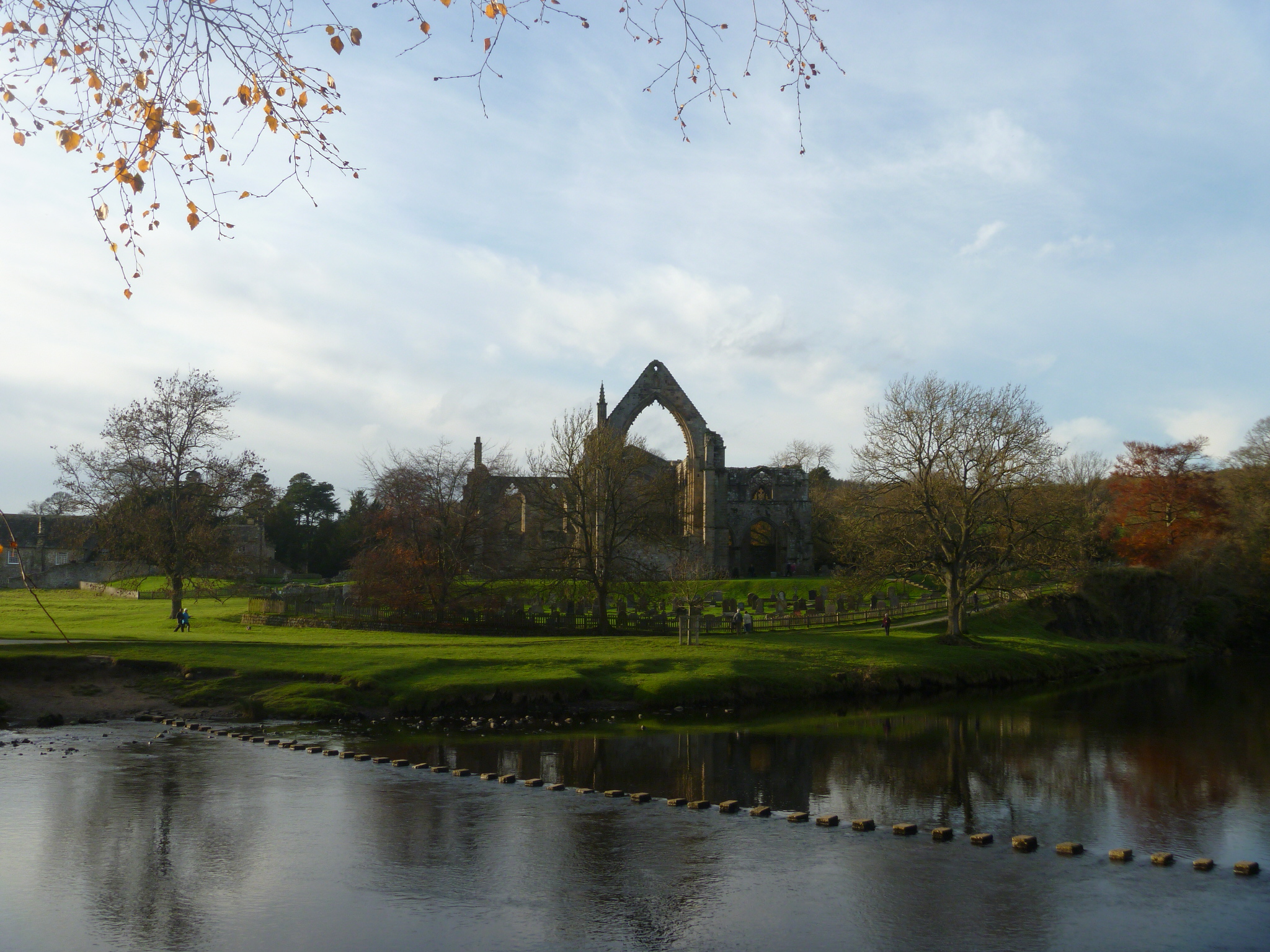
The final part of our walk kept to the higher paths above the river and eventually the romantic ruins of Bolton Priory loomed into view. These were also painted by Turner and the scene has changed very little since 1816 when the artist toured the Yorkshire Dales. Read here about Turner’s Viewpoint at Bolton Abbey and click the links to the resultant pictures.

Lanhydrock House, Cornwall

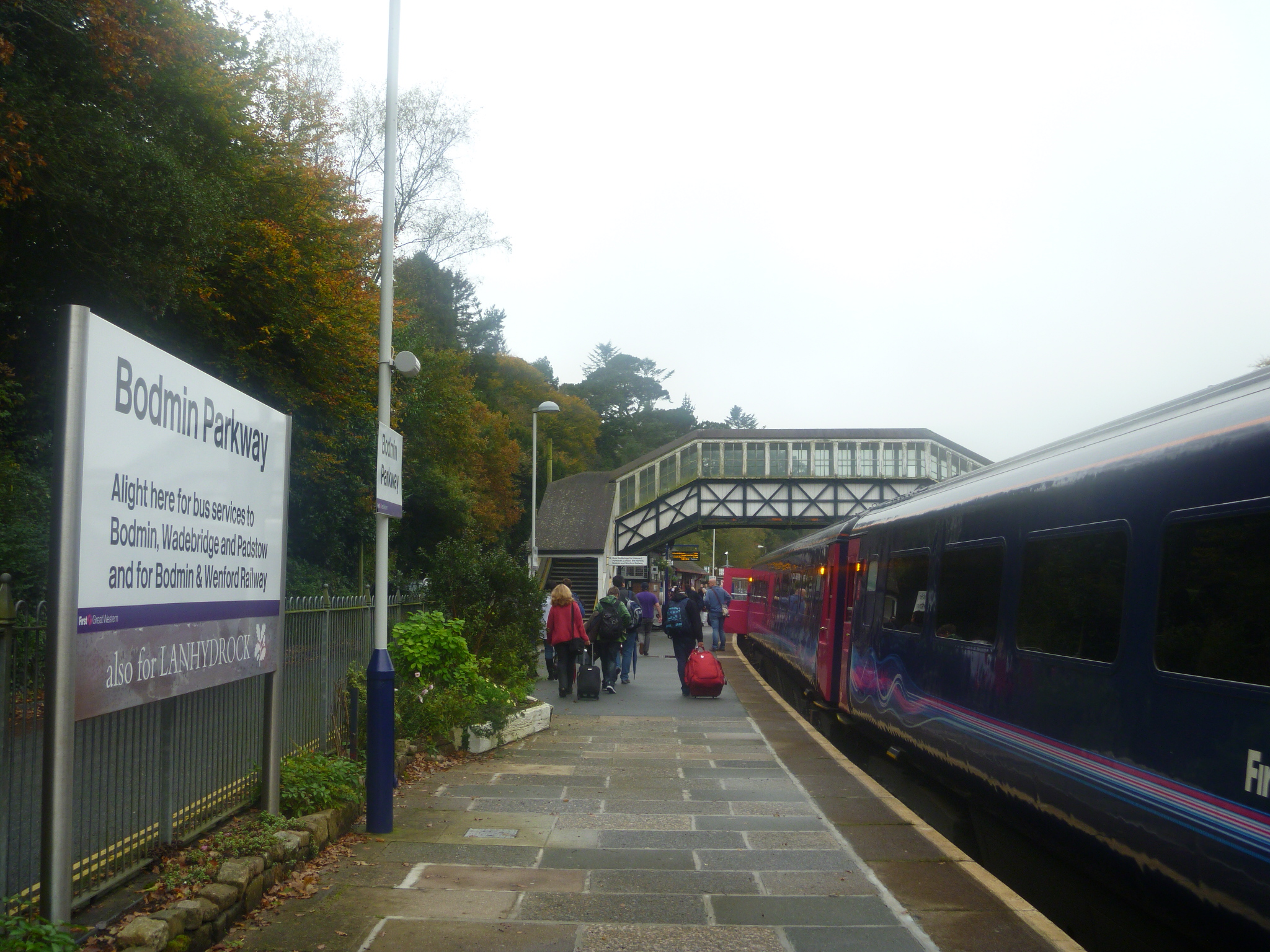
Yesterday I took the train from Totnes, in Devon, to Bodmin, in Cornwall, from where, I had discovered recently, it is possible to walk along the carriage drive for a mile and three quarters to Lanhydrock House“The finest house in Cornwall”.  The weather stayed dry but the clocks were put back an hour on Saturday night so the days are now shorter.

When you alight from the train at Bodmin Station it is a bit like stepping back in time. There’s a hustle and bustle as people are met and packed into waiting cars and there’s a delightful station buffet … in the former signal box. Then the London train pulls out of the station on its way to Penzance, the cars roar away and all is still and quiet and you can hear the birds sing. But maybe it was just the whistle of a steam train whose line shares the station that took me back to earlier days.

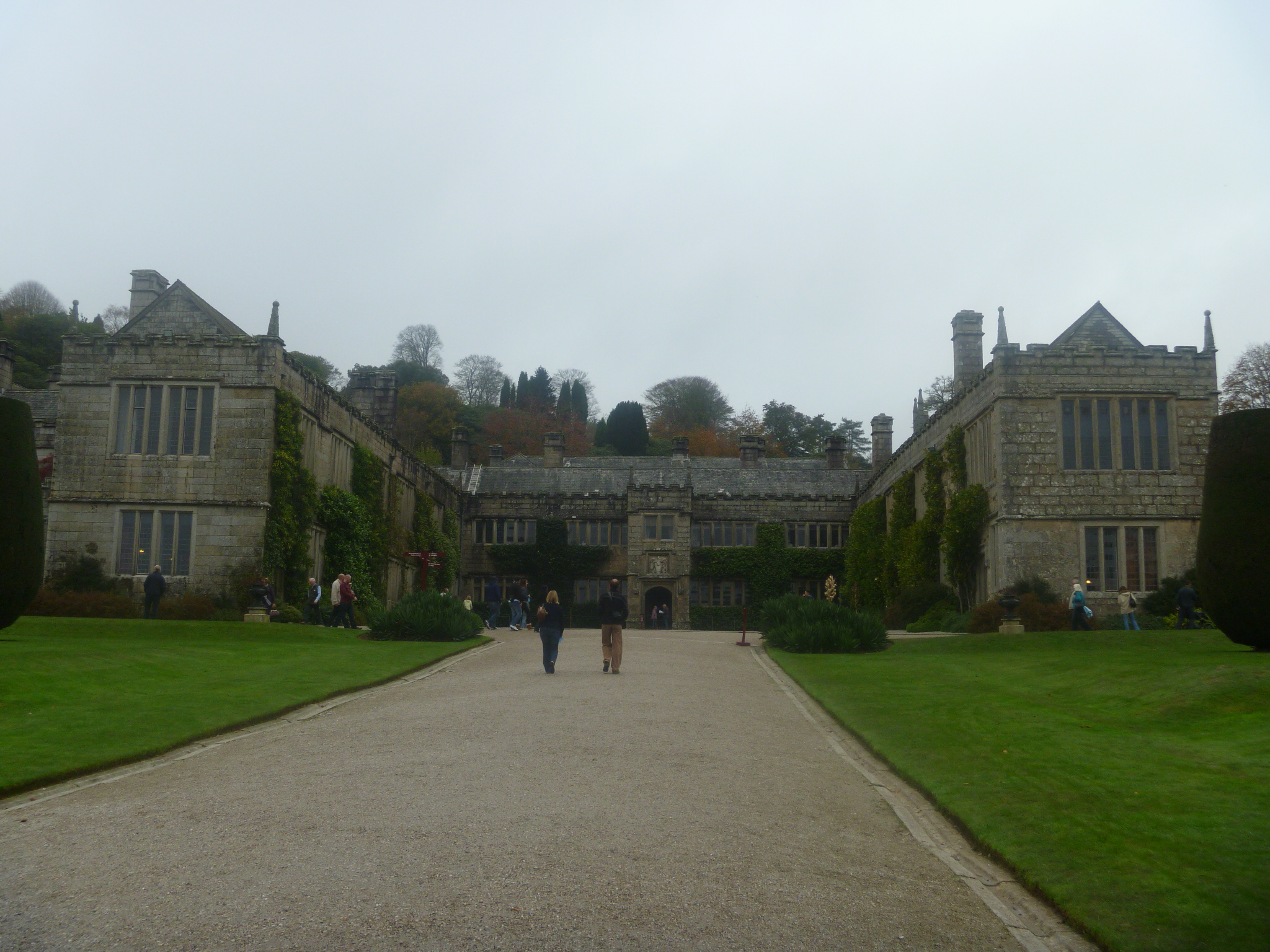
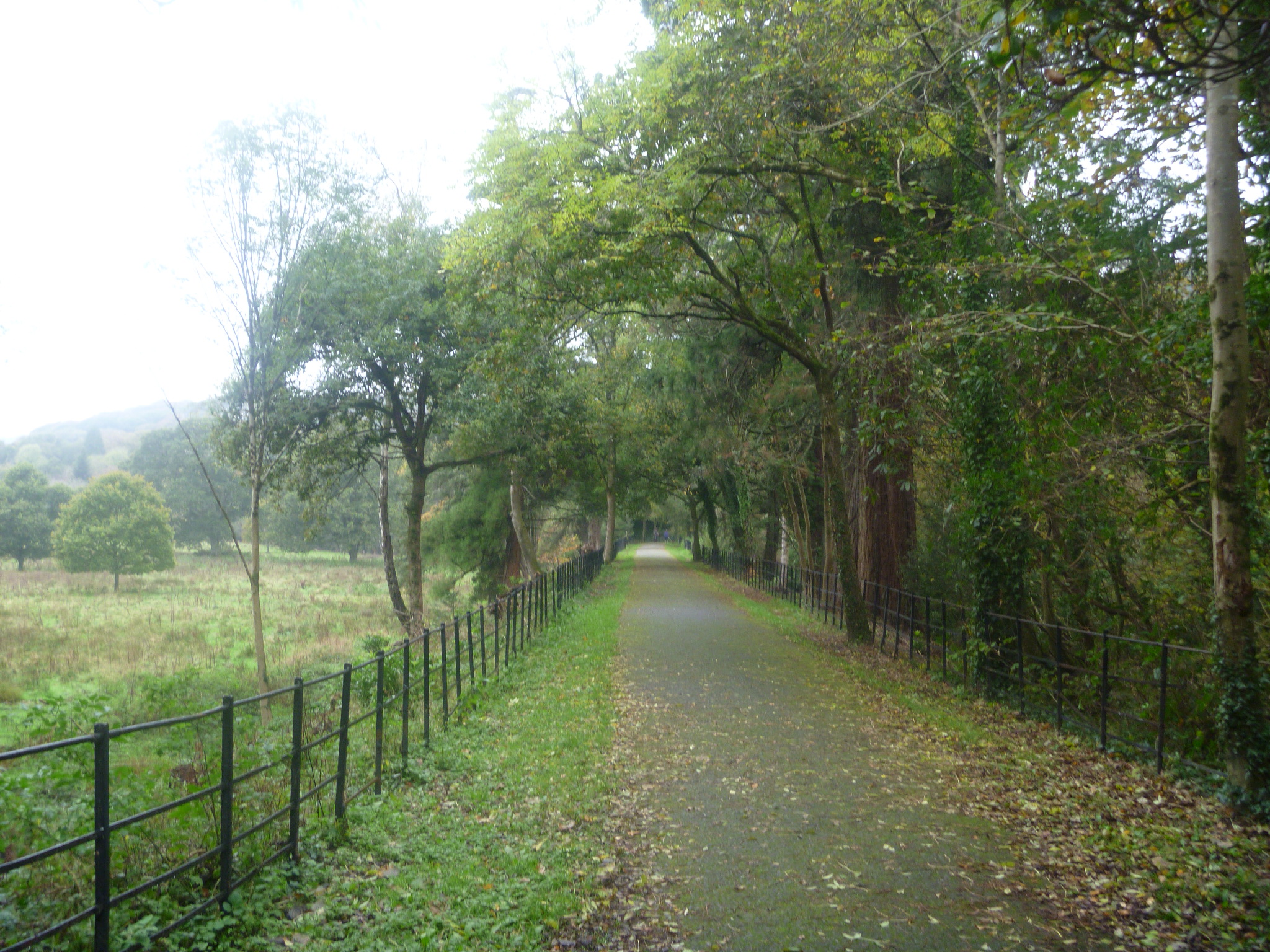
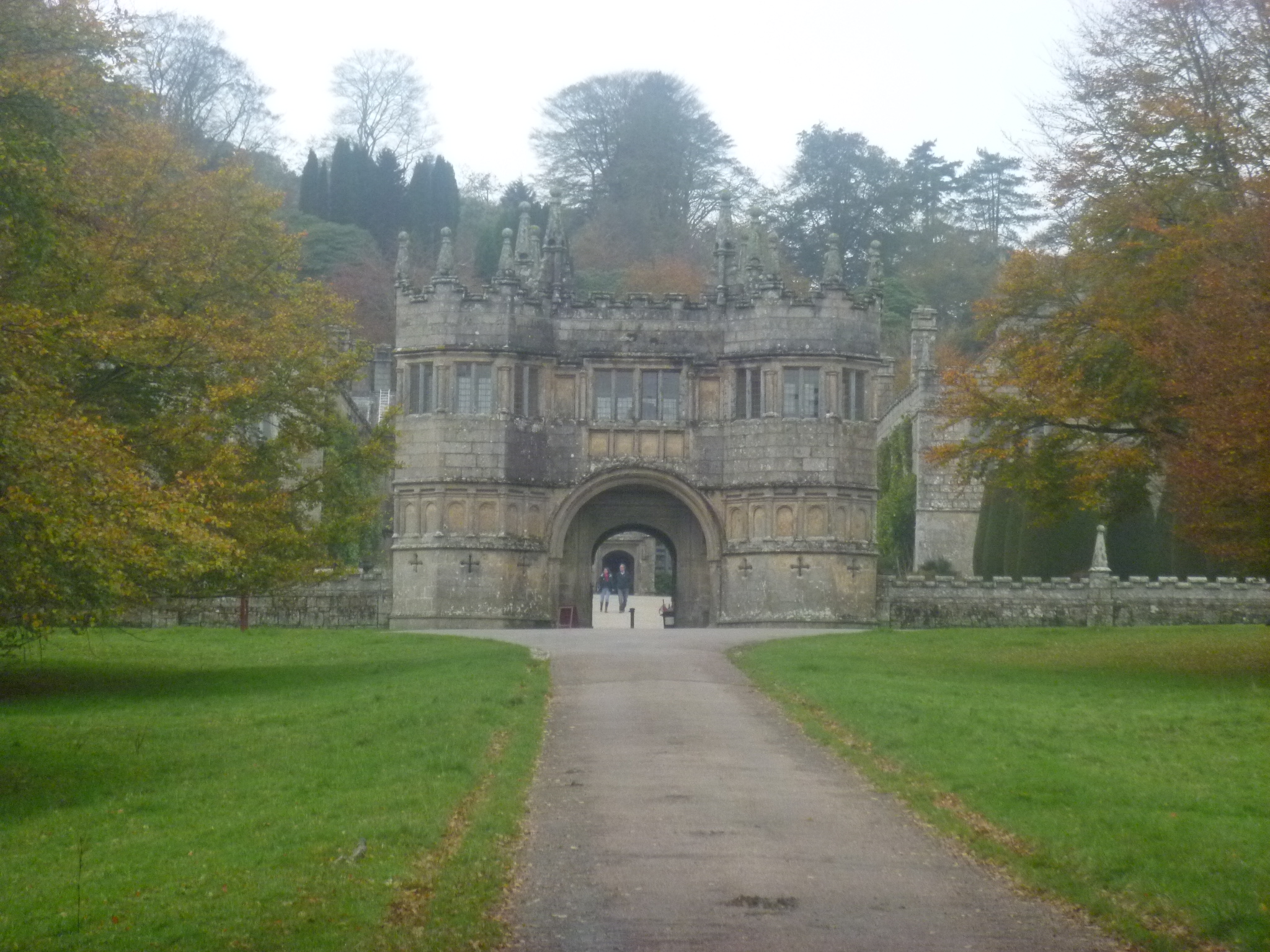
At the end of the car park there’s a red gate. Go through it and you are already on the Lanhydrock House Carriage Drive.  At first you walk through woodland alongside the River Fowey. After about a mile there’s a lodge house and car park. Cross the road and head uphill to another lodge, go through another gate and at the brow of the hill you can see the seventeenth century Gatehouse and Lanhydrock looms into view.

A bit of investigation before setting out lead me to discover in my Blue Guide to Literary Britain by Ian Ousby that Thomas Hardy based his description of Endelstow House, the home of the Luxellians in A Pair of Blue Eyes, on Lanhydrock House, moving it to St Juliot near Boscastle for the story.

“For by this time they had reached the precincts of Endelstow House. Driving through an ancient gate-way of dun-coloured stone, spanned by the high-shouldered Tudor arch, they found themselves in a spacious court, closed by a facade on each of its three sides. …  The windows on all sides were long and many-mullioned; the roof lines broken up by dormer lights of the same pattern. The apex stones of these dormers, together with those of the gables, were surmounted by grotesque figures in rampant, passant, and couchant variety. Tall octagonal and twisted chimneys thrust themselves high up into the sky, surpassed in height, however, by some poplars and sycamores at the back, which showed their gently rocking summits over ridge and parapet. In the corners of the court polygonal bays, whose surfaces were entirely occupied by buttresses and windows, broke into the squareness of the enclosure; and a far-projecting oriel, springing from a fantastic series of mouldings, overhung the archway of the chief entrance to the house.” 

A Pair of Blue Eyes by Thomas Hardy (Ch.5)

The house today is not the original seventeenth century edifice but a late Victorian reconstruction following a disastrous fire which destroyed most of the earlier building in 1881. It was taken over by the National Trust in 1953. After refreshments and a browse in the second-hand bookshop I toured the fifty rooms in the house open to the public. These rooms included many below stairs: kitchen, scullery, bakehouse, dry larder, fish larder, meat larder, dairy – all very Downton Abbey. Most interesting to me amongst the family’s rooms were a Family Museum, Captain Tommy’s dressing and bed rooms, the drawing room and the Long Gallery.

The obligatory visit to the shop revealed that the popular author E. V. Thompson based many of his novels on Lanhydrock.

By 3.30pm the mist was beginning to thicken so I made my way back to the Carriage Drive and enjoyed the reverse walk back to the station for my 4.25pm train back to Totnes. The cafe was closed, the steam engine was being shunted away and we stood in the gloomy, misty, light rain waiting for our Paddington-bound train.

The Literary Connection of North Lees Hall

“It was a fine autumn morning; the early sun shone serenely on embrowned groves and still green fields; advancing on to the lawn, I looked up and surveyed the front of the mansion. It was three storeys high, of proportions not vast, though considerable: a gentleman’s manor-house, not a nobleman’s seat: battlements round the top gave it a picturesque look.

Its grey front stood out well from the background of a rookery, whose cawing tenants were now on the wing: they flew over the lawn and grounds to alight in a great meadow, from which these were separated by a sunk fence, and where an array of mighty old thorn trees, strong, knotty, and broad as oaks, at once explained the etymology of the mansion’s designation.

Farther off were hills: not so lofty as those round Lowood, nor so craggy, nor so like barriers of separation from the living world; but yet quiet and lonely hills enough, and seeming to embrace Thornfield with a seclusion I had not expected to find existent so near the stirring locality of Millcote. A little hamlet, whose roofs were blent with trees, straggled up the side of one of these hills; the church of the district stood nearer Thornfield: its old tower-top looked over a knoll between the house and gates.”

Jane Eyre  (Chapter 11)

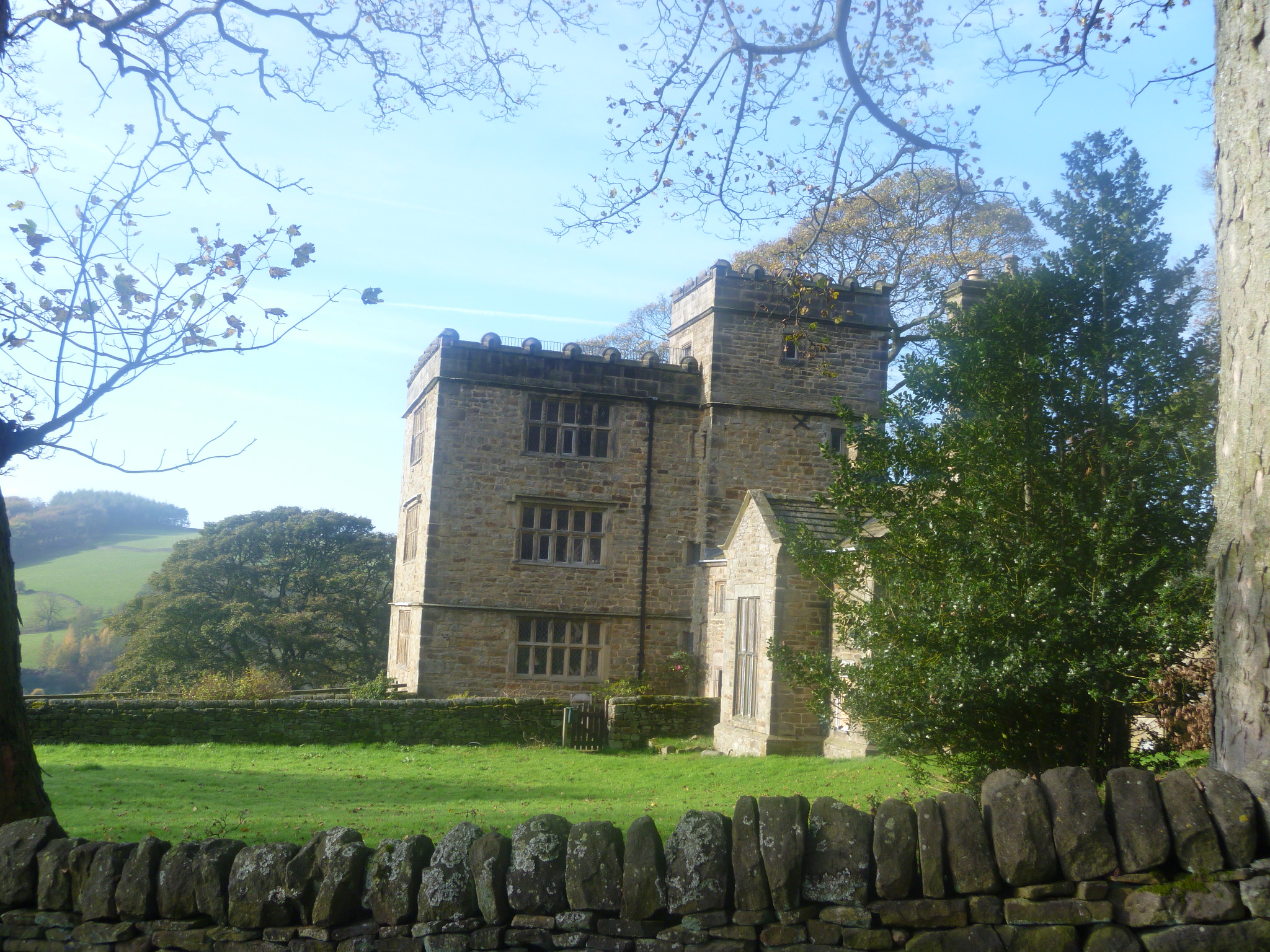
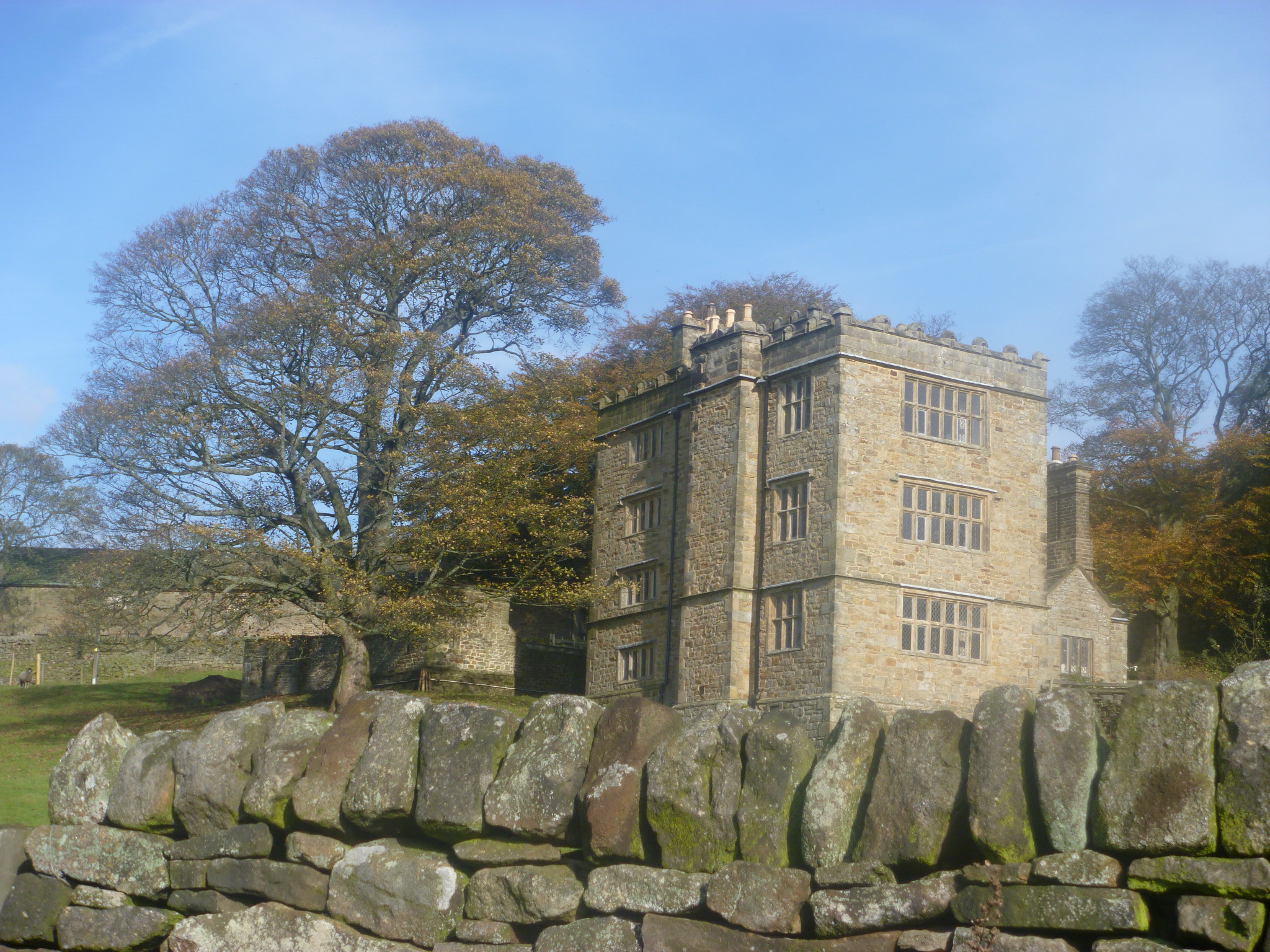
Today I visited a friend and former neighbour who, with her husband, moved to work in Sheffield. They now live in the Hope Valley in the beautiful Derbyshire Peak District . Our plan was to take a walk from her house to visit North Lees Hall, visited by Charlotte Bronte and her friend Ellen Nussey. Bronte later based Mr Rochester’s home Thornfield Hall on North Lees Hall.

The Vivat Trust has similar aims to The Landmark Trust. I have never stayed in one of their properties but my feeling is that they do everything much more comfortably or even luxuriously but that they don’t have such a ‘low’ (ruinous?) starting point. North Lees Hall is a Vivat Trust property.

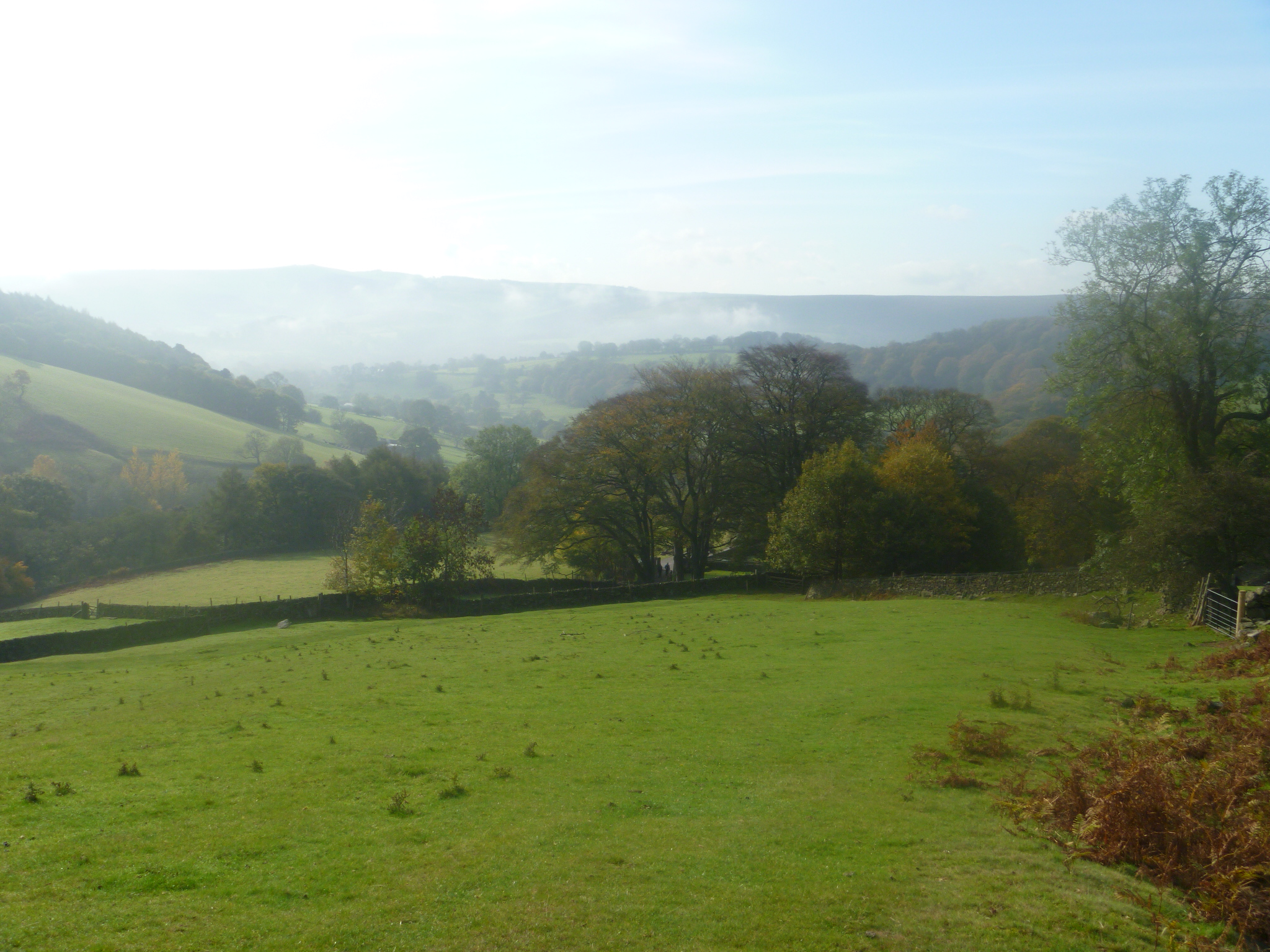
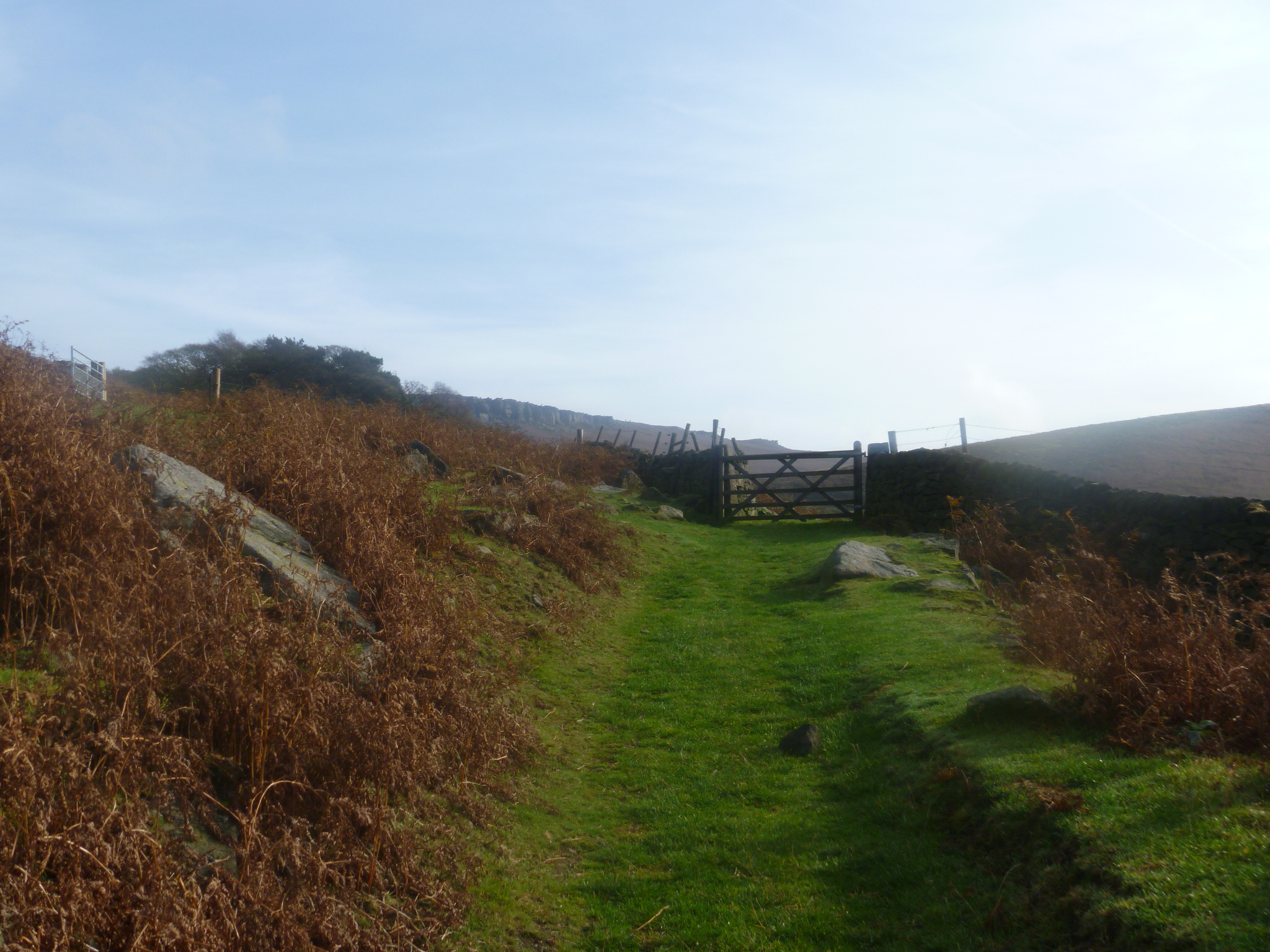
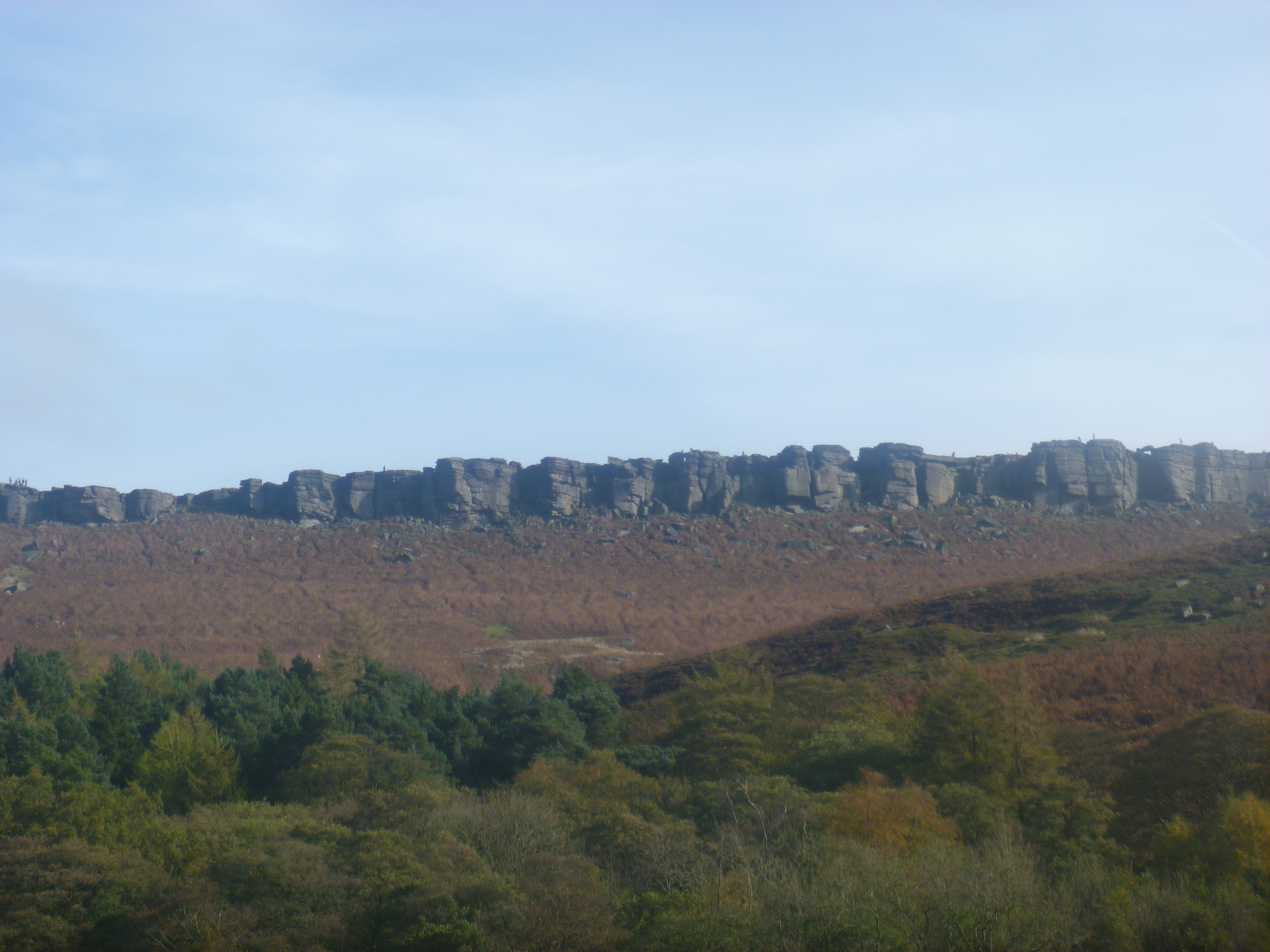
The day started off very misty – but these always turn out the best. After a cup of tea and brief chin-wag we headed off up the hill from her house. It was a perfect walk – a climb up the lane to begin and over a couple of stiles and then green grassy paths for a good hour or so with wonderful views of Stannage Edge (a climbers paradise, apparently). Eventually through a wooded copse we spied the Hall. By this time the sky was fully blue and cloudless (Jane Eyre’s “fine autumn morning” indeed).  Another hour’s walk via an Ice Cream Parlour  (Hope Valley Ice Cream) brought us across a golf course and home for lunch.

Stannage Edge, Derbyshire