Kirkby Stephen and Eden Viaducts Classic … And More Ruins!

Kirkby Stephen and Eden Viaducts Classic – 7mi Medium

Kirkby Stephen station – Tommy Road – Lammerside Castle – Nateby – Eden Viaducts – Kirkby Stephen. Alight (11.22) and return Kirkby Stephen. Connects with 09.47 train from Leeds. Return on vintage bus from Kirkby Stephen Town to Station or visit the Classic Vehicle Rally at Brough by vintage bus after the walk. (JD/DW)
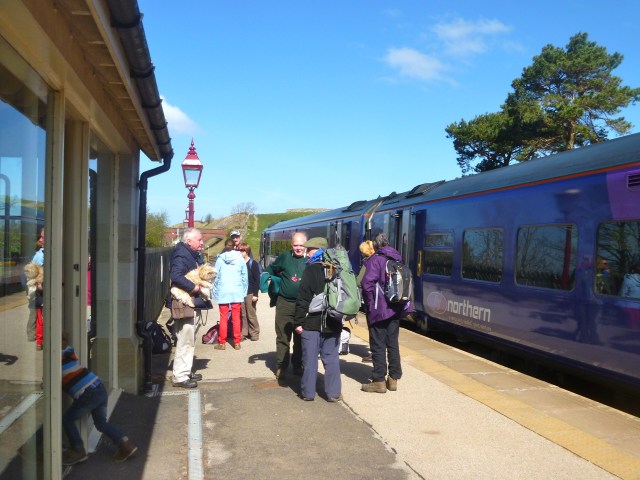
Assembling for the walk

Leaders and walkers (and dogs) assemble at Kirkby Stephen Station

This was my plan for Easter Saturday to join the walk organised and led by volunteers of The Friends of the Settle-Carlisle Line. Kirkby Stephen in Cumbria is, so far, the furthest that I have travelled up the line for a day out walking.
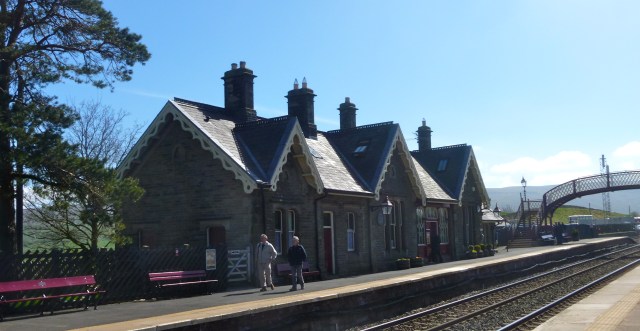
KS Station

Kirkby Stephen Station

 As at Dent Station it is possible to stay at Kirkby Stephen Station and you have a choice of accommodations :
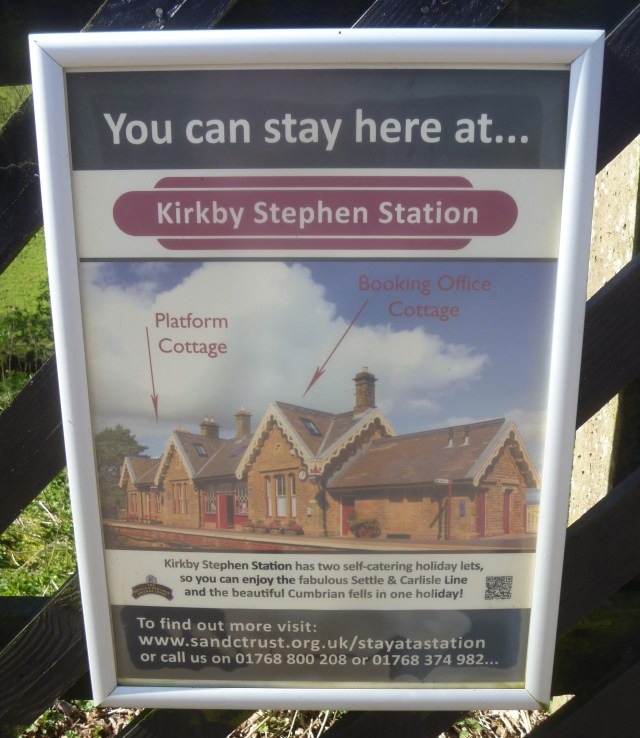
Station cottages to let

Platform Cottage or Booking Office Cottage
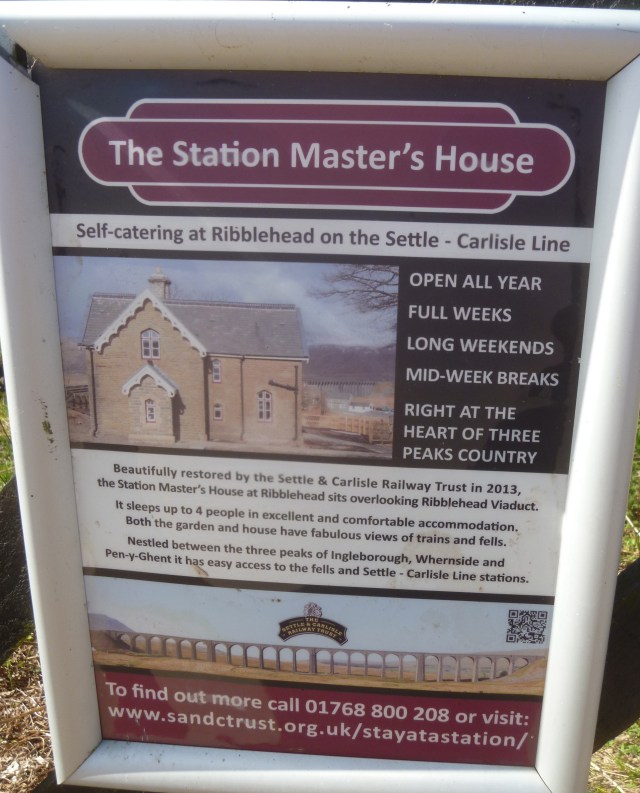
Station Master's House to let

Or at The Station Master’s House at Ribblehead Station

The whole day was well worthwhile despite the delayed return home. The train journey alone up the Pennine Chain is incredibly beautiful and the emptiness and remoteness of the landscape never ceases to amaze.
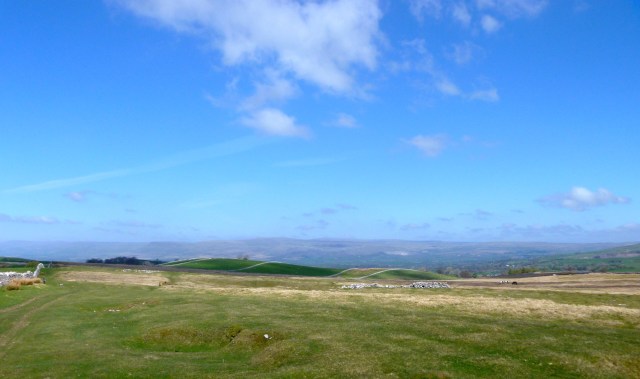
Mallerstang

Mallerstang Common from near Tommy Road
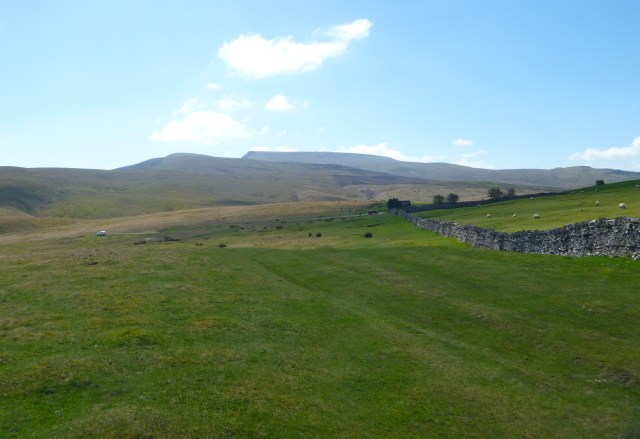
Wild Boar Fell

Wild Boar Fell from our path near Tommy Road
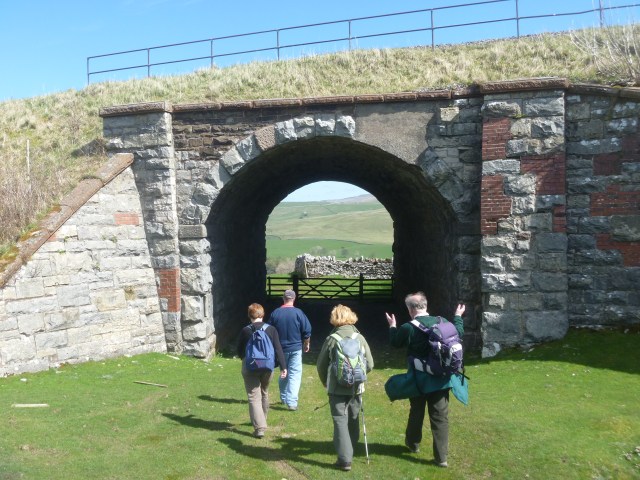
Under the Settle Carlisle Line

Our path under the railway line

Turning off Tommy Road (before you ask, no-one seems to know why it is called Tommy Road) we headed under the Settle-Carlisle Railway line and on to our picnic lunch spot Lammerside Castle.
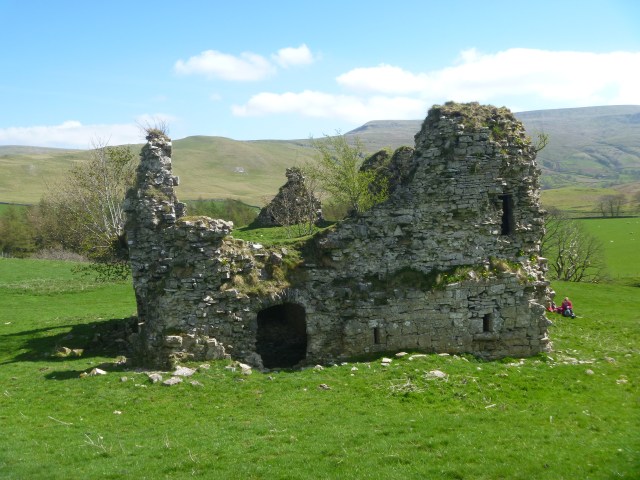
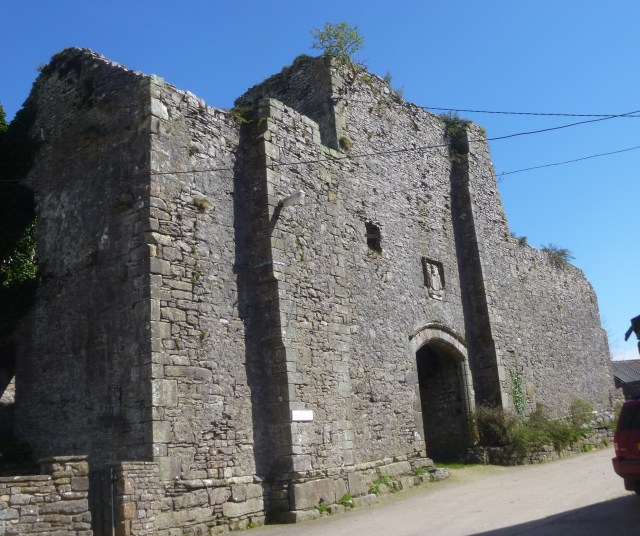
Lammerside Castle 1

Lammerside Castle with Mallerstang behind

The ruined castle is on private land by the public footpath/bridleway passes alongside. The website [below] also shows an interesting aerial photograph of the site.
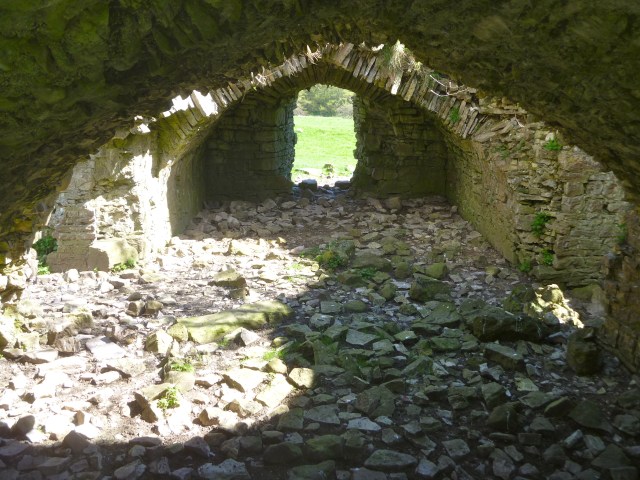
Lammerside Castle 2

Lammerside Castle is a 12th century building which was rebuilt and strengthened in the 14th century as a Pele tower, to provide protection against Scots raiders. It is situated on the bridle path between Pendragon Castle and Wharton Hall.
The ruins include the upstanding remains of a C14 tower or wing which originally formed part of the building’s central core, together with the earthwork remains of buildings to the north and south of the tower and a barmkin wall which enclosed a yard to the west of the tower.
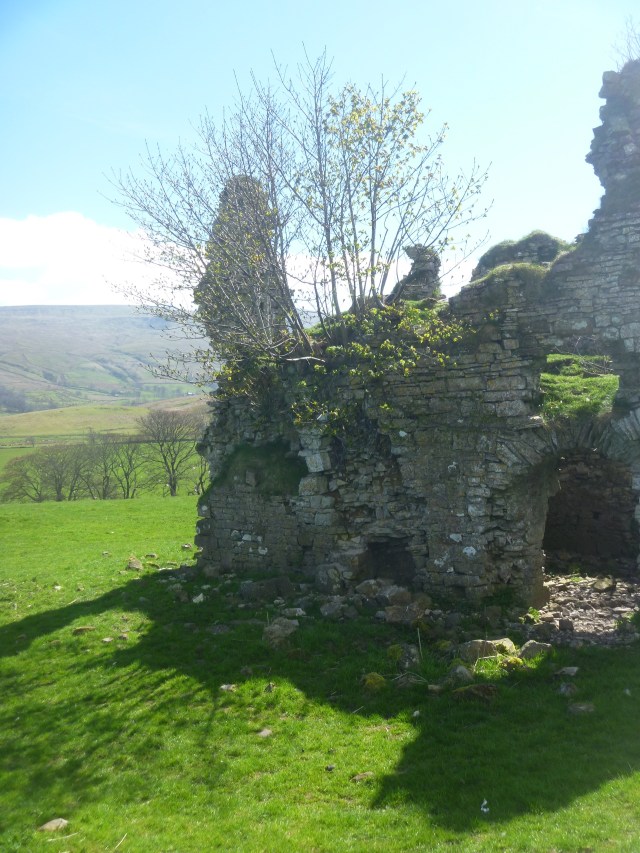
Lammerside Castle 3
The castle was occupied by a branch of the Wharton family, but is thought to have been abandoned in C17, when the family moved to the fortified manor house, Wharton Hall, near Kirkby Stephen.
The tower is constructed of coursed, squared rubble, measures 14m by 11m, with a barrel-vaulted ground floor, and survives to two storeys high.” [Website]

From the Castle ruins after lunch our route took us past Wharton Hall itself described here on the Visit Cumbria website.
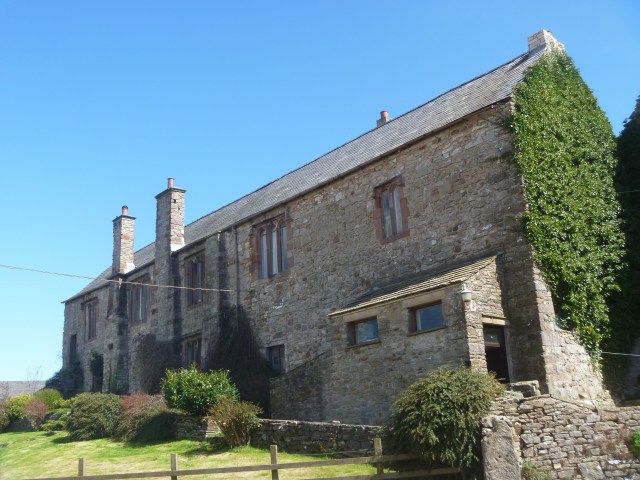
Wharton House

Wharton Hall

Part of Wharton House

[Wharton Hall] is a very impressive 14th century tower house with a gatehouse, internal courtyard and out buildings dating up to the 17th century. The gatehouse, although ruined is very solid, and together with the curtain wall, completely surrounds the medieval courtyard.

Crossing the River Eden and passing close by the village of Nateby we later arrived at our next point of interest – The Eden Viaducts.
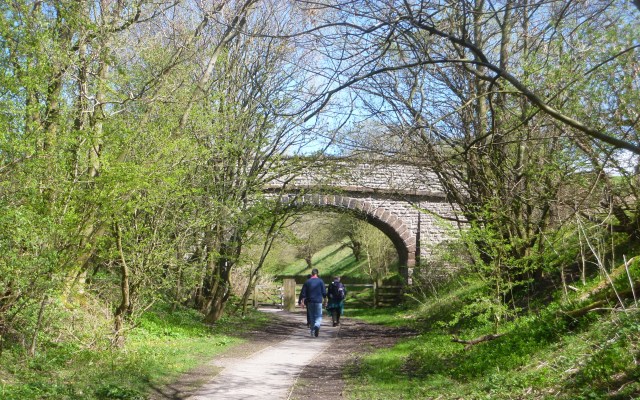
Eden Viaducts track

The Northern Viaduct Trust acquired part of the old Stainmore Railway track and several walks have been developed in the area connecting with the trackbed of the former railway.

Just above and to the south of Kirkby Stephen ran the long forgotten and scenically majestic Stainmore Railway. For a 100 years it linked Darlington with Tebay and Penrith, a 60-mile steam- worked railway across some spectacularly engineered viaducts.” [From Leaflet]
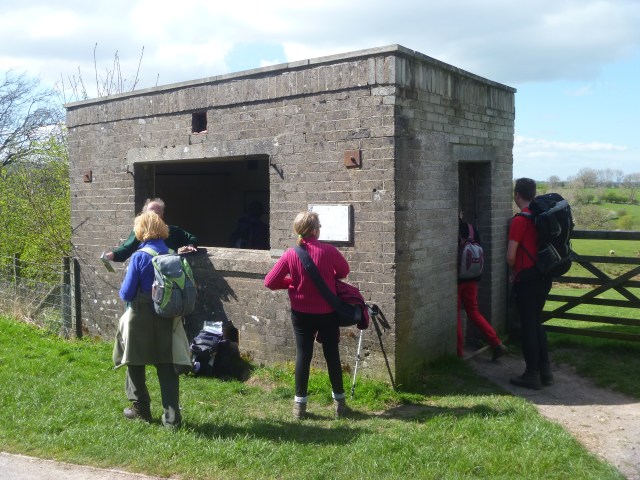
Platelayers Hut info

Abandoned Platelayers’ Hut now provides Information

Information boards are provided in the Platelayers’ Huts along the former track and there is some overlap with a Poetry Path around Kirkby Stephen town. Read here also about Thomas Bouch the engineer responsible for this dramatic railway and his ill-fated Tay Railway Bridge.

Poetry stone

Poetry Stone on the Poetry Path

Poetry close up

Poetry Stone close-up

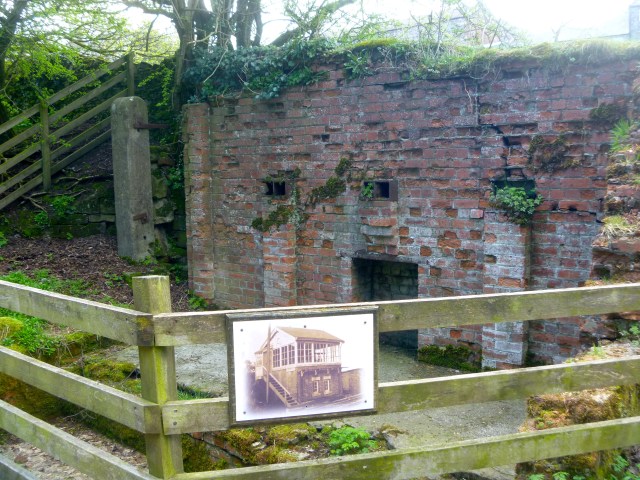
Signal box remains

Today’s Ruins of a Signal Box and the Box in better days
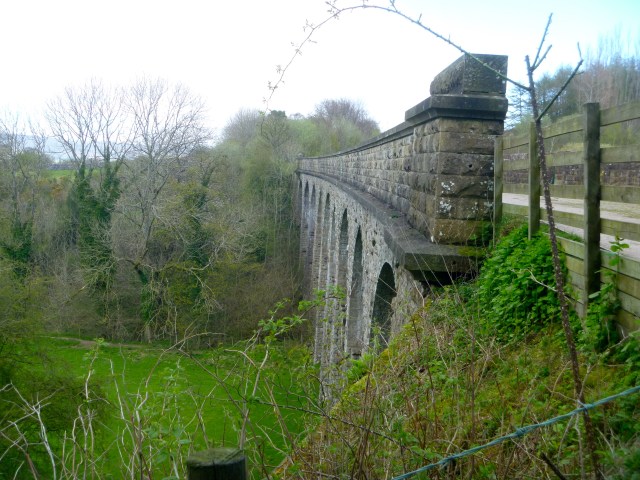
Merrygill Viaduct

Merrygill Viaduct

Leaving the Viaducts behind us we joined the Coast-to-Coast Long Distance Footpath for the final leg of the walk into Kirkby Stephen where everyone was having a fun time at the street stalls, fairground rides and viewing and riding on the vintage vehicles.
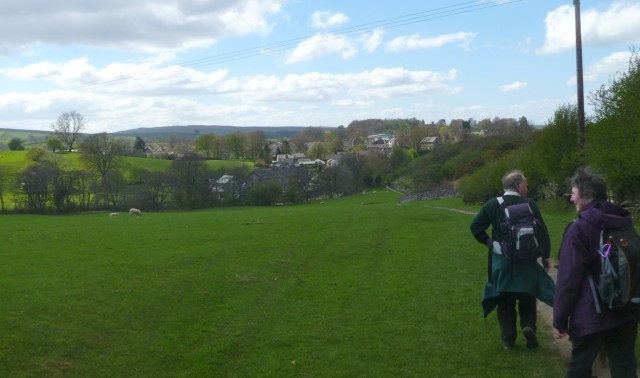
Approaching KS

Approaching Kirkby Stephen along the Coast-to-Coast path
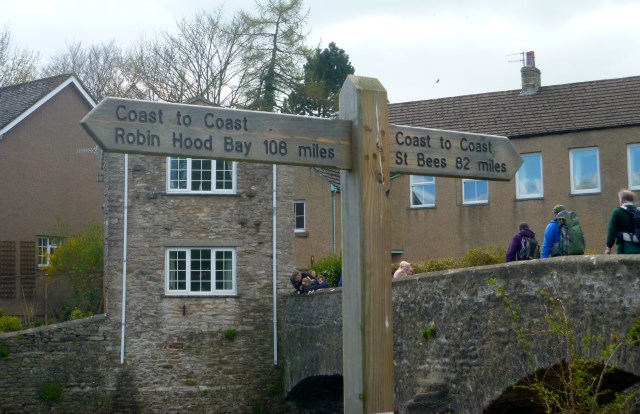
Coast to Coast at KS

Coast-to-Coast Path Sign at Frank’s Bridge, Kirkby Stephen
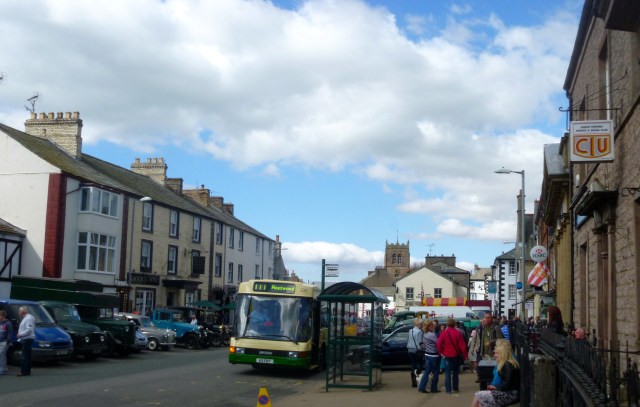
KS

Kirkby Stephen on Easter Saturday

Our walk officially ended in Kirkby Stephen but there were plenty of free vintage buses to take us the final one and a half miles up to the railway station. I caught the number 134 Routemaster London Double-Decker (diverted from it’s Highgate Route). Unfortunately at the station I had a very long wait – I had just missed the 15.22, the 16.39 was cancelled and the 17.14 was running over an hour late. But it was such an interesting walk and the train had brought us so high up that we could enjoy wonderful extensive views with very little climbing effort. Even the delays in getting home didn’t take the shine off the day.

Vintage 134 Routemaster London Bus

My Vintage Red London Bus at Kirkby Stephen Station
Norman Stevens, ARA : Selected Prints : Royal Academy Artist of the Month

Back in 1984 we first ‘discovered’ Norman Stevens’ prints at the Bradford Biennale held at Cartwright Hall, Bradford from 15 April to 15 July.

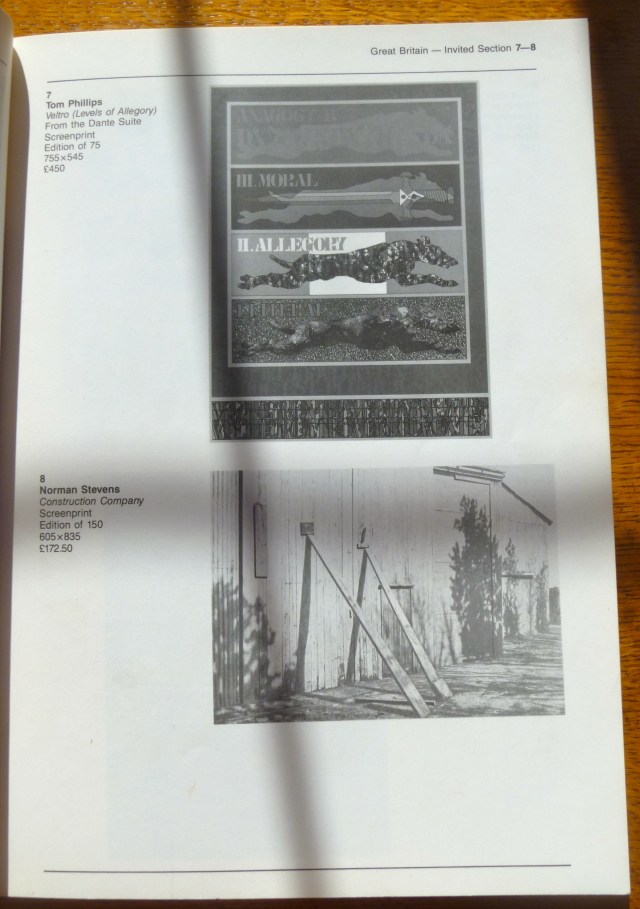
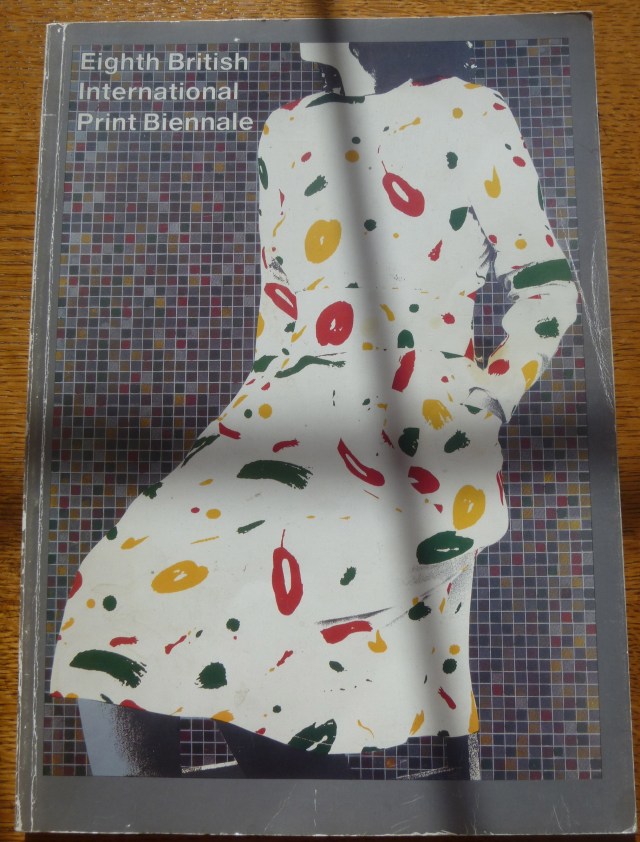
Biennale Catalogue

Catalogue from the 1984 Bradford Biennale

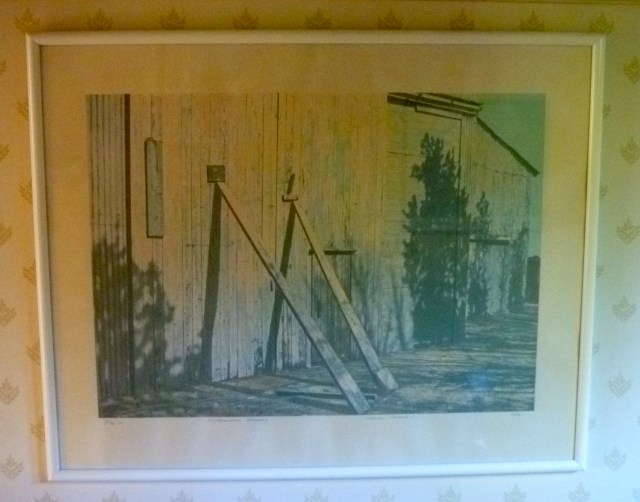
At that show we remember admiring Stevens’ print “Construction Company” and a year or so later visited The Coriander Studio and to see “Laurel Tree, Nettlecombe Court” and others of his prints.

Construction Co Cat page

Construction Company Catalogue Page

Construction Co ours

Construction Company

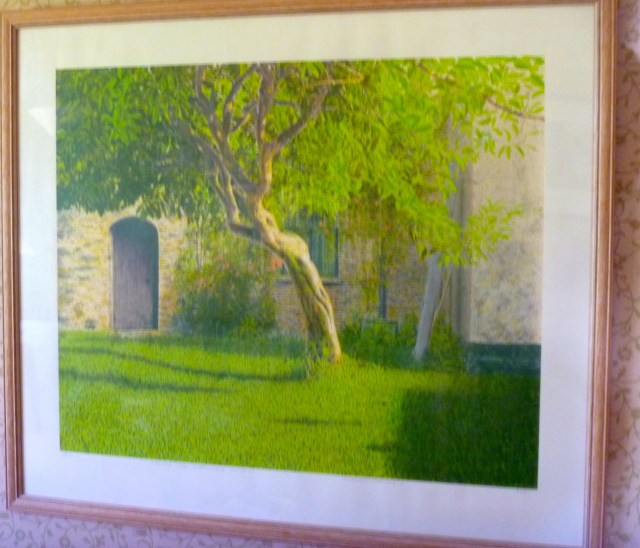
Laurel Nettlecombe

Laurel Tree, Nettlecombe Court

Just by chance we discovered that The Royal Academy was showing a selection of Stevens’ prints in their ‘Artist of the Month’ slot. Fortunately, not showing for a month but from 26 February until 25 May 2014. I was able to check out the exhibition last Sunday.

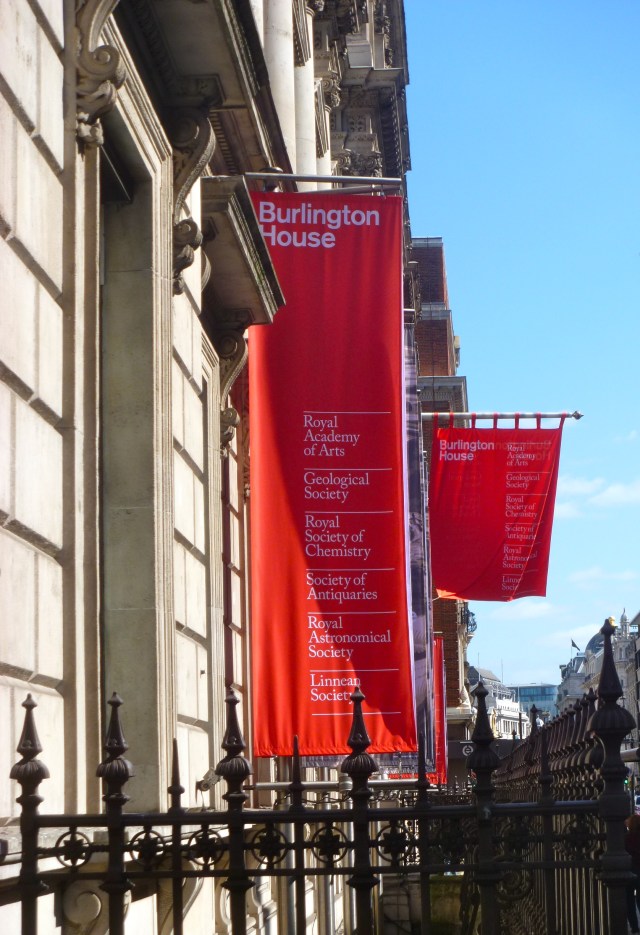
Burlington House flag

Welcome to Burlington House – Home of the Royal Academy

It was interesting to see the other prints on display including his version of Monet’s Garden and I love his topiary prints and his fences and gates.

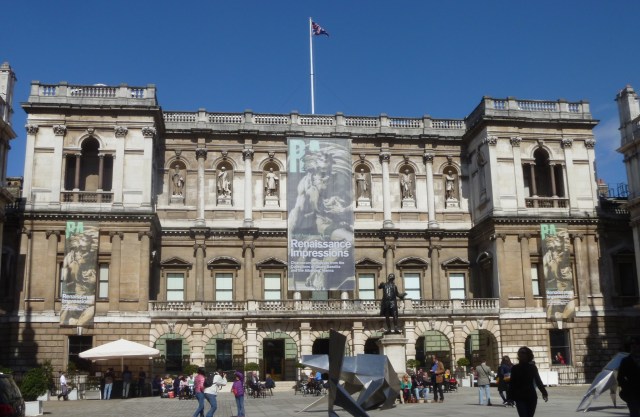
RA

The Royal Academy

Norman Stevens was born in Bradford in 1937 and was a student at Bradford College of Art and contemporary of David Hockney RA. He taught himself printmaking and this was his preferred medium. Sadly he died in 1988.

NS Poster

The Royal Academy says of this two room exhibition :

This spring we present the much admired prints of Norman Stevens ARA, an artist who originally trained as a painter alongside John Loker, David Hockney RA and David Oxtoby in the 1950s at Bradford College of Art. A master of the medium, Stevens taught himself printmaking in the early 1970s and in the process, found an art form that perfectly suited his meticulous and subtle approach. Exploring the landscape and built environment, his prints make use of colour, light and shade to powerful and often haunting effect. Human presence is always suggested but never shown, a quality that the art critic, William Packer, has likened to a ‘game of hide-and-seek with the real world’. At the heart of the exhibition are important groups of prints including Stevens’ depictions of Venetian blinds and ‘clapboard’ houses, his distinctive images of Stonehenge and his captivating views of English formal gardens. From his first black and white etchings to the large-scale prints he produced in the 1980s, discover the work of an artist who developed an international reputation for his technically brilliant and beguiling prints.” [RA website]
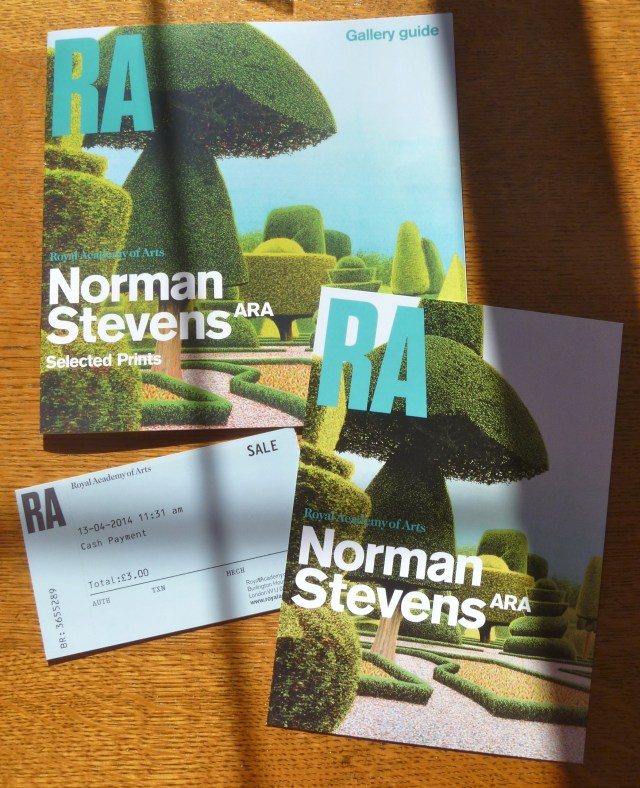
N Stevens guide etc

It’s possible to visit just to see this show. The charge is £3 and a rather nice Gallery Guide is included in the price. There are no books, print reproductions nor postcards of Stevens’ work available from the shop but one book did take my fancy!

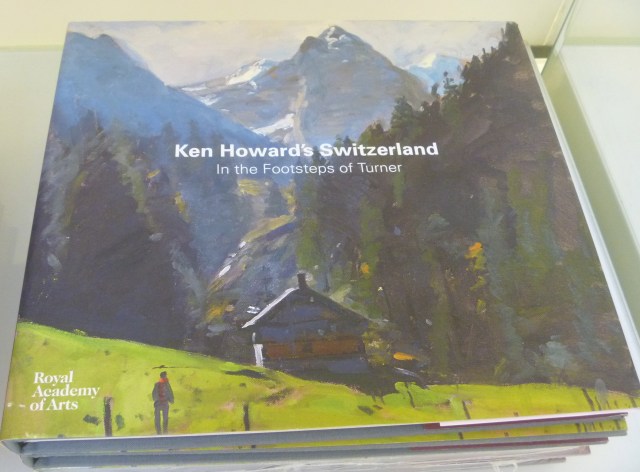
Ken Howard's Switzerland

Ken Howard’s Switzerland : in the Footsteps of Turner

“William Kent : Designing Georgian Britain” at The Victoria and Albert Museum

Polymath Transforms Georgian England!

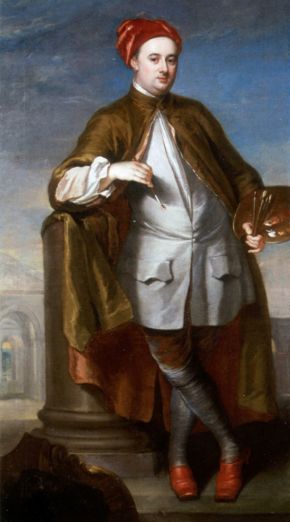
w290

 William Kent (1685 – 17480) [source]

What a man! William Kent was hugely influential within Georgian English aristocratic circles. His designs spanned the widest spectrum of English upper class design from art to architecture and from furniture to gardens. Kent’s patrons included Lord and Lady Burlington, the Cokes of Leicester, the Walpoles of Houghton. Influenced by his early visits to Italy it’s surprising that William Kent is not far better known. This exhibition at the V&A tells his story with rich illustrations and varied artefacts. Go yourself and ponder why William Kent is not more familiar to us today.

I wrote that little appreciation/review for the ticket agent that supplied our tickets for the show last Friday afternoon.

The Georgians are big business as 2014 marks 300 years since the accession of George I thus beginning a succession of Hanoverian Kings of England which lasted until 1830.

The season started well with the British Library’s overview The Georgians Revealed that covered many aspects of life in 18th and early 19th century Britain. There are significant exhibitions at The Queen’s Gallery : The First Georgians: Art & Monarchy 1714-1760 and at The Historic Royal Palaces (Kensington Palace; Kew Palace and Hampton Court Palace) : The Glorious Georges. And BBC television is currently broadcasting a month-long Georgian season.

William Kent Paintings

Slideshow of William Kent Paintings

William Kent was born in Bridlington, North Yorkshire, the son of a carpenter. From 1709 to 1719 he studied in Rome, copying Old Master paintings and learning the techniques of etching and engraving. Here in Italy he was to meet Lord Burlington who, with his wife, became patron and good friend to Kent. Burlington gave him his first commissions back in England and helped to set Kent off on his course designing for many of the great English landowners.

kent_holkham_4

 A Kent-designed chair from Holkham Hall

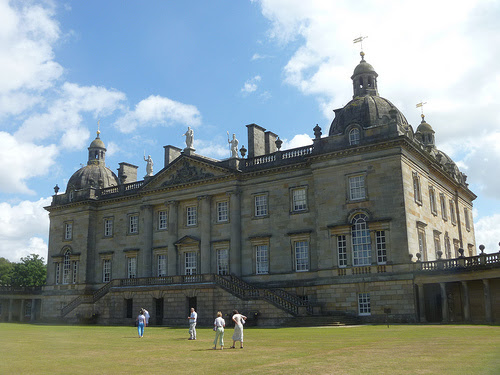
Kent designed the interiors of many stately homes including Houghton Hall, home of the Walpoles, in Norfolk.

Houghton Hall

 Exterior of Houghton Hall, Norfolk

Stowe

Stowe Landscape Garden with Gothic Temple and Palladian Bridge

Most of all Kent is best-known to me as the designer of landscape gardens.

Elysium

Kent’s landscape designs confirm his status as the artistic genius of the era, a father of the English landscape garden. In contrast with the French and Dutch fashions for formal gardens, Kent took his inspiration from the ideal landscapes of pastoral literature and painting. His design drawings are not detailed plans, but poetic evocations of the landscape effects he was attempting to achieve.

Kent’s gardens could be places of activity and good fellowship, or places of reflection and solitude. Carefully crafted vistas lead the eye out beyond the garden into the surrounding countryside. He designed over fifty garden buildings which were positioned to act as picturesque focal points for views and also as places from which to contemplate the garden. His buildings vary from sober copies of ancient buildings to wild flights of fancy, from pyramids, triumphal arches and Chinese kiosks to grottoes and artificial ruins.” [V&A website]

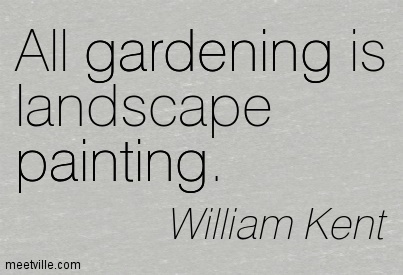
Quotation-William-Kent-painting-gardening-Meetville-Quotes-104548

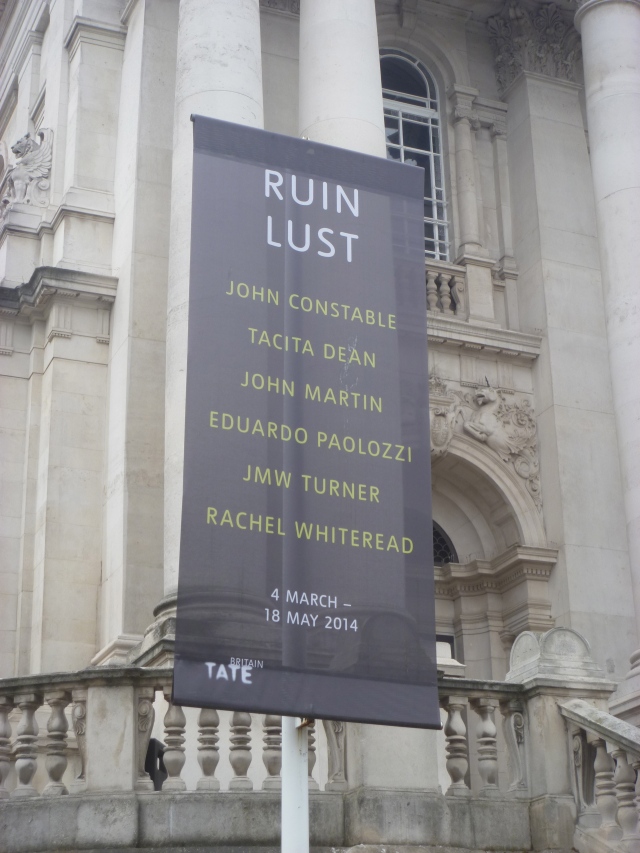
Ruin Lust at Tate Britain

RUIN : “The physical destruction or disintegration of something or the state of disintegrating or being destroyed”
According to the little leaflet that accompanies this Tate Britain exhibition the title Ruin Lust was taken from the German word Ruinenlust. 
Ruin Lust

Ruins are curious objects of desire: they seduce us with decay and destruction” it goes on to say. Although I found the whole show intriguing and was amazed at the countless interpretations of the word ‘ruin’, by far the most interesting part for me was the initial ‘Pleasure of Ruins’ section.

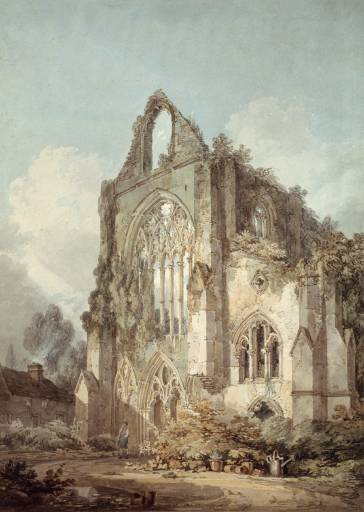
Ruins of West Front, Tintern Abbey circa 1794-5 by Joseph Mallord William Turner 1775-1851

W M Turner’s Tintern Abbey (1794) which was emblematic of the new trend to visit ruins at home rather than on a Grand European Tour.

Here were the traditional interpretations; the paintings, photographs and etchings that I had expected to see in an exhibition with this title. My interest in landscape and man’s influence on it is mainly historical. So, although I appreciate that modern day ‘Bunker Archaeology’ and Tacita Dean’s films and ‘Ruins in Reverse’ and [modern] ‘Cities in Dust’ all have a part to play in an overall picture of ruins over the centuries I prefer to see historical ruins of abbeys and castles and even the man-made ruins that gave character and focal points to 18th century landscape gardens.

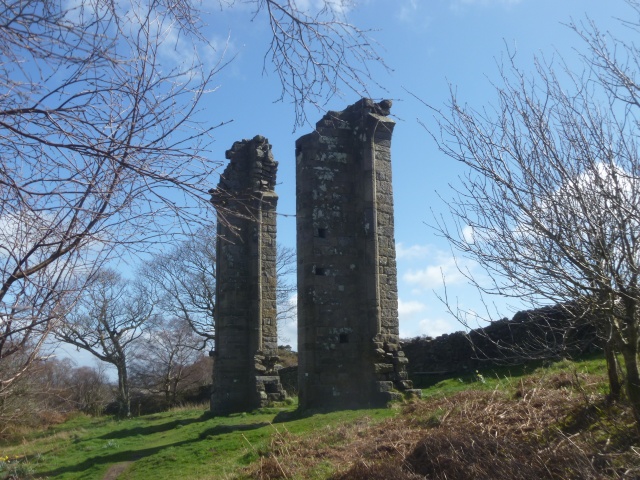
Leaving Yorke's Folly

The man-made Yorke’s Folly in Nidderdale, North Yorkshire built in 1810

“A craze for ruins gripped European culture in the eighteenth century. Classical remains inspired artists such as Piranesi to depict great civilisations falling into decay. British architects and garden designers embraced this ruinous aesthetic, and artificial ruins were a popular addition to many great estates. William Gilpin’s writings on the picturesque encouraged many tourists — as well as artists such as J.M.W. Turner and John Sell Cotman — to travel in search of picturesque views of medieval ruins. Later, photography became essential to the recording and reimagining of ruins.

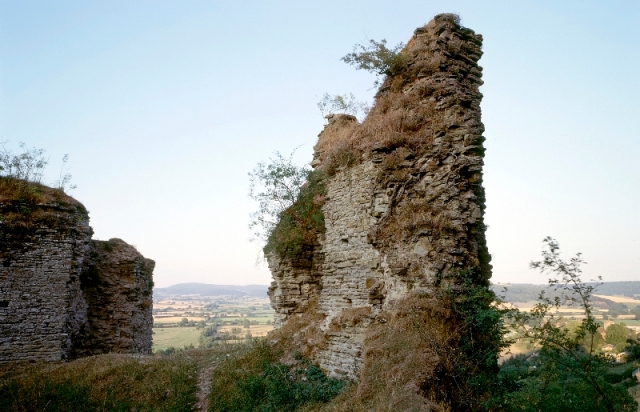
I remember reading in the newspaper probably 15 years ago [and commending] English Heritage’s intentions to conserve and deliberately retain the wildness surrounding Wigmore Castle in Herefordshire. Some ruins these days are just too manicured.

gallerywigmorecastle1

A GLORIOUS RUIN
Wigmore has an overgrown appearance that once characterised many ruined sites. When conserving the site in the 1990s, English Heritage deliberately retained its wildness, as the castle had become home to rare and unusual species including lesser horseshoe bats and wild flowers like ploughman’s spikenard. Accumulated debris was allowed to remain, and the grasses, ferns and flowers growing on the walls were carefully lifted up and replaced as ‘soft-capping’ to protect the walls from rain and more destructive plants like trees. [From the EH website]

To finish here are some recently visited picturesque ruins in Yorkshire and beyond.

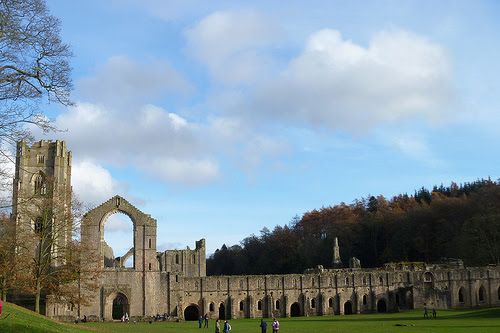
Fountains Abbey

Fountains Abbey

The Ruin

The Ruin a Landmark Trust property at Hackfall, North Yorkshire

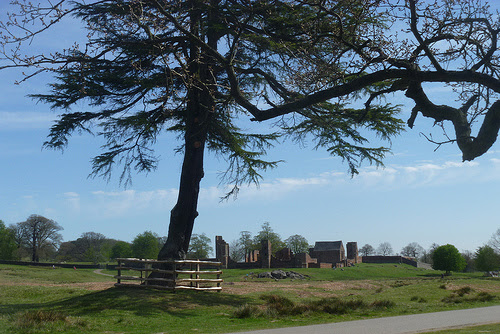
Bradgate Park

Ruins of the former home of Lady Jane Grey, Bradgate Park, Leicester

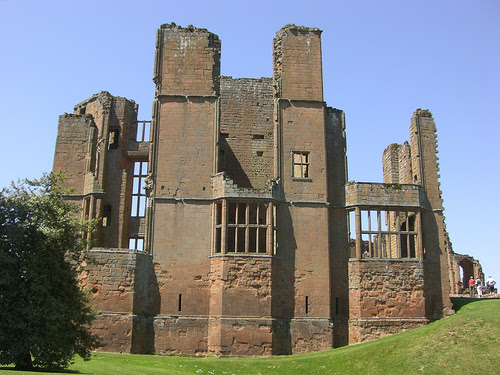
Kenilworth

The Ruins of Kenilworth Castle

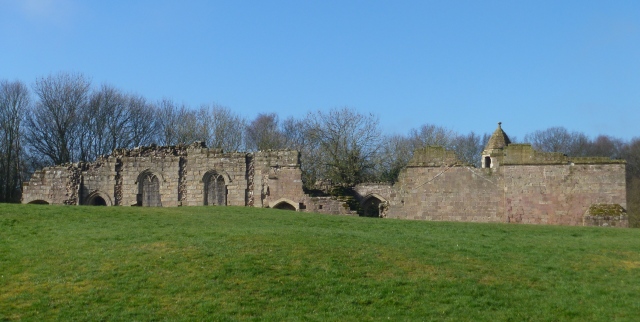
Spofforth Castle

Spofforth Castle, Yorkshire, visited on a recent hike

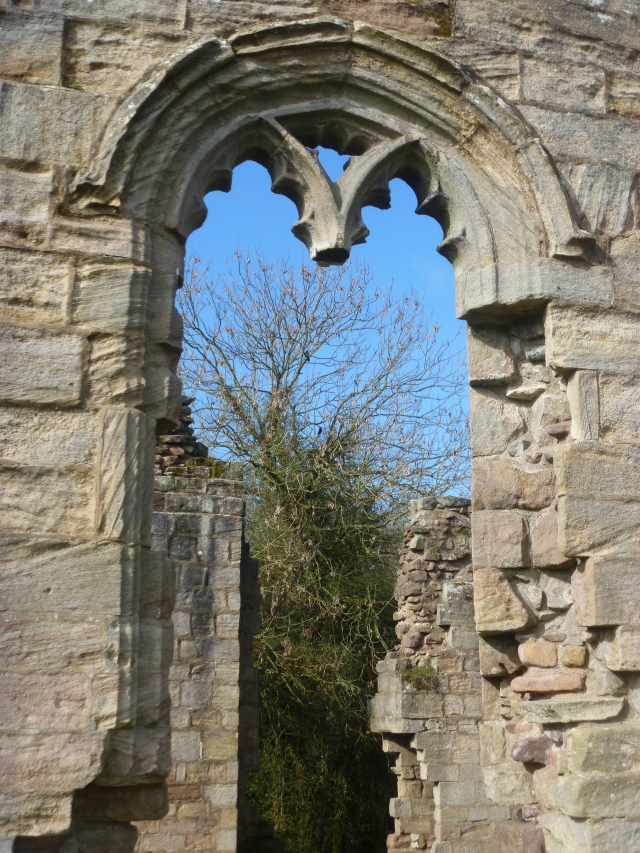
Window ruin Spofforth

Ruined Window, Spofforth Castle

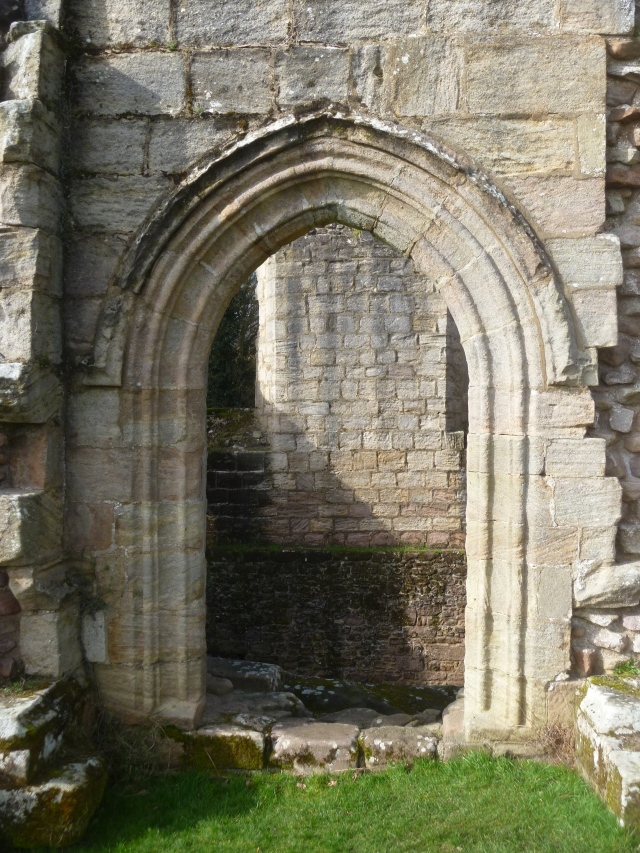
Doorway ruin Spofforth

Ruined Doorway, Spofforth Castle

Here is a brief review of the exhibition by Christopher Beanland; which finished by showing ‘The London Nobody Knows’ documentary featuring James Mason in the derelict Bedford Theatre in Camden. The unabridged film is now available on DVD.


Tea and Books in Oxford

When I meet with my online book group chums there is not much chance of sightseeing. Rather we seem to stagger from book shop to tea shop with our bags getting heavier and our purses lighter (although every purchase is always a bargain) and tummies fuller.

Saturday was no exception. Back in December Simon, over at Stuck-in-a-book, had invited us to join him for a day in Oxford. Although it is possible to get there and back in a day from Leeds for easier travel I opted to go via two nights in London. This meant a not so early start from Paddington in the company of another group member on Saturday morning.

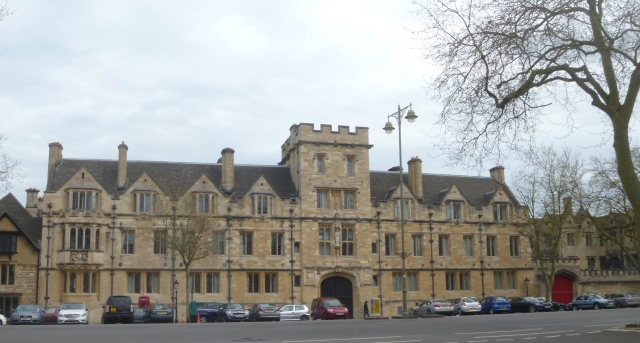
St John's Oxford

St John’s College, Oxford, on St Giles

The Jam Factory is just across the road (more or less) from Oxford Railway Station. (I should just add that from the station there is no indication that one is in the city of dreaming spires and all that; but we did eventually pass hurriedly by one or two colleges and churches so the joys of Oxford await me on a future visit.) The JF is a lovely light and airy venue and the food looked excellent although I only shared a pot of Oxford Blend Tea before we set off on our books and teas trail. Whilst we all assembled at this venue Simon told us more about the new project that he’s a founder member of Shiny New Books an online book review magazine. I urge you to pop over now and have a look.

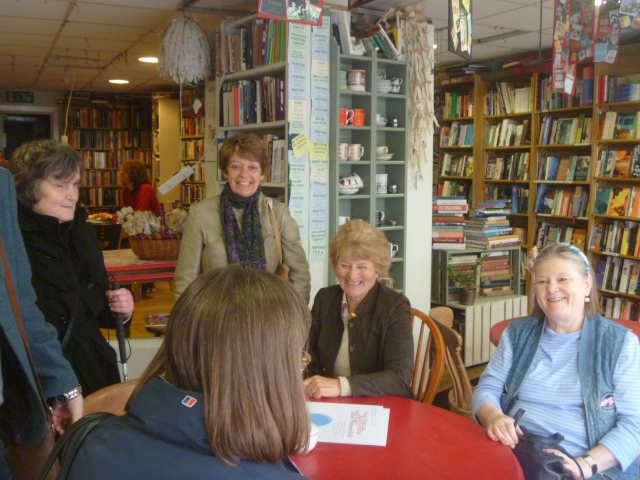
In Beatnik Books

At Albion Beatnik Books

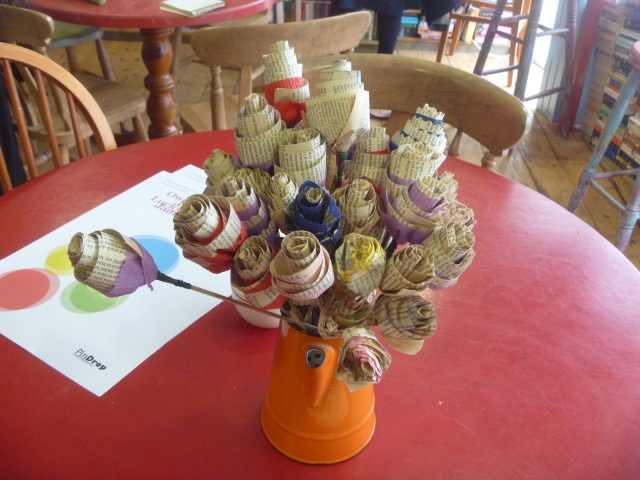
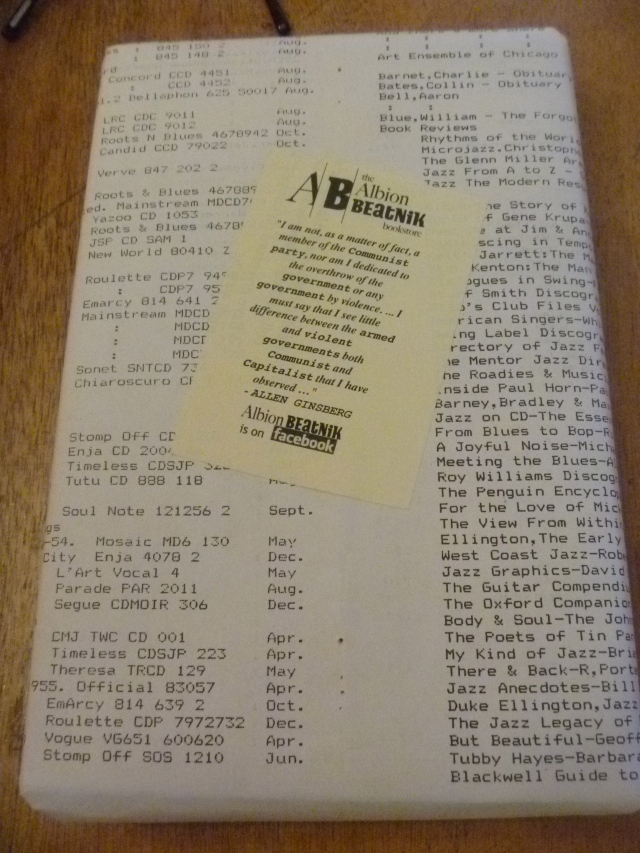
From the Jam Factory we headed to The Albion Beatnik Bookstore at 34 Walton Street. “Opened in 2009, this bookworm’s paradise is the coolest and most maverick of Oxford’s many bookstores. It offers an eclectic selection of new and secondhand books with a particular focus on jazz and blues … , American pulp fiction, graphic novels, beatnik poetry, Virginia Woolf and the Bloomsbury Group and neglected 20th century novels.”  Says my 2011 LV City Guide to Edinburgh, London and Oxford. On the table were flowers made of printed paper and our purchases were wrapped in more printed paper with a quotation sticker to seal.

Beatnik books


Beatnik book

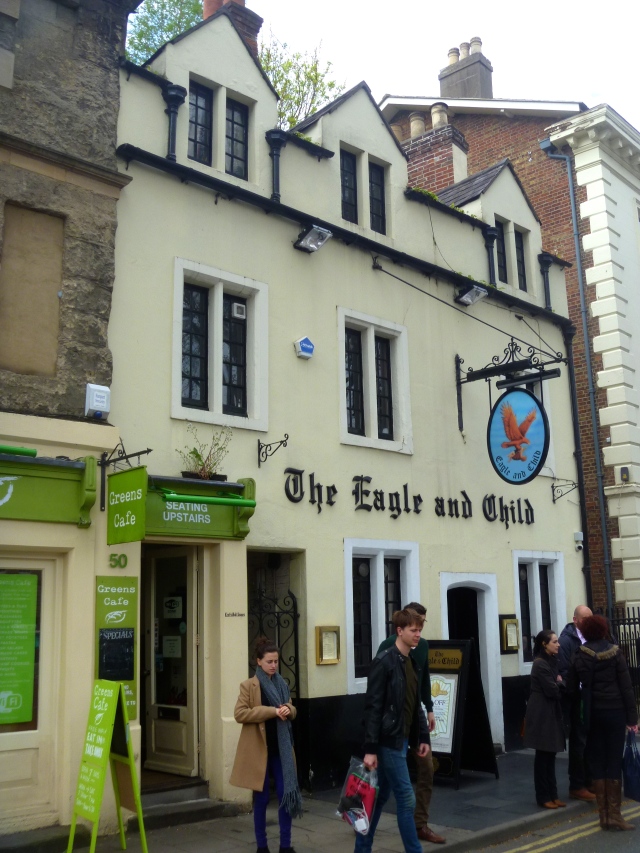
Our next stop was the Oxfam Bookshop on St Giles but I also spotted the pub The Eagle and Child which has associations with the Inklings writers’ group which included J. R. R. Tolkien and C. S. Lewis.

Eagle and Child


“A fascinating past :
The Eagle and Child lays claim to a number of interesting literary connections. J.R.R. Tolkien, C.S. Lewis and fellow writers met here and dubbed themselves ‘The Inklings’. They nicknamed the pub ‘The Bird and Baby’. A public house since 1650, our hostelry takes its name from the crest of the Earls of Derby. During the Civil War, our building was used as the playhouse for Royalist soldiers.” [From the pub website]

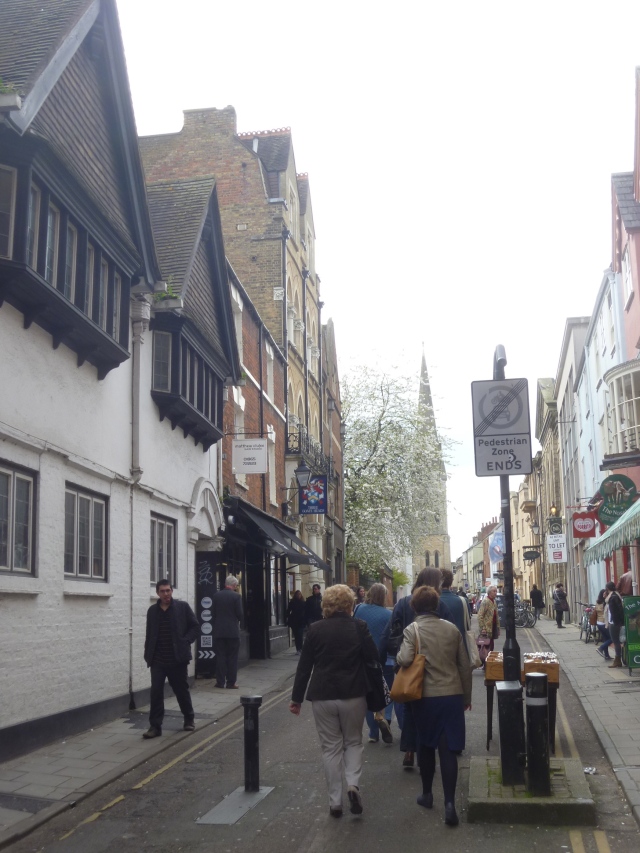
St Michael's St

St Michael’s Street

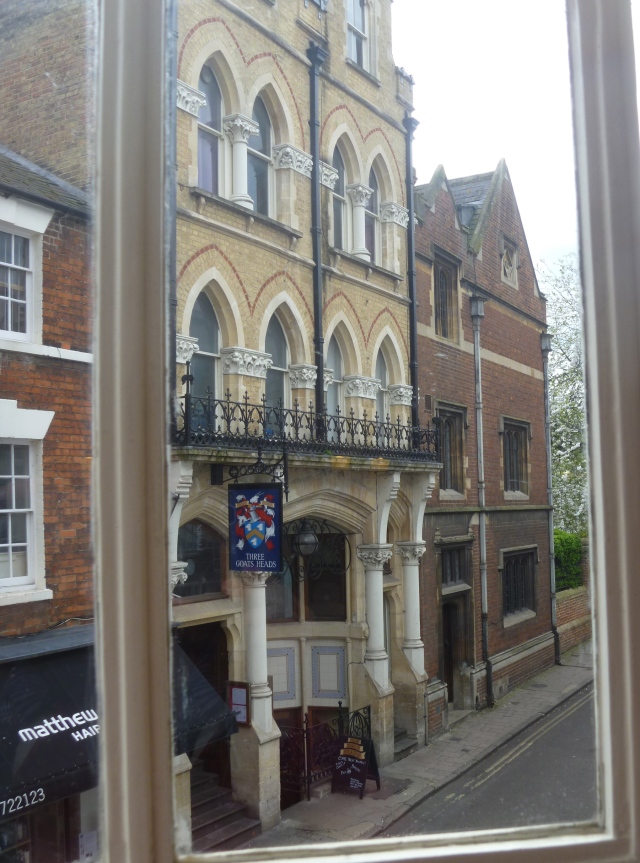
Time for lunch and the recommended venue was The Nosebag on St Michael’s St. I immediately recognised the address and building of The Oxford Union for it is the location of a Landmark Trust apartment : The Steward’s House. Even though it was after 2pm The Nosebag was packed so rather than miss out we had to split into two groups of 3 and 4. After the meal we dragged together enough chairs round one table in order to discuss the next steps in the campaign.

Oxford Union from The Nosebag

The Steward’s House and Oxfrod Union (red brick building) from the Nosebag

Pretty Arcadia is next door. It’s doesn’t just sell books but has a few displays and boxes outside and lots of vintage cards and accessories inside.

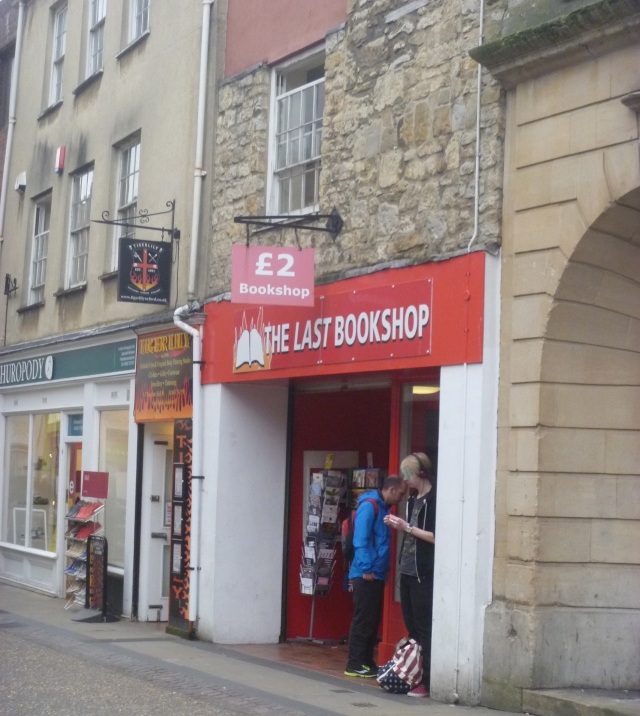
Before the end of our day we reached The Last Bookshop. This is also known as the £2 bookshop. It’s a great source of, presumably remaindered, new paper and hard back books. All priced (as it says on the tin) at £2. If I wasn’t such a devoted library user I would have bought loads here.

Last Bookshop

Actually, not The Last Book Shop for us

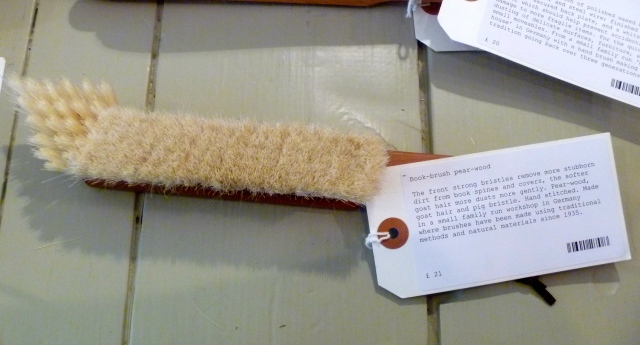
Our final two shops were – sellers of brushes not books – Objects of Use on Market Street – and a further Oxfam Bookshop on Turl Street. At least I thought OoU was more or less a kitchen wares shop as my companion and I only hovered near the entrance at a table full of brushes for different uses but I see from the website that it sells so much more. Apart from at The Home at Salts Mill this is the only other place that I have seen my Book Brush!

Book Brush

The very handy Book Brush

Book Brush Label

Instructions for Use

With trains and buses to catch around 5.30 time was pressing so we had a final tea and cake at ‘news’ and discussed plans for a Tenth Birthday Celebration in the autumn. All too soon it was time to hurry to station and rest our weary legs and heavy bags on the journey back to London.


An August Bank Holiday Lark

The men do some strange things over in Lancashire. They wear fancy straw hats with real flowers in them; they dance in lace-up shoes with wooden soles and they celebrate something called The North West Rush Cart Tradition by building and decorating a tall cart with rushes upon which they place a saddle and one of them is brave enough to climb up onto the top of this cart with a kettle on a rope – don’t ask!  At least they did in 1914 – 1915 when this play was set.

ABHL-A5

Written especially for  Northern Broadsides Theatre Company ‘An August Bank Holiday Lark’ is based on a rural village in Lancashire where the cotton mill rules but the old traditions still continue.

Commissioned to write a suitable play as a Remembrance for the World War I Centenary Deborah McAndrew has produced a winner. There is music and dancing and humour and traditional customs and, I’m afraid, needless to say, tragedy as well. The title is taken from a line in Philip Larkin’s poem ‘MCMXIV’.

Those long uneven lines
Standing as patiently
As if they were stretched outside
The Oval or Villa Park,
The crowns of hats, the sun
On moustached archaic faces
Grinning as if it were all
An August Bank Holiday lark;

And the shut shops, the bleached
Established names on the sunblinds,
The farthings and sovereigns,
And dark-clothed children at play
Called after kings and queens,
The tin advertisements
For cocoa and twist, and the pubs
Wide open all day—

And the countryside not caring:
The place names all hazed over
With flowering grasses, and fields
Shadowing Domesday lines
Under wheat’s restless silence;
The differently-dressed servants
With tiny rooms in huge houses,
The dust behind limousines;

Never such innocence,
Never before or since,
As changed itself to past
Without a word – the men
Leaving the gardens tidy,
The thousands of marriages,
Lasting a little while longer:
Never such innocence again.

[Source]

Back in November last year I wrote about my great uncle Marshall Howman who was killed at Gallipoli in August 1915. The lads in this story enrol in the 6th Battalion Loyal North Lancashire Regiment which in real life suffered many casualties and great loss of life in the ill-fated August Offensive in the Dardanelles in 1915 .

It is currently showing at The West Yorkshire Playhouse in Leeds, which where I saw it this afternoon, but will move around the country for the next couple of months.


The Garden Museum

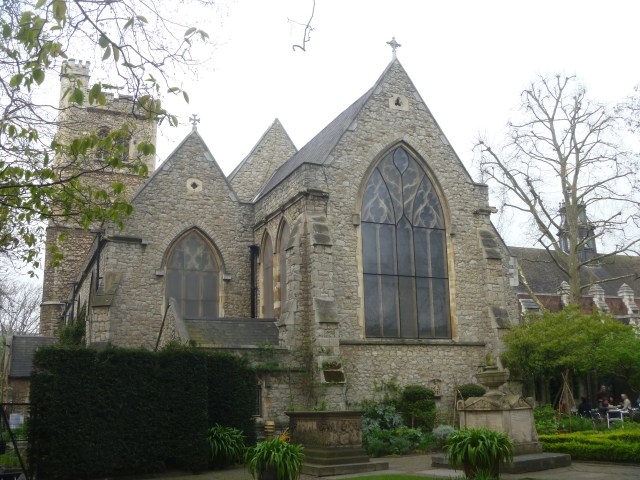
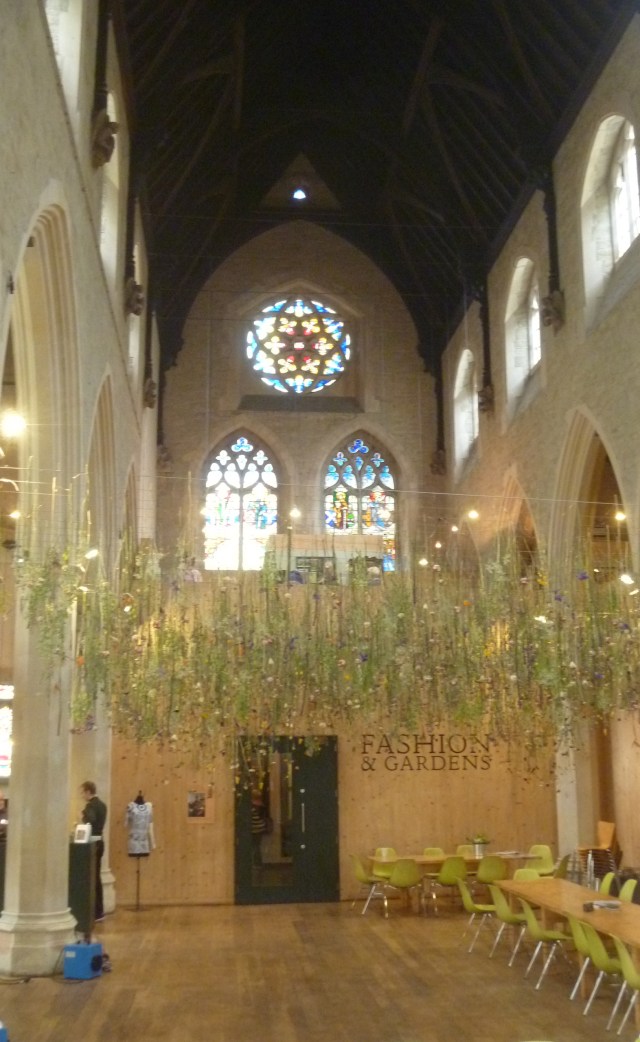
Some exhibitions, especially those national museum ‘blockbusters’, are just too unwieldy but the bijou exhibition Fashion and the Garden occupied just over half an hour of my visit the the Garden Museum on Thursday. Just a short walk along the Albert Embankment (opposite The Houses of Parliament) from Westminster Tube Station, the Garden Museum is right next door to Lambeth Palace, the official London residence of the Archbishops of Canterbury. GM exterior Formerly known as the Museum of Garden History, The Garden Museum is based in the deconsecrated parish church of St Mary-at-Lambeth. I’d met up with my friend Rosanna (the mosaics maker) with whom I had recently been to see The Isabella Blow Show at Somerset House. Garden Museum Church

Inside the Garden Museum with Rebecca Louise Law Installation

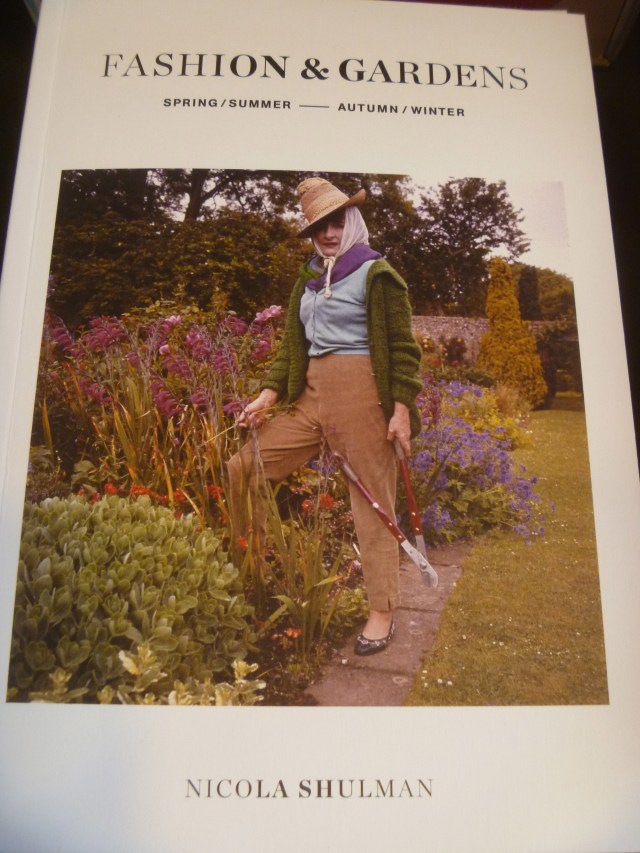
After morning coffee in the Museum Cafe (we couldn’t resist a tiny home-cooked apple tart as well – all the food served looked very acceptable!) we headed under Rebecca Louise Law’s installation ‘The Flower Garden Display’d’ for the Fashion and the Garden exhibit that I had read about recently in the press. Booklet

The Accompanying Booklet

Put together by Nicola Shulman, sister of British Vogue editor-in-chief Alexandra Shulman, the displays cover fashion and garden connections between the 17th and 21st centuries.

TV Introduction

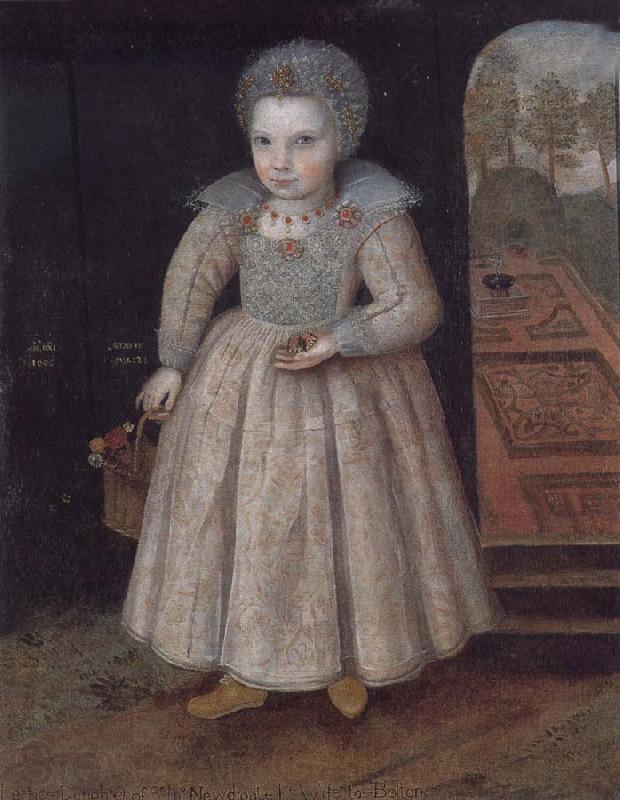
unknow artist-796785

This portrait of Lettice Newdigate (1608) by an unknown artist is the first known example of a Knot Garden in art.

Influences of gardens on fashion extend over time from knot gardens reproduced through embroidery on clothing to Philip Treacy hats such as the Orchid.

Philip_Treacy__Orchid

Philip Treacy Orchid Hat

I noted that an interest in flowers is a very English characteristic. They have featured in English clothing designs throughout the centuries where they are absent, for example, in France. There were exquisitely embroidered gloves and pockets; flowers feature in the silk designs of Anna Maria Garthwaite and other 18th century Spitalfields silk weavers; phaeton carriages were built very high so that owners and their families and guests could drive around their landscape parks and show off; and then there are the clothes that we wear when visiting gardens or even when gardening.

It’s a small show but perfectly formed.

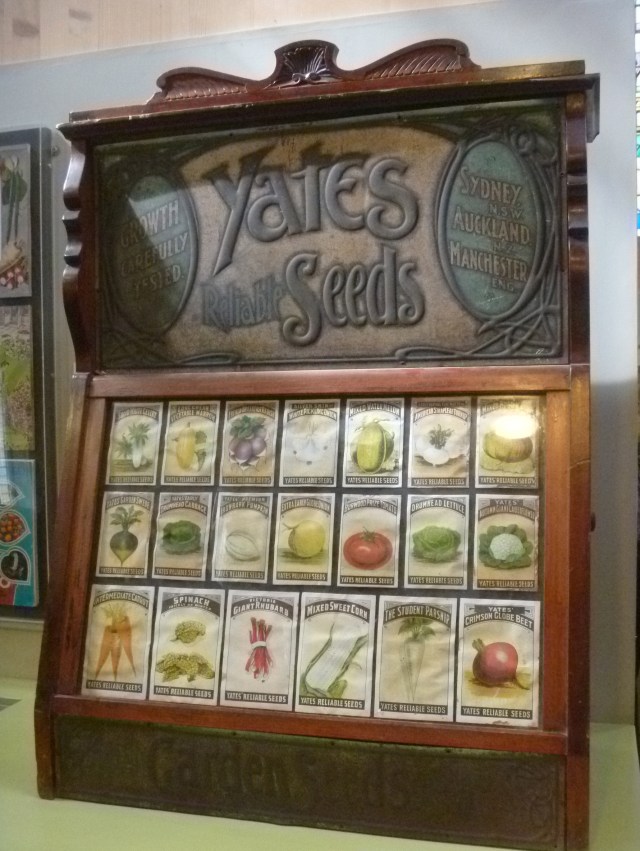
We had time to visit the permanent collection – gnomes; gardening tools from trowels to lawnmowers; rare books; paintings such the recently acquired ‘Portrait of a Black Gardener‘ by Harold Gilman; posters, ephemera and garden seed packet displays.

Yates Seeds

Yates Seeds. No longer sold in the UK but still available in Australia and New Zealand.

The Museum’s garden was created in 1980. At its heart is a knot garden designed by the Museum’s President, The Dowager Marchioness of Salisbury (who was then also re-making the gardens at Hatfield House, Hertfordshire). The reason for the seventeenth-century spirit of the design is that our garden also houses the tomb of the great plant-hunters, gardeners and collectors, John Tradescant the Elder (c.1570-1638) and Younger (1608-1662), the rediscovery of which originally inspired the creation of a museum of garden history in the deconsecrated, and then derelict, church of St Mary-at-Lambeth.” From the Garden Museum website.

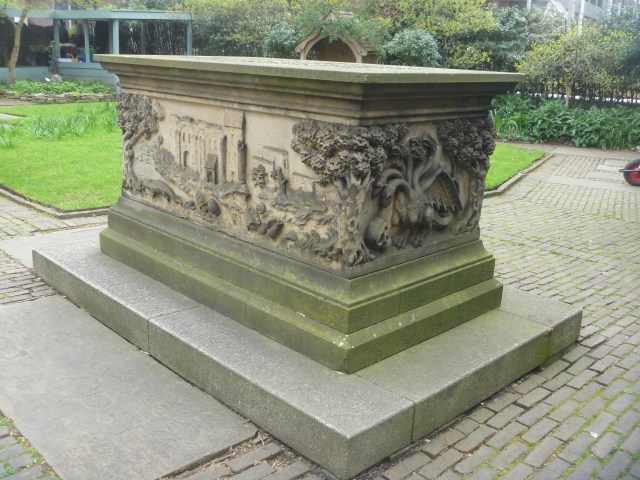
Tradescant Tomb

The Tradescant Tomb

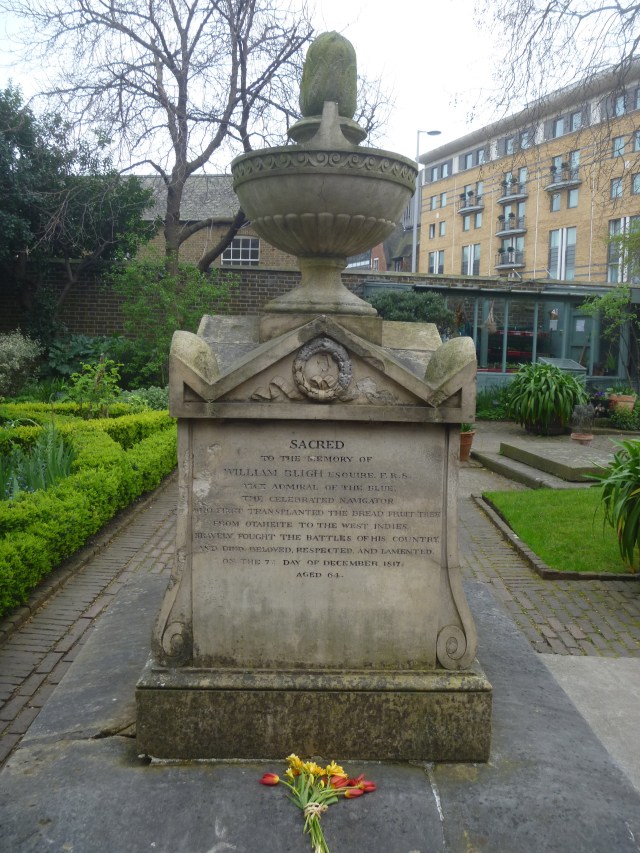
In addition to the tomb and monument to the Tradescants is the tomb of Captain William Bligh of ‘The Bounty’.

Tomb of Bligh

Captain Bligh Tomb

I’m Invited! – A Shopping Evening at The London Review Book Shop

You’re invited!

At the London Review Bookshop, we have some upcoming events that are too good to keep to ourselves. Tickets are limited, so book early to avoid disappointment :

April Customer Evening

Wednesday 2 April, 6 p.m. – 8 p.m.
Browse our shelves with a glass of wine and an Eccles cake from the London Review Cake Shop, and get 10% off any books, DVDs, cards and stationery purchased on the evening. We are also offering a FREE gift wrapping service on the night.

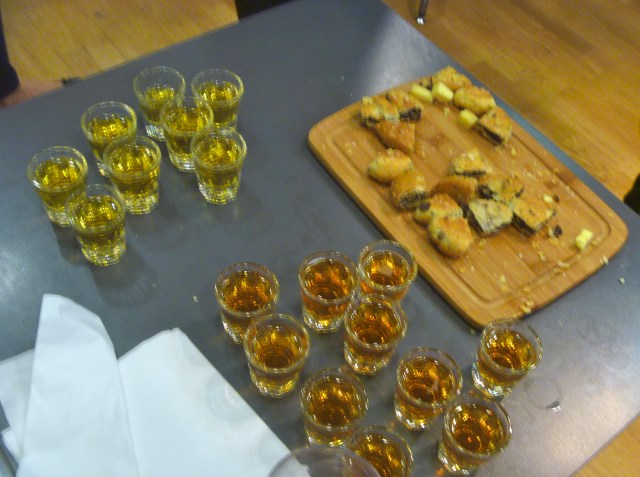
Tonight’s menu: According to The Bloomsbury Cookbook, Virginia and Leonard Woolf considered Eccles cakes suitable sustenance for type-setting and printing at the Hogarth Press. We think they make suitable sustenance for book browsing too! We’re pairing them with nutty Lancashire cheese and plenty of Russian tea.

Caravan tea

Eccles Cake pieces, Lancashire cheese crumbs and slurps of Russian Caravan Tea

As well as the usual treats – wine and nibbles and 10% off books – you’ll have the chance to win a copy of the beautiful Bloomsbury Cookbook, courtesy of Thames & Hudson. Just print a copy of your confirmation email and hand it in to one of our booksellers at the Customer Evening for the chance to win.

Good luck!

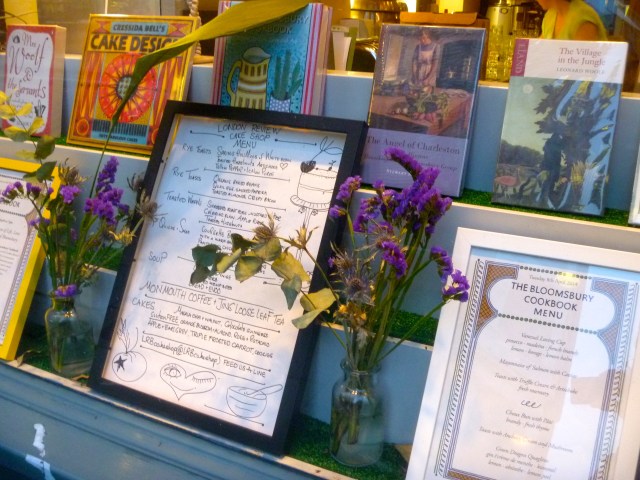
Bloomsbury cook book

The Bloomsbury Cookbook Window Display

This message arrived in my email Inbox a few weeks ago and I worked out that my next visit to London would coincide with this customer evening. The London Review Bookshop is another of my favourite London shops. On many occasions I have visited the Cake Shop with friends, family and to meet members of the online book group. It’s one of our favourite venues.

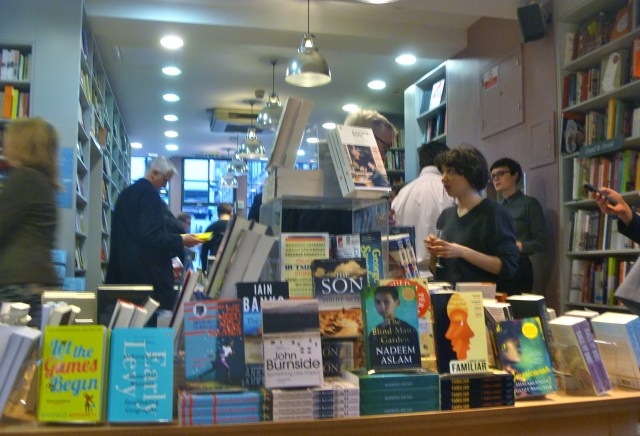
Shopping evening

Shopping Evening at London Review Bookshop

However, on many visits, time in the Cake Shop takes priority and I find I have little time to browse the bookshelves. So I was looking forward to spending time in the actual bookshop for a change.

The Bloomsbury Cookbook looked very tempting … but I was expecting to win a copy! I haven’t received the ‘winners email’ yet though 😦 . I think I will reserve a copy from the Library as it may be useful to contribute to creating the atmosphere when I visit Sussex and the Bloomsbury connections later next month.

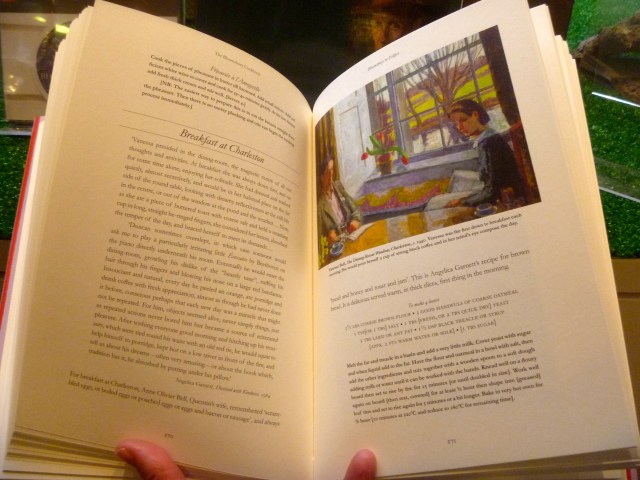
Charleston breakfast

 Breakfast at Charleston

I spotted some other books to add to my list for the future :

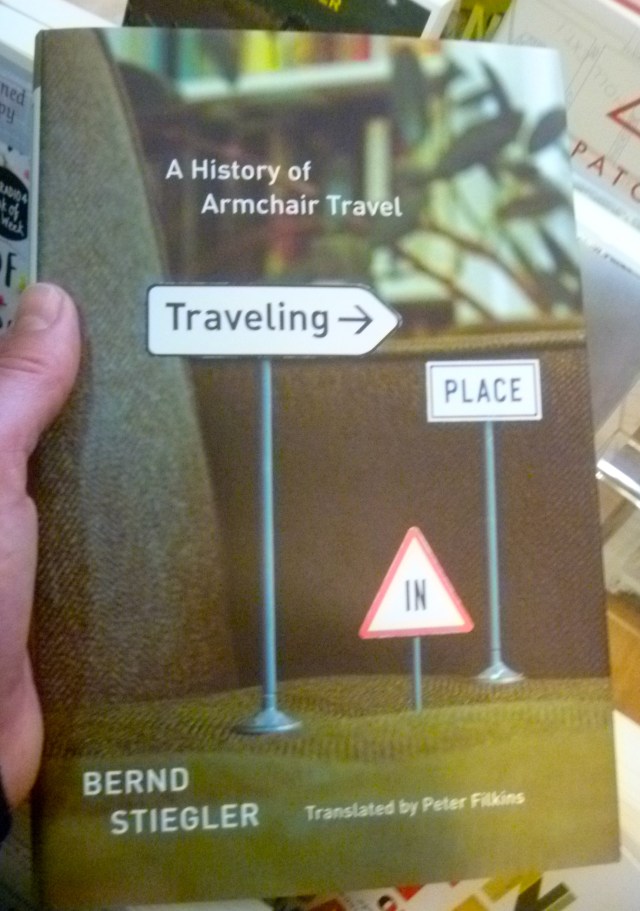
History of Armchair travel

A History of Armchair Travel : I do a bit of this. What’s not to like?

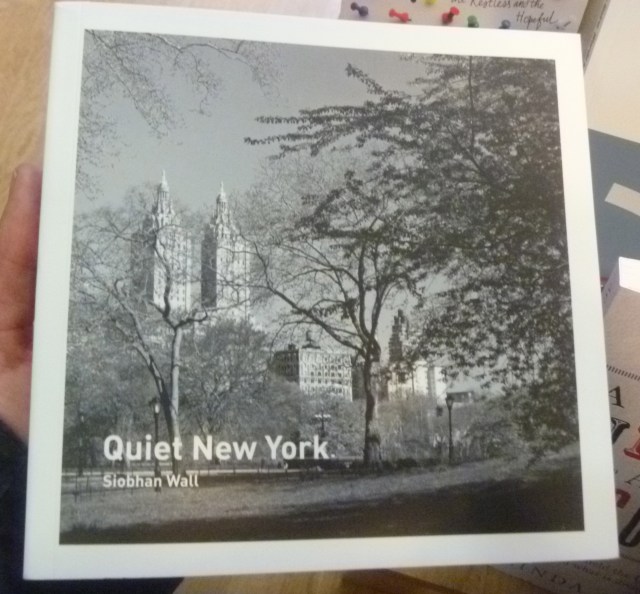
Quiet New York

Quiet New York : I have no plans to visit but I do have companion Quiet volumes – London and Paris

(I could be tempted to buy this just to read, anyway)

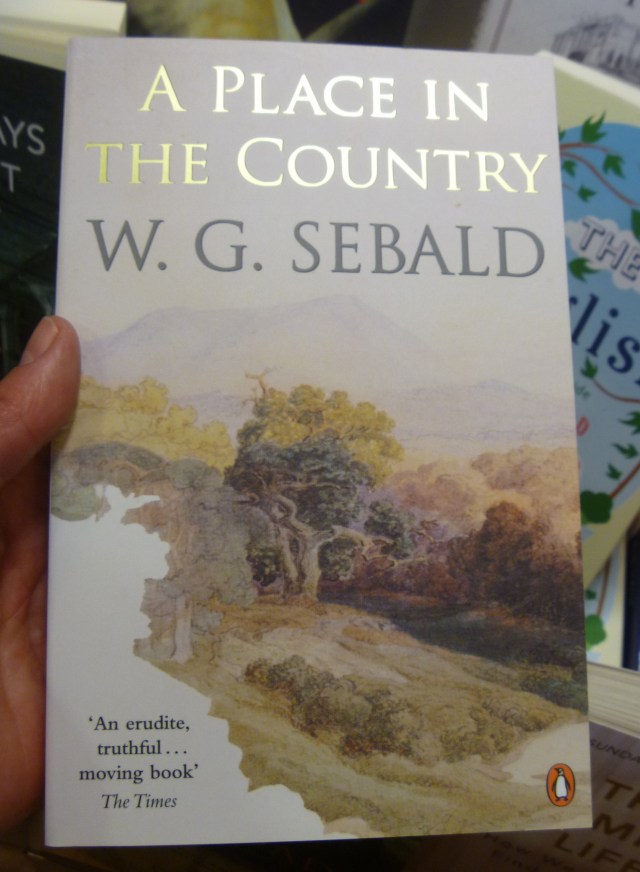
Sebald

I’m a big fan of the late W.G.Sebald – new books keep being published!

I found the staff were very patient and helpful. They found each of the titles I wanted to buy, recommended a further title and hunted high and low for a book which should have been in stock but being a very slim volume had probably been mis-shelved.

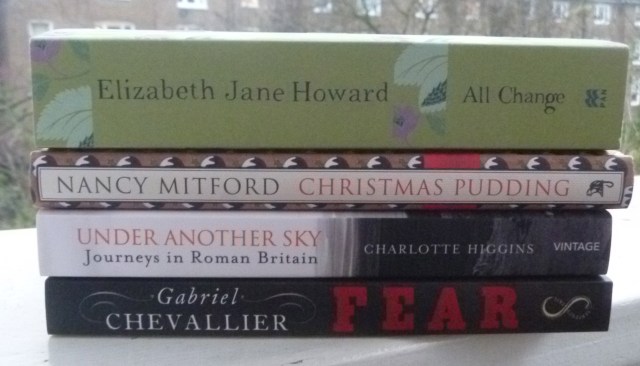
Books bought

The four books I bought last evening

LRB Window

The Cake Shop Window Display – I’m Looking Forward to My Next Visit!


Villages and Churches of Lower Nidderdale

What a difference a day makes! Well, most of the day anyway. Sunday’s walk was with The Dalesbus Ramblers again. It was another visit to Nidderdale but much lower down the dale and just a short bus journey from Harrogate. For most of the day we had blue sky and sunshine but after lunch we walked through a brief snowfall.

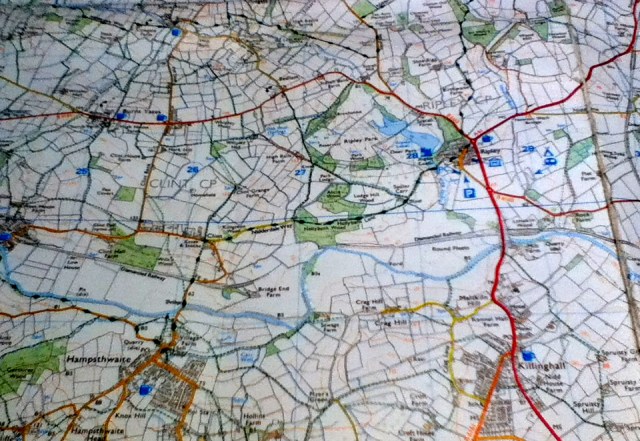
map

SUNDAY 23rd MARCH: VILLAGES & CHURCHES OF LOWER NIDDERDALE
Learn some of the history of the villages of Lower Nidderdale.
Start: Hampsthwaite: 11:25
Finish: Ripley: Approx. 15.30
Distance/Grading: 7 miles / Moderate
TRAVEL: Outward: Bus 24 from Harrogate (11.05). Connections on bus 36 from Leeds (09.45) to Harrogate or from Ripon (10.45) to Killinghall.
Return: Bus 36 to Ripon, or Harrogate and Leeds.
Walk Leaders: Duncan & Brenda”

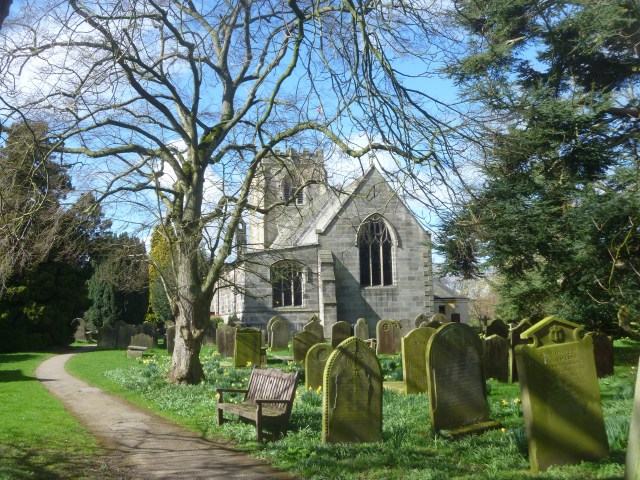
Hampsthwaite Church

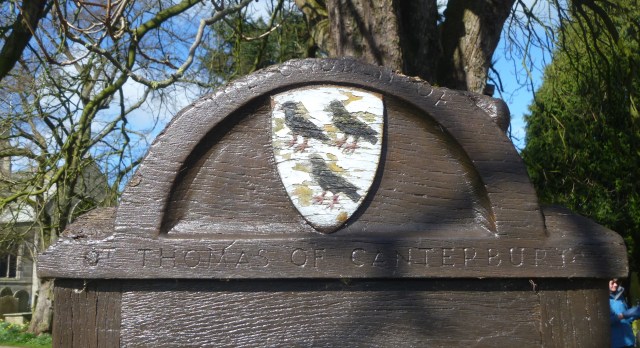
St Thomas a Becket Church in the large village of Hampsthwaite has a long history probably dating back to Saxon times. It has connections with the murder of St Thomas of Canterbury.

St Thomas a Becket

The first known church to be built here was probably completed about 1180 and is believed to have been constructed by Hugh de Morville the then Constable of Knaresborough Castle and one of the four knights responsible for the murder at Canterbury in 1170 of Archbishop Becket. The knights were later pardoned for their crime by the Pope who (it is thought) required the building and dedication of the church as part of the penance imposed upon Hugh de Morville. The church is believed to be one of only two churches in the Church of England to currently enjoy that dedication to St. Thomas a Becket.”

Hampsthwaite Lych Gate

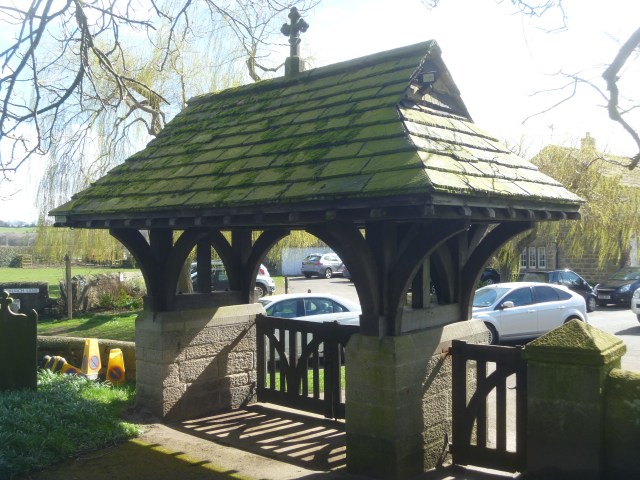
The Lychgate …

The lychgate at the entrance to the church is the work of Robert Thompson of Kilburn. It was given by Lady Aykroyd and was erected in 1938 in memory of her parents, Sir James Roberts Bt. and Lady Elizabeth Roberts. Sadly, in comparatively recent years the original four-legged Thompson mice have been damaged.

… and the War Memorial

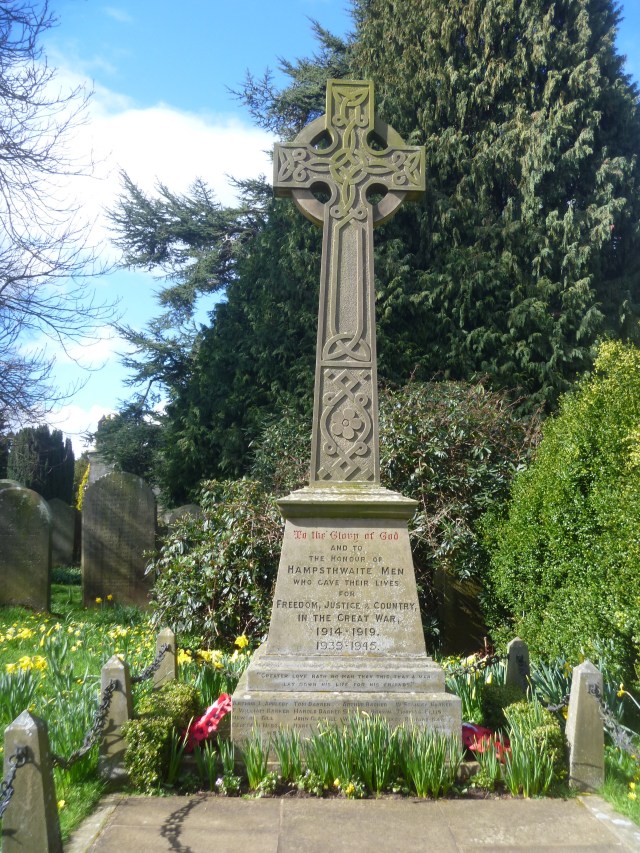
Hampsthwaite war memorial

Nearby, is the War Memorial, which commemorates the men from the village who died in the two world wars. It takes the form of a Celtic cross on a stone plinth and lies in direct line with the cross on the altar in the church. This was stipulated by Canon Peck and the churchwardens in their application for a faculty from the Diocese.”

A church service was in progress so we began our walk out of Hampsthwaite towards Ripley along the tracks of the Nidderdale Way which we followed for the best part of the day’s walk.

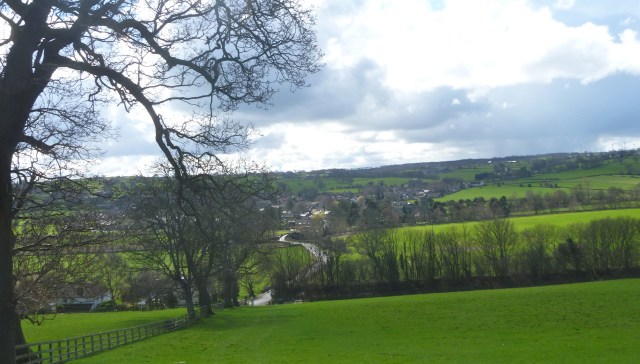
Hampsthwaite

Looking back to Hampsthwaite after a steep climb out of the village.

After a couple of miles of broad track, much of it through woodland, we approached the Castle and village of Ripley. Ripley Castle also has a long and fascinating history with connections to the Gunpowder Plot. It is a great visitor attraction and popular local wedding venue. The village of Ripley itself, where we stopped for our lunch break, has a unique style and history. It was rebuilt in the 19th century and modelled on a village in Alsace, France, complete with a Hotel de Ville-style town hall.

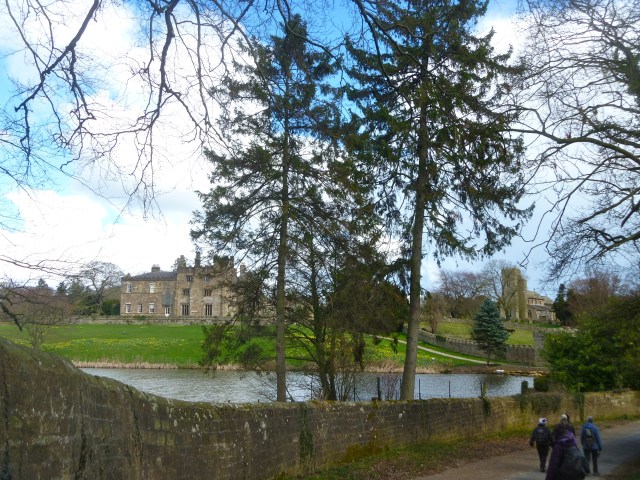
Ripley Castle and Church

Approaching Ripley we had a glimpse of the Castle and grounds

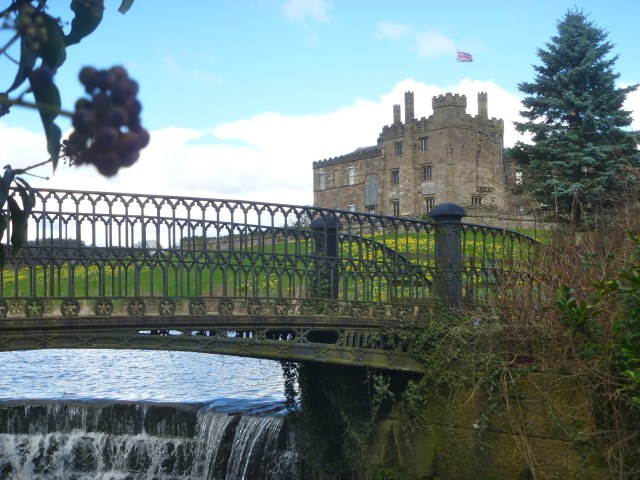
Ripley Castle

Ripley Castle

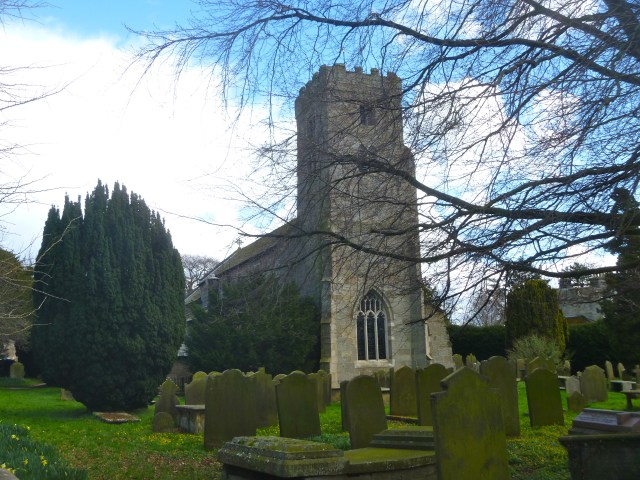
Ripley Church

Ripley All Saints Church

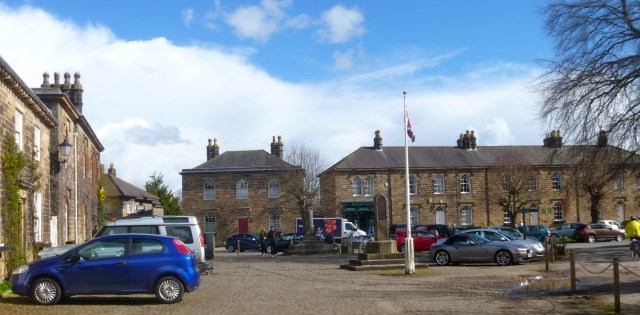
Ripley village square

Ripley Village Square

Ripley Houses

Typical Ripley Houses

From Ripley we took The Nidderdale Way to add a loop to our walk via Cayton Gill meadows and woodland returning to Ripley for the bus back to Harrogate.

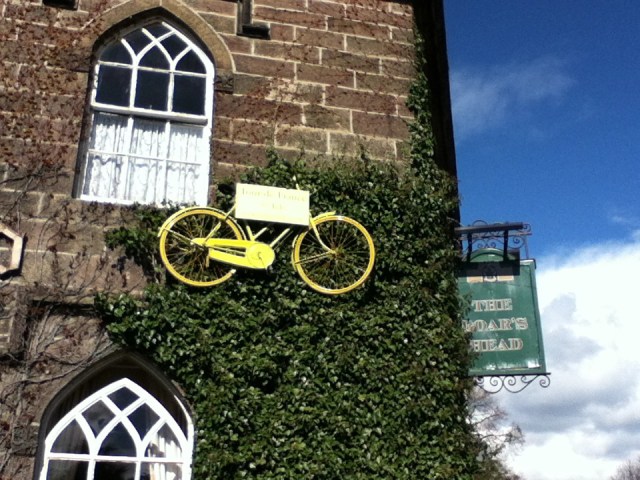
On my recent rambling forays I have been made more and more aware of the fact that The Tour France ‘Grand Départ’ will be staged on two days in Yorkshire in July this year.

Grand Depart

Le Grand Départ will pass through Ripley. Signs at The Boars Head Hotel


Wodehousian Connections

jeeves_and_wedding_bells_600

[Source]

Many of you know that the origins of the name Miladys Boudoir and the strapline that accompanies it (“There is no surer foundation for a beautiful friendship than a mutual taste in literature”) both have P G Wodehouse connections. You can read about this here.

A while ago, with the help of a friend (who shares a mutual taste in literature with me), I tracked down the context of the strapline. You can read the short story ‘Strychnine in the soup’ we found here.

Or watch the BBC Wodehouse Playhouse dramatisation from the 1970s here :

It was never my intention that Miladys Boudoir should be a book reviewing blog but many of my friends do just that. Now, on my recommendation, my friend Lyn at I Prefer Reading has read, enjoyed and reviewed Sebastian Faulks’s ‘Jeeves and the Wedding Bells’ and I get a mention! Read her post about it here.