Tea and Cake and Quiet London (1)

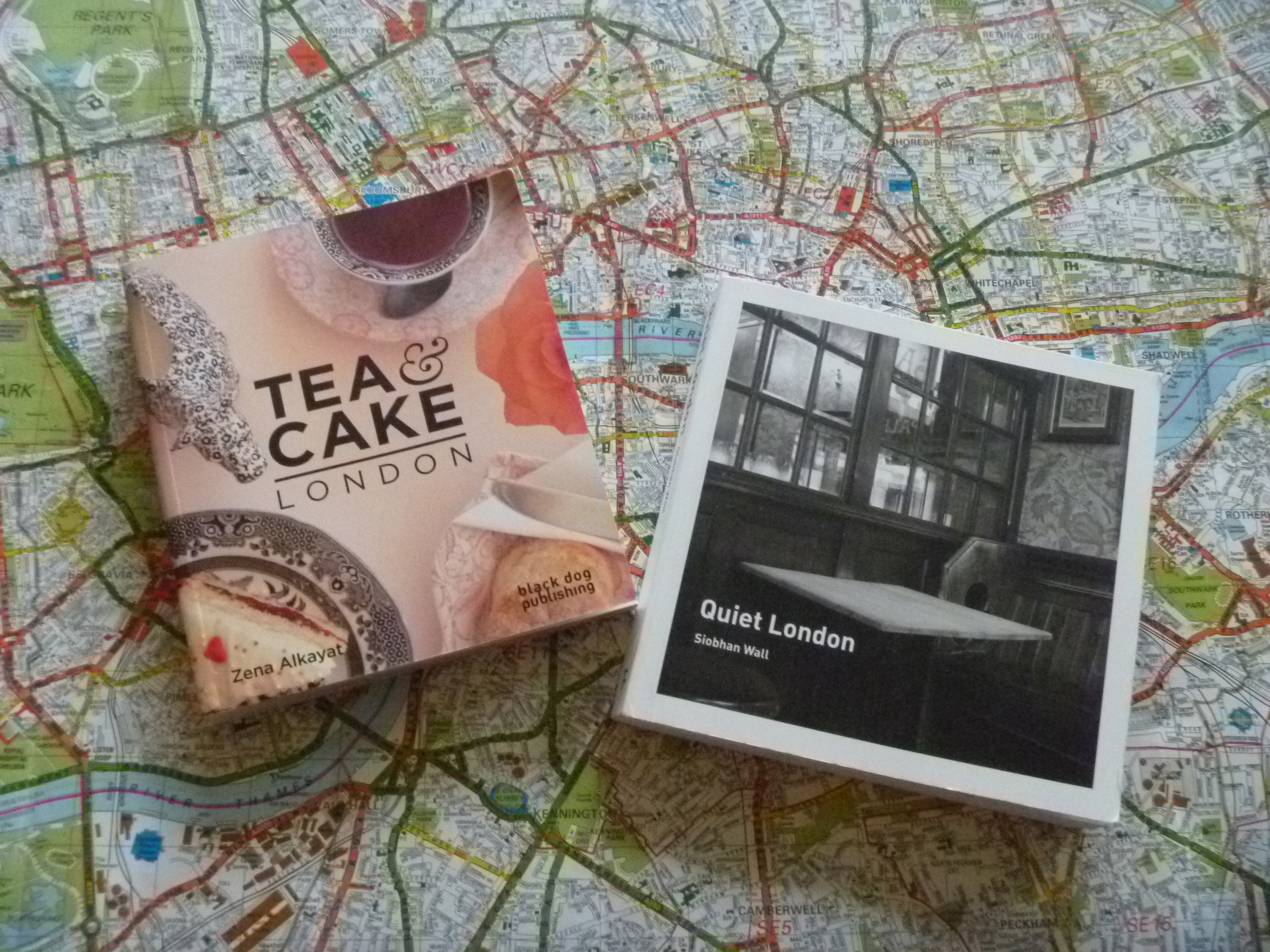
Our visit to Benjamin Franklin House (QL p. 23) on Friday was such a success for us both that we decided to devote the rest of the weekend following up places suggested by Siobhan Wall in her book Quiet London and some eateries suggested in another little book of mine Tea and Cake London by Zena Alkayat.
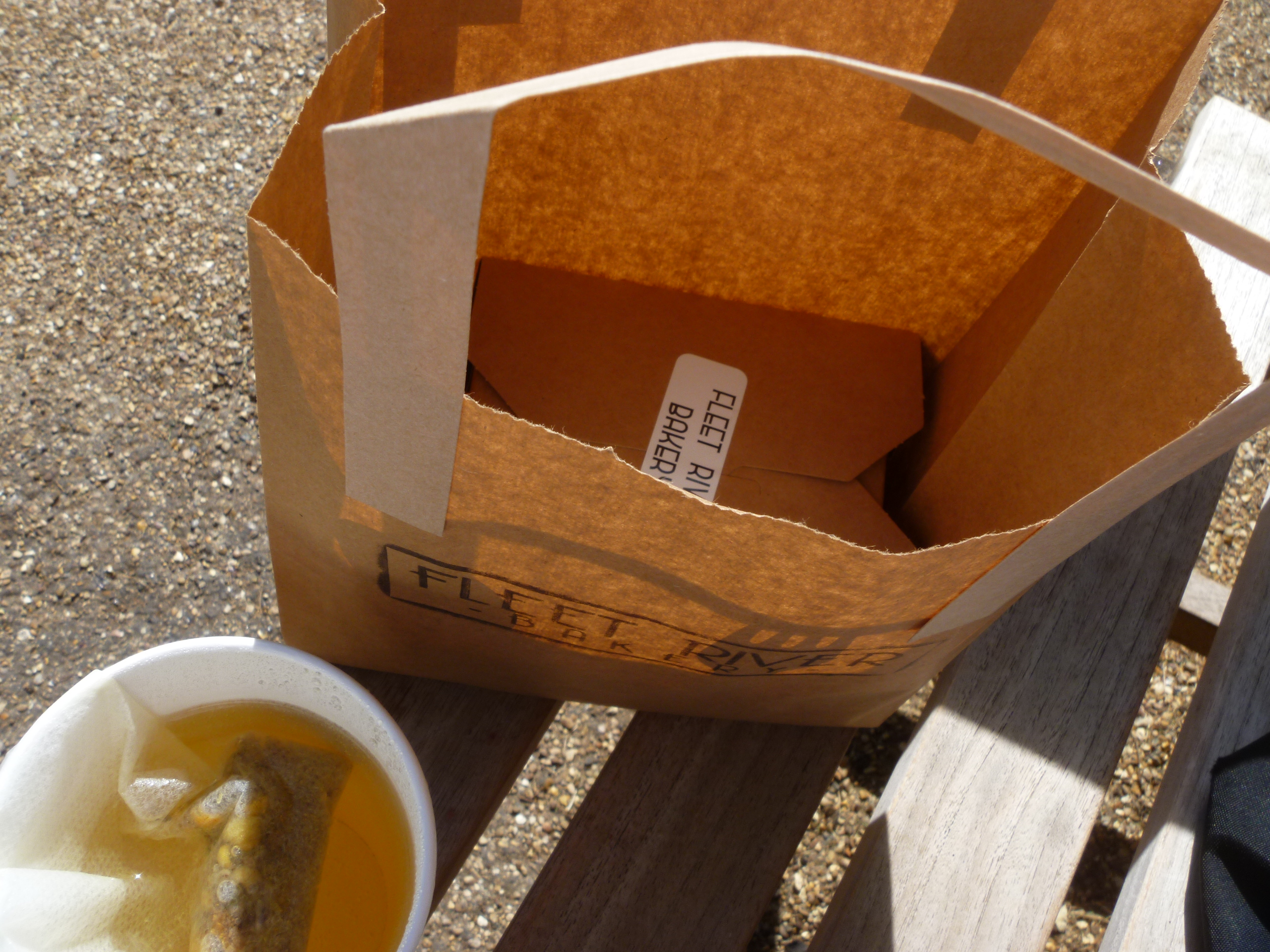
From BHF we trotted off to Lincoln’s Inn Fields to try to track down The Fleet River Bakery  (T&C L p. 40) mentioned in the Tea and Cake book. We eventually found it and bought ourselves tea and cake (my cake was Hummingbird – pineapple, mango and pineapple – so lovely and moist). We decided not to eat in but to take our food and drink into the Lincoln’s Inn Fields and picnic on a park bench in the sun.
London is so interesting and you never know what you might see so we usually walk whenever we can. Our route back to the hotel took us along Fleet Street, Ludgate Hill, past St Paul’s Cathedral, past 30 St Mary Axe (The Gherkin, to you and me) and finally to Aldgate and Minories.

The Royal Exchange and The Gherkin

We called a few of the Quiet restaurants that evening but all were full. We ended up at Morito the Tapas bar next to and owned by Moro on Exmouth Market. The tapas was excellent but the bar would not gain a place in Quiet London!

Next day we had a number of places in mind and began our Quiet London Trail at the Crypt Museum (QL p. 20). A 20 minute ‘pop in’ to the church of All Hallows By The Tower ended about two hours later! You can see why (and this poster does not mention the exhibition “Bonuses, Benefits & Bailouts : the morality of the King James Bible”).
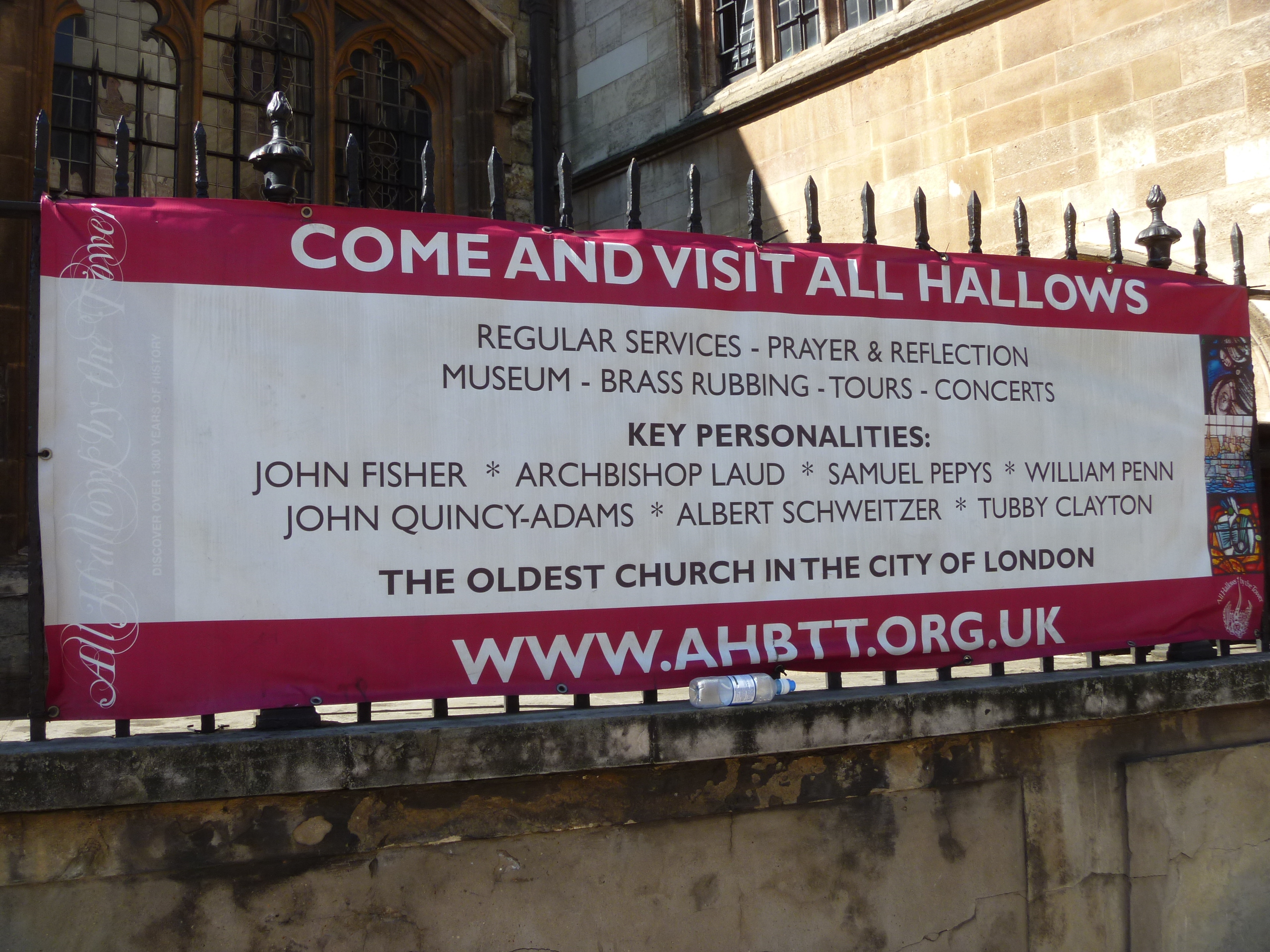
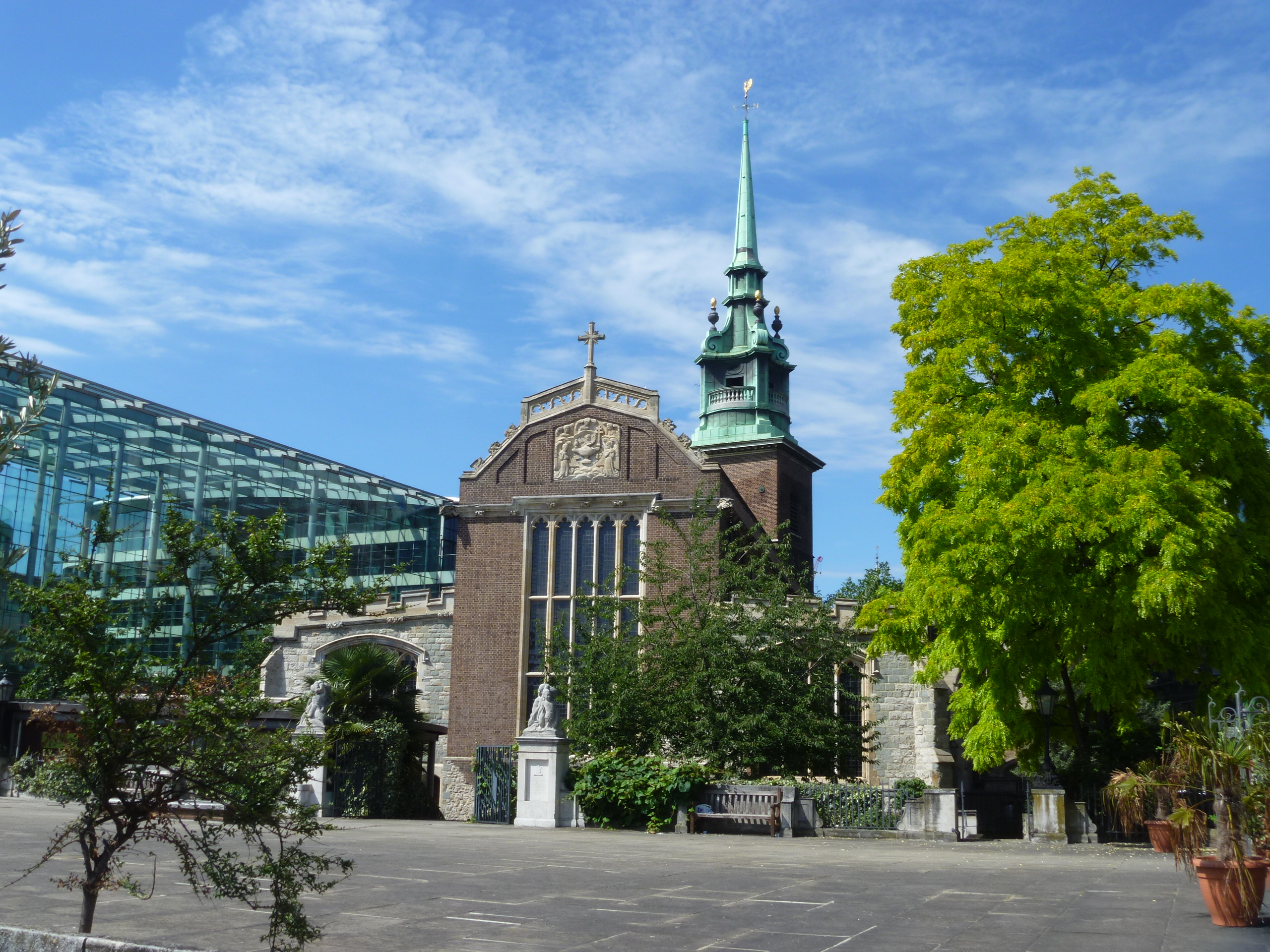
All Hallows By The Tower

“To tie in with the 350th anniversary of the Book of Common Prayer, All Hallows by the Tower and The Museum of the Book in Limehouse are pleased to present this exhibition of manuscripts, first edition bibles, prayer books and other artefacts challenging our thinking on issues of legality versus morality using the King James Bible as a starting point.” [Summer Programme leaflet]
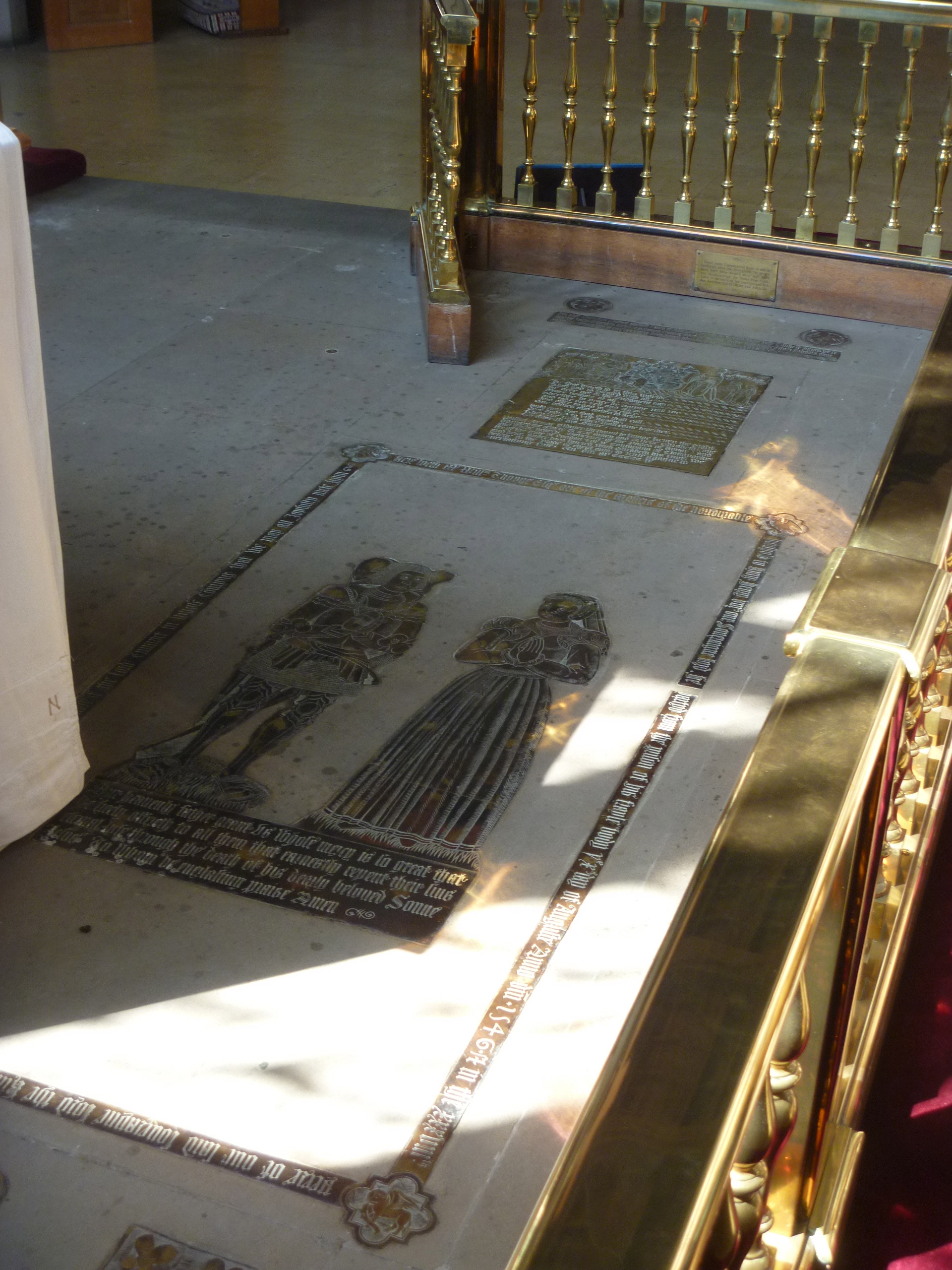
“This tiny museum lies underneath one of London’s original Saxon churches. In the crypt is a Roman tesselated floor from a house built in the late 2nd century. The museum also holds registers dating back to the 16th century. The highlight, however, is the intricate brasses inlaid in the stone floor of the church, near the altar.” [Quiet London, p. 20]
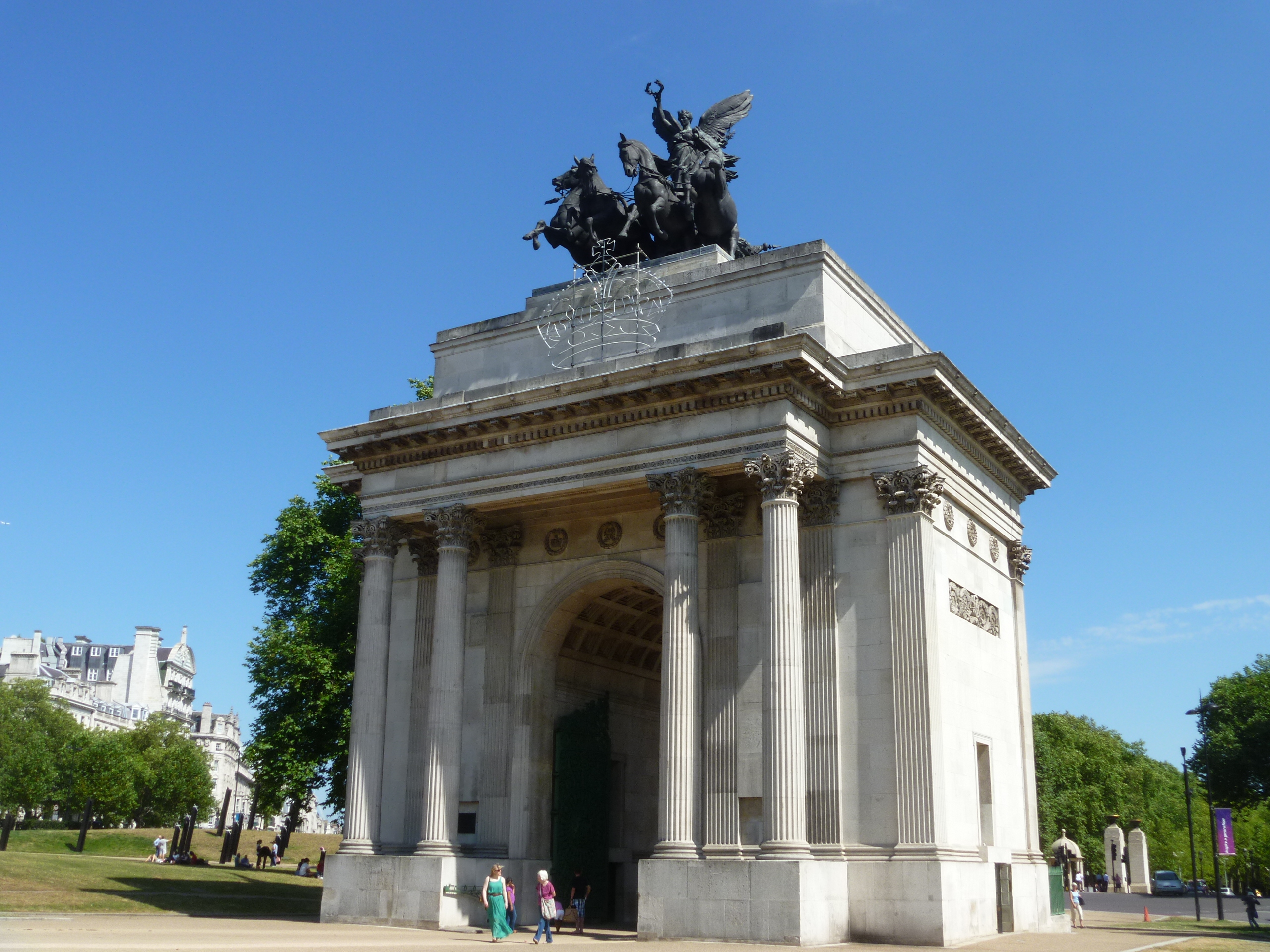
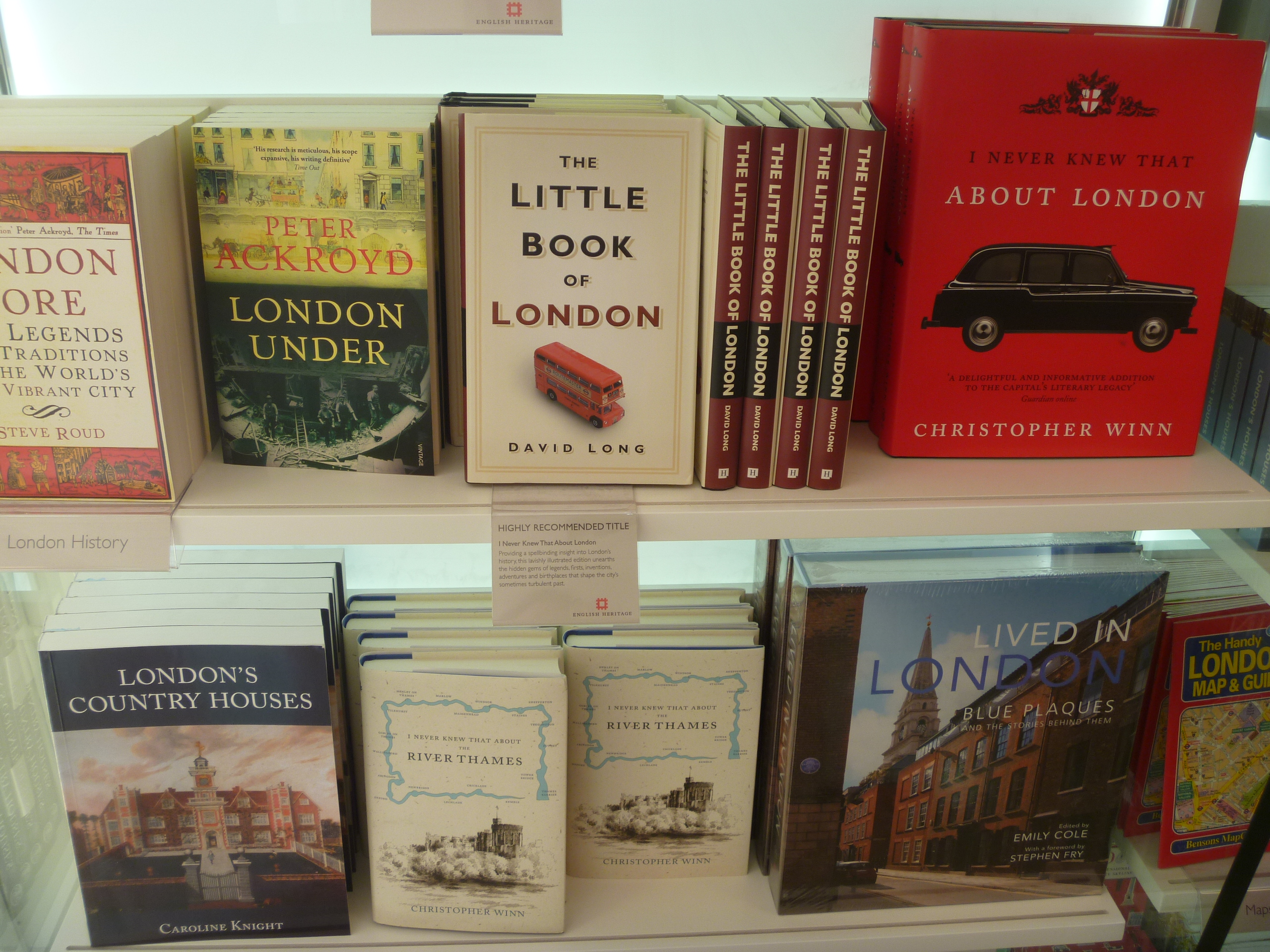
Moving on from All Hallows we visited The Wellington Arch. Recently opened by English Heritage this London landmark has not yet arrived in Quiet London. You can climb (or take the lift) to the top for views towards Hyde Park, Buckingham Palace Gardens, Green Park and Piccadilly. There’s an exhibition space (at the moment it commemorates 100 years of Blackpool Illuminations and the Blackpool Tower), a further gallery showing the history of the Arch and its former locations plus a bijou bookshop of London book titles.
Next up we crossed the river (underground by tube) to Vauxhall. During the 17th, 18th and 19th centuries the pleasure gardens of Vauxhall were one of the London places to see and be seen but our hunt was for something very much more esoteric : Bonnington Square Garden (QL p. 46).
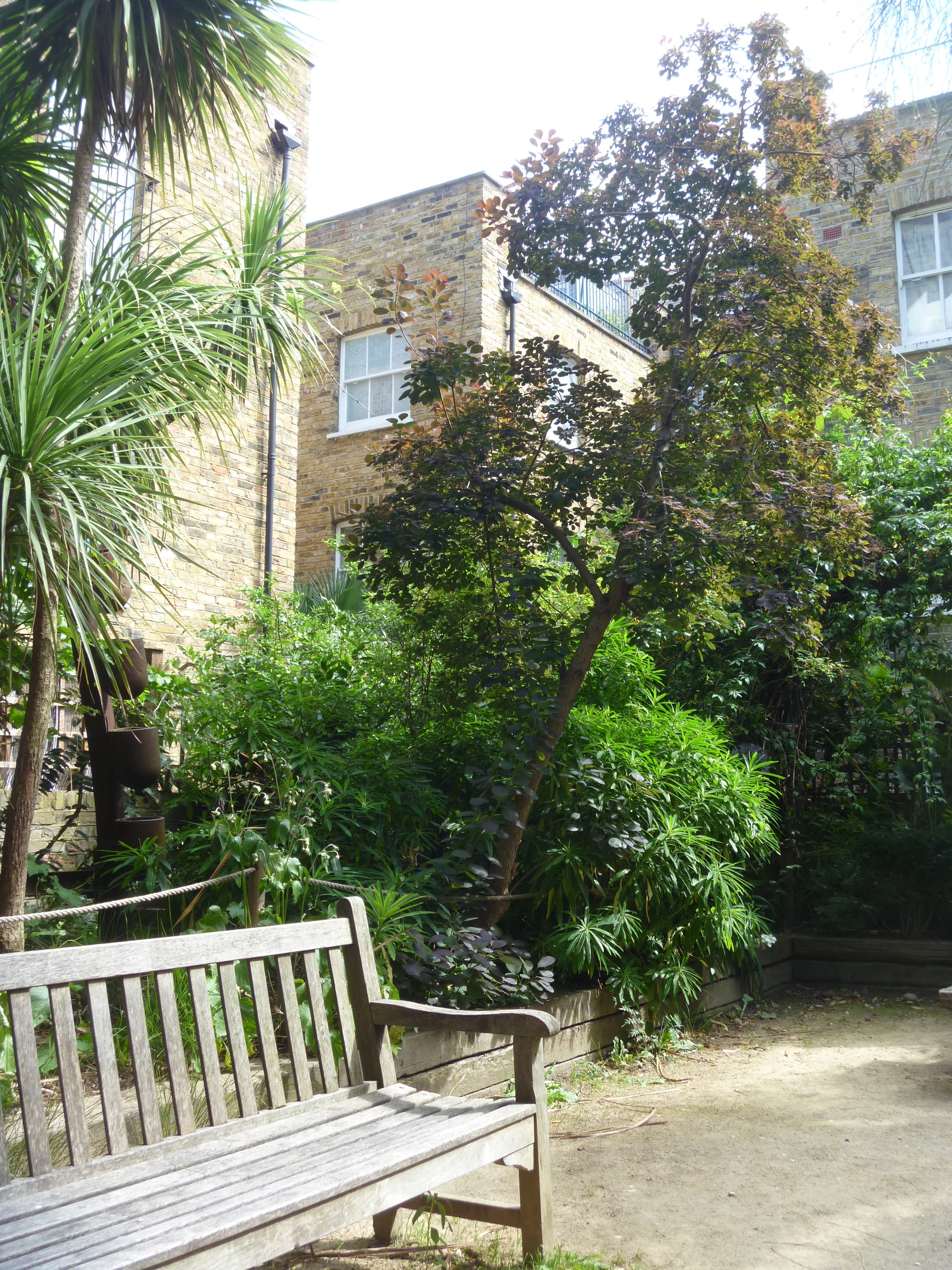
Bonnington Square Garden

“Known as ‘the Pleasure Garden’ in homage to the Vauxhall Pleasure Gardens, this former bomb site and derelict playground  was transformed by the imaginative residents of the Bonnington Square Garden Association. Amazingly, this south London oasis is full of lush tropical plants and intriguing public sculptures.” [QL p. 46]

The residents continued their enthusiasm for all things green by planting out more areas in the neighbourhood, on street corners and other small open spaces.

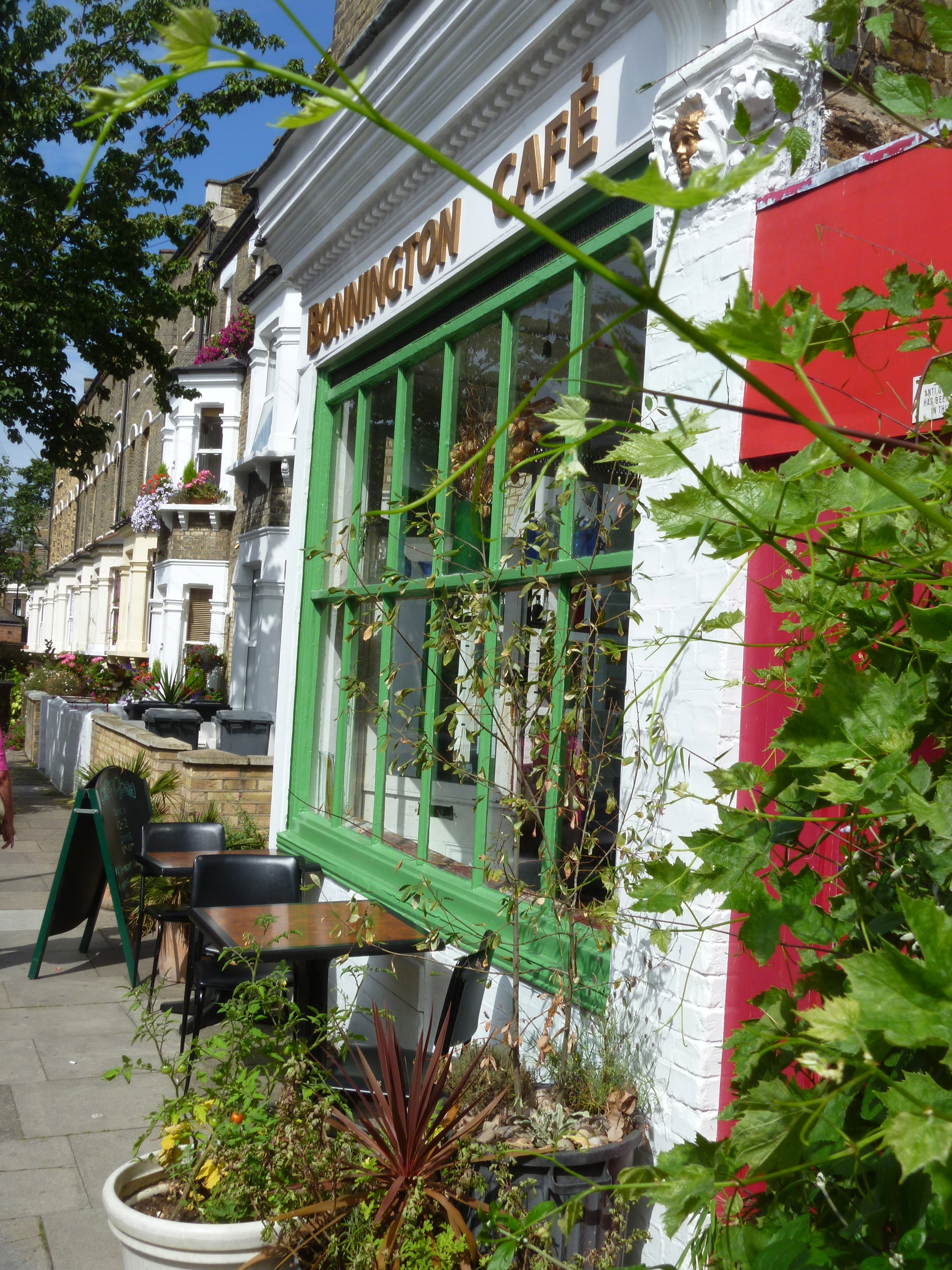
Bonnington Cafe (plays music so not quiet!)

[To be continued]
Today – The Feast of Saint James

On my journey between Leeds and Norwich today I was held up in traffic for well over an hour near Kings Lynn due to the Sandringham Flower Festival and the presence there of Prince Charles and the Duchess of Cornwall. They had the good sense to avoid the crowds and arrive by helicopter.

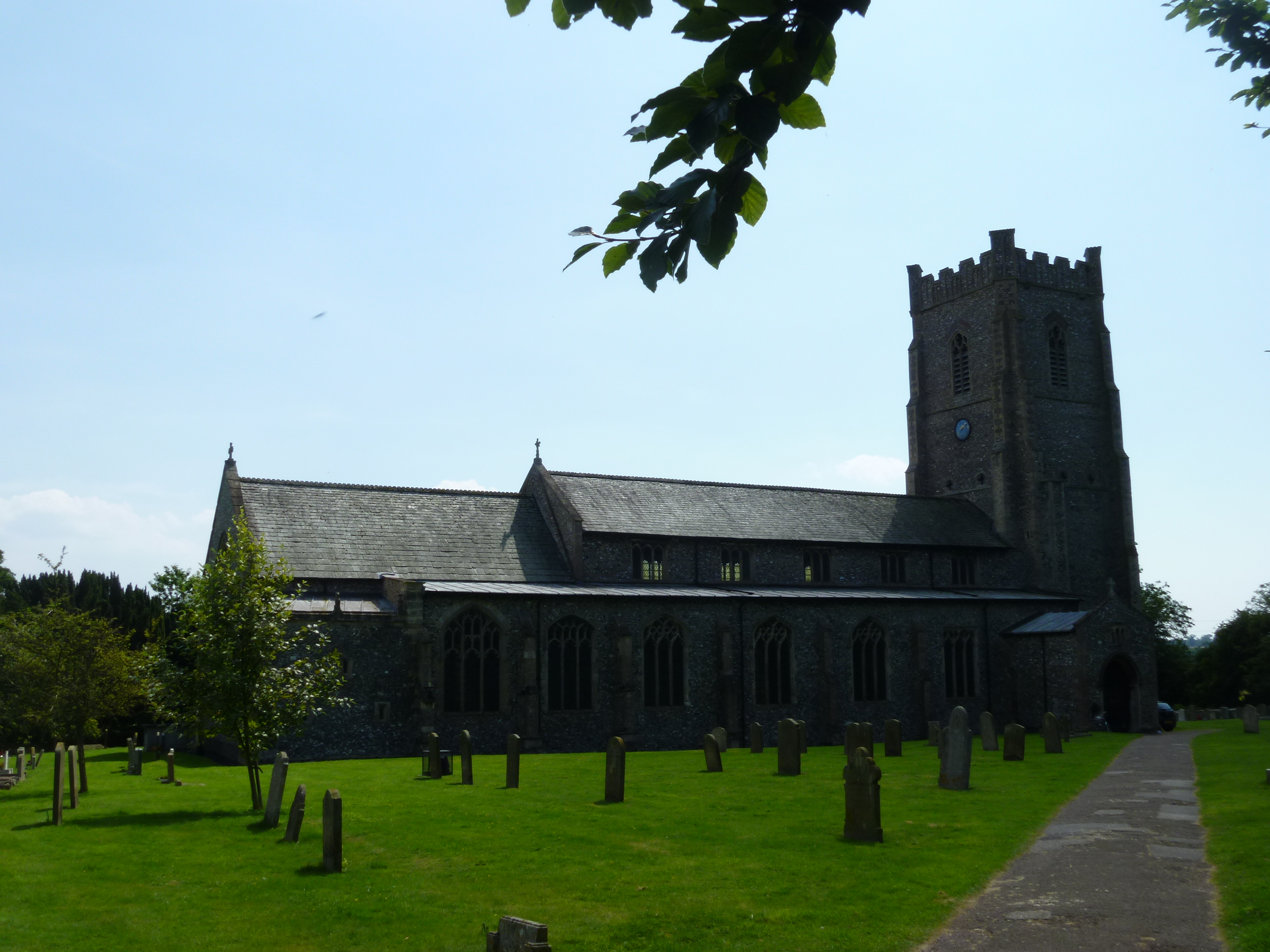
The Church of Saint James the Great, Castle Acre, Norfolk

I’d planned to break my journey with lunch at the Churchgate Tea Rooms in Castle Acre and then pay a visit to the Cluniac Priory and, if time permitted, to the Castle. Instead I just had my lunch and took a look around the church.

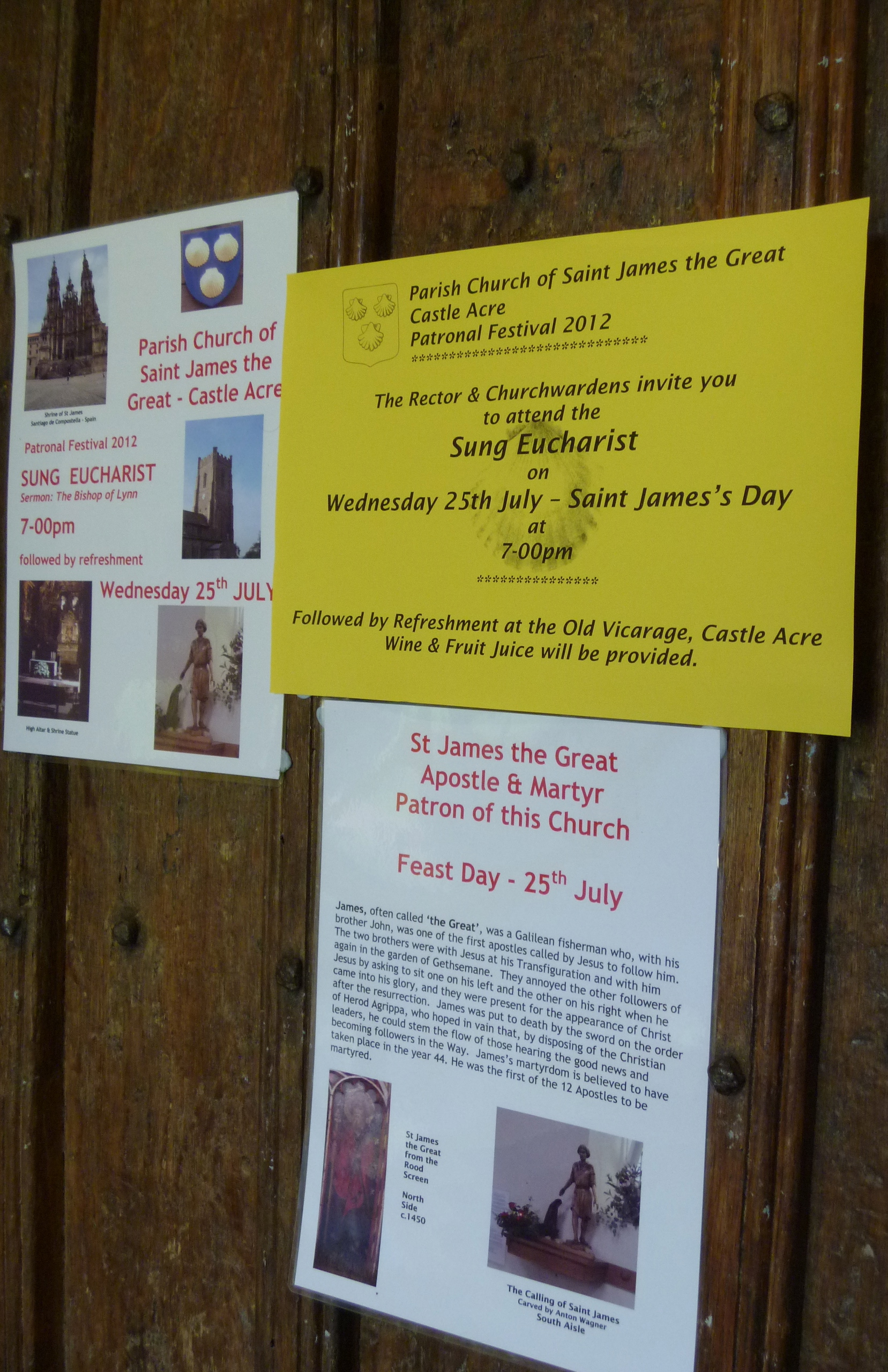
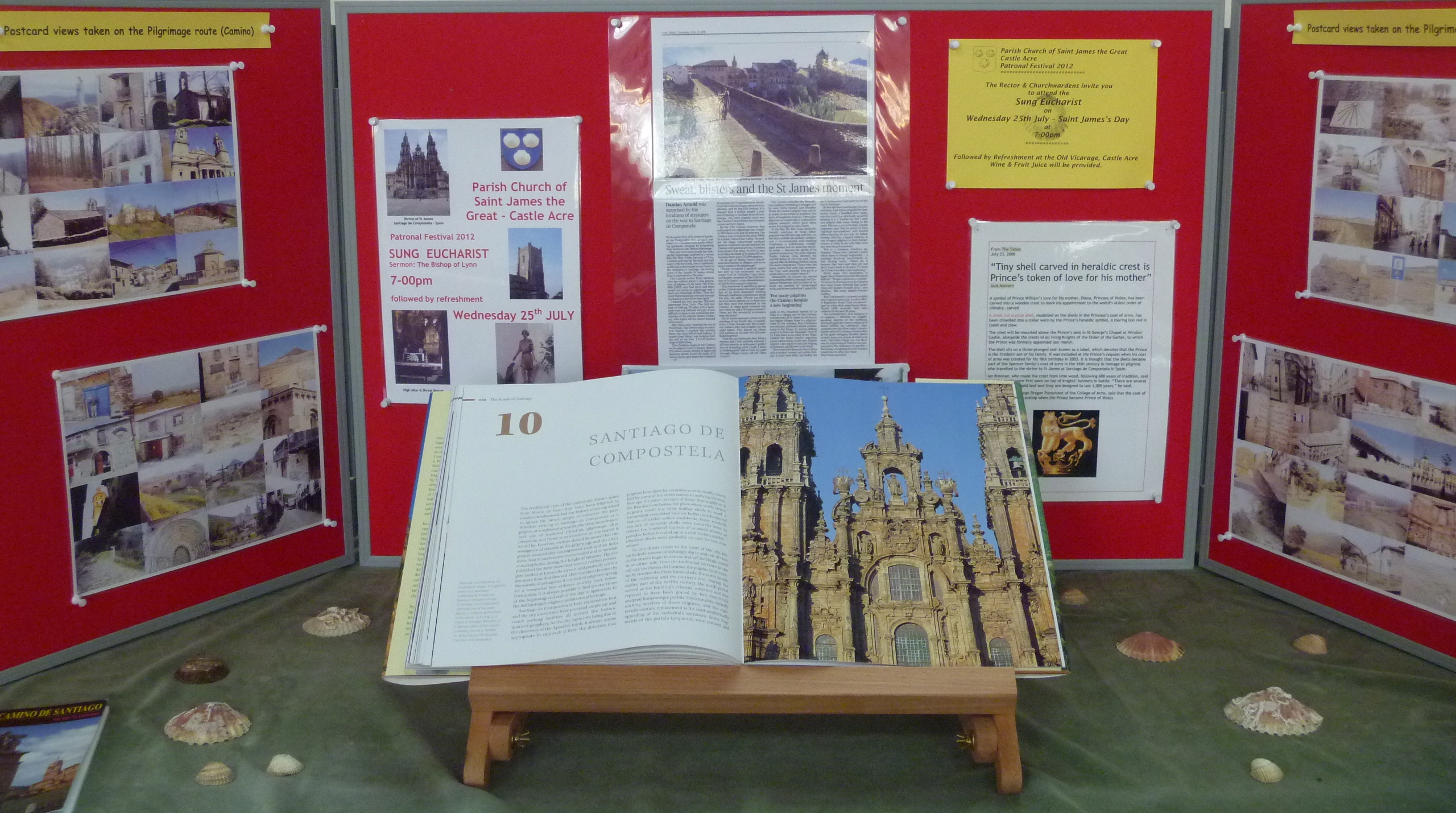
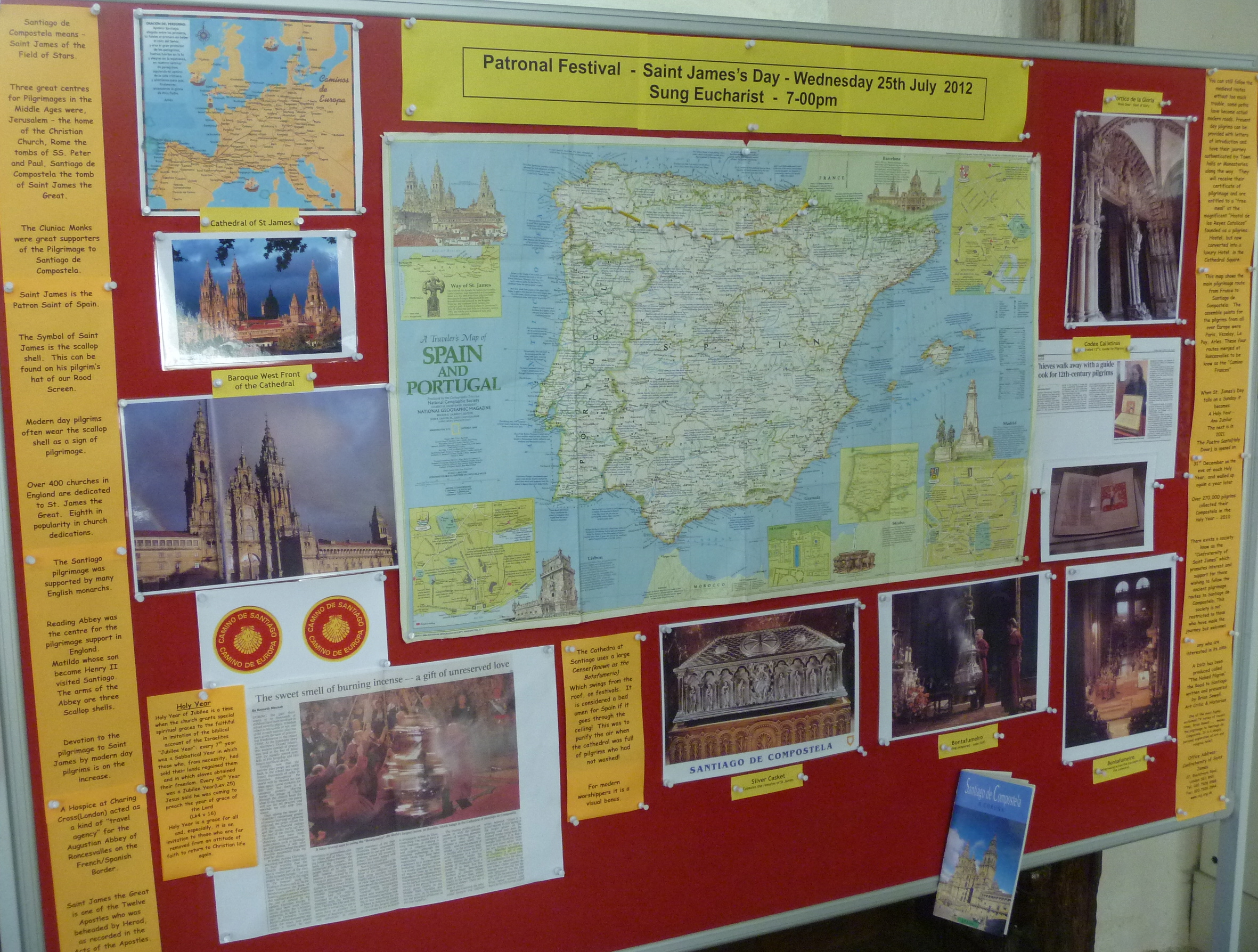
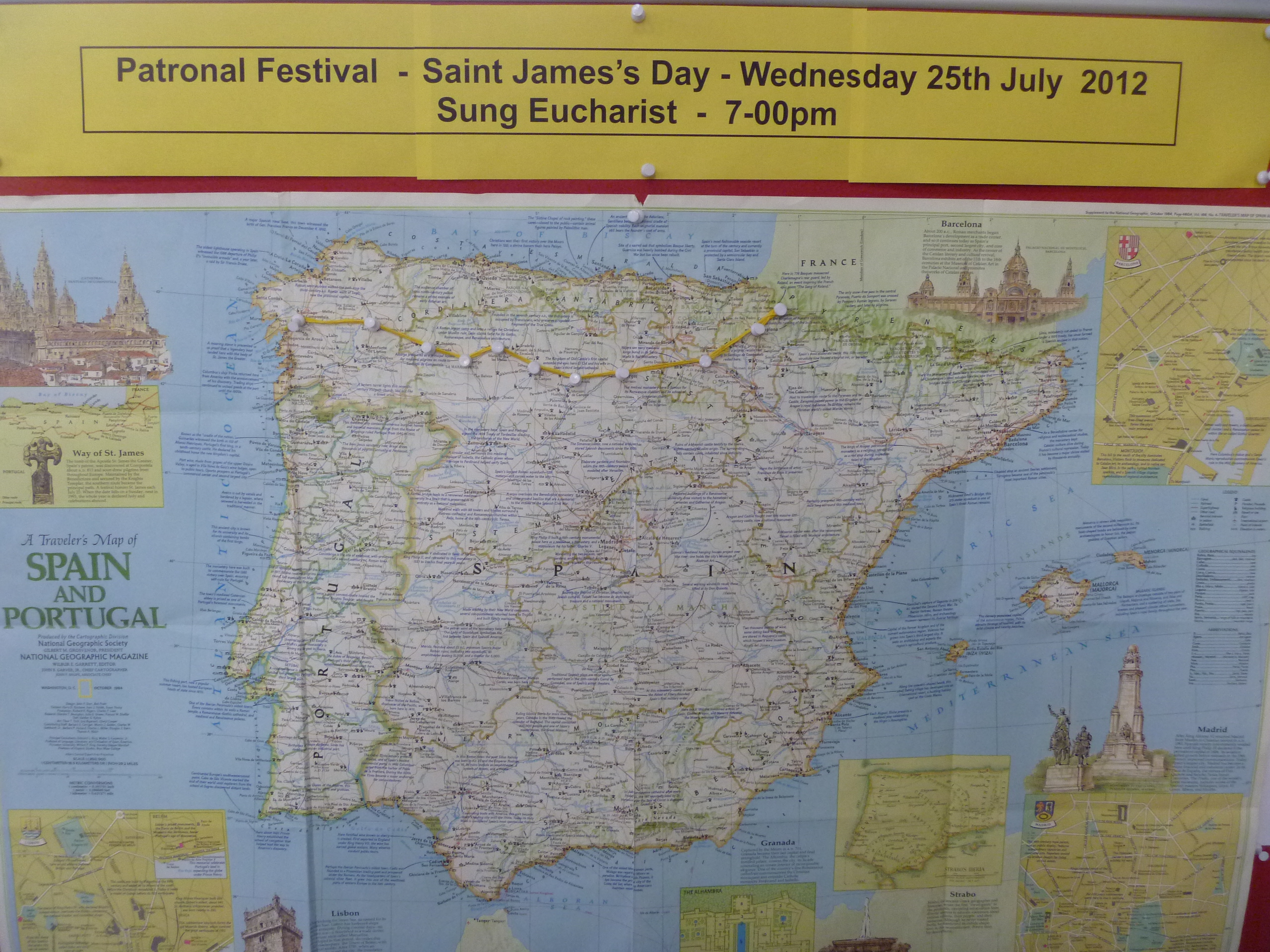
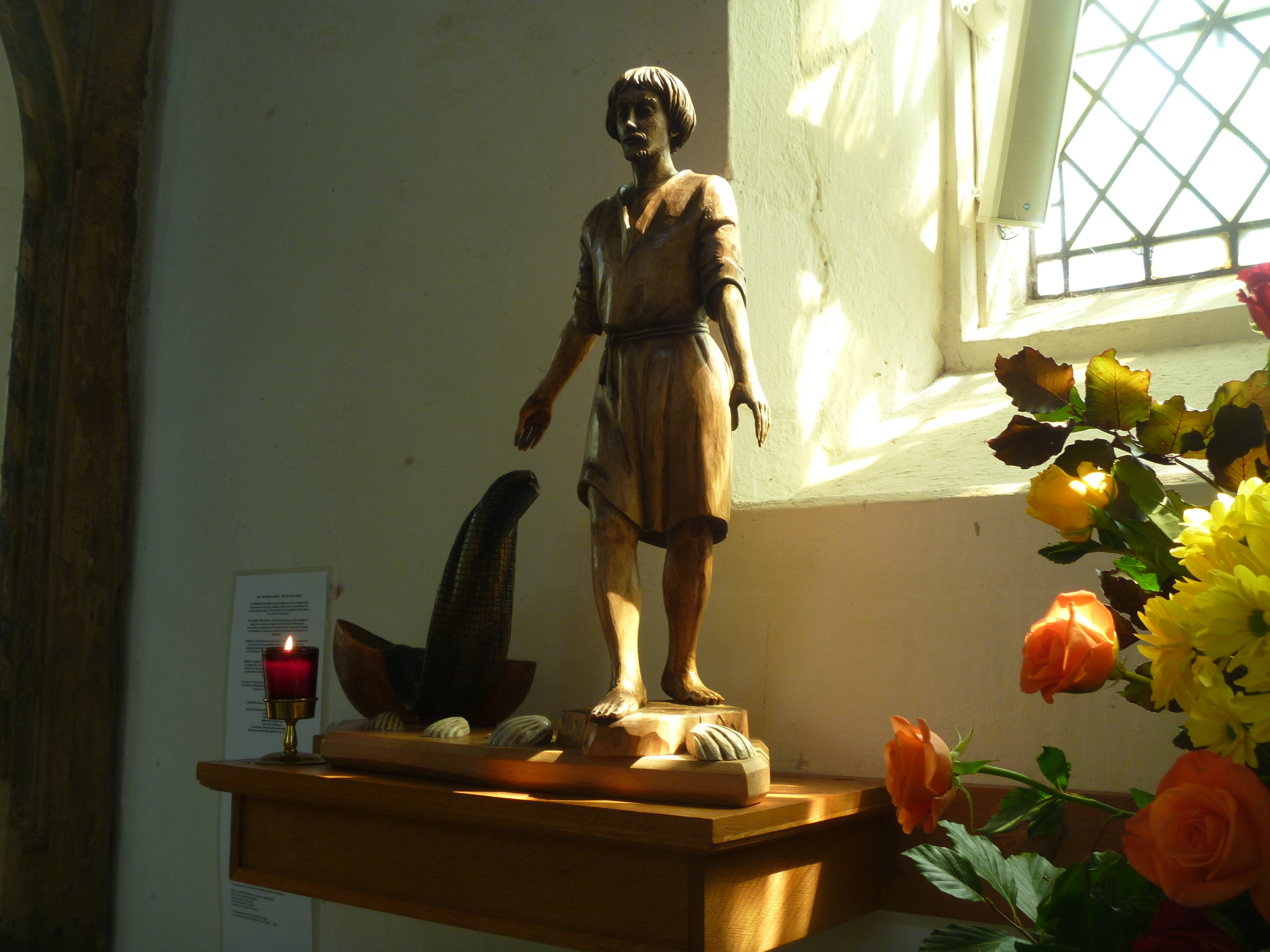
Bless me, if today isn’t the patronal feast of Saint James and there in the church (being prepared for this evening’s Sung Eucharist in the presence of the Bishop of Lynn) were displays relating to The Camino de Santiago de Compostela or The Way of Saint James.

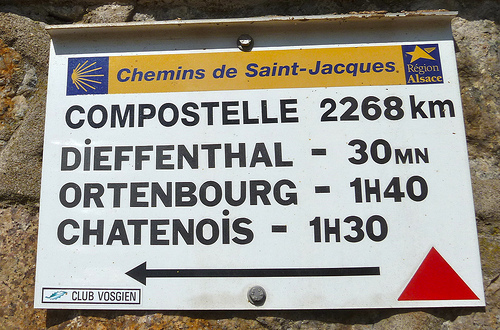
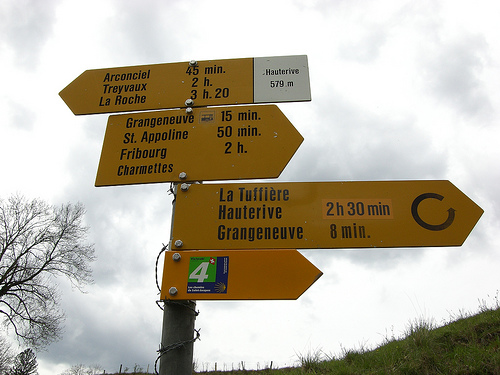
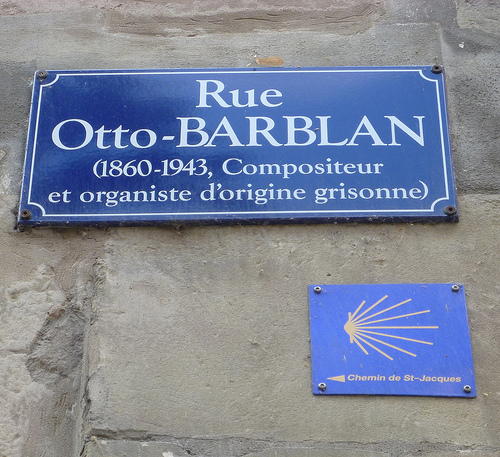
I have come across this path, or perhaps I should say these paths, many, many miles away from their single destination – Santiago de Compostela in Spain – in Alsace , in Geneva and in Hautrive in the Jura region of Switzerland.

In Alsace last month

In the Jura Region in 2008

In Geneva earlier this month

And on my latest walk in the Yorkshire Dales last week a fellow member of The Weekday Wanderers who had just returned from a three week cycling pilgrimage beginning in southwest France was telling me all about this fantastic experience.

A Saint, an Artist and a Doctor : people we came across in Alsace.

On our walking trip in Alsace we kept coming across references to storks but also to certain people. In particular local artist Hansi and local saint Odile. Then we discovered that Kaysersberg, our final destination, had been the birthplace of Dr Albert Schweitzer – all round good person, as you will discover.

Saint Odile

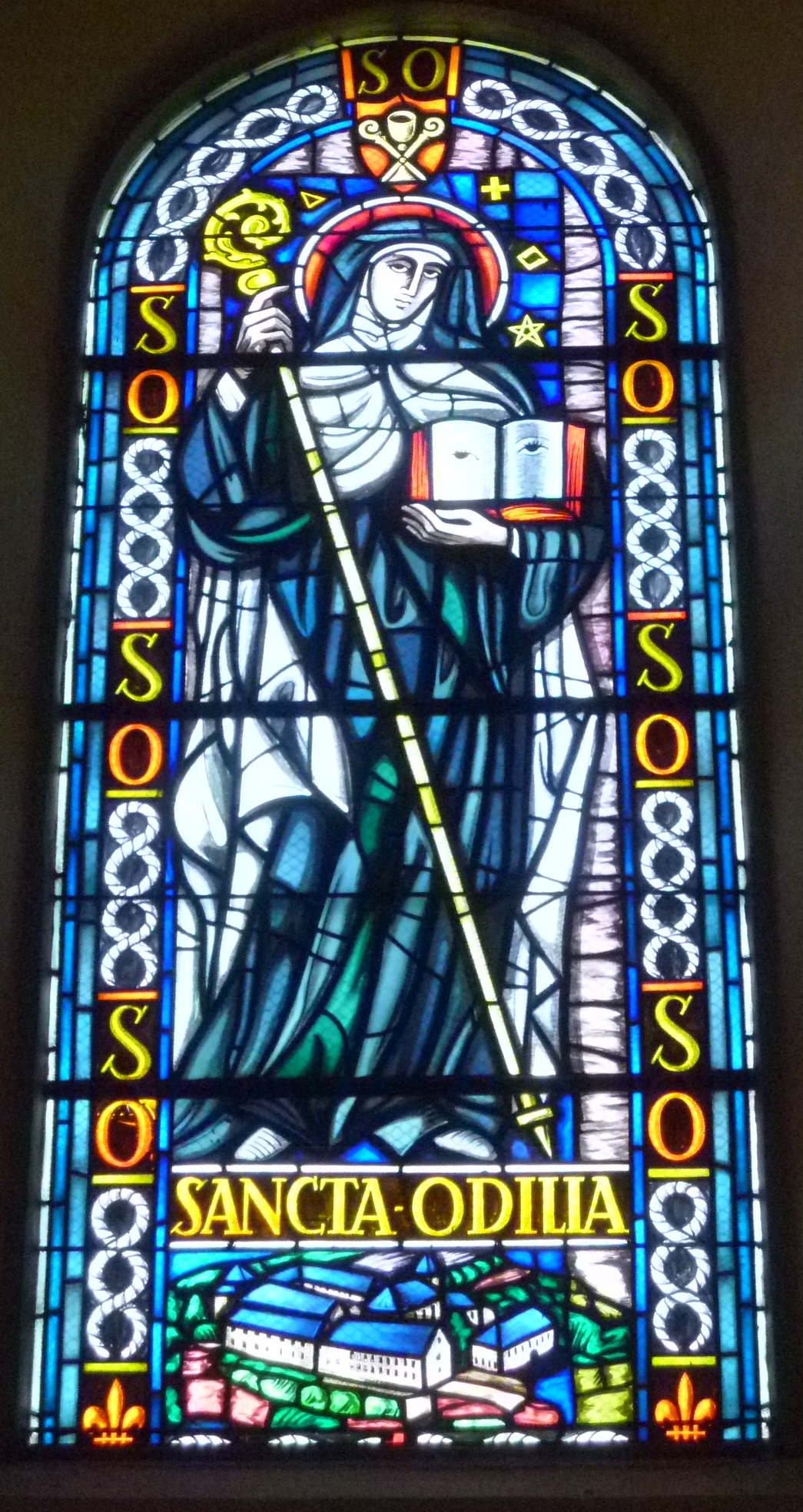
Window dedicated to Saint Odile at Itterswiller

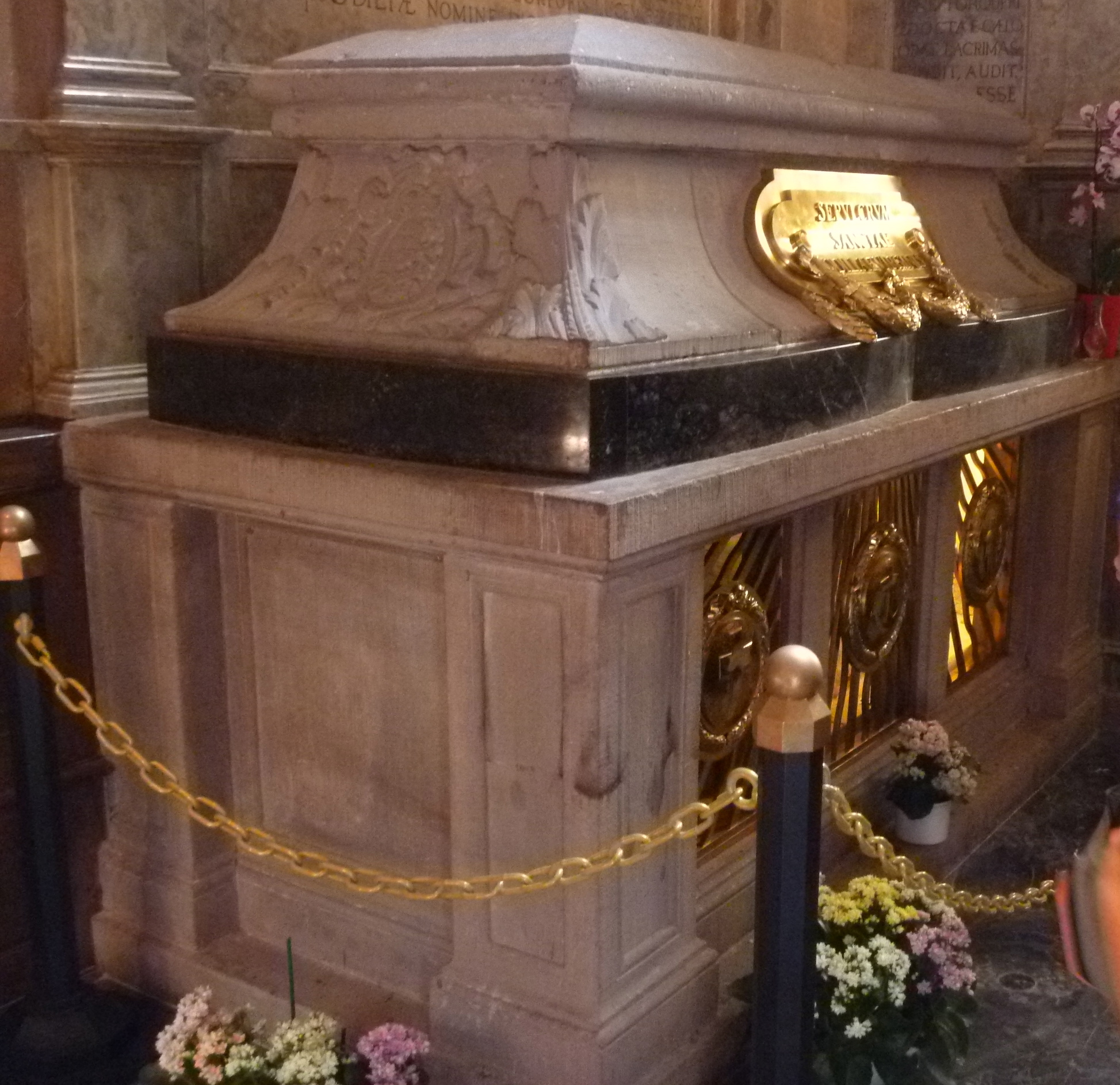
Saint Odile is the patroness of good eyesight. She was born in Obernai and the Augustine foundation at Mont Sainte Odile was founded in her name by her father. She had been born blind but was cured at age 12 on being baptised by an itinerant bishop of Regensburg. She is buried at Mont Sainte Odile.

The Tomb of Saint Odile

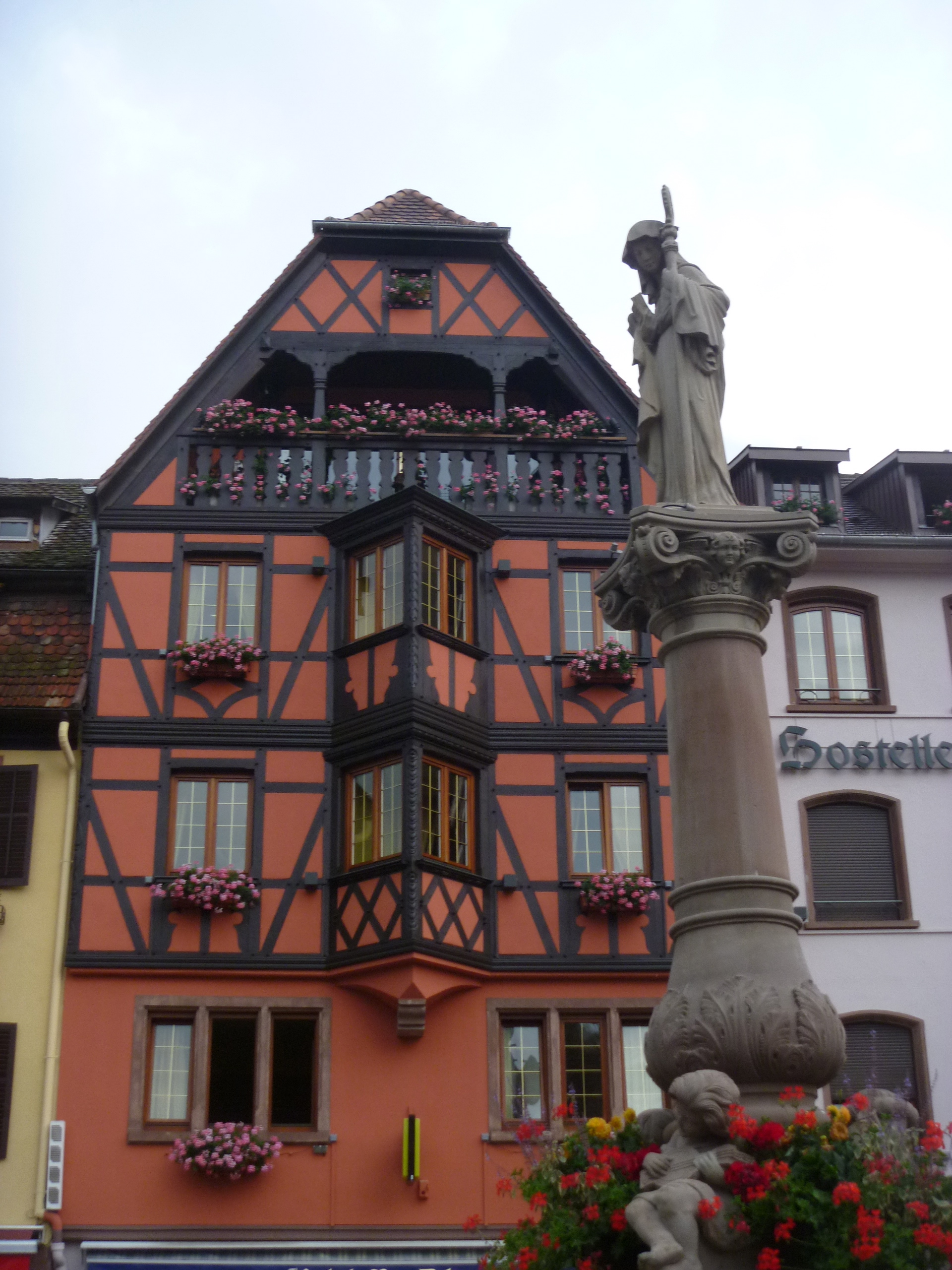
She didn’t just turn up at Obernai – where there’s a statue of her in the main square – but also in the stained glass windows in several churches that we visited along our way.

Saint Odile with her attribute – a pair of eyes in a book – in stained glass at Chatenois

Hansi

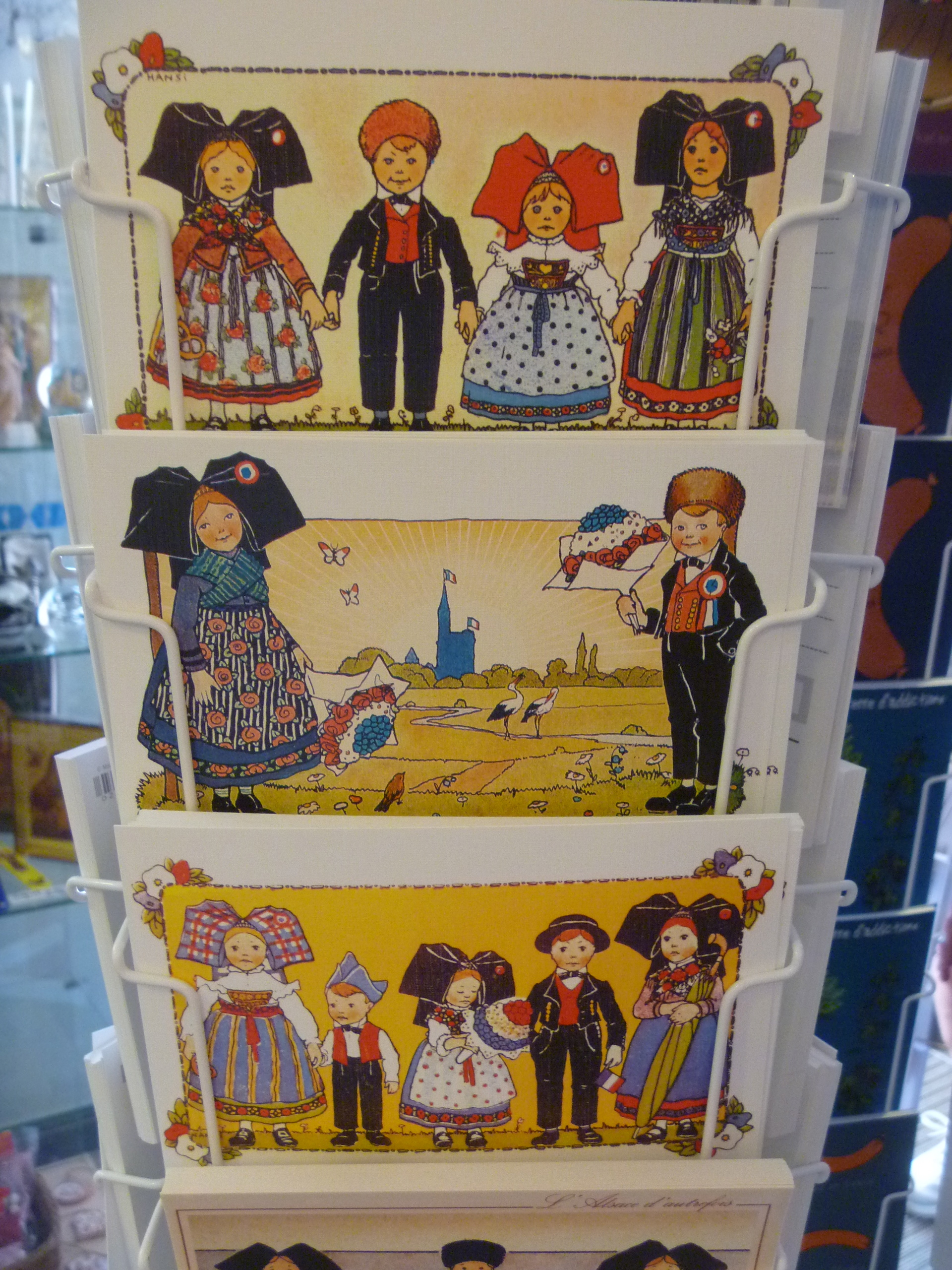
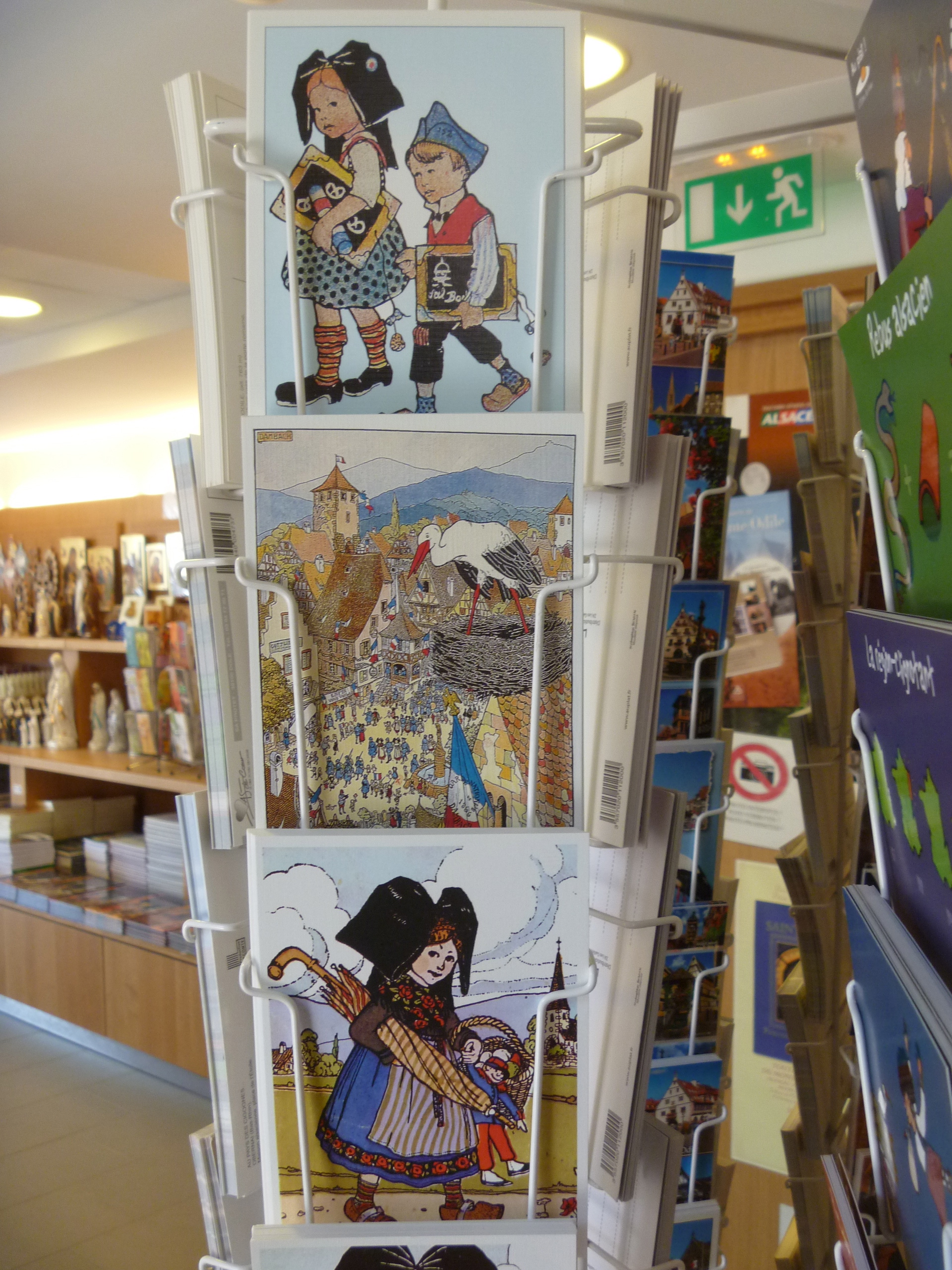
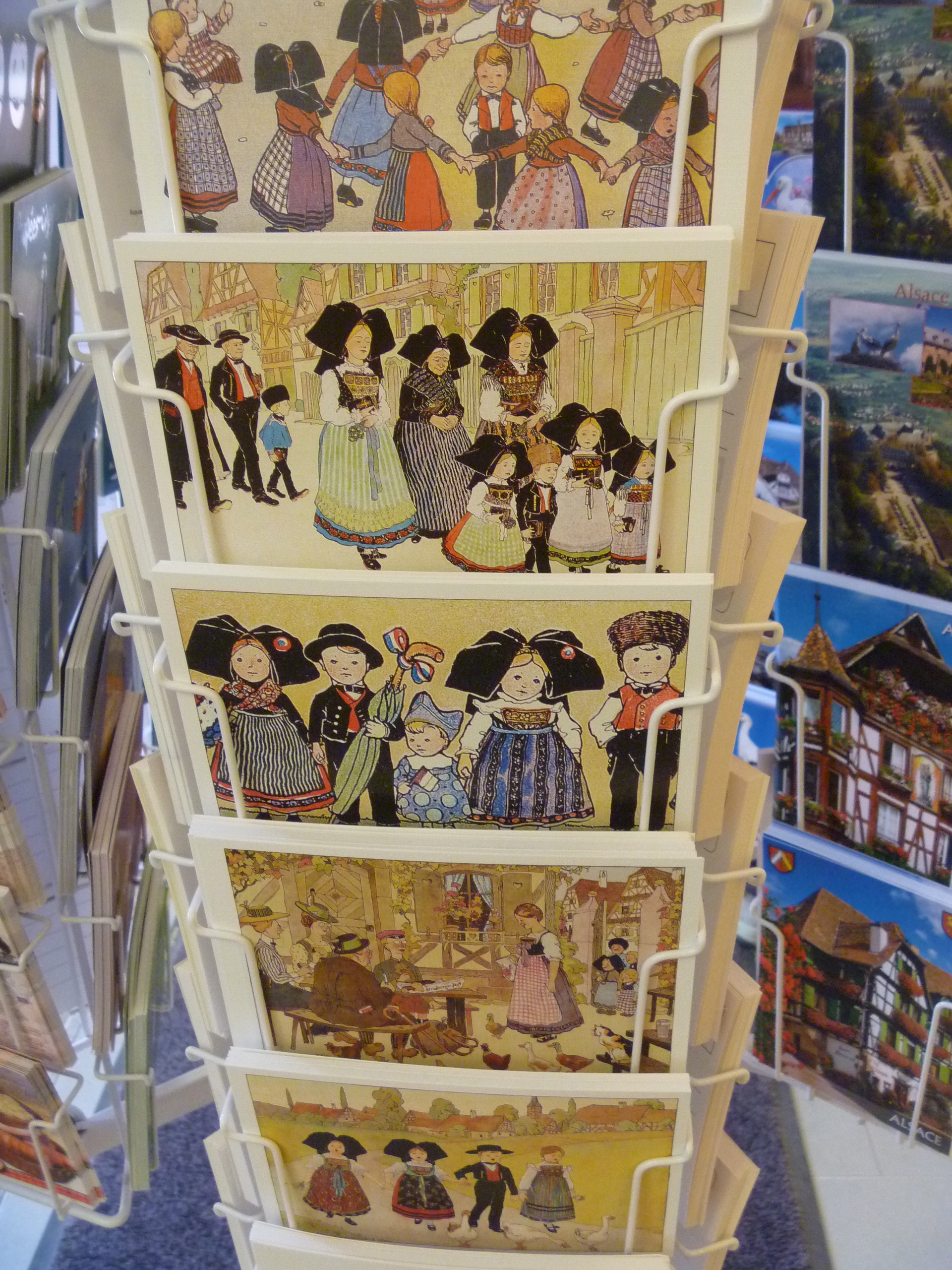
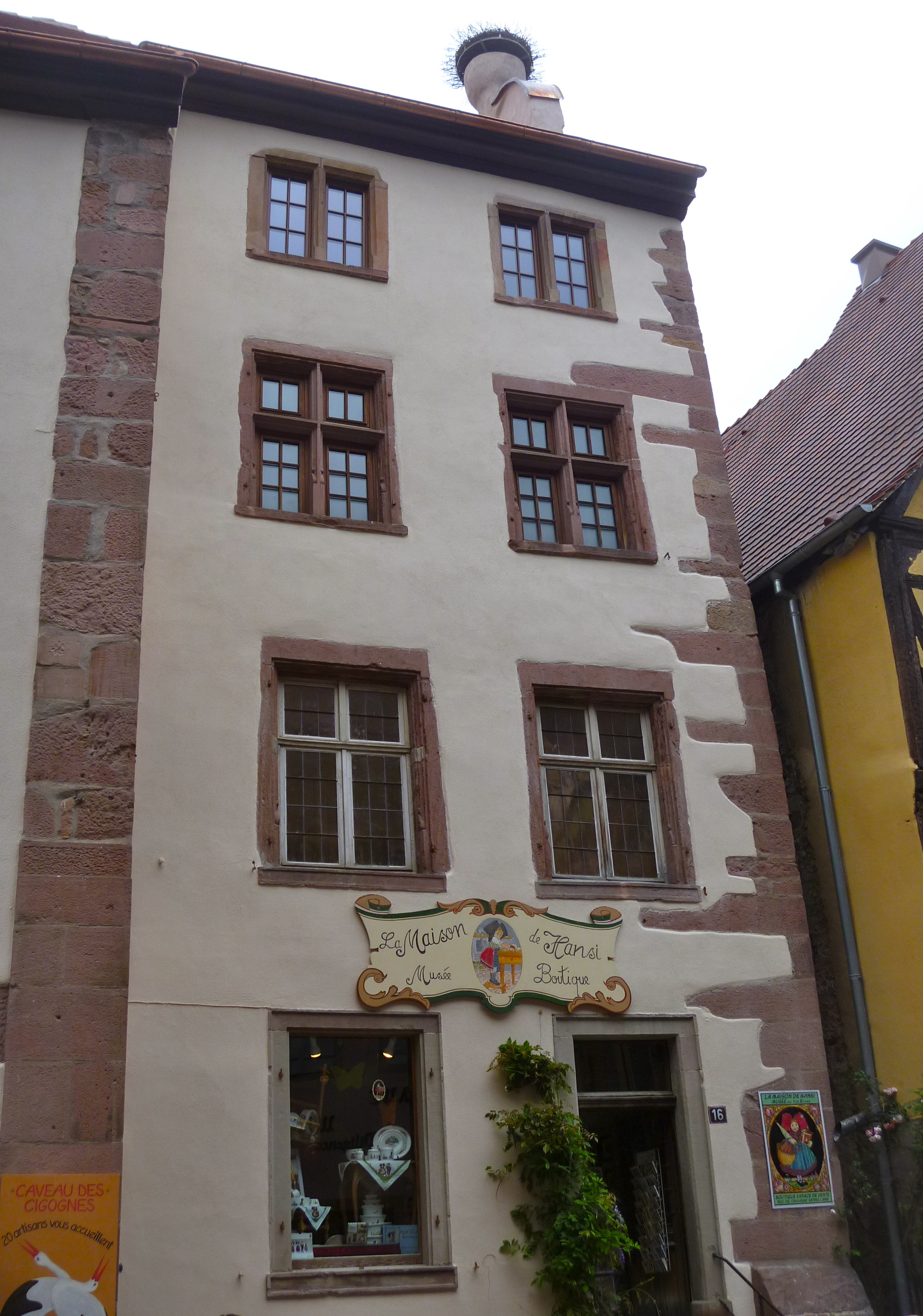
Oncle Hansi, or just Hansi, was the pseudonym of Jean-Jaques Waltz who was born in Colmar in 1873 and died in 1951. We came across his cute little pictures on postcards and framed on the hotel walls throughout our trip. At Riquewihr, where we stayed for our last night on the walk, there is a museum dedicated him.

Note the empty stork nest/basket on the museum chimney

There we watched a video film about his life and discovered that there was much more to the creator of the cutsy postcards than initially met the eye. He had been a French hero of both world wars. He published many satirical works and cartoons that made fun of the Germans in particular the book Professor Knatschke in 1912. He was arrested by the Germans when they annexed Alsace first in 1914 and later, having been pursued by the Nazis in 1940, he fled to Vichy France.

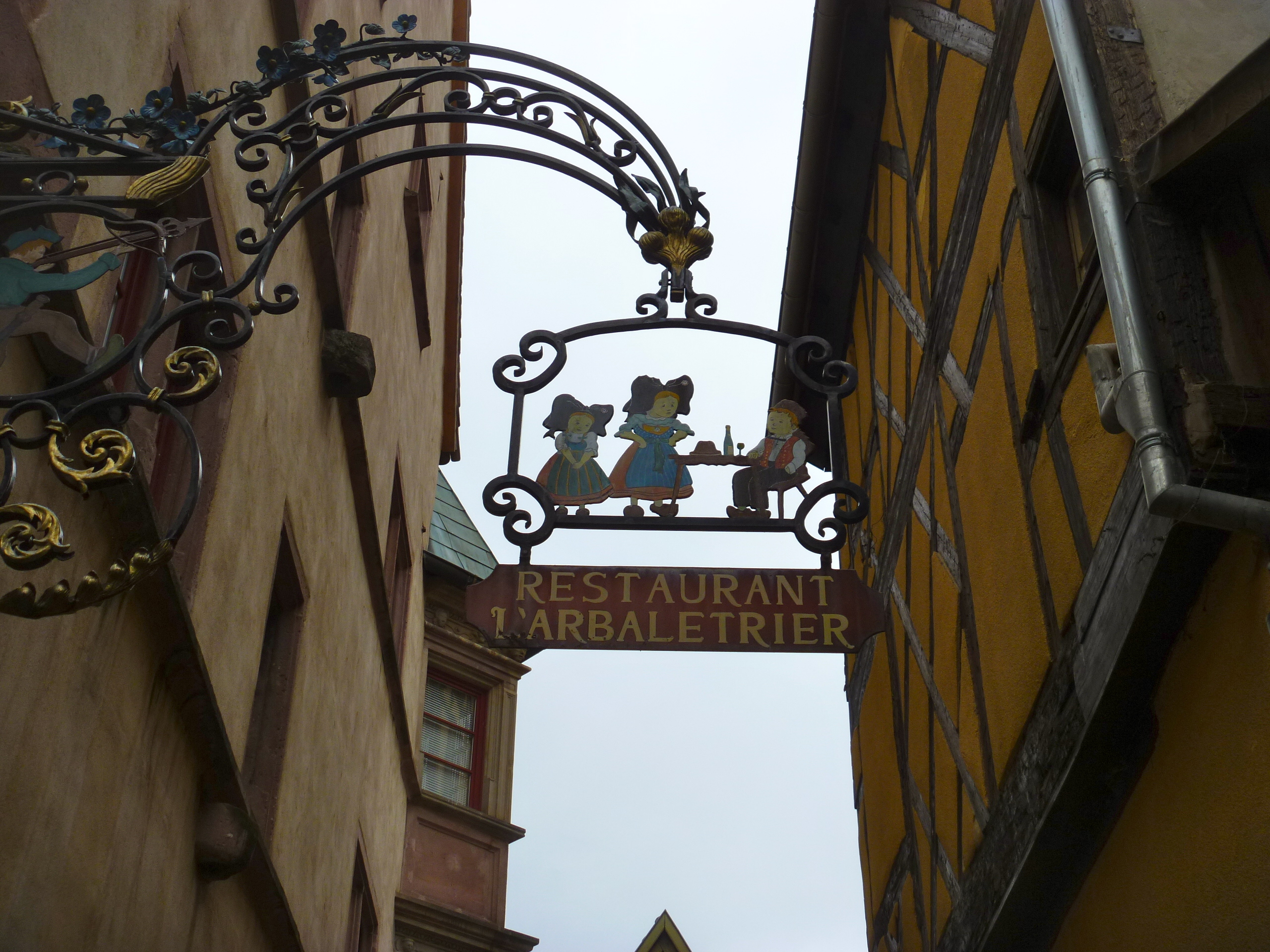
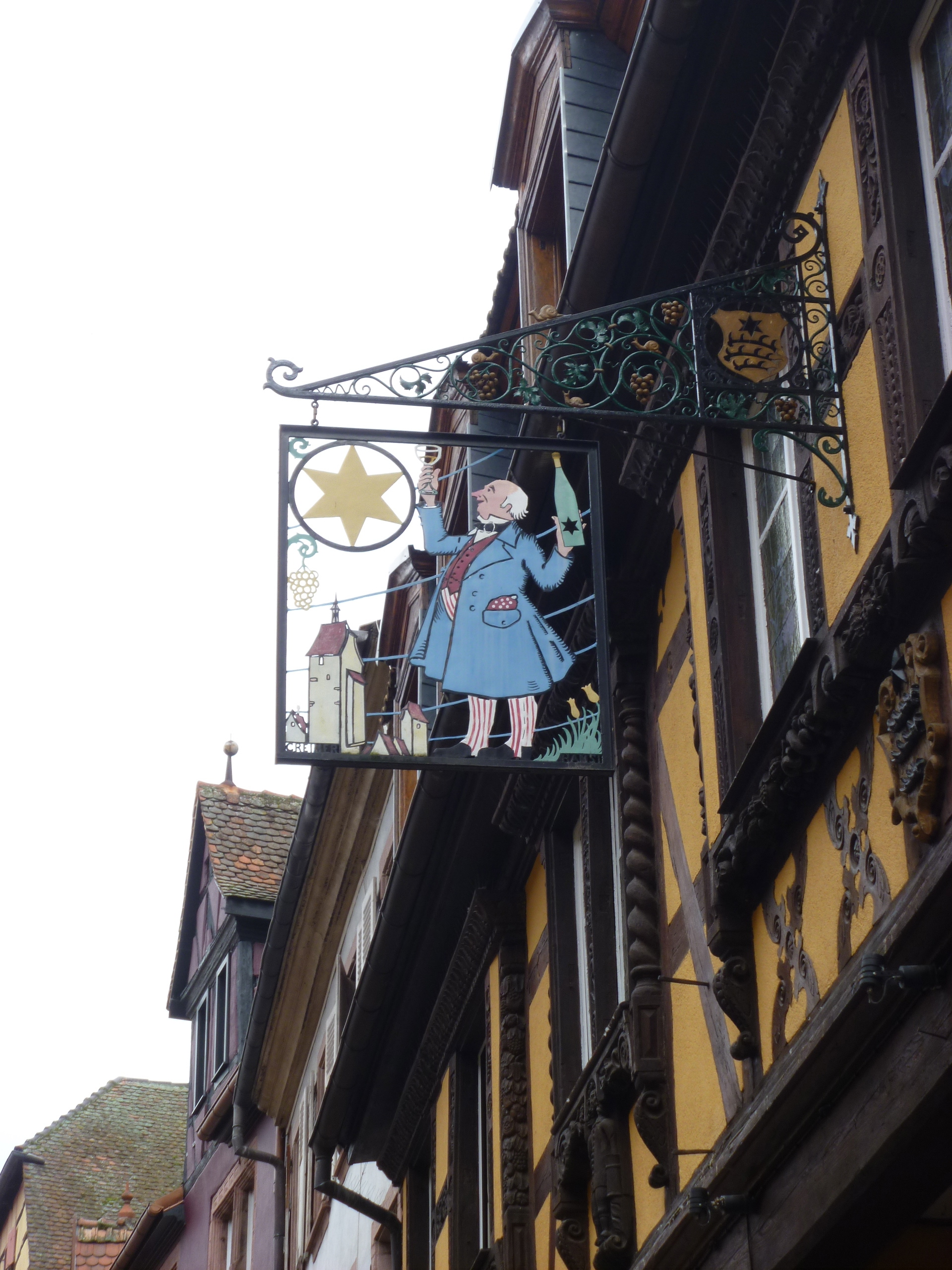
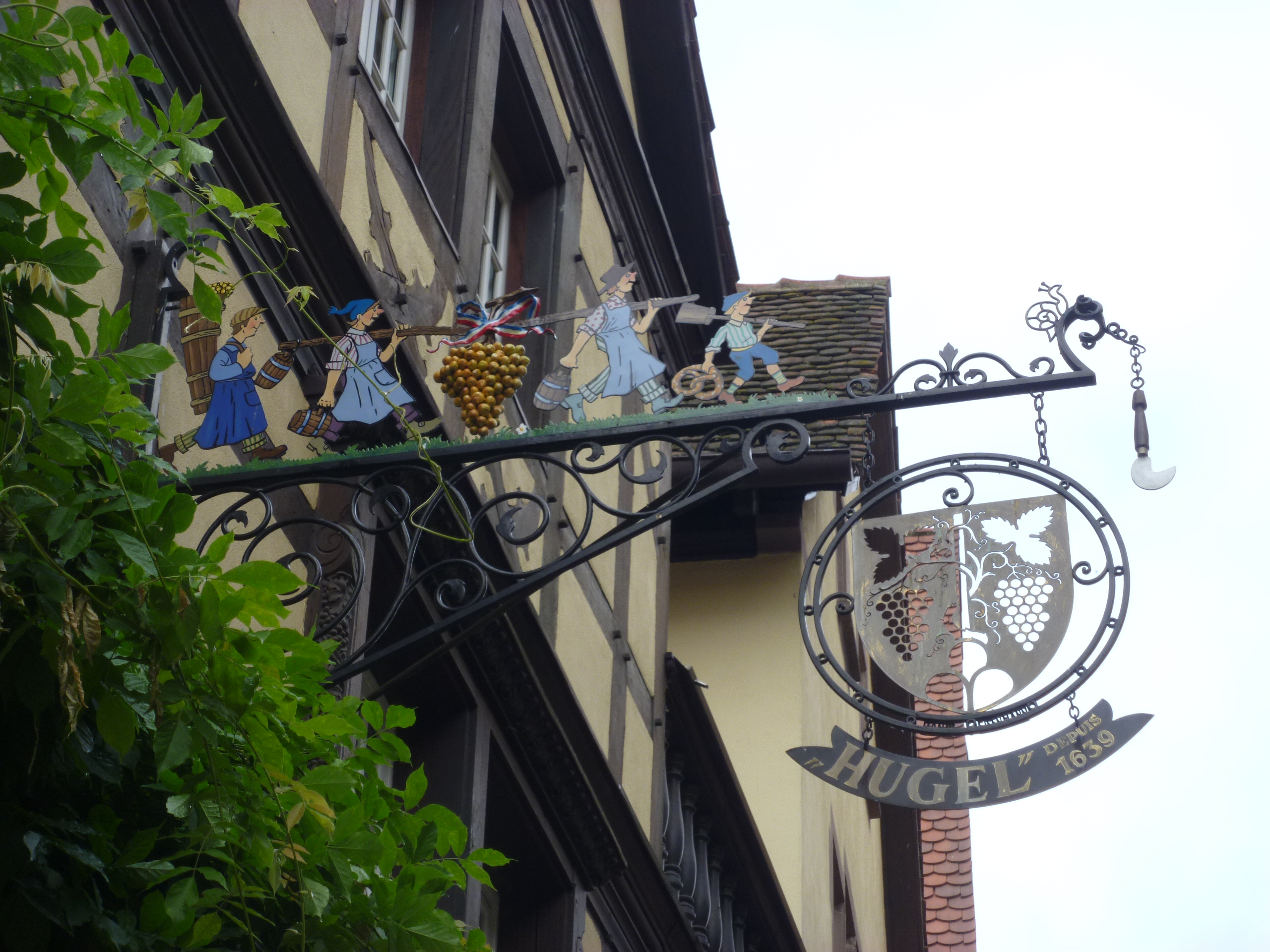
In addition to postcards we spotted shop signs in the villages showing his distinctive work.

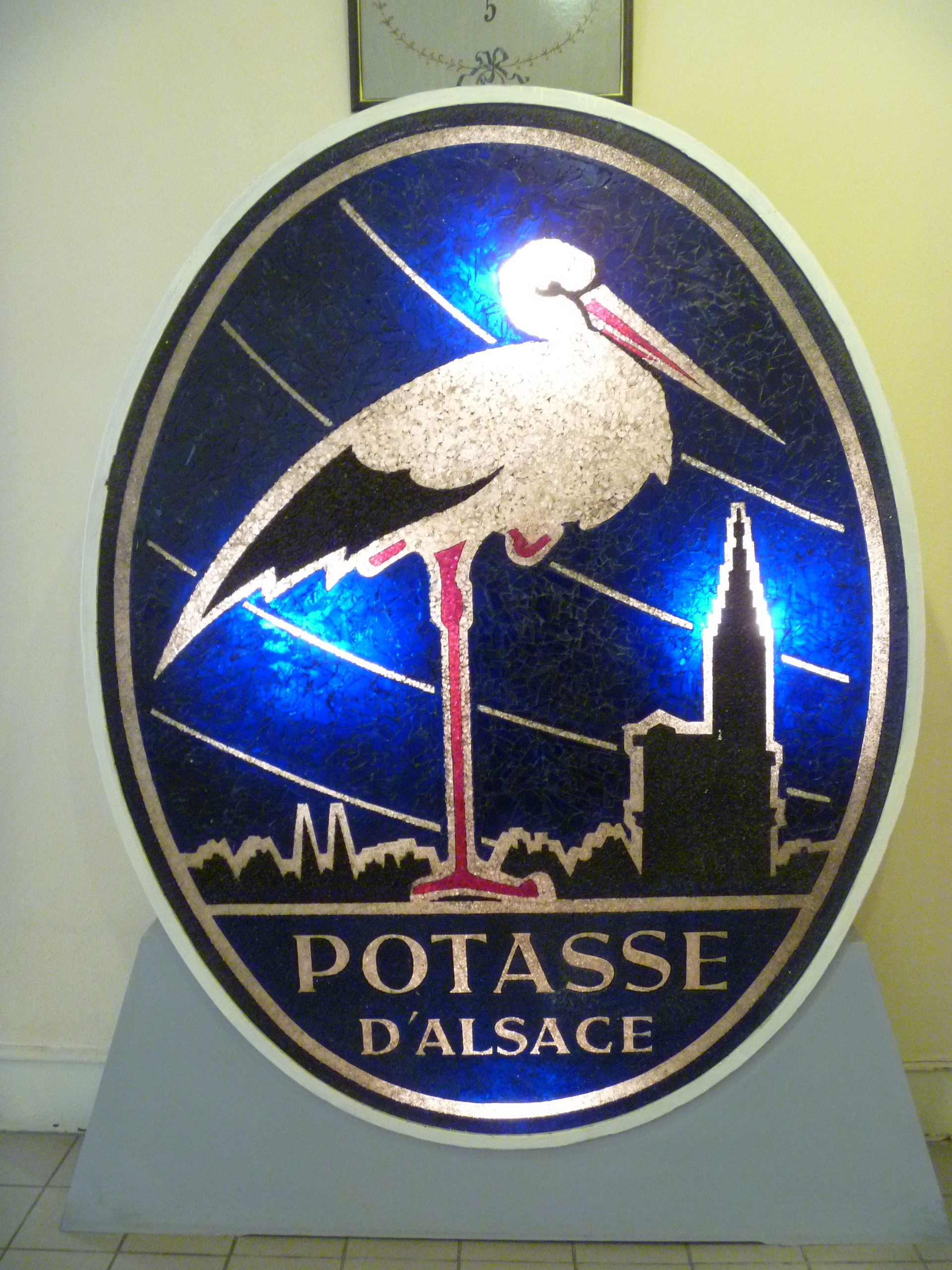
And here’s a combination of Hansi and a Stork – an advertising plaque :

Dr Albert Schweitzer

When I was growing up in the 1950s and early 1960s we learned all about missionaries in school and at Sunday school – Mary Slessor, Albert Schweitzer, Gladys Aylward – the names tripped off our tongues as did our times tables. I’m not sure these days whether young people know these names.

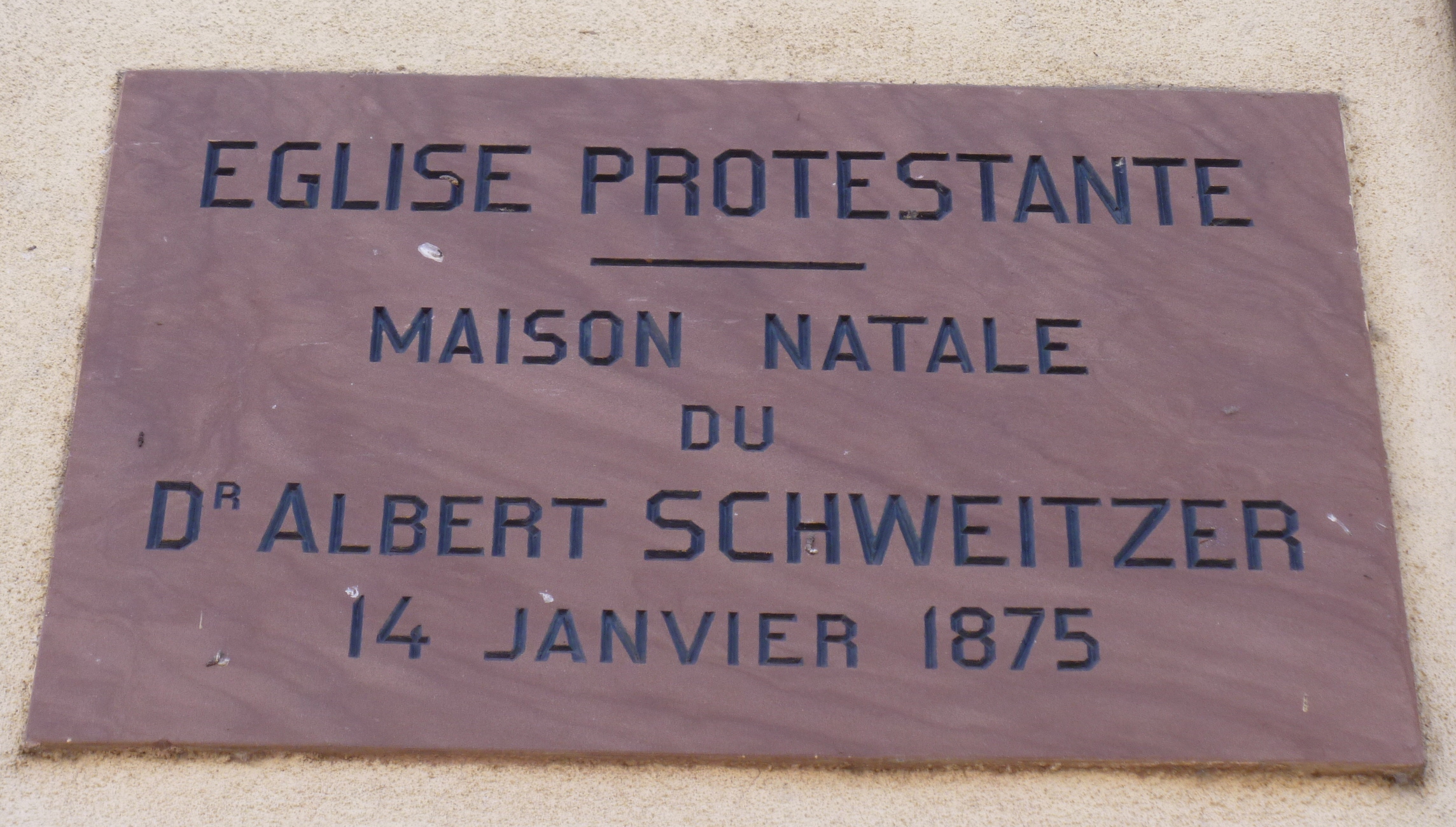
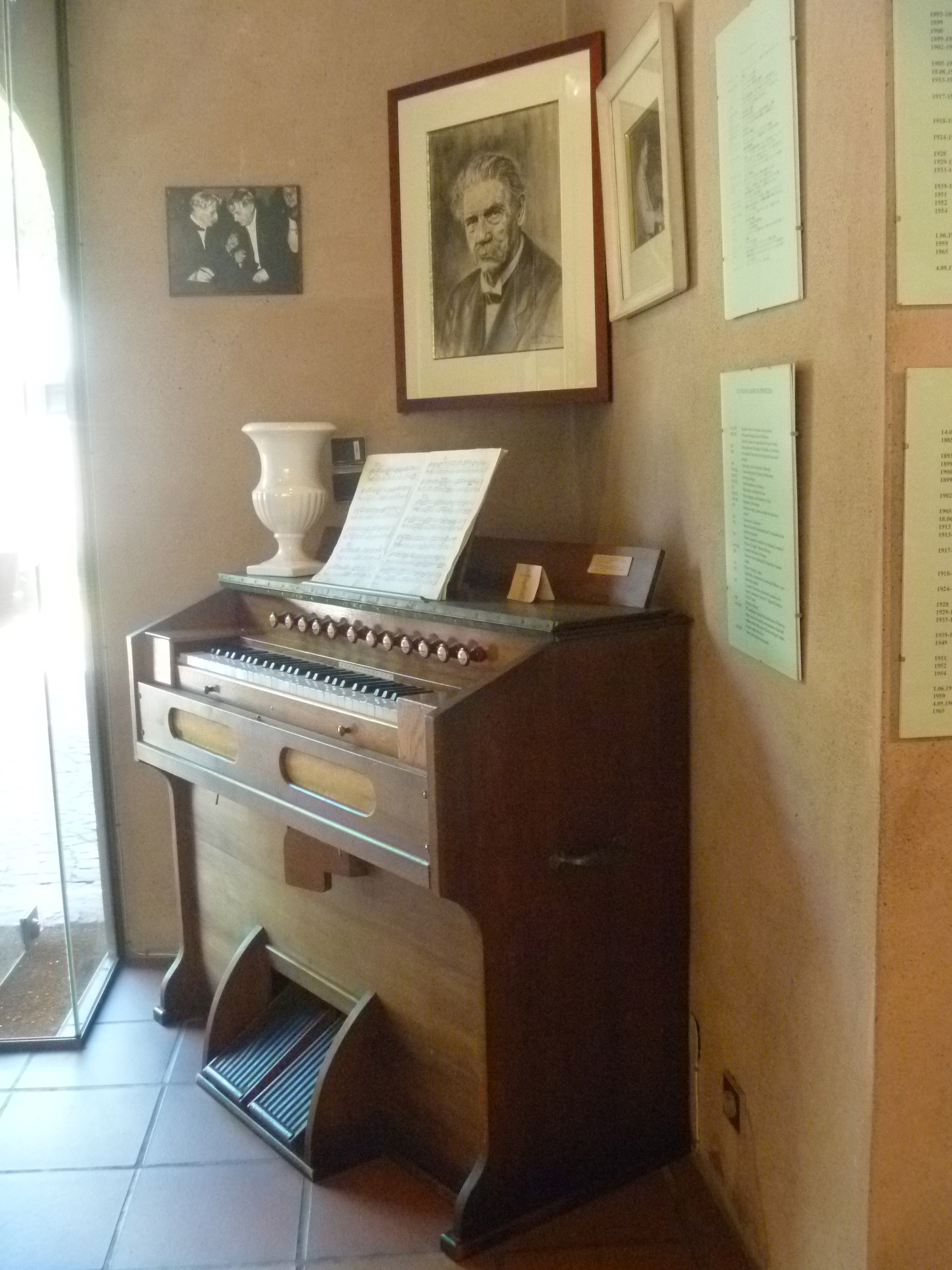
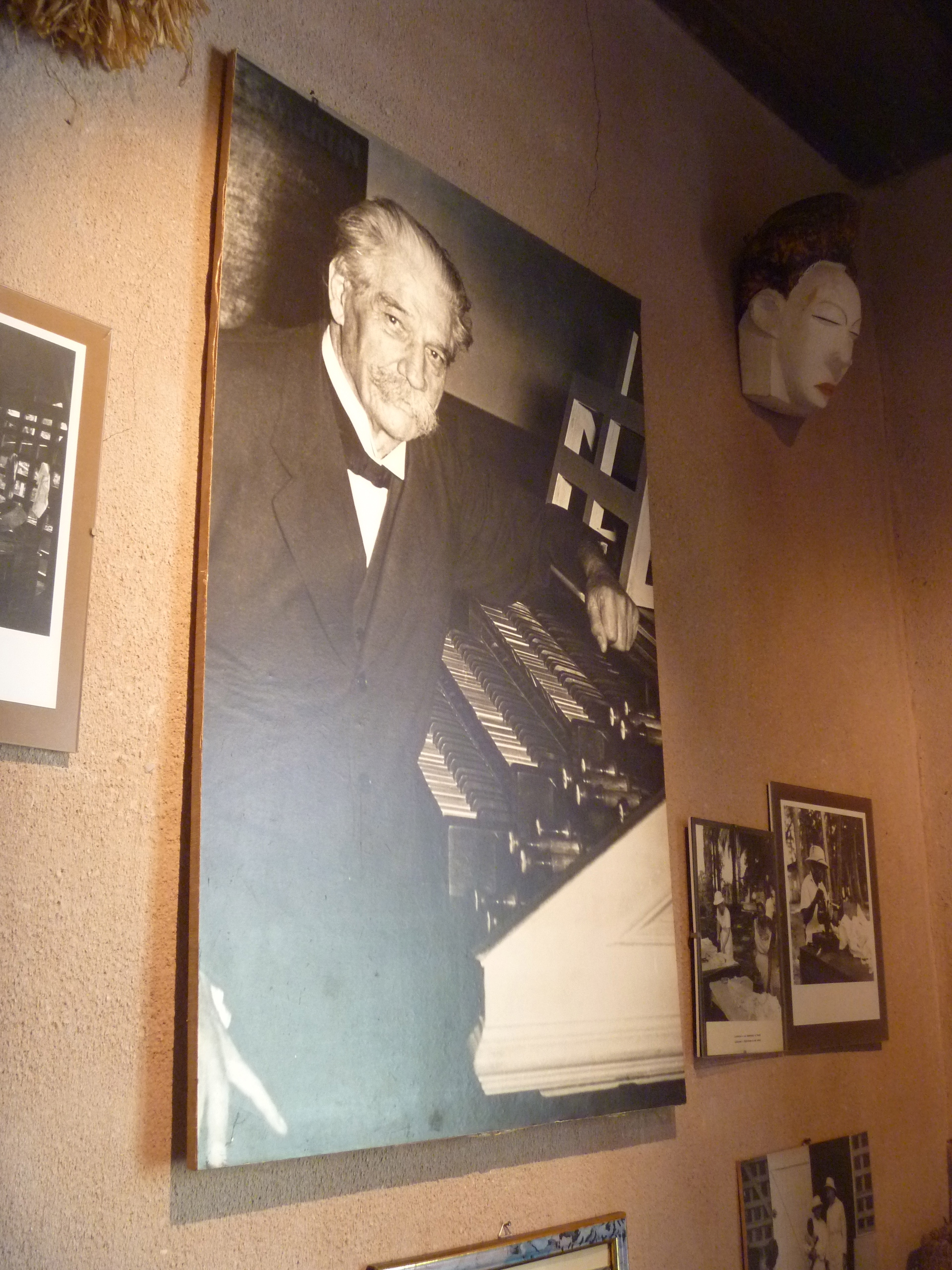
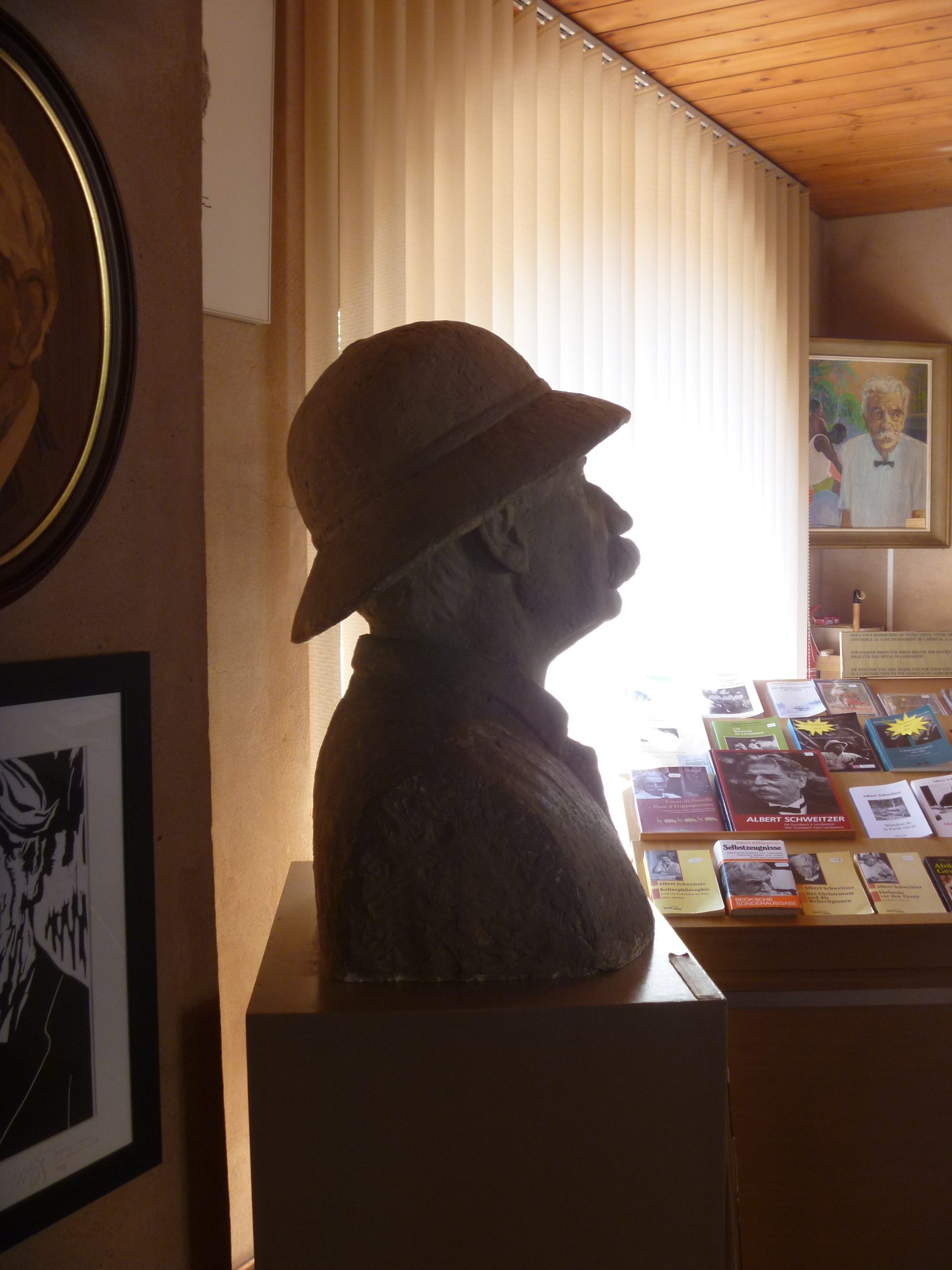
When we arrived at our final destination, Kaysersberg, on the fourth day of walking and saw the birthplace and museum dedicated to Dr Albert Schweitzer we knew just who he was and stepped inside to have a look.

I don’t know if the missionary aspect of work is played down now. Certainly the museum opened our eyes to his many talents and achievements: organist  (an authority on the music of J S Bach); philosopher and writer; theologian and Nobel Peace Prize winner (in 1952). He’d been arrested and imprisoned during the first world war for being a German citizen (due to being born at a time when Alsace was occupied by Germany).

But most significantly he was a medical doctor who founded and ran for 50 years a hospital in Lambarene, Gabon in east Africa. The hospital still exists today and the town of Lambarene now has twinning arrangements with Kaysersberg. Any profits that come from the museum entrance fee still go towards the work of the Schweitzer Hospital at Lambarene. Around the walls of the museum are pasted many quotations from his writings.

“Do something for somebody everyday for which you do not get paid.”

Read more athttp://www.brainyquote.com/quotes/authors/a/albert_schweitzer.html#YxhUTXKsI5eOfoyy.99

Good Things in Ghent : Music, Art and Good Company

I have been in the Low Countries for a few days and in particular in Ghent and in Amsterdam. As mentioned in a previous post here I have a lovely set of friends made through my online Reading Group. One happens to live in Brussels just now and another found herself travelling to Belgium with her choir. At just the same time I had a couple of spare days before a long-planned trip to Amsterdam. So what could be easier and more enjoyable than to bring forward my flight, book a train from Schiphol to Brussels and spend a day with these two friends? A kind invitation to stay in Brussels proved impossible to resist and thus I found myself last Wednesday in both rain and shine in the interesting city of Ghent.

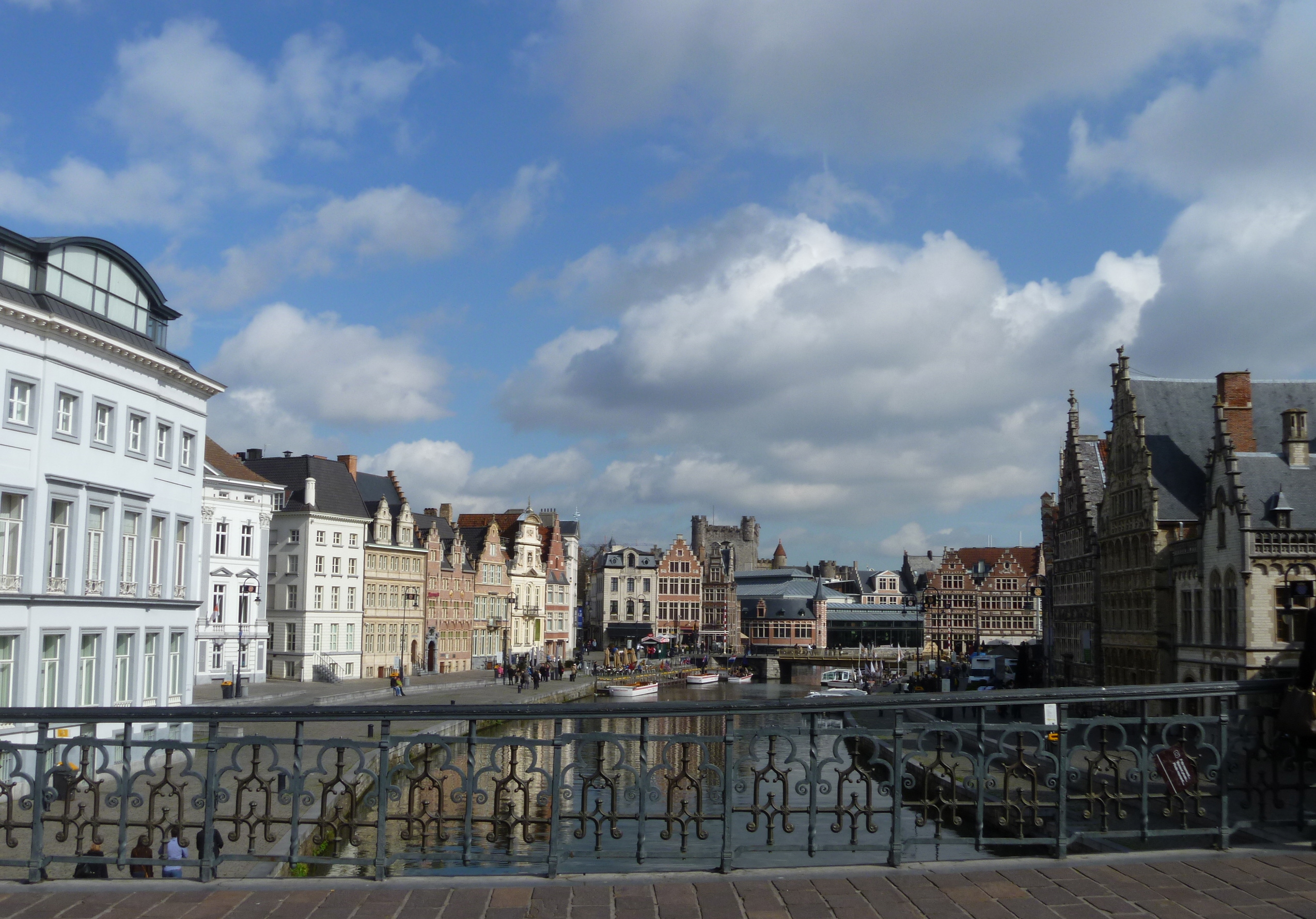
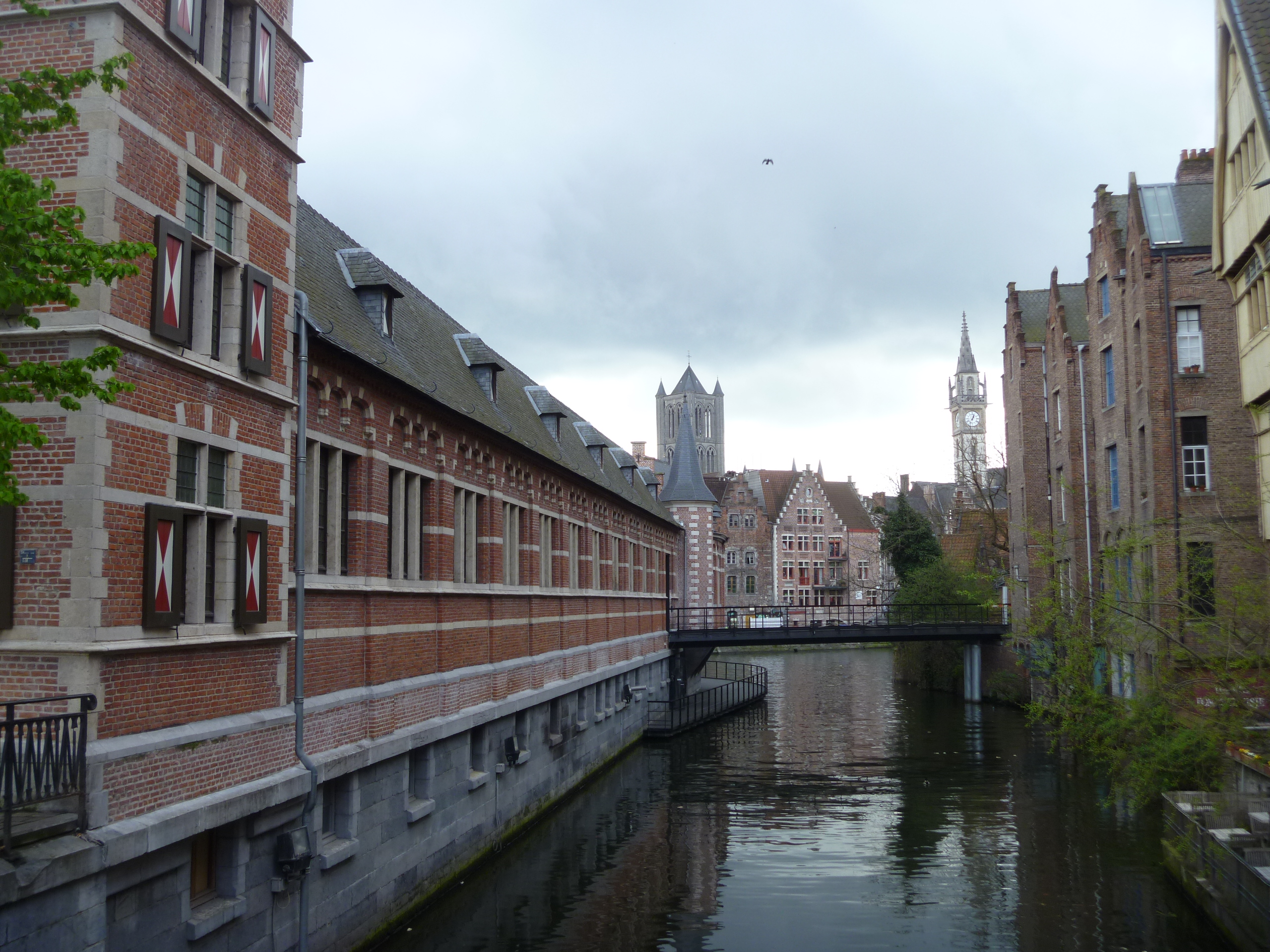
There was much chatter, some eating and drinking and quite a lot of walking during the day. Ghent has some lovely old buildings especially those Guild houses overlooking the canals and some huge churches.

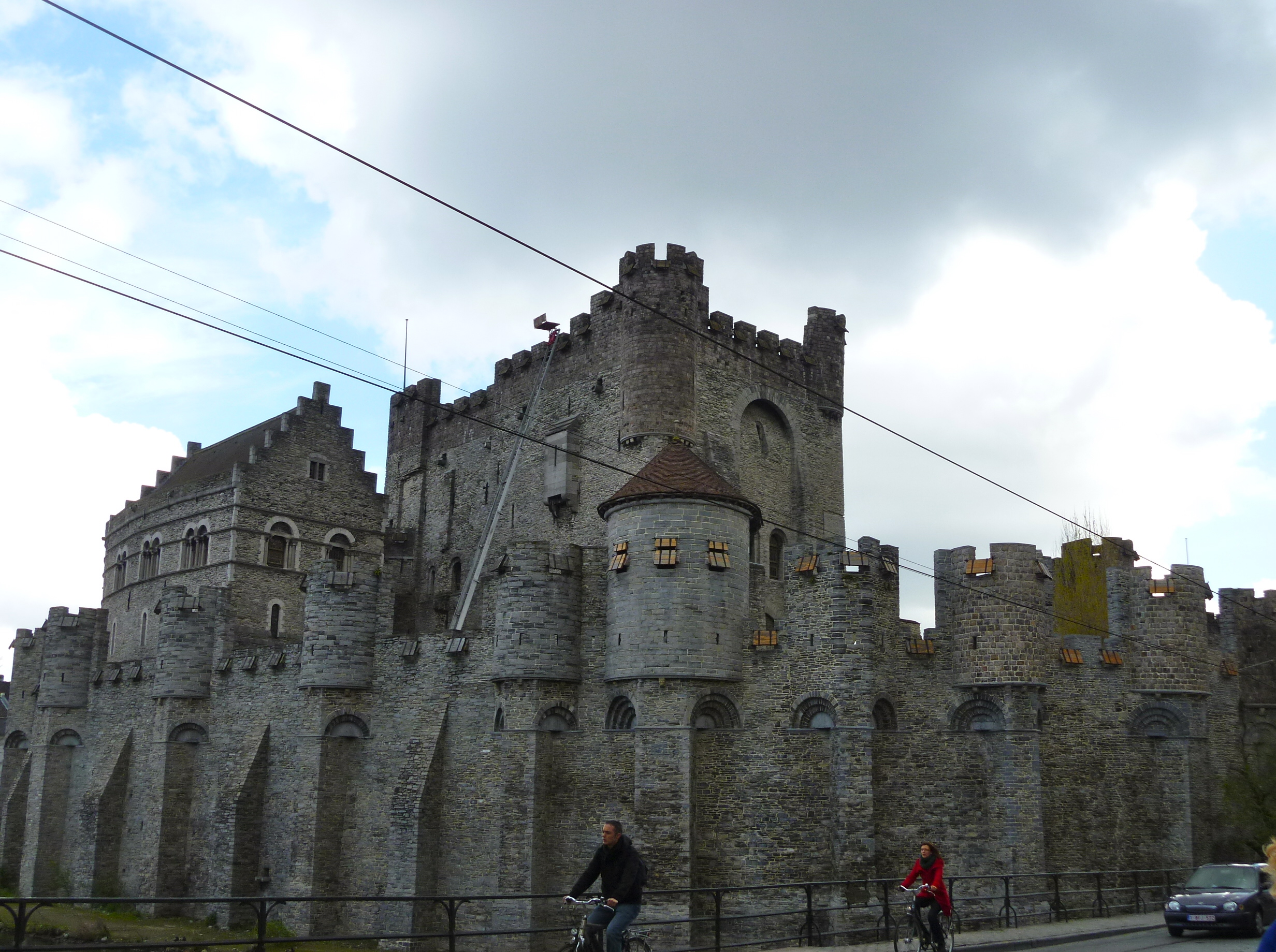
Het Gravensteen Castle, Ghent

The two highlights were a visit to St Baafs Cathedral, where we spent over half an hour inspecting Jan Van Eyck’s “The Adoration of the Mystic Lamb” in the Baptistry. The amazingly vivid colours are only a part of this exquisite multi-panelled treasure of Ghent. Included in the entry price is an excellent audio-guide explaining not only the symbols, characters and settings represented in the painting but also its fascinating history. One panel was actually stolen on the night of 10/11 April 1934. That panel has never been recovered. It is quite remarkable that this huge and complex altar piece has survived until today. Read more about it here.

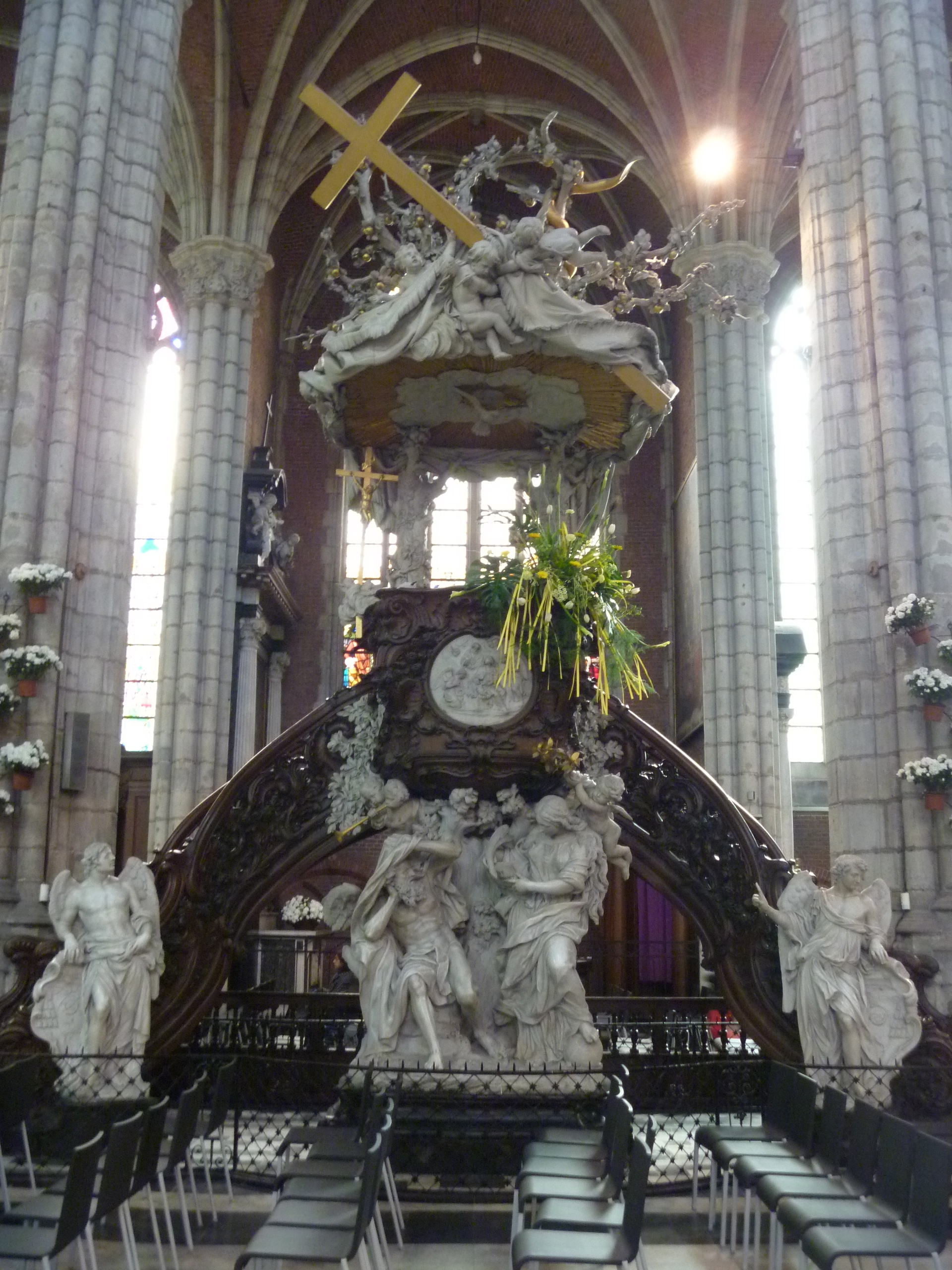
The Baroque Pulpit in St Baaf’s Cathedral

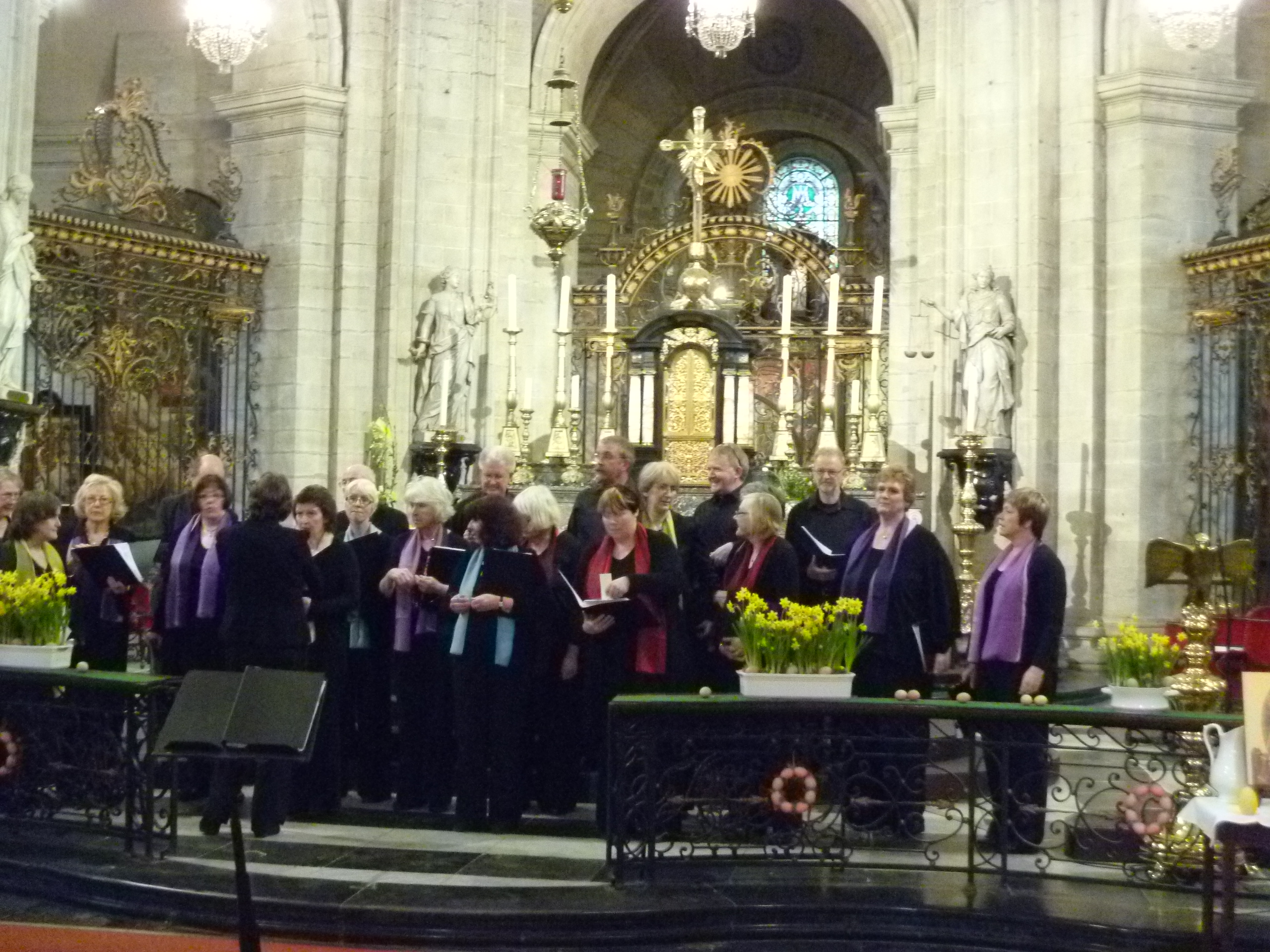
The second event was attendance at a concert during the afternoon at St Pieter’s church, about a 15 minute walk from the city centre. The Valentine Singers from London were performing 3 concerts in Ghent (including one in St Baaf’s Cathedral). Interestingly Ghent was appointed Unesco City of Music in 2009.

It was great to see and hear our friend in performance as we have long known about her musical career. The varied concert of church-related songs included a beautiful canon “Praise God” by Thomas Tallis and other songs by English composers – including Purcell and Elgar. There were works by Schubert, Bruckner, Saint-Saens and others and some Negro spirituals. We joined a fair-sized and very enthusiastic audience but even a full house would have looked minuscule in this vast Ghent church.

The Valentine Singers prepare their next piece in St Pieter’s Church, Ghent

All too soon the good things in Ghent came to an end and the two of us returned to Brussels.

As with many of our “meets” this one also produced further ideas worthy of investigation and upon which we may centre future meetings.

Binton Church – a Link with Antarctica

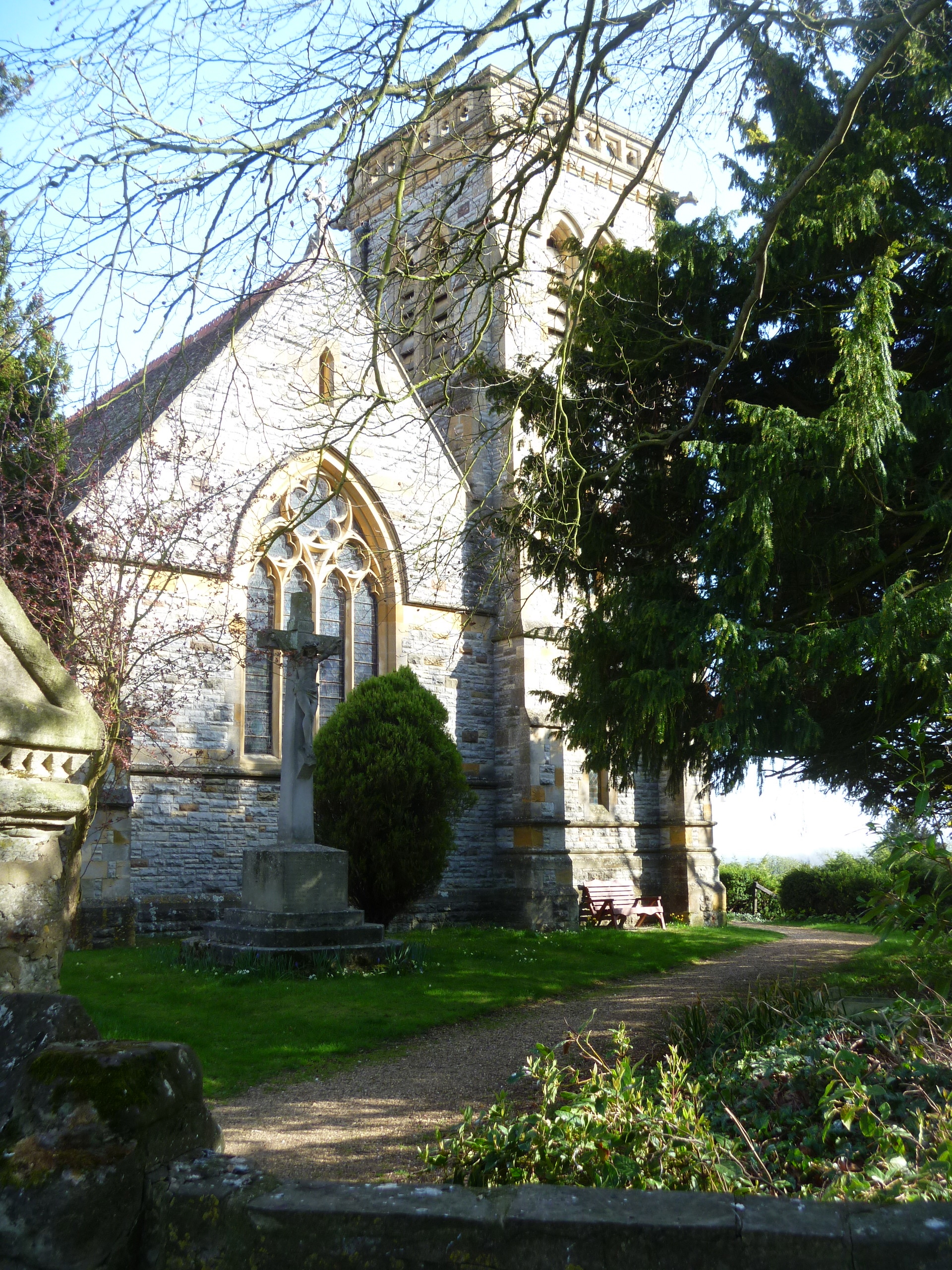
South of Bournville and a few miles west of Stratford and less than a mile from the River Avon, in the peaceful Warwickshire countryside, lies the little village of Binton. It is just a few houses (very nice ones, though!), farms and a church. There is no longer a pub and no railway station, shop or Post Office. The church is Victorian and dedicated to St Peter.

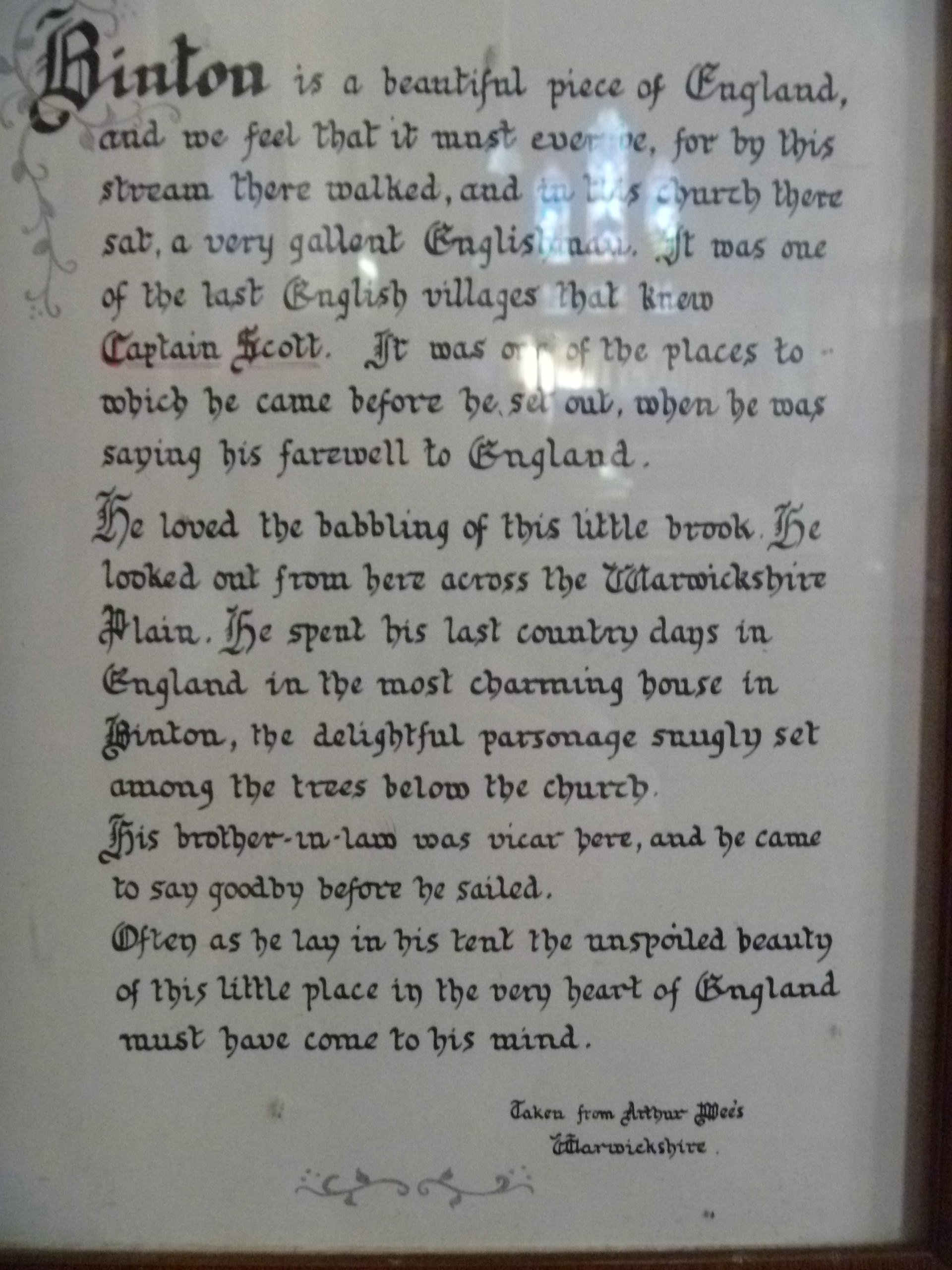
This quiet village seems an age  away from the icy cold blasts of the Antarctic continent. Nevertheless here in Binton’s satisfying little church is a further link with a theme that seems to crop again and again during this centenary year of Captain Scott’s ill-fated expedition. This village was one of the last places visited by Scott before he set out for the Antarctic. The reason was that his brother-in-law, the Rev Lloyd Bruce, was rector of the parish.

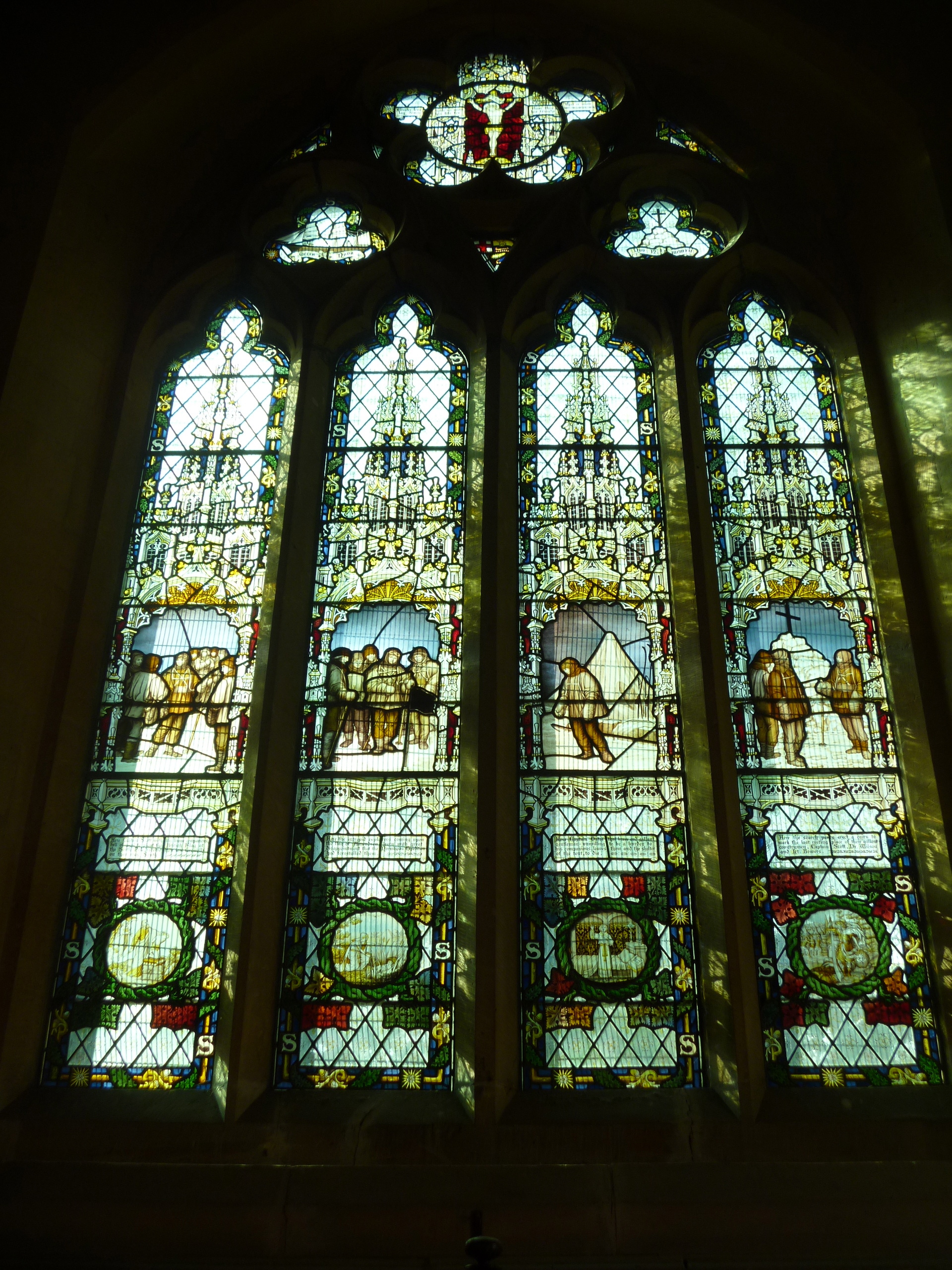
My  friend had discovered that the church contained a set of windows designed and manufactured by Charles Eamer Kempe in memory of the Expedition and illustrating stages of the journey.

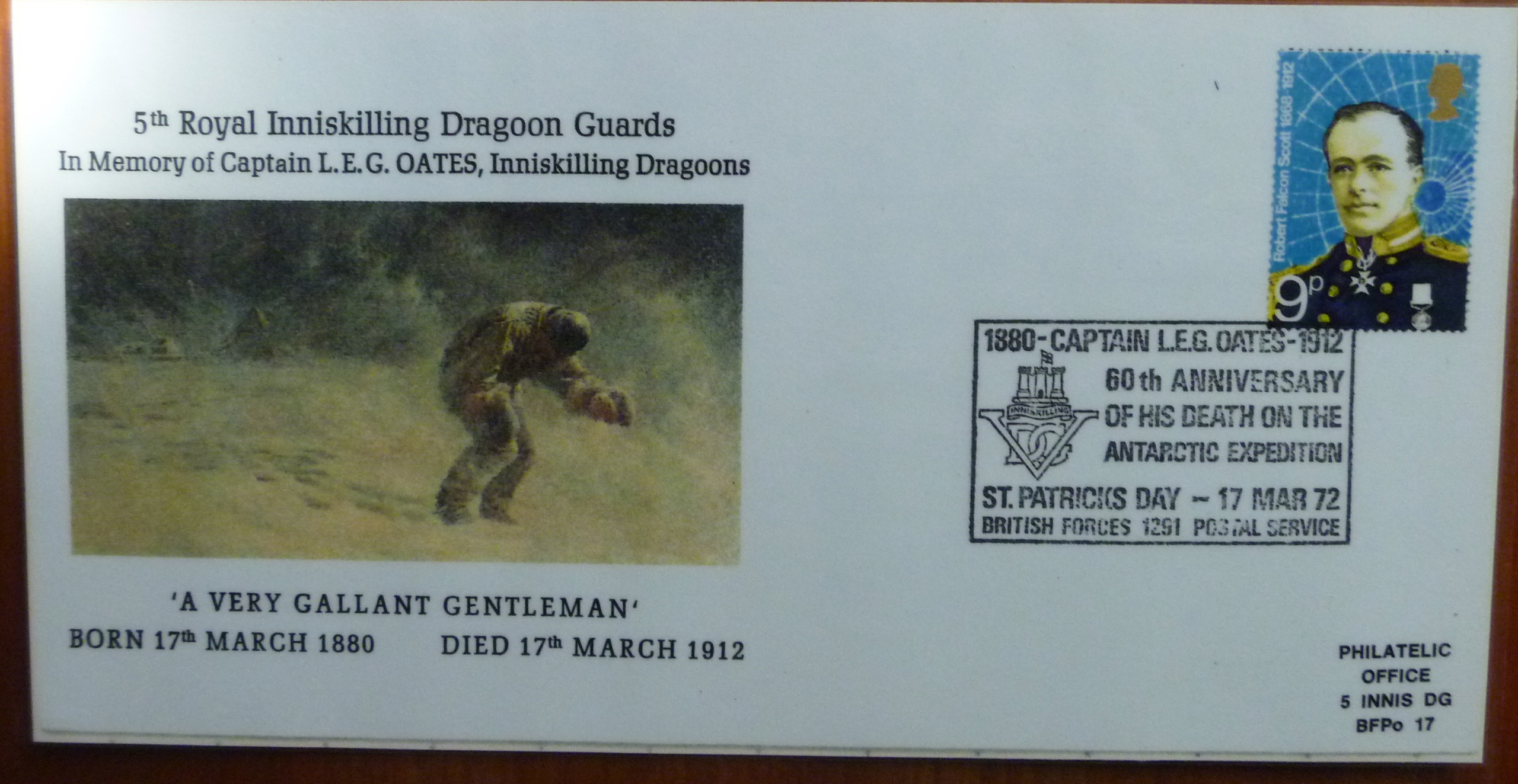
There’s a small exhibition telling the Scott story and illustrated with photographs, commemorative stamps and other memorabilia.

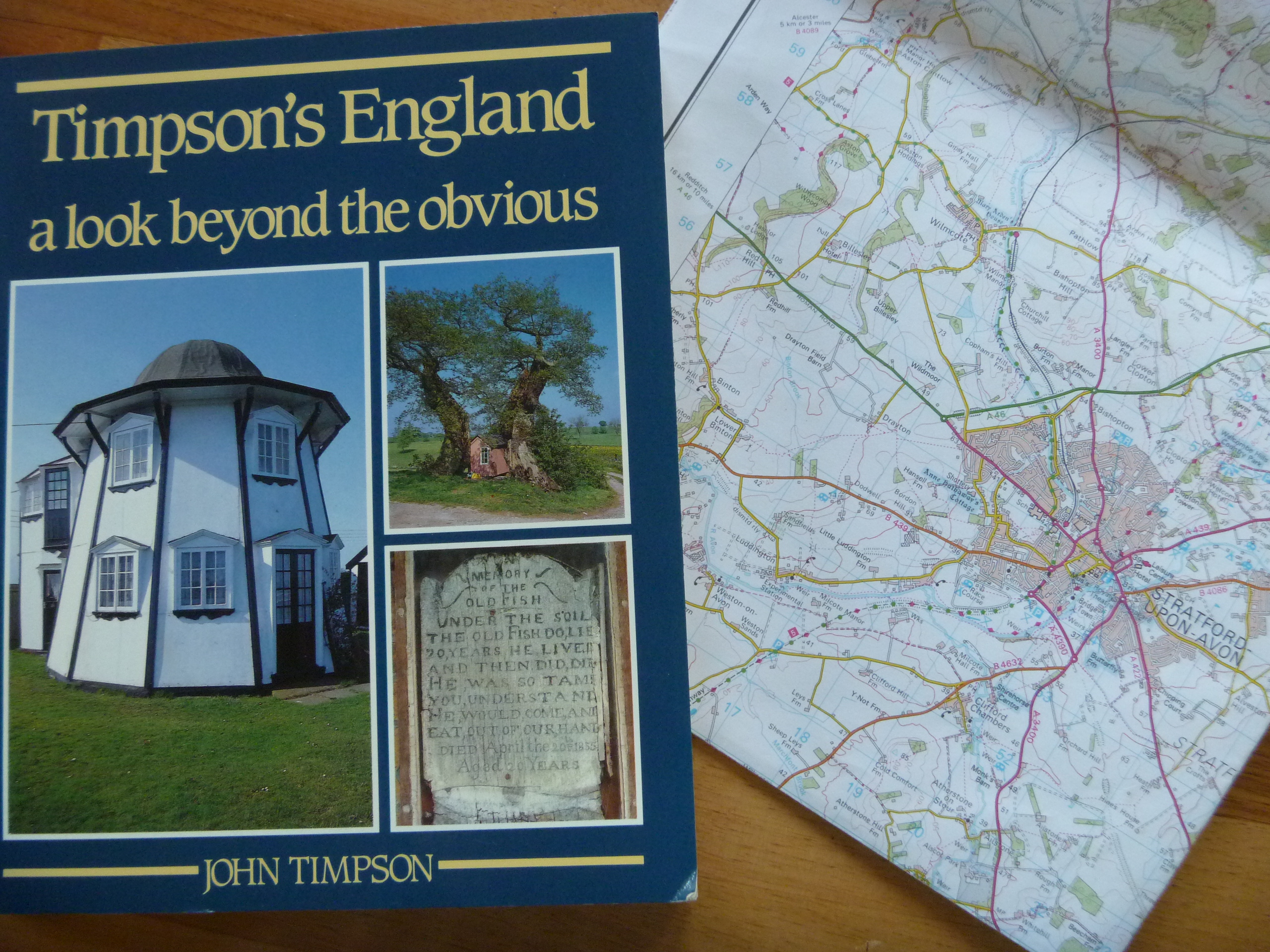
My friend discovered the existence of the memorial window so near to Stratford in John Timpson’s ‘Timpson’s England : a look beyond the obvious’. She, like me, is always out to discover hidden gems and the unusual whenever she travels around Britain and abroad.