Day Out at Dartington Devon with Dovegreyreader

The Dovegreyreader has made several comments to me to the effect that reading Milady’s posts here save her a great deal of time and expense and the bother of travelling when she can read about the places that appeal – with her feet up by the fire in winter or in her deckchair in the garden in summer. Well, last Thursday she was persuaded to leave home and travel a few miles across misty Dartmoor to join me and act as guide for the day at the Dartington Estate near Totnes.

The arrangement was to meet late morning at The Cider Press Centre, now called simply, and to the point, Dartington Shops. This was the part of the Estate that I was already familiar with and it was by mutual consent that we headed straight for Cranks Restaurant. I’d eaten here many times over the years since the early 1980s and I have the cookery book still. It’s been well-used and the recipes are well-loved. The restaurant and the food were little-changed and with tea and cake followed later by soup and cheese scones we clung to our table for probably three hours (who’s counting the time when there is so much book and family talk to catch up with??).

Eventually we decided a walk was in order as that had been the ‘plan’ for the day in the first place and our reason for meeting at Dartington; besides we needed to work up an appetite in order to take afternoon tea at some point later in the day!

We headed straight out of the car park along a public path (past the former Dartington School) and along the main approach road to Dartington Hall to our first port-of-call the School’s  former Headmaster’s House – High Cross House.

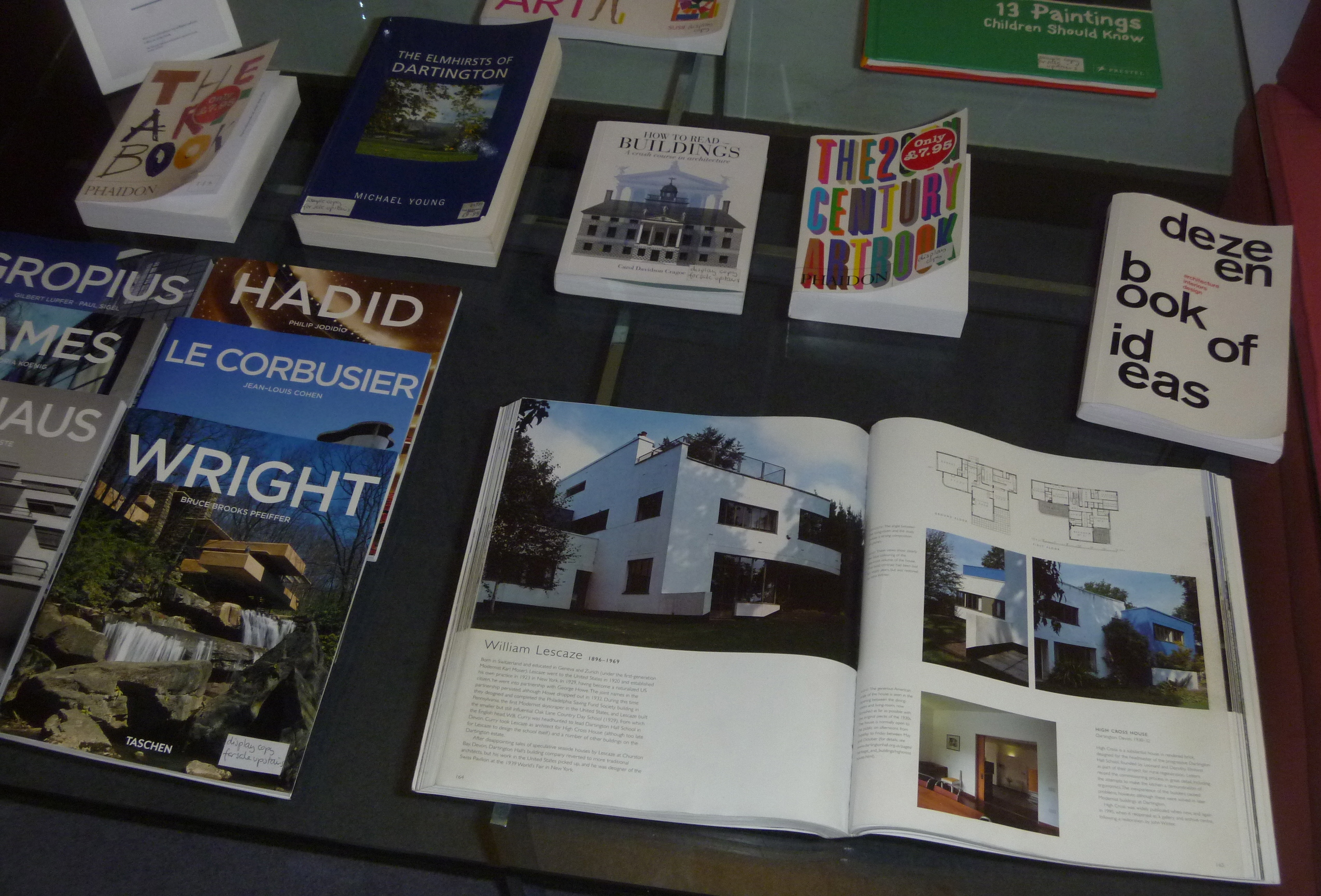
It’s now under the auspices of The National Trust and is a fine example of Modernist architecture and a host to a number of exhibitions and resident artists. There’s a cafe (that spreads out onto a roof terrace in summer) and small bookshop. The house has a relaxed atmosphere and you may sit on the chairs and handle the books.
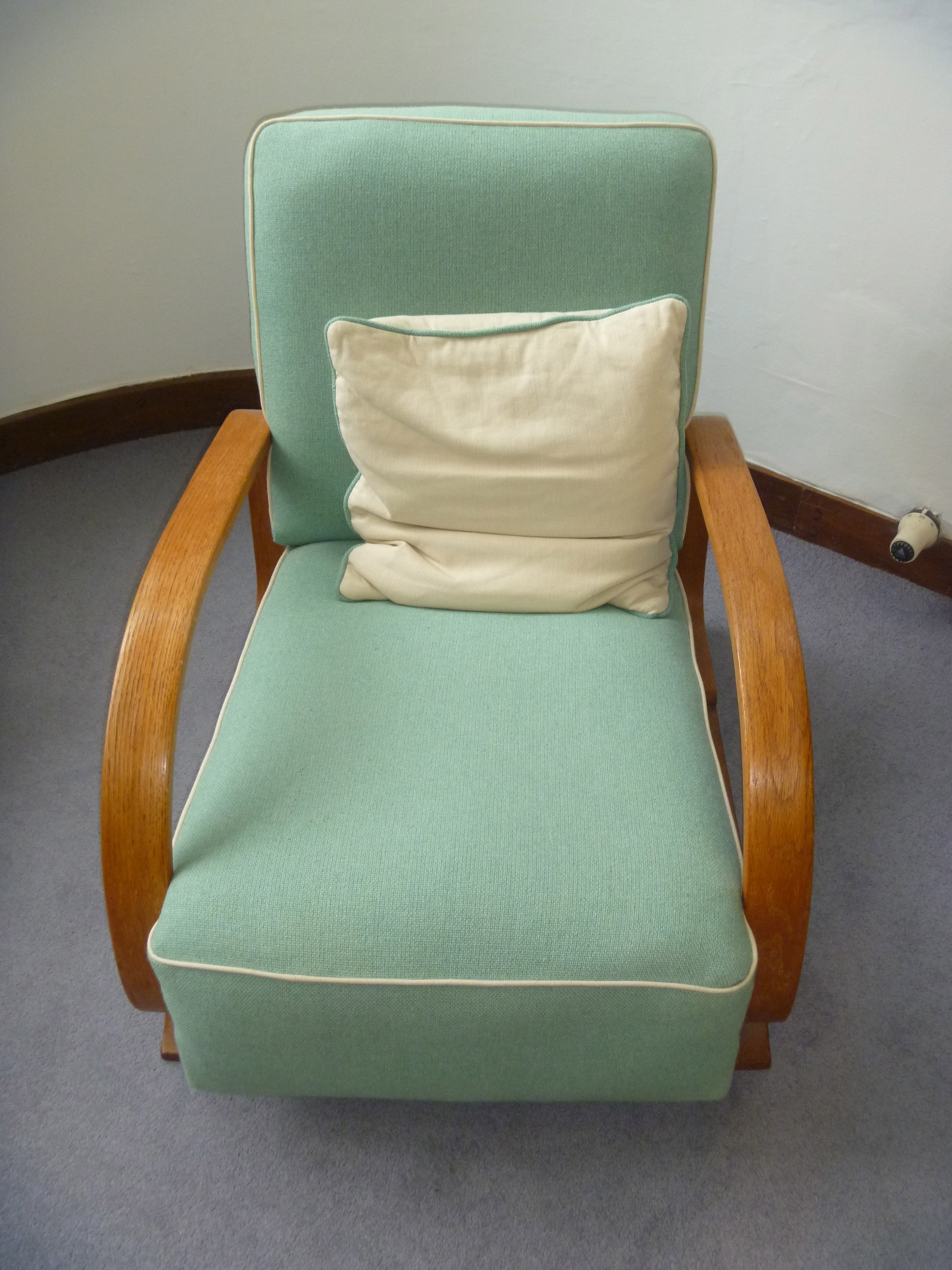
Comfy chair originally to be found in the common rooms at Dartington Hall residences
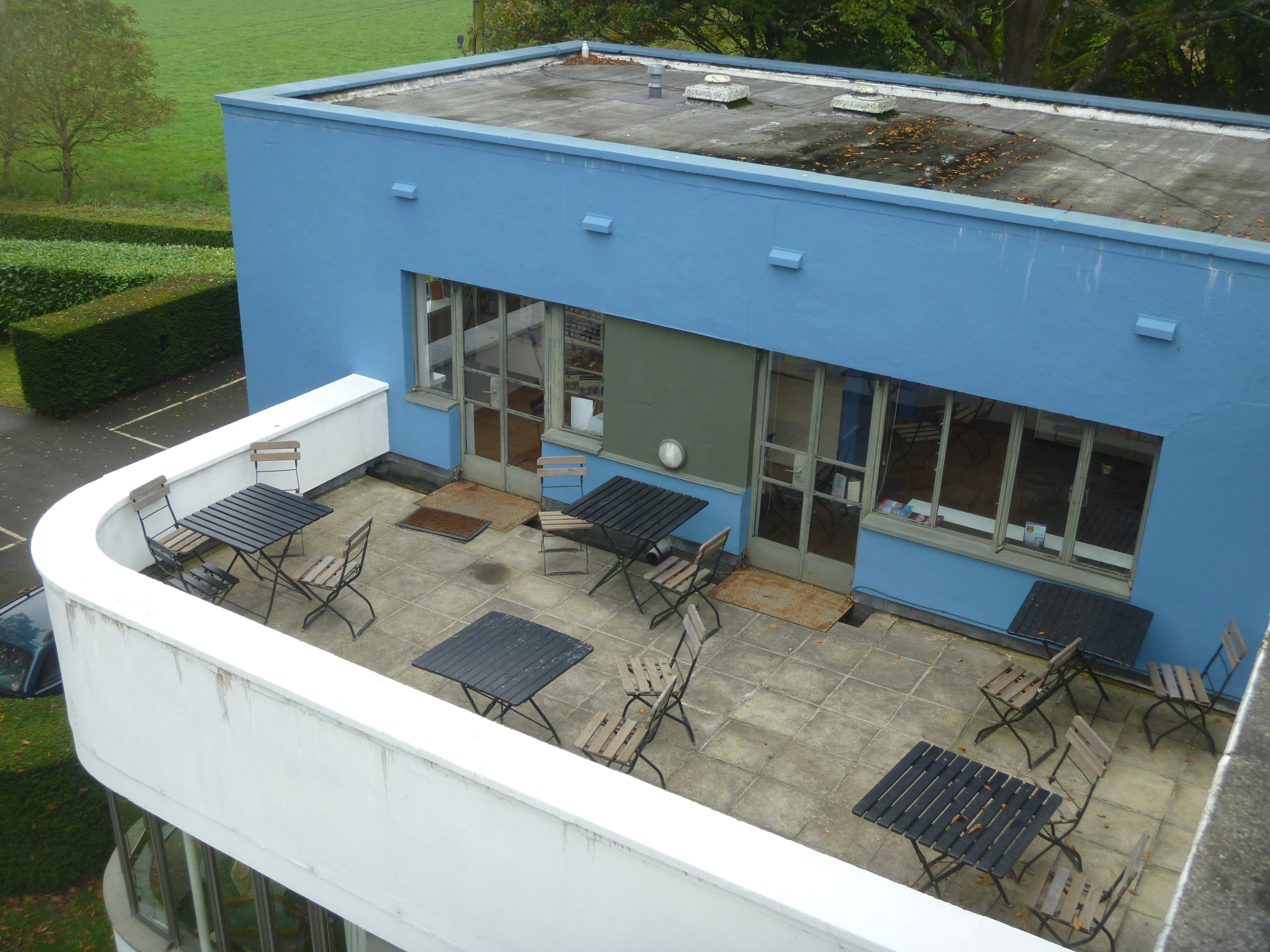
Cafe Terrace
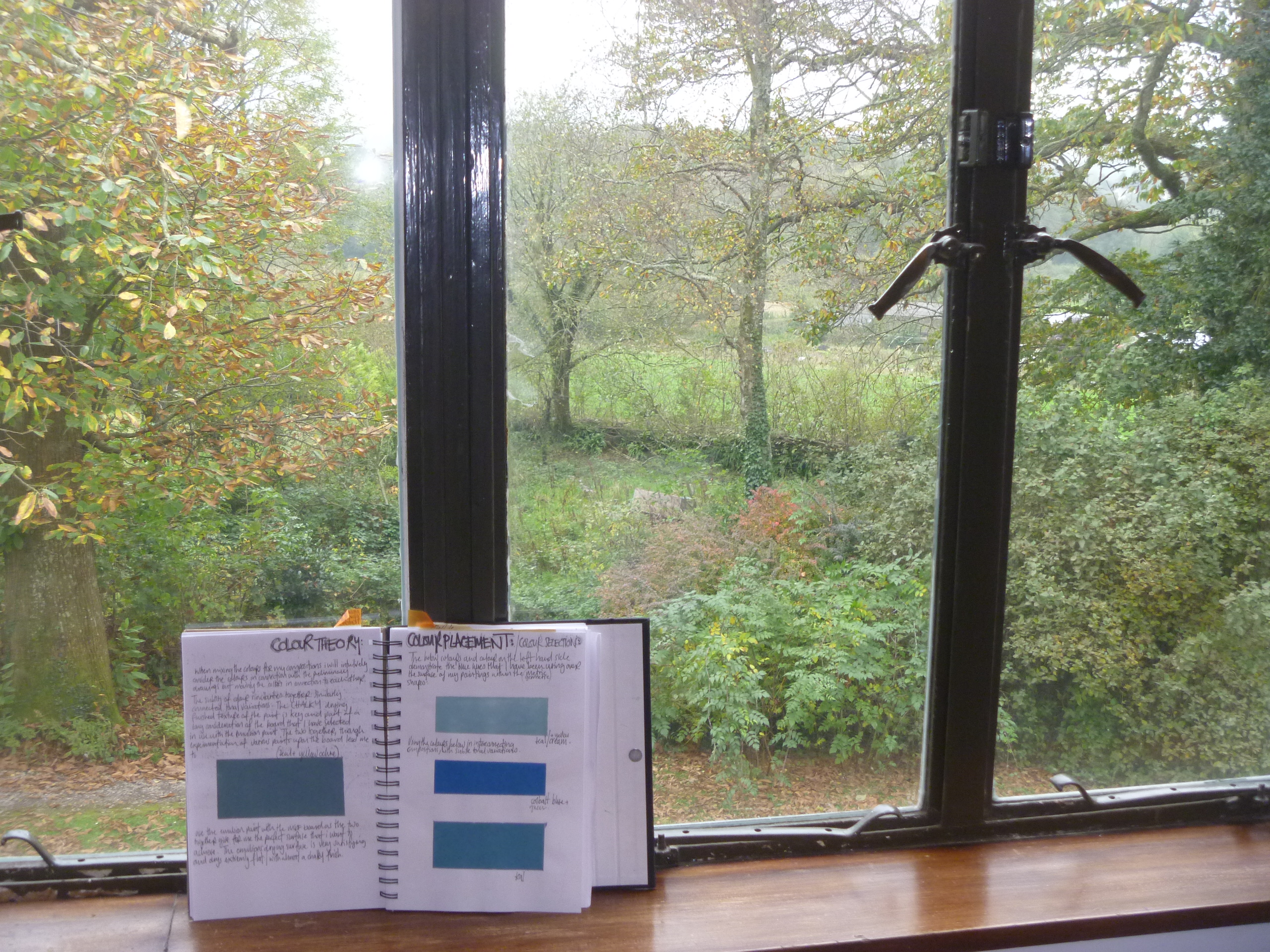
Colour Theory and the View of  High Cross House Garden
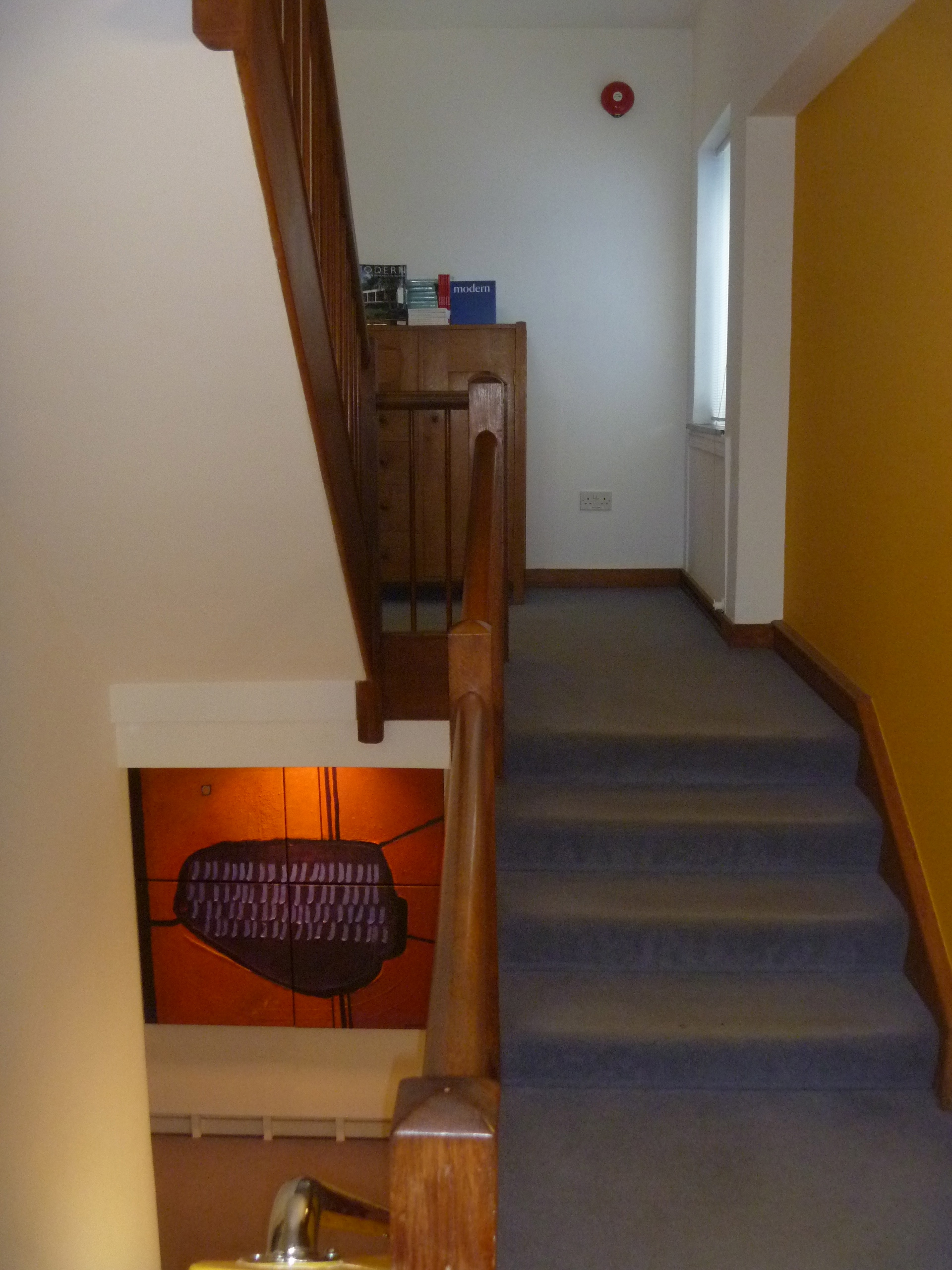
Staircase at High Cross House

Any artist who is in residence that day and helpful room stewards will also answer any questions you may have. Here is the NT brief resumé of the house :

“Built for William Curry, headmaster of Dartington Hall School, this Modernist gem was commissioned by Leonard Elmhirst and designed by William Lescaze in 1932. The house still evokes the ‘serenity, clarity and a kind of openness’ described by Curry.

High Cross is one of Britain’s most celebrated Modern residences, and we are excited to be presenting it to the public under our management, working in partnership with the owners of High Cross House, the Dartington Hall Trust.

The architecturally important building is playing host to contemporary art exhibitions and sales, talks, demonstrations and musical evenings, and is a perfect and unusual space for events. High Cross is to become a local centre for contemporary arts, as a community-led sustainable model of management.”

View from the footpath – High Cross House to Dartington Hall

From the HCH we headed towards Dartington Hall which I particularly know of as host to the summer Ways With Words literary festival. I’ve only heard of it and read about it but DGR has attended and participated there. This makes her the perfect guide to the estate and buildings.

In the gardens we admired the autumn colours and sculptures and topiary and we entered the Hall and the Residences. Lynne painted a vivid picture of leisurely picnic lunches, crowded halls of participants on tiered seating and comfy common room chats bringing the summer festival alive for me.

Dartington Hall and Garden Topiary
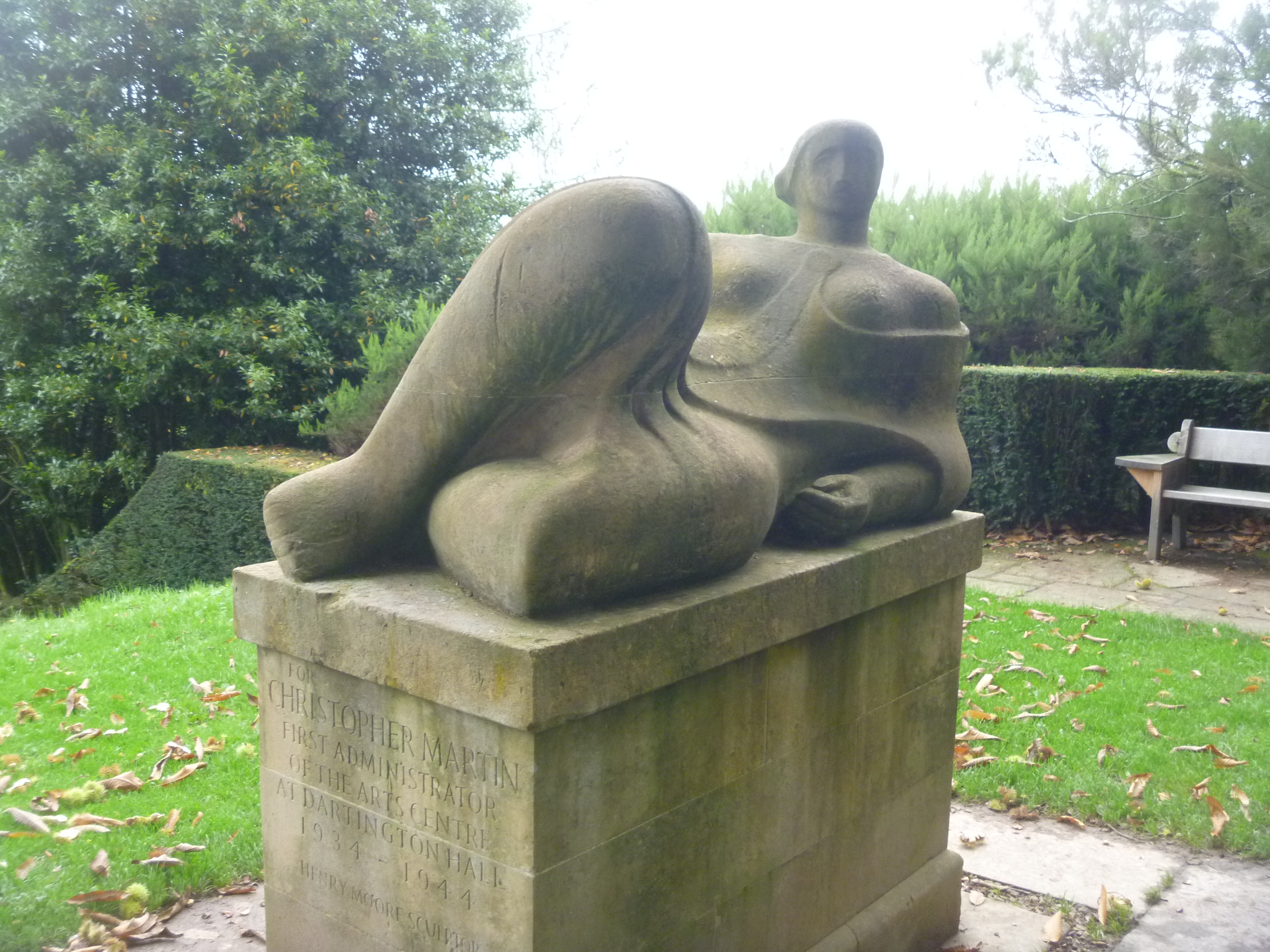
Henry Moore Reclining Figure Sculpture

The Dartington Hall
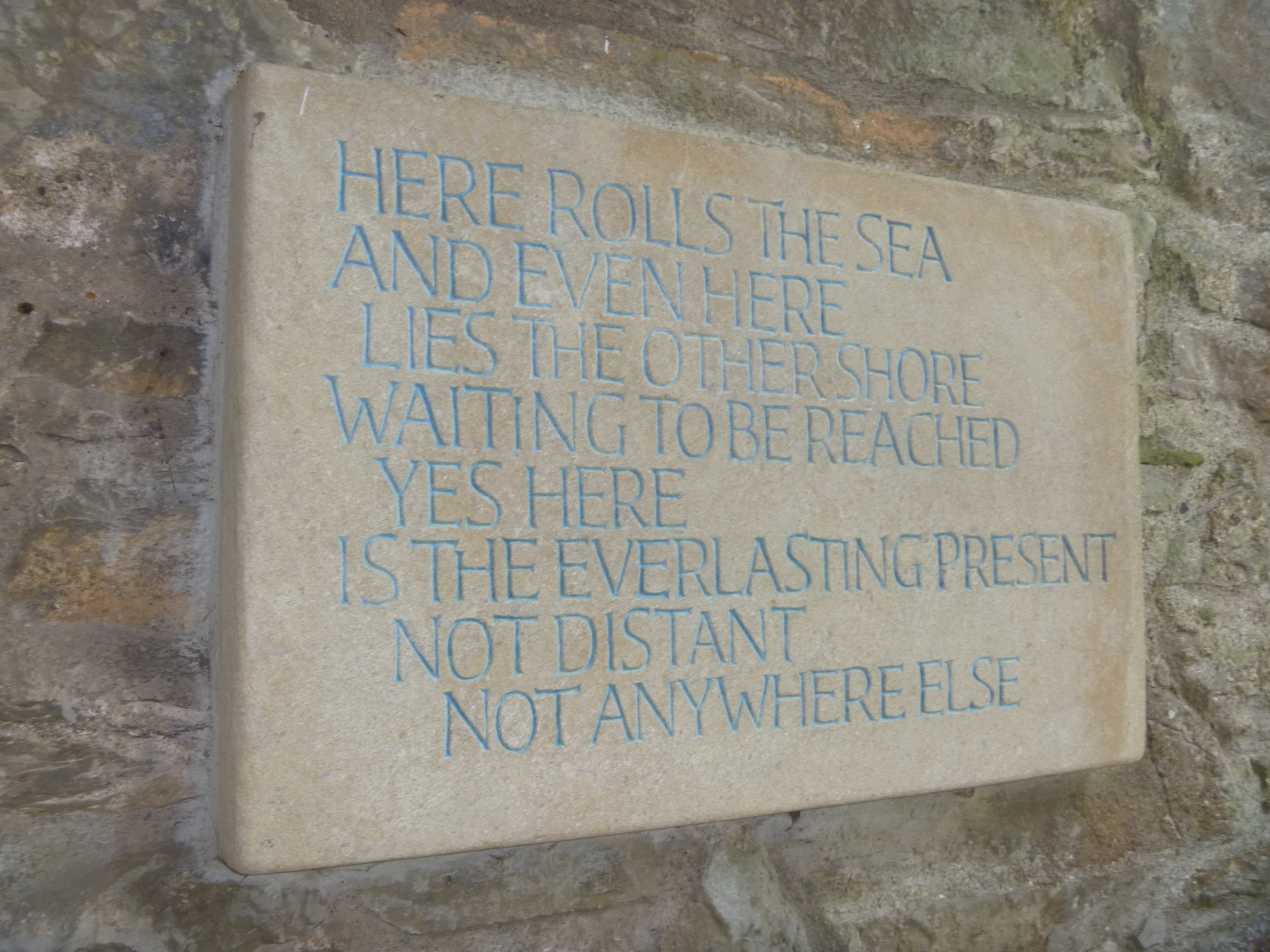
Calligraphy at Dartington

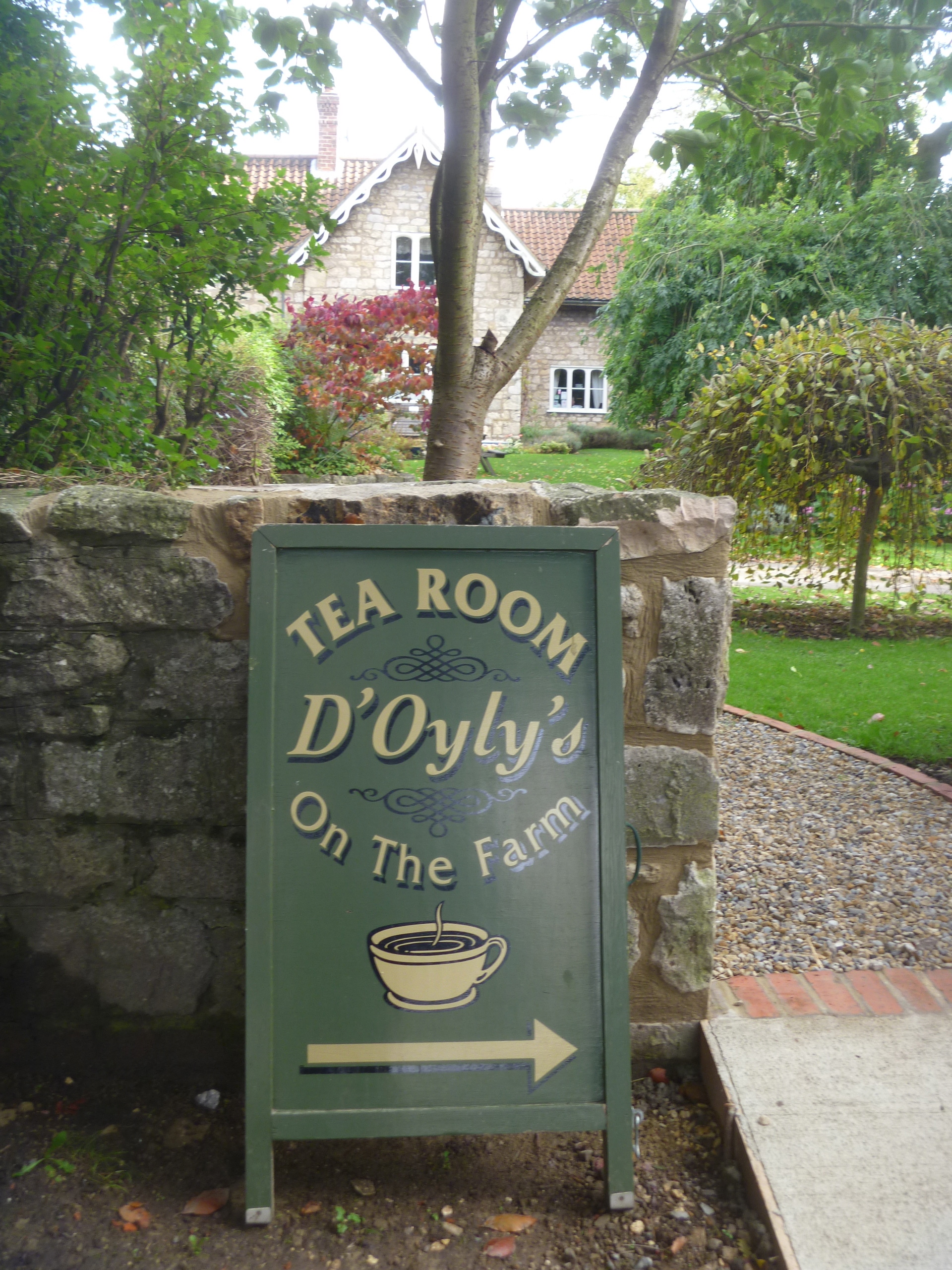
Bolton Percy : the Perfect October Morning Out

Barely half an hour’s drive from home we turned off the A64 Leeds to York road into Tadcaster and there’s a little sign ‘Bolton Percy’, which would be easy to miss, just after crossing the River Wharfe in the centre of town. About 3 or 4 miles down this lane and we arrived at the village of Bolton Percy. On the right as you enter the village there’s a cricket green and pavilion and soon on the left is the car park for D’Oyly’s Tea Room.

We parked up and went to explore the village. Right in the centre are the four other things we came to see –

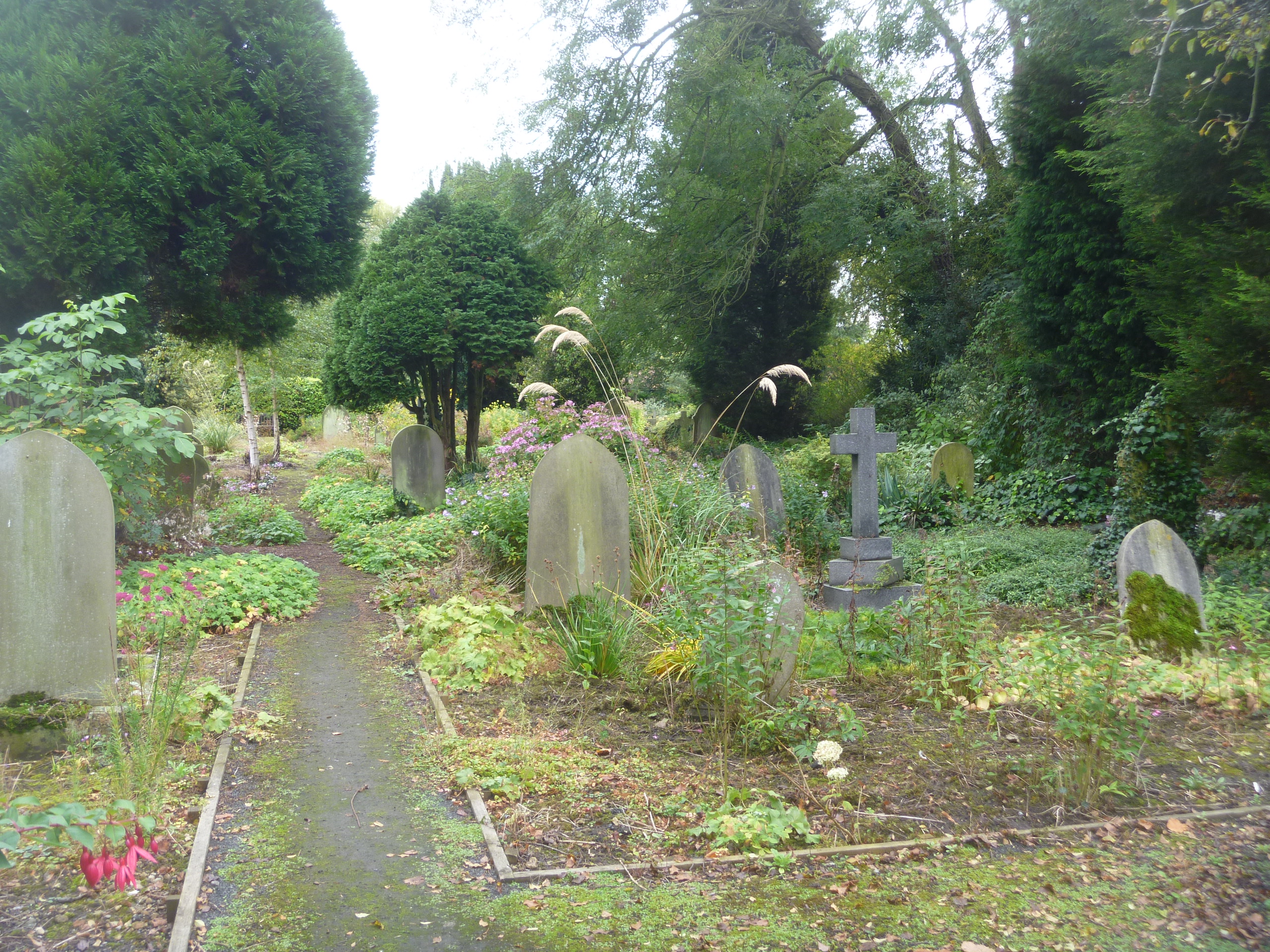
the No-dig churchyard,

All Saints church,

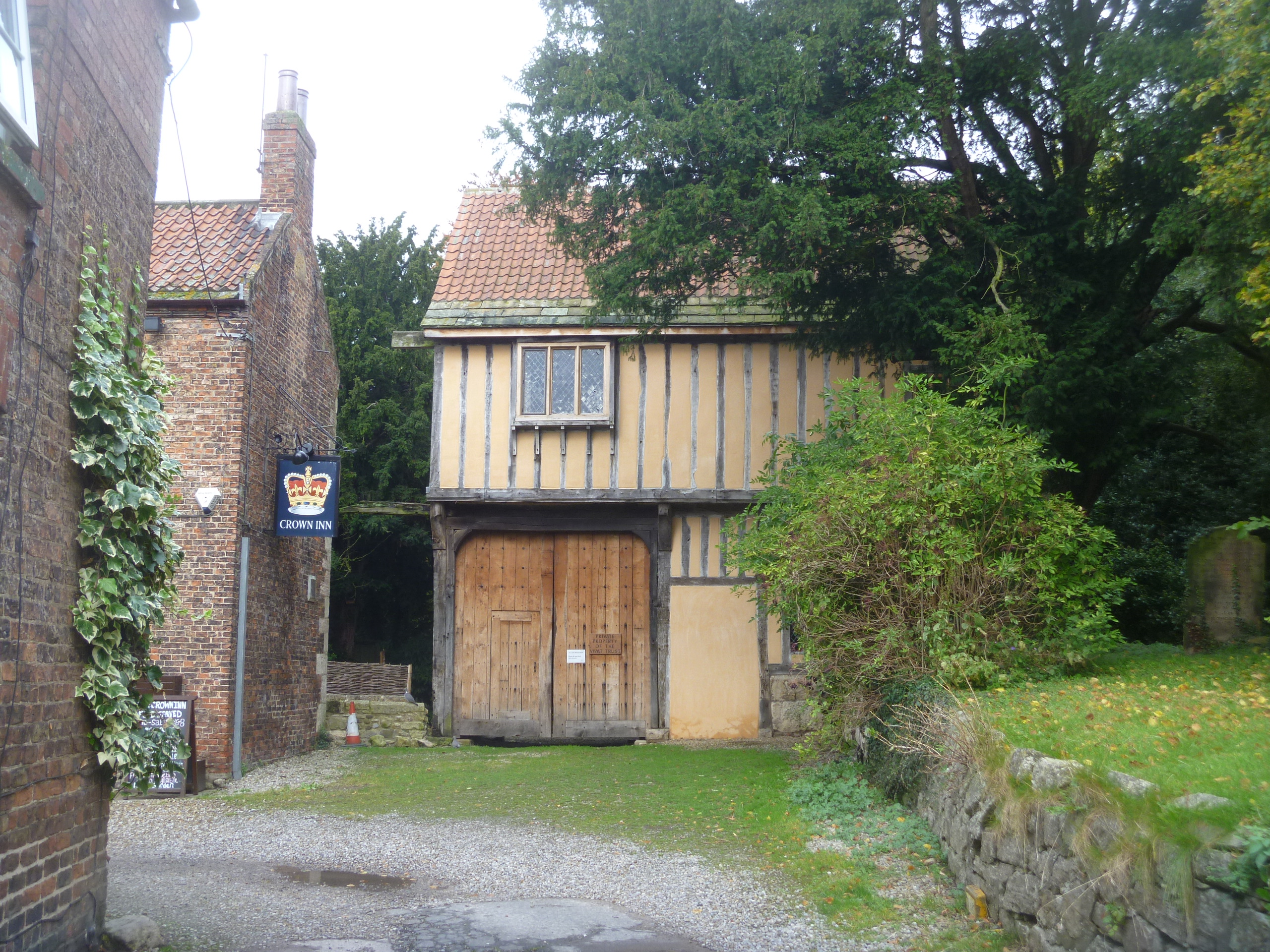
the Crown Inn

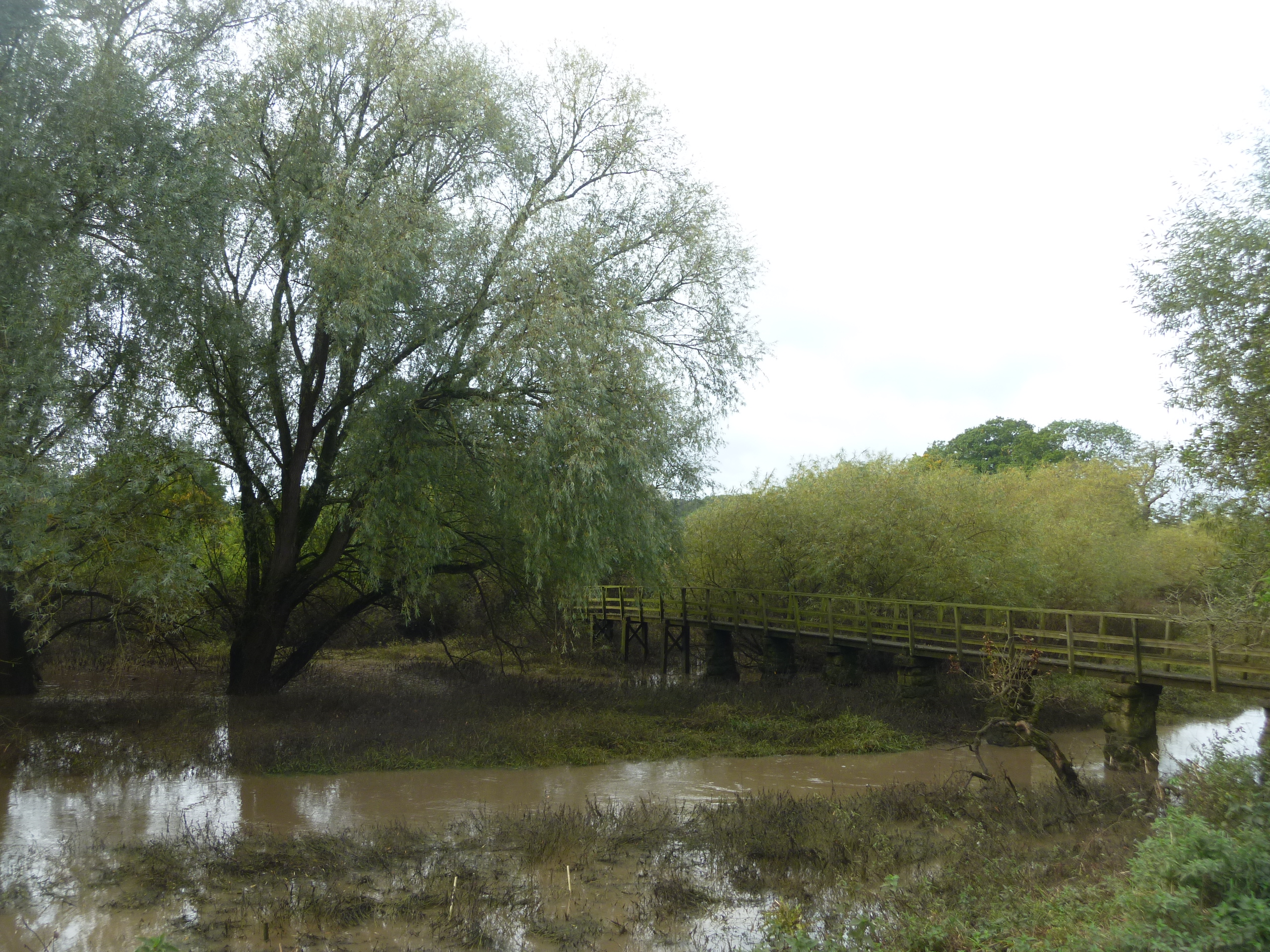
by the ancient river crossing

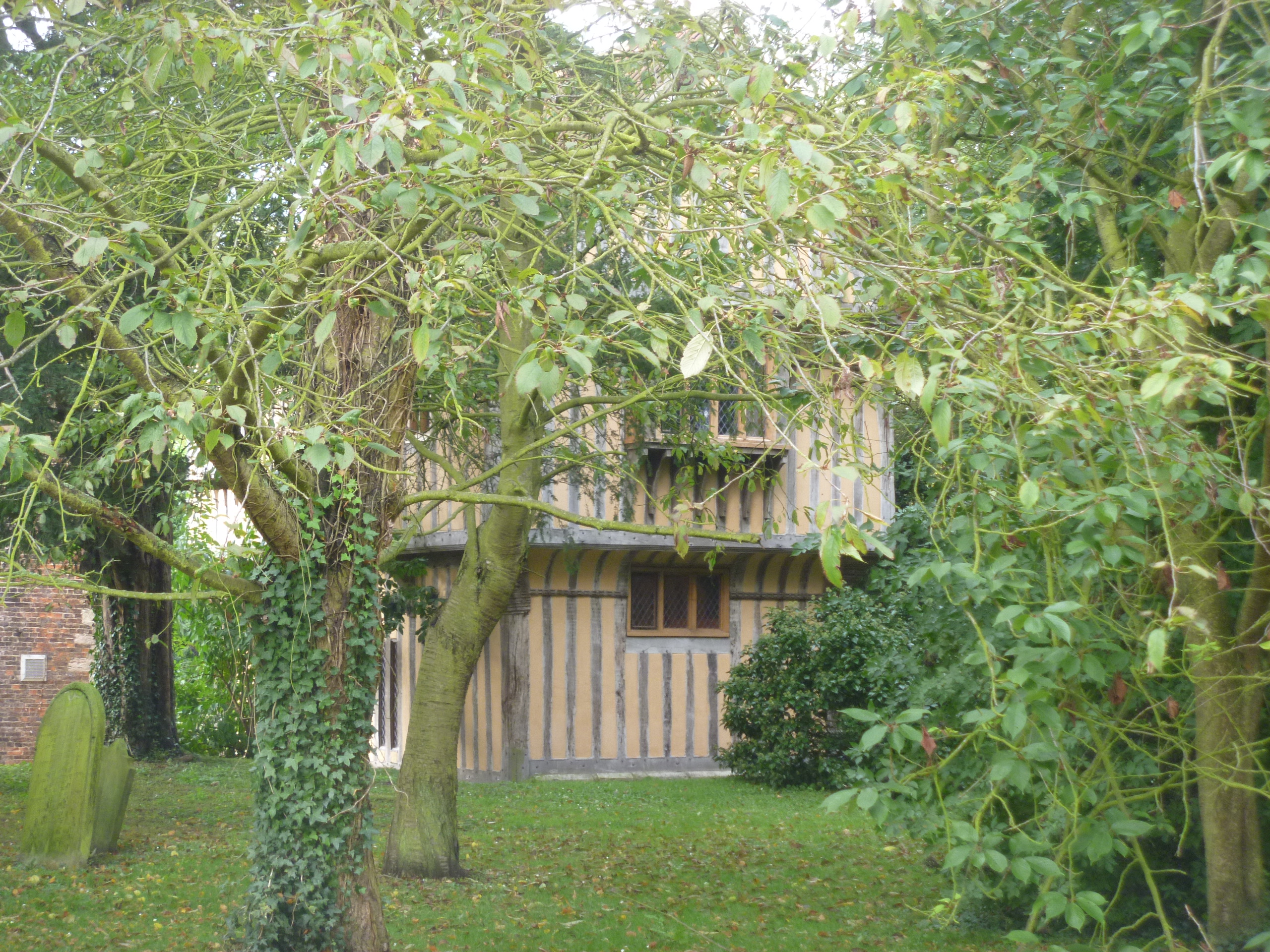
and the piece de resistance the fifteenth century Bolton Percy Gatehouse recently fully restored and now let as holiday accommodation by The Vivat Trust.

I first heard about the village of Bolton Percy when The Vivat Trust added the Gatehouse to its portfolio. Later I read a magazine feature in Intelligent Life about Tom Denny and the installation of the Millennium Window in All Saints Church. Any reference to English country (or other) churches always leads me to my Simon Jenkins’ ‘England’s thousand best churches(All Saints was awarded one star) and a couple of years ago Nun Appleton Hall (about a mile or so from BP) turned up in another book I was reading : Michael Holroyd’s ‘A Book of Secrets: illegitimate daughters, absent fathers‘. (I checked with the waitress at D’Oyly’s) and it’s impossible to see the Hall from the road and no Rights of Way pass through the estate). Internet searches for Bolton Percy bring up D’Oyly’s and further searches for All Saints church bring up references to Roger Brook and his No-Dig Gardening in the churchyard. So, when a walking friend urged me to let her treat me to lunch or tea as a ‘thank you’ for the lifts I’ve given her (I’m always happy to have her company anyway) I suggested we might give Bolton Percy a try.

Jenkins says : “The church sits on the Yorkshire plain next to the remains of a river crossing. The gatehouse of an ancient manor lurks next  door among the trees”

The early 15th century church is big and grey, its white limestone interior darkened by age and stained glass, but saved from impenetrable gloom by some clear windows in the south aisle.”

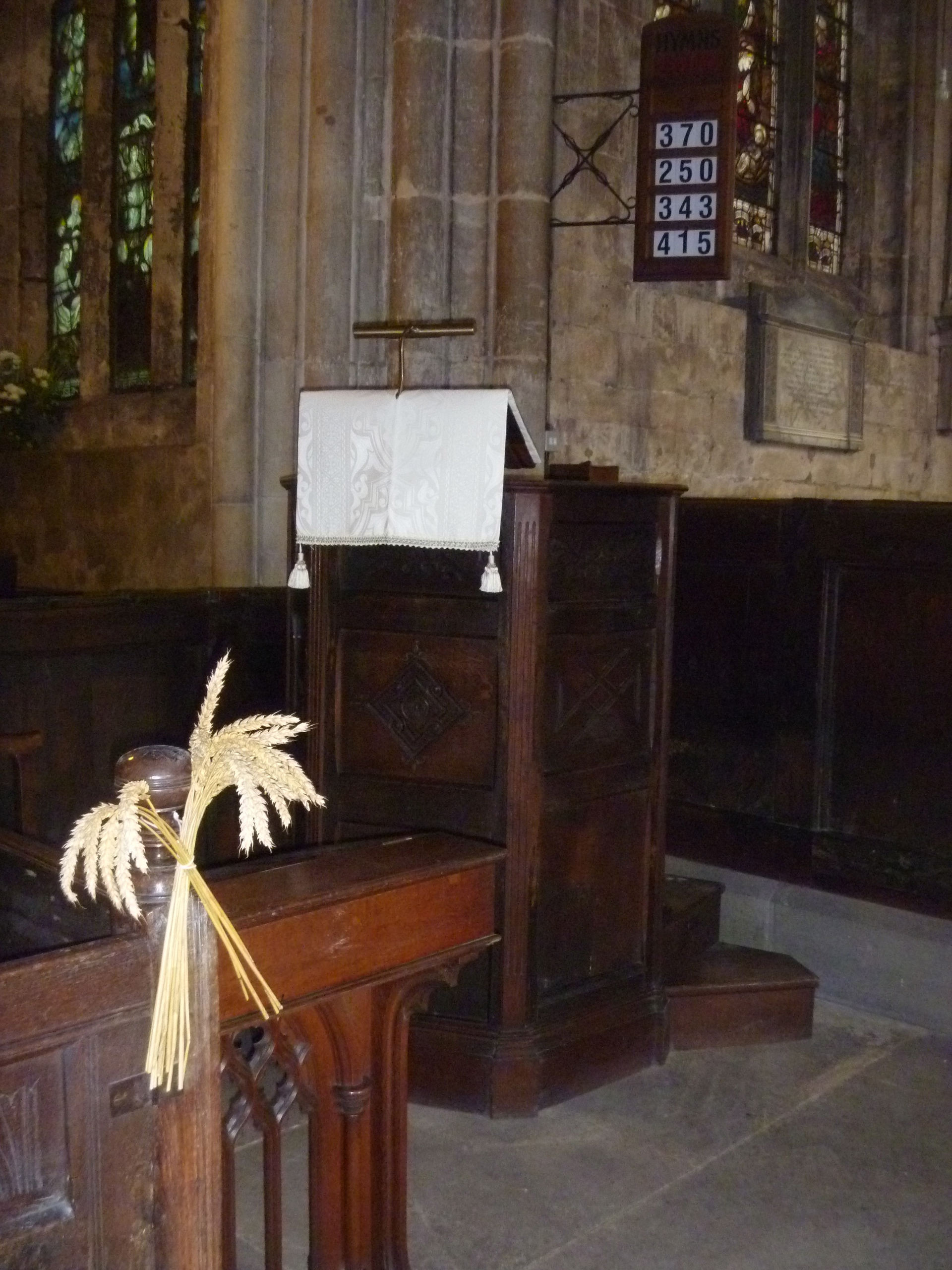
“The Jacobean box pews are complete, with charming knobs as poppy-heads.” Currently decorated in anticipation of Harvest Festival.

“There are two pulpits,  one early 17th century and one early 18th century, the former austere, the latter more flamboyant, its tester supported on an Ionic column.”

Then there are the stained glass windows : an east window with a rare depiction of the Virgin Mary as its centre piece;

the Burne-Jones for Morris and Co. Caritas window;

the Millennium window by Tom Denny inspired by Isaiah 43: “I will even make a way in the wilderness, and rivers in the desert.” The River Wharfe flows through it and an owl and a curlew are flying.

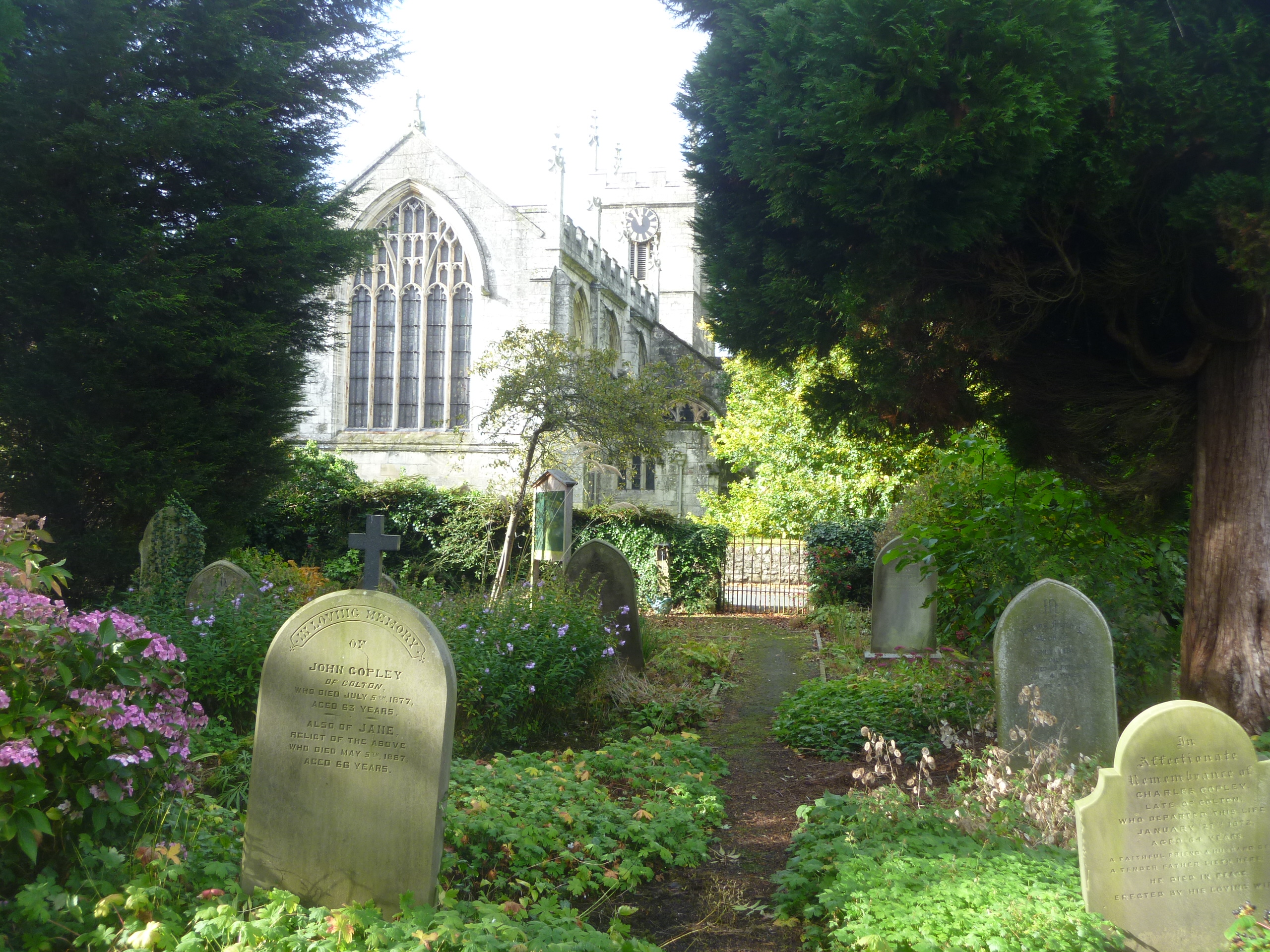
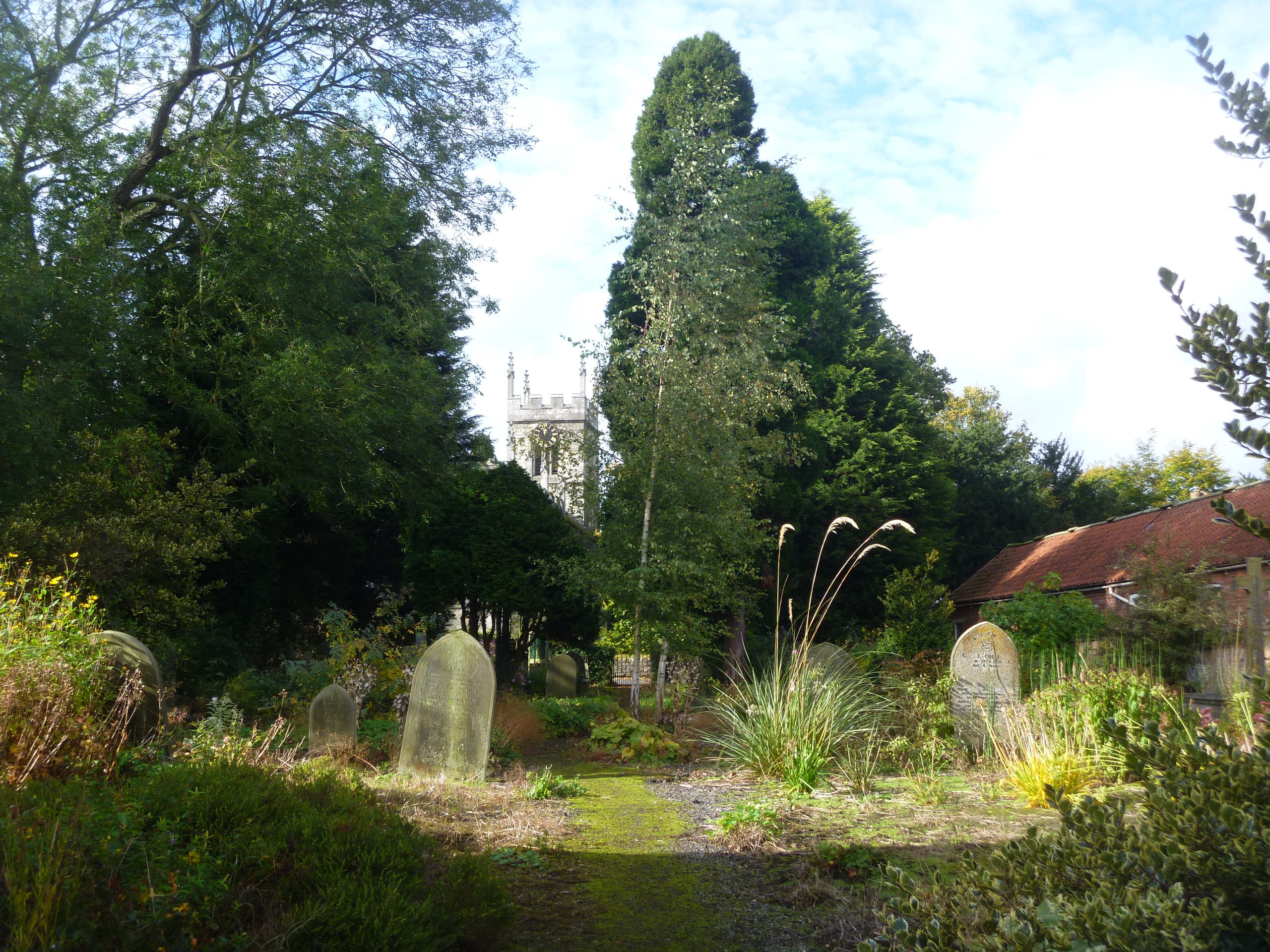
Outside and just across the road is the continuation of the churchyard. This lovely, natural space is full of wildflowers and a haven for wildlife and a peaceful resting place for Bolton Percy villagers. I’m sure it is hard work keeping it looking naturally ‘unkempt’.

It was a difficult decision as to where to take lunch but we finally chose the tea room and enjoyed a toastie followed by tea and lemon cake. All homemade and beautifully served on classic china. A perfect morning out.

A Step from the House is a Step into Nature : the Grounds and Gardens at The Mount

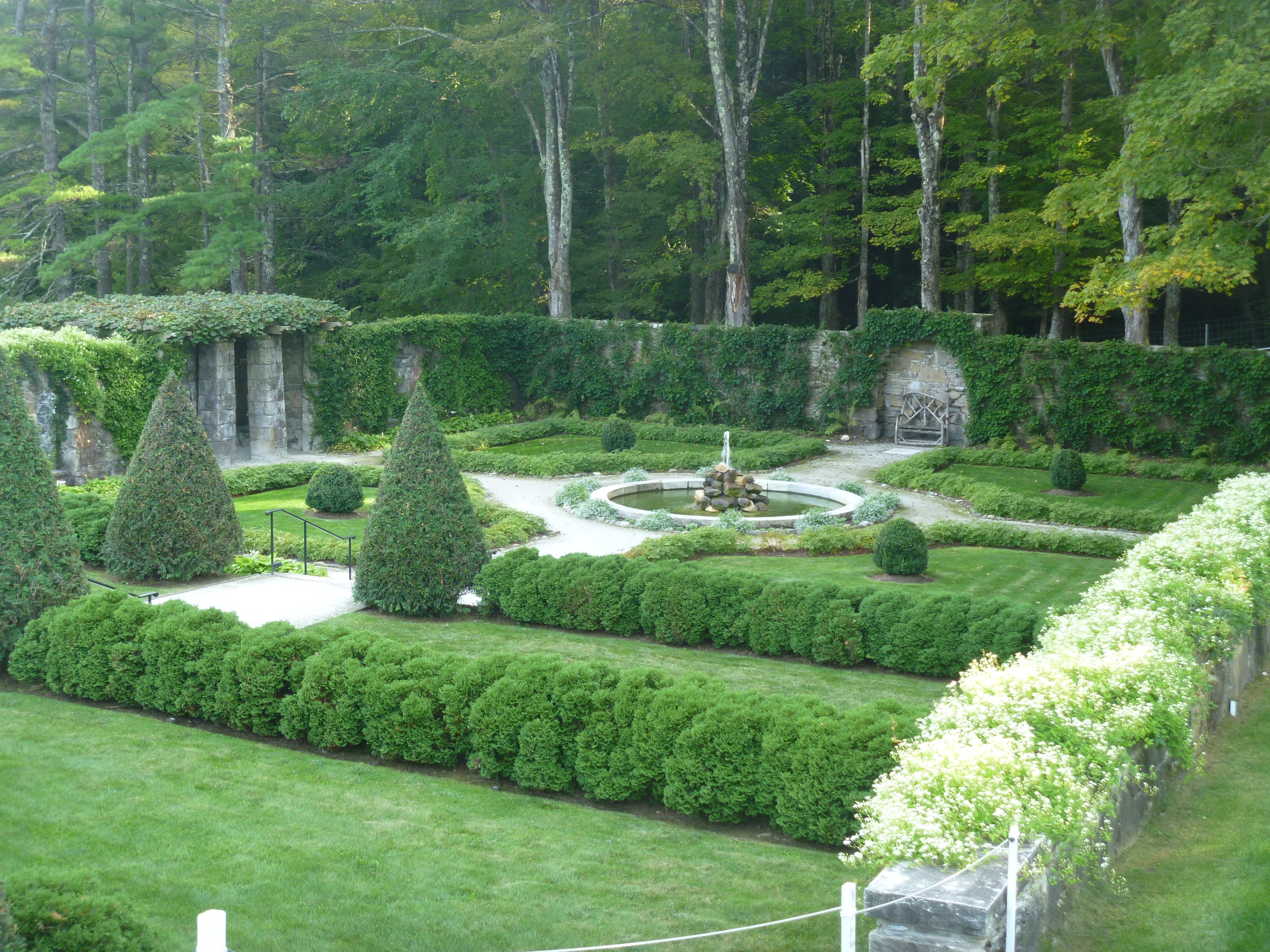
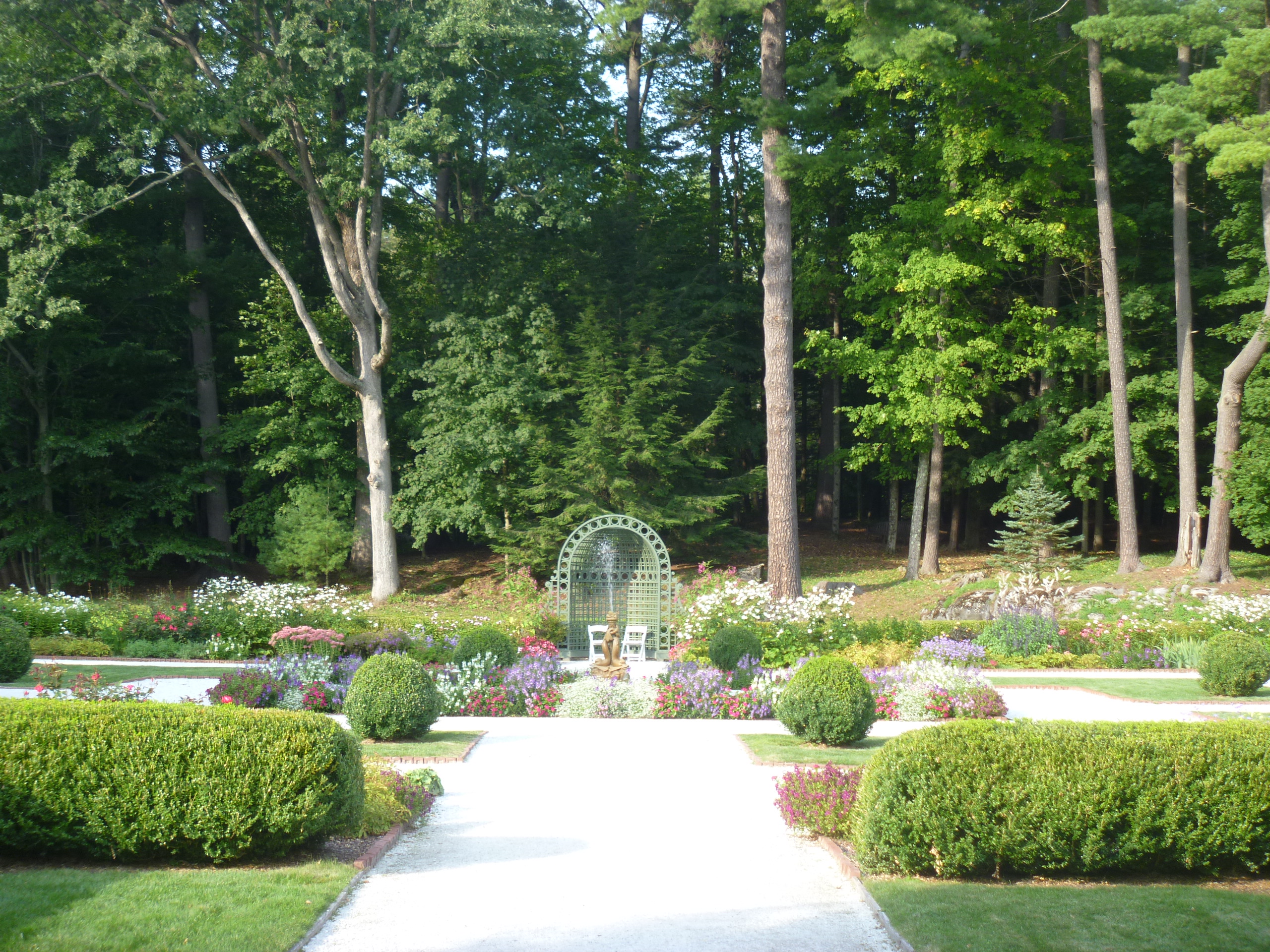
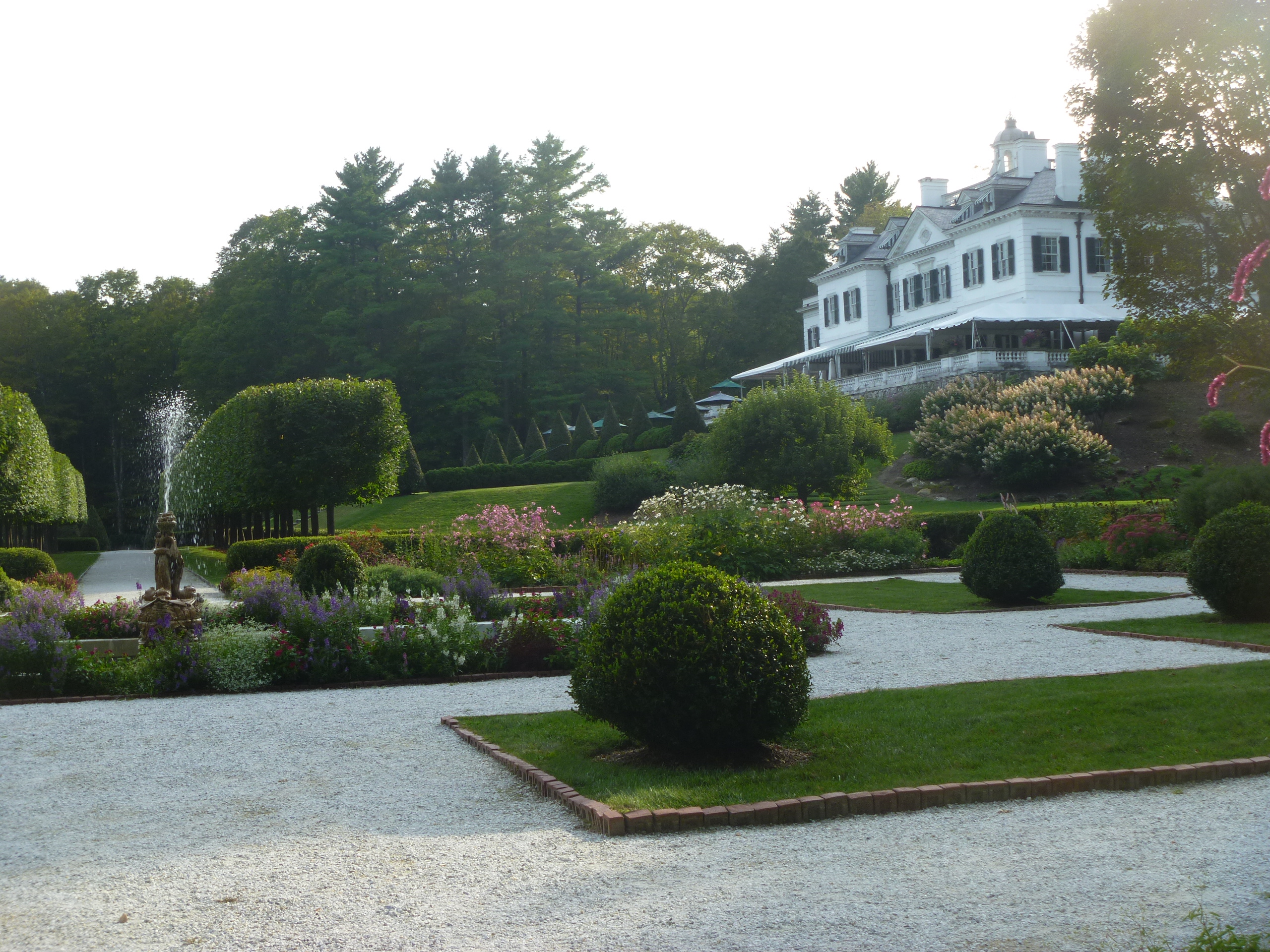
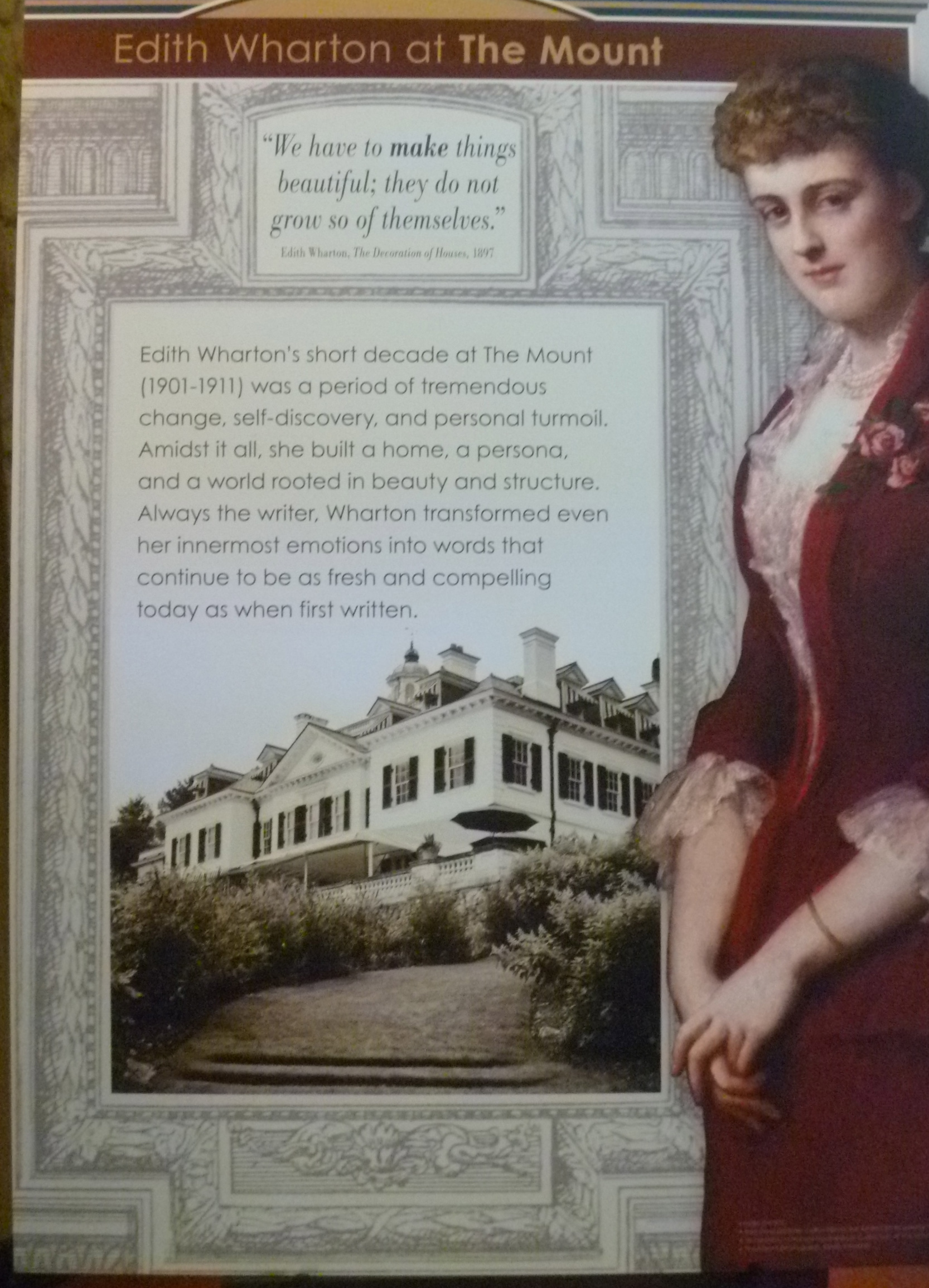
Wharton carefully planned the grounds of The Mount, which during her ownership comprised 150 acres of drives, woodlands, orchards, meadows, wildflower fields and formal gardens. Her niece, the noted landscape architect Beatrix Farrand, assisted by designing the maple-lined drive leading to the house and the elaborate kitchen garden that occupied the field in front of the stable. Wharton’s restored greenhouse still stands near the original gates.

The formal gardens around the house were designed by Wharton herself. Completely overgrown for many years, they now appear much as they did when the were new. At this time she was also writing her book Italian Villas and Their Gardens.

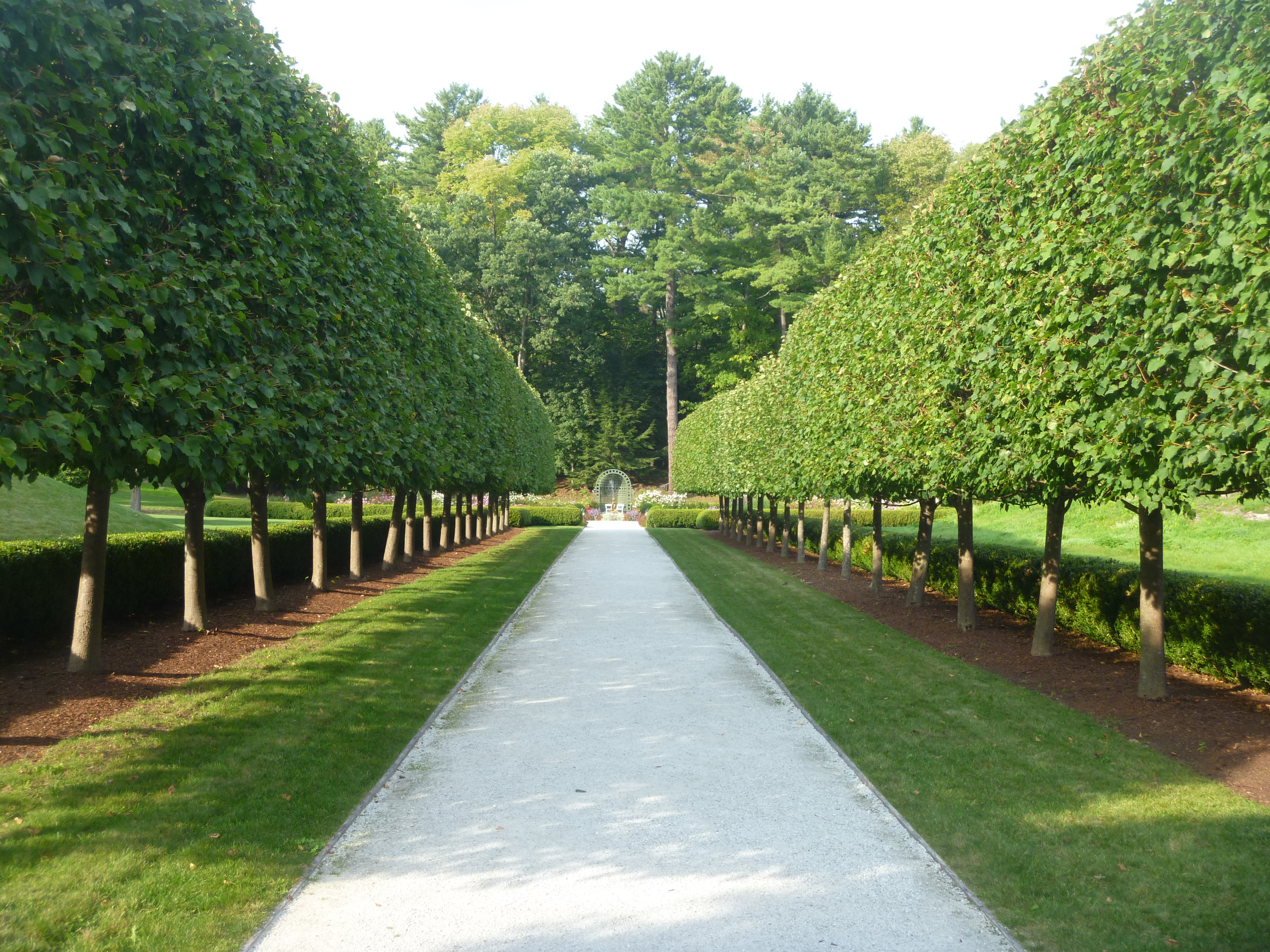
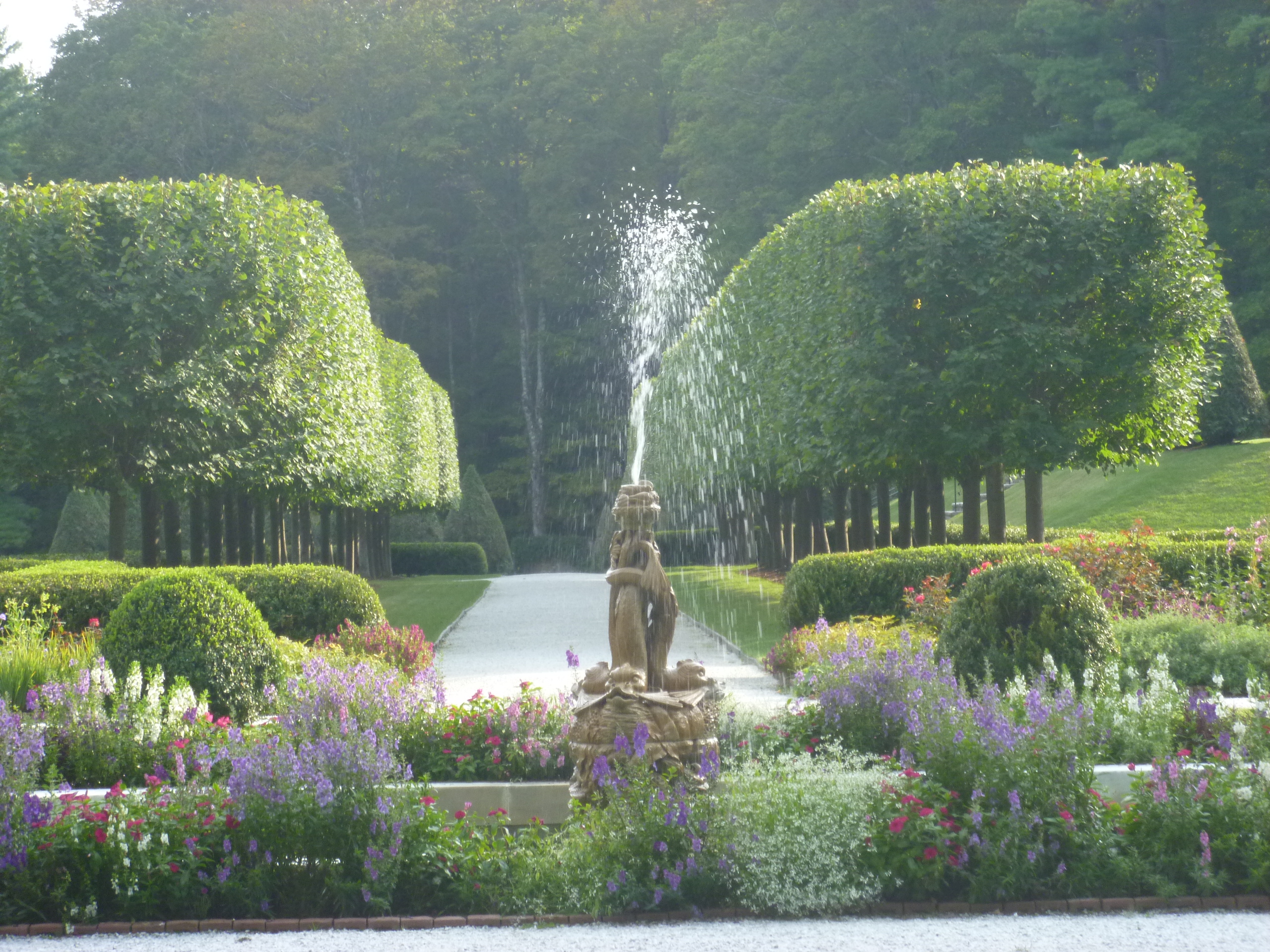
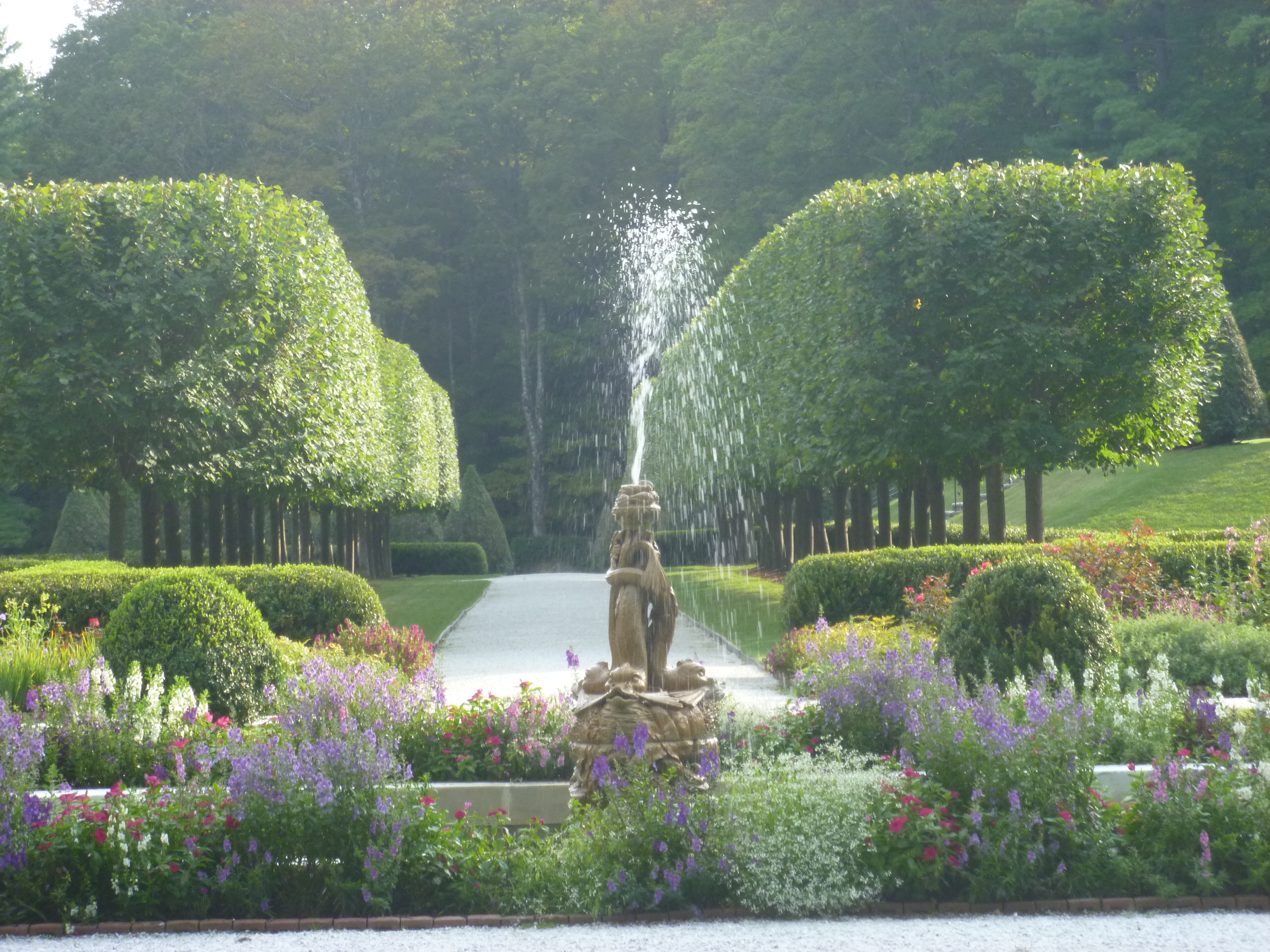
A broad Palladian staircase leads down from the terrace to gravel walks which descend to a lime walk of linden trees. The Lime Walk serves as a connecting hallway between the two major garden rooms. 

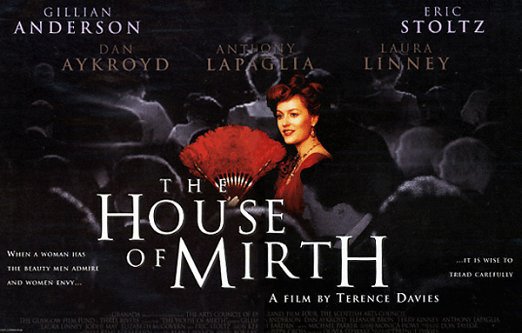
To the right when facing away from the house, the walled garden is an Italian “giardino segreto”. Wharton completed this garden with the proceeds from her first best-seller “The House of Mirth”.

On the left, the French-style flower garden has eight boxwood bushes arranged around a pool with Wharton’s dolphin fountain. Over 3,000 annuals and perennials have been planted here to suggest Wharton’s design. The trellis-work niche was recreated from photographs.

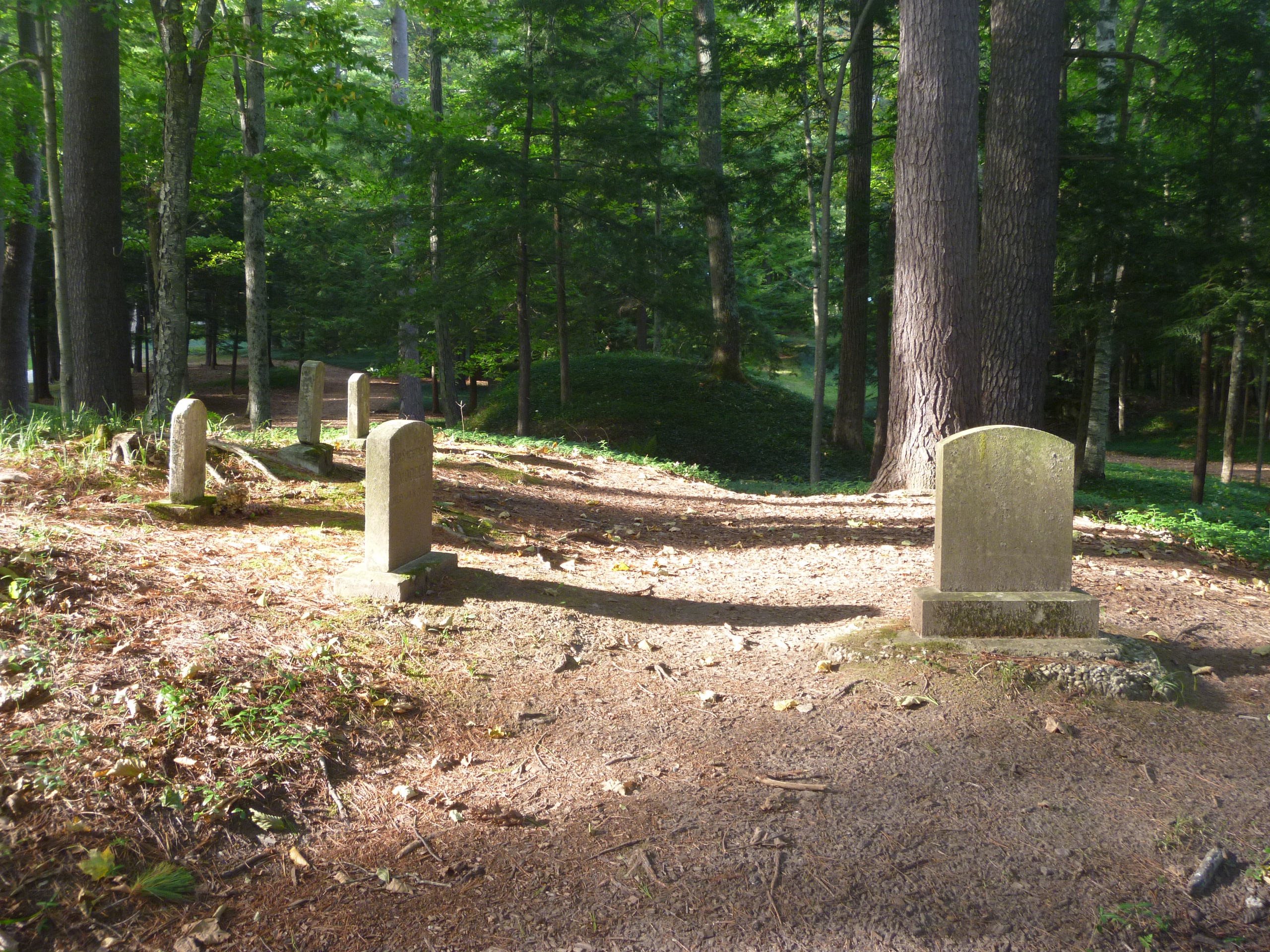
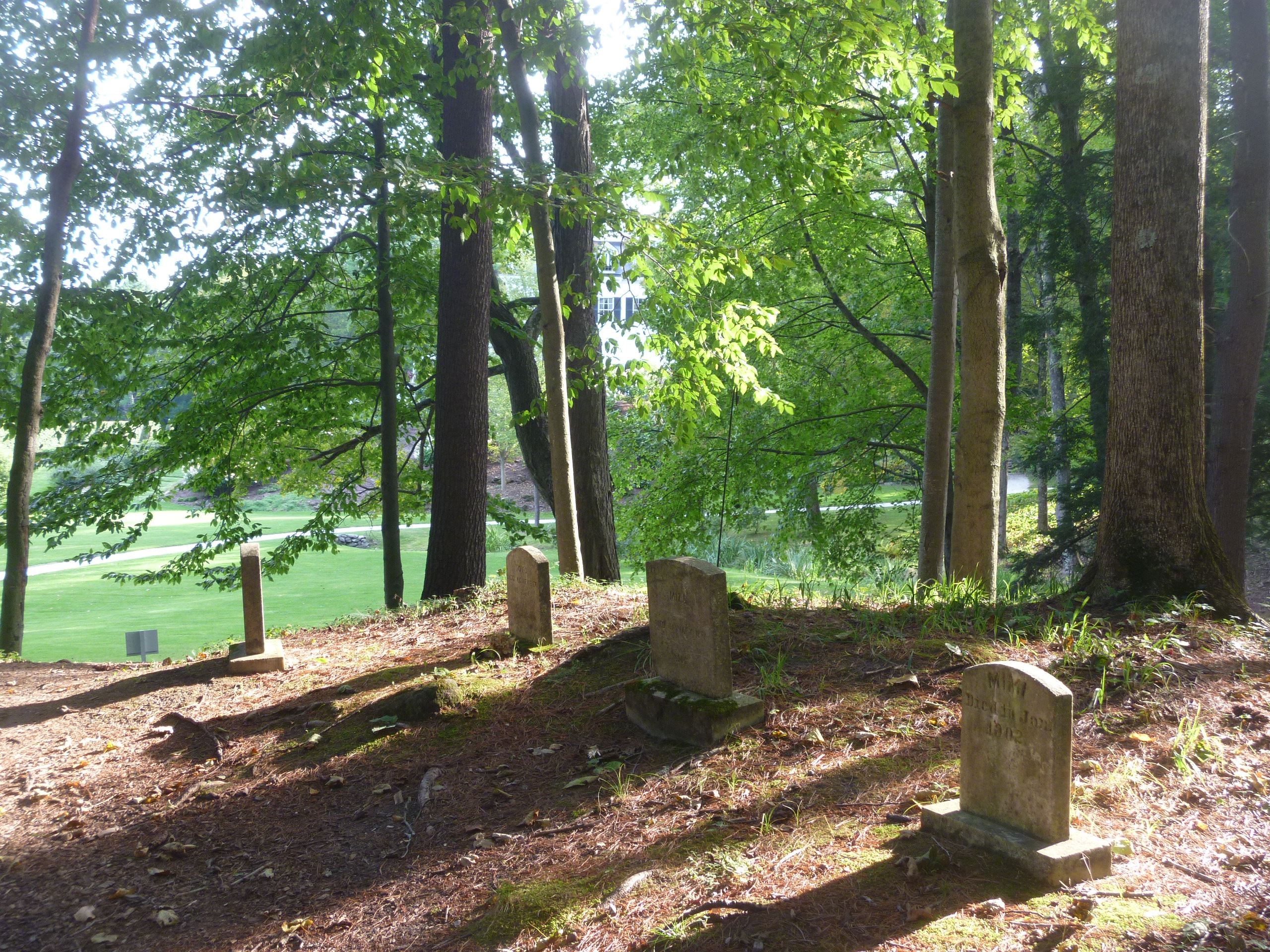
I wish I had had more time to wander the grounds at The Mount. I never visited the greenhouse, the woodland and the walled garden but I did walk up the small mound where Edith’s beloved dogs are buried.

Reminded me of the little gravestones of the Duke and Duchess of Windsor’s pet pugs at Le Moulin de la Tuilerie.

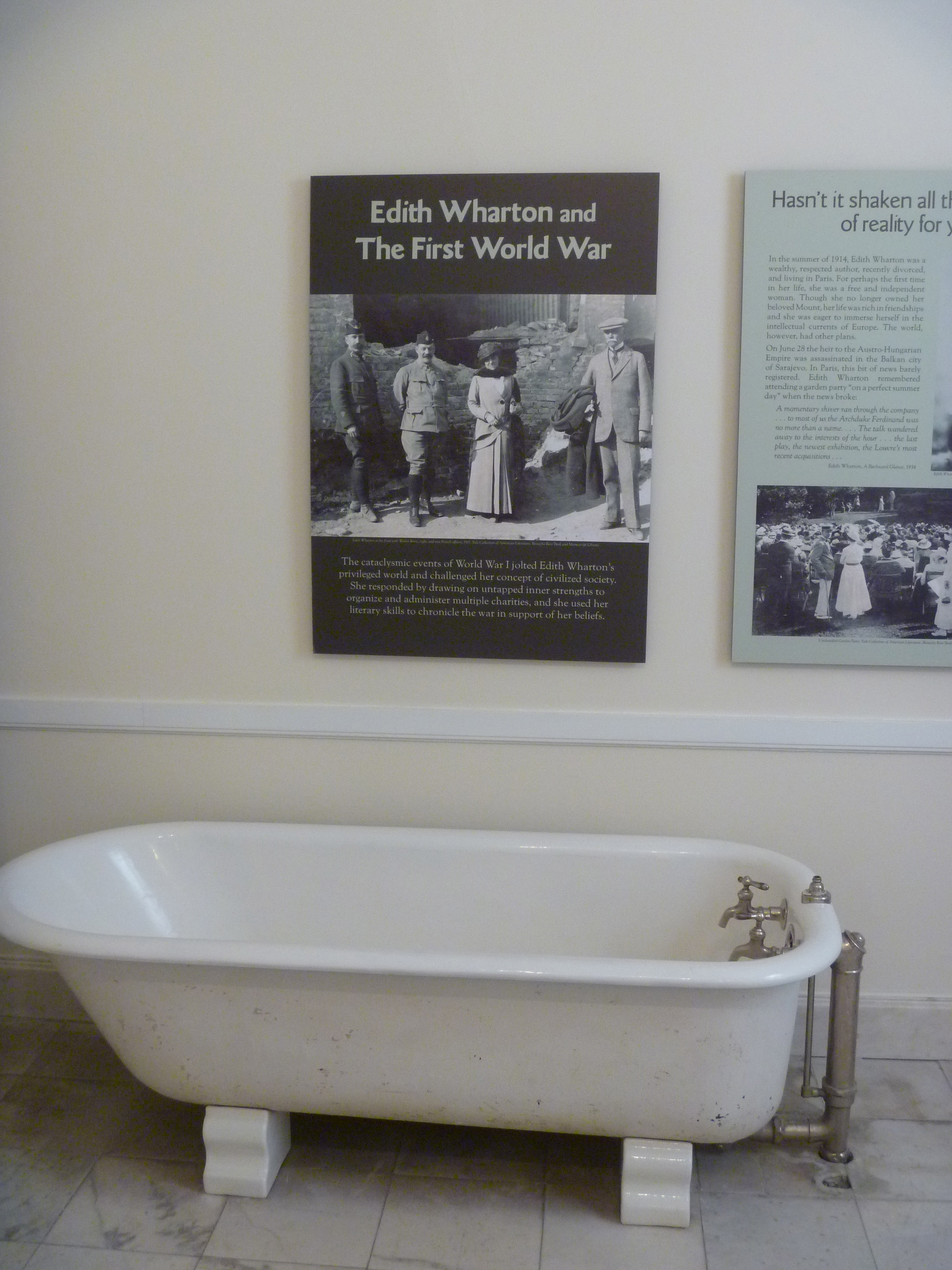
The Decoration of Houses : a Visit to Edith Wharton’s New England Home : The Mount

There will be some readers here who know very much more about Edith Wharton than I do and who will have read many more of her books than I have but for many years I have wished to visit her home The Mount in western Massachusetts. I have a collection of newspaper clippings about the house, its renovation plans and about her library of 2,600 volumes that finally arrived back at her American home in 2005 after 100 years spent in Europe.

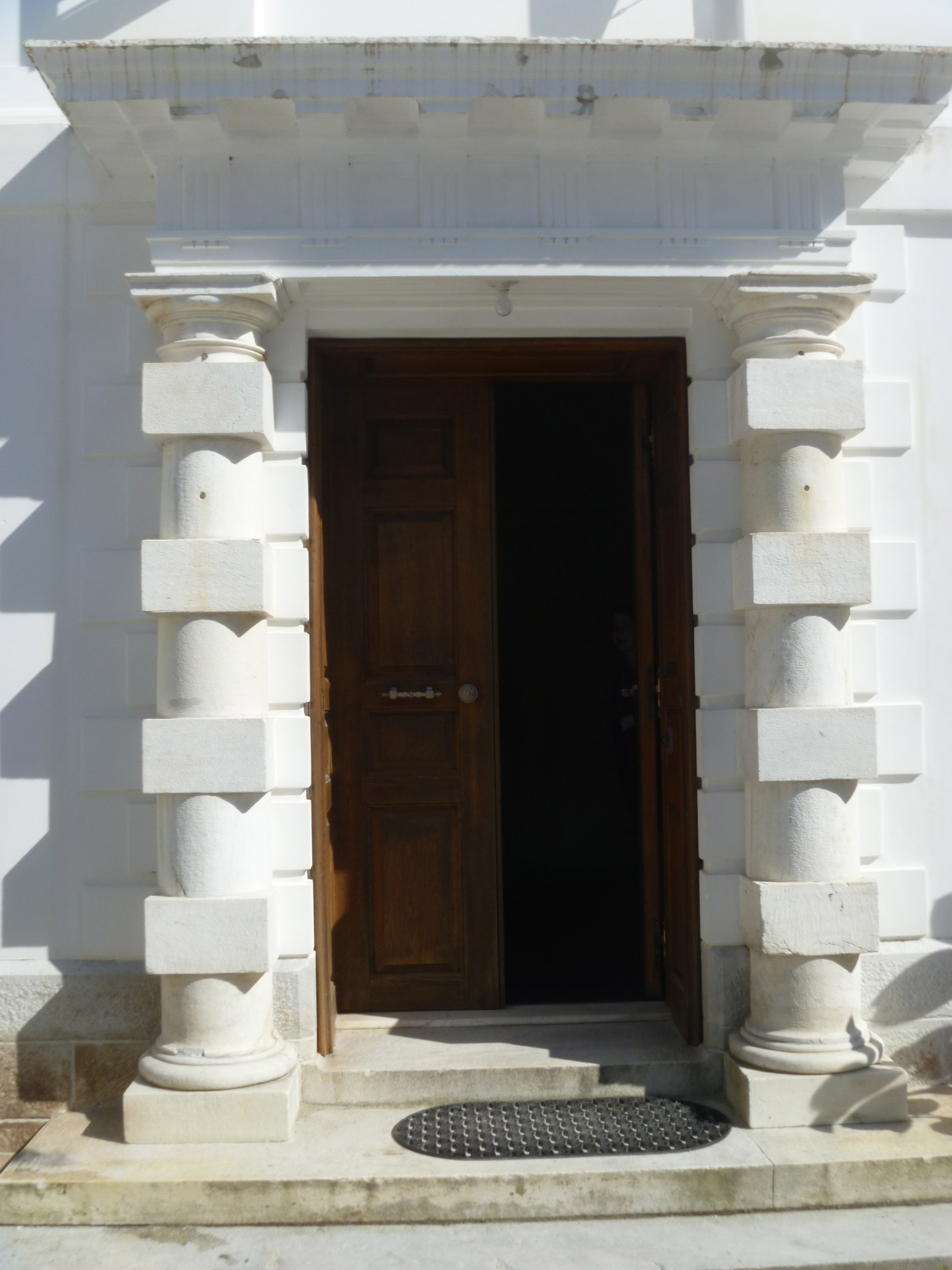
On 14 September, the day we left Naulakha, we arrived in Lenox, the location of The Mount, and after a delightful lunch on the tree-lined main street we set off to find the house. It’s a little way out of town but handily placed just off the Highway. But once dropped off at the ticket office I was in another world of peace and comfort a million miles from the roar of traffic.

That Friday was the start of a weekend-long Wordfest a literary festival of writers and readers the first talk due to begin at 5pm. I’d checked this out in advance and been told that although the house would remain open to the general public there would be no guided house tours. Luckily, I arrived with minutes to spare before the final house tour of the week.

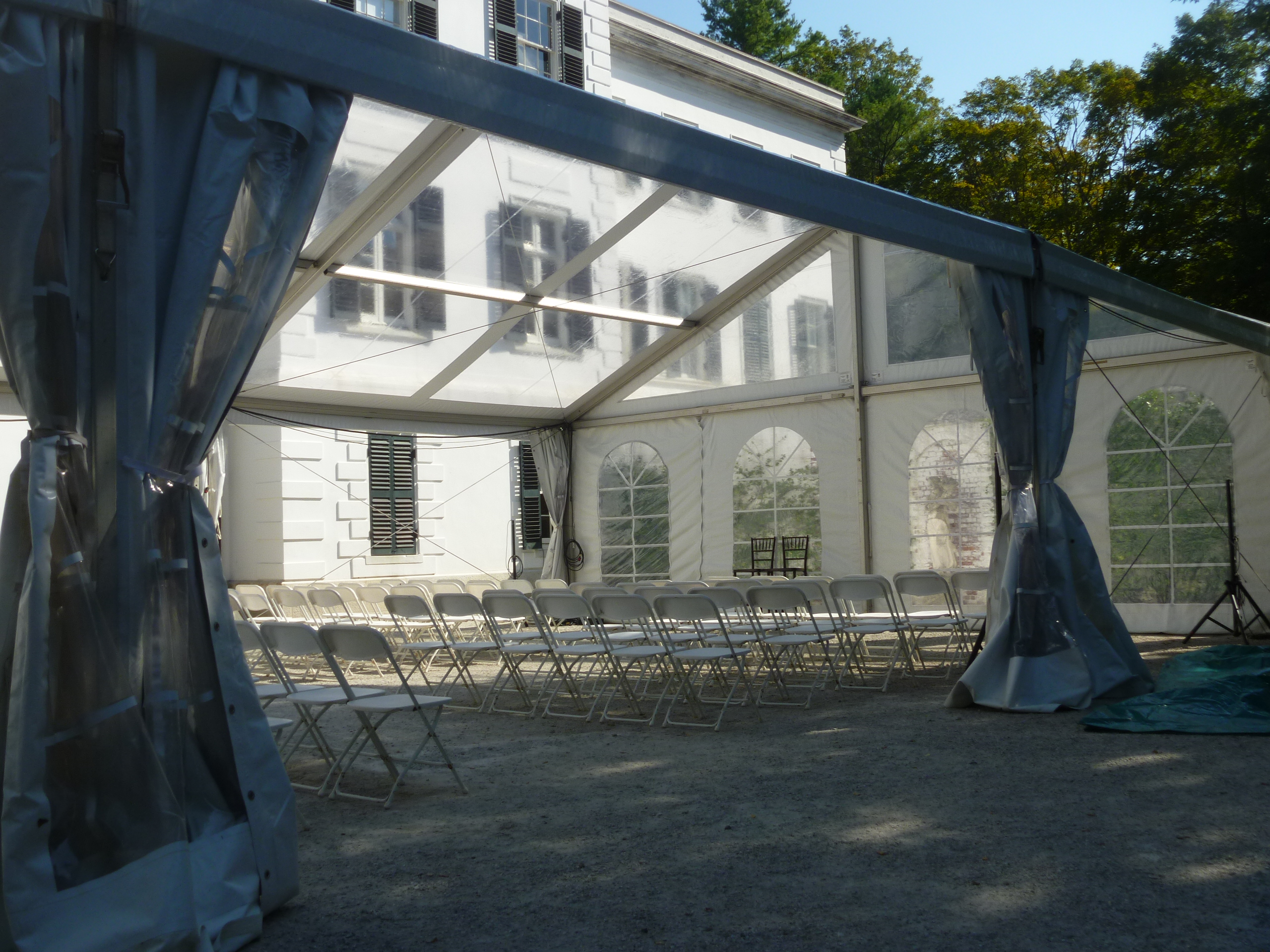
We assembled at the back of the house in a courtyard, which that day was covered with an awning to protect Wordfest members from either sun or rain, to be told about EW’s plans to build The Mount and their execution. As I heard more and more about this remarkable woman throughout the afternoon I began to think that here was another American polymath about whom I knew only the merest facts and of whose literary output I have read very little. (But I have seen several of her films!)

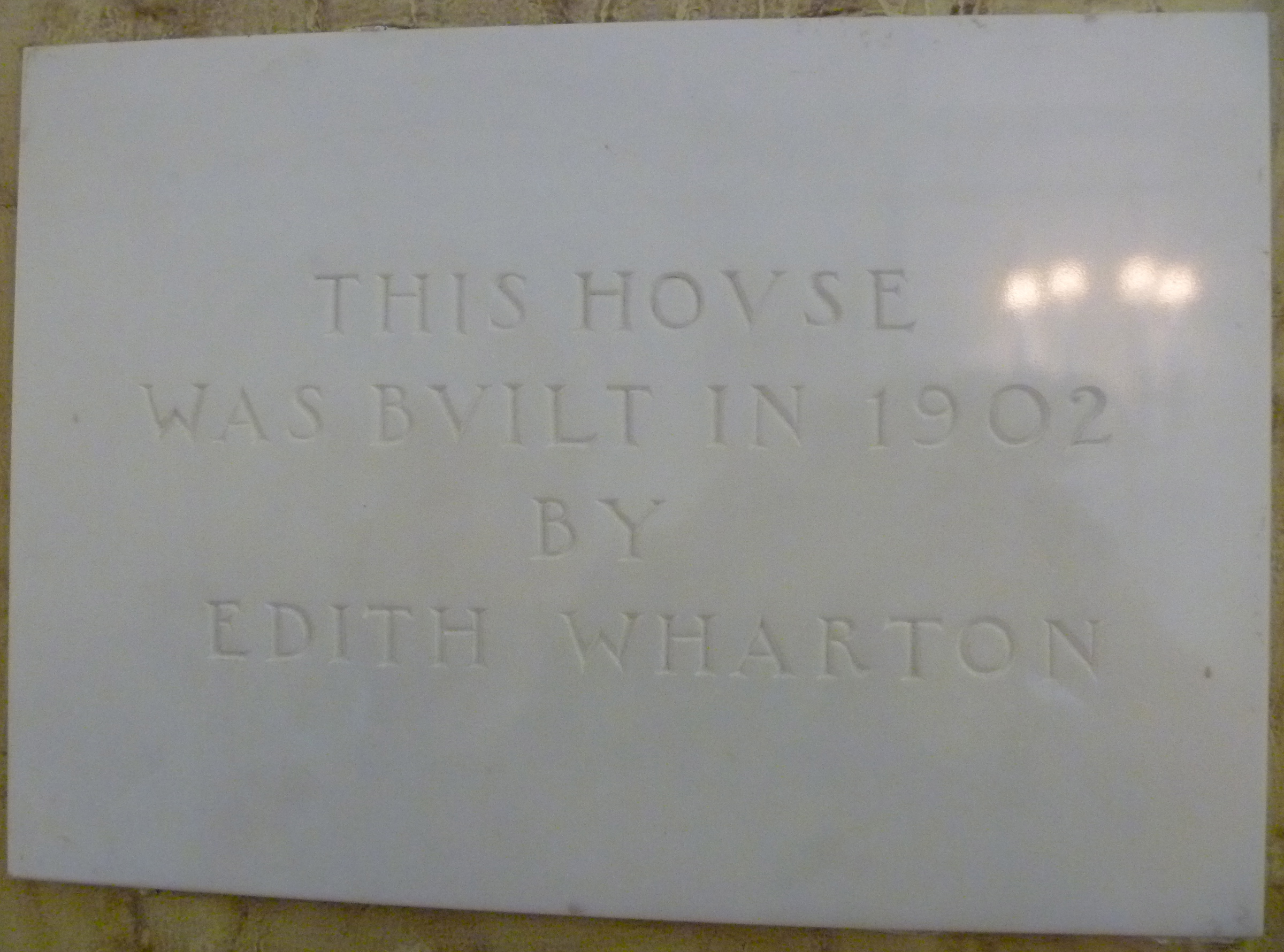
Edith Wharton collaborated with architect Ogden Codman to produce her first book The Decoration of Houses. Published in 1897 it was a denunciation of all the excesses of Victorian interior decoration and a plea for a return to classical proportions, harmony and simplicity. She designed and built The Mount according to these principles. She was able to move in in 1902 and spent the summers and autumns between 1902 and 1911 at the house (the rest of the year she lived in France). By 1911 her marriage to Teddy had failed and she moved to live permanently in France. That year the house was put on the market.

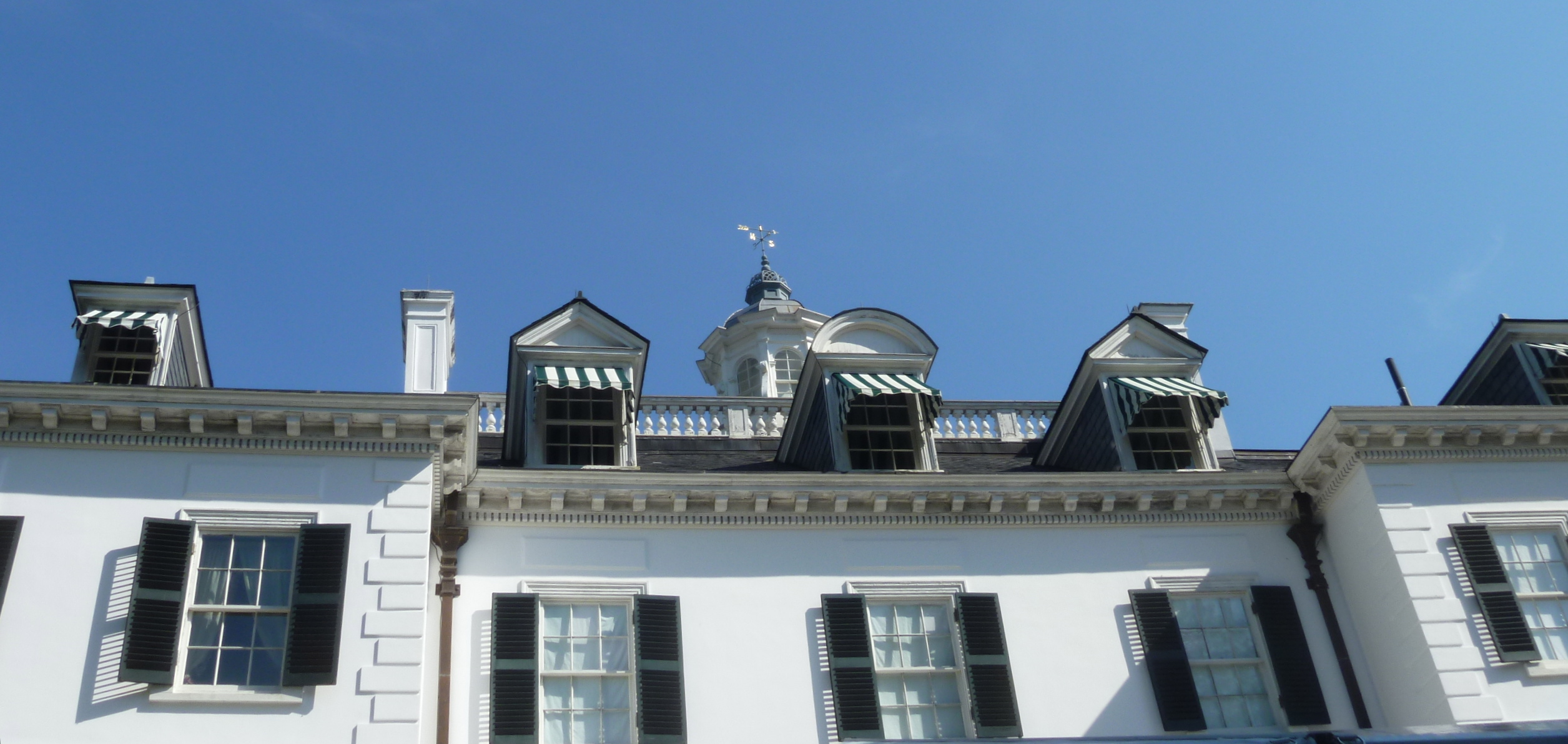
From the courtyard (which was to serve as a bridge between the outside of the house and the inside) we went in at the back door. The entrance hall was planned to bring the outside into the house. It was conceived as an artificial cave or grotto with statues and fountains. Here visitors wishing to see the great novelist had to wait to know whether they would be admitted to her presence or not. It was here that we learned that The Mount was modelled on the English 17th century Palladian-style Belton House in Lincolnshire and on neo-classical Italian and French examples.

Next time I will take you on a tour of the house but just now I want to show you what a lovely lovely place it is.  After the tour free access is allowed throughout the house and grounds. There are room stewards handily placed who are able to answer any questions and Information Boards in every room.

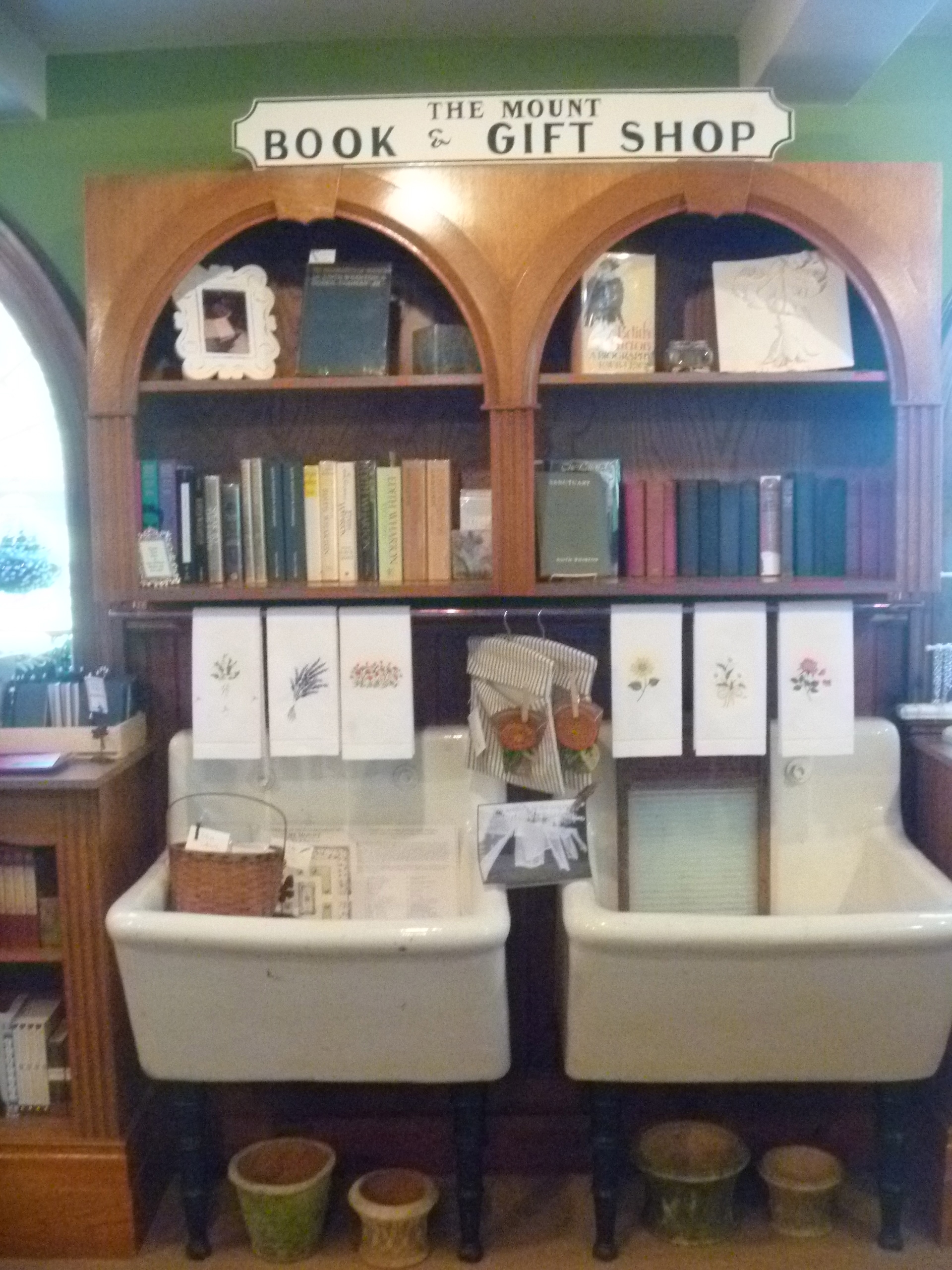
Photography is allowed everywhere. There is a great gift and book shop in the basement scullery.

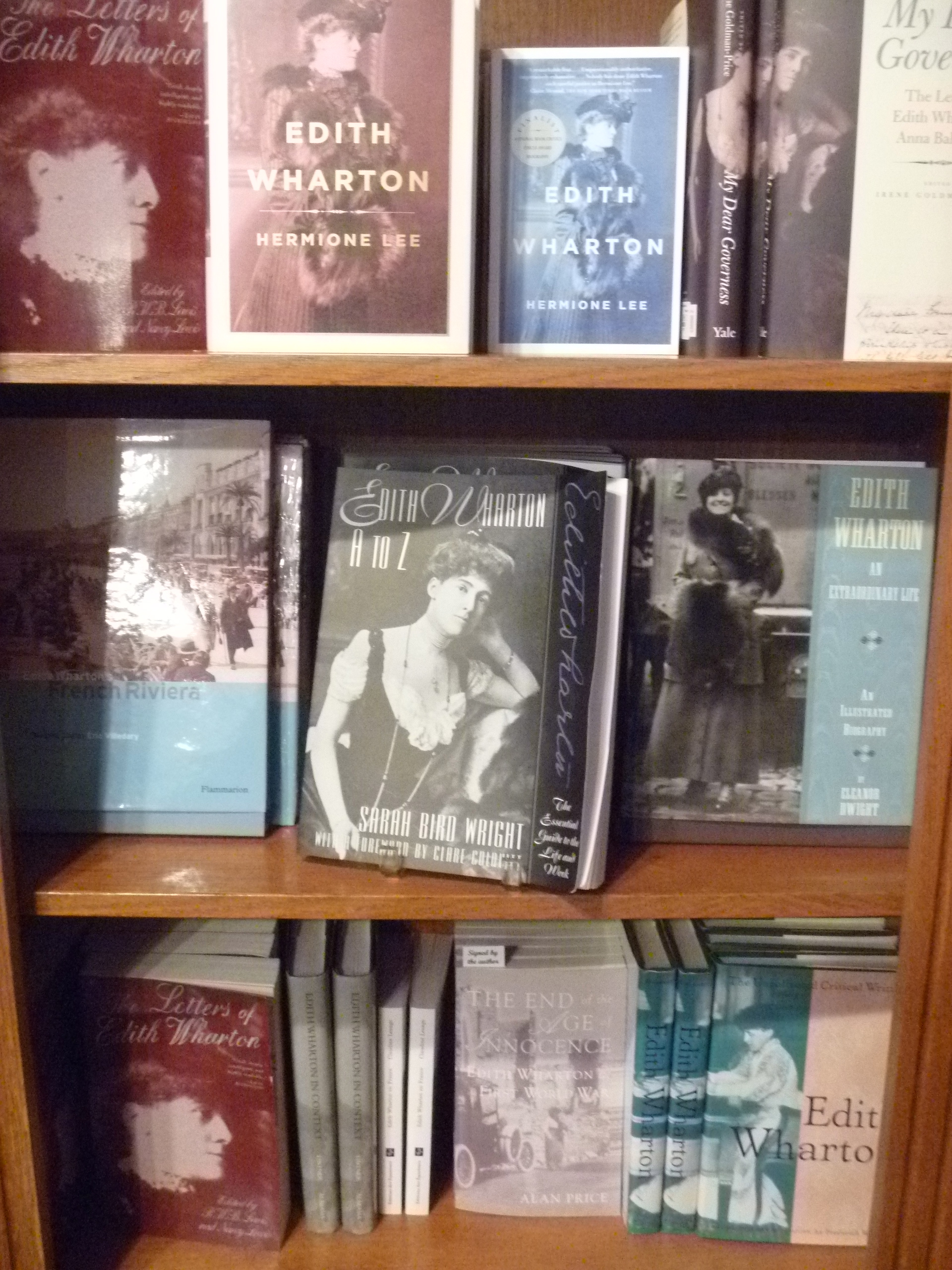
Some of the many book displays in the shop

Teas and other refreshments are served on the terrace and you may sit at tables on the front lawn.

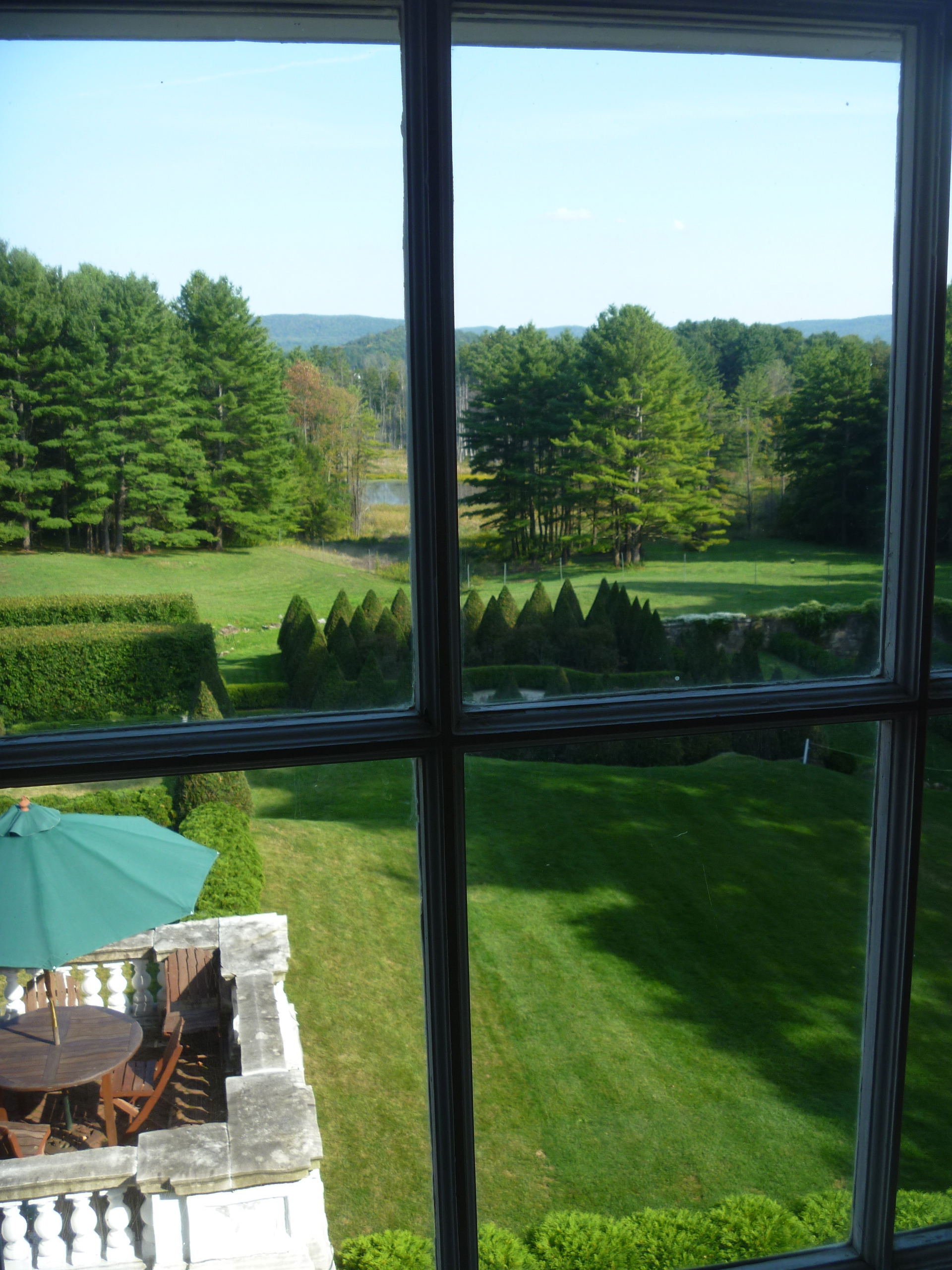
The View and A Terrace Tea Table

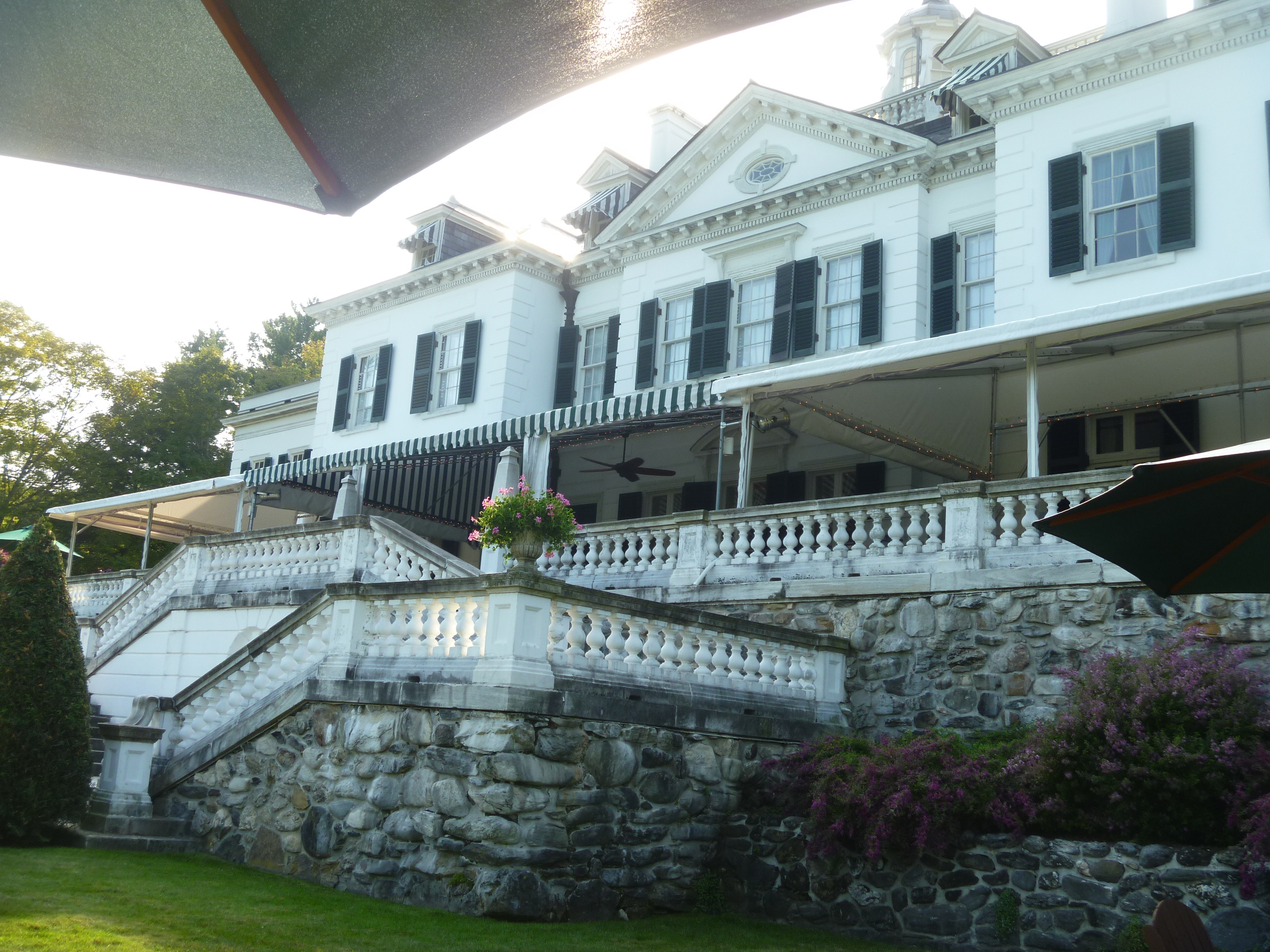
The house from my terrace tea table

There are two interesting and entertaining exhibitions on the second floor.

and

You may walk around the estate and the gardens and even visit the mound where her beloved dogs are buried.

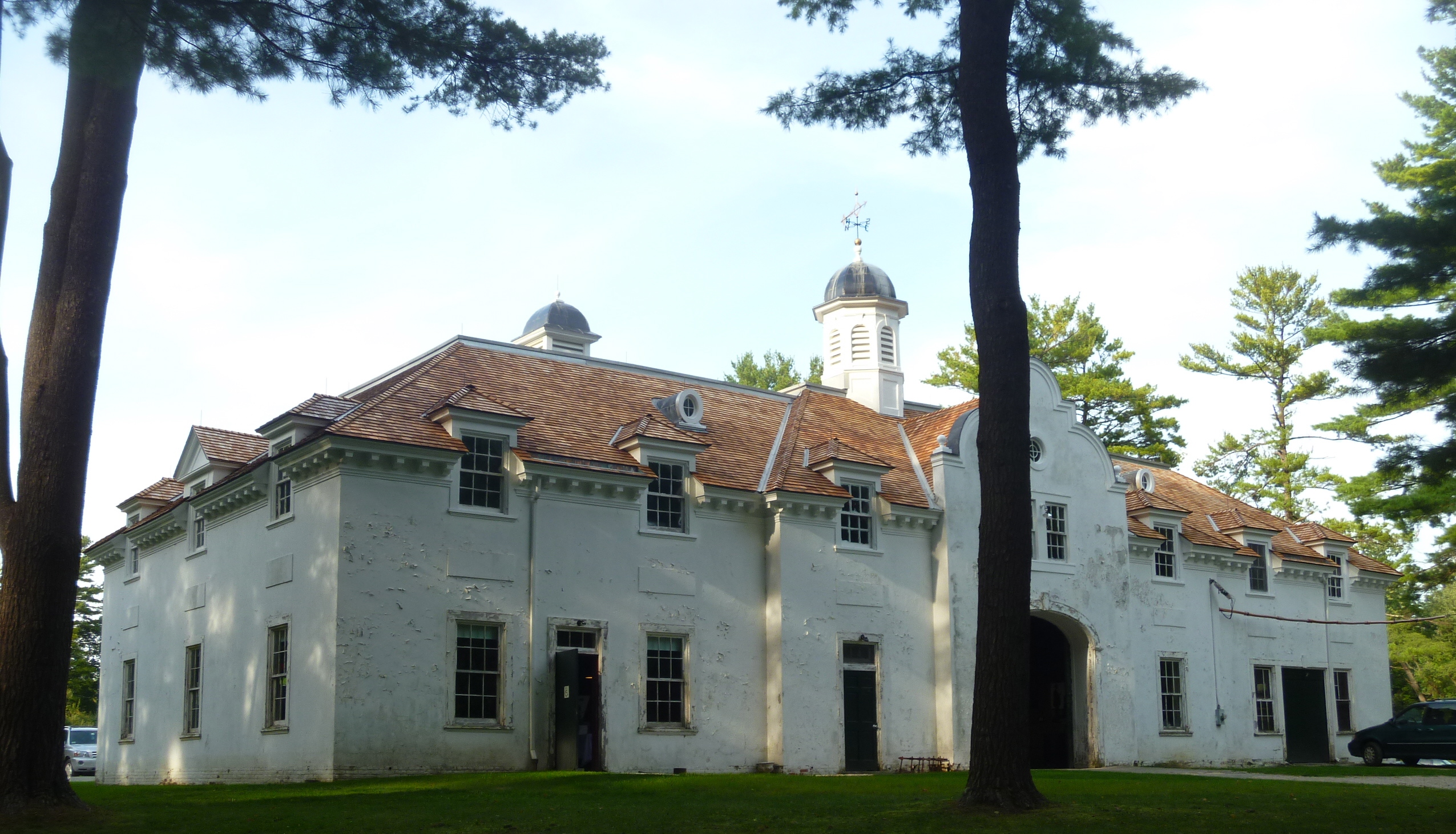
There’s a further exhibit in the Stables but these were being prepared and were already receiving the Wordfest participants.

The Stables

All in all my time there was too short to take it all in and I’m definitely up for another visit if I can manage to pass by again in future. Because of the Wordfest event I decided not to return that same weekend.

I Miss Miro but Make a Beeline for The Bee Library

A Sunny September Saturday Afternoon at The Yorkshire Sculpture Park

Oh dear, I seem to have lots of favourite places to walk and yesterday I revisited another but it’s a good place to take visitors who enjoy stepping out in the countryside but not too strenuously and with added cultural interest. Yesterday we spent a lovely warm sunny afternoon at The Yorkshire Sculpture Park. I was last there on a cold blustery January morning earlier this year. Despite a busy car park and visitor centre it was easy to get away from the crowds and although our aim was to see the Joan Miro exhibits we never actually got to them! The plan was to hike up to the Longside Gallery to see the Anish Kapoor exhibits and return to the car via the Underground Gallery and Miro exhibition.

Of course, it didn’t turn out like that as we were constantly stopping to inspect the wonderful sculptures dotted around the Park.

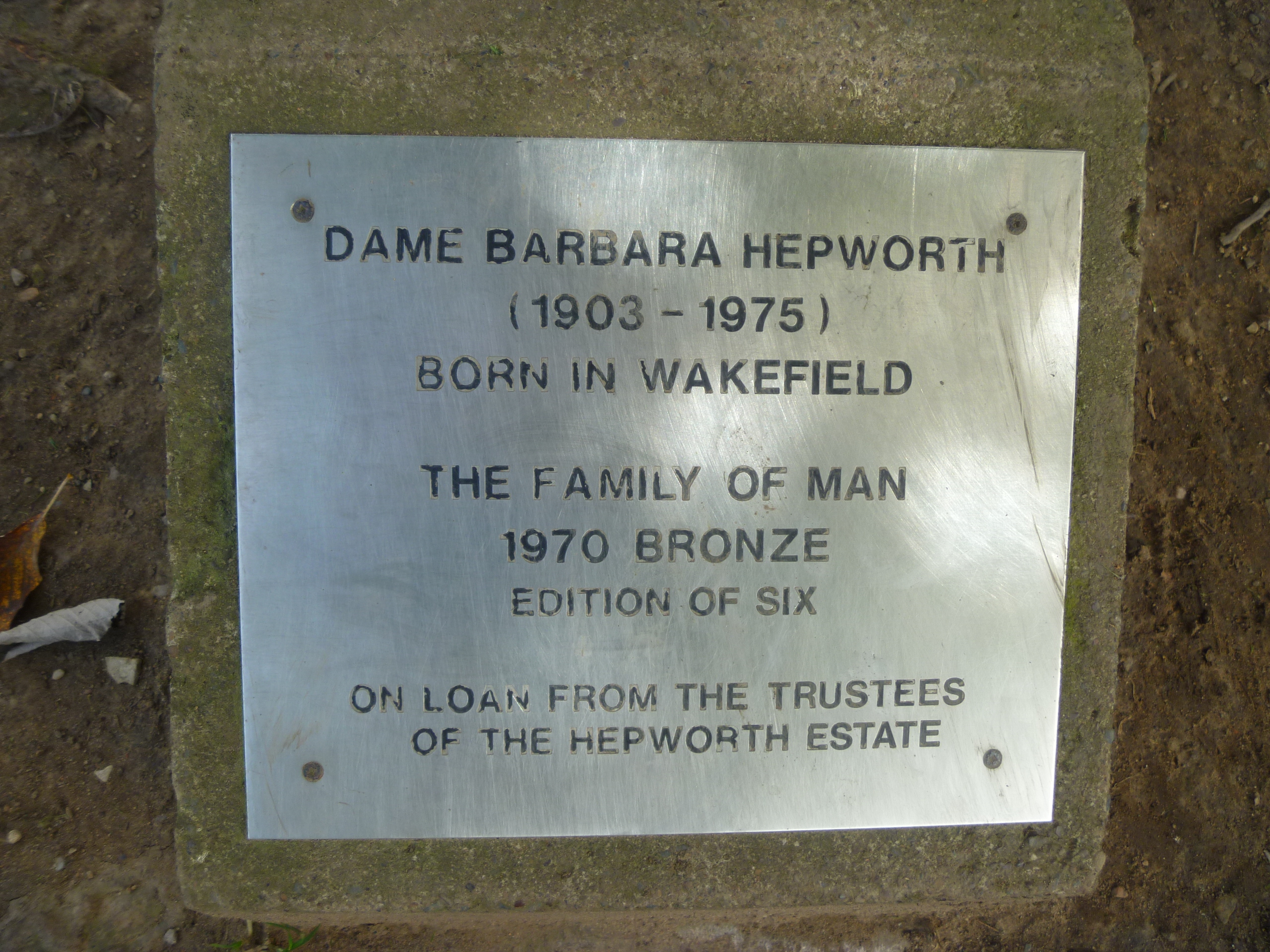
One of the first up was Barbara Hepworth‘s The Family of Man. Only as recently as July I had come across an edition of this bronze work at Snape Maltings in Suffolk.

Family of Man at Yorkshire Sculpture Park

Family of Man at Snape Maltings

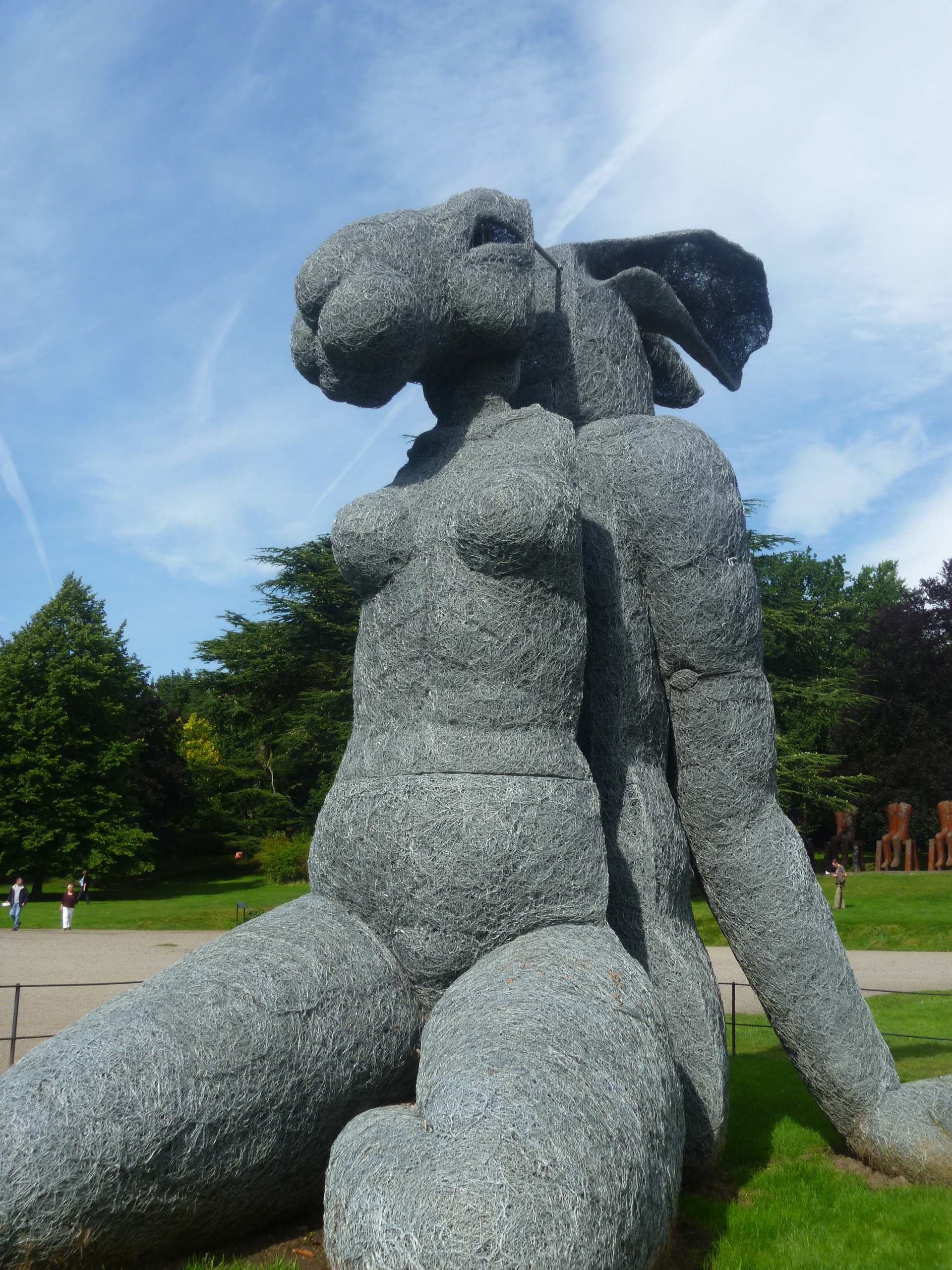
Descending through the park we were waylaid by other intriguing and clever works of art including The Greyworld Playground (make your own music!), Magdalena Abakanowicz’s Ten Seated Figures and nearby Sophie Ryder‘s Lady-Hare Sitting.

Our visitors have connections with the northeast and were expecting to see an Antony Gormley, almost featureless but still expressive, sculpture as they, like me, are fans of The Angel of The North.

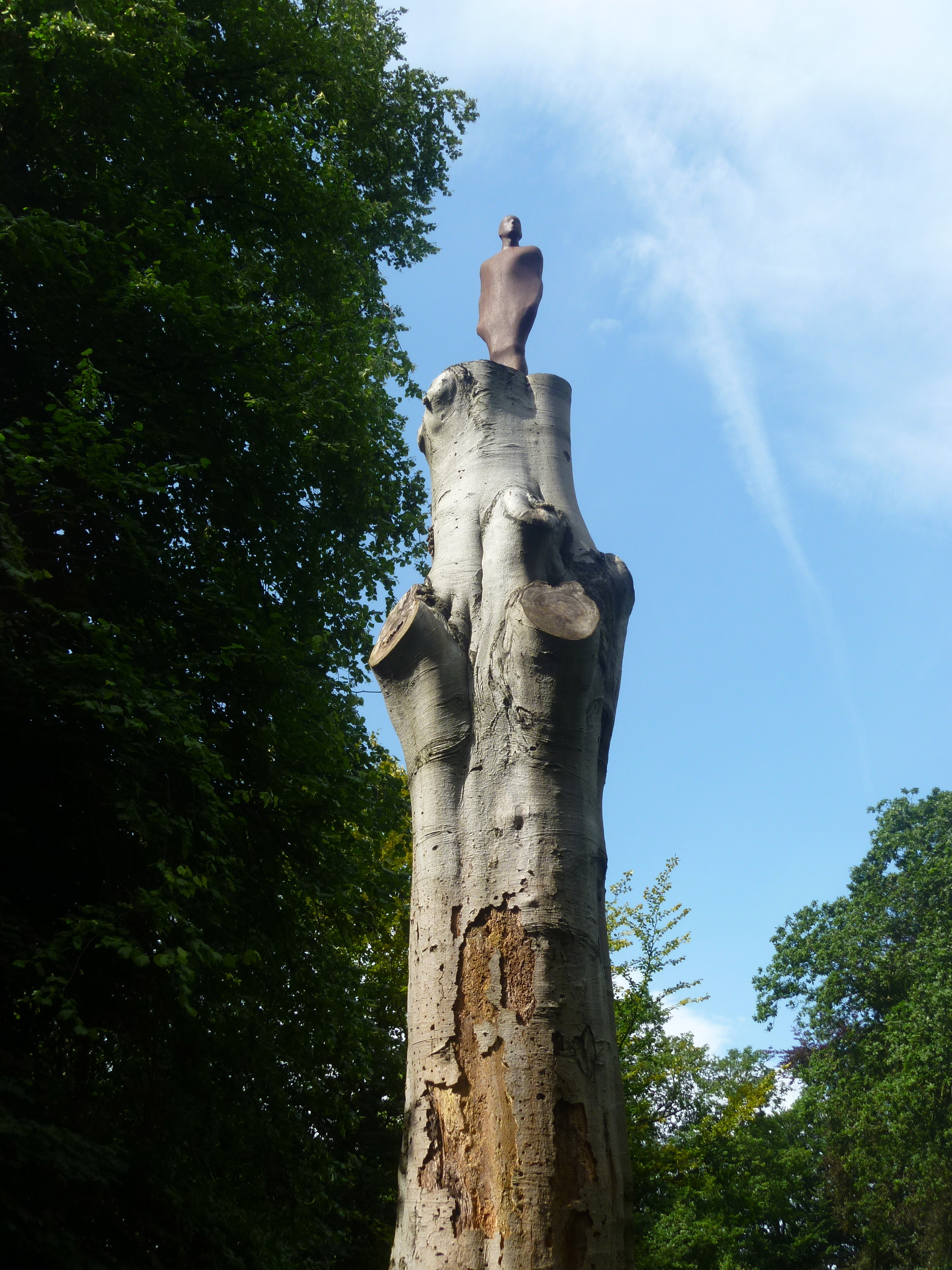
They were not disappointed. Right by the gate, through which you head into open country and fields of sheep and cattle, and standing high above our heads on a massive tree trunk is Gormley’s One & Other.

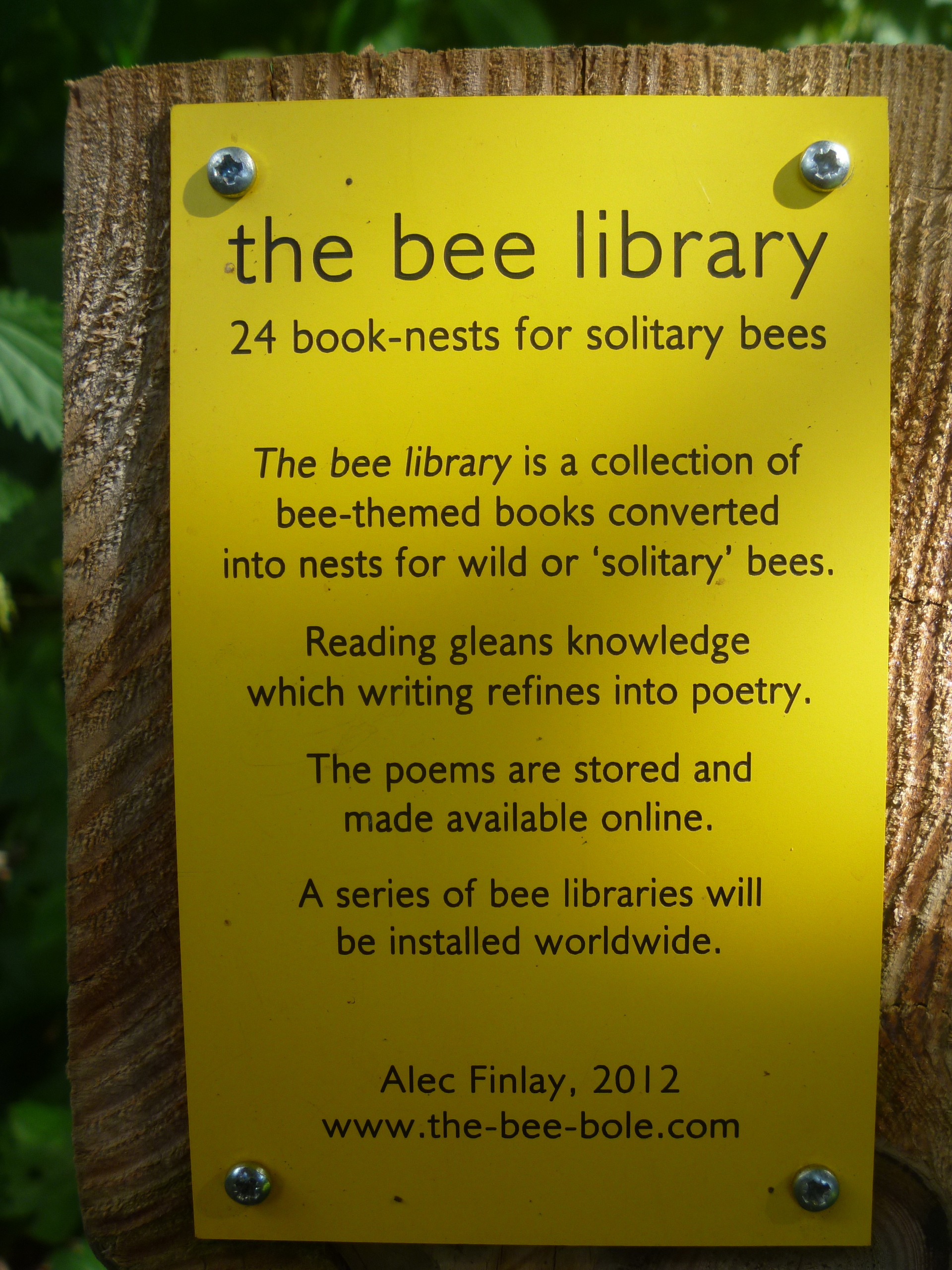
At this point we were intrigued to take a detour from our proposed route to inspect Alec Finlay’s The Bee Library. Along a path through woodland surrounding the Upper Lake hang 24 ‘Bee Hotels’ each is labelled with the title of the book and a link to the website www.the-bee-bole.com where the full story can be read.

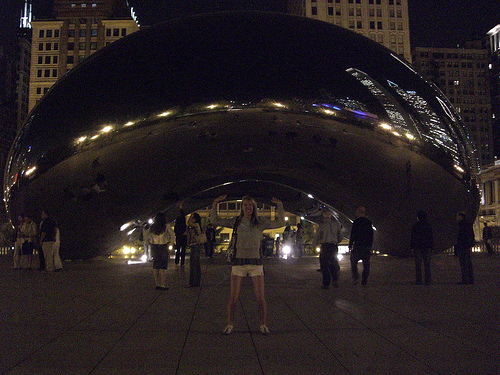
Finally we headed up the hill to the Longside Gallery which features currently an exhibition of the work of Anish Kapoor designer and creator of the Orbit structure in the London 2012 Olympic Park and of Cloudgate, commonly called “The Bean”, in Chicago.

Chicago’s Cloudgate by Anish Kapoor at night

No photography is allowed inside the gallery. After a brief stop for refreshments we headed back down hill past work of Andy Goldsworthy and down David Nash’s Seventy One Steps returning to the car with only the briefest glance round the lovely shop. Maybe I will get back to see the Miro exhibits before they move on in January 2013 – I hope so!

[Post updated with links 03.09.12]

Tea and Cake and Quiet London (1)

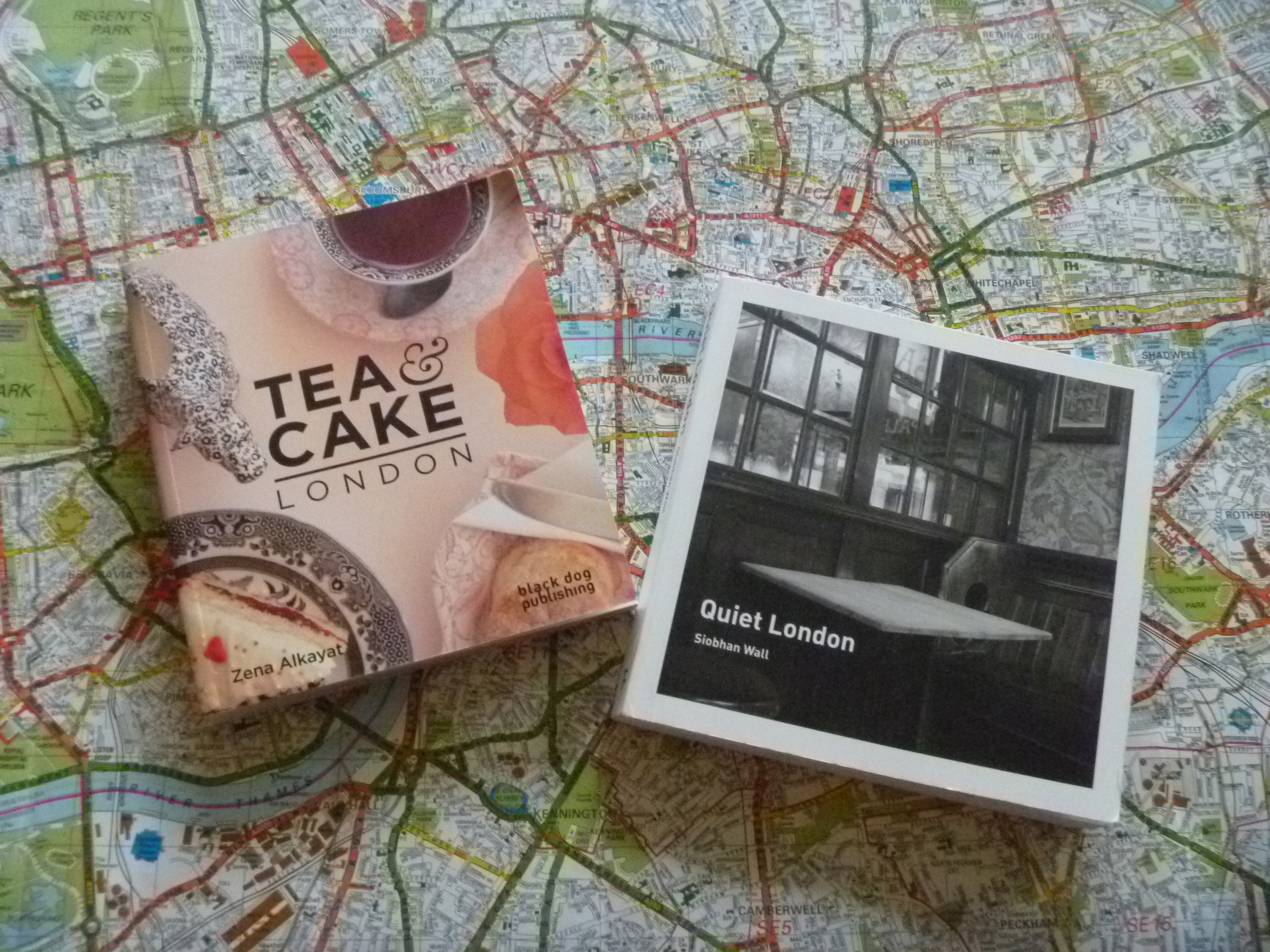
Our visit to Benjamin Franklin House (QL p. 23) on Friday was such a success for us both that we decided to devote the rest of the weekend following up places suggested by Siobhan Wall in her book Quiet London and some eateries suggested in another little book of mine Tea and Cake London by Zena Alkayat.

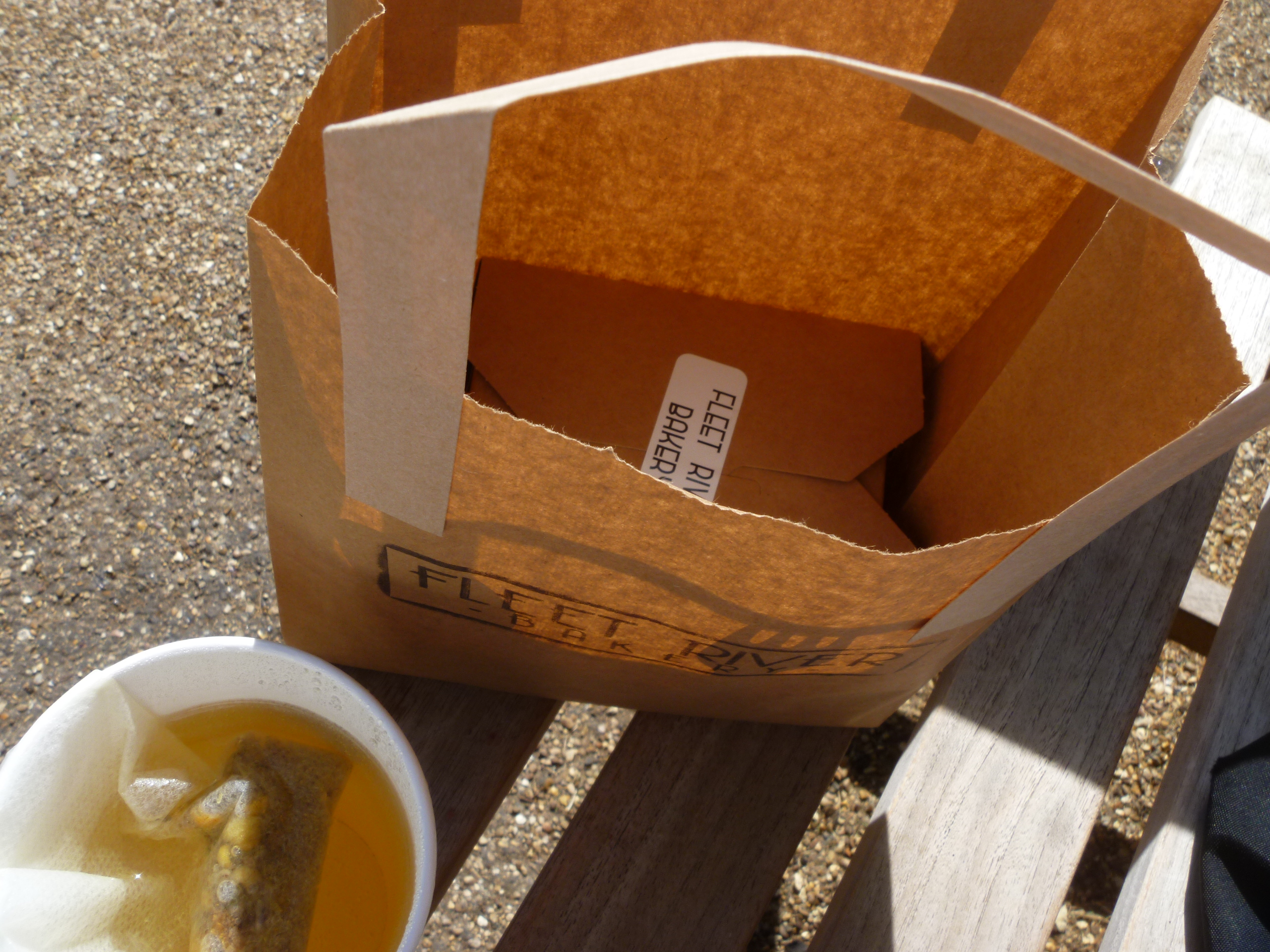
From BHF we trotted off to Lincoln’s Inn Fields to try to track down The Fleet River Bakery  (T&C L p. 40) mentioned in the Tea and Cake book. We eventually found it and bought ourselves tea and cake (my cake was Hummingbird – pineapple, mango and pineapple – so lovely and moist). We decided not to eat in but to take our food and drink into the Lincoln’s Inn Fields and picnic on a park bench in the sun.

London is so interesting and you never know what you might see so we usually walk whenever we can. Our route back to the hotel took us along Fleet Street, Ludgate Hill, past St Paul’s Cathedral, past 30 St Mary Axe (The Gherkin, to you and me) and finally to Aldgate and Minories.

The Royal Exchange and The Gherkin

We called a few of the Quiet restaurants that evening but all were full. We ended up at Morito the Tapas bar next to and owned by Moro on Exmouth Market. The tapas was excellent but the bar would not gain a place in Quiet London!

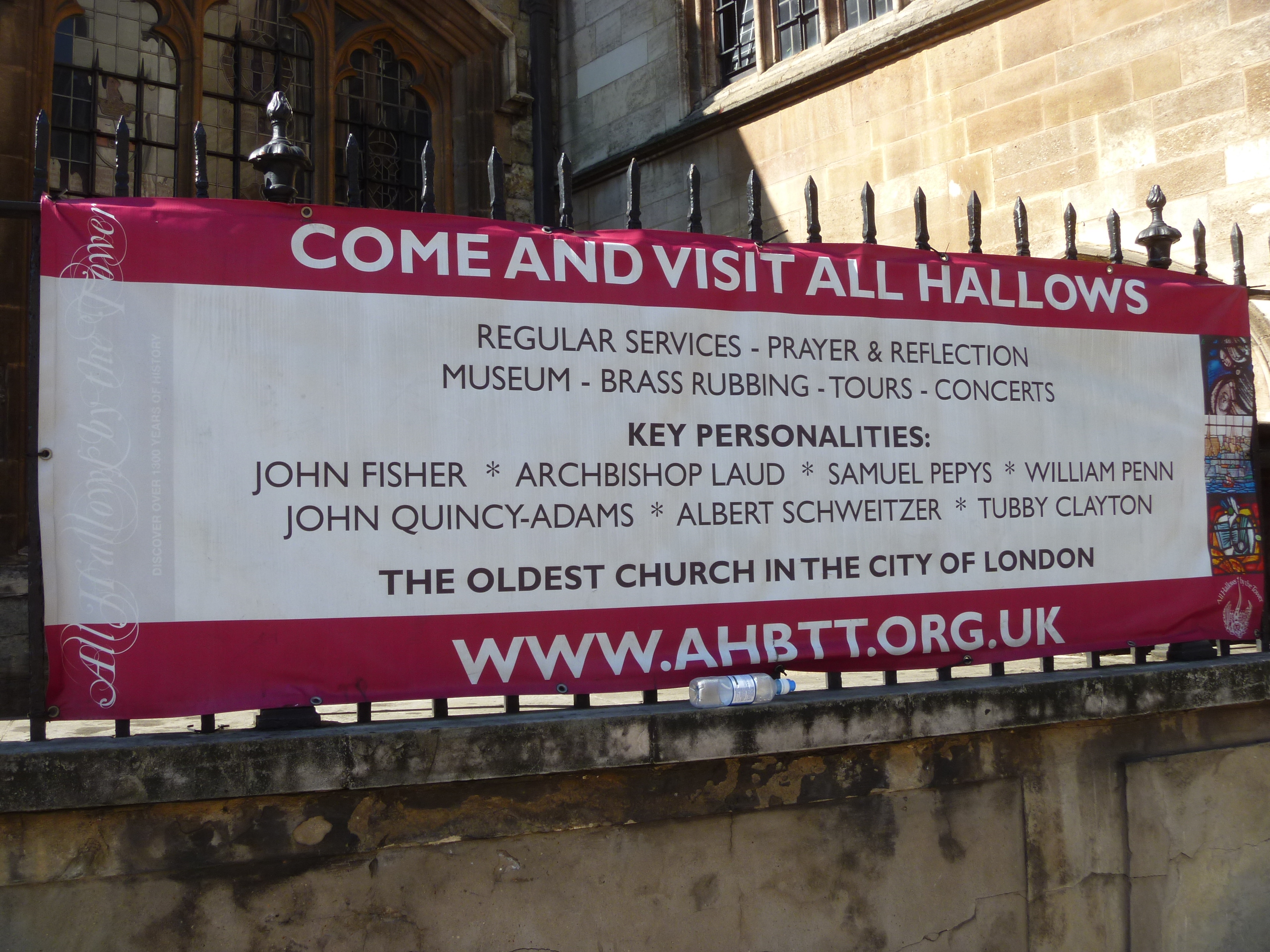
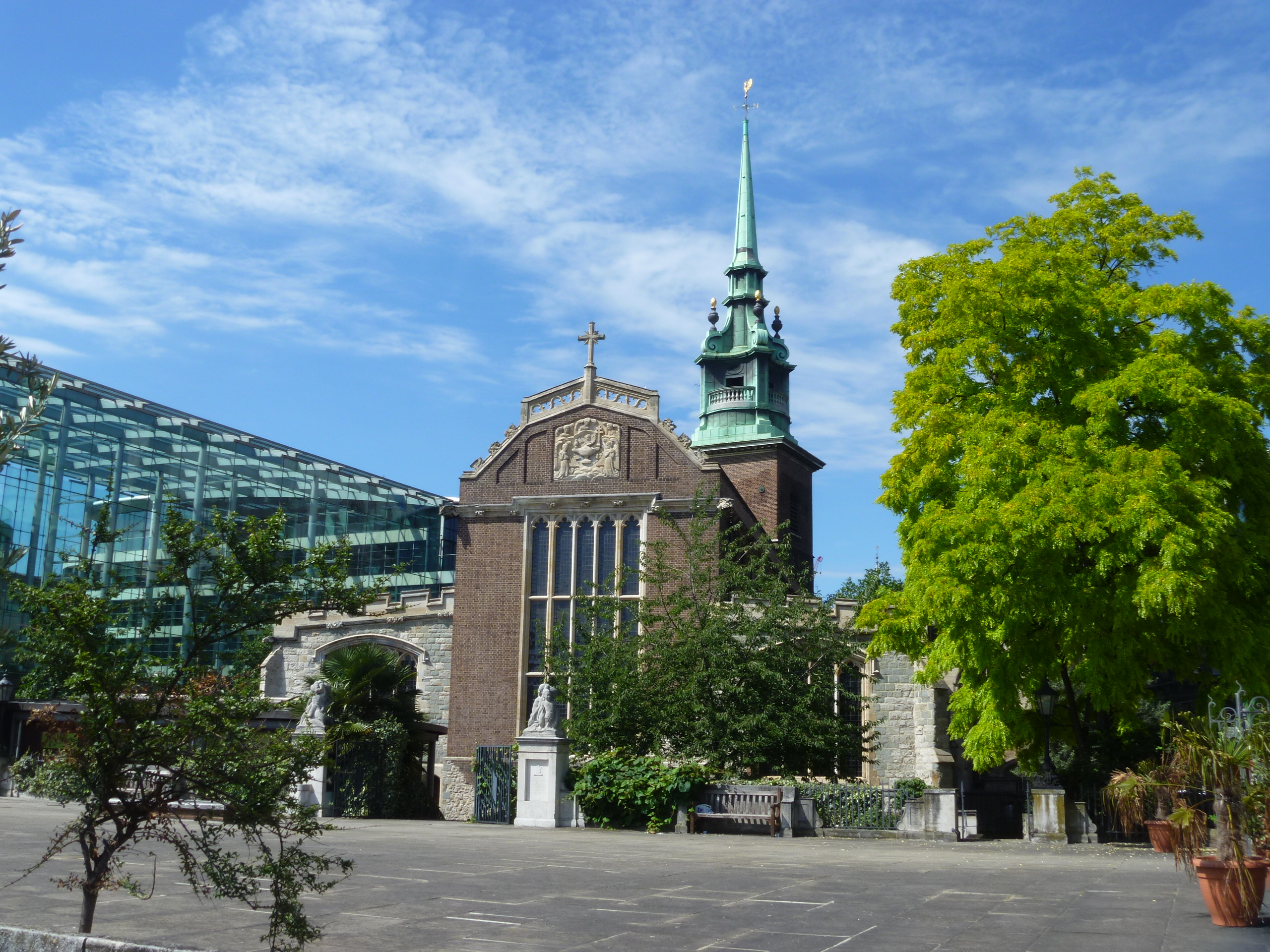
Next day we had a number of places in mind and began our Quiet London Trail at the Crypt Museum (QL p. 20). A 20 minute ‘pop in’ to the church of All Hallows By The Tower ended about two hours later! You can see why (and this poster does not mention the exhibition “Bonuses, Benefits & Bailouts : the morality of the King James Bible”).

All Hallows By The Tower

“To tie in with the 350th anniversary of the Book of Common Prayer, All Hallows by the Tower and The Museum of the Book in Limehouse are pleased to present this exhibition of manuscripts, first edition bibles, prayer books and other artefacts challenging our thinking on issues of legality versus morality using the King James Bible as a starting point.” [Summer Programme leaflet]

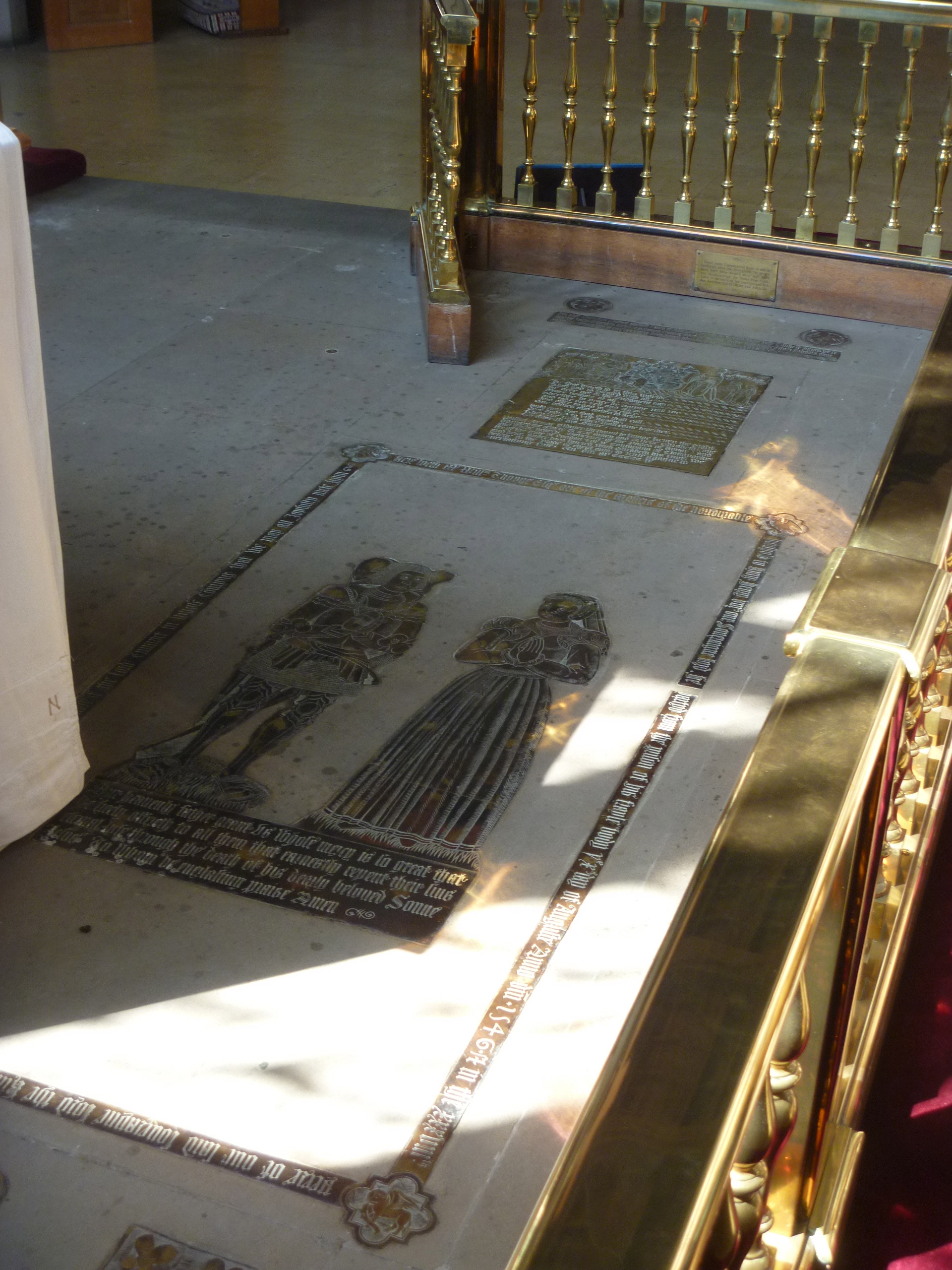
“This tiny museum lies underneath one of London’s original Saxon churches. In the crypt is a Roman tesselated floor from a house built in the late 2nd century. The museum also holds registers dating back to the 16th century. The highlight, however, is the intricate brasses inlaid in the stone floor of the church, near the altar.” [Quiet London, p. 20]

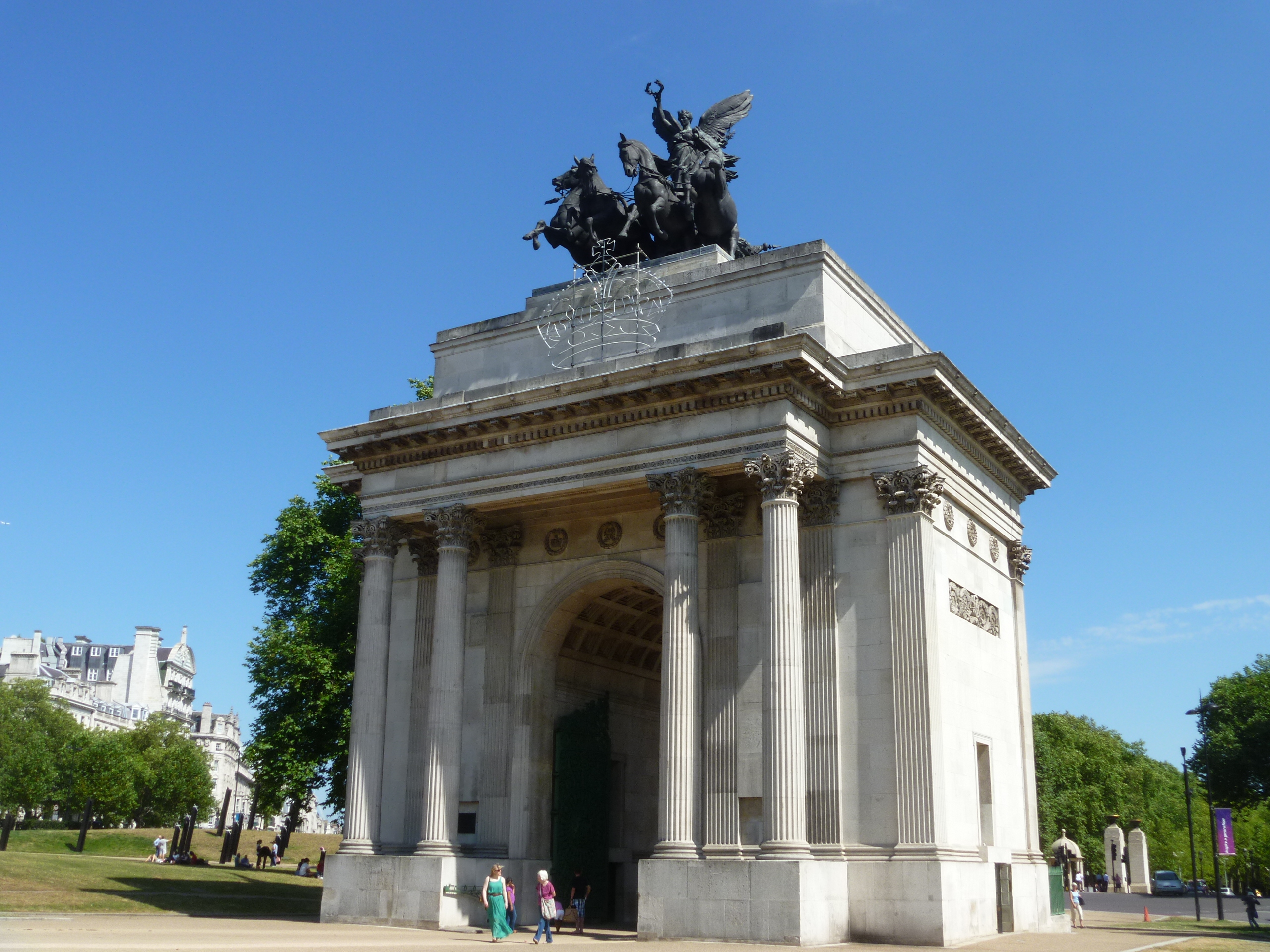
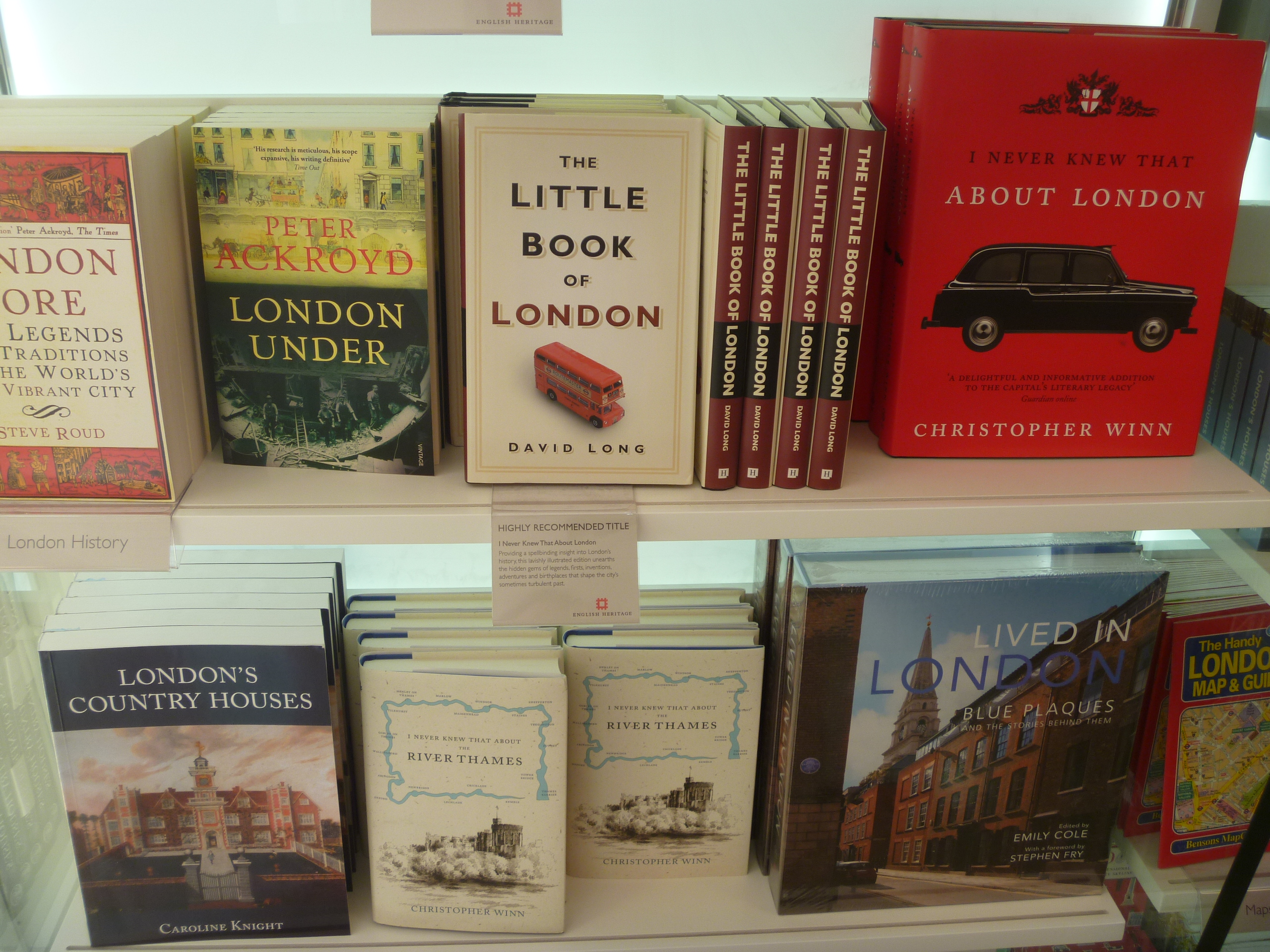
Moving on from All Hallows we visited The Wellington Arch. Recently opened by English Heritage this London landmark has not yet arrived in Quiet London. You can climb (or take the lift) to the top for views towards Hyde Park, Buckingham Palace Gardens, Green Park and Piccadilly. There’s an exhibition space (at the moment it commemorates 100 years of Blackpool Illuminations and the Blackpool Tower), a further gallery showing the history of the Arch and its former locations plus a bijou bookshop of London book titles.
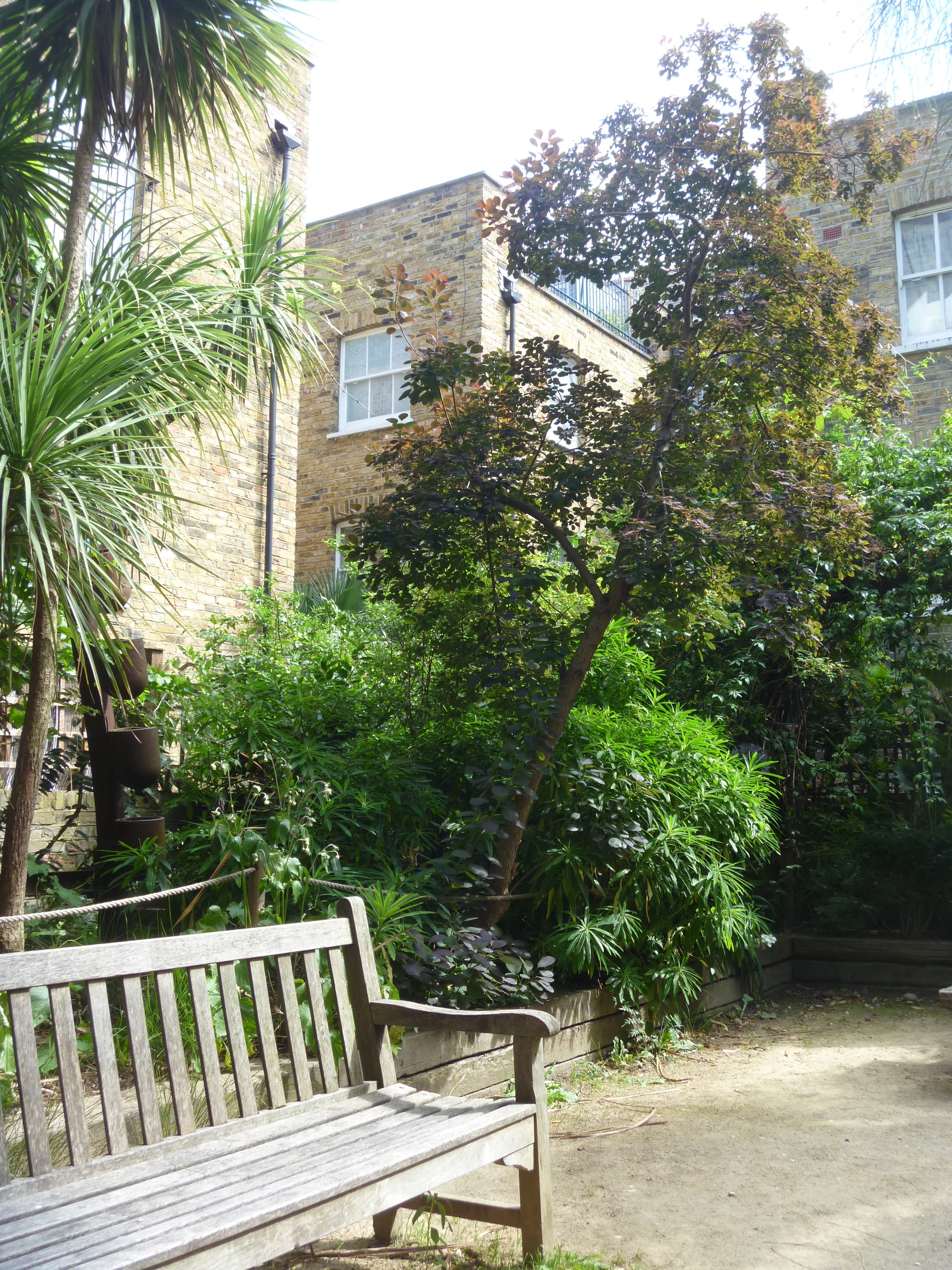
Next up we crossed the river (underground by tube) to Vauxhall. During the 17th, 18th and 19th centuries the pleasure gardens of Vauxhall were one of the London places to see and be seen but our hunt was for something very much more esoteric : Bonnington Square Garden (QL p. 46).
Bonnington Square Garden
“Known as ‘the Pleasure Garden’ in homage to the Vauxhall Pleasure Gardens, this former bomb site and derelict playground  was transformed by the imaginative residents of the Bonnington Square Garden Association. Amazingly, this south London oasis is full of lush tropical plants and intriguing public sculptures.” [QL p. 46]
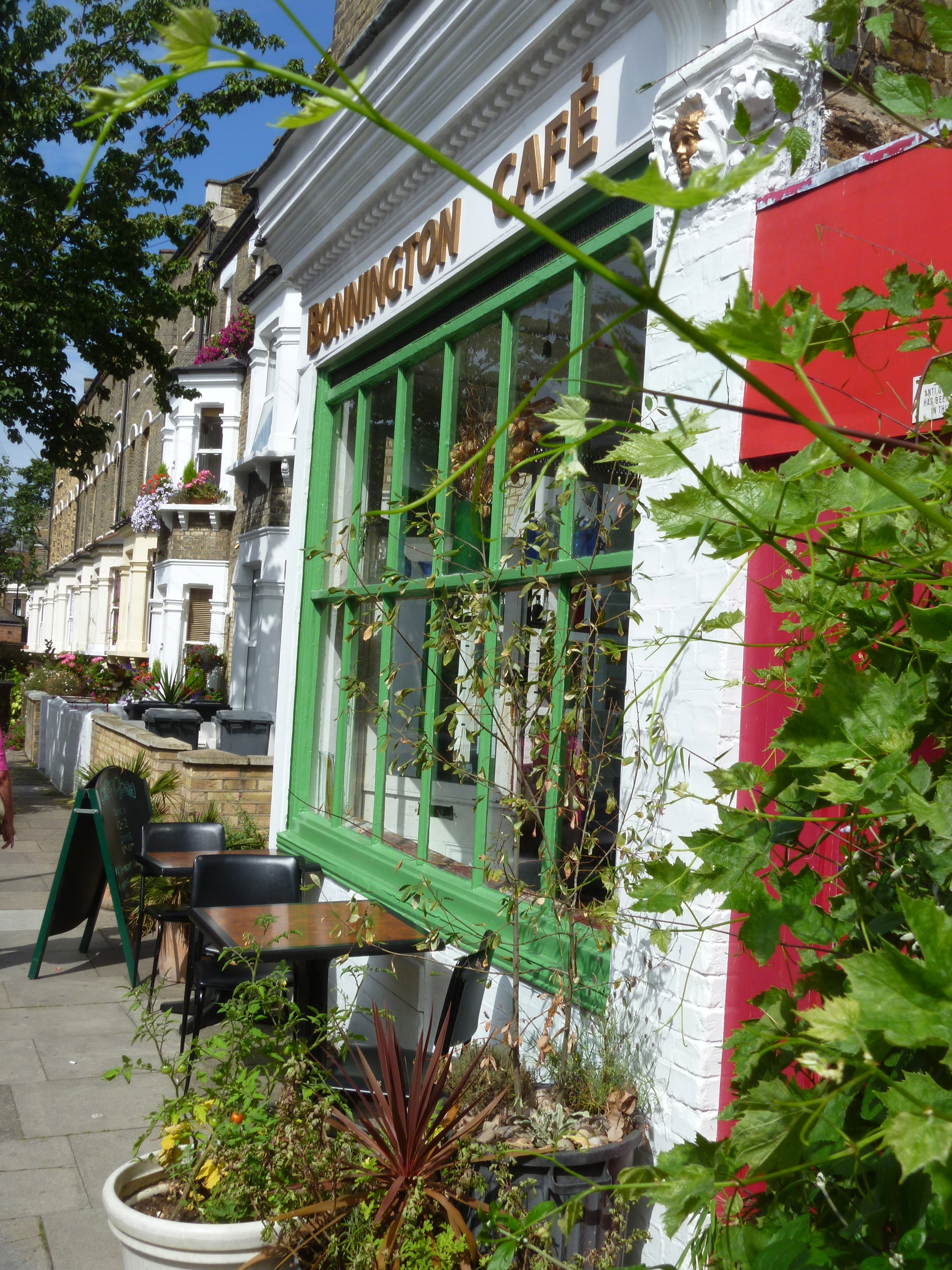
The residents continued their enthusiasm for all things green by planting out more areas in the neighbourhood, on street corners and other small open spaces.
Bonnington Cafe (plays music so not quiet!)

[To be continued]

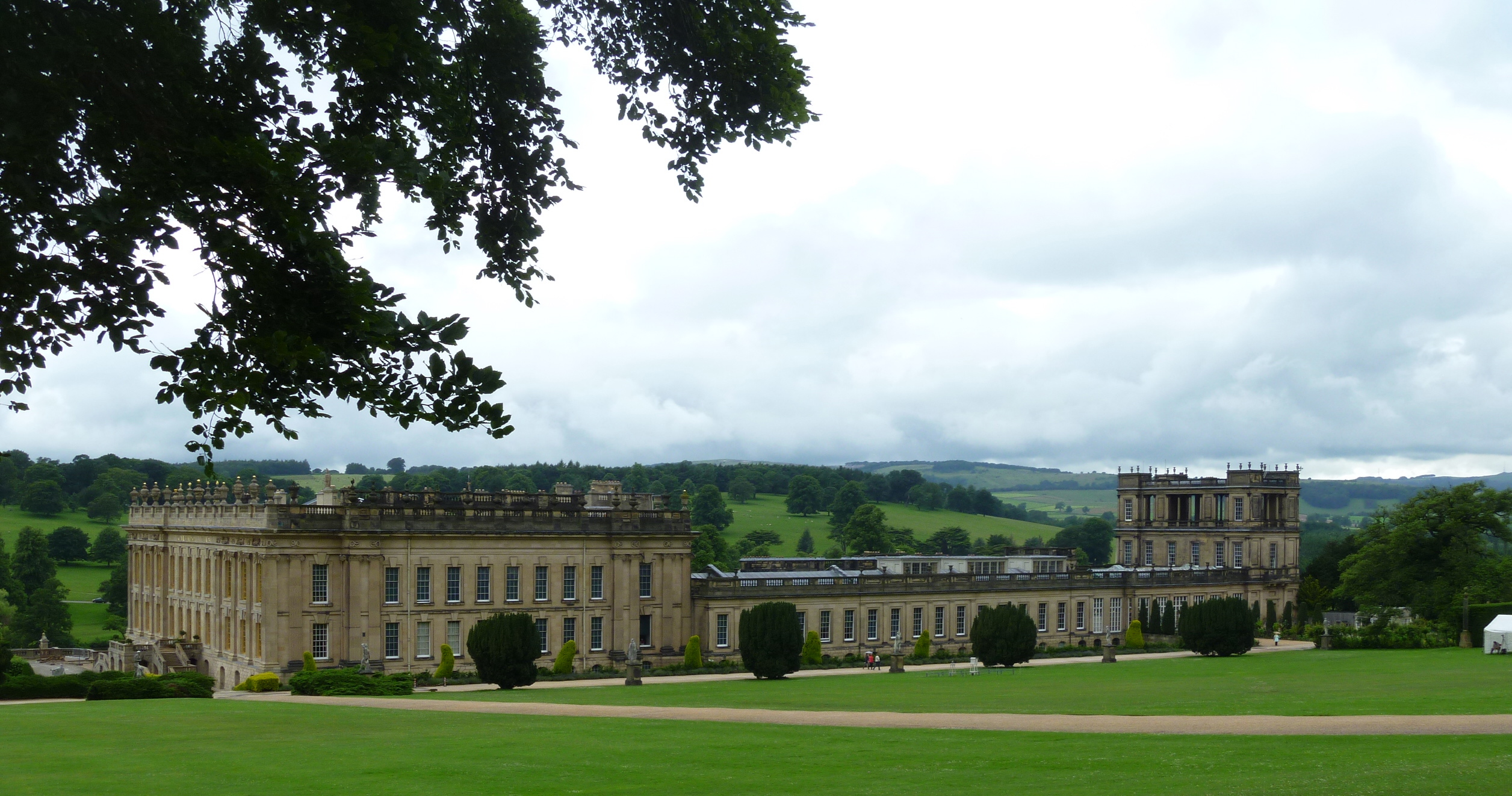
Spot the Difference : Chatsworth

I love to visit Chatsworth! So much to see and do. Lots of art and lots of history. Famous people. Gardens and country house. Plus, you may take photos everywhere. Inside and outside there’s so much variety. It’s hard to decide just where to start.

The South and East Fronts today

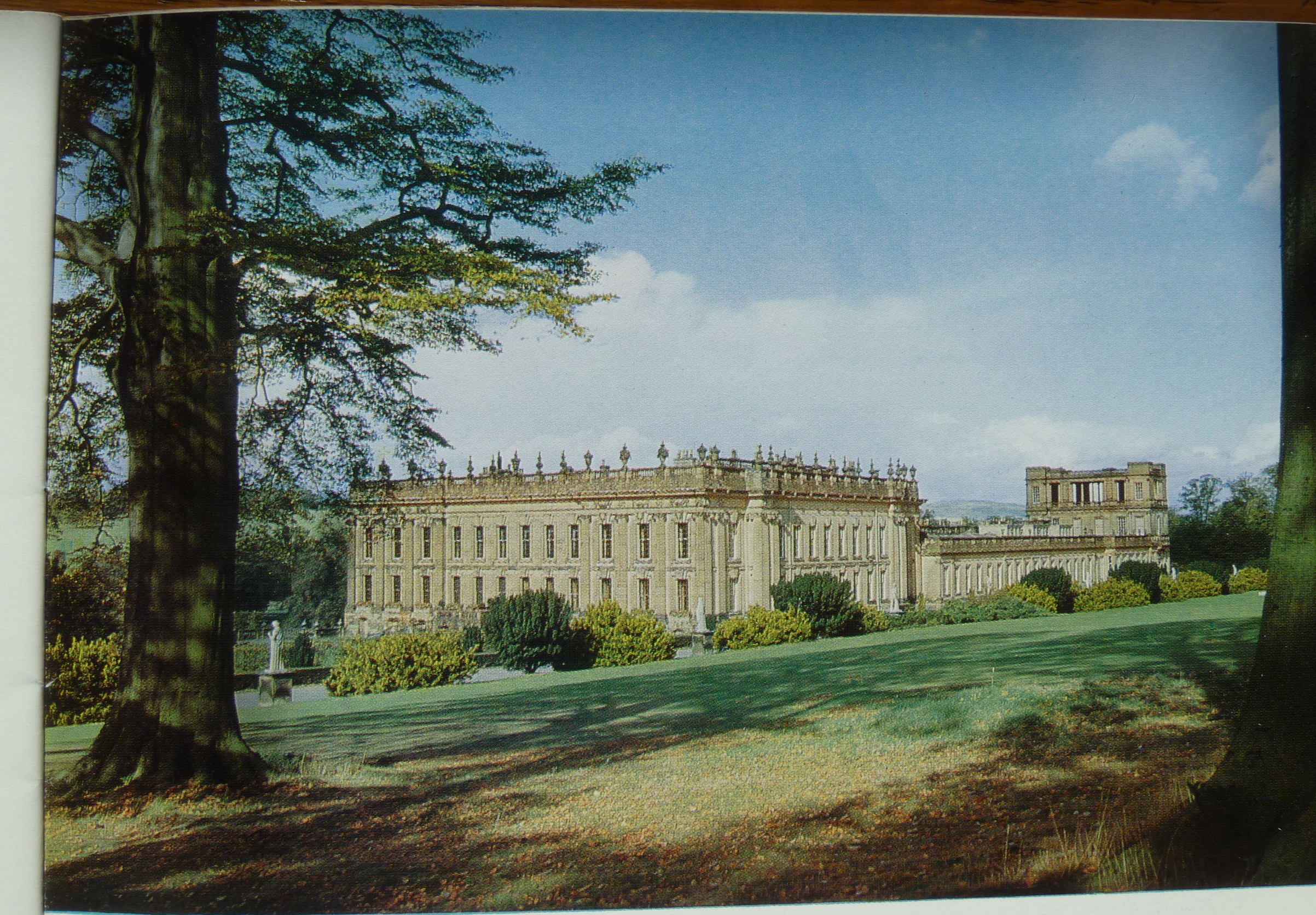
The South and East fronts from my 1970s Guidebook

The best thing about my recent visit was meeting up with the online book discussion group friends. Hopefully we have now established a tradition of having a  summer outing in the country alongside our winter/Christmas ‘party’ in town. The weather on the 10th July turned out to be abominable – weather alerts, floods, torrential rain – but we all managed to get to Chatsworth, eventually, although instead of a jolly picnic on the grass we had a delicious hot meal in the Carriage House Cafe. Now and again the rain stopped and we ventured into the gardens but we did spend quite some time in the house and made three visits to the Cafe.
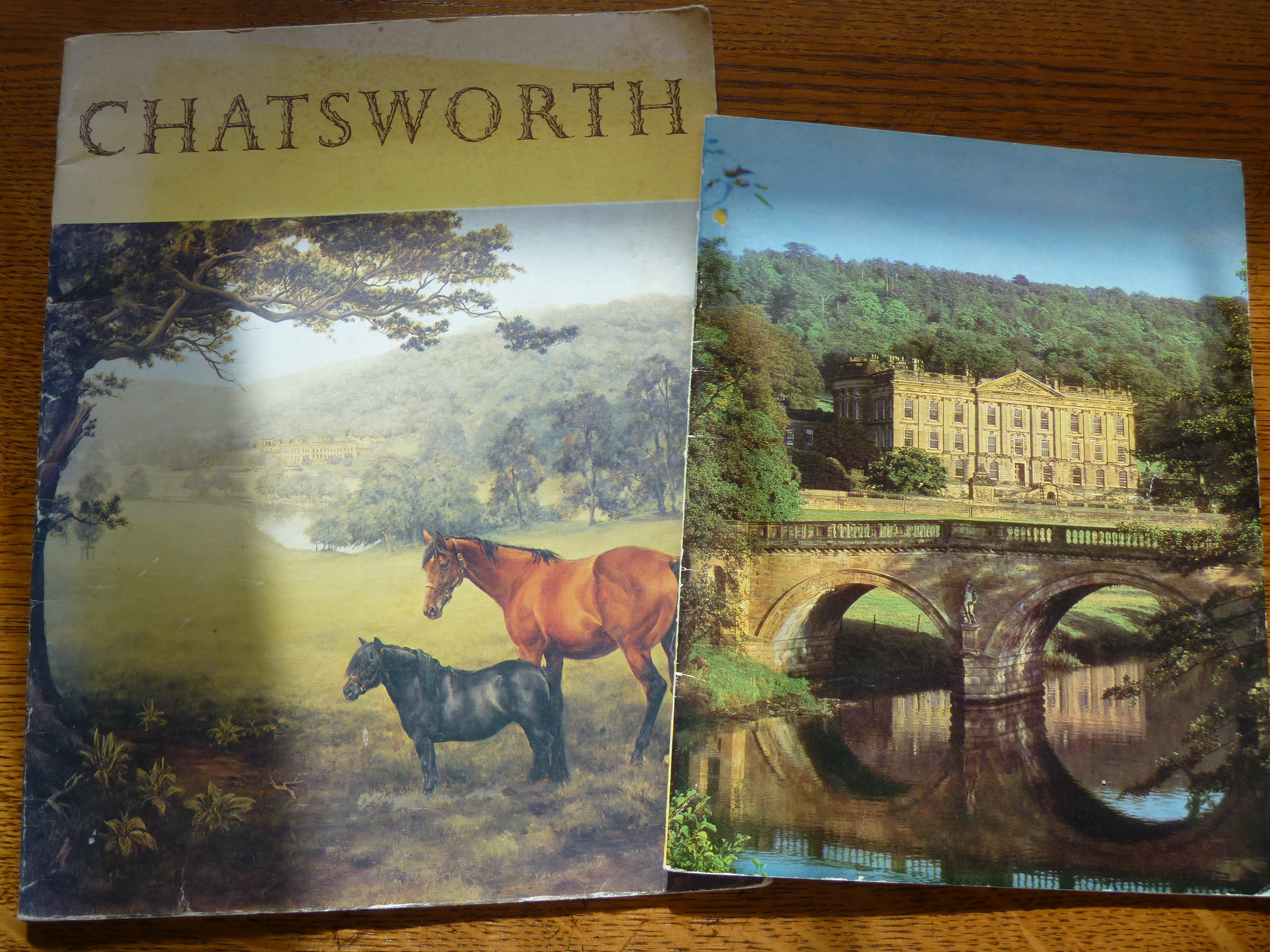
During the 1950s, ’60s and early ’70s my granny and grandad used to visit stately homes travelling from Norwich at first by motorbike and sidecar and in later years in my uncle’s Austin A35. They travelled very long distances but always within the day as they never stayed away from home overnight. I now have the collection of guidebooks which they bought at the time and I have two for Chatsworth.

It’s interesting to look through my old guidebooks – most of which  were published by Pitkin (but not the above Chatsworth guides)- comparing the houses as they were then and as they are when I visit. So I’ve made this the theme of my Chatsworth post today.

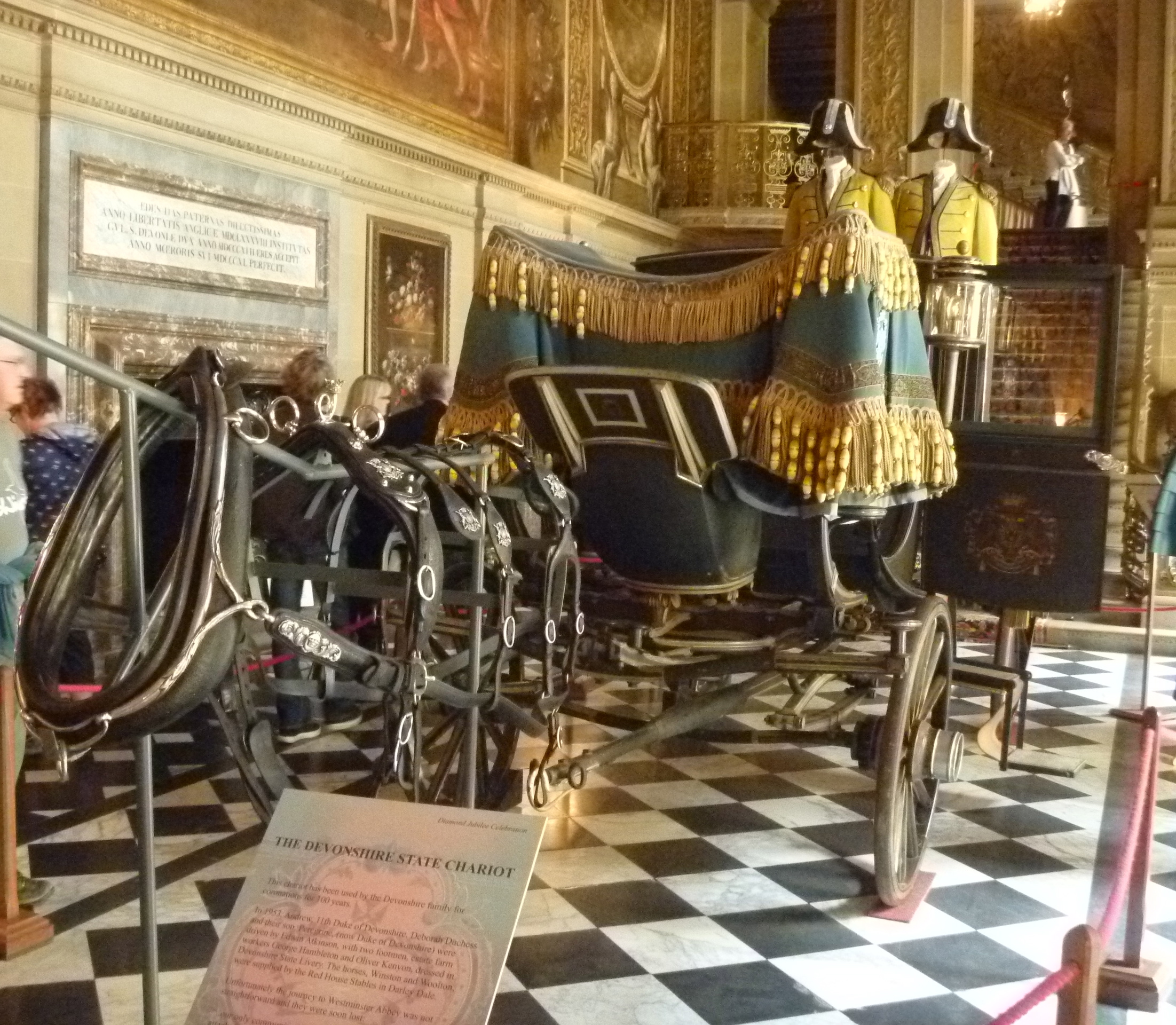
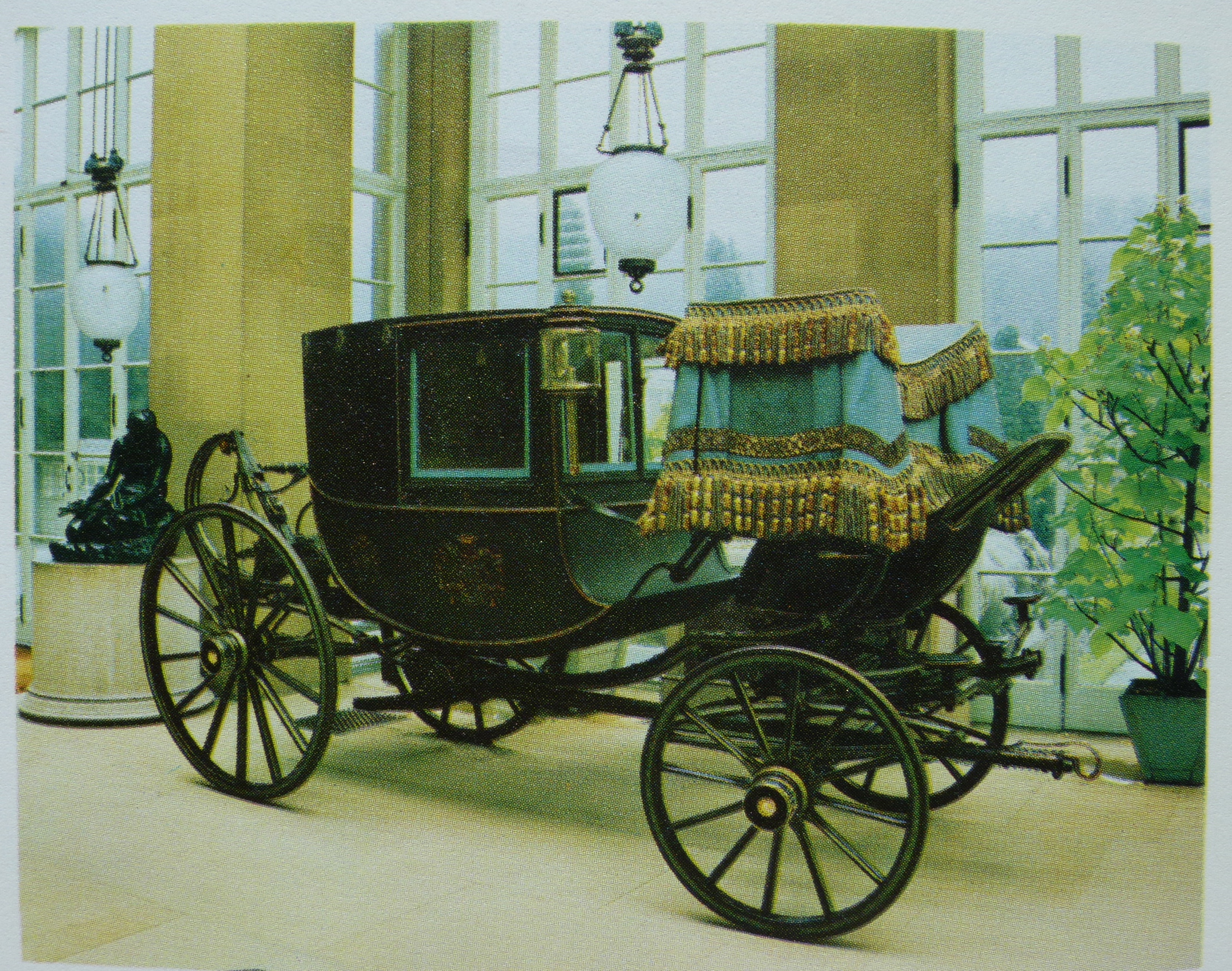
A couple of times during today’s tour of the house you pass through the Painted Hall. This year, with it being the Queen’s Diamond Jubilee Year, the Devonshire state chariot, used by the 11th Duke to attend the Coronation, is on display in there. I loved reading the little anecdote about the party getting lost on their way to attend the coronation in 1953.

The Painted Hall in 2012 with State Chariot on display

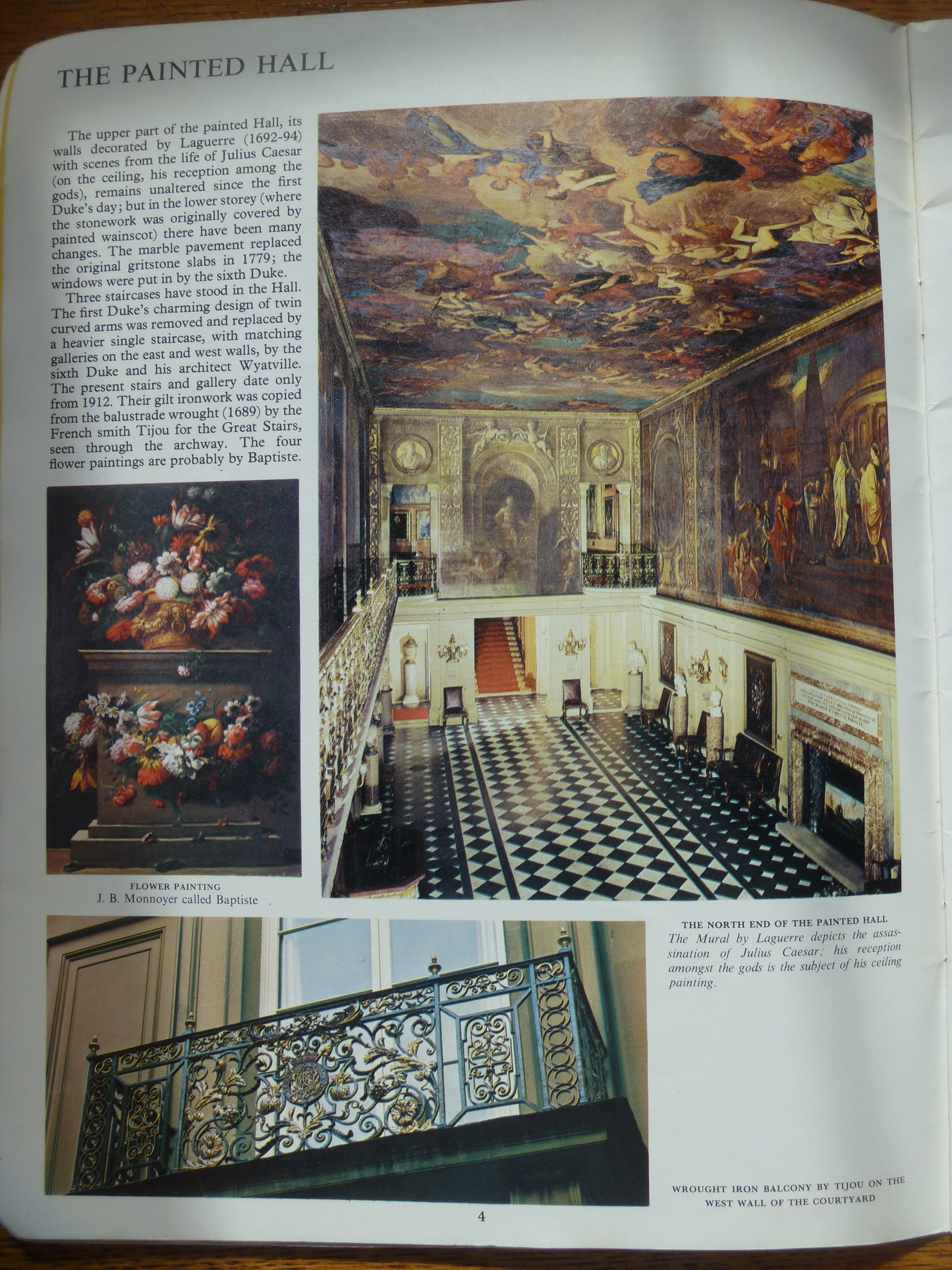
The Painted Hall and Tijou Balcony, 1970s

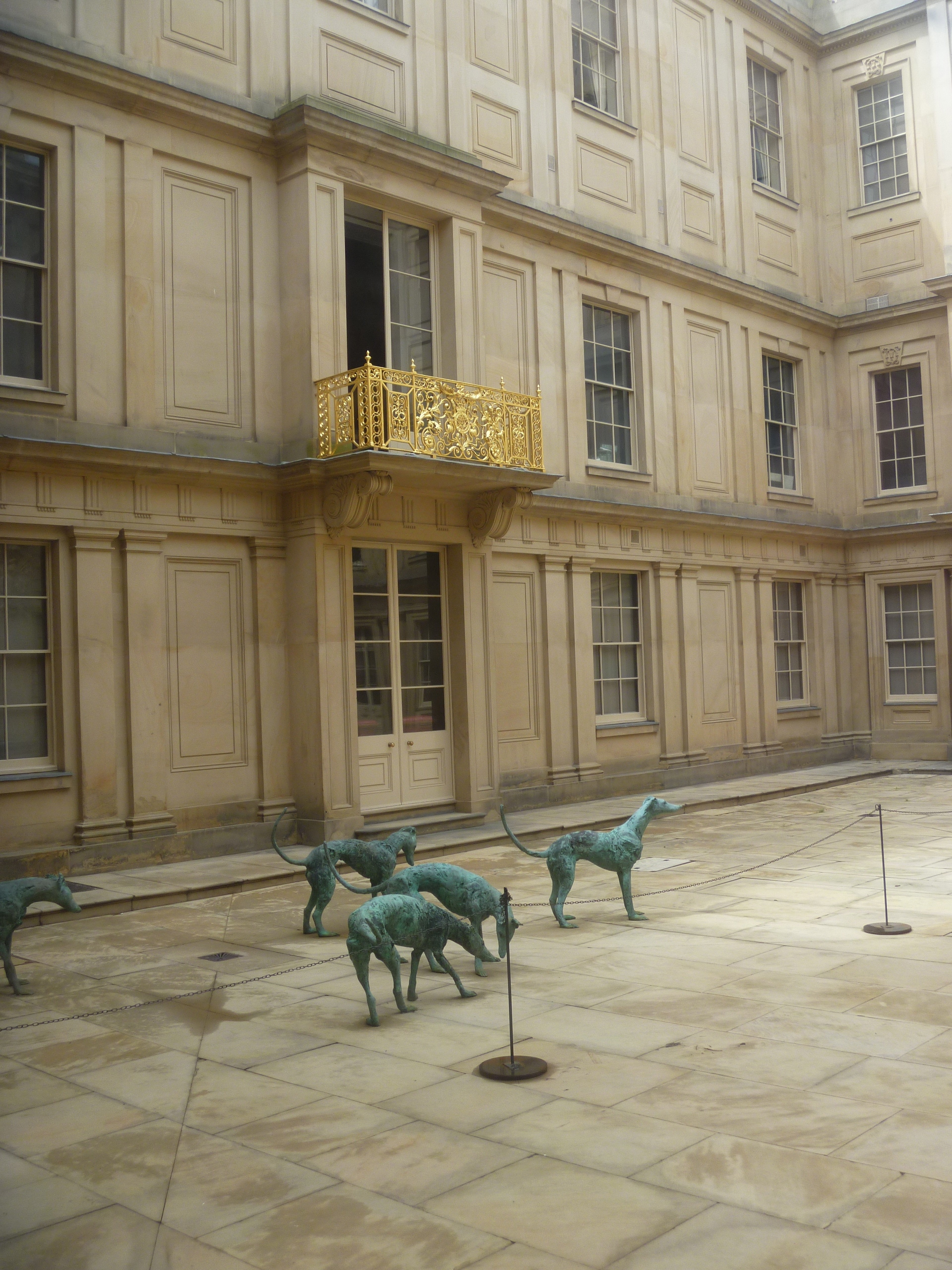
The Tijou Balcony today

From the Painted Hall and nearby corridor you can see out into an inner courtyard and the Tijou-designed balcony which would have been sparkling in the sunshine – had there been any!

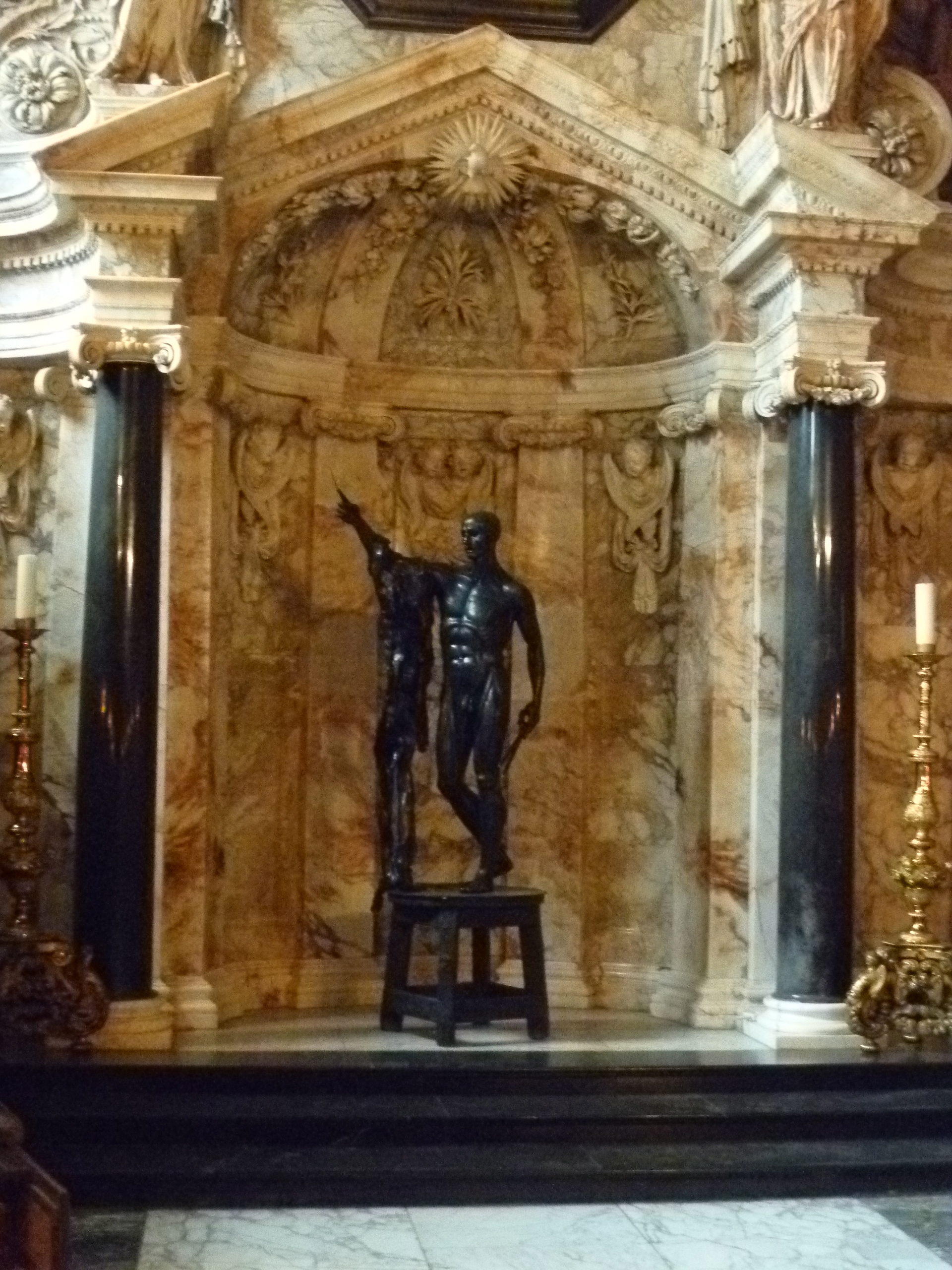
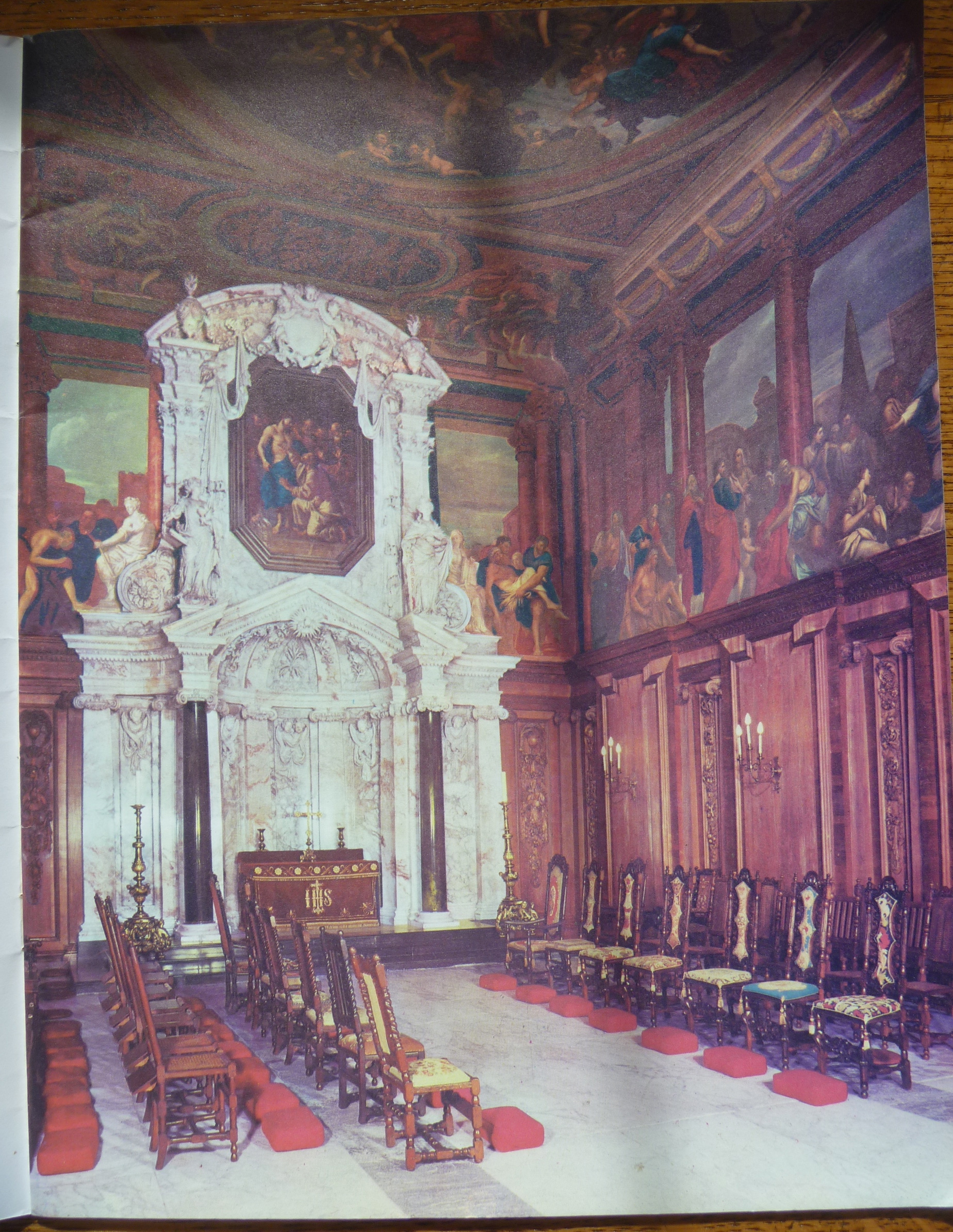
Here is the Chapel today with its modern art and in the 1970s looking very traditional and rather OTT.

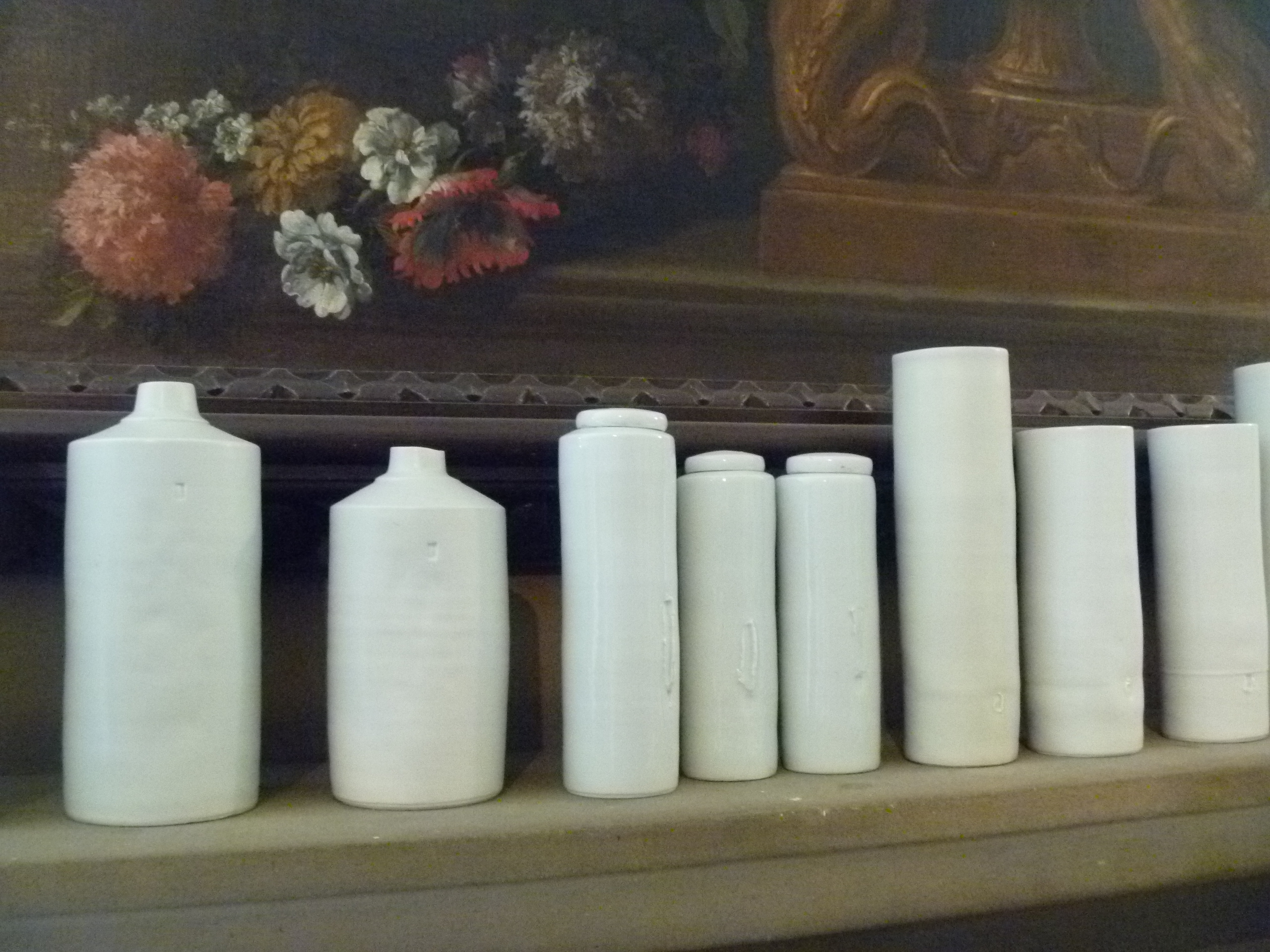
The Chapel Corridor now displays modern art sculptures and pots. I noticed a large group of Edmund de Waal pots on a mantlepiece.

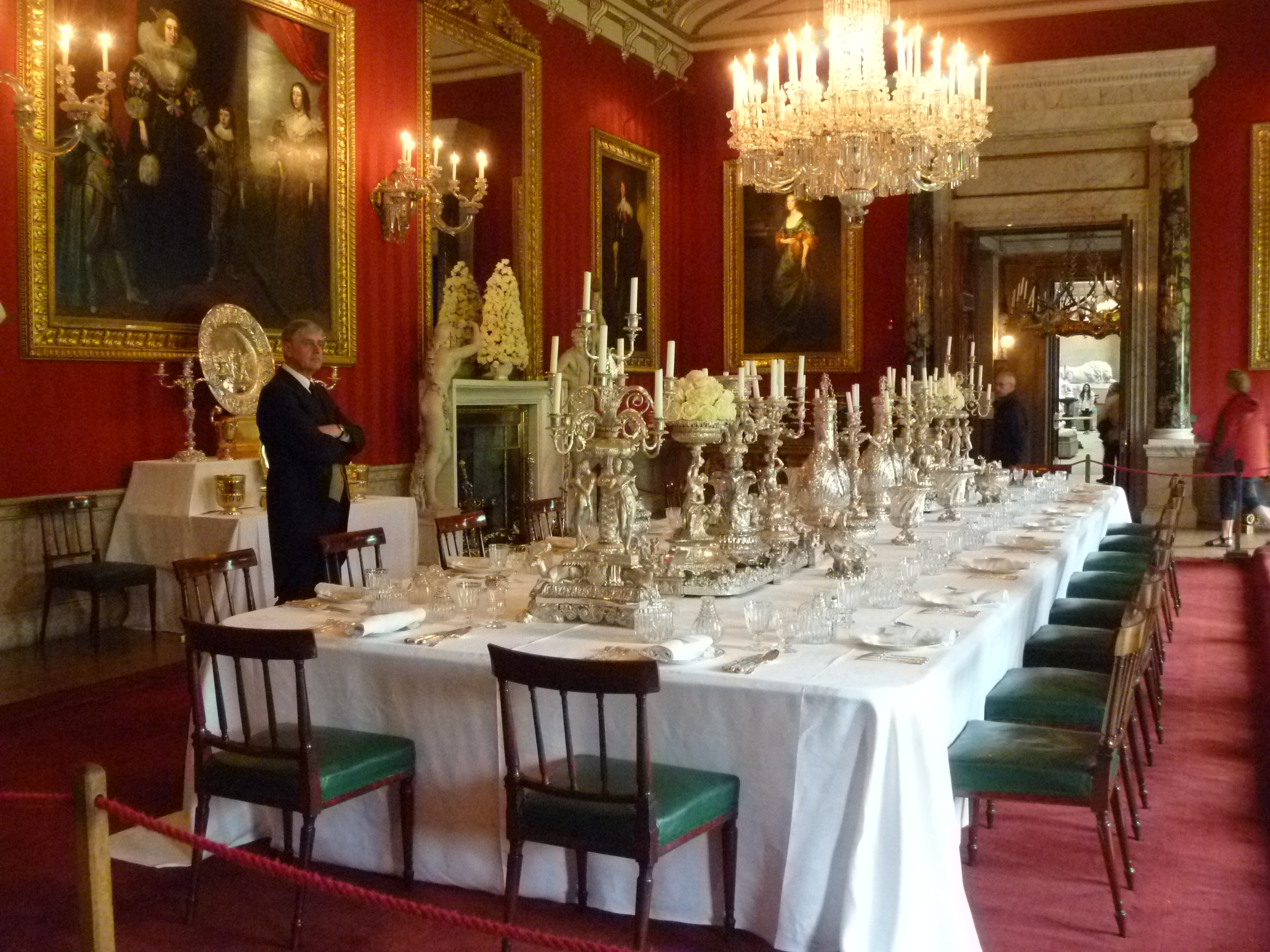
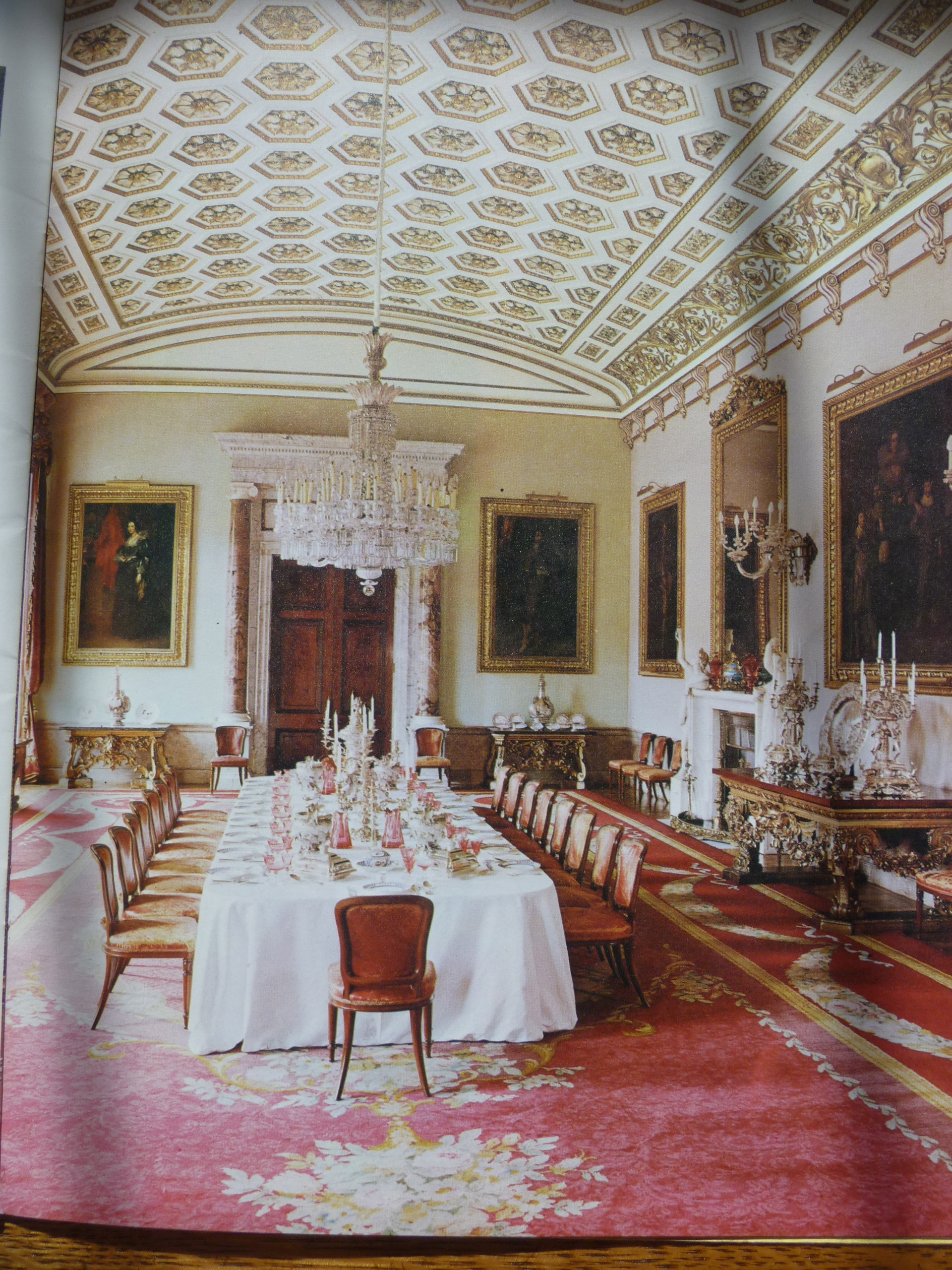
One of the last rooms you visit on the tour today is the Dining Room :

Then there’s the sculpture gallery and the Orangerie now houses the shop.

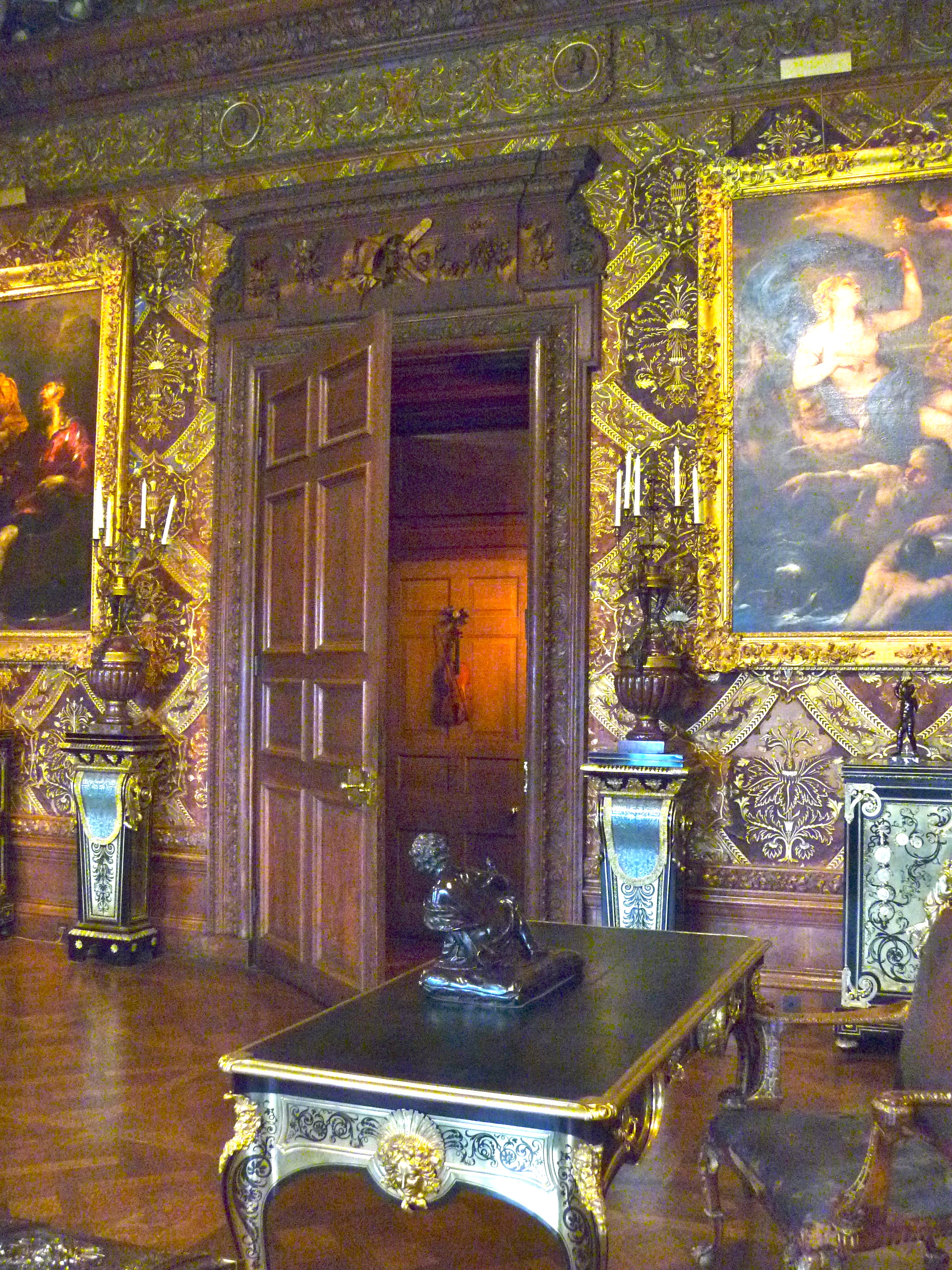
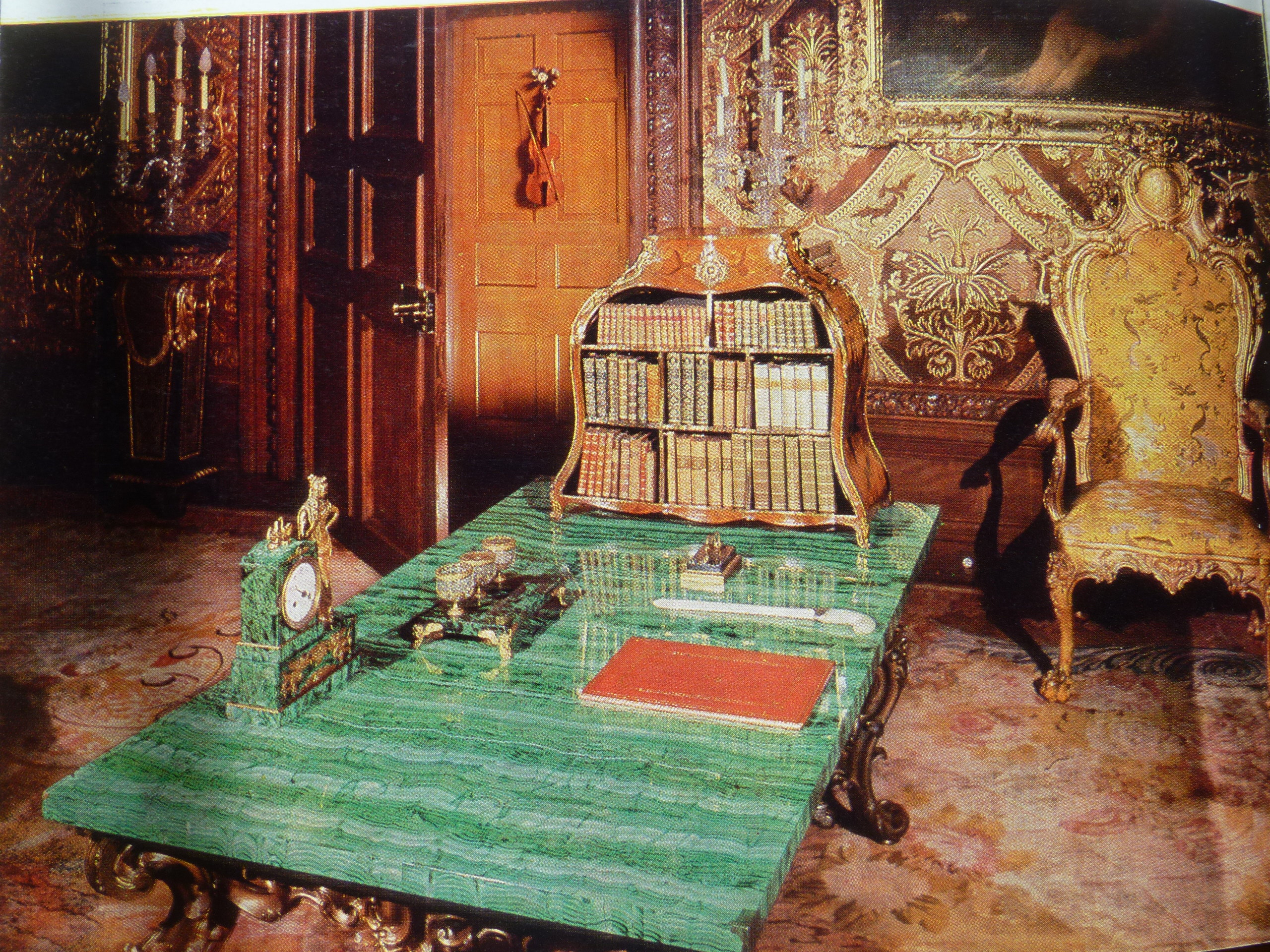
My favourite wonder of Chatsworth is just a smallish painting. It’s a Trompe L’Oeil violin on the back of a door. Watch out for it next time you visit Chatsworth.

Trompe L’Oeil 2012

In my guidebook

Isn’t it amazing?

And finally, just to show that we did get into the gardens :

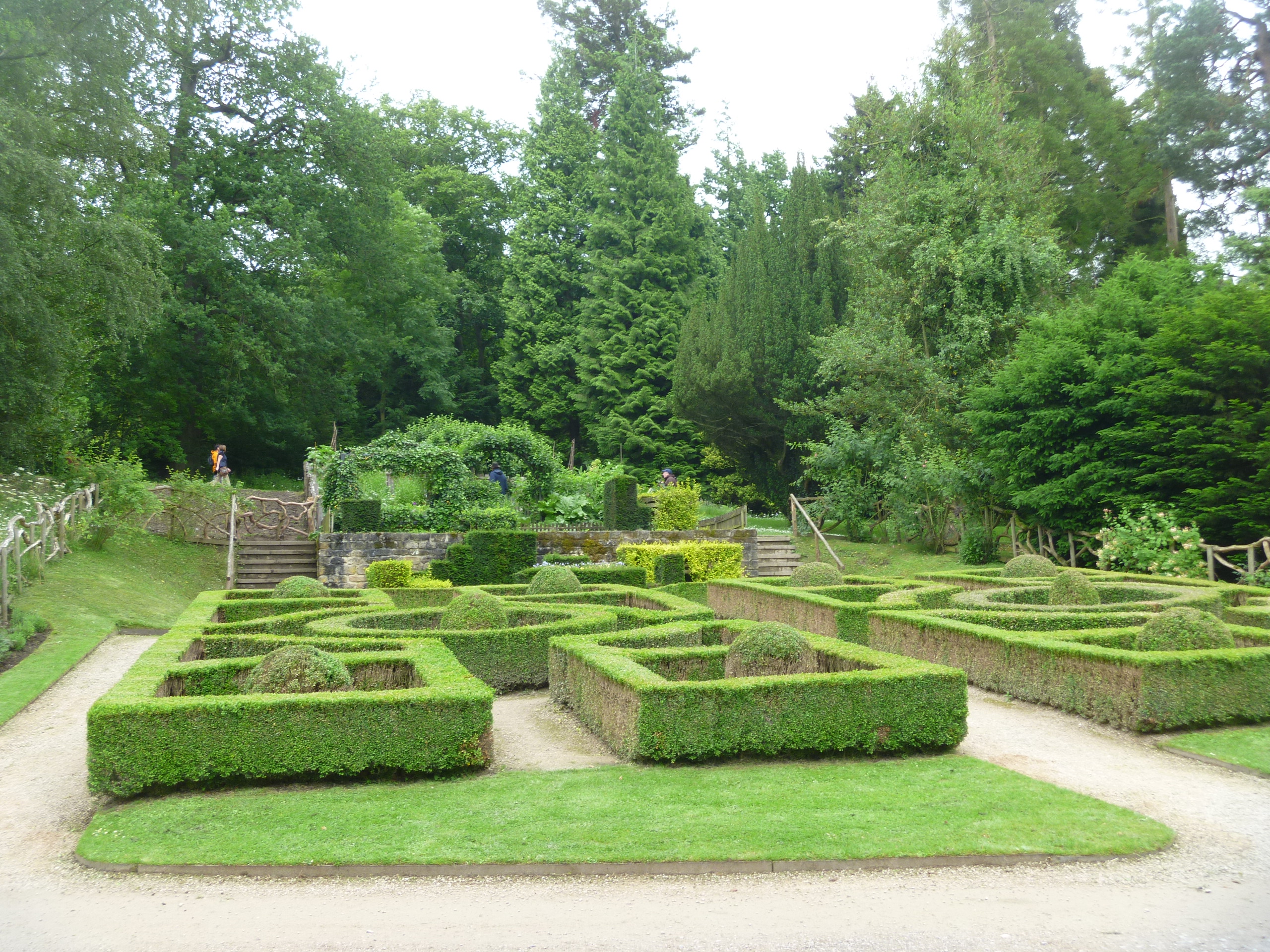
The Knot Garden

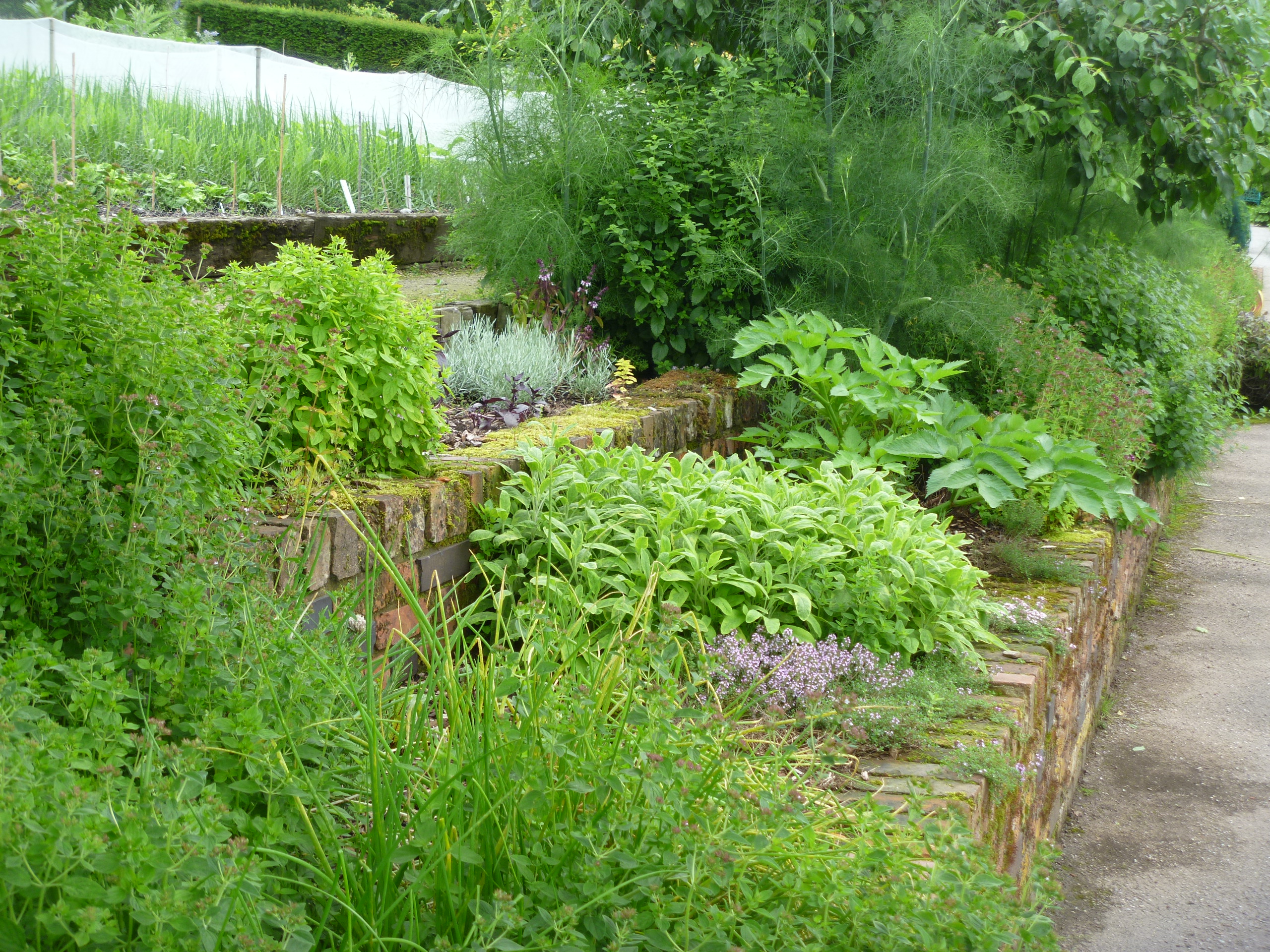
Herb beds in the Walled/Kitchen Garden

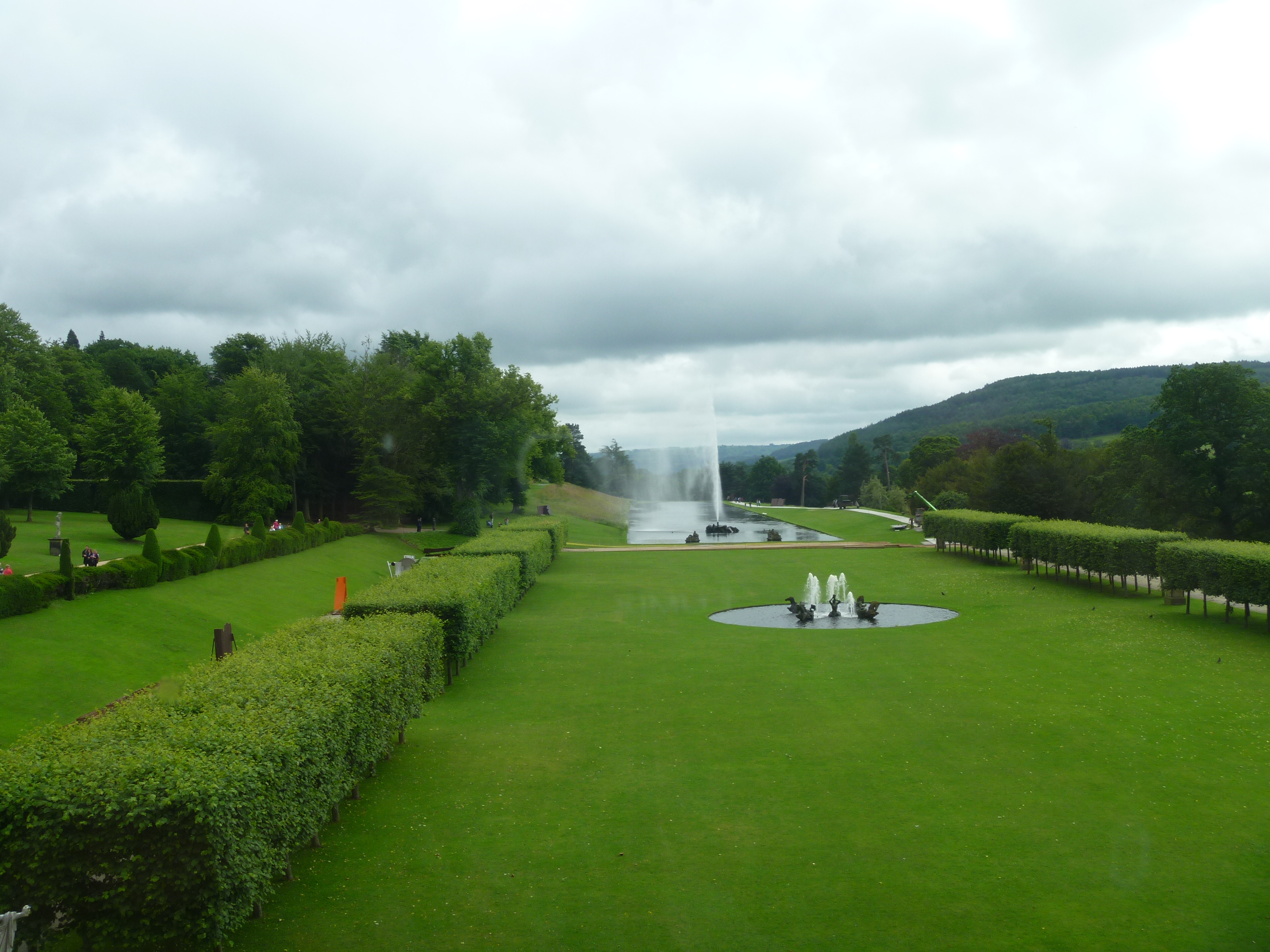
The Emperor Fountain

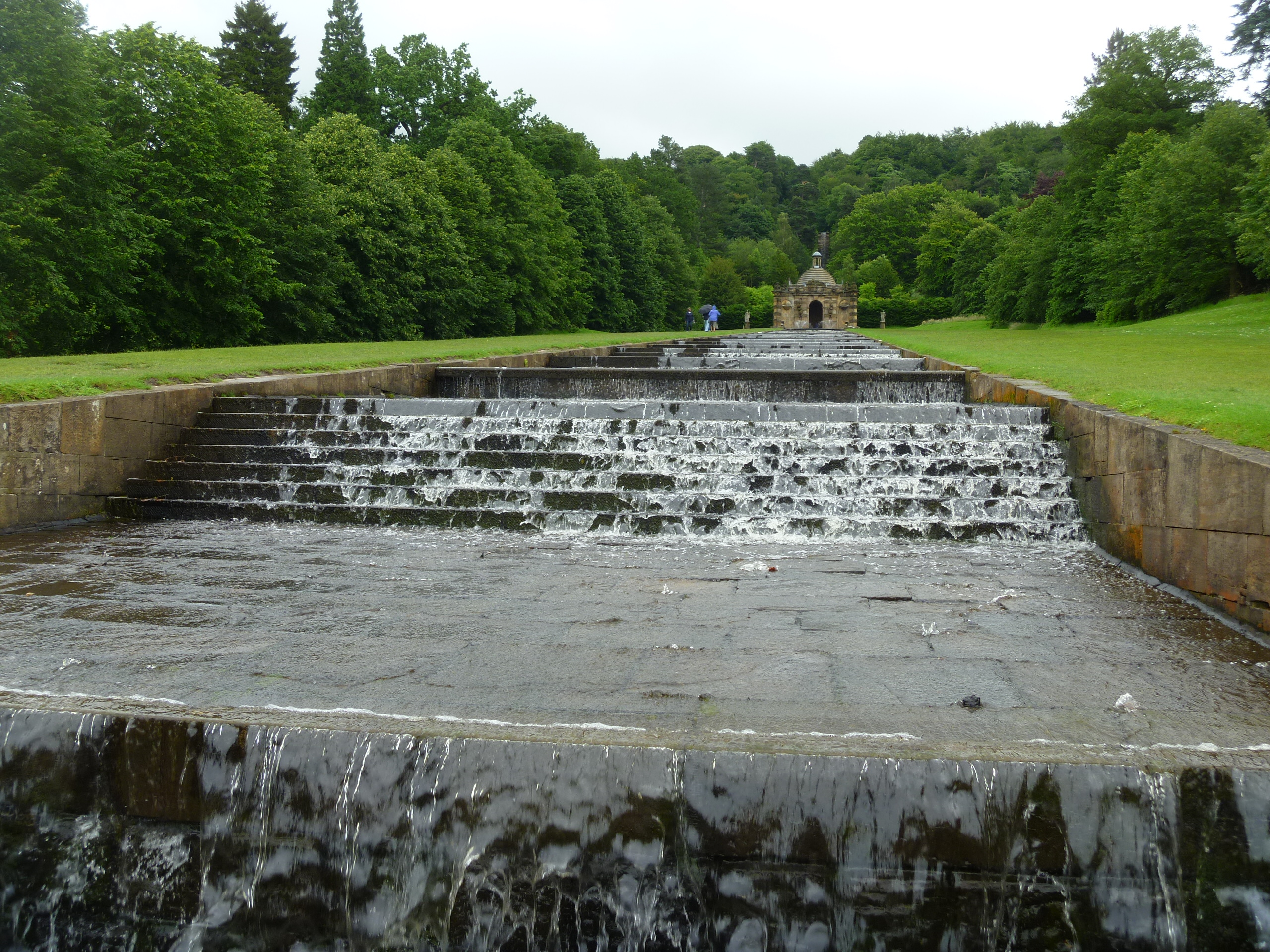
The Cascade

Forty Shades of Green – Irish Gardens in the Springtime, 2

The Argory

The gardens at the Argory stretch down to the River Blackwater which forms the county boundary between Co. Armagh and Co. Tyrone. The gravel and tarmac paths and driveways provide a variety of walks. Before our guided tour of the house we chose the Lime Tree Walk along an avenue of pollarded lime trees underplanted by spring flowers, past the Argory Oak Plantation and returning up the main drive to the house.

There’s a choice of other walks if you have time including a one hour walk to the furthest reaches of the estate which passes the Argory Mosses a peat bog and significant nature reserve where rare plants are growing. A pleasure garden near the house was deemed an essential requisite by eighteenth century country house owners and there are pleasure grounds at The Argory but like the one hour walk I’m saving them for my next visit!

The Blackwater River from The Argory

A two kilometre path developed by the National Trust and The Rivers Agency follows the river bank of the Blackwater. I’m sure there must be a great variety of birds, plants and wildlife on this gentle riverside stroll.

Formal Garden at the Front of the House

Rowallane Garden

Our final visit of the holiday was back in County Down and only about 20 minutes drive from our hotel. After visiting the Argory in the morning we spent the afternoon at Rowallane Garden. There is a house at Rowallane and workmen appeared to working on it, plastering and decorating but it has not been opened to the public. The garden though has been under the stewardship of the National Trust since 1956. The main visitor amenities are centred on a courtyard – shop, refreshments, a potter.

Rowallane – Approach to the Courtyard and The Folly

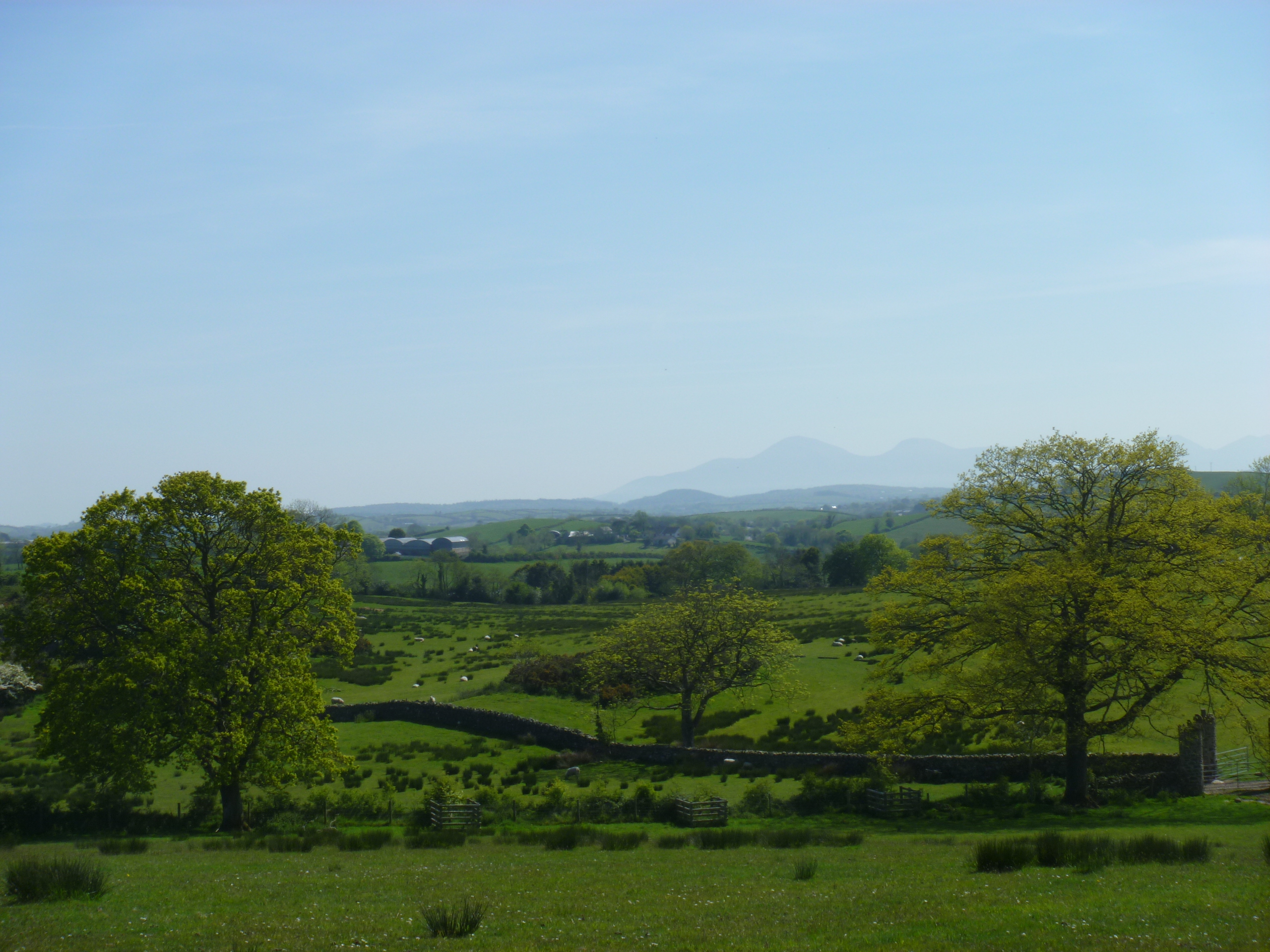
The garden was created in the mid 1860s by the Reverend John Moore and further developed by his nephew Hugh Armytage Moore from 1903. We picnicked in the shade of the gazebo inside the Walled Garden, smelled the heady herbs here too and I took the longer Farmyard Trail out onto meadows and up a hill to gain a spectacular view of the Mountains of Mourne in the distance.

Rowallane has the remains of Pleasure Grounds, too. There is bandstand which has been restored by the Trust but very sadly recently had all the lead stripped from its roof.

The Walled Garden

The Herb Garden

The Bandstand

Forty Shades of Green – Irish Gardens in the Springtime, 1

If you visit a National Trust House then you are almost certain to visit a beautiful garden as well. This was certainly the case on my recent trip to Northern Ireland. And we had a third garden just thrown in for good measure! I’m no gardener nor connoisseur of plants or trees but I do enjoy the peace and relaxed atmosphere of gardens. I’m also fascinated by the other features of gardens – follies and lakes and water features and topiary – all those eccentric features of an English, or in this case, British garden.

Mount Stewart

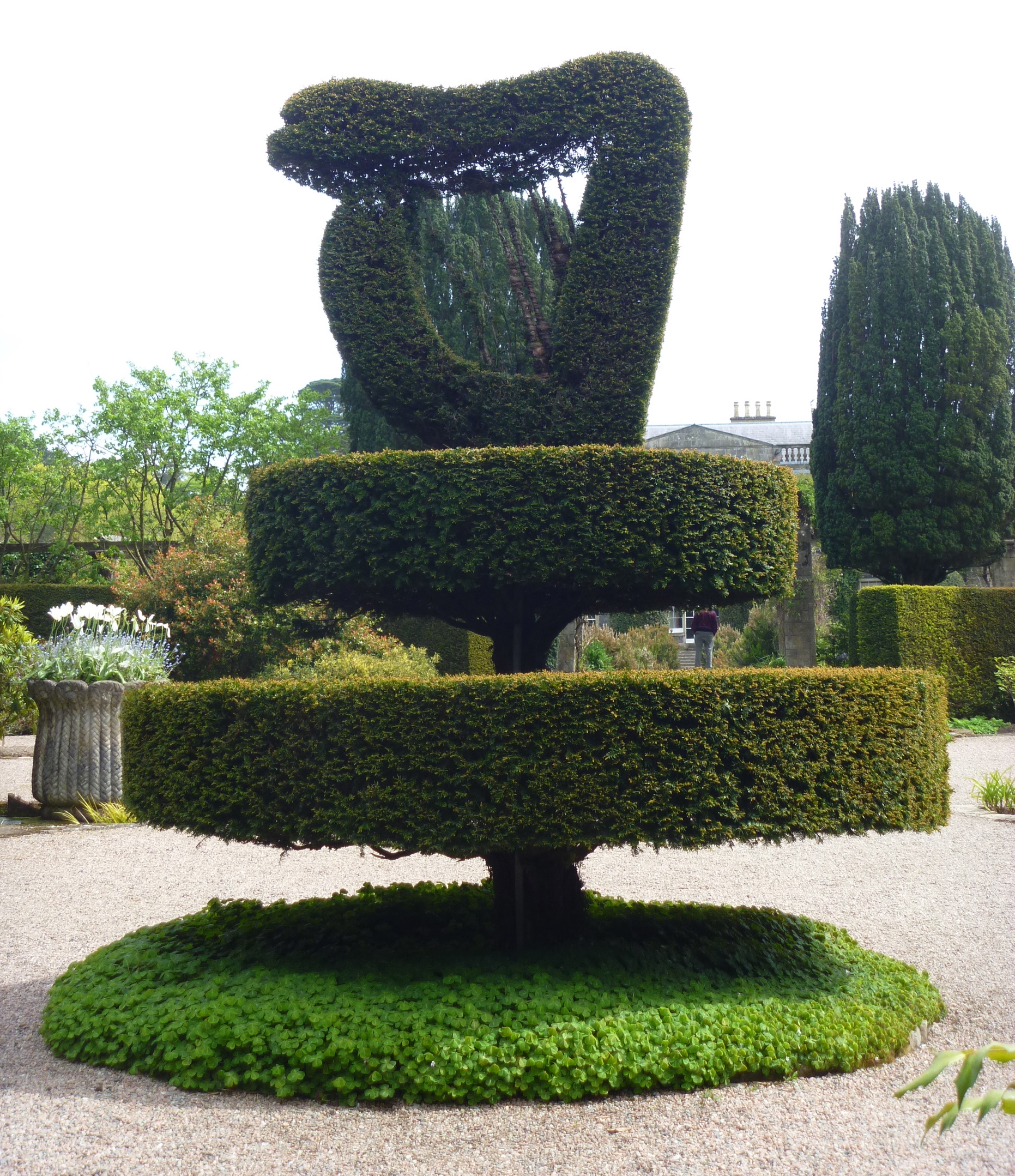
Topiary Harp

As I wrote in the previous diary entry: Located on the shores of Strangford Lough Mount Stewart stands in beautiful grounds enjoying a microclimate of its own which supports a lush and green garden of trees and exotic plants. Edith, Lady Londonderry (1878-1959) wife of the seventh marquess was the major force behind the garden design that we see today. She gave the gardens to the National Trust in 1957. The garden is divided up into smaller specialised areas. The Shamrock Garden where the topiary harp (above) stands in pride of place amongst other topiary features that tell a story related to the house. Here is a description from the National Trust :

“One Irish symbol holds another at its heart in the Shamrock Garden at Mount Stewart. A hedge of Irish yew in the shape of a shamrock encloses a topiary Irish harp. Originally 30 topiary figures crowned the top of the shamrock hedge. Today there are eight, reinstated in the 1990s in Irish yew. Up to 4ft in height, they are a varied troupe of two royal crowns, a sailing boat, stags, the goddess Diana, the devil and two creatures from Celtic mythology.”

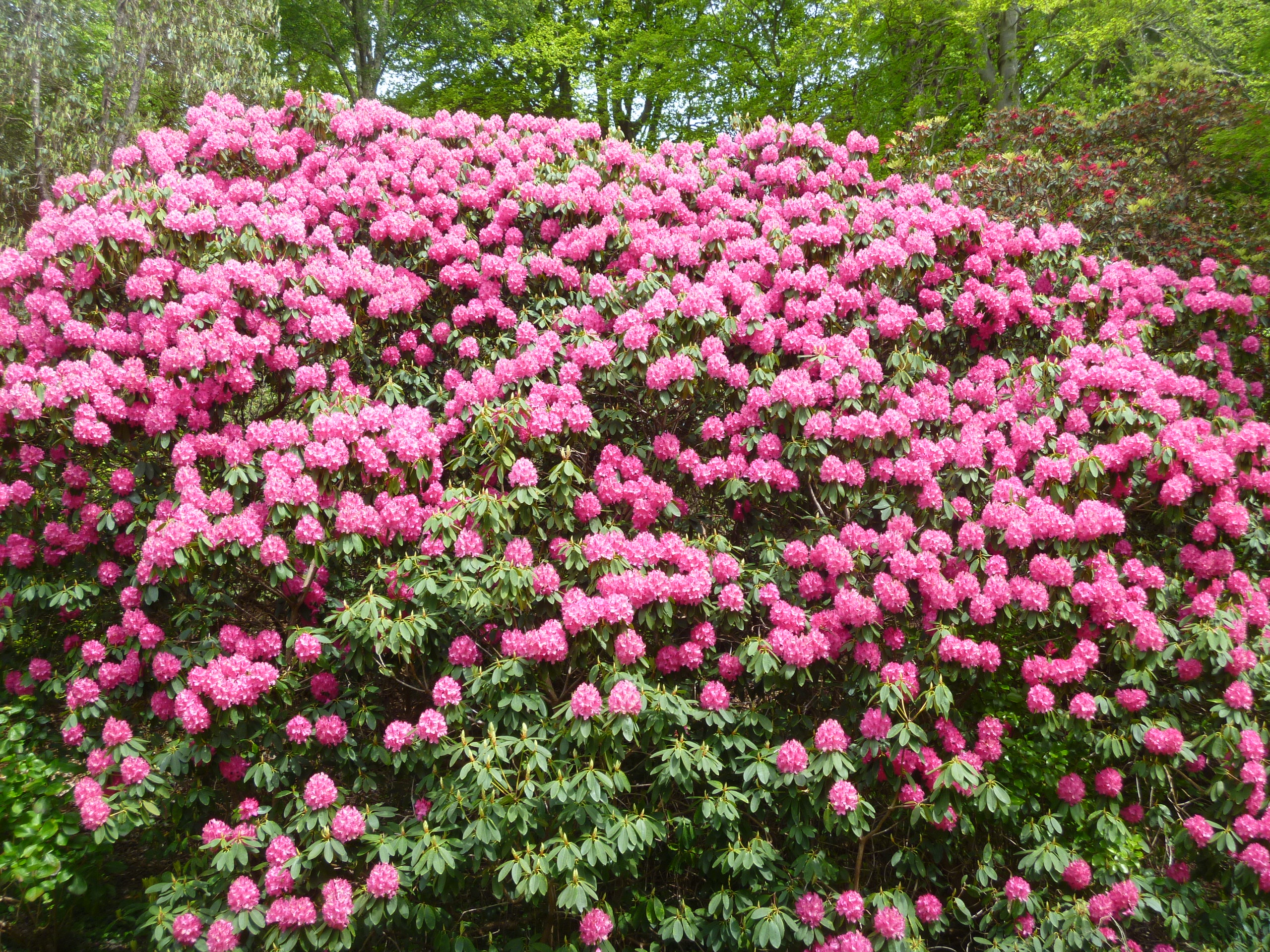
We enjoyed a walk around the beautiful lake and along the Drive where the rhododendrons were in full bloom.

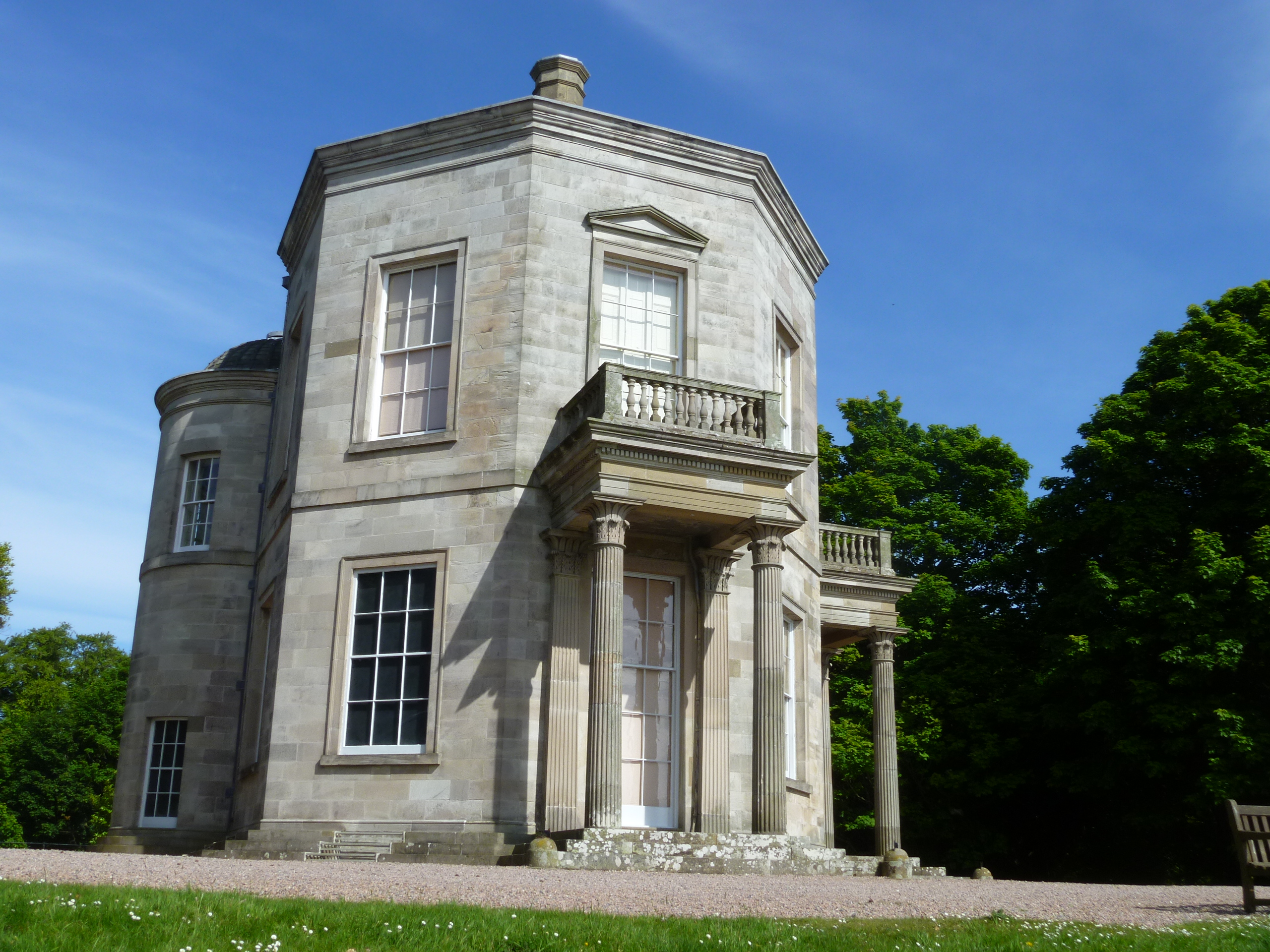
The most interesting feature however was the octagonal folly – The Temple of the Winds – built by the first Marquess of Londonderry and which stands in a fine position on a small hill. It’s a short walk beyond the entrance and car park, but well worth the effort to see the building and the view.

The Temple may be visited on weekend afternoons and is also a romantic wedding venue.

The Gardens at Mount Stewart are classed amongst the very best in the country if not in the world.

Mount Stewart is one of the most spectacular and idiosyncratic gardens of Western Europe and universally renowned for the ‘extraordinary scope of its plant collections and the originality of its features, which give it world-class status’ – excerpt from Mount Stewart’s listing on the UNESCO World Cultural Heritage tentative list.” (National Trust website)

The red squirrels love it here too!


The Irish Country House – Mount Stewart and The Argory

During recent years I have read several books on the theme of The Irish Country House. Titles include We Are Besieged by Barbara Fitzgerald (1946), Troubles by J. G. Farrell (1970), Two Days in Aragon by Mollie Keane (1941), The Dower House by Annabel Davis-Goff (1998). Although written at different times the general themes involve Anglo-Irish families during the first half of the twentieth century, their homes and their vulnerability during the times of trouble. Often the family itself is divided in its loyalties.

I was looking forward to visiting a couple of fine examples of Irish country houses on my Just Go! holiday last week.

Mount Stewart

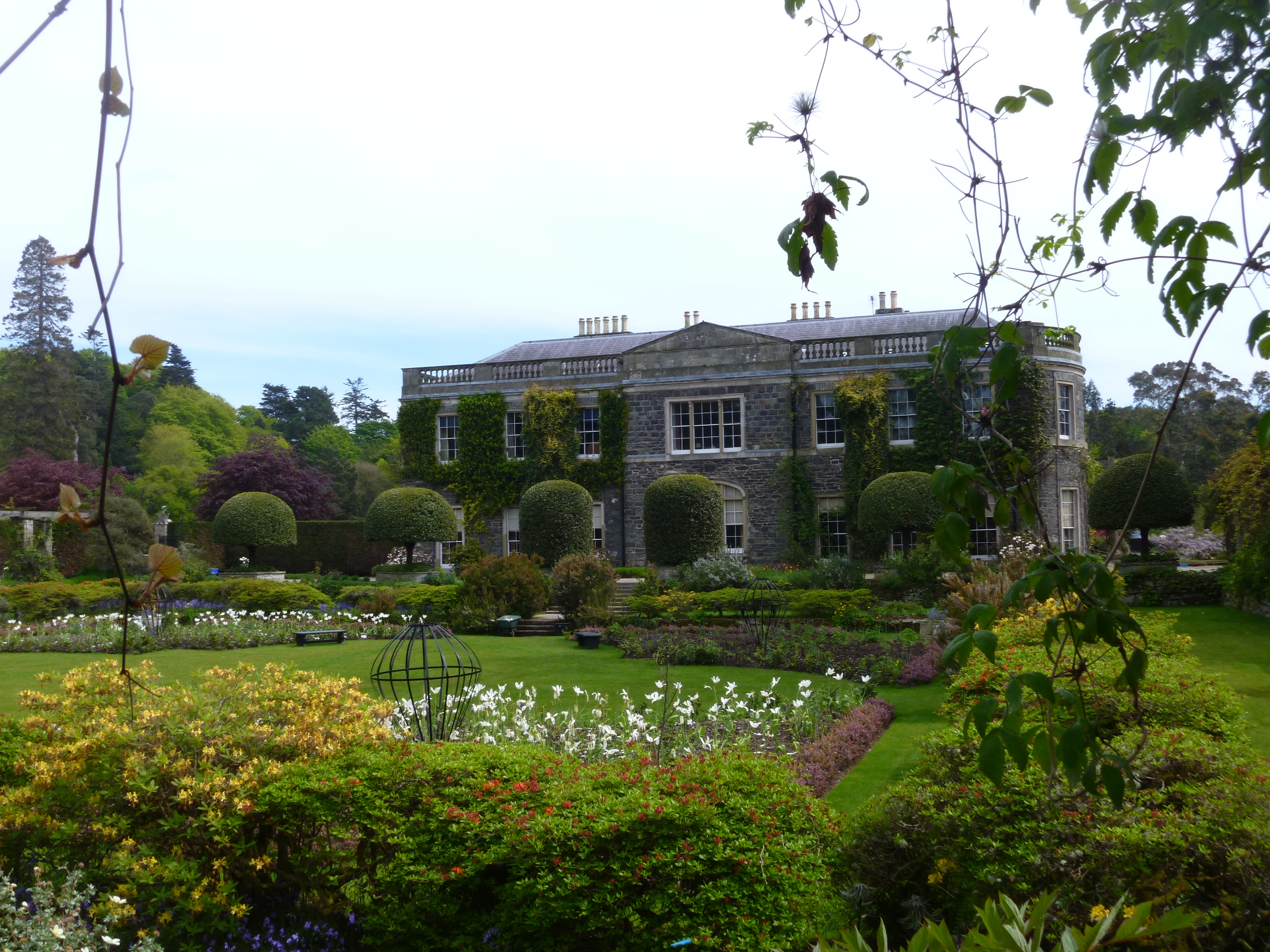
Located on the shores of Strangford Lough Mount Stewart stands in beautiful grounds enjoying a microclimate of its own which supports a lush and green garden of trees and exotic plants. The house was built in the eighteenth century and has been the home of the Marquesses of Londonderry (the Vane-Tempest-Stewart family) over many generations. Robert, Viscount Castlereagh, the 2nd Marquess of Londonderry made a name in politics in the early nineteenth century and was leader of the House of Commons. Edith, Lady Londonderry (1878-1959) wife of the seventh marquess was the major force behind the garden design that we see today. She gave the gardens to the National Trust in 1957 but the house itself was not bequeathed until 1977.

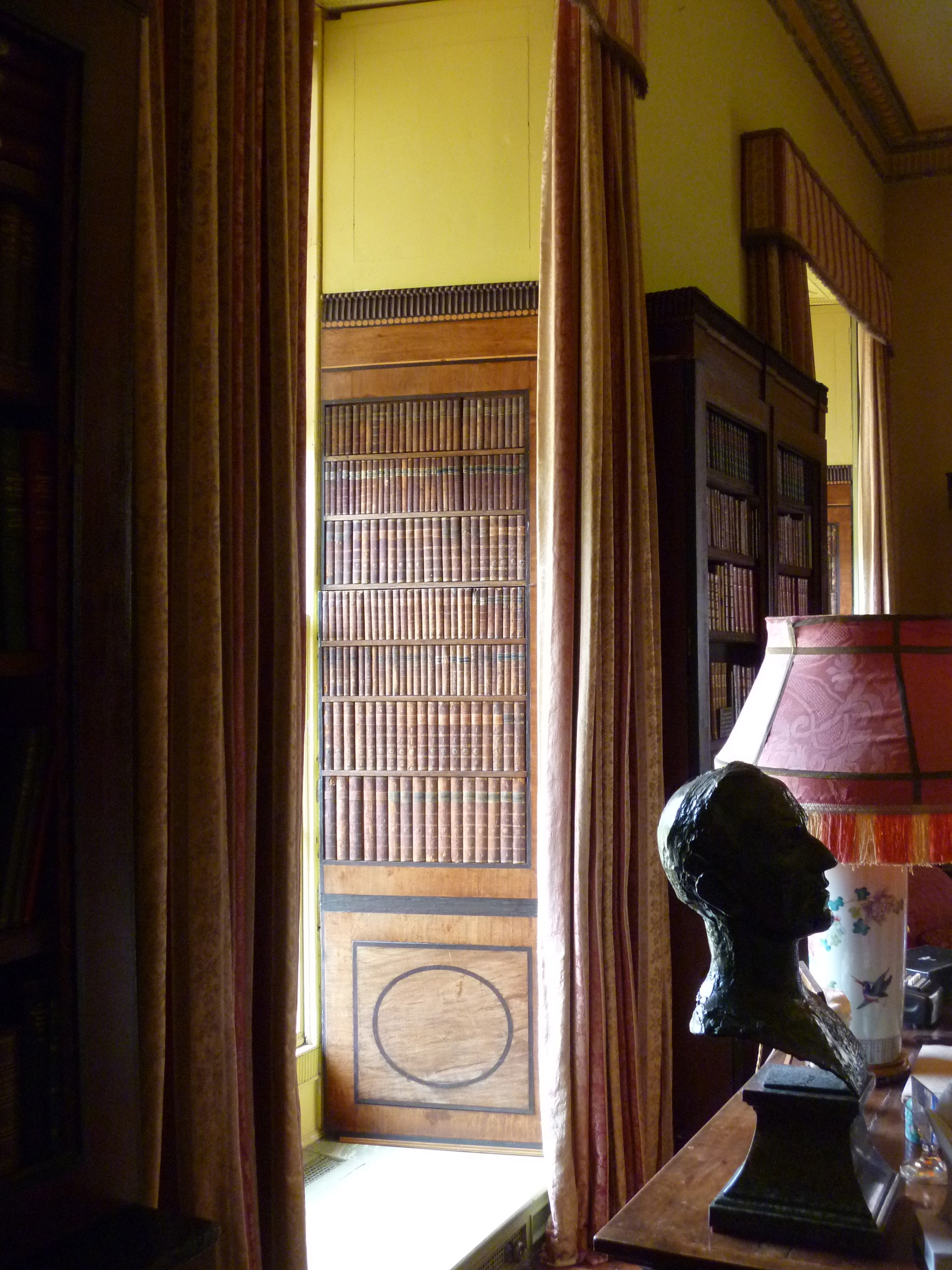
We had a fascinating tour of the house which is currently undergoing renovations but is open to the public in spite of this. I loved the library with its shelves and shelves of books – many looking not so very old at all – some members of the family still use the house and many of its rooms. But on closer inspection what looked like shelves right up to the windows are actually trompe l’oeil painted shutters.

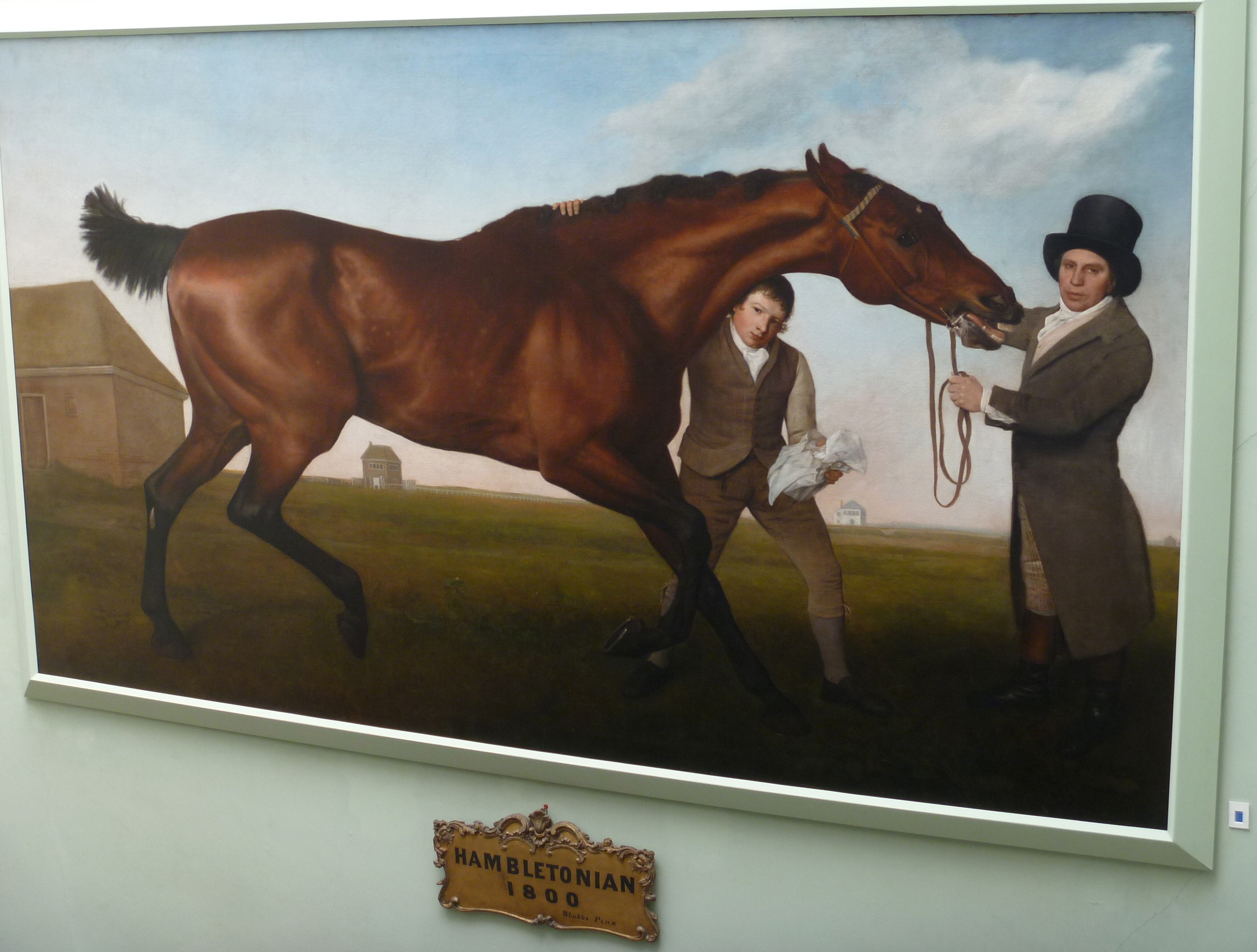
It’s hardly surprising to find evidence here of a love of the ‘sport of kings’. Horse racing has for a long time been popular in Ireland and with the aristocracy but to see the huge painting of Hambletonian by George Stubbs hanging above the staircase comes as quite a surprise.

 There’s another racing picture in the house, also reproduced in the above link to Thoroughbred Heritage. It’s a painting of the Hambletonian/Diamond Match run at Newmarket in 1799. We were told the story of the race by our guide. The version we heard differed somewhat from that of the Thoroughbred Heritage story.

 The Argory

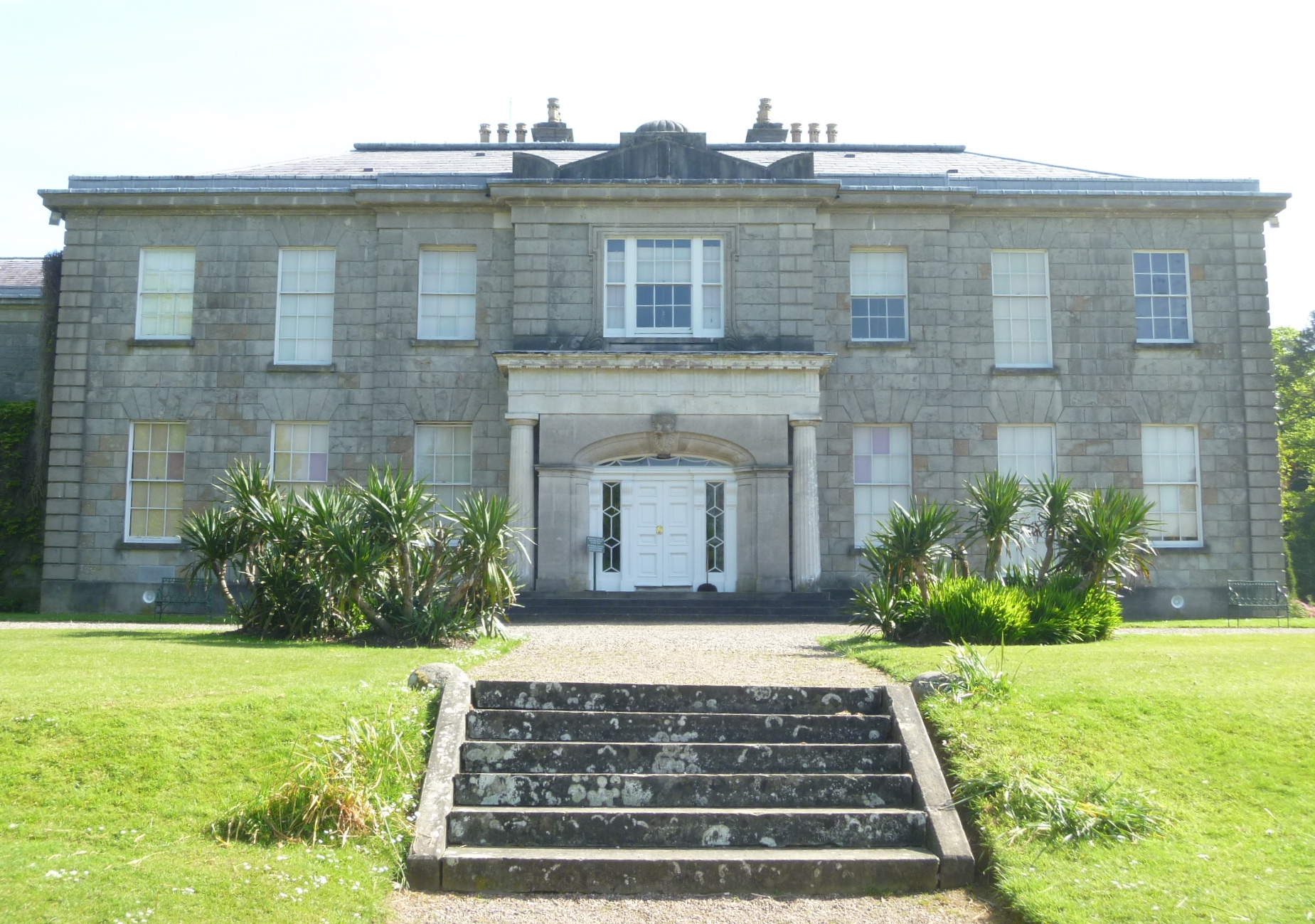
Later in the week our journey took us well into central Ireland and to a less grand but equally interesting house – The Argory. Argory means Hill of the Garden and to my mind it was more the kind of Irish country house that I have in mind when reading those novels I mentioned above.  Again we were given a warm welcome to the house  and a small group tour by one of the local volunteers.

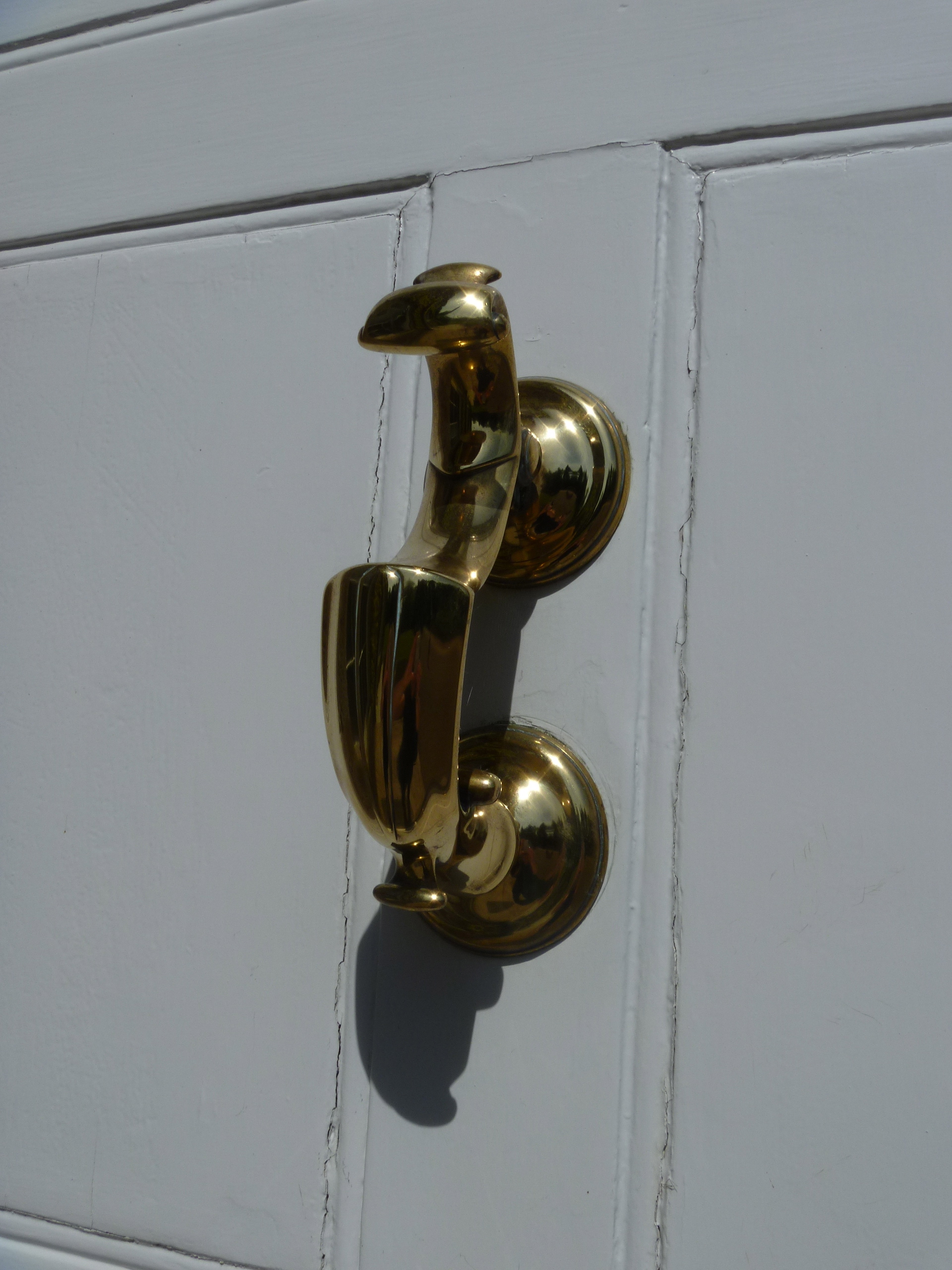
The Argory Door Knocker

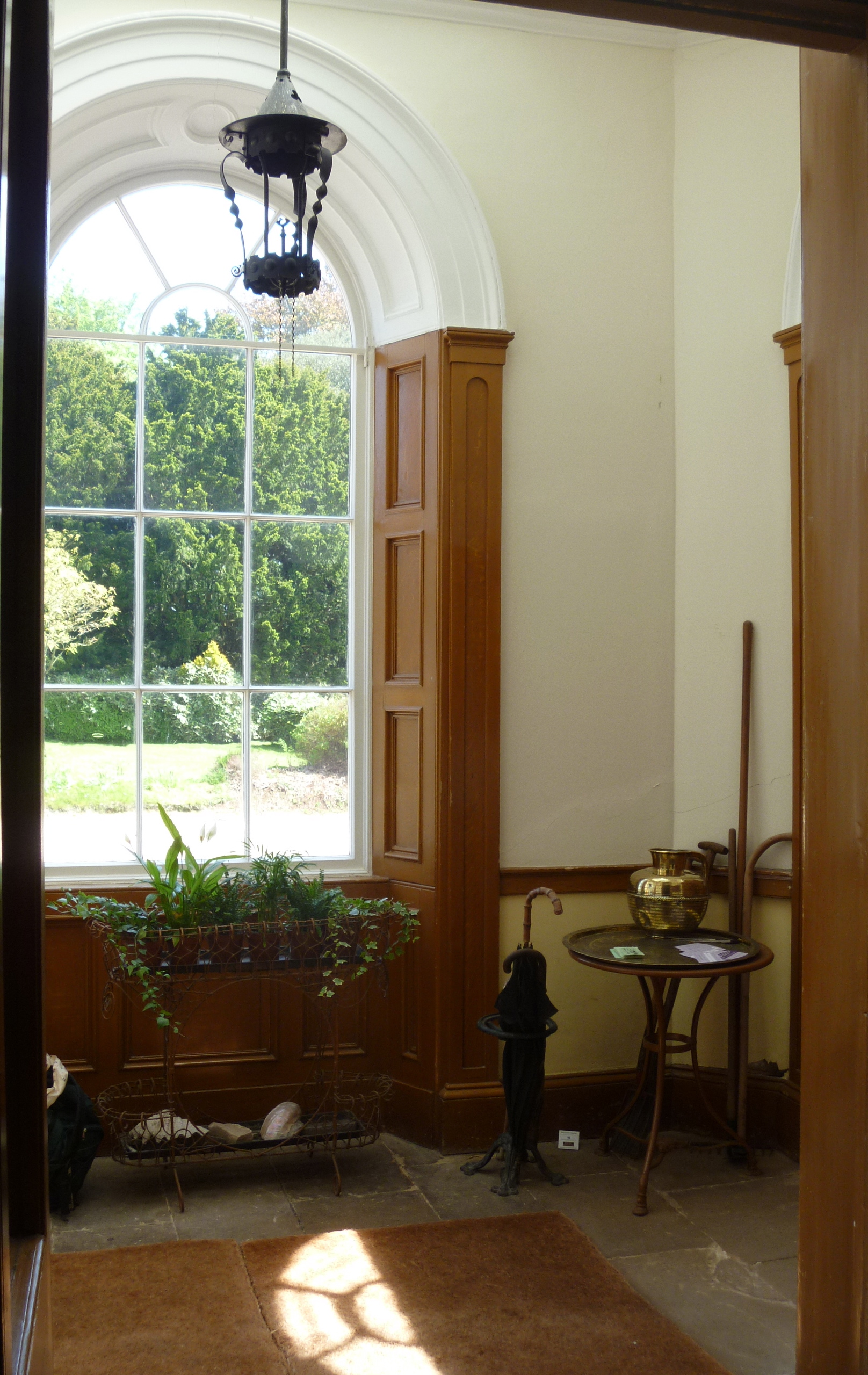
The Welcoming Argory Porch

Taken on by the National Trust in 1979 not much has changed in the house since 1900. To quote my guidebook ” the eclectic interior still evokes the family’s tastes and interests”. These include a large selection of Waterford crystal and a fantastically ornate  organ on the first floor. Click here to view the Argory Organ Gallery and other virtual views of the house.

Despite it’s inland location there’s a nautical connection here. Captain Shelton, the 2nd owner of The Argory, was aboard the H.M.S Birkenhead when it sank off the coast of Africa in February 1852. One of the most documented maritime disasters before the Titanic, it was also the first ever liner to exercise the phrase ‘Women and Children First!’ We were told how the Captain survived swimming the two miles to land in his mackintosh which protected him from sharks and the cold.

These actions later to be known as The Birkenhead Drill were immortalised later by Rudyard Kipling in his poem ” Soldier an’ sailor too” (1896)

To take your chance in the thick of a rush, with firing all about,
Is nothing so bad when you’ve cover to ‘and, an’ leave an’ likin’ to shout;
But to stand an’ be still to the Birken’ead drill is a damn tough bullet to chew,
An’ they done it, the Jollies — ‘Er Majesty’s Jollies — soldier an’ sailor too!
Their work was done when it ‘adn’t begun; they was younger nor me an’ you;
Their choice it was plain between drownin’ in ‘eaps an’ bein’ mopped by the screw,
So they stood an’ was still to the Birken’ead drill, soldier an’ sailor too

One excellent feature of National Trust properties these days is that they almost all now have secondhand bookshops. My eyes lit up in Blackwater Books at the Argory. They had a section just labelled ‘Old Books’. Here’s the selection that I came away with :