Goethe’s Italian Journey

Probably my favourite of the museums and locations I’ve visited in Rome on previous trips is the Keats-Shelley Museum by the Spanish Steps. It’s a quiet oasis of 18th century England amidst the crowds of tourists milling around the Piazza di Spagna. It’s a few years since I was there and I didn’t repeat the visit on this recent trip.
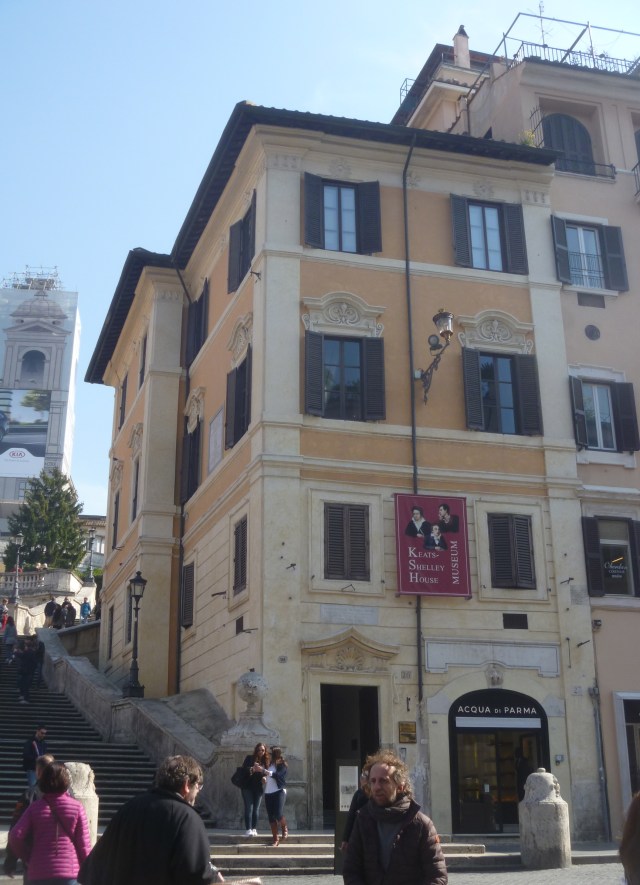
K S House

Keats Shelley House, Rome, on Second Floor with Landmark Trust Apartment Above
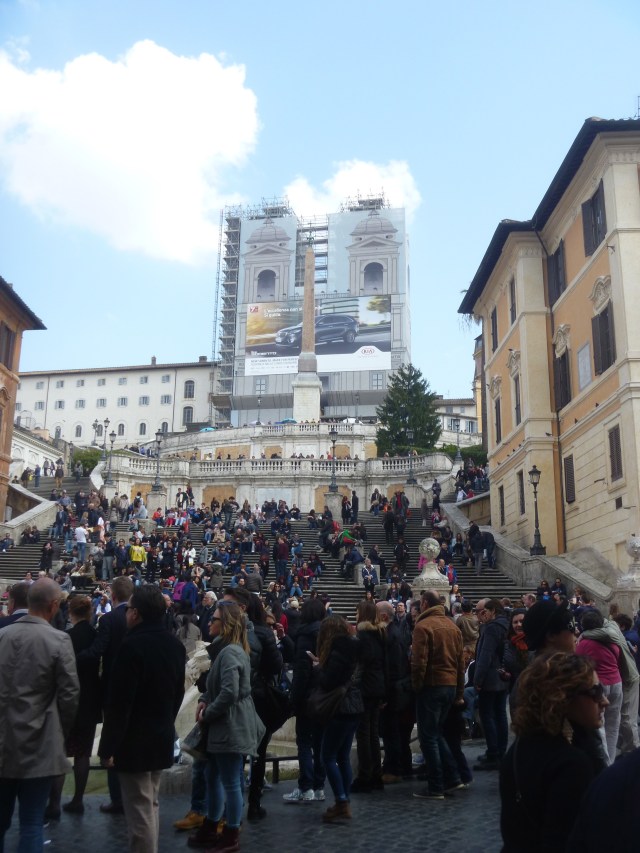
Spanish Steps in March

Crowds on the Spanish Steps – in early March
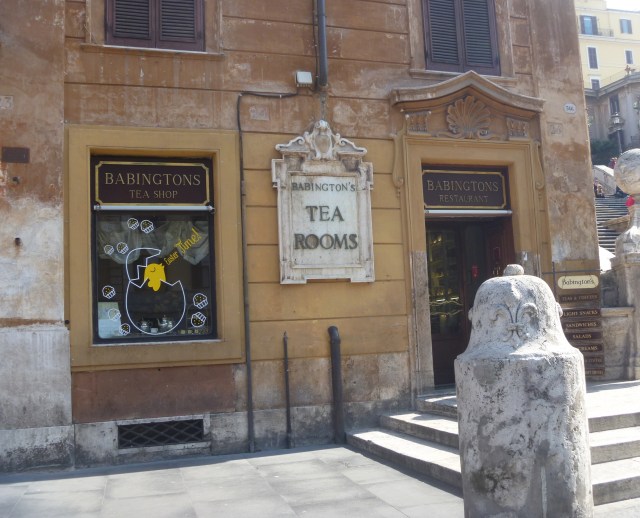
Babbingtons

Babington’s English Tea Room by the Spanish Steps

But I did discover the existence of the Casa di Goethe in my LV Guide Bari, Milan, Naples, Rome 2012. So my final port of call in the City of Rome itself (after fortification at Canova) was a visit to the Casa di Goethe on the Via del Corso nearby. I wrote a little bit about Goethe earlier this year. Here is another place of peace and calm and amazingly right on the Via Del Corso.
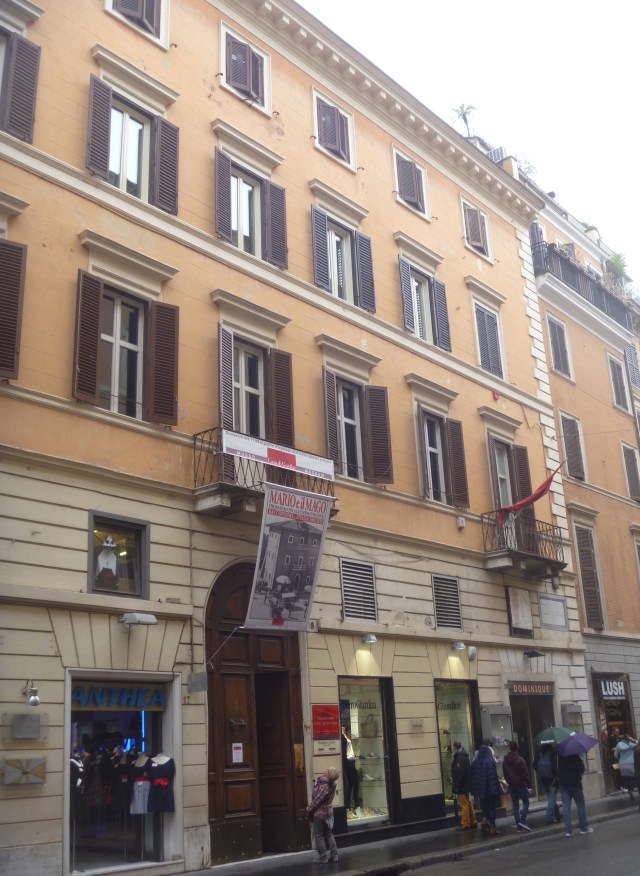
via del corso

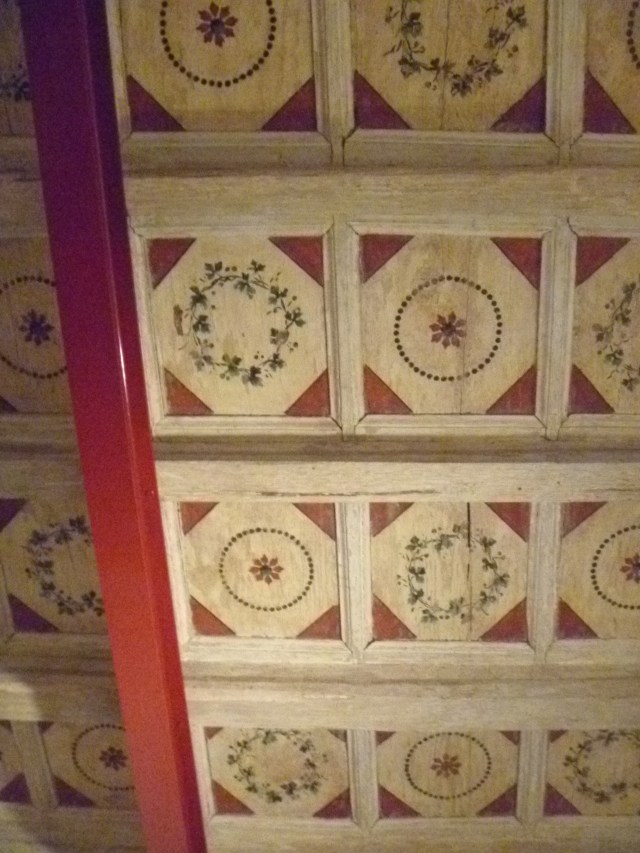
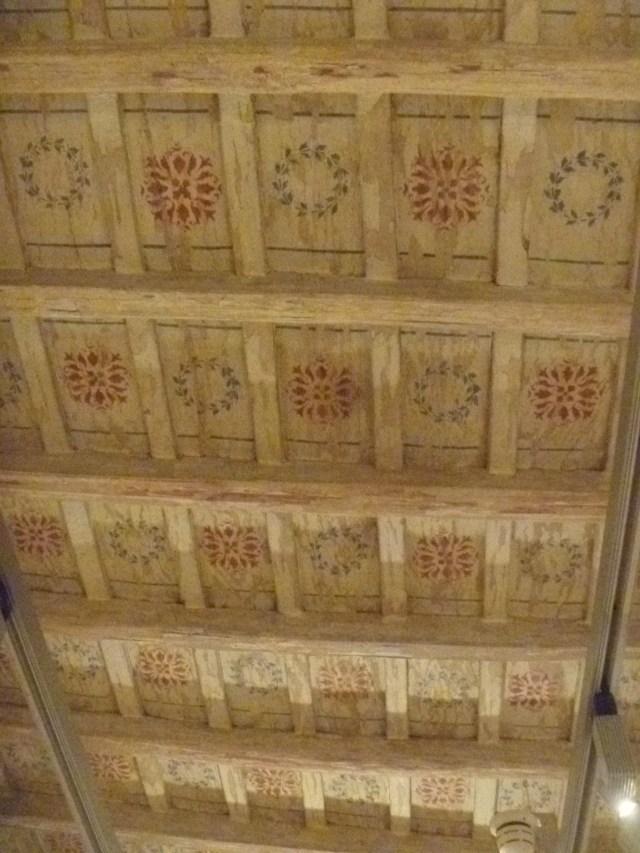
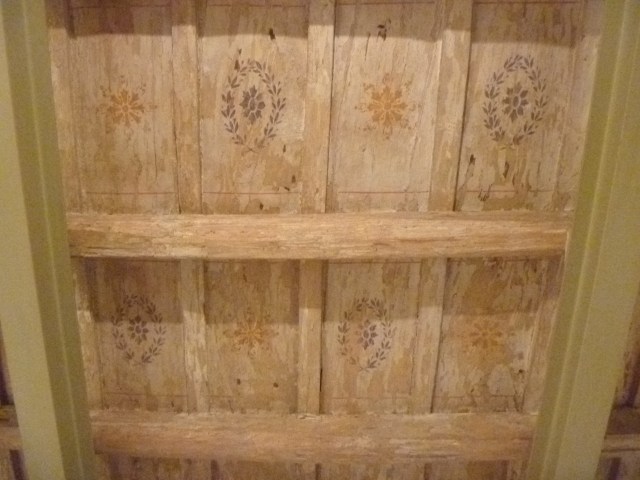
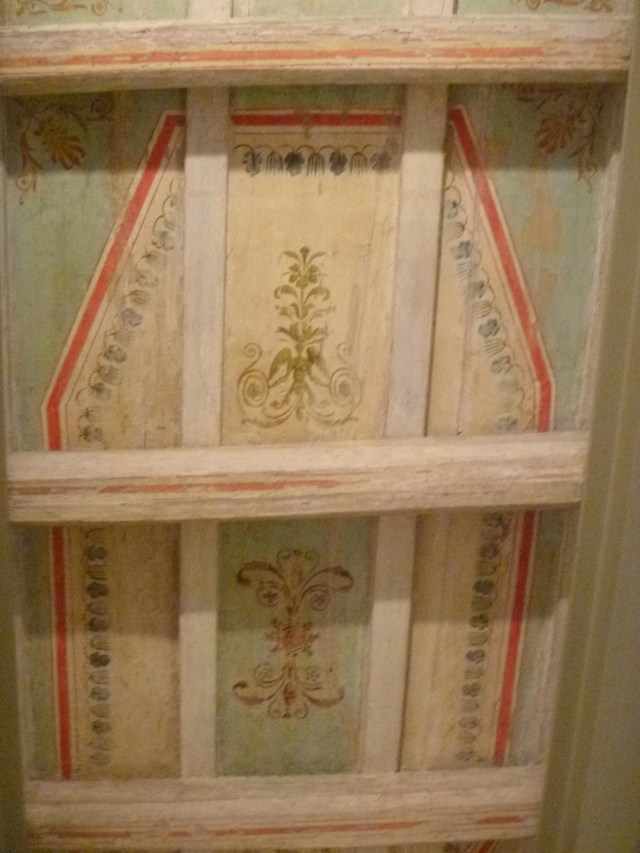
In September 1786, Goethe started out on the longest journey of his life. He was 37 when he achieved his dream of visiting Italy. He later wrote in his journal “Italienische Reise”, that he had spent the happiest period of his life there. On his arrival in Rome he stayed on the Via del Corso with his painter friend Johann Heinrich Wilhelm Tischbein, scion of a dynasty of renowned artists. This huge apartment, which gives onto the Piazza Del Popolo, is still redolent of Goethe’s time here during his Grand Tour of 18th-century Italy. It has superbly painted coffered ceilings which are set off by the white of the walls. On display are writings, letters, annotations, and drawings, as well as the paintings of his friend Tischbein.
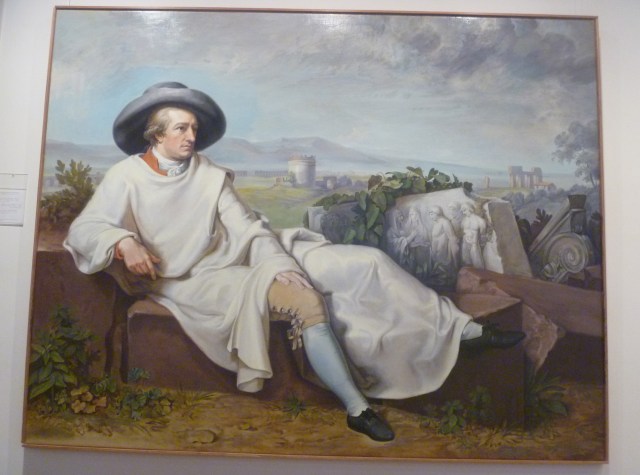
g in roman countryside

The most famous of them, Goethe in the Roman Campagna, was painted on this very spot in 1787, although the version seen here is only a copy, the original being in the Staedelsches Kunstmuseum in Frankfurt. It never fails to impress all the same. This sumptuous collection of artworks and documentary material gives us an idea of what the journey to Italy meant at the time for artists and cultivated travellers. The Casa di Goethe also offers temporary exhibitions that encourage German-Italian cultural relations. By appointment it’s possible to visit the Library which holds a number of first editions of Goethe’s work.” [LV Guide Rome 2012]
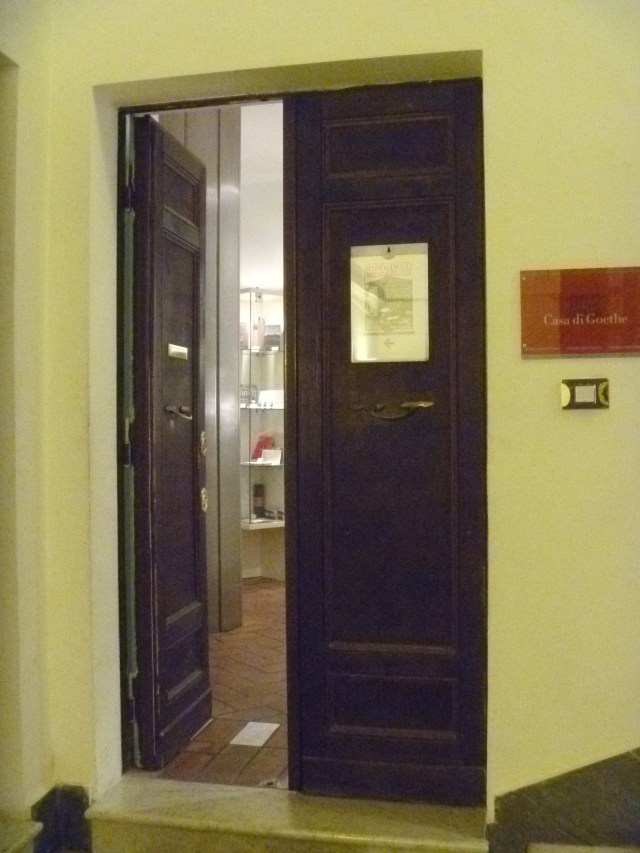
welcome

Welcome to the Casa!

This is the only German Museum on foreign soil and it was opened to the public in 1997 with support of the German Government and German cultural associations. Regular events are held here – readings, lectures, conferences, discussions and concerts – followed by gatherings and discussions in the library over a glass of wine. The Museum is also able to offer scholarships (sponsored by DaimlerChrysler) to literary figures, publishers, scientists, translators, and artists, allowing them to spend a few months in Rome collecting ideas and inspiration for their own work or finishing off projects. The work doesn’t have to be related to Goethe.
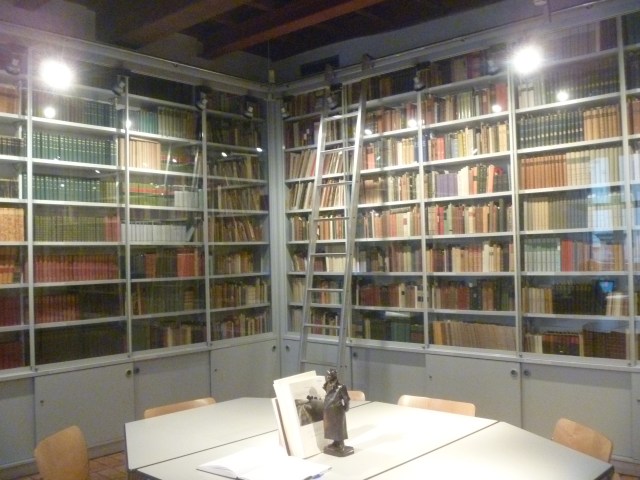
library

Goethe Library in Rome

The first few rooms are dedicated to the temporary exhibitions; currently Thomas Mann and his Italian novella Mario and the Magician. Displays relate to the historical and political background as it was written during the rise of Nazism and Fascism. The notes were all in German and as time was tight I didn’t spend much time in these rooms but moved on to the rooms occupied by Goethe at the front of the building.
ceiling 1

ceiling 2

ceiling 3

ceiling 4

Painted Coffered Ceilings

The restored painted wooden ceilings, which date back to Goethe’s time, contrast well with the pale walls which show off the displays and pictures. No furniture or furnishings dating back to Goethe’s time here. To me they are reminiscent of Swiss and German chalet decorations.

I was glad that I bought the excellent illustrated guide book. The first section, as in the rooms themselves, tells the story of Goethe’s time in Rome and Italy. There then follow pages of quotations by Goethe himself from his letters and his journal Italian Journey and by his friends and colleagues. Many of these quotations also accompany the room displays.
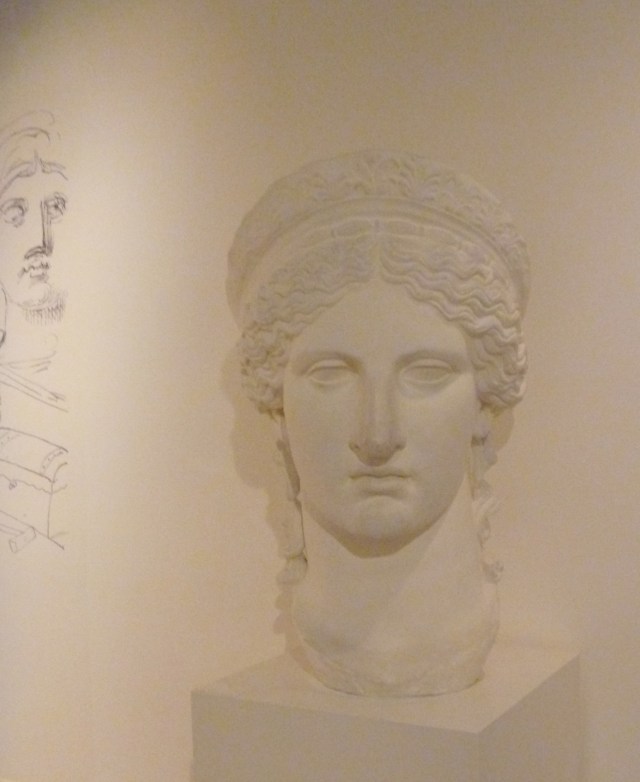
cast of jupiter

“I could not resist buying the cast of a colossal head of Jupiter . It now stands in a good light facing my bed, so that I can say prayers to him the first thing in the morning.” (Italian journey 25 December 1786
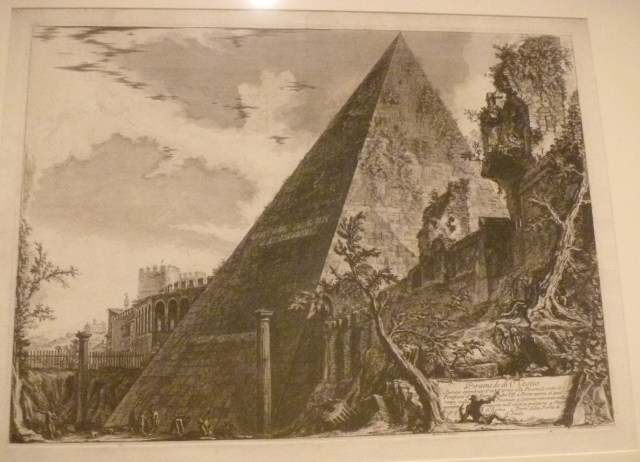
Piranesi print

Piranesi Print of the Caius Cestius Pyramid

“Water pipes, baths, theatres, amphitheatres, the stadium, temples! And then the palaces of the Ceasars , the graves of the great – with these images I have fed and strengthened my mind.” to Carl Ludwig von Knebel 17 November 1786
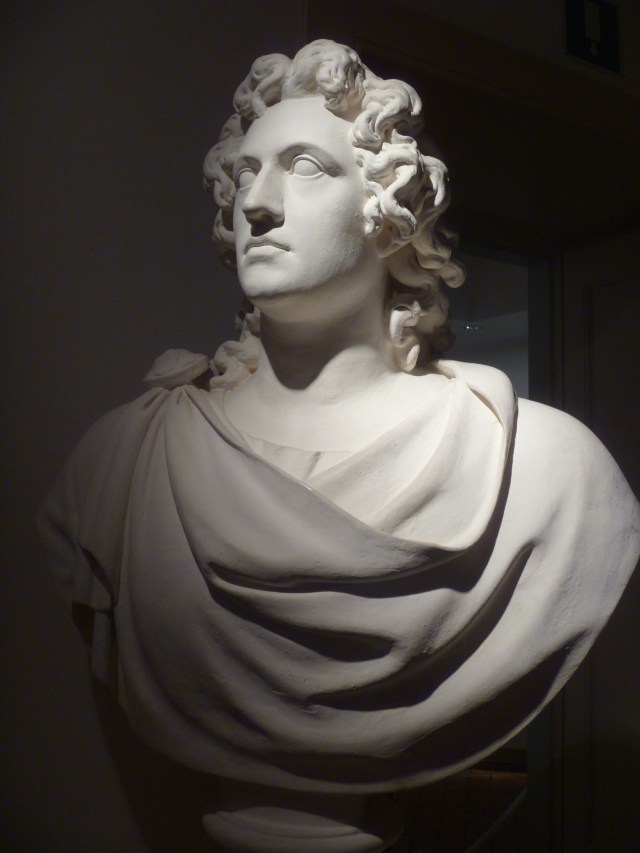
bust by trippel

1787 bust of J. W. v. Goethe by Alexander Trippel
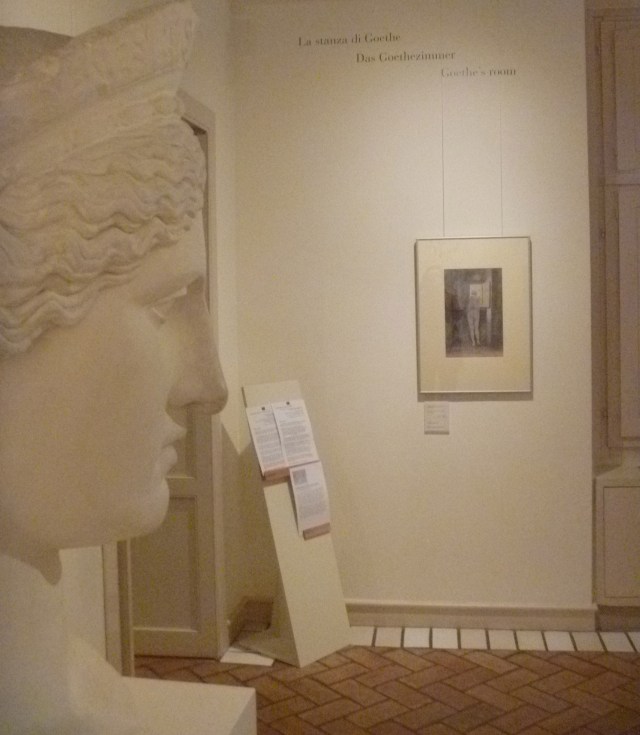
In goethe's room

Goethe’s Room

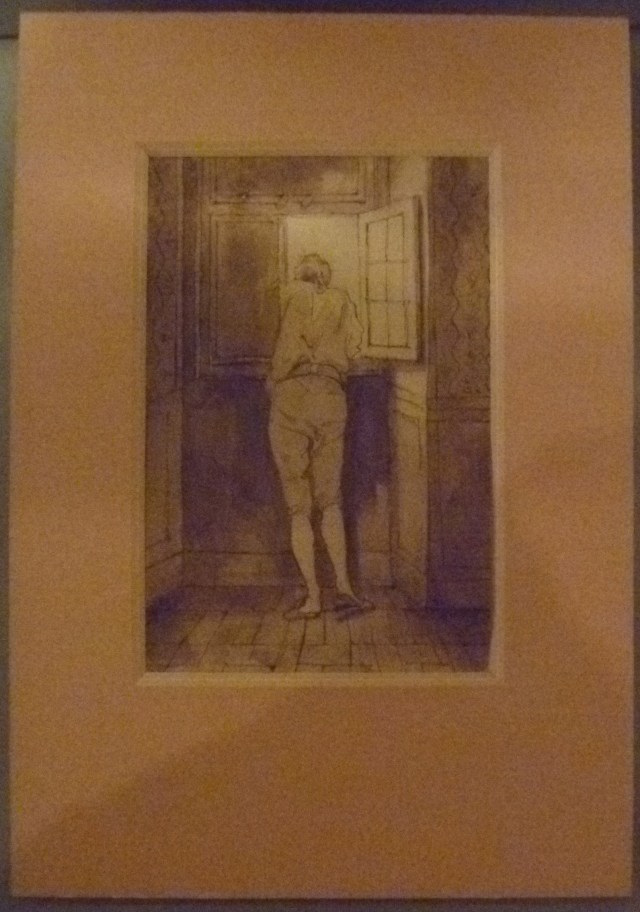
G at window

Tischbein ‘s watercolour of Goethe at the window

1991 and 1992 were excellent years for the acquisition of many Goethe related papers, books and artefacts by the Casa including the Andy Warhol iconic contemporary adaptation of Tischbein ‘s portrait. Also some autographs of Goethe’s including a letter card written in his own hand and giving his rome address and the Goethe library of publisher Richard Dorn.
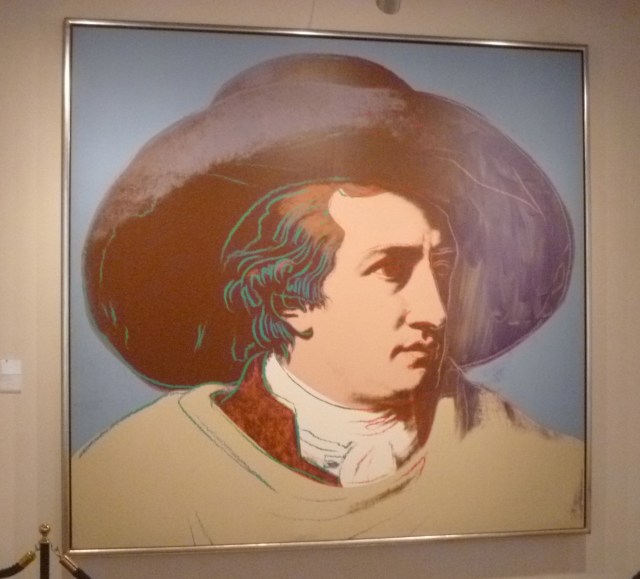
Warhol

Screen Print and Acrylic on Linen 1982

At the very end of the guide book is a list of museums and memorials to Goethe in both Italy and in Germany. Amongst those listed is the grave of his son, August, in the Protestant Cemetery. Interestingly, even though he was an adult at death his father arranged for the following to be inscribed on his gravestone.

GOETHE FILIVS / PATRI / ANTEVERTENS / Obiit / Annor [VM] XL / MDCCCXXX (Goethe’s son / father / above / died / 40 years / 1830)
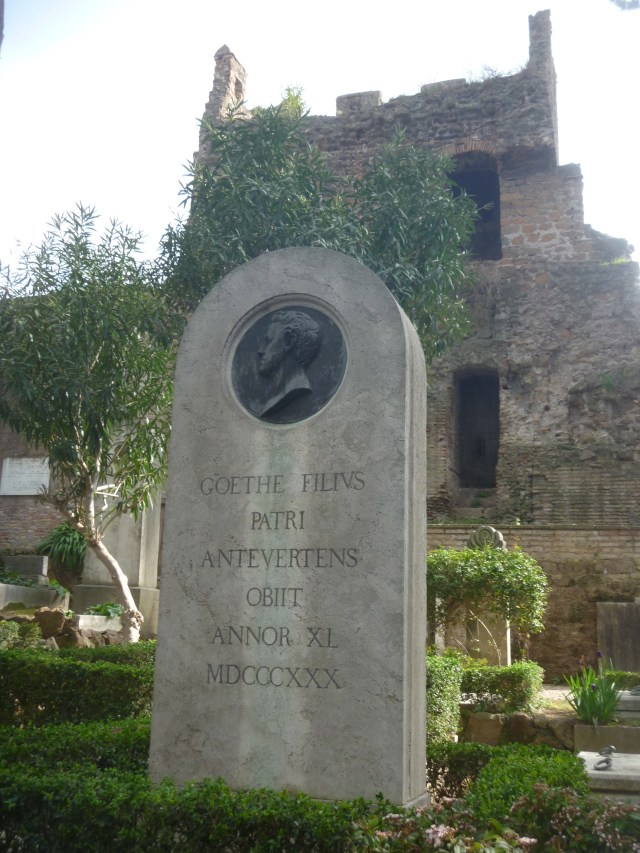
August Goethe


At Horace’s House : Sant’ Antonio, Tivoli

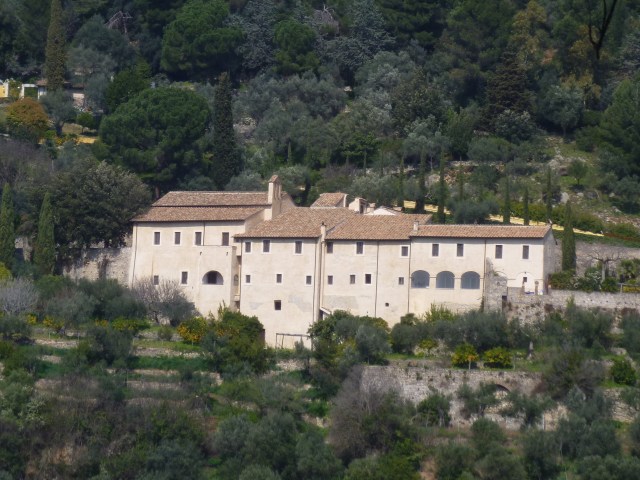
Sant' Antonio

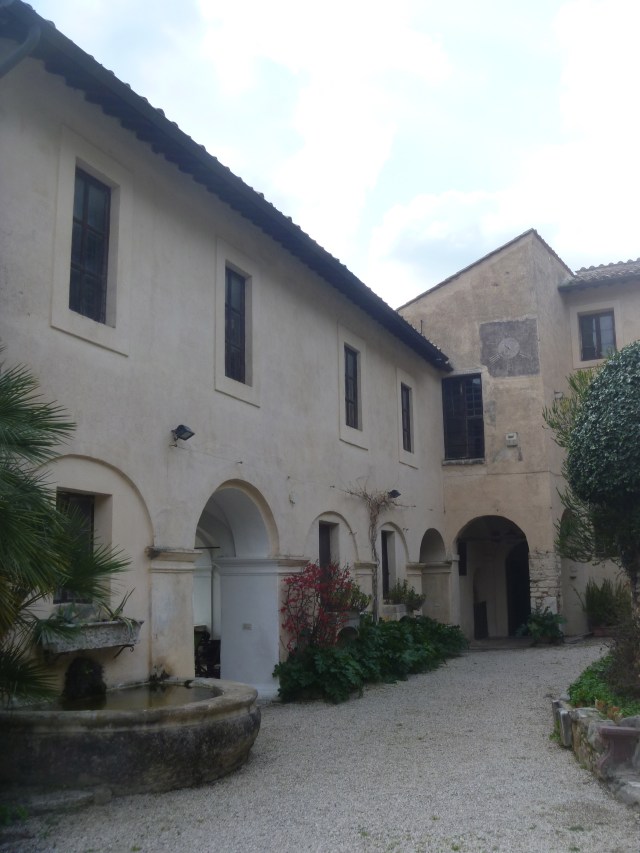
In the summer of 2013 I had the great good luck to be offered a room and to stay with fellow Landmarkers in the Italian countryside near Tivoli, about 20 miles northeast of Rome. I leapt at the chance and finally last week the trip became a reality. I have just spent a fabulous week at Sant’ Antonio and made a few excursions too when I could manage to drag myself away from this wonderful old house.

According to the History Album Sant’ Antonio was built around 100 BC.  The upper parts were rebuilt in the late 16th and early 17th centuries: the monastery between 1583 and 1590; the east wing about 1625 and the church in 1647. It was acquired for preservation by Frederick Searle in 1879. The present owner, Vicomte Roger de Brisis, is his descendant but Sant’ Antonio has been managed by The Landmark Trust since 1995. It consists of a medieval monastery grafted onto a Roman villa of the time of Caesar Augustus, or maybe even before. It was rescued from abandon in 1879 by an Englishman newly returned from West Indies.

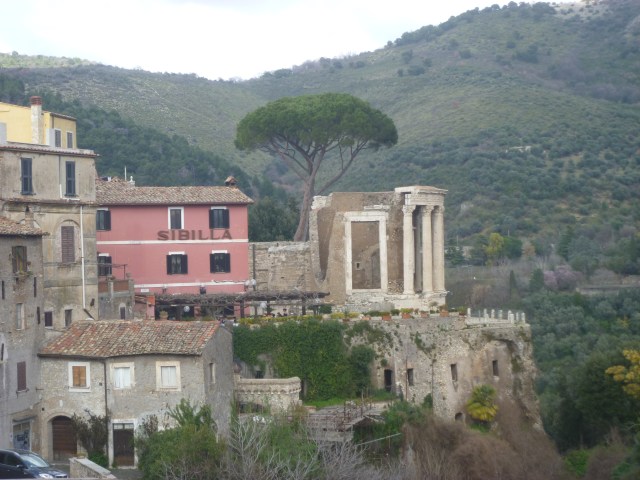
vesta temple

Temple of Vesta, Tivoli

A well-founded belief is that a frequent guest, if not an early owner, was the poet Horace. Across the ravine thunders the water of Anio, with temples of Vesta and the Sibyl poised above it. All these on the outskirts of Tivoli, the Roman Tibur, and you are approaching something very near the heart of the civilisation that has moulded Europe for two millennia.

It is fitting that the revival of this place should have fallen to an Englishman, because those two names – Horace and Tivoli have a particular resonance for his countrymen. From the Middle Ages , English boys learned their reading and writing by means of Horace’s Odes and Satires, along with the works of Virgil and other writers of the Augustan Age. Only in the late 20th century has academic education ceased to be built on these cornerstones.

In the 17th century Englishmen first began to visit Italy in large numbers and carried its influence home in the most direct manner, in their paintings, and their buildings and their gardens. The dramatic influence of Tivoli appealed strongly to painters, notably the great French creators of an ideal classical world: Claud Lorrain and Gaspard Dughet. The English imitators eg Richard Wilson, followed them here. Writers like Joseph Addison sought the places which the best paintings might be composed and the. Murmured to themselves of “Tivoli’s delightful shades and Anio rolling in cascades.”

In 1879 Frederick Searle was searching for a place to sketch the waterfall when he first saw Sant’ Antonio – “La casa di Orazio”. He made it his home; spent 20 years renovating and repairing it and encouraged scholars and archaeologists to share his discoveries. His daughter Georgina and her husband George Hallam and then her great-niece Lucy d’Aihaud de Brisis continued the tradition. In this generation Count Roger de Brisis took on the care of Sant’ Atonio and with Landmark’s help has made it possible for guests to stay here. Sant’ Antonio has long enjoyed the soubriquet ‘Horace’s Villa’ . There are several schools of thought relating to whether Horace lived here or not. It is known through the writings of Suetonius that Horace lived in Tibur (Tivoli).

The Sant’ Antonio History Album goes on to give various scholars’ opinions on the exact location of Horace’s Villa but I like to think that it was Sant’ Antonio and unless some future academic gives me proof to the contrary I will stick with this theory and the celebrity link with the house.

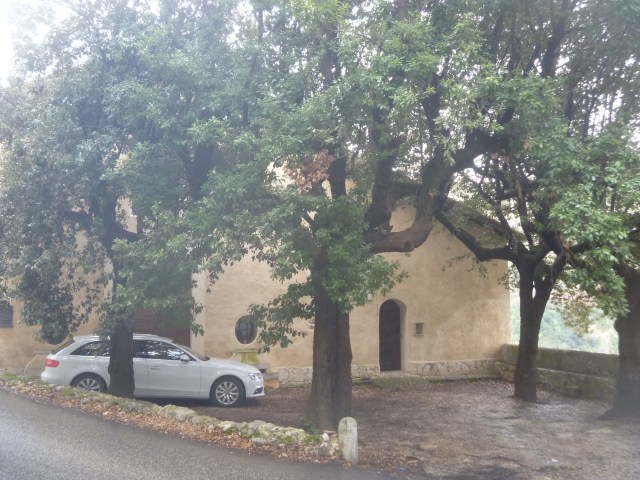
The Franciscan Friars took over the remains of a Roman villa – it had continued operating as a villa farm – with ample storage spaces, good water supply and fertile terraces. By becoming a monastery its survival was ensured for a further five centuries. Sant’ Antonio was a monastery complex of the lesser kind; common in the mountains of central Italy. The little church of this monastery is still an object of devotion for the many Catholics of the town. The feast day of St Anthony is 13 June.

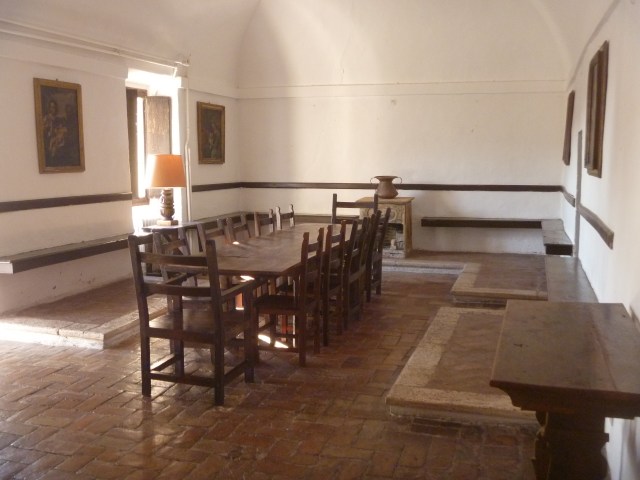
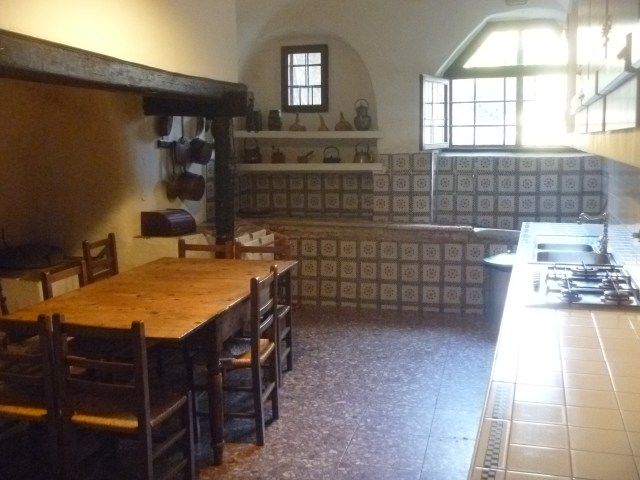
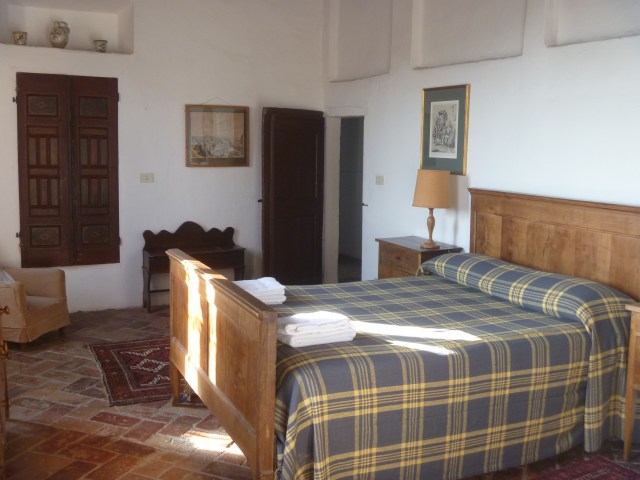
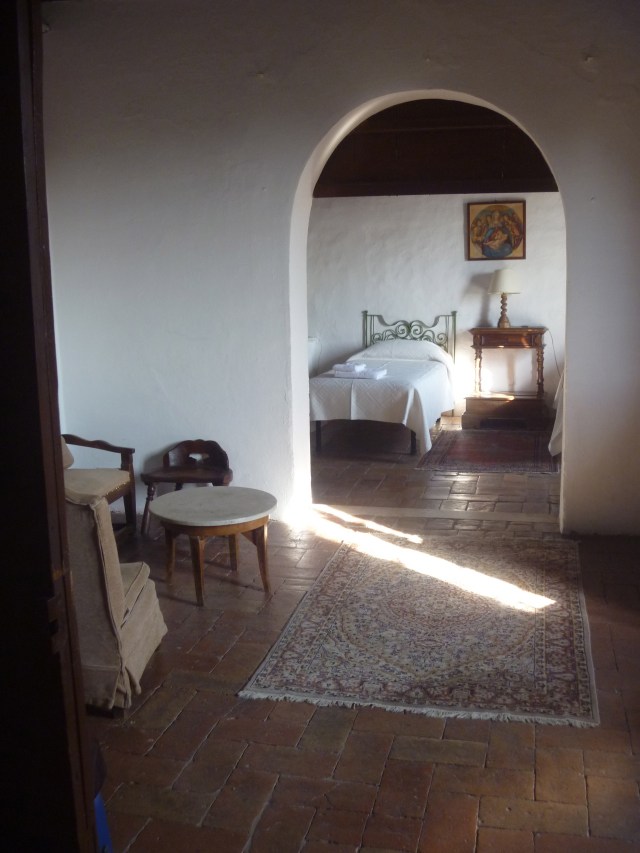
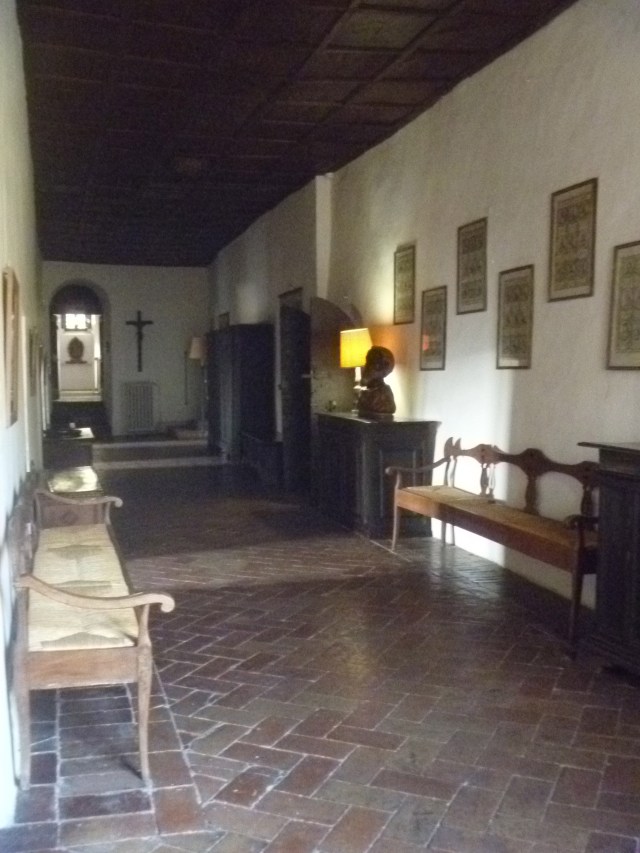
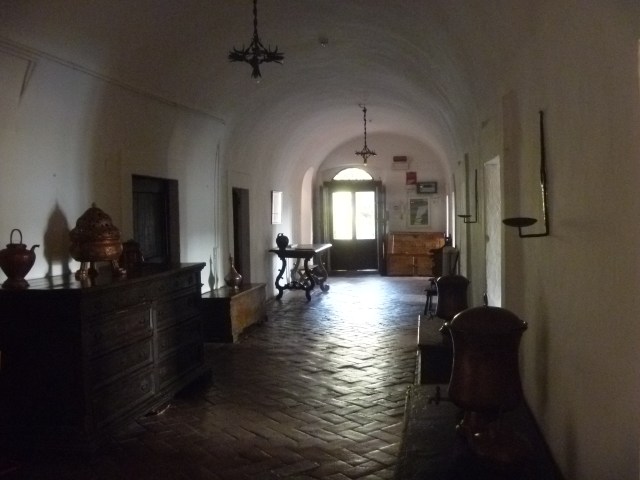
Having read details of the architectural plans of the monastery it would appear that the arrangement of the rooms and their various uses has changed little over the centuries. We dined in the Refectory, cooked in the kitchen, slept in the monks’ cells (the numbers still painted on the doors) off long wide corridors decorated with church ornaments, crucifixes and reliquaries. Our sitting rooms – a range of three – occupy a northeast projecting wing. The main floors are of rectangular terracotta bricks laid in coursed and herringbone patterns with borders, a technique common to Italy. The small casement windows are a rare feature to have lasted so long in Italy, the details of the dark unpainted wood, the panes of glass and their fixings, and the modest catches all being precious survivals.

Welcome to Sant’ Antonio – come and have a look inside.

Refectory

The Refectory

kitchen

The Kitchen

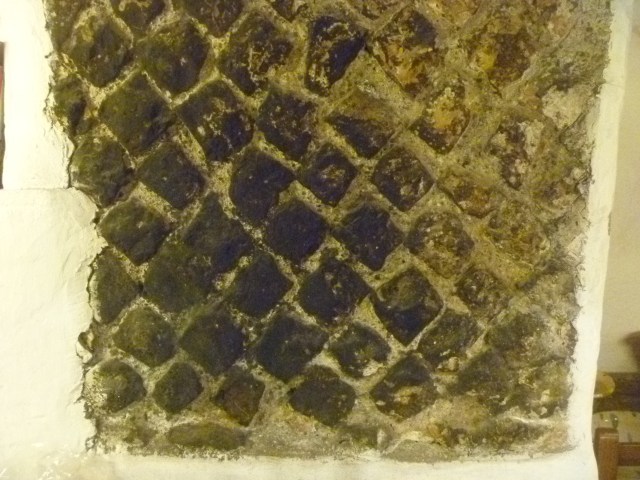
Roman wall in kitchen

Roman Wall in the Kitchen

a dble room

A Double Bedroom with Herringbone Pattern Floor

Twin bedroom

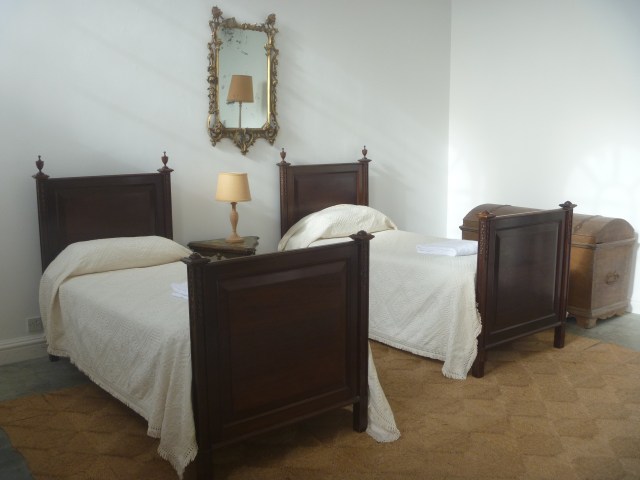
A Twin Room with Sitting Area

Upper floor

Upper Corridor

lower floor

Lower Corridor

reliquary

One of the Reliquaries

sitting room

The Sitting Room

a reading corner

A Quiet Reading Corner

sitting rm

Three Sitting Rooms

Anio falls and window

The “Anio Rolling In Cascades” seen through a Casement Window

SA Garden

Former Main Entrance now Rear Door into the Garden

Main Entrance

Today’s Entrance Approached from the Main Road

Staying at Mr Peake’s House

It’s not easy driving in Colchester. Even with very concise instructions as to how to reach the Landmark Trust’s Peake’s House we managed to take wrong turnings and narrowly missed driving in a bus lane. It was a big relief to reverse the car into the parking space provided and leave it there for the rest of our stay.

Stockwell Street

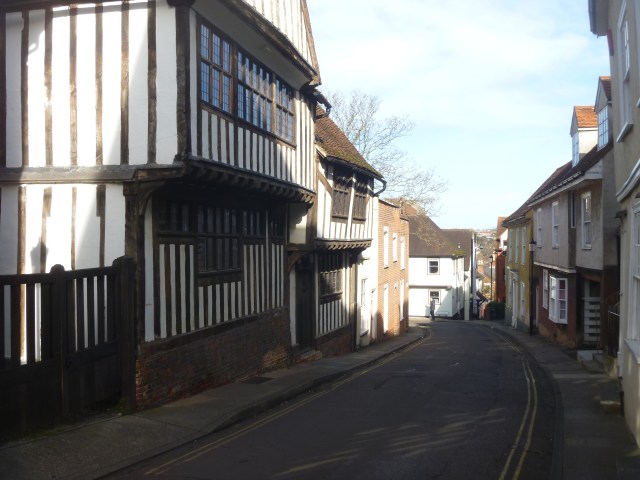
East Stockwell Street, Colchester. Peake’s House is the timbered building on the left.

Here’s what the Trust say about it :

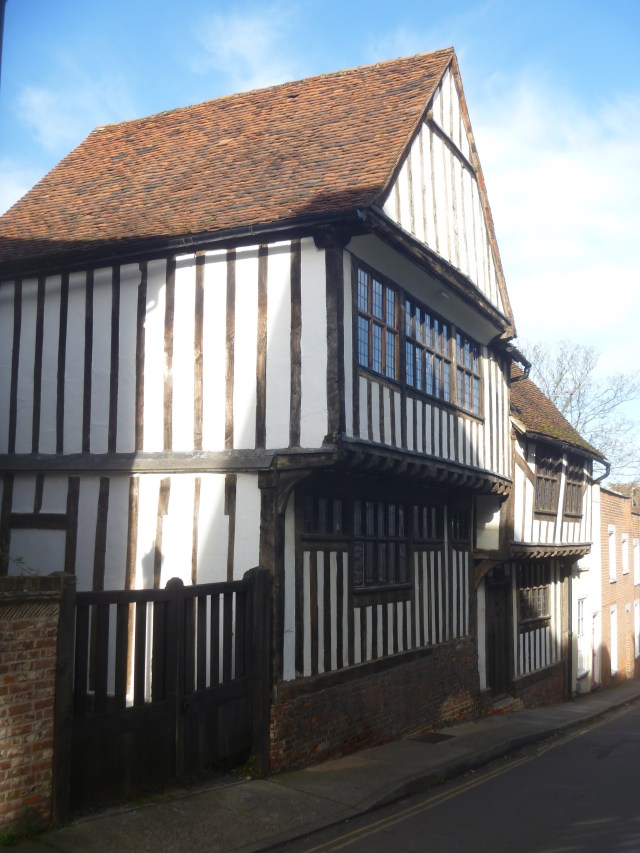
“Originally three cottages at the centre of Colchester’s cloth trade, the long mullioned windows were designed to give light to the weavers at their looms. It is a snug retreat from which you can explore the historic town surrounding you.

Peake's House

Peake’s House stands in the Dutch Quarter, north of the High Street, which has retained its old layout as well as many of its older houses, making its atmospheric streets a delight to wander. Here Flemish weavers settled in the 1570s, driven into exile by religious persecution.

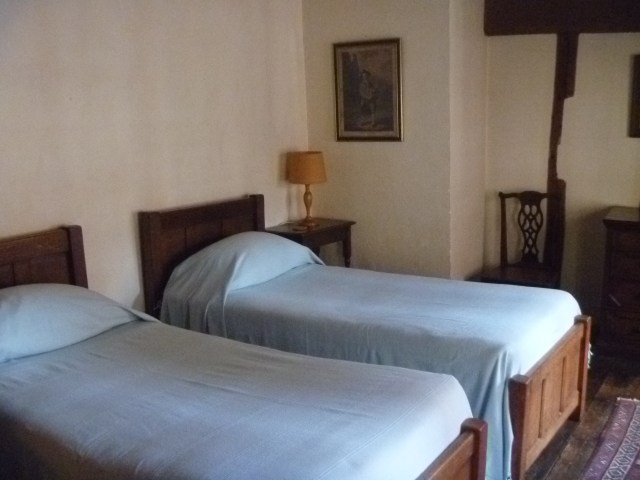
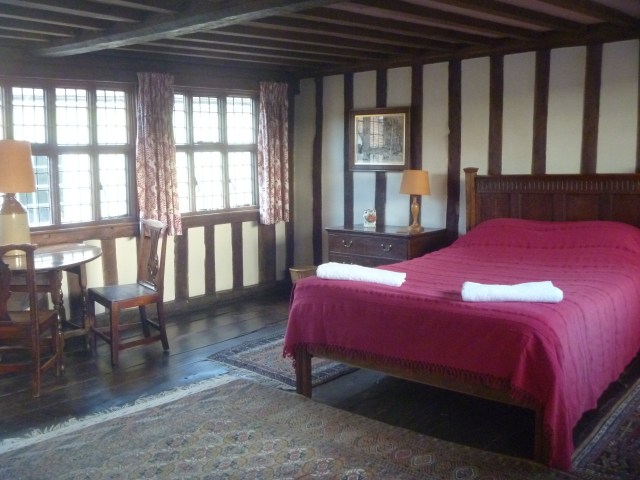
The satisfying, late-Elizabethan interiors of this merchant’s house provide a particularly atmospheric existence within its walls. Workmanly, evenly set wall timbers inside and out give the house its character. The interiors of Peake’s House have barely changed since those weavers made themselves a prosperous new life.”

Mr Peake had been the last owner before he generously gave it to the Borough Council in 1946, specifying that it was to be used for social and cultural purposes only. The Landmark Trust secured a 99 year lease on the house in 1995. A detailed history can be read on the Trust’s website.

Here is a brief tour of this wonderful old house:

peakes-house-2

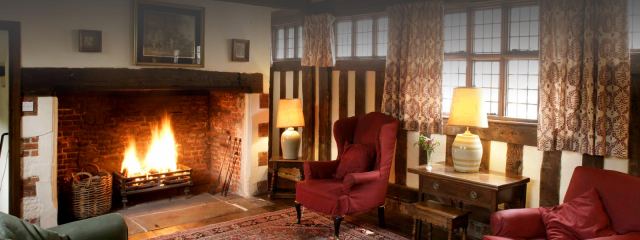
Sitting Room with Large Inglenook Fireplace [source]

PH logbook fire

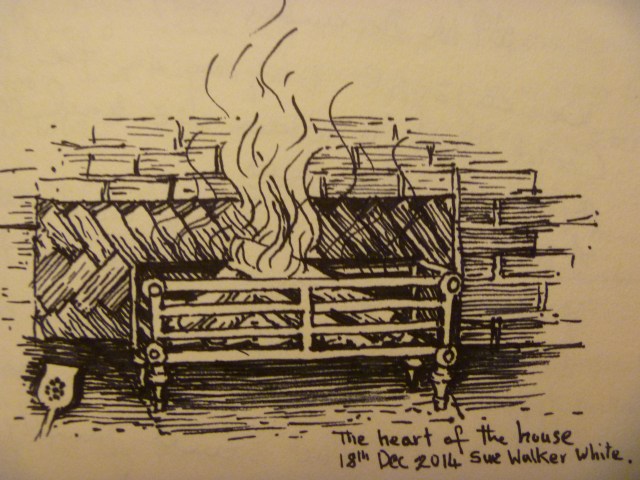
Log Book Fire

PH Library

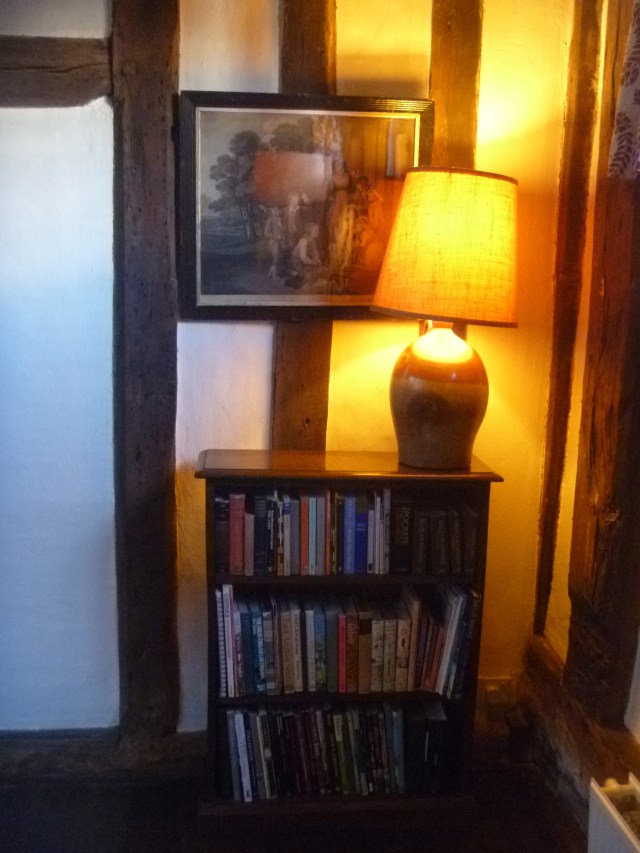
The Landmark Library (rather dimly lit)

Peake's House Table

Peake's House kitchen

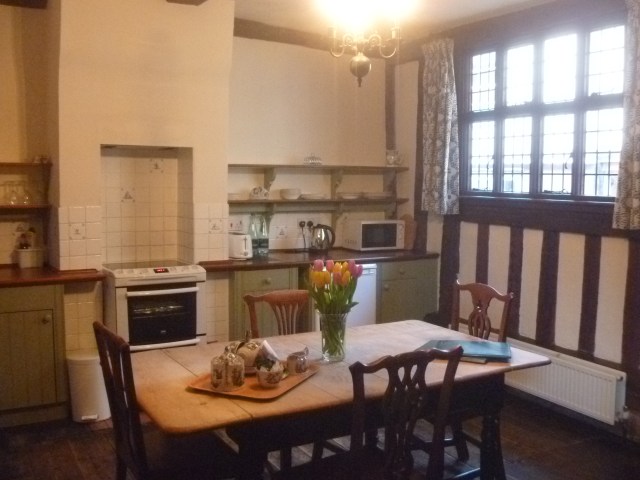
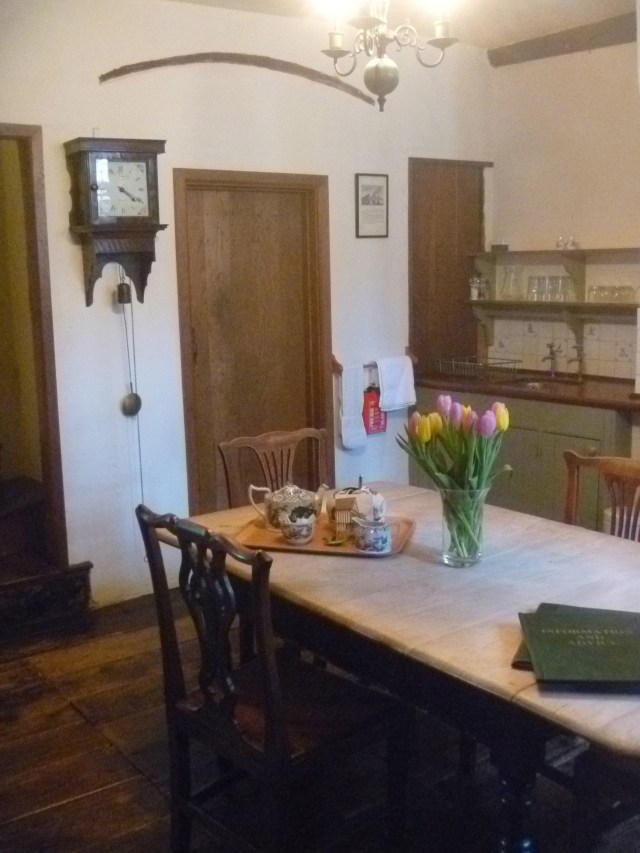
Welcoming, fully equipped kitchen

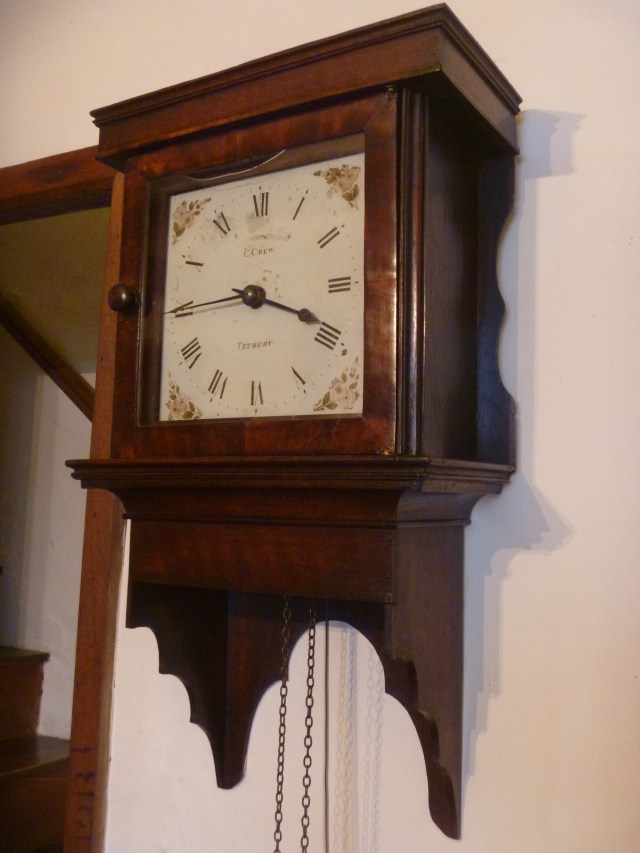
Kitchen Clock

The Clock was a great point of interest

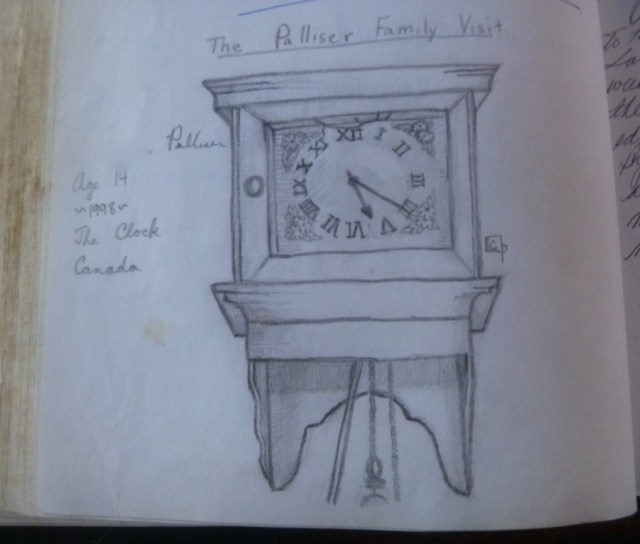
Logbook clock

Clock in the Log Book

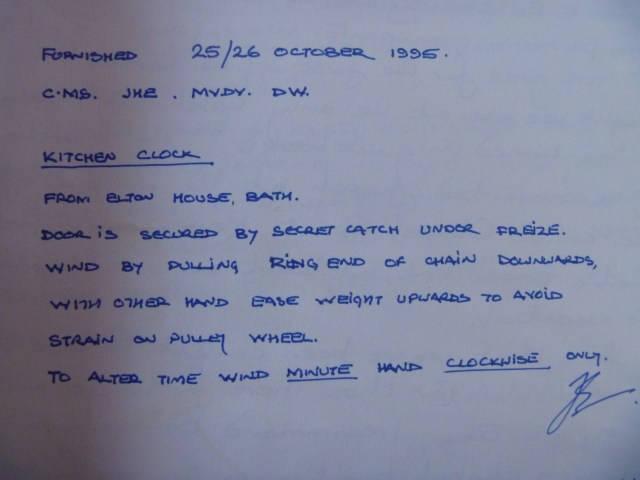
Clock instructions

Clock Winding Instructions from the Log Book

PH twin room

The Twin Bedroom

PH double room

Double room PH

Peake's double rm

The Double Bedroom (all 3 pictures above)

Curtain print

The specially printed curtain fabric. Lady Smith, wife of the Landmark Trust founder John Smith, designed and hand printed the curtain fabric for each individual property.

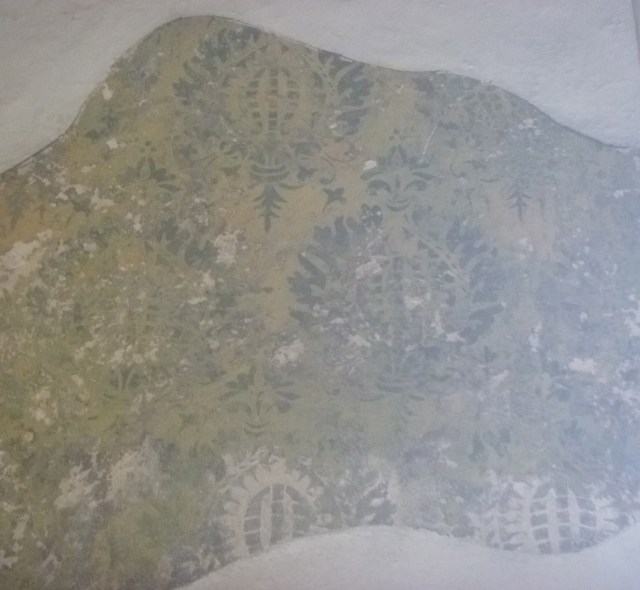
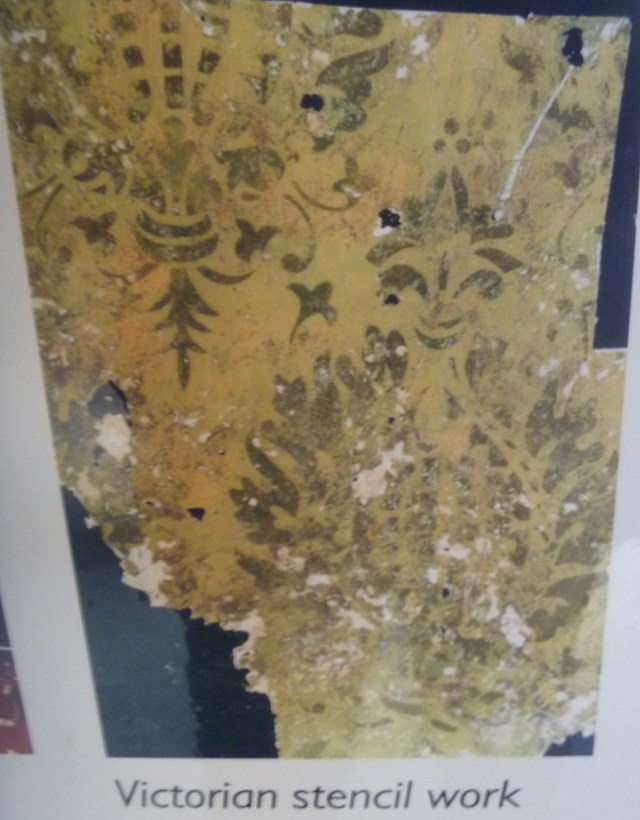
Wall Painting

Could the design for Peake’s House curtains have come from the wall painting in nearby St Martin’s Church? Not quite, but very similar.

Victorian Stencil Work

Photograph on the Church Display Board

Curtains

Lovely Effective Curtains

Properties at Peppercombe

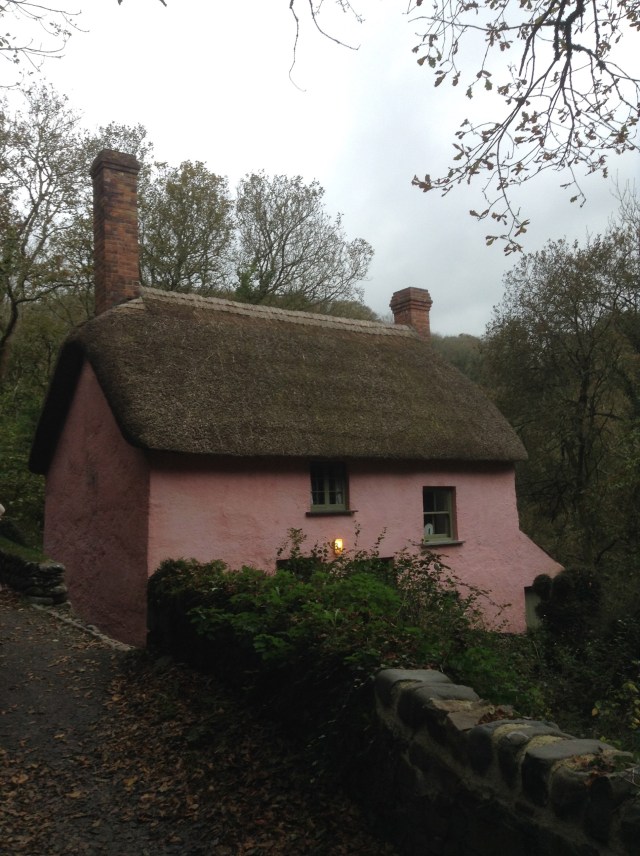
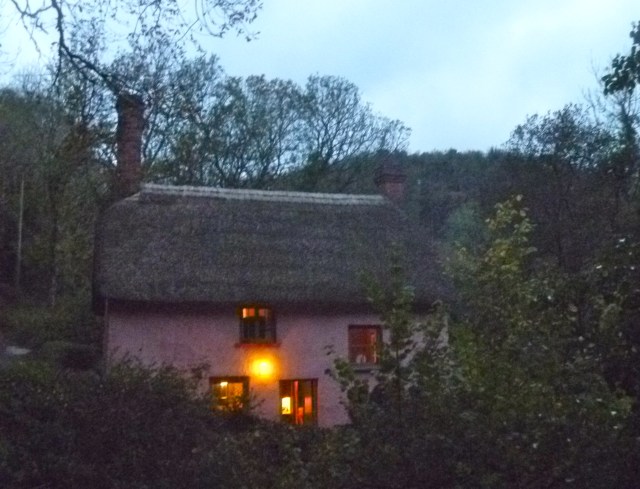
Bridge Cottage Peppercombe

Bridge Cottage, Peppercombe

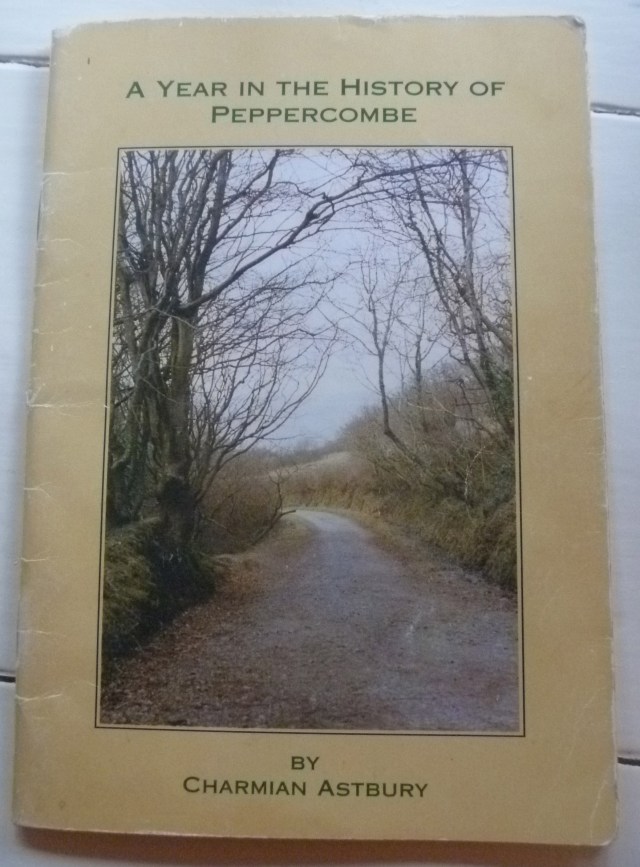
In the evening at Bridge Cottage I found a little book on the library shelves :

Peppercombe book

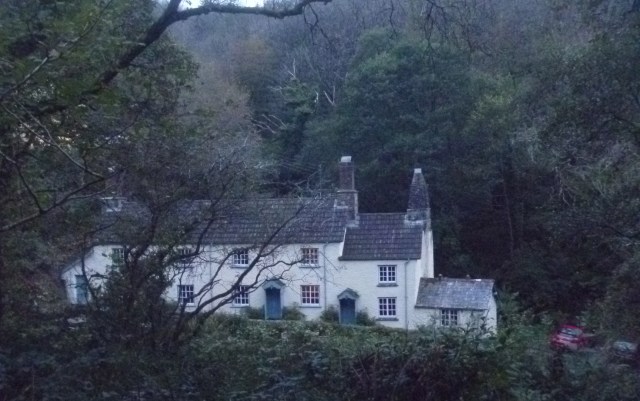
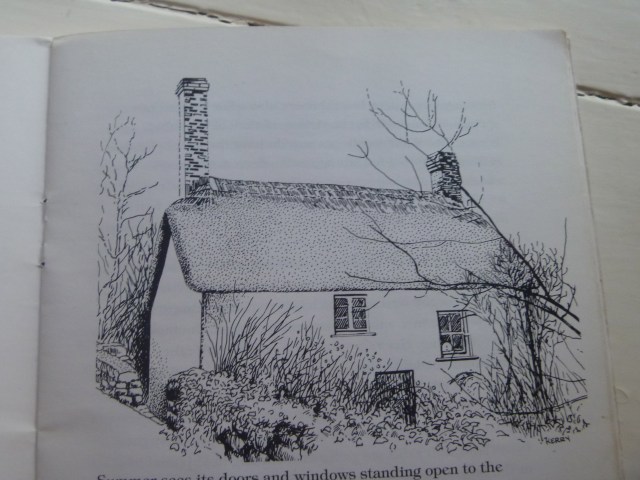
Midway down the valley , deep in the woodland beside the first of the bridges , stands Bridge Cottage. Built about 1830 of stone and cob, it has stood derelict for years, suffering the onslaught of both weather and casual vandalism. Now pink -washed and with a good thatched roof and chimney once more, it is home to holidaymakers throughout the year. Christmas sees fairy lights at its tiny windows and woodsmoke coming from its chimney.

Bridge illustration

Bridge Cottage sketch by Kerry Garrett

Summer sees its doors and windows standing open to the sunlight, the woodland views, the birdsong, the splash and babble of the stream let as it cascades under the bridge by the cottage and onwards down the rocky slope. Mary Elizabeth , aunt to a very old friend of mine Eileen Tucker (who was born in Peppercombe) , lived in Bridge Cottage for a good 60 years. She came there as a bride in 1910 or thereabouts , and only left in the 1970s when she went to live with her niece. It was Mary Elizabeth who planted – tilled is the more usual word in these parts – the rhododendron and the lilac by the cottage that still bloom so richly when spring comes.” [1996. Prominent Press for Sappho Publications]

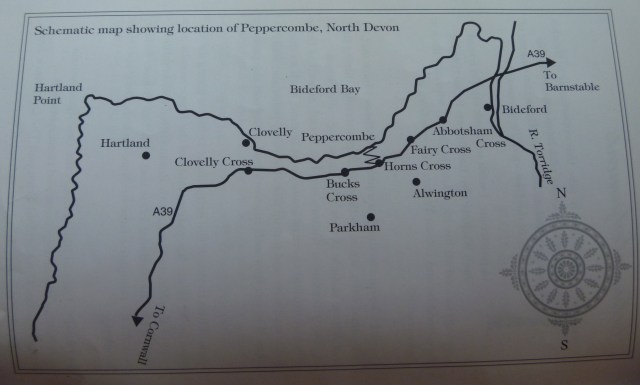
But before I settled down to read that book in the cosy sitting room with its glowing fire (its woodsmoke coming from the chimney!) I had been for a walk right along the valley to the sea. Entry to the lane from the main road at Horns Cross is by padlocked gate and I walked down to the cottage from there.

Map P'combe bk

Map showing Peppercombe and surrounding areas

From the cottage the track goes down, down, down passing some other properties (also holiday cottages but part of the National Trust portfolio) :

NT cottages, Peppercombe

Coastguard Cottages (NT)

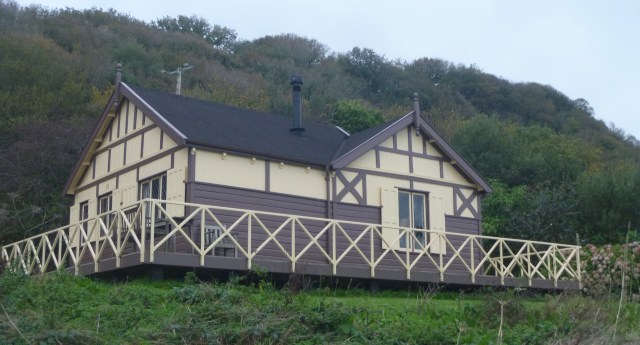
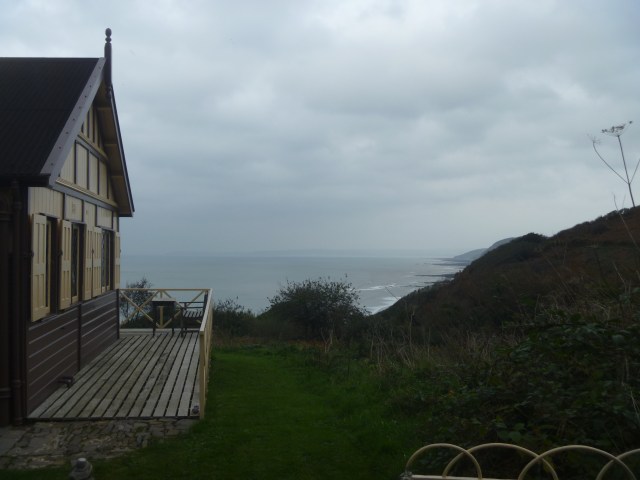
As the view opens up and the sea is revealed there on the left is an unusual building. It looks like a cricket pavilion and is painted brown and cream like the old Great Western Railway livery. It’s Castle Bungalow. Another Landmark Trust property. No-one was there so we crept around it and peeped through the windows. (Perhaps it should count as number five and a half?)

Castle Bungalow enjoys magnificent views of the coastline from the verandah. The bungalow reflects a more recent strand in Peppercombe’s history. Since the early 19th century, there has been a growing appreciation of it as a place to be valued for the beauty of its scenery. You can enjoy the views from inside this 1920s Boulton and Paul bungalow from the snug wood-lined rooms and lattice windows.” [source]

CB closer

Castle Bungalow

Like me, the Castle Bungalow comes from Norwich! Boulton and Paul, the manufacturer, was a well-known and thriving industry when I was growing up there in the 1950s and 1960s.

The Landmark Trust handbook says : A catalogue in the Boulton and Paul archive advertises Residences, Bungalows and Cottages ranging from a substantial six-bedroom house on two storeys (at £4,000) to Bungalow B49 with just a bedroom, a living room and a verandah (in case you should live in the tropics). This, with brick foundations and carriage paid to the nearest goods station cost just £280.
CB Welcome tray

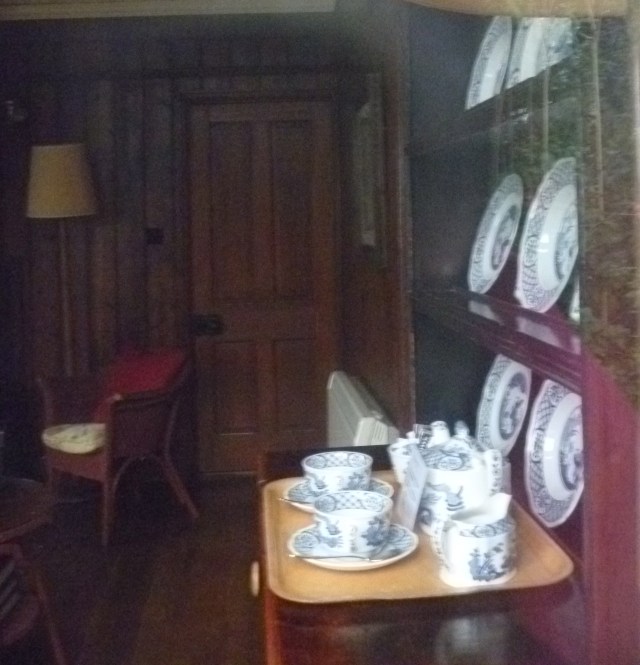
The Castle Bungalow Welcome Tray (through the window)
As it says in the Boulton and Paul website link above “Nothing too big, too small, or too difficult, was outside the scope of their ingenuity.”

Castle B in book

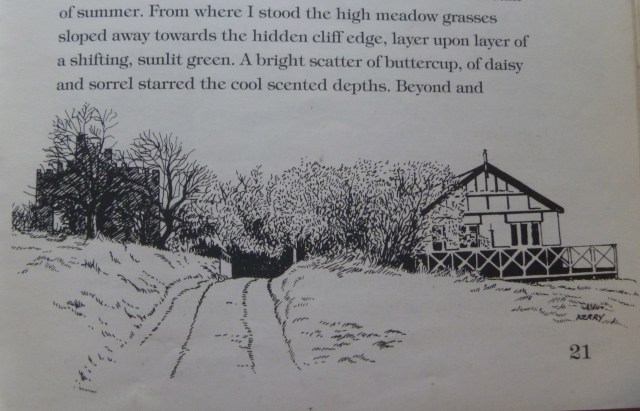
Drawing of the bungalow from the Peppercombe history book

CB and sea

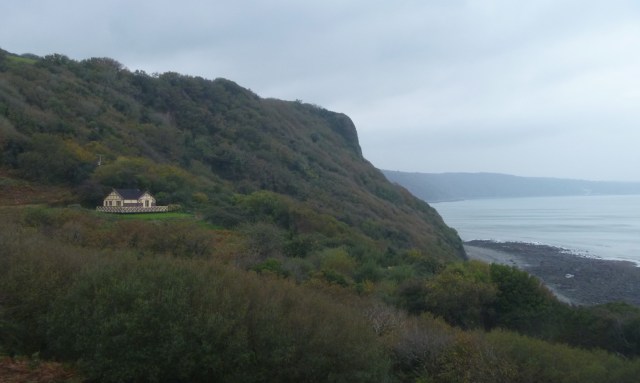
The Southwest Coastal Path national trail passes along the coast here and we couldn’t resist joining it for a while to get a view of the Castle Bungalow in its setting and, of course, just sit on a quiet bench and contemplate the sea and the sky and peaceful scene in front of us.  In the other direction, beyond the bungalow, the path heads towards nearby picture-postcard Clovelly.

CB in position

Castle Bungalow and the sea from the SW Path bench

I spent just one night as a guest at Bridge Cottage … I hope the Christmas Landmarkers will bring fairy lights for the windows!

Five In A Day Plus a Mainland Office

On our final day at Pond Cottage (1) my friends had arranged a visit to The Swiss Cottage (2), another Landmark Trust property on the Endsleigh estate but a 15 minute walk away.  With my love of all things Swiss I have always been intrigued to see the cottage for real and it did not disappoint.
The Swiss Cottage

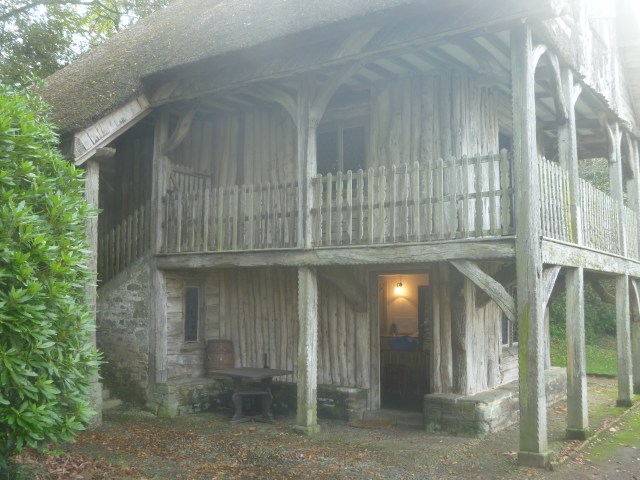
The Swiss Cottage

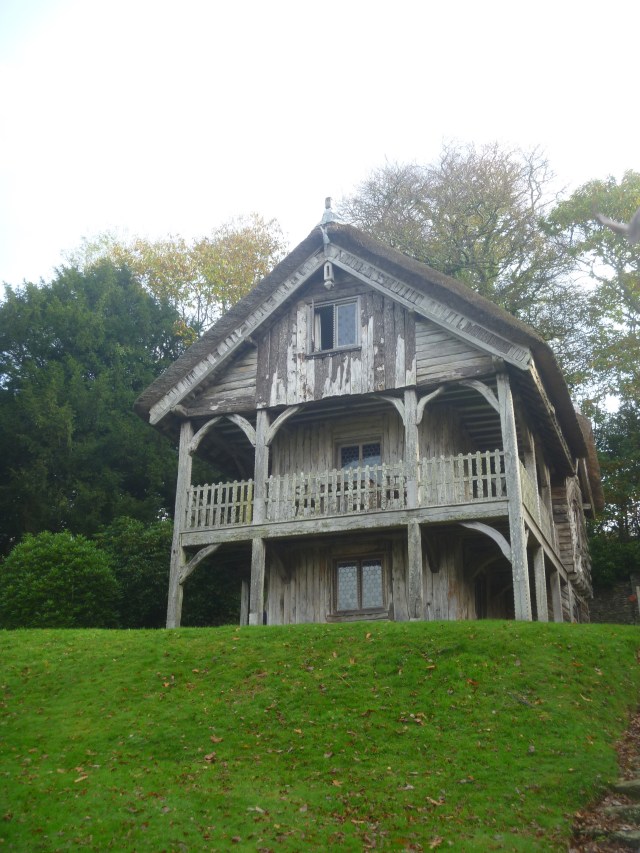
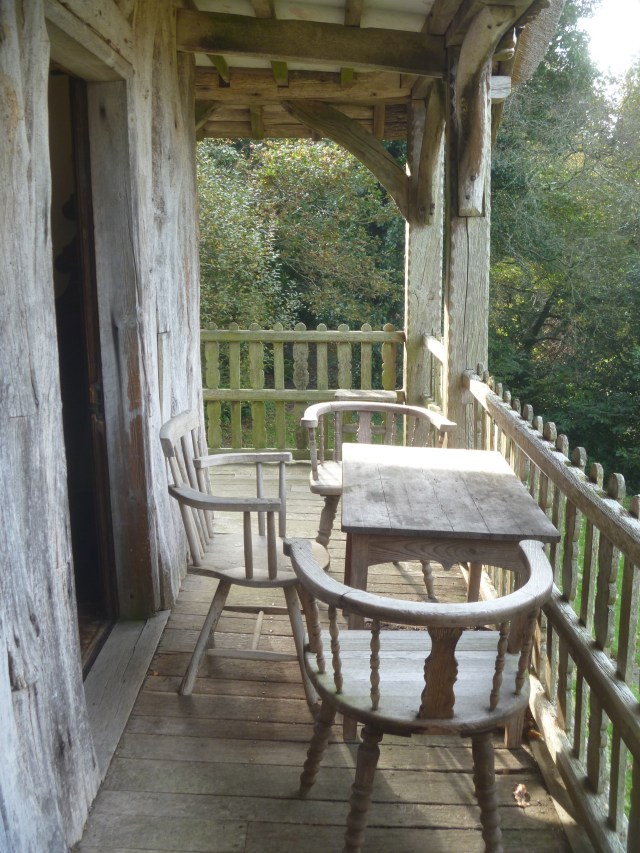
A wonderfully eccentric chalet designed by Jeffrey Wyatville in a setting that indeed compares with Switzerland at Endsleigh, one of the best surviving examples of that most imaginative and English landscape aesthetic, the Picturesque.” Wonderfully perched above the Tamar Valley with a steep path to it from the drive and further steep slopes in front, the setting could indeed be in Switzerland.  The balcony is a typical feature of the Swiss chalet.

Sitting on balcony SC

Tea on the Verandah

View from SC

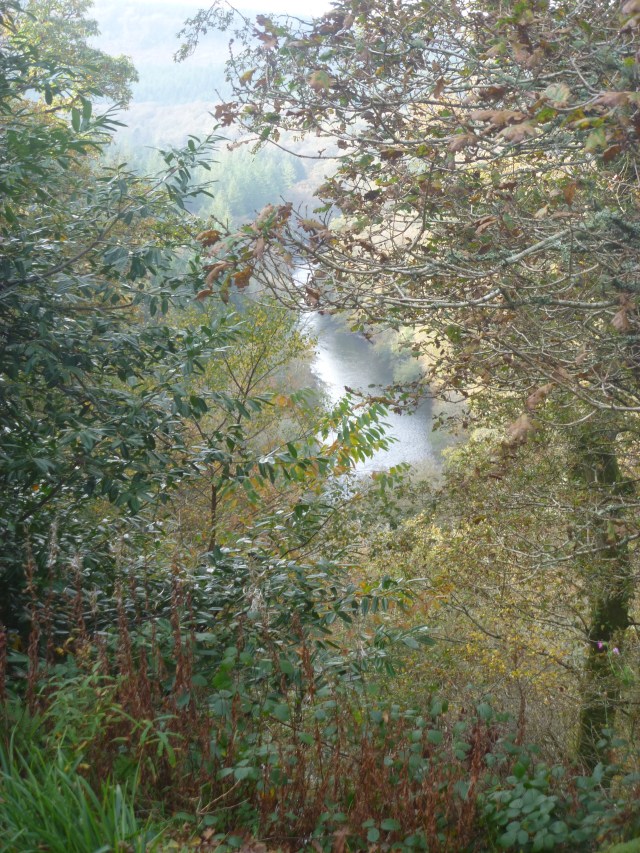
Through the Trees you can just see the Tamar River

On changeover days, by prior arrangement with head office, it is often possible to see inside Landmarks. This was the case with our three visits on that Friday.

Swiss Cow management SC

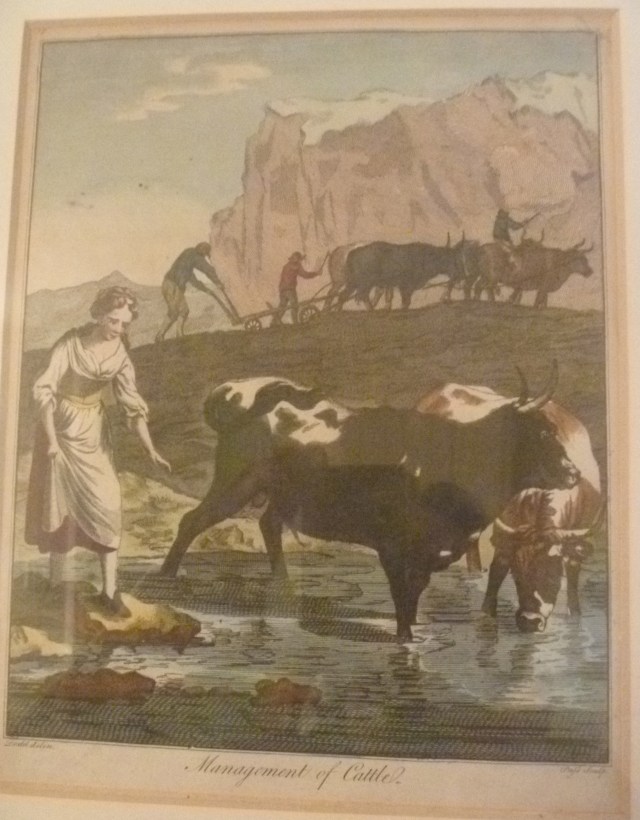
Swiss Cattle Management

Little Hay Maker SC

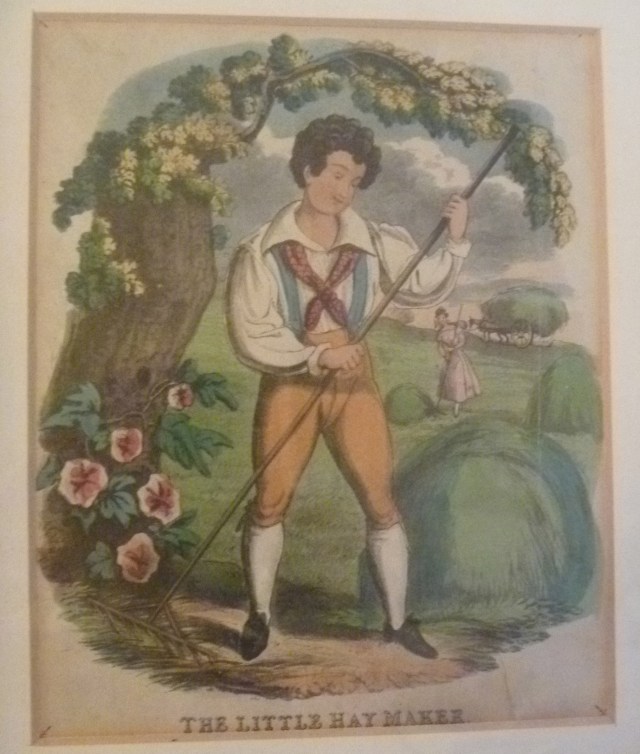
The Little Swiss Haymaker

SC changeover day

Welcome to the Swiss Cottage

Finally, we had to leave Endsleigh and its cottages behind and make our way across Devon to Peppercombe on its north coast. Our route just happened to take us through the country town of Great Torrington. Just a couple of miles before reaching Torrington, at Stevenstone, is another Landmark of interest to me – The Library (3).

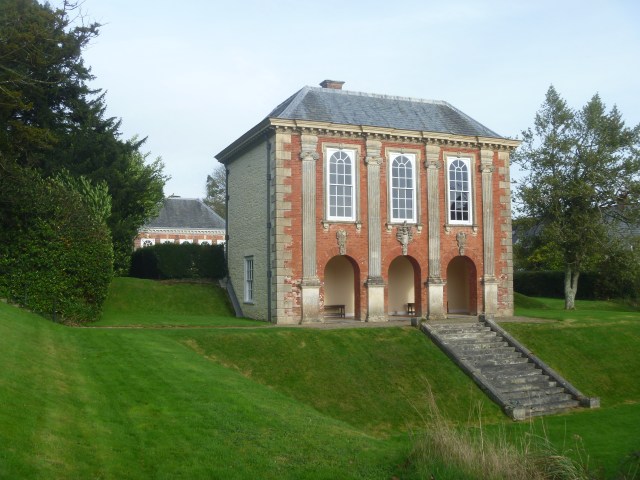
The Library and its companion, the Orangery, stand in the remains of a formal garden beside the ruins of the main house [Stevenstone]. Having a library in the garden remains a mystery to us, but to stay in these handsome spaces, even without the books, is an enlightening experience. Not only is the building rather charming, it is not far away from Exmoor and the beaches of North Devon. It has an open fire, enclosed garden and nearby parking.”

Library view

The Library with Orangery Behind

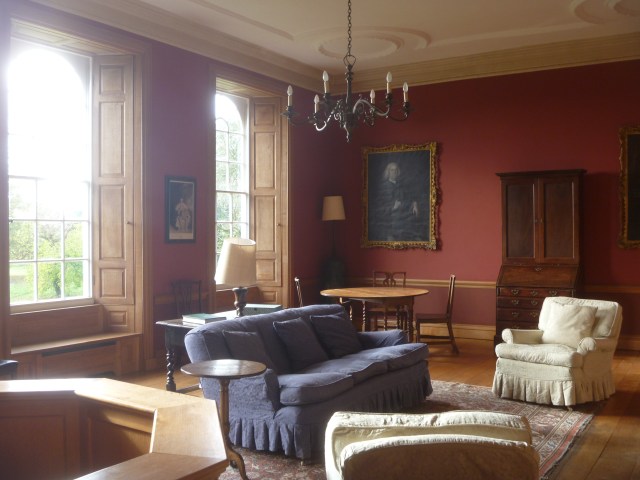
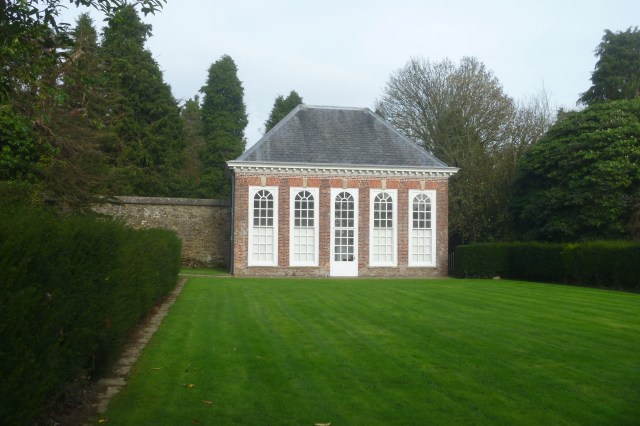
The Library has one grand sitting room/library on the first floor with an open fire and comfy chairs. In contrast the Orangery is an unheated bedroom which may be cool and refreshing in summer but struck me as rather chilly on that bright October morning. A room for only the hardiest of Landmarkers.

Library sitting room

The Library Sitting Room

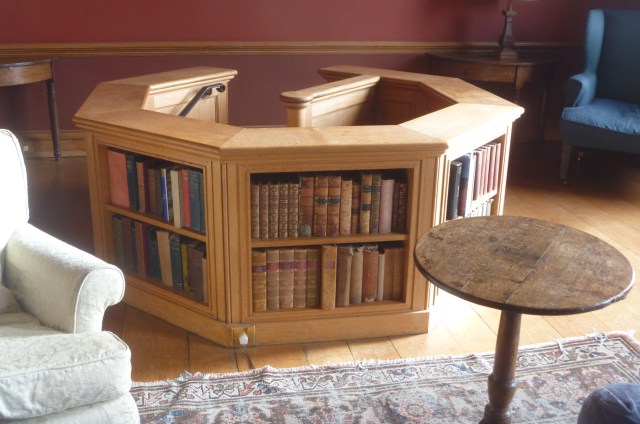
Library at Library

The Library’s Library

Orangery

The Orangery

Inside Orangery

Hot Water Bottles at the ready inside the Orangery

Once known merely as 28 South Street Cawsey House (4) is a lovely big family house on one of the main streets of Torrington. The location means cafes and shops and the lively arts centre are on the doorstep.

Cawsey House, an elegant late-Stuart townhouse, once belonged to a wealthy merchant who commissioned one of Devon’s most accomplished plasterers to embellish its main rooms. Torrington is a town rich in historic interest, scene of a decisive battle in 1646 during the Civil Wars.”

28 South Street

Cawsey House, Great Torrington

Causey Garden

The Cawsey garden

Causey DR

The Cawsey Dining Room

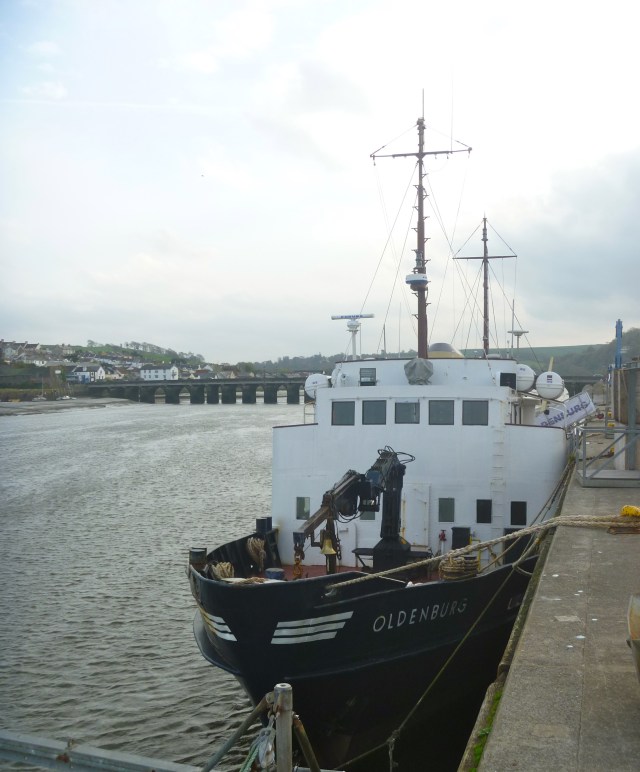
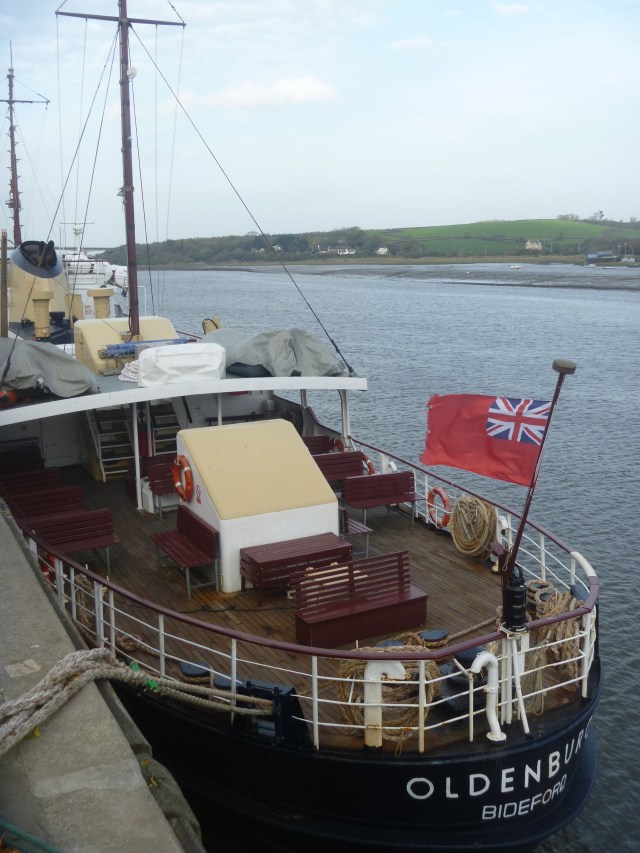
After lunch in Great Torrington we headed off for our destination but to get there you have to drive through Bideford. We weren’t going to stop but then we saw, tied up at the quay, the MS Oldenburg Lundy’s “lifeline”.

Oldenbourg on Torridge

MS Oldenburg Fore

Oldenbourg deck

MS Oldenburg Aft

She is a graceful motor vessel, comfortable and built on traditional lines. Below decks she retains her original panelling and brass fittings, but has been skillfully modernised to provide heated saloons, bar, buffet, shop and information centre.”

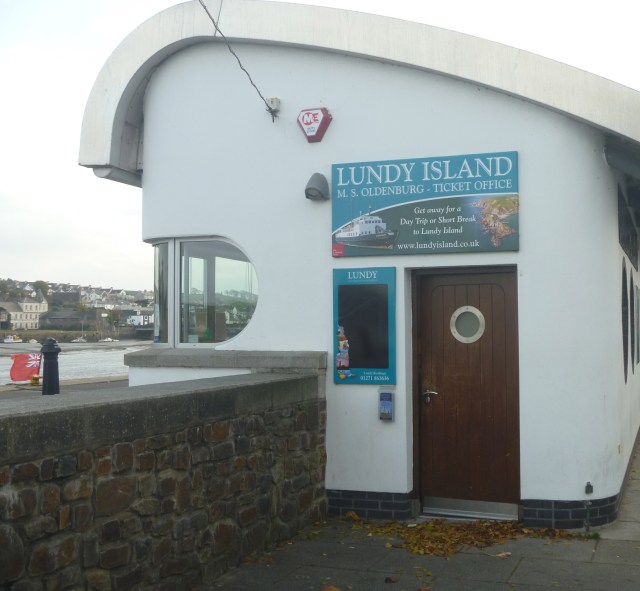
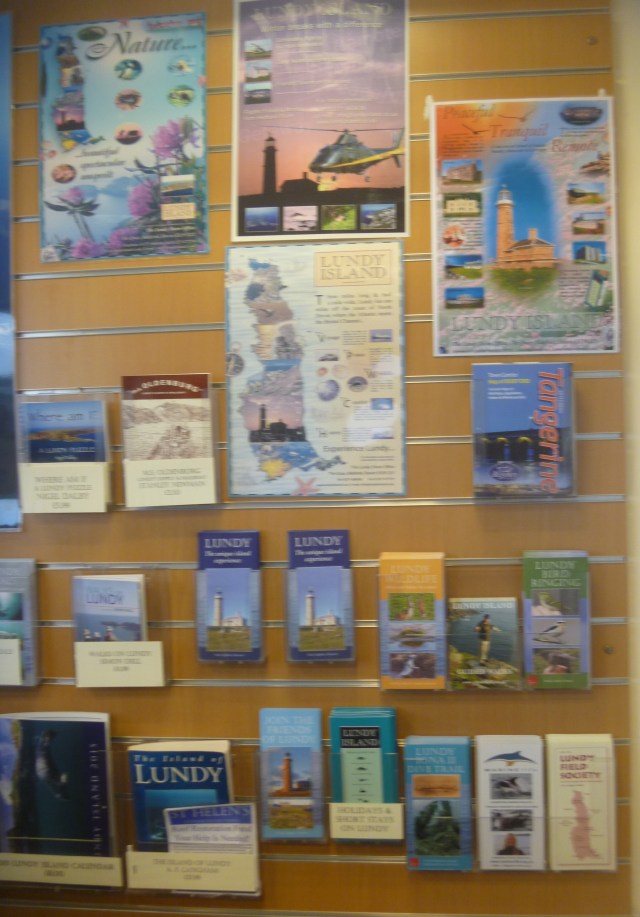
The Oldenburg was moored up alongside the quay where the rather distinctive Lundy Office operates. It’s there to provide information about the island and its 23 Landmark properties and to sell boat trip tickets. The Oldenburg had just finished its 2014 season criss-crossing the Bristol Channel between Lundy and Bideford and the other port from which it operates – Ilfracombe.

The Lundy Office

The Lundy Office at Bideford

Lundy Info

Lundy Information

I’ve made two day trips to Lundy during the season and, luckily, enjoyed perfect sailing weather on both. It’s a bit of a slog up the path from the mooring jetty to the village but then level walking along stony or grassy footpaths for wonderful sea views. There’s a shop, a pub and a church. Read more about my day trips here.

Finally we reached our destination : Peppercombe and I will write more about this delightful valley and my brief stay at Bridge Cottage (5) another time.

Welcoming Bridge

Evening Arrival at Bridge Cottage

‘Embosomed in all the sublimity of umbrageous majesty’ : The Dairy Dell and Pond Cottage

Better view of PC

Thus wrote Humphry Repton in his “The landscape gardening and landscape architecture of the late Humphry Repton, esq. : being his entire works on these subjects”; edited by J. C. Loudon. [London : Printed for the editor, and sold by Longman, 1840.] I think he meant that it was nestled in the shade of majestic trees and landscape. Or something like that.

I wasn’t staying at the Endsleigh Hotel. Oh no, I had the good fortune to be invited to join my Landmarking friends at Pond Cottage one of two Landmark Trust properties in the grounds of Endsleigh House.

Pond Cottage exterior

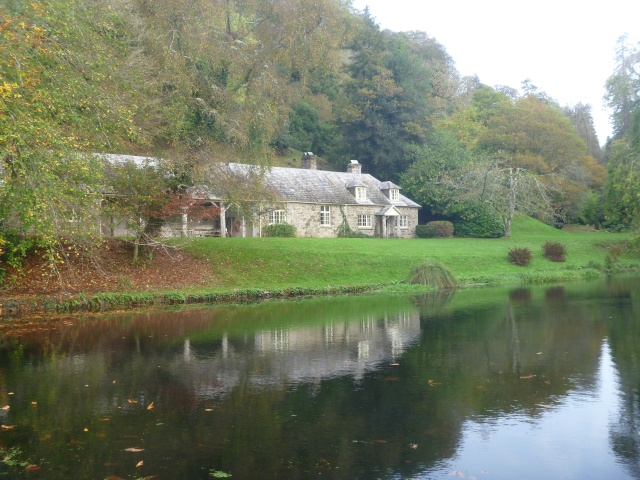
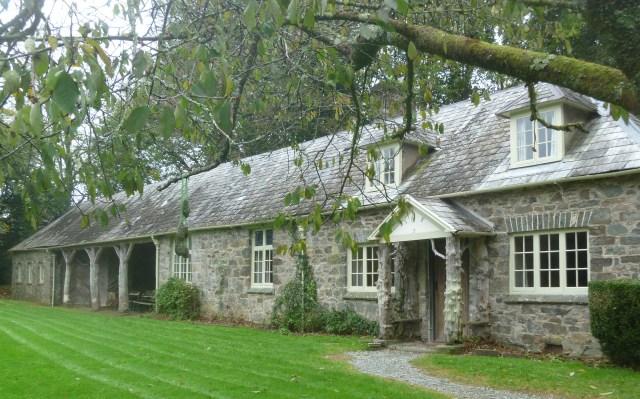
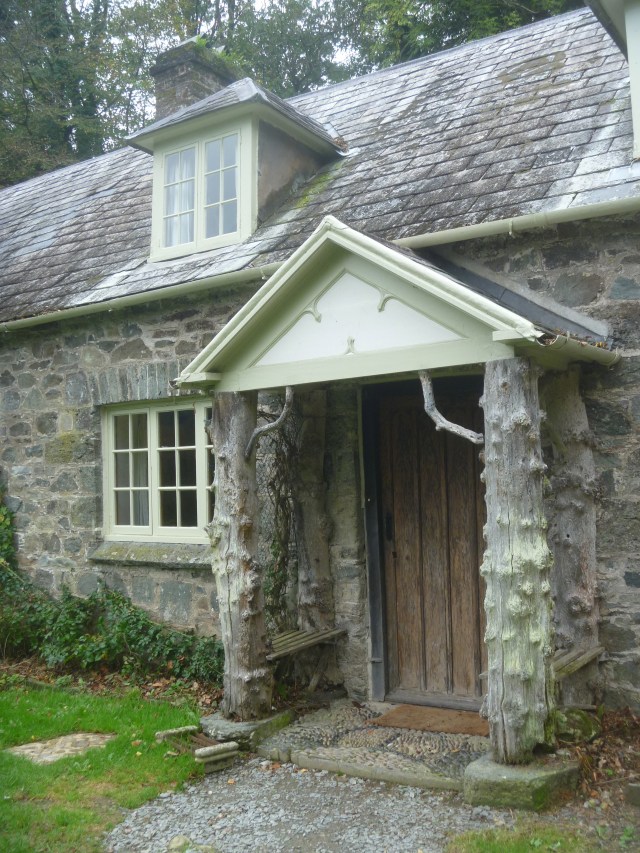
A purposely Rustic cottage designed by Jeffrey Wyatville beside a pond, Pond Cottage is set within the ornamental gardens of Endsleigh with its streams and cascades.  Endsleigh is still a complete example of that most imaginative and English taste, the Picturesque.  Pond Cottage has a Rustic porch, with tree-trunk columns and cosy rooms.” [Source]

Welcome to Pond Cottage

Rustic Porch

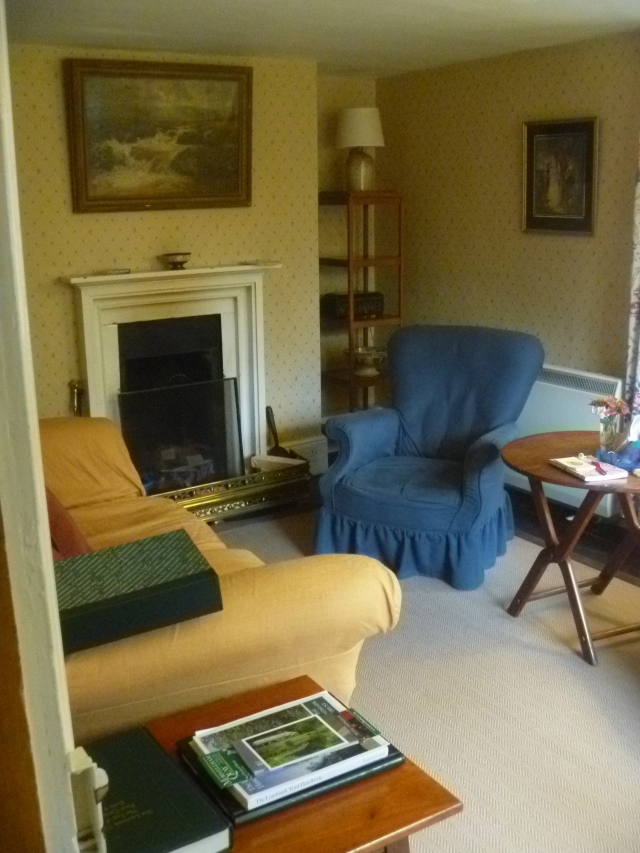
Fireplace at PC

Cosy Sitting Room

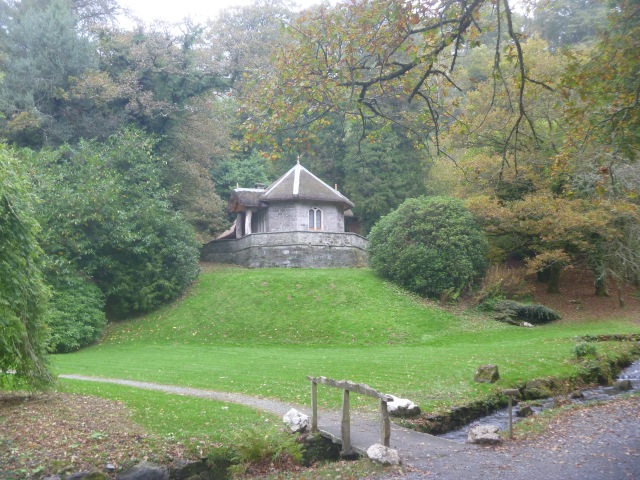
Pond Cottage and its surroundings had, and still has, all the quintessential ingredients of the 18th and early 19th century Picturesque landscape. Here at Dairy Dell are the favoured ingredients of such a landscape – water, both moving and still; splendid trees; antiquity, represented by the well and its inscription; rural industry, the Dairy itself.

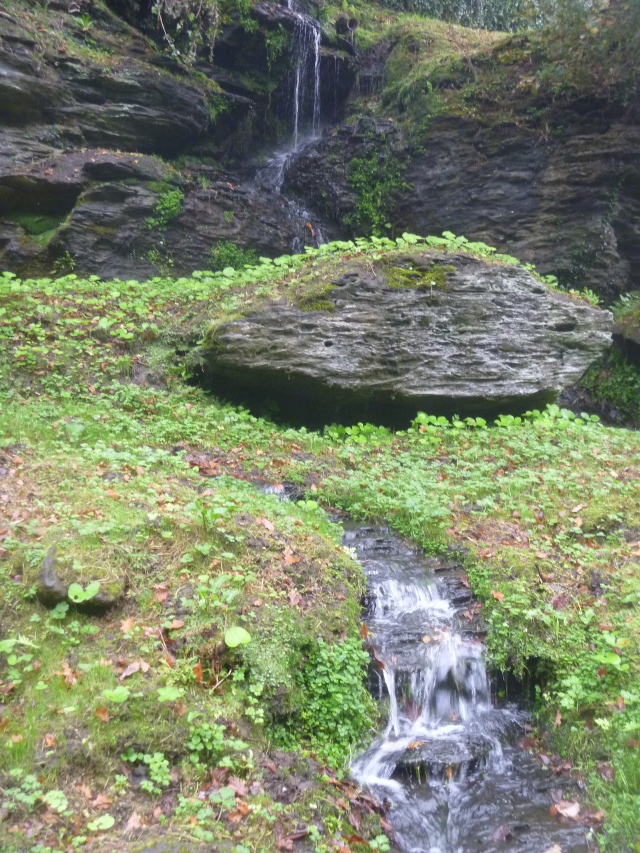
Moving water

Moving Water

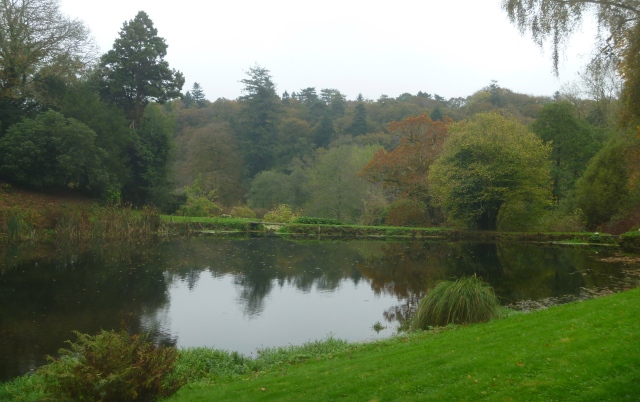
PC Pond

Still Water : The Pond

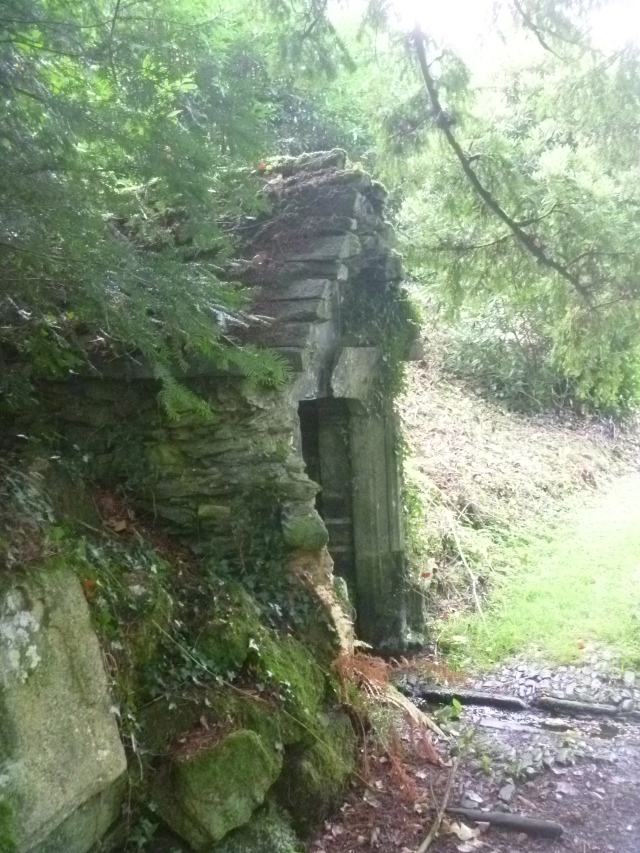
The well

The Ancient Well with inscription stone on the left

The Dairy

The Dairy

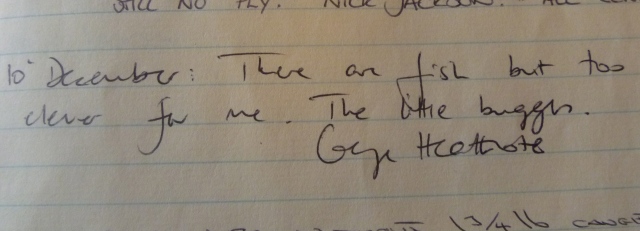
Facilities & features : there is a sunny loggia for outside dining and you can fly-fish in the pond. The tiny model Dairy stands nearby, from whose verandah you can enjoy spectacular views.” [Source] I enjoyed reading the cottage fishing diary where fishermen young and old made comments on their success, or lack of it, when fishing the Pond.

Fishing Diary

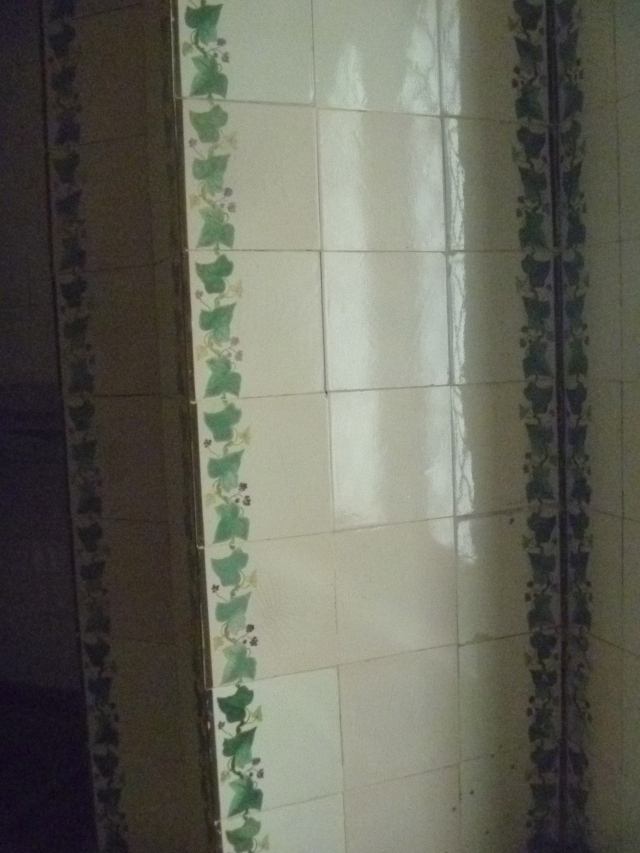
Pond Cottage has a Rustic porch, with tree-trunk columns and honeysuckle, and cosy rooms. The Dairy, which had to be rescued from the undergrowth, is perched on a knoll above, a cool chamber of marble (a local variety) and ivy-leaf tiles. From its verandah, ‘embosomed’, as Repton put it, ‘in all the sublimity of umbrageous majesty’, you may open yourself to those keen responses to the surrounding scene that were so carefully planned by its creators – while contemplating the making of a very superior butter.” Source

Ivy tiles

Inside The Dairy : The Ivy Tiles

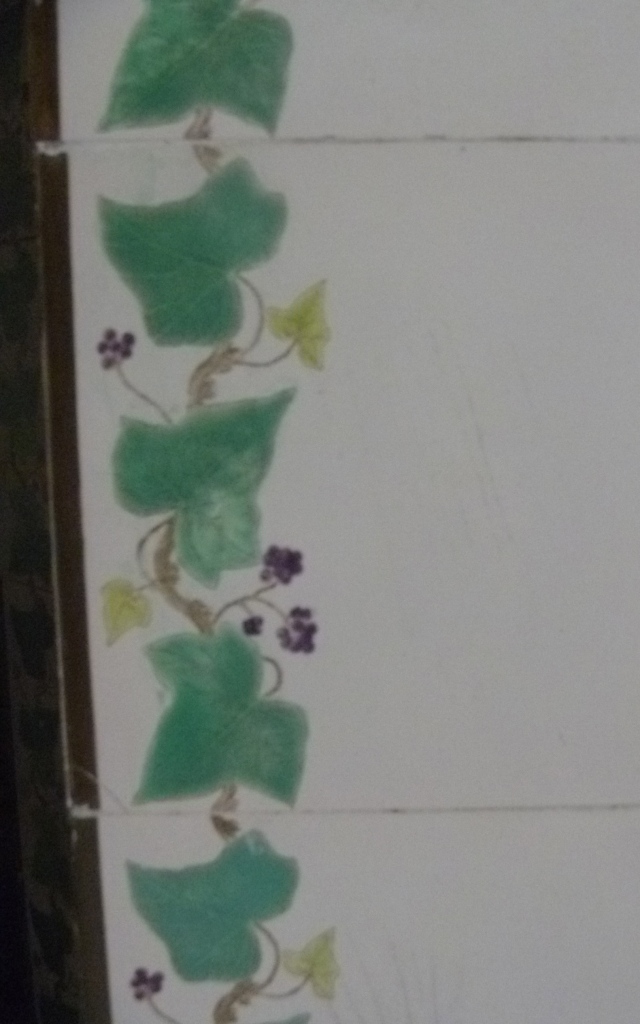
Ivy close up

Close-up of the tiles. During restoration Kate Evans a potter from Shropshire who specialises in reproducing old glazes made copies to replace irreparable broken tiles.

Pond Teapot

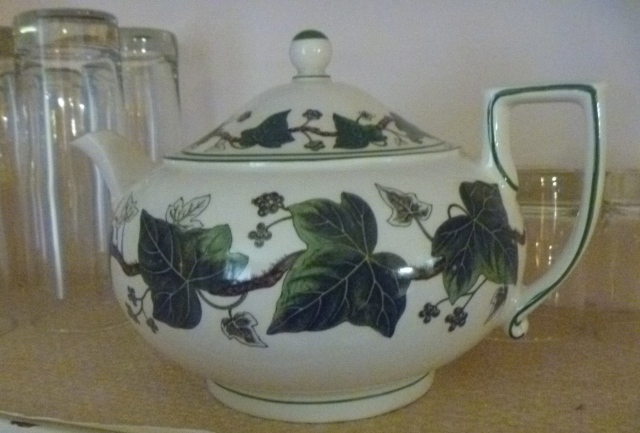
The Ivy Pattern Repeated in the Pond Cottage Crockery (Wedgwood Napoleon Ivy Design as used by Napoleon at St Helena 1815)

Real Endsleigh Ivy

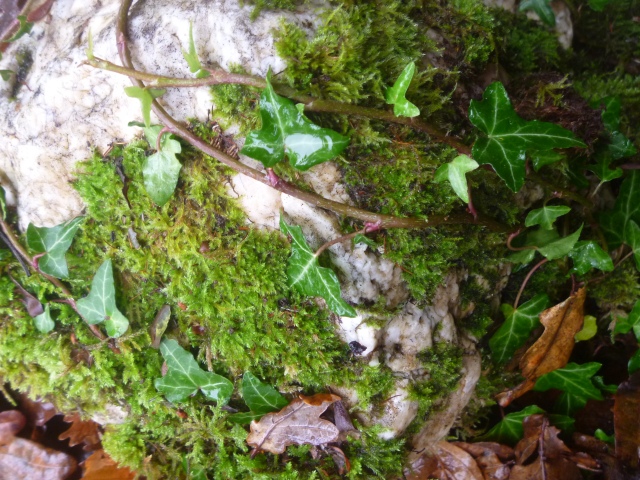
Real Live Endsleigh Ivy

A Sussex Tea Garden, a Long Man and a Landmark Priory : Litlington and Wilmington

Last year Simon over at Stuck-in-a-Book lent me his copy of  ‘Tea is so Intoxicating’ by Mary Essex which is one of several pen names of romantic novelist (and my brother-in-law’s Godmother!) Ursula Bloom.

One thing I especially loved about the book was the choice of chapter headings. Shall I quote them all here?

1. Tea for Two,and Two for Tea

2. I do like a Nice Cup of Tea

3. For all the Tea in China

4. The Cups that Cheer but not Inebriate

5. Everything Stops for Tea

6. Cold Tea may be Endured, but not Cold Looks (Japanese Proverb)

7. Tea and Scandal

Written in 1950 it is basically the story of a London couple who set up a Tea Garden in the South of England but the marriage is not a success.

P1130717

Anyway, when Fran told me that Tea Gardens were a particular feature of the East Sussex countryside around Laughton I knew, should the weather remain sympathetic, that I would have to take my Swiss friends to one of these minor Sussex institutions. So, after the walk on Sunday at Firle Beacon and the visit to Firle village we headed for Litlington Tea Garden.

Litlington tea garden

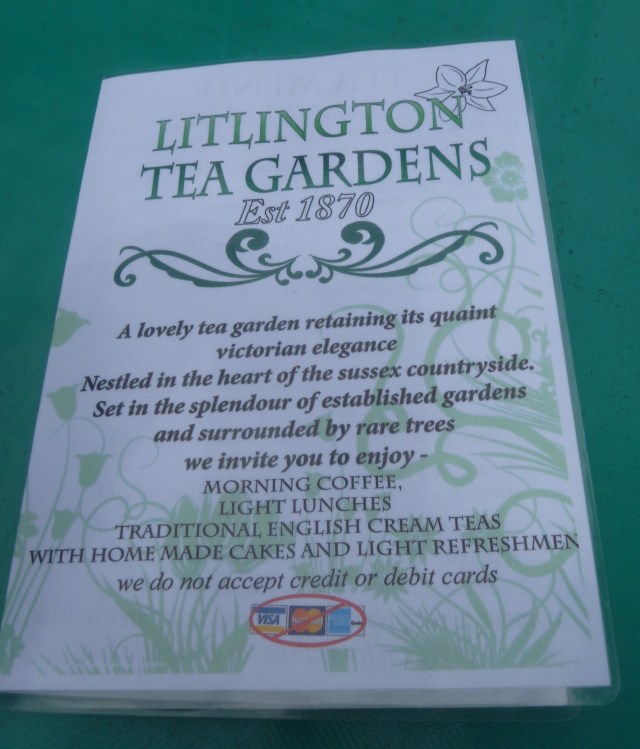
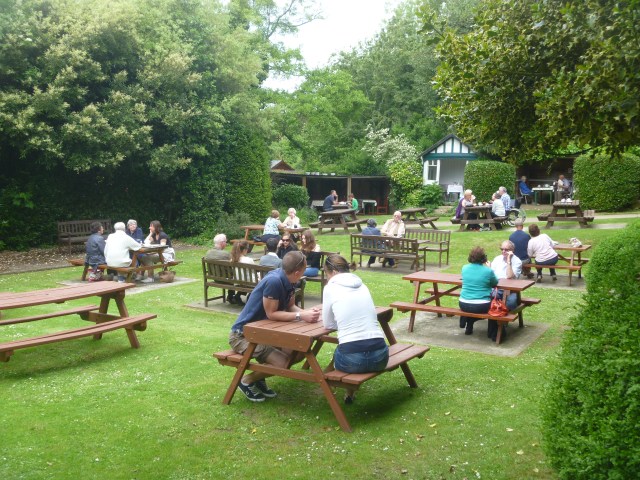
In the Tea Garden – there are a few sheltered places should the weather turn inclement

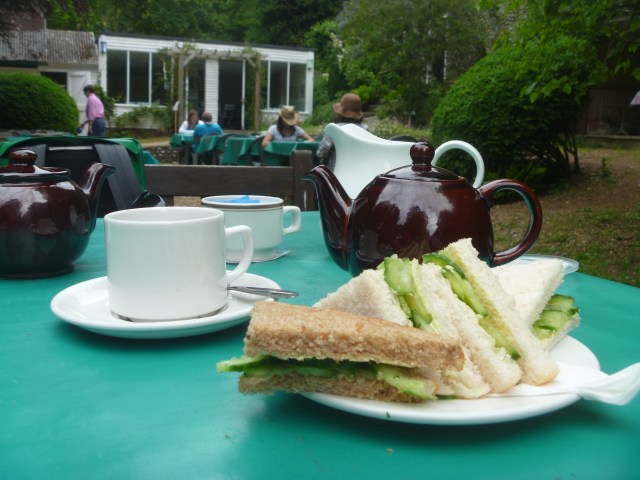
We were in luck – the day remained warm and dry. We ordered cucumber sandwiches to be followed by scones and jam and accompanied by plenty of tea.

cucumber sandwiches

From Litlington it was just a short drive to Wilmington. Here is the famous Long Man carved into the chalk hillside many centuries ago. Here also is Wilmington Priory another Landmark Trust property.

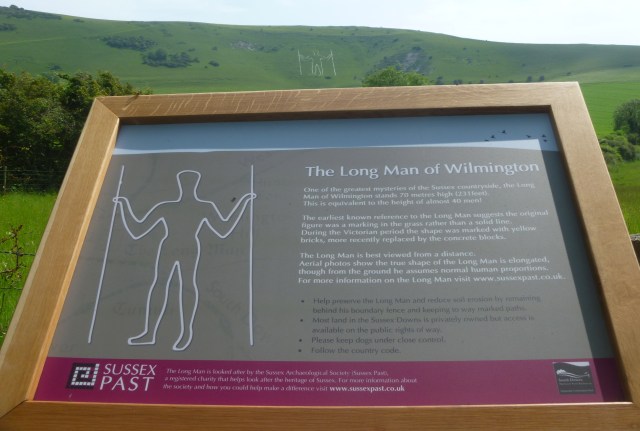
The Long Man Info

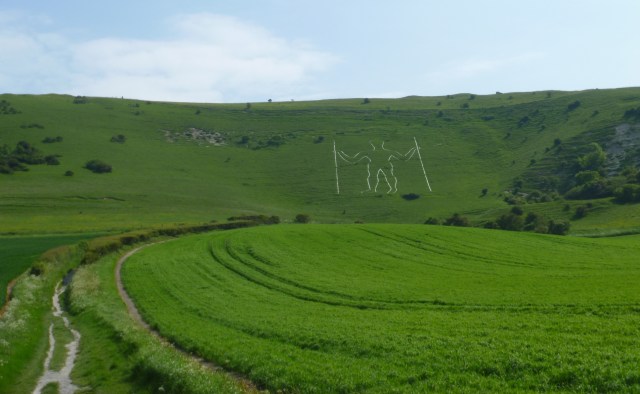
Wilmington Long Man

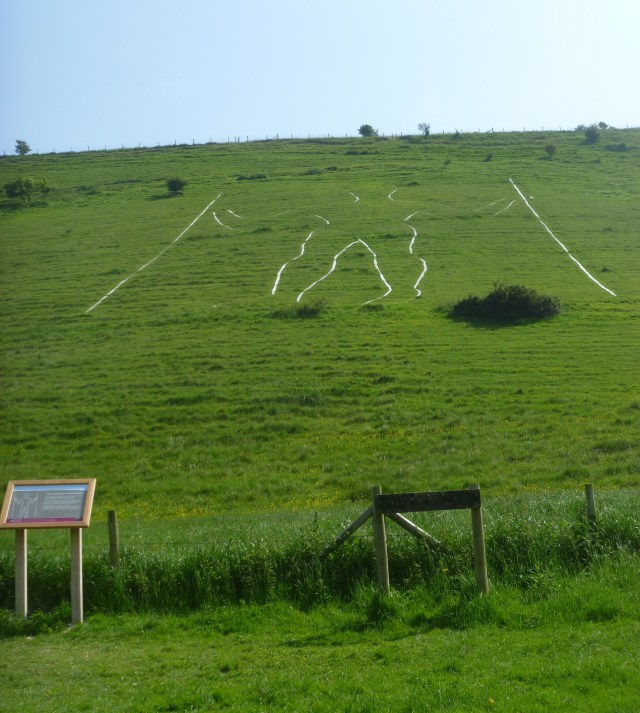
After tea and scones and jam we were ready for a little exercise so parked up in the small car park on the edge of Wilmington and walked about the half mile or so to the bottom of the hillside upon which he is marked out. The nearer you get to him the less of him there is to see. Still, it was a nice walk.

Approaching the Long Man

Approaching the Long Man

Close up

We Reach The Long Man

The enigmatic Long Man of Wilmington attracts many theories but provides little evidence to back them up. Now outlined in stone, he was formerly carved in the chalk of the hill. His first definite mention was as late as 1710, but the monument was old then. A picture drawn by bored monks, commemoration of the Saxon conquest of Pevensey, a Roman soldier or Neolithic god opening the gates of dawn. The ‘Long Man asking the traveller – like the Sphinx – to solve the dark mystery of its own origins’.” [Wealden Walks]

Wilmington Priory

Wilmington Priory

“The remains of a once highly regarded Benedictine Priory Wilmington Priory was a cell of the Benedictine Abbey at Grestain in Normandy. It was never a conventional priory with cloister and chapter, the monks prayed in the adjoining parish church where the thousand-year-old yews are testimony to the age of the site. The Priory has been added to and altered in every age and some of it has been lost to ruin and decay, but what is left shows how highly it was once regarded.” [Landmark Trust website]

Rear of Wilmington Priory

Rear of Wilmington Priory

Ruined Priory

The Ruined Priory

WP garden

Wilmington Priory Gardens

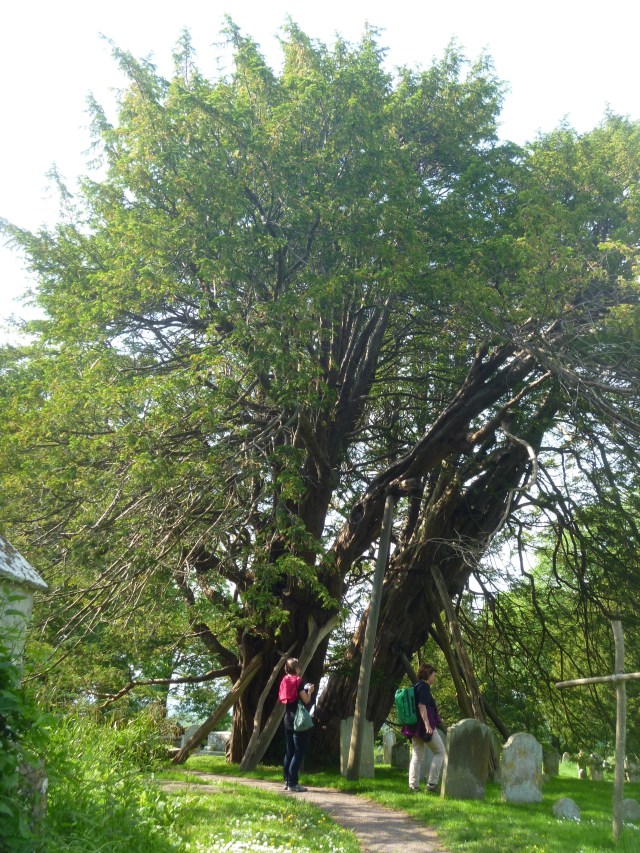
1000 year old yew

The 1,000 Year Old Yew Tree in the Churchyard

Laughton Place : The Tower of the Buckle

If Laughton is the Village of the Buckle then Laughton Place is the Tower of the Buckle. Buckles turned up everywhere. Regular Commenter here, and now good friend too, Fran, visited me twice during my stay and together we enjoyed spotting the buckles. Here are the ones we found and some other photos of the wonderful Laughton Place.

LP first evening

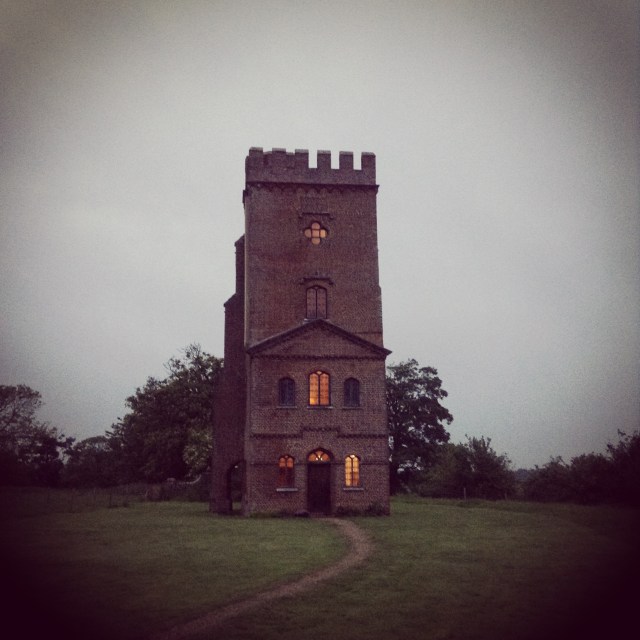
Laughton Place on the first evening

Laughton Place Day

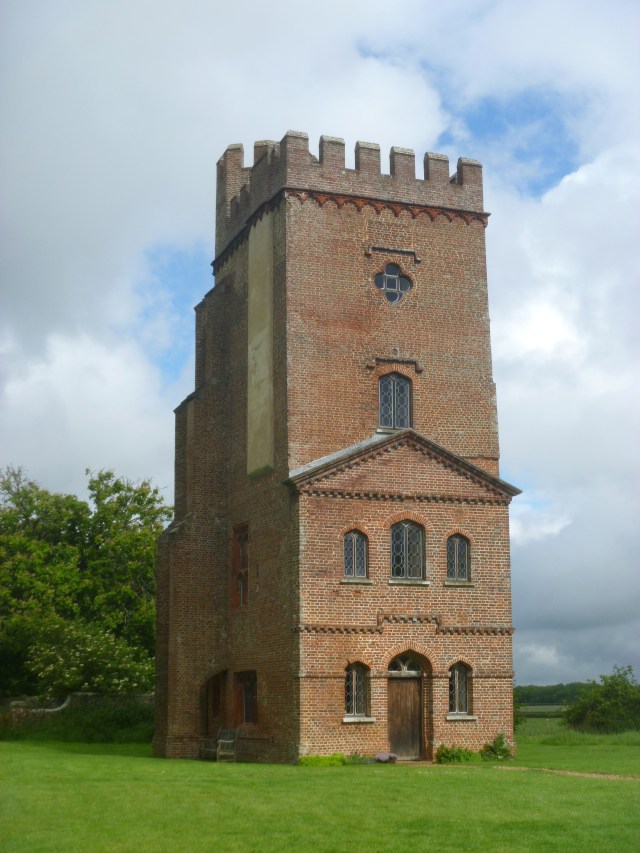
Laughton Place by day

The tower we see at Laughton today was built in 1534 by Sir William Pelham. It is all that survives of a house that existed from the 13th century until the 1950s, undergoing many alterations and rebuildings on the way. From 1401 until 1927 Laughton remained in the single ownership of the Pelham family, who owned great estates in Sussex. In the 15th and 16th centuries it was indeed their chief residence and it bears the emblem that they traditionally used to mark their property – the Pelham Buckle – claimed to have been won by military prowess at the Battle of Poitiers in 1356.

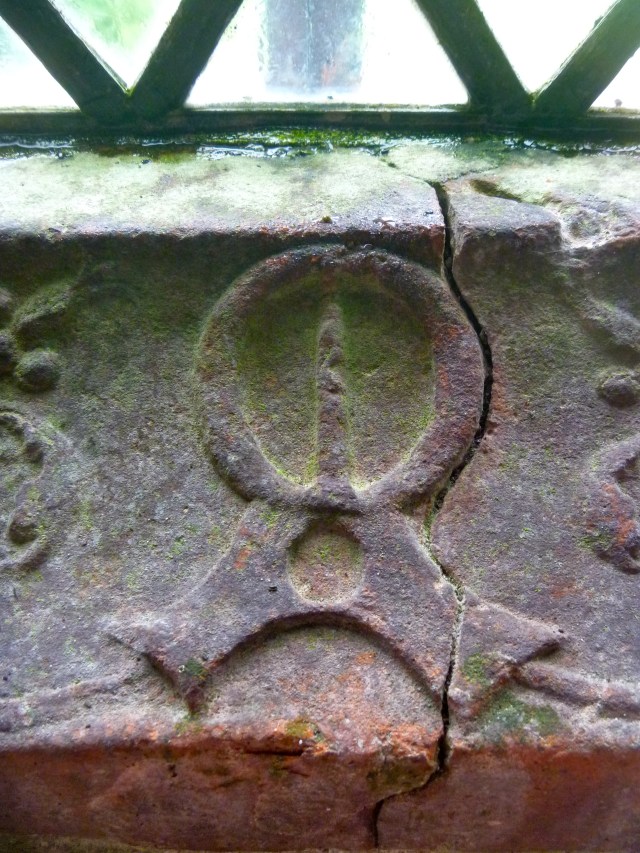
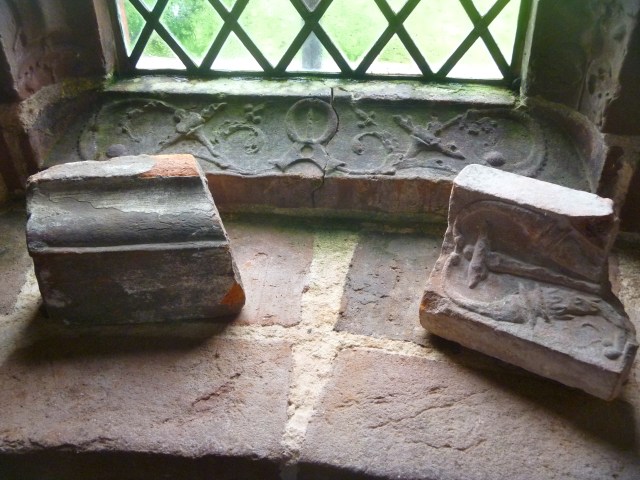
Terracotta Buckle

Unusual terracotta window frames

Terracotta Window Decoration with Buckle

In 1534 Sir William Pelham remodelled the house on a grand scale around a moated courtyard and with terracotta decoration in the newest Renaissance fashion. All that has survived is this bold brick tower, which stood close to the main hall as an outlook post and set of secure private rooms combined. By 1600 the family had abandoned Laughton, driven by the damp to build again on higher ground and slowly the house decayed.

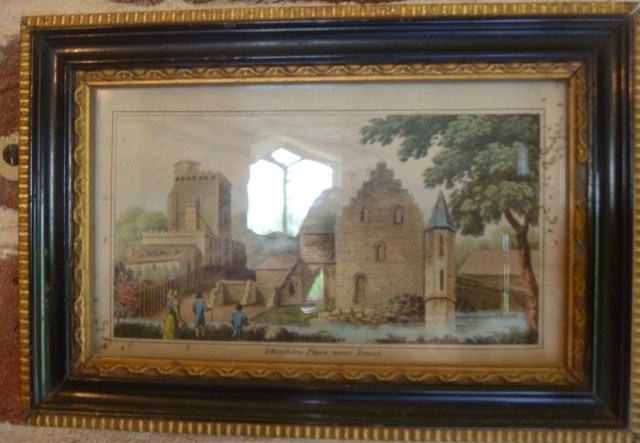
LP picture

In 1753, Henry Pelham, politician and brother to the splendid Duke of Newcastle, had the idea of surrounding the tower with a new Gothick farmhouse. The result was very charming, with a pediment between crenellated side-wings, and pointed windows. Thus it continued until sold by the Pelhams in 1927. The new owner pulled down the wings, leaving only the tower. Laughton Place stands, with a couple of other buildings, within the wide circle of the Downs, down a long drive.

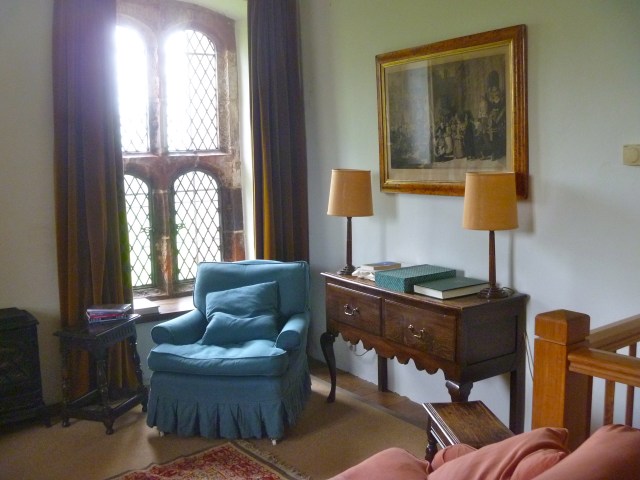
Sitting room, LP

The plain, but comfortable, sitting room

When the Landmark Trust bought it in 1978 the tower had great cracks in its sides and the floors had fallen in – much engineering and lime mortar went into its repair. The rooms inside are plain, apart from the delicate arabesque decoration of the terracotta windows, the moulded terracotta doors and the Pelham Buckle.” 

[Adapted from The Landmark Trust website]

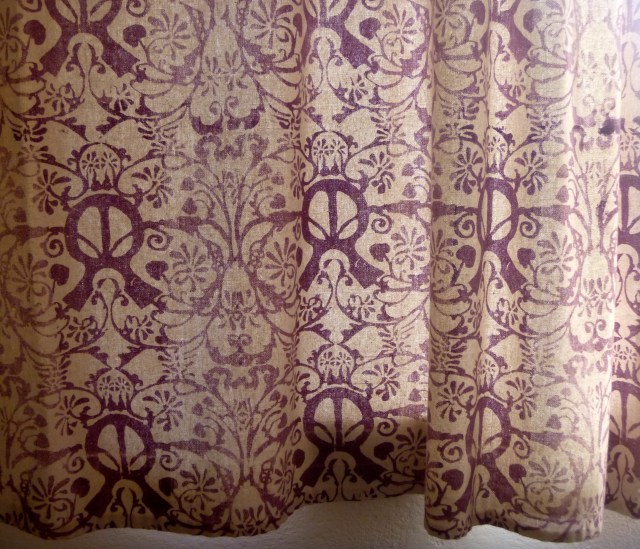
Buckle Curtains

Buckle Curtains

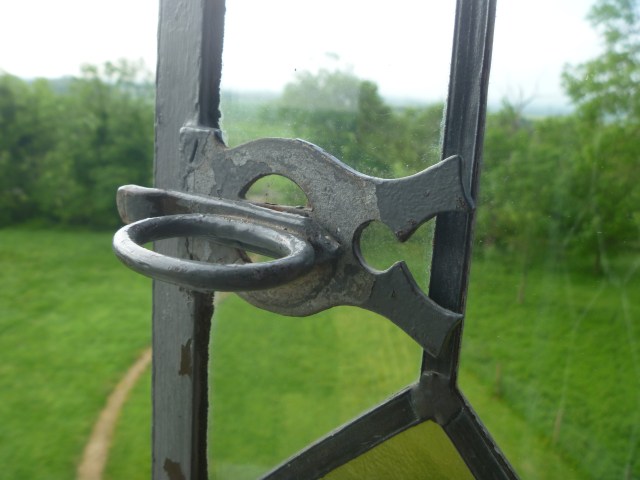
Window Catch

Buckle Window Catch

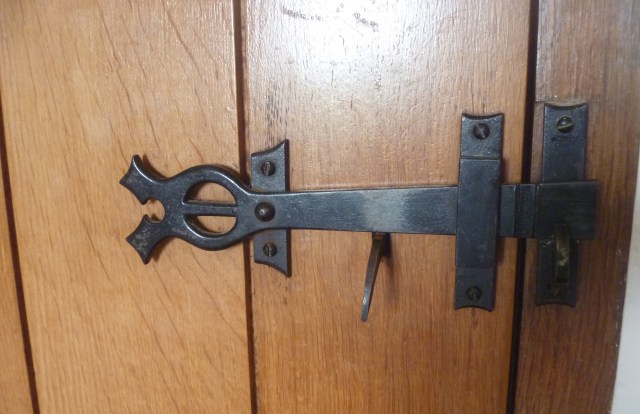
Door Latch

Buckle Door Latch

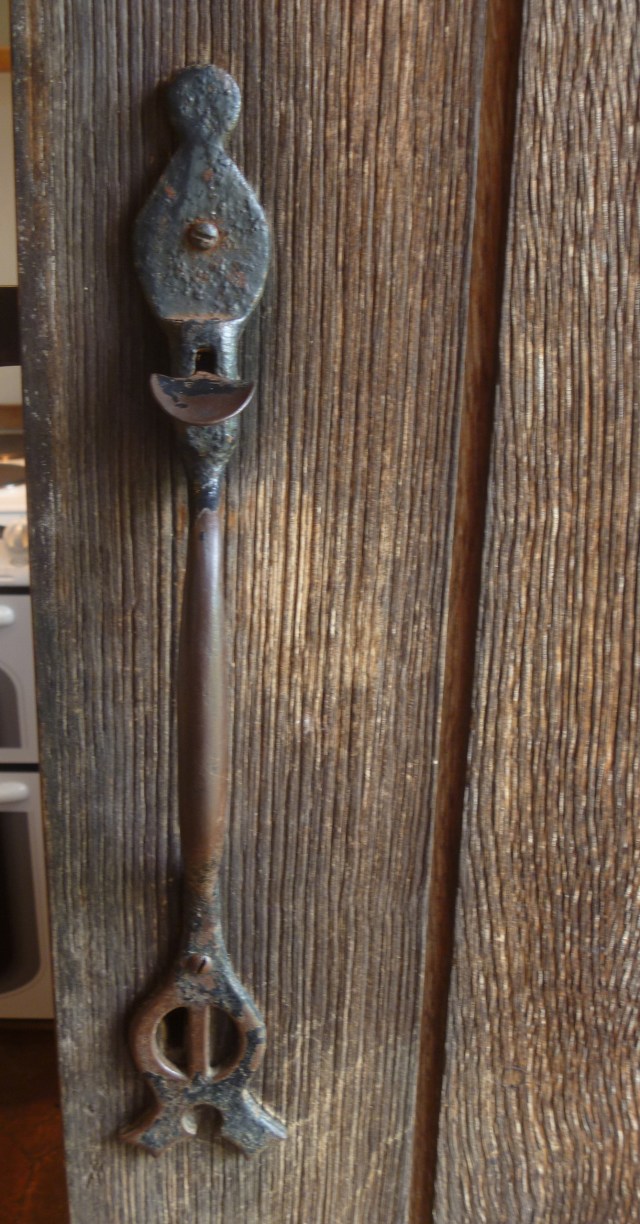
Front Door handle

Buckle Door Handle

View from the Tower - Laughton Place

View from the Tower Roof Platform

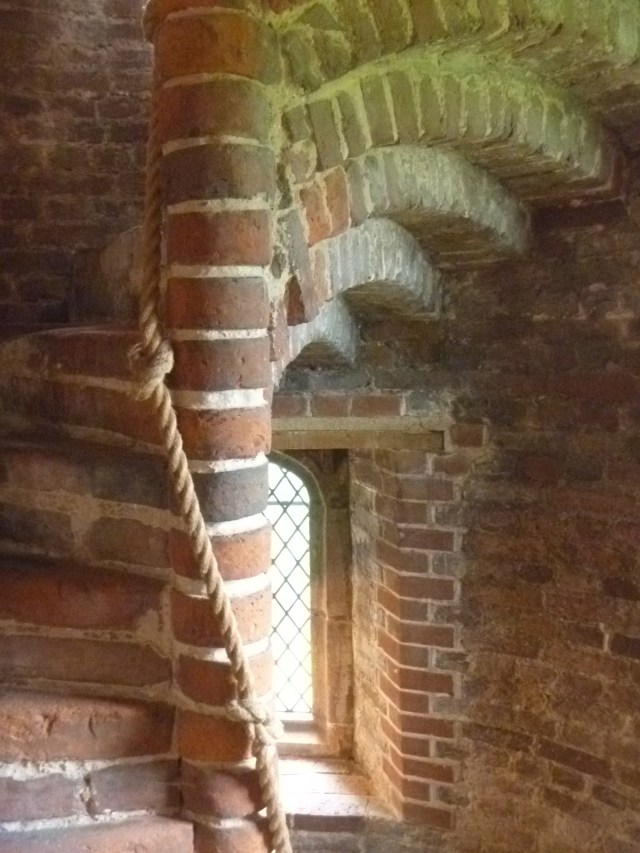
Over 60 steps

Over 60 steps lead up to the third floor bedroom

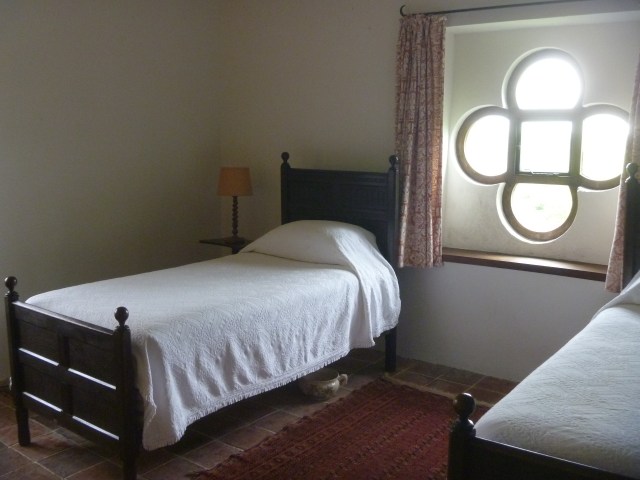
Twin Bedroom, Laughton Place

Third Floor Twin Bedroom

Laughton, East Sussex : The Village of the Buckle

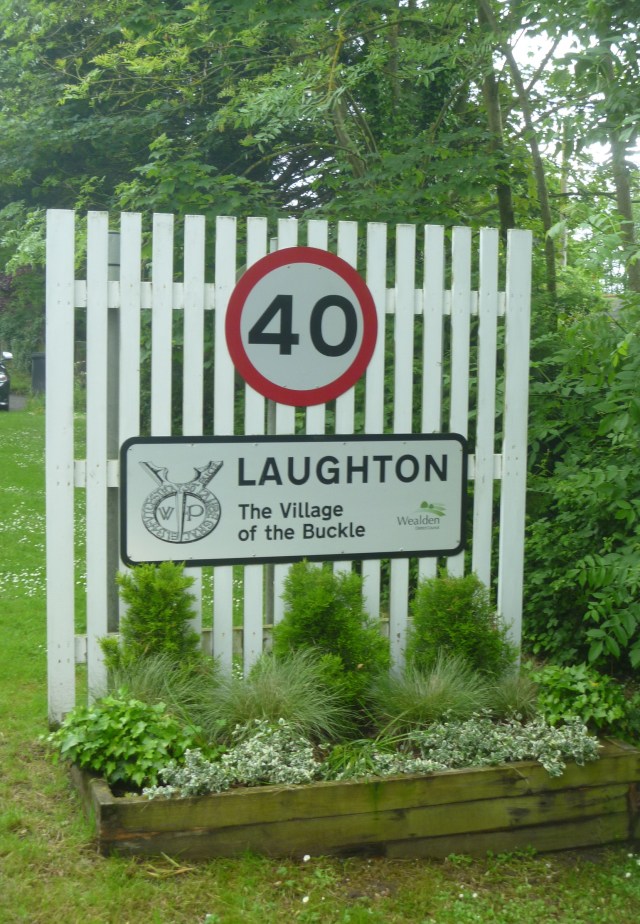
Road sign Laughton

Laughton in East Sussex lies about 5 miles NE of the county town of Lewes and that is where I spent 6 nights last week. Actually, not quite in Laughton itself but at the Landmark Trust property Laughton Place about a mile and a half from the village on foot but probably two miles by road. I’ll write more about Laughton Place next time but just show some pictures of the village and explain about the Buckle here.

What time ye French Sought to have Sackt Seafoord;

This Pelham did Repell them back Aboord”

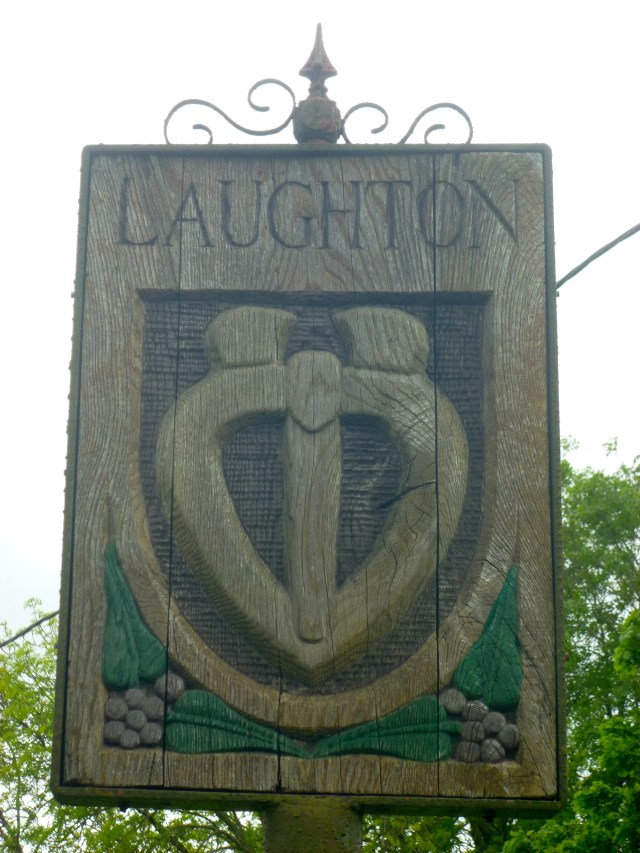
Laughton Village sign

This poem and the buckle on the village sign represent the colourful Pelham family whose own history dominates that of this area. During battle in 1356 Sir John Pelham managed to capture the King of France. The English king [Edward III] was so impressed that he removed the buckle of his sword belt and handed it to Sir John as a reward. It henceforth became the badge of the Pelhams and can be seen throughout the village. [Adapted from Wealden Walks leaflet]

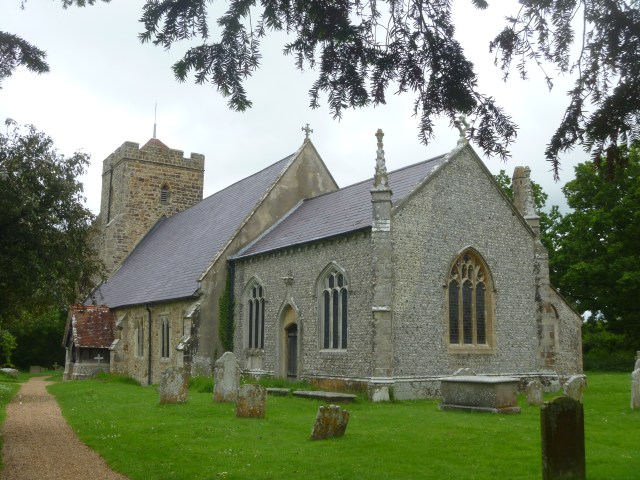
Laughton Church

All Saints Church, Laughton

Below Laughton church lie the remains of over sixty Pelhams, including two Prime Ministers [Henry Pelham (1694-1754) and his brother Thomas Pelham-Holles (1st Duke of Newcastle) (1693-1768)]. The latter rebuilt the chancel and donated a new set of bells to the church in 1724, which he had cast on the spot by a travelling founder.

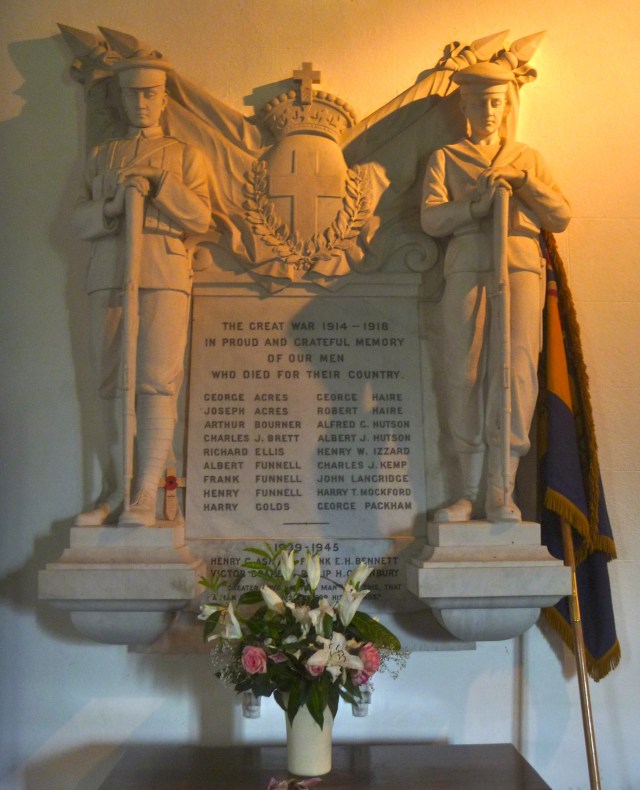
War Memorial Laughton Church

War Memorial in Laughton Church

“In front of the now blocked north door an impressive war memorial was erected in 1921 in honour of the eighteen Laughton men killed in the Great War. The striking war memorial in the nave was dedicated in 1921. Sculpted in Italy of Carrara marble, it was paid for in Italian lira to take advantage of the exchange rate at the time. Four names were added following World War II.” [Source]

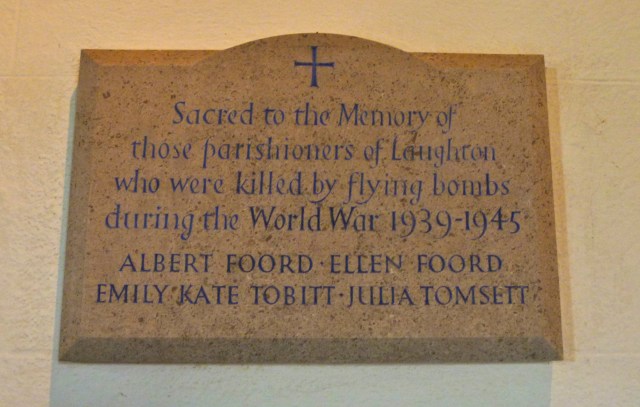
Flying Bombs memorial

A tablet on the same wall records the death of five people killed by a flying bomb in Shortgate.

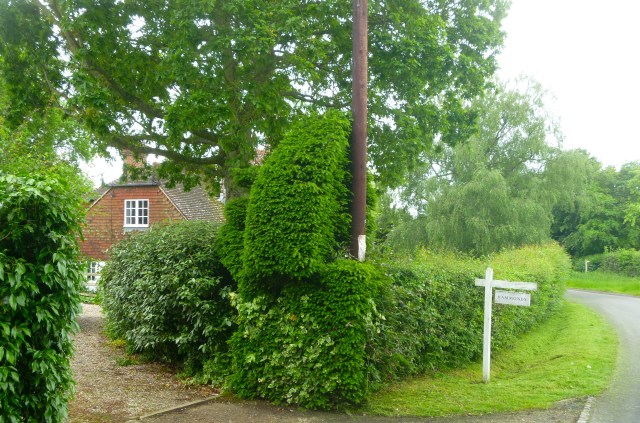
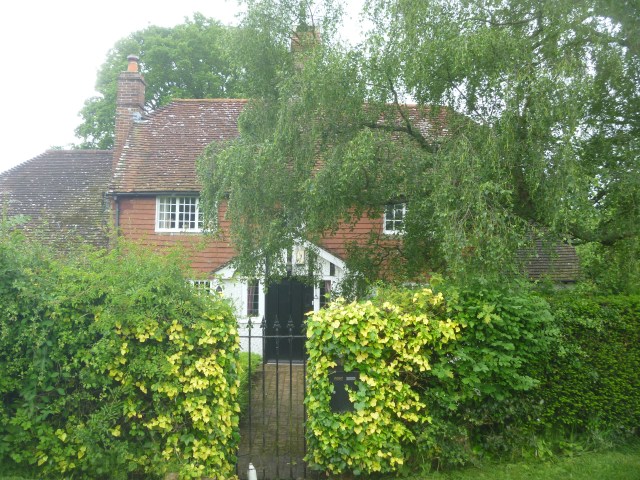
Laughton has a pub, the Roebuck (shouldn’t that be Roebuckle??) which I didn’t try and a village shop and Post Office, which I did. The kind shopkeeper was able to point me in the direction of The Hammonds where the poet and author Eleanor Farjeon lived during the First World War.

Hammonds

Hammonds Laughton

Eleanor Farjeon wrote The Little Bookroom for children and the Martin Pippin books which are based on the East Sussex countryside.

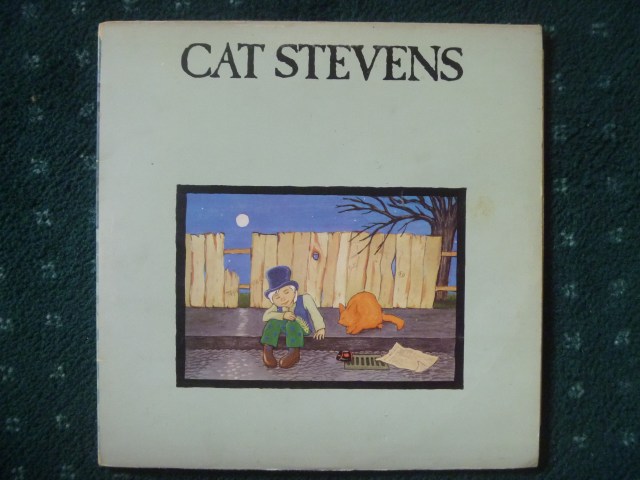
Farjeon is most famous for her hymn Morning Has Broken which became a popular track on Cat Stevens’ album .

Morning has broken,
like the first morning
Blackbird has spoken,
like the first bird
Praise for the singing,
praise for the morning
Praise for the springing
fresh from the word

Sweet the rain’s new fall,
sunlit from heaven
Like the first dewfall,
on the first grass
Praise for the sweetness
of the wet garden
Sprung in completeness
where his feet pass

Mine is the sunlight,
mine is the morning
Born of the one light,
Eden saw play
Praise with elation,
praise every morning
God’s recreation
of the new day

Oh, yes, we’ve still got our Teaser and the Firecat LP record (1971)!

Teaser and the Firecat

Teaser and the Firecat LP Cover


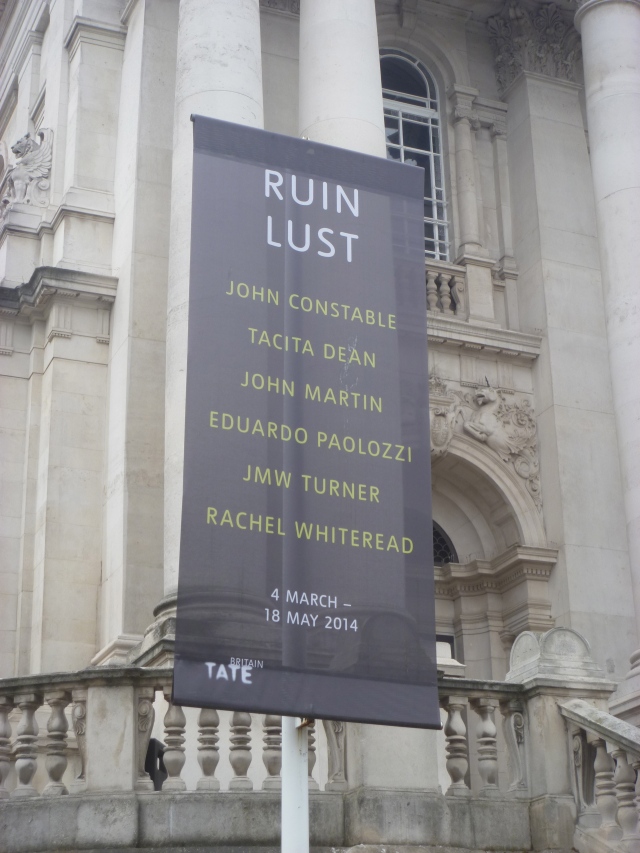
Ruin Lust at Tate Britain

RUIN : “The physical destruction or disintegration of something or the state of disintegrating or being destroyed”

According to the little leaflet that accompanies this Tate Britain exhibition the title Ruin Lust was taken from the German word Ruinenlust. 

Ruin Lust

Ruins are curious objects of desire: they seduce us with decay and destruction” it goes on to say. Although I found the whole show intriguing and was amazed at the countless interpretations of the word ‘ruin’, by far the most interesting part for me was the initial ‘Pleasure of Ruins’ section.

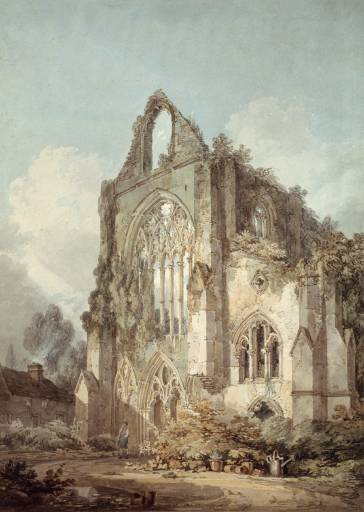
Ruins of West Front, Tintern Abbey circa 1794-5 by Joseph Mallord William Turner 1775-1851

W M Turner’s Tintern Abbey (1794) which was emblematic of the new trend to visit ruins at home rather than on a Grand European Tour.

Here were the traditional interpretations; the paintings, photographs and etchings that I had expected to see in an exhibition with this title. My interest in landscape and man’s influence on it is mainly historical. So, although I appreciate that modern day ‘Bunker Archaeology’ and Tacita Dean’s films and ‘Ruins in Reverse’ and [modern] ‘Cities in Dust’ all have a part to play in an overall picture of ruins over the centuries I prefer to see historical ruins of abbeys and castles and even the man-made ruins that gave character and focal points to 18th century landscape gardens.

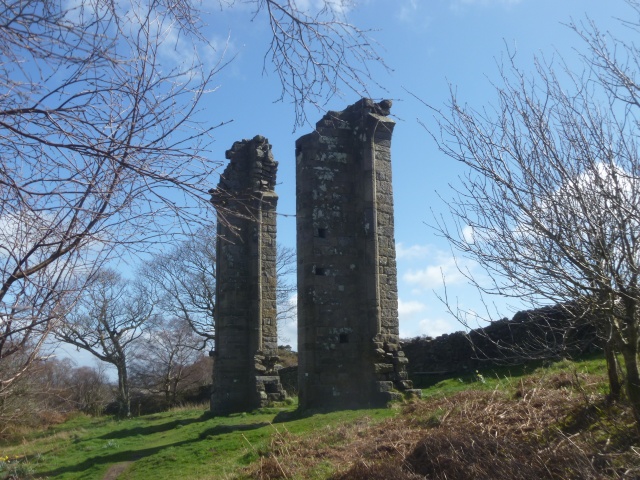
Leaving Yorke's Folly

The man-made Yorke’s Folly in Nidderdale, North Yorkshire built in 1810

“A craze for ruins gripped European culture in the eighteenth century. Classical remains inspired artists such as Piranesi to depict great civilisations falling into decay. British architects and garden designers embraced this ruinous aesthetic, and artificial ruins were a popular addition to many great estates. William Gilpin’s writings on the picturesque encouraged many tourists — as well as artists such as J.M.W. Turner and John Sell Cotman — to travel in search of picturesque views of medieval ruins. Later, photography became essential to the recording and reimagining of ruins.

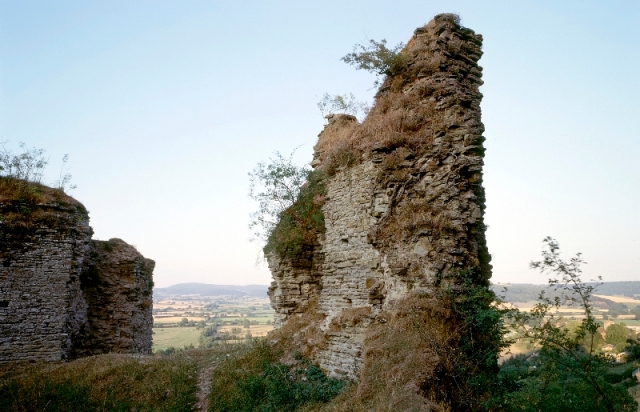
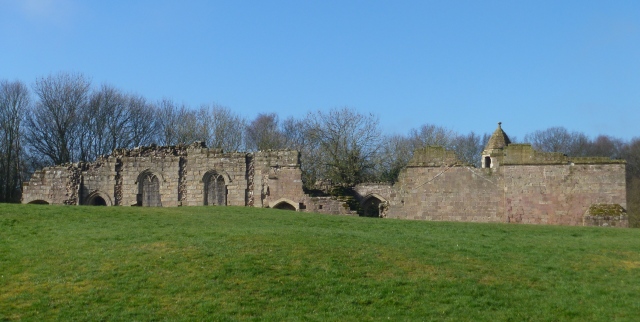
I remember reading in the newspaper probably 15 years ago [and commending] English Heritage’s intentions to conserve and deliberately retain the wildness surrounding Wigmore Castle in Herefordshire. Some ruins these days are just too manicured.

gallerywigmorecastle1

A GLORIOUS RUIN
Wigmore has an overgrown appearance that once characterised many ruined sites. When conserving the site in the 1990s, English Heritage deliberately retained its wildness, as the castle had become home to rare and unusual species including lesser horseshoe bats and wild flowers like ploughman’s spikenard. Accumulated debris was allowed to remain, and the grasses, ferns and flowers growing on the walls were carefully lifted up and replaced as ‘soft-capping’ to protect the walls from rain and more destructive plants like trees. [From the EH website]

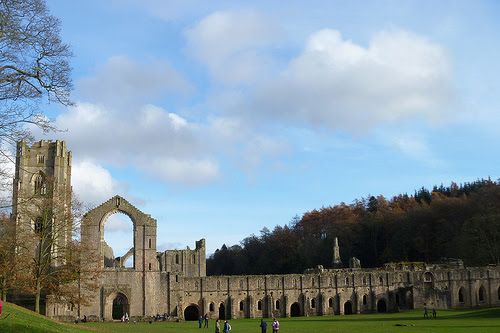
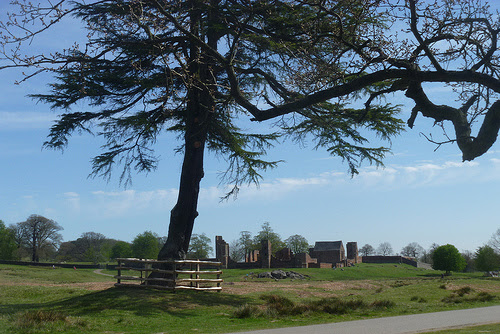
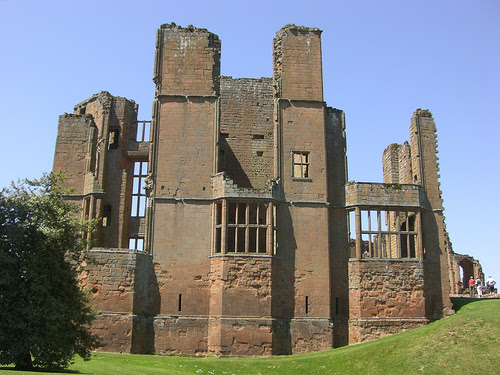
To finish here are some recently visited picturesque ruins in Yorkshire and beyond.

Fountains Abbey

Fountains Abbey

The Ruin

The Ruin a Landmark Trust property at Hackfall, North Yorkshire

Bradgate Park

Ruins of the former home of Lady Jane Grey, Bradgate Park, Leicester

Kenilworth

The Ruins of Kenilworth Castle

Spofforth Castle

Spofforth Castle, Yorkshire, visited on a recent hike

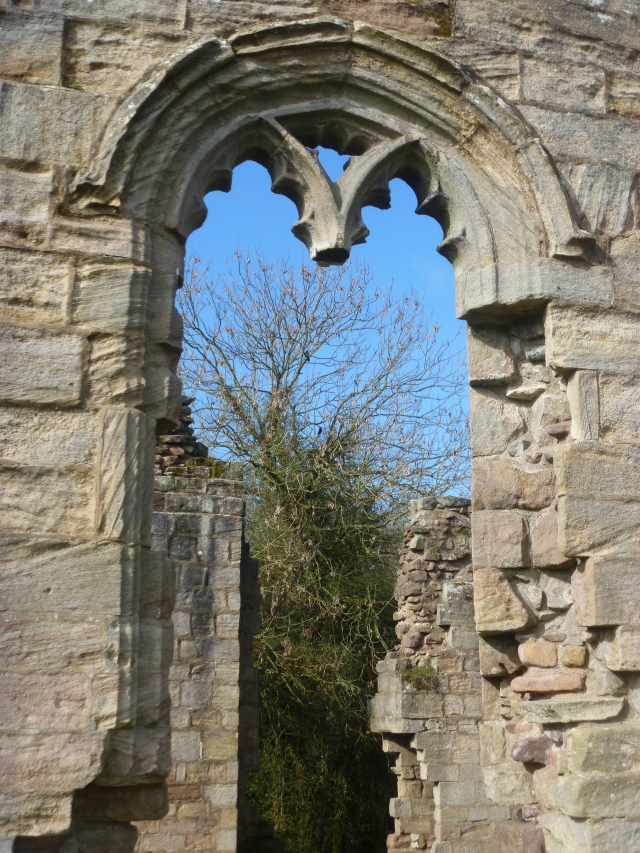
Window ruin Spofforth

Ruined Window, Spofforth Castle

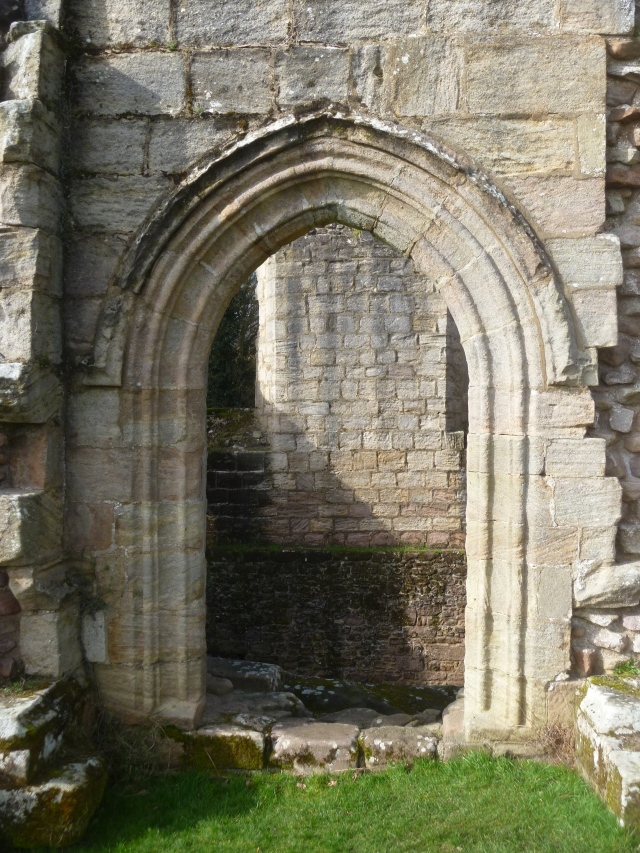
Doorway ruin Spofforth

Ruined Doorway, Spofforth Castle

Here is a brief review of the exhibition by Christopher Beanland; which finished by showing ‘The London Nobody Knows’ documentary featuring James Mason in the derelict Bedford Theatre in Camden. The unabridged film is now available on DVD.