Lundy – Cooking on My Island of Dreams

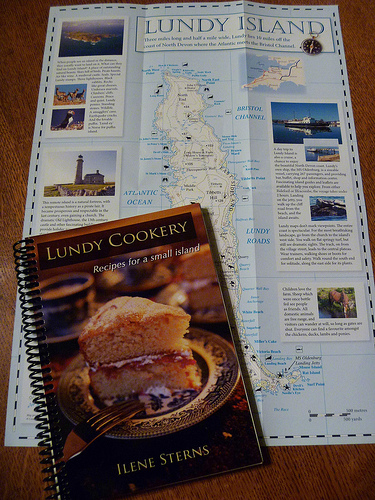
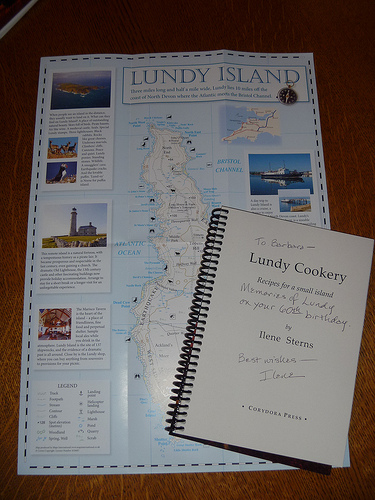
I’ve been celebrating my birthday over the past few days. I’ve received lots of cards and flowers and some lovely gifts including several books. Only one of these book gifts was what I would call a ‘reading book’.  The other books include a photo book celebrating a friendship and places visited, a set of LV European City Guides, a book by Rob Ryan and … ‘Lundy Cookery: recipes for a small island‘ by Ilene Sterns. The book is published by Corydora Press who have formed their own FlickR group ‘Lundy Cookery Around The World’. My friends also managed to get Ilene to sign it especially for me!
I’ve twice visited Lundy, an island in the Bristol Channel 3 miles long by half a mile wide, as a day tripper by boat from Ilfracombe. The journey takes about two hours on the MS Oldenburg and fortunately on both occasions the Bristol Channel was as still as a millpond! Sailings are in the spring and summer months from about the beginning of April to the end of  October. During the remaining months Lundy is a mere 7 minute helicopter ride from Hartland Point, 20 miles west of Bideford on the north Devon coast.
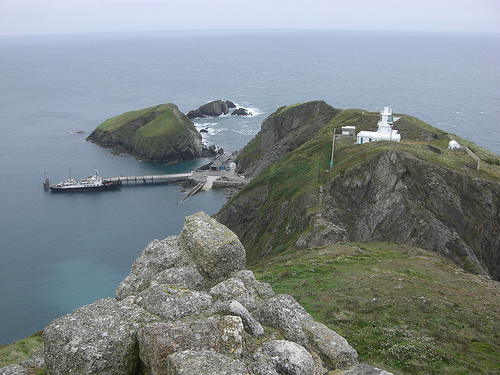
The MS Oldenburg tied up at the Lundy quayside

Lundy, or Puffin Island, is owned by the National Trust (so there’s a small discount on the sailing price for members) and the 23 self-catering holiday properties are managed by the Landmark Trust. It’s an uphill trek from the quay to the village but when you get there there’s a pub – The Marisco Tavern – and a shop and a cluster of buildings – some farm and some holiday accommodation. My first stop has been at the pub each time for sustenance and then a call at the shop for postcards and Lundy stamps and then I have taken a walk. There are marvellous views of the north Devon coast and the paths are clear and grassy. One walk was up the east side to Threequarters Wall and across to the west side and back down to the Old Light, the cemetery and St Helena’s Church. On my second visit a much shorter walk was to the Castle, the South West Point and back up to the Old Light. Then a final cup of tea at the Marisco before heading back down to the Quay and the awaiting boat.
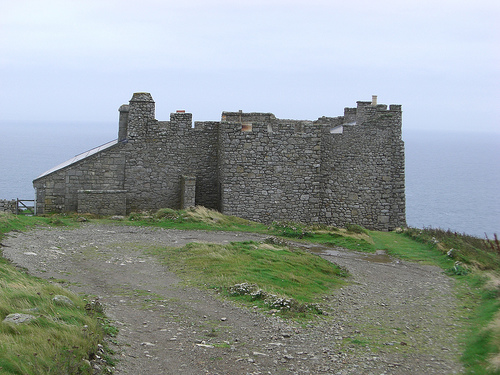
Lundy Castle and Approach Track

In her introduction to Lundy Cookery Ilene reminded me what a treasure trove and Aladdin’s Cave the shop was despite its remote location. All Lundy Landmark kitchens are well equipped with basic cooking equipment but they do lack weighing scales, liquidisers, toasters and loaf tins. Ilene’s recipes manage to get around these would-be problems. In particular her recipes specify quantities by volume rather than by weight. She has also included a useful section which she has called ‘Salmagundi’ *- it’s about minimising food waste and lists ingredients alphabetically linking them to recipes in the book. For example under Honey she lists 6 dishes included in the book including Honey Mustard Vinaigrette (p.98), Lundy Mess (p.116) and then suggests some other uses. Waste not want on Lundy Island. There’s a useful index too.

*Definition: a salad plate of chopped meats, anchovies, eggs, and vegetables arranged in rows for contrast and dressed with a salad dressing. (http://www.merriam-webster.com/dictionary/salmagundi) Sounds good to me!

“Most of the book’s recipes are simple and quick to prepare, so you won’t be stuck in the kitchen when you’d rather be outdoors.” (p. 2) Now that’s my kind of cookery book!
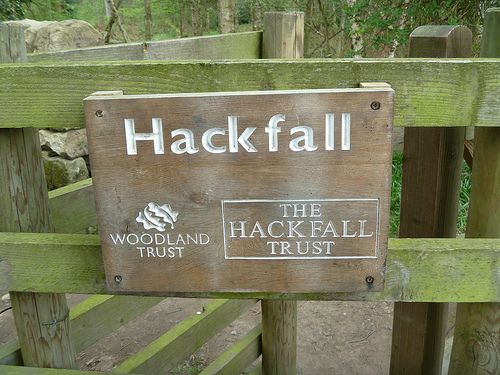
A walk in the woods: a Ruin, follies and another Turner view

A Walk in the Woods‘ is one of my favourite walks in Yorkshire. I made three visits last year. The walk starts from Masham car park and initially follows the Ripon Rowel route alongside the River Ure. After about 3 miles you enter Hackfall Woods.

There’s a choice of walks through the woods and all of them include views of the river and follies. The first viewpoint is Limehouse Hill. At the top turn and look back to see the river and the spire of Masham Church from where you have just walked. I think you can just about spot it right in the middle of the picture.

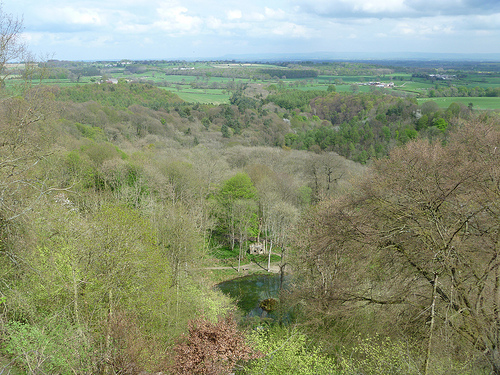
The next view is pretty special. There’s a seat at Sandbed Hut and from this point William Mallord Turner painted his view of Hackfall. The painting itself forms part of the Wallace Collection in London. In the distance is Mowbray Castle a mock ruin thought to have been built for William Aislabie some time between 1750 and 1767.

John Aislabie of Studley Royal bought Hackfall in 1731 but it was his son William who set about transforming the woods into an ornamental landscape in 1749/1750 and this work continued until around 1767. The Hackfall website includes a potted history of the site and here’s a list of the features Aislablie created :

“1750 Fisher’s Hall was completed, inscribed on plaque above the door.

1751 The view from Limehouse Hill to Masham church was created by felling trees and digging a ditch.

1752 Work on the reservoir above the 40 foot Fails and ‘Alcoves in ye wood’.

1755 Kent’s Seat completed.

1755 Planting and work on a wooden stable at Hackfall it is thought near to Fishers Hall.

1756 Fountain Pond dug and Rustic Temple completed.

1766 Work started on the Banqueting House at Mowbray Point. The pond at the entrance to the Grewelthorpe Beck valley and wiers had been completed; Fisher’s Hall was used for entertaining guests; Nicholas Dall the landscape artist painted two views of Hackfall.

(1768 William Aislabie purchased Fountains Abbey ruins and set about incorporating the Abbey into Studley Royal gardens.)”

William died at Studley Royal in 1781.

It’s good to see that the Hackfall Trust, founded in 1988, are restoring many of the paths and features. But they are not the only ‘Trust’ to be involved in preservation and conservation at Hackfall. The piece de resistance is the former Banqueting House mentioned above which is now owned by the Landmark Trust and let as holiday accommodation for two people. The public path out of Hackfall Woods (after a gentle climb) emerges onto the terrace of the Ruin (as it is now called) from where there’s a marvellous view over the wood and landscape beyond.

 View of Hackfall from the terrace at The Ruin
The Landmark Trust hold regular Open Days at some of their properties throughout the year and the Ruin is one that is regularly open one weekend each September :

The Ruin

Hackfall, North Yorkshire

Saturday 8 to Sunday 9 September 2012 10am to 4pm

As part of Heritage Open Days

This little pavilion is dramatically perched above a steep wooded gorge, in the remnants of an outstanding mid eighteenth-century garden at Hackfall, conceived and created by the Aislabies.

The walk then leaves this fascinating area of woodland and continues through Oak Bank, Nutwith Common (sounds like somewhere out of a Rupert Bear story!), along Roomer Lane and with a glance at Swinton Park the last section of the walk is along the quiet roadside between the Park and Masham.

Swinton Castle, near Masham, now a posh hotel, was bought in 1882 by Samuel Cunliffe-Lister born at Calverley Old Hall (another Landmark Trust property) and later owner of Lister’s Mill (also known as Manningham Mill) in Heaton, Bradford.

If you’ve time there are some good tea shops and pubs for refreshments in Masham and I recommend The White Bear Hotel where, if the weather is fine, as it was for me, you can have tea or something stronger on their terrace outside.

Princelet Street – A Landmark Library Reviewed

One thing I should point out about in case you didn’t already know is that there are no tellys at Landmark Trust properties. Self-made entertainment is the order of the day. Each property usually has a small supply of jigsaws and every one also has its own library. I have already mentioned Landmark Libraries here.

There are all the reference books needed to find your way around the area, check spellings during Scrabble games or whilst doing a crossword, the trusty latest edition of The Handbook, a Bible and some recipe books NB here these consist of a Madhur Jaffery and The Paupers’ Cookbook and there is always the local Pevsner architectural guide.

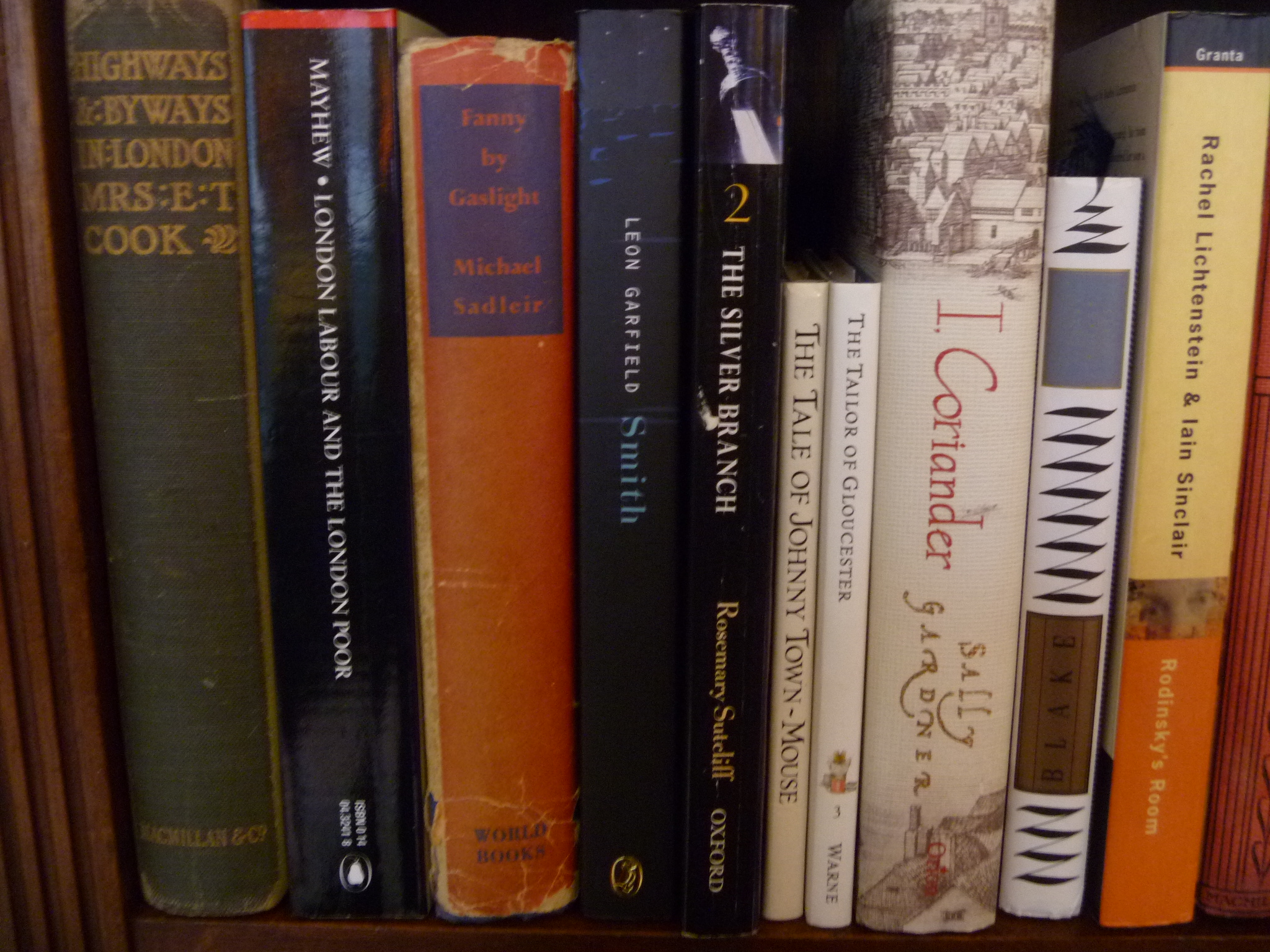
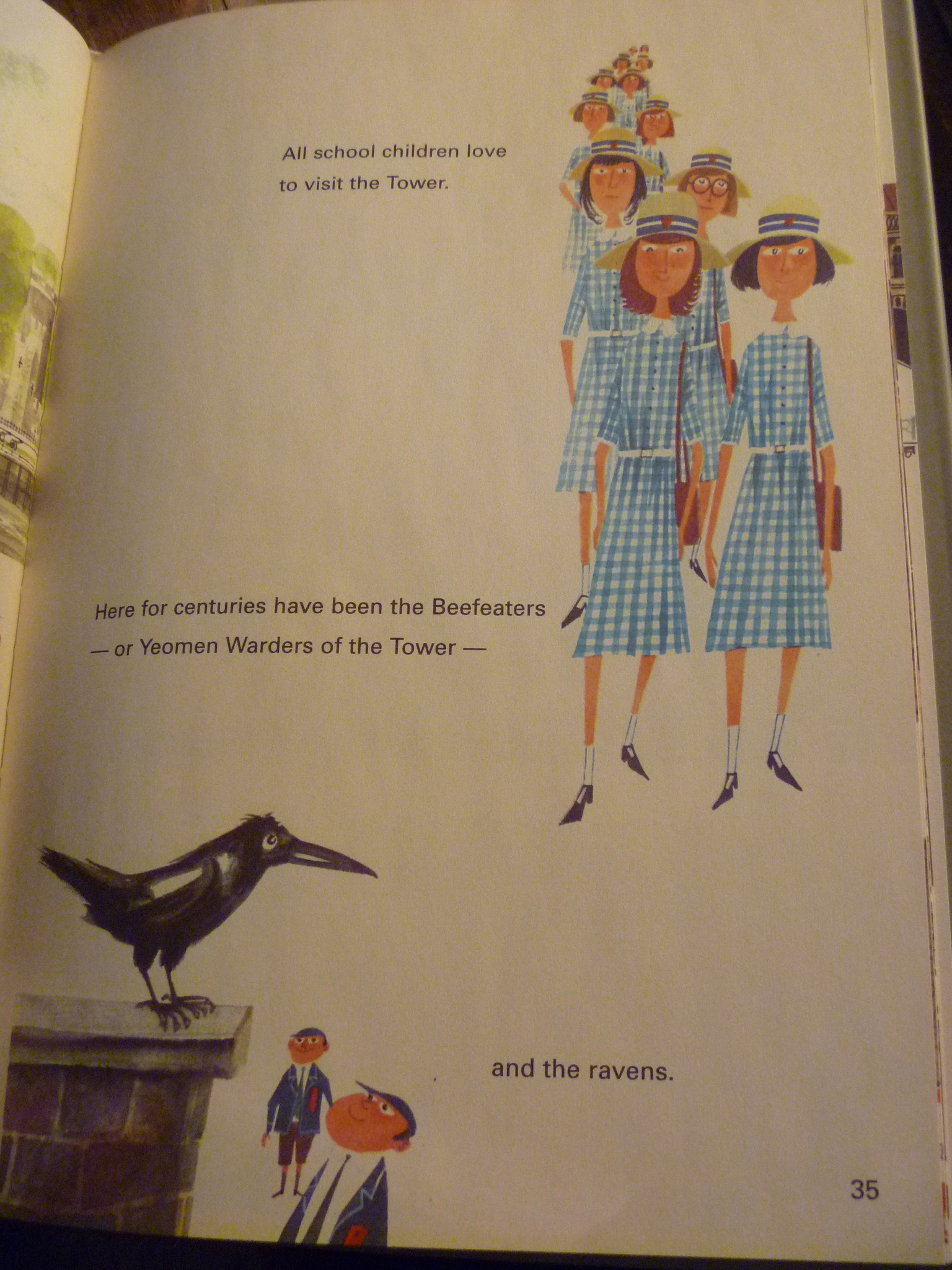
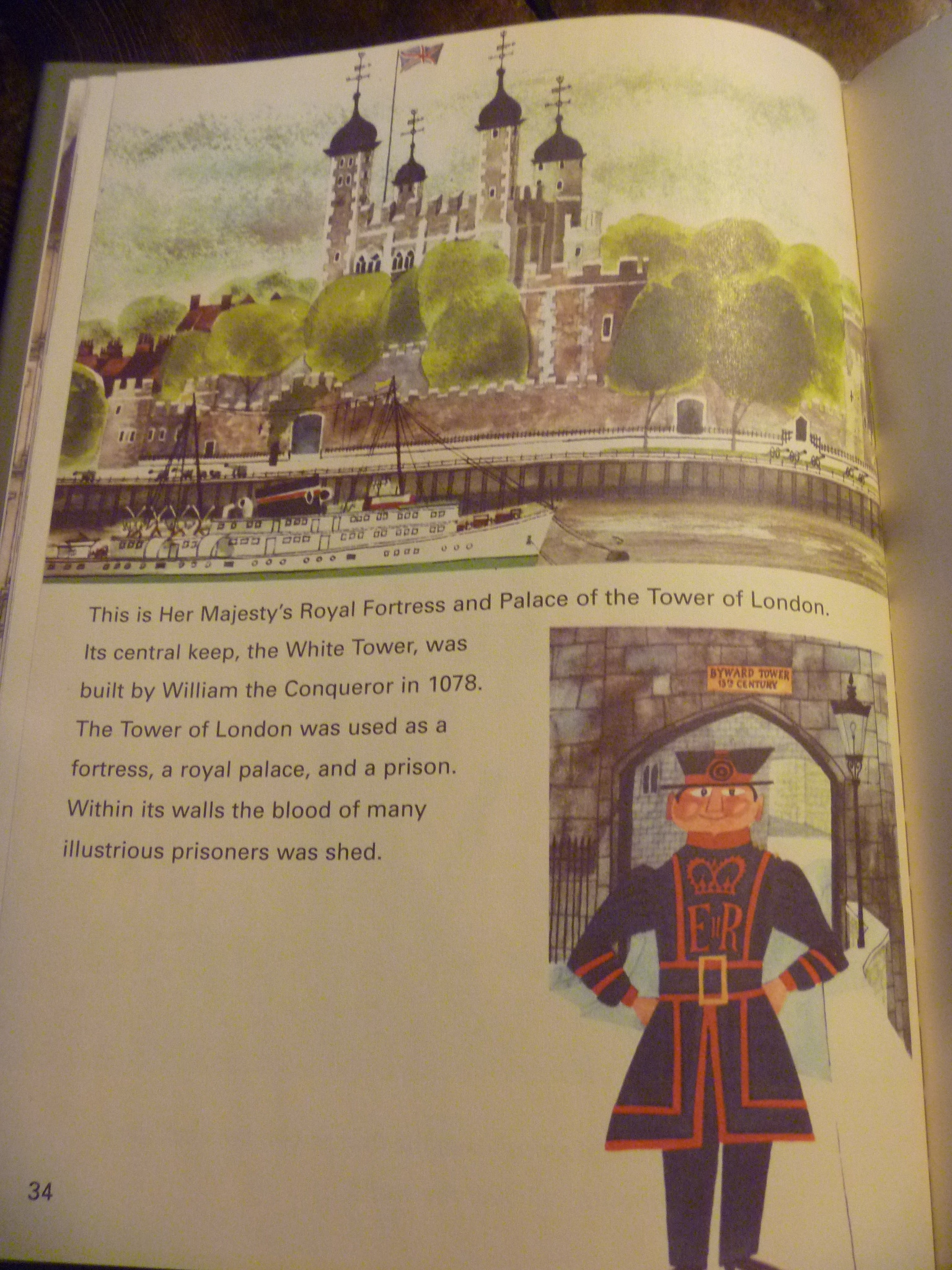
Here at Princelet Street the children’s and young people’s books include that lovely ‘This is London’ featured in the previous post about The Tower of London, some Beatrix Potter books and well-chosen titles by Rosemary Sutcliff, Leon Garfield and Sally Gardner.

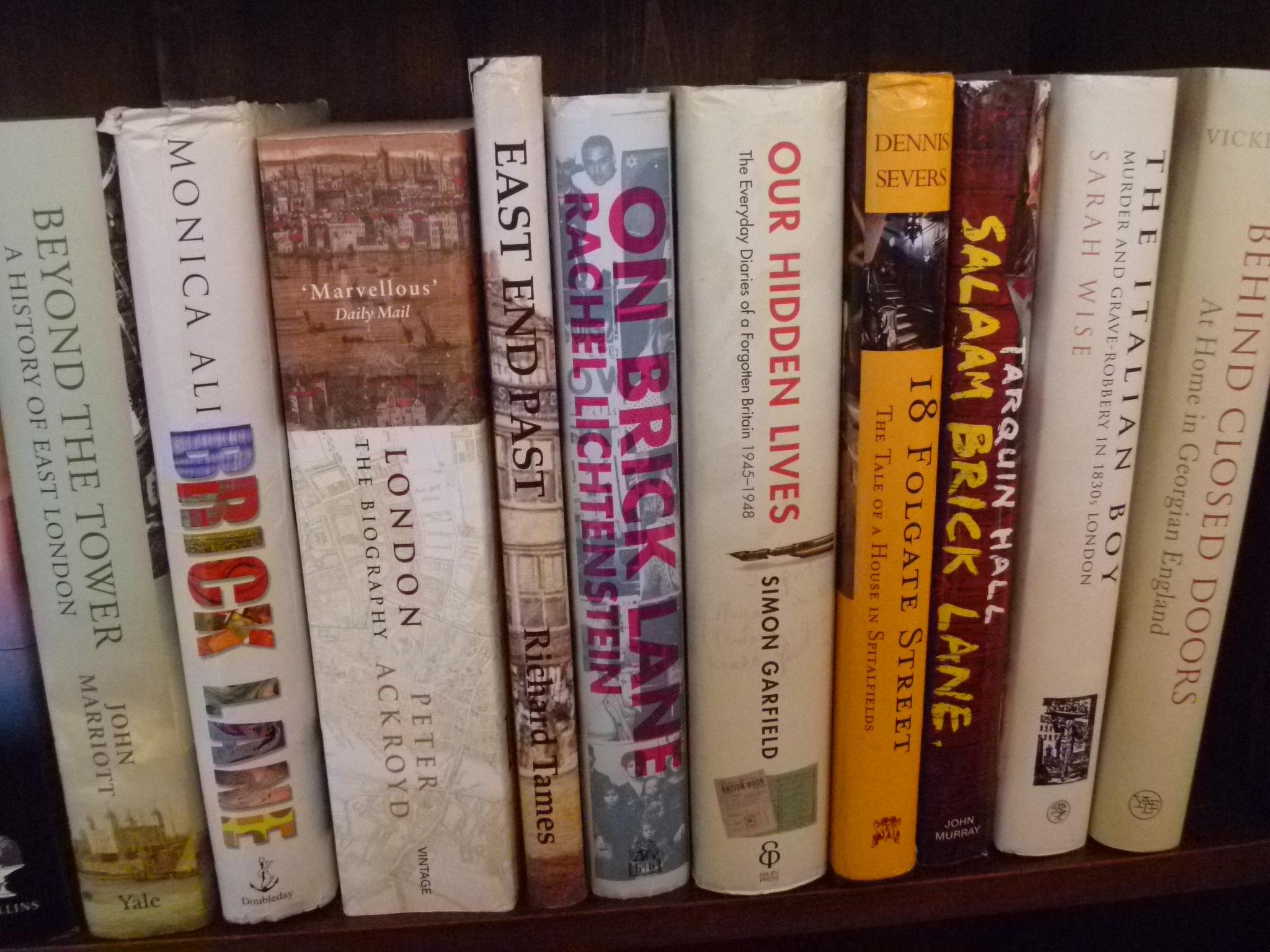
Of course, you can’t stay within a stone’s throw of Brick Lane without finding a copy of Monica Ali’s book of the same name on the bookshelves.

There is also ‘On Brick Lane’ by Rachel Lichtenstein (her grandparents came here from Poland in the 1930s). A book I noticed on a previous visit and read shortly after. It’s a history of the neighbourhood and the different nationalities and cultures that lived here in Spitalfields and an excellent introduction to the area. ‘Rodinsky’s Room’ is another of Rachel L’s books and the result of her investigation together with Iain Sinclair into the strange mystery of the disappearance in the 1960s of David Rodinsky from his room above the synagogue in Princelet Street itself. It’s another book that I bought after seeing it here although I haven’t read it yet.

“Rodinsky’s world was that of the East European Jewry, cabbalistic speculation, an obsession with language as code and terrible loss. He touched the imagination of artist Rachel Lichtenstein, whose grandparents had left Poland in the thirties. This text weaves together Lichtenstein’s quest for Rodinsky -which took her to Poland, to Israel and around Jewish London -with Iain Sinclair’s meditations on her journey into her own past, and on the Whitechapel he has reinvented.” [From Amazon product description].

The area has been well researched, not only by Lichtenstein. My sister read me all sorts of stuff about the churches in the City and about walks in the East End. And not surprisingly, books on architecture feature strongly, and not only church architecture. I loved this title and mused for a while flicking through looking at the sketchy illustrations of buildings.

Peter Ackroyd’s biography of London is here as well as his novel ‘Hawksmoor’ a dramatisation of which was broadcast on the radio a few years ago. It’s about the architect Nicholas Hawksmoor and the building of Christ Church, Spitalfields, a couple of streets away. I could not find that recording but I have found an interview with Ackroyd talking about ‘Hawksmoor’ with James Naughtie on Book Club on Radio 4, here.

And here also, is dear Amanda Vickery’s ‘Behind Closed Doors’. Very apt for this house as the TV programme ‘At Home with the Georgians’ featured nearby Denis Severs House (that book is here too: 18, Folgate Street).

It would also be impossible to have a library books in London without featuring several Charles Dickens titles.

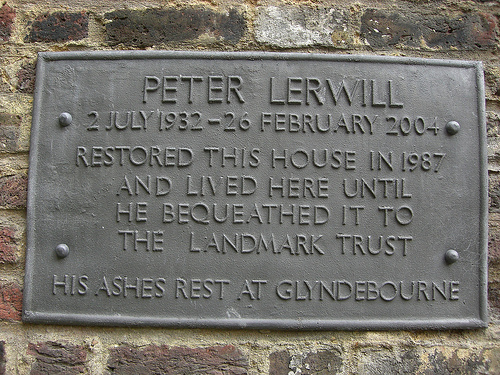
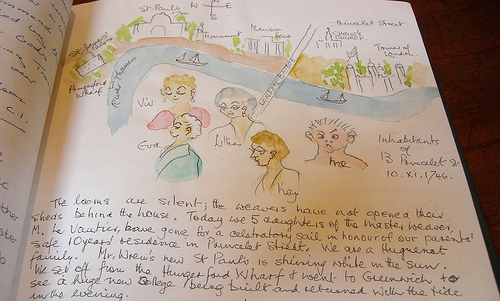
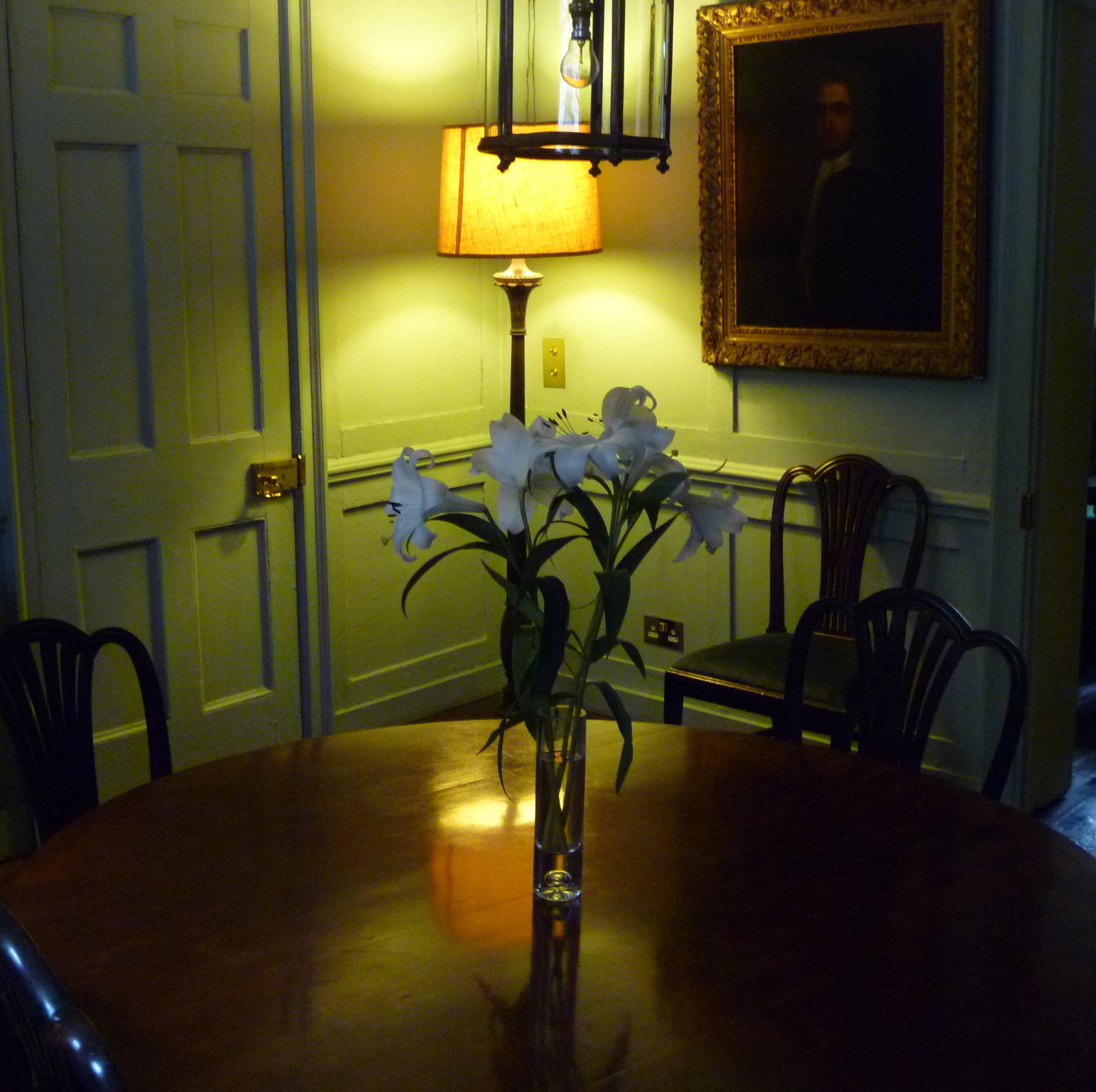
Finally, the Landmark Trust supply their own History Album at every property. This makes fascinating reading as their investigations into the buildings and their histories are rigorous to a degree. 13, Princelet Street was left to the Trust by Peter Lerwill who bought the house and renovated it very much in the LT fashion. There was little more for the Trust to do when they took over other than decorate, equip and furnish the house ready for its guests . There is still a detailed history album on the shelves.

But possibly the best source of Landmark entertainment of an evening is the reading aloud of the many comments in The Log Book.


I was sent to The Tower – but I kept my head!

I’ve just returned from a couple of nights in London staying at the lovely Landmark Trust property at 13, Princelet Street. The house was built in 1719 in the Spitalfields area of east London for Huguenot silk weavers. It’s a lovely, warm, characterful house with all the comforts you could wish for on a cold winter’s evening in the east end of London when the wind and rain are blowing outside – as they were on our first evening. Fetch a takeaway curry from one of about 50 curry houses on Brick Lane, then over a cup of tea inspect the Landmark Library and plan the next day’s entertainment, review the day that’s just finished or take up the Landmark Handbook and plan another trip. I visited the house for a Friends’ Reception last October and wrote about it here.

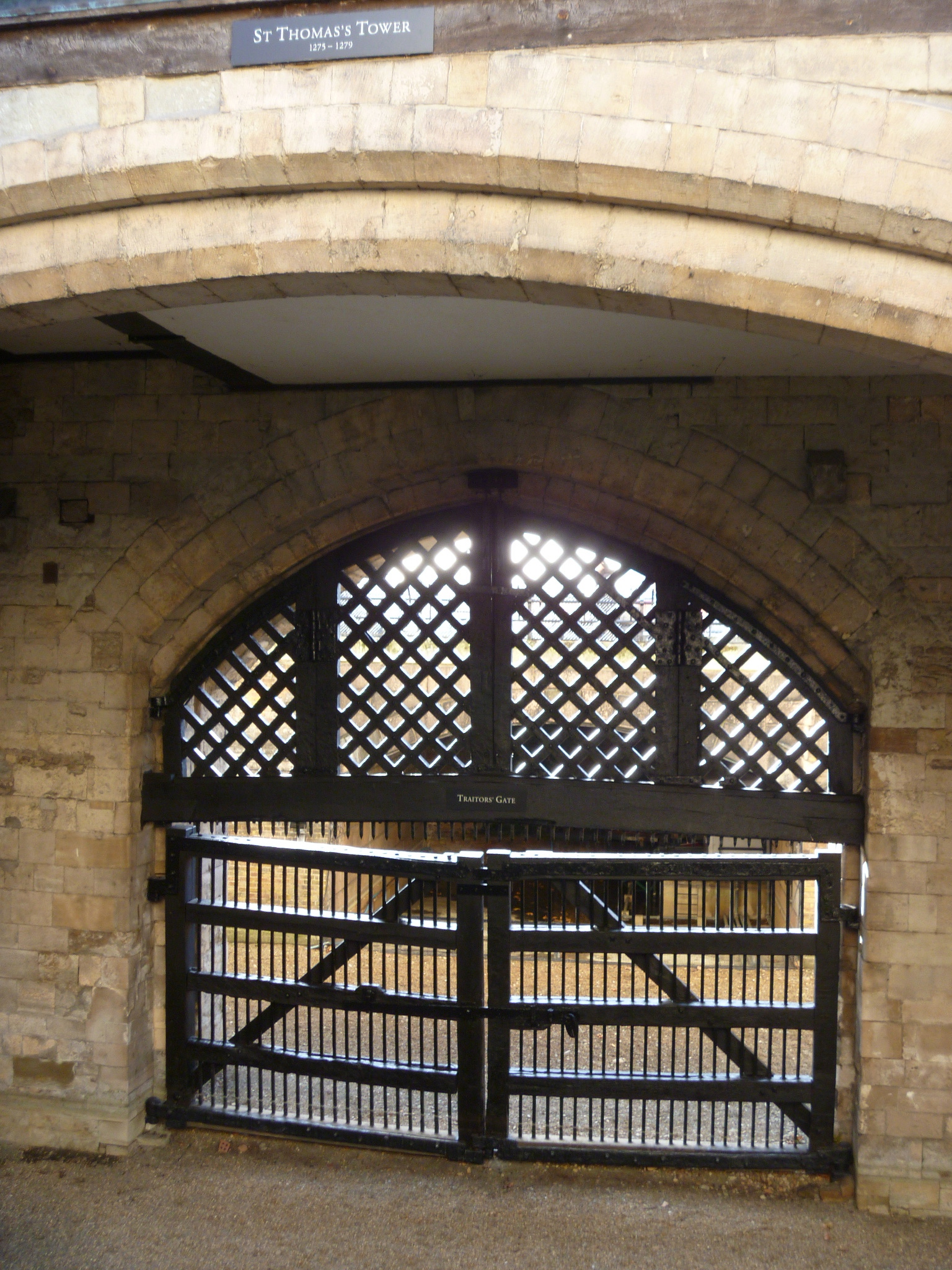
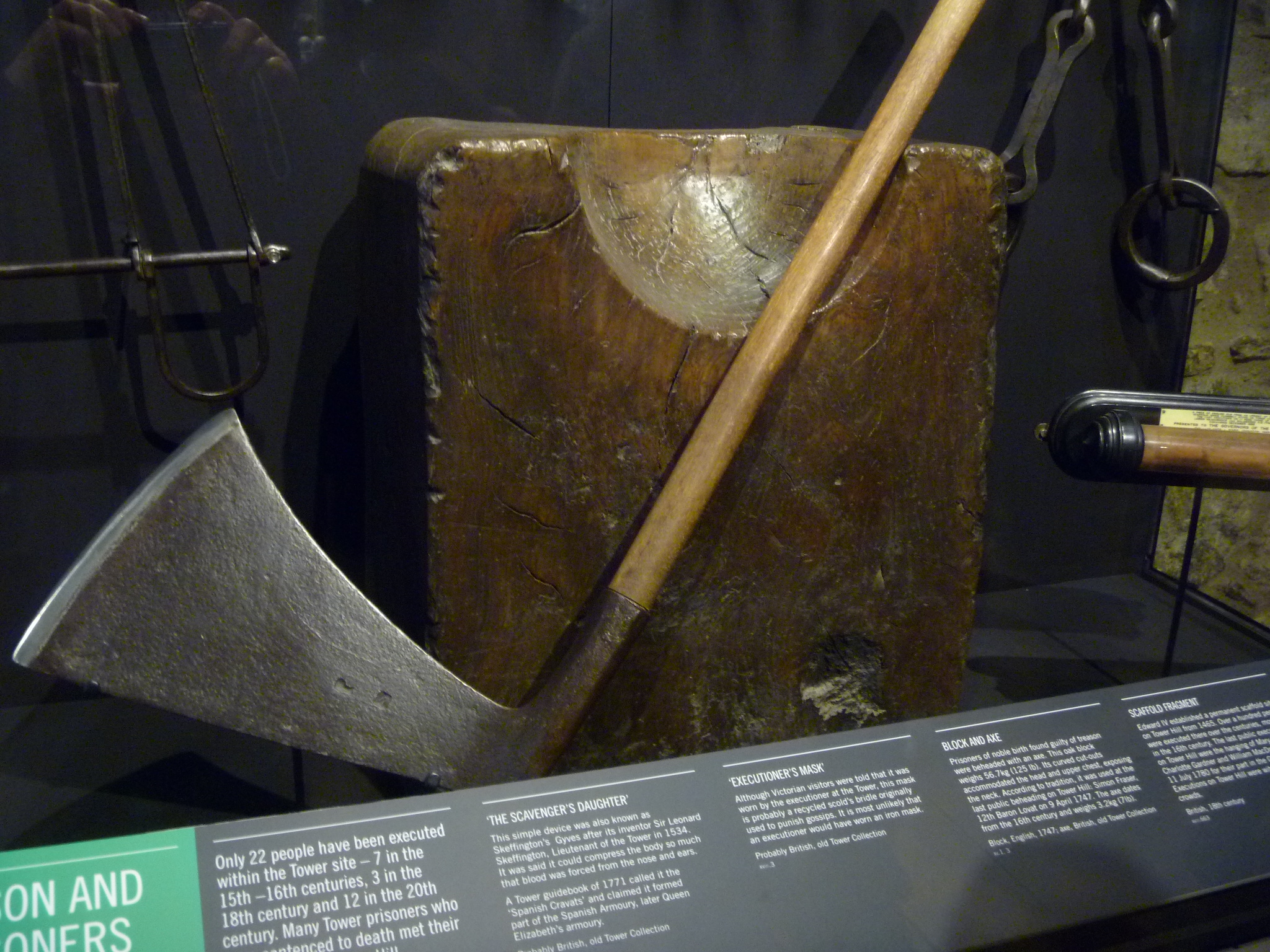
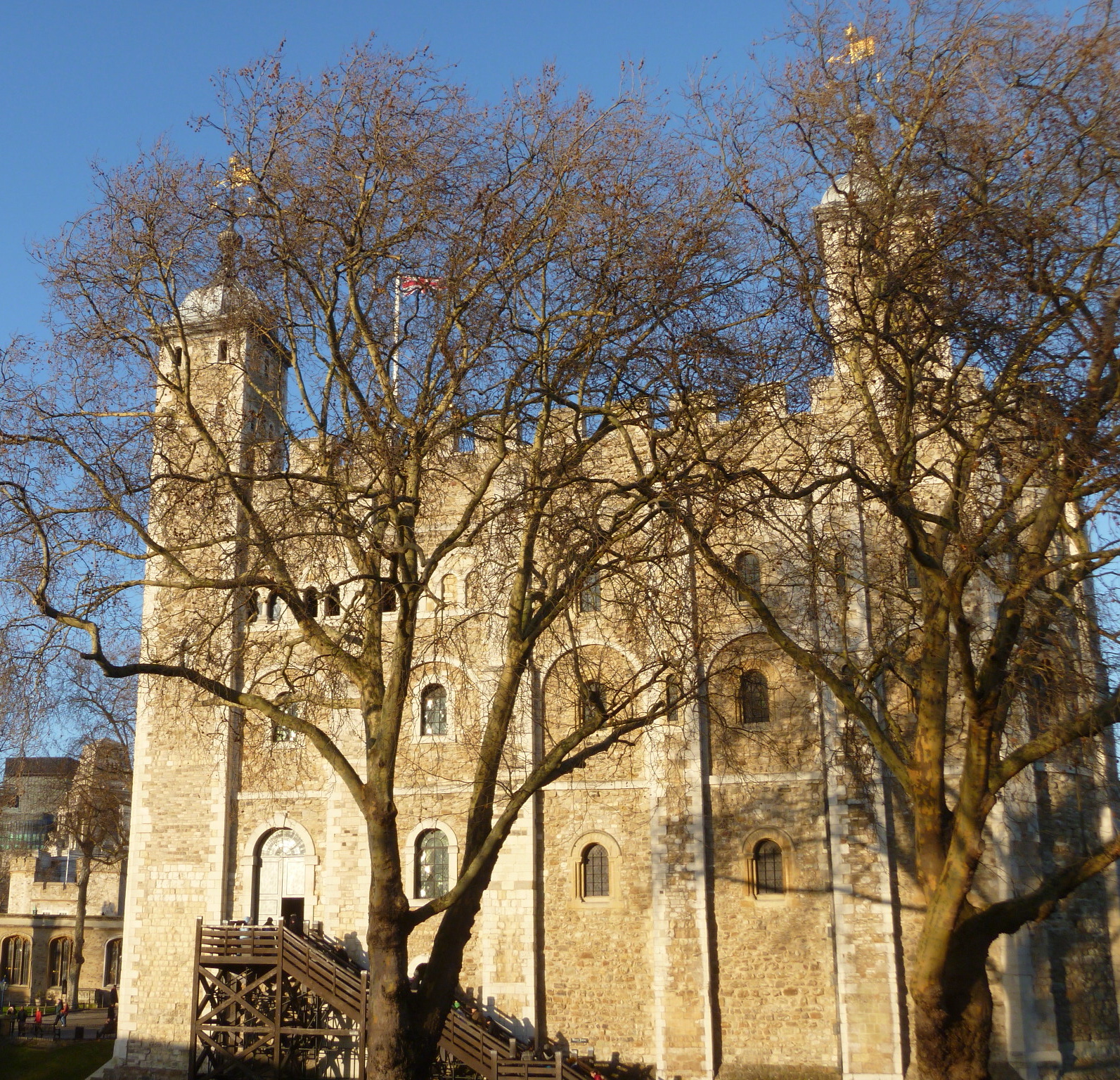
Staying just two nights gave us only one full day in London and we decided to spend it at The Tower of London. I have visited this Historic Royal Palace on two previous occasions. The first time was at the age of 10 on the annual schools visit to London with my primary school in Norwich. I remember clearly seeing the Crown Jewels in one of the towers, that we all giggled at the name of one of the towers The Bloody Tower, seeing the ravens hopping over the lawns, their wings clipped, seeing The Traitors’ Gate and the wooden block and axe which took the life of Queen Anne Boleyn. I had long wished to return and my next visit was with a Swiss guest in 2010. We had a lot of London sights to fit into our day so I planned to return on the next appropriate occasion to have a closer look.

The Traitors Gate

Off with her head!

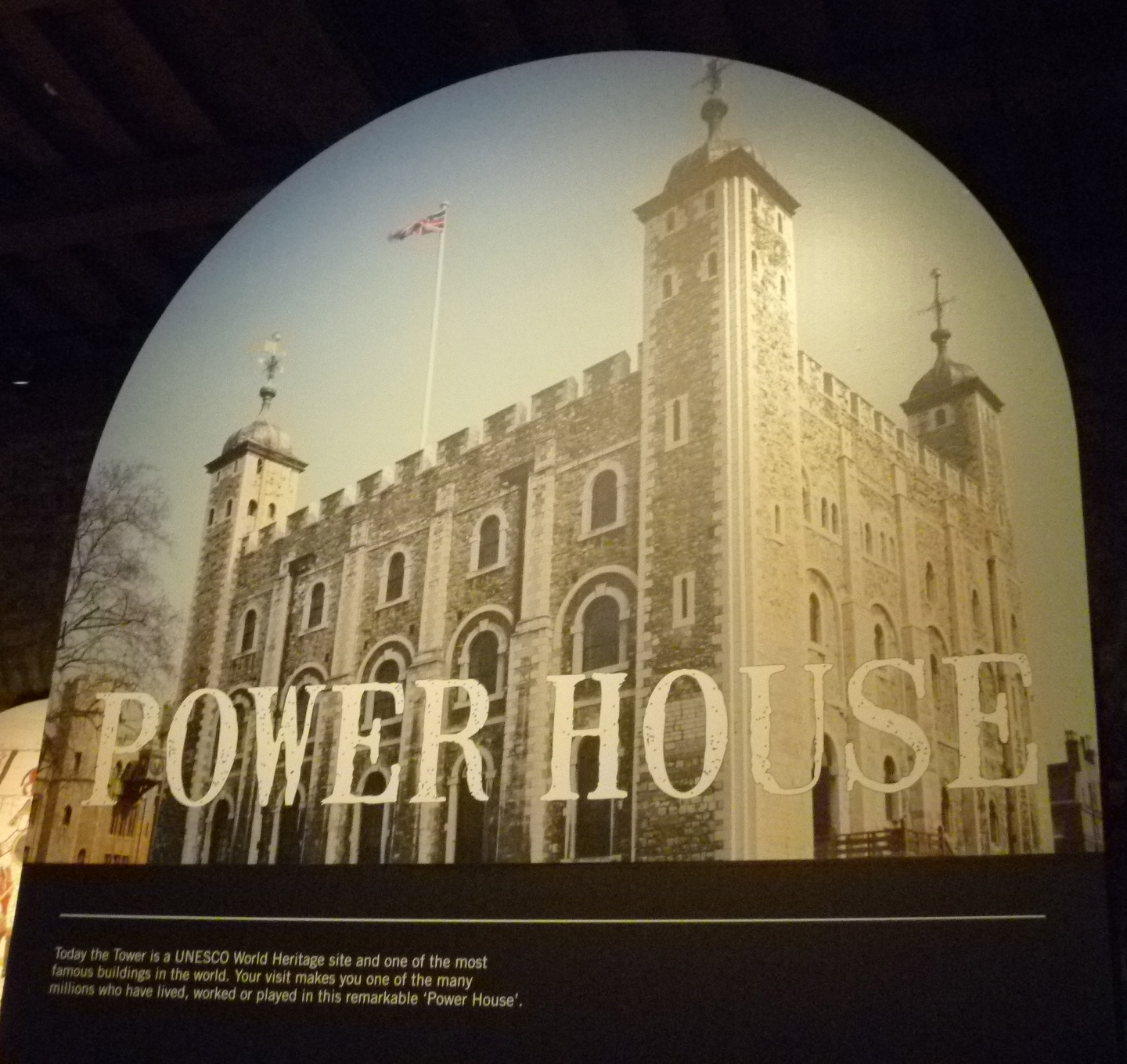
On Thursday with our 85 year old mother in tow we made a beeline for the Crown Jewels. These magnificent symbols of the British monarchy are displayed in such a way that everyone gets a good look at them however crowded the Tower may be. In fact, on this bright and dry early January day, although there seemed to be lots of people – of all nationalities – there were no queues at all. Our next port of call was the White Tower which houses an exhibition, The Power House, which tells about all the institutions that originally had their homes at The Tower – The Royal Mint, The Menagerie (now London Zoo), The Ordnance Survey, The Royal Observatory. There are also displays of royal armour and, rather strangely, gifts given to our royalty by nations around the world.

Chatting with a Yeoman Warder (or Beefeater) I discovered that 37 YWs and their families live within The Tower’s walls, plus a doctor and a priest. They have their own church and pub and it’s like a village community. But the Power House exhibition showed that in former times The Tower had been a virtual town.

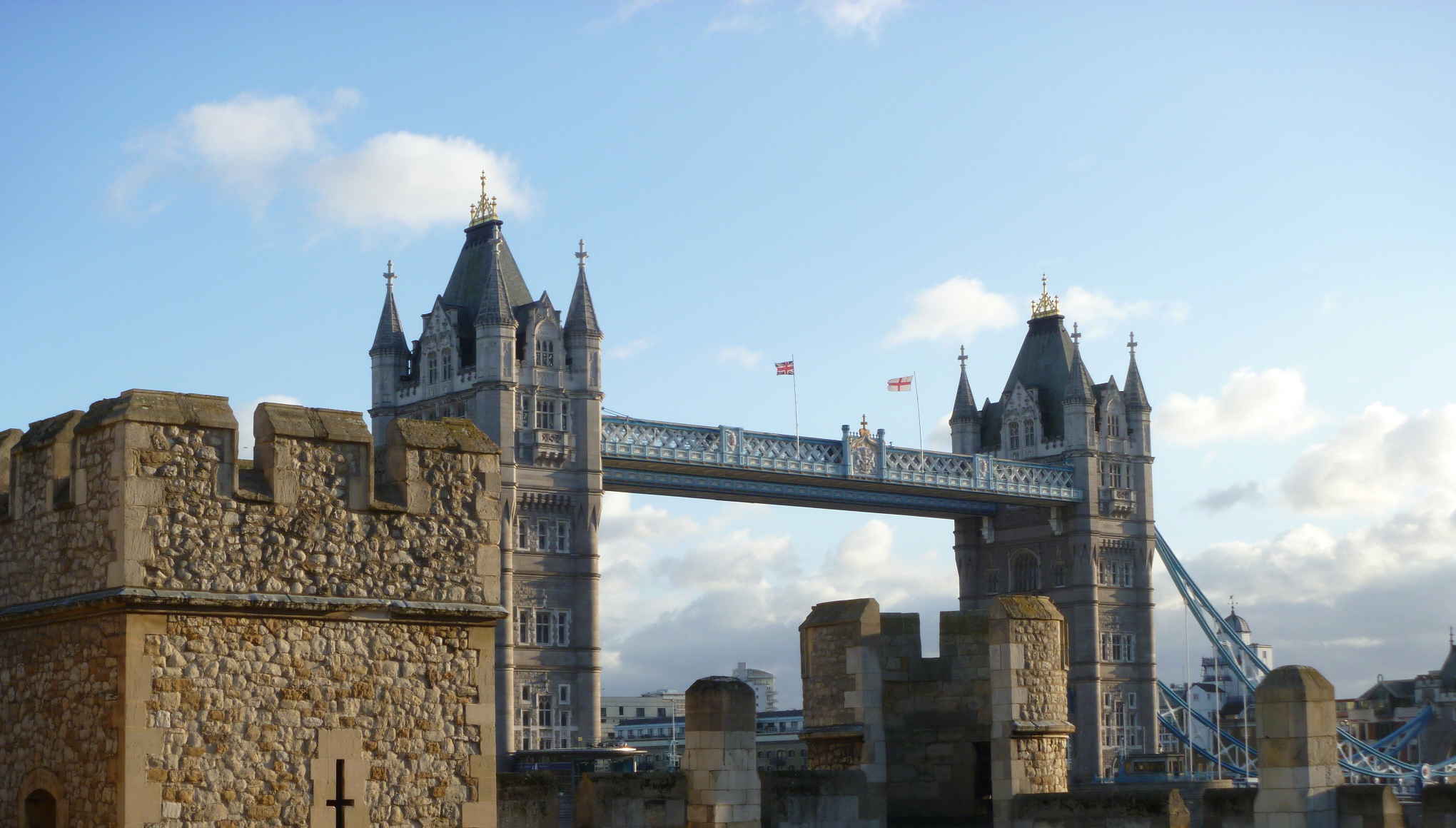
After lunch we left mum in the warmth of the cafe to have a walk round the walls (for a great view of Tower Bridge)

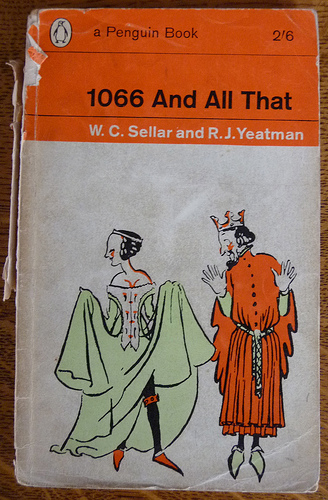
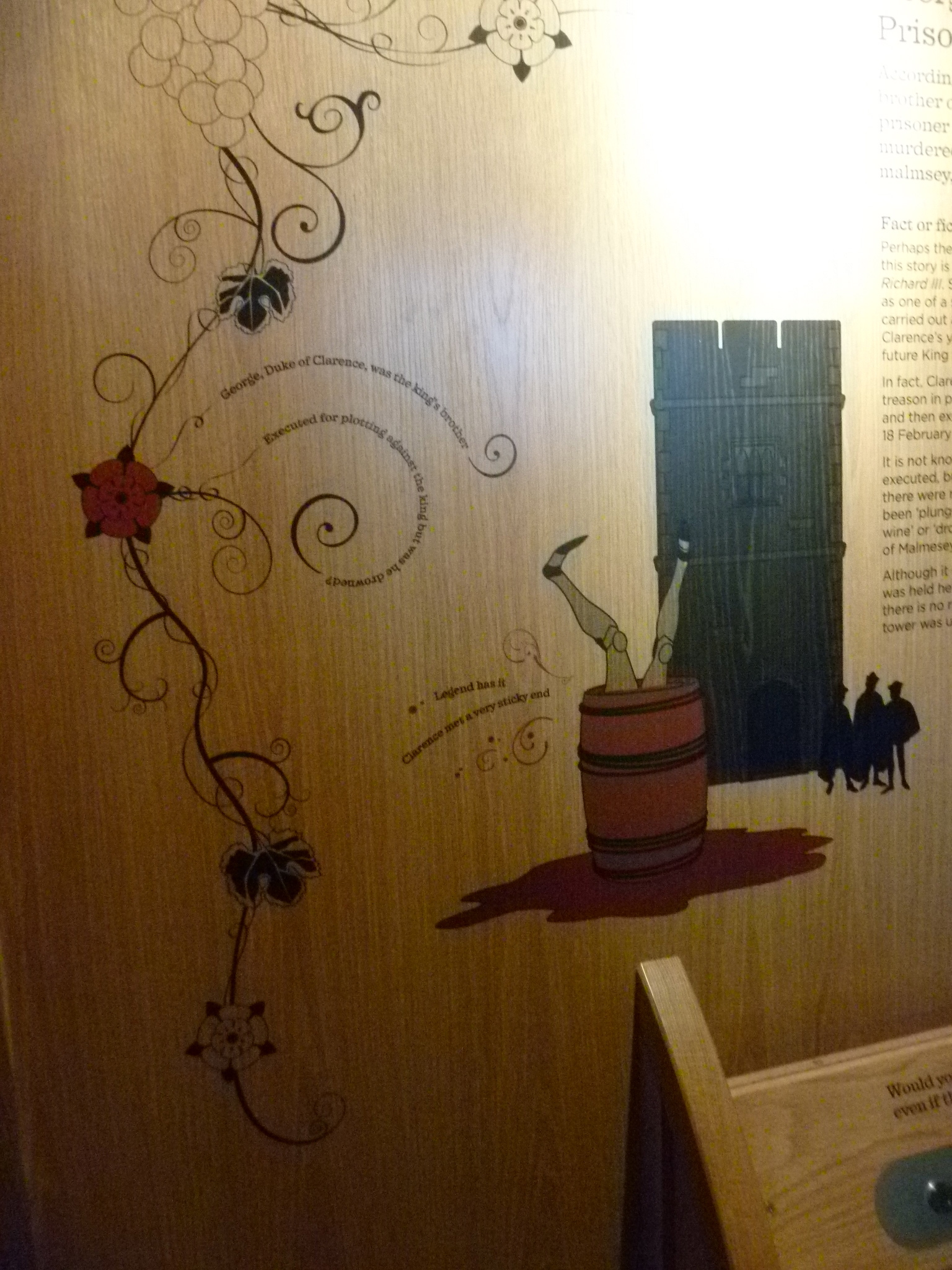
and to see inside some of the other towers (the ones with narrow stone spiral staircases) to discover more about the Duke of Clarence who drowned in a Butt of Malmsey wine, about The Little Princes murdered in the Tower and about other prisoners including Sir Walter Raleigh. And my thoughts go back to that earlier visit and to the discovery a few years later of my best history book ever – W. C. Sellar and R. J. Yeatman’s “1066 and all that”

“During the Wars of the Roses the Kings became less and less memorable (sometimes even getting in the wrong order) until at least one of them was nothing but some little princes smothered in the Tower, and another, finding that his name was Clarence, had himself drowned in a spot of Malmsey wine; while the last of all even attempted to give his kingdom to a horse.”

Looking Back on the Missed Months of 2011

A Happy New Year to You All!

Transferring stuff from one year’s diary to the next’s made me think I might make a note here on an event/category from each month of 2011 up to my starting this blogging lark in August. One event with one picture is quite a tough call – especially in the summer months – but I will give it a go.

January 2011 : Landmarking with Milady

The year started well with my usual London Landmarking Trip but this January I was fortunate enough to get a double dose of London Landmarks. I stayed in the 45A Cloth Fair property for 3 nights and visited friends at the Hampton Court Georgian House on one of the days. There is so much to see and do at Hampton Court that we have booked our January 2013 London stay at Fish Court in order to experience more. If you stay there is no extra charge for visiting the Palace. On the other day at Cloth Fair we took tea at the recently totally renovated Savoy Hotel – an out-of-this-world experience from the moment your carriage arrives to the moment you are driven away.

February 2011 : Milady gets culture

An early wet and windy two night excursion to Cambridge led to the wonderful discovery of Kettles Yard. Our trip was planned around a visit to The Scott-Polar Research Institute whose museum had just re-opened after extensive renovation work. But interesting as it was to see the exhibits at the SPRI the highlight of my visit was Kettle’s Yard. We even went there twice. On the Thursday afternoon of our arrival we took a walk from the hotel and ended up at the house that is Kettles Yard. It is like walking into someone’s home – you ring the doorbell and are welcomed, photography is no problem, you may sit and look at the books and the place is crammed full of art and artefacts of what I suppose is called the modern era. It was on this visit that we heard about the Friday Lunchtime Concerts so from the SPRI we headed back to KY and joined a winding queue of keen concert-goers and enjoyed with them a chamber group of student musicians.

March 2011 : Milady gets Culture

Photograph: Robert Workman

At the end of March Out of Joint brought their play  “A Dish of Tea with Dr Johnson” to The Carriageworks in Leeds. I’d read quite a bit a bit about Dr Samuel Johnson and visited his house in Gough Square in London so was intrigued to see this well-reviewed piece. I was not disappointed. It is quite short, full of fun but with some pathos and there is also the most wonderful dog actor who must have been standing in for Johnson’s cat, Hodge. I would have loved to have seen the performance actually at Dictionary Johnson’s House but this was the next best thing. Highly recommended although I think the tour is finished now.

April 2011 : Landmarking with Milady

Friday 29th April 2011 must have seen the high point of the year in Britain – The Royal Wedding of HRH Prince William and Miss Catherine Middleton. That very day I had booked (long before the wedding date was announced) to spend the May Day Holiday Weekend in France at Gif-Sur-Yvette the former weekend home of the Duke and Duchess of Windsor just outside Paris and now managed as a holiday let by The Landmark Trust. I was visited there on one of the days by my good friend MN and we spent a literary day visiting Alexandre Dumas’ The Chateau of Monte Cristo at Port-Marly and La Maison Litteraire de Victor Hugo at Bievres, Île de France. It was such a good trip that we’ve booked to go back again next May so I’ll be posting in more detail then.

May 2011 : Milady Visits

Window shopping at Didier Ludot in the Jardin du Palais Royale

On 12th May the Optimist celebrated a special birthday! And on that very day we were booked to travel – in style, I might add – by Eurostar train from Yorkshire to Paris to attend our nephew’s wedding in Vincennes, just outside Paris, on the Saturday. What a fab weekend we had – lovely hotel quiet but right in the centre of Paris, lovely weather, except that it rained on the Sunday as we were leaving, excellent company and good food and wine with some “flanez” and pavement cafes thrown in for good measure.

June 2011 : Milady Reads and Visits

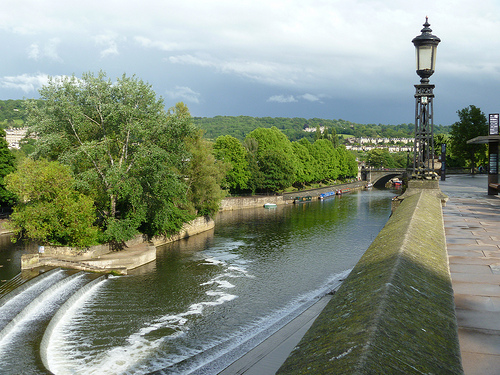
In Spring 2011 Persephone Books published a reprint of Adam Fergusson’s “The Sack of Bath”. On June 16th there was an Afternoon of Walks in Bath led by Caroline Kay, of the Bath Preservation Trust, and Adam Fergusson. We met at The Circus cafe for a lovely two course lunch and were then taken on a walking tour to view the effects of City planning policy on Bath during the 1960s. The walk ended at The Museum of the Building of Bath where we were served tea and cakes. But before all those pleasures I had the great pleasure of spending the morning with my online reading group friend Carol who lives in Bath and took time out to show me all the bookish delights of that city – of which there are very many. It was one of those days where looking back it seems impossible to have fitted so much into a mere 7 hours.

July 2011 : Milady Steps Out

On 30th June I set out with my sister on my first long distance walking trail – Wild Edric’s Way in Shropshire. The ‘holiday’ was organised by a local company with the delightful name of Wheely Wonderful Cycling Holidays which deals mainly in cycling holidays but with some walking tours also on their books. I say ‘holiday’ but at times it was jolly hard work!  We walked from the Stiperstones to Ludlow over 3.5 days. Approximately 40 miles was covered in total with 4 overnight stops. For the most part it followed the route of The Shropshire Way which coincided also with The Kerry Ridgeway and Offa’s Dyke National Trail. There were several places of interest on the route – churches at More, Churchtown and Ludlow and castles at Clun, Stokesay and Ludlow. We met other walkers and some lovely B&B owners along the way. I was glad to have done it and it felt like quite an achievement but I was not sure whether I wished to repeat the experience. However, the further away it has become the more I think maybe I would indeed like to do another such walk in the future.


Cowside Open Day – A New Landmark Hits the Handbook!
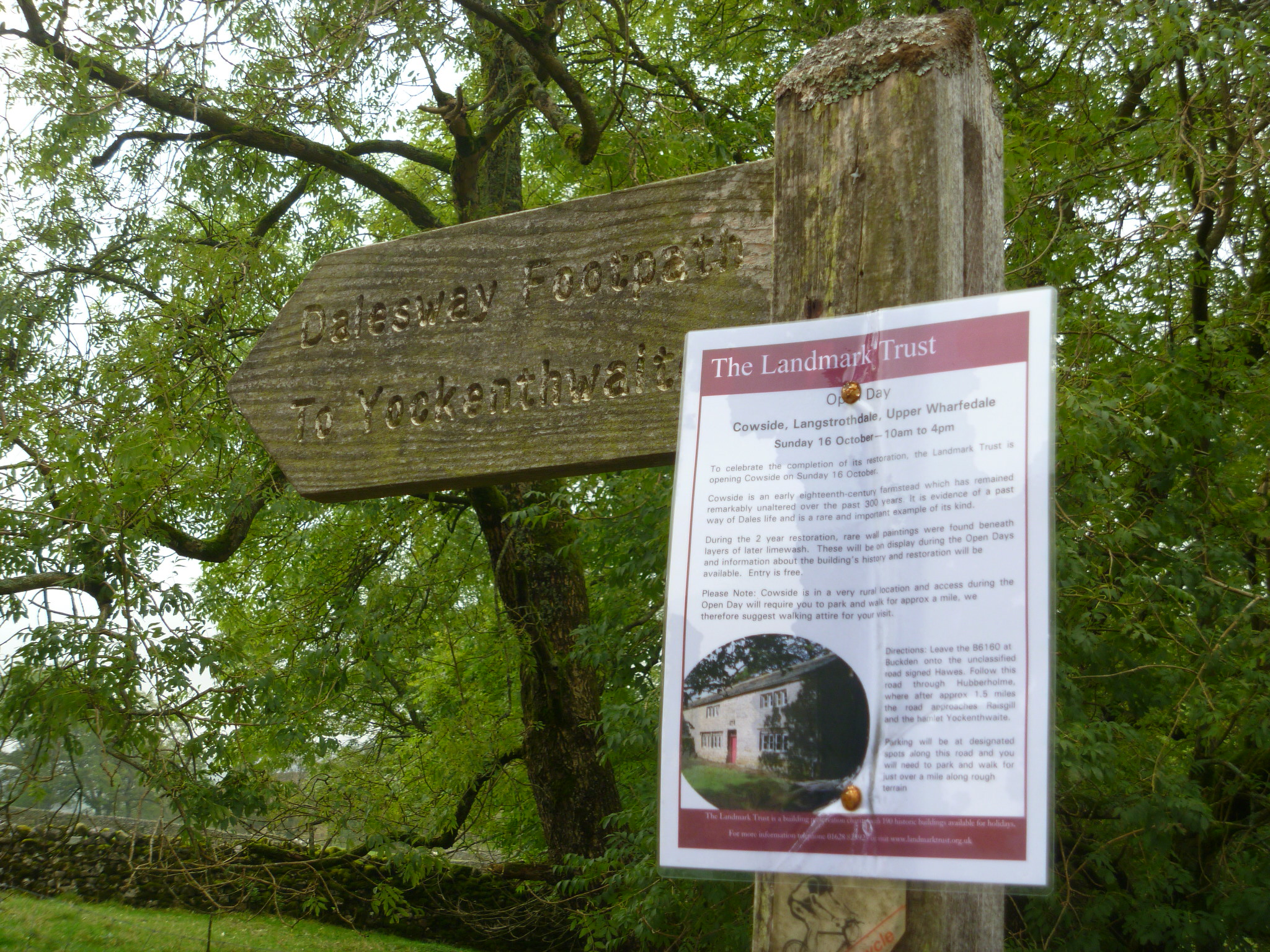
What luck! Two invitations to visit Landmarks in one week – and I can manage both. Cowside is an extremely remote farmhouse way away in Upper Wharfedale in the Yorkshire Dales that even the National Trust (who are the owners) could not contemplate renovating as a holiday home. No mains electricity, no mains water supply – not even an access road or track. They passed it on to The Landmark Trust who seem to thrive on such challenges! Friday was my 4th visit. In April 2009 I first ventured off the Dales Way to have a peep at Cowside of which the Landmark Trust had only recently announced their intentions. In October 2010 when work was well underway I was invited to view progress and again in May 2011 when I could not believe the transformation that had taken place. The winters of both 2009/2010 and 2010/2011 have been the worst in decades. But now the work is complete and the property ready for its first guests – arriving on the 21st October – just one week away!
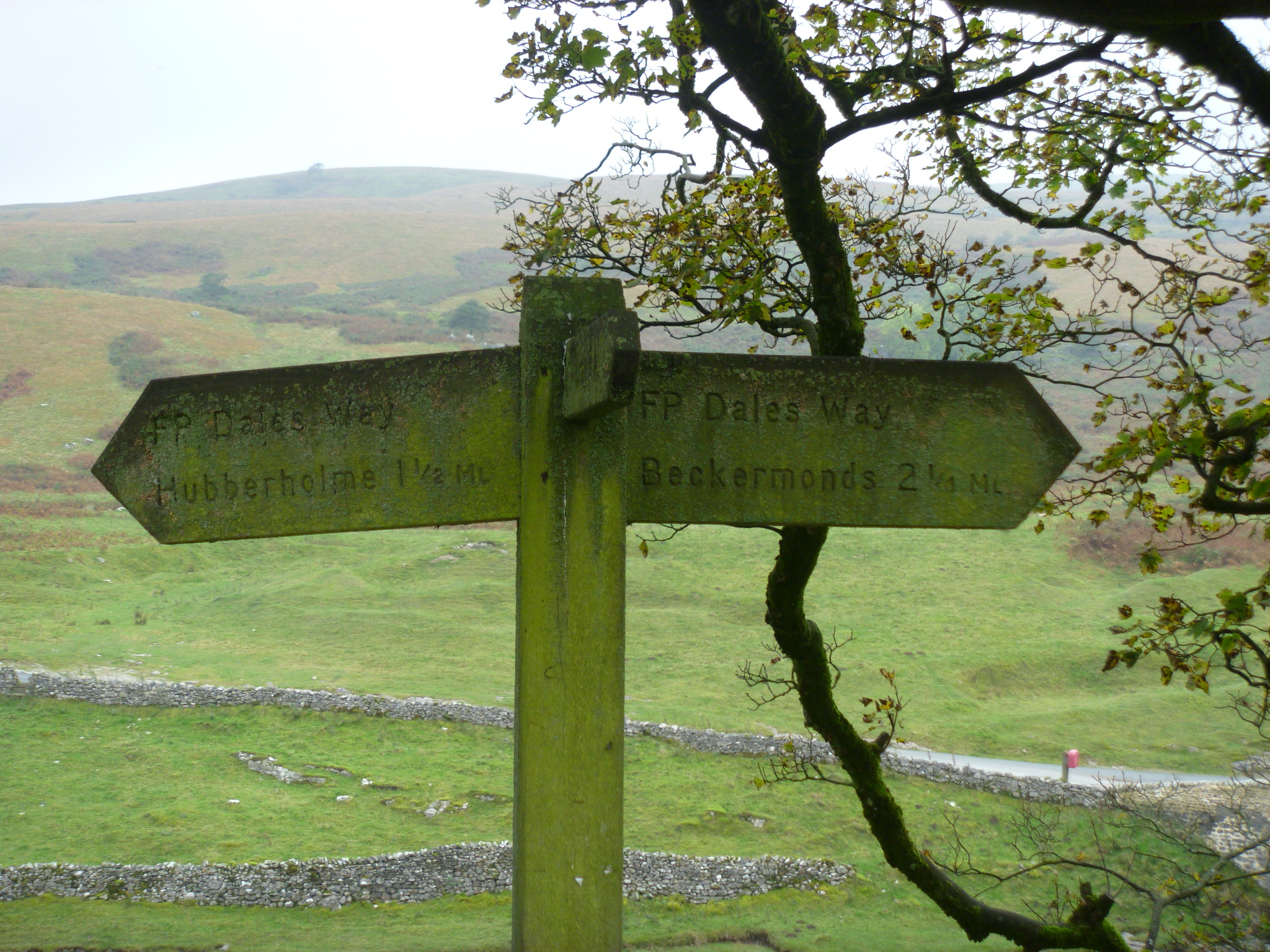
As visitors we had to park nearly two miles away but I enjoy hiking so the chance to step it out along part of the Dales Way was an additional pleasure for me.

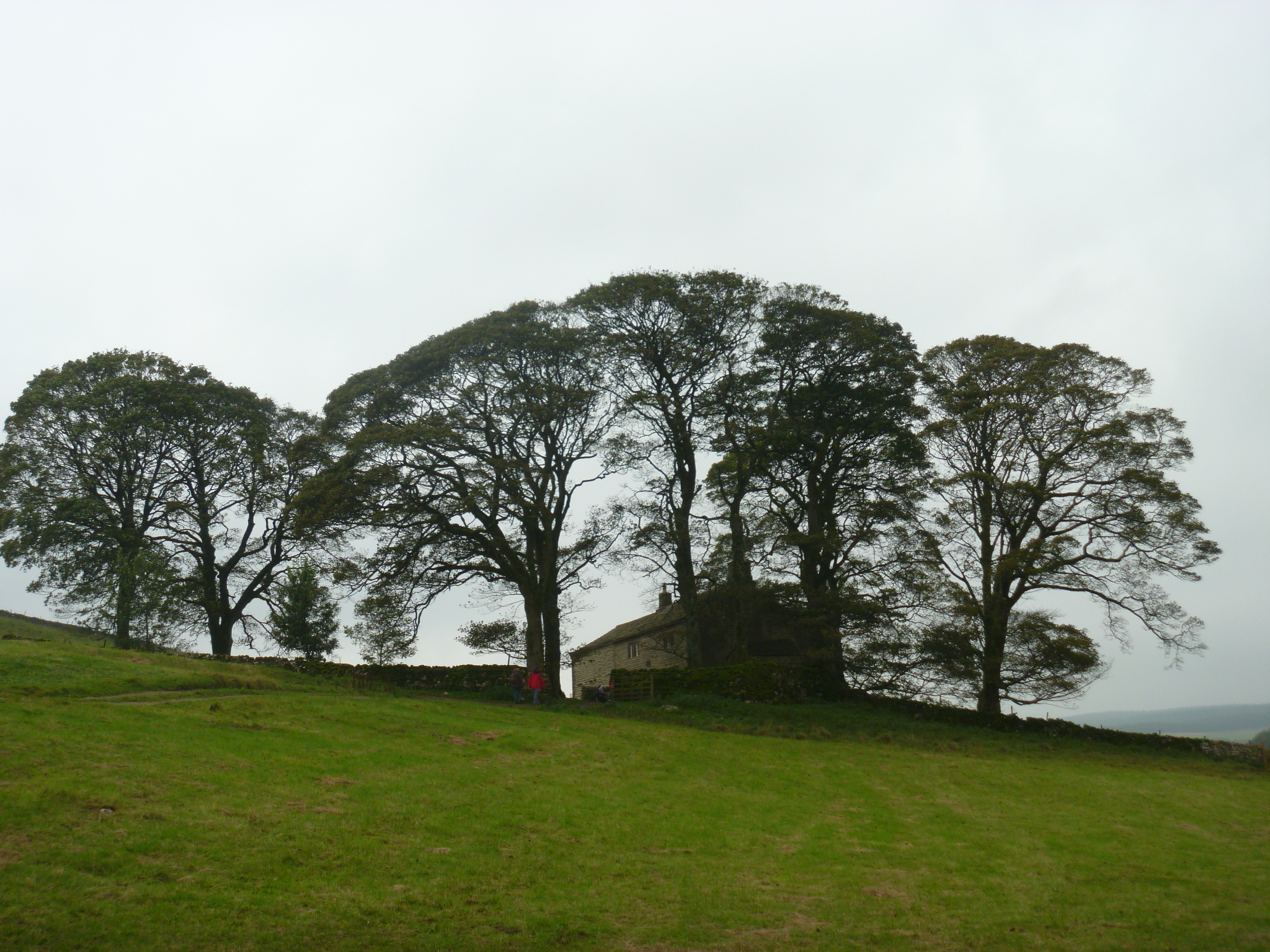
The final uphill approach to Cowside. No vehicular access so everything must be brought from the bottom of the field via the grassy track.

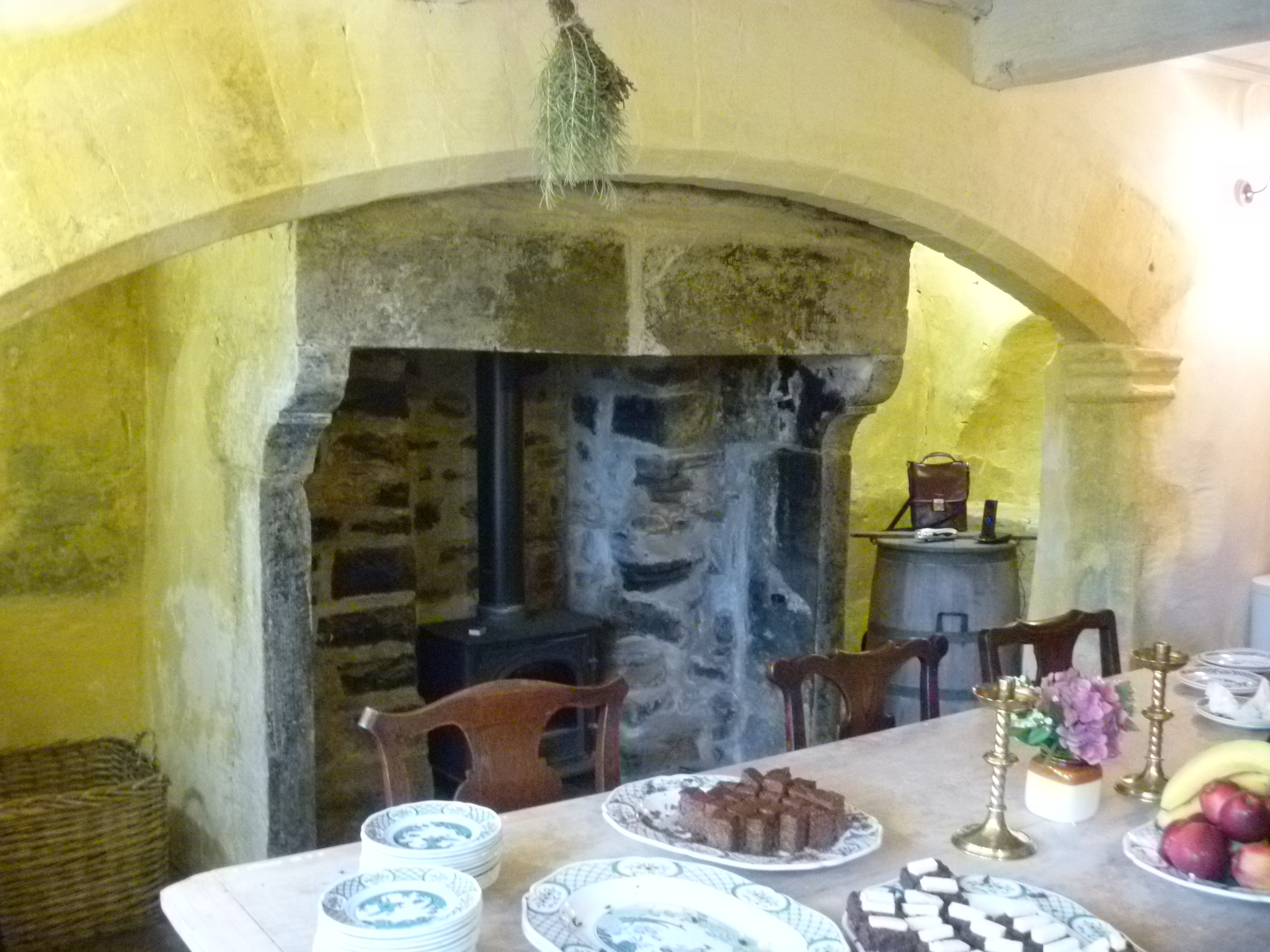
A warm welcome to Cowside. Cake on the table and a log fire in the stove in the Kitchen, or Housebody, as it is to be known.

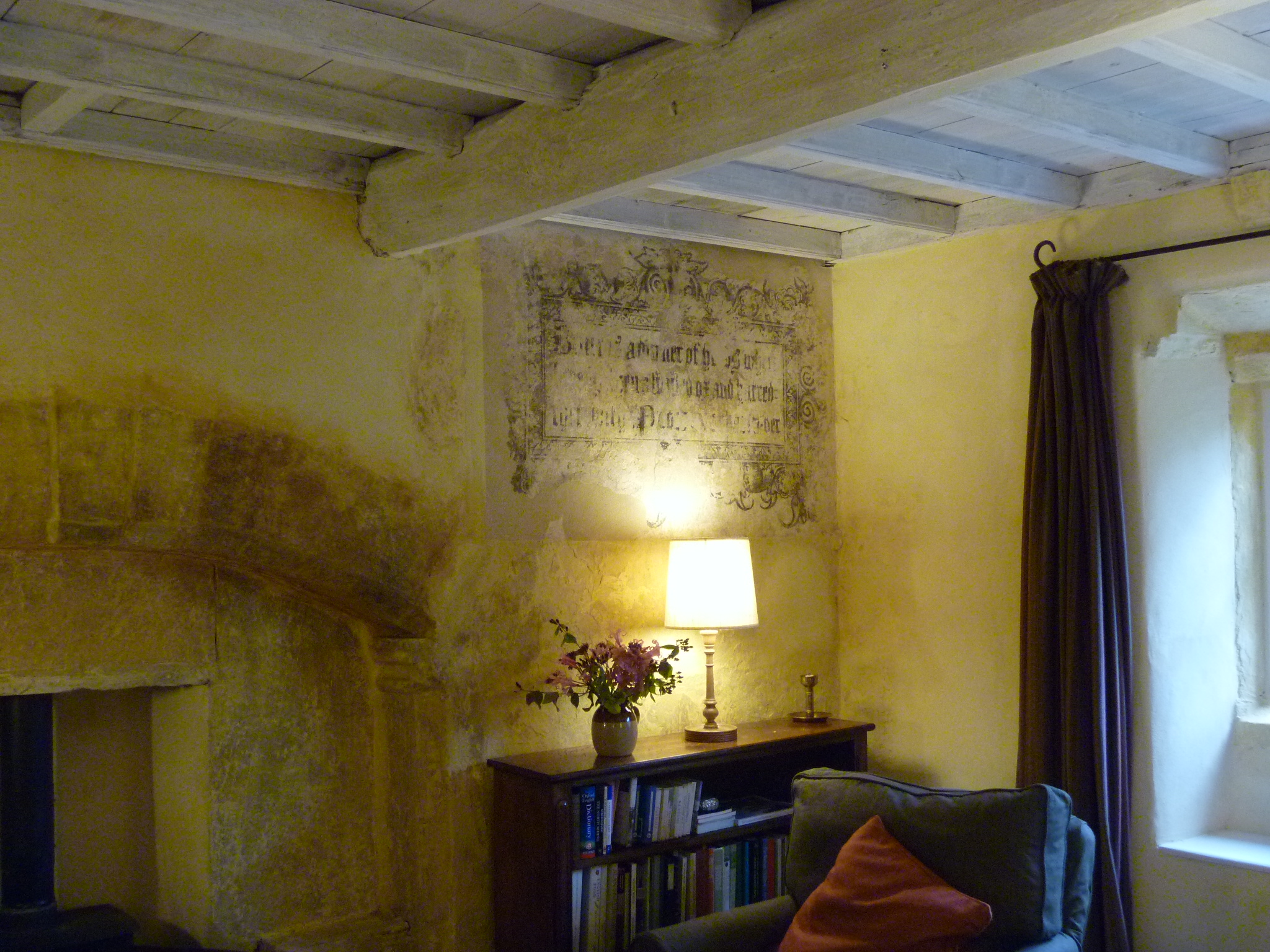
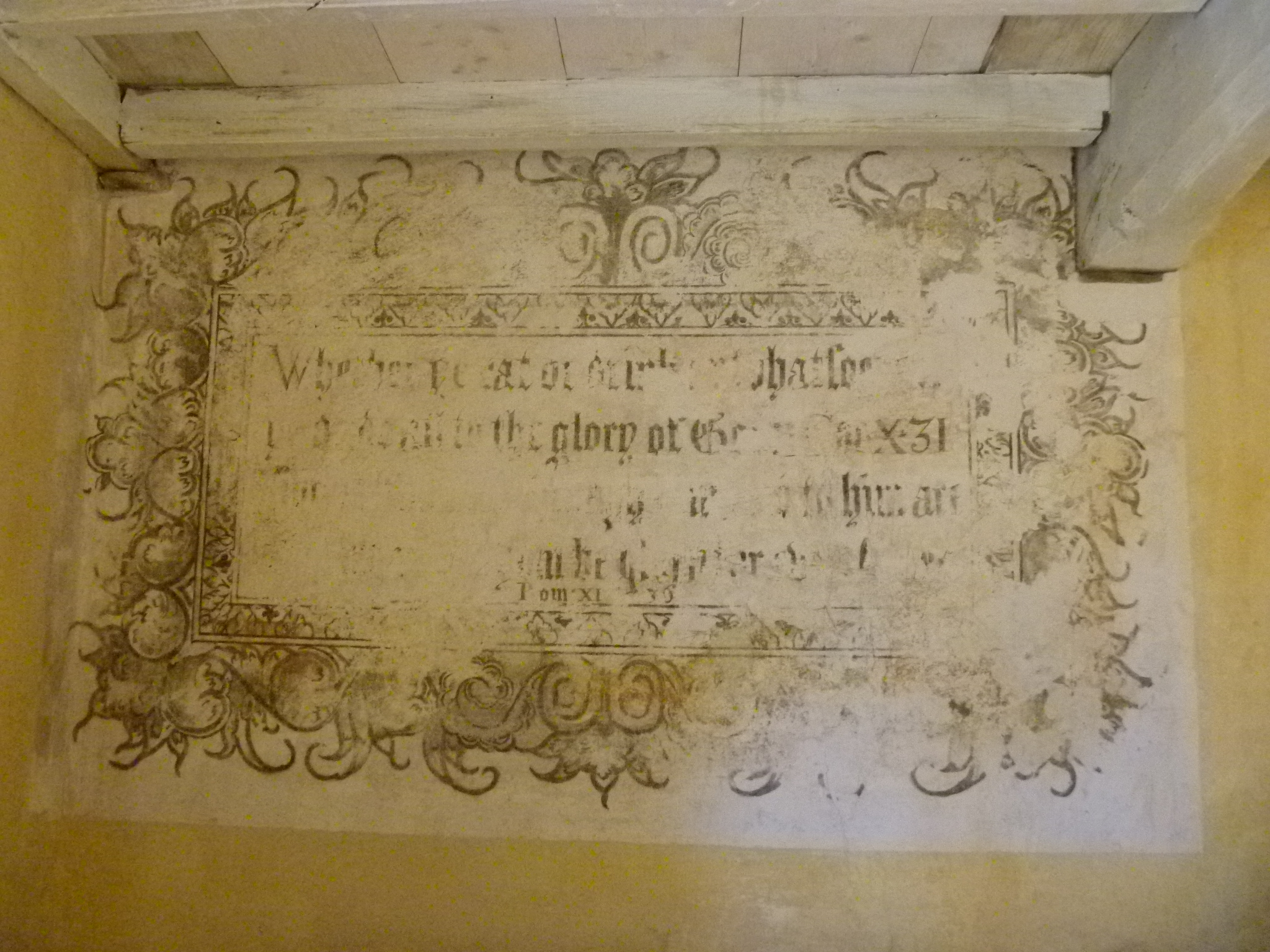
During early archaeological investigations these fantastic wall paintings were discovered. Monochrome Biblical texts in Gothic script they adorn two walls in the Parlour. “On the west wall is Whether ye eat, or drink or whatsoever ye do do all to the glory of God Cor[inthians] X:31 and For of him and through him, are all things: to whom be glory for ever. Amen. Rom[ans] XI: 36. On the east wall is Better is a dinner of herbs where love is than a stalled ox and hatred therewith Pro[verbs] XV: Cha[pter] 17 ver[se].”  From the Cowside History Sheet.

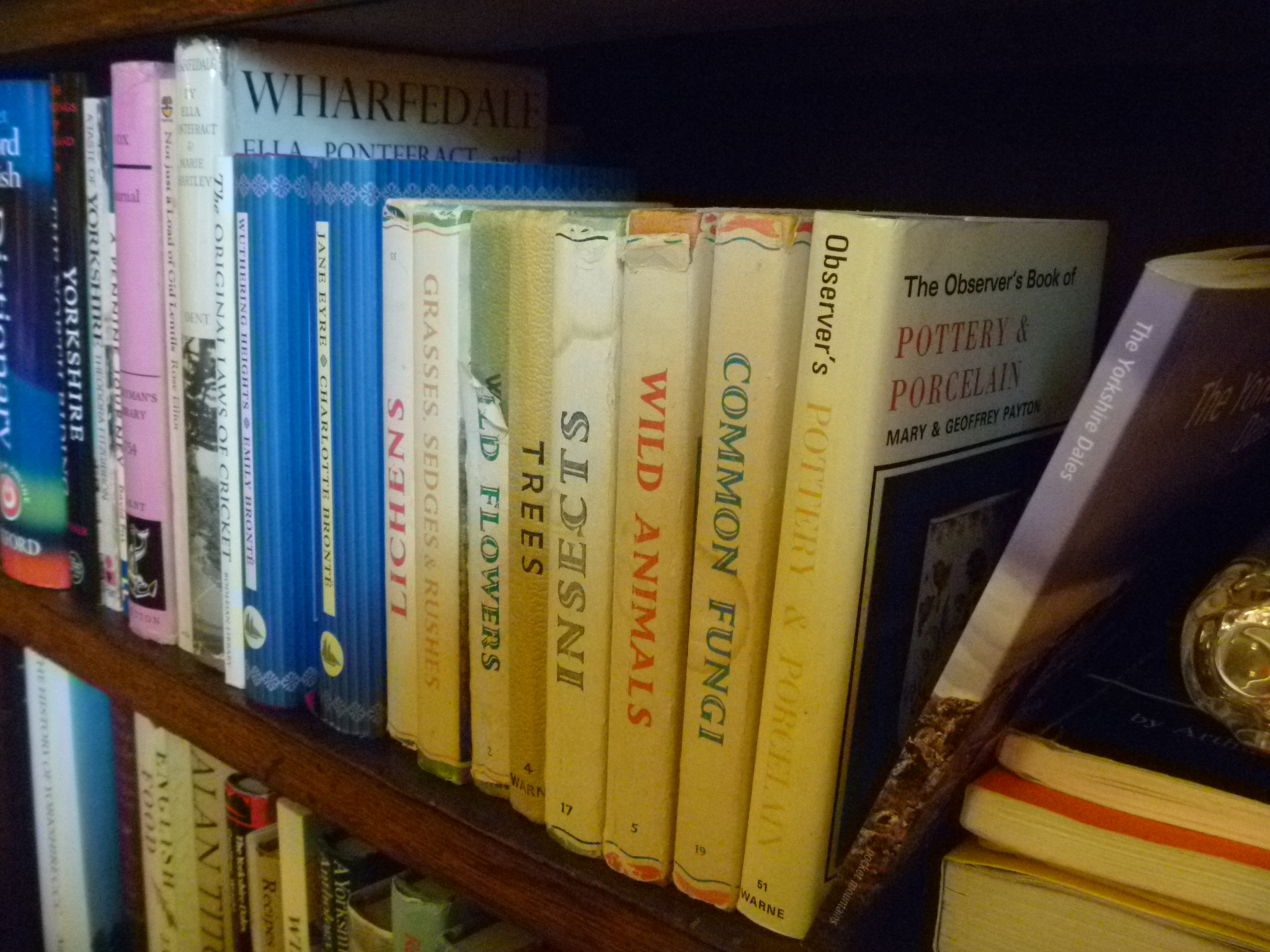
One thing I particularly appreciate when staying in Landmarks is the Landmark Library. This is not shelves of old books bought by the yard but a well chosen selection of relevant titles for adults and children alike.

“There will be a bookcase containing the sort of relevant and interesting books you might expect from a well-read host, as well as those standard reference books you sometimes need to get the most out of a good walk or conversation.”

My Friends in the East End: Princelet Street Life

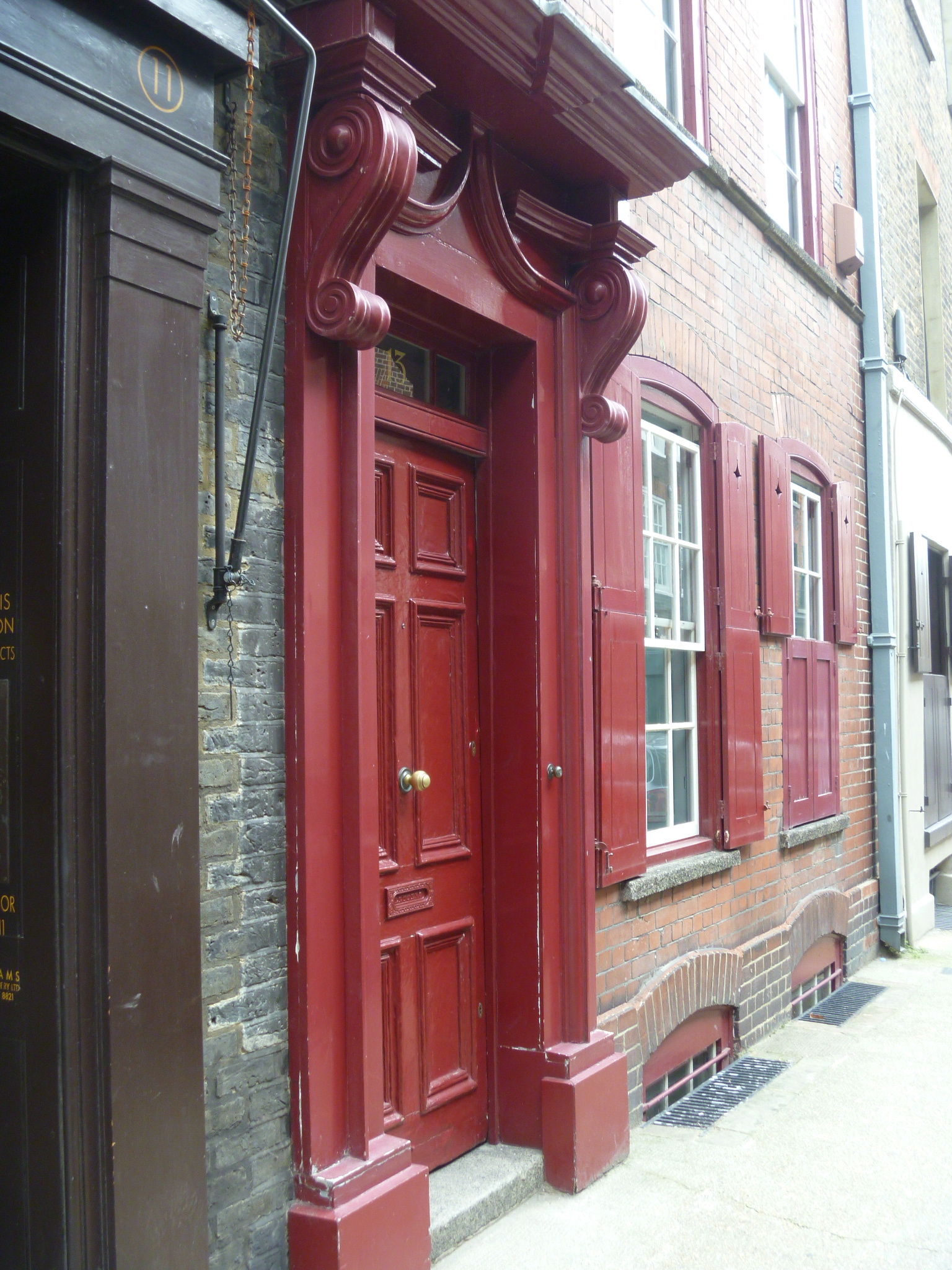
13 Princelet Street, Spitalfields

I’m a huge fan of the Landmark Trust. It is the charitable organization that rescues interesting buildings, brings them back to life and then rents them out as holiday homes so that everyone may experience, for a short time, living in these remarkable buildings. I applaud the work and the vision involved and as Capability Brown before them seemingly waved his magic wand on the eighteenth century landscape The Landmark Trust seemingly waves its magic wand and transforms total ruins into beautiful buildings using the best of workmanship and the highest quality fittings and good solid furnishings.

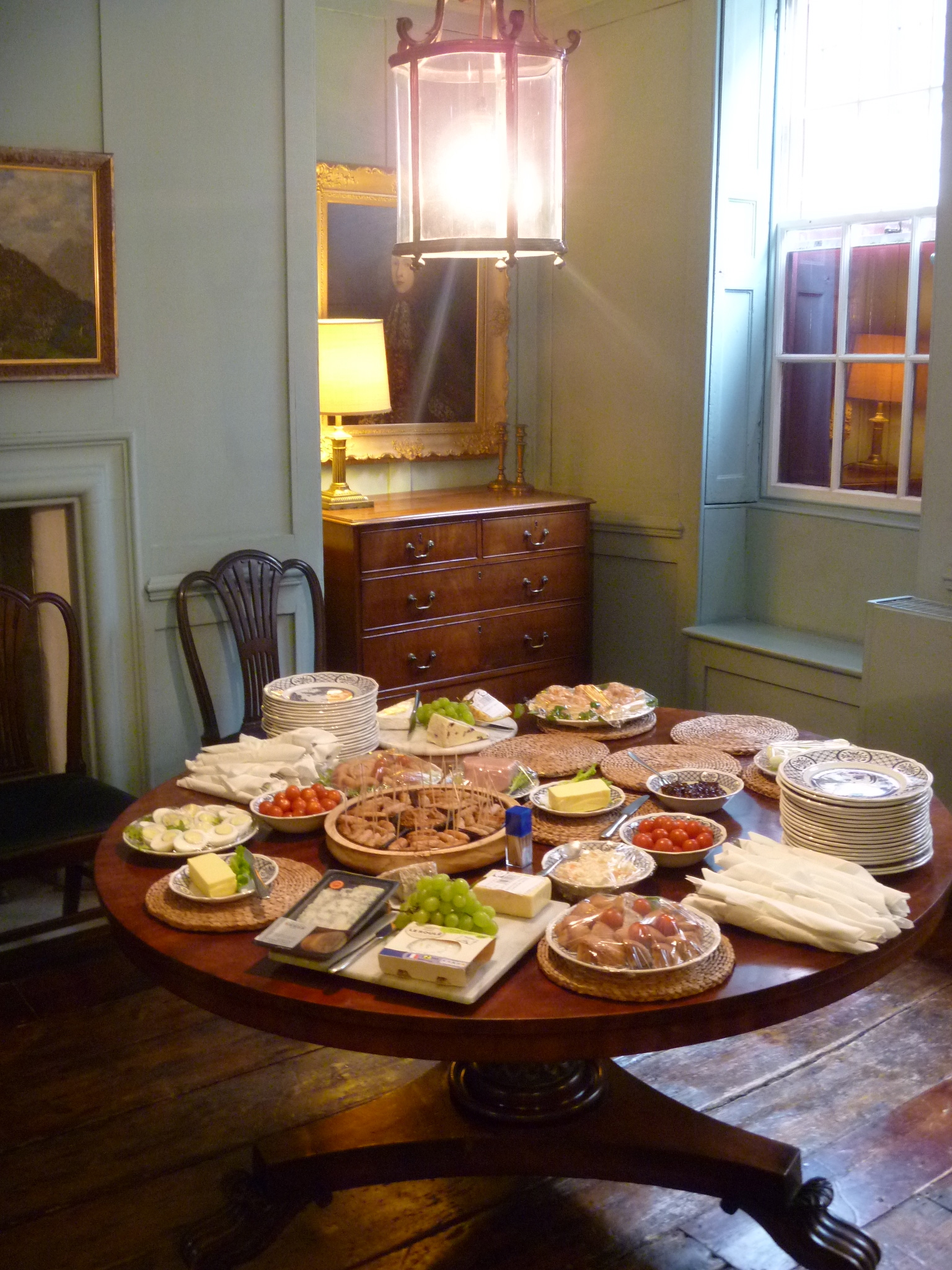
Just some of the buffet lunch in the front dining room.

As I said, I’m a fan, but for some people visiting and staying at Trust properties is an obsession! In order to cultivate and encourage this obsession The Trust started a group called The Friends of the Landmark Trust. Run by volunteer co-ordinators, the Friends organise stays (which they call Houseparties) at larger properties so that singles and couples or small groups of friends may experience staying in Landmarks which they would not normally be able to afford or feel that they would not properly appreciate to their fullest extent. In addition, during the Houseparty weeks all Friends are invited to a Reception which usually includes a buffet lunch, a talk and a chance to look around the property and meet fellow like-minded members. All profits from these events go to support further renovation work.

Friends enjoy the garden at 13 Princelet Street

I’m also a fan of the blog Spitalfields Life. The Landmark Trust’s property at 13, Princelet Street featured in the blog last year. I’ve stayed there twice already and have another booking for the early new year. However, I couldn’t resist the Friends’ invitation to attend a Reception at Princelet Street on Wednesday. It was a chance to meet up with friends (small f) and Friends (capital F). Houseparties and Receptions ‘up north’ are rare but London is accessible to me. My elder son ‘The Banker’ lives down there; and it’s always good to meet up.

One of the volunteer co-ordinators gave a brief talk about the history of the house and the Spitalfields area in general. In the case of Princelet Street there didn’t have to be too much magic wand waving by the Trust. Mr Peter Lerwill a supporter of the Landmark Trust very generously bequeathed the house to the Trust for the enjoyment of Landmarkers. Only a lick of paint was required to make it ready for letting.