Ruin Lust at Tate Britain

RUIN : “The physical destruction or disintegration of something or the state of disintegrating or being destroyed”

According to the little leaflet that accompanies this Tate Britain exhibition the title Ruin Lust was taken from the German word Ruinenlust. 
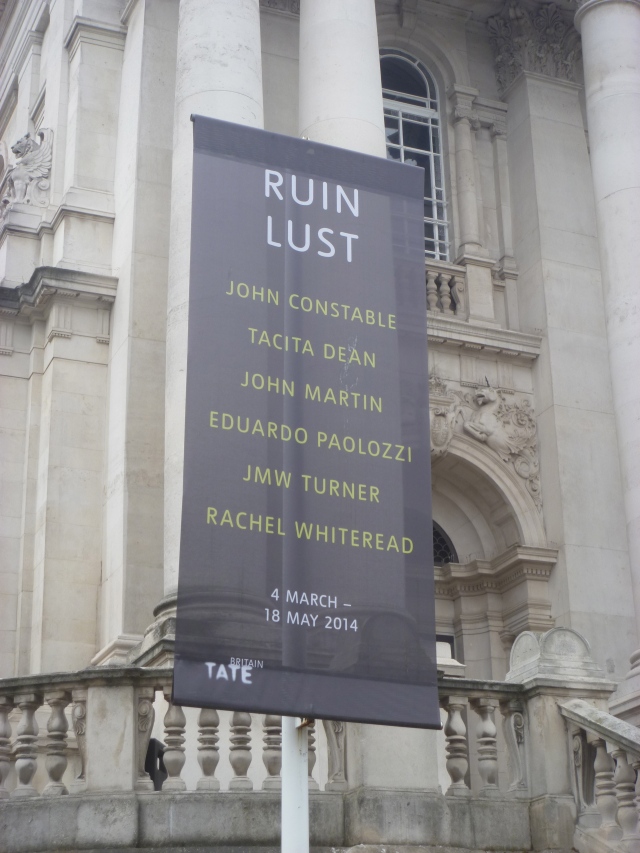
Ruin Lust

Ruins are curious objects of desire: they seduce us with decay and destruction” it goes on to say. Although I found the whole show intriguing and was amazed at the countless interpretations of the word ‘ruin’, by far the most interesting part for me was the initial ‘Pleasure of Ruins’ section.
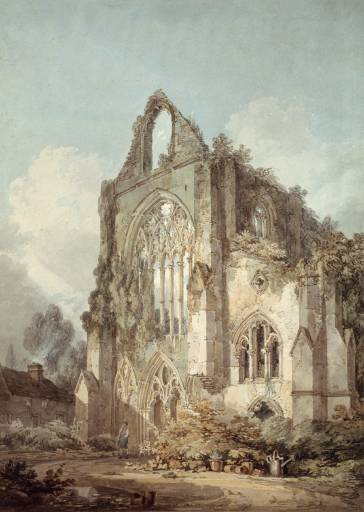
Ruins of West Front, Tintern Abbey circa 1794-5 by Joseph Mallord William Turner 1775-1851

W M Turner’s Tintern Abbey (1794) which was emblematic of the new trend to visit ruins at home rather than on a Grand European Tour.

Here were the traditional interpretations; the paintings, photographs and etchings that I had expected to see in an exhibition with this title. My interest in landscape and man’s influence on it is mainly historical. So, although I appreciate that modern day ‘Bunker Archaeology’ and Tacita Dean’s films and ‘Ruins in Reverse’ and [modern] ‘Cities in Dust’ all have a part to play in an overall picture of ruins over the centuries I prefer to see historical ruins of abbeys and castles and even the man-made ruins that gave character and focal points to 18th century landscape gardens.
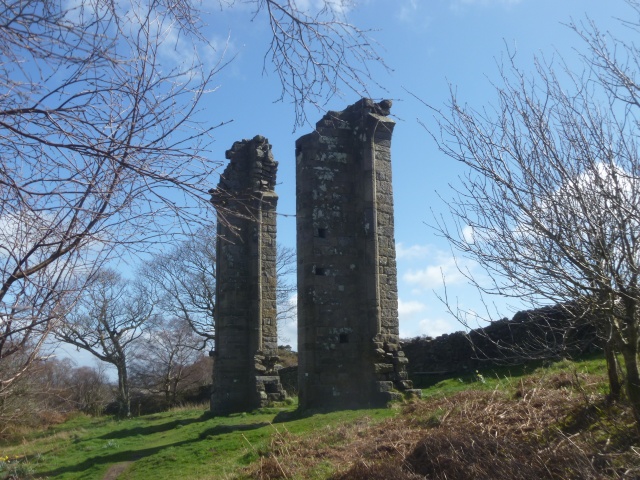
Leaving Yorke's Folly

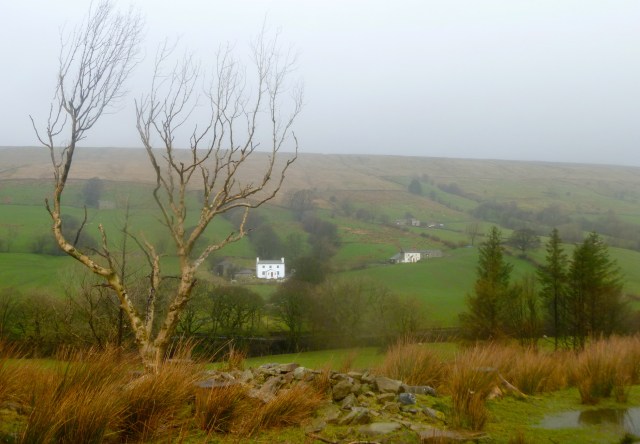
The man-made Yorke’s Folly in Nidderdale, North Yorkshire built in 1810

“A craze for ruins gripped European culture in the eighteenth century. Classical remains inspired artists such as Piranesi to depict great civilisations falling into decay. British architects and garden designers embraced this ruinous aesthetic, and artificial ruins were a popular addition to many great estates. William Gilpin’s writings on the picturesque encouraged many tourists — as well as artists such as J.M.W. Turner and John Sell Cotman — to travel in search of picturesque views of medieval ruins. Later, photography became essential to the recording and reimagining of ruins.

I remember reading in the newspaper probably 15 years ago [and commending] English Heritage’s intentions to conserve and deliberately retain the wildness surrounding Wigmore Castle in Herefordshire. Some ruins these days are just too manicured.
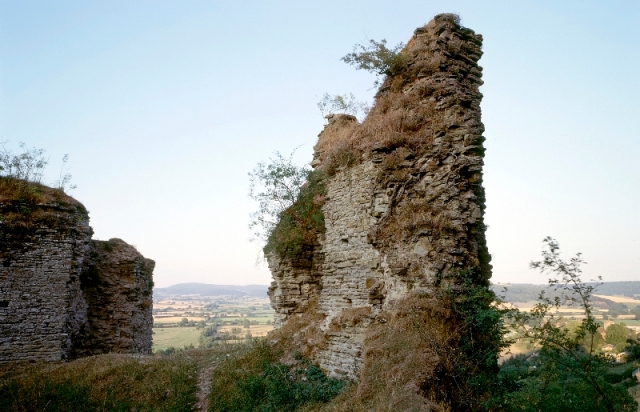
gallerywigmorecastle1

A GLORIOUS RUIN
Wigmore has an overgrown appearance that once characterised many ruined sites. When conserving the site in the 1990s, English Heritage deliberately retained its wildness, as the castle had become home to rare and unusual species including lesser horseshoe bats and wild flowers like ploughman’s spikenard. Accumulated debris was allowed to remain, and the grasses, ferns and flowers growing on the walls were carefully lifted up and replaced as ‘soft-capping’ to protect the walls from rain and more destructive plants like trees. [From the EH website]

To finish here are some recently visited picturesque ruins in Yorkshire and beyond.
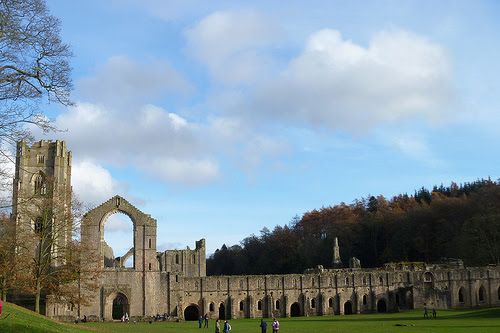
Fountains Abbey

Fountains Abbey

The Ruin

The Ruin a Landmark Trust property at Hackfall, North Yorkshire
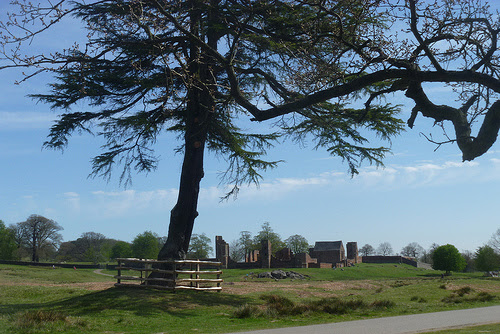
Bradgate Park

Ruins of the former home of Lady Jane Grey, Bradgate Park, Leicester
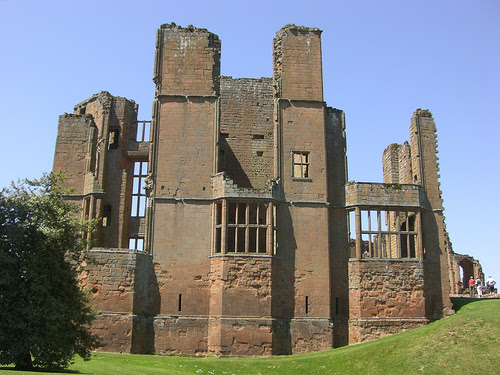
Kenilworth

The Ruins of Kenilworth Castle

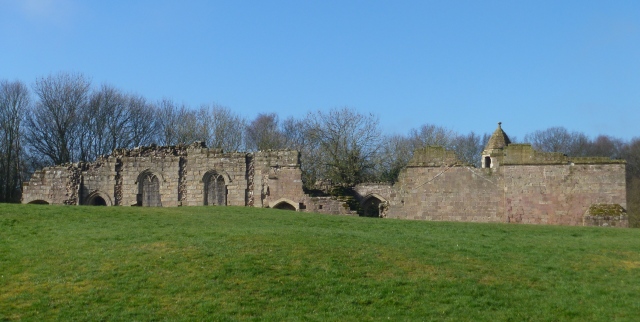
Spofforth Castle

Spofforth Castle, Yorkshire, visited on a recent hike
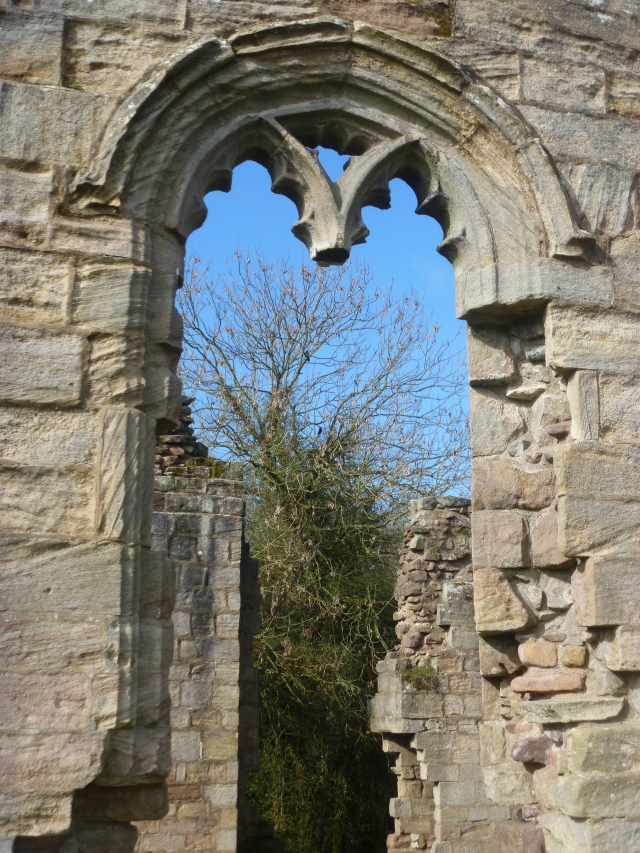
Window ruin Spofforth

Ruined Window, Spofforth Castle

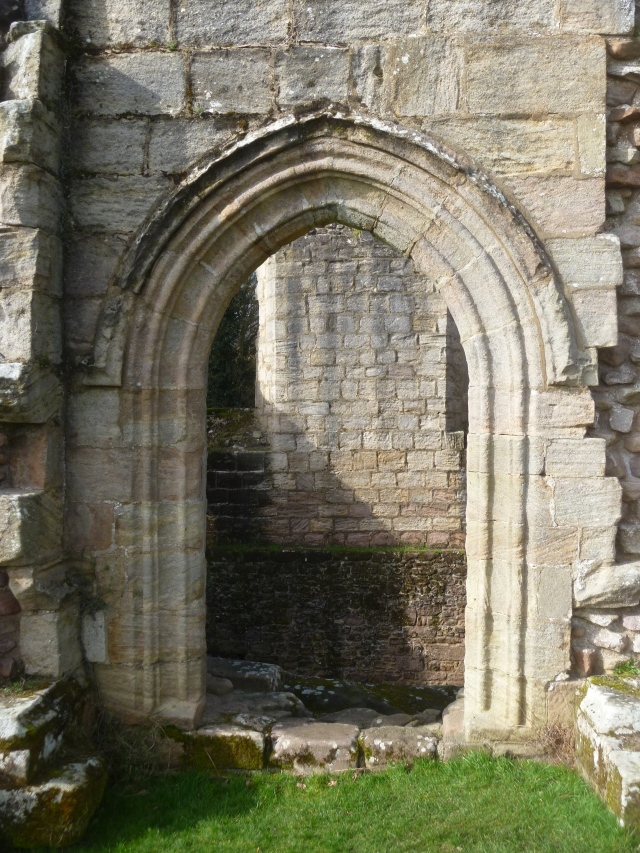
Doorway ruin Spofforth

Ruined Doorway, Spofforth Castle

Here is a brief review of the exhibition by Christopher Beanland; which finished by showing ‘The London Nobody Knows’ documentary featuring James Mason in the derelict Bedford Theatre in Camden. The unabridged film is now available on DVD.



An August Bank Holiday Lark

The men do some strange things over in Lancashire. They wear fancy straw hats with real flowers in them; they dance in lace-up shoes with wooden soles and they celebrate something called The North West Rush Cart Tradition by building and decorating a tall cart with rushes upon which they place a saddle and one of them is brave enough to climb up onto the top of this cart with a kettle on a rope – don’t ask!  At least they did in 1914 – 1915 when this play was set.
ABHL-A5

Written especially for  Northern Broadsides Theatre Company ‘An August Bank Holiday Lark’ is based on a rural village in Lancashire where the cotton mill rules but the old traditions still continue.

Commissioned to write a suitable play as a Remembrance for the World War I Centenary Deborah McAndrew has produced a winner. There is music and dancing and humour and traditional customs and, I’m afraid, needless to say, tragedy as well. The title is taken from a line in Philip Larkin’s poem ‘MCMXIV’.

Those long uneven lines
Standing as patiently
As if they were stretched outside
The Oval or Villa Park,
The crowns of hats, the sun
On moustached archaic faces
Grinning as if it were all
An August Bank Holiday lark;

And the shut shops, the bleached
Established names on the sunblinds,
The farthings and sovereigns,
And dark-clothed children at play
Called after kings and queens,
The tin advertisements
For cocoa and twist, and the pubs
Wide open all day—

And the countryside not caring:
The place names all hazed over
With flowering grasses, and fields
Shadowing Domesday lines
Under wheat’s restless silence;
The differently-dressed servants
With tiny rooms in huge houses,
The dust behind limousines;

Never such innocence,
Never before or since,
As changed itself to past
Without a word – the men
Leaving the gardens tidy,
The thousands of marriages,
Lasting a little while longer:
Never such innocence again.

[Source]

Back in November last year I wrote about my great uncle Marshall Howman who was killed at Gallipoli in August 1915. The lads in this story enrol in the 6th Battalion Loyal North Lancashire Regiment which in real life suffered many casualties and great loss of life in the ill-fated August Offensive in the Dardanelles in 1915 .

It is currently showing at The West Yorkshire Playhouse in Leeds, which where I saw it this afternoon, but will move around the country for the next couple of months.


Villages and Churches of Lower Nidderdale

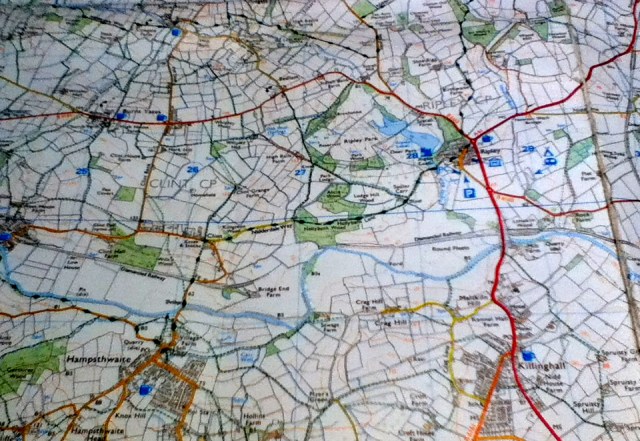
What a difference a day makes! Well, most of the day anyway. Sunday’s walk was with The Dalesbus Ramblers again. It was another visit to Nidderdale but much lower down the dale and just a short bus journey from Harrogate. For most of the day we had blue sky and sunshine but after lunch we walked through a brief snowfall.

map

SUNDAY 23rd MARCH: VILLAGES & CHURCHES OF LOWER NIDDERDALE
Learn some of the history of the villages of Lower Nidderdale.
Start: Hampsthwaite: 11:25
Finish: Ripley: Approx. 15.30
Distance/Grading: 7 miles / Moderate
TRAVEL: Outward: Bus 24 from Harrogate (11.05). Connections on bus 36 from Leeds (09.45) to Harrogate or from Ripon (10.45) to Killinghall.
Return: Bus 36 to Ripon, or Harrogate and Leeds.
Walk Leaders: Duncan & Brenda”

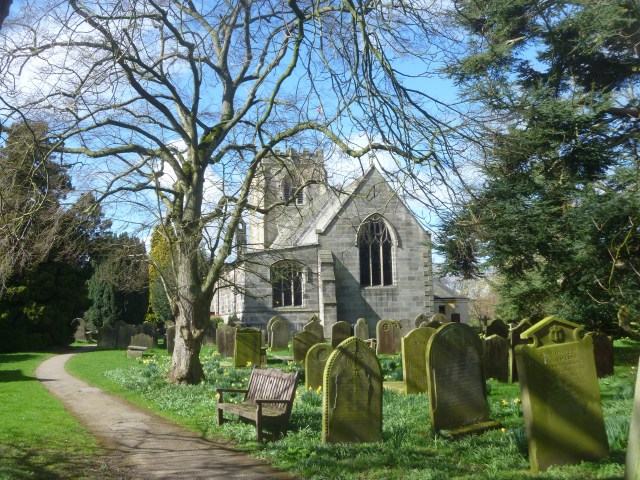
Hampsthwaite Church

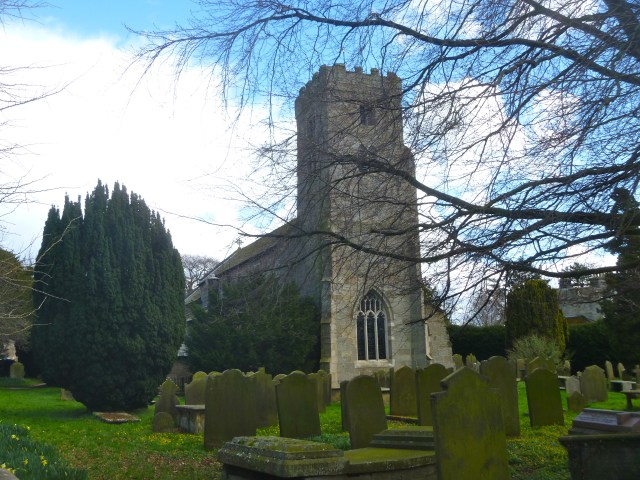
St Thomas a Becket Church in the large village of Hampsthwaite has a long history probably dating back to Saxon times. It has connections with the murder of St Thomas of Canterbury.

St Thomas a Becket

The first known church to be built here was probably completed about 1180 and is believed to have been constructed by Hugh de Morville the then Constable of Knaresborough Castle and one of the four knights responsible for the murder at Canterbury in 1170 of Archbishop Becket. The knights were later pardoned for their crime by the Pope who (it is thought) required the building and dedication of the church as part of the penance imposed upon Hugh de Morville. The church is believed to be one of only two churches in the Church of England to currently enjoy that dedication to St. Thomas a Becket.”

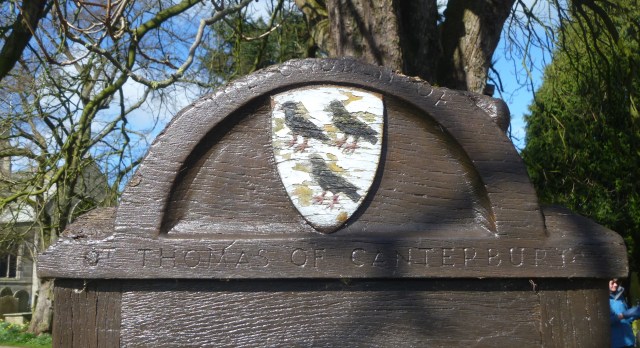
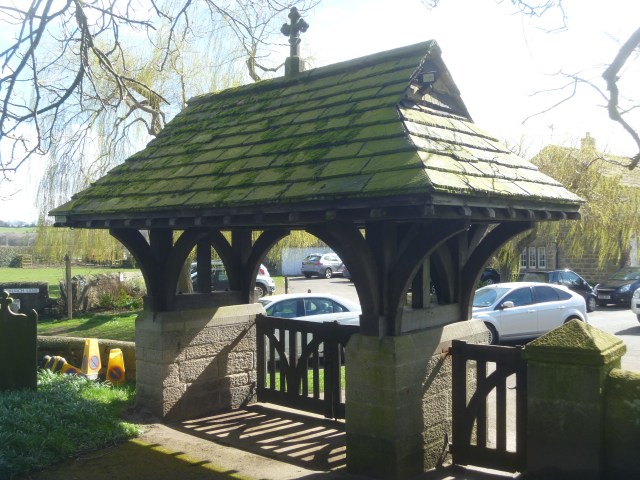
Hampsthwaite Lych Gate

The Lychgate …

The lychgate at the entrance to the church is the work of Robert Thompson of Kilburn. It was given by Lady Aykroyd and was erected in 1938 in memory of her parents, Sir James Roberts Bt. and Lady Elizabeth Roberts. Sadly, in comparatively recent years the original four-legged Thompson mice have been damaged.

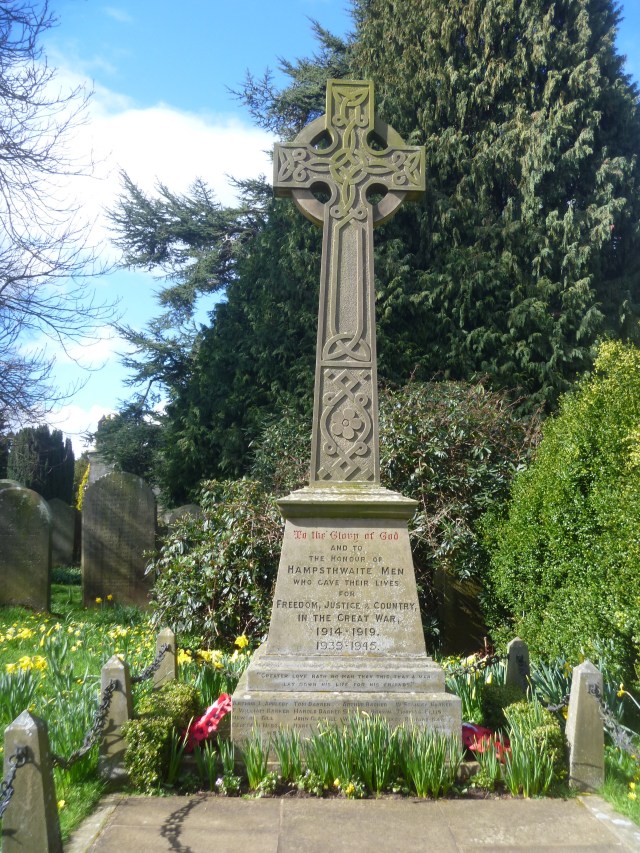
… and the War Memorial

Hampsthwaite war memorial

Nearby, is the War Memorial, which commemorates the men from the village who died in the two world wars. It takes the form of a Celtic cross on a stone plinth and lies in direct line with the cross on the altar in the church. This was stipulated by Canon Peck and the churchwardens in their application for a faculty from the Diocese.”

A church service was in progress so we began our walk out of Hampsthwaite towards Ripley along the tracks of the Nidderdale Way which we followed for the best part of the day’s walk.

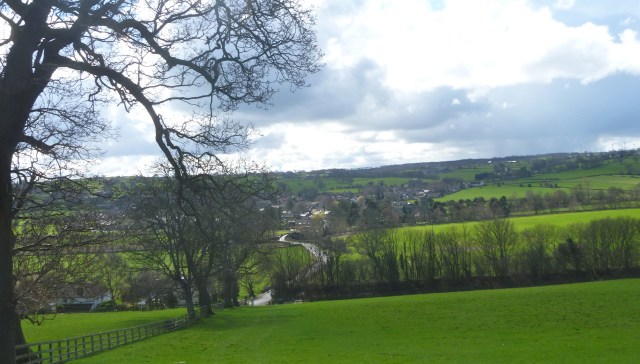
Hampsthwaite

Looking back to Hampsthwaite after a steep climb out of the village.

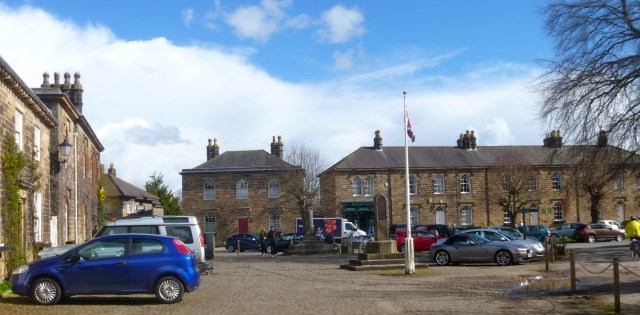
After a couple of miles of broad track, much of it through woodland, we approached the Castle and village of Ripley. Ripley Castle also has a long and fascinating history with connections to the Gunpowder Plot. It is a great visitor attraction and popular local wedding venue. The village of Ripley itself, where we stopped for our lunch break, has a unique style and history. It was rebuilt in the 19th century and modelled on a village in Alsace, France, complete with a Hotel de Ville-style town hall.

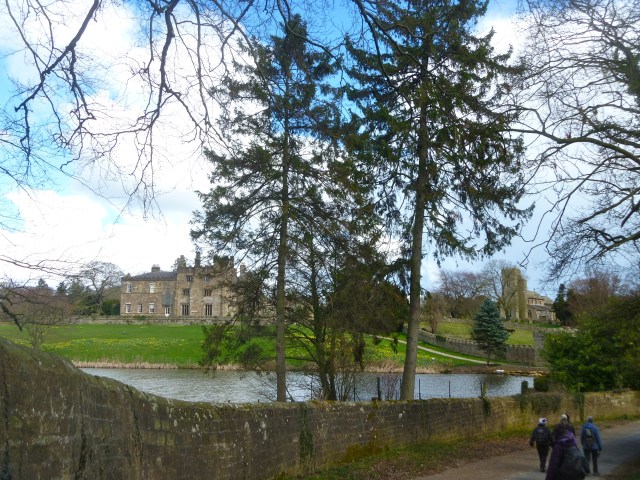
Ripley Castle and Church

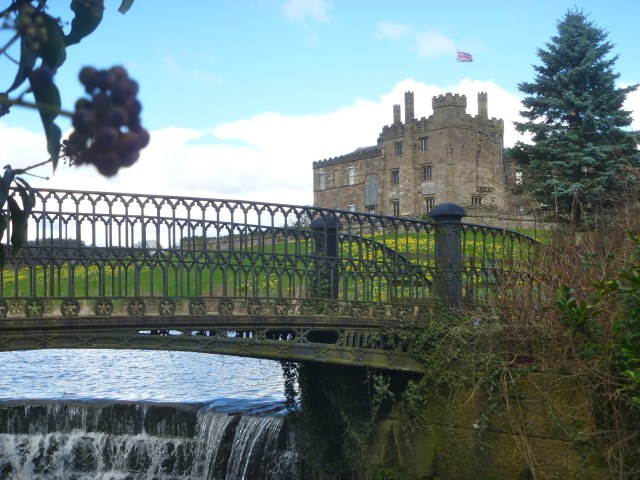
Approaching Ripley we had a glimpse of the Castle and grounds

Ripley Castle

Ripley Castle

Ripley Church

Ripley All Saints Church

Ripley village square

Ripley Village Square

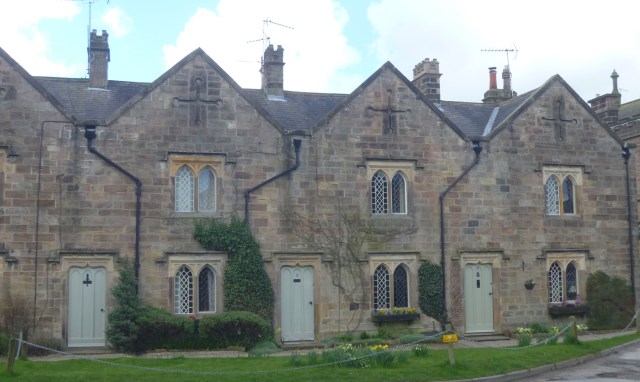
Ripley Houses

Typical Ripley Houses

From Ripley we took The Nidderdale Way to add a loop to our walk via Cayton Gill meadows and woodland returning to Ripley for the bus back to Harrogate.

On my recent rambling forays I have been made more and more aware of the fact that The Tour France ‘Grand Départ’ will be staged on two days in Yorkshire in July this year.

Grand Depart

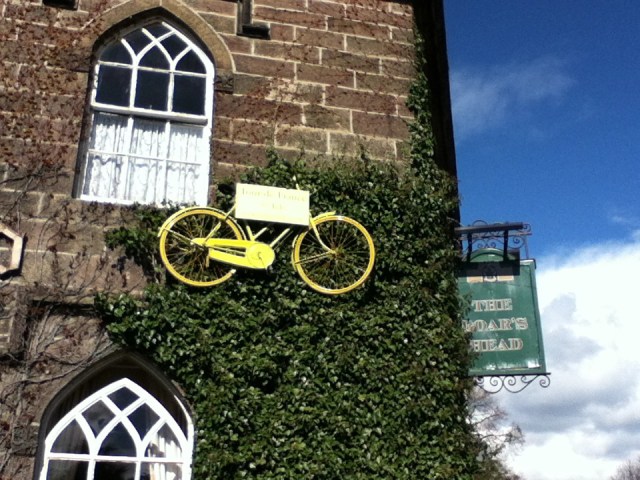
Le Grand Départ will pass through Ripley. Signs at The Boars Head Hotel


A Founder of British Geology and The Terrible Knitters of Dent

Leeds Station sign

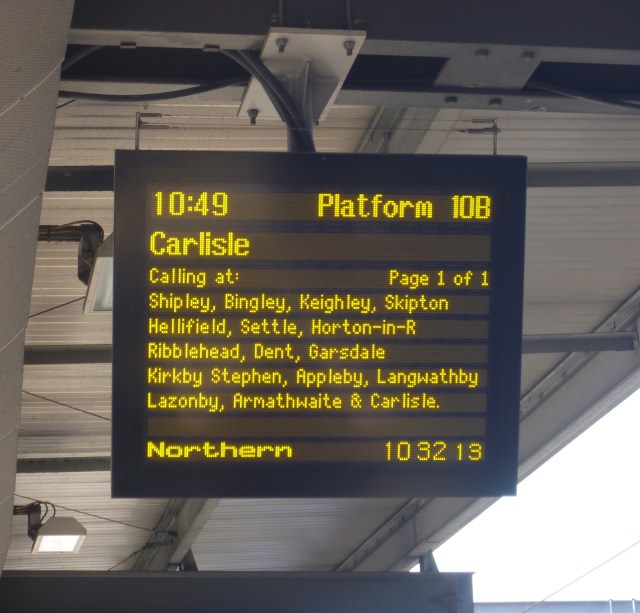
“Sat 22 Mar – Dentdale Explorer – 7mi Moderate

Dent Station – Cowgill – Dales Way – Whernside Manor – Deepdale – Coventree – Dent Village. Alight (12.12) and return Dent. Connects with 10.49 train from Leeds. (JD/DW) Please ring to book your place on the return minibus from Dent Village to Dent Station. [About 5 miles]”

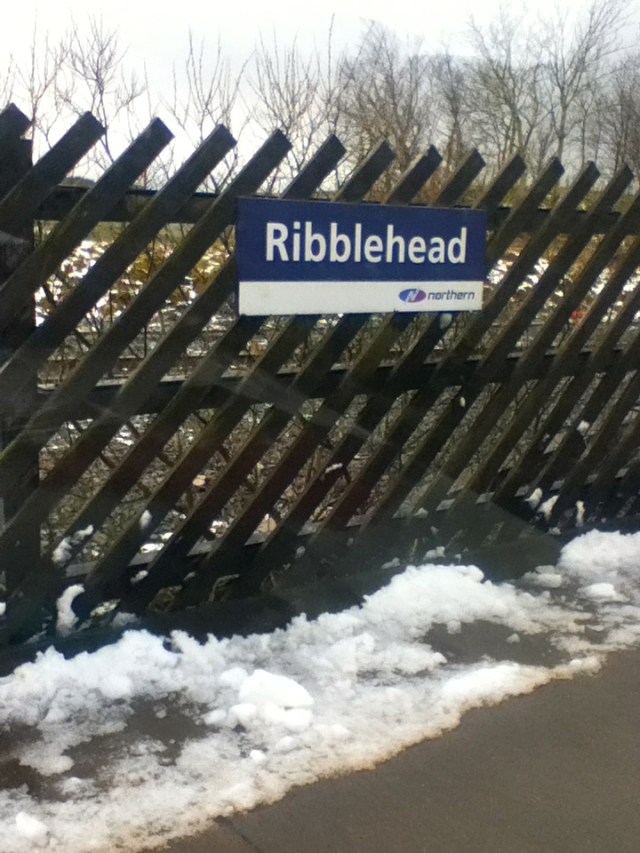
Ribblehead Station

That was the description of the guided walk organised by the Friends of the Settle-Carlisle Line on Saturday. Leaving Leeds in bright sunshine and with a cloudless blue sky we arrived at Dent Station to a rain shower closely followed by a hail storm which turned into blinding snow. By the time we (five of us) reached Cowgill and the Dee valley bottom all weathers had cleared temporarily but we were beset by rain showers (some heavy) and cold winds for most of the walk.

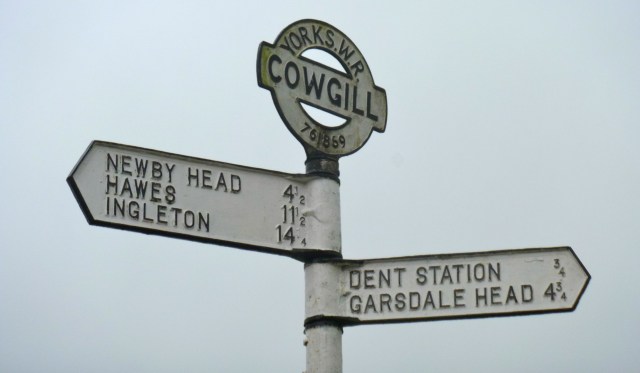
Cowgill signpost

Signpost at Cowgill – formerly in the West Riding of Yorkshire and complete with OS Grid Reference

Much of our route followed the Dales Way long distance path that crosses the country from Ilkley in West Yorkshire to Bowness on the shores of Lake Windermere. I’m familiar with and have walked most of  it between Ilkley and Yockenthwaite so it was interesting to fill in a section with which I was not familiar. As we left Cowgill we were able to pick out across the river the 150 year old church of St John, Cowgill. My Dales Way Companion by Paul Hannon tells me that “Outside are the unmarked graves  of smallpox victims from railway construction days.”

Cowgill Church

Cowgill Church

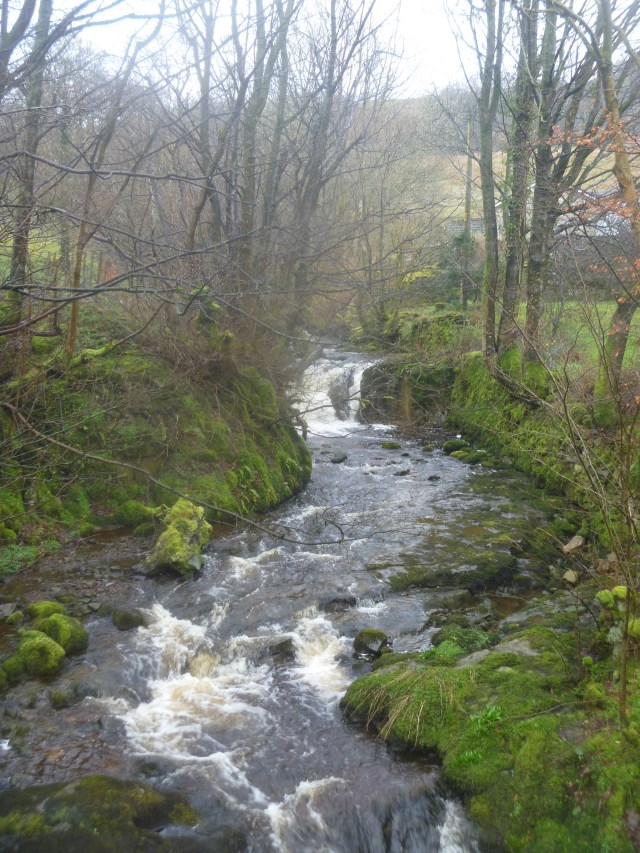
With variations in the weather tracks took us across fields, through former pinewoods, along quiet country lanes past waterfalls at full spate, ancient farm buildings and a deserted chapel.

View from lunch spot

View from our lunch spot

Former pine woods now cleared

Former Pine Woods now cleared

Waterfalls

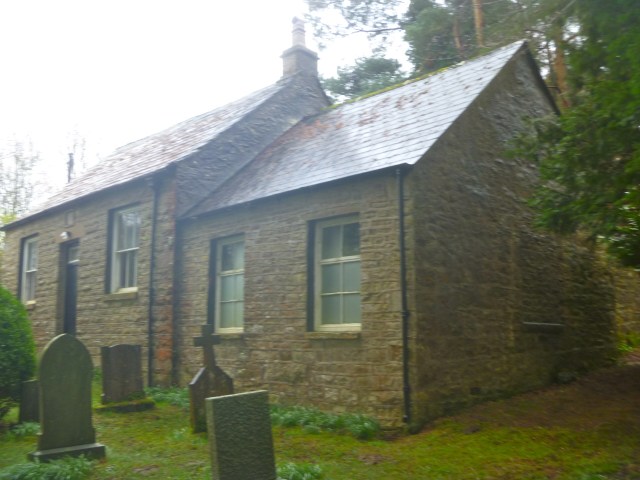
Chapel

The deserted chapel near Whernside Manor

Ancient building

Ancient Farm Building

Arriving Dent

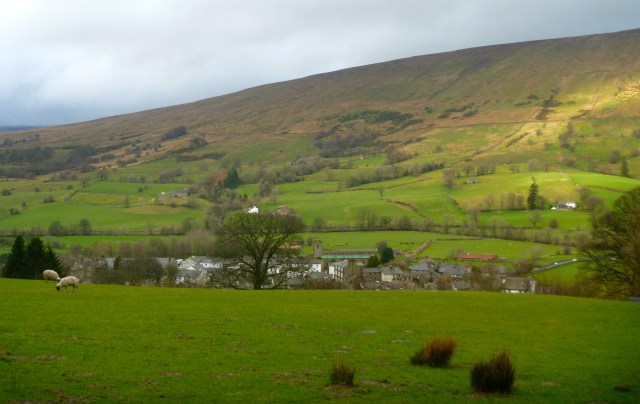
First View of Dent

Finally and quite suddenly we arrived at the quiet backwater village of Dent. At some point we must have crossed the border between North Yorkshire and Cumbria for, although within the boundary of The Yorkshire Dales National Park, Dent is in the South Lakeland district of Cumbria. On Saturday afternoon the village was very quiet. The cobbled streets were practically deserted. We had about an hour to explore before catching the bus back up the valley to the rather mis-named Dent station nearly 5 miles away.

Dent Village

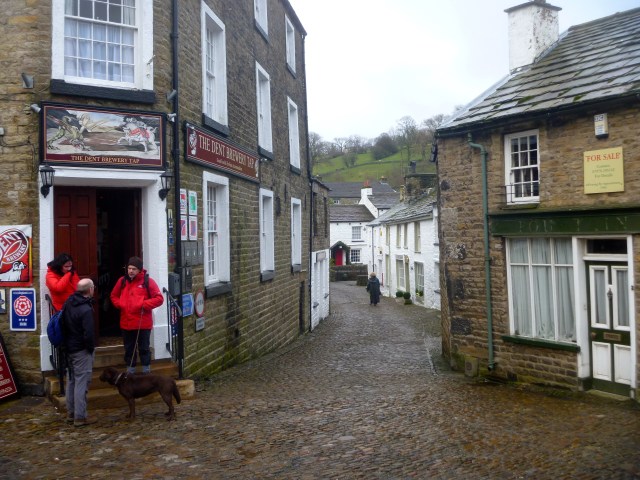
The Main Streets in Dent

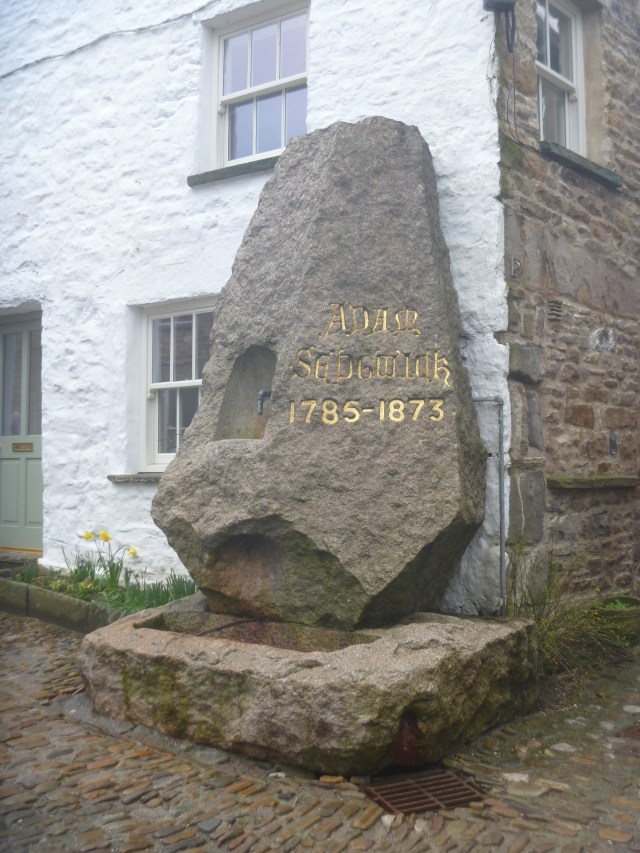
Our leader Duncan first explained some of the history of Dent. One notable son was Adam Sedgwick one of the founders of British Geology. Sedgwick was born in Dent in 1785 the son of the local vicar.

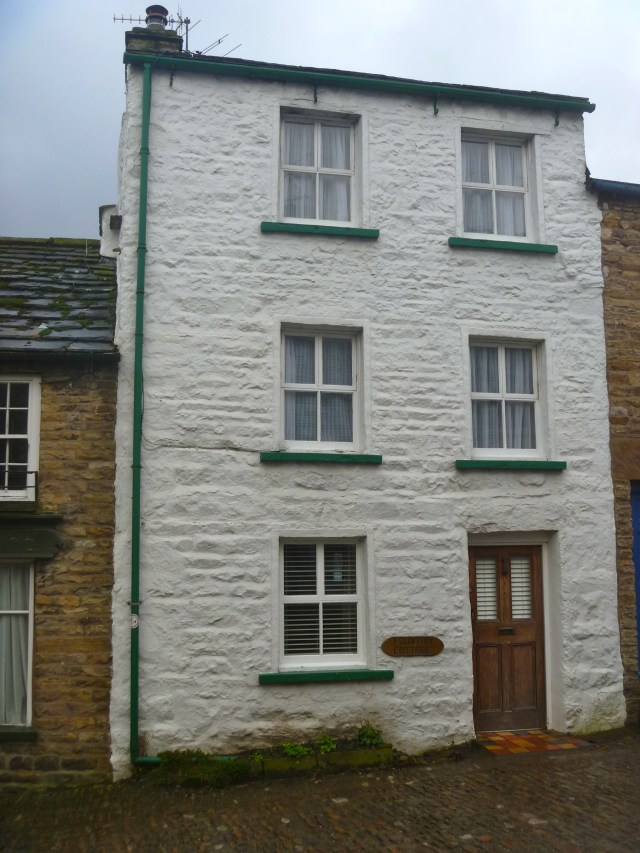
Sedgwick Birthplace

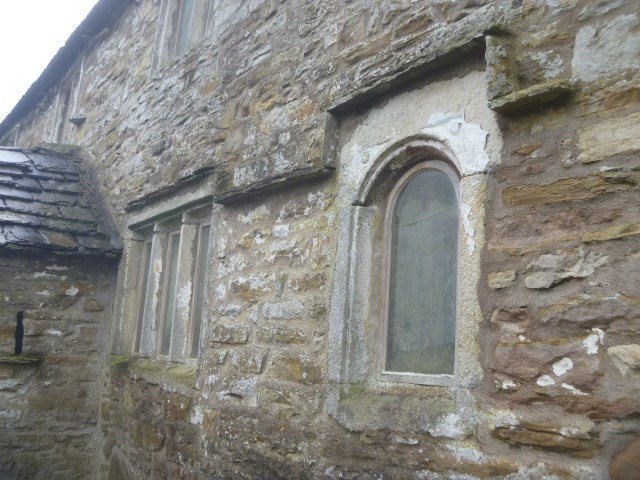
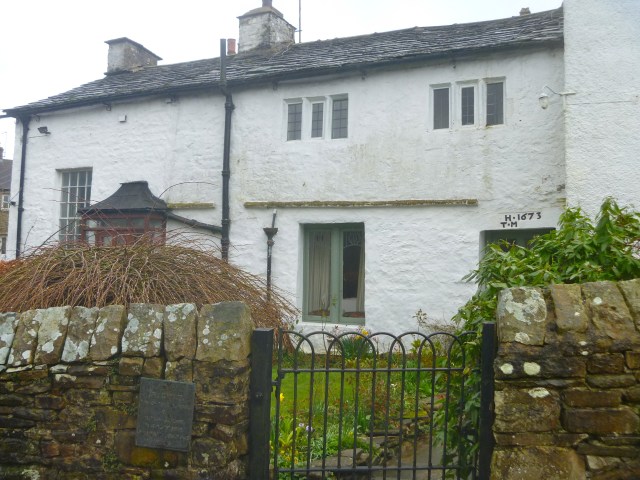
The Old Vicarage – Adam Sedgwick’s Birthplace

Memorial stone

Granite Memorial to Adam Sedgwick in Dent Main Street

He was educated at nearby Sedbergh School and went up to Cambridge University where he became a Fellow in 1810 and by 1818 he was Woodwardian Professor of Geology. Read more about Sedgwick and his geological studies here. The Cambridge University Earth Sciences Museum is called The Sedgwick Museum.

We then learnt about the Terrible Knitters of Dent and the unusual knitting method they employed. The last of the knitters, Elizabeth Hartley and Elizabeth Middleton died in 2007 aged 93 and 91 years respectively.

3 storey house

Typical 3-storey house in Dent

There are two pubs and two tea shops in Dent but before heading for one of the cosy tea shops we had a look round the church.

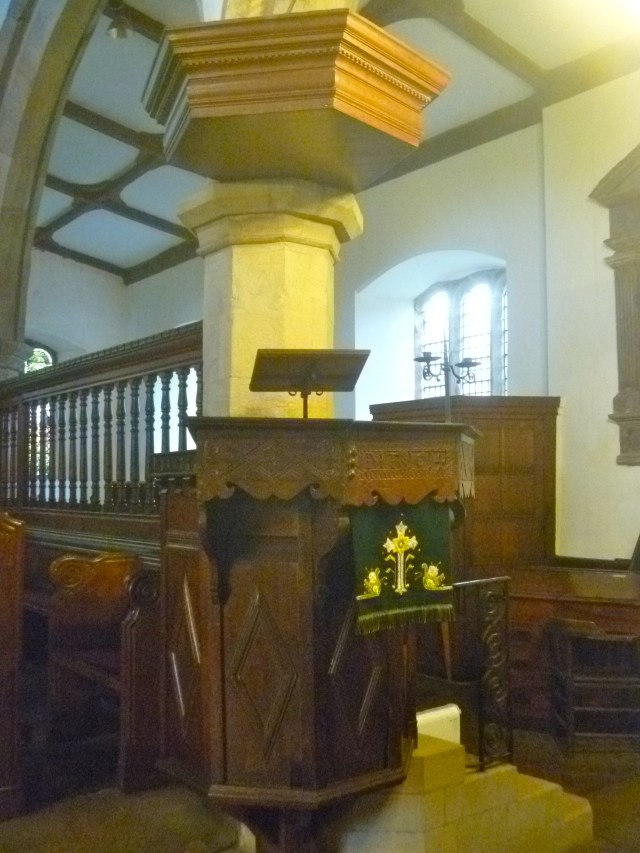
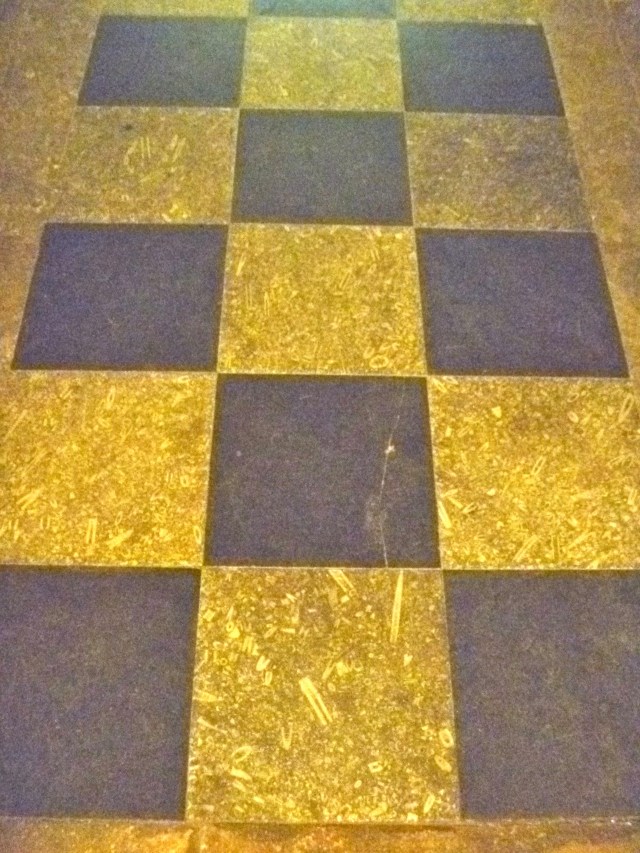
The church of St. Andrew is a Norman foundation, though largely rebuilt in 1417 and restored in 1590. The top storey of the 1614 three-decker Jacobean pulpit is still in use. The chancel is paved with fossil-rich marble, quarried in Dentdale. The box pews were removed in 1889, much of the wood being used to panel the walls of village cottages. On the south side of the aisle are the famous pews of the 24 sidesmen. Originally yeomen farmers, today landowners of Dent, they have shared with the Bishop (now of Bradford) the patronage of the living since 1429.” [Source]

Pulpit

The Remainder of the Jacobean Pulpit

Marble Floor

Fossil-Rich Marble floor

The Western Dales Bus left Dent promptly at 17.05 and brought us back along the valley to Dent Station comfortably in time to catch the 17.32 train back to Leeds where I noted it had also been raining.

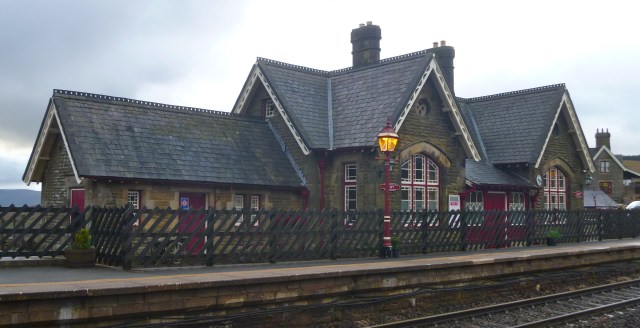
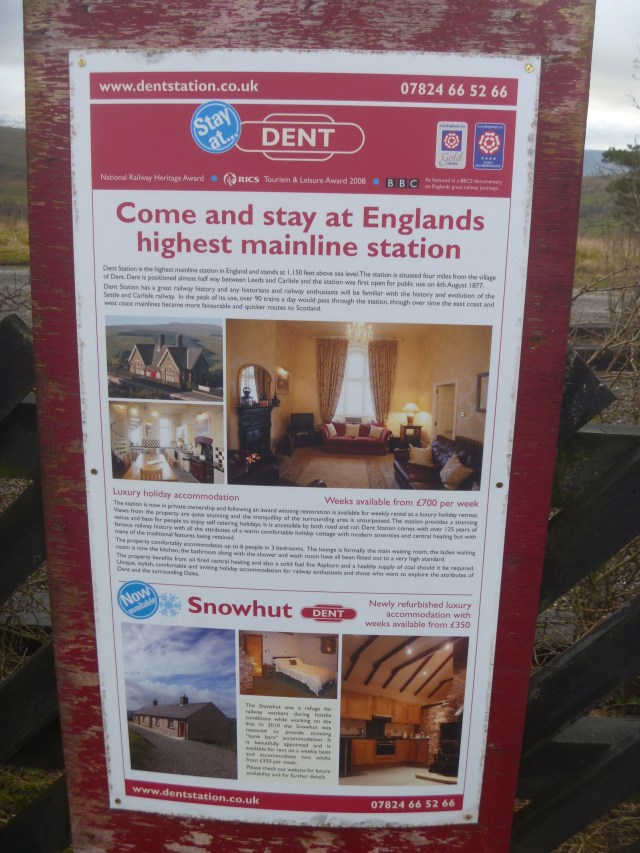
Self Catering at Dent Station

You can stay at Dent Railway Station!

Come and Stay

Two Art Talks

Last week I went to two art talks and very interesting they were too. One was an evening reception at The Mercer Gallery in Harrogate organised by the Art Fund. The other was ‘Tea with the Curator’ at Temple Newsam House near Leeds.

npg_npg_2531_slide

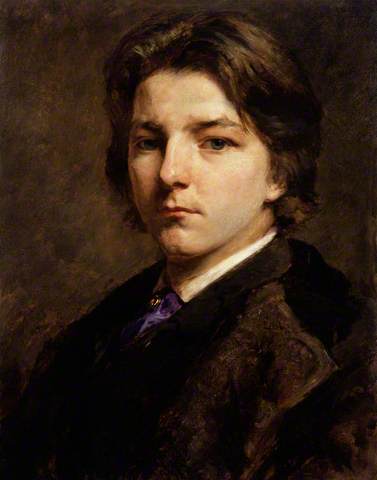
Self-portrait of Frank Holl as a young man [source]

Frank Holl : Emerging from the Shadows [Mercer Gallery, Harrogate 23 November 2013 to 30 March 2014]

‘Frank Holl (1845-1888) is one of the great painters of the Victorian period, notable for his tragic social realism as well as his penetrating portraits. Revered in his lifetime, he died young whilst at the height of his powers. His early death meant that he never fully received the acclaim that his work merited. This exhibition represents the first modern retrospective of this significant artist.’ 

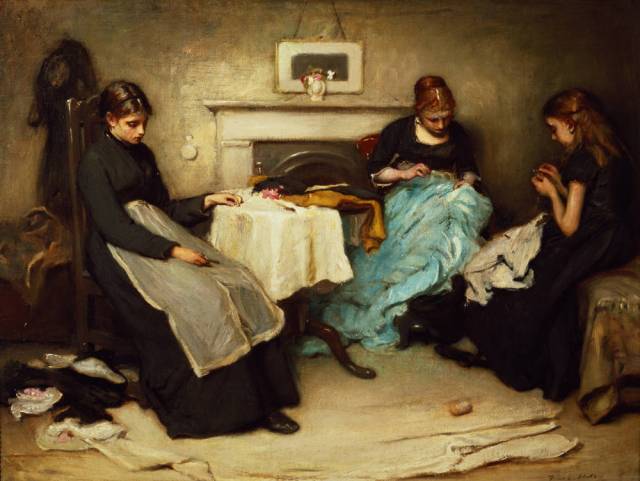
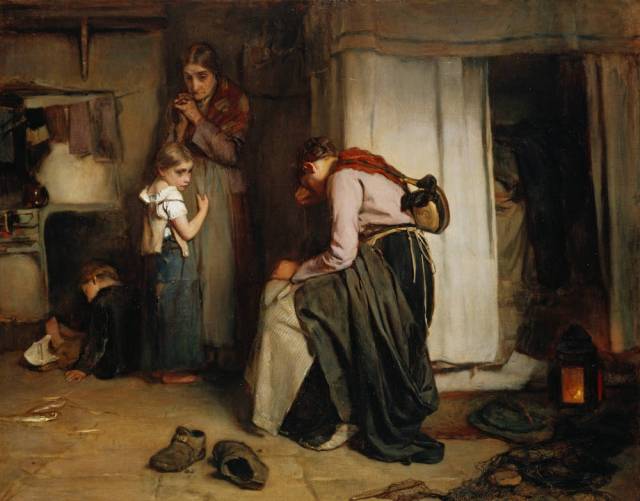
I have been aware of Holl since the mid-1990s when one of my masters papers in Victorian Studies was on the subject of narrative paintings with a theme of poverty and the poor in Victorian England. The Holl picture we looked at was The Seamstresses now owned by The Royal Albert Museum in Exeter. It is on show at the Harrogate exhibition.

4

Seamstresses. Frank Holl. 1875. Oil on canvas. Courtesy of the Royal Albert Memorial Museum, Exeter.

Jane Sellars, curator of the Mercer Gallery, introduced Holl and told us more about his life and travels and spoke about each of the, perhaps 30, paintings. It was interesting to note the themes of Holl’s narrative paintings on loan from prestigious galleries around the country, including The National Portrait Gallery – soldiers off to fight in Afghanistan, sweatshops, guilty bankers – all themes that appear in the news today. So not much has changed there. Jane pointed out the “Rembrandtesque” effect in many of these paintings.

5

No Tidings from the Sea. Frank Holl. 1870. Oil on canvas. Courtesy of the Royal Collection Trust. [source]

Even Queen Victoria bought one of his pictures No Tidings from the Sea (1870 and  in The Royal Collection). Later Holl gained commissions to paint portraits and his subjects included national figures like William Gladstone and W.S.Gilbert. The BBC ‘Your Paintings’ website shows 68 of his paintings. Jane quoted several times from his eldest daughter’s, Ada Mabel Reynolds,  1912 biography of her father. There is an accompanying book/catalogue to the show. Earlier last year the exhibition was shown at the newly refurbished Watts Gallery in Surrey. In Harrogate the pictures have been hung beautifully for ease of viewing and the lighting is excellent for all except maybe one glazed picture.

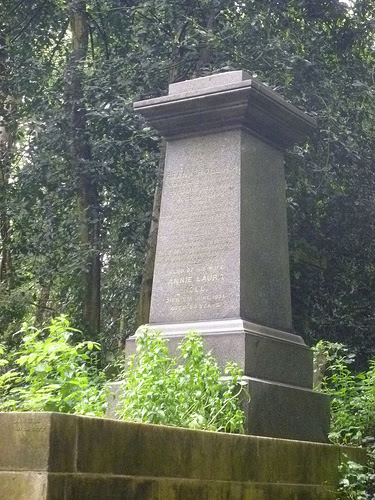
Last May on a visit to Highgate Cemetery I noticed his tomb and photographed it.

Frank Holl tomb

The Tomb of Frank Holl in Highgate Cemetery

I’m very pleased that Frank Holl is at last emerging from the shadows.

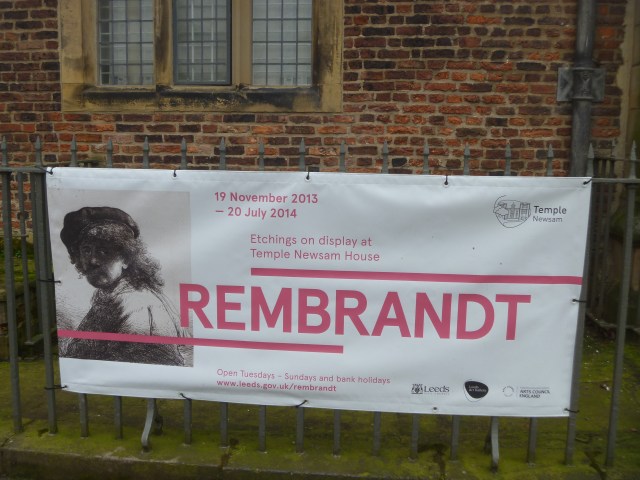
Rembrandt : etchings from the Collection of Leeds City Art Gallery [Temple Newsam House 19 November 2013 – 20 July 2014]

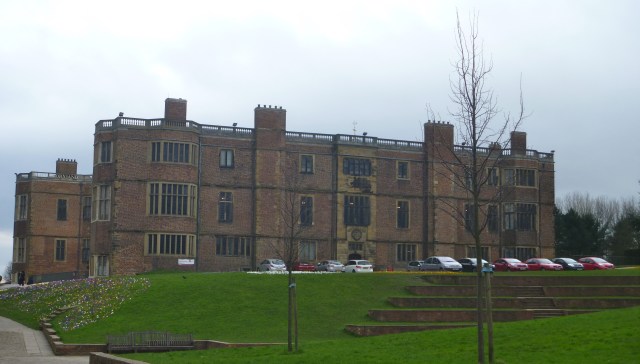
TNH side view

It’s very difficult to get a ‘front on’ view of Temple Newsam. The land drops away significantly from the front of the house and a wider angled camera lens is required to capture it closer up. The photo above is of the side view. Temple Newsam’s history goes back beyond the Domesday Book. Lord Darnley former husband of Mary Queen of Scots was born here in 1545.

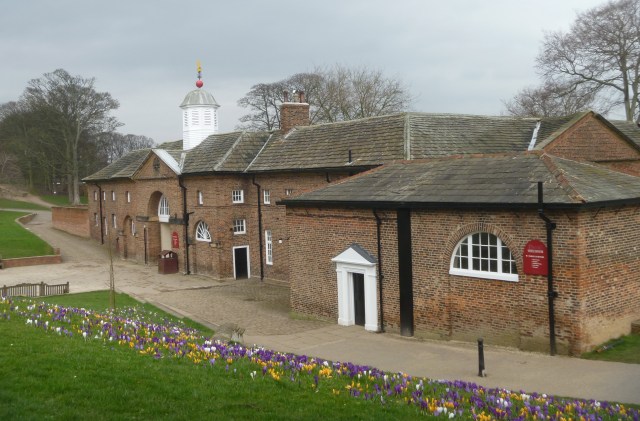
Stable Block

The Stable Courtyard makes a much better view

So, last Thursday afternoon I made my way to Temple Newsam for Tea with the Curator of the Rembrandt Etchings Display.

This season’s Winter/Spring exhibition at Temple Newsam House offers the rare chance to see a selection of prints made by the greatest printmaker the world has ever seen – Rembrandt Harmensz van Rijn (1606 – 1665). The exhibition will run for nine months and will consist of two displays; the first will examine Rembrandt’s portraits and figure studies and the second, will showcase a selection of Rembrandt’s biblical prints.

Rembrandt’s career as a printmaker ran parallel with his painting, but he rarely treated the same subject in both medium and only on a few occasions did he reproduce his paintings in print. Indeed for Rembrandt, print was a distinct art form which he pursued as actively as he did his painting; quickly learning the technical skills involved in etching Rembrandt virtually recreated this technique. His impact and contribution to printmaking is unprecedented and is so significant that it is still reflected in etchings produced today.

Rembrandt poster
Portraits and People, 19th November 2013 – 30th March 2014
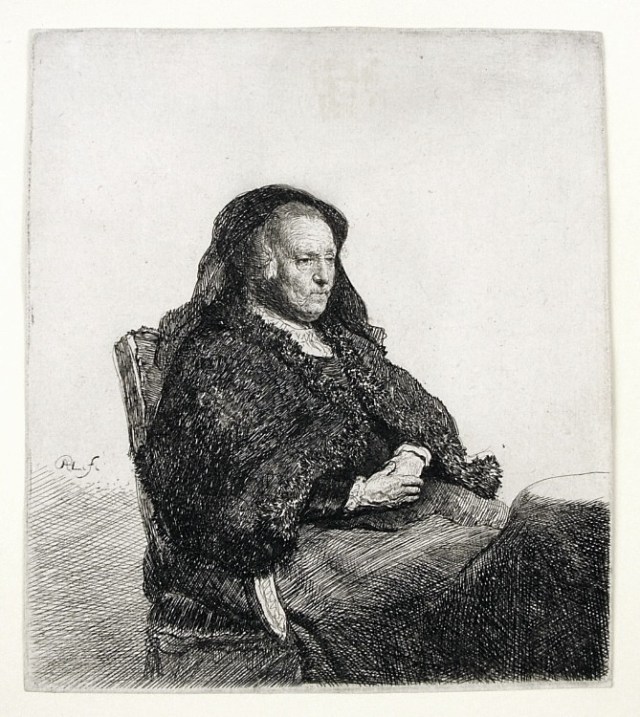
Bringing together Rembrandt’s prints of people the first half to this exhibition will focus on his early experimental prints in which Rembrandt developed both his technique and his interest in showing emotion and thought through detailed observations of facial expressions. Highlights include a selection of Rembrandt’s iconic self-portraits, etchings of his mother and wife Saskia and a group of Rembrandt’s prints of beggars.

rembrandt-mother1

The Artist’s Mother [source]

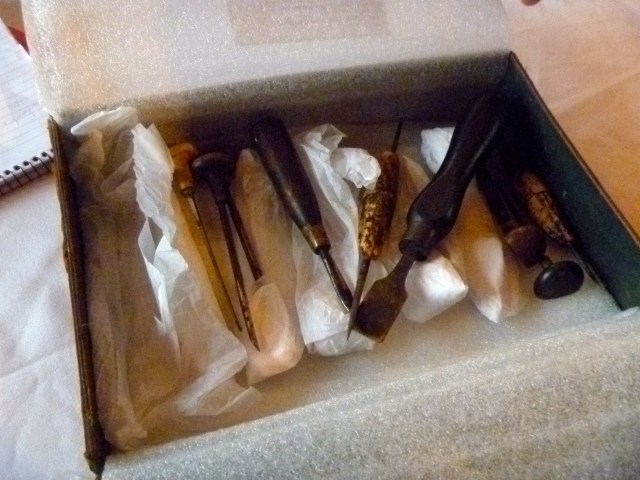
Theodore, the curator, and I and four others assembled in the Dining Room for a friendly discussion and an opportunity to examine etching and engraving tools. The tool box and tools themselves that Theodore brought along had all been the property of Frank Brangwyn. Theodore explained the processes and their differences to us before taking us upstairs to the small but excellent display of Rembrandt etchings.

Frank Brangwyn's tools

Frank Brangwyn’s Etching Tools

The etchings themselves are small and exquisite and beautifully displayed. Magnifying glasses are supplied through which we could study the minute detail of each print.

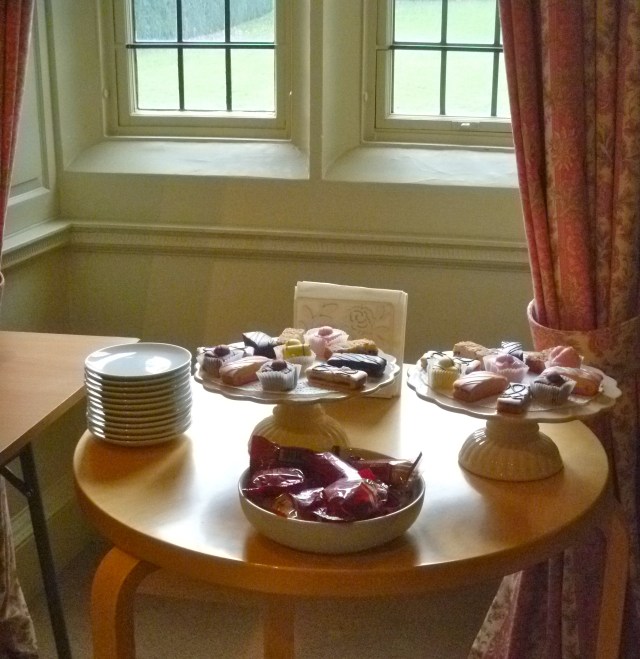
Tes is served

Tea and cake and biscuits are served

On returning to the Dining Room for tea and cakes we had further opportunities to examine at close quarters etchings and tools and a brief slideshow of a 16th  century printmaking shop which reminded me of my visit last month to the Plantin-Moretus Museum in Antwerp.

The current etching display will be replaced next month by a further series from the 70 or so donated to the Art Gallery on the theme of Rembrandt and the Bible.

The History Wardrobe Premiere : Women and The Great War

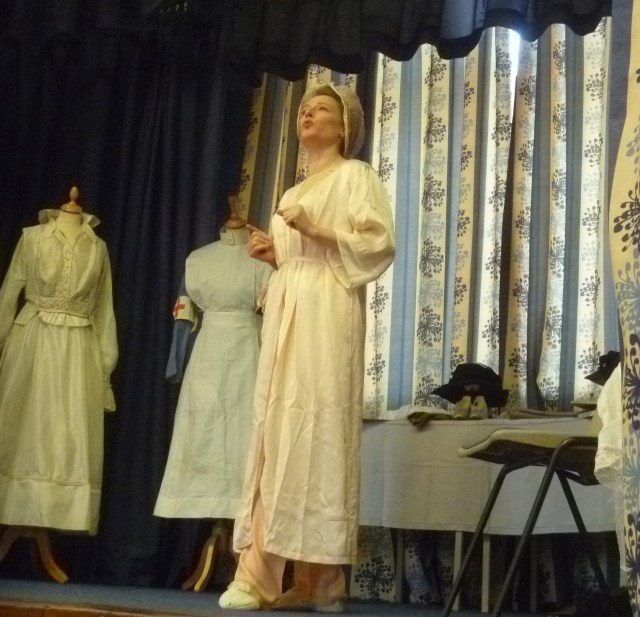
Oh my word! What a fun afternoon I have had. First I met up with two dear friends from the online book group at The Heifer pub in Scorton in North Yorkshire (a village between Northallerton and Richmond). After a tasty lunch and several cups of tea we headed across the village green to The Memorial Hall to attend my third (and their first) the premiere of their new presentation by Lucy and Merry The History Wardrobe company : Women and The Great War.

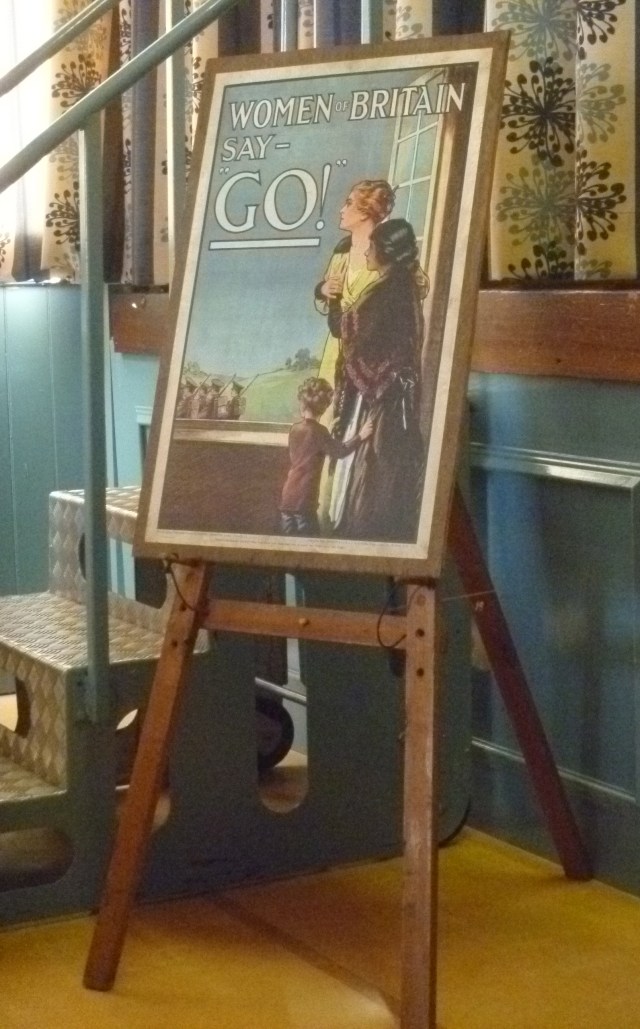
Women of Britain say Go

Dawn, from nearby Kiplin Hall, who was responsible for the event, opened the proceedings by telling us about the origins of the Memorial Hall and its connections with the Hall and the Great War. It was originally built and donated as the Men’s Reading Room by the owner of Kiplin Hall in 1892 (what would they have thought of Lucy and Merry in various states of undress this afternoon??) but was bought by the village in 1919 and dedicated to the men of the village who died in the First World War.

Lucy introducing

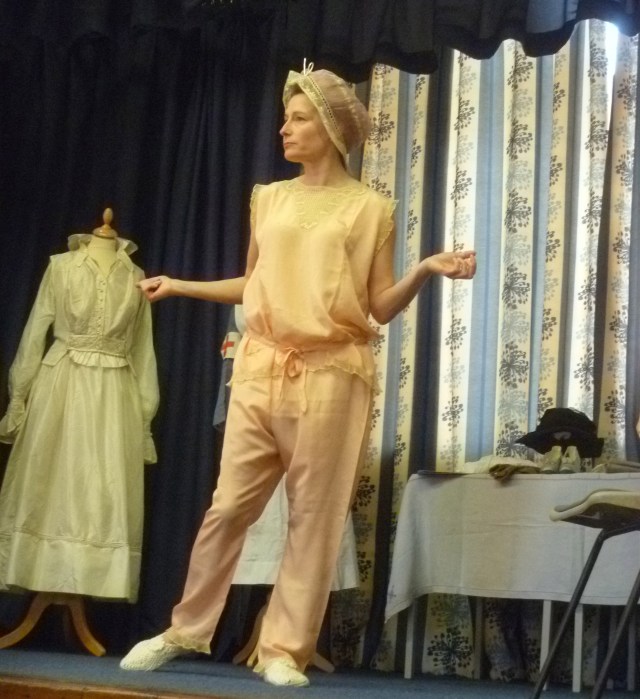
Lucy opens the presentation in her silk dressing gown, pyjamas and, yes, her boudoir cap

Silk pyjamas and boudoir cap

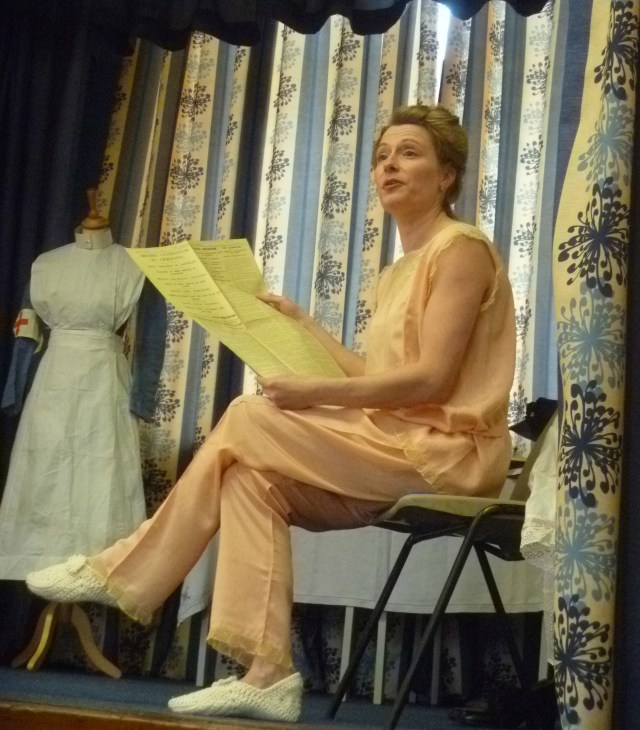
And here she is in the silk and lace pyjamas

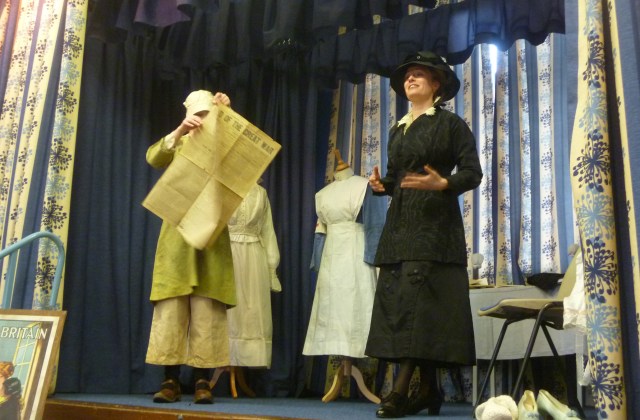
Westminster Gazette 4.8.14

Lucy reading an original issue of The Westminster Gazette of 4 August 1914

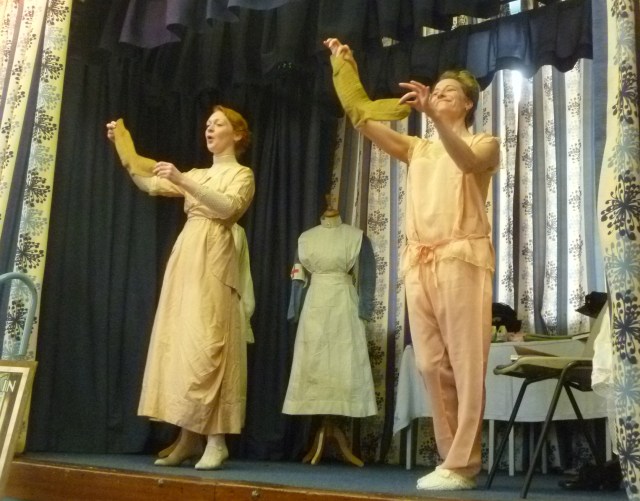
One of the highlights of History Wardrobe shows is having the opportunity to see and later examine closely genuine costumes and accessories from the period. Lucy is very clear about what is reproduction and what is the genuine article. Knitting came very much to the fore during the war years so Merry’s mother set to and knitted socks as would have been made in their thousands and sent to soldiers serving on the front line. Sometimes the knitters added a personal message to the unknown soldier and popped it into one of the socks. They even occasionally received replies.

Knitted socks

Meredith’s mum’s socks

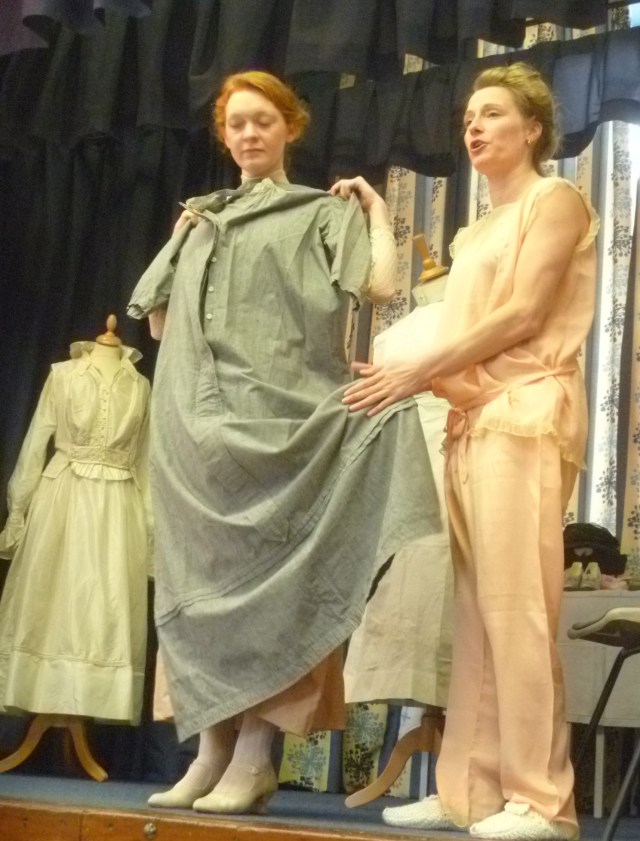
Many middle class women joined the nursing services – the VADs – The Voluntary Aid Detachments. Vera Brittain has famously written about her wartime service and experiences in her book Testament of Youth also dramatised as a successful TV series. Lucy was able to show us a long grey nursing dress purchased from Harrods and a standard uniform with exceptionally starched collar and cuffs.

Nursing dress

The Long Grey Nursing Dress

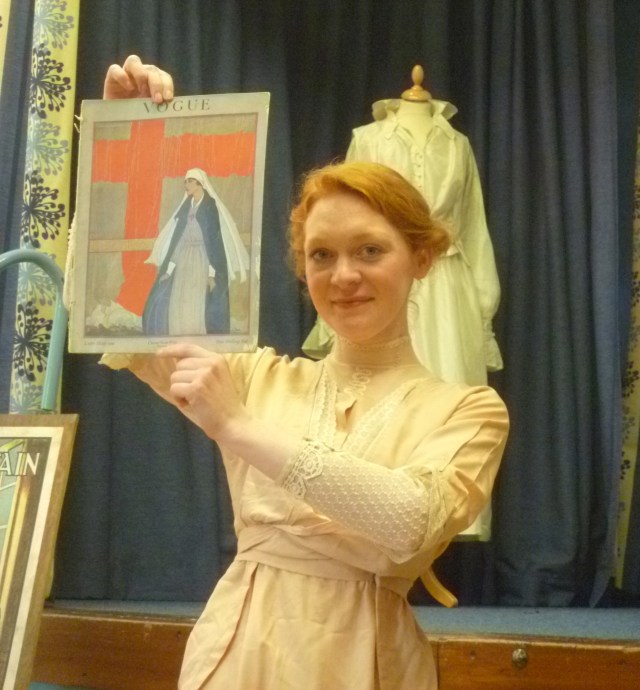
On Vogue cover

And on the cover of Vogue

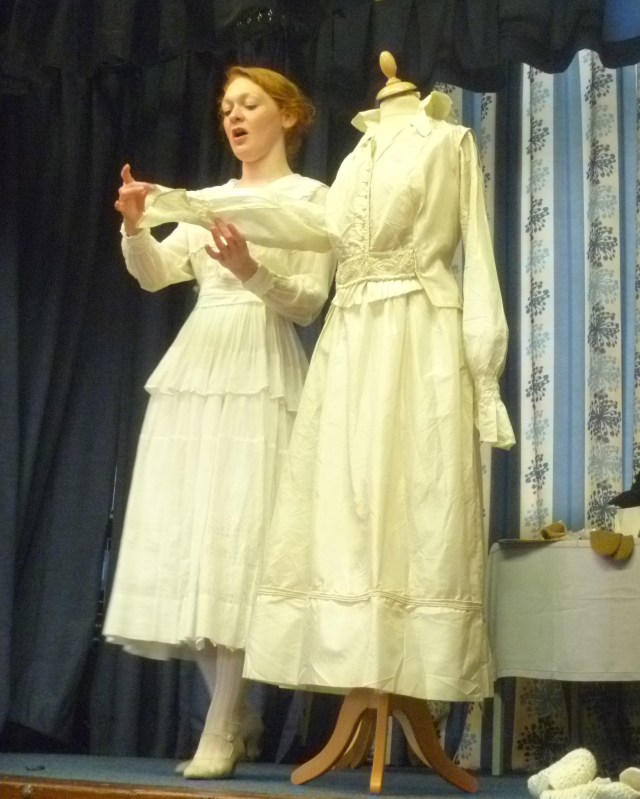
We were shown a silk wedding dress with its high collar, crinoline skirt, masses of petticoats and long sleeves.

Silk wedding dress

The Silk Wedding Dress

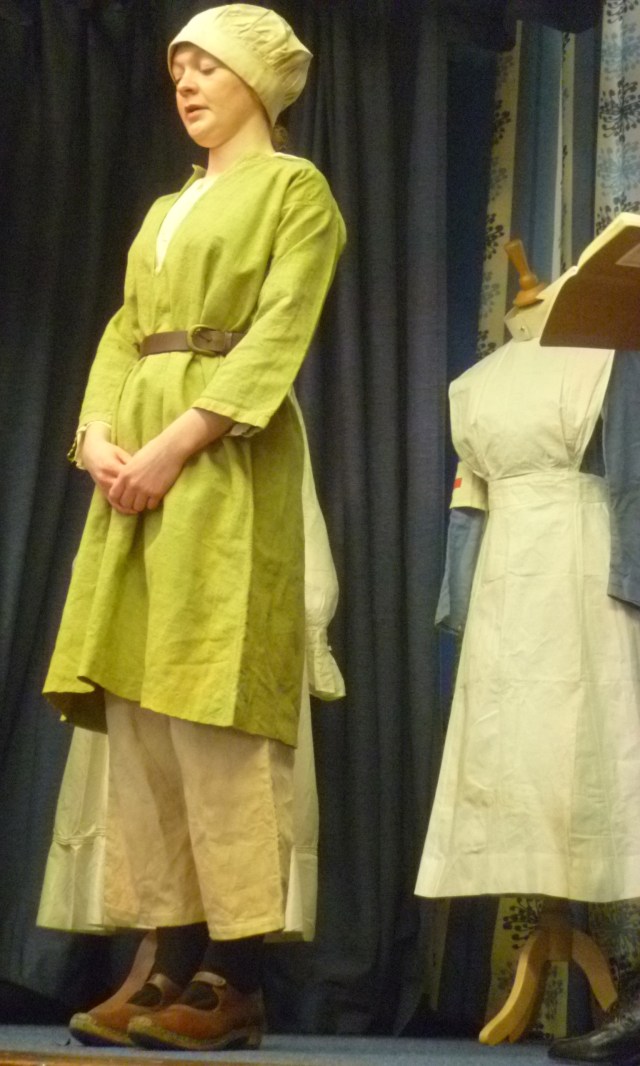
When War broke out in 1914 six million women were already working outside the home but between 1914 and 1918 many more joined them in all sorts of work not least in munitions factories. Meredith took on this role displaying the cap and tunic that would have been worn with waist-tie trousers and heavy wooden-soled clogs with metal caps.

Factory 'dress'

Meredith as factory worker

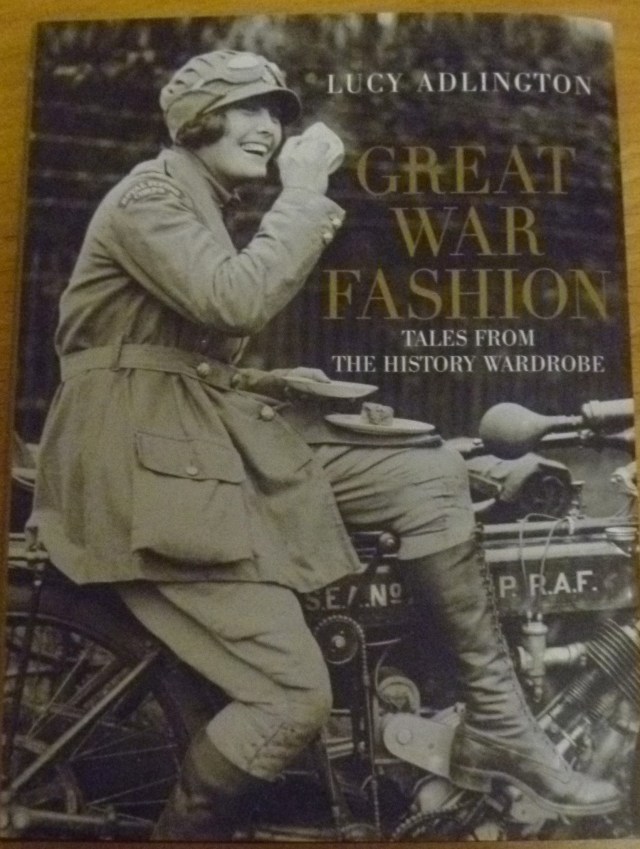
Like all good series this one would not be complete without an accompanying book. Lucy has published “Great War Fashion: Tales from The History Wardrobe” and I have my library copy in front of me now and am very much looking forward to reading it.

Great War Fashion

Great War Fashion – on sale now!

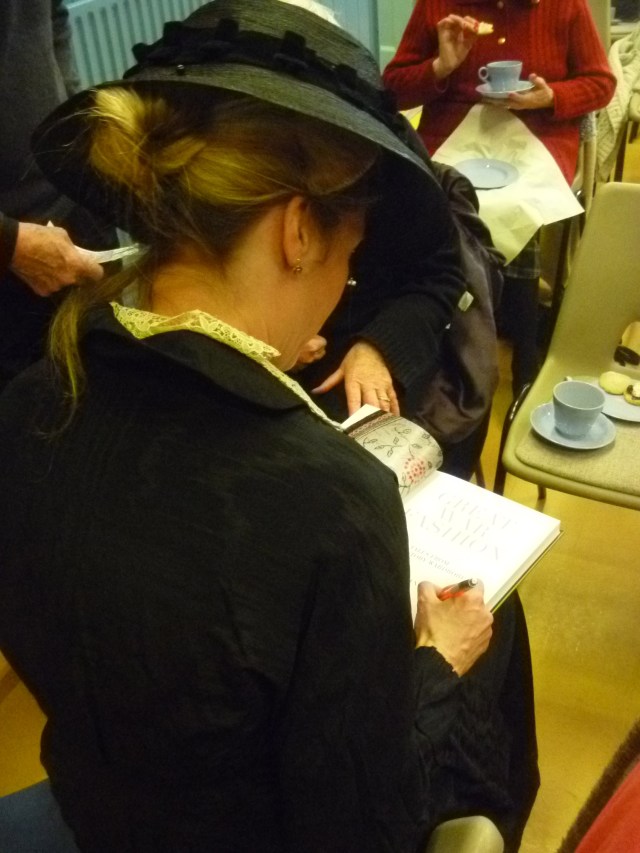
Lucy signs her book

Lucy signs her book

Finally, peace has broken out at last! As Lucy quoted from one woman “It feels as though the elastic has broken!”.

Peace has broken out

I’m looking forward to another History Wardrobe show although I don’t know what will be up for me next. Their diary is already filled for this year.

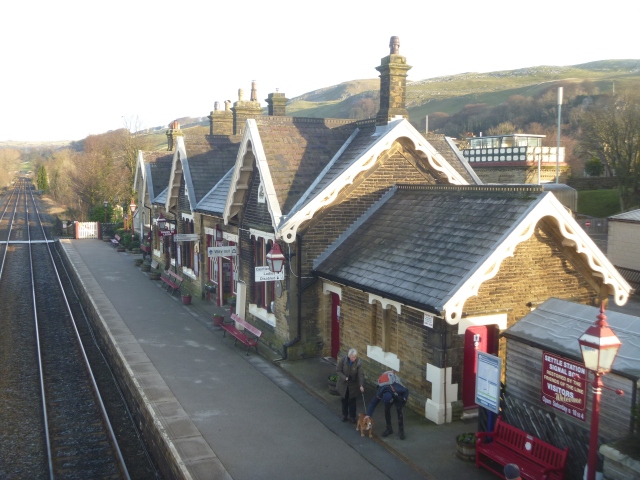
Horton-in-Ribblesdale to Settle

On Sunday I joined the second Ribble Valley Rambler walk of the year organised by The Friends of DalesRail (of which I am now a member) : Horton to Settle via Helwith Bridge and Stainforth Force: 7 miles, easy. Book and alight Horton; return from Settle. I worked out that since 21st December I have walked from Ribblehead to Long Preston in 3 sections.

On Saturday morning the sun was shining and the sky was blue so I decided to book my train ticket for Sunday from Shipley to Horton. As I left Bagshaw Museum at about 4pm it began rain and I don’t think it stopped until after midday on Sunday. But as I’d paid for my train ticket I resigned myself to a wet walk and dressed for the occasion.

Leaving Horton

The Group moves off from Horton Station

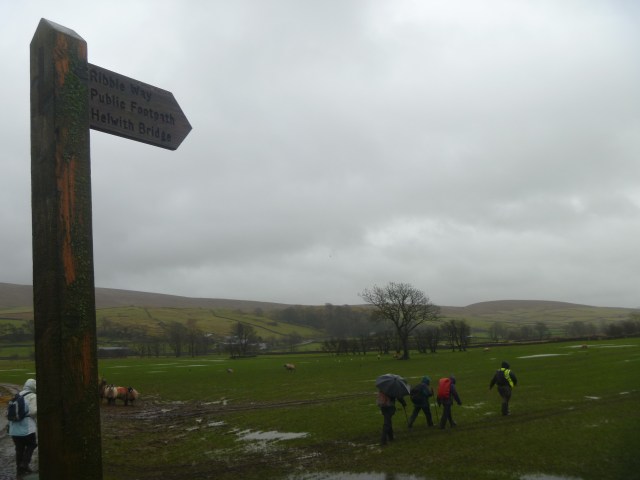
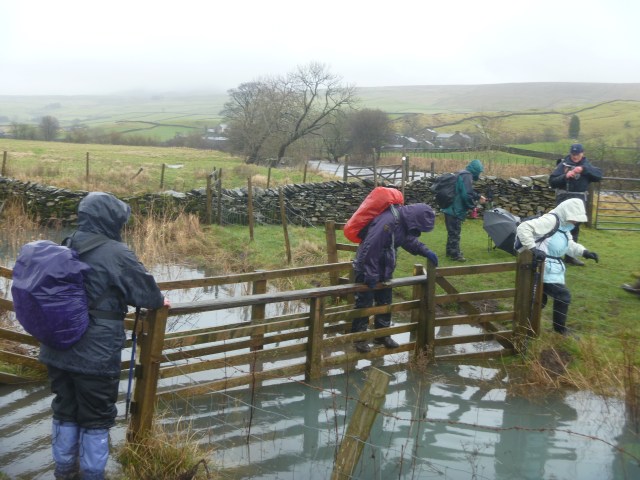
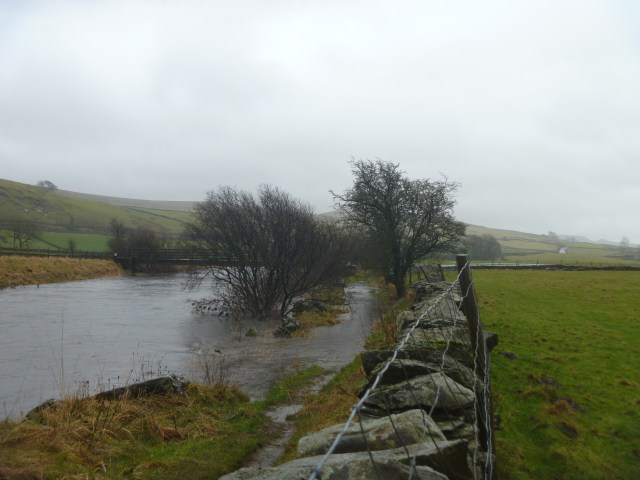
The wind blew and the rain fell but 9 of us met on Horton station and headed off towards Settle on a tarmac track. In fact much of the walk had to be diverted away from the Ribble Way and onto nearby lanes since the paths became extremely muddy and in some cases totally waterlogged and flooded. The river was running full to overflowing and many fields were under water.

Waterlogged fields

Typical Waterlogged Field

Liable to flooding

Liable to Flooding

Full Ribble

The Fast Flowing Ribble

Muddy field tracks

Muddy Field Tracks

Flooded footpath

Path Closed Due to Flooding

Path disappeared

Ribble Way has Disappeared Under Water

Stainforth Bridge

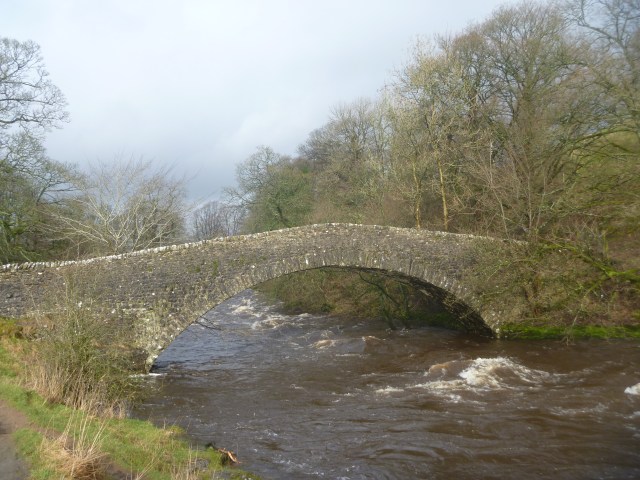
Fast Flowing River Ribble at Stainforth Pack Horse Bridge

The Force

The Full Force of Stainforth Force

Nearly at Settle

Nearly at Settle

The sun did eventually peep through and on arrival in Settle there were glimpses of blue sky. It was good to get out though despite the wet weather.

At Settle

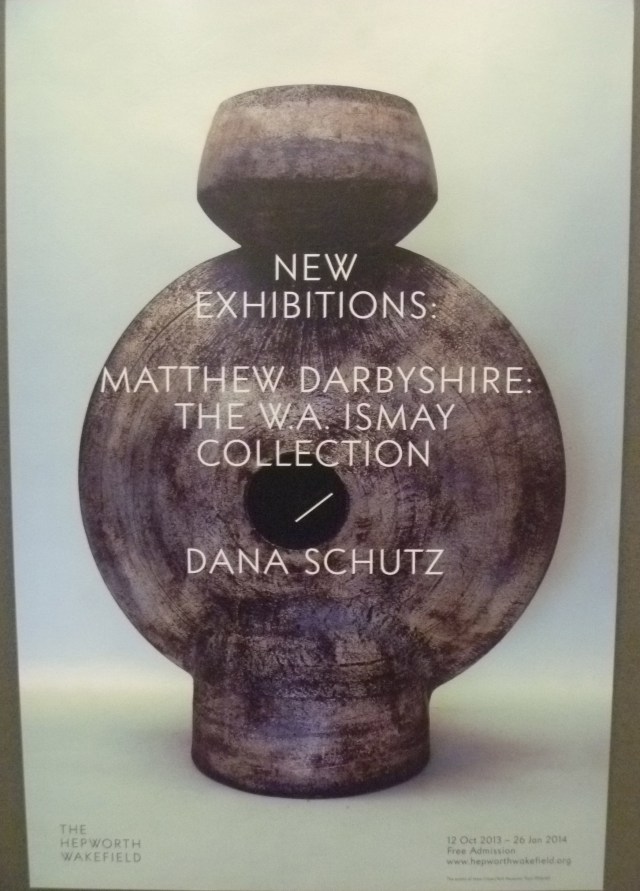
Matthew Darbyshire and The W.A. Ismay Collection at The Hepworth, Wakefield

Hepworth

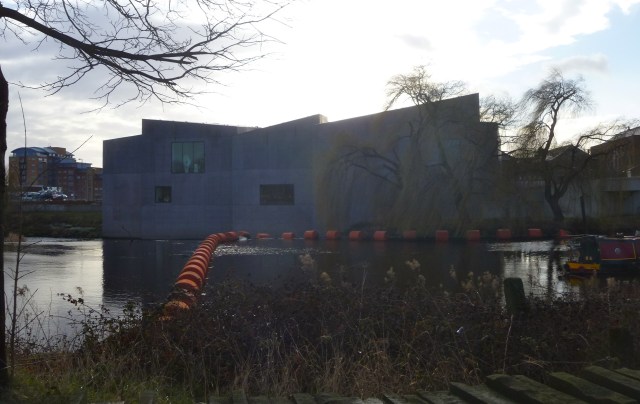
The Hepworth Gallery by the River Calder in Wakefield

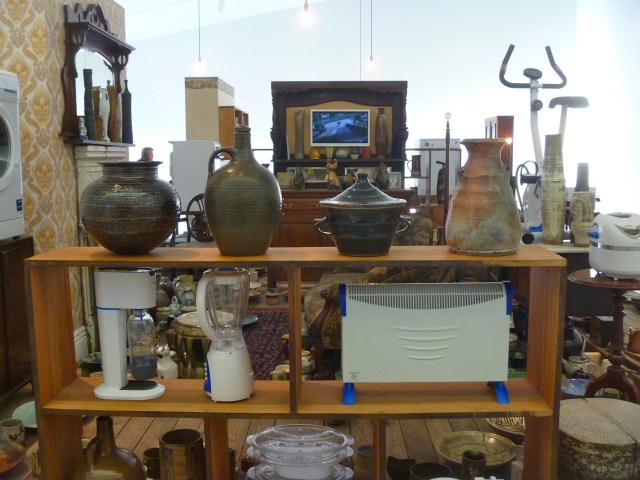
On Thursday I revisited The Hepworth Gallery in Wakefield. I went back specifically to see the Matthew Darbyshire installation of pots juxtaposed with modern white goods in Gallery 10. Unfortunately this exhibition closes today but the pots, which belong to the York Art Gallery collection, will be back in a special new gallery to be created at York when the museum reopens in 2015.

With my new-found appreciation of studio pottery I was looking forward to seeing this exhibition. I was not disappointed.

Hepworth poster

This fascinating project brings together one of Britain’s most exciting contemporary artists, Matthew Darbyshire, with one of the world’s most significant assemblages of post-war studio pottery, the W.A. Ismay Collection.

Ismay 2

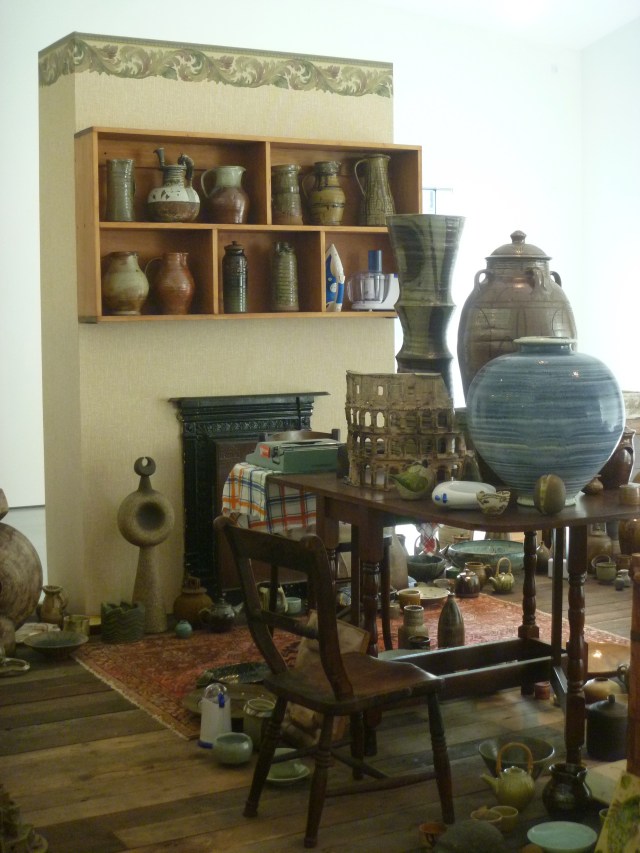
Librarian and collector William Alfred Ismay (1910-2001) lived in Wakefield his whole life. From 1955 he began to collect pieces by some of the most renowned makers of studio pottery from Hans Coper and Shoji Hamada to works by local Yorkshire potters, Barbara Cass and Joan Hotchin, alongside lesser known ceramicists.

His extraordinary collection of 3,600 items, by 500 makers, covered all the available surfaces of his small terraced house in Wakefield. This extraordinary collection offers an insight into the compulsive and systematic habits and protocols of a unique and unusual collector.” [Introduction from The Hepworth website]

Ismay and TV

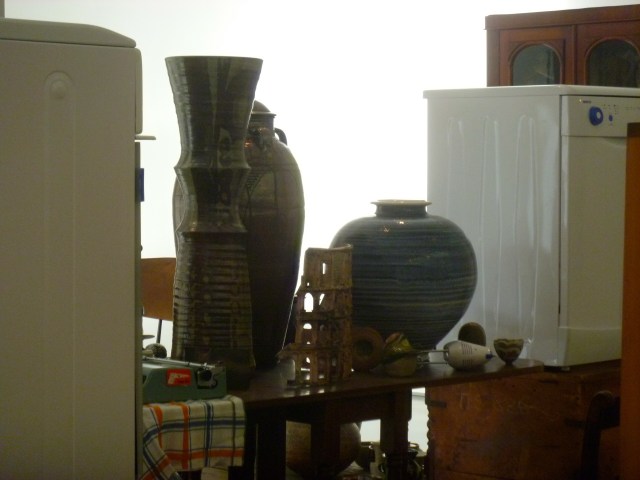
Contemporary installation artist Matthew Darbyshire assembled the display based on the floor plan and the furniture or kind of furniture that Ismay would have owned in his Wakefield terraced home; he added modern streamlined household white goods as a contrast to the handmade ceramics and he used just 700 of the total of 3,600 pots from Ismay’s collection. In addition a flat screen TV shows a loop of original motion picture clips that Darbyshire has put together on the themes of man and machines and dance including hip-hop and other natural human movement contrasting the manmade with machines and technology.

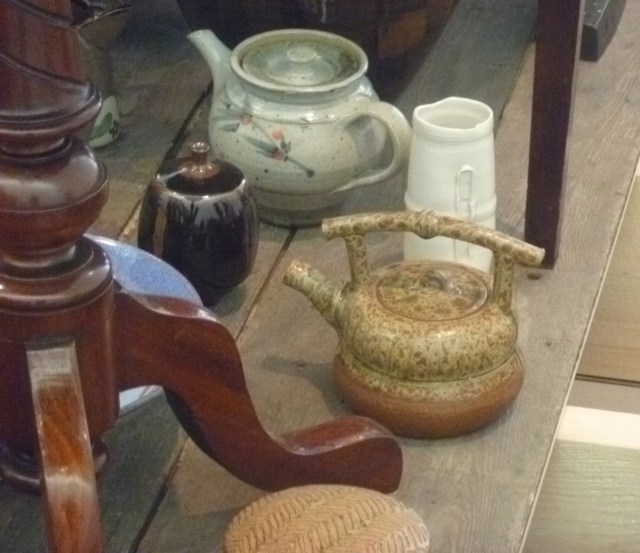
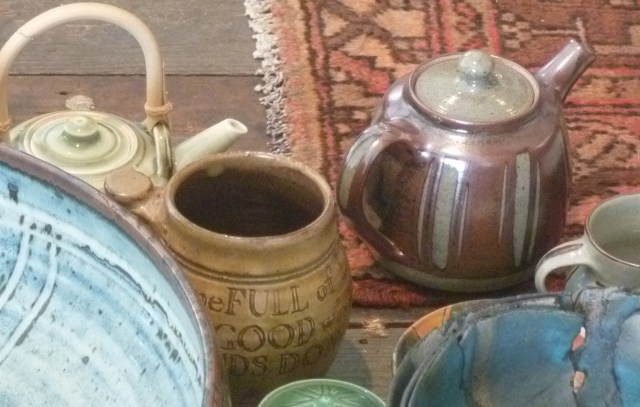
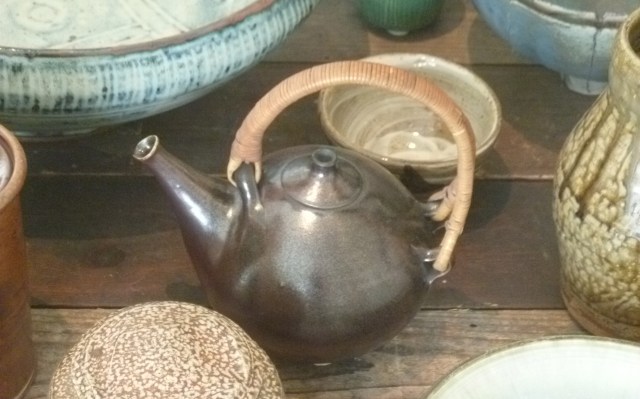
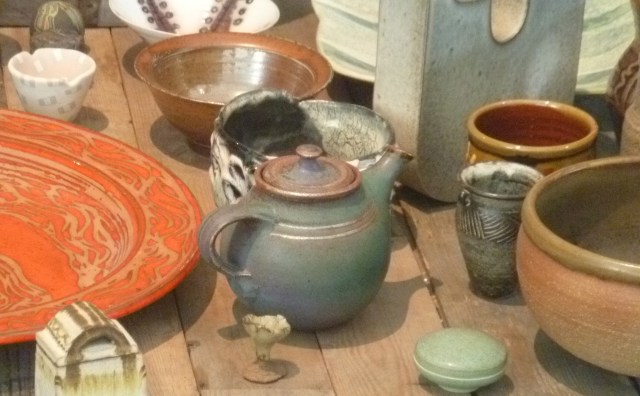
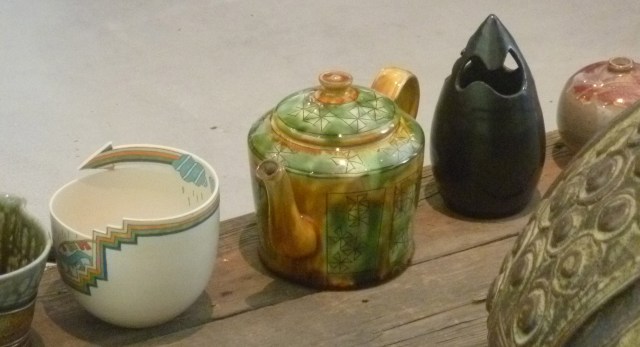
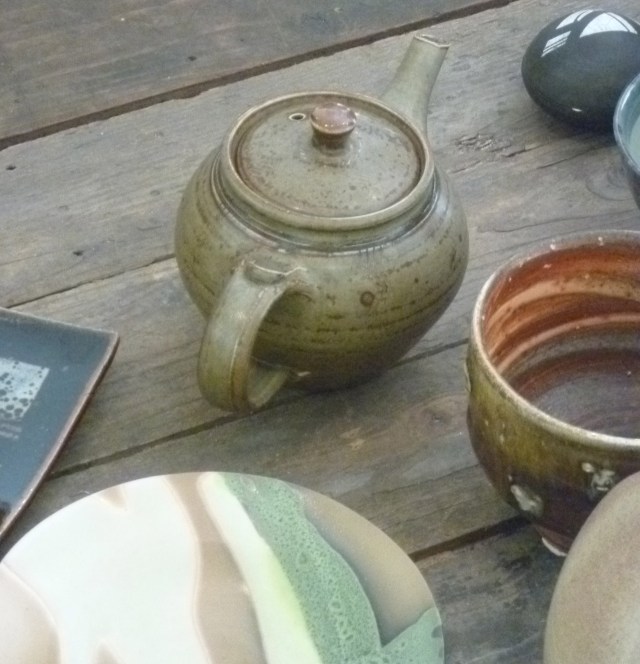
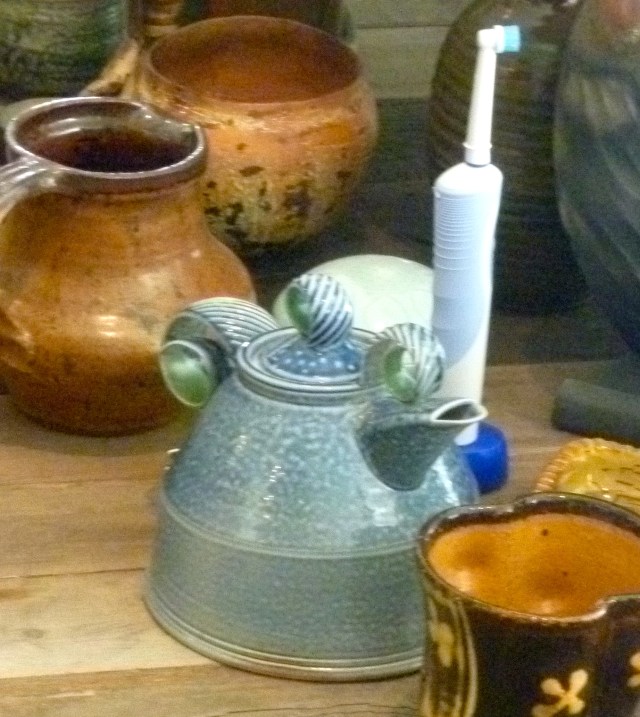
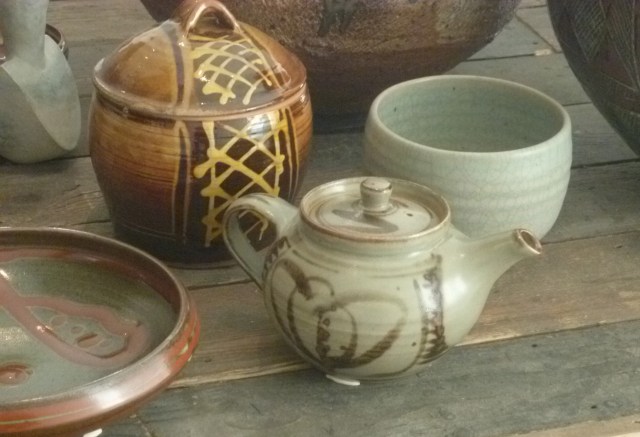
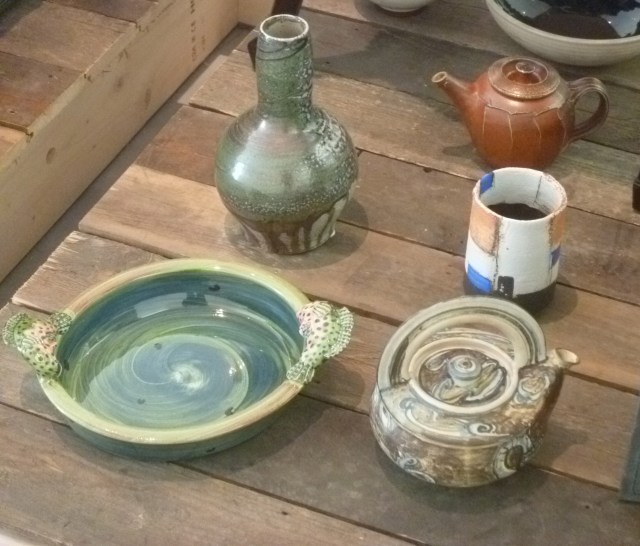
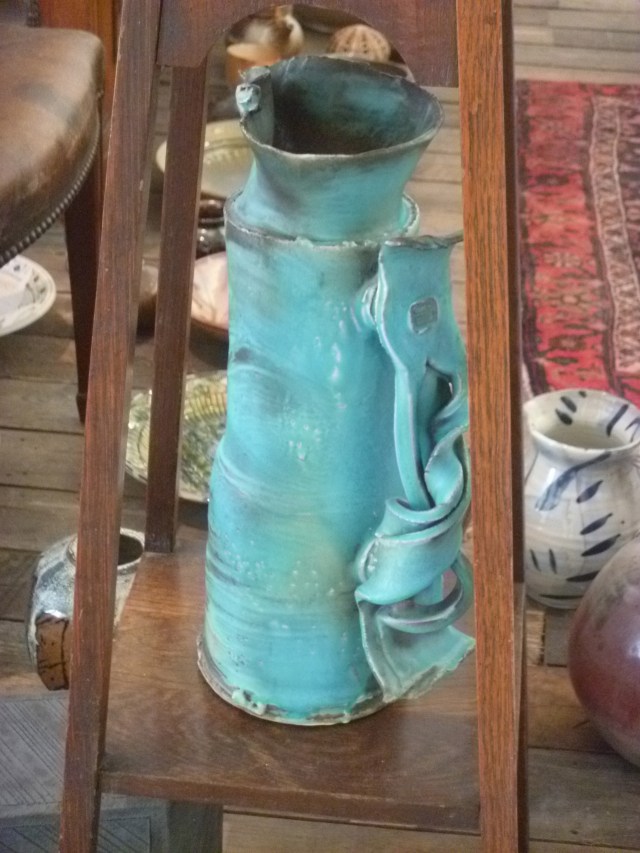
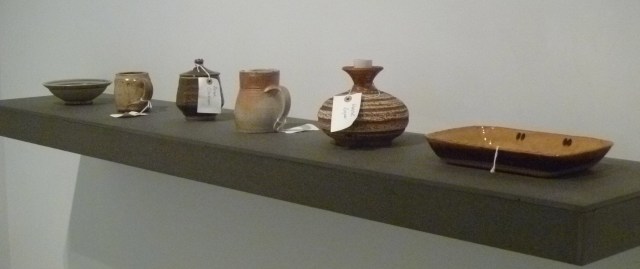
And here is my selection of pots (mostly teapots) :

With Coloseum

Includes a Roman Colosseum ‘pot’

Teapots 1

Teapots 2

Teapots 3

Teapots 4

Teapots 5

Teapots 6

Teapots 7

Teapots 8

Teapots 9

Nice pot

Viewing the pots made you really want to pick them up so luckily there was a small selection of pots that you were allowed to feel and examine and another TV loop of potters talking about their first meetings with Bill Ismay.

Examples

You may pick up these pots

See how Matthew Darbyshire put it all together here :

And here is Down By The Dougie’s view of “Lots of Pots” and more photos.

Settle to Long Preston along The Ribble Way

“New for 2014 – Ribble Valley Rambler”

The new Ribble Valley Rambler walks organised by The Friends of DalesRail are Sunday walks. “All walks are from the 09.00 Leeds-Settle-Carlisle service and return to the 12.59 Carlisle-Settle-Leeds service.” Therefore they tend to be shorter and easier than many on the full Saturday programme which tend to comprise full days out.

Settle Station

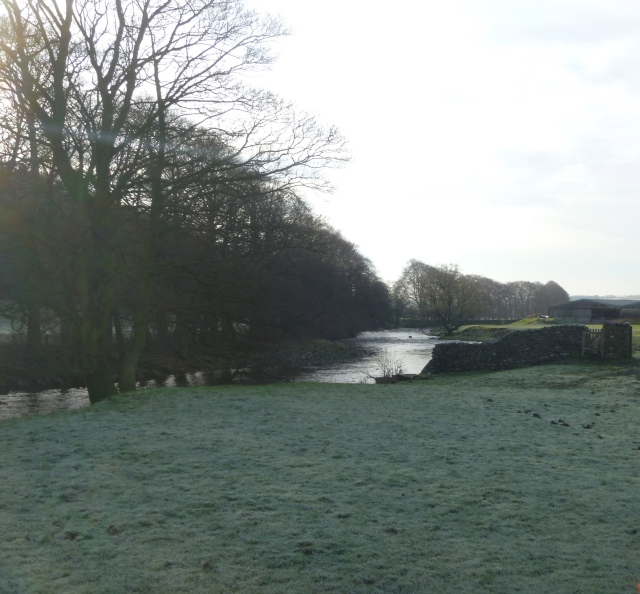
The weather forecast for Settle for Sunday was for rain but when my 09.16 train from Shipley arrived at Settle Station the sky was blue and the sun was shining. Everywhere had a light dusting of frost and all puddles and muddy paths were reduced to ice. It was the ideal day for a tramp along the banks of the River Ribble at a fastish pace to keep warm.

Ribble

Frosty Fields by the Ribble

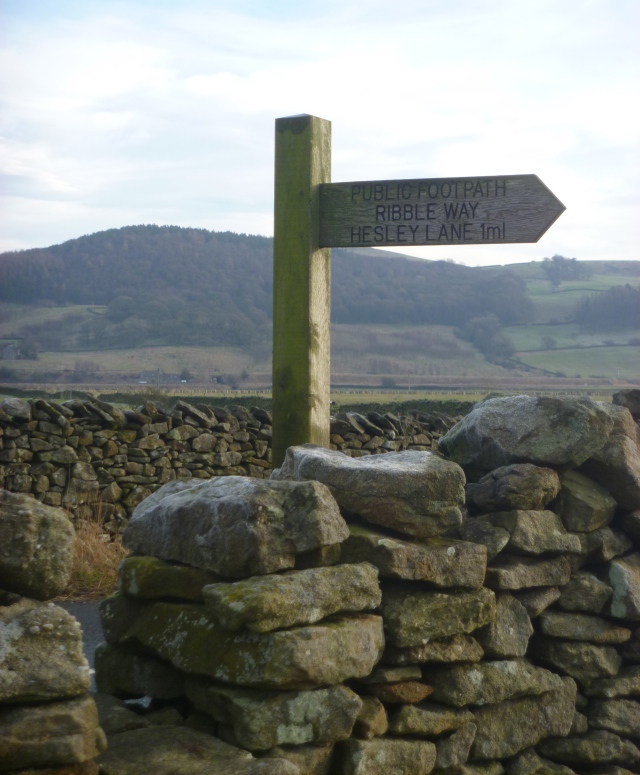
For this walk I joined a small group of Friends of Dalesrail and leader, Penny, to enjoy a 7 mile easy walk from station to station following for the most part The Ribble Way.

Ribble Way sign

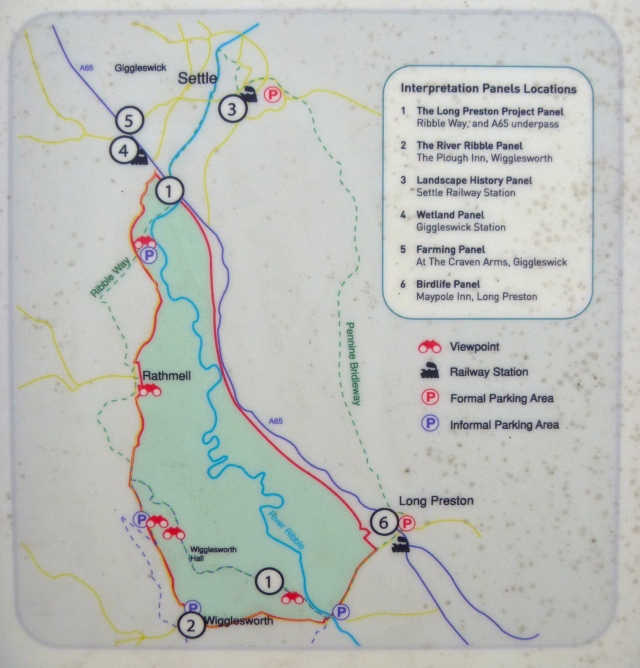
Our path also crossed much of the Long Preston Wet Grassland Project. The LPWGP launched in 2004 with the aim of improving the wildlife value of the Ribble floodplain between Settle, Long Preston and Wigglesworth. The project area covers 765 ha.

LPWGP

LPWGP map

Wet Grasslands

Walking through part of the Wet Grassland Project

This was a pleasant ramble on mainly level footpaths. There was just one slight climb but looking back from the ‘top’ we had a clear view of one of the famous Three Peaks – Pen Y Ghent.

Pen y ghent

We ate our picnic lunches on benches outside the Reading Room in the middle of Rathmell village opposite the church.

Approaching Rathmell

Approaching Rathmell village

Rathmell is a village of dog lovers and we met several and heard about their answer to another Yorkshire village‘s calendar fund-raising efforts.

Rathmell Rovers 2012

The Rathmell Rovers calendar raised over £1000 for charity

Art and Life 1920-1931: Studio Pottery

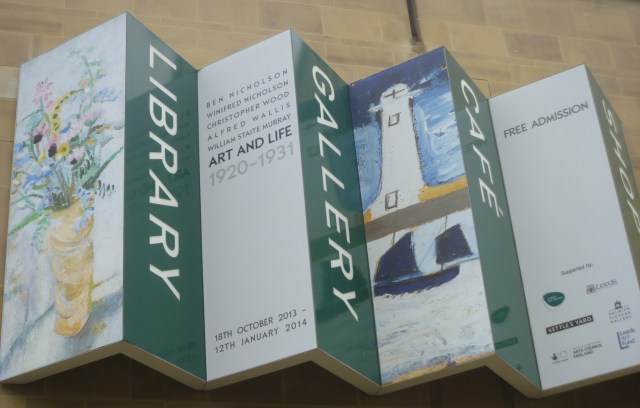
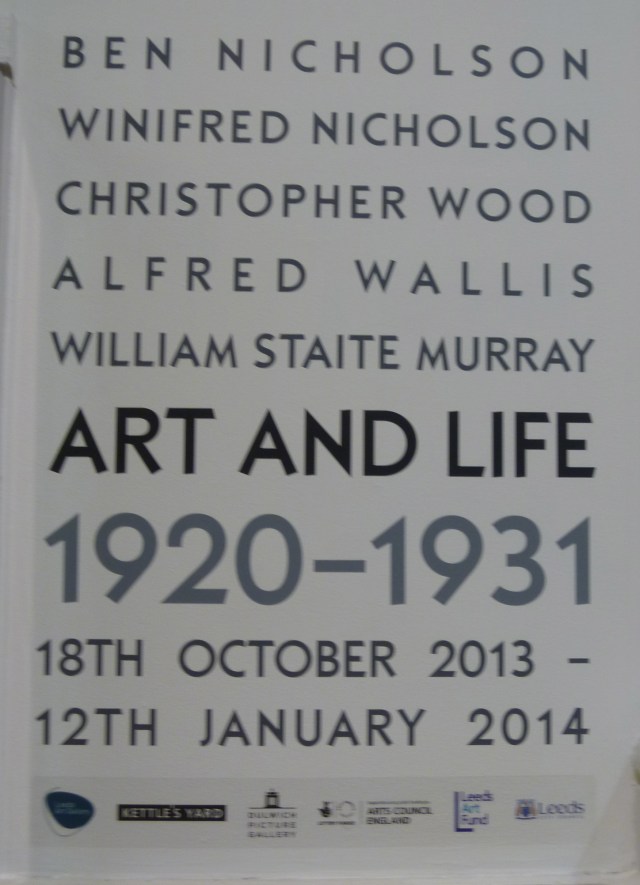
Until yesterday I thought a pot was a pot. What a difference a knowledgable speaker makes to the appreciation of art! In this case I’m talking about studio pottery and the pots on display at the Art and Life, 1920-1931 exhibition currently showing at Leeds City Art Gallery (but only until Sunday 12 January). The exhibition will then head down to Kettles Yard in Cambridge and thence to The Dulwich Picture Gallery in south London.

Art and Life 1

On some Thursdays throughout the year Leeds Art Gallery presents 30 minute free lunchtime talks. Yesterday the lunchtime talk was extended to 50 minutes and the visiting speaker, Dinah Winch from Gallery Oldham, told our small assembled group about the pots displayed in Art and Life. They were all made by William Staite Murray.

Art and Life 2

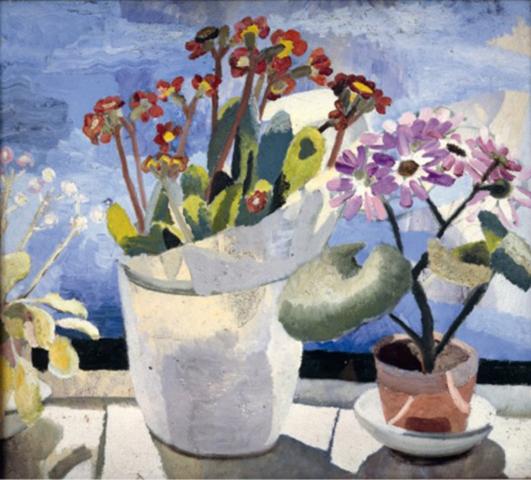
These pots, which I would have given barely a glance to before, I now look at quite differently. A stripey vase and a rough brown dish became works of art before my very eyes. The pots matched with the paintings and many appear in Winifred Nicholson’s paintings demonstrating the ideal light in which to view them – natural sunlight through the window – not the artificial light from above the glass cases in the gallery.

Polyanthus and Cineraria

Nicholson’s Polyanthus and Cineraria [source]

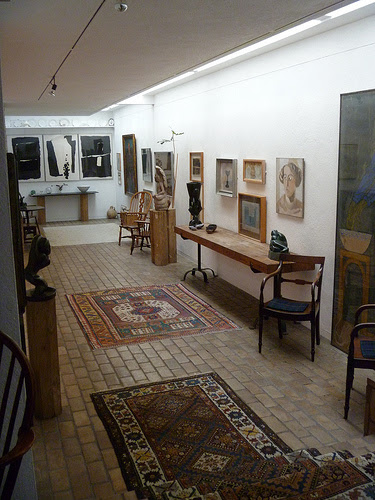
The stripey vase entitled The Bather was very tall and striking. Photography was not allowed and I have been unable to find a suitable picture to reproduce here. Most of the pots (including The Bather) came from York City Art Gallery (which is undergoing a big refurbishment over the next couple of years) and a couple from Kettles Yard. I visited Kettles Yard in 2011. It is a lovely homely gallery full of art and craft of the Art and Life era.

In Kettles Yard

Inside Kettles Yard (Ben Nicholson’s Bertha (No.2) on the right)

Here is what the Exhibition Guide says about Murray and his pots :

William Staite Murray was one of the leading artists of his time. Murray eschewed any functionality for pots and viewed pottery as a fundamental abstract art lying between painting and sculpture. Inspired by the Chinese Sung dynasty pots that had begun to appear in London, his pots are emotionally expressive with imaginative titles, all of which appealed to the Nicholsons with whom he was friends and exhibited widely. Ben Nicholson keenly distributed pictures by Alfred Wallis amongst his friends, and sent one to Murray, noting that it reminded him of one of Murray’s pots. We can only muse as to the exact link as it is not known which picture by Wallis Ben sent. Winifred gives us an idea for she wrote of one of Murray’s pots as having “the elemental depth of the sea.” When Ben Nicholson saw Murray’s solo exhibition at the Lefevre Gallery in London in 1931 he wrote “one big brown pot is one of the finest things I have ever seen.” Persian Garden was exhibited in the Lefevre exhibition, and widely seen as one of Murray’s masterpieces, it is probable this was the pot referred to by Nicholson. By the late 1920s remarkably Murray had a higher reputation than the Nicholsons. Arguably as good a potter as Bernard Leach, subsequently Murray’s reputation has suffered, perhaps partly because in 1939 he left England and with the outbreak of war settled abroad. Sadly he did not pot again.

I hope this brief introduction and excellent lecture will set me up for my visit later this month to the Matthew Darbyshire installation using the pottery collection of W.A.Ismay at The Hepworth in Wakefield.

Other bloggers have written about this wonderful exhibition here and here.