Slow Train to Switzerland: One Tour, Two Trips, 150 Years and a World of Change Apart

It’s my birthday and I have received some lovely gifts including this book :
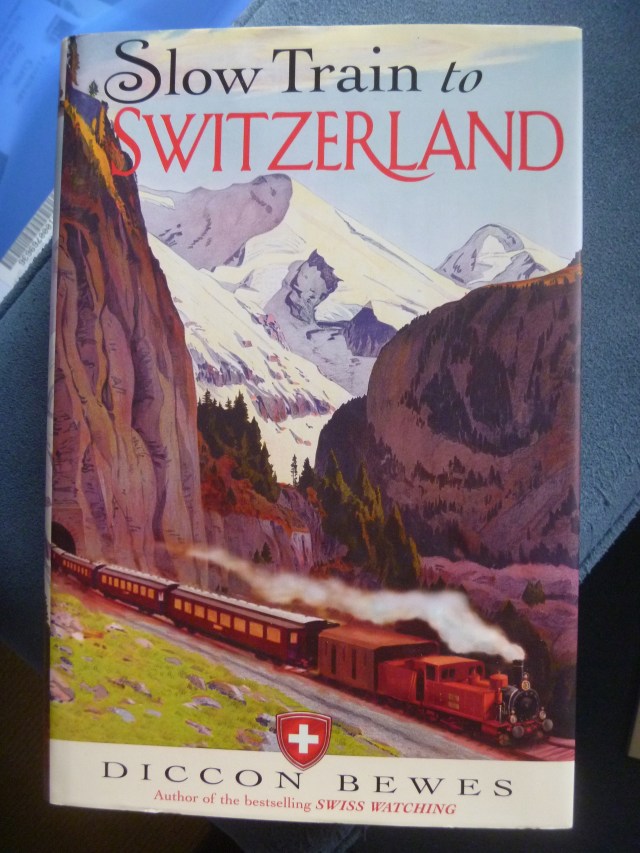
Slow train

You may remember that last summer I spent a month in Switzerland and posted each day about my experiences here.

I still haven’t read Bewes’s ‘Swisswatching’ [below] but I think ‘Slow Train’ will jump the queue as I’m a seasoned traveller on Swiss trains and I remember there was feature about Miss Jemima’s diary on the Myswitzerland.com website and in the Financial Times around the time that I made my trip. I see there is now a fancy app. to accompany anyone wishing to emulate Miss J and D Bewes.
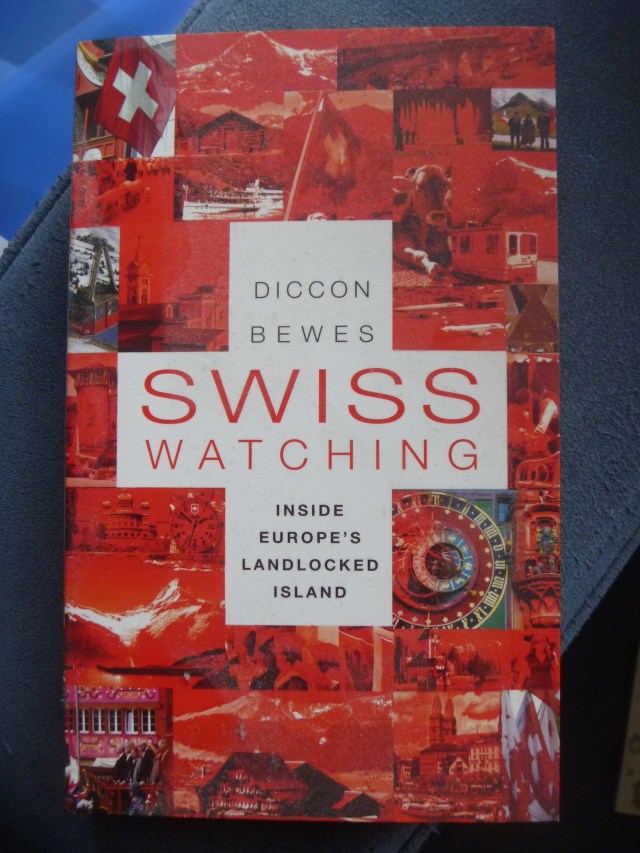
Swiss Watching

It was the tour that changed the way we travel. In the summer of 1863 seven people left London on a train that would take them on a thrilling adventure across the Alps. They were The Junior United Alpine Club and members of Thomas Cook’s first Conducted Tour of Switzerland. For them it was an exciting novelty: for us the birth of mass tourism and it started with the Swiss.” [From the fly -leaf of Slow Train to Switzerland]

Bewes followed in the footsteps of this group and is able to do so because one member, Miss Jemima from Yorkshire kept a diary that was lost for decades but survived as a unique record a historic tour.
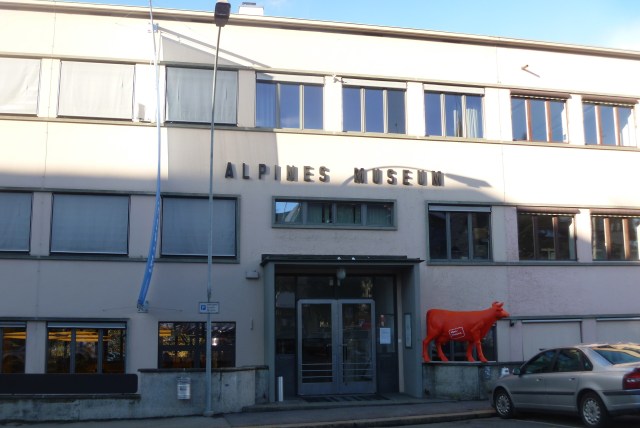
Alpines Museum

Reading about this I’m remembering my very disappointing visit to The Swiss Alpine Museum in Bern last February. I had expected to be able to see displays and dioramas illustrating the history of alpinism with particular reference to Switzerland (and including, of course, the British contribution) through books, maps, photographs, hotels, transport, clothes and footwear, transport, personalities, and other displays and artefacts. What I was presented with was a series of enlarged photographs and a heap of broken skis. My disappointment was so great that I  wrote to the Museum Director and here is part of his response :

“We decided to start up a new concept dealing much more with contemporary issues for people who like to face the reality of the alps. “Intensive care stations” is an example of this new approach … The reality of the alps today is packed with debates and very discursive issues, so our museum concept tries to shape a platform for contemporary themes around mountains.”

It was nice to get a personal response and good luck to them but I still felt cheated of my 12 Swiss francs entry fee!
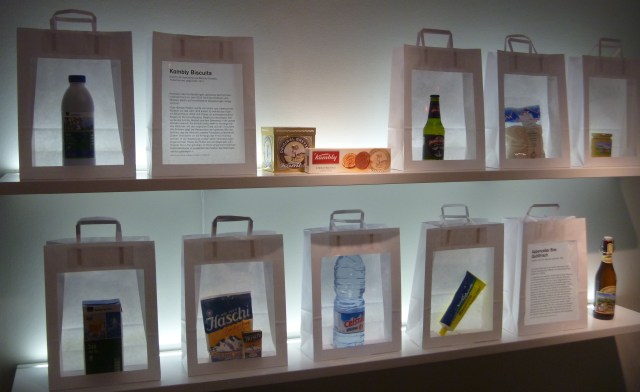
Packaging

Actually, this small display of Swiss products featuring mountains was quite interesting but this was small compensation to me!
“Uproar!” The first 50 years of The London Group 1913-1963

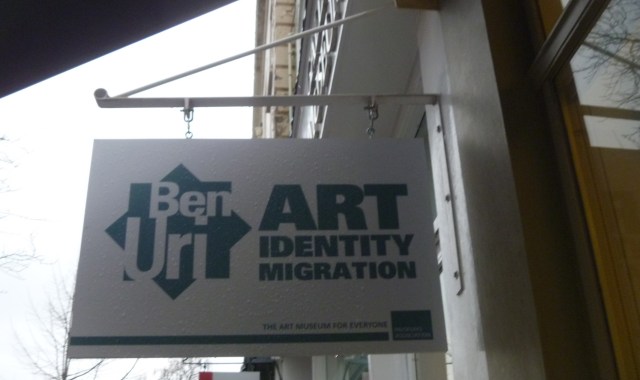
Ben Uri sign

Ben Uri : Art, Identity and Migration – The Art Museum for Everyone

I’m in London for a few days and this morning I walked from the flat between Belsize Park and Swiss Cottage to The Ben Uri Art Museum in St John’s Wood. It’s a 20 minute walk; unfortunately today it was pouring with rain.

The Ben Uri

Until 2nd March the Gallery is hosting a special exhibition of which I read favourable reviews in the FT Weekend and The Independent. I had never heard of the London Group but it seemed to fit in well with recent exhibitions visited in Kendal and in Leeds.

The Gallery is very small, entrance is free and there is currently no permanent display as ‘Uproar!’ fills all three rooms. Here is a short video introduction from the Gallery website.

To celebrate The London Group’s momentous centenary year in 2013, Ben Uri and The London Group are working together with two simultaneous exhibitions. Ben Uri has curated and is hosting a major historical exhibition, “Uproar!”: The first 50 years of The London Group 1913-1963, examining the first half century in the group’s turbulent history, while The London Group is holding a separate, complementary, contemporary exhibition showcasing work by its current members at The Cello Factory, London SE1 8TJ.” [source]

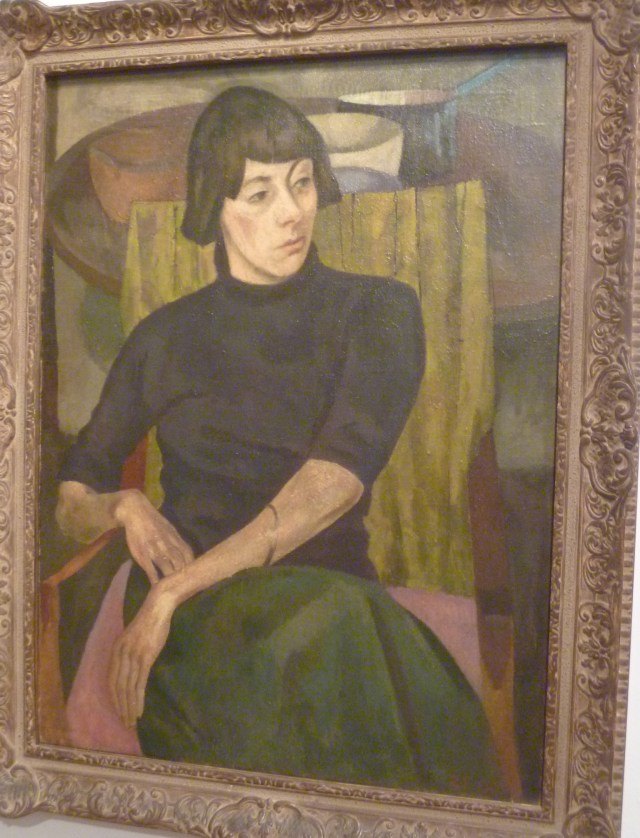
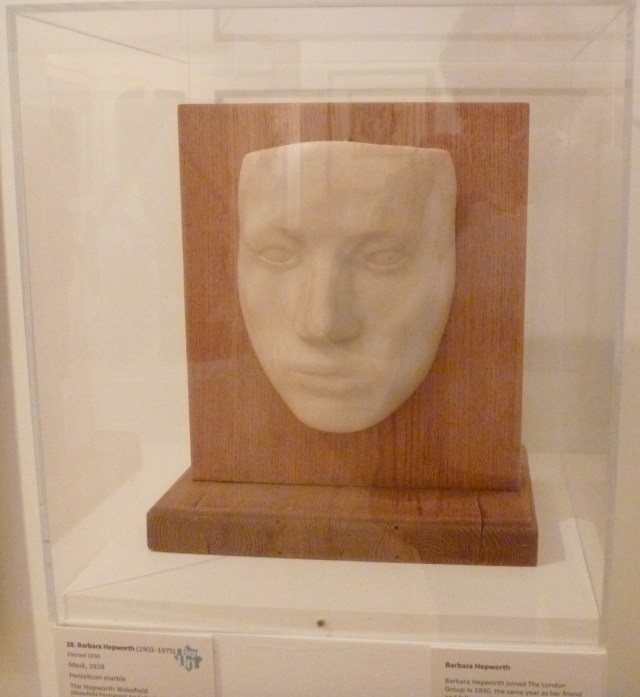
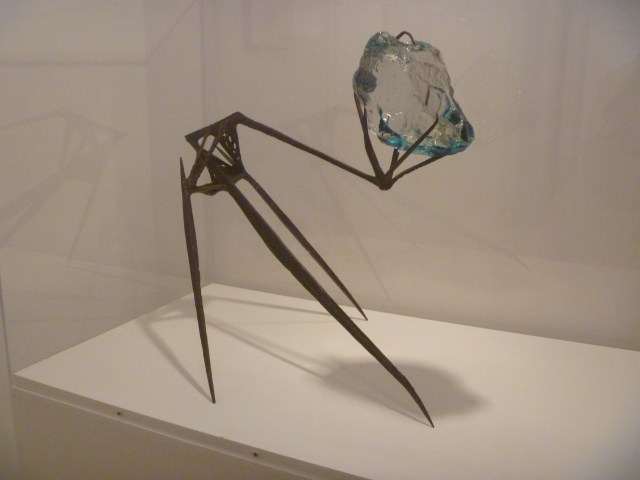
It was amazing to see side by side paintings and sculptures by such diverse artists as L S Lowry, Duncan Grant, Walter Sickert, Vanessa Bell, Henry Moore, Barbara Hepworth, C R W Nevinson, Jacob Epstein, Mark Gertler, Roger Fry, Euan Uglow and Leon Kosoff. I was lucky enough to turn up on the day of a tour and introduction by the curator of this small but powerful exhibition. The above video gives a feel of the intimacy of the small gallery and the importance of the works on display. And here are some of my photos of notable works.

Nina Hamnett

Roger Fry’s Portrait of Nina Hamnett (1917)

Returning to the trenches

Nevinson’s Returning to the Trenches ((1915)

Pentelicon marble

Mask in Pentelicon marble by Barbara Hepworth (1928)

Iron sculpture

Untitled (Iron Sculpture) by Lynn Chadwick

Matthew Darbyshire and The W.A. Ismay Collection at The Hepworth, Wakefield

Hepworth

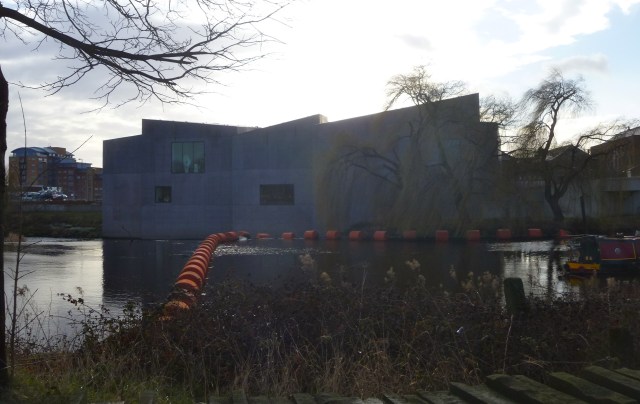
The Hepworth Gallery by the River Calder in Wakefield

On Thursday I revisited The Hepworth Gallery in Wakefield. I went back specifically to see the Matthew Darbyshire installation of pots juxtaposed with modern white goods in Gallery 10. Unfortunately this exhibition closes today but the pots, which belong to the York Art Gallery collection, will be back in a special new gallery to be created at York when the museum reopens in 2015.

With my new-found appreciation of studio pottery I was looking forward to seeing this exhibition. I was not disappointed.

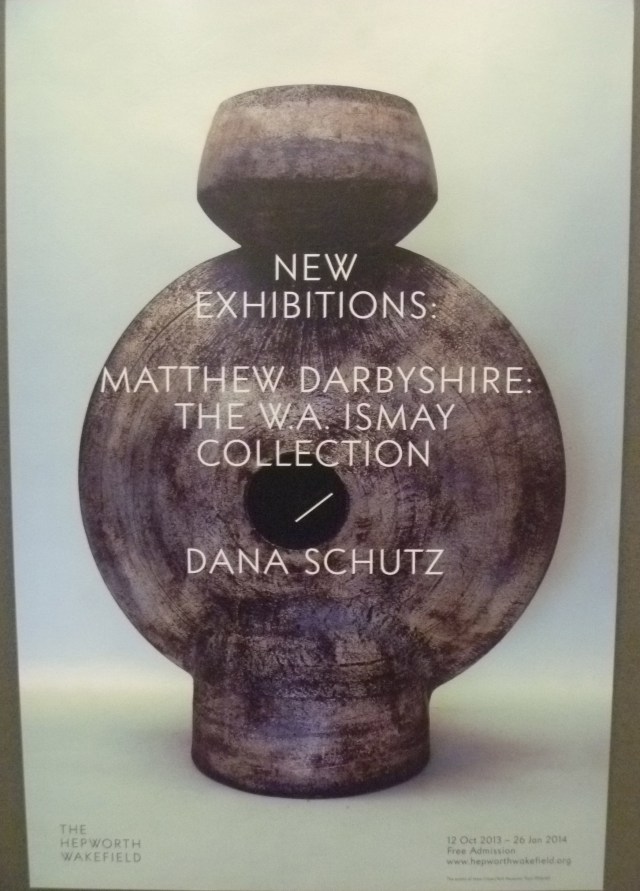
Hepworth poster

This fascinating project brings together one of Britain’s most exciting contemporary artists, Matthew Darbyshire, with one of the world’s most significant assemblages of post-war studio pottery, the W.A. Ismay Collection.

Ismay 2

Librarian and collector William Alfred Ismay (1910-2001) lived in Wakefield his whole life. From 1955 he began to collect pieces by some of the most renowned makers of studio pottery from Hans Coper and Shoji Hamada to works by local Yorkshire potters, Barbara Cass and Joan Hotchin, alongside lesser known ceramicists.

His extraordinary collection of 3,600 items, by 500 makers, covered all the available surfaces of his small terraced house in Wakefield. This extraordinary collection offers an insight into the compulsive and systematic habits and protocols of a unique and unusual collector.” [Introduction from The Hepworth website]

Ismay and TV

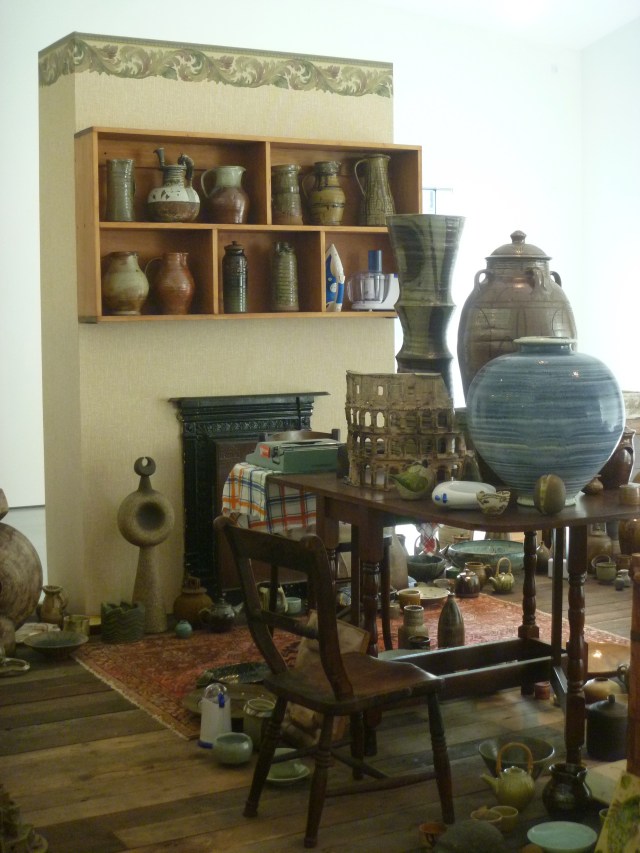
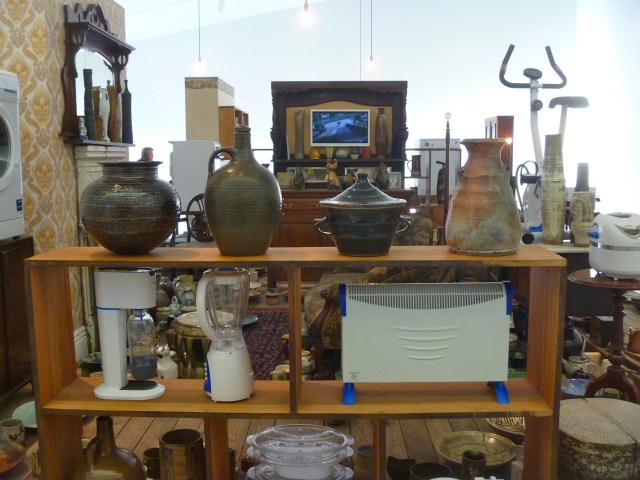
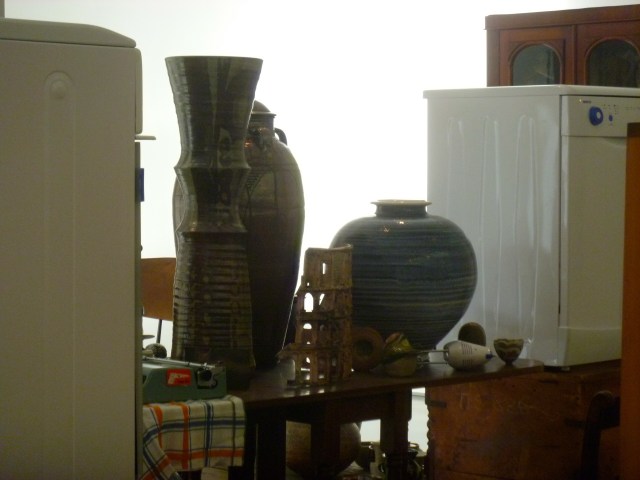
Contemporary installation artist Matthew Darbyshire assembled the display based on the floor plan and the furniture or kind of furniture that Ismay would have owned in his Wakefield terraced home; he added modern streamlined household white goods as a contrast to the handmade ceramics and he used just 700 of the total of 3,600 pots from Ismay’s collection. In addition a flat screen TV shows a loop of original motion picture clips that Darbyshire has put together on the themes of man and machines and dance including hip-hop and other natural human movement contrasting the manmade with machines and technology.

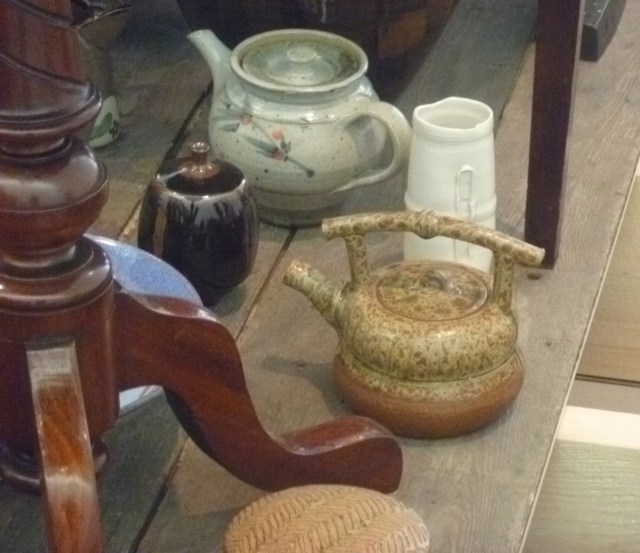
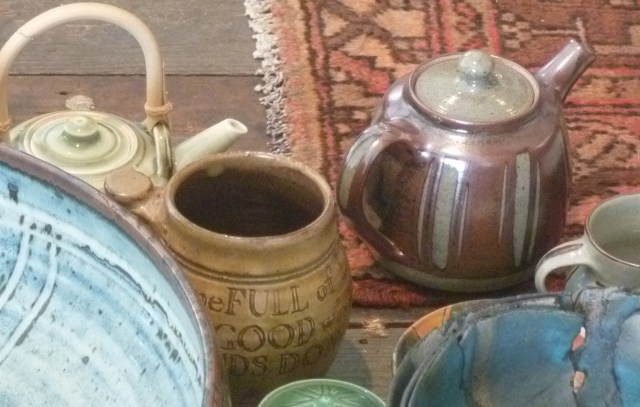
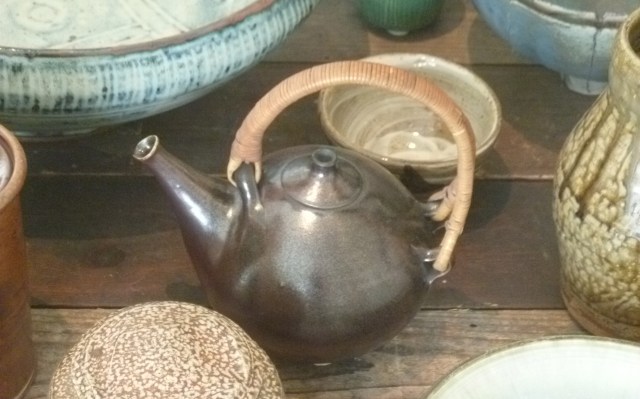
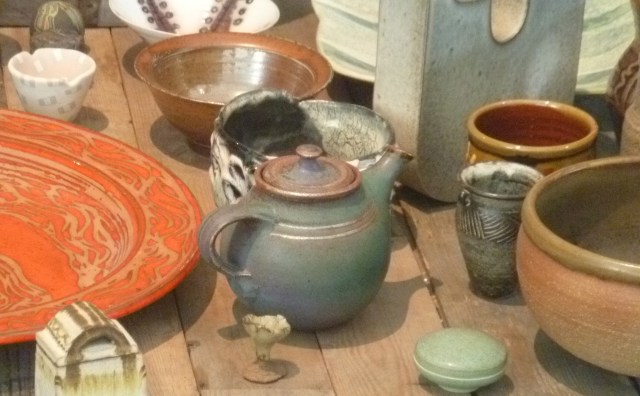
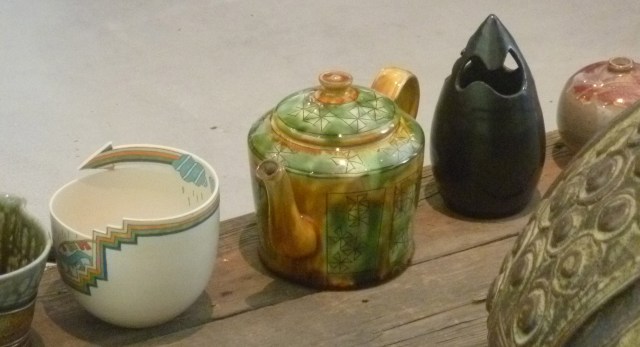
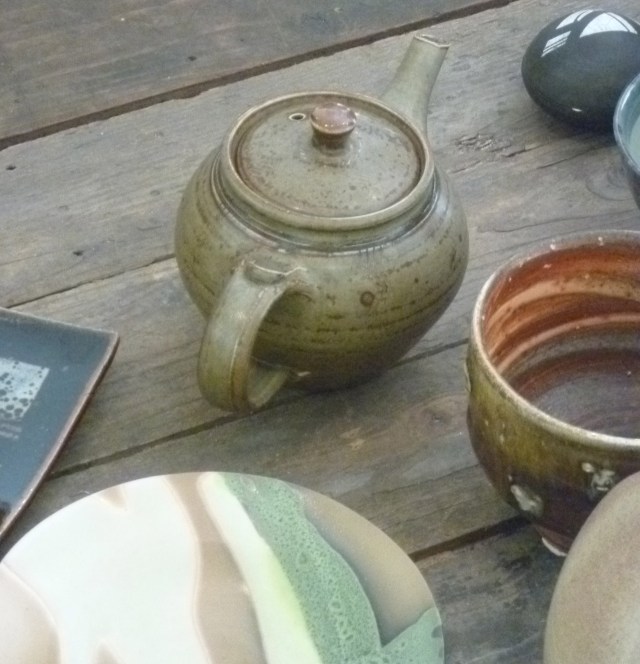
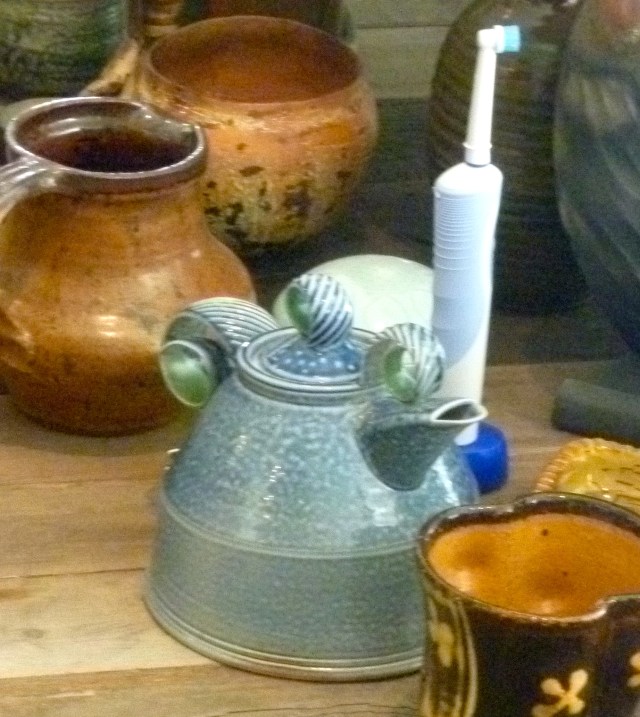
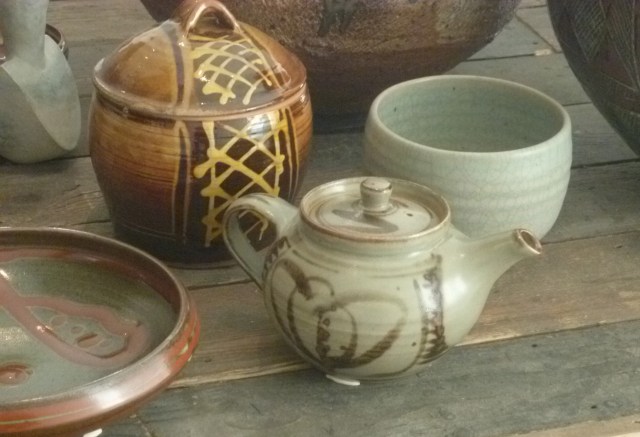
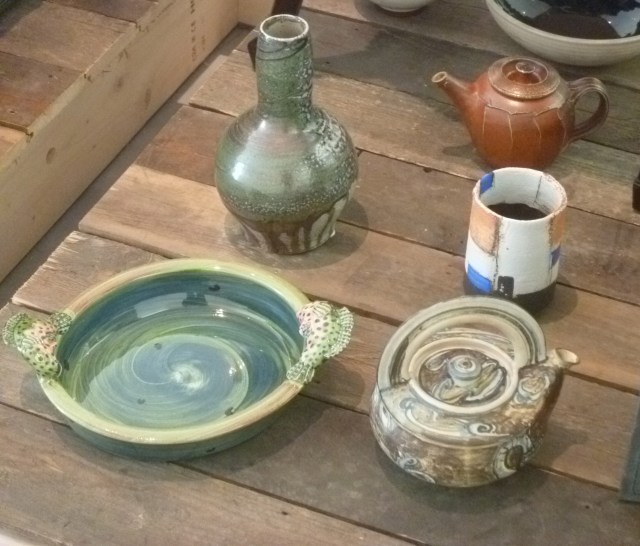
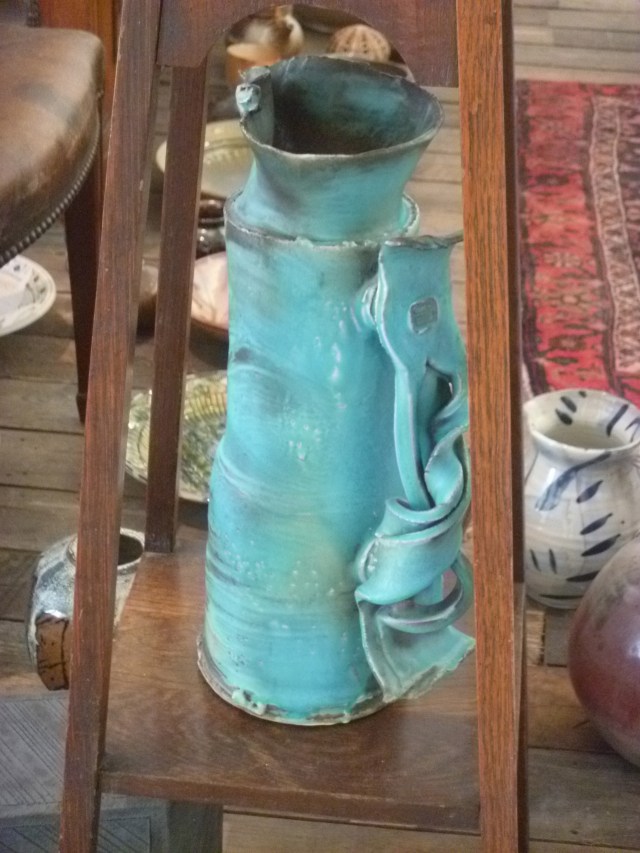
And here is my selection of pots (mostly teapots) :

With Coloseum

Includes a Roman Colosseum ‘pot’

Teapots 1

Teapots 2

Teapots 3

Teapots 4

Teapots 5

Teapots 6

Teapots 7

Teapots 8

Teapots 9

Nice pot

Viewing the pots made you really want to pick them up so luckily there was a small selection of pots that you were allowed to feel and examine and another TV loop of potters talking about their first meetings with Bill Ismay.

Examples

You may pick up these pots

See how Matthew Darbyshire put it all together here :

And here is Down By The Dougie’s view of “Lots of Pots” and more photos.

Settle to Long Preston along The Ribble Way

“New for 2014 – Ribble Valley Rambler”

The new Ribble Valley Rambler walks organised by The Friends of DalesRail are Sunday walks. “All walks are from the 09.00 Leeds-Settle-Carlisle service and return to the 12.59 Carlisle-Settle-Leeds service.” Therefore they tend to be shorter and easier than many on the full Saturday programme which tend to comprise full days out.

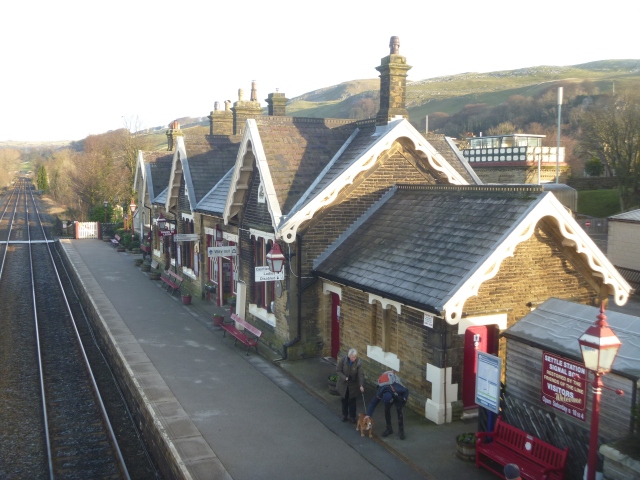
Settle Station

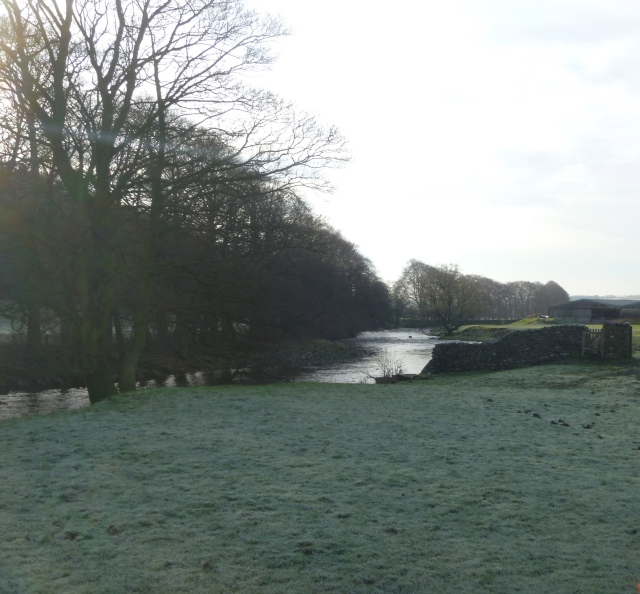
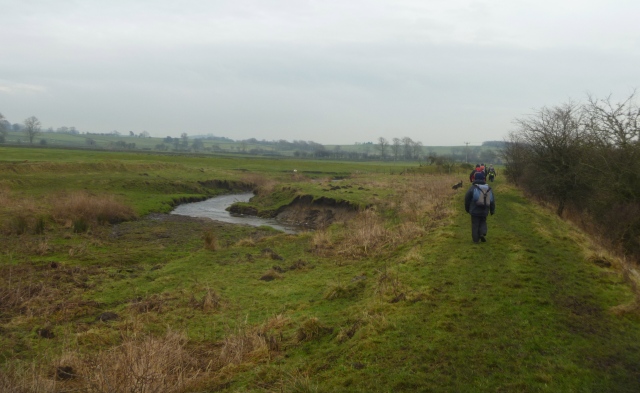
The weather forecast for Settle for Sunday was for rain but when my 09.16 train from Shipley arrived at Settle Station the sky was blue and the sun was shining. Everywhere had a light dusting of frost and all puddles and muddy paths were reduced to ice. It was the ideal day for a tramp along the banks of the River Ribble at a fastish pace to keep warm.

Ribble

Frosty Fields by the Ribble

For this walk I joined a small group of Friends of Dalesrail and leader, Penny, to enjoy a 7 mile easy walk from station to station following for the most part The Ribble Way.

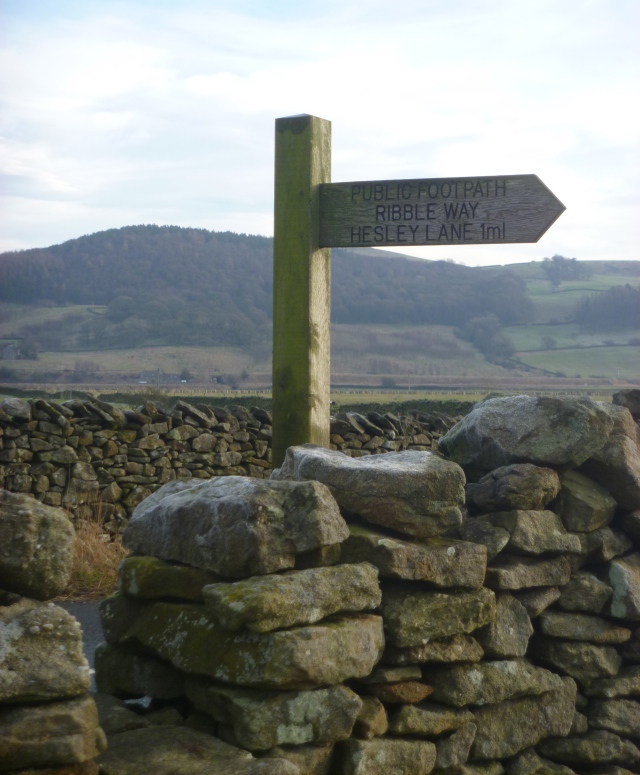
Ribble Way sign

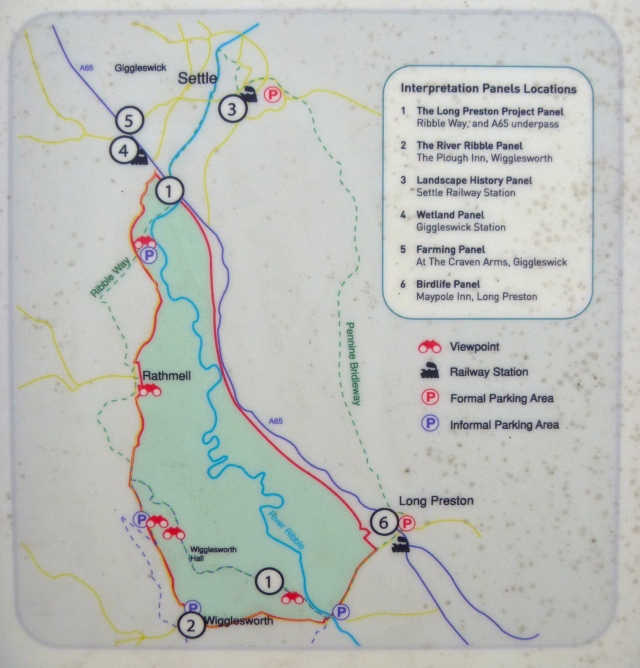
Our path also crossed much of the Long Preston Wet Grassland Project. The LPWGP launched in 2004 with the aim of improving the wildlife value of the Ribble floodplain between Settle, Long Preston and Wigglesworth. The project area covers 765 ha.

LPWGP

LPWGP map

Wet Grasslands

Walking through part of the Wet Grassland Project

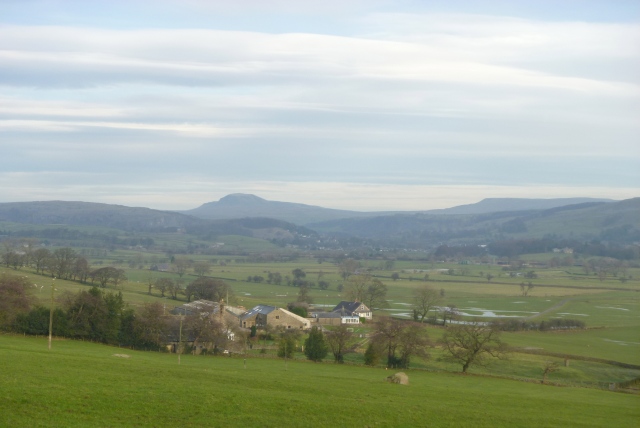
This was a pleasant ramble on mainly level footpaths. There was just one slight climb but looking back from the ‘top’ we had a clear view of one of the famous Three Peaks – Pen Y Ghent.

Pen y ghent

We ate our picnic lunches on benches outside the Reading Room in the middle of Rathmell village opposite the church.

Approaching Rathmell

Approaching Rathmell village

Rathmell is a village of dog lovers and we met several and heard about their answer to another Yorkshire village‘s calendar fund-raising efforts.

Rathmell Rovers 2012

The Rathmell Rovers calendar raised over £1000 for charity

Art and Life 1920-1931: Studio Pottery

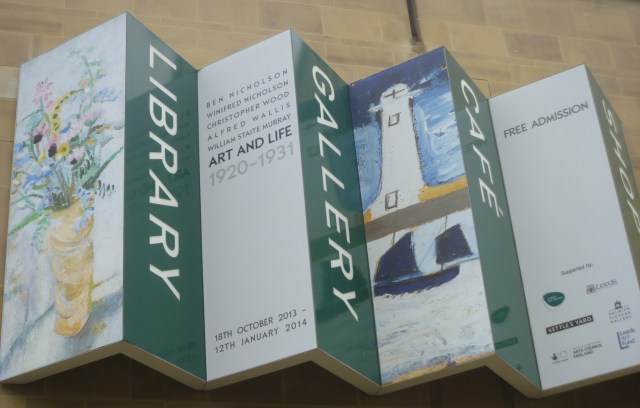
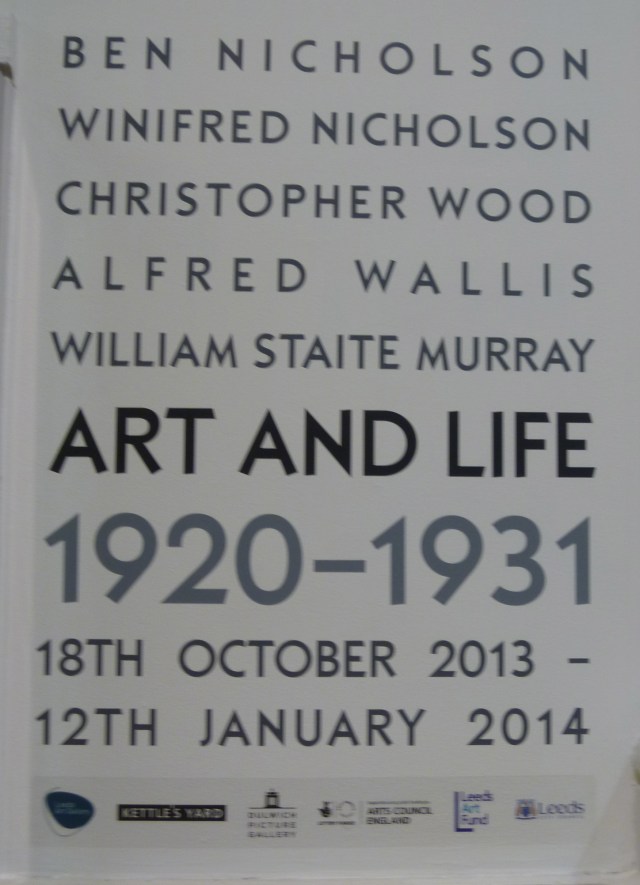
Until yesterday I thought a pot was a pot. What a difference a knowledgable speaker makes to the appreciation of art! In this case I’m talking about studio pottery and the pots on display at the Art and Life, 1920-1931 exhibition currently showing at Leeds City Art Gallery (but only until Sunday 12 January). The exhibition will then head down to Kettles Yard in Cambridge and thence to The Dulwich Picture Gallery in south London.

Art and Life 1

On some Thursdays throughout the year Leeds Art Gallery presents 30 minute free lunchtime talks. Yesterday the lunchtime talk was extended to 50 minutes and the visiting speaker, Dinah Winch from Gallery Oldham, told our small assembled group about the pots displayed in Art and Life. They were all made by William Staite Murray.

Art and Life 2

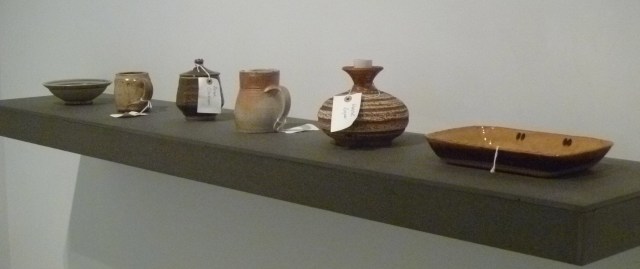
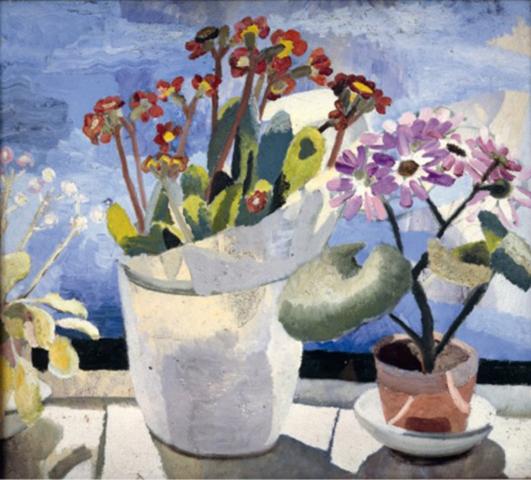
These pots, which I would have given barely a glance to before, I now look at quite differently. A stripey vase and a rough brown dish became works of art before my very eyes. The pots matched with the paintings and many appear in Winifred Nicholson’s paintings demonstrating the ideal light in which to view them – natural sunlight through the window – not the artificial light from above the glass cases in the gallery.

Polyanthus and Cineraria

Nicholson’s Polyanthus and Cineraria [source]

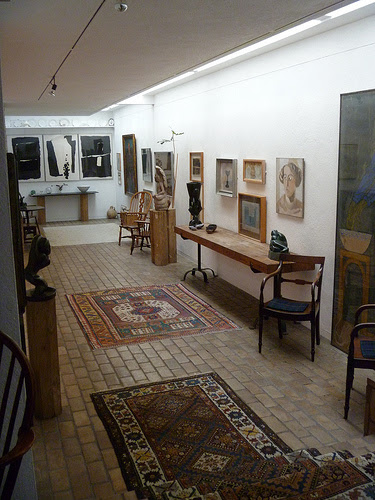
The stripey vase entitled The Bather was very tall and striking. Photography was not allowed and I have been unable to find a suitable picture to reproduce here. Most of the pots (including The Bather) came from York City Art Gallery (which is undergoing a big refurbishment over the next couple of years) and a couple from Kettles Yard. I visited Kettles Yard in 2011. It is a lovely homely gallery full of art and craft of the Art and Life era.

In Kettles Yard

Inside Kettles Yard (Ben Nicholson’s Bertha (No.2) on the right)

Here is what the Exhibition Guide says about Murray and his pots :

William Staite Murray was one of the leading artists of his time. Murray eschewed any functionality for pots and viewed pottery as a fundamental abstract art lying between painting and sculpture. Inspired by the Chinese Sung dynasty pots that had begun to appear in London, his pots are emotionally expressive with imaginative titles, all of which appealed to the Nicholsons with whom he was friends and exhibited widely. Ben Nicholson keenly distributed pictures by Alfred Wallis amongst his friends, and sent one to Murray, noting that it reminded him of one of Murray’s pots. We can only muse as to the exact link as it is not known which picture by Wallis Ben sent. Winifred gives us an idea for she wrote of one of Murray’s pots as having “the elemental depth of the sea.” When Ben Nicholson saw Murray’s solo exhibition at the Lefevre Gallery in London in 1931 he wrote “one big brown pot is one of the finest things I have ever seen.” Persian Garden was exhibited in the Lefevre exhibition, and widely seen as one of Murray’s masterpieces, it is probable this was the pot referred to by Nicholson. By the late 1920s remarkably Murray had a higher reputation than the Nicholsons. Arguably as good a potter as Bernard Leach, subsequently Murray’s reputation has suffered, perhaps partly because in 1939 he left England and with the outbreak of war settled abroad. Sadly he did not pot again.

I hope this brief introduction and excellent lecture will set me up for my visit later this month to the Matthew Darbyshire installation using the pottery collection of W.A.Ismay at The Hepworth in Wakefield.

Other bloggers have written about this wonderful exhibition here and here.

Villages and Churches of Upper Nidderdale, Part 2

Subtitled : Learn some of the history of the villages of Upper Nidderdale.

Happy New Year, everyone, and welcome to another year of rambles (in more senses than one!)

Arriving at Ramsgill

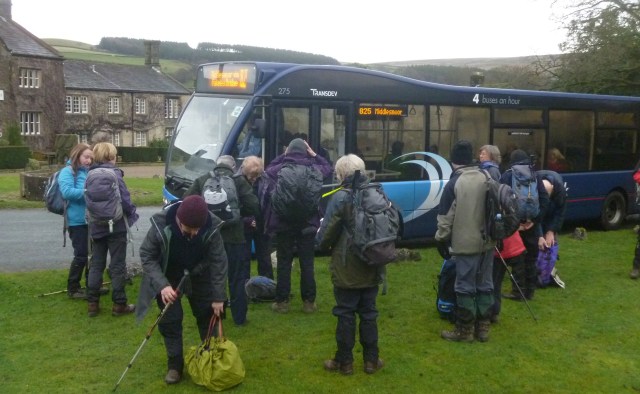
Dalesbus arriving at Ramsgill in Nidderdale

Such a pity that I missed Part 1! But I had never heard of Dalesbus Ramblers when that walk took place. At the end of last year I discovered walking with the Friends of the Settle – Carlisle Line and one the leaders told me about Dalesbus Ramblers so today I drove to Harrogate and joined my first walk with that particular group. With my new Metro Concession Bus Pass I enjoyed free travel from Harrogate up through Nidderdale where the group assembled for the walk:

SUNDAY 5th JANUARY 2014: VILLAGES & CHURCHES OF UPPER NIDDERDALE Part 2
Learn some of the history of the villages of Upper Nidderdale.
Start: Ramsgill: 11.05
Finish: Pateley Bridge: Approx: 14.20
Distance/Grading: 5 miles / Moderate
TRAVEL: Outward: Bus 823/825 from York (08.58), Tadcaster (09.20), Wetherby (09.40), Harrogate (10.05) and Pateley Bridge (10.50). Connections on bus 36 from Leeds (09.15) to Harrogate or Ripon (09.45) to Ripley.
Return: Bus 24 to Harrogate for onward connections.
Walk Leaders: Duncan & Brenda: 0796 951 2743

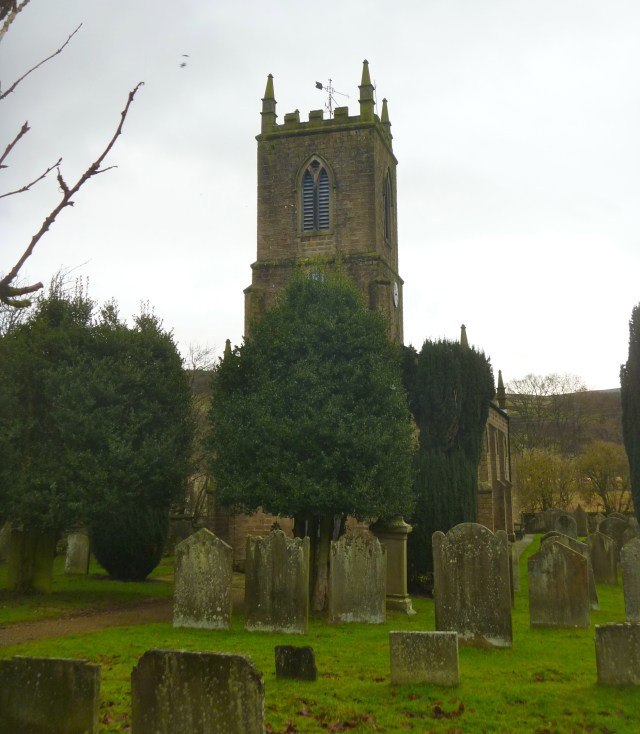
Naturally, our first church call was at St Mary the Virgin, Ramsgill just across the road from the bus stop.

St Mary's Ramsgill

St Mary the Virgin, Ramsgill

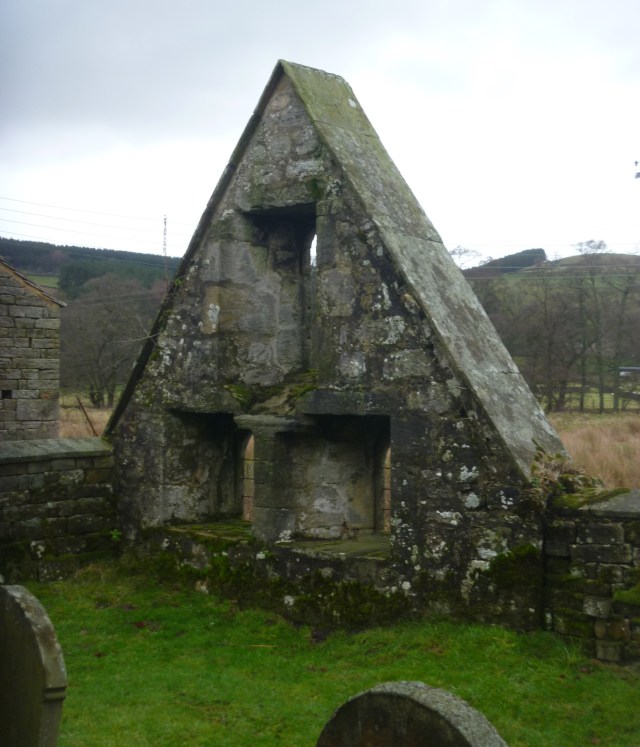
Most of the 20 or so houses in Ramsgill were built in the 19th century and the church was built in 1899 but on the much older site of a grange of Easby Abbey. The remains of the Abbey buildings are  behind the present church.

Easby grange

Remains of Easby Grange, Ramsgill

We also found out that Ramsgill had been one of the film locations for the 1997 movie ‘Fairy Tale: a true story‘ about the two little girls in Cottingley, near Bradford, who in 1917 took a photograph believed by some to be the first scientific evidence of the existence of fairies [The Cottingley Fairies]. Sir Arthur Conan Doyle was one of those who believed this to be true.

Ramsgill scenes :

Village Hall

Ramsgill Village Hall

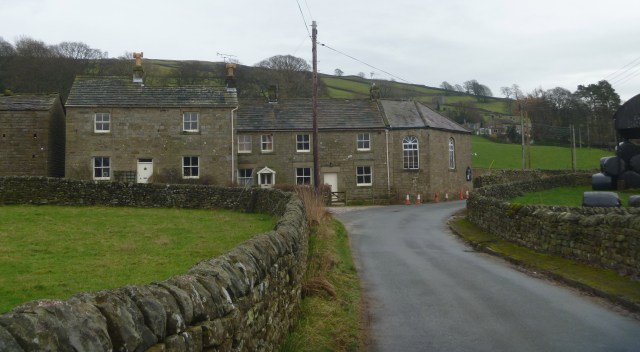
Ramsgill Houses

Ramsgill Houses

Yorke Arms

The Yorke Arms, Ramsgill

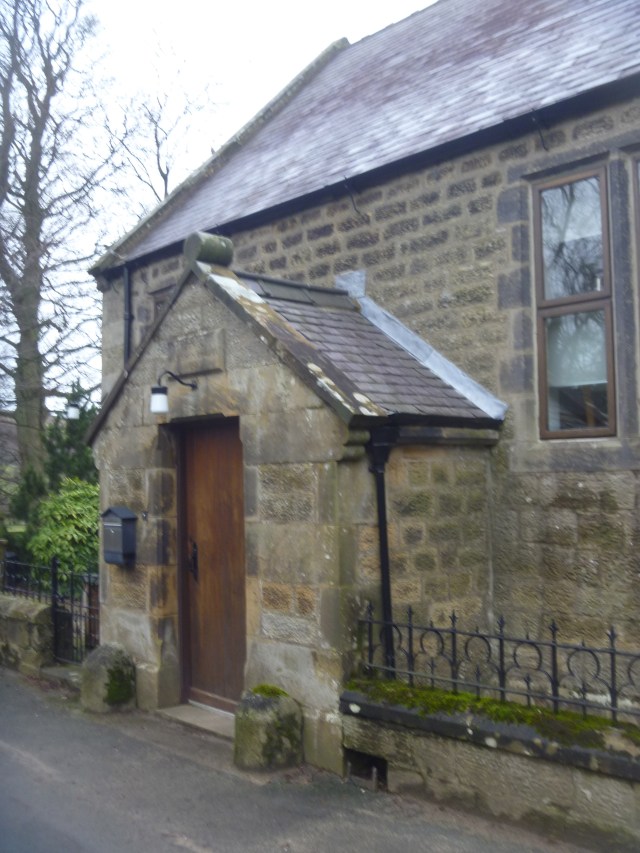
So we moved from Ramsgill to Bouthwaite where we came across our second church – the Wesley Chapel built in 1890 and joined the Nidderdale Way down to Pateley Bridge.

Bouthwaite chapel

Bouthwaite Chapel

Chapel

Wesley Chapel, Bouthwaite

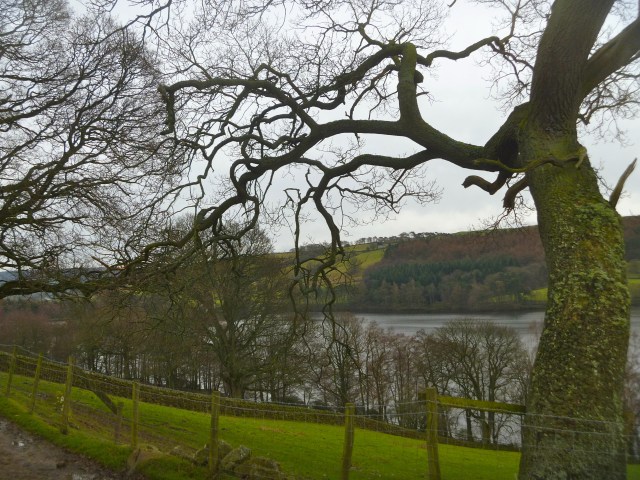
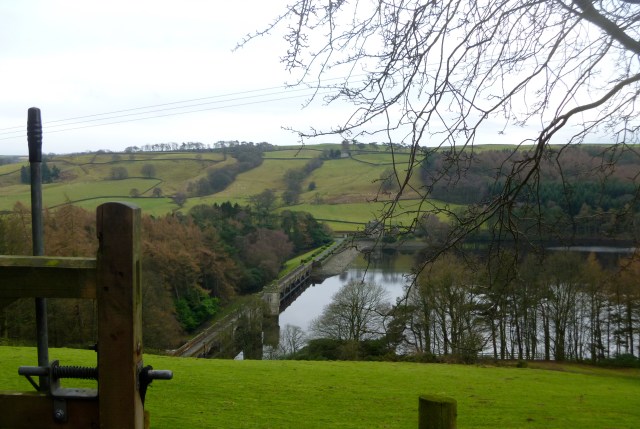
Ramsgill and Bouthwaite lie less than a mile apart at the head of Gouthwaite Reservoir. Our walk continued down the valley parallel with the reservoir and mostly overlooking it as far as Wath which lies at the southern end of the 3 mile long body of water.

Gouthwaite 1

Gouthwaite Reservoir lunch stop

Gouthwaite 2

Looking back up Gouthwaite

Gouthwaite 3

Gouthwaite and the Nidderdale Way

Gouthwaite 4

Gouthwaite Dam

The small Wesleyan chapel at Wath seats just 50 and has 5 walls. It also has links with Rudyard Kipling whose grandfather was once minister here.

Wath chapel

Walkers stop at Wath Chapel

Wath and chapel

Wath and Chapel

From Wath our path joined the trackbed of the former Nidderdale Light Railway to our destination Pateley Bridge where there was just time to have a well-deserved cuppa before catching our return bus to Harrogate. The Dalesbus system, which operates on Sundays with limited winter timetables, enables walkers and others to reach more remote and beautiful areas in North Yorkshire and I hope to make more such excursions during the year.

Old rail track

The track of the former Nidderdale Railway track approaching Pateley Bridge