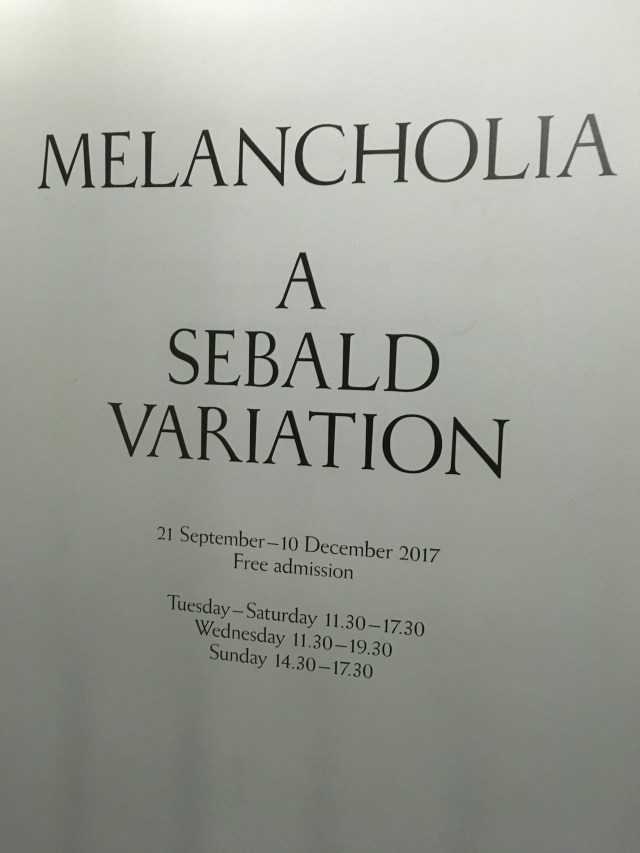
On a recent visit to London I had time enough before catching my train home to visit Somerset House. I’d earmarked three exhibitions – none of them big blockbusters – all in the same venue.
On a recent visit to London I had time enough before catching my train home to visit Somerset House. I’d earmarked three exhibitions – none of them big blockbusters – all in the same venue.
Time flies! It’s already over a week since I was in London and Surrey and at home we’ve been busy, busy, busy. And now it’s nearly time for me to reopen the pages of My Irish Times. This year I’m going Dutch for the first ten days and working my way from north to south.
Anyway, that’s for next week, in the meantime last Friday (13th) I was in London and on Saturday and Sunday in Surrey … and beyond.
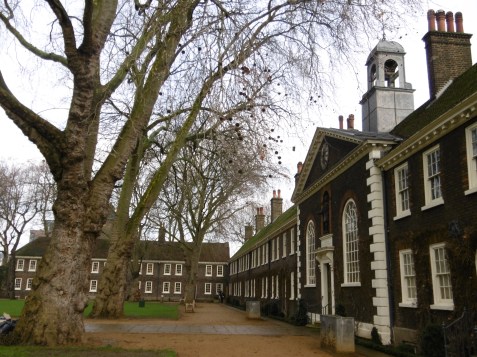
The Geffrye in January this year
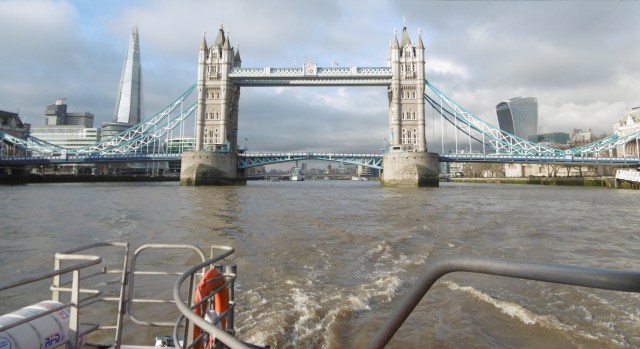
The first watery feature in London that I would think of is certainly the River Thames. And what better way to approach Greenwich than by boat leaving from Tower Pier.

A Corner of Princelet Street Dining Room
Last week I spent a few days in London sharing again the lovely Georgian Landmark in Spitalfields: 13 Princelet Street. Over years of visits to London my sister and I have enjoyed walks in selected areas or on particular themes; getting to know the places a little more intimately and enjoying the exercise too. Continue reading
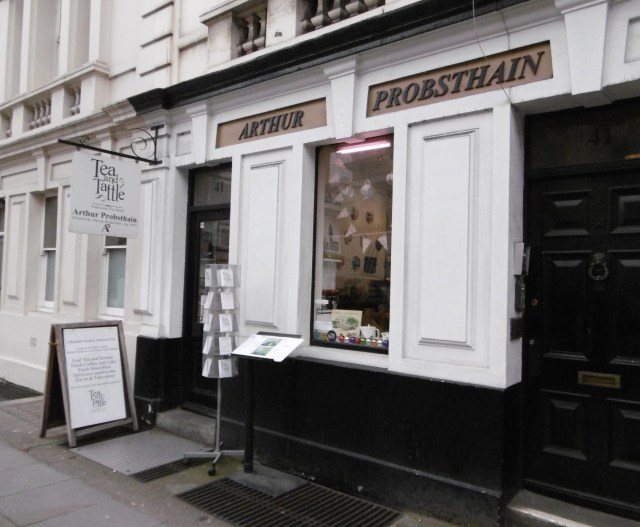
“Hello and welcome to the Tea and Tattle tearoom and Arthur Probsthain bookseller! Our story starts over 100 years ago when our bookshop was founded. Since then four generations of our family have been helping our customers to find an amazing selection of books, and more recently art and music. In June 2010, we decided that we wanted to offer our lovely customers something more and so, the Tea and Tattle tea room opened its doors.” (T&T website)
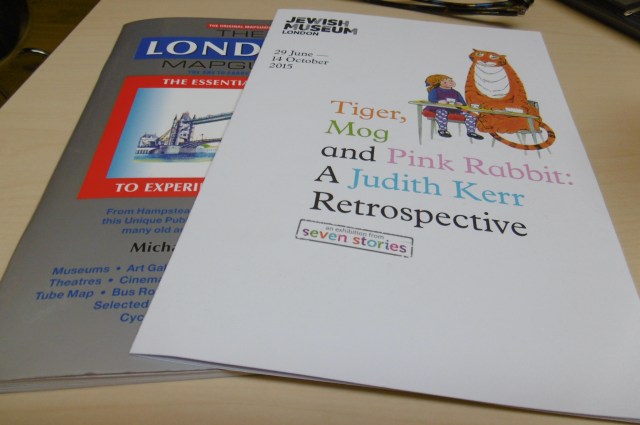
On Sunday I met my sister, who was visiting me in London for the day, at the Jewish Museum, in Camden. As her train was somewhat delayed and she had had to leave the train at Stratford instead of Liverpool Street we had only a limited amount of time to look round. We chose to visit the current temporary exhibition on the third floor :
and then quickly work our way through the History: A British Story section on the second floor. While I was waiting I spent time on the ground floor looking at the crowd-sourced Sacrifice displays. Continue reading
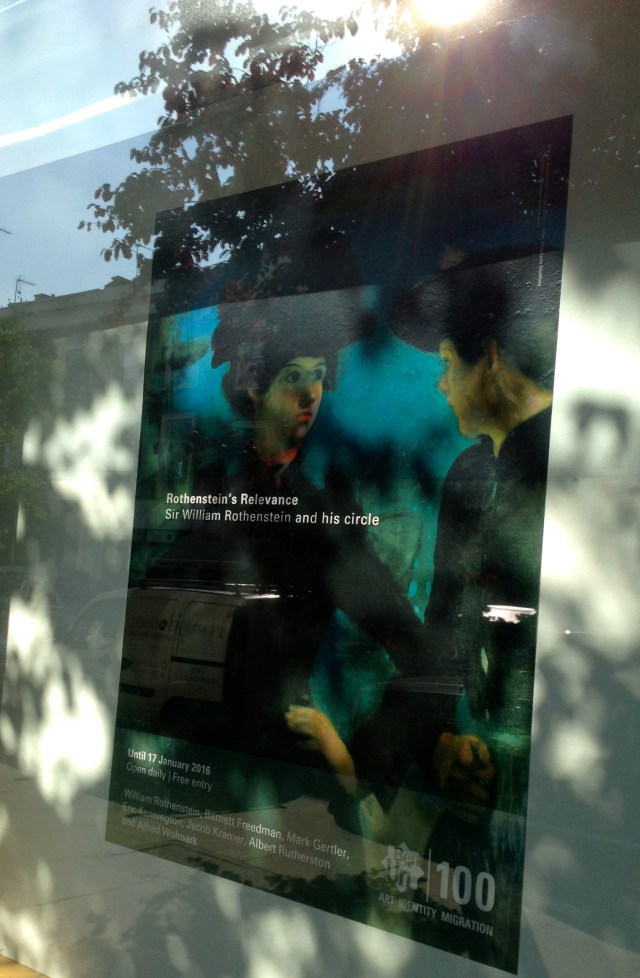
In January 2014 I visited the Ben Uri Gallery in north London and today I was back there again. It’s very fortuitous that I happen to be dog-sitting again when another excellent show is on at the Gallery. Sir William Rothenstein (1872-1945) was born in Bradford and attended Bradford Grammar School and was a very significant figure in the art world in the first half of the 20th century. Continue reading
Before we realised quite how cold it was outside, last Sunday morning, we had decided to walk to Brompton Cemetery. Our route took us down Fulham Road, a part of London where I loved to window-shop when I lived and worked in London in the 1970s.
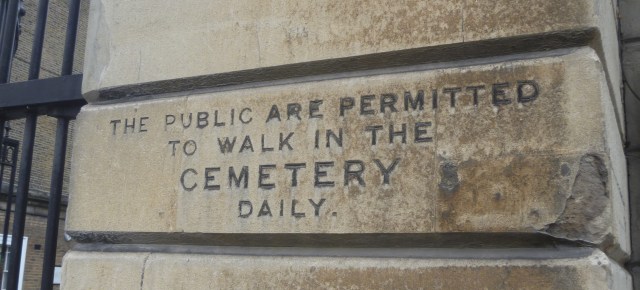
Brompton Cemetery lies parallel with the District Line Tube and right next door to Stamford Bridge Football Ground, where Chelsea FC play. There was no game last Sunday and we had discovered yet another peaceful haven for nature and contemplation.
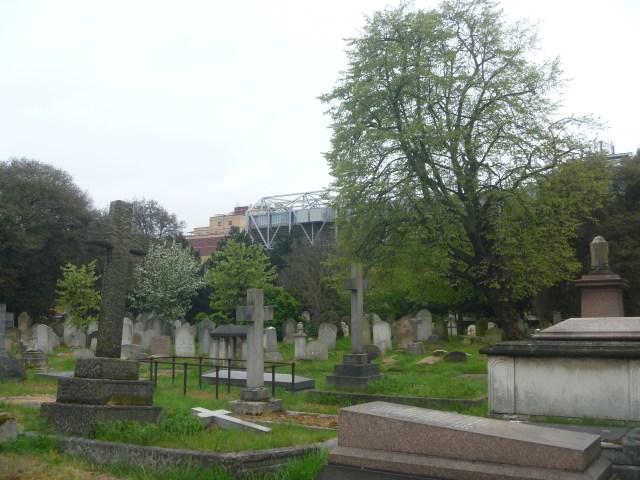
Chelsea FC Football Stand
There aren’t many famous people buried there. Emmeline Pankhurst would probably be the best known. But we delighted in the atmosphere and inspecting graves and tombstones as we moved quite quickly through the cemetery. It was freezing cold.
Brompton Cemetery is the first and only cemetery to be in the care of the Royal Parks. It has what appears to be a thriving group of Friends who organise tours and events. It is one of the ‘Magnificent Seven’ cemeteries that opened in the countryside around London between 1833 and 1841.
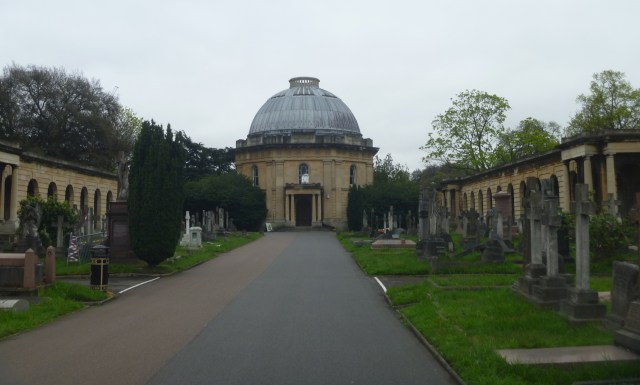
The Open Air Cathedral Design
Designed by architect Samuel Baud ‘his inspirational concept was to create an immense open-air cathedral with a central ‘nave’ running to a ‘high altar’ symbolised by the domed Anglican Chapel. The prominent features in the cemetery are the Colonnades flanking the Central Avenue and the Great Circle, beneath which are the catacombs entered through impressive cast-iron doors’.
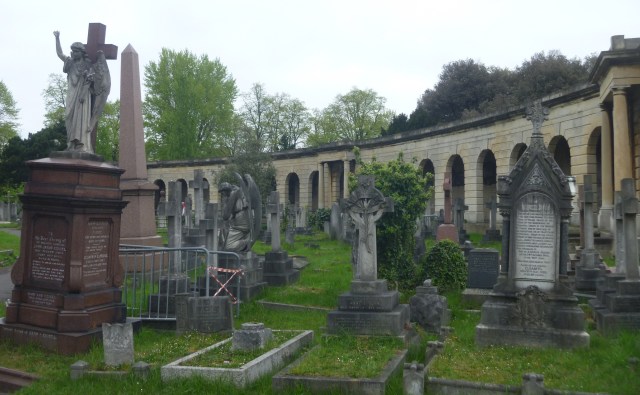
The Colonnades
Here are some of the graves and monuments that caught our attention :
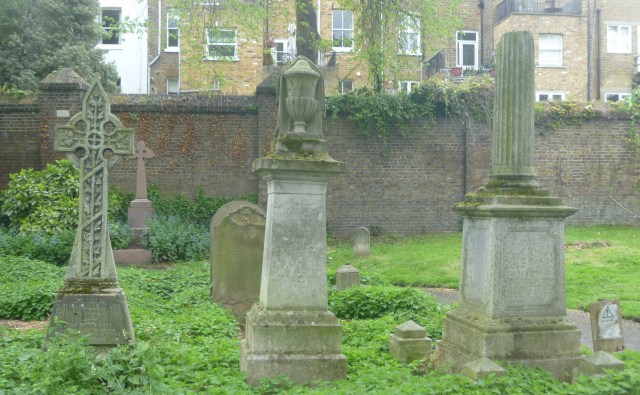
Typical Victorian Symbolic Headstones
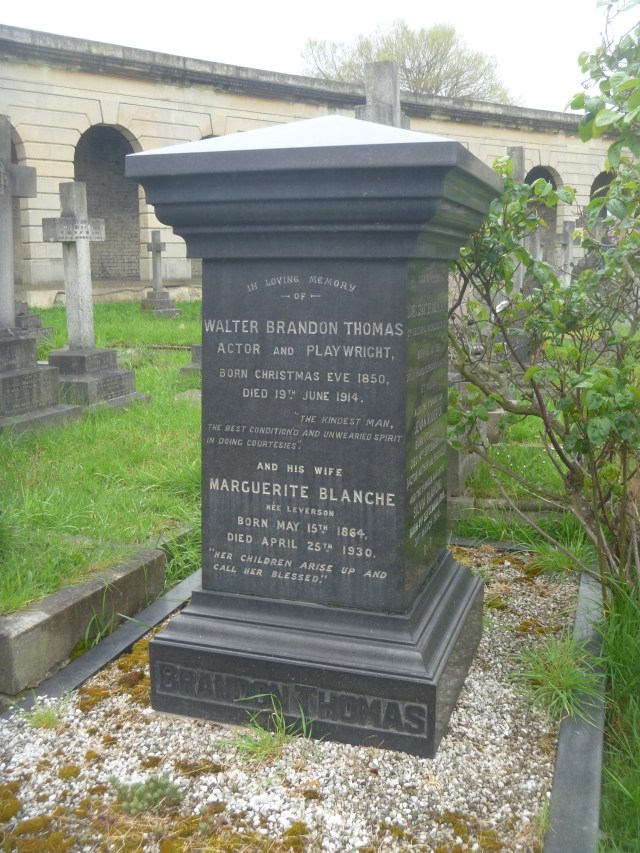
Brandon Thomas who wrote the play ‘Charley’s Aunt’
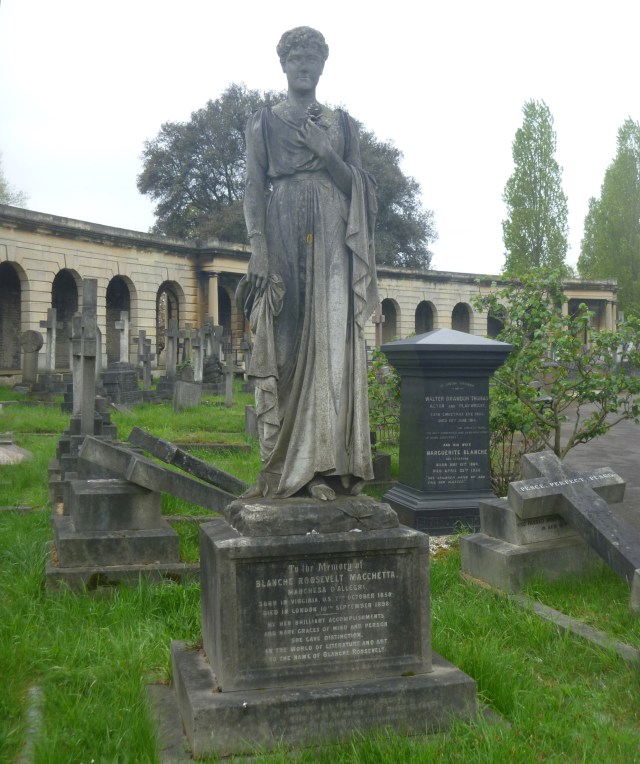
Blanche Roosevelt, opera singer
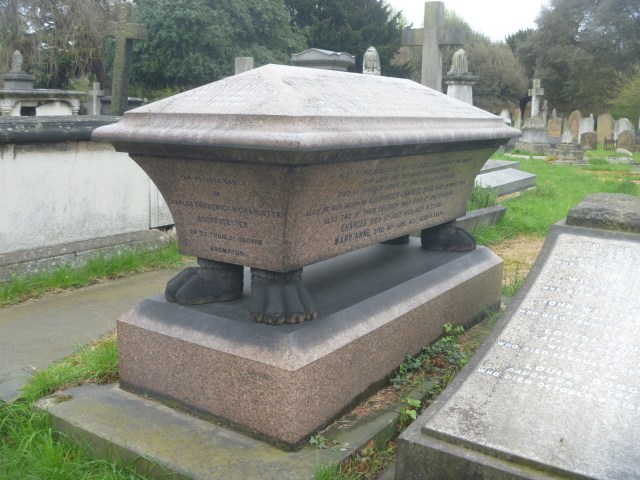
Hoofstetter Mausoleum
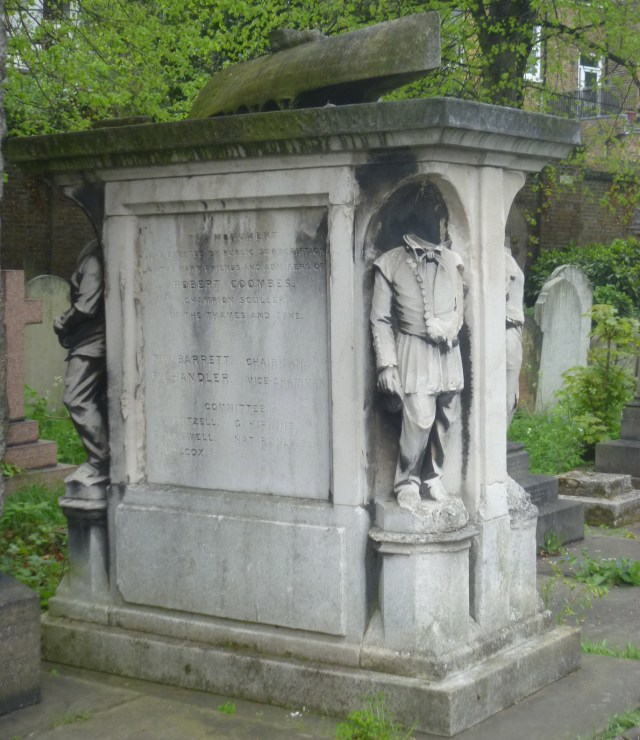
This monument erected by public subscription by the warm friends and admirers of Robert Coombes champion sculler on the Thames and on the Tyne
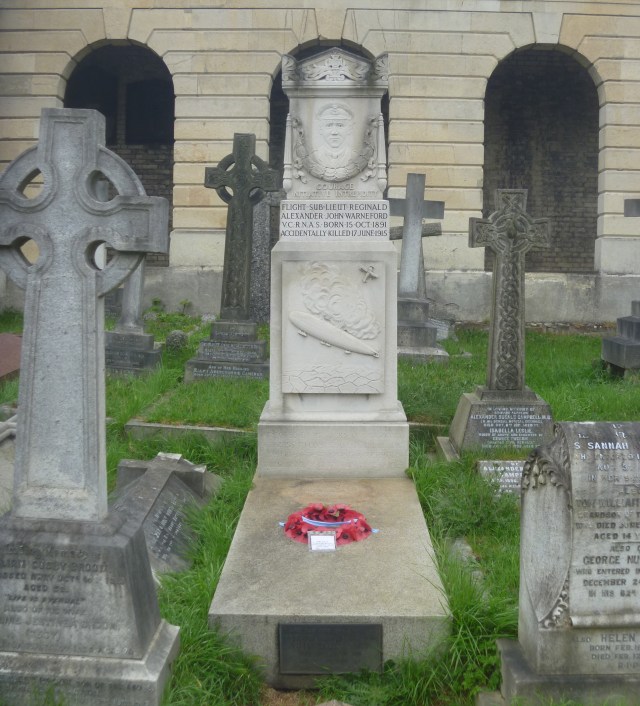
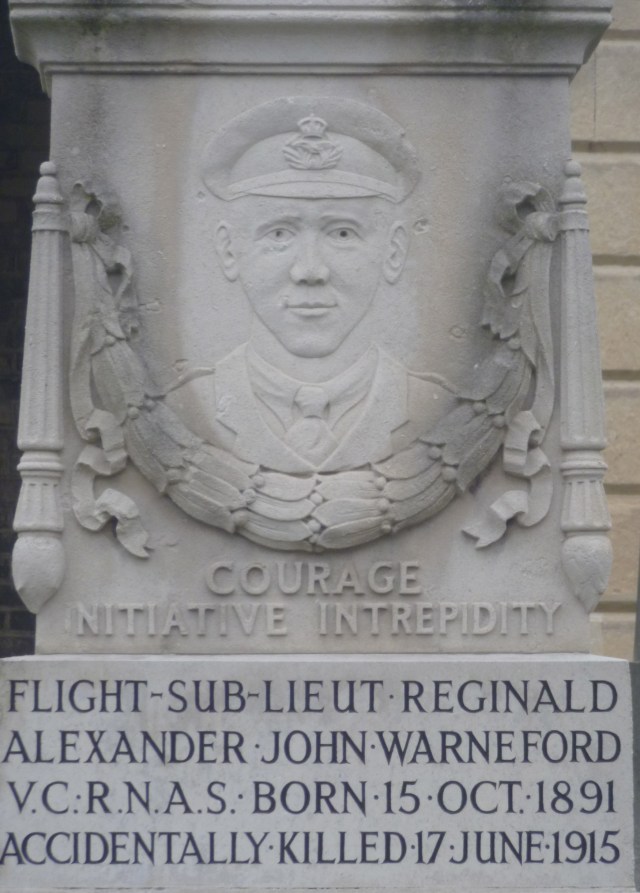
Flight Sub-Lieutenant Reginald Warneford
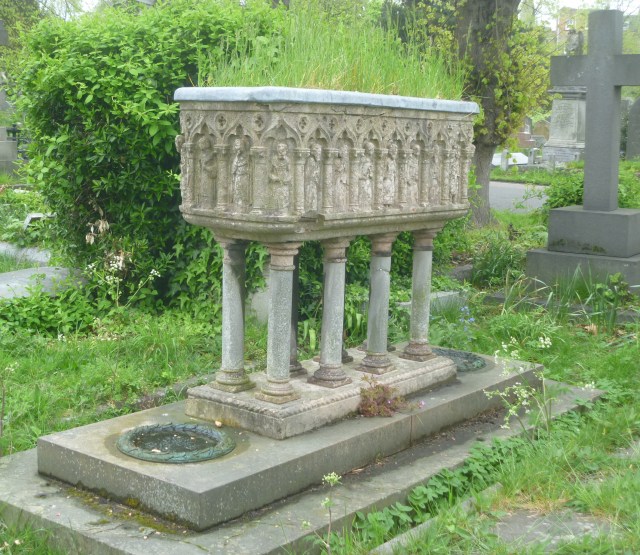
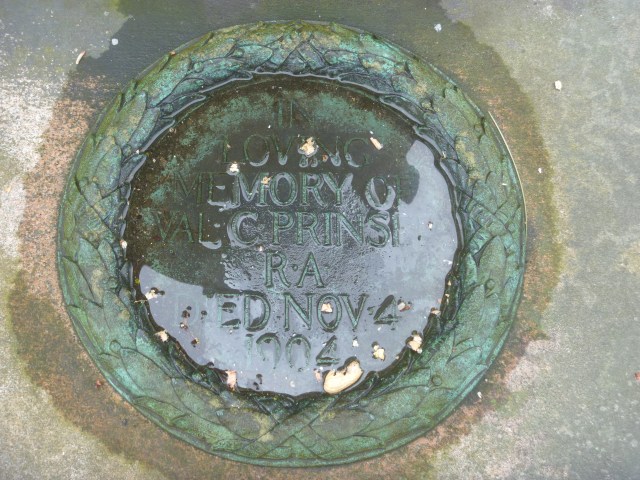
Pre-Raphaelite Painter Val Prinsep and his wife Florence
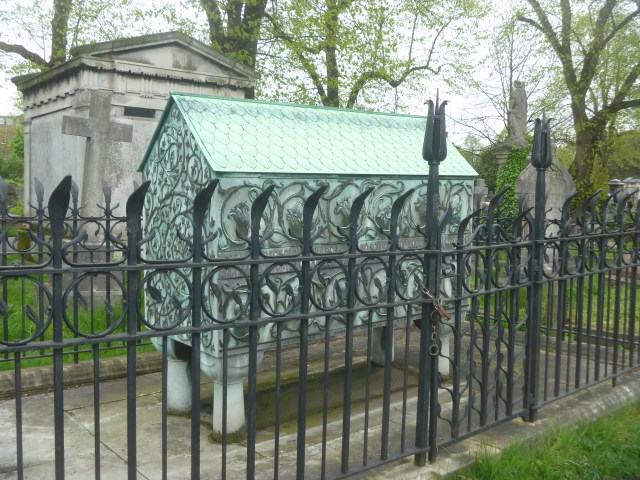
Here Lies Frederick Richards Leyland sometime of Woolton Hall Liverpool : Designed by Edward Burne-Jones
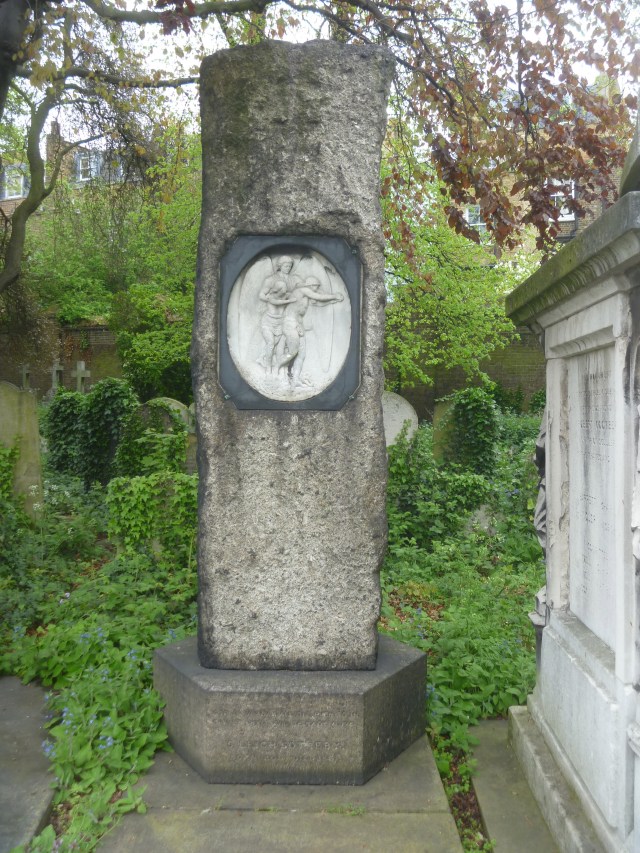
Tree-Like Monument of Samuel Sotheby – Founder of the Auction House
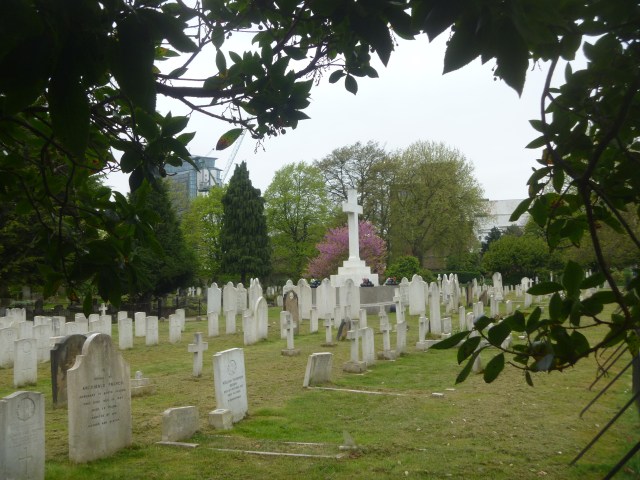
The Brigade of Guards and Commonwealth War Graves
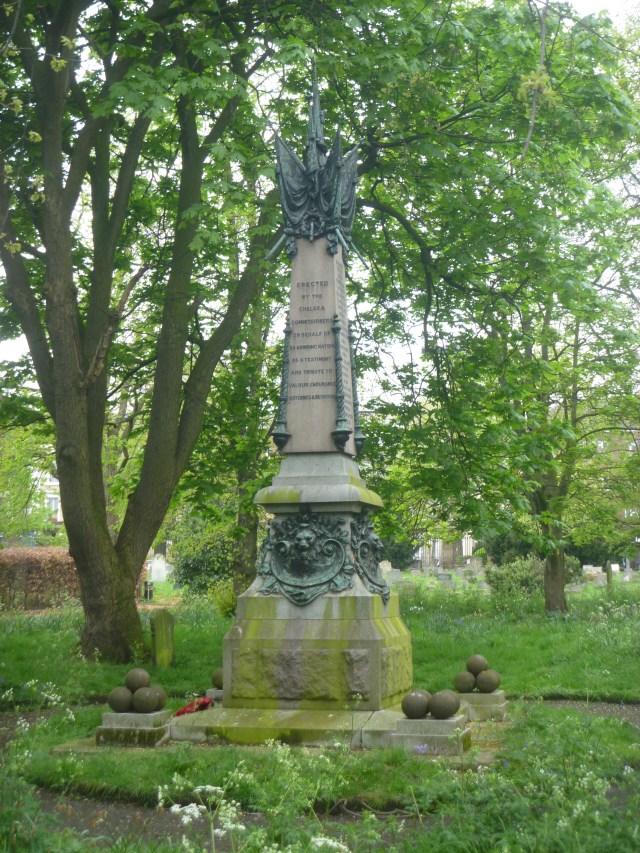
The Chelsea Pensioners Monument
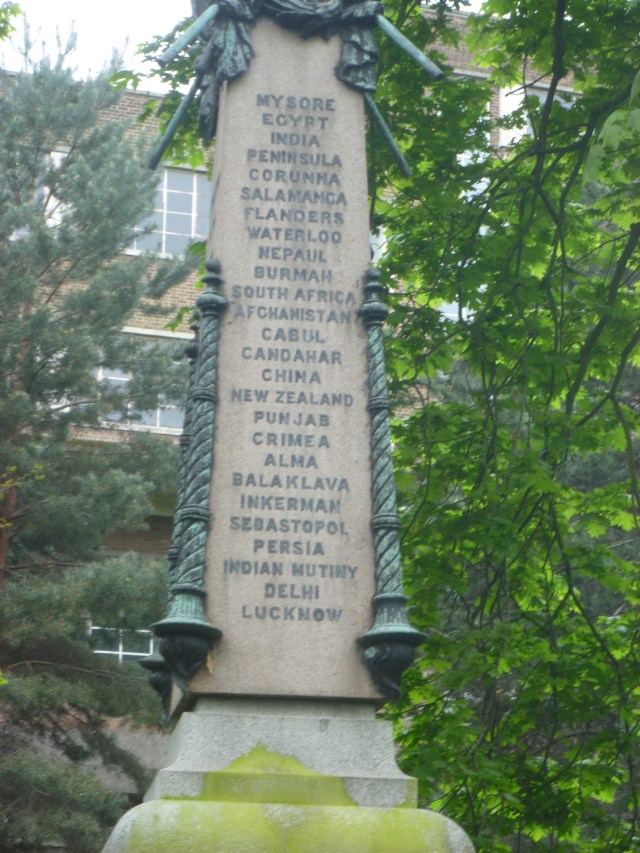
Where the Pensioners saw Active Service
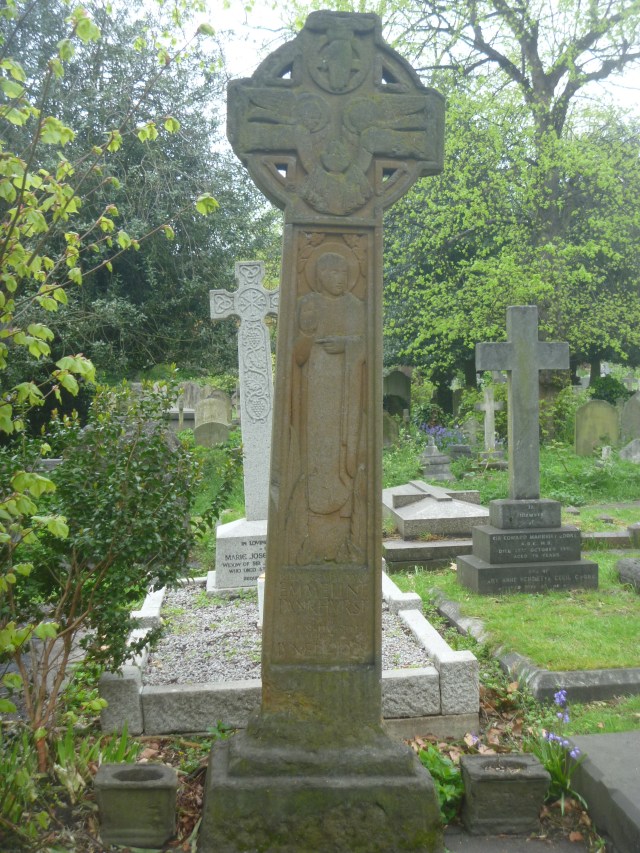
Mrs Emmeline Pankhurst – Number One Suffragette
Having walked from the South Lodge to the North Lodge on Old Brompton Road we were very cold and made for a nearby cafe [which just happened to be The Old Troubadour] for warming drinks before the walk back to the hotel, collecting our bags and travelling by crowded tube to Kings Cross where I joined many London Marathon Runners travelling home.
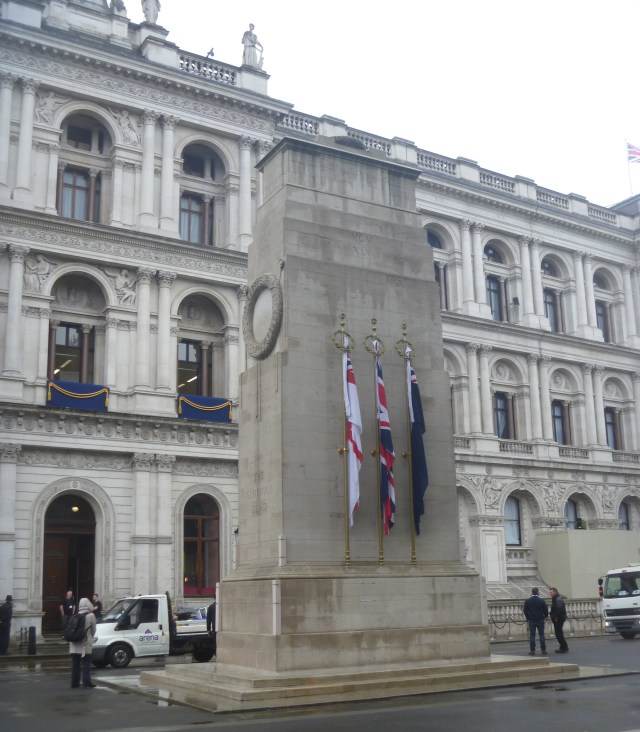
What a difference a day made! On Saturday morning 25 April (ANZAC Day) it was pouring with rain as we made our way to Whitehall where we were attending The National Commemoration of the Centenary of the Gallipoli Campaign and ANZAC Day.
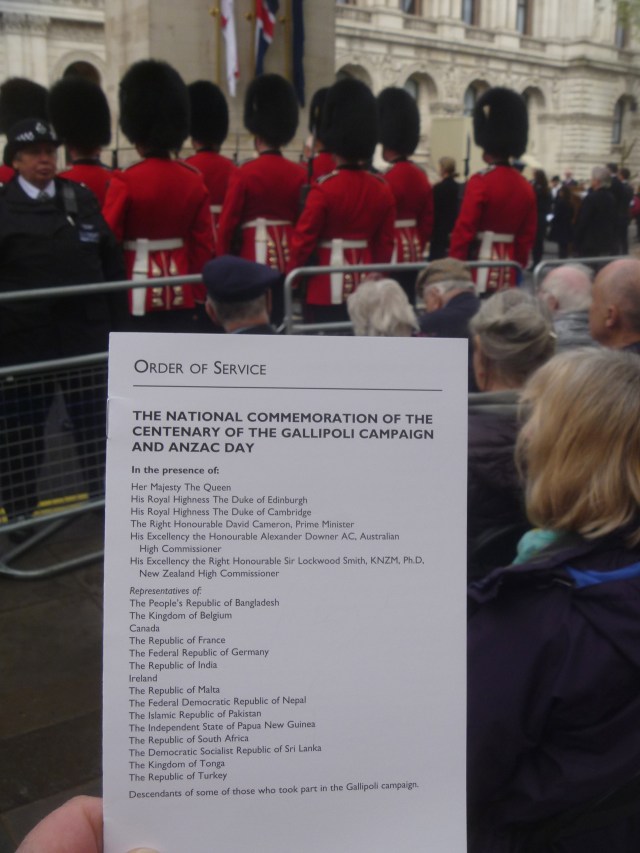
There we are at the bottom of the page!
You may remember that I did some research to find out more about the life and death of my great uncle, Marshall Howman, who was killed at Gallipoli on 21st August 2015. The Gallipoli Association very kindly supplied me with relevant information and I decided to sign up and support them. Through the Association we received an invitation to join the proceedings, in a specially reserved area for Gallipoli Descendants.
We arrived early and after passing through tight security secured for ourselves (me, my sister and our Australian friend, Ann) a pretty good position within the Descendants Viewing Area. We stood immediately behind the limited seating and right by the Cenotaph itself with a view of the Foreign and Commonwealth Office door and red carpet and had a diagonal view of the Royals. That was about 9am. Gradually the rain stopped altogether and we managed to dry out.
There was plenty going on and it was interesting to see one of these events from behind the scenes. Eventually Guards with busbies stood in front of us; but I could still just about see most of what was going on.
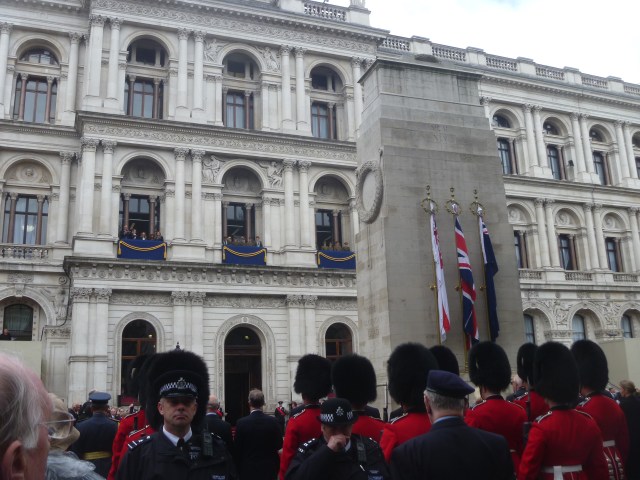
Not a Bad View
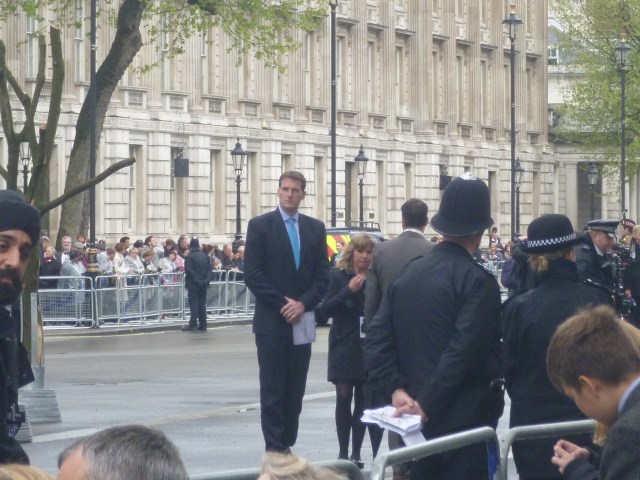
Dan Snow (BBC) ready and waiting
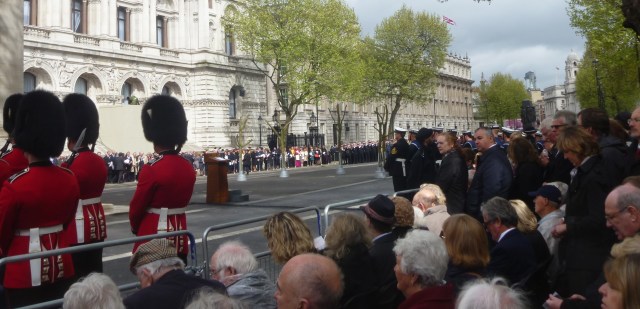
If you look closely in the middle of the photo you can see the tree sculpture Gallipoli 1915 by Nadir Imamoglu. It’s a small-scale reproduction of one which forms part of the ‘Gallipoli 1915’ memorial at the National Arboretum in Staffordshire. The leafless branches symbolise the hands of soldiers on the beaches of the Gallipoli Peninsula, raised to distinguish them from their dead comrades. [From the Souvenir Brochure]
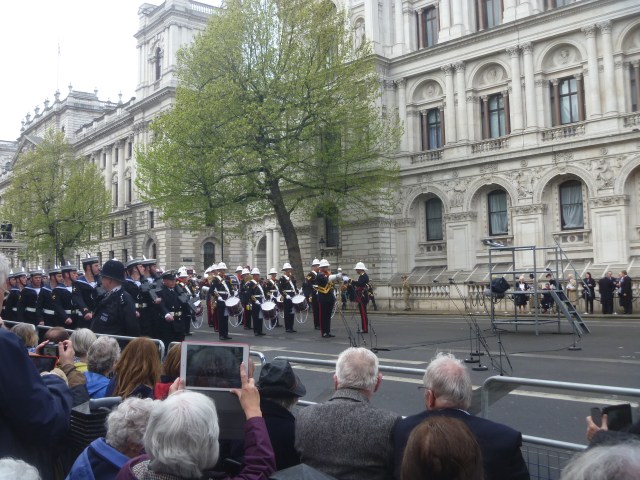
The Military Bands Arrive
Just before 11 the Queen, the Duke of Edinburgh, Prince William and other VIPs – British, Australian, New Zealand, Turkish and representatives of many other other nations involved in the Gallipoli Campaign (and the sun!) came out. As Big Ben struck the hour we began a Two Minute Silence. This was followed by The Last Post, A Reading : For The Fallen by Lawrence Binyon :
They shall grow not old, as we that are left grow old:
Age shall not weary them, nor the years condemn.
At the going down of the sun and in the morning,
We will remember them.
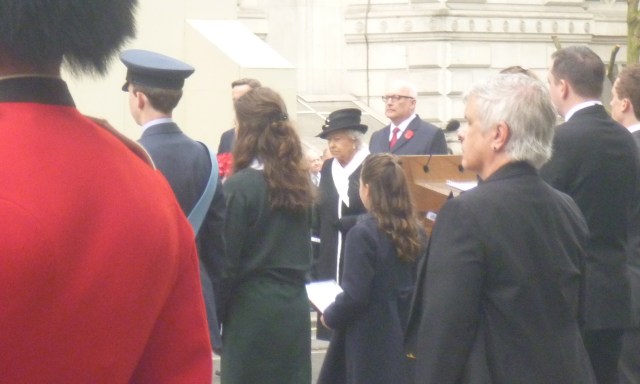
And the Laying of Wreaths. A short service of readings, a hymn and national anthems then followed.
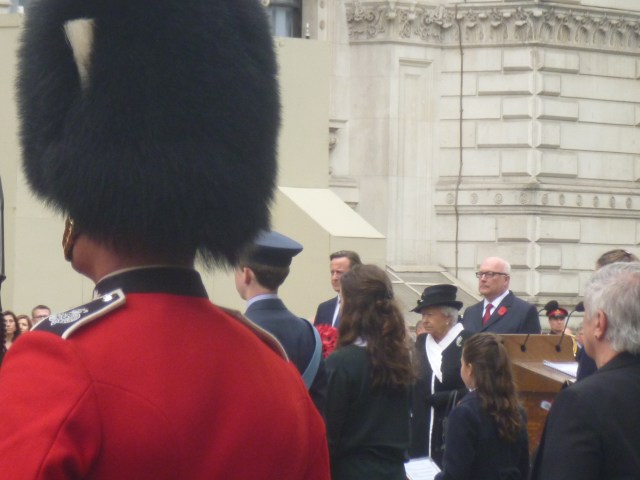
After the Service there was a march past made up of representatives of UK and foreign forces and various associations including, of course, our own Gallipoli Association. When, as descendants, we were invited to join the Commemoration we were given the option to either attend the service or join the march past.
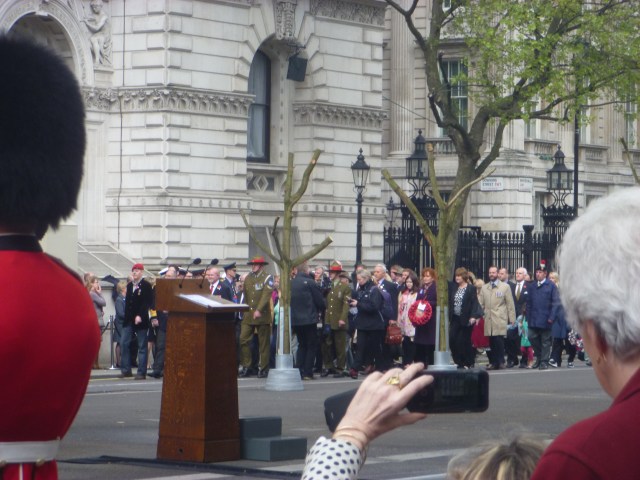
The March Past
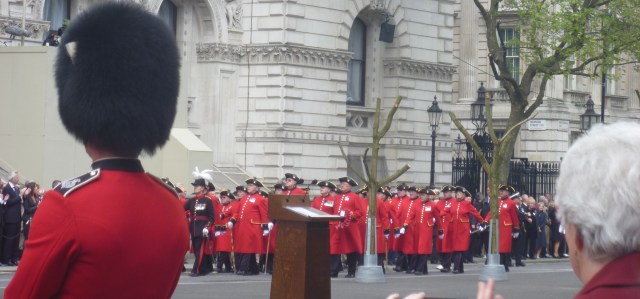
Everyone Applauded the Chelsea Pensioners
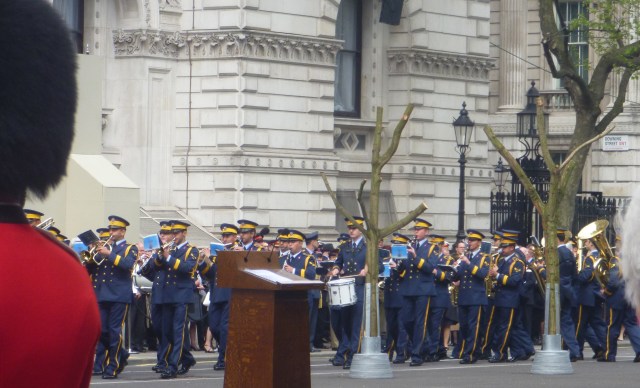
The Turkish Air Force Band March Past
At home I recorded the BBC coverage of the morning and on Monday enjoyed watching in comfort the very moving and memorable event that I had witnessed at first hand on the Saturday.
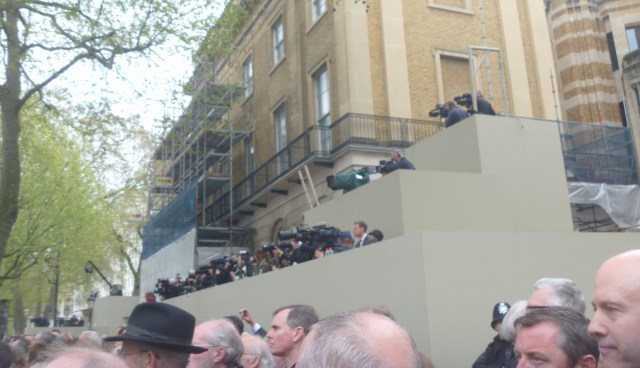
Cameras at the ready!
http://www.bbc.co.uk/iplayer/episode/b05sz6cp/world-war-one-remembered-gallipoli-episode-1
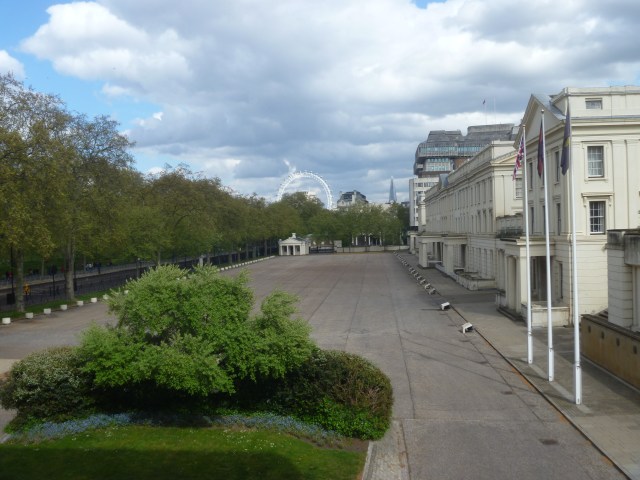
At The Wellington Barracks, Birdcage Walk
After the Cenotaph Service members of the Gallipoli Association were invited to a Buffet Lunch at the Wellington Barracks. I was happy to meet other members and officers of the Association.
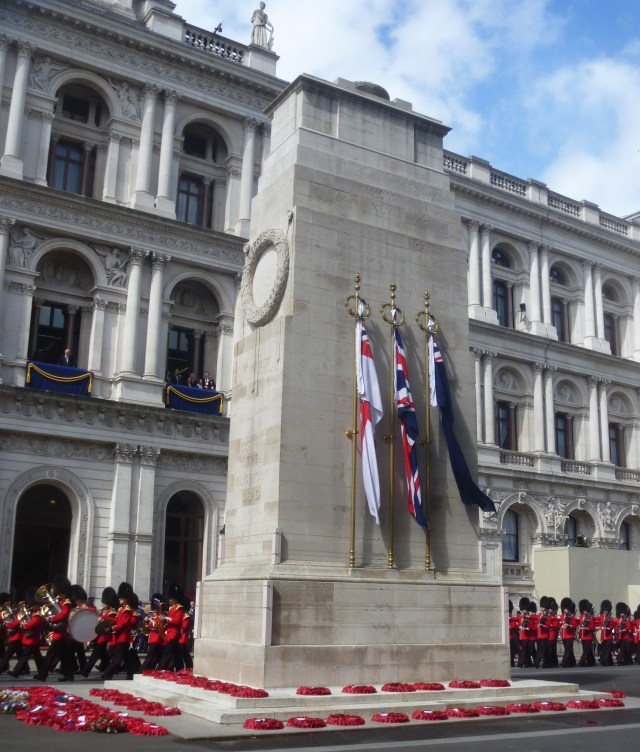
“We will remember them”
On Friday my sister arrived to join me for the weekend and we checked into our hotel just behind Harrods. This was a relatively new area for us. We had decided to avoid the Central London and City areas as the London Marathon on the Sunday meant big crowds and closed roads and limited access everywhere.
So, being in the Belgravia area seemed a good opportunity to visit lesser known places in the Chelsea area. For many years I’ve wanted to visit the Chelsea Physic Garden but haven’t been in the right place at the right time. Friday being beautifully warm and sunny we decided to step out down Sloane Street and Royal Hospital Road where, next door to the Royal Hospital (think, Chelsea Pensioners), we found the high walls surrounding another oasis of peace and calm.
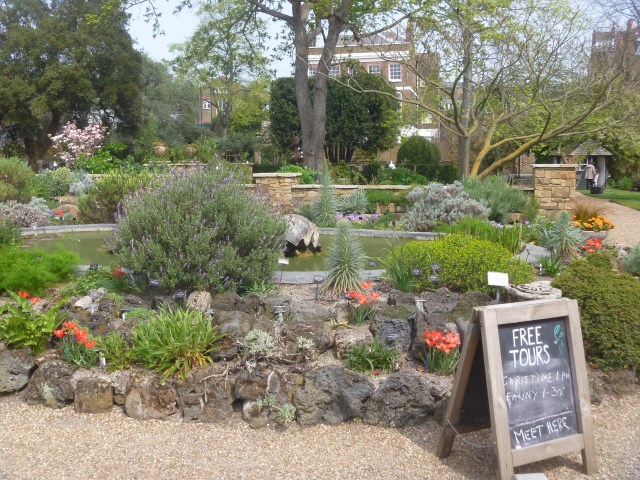
The rock garden of basalt rocks is a listed monument
“Tucked away beside the Thames, Chelsea Physic Garden is a celebration of the beauty and importance of plants. This walled Garden was founded in 1673 by the Worshipful Society of Apothecaries for its apprentices to study the medicinal qualities of plants and it became one of the most important centres of botany and plant exchange in the world. Today, as an independent charity the Garden relies on the support of visitors and Friends to help protect and nurture the Garden for future generations.” [From the website]
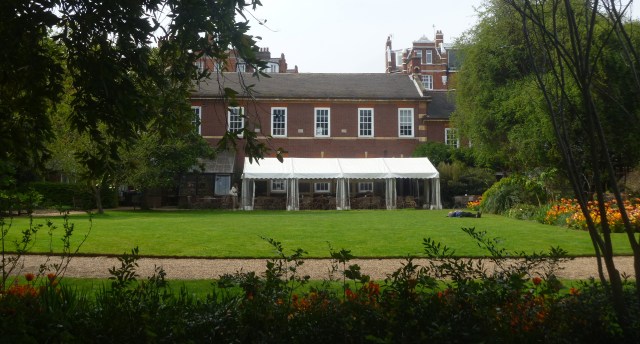
The Cafe in the 17th century curator’s house
There are free tours every half hour with a volunteer guide so we decided to join one of these first, before having lunch outside the Tangerine Dream Cafe.
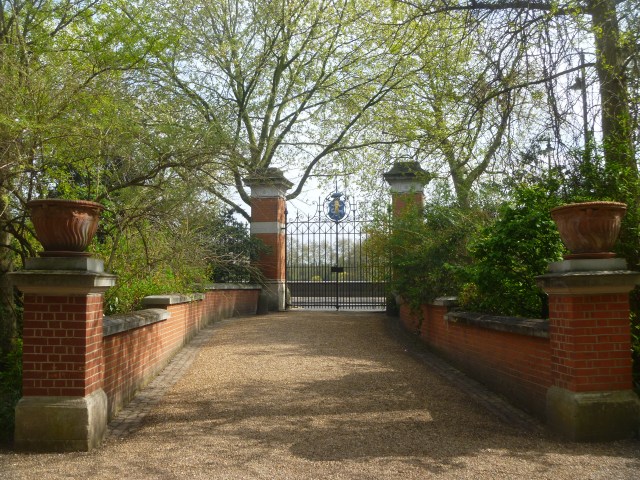
The Gates lead to the Chelsea Embankment and beyond that to the River Thames which was so important to the Garden bringing boats alongside with their cargoes of exotic plants
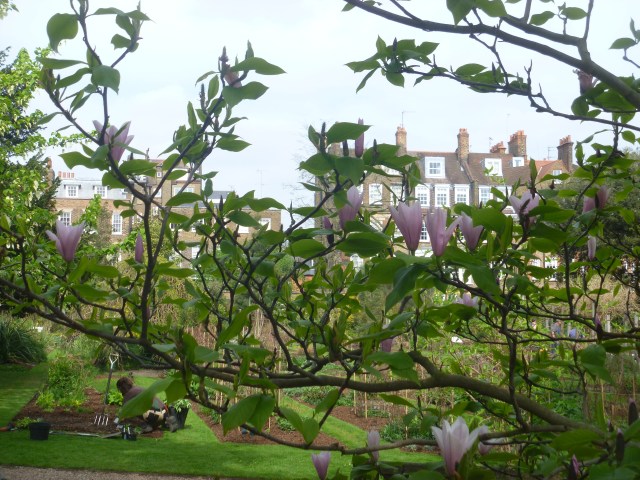
Gardeners and volunteers at work in the Systematic Order Beds
It was impossible for our introductory tour to include all of the gardens on the site :
Garden of Medicinal Plants
The Pharmaceutical Garden
World Woodland Garden
The Garden of World Medicine
The Garden of Edible and Useful Plants
Historical Walk
Botanical Order Beds
Island Endemic Flora
[Each garden is explained on the website.]
so after lunch we visited most of the rest – the greenhouses, the new world woodland garden and had a closer look at the two information point caravans devoted to Sir Hans Sloane and the Swedish plantsman Linnaeus.
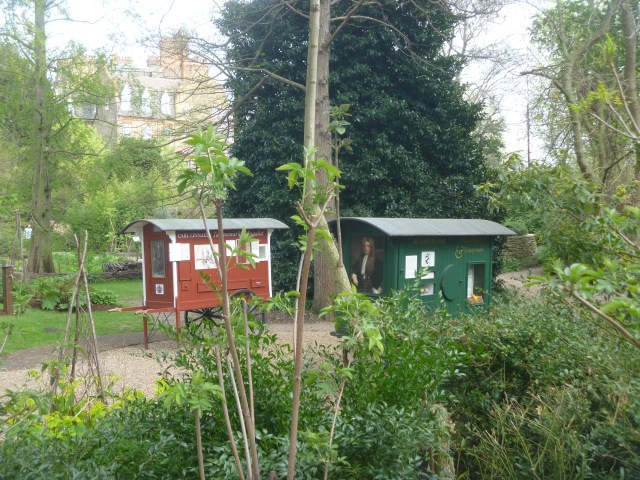
Each cart contains information about Carl Linnaeus and Sir Hans Sloane
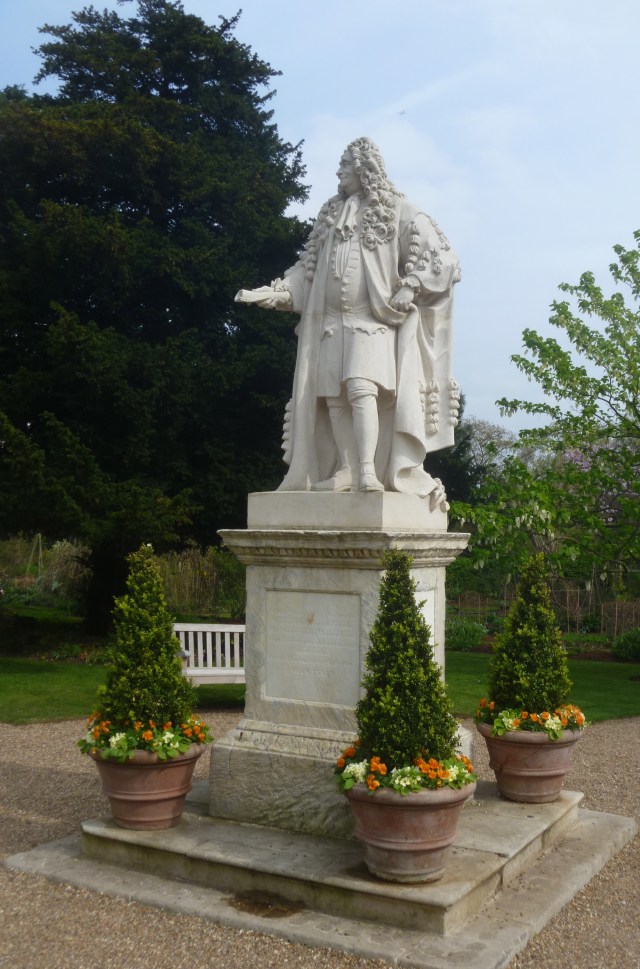
Sir Hans Sloane (a copy of the original)
Dr. Hans Sloane, after whom the nearby locations of Sloane Square and Sloane Street were named, purchased the Manor of Chelsea from Charles Cheyne. This purchase of about 4 acres was leased to the Society of Apothecaries for £5 a year in perpetuity. Sloane was also a founder of the British Museum.
‘Curse or Cure?’ is the title of the 2015 temporary outdoor art installation created for the Garden by ceramic artist Nici Ruggiero. It consists of a trail of 15 inscribed apothecary jars displayed on metal spikes amongst the plants and a larger display of 21 jars against the wall.
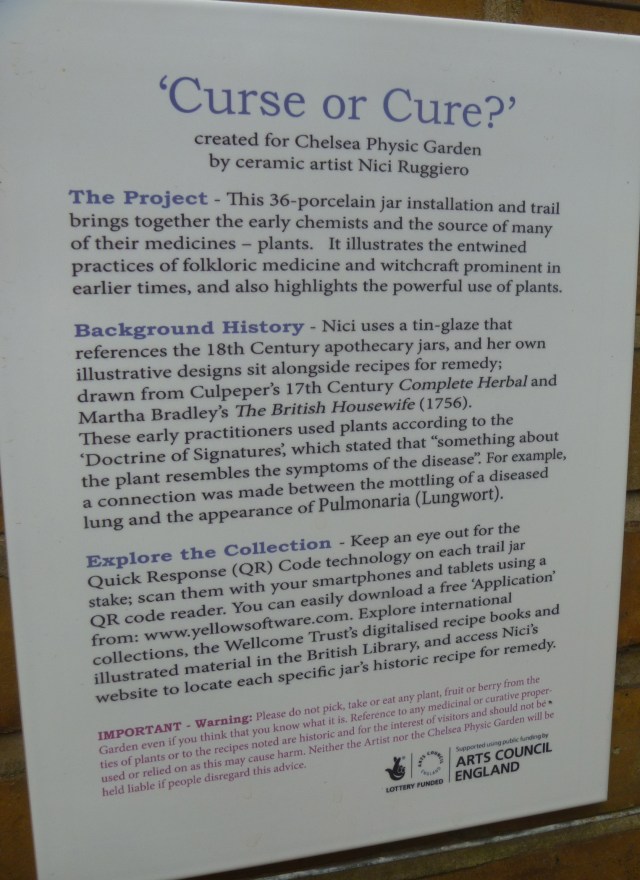
Description of the Installation
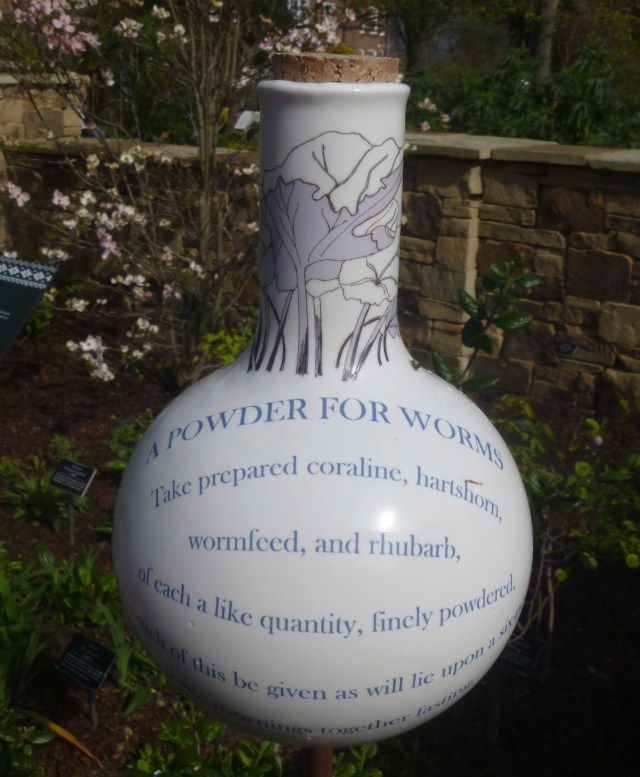
A Jar on a Spike
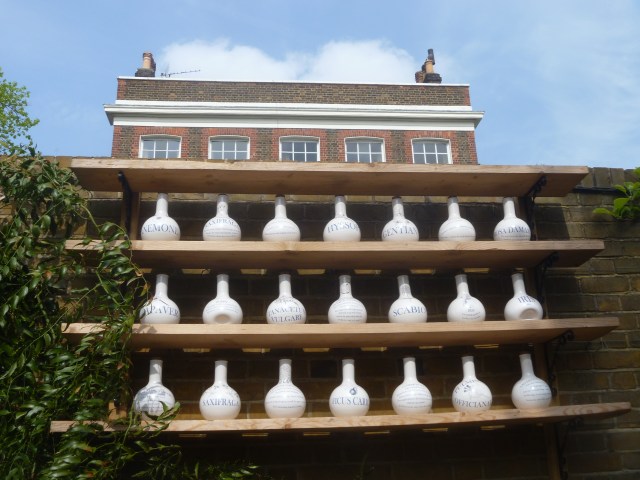
The 21 Jars
Read here an article by Lisa Jardine which appeared in the Financial Times Magazine in 2013. You may need to register to read.
 miladysboudoir