I’m Invited! – A Shopping Evening at The London Review Book Shop

You’re invited!

At the London Review Bookshop, we have some upcoming events that are too good to keep to ourselves. Tickets are limited, so book early to avoid disappointment :

April Customer Evening

Wednesday 2 April, 6 p.m. – 8 p.m.
Browse our shelves with a glass of wine and an Eccles cake from the London Review Cake Shop, and get 10% off any books, DVDs, cards and stationery purchased on the evening. We are also offering a FREE gift wrapping service on the night.

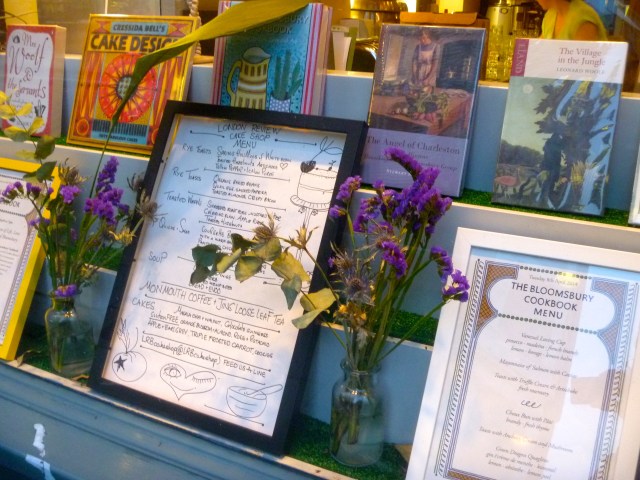
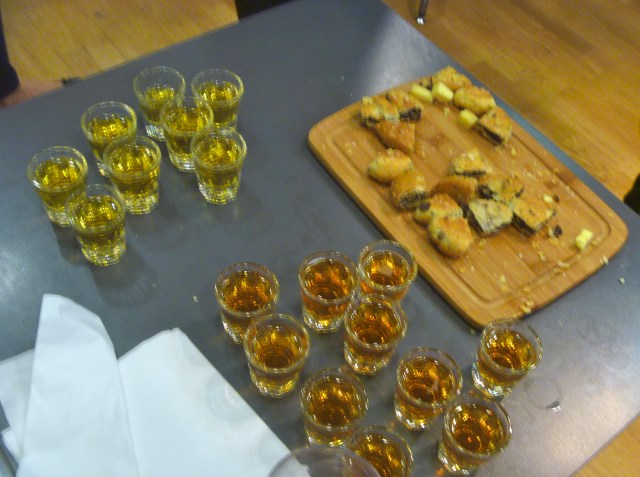
Tonight’s menu: According to The Bloomsbury Cookbook, Virginia and Leonard Woolf considered Eccles cakes suitable sustenance for type-setting and printing at the Hogarth Press. We think they make suitable sustenance for book browsing too! We’re pairing them with nutty Lancashire cheese and plenty of Russian tea.
Caravan tea

Eccles Cake pieces, Lancashire cheese crumbs and slurps of Russian Caravan Tea

As well as the usual treats – wine and nibbles and 10% off books – you’ll have the chance to win a copy of the beautiful Bloomsbury Cookbook, courtesy of Thames & Hudson. Just print a copy of your confirmation email and hand it in to one of our booksellers at the Customer Evening for the chance to win.

Good luck!

Bloomsbury cook book

The Bloomsbury Cookbook Window Display

This message arrived in my email Inbox a few weeks ago and I worked out that my next visit to London would coincide with this customer evening. The London Review Bookshop is another of my favourite London shops. On many occasions I have visited the Cake Shop with friends, family and to meet members of the online book group. It’s one of our favourite venues.
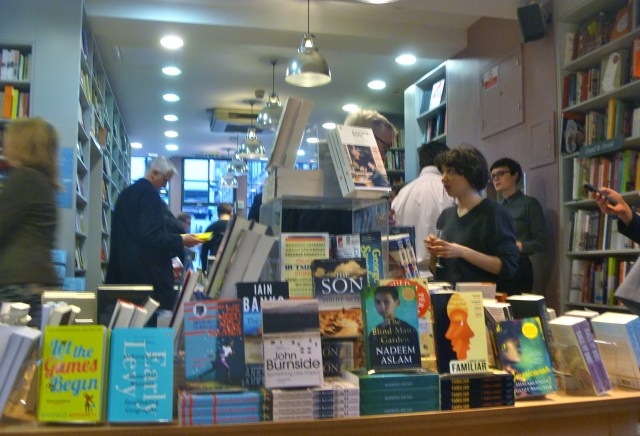
Shopping evening

Shopping Evening at London Review Bookshop

However, on many visits, time in the Cake Shop takes priority and I find I have little time to browse the bookshelves. So I was looking forward to spending time in the actual bookshop for a change.

The Bloomsbury Cookbook looked very tempting … but I was expecting to win a copy! I haven’t received the ‘winners email’ yet though 😦 . I think I will reserve a copy from the Library as it may be useful to contribute to creating the atmosphere when I visit Sussex and the Bloomsbury connections later next month.
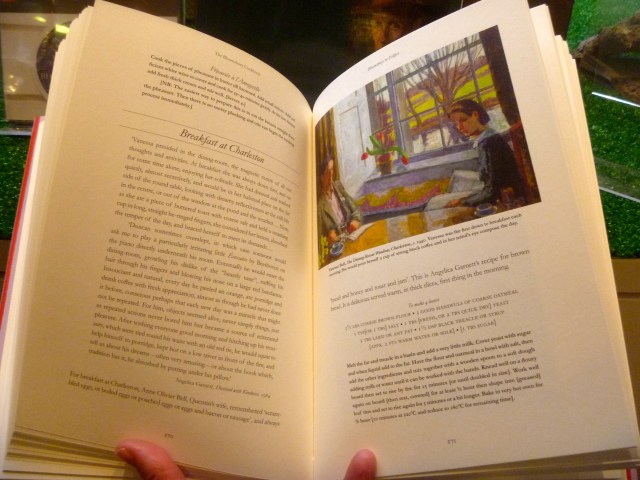
Charleston breakfast

 Breakfast at Charleston

I spotted some other books to add to my list for the future :
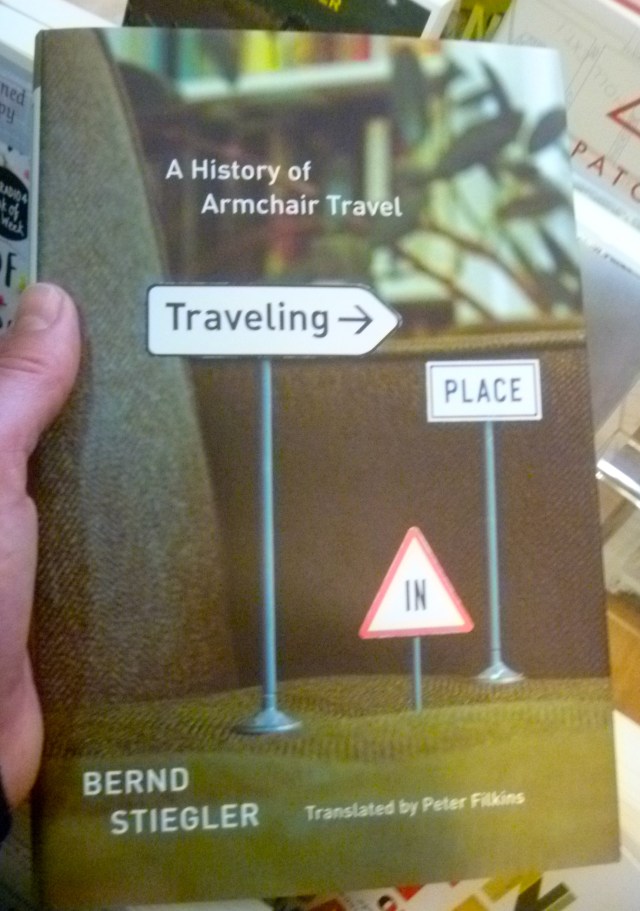
History of Armchair travel

A History of Armchair Travel : I do a bit of this. What’s not to like?
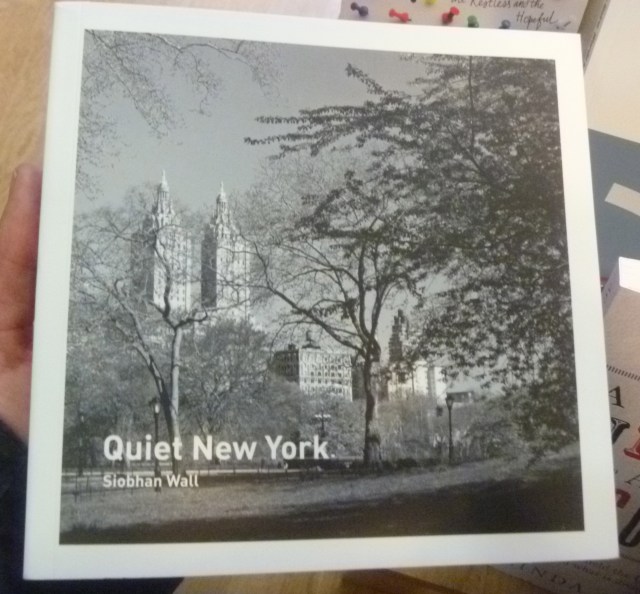
Quiet New York

Quiet New York : I have no plans to visit but I do have companion Quiet volumes – London and Paris

(I could be tempted to buy this just to read, anyway)
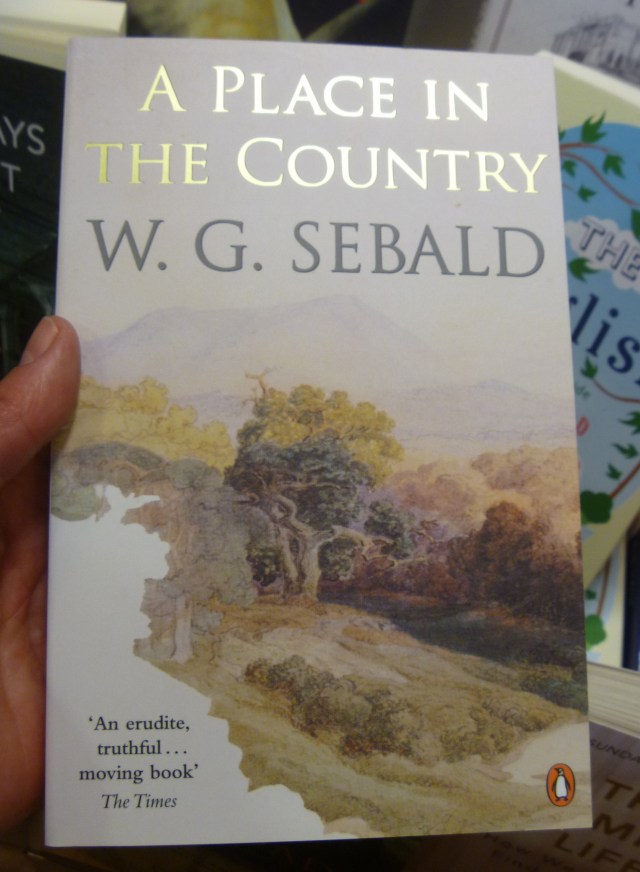
Sebald

I’m a big fan of the late W.G.Sebald – new books keep being published!

I found the staff were very patient and helpful. They found each of the titles I wanted to buy, recommended a further title and hunted high and low for a book which should have been in stock but being a very slim volume had probably been mis-shelved.
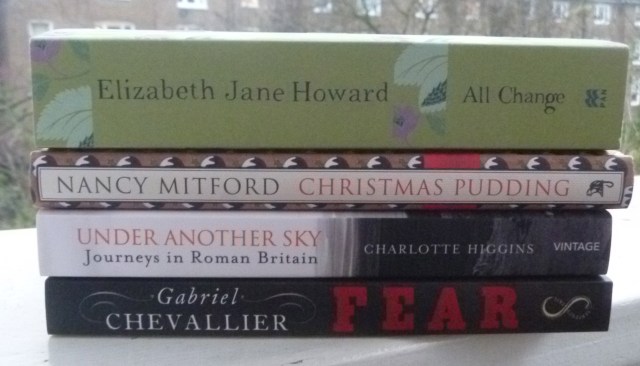
Books bought

The four books I bought last evening

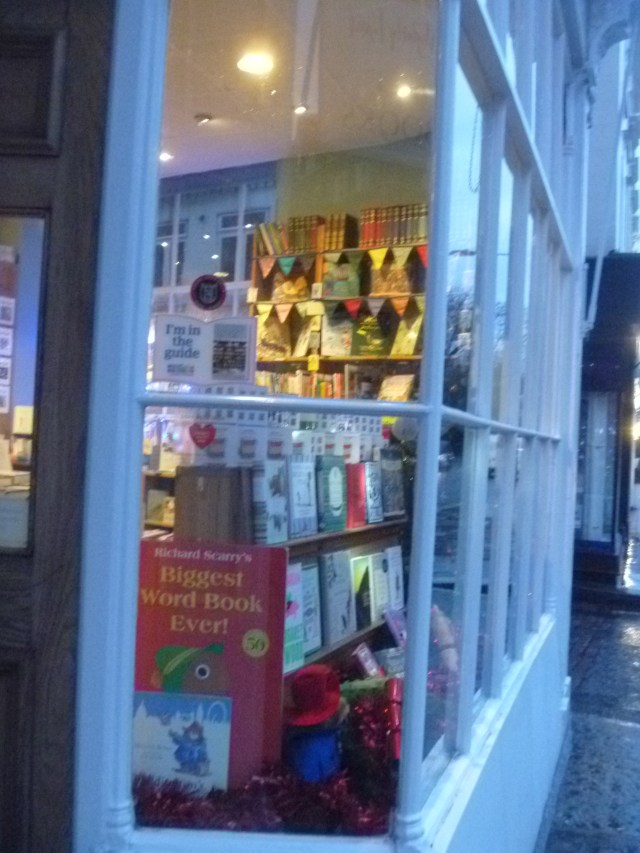
LRB Window

The Cake Shop Window Display – I’m Looking Forward to My Next Visit!


Wodehousian Connections

jeeves_and_wedding_bells_600

[Source]

Many of you know that the origins of the name Miladys Boudoir and the strapline that accompanies it (“There is no surer foundation for a beautiful friendship than a mutual taste in literature”) both have P G Wodehouse connections. You can read about this here.

A while ago, with the help of a friend (who shares a mutual taste in literature with me), I tracked down the context of the strapline. You can read the short story ‘Strychnine in the soup’ we found here.

Or watch the BBC Wodehouse Playhouse dramatisation from the 1970s here :

It was never my intention that Miladys Boudoir should be a book reviewing blog but many of my friends do just that. Now, on my recommendation, my friend Lyn at I Prefer Reading has read, enjoyed and reviewed Sebastian Faulks’s ‘Jeeves and the Wedding Bells’ and I get a mention! Read her post about it here.
 

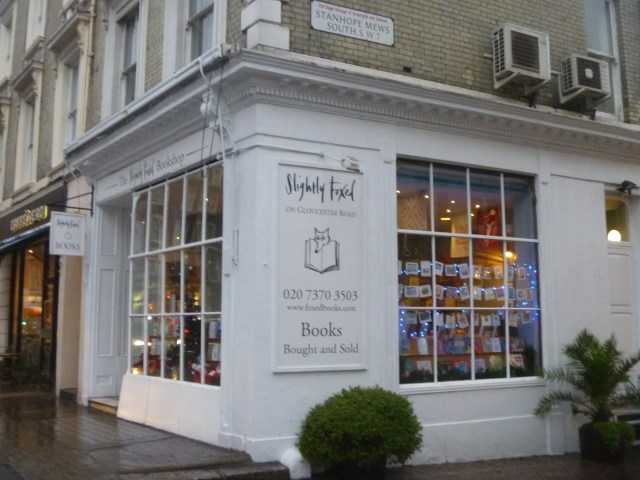
Slightly Foxed on Gloucester Road

When the quarterly reader’s magazine Slightly Foxed: the real reader’s quarterly started ten years ago I took out a subscription but this year now that I can borrow issues from The Leeds Library I have cancelled my subscription. The result is that I actually read the magazine instead of flicking through it and putting it in a pile “to read later”. However, I am still a great fan of all things ‘Slightly Foxed’ which includes the lovely bookshop on Gloucester Road, Kensington.

SF1

Due to predictions of inclement weather yesterday I left home in Leeds extra early to drive down to London. The journey presented no problems and I arrived in good time; leaving the afternoon free.

SF2

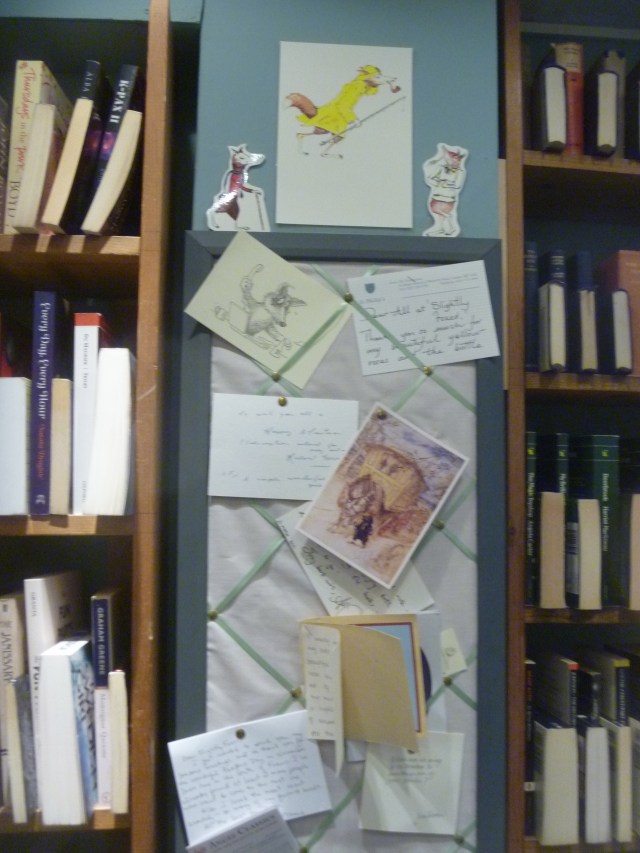
Letters and messages to the Sly Fox

So I took the Underground Train to Gloucester Road Tube Station and revisited this lovely bookshop. Stocks include new books as well as secondhand, plus cards and bags and mugs. The friendly bookseller [Tony] found me the titles I was interested in from the Winter Catalogue.

In addition to publishing the Quarterly SF also reprint some lovely out-of-print classic memoirs in their Slightly Foxed Editions and Paperbacks.

SF3

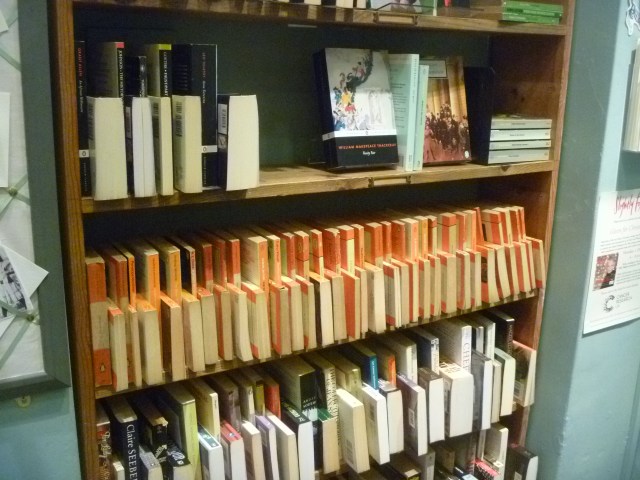
Preparations for stocktaking at Slightly Foxed Bookshop

Browsing wasn’t easy in the downstairs secondhand department as staff are preparing to stock-take on the 2nd January. The shop was about to close for the Christmas and New Year holiday at 5pm today and is due to re-open on 3rd January 2014.

If you are wondering where the name/term ‘slightly foxed‘ comes from here is one definition:

FoxingIn a nutshell, a foxed book’s pages have some spotting, ranging from sort of a beige color to a rusty brown (like a fox’s footprints, or maybe its reddish coat). Sometime foxed spots are referred to as “age spots.” The causes of foxing include temperature & humidity changes (don’t store your books in damp or unheated places!), and impurities within the paper (high acidity – most common in modern books with cheap paper, or iron or copper, commonly found in 19th century & older books). There may be other causes as well, such as fungus or other microorganisms. The reason for foxing in a particular book is often difficult to discern.

Foxing is very common in antique books (due to the paper used) and can certainly be found in contemporary books as well.
A book conservator / archivist can sometimes remove foxing, but it’s a very difficult & expensive process.
As far as how it effects value, well, it just depends on how easy it is to find an unfoxed copy. Some very old books may be difficult to find in unfoxed condition; in that case value will not be greatly affected. Modern books are devalued by foxing to a greater degree, because they are more readily available in fine condition.”

Of course, there’s another meaning to fox – sly, clever, crafty. So the sly fox can cleverly suggest all sorts of books for all sorts of reading problems.

SF4

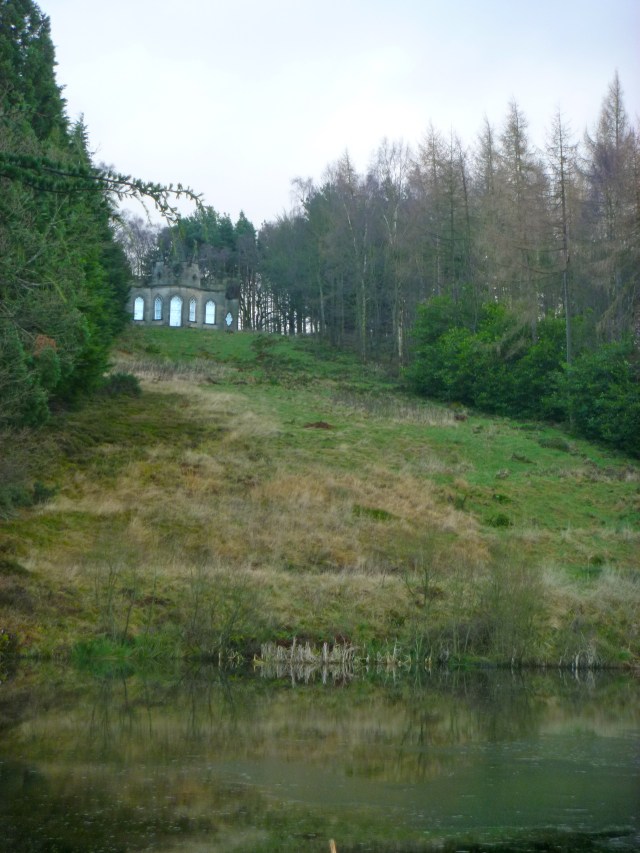
Gibside : “The Chapell, Greenhouse, Banquiting House, Bath, Gardens, and Walks, [and] pleasure grounds are all gone to Ruin.”

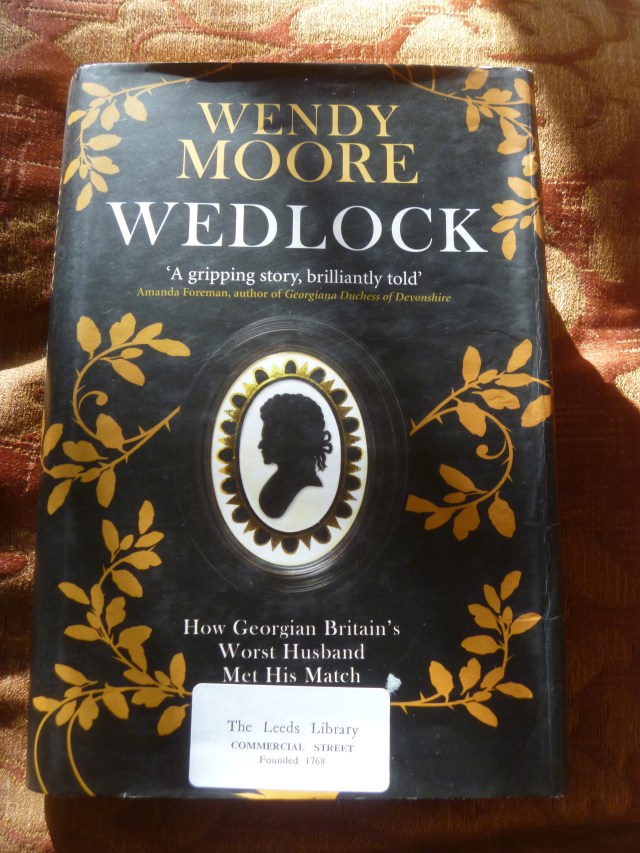
Last week I finished reading ‘Wedlock’ by Wendy Moore, subtitled on the cover ‘How Georgian Britain’s Worst Husband met his Match’. And what a tale it tells. It’s been recommended to me from several sources not least from Nilly Hall‘s wittily titled ‘Bowes and Cupid’s Arrows‘ published last February.

Wedlock

The book is the story of Mary Eleanor Bowes (1749-1800) daughter of the coal baron creator of “Gibside, a Georgian ‘grand design’ on a spectacular scale. The vision of coal baron George Bowes, the Palladian chapel is an architectural masterpiece, the stable block is a vibrant learning and discovery centre, and the once grand hall is now a dramatic shell. Gibside is also a haven for wildlife with red kites often circling in the skies above.” [NT]

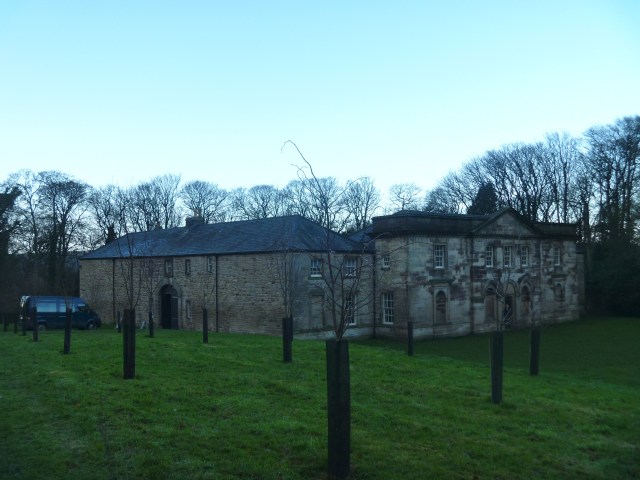
Stable Block 2

The Stable Block

Gibside just a few miles from Newcastle is now the property of the National Trust. I have visited Gibside twice. The most recent time was just last December on my way to a course at Sage plc.

The Chapell

The Chapell

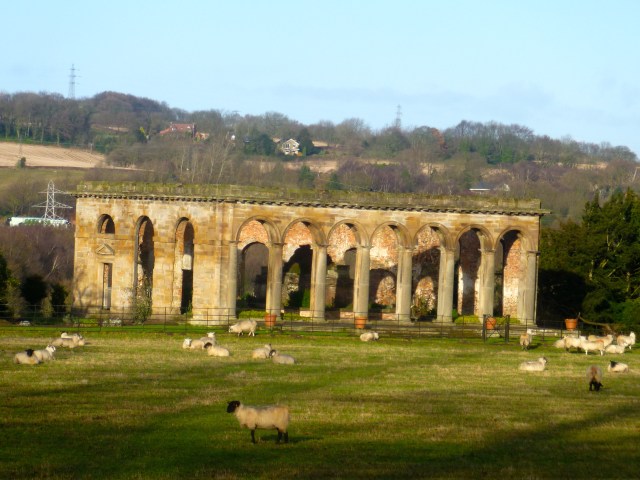
Orangery

The Greenhouse or Orangery

Banqueting House

The Banquiting House

The water feature below the Banqueting House was an elegant octagonal pond built in the Greek style to add to the stately vistas. A fountain cooled he air and statues stood on the terraces above. The Banqueting House was restored by The Landmark Trust after many years of neglect. That same neglect has had some happy consequences for the pond. It is now a Site of Special Scientific Interest (SSSI) for its population of great crested newts. There are no plans to restore the Octagon Pond as any such work could destroy the habitat of these shy and rare creatures, as well as upsetting the many other types of bird and aquatic life that thrive here. [Extracted from the Information Board at the Pond]

A highly educated woman for her time Mary Eleanor’s father, George Bowes, died when she was 11 leaving her a vast fortune and prey to future gold-diggers. She married her first husband, John Lyon, the 9th Earl of Strathmore, in 1767, gave birth to five children in six years and was left a widow when Lyon died of tuberculosis in 1776.

Her second marriage to Andrew Robinson Stoney, an Anglo-Irish adventurer, was a total disaster. Self-styled ‘Captain’ Stoney duped Mary into marriage in 1777. From then on she was brutally treated and virtually held captive by him. Finally, she did manage to escape his clutches and even to divorce him – highly unusual at the time. He is the origin of the term “stony broke” – he died in a debtor’s prison – and he was the inspiration to William Makepeace Thackeray who learned of Stoney Bowes’ life story from the Countess’s grandson John Bowes and used it in his novel “The Luck of Barry Lyndon.” 

Stoney’s or Bowes’, as he is called in the book (in compliance with Mary’s father’s will, Stoney changed his name to Bowes his marriage to Mary Eleanor), greed was responsible for the ruin of Gibside and the destruction of thousands of trees on the estate .

It is ironic that Mary’s father constructed the Column of Liberty in the grounds of the estate when for several years during her marriage to Bowes she was very far from being at liberty.

Column of Liberty

The Column of Liberty at Gibside

My Life in Books : Series 4 : Day 2 : Milady’s Day!

One of the annual features of my friend Simon’s blog is the week where he invites other bloggers to more or less take over and re-enacts a BBC TV series My Life in Books. A couple of months ago I was flattered to be invited to participate in this year’s pairing. If you are interested you can read the result here :

http://stuck-in-a-book.blogspot.co.uk/

Simon and I are both members of the same online book discussion group and meet up occasionally often with many other members during December or in the summer when fewer members are prepared to leave the safety of the big city!

At Great Malvern

Simon and I (left and right) at Great Malvern, summer 2013

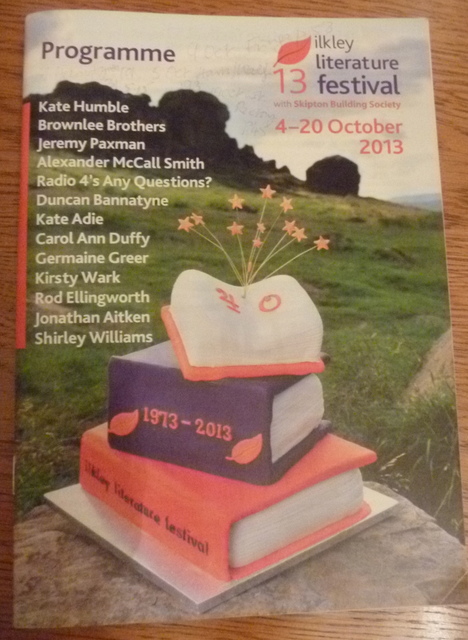
Virginia Woolf, Horace and Rectories : The Ilkley Literature Festival 2013

October is the month of The Ilkley Literature Festival. I remember when ‘all’ the events took place in one venue – a children’s weekend of ‘literary’ entertainment- poetry, puppets, that sort of thing – and a weekend of talks for adults. But that is going back nearly 30 years and I noticed that this year celebrates the 40th anniversary with 17 days of talks, walks, visits and entertainment with even free Fringe events.

P1110815-001

I usually pick a couple of talks or events to attend each year and this year was no different. On the first Saturday I chose to hear Alexandra Harris talk about her book “Virginia Woolf“.

Liverpool University cultural historian Alexandra Harris’s hugely acclaimed Romantic Moderns (Guardian First Book and Somerset Maugham Awards) overturned our picture of modernist culture. Now Harris discusses the life and work of Virginia Woolf, revealing a passionate, determined woman full of wit, vivacity and fun, whose life was shaped by her defiant refusal to submit to literary convention, social constraints and mental illness.” [ILF Programme]

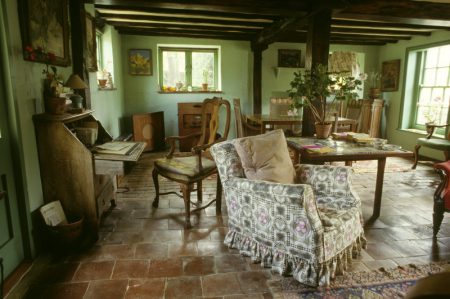
The Sitting Room at Monk's House, East Sussex

The Sitting Room at Monk’s House. The armchair was one of Virginia Woolf’s favourite reading chairs. It is upholstered in a fabric designed by her sister, Vanessa Bell. ©NTPL/Eric Crichton [As seen here]

I’m expecting to get to Monk’s House next year (and felt the need to learn more about VW) with a friend and bought the book and had Ms Harris sign it for her. She hopes we will also have a chance to walk on The Downs whilst we are there … and I hope so too!

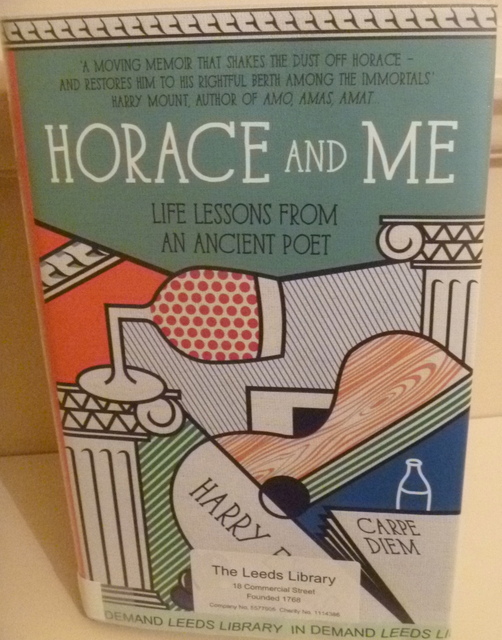
Later that afternoon I went to a Question and Answer format event featuring the FT ‘Slow Lane’ journalist and poet Harry Eyres who has recently published a book ‘Horace and me‘ a fascinating subject about whom I knew very little.

Horace

Harry Eyres, theatre critic, wine writer, poet and ‘Slow Lane’ columnist for the Financial Times, journeys into the work of the Roman poet Horace, exploring his lessons for our time. The humble son of a freed slave, Horace championed modest pleasures in the face of imperial Rome’s wealth and expansion. A celebrity in his own time, Horace influenced writers from Voltaire to Hardy – and Boris Johnson!” [ILF Programme]

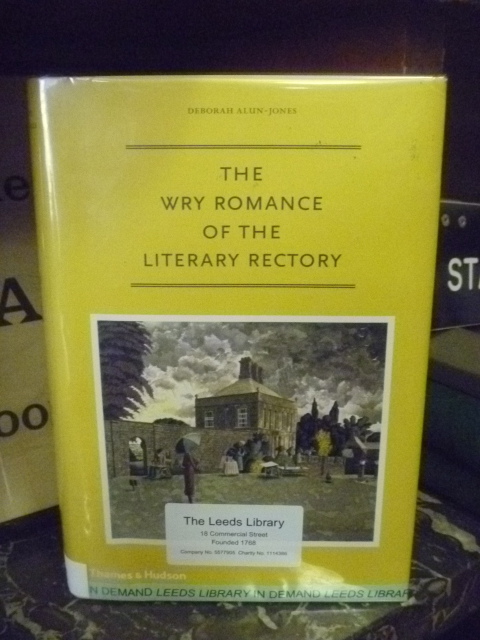
And finally last Saturday it was Deborah Alun-Jones who gave a short talk, then took questions from the presenter and then from the audience on the subject of her book (which I had read earlier this year) ‘The Wry Romance of the Literary Rectory‘.

P1110805

Author Deborah Alun-Jones strips away the idyllic exterior of the village rectory to reveal the lives of writers like Tennyson and Betjeman who lived and worked in them. She investigates hidden desire, domestic drama, bitterness and isolation – and the secrets of the highly creative environments from which some of the greatest English poetry and literature has emerged.

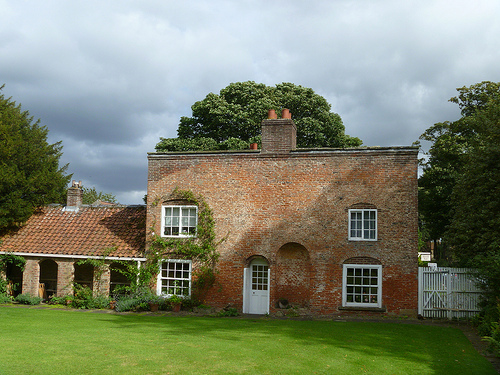
Ms Alun-Jones had travelled the country visiting rectories (and vicarages, parsonages and the like) and although she mentions Jane Austen and the Brontes they are not included in this book. A future book will look at women in the rectory. The only woman to feature in this publication is Dorothy L. Sayers. The male authors are Sydney Smith (at Foston in Yorkshire); Alfred Tennyson (at Somersby in Lincolnshire); Rupert Brooke (at Granchester – also now home to Lord Archer); John Betjeman (at Farnborough); R.S.Thomas (at Manafon); George Herbert and Vikram Seth (at Bemerton) and The Benson and de Waal families (at Lincoln). I haven’t visited any of these places and I don’t think any are open to the public. Such a lively speaker and interesting topic it was a pity that the room was only half full. But those of us that were there were very appreciative of the talk.

Shandy Hall

Here is Shandy Hall in North Yorkshire and former home of Lawrence Sterne vicar of Coxwold – also not included in The Wry Romance

I wonder if Simon at Stuck-in-a-book has a comment to make about the wry romance of being brought up in vicarage?

The Pinecone : a Visit to St Mary’s Church, Wreay in Cumbria

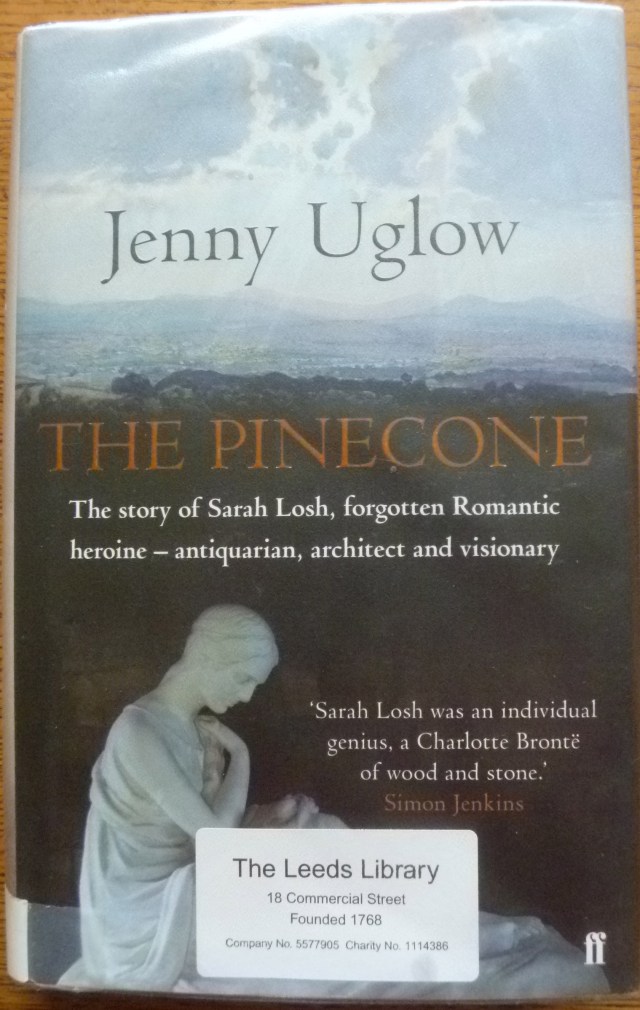
Earlier this year I read Jenny Uglow’s latest book “The Pinecone : the story of Sarah Losh, forgotten Romantic heroine – antiquarian, architect and visionary”. I had heard Jenny speaking about the book at the 2012 Ilkley Literature Festival. Sarah Losh’s life and her work are almost totally unknown.

Pinecone book

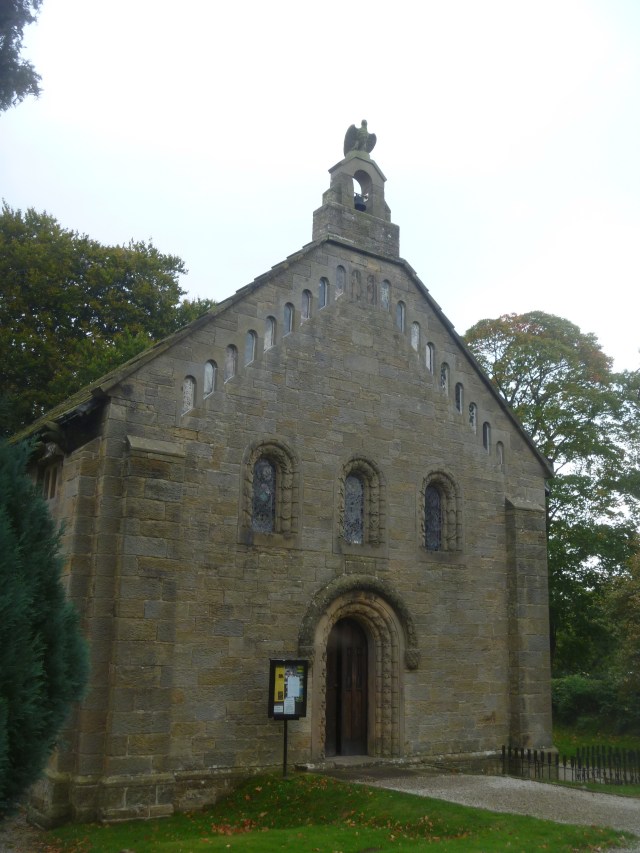
The village of Wreay lies five miles south of Carlisle. Four country roads meet at the village green, shaded by trees, and across the way is the church. It looks like a small Romanesque chapel from northern Italy. What is it doing in this northern village, with the mountains of the Lake District to the west and the Pennines to the east?”

St Mary's Wreay

This is the premise for the book [on the back cover] and it’s a fascinating tale.  Jenny Uglow first sets the scene by telling the story of Sarah Losh’s antecedents who made money in Newcastle from alkali works and later from iron works and the railways. Sarah was born in 1786 and her sister Katharine, with whom she was especially close, in 1788. Their parents died in 1799 [their mother] and 1814 [their father]. The sisters were brought up in the countryside south of Carlisle but as adults they made several tours on the Continent including to Italy. This must be where Sarah received her inspiration. For women at the time they were very highly educated.

Mortuary Chapel

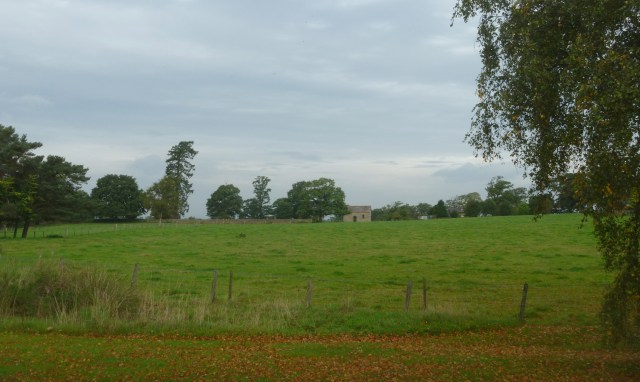
The Mortuary Chapel Across the Field from the Church

Following the death of their father and their travels on the Continent the Losh sisters returned home and began to make improvements to their home and estate and to the village of Wreay itself including the building of a school. But Katherine fell ill and died in 1835 and Sarah was inconsolable. She then directed her efforts to building a Mortuary Chapel modelled on one she had seen at St Piran in Cornwall.

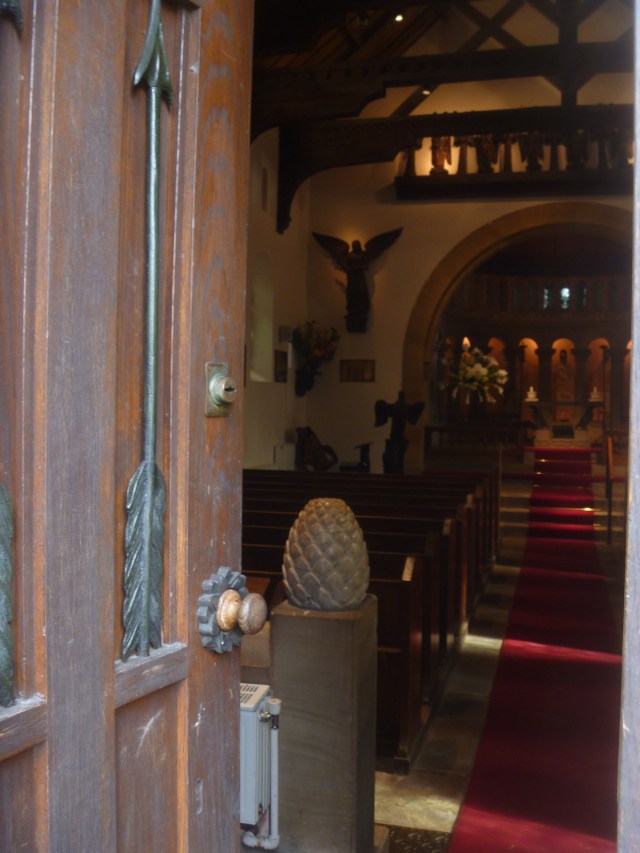
Peep inside the church

Then Sarah began work on the new church 1835. It was completed in 1845. She declared that it was to be “Not in the Gothick style” but based on a Romanesque design and it is a masterpiece and very obviously the work of one person – the untrained architect and designer – Sarah Losh.

Sarah Losh portrait

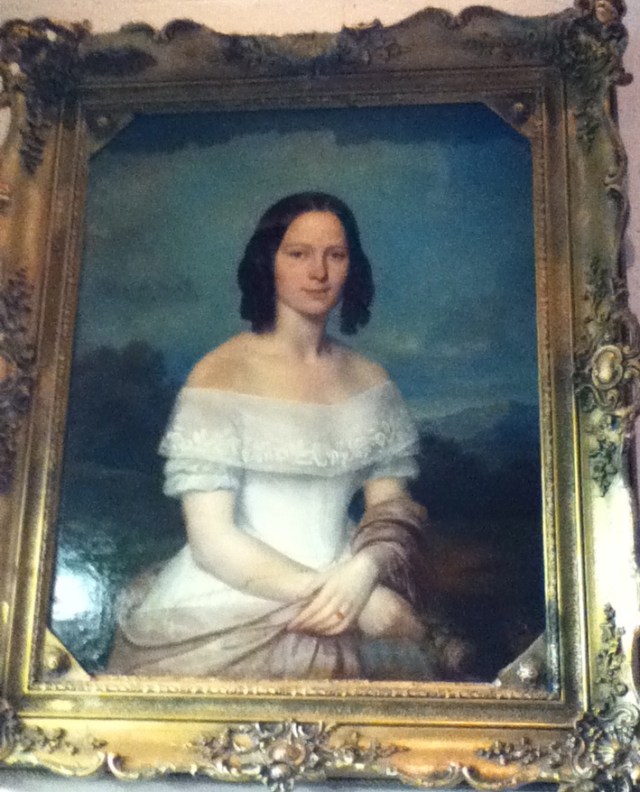
Sarah Losh

I can’t go into all the details of both the interior and exterior decoration of the building. It’s a perfect gem – earning four stars in Simon Jenkins’ England’s Thousand Best Churches “This is one of the most eccentric small churches in England … unlike almost all the works in this book, Wreay appears to have been the creation of a single original mind … The Arts and Crafts Movement took half a century to catch up with her.”

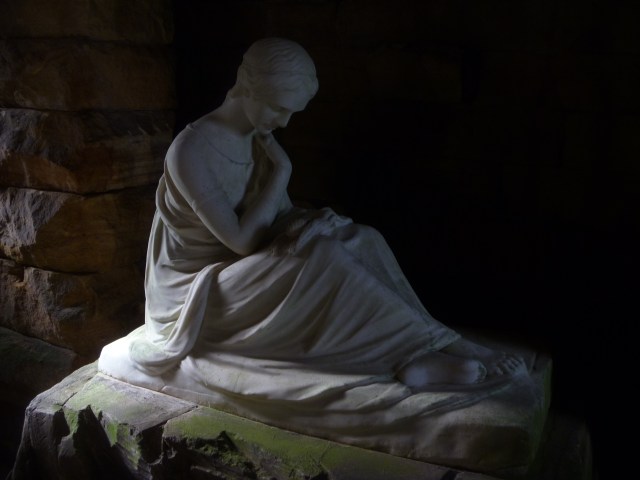
Mausoleum

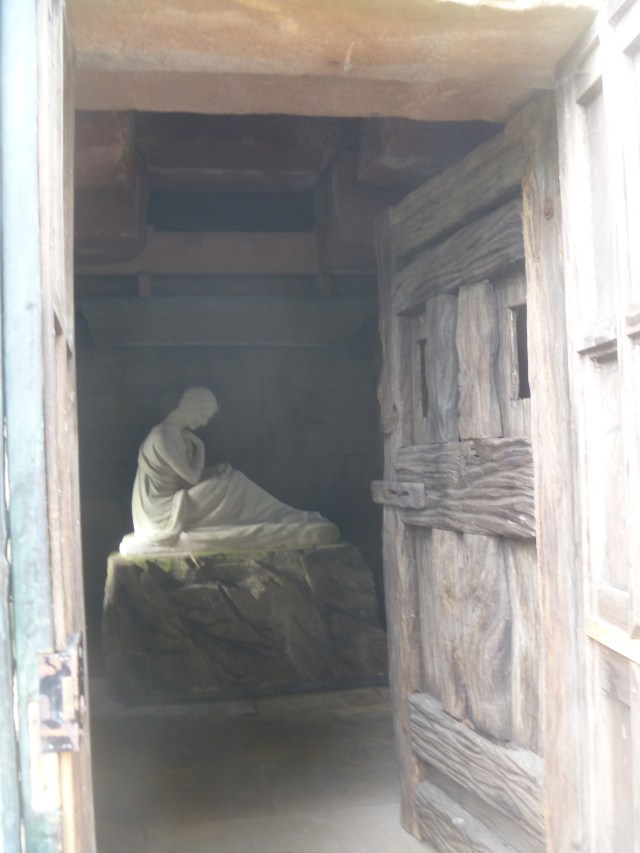
The Mausoleum

Katherine

Dedicated to Katherine Losh

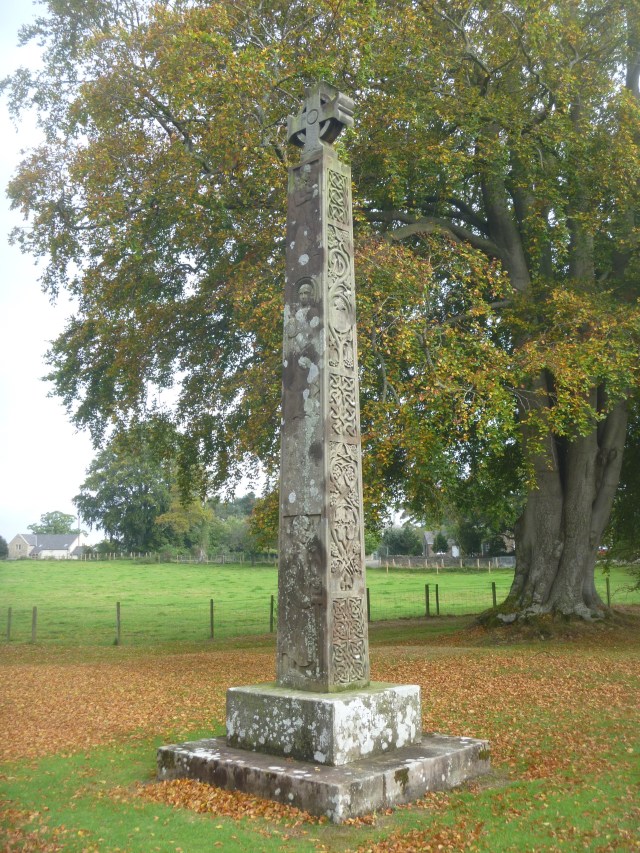
There is a Mausoleum dedicated to her sister and an exact replica of the Bewcastle Cross (the original of which stands by Hadrian’s Wall) alongside the church. The Loshes, including Sarah and Katherine, are buried in a grave enclosure nearby.

Bewcastle Cross

The Bewcastle Cross

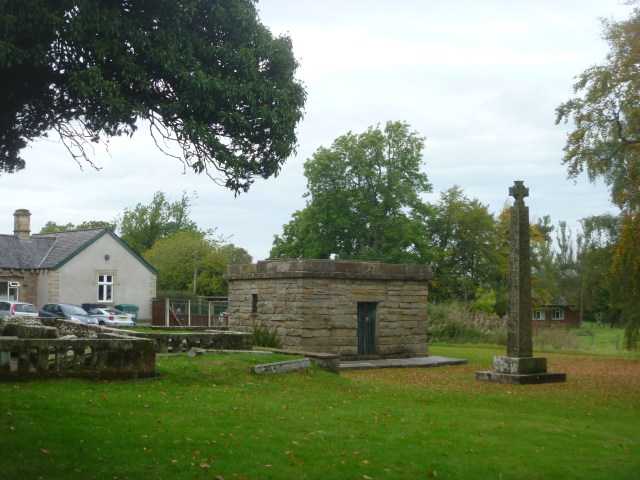
Mausoleum and cross and school

The Mausoleum and Cross with the School across the road

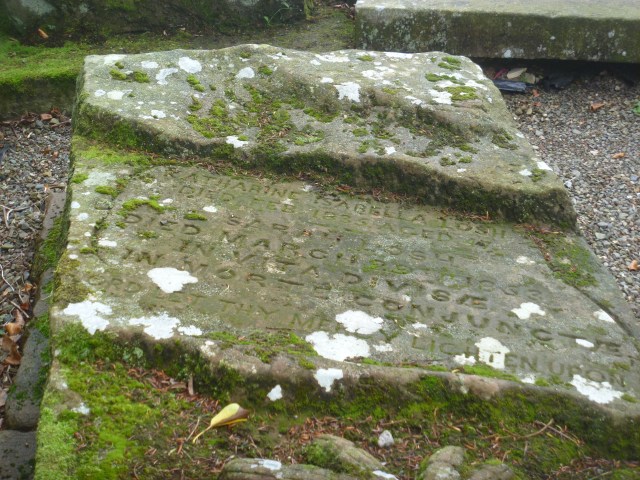
Losh sisters' grave

“IN VITA DIVISAE, IN MORTE CONJUNCTAE” – Parted in life, in death united”

I’m lucky to have a friend who lives not far from Wreay. I visited her in Carlisle last year. So last Thursday I took to the Leeds-Settle-Carlisle Line again to visit Wreay Church with June and her husband, David. We were lucky to arrive whilst a group were being shown round and had the good fortune to have access along with them to the small Mausoleum dedicated to Katherine.

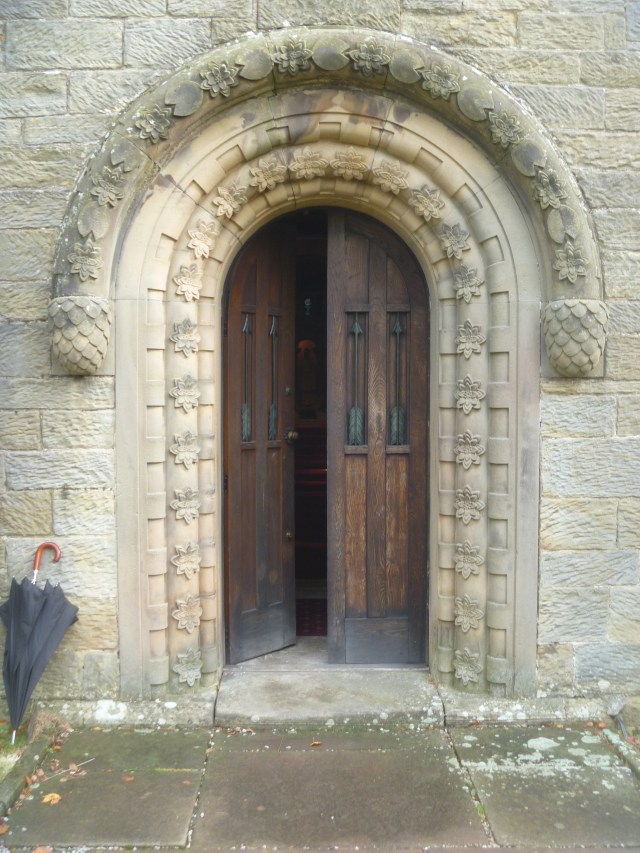
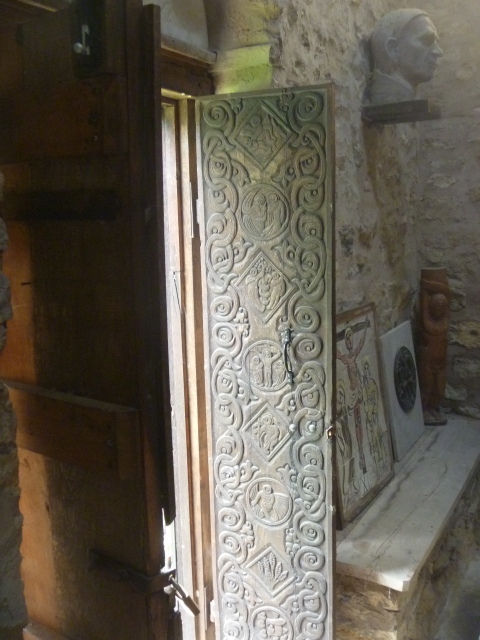
Church door

The Ornate Church Door

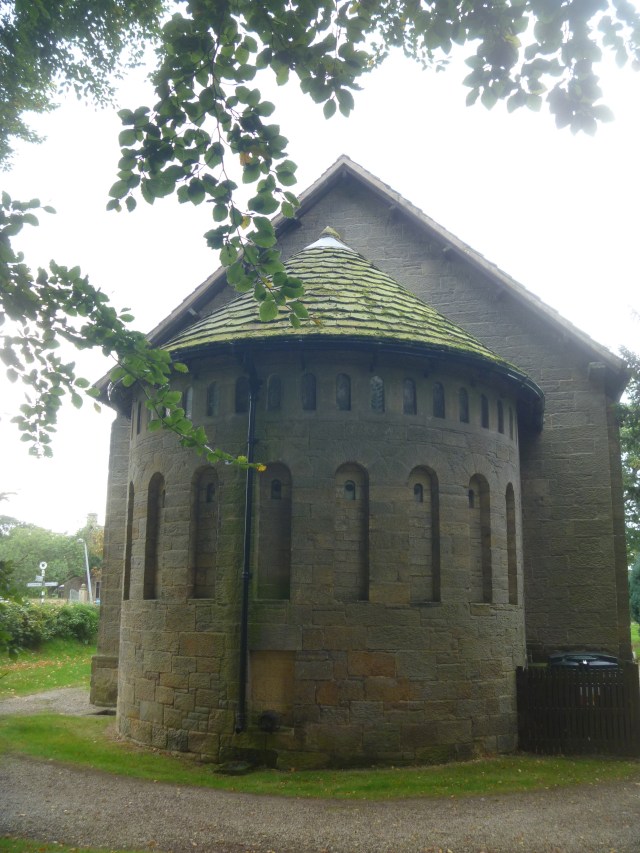
East end with apse

The East End, with Apse

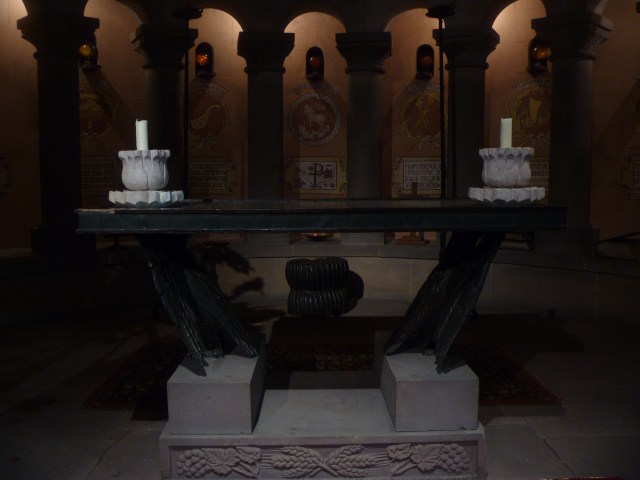
Altar

The Altar

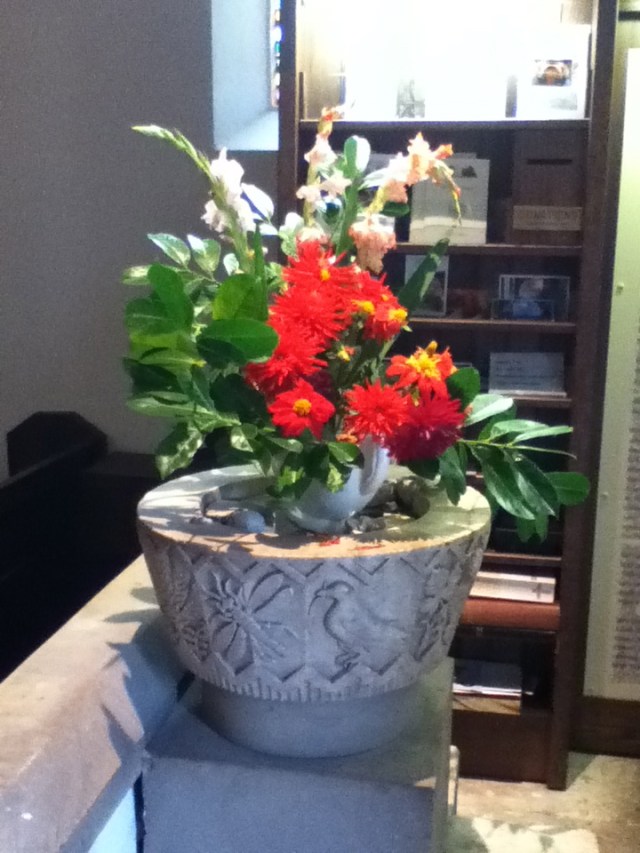
Alabaster font

The Alabaster Font – Carved by Sarah

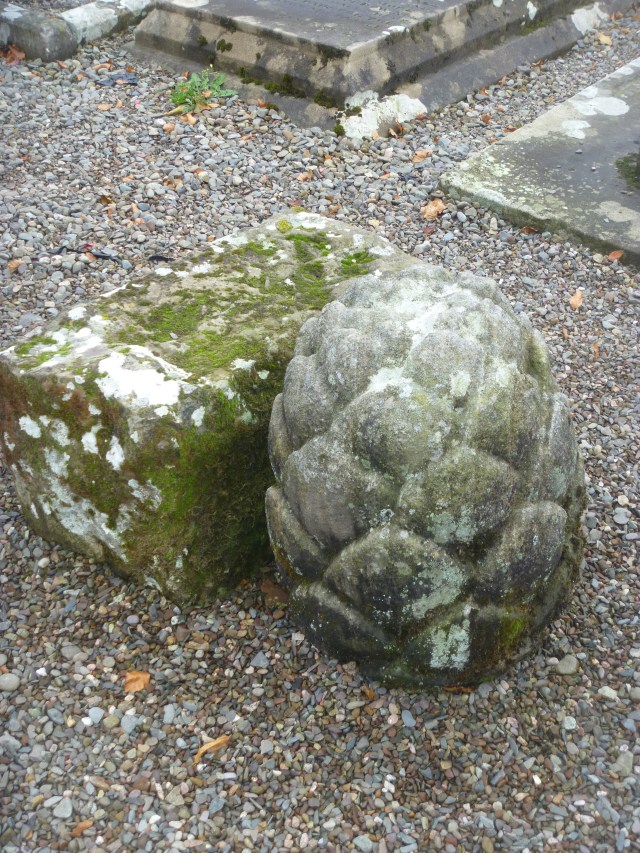
A pinecone

One of Many Pinecones

So, why the Pinecone? Because it is an ancient symbol of regeneration, fertility and inner enlightenment. It is a promise of rebirth.

A Visit to The Plot

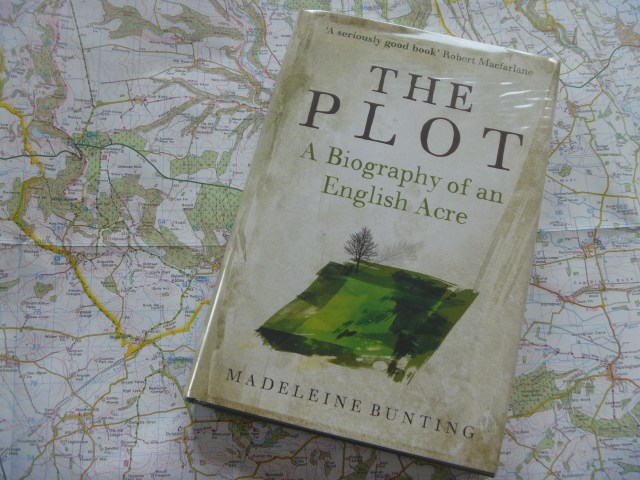
The Plot and Map

The Plot

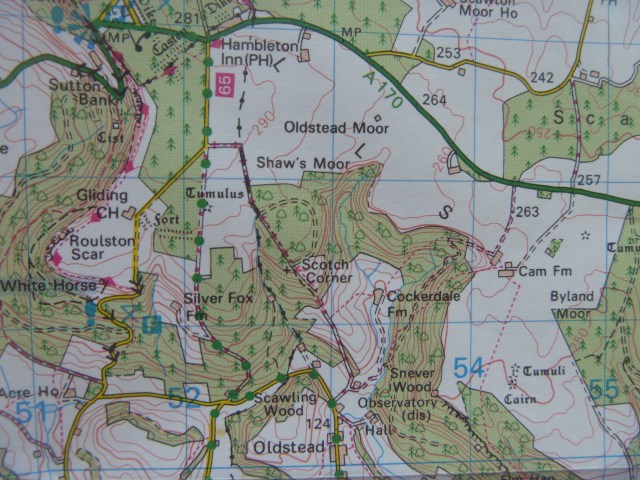
Last year at the Cowside Open Day I met Rosy and as we dried the pots in the kitchen together she told me she was reading The Plot by Madeleine Bunting. It’s based on a small parcel of land in North Yorkshire. She mentioned that the name of the plot of land was Scotch Corner and it was just near Kilburn and Sutton Bank. I looked up the name on the OS map and found it clearly marked and, intrigued, borrowed the book from the Library. The author is a Guardian journalist but she is also the daughter of the artist who built a chapel as a war memorial on the plot of land and decorated it with his own sculpture work. You can read more about the book in this Guardian review.

The Plot Map

With it having a local interest and the fact that I liked it a lot I recommended it to my local book reading group. Our discussion (it had very positive responses) was held in early June. Observant members of the group had noticed a feature in a recent edition of the Yorkshire Post and brought the clipping along to the meeting.  The article finished with :

The chapel will be open between 12pm and 4pm to visitors and directions can be obtained from Sutton Bank National Park Centre. The chapel is located at Grid Reference SE 526, 814 and it is a 20-minute walk to the nearest parking.

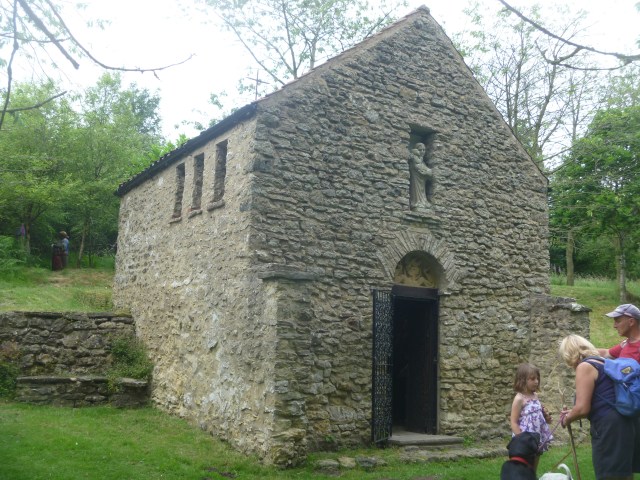
Chapel

A quick look at the link to the North York Moors National Park site revealed the dates later in the year when the Plot and The Chapel would be open for viewing.

The tiny, remote Chapel will be open for the public to see inside on Saturday 18 May, Saturday 20 July and Saturday 14 September this year.”

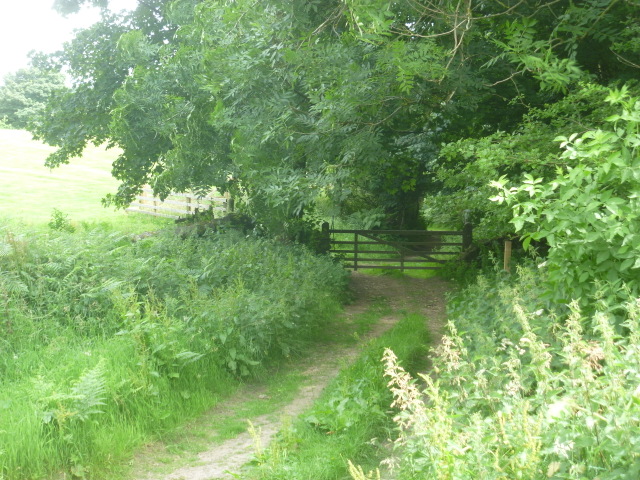
The group planned a picnic for the Saturday 20 July but I had also mentioned the book to another friend who lives in Cheshire and we’d planned to visit this summer. We invited Rosy to join us and all met up at Byland Abbey. From there it was a short hop to Kilburn and pub lunch outside at The Forresters Arms. Rosy, who lives nearby, took us to a parking place near Oldstead and we walked uphill along the old drovers’ road to Scotch Corner.

The Drovers' Track

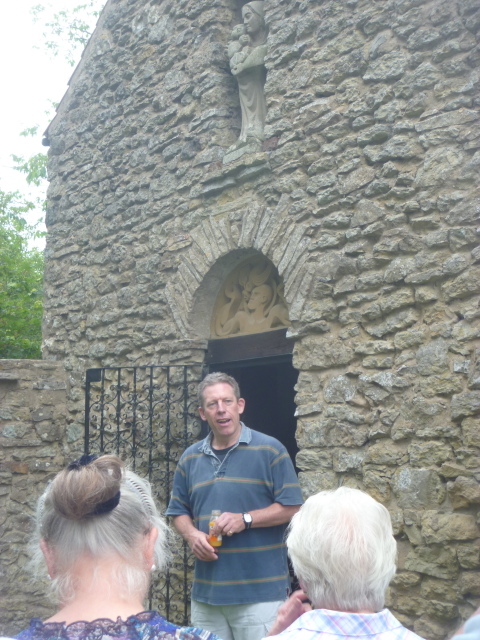
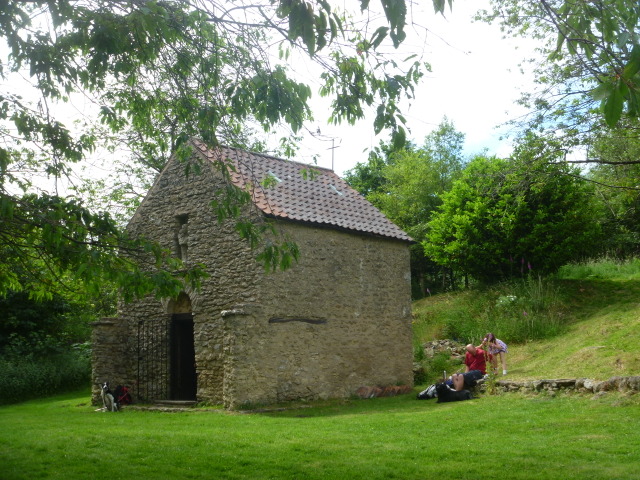
At The Plot a small crowd was inspecting the Chapel and there also was the book group; picnicking in the sun. Madeleine Bunting’s brother, Bernard,  gave a brief introductory talk and we later looked inside the memorial and the hut that also occupies the small grassy site.

Bernard Bunting

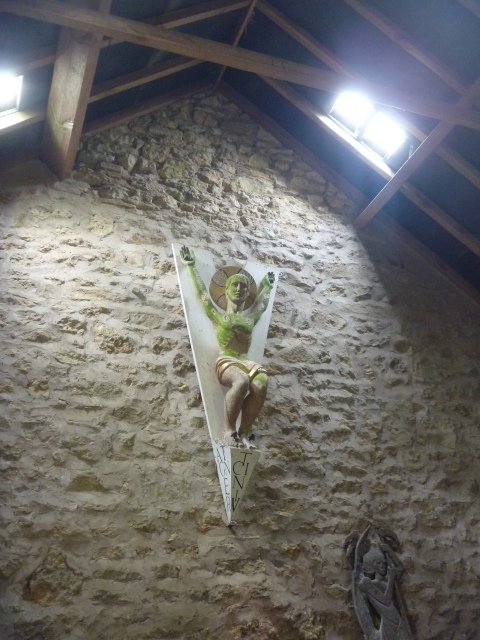
Memorial Chapel

The Memorial Chapel

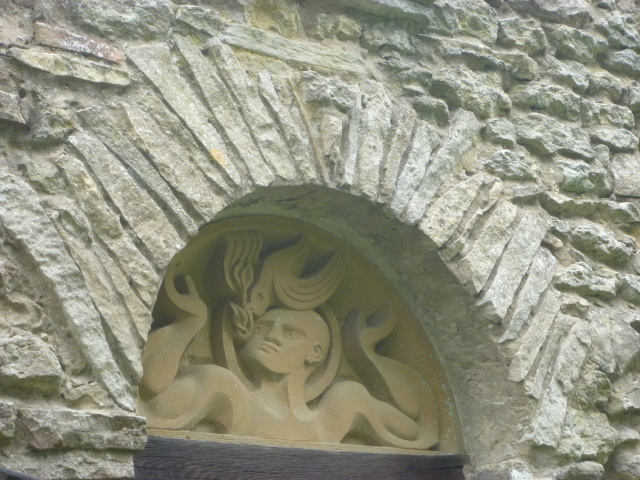
Carved door

Carvings on the Chapel door

Lintel

Lintel above the entrance

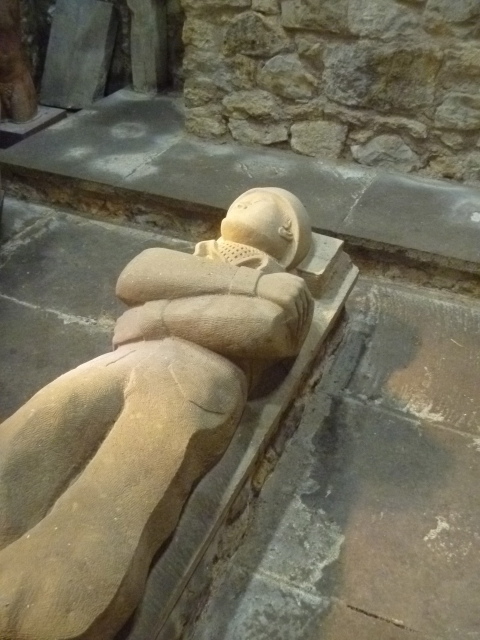
Memorial sculpture

Memorial Sculpture

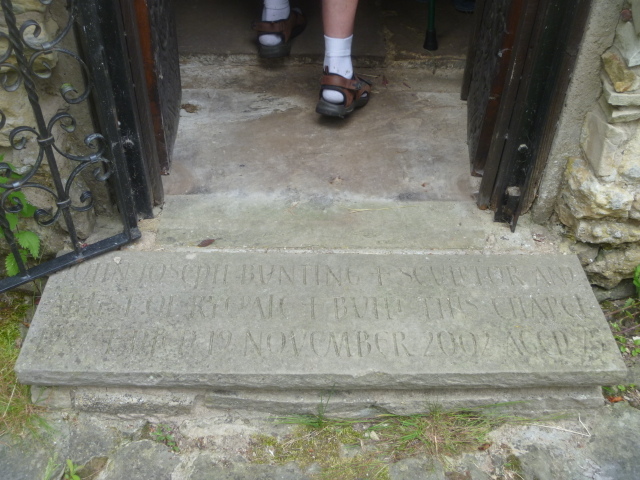
Memorial Stone to John Bunting

Memorial Stone to John Bunting (at entrance to Chapel)

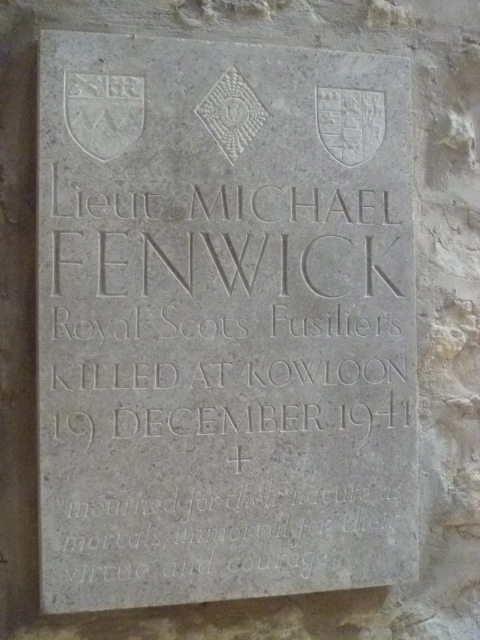
Michael Fenwick

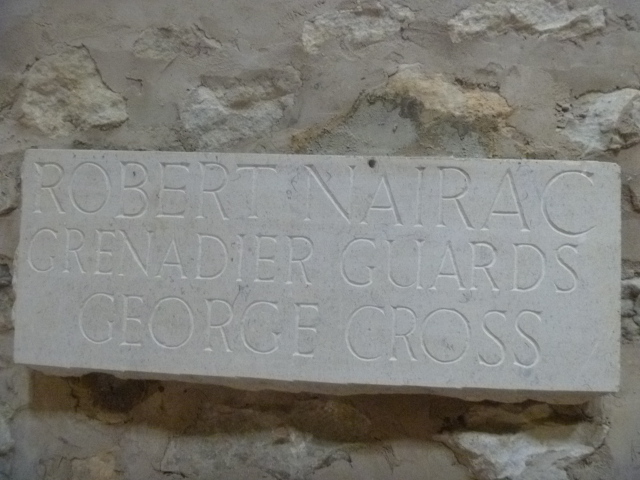
Robert Nairac

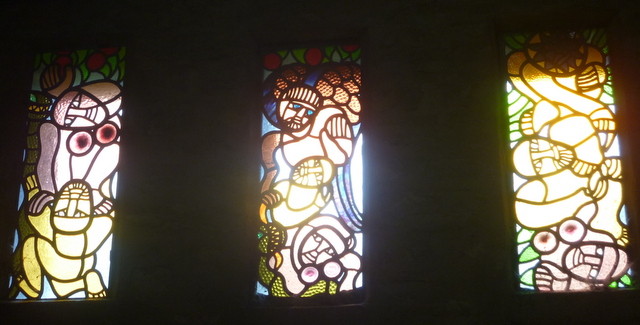
windows

War memorial

We soon began to feel the need of a cup of tea and piece of cake so returned to the car and to Kilburn where the Mouseman T Shop was able to supply both in ample quantities.

Heidi’s Years of Learning and Travel

After our morning at the dramatic Tamina Gorge and fascinating Bad Pfäfers Museum we returned by Schluchtenbus to Bad Ragaz town centre for a lunch in the sunny main square – a Swiss speciality cheese and onion tart with salad. We then caught a local post bus  to Maienfeld just a few miles away.

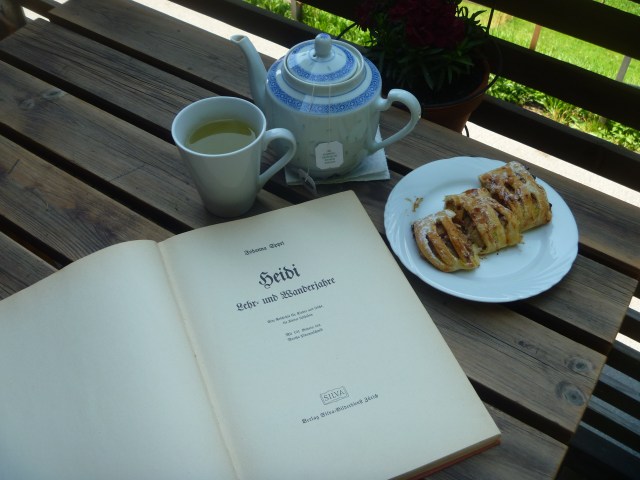
Heidi in German

Agnes’s Version of Heidi : Lehr- und Wanderjahre

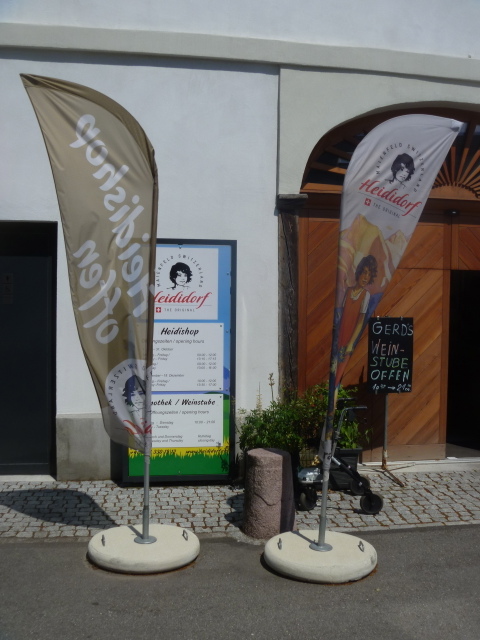
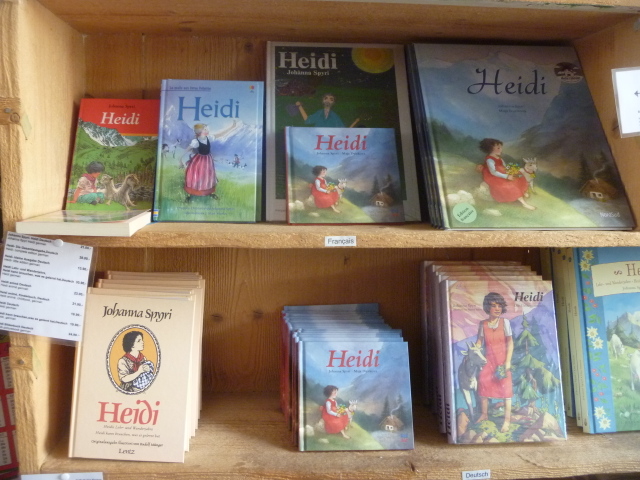
Maienfeld was the inspiration to Joanna Spyri for her Heidi books; the first of which had the same title as this post. From the train and bus station it’s just a few steps to the Heidi Shop and Wine Bar [Maienfeld is in a significant Swiss wine-growing region]. The shop stocks every kind of souvenir thinkable with a Heidi connection and is surprisingly kitsch for Switzerland. There is also, naturally, a wide choice of Heidi titles and editions in various languages. This region “Heidiland” is relentlessly marketed throughout the area and throughout Switzerland in general and overseas.

Heidi shop (and wine bar)

The Heidi Shop and Wine Bar

Heidis for sale

Various Heidi titles for sale

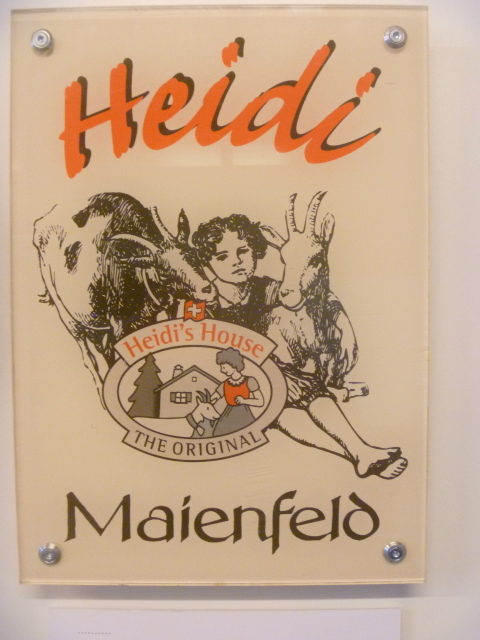
Original marketing

Original Heidi Marketing Logo

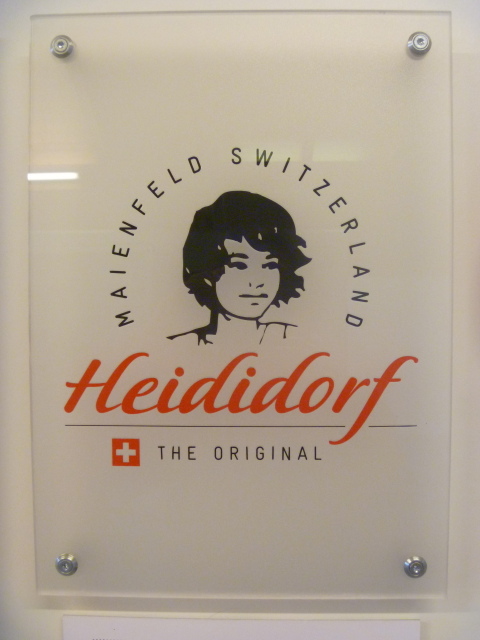
Today's marketing

Today’s Logo Version

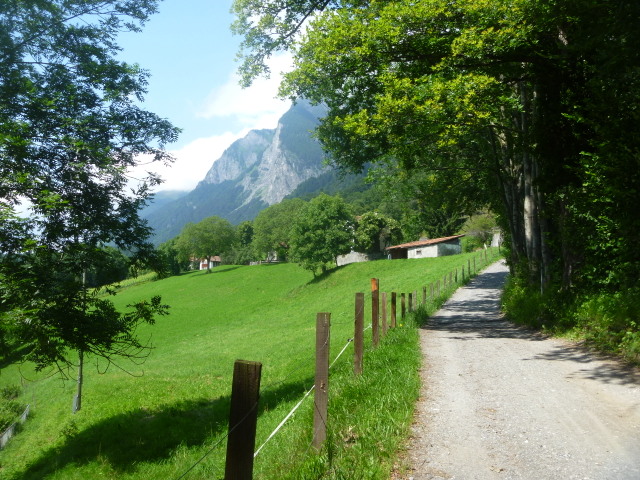
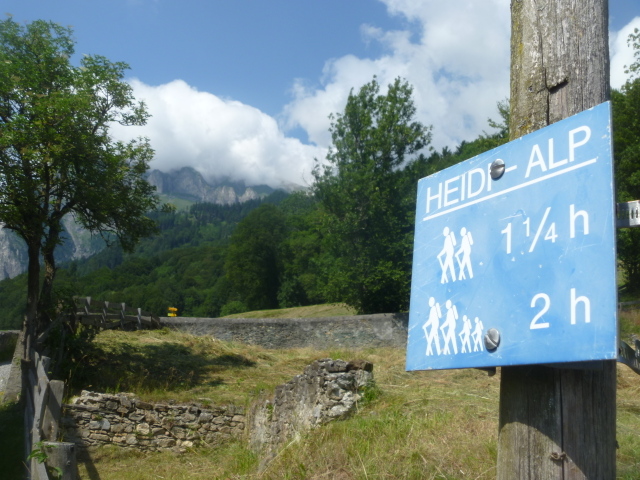
We took the route marked uphill towards the Heidi House and Johanna Spyri Museum. It’s a quiet road and track and steepish in places with no-one else about.

Heidi Way

The Heidi Way is in this direction

This way to Heidi House

The quiet track up to Dörfli

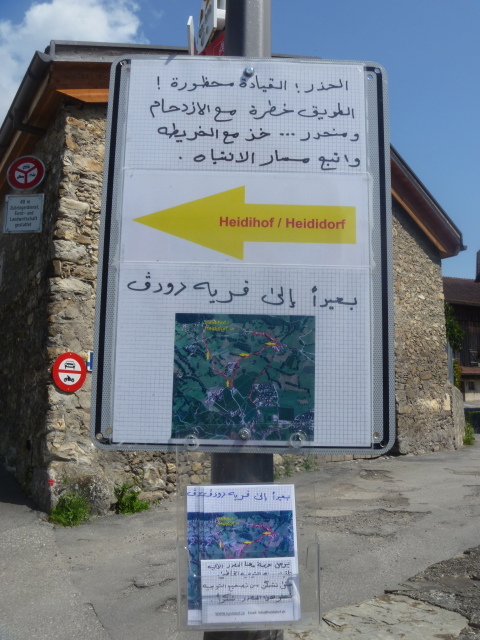
So we were surprised as we neared the house to see crowds of people. On our alternative route back to Maienfeld we passed a big bus and car park from where the nations of the world had emerged with just a short, level path to the ‘village’ – Dörfli, in the books, but now renamed Heididorf.

Arabic signs

Signs in Arabic?

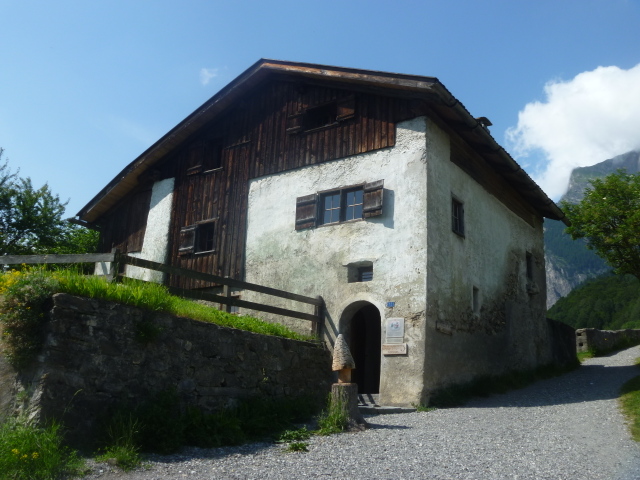
Heidi House

Arriving at the Heidi House

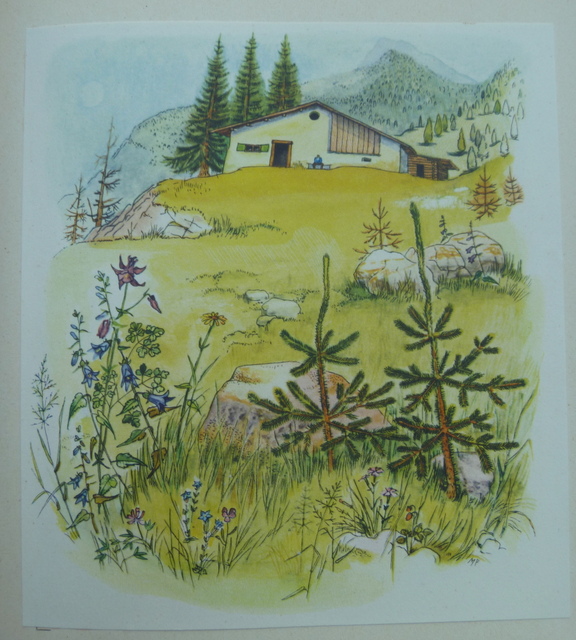
Heidi House illustration

Heidi House illustration from Agnes’s book

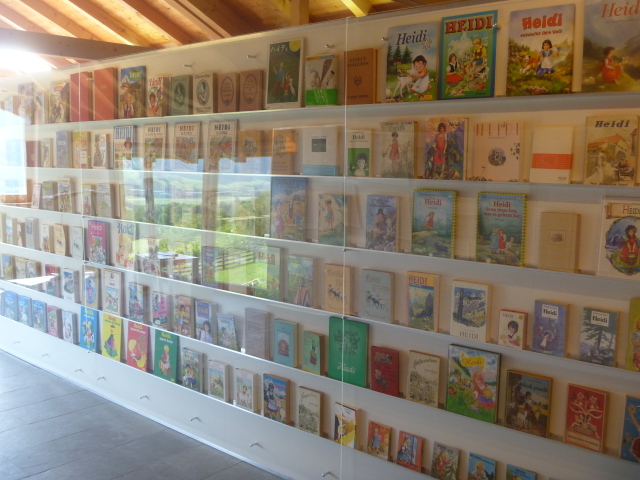
Not so much interested in all things ‘Heidi’ Susanne and I wanted to visit the Johanna Spyri Museum housed above (another) Heidi Gift Shop. There’s another Spyri Museum at her birthplace in Hirzel near Zurich. They must have any and all artefacts relating to her as there was very little here, near Maienfeld. Mostly, the museum consisted of information panels, a large collection of old and foreign editions of ‘Heidi‘ and video loops of extracts from Heidi movies made during the last century.

Heidi editions

Heidi editions in the Spyri Museum

Johanna Spyri reminds me of Louisa M. Alcott who is famous for her Little Women books but has written and done so much more that is generally not known to the world at large. Spyri was born in 1827 and died in Zurich in 1901. Heidi was first published in Germany in 1879 and was a huge success. It is reputed to be the most-translated book in the world after the Bible and the Koran. But Spyri wrote much more besides and this is otherwise glossed over at the Dörfli Museum although there is a full list of these titles there are no actual examples; just a wall full of old and foreign editions of Heidi.

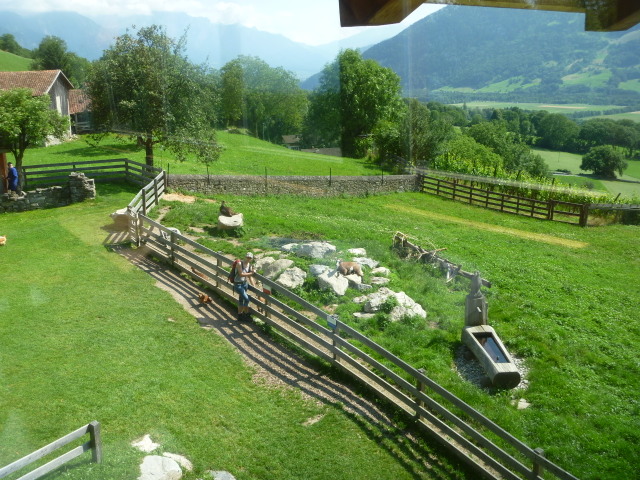
Peter's goats

Descendants of Peter’s Goats? (from the museum window)

After the Spyri Museum and a quick walk around the exterior of the reputed Heidi House we decided to forego the longer walks up to the Heidi Alp and returned on foot to Maienfeld and by train to Schiers.

Further walking if you have the time and energy

Further Hiking Opportunities in Heidiland if you have the time and the energy

Watery North Devon Literary Connections

There are some watery literary connections in North Devon. Charles Kingsley author of The Water Babies lived in Clovelly as a child and returned many times as an adult and Henry Williamson lived for some time in Georgeham near Croyde and based his Tarka the Otter stories on local North Devon rivers.

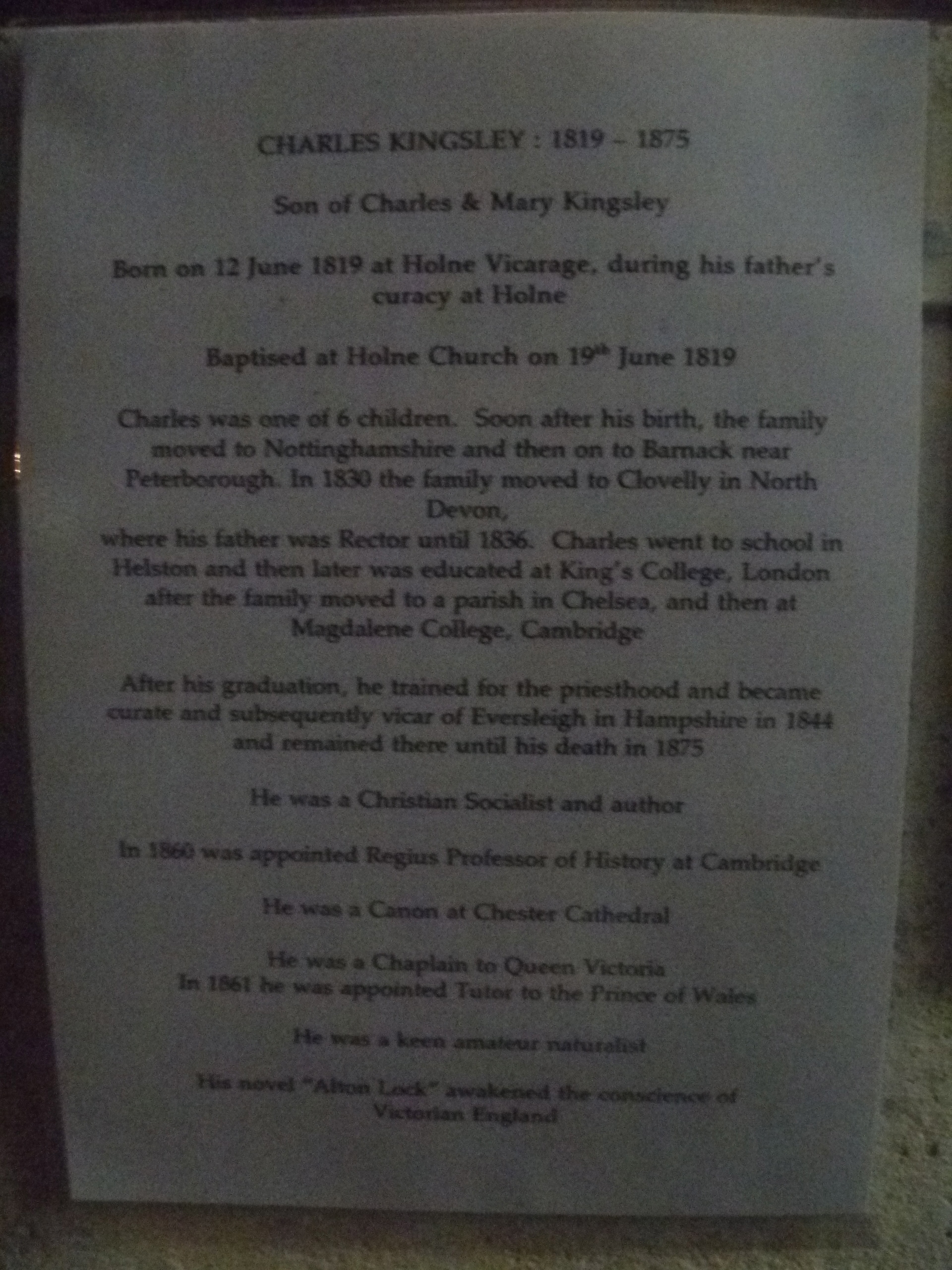
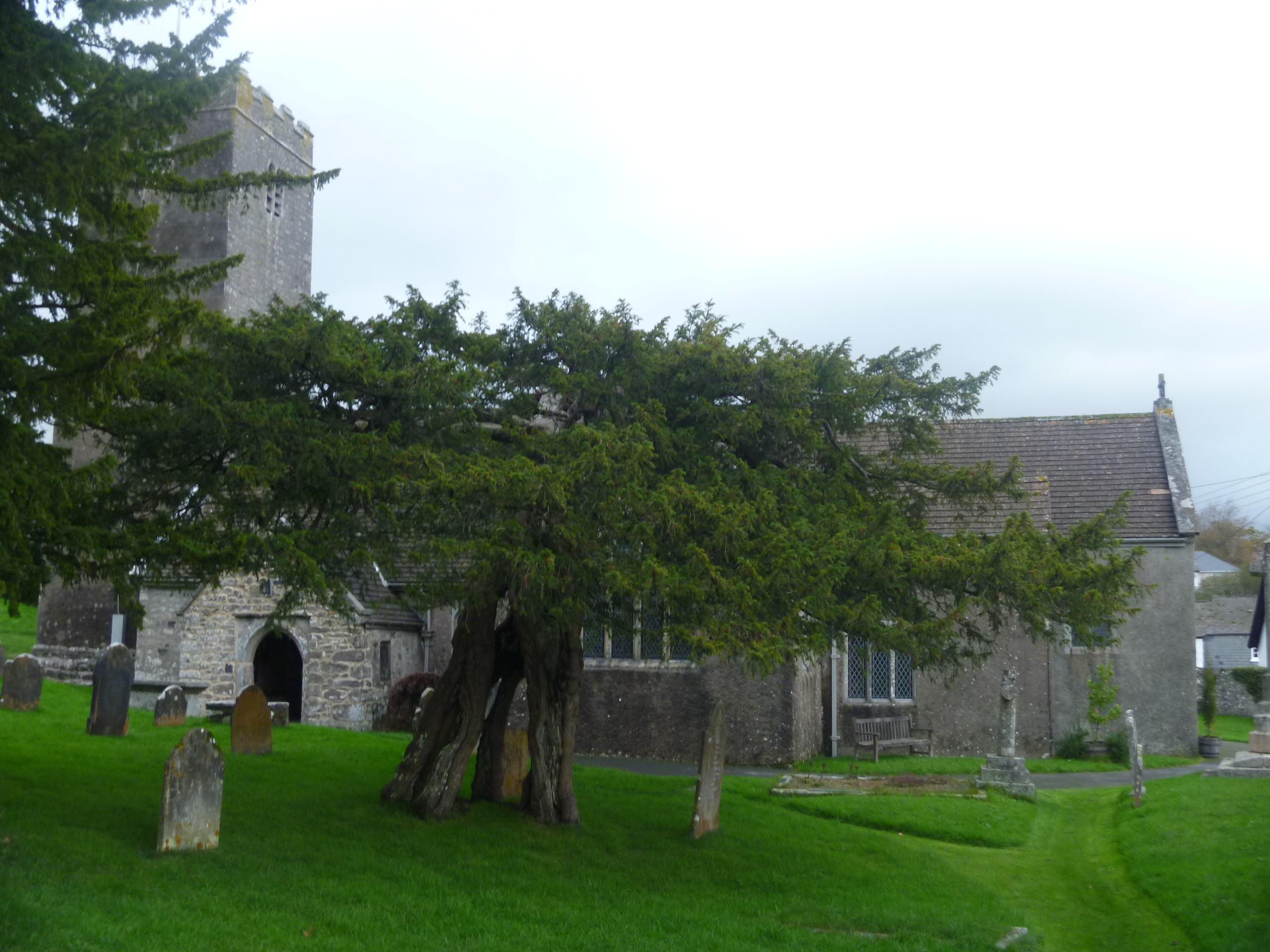
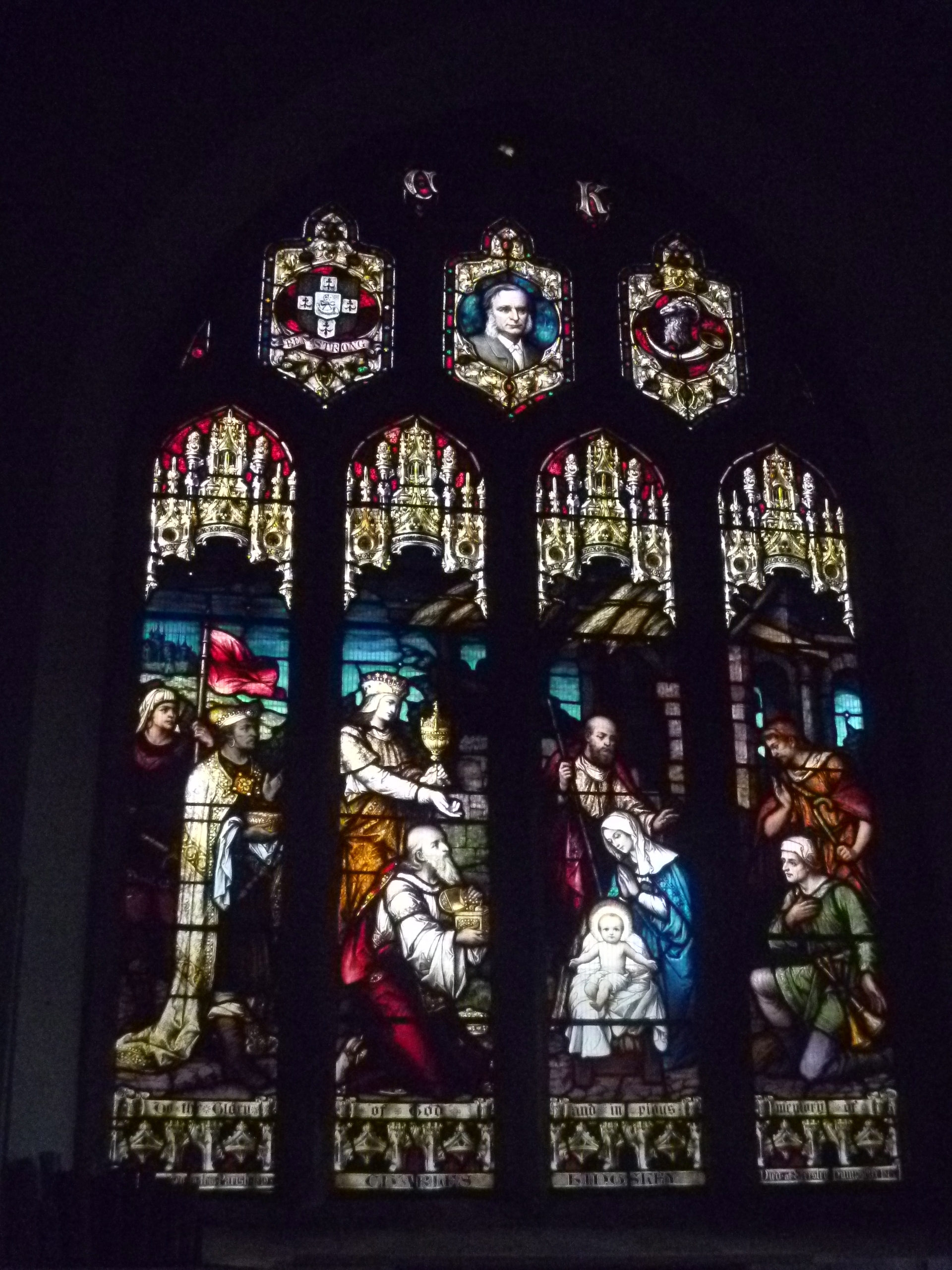
Charles Kingsley was born at Holne Vicarage on Dartmoor. I visited the church, but the vicarage was inaccessible, a couple of years ago when staying in the area. Here is a brief resumé of his life and a picture of the stained glass window in the church of St Mary the Virgin at Holne.

life of Charles Kingsley

Church at Holne

St Mary the Virgin, Holne, Dartmoor

Stained glass window

Charles Kingsley Window, Holne

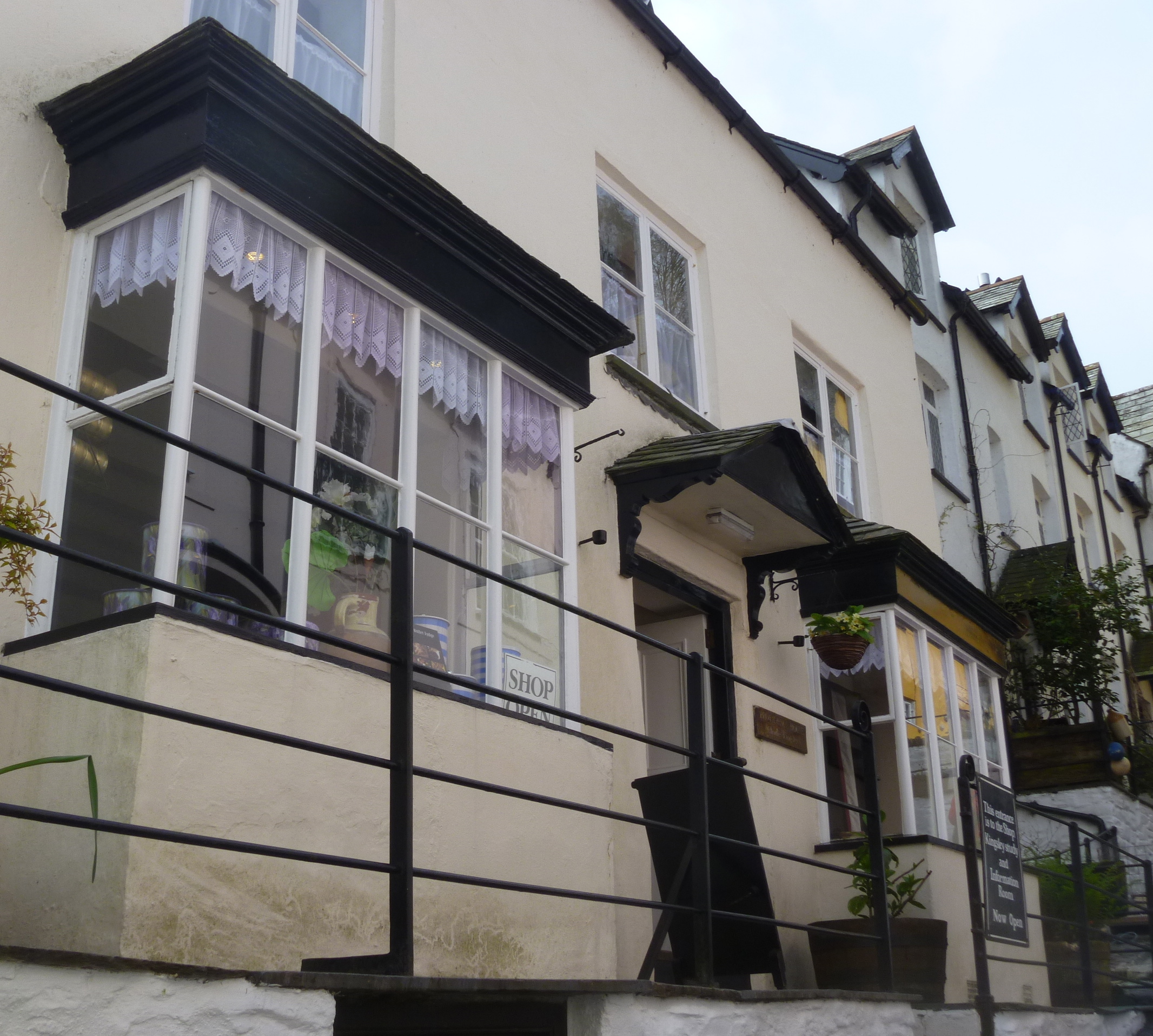
There is a Charles Kingsley Museum in Providence House (his former home) in Clovelly. The Kingsley family moved to Clovelly from Holne when Charles was 11 and they lived there for six years. Charles Kingsley visited the village frequently as an adult and wrote his novel “Westward Ho!” here.

Providence House Clovelly

Providence House, now The Charles Kingsley Museum, Clovelly

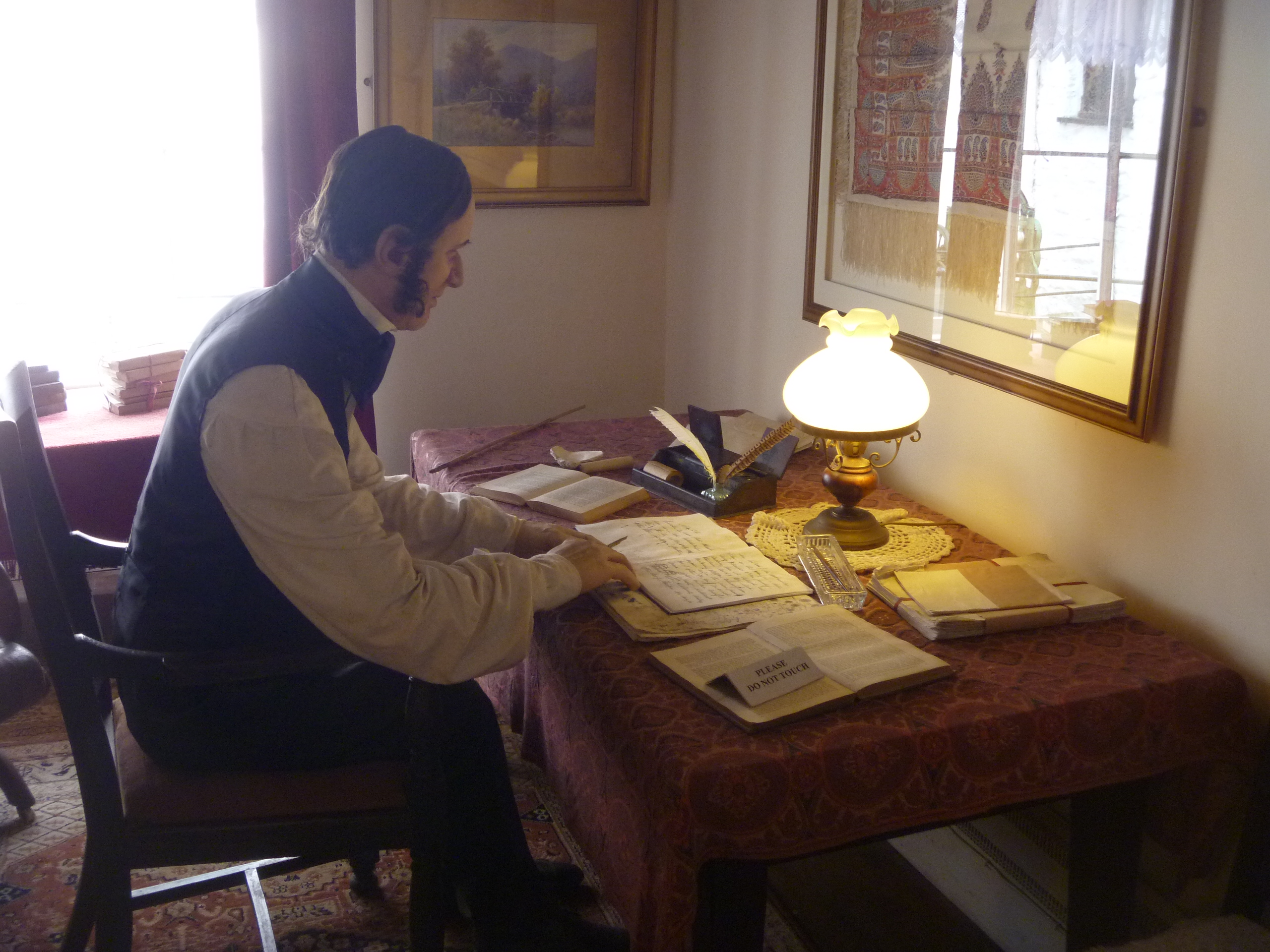
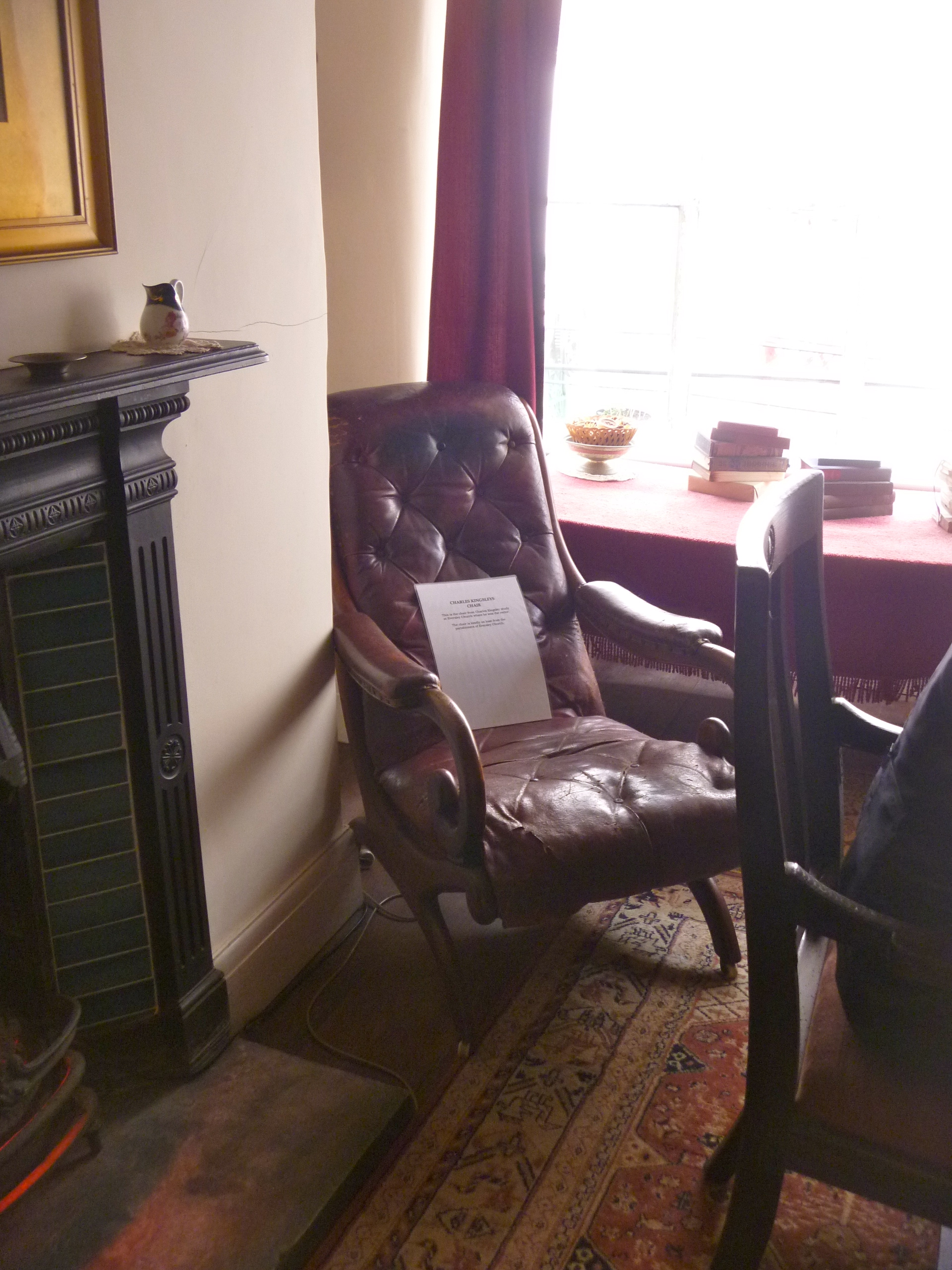
Step inside the Museum with me and see Charles Kingsley at work in his study and his chair and his Christening Shawl.

CK and his christening shawl

Charles Kingsley and his Christening Shawl

CK's chair

Charles Kingsley’s Chair (on loan from the parish of Eversley, Hampshire)

The leaflet supplied to visitors states that “the village also inspired him to write ‘The Water Babies’. I had always understood that Kingsley was inspired to write the book on his visits to Yorkshire whilst staying near Malham Tarn at a house called Bridge End in nearby Arncliffe in Littondale. Here is an article from The Yorkshire Post supporting this fact. Maybe he was also inspired by Clovelly on some aspect of the book?

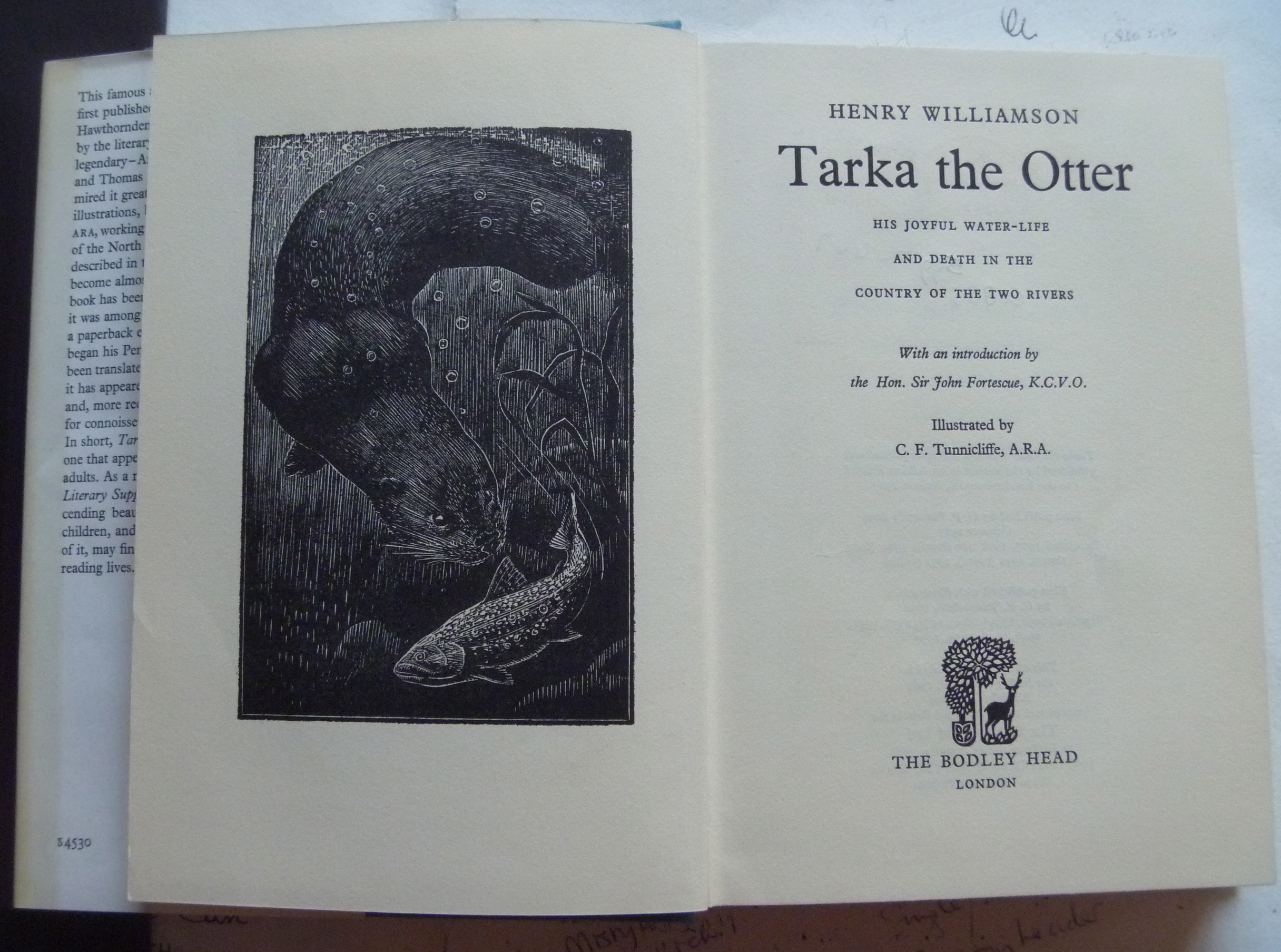
Tarka the Otter

From a wet and windy Clovelly I headed to Braunton for fish and chips and then to the local museum. I expected to find some information about local writer Henry Williamson who wrote ‘Tarka the Otter’. There was a small display about the author who wrote many more books than this famous nature writing including :

The great work of his mature years, A Chronicle of Ancient Sunlight, [which] stands as a true statement of the social history of this country in all its varied detail, through the life of the main character, Philip Maddison.”

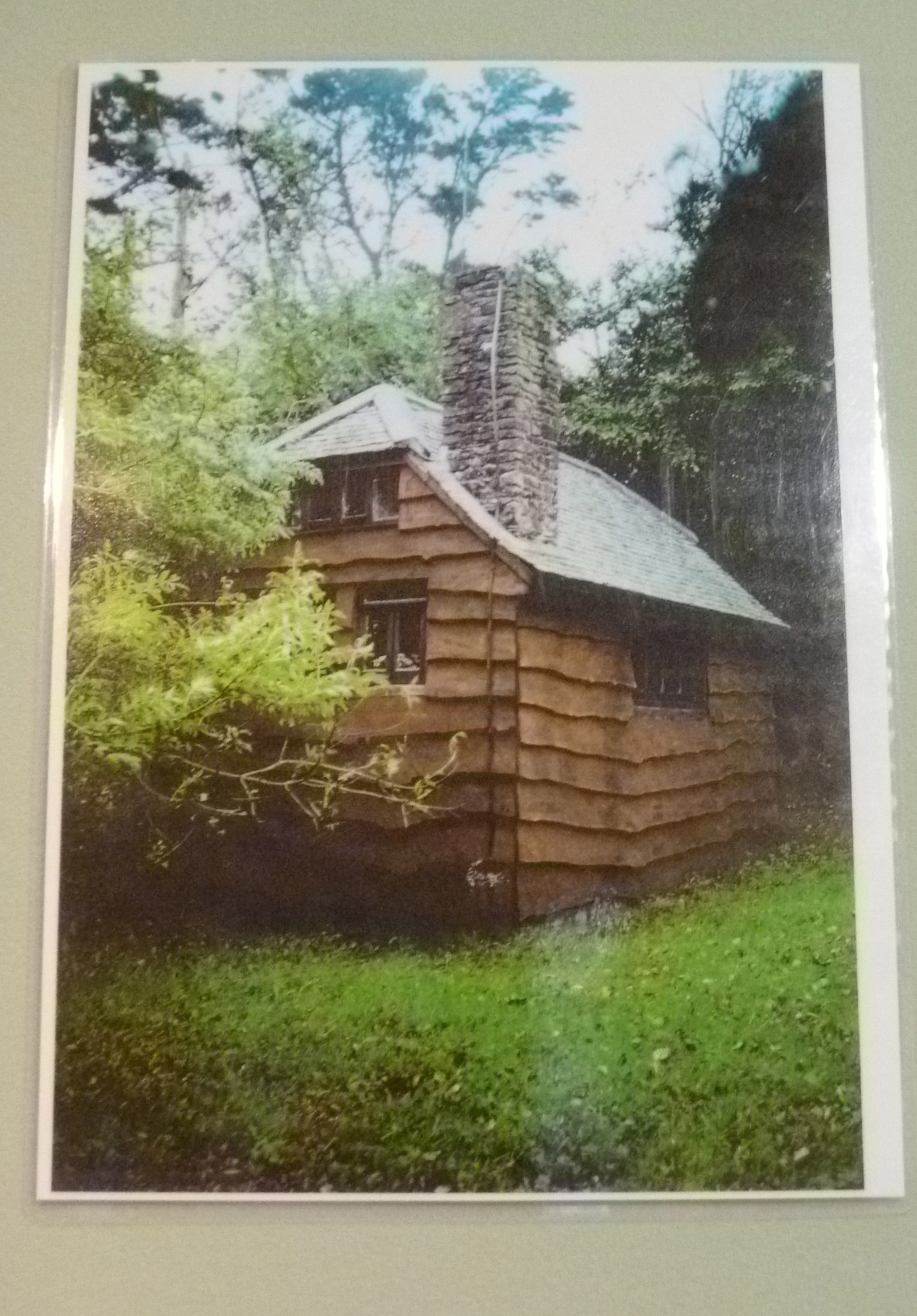
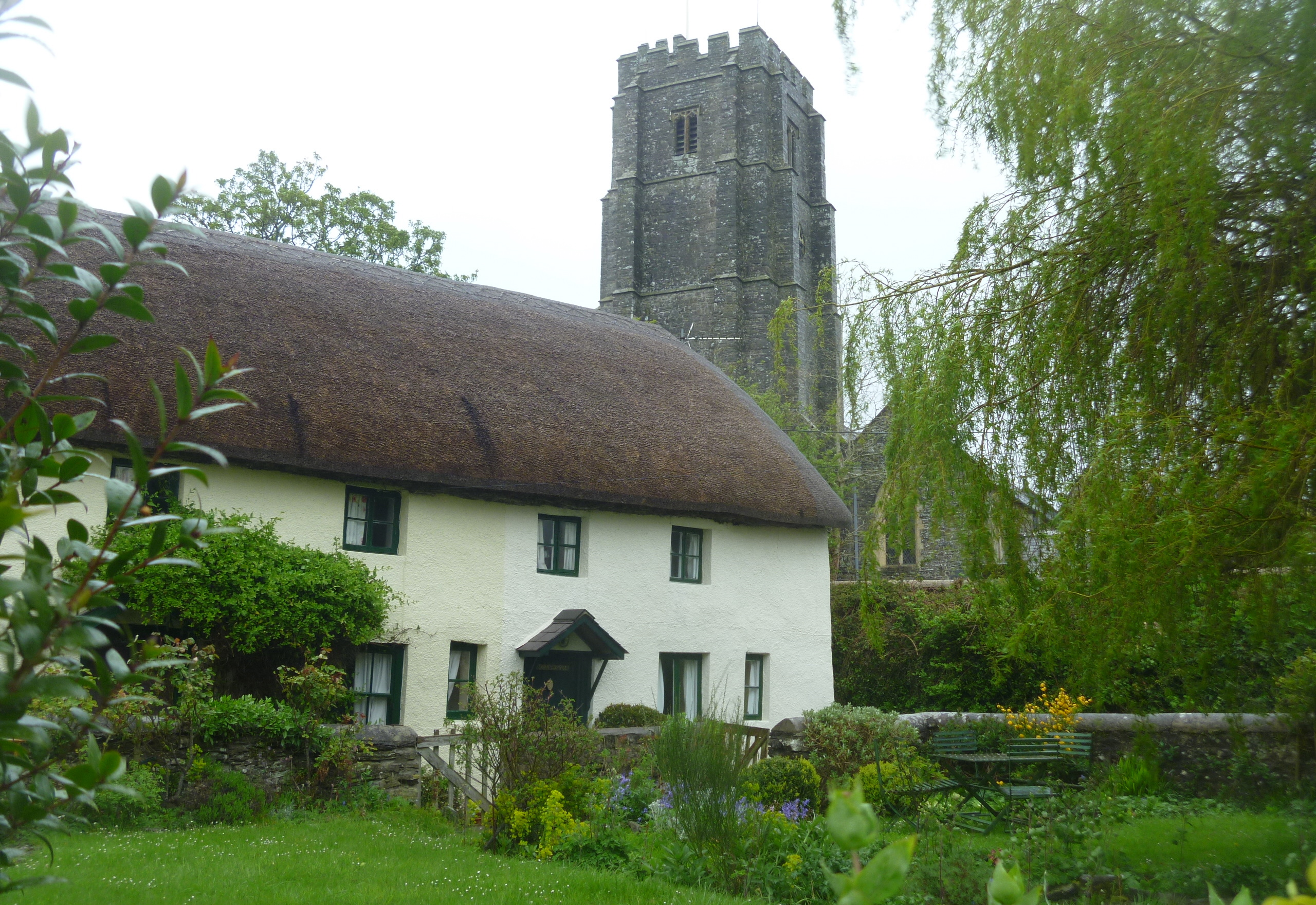
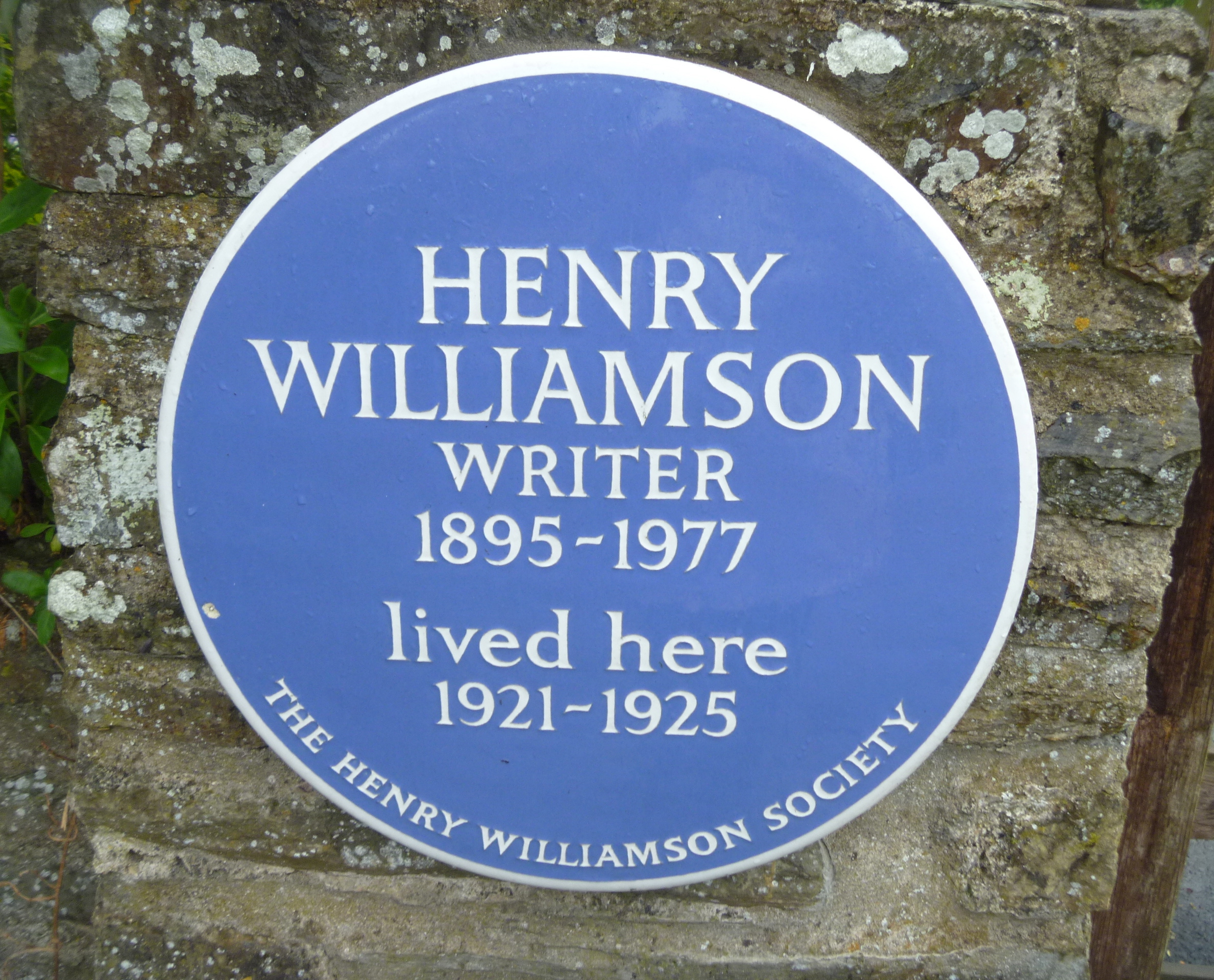
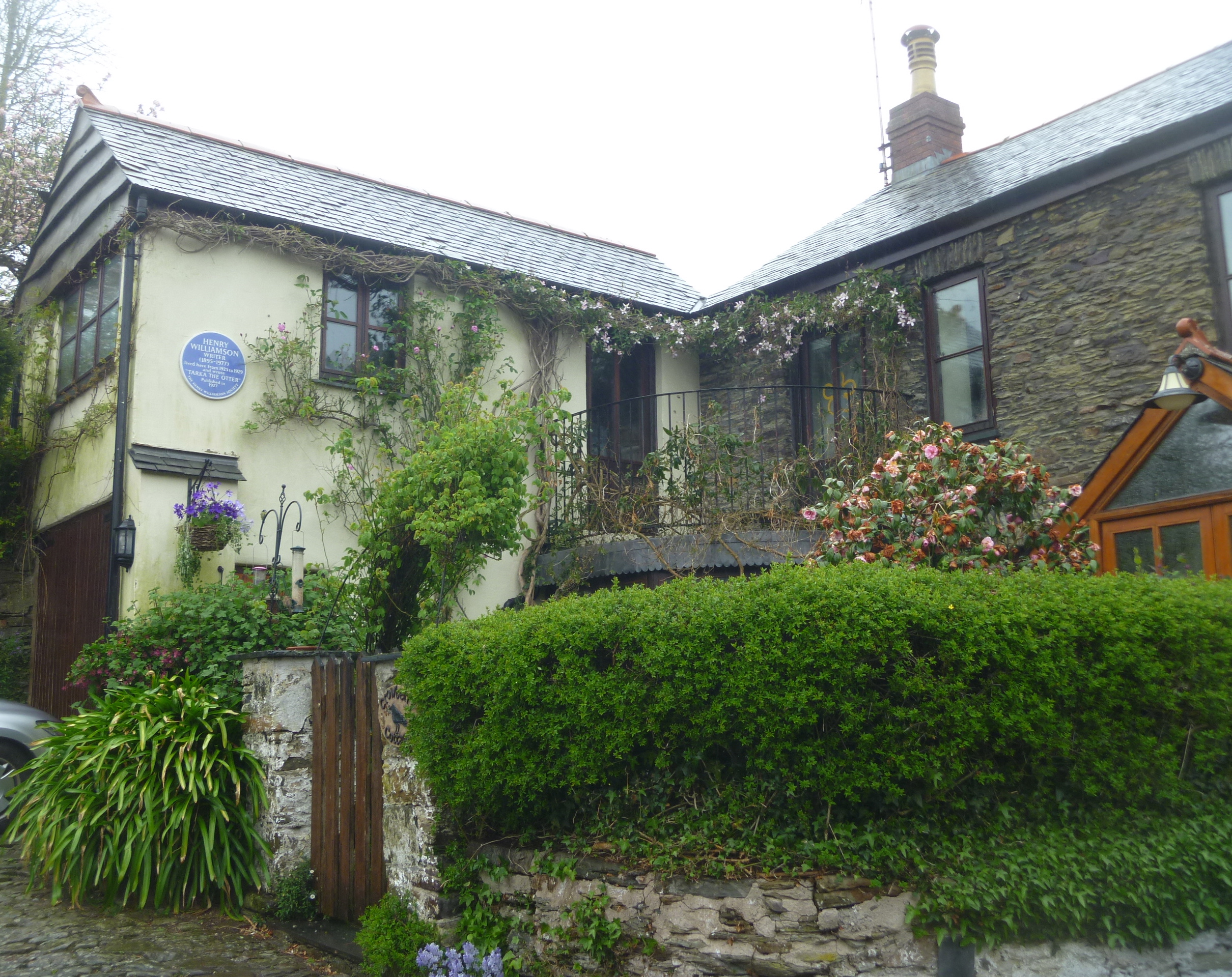
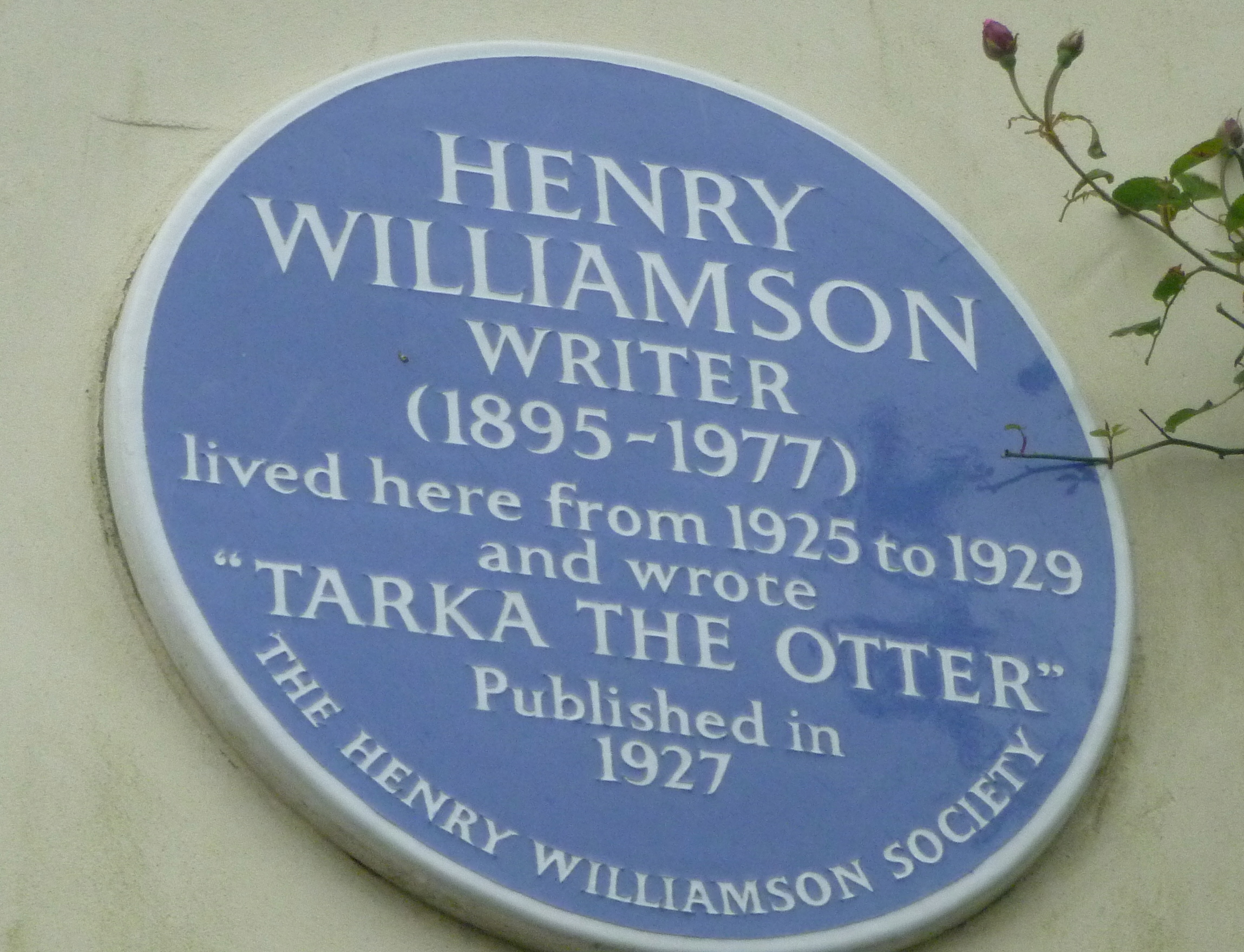
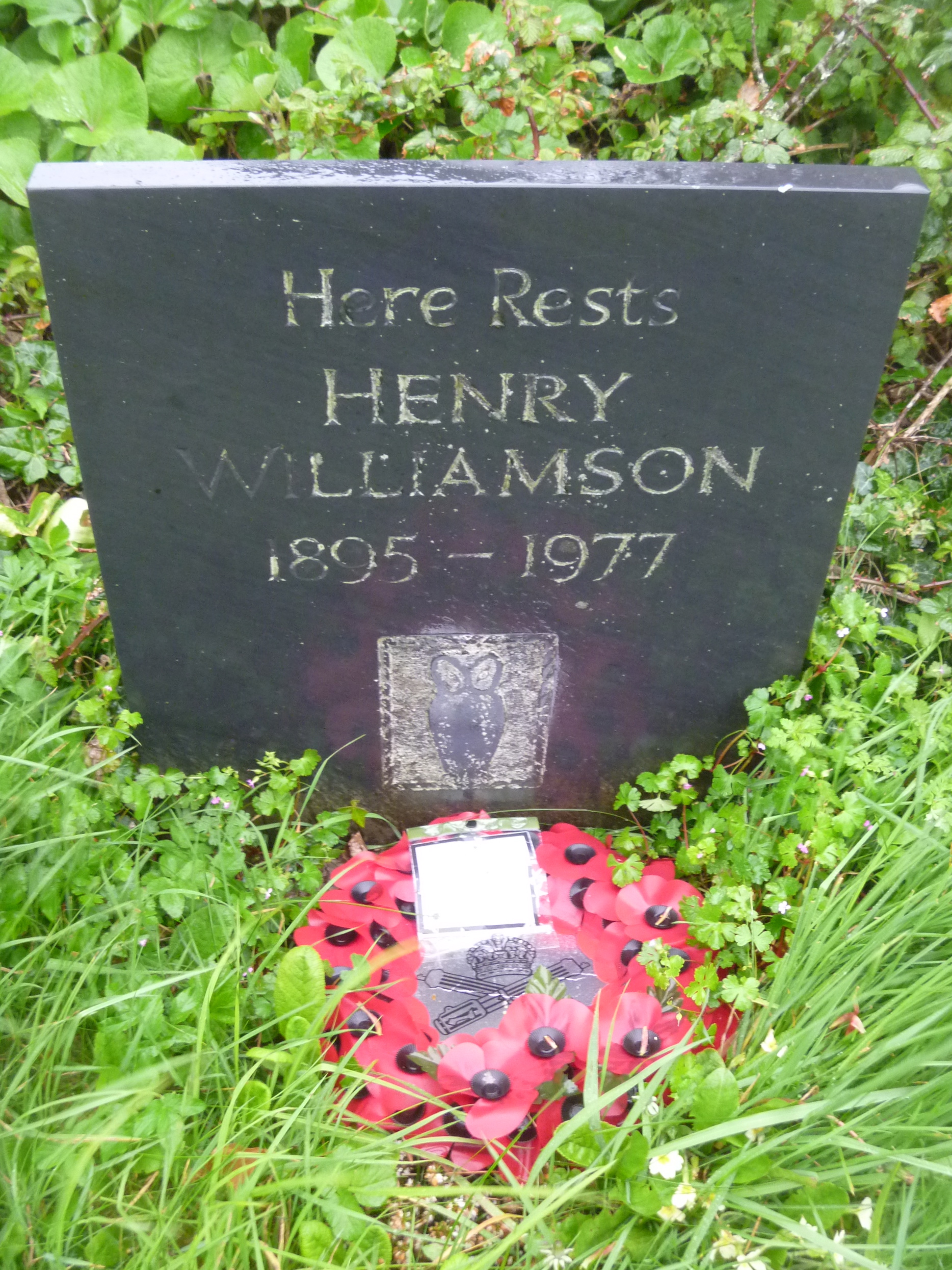
In north Devon it’s Tarka, Tarka everything. The Tarka Line (railway), The Tarka Trail (walking/cycling path), Tarka Holiday Parks (caravans), Tarka Radio (hospital radio) the list is never-ending. But finding places relating to the otter’s author takes a bit more research. The Henry Williamson Society have managed to secure a couple of blue plaques on his two homes in nearby Georgeham and his writing hut still stands in a garden at nearby Ox’s Cross. Through pelting rain I managed to snap the two Georgeham homes and Williamson’s grave but I had to forego finding the shed.

Hut

Henry Williamson’s hut at Ox’s Cross

Williamson Skirr Cottage

Williamson’s first home in Georgeham : Skirr Cottage [named after the sound made by the wings of owls on the roof]

Skirr Cottage plaque

Crowberry Cottage

Crowberry Cottage – Williamson’s other home in Georgeham

Crowberry plaque

Read here about a journalist’s search for The Field and other Tarka and Williamson locations.

Williamson grave