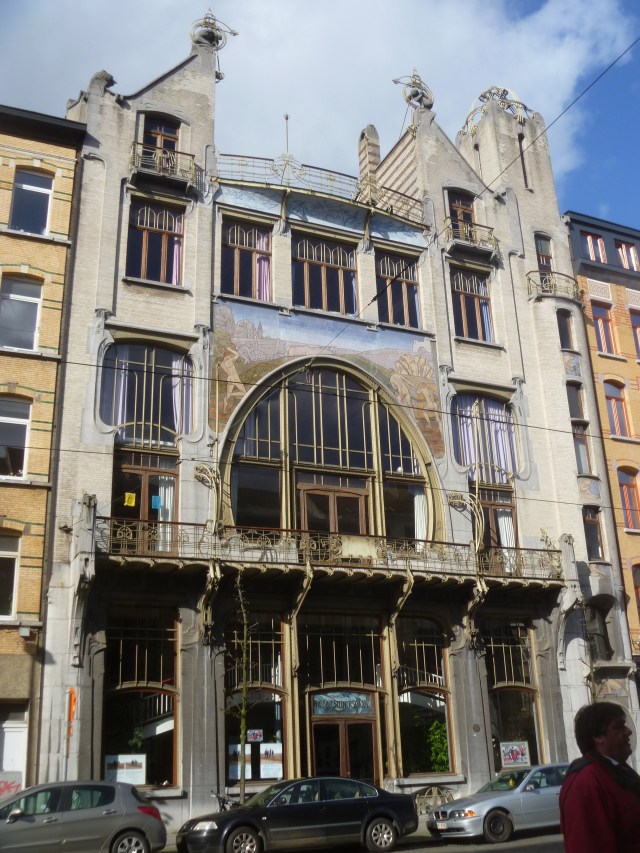
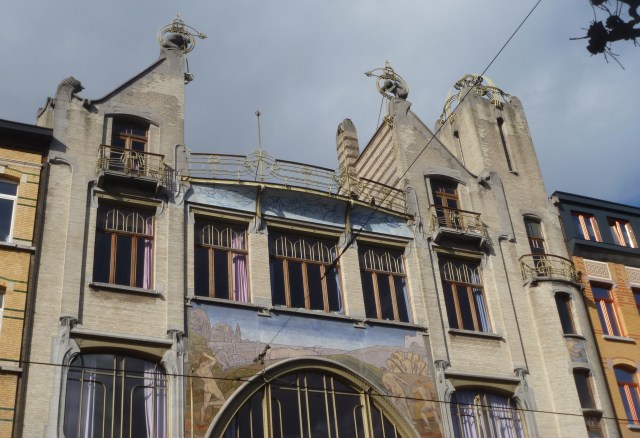
The People’s House and The Five Continents, Antwerp

After about an hour and a half admiring and being amused by the Golden Triangle homes we moved on to inspect a few more significant buildings of the era before being left to our own devices for the afternoon in Antwerp city centre.

5 conts side

The Five Continents side view

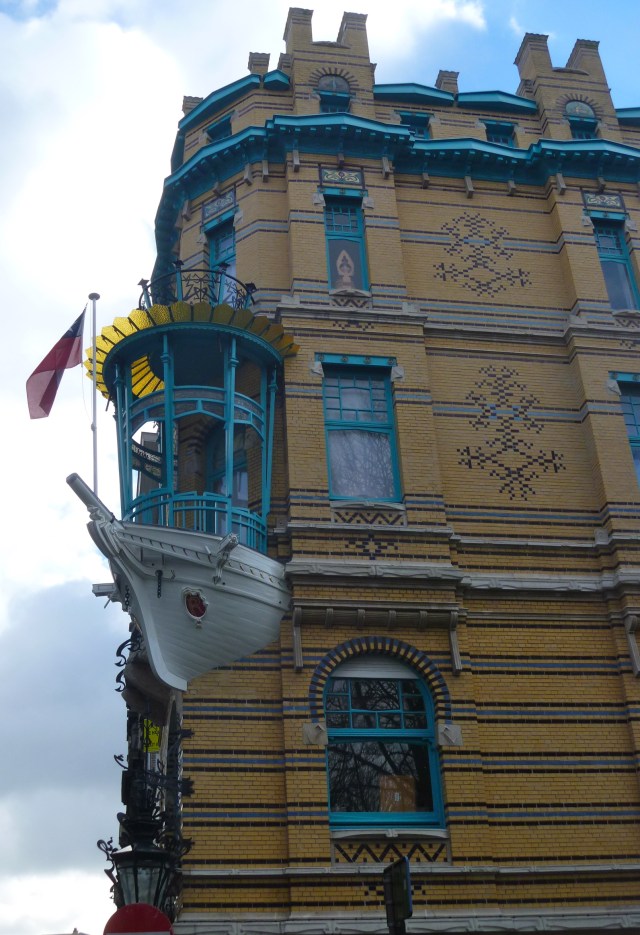
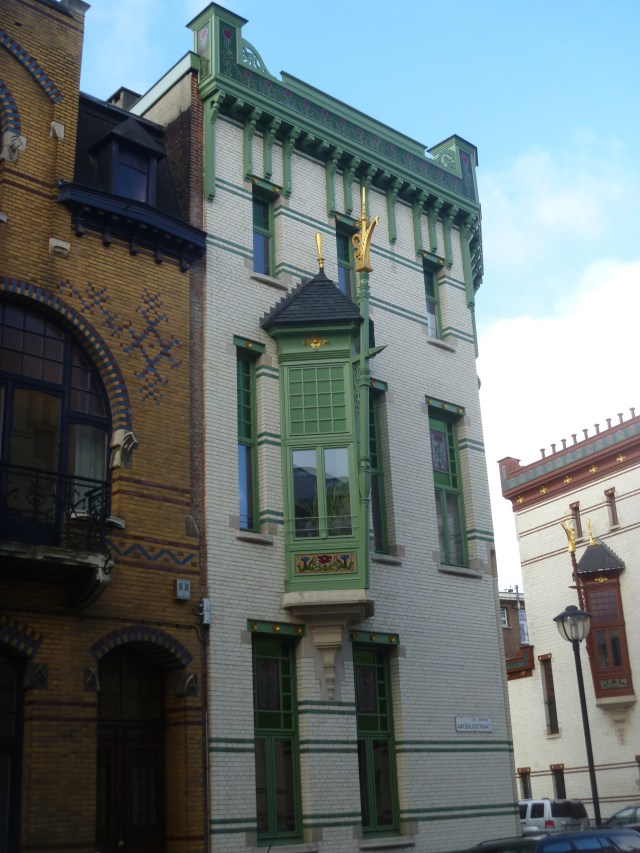
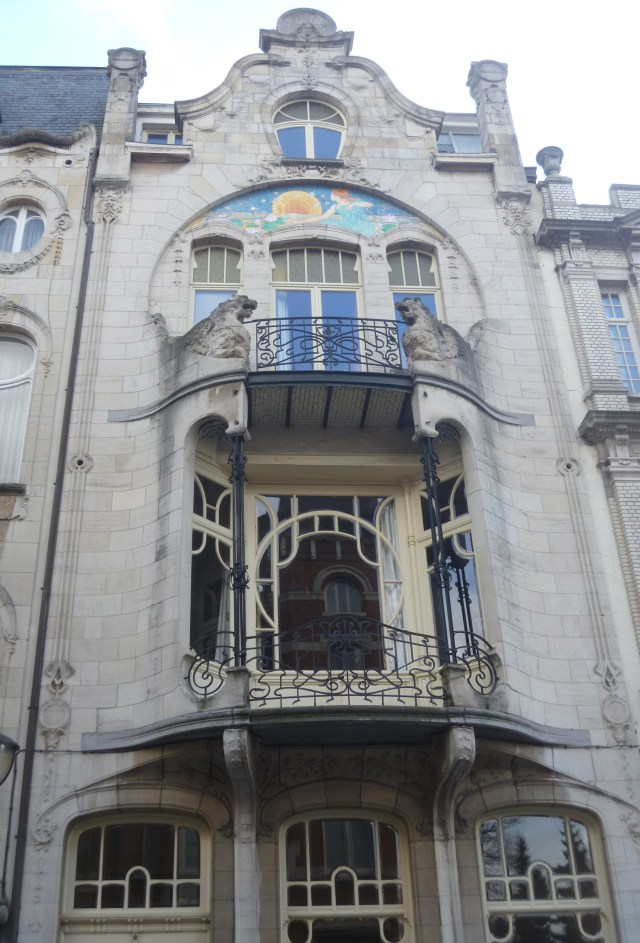
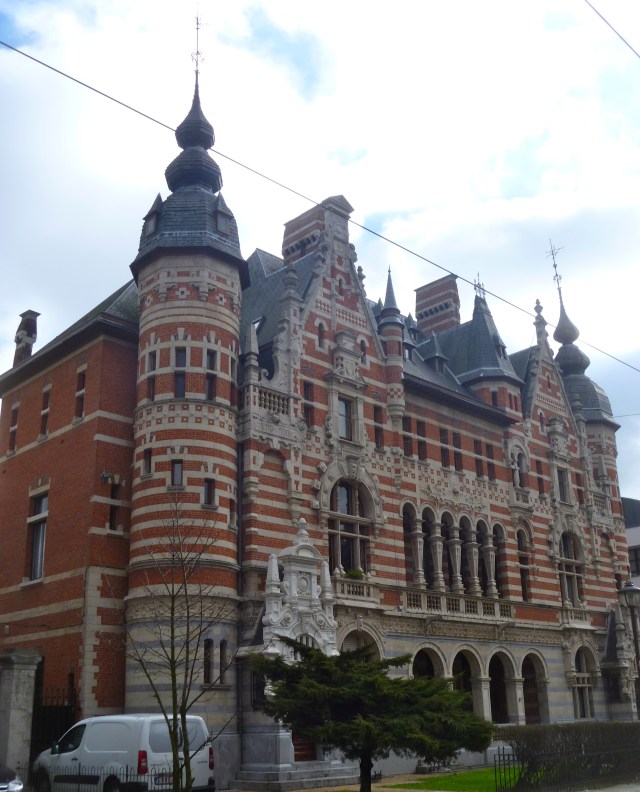
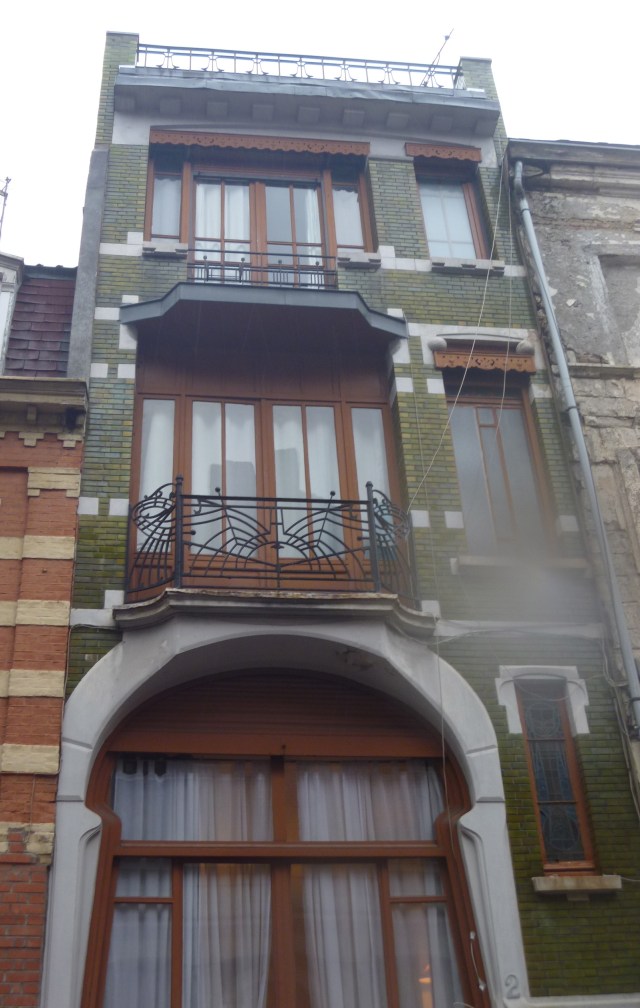
“The Five Continents, 2, Schilderstraat by Smet Verhas in 1901. The owner, the shipbuilder P. Rouis, was commissioned a ship’s bow for the corner which explains the boat shape balcony. There is also a wonderful iron lamp behind the boat.”  The fantastical building has recently been scrubbed up and painted. It is also called “‘t Bootje” – little boat.

5 conts side doors

The Five Continents Doors and Loggia

5 conts corner

The Five Continents

5 Continents

The Five Continents Closer

5 conts close up

The Five Continents Even Closer

The People’s House was built by Van Averbeke in 1899-1903 and is now transformed into a school. It has a large mosaic in venetian glass and the structure of the building is of wrought iron. It is just a short distance from The Five Continents and stands on a busy main road criss-crossed by tram lines – so take extra care when taking photographs.

People's House

The People’s House, Antwerp

Peole's House detail

The People’s House, Antwerp. Detail


Art Deco and Art Nouveau in Lille and Antwerp : Day Three

Day 3 : A full day’s excursion today to the historic Belgian City of Antwerp (about 1.5 hours from Lille) famed as the birthplace of Rubens with a strong artistic heritage in its fine museums and churches. This heritage was reflected too in the city’s enthusiastic embracing of the Art Nouveau movement with an entire district, known as the Golden Triangle of some 170 Art Nouveau houses as well as the famed “Five Continents” house and the Reunion exhibition in the Cathedral of Our Lady. Evening free.”

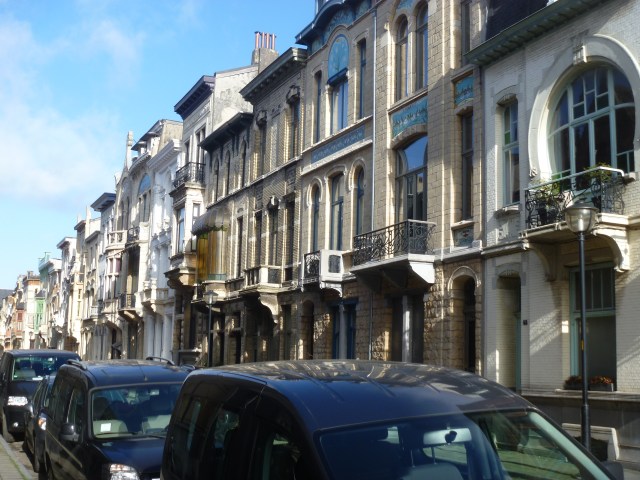
There are so many Art Nouveau houses in Antwerp’s Golden Triangle that it is impossible I’m afraid to give the addresses of each but here are some examples from those 3 streets – Waterloostraat, Transvaalstraat and Cogels Osylei. Quite amazing! According to Mike at one time threatened with demolition this now an area of prime real estate.

AN on Waterloost

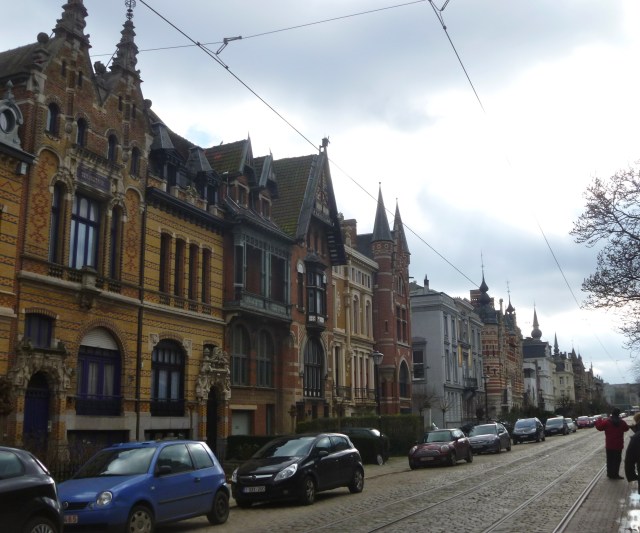
Waterloostraat, Antwerp crammed with Art Nouveau houses

With more than 100 Art Nouveau buildings, Antwerp is the second town of Belgium (after Brussels) and one of the two most important ports in Europe.

Zurenborg – Cogels Osylei quarter

This is the Art Nouveau “golden triangle”, a quarter defined by three streets (Cogels Osylei, Waterloo straat and Transvaal straat) that was built mainly between 1890 and 1906. The urban planning of Zurenborg and the Cogels Osylei dates from 1894 (and half of the area was built in 1895, which became an important place for Art Nouveau which began around 1897 in Antwerp). An incredible number of Art Nouveau buildings are still preserved for your pleasure. It is often presented as the most important Art Nouveau quarter in Europe and in the world.” [Source]

So, here are some of those buildings preserved “for your pleasure”.

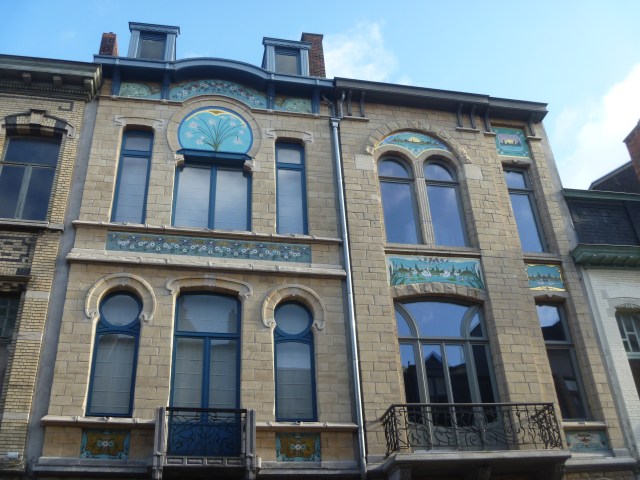
Waterloostraat

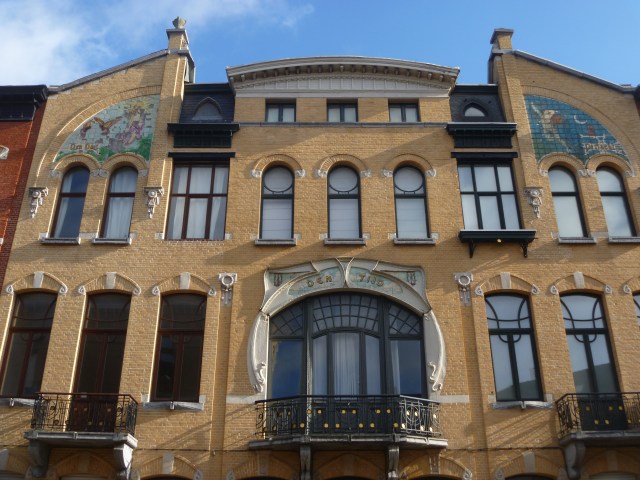
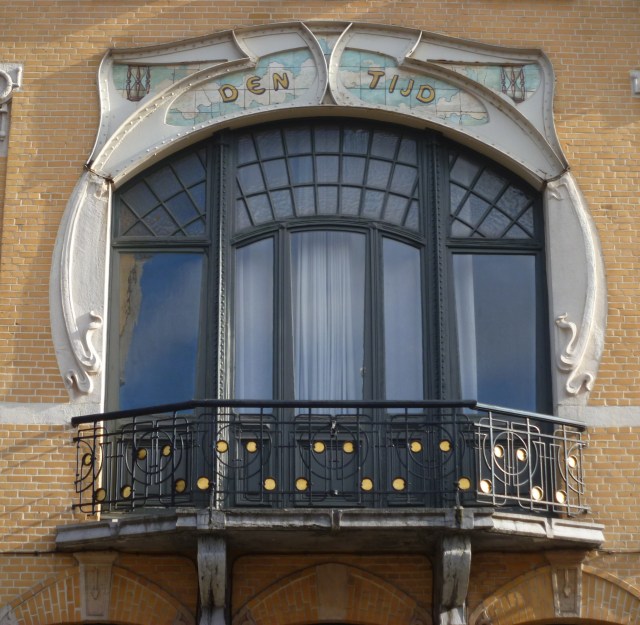
Den Tijd, Waterloostraat

Close up Den Tijd

Close-up of Den Tijd

Waterloost

On Waterloo Straat

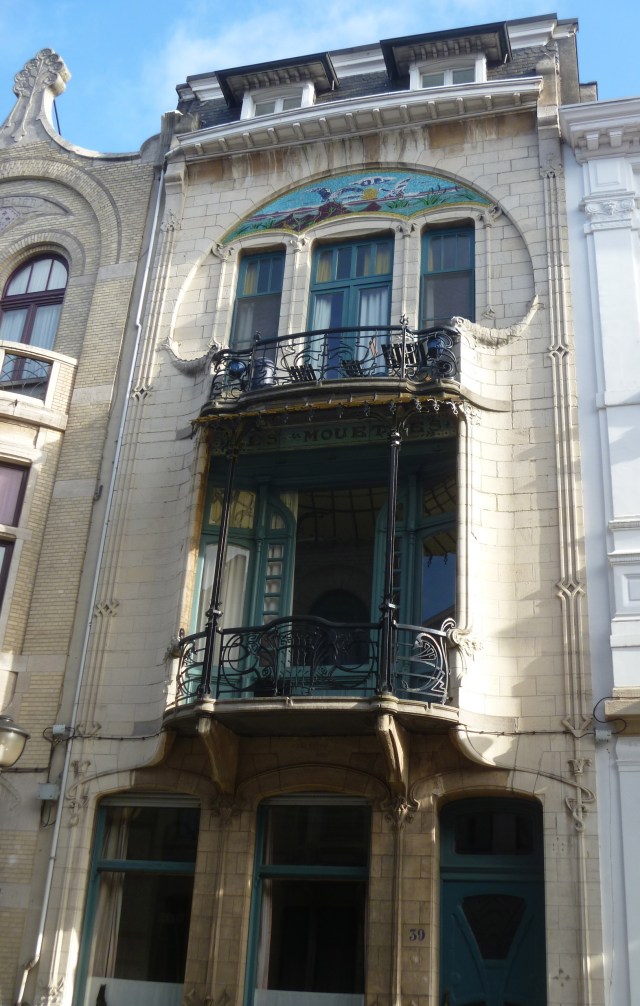
Waterloo St

Also on Waterloostraat

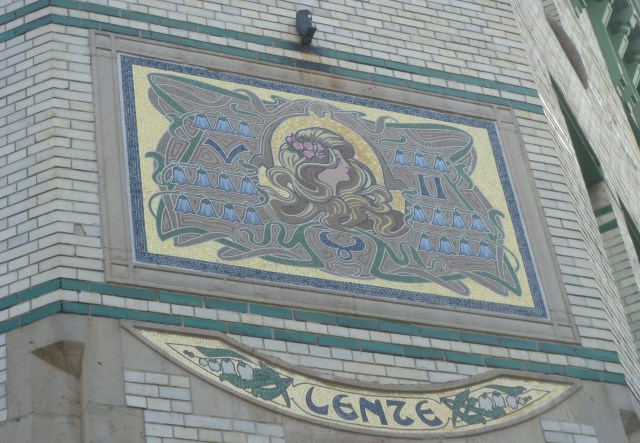
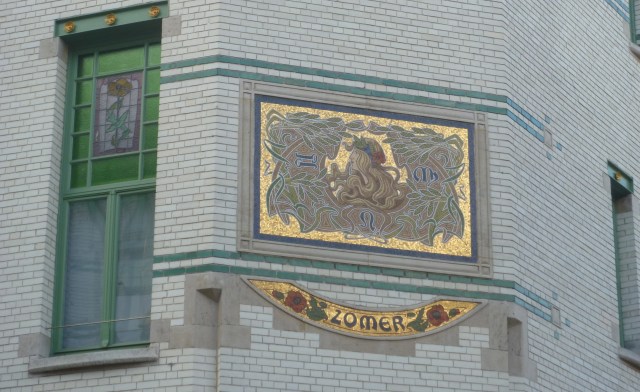
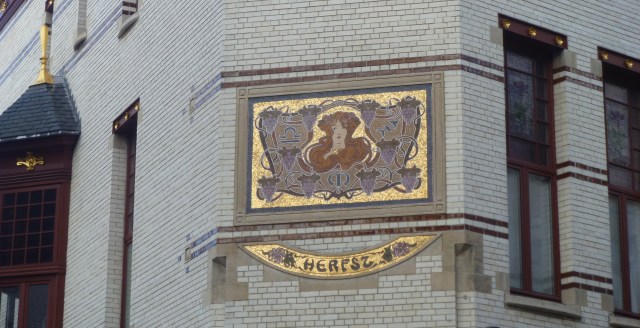
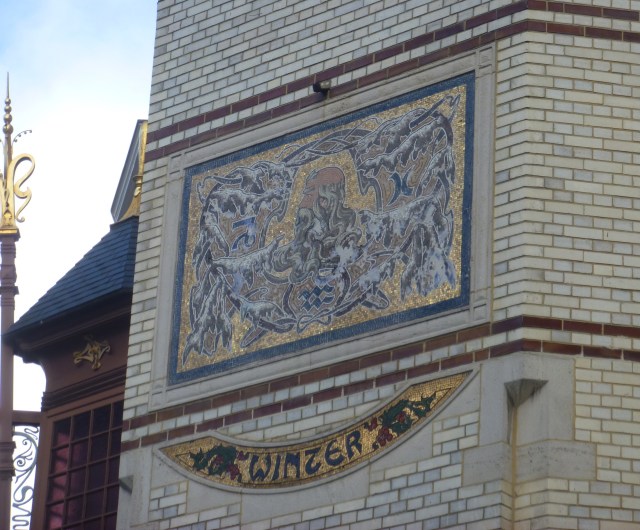
4 seasons 1

One of the Four Seasons Houses at a cross roads, Waterloostraat

[“De Vier Seizoenen” villas built by Joseph Bascourt in 1899 : the 4 symetrical villas corner a cross roads. Each corner is decorated by a fresco dedicated to a season.]

4 seasons spring

Four Seasons – Spring

4 seasons summer

Four Seasons – Summer

4 seasons autumn

Four Seasons – Autumn

4 seasons winter

Four Seasons – Winter

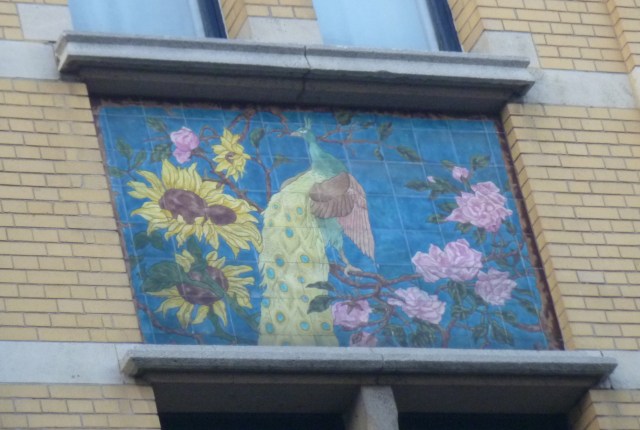
Peacock

There are the peacock’s eyes!

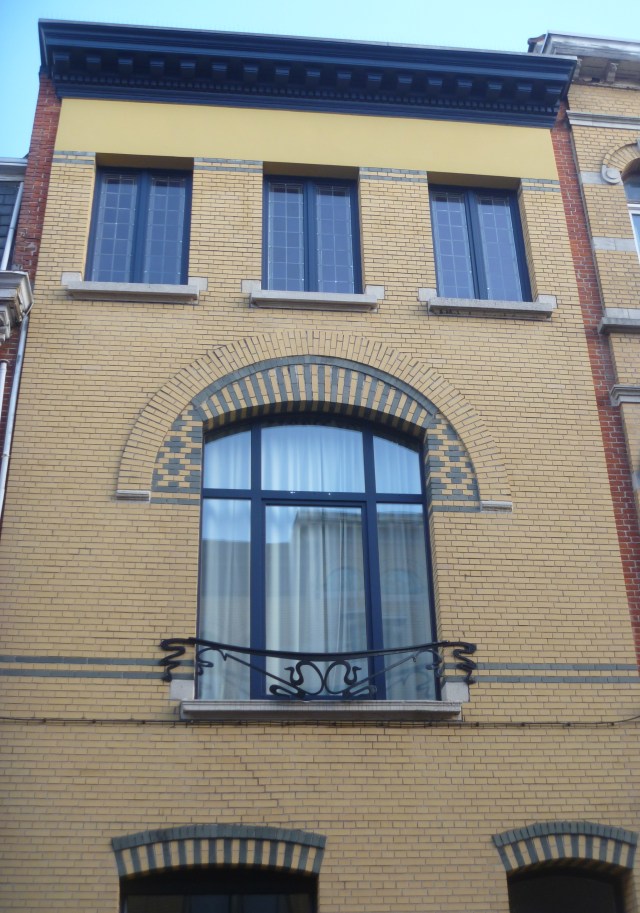
Plain

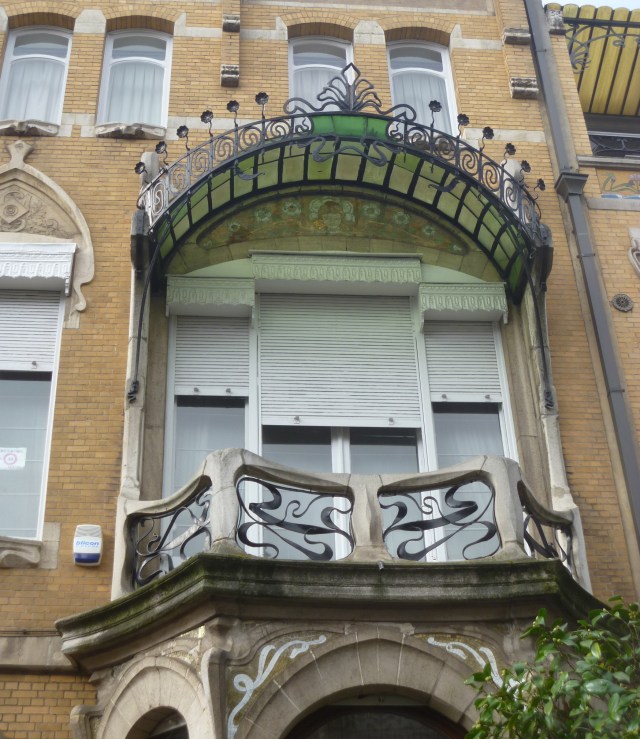
Plain – but with peacock eye balcony

Art Nouveau triangle

Art Nouveau in the Golden Triangle

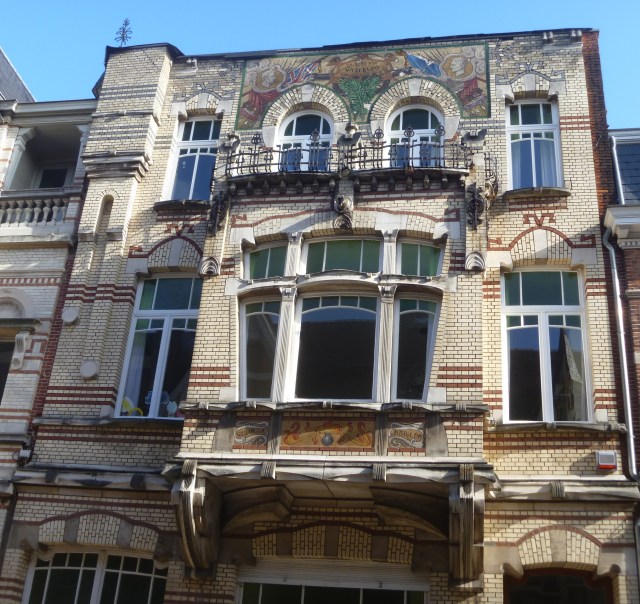
OTT

Over The Top in the Golden Triangle

Cogels Osylei

Cogels Osylei

Grander House on Cogels Osylei

Grander house on Cogels Osylei

On Cogels Osylei

Also on Cogels Osylei

I probably have another 50 photos but that is enough for now.

Tournai in Belgium : A Unesco cathedral and a small town art gallery of substance

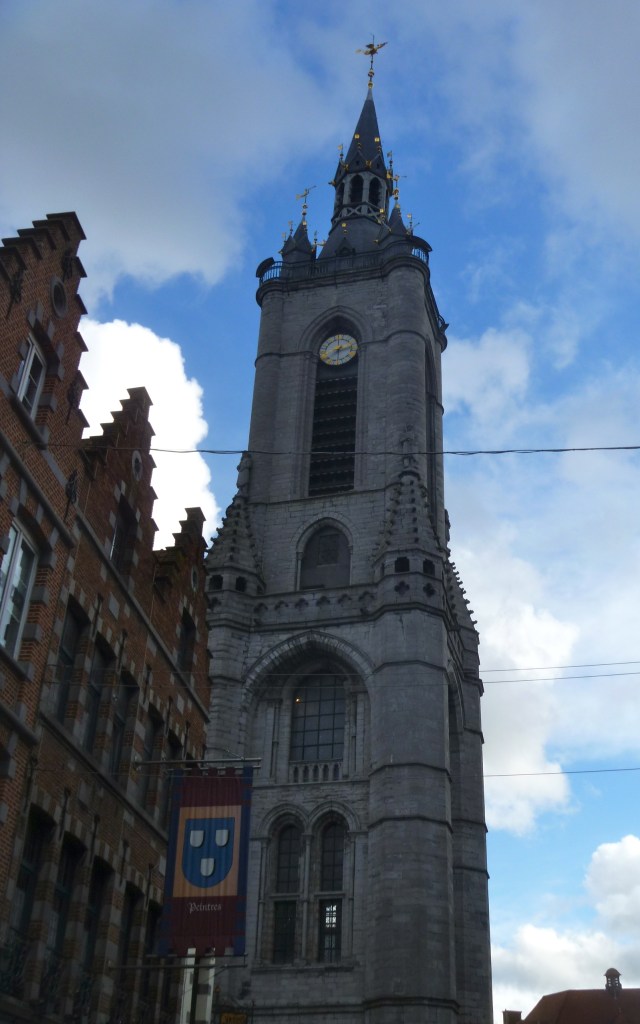
After a dip into the Roubaix swimming pool our coach transported us just over the border and into Belgium. The town of Tournai was our destination. Such a small quiet town but with so much to offer. We were given an hour and a quarter to find a luncheon venue and meet again under the towering belfry at the end of the picturesque town square.

The Belfry Tournai

A life-size black and white cow tempted us into an intimate brasserie Au Boeuf Qui Rit where we chose I salmon salad and  my companion chose cheese croquettes.

World Heritage

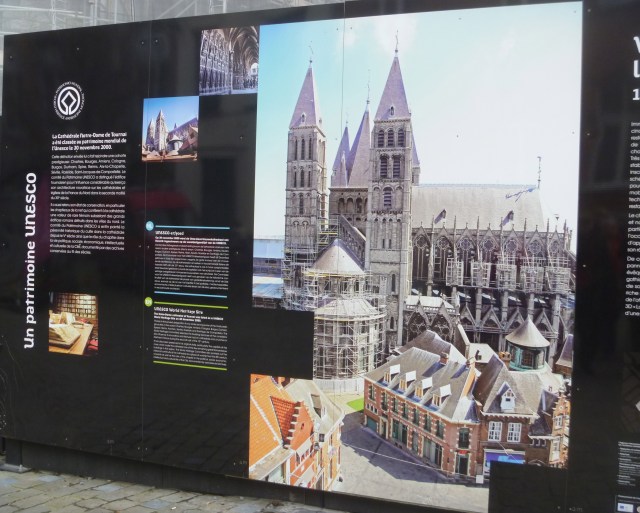
Next to the Belfry is the Cathedral of Tournai. Begun in the 12th century the cathedral’s cultural value was recognised by UNESCO and designated a World Heritage Site in the year 2000.

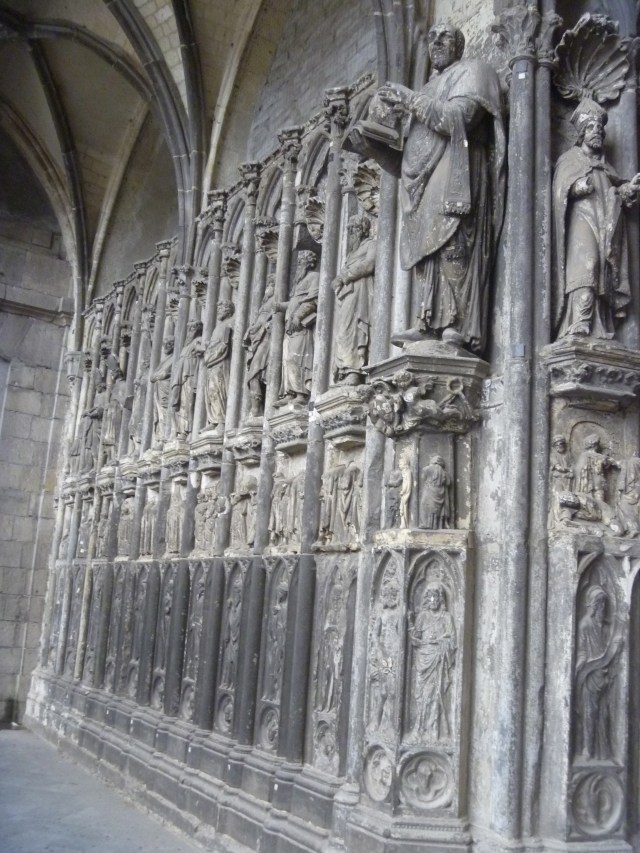
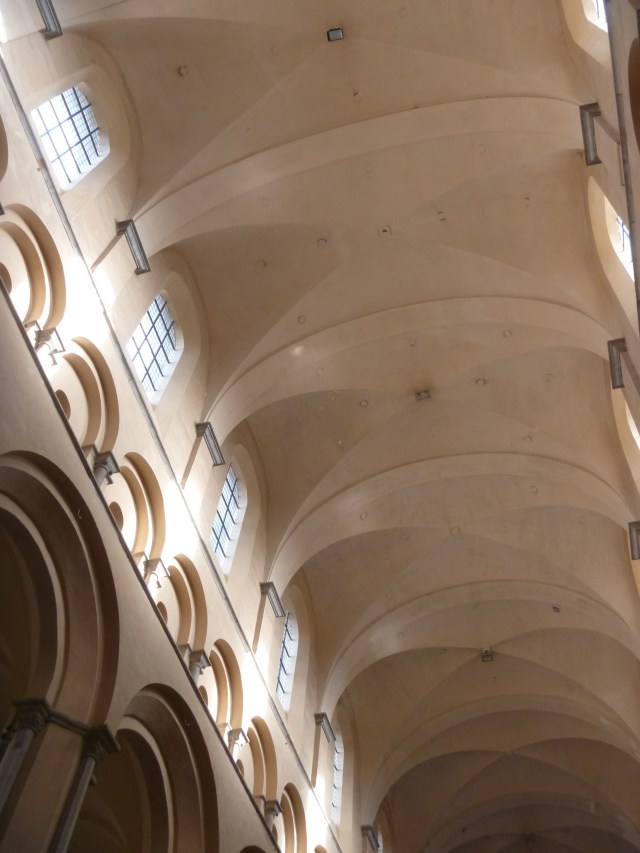
[The Cathedral] has been preserved in its original state , particularly the capitals of the nave, which makes the cathedral one of the few remaining great Romanesque buildings in this region. The World Heritage committee also pointed out the historical continuity of the cathedral as a place of worship from the 5th century onwards as well as the role of the chapter in the political, social, economic, intellectual and cultural life of the city, documented by centuries old archives.” [Poster shown above]

Photos at Tournai Cathedral :

Tournai 1

Tournai 2

Tournai 3

Tournai 4

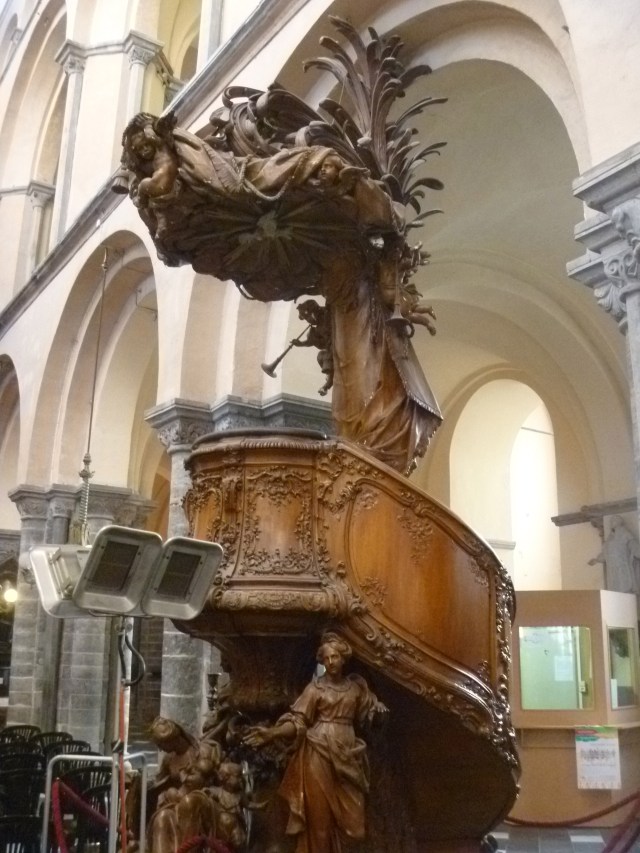
Repair work on the cathedral continues but we were able to visit the main body of the church and also the Treasury. No photography was allowed inside The Treasury as almost 5 years ago to the day a priceless jewelled cross was stolen by thieves :

22/02/08 — Theft — Tournai, Cathedral — The “tresor” of the Tournai Cathedral was the victim of a major theft on Tuesday 19 February. In broad daylight, three men using baseball bats broke the glass display cases and stole, despite the attempts of several by-standers, thirteen objects including a famous Byzantine cross. This reliquary which holds a piece of the Cross and probably dates back to the VIIIth-IXth centuries was most likely brought to Tournai from Constantinople in 1205 by a Crusader. One can only hope that the object will not be dismounted in order to sell off the precious stones ornating it. ” [Source]

Beaux arts tournai

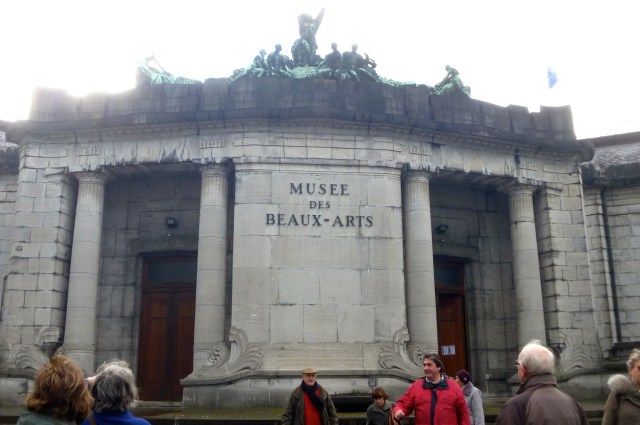
From the Cathedral it was a very short walk to the Museum of Fine Arts [Musée Beaux Arts Tournai]

Inaugurated on Sunday 17th June 1928, the Museum of Fine Arts is a building created by the genius for spatial conception, the great Belgian  Art Nouveau architect Victor HORTA. He conceived it especially for presenting the very rich collections bequeathed to the city by the Brussels patron of the arts Henri VAN CUTSEM, deceased in 1904.

The combination of the rooms that radiate from the central polygonal entrance hall is so original that the building itself deserves a visit. The collections shown include many ancient paintings, which added to the works bequeathed by Henri VAN CUTSEM, together with purchases, deposits, gifts and legacies, permit to offer the visitors an interesting overvieuw of the pictorial production history from the 15th century up to now.” [source]

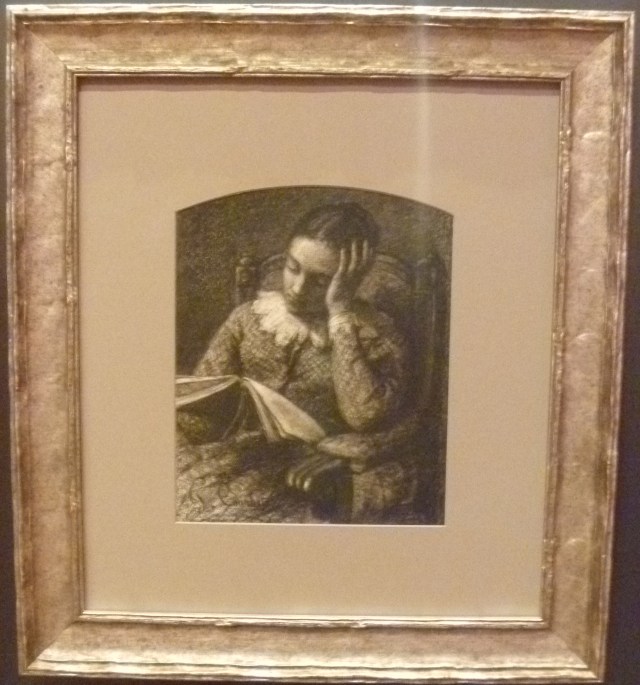
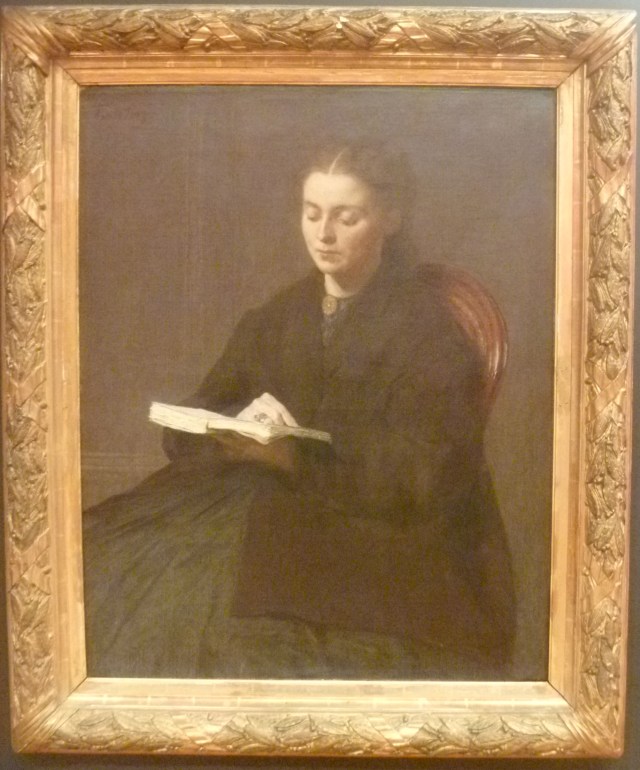
I just chose two pictures on a reading theme on show at the Museum.

Courbet The Reader

Gustave Courbet’s “La Lecture”

Fantin-Latour The Reader

Henri de Fantin-Latour “La Lecture”

La Piscine – The Swimming Pool Gallery

On completion of our morning walking tour of Lille we met our coach and were taken the few miles out of the centre of Lille to the nearby city of Roubaix (twinned with nearby Bradford, West Yorkshire) which is now incorporated into the Lille conurbation.

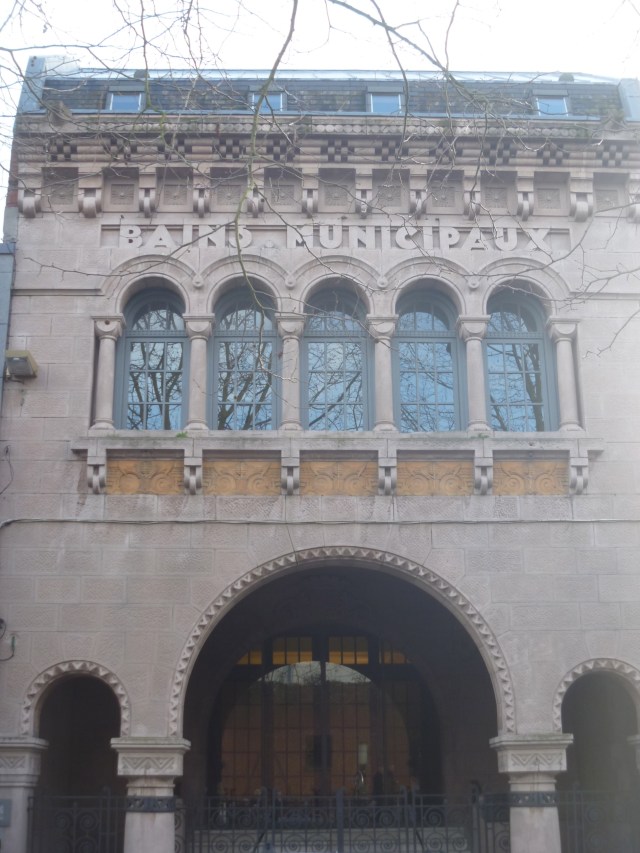
Original pool entrance

The Original 1932 Art Deco Entrance

La P exterior

The Swimming Pool Museum Entrance Today

In October 2011, Lille’s Musée d’Art et d‘Industrie celebrated its tenth birthday, and a hugely successful decade of existence. Architect Jean-Paul Philippon converted the splendid Art Deco swimming baths into a museum, transforming the former changing rooms and cabins into “curiosity cabinets” overlooking the partly covered former swimming pool. The collections include paintings by Gérome, Fantin-Latour, Dufy and Tamara De Lempicka, and sculpture by François Pompon and Camille Claudel, plus ceramics by Pablo Picasso and an exceptional collection of textile samples and designs. Visitors come here from all over Europe for the acclaimed temporary exhibitions; recent subjects include The Bloomsbury Group, Pierre Loti, sculpture by Degas and the work of Paul Signac” [Adapted from my 2012 LV City Guide Lille, Lyon, Monaco, Toulouse]

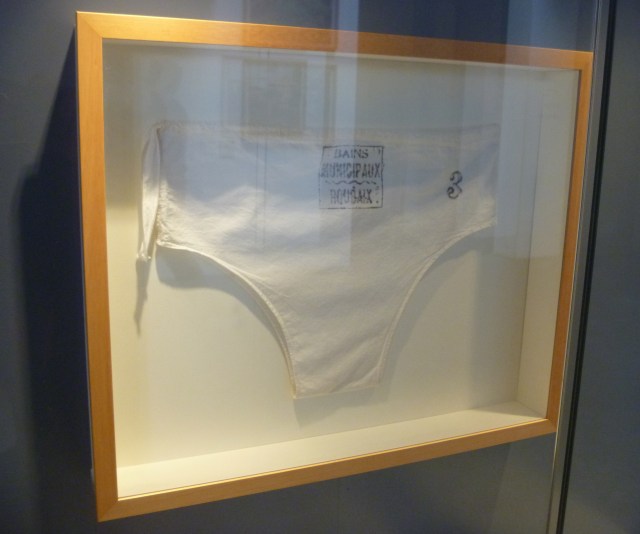
Trunks

Oh-La-la!

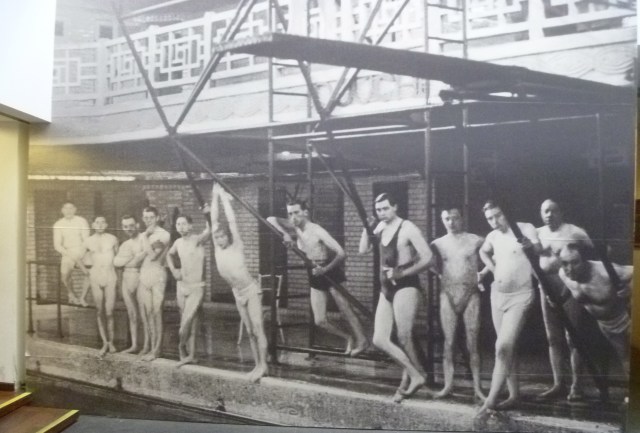
B&W swimmers

Original Swimming Displays in the Museum

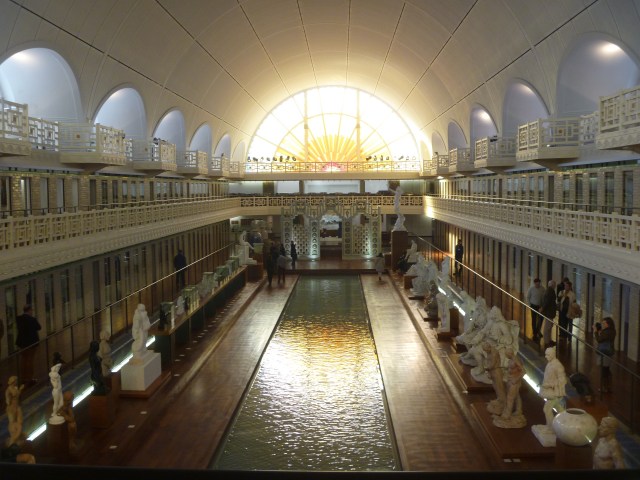
The main entrance lobby and display don’t prepare you for the museum itself. After the lobby and reception you step through the ‘showers’ and ‘footbaths’ and into the pool proper. There’s still some water but much reduced in size and even on the dull overcast Friday the area was filled with light.

La Piscine

La Piscine

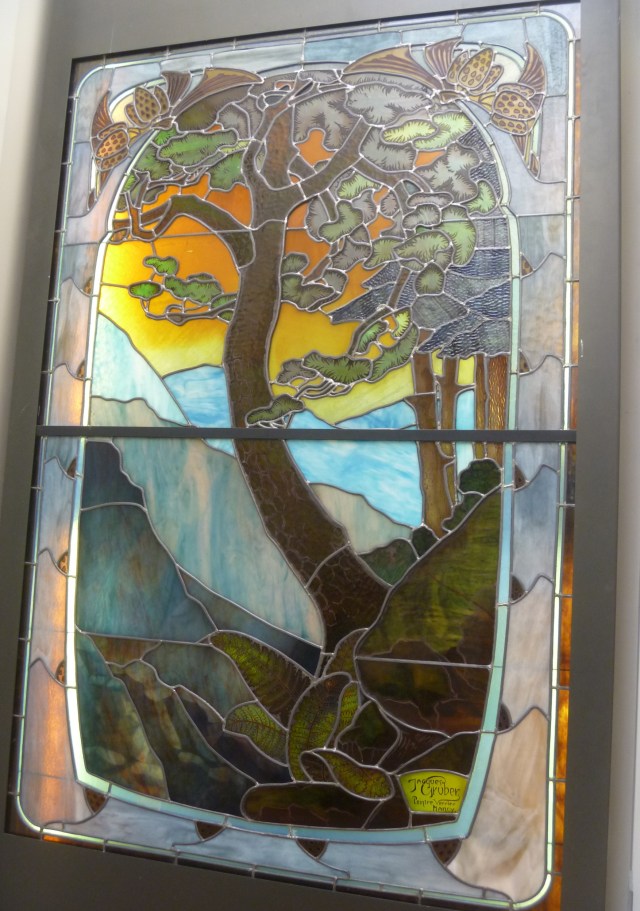
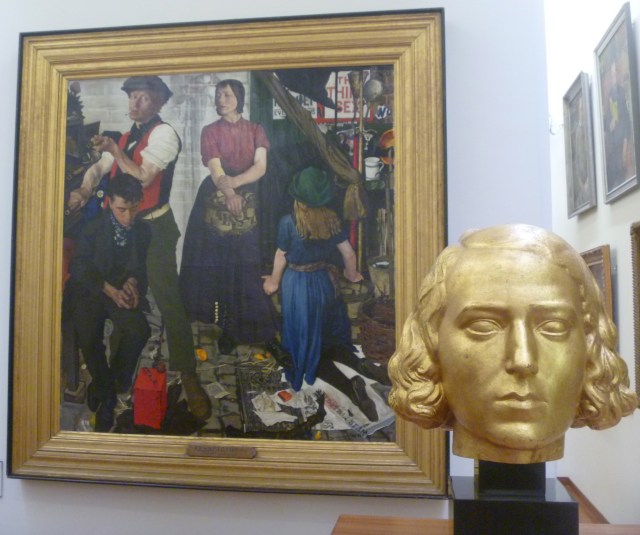
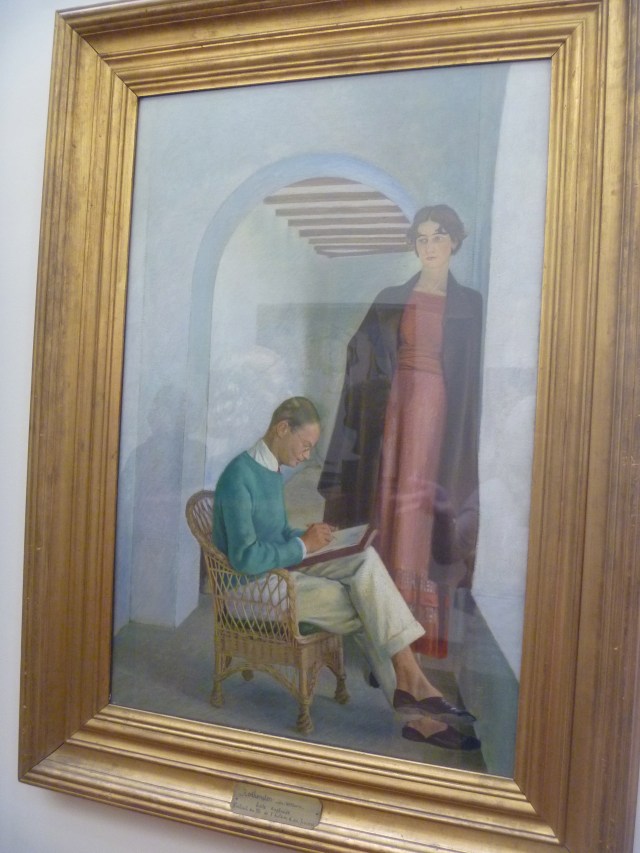
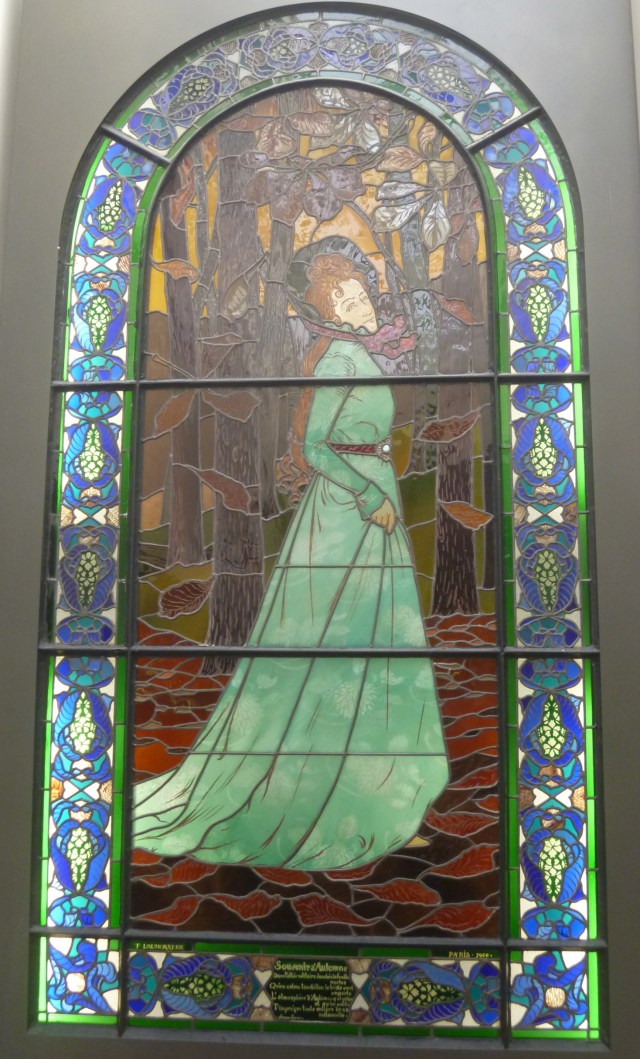
On arrival Mike introduced us to the gallery and to two Art Nouveau stained glass windows on display then left us to our own devices for an hour before meeting us in the picture gallery and talking about several paintings relevant to our themes.

T. Laumonnerie

Théophile Laumonnerie – Memory of Autumn

J Gruber

By Jacques Gruber of Nancy

Young woman on lute

Stylised Art Deco: Part of the Debussy Monument : Young Woman Playing a Lute (1932)

Eric Kennington

Eric Kennington of The New English Art Club: La Cuisine Ambulante (1914)

Rothenstein

Sir William Rothenstein’s The Artsist’s Son and his Wife

And I always find time to check out the quirky gifts and buy postcards in the Museum Shop – La Piscine no exception!

Museum shop

Art Deco and Art Nouveau in Lille and Antwerp : Day Two

Day 2 : Morning walking tour of the Art Nouveau houses of Lille, including the exterior of the beautiful Maison Coilliot,  followed by the hidden gem that is La Piscine Museum at the former textile town of Roubaix. Afternoon tour to Tournai and its Musée des Beaux Arts. Lecture “Art Nouveau and Belgium” followed by dinner at the Brasserie de la Paix.”

… so, another full day.

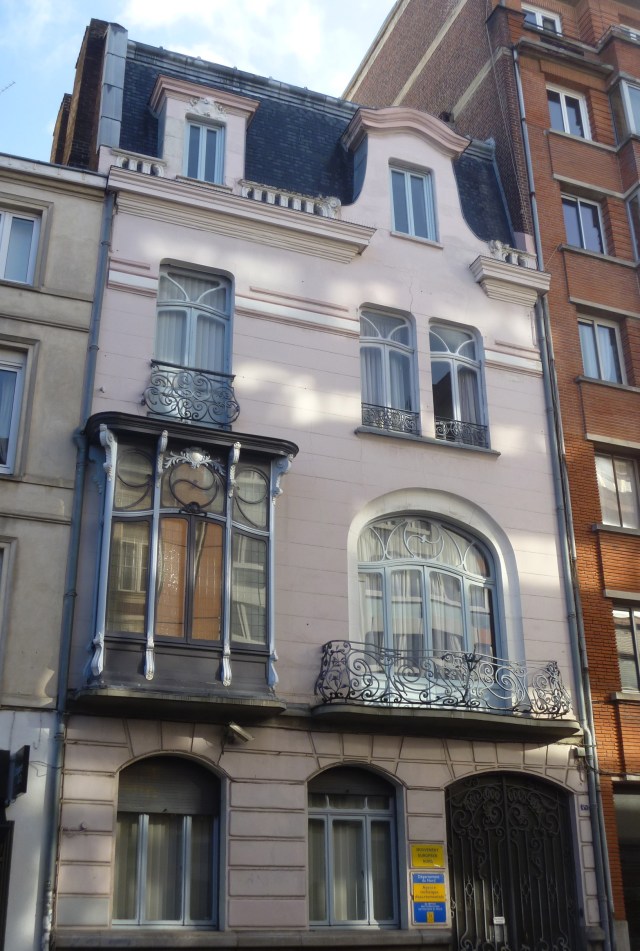
Our second day dawned overcast but brightened up considerably as we began our walk through the streets of Lille. Ignore the shop fronts and look up and a whole new world appears. Interspersed between plain dull shop fronts and ordinary apartment exteriors are a multitude of different, often colourful, Art Nouveau and Art Deco façades.

Here are some of the style features of Art Nouveau which developed during the 1890s and continued until the outbreak of the First World War :

  • sinuous, elongated, curvy lines
  • the whiplash line*
  • vertical lines and height
  • stylised flowers, leaves, roots, buds and seedpods

* Definition of the whiplash line from the V&A website : ‘This is a decorative line that seems to have a life of its own. It writhes and coils with dynamic force, as if trying to break free of the forces holding it in place. It is everywhere in the early Art Nouveau works. Architectural ironwork, decorative borders, textile patterns and the flowing hair of the poster girls all seethe with an excess of feverish energy. The whiplash form can be seen as a metaphor. It displays in graphic form the radical drive to break away from the constraints of tradition.’

In the UK we have Charles Rennie Macintosh and in France Hector Guimard and in Belgium Victor Horta. In Lille the buildings are tall and thin and squeezed in between other buildings.

Another architectural feature are the ‘peacocks’ eyes’. At first I thought I had never been near enough to a peacock to look at its eyes but soon realised that the eyes are in the peacock’s tail feathers.

Spot the eyes and lines and stylised flowers and roots and leaves in this small sample of buildings above the shopping streets of Lille.
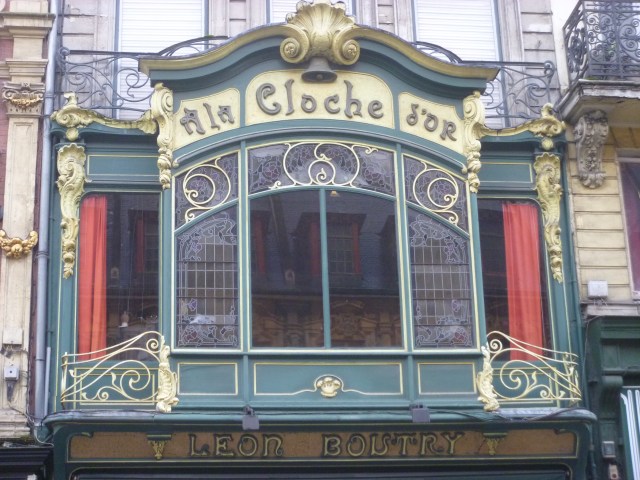
A La Cloche

A La Cloche d’Or, rue Saint Nicolas, Lille
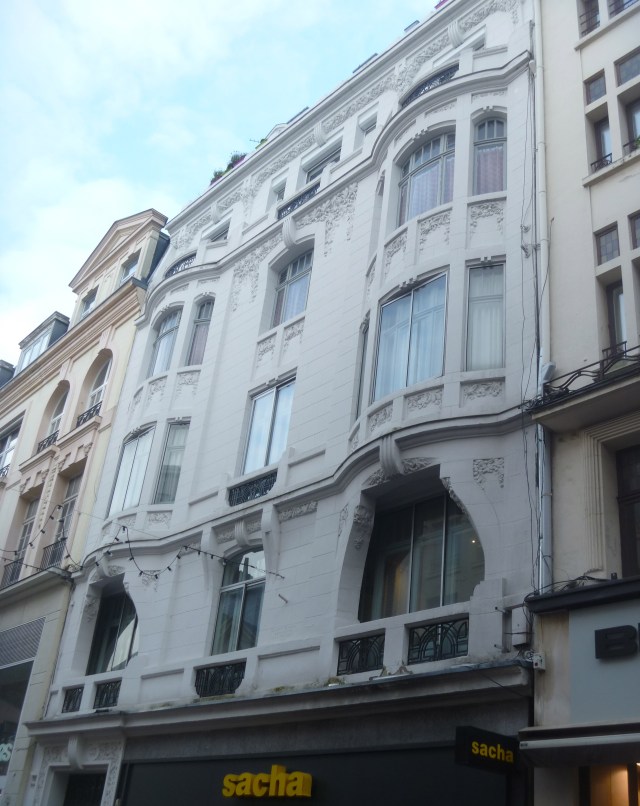
43 Rue du Faubourg de Béthune

43 Rue du Faubourg de Béthune, Lille
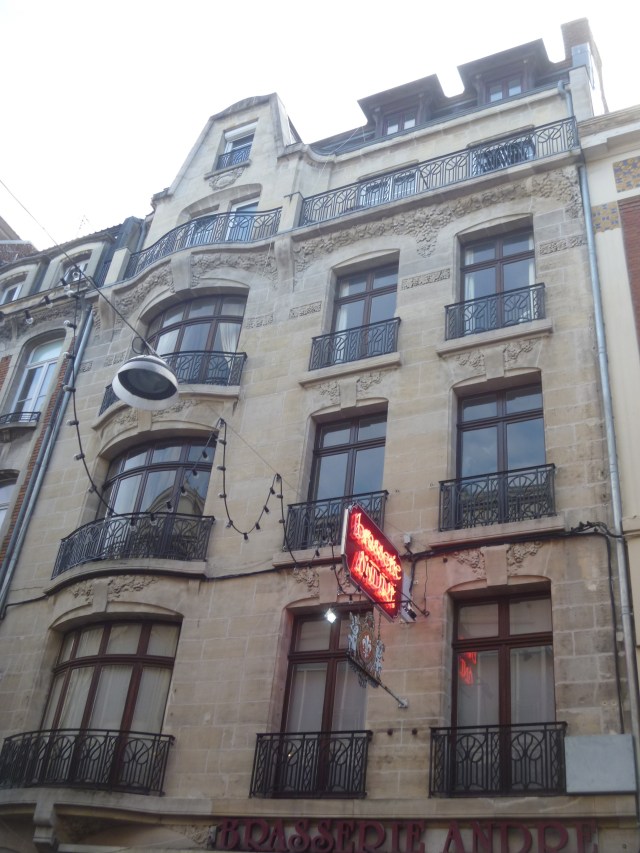
71 Rue de Béthune

71, rue de Béthune, Lille

Rue Nicolas Leblanc
Rue Nicolas Leblanc

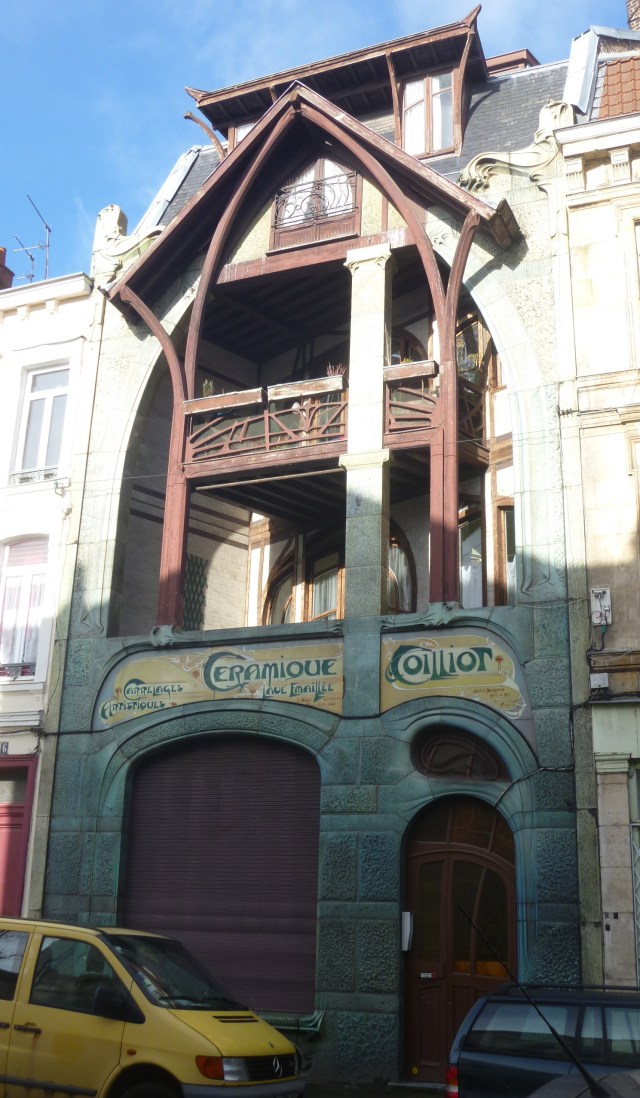
Ceramique Colliot

Maison Ceramique Coilliot by Hector Guimard

Art Deco of the 1920s on the other hand is characterised by clean lines and strong curves and by

  • geometric and angular shapes
  • chrome, glass, mirrors and mirror tiles
  • stylised images of aeroplanes, cars, cruise liners, skyscrapers
  • nature motifs – shells, sunrises, flowers
  • theatrical contrasts – highly polished wood and glossy black lacquer

The fonts or typescripts are sans serif – no added curlicues or decoration.

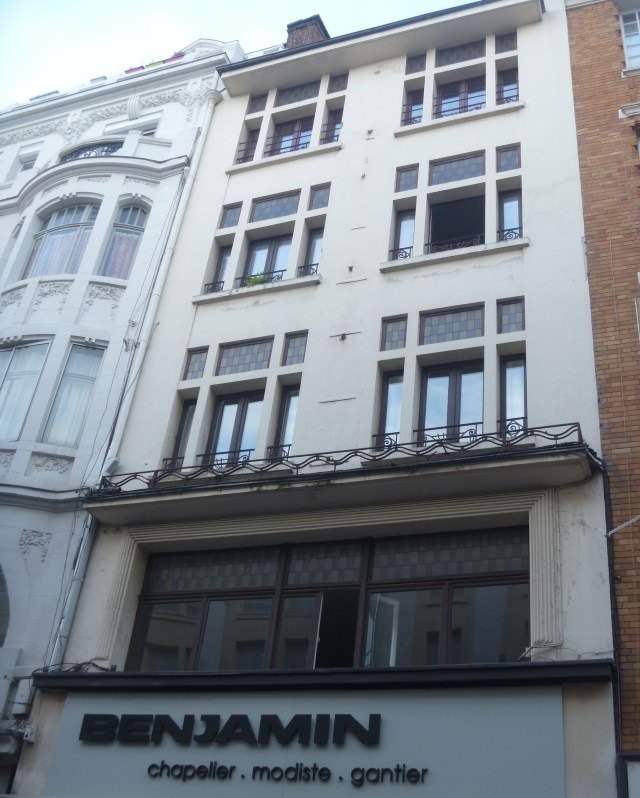
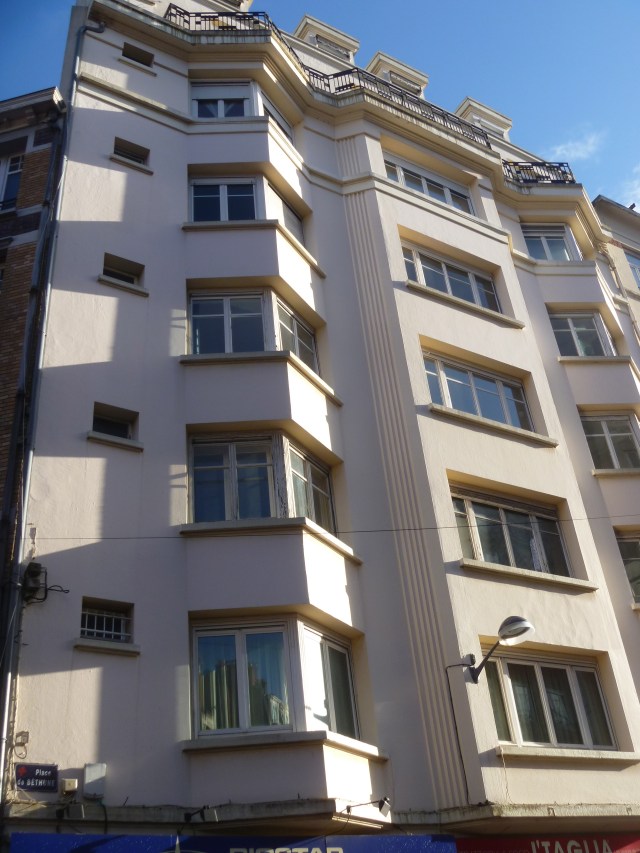
Spot the art deco style features and sans serif scripts on the buildings on our morning walk in Lille :
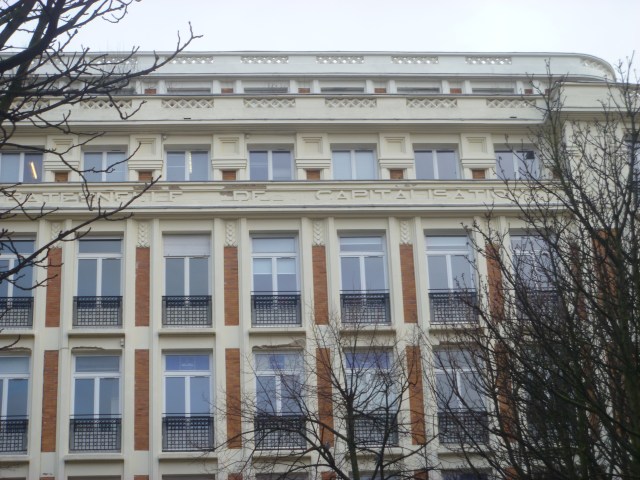
AD near hotel

Art Deco near The Hotel Mercure, Lille Centre
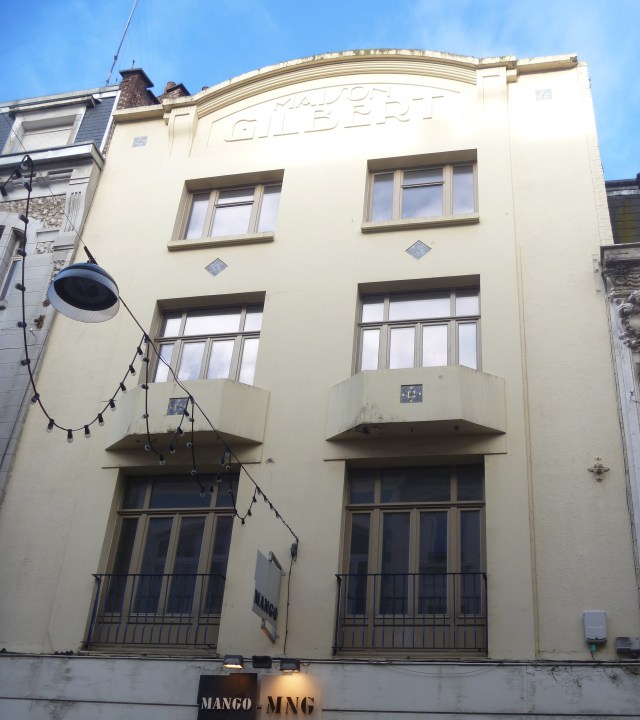
Maison Gilbert Lille

Maison Gilbert, Lille

Shoe shop

Former shop or factory?

45 rue de Béthune

Above hat maker, Benjamin, 45, rue de Béthune
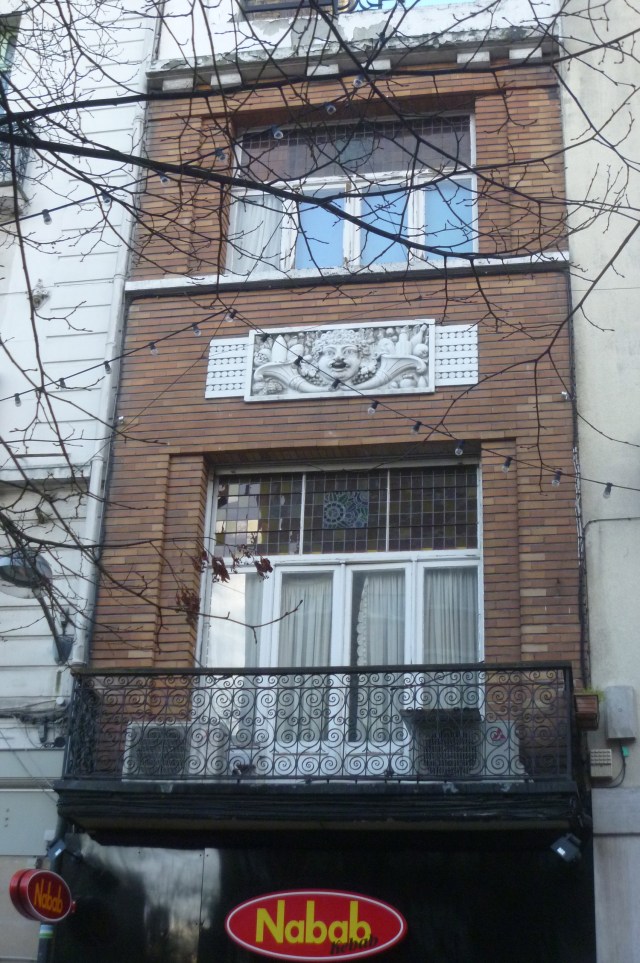
Also r de Béthune

Also on the rue de Béthune
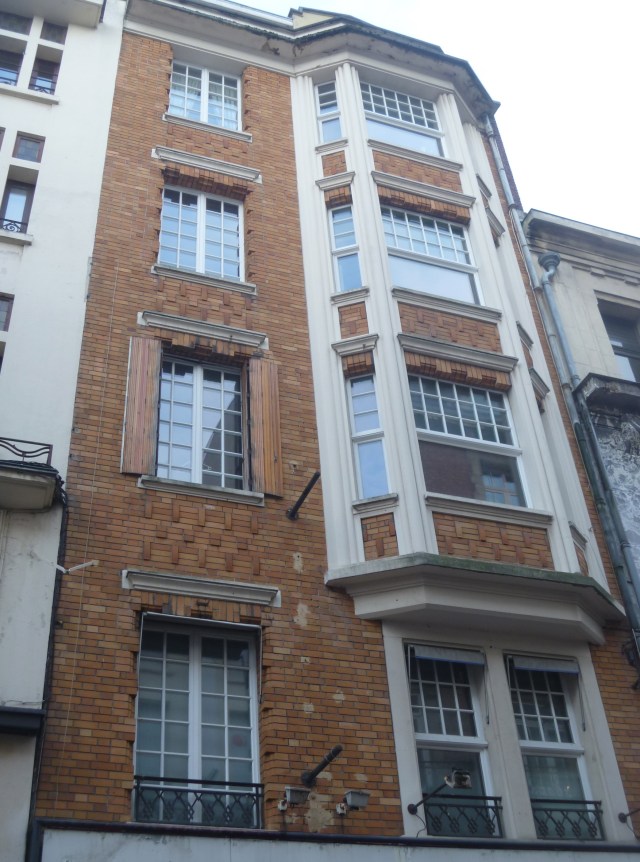
rue de Bethune

Another on the rue de Béthune

Place de Béthune

At the Place de Béthune

After the Maison Ceramique Coilliot by Hector Guimard we joined our coach for the next stages of the day’s tour.

Art Deco and Art Nouveau in Lille and Antwerp : Day One

Last Thursday I set off from St Pancras Station to Lille along with 23 others booked on a Travel Editions art trip to northern France and Belgium.  The train journey took just less than 1 hour 30minutes.

Lille Town Hall and belfry

Lille Town Hall and Belfry [UNESCO World Heritage listed] from the hotel balcony

Day 1 : Travel by Eurostar from St Pancras to Lille and transfer by coach to hotel for check in for 3 night stay. Afternoon walking tour of central Lille.
Welcome reception lecture “Art nouveau – an Overview” and dinner with wine at the atmospheric Art Nouveau Brasserie de la Paix located 2-3 minutes from the hotel.

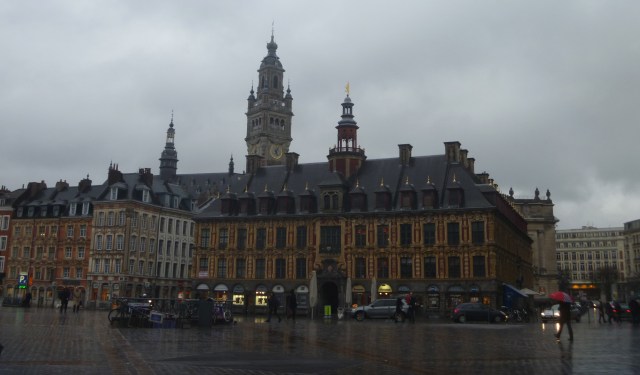
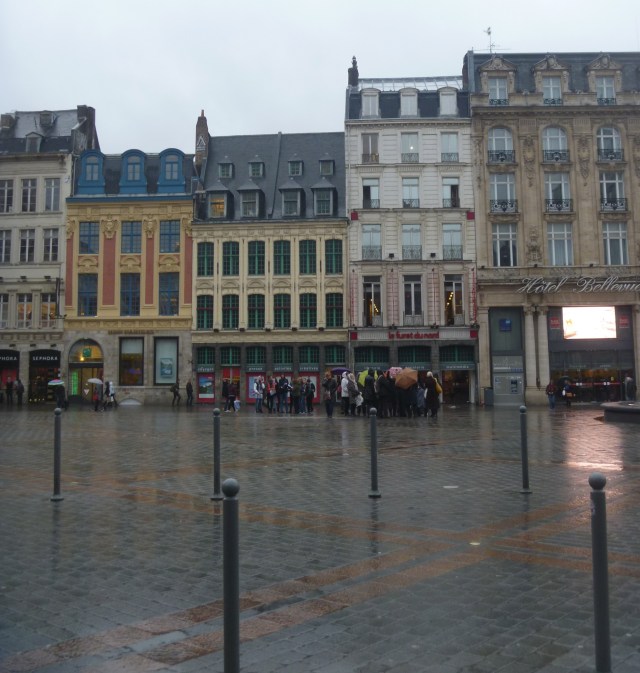
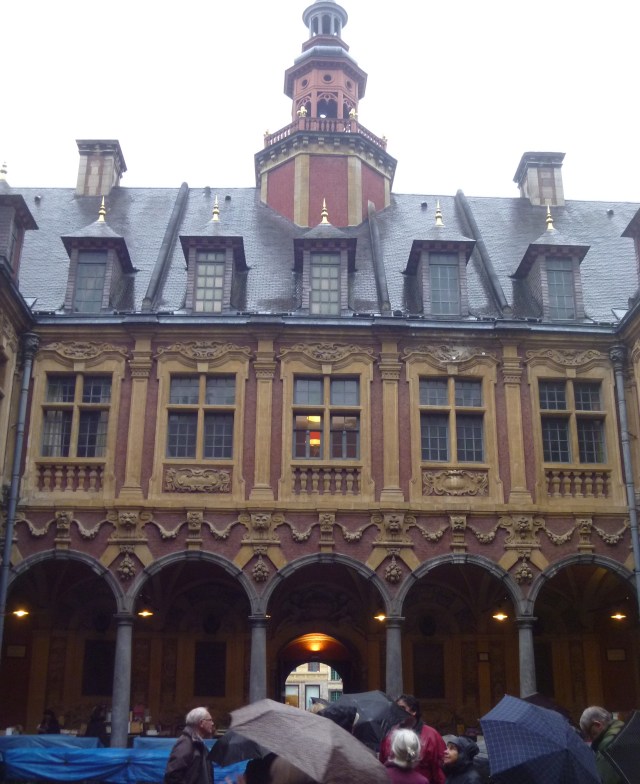
Vieille Bourse with Belfry behind

Unfortunately, it was raining hard in Lille so an hour after arrival and check-in with our brollies out we were on our first guided walk with tour guide and lecturer Mike Hope who mixed his vast knowledge with humour, patience and enthusiasm and from whom I learned all I now know about Art Deco and Art Nouveau in Lille (and nearby towns) and Antwerp during the following three days.

La Grand Place in the rain

The Grand Place in the rain

Once the jewel of the Spanish Netherlands, Lille is France’s most besieged city. It was incorporated into the royal domain in 1304 before passing under Burgundian (1369), then Austrian (1477), then Spanish rule under Charles V. The city became French in 1667 and remained so, except for a brief interlude from 1708 to 1713 and the absurd Nazi Aryanization (1940) from which it was delivered by its illustrious native son, a certain Charles de Gaulle. Throughout the 20th century, Lille was the capital of the French textile industry. … The city [has made] an extraordinary transformation that began with the arrival of France’s high-speed train, the TGV. [It] boasts prestigious colleges, abounds with café terraces and brasseries. Since 2004, when Lille was European City of Culture, it has stood at the forefront of the French cultural scene.” [From my LV Guide Lille, Lyon, Monaco, Toulouse 2012]

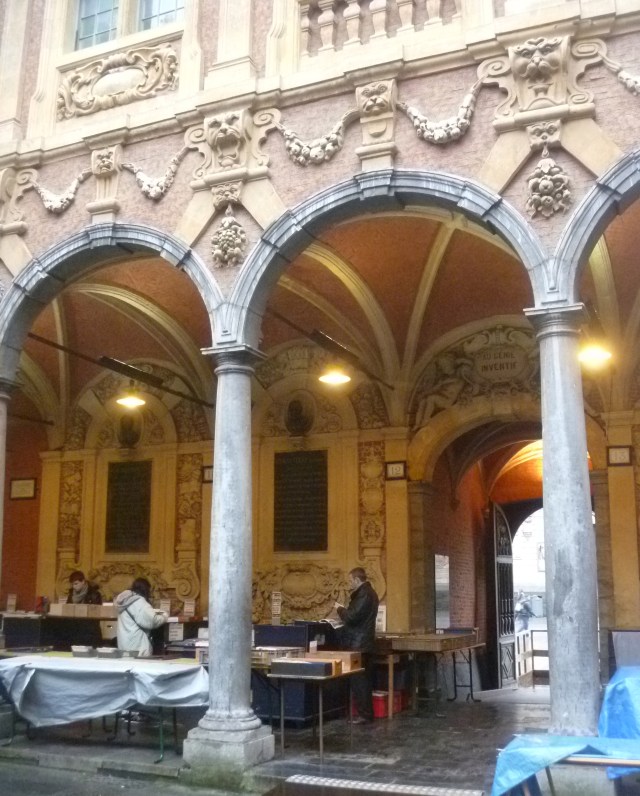
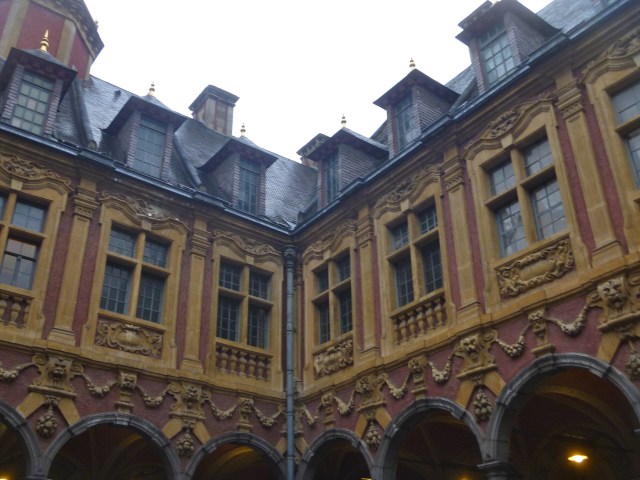
From the hotel we were just steps away from the main square and the important civic buildings – the town hall, the old bourse (now a secondhand book market), the opera and theatre – and shopping and business areas.

Vielle Bourse

V Bourse

VB Detail

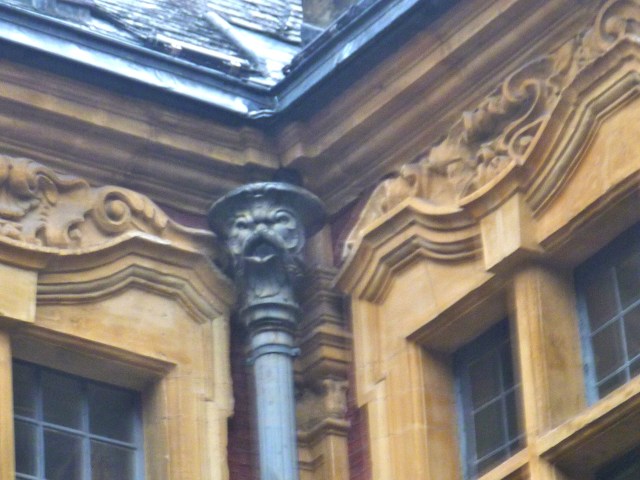
VB Drainpipe

In the Vieille Bourse

Theatre du Nord

The Voix du Nord Building: Mike points out the architectural features

Paul, Lille

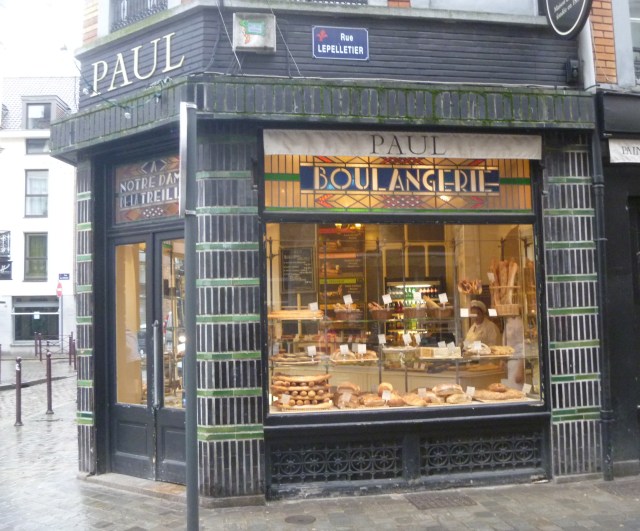
Art Deco Bakery on the rue Lepelletier – still a bakery shop

Huitriere

A L’Huitriere

A L'Huitriere

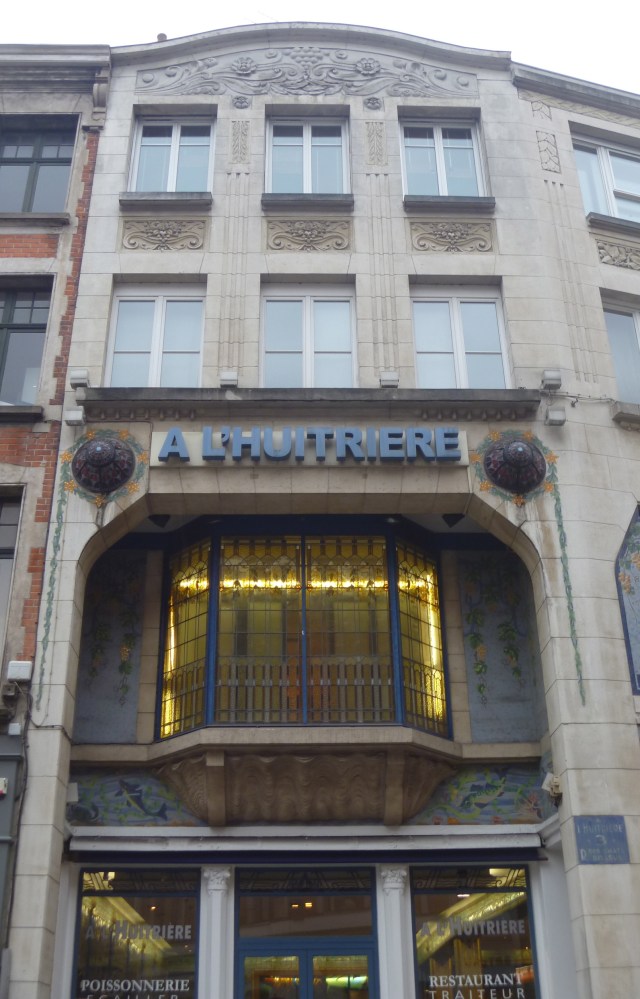
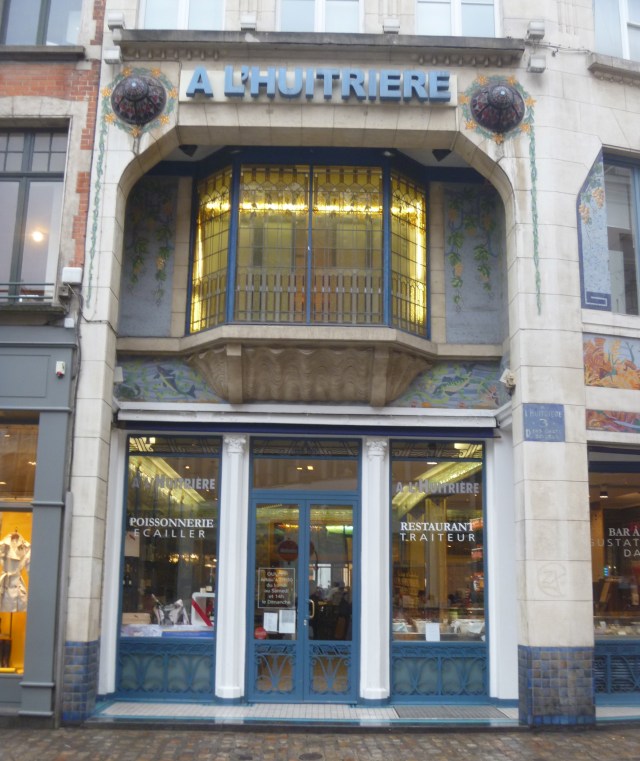
A L’Huîtriere, rue des Chats Bossus. Renowned fishmonger and restaurant with pure Art Deco decor inside and out.

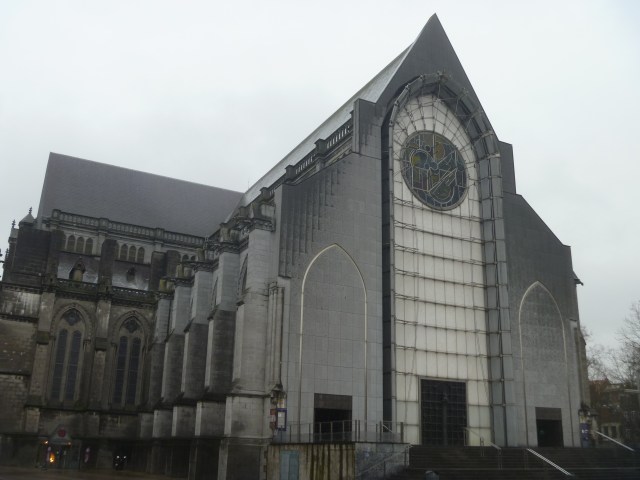
ND de la Treille

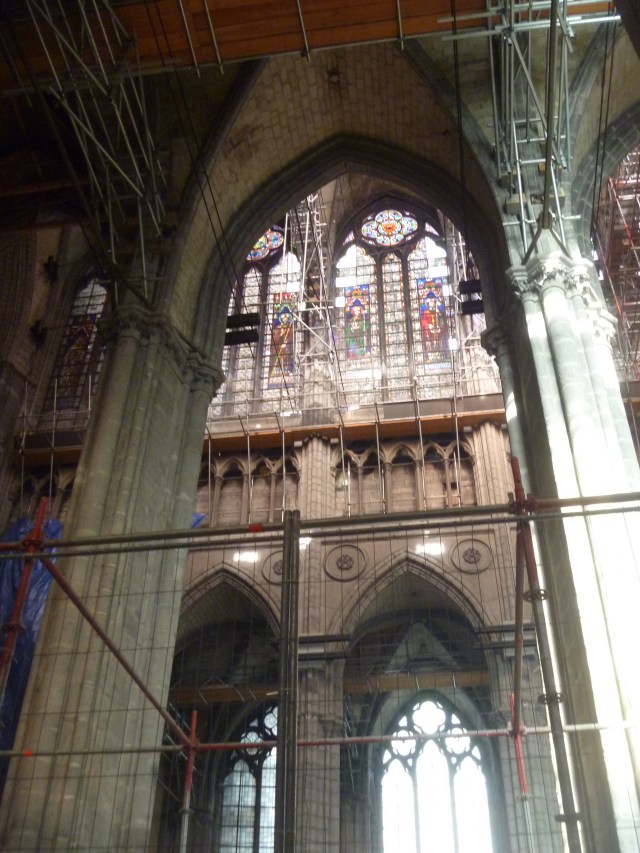
The Cathedral of Notre Dame de la Treille : building began in 1854 and was finally finished in time for Lille’s European City of Culture year 2004

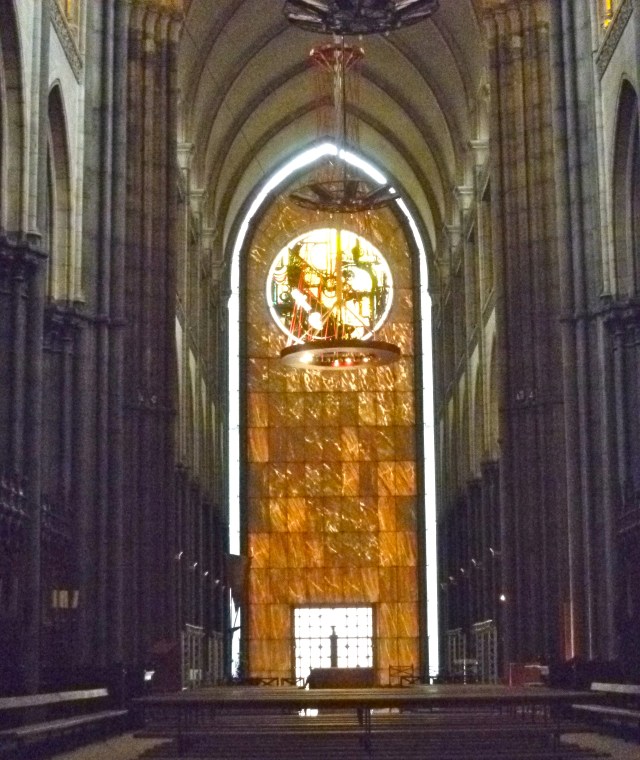
West Window

The West Window from Inside

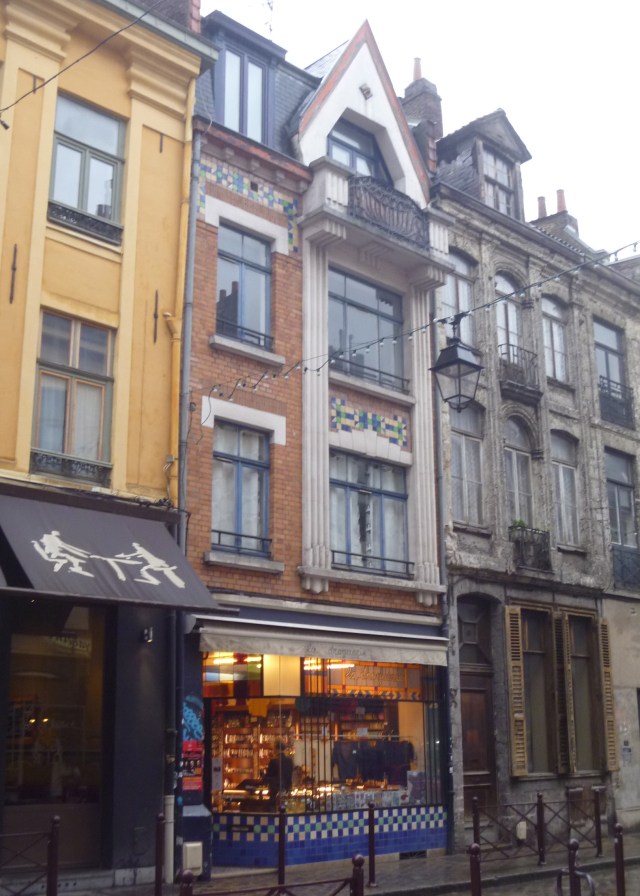
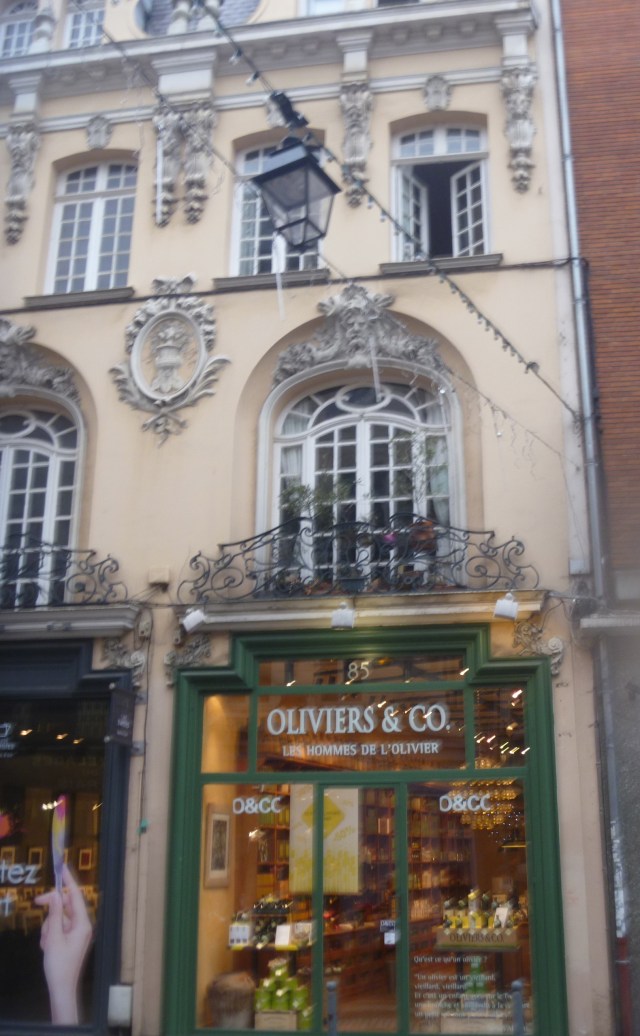
… and other Art Deco and Art Nouveau façades in Lille :

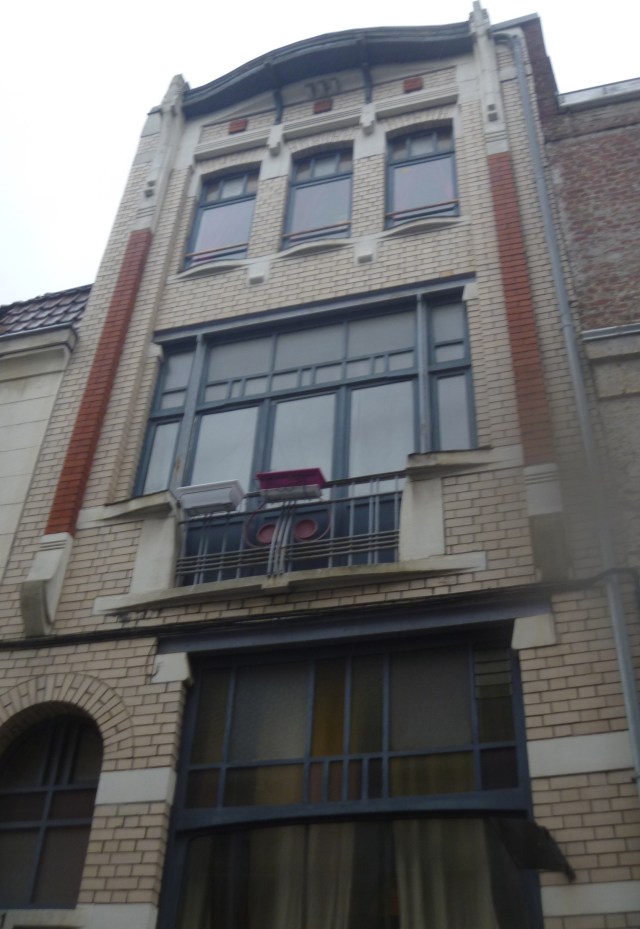
Others 1

Others 2
Others 3

Others 4

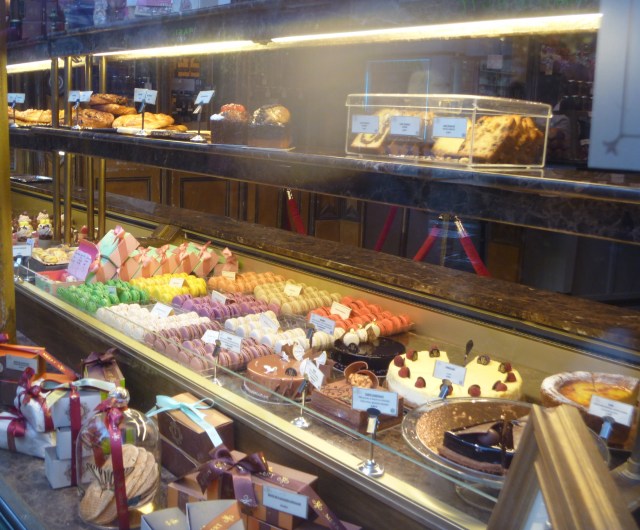
And the best place to finish is at Méert famous for its butter and vanilla waffles

Meert

Stony Lake History Tour by Boat

History Tour by Boat

Stony Lake is just inland from Lake Michigan, one of the five Great Lakes of North America. The Stony Lake Property Owners Association cares deeply (47 feet deep at its maximum, I’m told) about the state of the lake itself, its flora and fauna, about possible sources of pollution and about the immediate banks where many individuals and some organisations have property.

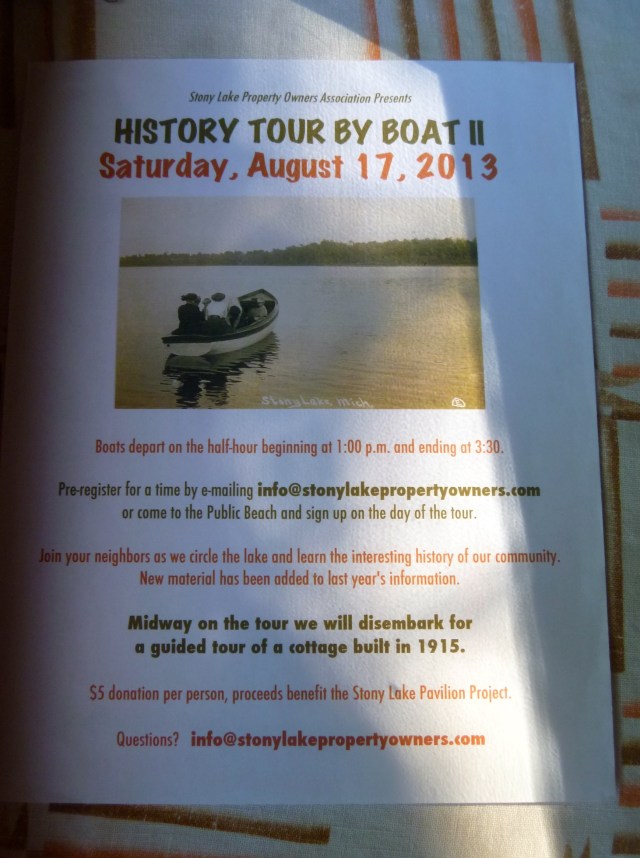
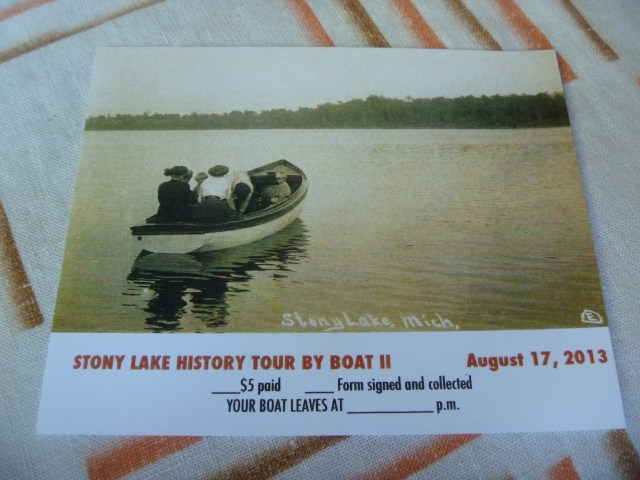
Boat Tour Ticket

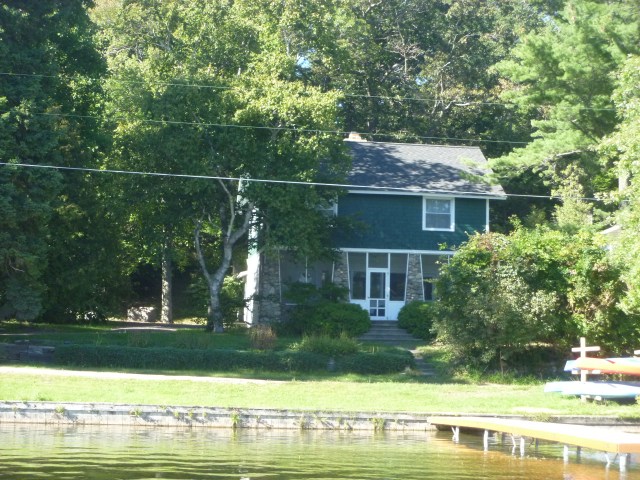
Last year the SLPOA introduced a new activity to their summer calendar – The Stony Lake History Tour By Boat. This event is scheduled to take place annually in August visiting a different property each year. Although my visit was in September I had the good luck to stay with a member of the Association’s Committee and my own private, individual, tailor-made tour was arranged by my hosts. We didn’t actually visit a lakeside home. But that was no problem as I was lucky enough to be staying in one myself – and a very special one it is too!

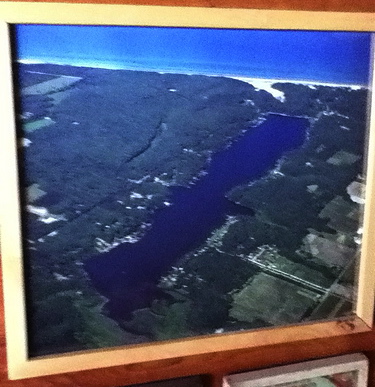
Aerial view of Stony L

Aerial View of Stony Lake with the Shore of Lake Michigan Along the Top (the view looks approximately west)

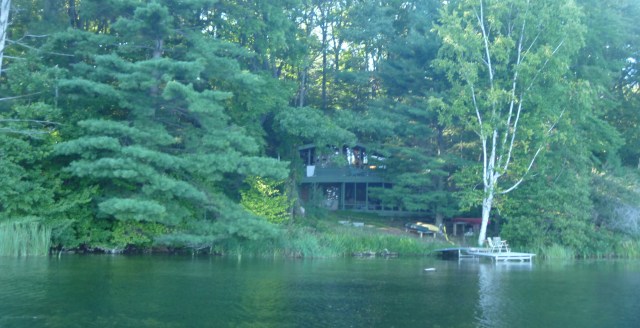
Cottage

Our Stony Lake Retreat

Some of this commentary is taken or adapted from the notes from which the docents read during the Tour.

Stony Lake has a lot of tradition. Much of the land, and in many cases the cottages, have been lovingly passed down for generations, shared or sold to friends or family members or even neighbours. 

But things change over the years, and the way of life many long time cottagers grew up with is changing too. More people come for short visits … They have less time to participate in community activities. One reason for doing the Tours is to help getting to know each other a little better.”

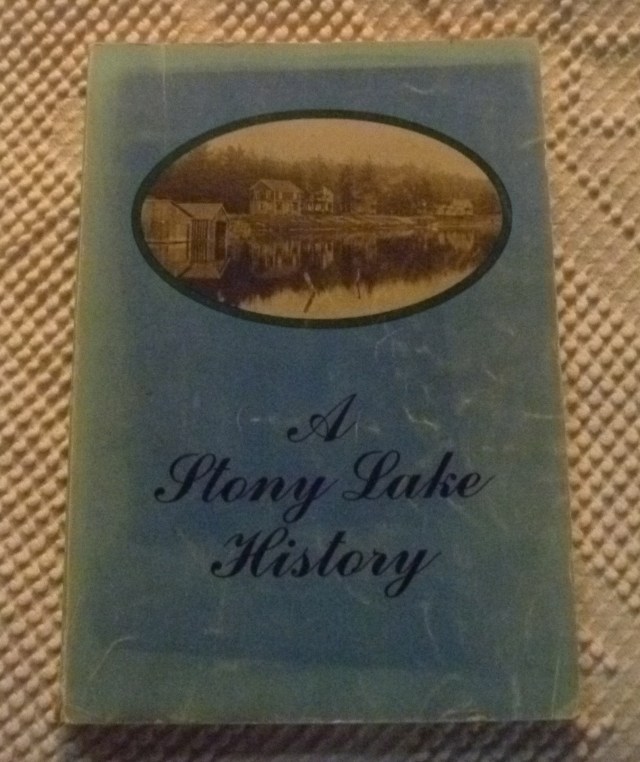
A Stony Lake History

“In the 1980s The Property Owners Association organized a project to publish A Stony Lake History, which was published in 1986. We hope it can be updated and republished.”

Huey House

The first house we ‘visit’ is The Huey House built by  John and Myra Huey in 1902.

Public beach

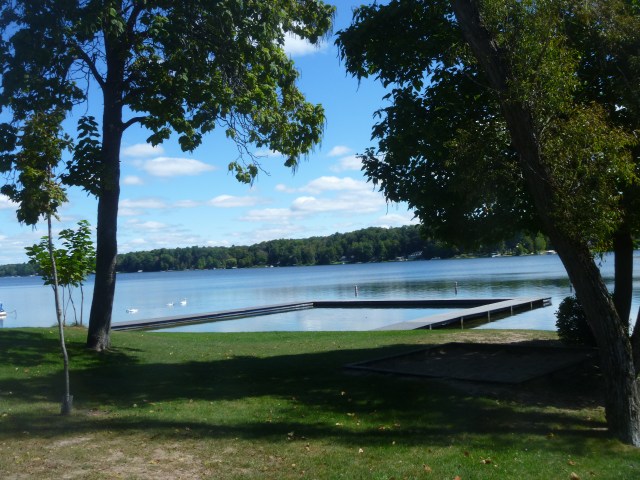
The Public Swimming Beach – I enjoyed a few swims here

Beach from Boat

The Beach from the Boat

Stony Lake Store

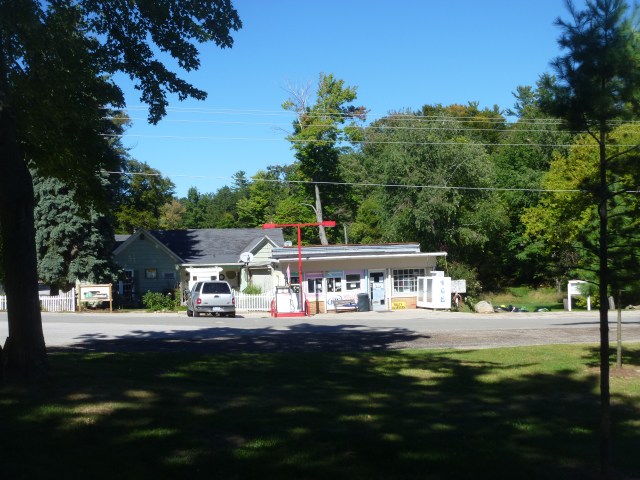
Just across the road from the beach is The Stony Lake Store – once it housed the local Post Office, alas no longer.

As we moved around the Lake I was able to view the several Youth Camp Sites including Camp Miniwanca owned by The American Youth Foundation and in existence since 1924.

Miniwanca dock

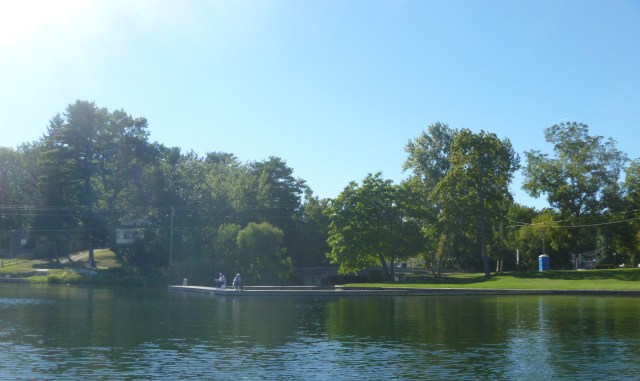
Here is the Miniwanca Camp Dock

I’m afraid that whenever I see these camps I can’t help singing this to myself :

Remember Allan Sherman?

Another camp on Stony Lake is the Lutheran Camp with a sandy beach and its own swimming area and on the opposite bank and near to ‘our’ cottage is Camp Ao-Wa-Kiya. “Everyone who has a property on Stony Lake should appreciate the special atmosphere that the three camps on the lake provide. These large  chunks of land remain mostly undeveloped, and because of that there is less traffic on the lake. And most nights when the camps are in session the air rings with sounds of happy campers singing and cheering.” 

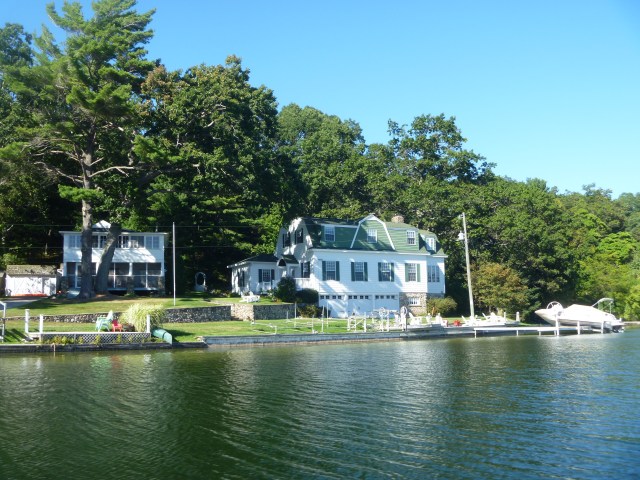
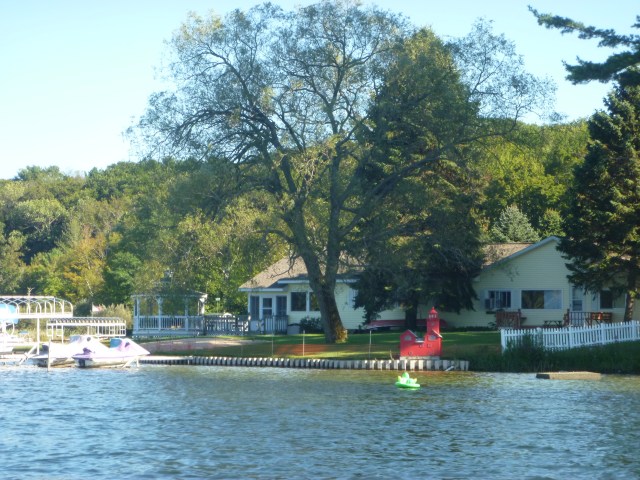
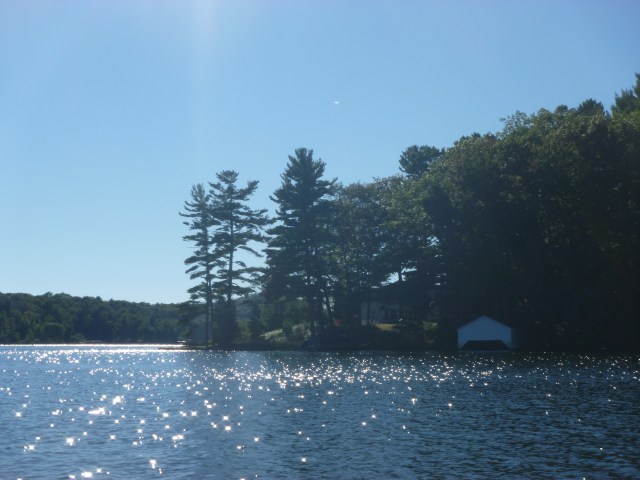
Shore line cottages

South Shore

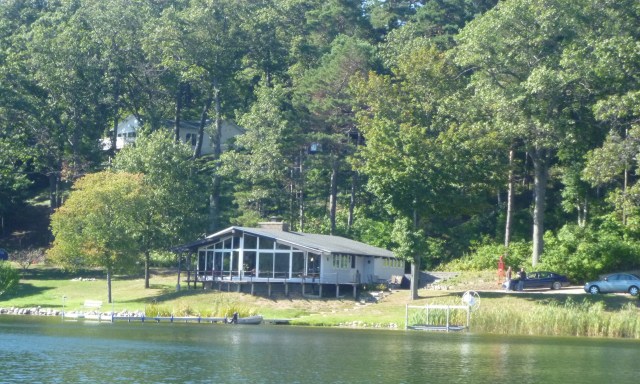
Single storey cottage

Some Stony Lake Properties that caught my eye

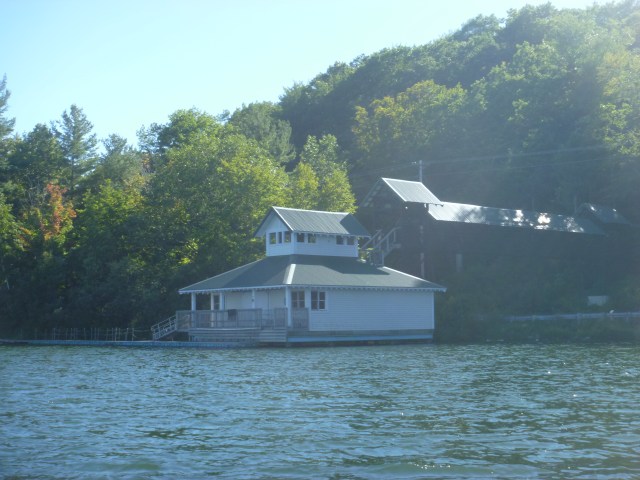
Boat House

A Stony Lake Boat House

My thanks to John and Julie for being magnificent and generous hosts and for taking me on my own private History Tour Boat.

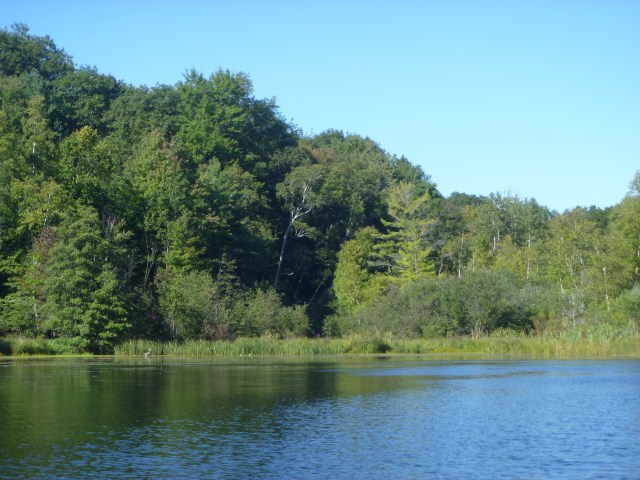
Quiet area

A Quiet Area of Stony Lake (that’s a heron over to the left there)

Along The West Michigan Pike: From Sand Trails to U.S.31

We spent the first fortnight in September this year at our friends’ cottage in Michigan. We’ve visited several times before but it’s always a pleasure to stay there with them and make new discoveries in the area as well re-visiting old haunts.

The Book

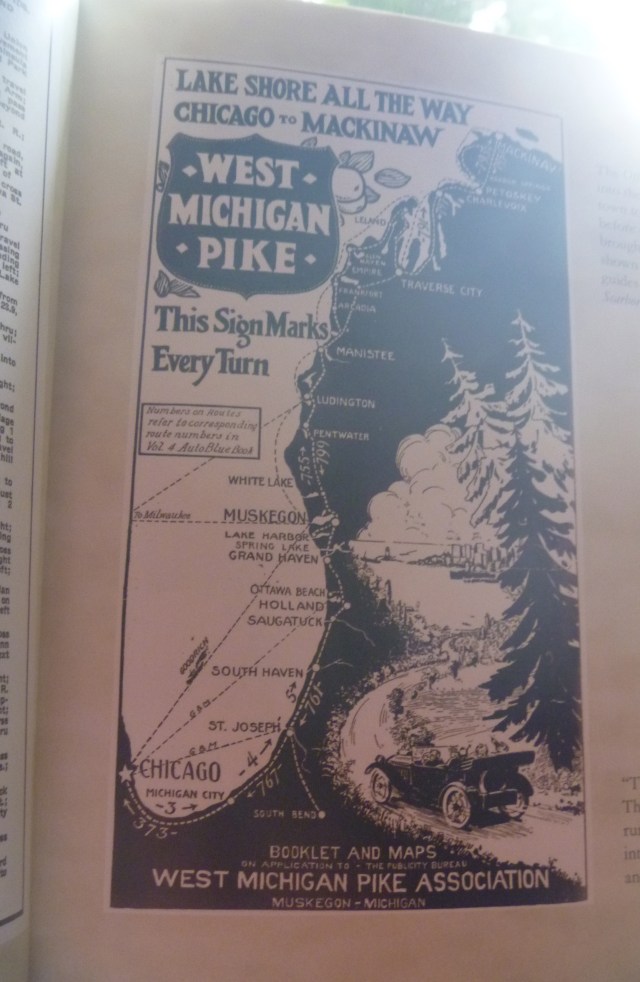
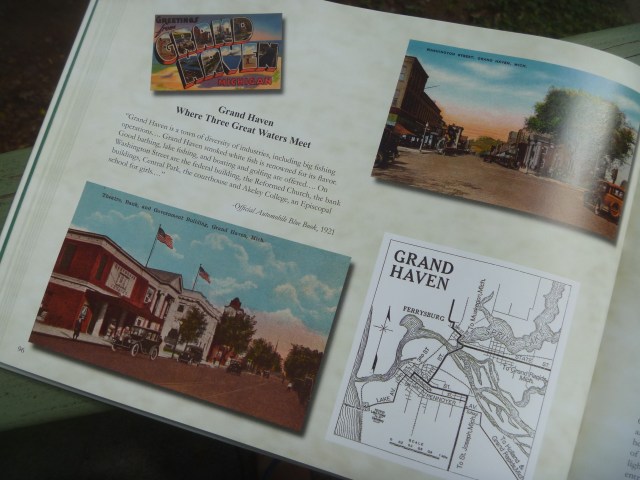
On the bookshelves at the Cottage my attention was drawn to a book by friends of our hosts called ‘Vintage Views Along the West Michigan Pike‘. Christine Byron and Thomas Wilson have collected memorabilia and old photos and postcards and assembled them together to produce an illustrated history of the road that wends (or wended) its way along the eastern side of Lake Michigan from the Indiana State Line to the Mackinac Bridge that links the Lower Peninsula of Michigan to the Upper Peninsula.

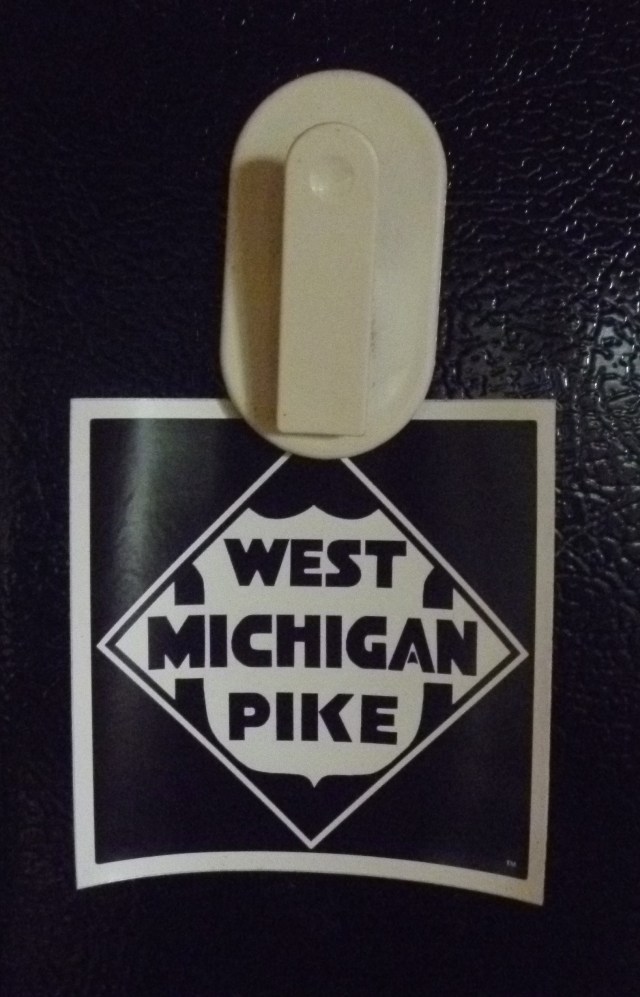
Sticker

The West Michigan Pike has been more or less swallowed up by the highway U.S.31 which actually starts way south of Michigan in Alabama.

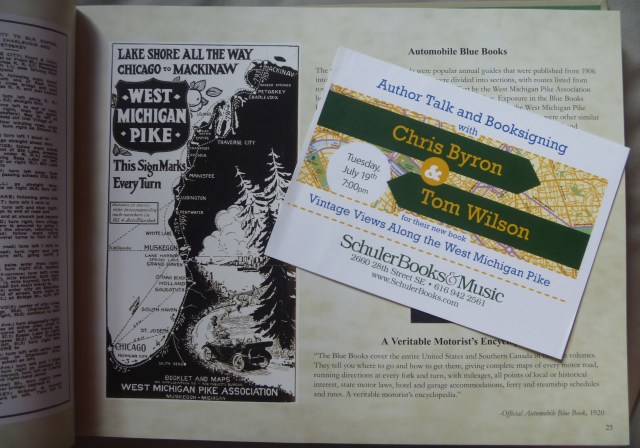
WMP author talk

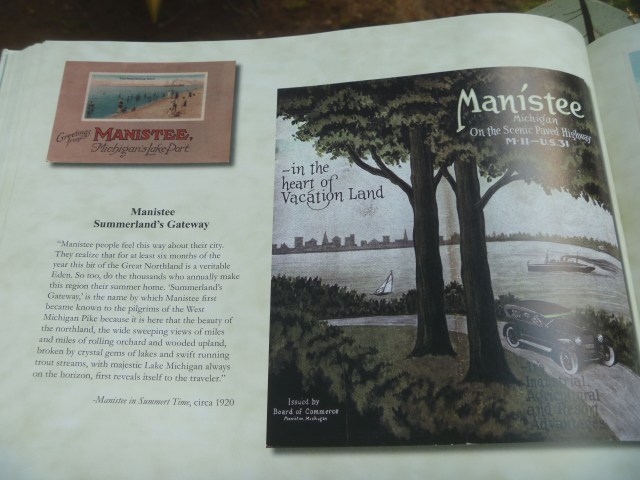
I’ve picked out a few  pages of places that I’m more familiar with and included some of my own photos of places along the route.

WMP map

Map

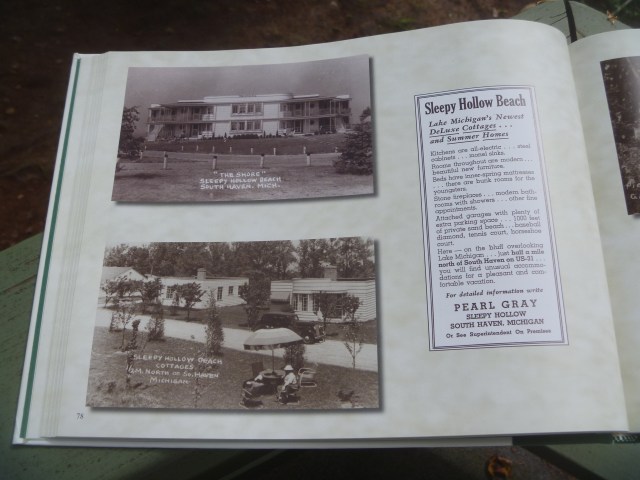
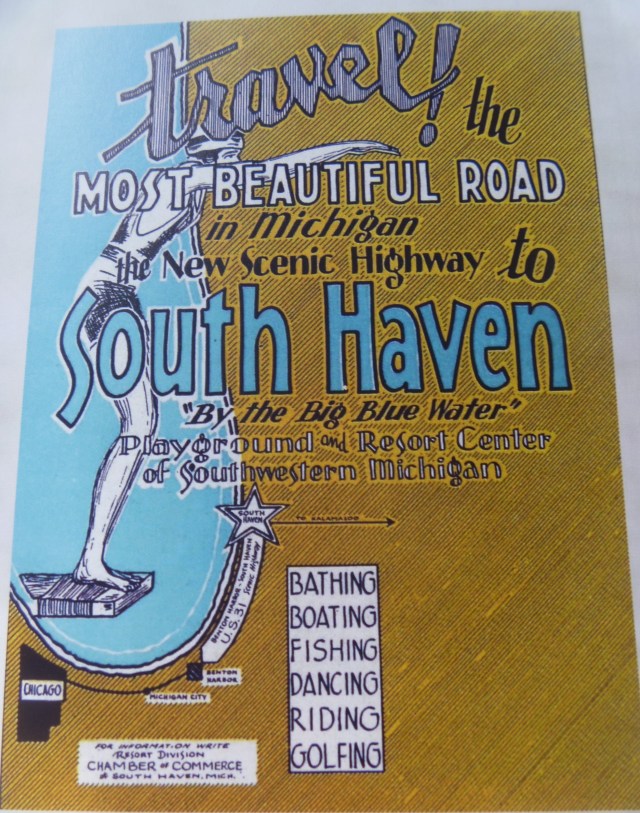
WMP Accommodations SH

South Haven Accommodations in yesteryear

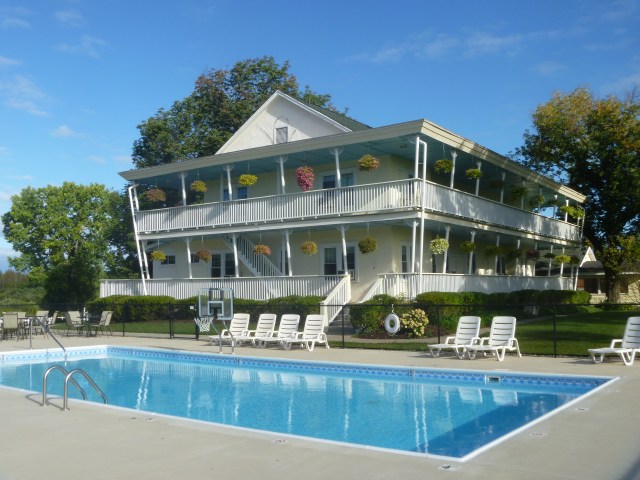
Sun 'n' Sand

Our 1950s Sun ‘n’ Sand Resort Accommodation 2013

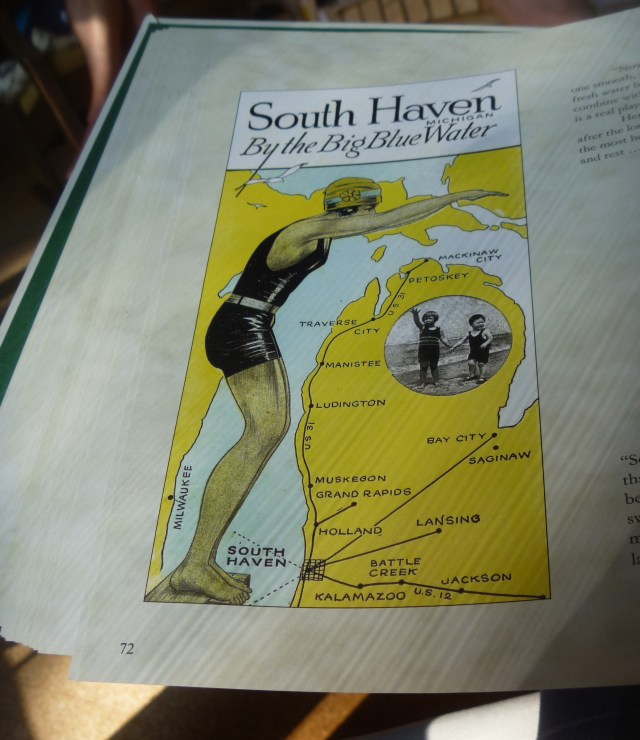
WMP S Haven

WMP South Haven

South Haven was our overnight stop between Chicago O’Hare Airport and Stony Lake where the Cottage is located.

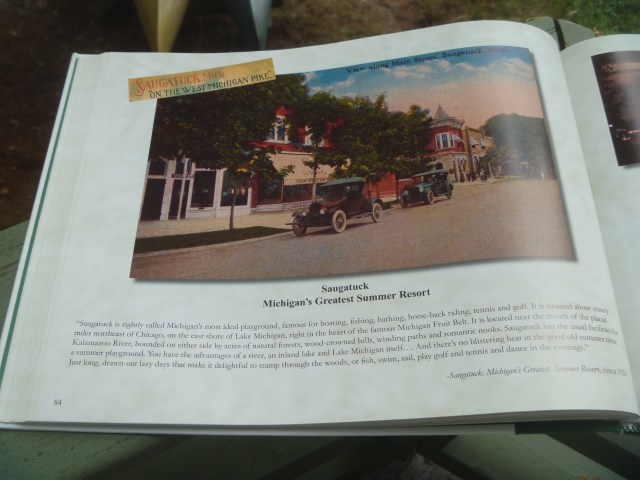
Saugatuck

Saugatuck is always a favourite stopping off point just off the 31 on journeys between Stony Lake and Chicago.

S.S.Keewatin

The S.S.Keewatin, moored on the south bank of the Kalamazoo Lake near Saugatuck is one of the few remaining of dozens of passenger ships that criss-crossed Lake Michigan. The Scottish-built ship is now a museum and is the biggest vessel to ever enter Saugatuck’s Harbour. I haven’t yet managed to visit as the museum is closed after Labor day and our trips are normally in September.

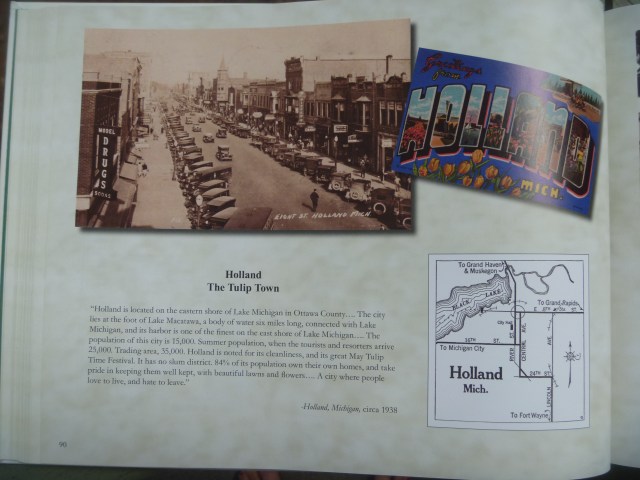
Moving on north up the US31 you come to Holland with its very Dutch buildings and atmosphere. We visited Downtown Holland for the first time this trip but it’s not easy to take picturesque pictures these days, with cars parked everywhere. Better to view it from the old time postcards and pictures.

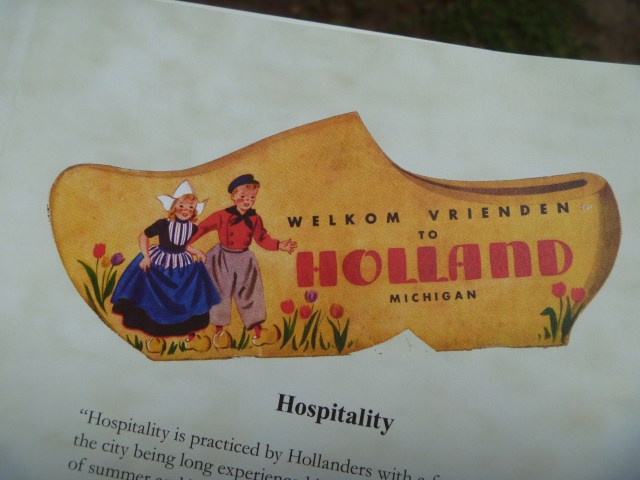
Welcome to Holland

Welcome to Holland

Holland Tulip Town

Holland – Tulip Town

Holland

Holland Postcard – I love this style but no longer available these days!

Grand Haven

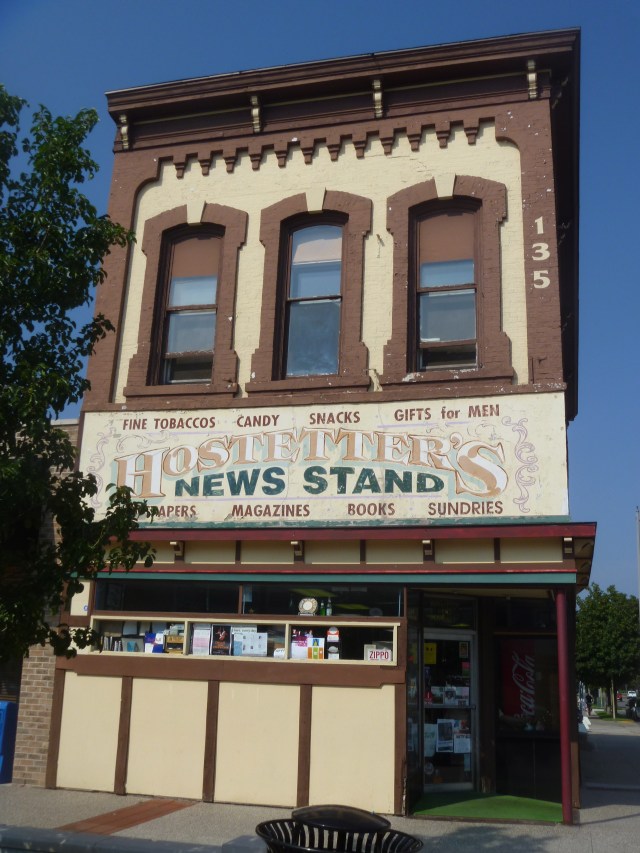
Next along the route is Grand Haven. We’ve visited a few times and love this wide  streeted town with its individual shops like Hostetter’s Newsagent and Bookshop and old style deli Fortino’s.

Hostetters

Hostetter’s, Grand Haven, MI

Another favourite town of ours is Pentwater. Dubbed “A Norman Rockwell Kind of Town” it is, like the many of the others, just one wide main street with good eateries and shops. Sailing is also very popular here and the yachts big and small bob up and down in the harbour/marina as you approach the centre of town.

Pentwater

Main Street Pentwater 2007

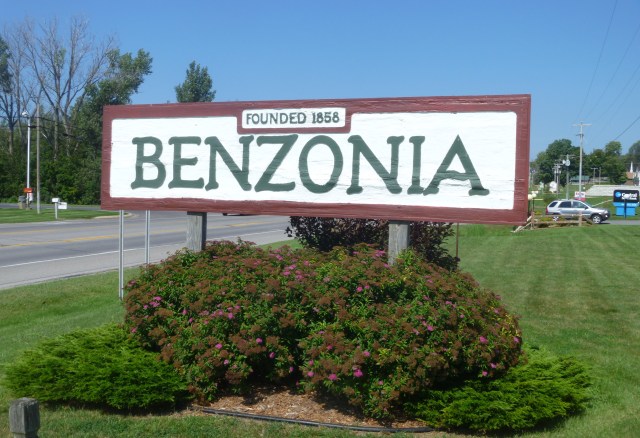
North of Pentwater has usually been outside our holiday ‘comfort zone’ but we made a day-long excursion this year via Manistee and Benzonia to the delightful small city of Traverse City. It’s one of those places listed in Top 10 Small Town America lists such as this and we thought it deserved its placing.

Manistee

Manistee

Benzonia sign

Welcome to Benzonia!

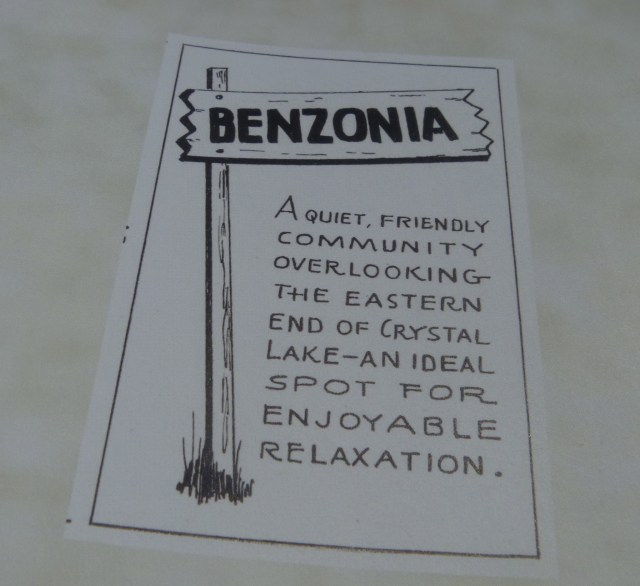
Benzonia

Description of Benzonia

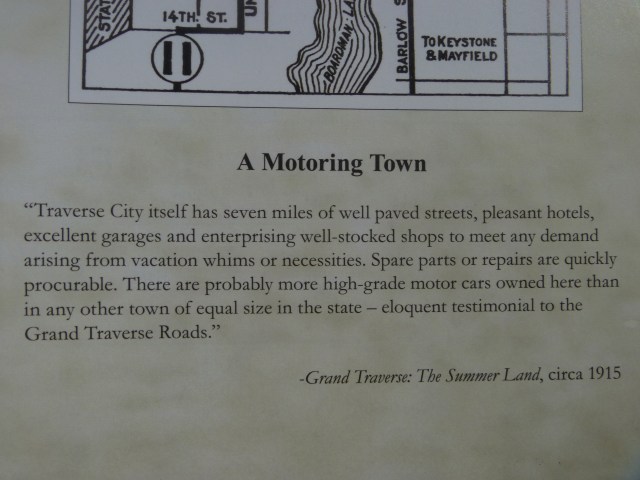
A Motoring town

Traverse City ‘A Motoring Town’ – Still Full of Parked Cars Today!

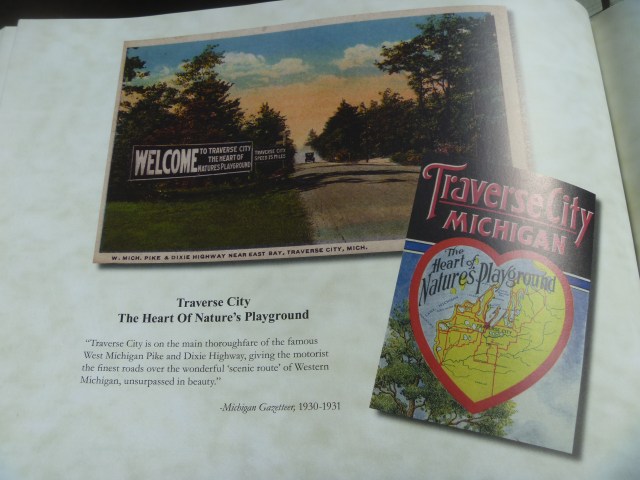
Traverse City

Traverse City – Also, ‘The Heart of Nature’s Playground’!

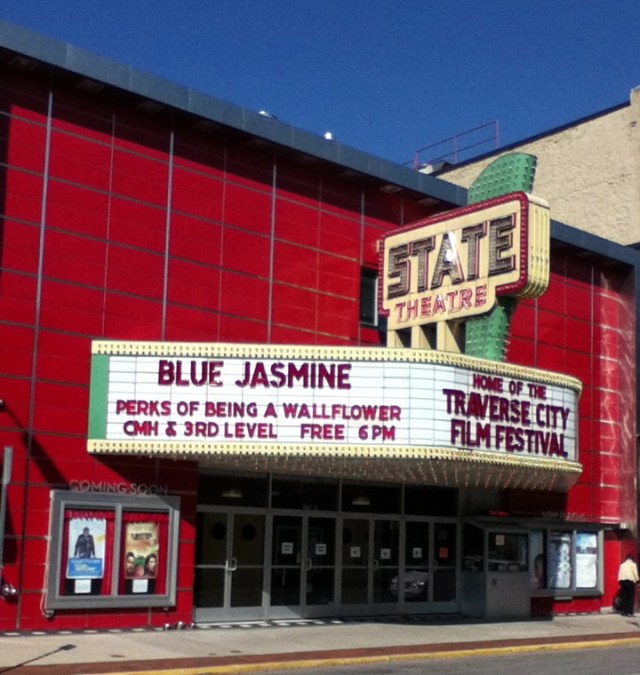
Cinema Traverse City

The Cinema that Local Film Maker Michael Moore helped to Save

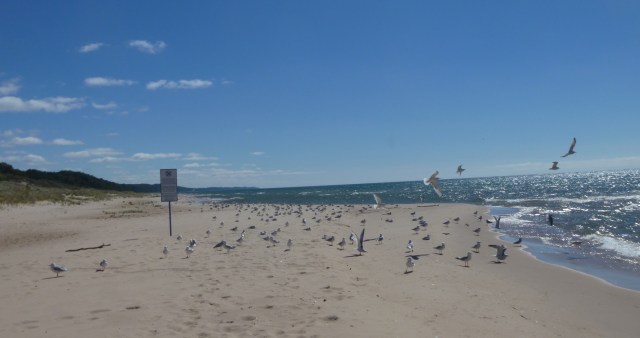
And here’s Lake Michigan itself – By Day

Lake Michigan

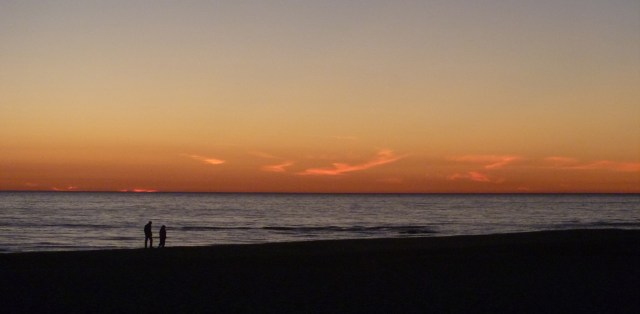
… And At Sunset

L Michigan sunset

The City that Built Chicago : The Hackley and Hume Houses in Muskegon, MI

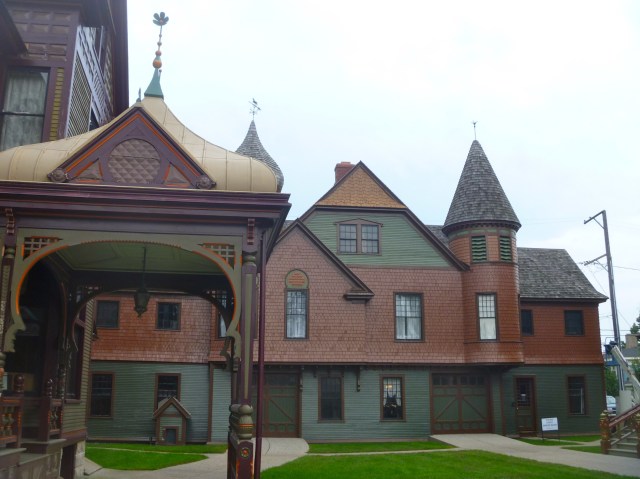
On Saturday 7th September as we drove into Muskegon, a city of 38,000 in the State of Michigan more or less opposite Milwaukee on the eastern shores of Lake Michigan, and drew to a stop outside the Hackley and Hume Houses I thought I had arrived in pre-revolutionary Russia!

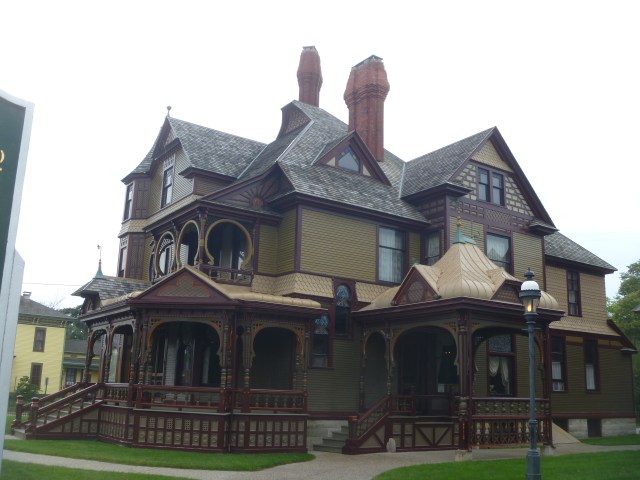
The Hackley House

The Hackley House

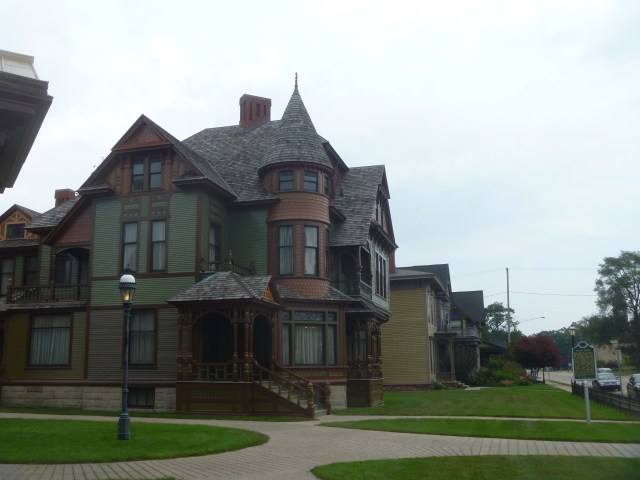
Hume House

The Hume House

Look at the pictures and you will see what I mean. But I could get no satisfactory answer from the tour guide as to why the houses were built in this particular style. But otherwise we had a most interesting tour of both houses and were able to compare and contrast the house styles and the lives of their former inhabitants.

Our guide referred to Muskegon as the city that built Chicago due to its huge influence and reliance on the lumber (timber) trade.  Needless to say that was what Charles Hackley and Thomas Hume were involved in.

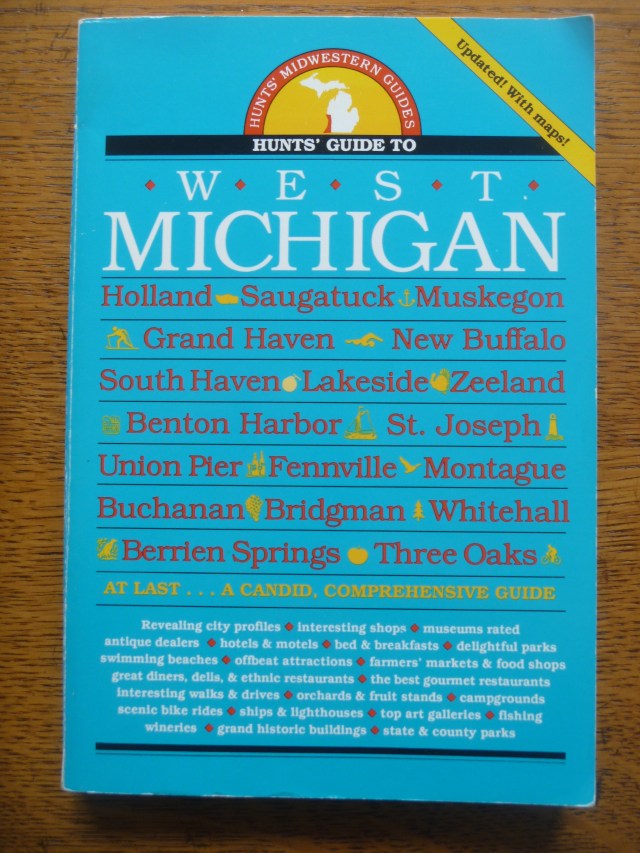
Hunts' Guide

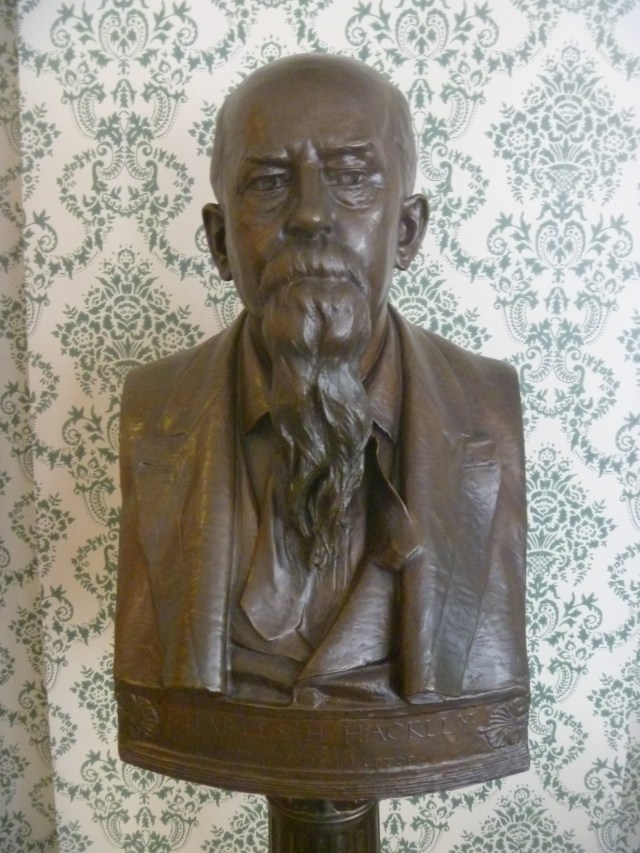
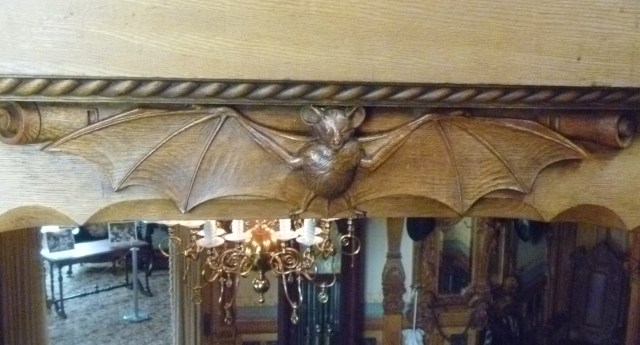
Victorian love of ornament may have reached a new height in the 1888 home of Muskegon’s great benefactor and richest lumber baron, Charles Hackley. Together with the house of his partner next door and the elaborate, prominent carriage house they share, it forms a remarkable urban ensemble, almost Oriental (we thought it Russian) in its turretted silhouette and rich colors and textures. Houses of this size and splendor were usually made of brick or stone, but Hackley and Thomas Hume, his friend and business partner since 1875, built with the material that made their fortunes. It is said to have taken years for German woodcarvers to finish the Hackley House’s fanciful, fascinating carvings of birds, dragons, bats and a portrait of Hackley himself.”

Taken from Hunt’s Guide to West Michigan (above).

Carriage House

The Prominent Carriage House

Charles Hackley

Charles H. Hackley carved in wood

Bat carving

Bat Carving

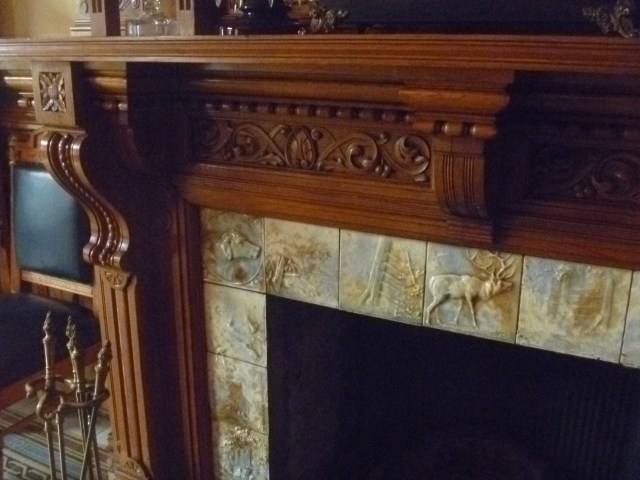
Hackley Fireplace

The Hackley Carved Fireplace

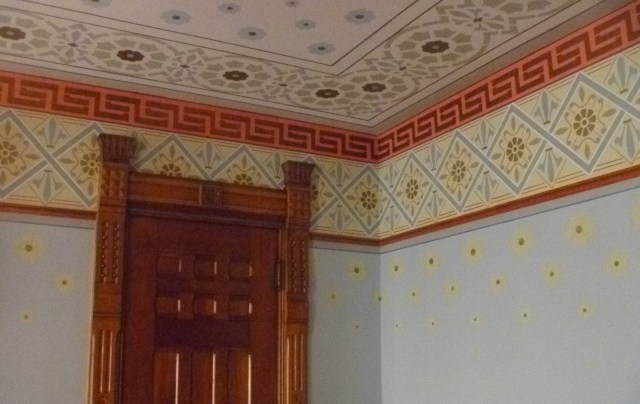
Ornate Room

Ornate walls, ceiling and door in the Hackley House

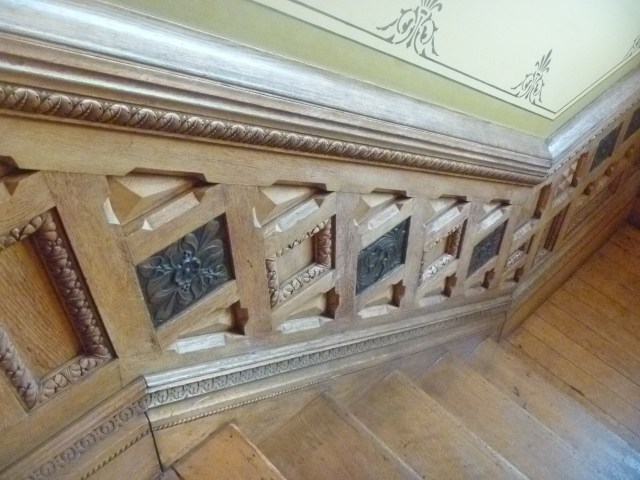
Hackley Stairs

Staircase at The Hackley House

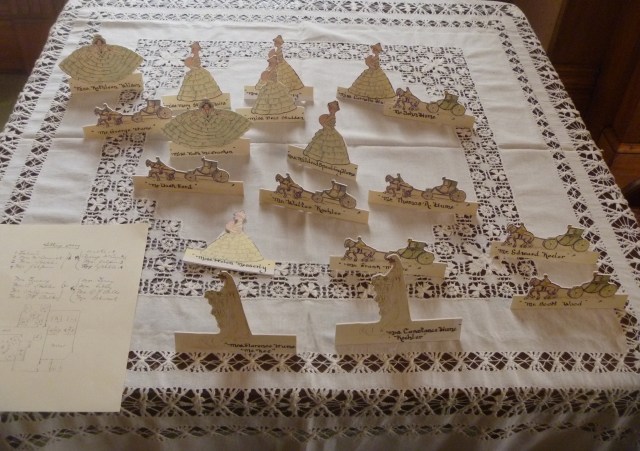
Wedding preparations

The Hume House was being Prepared to Show a Wedding Party

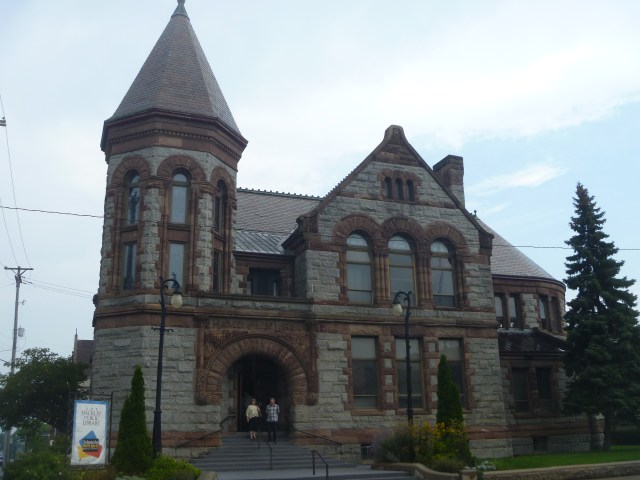
Charles Hackley was a generous benefactor to the city of Muskegon and many buildings and sites still survive today as evidence of this. We visited the park, the library and the art museum, all very near the houses, but there’s also a hospital, a school and other philanthropic institutions.

Hackley Library

The Hackley Library

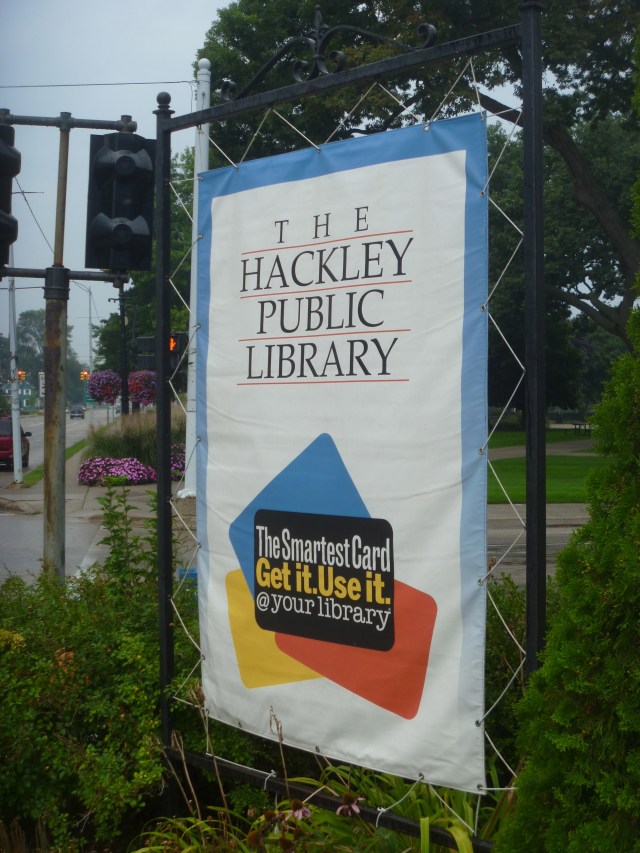
Library poster

Welcome to The Hackley Library – the Hackley Park is behind

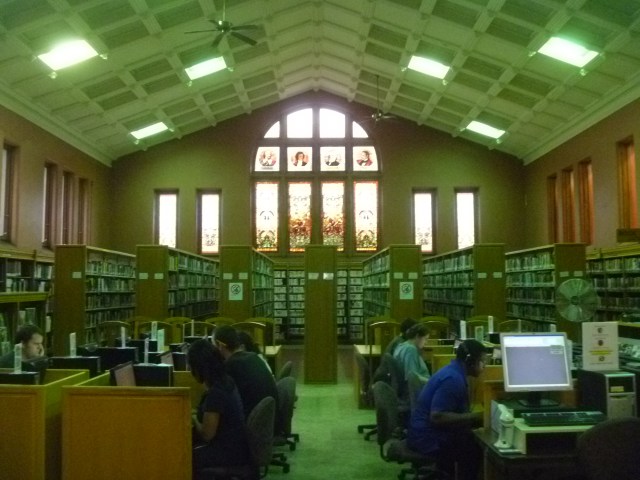
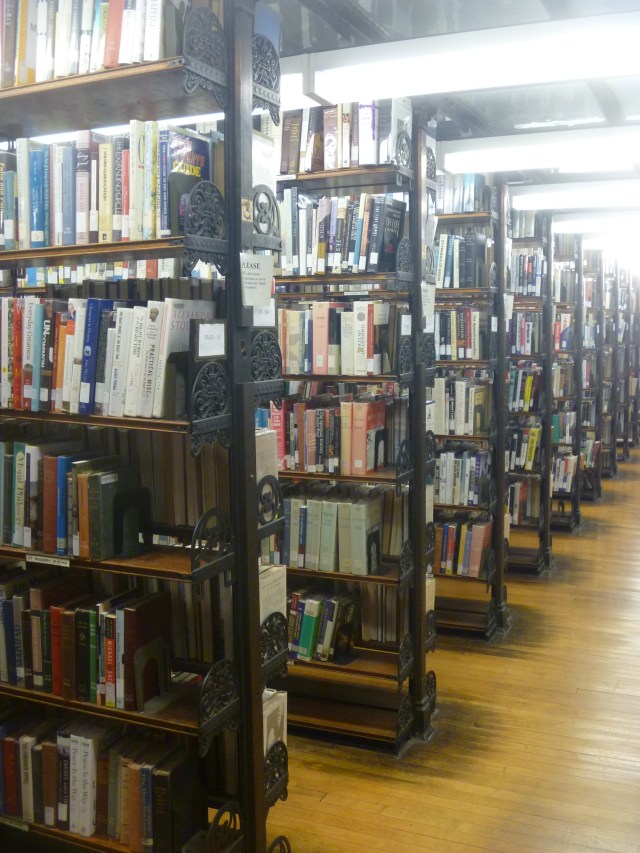
Hackley Library 1

Hackley Library 2
Inside The Hackley Library Today

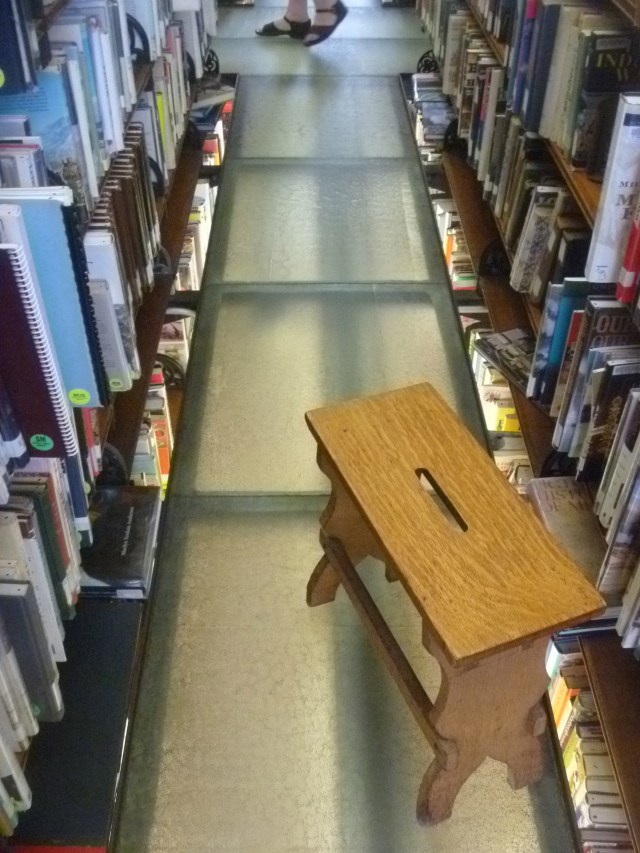
Glass Floor

The first floor mezzanine has a glass floor to allow as much natural light into the building as possible.

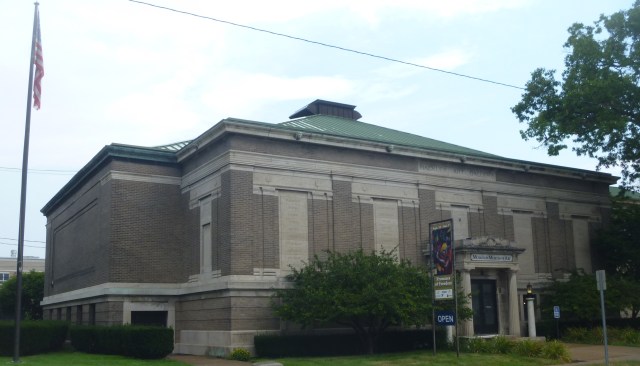
Art Museum

The Muskegon Museum of Art

Oak Park : Wide Lawns and Narrow Minds

The Chicago suburb of Oak Park is probably best known for its connections with Frank Lloyd Wright. I mentioned his Home and Studio are here in a previous post and also a large number of fine examples of his work. Twentieth century novelist Ernest Hemingway was born on Oak Park Avenue in 1899 so I decided to visit his home and museum to find out more about ‘Papa’. He left Oak Park as a teenager for a world of adventure and I’m not sure he ever came back.  My Michelin Chicago Guide says “He later derided the conservative suburb for its ‘wide lawns and narrow minds'”.

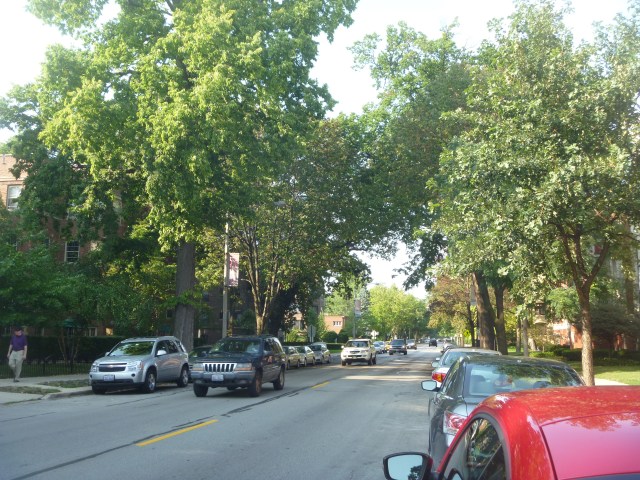
North Oak Park Ave

North Oak Park Avenue, Oak Park

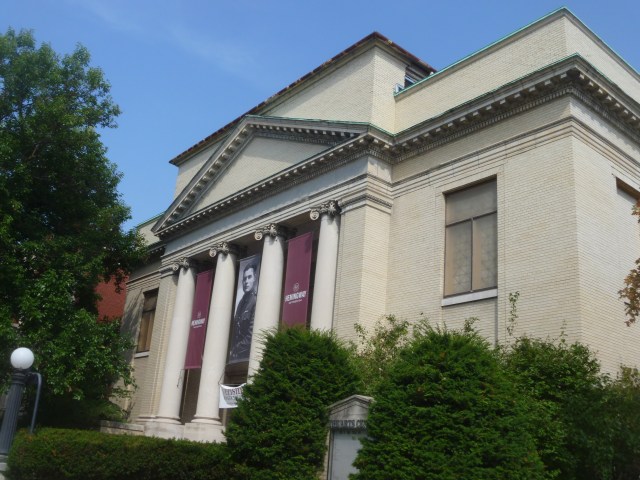
Hemingway Museum

The Hemingway Museum

To get to Oak Park I took the bus down Michigan Avenue to the Loop business district and then the Green Line El Train to Oak Park Avenue. Straight up from the station, on Oak Park Avenue itself, and just a few minutes walk from it, is the Hemingway Museum. This is the place to find out all about the novelist and his life but for the tour of his birthplace you need to book a ticket in advance. Luckily I was able to join the next tour.

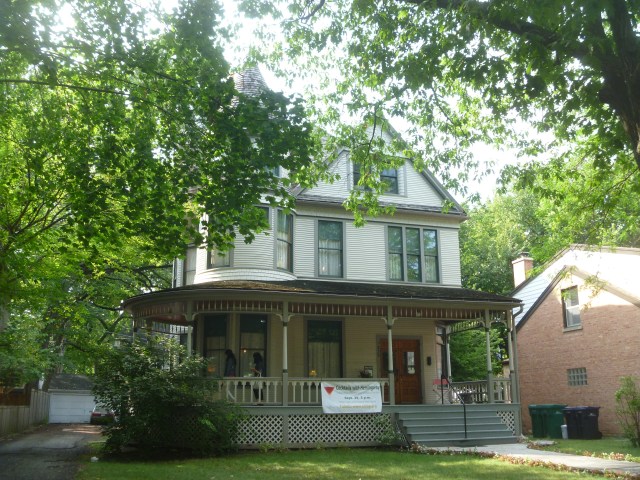
Hemingway Birthplace

Ernest Hemingway Birthplace, 339 North Oak Park Avenue

The birthplace is just another 5 minutes walk along the same avenue of gracious homes and low-rise apartment buildings. The tour was as interesting to me for the guide (whose home it now is) as for what I found out about Hemingway. Still, he (the guide/owner) had managed to furnish the house with some original artefacts and furnishings and all the rest seemed very much in keeping with the late 19th and early 20th centuries.

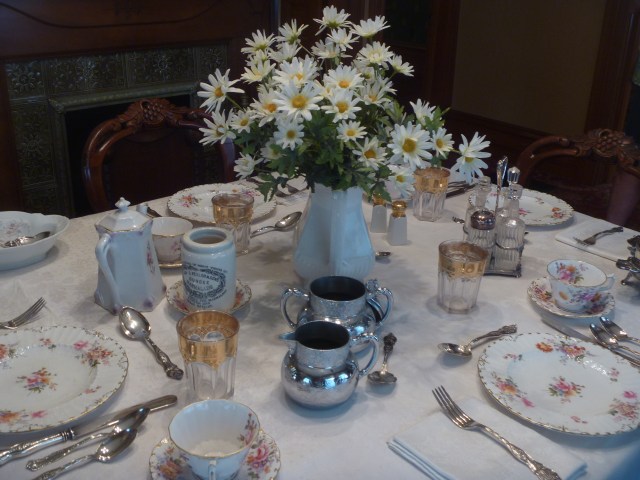
Breakfast Table

Breakfast with the Hemingways

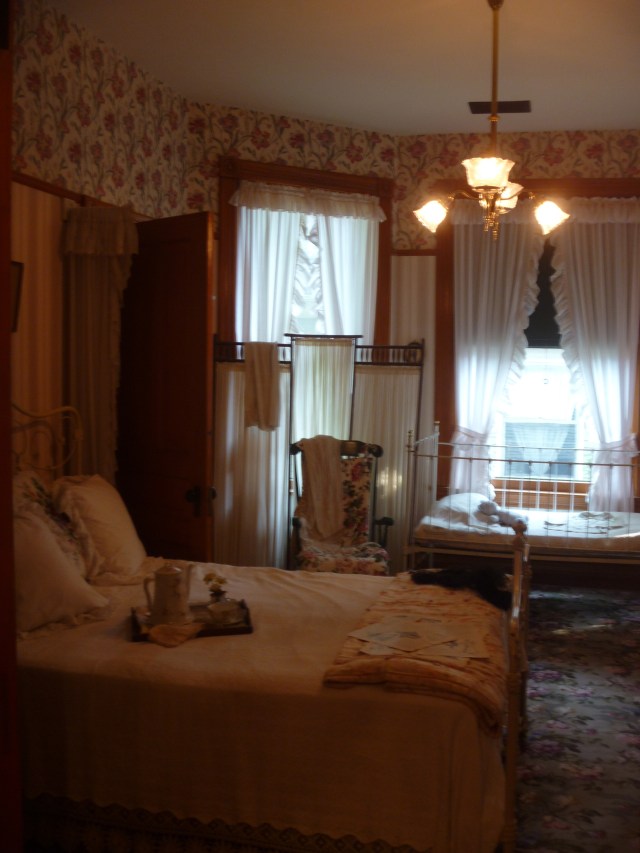
Bedroom

The Room where ‘Papa’ was born

We learned that Ernest and some of his siblings were born in this house but that his family actually lived diagonally across the street and that this house was the home of his maternal grandparents.

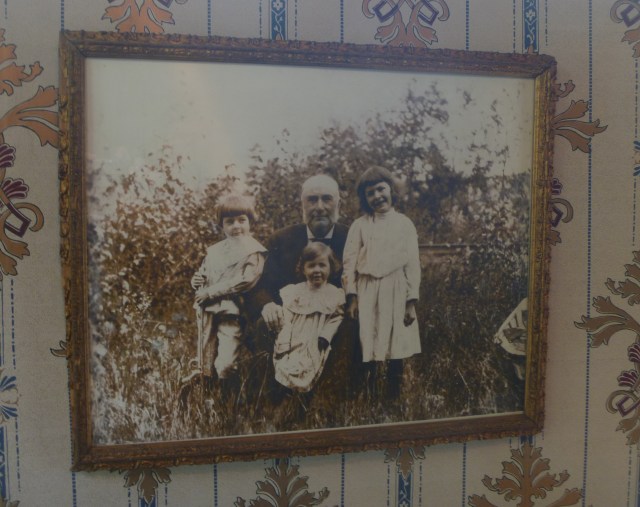
Photographs around  the House and the Museum show Ernest and his elder sister looking remarkably alike.

Hemingway family photo

Ernest (left) and Marcelline (right) with their Grandfather

“The two were a year apart in age, and their mother early on decided to raise them as twins, even to having them photographed in matching gowns and bonnets in the style of the day. Whatever injury Ernest felt he had suffered from such embarrassments, it may have been Marcelline who made the greater sacrifice: she was kept out of school for a year so they would be in the same class, and, despite her own considerable talents, she seems to have willingly stood in his shadow a good deal of her early life.”

[Idaho Librarian book review]

I can’t say I’m very familiar with Hemingway’s work. I’ve read his “A Moveable Feast” and didn’t really warm to him. Recently I read “The Paris Wife” by Paula McLain a novelised version of his life with Hadley Richardson, his first wife. Oh, and I saw him in the Woody Allen film “Midnight in Paris

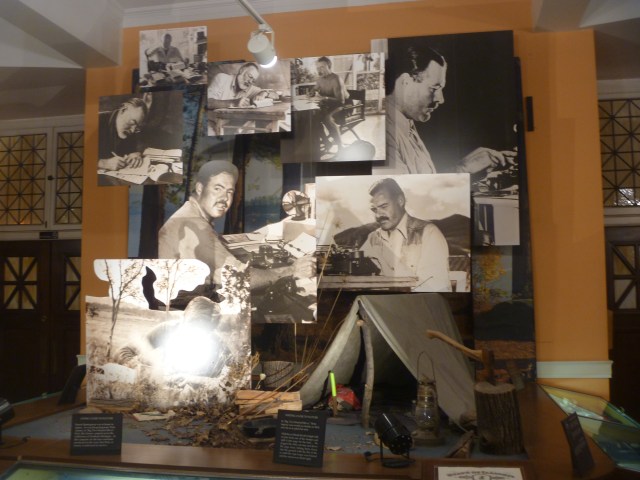
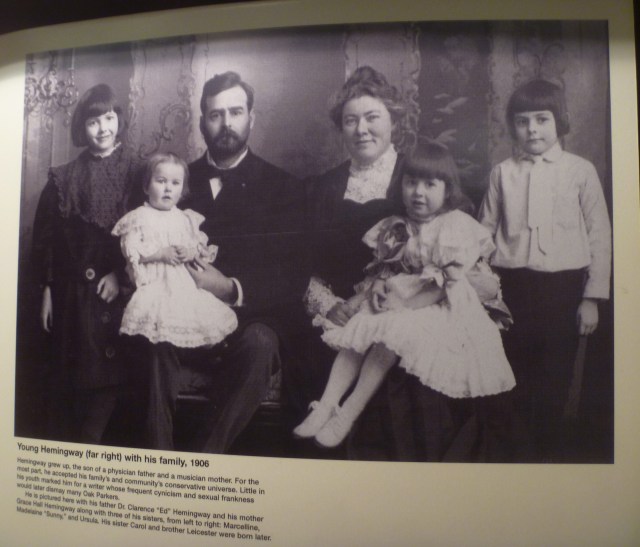
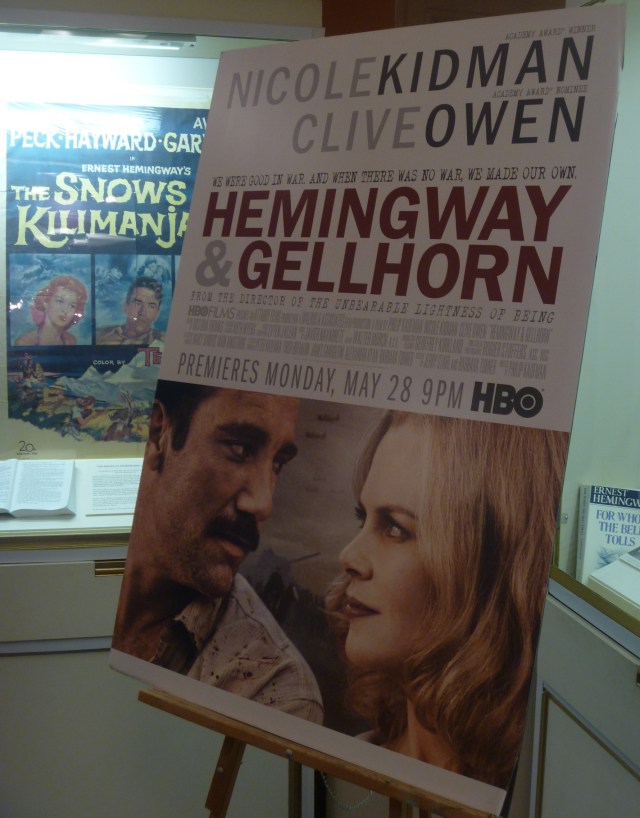
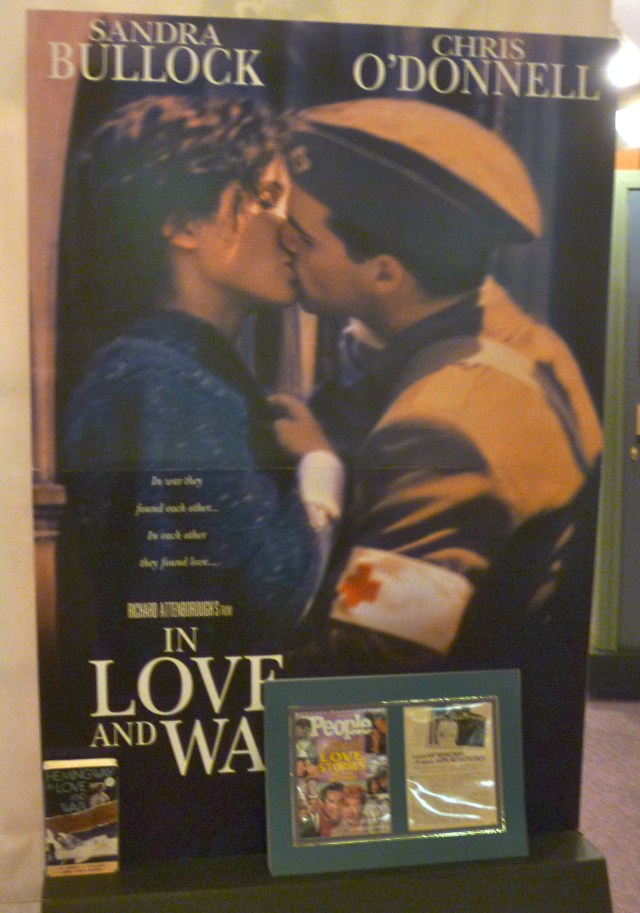
After the House Tour I made my way back to the Museum. There was lots to read and look at and time was getting on so I had skip through much of the Museum. Here are some pictures of the displays and film posters.

Nick Adams display

Ernest Hemingway’s early trips to Michigan made a big impression on him and he relates lots of his own adventures in The Nick Adams Stories. Nature had a huge influence on many of his works.

Family picture

Hemingway with his family

Film posters

In Love and War

Hemingway-related Cinema Posters

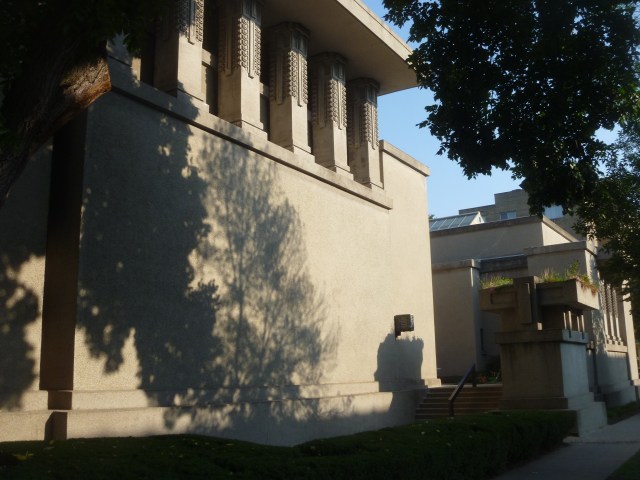
On my return to the train back to Chicago I diverted briefly to see Frank Lloyd Wright’s Unity Temple on Lake Street. It was already closed to visitors that day. Read about the Temple and the current restoration programme here.

Unity Temple

Unity Temple