Milady’s short trip to Geneva

Geneva is not the most attractive of the cities I have visited in Switzerland (like Bern, Zurich and Lucerne) but beyond the designer watch ads atop the lakeside buildings and Geneva’s ‘mountain’ looking more like a rocky ridge, from where I was standing, I found a delightful Old Town and two worthwhile excursions to fill my two days perfectly.

Lake Geneva

On the first full day we boarded an early boat, the S/S Simplon, from the Quai Mont-Blanc and headed off under rather cloudy overcast skies for an hour and three quarter lake cruise to Yvoire on the southern shore of Lake Geneva.
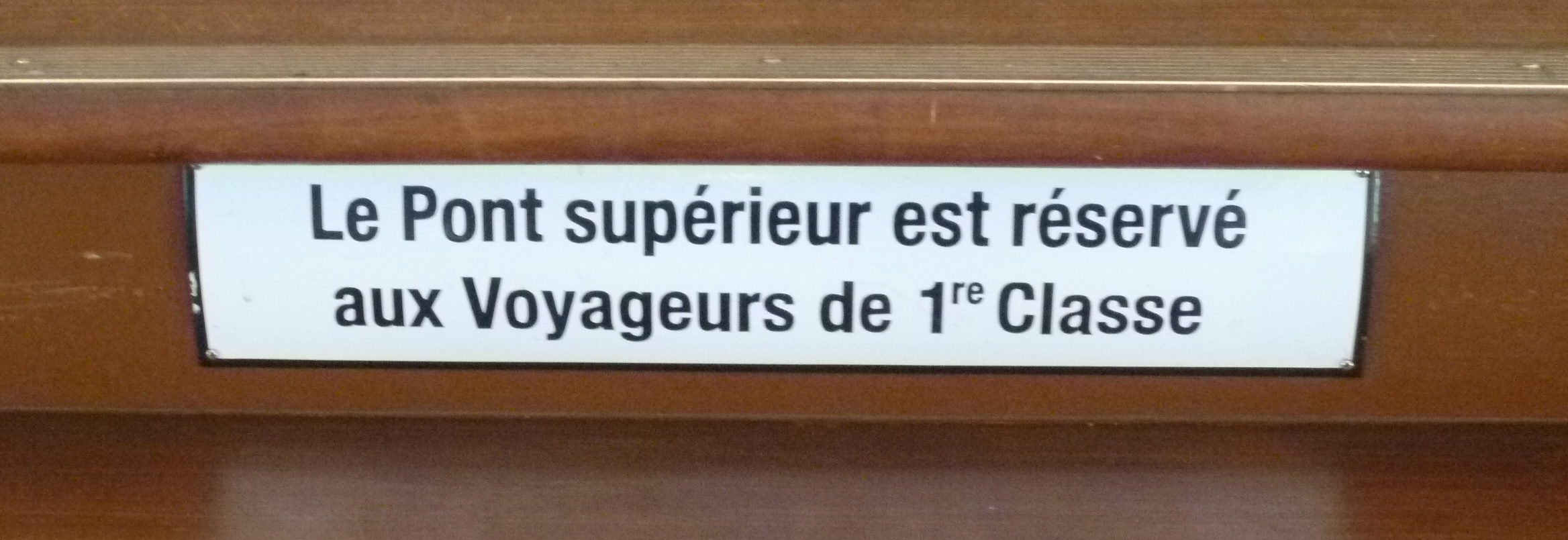
Whenever she can Milady hopes to travel in style
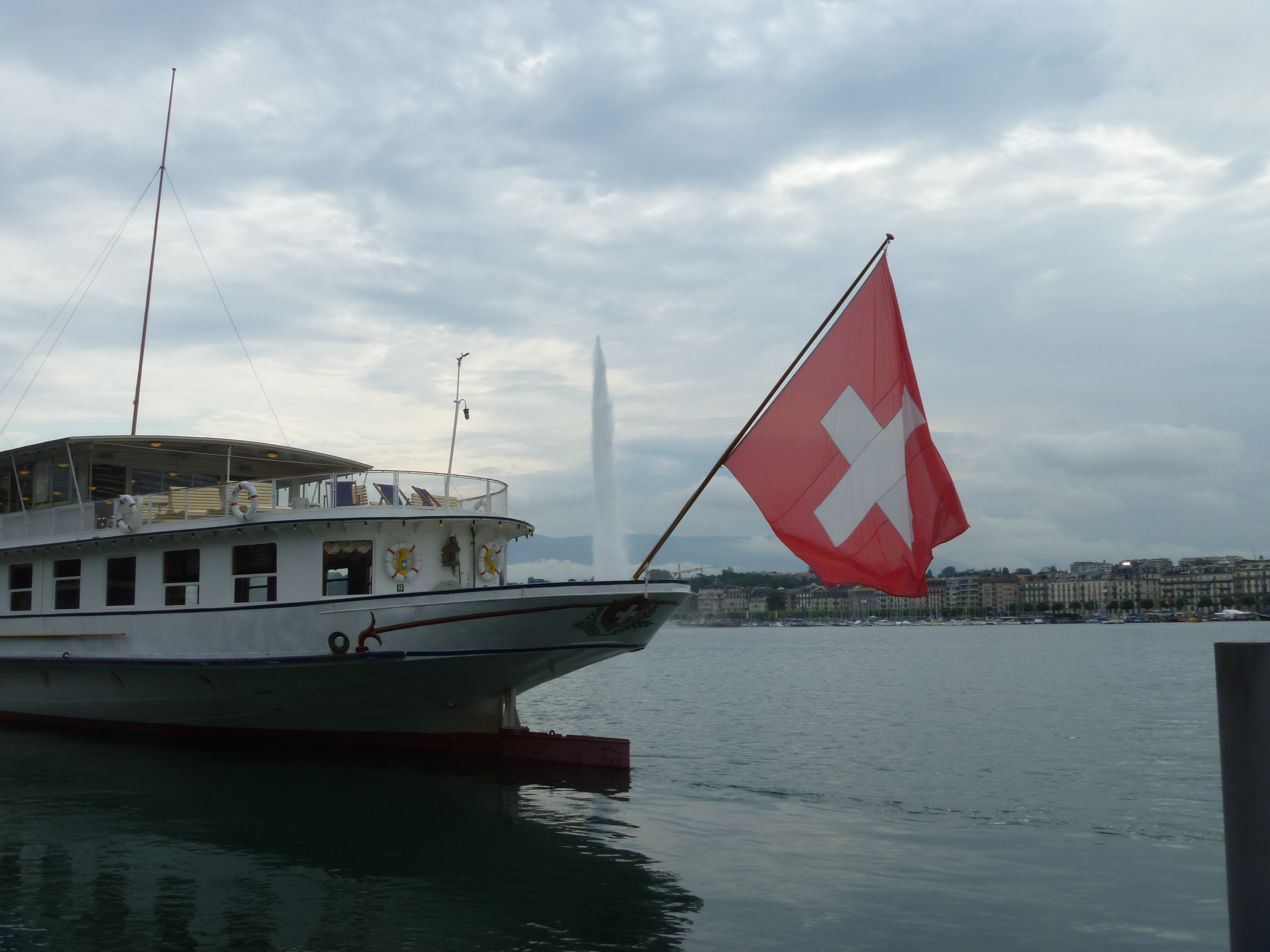
S/S Simplon and the famous Jet D’Eau, from Quai Mont-Blanc Geneva
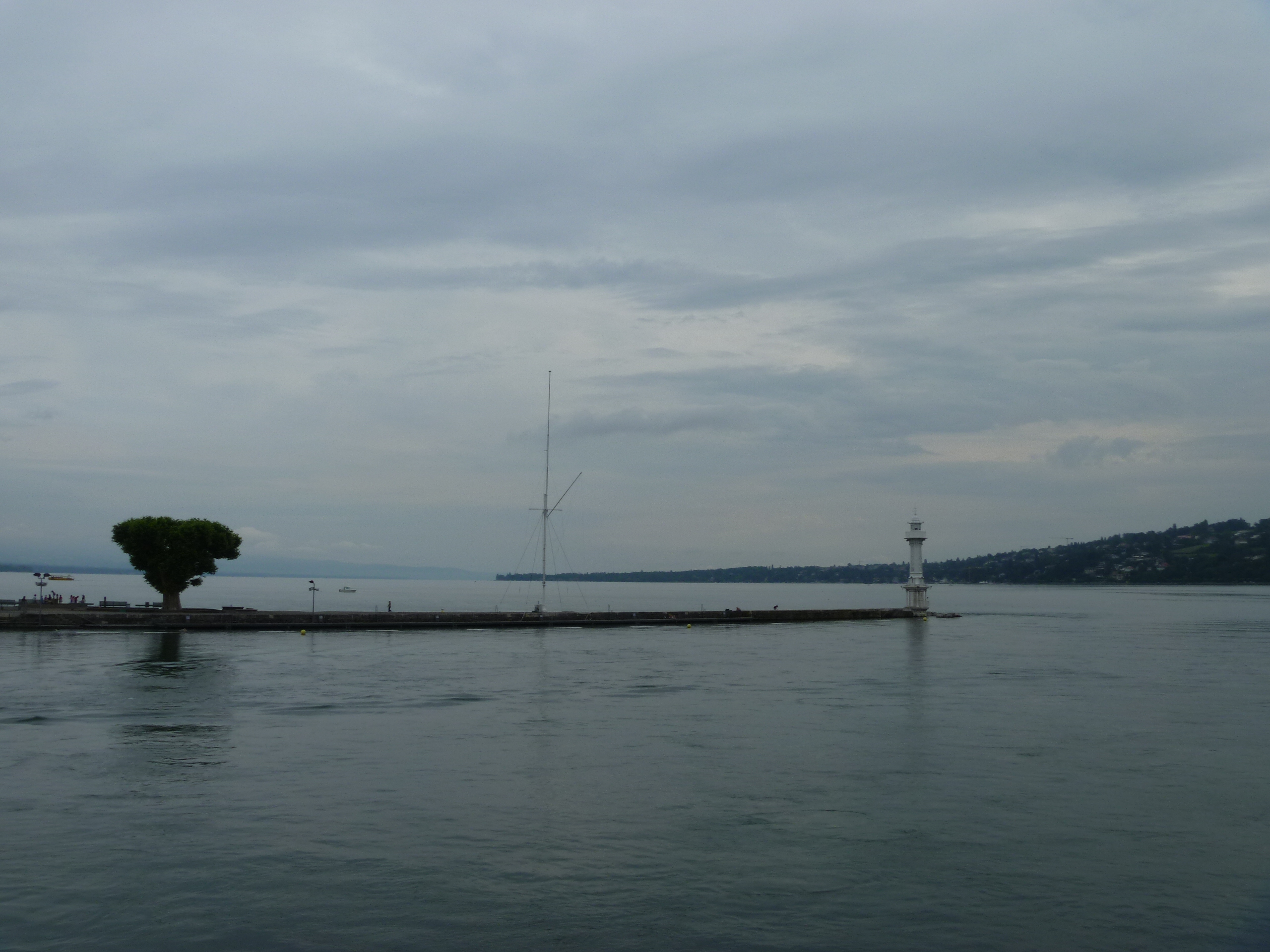
Paquins Lighthouse
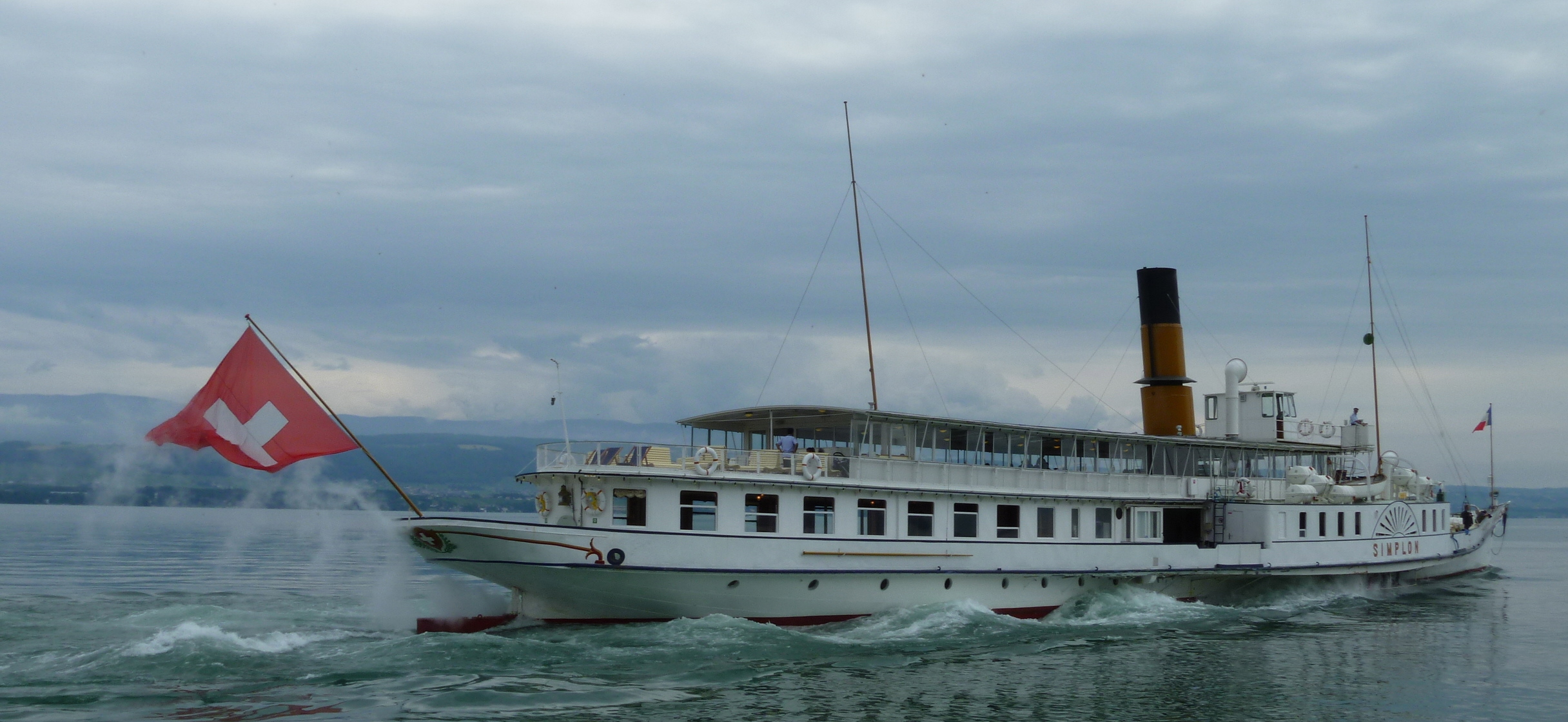
The S/S Simplon leaves us at Yvoire

Yvoire is in France but there are no passport controls or inspections it was just straight off the boat into the Restaurant du Port (the name tells you where it’s located) and lunch was served!
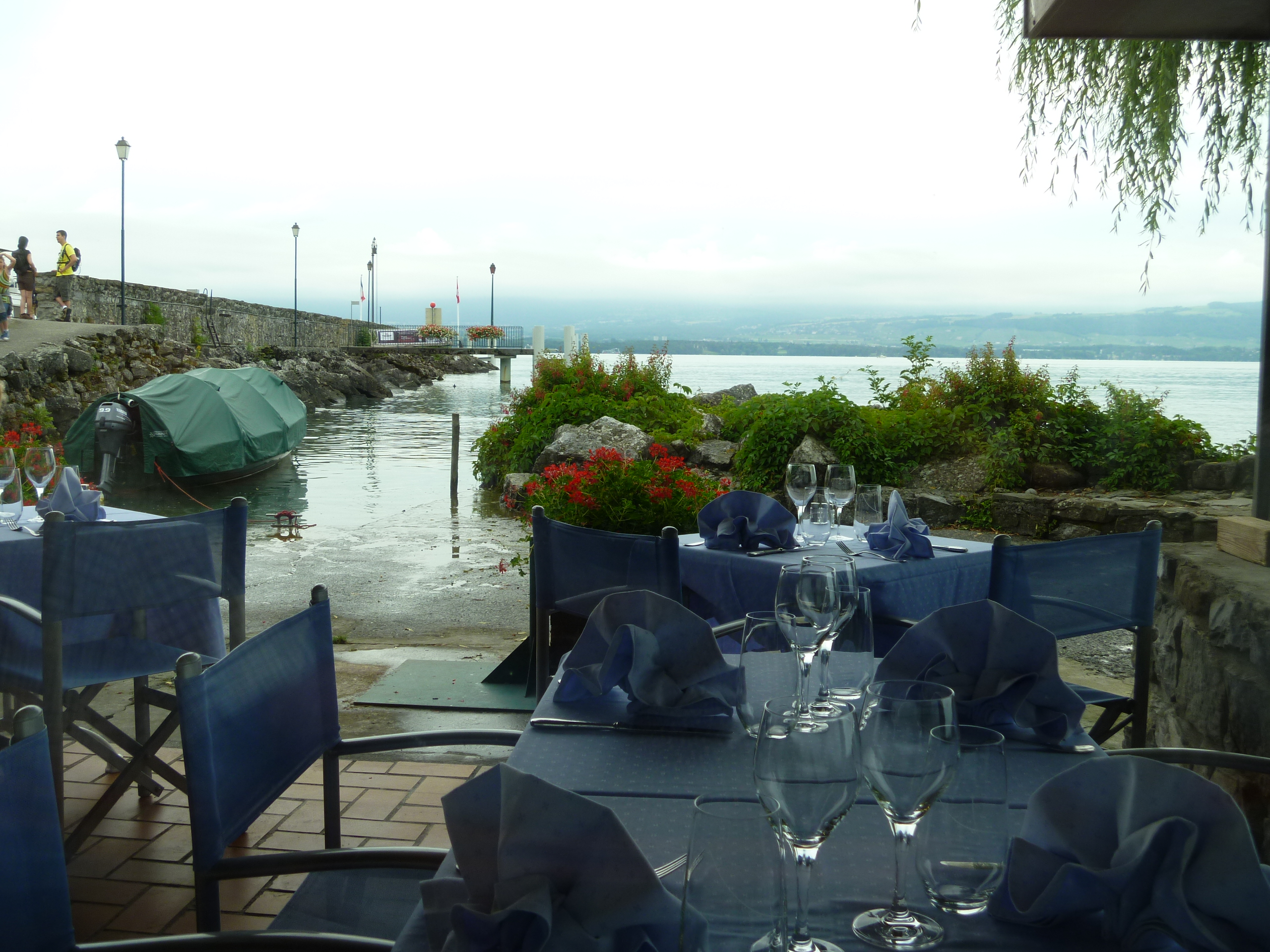
Restaurant Du Port, Yvoire

The proposed return sailing was cancelled which meant a 3 hour stay at Yvoire and you can only spend so long eating lunch. This attractive little medieval town was full of tourists so we two decided to take a walk to the next stop and pick up our boat from there later.

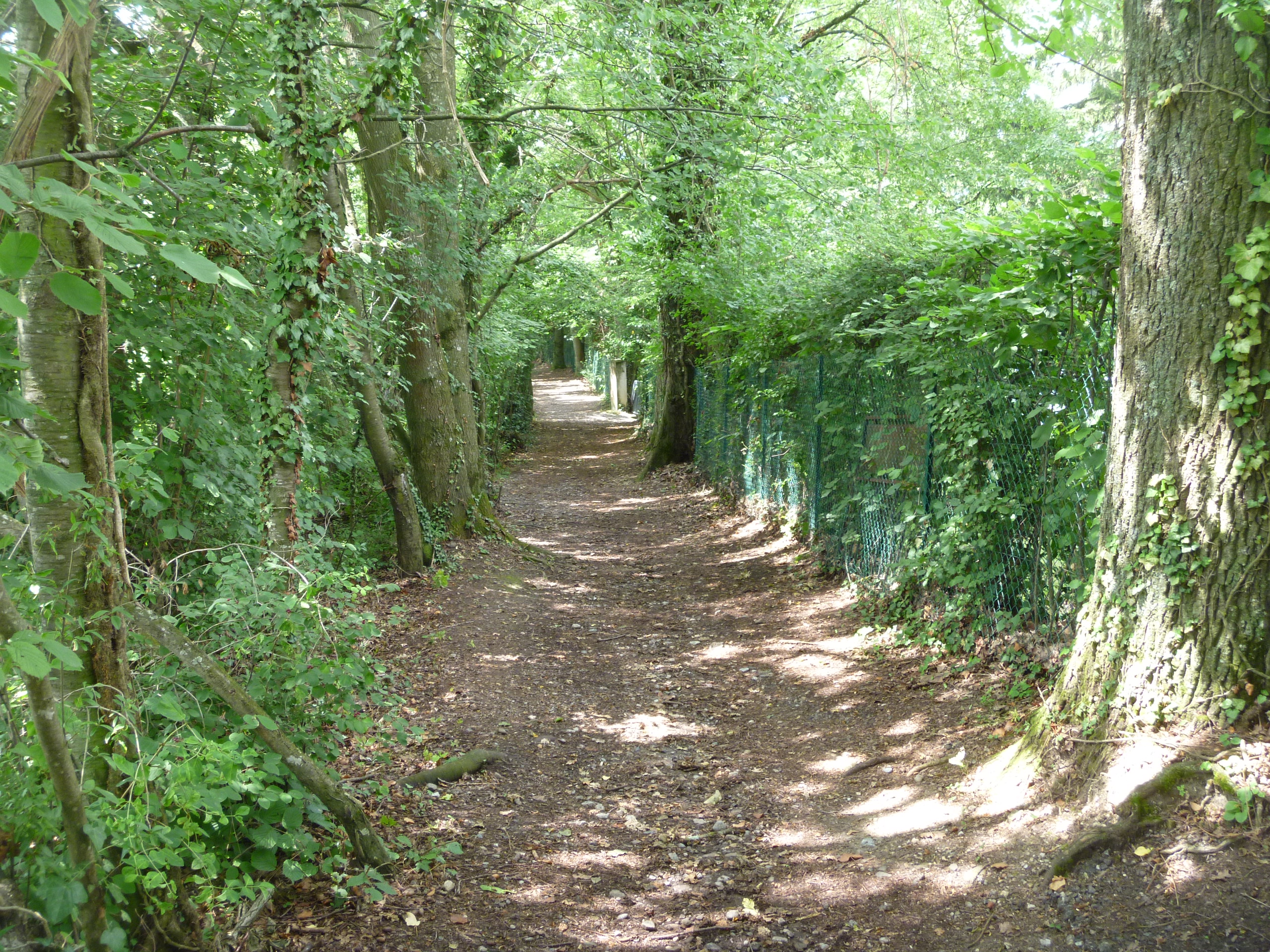
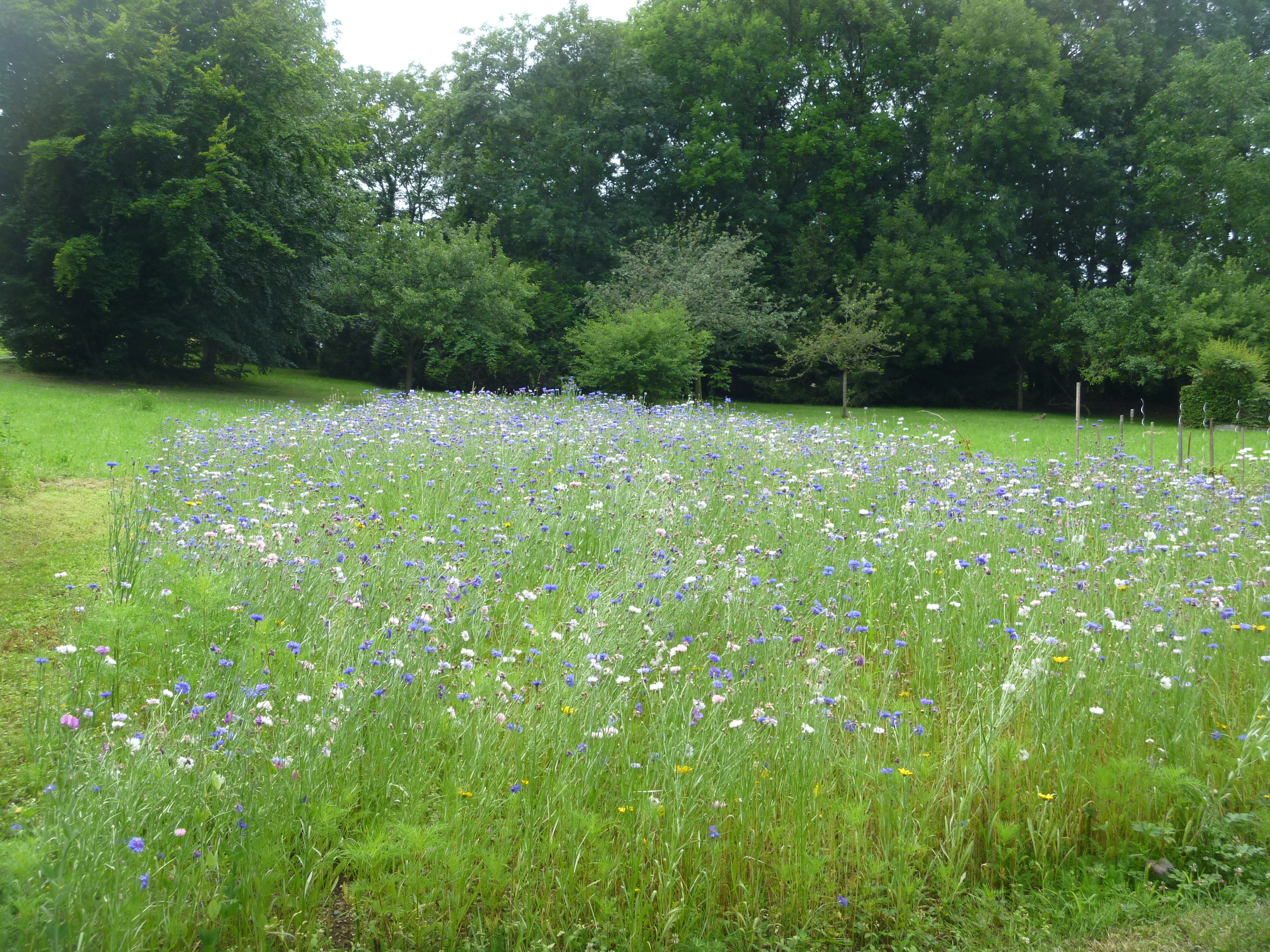
After inspecting the little shops we set off to find the footpath to Nernier. (Sounds like something out of C. S. Lewis.) It was a most pleasant walk along shady paths and tracks past interesting houses but with minimal views of the Lake, unfortunately. We came across a lovely wildflower meadow, visited an old church and arrived at Nernier with lots of time for people-watching at the port until the Simplon arrived on the dot at  5.37pm.
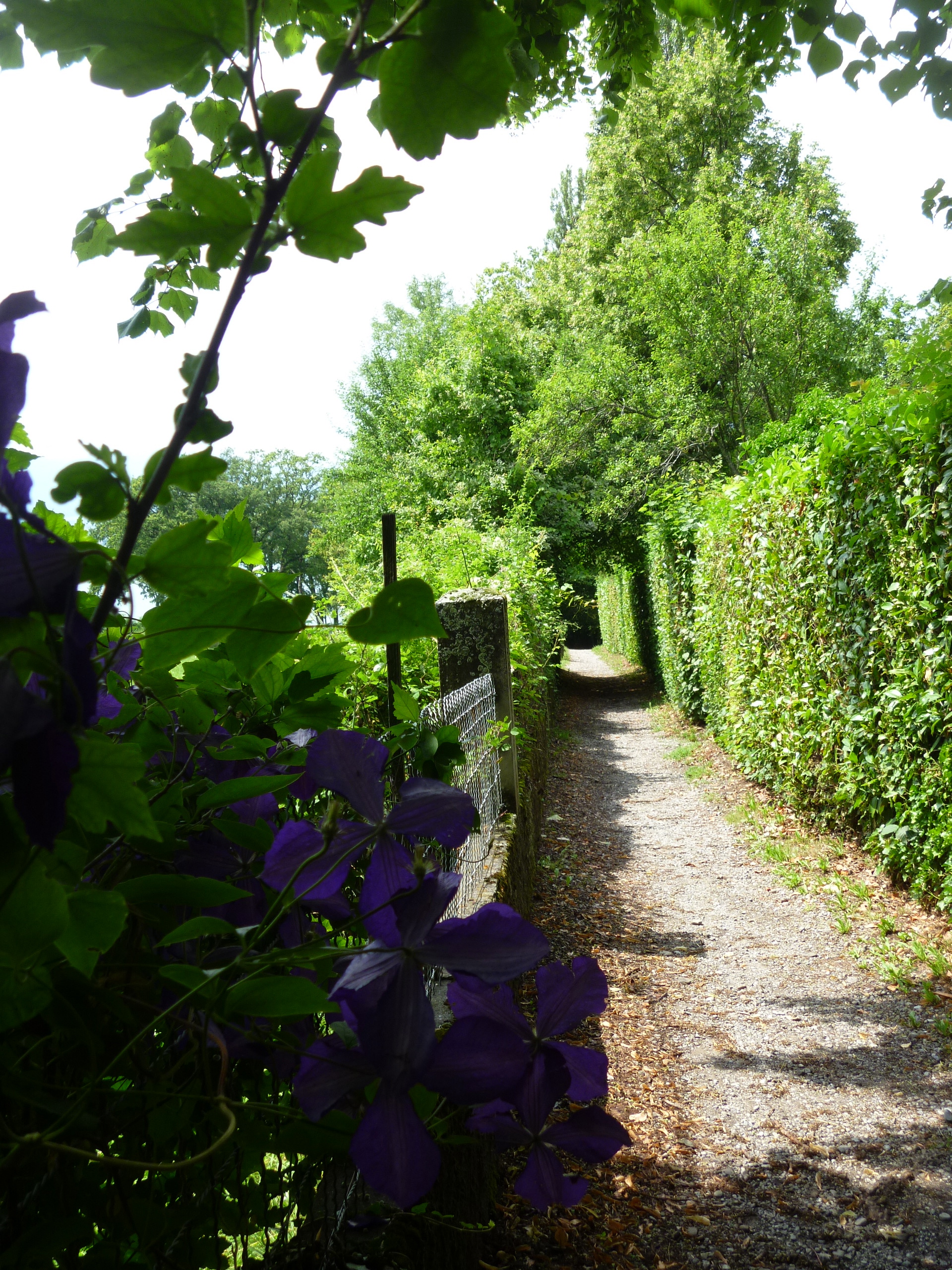
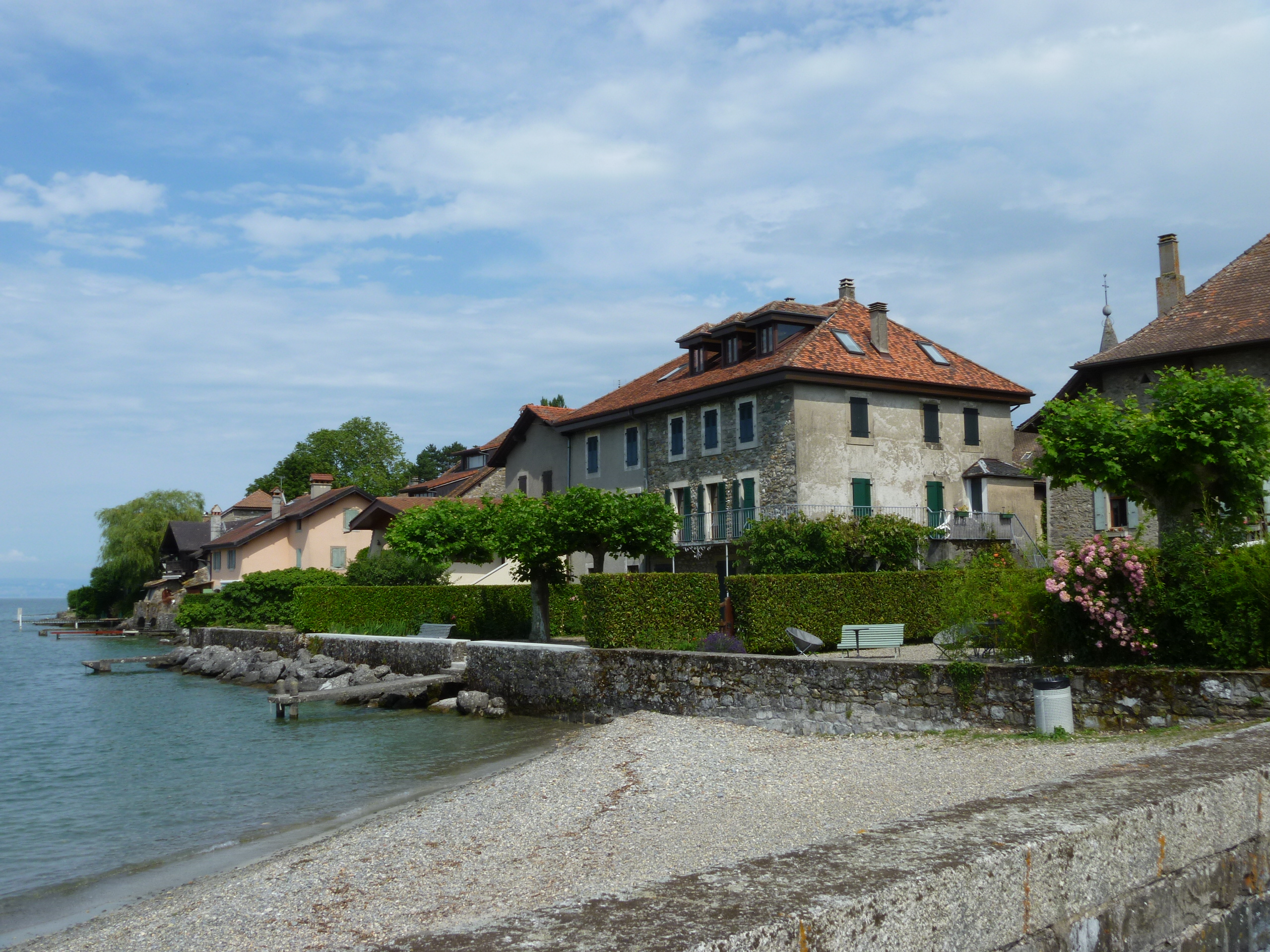
The small beach at Nernier

The Old Town

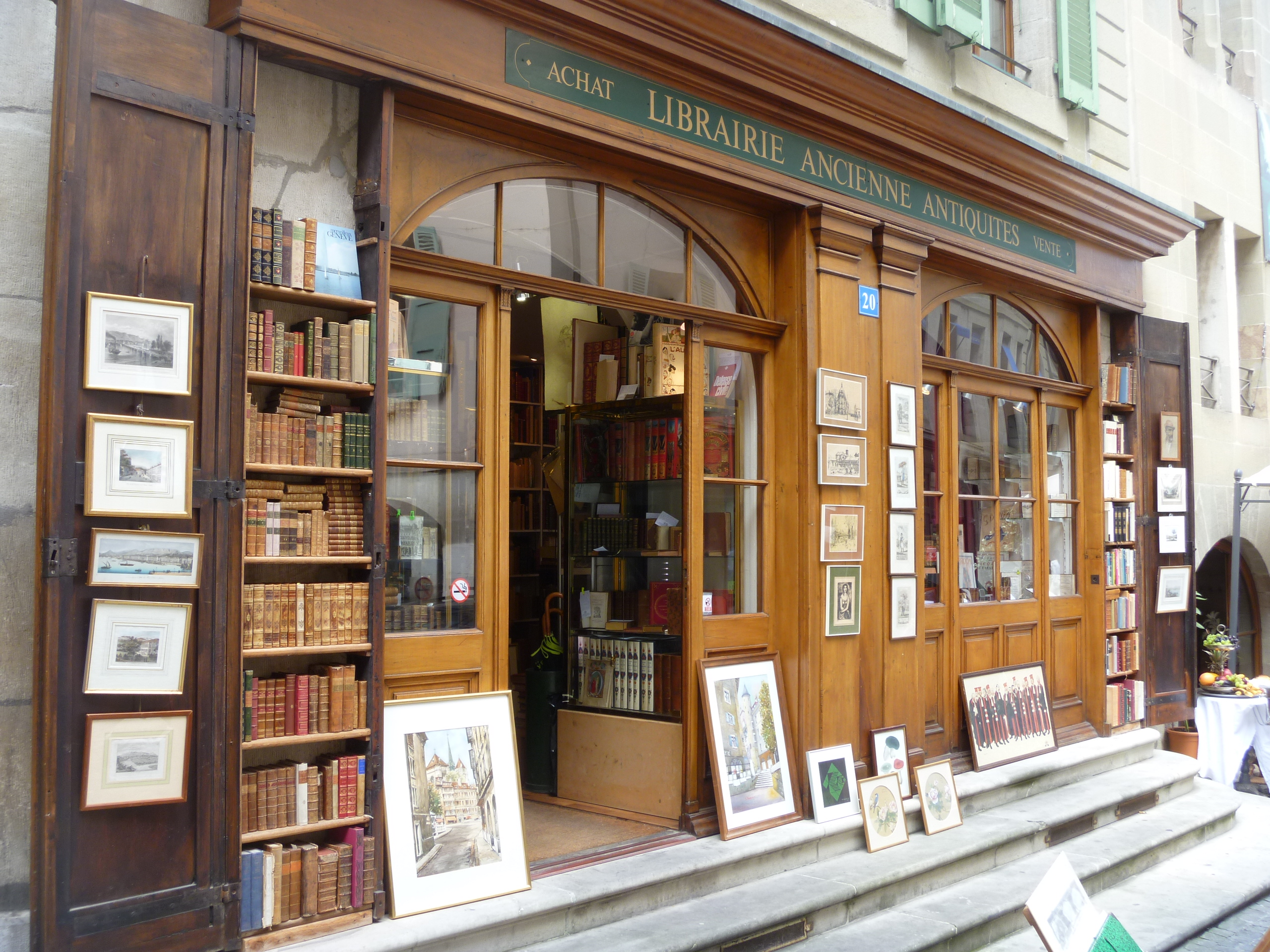
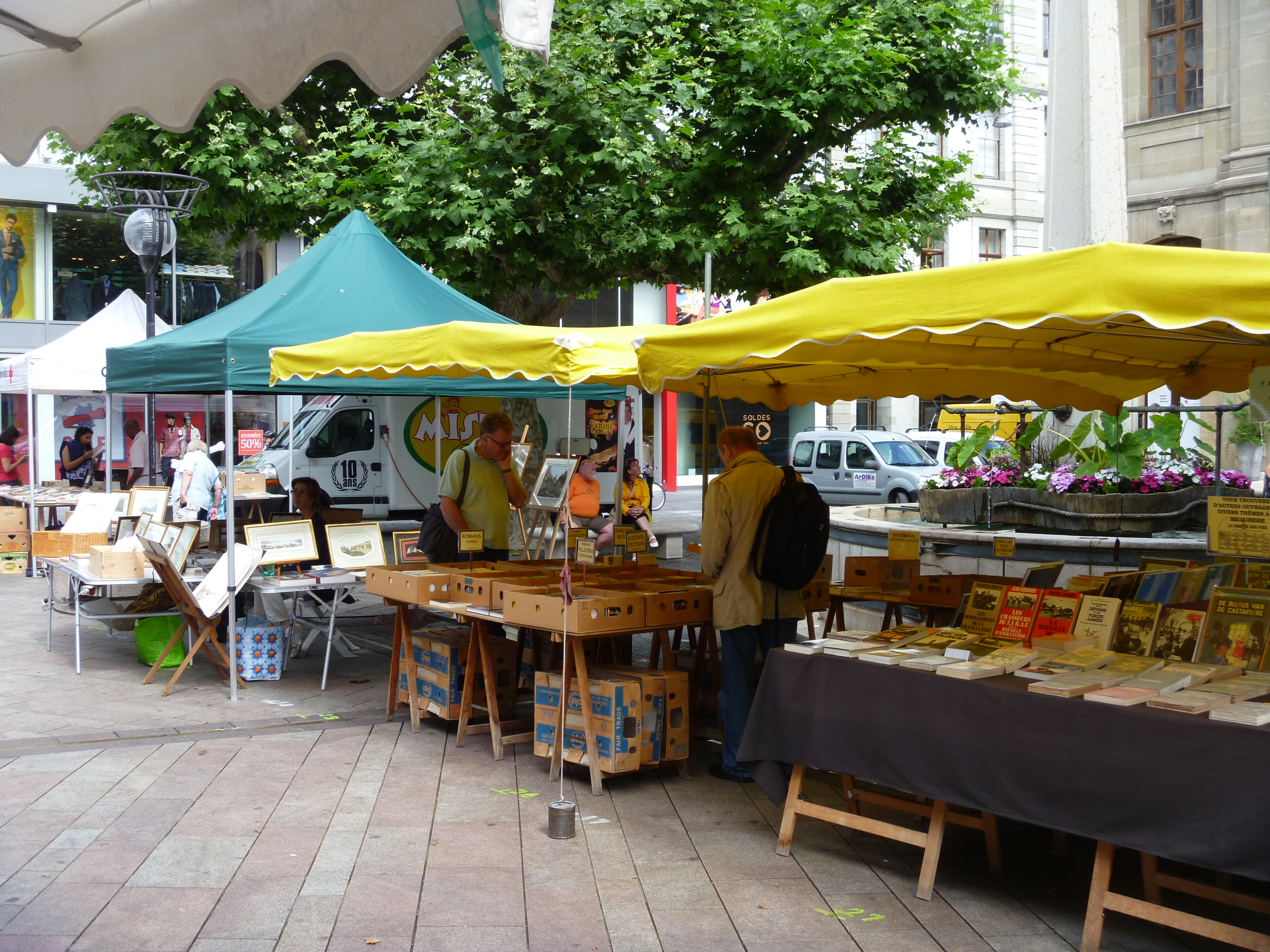
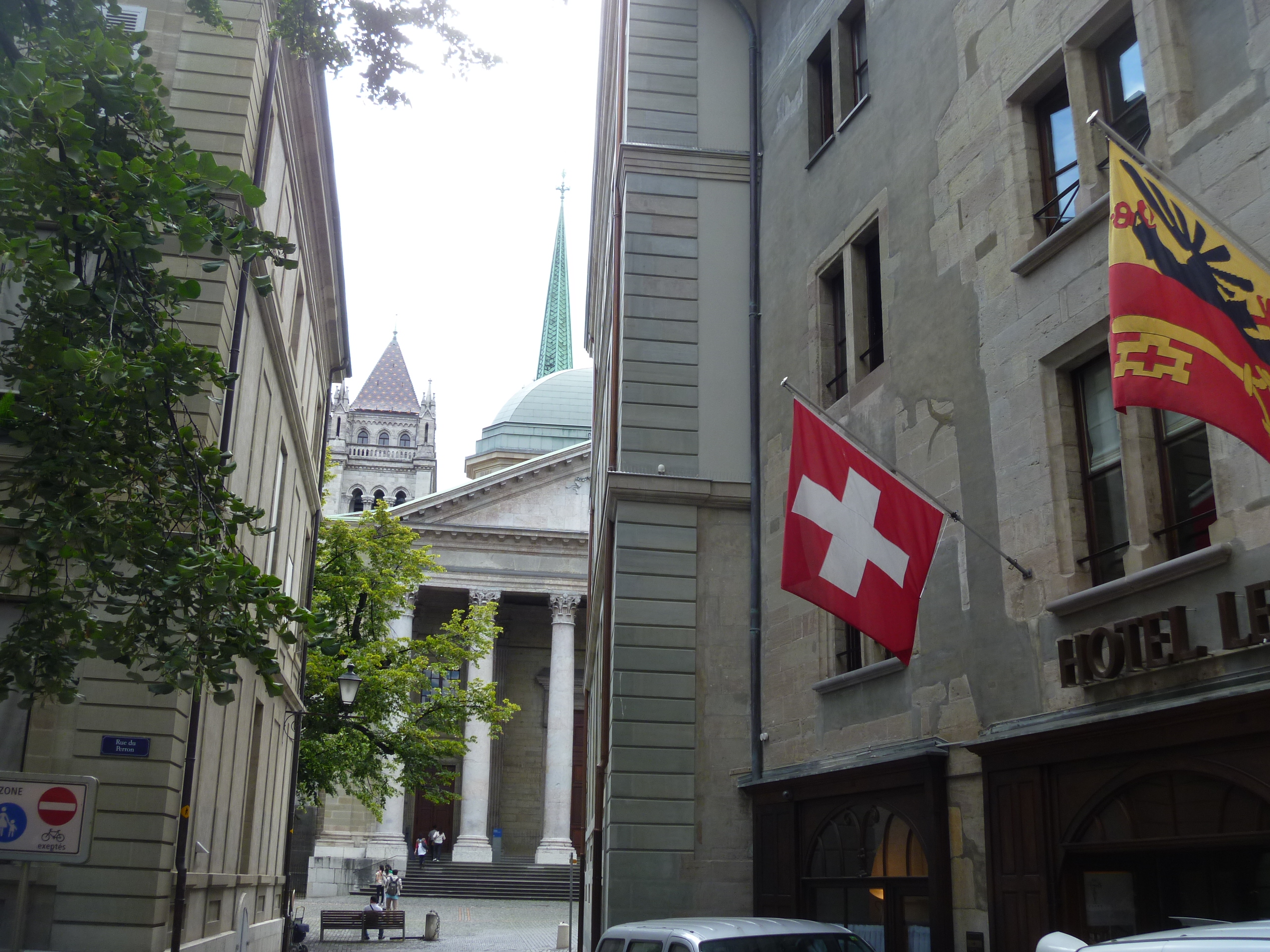
The next day I made a morning visit to the Old Town. There are some steepish climbs and lovely cobbled paths and streets and I enjoyed browsing in a secondhand book stall on the way and at a second hand book and prints shop on the Grand’Rue. There are some delightful street cafes for outdoor refreshments and the Cathedral is situated there. There’s a great view from the tower but we didn’t go up. It’s a lovely area for a bit of “flaner“.
Cologny

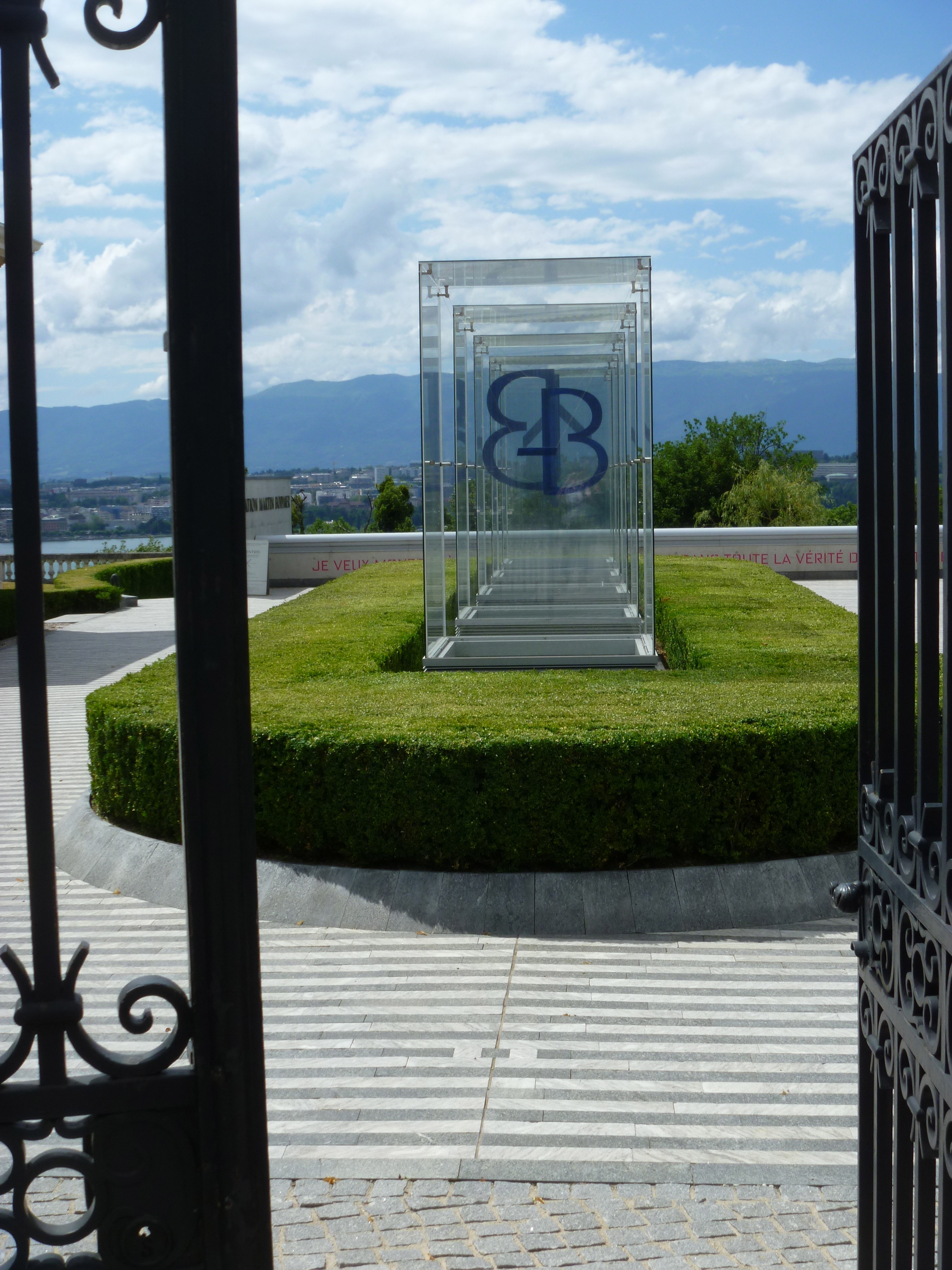
 I can only take so much aimless wandering interspersed with breaks for tea or beer so in the early afternoon I took the bus out to the residential suburb of Cologny. My purpose was to visit the Martin Bodmer Library and to try to find the Villa Diodati, the former home of Lord Byron and now a private residence.

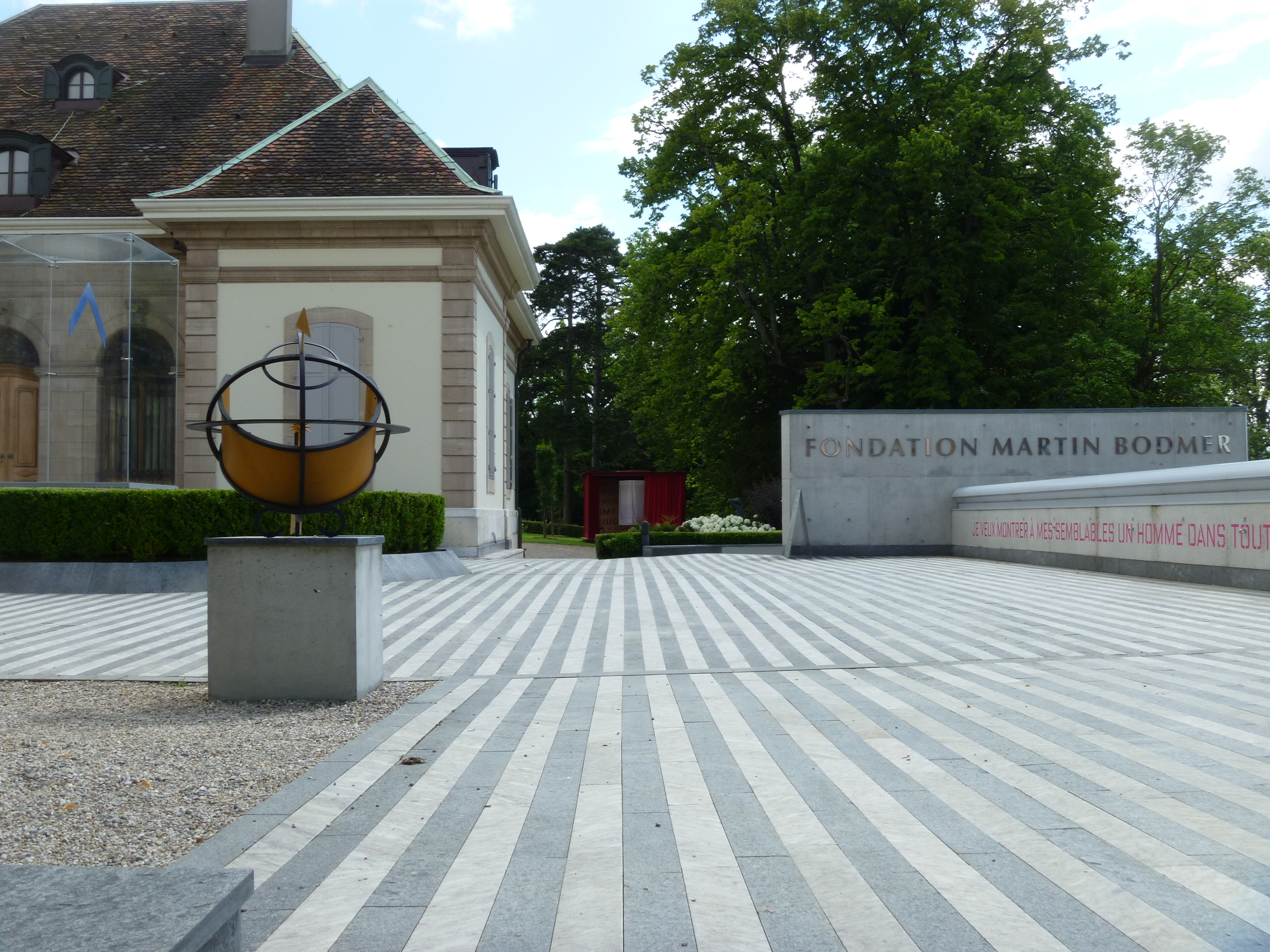
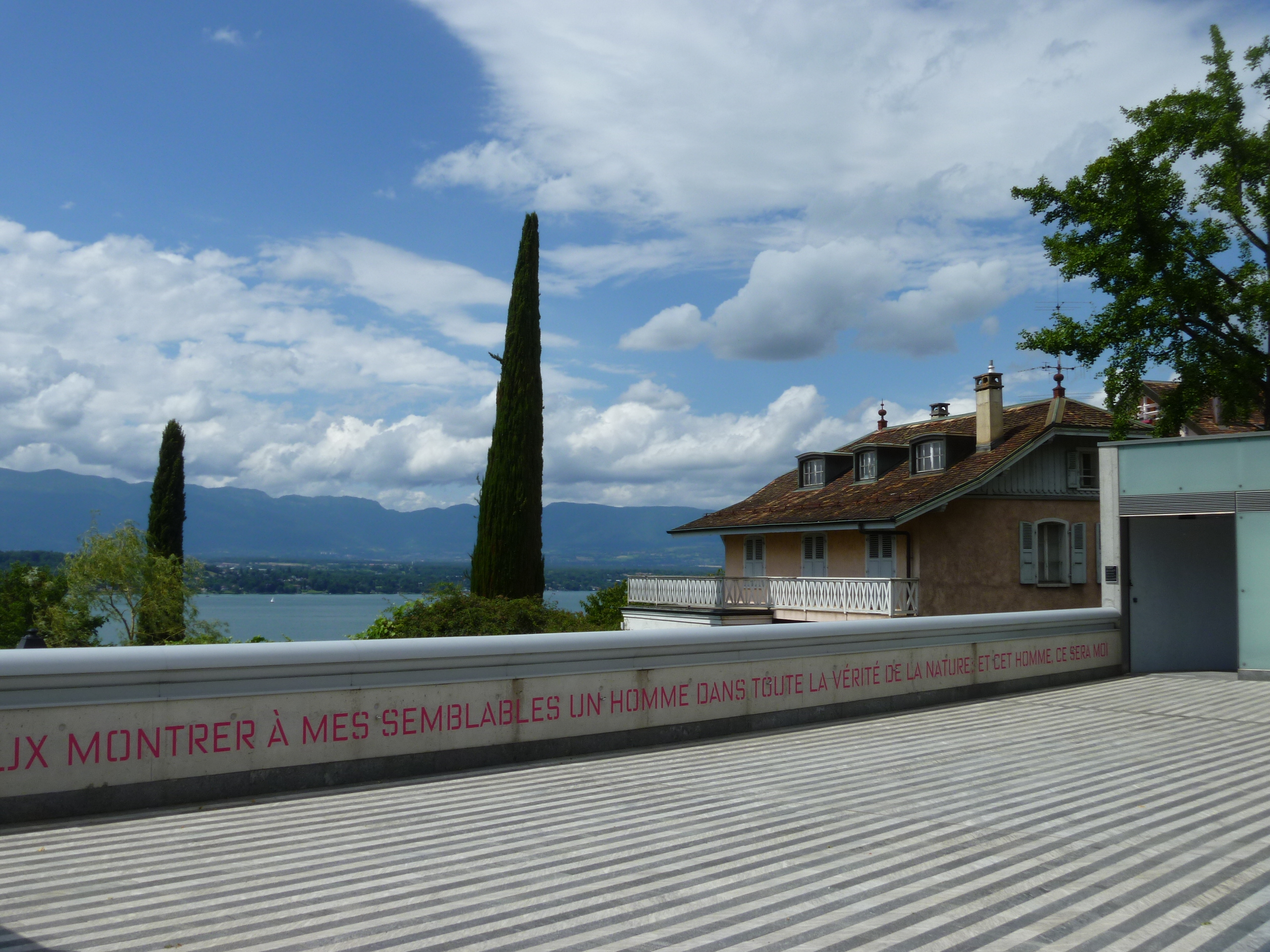
The Bodmer Foundation is fantastic! It’s one of the biggest private libraries in the world and the breadth of the display is simply breathtaking. There are samples of the written or typeset word from the earliest times – Greek papyrus fragments, the oldest manuscripts of St John’s Gospel – to ‘modern’ American first editions – Ginsberg, Steinbeck, Faulkner, Hemingway – and everything in between. And not just literary but medical, scientific, music. There’s a Shakespeare 1623 First Folio and an early Chaucer Canterbury Tales. All displayed in a modern, subtly-lit underground gallery on two floors designed by Swiss architect Mario Botta.
From the Bodmer gallery it’s a 10-15 minute walk to the Chemin de Ruth and number 9, The Villa Diodati.
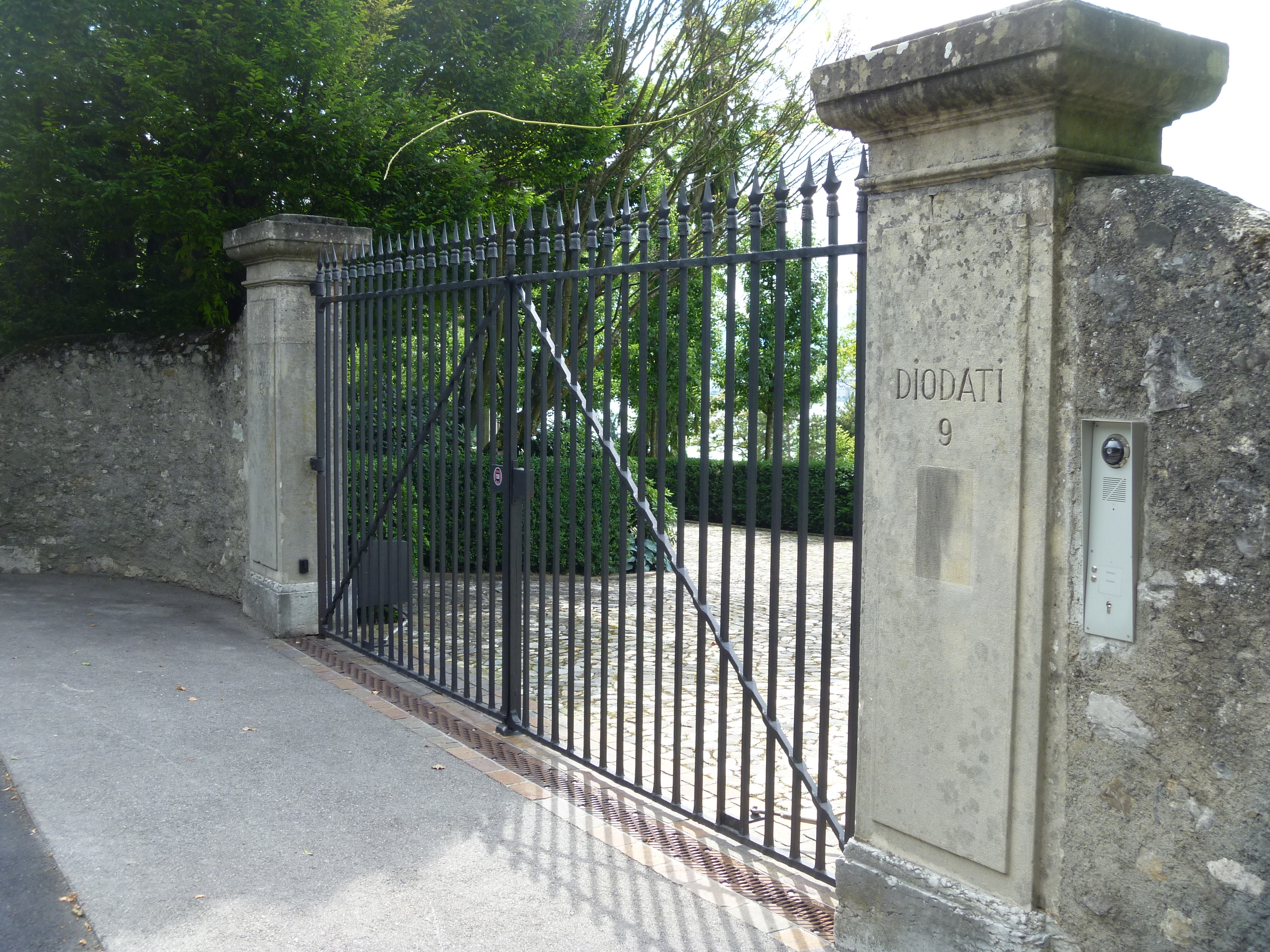
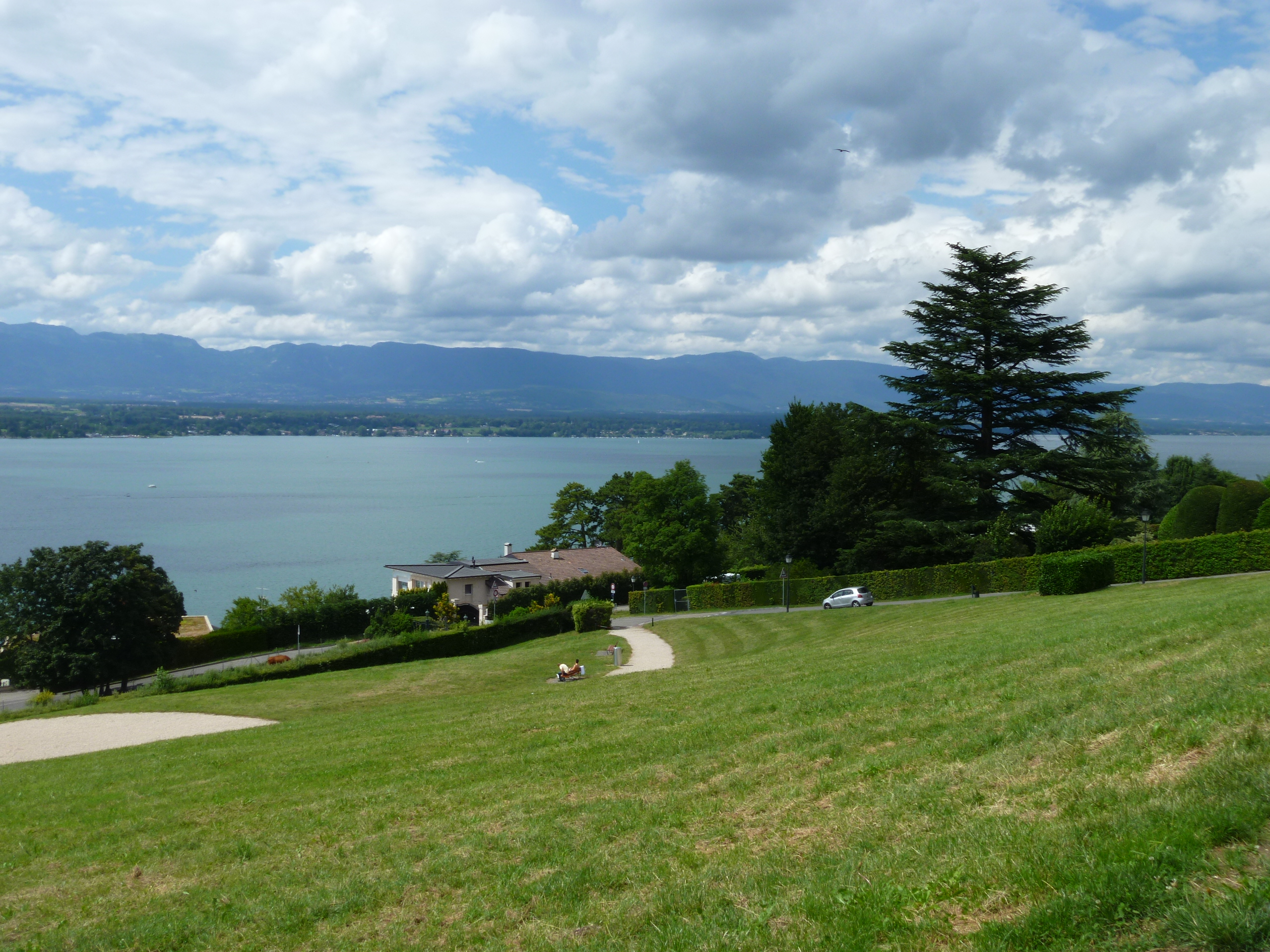
First I found the entrance gate and a bit further along the road is a meadow with seats and a view over the lake and towards the city. It’s called ‘Le Pré Byron‘. An Information Board welcomes you to the spot and explains :

“On this very spot the story of ‘Frankenstein’ was born. During the summer of 1816, the weather was atrocious, cold and rainy spells alternating with violent thunder storms. At that time, Byron, a 28 years old poet , was renting the Villa Diodati to the left of this meadow. … Mary Shelley was also spending the summer at Cologny at Jacob Chappuis’ home situated at the lower end of Montalegre, below where you are now standing. One evening at the Villa Diodati Byron and Mary Shelley made a bet as to who would be the first to write a horror novel. Mary became excited at this idea, completed the story of ‘Frankenstein’ a year later in England and won the bet.”
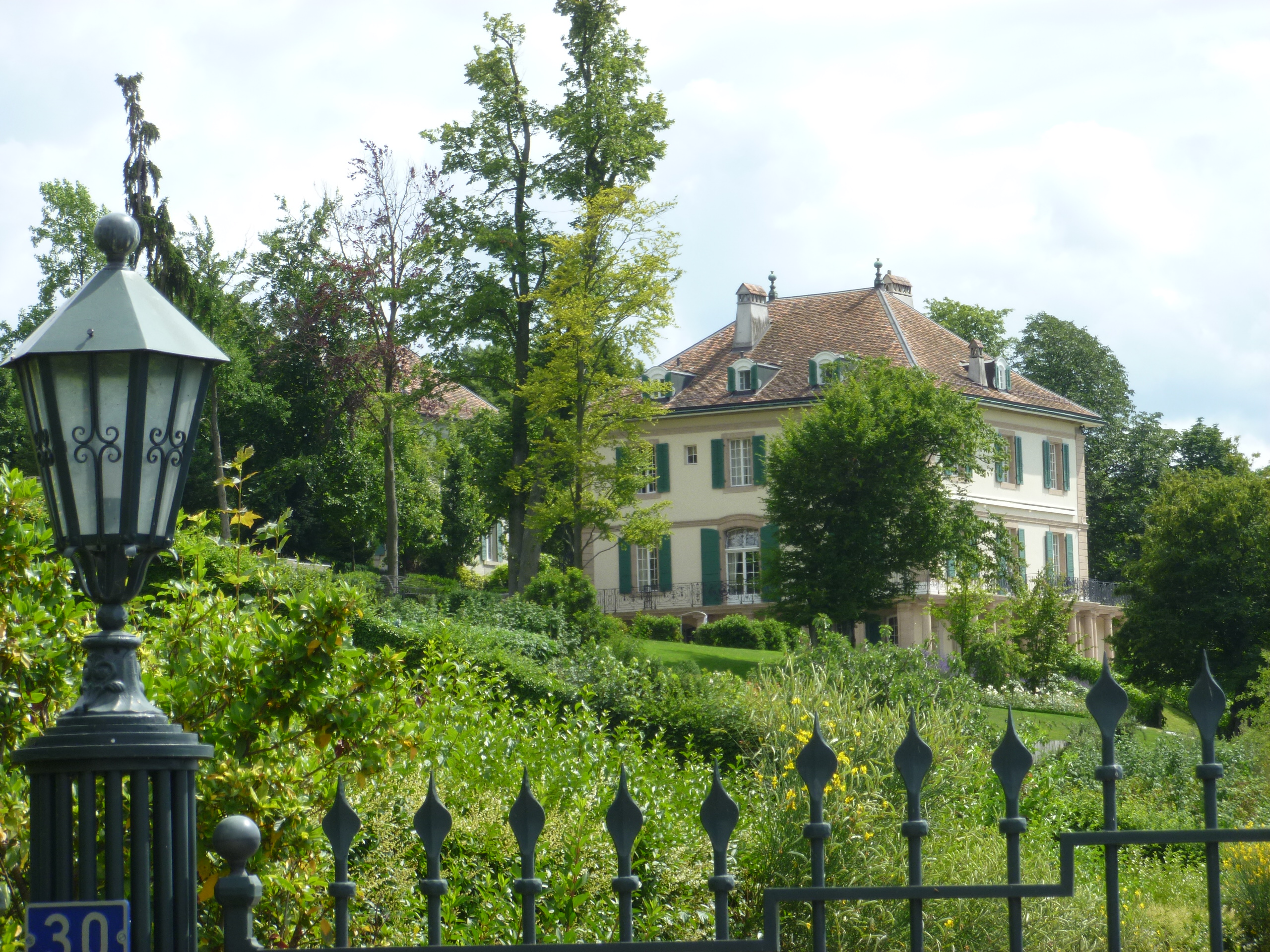
As you walk down towards the lake the house becomes clearly visible.
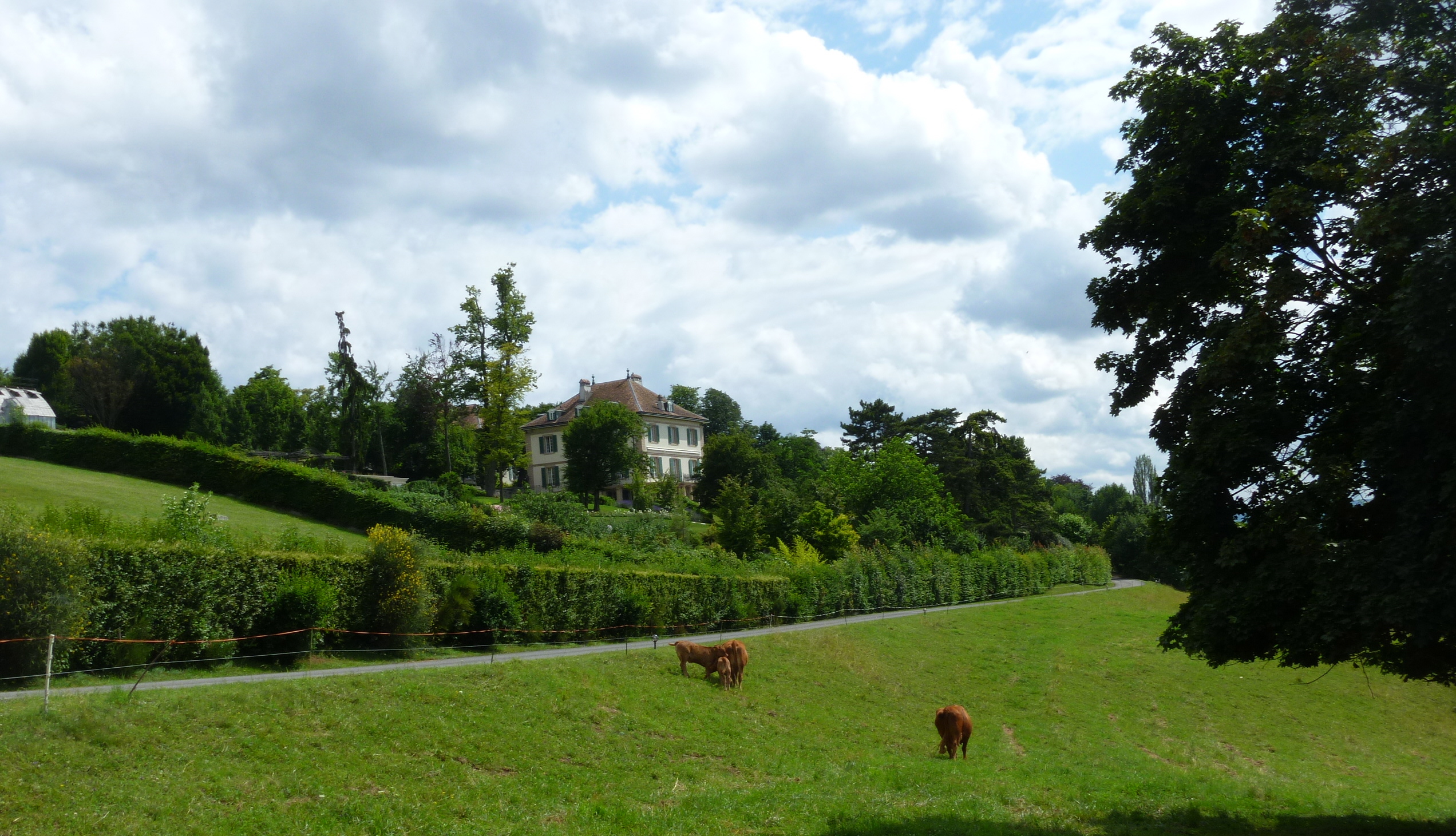
From the lake side it’s an easy bus ride back into town.
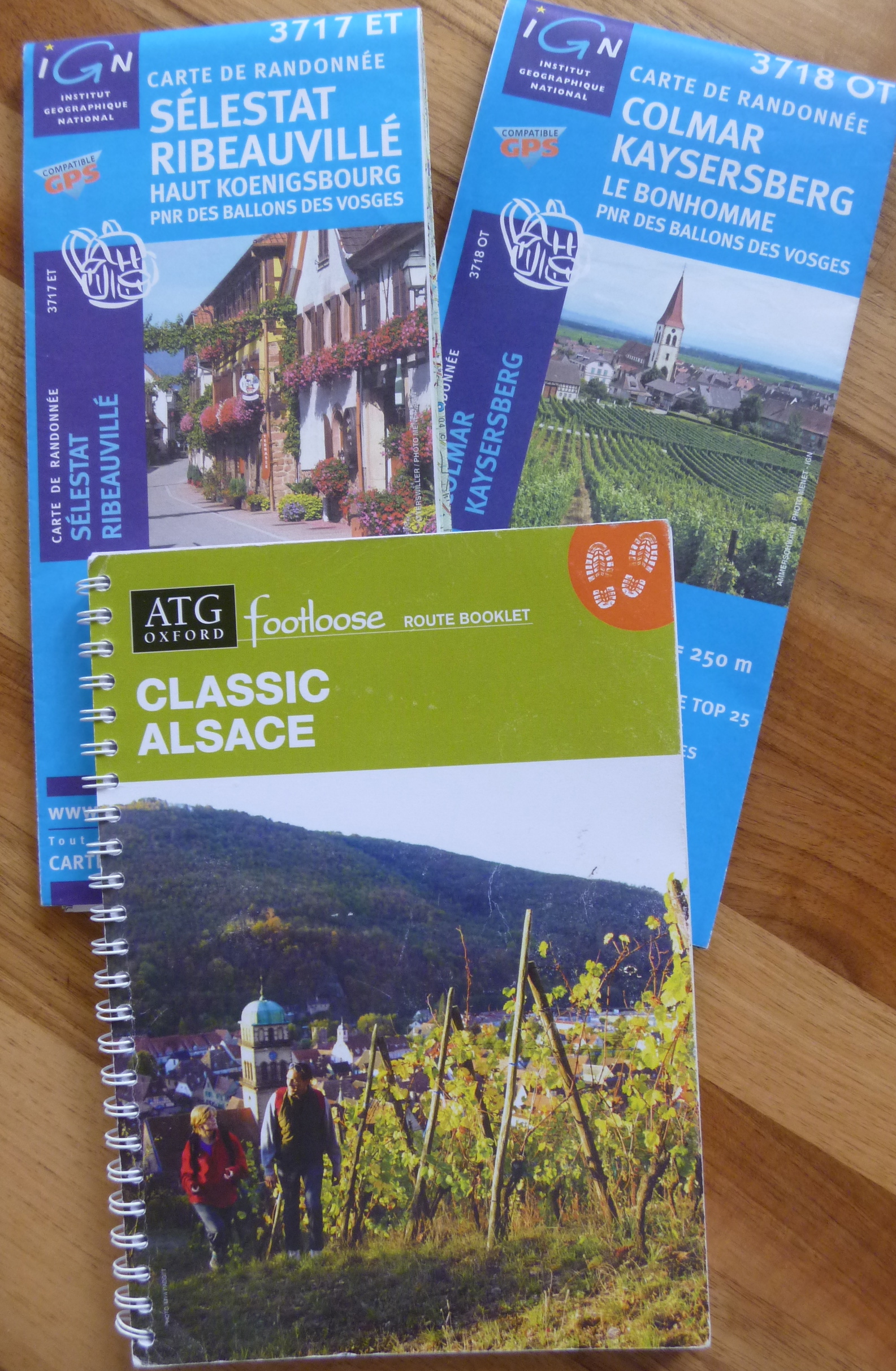
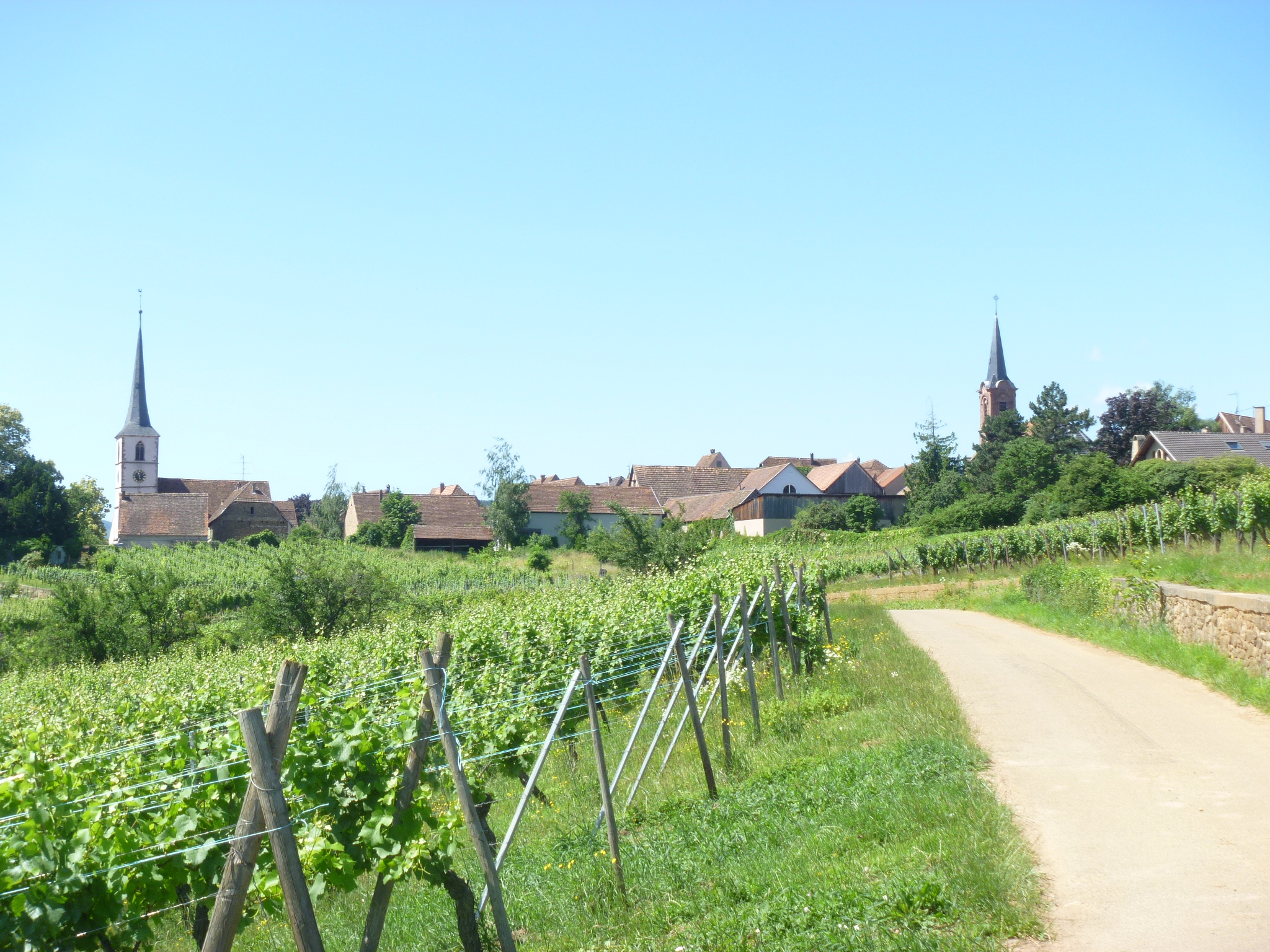
The Footloose Route Booklet – reading between the lines

In the ATG Footloose Walks brochure there’s a little section called “Finding Your Way” :

“The ATG Route Booklet includes detailed directions and maps, as well as up-to-date information on towns visited, places of interest, local history, restaurants, cafes and shops en route.”

Approaching Mittelbergheim from Barr

In addition to our Route Manager the other key to the success of our trip was The ATG Route Booklet. With this winning combination we knew we could set out each day with confidence knowing that we’d be able to find our way without difficulty. We could decide whether to either buy lunch before setting off from the village or buy it at a cafe or from a village patisserie/boulangerie on the route and eat in a charming village square or in the welcome shade of a churchyard.

You can’t go wrong – and we didn’t.

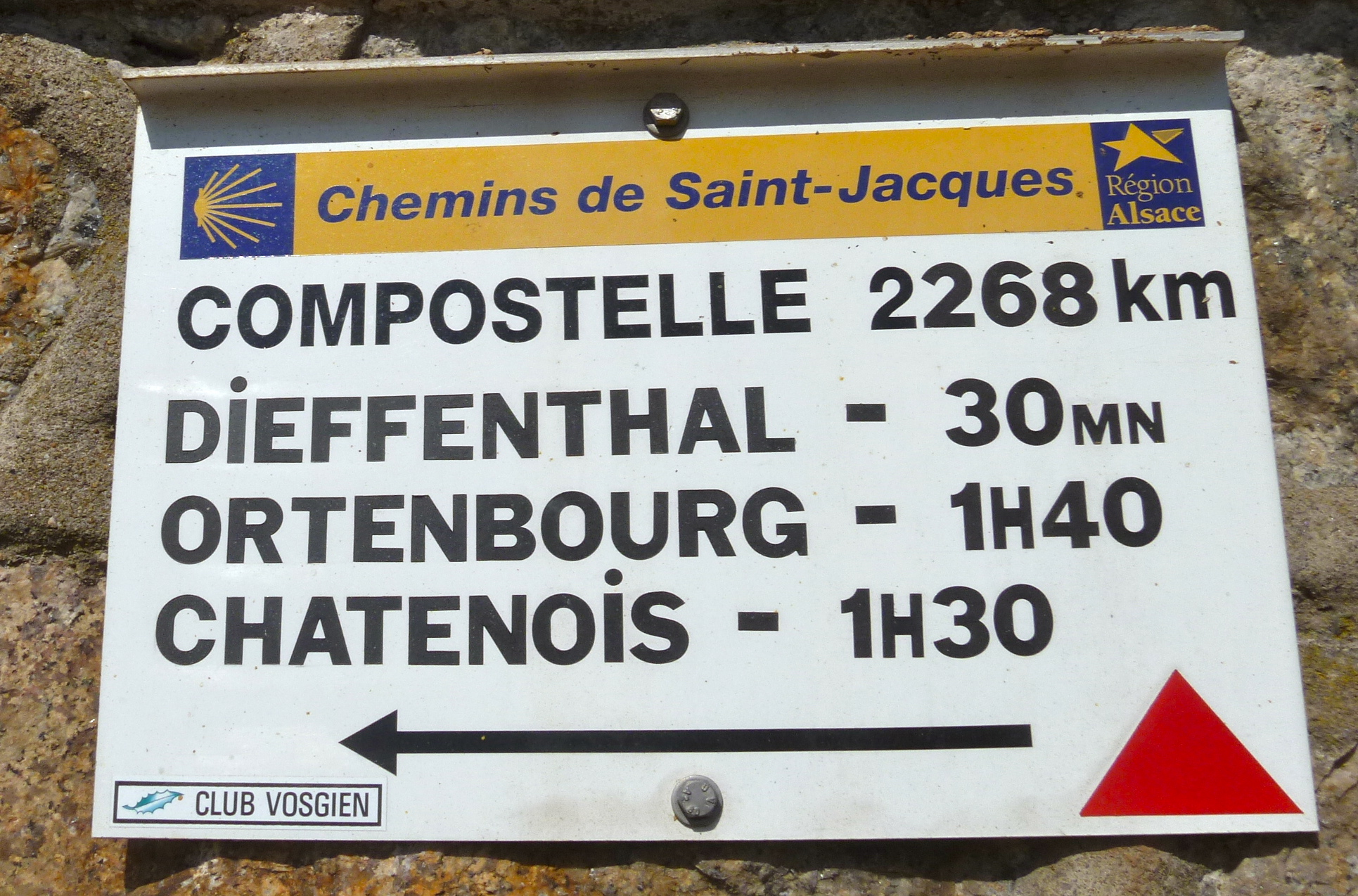
Our walk from Barr southwards to Kaysersberg covered about 38-39 miles. Sometimes we coincided with the famous pilgrim way of St Jacques de Compostelle. There seem to be many starting points to this major pilgrim route – I’ve seen another part of the route in Switzerland – but they all meet at  Santiago de Compostela in northwest Spain. The grooves of the traditional scallop shell sign indicate the paths all converging onto Santiago de Compostela.

Luckily we were walking via Dieffenthal and Chatenois to St Hippolyte

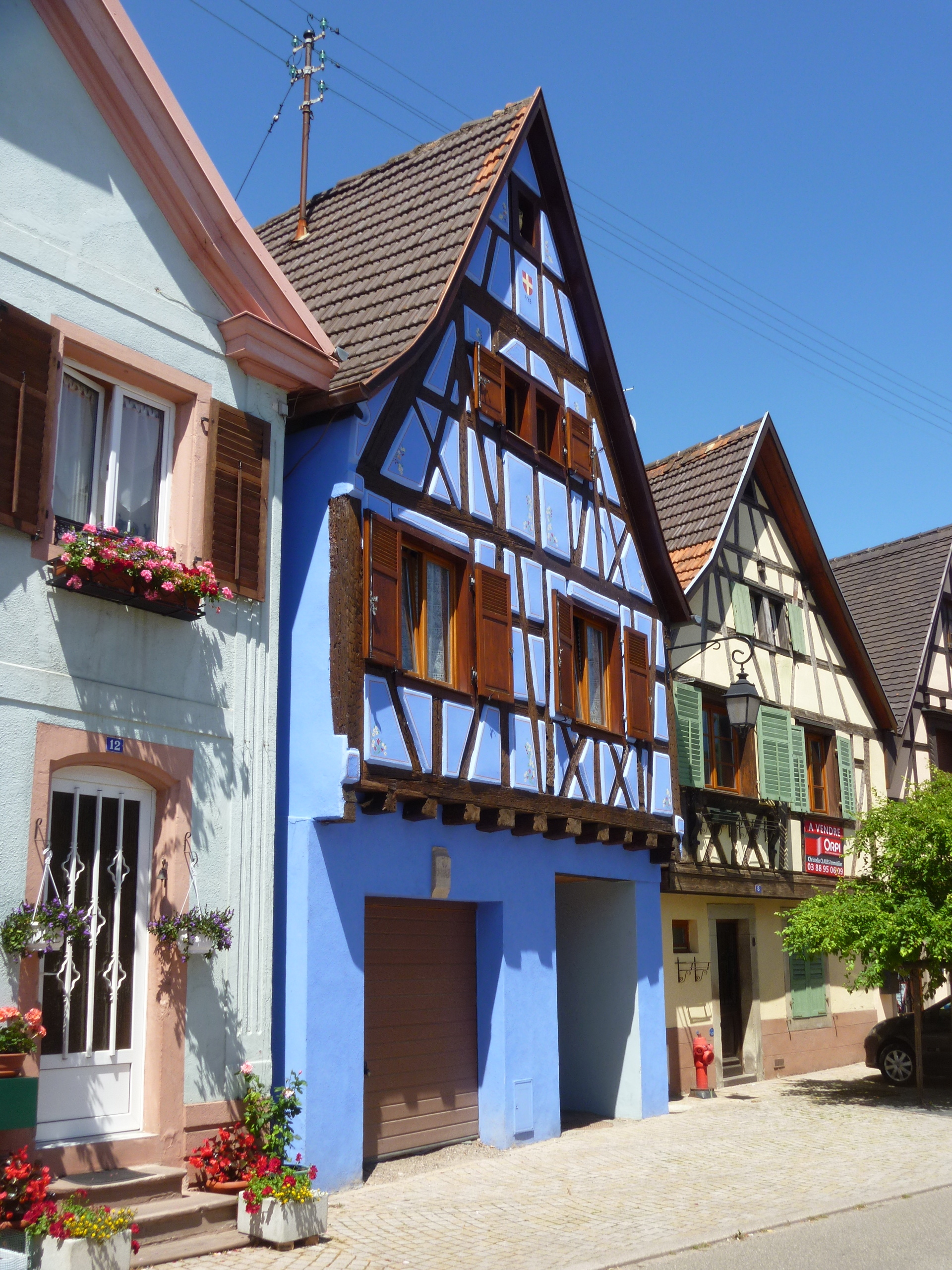
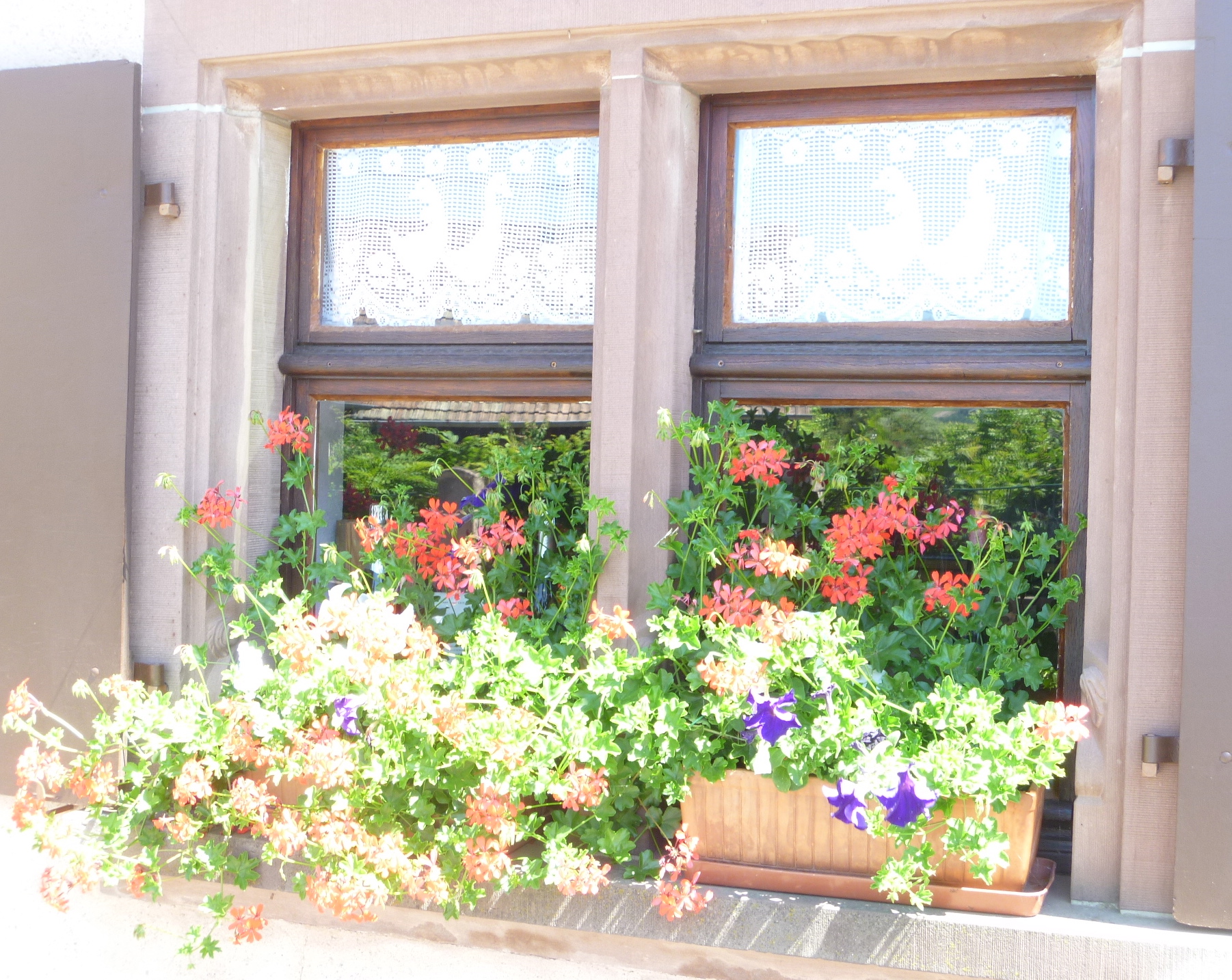
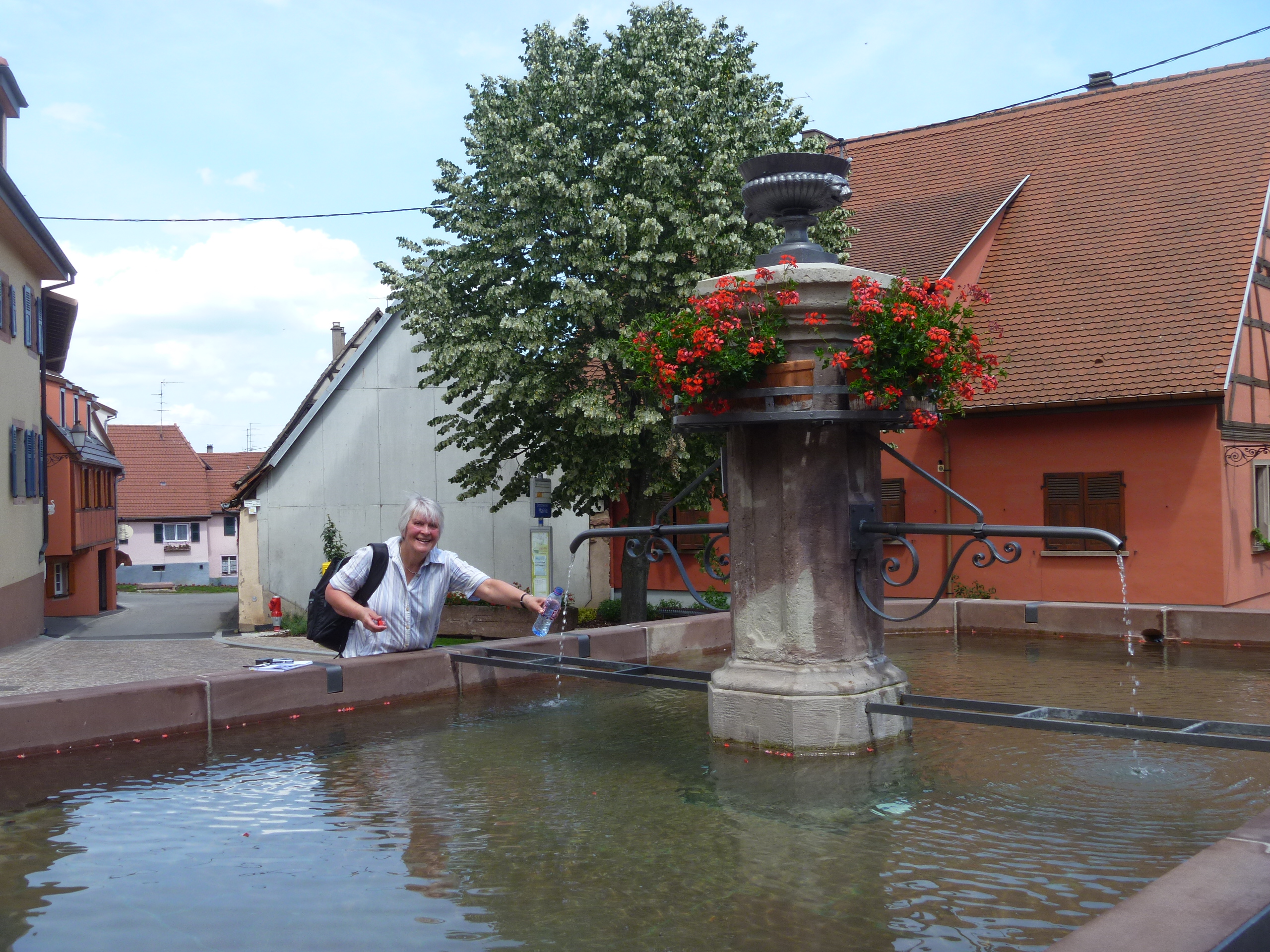
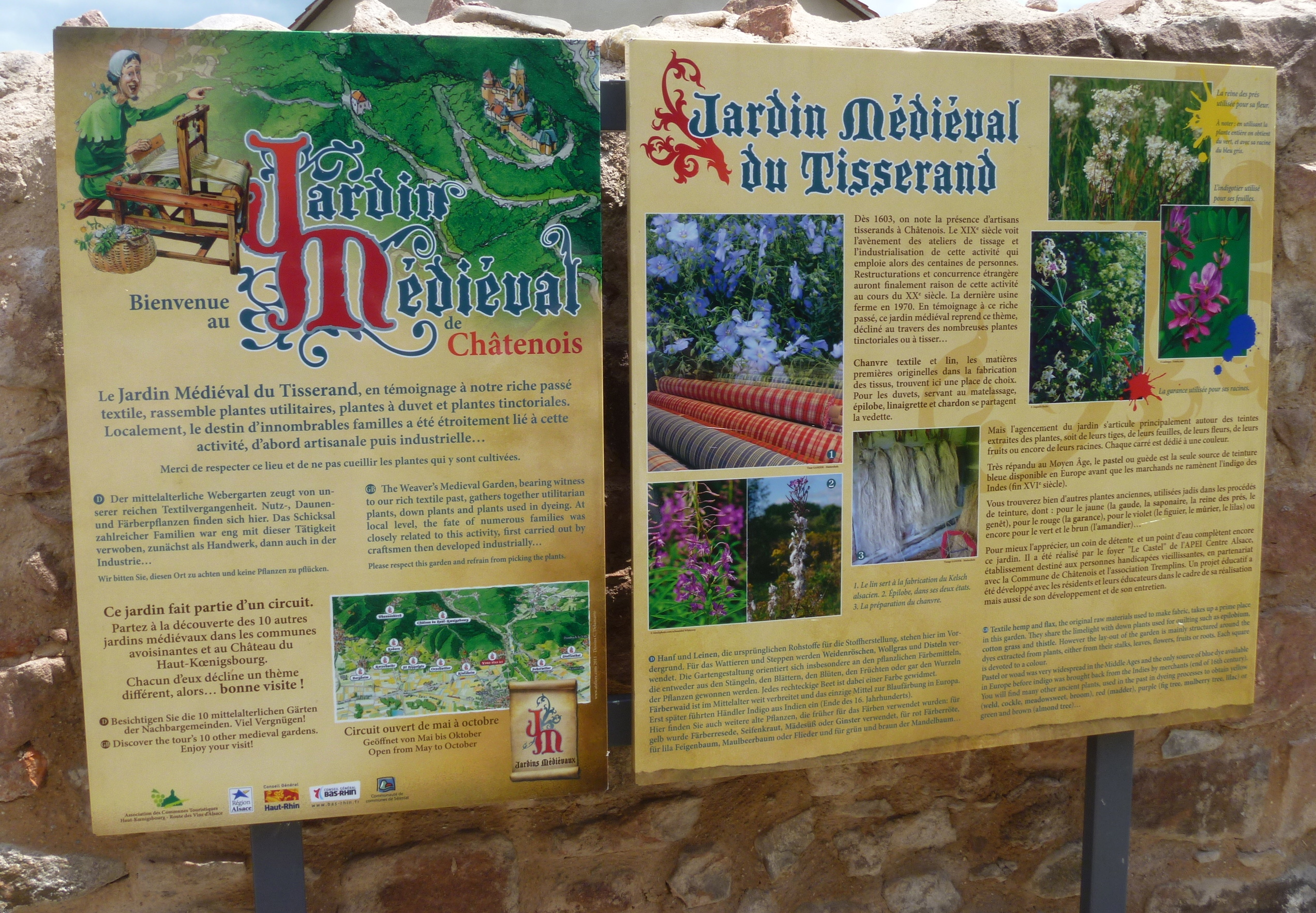
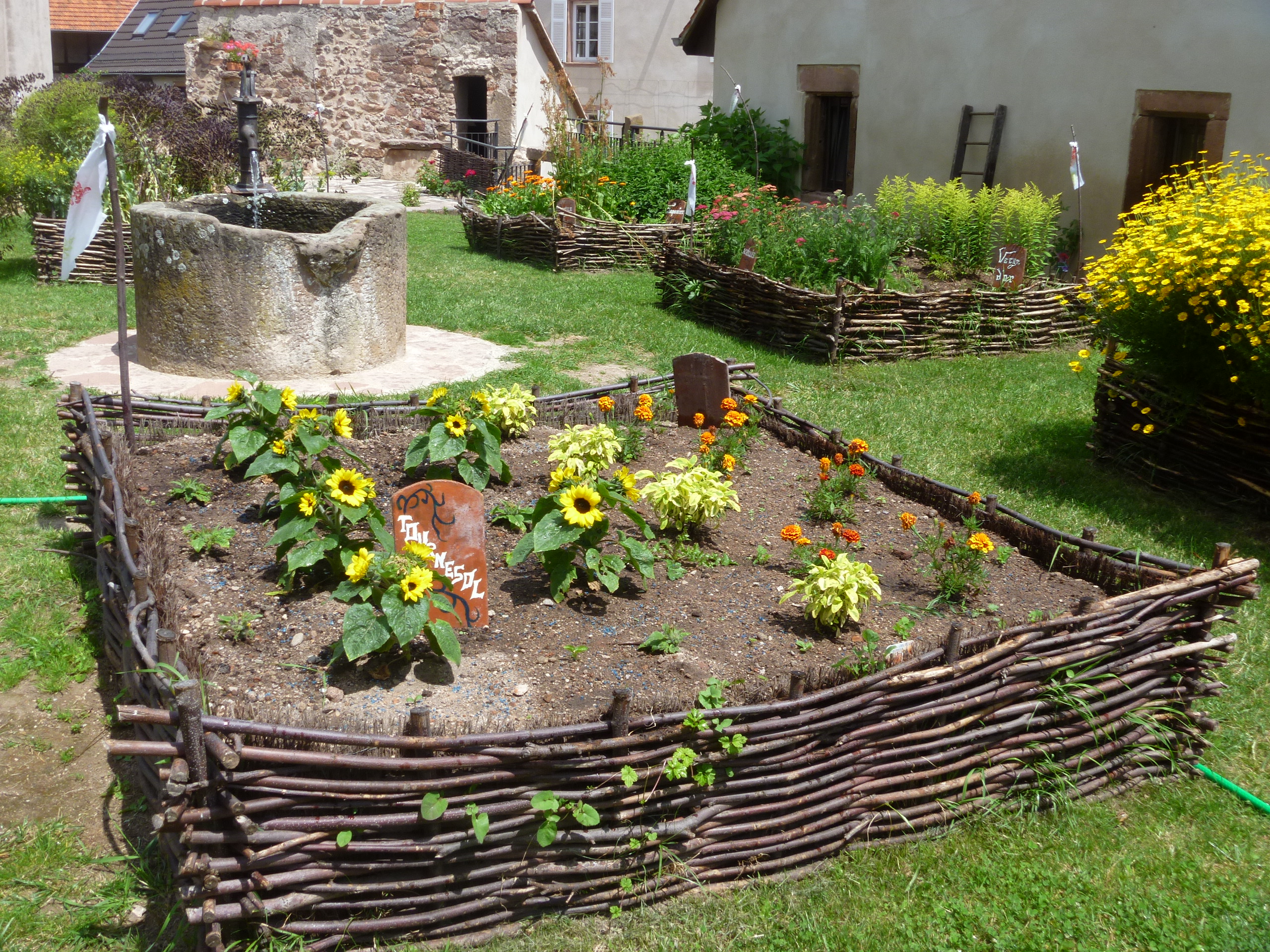
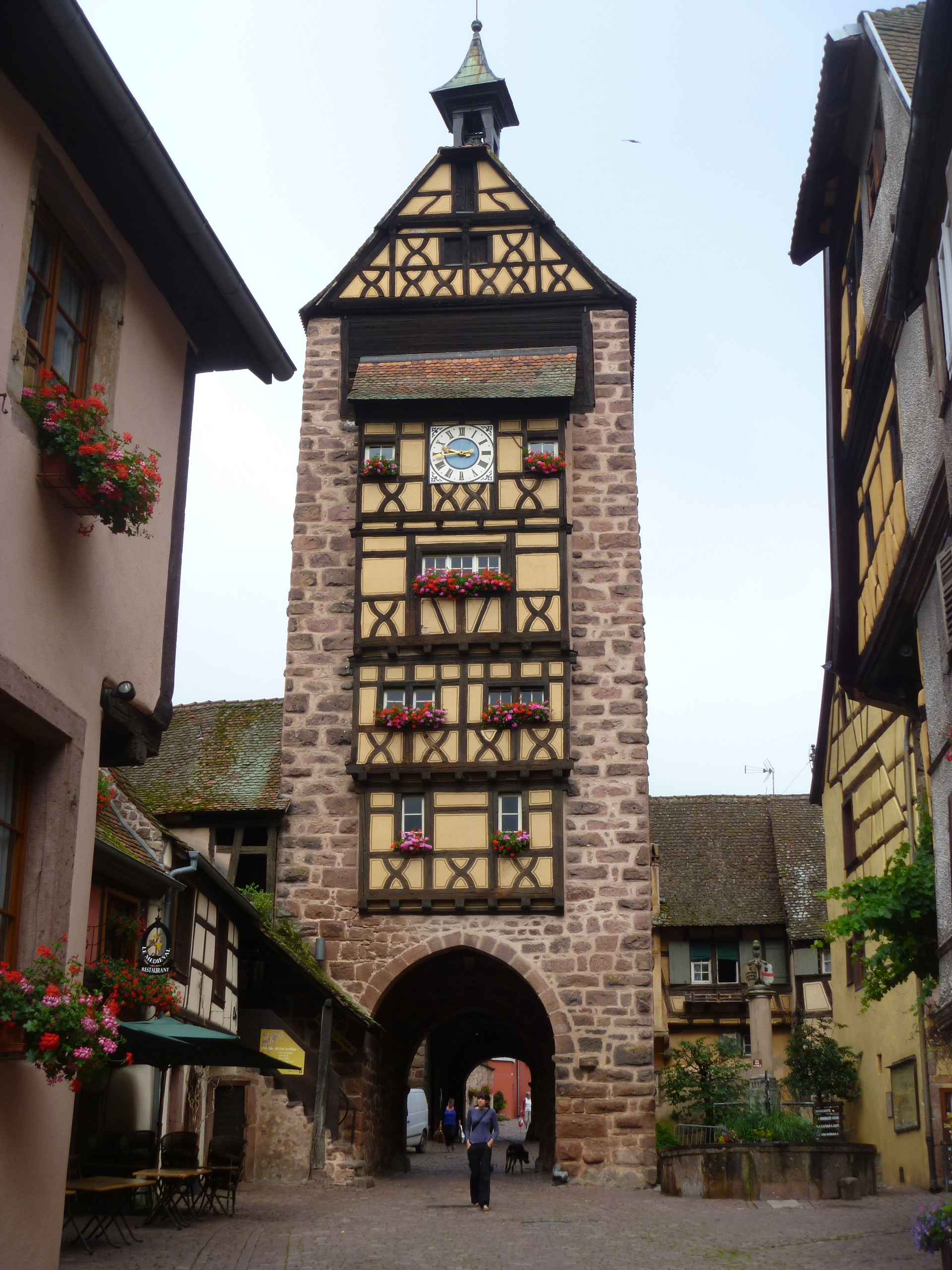
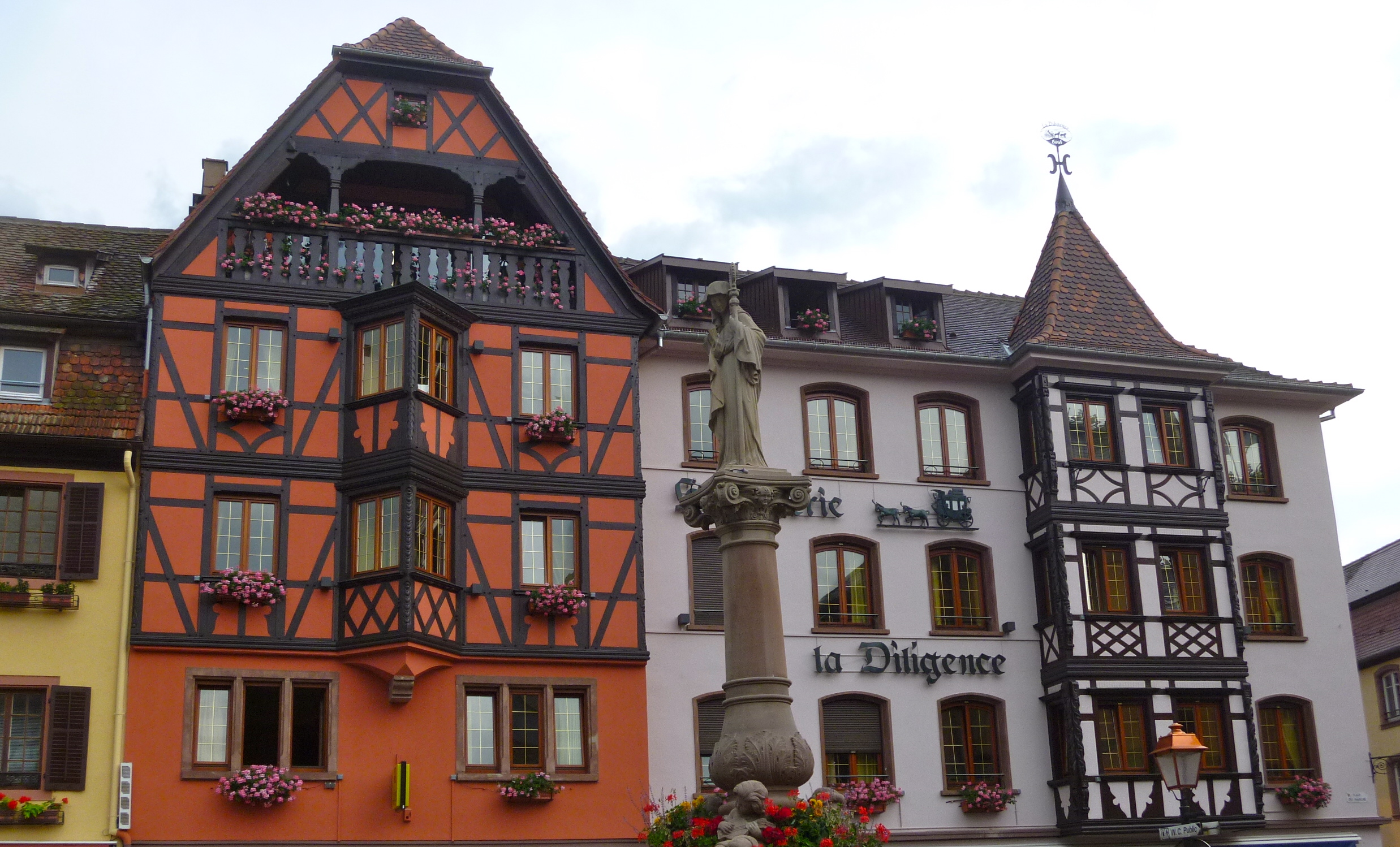
Each village or small town which we passed through was distinctive and yet they all had several aspects in common: the half-timbered buildings, often gaily painted with flower-bedecked windows; decorated fountains, some with drinkable water and others not; wine growing businesses offering tastings (degustations); distinctive towers, arches and gates and quite a few had revived old medieval gardens demonstrating herbs and other useful plants.

Colourful houses in Andlau

Window in the sunshine at Dieffenthal

Drinking water fountain at Orschwiller

Medieval Garden at Chatenois

Tower/Gateway at Riquewihr

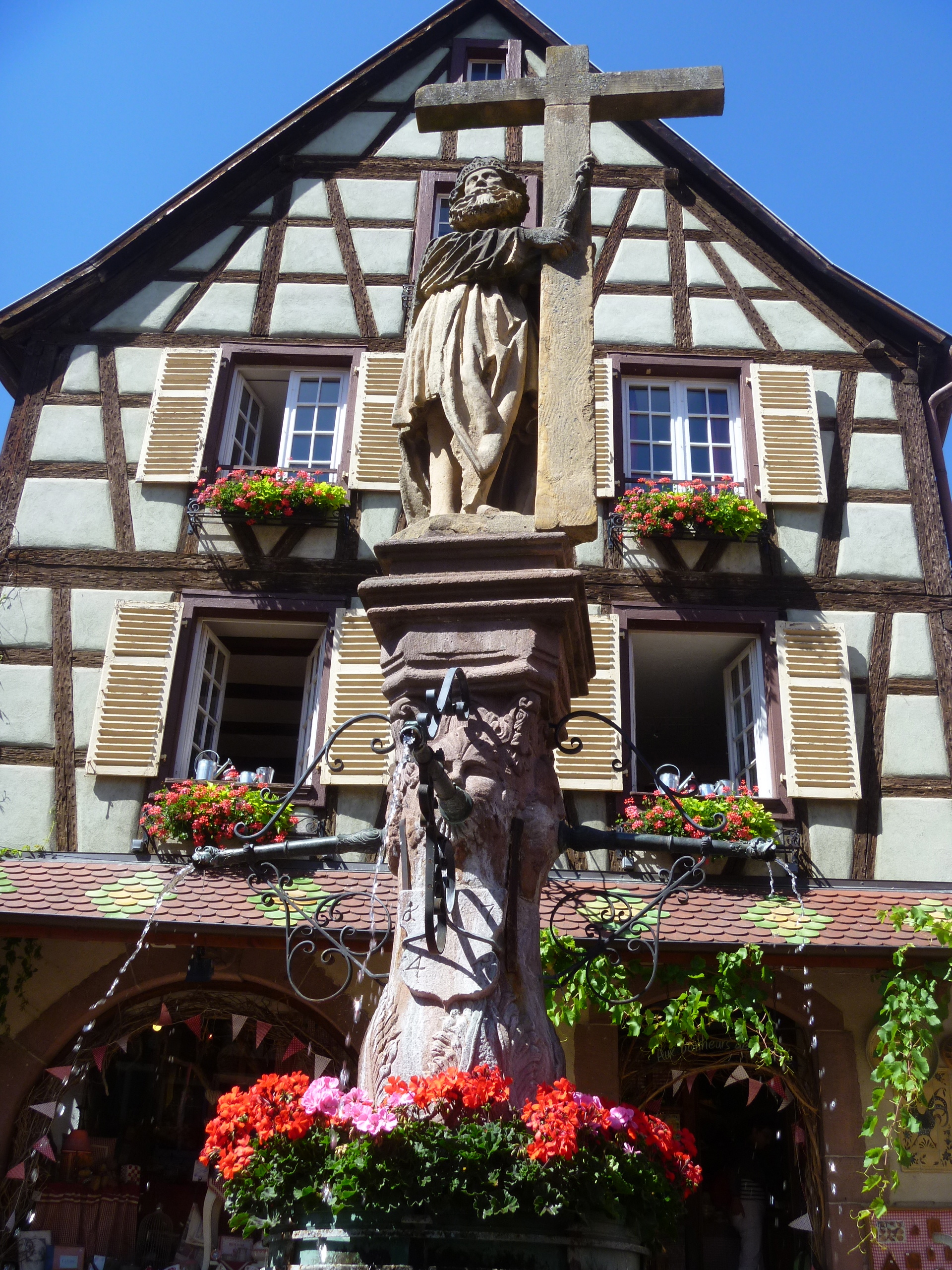
Fountain at Kaysersberg

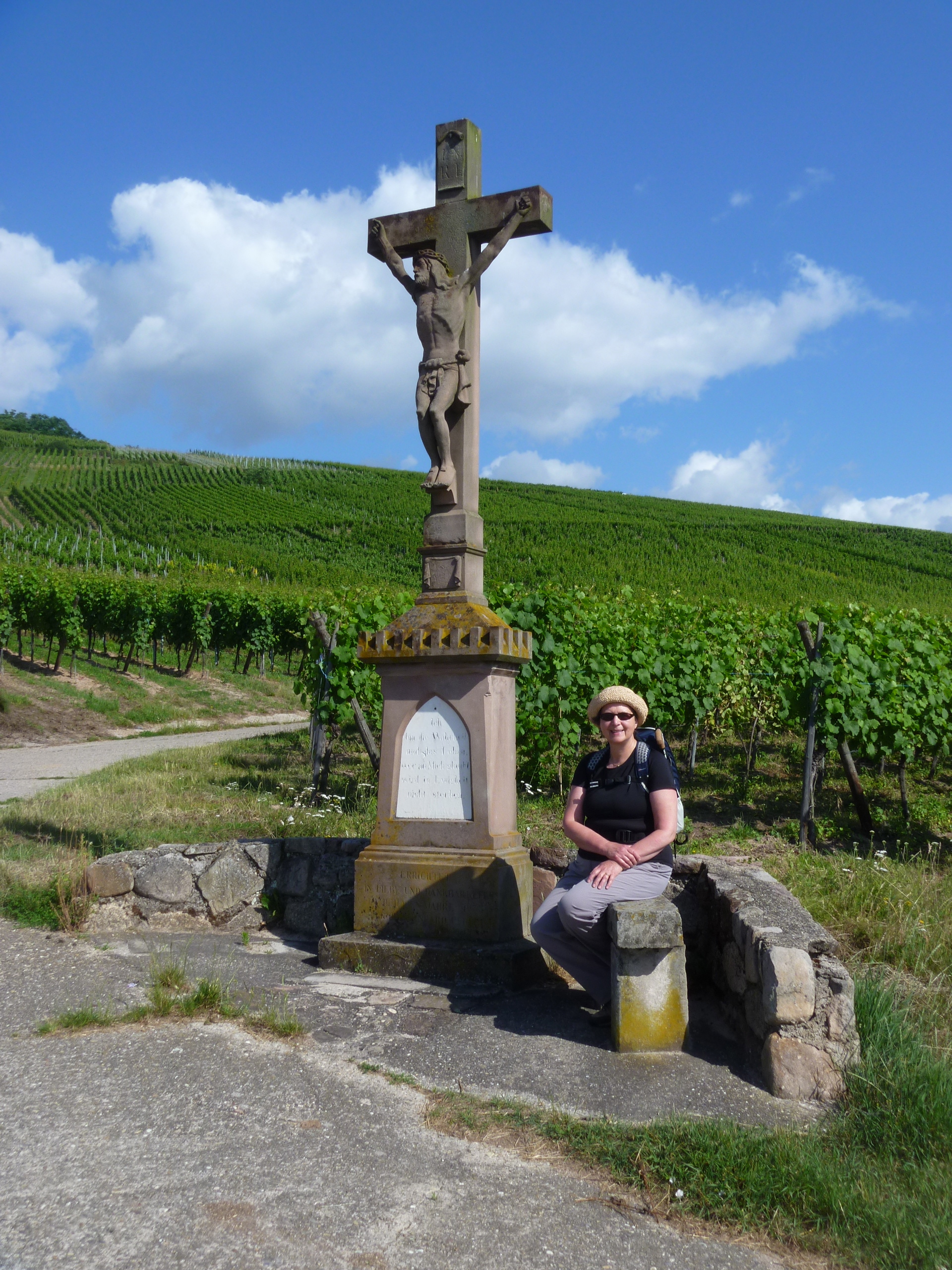
Between the villages many of the tracks were alongside fields planted full-to-bursting with grape vines – still in the very early stages of growth for this summer. These were tracks were dotted with stone crucifixes and roadside shrines which were often included in our directions.

The Route Booklet offered us a daily choice of routes – higher and therefore longer and more remote or lower and generally shorter and passing through small centres of population. Until the last day we chose the lower routes as we found the villages delightful and the tracks easier. Despite this we covered over 10 miles a day on the 2nd, 3rd and 4th days and we had great views across the Rhine Valley to the German Black Forest and the Swiss Alps. Above us on our right loomed the defensive castles and fortresses prominently located on higher ground above the valley.

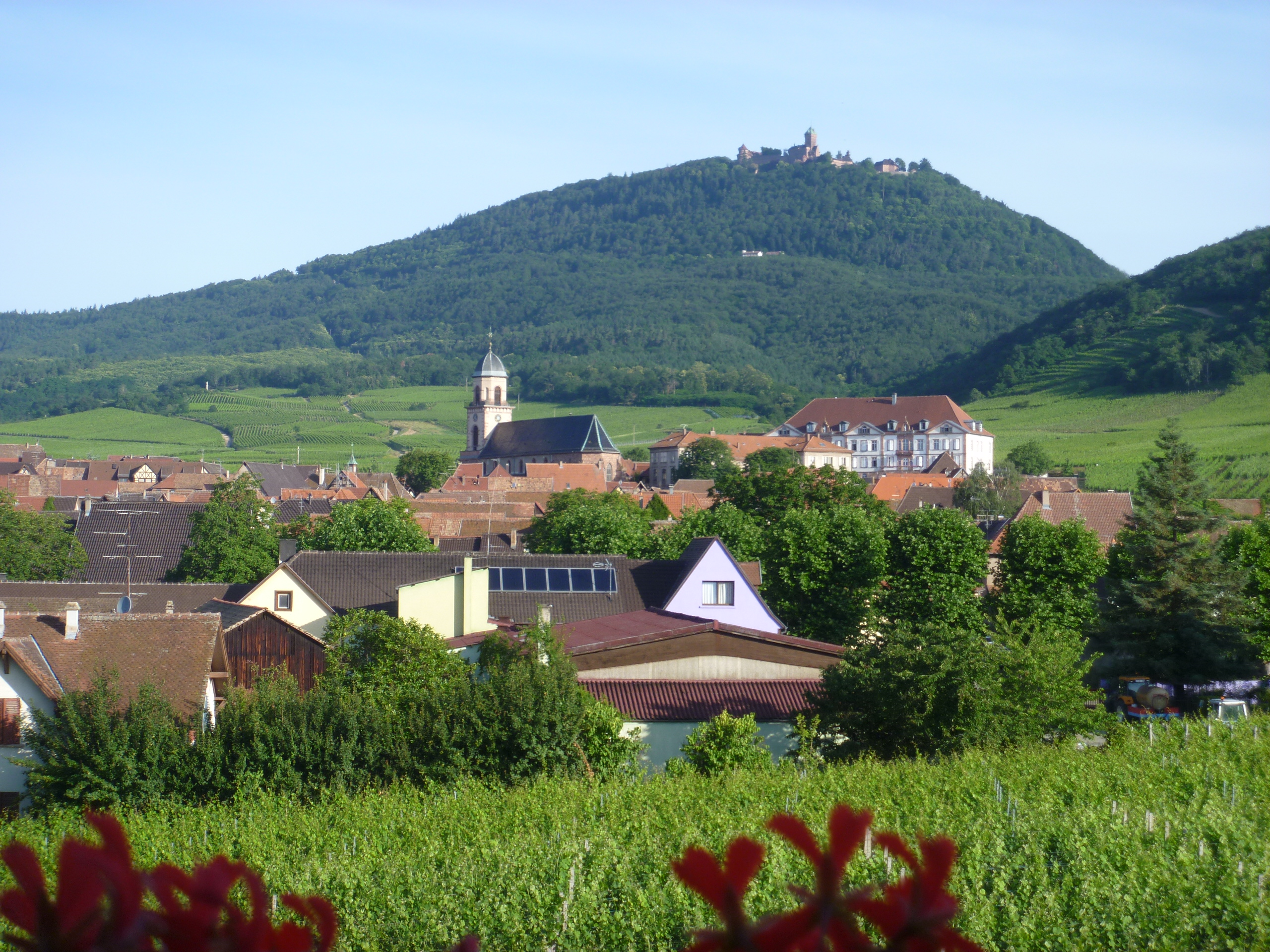
Haut Koenigsbourg Castle above St Hippolyte

A Saint, an Artist and a Doctor : people we came across in Alsace.

On our walking trip in Alsace we kept coming across references to storks but also to certain people. In particular local artist Hansi and local saint Odile. Then we discovered that Kaysersberg, our final destination, had been the birthplace of Dr Albert Schweitzer – all round good person, as you will discover.

Saint Odile

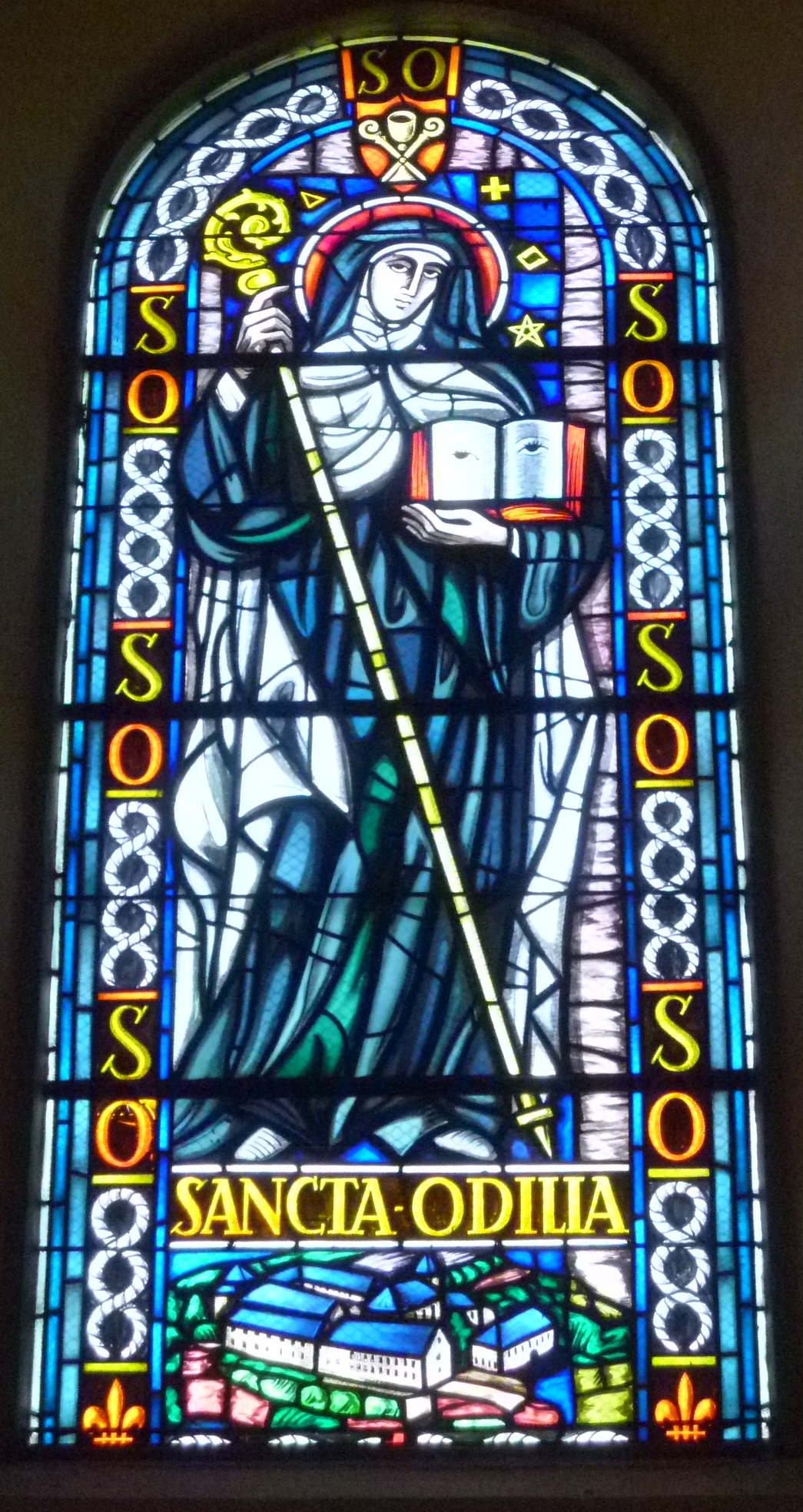
Window dedicated to Saint Odile at Itterswiller

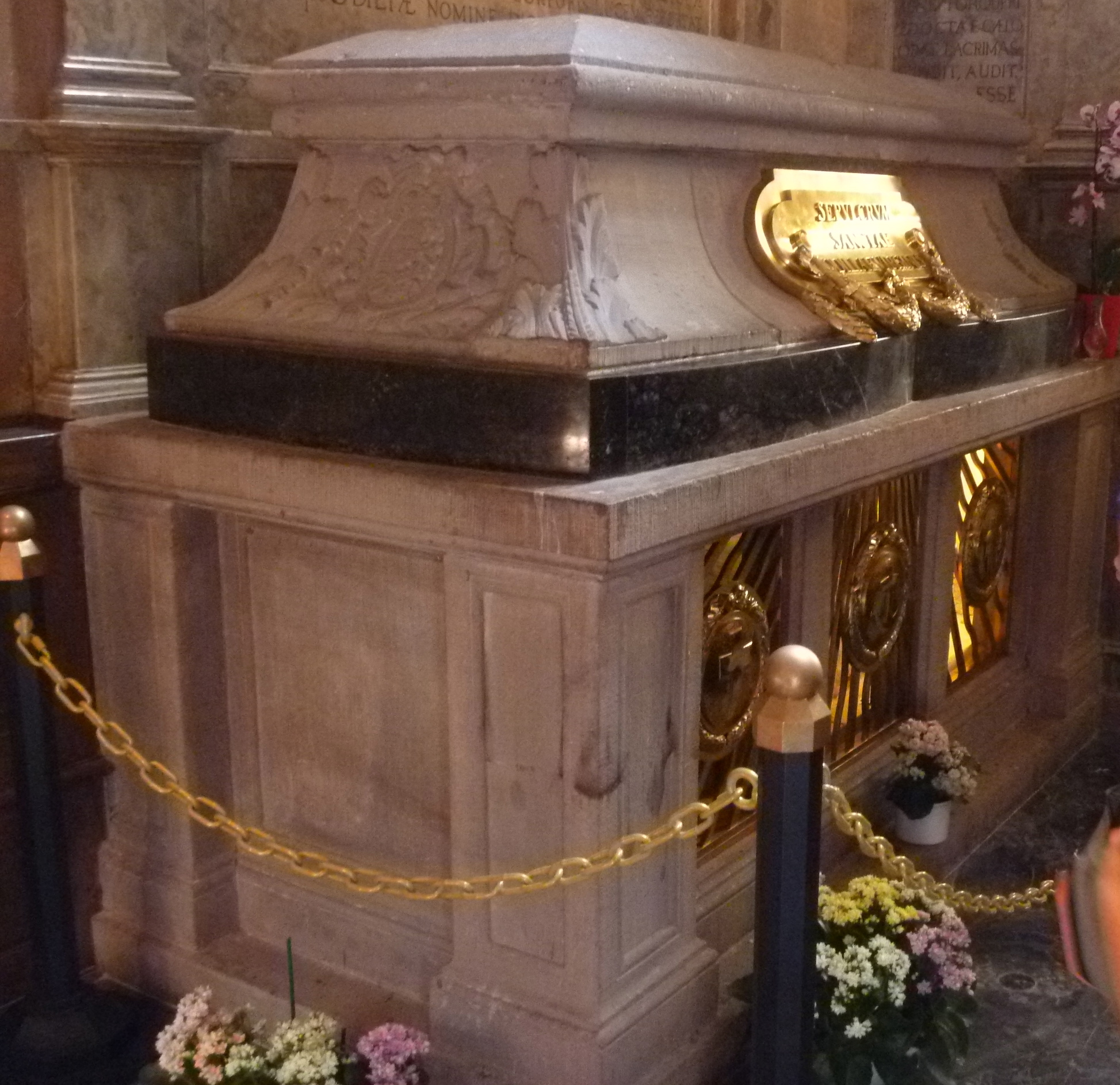
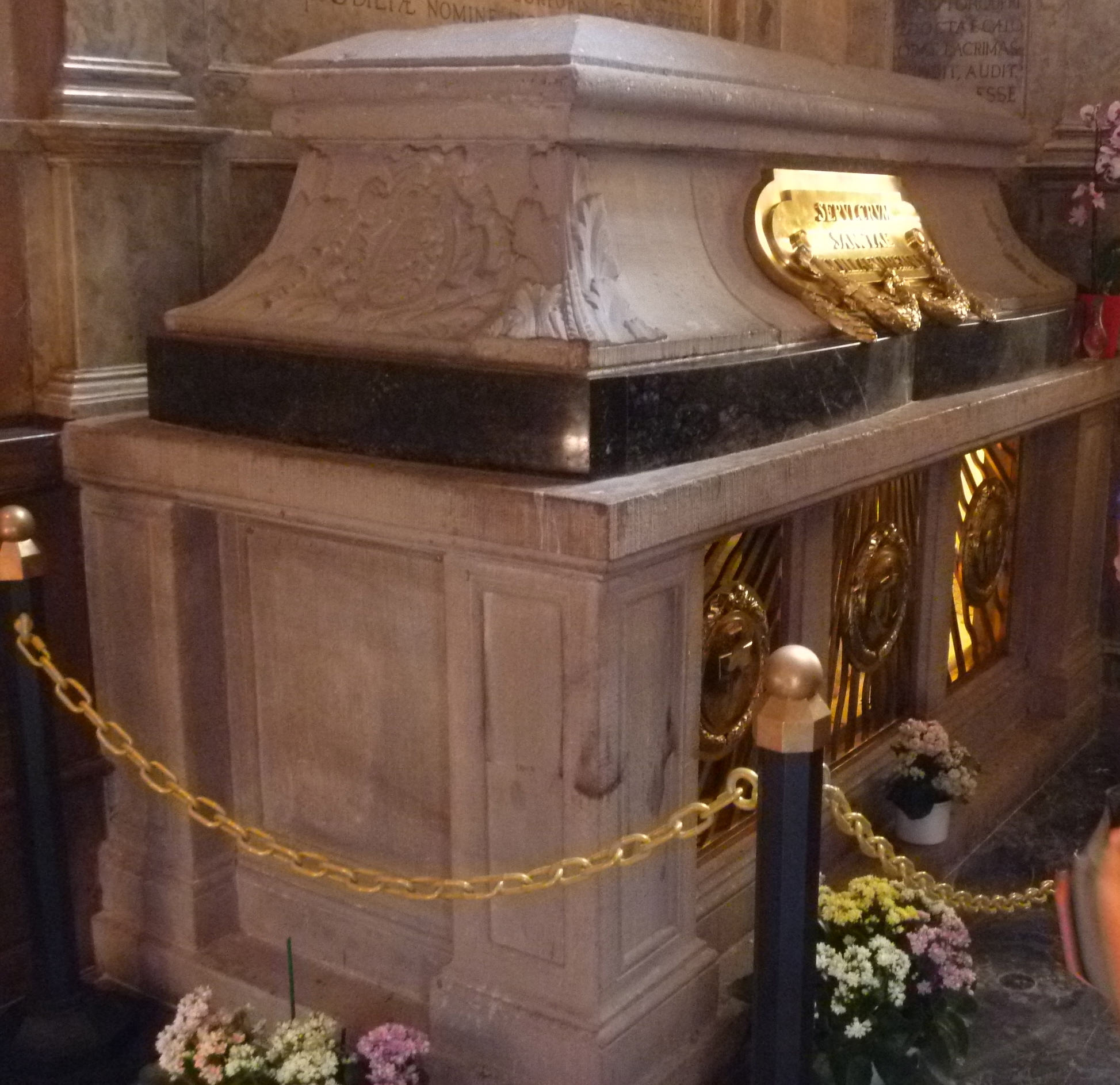
Saint Odile is the patroness of good eyesight. She was born in Obernai and the Augustine foundation at Mont Sainte Odile was founded in her name by her father. She had been born blind but was cured at age 12 on being baptised by an itinerant bishop of Regensburg. She is buried at Mont Sainte Odile.

The Tomb of Saint Odile

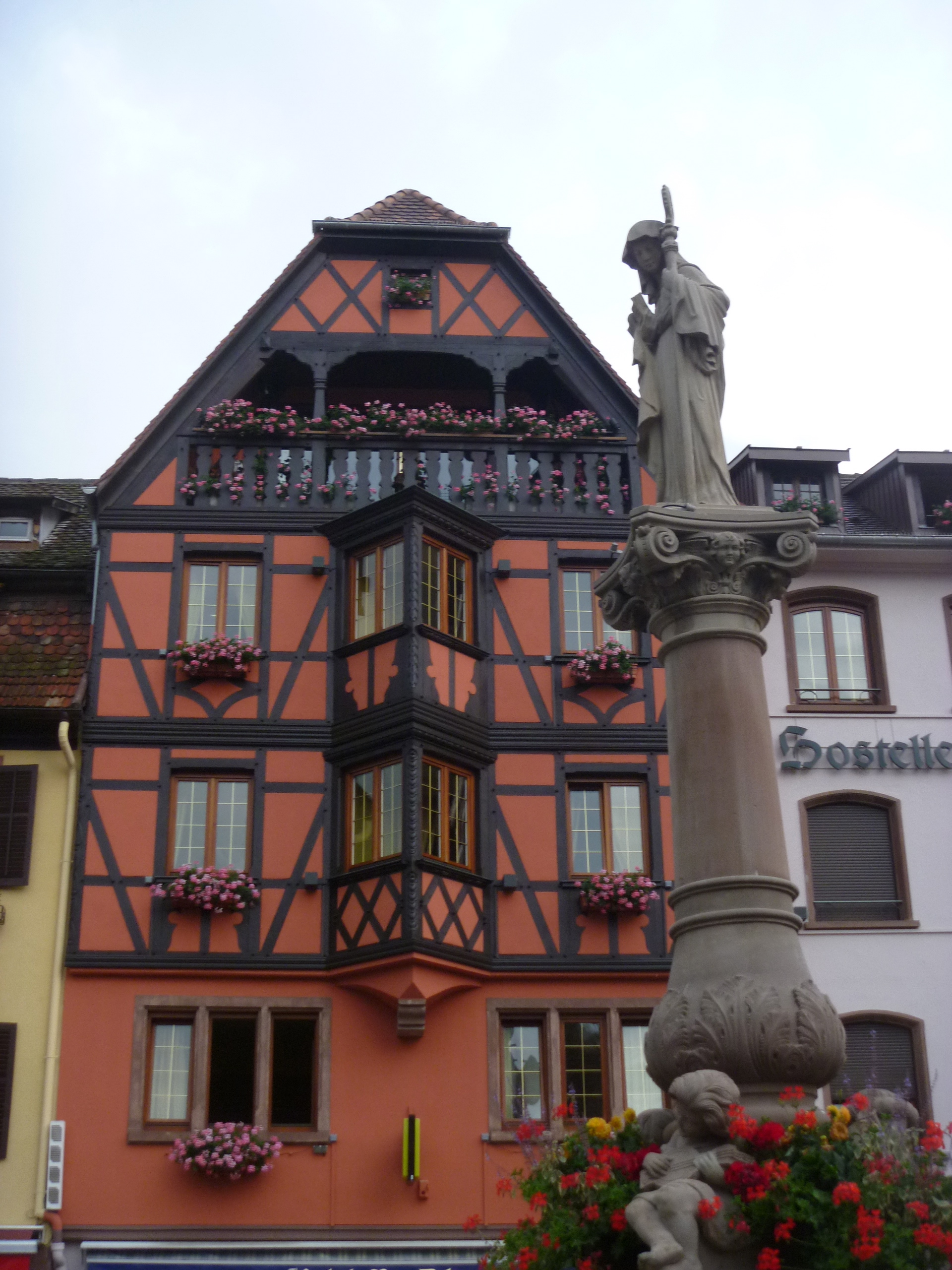
She didn’t just turn up at Obernai – where there’s a statue of her in the main square – but also in the stained glass windows in several churches that we visited along our way.

Saint Odile with her attribute – a pair of eyes in a book – in stained glass at Chatenois

Hansi

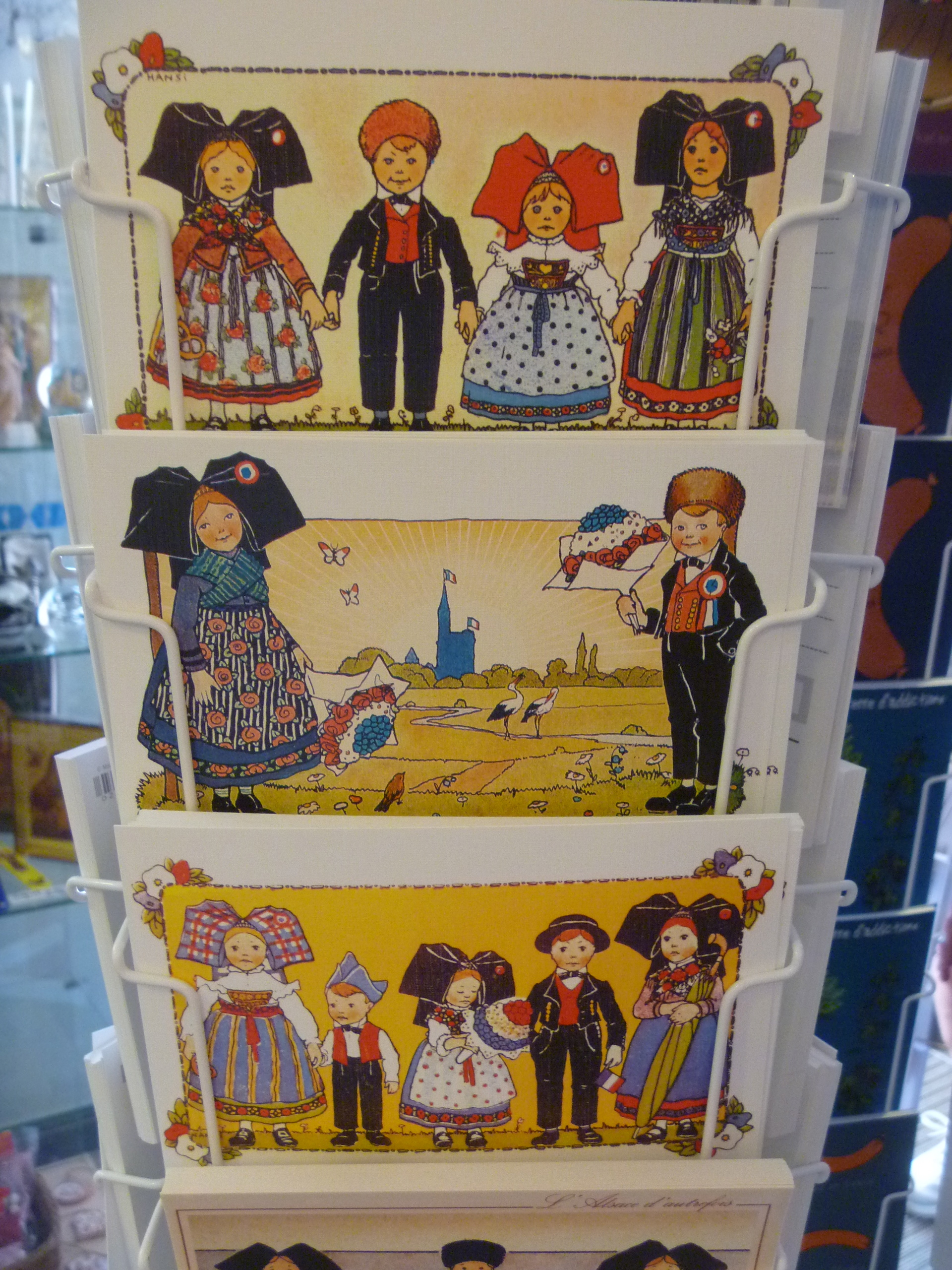
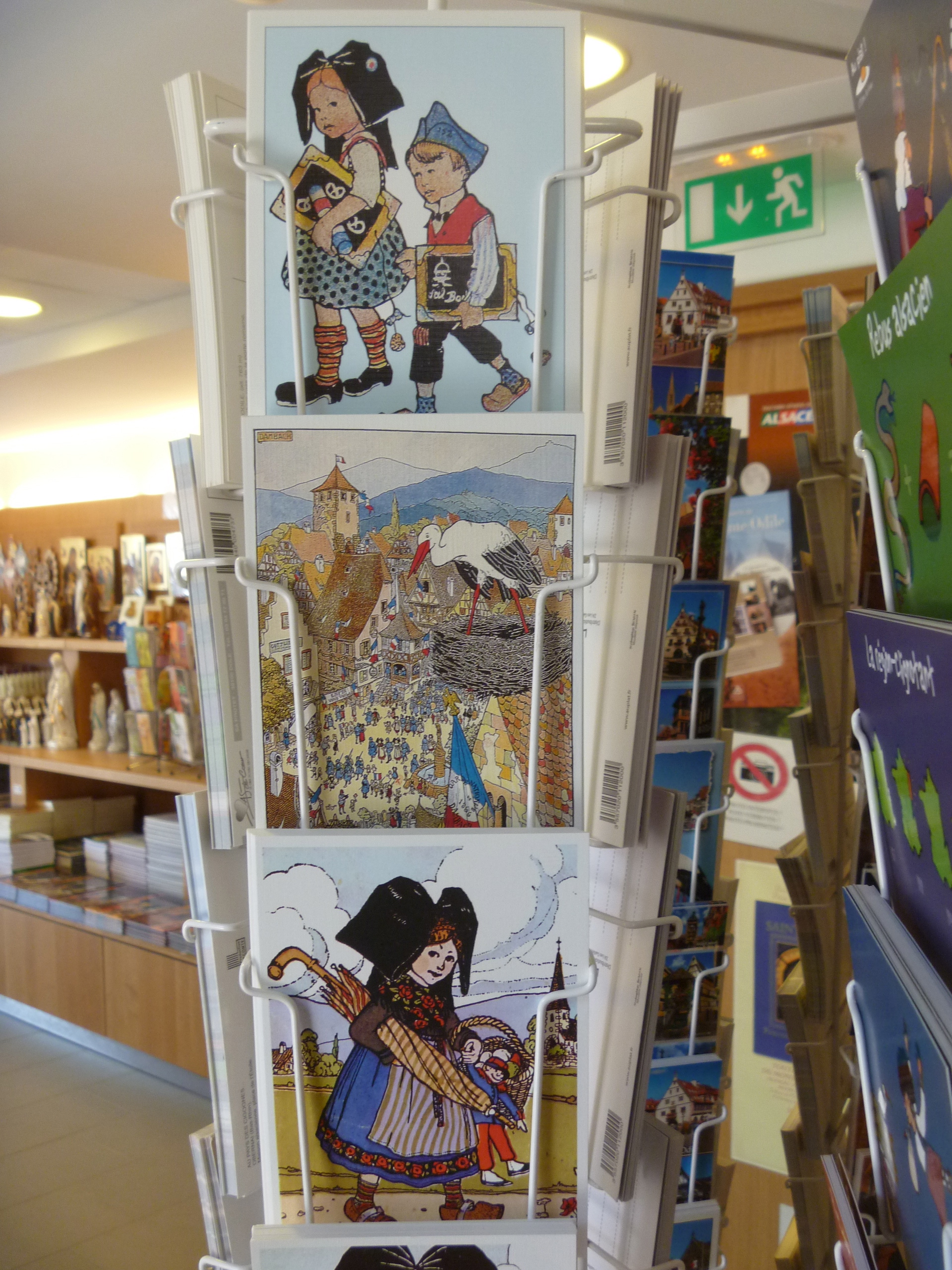
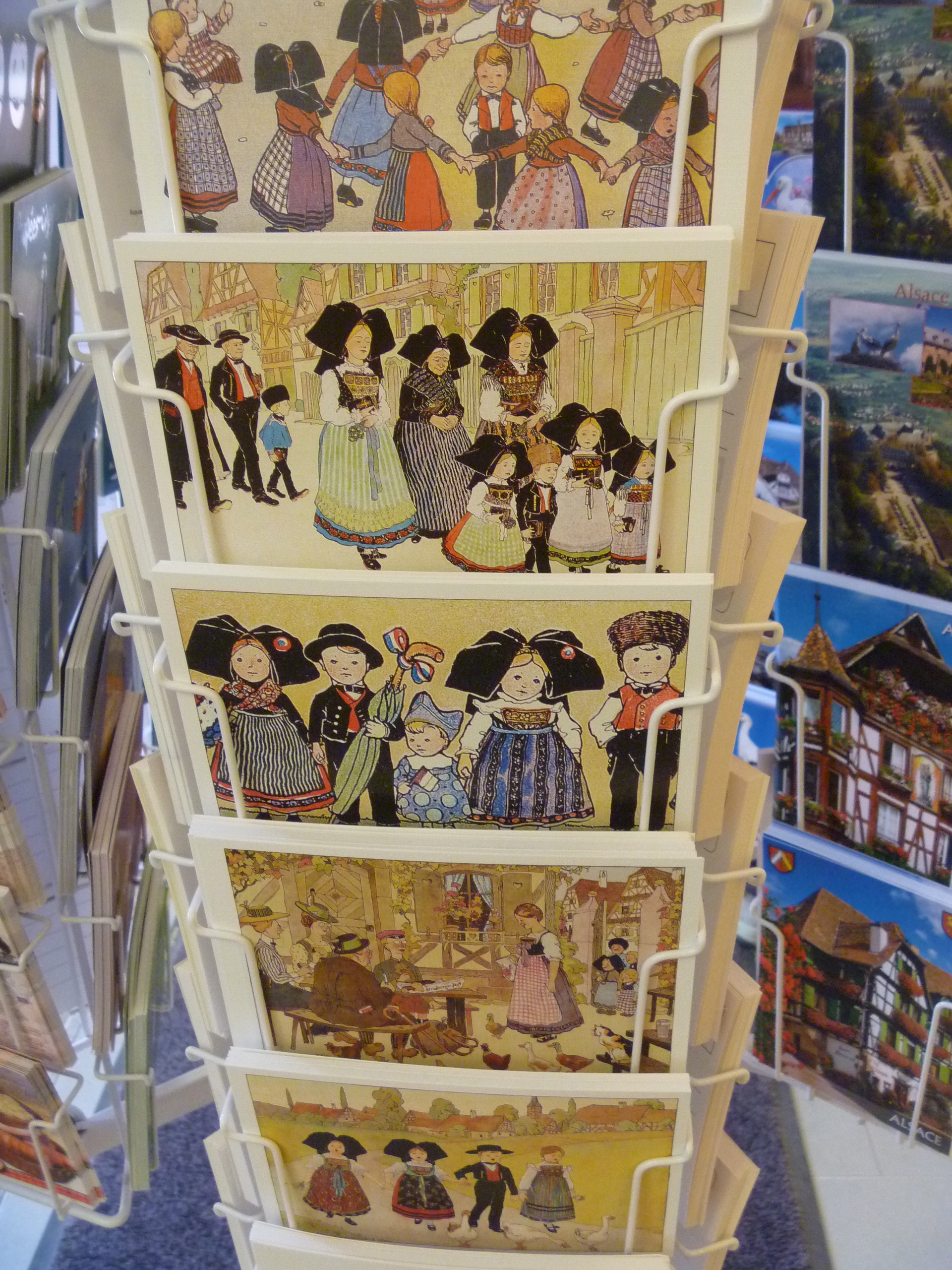
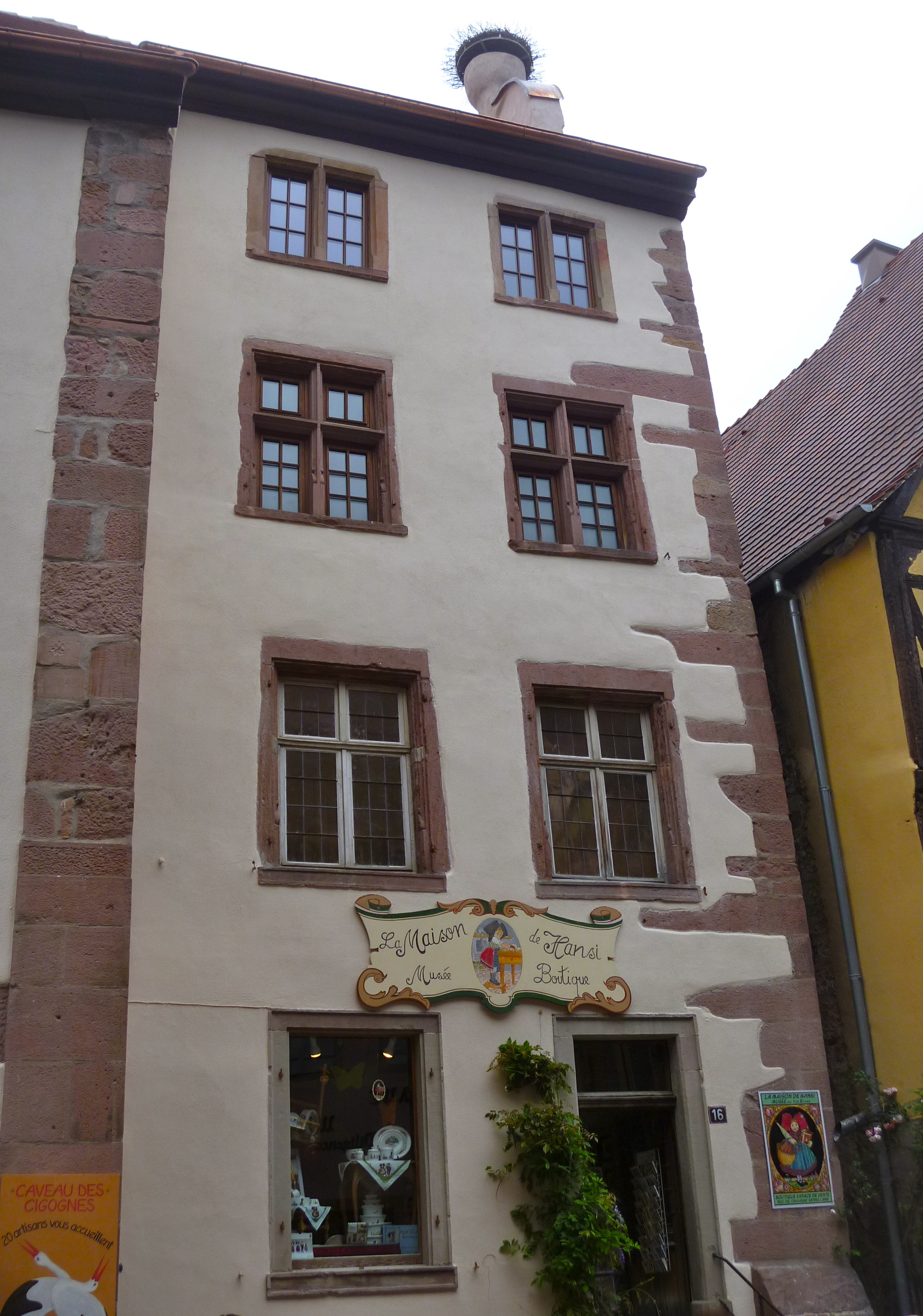
Oncle Hansi, or just Hansi, was the pseudonym of Jean-Jaques Waltz who was born in Colmar in 1873 and died in 1951. We came across his cute little pictures on postcards and framed on the hotel walls throughout our trip. At Riquewihr, where we stayed for our last night on the walk, there is a museum dedicated him.

Note the empty stork nest/basket on the museum chimney

There we watched a video film about his life and discovered that there was much more to the creator of the cutsy postcards than initially met the eye. He had been a French hero of both world wars. He published many satirical works and cartoons that made fun of the Germans in particular the book Professor Knatschke in 1912. He was arrested by the Germans when they annexed Alsace first in 1914 and later, having been pursued by the Nazis in 1940, he fled to Vichy France.

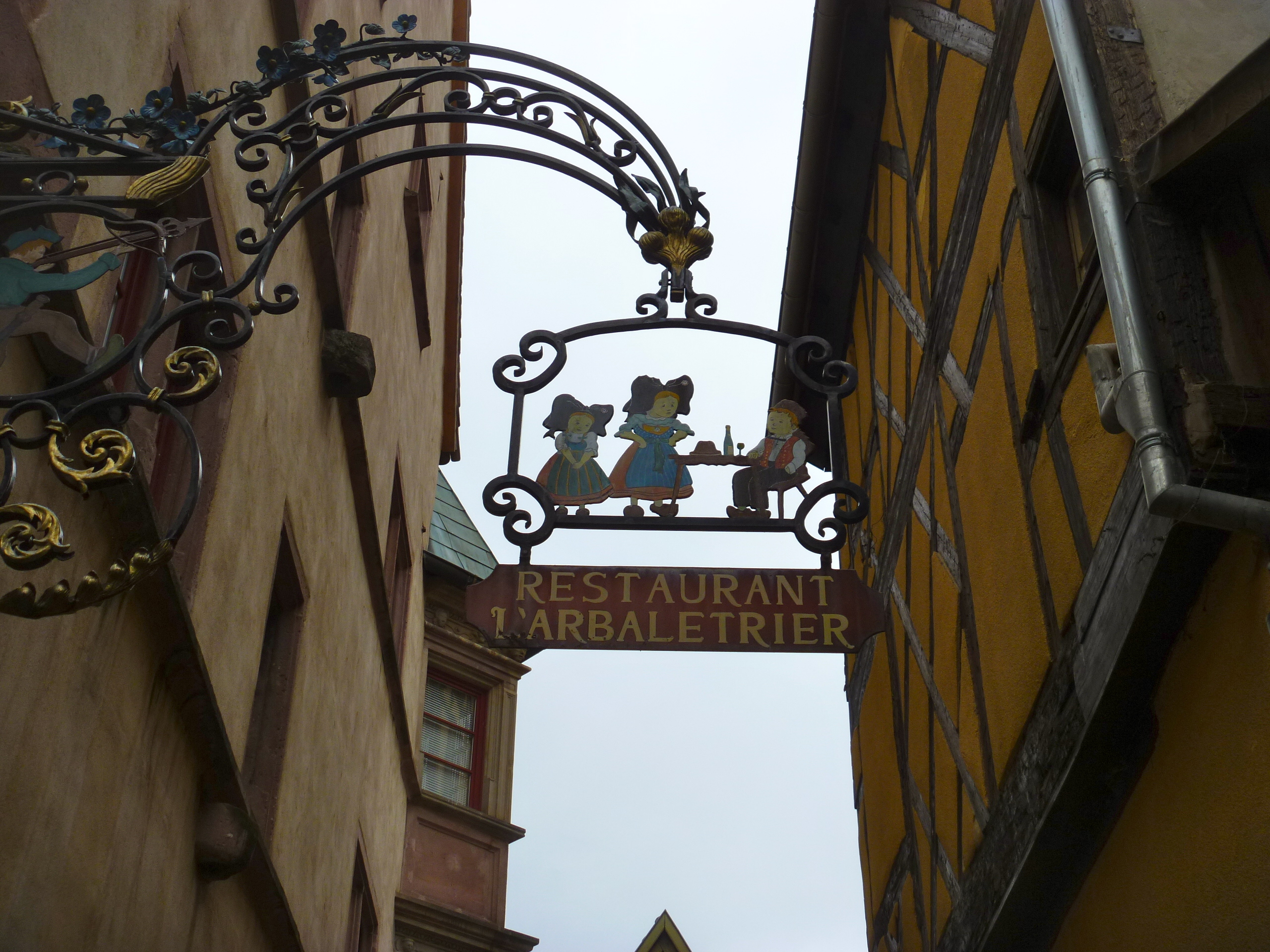
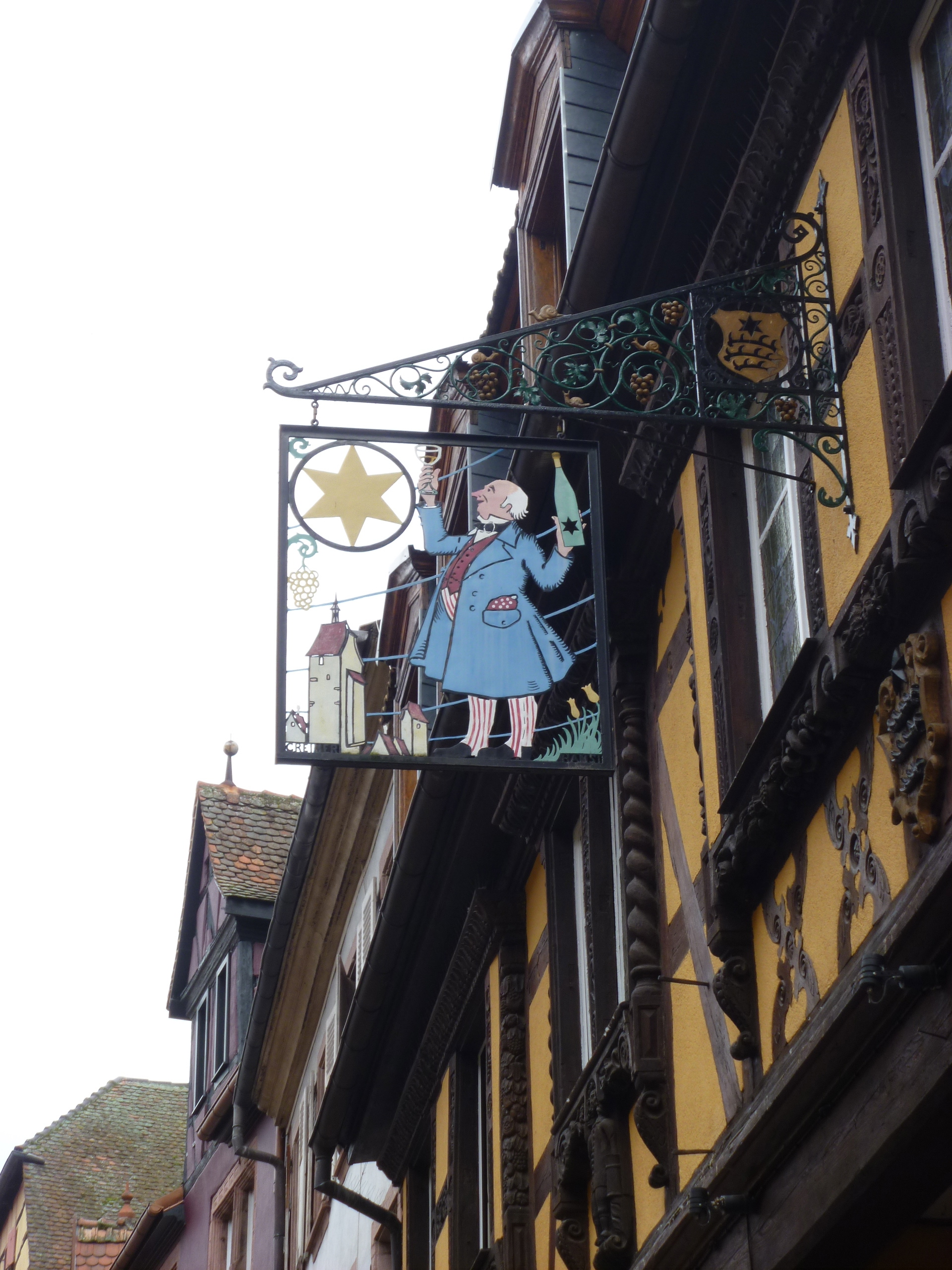
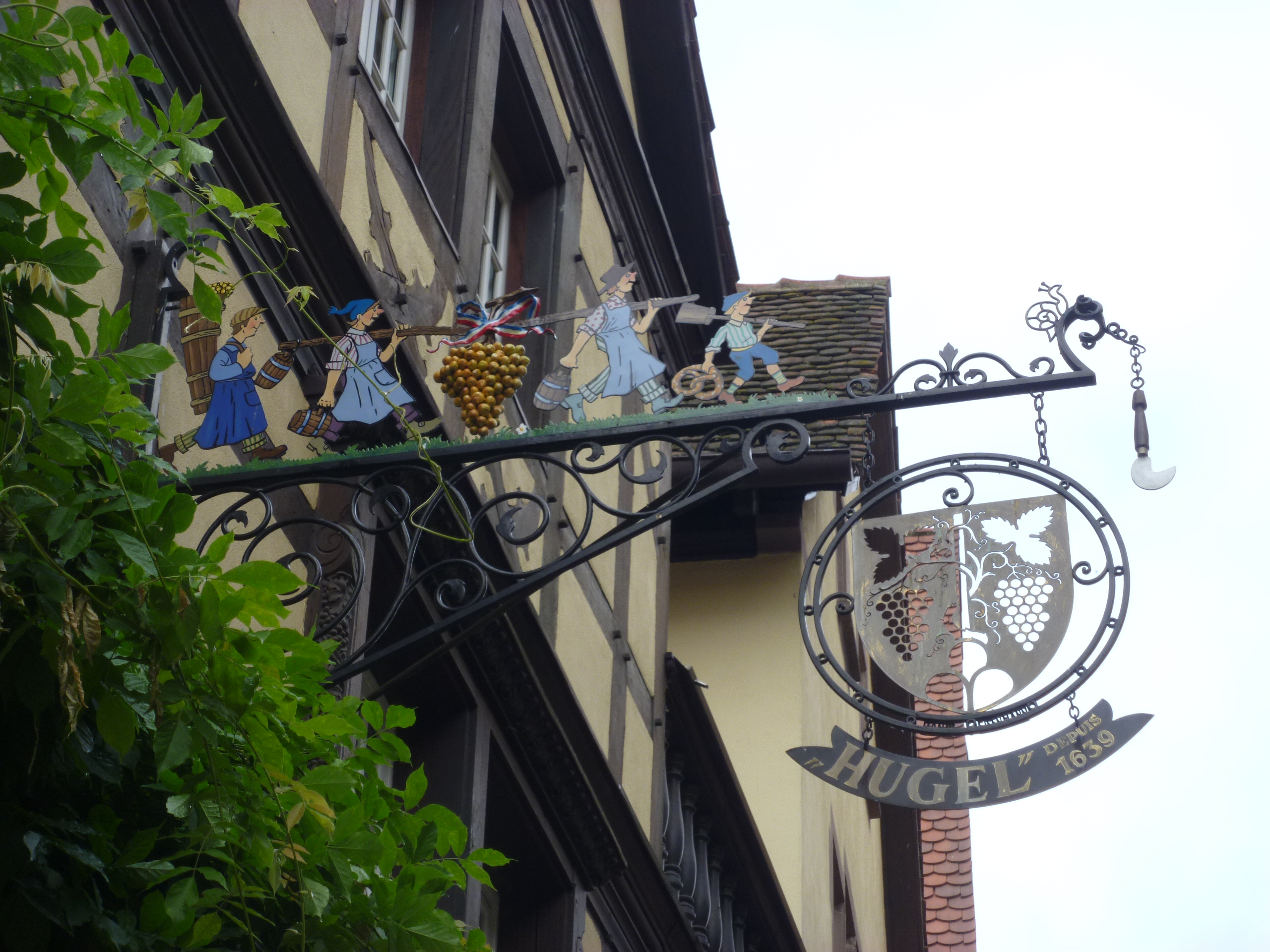
In addition to postcards we spotted shop signs in the villages showing his distinctive work.

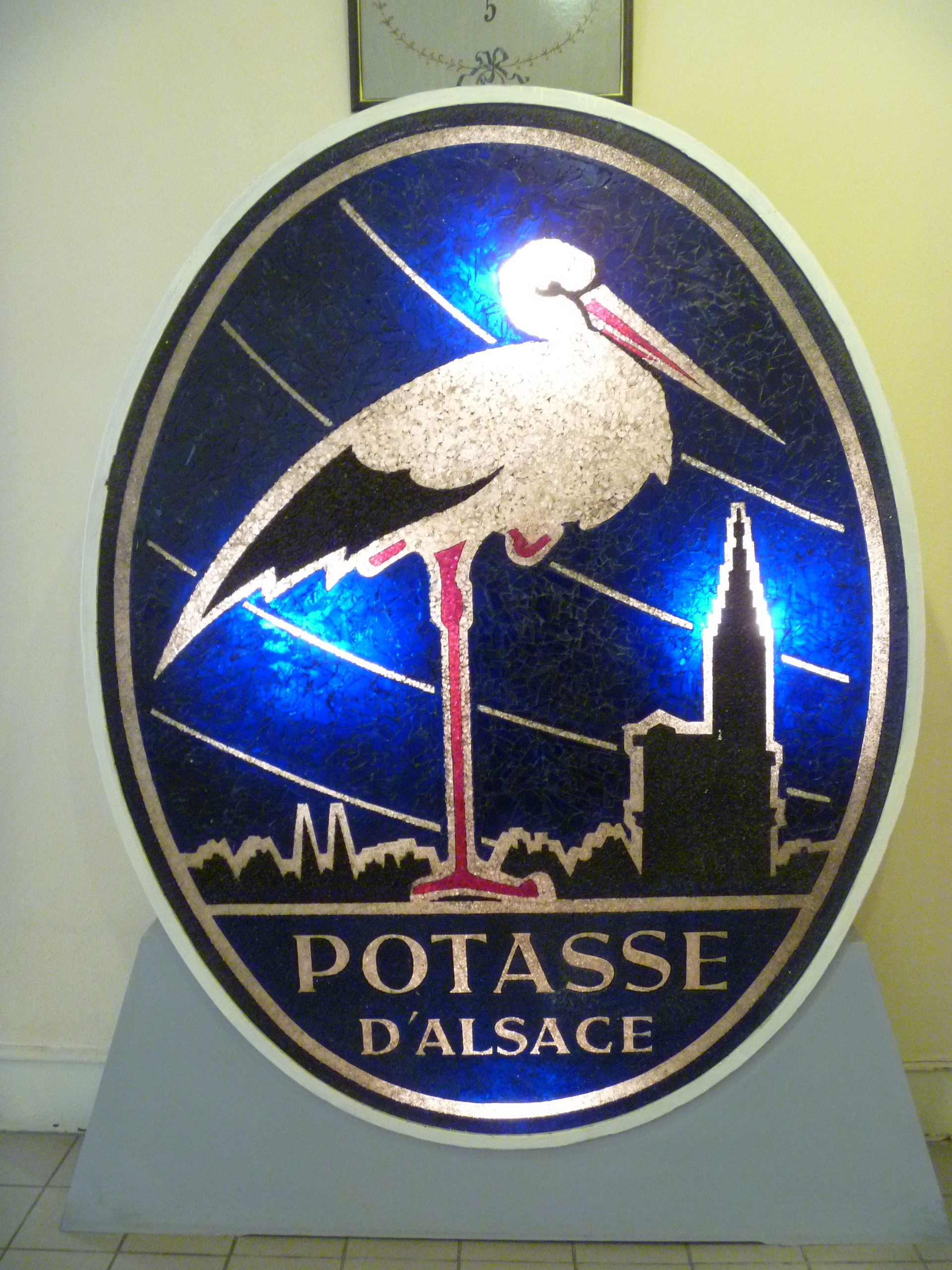
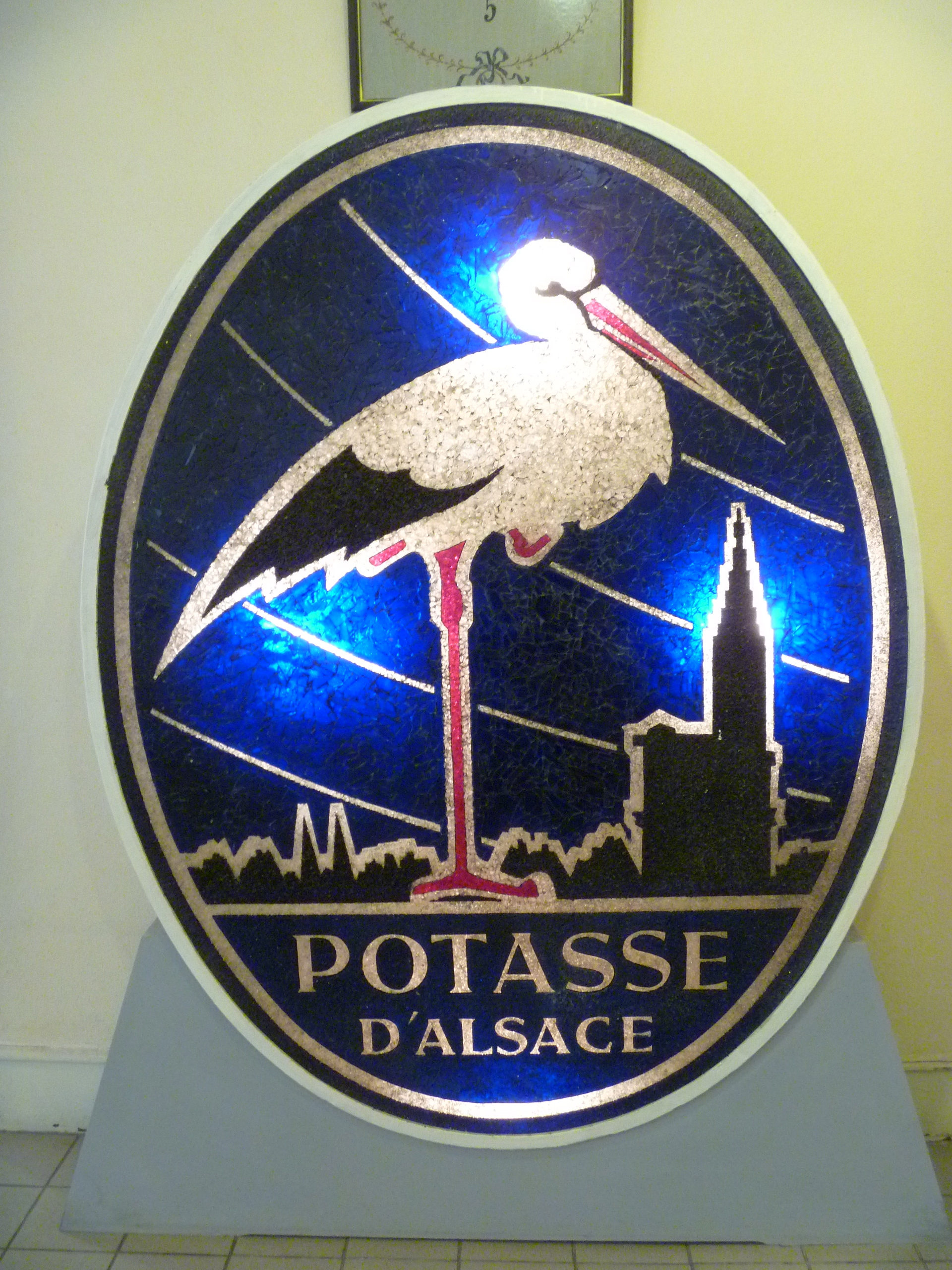
And here’s a combination of Hansi and a Stork – an advertising plaque :

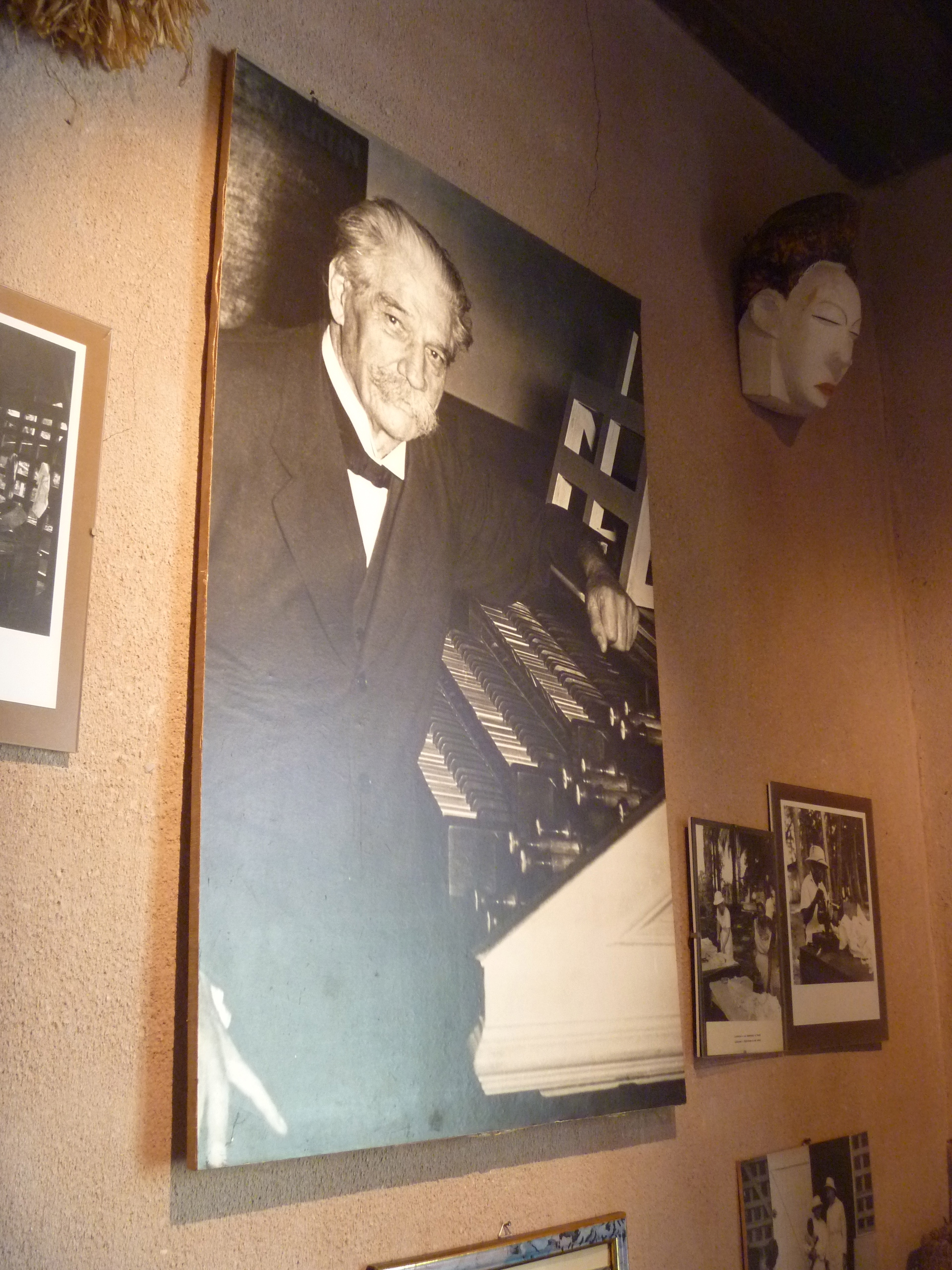
Dr Albert Schweitzer

When I was growing up in the 1950s and early 1960s we learned all about missionaries in school and at Sunday school – Mary Slessor, Albert Schweitzer, Gladys Aylward – the names tripped off our tongues as did our times tables. I’m not sure these days whether young people know these names.

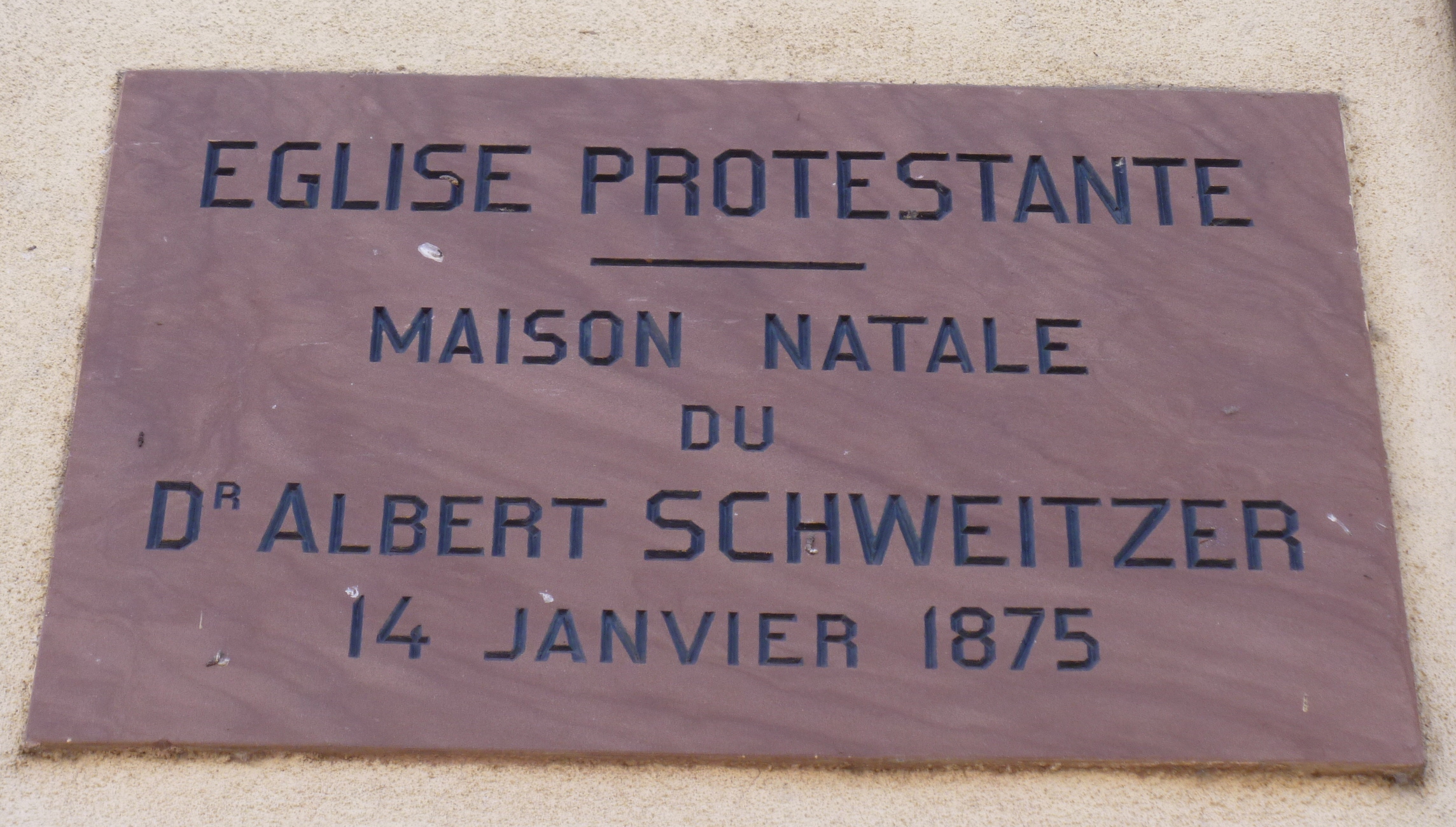
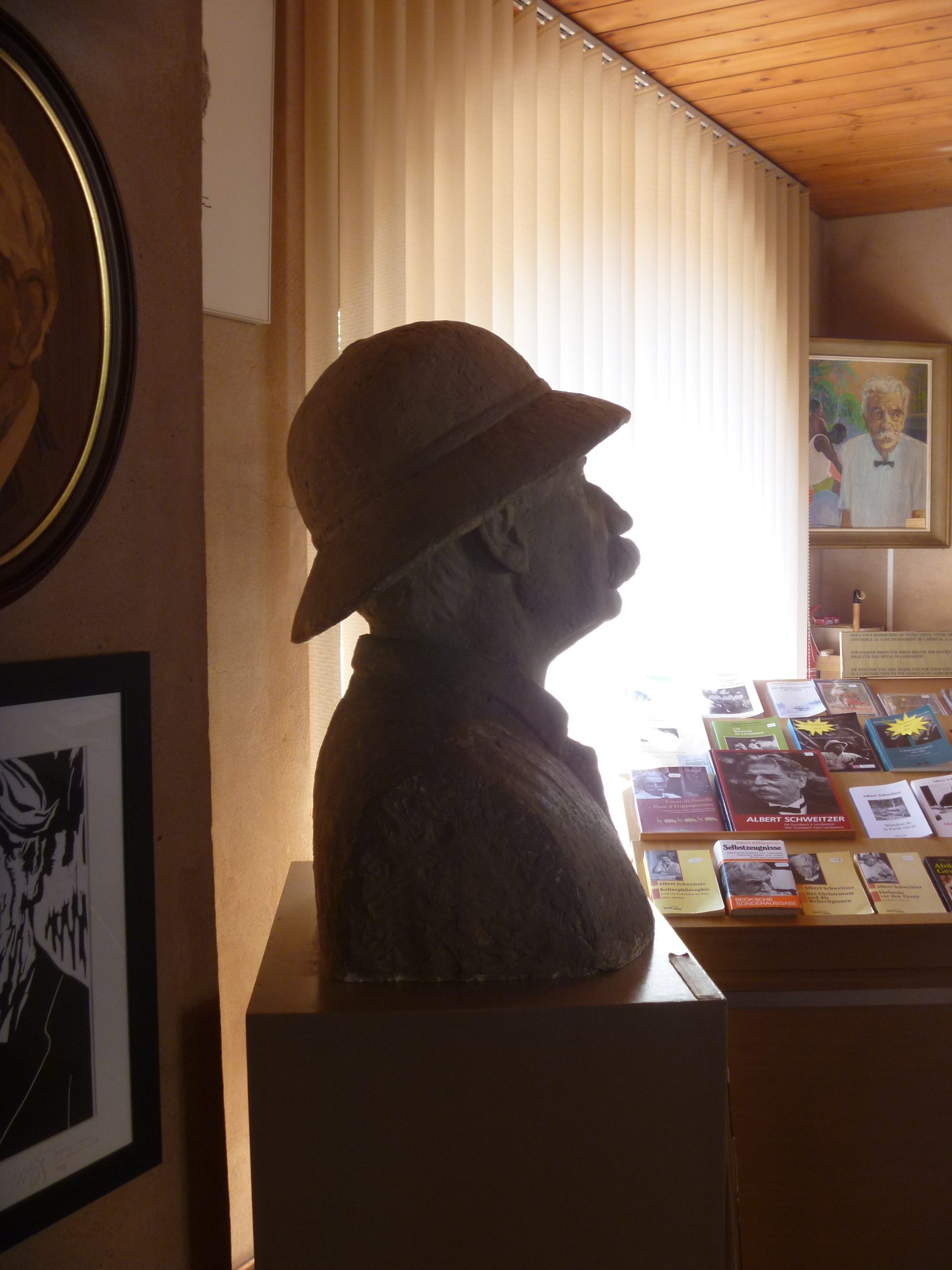
When we arrived at our final destination, Kaysersberg, on the fourth day of walking and saw the birthplace and museum dedicated to Dr Albert Schweitzer we knew just who he was and stepped inside to have a look.

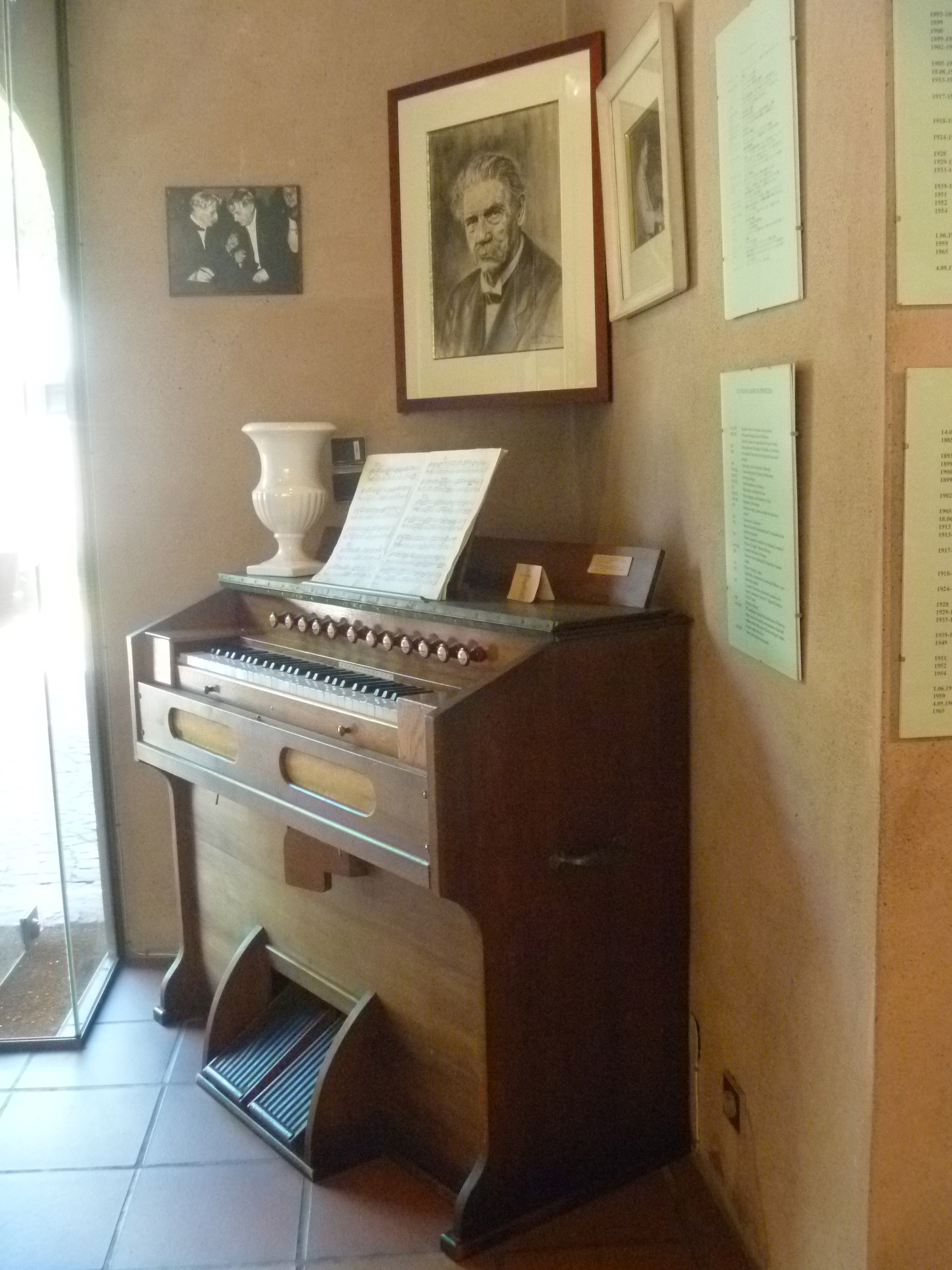
I don’t know if the missionary aspect of work is played down now. Certainly the museum opened our eyes to his many talents and achievements: organist  (an authority on the music of J S Bach); philosopher and writer; theologian and Nobel Peace Prize winner (in 1952). He’d been arrested and imprisoned during the first world war for being a German citizen (due to being born at a time when Alsace was occupied by Germany).

But most significantly he was a medical doctor who founded and ran for 50 years a hospital in Lambarene, Gabon in east Africa. The hospital still exists today and the town of Lambarene now has twinning arrangements with Kaysersberg. Any profits that come from the museum entrance fee still go towards the work of the Schweitzer Hospital at Lambarene. Around the walls of the museum are pasted many quotations from his writings.

“Do something for somebody everyday for which you do not get paid.”

Read more athttp://www.brainyquote.com/quotes/authors/a/albert_schweitzer.html#YxhUTXKsI5eOfoyy.99

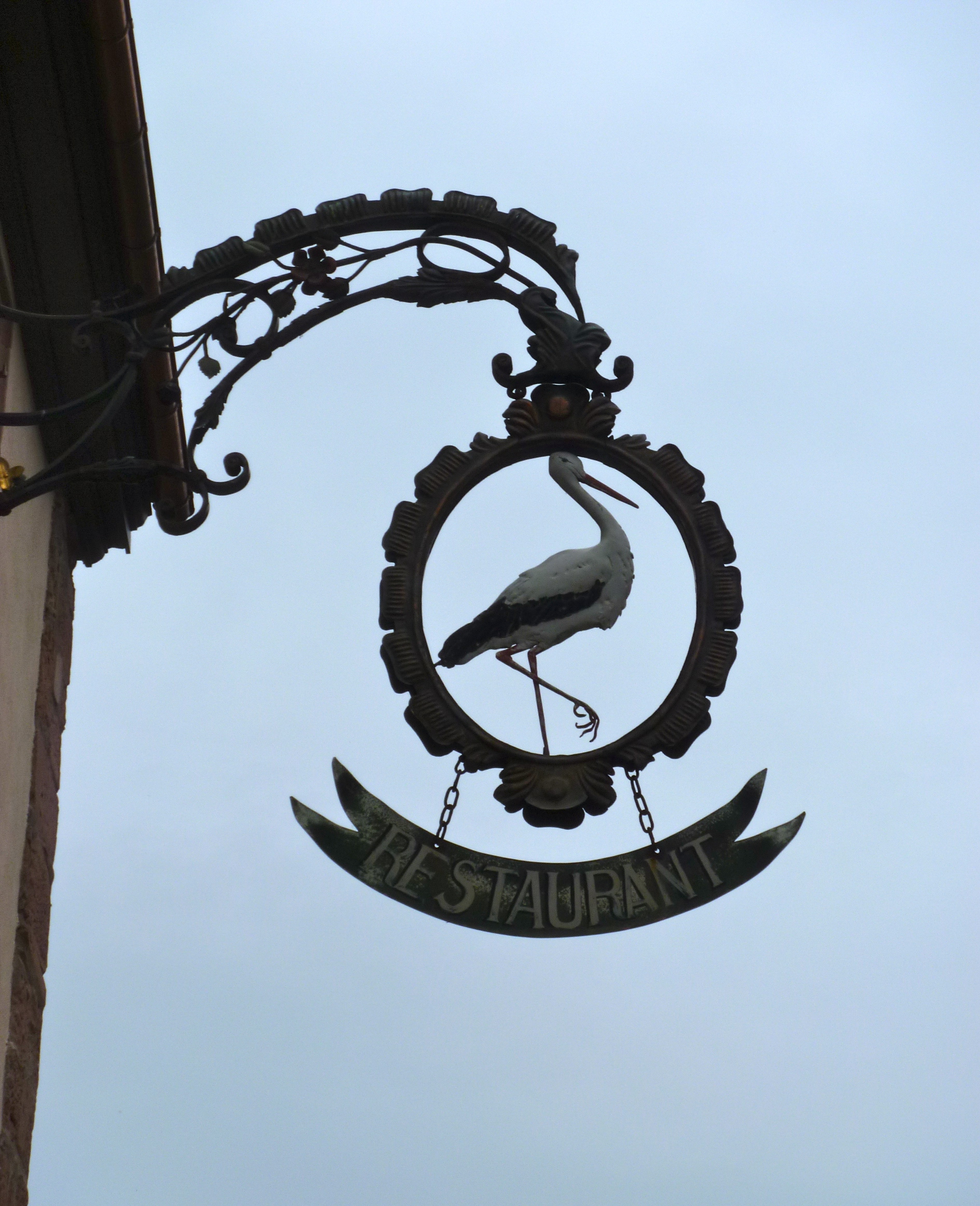
Ciconia ciconia – lucky to see you!

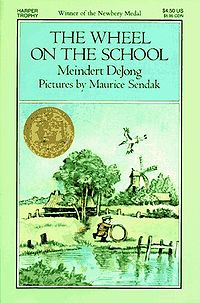
One thing I really hoped to see on my walking tour in Alsace was a stork on its nest. And my wish came true as we arrived at Dambach-La-Ville at the end of our first day’s walking. I used to read a book called ‘The Wheel on the School’ by Meindert Dejong to my sons when they were young.

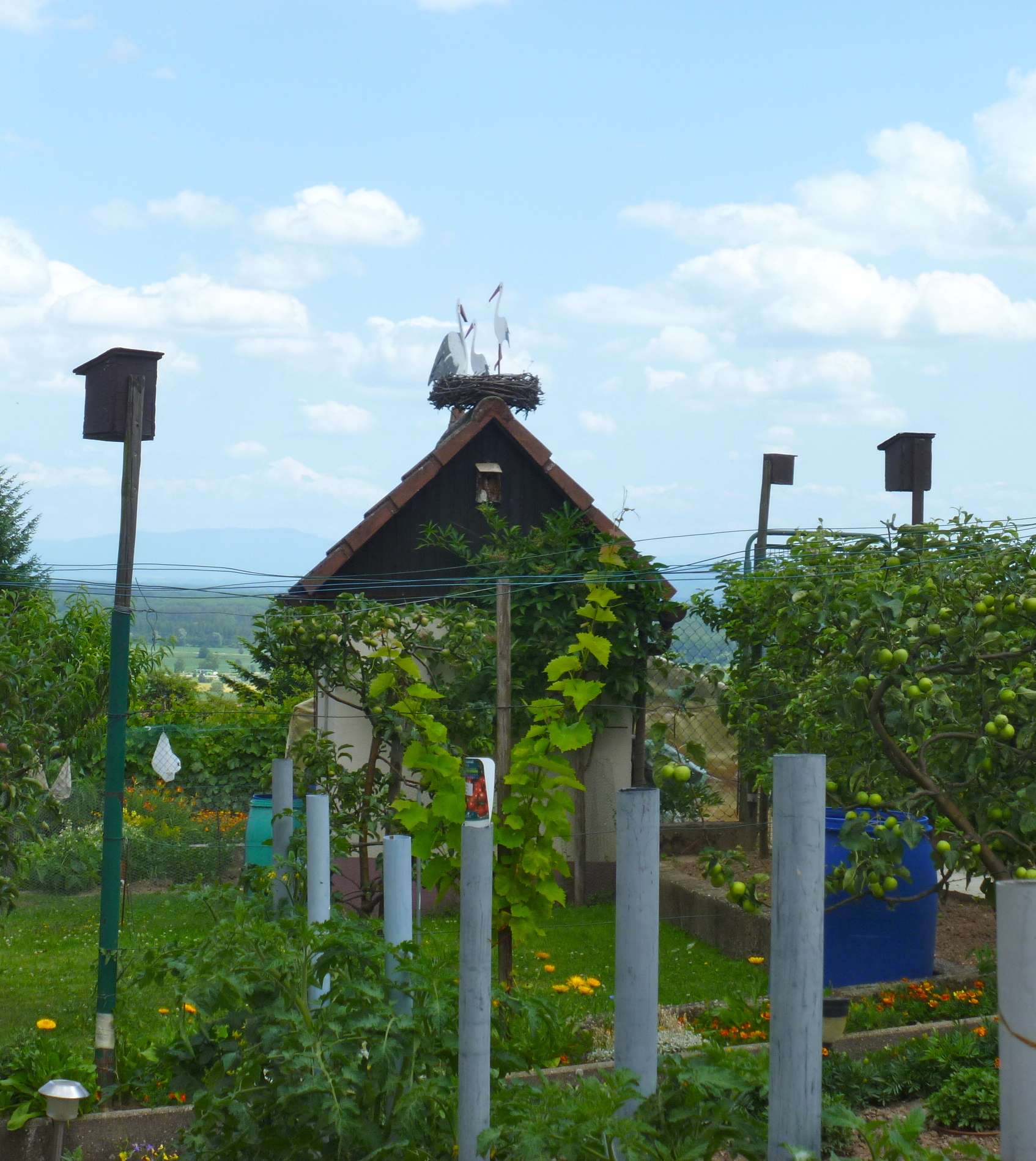
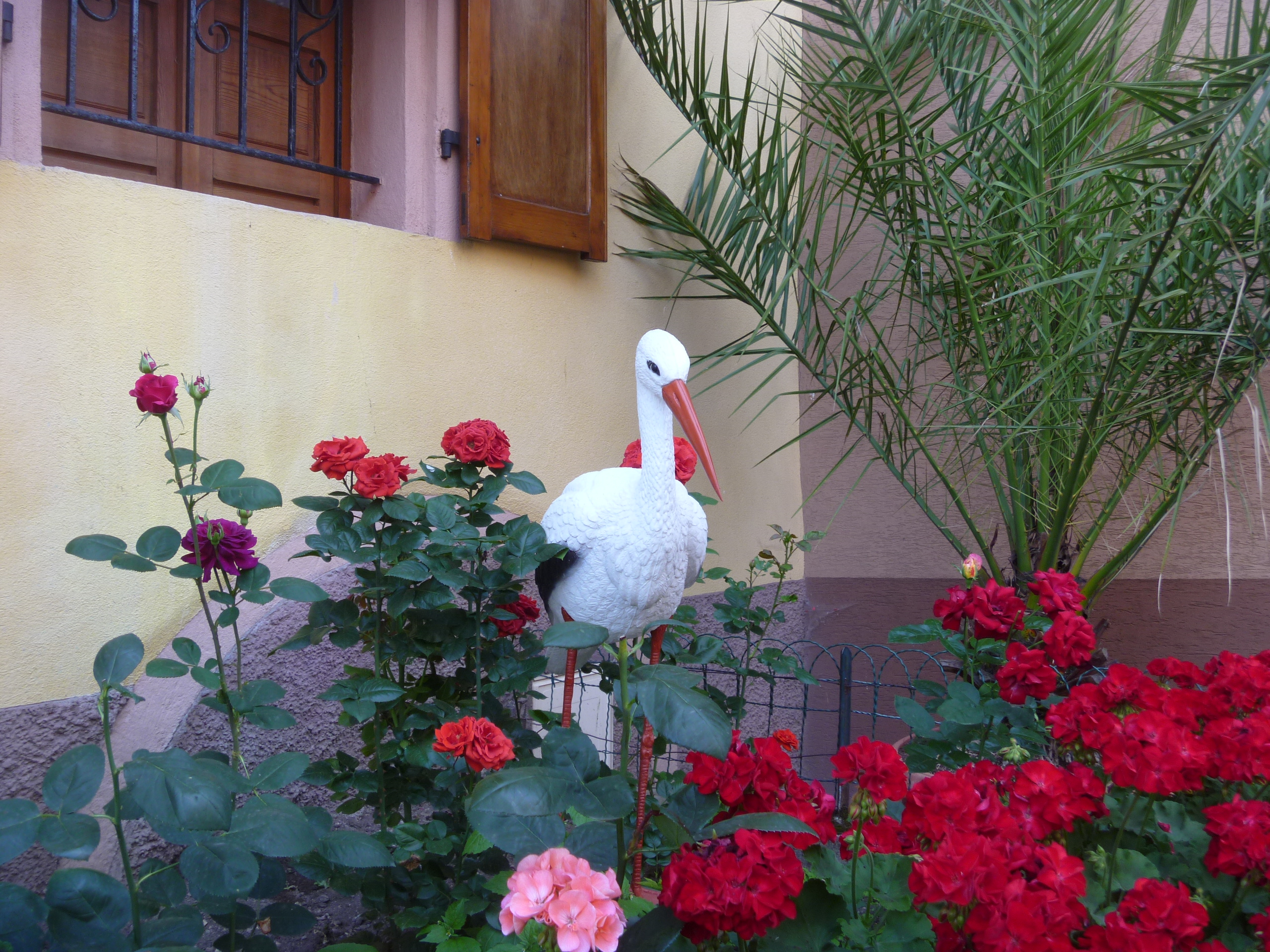
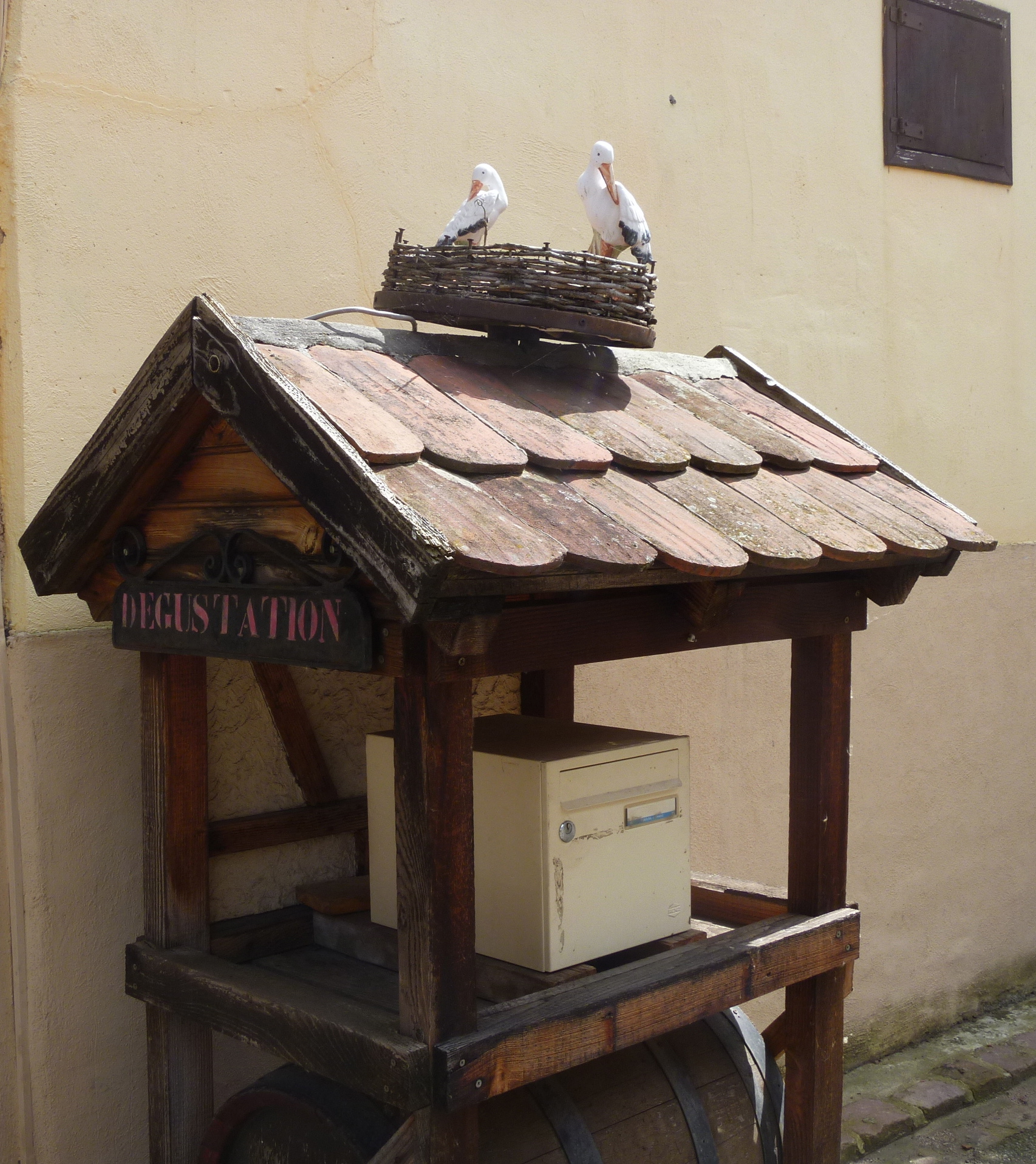
It’s the story of a village in Holland that the storks have forsaken and the efforts made by the villagers and especially the school children to encourage those birds to come back. Although this story is set in Holland I knew that storks could also be seen – if one was lucky – in Alsace. I was reminded of the Alsace-stork connection as we came across countless images of storks in every conceivable place during our journey.

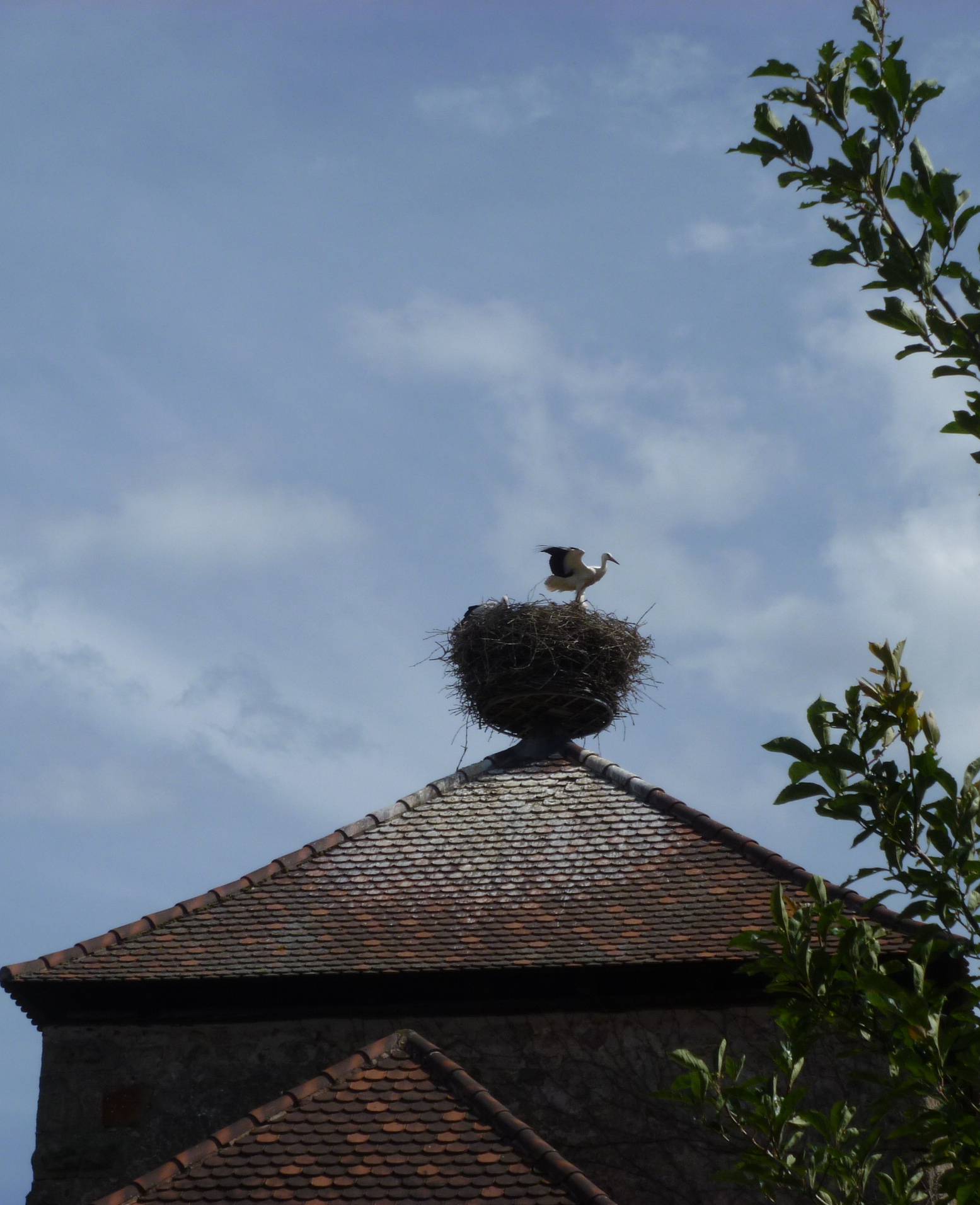
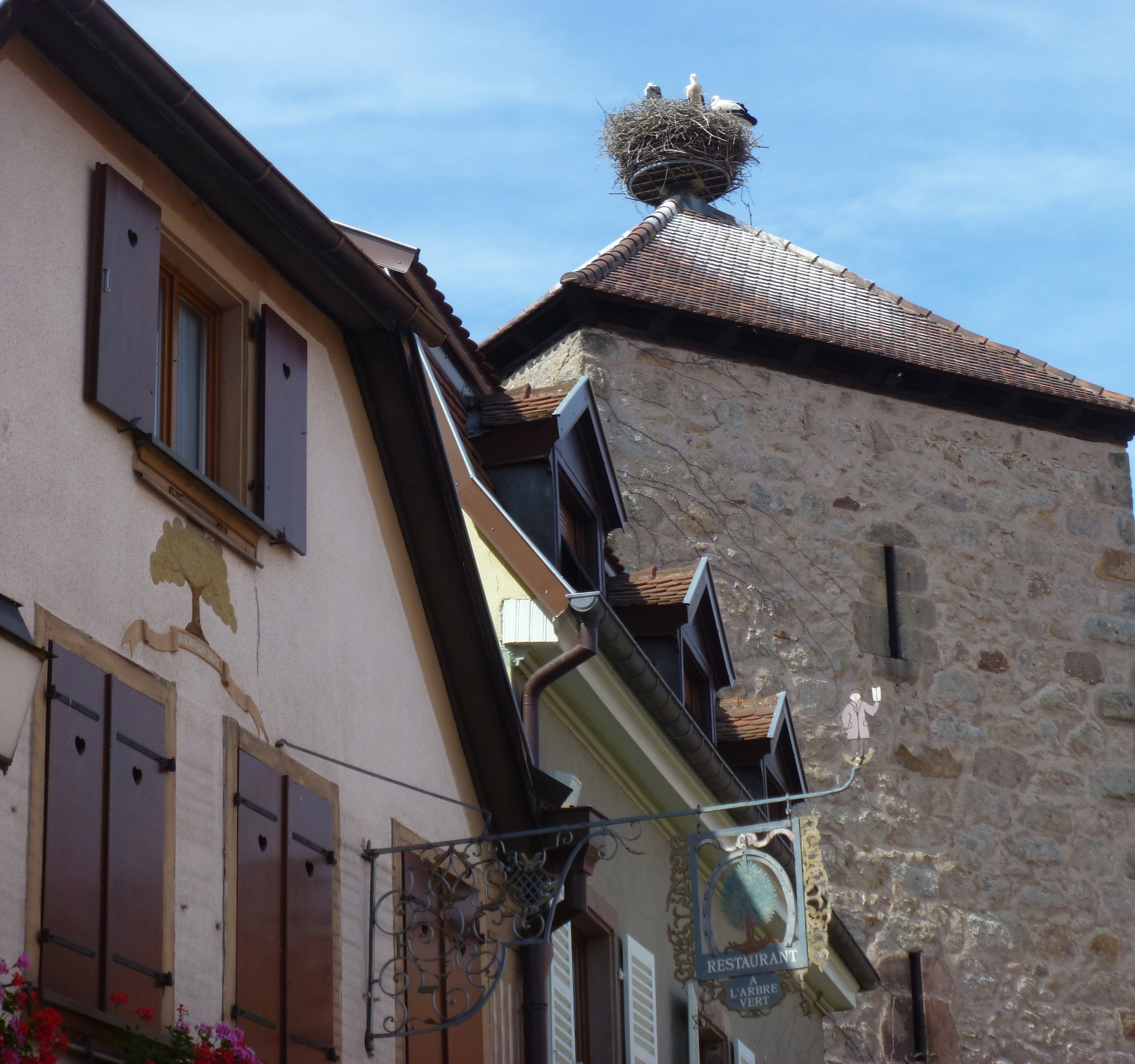
We saw storks again on the next day in the small town of Chatenois and had one further spotting of a stork in flight from its nest at Ribeauville on the third day.

On the Blienschwiller Gate at Dambach-La-Ville

Dambach Storks

The storks we saw were White Storks – the best known of the 17 species of the stork family. With their long broad wings these long legged birds can apparently fly to great heights on upward convection currents.

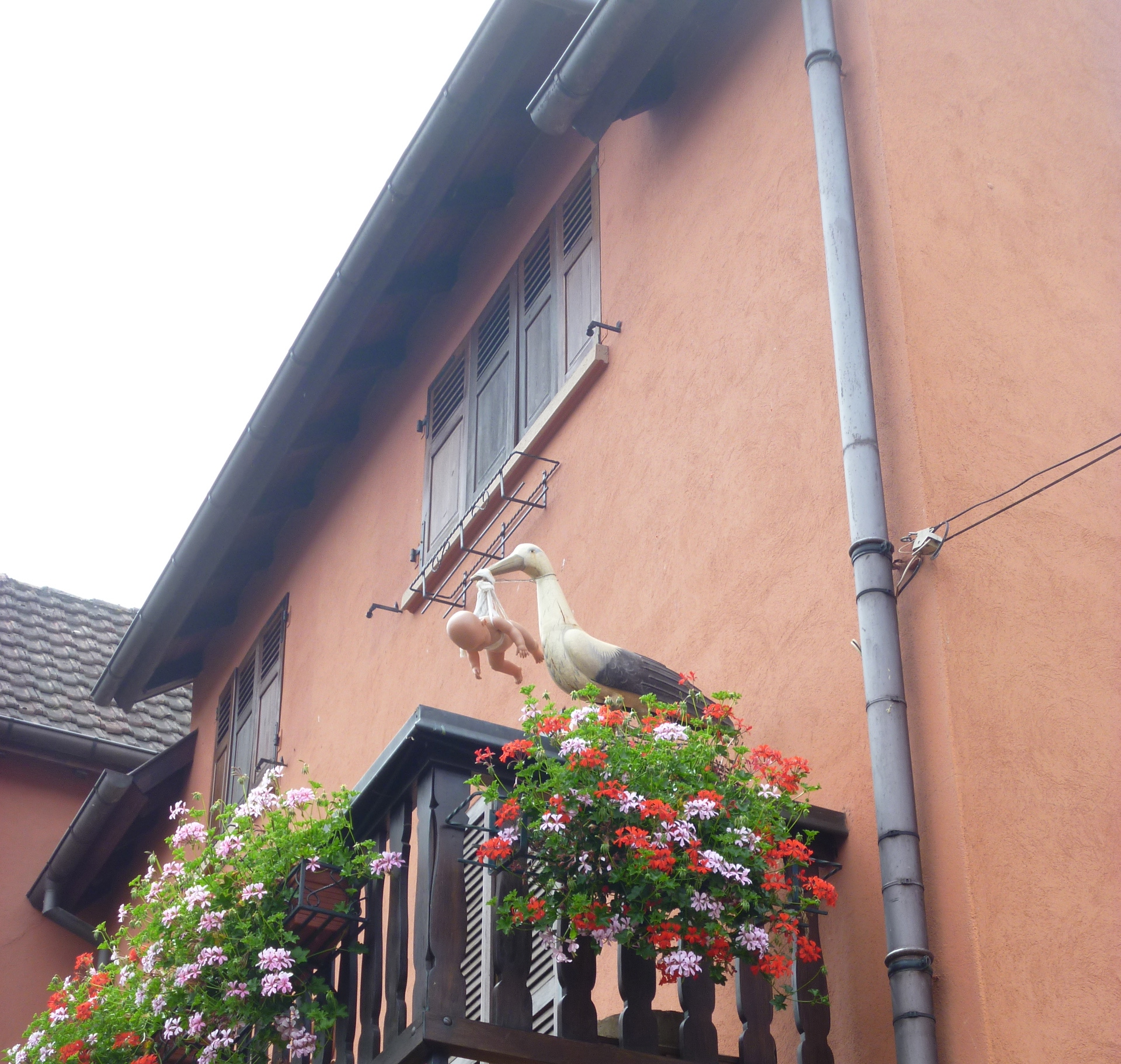
Storks are a symbol of good luck and the traditional bearers of babies.

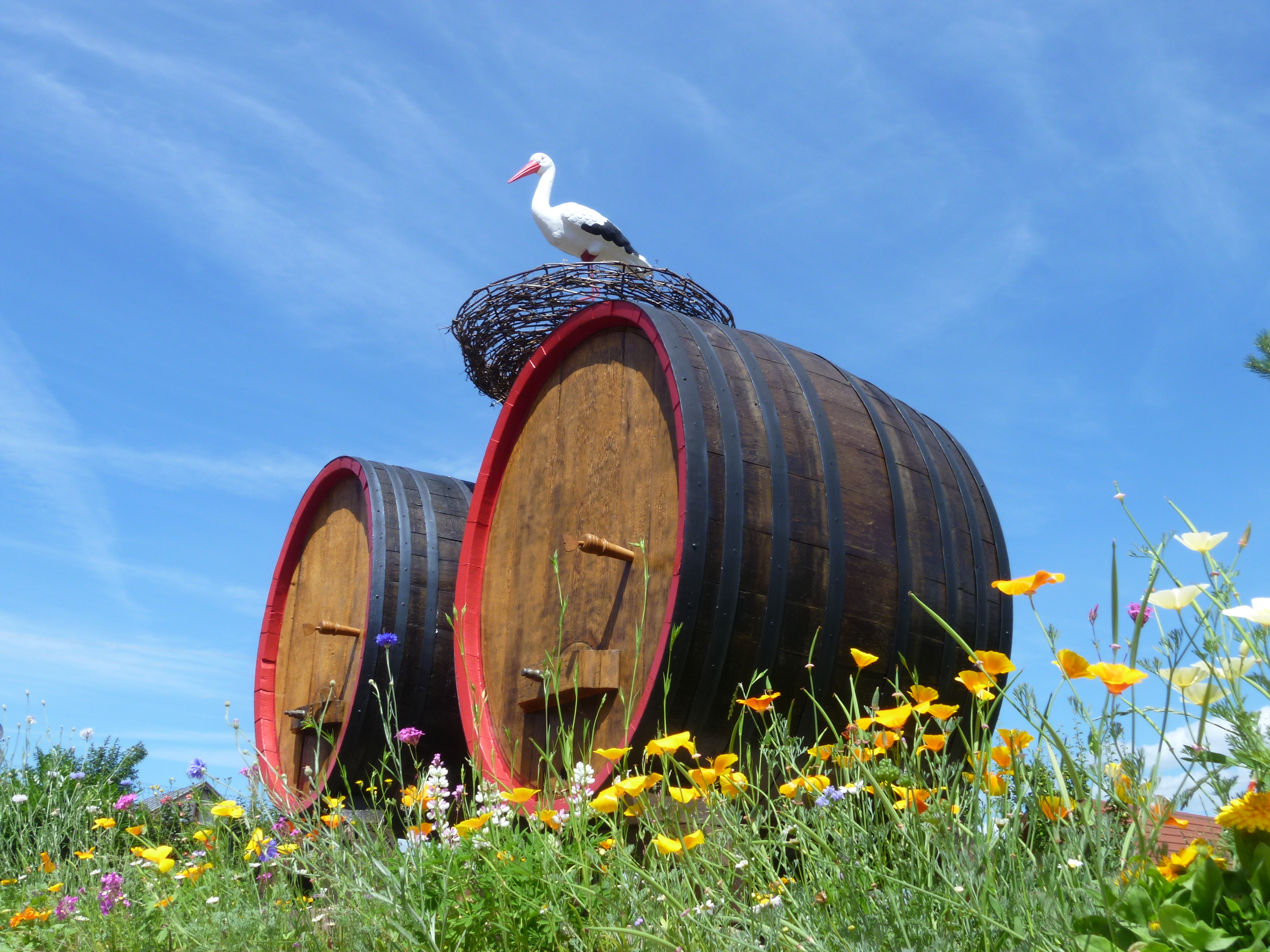
To encourage the storks to nest in the neighbourhood and therefore increase their chances of having good luck the villagers put up baskets or cartwheels. We saw many empty examples of these. Storks spend the winter in South Africa and think about heading north in March and April. They often return to their old nests adding to them and repairing them and in so doing increasing the weight and height of the nest substantially. The young birds tend to stay in the nests for about two months and I think we were lucky indeed to catch sight of occupied nests on our brief trip.

Classic Alsace … you will be welcomed!!

I’ve just returned from a five day walking holiday in Alsace! After last year – my first such walking holiday – in Shropshire my sister and I vowed “never again”. But as the months went by our memories of the tough climbs and steep descents on the Offa’s Dyke Path Day gradually faded so much so that earlier this year we decided to take the plunge and book another such trip!

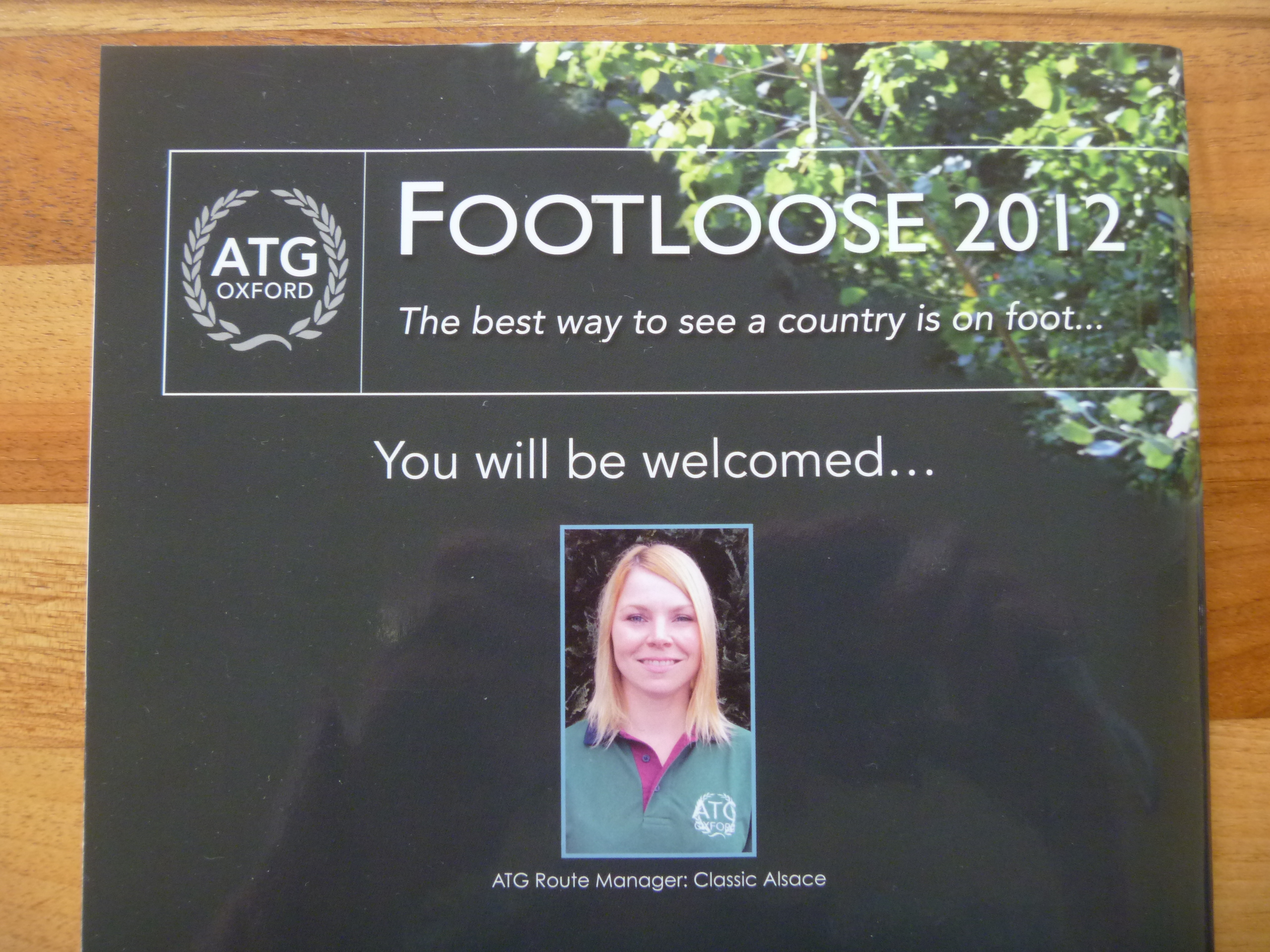
Here is Edina on the back cover of the ATG Footloose 2012 Brochure

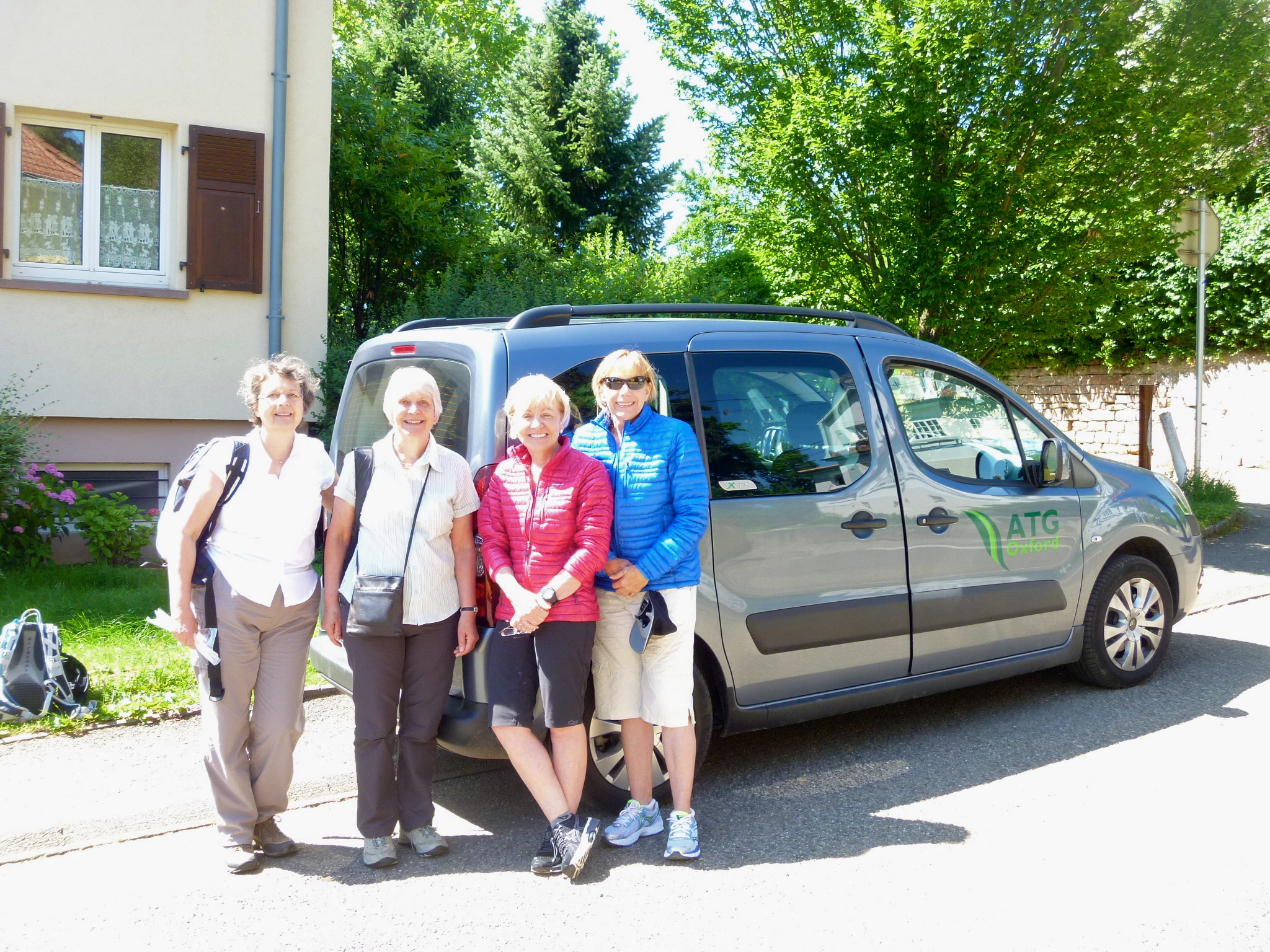
Many companies will arrange independent walking holidays but ATG Oxford (Alternative Travel Group) came with an excellent personal recommendation from friends of mine. As they say on their website “almost everyone comes through personal recommendations”. They send out a Route Booklet, transfer bags from one hotel to the next along a continuous route and (I don’t know whether other companies do this) they add in the services of a Route Manager. Ours was the lovely Edina and in her ATG have  a star!

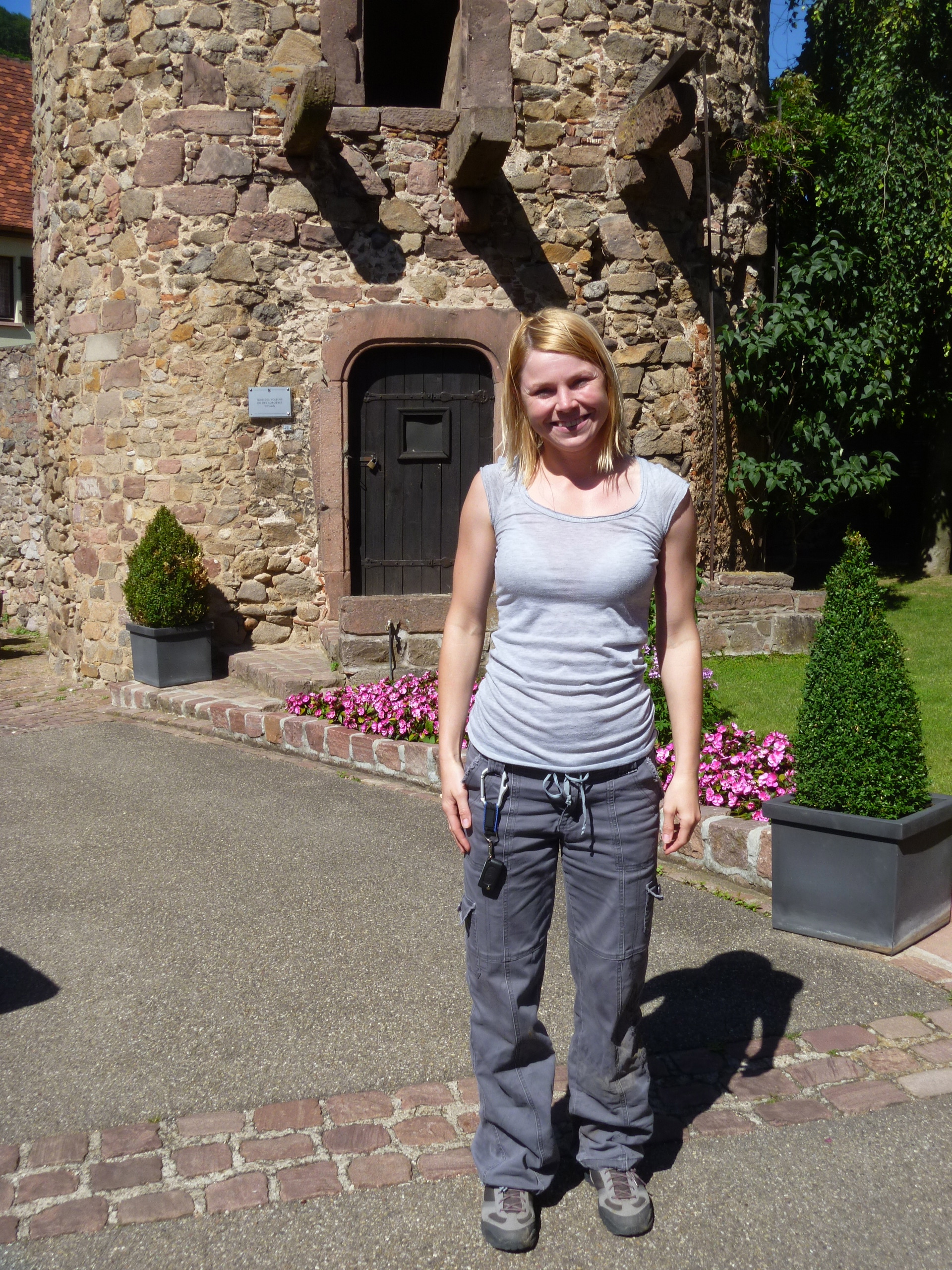
And here she is just before we said our goodbyes, yesterday

One reason for choosing the Classic Alsace Walk was the fact that it’s accessible by train and I love to travel on Eurostar, it is just so civilised and exciting. We met up in London last Wednesday evening and the next morning took an early train to Strasbourg via Lille and from there we caught a local train to the village, or maybe town, of Obernai – deep in the Viticulture and Degustation Region of Alsace.

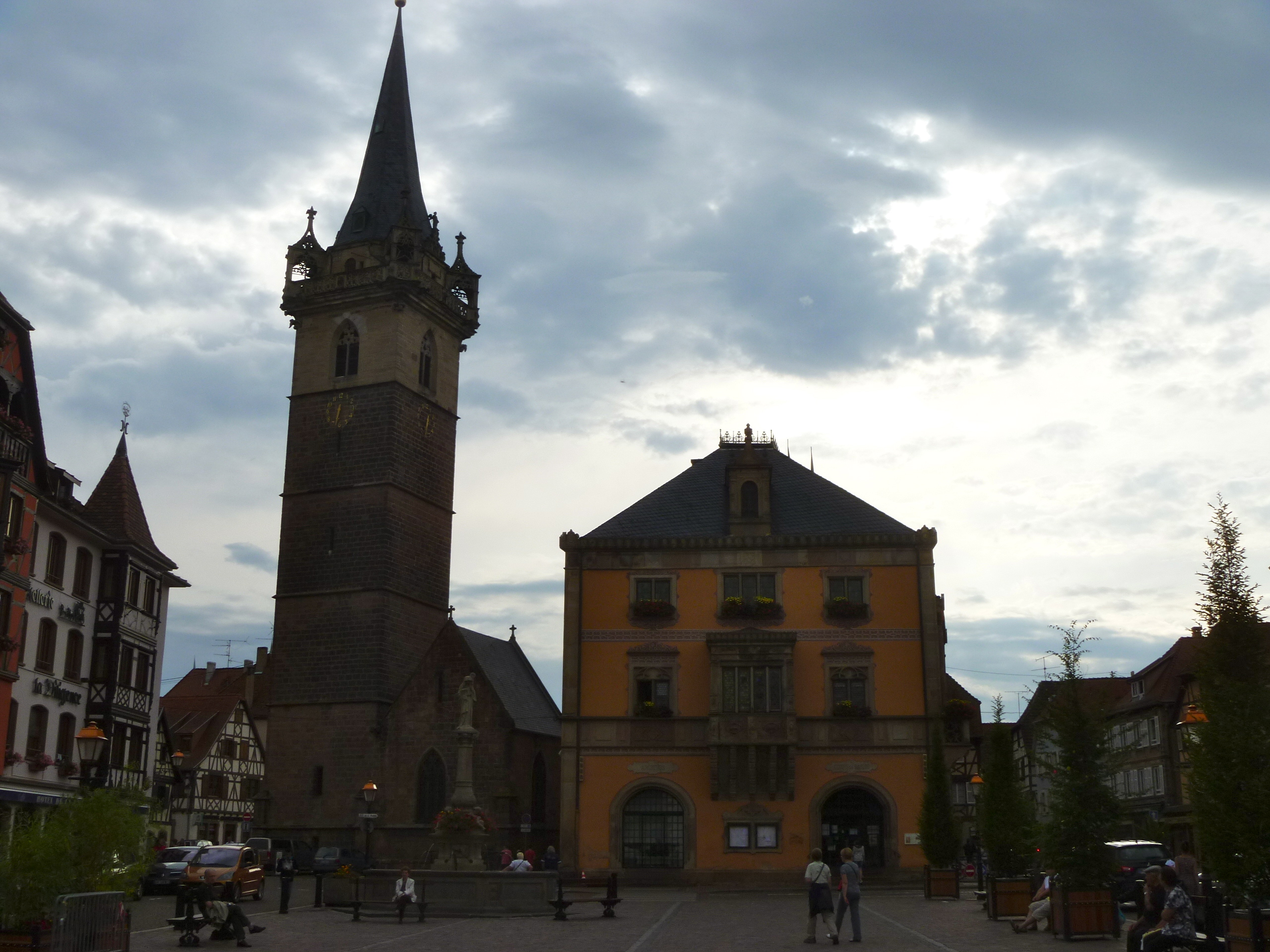
The market square at Obernai


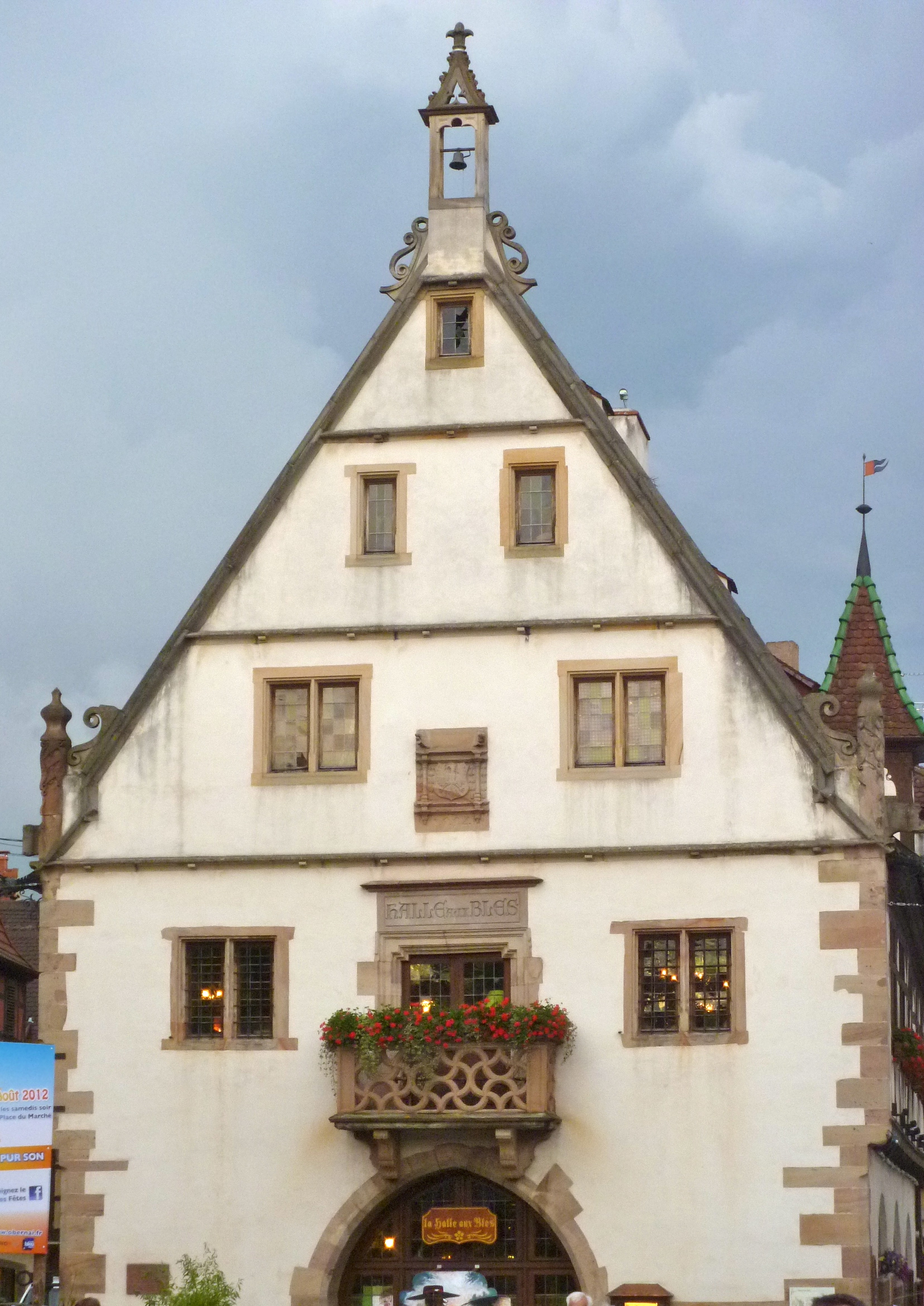
Obernai Corn Exchange

Obernai Place du Marche

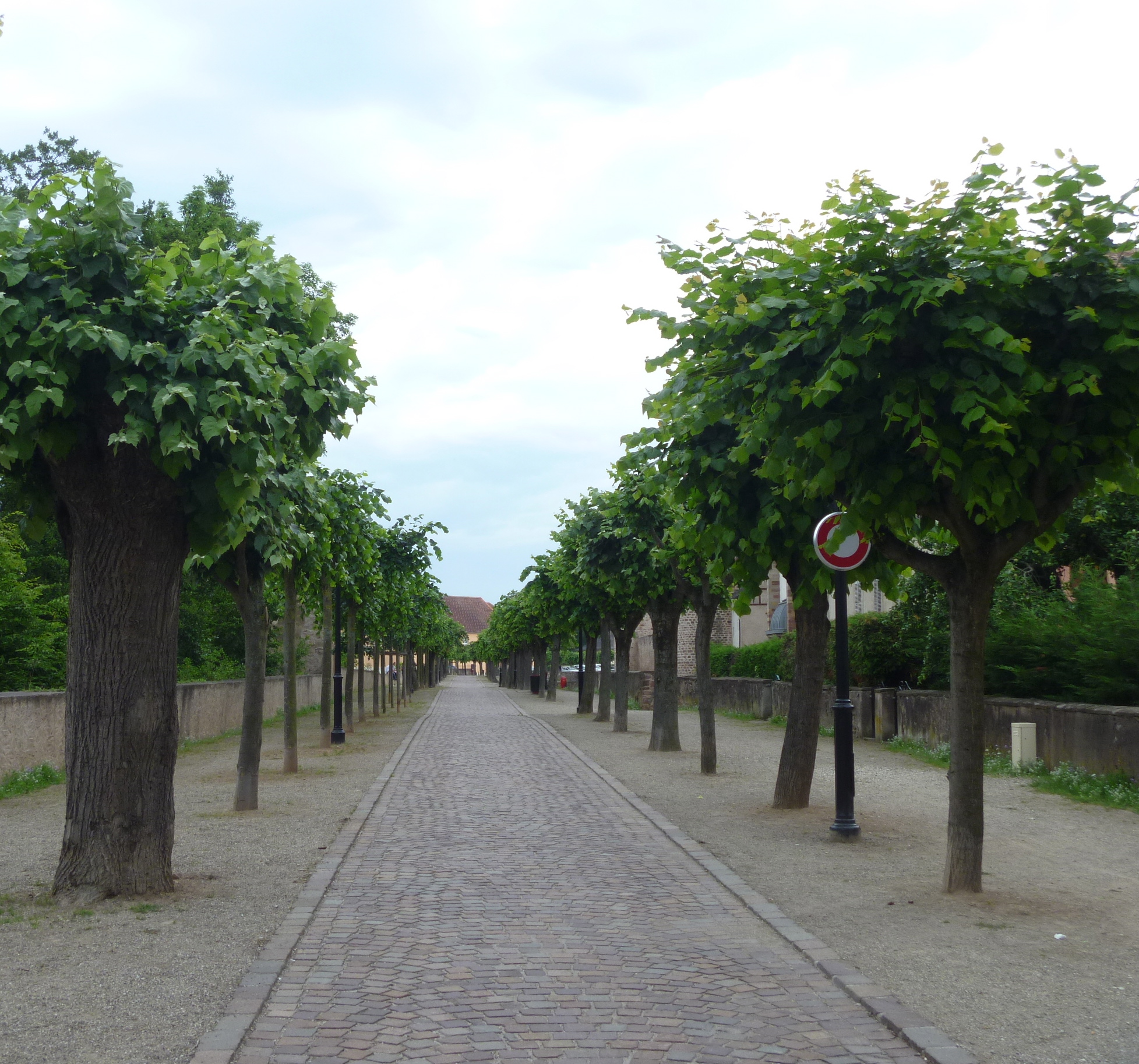
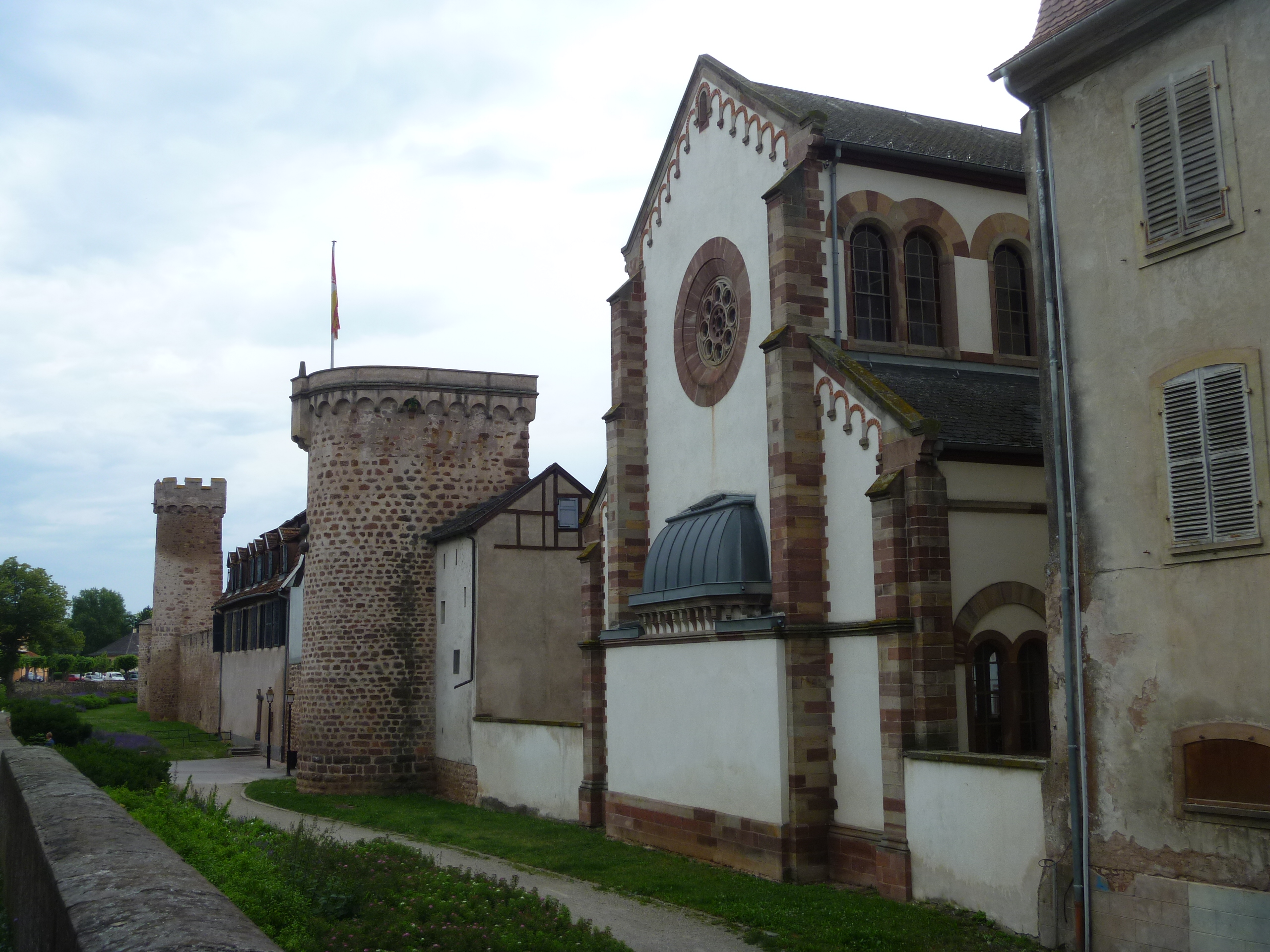
Obernai Ramparts Walk

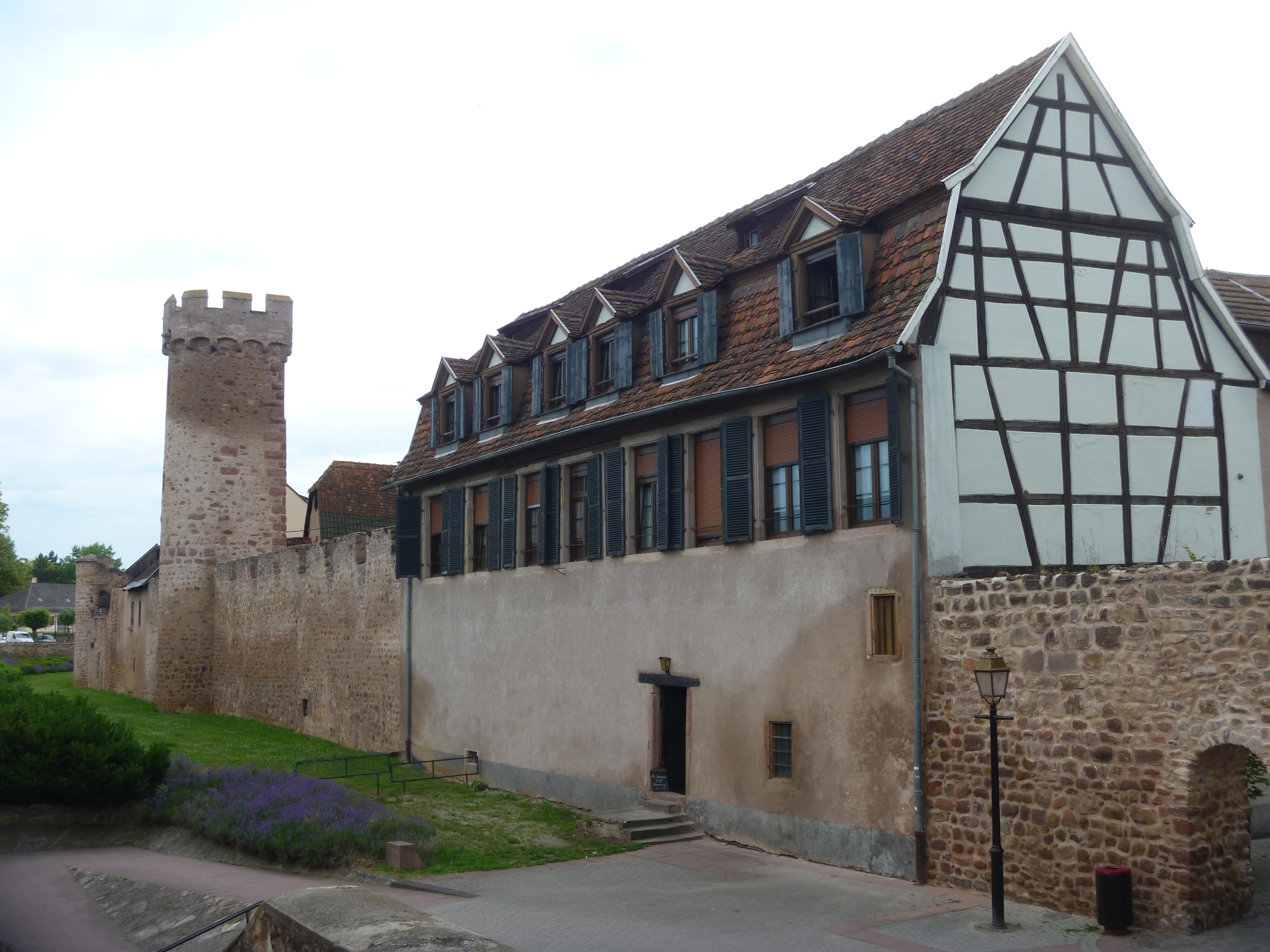
Obernai Ramparts

Obernai Ramparts

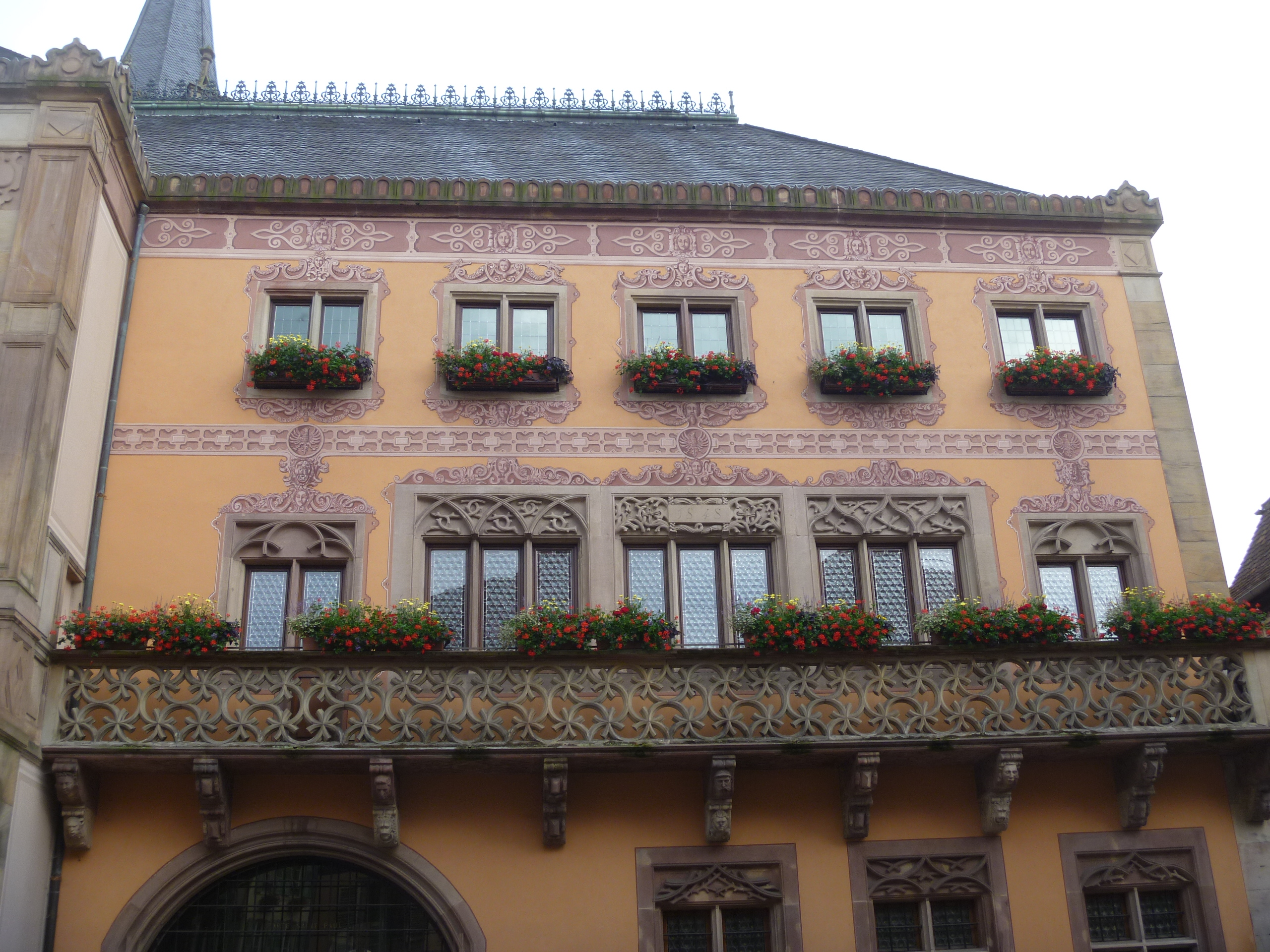
The Obernai Town Hall

Light rain was falling that Thursday evening but even so we dined on a restaurant terrace, walked the ramparts and generally relaxed before starting our four day ‘ordeal’ (which turned out to be nothing but a pleasure from beginning to end) the next day. Friday dawned brighter and sunny and Edina arrived ready to talk about the trip and transport us to our starting point. We met with two other lady walkers from the US who, although starting on the same day as us, were tackling the 8 day version. So our paths never crossed with them again.

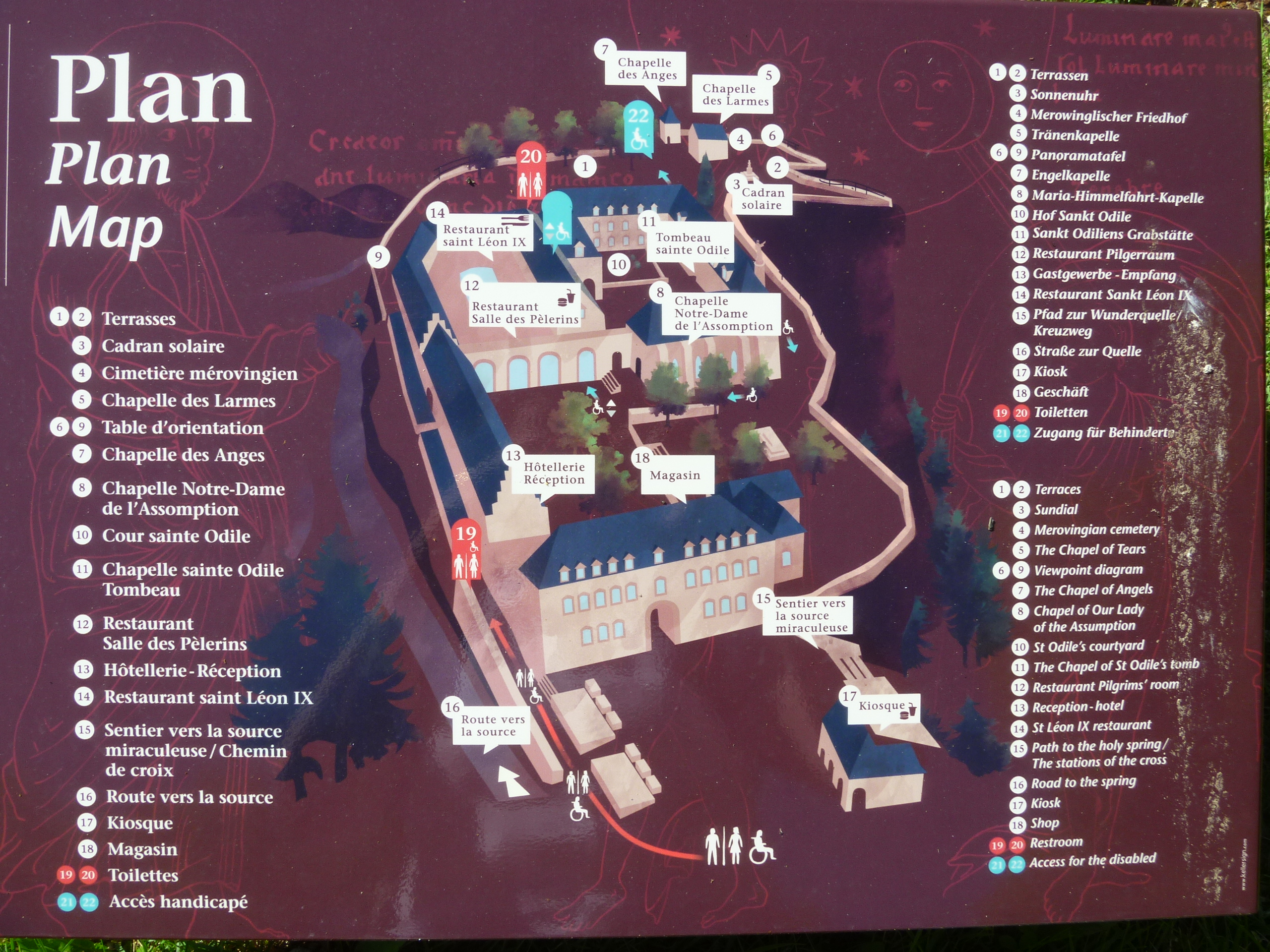
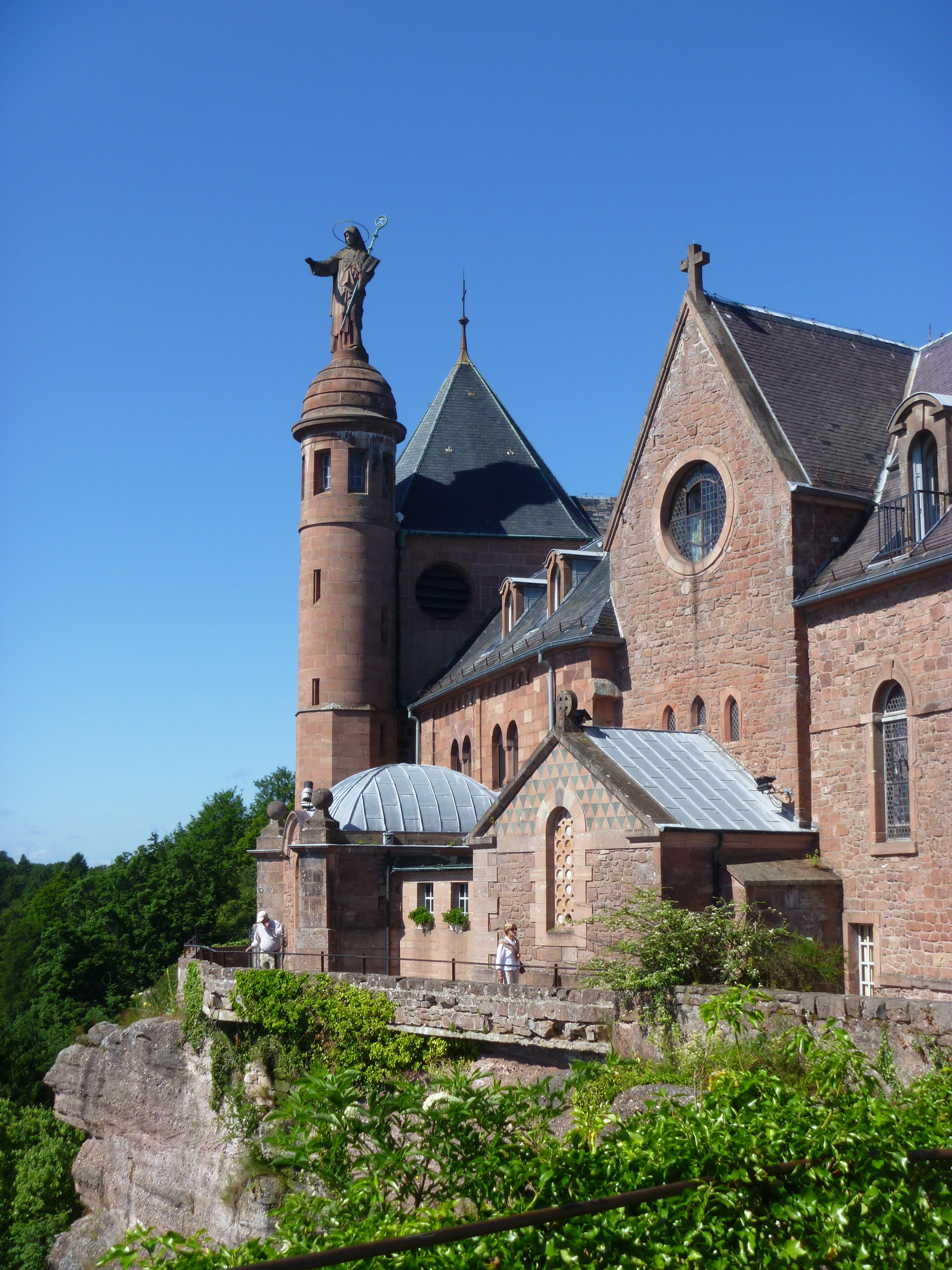
Edina insisted that before starting out and before leaving Obernai we must visit the monastery of Le Mont Saint Odile way up above the town. Although anxious to begin walking we accepted her kind invitation and were delighted to have the opportunity to visit this most popular summit in the whole of Alsace. It’s quite a climb (even by car!) up to the summit of the sandstone crag but as you might expect the views are spectacular. It’s an important place of pilgrimage – popular, at least last Friday, as an excursion for young French school children.
Mont Sainte Odile

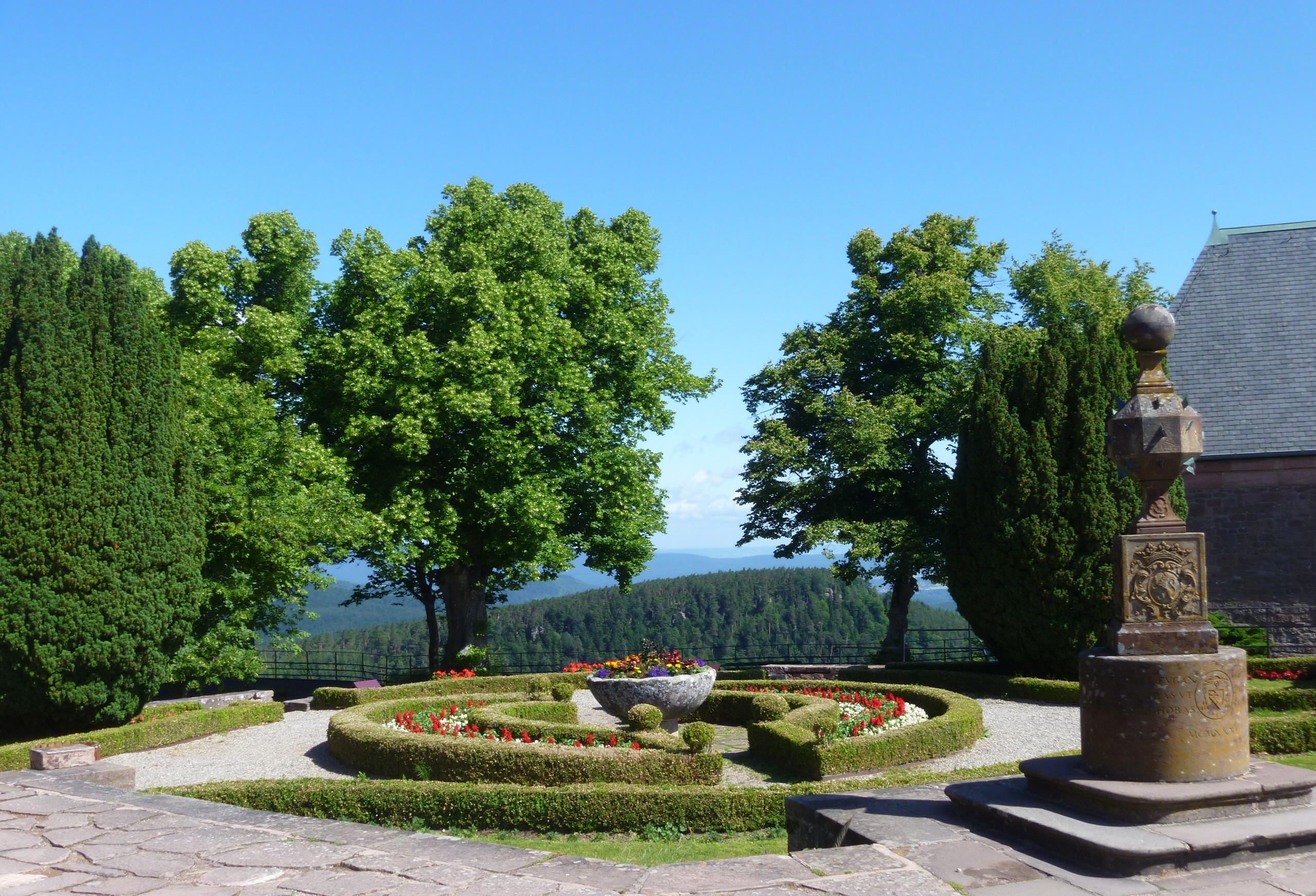
Gardens at Mont Sainte Odile

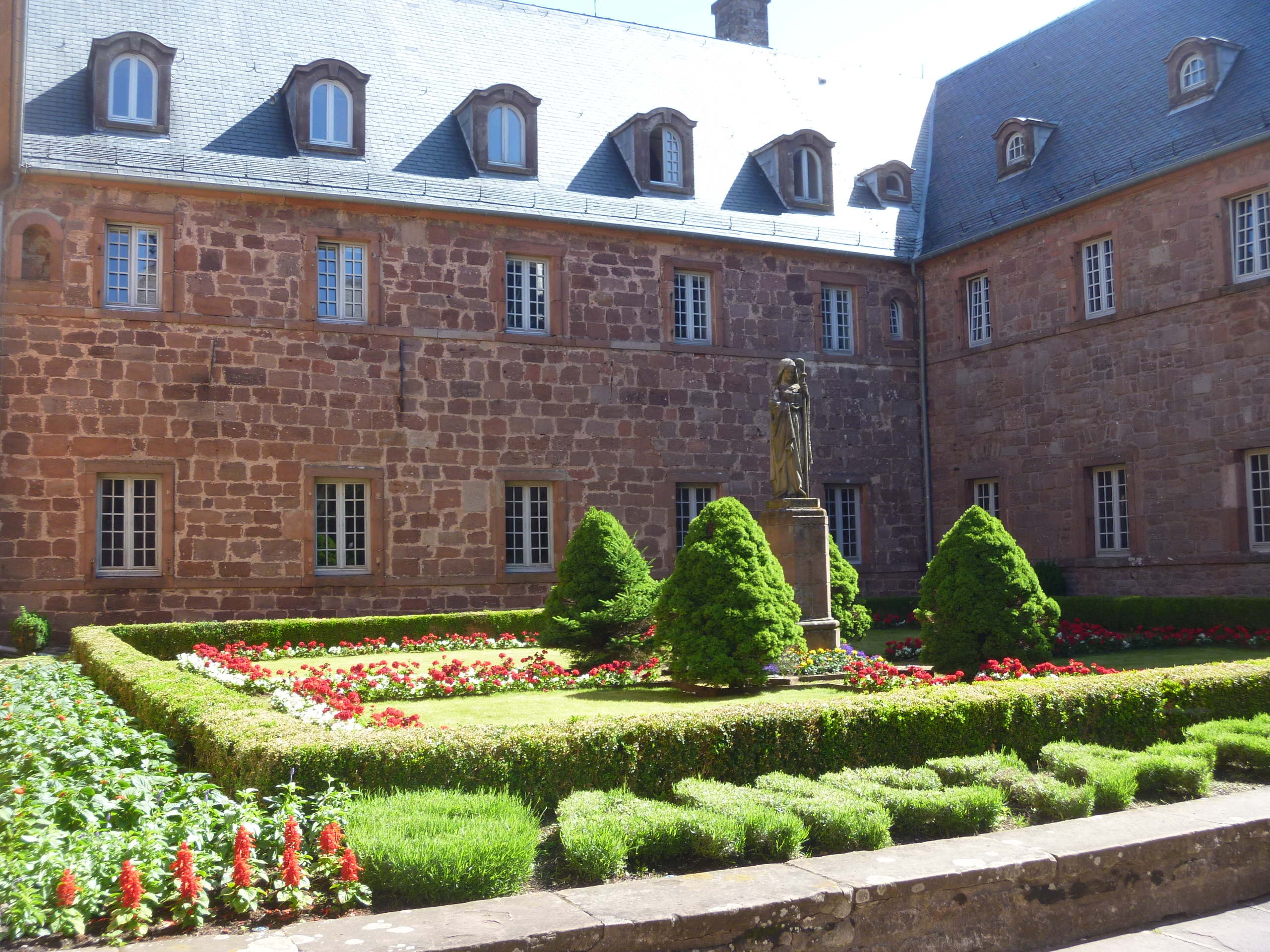
Courtyard at Mont Sainte Odile

The Tomb of Sainte Odile

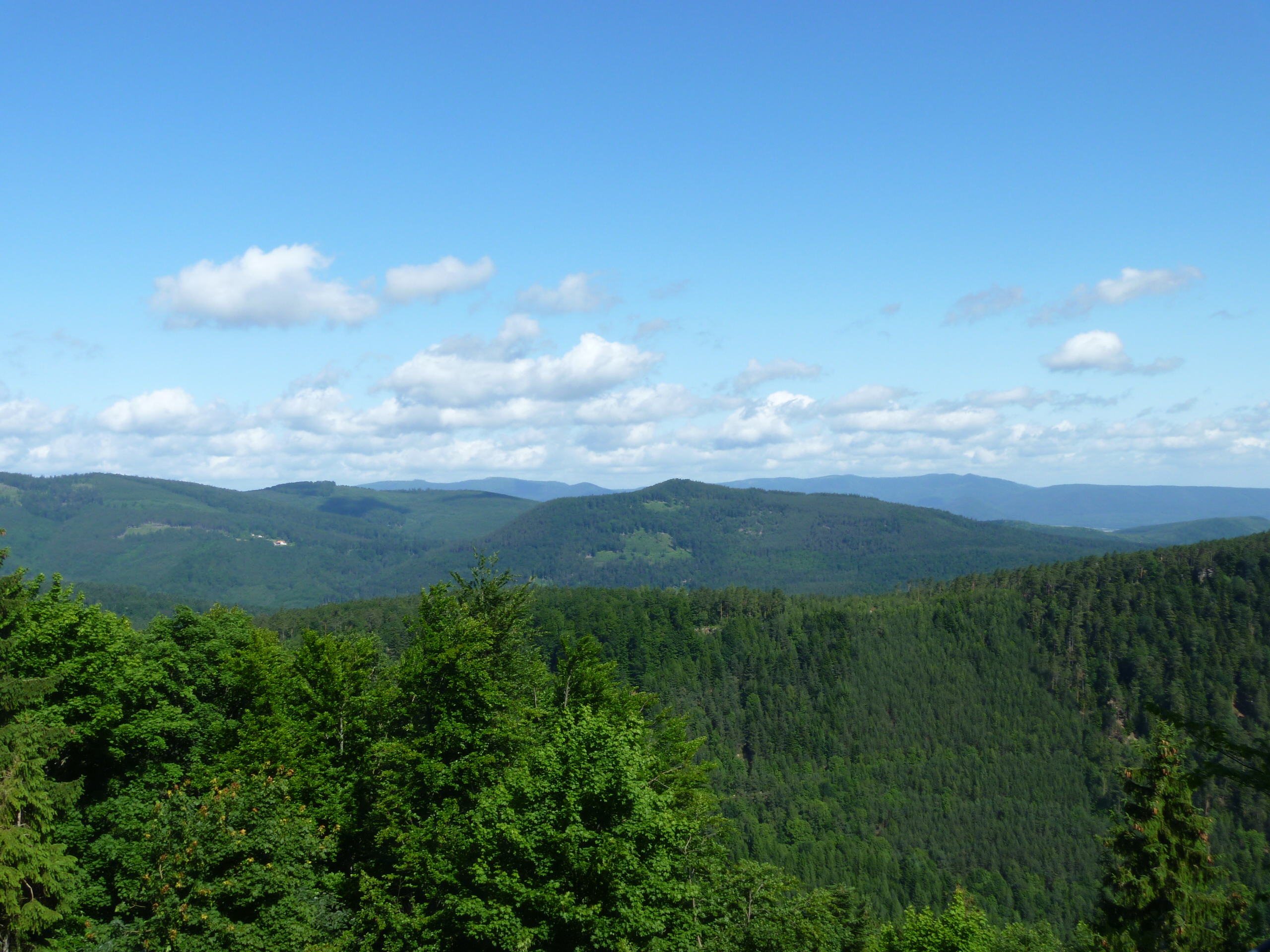
Spectacular Views from Mont Sainte Odile

Finally, we said Goodbye and Good luck to Pam and Joyce and thanked Edina and set off on our own, with the Route Booklet as our guide, from Barr to Kaysersberg a distance of nearly 40 miles! Read more about our adventures in future posts.
In Praise of Nature and A Manifesto for Modernity : From Marie Antoinette to Le Corbusier

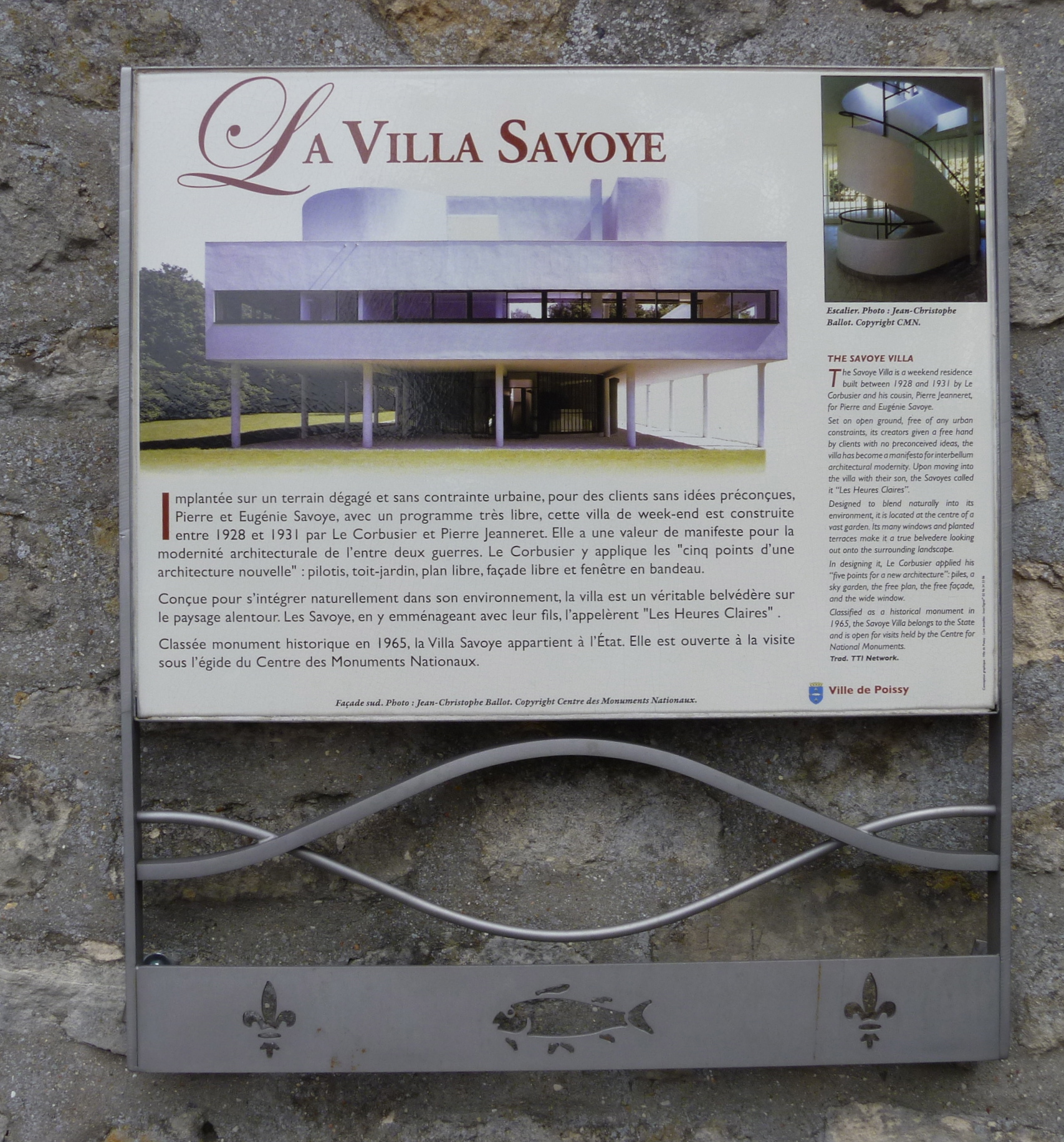
An architect friend of mine, following a trip to the Paris region last year, told me about his visit to the Villa Savoye (as the villa “Les Heures Claires” is best known) in Poissy, Ile de France.

Upon investigation I discovered the existence of (roughly) the French equivalent of English Heritage – Centre des Monuments Nationaux – of which the Villa S is one. Further searching of the CMN website revealed a) that Poissy is directly on our favoured route between Gif sur Yvette and Le Shuttle and b) there were other CMN sites “worth a detour” within easy reach of Gif itself.

Rambouillet

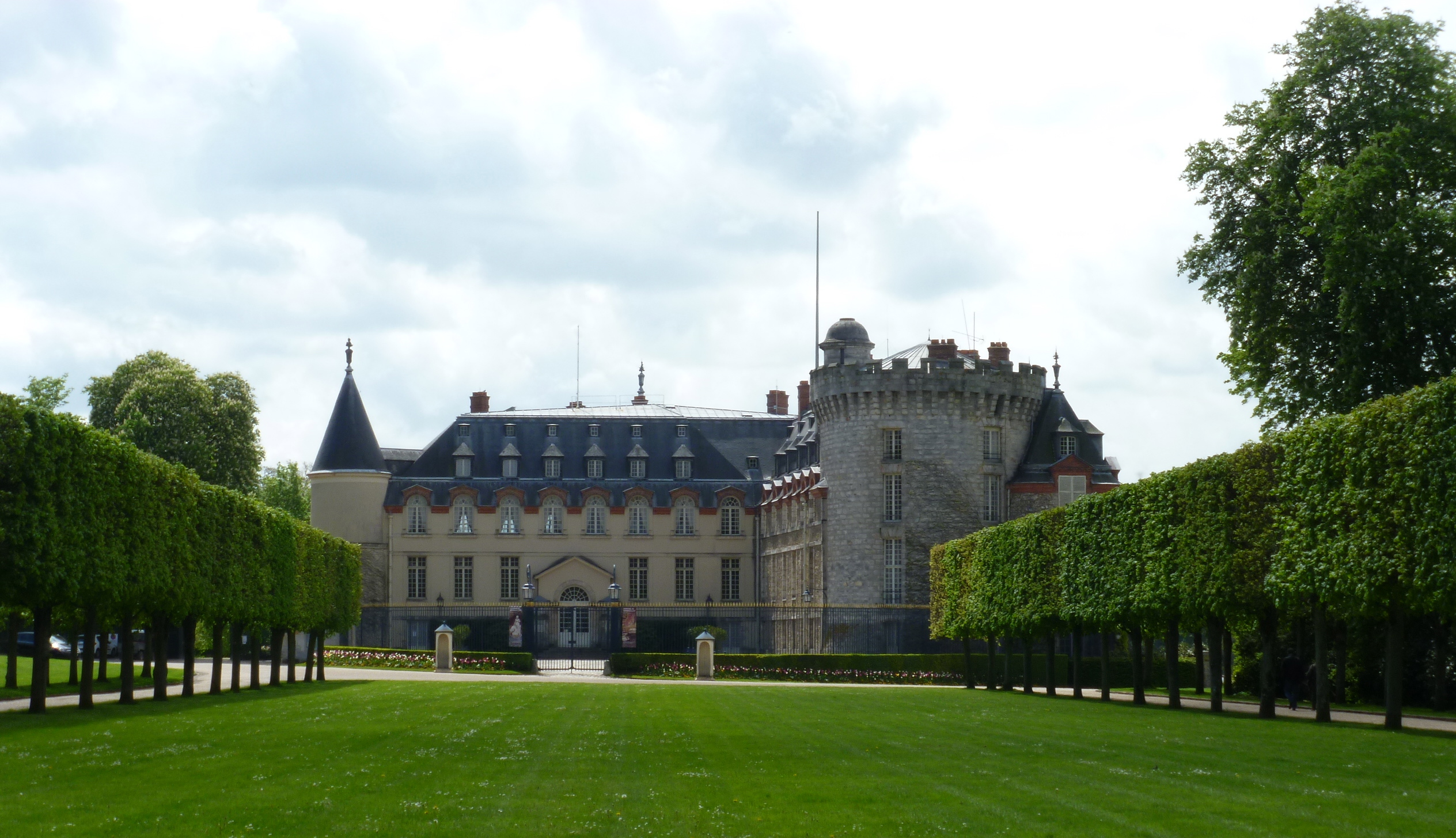
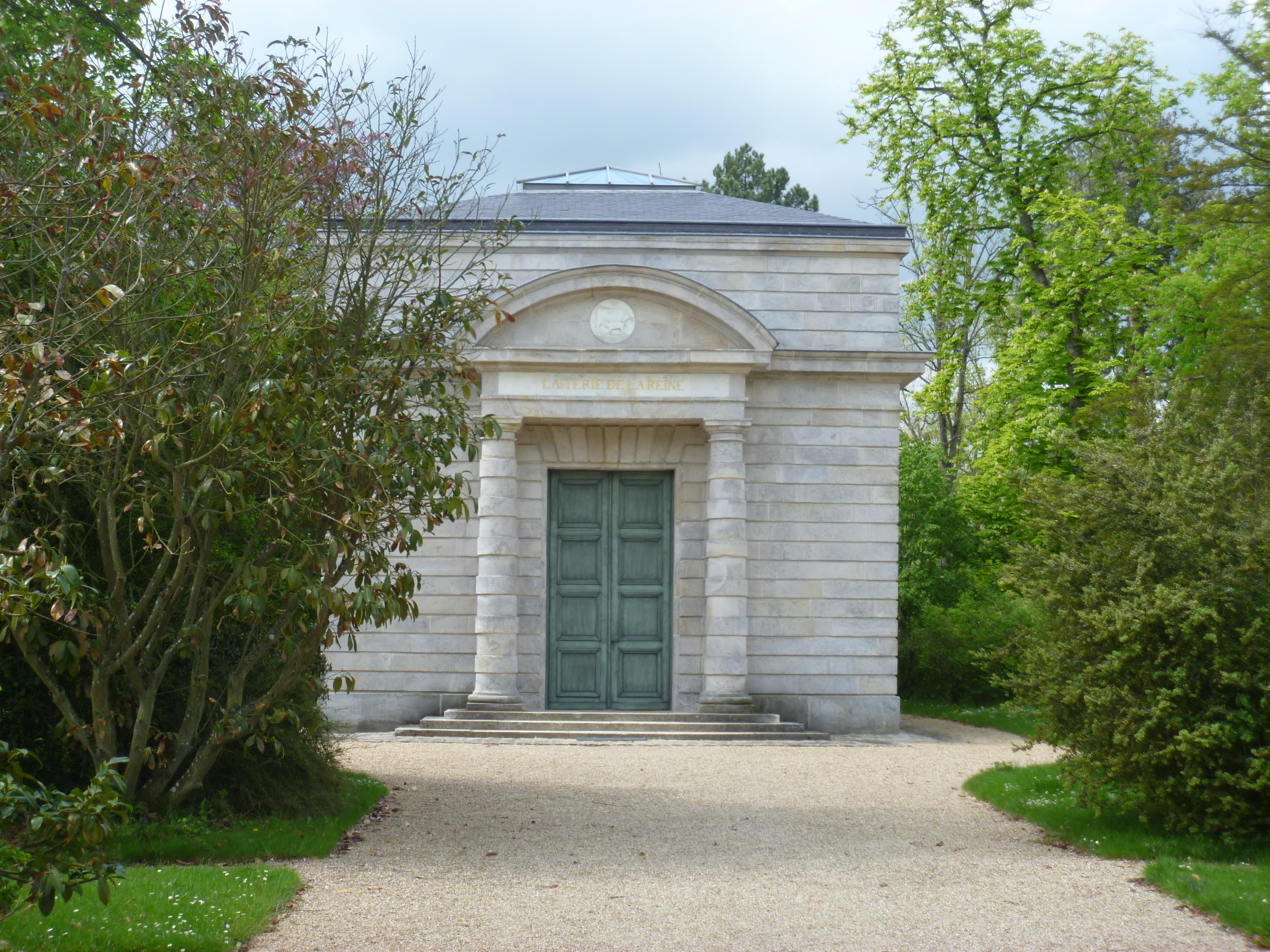
The Queen’s Dairy [Laiterie de la Reine] and the Shell Cottage [La Chaumiere aux Coquillages] are both follies within the vast park surrounding the Chateau of Rambouillet, a mere 30 minutes drive away. It’s a charming town, dominated by the Castle and with a large church on a hill. Like all other French towns it is pretty much shut down on Monday mornings. Of course, I missed the morning tours so bought a ticket for the 2pm show. We bought foodstuffs for a picnic in the Chateau grounds from the Carrefour Express (only food shop open in town) and headed towards the follies to be sure not to miss the guided tour. The Chateau itself is the Official Residence of the President of France and is also open to the public but it was the follies that I most wished to see and enjoy the sunshine whilst it lasted.

The Queen’s Dairy was built for Queen Marie Antoinette by her husband Louis XVI. It’s a plain building from the outside but once inside you are in a vast rotunda where the tasting took place – all veined marble, sandstone walls and a grey and white floor to give a milky atmosphere.

http://www.rambouillet-tourisme.fr/decouvrir/photos-rambouillet/laiterie-de-la-reine.htm

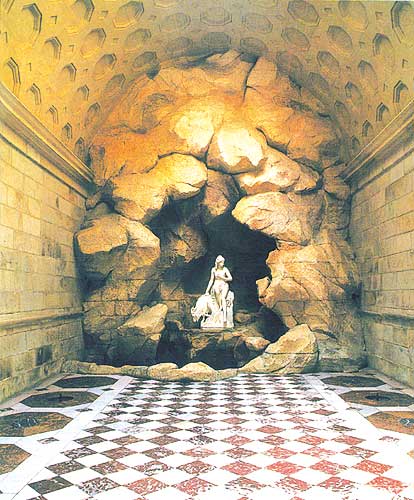
Beyond the rotunda is the cooling room (above) at the back of which is a grotto containing the figure of Jupiter as a child suckling Amalthea’s nanny-goat. There are various other roundels and friezes depicting mythological creatures and characters. Apparently after the French Revolution these ended up in England and were only finally restored to their original location just a few years ago in 2009.

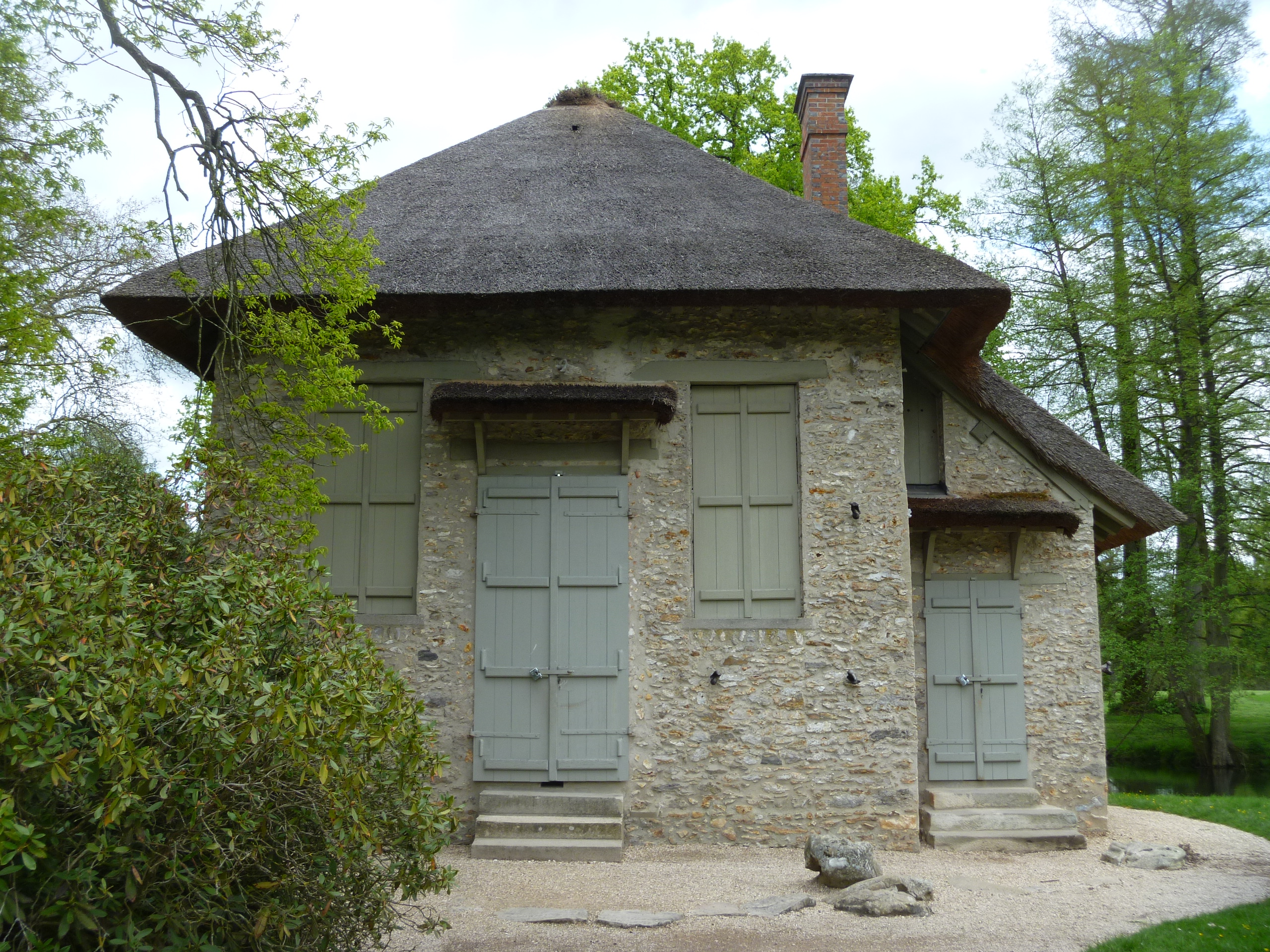
The Shell Cottage in another part of the grounds is equally breathtaking. It has a thatched roof and ox bones built into the walls. It’s a copy of a late 18th century rural building but inside is an amazing shell-decorated room with original furniture and fireplaces. Of course, no photography is allowed which is even more of a shame as the postcards definitely did not show the interiors to the best advantage. The guided tours are in French which would be OK but the guide spoke at break-neck speed it was hard to follow everything he said.

Poissy

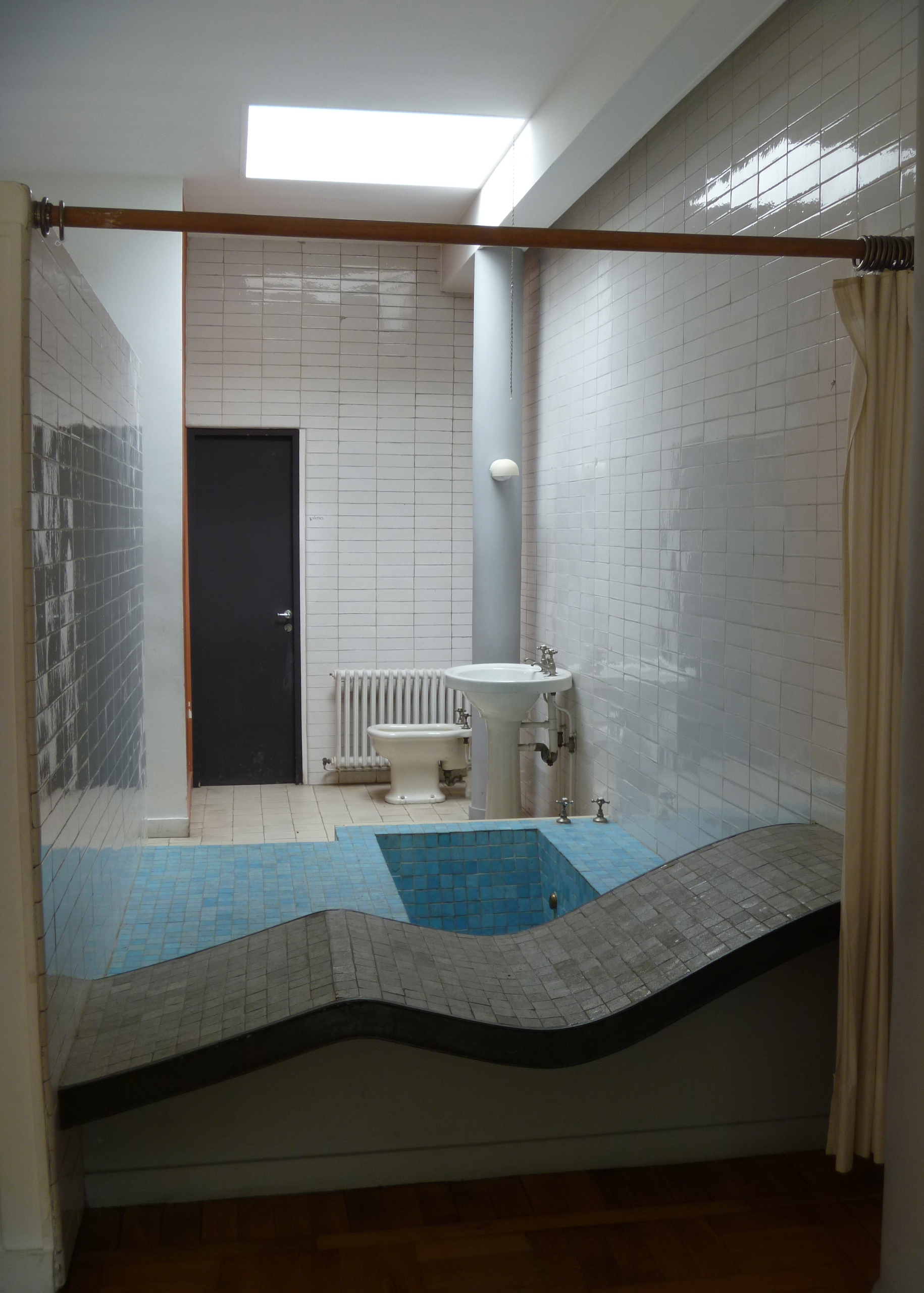
I would like to say that it was like going from the sublime to the ridiculous going from Rambouillet one day to Poissy the next but there is nothing ridiculous about the Villa Savoye. It is an amazing visionary building so far ahead of its time. I just felt that it was so sad that it did not have the care and attention devoted to it as had the Rambouillet properties.

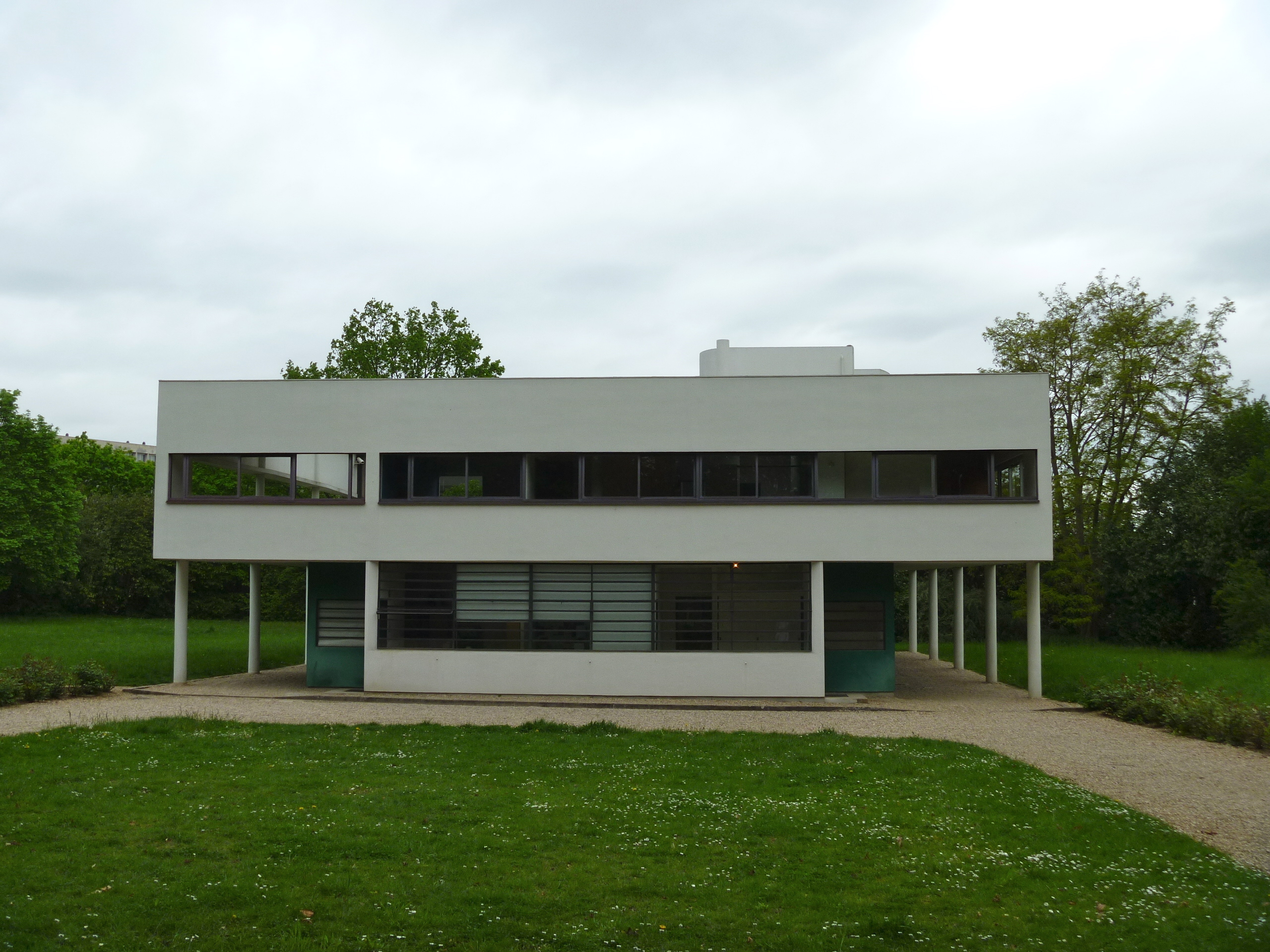
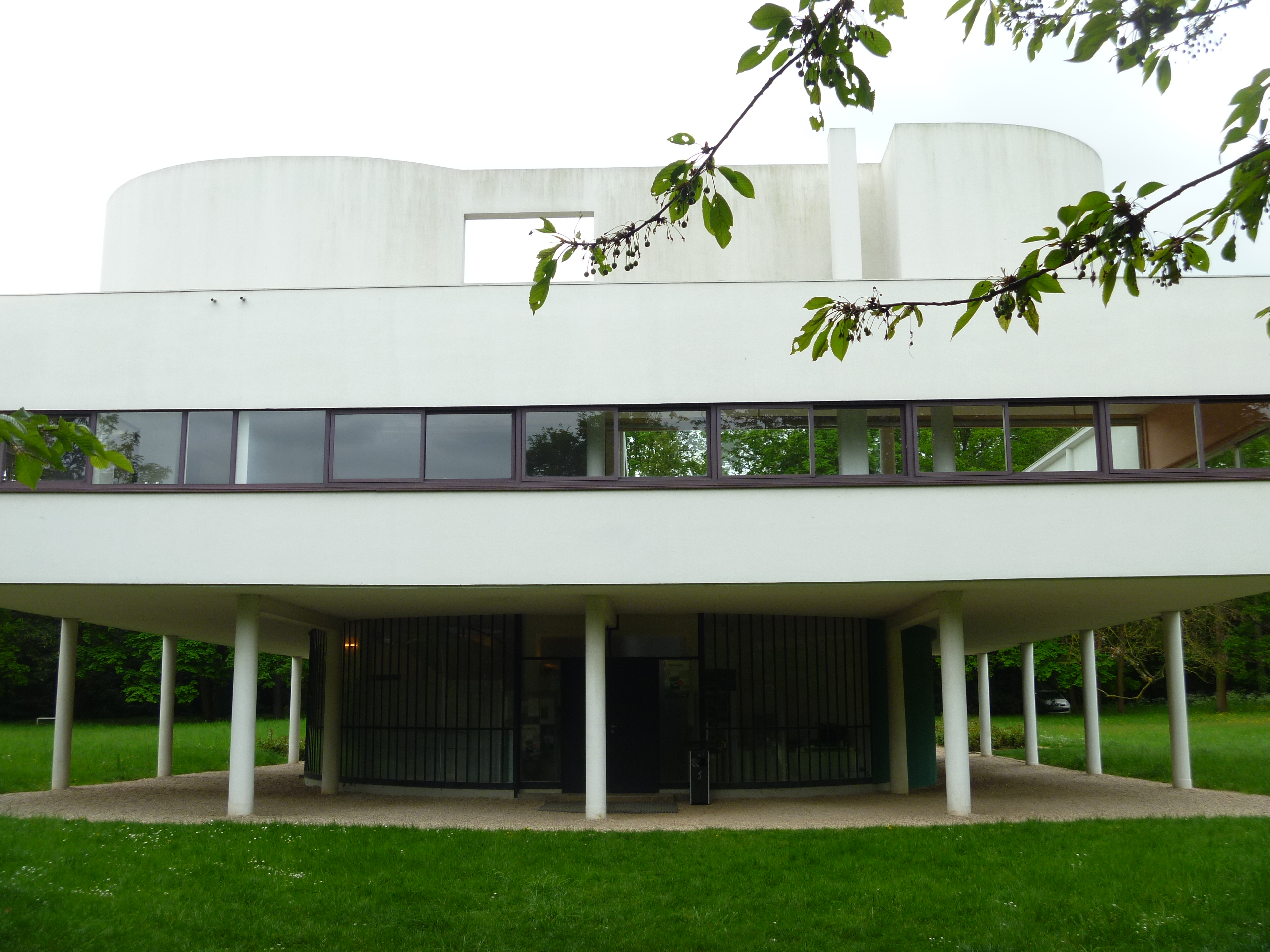
Built between 1928 and 1931 by the Swiss architect Le Corbusier “this ‘box in the air’ was the culmination of the architect’s formal research and implementation of The Five Points of New Architecture”.  Briefly these points are :

Stilts  – by using stilts he built his ‘box in the air’ as if just sitting on the grass

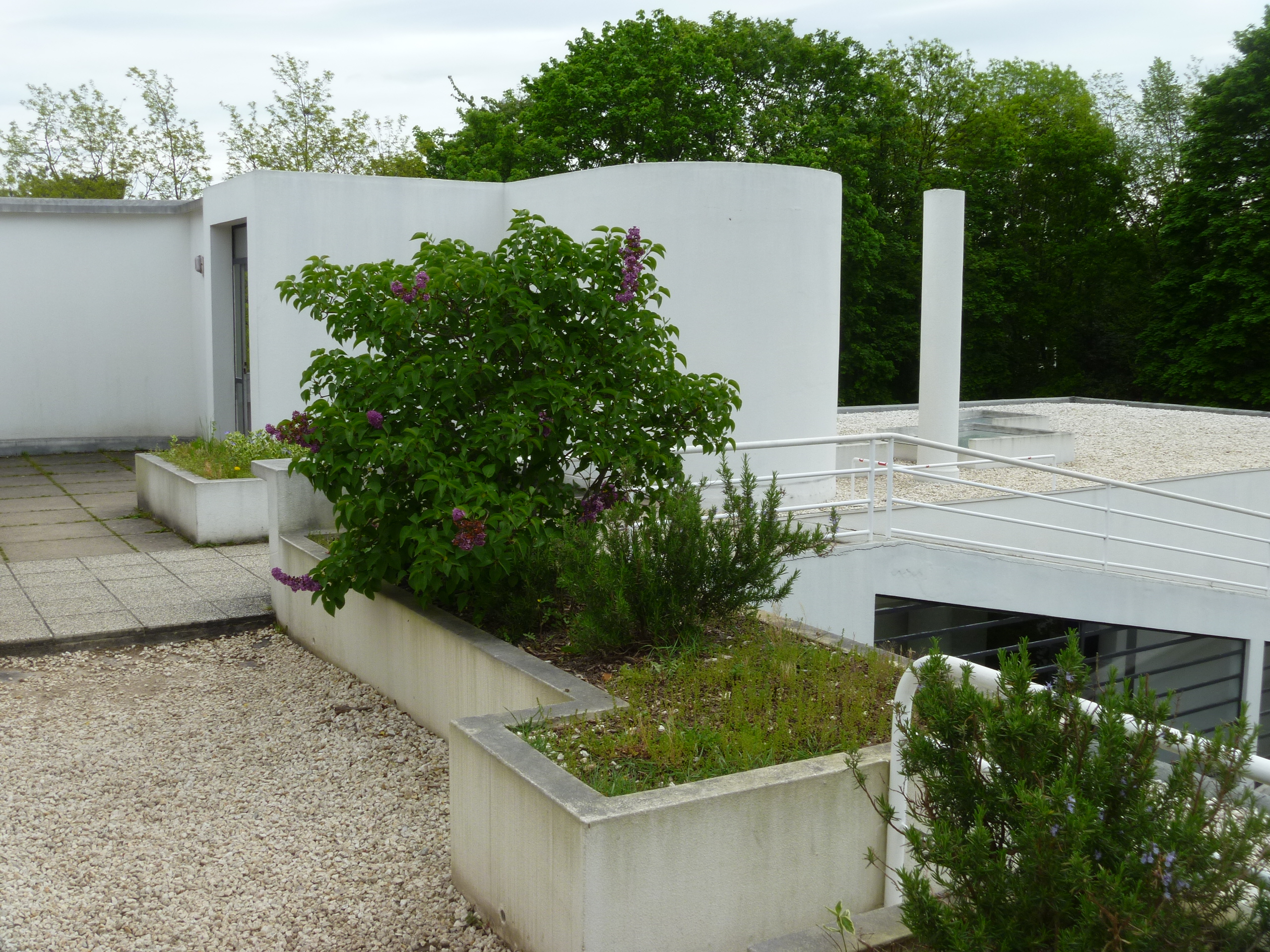
Roof Gardens – the flat roof is a usable terrace and flowers may be planted

Open-plan – reinforced concrete frees the interior of load-bearing and separating walls. Light partitions are sufficient to separate the different areas

Free-floating facade – the facades are free of the load-bearing structure, and placed freely on the stilts.

Horizontal window – the non-load-bearing facades can have long windows creating light and airy interiors. (See the exterior pictures above)

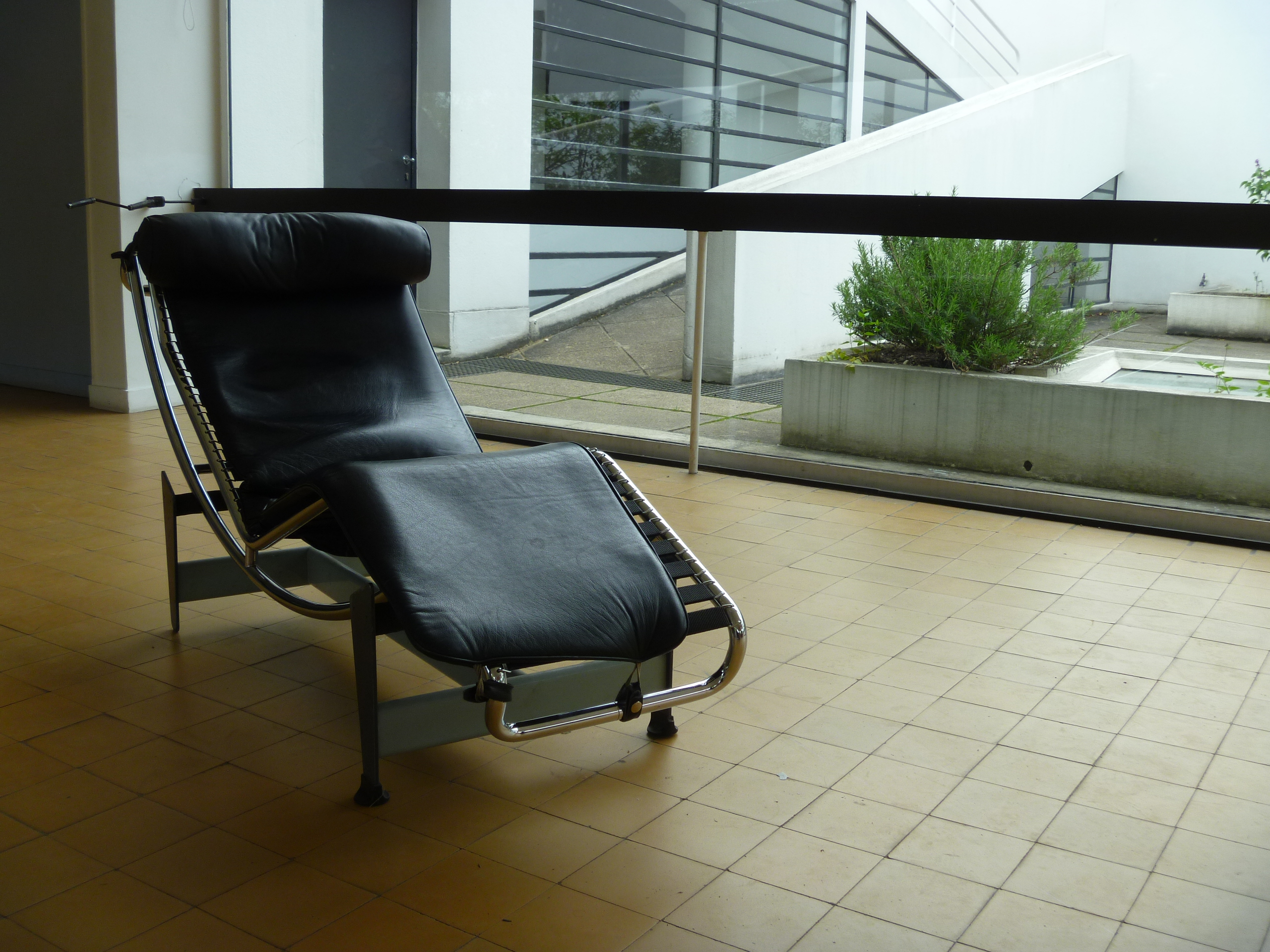
Corbusier Chaise Longue

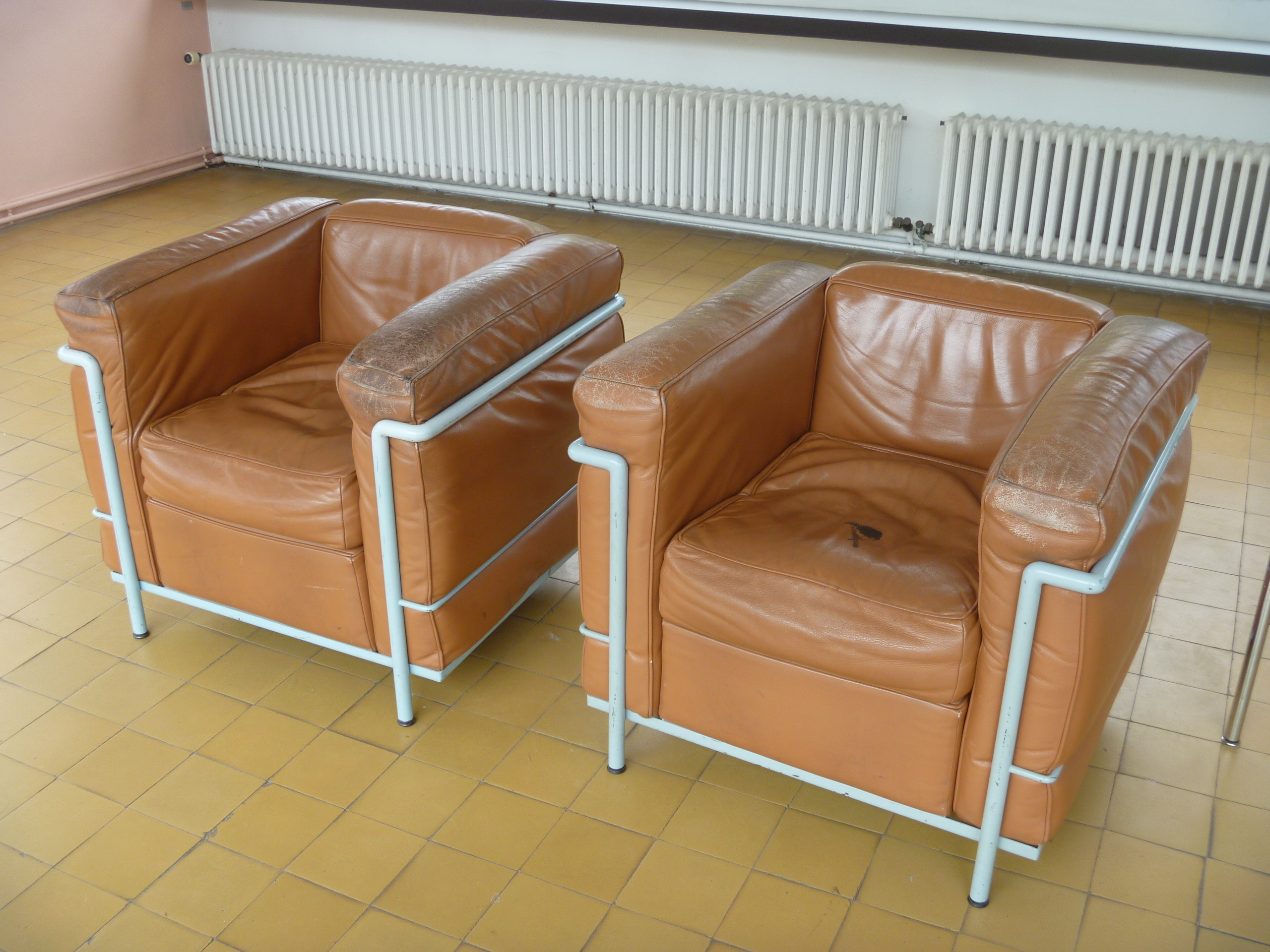
Le Grand Confort Armchair

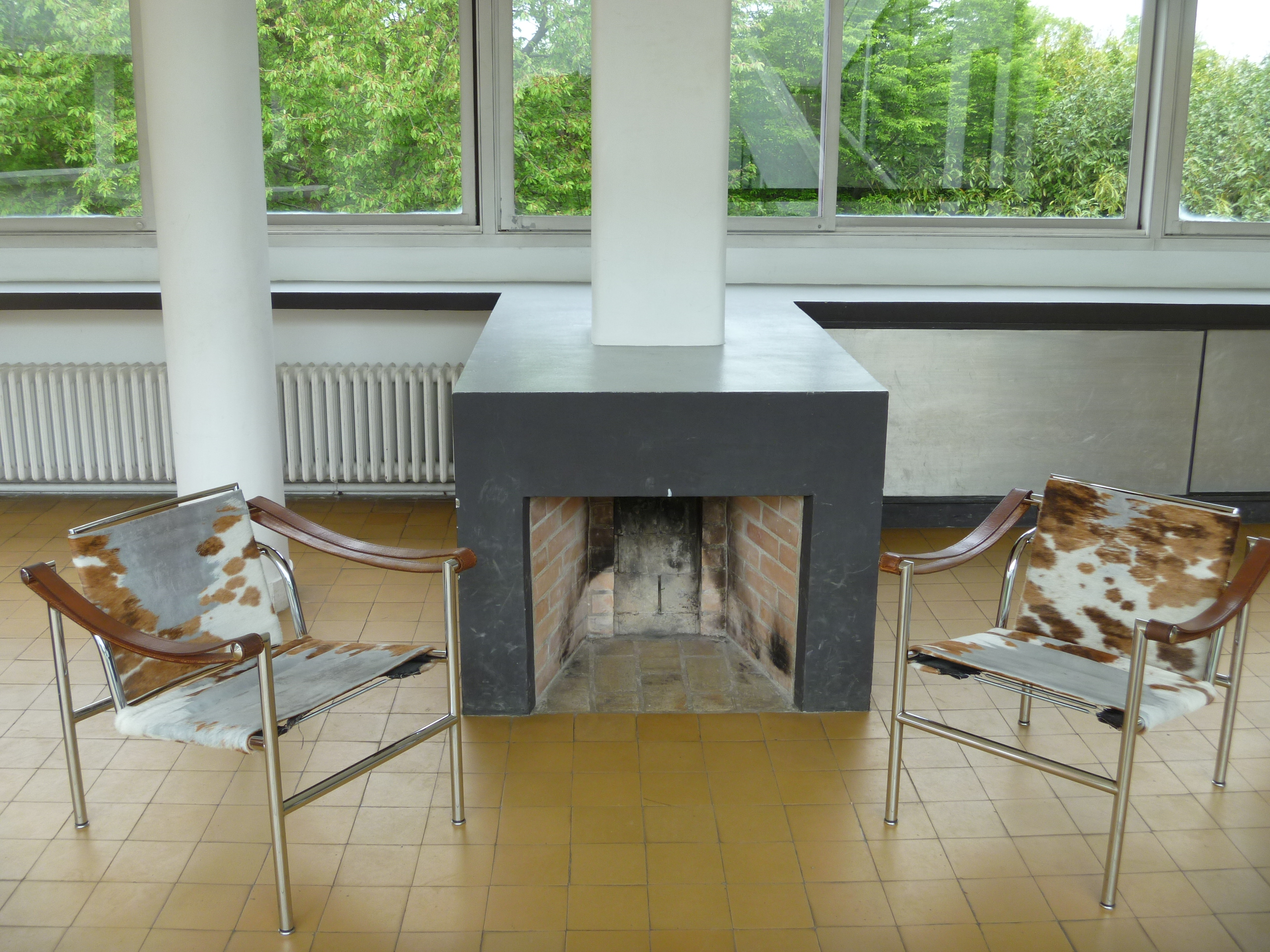
Pony Hide Lounge Chairs

To be said in its favour it was possible to tour the building in your own time, take photos at will, sit in the various architect-designed chairs and generally please yourself!

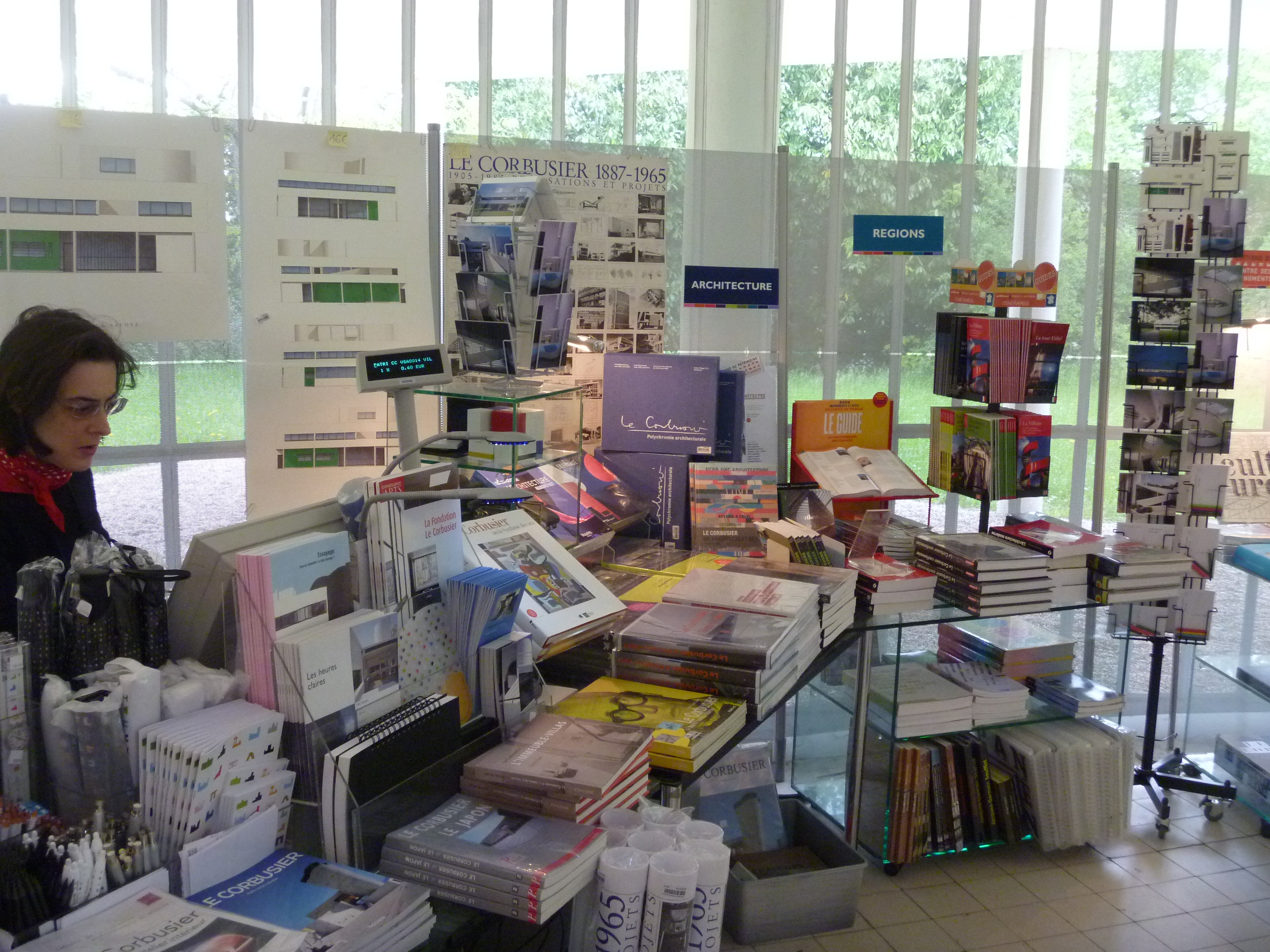
Also there was an excellent bookshop – much better than the one at Rambouillet.

The Lost World of the Windsors

In one of the sitting rooms of the main building at The Moulin de la Tuilerie, or The Mill, as it is sometimes called, is a mural painted above the fireplace. It was put there by the Duchess of the Windsor and it says “I’m not the miller’s daughter but I’ve been through the mill.”

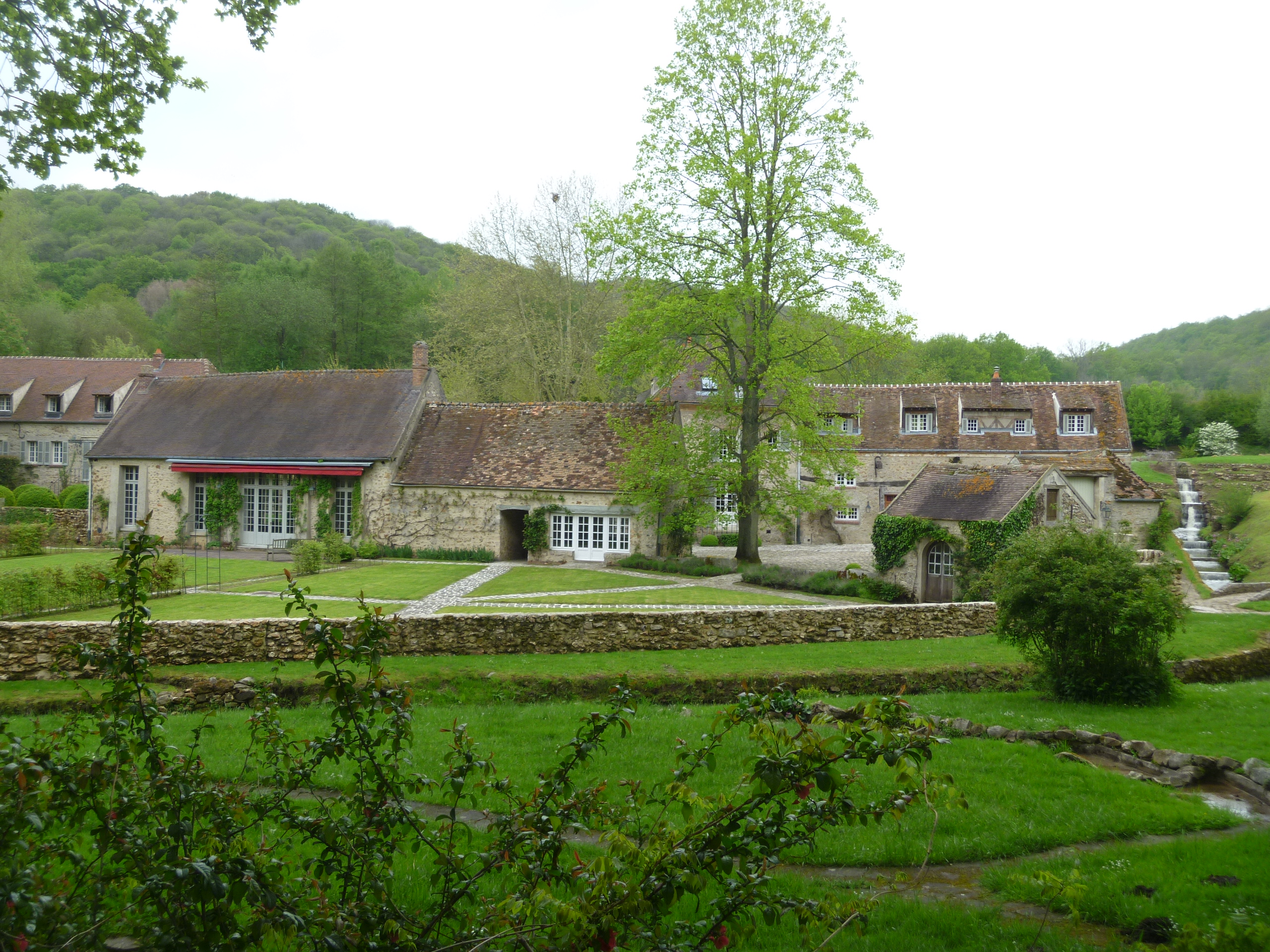
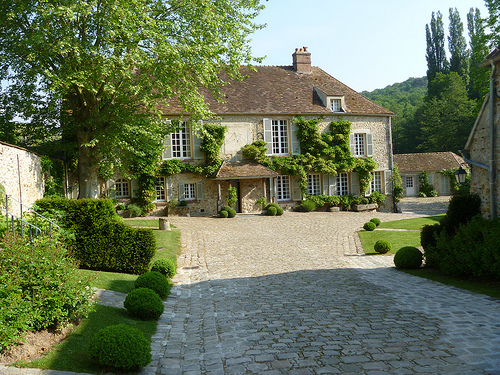
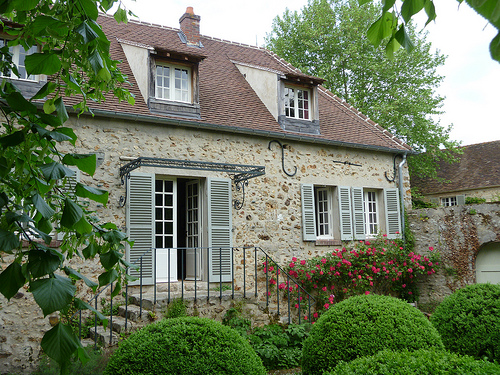
Over the years since 1734, the best date that can be given for the main building at Le Moulin de la Tuilerie, The Mill at Gif Sur Yvette has had many incarnations. The most glamourous being during the 1950s when it was the weekend home of the Duke and Duchess of Windsor. They bought the house in 1952 from the artist Drian and set about making renovations and improvements to both the house and the garden. During the 1950s and 1960s they were entertaining celebrities and the glitterati at weekend parties here just a 30 minute drive from their home in the Bois de Boulogne in Paris.
The Garden

Here is an interesting introduction  to Le Moulin and some comments by the daughter of one of the gardeners who worked with the Duke of Windsor.

Le Moulin De La Tuilerie

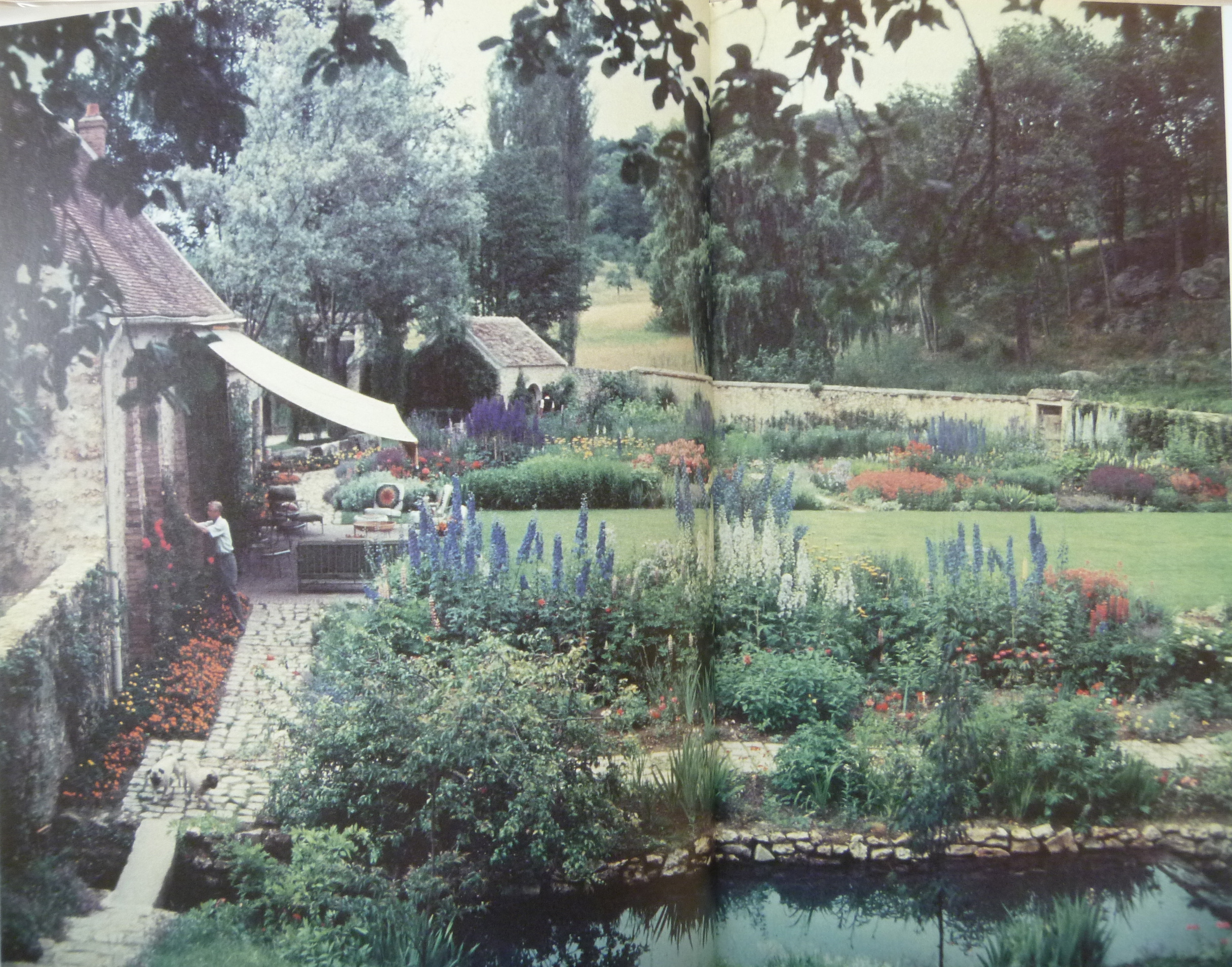
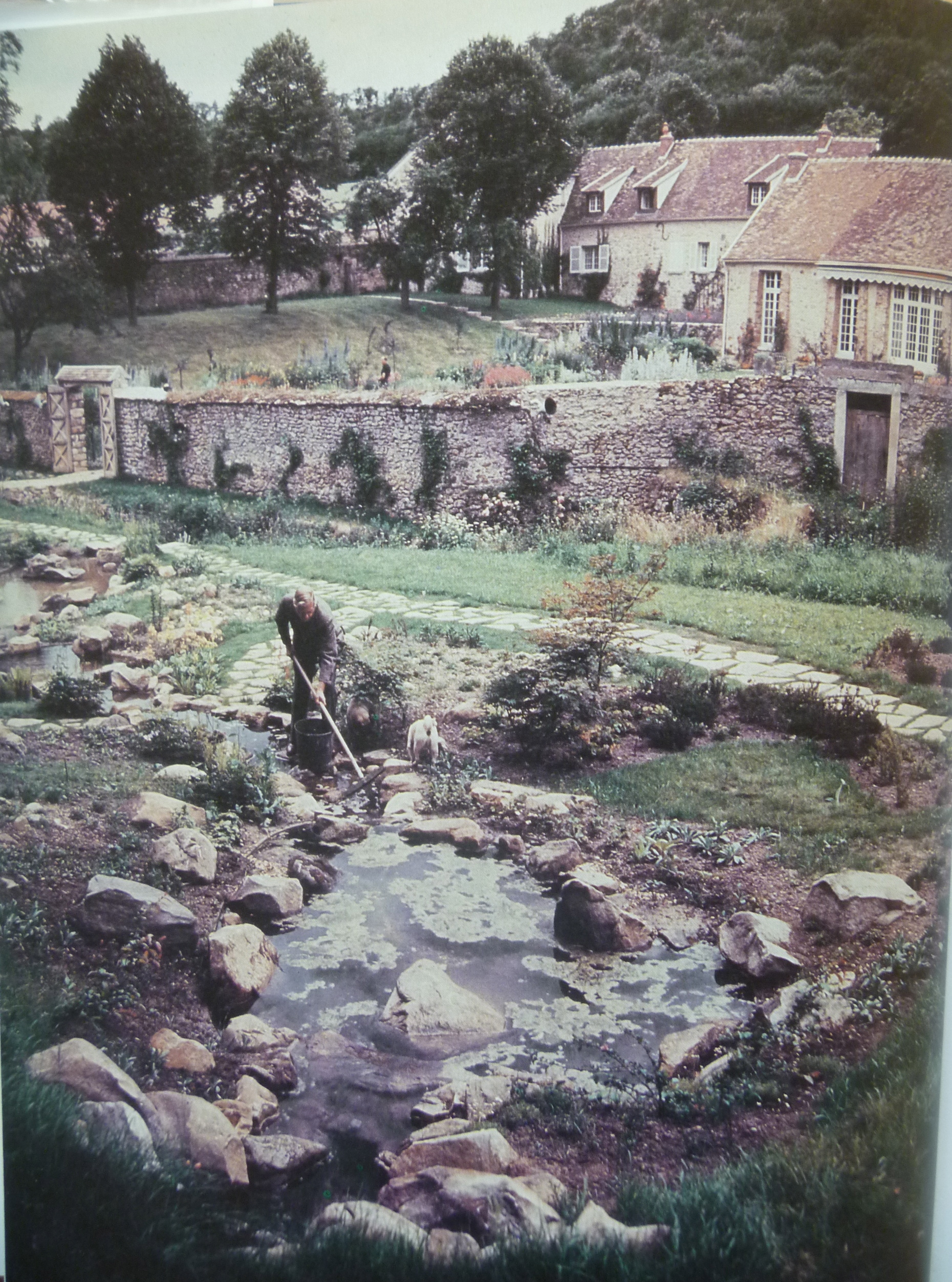
Looking at old pictures of the Mill I really do think that the Duke loved pottering in the garden. Russell Page, in his book, The Education of a Gardener makes several comments about the Duke’s choice of plants and about his keen interest in the garden in general.

Photo from The Windsor Style by Suzy Menkes.

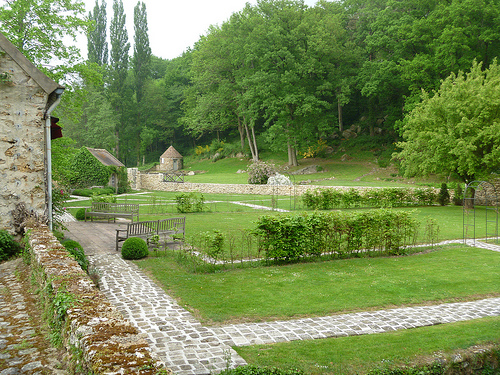
The Garden at The Mill Today

“It was a lucky day for the Duke of Windsor, who loves stones as well as streams, when in his garden near Paris, he found the remains of an old quarry with enough stone to pave all the garden paths. We used them with fairly wide mortared joints in the enclosed garden, and spaced more widely and with grass between, in the wilder parts outside the garden walls.” (Russell Page – The Education of a Gardener)

Both of my visits have been in May so very few flowers have been in bloom and the garden is generally tidier and less fussy than in the Windsor’s day.

The Grounds

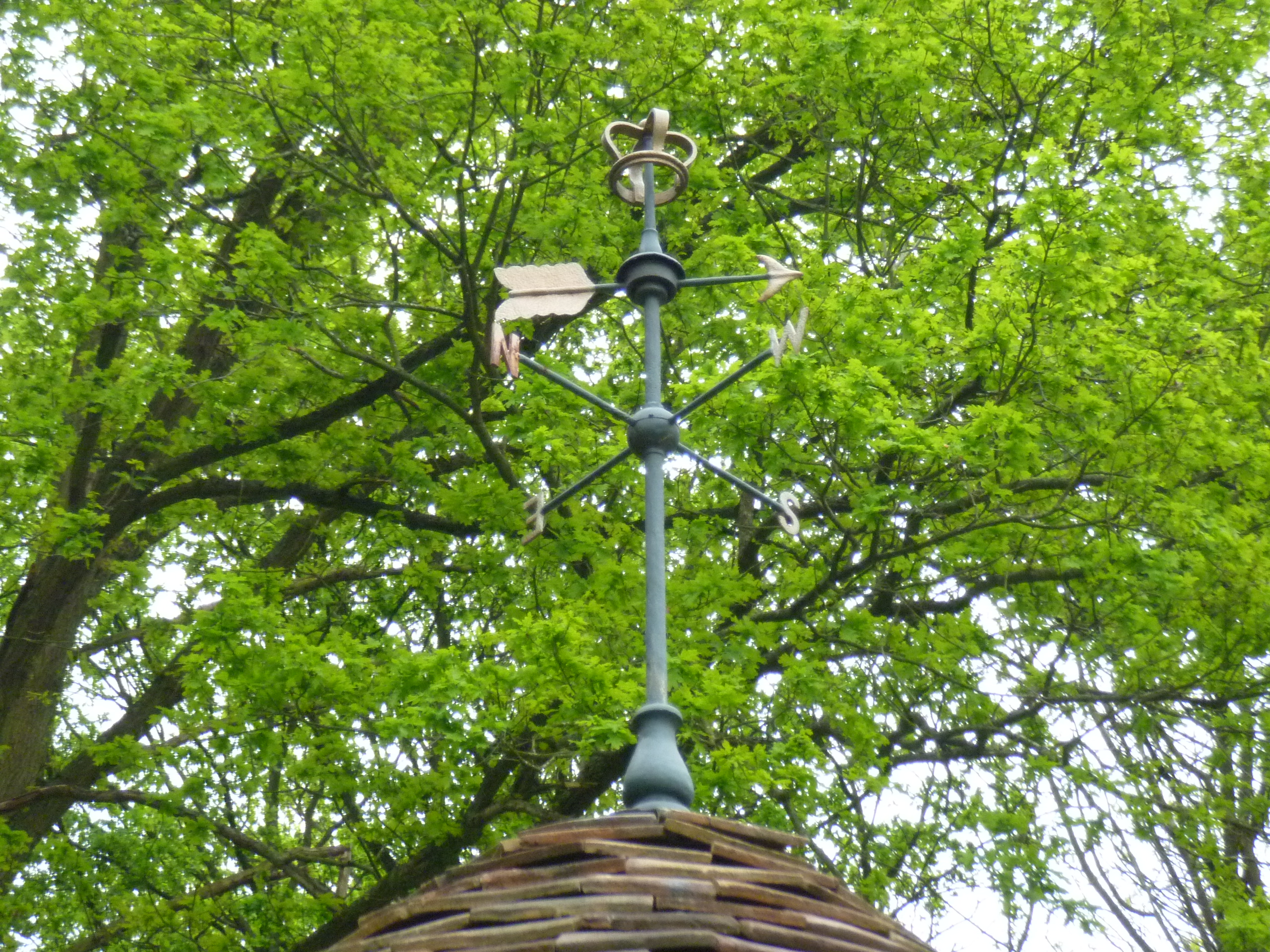
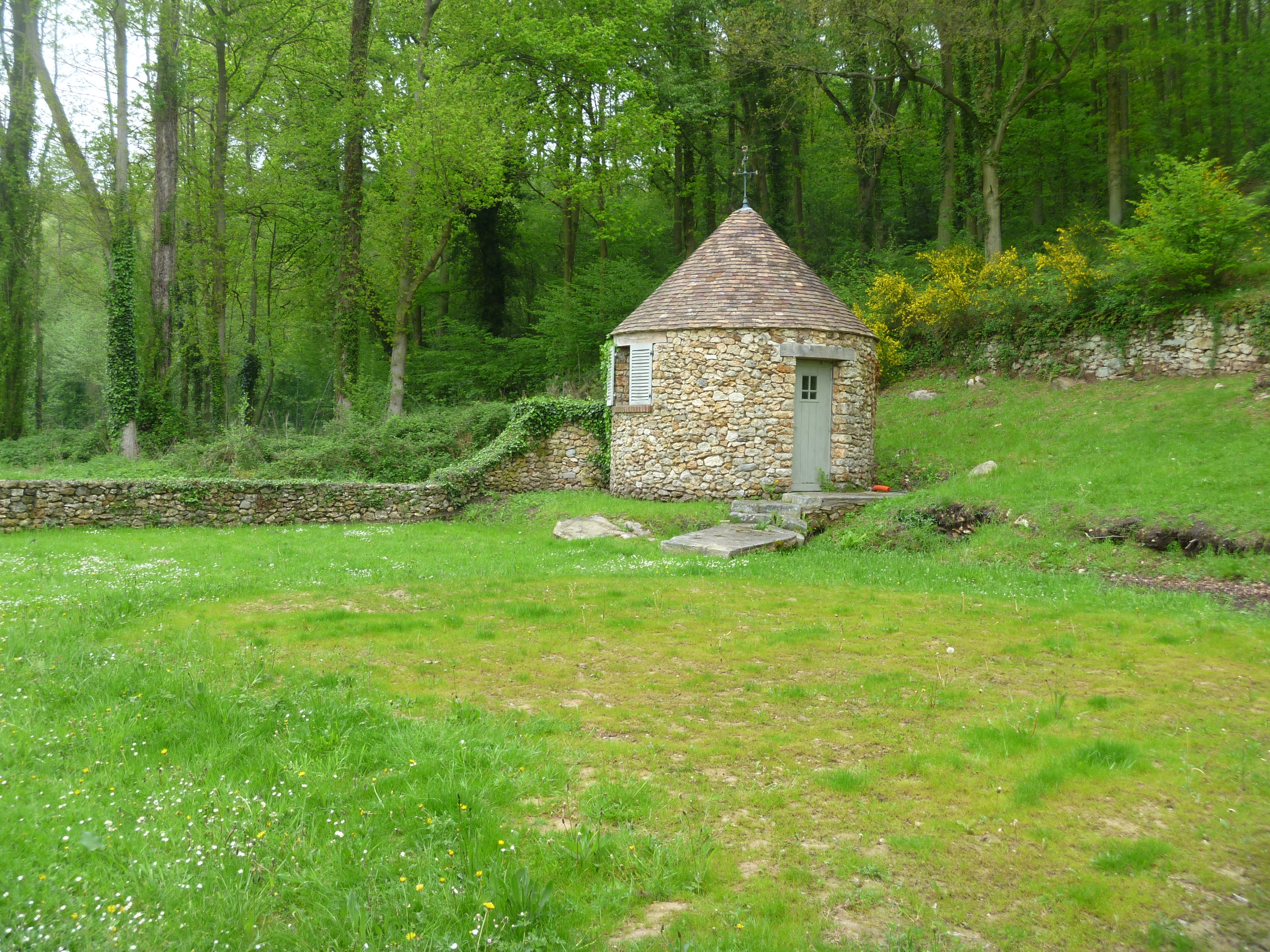
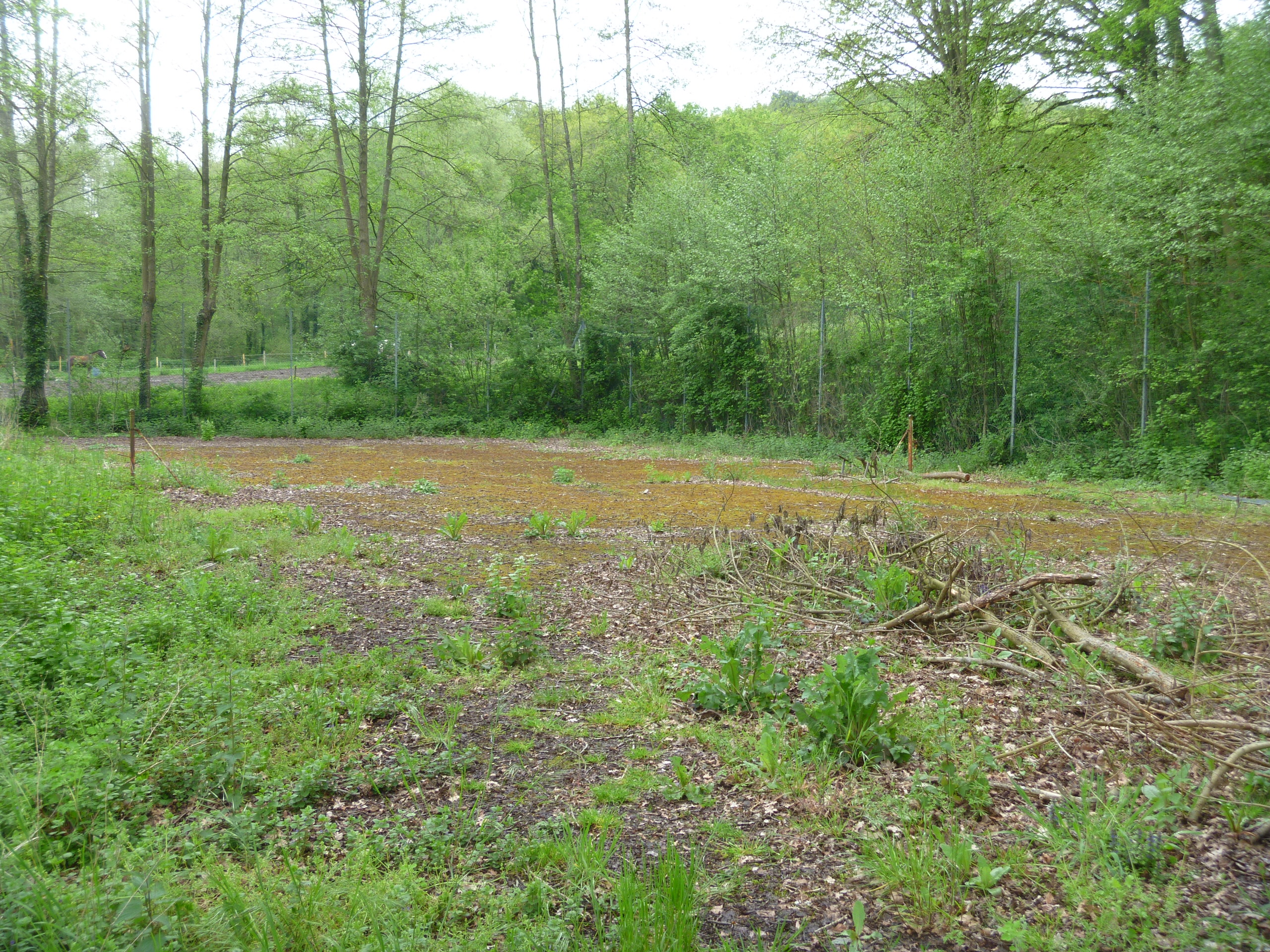
When the Duke and Duchess of Windsor lived here at the weekends and entertained their guests the grounds contained a swimming pool and a tennis court. Today these are overgrown and have all but disappeared. The pool was filled in but standing by it and still topped by a weather vane complete with coronet is a little round changing hut.

Photo from The Windsor Style by Suzy Menkes.

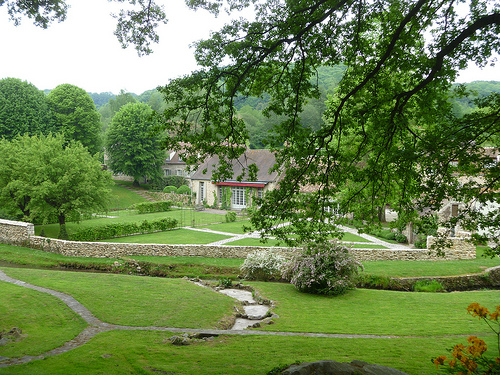
The garden at The Mill today

The tennis court today

The Pugs

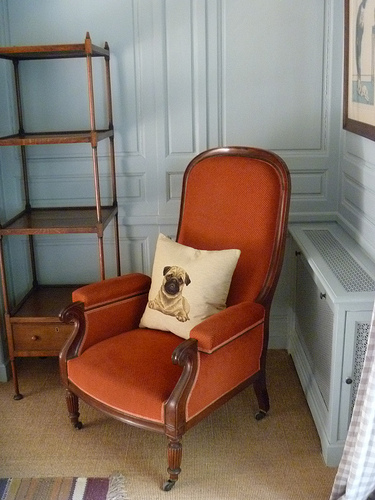
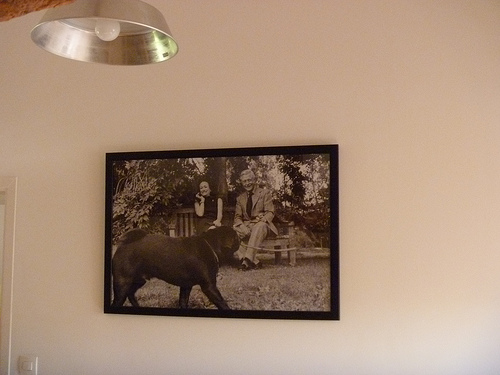
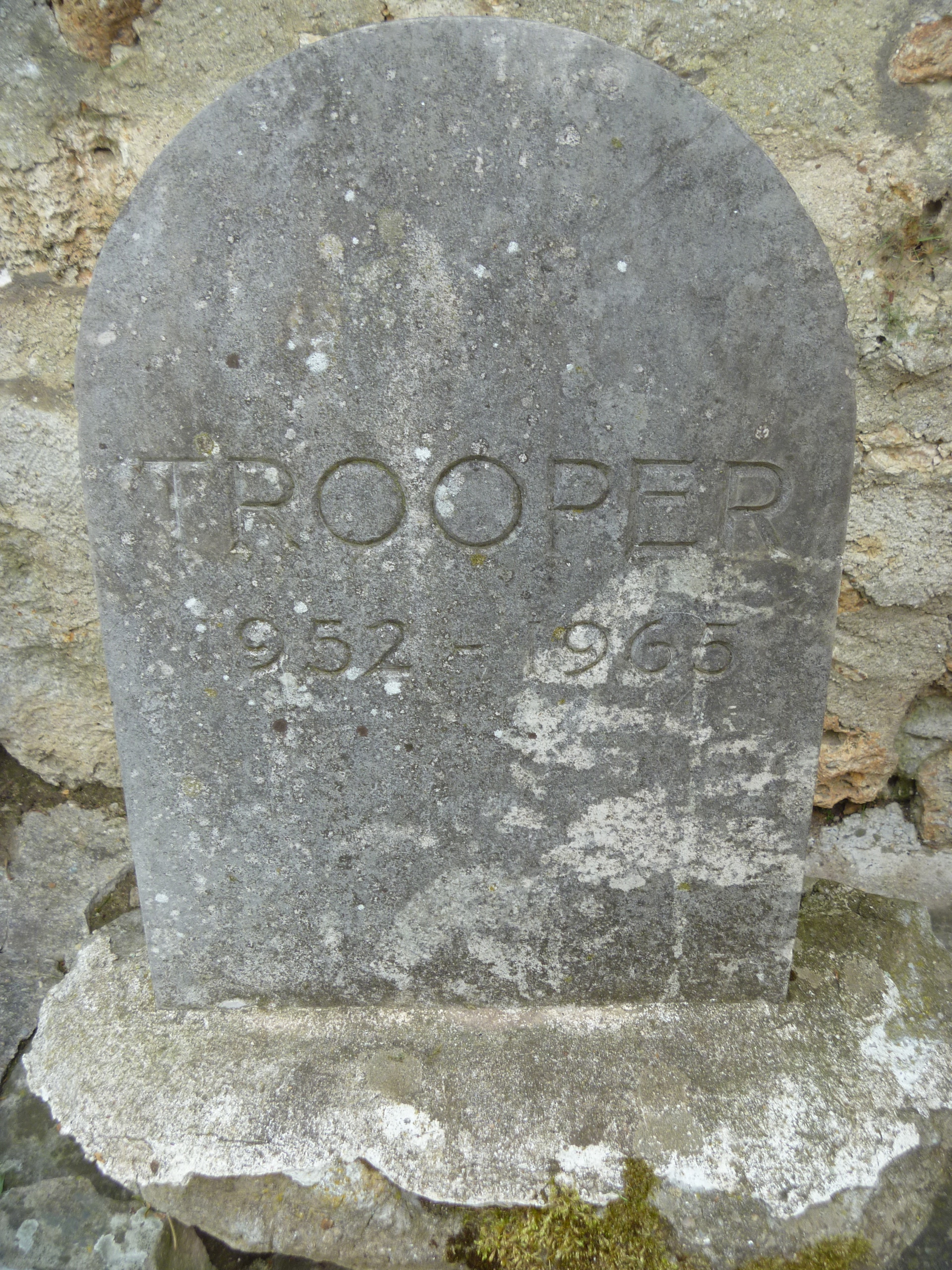
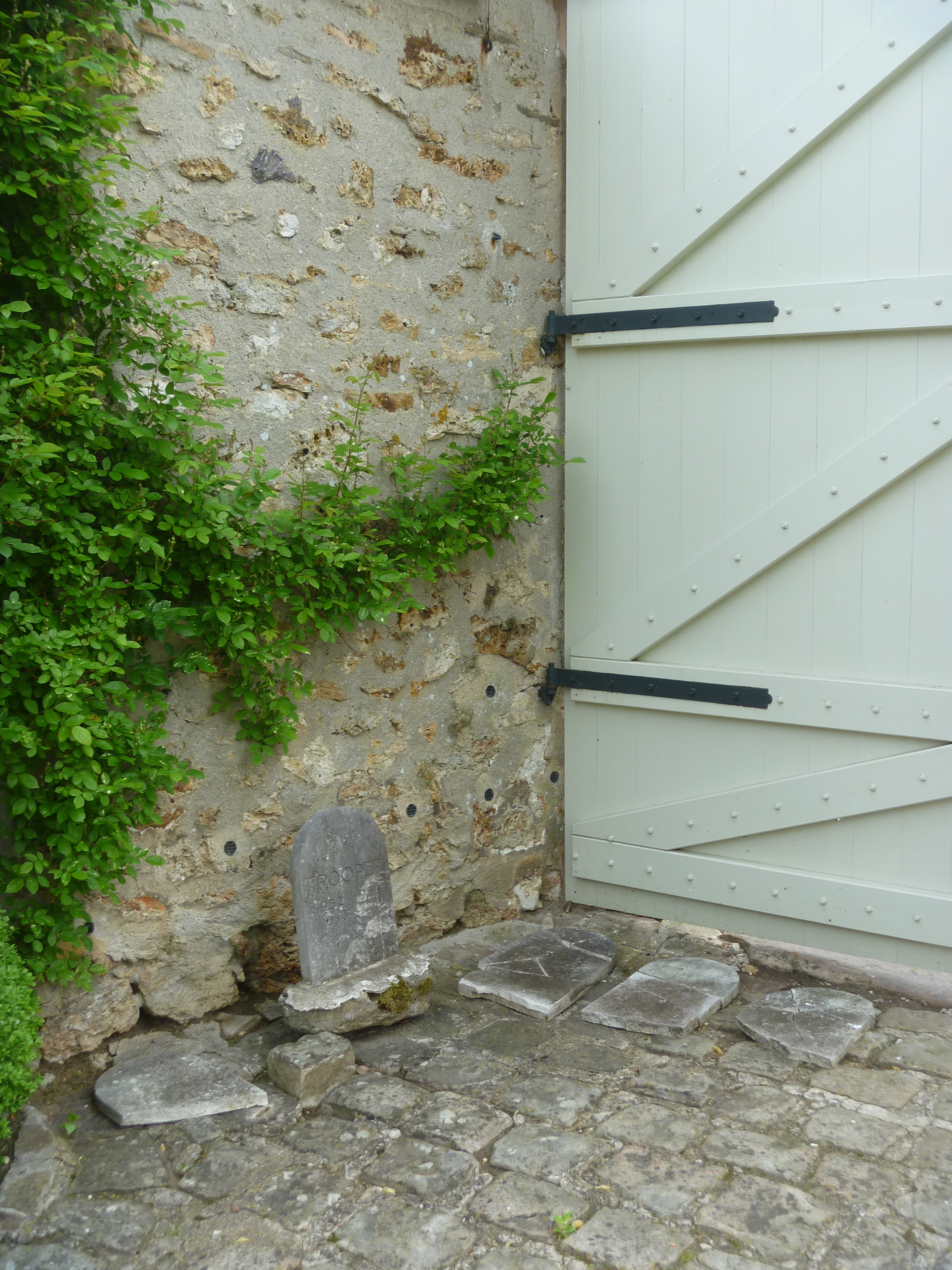
Evidence of the Duke and Duchess’s love for their pet pugs can be seen everywhere at The Mill. In the pictures hanging in each property, in the books in each library, on the cushions and by the fact that little individual tombstones were made for each pug that passed away and was buried in the Mill grounds.

The stones have been moved and now lie or stand near one of the garden gates.

 Trooper – 1952-1965 RIP

Pug Headstones

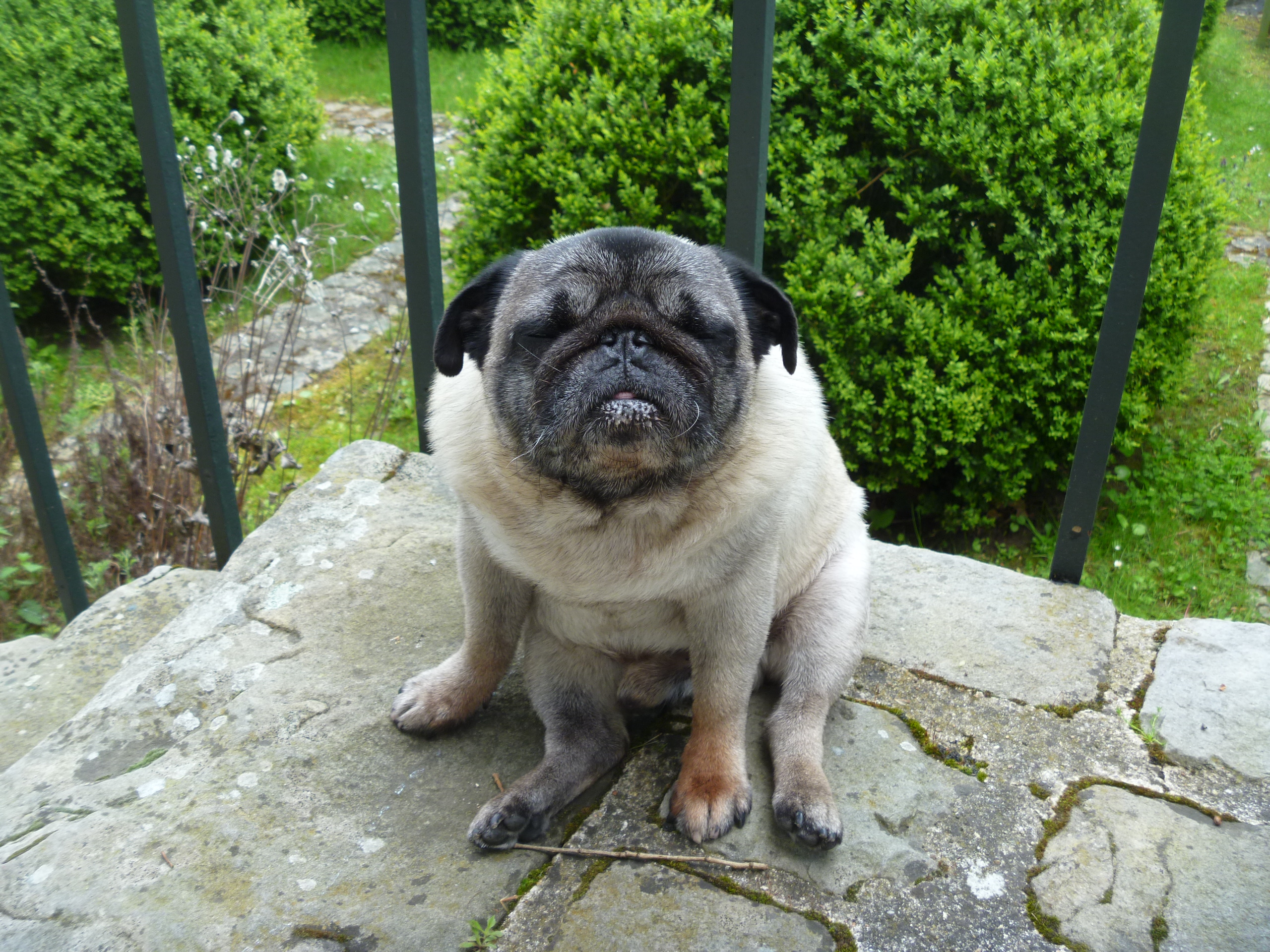
Of course, as our own contribution to try to bring Le Moulin back to its former glory we brought our very own pug Alfie to stay. He found that he had a taste for the Royal life and did not want to get back in the car to come home!

The Literature of the Windsors – a publishing phenomenon

Millions of words and countless books have been written about Him, about Her, about Them, about The Abdication and about Their Stuff.

Lots of it is repetitive – believe me I have now read quite a few.

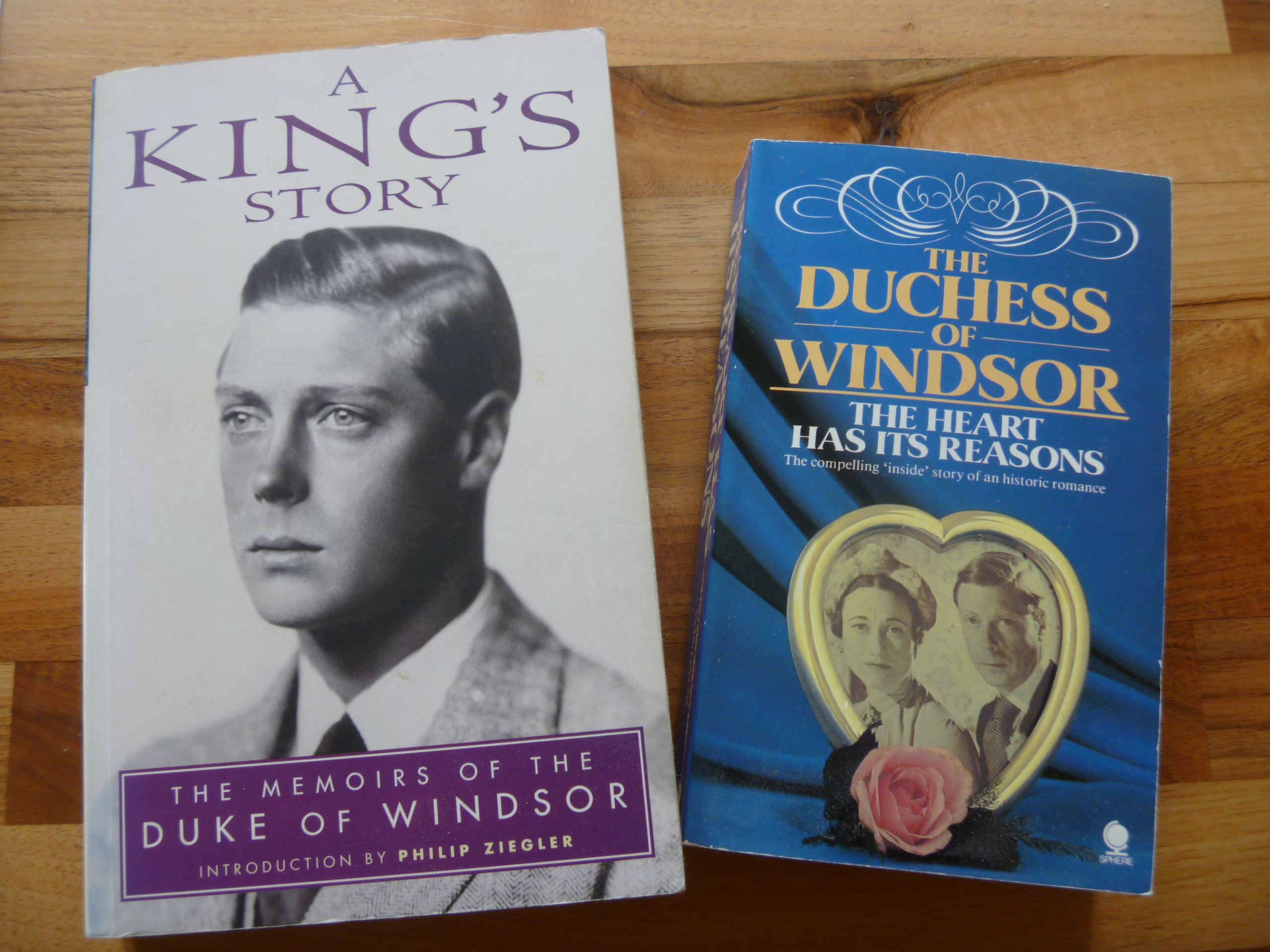
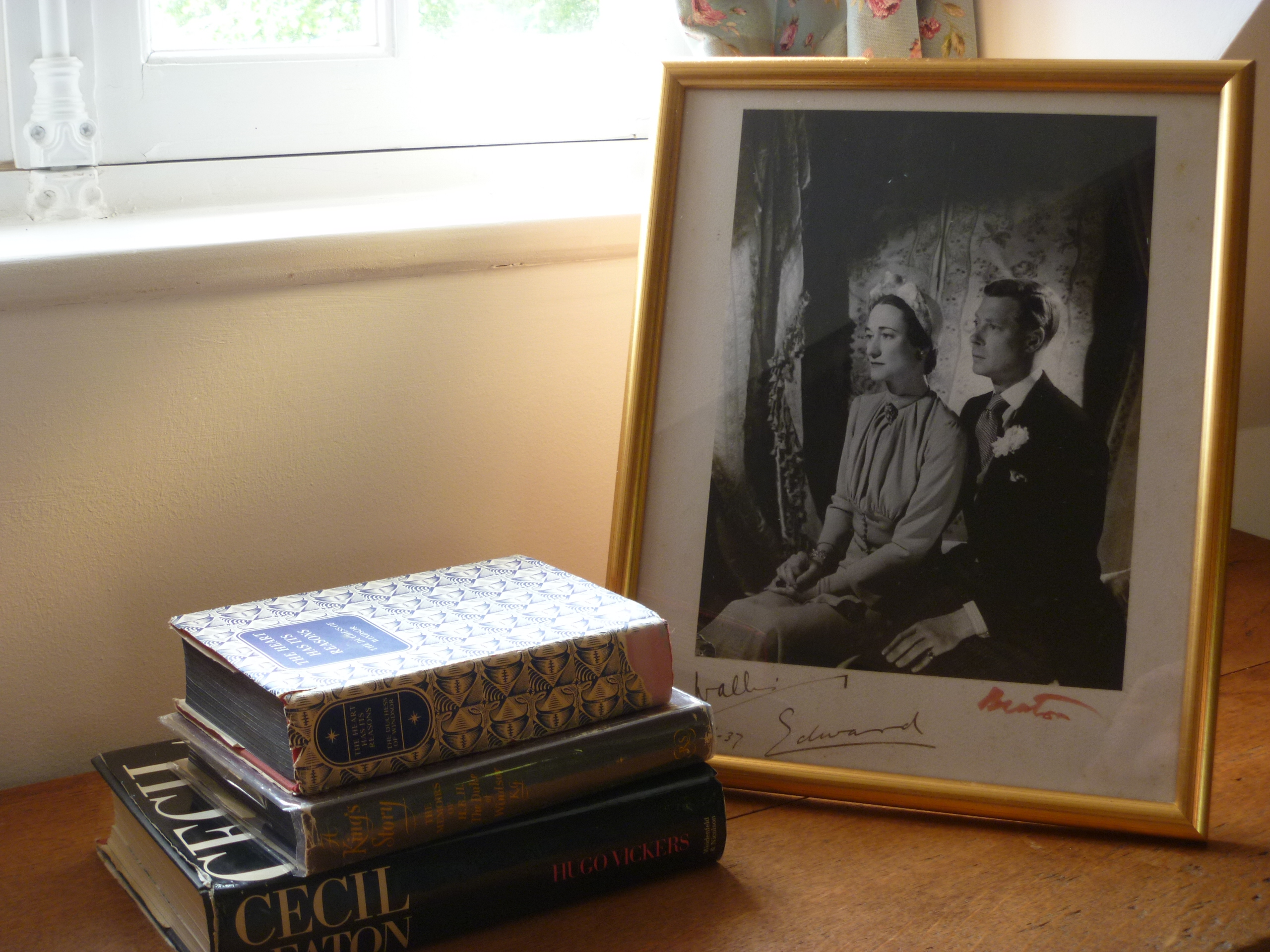
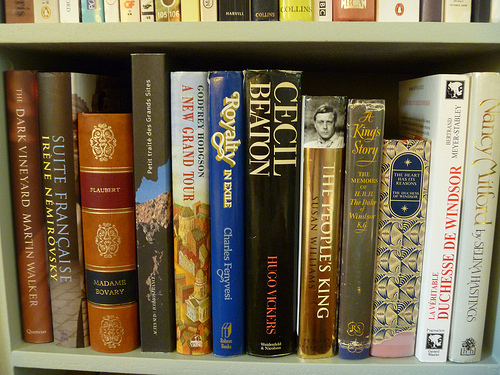
They published their own memoirs during their lifetimes, namely A King’s Story and The Heart Has Its Reasons. These two I own but have yet to read. The story goes that after the Abdication and the Second World War was over and when they had finally settled in France the former king, feeling rather at a loose end, at Wallis’s suggestion wrote his own biography. This he set about with gusto and with help of Charles J. V. Murphy. Published in 1951 A King’s Story: the memoirs of H.R.H. The Duke of Windsor was a great success. Wallis published her own story The Heart Has Its Reasons: the memoirs of the Duchess of Windsor in 1956.

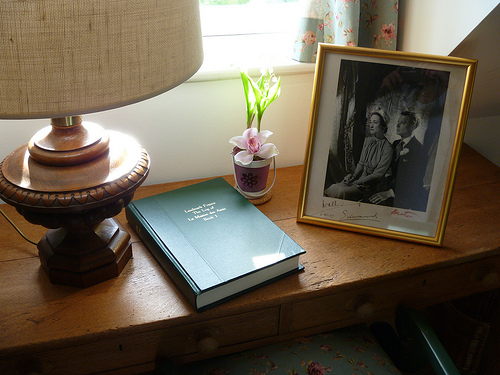
Copies of both books are on the Library shelves at La Maison Des Amis.

I have (unread, so far) copies of my own as well.

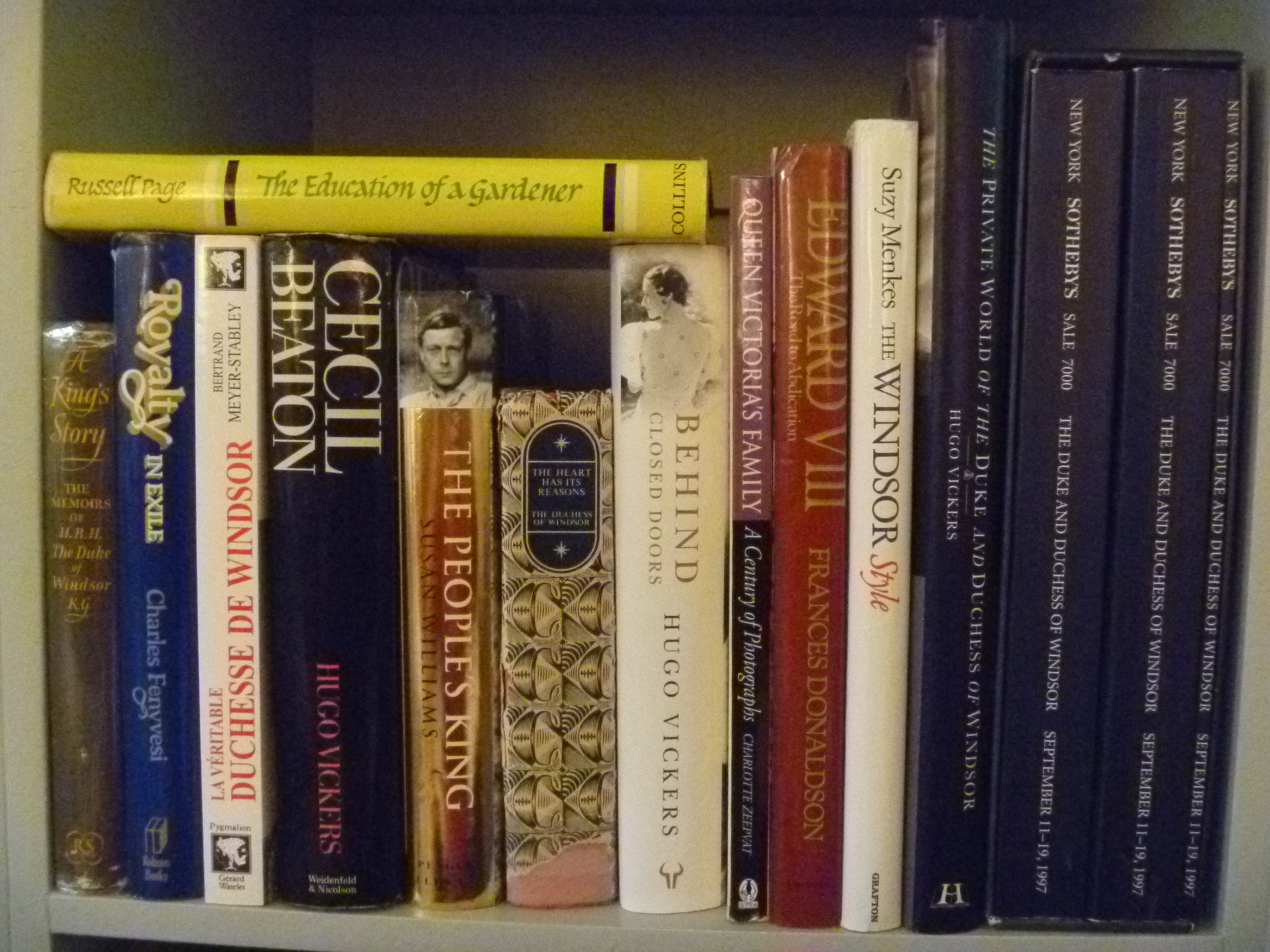
Also on the library shelves at La Maison are other biographical works telling in their own way and with their own biases the stories of the Duke and Duchess. The winner with the most publications to his name on these shelves is Hugo Vickers with a total of 3 works:

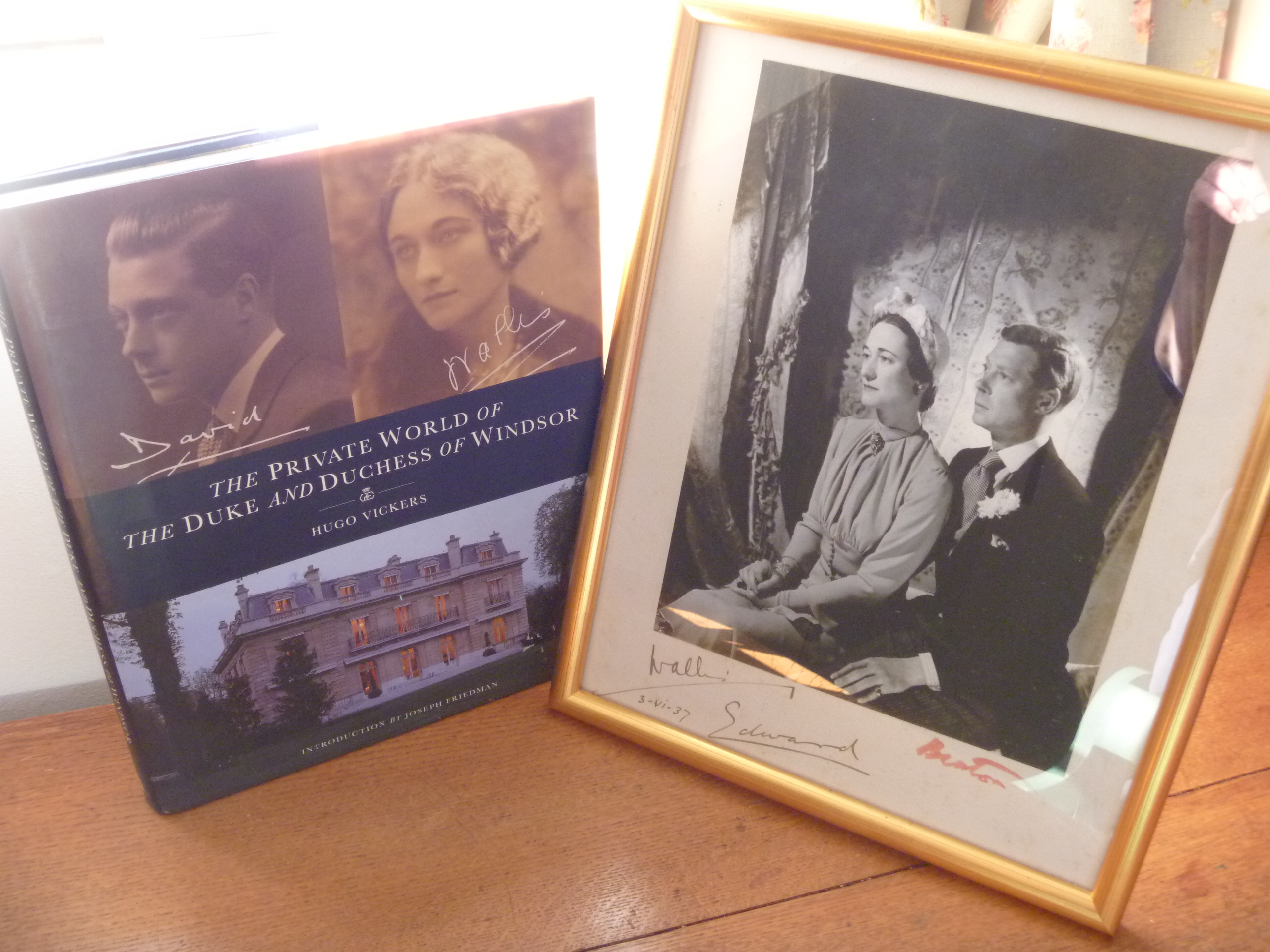
The Private World of the Duke and Duchess of Windsor, 1995. Published by Mohammed Al Fayed.

Cecil Beaton : the authorized biography; 1985.  (CB was a close friend of theirs and who took many of the best known photographs of the Windsors and who frequently came to stay at Le Moulin de la Tulierie.)

Behind Closed Doors: the tragic untold story of the Duchess of Windsor; 2011.

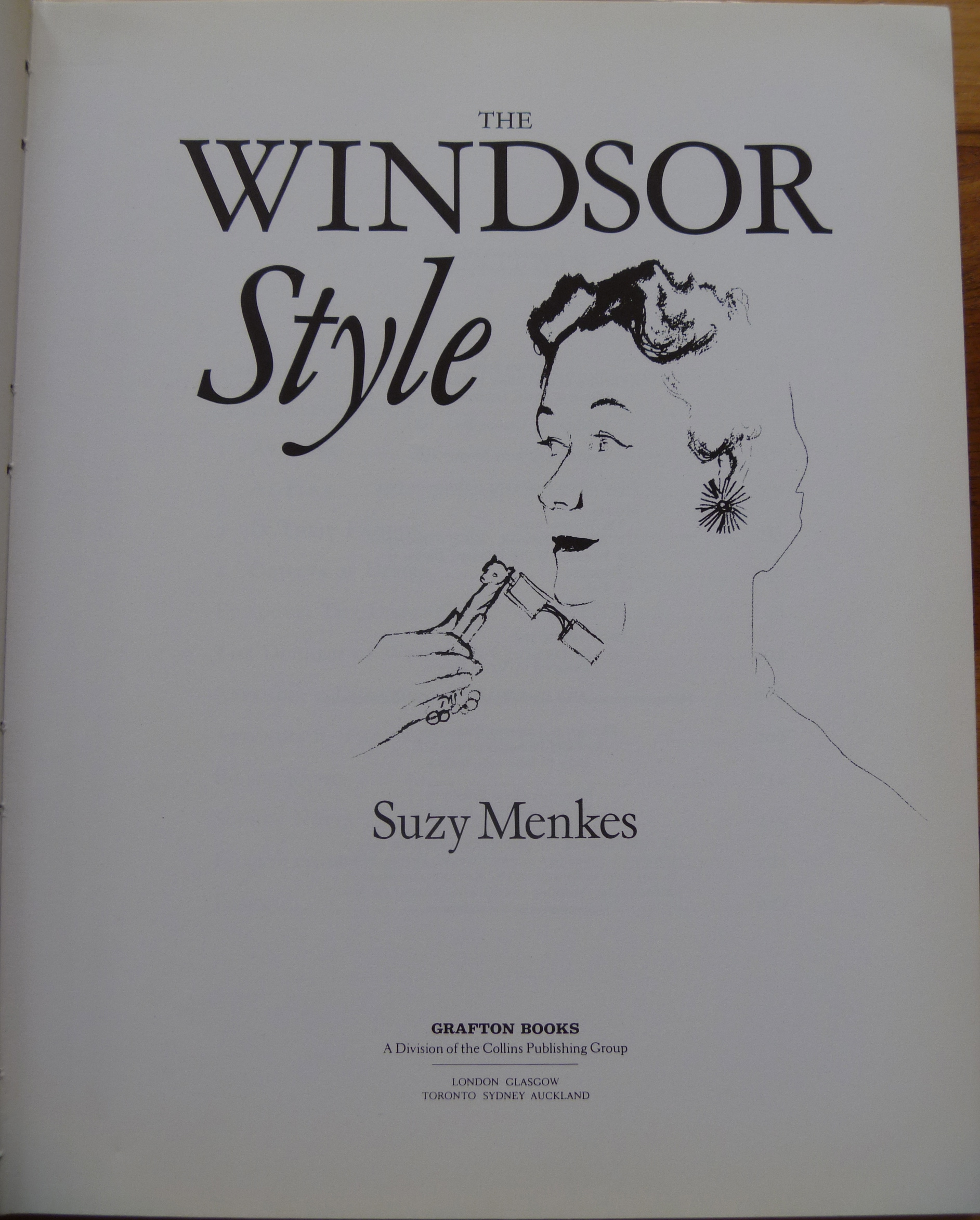
Other Windsor books at La Maison include Suzy Menkes’ The Windsor Style (1987) which covers their homes, gardens, fashions and objects. The appendices include The Duchess of Windsor’s Cookbook and a list of furnishings and objets d’art donated to The Palace of Versailles and the sale results of The Duchess of Windsor’s Jewel Sale at Sotheby’s in Geneva in April 1987.

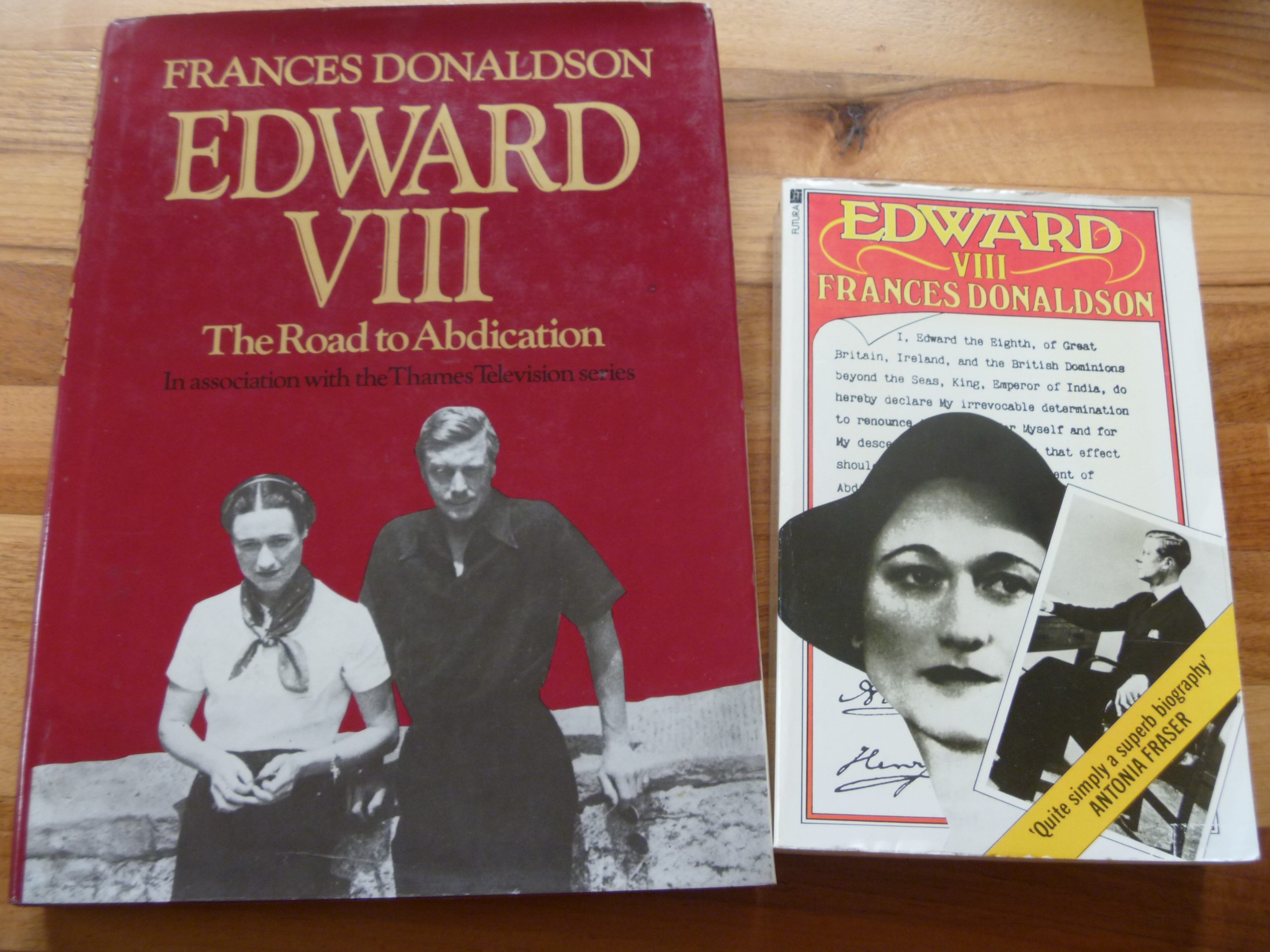
Frances Donaldson, who wrote an [official] biography of the Duke also published in 1974 Edward VIII : the road to abdication. Rather more of a photographic album with informed commentary than the aforementioned biography. Shown below are my own copies.

The selection at Gif also includes La Veritable Duchesse de Windsor by Bertrand Meyer-Stabley, Editions Pygmalion, 2002, for all the French guests staying at Le Moulin. Well, I have yet to see any French commenters in the Landmark Logbook but maybe they haven’t caught on to the British Visitor’s Book signing tradition.

The People’s King [another] true story of the Abdication; by Susan Williams [2003]

Queen Victoria’s Family: a century of photographs, 1840-1940; by Charlotte Zeepvat. [2003]

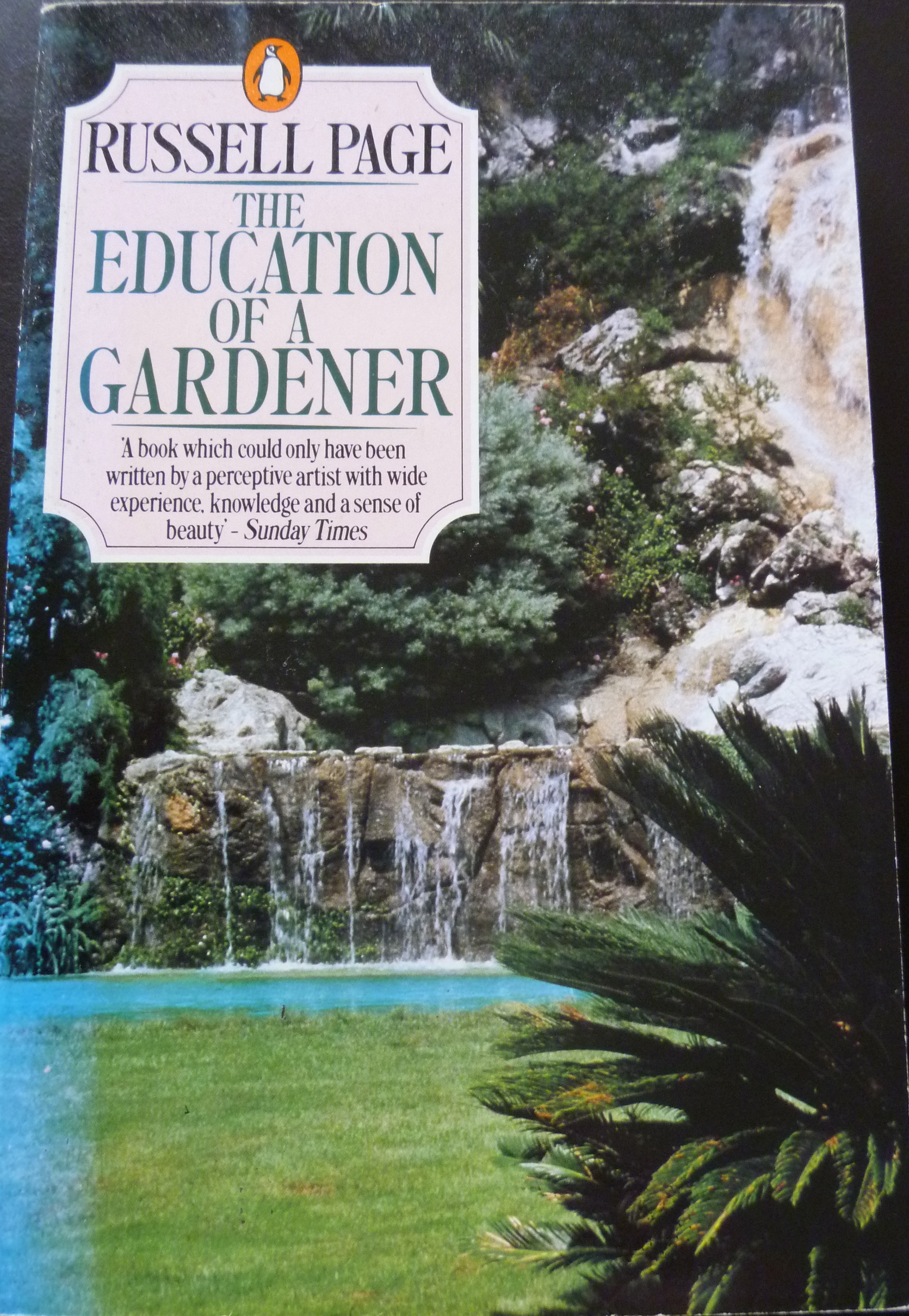
The Education of a Gardener, by Russell Page. [1962] who spent time helping the former king to establish his own garden at Le Moulin de la Tuilerie.

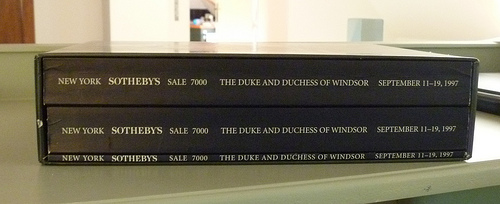
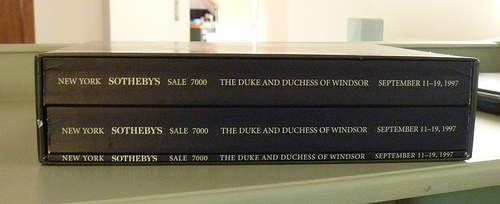
But I think the most interesting and intriguing books on the library shelves at La Maison are the 3 volumes of the New York Sotheby’s Catalogue of the Sale in 1997 of the Duke and Duchess of Windsor’s property. They are fully illustrated and contain price estimates. On our return home last year we bought the final sale price list with which to compare.

At Home With the Windsors – La Maison des Amis

I am off to France shortly. It’s another Landmarking holiday but with the added difference that I shall be in France and staying at the former weekend home of the Duke and Duchess of Windsor.

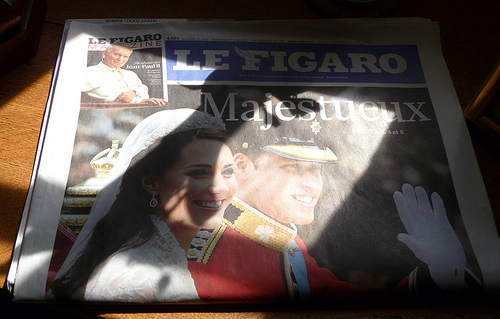
This will be my second visit. Last year the day of departure coincided with the Royal Wedding. I had my own Royal Weekend in France which made up, somewhat, for missing the live broadcasts of Kate and William’s happy day.

Le Moulin

La Maison des Amis is situated within the small estate that comprises The Moulin de la Tuilerie on the edge of the village of Gif sur Yvette in the Essonne department of France. We didn’t use it last year but there’s an RER train link with the centre of Paris and the journey takes about  40 minutes. We’re hoping to have a little trip to town this time. We don’t have too many plans but we have reserved at a restaurant in Versailles for lunch on the Sunday.

La Maison Des Amis (rear)

There are three rental properties on the site. Le Moulin  itself (which sleeps 12 in total) and which the Duke and Duchess themselves occupied for their weekends away from Paris and La Maison de Amis (sleeps 4) and Le Celibataire (sleeps 2) where their guests – people like Richard Burton and Elizabeth Taylor (I sleep in their room!), Cecil Beeton, Marlene Dietrich and Maria Callas – were accommodated very comfortably.

Le Moulin de la Tuilerie from ‘Cardiac Hill’ as the Duke of Windsor called it!

Those Windsors they recognised a great location when they saw it. In addition to being 40 minutes from the centre of Paris (or rather 35 minutes by Buick from their home in the Bois de Boulogne) the lovely old town of Versailles and its OTT palace and  grounds are about 20 minutes away and as Landmark puts it :

“Just as for Edward and Wallis, still today this is a place for contrasts: a wonderful setting to play host, or enjoy deep tranquillity; an easy day trip by direct train to the bustle and culture of central Paris or the delights of Versailles, and yet a place where the city finally yields to deep countryside.”

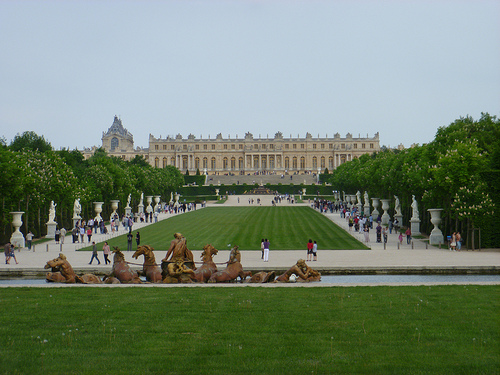
Sunday evening strollers in the park at Versailles

There is plenty of good reading matter in the Landmark Library, as usual. We spent a lot of time looking through the Sothebys New York 1997 Sale Catalogue of the Windsors’ stuff.

Tulip Fever and Flowers at the Airport

This year is a Floriade Year in the Netherlands. I have several friends who are going to make the trip. It’s a world horticultural expo and is held every 10 years. The event happens in the Venlo area in the southeast of the Netherlands very near to the German border.

Every year thousands of tourists do the Dutch Bulb Fields Tour. Keukenhof is probably the most famous Dutch bulb field park.

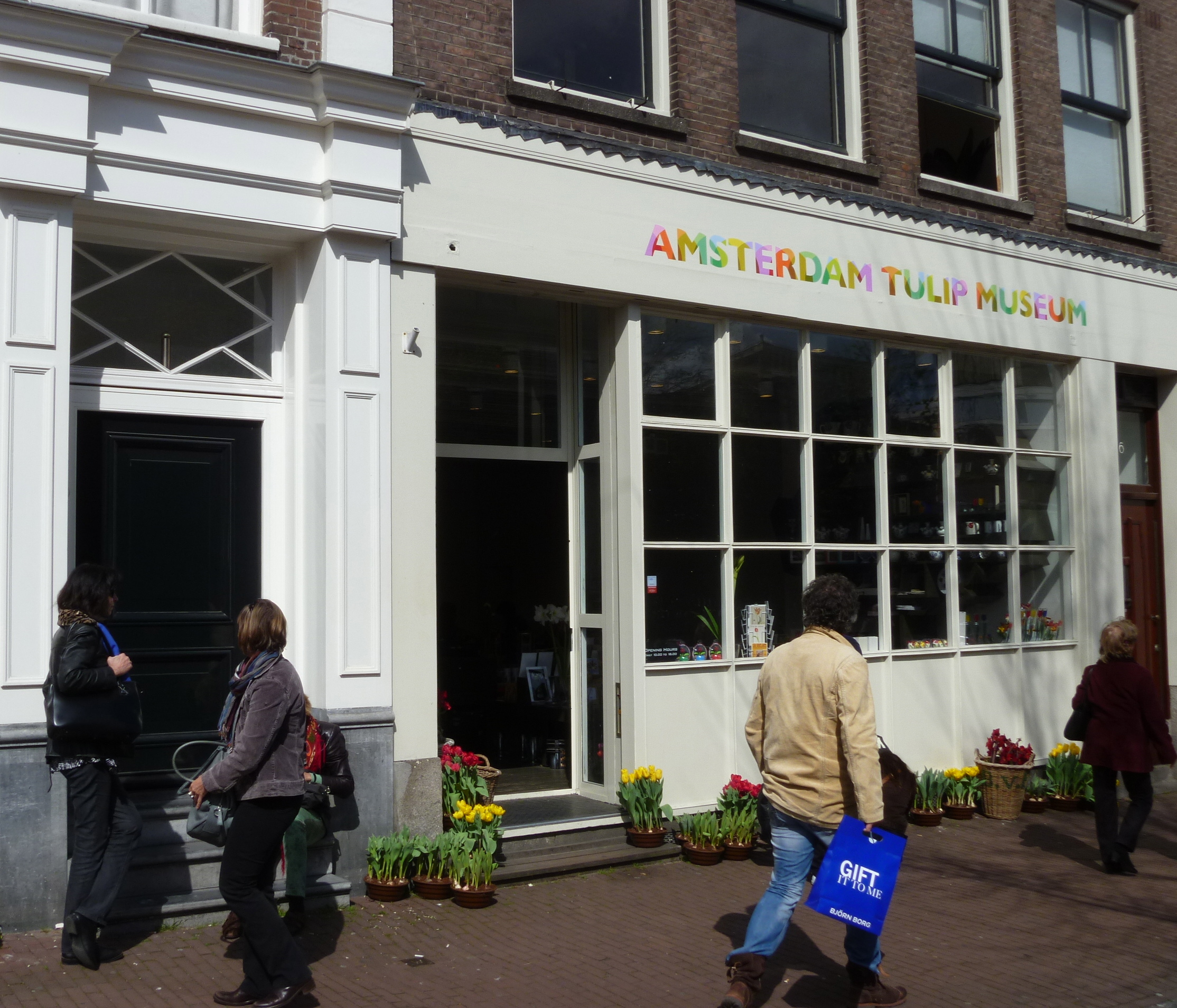
In Amsterdam we saw tulips everywhere we looked! See my little Flickr tour of Tulip Fever in Amsterdam.

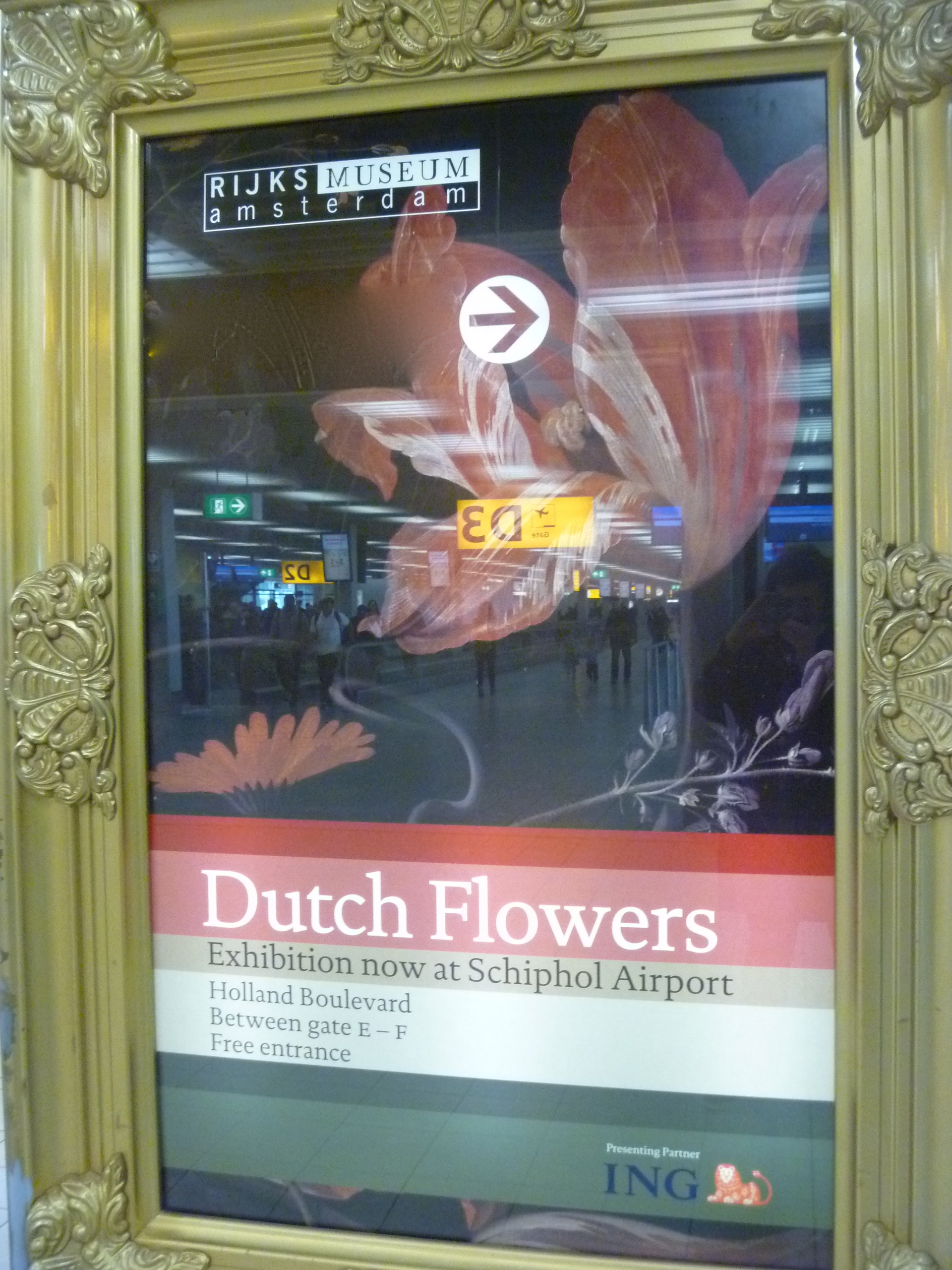
I have no problem when passing through airports like Amsterdam and Zurich. There is always something new to see and experience and lots of tasteful and up-market, if exceedingly expensive, shops in which to browse. Schiphol goes one step further than any other airport I know. In addition to shops they have taken the unusual step of opening a branch of the world famous Rijksmuseum. With all those flowers around the place it’s not surprising I suppose that the little one-room  gallery should have a selection of flower paintings on display.

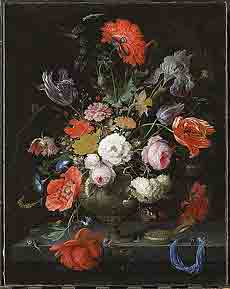
The Dutch Flowers exhibition currently showing at The Rijksmuseum Schiphol includes 9 stunning paintings worthy of study.   In each of these pictures there is so much detail – not only the flowers but other symbols like the watch shown below and creatures like lizards and snails and butterflies.

Still Life with Flowers and Watch by Abraham Mignon (1640-1679)

Be sure to keep an eye on your watch as it’s easy for the time to pass quickly in this little gallery!

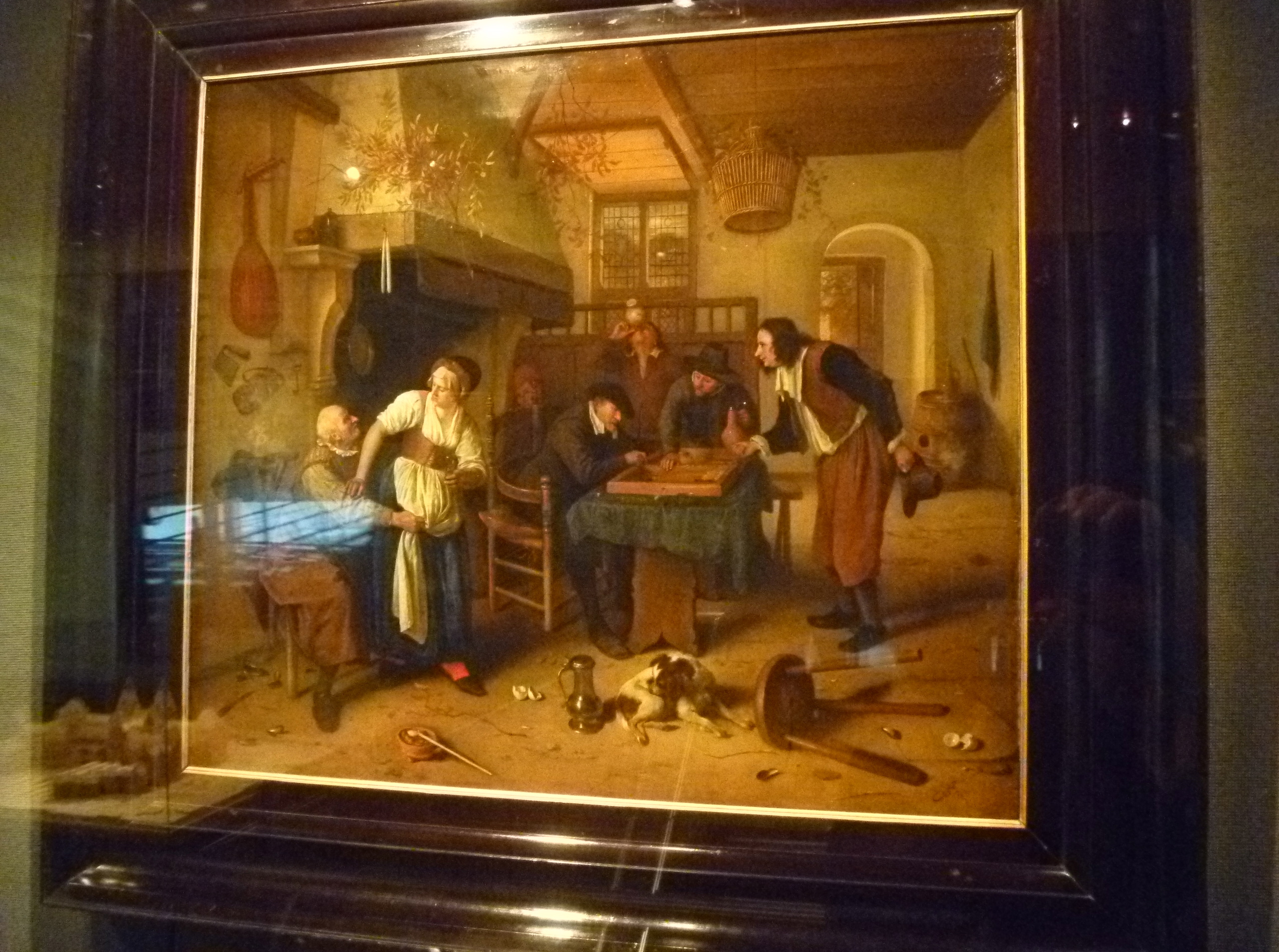
In addition to the Dutch flower paintings on the other wall of the gallery are 7 paintings from the Dutch Golden Age.

Two kinds of Games by Jan Steen (1626 – 1679)

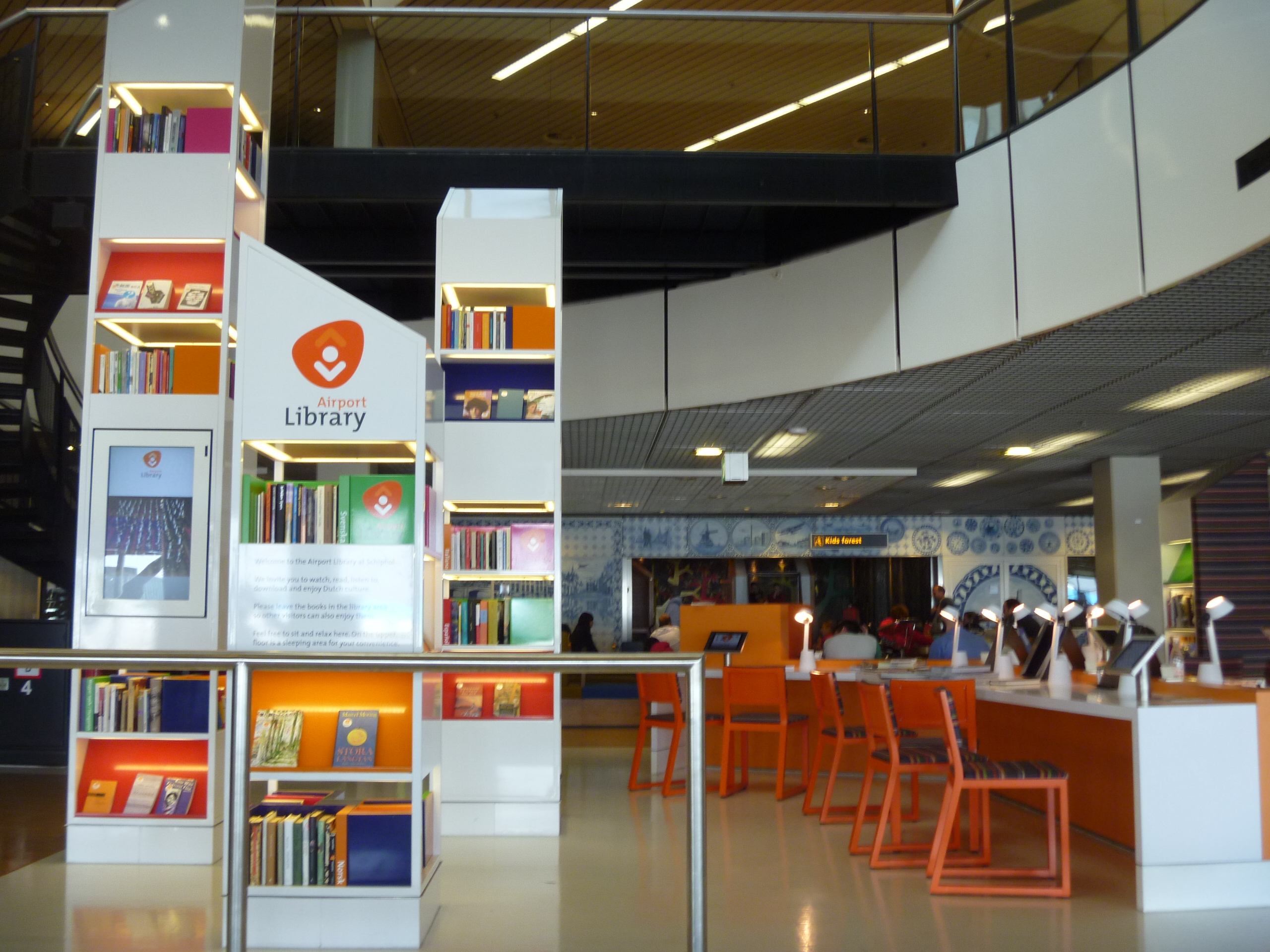
This year I also noticed another novelty just by the staircase to the gallery: an Airport Library! But I didn’t have time to try it out.