Bern and It’s Book Mine

Arriving in Bern a week last Thursday I dropped my bags off and took a walk in search of a secondhand book shop that I’d read about somewhere on the internet.

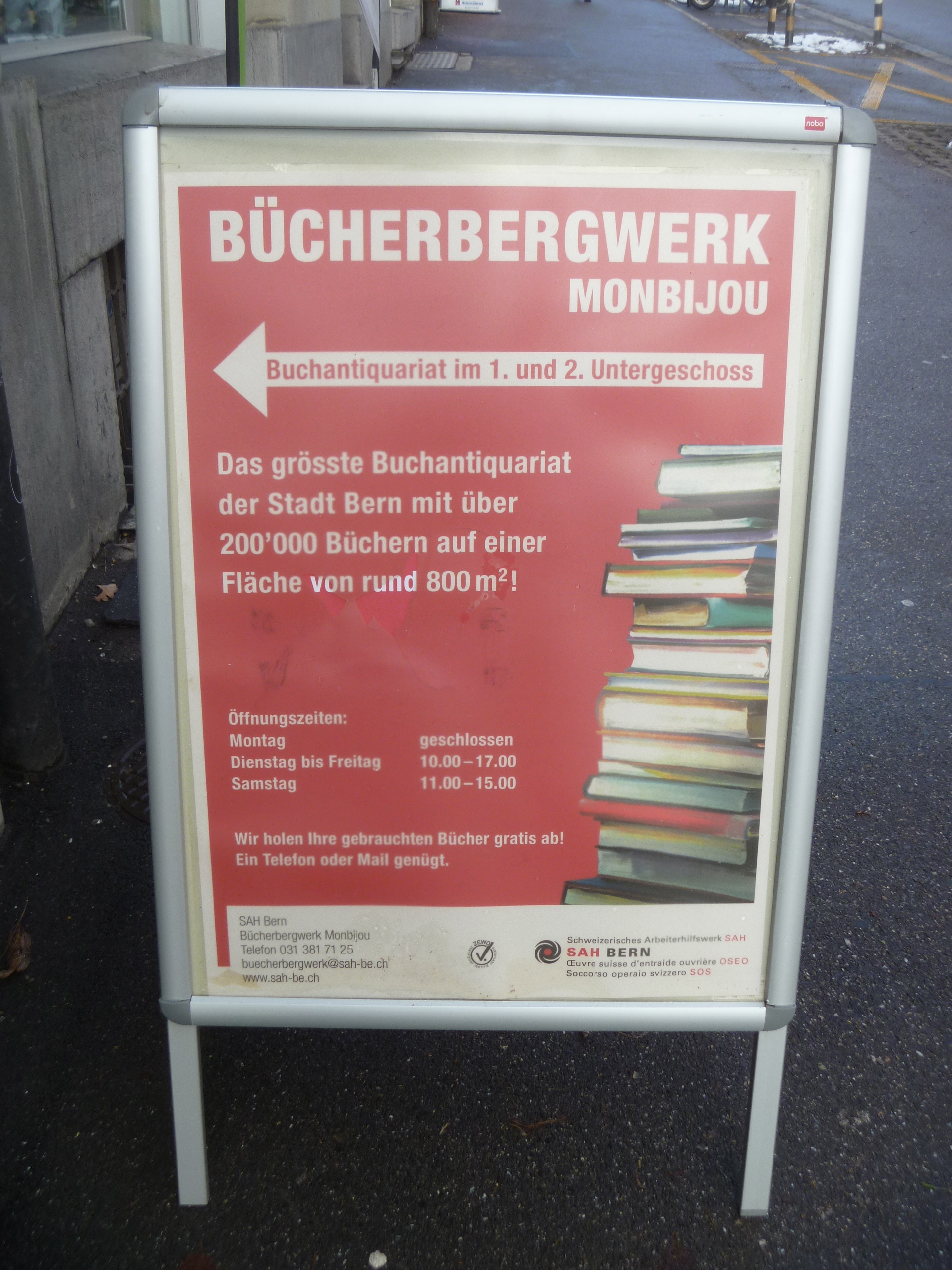
“Bücherbergwerk Monbijou, Monbijoustrasse 16 (on the street through which tram line 9 descends from Hirschengraben near the main station, in the basement of the building marked ”SWICA”), ☎ +41 (0)31 381 71 25. Open Tu-F 10AM-5PM and Sa 11AM-3PM. The used books store of the Swiss Workers’ Aid Society.”

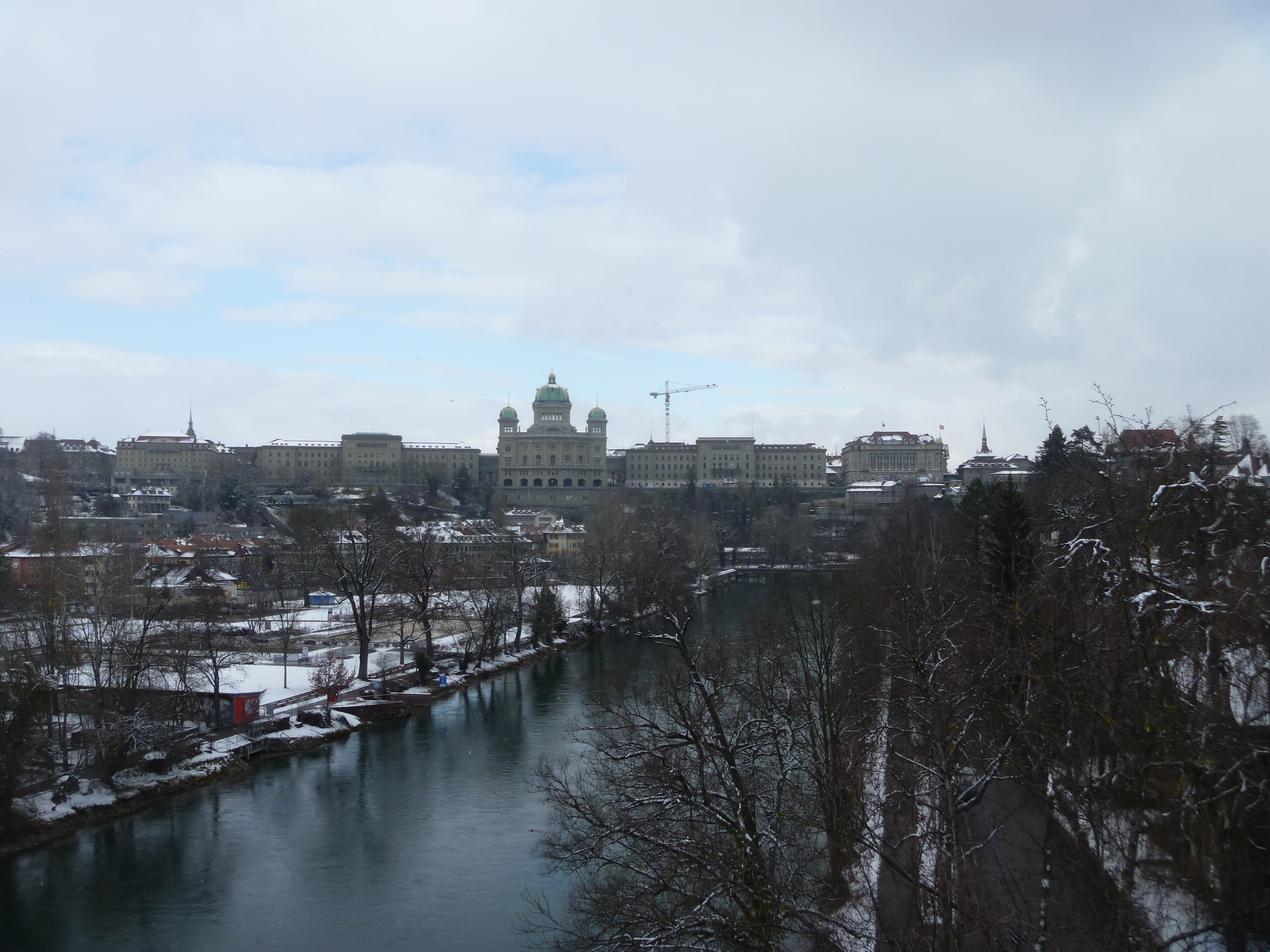
Bundeshaus

The Swiss Parliament Building from Monbijou Bridge

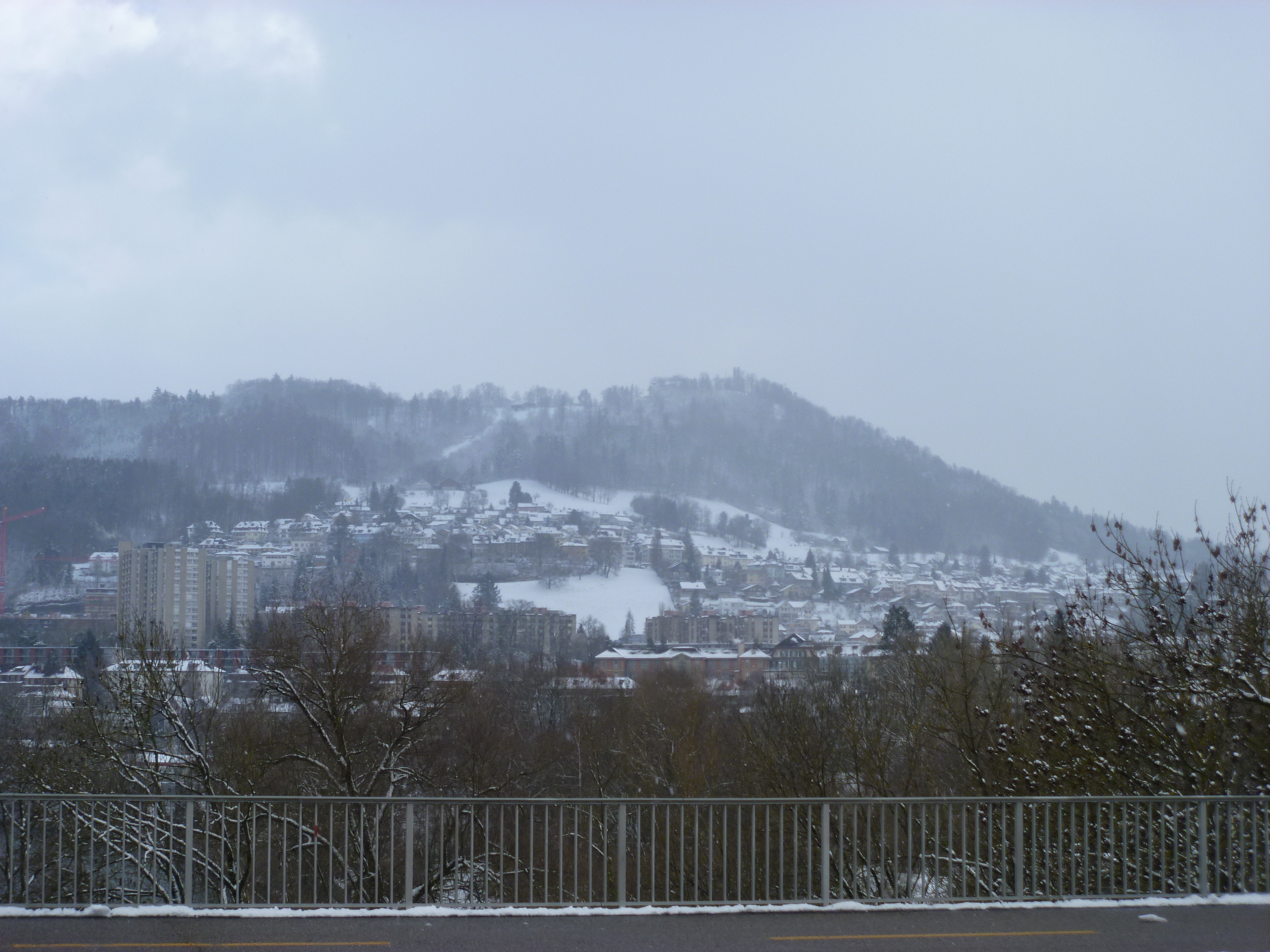
Bernese hills

The Gurten from Monbijou Bridge

From B’s place you cross the Monbijou Bridge from where you gain fantastic views of the city, the Bundeshaus (Parliament Building), the River Aare and the nearby hills of Gurten.

Bucherbergwerk

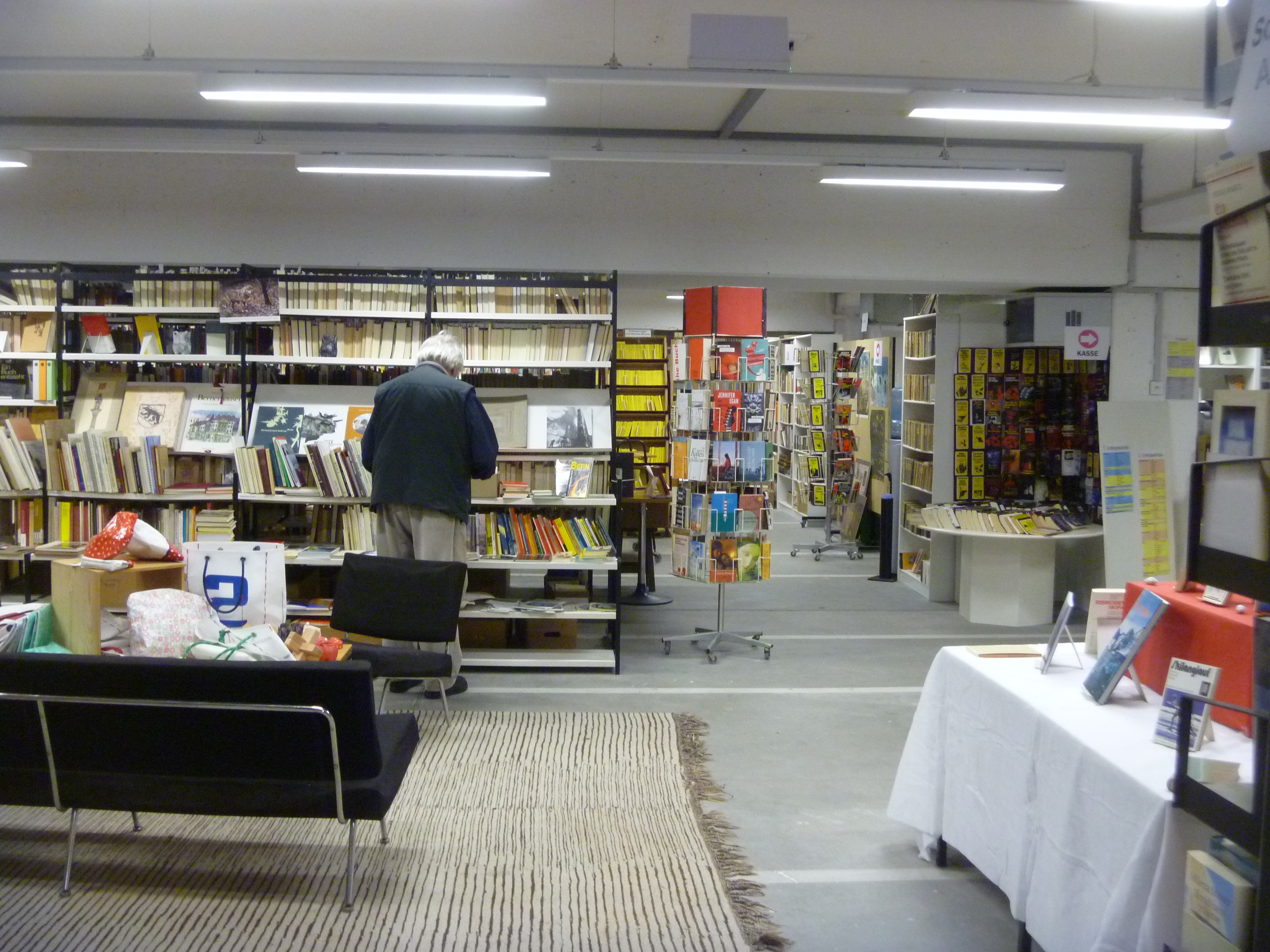
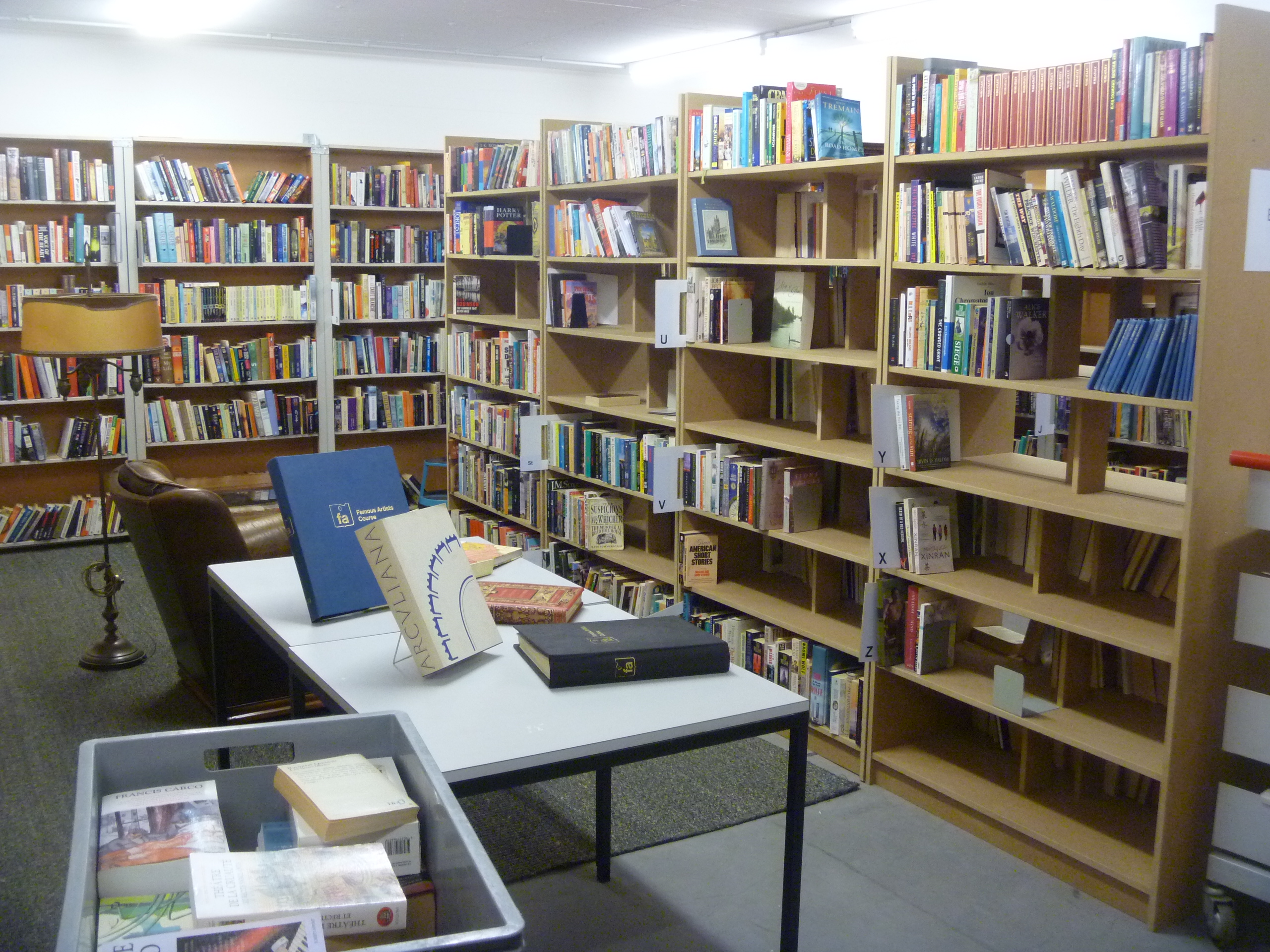
Along Monbijoustrasse I spotted the sign for SWICA and dived underground to find a cavernous book shop filled to overflowing with secondhand books and maps and comfy chairs and lamps. Two floors under is the foreign language section with a large section labelled English Books.

Book MIne

English books section

The English books section in the lower basement

Generally the price of each book seemed to be 3 Swiss francs but on selecting 5 to buy the assistant suggested a total of 10 francs. This seemed a very fair price to me.

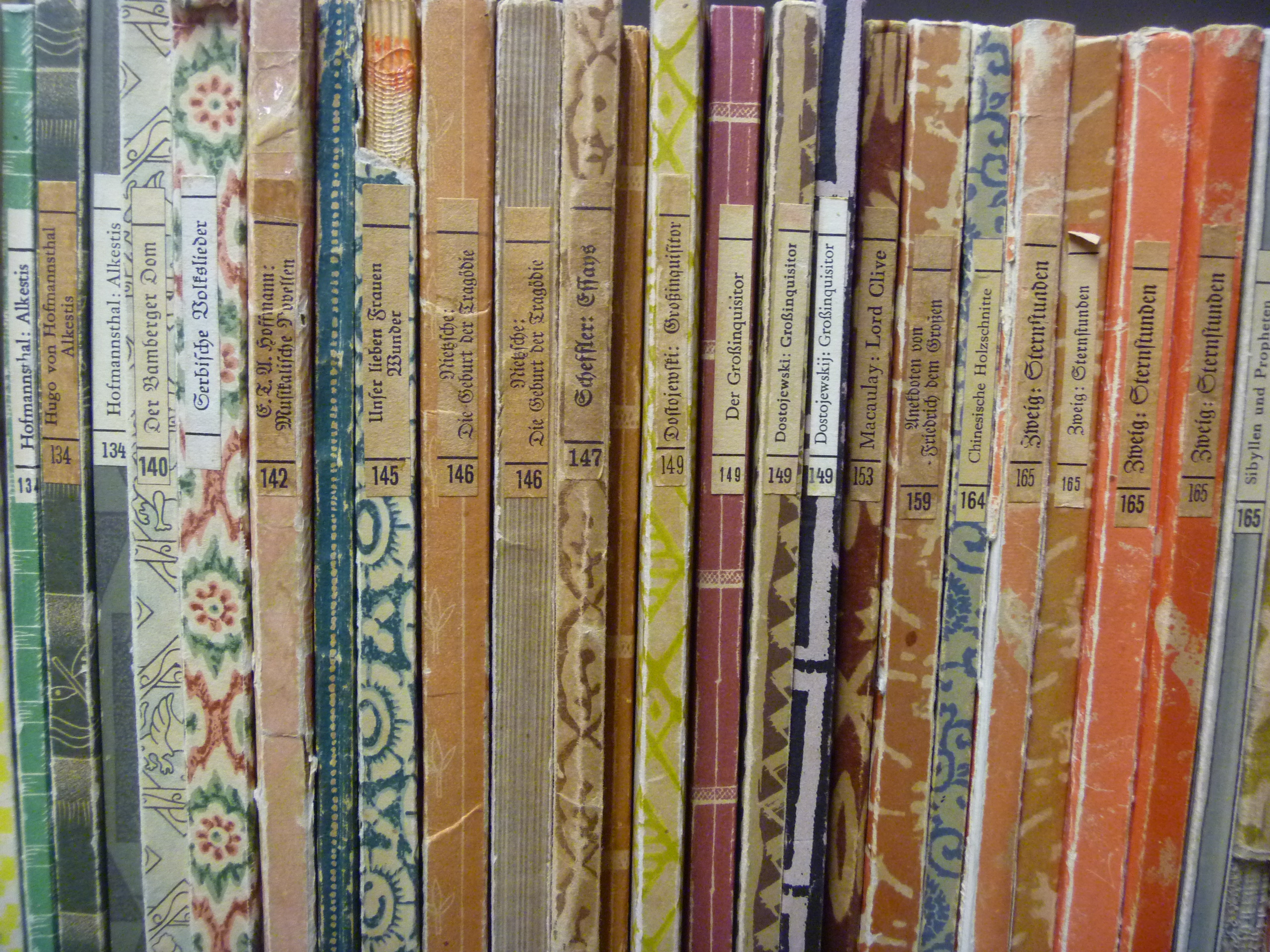
German books

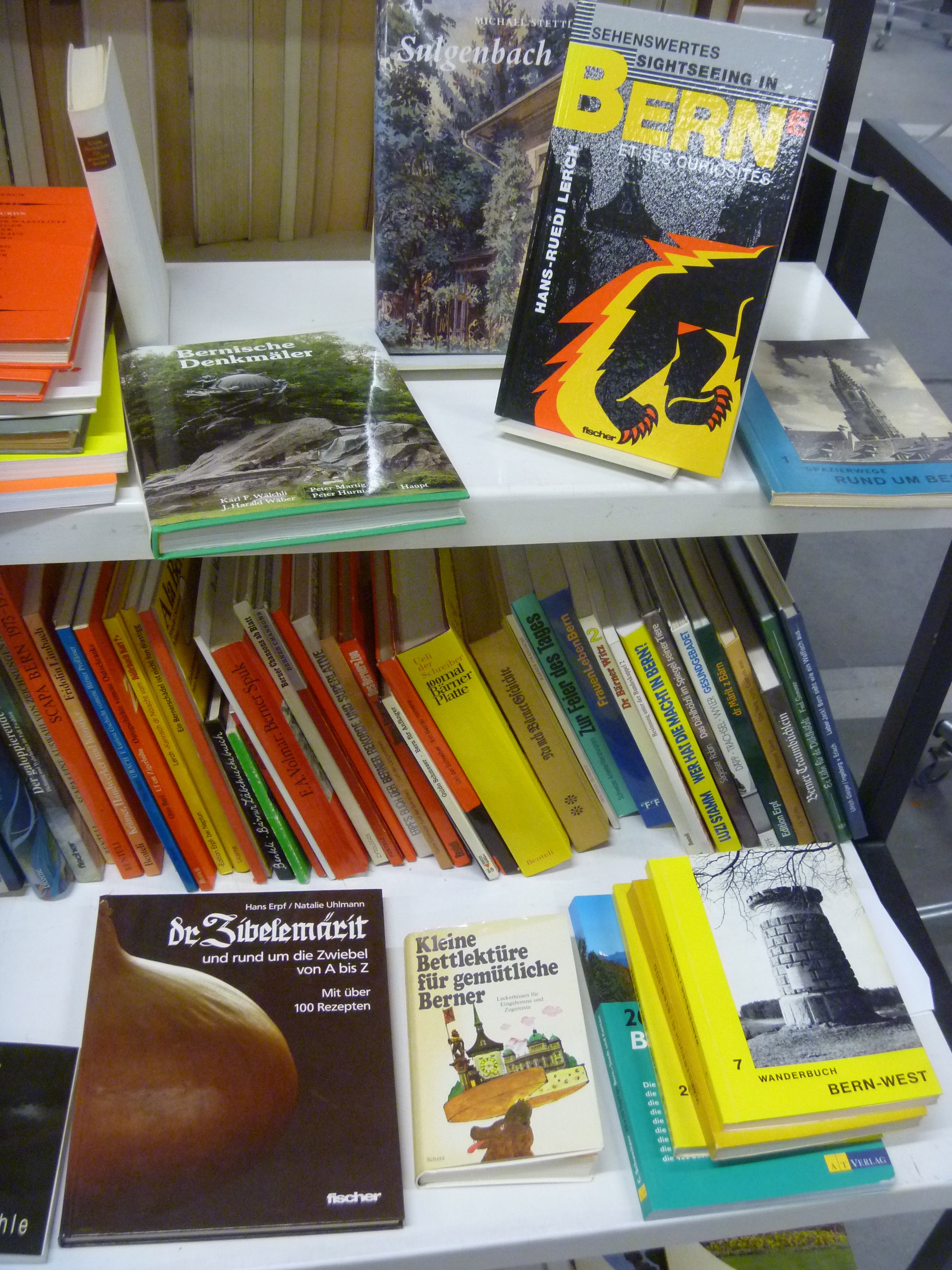
Bernese books

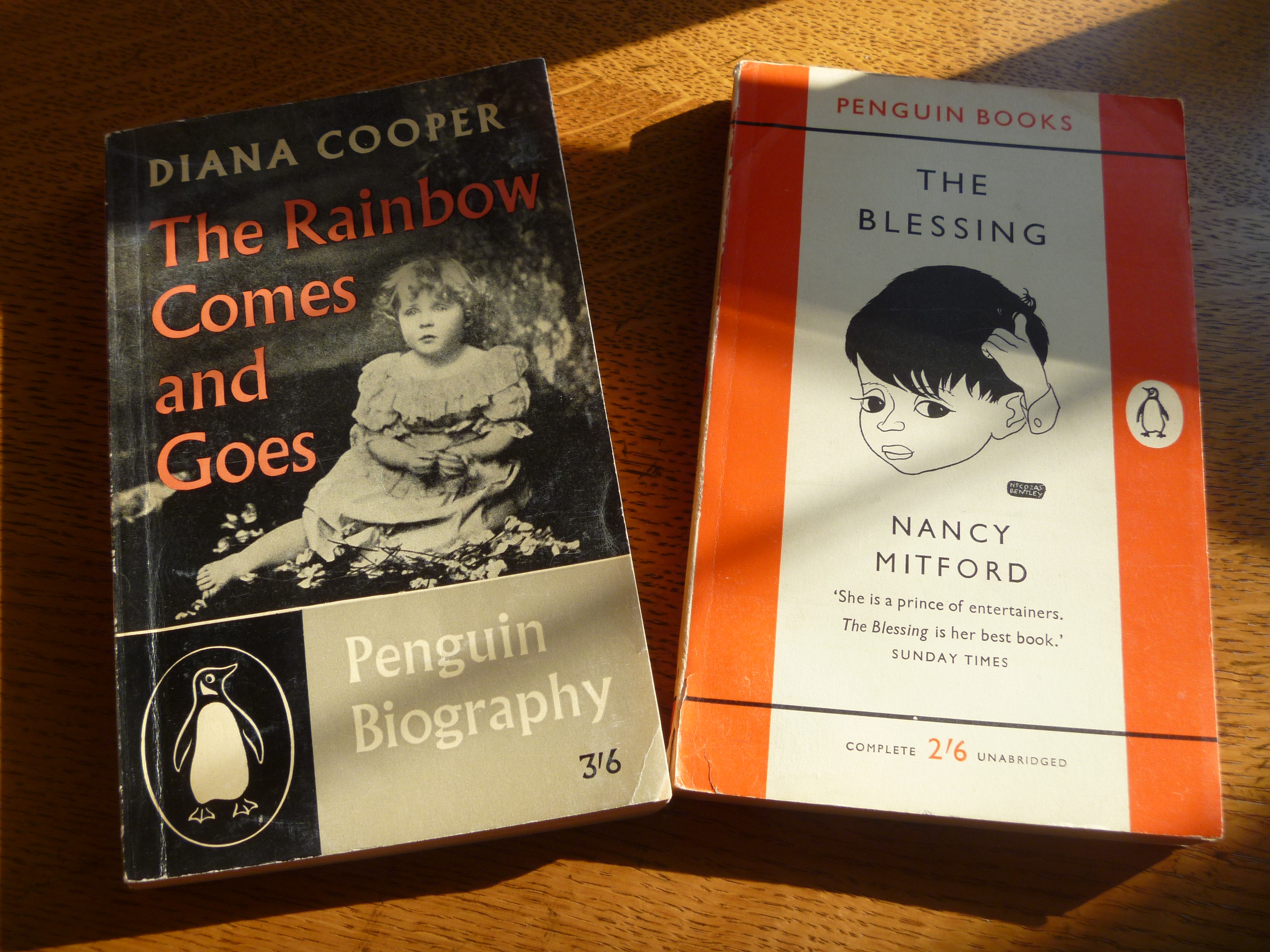
I bought two old paperbacks :

Book Mine Books

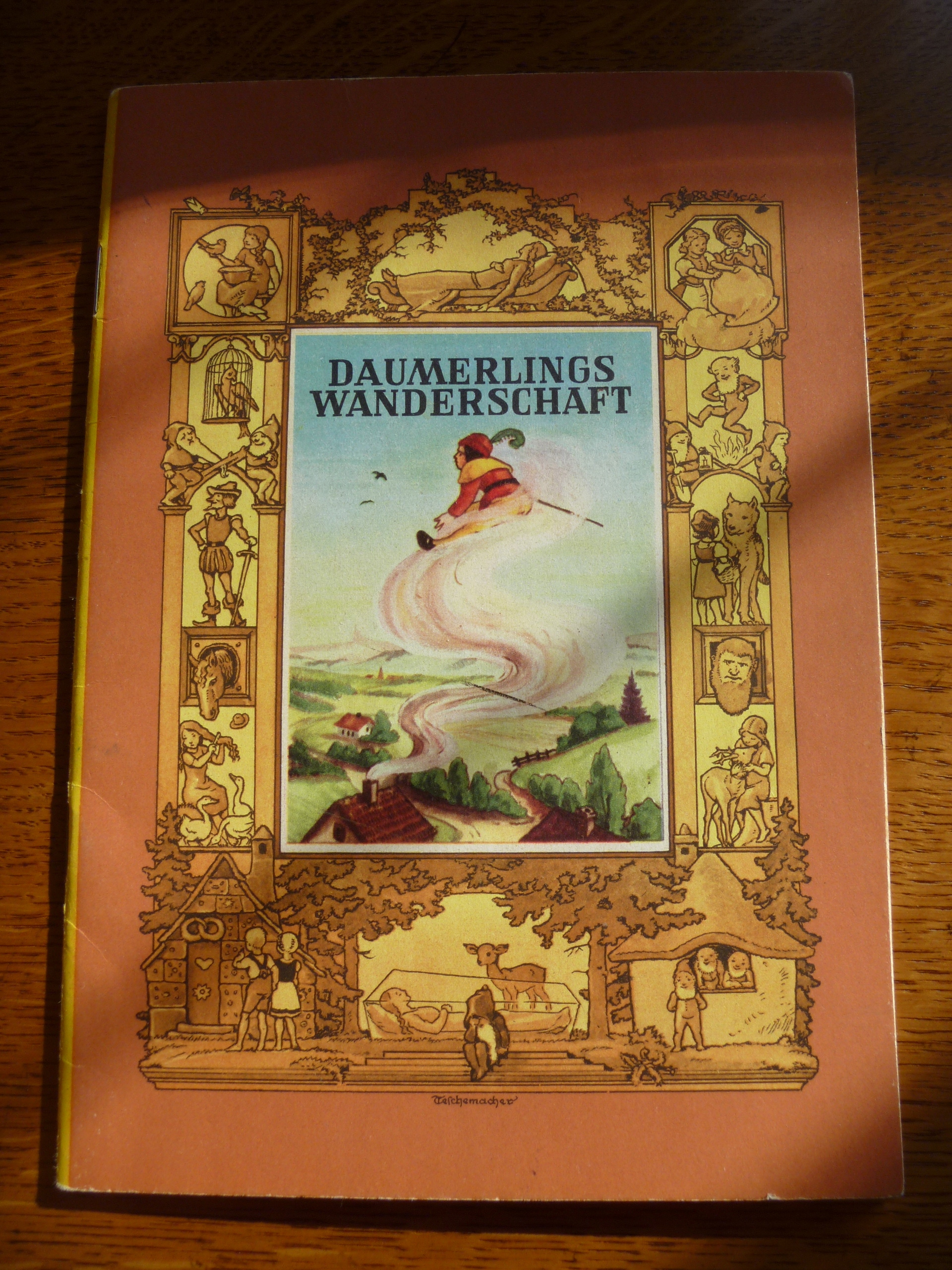
An illustrated story of Tom Thumb – it’s the 200th anniversary of the publication of Grimm’s Fairy Tales and my German Conversation Class have been talking about them:

grimms' tom thumb

The Shadow of the Sun by Ryszard Kapuscinski for Barbara and a copy of Charlotte Bronte’s Villette which I gave to my other Swiss friend, Susan.

I dared not buy any more books as I had to watch the weight in my suitcase and I knew everyone at home would prefer Swiss chocolate to musty old English books!

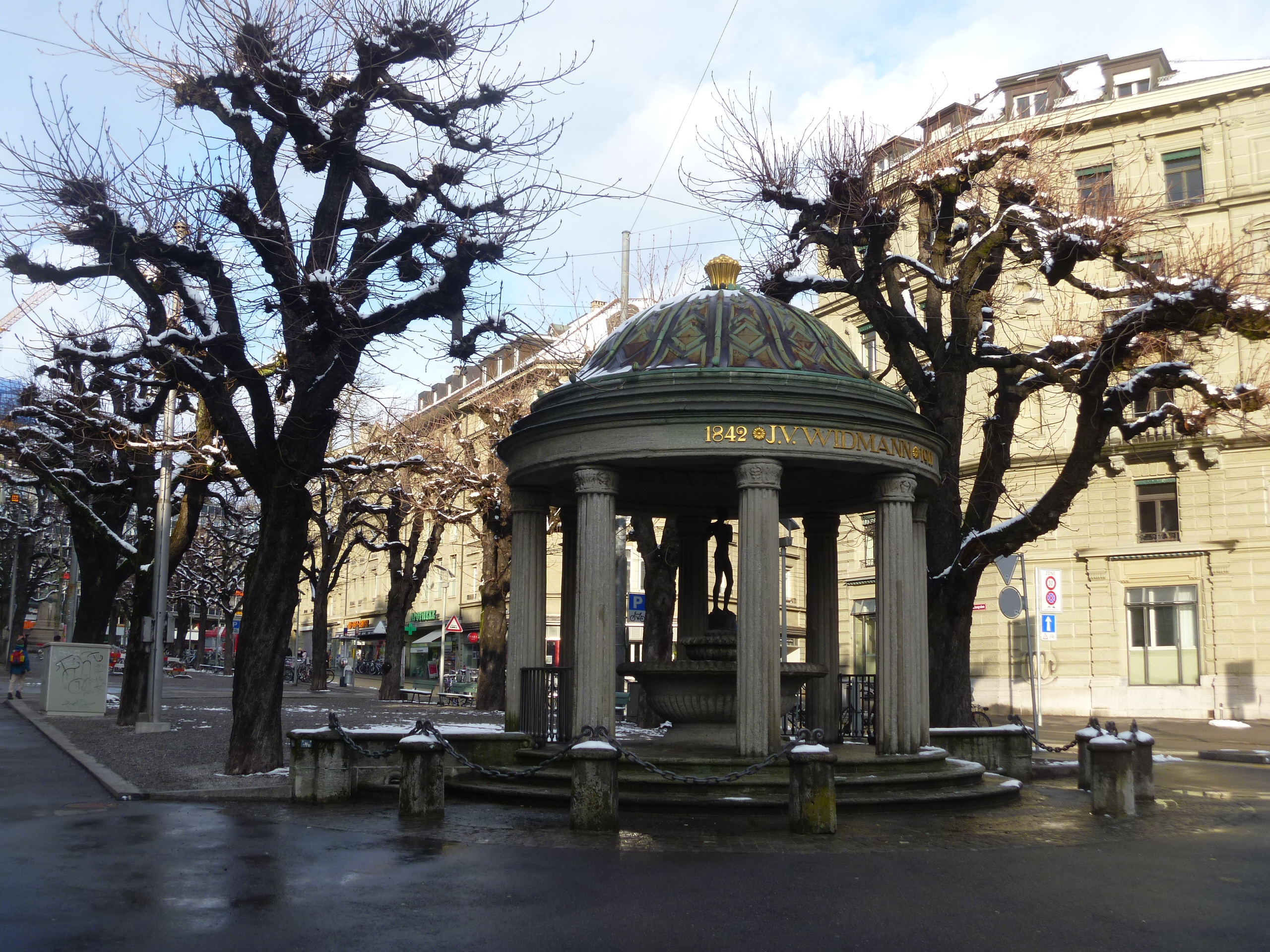
Hirschengraben

Hirschengraben

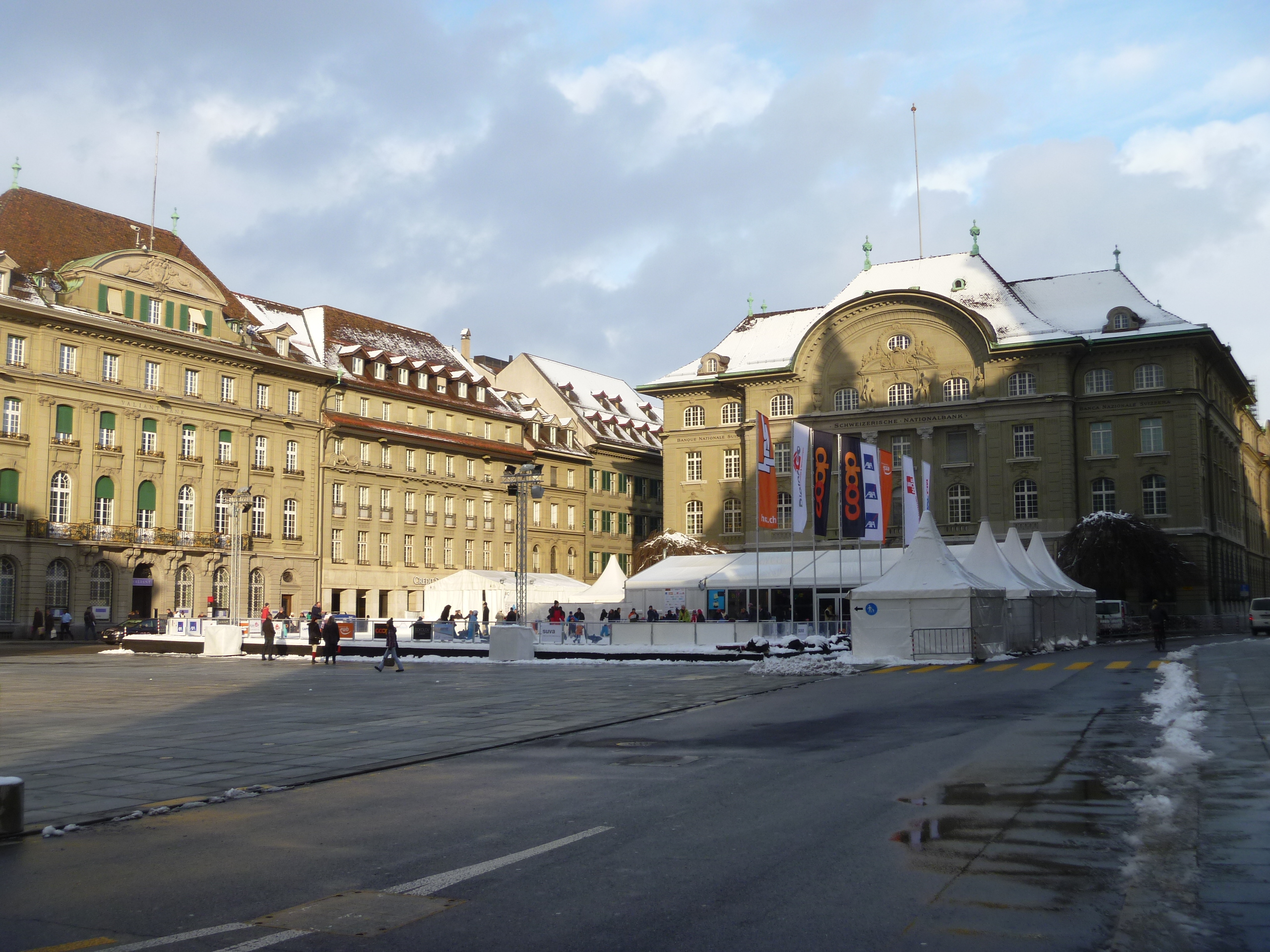
My walk then continued to the Hirschengraben and the Bundeshaus and Bundesplatz and over the Kirchenfeld Bridge and back to Barbara’s place.

Bundesplatz

The Bundesplatz with temporary ice rink

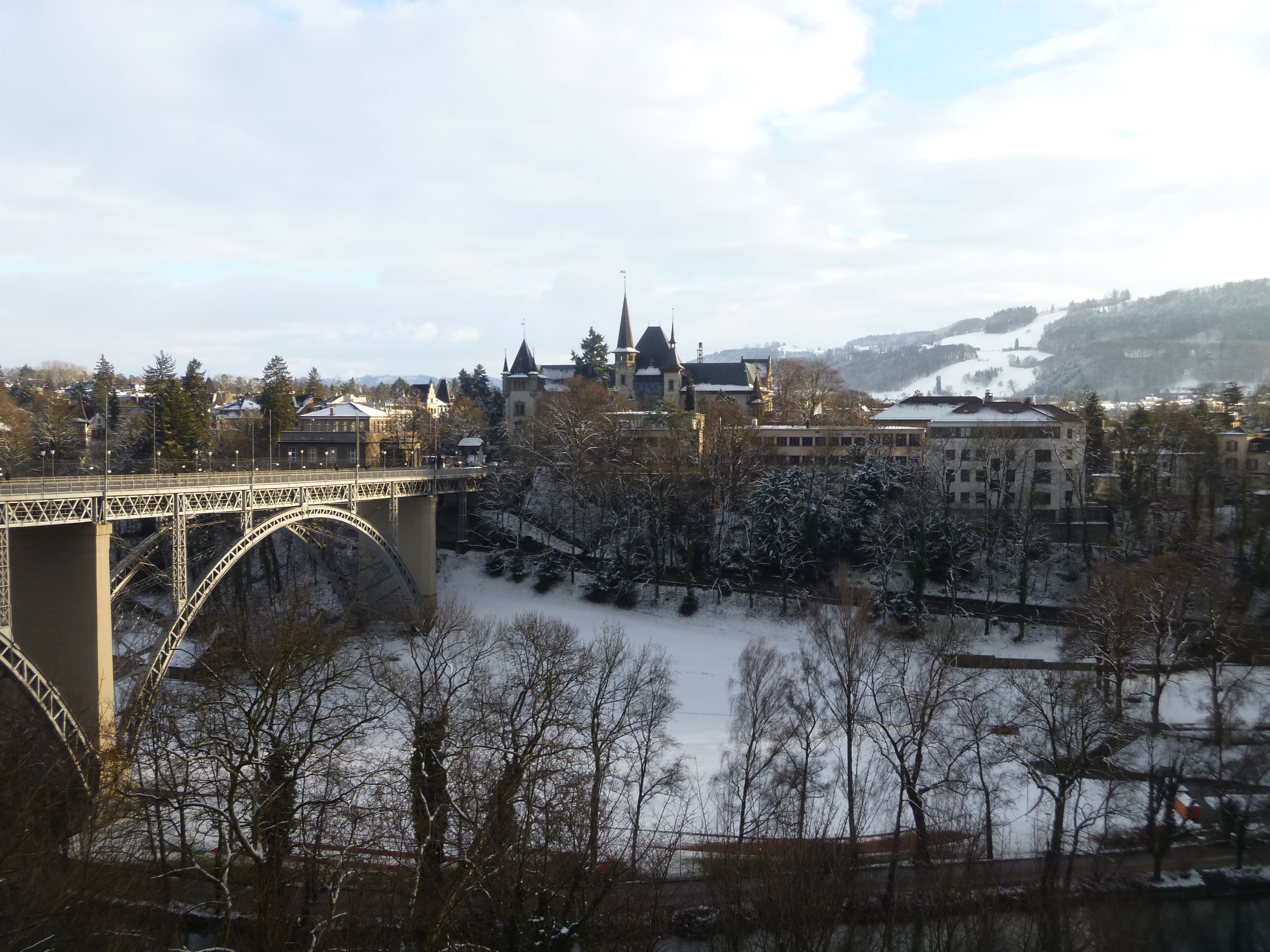
View Bundes Terrasse

View from the Bundes Terrasse (Kirchenfeld Bridge on the left)

“High Up, High On The Mountain, We’ve Founded Our Chalet”

Our Chalet cards and map

1. High up, high on the mountain,

We’ve founded our Chalet,

Its sloping roof and wide

Shall shelter us without a care.

And each Girl Scout and Guide Shall find a welcome there.

2. High up, high on the mountain,

We’ll go to our Chalet;

Our simple life is free,

Our hearts are light, our songs are gay,

We ever shall remember The joys of our Chalet.

3. High up. high on the mountain,

We’ve founded our Chalet;

And this its dedication

Shall never fail nor be undone:

Each race, each creed, each nation,

Beneath its roof are one.

Welcome to OC

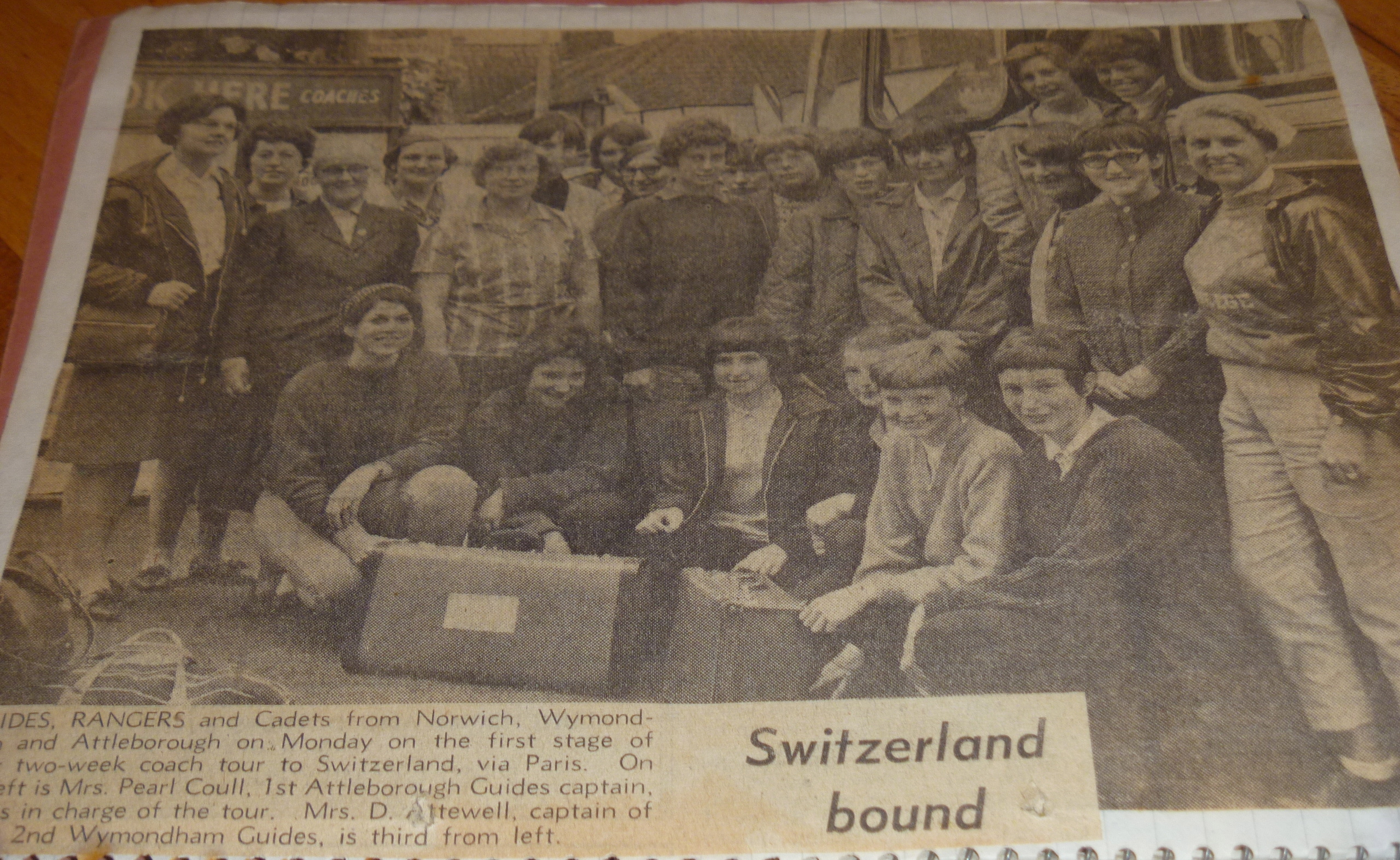
I remember ‘Our Chalet’ song from my first ever visit abroad when I travelled by coach from Norwich with a group of other Girl Guides and our Leaders to Switzerland, via Paris. Those two places visited on that occasion have remained two of my favourite places – ever. Here’s photo taken for our local newspaper which I stuck into my Swiss notebook :

EEN pic

Finding myself with a free day on the Friday I decided to retrace those early steps and revisit ‘Our Chalet’. I looked up the details online and booked one of the tours offered at 11am and 2pm daily.

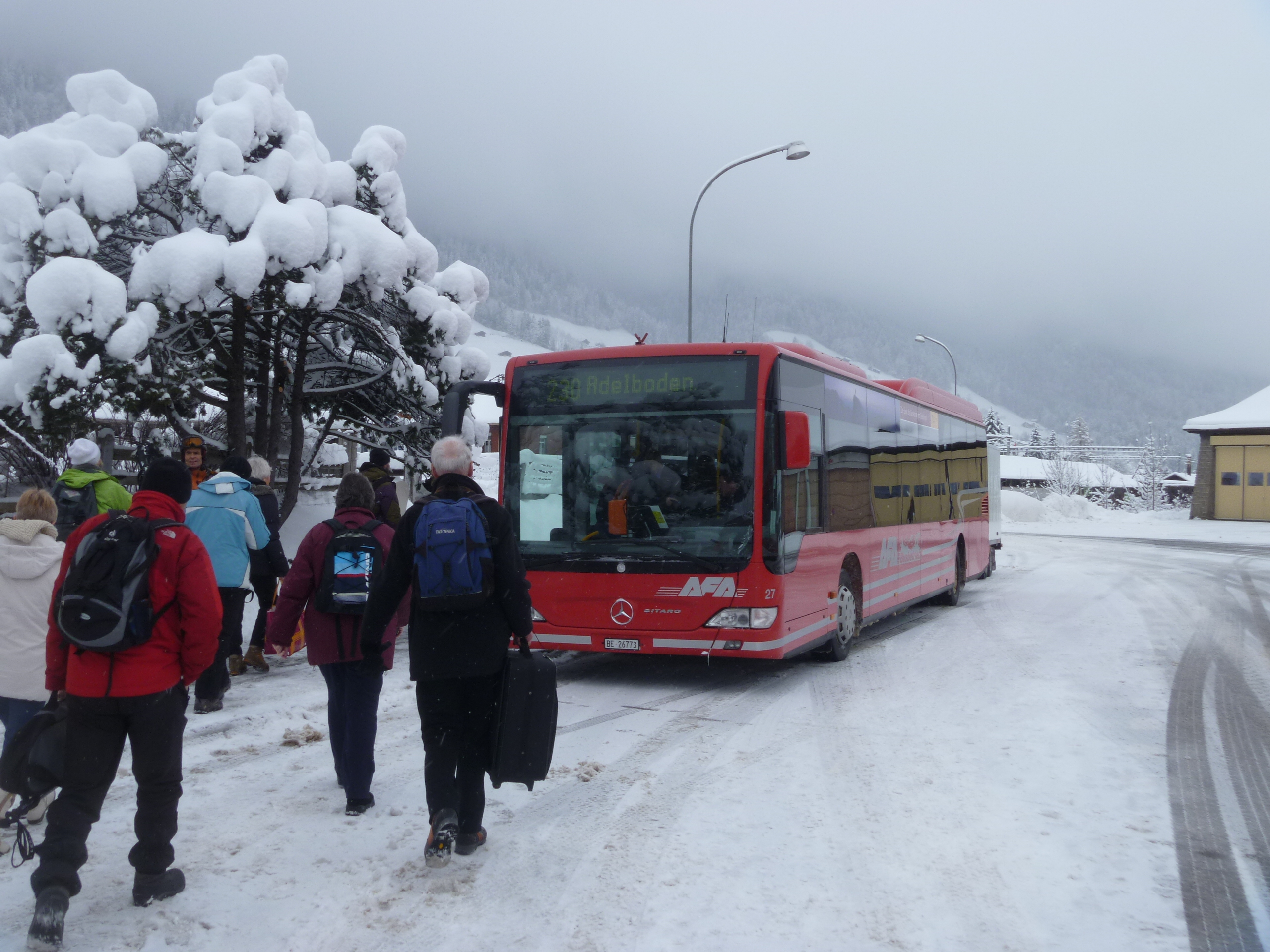
Postbus

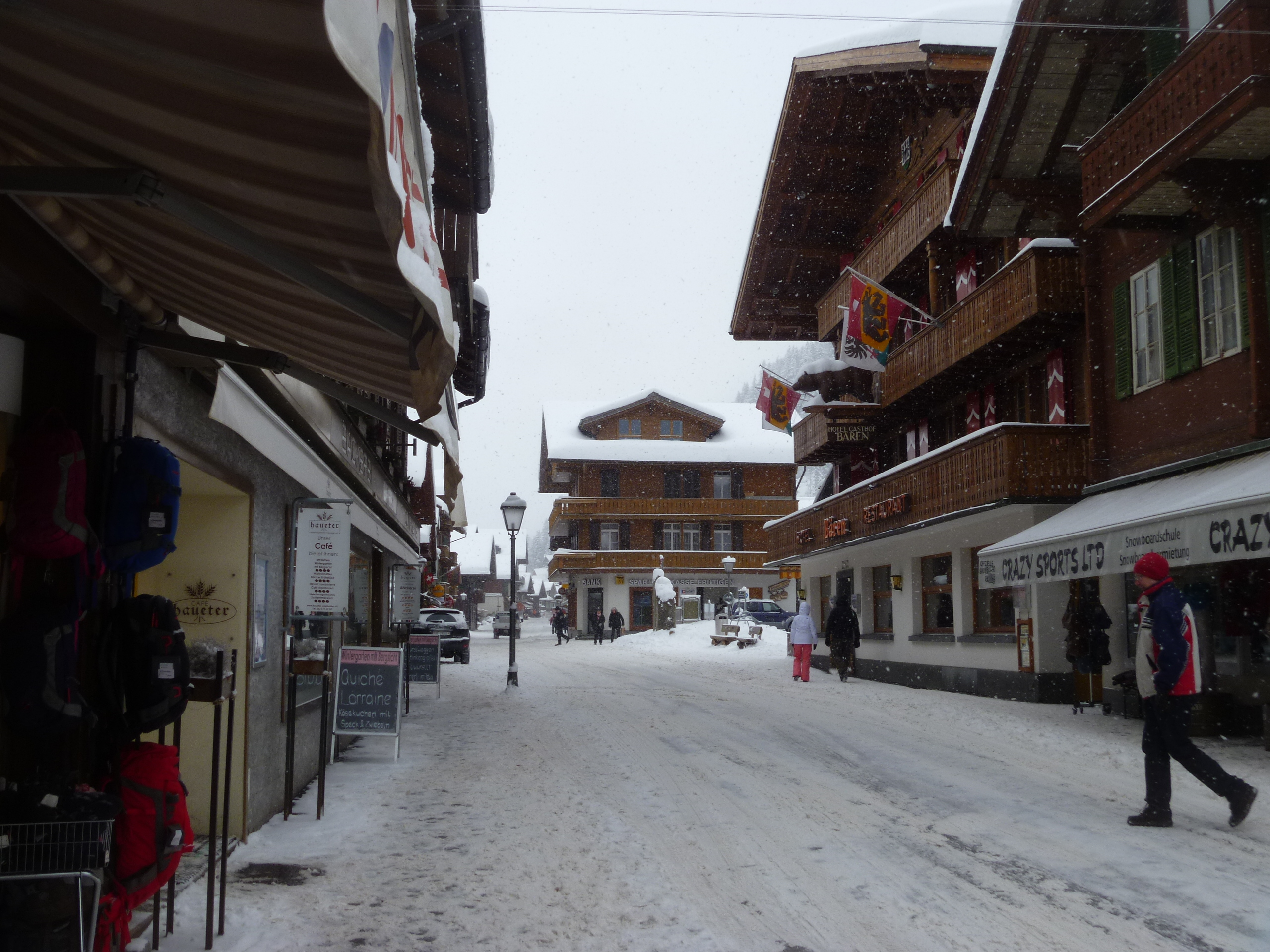
The journey to Adelboden involves taking the train via Spiez on Lake Thun to Frutigen from where a Postbus takes you up, up, up, to very snowy Adelboden. I instantly had my bearings even after 47 years and remembered the church on the village street (Dorfstrasse) and the pretty chalet-style shops.

The only difference to me was the presence of an amazing amount of snow. Of course, my first visit had been during the school holidays in August.

English Church Adelboden

The English Church, Adelboden

Dorf Strasse

Dorf Strasse Adelboden

In the tourist office I picked up a map, the details of a walk along so-called cleared paths (more about this half of the day later) and exact instructions as to the location of Our Chalet.

Adelboden

Adelboden from the path to Our Chalet

Arriving at Spycher

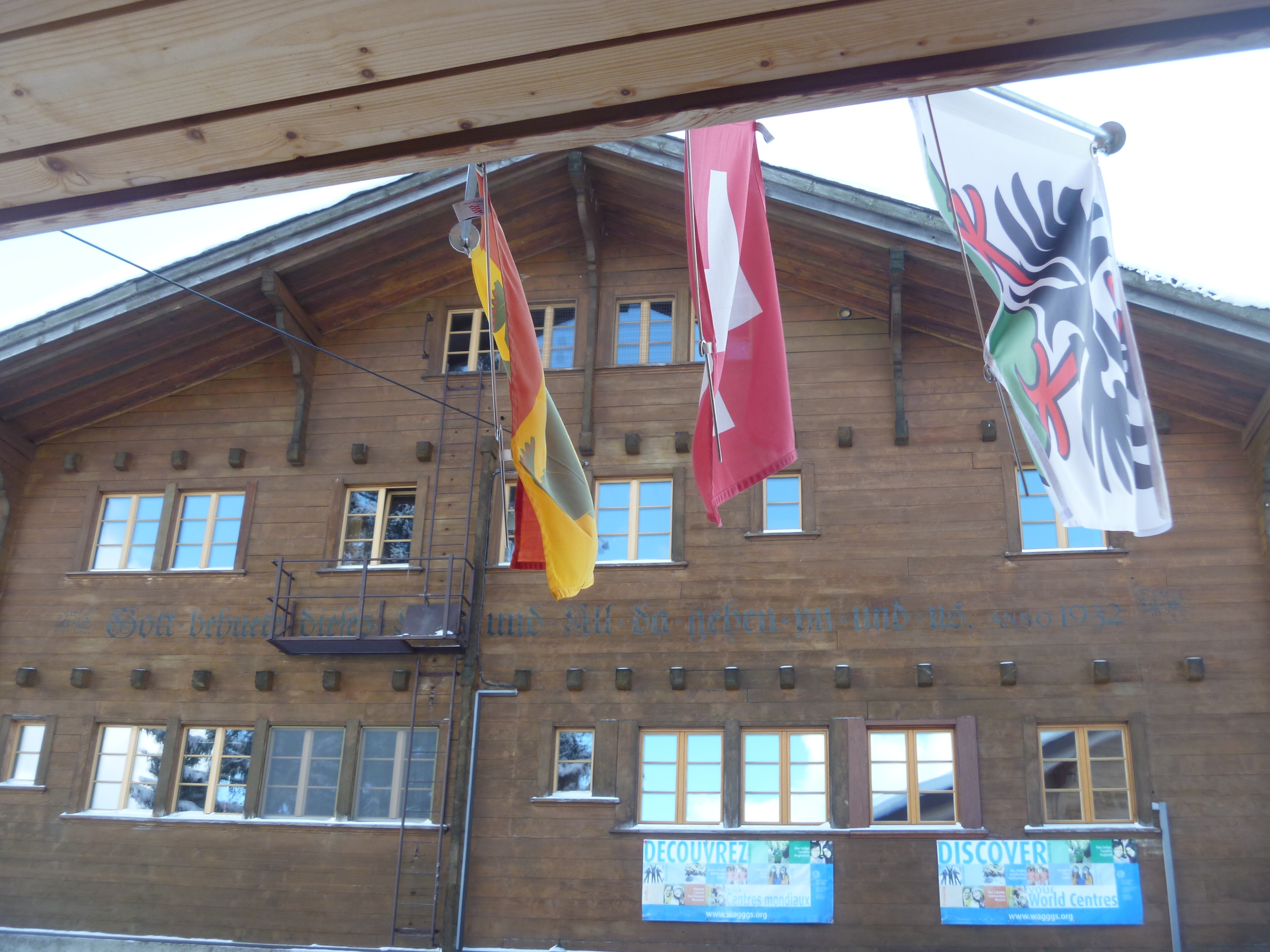
Arriving at Our Chalet

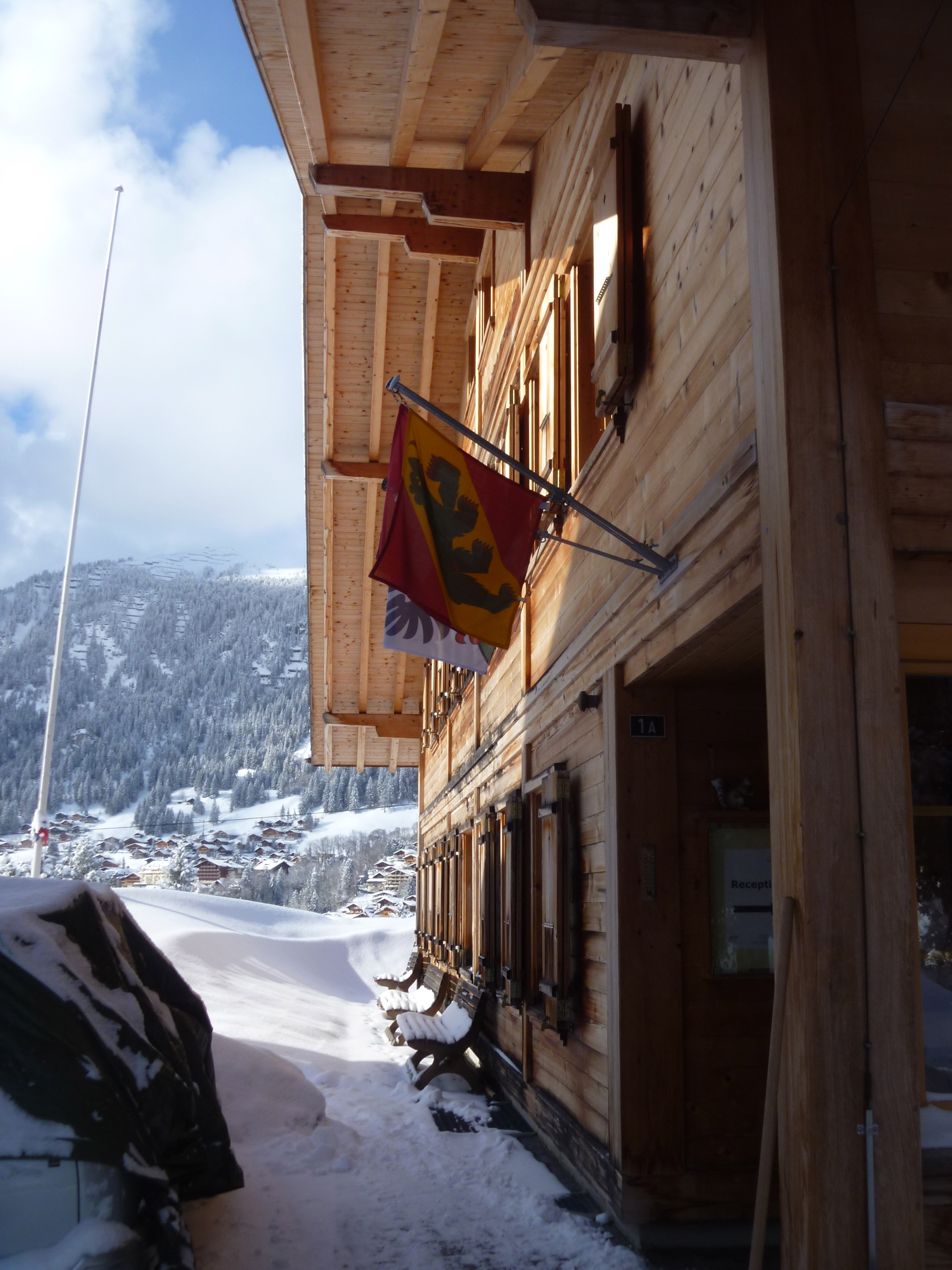
It was an easy walk – mostly down hill – and I arrived just on time at the Chalet for my 2pm tour. I was welcomed by Cat (Guest Services) and Skippy (the cat).

Skippy

Sonya from Rwanda The Guest Services Intern was to be my guide for the afternoon. The tour starts with a PowerPoint Presentation on the history of WAGGGS (World Association of Girl Scouts and Girl Guides) and of how Our Chalet came into being back in the 1930s.

Sonya

Sonya

British Visitor map

Map indicating British visitors to Our Chalet so far this year – the blue drawing pin in Yorkshire is me!

After inspecting the notice boards and maps and displays in the conference room Sonya showed me around the buildings and in particular the main and original ‘Our Chalet’ where we had spent an evening singing campfire songs and meeting other Girl Guides from around the world, all those years ago.

OC dining room

Our Chalet Dining Room

Our Chalet

OC shop

The Shop

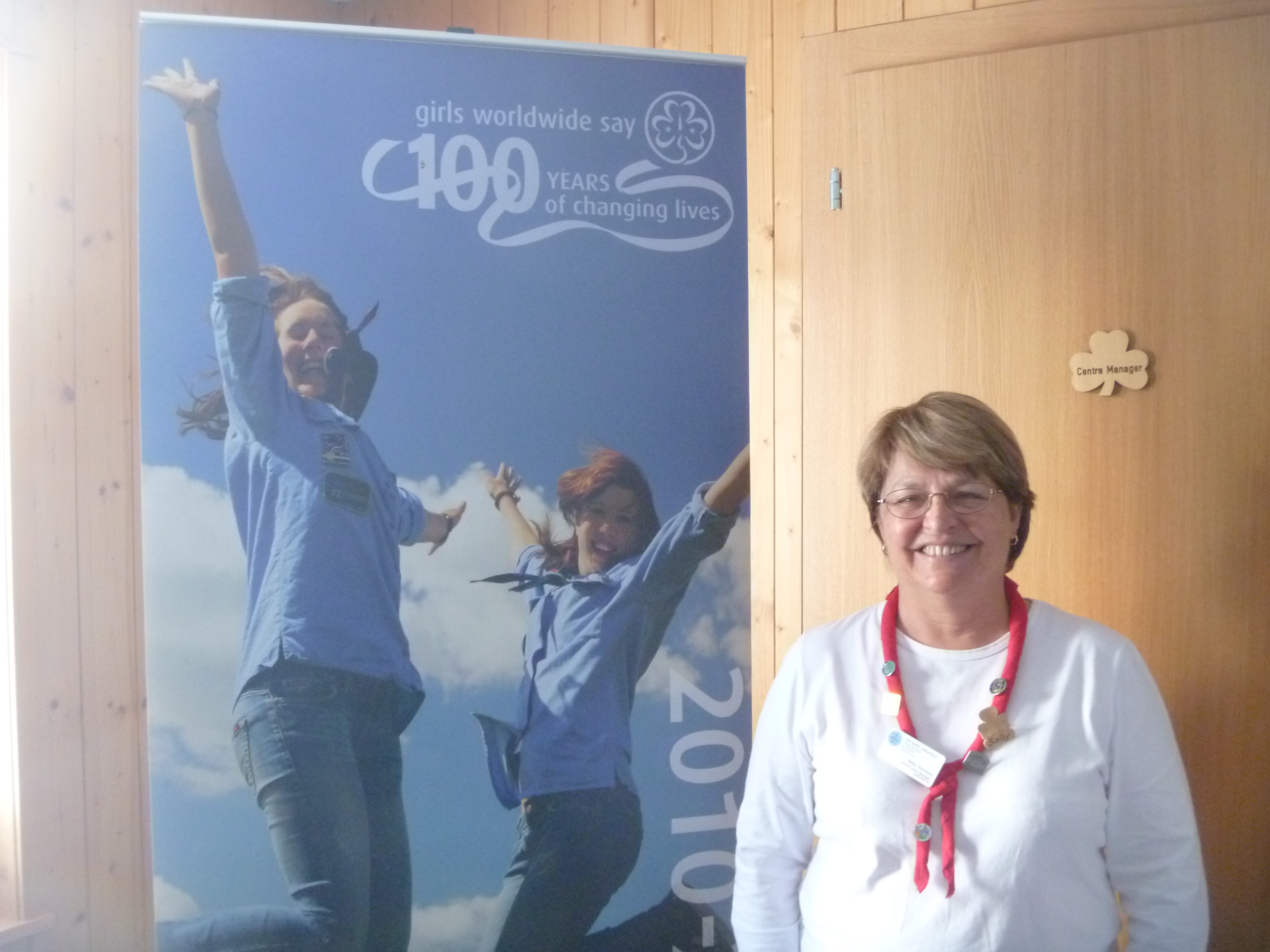
All too soon the tour ended with a visit to the shop and I bought a few postcards (illustrated at the top and to go with the postcard I bought on my last visit). I already had an Our Chalet badge. As I was leaving and saying ‘Goodbye’ to Skippy the cat I was happy to exchange a few words with Sally Thornton Our Chalet Manager. Sally is from Australia, has been at OC since 2009 and plans to retire in April and return to family in Oz.

Sally Thornton

Sally Thornton, Our Chalet Manager

P1080307

Views from Swiss Windows: Homes and Hotels

Yes, all those lovely views from clean and comfy trains are all very well but by far the best thing about Switzerland, for me, is meeting up with friends and sitting in a cosy home or hotel lounge or tea shop or cafe and just chatting about in myriad of topics (not excluding Miladysboudoir!). In Bern with B the chatter is comfortably (for me, anyway) in English. I know she loves to keep her hand in! But in Central Switzerland it’s in German: mine rather rusty from school days and Susanne’s in Hoch Deutsch for my benefit. But we manage all the same kind of topics, nevertheless.

On this visit I had the good luck to visit several beautiful places and sip tea at mountain top hotels and cosy cafes as well as the comfy and relaxed sitting rooms and kitchens in my friends’ homes.

View of River Aare

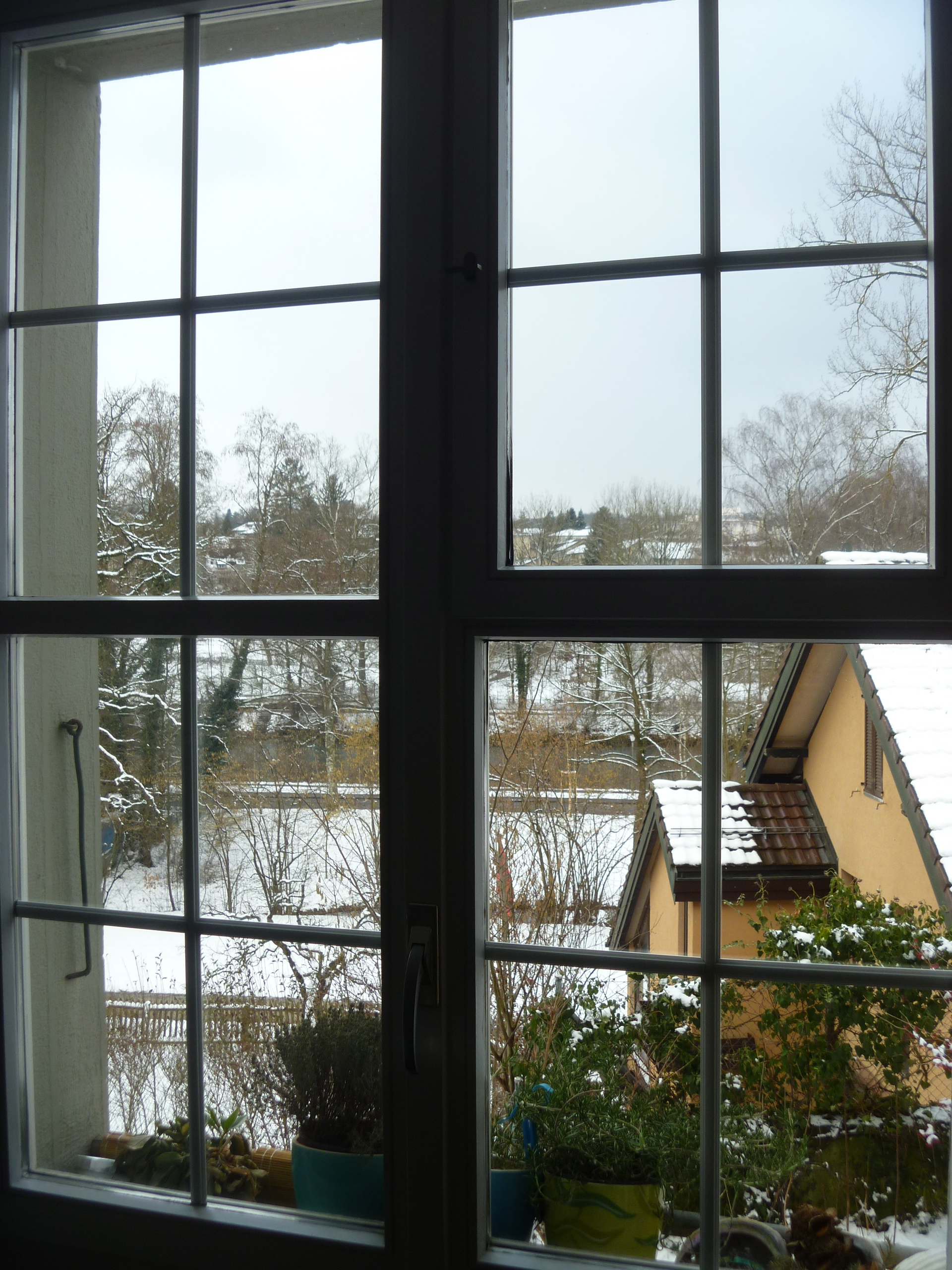
Barbara’s kitchen overlooks the Bern’s River Aare

View from Cafe Schmid

Adelboden from Tea-Room Schmid

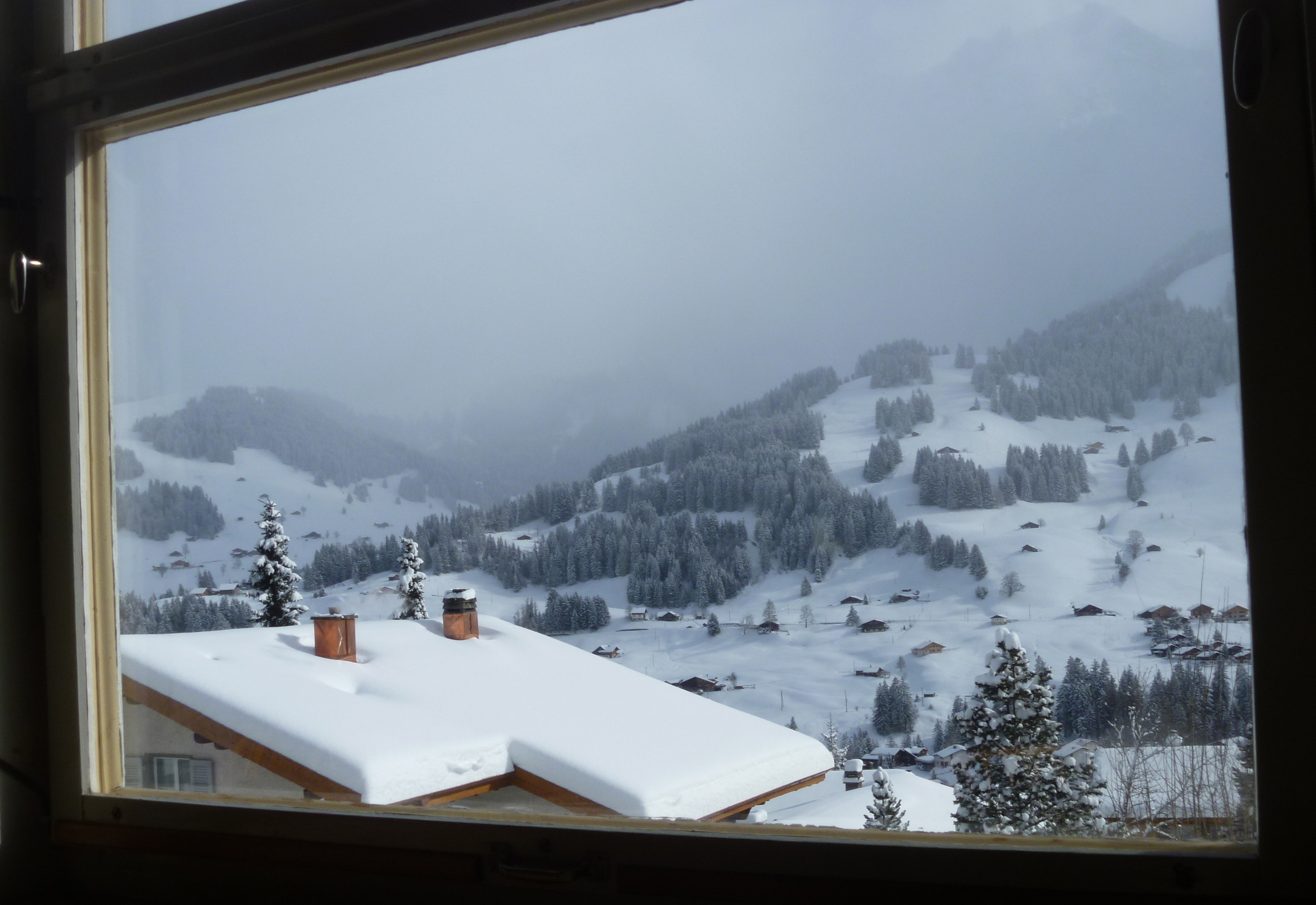
Adelboden from Our Chalet

Adelboden from Our Chalet Dining Room

Schwellenmaetteli Bern

Bern’s Munster (Cathedral) from the Schwellenmätteli Restaurant in the River Aare

Villa Honegg

Snowy afternoon at the Villa Honegg, Bürgenstock

View Wolfenschiessen

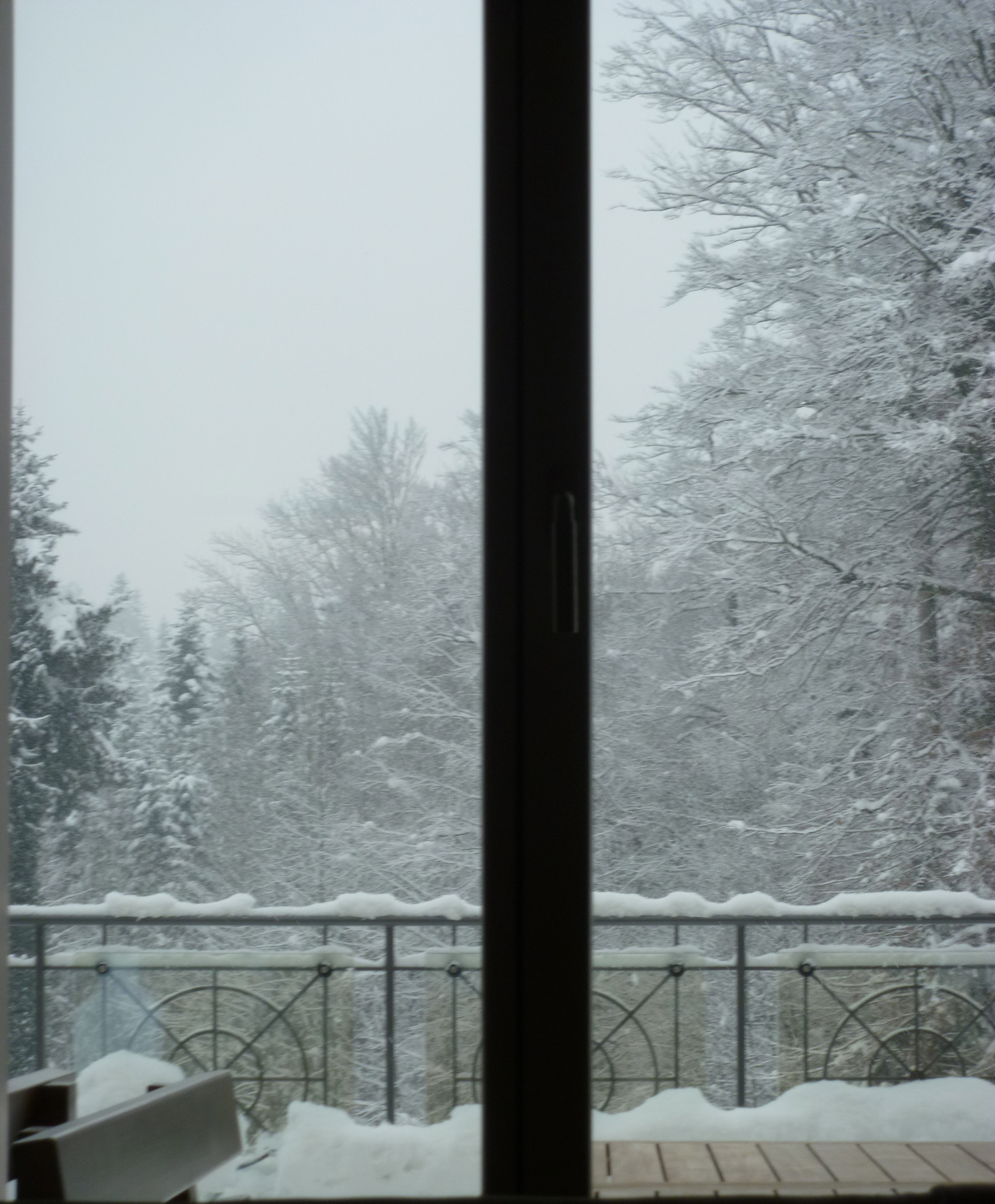
Snowy outlook from the sitting room at Wolfenschiessen (on a clear day you can see the Titlis Mountain above Engelberg)

Art Deco Hotel Montana

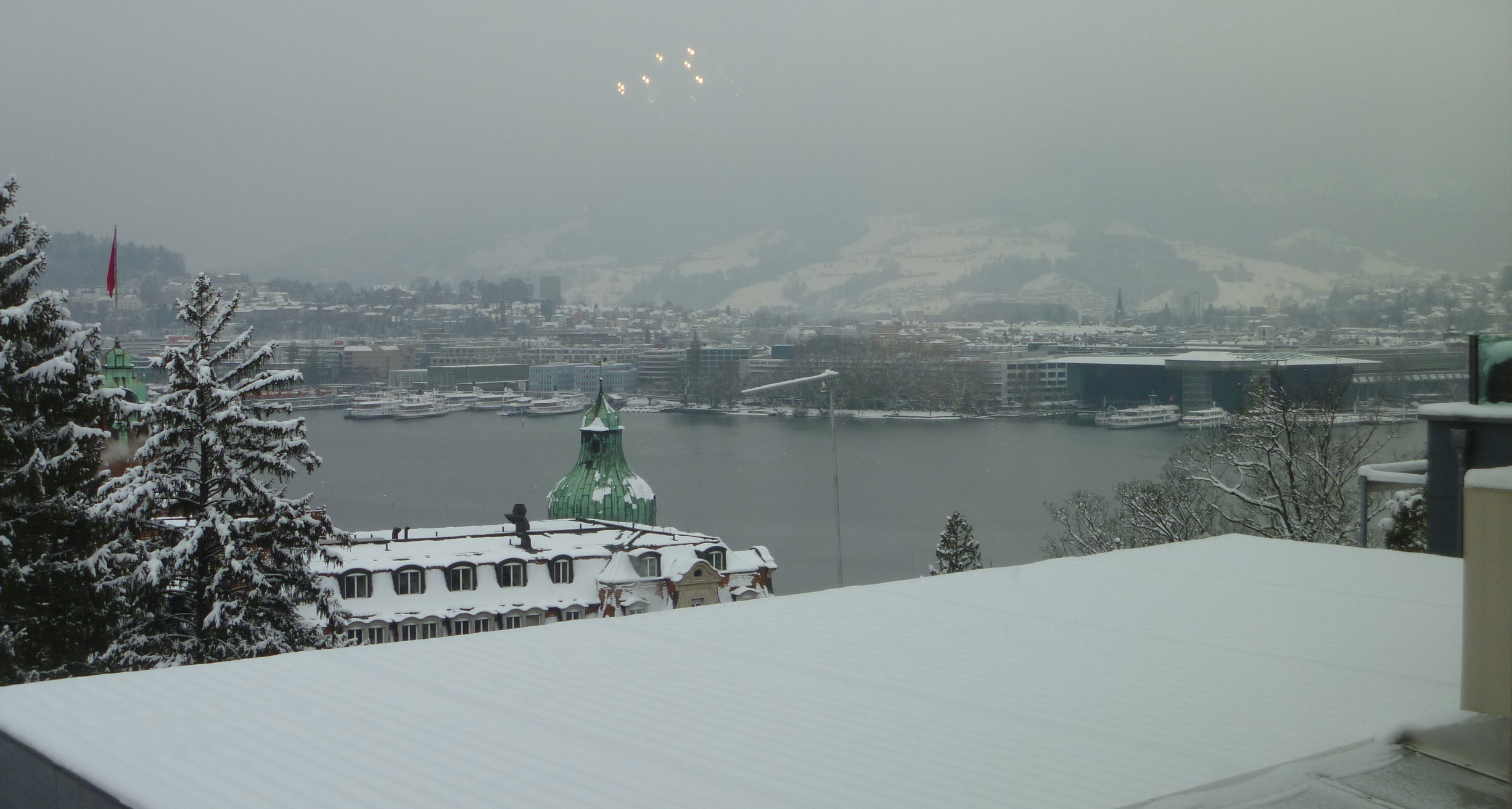
Lake Lucerne from the Osterwald Bar at The Art Deco Hotel Montana

Lucerne from A D H Montana

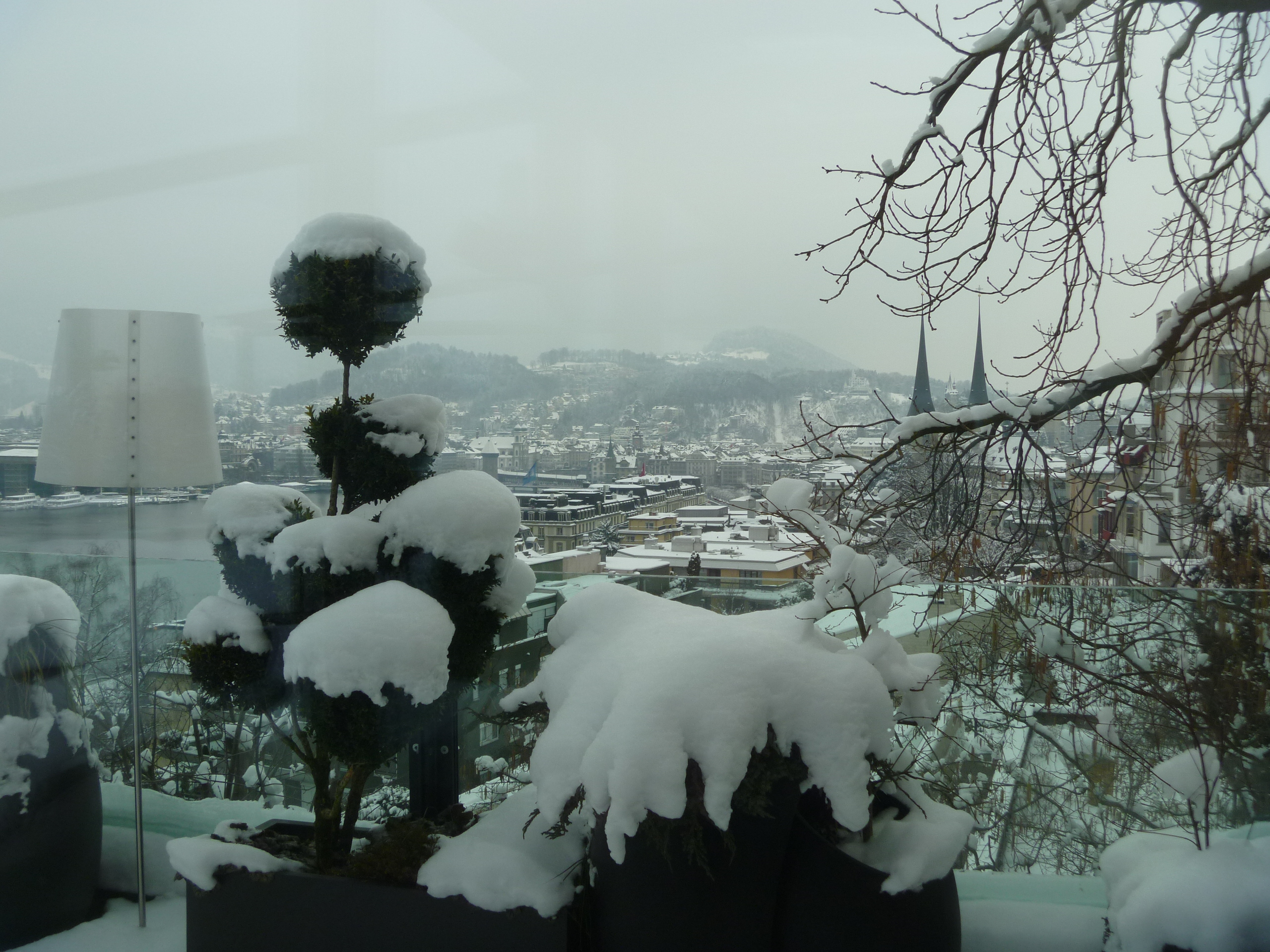
The city of Lucerne from the A D H Montana terrace

Views From Swiss Windows : Trains

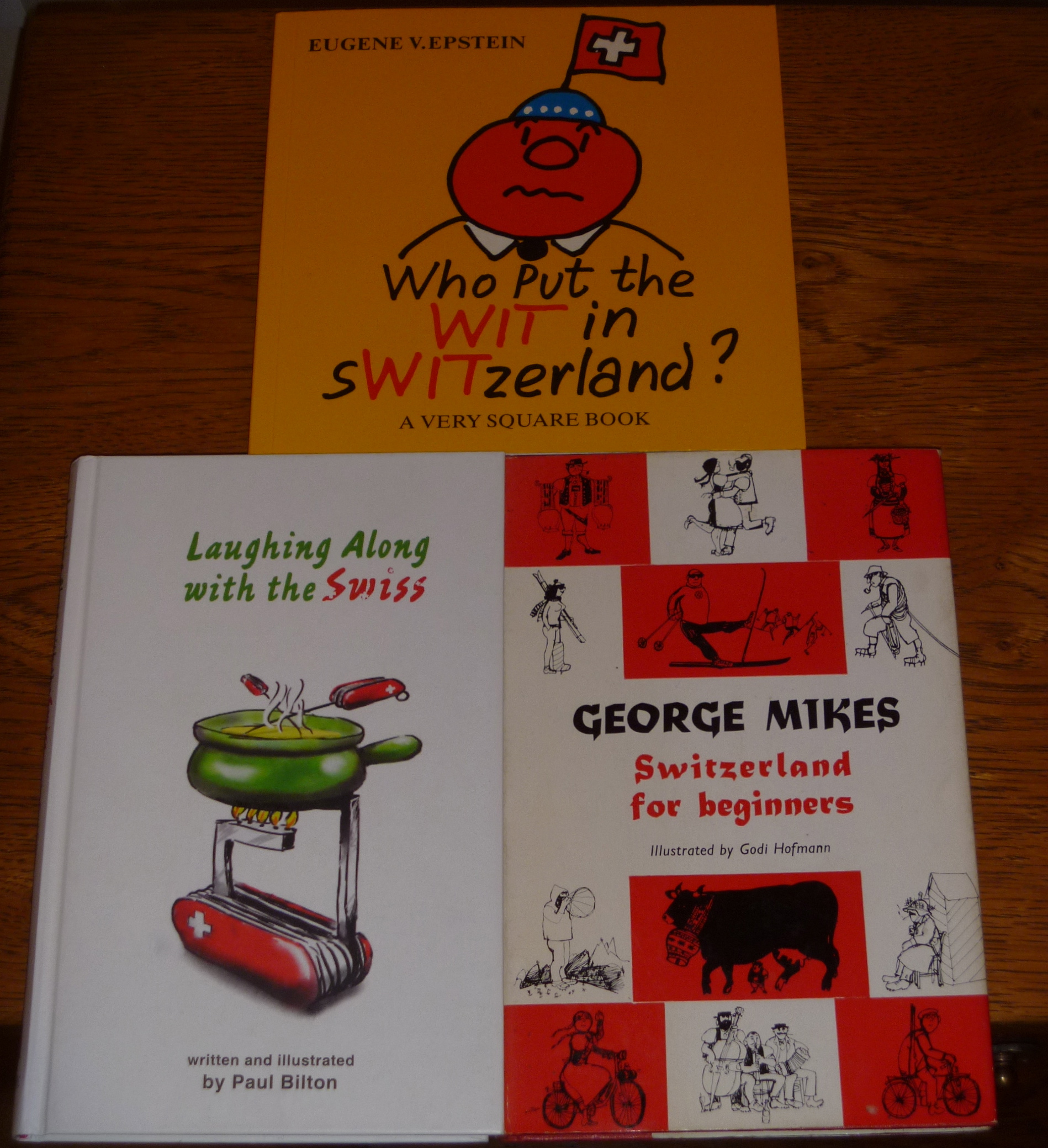
There wasn’t much going on in January – colds and ‘flu and general low feelings after Christmas and New Year. But once February arrived I was packing my bags to head off to the snow. Not for skiing or winter sports but to enjoy friends’ company and the wonderful scenery and to immerse myself in Schwyzerdütsch, Schwiizertüütsch, Schwizertitsch or however you wish to pronounce it! I’ve a little collection of books on the fascinating subject of the Swiss and their language, culture and customs.

Funny books

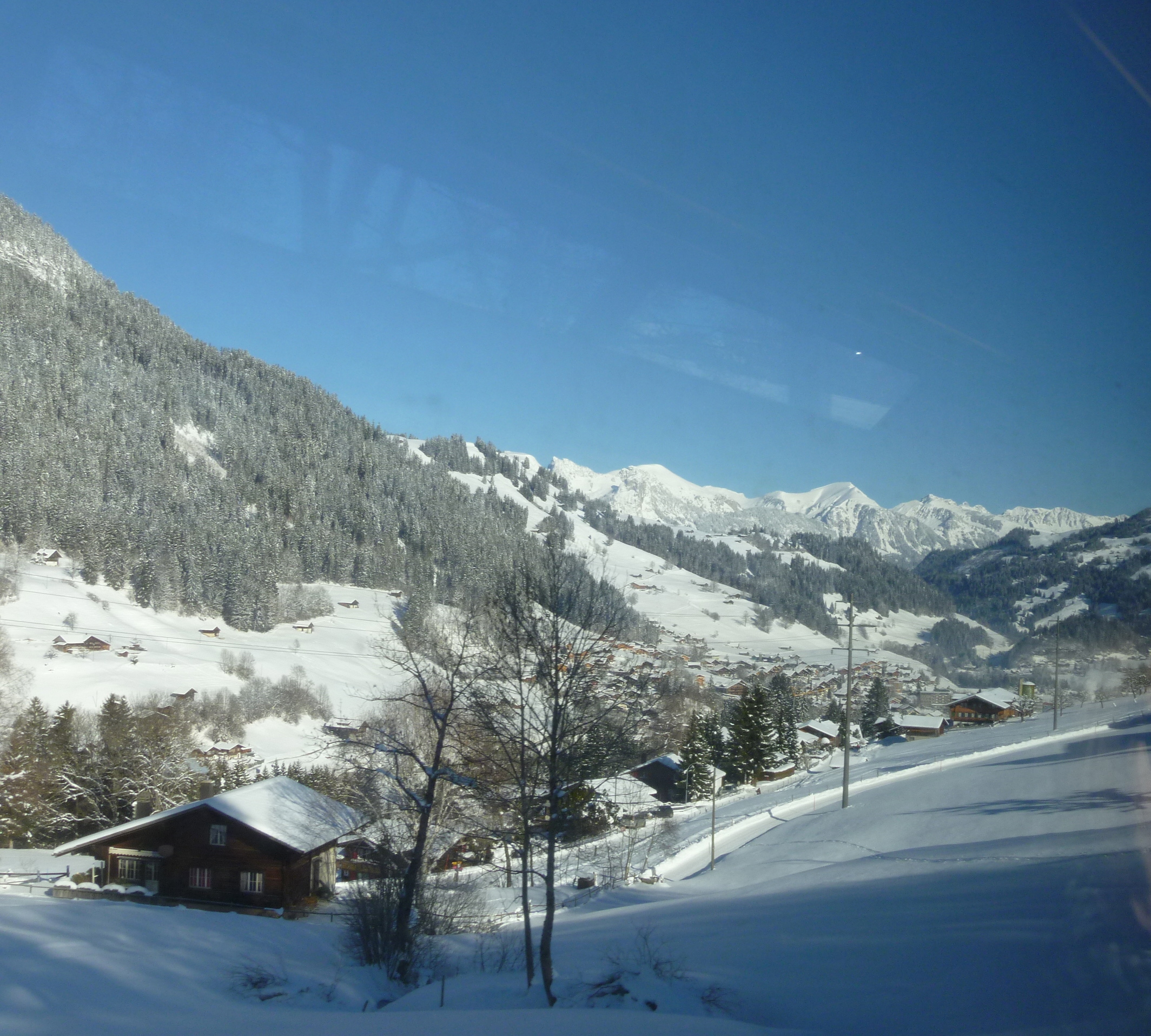
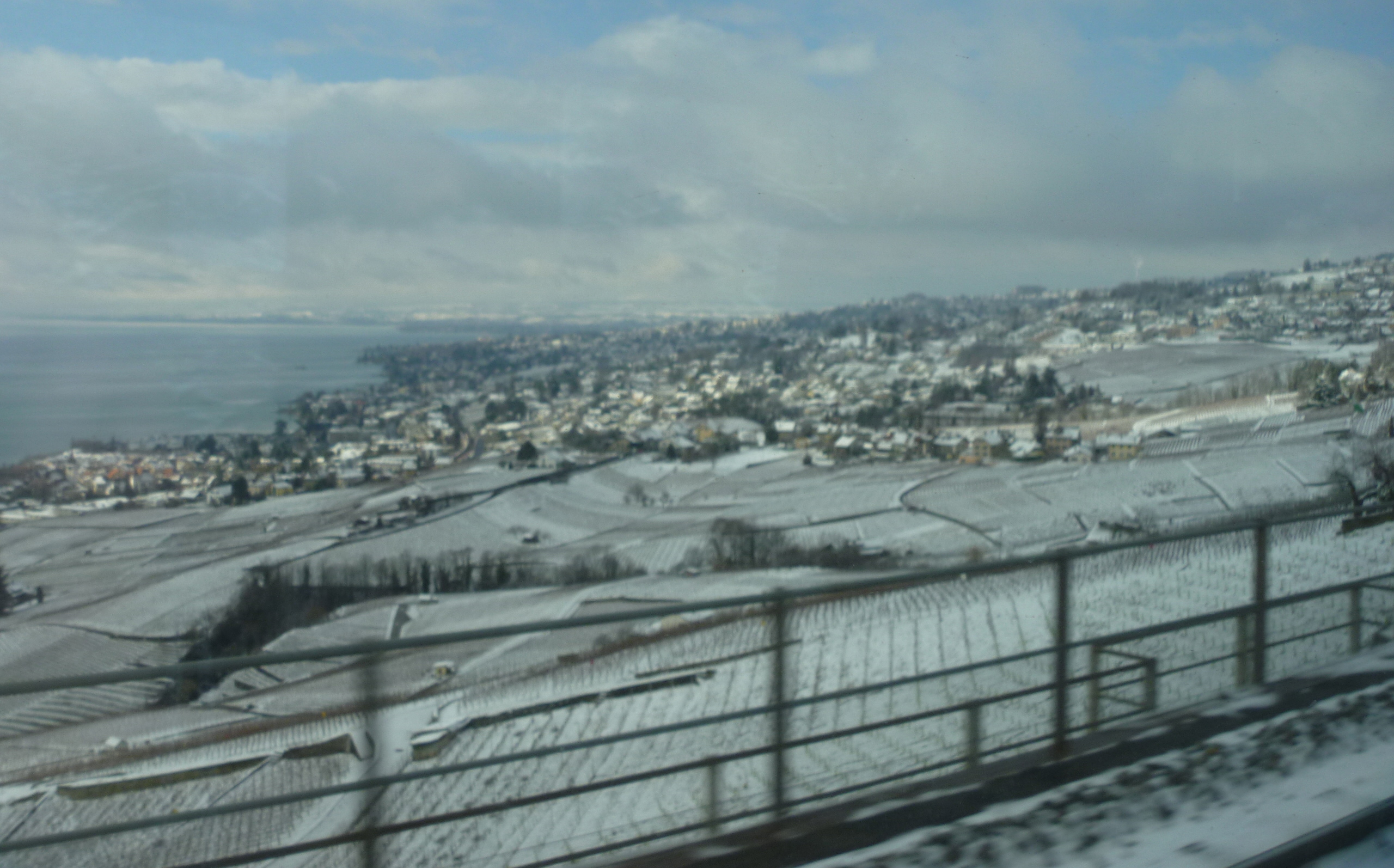
So, I arrived at Geneva Airport last Thursday and immediately took the train, straight from the airport itself, to Bern where I stayed until Sunday. Despite heavy snow the trains still run pretty much to time and the lovely big, clean windows are filled with wonderful views whichever direction you look in or side of the train you decide to sit. A couple of my journeys were in first class but the views and cleanliness were equally abundant on my second class travels, too.

Lake Geneva

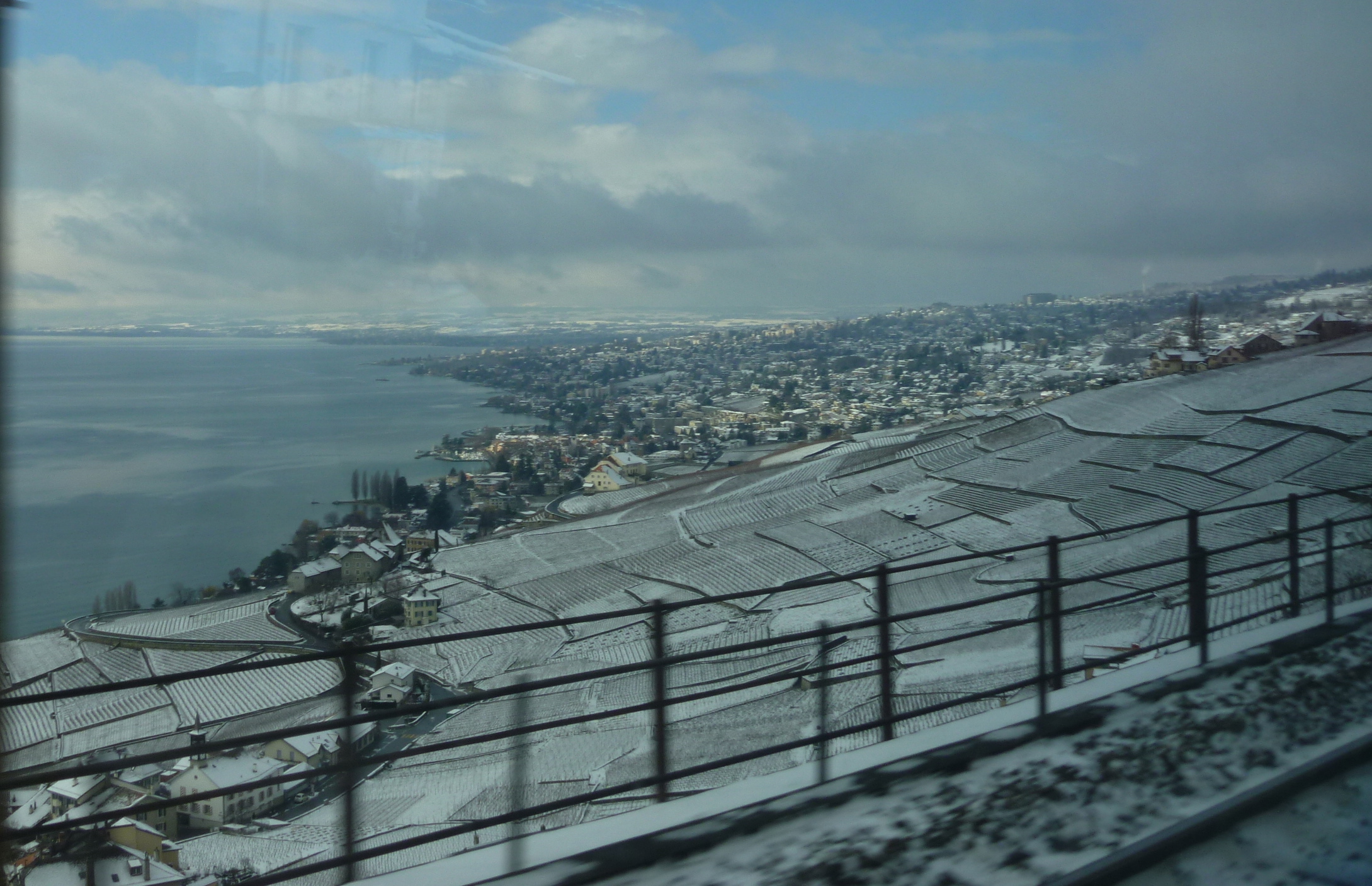
Lake Geneva and Vineyards

Vineyards by Lake Geneva

Travelling between Geneva and Berne the railway hugs the lakeside for much of the journey between Geneva and Lausanne

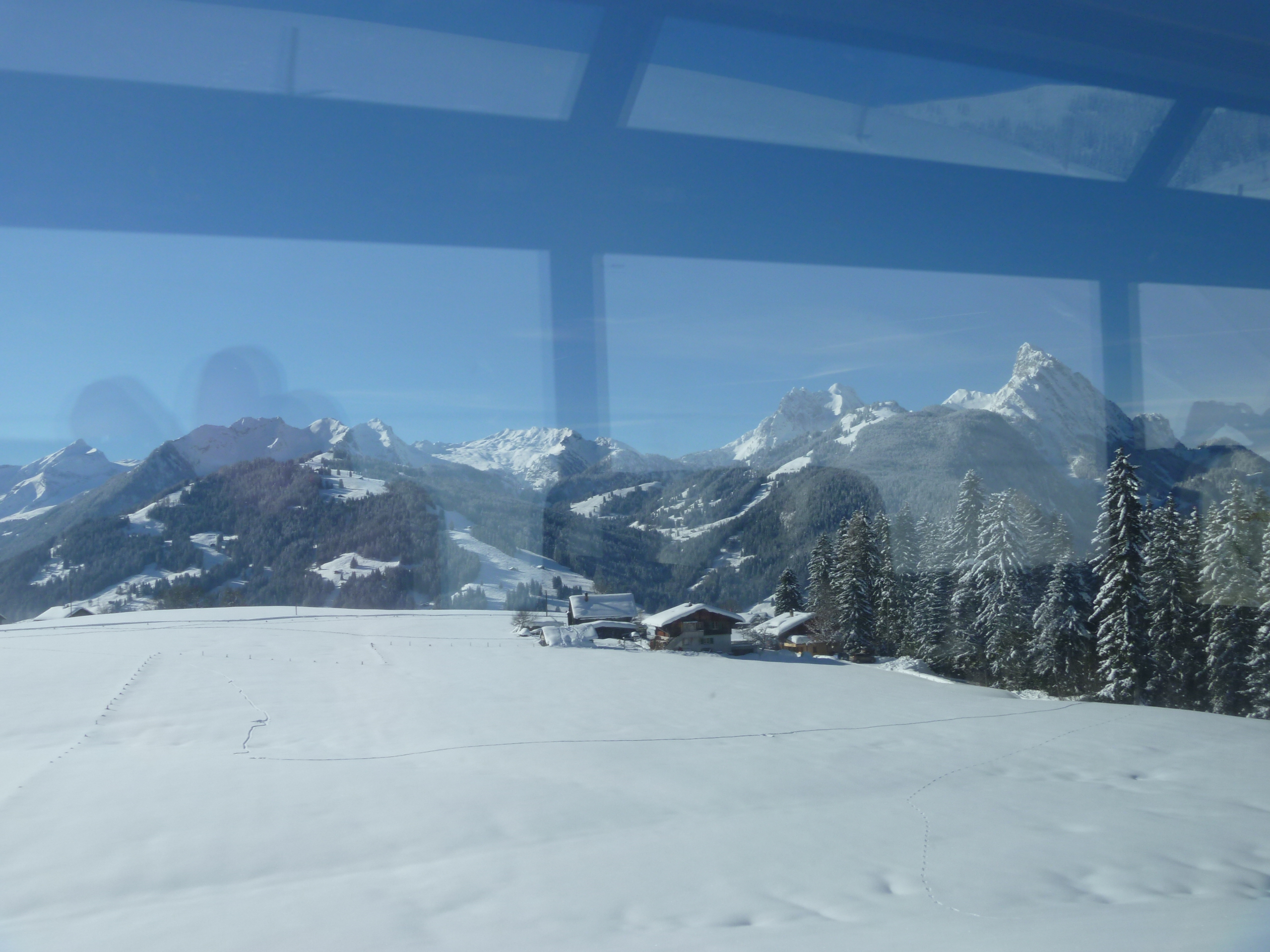
Sunday took me with friend Barbara out of Berne and up up up to Gstaad – in more than one meaning! Paul dropped us at Spiez station by Lake Thun and we took the train first to Zweisimmen where we joined the Golden Pass Line for the amazing journey to Gstaad. From here the train continues to Montreux, back on Lake Geneva.

Journey to Gstaad

Travelling to Gstaad

So much more snow had fallen since Thursday.

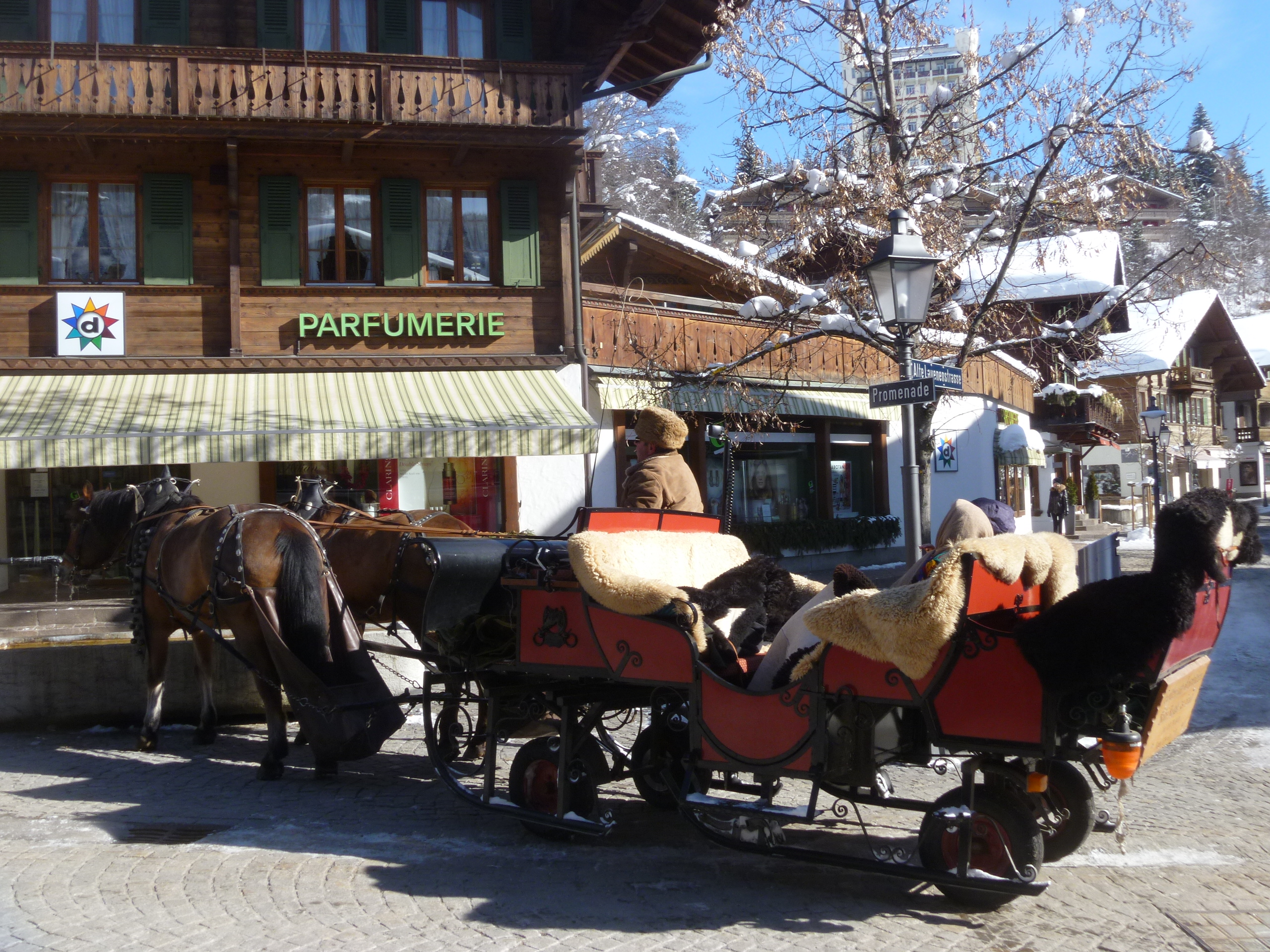
This time there was a bit of delay and we ended up on a later train than intended but still we had enough time to enjoy the delights of the Gstaad Palace Hotel lounge and the pretty main village street. Unless you ski there’s little else to do here on a Sunday in winter – unless, of course, you fancy a horse-drawn sleigh ride.

Gstaad sleigh ride

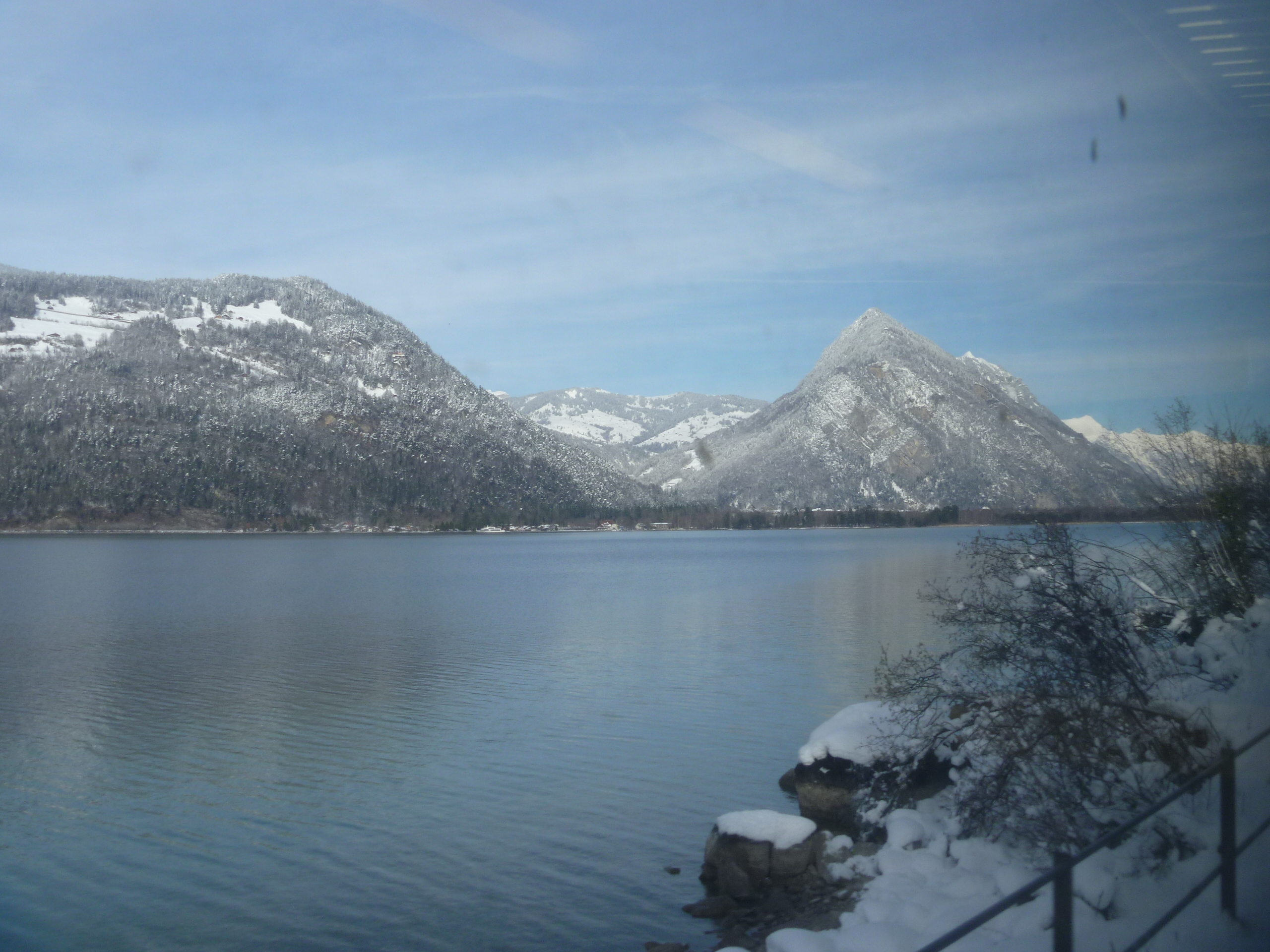
Gstaad was a ‘side’ visit as later in the afternoon I was to meet friends at the pretty lakeside village of Lungern in Central Switzerland. Barbara suggested we make a day of it. On the return journey she left the train at Spiez to return to Berne and I continued on the same Golden Pass route to Interlaken and the connecting train to Lungern. These trains follow the lake sides of Lakes Thun and Brienz almost entirely.

Lake Thun view

Lake Thun

Interlaken and Lake Thun

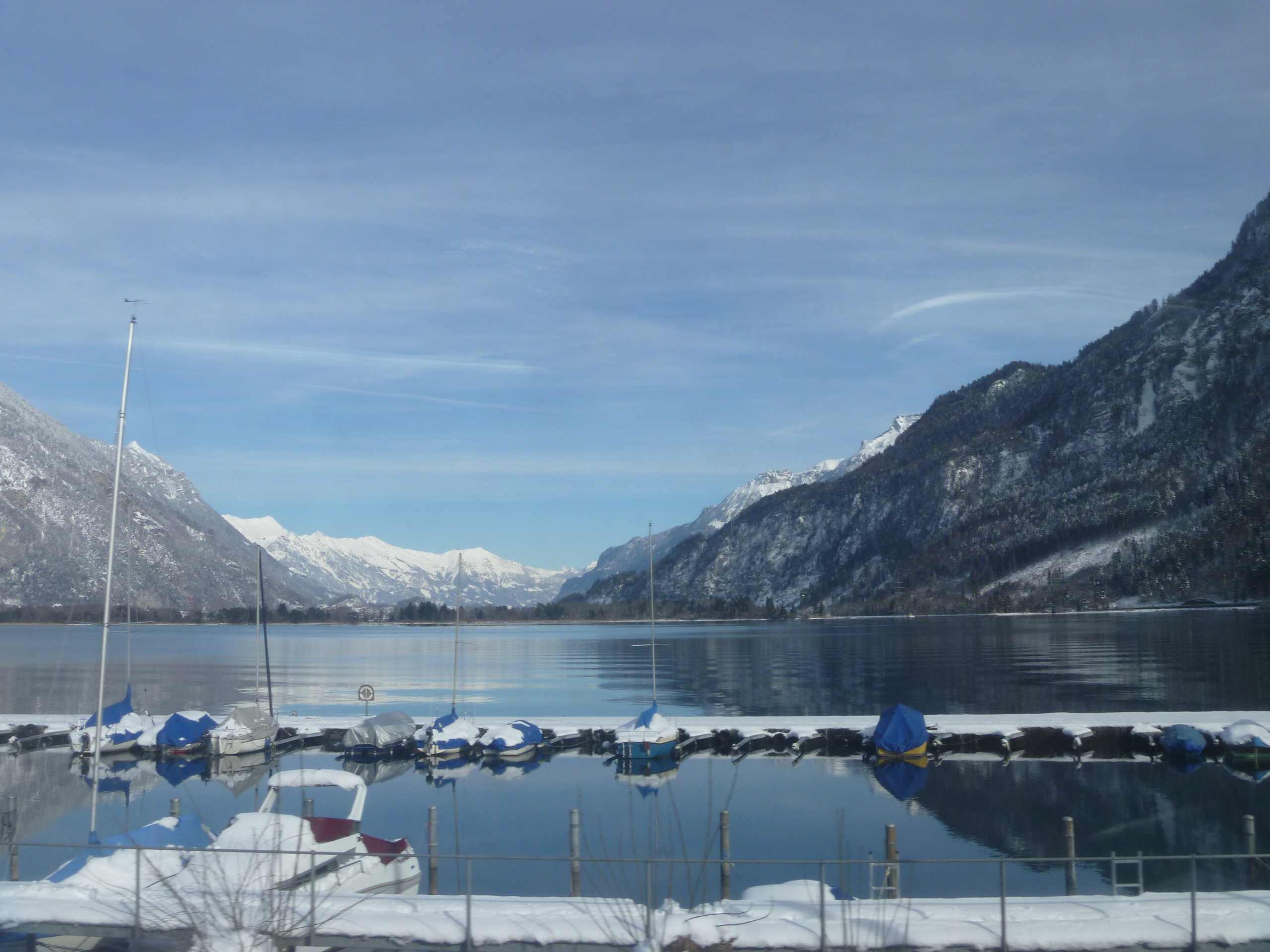
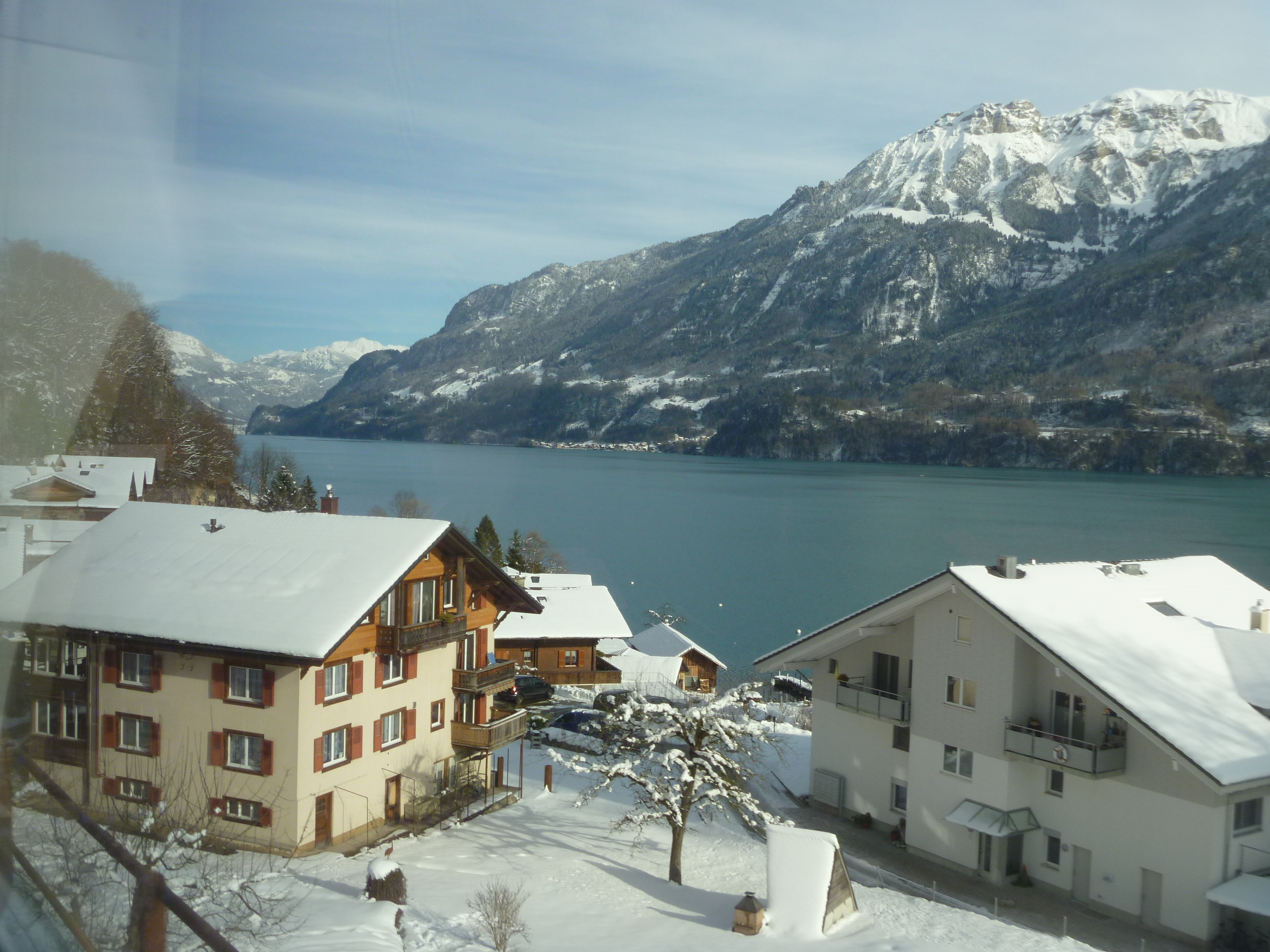
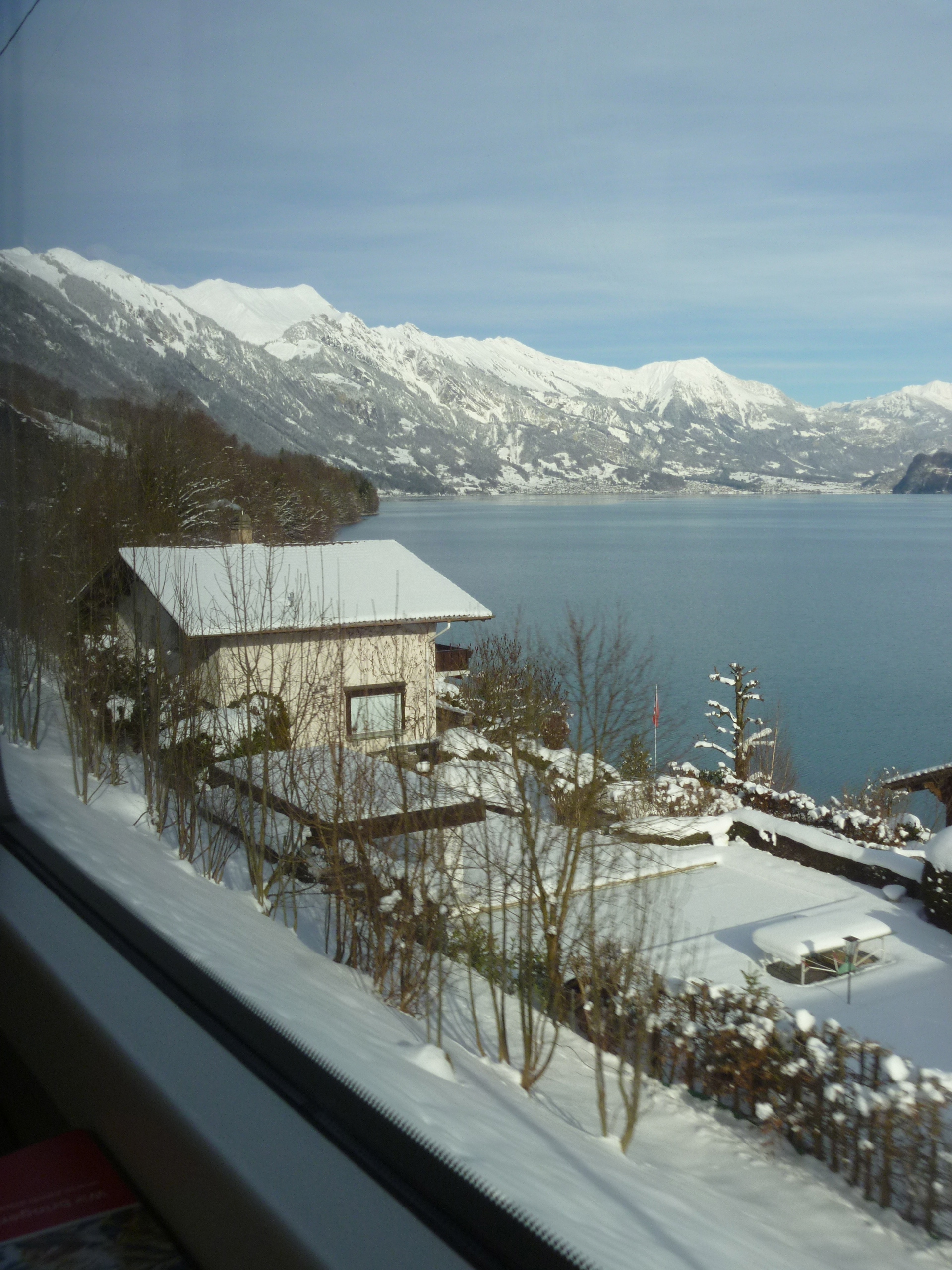
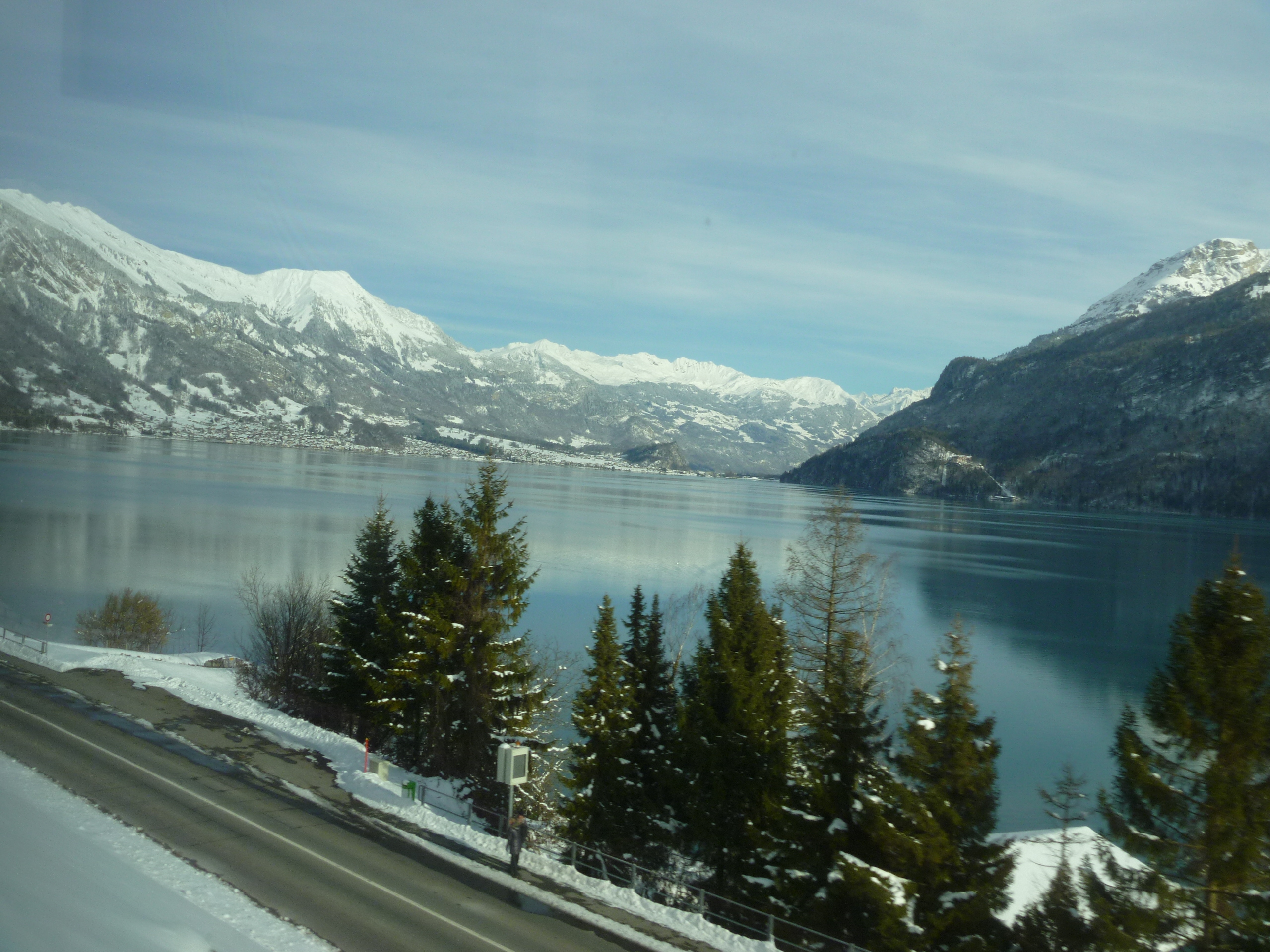
Views of Lake Thun and (sometimes) Interlaken from the Golden Pass Train

Lake Brienz

Lake Brienz 2

Lake brienz 3

After changing trains at Interlaken Ost station my journey continued alongside Lake Brienz

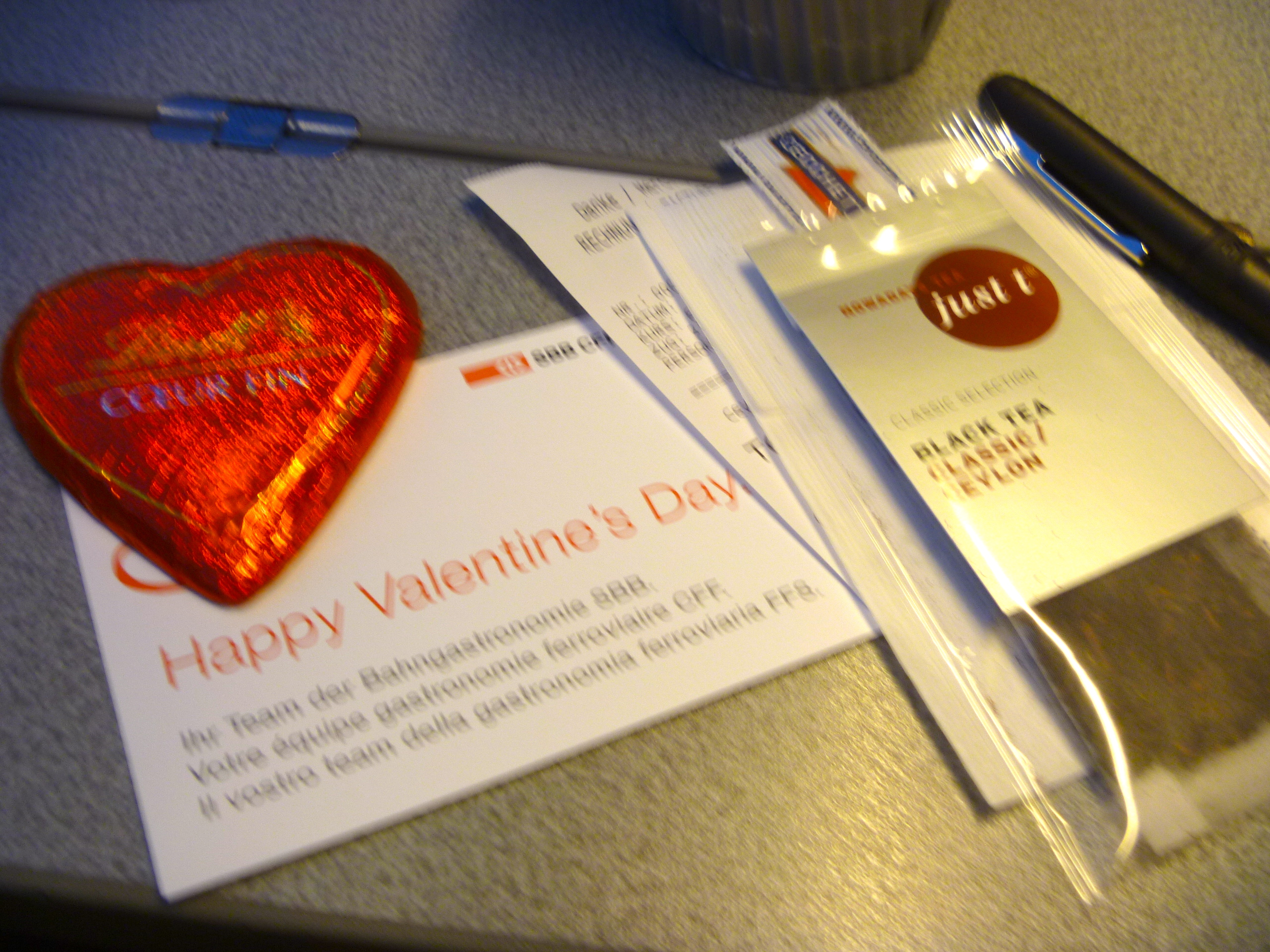
On my last day I took the direct train from Lucerne to Geneva Airport so early yesterday morning that it was dark for much of the journey. Nevertheless, it being St Valentine’s Day, when I bought a tea from the catering trolley I was taken aback to receive a free heart-shaped chocolate! (The photo’s a bit blurry – either because of the time of day or the movement of the train!)

valentines on the train

A Complete Face Lift at Dickens House Museum

On my first visit to The Dickens House Museum a few years ago I came away thinking what a very disappointing experience it had been. As a Dickens fan I had had high hopes of the visit.

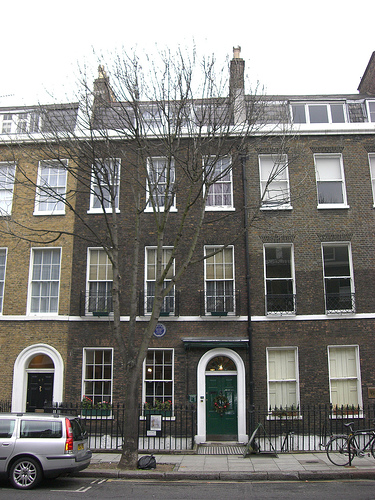
Dickens House Museum (Jan 2008)

Dickens House Museum (January 2008)

Dickens House (Jan 2013)

The Dickens House Museum (January 2013)

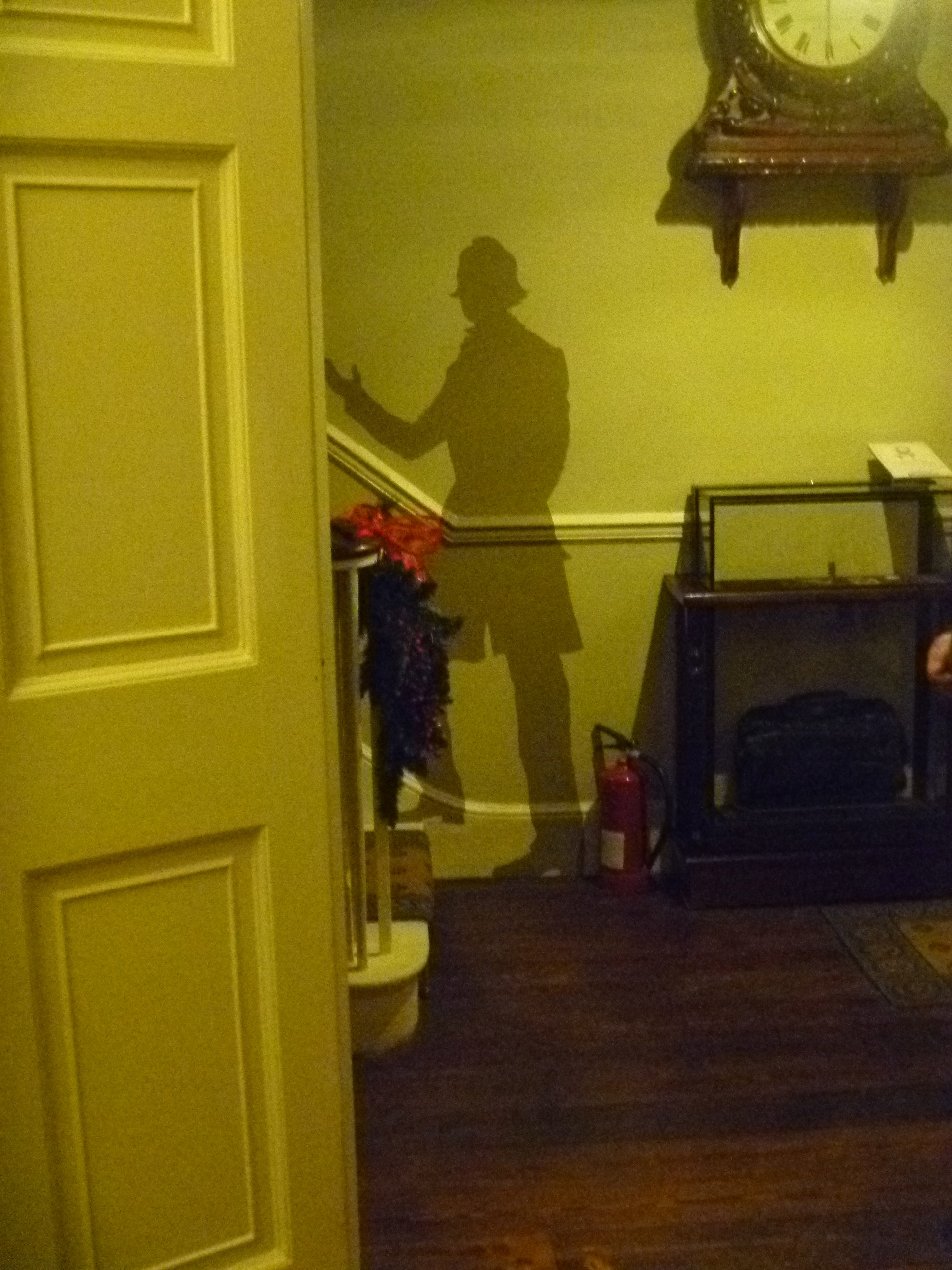
On Friday 4th January after our stay at Hampton Court Palace we decided to visit the newly re-opened Museum to see whether matters had improved.

The Dickens House Museum is the only remaining London home that Dickens occupied and that was for only about two years. It was at a time when he was not long married, was making a name for himself and it was here that he wrote Oliver Twist and Nicholas Nickleby. The address is 48 Doughty Street in Bloomsbury, WC1.

Number 48 Doughty Street was an important place in Charles Dickens’s life where he resided from 1837 until 1839. Dickens described the terraced Georgian dwelling as ‘my house in town’.

Two of his daughters were born here, his sister-in-law Mary died aged 17 in an upstairs bedroom and some of Dickens’s best-loved novels were written here, including Oliver Twist and Nicholas Nickleby. However Dickens required more space for his growing family and moved to 1 Devonshire Terrace in 1839. The house remained a residential property, but was threatened with demolition in 1923, when the Dickens Fellowship acquired it. The Museum was opened in 1925 and has become the home of the world’s finest Dickens-related collection.” From the Dickens House Museum website.

I have to concur with what fellow WordPress blogger “Visiting Houses and Gardens” said about it here. However, the house has been closed for renovations [The Great Expectations Project] for a good part of 2012 – the Dickens Bicentenary Year.

It reopened in December last year and a great amount of work must have been done during that time. With the help of National Heritage Lottery Funding the adjacent house was purchased and that now houses all the offices, the shop, cafe and other requirements for this modern age of “Heritage Visiting”. Number 48 is now purely Dickens’ Home as it might have looked at the time that he lived there – 1837-1839.

We are invited by the Museum to : “Step this way”

“Visitors to 48 Doughty Street can see the house as it might have been when Dickens lived here.  Rooms are decorated in the early Victorian style that Dickens would have favoured and personal posessions of Dickens from his lifetime as well as manuscripts, letters and portraits are on display.”

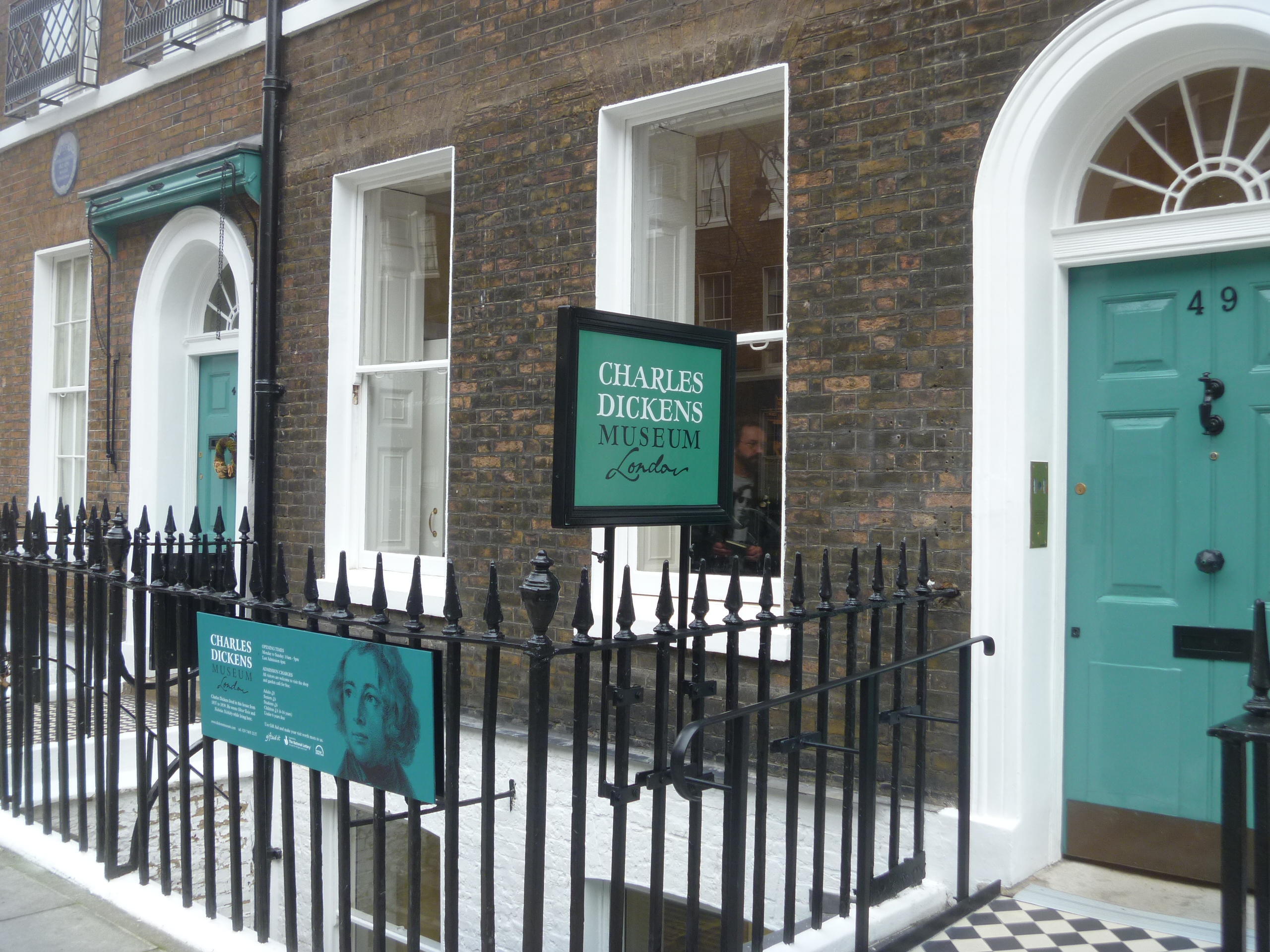
So, on entering number 49 we were directed into the front room of this house where there was a shop and the cash desk. We were handed a guidebook each with instructions to return it on leaving the Museum. From there we stepped into number 48 and toured the house that Dickens knew and we enjoyed (and learned from) the experience.

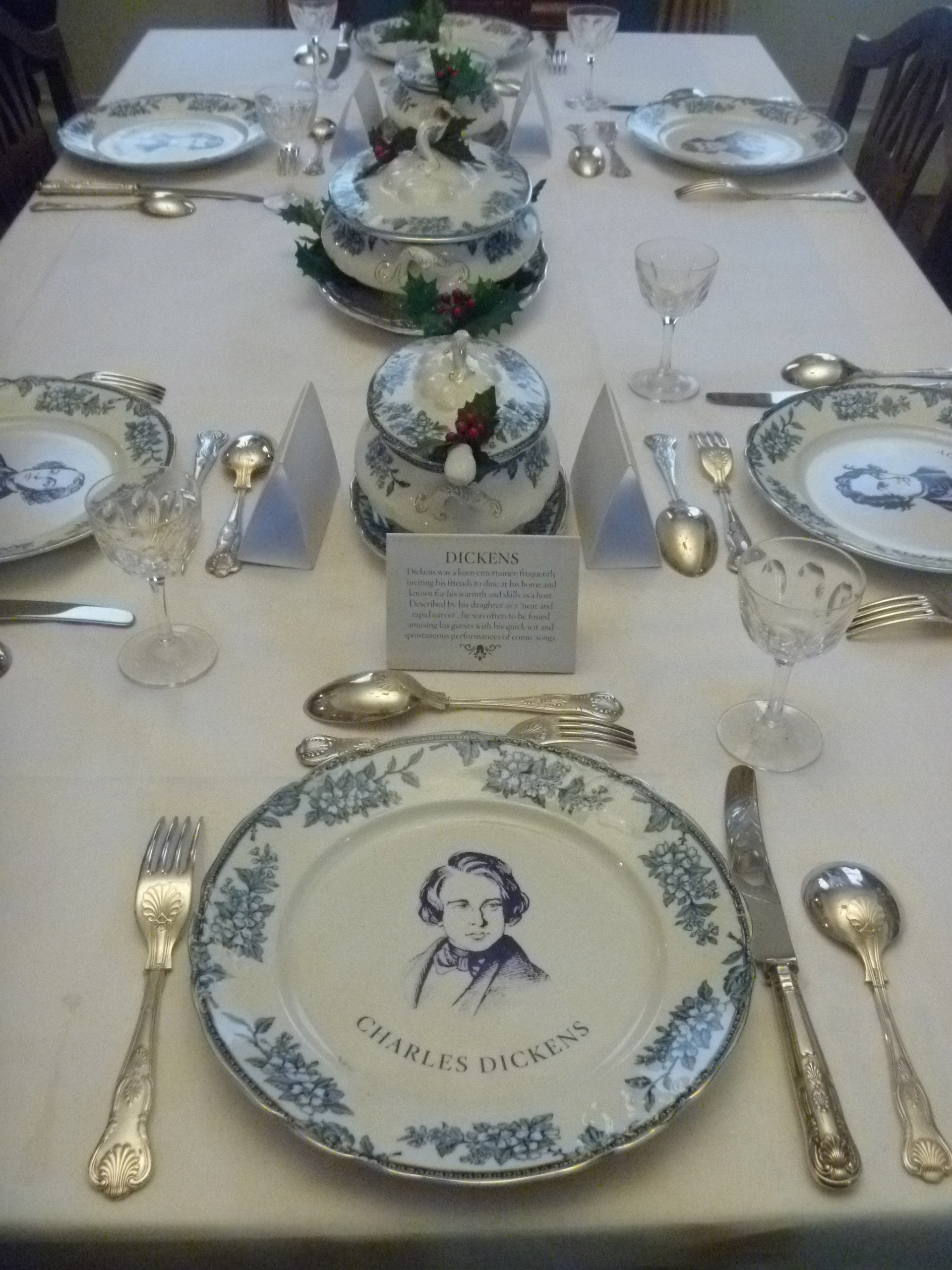
Dining with Dickens

Dining with Charles Dickens

This Way!

This way to the Sitting Room, Everyone!

First Floor Sitting Room

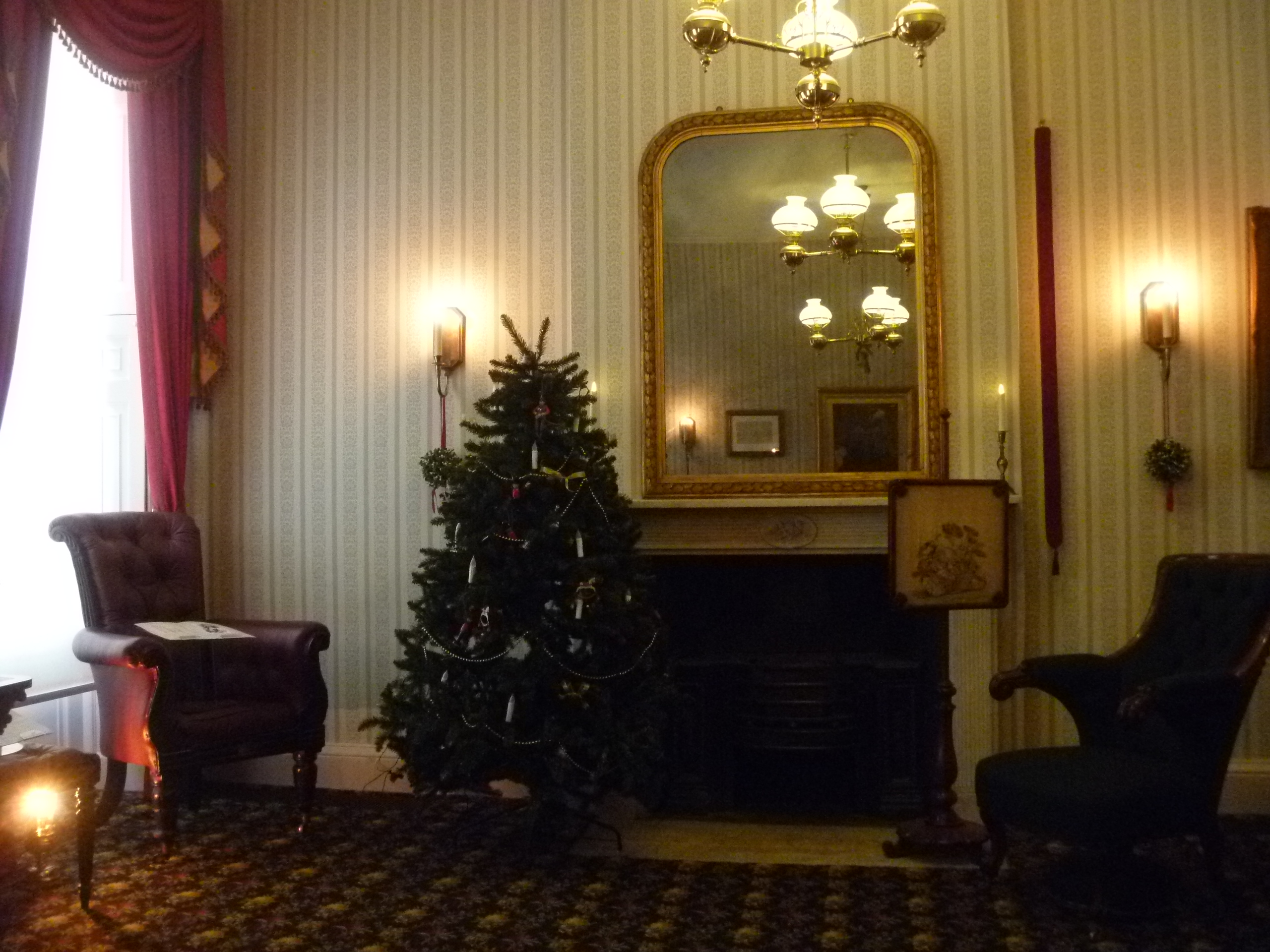
The Dickens Family Sitting Room at Christmas

Living at Hampton Court Palace

“I’ve often thought I should like to live at Hampton Court. It looks so
peaceful and so quiet, and it is such a dear old place to ramble round in
the early morning before many people are about.”
Hampton Court

One of my favourite humorous books of all time is “Three Men in a Boat (to say nothing of the dog)”  by Jerome K. Jerome from which the above quotation has been taken.

Fish Court sign

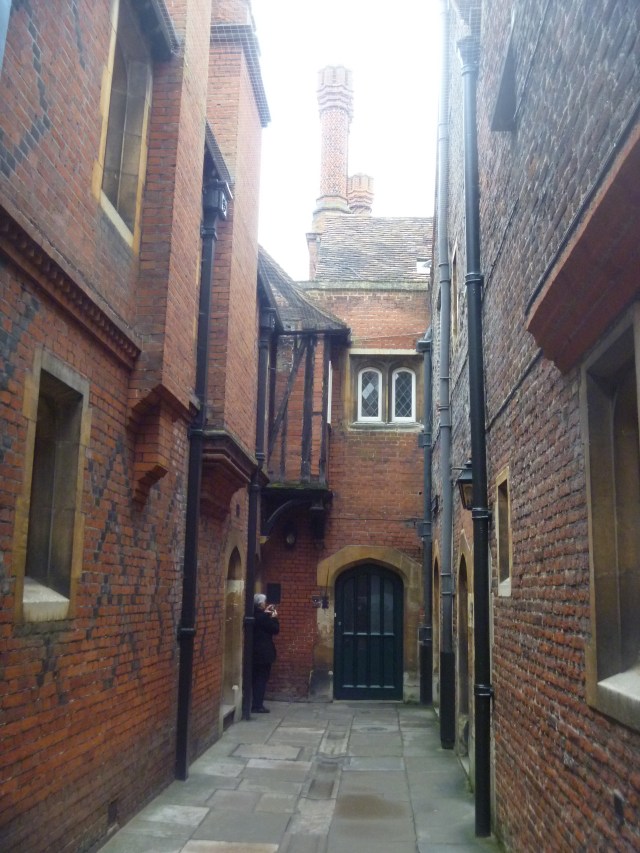
Lucky me, last week I was able to stay a couple of nights in this 1,000 room palace and ramble around it out of hours when few or even no people were around. Since 1993 The Landmark Trust have run the two Hampton Court Properties on behalf of the Royal Palaces. We visited friends at The Georgian House two years ago and this year my sister and I stayed in the Fish Court apartment.
Fish Court

Fish Court and the door to the Apartment

Tennis Court Lane

Tennis Court Lane – The Georgian House is on the left and Fish Court on the right

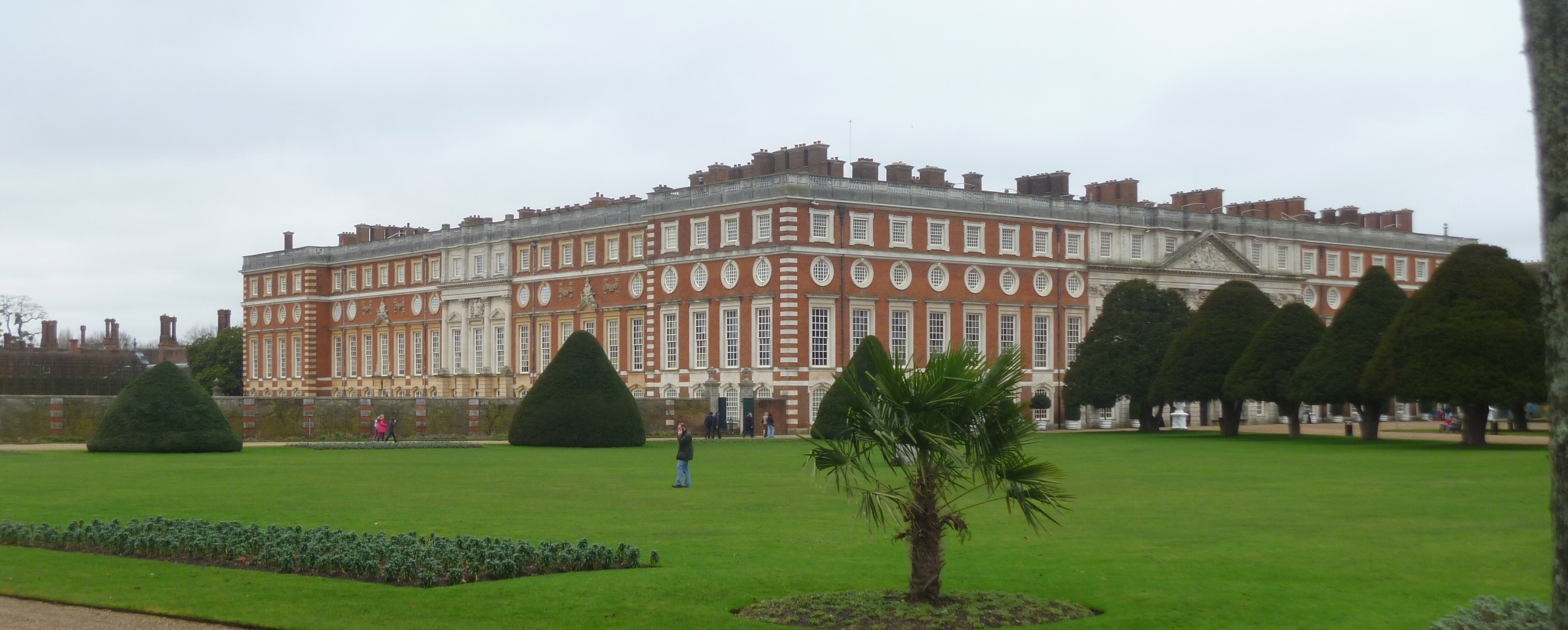
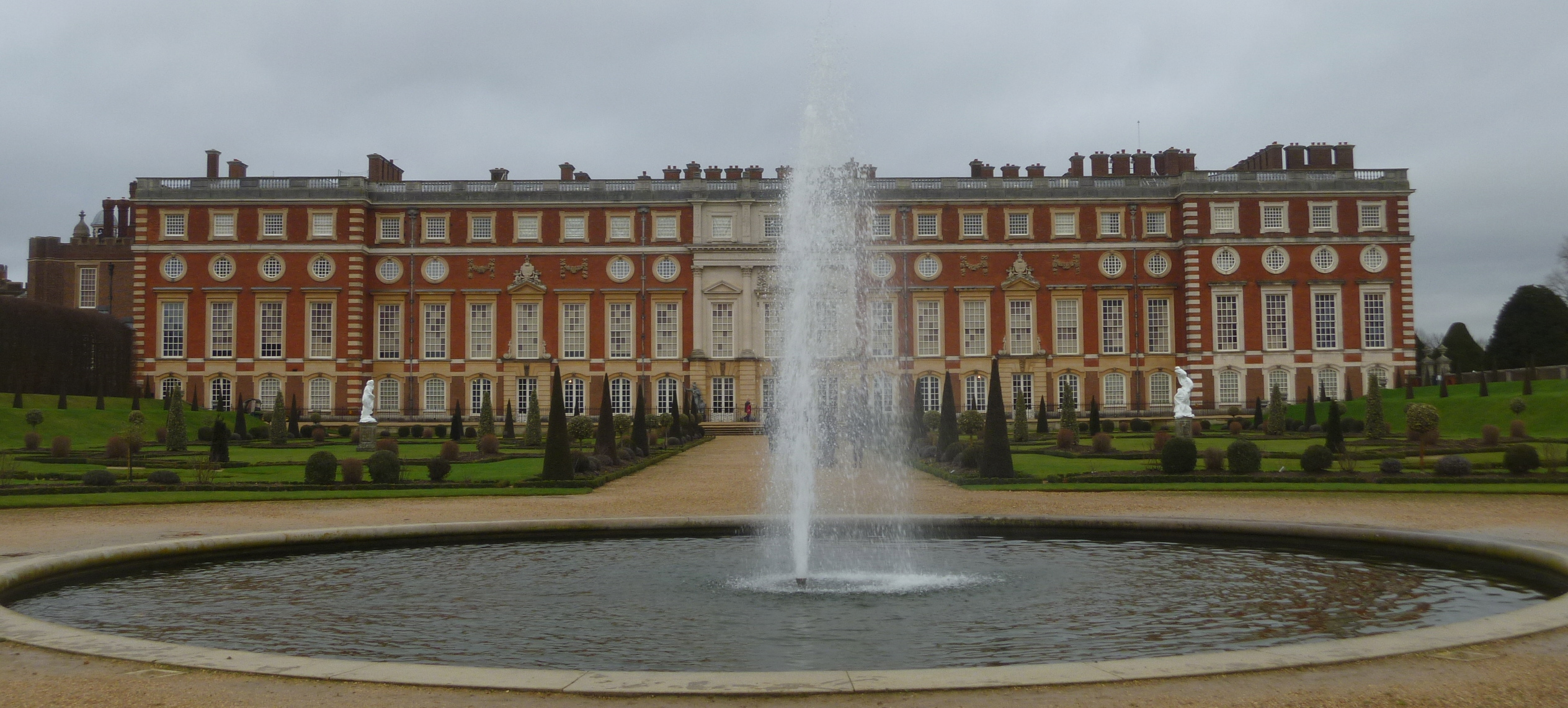
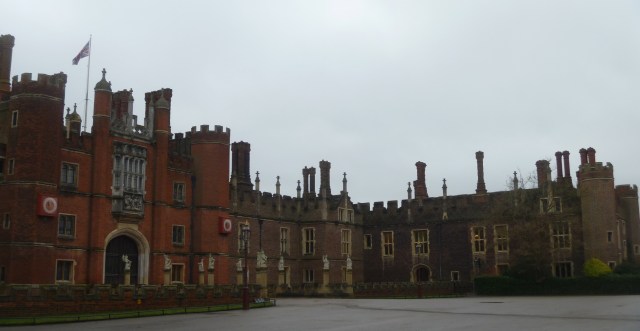
Hampton Court Palace was built by Cardinal Thomas Wolsey during the years after 1514 when he first acquired the riverside site. In 1529 as a last-ditch effort to appease the king’s wrath he presented the sumptuous palace to His Majesty King Henry VIII. He had failed to obtain an acceptable result with regard to the king and his first wife, Catherine of Aragon. Soon after, all of his property was made forfeit to the King. And so the Palace became a favourite home of Henry and his children and his descendants and royalty until 1760 and the death of George II. Henry built and extended the Tudor Palace further and William III and Mary (1689-1702) brought about further rebuilding and remodelling.

HCP East Front

There’s a huge contrast between the original west-facing Tudor building (top) and the newer East and South Fronts (above).

During and after the reign of George III the palace ceased to be used by royalty and was subdivided into a large number of dwellings and apartments. These residences were called ‘Grace and Favour’ homes. I have long known about there existence because I remember in the 1950s and early 1960s when I was a Brownie and later a Girl Guide one of the annuals featured a story about Lady Olave Baden-Powell, the widow of Lord Robert Baden-Powell, the then Chief Guide, living in a Grace and favour apartment at the Palace.

A celebrated and much-loved 20th century figure, Lady Baden-Powell, moved into her palace apartment in 1942. She was heavily involved in the Scouting Movement that her husband had founded. Lady Baden-Powell’s response following the offer of a palace apartment in 1942. “I was astounded; I had never dreamed of such a privilege being accorded me’. The apartment was ‘a bit dilapidated’ because of the war but most importantly would be ‘home’”. She described how, during the war, she survived a bomb, which exploded causing her ceiling to collapse in 1944.”

Taken from : Grace and Favour HCP

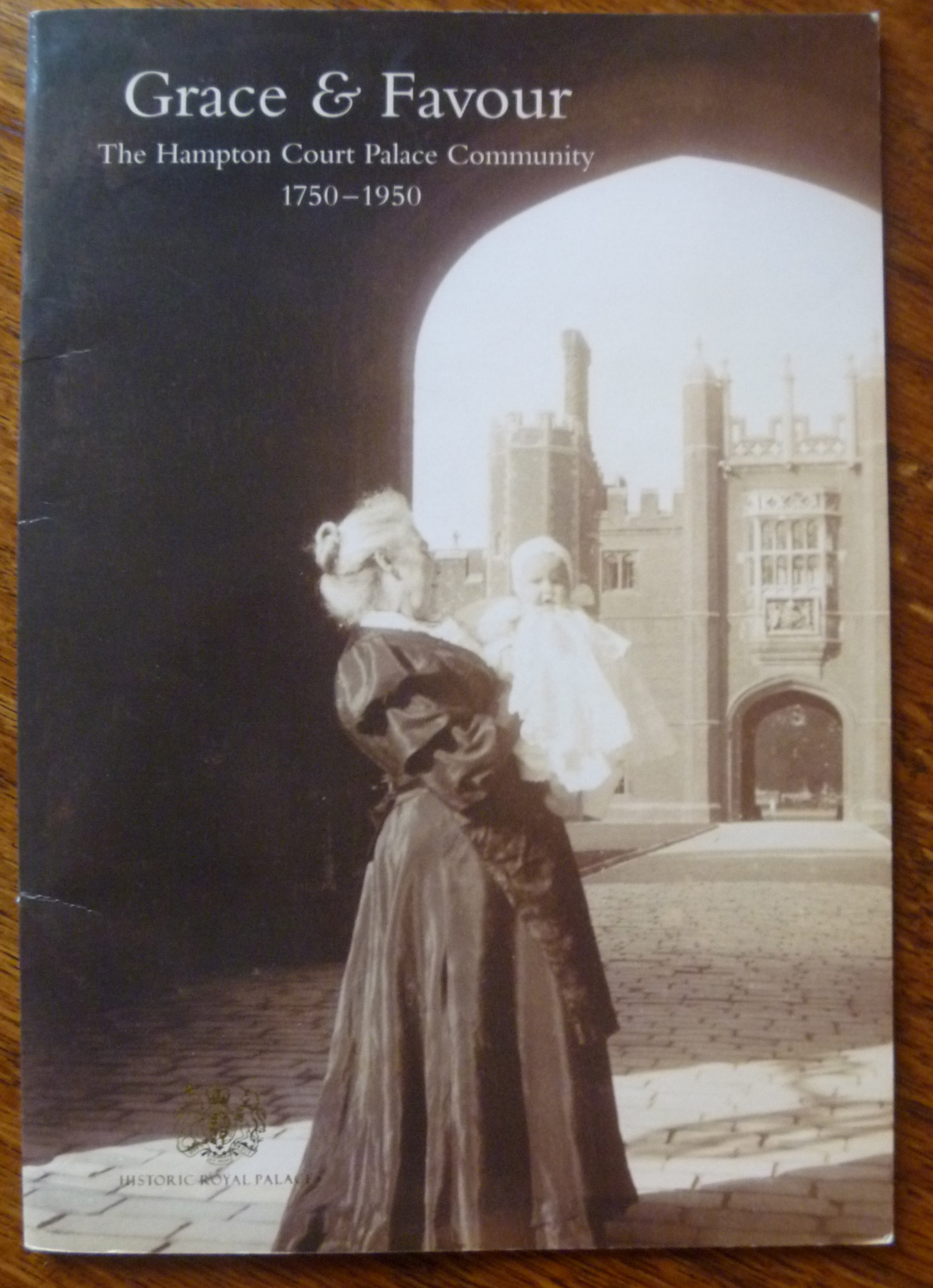
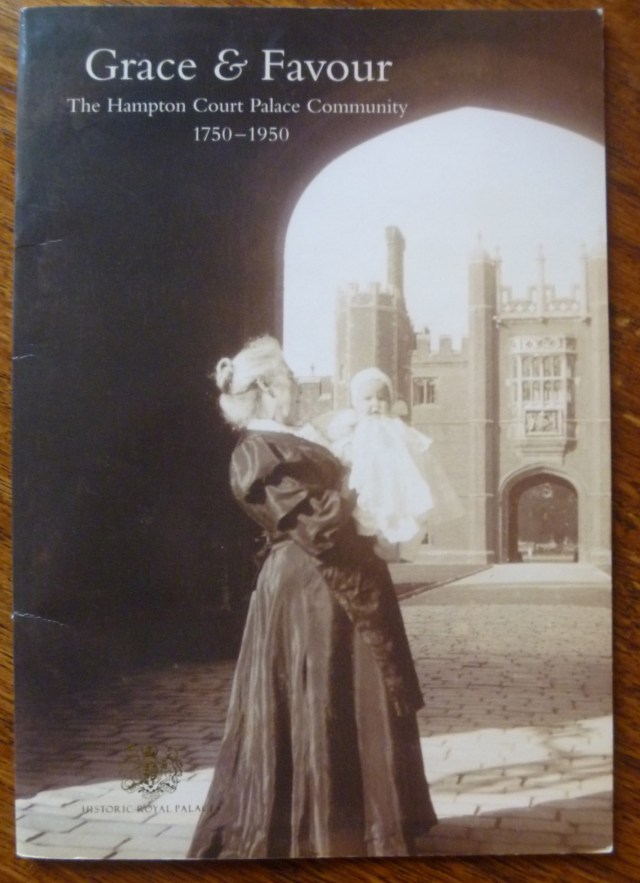
In the Fish Court Library I also found a book about the history of the apartments “Grace & Favour: the story of the Hampton Court Palace Community, 1750-1950”. 
Grace and Favour Book

Staying at Hampton Court in January we still noticed lots of visitors during the day and even late into the evening at the temporary ice rink erected just within the main (Trophy) Gates.

Ice Rink HCP

The Temporary Hampton Court Ice Rink

Being residents we were able to enter the palace and  join in any tours free of charge. We had to wear our passes all the time.

Resident pass

We only had one full day so we joined a costumed tour and visited two sets of apartments that we had missed on our previous visit. In the middle of the day it was so nice to just turn the key of our apartment door and have a bite of lunch and relax before heading out to the gardens and grounds and visit more of the Palace in the afternoon.

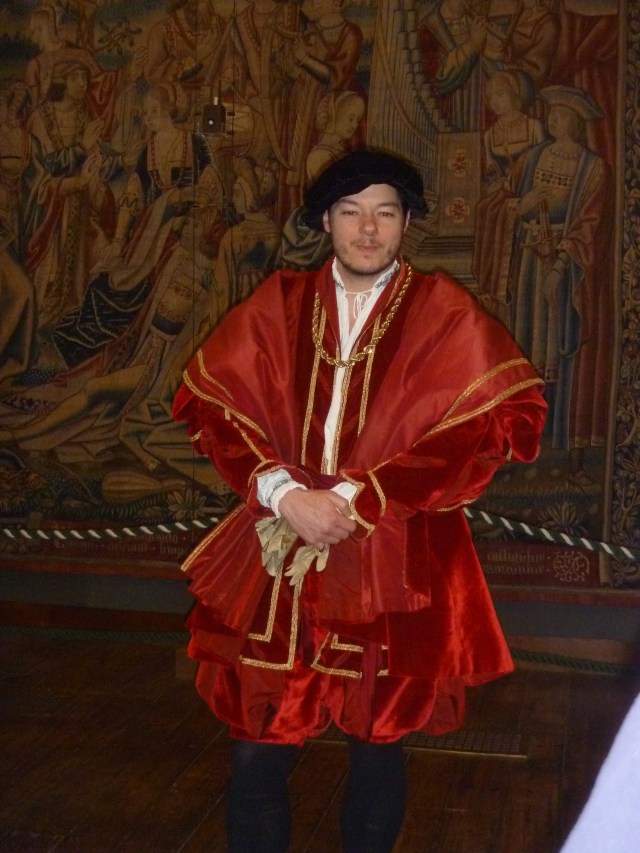
Costumed Tour HCP

Actor as Thomas Seymour

Actor playing the part of Thomas Seymour on the eve of Henry VIII’s death in January 1547

The most well-known feature in the grounds and probably in the whole Palace is its world famous Maze. I first visited Hampton Court Palace in the early 1960s and my top priority was to get into that Maze. I seem remember finding it a bit disappointing but loved Jerome K. Jerome’s witty description of his friend Harris’s earlier visit to the Maze:

“Harris asked me if I’d ever been in the
maze at Hampton Court. He said he went in once to show somebody else the
way. He had studied it up in a map, and it was so simple that it seemed
foolish—hardly worth the twopence charged for admission. Harris said he
thought that map must have been got up as a practical joke, because it
wasn’t a bit like the real thing, and only misleading.”

Lancelot ‘Capability’ Brown was appointed Chief Gardener here in 1769 and lived in Wilderness House on the edge of the grounds near the Lion Gates. Just two years ago a blue plaque was unveiled by  the present Head Gardener. Read about it here. It was very difficult to get a decent angle for a photo of either the house or the plaque.

Plaque to Capability Brown

Even in January the fountains are spurting water and the gardeners have their heads down preparing the ground for spring planting and some other people were also enjoying walking along the stony paths and terraces.

Fountain

Knot Garden

Pond Garden and Banqueting House

At the far end of the garden is the Great Vine planted by Capability Brown.
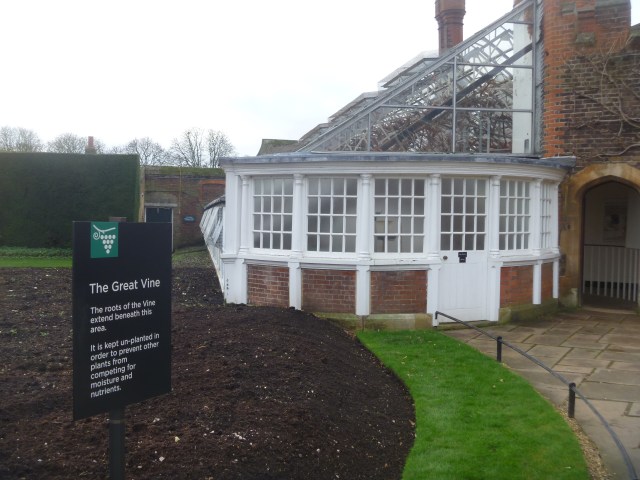
The Great Vine

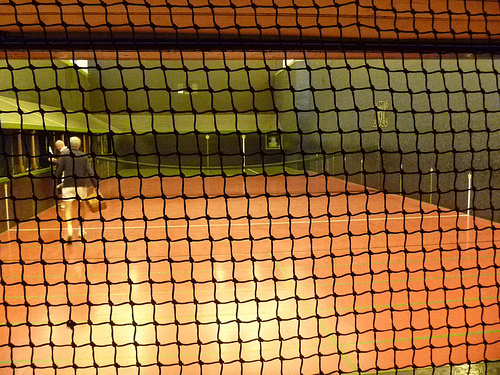
In the evening we could creep along passages and watch a game of Real Tennis still being played on the original court where Henry himself enjoyed a game or two!

Real Tennis

Before returning to our very own private Royal apartment to plan the rest of our London visit.

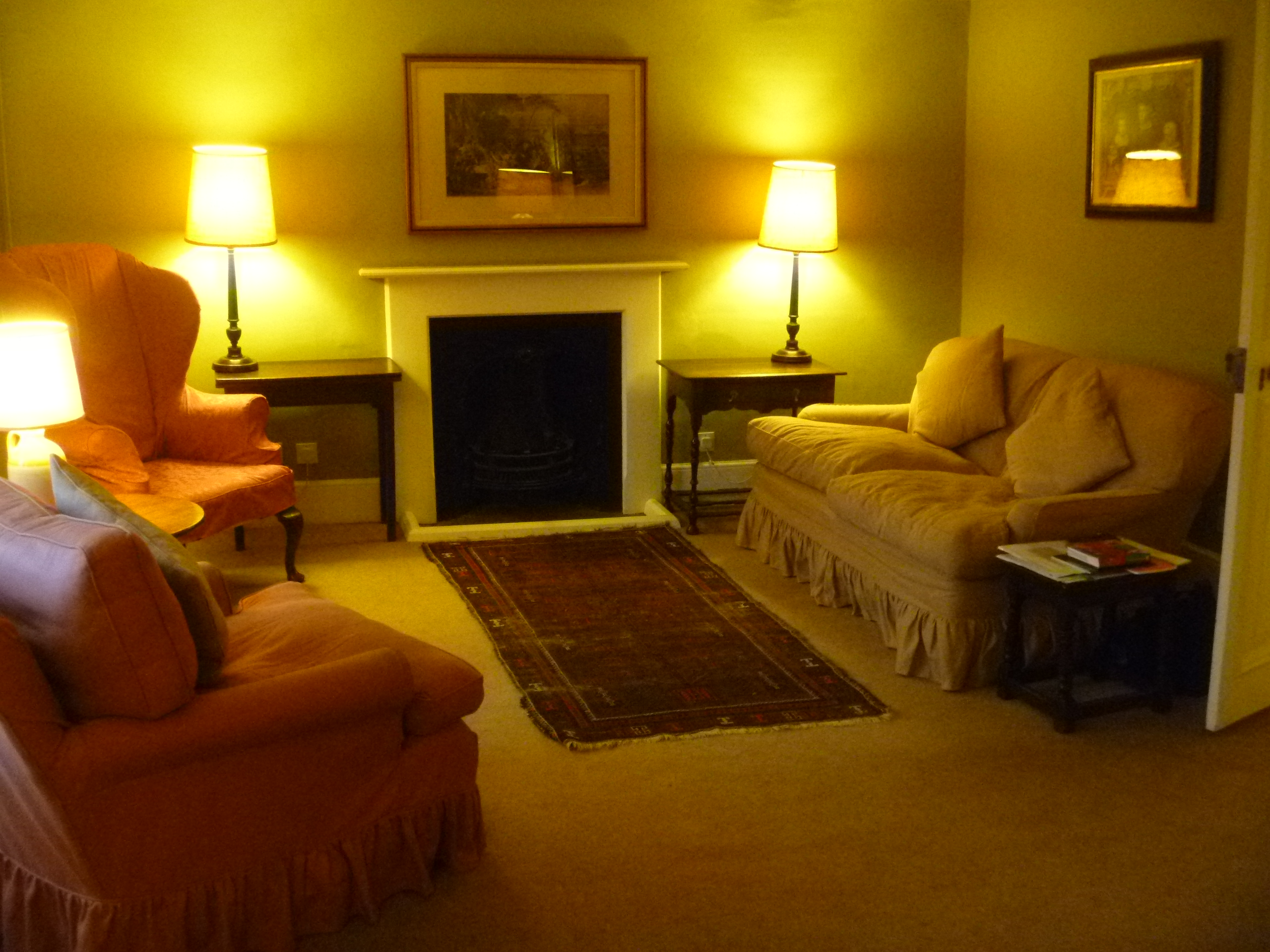
Sitting room at Fish Court

‘Deck the halls’ at Oakwell

Oakwell Hall

Step back in time and enjoy Oakwell Hall’s period rooms decorated with greenery from the park with the theme of traditional Christmas carols. Enjoy the rich and historic splendour of Oakwell Hall, decorated for a 1690 Christmas.”

Oakwell Hall

“It was neither a grand nor a comfortable house; within
as without it was antique, rambling and incommodious.”

Charlotte Brontë’s description of ‘Fieldhead’ (Oakwell Hall) from ‘Shirley’.”

We have had days and days of constant rain. The dark misty clouds mean that the days seem even shorter than the time of year supposes that they should be, so I decided to ‘step back in time’ to a nearby house with Bronte connections – Oakwell Hall in Gomersall. It is now owned by Kirklees Council but has had an interesting history and the lovely house dates back to the 16th century. Read about the fascinating study of the timbers, panelling, layout and construction of Oakwell Hall here. It is such a shame that photography is no longer allowed inside Oakwell Hall as the greenery and decorations brighten up the rooms at this time of year.

Oakwell - rear

Rear view of Oakwell Hall

Thought to be built by one John Batt, whose initials appear above the door, Oakwell was occupied by him and his family for way over a century. Between 1789 and 1927 when the hall was bought by the local council it had several owners and was at times a private residence, at times occupied by short term tenants (families and schools) and at one point was threatened to be “taken down, brick by brick, and shipped to America”. A local appeal was then launched and with the help of two particular wealthy benefactors (Sir Henry Norman Rae and John Earl Sharman) the house was saved and passed to Batley Corporation (now Kirklees Council). Since 1927 the house has been a museum and more recently the surrounding parkland has come into Council ownership and the whole is now Oakwell Hall Country Park.

As you tour the house, after being greeted in the Great Hall, at one point on the ground floor you pass into the Buttery. This bare room with stone floor is now a small information space and here I read more about the Bronte connection with Oakwell Hall.

Whilst a pupil at Roehead School in Mirfield Charlotte Bronte made friends with Ellen Nussey and Mary Taylor. Ellen later attended a school at Oakwell Hall and CB frequently visited her here. She was inspired to base her descriptions of the house Fieldhead on Oakwell Hall and she also based The Yorke family in the same book on her friends The Taylors.

Accurate descriptions of the house interior and exterior can be lifted straight from Chapter 11 “Fieldhead” in Shirley.

“If Fieldhead had few other merits as a building, it might at least be
termed picturesque. Its regular architecture, and the gray and mossy
colouring communicated by time, gave it a just claim to this epithet.
The old latticed windows, the stone porch, the walls, the roof, the
chimney-stacks, were rich in crayon touches and sepia lights and shades.
The trees behind were fine, bold, and spreading; the cedar on the lawn
in front was grand; and the granite urns on the garden wall, the fretted
arch of the gateway, were, for an artist, as the very desire of the eye.”

“Mr. and Miss Helstone were ushered into a parlour. Of course, as was to
be expected in such a Gothic old barrack, this parlour was lined with
oak: fine, dark, glossy panels compassed the walls gloomily and grandly.
Very handsome, reader, these shining brown panels are, very mellow in
colouring and tasteful in effect …”

Talking with one of the Museum staff I also discovered that several filmings had taken place at Oakwell over the years. Notably in 1921 a silent film version of Shirley. 

A 2009 TV version of Wuthering Heights used Oakwell for its interior scenes. Fast forward to around 48 minutes in if you are only interested in seeing some interior shots of Oakwell. The exterior shots look to me as if they were filmed using East Riddlesden Hall near Keighley.

The interior scenes of  The Secret Diaries of Miss Anne Listeralso made for TV was filmed here at Oakwell. The true home of Miss Lister was nearby Shibden Hall at Halifax but I was told that the rooms at Oakwell were much larger to allow for all the cameramen’s paraphernalia.

Oakwell Gardens

On leaving the cosiness of the hall you enter the lovely, beautifully ordered, Elizabethan gardens. I made a mental note to revisit these on a less wet and grey day. I hurried home to light my own Christmas tree lights and relax with a mince pie.

My own Christmas tree

A MERRY CHRISTMAS EVERYONE!

A Dam Busters Walk and A Damn Good Lunch

Our younger son lives in Sheffield so we arranged to go Christmas Shopping (with a difference) together today. We met up at The Ladybower Inn then headed to a small car park beside the upper part of Ladybower Reservoir in the Derbyshire Peak District National Park.

Ladybower2

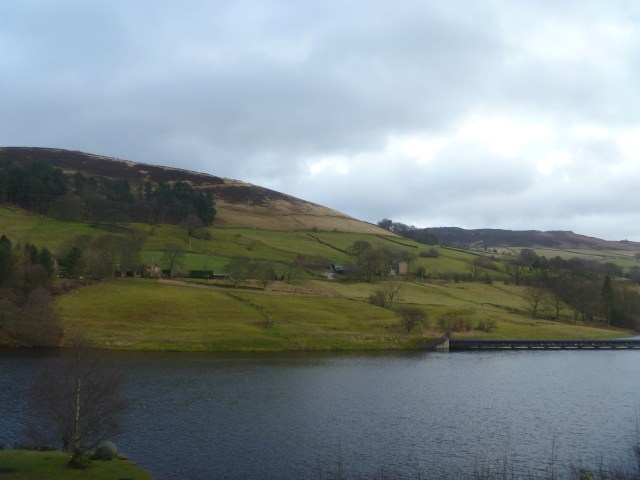
Lovely Ladybower

There are good paths along the edge of the ‘lake’ and there’s a visitor centre and cafe and other facilities at the northern end of the reservoir.

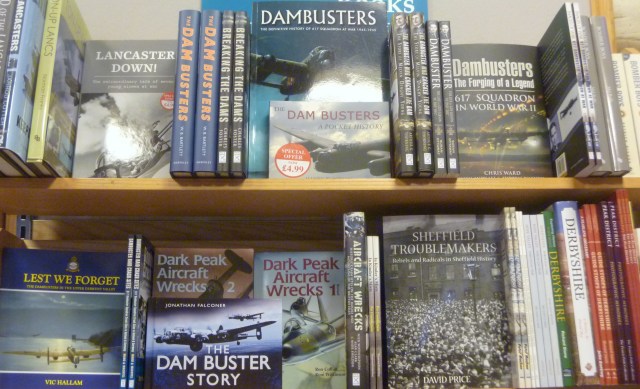
Dambuster books

A Selection of Dam Busters Books in the Visitors Centre

From there it’s a bit of a climb up to the Upper Derwent Reservoir where the ‘Dam Busters’ trained and practiced their low level flying during the Second World War.

Upper Derwent Reservoir

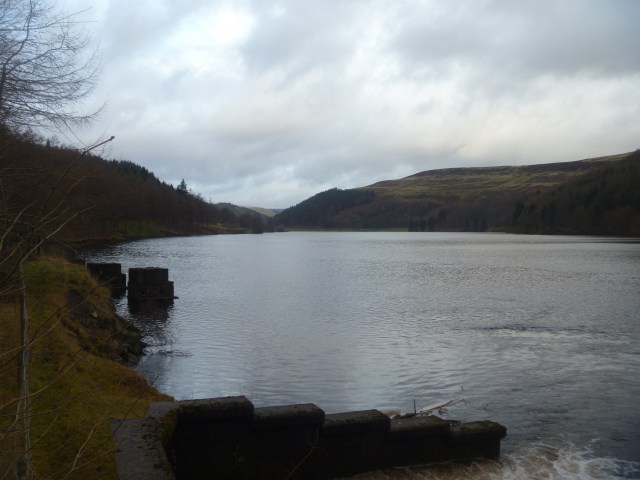
The Upper Derwent Reservoir

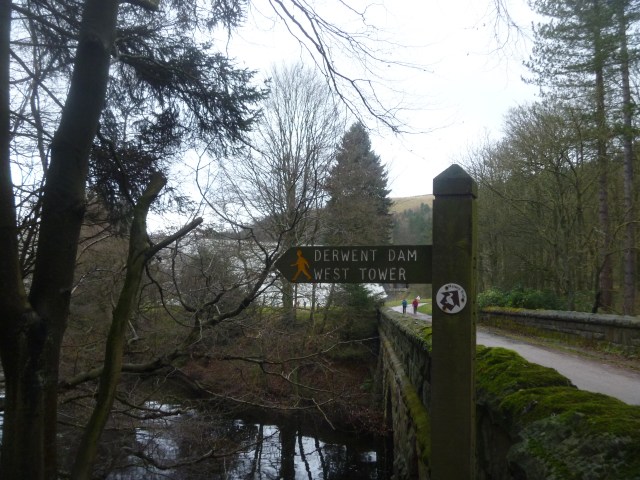
Derwent Dam and Sign

Note the Derwent Dam (very loud!) in the background

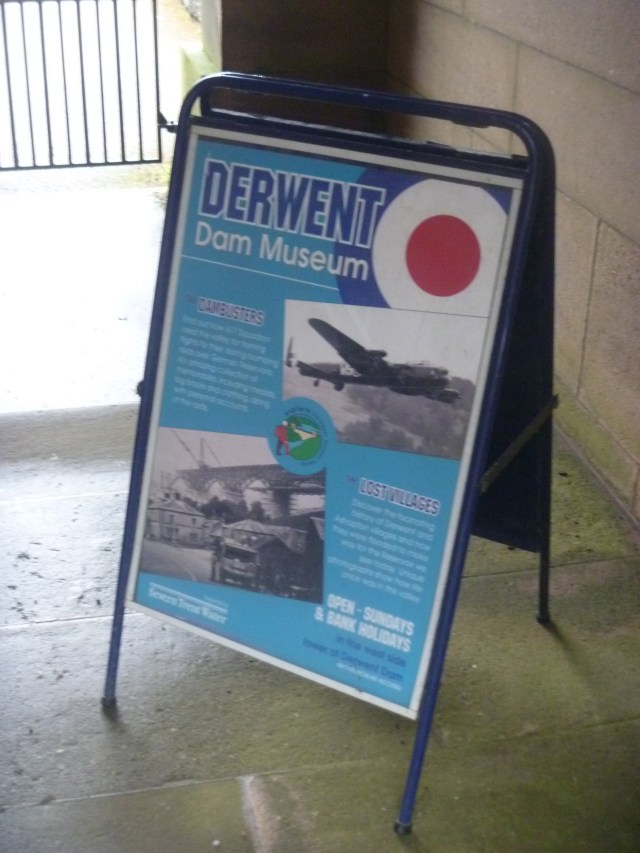
Derwent reservoir was used by the RAF’s Dambusters to practise their low level flying techniques during 1943, in preparation for delivering Barnes Wallis’ famous ‘bouncing bombs’ to German dams. Located in the West Tower of the Derwent Valley Dam is the Derwent Dam (617 Squadron) Museum which houses a collection of memorabilia dedicated to the famous Dams Raid carried out by 617 “Dambusters” Squadron.

Dam Museum

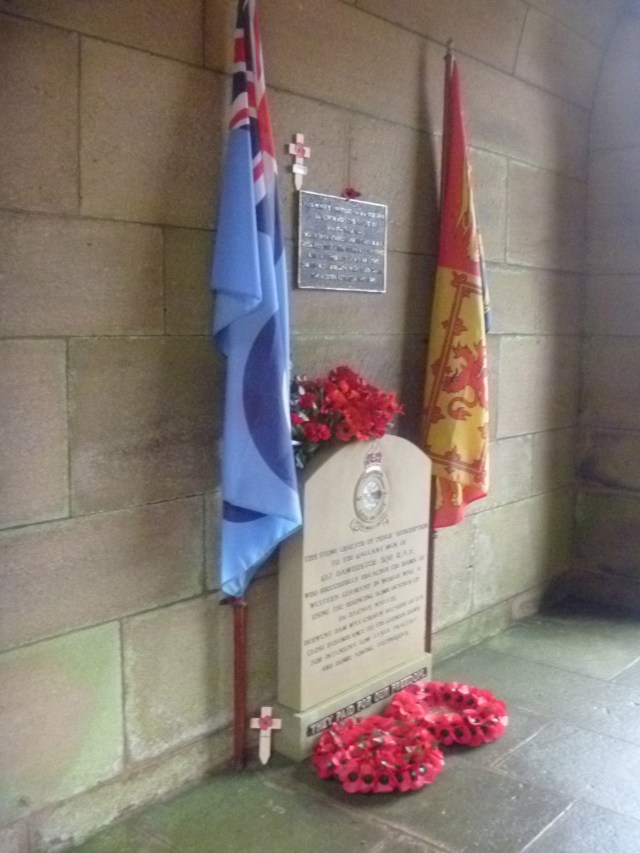
Dam Busters Memorial

Dam Buster’s Memorial

It includes photographs and other material covering all aspects of the Dams Raid, including details of the training flights carried out by 617 Squadron over the Derwent Dam and material relating to the film “The Dambusters” starring Richard Todd as Guy Gibson, made in 1954. There is also an example of the famous “Bouncing Bomb”, which forms the centrepiece of the museum’s display. Opening times are 10.00am to 4.00pm on Sundays and Bank Holidays only.” 

[from http://www.derbyshireuk.net/derwentvalley_reservoirs.html website]

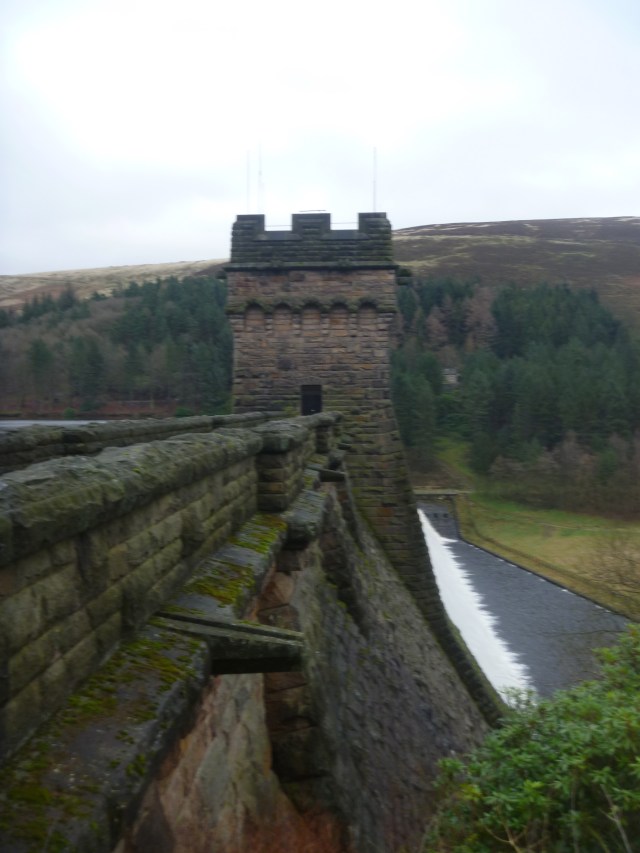
West Tower

The Museum is housed in the West Tower

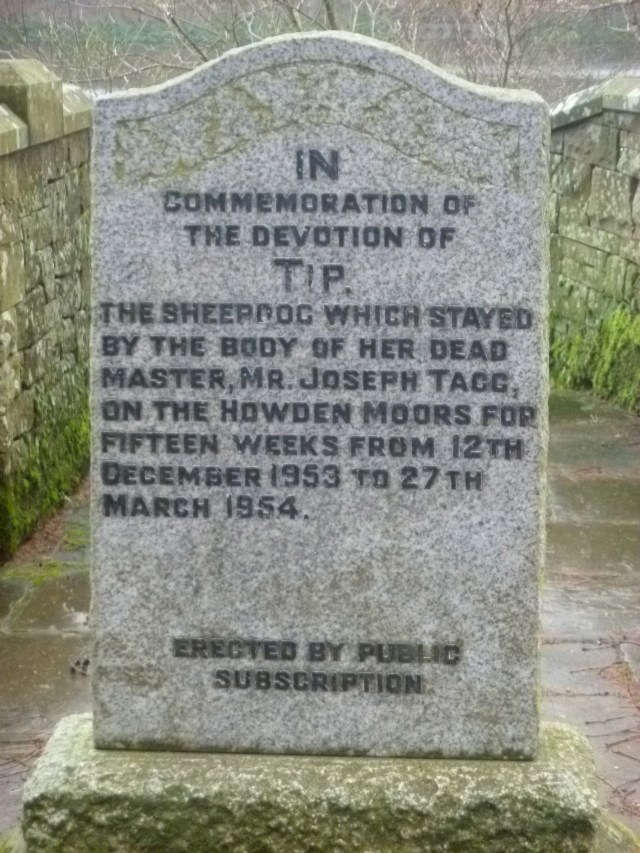
The museum was closed as our visit was on a Saturday but definitely worth a return visit. We climbed up to the see the West Tower and were intrigued to see a memorial to a loyal dog nearby.

TIP Memorial

The Memorial to faithful Tip

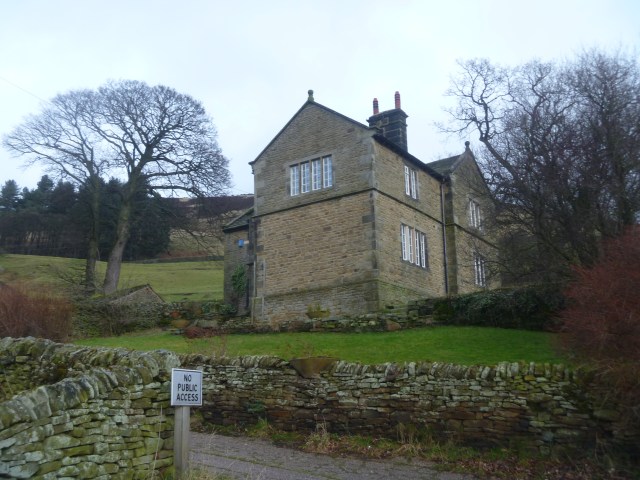
Our walk continued on the eastern side of the reservoir past a National Trust owned farm but only too soon it was time to turn back to the cars. N often runs right round Ladybower: a total of 11km including the additional 2 km to and from the car park at the Ladybower Inn. But the days are short at this time of year and we hadn’t even started our shopping.

Old House Farm

Old House Farm

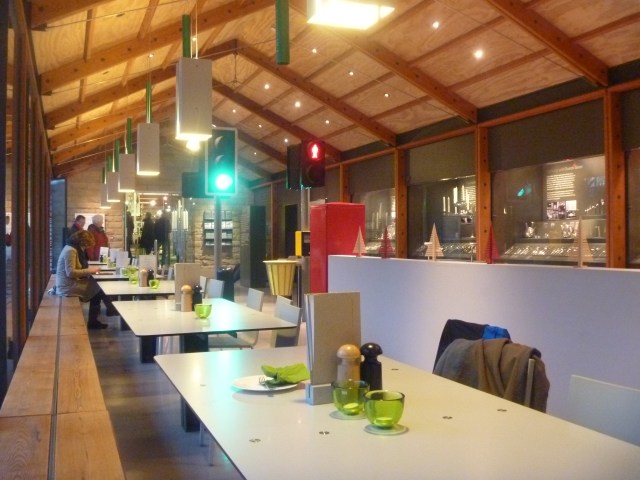
So, back at the cars we headed for Hathersage and the lovely Country Shop at David Mellor’s Round Building. I also recommend the Cafe where we had fresh warm soup and chunky bread for our late lunch. There’s also a Design Museum showcasing David Mellor’s work within the building.

Design Museum

The David Mellor Design Museum (yes, those are his traffic lights!) and Café

By 4 o’clock it was dark and time to head back up the M1 to Leeds. Yesterday the weather was icy and  freezing cold (-3C)  but with typical British contrariness today the temperature hit 8C. I’m glad I was able to make the journey without any hitches. It was well worth the trip. I hope the recipients enjoy their gifts. We certainly enjoyed shopping for them!!

Spotting Man’s Best Friends – in Norfolk and in Bedfordshire

Finally, for these posts about my trip down to eastern England last week just a few pictures and doggie-connections!

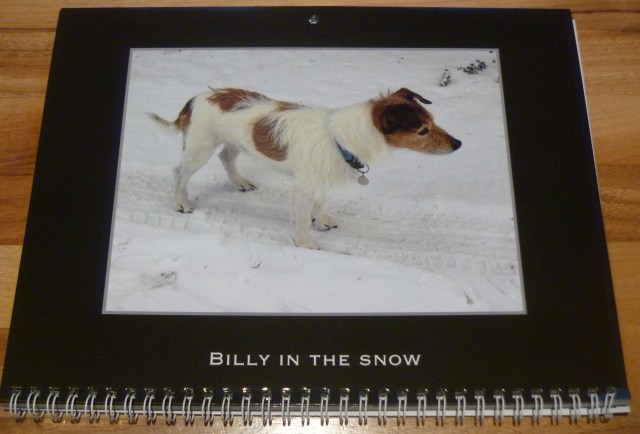
Billy in snow

Billy in the snow

Billy, lives with his master and mistress at the B&B in Norwich where I stay. He is very quiet and very much behind the scenes but it’s always a joy to see him when he pops into the breakfast room or has a little toddle round the garden in the summer. I think Billy is quite old now and he’s a bit shaky on his pins so on each visit I’m pleased to see him again and renew acquaintance.

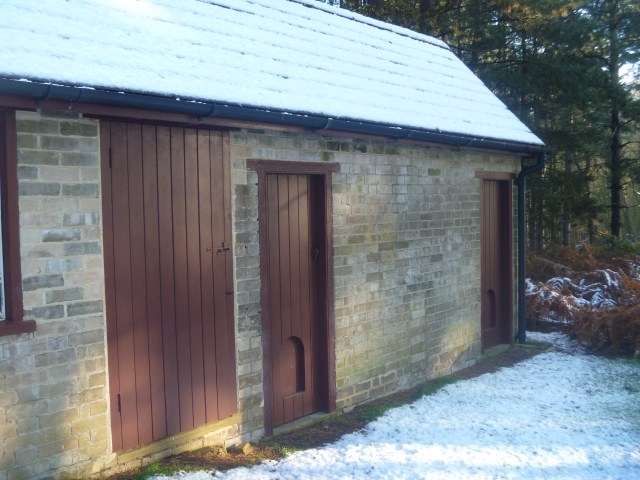
Of course, the whole idea behind the very existence of Keeper’s Cottage is that it was home not only to the gamekeeper but also, and very importantly, to his dogs. They lived in separate accommodation a few yards down from the house.

A short distance down the slope was a four-stalled kennel block, where the head keeper kept his dogs for retrieving the game. One of the stalls had a hearth and copper boiler for the keeper to boil up scraps and bones for the dogs’ mash.”

Keeper's Kennels

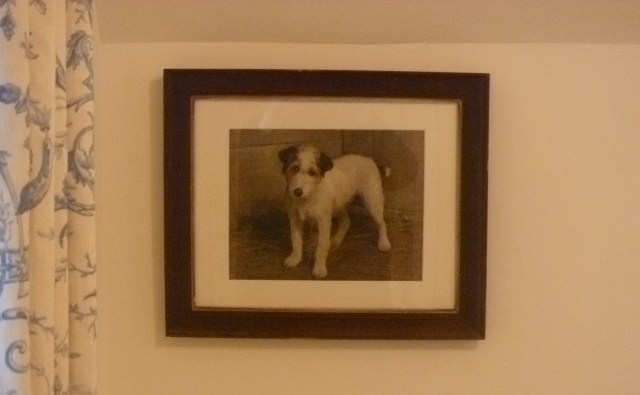
The pictures on the walls of Landmarks usually have some connection with the property. In the case of Keeper’s there are a number of dog pictures and most notably to me the one in the bathroom :

Dog picture

For some reason he reminded me of Billy.

Alfie in snow

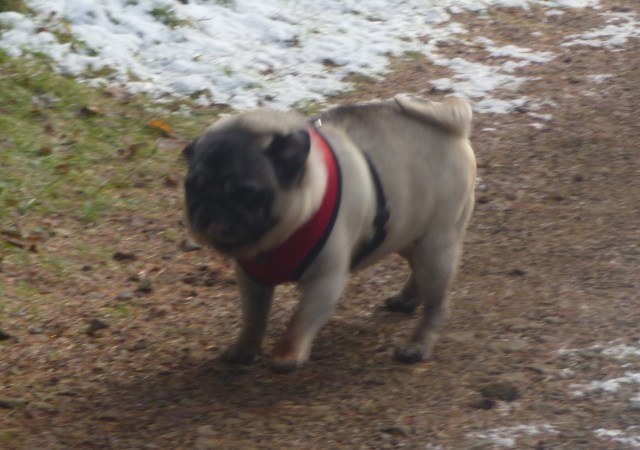
Alfie dislikes the snow and won’t keep still to be photographed!

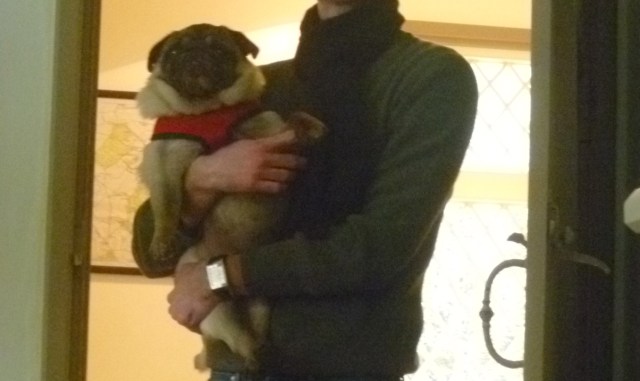
We did, of course, have our own pug dog with us at Old Warden. Alfie is fast becoming a seasoned Landmarker. He already accompanied us to La Maison des Amis, the Windsor’s place near Paris, earlier in the year. And now he’s been to Keeper’s. Where next for Alfie?- you just have to wait and see ….

Alf at Keeper's

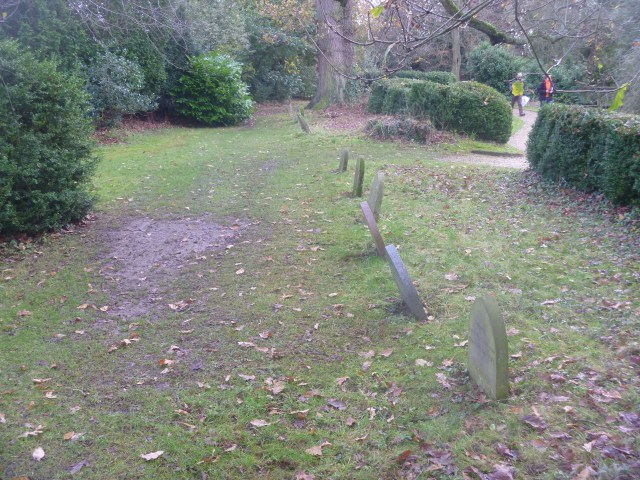
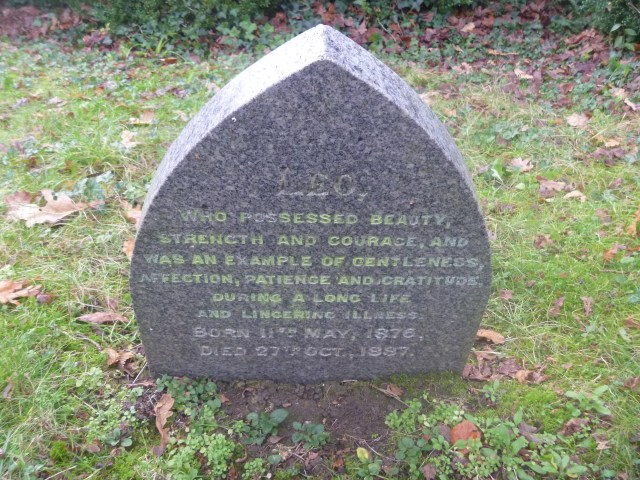
Eventually all dogs pass away and go to the great kennels in the sky. The Shuttleworths were no different from the Windsors, from Edith Wharton or from Agatha Christie. They also  had a great love and respect for their four-legged friends and in the Swiss Garden are 14 gravestones each marking the burial spot of a much-loved pet.
Dog graves in Swiss Garden

The Doggie Graves in the Swiss Garden despite their age each name can be clearly read

Leo's stone

Shuttleworths, Shuttleworths everywhere … some Old Warden history

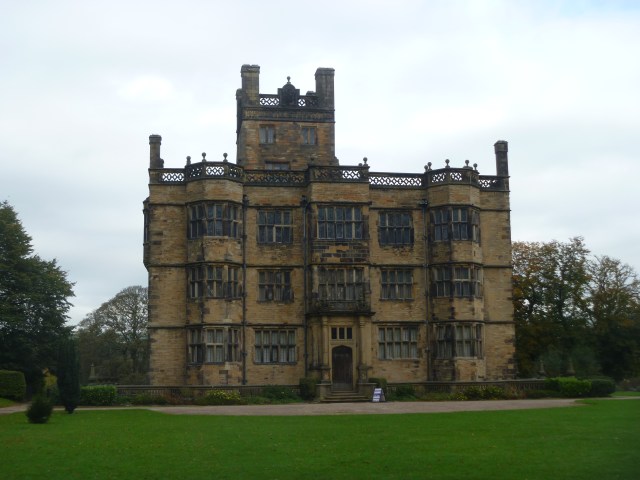
Gawthorpe Hall

Gawthorpe Hall in Lancashire

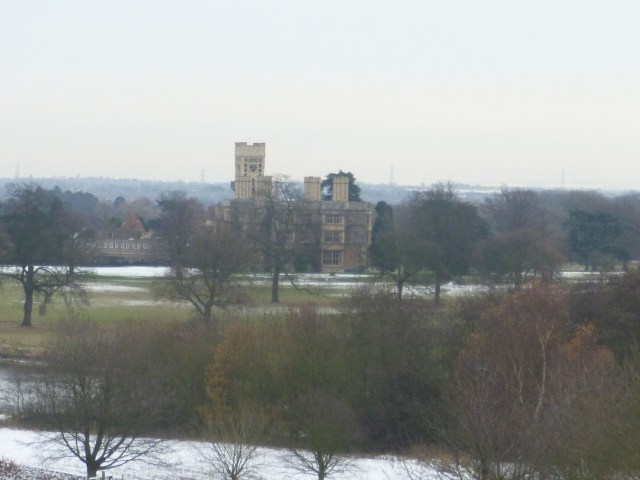
Shuttleworth College

Shuttleworth College in Bedfordshire

See how similar the two buildings above are – they are connected only by the name “Shuttleworth”. In October I met a former work colleague, who lives in Lancashire, at Gawthorpe Hall. I knew the owners were the Kay-Shuttleworths but I never at all linked their name with the Collection with the same name down in Bedfordshire.
I was fascinated to read in the Keeper’s Cottage History Album :

What is intriguing is that there seems to have been no connection whatsoever between Joseph Shuttleworth and the Gawthorpe (by then Kay) Shuttleworths. In seeking to establish his own pedigree in Bedfordshire, Joseph seems to have wished to imply a connection with these ancient, Lancastrian namesakes that was apparently without foundation. He adopted a crest that was similar to their own and the family arms also feature the Gawthorpe Shuttleworth’s ‘three shuttles sable tipped and fringed with quills of yarn and threads bend or; a cubit arm in armour proper grasping in the gauntlet a shuttle of arms.’

… the estate at Old Warden represented a perfect fit for the new dynasty, with a model village half begun by an expiring family (the Ongleys) offering the opportunity for benevolent philanthropy as well as revivication of an ancient estate.”

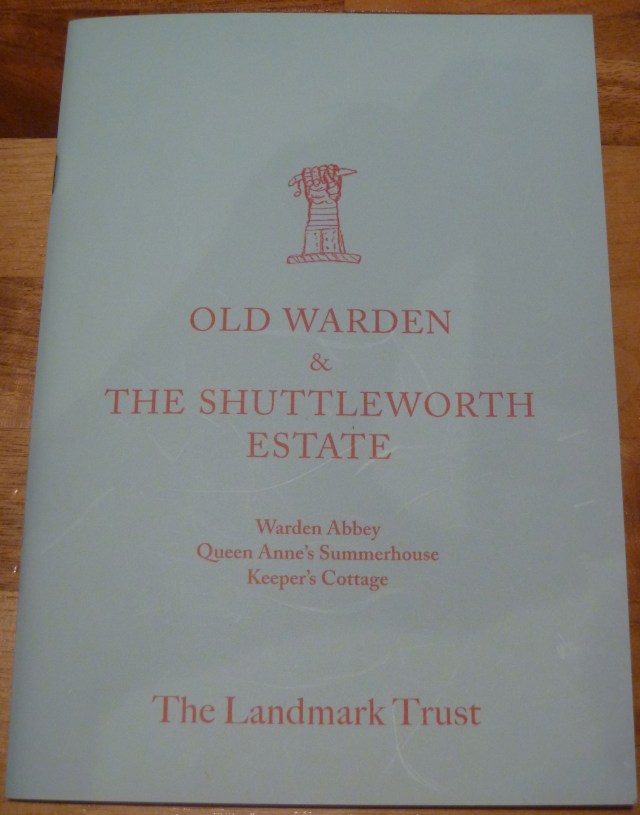
Old Warden Booklet

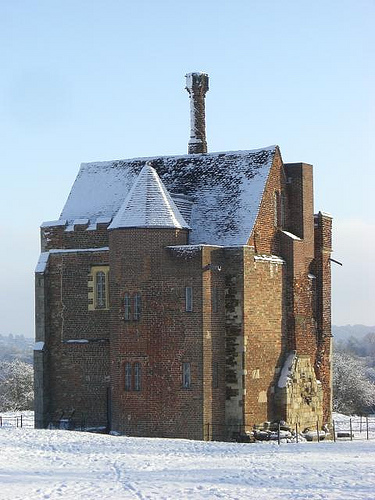
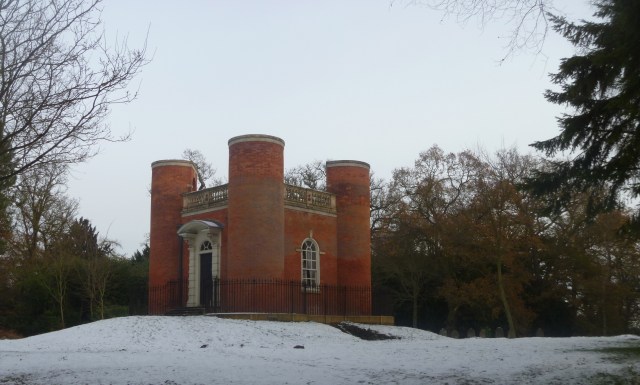
The Landmark Trust have published a history booklet “Old Warden and the Shuttleworth Estate : the history of Old Warden told through three buildings; Warden Abbey, Queen Anne’s Summerhouse and Keeper’s Cottage”. 

Warden Abbey

Warden Abbey (now also a Landmark Trust property)

Queen Anne's Summerhouse

Queen Anne’s Summerhouse (now also a Landmark Trust property)

I was able to buy a copy from the housekeeper at Keeper’s and it tells the history, briefly, of the area from the foundation of the Cistercian Warden Abbey in 1135 to the present day  co-operation between the Shuttleworth Trust and The Landmark Trust.
The Shuttleworth Trust was set up by Dorothy Shuttleworth following the early death in 1940 during an RAF flying accident of her only  son and the squire of Old Warden, Richard Ormonde Shuttleworth. The hall became a hospital during the War and afterwards the devastated mother turned the entire estate into a charitable trust in his memory. The hall is now a College  specialising in running outdoor and country-based courses. Richard’s collection of old aeroplanes formed the original Shuttleworth Collection.
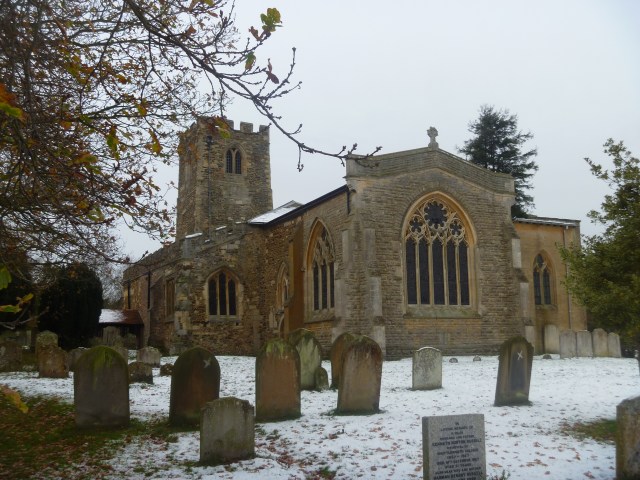
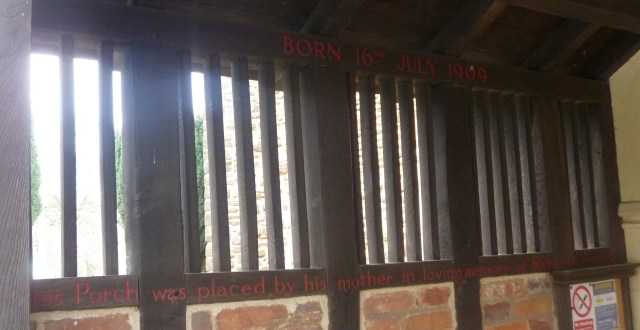
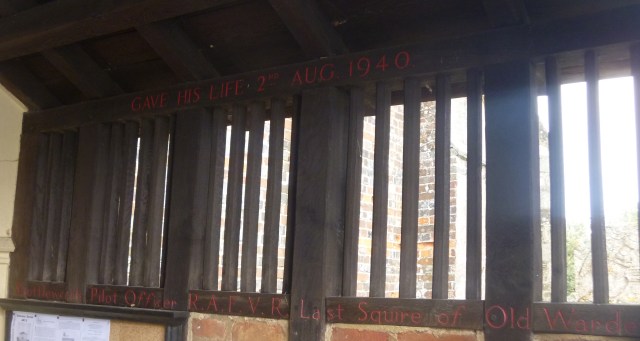
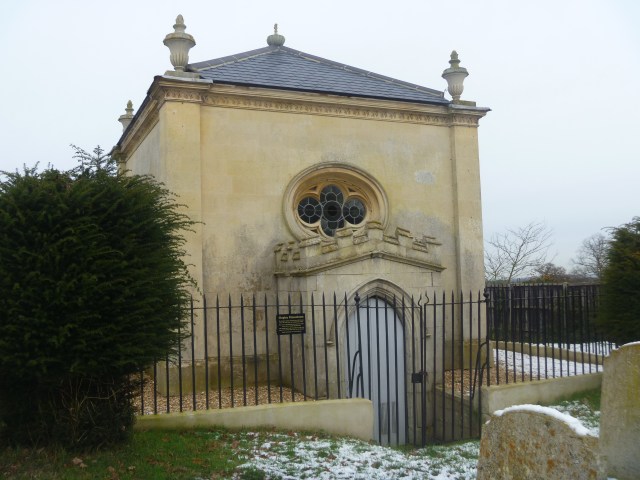
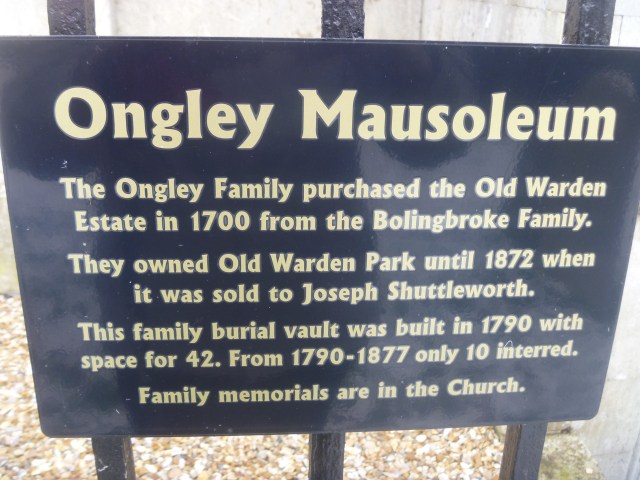
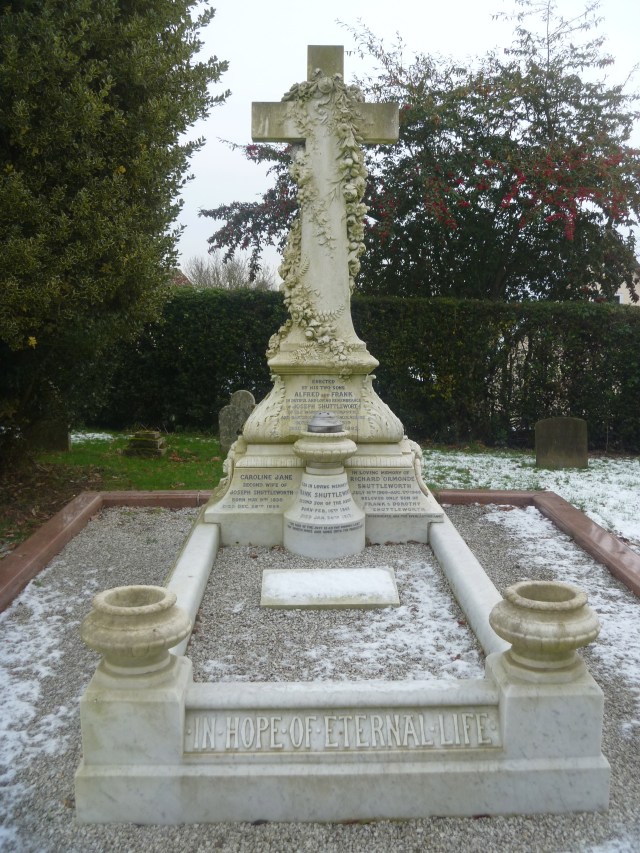
I took a walk one day to visit St Leonard’s church, in Old Warden (2 stars in Jenkins’s book). Unfortunately it’s only open at the weekend so I wasn’t able to inspect the various Ongley and Shuttleworth memorials and the 14th century window depicting an abbot in a white habit from the Cistercian Warden Abbey. But in the porch Richard is commemorated and the Ongley Mausoleum and the Shuttleworth graves lie in the churchyard.

St Leonard's Old Warden

St Leonard’s Church

Porch 1

Porch 2

The porch is a memorial to Richard Shuttleworth

The Ongley Mausoleum

Ongley notice

The Ongley Mausoleum

Shuttleworth grave

The Shuttleworth Grave

Additional Note :

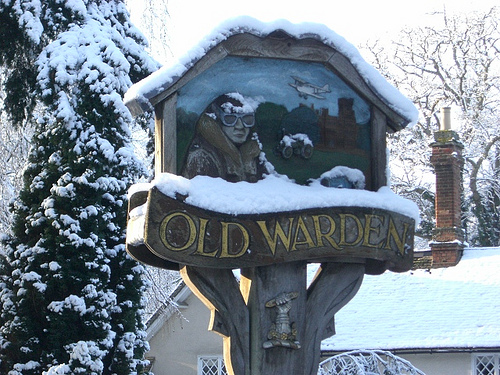
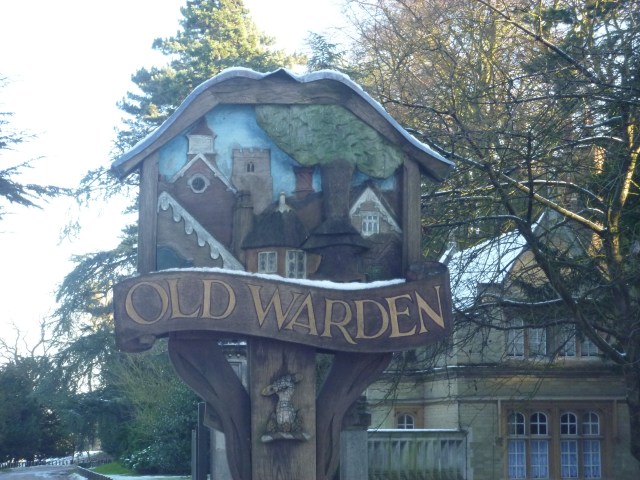
Old Warden sign 2009

Village sign in 2009

Old Warden sign 2012

The Sign today in 2012

I’m not sure that I don’t prefer the older, more distinctive one.