Looking Back on the Missed Months of 2011

A Happy New Year to You All!

Transferring stuff from one year’s diary to the next’s made me think I might make a note here on an event/category from each month of 2011 up to my starting this blogging lark in August. One event with one picture is quite a tough call – especially in the summer months – but I will give it a go.

January 2011 : Landmarking with Milady

The year started well with my usual London Landmarking Trip but this January I was fortunate enough to get a double dose of London Landmarks. I stayed in the 45A Cloth Fair property for 3 nights and visited friends at the Hampton Court Georgian House on one of the days. There is so much to see and do at Hampton Court that we have booked our January 2013 London stay at Fish Court in order to experience more. If you stay there is no extra charge for visiting the Palace. On the other day at Cloth Fair we took tea at the recently totally renovated Savoy Hotel – an out-of-this-world experience from the moment your carriage arrives to the moment you are driven away.

February 2011 : Milady gets culture

An early wet and windy two night excursion to Cambridge led to the wonderful discovery of Kettles Yard. Our trip was planned around a visit to The Scott-Polar Research Institute whose museum had just re-opened after extensive renovation work. But interesting as it was to see the exhibits at the SPRI the highlight of my visit was Kettle’s Yard. We even went there twice. On the Thursday afternoon of our arrival we took a walk from the hotel and ended up at the house that is Kettles Yard. It is like walking into someone’s home – you ring the doorbell and are welcomed, photography is no problem, you may sit and look at the books and the place is crammed full of art and artefacts of what I suppose is called the modern era. It was on this visit that we heard about the Friday Lunchtime Concerts so from the SPRI we headed back to KY and joined a winding queue of keen concert-goers and enjoyed with them a chamber group of student musicians.

March 2011 : Milady gets Culture
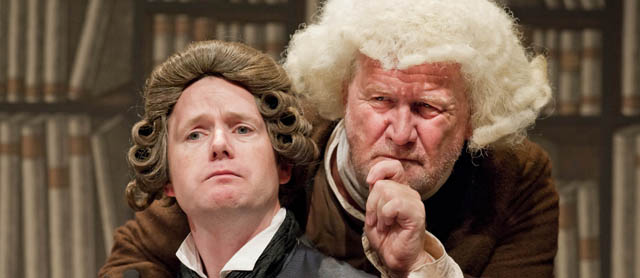
Photograph: Robert Workman

At the end of March Out of Joint brought their play  “A Dish of Tea with Dr Johnson” to The Carriageworks in Leeds. I’d read quite a bit a bit about Dr Samuel Johnson and visited his house in Gough Square in London so was intrigued to see this well-reviewed piece. I was not disappointed. It is quite short, full of fun but with some pathos and there is also the most wonderful dog actor who must have been standing in for Johnson’s cat, Hodge. I would have loved to have seen the performance actually at Dictionary Johnson’s House but this was the next best thing. Highly recommended although I think the tour is finished now.

April 2011 : Landmarking with Milady

Friday 29th April 2011 must have seen the high point of the year in Britain – The Royal Wedding of HRH Prince William and Miss Catherine Middleton. That very day I had booked (long before the wedding date was announced) to spend the May Day Holiday Weekend in France at Gif-Sur-Yvette the former weekend home of the Duke and Duchess of Windsor just outside Paris and now managed as a holiday let by The Landmark Trust. I was visited there on one of the days by my good friend MN and we spent a literary day visiting Alexandre Dumas’ The Chateau of Monte Cristo at Port-Marly and La Maison Litteraire de Victor Hugo at Bievres, Île de France. It was such a good trip that we’ve booked to go back again next May so I’ll be posting in more detail then.

May 2011 : Milady Visits
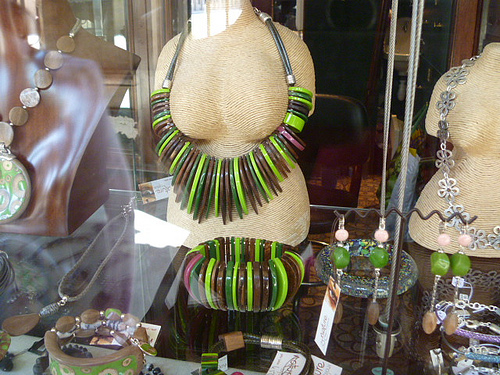
Window shopping at Didier Ludot in the Jardin du Palais Royale

On 12th May the Optimist celebrated a special birthday! And on that very day we were booked to travel – in style, I might add – by Eurostar train from Yorkshire to Paris to attend our nephew’s wedding in Vincennes, just outside Paris, on the Saturday. What a fab weekend we had – lovely hotel quiet but right in the centre of Paris, lovely weather, except that it rained on the Sunday as we were leaving, excellent company and good food and wine with some “flanez” and pavement cafes thrown in for good measure.

June 2011 : Milady Reads and Visits
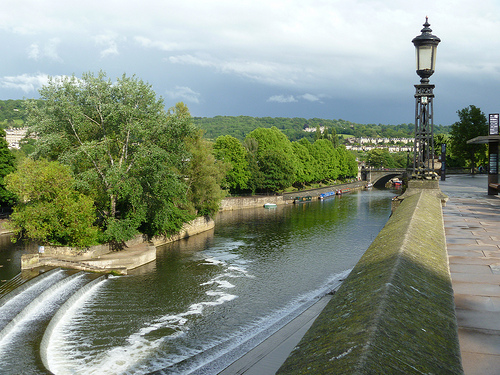
In Spring 2011 Persephone Books published a reprint of Adam Fergusson’s “The Sack of Bath”. On June 16th there was an Afternoon of Walks in Bath led by Caroline Kay, of the Bath Preservation Trust, and Adam Fergusson. We met at The Circus cafe for a lovely two course lunch and were then taken on a walking tour to view the effects of City planning policy on Bath during the 1960s. The walk ended at The Museum of the Building of Bath where we were served tea and cakes. But before all those pleasures I had the great pleasure of spending the morning with my online reading group friend Carol who lives in Bath and took time out to show me all the bookish delights of that city – of which there are very many. It was one of those days where looking back it seems impossible to have fitted so much into a mere 7 hours.

July 2011 : Milady Steps Out

On 30th June I set out with my sister on my first long distance walking trail – Wild Edric’s Way in Shropshire. The ‘holiday’ was organised by a local company with the delightful name of Wheely Wonderful Cycling Holidays which deals mainly in cycling holidays but with some walking tours also on their books. I say ‘holiday’ but at times it was jolly hard work!  We walked from the Stiperstones to Ludlow over 3.5 days. Approximately 40 miles was covered in total with 4 overnight stops. For the most part it followed the route of The Shropshire Way which coincided also with The Kerry Ridgeway and Offa’s Dyke National Trail. There were several places of interest on the route – churches at More, Churchtown and Ludlow and castles at Clun, Stokesay and Ludlow. We met other walkers and some lovely B&B owners along the way. I was glad to have done it and it felt like quite an achievement but I was not sure whether I wished to repeat the experience. However, the further away it has become the more I think maybe I would indeed like to do another such walk in the future.
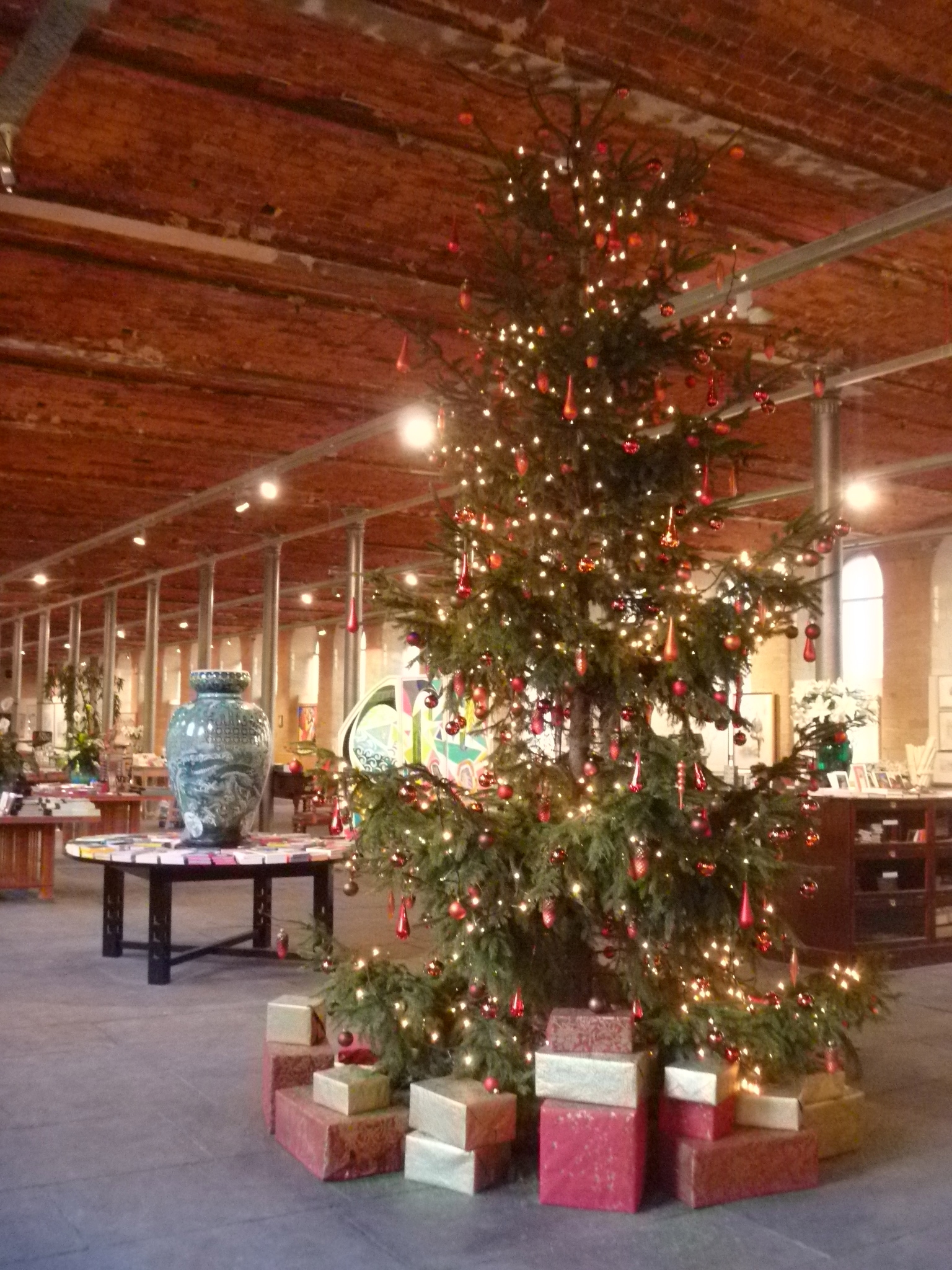
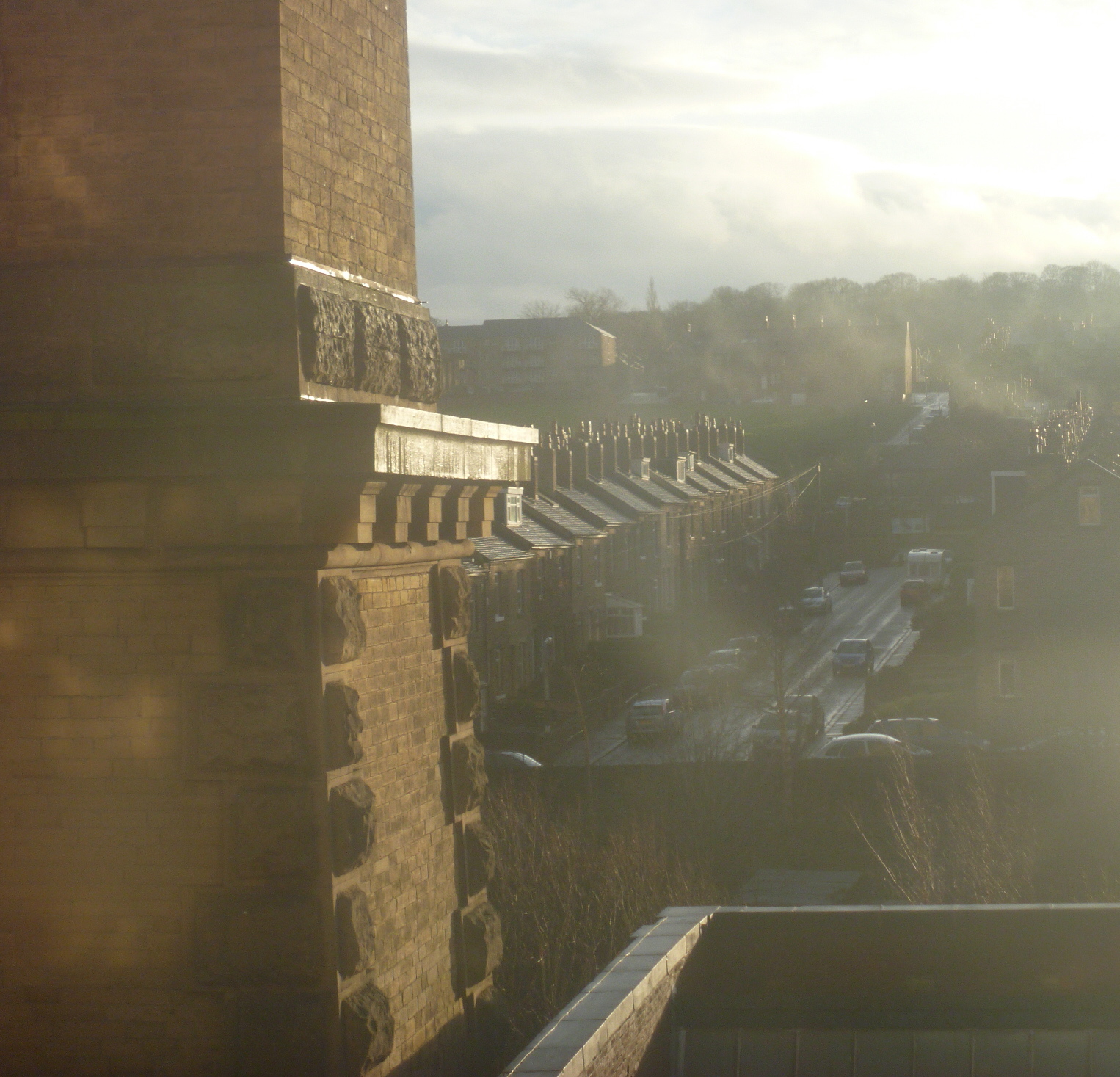
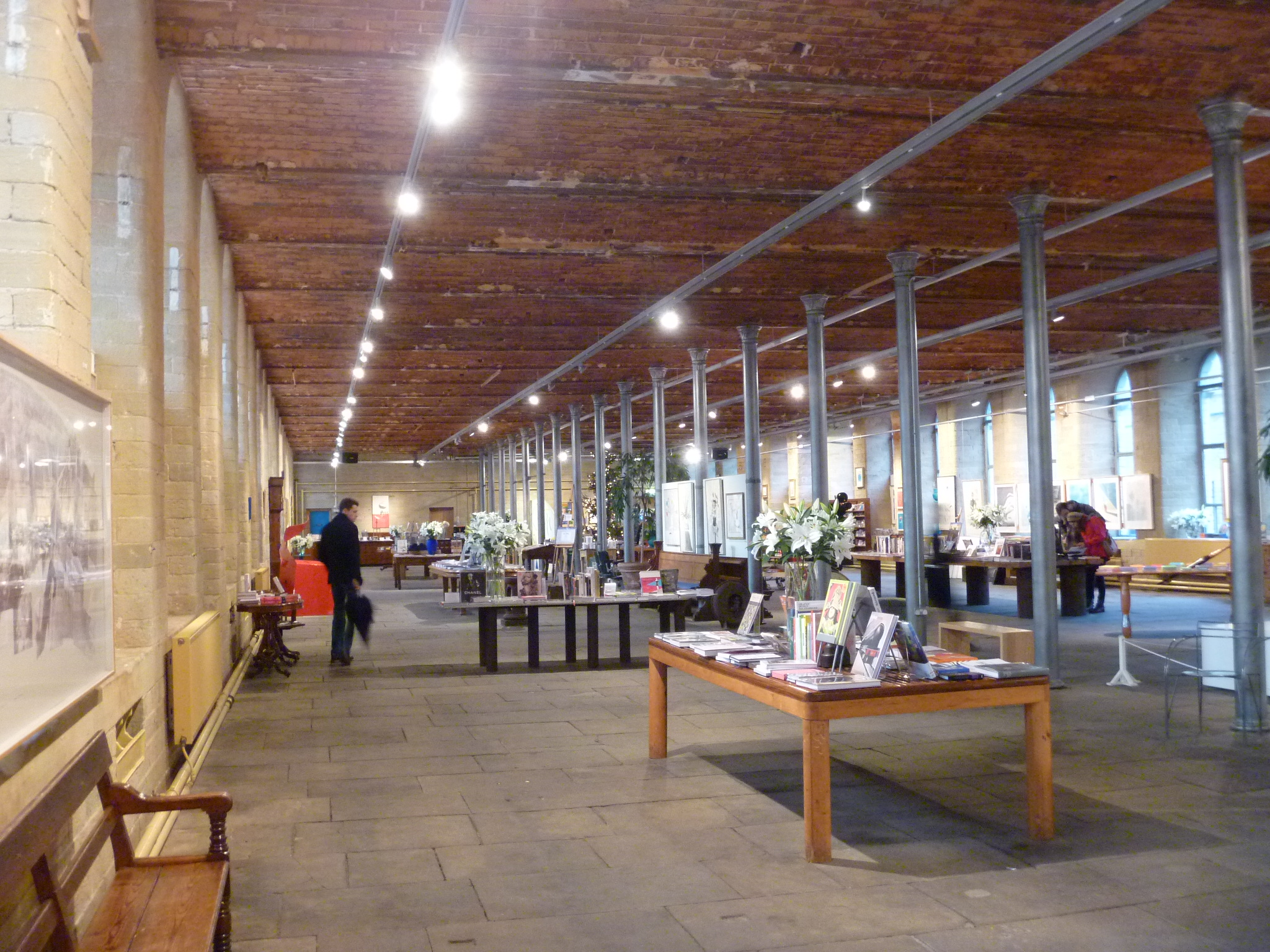
Twenty Five Trees in a Mill

Here in Yorkshire we have two Unesco World Heritage sites. I’m not too sure exactly what is required in order to be appointed to this lofty status – maybe it’s all about preservation. The nearest one to me is Saltaire which was awarded this accolade in 2001. On Monday I took a trip with the Banker to visit one of my favourite local shopping destinations – Salts Mill in Saltaire village.

Saltaire Village from Salts Mill

It was really miserable weather so we decided to give the village itself a miss and head straight for the Mill itself – dodging rain and puddles between the car park and the huge mill door.

Salts Mill and the surrounding model village was built for Bradford businessman and philanthropist Titus Salt and opened in 1853. In 1987 the mill stood empty and it took another enterprising businessman, Jonathan Silver, to buy it and create the 1853 Gallery and Salts Mill as it is today. He suggested to his friend and fellow Bradfordian David Hockney that the Mill might be a good place in which to display some his pictures and Hockney agreed. Sadly, Mr Silver died of cancer in 1997 but the enterprise itself has gone from strength to strength.

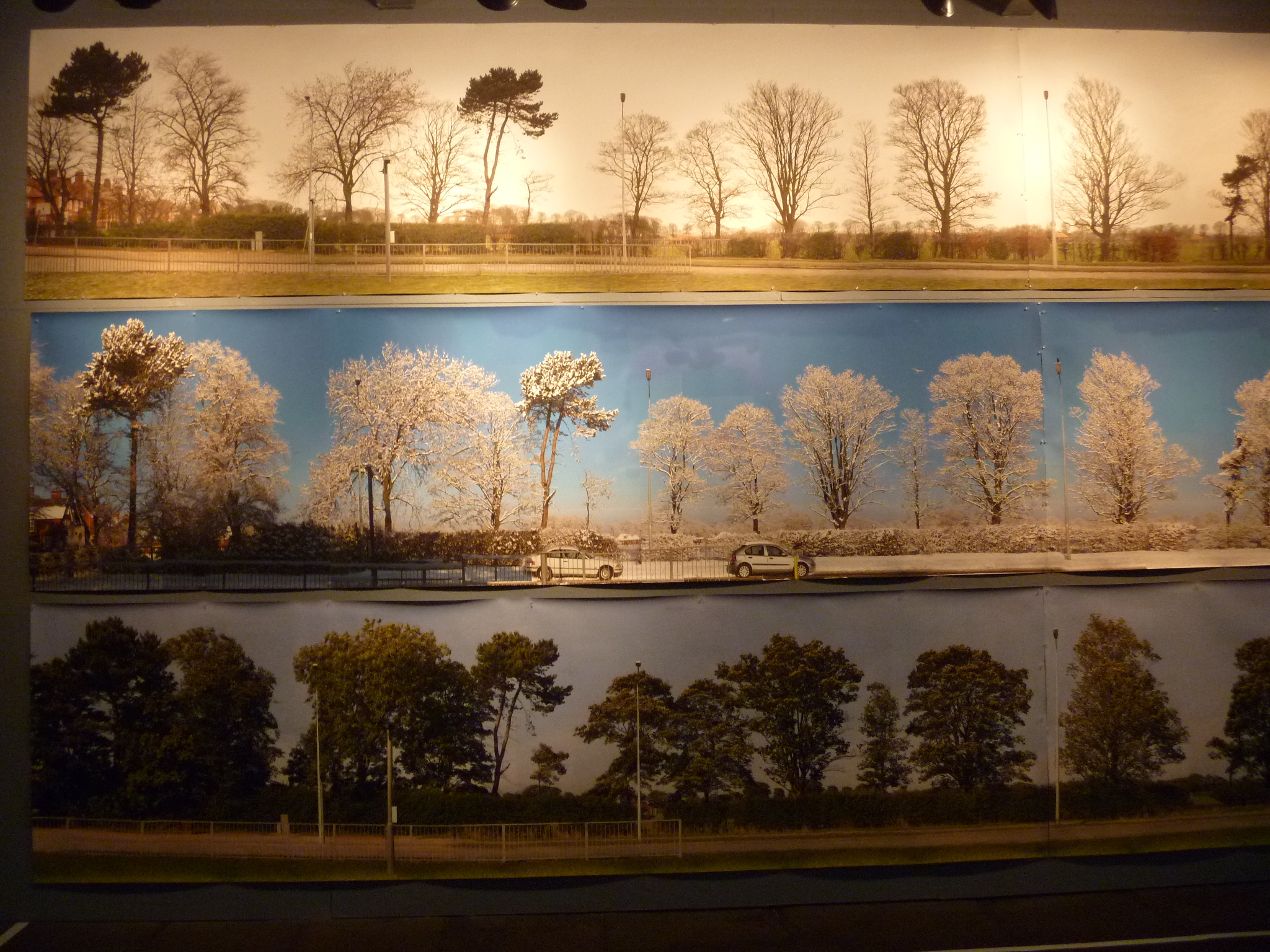
Currently there are two Hockney exhibitions. The permanent display in the ground floor 1853 Gallery is the world’s largest display of Hockney pictures. Here you can also see many of the Burmantofts pots (see top picture) and buy art materials and books. The temporary exhibit 25 trees and other pictures will be showing on the third floor until the end of April 2012.

Besides art and related books there is also Salts Diner, Salts Book and Poster Shop, The Home – a shop selling the very best in home ware designs, an Espresso Bar, Carlton Antiques and Trek and Trail outdoor gear shop.

Salts Book and Poster Shop

It’s not easy to decide what to order for lunch!

I’m so lucky to have Salts Mill nearby – it makes a perfect day out.

Finally, here is my own tree with best wishes for a Merry Christmas to all Miladys readers!

Family Matters at Christmas

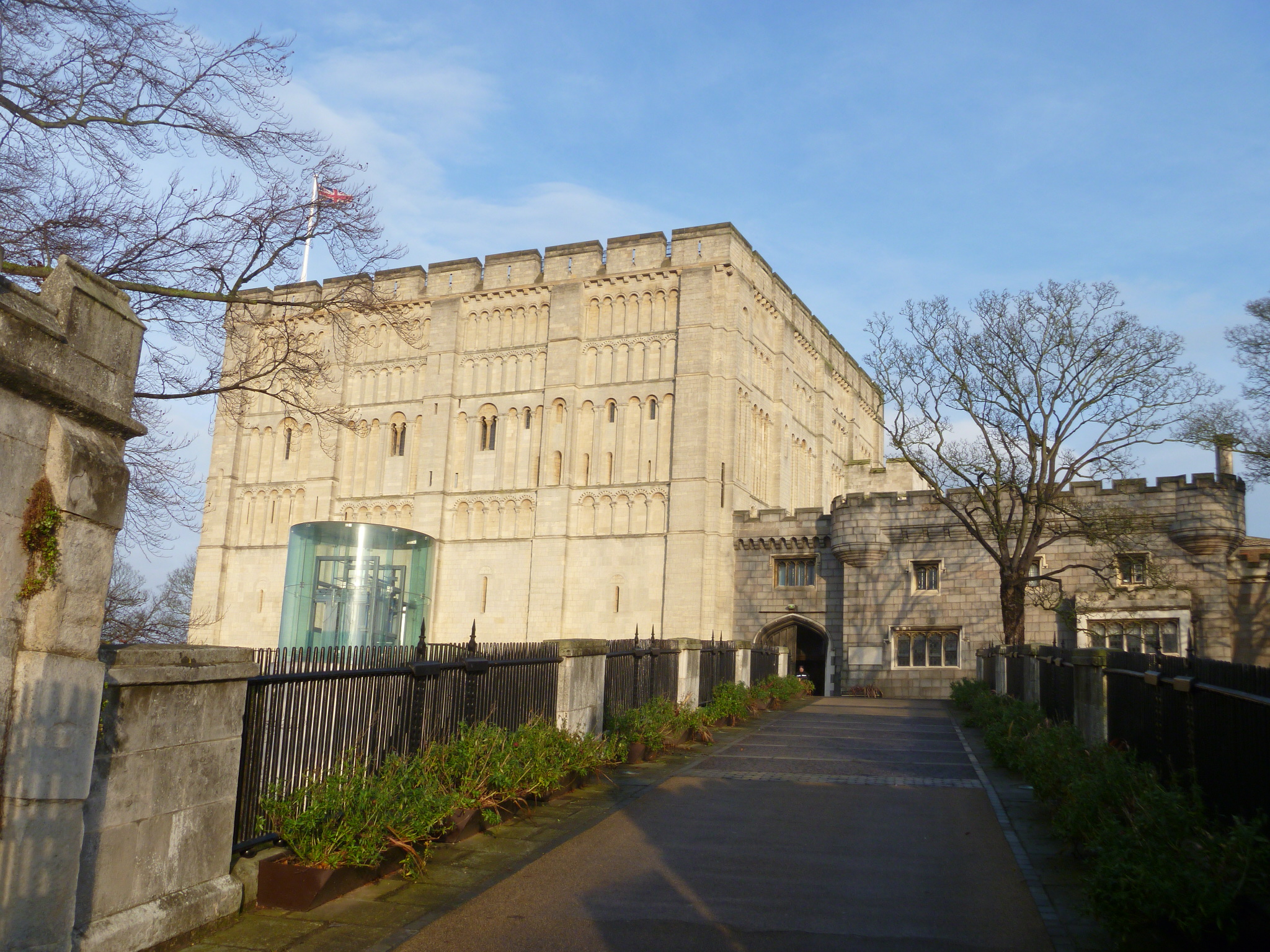
My trip to Norwich for the weekend coincided with a highly recommended exhibition at Norwich Castle Museum. Luckily I managed to fit in a visit first thing on Saturday morning – before proceeding to other more personal ‘family matters’.

The exhibition, subtitled “The family in British art”, covered a wide variety of media and time periods and was subdivided into 5 sections: Inheritance, Childhood, Couple and Kinship, Parenting and Home. A number of galleries have contributed to the exhibit which will show next year in Sheffield, Newcastle and at Tate Britain. I would love to tell about every picture, installation and sculpture but will just highlight a few which I found particularly relevant or interesting.

Many of the pictures included in Family Matters are from Norwich Castle’s own collection. I know that this is pretty extensive as I have in the past participated in behind-the-scenes tours and there are also many fine works of art in the permanent galleries. John Crome and John Sell Cotman and other Norwich School painters being particularly well represented.

Approaching Norwich Castle

Inheritance.

One of my favourite pictures fell into this category: The Harvey Family of Norwich, c.1820 by Joseph Clover. Outside the gallery, in the Castle Rotunda is a life-size copy of this painting with a few faces missing. So I had a go at filling one of the gaps!

The Harvey Family of Norwich, plus one!

In addition there’s The Descent of King James I by an unknown 17th century artist – a kind of visual family tree and right up to date is a 3 screen video installation by Zineb Sedira featuring 3 generations of one family who speak Arabic, French and English in turn.

Childhood

I loved the Gainsborough painting of his Daughters Chasing a Butterfly (c.1756). The butterfly is said to denote fragility and one of the daughters, Mary, was named after a previous daughter who had died two years earlier.

Picture credit 

Bang up to date was a Grayson Perry vase made in 2000 and titled Difficult Background. Look past the innocent 1950s children in the foreground to horrors of war, burning buildings, naked figures.

Couples and Kinship

To me the most touching of all the pictures was Batoni’s “The Hon. Thomas and Mrs Barrett-Lennard with their daughters Barbara Anne” (1750). Thomas and Anna Maria Pratt had married in 1739. Their daughter Barbara had died in 1749 and to console themselves they had taken a European tour. In Rome they commissioned Pompeo Batoni to paint their portrait and to include (using a miniature of her likeness) their daughter.

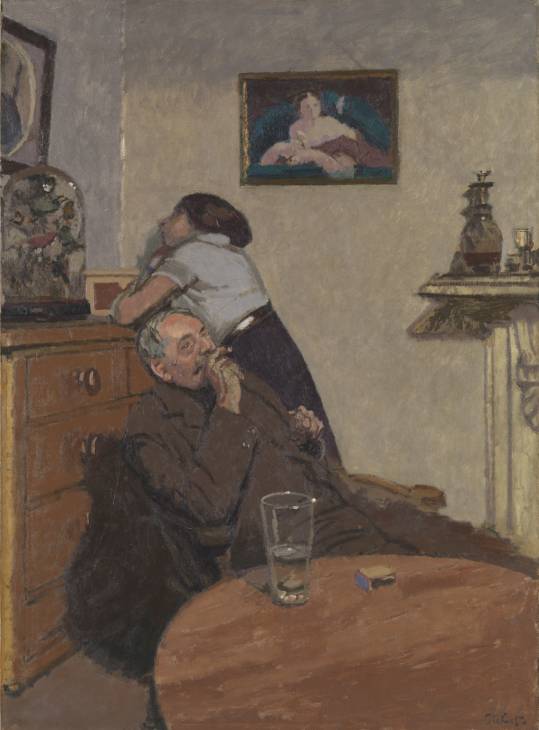
Walter Sickert’s “Ennui” depicts another couple but in what appears to be a totally restrained relationship. It depicts “a sense of suffocating boredom” but is in fact a posed picture using as models a friend of Sickert’s and his own maidservant.

Picture Credit

Parenting

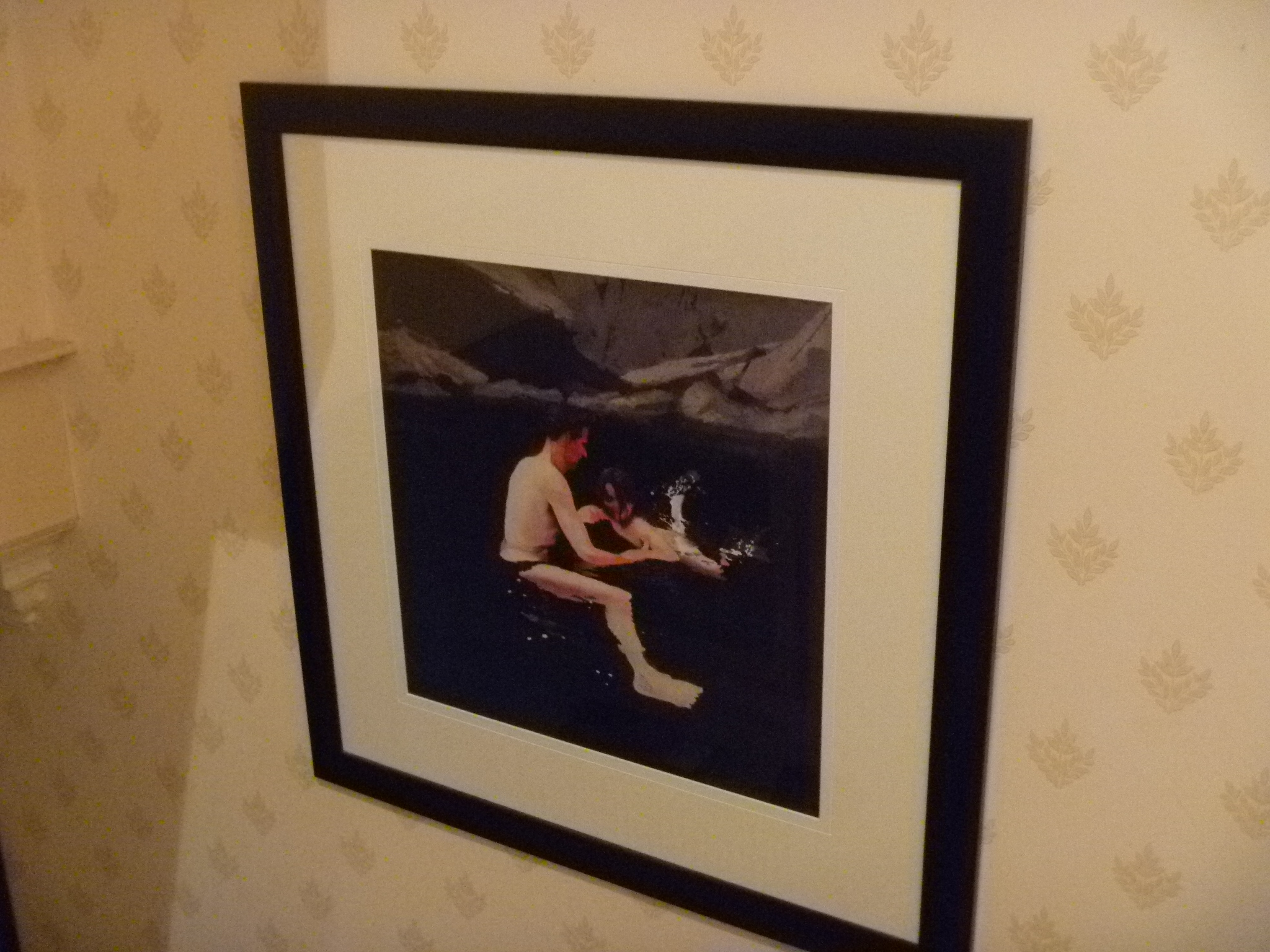
We have a print on our staircase of “Melanie and me swimming” by Michael Andrews (1978-9). Our print measures about 38cm square. The actual painting is about 2m x 2m. It’s based on a holiday photograph taken years earlier of the artist teaching his daughter to swim.

Several other pictures in this section interested me – not least David Hockney’s painting of his parents (1977). I recognised the Habitat folding chairs! We bought these very chairs that same year – the year we got married – for our kitchen. We’ve still got them and use them now and again when we number more than 4 at the kitchen table.

Picture credit 

Home 

Finally the section titled ‘Home’ like the others included a right mixture of interpretations! Several were photographs including one by Thomas Struth (a German photographer born in 1954) called “The Smith family, Fife” (1989). I had only earlier this week read an article in the New Yorker about Struth and his National Portrait Gallery photo of The Queen and Prince Philip commissioned for the Queen’s Diamond Jubilee next year. You can read the article here.

Photo credit

The curator poses some thought-provoking questions. “What makes a house a home? Is home a real place or just a dream of intimacy? Can we ever return home, or is it always somewhere irretrievably in our past?”

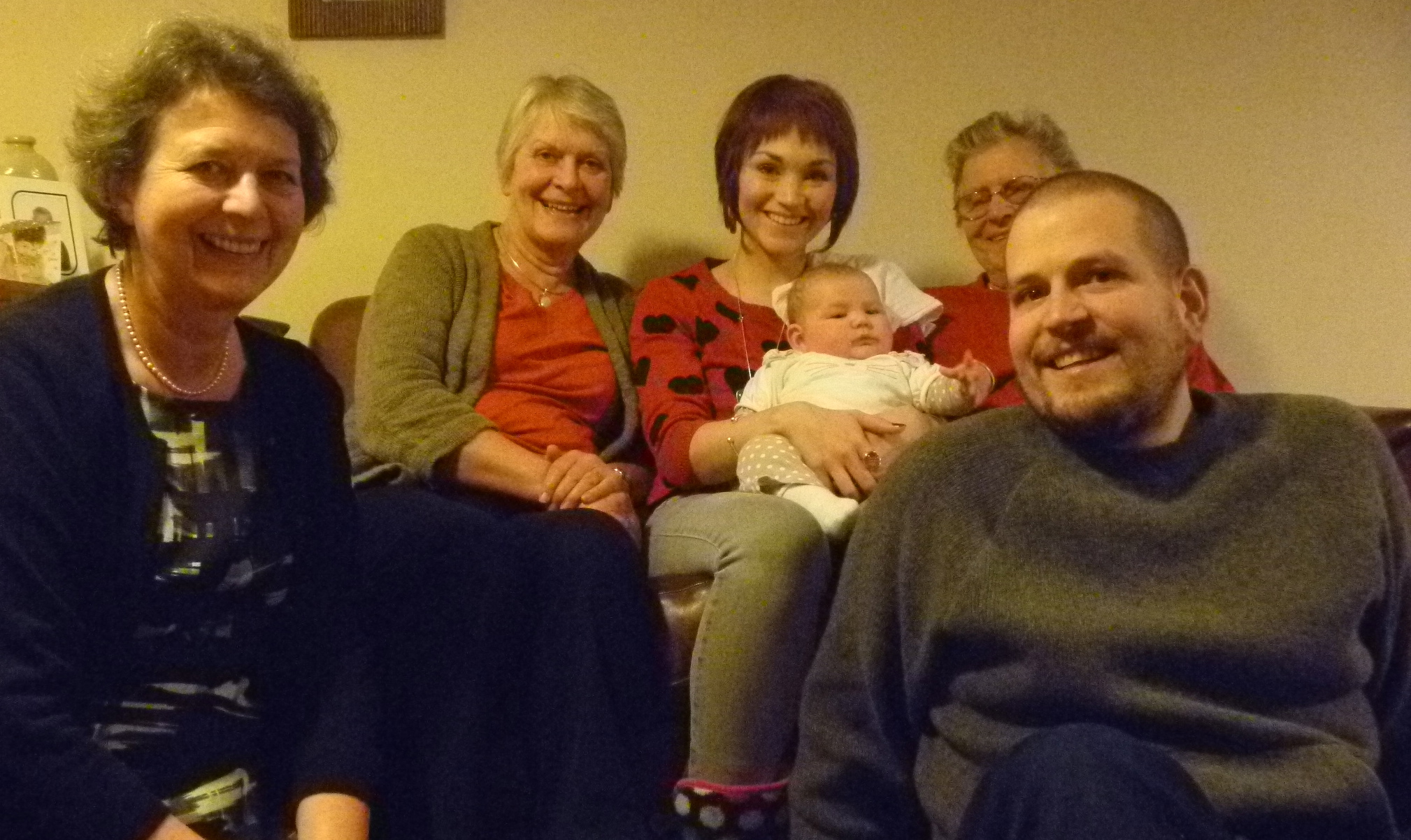
With these thoughts on my mind I then proceeded to Family Matters of my own and here are four generations of my family in Norwich.

Christmas Traditions – a Trip with Lunch

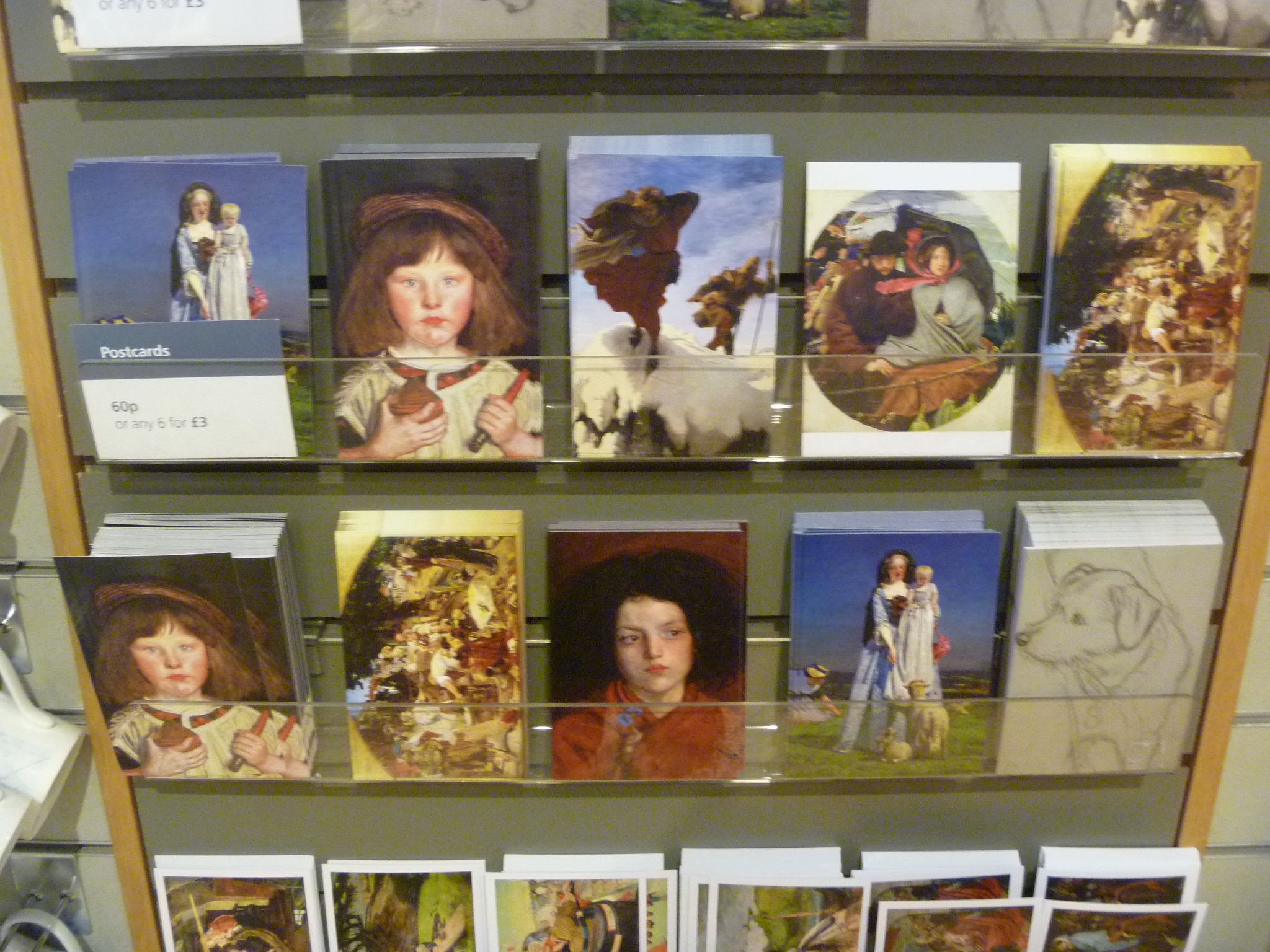
Each year I spend a special day with a friend during the run up to Christmas. In the past we’ve gone on a hike and had a lunch or combined with something cultural. Last year we hiked along the River Wharfe and ended up with lunch at The Devonshire Fell Hotel at Burnsall. In previous years we’ve been to The Yorkshire Sculpture Park where it’s possible to walk for a few miles before taking lunch in their lovely light and airy first floor restaurant. This year was no exception but instead of the walk/hike part we took the train to Manchester and visited The Manchester Art Gallery which is currently showing a Ford Madox Brown exhibition; subtitled “Pre-Raphaelite Pioneer”. Earlier this year I met with friends for an Art Fund visit to the city which included a tour of The John Rylands Library and should have included a visit to the Ford Madox Brown murals in Manchester Town Hall. However another event took precedence over ours and we had to make do with a ‘Behind the Scenes’ tour of the town hall.

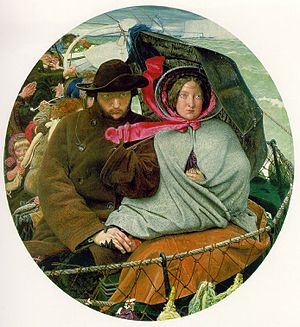
The Last of England by Ford Madox Brown

(http://upload.wikimedia.org/wikipedia/commons/4/4b/Brown_last_of_england.jpg)

During the 1990s I did a course in Victorian Studies which included a Victorian Art module. I can’t say that I love the Pre-Raphaelites but I did find the study of nineteenth century paintings interesting because they are laden with symbolism. Ford Madox Brown (1821-1893) was never a member of the Pre-Raphaelite Brotherhood but he did influence them through his ‘primitive simplicity’ style of the age before Raphael.

Emma Hill (Study for The Last of England) 1852.

Ford Madox Brown produced a prodigious amount of work in many forms and media. There are some beautiful sketches and drawings and several very famous paintings many of which are from the Gallery’s own collections, from the University of Manchester’s Whitworth Gallery and Birmingham Art Gallery. The most famous and featured here are Work and The Last of England (above).

The exhibition is divided into themes around FMB’s life and work including: The Artist and His Family, The Early Period, The Change of Direction, The Landscape Painter and The Portrait Painter. Perhaps of most interest to me was The Storyteller theme where the drawings and paintings depict characters from literature as in his King Lear series of drawings and his paintings of the origins of literature – Geoffrey Chaucer reading the ‘Legend of Custance’ to Edward III and his Court and Wycliffe Reading his Translation of the Bible. There are illustrations from the works of Lord Byron; significantly his Manfred on the Jungfrau and from Victor Hugo’s poem ‘A un passant’ – The traveller.

The Traveller

(Source : http://hoocher.com/Ford_Madox_Brown/Ford_Madox_Brown.htm )

Manfred on the Jungfrau

(Source : http://www.manchestergalleries.org/the-collections/search-the-collection/display.php?EMUSESSID=12973dc2d3d45aa915cf27ebd35dd39f&irn=654 )

On our way out of the gallery we caught sight of a new Grayson Perry exhibit so looks like I may be making a trip back to Manchester in the new year. Who knows?

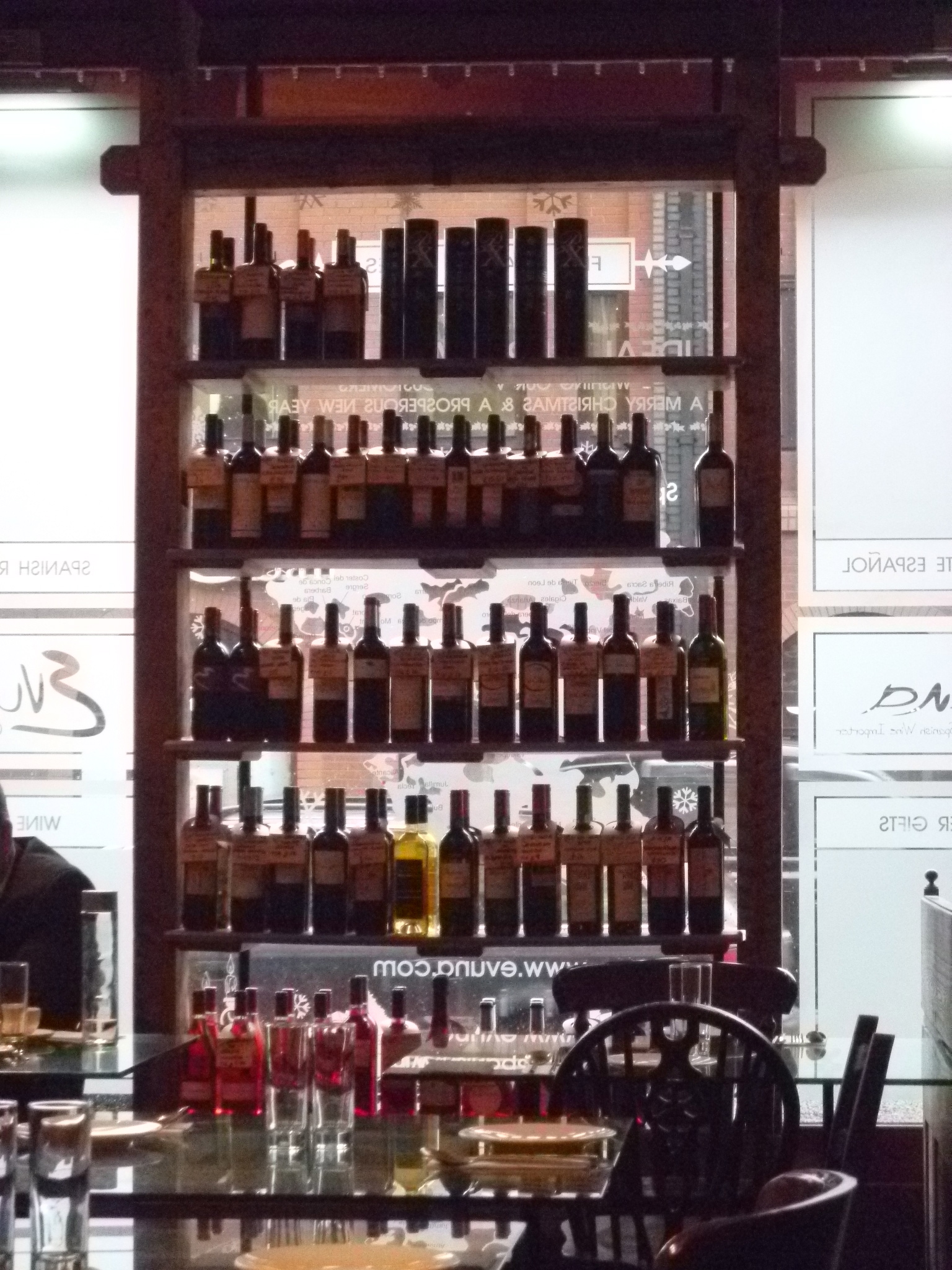
And as we left the gallery the heavens opened and we made a mad dash for the tapas bar – Evuna – a couple of streets away where our weather woes were soon forgotten!

On our way home though we did express our relief to each other that we had chosen to spend our day in a gallery rather than on the hills – we got wet enough without!

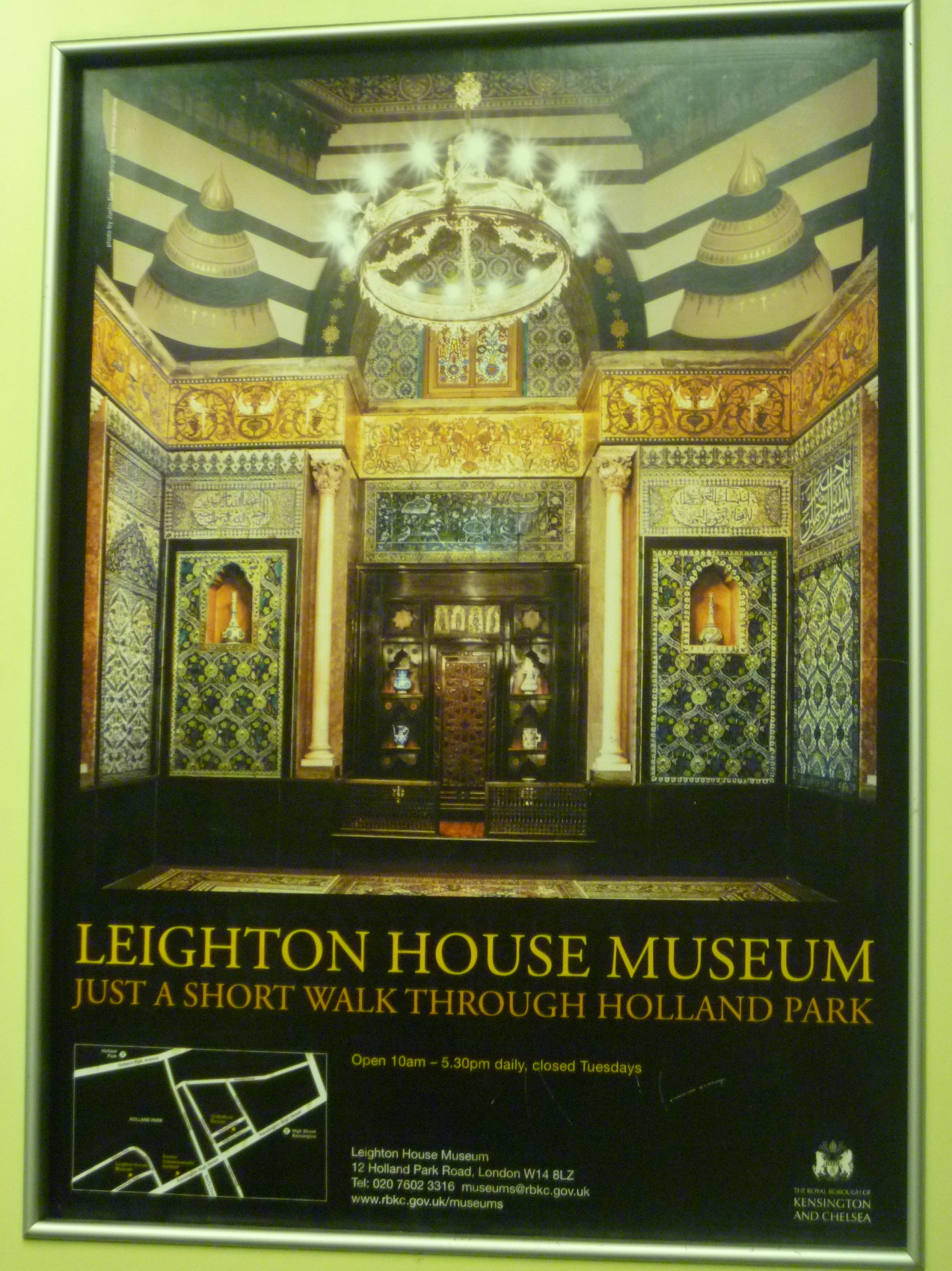
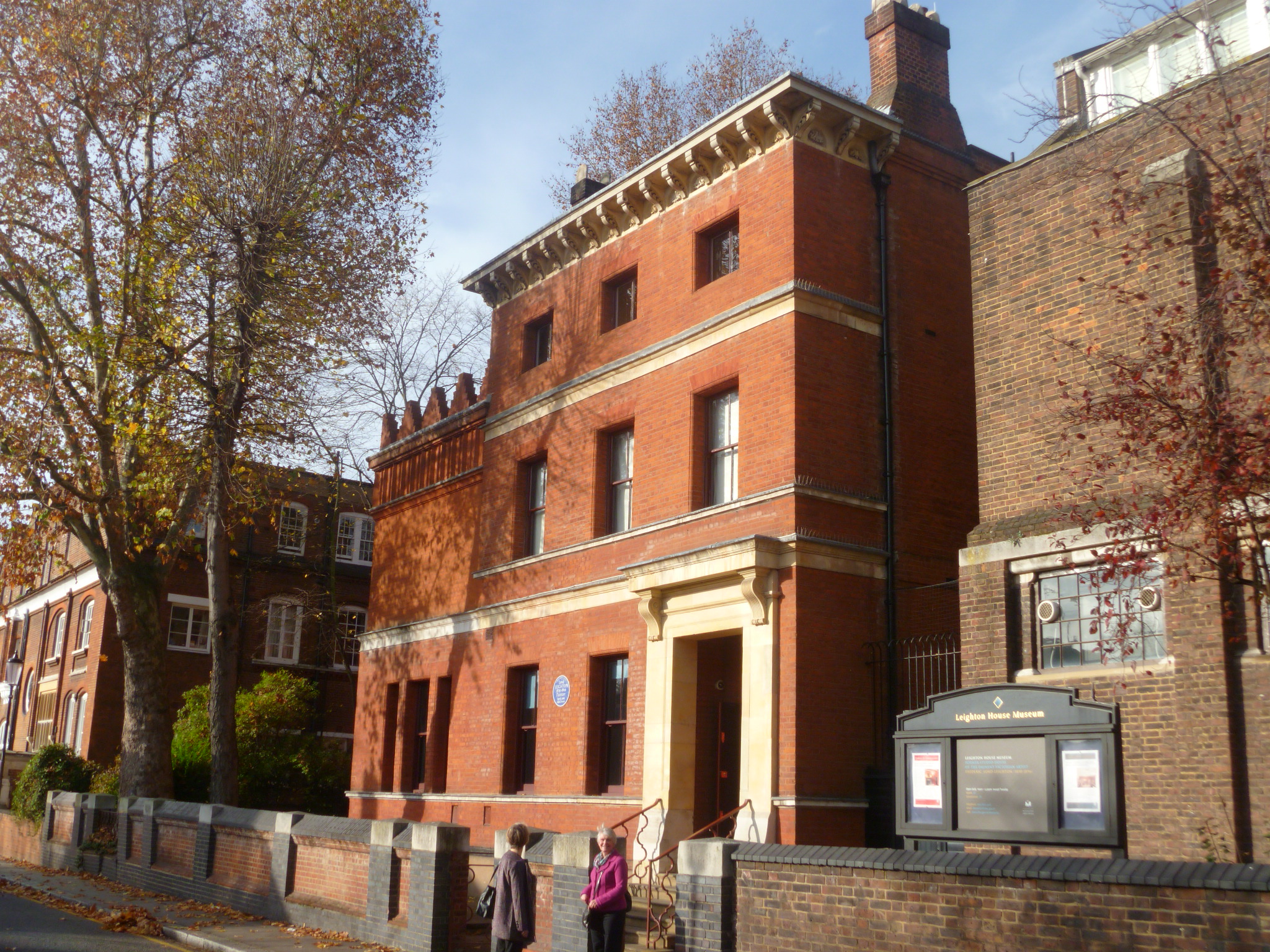
Leighton House in Kensington.

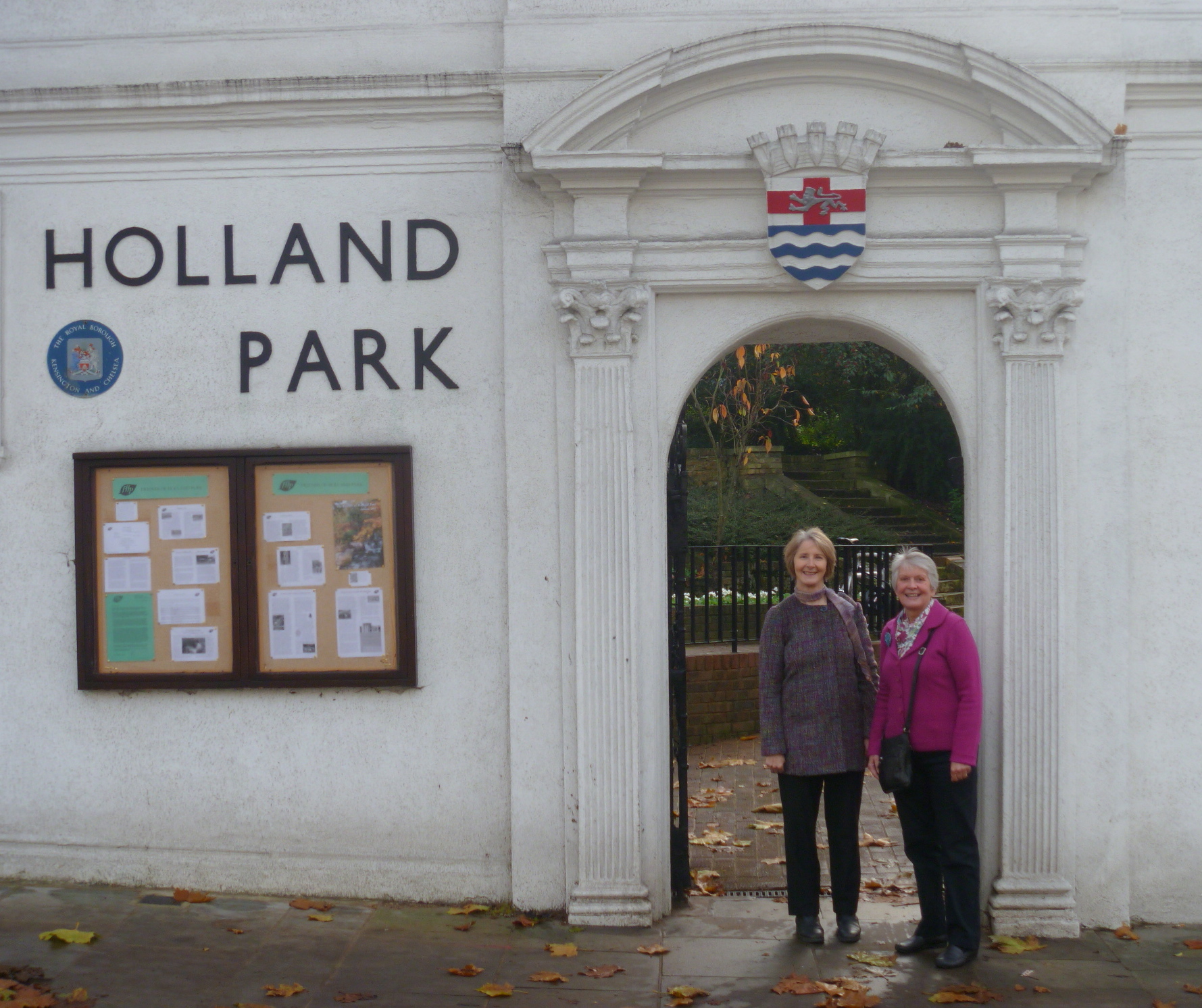
Today I met up with my sister and friend and visited Leighton House in Kensington. It was a beautiful day – unseasonably warm – and we met at Holland Park Tube Station. It’s short walk from there to Holland Park itself. Once inside the park you could be miles away from the busy metropolis that is central London. It was easy to forget that we were only just in Zone 2!

There’s a modern cafe in the middle of the park and it was here that we stopped for coffee (or, in my case, tea) and a chat before heading to the house.

Frederic, Lord Leighton (1830 – 1896), was born in Scarborough, my favourite Yorkshire seaside resort. His father was a doctor and so was his grandfather. In fact his grandfather was primary physician to the Russian royal family in St Petersburg. He amassed a large fortune and because of this Leighton was cushioned for the rest of his life. Although his parents were unhappy with his choice of career they agreed to it and expected him to become “eminent in art”. His successes were many – not least that Queen Victoria bought his first major painting and in 1878 he was appointed President of the Royal Academy. On his death his sisters ensured that the house was left to the nation, or at least to the Royal Borough of Kensington and Chelsea.

As usual no photography is allowed in the house. You enter a huge staircase hall, narcissus hall and the fabulous Arab hall. Leighton was a consummate collector of things Middle Eastern – tiles, textiles, ceramics, woodwork and other crafts collected on his travels – and art – from paintings by  Corot and Tintoretto to his contemporaries G. F. Watts, John Everett Millais and William de Morgan. Despite all the oriental artefacts the house struck me as rather spare and un-Victorian. There’s a lovely big garden at the back but it’s closed in winter. I noticed that they also plan some entertaining events. There’s an Operatic Evening and a Carol Singing evening coming up in December.

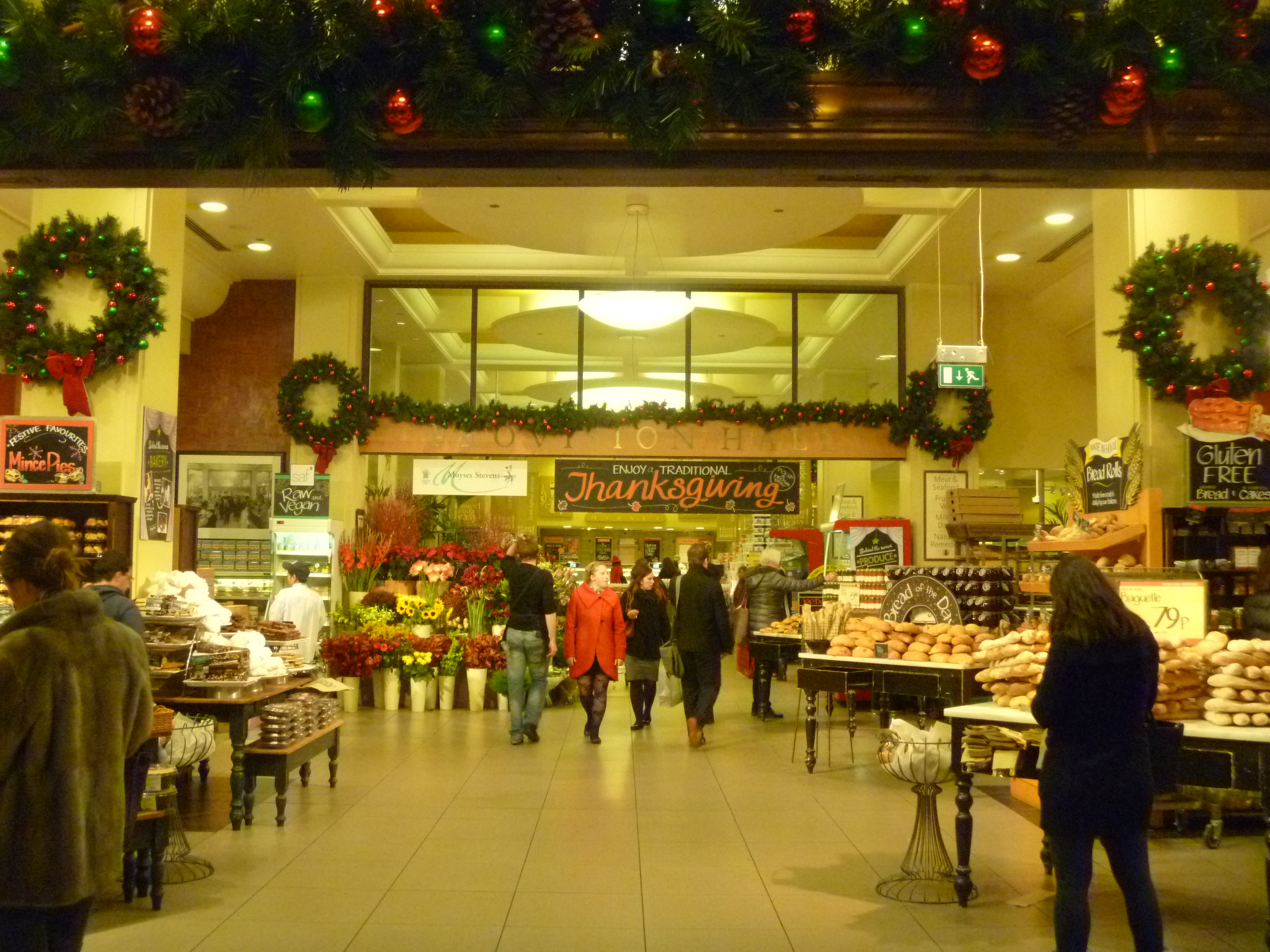
For lunch we headed down High Street Kensington to Whole Foods Market where Thanksgiving was in full swing!

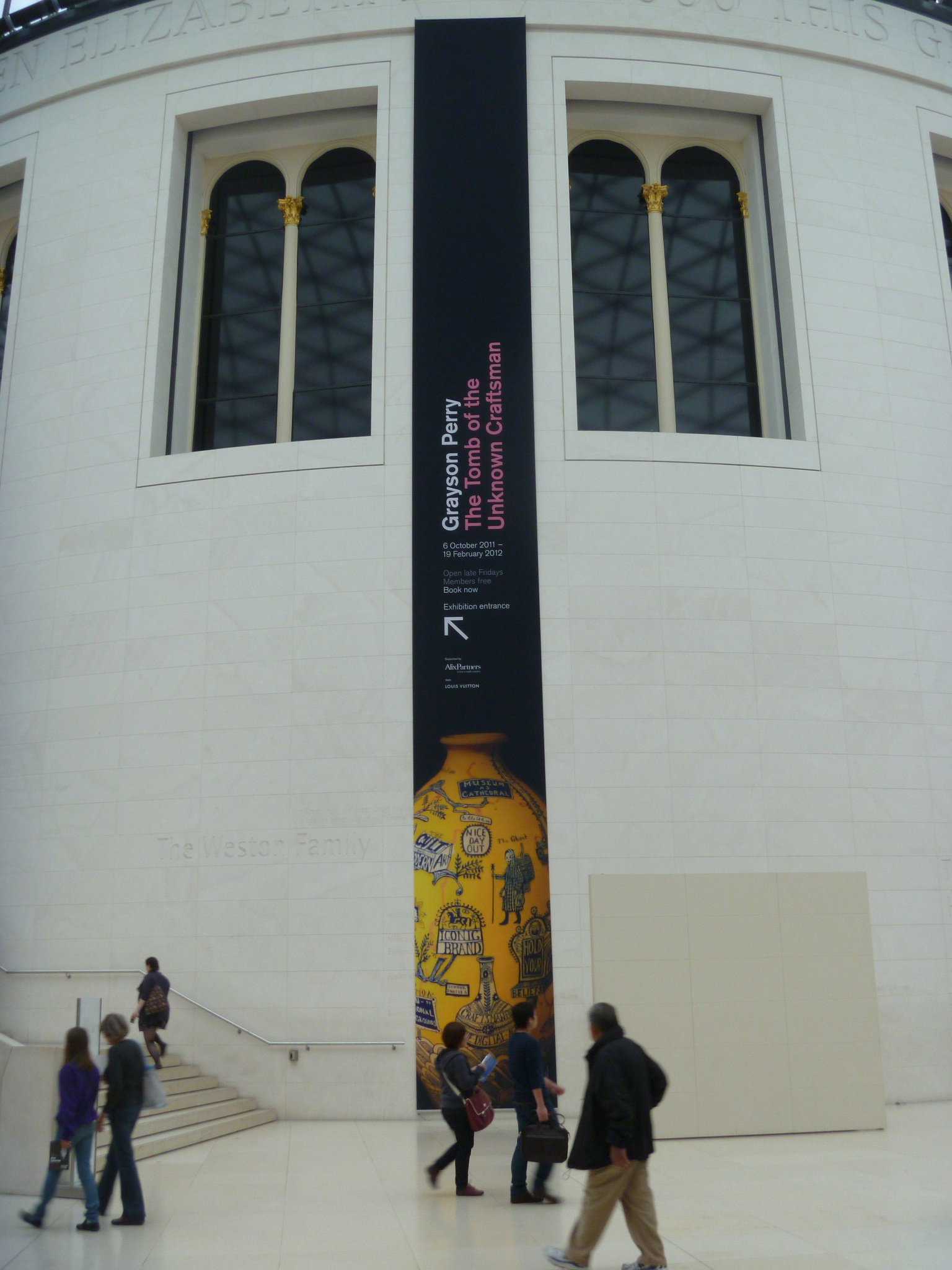
At The Tomb of the Unknown Craftsmen

I’ve been hesitating as to whether to post about my visit to the British Museum on Thursday. Obviously I am no art critic, have no training in art and very little knowledge on the subject and even less knowledge about Grayson Perry himself so this is just my own personal comment. When I first heard about “The Tomb of the Unknown Craftsman”  I was very excited to see it.

I had no idea what to expect but the thought of choosing artefacts, items made by craftsmen and women over the decades, centuries and millennia, from the vast archive of the British Museum had overwhelming appeal for me. Put together with recently crafted pots and tapestries and what I believe are called installations for me the mix was a huge success. I loved it!

We’ve had A History of The World in 100 objects and Our Top Ten British Treasures and now we have a kind of temporary memorial to all of the unknown craftsmen and women whose work has been collected by the museum – or donated to it – over the centuries of its existence.

The exhibition is divided into themes such as Shrines, Journeys, Magick, Maps, Souvenirs of Pilgrimage, Sexuality and Gender, Scary Figures and Patina and Texture. I think I’ve remembered them correctly.

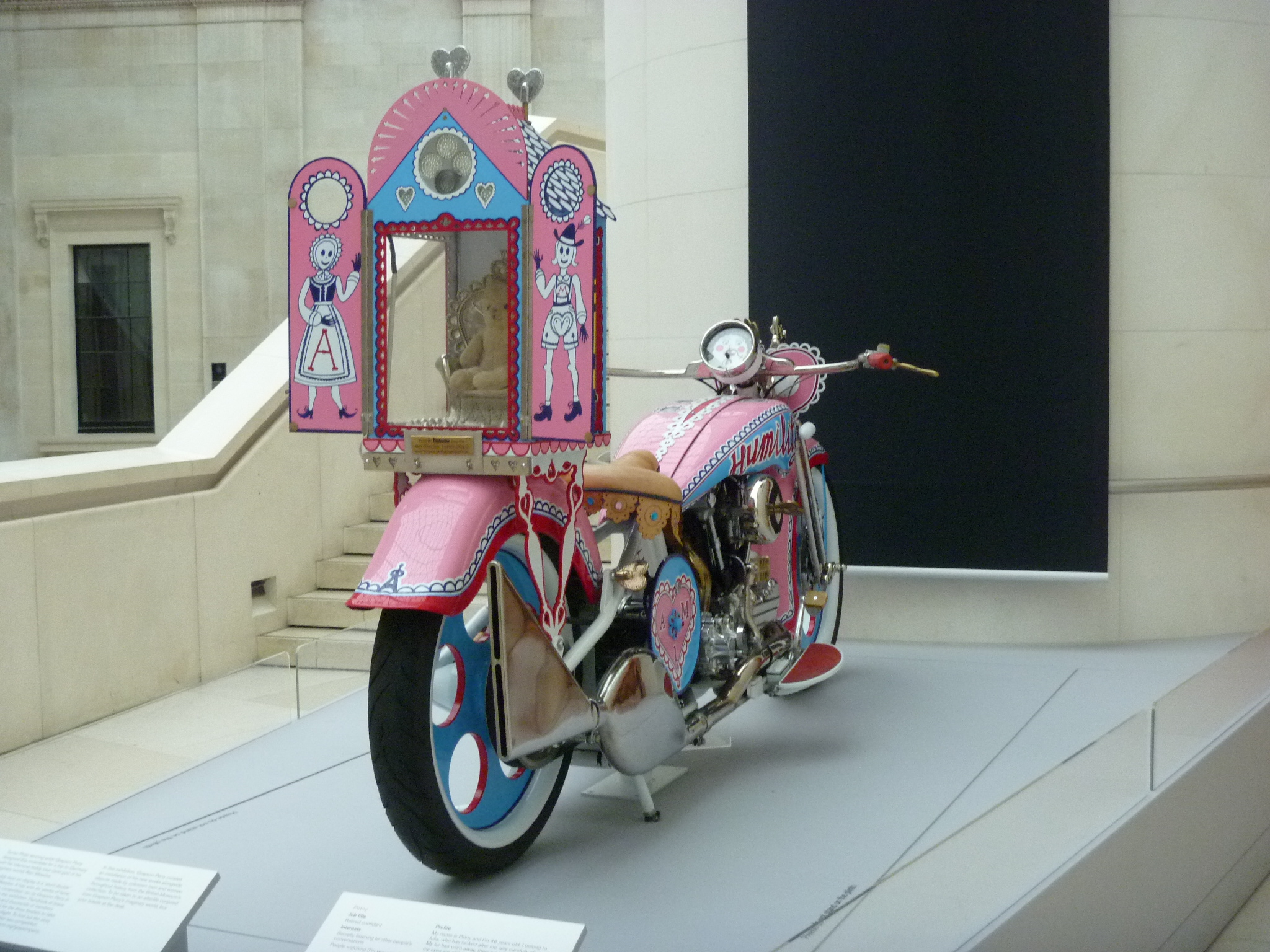
There is Grayson Perry’s teddy bear Alan Measles in his own shrine on the back of GP’s motorcycle. There was a radio programme about the journey they made to Germany on the bike on Radio 4 last November.
No photography is allowed inside the Exhibition but I did take a few notes of GP’s comments on some of the themes that most interested me.

On the topic of Journeys he says :

“The “journey” has become a tired metaphor of reality TV describing a transformative experience. I come on a journey every time I visit the British Museum. I enjoy idealised foreign travel in my head. Walking from my house in WC1 within 20 minutes I can have an encounter with the world.” 

You may have thought the title of this post included a typing error but it is intentional because GP and many of us see The British Museum as a Tomb to Unknown Craftsmen. A pot by Perry on display is called “A Walk in Bloomsbury”.

On Maps he says :

We trust maps. Maps are meant to be a trustworthy diagram of reality. All maps though contain some very human bias. They emphasise desirable features and leave out the undesirable. I like maps of feelings, beliefs and the irrational, they use our trust of maps to persuade us that there might be truth in their beauty.”

I have always loved maps and was delighted see a copy of  a book recommended to me by a friend and which has long lain in my Amazon shopping basket:  You are here : personal geographies ; by Katharine Harmon. A fabric map by Perry fills one wall – to see it at its best wait until you have moved into the next room and view it through a hatch in the wall.

On Souvenirs of Pilgrimage he says :

We all make journeys to see places or people that are significant to us. It is natural to want a keepsake of the trip to remind ourselves and show others. Pilgrims usually travel light so the souvenir may only be a badge, a photo or a signature.”

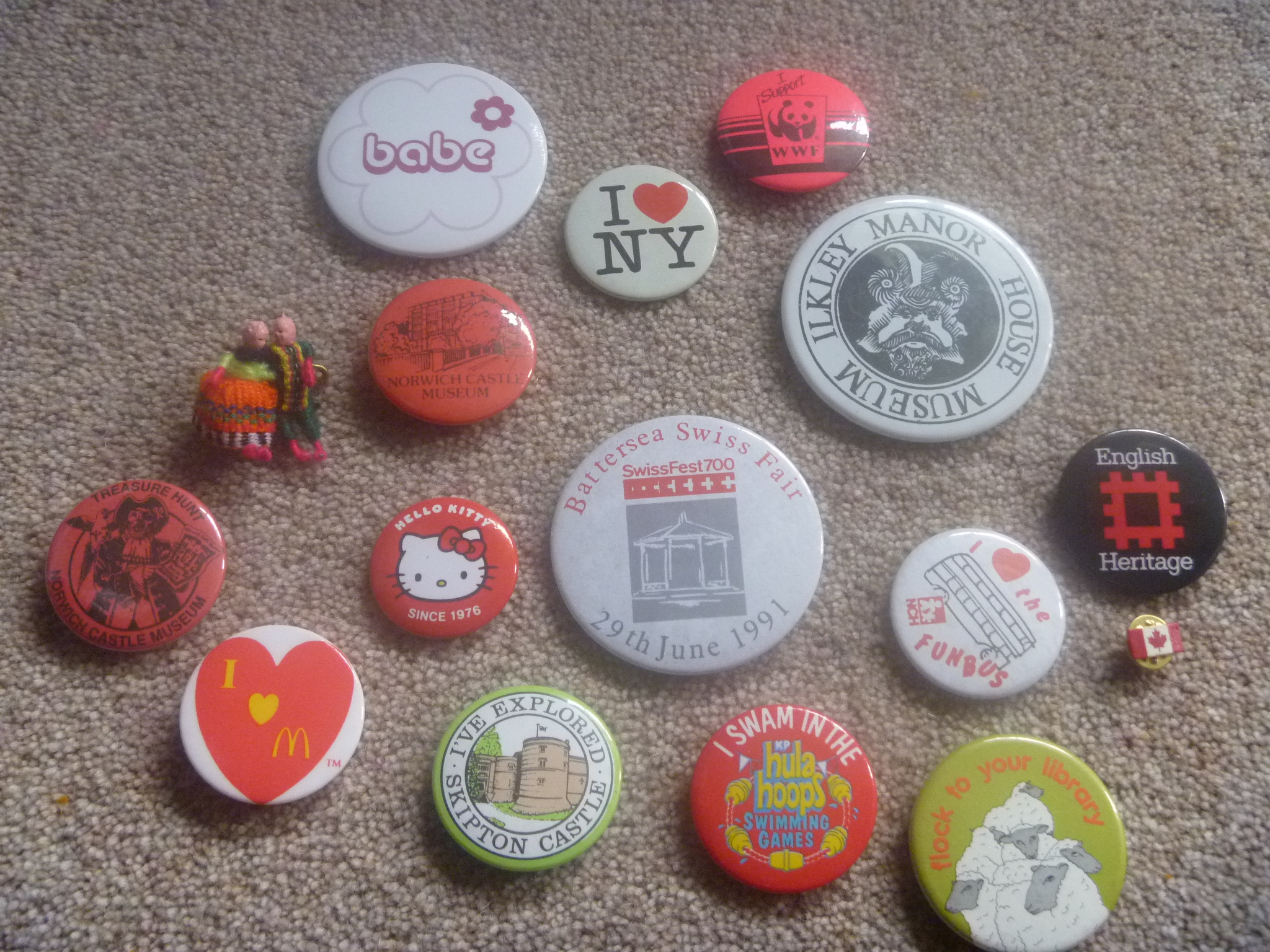
I was delighted to see masses of badges collected over the years by the British Museum. Even such ephemera has a role in the exhibition. I smile because I have a box full of badges up in the attic.

This final quotation has a resonance for me too. I’m a great visitor to churches on my travels. On the subject of Scary Figures Perry says :

“We have always had images at gateways to warn and protect. Cathedrals had carvings over the doors showing the Last Judgement and the damned going to hell – now we have CCTV.”

To find out more  there’s a book that accompanies the exhibition (of course) and here’s a link to the exhibition in pictures :

Grayson Perry’s Tomb of the Unknown Craftsman – in pictures

In the end I didn’t buy a souvenir but I saw three books which will go on my library suggestions list :

50 British Artists you should know, by Lucinda Hawksley

You are here : personal geographies ; by Katharine Harmon.

The Tomb of the Unknown Craftsman by Grayson Perry.

The House that Mrs Jack Built

“Years ago I decided that the greatest need in our Country was Art… We were a very young country and had very few opportunities of seeing beautiful things, works of art… So, I determined to make it my life’s work if I could.” Isabella Stewart Gardner, 1917.

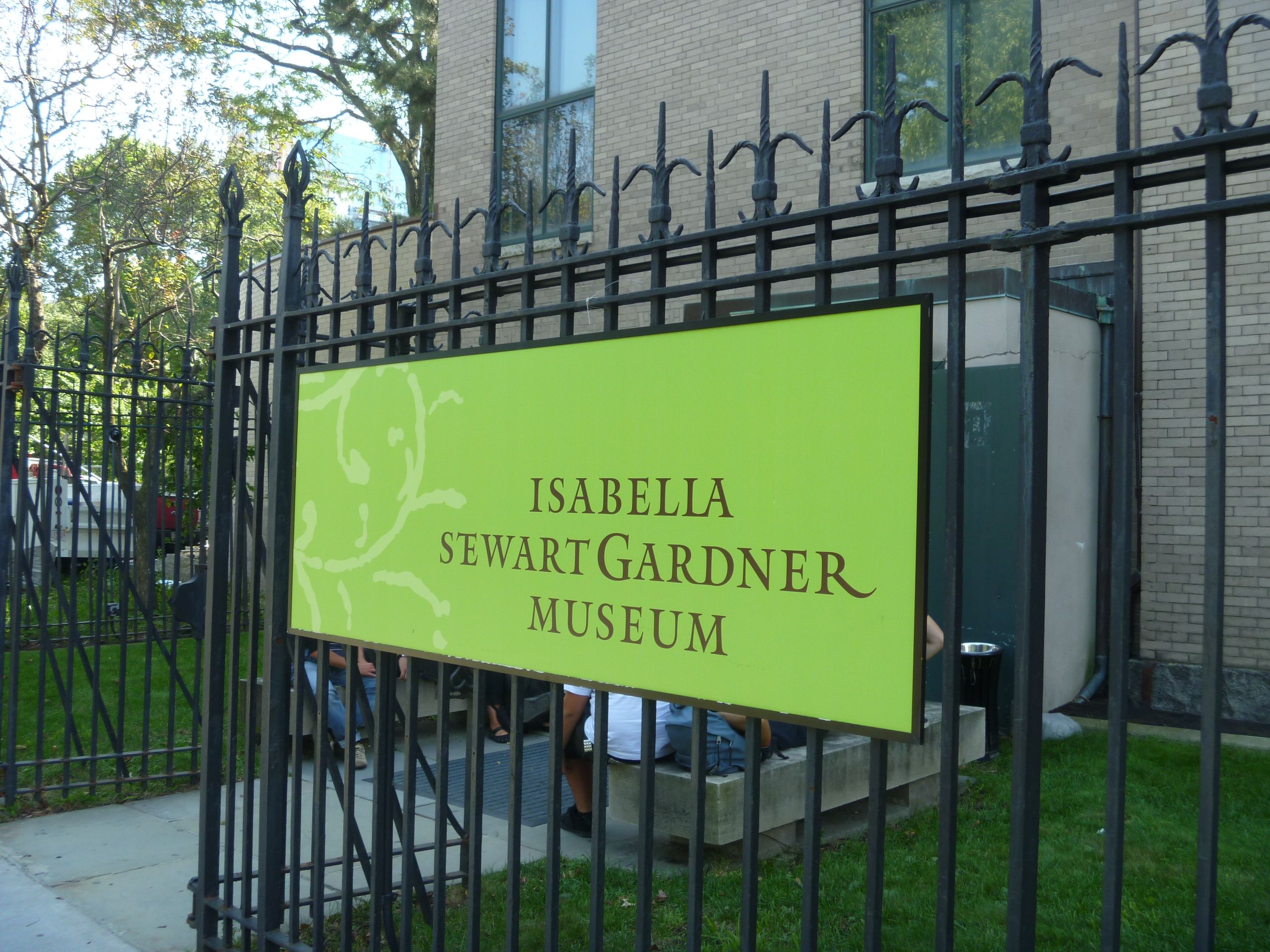
One of the loveliest and most interesting art museums that I have ever visited is just a few stops on the ‘T’ from downtown Boston.

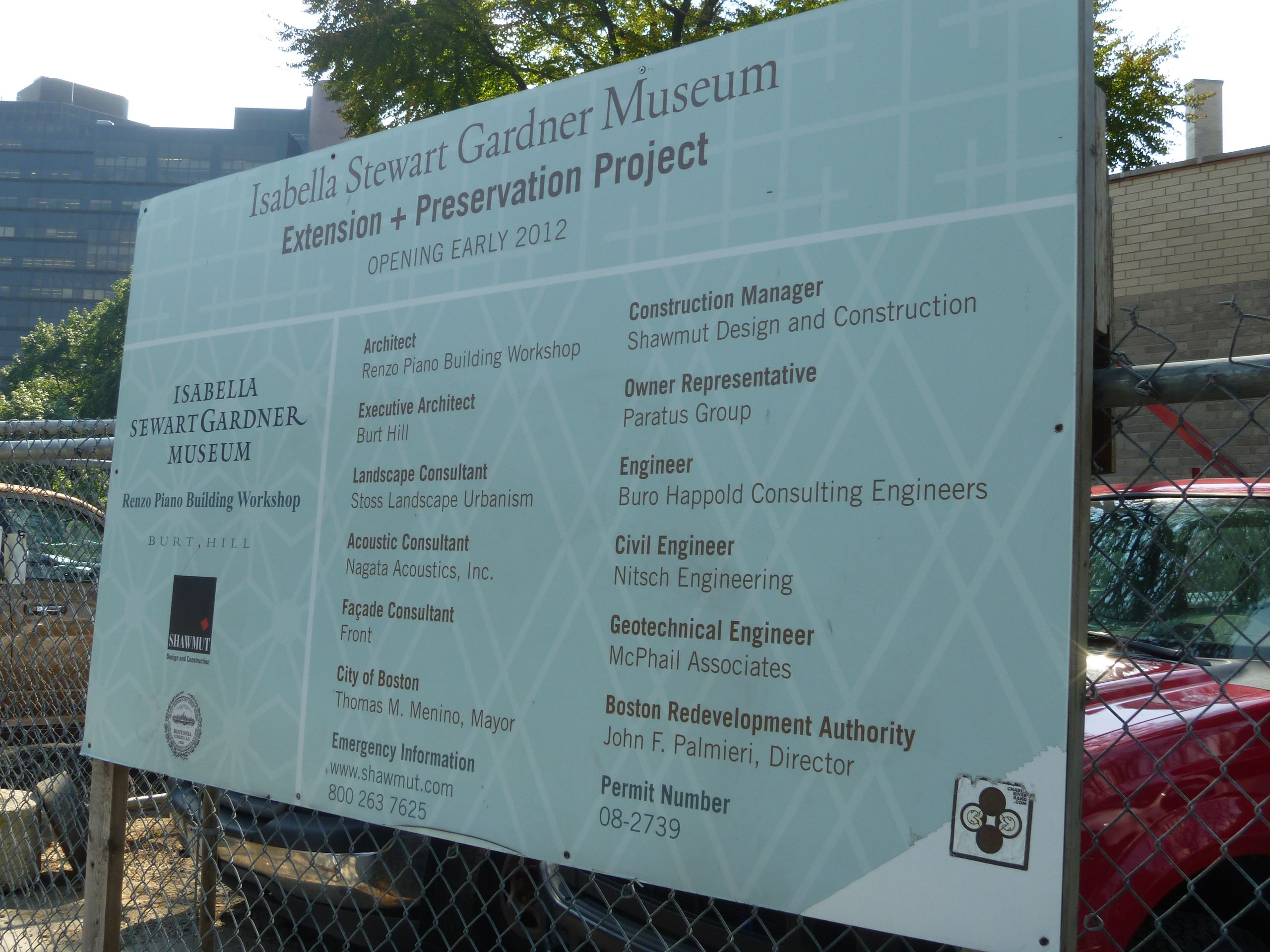
The Isabella Stewart Gardner Museum is currently undergoing change. Not too sure what Mrs Jack Gardner would make of that but there you go. We’re told on the audio guide that she planned the whole place herself from the building to the purchase of the works of art themselves to where she meant them to hang and then left strict instructions that that was how it was to stay.

Isabella Stewart was born in 1840 in New York and married John (‘Jack’) Gardner in 1860. They travelled widely and ‘Mrs Jack’ developed an interest in art which turned into a passion for collecting after her father left her his entire fortune when he died in 1891. Jack died in 1898 and she continued to collect, purchasing some land on Fenway and designing and planning the museum just as it is today. It opened to the public in 1903. She died in 1924.

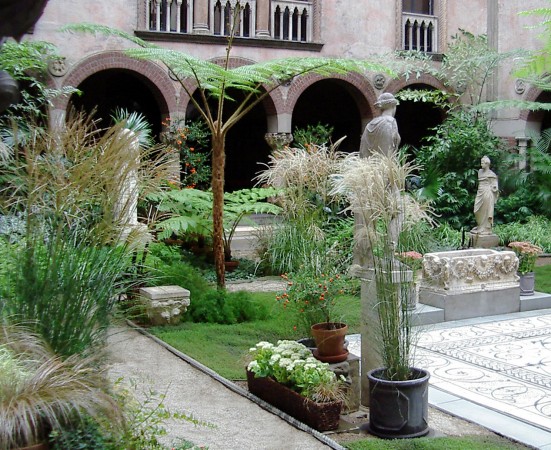
Photo from ISGM website

The Museum centres on the dramatic Japanese-style courtyard full of greenery and mosaic tiles which is in such great contrast to the darker rooms through which you approach it. On three floors each room has a theme of its own from The Titian Room to the Blue Room and the Yellow Room through to a Tapestry Room and a Gothic Room. Due to the work going on just now some of the rooms were closed and others had items removed.

My favourite room was the Dutch Room where an early Rembrandt self portrait hangs.

Photo from ISGM website

But when you enter the Dutch Room you are also in for a shock. There on the wall hangs an empty frame – where once Rembrandt’s ‘Storm on the Sea of Galilee’ was hanging. In 1990 the ISGM was victim of the largest single property theft in the world. None of the works of art has yet been recovered.

Also due to all the building works going on the shop and cafe are both closed. There were just two books for sale:

The Yale Guide, by H. T. Goldfarb and a biography of Mrs Jack by Louise Hall Tharp. No fridge magnets, no rubbers, no pens and not even one postcard!

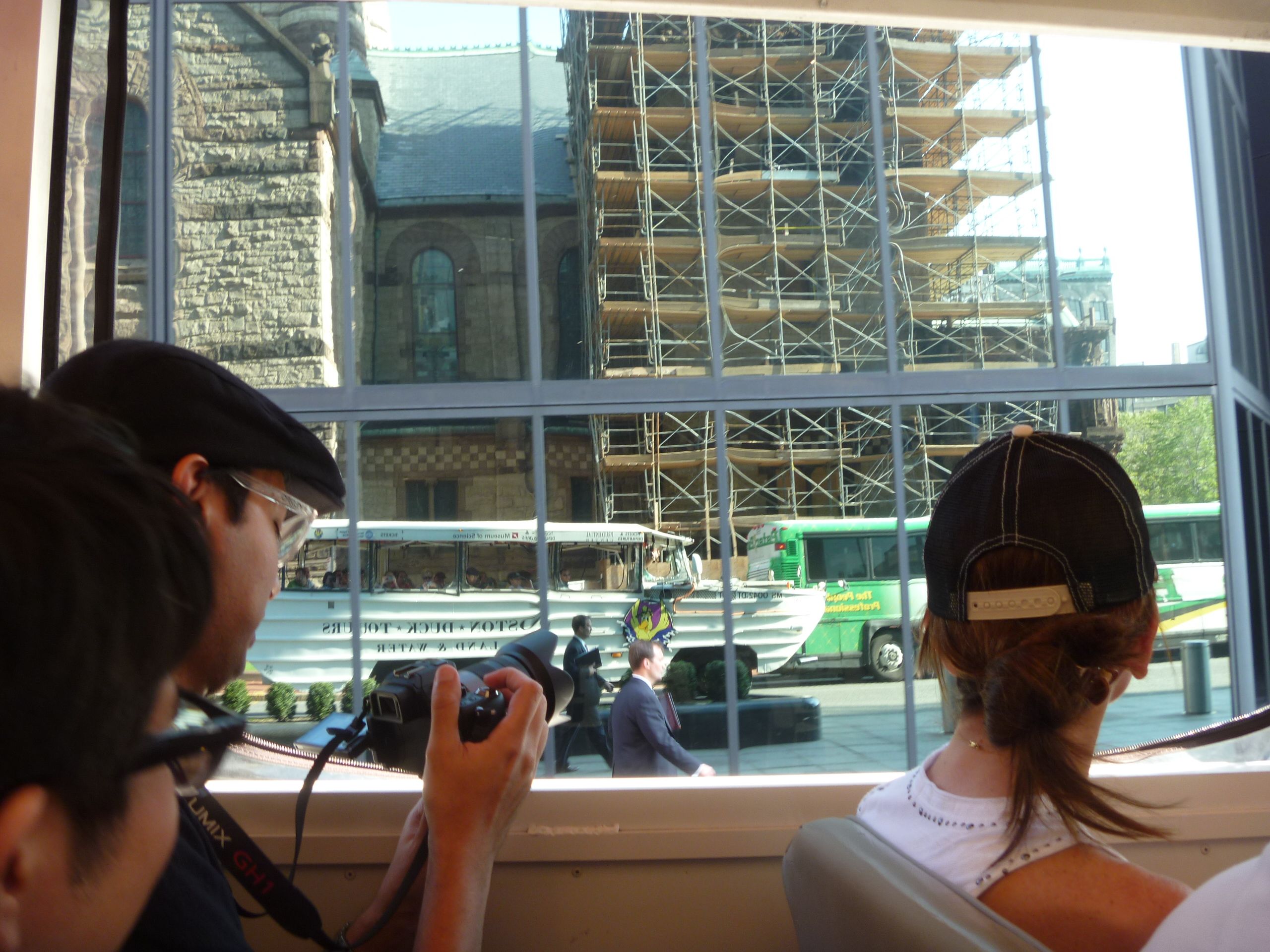
Then, from the sublime to the ridiculous, I fulfilled a long term wish of mine since first seeing it in 1995 – I went on DUCK TOUR!

There we are reflected in office windows on Copley Square!

My Historic Maine Coast 2

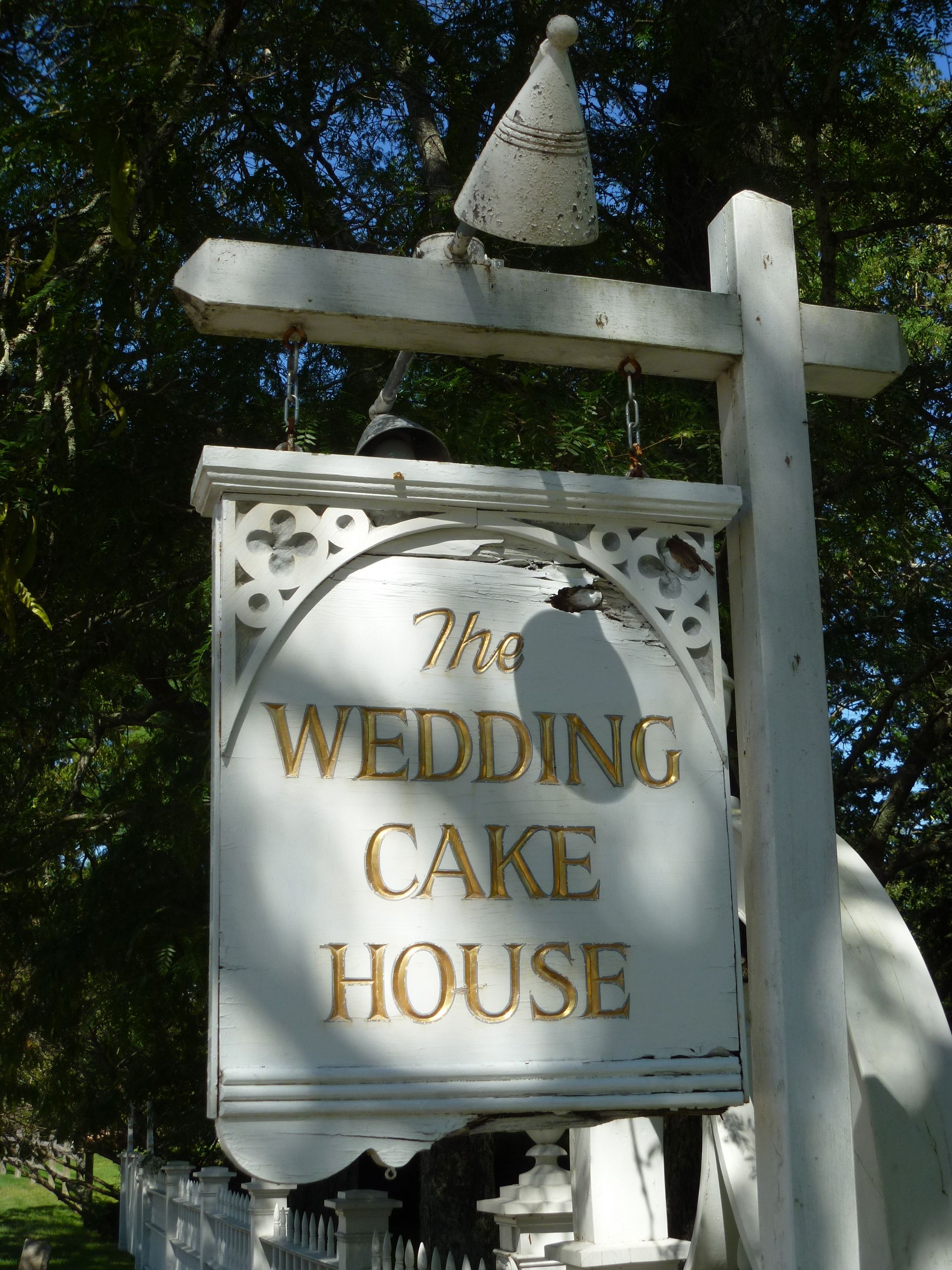
The Wedding Cake House in Kennebunk is said to be one of the most photographed houses in Maine and you can certainly see why!

The local myth is that it was built by a sea captain for his bride as an apology for leaving for his ship before the ceremony reached the cutting-the-cake stage! It’s a private home so not open to the public at all but I understand that a fund-raising event was held a few years back in aid of Hurricane Katrina victims.

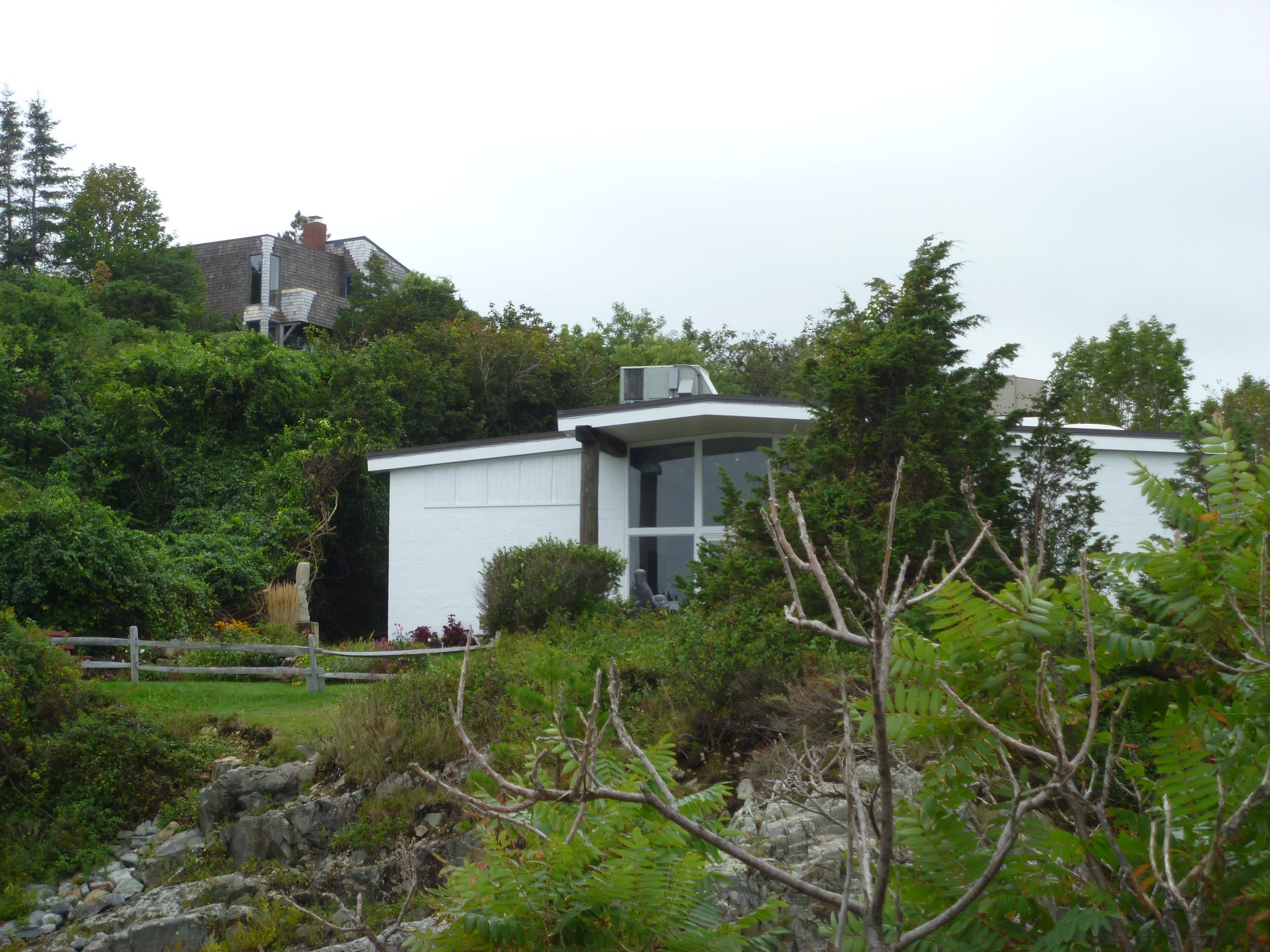
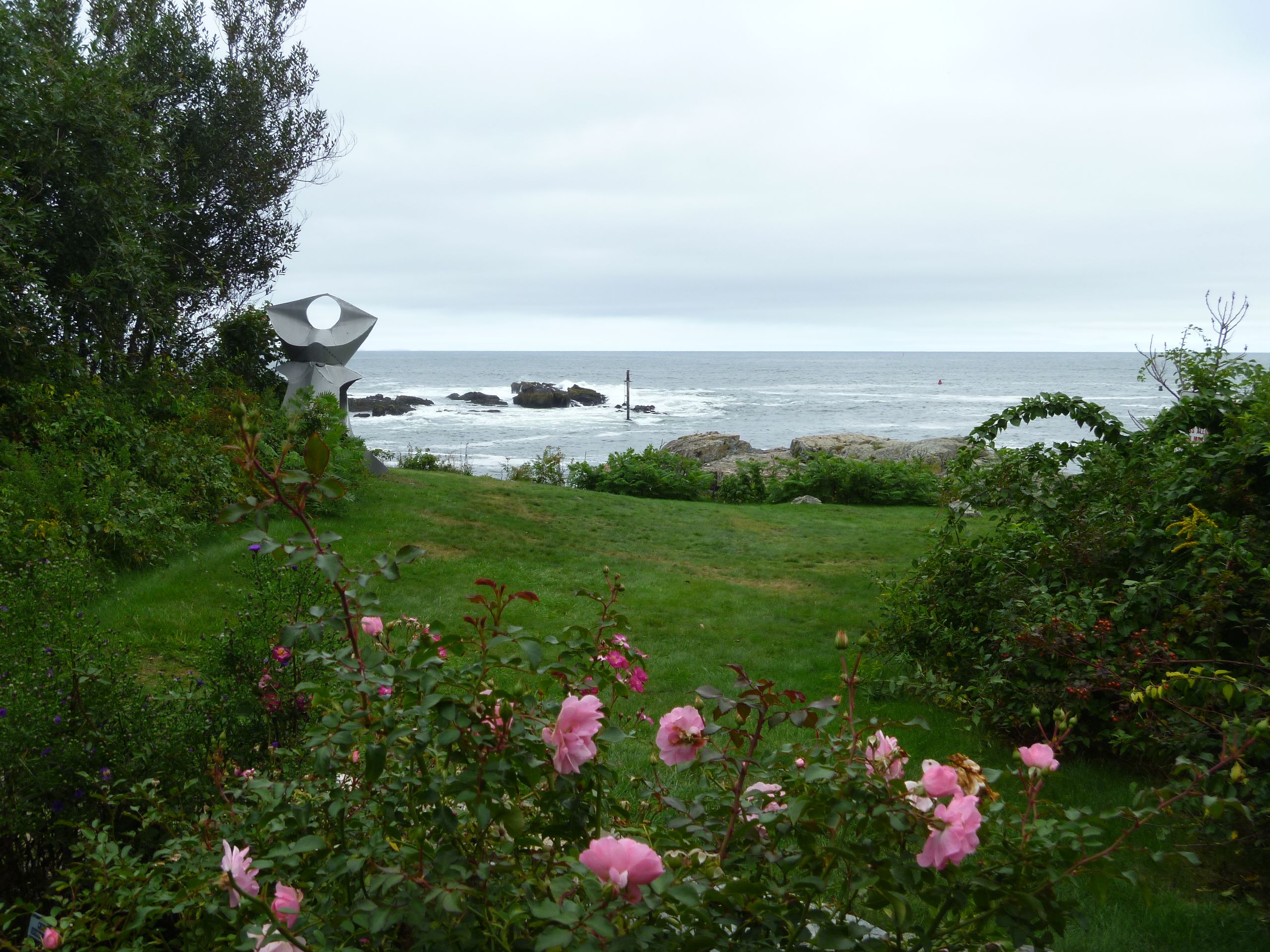
The Ogunquit Museum of American Art is the least historic of my selection of Historic Maine Coast visits. The Museum first opened in 1953 but has been extended since. Artist Henry Strater founded the Museum at 543 Shore Road, Ogunquit by first buying the Ocean facing plot of land on which it stands in 1950. Ogunquit and the Maine Coast area had long been the haunt of artists – an Ogunquit Art Colony was founded here in 1898.

In 2009 we visited The Portland Museum of Art and it was an exhibition there “Call of the Coast: exploring art colonies of New England” that drew my attention to the significant contribution of the Ogunquit colony to the American art scene in the 20th century.

The Museum is surrounded by beautiful sculpture gardens with a wonderful view of the Ocean. The Museum and Gardens are a delight to visit during the Summer months and it is no surprise that it rates as one of the finest small art museums in the United States.