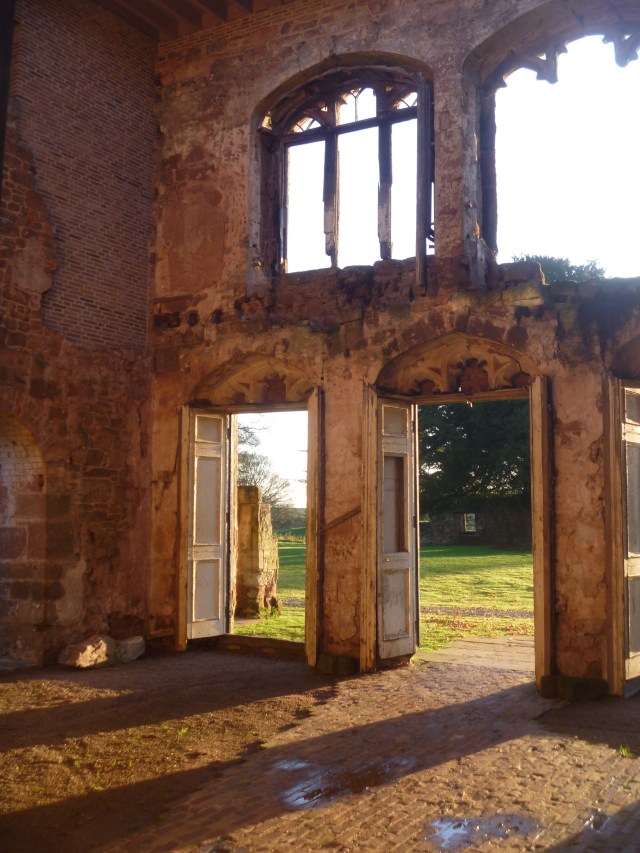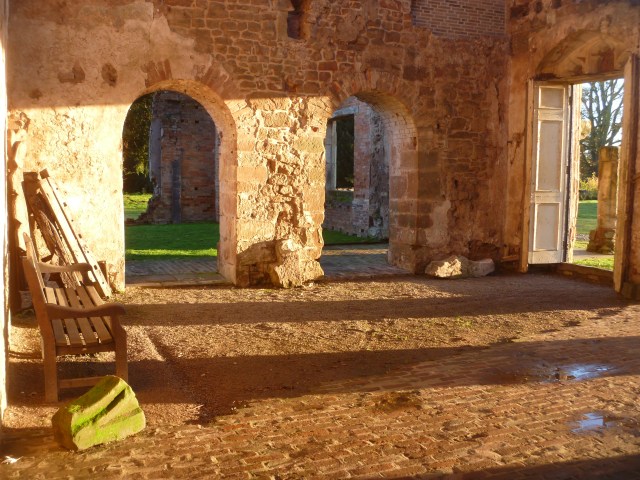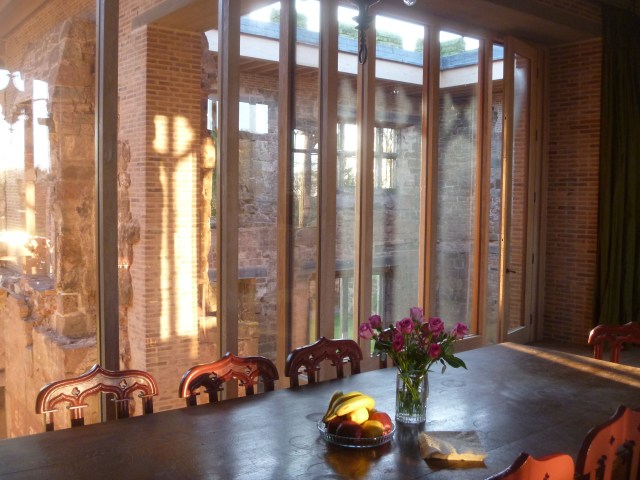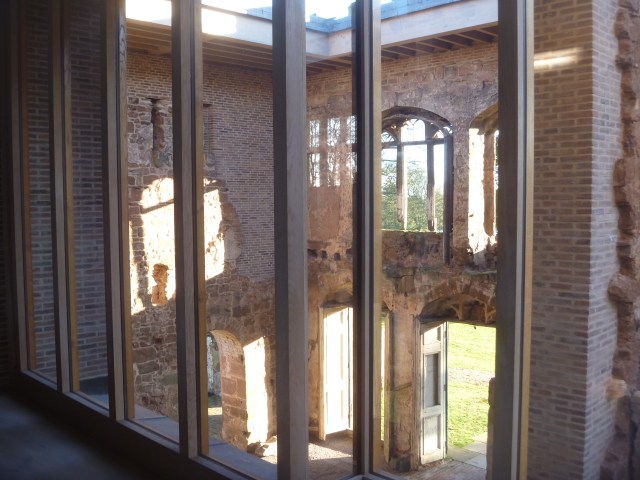
Astley Castle Interpretation Trail

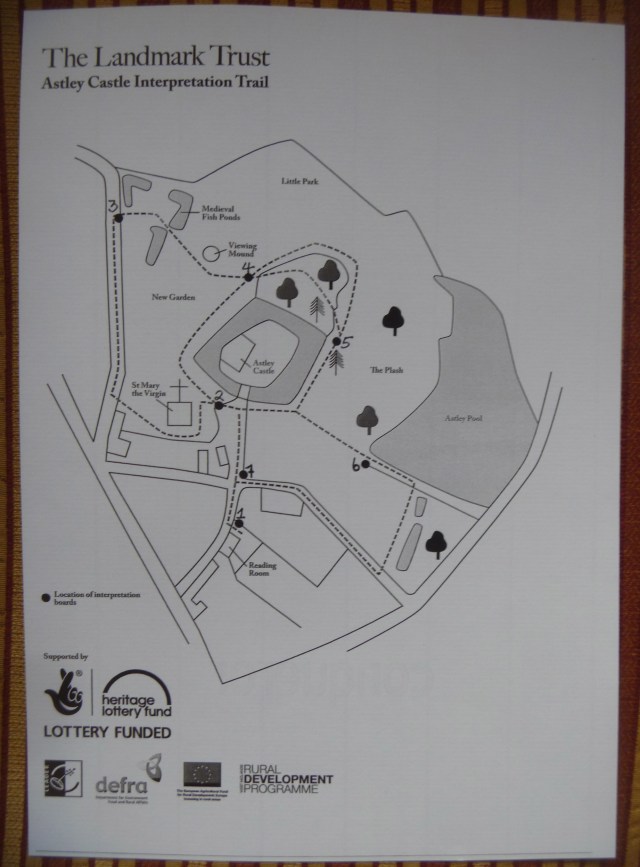
Astley trail map

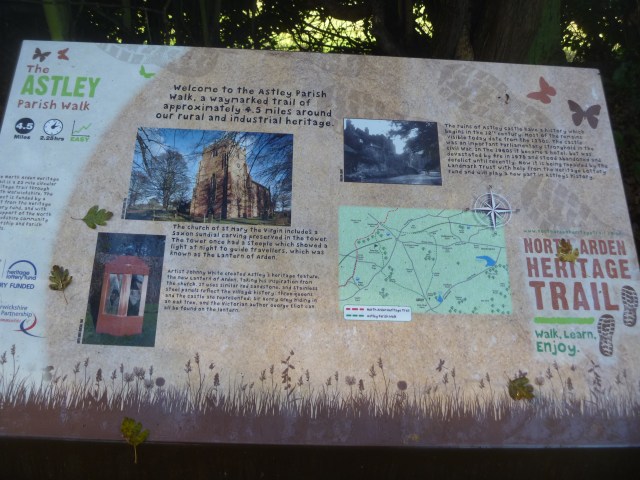
The Interpretation Trail Map

Amongst many generous donors towards the reconstruction of Astley Castle the Heritage Lottery Fund was one of the major ones; giving a grant of well over a million  pounds to help the project on its way. HLF grants come with strings attached. So Astley Castle, quite rightly, enjoys many features and events not normally connected with Landmarks, in which the general public may be involved such as local school visits, open days and living history weekends. Public involvement has also included art exhibitions and a competition to design an Elizabethan knot garden in the grounds.
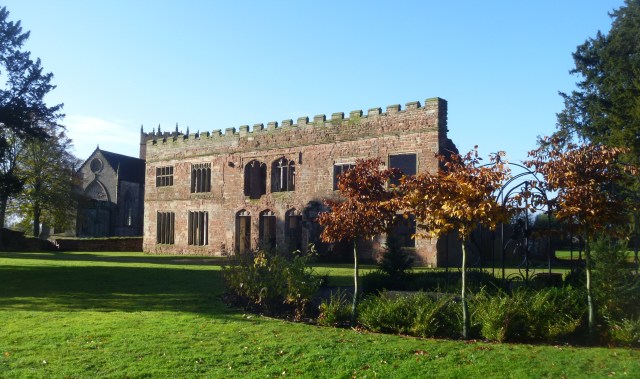
Knot Garden

The Winning Knot Garden

One  excellent result of the HLF involvement lead to the establishment of an Interpretation Trail on public footpaths through the area surrounding the castle (but keeping to the other side of the moat!). Information boards along the route explain the views and relate the history of the castle and its royal connections. Of course, I walked this trail many times in both directions. The views changed as the weather and light did throughout each day.

Let me take you along the trail. (Numbers refer back to the map above)
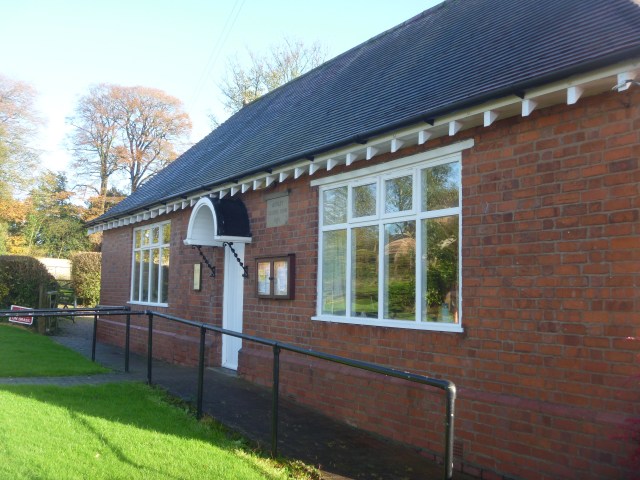
Astley Reading Room

Astley Reading Room

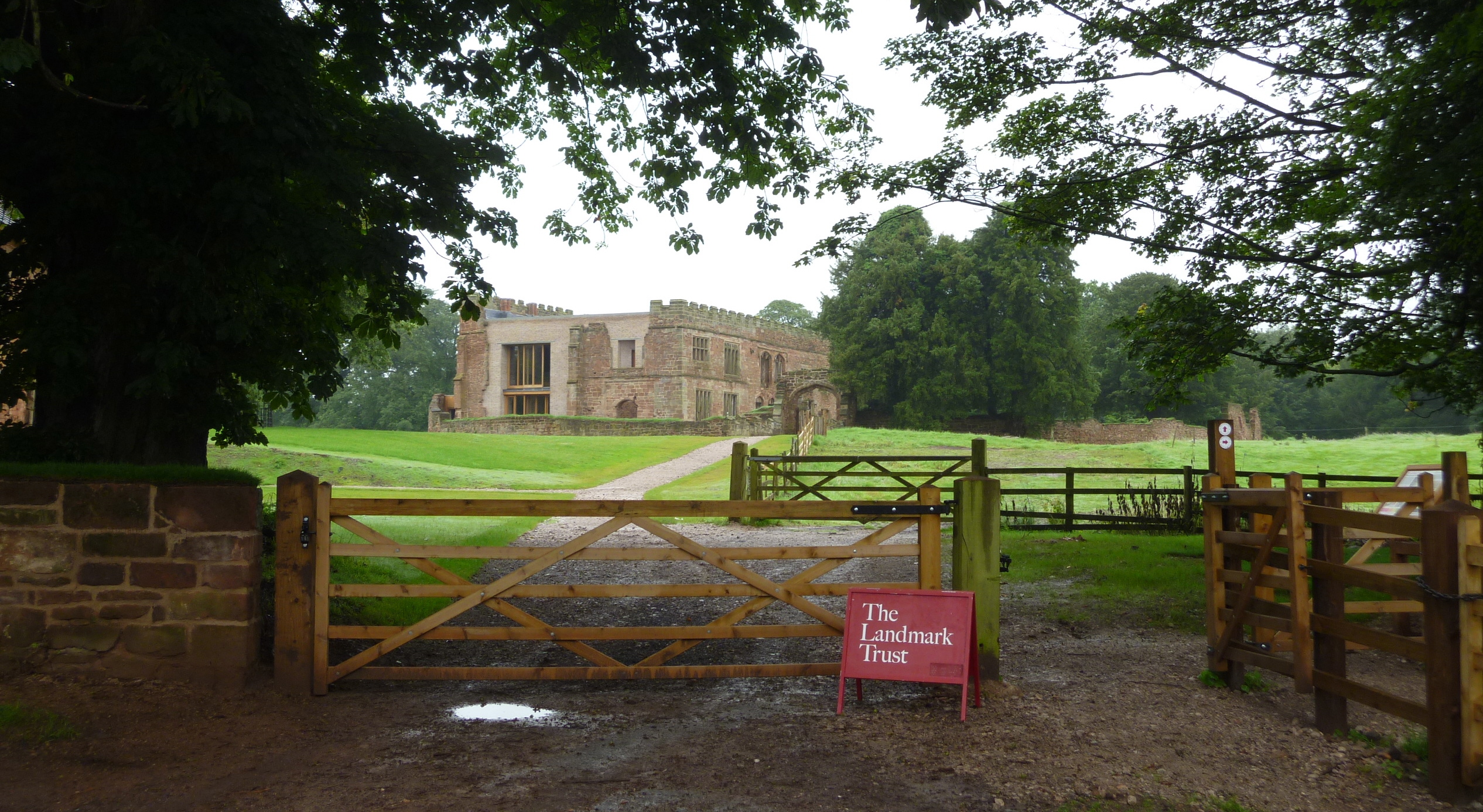
1. At The Astley Reading Room two boards give a general introduction and explain the creation of Astley Castle as a ‘Landmark for the 21st Century’.
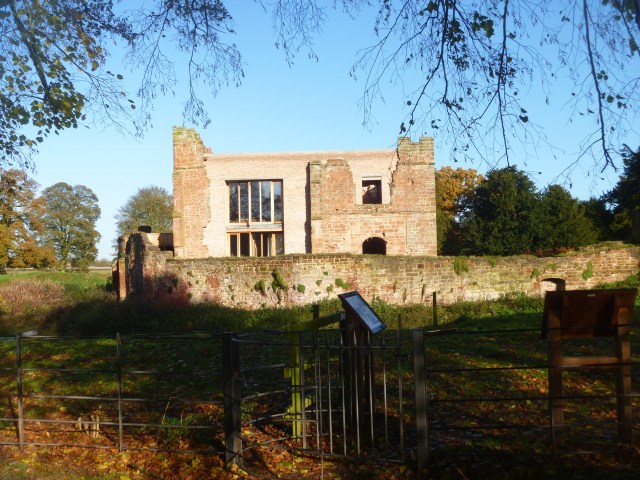
AC South elevation

Astley Castle : South Elevation

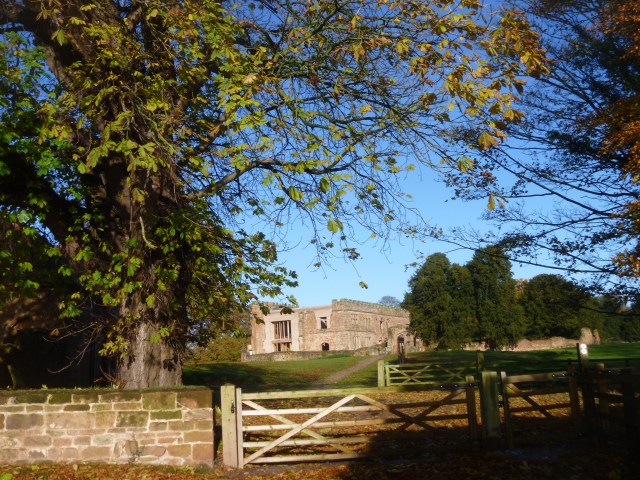
2. Astley Castle : South Elevation. Staying at the castle; this is where I began the trail each time.

“This ancient structure still remains, and the grounds surrounding it being tastefully laid out and kept in good order.” (Smith’s “A new and complete history of the County of Warwickshire”, 1829)
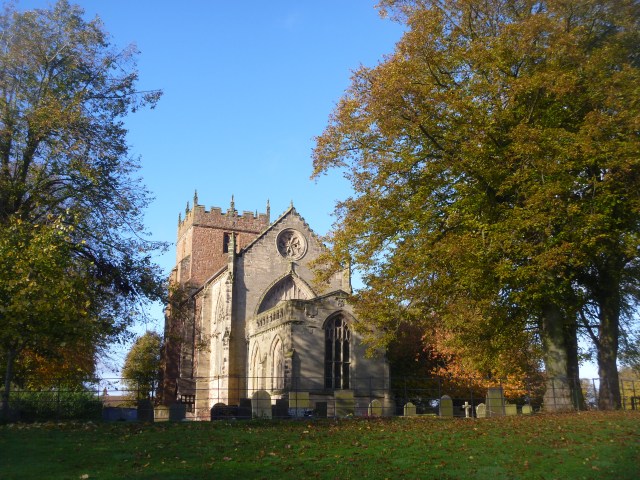
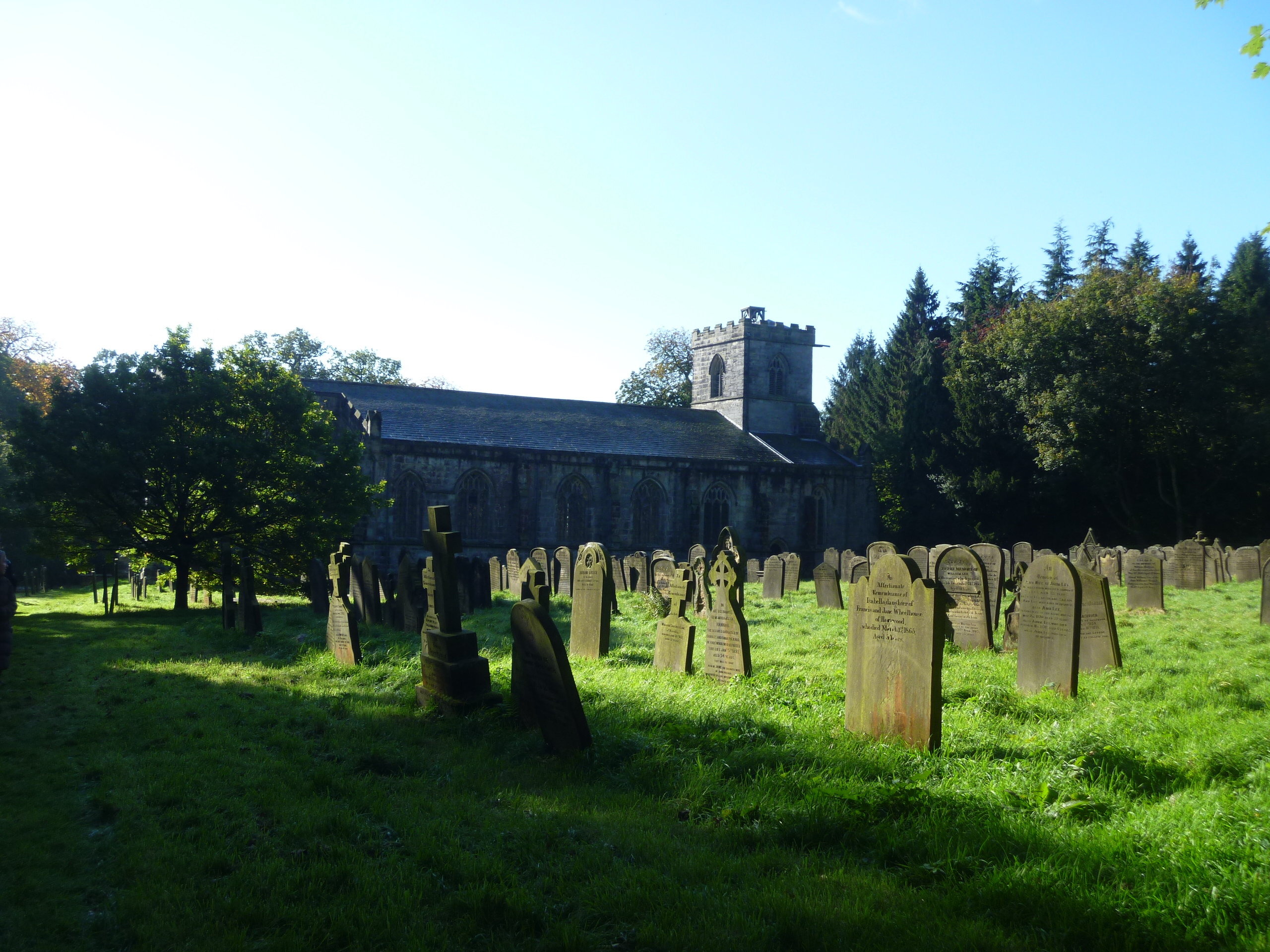
Astley Church

Astley Church

Collegiate church

From the Interpretation Panel

From here there’s an excellent view of Astley Church of St Mary the Virgin. [To be the subject of another post] Proceed through the churchyard to a rather muddy lane and panel 3.
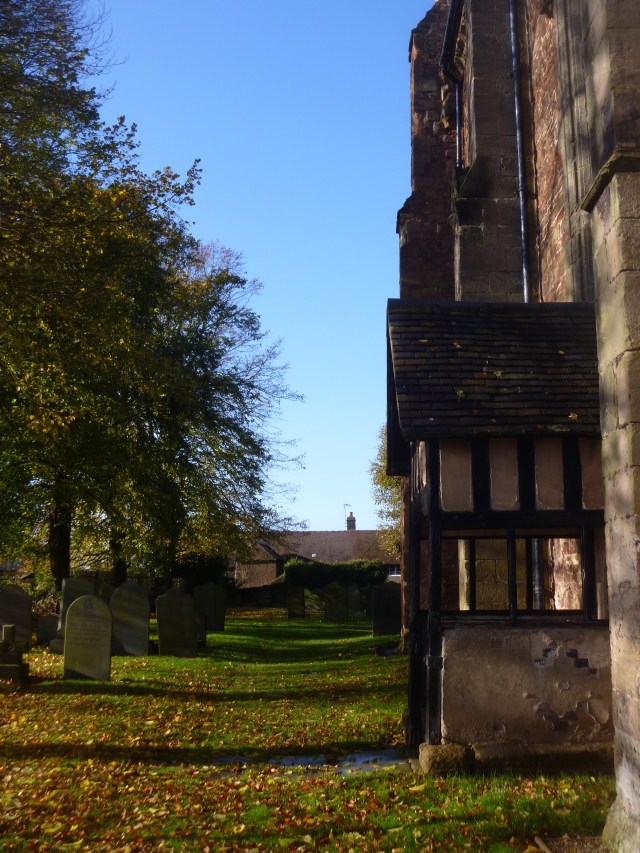
Path through churchyard
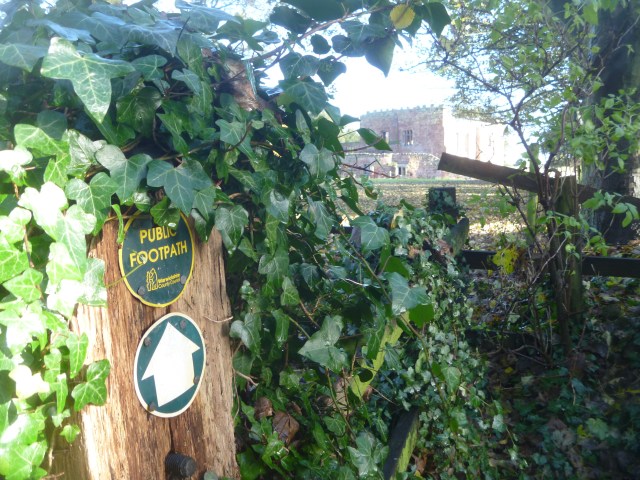
Path through churchyard

Trail this way

Follow the Trails this way

Astley Parish Walk

The Astley Parish Walk shares this lane with the Trail

3. The New Garden. “Today the New Garden is used as pasture but the many lumps and bumps hint at significant buried archaeology, especially in this north-western corner” [Interpretation Board] In fact from this point we re-enter the Castle grounds and here are ancient fish pools and a man-made ‘Viewing Mound’.
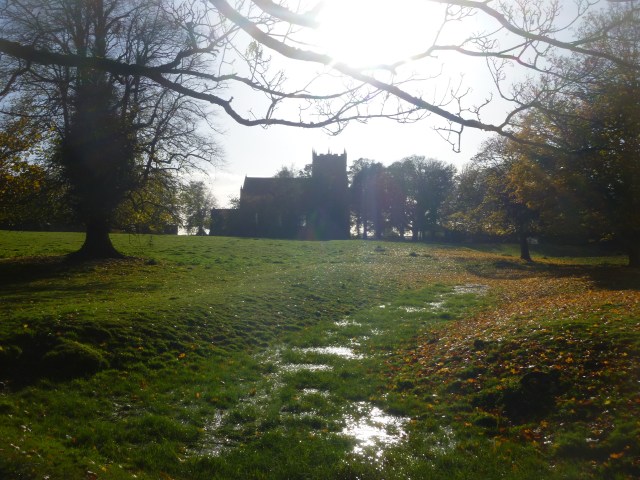
Fish pond and church

The former Fish Ponds and Astley Church
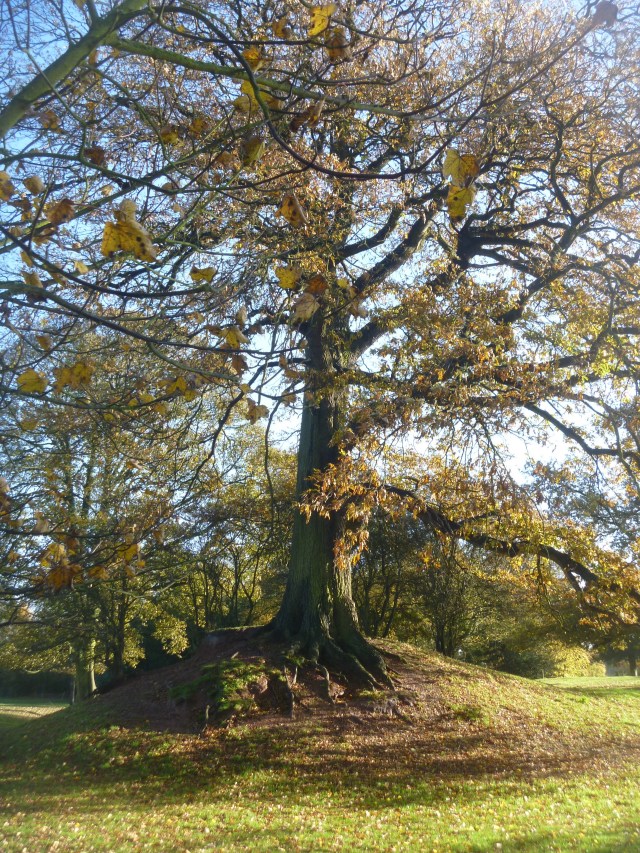
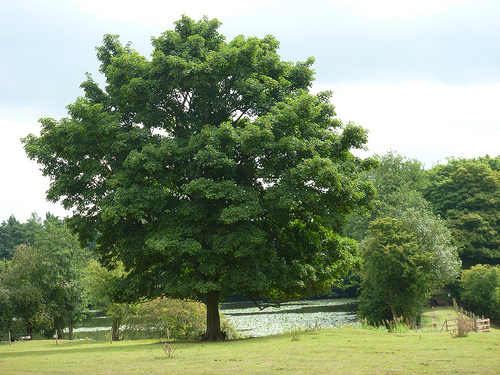
Viewing mound and old oak

The Viewing Mound topped by an ancient oak tree

There can be no real doubt that the New Garden was designed as a garden for the adjacent castle and it was probably laid out with paths, raised-bed type planting, arbours, hedges, and seats, perhaps in the late 15th century. The viewing mount could date from this period too.”.

1690 Estate Map

The area is labelled as New Garden on this estate map dated 1690.

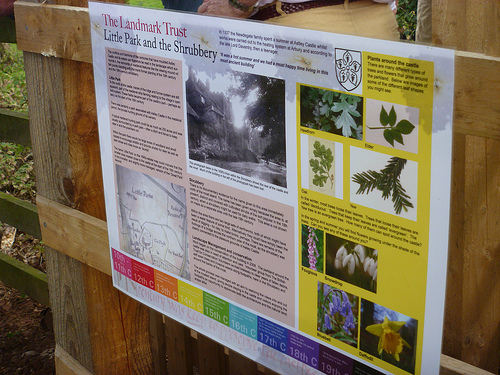
4. Little Park and Shrubbery. Here we leave the meadow and pass through a gate into a small wood or copse now known as The Shrubbery. It contains the kind of cultivated shrubs popular in the 19th century and is only shown on maps as a separate area on maps of the late 19th century and after.
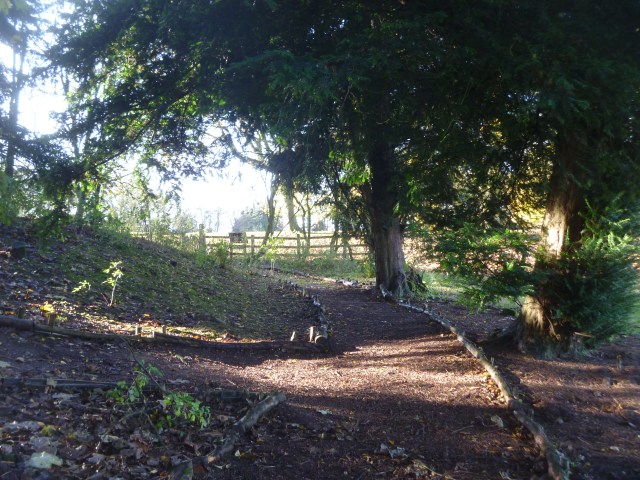
BCTV path through shrubbery

BCTV footpath through the Shrubbery

Just as building work on the castle began and continued from 2008 “volunteers from the British Trust for Conservation Volunteers (BCTV) worked  tirelessly to clear fallen debris, self sown trees and invasive weeds along the footpaths, here in the Shrubbery and around the banks of the moat.”
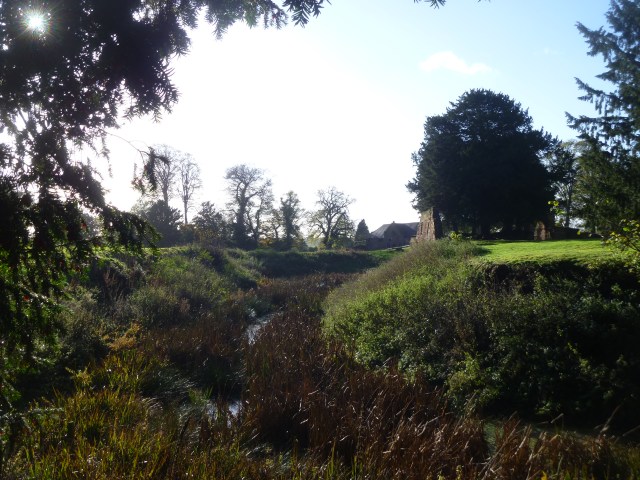
Moat

The Moat contains water in places

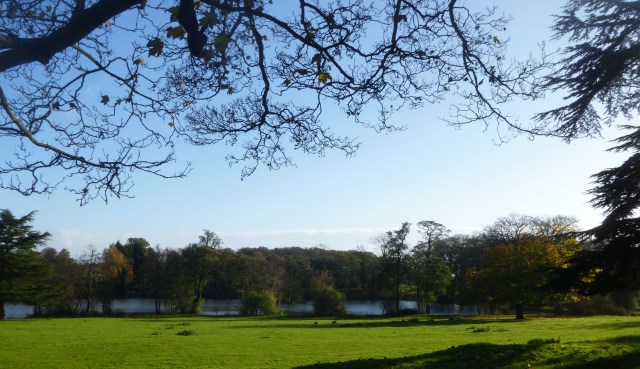
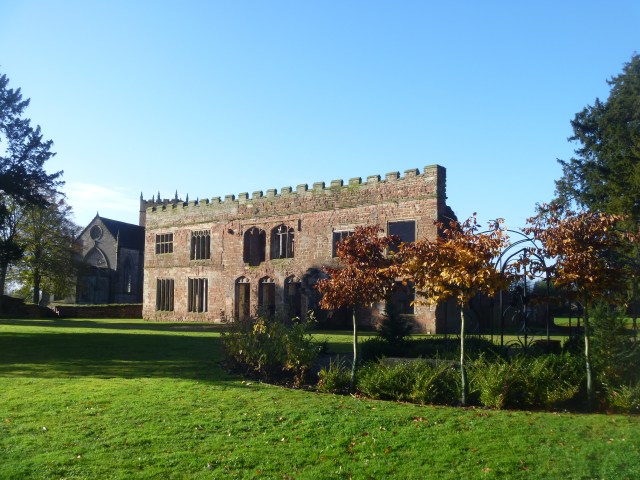
5. East Elevation and The Plash. Emerging from the Shrubbery we gain another view of the Church and the Castle. The East Elevation is to all intents and purposes the Front and Entrance to the building. But looking in the opposite direction there’s a broad green meadow (The Plash) and the still waters of the Astley Pool fishing lake.
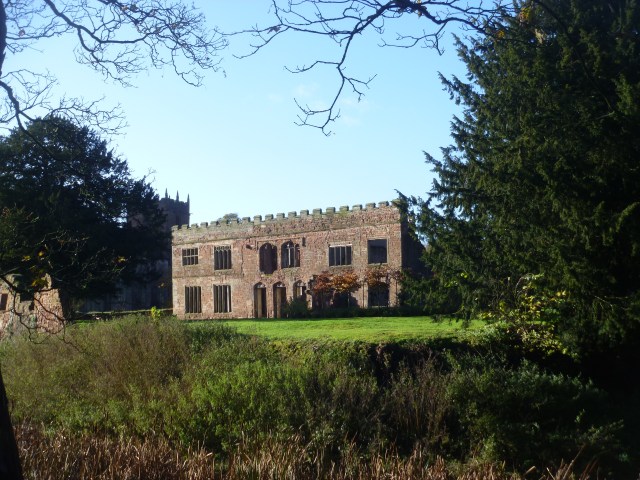
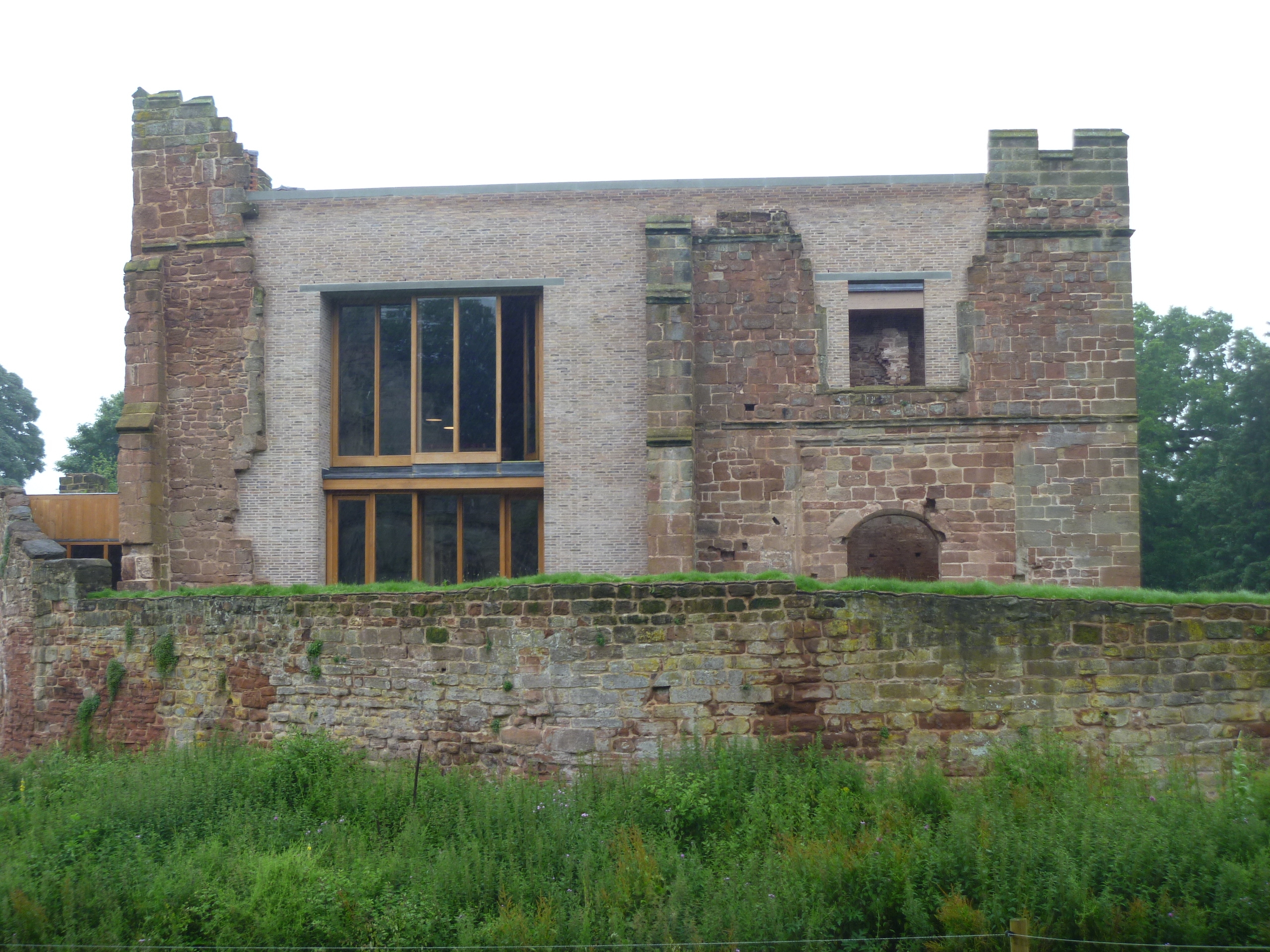
East elevation

The East Elevation (Front) of Astley Castle

The Old English plaesc, modernised as ‘plash’ means ‘a shallow piece of standing water, a marshy pool’ so this is likely to be an ancient natural feature, enhanced and adapted by the castle residents. … The Plash is dotted with trees, several of which are mature specimen trees – including a fine cedar tree.”
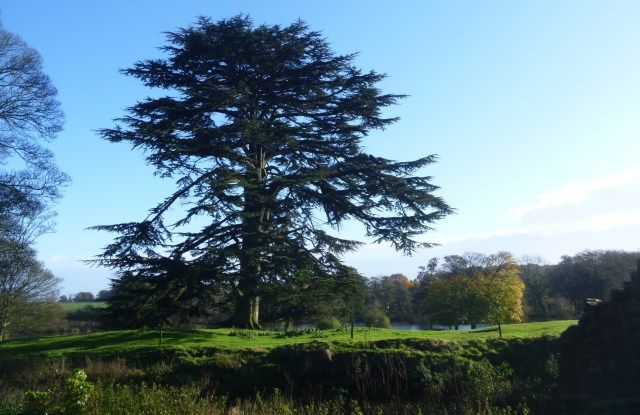
Cedar

The Cedar Tree

Plash and Pool

The Plash and the Pool

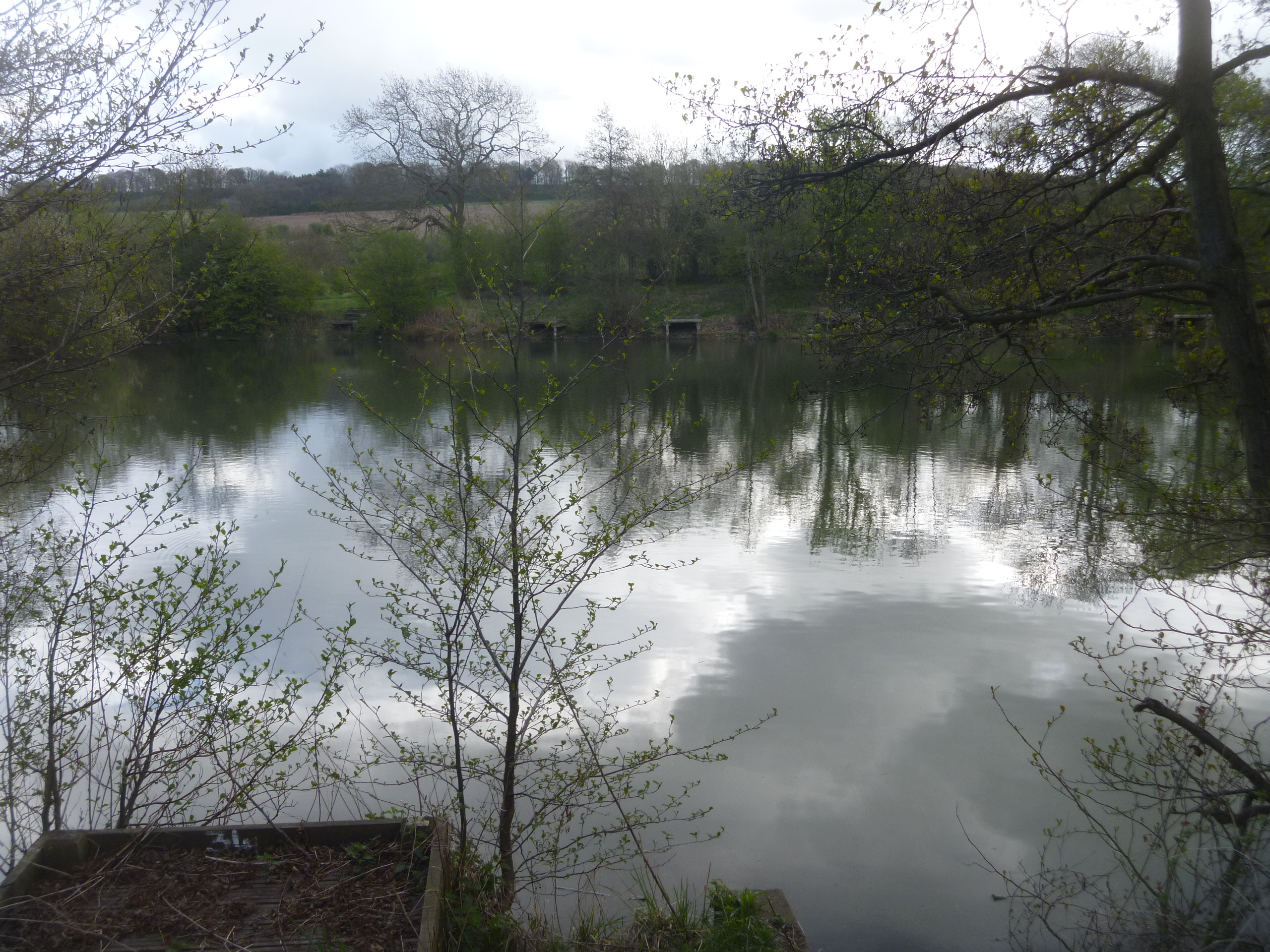
6. Astley Pool and New Road. Our path takes us across The Plash to Astley Pool, a man-made lake. Although it may seem a typical 18th or 19th century creation it is first referred to in 1501. It is now a private fishing lake.
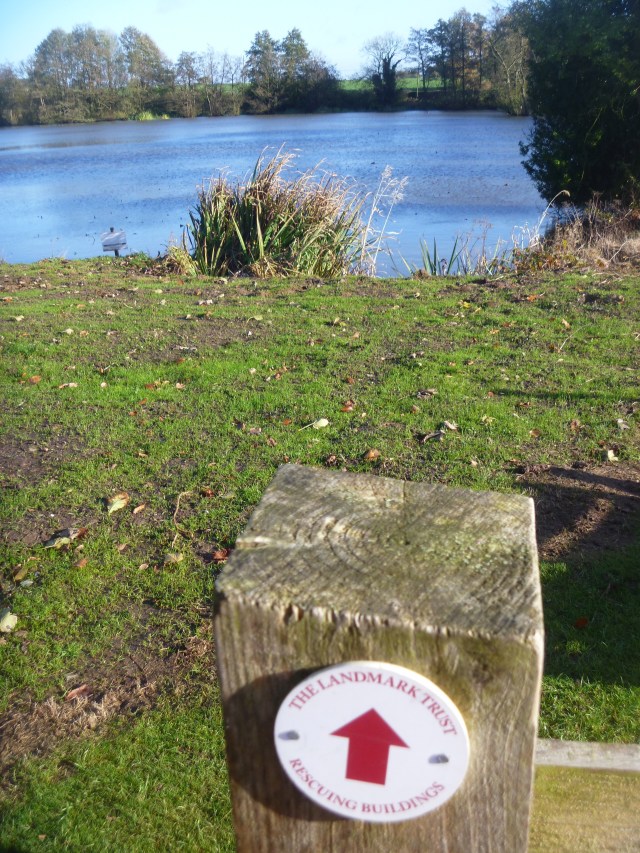
Astley Pool

The New Road was created to link the drive from Arbury Hall to a new access to Astley Castle. The first part of this was across the top of the pool dam and this would have provided a suitably attractive route up to the castle.”

7. Dark Lane and Castle Approach. The BTCV volunteers had been busy clearing the last lane that leads back to the village and the Castle. I was surprised to read in the interpretation notes that this lane was in fact a disused ‘holloway’. I have recently read Robert MacFarlane’s recent book “Holloway“. I had assumed that these features of the landscape only occurred in Dorset and the Downs of the South of England but here was one in the Midlands.
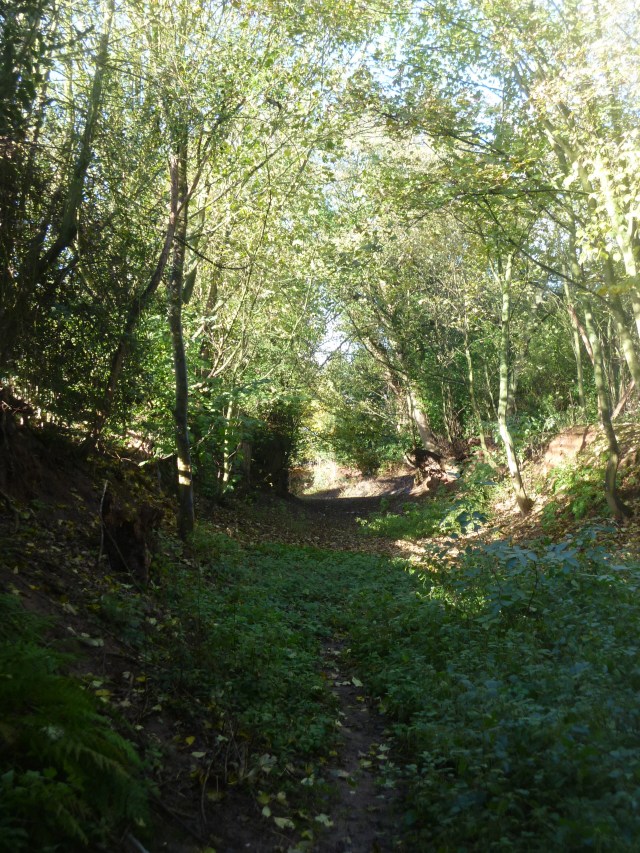
The Holloway

The Holloway

“‘Holloway – the hollow way. A sunken path, a deep and shady lane. A route that centuries of foot-fall, hoof-hit, wheel-roll and rain-run have harrowed into the land. A track worn down by the traffic of ages and the fretting of water, and in places reduced sixteen or eighteen feet beneath the level of the fields.’ “

[See more at: http://www.faber.co.uk/catalog/holloway/9780571302710#sthash.KNxb85gv.dpuf ]

And here we are back where we started at the approach to the castle. On the left is the Coach House like the Castle left to ruin but now repaired and water-tight although it has no use at the moment. Behind are the 18th century Gothick stables.
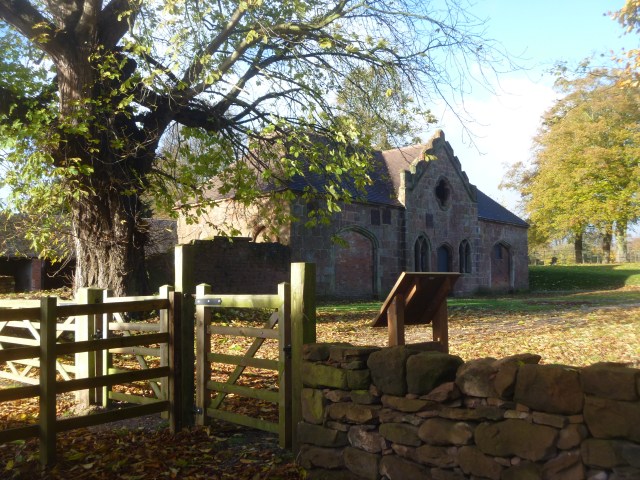
Coach House

The Coach House

Notice

I return to the Castle to study the library and read more about ruins and the rich history of Astley and England.
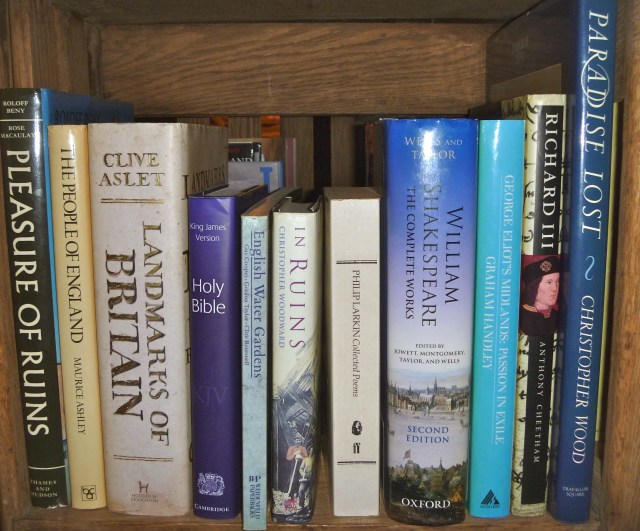
Bookshelves

“The Building Bears Strong Marks of the Ravages of Time and Presents an Extremely Picturesque Appearance” Astley Castle

Astley and Knot Garden

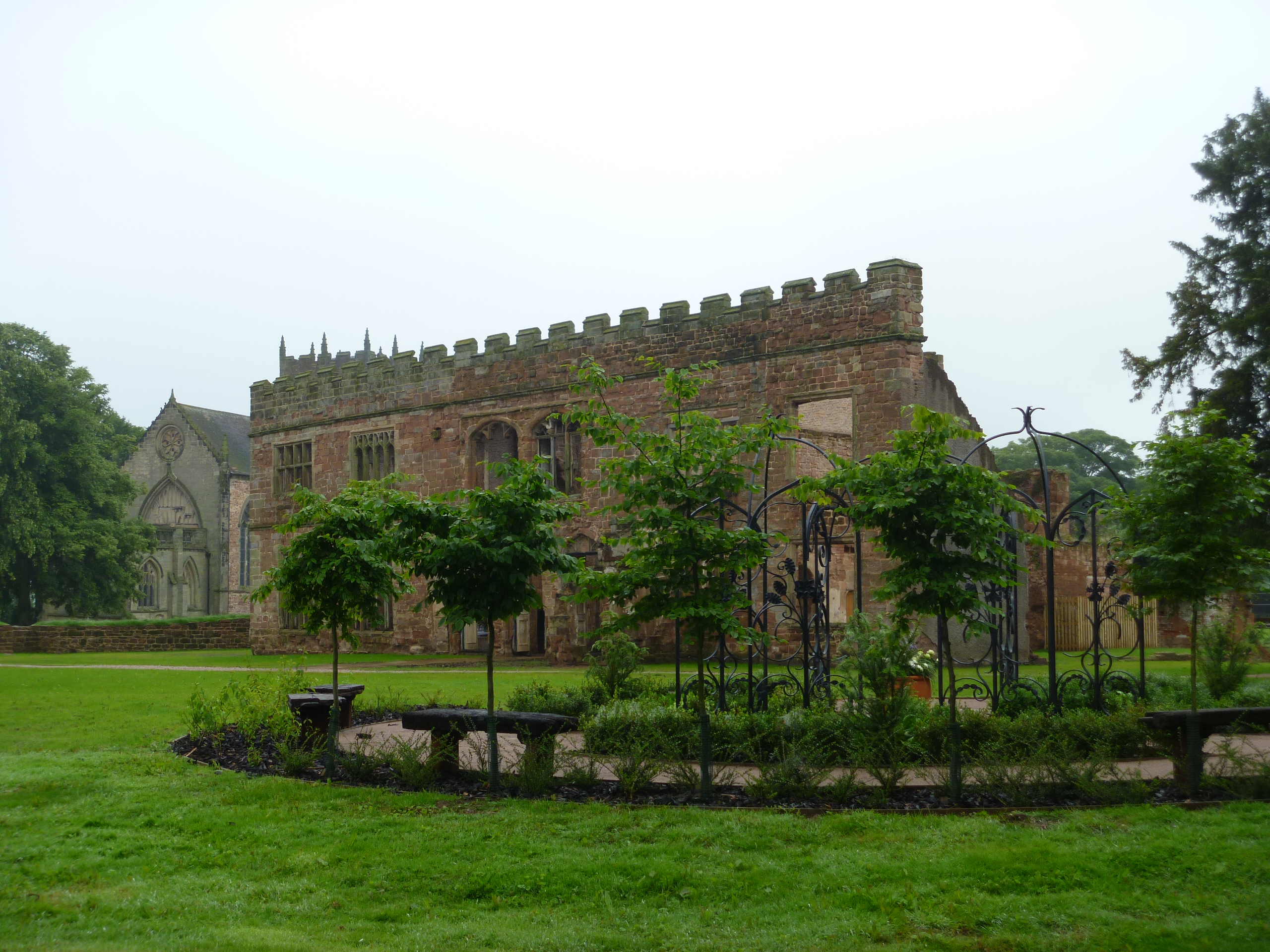
Astley Castle and Elizabethan Knot Garden

“The Building Bears Strong Marks of the Ravages of Time and Presents an Extremely Picturesque Appearance” Britton’s “Beauties of England and Wales“.

The Stirling Prize is the most prestigious prize for British architecture awarded annually :

to the architects of the building that has made the greatest contribution to the evolution of architecture over the past year. The prize is for the best building in the UK by RIBA chartered architects and International Fellows, or in the rest of the EU by an RIBA chartered architect.”

The RIBA Stirling Prize was born in 1996 out of its predecessor The Building of the Year Award. The Building of the Year Award had been running since 1988 and the winner was chosen by the RIBA President from a handful of National Award winners. This was thought of as neither transparent nor democratic. The aim with the Stirling Prize was that the winner should be decided in an unbiased way, with different juries visiting the ‘midlist’ and shortlist.

The new prize was named after James Stirling, the great British architect who died in 1992. The aim was that the Stirling Prize would be for architecture what the Booker Prize was for literature, and a £20,000 cash prize for the winning architects made the prize covetable as well as prestigious.” [Source]

In 2012 I was fortunate enough to be invited by friends who are Patrons of The Landmark Trust to attend the celebration opening of Astley Castle in July 2012. Immediately on leaving the reception and arriving home I decided to book the castle for a week (Monday to Friday) in November 2013.

Here are some of the highlights and light effects from this unforgettable stay.

Arriving at Astley

Arriving at Astley

The Ruins

The Ruins

Sunlight after the rain

Sunlight after the rain

Outdoor Dining

Outdoor Dining

Dining table shadows

Indoor Dining

Courtyard

Courtyard

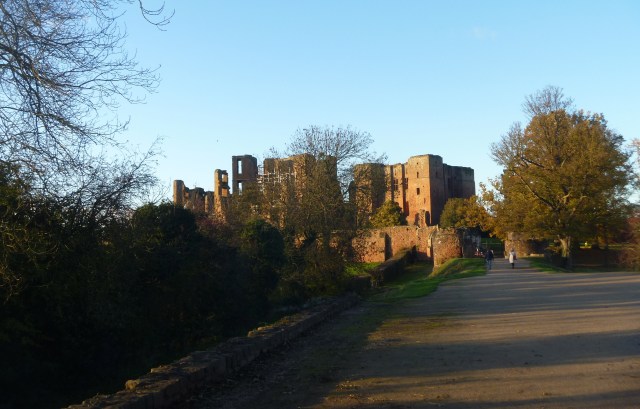
Kenilworth Castle

Castle Visiting – Kenilworth Castle

Wentworth Castle Gardens : Restoration in Action

Back in March 2012 (was it really so long ago?) I attended a talk organised by the Leeds Library and given by Patrick Eyres celebrating 30 years of The New Arcadian Journal. I wrote about it here.

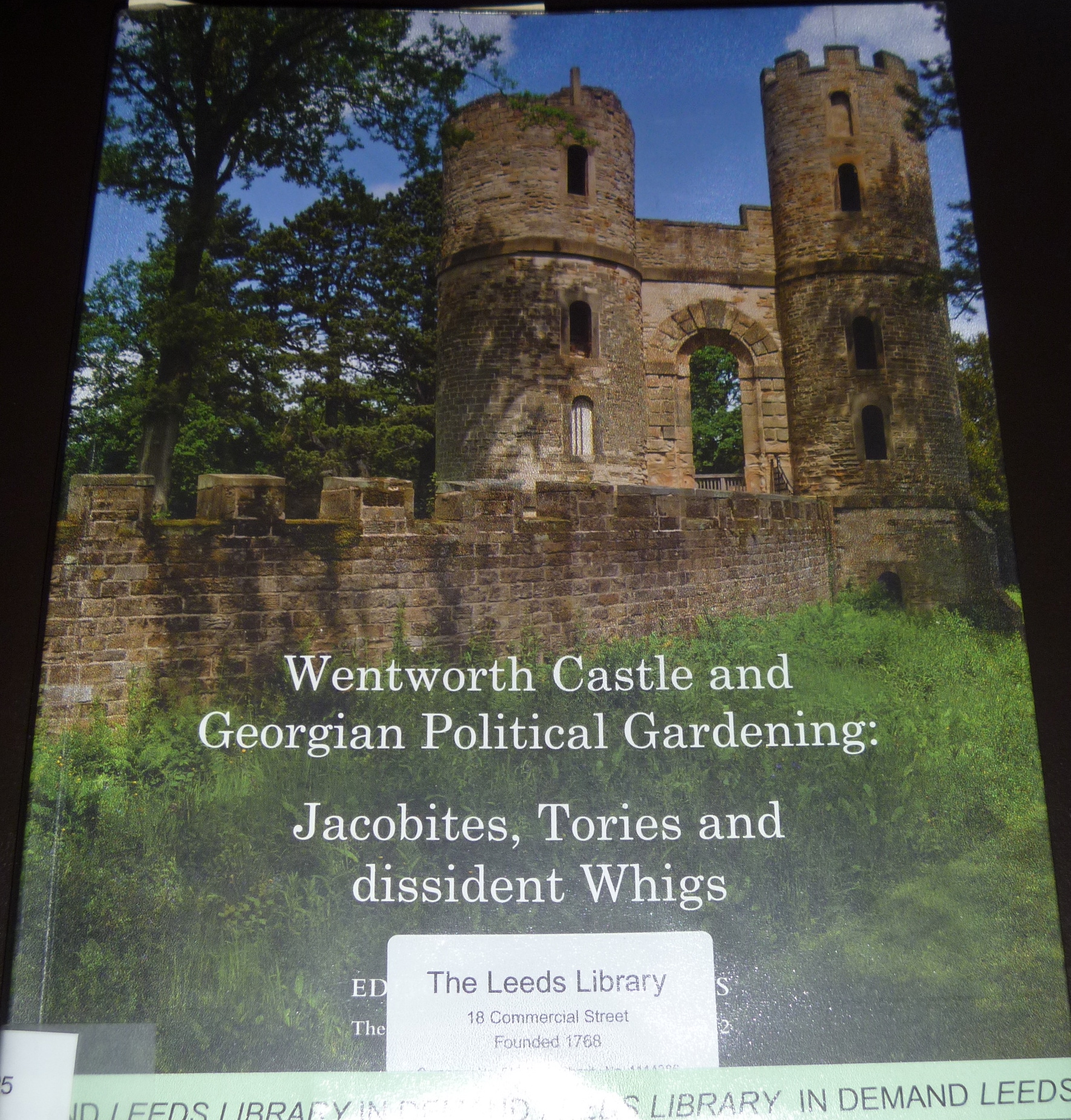
Wentworth Gardens Book

The substitute for the 2012 edition of the Journal is the publication of the proceedings of a 2010 conference : “Wentworth Castle and Georgian Political Gardening : Jacobites, Tories and Dissident Whigs“. It’s edited by Patrick Eyres and I recently borrowed it from the Library and read it with great interest.

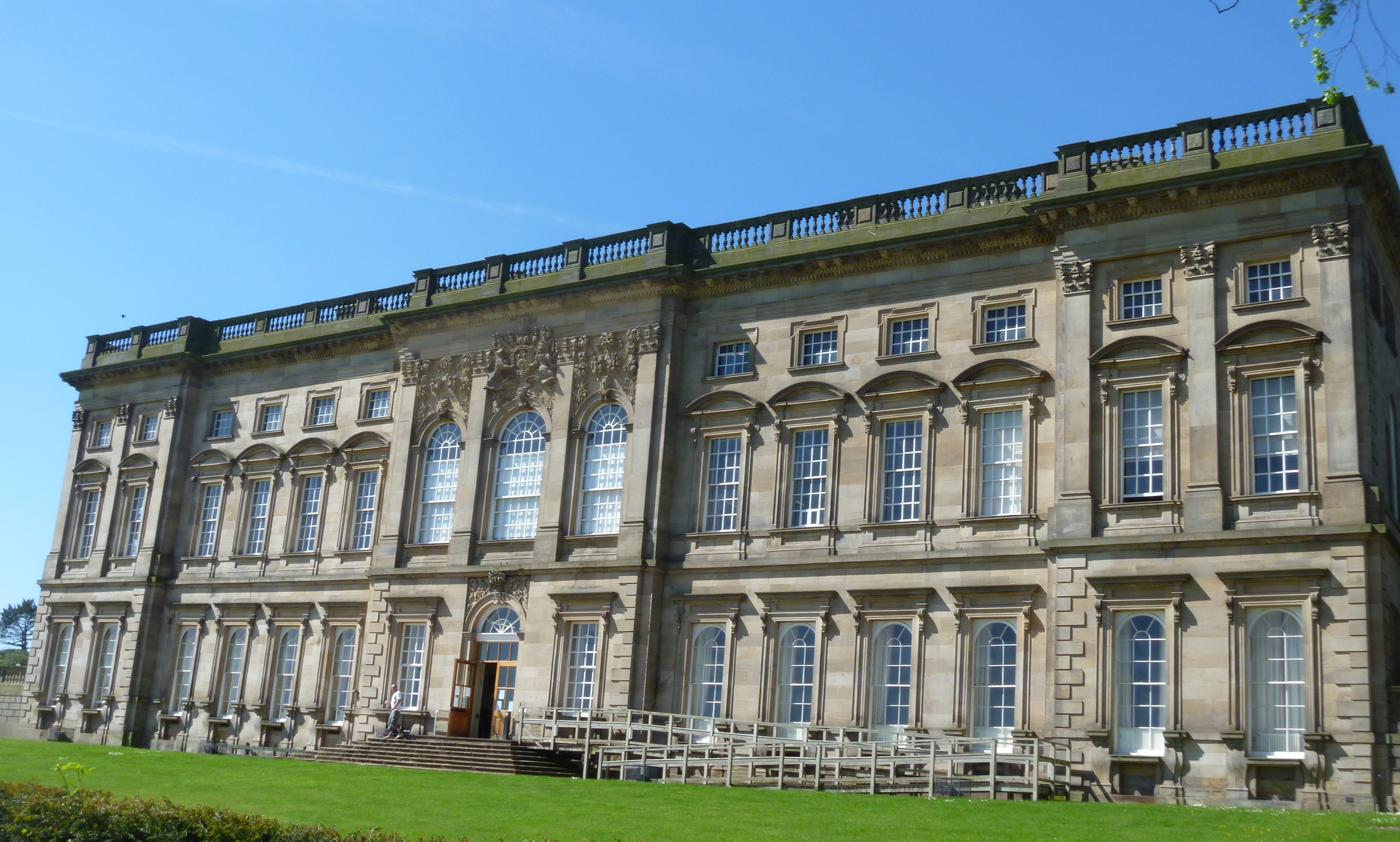
Wentworth Castle

Wentworth Castle Front

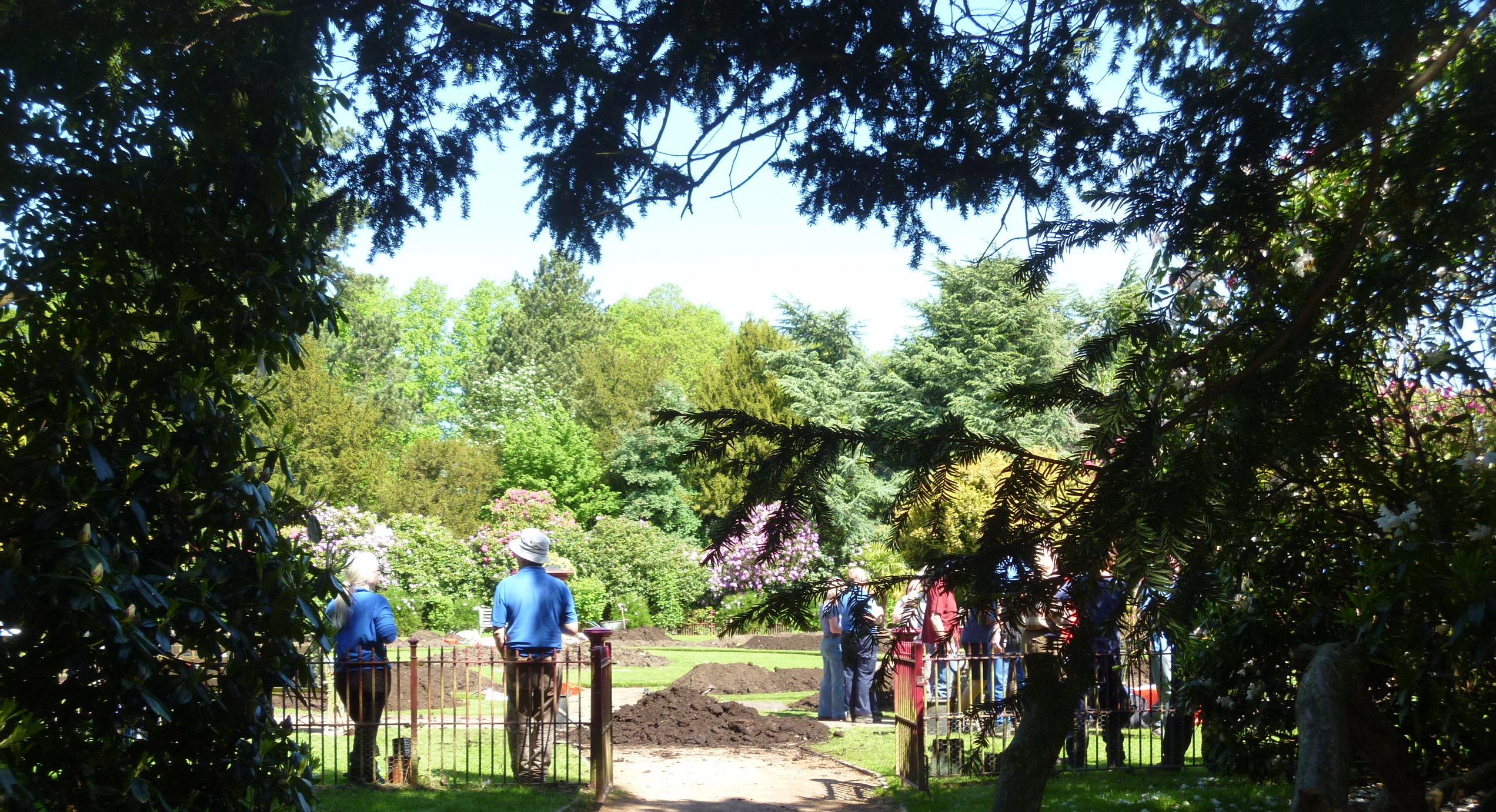
The next step, obviously, was to visit the Castle itself. Or rather, the gardens surrounding the Castle. The Castle itself is a private College and not generally open to the public. I decided to visit the gardens on Tuesday this week on my way to visit my son in Sheffield. What a lovely place it is. The weather was also kind, so it was a real pleasure to spend a couple of hours exploring the gardens and features of Wentworth Castle Gardens not far from Junction 37 of the M1 motorway.

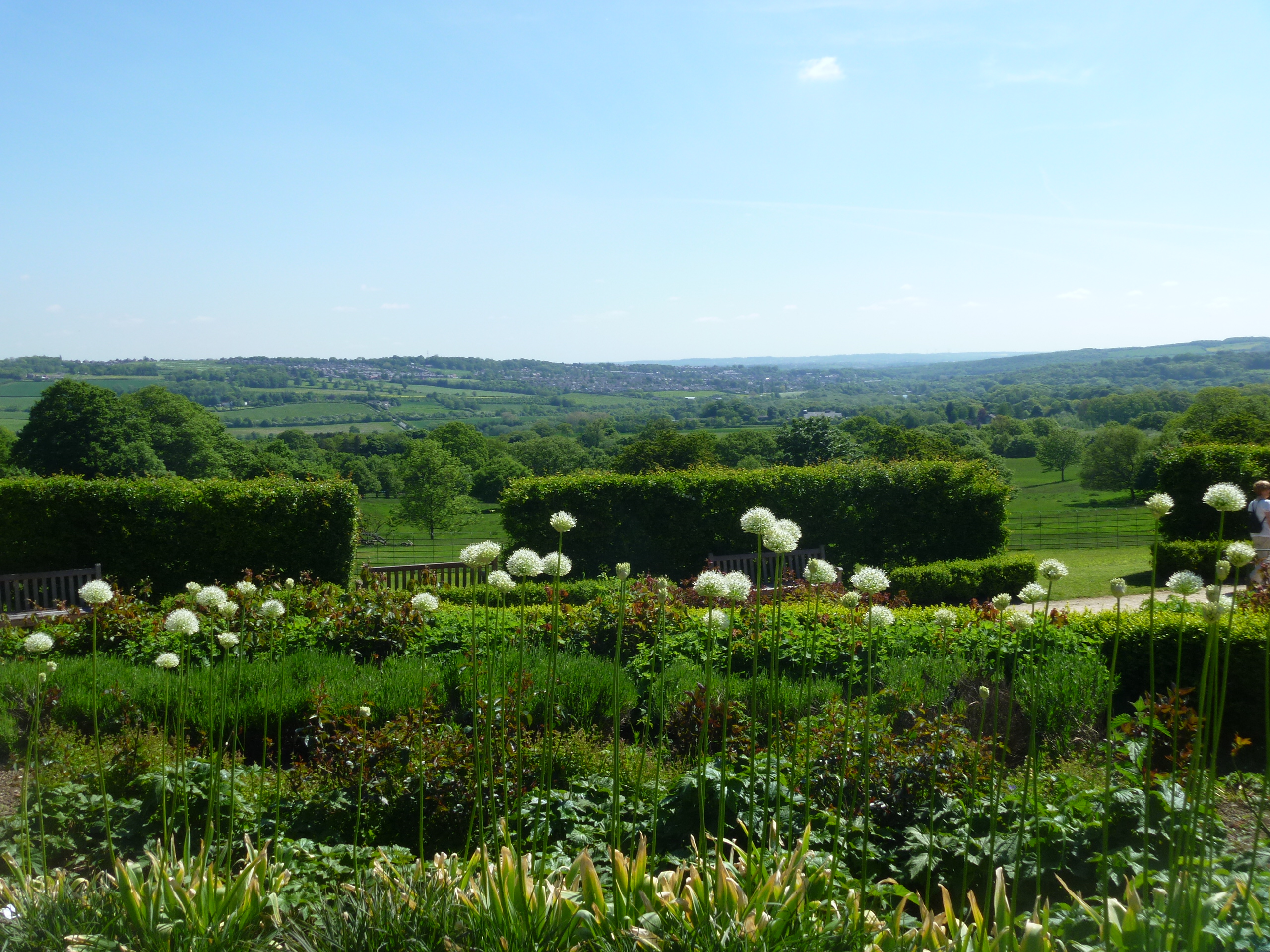
The View from Wentworth Castle

The View from Wentworth Castle

Volunteers

Garden Volunteers taking a tea-break

I got the impression that over the last few years there’s been a lot of work going on in order to recreate the gardens and restore the many garden features.

P1100110

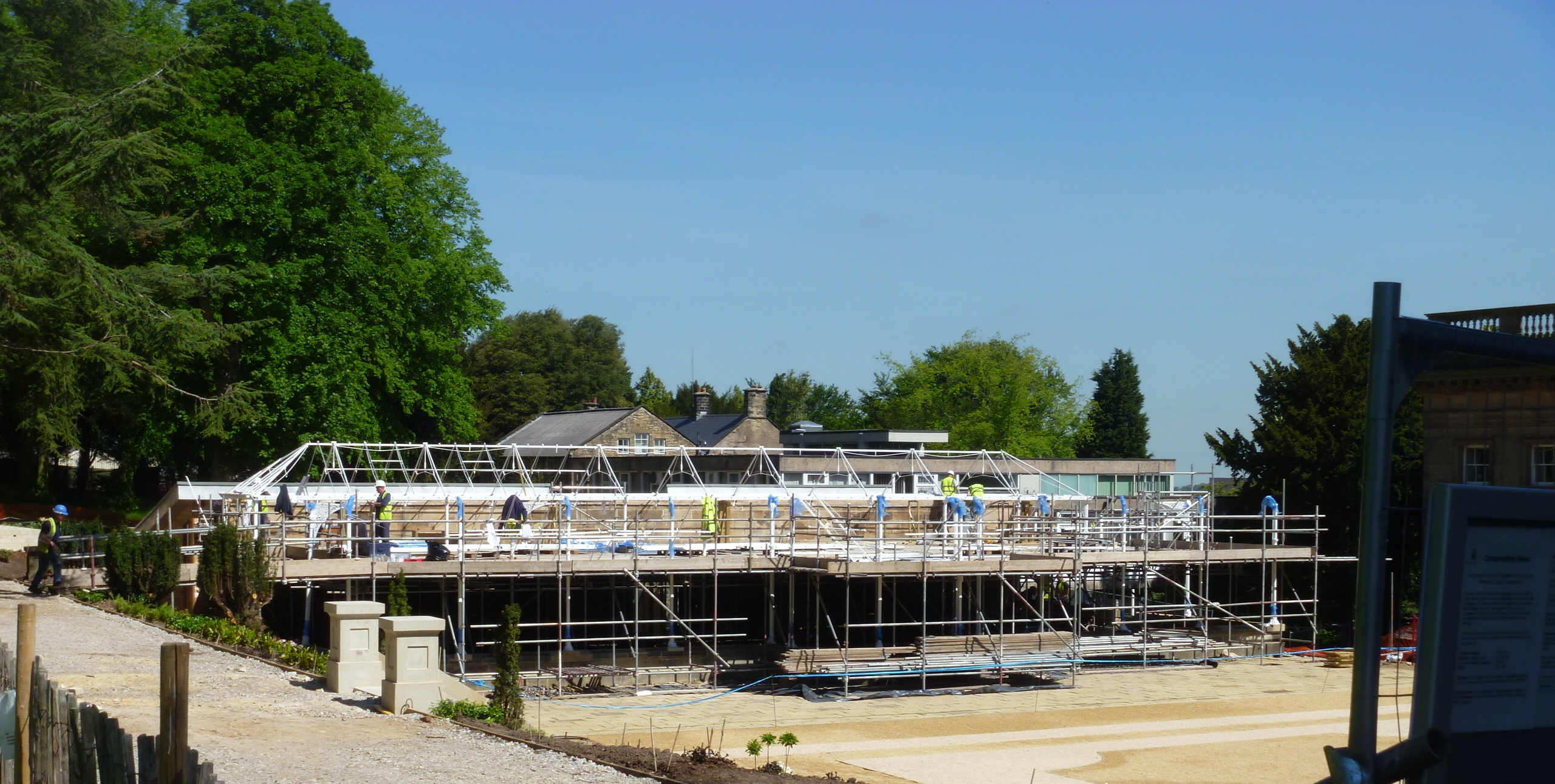
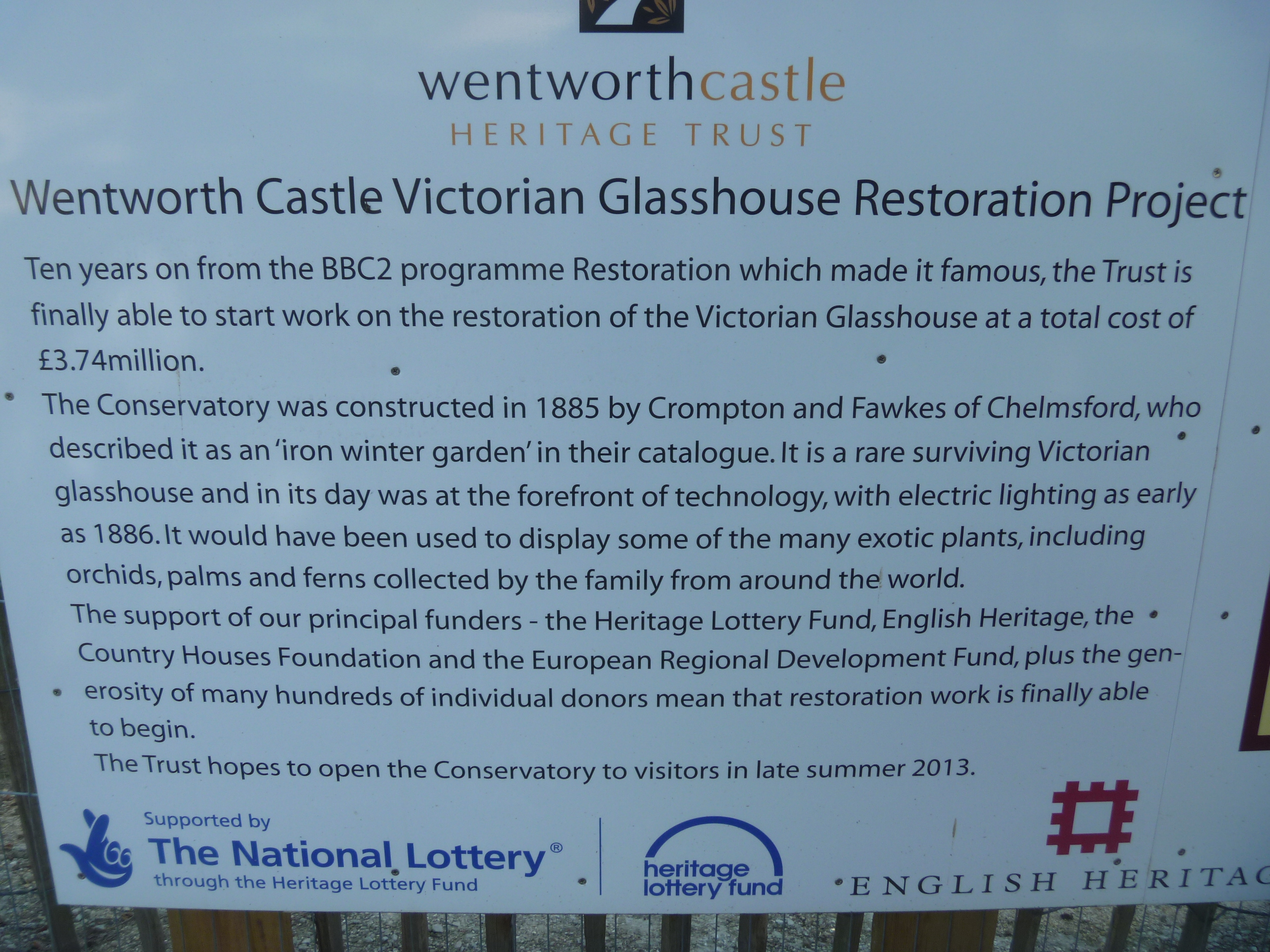
The latest exciting project is the Wentworth Castle Victorian Glasshouse Restoration Project.

“Made famous by the BBC’s Restoration programme in 2003, this beautiful iron glasshouse was in danger of being lost forever until it became the main focus of our restoration plans.  In 2011, the Trust finally succeeded in raising the £3.74million needed to rescue the delicate structure and was able to work up the final plans for the restoration project.”

Notice board

It is expected that it will be open late summer 2013. Read more about the work being undertaken here.

The Glasshouse is just behind the main castle building and the gardens rise behind them on a gentle slope. There are formal gardens and woodland, a lovely cedar walk, a garish azalea garden, a stumpery and fernery, and an informal ‘wilderness’.

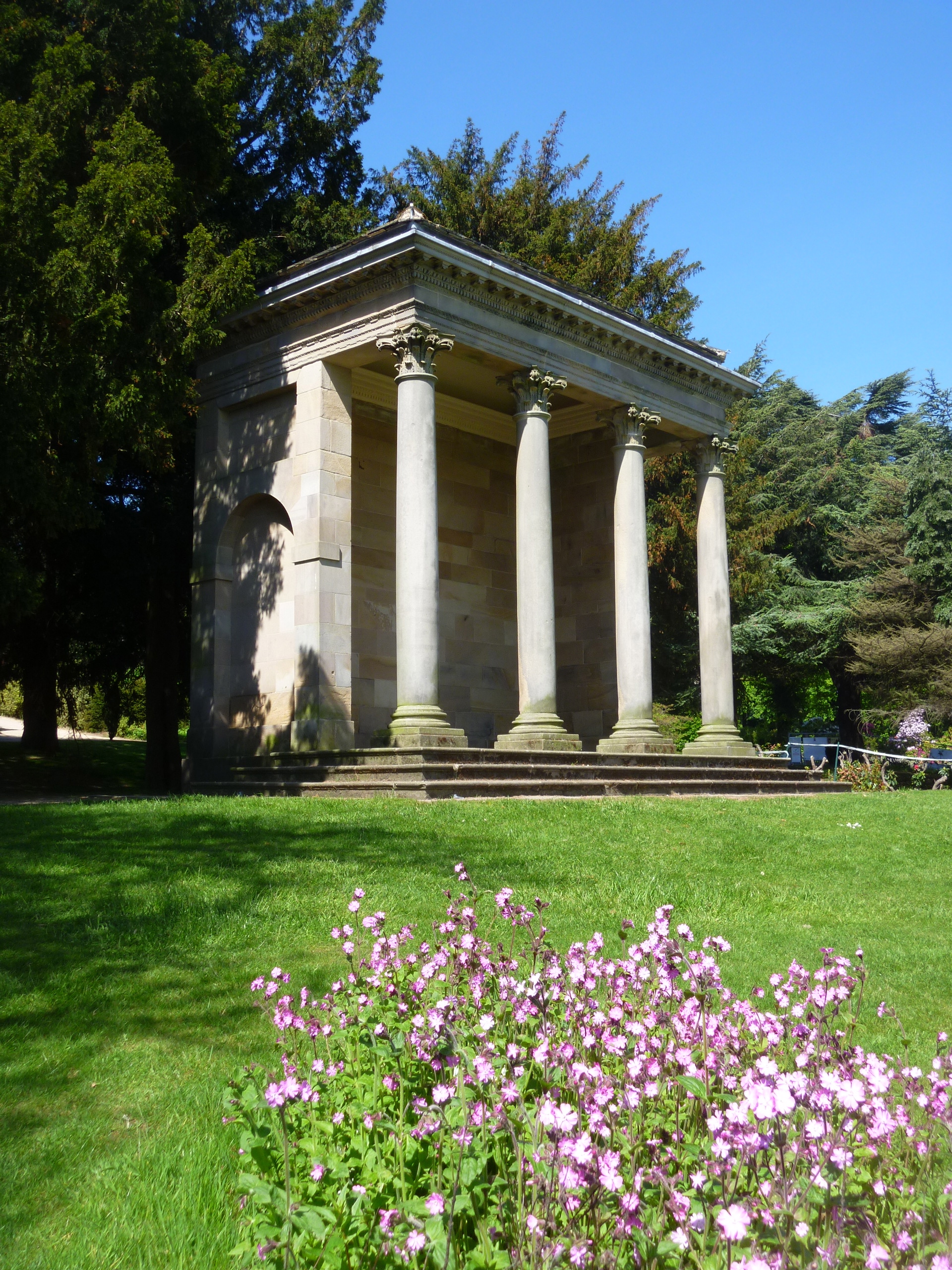
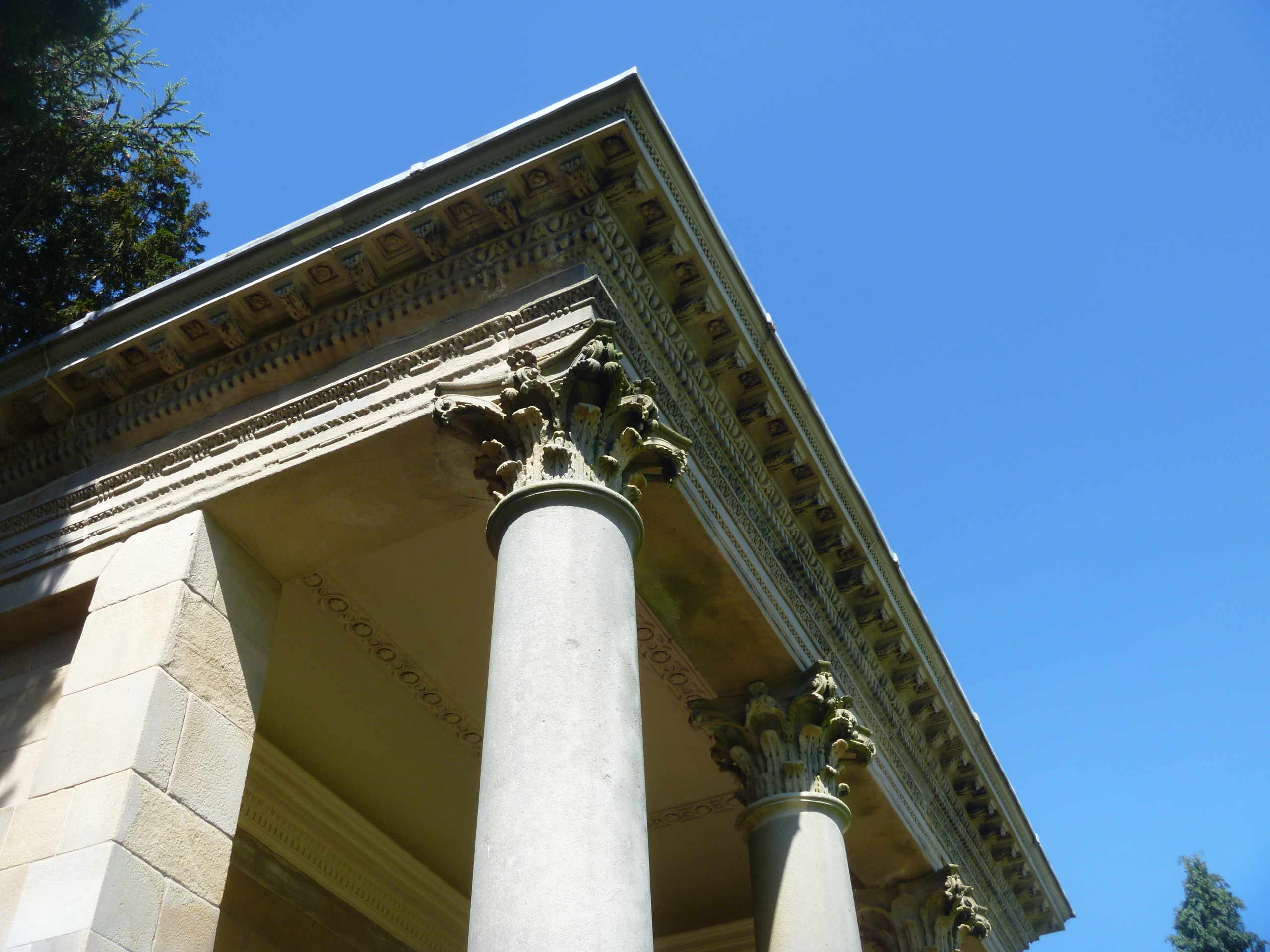
Corinthian Temple

The Corinthian Temple

Plasterwork

The ornate plasterwork of the Temple

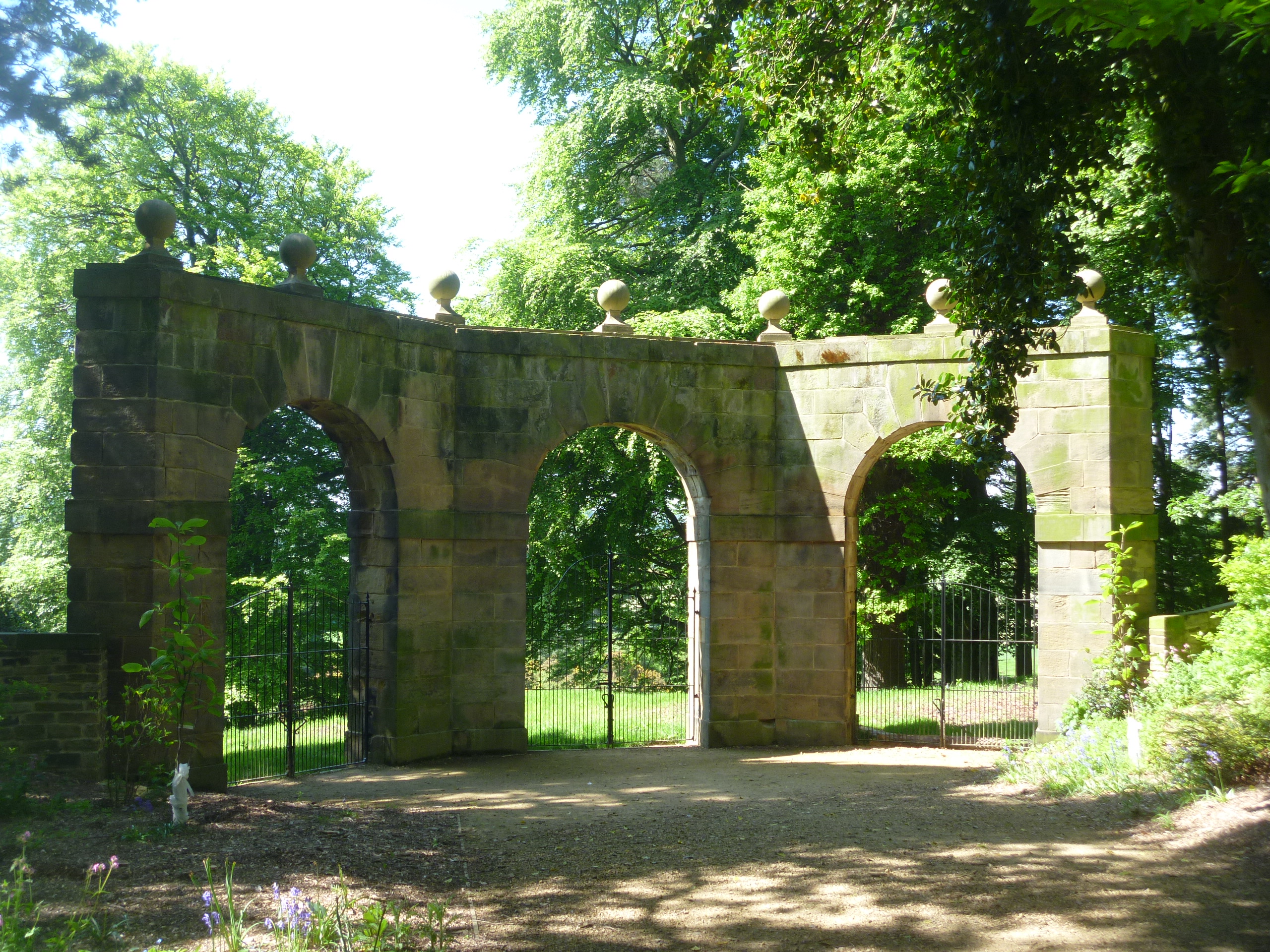
Archer's Hill gate

Archer’s Hill Gate

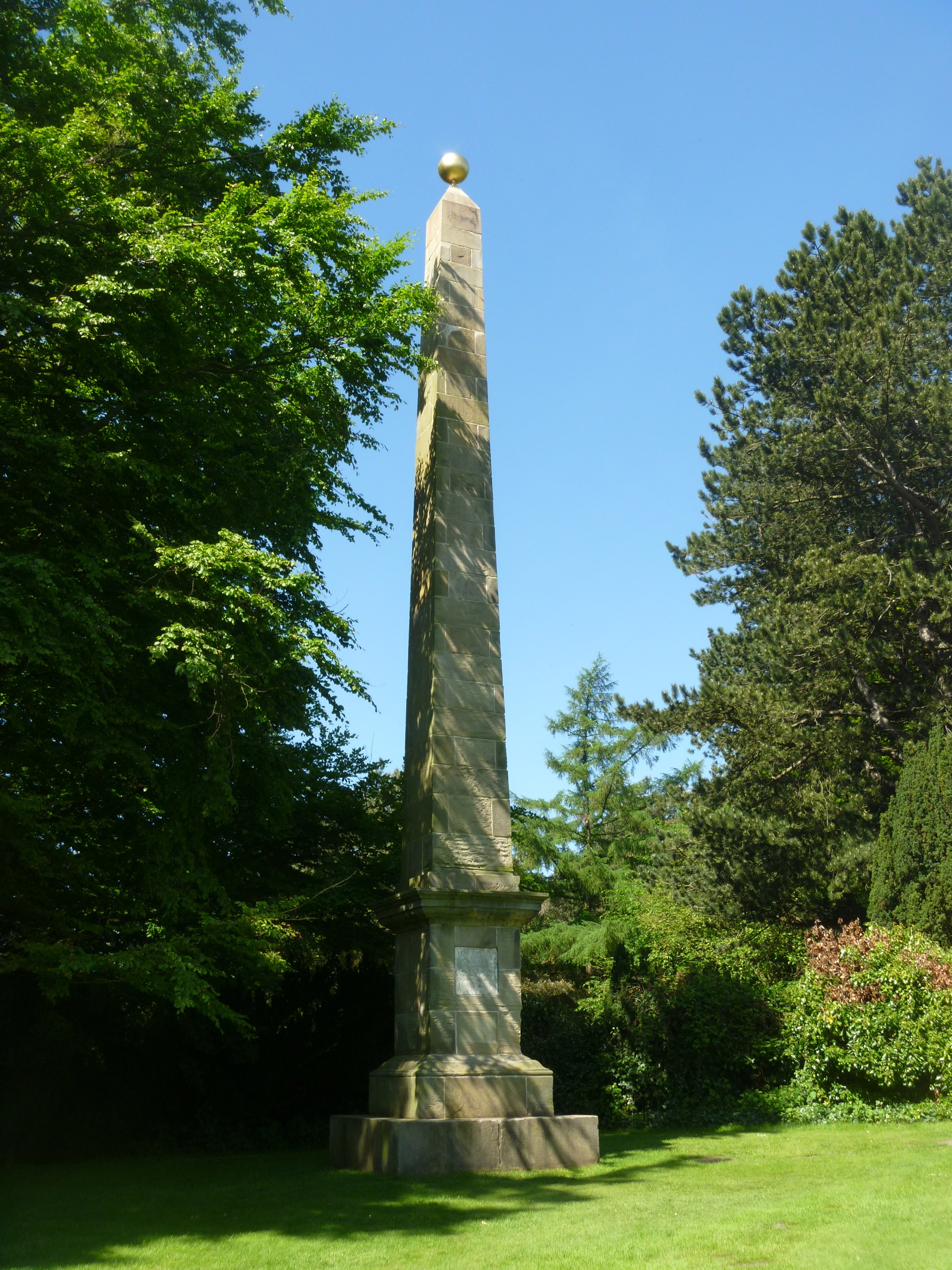
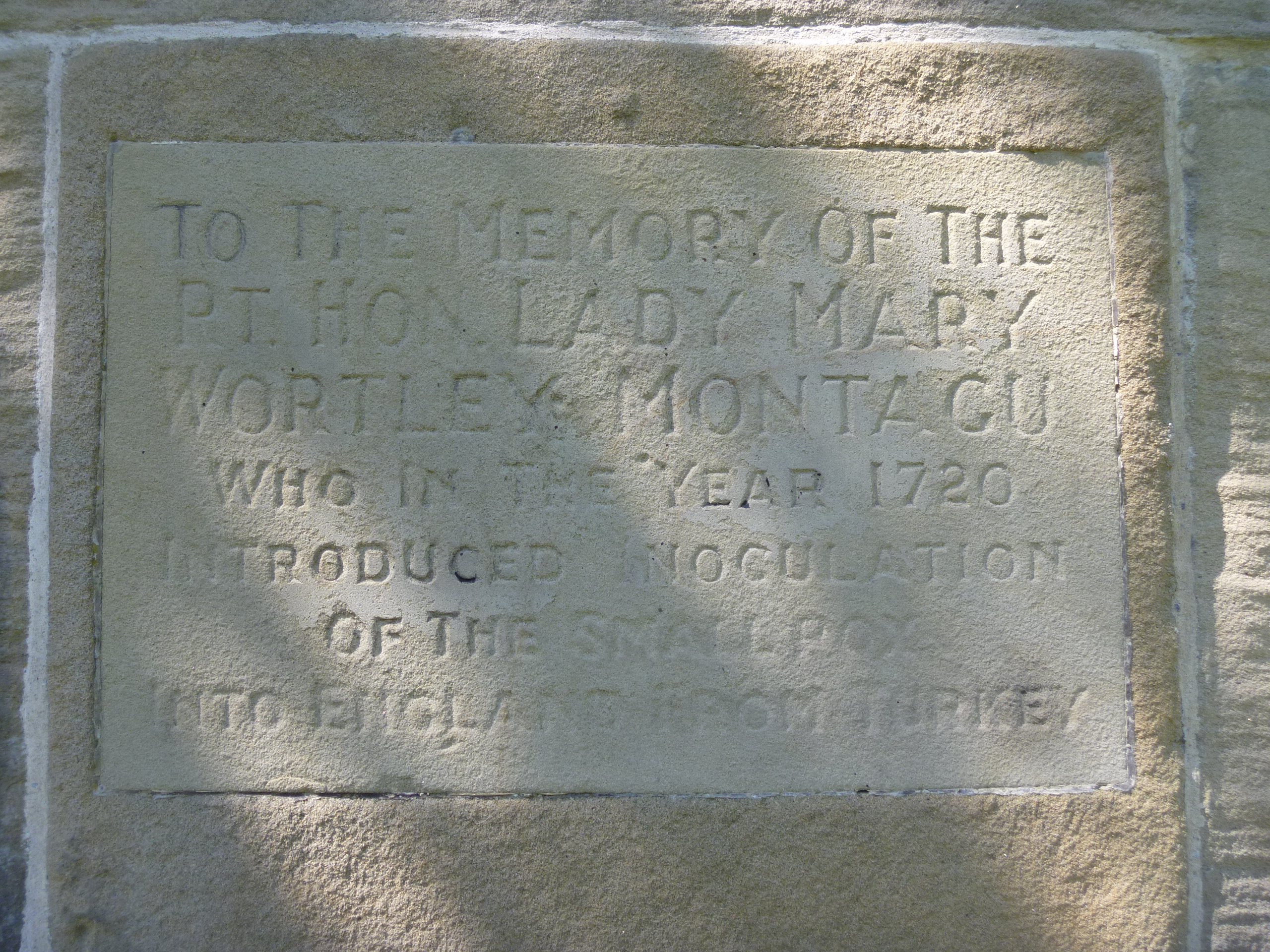
Sun Monument

The Sun Monument to Lady Mary Wortley Montagu

Lady Mary Montagu

Stainborough Castle

Stainborough Castle

The view

The View from Stainborough Castle Tower

Lady Lucy's Walk

Lady Lucy’s Walk

Going back to the Wentworth Garden book I mentioned at the beginning there was one particularly interesting chapter towards the end. It wasn’t about gardens at all but about the Wentworths and Jane Austen novels. “A Big Name: Jane Austen and the Wentworths” is by Janine Barchas and in it she points out every instance of the appearance of a Wentworth-related name in Austen’s novels.

“In the long eighteenth century, the Wentworth family enjoyed pride of place among “abnormally interesting people” we now term celebrities.” Here are just some examples : Wentworth (Persuasion); Fitzwilliam (Pride and Prejudice); Darcy (Pride and Prejudice); Woodhouse (Emma); Watson (The Watsons). Fascinating!

Bolsover Castle to Hardwick Hall, and back, and on foot

This month’s ATG Saturday Walk is a new one for them (and for me) : ‘Bolsover and Hardwick Hall’.

Here’s the itinerary :

Starting alongside the impressive 17th century castle of Bolsover, this walks heads south along the Doe Lea, passing the Saxon church at Ault Hucknall en route to the impressive Elizabethan home of Bess of Hardwick – Hardwick Hall. After strolling through the extensive grounds, we head north back to Glapwell for lunch. After lunch, quiet farmland tracks take us back to Bolsover for tea. 12.75 miles.” [ATG brochure]

I was so attracted by the idea of the walk and its route and the fact that today I would be travelling down the M1 from Leeds to Leicester with a whole day to spare that I failed to register quite the distance involved! There are opportunities to be picked up and returned comfortably to the start/end from both at Hardwick and at Glapwell but most of us soldiered on to the end. Luckily the route is not too demanding as regards climbs but it’s quite a long tramp and I’m now happily down in Leicetershire.

Bolsover Castle

I’ve written about Bolsover Castle before – a misty, foggy visit in November 2011. Today we passed through several weathers but only one brief shower otherwise sunshine, cloud, heavy black threatening cloud and cold winds all took it in turns.

New Bolsover

New Bolsover

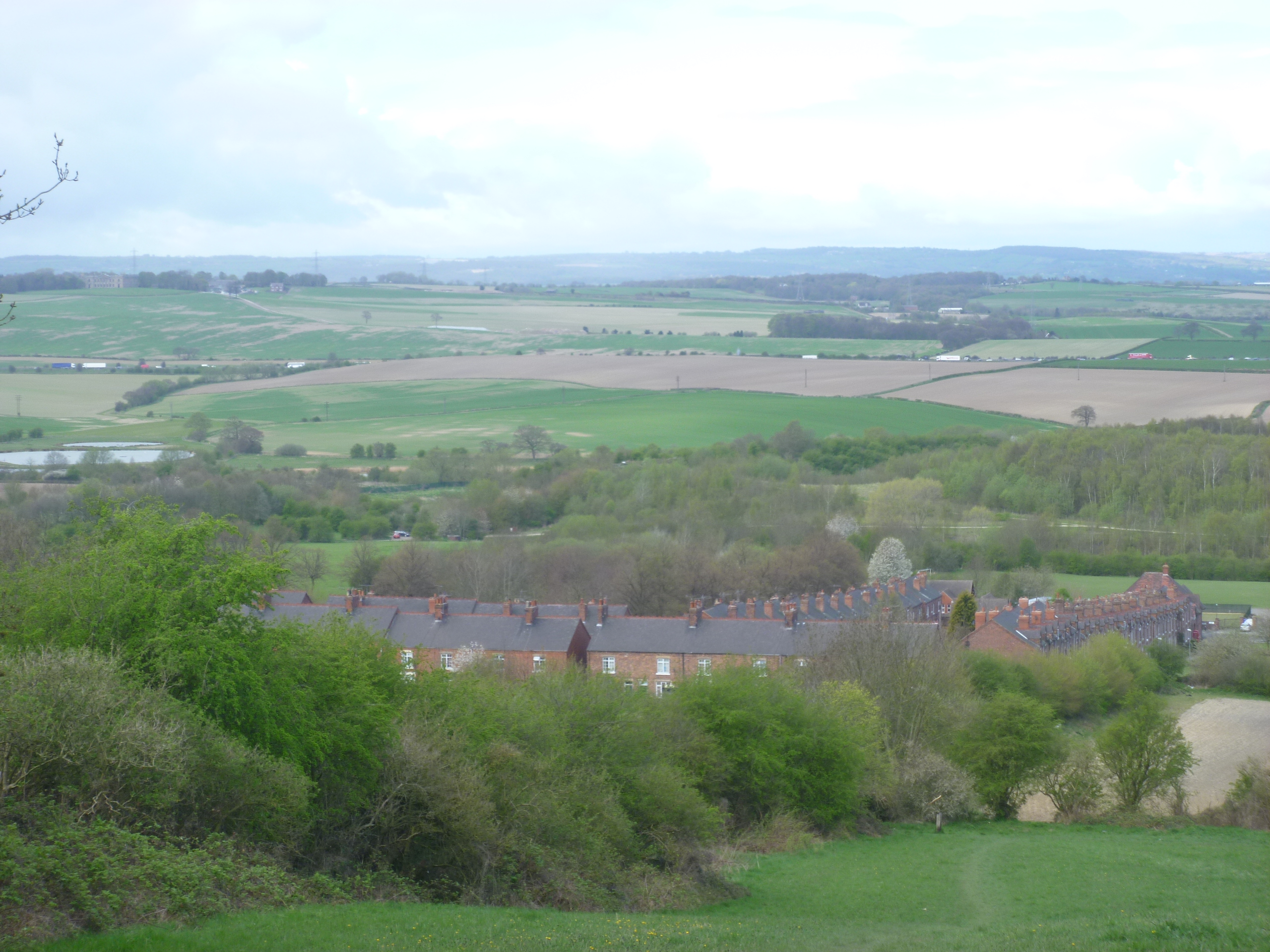
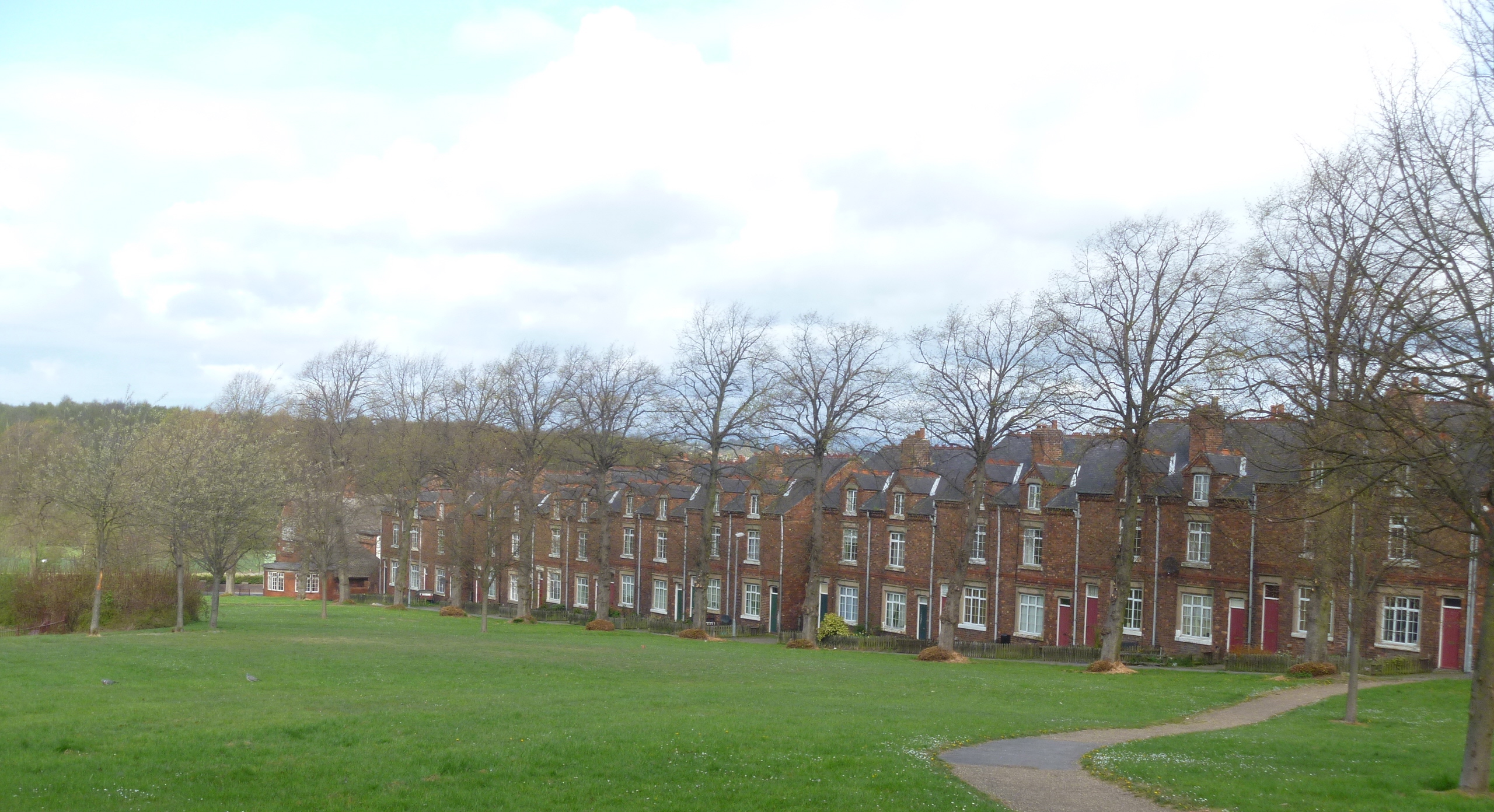
From Bolsover town we headed down below the Castle to New Bolsover which is actually not so new just newer than the old settlement around the Castle. It was a purpose-built miners’ village of neat red-brick terrace houses enclosing a large grassy area and is still occupied today even though the pits around this coalfield closed in the 1990s.

In New Bolsover

In New Bolsover

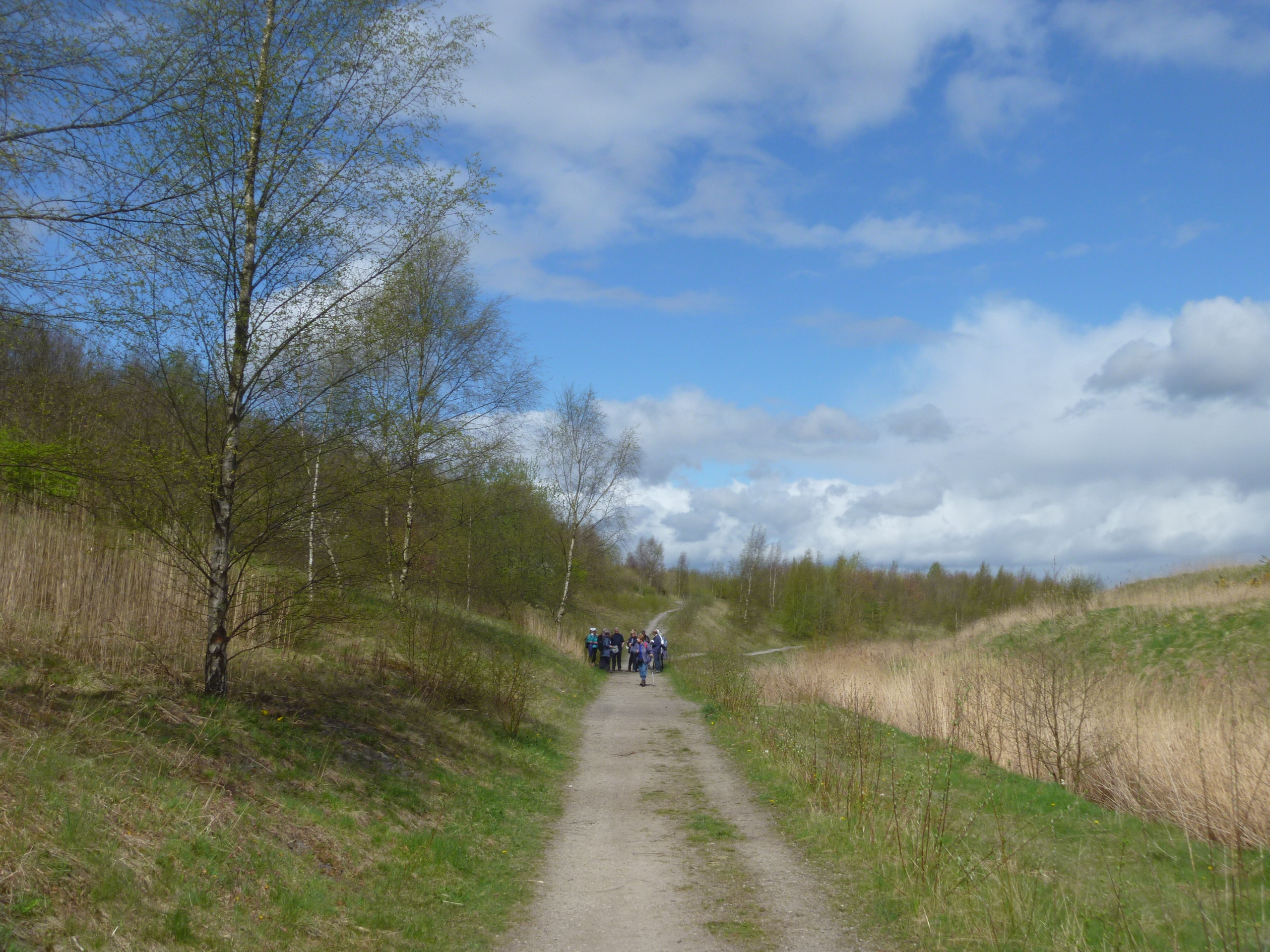
The theme of much of the walk was past or along the remains of the coal industry: along a disused railway track and past grassed over open cast mines on the Stockley Ponds and Trail maintained by Bolsover Countryside Partnership.

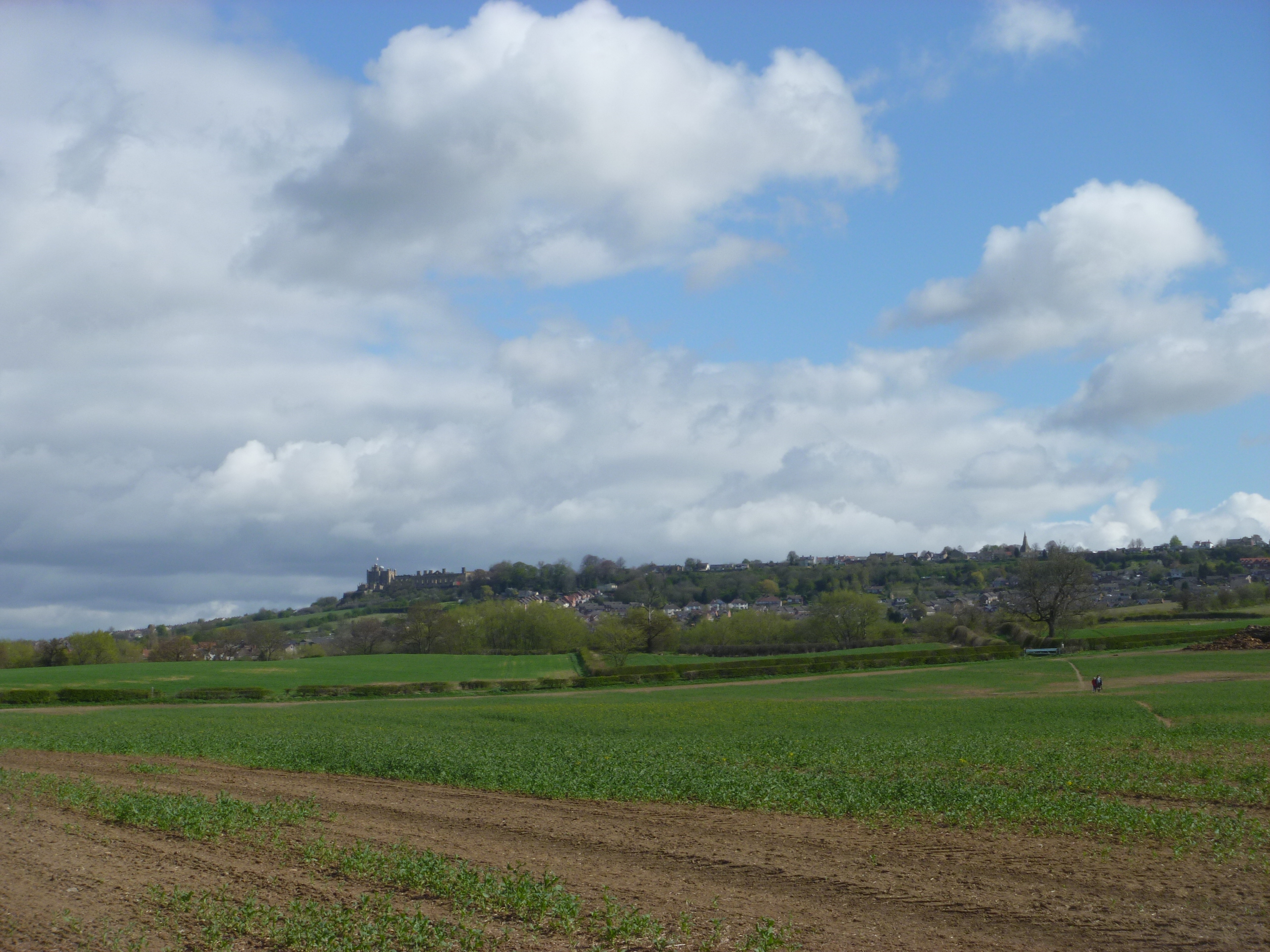
We could still see Bolsover Castle

We could still see Bolsover Castle

The Stockley Trail

The Stockley Trail

Stockley Ponds

The Stockley Ponds (Beware! Contaminated water) no fishing today

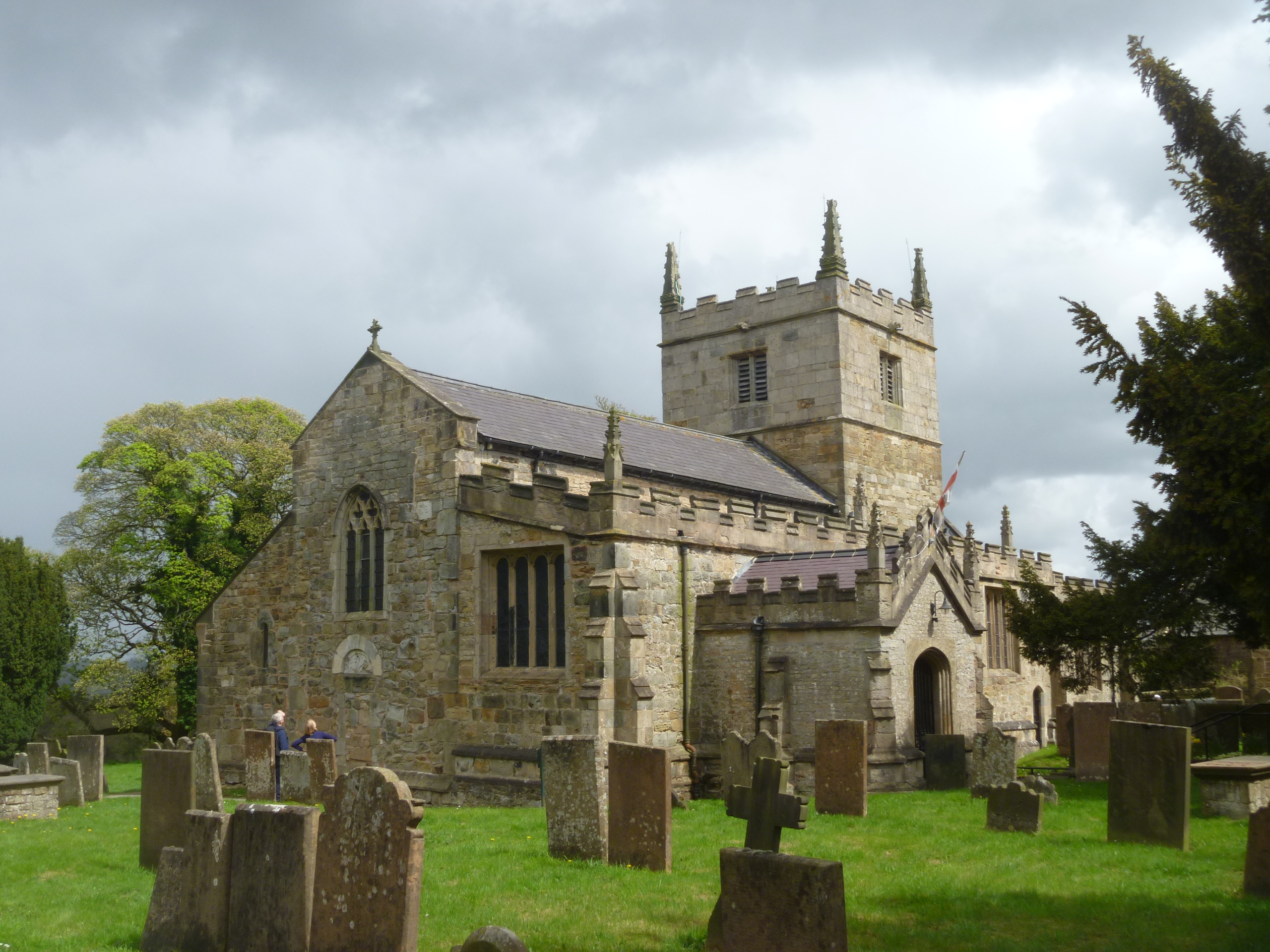
Apart from the two very significant buildings – Hardwick Hall (NT) and Bolsover Castle – we stopped by a small Saxon Church. The Church of St John the Baptist at Ault Hucknall was closed unfortunately but it would have been good to get inside. Read more about its chapel, windows and the grave of Thomas Hobbes, the author of The Leviathan, here.

St John's Ault Hucknall

St John the Baptist Church, Ault Hucknall

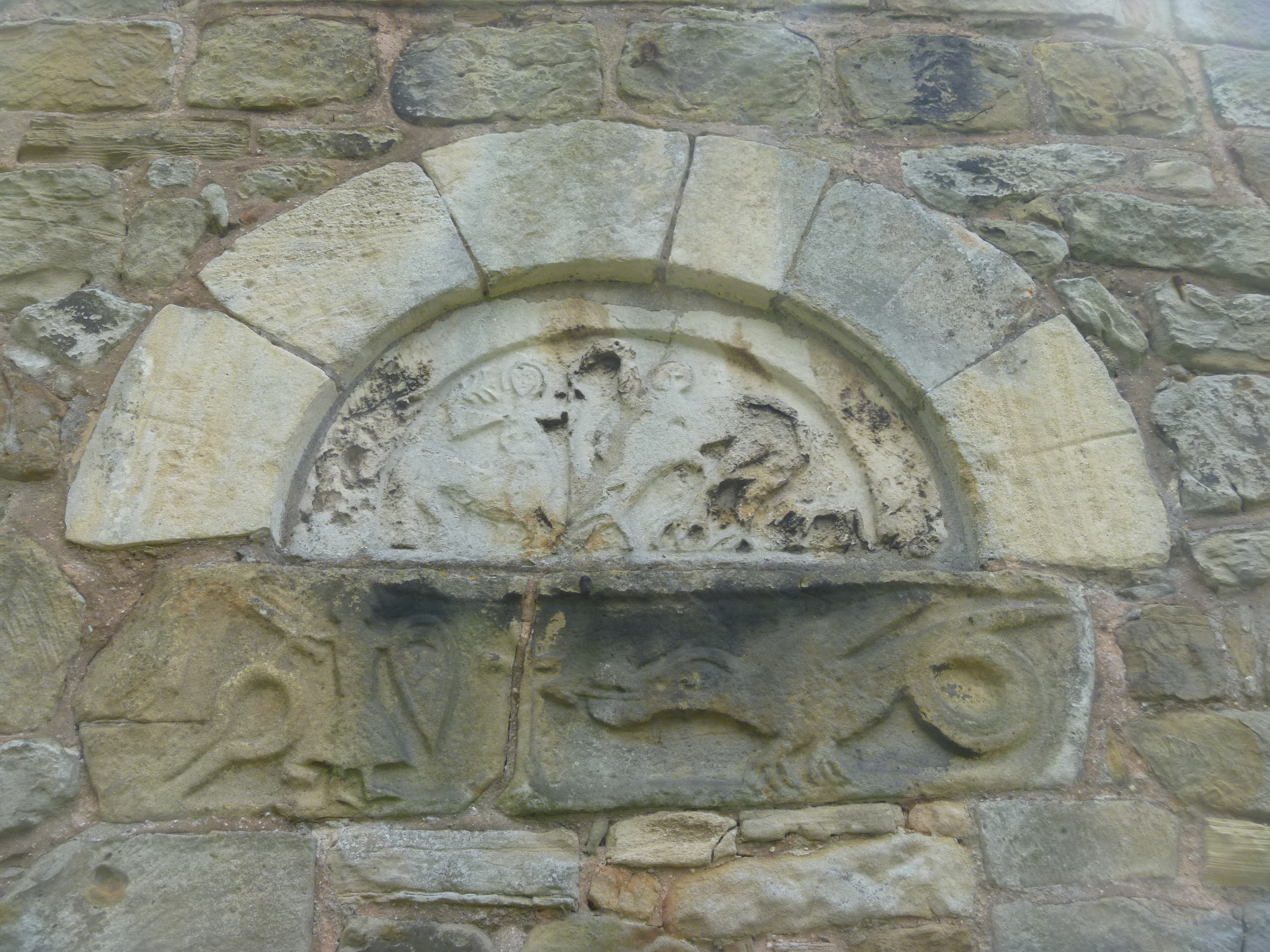
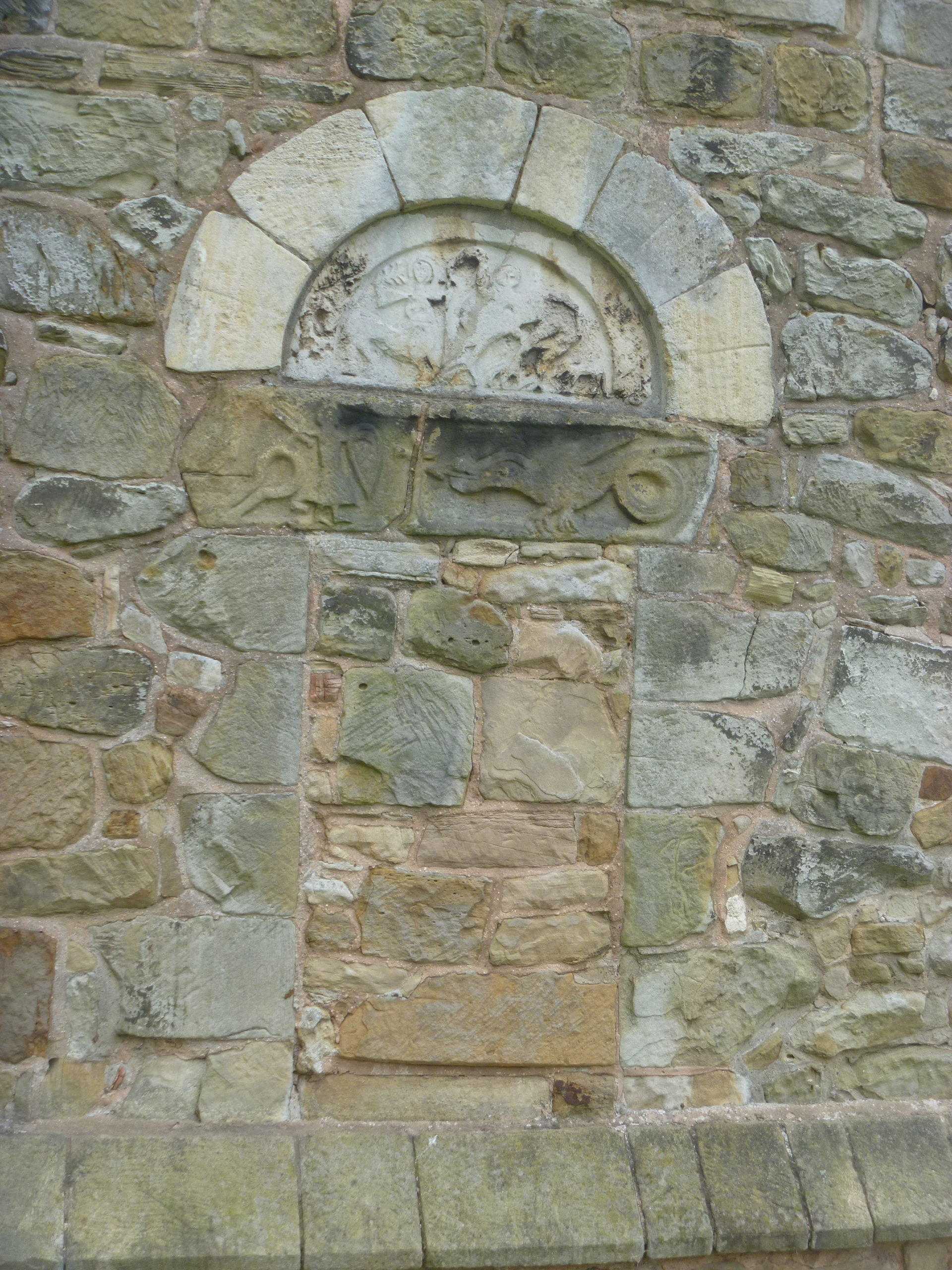
Saxon Arch and figures

Saxon Arch with figures

Close-up of the Saxon Arch

Saxon Arch details

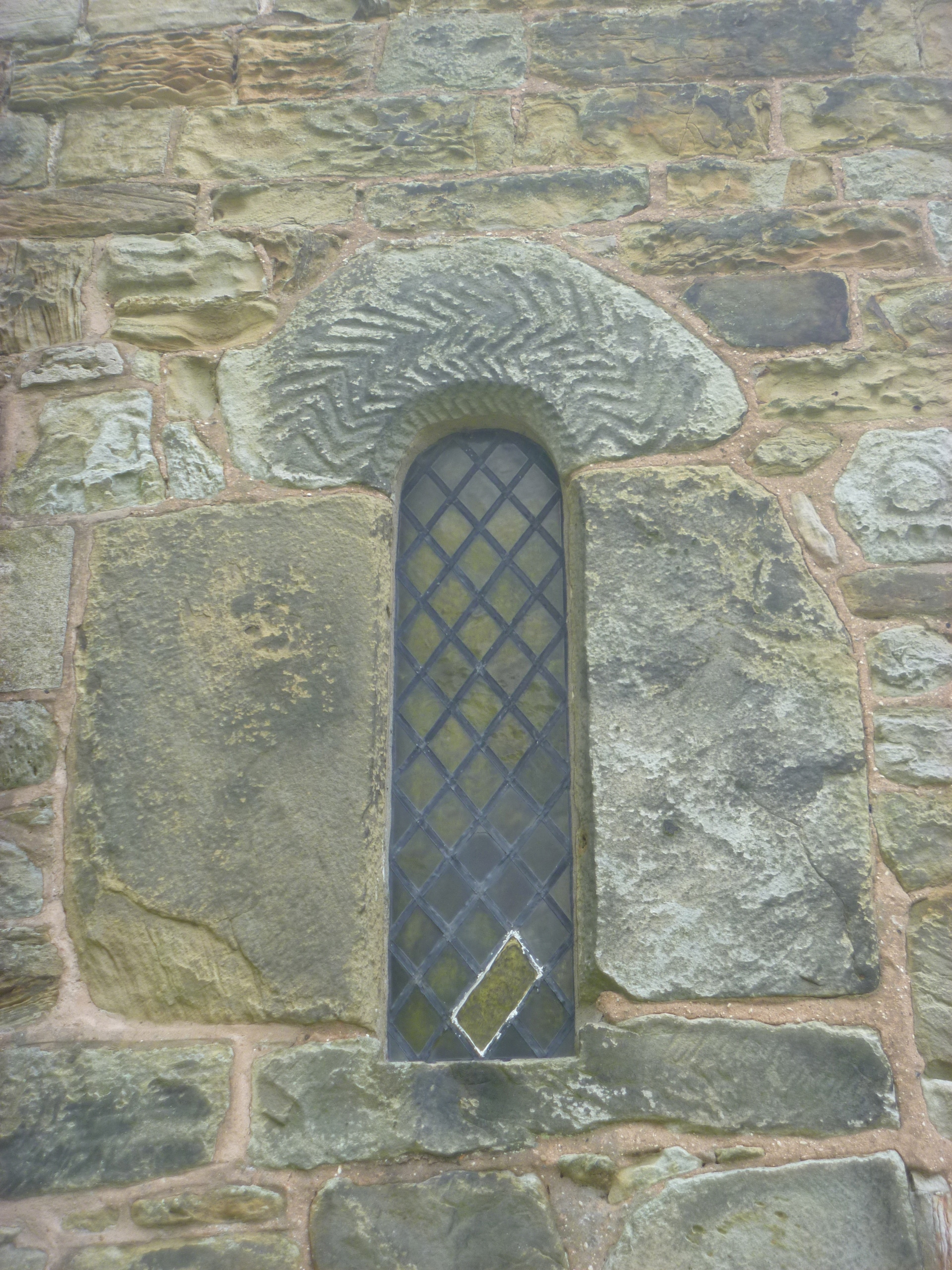
Saxon Window

Saxon Window

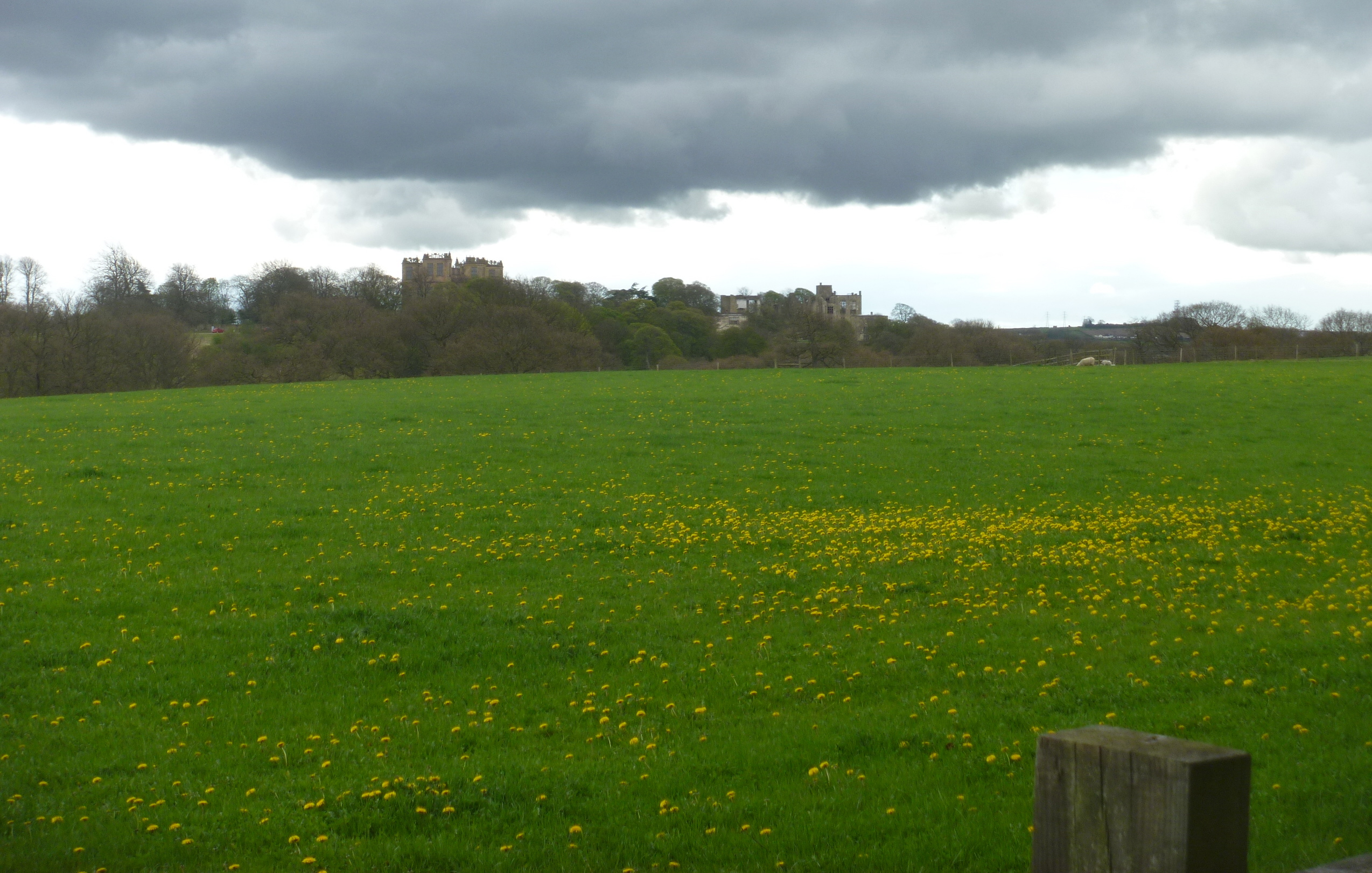
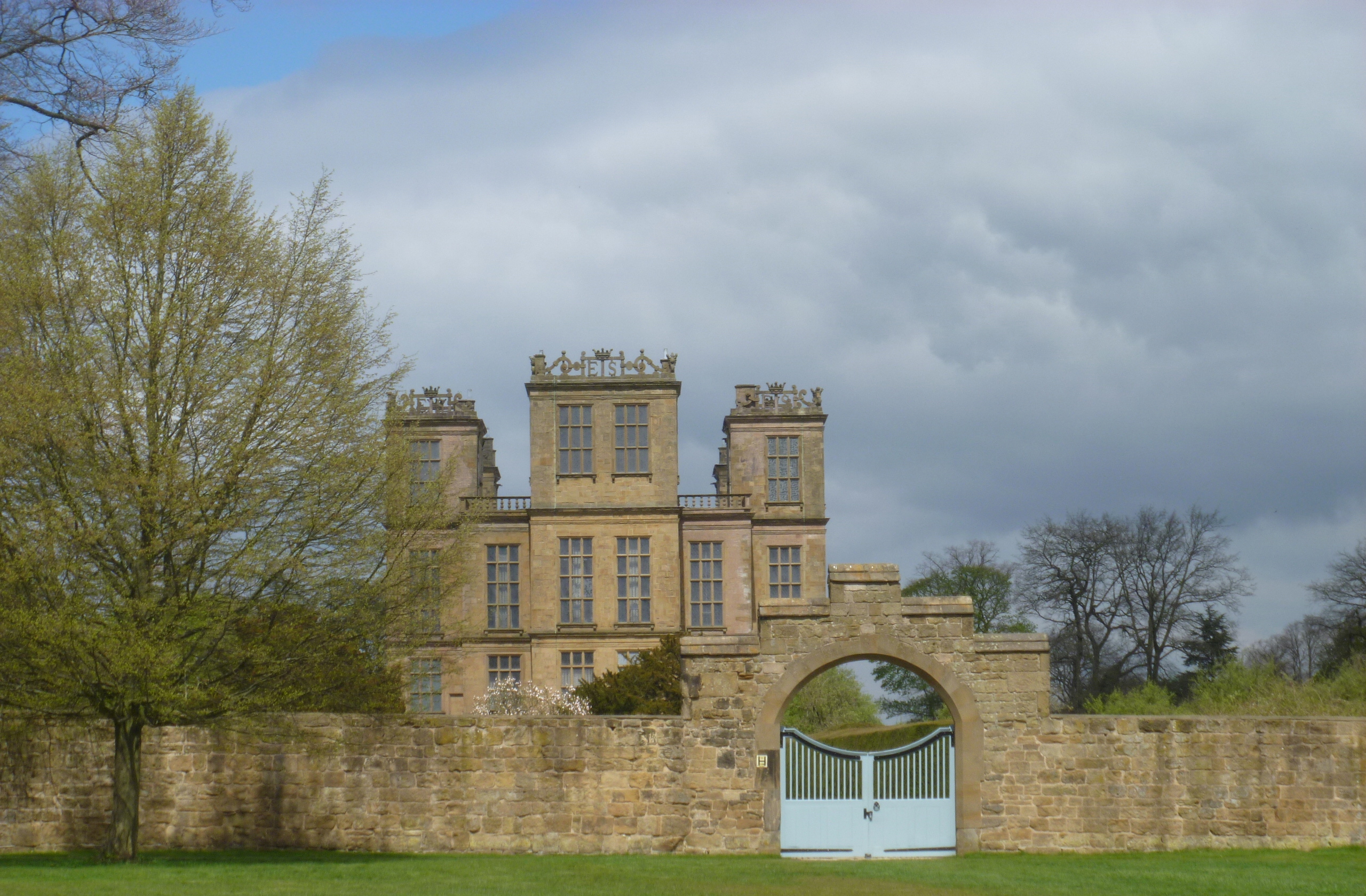
By lunchtime we’d arrived at Hardwick Hall, “more glass than wall”.

Approaching Hardwick Hall

Approaching Hardwick Hall

Hardwick Hall More Glass than Wall

Hardwick Hall

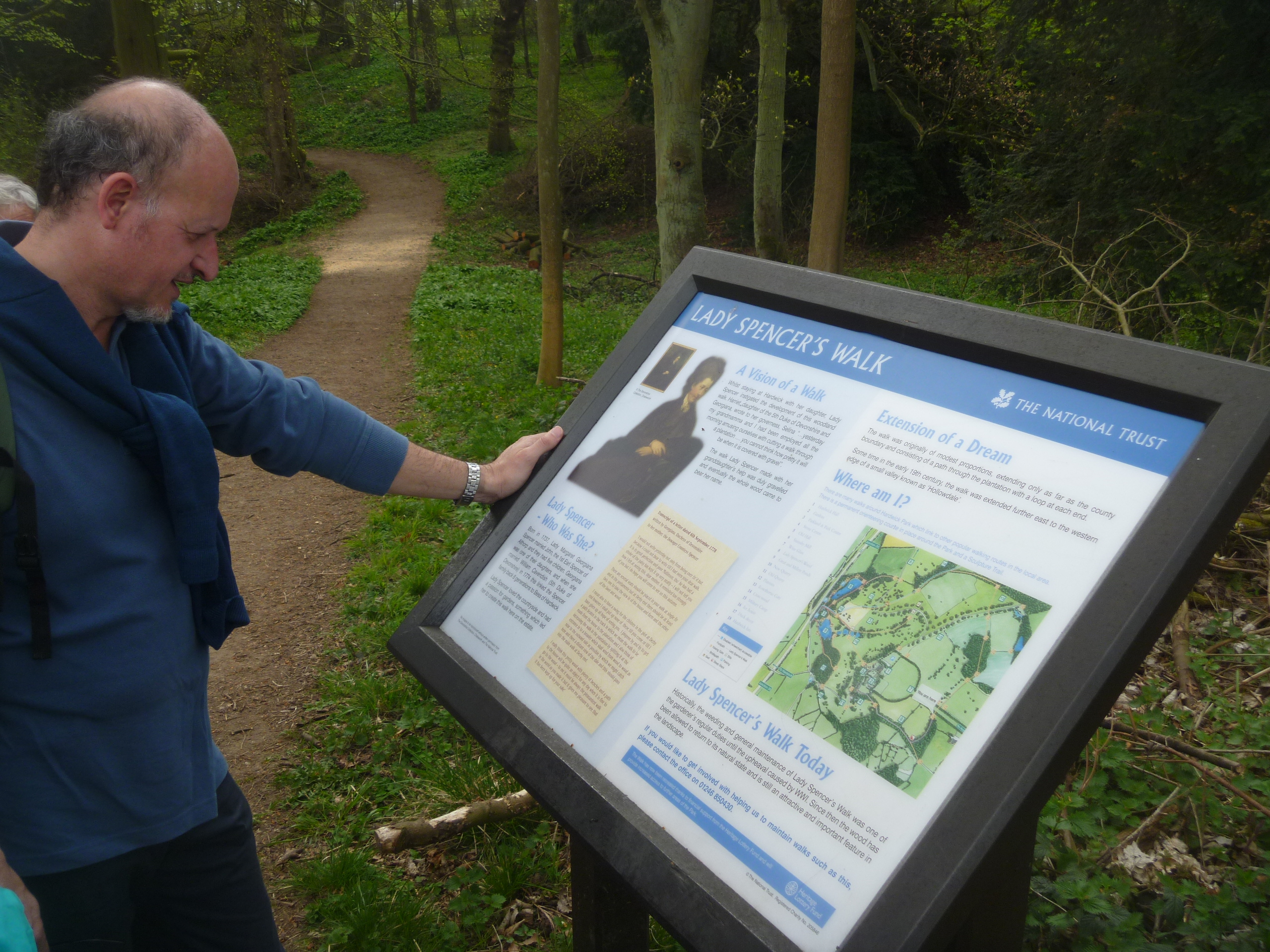
But it wasn’t our lunchtime so we just walked through the grounds, admiring the house as we went and continued along Lady Spencer’s Walk and other tracks on the estate finally arriving at Glapwell where lunch was waiting for us in the Community Centre.

Lady Spencer's Walk

Our Leader, Rob

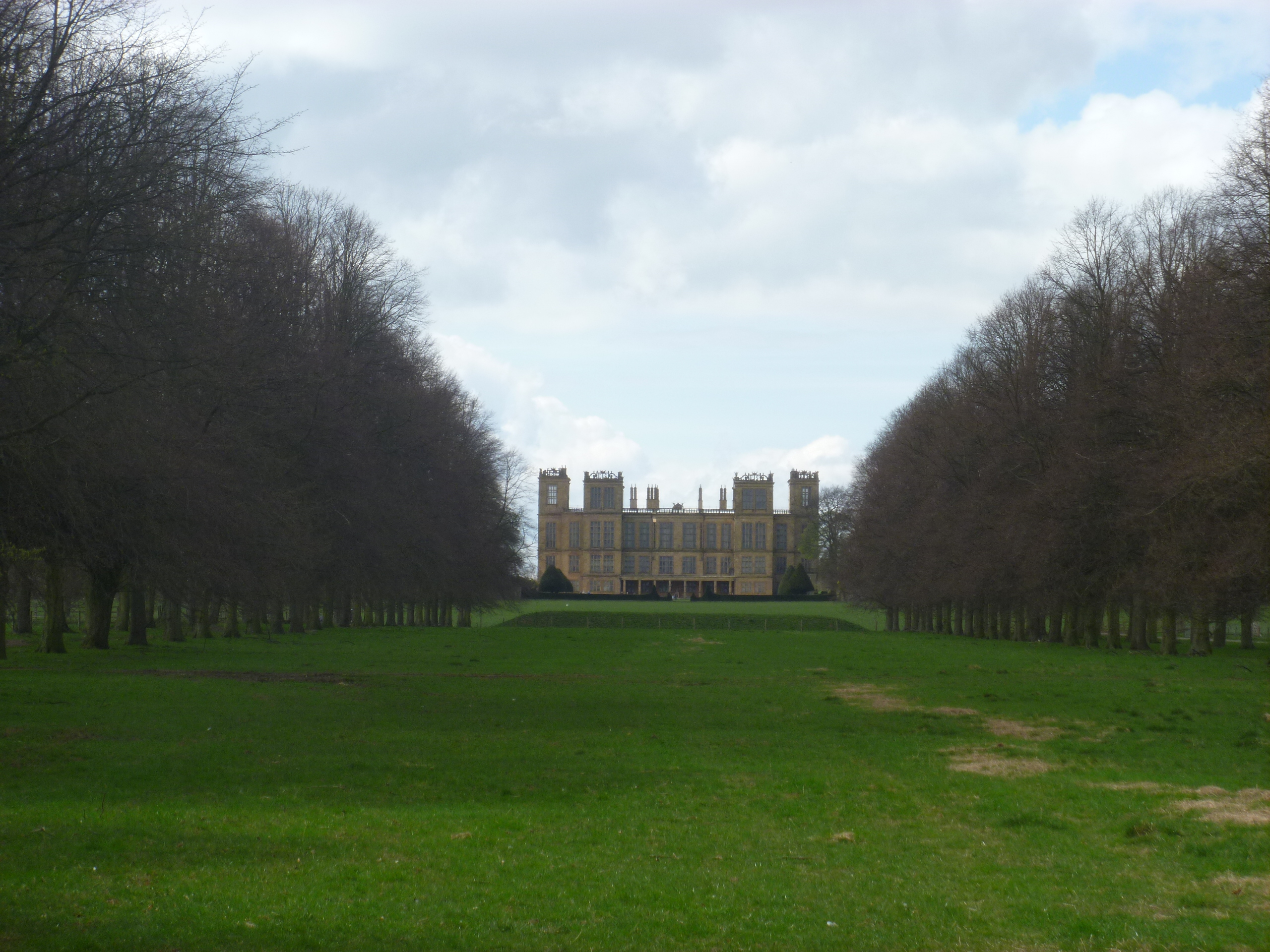
Hardwick Hall avenue

Hardwick Hall from the Avenue of Trees

Comfortably refreshed, the best part of the walk, although fairly short now, lay ahead. After crossing several fields we followed a ridge directly back up to Bolsover with magnificent views west right across to the Derbyshire Dales.

Return to Bolsover

Return to Bolsover

Arriving in Bolsover more sustenance awaited us at The Bluebell pub – a generous spread of home baked scones, butter, cream and jam and pots of tea, to boot.

Less than an hour’s drive I am comfortably ensconced in my homely B&B for the night!

Footloose in Lisbon : walking and climbing in the city

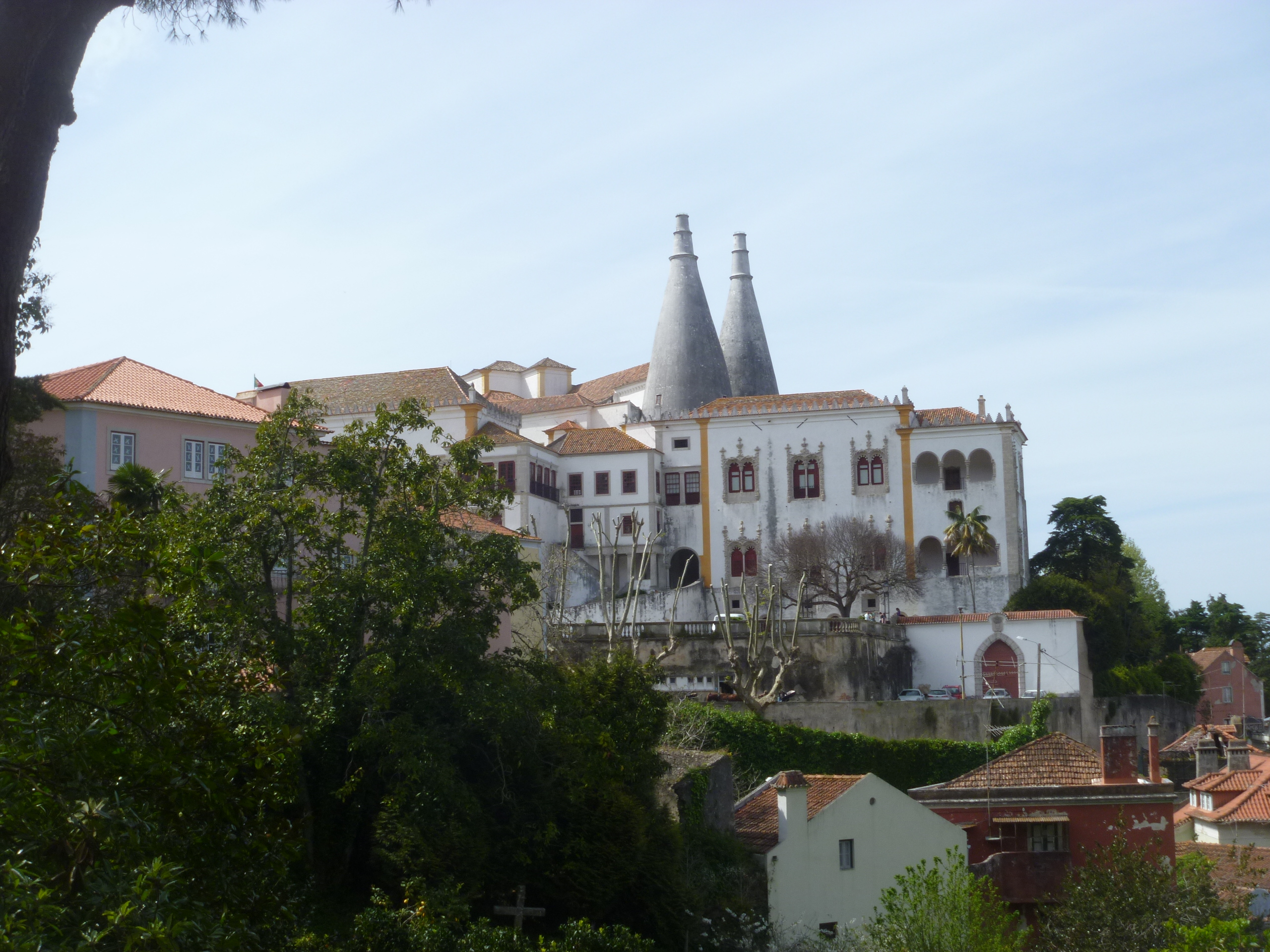
The ATG holiday finished after breakfast on Saturday morning. We’d eaten early and walked down to Sintra Station for the 40 minute train journey to Lisbon Rossio Station. We passed the National Palace on our way. It’s on my list for my next visit!

National Palace Sintra

The National Palace, Sintra

We’d added an extra night to the trip so that we might gain a flavour of Portugal’s capital city. From Rossio Square it was a 20 minute walk to our B&B in the shadow of the Sé Cathedral in the medieval Alfama district. Our hostess Teresa met us and let us leave our bags giving us a local map and a few suggestions for a day’s walking in Lisbon.

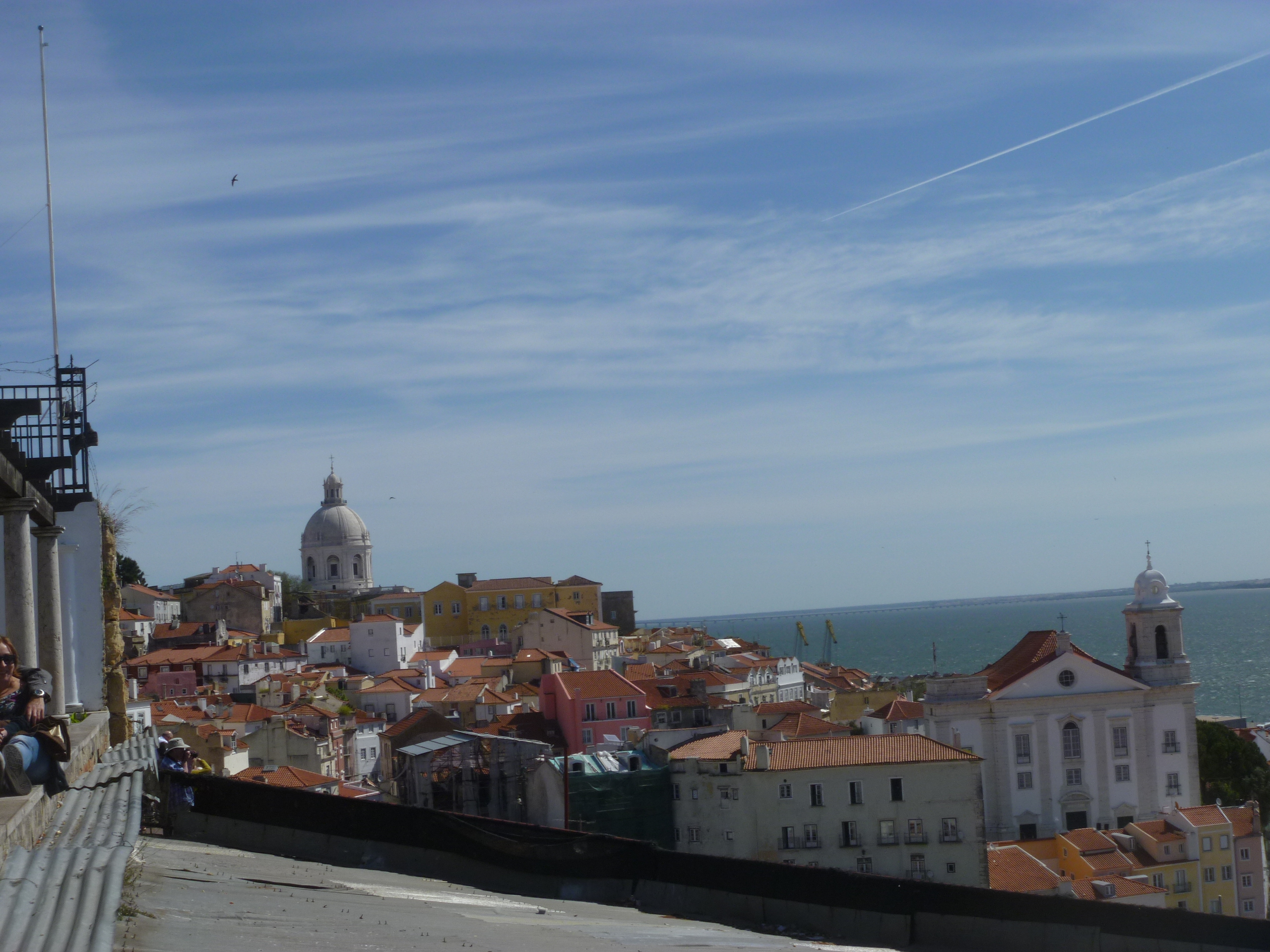
The hill and step climbing didn’t stop at the end of the walking holiday. Lisbon is a hilly city. First off we walked along the route of the famous old 28 tram up to the viewpoints at Santa Luzia and Portas do Sol Squares. Fantastic views over Lisbon and its port, Alfama and the River Tagus.

Alfama from Sta Luzia Square

Alfama District from Santa Luzia Square

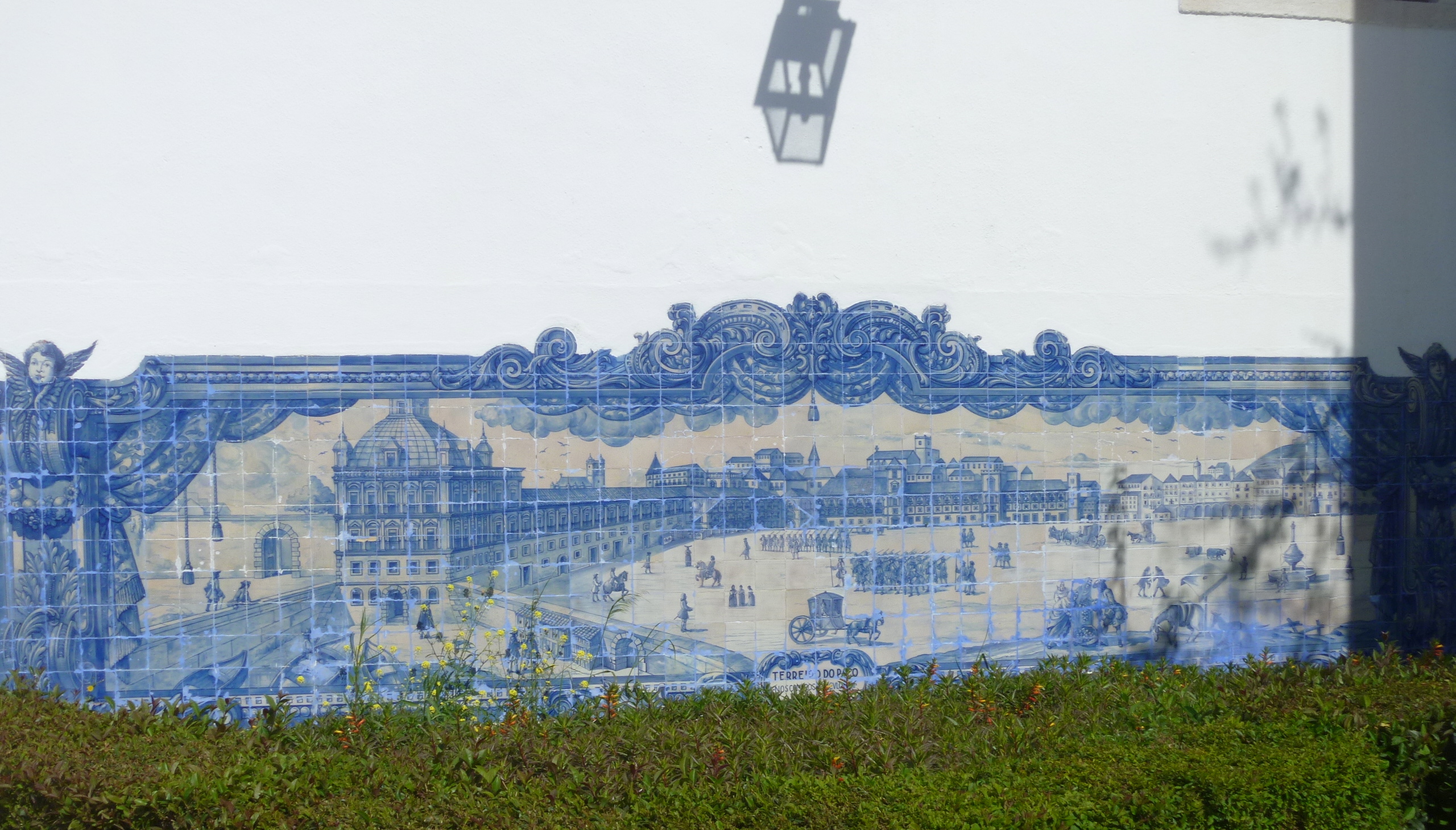
Tiled wall at Santa Luzia Square

Tiled wall at Santa Luzia Square

Tram 28 at the busy Portas do Sol

Tram 28 at the busy Portas do Sol

Portas do Sol Square

Portas do Sol Square

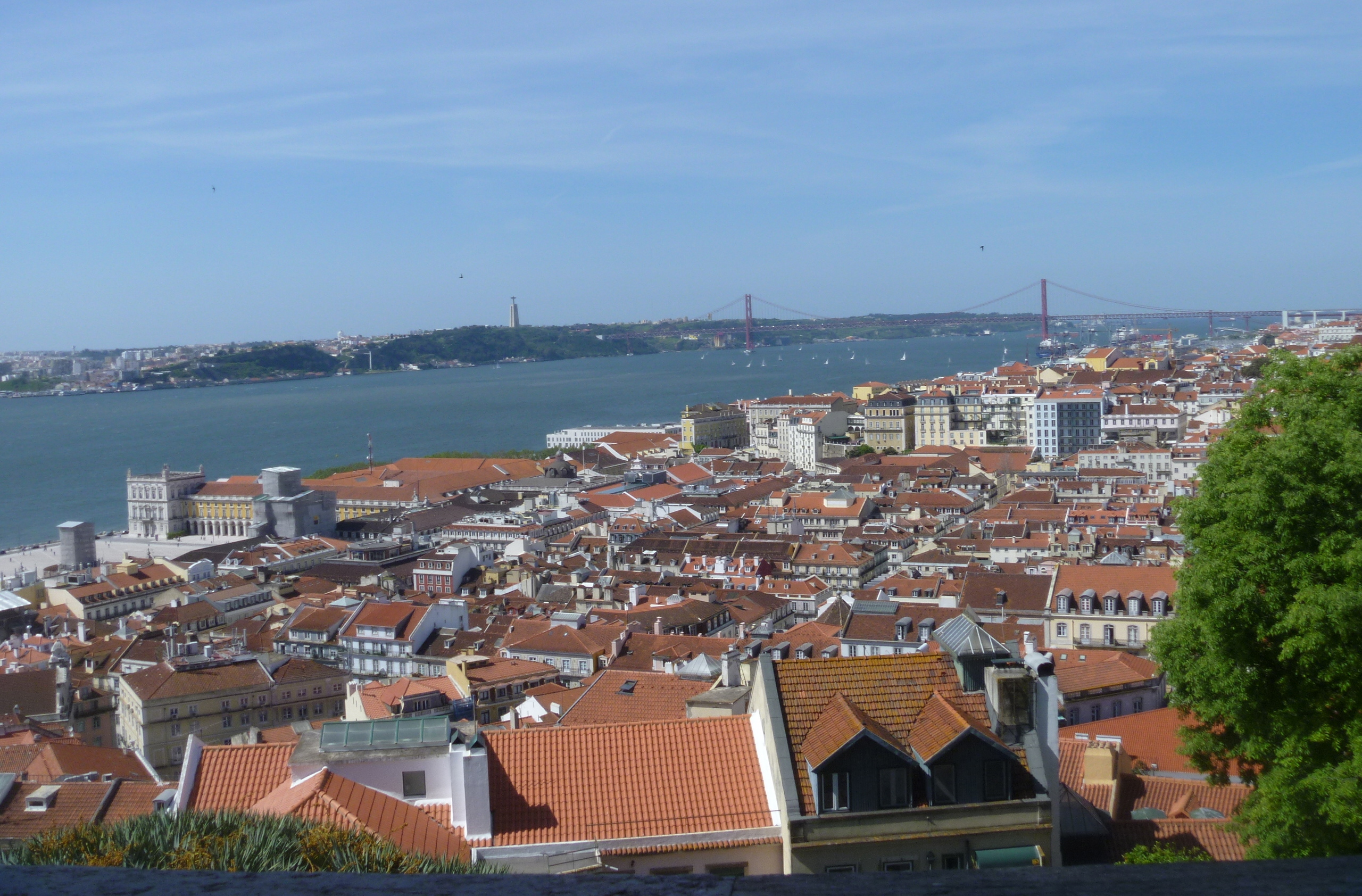
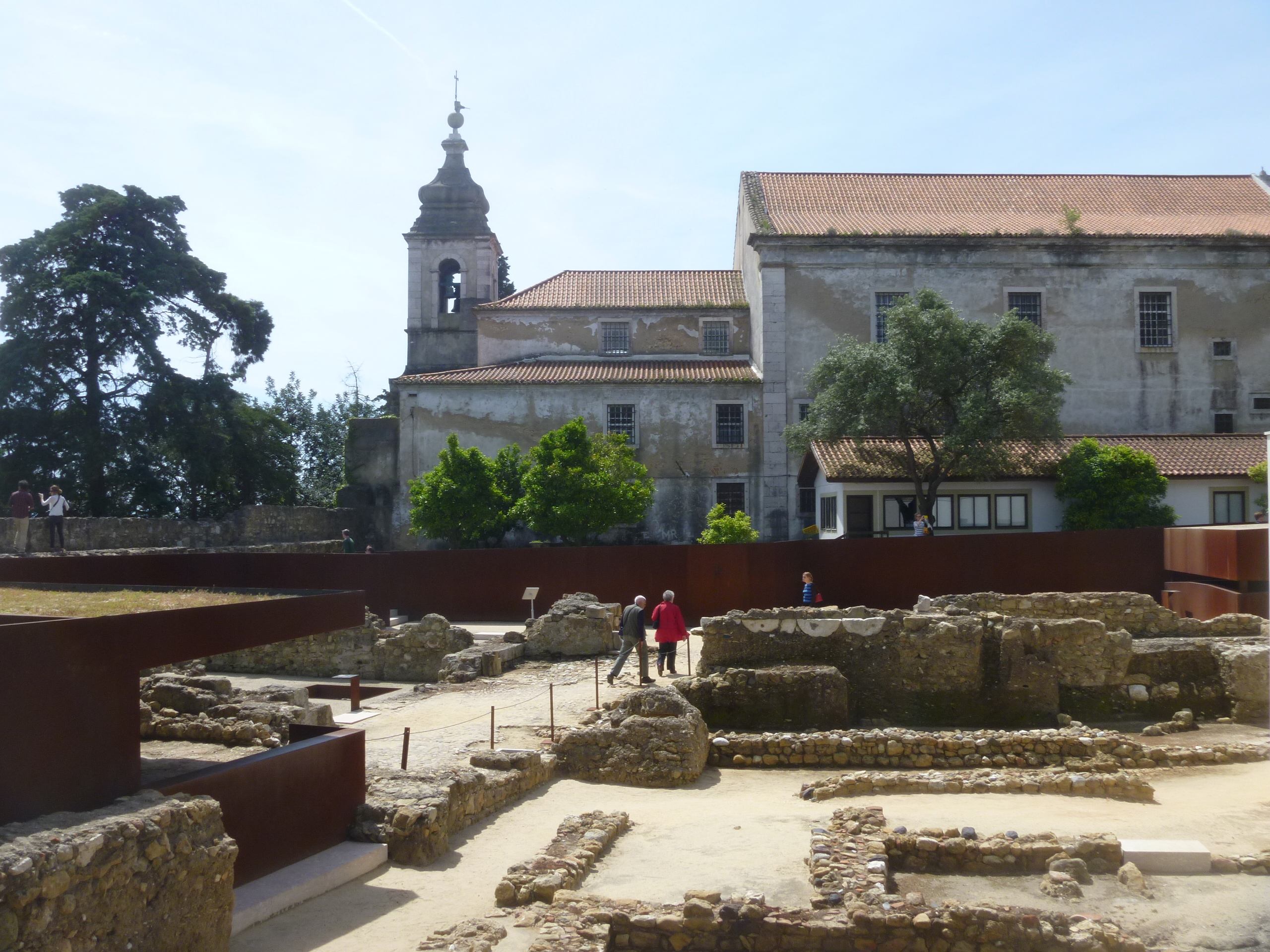
Further climbing brought us to the end of the queue for the ticket office for the Castelo Sao Jorge. Once inside the Castle grounds you can take in fantastic city views from the busy esplanade, visit the archaeological museum, walk the battlements and see the ongoing Moorish excavations and shady gardens. Considered to be the site of the founding settlement of Lisbon recent archaeological finds date back to the late 6th C BC. The castle remains themselves are from the Moorish era (11th and 12th C). St George’s Castle was a royal residence until 1511. For centuries then it was neglected but today it’s an attractive place to visit and we spent the best part of the morning until the early afternoon exploring and admiring the views at every turn.

Lisbon, River Tagus and  25 April Bridge from the Castle Esplanade

Lisbon, River Tagus and  25 April Bridge from the Castle Esplanade

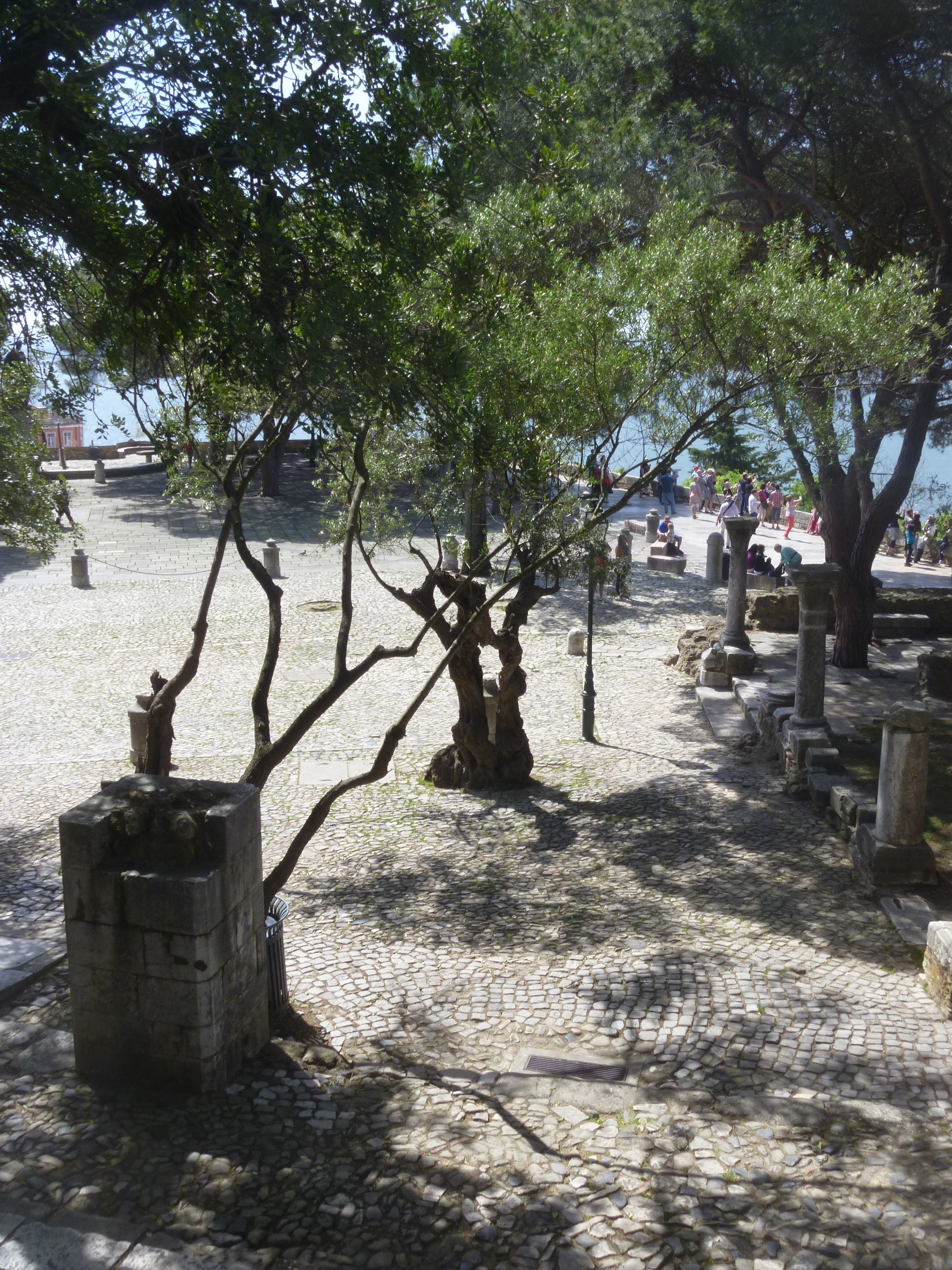
Shady Esplanade at S Jorge Castle

Shady Esplanade at S Jorge Castle

Tile Frame Border in the Archeaological Museum

Tile Frame Border in the Archeaological Museum

This is a representation of angels. Blue and white tiles with manganese. Produced domestically. Late 17th C. [Exhibit notes]

Moorish Excavations

Moorish Excavations

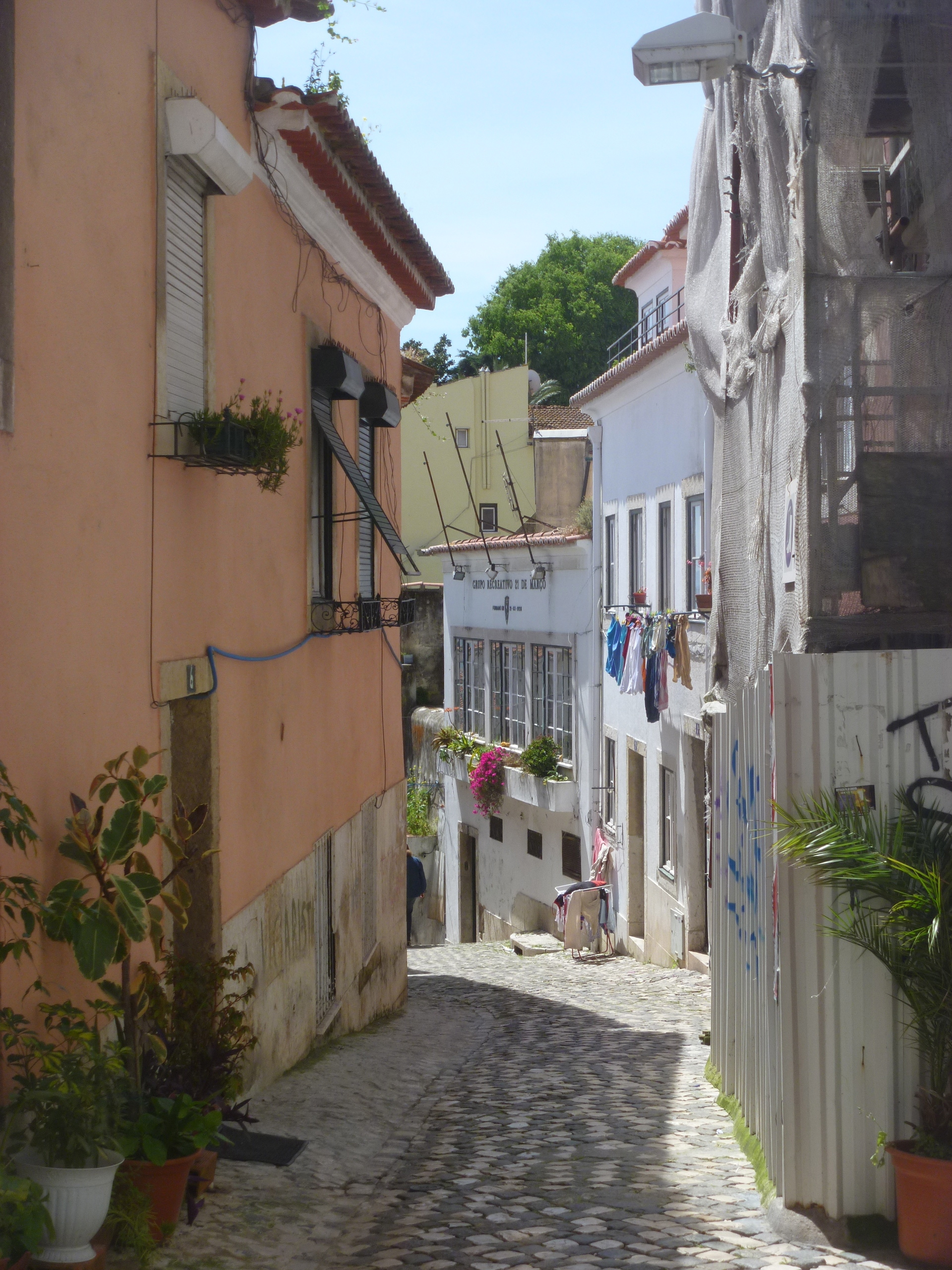
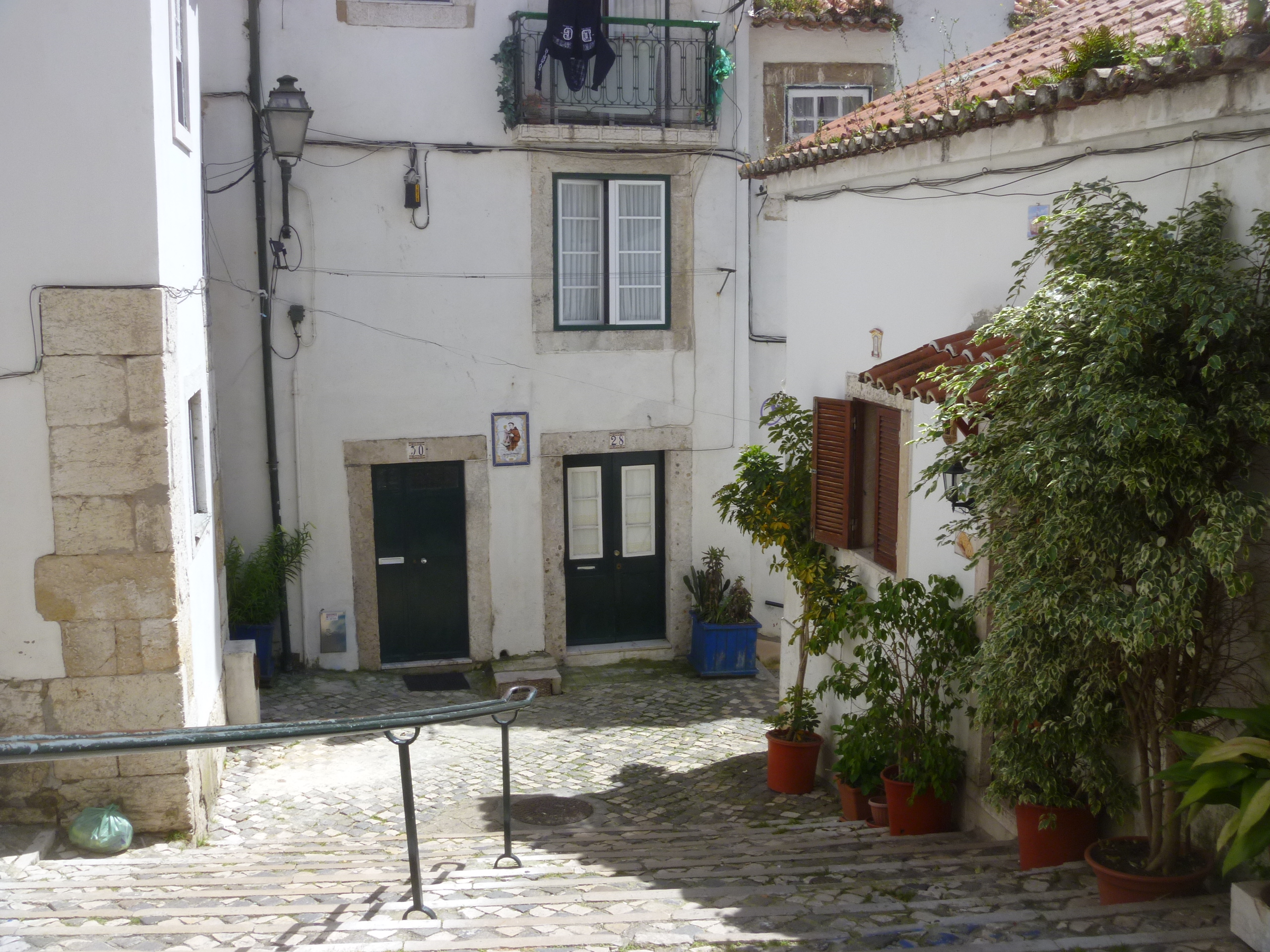
Next up was a wander around Alfama – taking note of possible evening meal locations – and ending up at the popular, Bohemian-style Pois Cafe very near Sé Cathedral the next place on our itinerary.

Street in Alfama 1

Street in Alfama

Street in Alfama 2

Quiet Square in Alfama

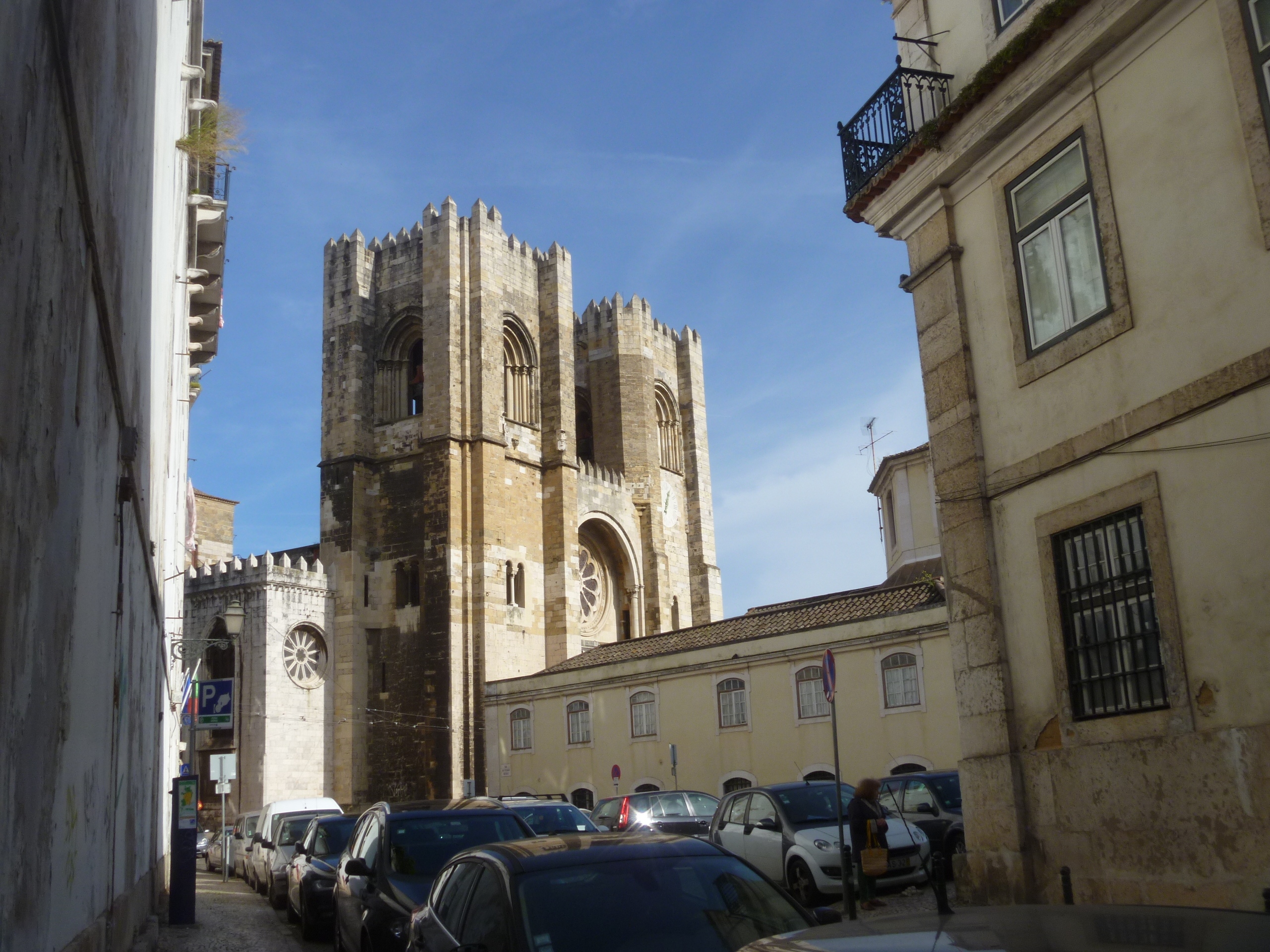
Lisbon’s Cathedral, built not long after Dom Afonso Henriques took Lisbon from the Moors in 1147, stands on the site of city’s main mosque. The crenellated Romanesque building is a reconstruction and restoration since most of Lisbon was destroyed by earthquake in 1755.

Se Cathedral near our B&B

Sé Cathedral near our B&B

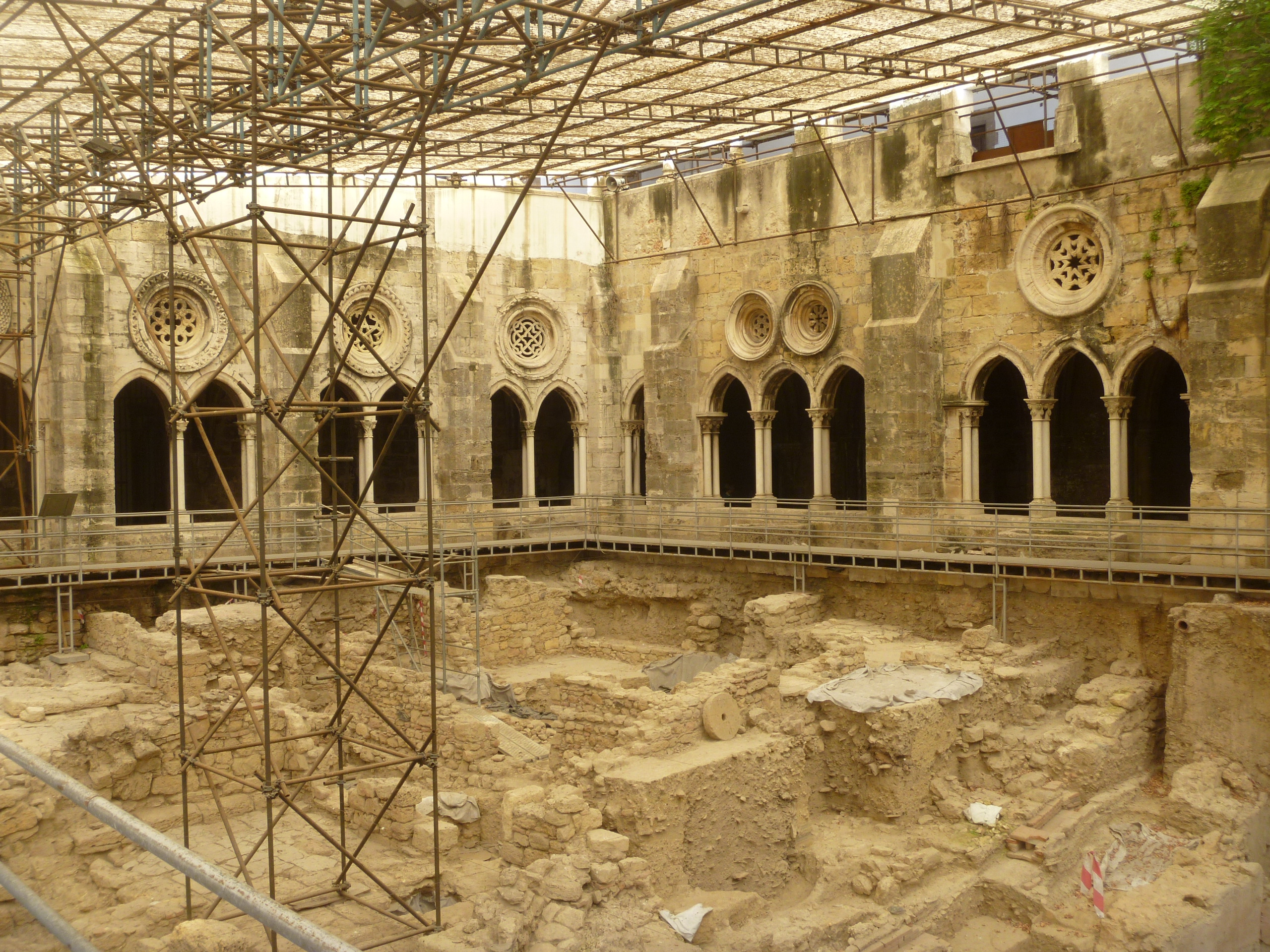
It is also an important archaeological site and new finds are constantly being added to the inventory from the cloister excavations originally started to reinforce the building’s foundations. We explored the Cloister and the Treasury at extra charge. The highlight of the church is the Rose Window.

Excavations in Se Cathedral Cloister

Excavations in Sé Cathedral Cloister

The Rose Window

The Rose Window

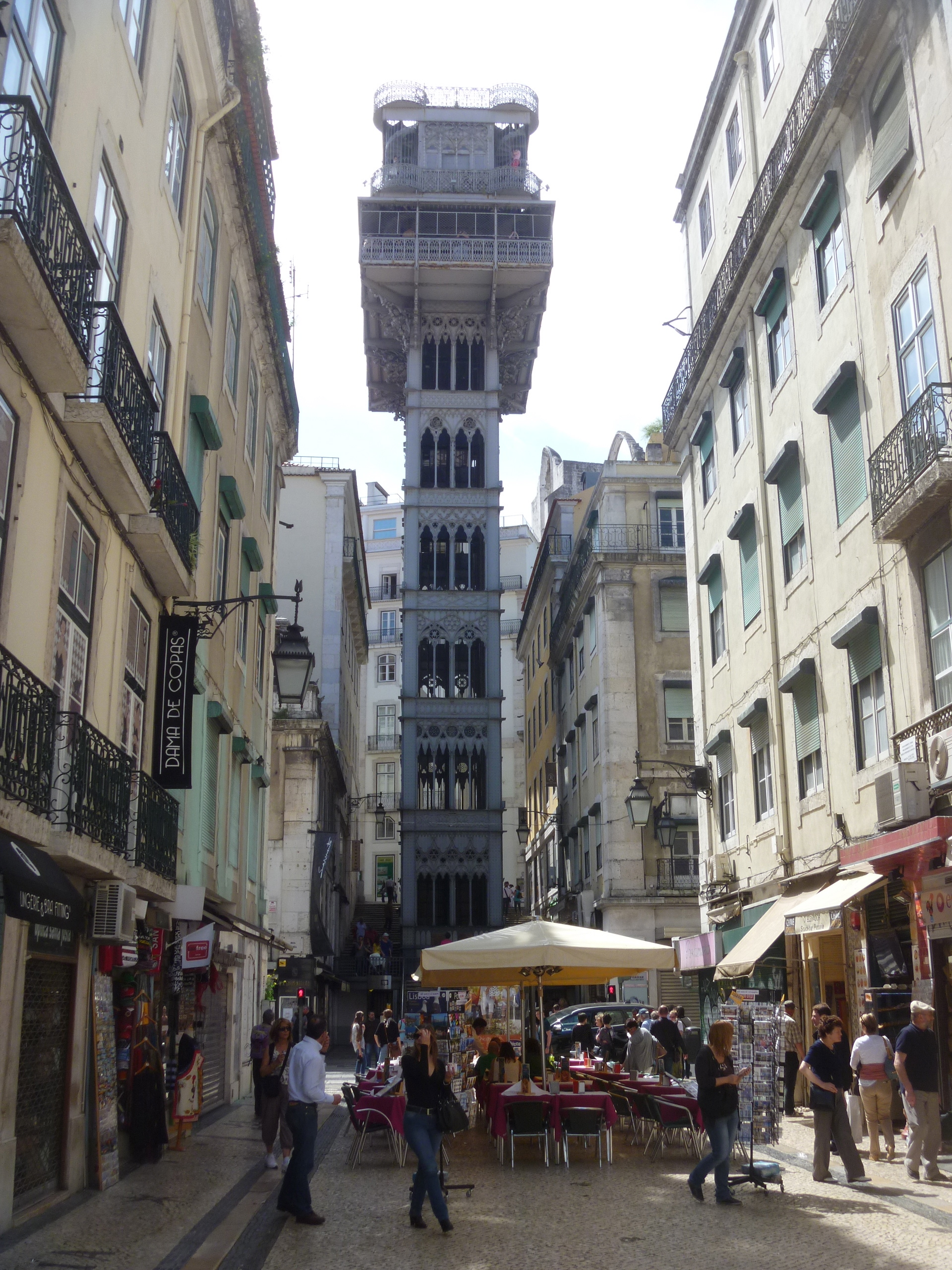
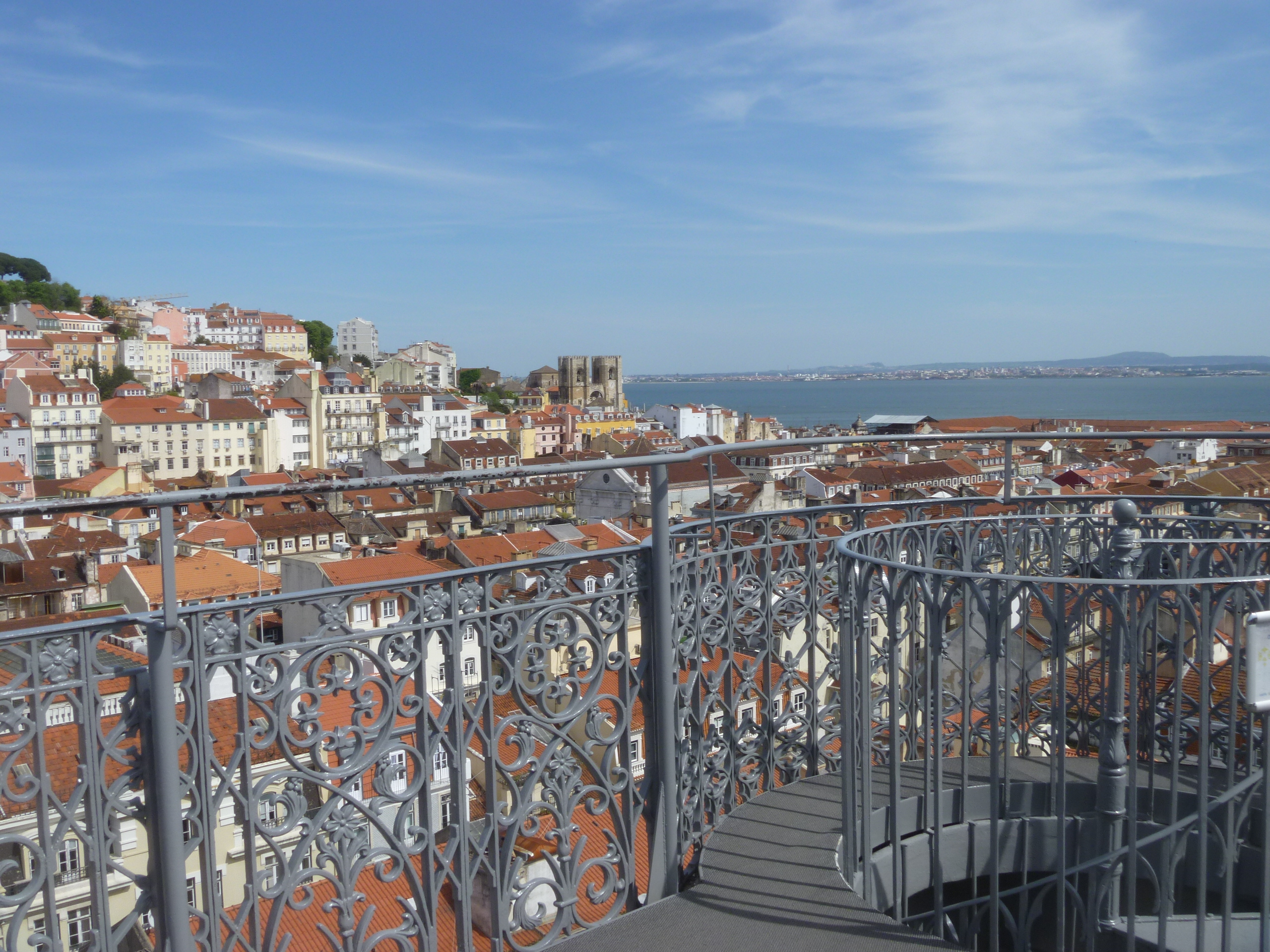
The cathedral is very dark inside and so we blinked when eventually we emerged into the sunny Lisbon afternoon. We then walked across the main shopping streets, the pedestrianised rua Augusta is the main shopping drag, to the famous Elevador da Santa Justa. This lift, designed by the Portuguese pupil of Gustave  Eiffel (and you can see the connection!) Raoul Mesnier de Ponsard, takes you up in its neo-Gothic lift to the ruin of Carmo and its busy square. When you come out of the lift there’s a tight little iron spiral staircase that takes you up to yet another amazing viewpoint.

Elevador de Santa Justa

Elevador de Santa Justa

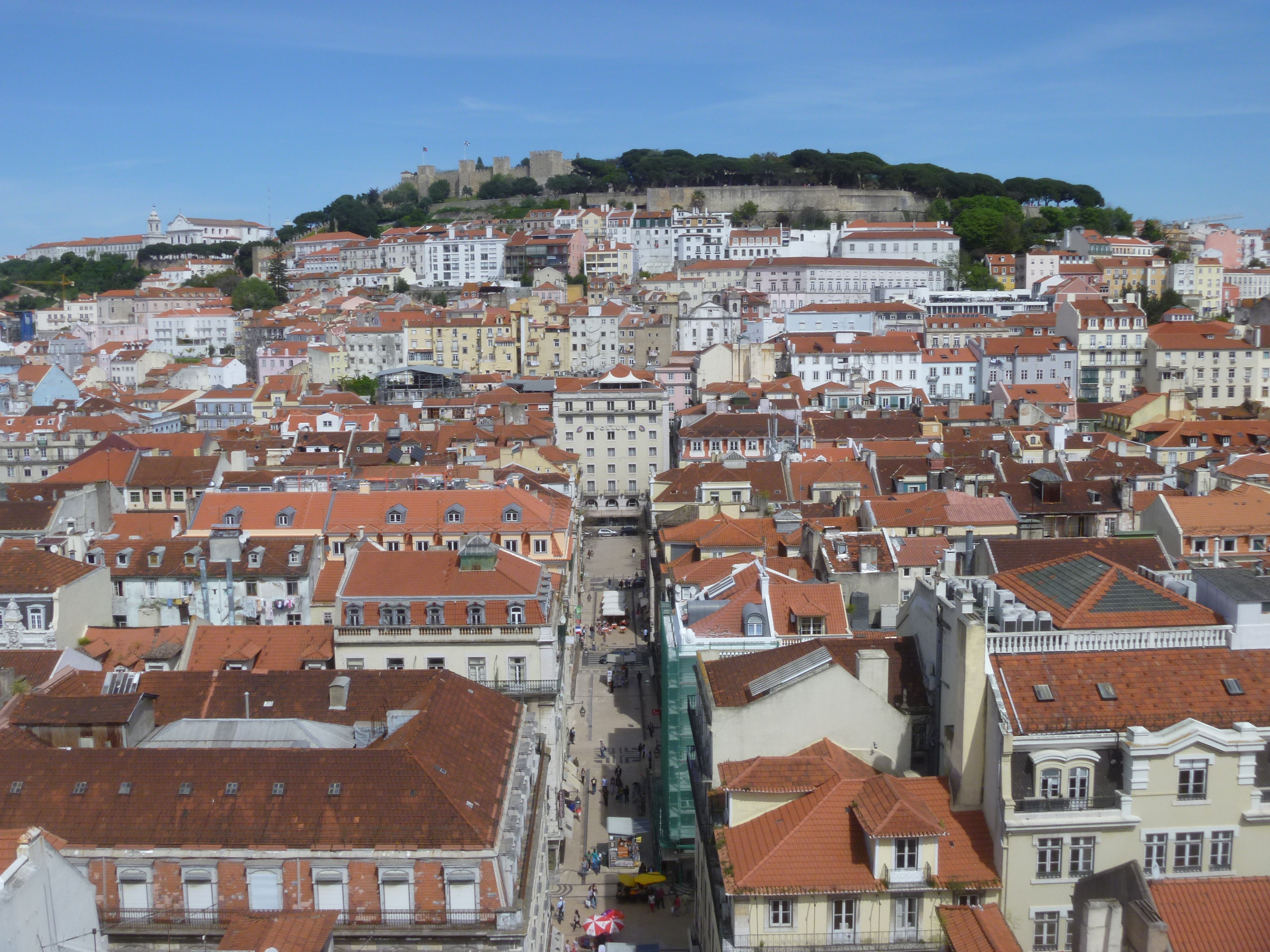
Castle from the viewing platform

Castle from the viewing platform of the Elevador

The Cathedral and Tagus from the Viewing Platform

The Cathedral and Tagus from the Viewing Platform

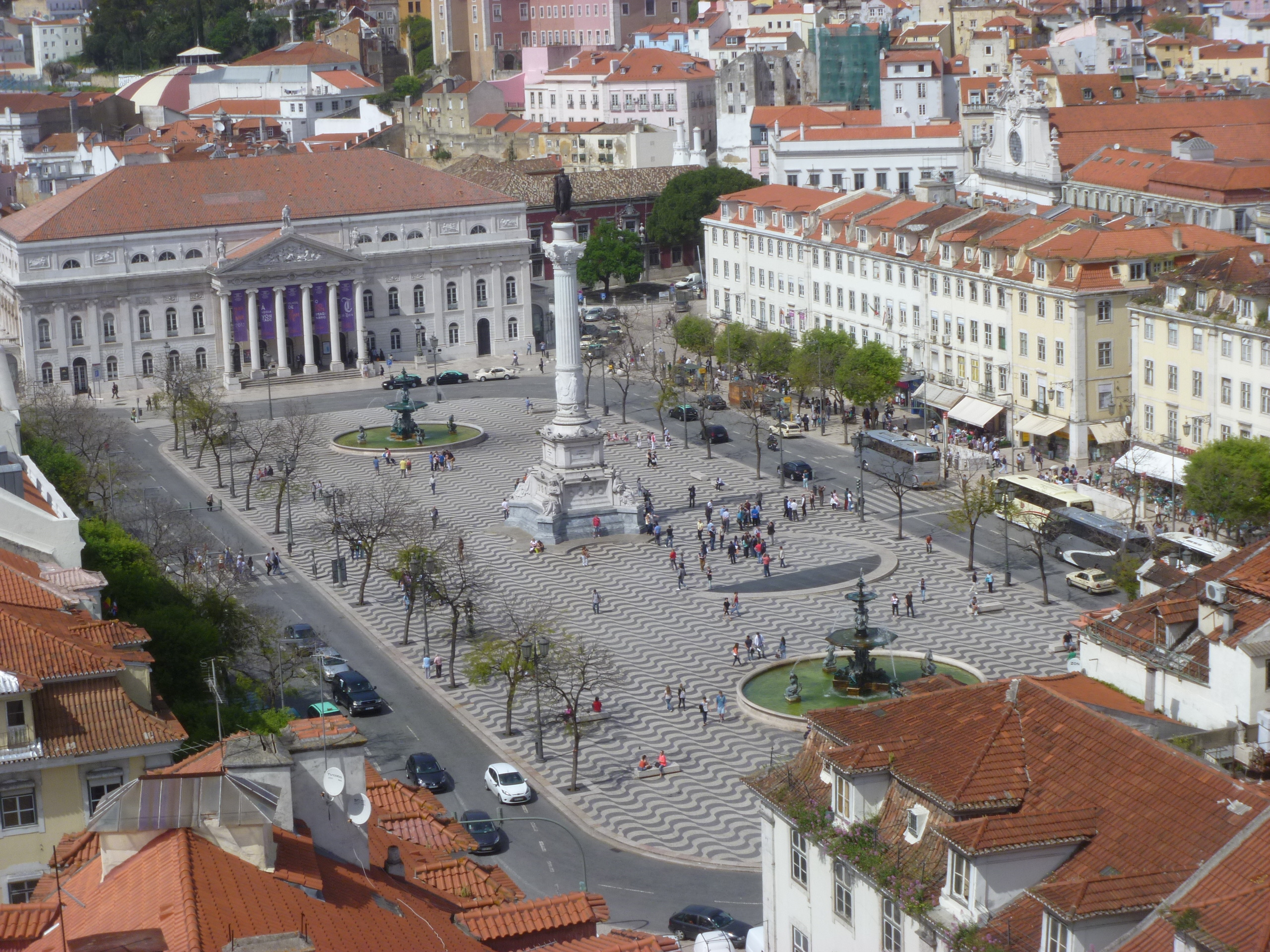
Rossio Square from the Viewing Platform

Rossio Square from the Viewing Platform (note the wavy pavements which seem to reflect the watery nature of the city)

As time was tight we decided that we would have to forego a visit to Belem – highly recommended by both Teresa and Ana. As I always say – “One must leave something for one’s next visit”.

“Lo! Cintra’s glorious Eden” – A Day in Sintra

Here you will see that Lord Byron’s declamation still holds true today!

Our walk continued from Praia Grande for a further two days. We continued up the coast as far north as Praia de Magoito where the Sintra natural park ends and then turned inland away from the ocean views to the wine growing area of Colares. The town of Colares was  where we spent the next night and our journey on foot continued the next day to Sintra itself via a long stop at the wonderful Palace and Gardens of Monserrate.

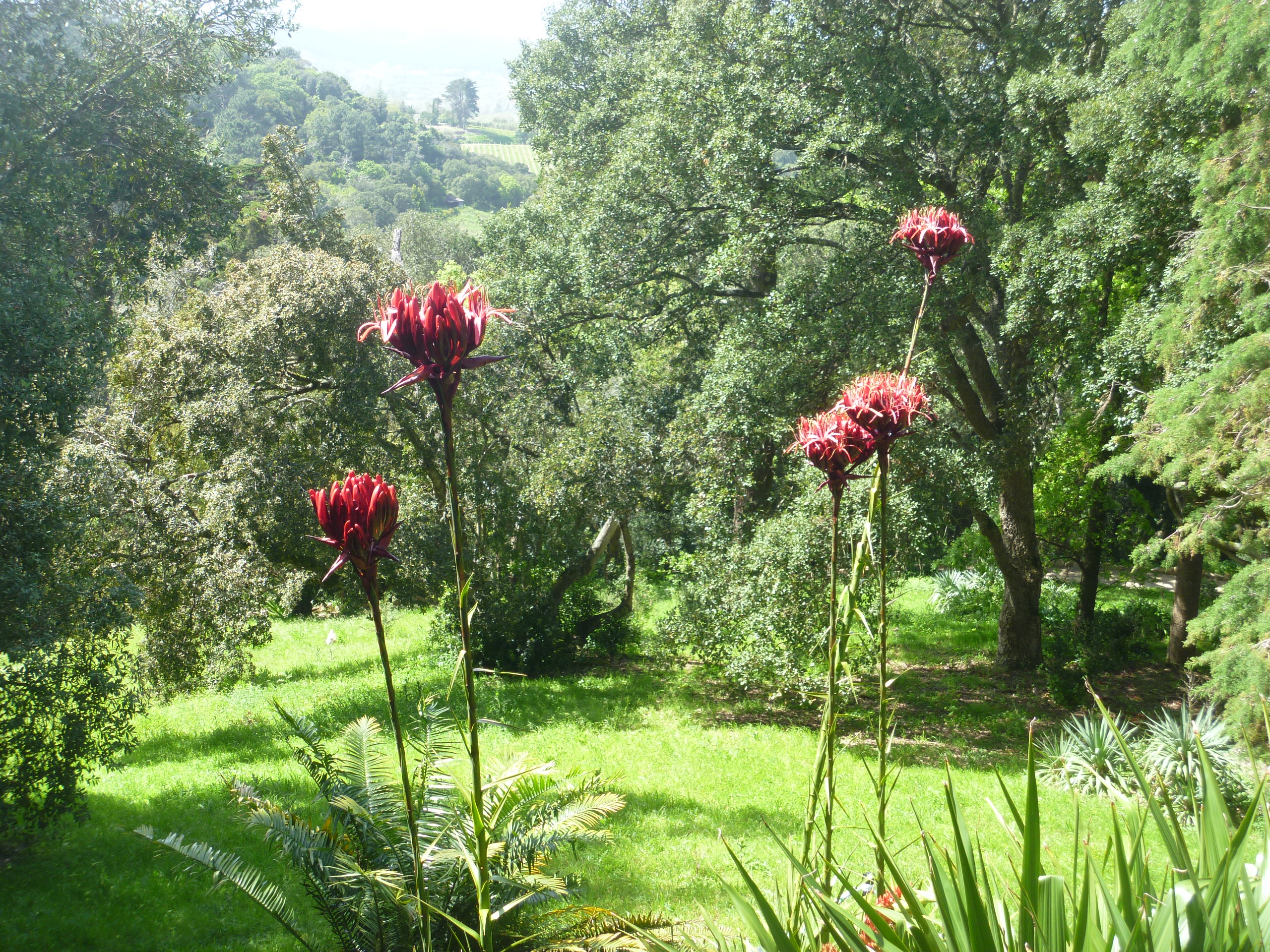
Monserrate Gardens

In the Gardens at Monserrate

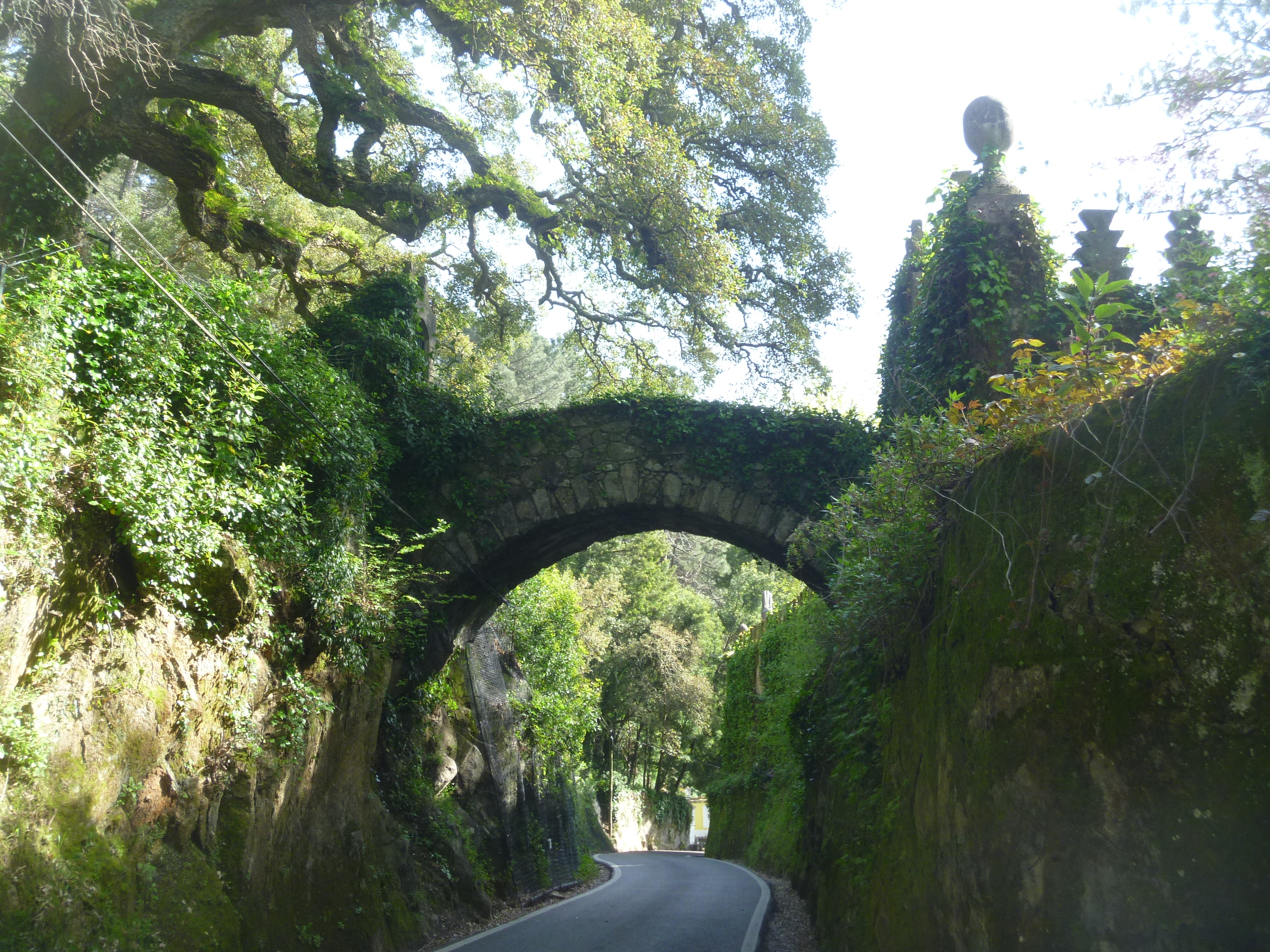
Entrance Gate to Sintra

Former Entrance to Sintra

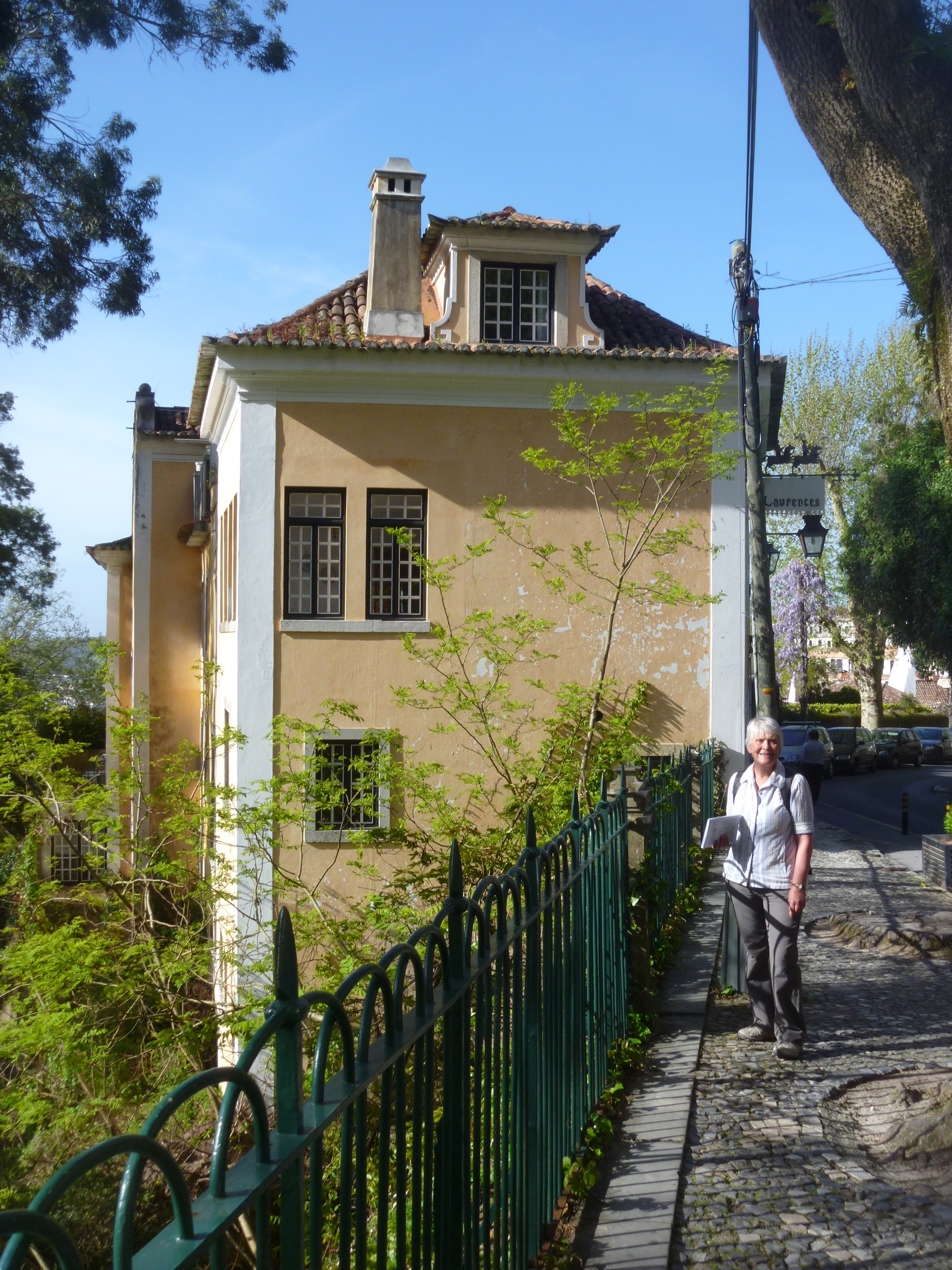
So, on the afternoon of the fifth day of walking we arrived at one of the former town gates and soon reached the famous Lawrence’s Hotel right in the old town of Sintra.

Lawrences

This hotel is the oldest in Spain and Portugal and (I believe) the second oldest in Europe. It has connections with Lord Byron who stayed here and whose portraits appear on many of the hotel and restaurant walls.

We stayed two nights at Lawrences which gave us a whole day to explore Sintra and its palaces.

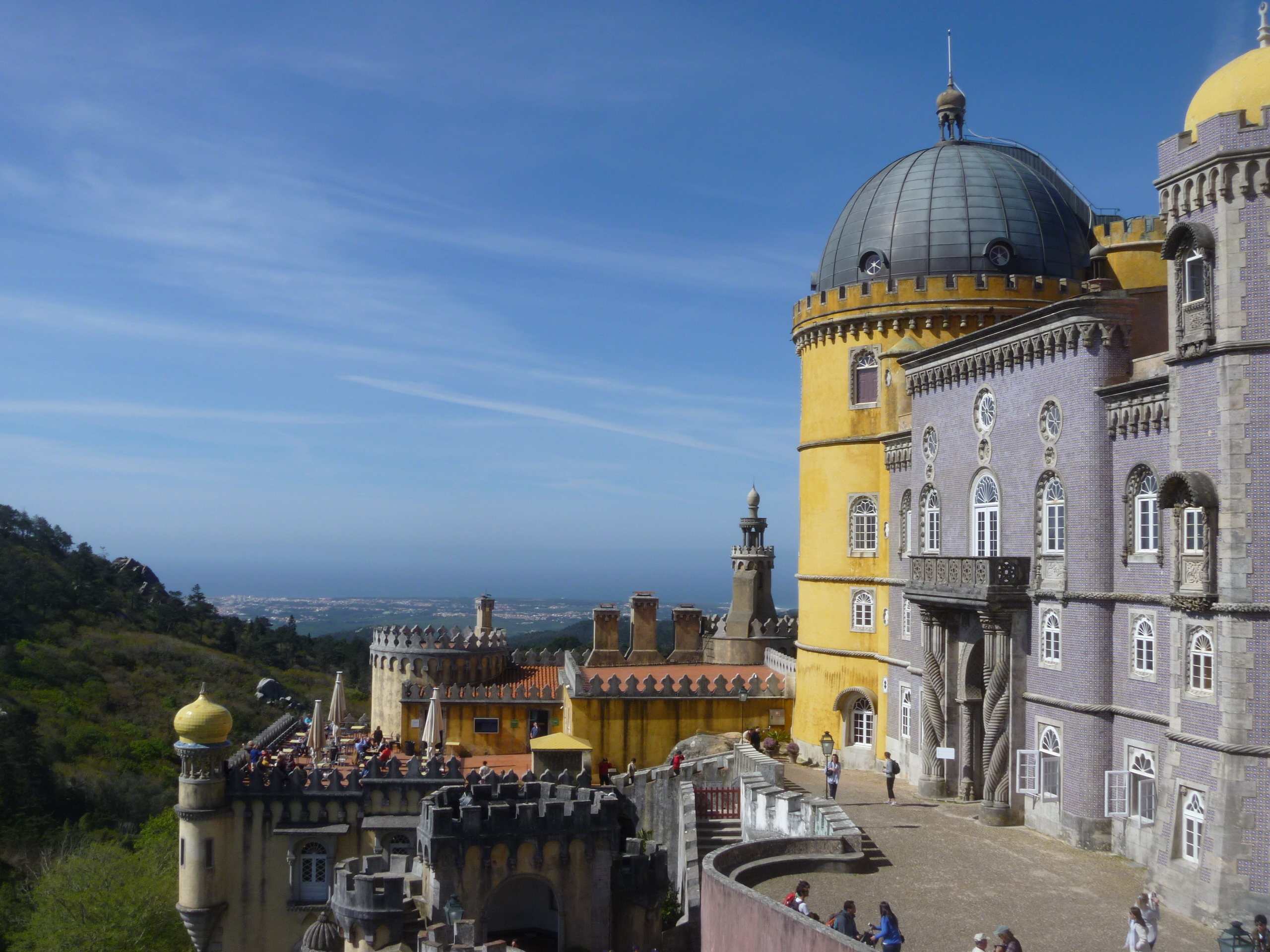
Pena Palace

Most of our time was spent at the Park and Palace of Pena. It’s very popular; even on this Friday in April. There is lots to see in the Palace alone. Ongoing restoration could also be observed here as at Monserrate.

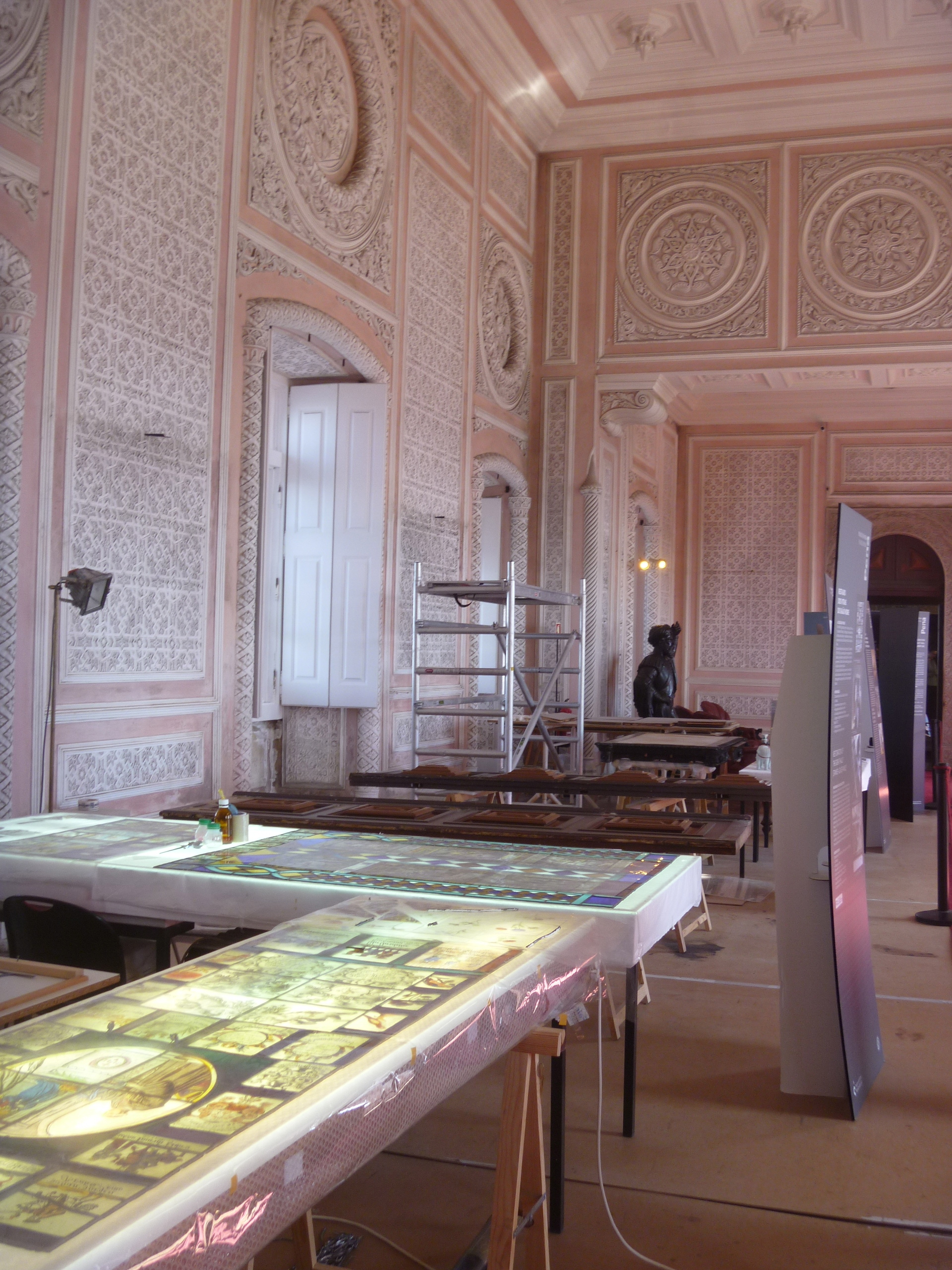
Open for Works at Pena

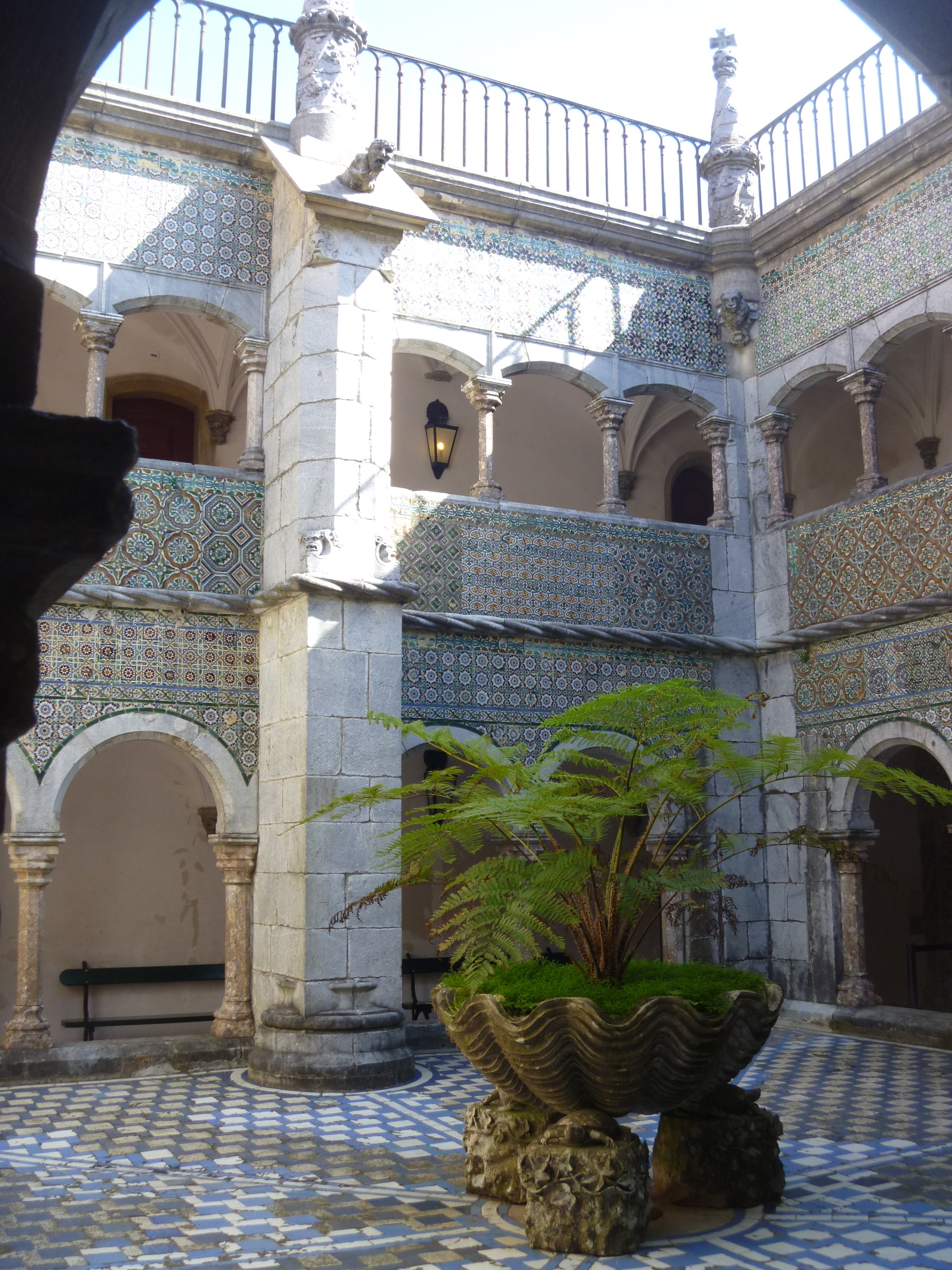
Tiled courtyard

An Inner Courtyard

The Park and Palace of Pena are the finest examples of nineteenth century Portuguese Romanticism and the integration of natural and built heritage. They constitute the most important part of the Cultural Landscape of  Sintra’s World Heritage site.” [From publicity leaflet]

Originally a chapel and later a monastery  in 1842 work began on a “New Palace” by the King Don Fernando II who left all the property on his death to his second wife the Countess Edla. The Palace and Park were acquired by the state in 1889 and converted to a museum in 1910-12.

A natural environment of rare beauty and scientific importance, the Park is remarkable as a project of landscape transformation of a hill, barren at the time, into an arboretum integrating several historic gardens. It occupies almost eighty-five hectares of exceptional geological and climatic conditions.” [From publicity leaflet]

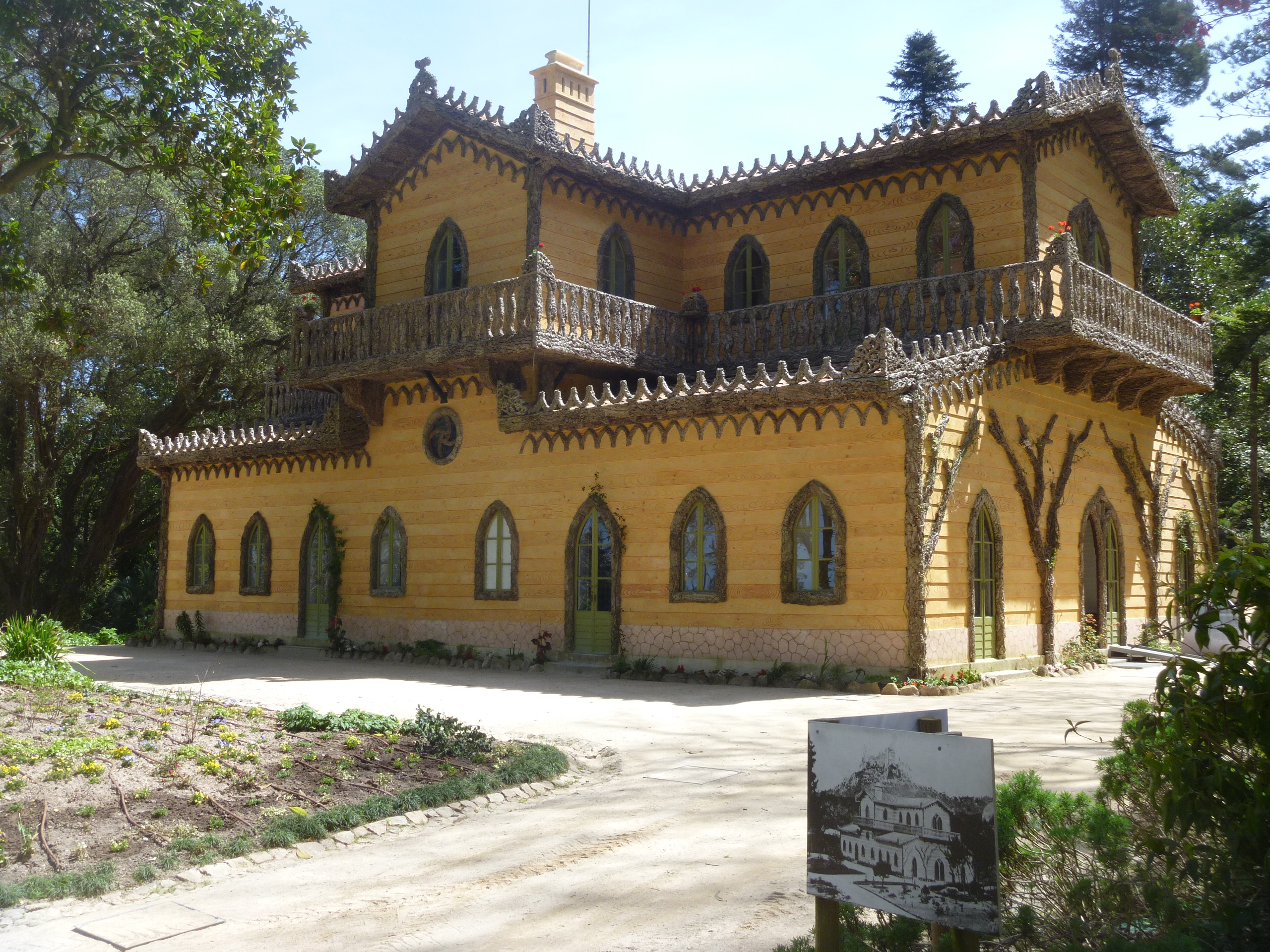
The Chalet Edla

The Chalet Edla

We could have spent hours in the grounds alone. Leaving the Palace you are soon away from the crowds and we decided on a route that would take in the Chalet Edla.

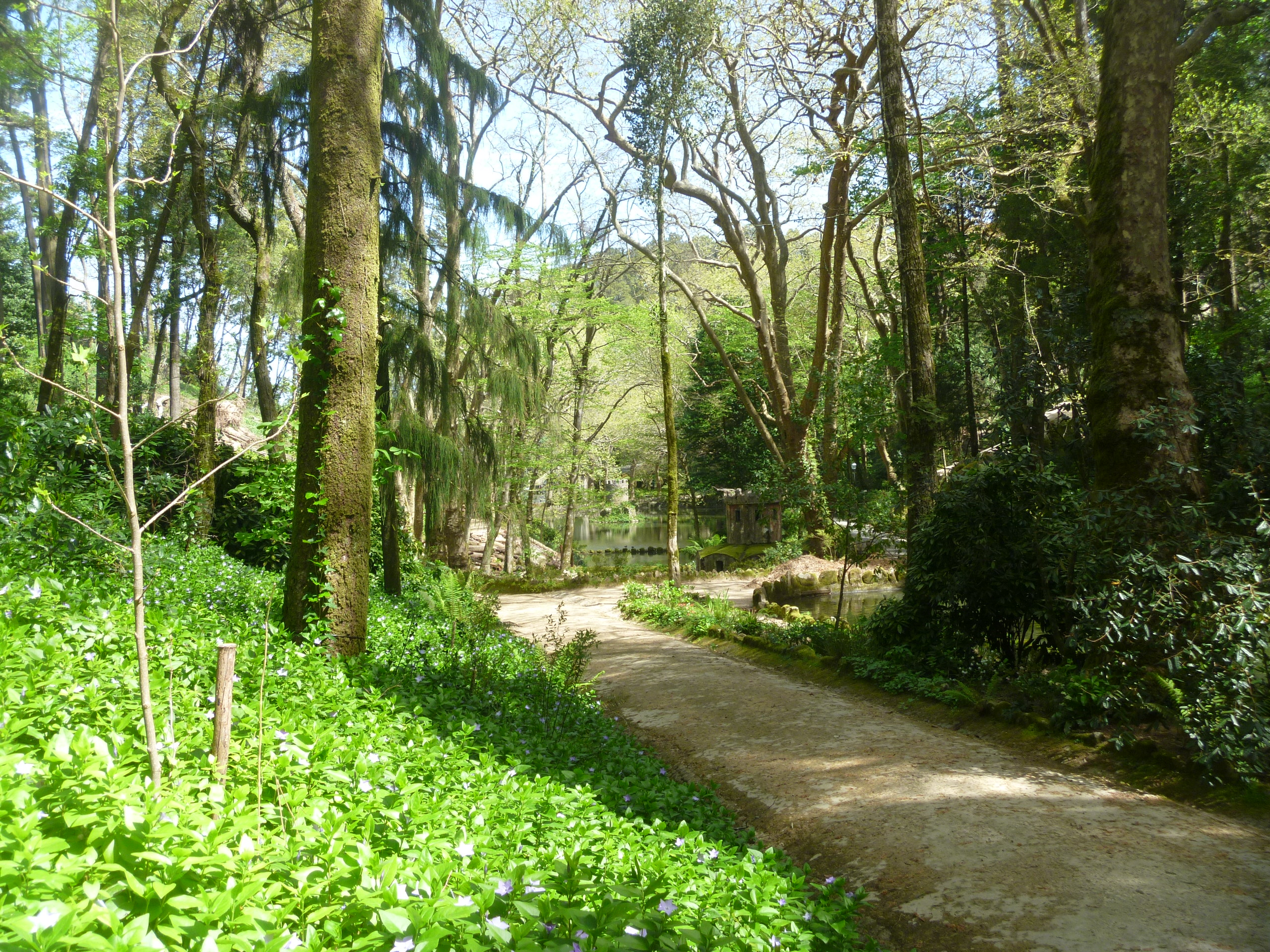
Pena Park

Lush Greenery of the Pena Park

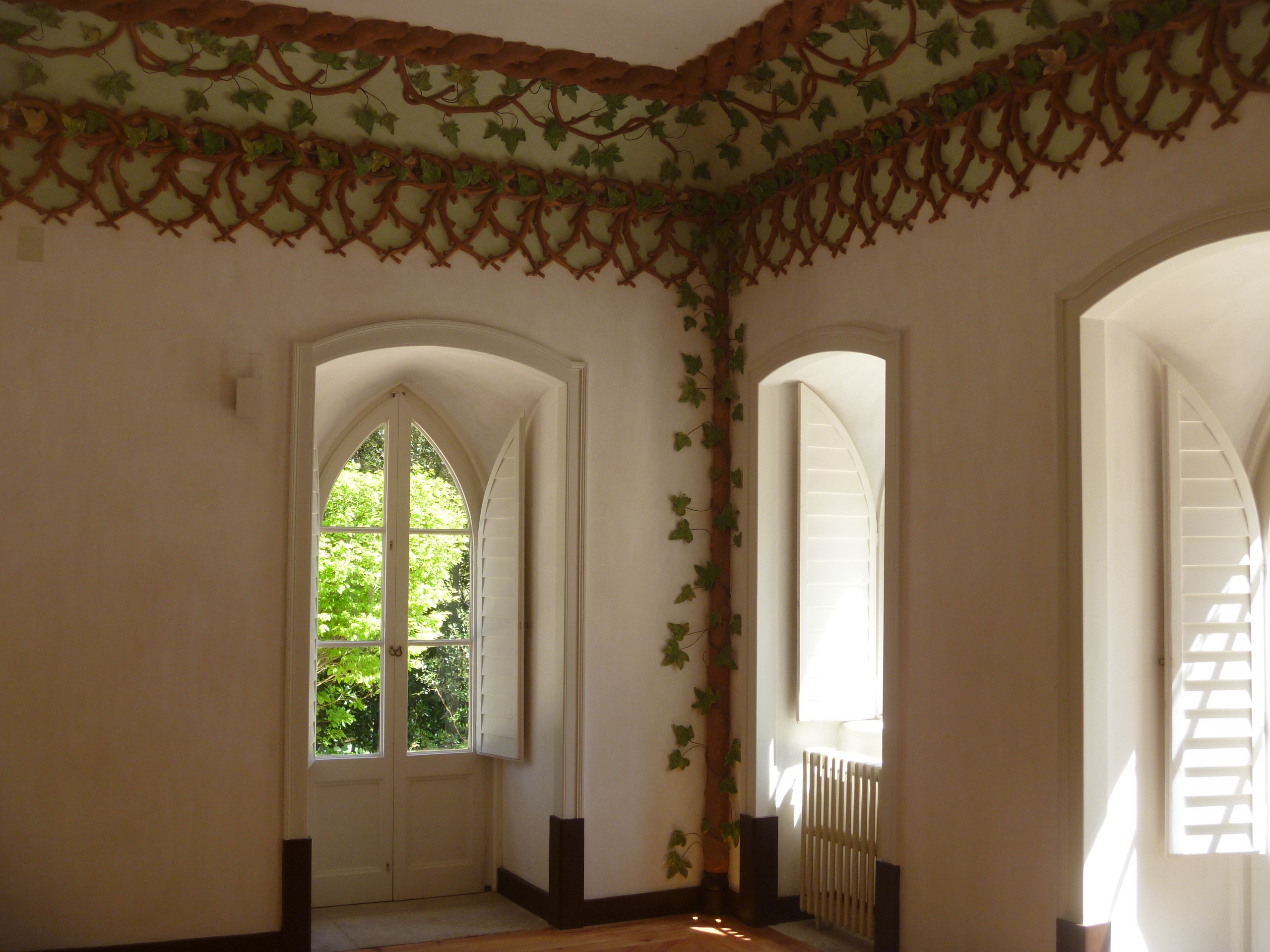
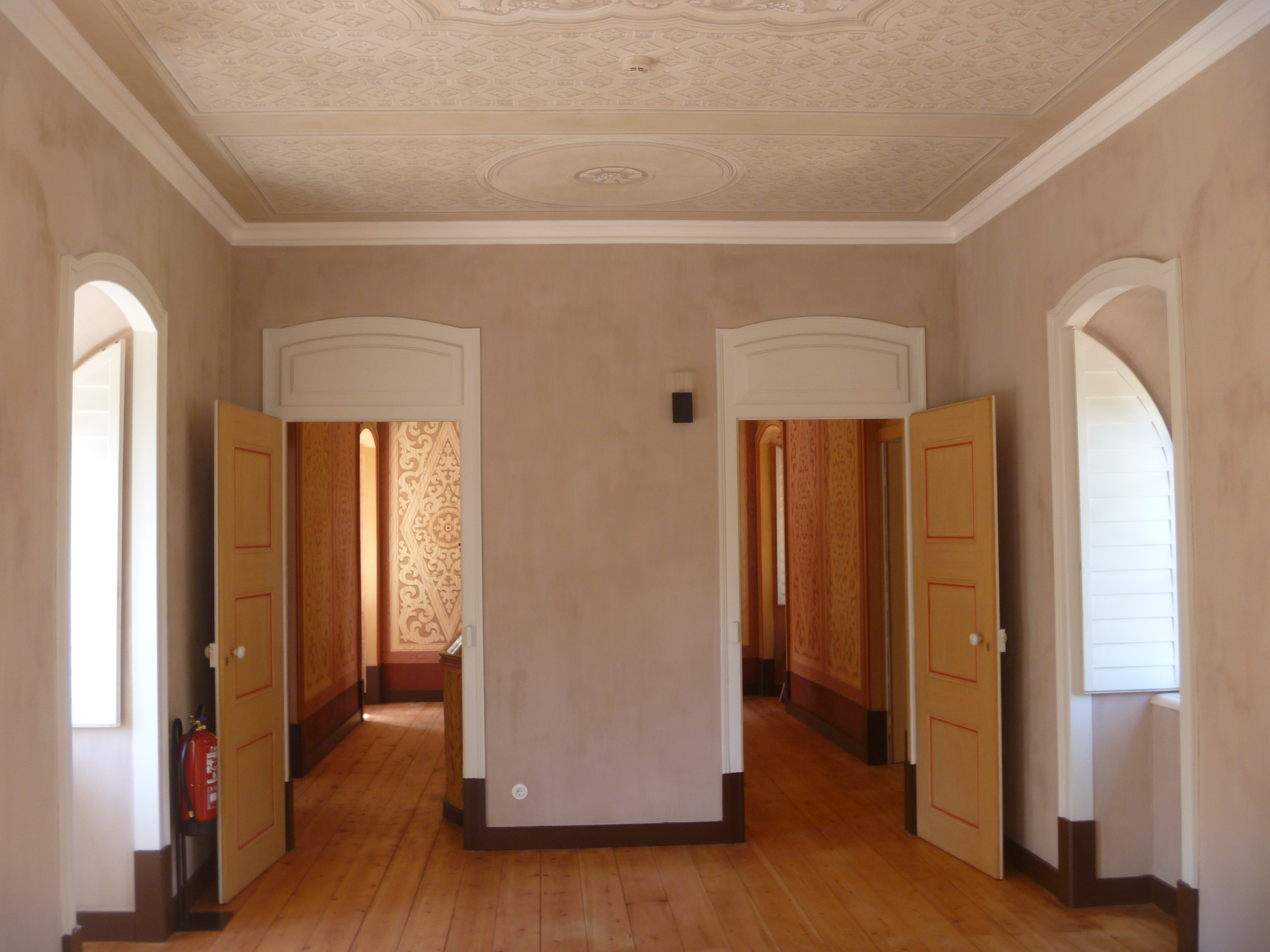
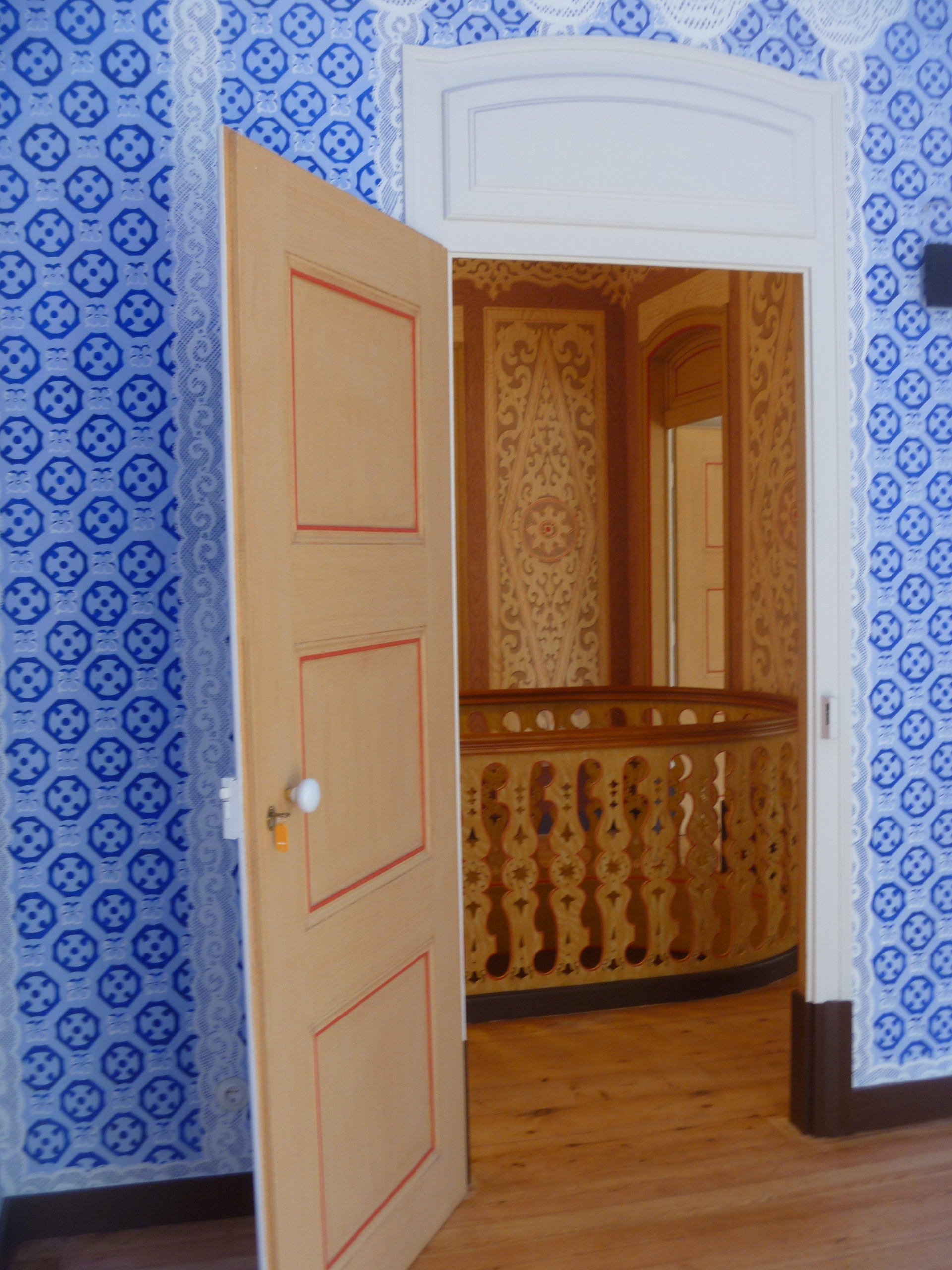
We had understood that due to damage following the storms in January the Chalet would not be open to the public. So we were surprised and happy to find that on that very day it was reopened  to the public! We bought our tickets and took a look round this unusual summer house built by Don Ferdinand for the Countess between 1864 and 1869. The Chalet also deteriorated badly over many years and in 1999 was damaged by fire. Here, again, renovation work is still ongoing. I’m not sure to what extent the recent storms damaged the house but there’s been a magnificent effort to restore this building to its former glory.

Before renovation

Photographs show the extent of the damage

Inside Edla 1

Interior Chalet Edla

Inside Edla 2

Renovations at The Chalet Edla

Inside Edla 3

Upstairs at The Chalet Edla

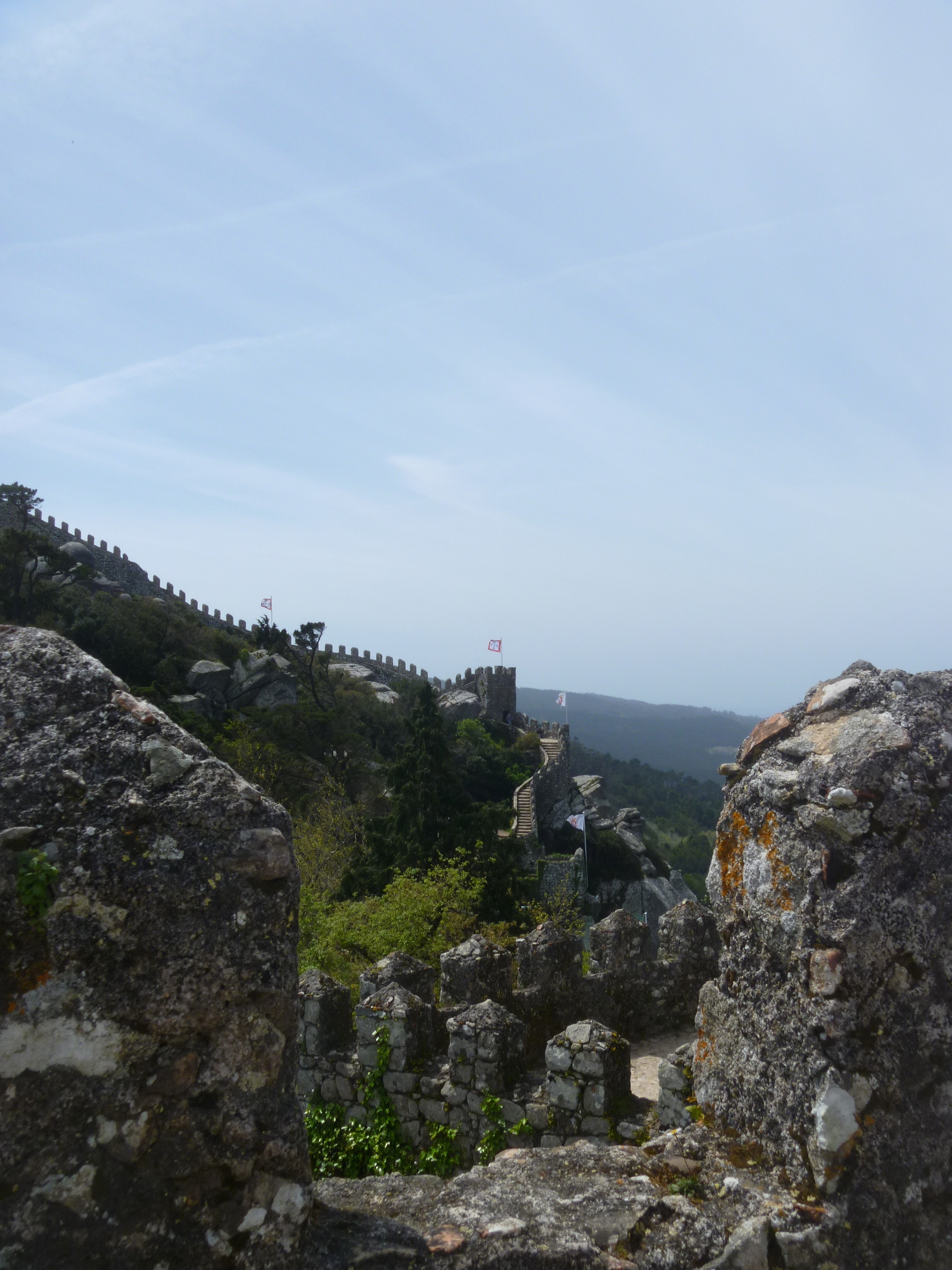
From the Pena gardens we stepped across the road to the Moorish Castle which is really just ramparts. But they are impressive  ramparts.Moorish Ramparts

The Moorish Castle Ramparts

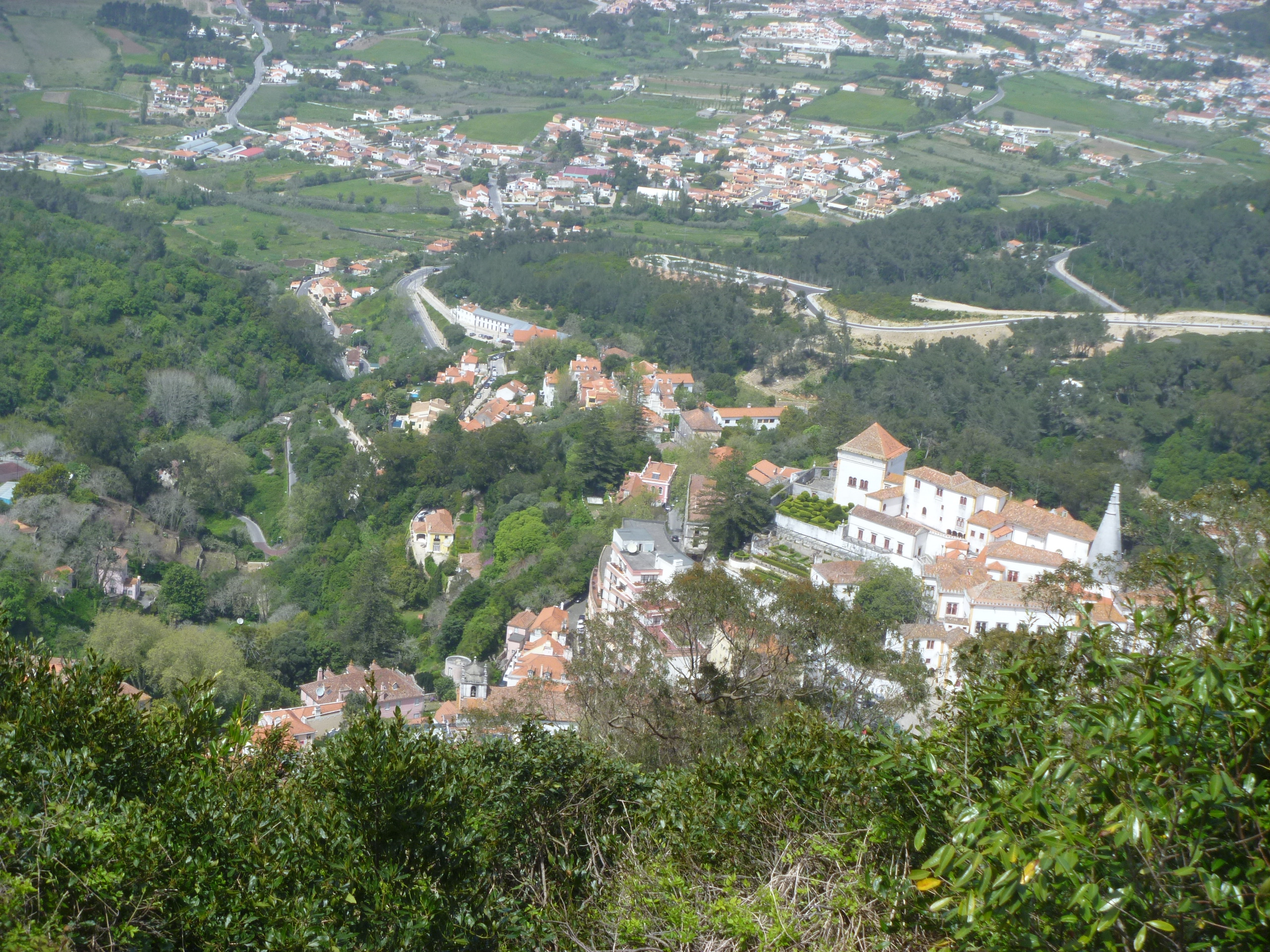
Sintra from Moorish

Sintra from the Moorish Castle Ramparts

They tower over the town and we could see them from our terrace at Lawrences.

From our terrace

A Music Room and a Castle and Lancastrian Hospitality

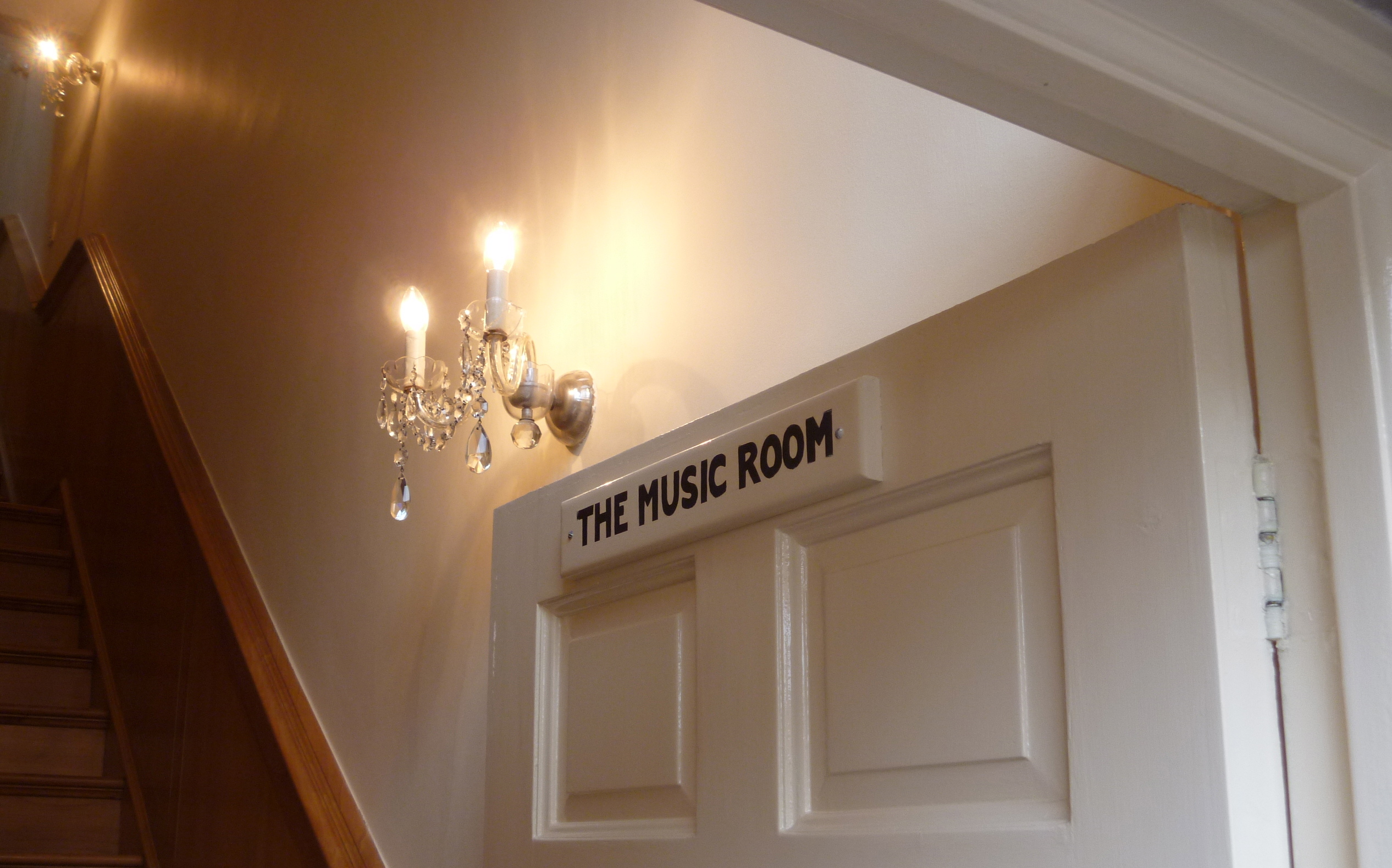
The Music Room sign

Yesterday was Open Day at The Music Room Landmark Trust property in Lancaster. Last weekend a fellow Friend of the Landmark Trust, and friend of mine now, asked if I’d like to join her to visit the newly refurbished and freshly repainted apartment in the centre of the city. There’s a direct train from nearby Shipley, which has plenty of useful parking availability on a Saturday morning, and an early start gave us six and a half hours to inspect the property, chat with organisers and fellow visitors and include an unhurried lunch (Morecambe Bay Shrimp Platter – what else??) and a tour of the major Lancaster landmark – its Castle … and more!

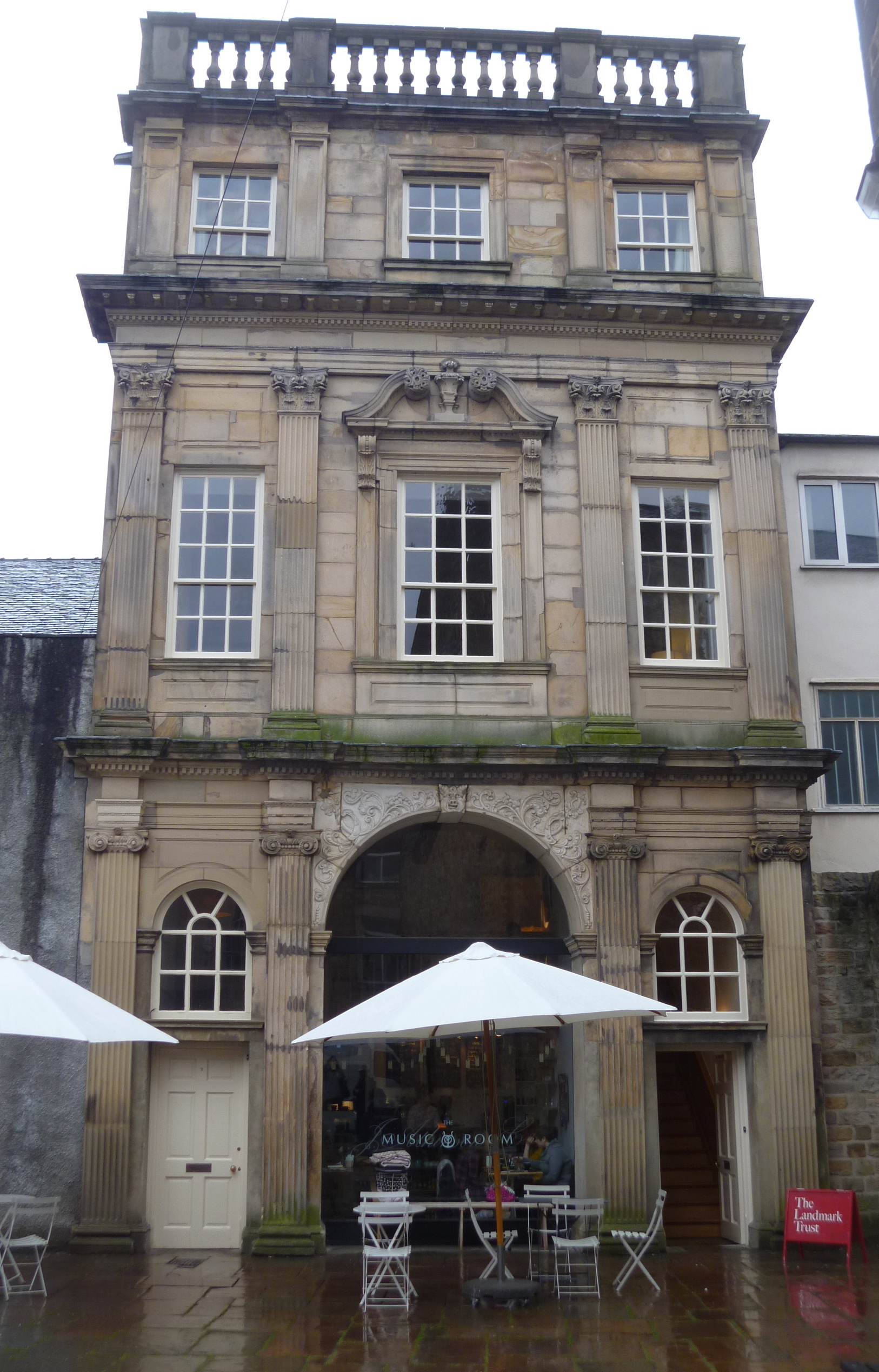
The Music Room ext

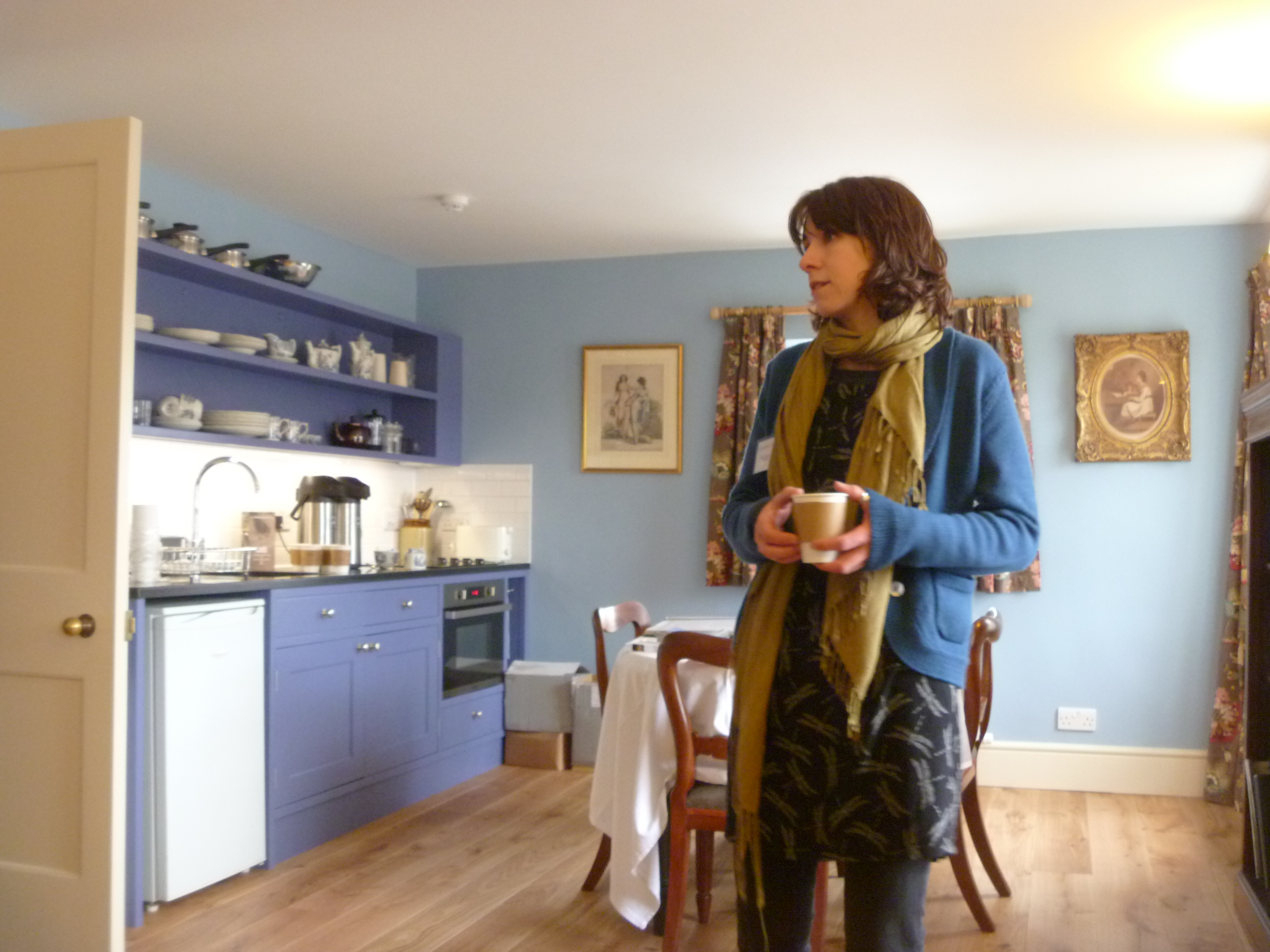
From the station the Music Room is only a few steps away. We were glad to take shelter from the rain and we spent a couple of hours inside and out on the roof top (during a lull in the rain). Coffee was supplied courtesy of the nearby coffee merchant and dispensed by the Housekeeper to which she added information about the before-and-after appearance of the property.

The Music Room - Kazia

A member of Landmark’s Head Office staff, Kasia, the Education Officer, (above, in the new kitchen) was also on hand to fill us in on news, plans and  future events at Landmarks.

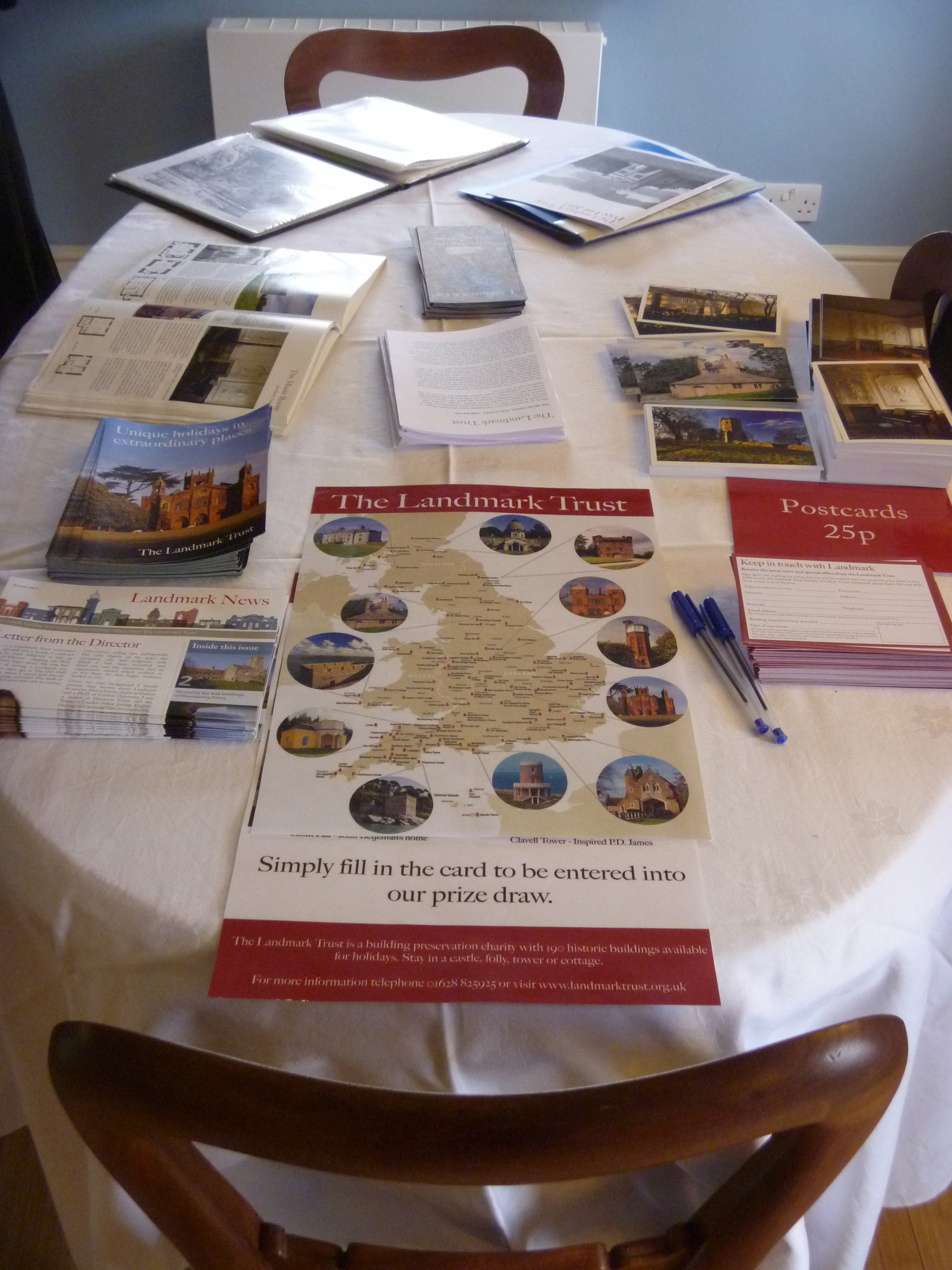
Music Room help yourself

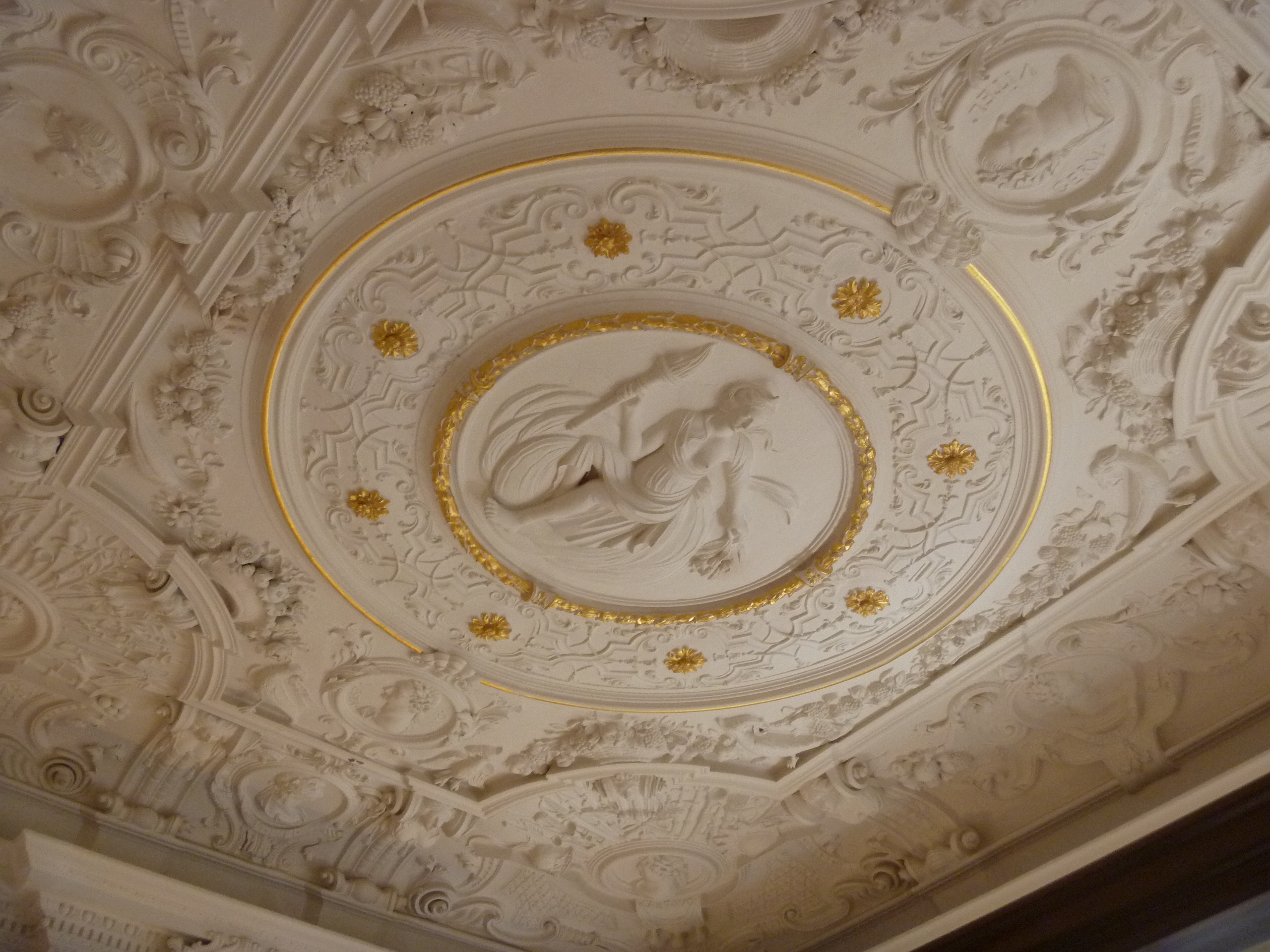
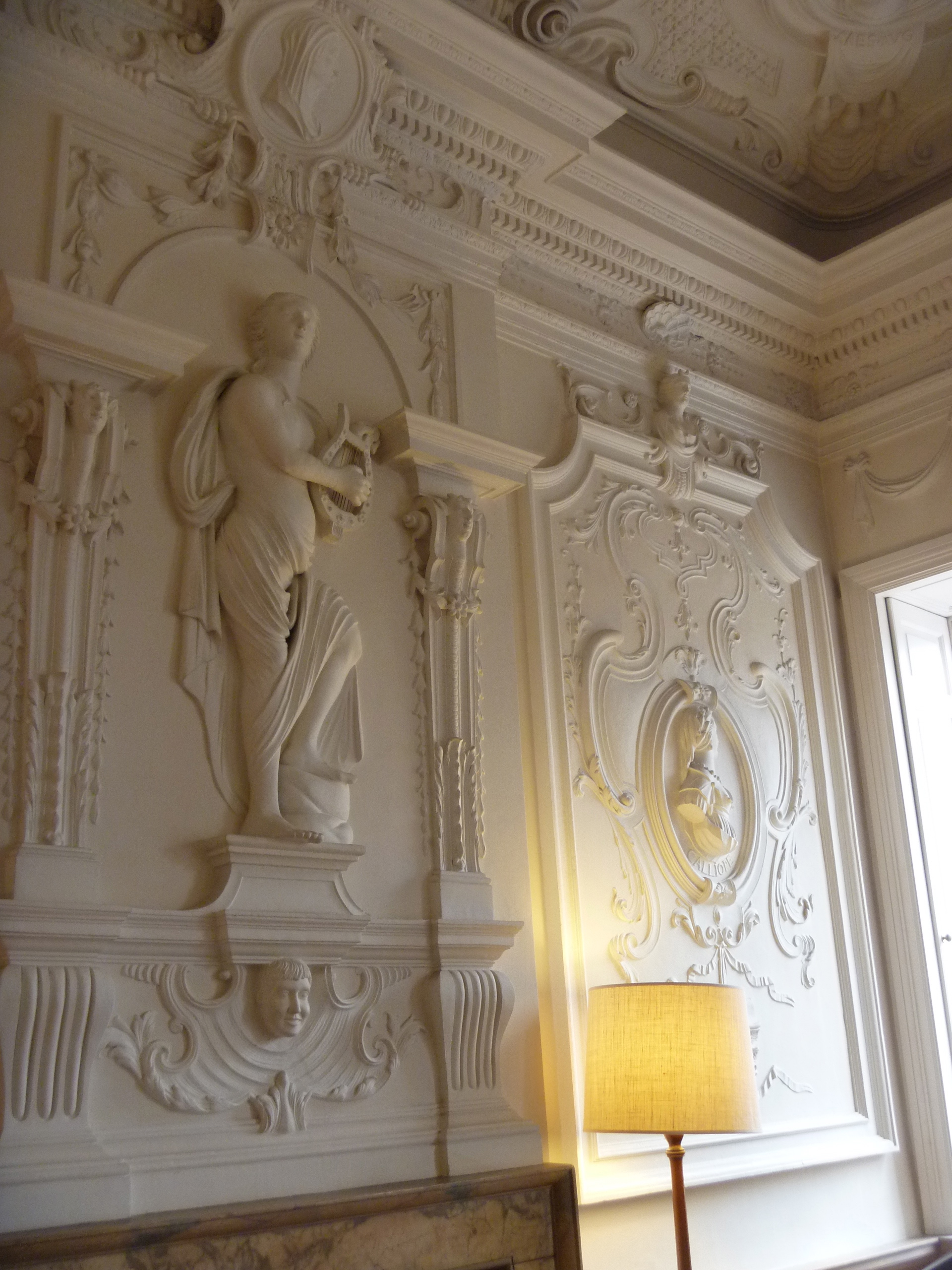
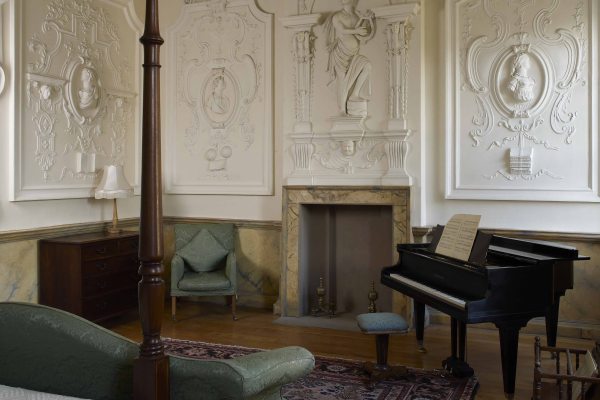
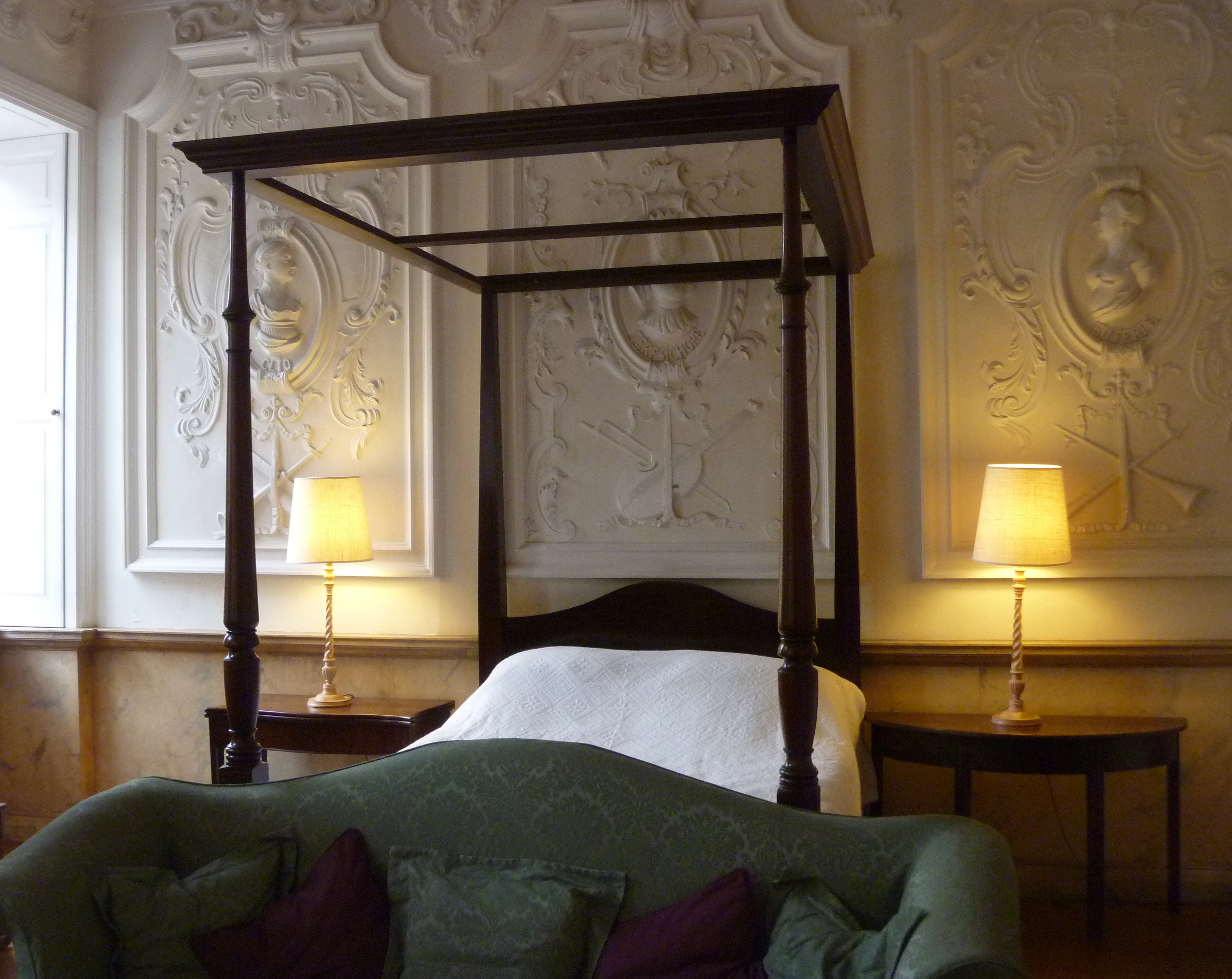
The Music Room dates back to about 1730 and was probably originally a garden pavilion; hard as this is to imagine, being now in the busy city centre. I also note from the free history sheet which is available, along with other Landmark Trust free literature and postcards and handbooks for sale, that music never really had anything to do with the building and that Music Room is probably a corruption of Muses Room (nine plasterwork muses adorn the room).

Music Room plasterwork 1

Music Room plasterwork 2

Still, it must be very special to have an elegant grand piano in your bedroom!

R

Photo : From the Landmark Trust website

When the Landmark Trust took on the property in the early 1970s it “was in an appalling condition” and when it was finally opened for letting it slept 4 in two bedrooms and the Music Room, with its exquisite plasterwork, was the sitting room or grand salon. I now quote from the history sheet :

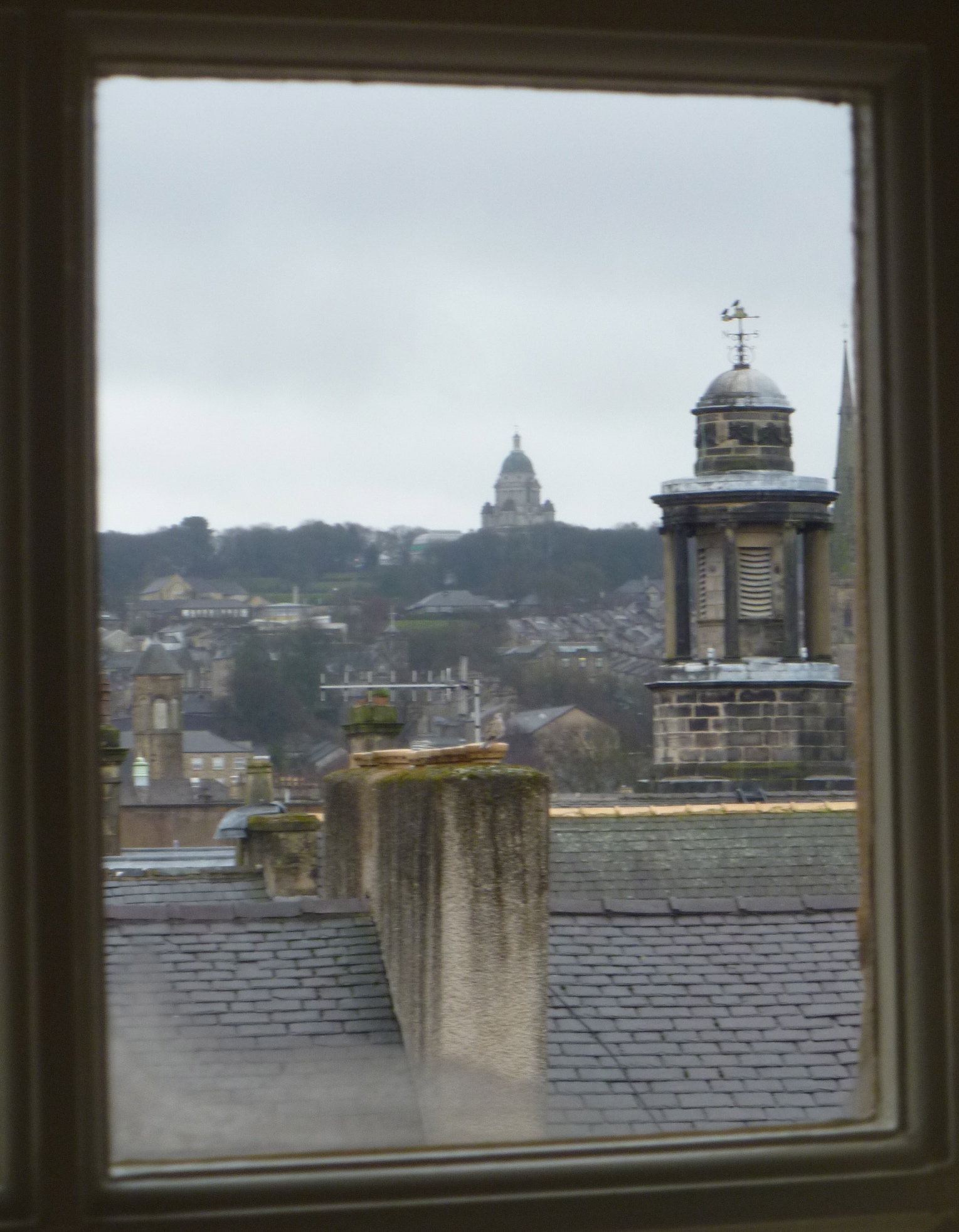
In 2013, 35 years after the first restoration, it was time for a thorough refurbishment, including overhaul of the Baroque plasterwork, which needed hairline cracks repairing and a really good clean. The opportunity was taken to reconfigure the attic floor, since few visitors seemed to be occupying the now rather second-class twin bedroom up there. Partitions were moved and a larger bathroom and a larger area for a new kitchen at one end of the opened-up living room, with its fine views out across the roofs of Lancaster. They are even better from the roof terrace.”

The Music Room bed

The Music Room bed

Sitting room view

View from Sitting Room Window (Ashton Memorial on the distant hill)

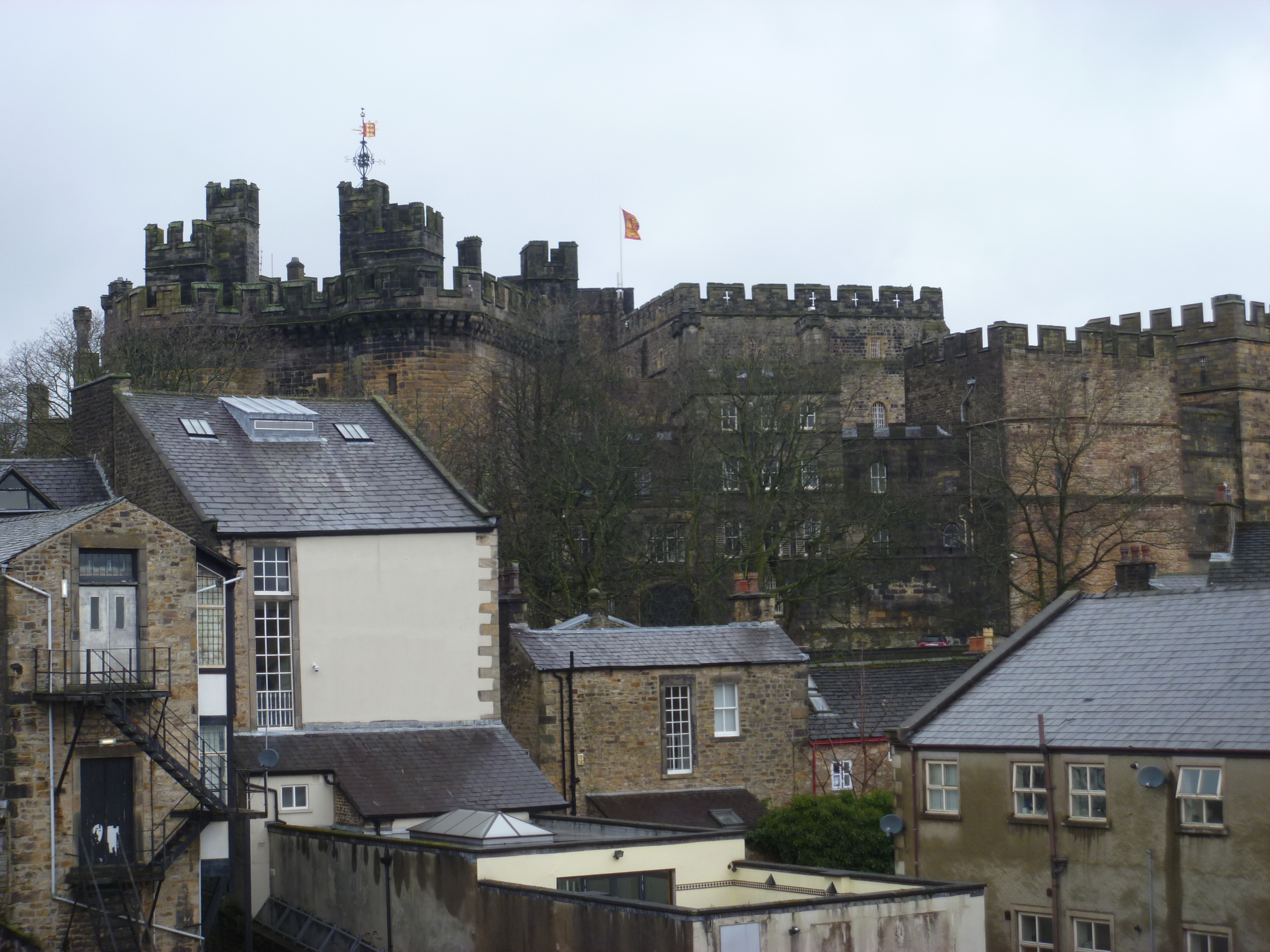
Castle from roof terrace

The Castle from the Music Room Roof Terrace

On the Roof Terrace a most delightful thing happened! We were taking pictures of each other when another visitor offered to take a photo of us both. We thanked her and got talking to her – she’d pointed out her house in the background of the picture she’d just taken – she is also a keen Landmarker, lives in an historic house herself and by the end, as we were saying goodbye, she invited us to call in and have a look round her own home and have a cup of tea with her just before returning to the station! In addition to this she recommended a place for lunch (The NICE cafe inside The Storey) and that we join the 2pm Tour of Lancaster Castle. Both of which we did and even managed a peep inside the Priory Church of St Mary next door to the Castle.

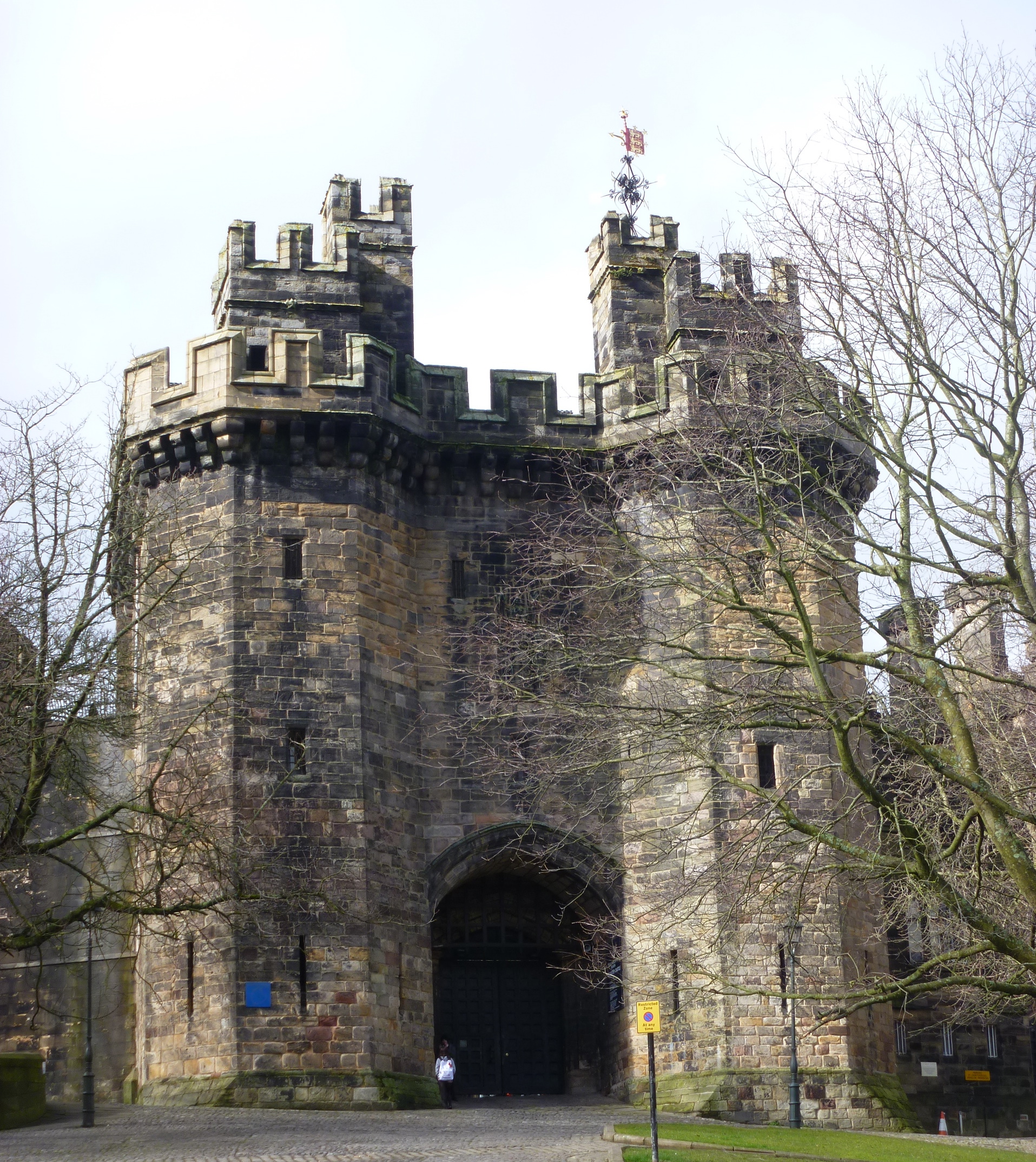
Main Castle entrance

Main Castle entrance

The Tour of the Castle is excellent and well worth doing. No photography is allowed but you are taken into two court rooms, the old cells, the grand jury room and much more. We learnt that it is a Royal Castle as our Queen is also Duke of Lancaster, that it had connections with the Pendle Witches, it housed a Debtors’ Prison in addition to a regular prison and that prison is now closed and due for refurbishment and change of use.

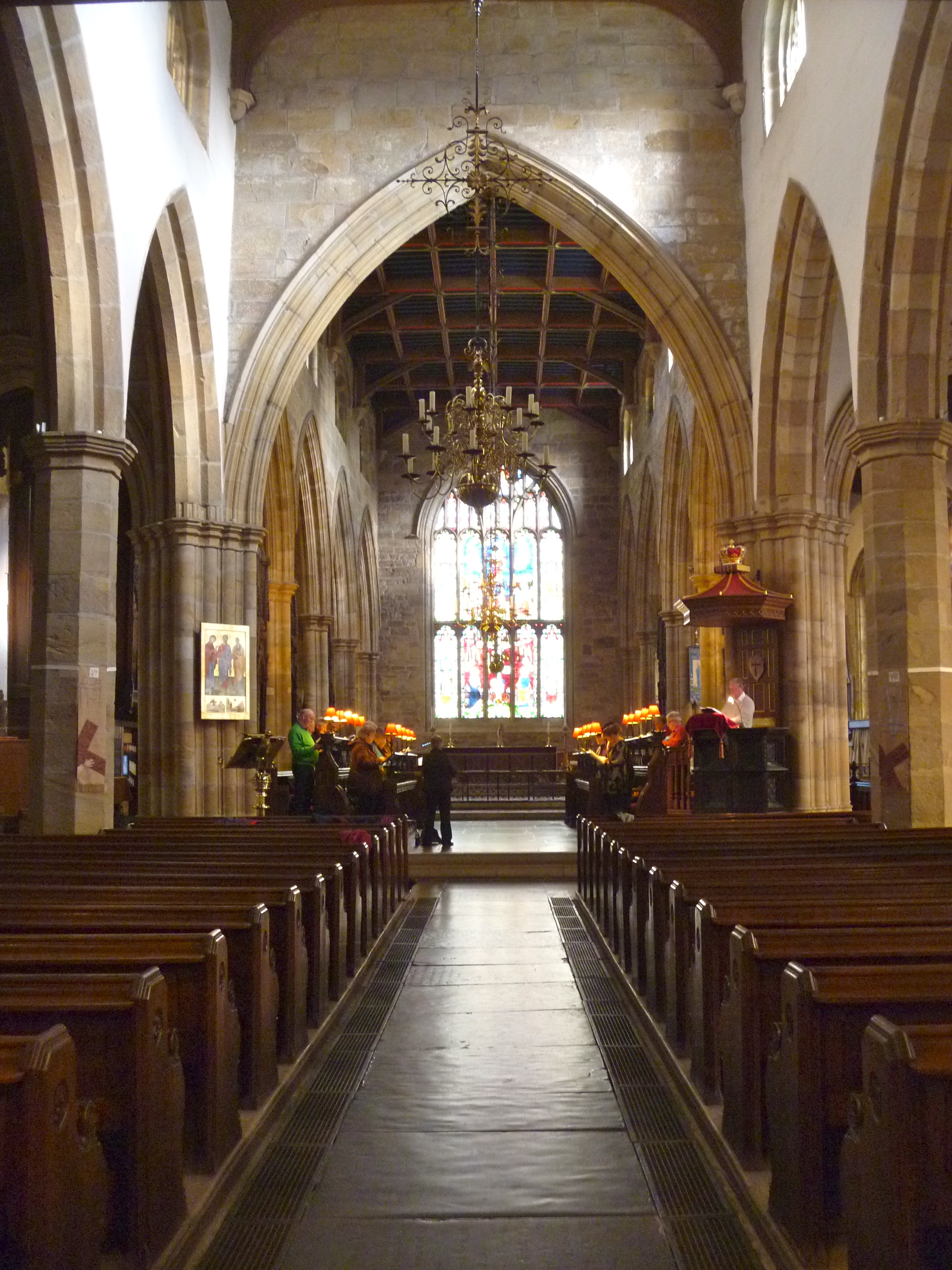
Inside Lancaster Priory Church

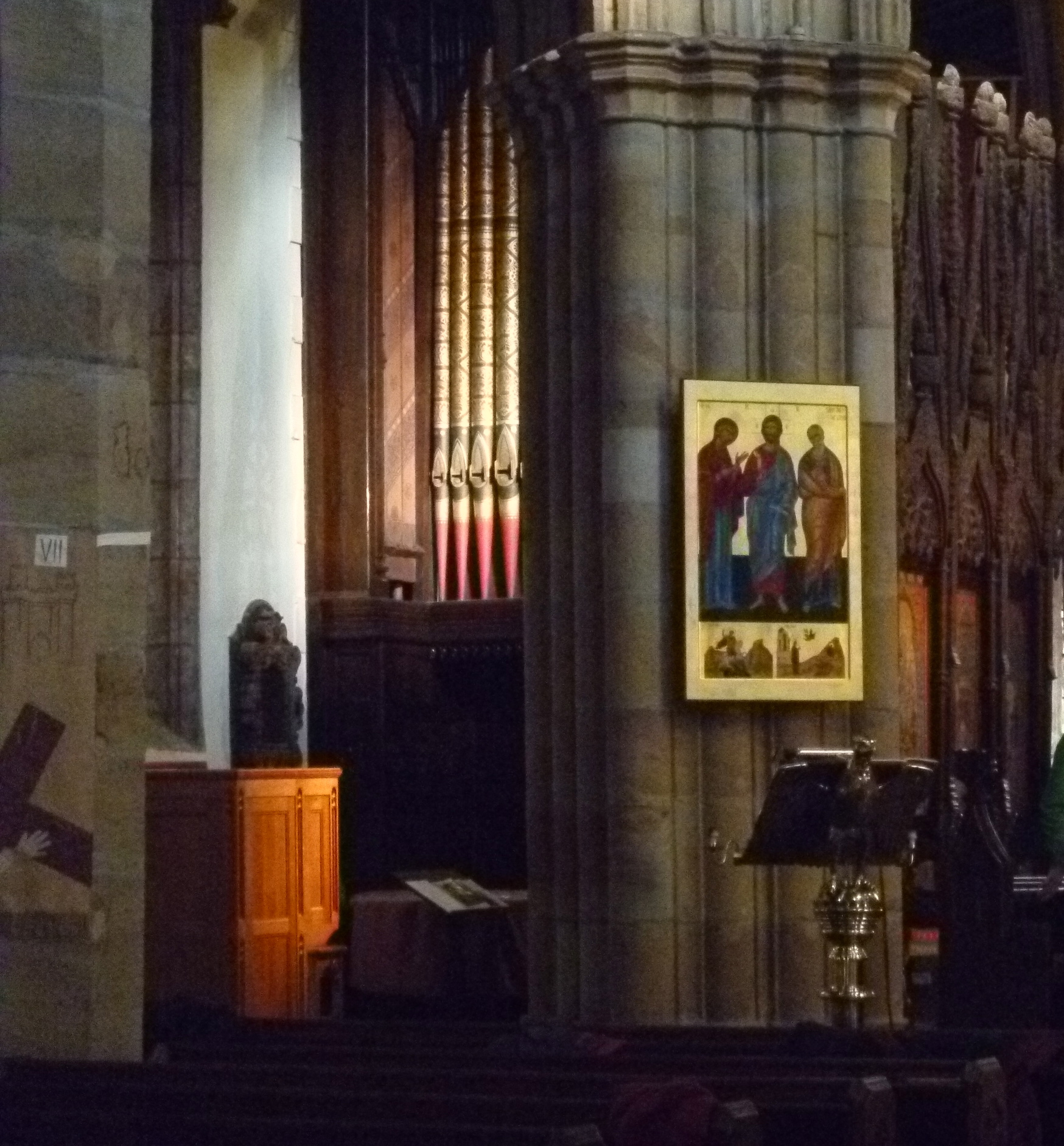
Following the hour long tour we had just time to peep inside the Priory Church and admire the view of Morecambe Bay. The choir were rehearsing for a concert this evening so we were unable to inspect the Choir Stalls which are an important feature of the church. There are some beautiful 17th century chandeliers, a Russian icon and two organs.

Organ, icon and choir stalls

One of the organs, the icon and a glimpse of the choir stalls

It was soon time to take up the kind offer of our fellow Landmarker and we enjoyed a house tour and cup of tea before heading back to the station for our trains. Despite the cold winds and rain we came away with a very warm feeling towards the city, the buildings  and the inhabitants of Lancaster and we have a lot more ideas for future visits!

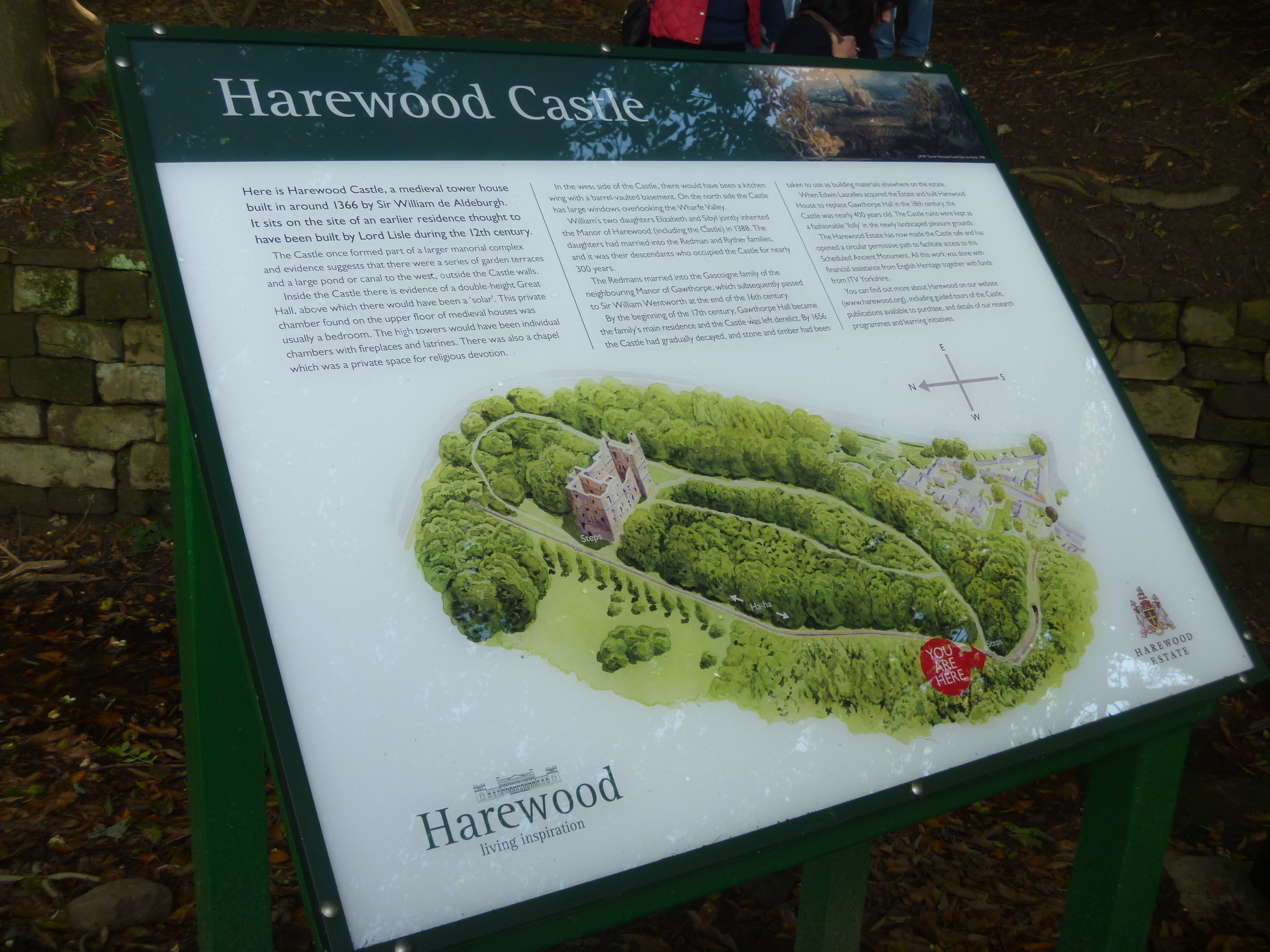
Built for Comfort not for Defence : Harewood Castle

Sunday 14th October was the 946th anniversary of The Battle of Hastings. Our guide Sally Lawless deemed it therefore a fitting date on which to embark on one of a series of new initiatives at the Harewood EstateThe Harewood Castle Tour.

Earlier in the year I’d picked up the leaflet ‘Medieval Harewood 2012 : step back in time … ‘  This outlined a series of events, workshops, tours, tours and walks. Of course, it was the walk that appealed to me. I’d seen some of the archaeological dig results at Gawthorpe Hall last October on my ‘Capability Brown’ walk and I decided earlier in the week to sign up to visit Harewood Castle today.

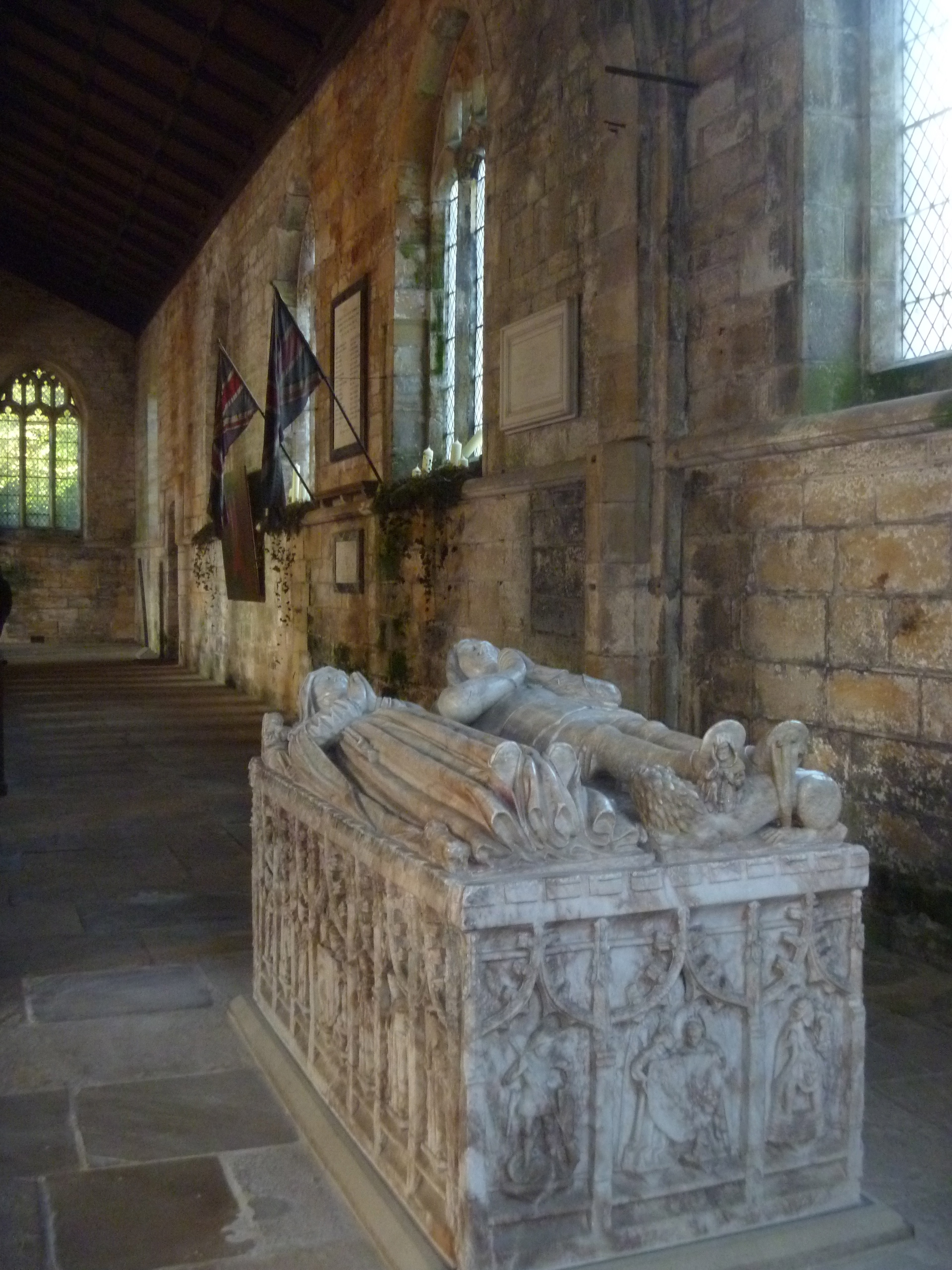
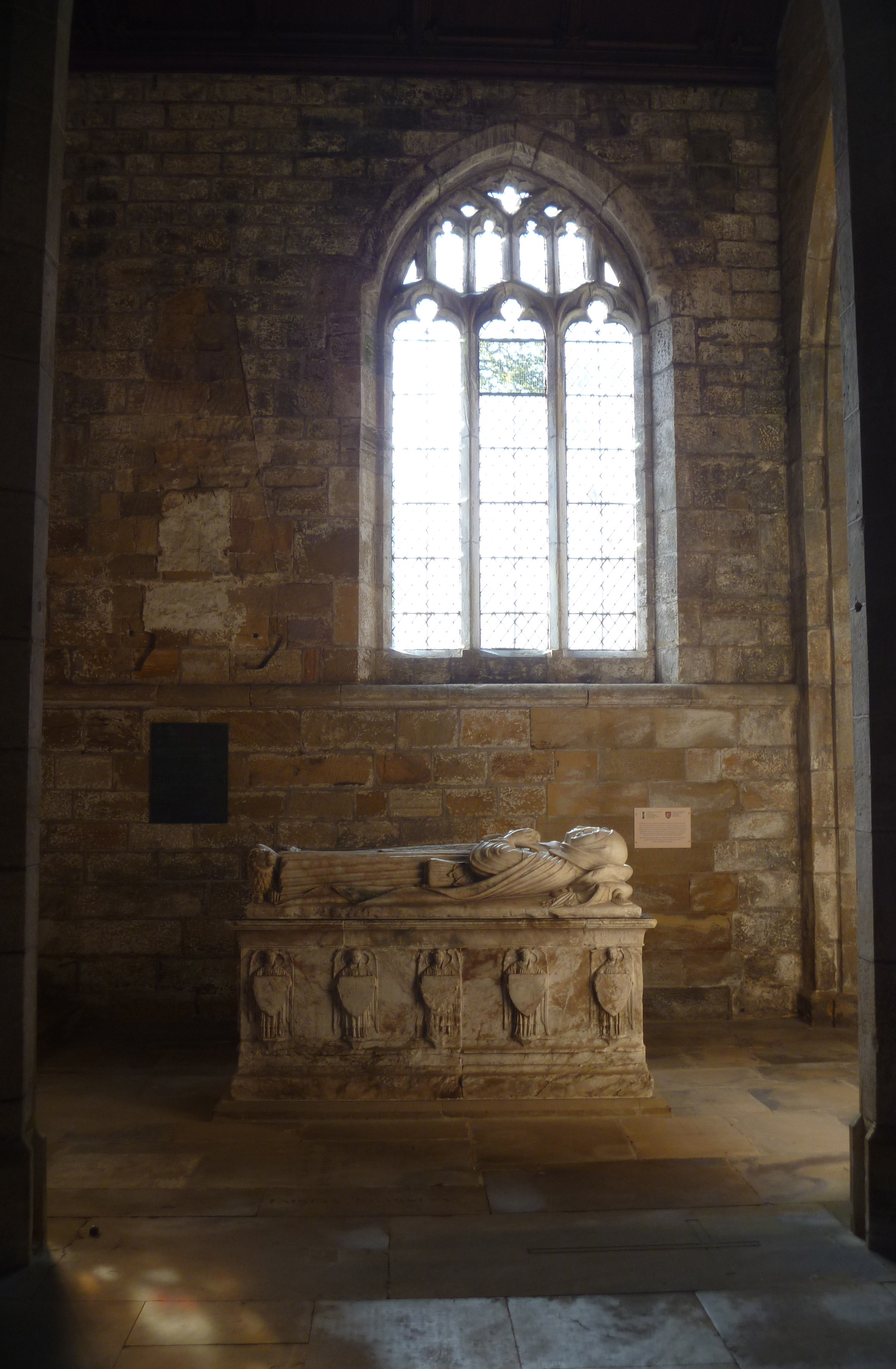
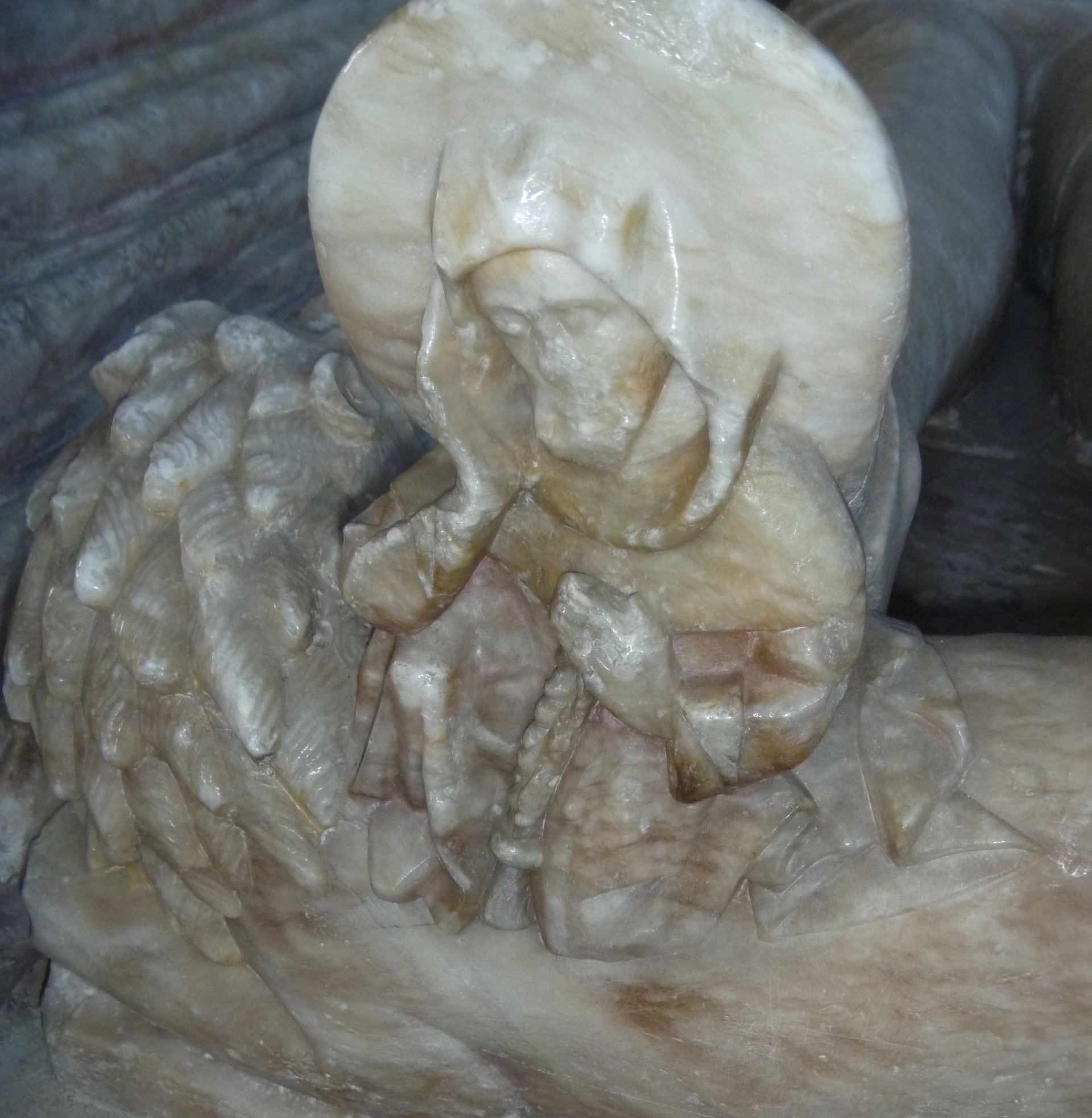
We all assembled in All Saints Church the Harewood Estate church which is now under the protection of the Churches Conservation Trust. Sally gave us a brief introduction to the church and the Harewood Estate in general. We were shown the important Alabaster Tombs – 6 pairs comprising some of the best surviving examples in England. All the figures represented had played a part in the history of the Castle.
Close up of an alabaster beadsman or professional mourner

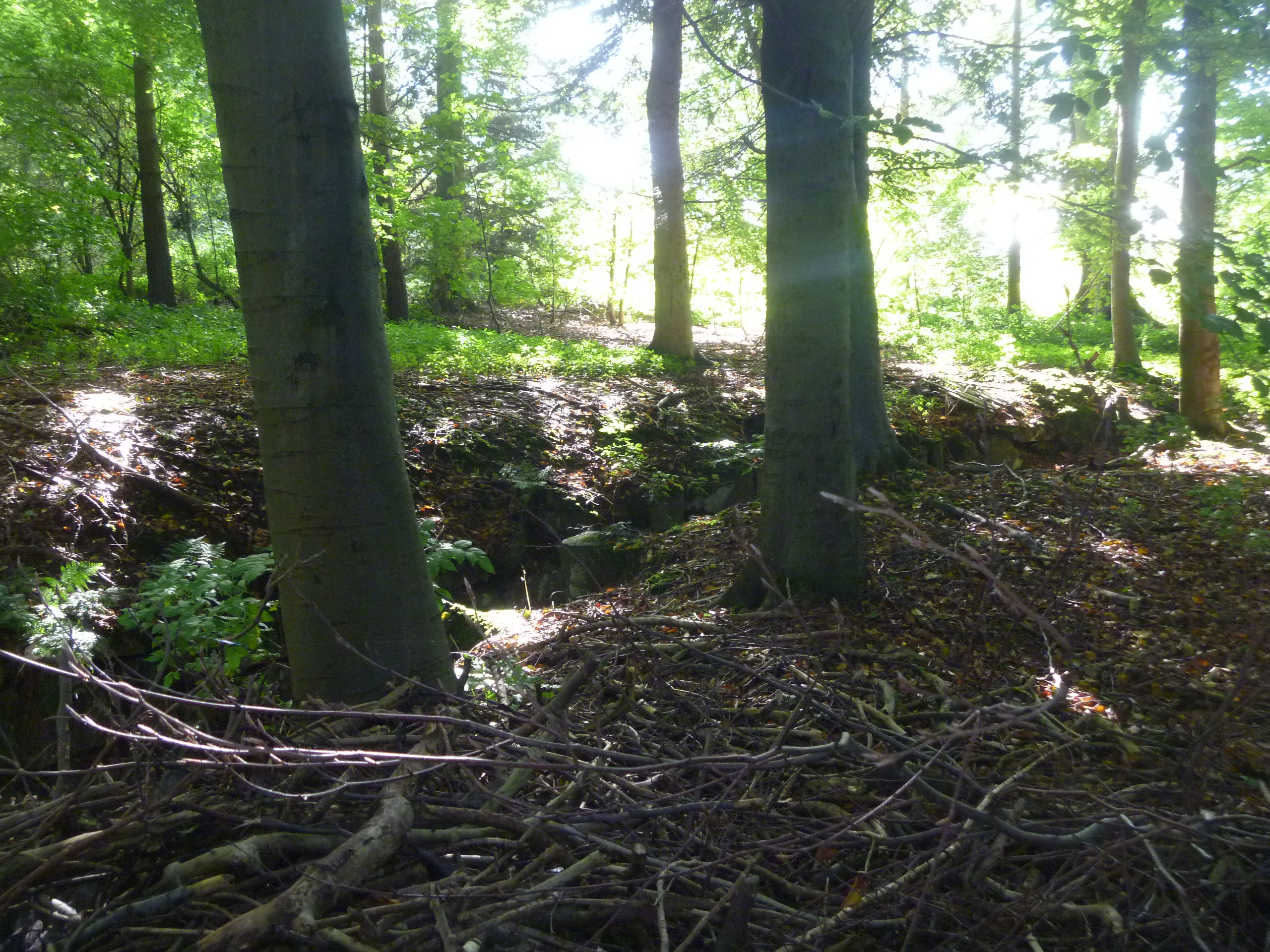
Then our walk began, through the churchyard where many of the estate and household workers are now buried, and out down a track to the public footpath Church Lane. This is was the former turnpike road between Tadcaster and Otley. It cuts through what was formerly the northern pleasure grounds of the Estate.

Sunken  tracks like this criss-cross the Harewood Pleasure Grounds

Peering over the wall we were fascinated to see the various tunnels and trenches which passed under the road so that  the vicar could reach his church and the local inhabitants cross the Estate without being seen by the Lord and Lady and their family and guests.

The Ha-ha approach to the Castle

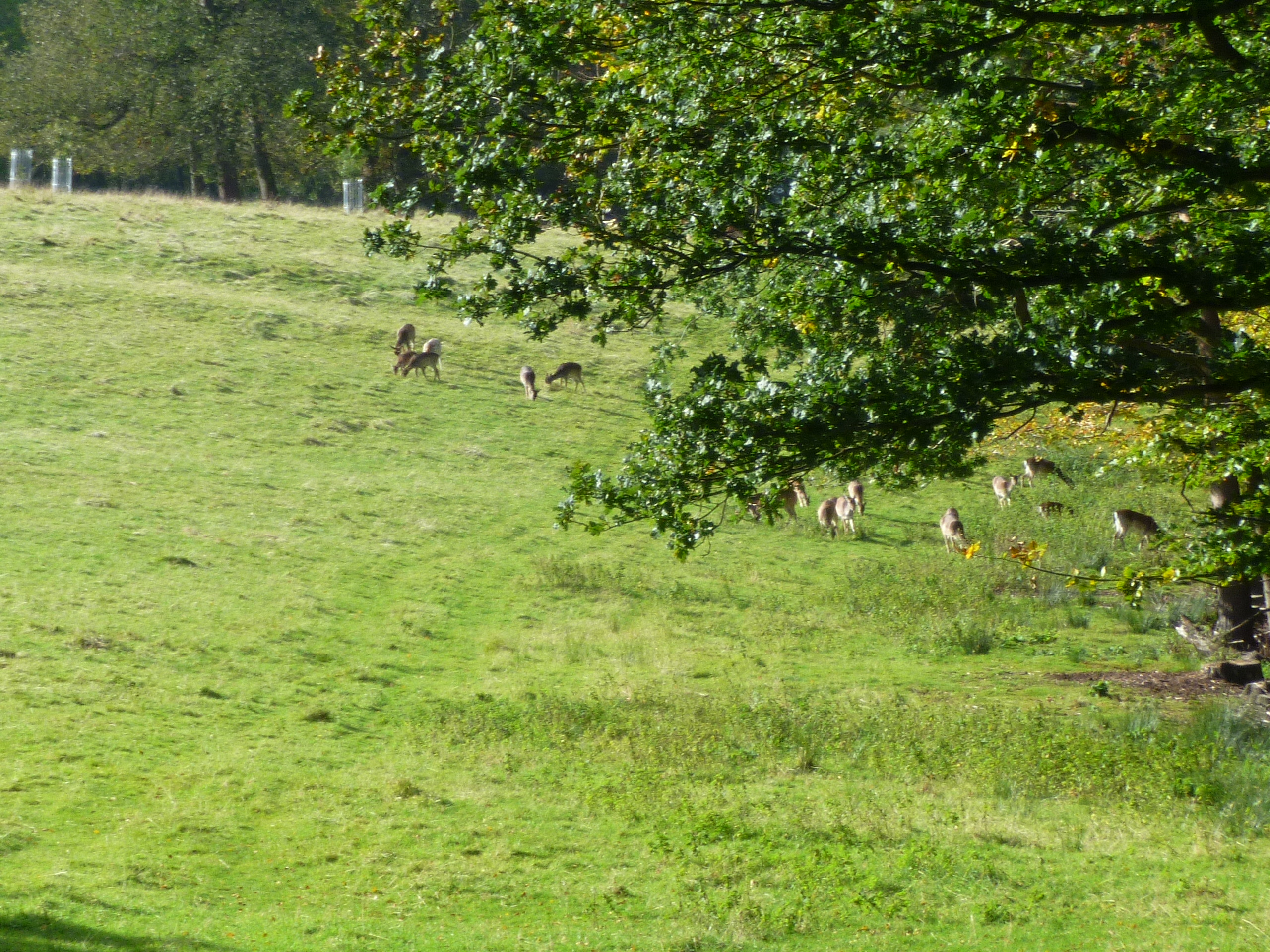
From Church Lane we entered the original Harewood village and proceeded down a deep walled public footpath to the Ha-ha which separated the Pleasure Grounds from the Deer Park –  where we could still see deer today.

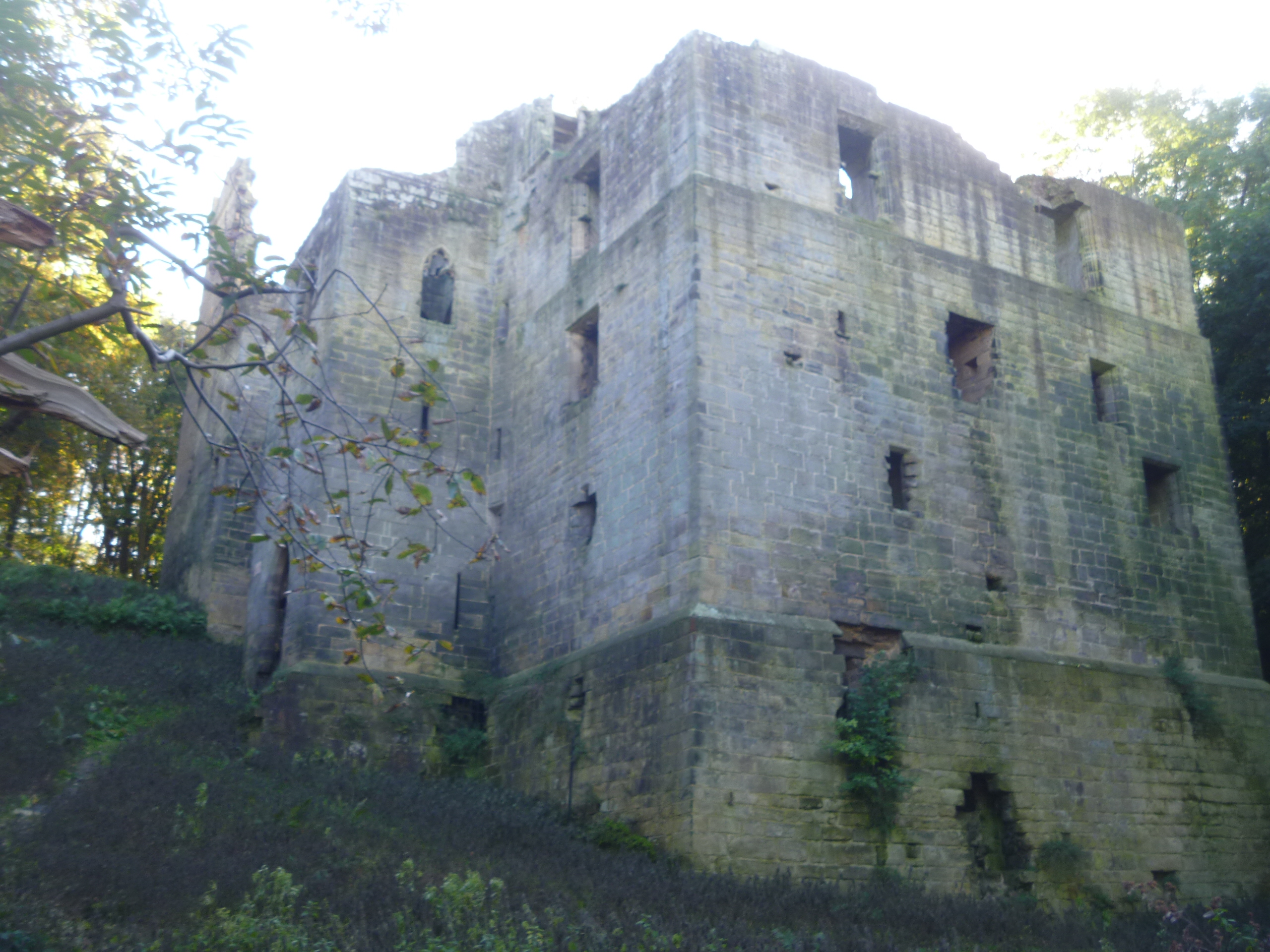
Harewood Castle built into the hillside looks out over Wharfedale

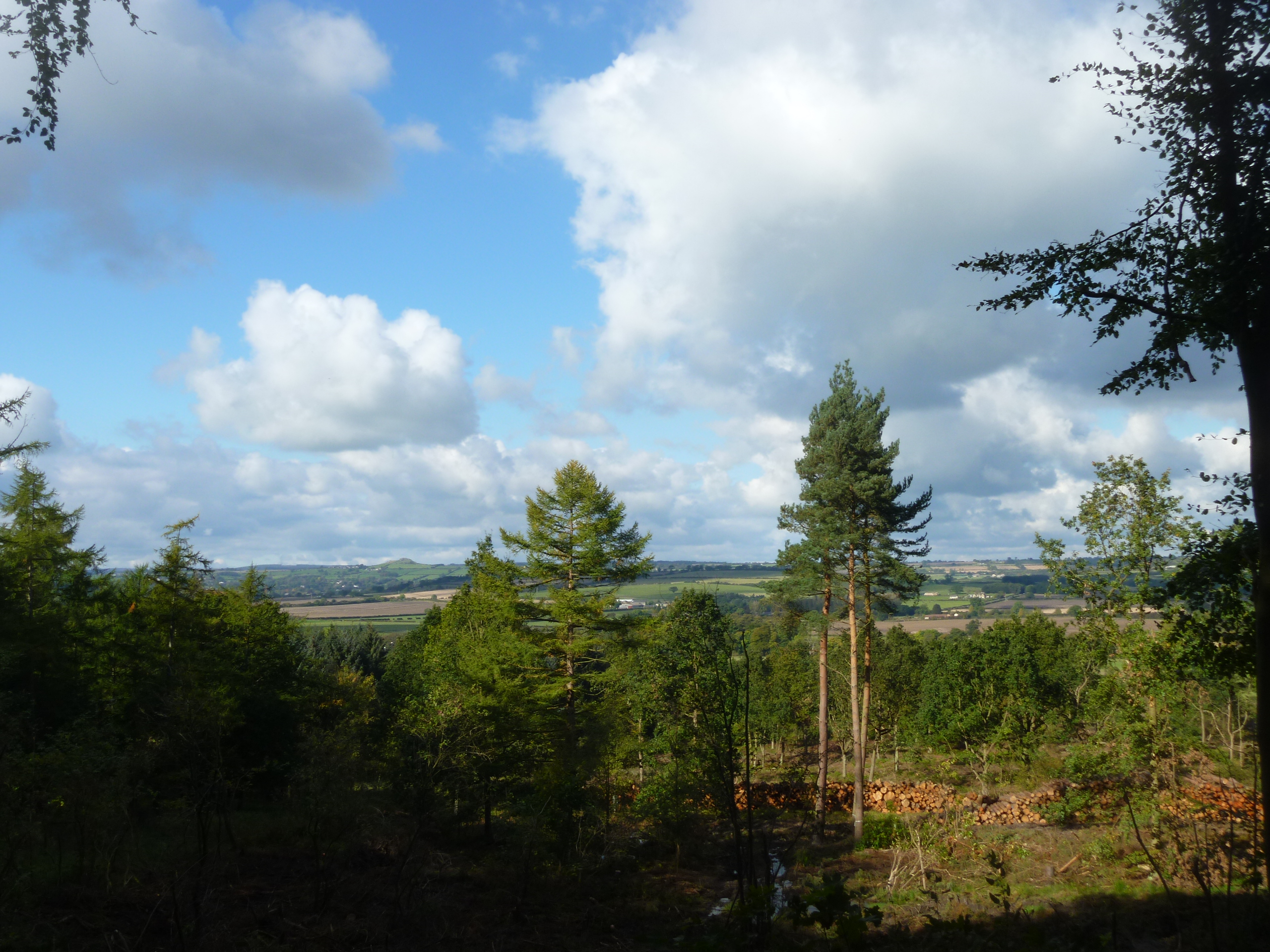
The Castle itself now stands very near to the A61 main road between Leeds and Harrogate but despite its size and proximity it’s almost impossible to see it from the road. There has been some tree clearance in the area lately and the view across Wharfedale can be seen more clearly.
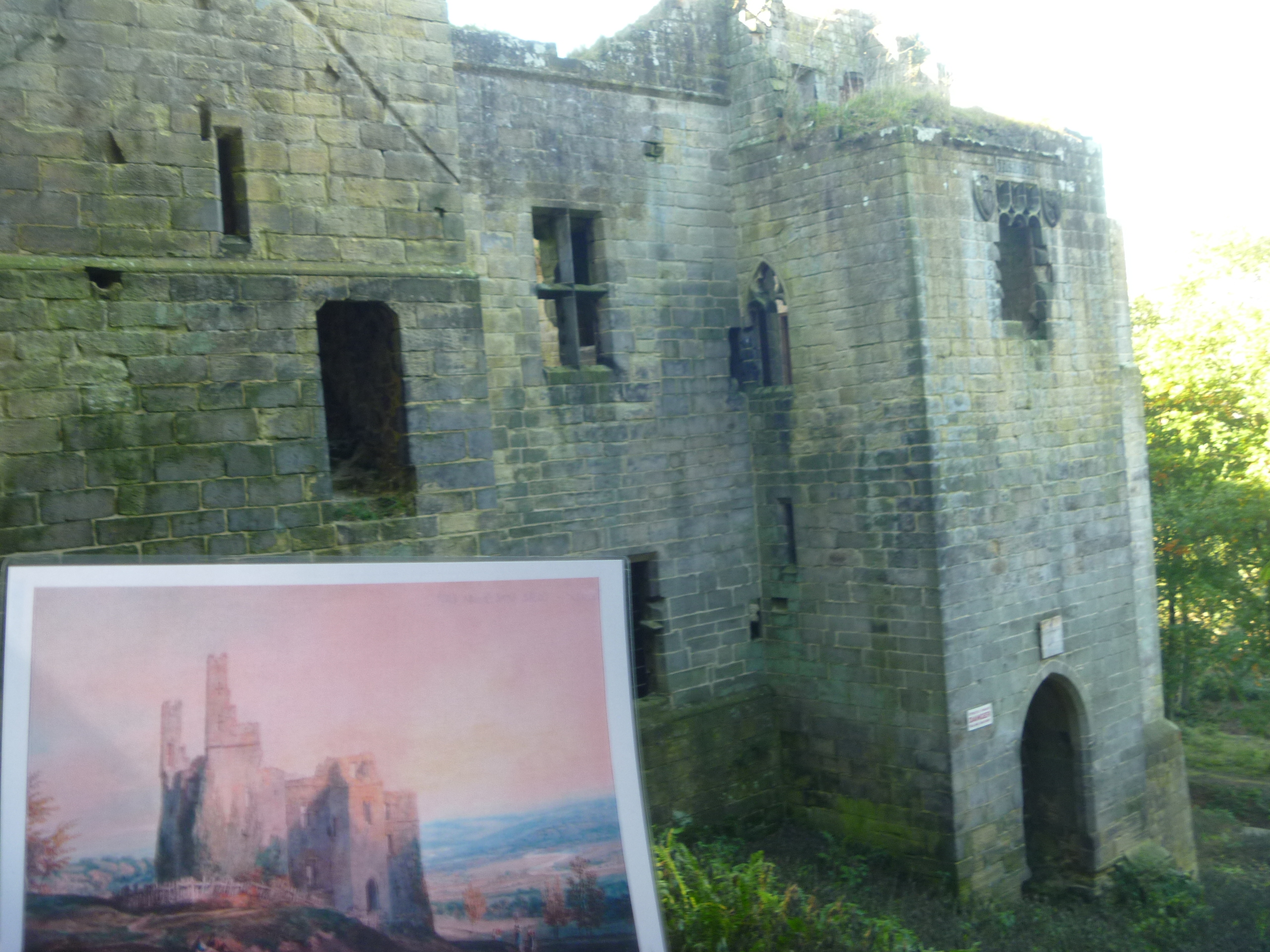
Castle with Turner watercolour from similar standpoints

After hearing more about the history of the castle, comparing Turner’s watercolour views with today’s view we were admitted into the ruin and able to inspect more closely the layout and remains of the Harewood Tower House.

Following the path in a loop around the castle (it’s not open to the general public) we retraced our steps to the church where the tour finished.
Harewood Castle is technically not a castle but a fortified manse, a converted manor house. A ‘licence to crenellate’ (to fortify) was granted to William De Aldeburgh in the mid-14th century. Two families, the Redmaynes and the Rythers, whose tombs are in Harewood church, shared occupation during the 15th and 16th centuries. It was abandoned in the early 17th century and its stone and ornamental masonry plundered for use in other buildings nearby. By the late 18th century it was a picturesque ruin, painted by Turner, Varley, De Wint, Cotman and Buckler. It remained in that condition until 2004 when stabilisation work was carried out with financial support from English Heritage and matched funding from the Harewood Estate.”
The View over Wharfedale

Courage and Collaboration : the Challenge of Astley Castle

Last week I had the great good luck to be invited to attend the Opening Day of The Landmark Trust’s latest holiday property. Dating back to the 12th century Astley Castle near Nuneaton in Warwickshire has proved to be the biggest challenge to Landmark, so far. It even proved to be a challenge right up to and including the Opening Weekend due to the waterlogged fields being unfit for visitors’ parking.

“[The Trust] was established to rescue historic and architecturally interesting buildings and their surroundings from neglect and, when restored, to give them new life by letting them as places to experience for holidays.” [From the Landmark Trust website]

In the case of Astley Castle a completely new building has been inserted sympathetically into the medieval ruin.

I first visited Astley in the mid-1990s when studying for a Masters degree in Victorian Studies. A ‘field trip’ to the places associated with George Eliot was planned  and we spent the day visiting Coventry, Nuneaton, Arbury Hall and other places mentioned in her life and works including Astley church where we took in a view of the ruined castle. Astley Castle appeared in George Eliot’s story ‘Mr Gilfil’s Love Story’ as Knebley Abbey. The whole site is also part of the Arbury Estate, where George Eliot’s father, Robert Evans, was a farmer, surveyor and land agent and where the young Mary Ann Evans (GE’s real name) grew up.

The church of Astley St Mary in 2010

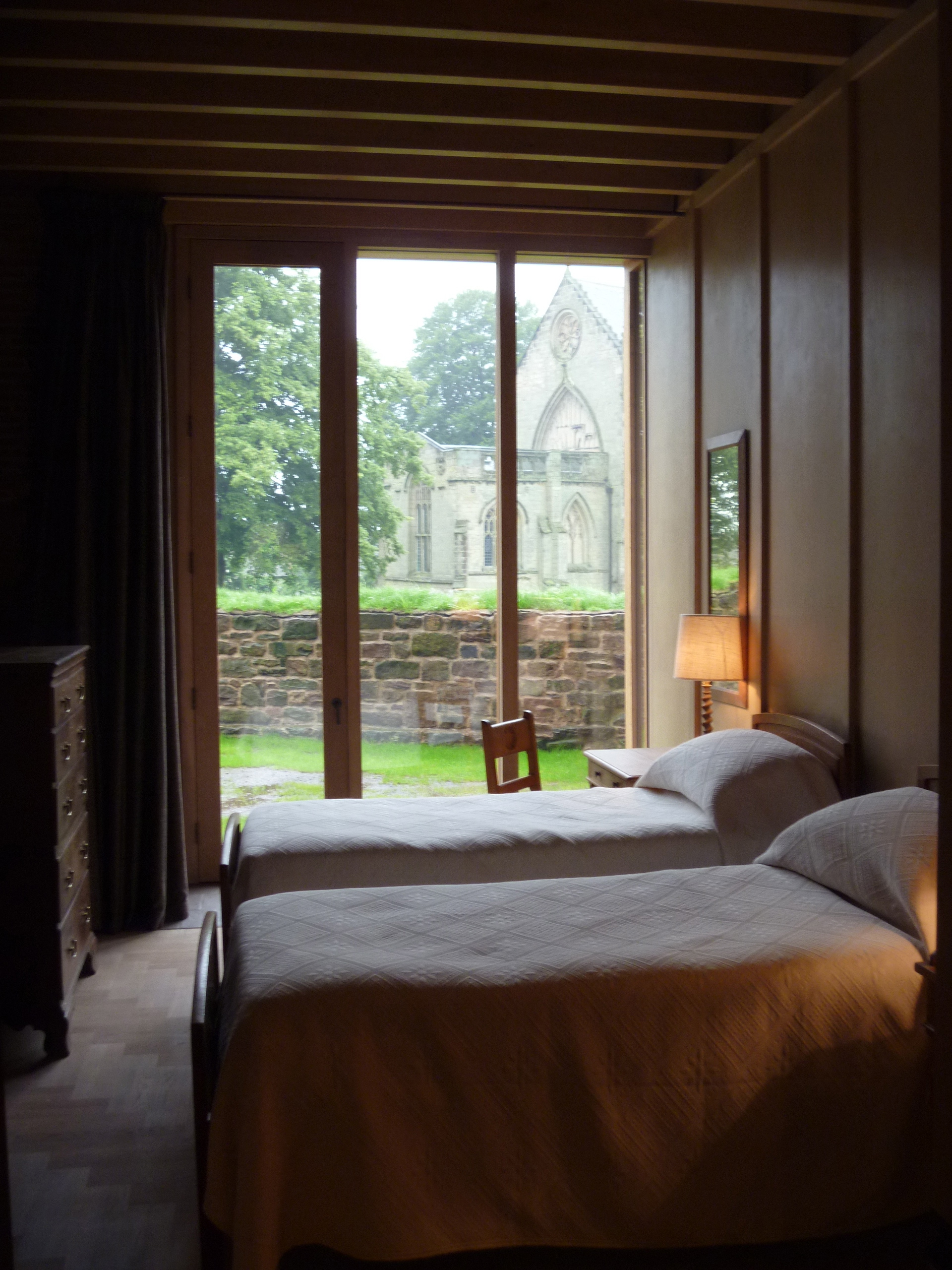
The church can be seen from one of the four bedrooms, July 2012

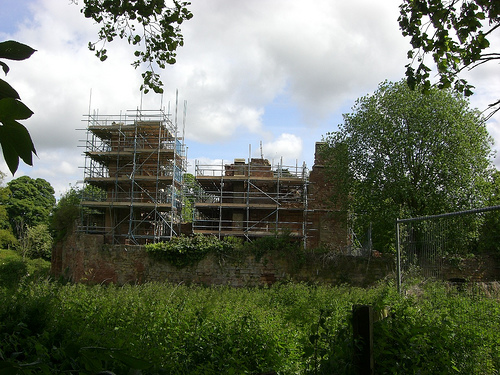
Since 2009 I have been following developments with great interest. On a visit to the Midlands that year I stopped by after browsing the secondhand book shelves at The Astley Book Farm to find the ruin being stabilised by scaffolding whilst awaiting the raising of sufficient funds to begin the huge task of bringing Astley Castle back to life again.

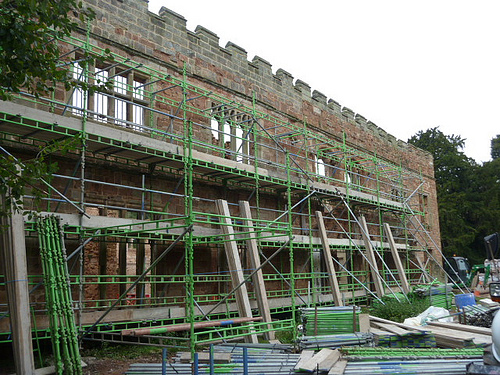
In October 2010 work was well under way when I visited with friends at the invitation of The Landmark Trust and we were given a guided tour of the work so far.

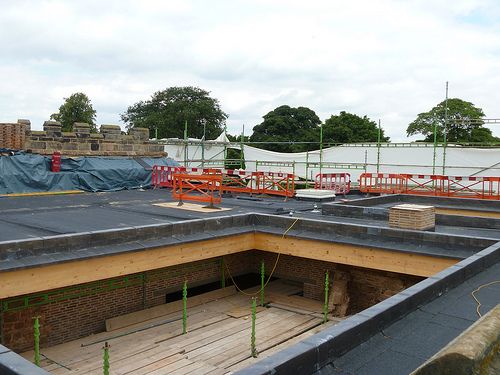
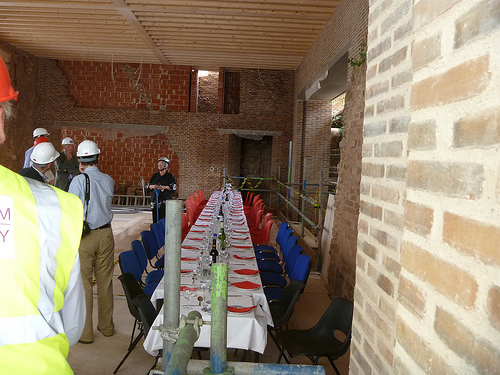
But in August 2011 on the next visit, amazingly, we were invited to climb to the top of the scaffolding and viewing the ongoing work from above – fluorescent jackets and hard hats compulsory!

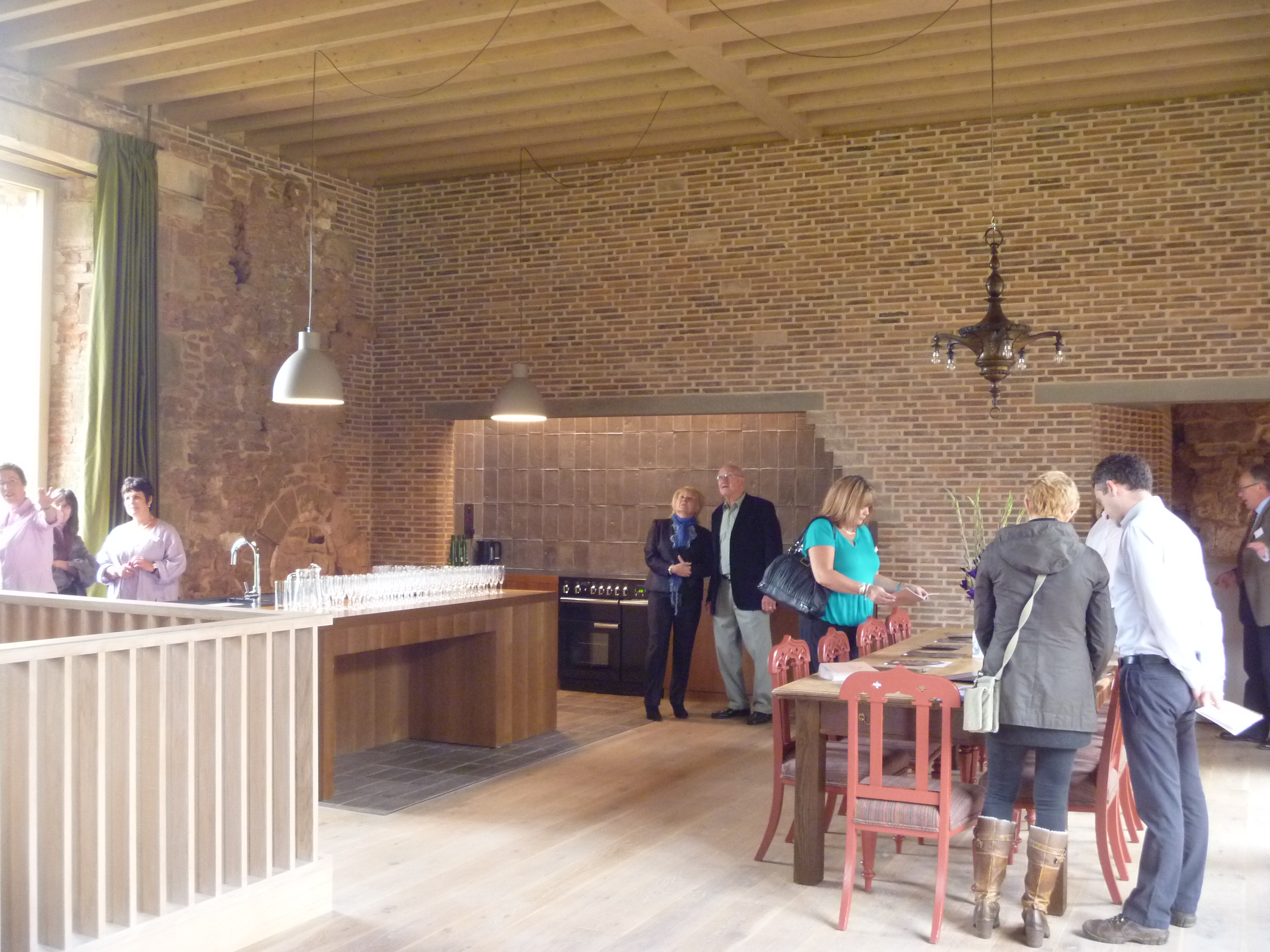
The day also included a lunch with Landmark’s Director at the time, Peter Pearce. The lunch actually took place in the first floor sitting, dining room, kitchen.

August 2011

July 2012

Alongside the work on the castle improvements were being made to the area around which now include public footpaths with information boards dotted along way and landscape features including a viewing mound and fish ponds and a lake.

An Elizabethan knot garden of flowers and herbs has been planted near the castle.

Hooray for Astley! Hooray for Landmark Trust! Hooray for my Landmark Patron friends! Can’t wait to experience a stay at the castle for myself but that won’t be until the end of next year – it’s getting booked up very fast!!

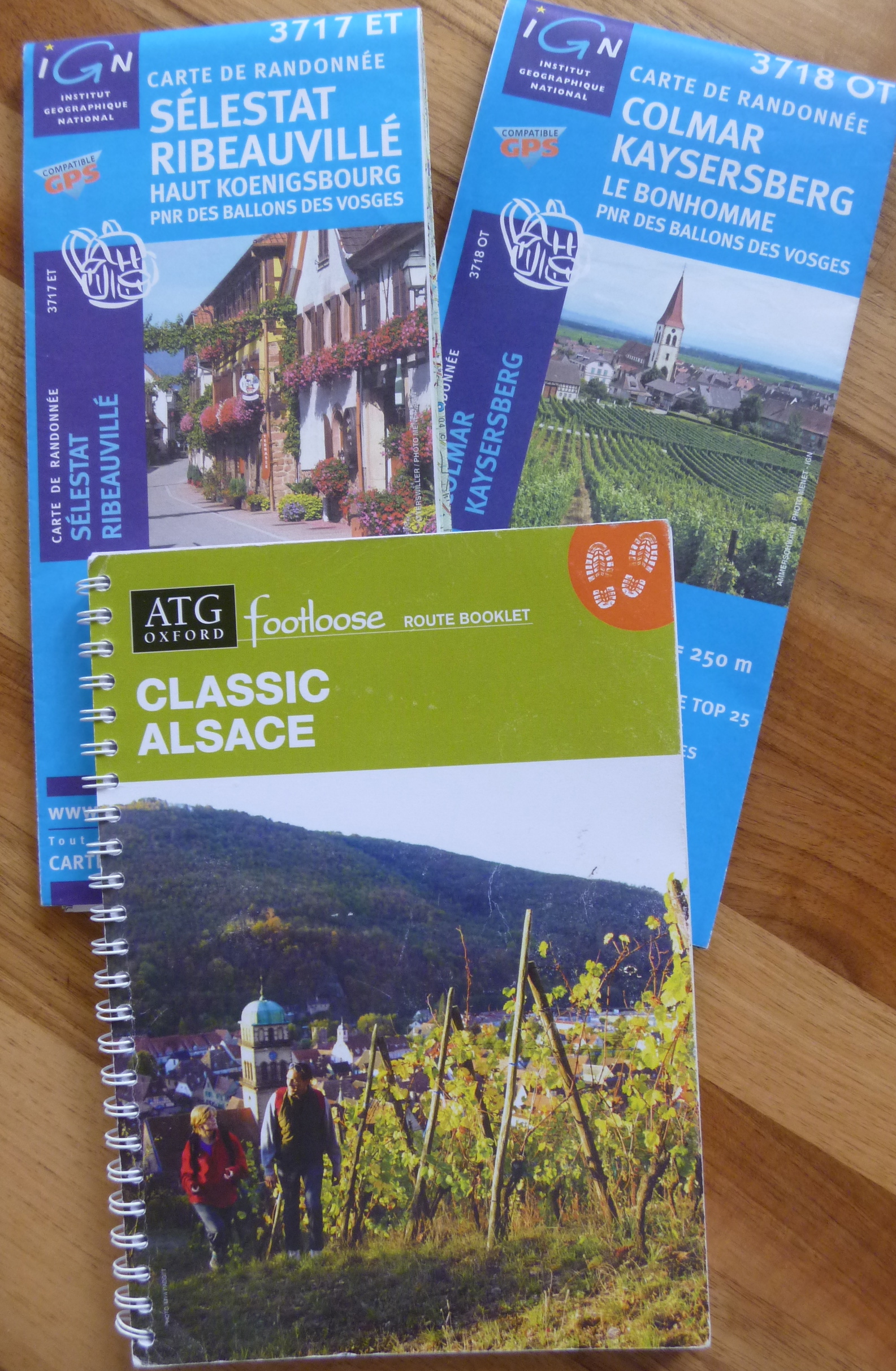
The Footloose Route Booklet – reading between the lines

In the ATG Footloose Walks brochure there’s a little section called “Finding Your Way” :

“The ATG Route Booklet includes detailed directions and maps, as well as up-to-date information on towns visited, places of interest, local history, restaurants, cafes and shops en route.”

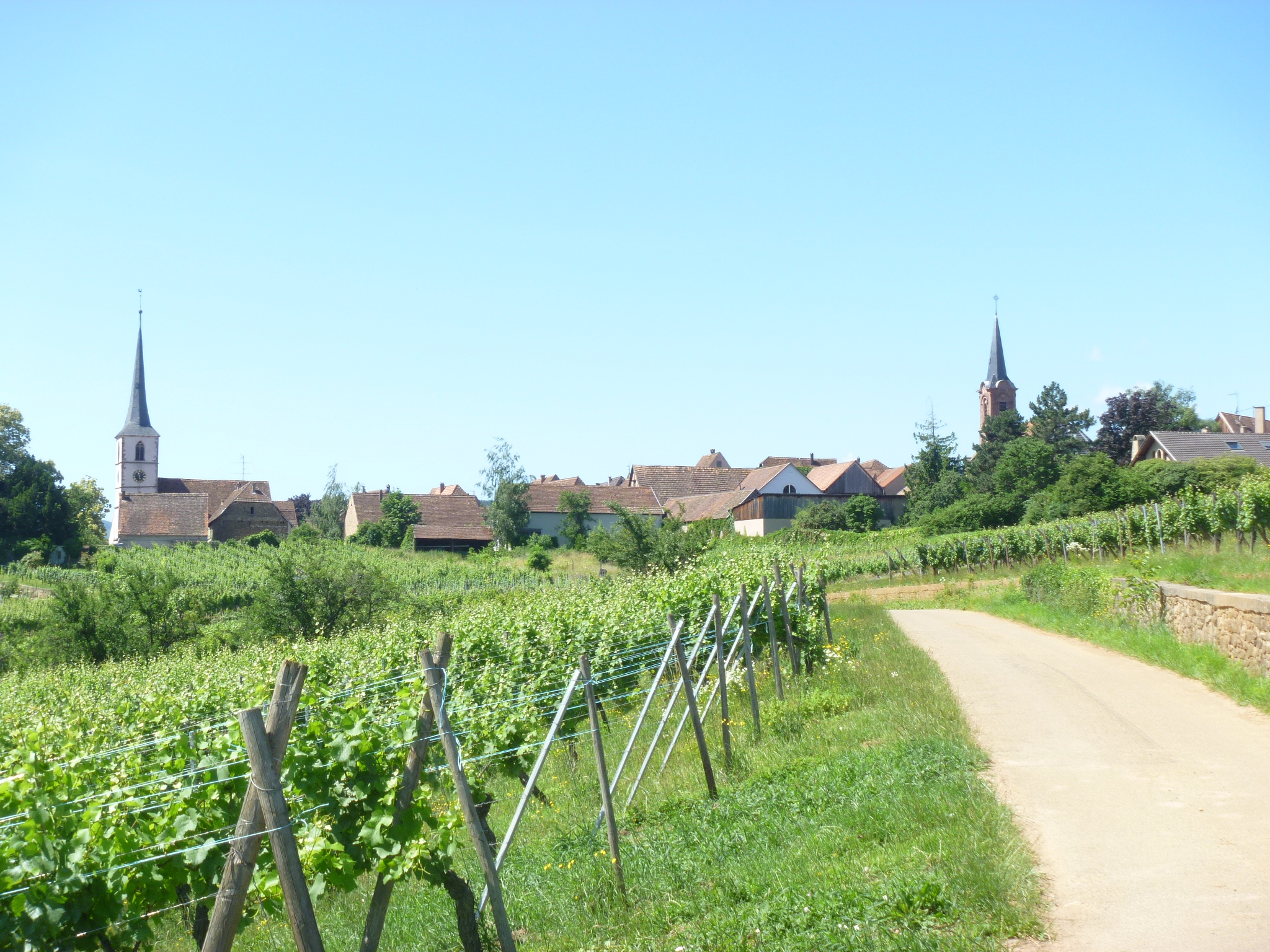
Approaching Mittelbergheim from Barr

In addition to our Route Manager the other key to the success of our trip was The ATG Route Booklet. With this winning combination we knew we could set out each day with confidence knowing that we’d be able to find our way without difficulty. We could decide whether to either buy lunch before setting off from the village or buy it at a cafe or from a village patisserie/boulangerie on the route and eat in a charming village square or in the welcome shade of a churchyard.

You can’t go wrong – and we didn’t.

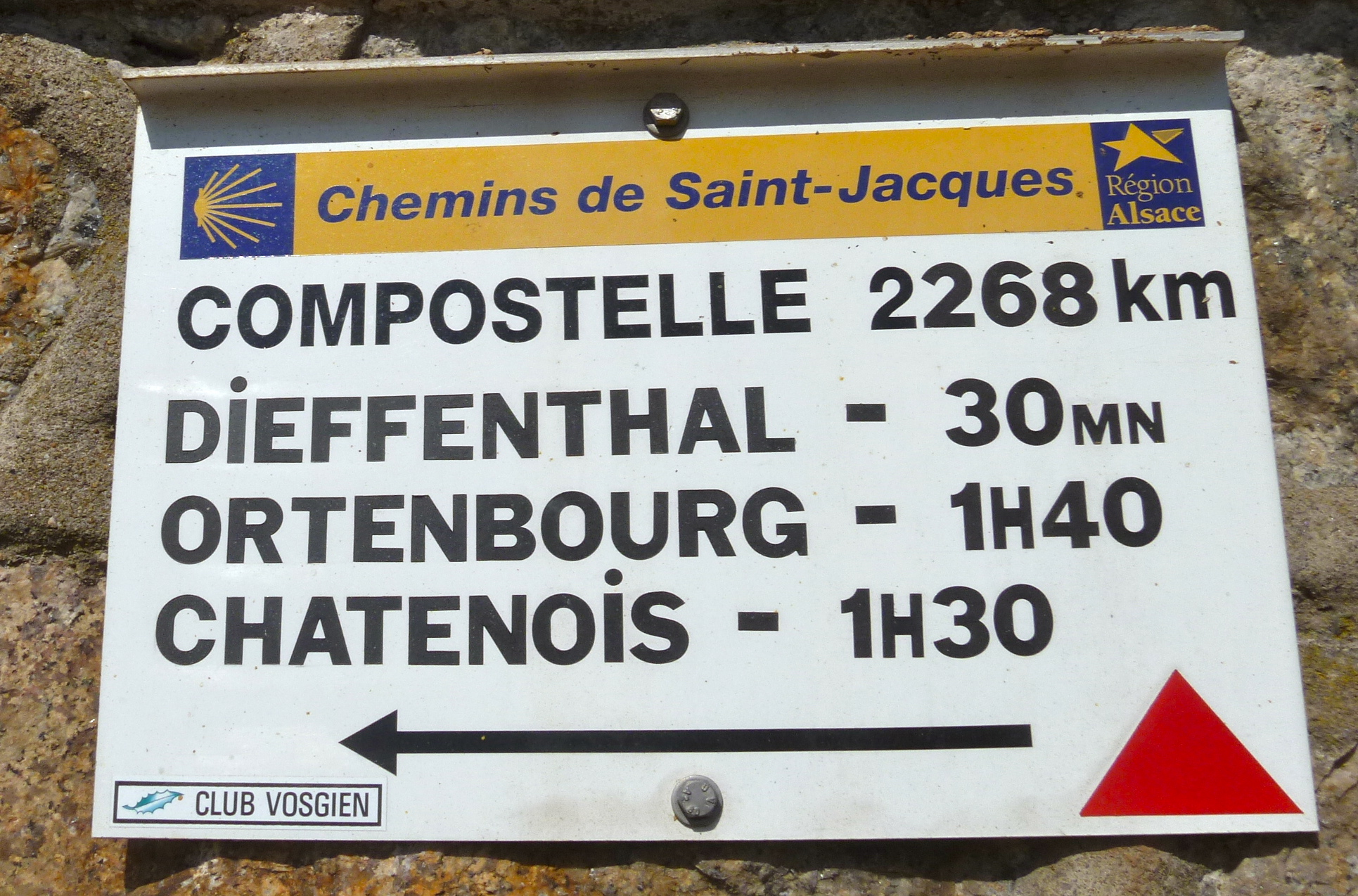
Our walk from Barr southwards to Kaysersberg covered about 38-39 miles. Sometimes we coincided with the famous pilgrim way of St Jacques de Compostelle. There seem to be many starting points to this major pilgrim route – I’ve seen another part of the route in Switzerland – but they all meet at  Santiago de Compostela in northwest Spain. The grooves of the traditional scallop shell sign indicate the paths all converging onto Santiago de Compostela.

Luckily we were walking via Dieffenthal and Chatenois to St Hippolyte

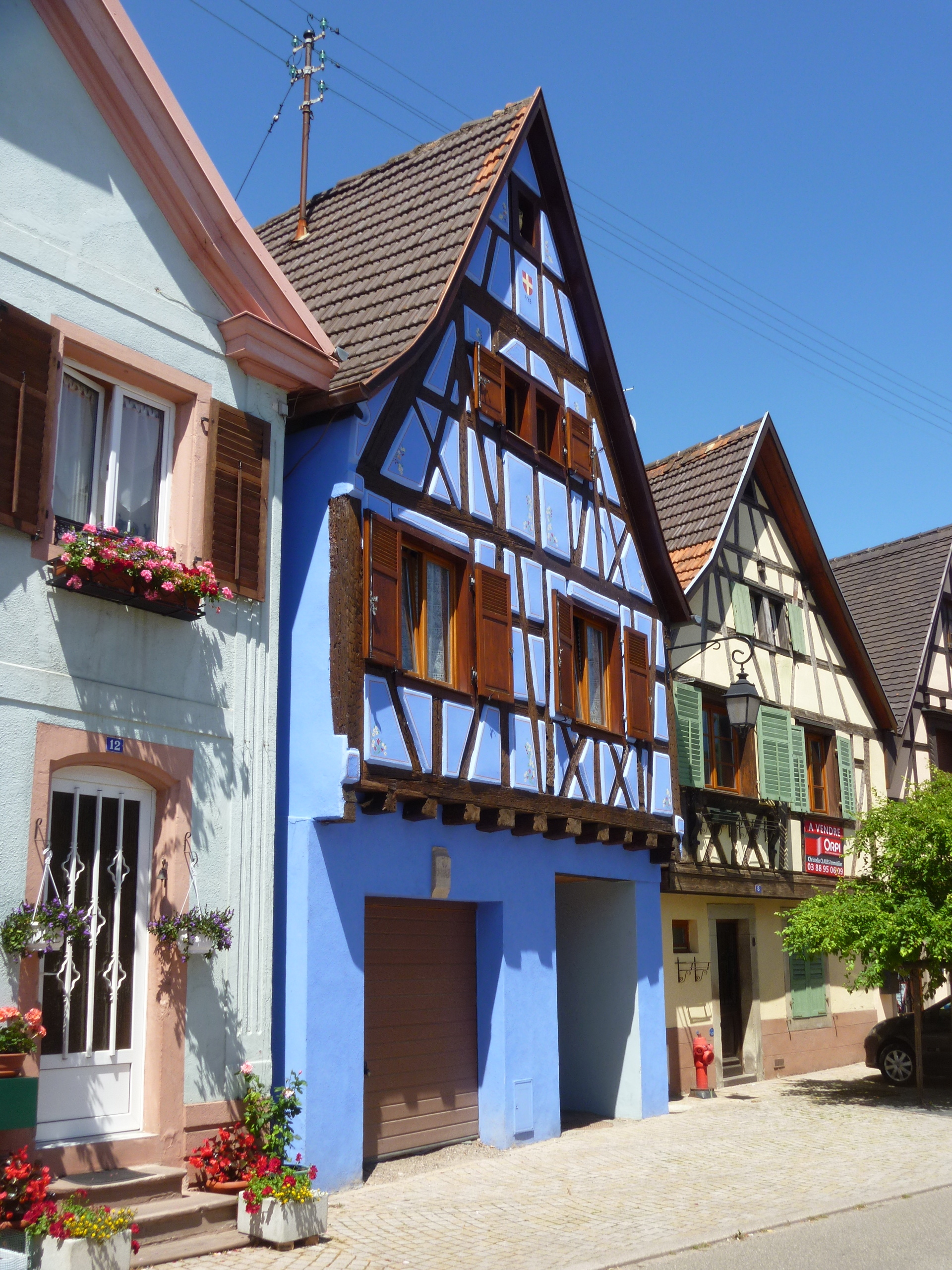
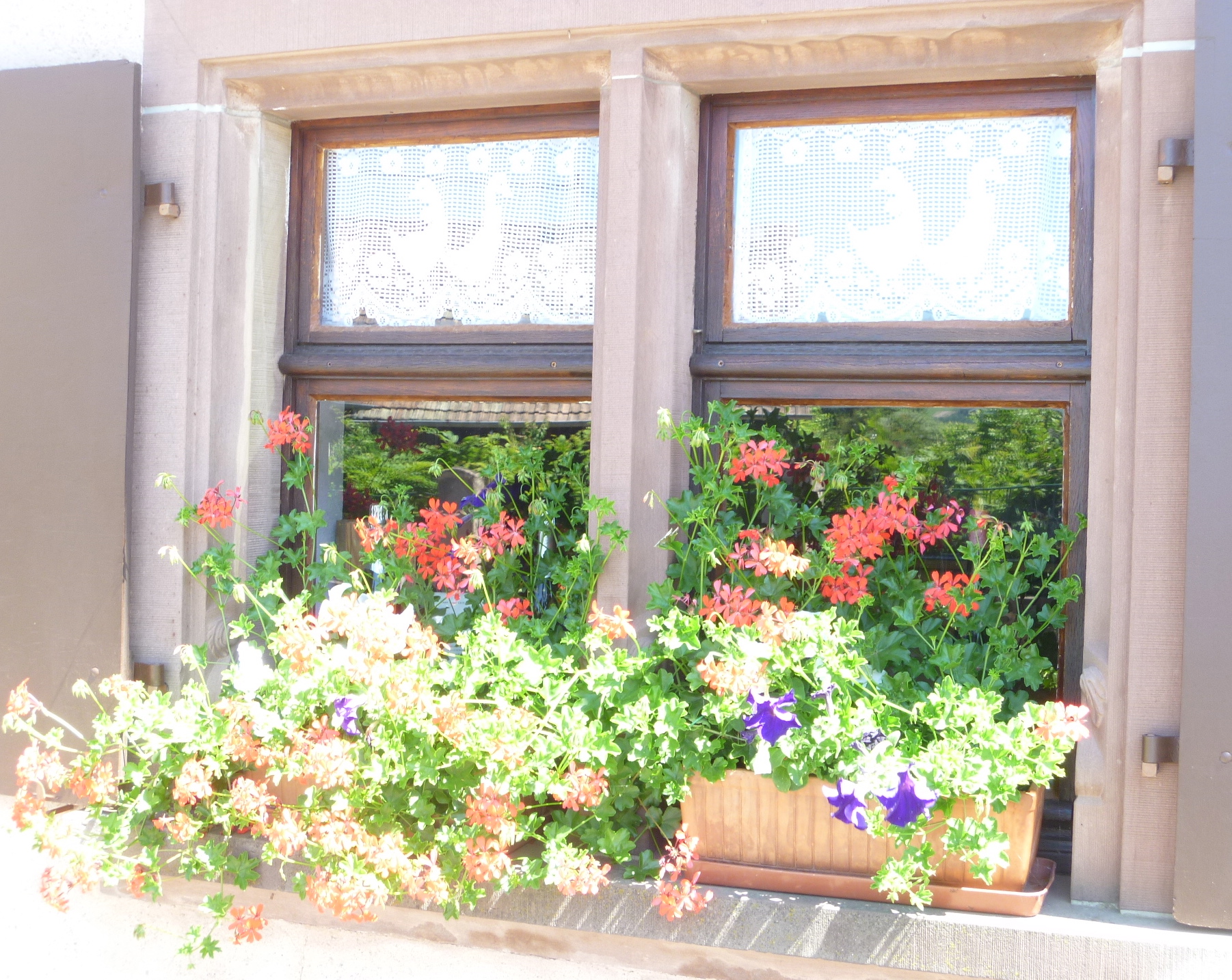
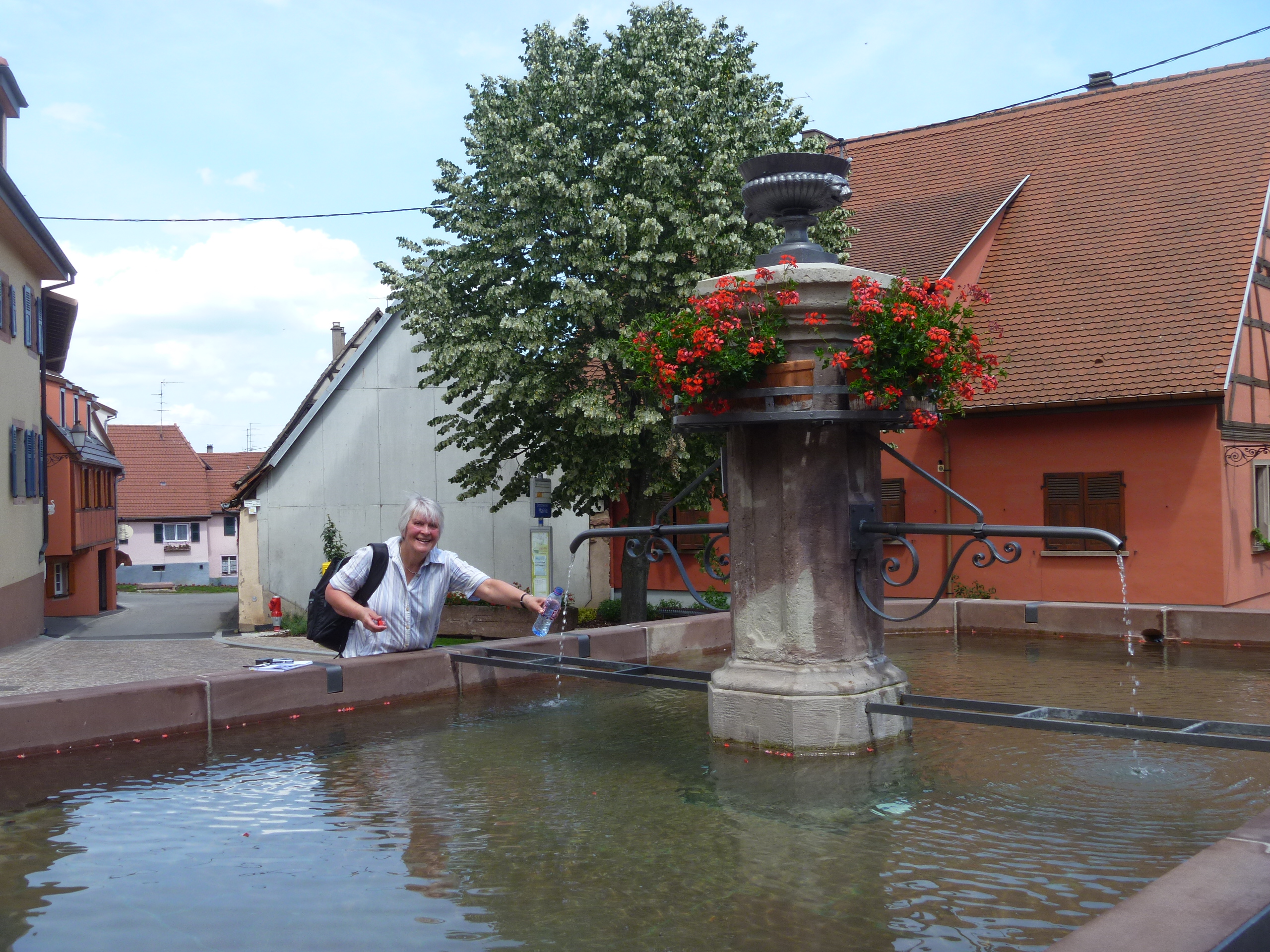
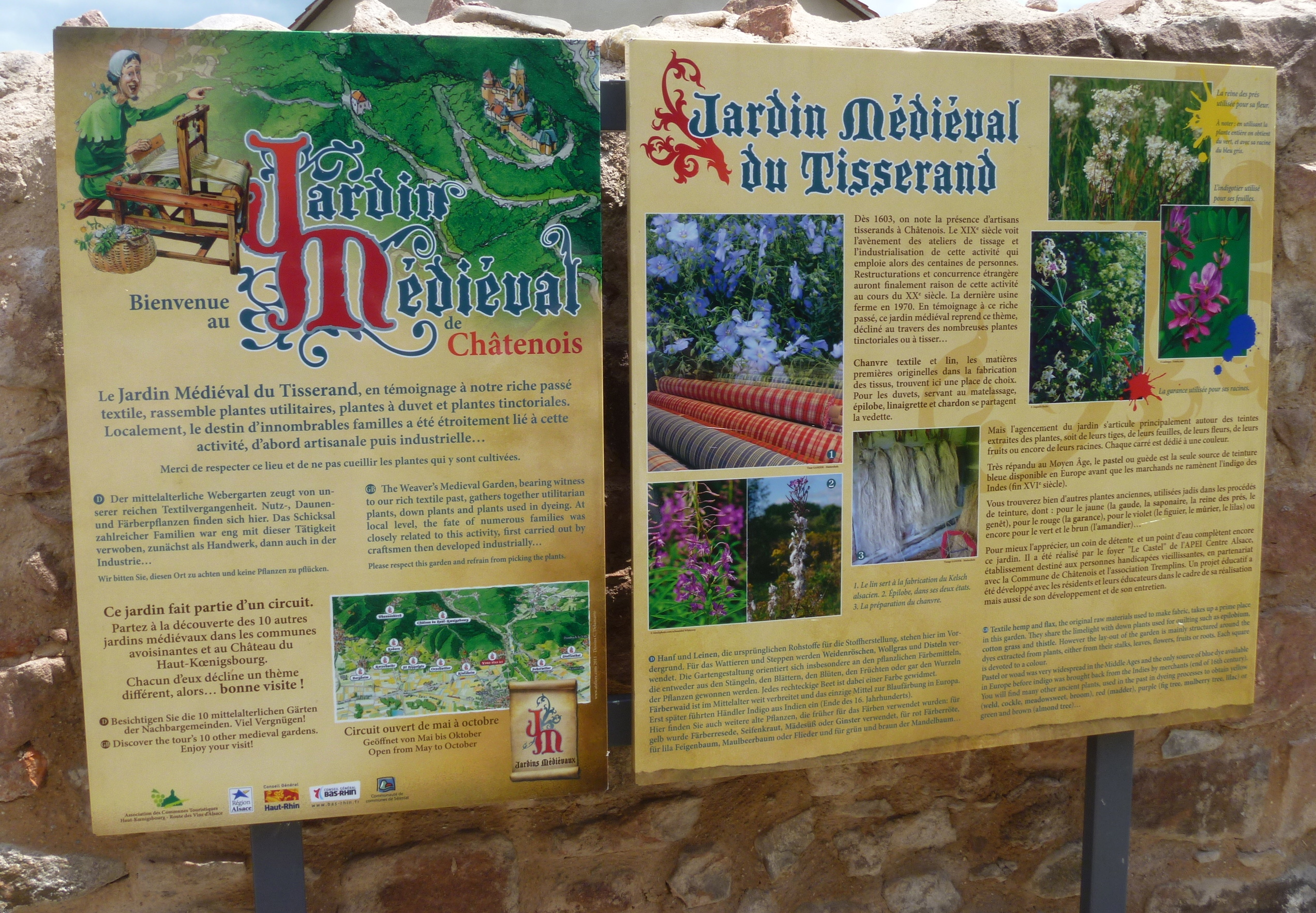
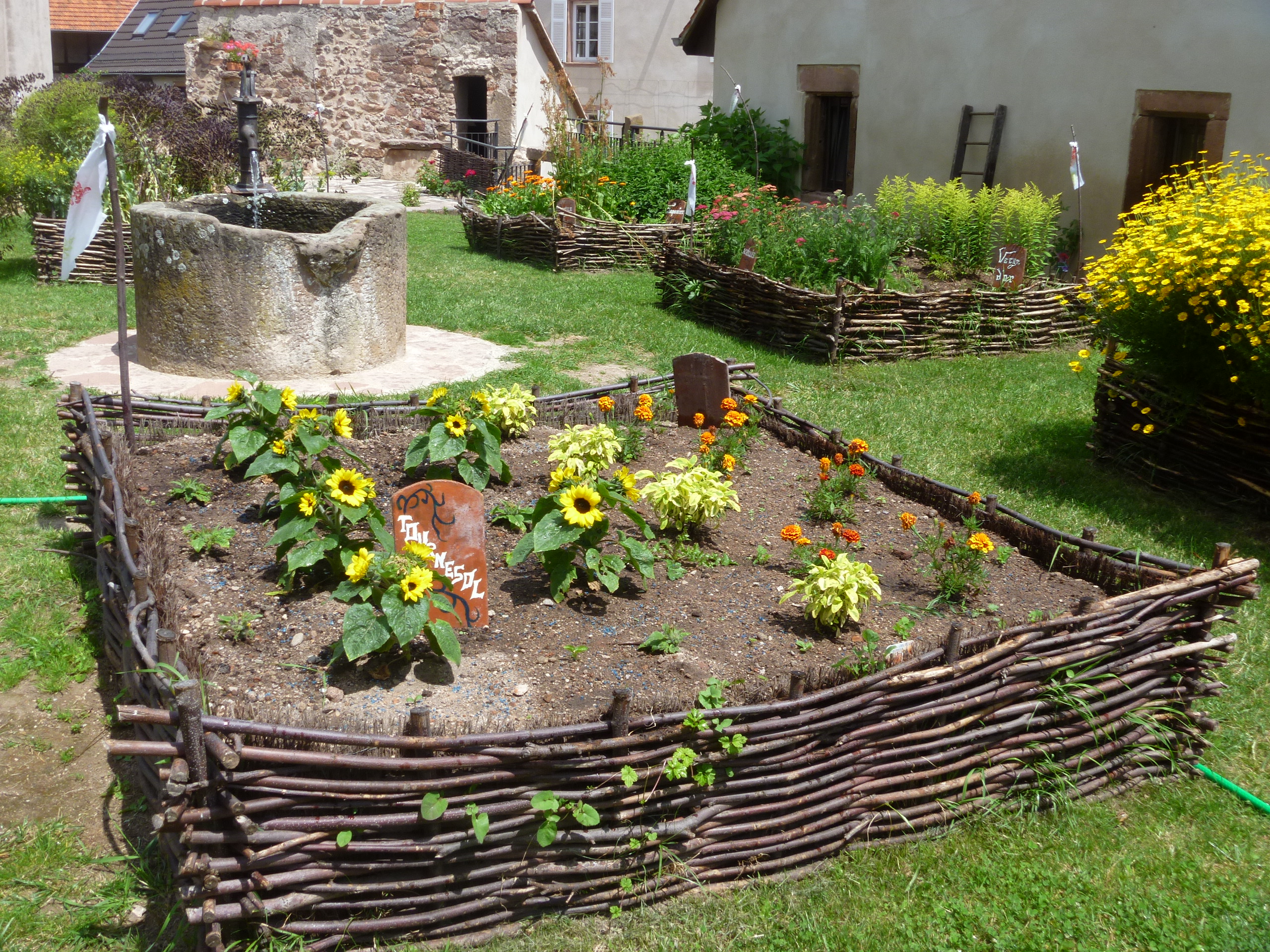
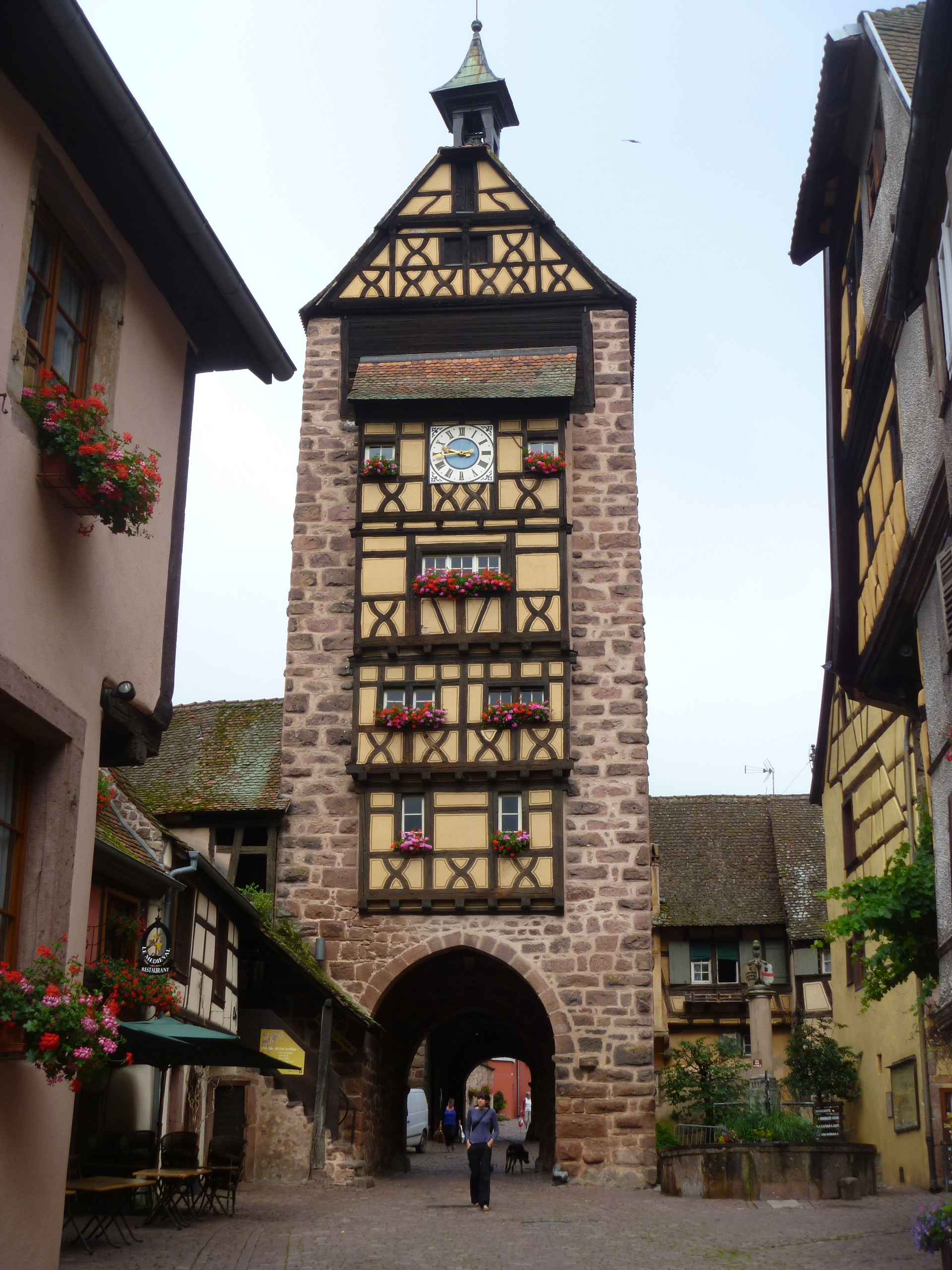
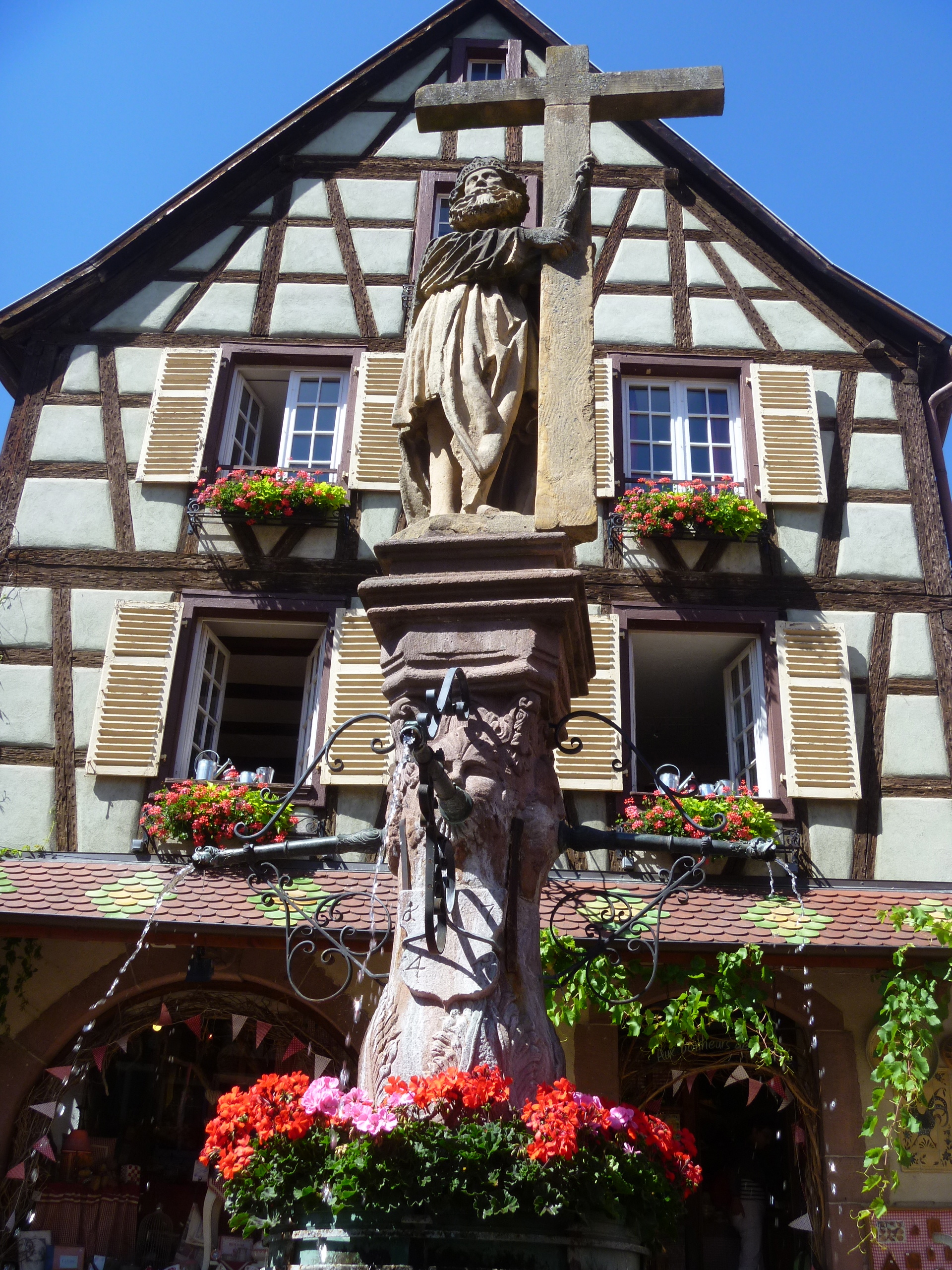
Each village or small town which we passed through was distinctive and yet they all had several aspects in common: the half-timbered buildings, often gaily painted with flower-bedecked windows; decorated fountains, some with drinkable water and others not; wine growing businesses offering tastings (degustations); distinctive towers, arches and gates and quite a few had revived old medieval gardens demonstrating herbs and other useful plants.

Colourful houses in Andlau

Window in the sunshine at Dieffenthal

Drinking water fountain at Orschwiller

Medieval Garden at Chatenois

Tower/Gateway at Riquewihr

Fountain at Kaysersberg

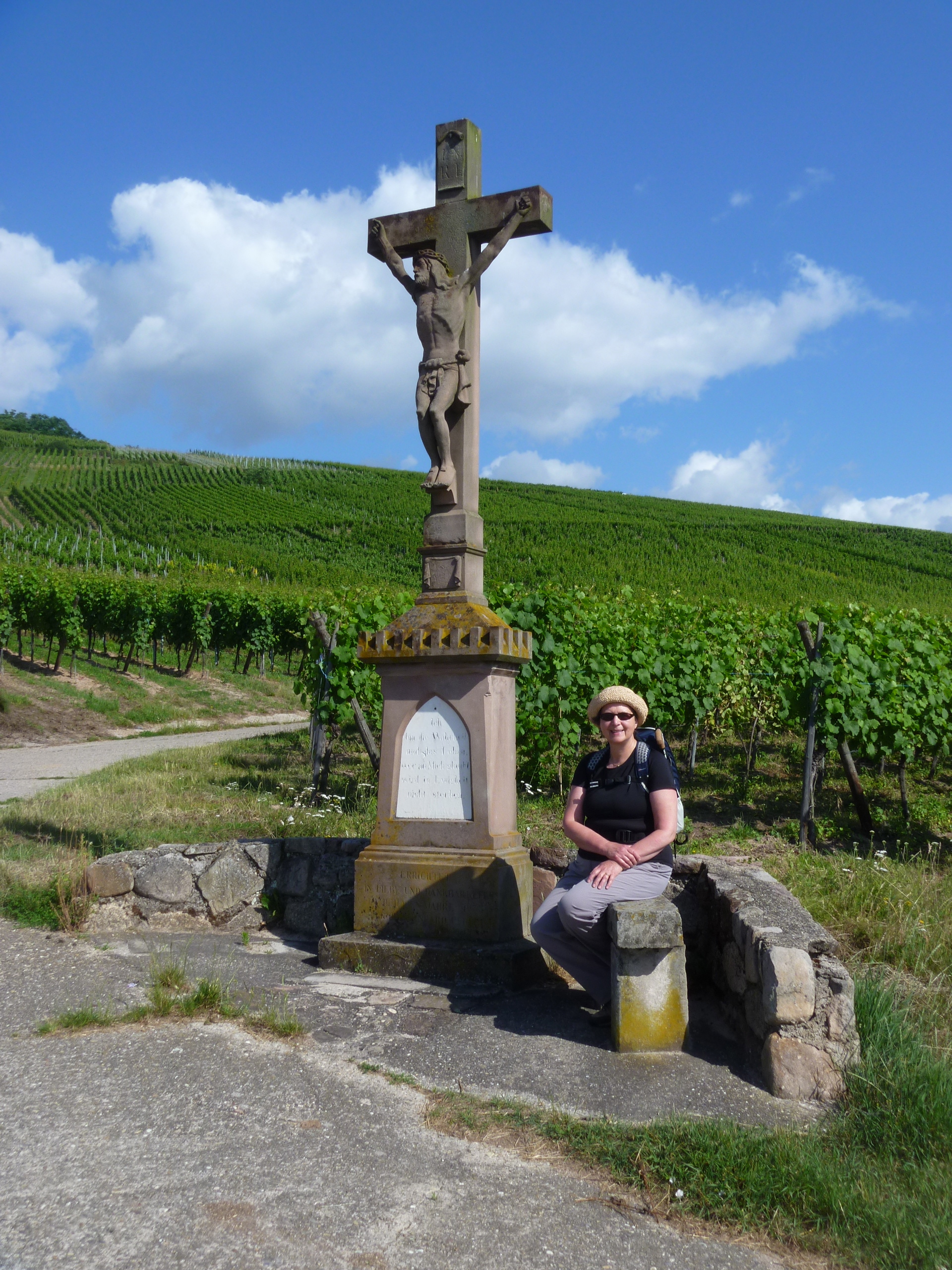
Between the villages many of the tracks were alongside fields planted full-to-bursting with grape vines – still in the very early stages of growth for this summer. These were tracks were dotted with stone crucifixes and roadside shrines which were often included in our directions.

The Route Booklet offered us a daily choice of routes – higher and therefore longer and more remote or lower and generally shorter and passing through small centres of population. Until the last day we chose the lower routes as we found the villages delightful and the tracks easier. Despite this we covered over 10 miles a day on the 2nd, 3rd and 4th days and we had great views across the Rhine Valley to the German Black Forest and the Swiss Alps. Above us on our right loomed the defensive castles and fortresses prominently located on higher ground above the valley.

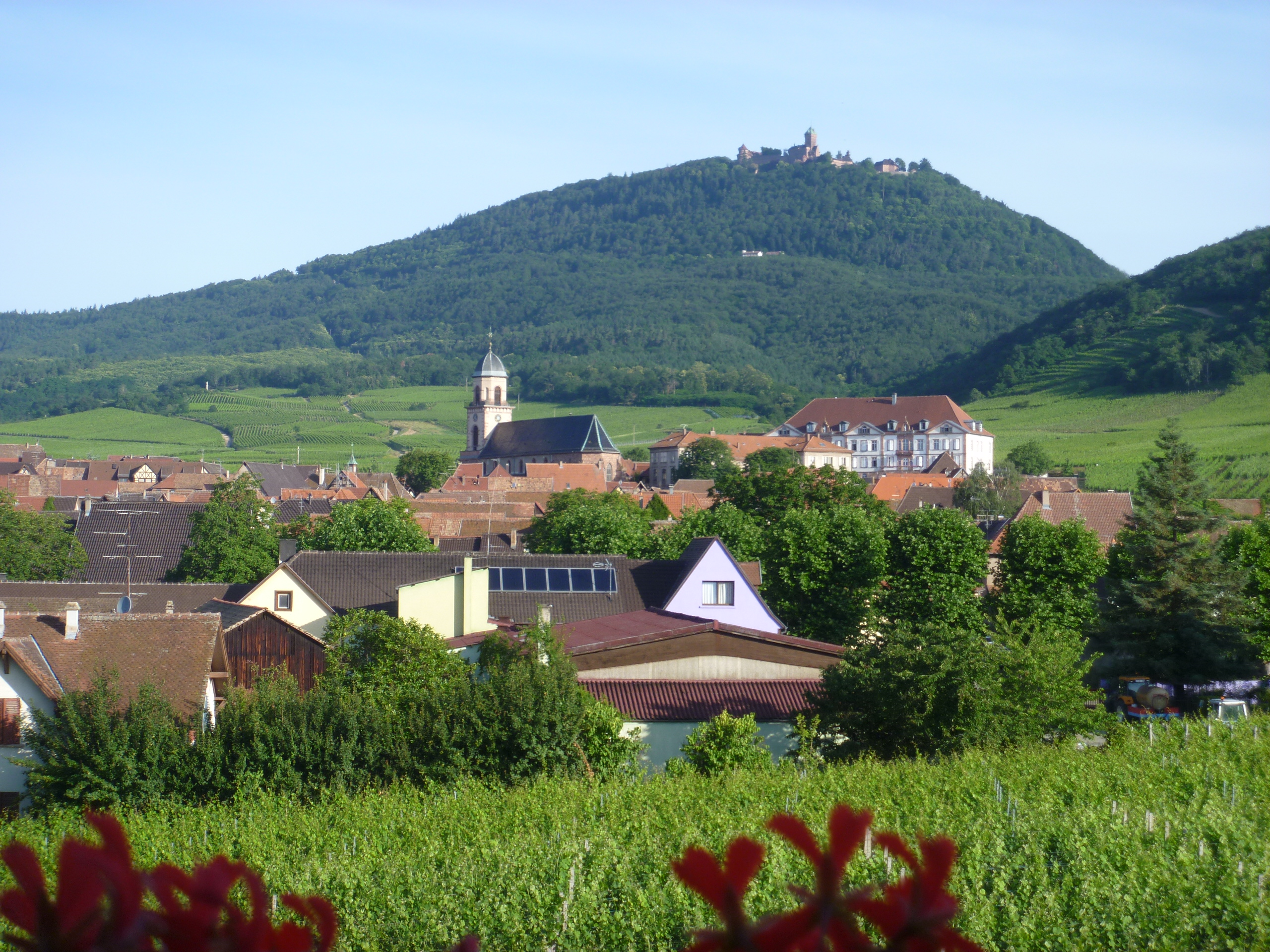
Haut Koenigsbourg Castle above St Hippolyte