In Praise of Nature and A Manifesto for Modernity : From Marie Antoinette to Le Corbusier

An architect friend of mine, following a trip to the Paris region last year, told me about his visit to the Villa Savoye (as the villa “Les Heures Claires” is best known) in Poissy, Ile de France.
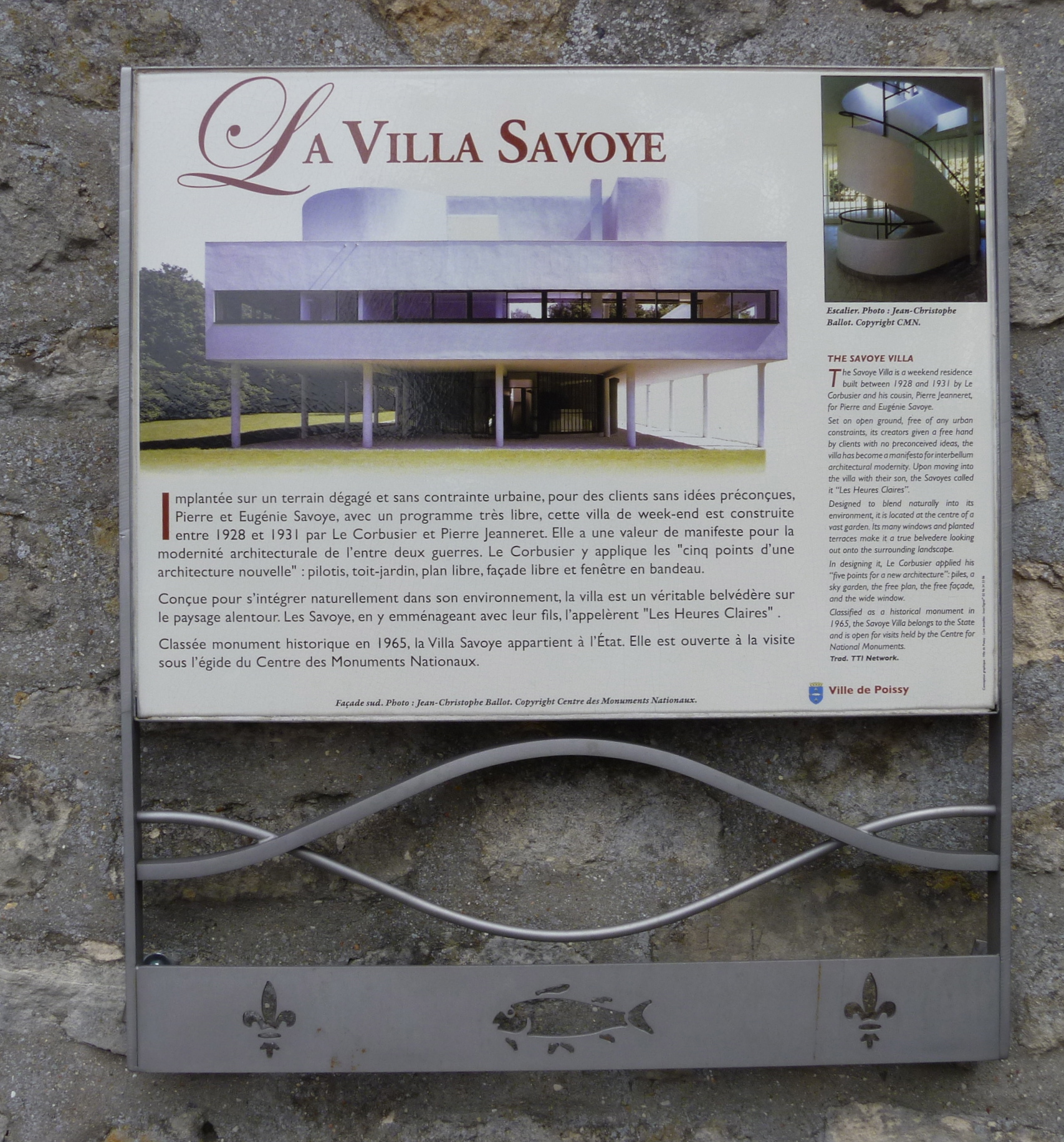
Upon investigation I discovered the existence of (roughly) the French equivalent of English Heritage – Centre des Monuments Nationaux – of which the Villa S is one. Further searching of the CMN website revealed a) that Poissy is directly on our favoured route between Gif sur Yvette and Le Shuttle and b) there were other CMN sites “worth a detour” within easy reach of Gif itself.

Rambouillet
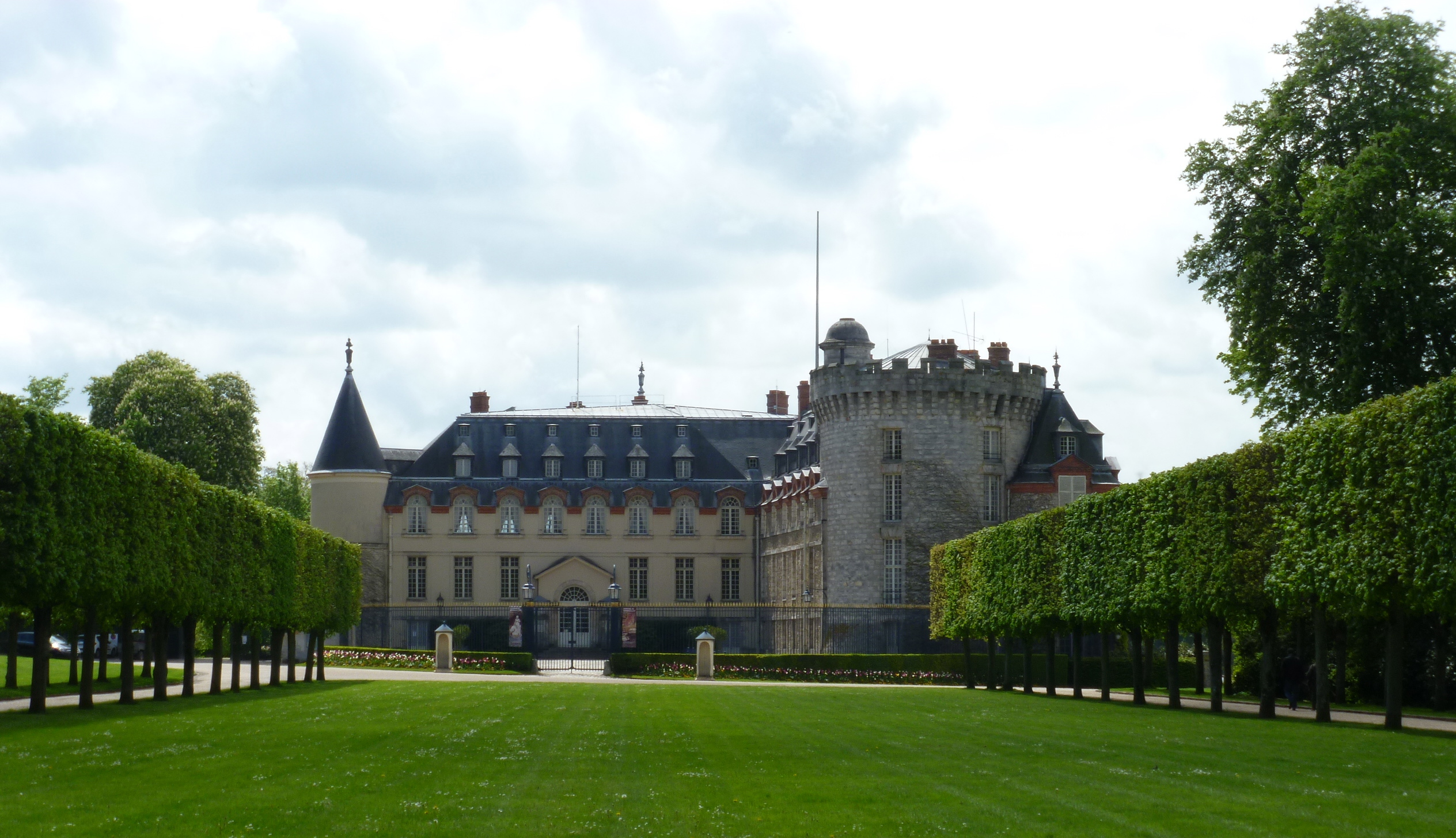
The Queen’s Dairy [Laiterie de la Reine] and the Shell Cottage [La Chaumiere aux Coquillages] are both follies within the vast park surrounding the Chateau of Rambouillet, a mere 30 minutes drive away. It’s a charming town, dominated by the Castle and with a large church on a hill. Like all other French towns it is pretty much shut down on Monday mornings. Of course, I missed the morning tours so bought a ticket for the 2pm show. We bought foodstuffs for a picnic in the Chateau grounds from the Carrefour Express (only food shop open in town) and headed towards the follies to be sure not to miss the guided tour. The Chateau itself is the Official Residence of the President of France and is also open to the public but it was the follies that I most wished to see and enjoy the sunshine whilst it lasted.
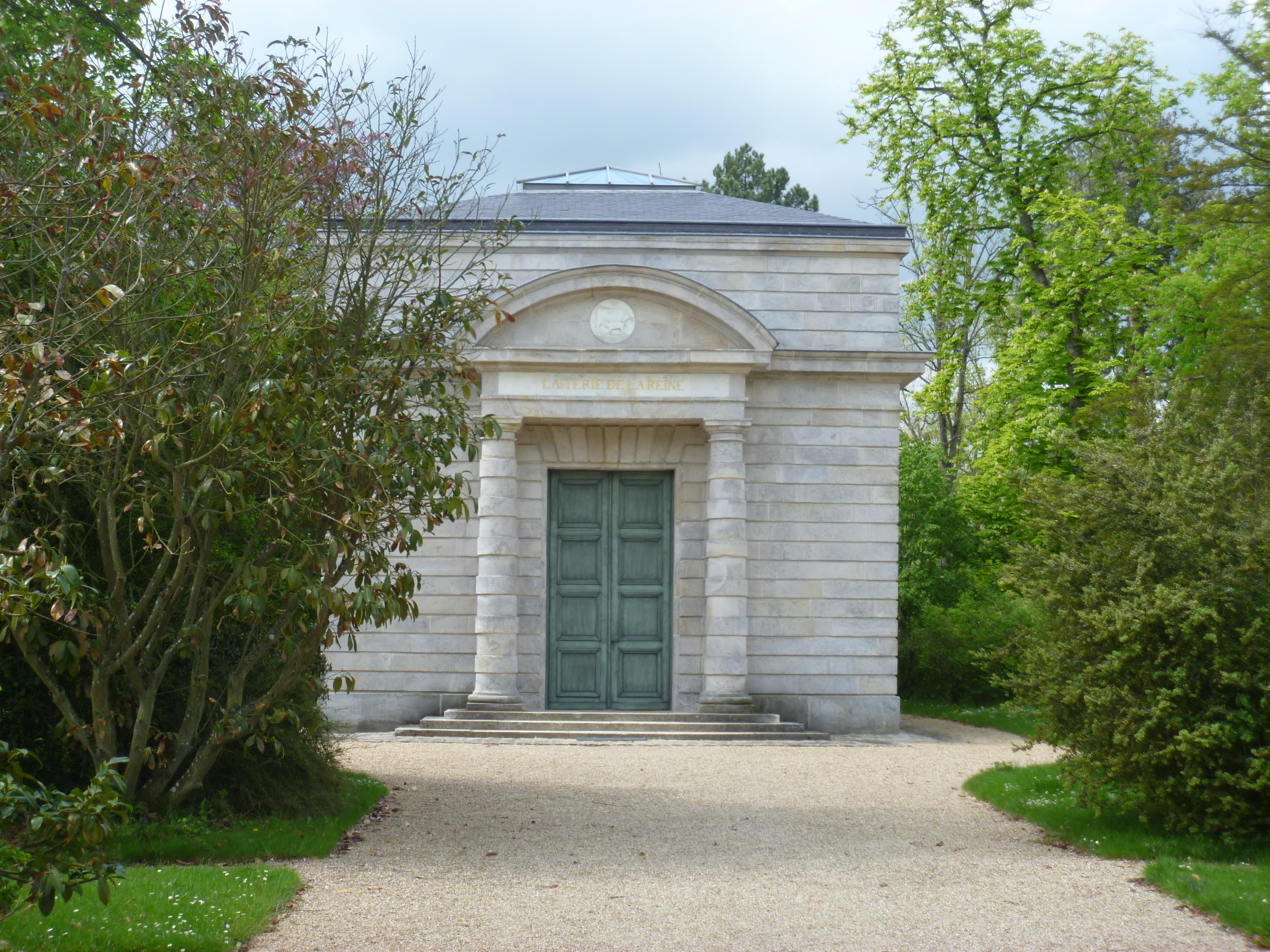
The Queen’s Dairy was built for Queen Marie Antoinette by her husband Louis XVI. It’s a plain building from the outside but once inside you are in a vast rotunda where the tasting took place – all veined marble, sandstone walls and a grey and white floor to give a milky atmosphere.
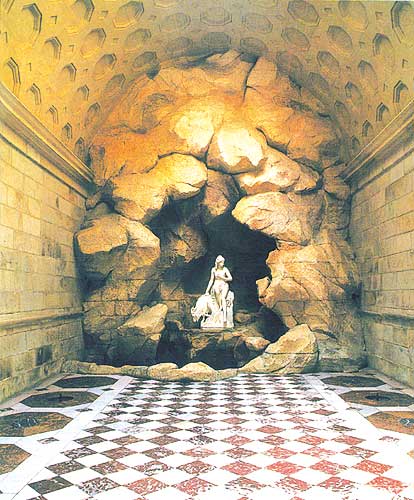
http://www.rambouillet-tourisme.fr/decouvrir/photos-rambouillet/laiterie-de-la-reine.htm

Beyond the rotunda is the cooling room (above) at the back of which is a grotto containing the figure of Jupiter as a child suckling Amalthea’s nanny-goat. There are various other roundels and friezes depicting mythological creatures and characters. Apparently after the French Revolution these ended up in England and were only finally restored to their original location just a few years ago in 2009.
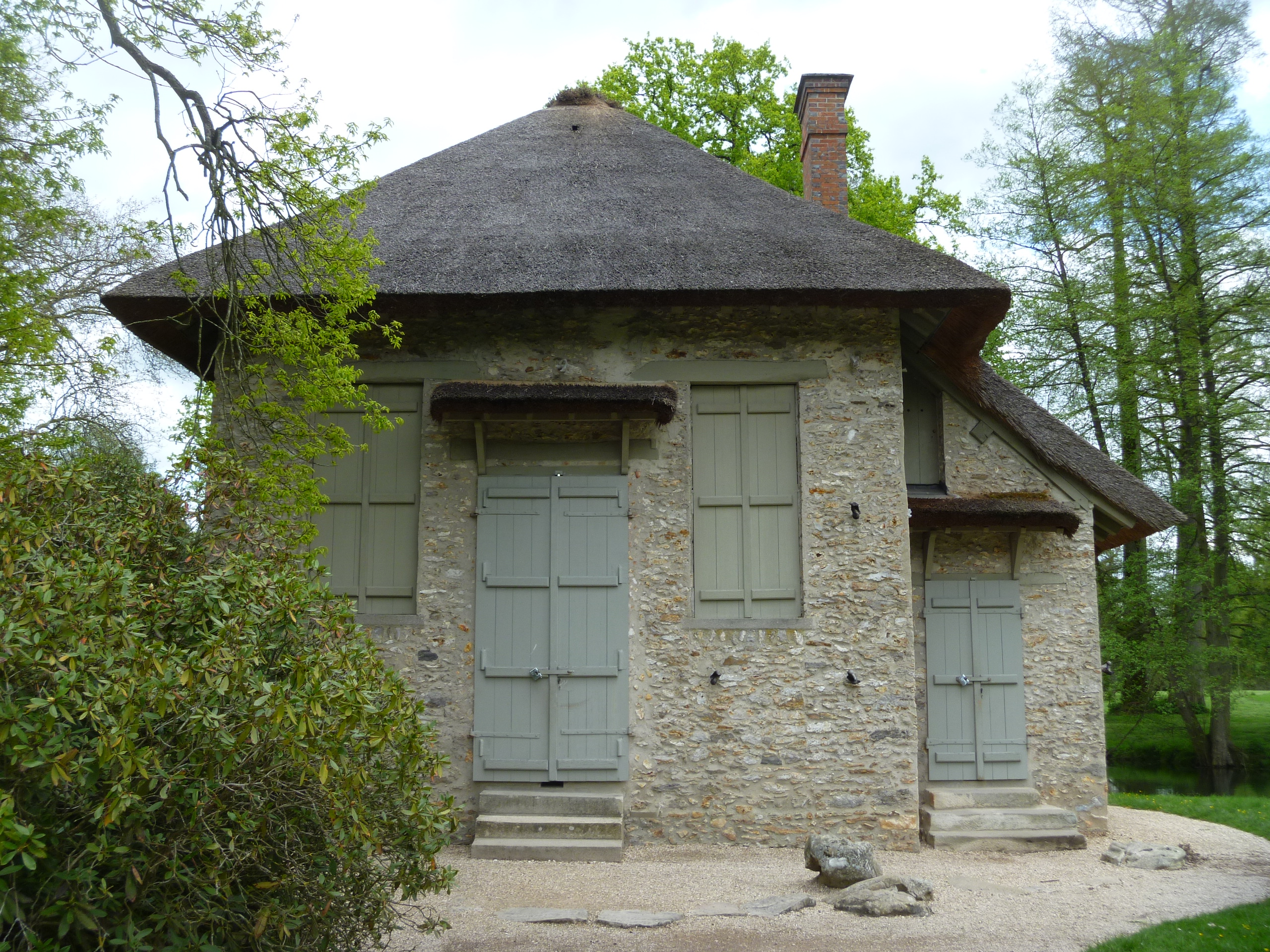
The Shell Cottage in another part of the grounds is equally breathtaking. It has a thatched roof and ox bones built into the walls. It’s a copy of a late 18th century rural building but inside is an amazing shell-decorated room with original furniture and fireplaces. Of course, no photography is allowed which is even more of a shame as the postcards definitely did not show the interiors to the best advantage. The guided tours are in French which would be OK but the guide spoke at break-neck speed it was hard to follow everything he said.

Poissy

I would like to say that it was like going from the sublime to the ridiculous going from Rambouillet one day to Poissy the next but there is nothing ridiculous about the Villa Savoye. It is an amazing visionary building so far ahead of its time. I just felt that it was so sad that it did not have the care and attention devoted to it as had the Rambouillet properties.

Built between 1928 and 1931 by the Swiss architect Le Corbusier “this ‘box in the air’ was the culmination of the architect’s formal research and implementation of The Five Points of New Architecture”.  Briefly these points are :
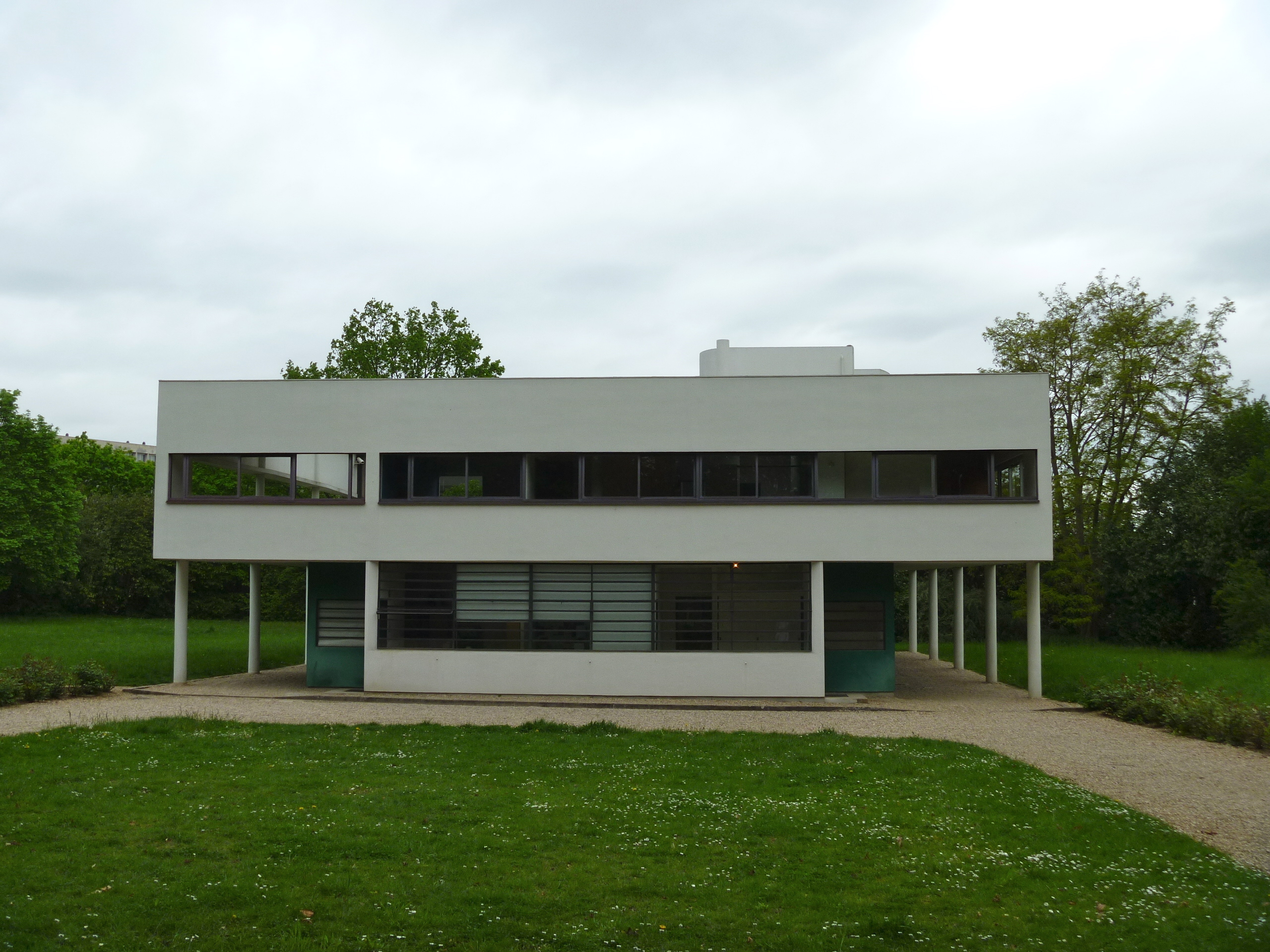
Stilts  – by using stilts he built his ‘box in the air’ as if just sitting on the grass
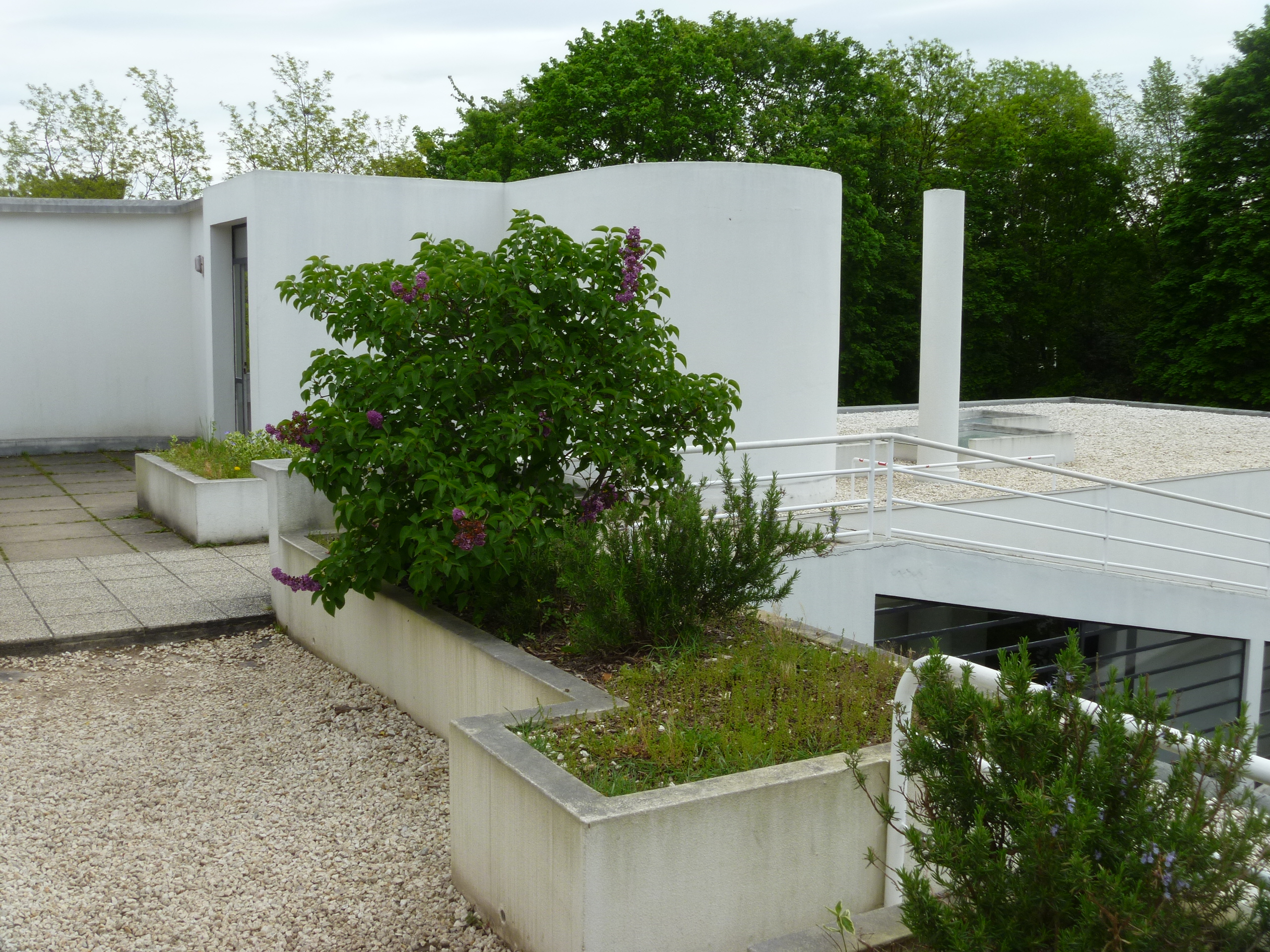
Roof Gardens – the flat roof is a usable terrace and flowers may be planted
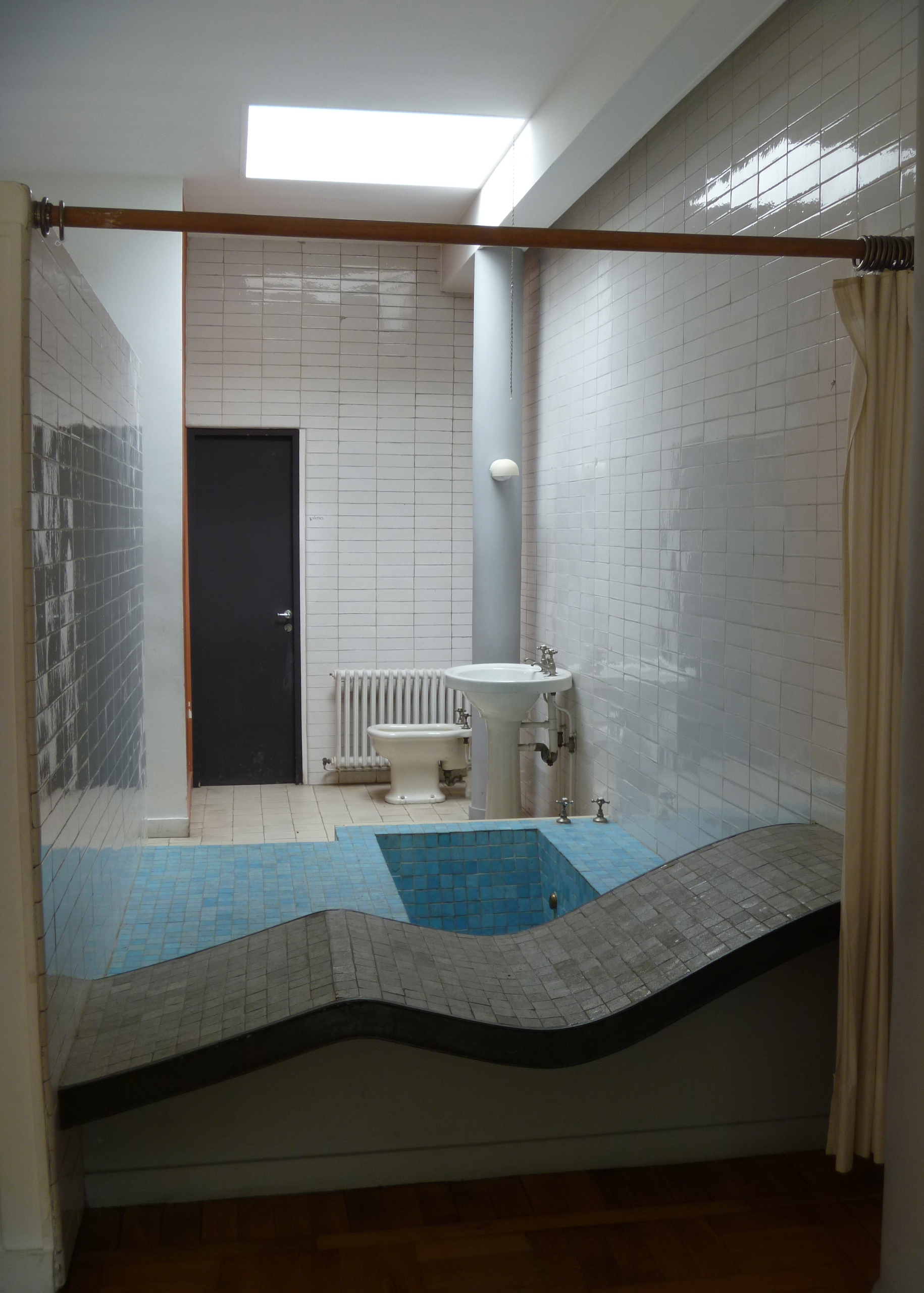
Open-plan – reinforced concrete frees the interior of load-bearing and separating walls. Light partitions are sufficient to separate the different areas
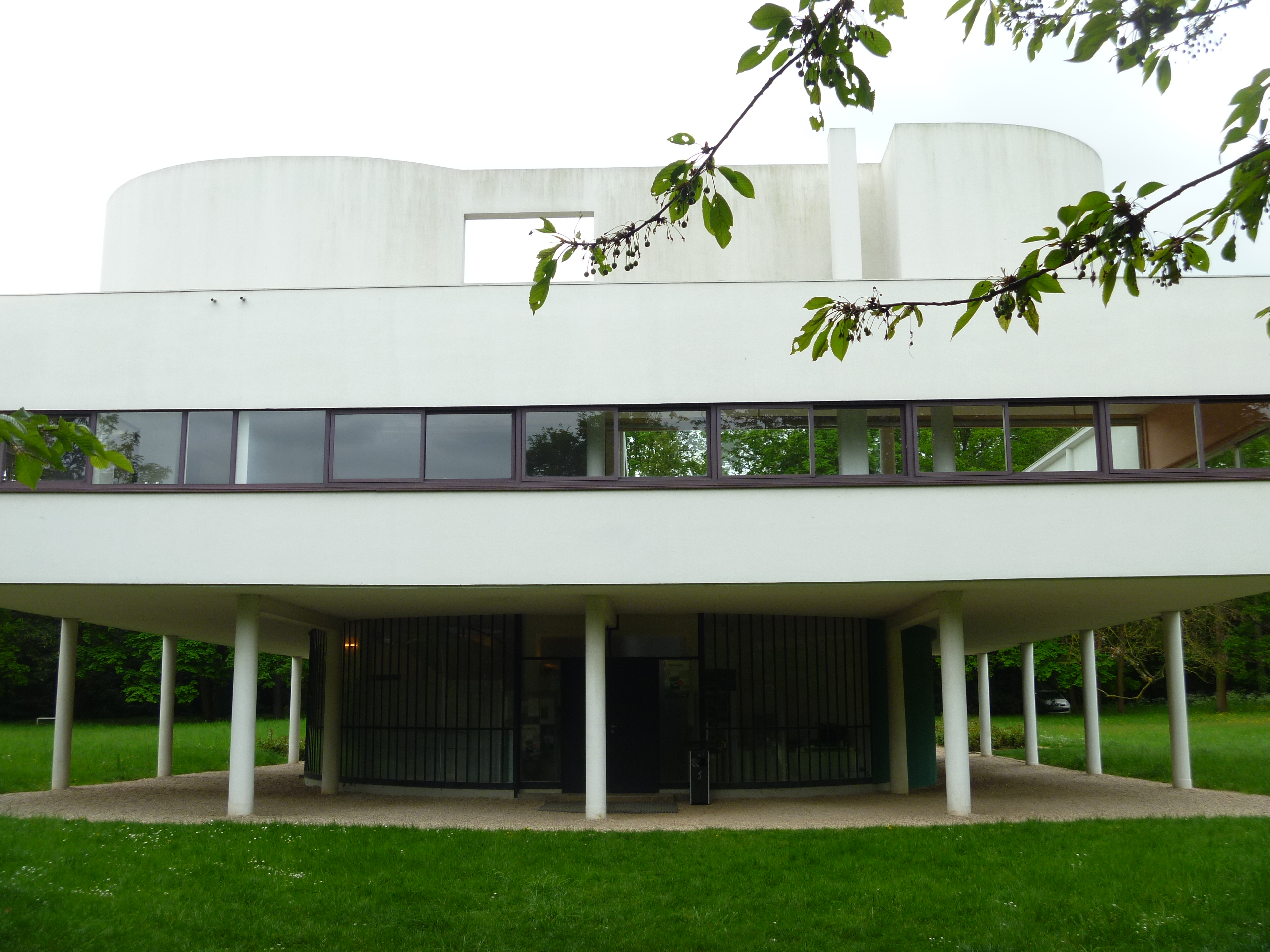
Free-floating facade – the facades are free of the load-bearing structure, and placed freely on the stilts.

Horizontal window – the non-load-bearing facades can have long windows creating light and airy interiors. (See the exterior pictures above)
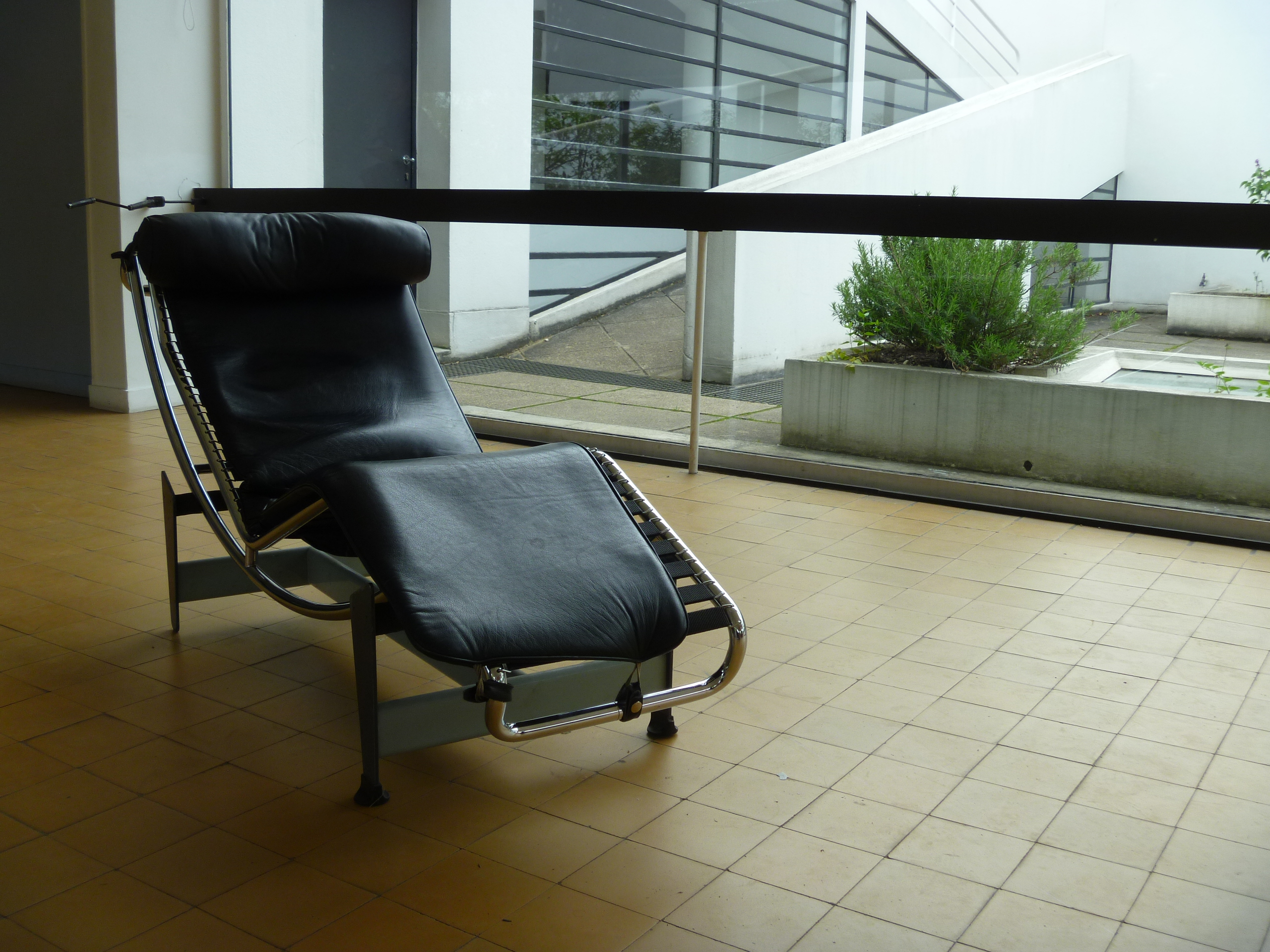
Corbusier Chaise Longue
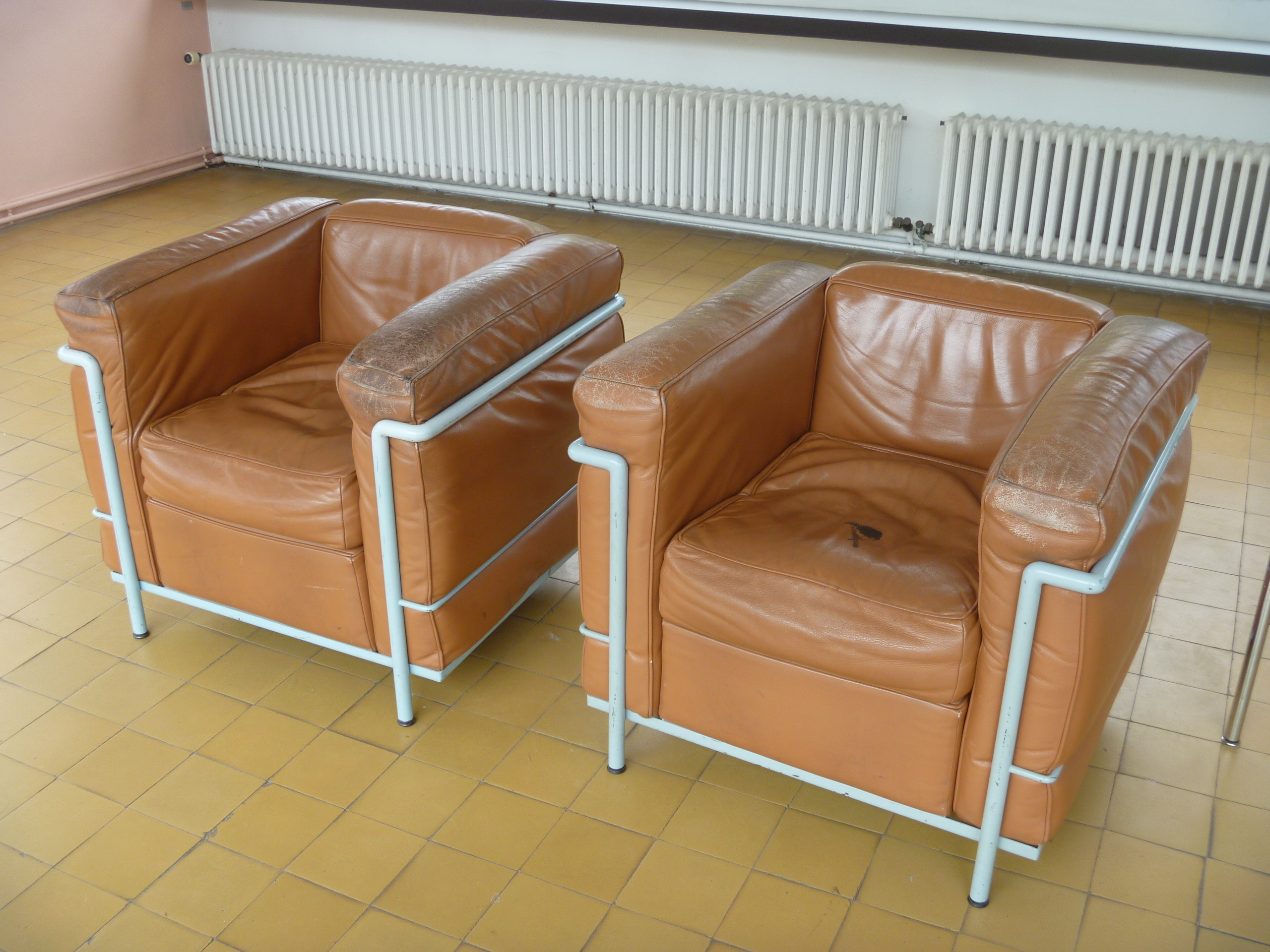
Le Grand Confort Armchair
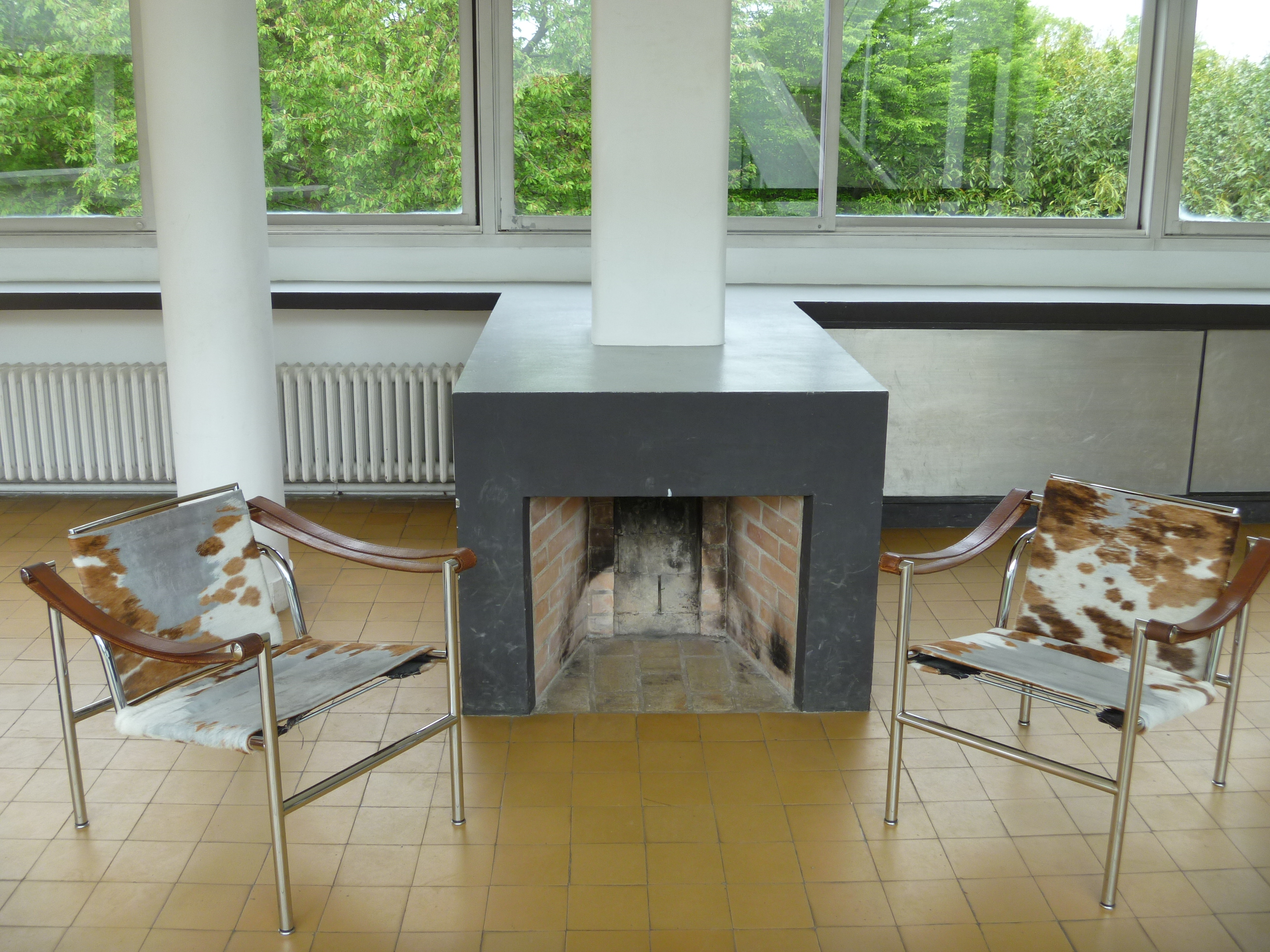
Pony Hide Lounge Chairs

To be said in its favour it was possible to tour the building in your own time, take photos at will, sit in the various architect-designed chairs and generally please yourself!
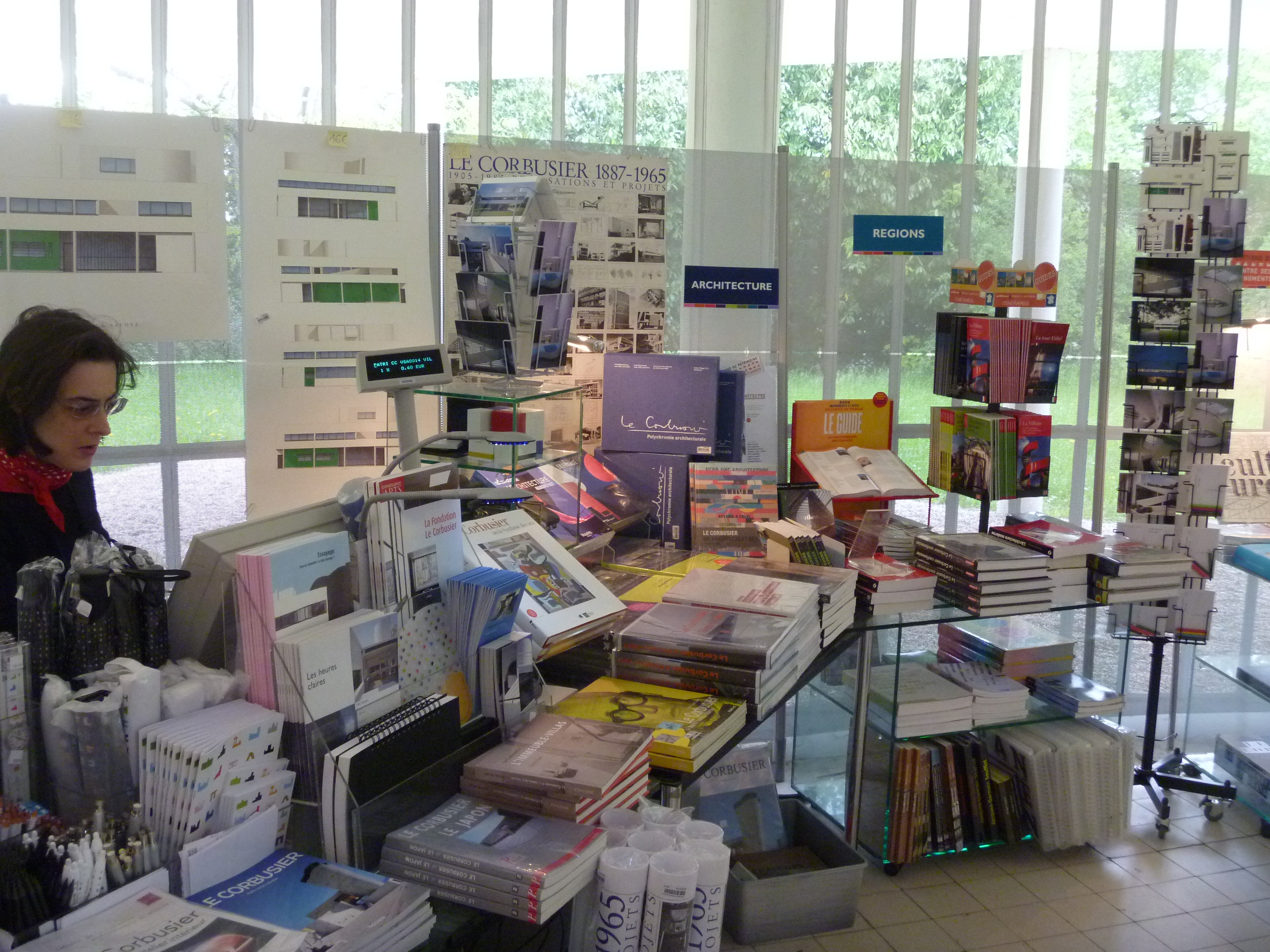
Also there was an excellent bookshop – much better than the one at Rambouillet.

Good Things in Ghent : Music, Art and Good Company

I have been in the Low Countries for a few days and in particular in Ghent and in Amsterdam. As mentioned in a previous post here I have a lovely set of friends made through my online Reading Group. One happens to live in Brussels just now and another found herself travelling to Belgium with her choir. At just the same time I had a couple of spare days before a long-planned trip to Amsterdam. So what could be easier and more enjoyable than to bring forward my flight, book a train from Schiphol to Brussels and spend a day with these two friends? A kind invitation to stay in Brussels proved impossible to resist and thus I found myself last Wednesday in both rain and shine in the interesting city of Ghent.

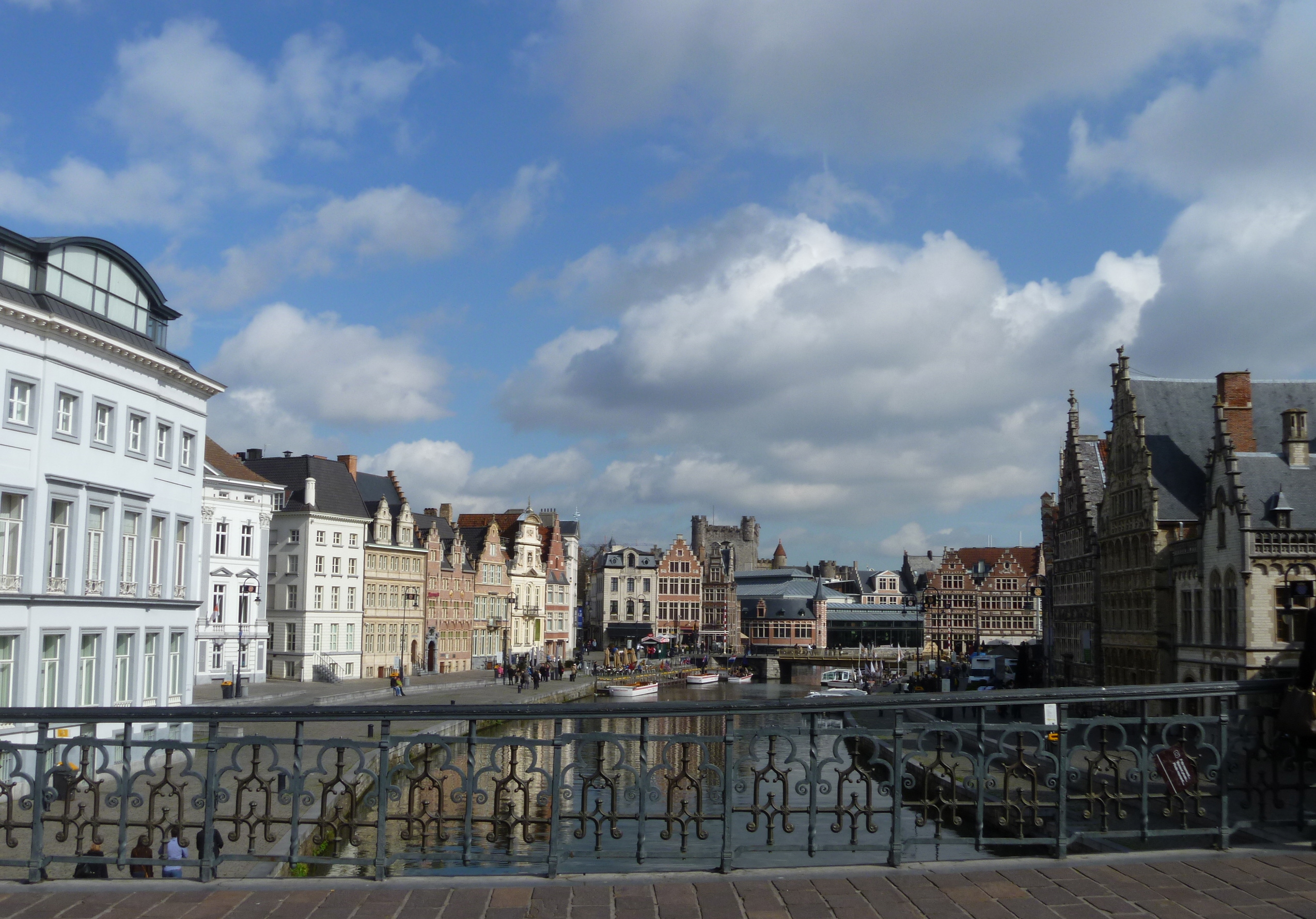
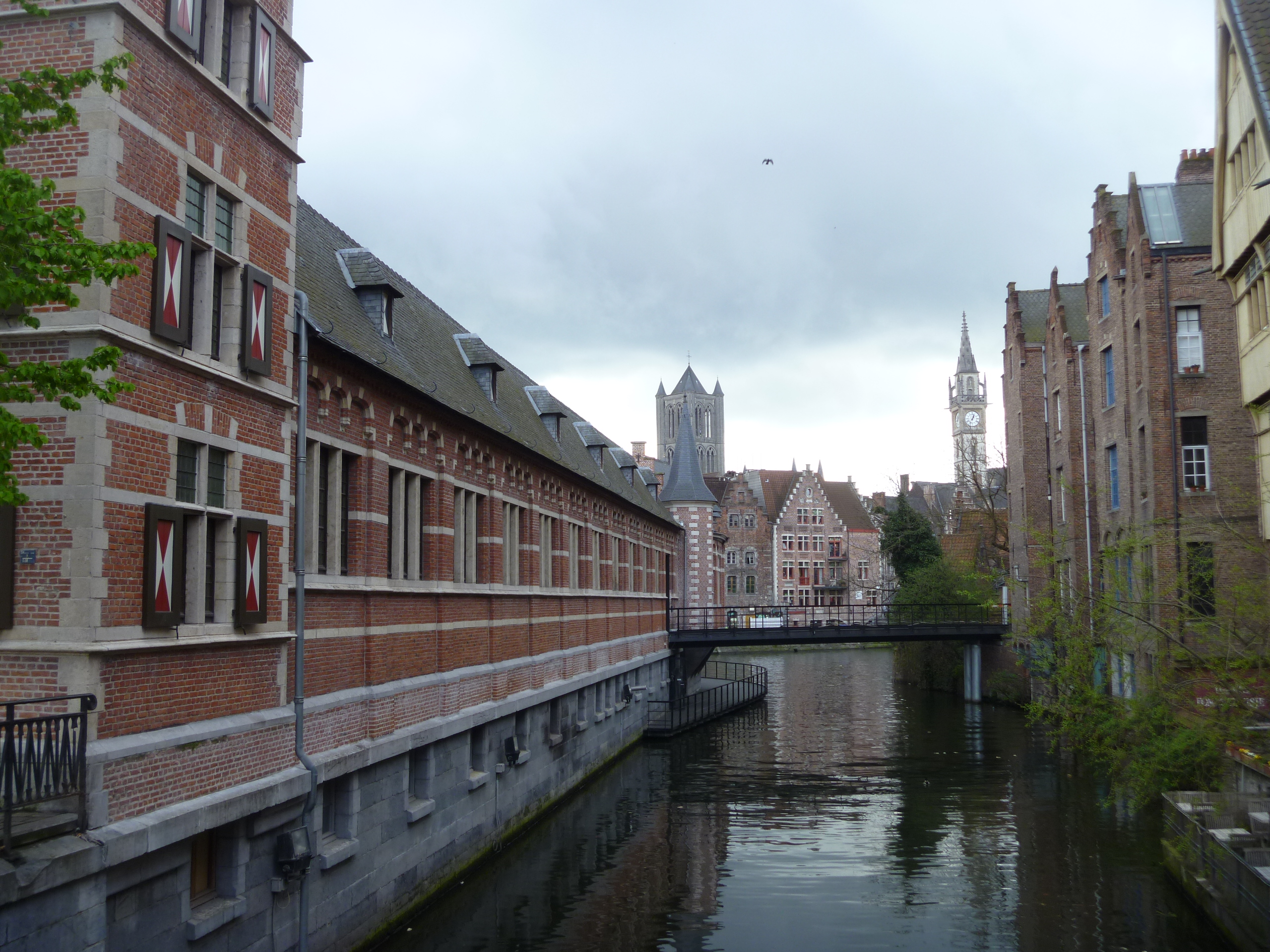
There was much chatter, some eating and drinking and quite a lot of walking during the day. Ghent has some lovely old buildings especially those Guild houses overlooking the canals and some huge churches.

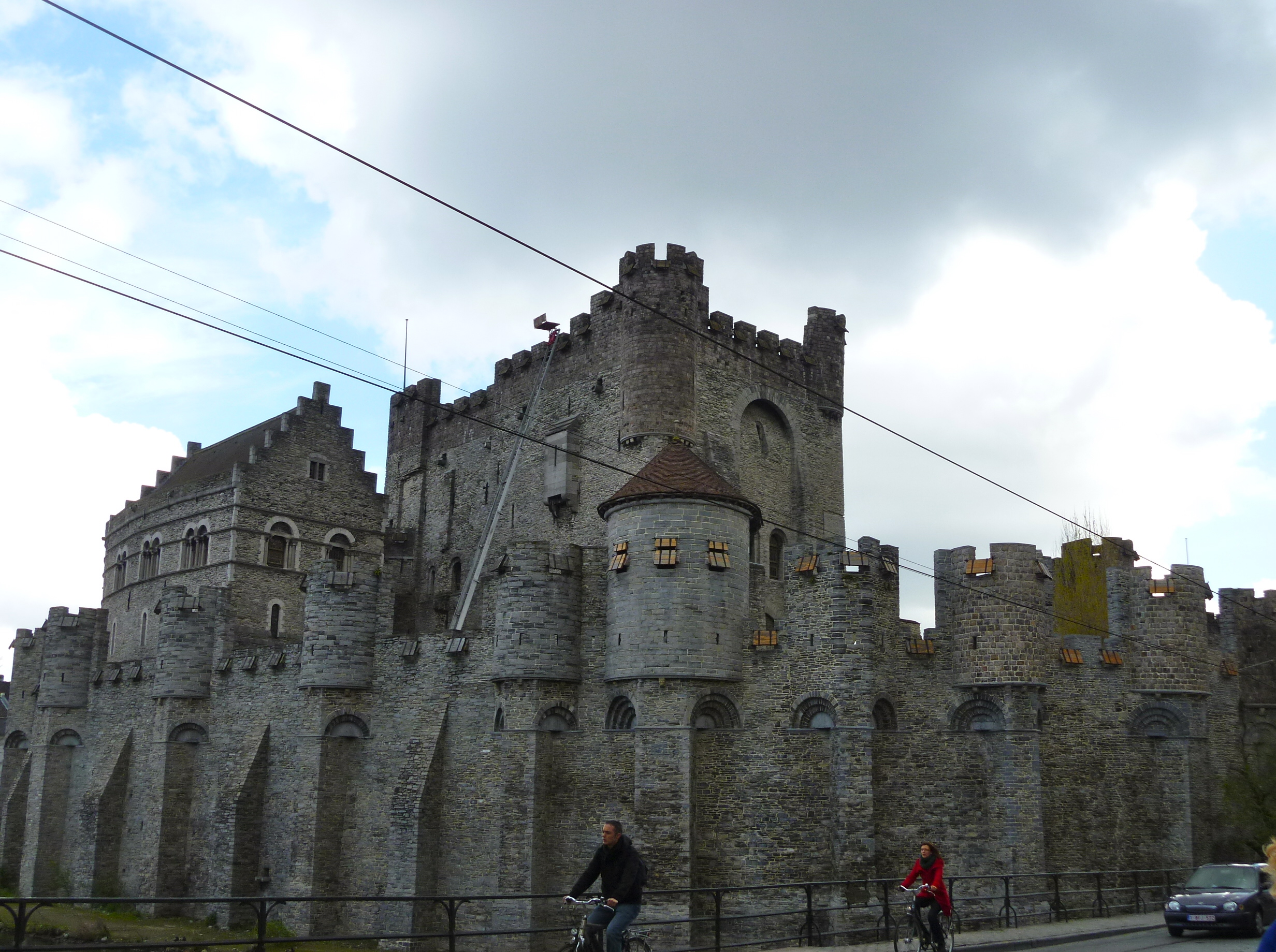
Het Gravensteen Castle, Ghent

The two highlights were a visit to St Baafs Cathedral, where we spent over half an hour inspecting Jan Van Eyck’s “The Adoration of the Mystic Lamb” in the Baptistry. The amazingly vivid colours are only a part of this exquisite multi-panelled treasure of Ghent. Included in the entry price is an excellent audio-guide explaining not only the symbols, characters and settings represented in the painting but also its fascinating history. One panel was actually stolen on the night of 10/11 April 1934. That panel has never been recovered. It is quite remarkable that this huge and complex altar piece has survived until today. Read more about it here.

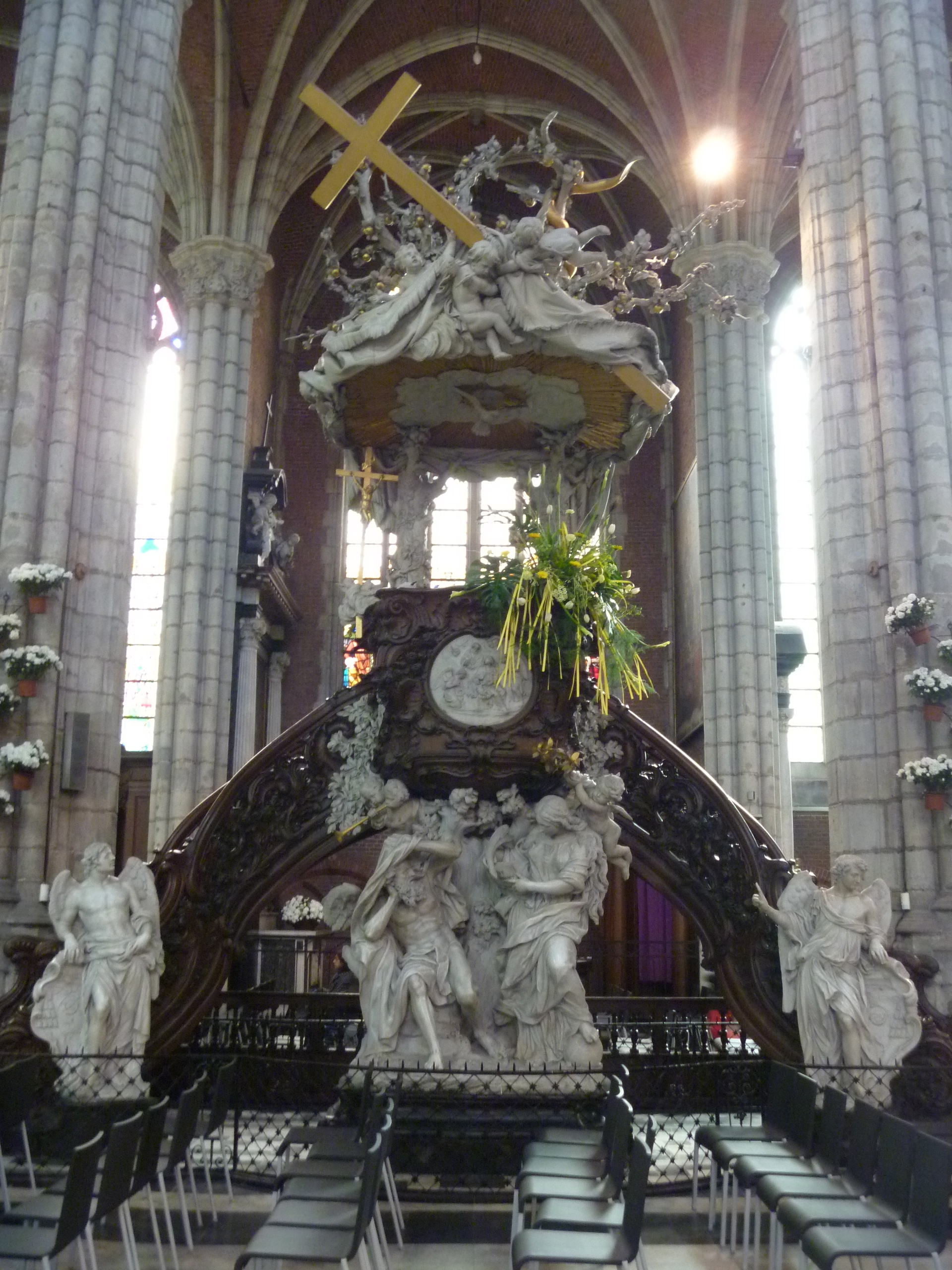
The Baroque Pulpit in St Baaf’s Cathedral

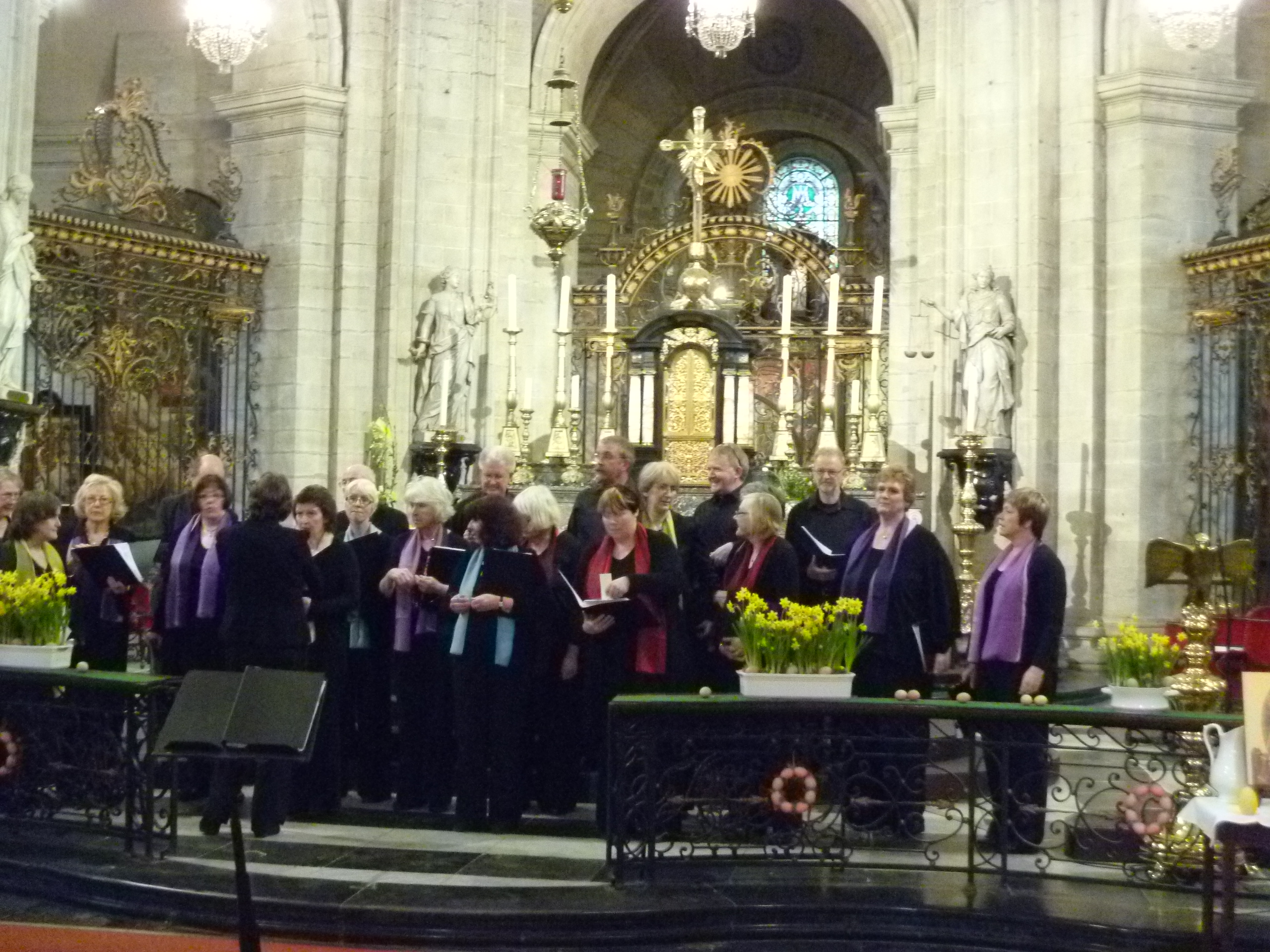
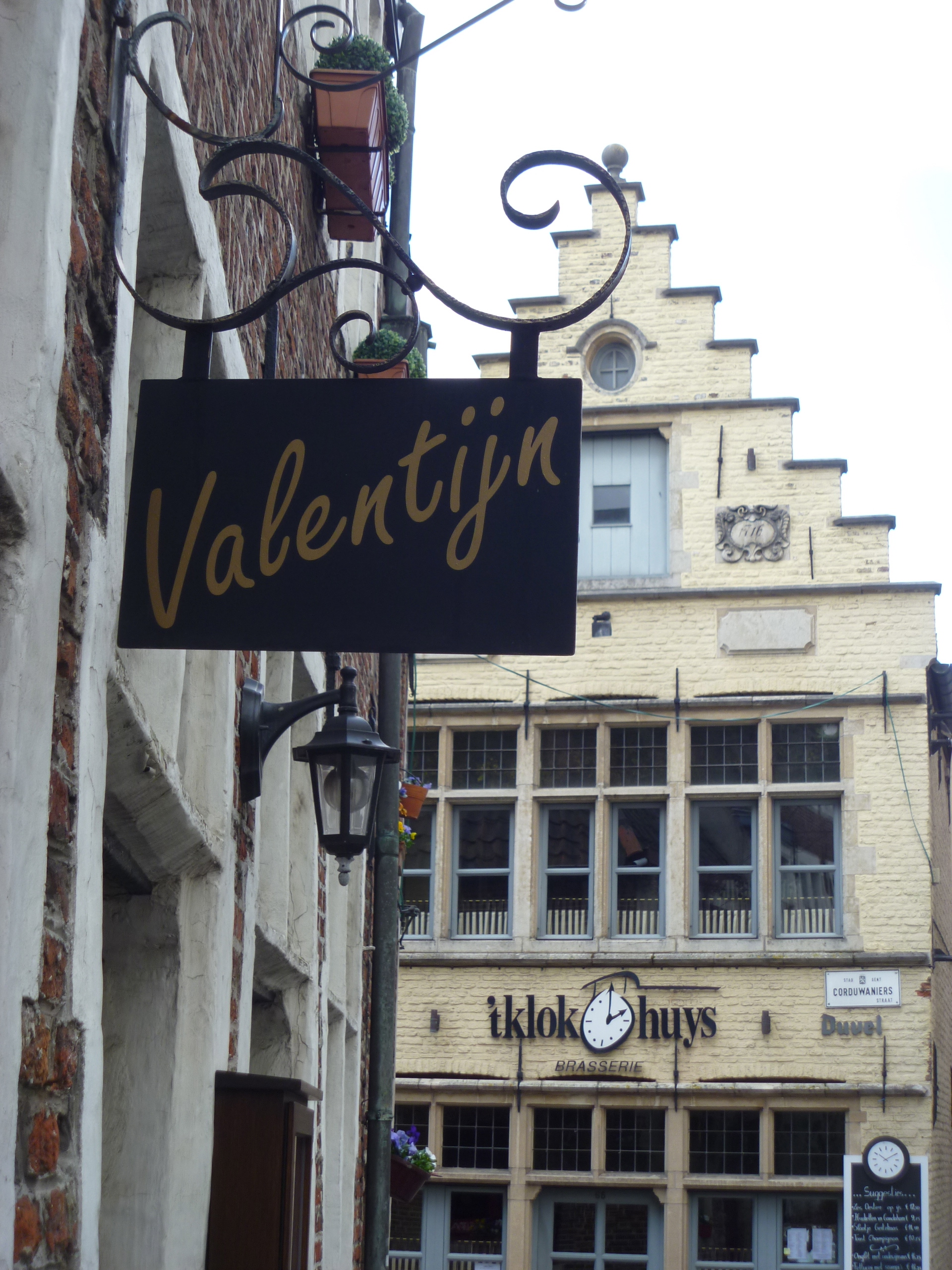
The second event was attendance at a concert during the afternoon at St Pieter’s church, about a 15 minute walk from the city centre. The Valentine Singers from London were performing 3 concerts in Ghent (including one in St Baaf’s Cathedral). Interestingly Ghent was appointed Unesco City of Music in 2009.

It was great to see and hear our friend in performance as we have long known about her musical career. The varied concert of church-related songs included a beautiful canon “Praise God” by Thomas Tallis and other songs by English composers – including Purcell and Elgar. There were works by Schubert, Bruckner, Saint-Saens and others and some Negro spirituals. We joined a fair-sized and very enthusiastic audience but even a full house would have looked minuscule in this vast Ghent church.

The Valentine Singers prepare their next piece in St Pieter’s Church, Ghent

All too soon the good things in Ghent came to an end and the two of us returned to Brussels.

As with many of our “meets” this one also produced further ideas worthy of investigation and upon which we may centre future meetings.

Lundy – Cooking on My Island of Dreams

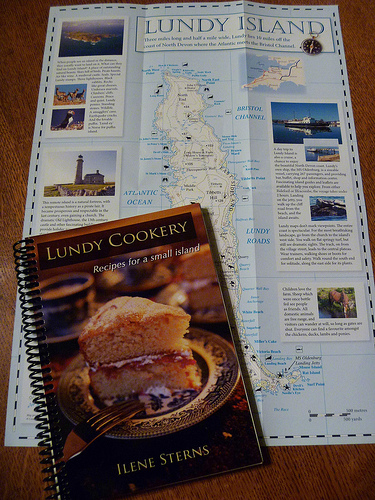
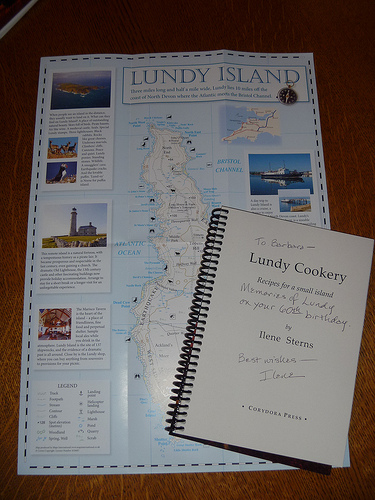
I’ve been celebrating my birthday over the past few days. I’ve received lots of cards and flowers and some lovely gifts including several books. Only one of these book gifts was what I would call a ‘reading book’.  The other books include a photo book celebrating a friendship and places visited, a set of LV European City Guides, a book by Rob Ryan and … ‘Lundy Cookery: recipes for a small island‘ by Ilene Sterns. The book is published by Corydora Press who have formed their own FlickR group ‘Lundy Cookery Around The World’. My friends also managed to get Ilene to sign it especially for me!

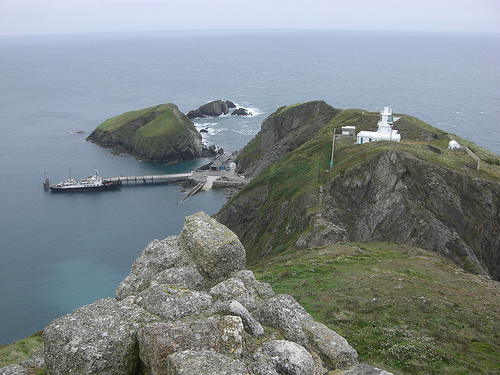
I’ve twice visited Lundy, an island in the Bristol Channel 3 miles long by half a mile wide, as a day tripper by boat from Ilfracombe. The journey takes about two hours on the MS Oldenburg and fortunately on both occasions the Bristol Channel was as still as a millpond! Sailings are in the spring and summer months from about the beginning of April to the end of  October. During the remaining months Lundy is a mere 7 minute helicopter ride from Hartland Point, 20 miles west of Bideford on the north Devon coast.

The MS Oldenburg tied up at the Lundy quayside

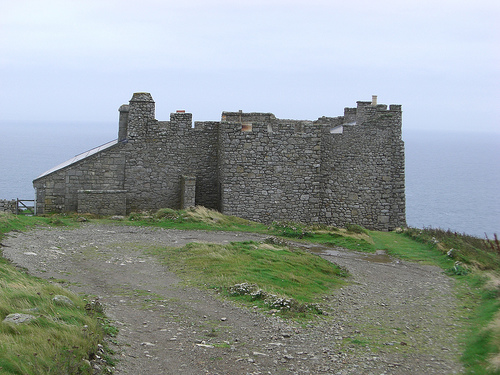
Lundy, or Puffin Island, is owned by the National Trust (so there’s a small discount on the sailing price for members) and the 23 self-catering holiday properties are managed by the Landmark Trust. It’s an uphill trek from the quay to the village but when you get there there’s a pub – The Marisco Tavern – and a shop and a cluster of buildings – some farm and some holiday accommodation. My first stop has been at the pub each time for sustenance and then a call at the shop for postcards and Lundy stamps and then I have taken a walk. There are marvellous views of the north Devon coast and the paths are clear and grassy. One walk was up the east side to Threequarters Wall and across to the west side and back down to the Old Light, the cemetery and St Helena’s Church. On my second visit a much shorter walk was to the Castle, the South West Point and back up to the Old Light. Then a final cup of tea at the Marisco before heading back down to the Quay and the awaiting boat.

Lundy Castle and Approach Track

In her introduction to Lundy Cookery Ilene reminded me what a treasure trove and Aladdin’s Cave the shop was despite its remote location. All Lundy Landmark kitchens are well equipped with basic cooking equipment but they do lack weighing scales, liquidisers, toasters and loaf tins. Ilene’s recipes manage to get around these would-be problems. In particular her recipes specify quantities by volume rather than by weight. She has also included a useful section which she has called ‘Salmagundi’ *- it’s about minimising food waste and lists ingredients alphabetically linking them to recipes in the book. For example under Honey she lists 6 dishes included in the book including Honey Mustard Vinaigrette (p.98), Lundy Mess (p.116) and then suggests some other uses. Waste not want on Lundy Island. There’s a useful index too.

*Definition: a salad plate of chopped meats, anchovies, eggs, and vegetables arranged in rows for contrast and dressed with a salad dressing. (http://www.merriam-webster.com/dictionary/salmagundi) Sounds good to me!

“Most of the book’s recipes are simple and quick to prepare, so you won’t be stuck in the kitchen when you’d rather be outdoors.” (p. 2) Now that’s my kind of cookery book!

A walk in the woods: a Ruin, follies and another Turner view

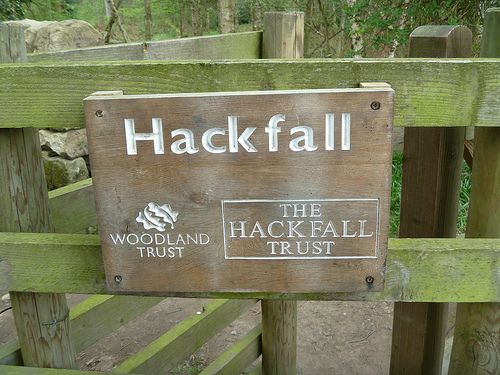
A Walk in the Woods‘ is one of my favourite walks in Yorkshire. I made three visits last year. The walk starts from Masham car park and initially follows the Ripon Rowel route alongside the River Ure. After about 3 miles you enter Hackfall Woods.

There’s a choice of walks through the woods and all of them include views of the river and follies. The first viewpoint is Limehouse Hill. At the top turn and look back to see the river and the spire of Masham Church from where you have just walked. I think you can just about spot it right in the middle of the picture.

The next view is pretty special. There’s a seat at Sandbed Hut and from this point William Mallord Turner painted his view of Hackfall. The painting itself forms part of the Wallace Collection in London. In the distance is Mowbray Castle a mock ruin thought to have been built for William Aislabie some time between 1750 and 1767.

John Aislabie of Studley Royal bought Hackfall in 1731 but it was his son William who set about transforming the woods into an ornamental landscape in 1749/1750 and this work continued until around 1767. The Hackfall website includes a potted history of the site and here’s a list of the features Aislablie created :

“1750 Fisher’s Hall was completed, inscribed on plaque above the door.

1751 The view from Limehouse Hill to Masham church was created by felling trees and digging a ditch.

1752 Work on the reservoir above the 40 foot Fails and ‘Alcoves in ye wood’.

1755 Kent’s Seat completed.

1755 Planting and work on a wooden stable at Hackfall it is thought near to Fishers Hall.

1756 Fountain Pond dug and Rustic Temple completed.

1766 Work started on the Banqueting House at Mowbray Point. The pond at the entrance to the Grewelthorpe Beck valley and wiers had been completed; Fisher’s Hall was used for entertaining guests; Nicholas Dall the landscape artist painted two views of Hackfall.

(1768 William Aislabie purchased Fountains Abbey ruins and set about incorporating the Abbey into Studley Royal gardens.)”

William died at Studley Royal in 1781.

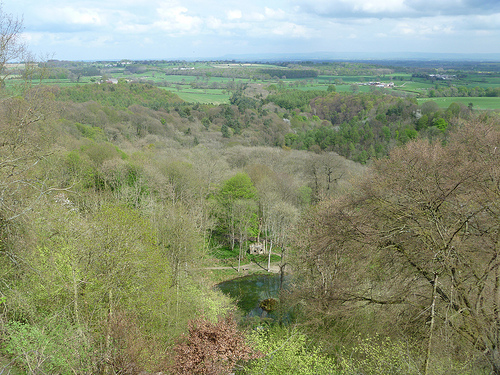
It’s good to see that the Hackfall Trust, founded in 1988, are restoring many of the paths and features. But they are not the only ‘Trust’ to be involved in preservation and conservation at Hackfall. The piece de resistance is the former Banqueting House mentioned above which is now owned by the Landmark Trust and let as holiday accommodation for two people. The public path out of Hackfall Woods (after a gentle climb) emerges onto the terrace of the Ruin (as it is now called) from where there’s a marvellous view over the wood and landscape beyond.

 View of Hackfall from the terrace at The Ruin
The Landmark Trust hold regular Open Days at some of their properties throughout the year and the Ruin is one that is regularly open one weekend each September :

The Ruin

Hackfall, North Yorkshire

Saturday 8 to Sunday 9 September 2012 10am to 4pm

As part of Heritage Open Days

This little pavilion is dramatically perched above a steep wooded gorge, in the remnants of an outstanding mid eighteenth-century garden at Hackfall, conceived and created by the Aislabies.

The walk then leaves this fascinating area of woodland and continues through Oak Bank, Nutwith Common (sounds like somewhere out of a Rupert Bear story!), along Roomer Lane and with a glance at Swinton Park the last section of the walk is along the quiet roadside between the Park and Masham.

Swinton Castle, near Masham, now a posh hotel, was bought in 1882 by Samuel Cunliffe-Lister born at Calverley Old Hall (another Landmark Trust property) and later owner of Lister’s Mill (also known as Manningham Mill) in Heaton, Bradford.

If you’ve time there are some good tea shops and pubs for refreshments in Masham and I recommend The White Bear Hotel where, if the weather is fine, as it was for me, you can have tea or something stronger on their terrace outside.

I was sent to The Tower – but I kept my head!

I’ve just returned from a couple of nights in London staying at the lovely Landmark Trust property at 13, Princelet Street. The house was built in 1719 in the Spitalfields area of east London for Huguenot silk weavers. It’s a lovely, warm, characterful house with all the comforts you could wish for on a cold winter’s evening in the east end of London when the wind and rain are blowing outside – as they were on our first evening. Fetch a takeaway curry from one of about 50 curry houses on Brick Lane, then over a cup of tea inspect the Landmark Library and plan the next day’s entertainment, review the day that’s just finished or take up the Landmark Handbook and plan another trip. I visited the house for a Friends’ Reception last October and wrote about it here.
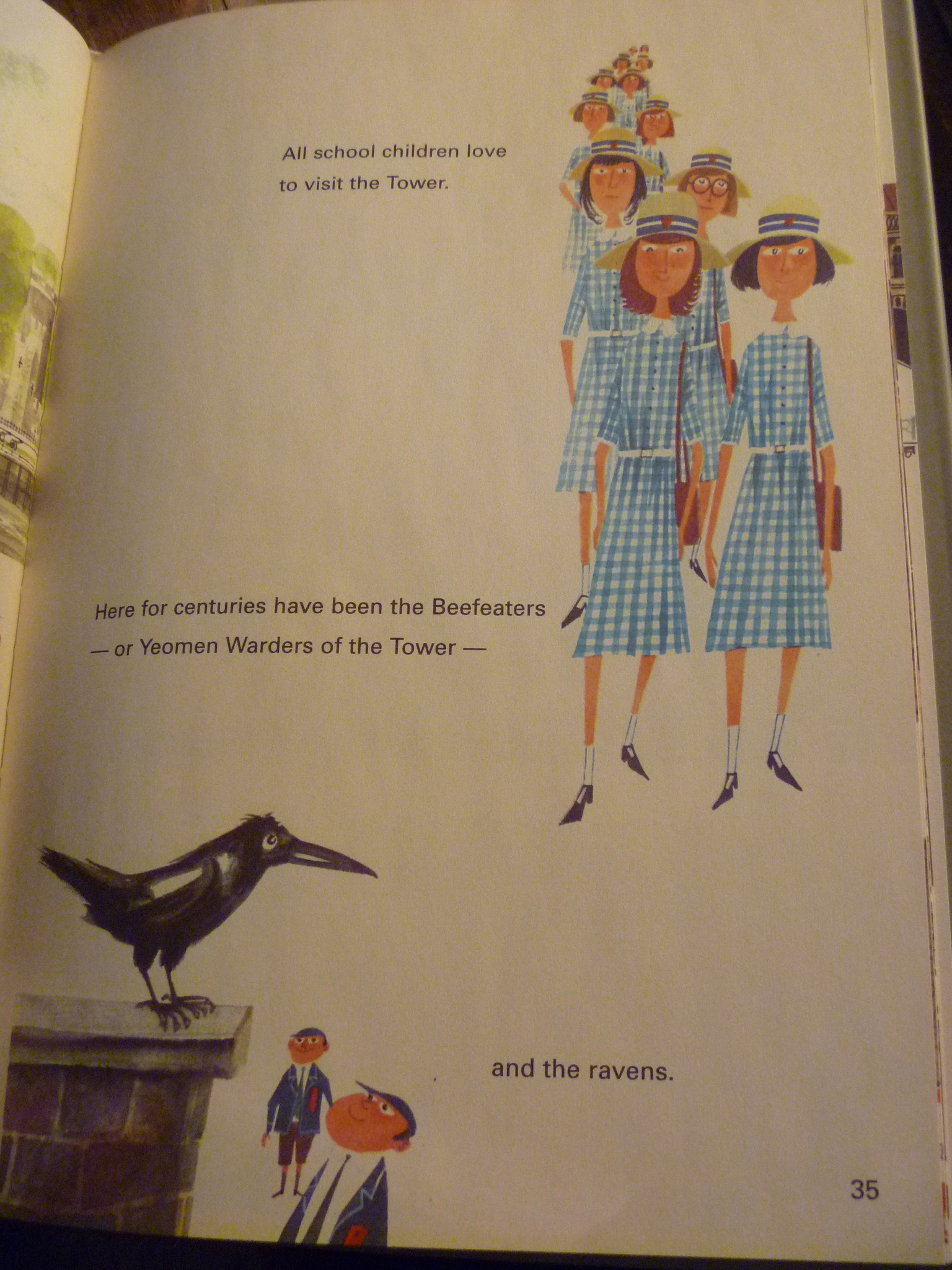
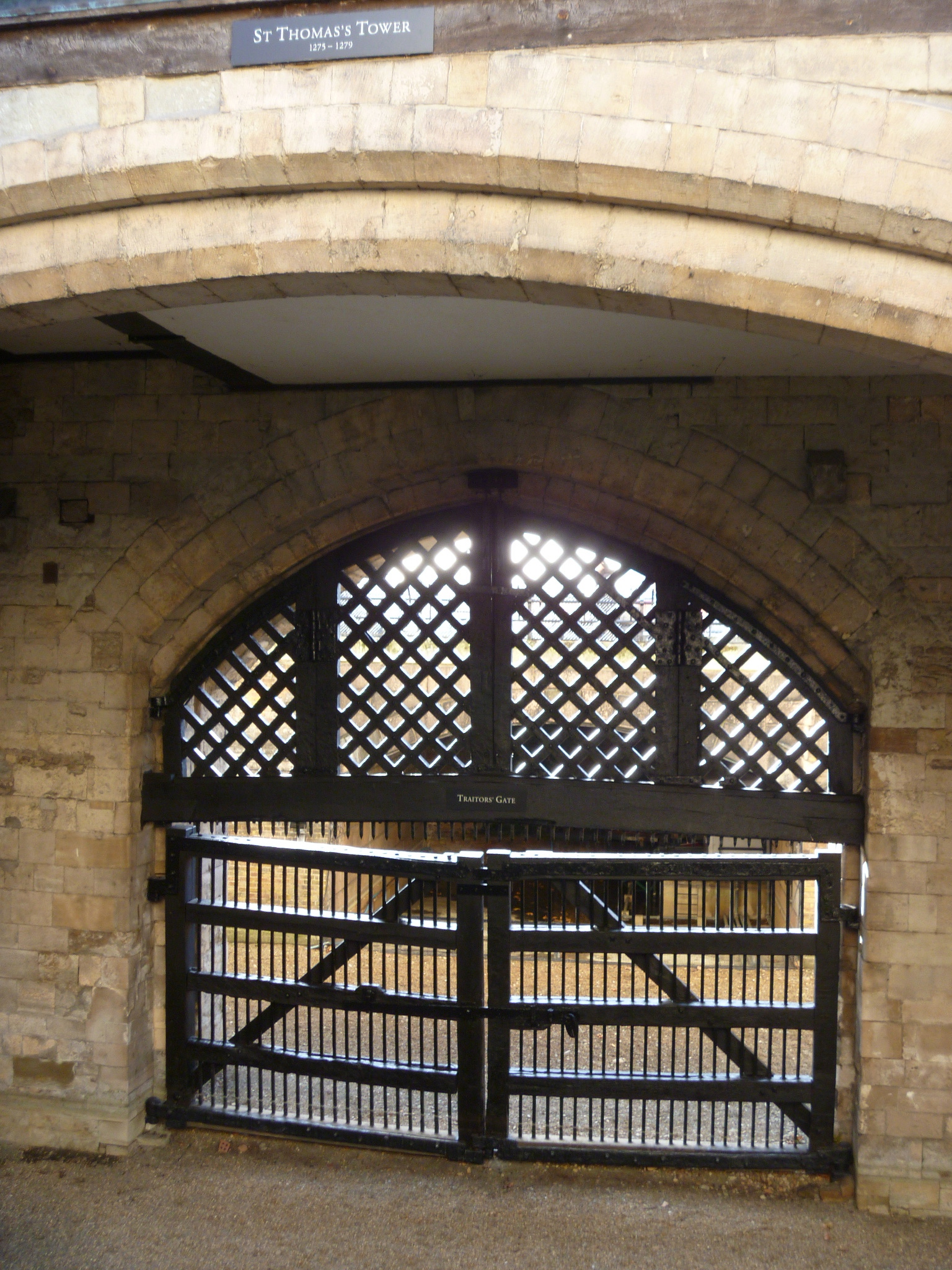
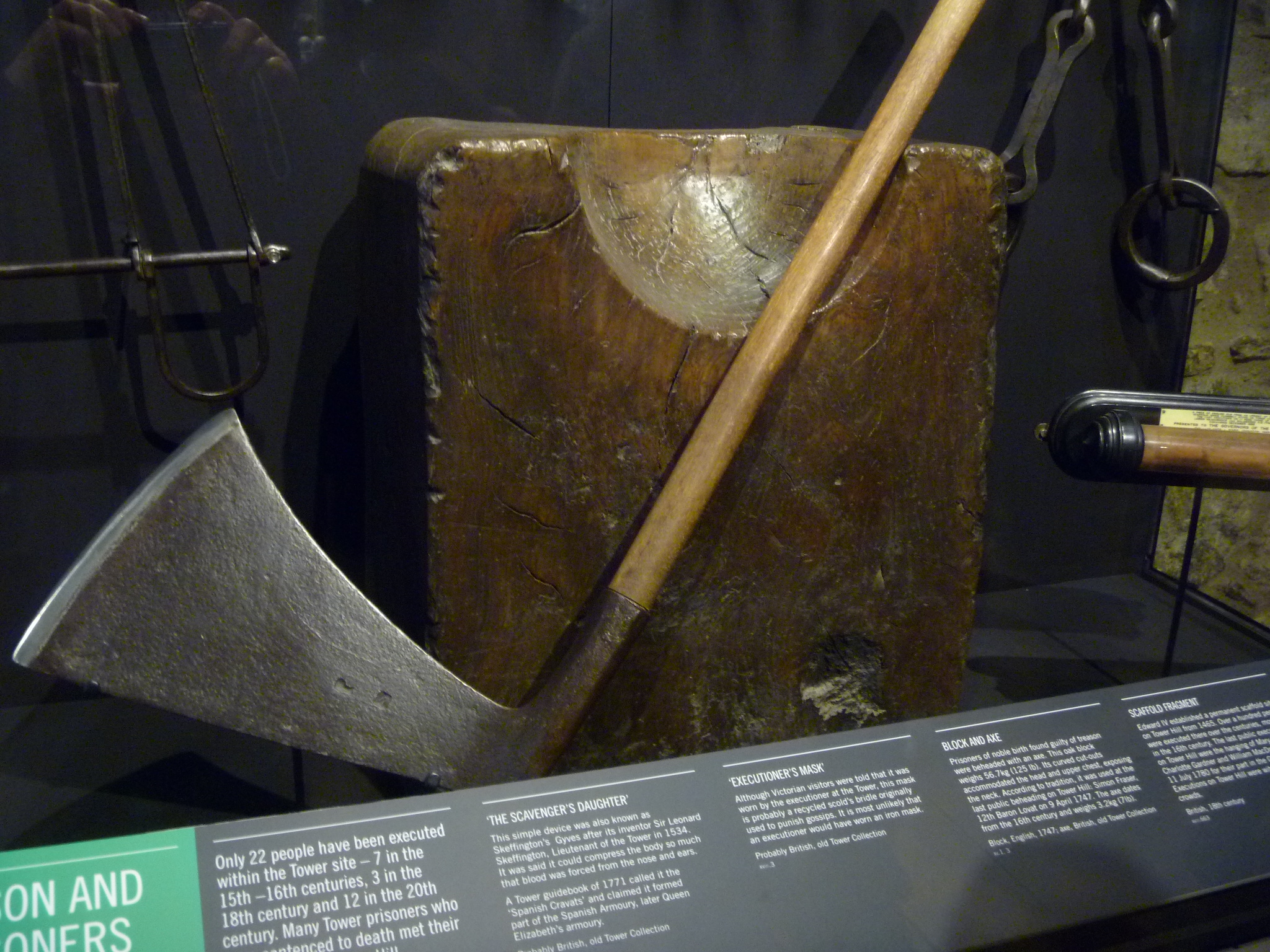
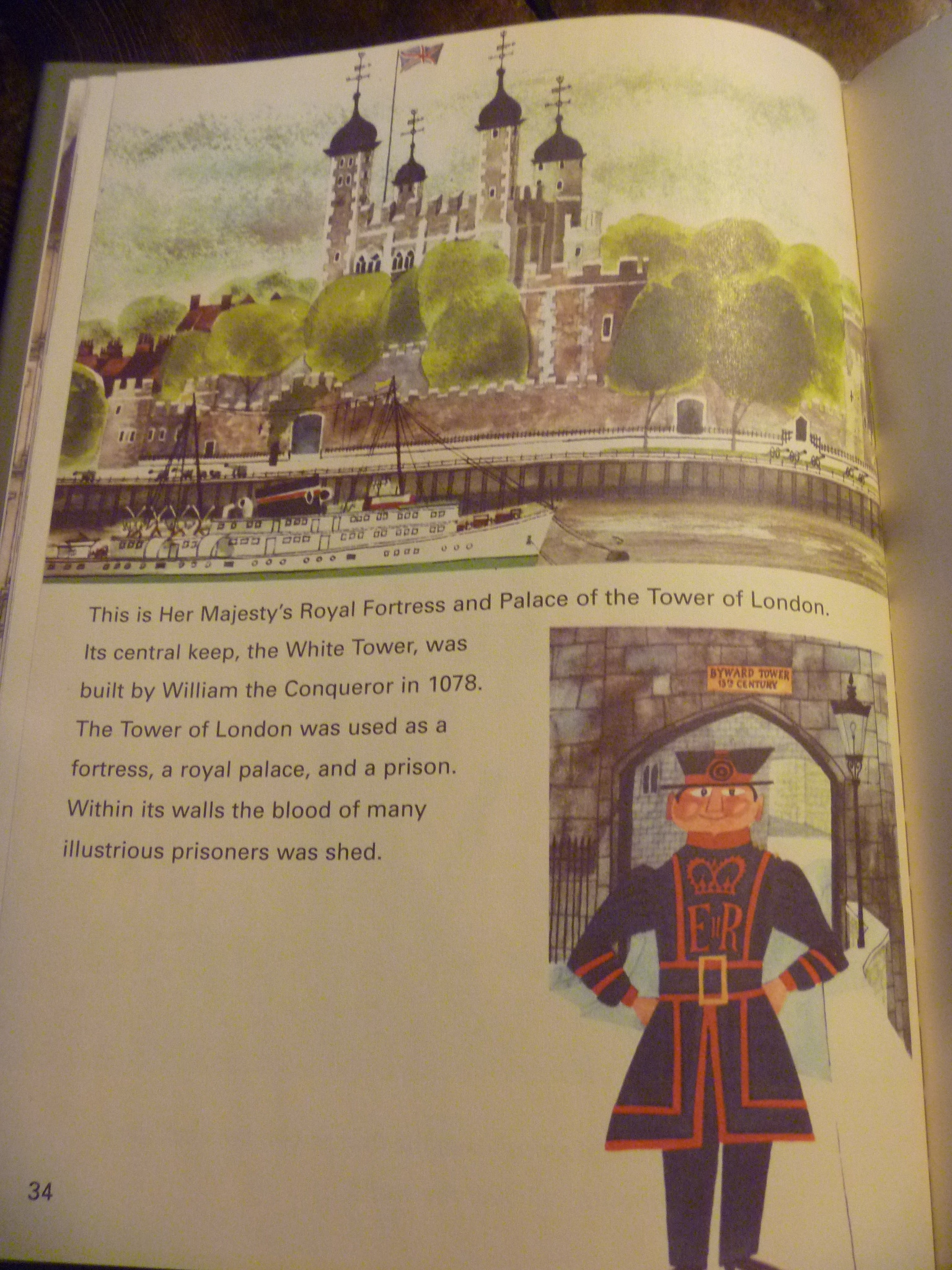
Staying just two nights gave us only one full day in London and we decided to spend it at The Tower of London. I have visited this Historic Royal Palace on two previous occasions. The first time was at the age of 10 on the annual schools visit to London with my primary school in Norwich. I remember clearly seeing the Crown Jewels in one of the towers, that we all giggled at the name of one of the towers The Bloody Tower, seeing the ravens hopping over the lawns, their wings clipped, seeing The Traitors’ Gate and the wooden block and axe which took the life of Queen Anne Boleyn. I had long wished to return and my next visit was with a Swiss guest in 2010. We had a lot of London sights to fit into our day so I planned to return on the next appropriate occasion to have a closer look.

The Traitors Gate

Off with her head!

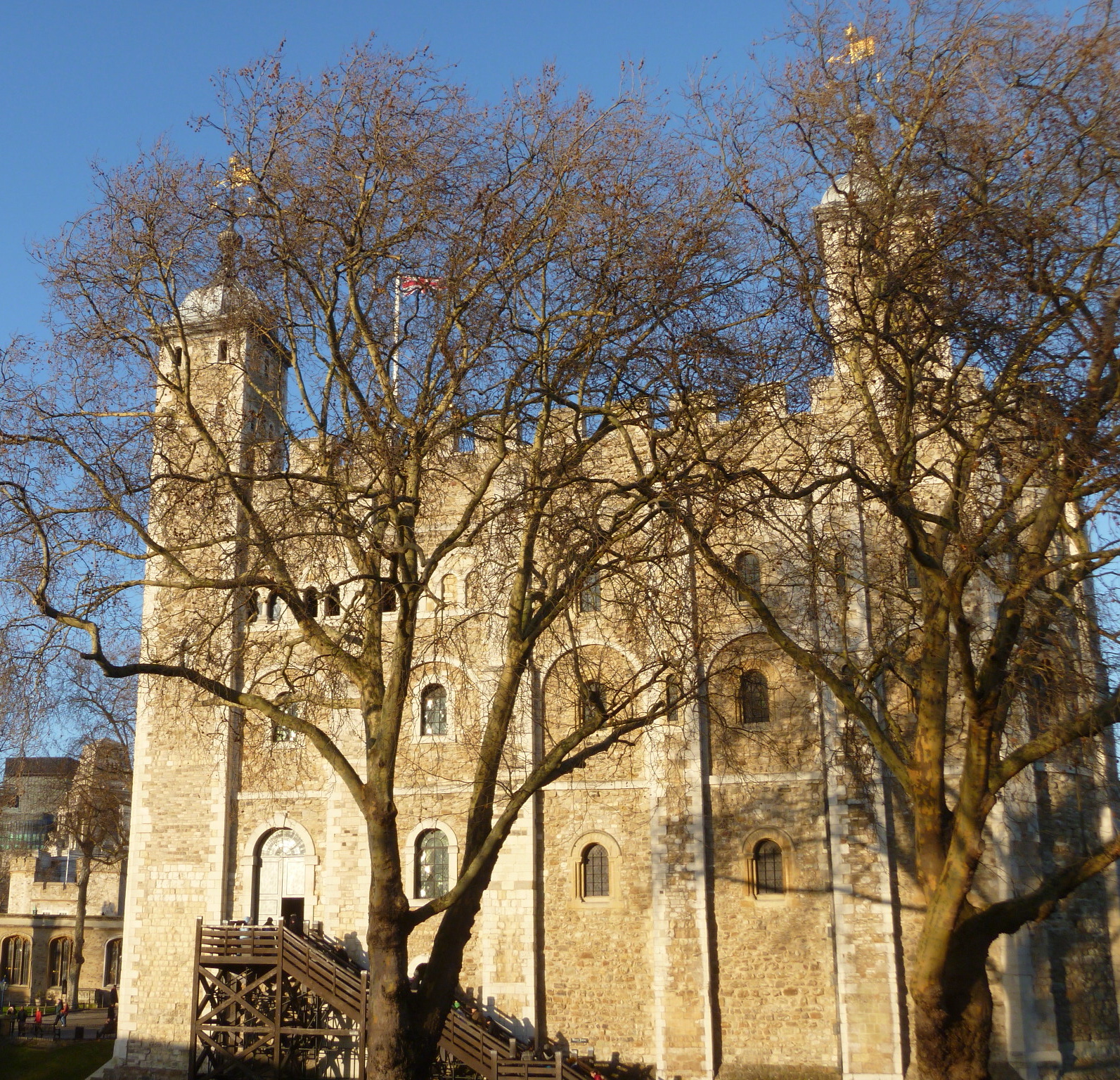
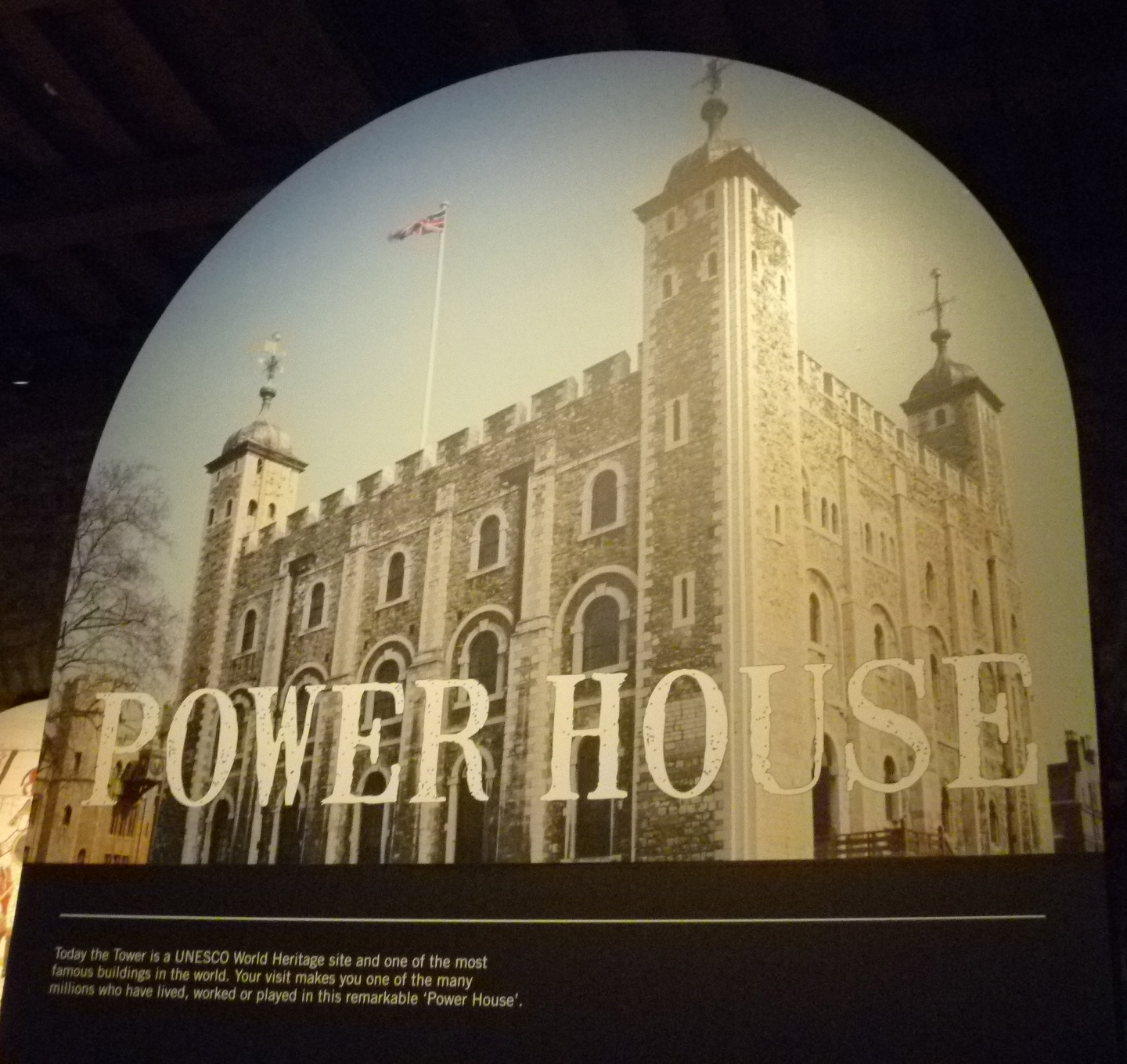
On Thursday with our 85 year old mother in tow we made a beeline for the Crown Jewels. These magnificent symbols of the British monarchy are displayed in such a way that everyone gets a good look at them however crowded the Tower may be. In fact, on this bright and dry early January day, although there seemed to be lots of people – of all nationalities – there were no queues at all. Our next port of call was the White Tower which houses an exhibition, The Power House, which tells about all the institutions that originally had their homes at The Tower – The Royal Mint, The Menagerie (now London Zoo), The Ordnance Survey, The Royal Observatory. There are also displays of royal armour and, rather strangely, gifts given to our royalty by nations around the world.

Chatting with a Yeoman Warder (or Beefeater) I discovered that 37 YWs and their families live within The Tower’s walls, plus a doctor and a priest. They have their own church and pub and it’s like a village community. But the Power House exhibition showed that in former times The Tower had been a virtual town.
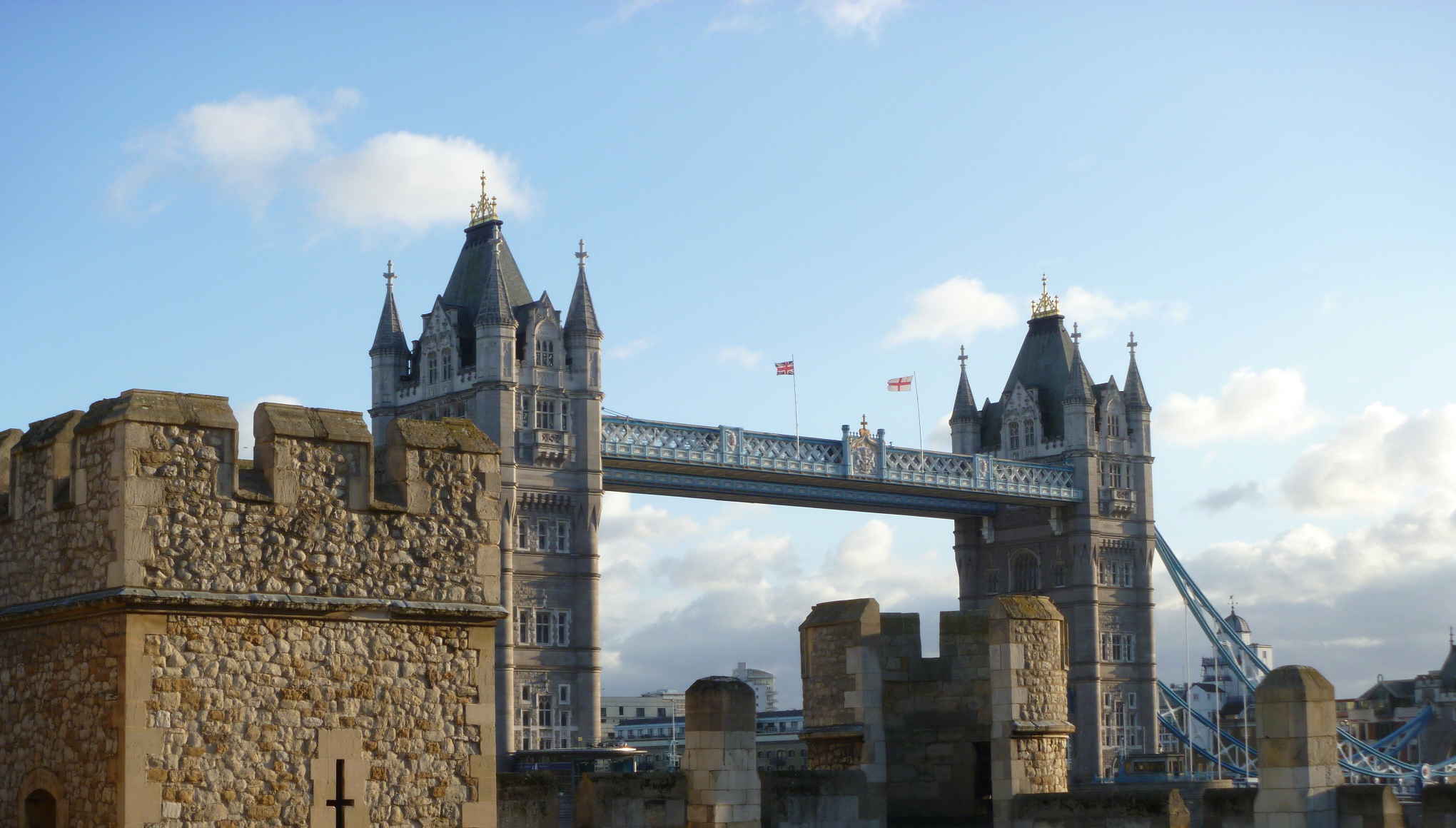
After lunch we left mum in the warmth of the cafe to have a walk round the walls (for a great view of Tower Bridge)

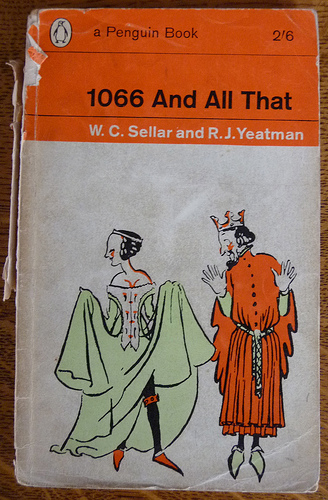
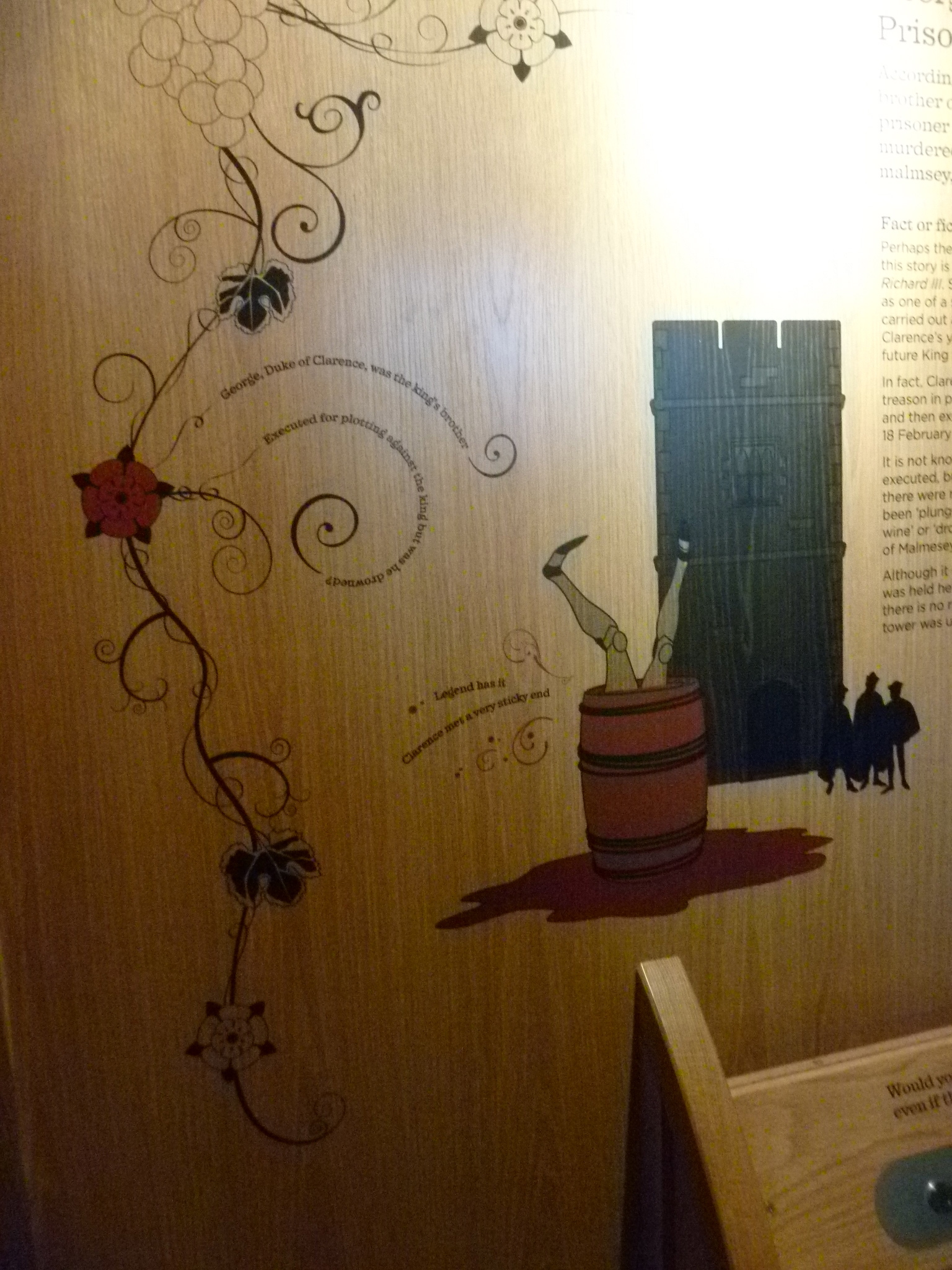
and to see inside some of the other towers (the ones with narrow stone spiral staircases) to discover more about the Duke of Clarence who drowned in a Butt of Malmsey wine, about The Little Princes murdered in the Tower and about other prisoners including Sir Walter Raleigh. And my thoughts go back to that earlier visit and to the discovery a few years later of my best history book ever – W. C. Sellar and R. J. Yeatman’s “1066 and all that”

“During the Wars of the Roses the Kings became less and less memorable (sometimes even getting in the wrong order) until at least one of them was nothing but some little princes smothered in the Tower, and another, finding that his name was Clarence, had himself drowned in a spot of Malmsey wine; while the last of all even attempted to give his kingdom to a horse.”

Milady Steps Out – The Beacons Way

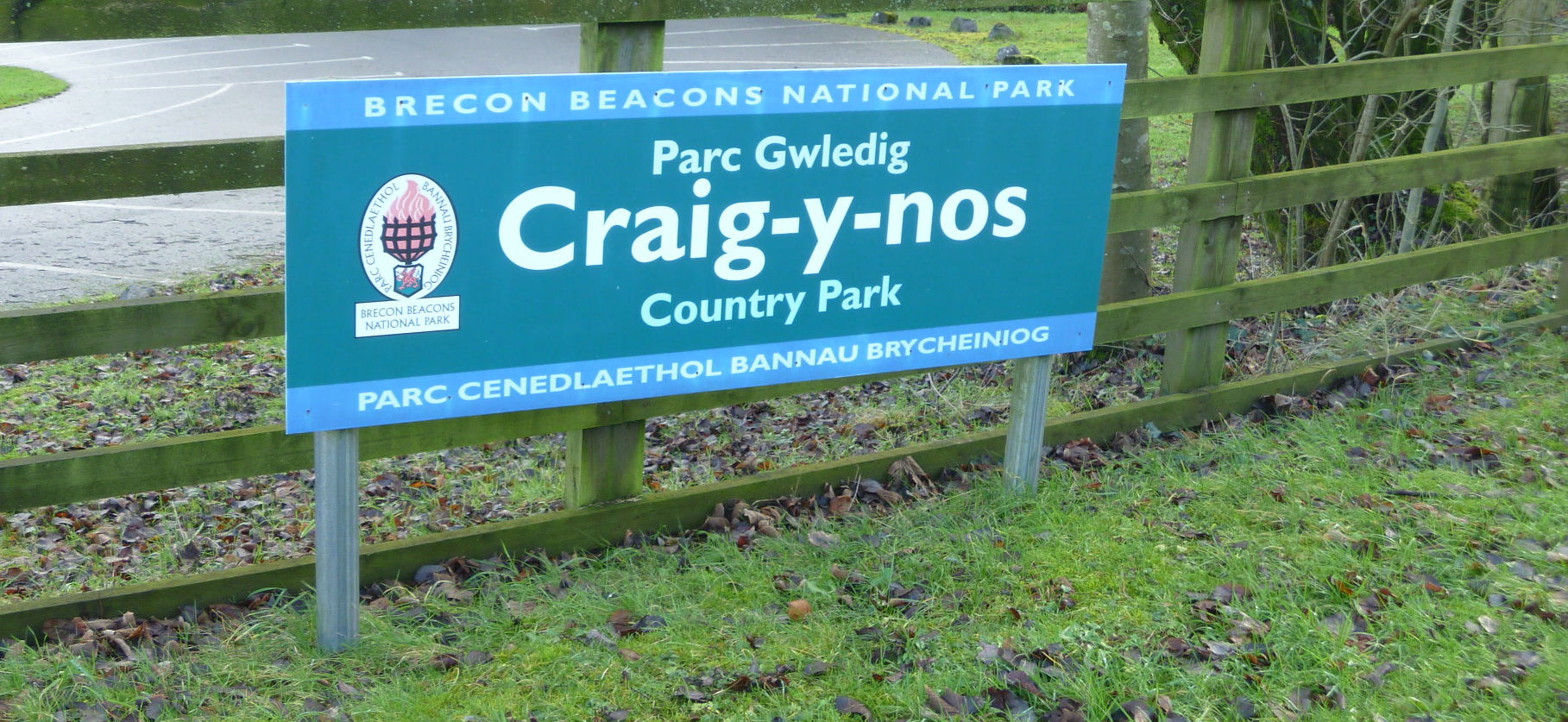
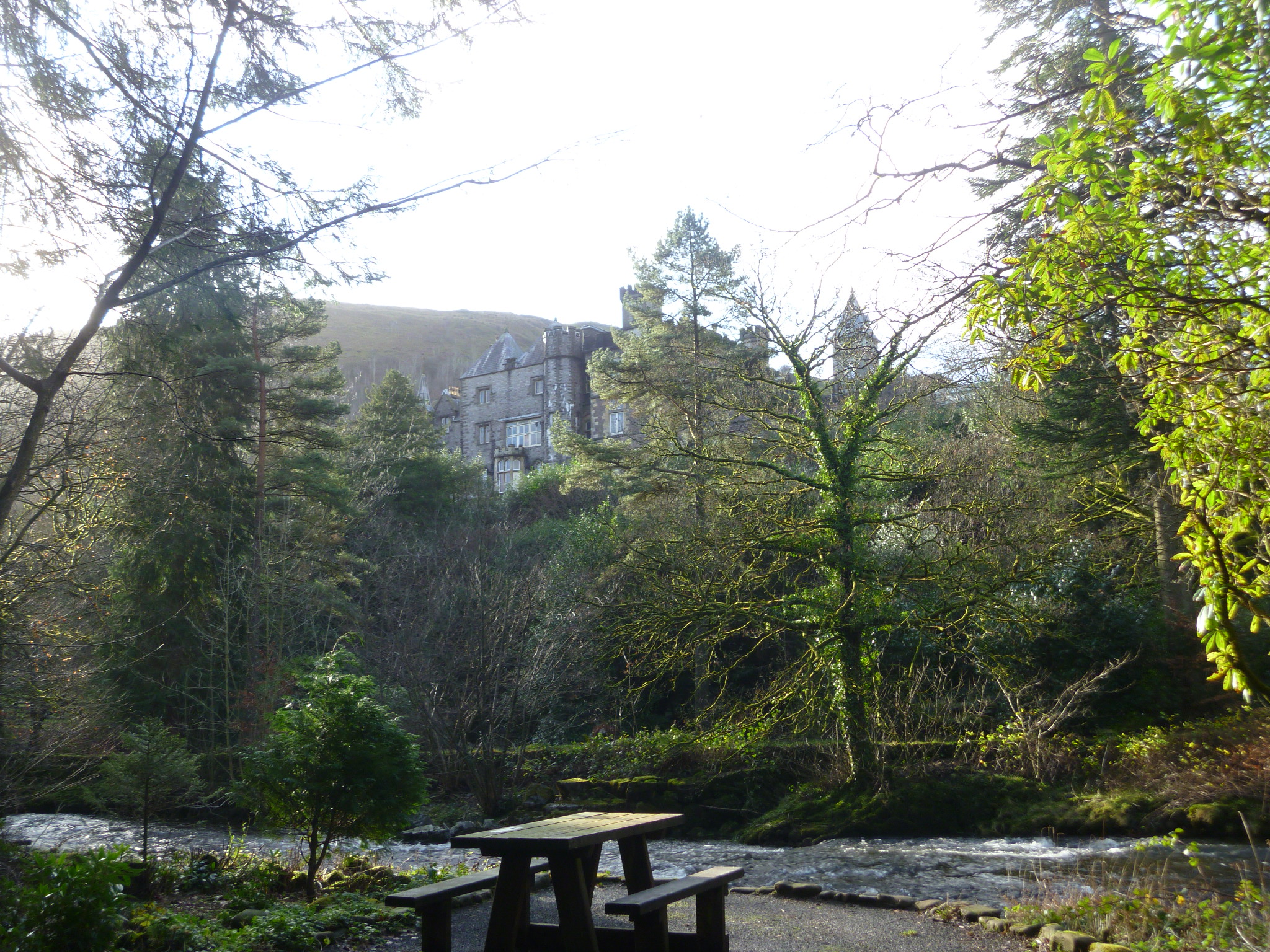
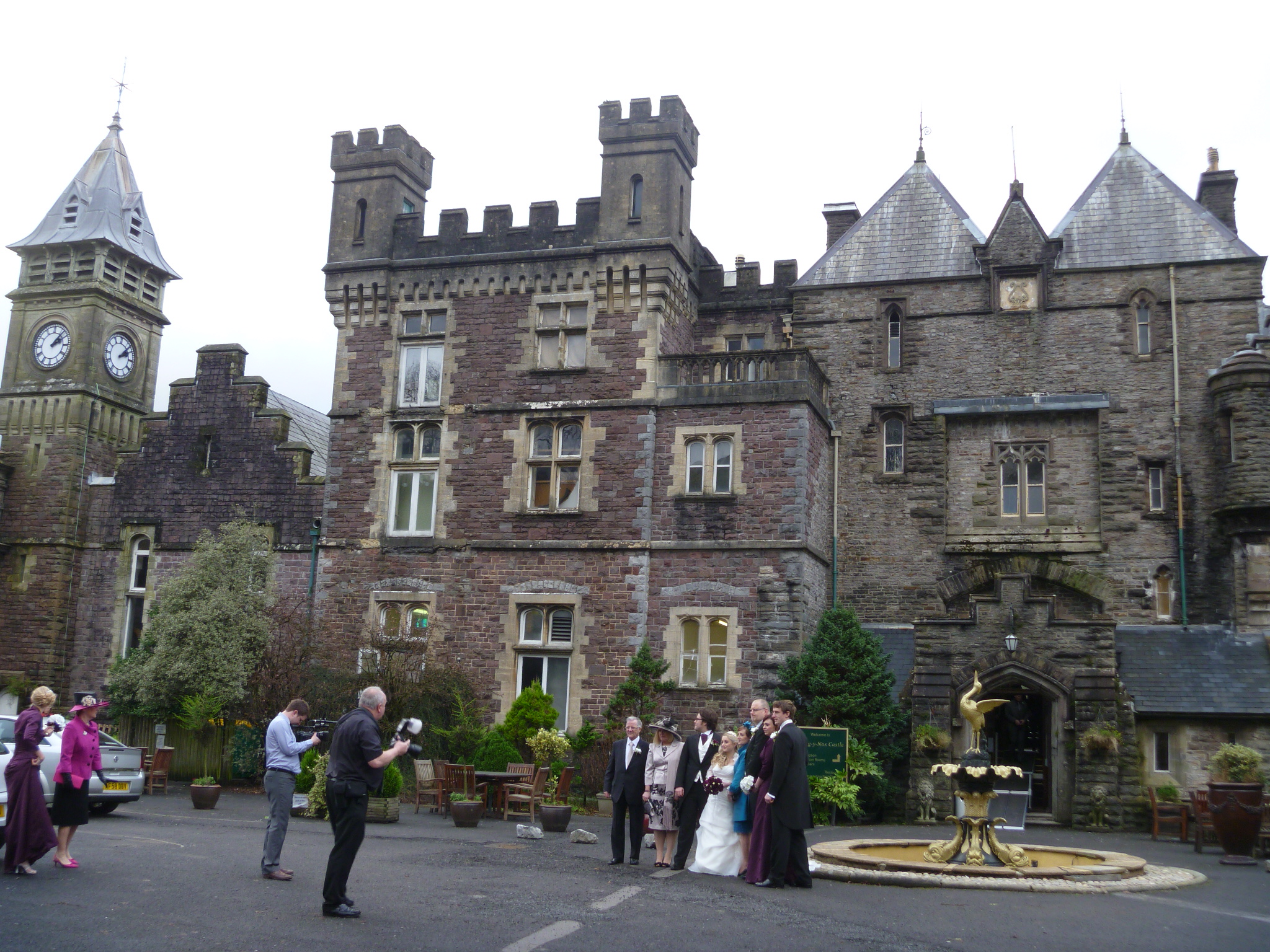
I’m taking a brief trip away from the Boudoir to spend a few days here in Wales between Christmas and New Year. I have managed to include a gentle walk in the Brecon Beacons. We parked the car near Craig-y-nos Castle and approached the Beacons Way after a  meander around the Craig-y-nos Country Park.

Craig-y-nos Castle was the former home of the world famous nineteenth century Italian opera singer Adelina Patti (1843-1919). It stands above the steep ravine of the River Tawe.

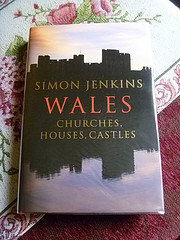
Simon Jenkins, in his book ‘Wales: Churches, Houses, Castles‘, writes of her “She performed before emperors, tsars, monarchs and tycoons and was paid 5,000 gold dollars for one performance of La Traviata in Boston … The daughter of a Sicilian and a Roman, she first married Ernest Nicolini, Napoleon’s equerry, then a French tenor, then, at the age of 56, a 30-year-old Swedish ‘nobleman and masseur’.” Jenkins then asks “So how did this remarkable woman come to live in a dark and wet corner of the Brecon Beacons, in a house with Wagnerian name of the ‘rock of the night’?” This came about through her friendship with Lord Swansea who brought her to the Tawe Valley where she fell for the house. In 1878 at the age of 35 she moved in. The fresh air was good for her lungs. Ten years later she had a theatre built at the house and enjoyed entertaining locals and the famous alike. She died here in 1919 but is buried at Pere Lachaise Cemetery in Paris.

The house fell into disuse, was for a long time a geriatric hospital and is now a wedding hotel. The theatre still exists and is occasionally used for operatic performances.

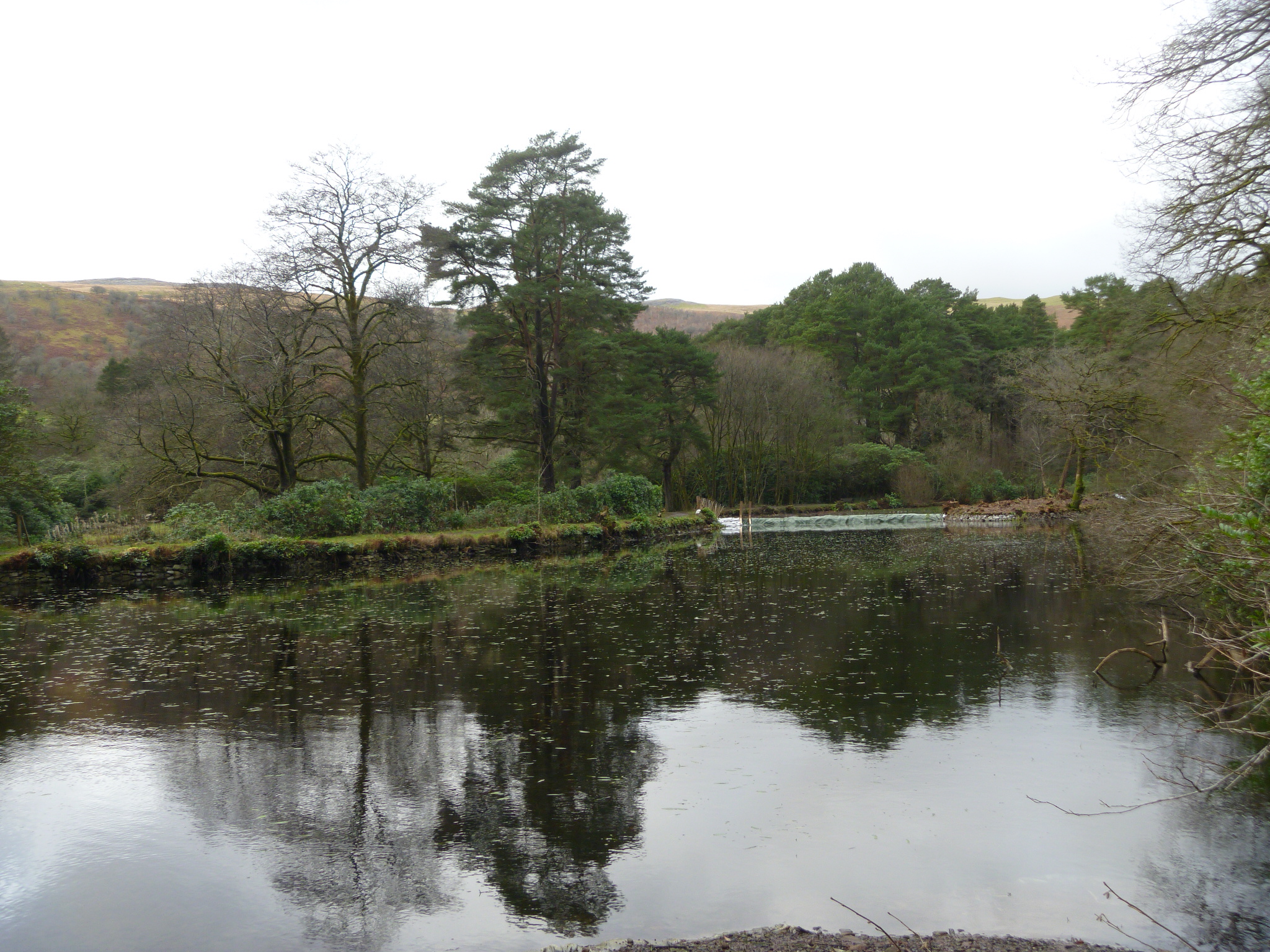
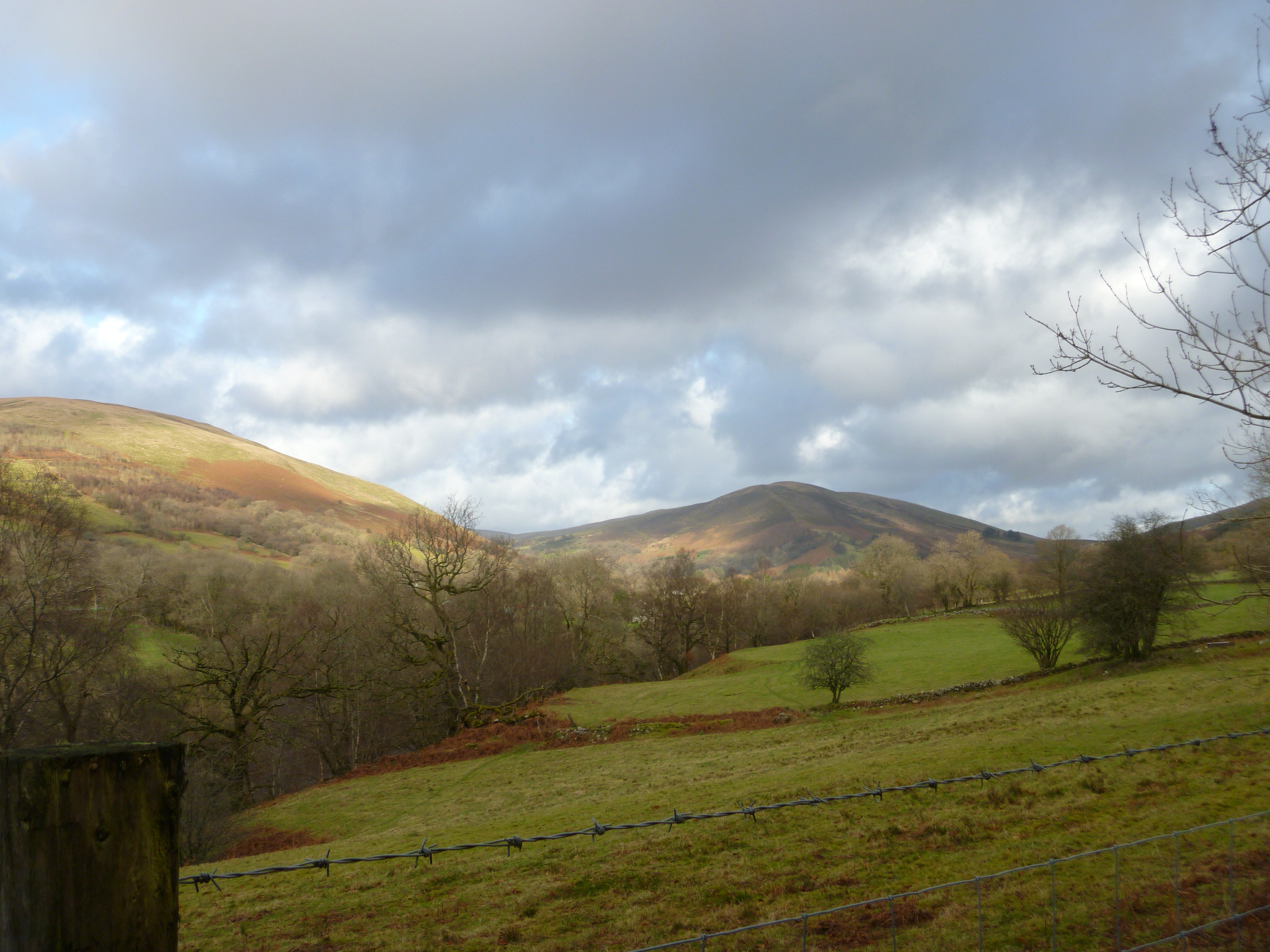
Our walk took us through the country park which had once been the pleasure gardens of the house. It appears that these may be gradually being re-established. There are a couple of small meadows, a lake and a fishpond in the park but mainly it consists of woodland – beech woods, conifer stands, rhododendron walks and pine woods. Once out of the park the land, and the Beacons Way path with it, rises gradually and the view opens to reveal the Brecon Beacons at their finest.

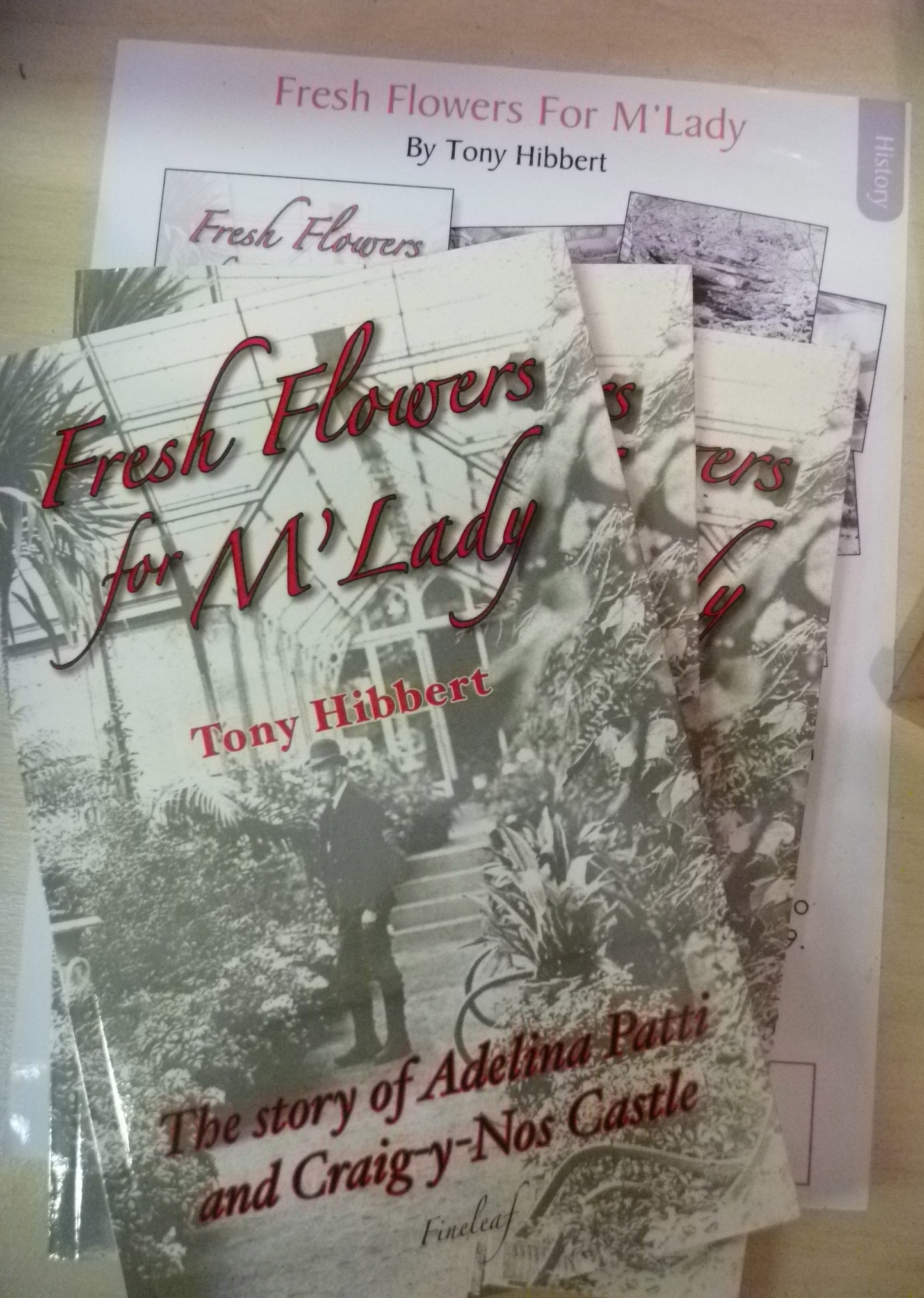
Before returning to the car we called at the shop where I spotted an interestingly titled book about about Adelina Patti!

Family Matters at Christmas

My trip to Norwich for the weekend coincided with a highly recommended exhibition at Norwich Castle Museum. Luckily I managed to fit in a visit first thing on Saturday morning – before proceeding to other more personal ‘family matters’.

The exhibition, subtitled “The family in British art”, covered a wide variety of media and time periods and was subdivided into 5 sections: Inheritance, Childhood, Couple and Kinship, Parenting and Home. A number of galleries have contributed to the exhibit which will show next year in Sheffield, Newcastle and at Tate Britain. I would love to tell about every picture, installation and sculpture but will just highlight a few which I found particularly relevant or interesting.

Many of the pictures included in Family Matters are from Norwich Castle’s own collection. I know that this is pretty extensive as I have in the past participated in behind-the-scenes tours and there are also many fine works of art in the permanent galleries. John Crome and John Sell Cotman and other Norwich School painters being particularly well represented.

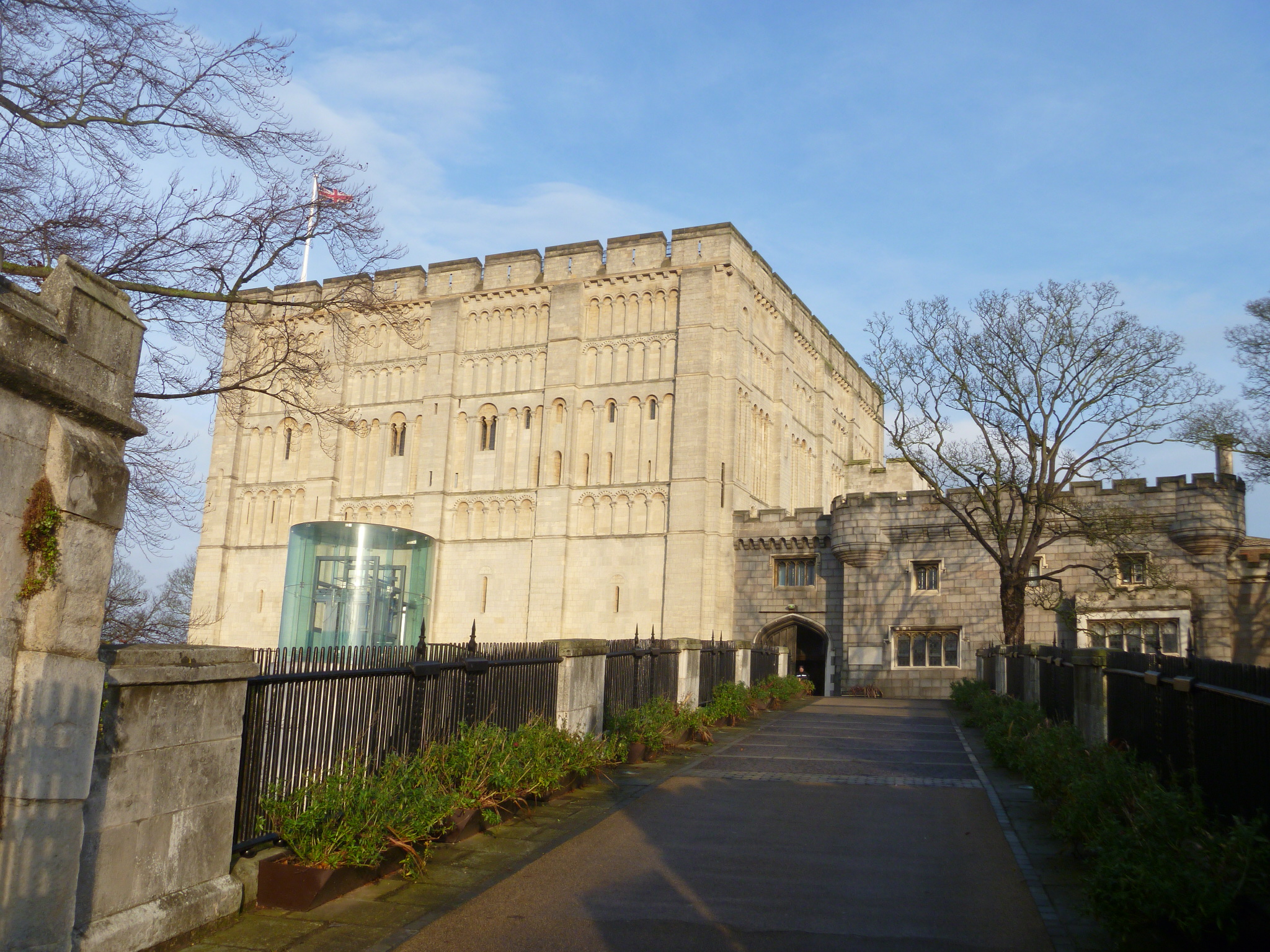
Approaching Norwich Castle

Inheritance.

One of my favourite pictures fell into this category: The Harvey Family of Norwich, c.1820 by Joseph Clover. Outside the gallery, in the Castle Rotunda is a life-size copy of this painting with a few faces missing. So I had a go at filling one of the gaps!

The Harvey Family of Norwich, plus one!

In addition there’s The Descent of King James I by an unknown 17th century artist – a kind of visual family tree and right up to date is a 3 screen video installation by Zineb Sedira featuring 3 generations of one family who speak Arabic, French and English in turn.

Childhood

I loved the Gainsborough painting of his Daughters Chasing a Butterfly (c.1756). The butterfly is said to denote fragility and one of the daughters, Mary, was named after a previous daughter who had died two years earlier.

Picture credit 

Bang up to date was a Grayson Perry vase made in 2000 and titled Difficult Background. Look past the innocent 1950s children in the foreground to horrors of war, burning buildings, naked figures.

Couples and Kinship

To me the most touching of all the pictures was Batoni’s “The Hon. Thomas and Mrs Barrett-Lennard with their daughters Barbara Anne” (1750). Thomas and Anna Maria Pratt had married in 1739. Their daughter Barbara had died in 1749 and to console themselves they had taken a European tour. In Rome they commissioned Pompeo Batoni to paint their portrait and to include (using a miniature of her likeness) their daughter.

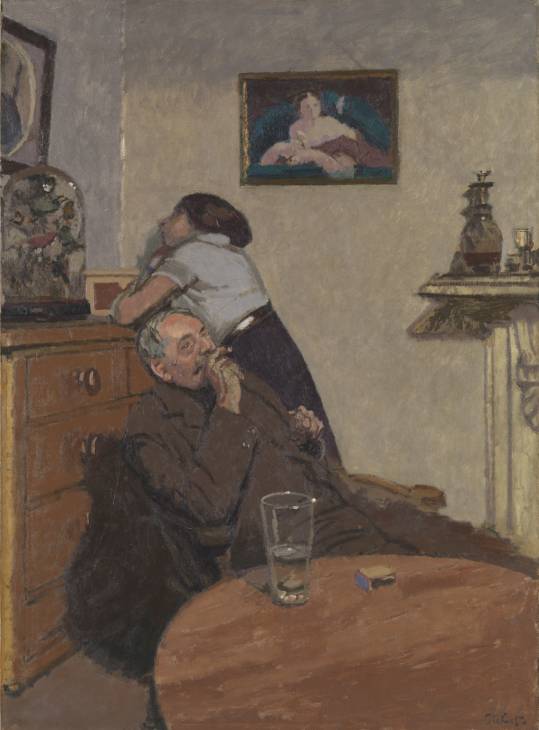
Walter Sickert’s “Ennui” depicts another couple but in what appears to be a totally restrained relationship. It depicts “a sense of suffocating boredom” but is in fact a posed picture using as models a friend of Sickert’s and his own maidservant.

Picture Credit

Parenting

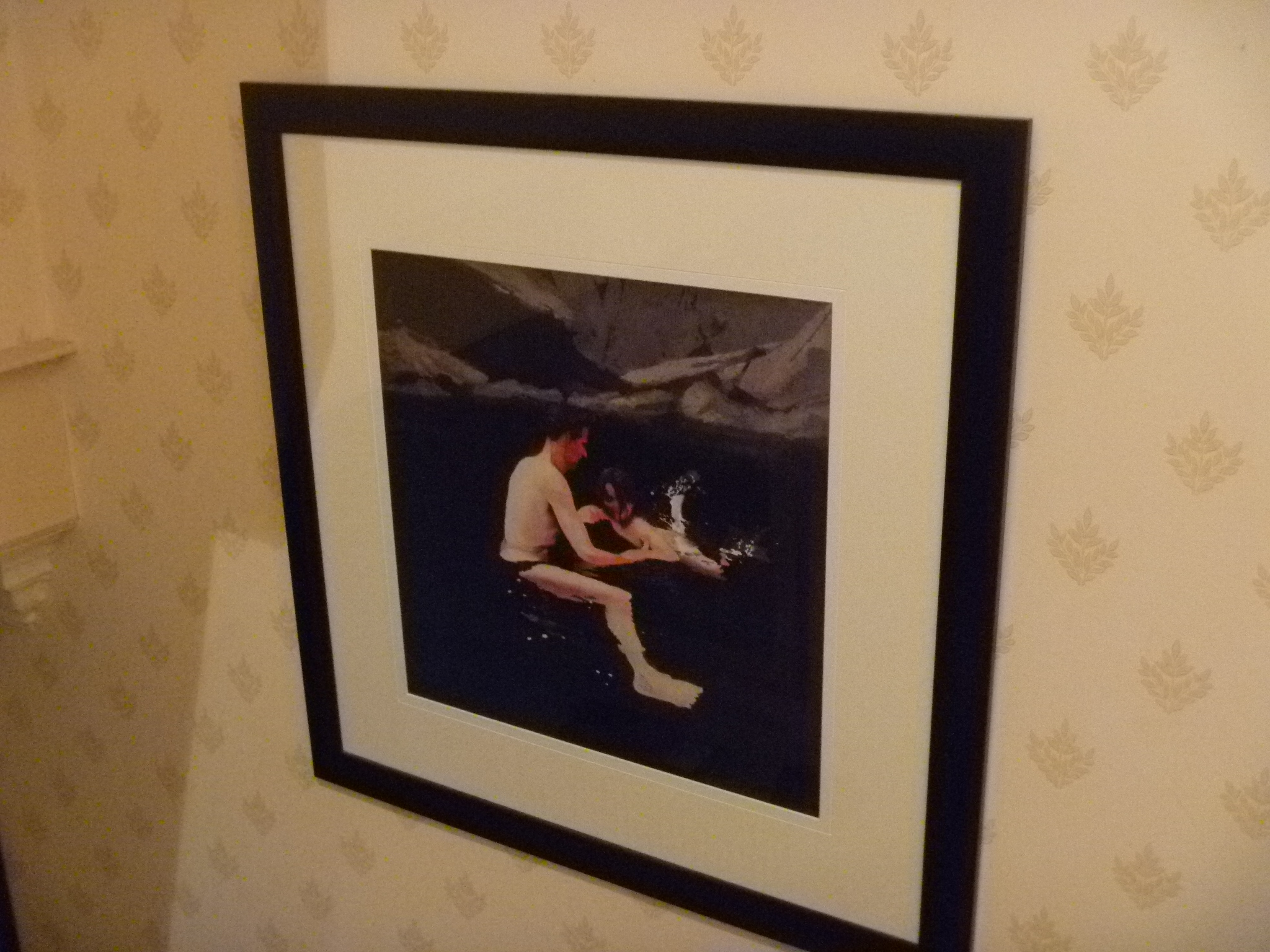
We have a print on our staircase of “Melanie and me swimming” by Michael Andrews (1978-9). Our print measures about 38cm square. The actual painting is about 2m x 2m. It’s based on a holiday photograph taken years earlier of the artist teaching his daughter to swim.

Several other pictures in this section interested me – not least David Hockney’s painting of his parents (1977). I recognised the Habitat folding chairs! We bought these very chairs that same year – the year we got married – for our kitchen. We’ve still got them and use them now and again when we number more than 4 at the kitchen table.

Picture credit 

Home 

Finally the section titled ‘Home’ like the others included a right mixture of interpretations! Several were photographs including one by Thomas Struth (a German photographer born in 1954) called “The Smith family, Fife” (1989). I had only earlier this week read an article in the New Yorker about Struth and his National Portrait Gallery photo of The Queen and Prince Philip commissioned for the Queen’s Diamond Jubilee next year. You can read the article here.

Photo credit

The curator poses some thought-provoking questions. “What makes a house a home? Is home a real place or just a dream of intimacy? Can we ever return home, or is it always somewhere irretrievably in our past?”

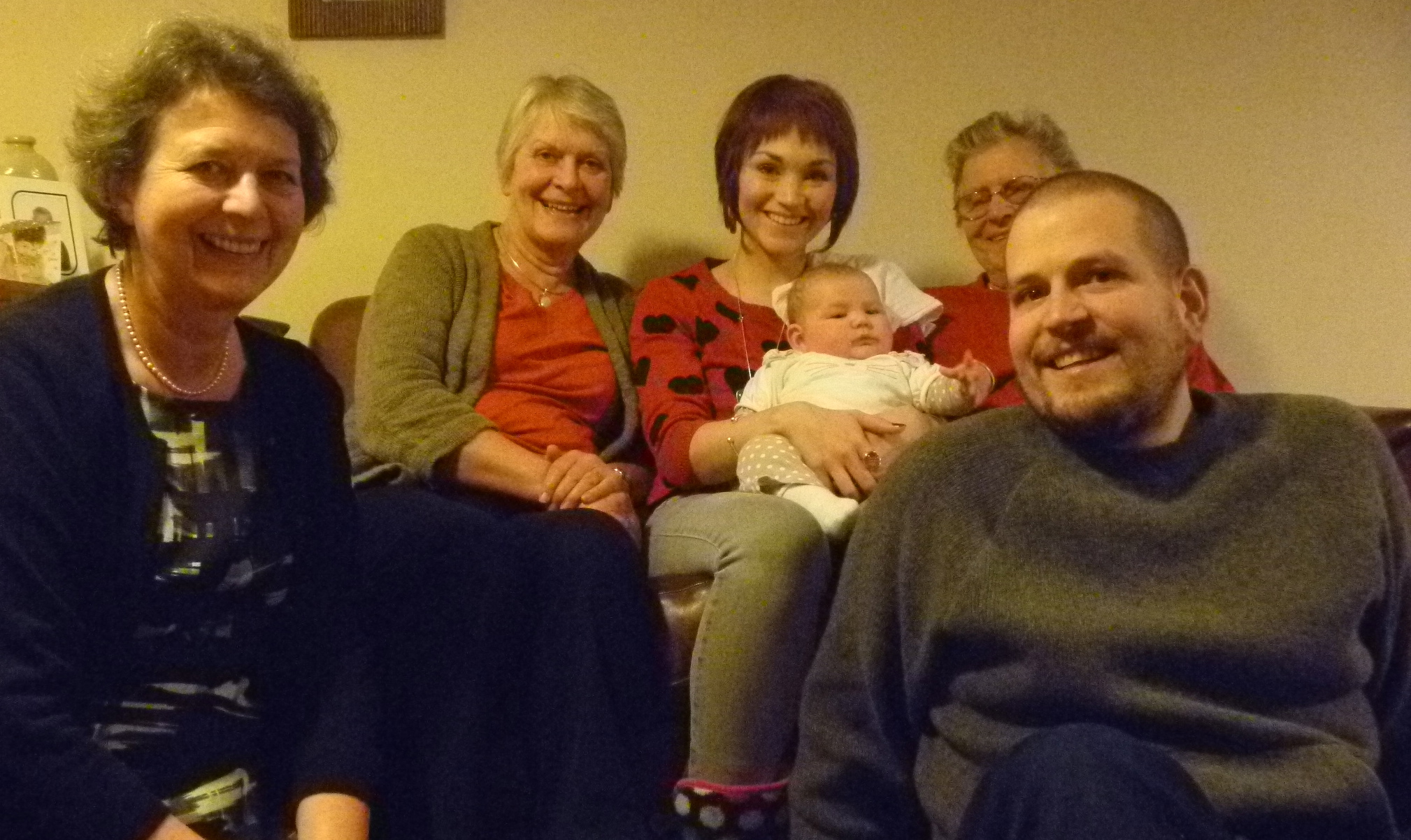
With these thoughts on my mind I then proceeded to Family Matters of my own and here are four generations of my family in Norwich.

I love Lucy! A Cavalier at Bolsover Castle

B

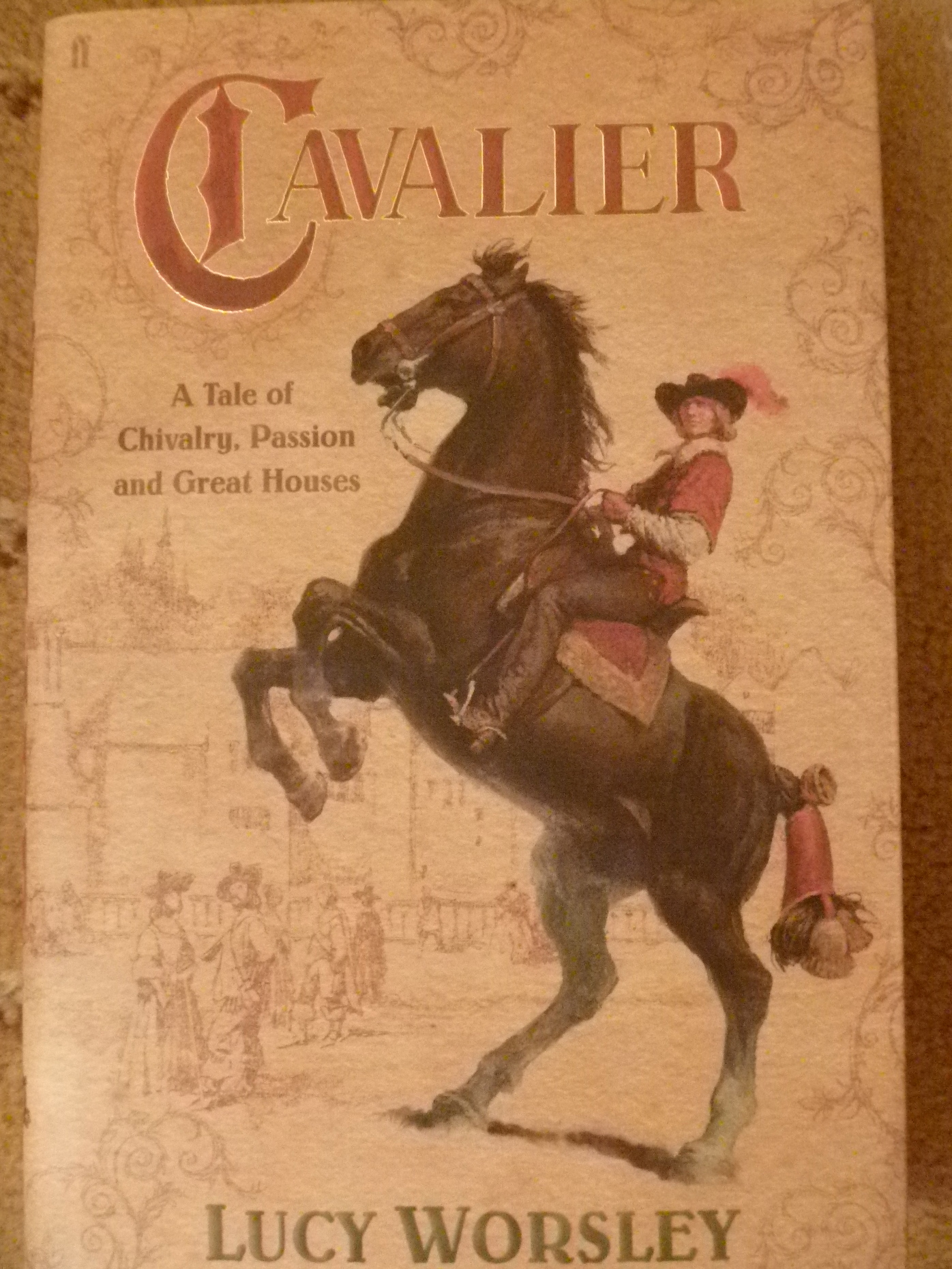
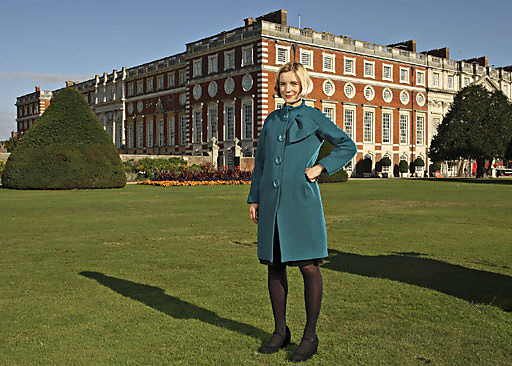
I’m really looking forward to reading this book. But it won’t be until the new year as I have a number of others to get through before I start on Lucy Worsley‘s ‘Cavalier: a story of chivalry, passion and great houses‘. I heard Ms Worsley speak at the Edinburgh International Book Festival in August this year. But even before that I was a fan of her  ‘If Walls Could Talk’ shown on BBC television in the spring. In this fab programme the lovely Lucy trots around our modern day homes pointing out all the historical details and stories of the evolution of our bedrooms, living rooms, bathrooms and kitchens from the earliest times until the present day. She even volunteered to dress up and play various roles in order to represent to us the differences between previous generations and our own.

For many years Lucy Worsley (she is now Chief Curator of The Historic Royal Palaces) was based at Bolsover Castle in Derbyshire and over ten years she researched the story of William Cavendish and his family and the result is ‘Cavalier’.

Bolsover Castle itself isn’t really that far away from me – about 60miles south straight down the M1 motorway.

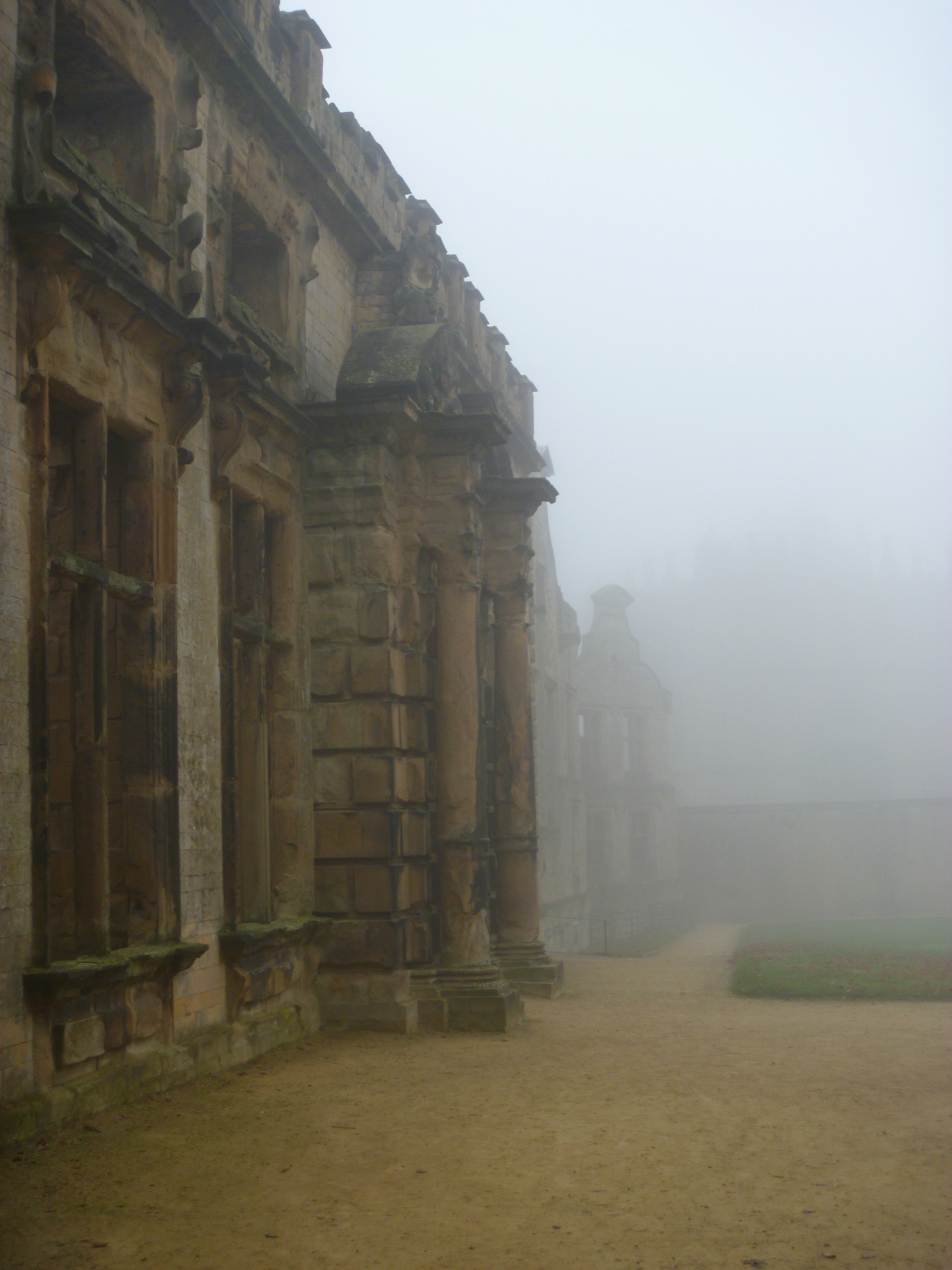
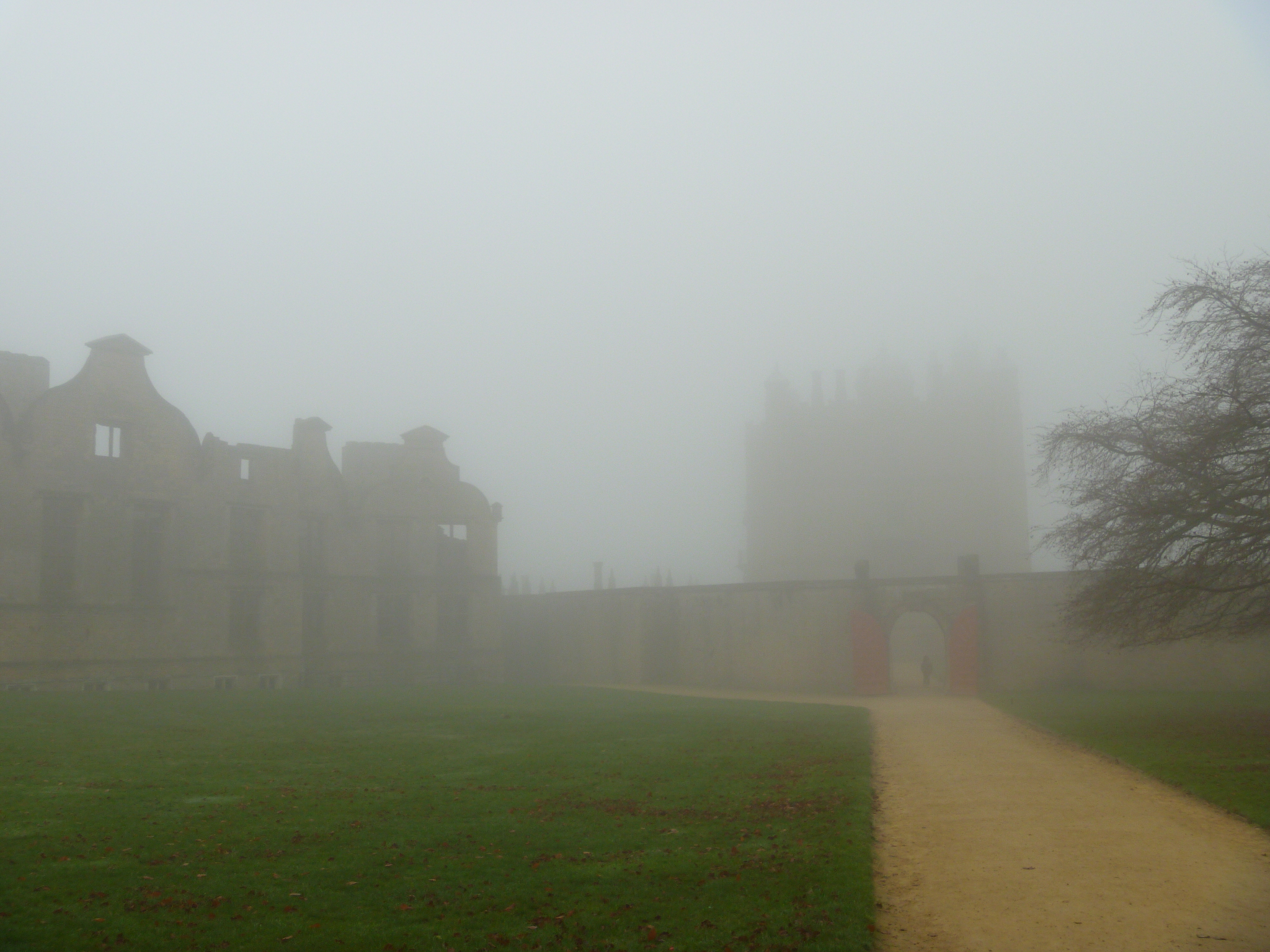
First,  forget the idea of castle. Seen from the M1 Bolsover may look like a fortress but it is rather a fairytale palace on a hill” says Simon Jenkins in one of my ‘bibles’ “England’s thousand best houses“. As you can see we chose a very atmospheric day to take a trip to Bolsover and give it the once over. The fog should have lifted but try as it might the sun just could not get through all day.

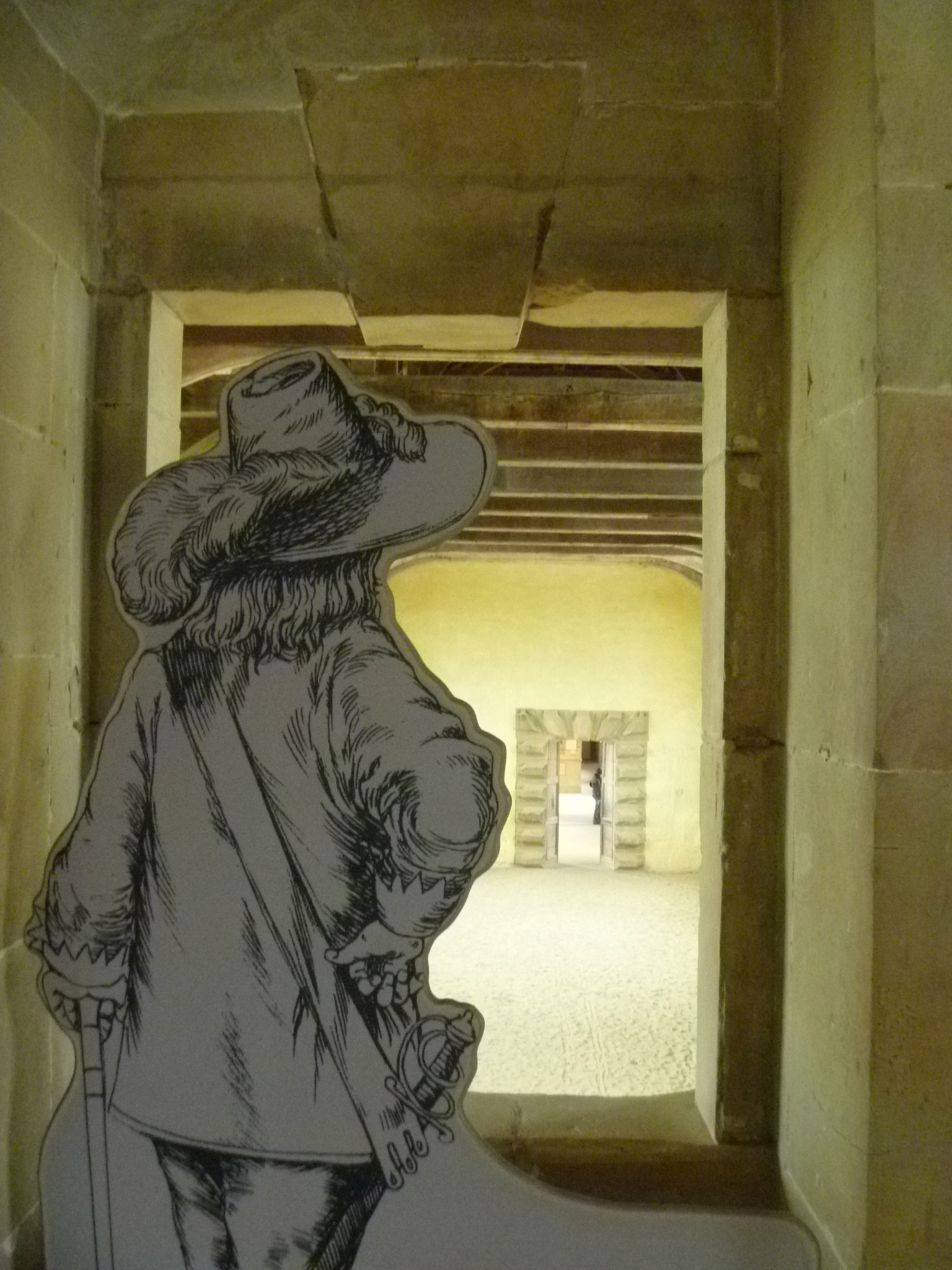
The Riding House from the Shoeing House – complete with cardboard cavalier!

After the obligatory cup of tea in a very nicely appointed cafe and a quick glance round the English Heritage gift shop we switched on our audio guides and made our way falteringly towards the castle itself, stopping every so often to listen to the character actors and narrator tell us more about Bolsover and its creator and inhabitants. Once through the huge entrance gate (or tradesman’s entrance as it was called on the audio guide) you’re in an impressive courtyard.

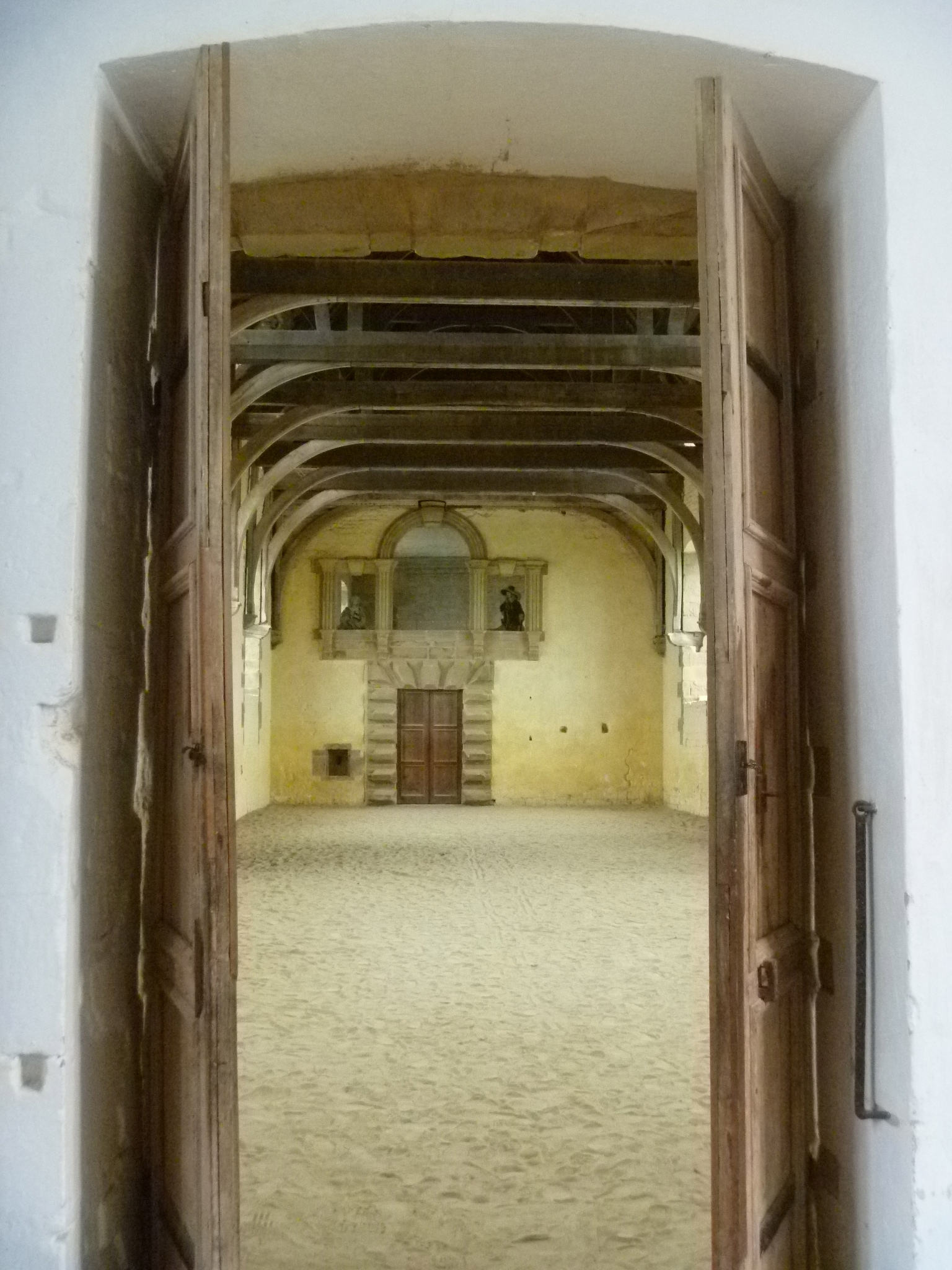
The Riding House

The first building on the left is called The Riding House Range and it contains “the finest surviving example in England of this rare, specialised type of building” (Bolsover Castle guidebook, also written by Lucy Worsley). Like the famous act by the white stallions of the Spanish Riding School in Vienna this huge room was for training horses in the art of  “manege”  (circling, leaping, jumping). William Cavendish, 1593-1676) was the cavalier responsible for the greatest part of the building and development of the site at Bolsover. He had two obsessions – women and horses – and Bolsover was his “pleasure dome”.

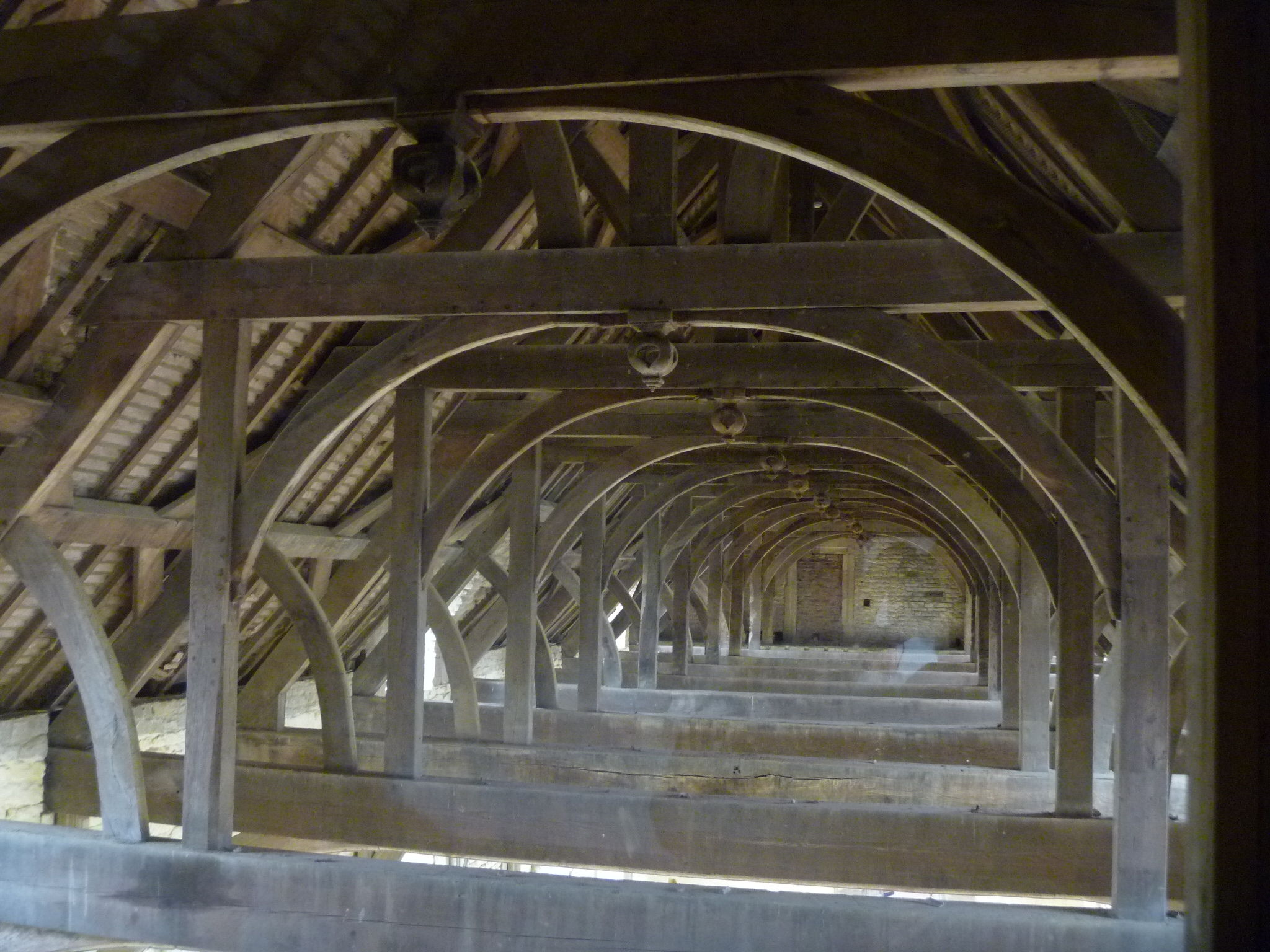
The great oak roof of the Riding House

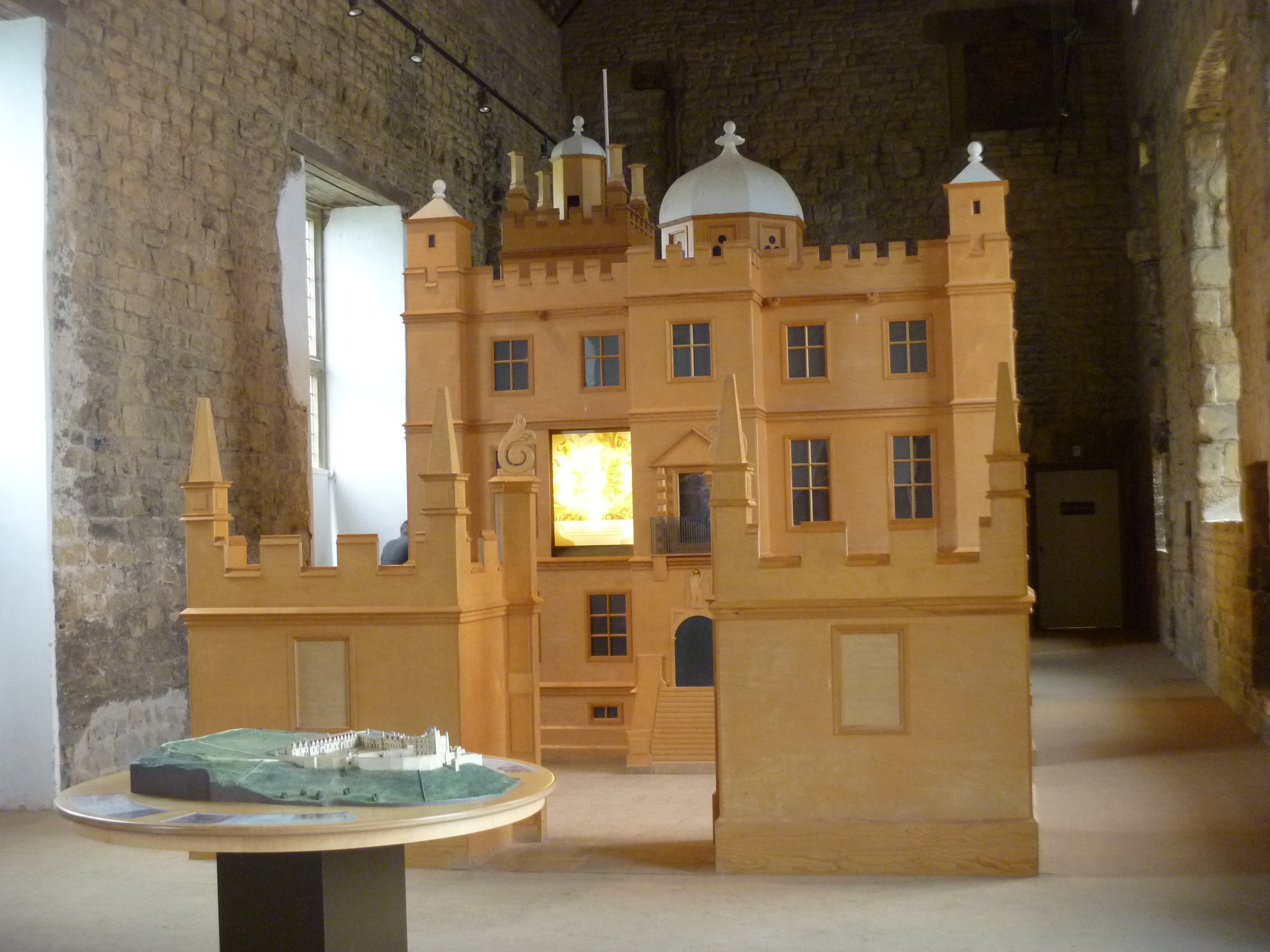
In the stables is an exhibition about the history of Bolsover and its place in English history, an excellent 15 min. video about The Little Castle and even a large model of it. We seemed to gain enough information from this room to make the audio guides superfluous.

Walk-in model of the Little Castle in the Stable

A walk around the Terrace Range, (with all the usual appointments of chambers and kitchens etc) and from where we should have had (but for the persistent fog) a long-ranging view over the valley and down towards nearby Hardwick Hall, lead us quickly to the romantic Little Castle itself.

Terrace Range and approach to The Little Castle

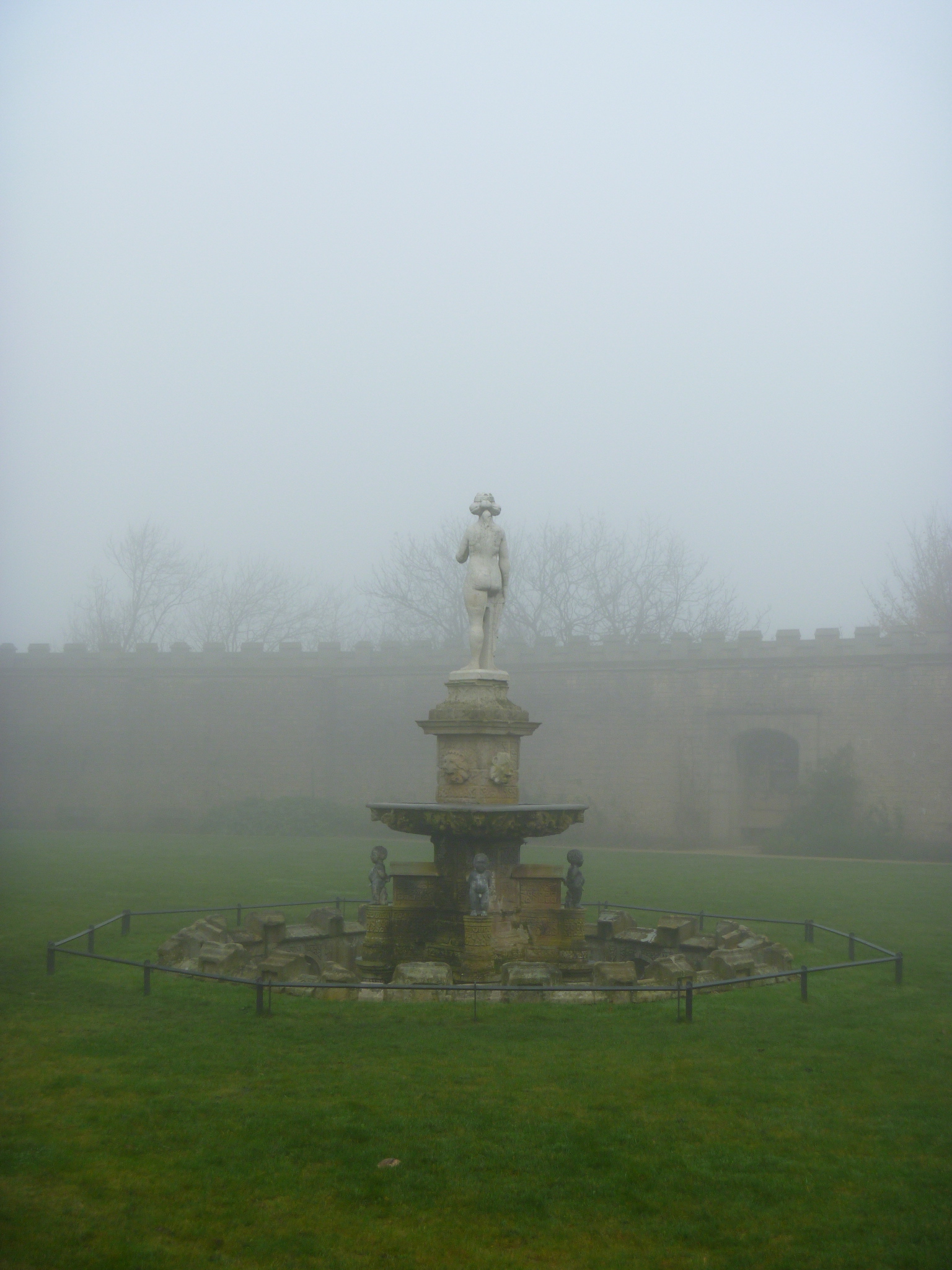
Here we saw for ourselves the incredibly preserved and restored artwork: the Pillar Parlour, the Star Chamber, the Marble Closet, the Bedchamber, Heaven and Elysium. This final chamber with elaborately decorated panelling depicting the heaven of the gods and goddesses of ancient Greece appropriately overlooks the garden and its Fountain of Venus.

Bolsover, I’ll be back on a sunny day to walk the terrace, admire the view, picnic in the gardens and relax in full view of your Venus fountain!