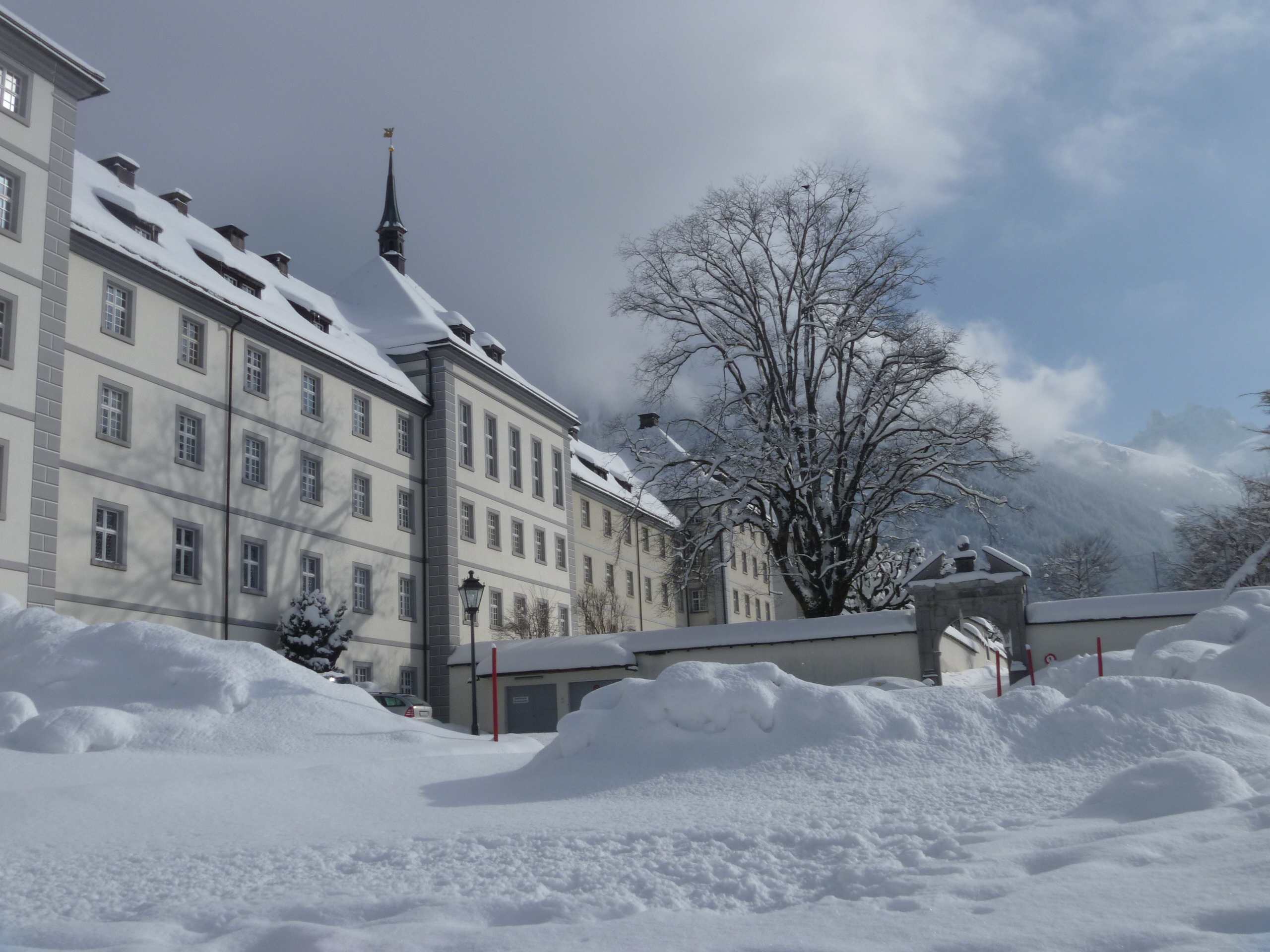
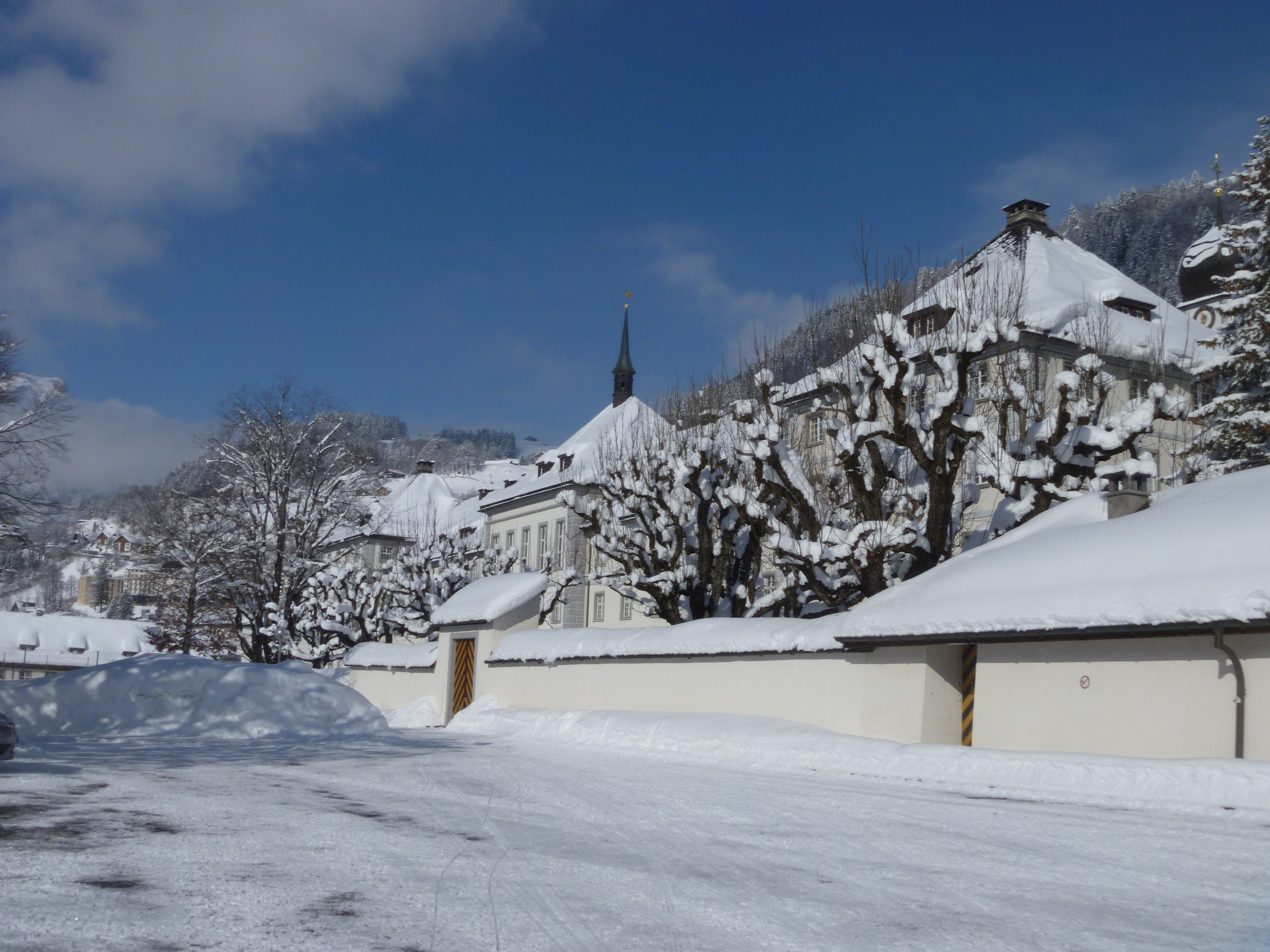
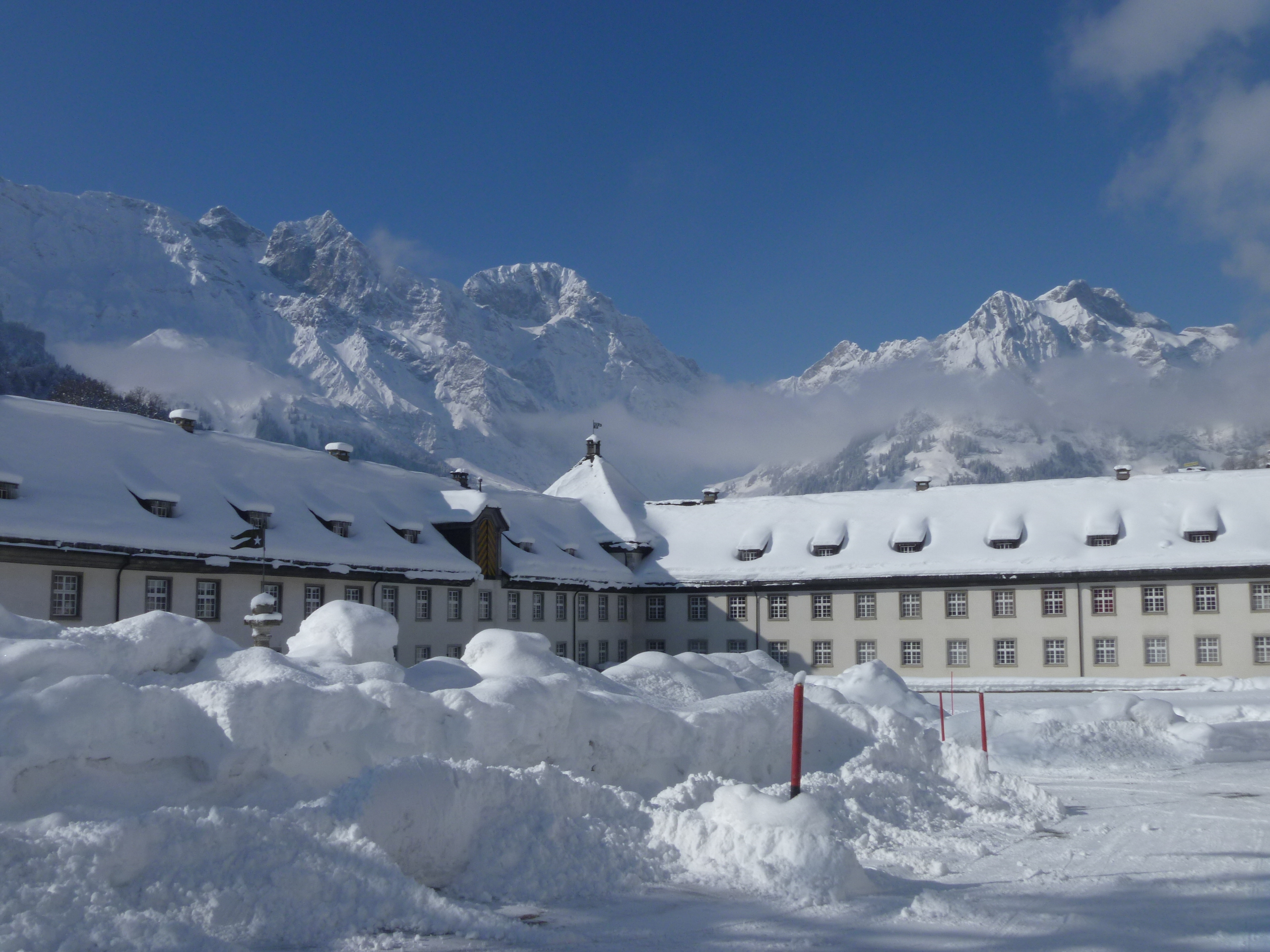
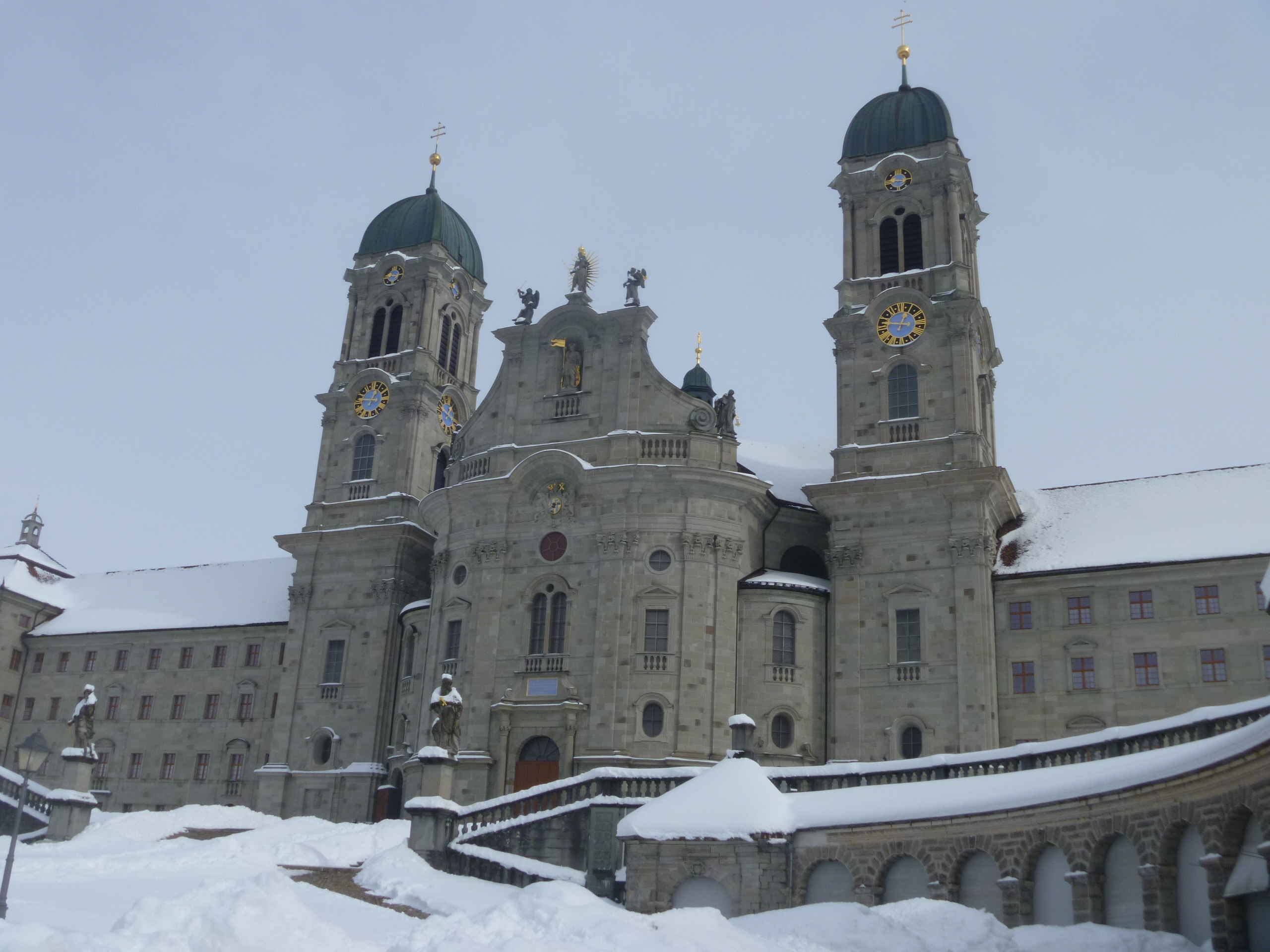
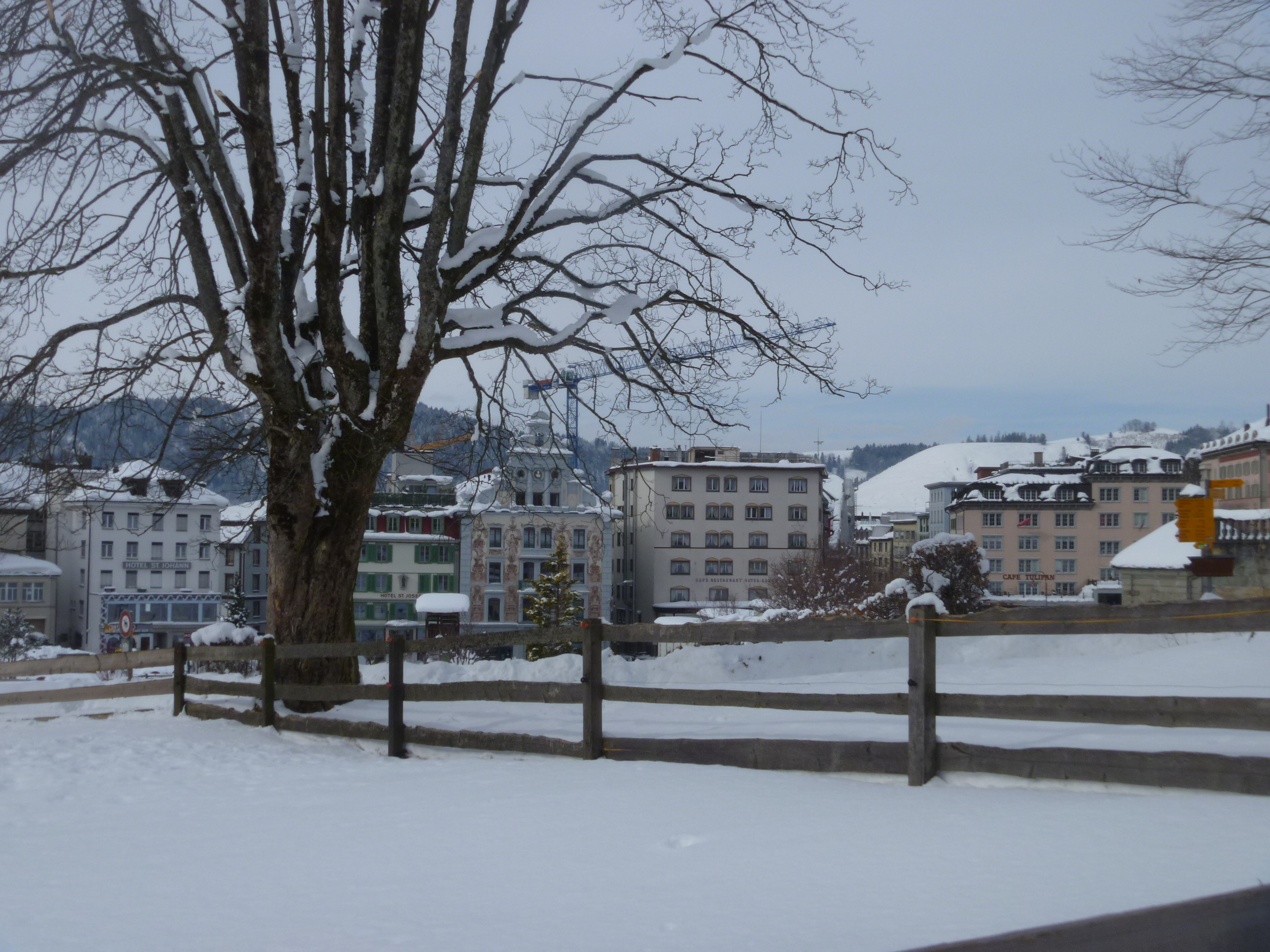
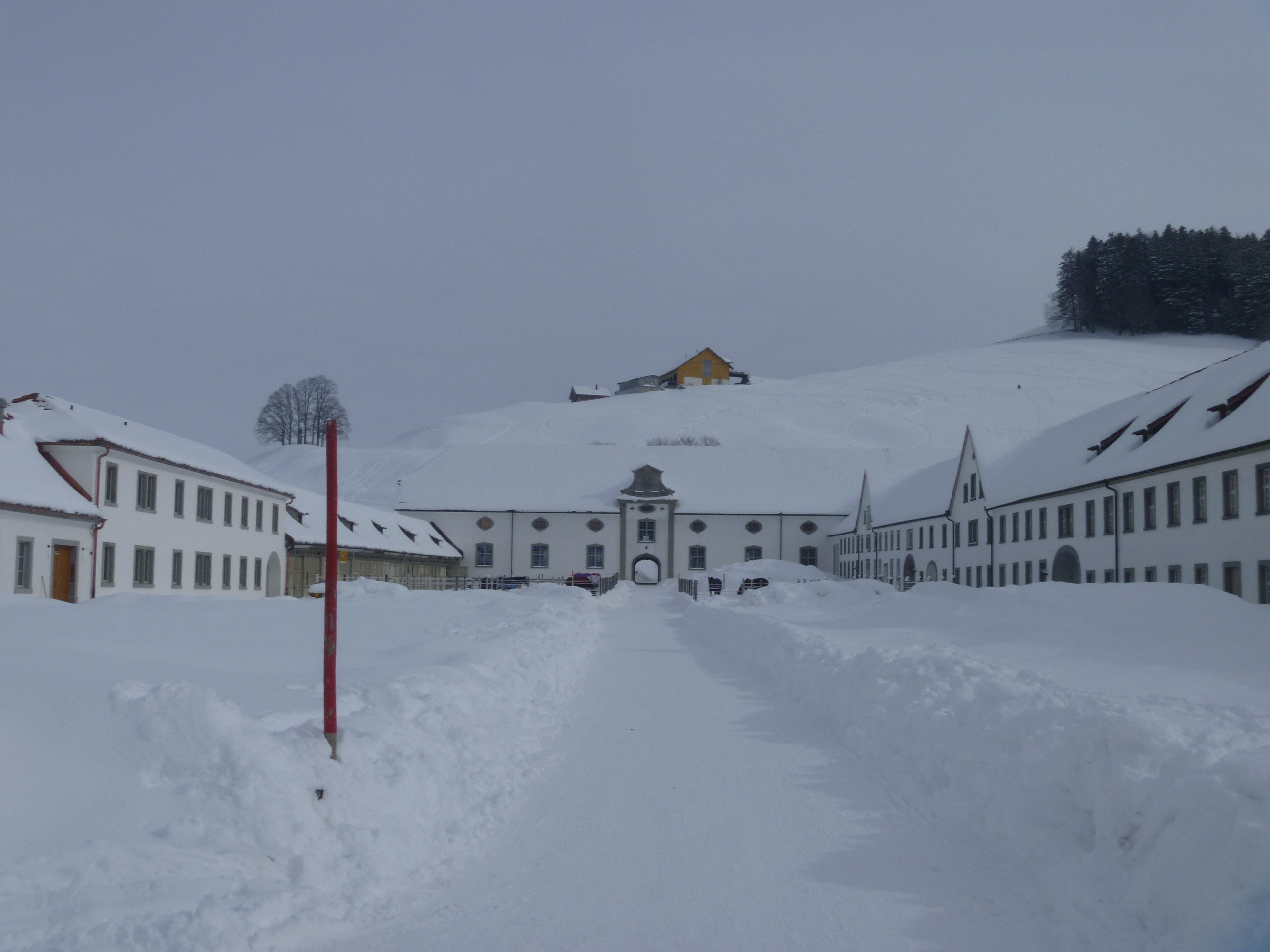
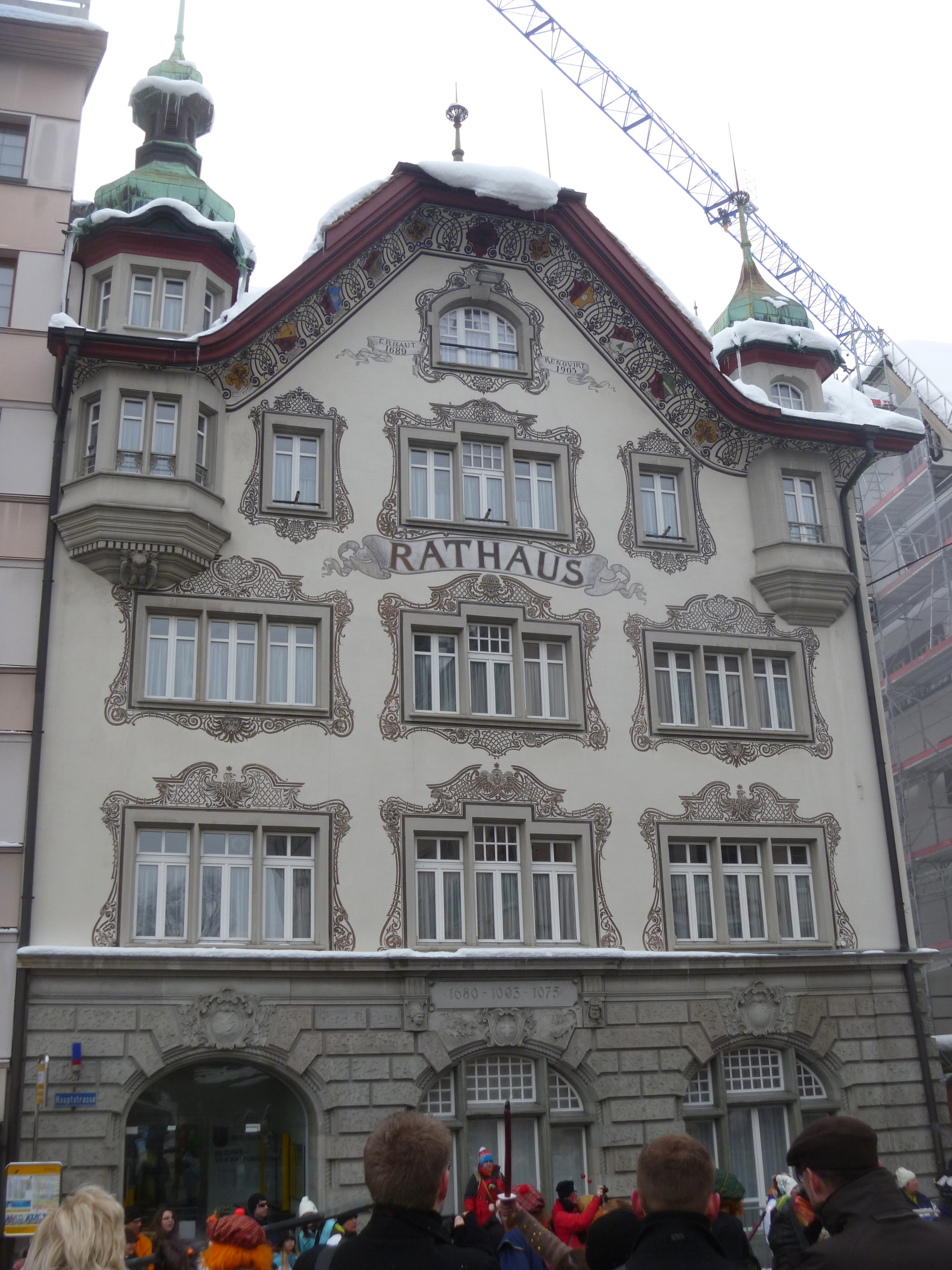
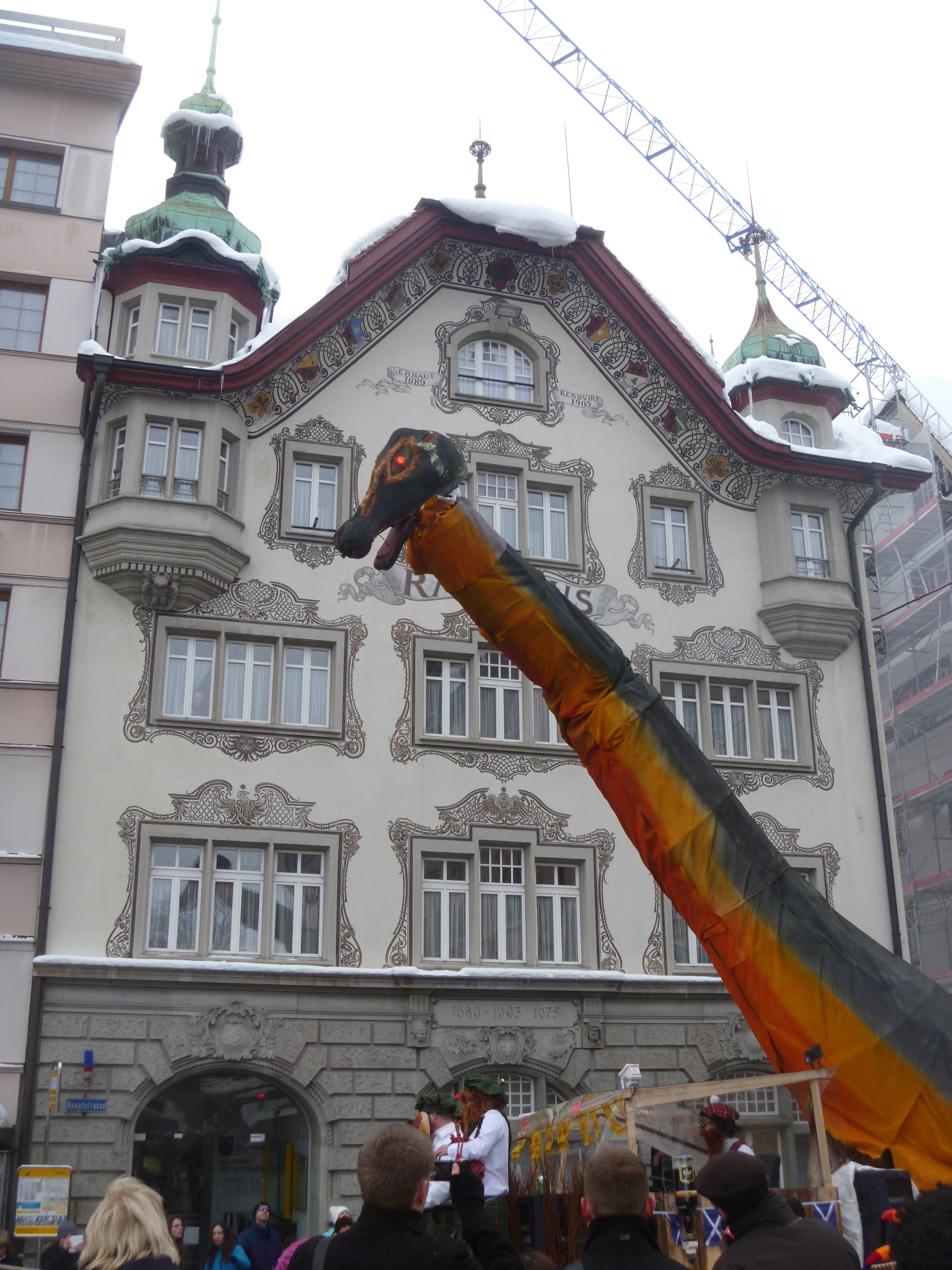
On my last full day in Switzerland, Ash Wednesday, Susanne and I drove up the valley from her home to the ski village of Engelberg which, like Einsiedeln, is also dominated by its abbey. S teaches in the Pfarrschule [parish school], in this case, secondary, attached to the monastery. It’s a co-educational school for day and boarding pupils.
There was no evidence on Ash Wednesday of the Fasnacht celebrations which must have been taking place earlier in the week. We were able to drive right up to the school and park in the snow-cleared car park.
The Snow-Cleared Car Park
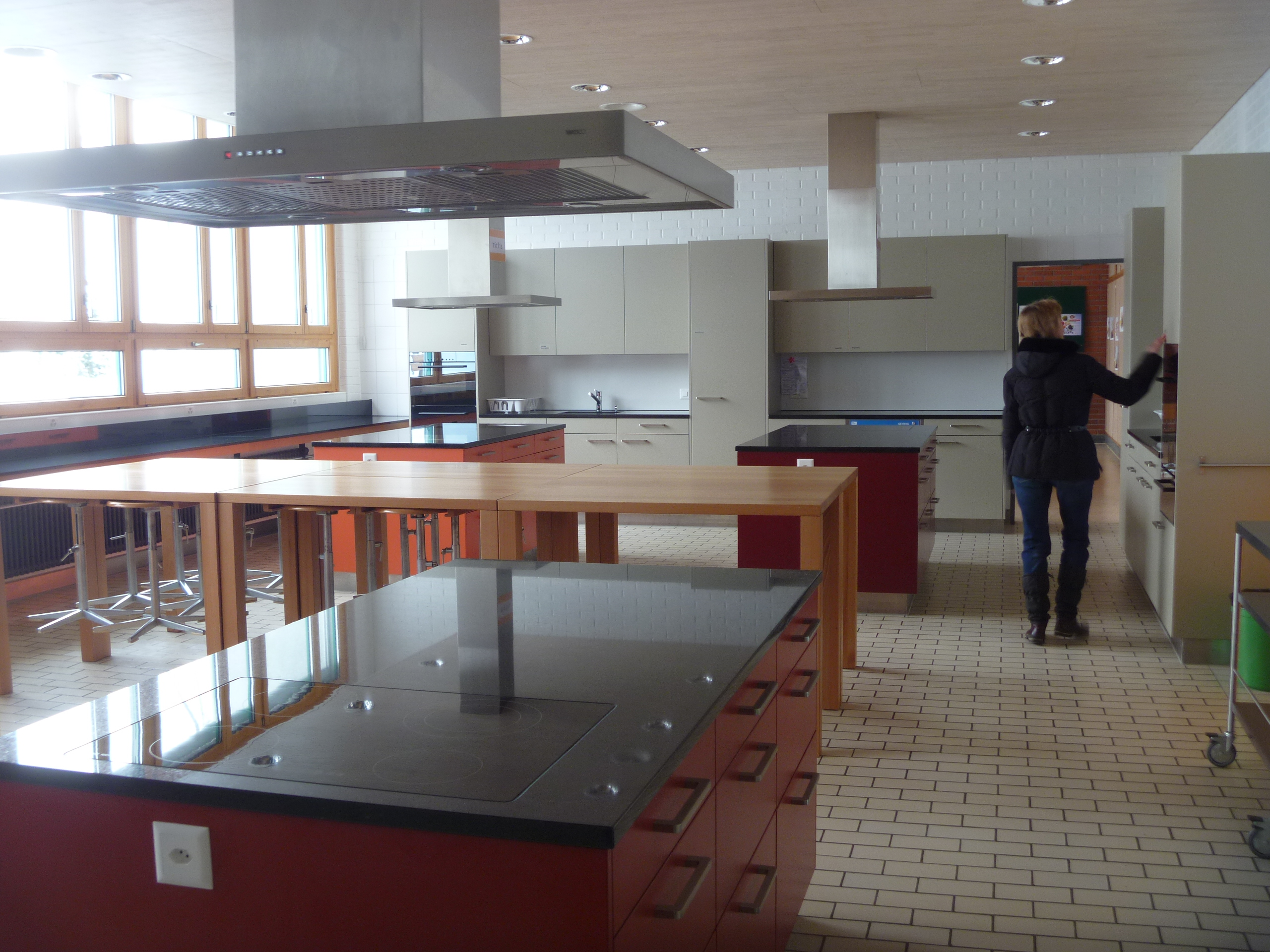
Before the service Susanne showed me around the monastery buildings and afterwards we visited her classroom and kitchens. She teaches home economics and her rooms are in a separate building from the main school.
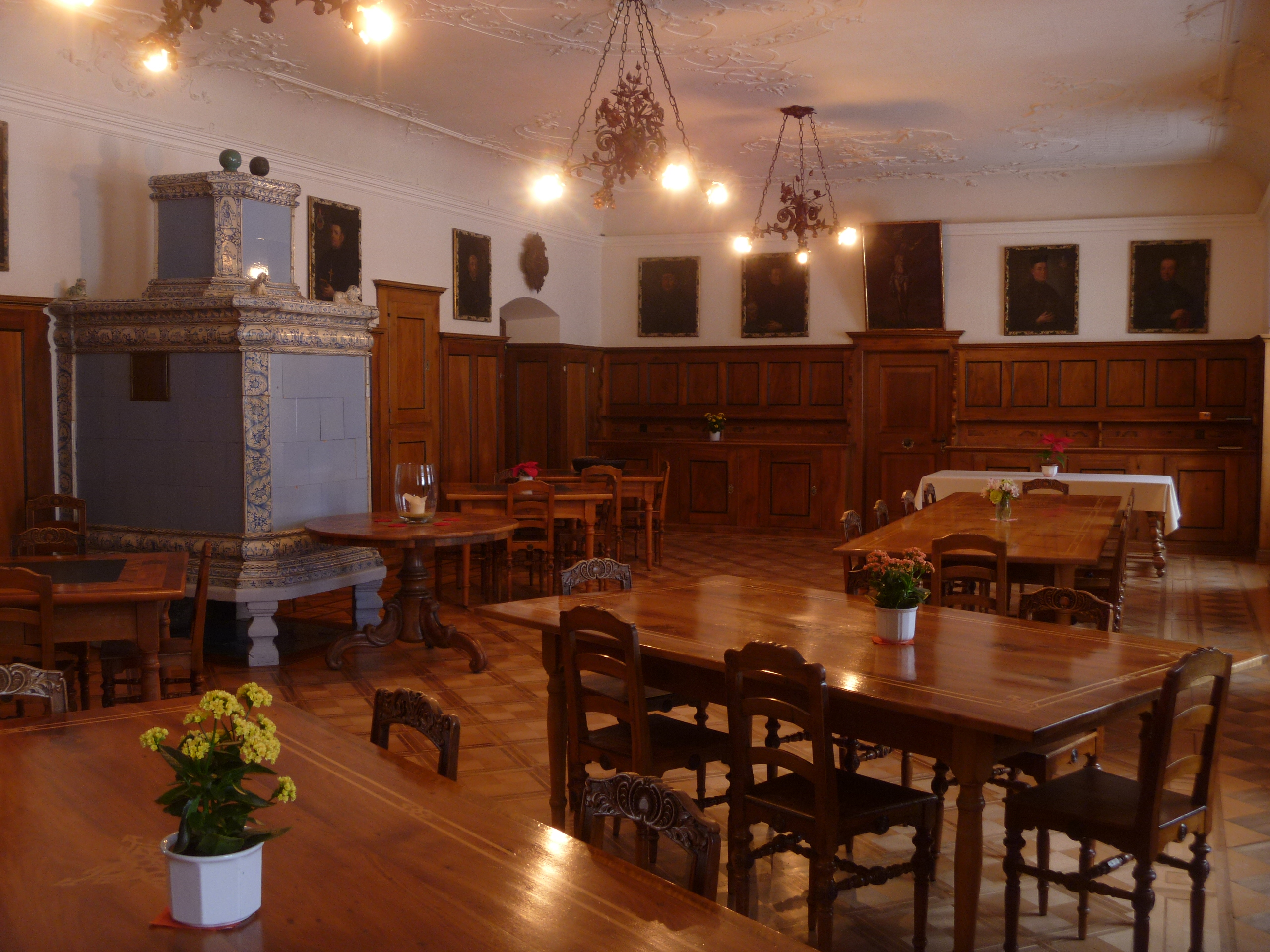
The staff dining room where we were to have had our birthday lunch
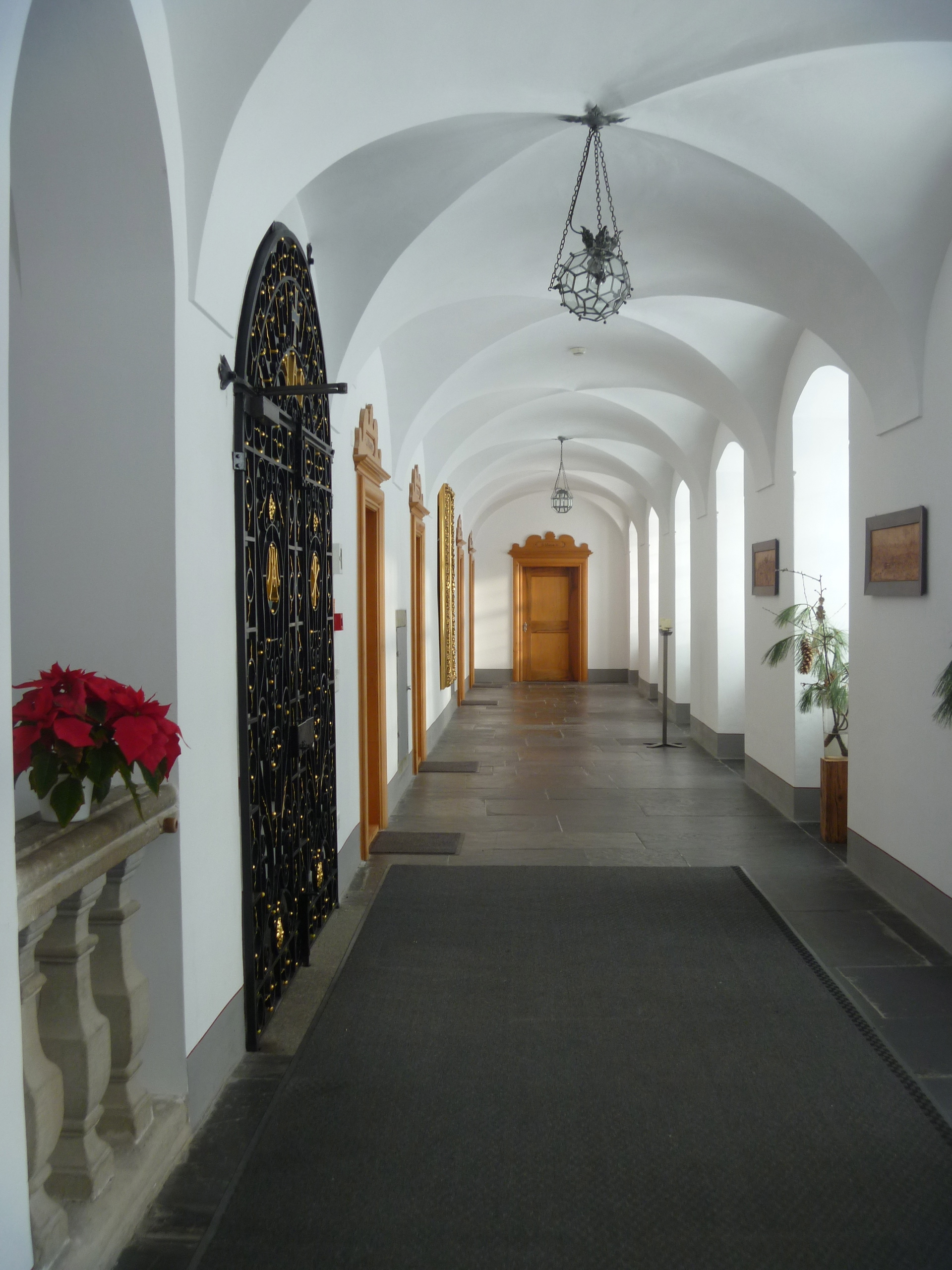
Inside the Kloster at Engelberg
The Domestic Science Department
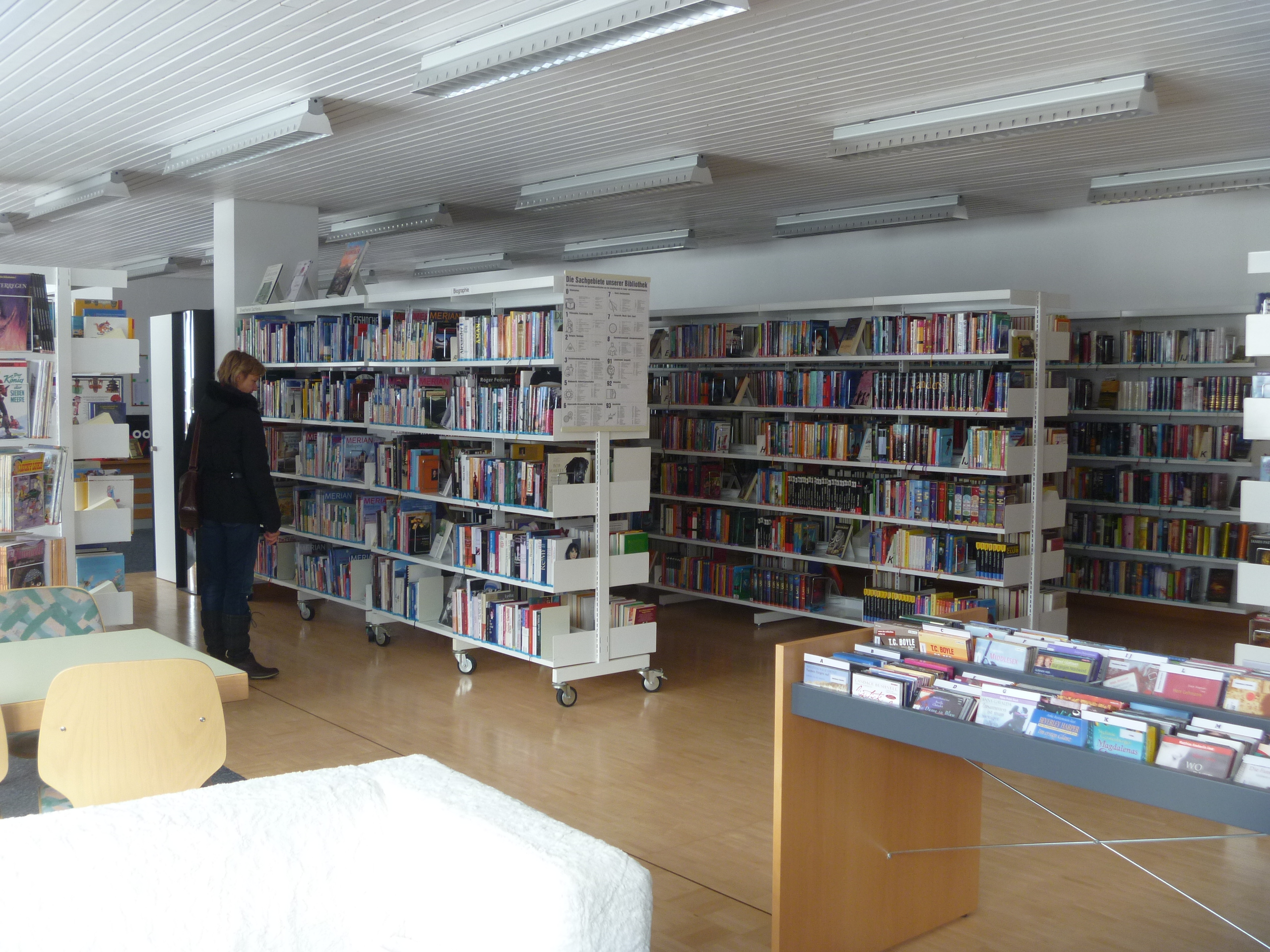
The Library serves both the school and the village
According to Karl Baedeker (1928) Mosbrugger was also responsible for the Engelberg parish church built in 1730-35. The Kloster here is also a Benedictine foundation (1120). Baedeker says (but he’s not referring to the library above!) :
“The valuable library (MSS, antiquities) is shown to male visitors only (apply to the porter). The school connected with the abbey has about 200 pupils.”
The Muirhead Guide (1923) says that “Women visitors are not admitted to the abbey buildings”.
How things have changed nowadays from 90 years ago.
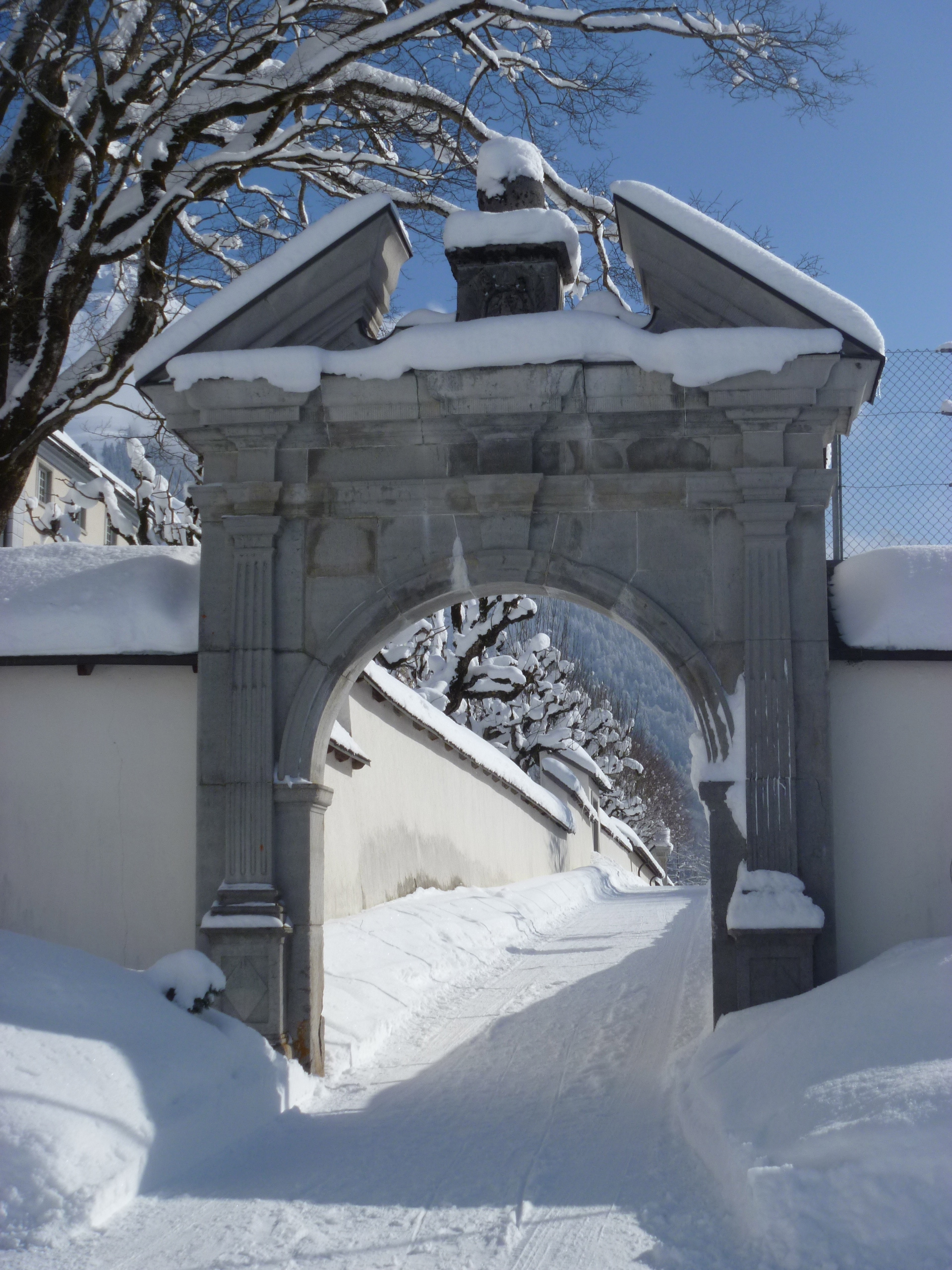
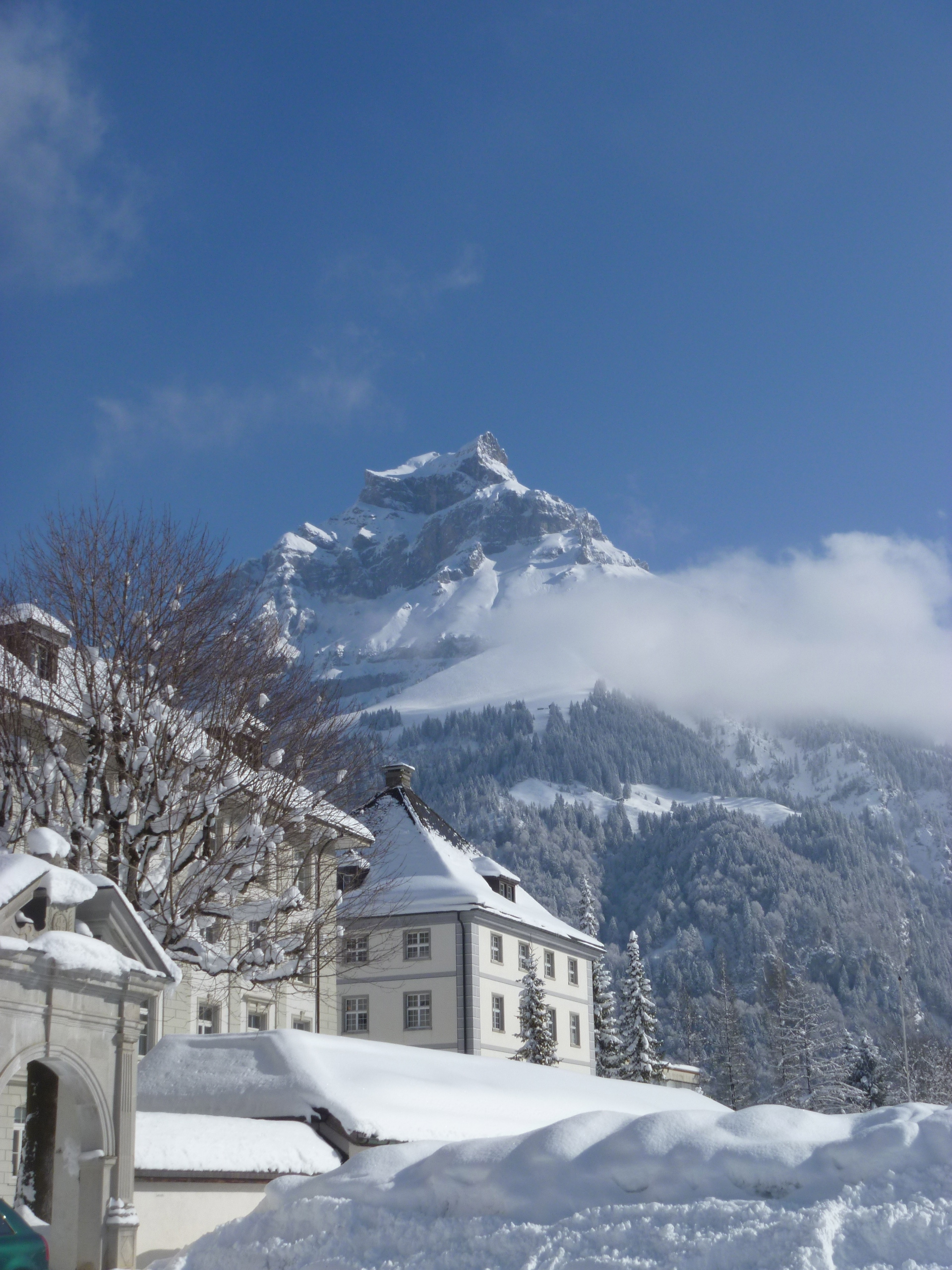
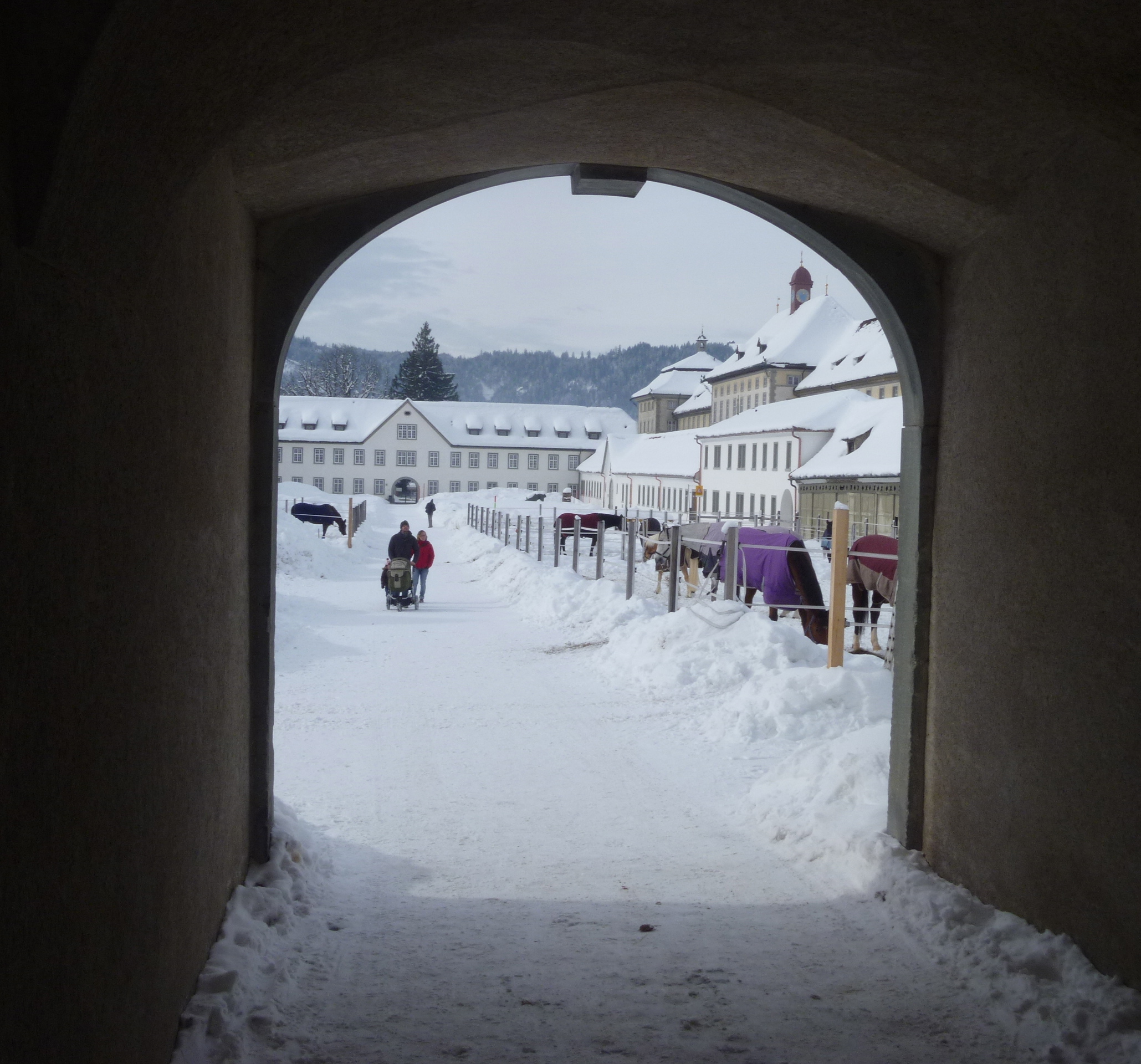
When we emerged from the school the sun had come out and everything looked so beautiful!
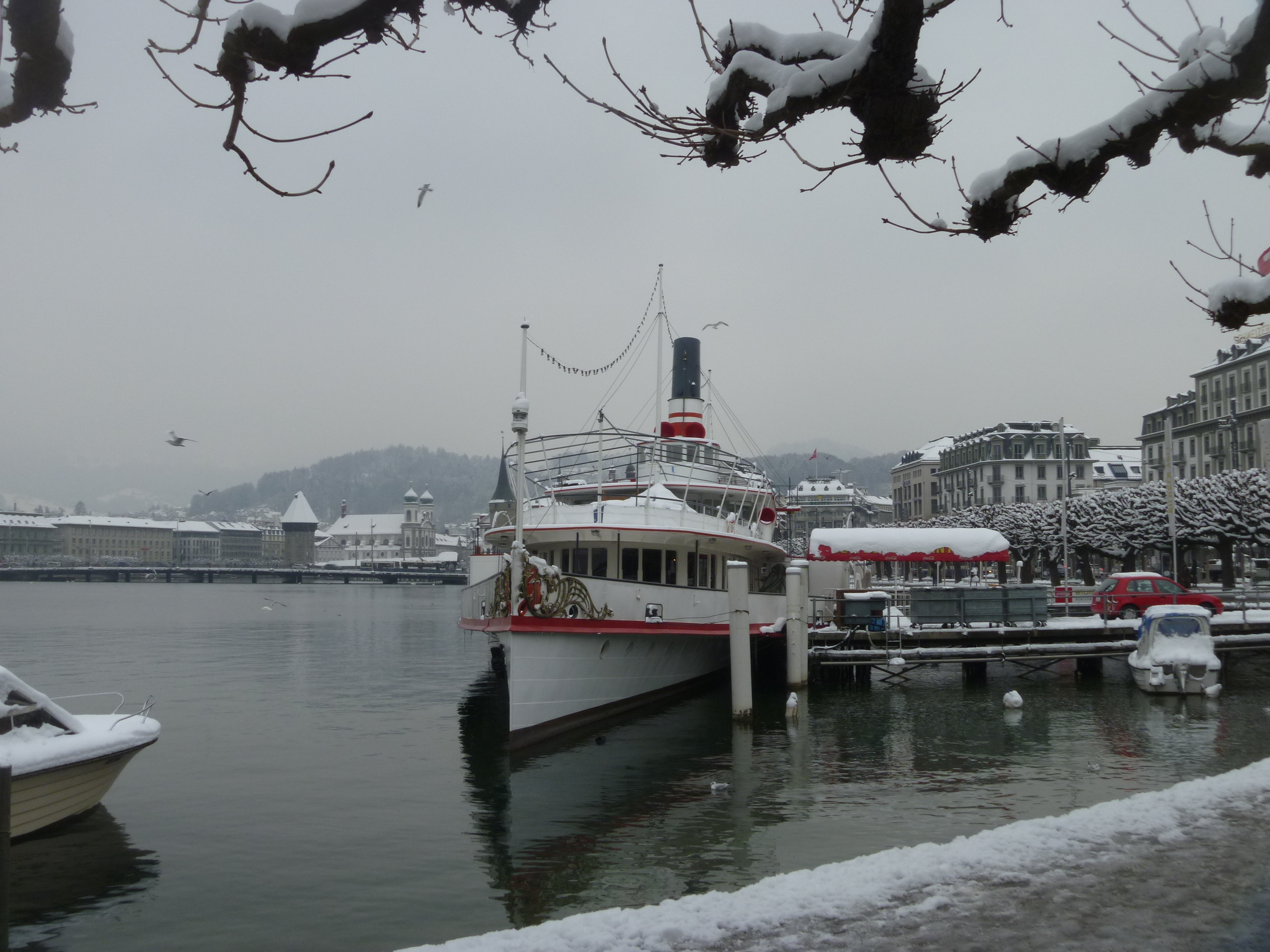
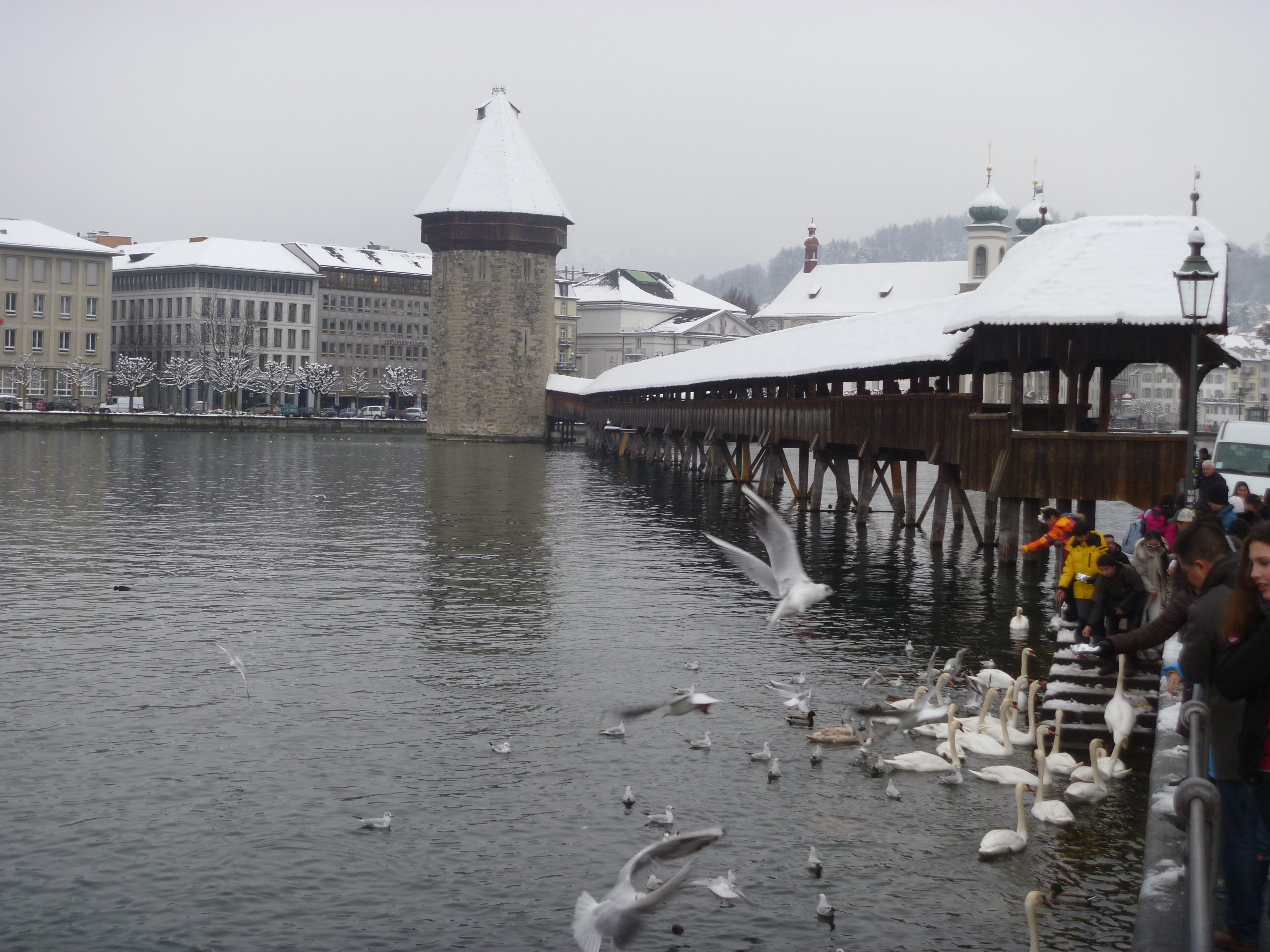
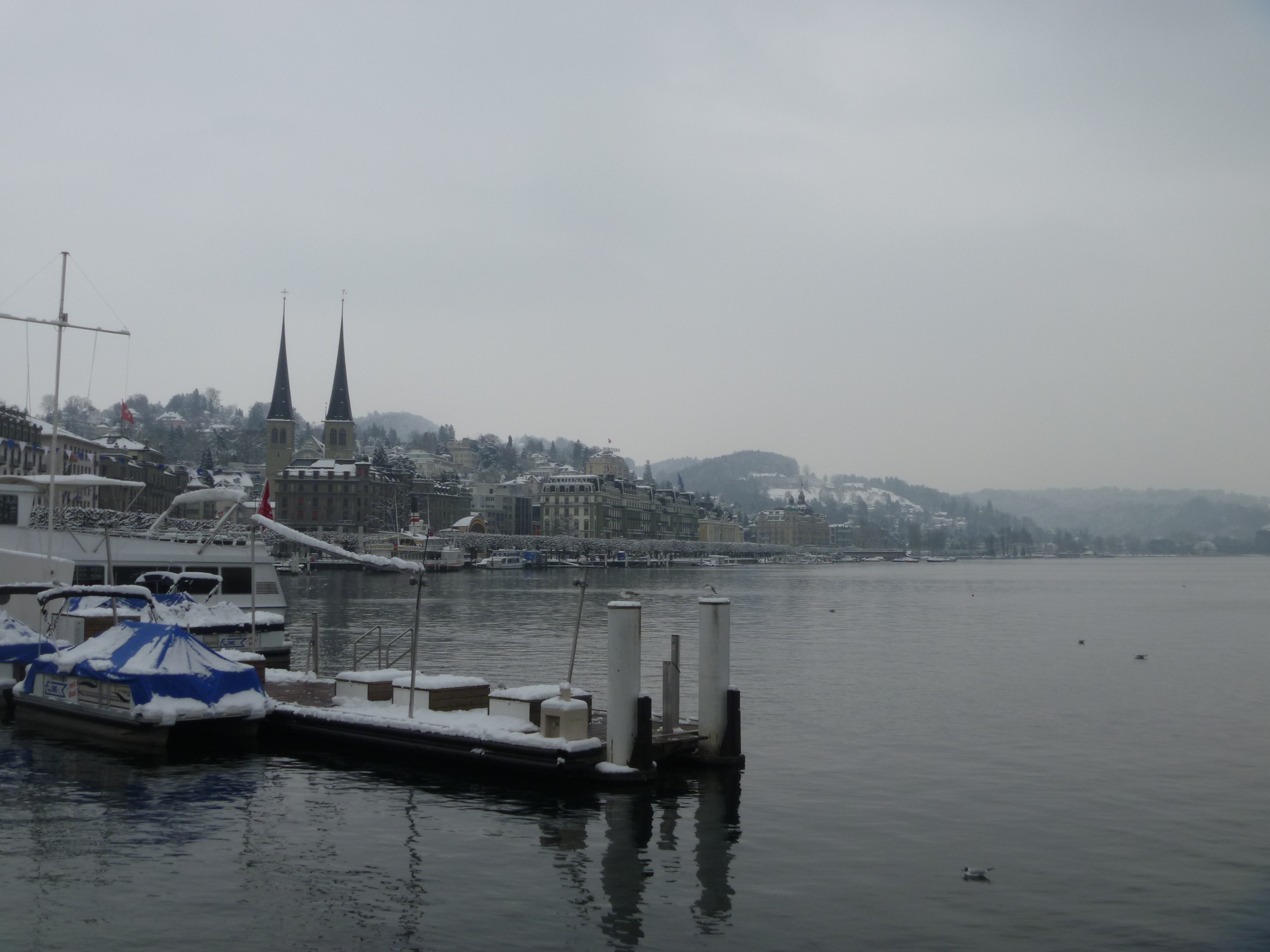
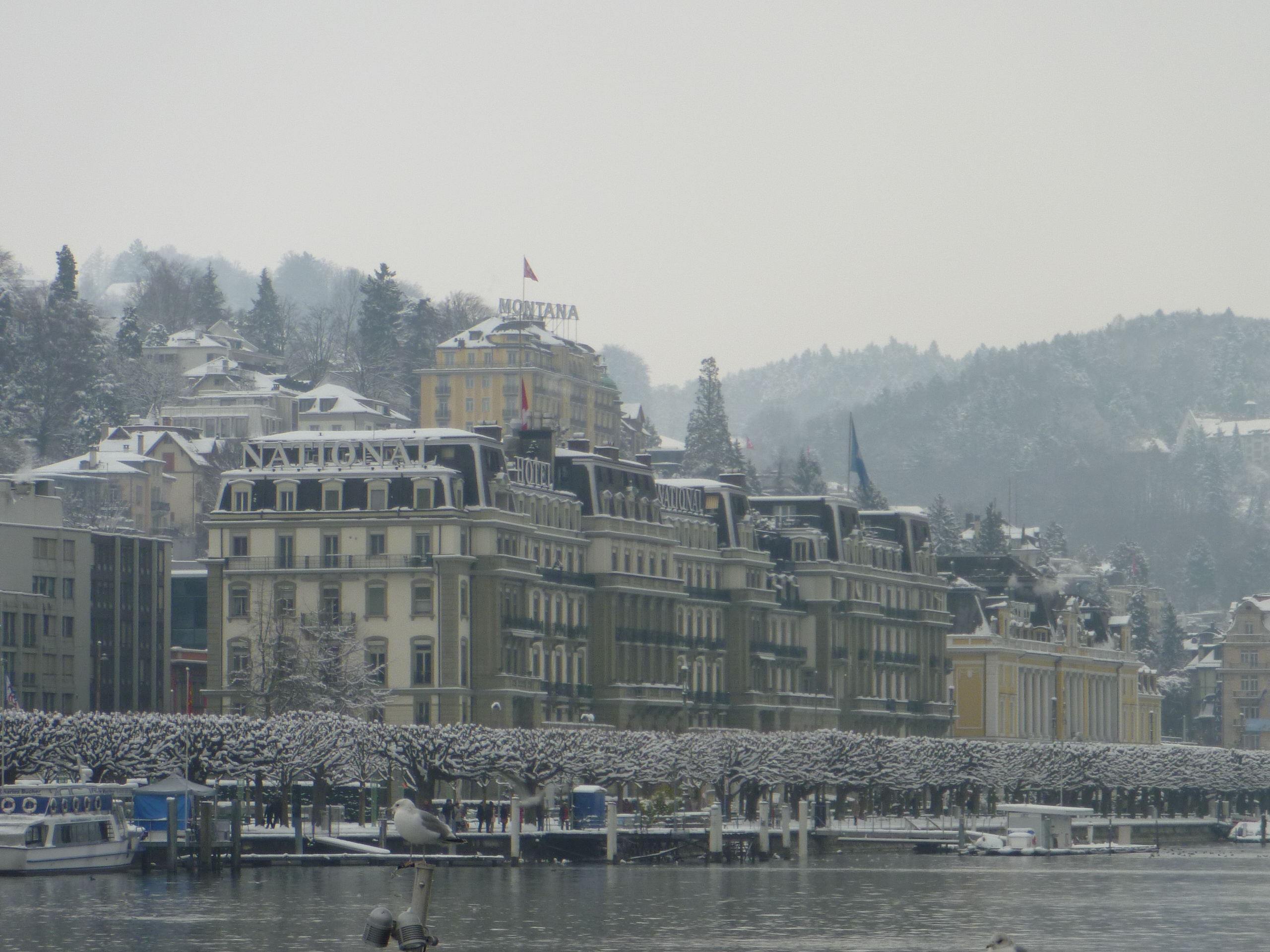
However, the sunny day and blue skies only seemed to apply in Engelberg as we spent the afternoon under very dull skies in Lucerne.
A Lake Steamer at Lucerne under heavy skies
The Kappellbrücke, Lucerne
Lucerne and Lake Lucerne
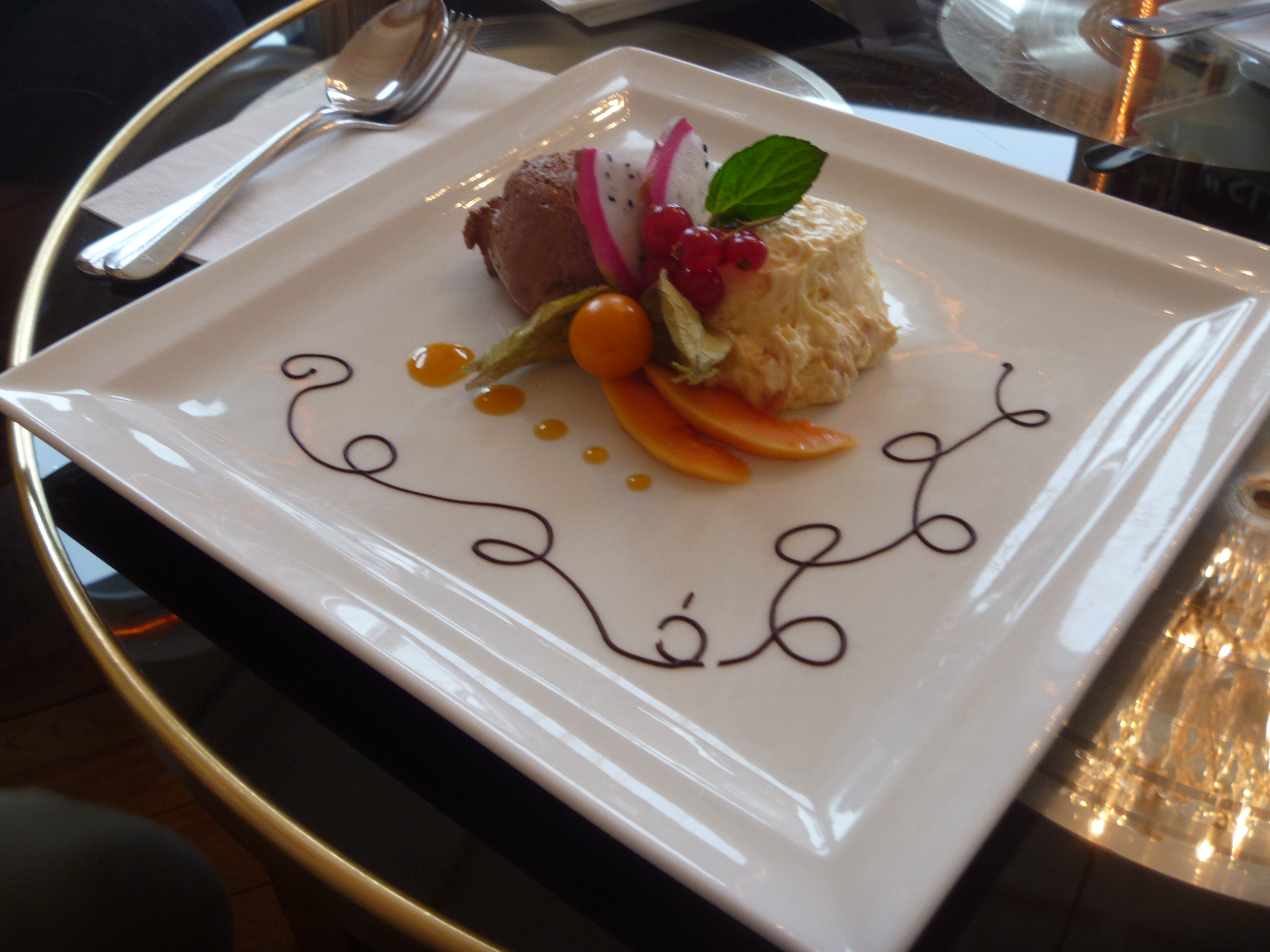
However, an afternoon tea and dessert at The Art Deco Hotel Montana was enough to thoroughly raise the spirits!
This recent visit to Switzerland came about following an invitation in January to join my friend Susanne for her birthday celebration to be held at the Engelberg Monastery a few miles from her home. Sadly, a close family bereavement meant that the party was cancelled and there was to be a family memorial service followed by lunch on the Sunday. This being the case, I stayed for a few days in Bern; only joining S and family later on the Sunday.
Susanne is a teacher at the school attached to the Engelberg Kloster [monastery] and as it was ‘Fasnacht‘ like most schools in the Catholic Cantons of Switzerland school was on half-term holiday. This gave us a few days to spend together and on the first one we travelled to Einsiedeln the home of another impressive monastery and church not too far from Lake Zürich.
The drive, which was to be long enough anyway, was extended quite considerably due to road closures and diversions. ‘Fasnacht’ parades were taking place in every town, village and hamlet – including, when we arrived there, Einsiedeln.
The town of Einsiedeln from the abbey
The vast Monastery and abbey church dominate the small town of Einsiedeln. They serve as a place of pilgrimage – for here is the Chapel of Our Lady, The Black Madonna – and are situated on one of the Swiss paths that lead to the Way of St James de Compostella [Jakobsweg]. I’ve written before about the St James Way here and here.
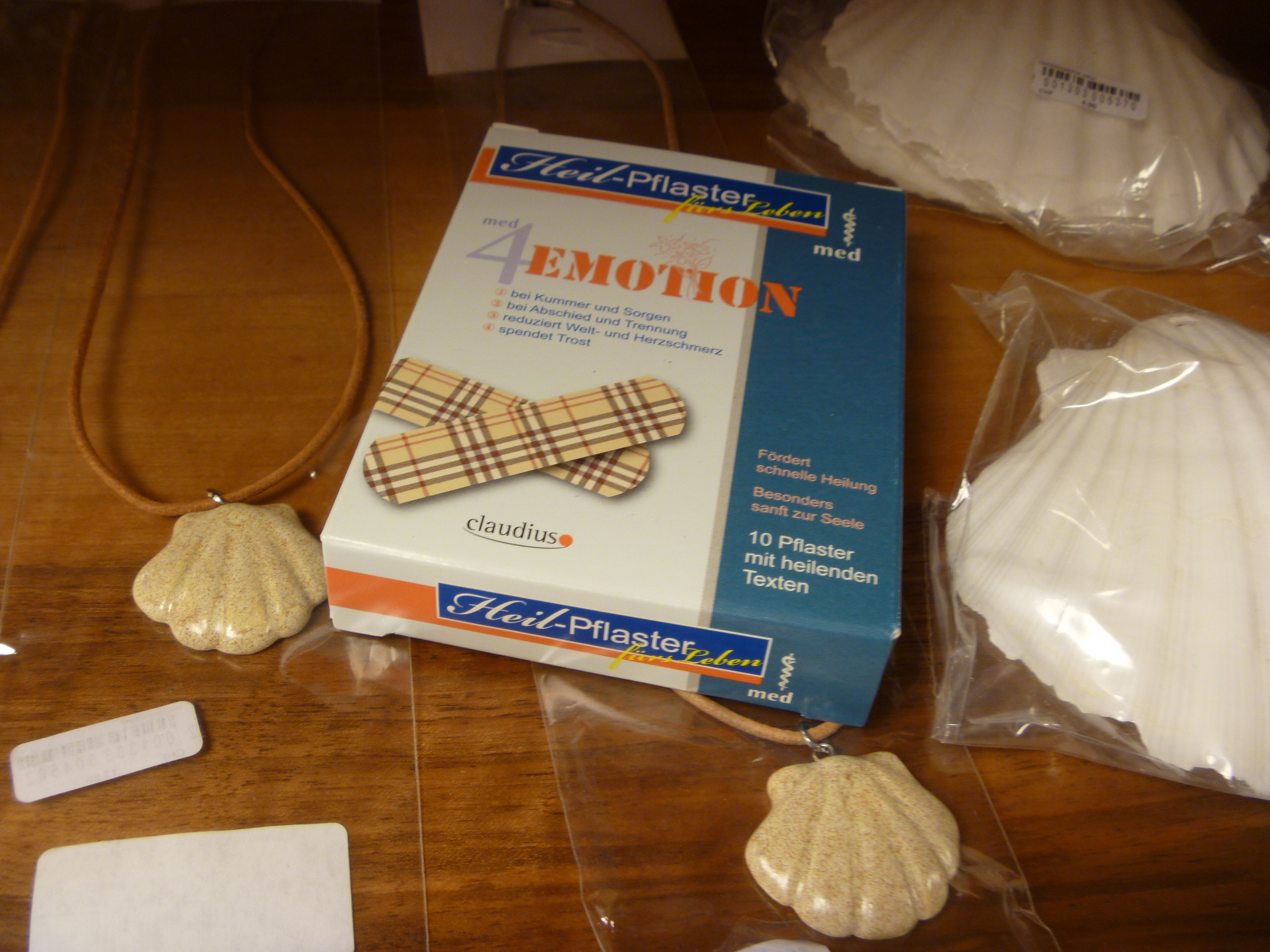
Special “St James Way” ‘plasters on sale in the shop. Burberry design??
Let me quote from the 1928 edition of Baedeker’s Switzerland. I’ve enjoyed reading the entries in old Baedeker and Muirhead Guides and comparing with my own experiences.
“Einsiedeln, or Notre-Dame-des-Ermites, … the most famous pilgrim-resort in Switzerland, has a Benedictine Abbey, founded in c.948, on the site of the well of St Meinrad, who was murdered in 861. This abbey was richly dowered with lands by the Emperors Otho II (972) and Henry II (1018) and became an independent principality of the Holy Roman Empire. The abbey was once ruled y an Anglo-Saxon abbot, St Gregory (d.996). The chief festival (“Engelweihe”) is on Sept. 14th.
… The abbey, occupying an area of 16 acres, was rebuilt in sandstone in 1704-18, by Kaspar Mosbrugger. … The CHURCH, in the centre of the slightly curved W. front, which 446′ long, with its two towers, was erected in 1719-35, also from the plans of Mosbrugger, and is the best example of the ‘Vorarlberg School’ in Switzerland.”
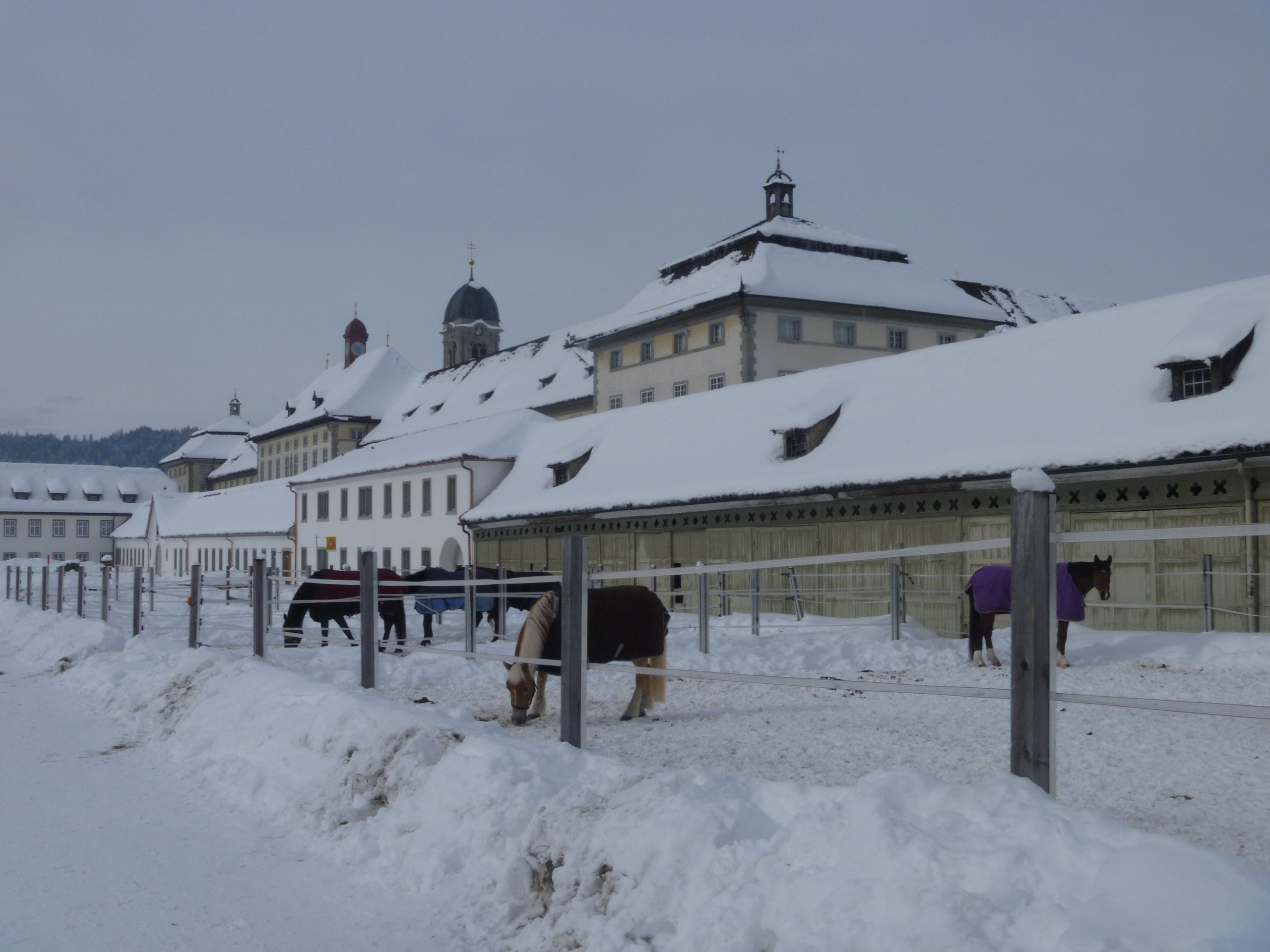
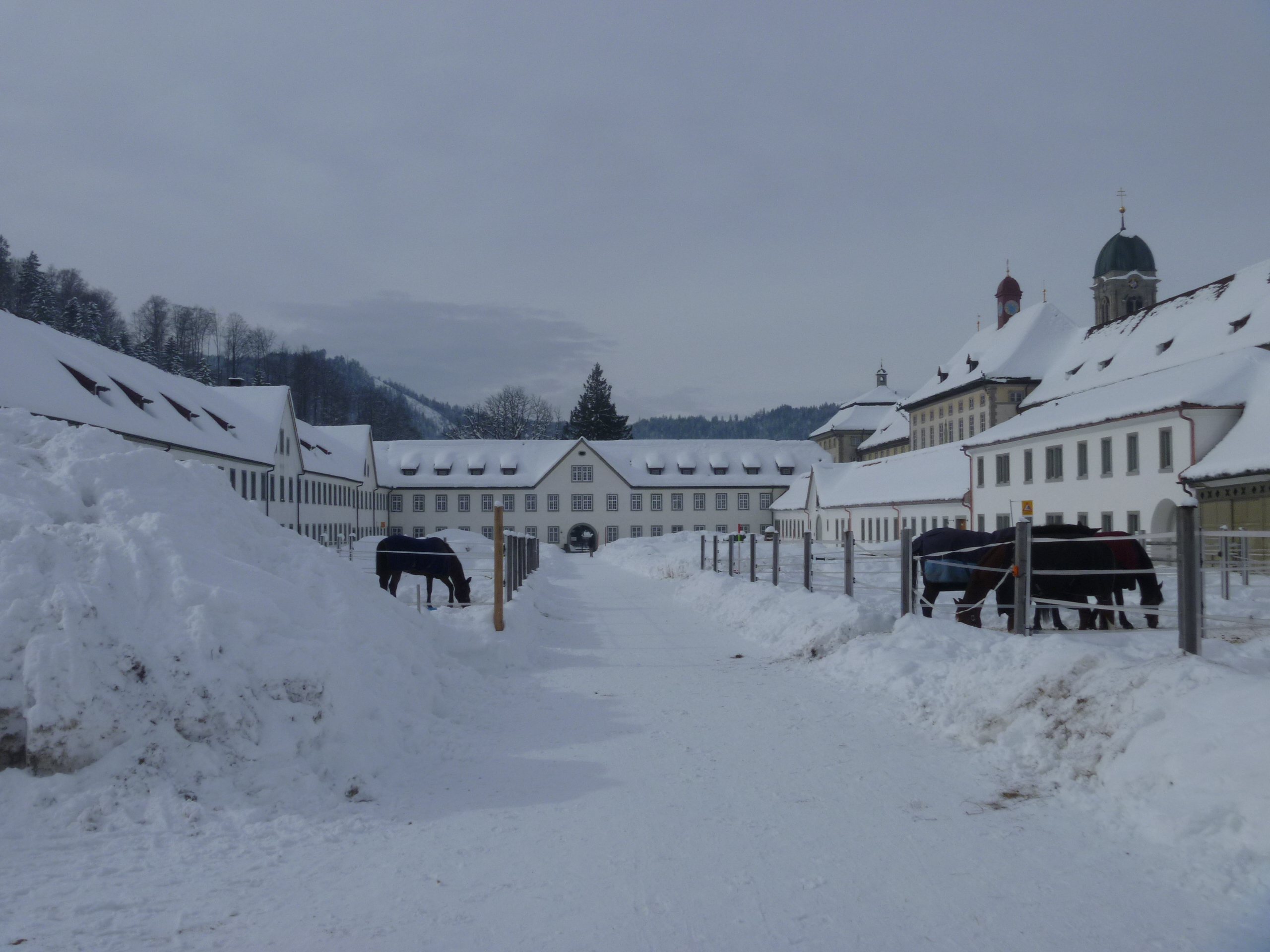
No photography is allowed inside this over-the-top Baroque church. But the public are allowed to enter the precincts and inspect the horses of the oldest stud farm in Europe that is still working. The stables were built in the 1760s. The horses (the Einsiedeln breed) – apparently famed throughout Europe – are known as “Cavalli della Madonna”, or The Madonna’s horses.
The Einsiedeln Horses in the Snow
From the Abbey it’s just a few paces down into the town where we had an apple tart ‘lunch’ and then watched part of the amazing Fasnacht parade. As you might guess, the cold soon got to us and before long we made our way back to the car and home. Not being as tough (or filled with Glühwein??) as the participants.
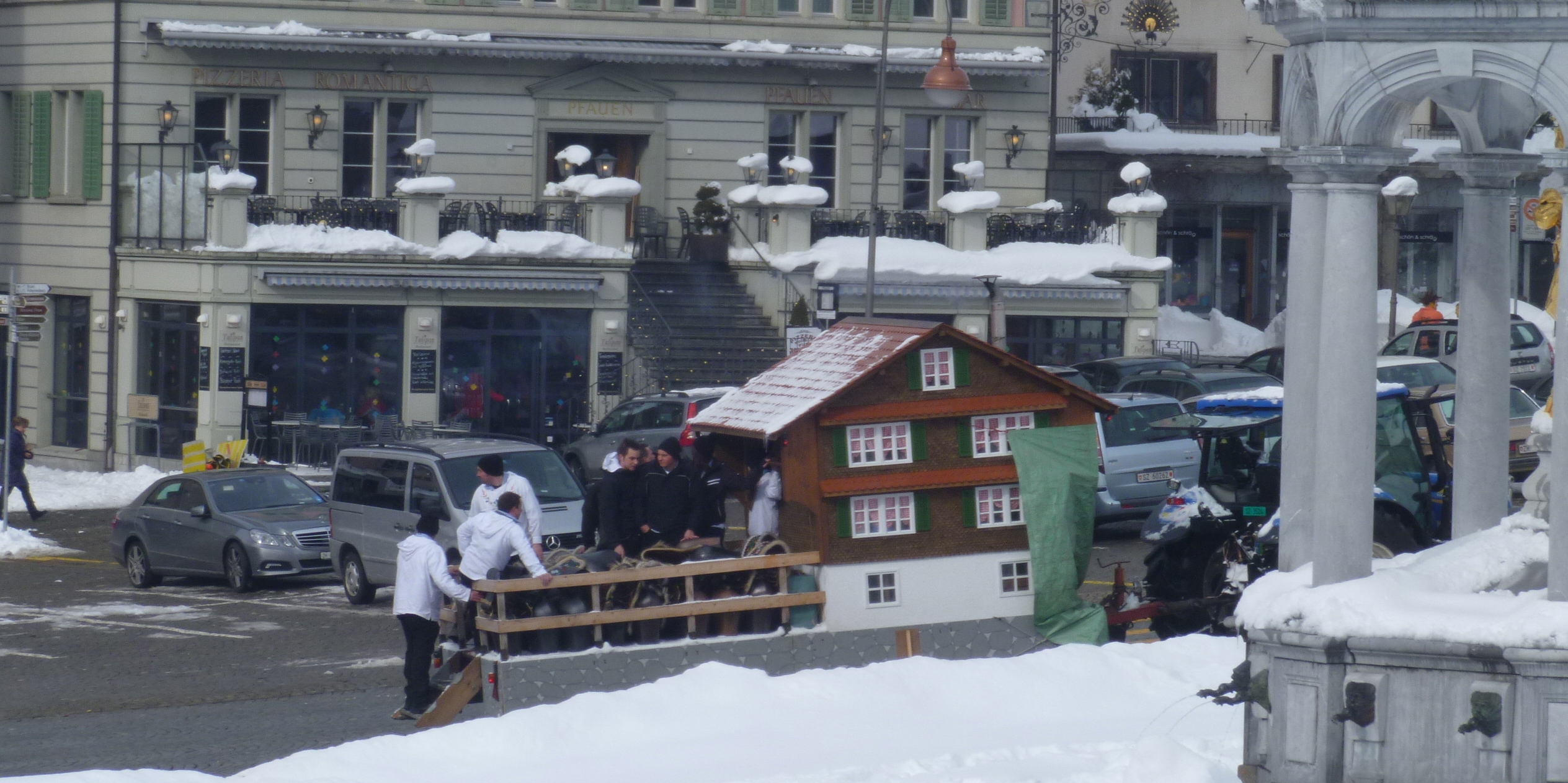
Moving Chalet?
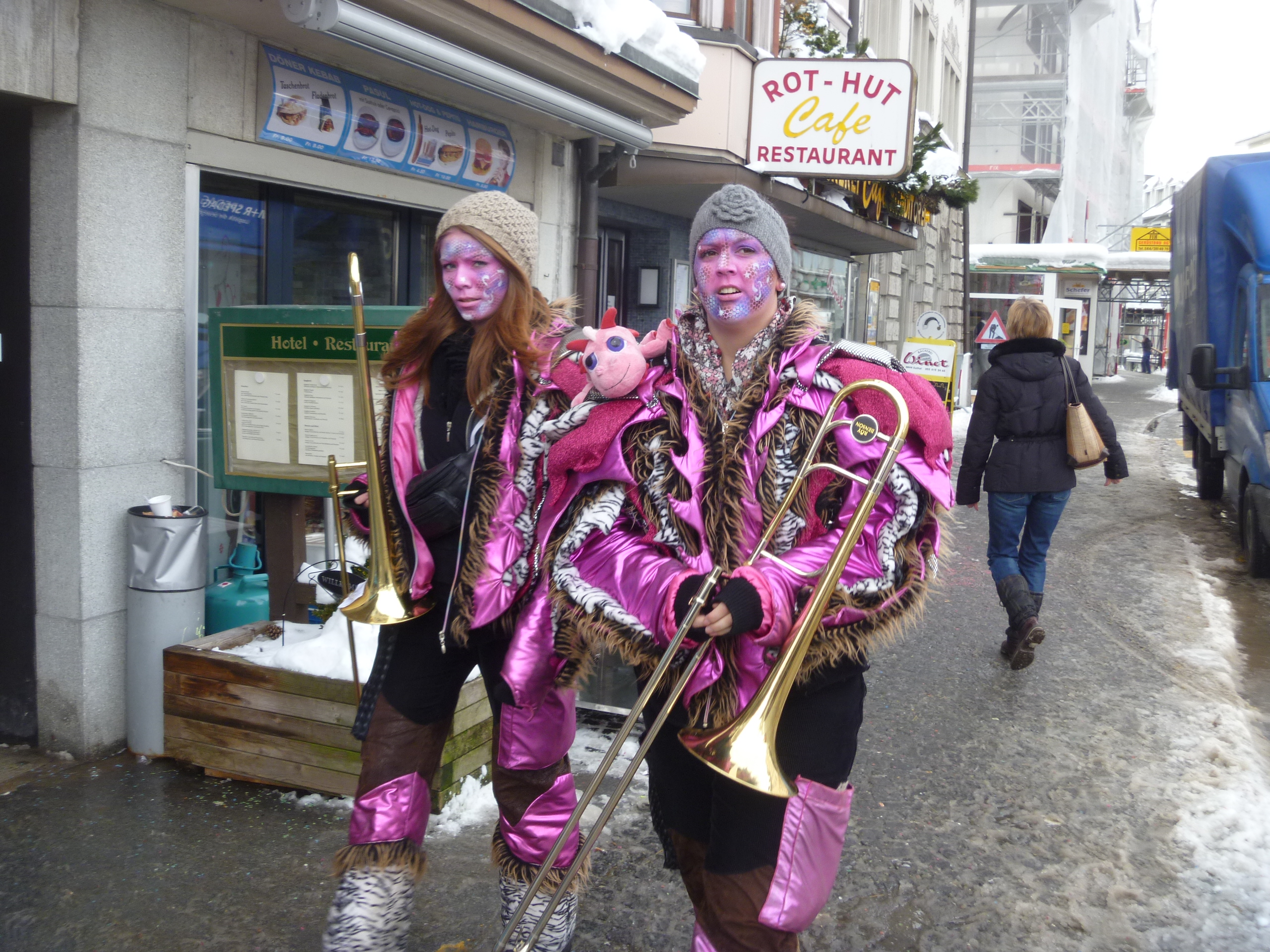
The outfits of the musicians brighten up the day
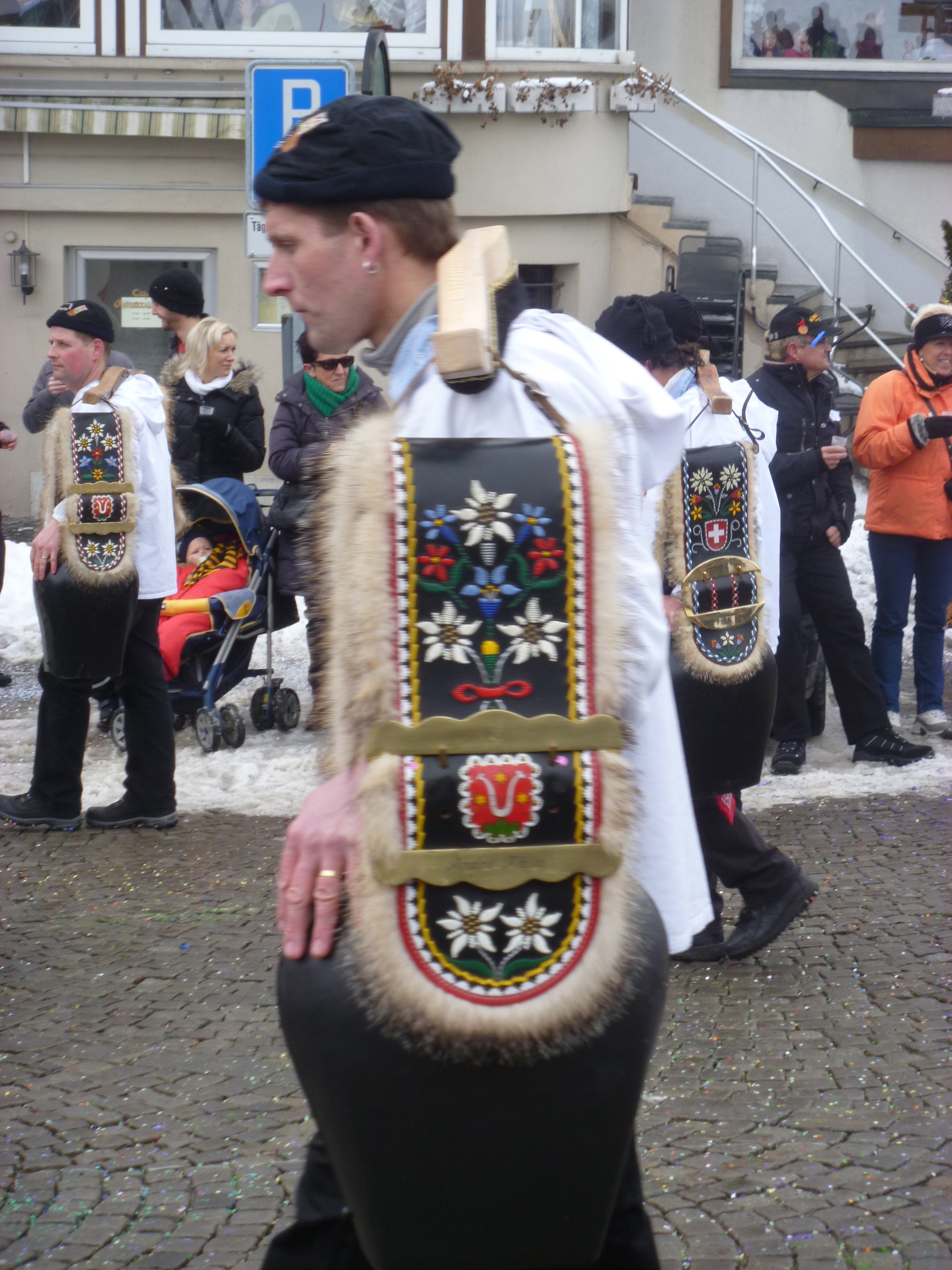
I just had to come across cow bells at one point during my visit – and this was it!
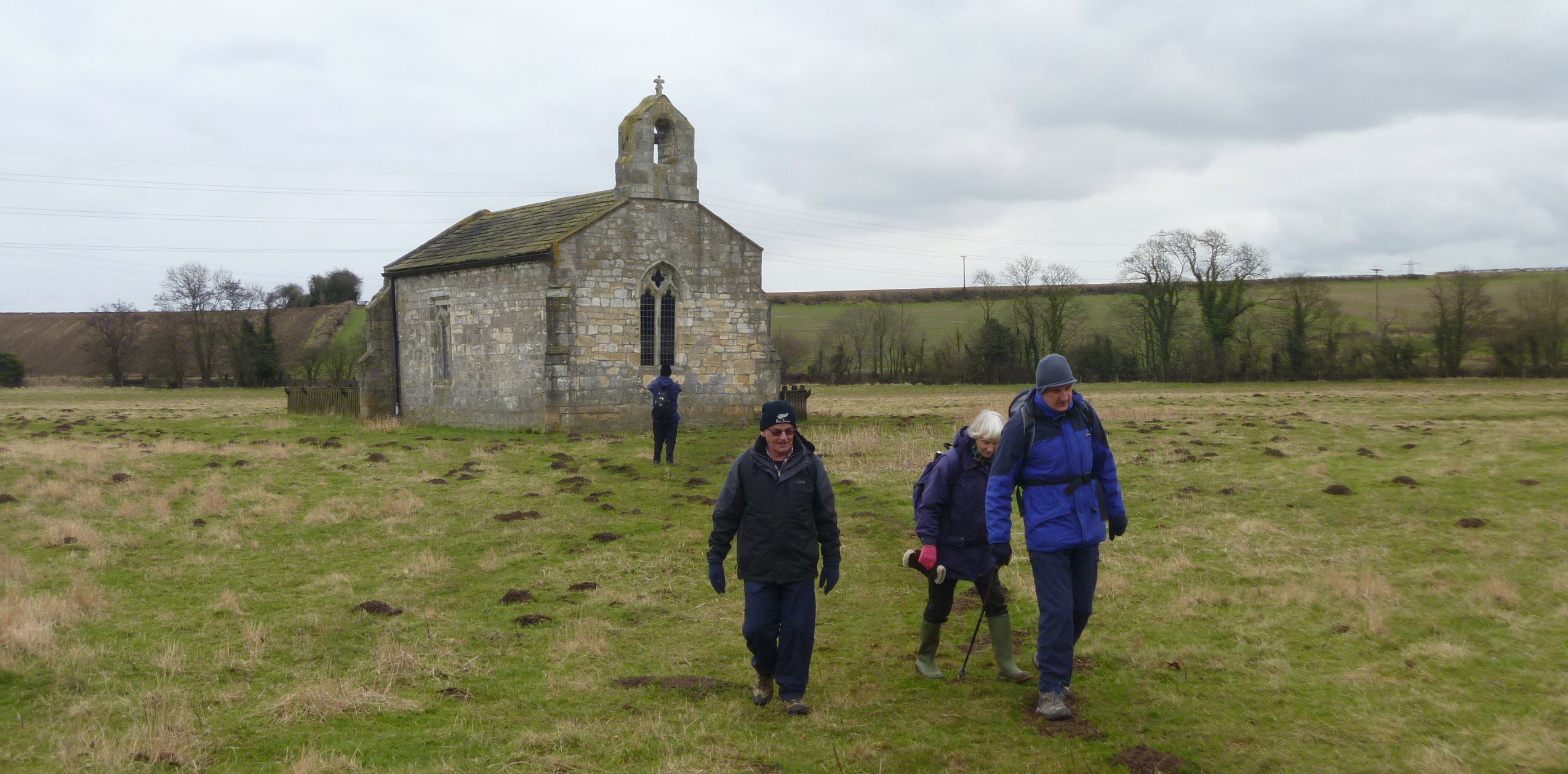
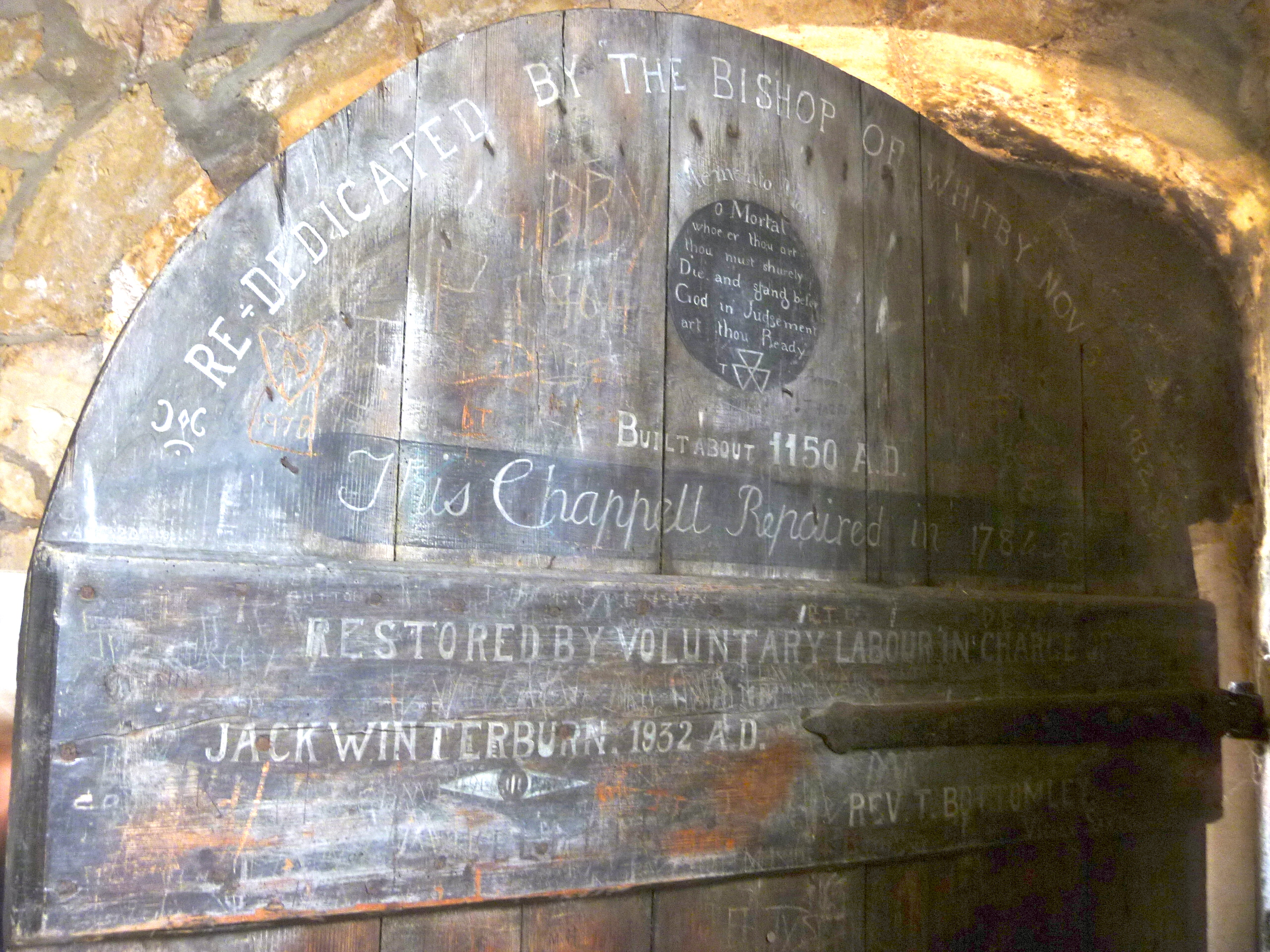
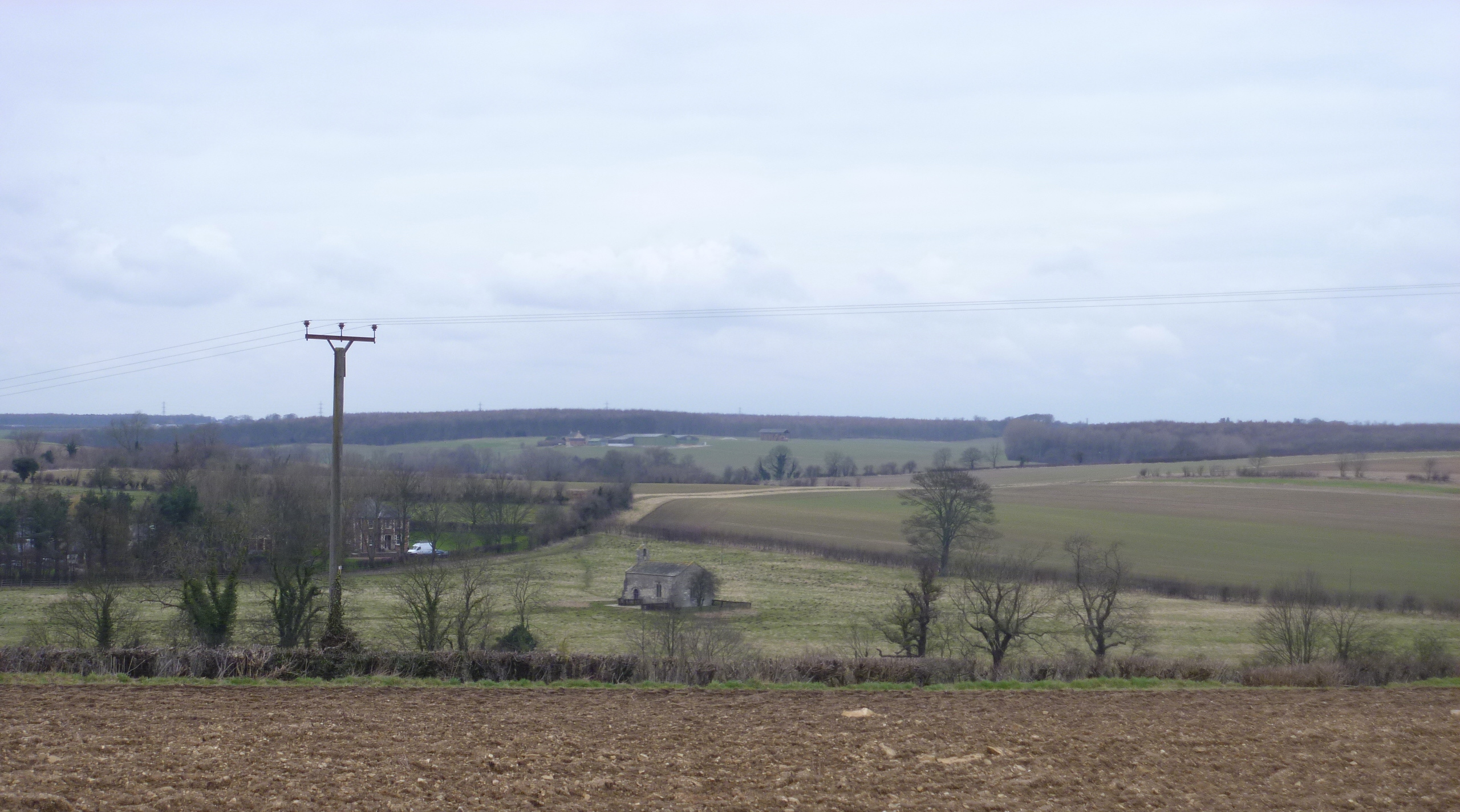
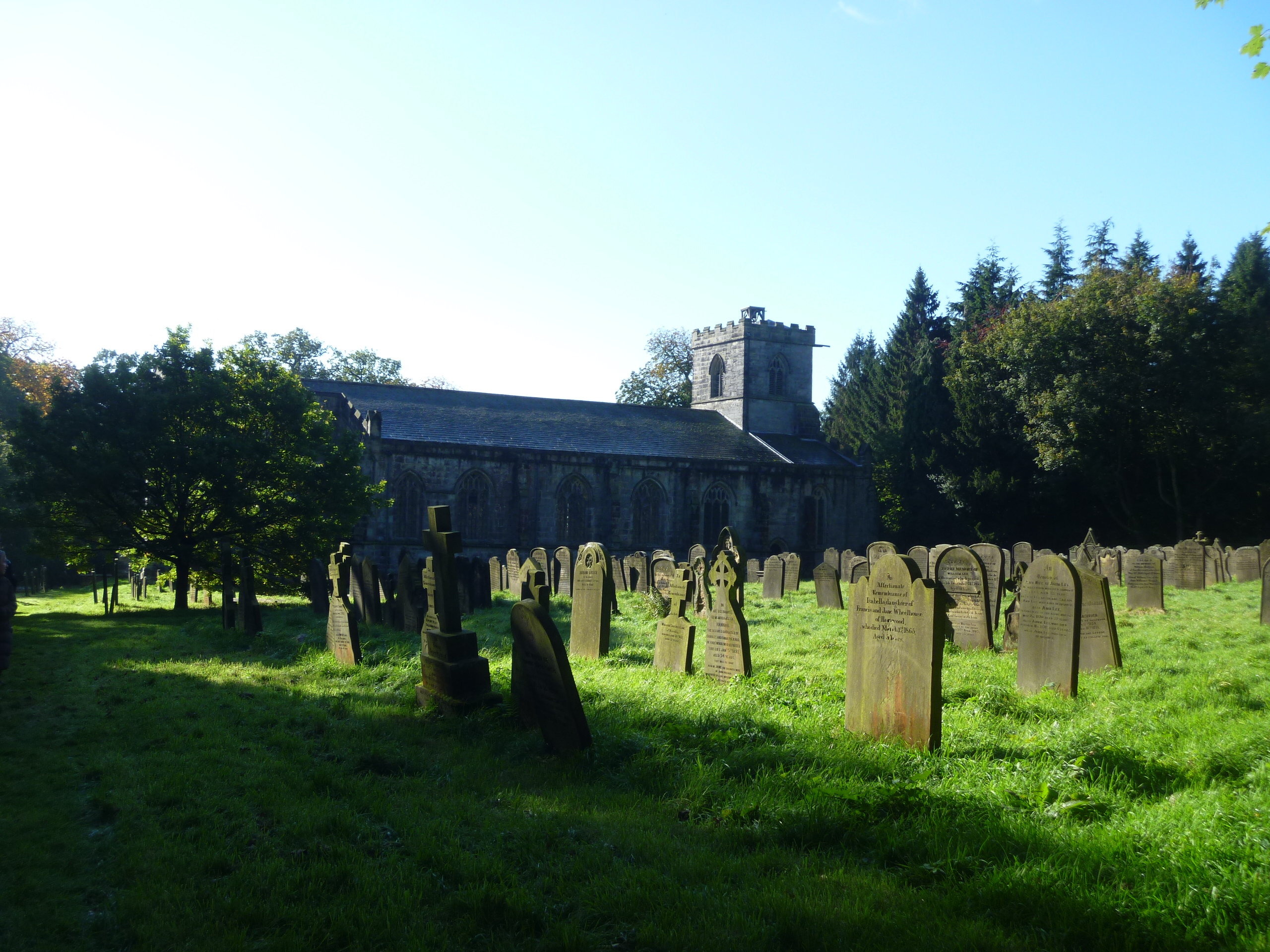
“Since being rescued by a group of walkers in 1931, St Mary’s has been known as the Ramblers’ Church. The repairs made then are recorded on the back of the church door.
The church stands alone in the middle of a field filled with the bumps and furrows of earthworks that indicate the site of a Medieval manor house, for which St Mary’s was probably originally the chapel.
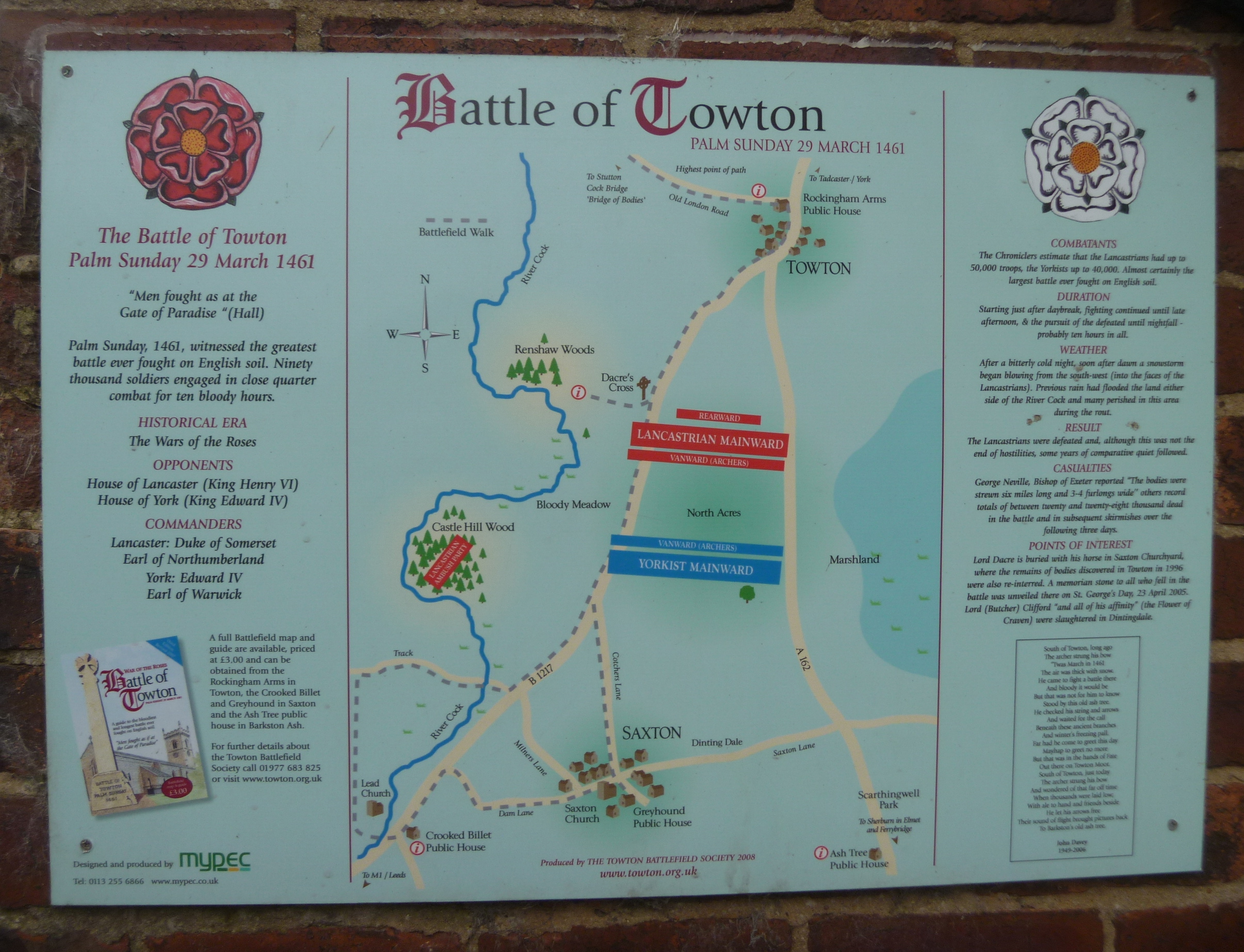
Nearby is Towton, the site of the War of the Roses battle, believed to be bloodiest in English history which brought the Wars of the Roses to an end in 1461.
Battle of Towton Information Board, Crooked Billet Pub, Lead, North Yorkshire
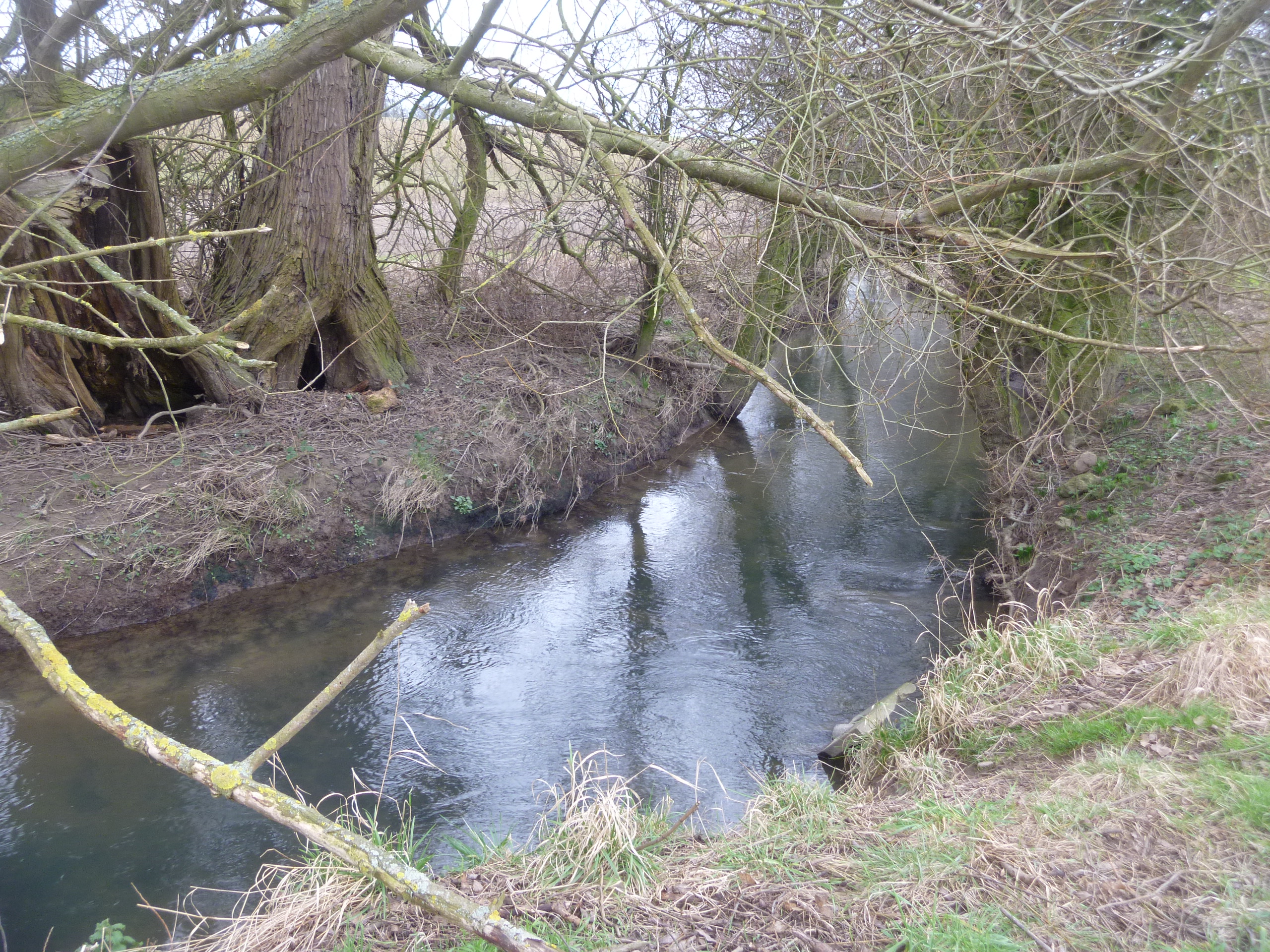
Ten thousand men are said to have been killed, and Cock Beck, the little stream which you cross to get to St Mary’s, is said to have run red with blood.
Cock Beck
You can find monuments to crusading knights in this tiny 14th-century church.
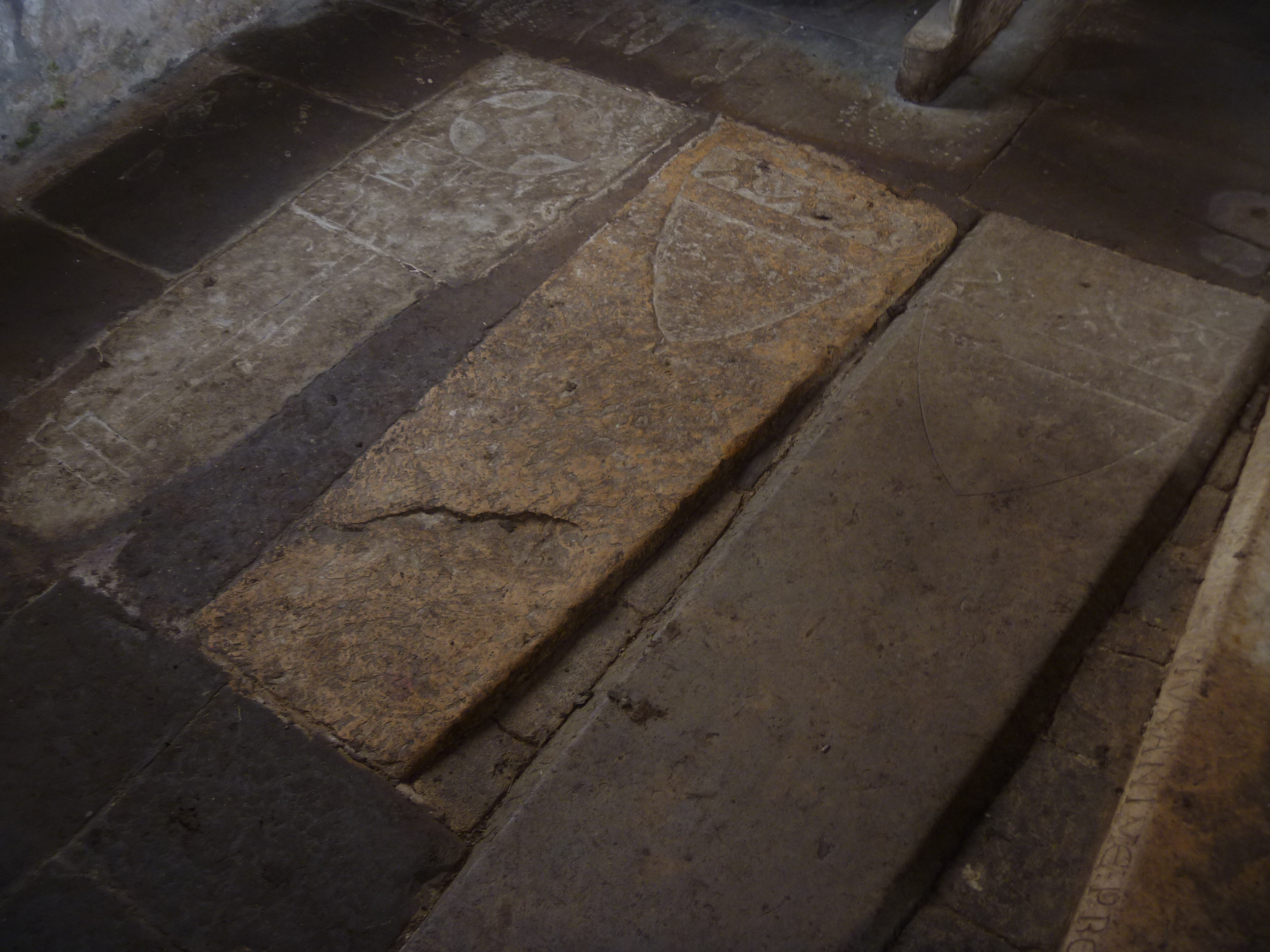
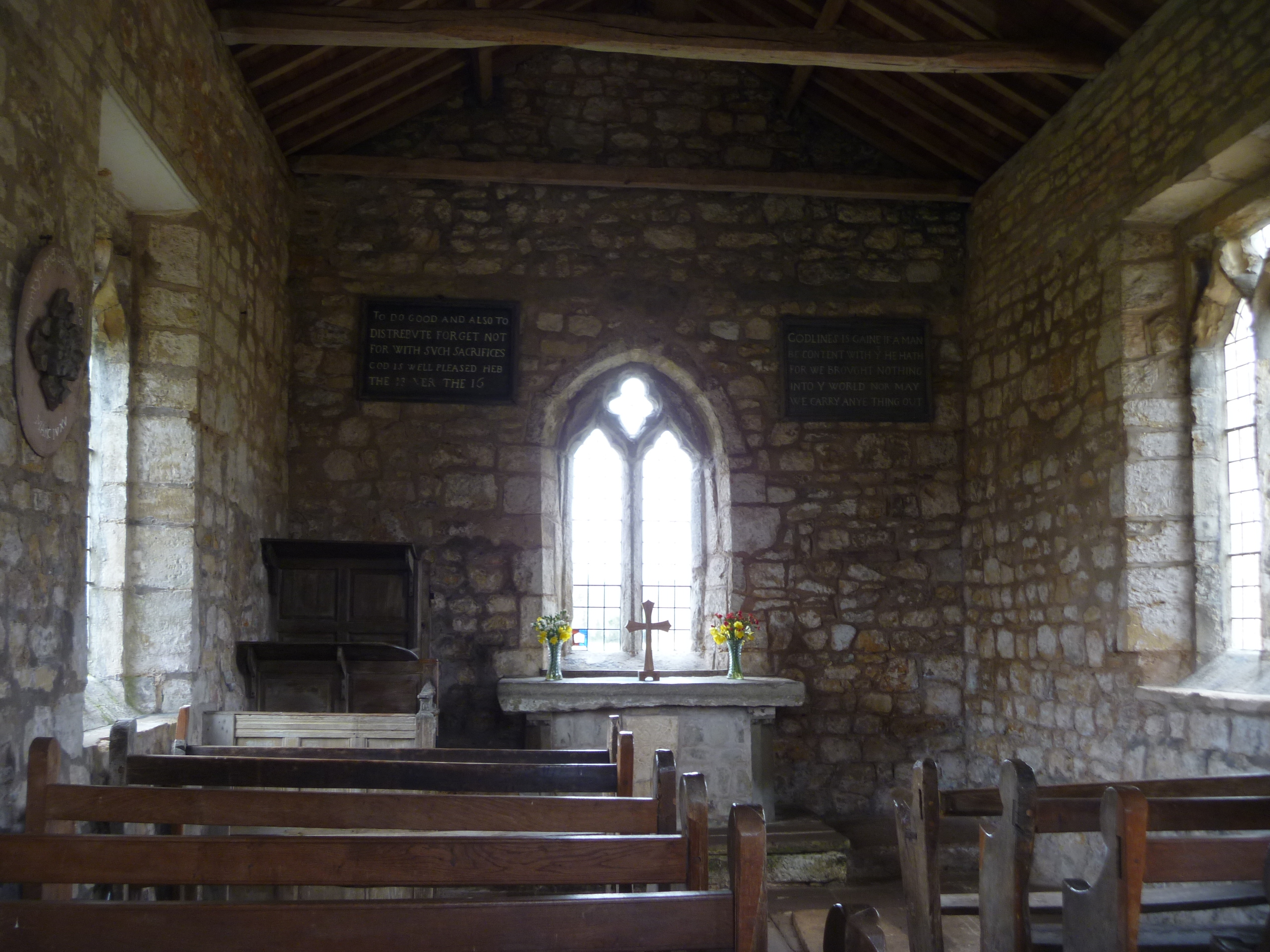
Despite its awesome history, St Mary’s is a peaceful place. The tiny rectangular building is very simple. It was probably built by the Tyas family, whose massive grave slabs are set into the floor.
The massive grave slabs
Carved with heraldic symbols and inscriptions, and dating from the 13th-century, they are an important and interesting collection.
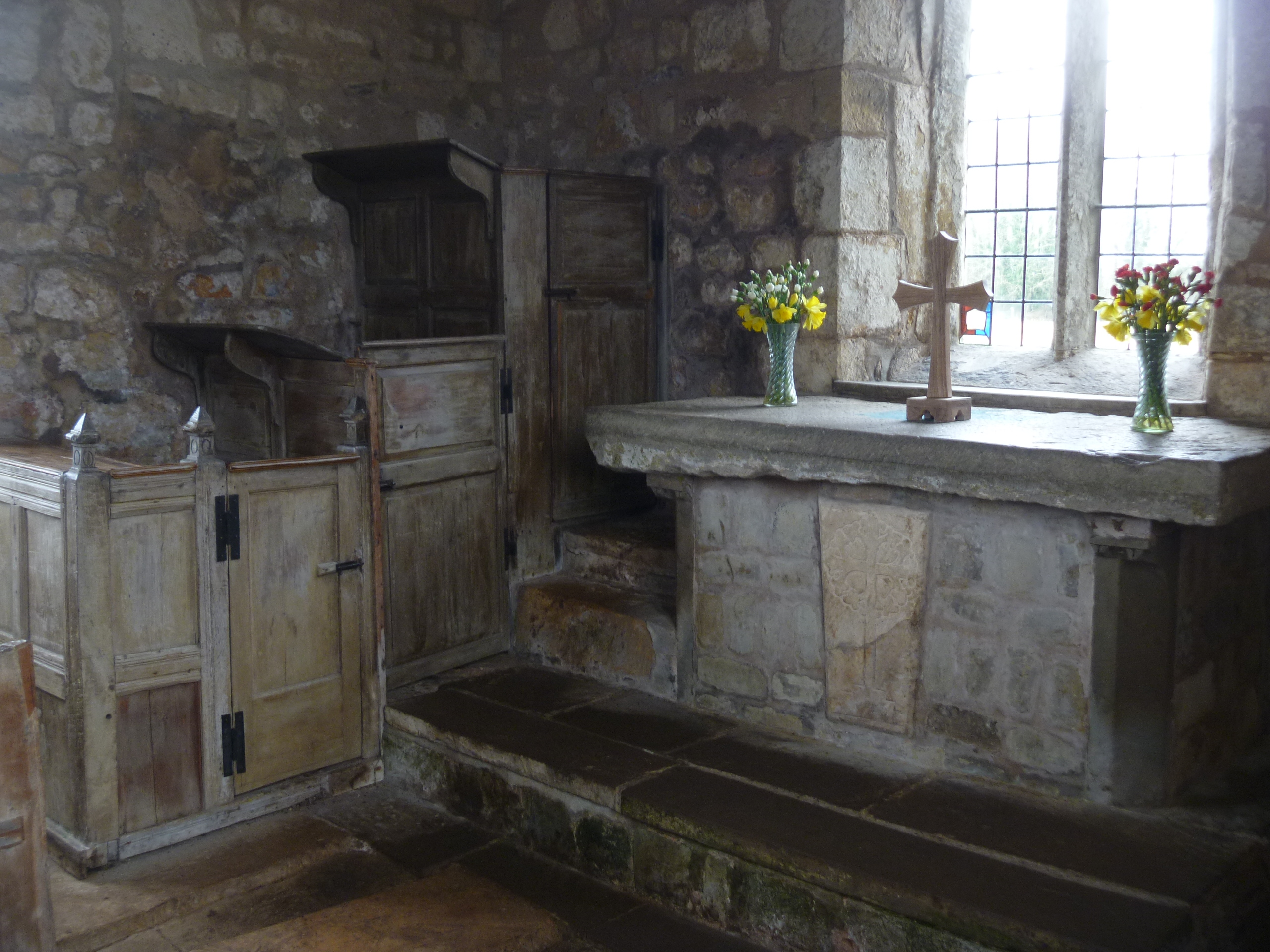
Pulpit, Clerk’s Pew and Reading Desk and Altar
Later additions were made to the church in the 18th-century, with a rustic pulpit, clerk’s pew, reading desk and painted texts.”
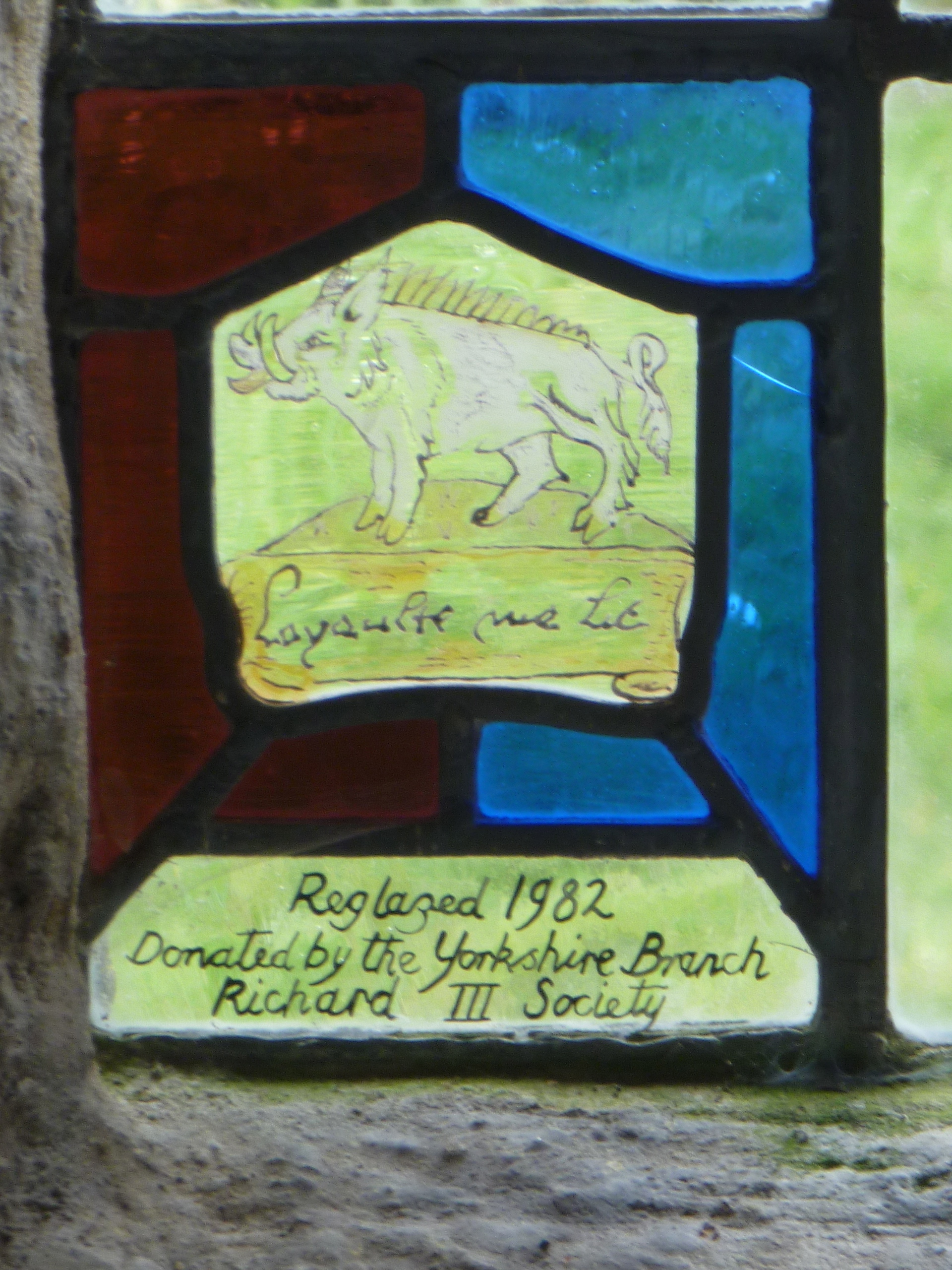
Window behind the Altar paid for by the Richard III Society – topical!
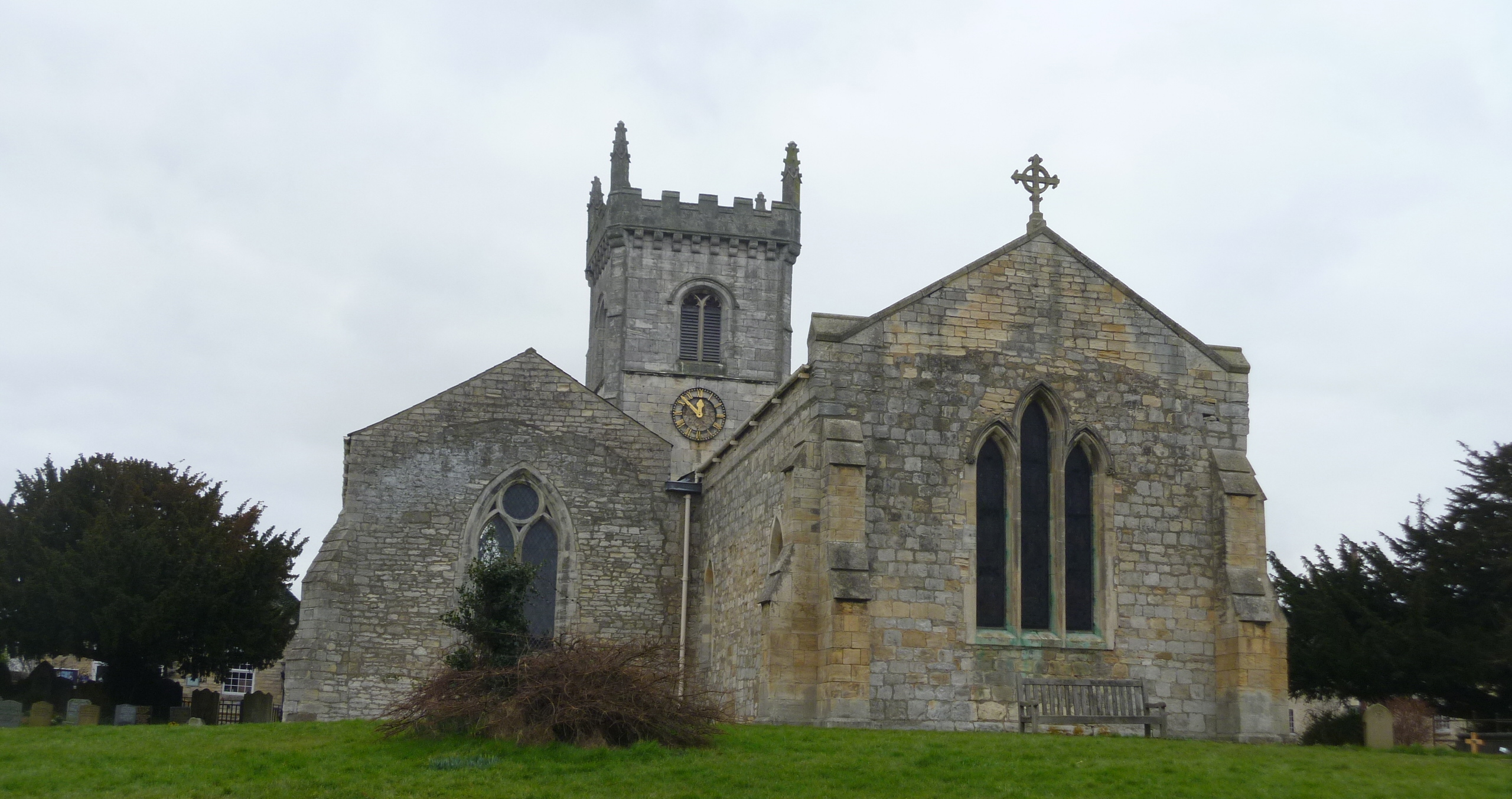
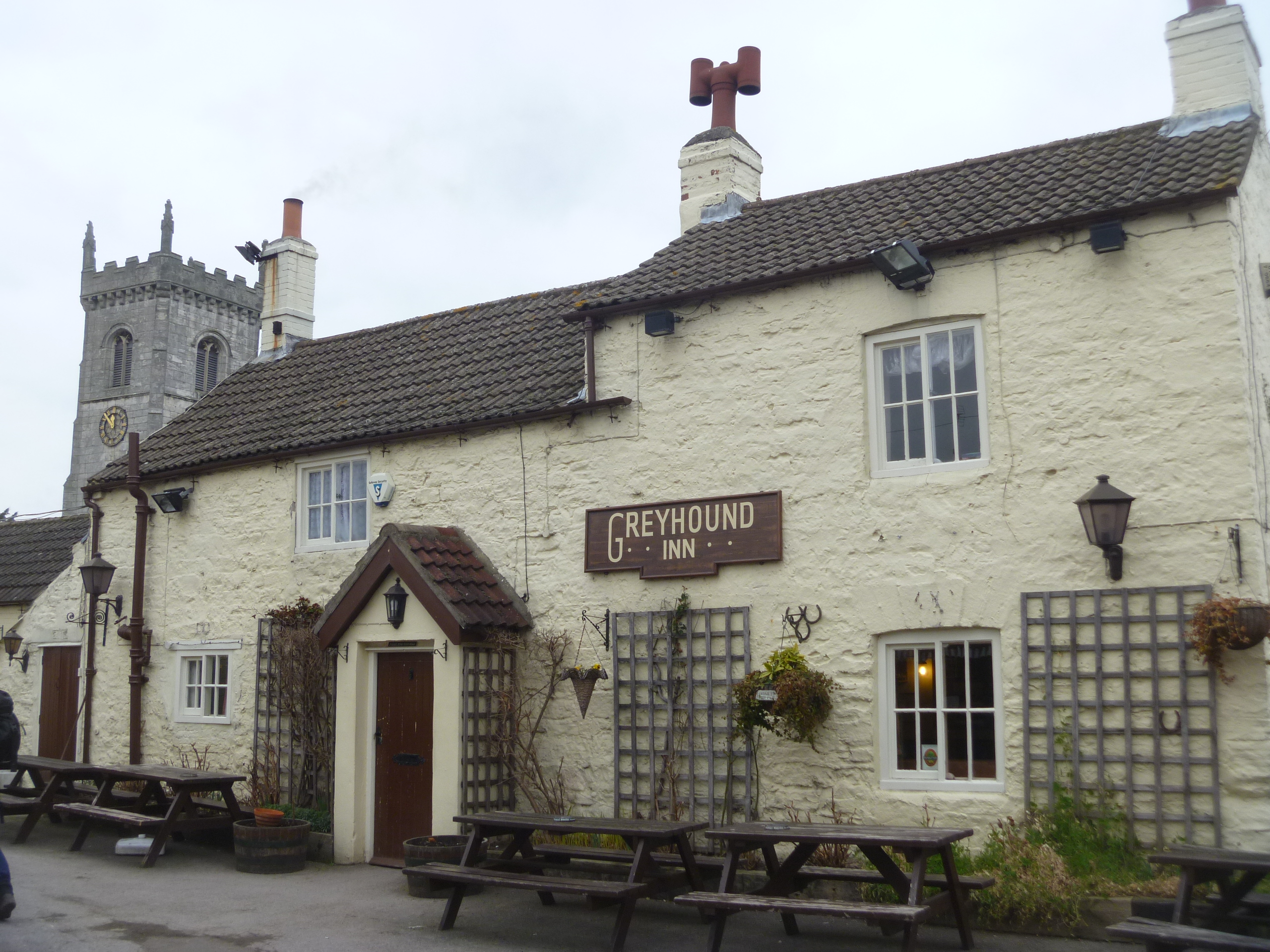
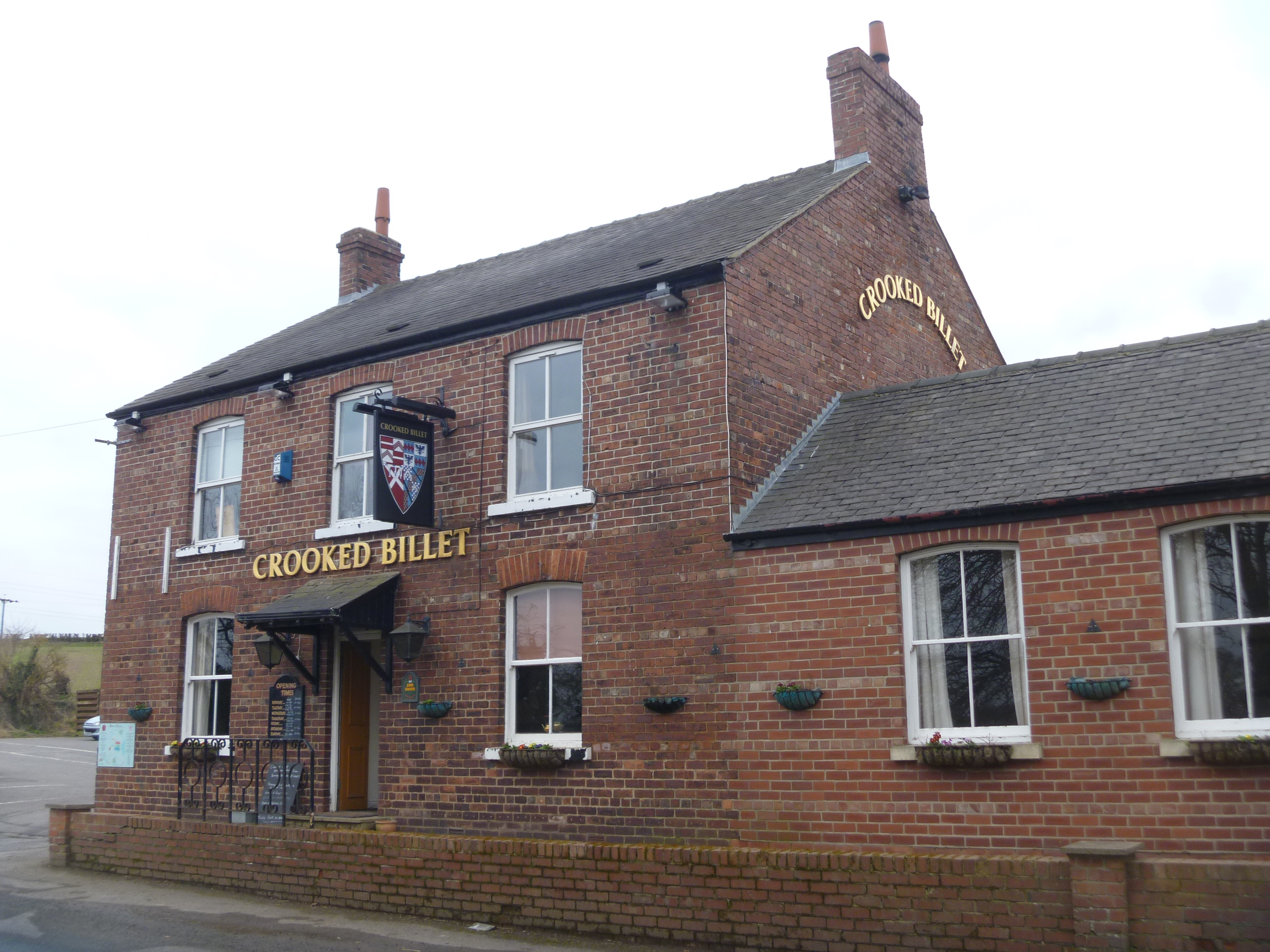
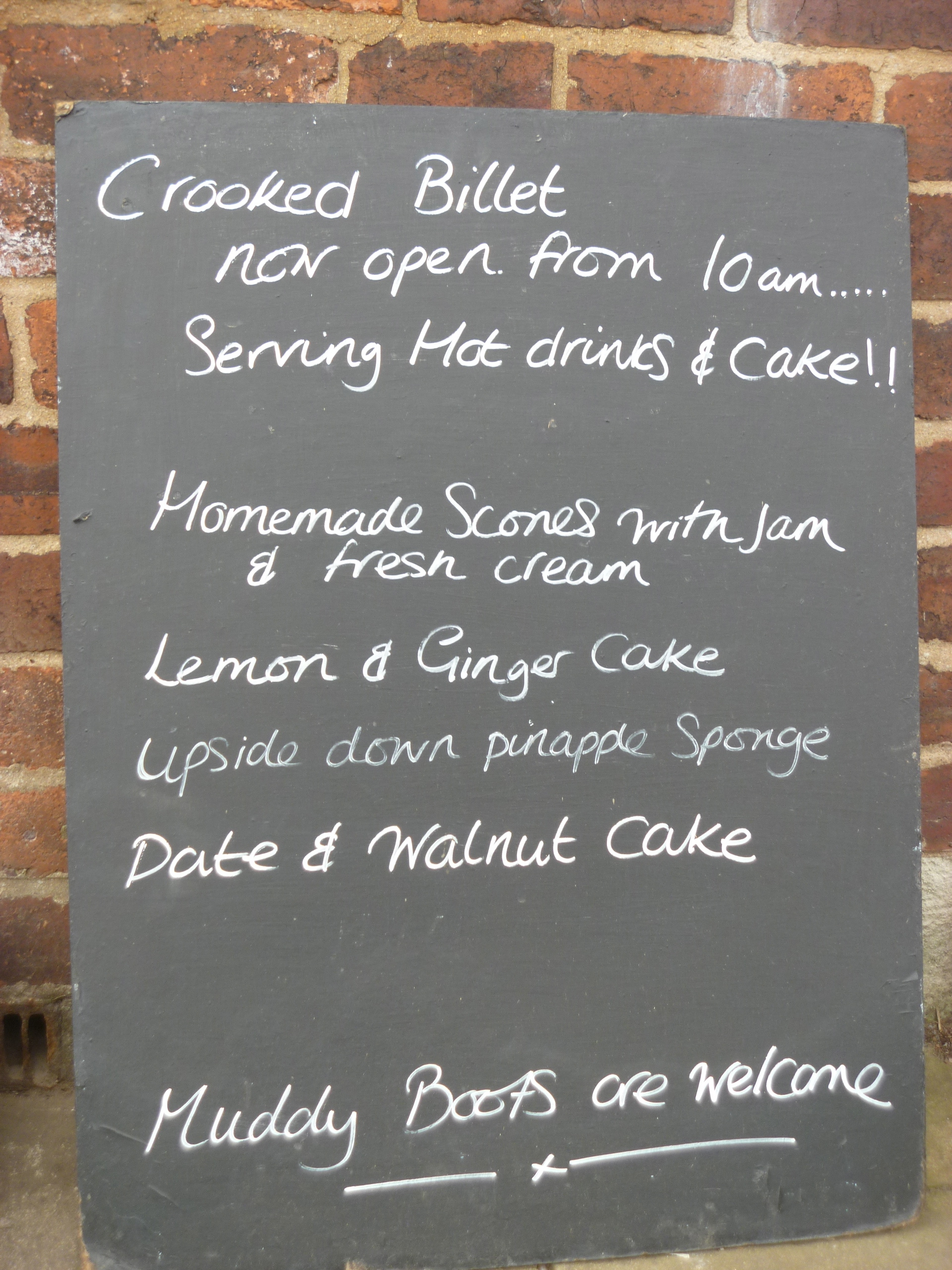
Today I have been out in the Yorkshire countryside. Weekday Wanderers headed east of Leeds to the flat countryside between Leeds and York. Flat but not uninteresting. Parking in Aberford we crossed the A1M by footbridge and eventually after a while left the noise of the highway behind and crossed fields and followed easy tracks on a circular walk that included a ‘castle’, a village, two churches and two pubs. We stopped at one of the pubs for our picnic lunch and had a look at one of the churches – St Mary’s, Lead, The Ramblers’ Church. We were not quite on the Battlefield of Towton, mentioned above, but we did return to the cars alongside Cock Beck. The perfect winter ramble.
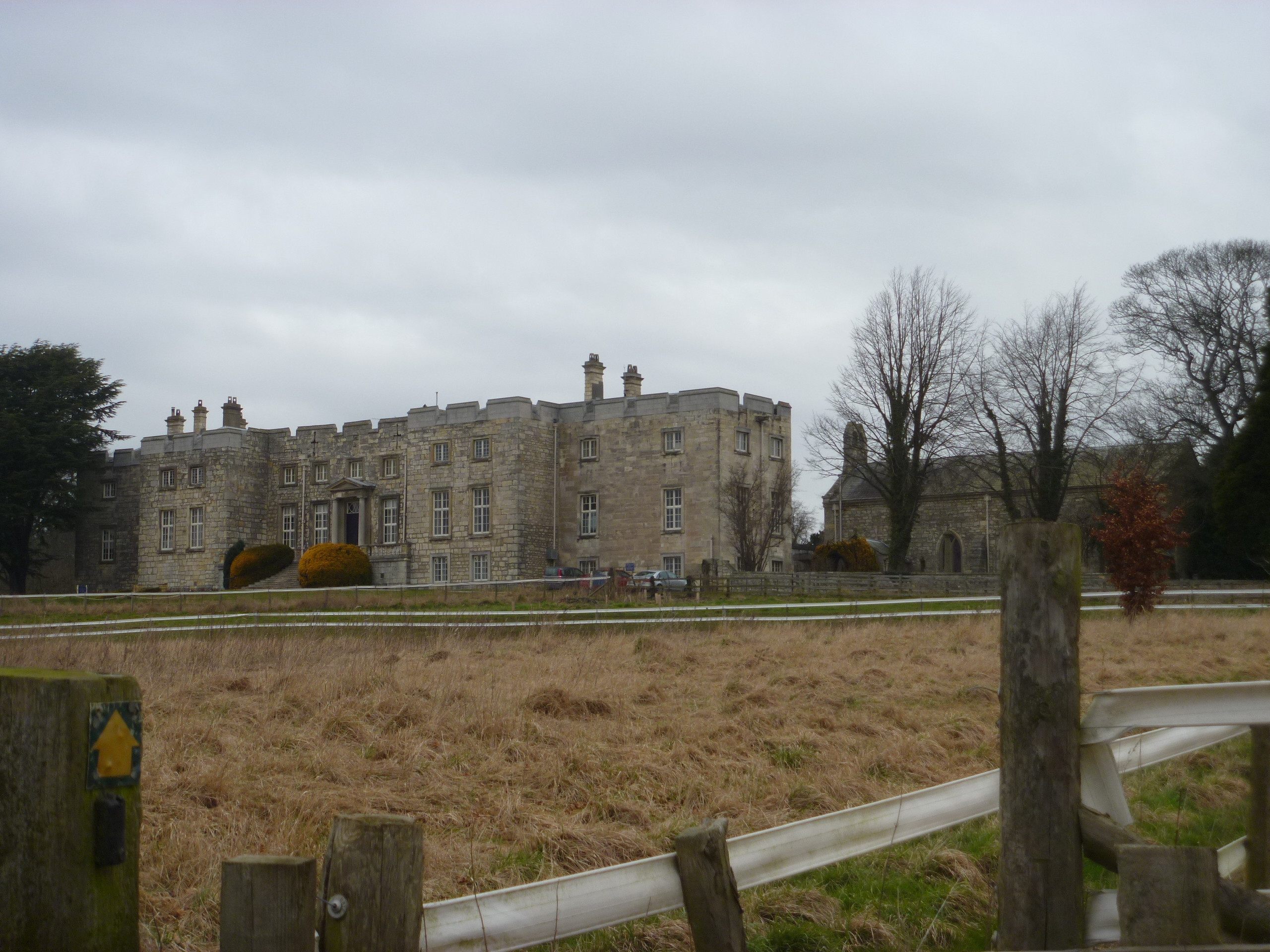
The ‘castle’ was Hazlewood Castle now a very popular luxury hotel and wedding venue. Originally owned and lived in by the Vavasour family from 1971 until 1996 it was a Carmelite Friars’ retreat and opened as a hotel in 1997.
Hazlewood Castle
All Saints Church, Saxton
The Greyhound Pub at Saxton
The Crooked Billet Pub, Lead near Saxton North Yorkshire
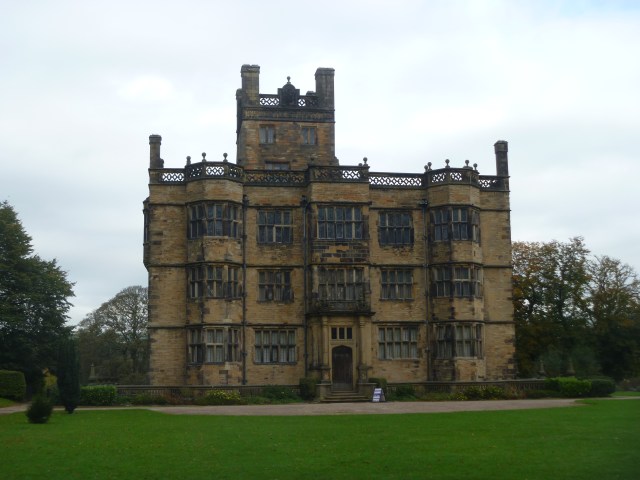
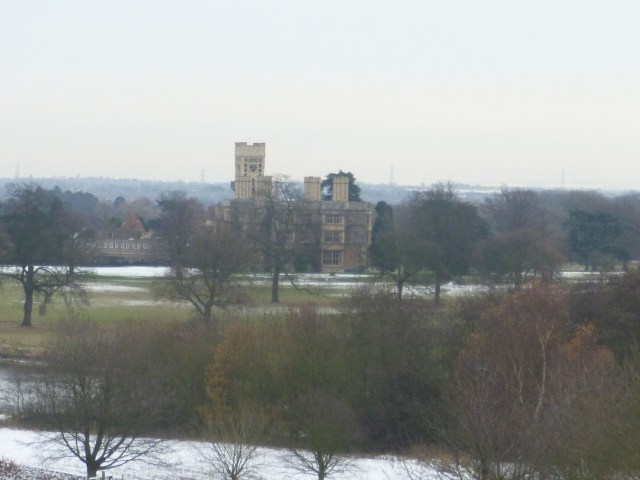
See how similar the two buildings above are – they are connected only by the name “Shuttleworth”. In October I met a former work colleague, who lives in Lancashire, at Gawthorpe Hall. I knew the owners were the Kay-Shuttleworths but I never at all linked their name with the Collection with the same name down in Bedfordshire.
I was fascinated to read in the Keeper’s Cottage History Album :
“What is intriguing is that there seems to have been no connection whatsoever between Joseph Shuttleworth and the Gawthorpe (by then Kay) Shuttleworths. In seeking to establish his own pedigree in Bedfordshire, Joseph seems to have wished to imply a connection with these ancient, Lancastrian namesakes that was apparently without foundation. He adopted a crest that was similar to their own and the family arms also feature the Gawthorpe Shuttleworth’s ‘three shuttles sable tipped and fringed with quills of yarn and threads bend or; a cubit arm in armour proper grasping in the gauntlet a shuttle of arms.’
… the estate at Old Warden represented a perfect fit for the new dynasty, with a model village half begun by an expiring family (the Ongleys) offering the opportunity for benevolent philanthropy as well as revivication of an ancient estate.”
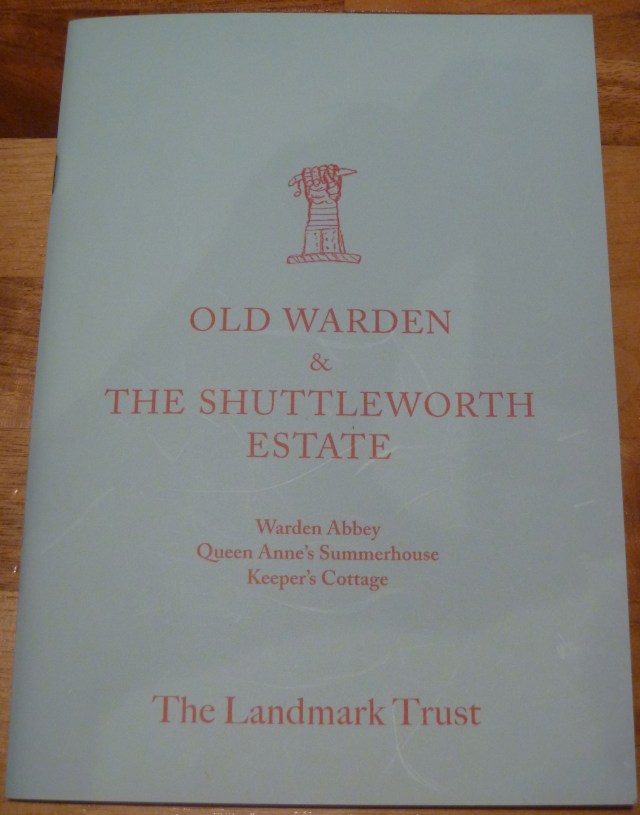
The Landmark Trust have published a history booklet “Old Warden and the Shuttleworth Estate : the history of Old Warden told through three buildings; Warden Abbey, Queen Anne’s Summerhouse and Keeper’s Cottage”.
Warden Abbey (now also a Landmark Trust property)
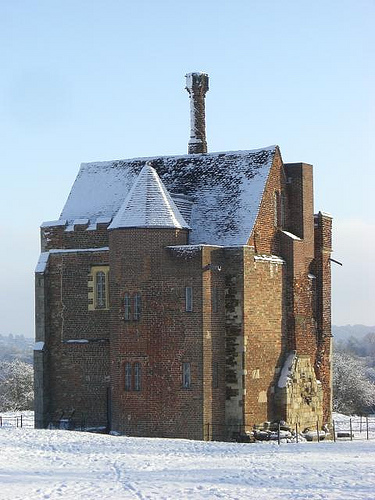
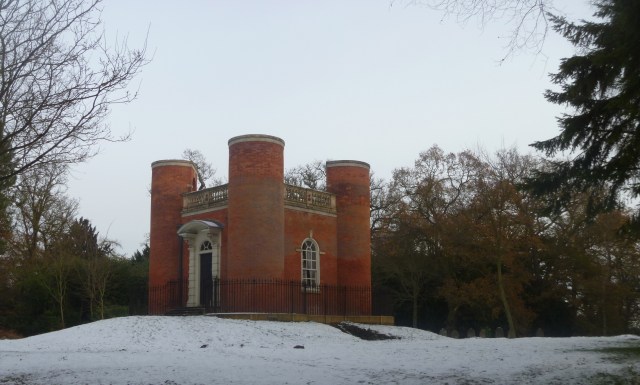
Queen Anne’s Summerhouse (now also a Landmark Trust property)
I was able to buy a copy from the housekeeper at Keeper’s and it tells the history, briefly, of the area from the foundation of the Cistercian Warden Abbey in 1135 to the present day co-operation between the Shuttleworth Trust and The Landmark Trust.
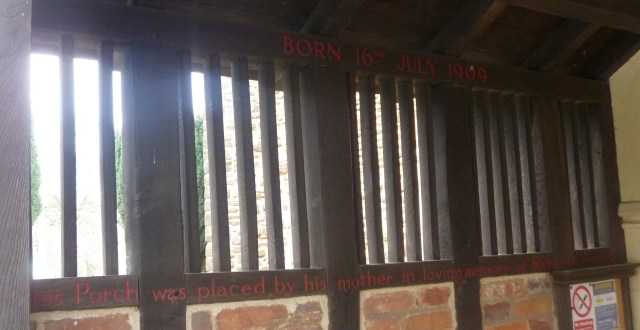
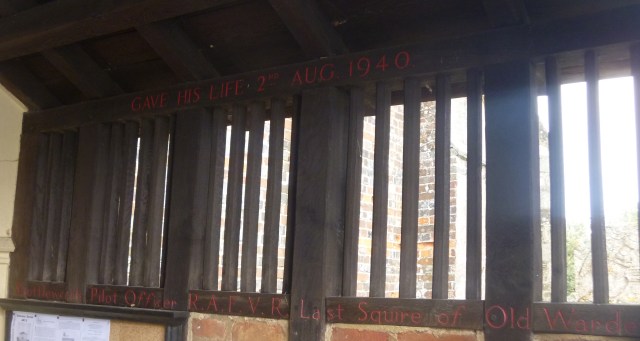
The Shuttleworth Trust was set up by Dorothy Shuttleworth following the early death in 1940 during an RAF flying accident of her only son and the squire of Old Warden, Richard Ormonde Shuttleworth. The hall became a hospital during the War and afterwards the devastated mother turned the entire estate into a charitable trust in his memory. The hall is now a College specialising in running outdoor and country-based courses. Richard’s collection of old aeroplanes formed the original Shuttleworth Collection.
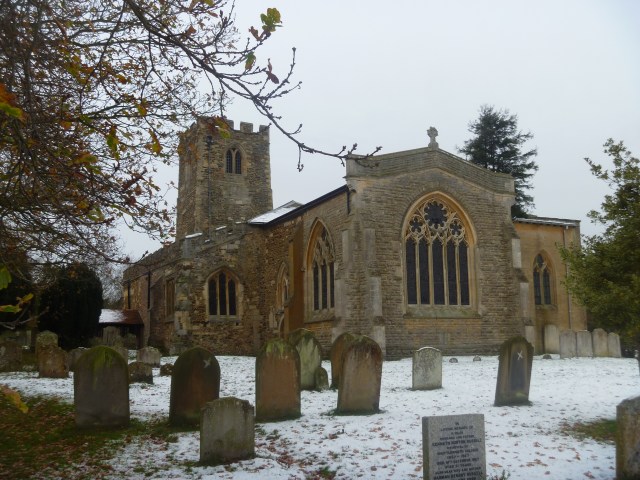
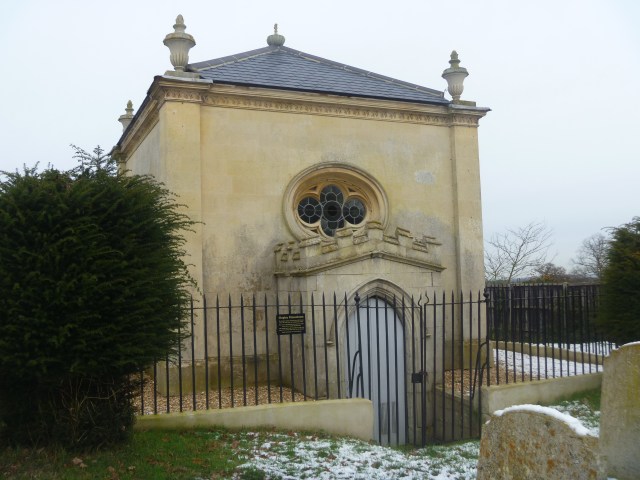
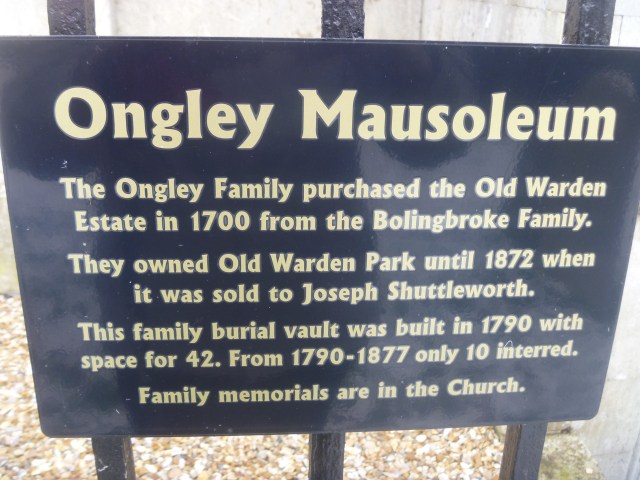
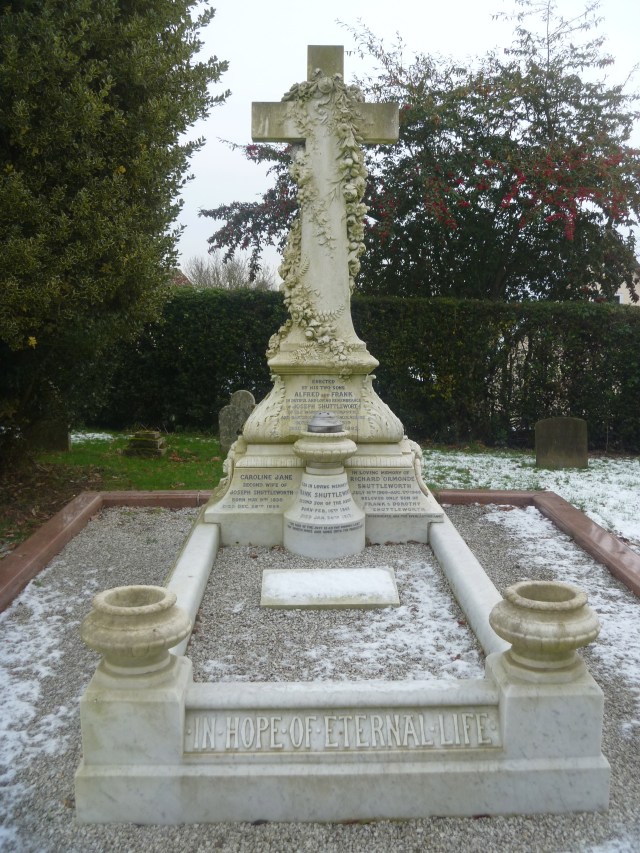
I took a walk one day to visit St Leonard’s church, in Old Warden (2 stars in Jenkins’s book). Unfortunately it’s only open at the weekend so I wasn’t able to inspect the various Ongley and Shuttleworth memorials and the 14th century window depicting an abbot in a white habit from the Cistercian Warden Abbey. But in the porch Richard is commemorated and the Ongley Mausoleum and the Shuttleworth graves lie in the churchyard.
St Leonard’s Church
The porch is a memorial to Richard Shuttleworth
The Ongley Mausoleum
The Shuttleworth Grave
Additional Note :
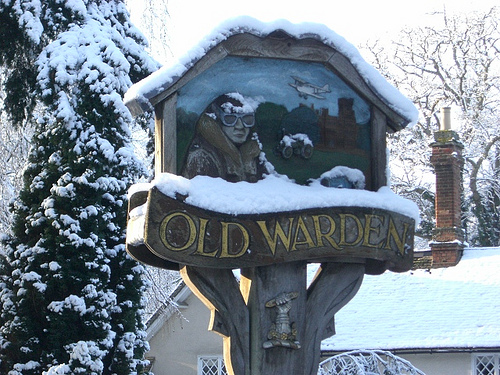
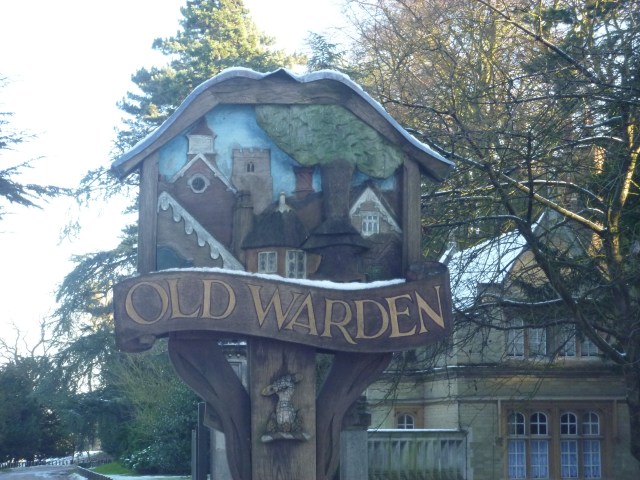
Village sign in 2009
The Sign today in 2012
I’m not sure that I don’t prefer the older, more distinctive one.
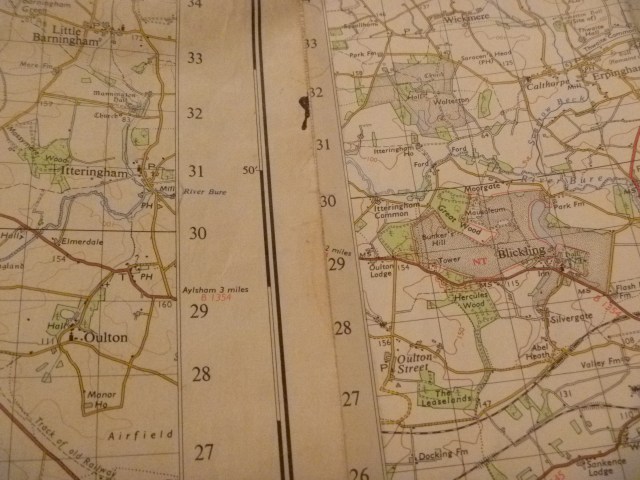
The walk crossed the join of my two 1950s treasured OS maps of Norfolk (Sheets 125 and 126 Seventh Series)
“Blickling Hall is a masterpiece of Jacobean architecture famed for its spectacular long gallery, superb library and exceptional gardens. The estate has been home to Falstaffs, Boleyns and Saxon Kings. We walk from Blickling Hall, in the heart of the Norfolk countryside, through the 5000 acre estate northwards to Wolterton, the seat of the Walpole family. From Wolterton we follow country lanes to Mannington Hall, with its famous gardens, before turning south to Itteringham for lunch. After lunch we head back to the Blickling Estate for tea. 11.5 miles.” [From the ATG-Oxford website]
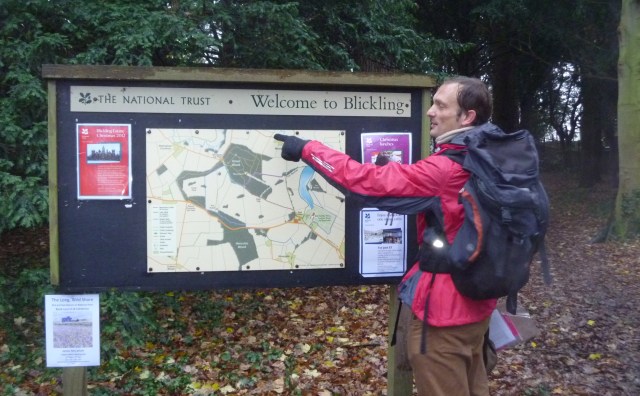
Adrian, our leader, shows the route we’ll follow
This has been my day today! ATG Oxford The Alternative Travel Group organise walking holidays in this country and abroad – both escorted and self-guided. In fact my walking holiday in Alsace in June was an ATG (Footloose) holiday. As a supplement to these, mainly summer holidays, ATG organise a series of Saturday Walks throughout the year in order to raise money for chosen charities and as a ‘subtle’ marketing ploy; for we are like-minded people and keen to hear others’ experiences of walks.
As I left Norwich snow began to fall and in the car the outside temperature measured -1C. By the time I left the outskirts of Norwich behind me the snow had turned to rain and the temperature had risen to +1C. The group of intrepid walkers met by the Buckinghamshire Arms and we set off in misty drizzle past the beautiful Jacobean Blickling Hall and, after a quick look inside the church (even colder than outside!), began our muddy tramp around the icy Blickling Lake and across the estate.
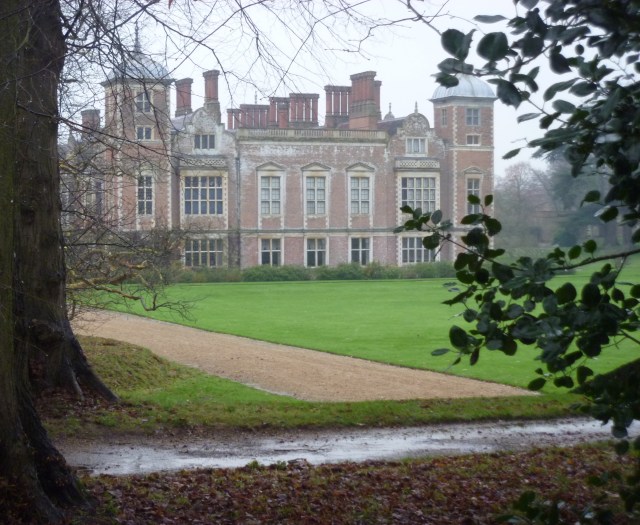
Rear of Blickling Hall one-time home of Anne Boleyn
The half frozen lake at Blickling
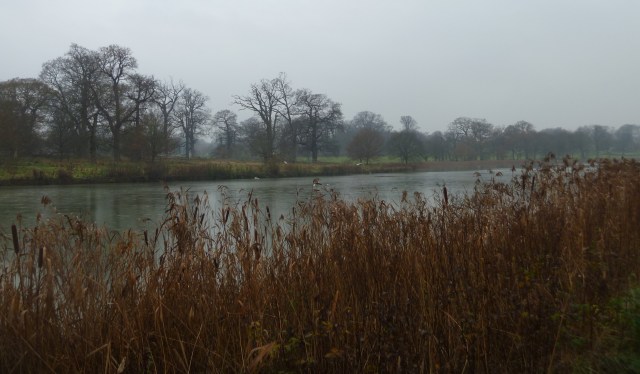
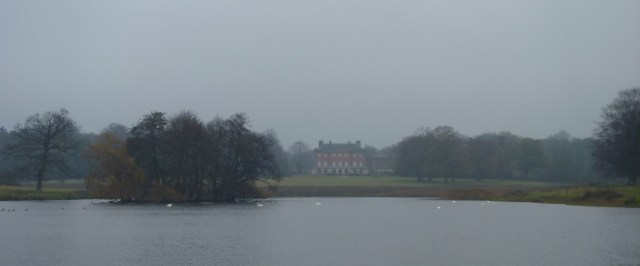
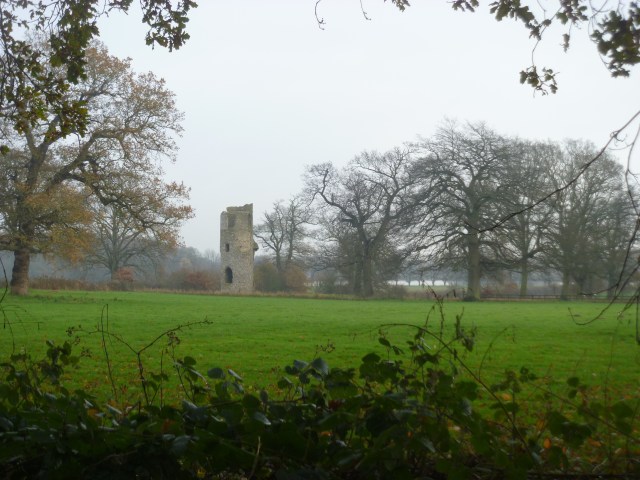
Our next Hall – a Palladian design – Wolterton appeared empty and unused but looked quite beautiful from across the Lake. There’s a ruined church in the field next door. Read here about Simon Knott’s delightful birthday visit to the ruin.
Wolterton Hall across its lake
The Ruin of St Margaret’s Wolterton
As we tramped through muddy fields and along wet lanes I talked with many of the group (about 17 of us) about where we had come from. Had we been on any of the holidays? Had we been on Saturday Walks before – if so where? I don’t think there were any local people most had come from London and Cambridge and one or two of us from further afield and making a weekend (or longer) of it – Leeds, Manchester, Stow-on-the-Wold.
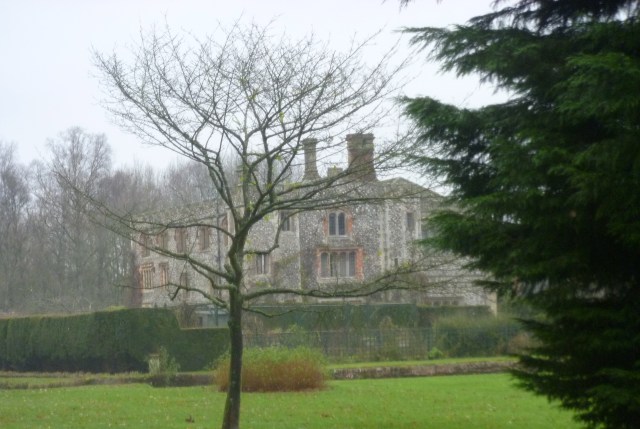
Mannington Hall
Our next and final Hall was the lovely Tudor Mannington Hall whose gardens are renowned in the area and where popular summer events are held. It looked rather bleak today but it definitely has a lived-in feel and is the home of the current Lord and Lady Walpole (they own Wolterton too). Read here an interesting article about owning two stately homes and access to them.
Saxon Church Remains
Our walk continued across more muddy fields and we were just able to glimpse the remains of the Saxon chapel at Mannington. Not far now …
Lunch is about to be served at Itteringham Village Hall
And we arrived at our lunch spot. ATG lay on a super lunch – mulled wine, creamy hot soup, a choice of salads, breads, meats and cheeses. I noticed some chocolate tarts for pudding but opted for fresh fruit – grapes and a tangerine. The lunch was served by ATG’s Sarah in Itteringham Village Hall or The Bure Valley Community Centre as it is known locally. It’s right opposite another Norfolk flint church – St Mary’s Itteringham – with its neighbouring ruined chapel and the preservation of which has been aided by The Churches Conservation Trust.
St Mary’s Itteringham
The lunch was served at the 7.2 mile point so a further 4 miles were walked to our destination. The rain began to fall as we re-entered the Blickling Estate and passing The Grandstand – a strange and rather industrial-looking building (erected for the purpose of viewing the shooting and horse racing on the Blickling Estate) and is now a holiday-let.
We were glad to spot the Blickling Lake and smell the wood smoke of the stoves in the Buckinghamshire Arms where afternoon tea was served. There we heard more tempting morsels about dry, stony Italian tracks, drinks on sunny terraces, gorgeous picnics served on craggy peaks in Spain and Italy and generally about locations that had rather more appeal by 4pm on a very wet, cold Saturday afternoon in December.
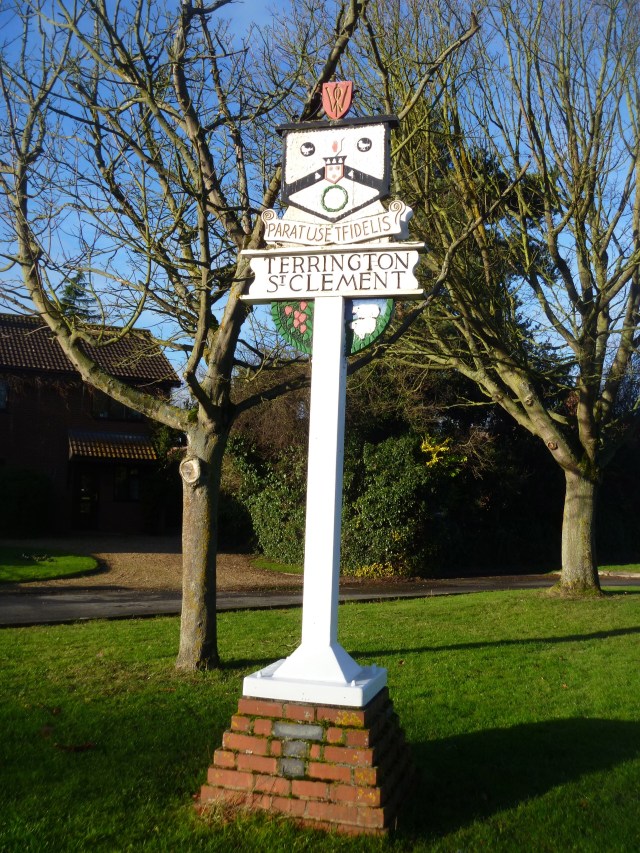
This morning whilst sipping my morning tea and flicking through a back issue of Country Life (17 October 2012) I noticed a single page in a series devoted to things to see in country churches. My eye was caught by the name Terrington Saint Clement and the amazing 17th century painted font cover. I recognised the name of this village and, checking my road atlas, found it lay very close to my route to Norwich; just in Norfolk and west of Kings Lynn. As I just happened to be driving down to Norwich this morning I decided this would be just the spot to have my picnic lunch and take a look at the church and the stunning font cover.
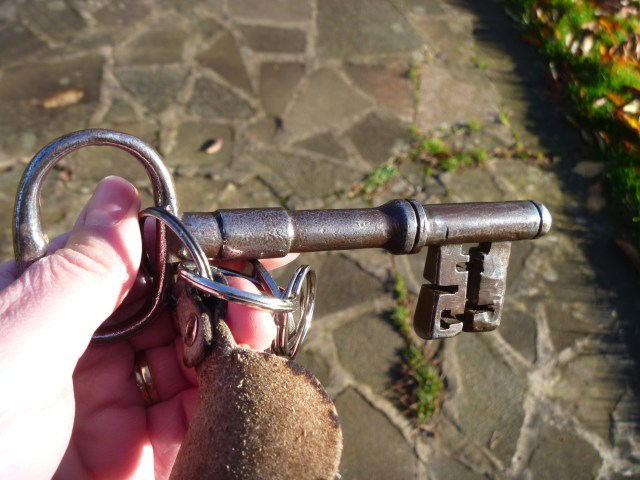
It was a beautiful day for the drive and after my quick picnic lunch I headed for the church door. Like many churches it’s kept locked but the notice on the door told me to call at the house next door to collect the key. So I did.
The Church Door Key
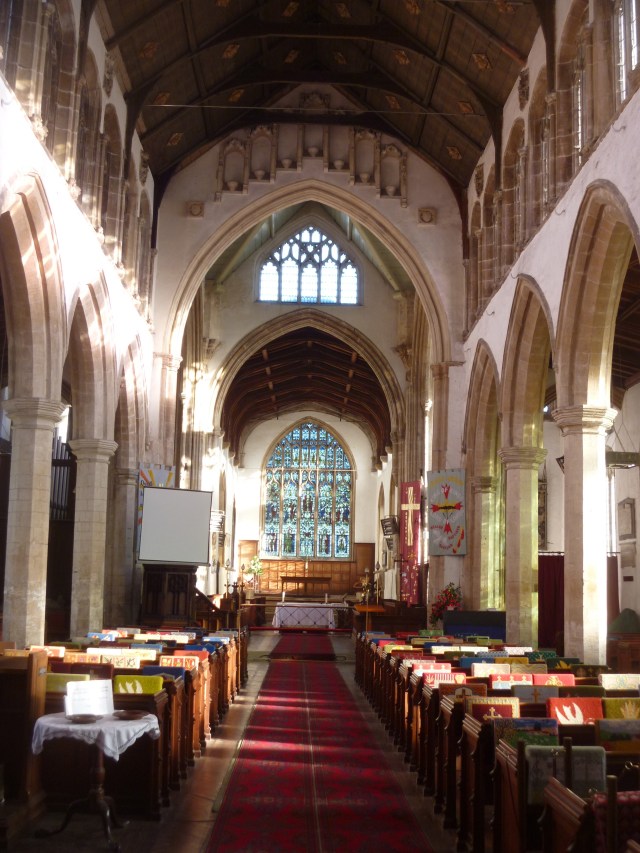
Once inside I could see what Simon Jenkins meant when he said “This church is a hymn to light”.
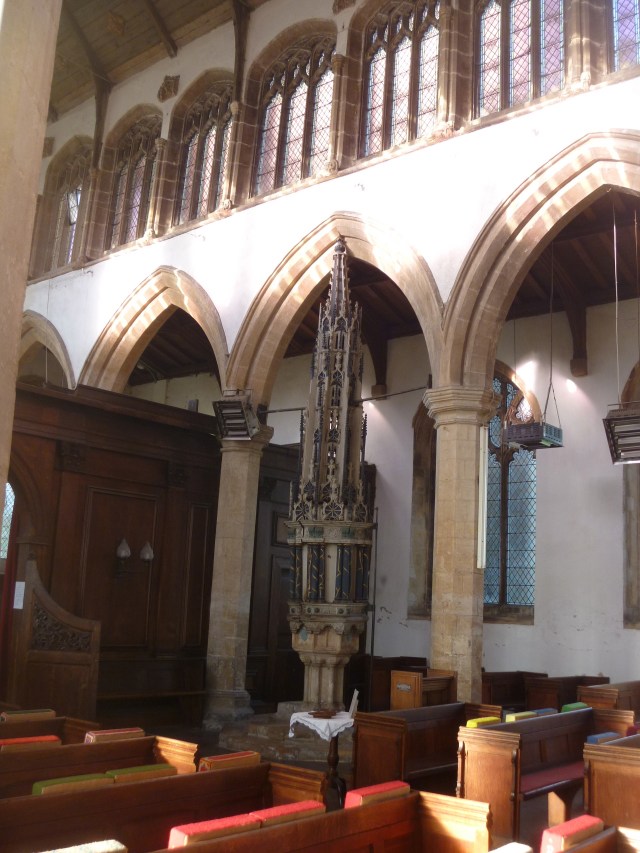
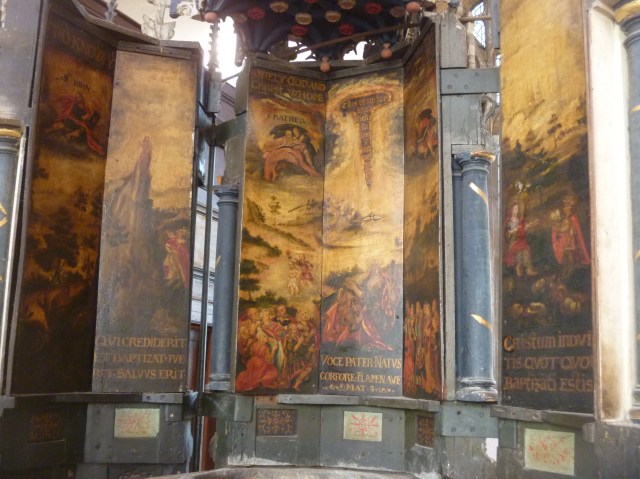
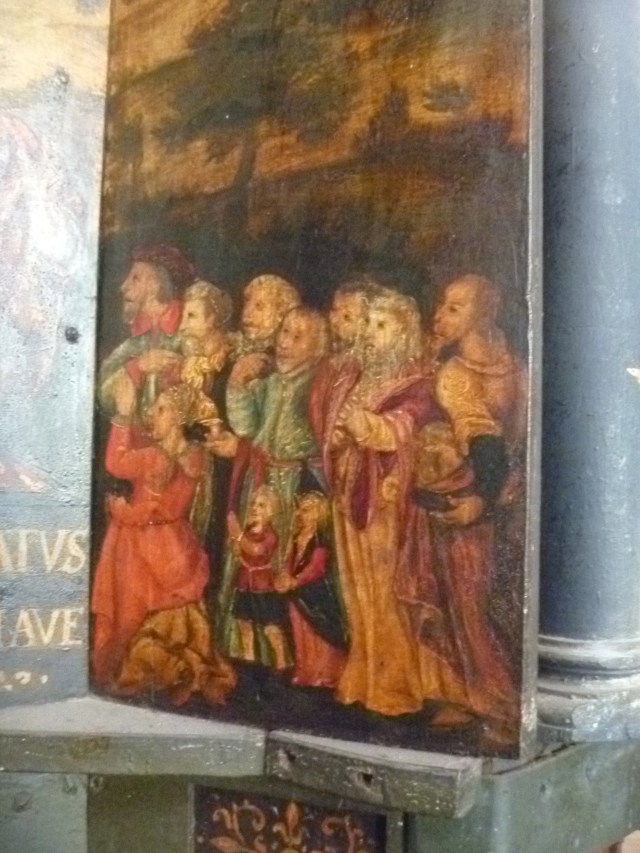
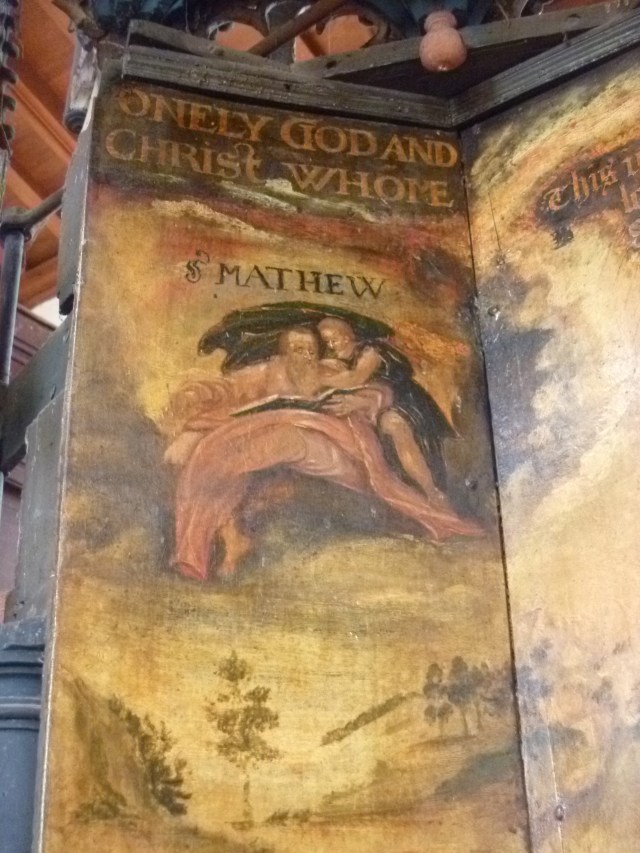
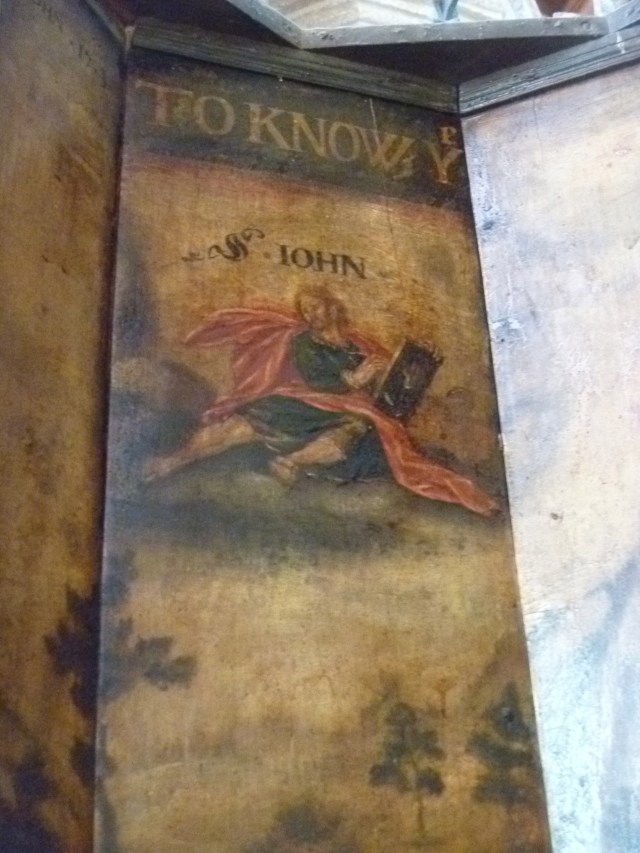
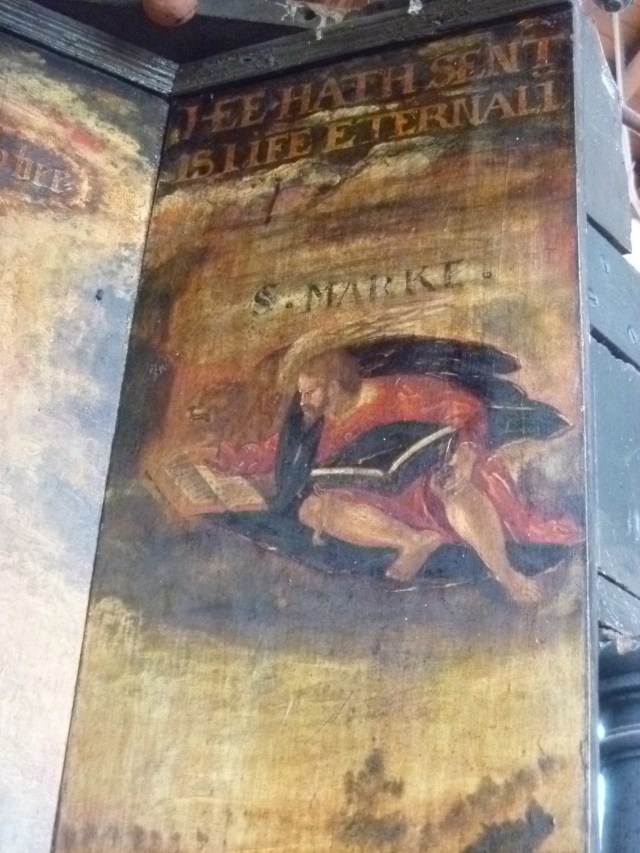
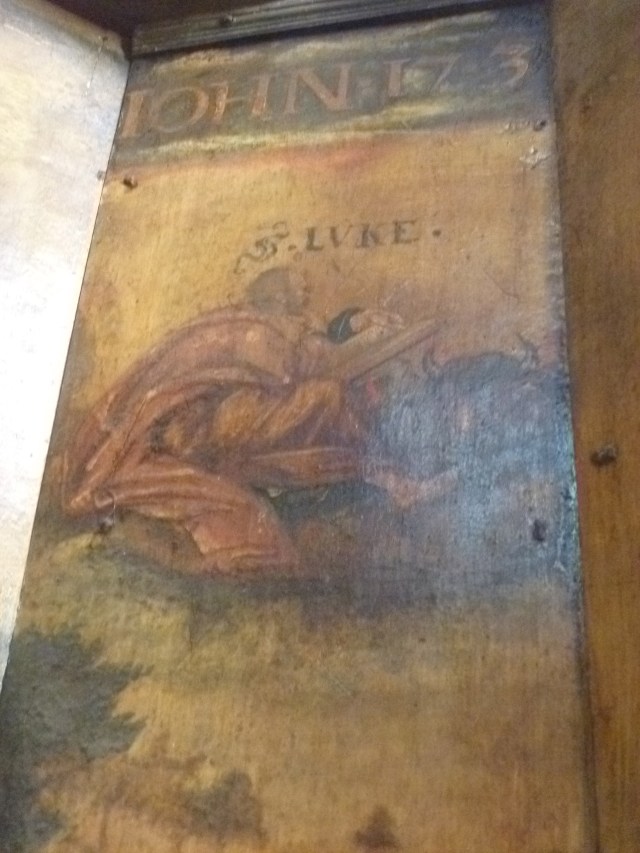
The font is indeed impressive. The triptych was closed but I gently lifted the latch and the whole opened up to display the 17th century paintings of Saints Matthew, Mark, Luke and John and the baptism of Christ by Saint John The Baptist. The Gothic font cover, painted blue, rises up almost to the church rafters.
The font cover
The open triptych
Saint Matthew
St John
St Mark
St Luke
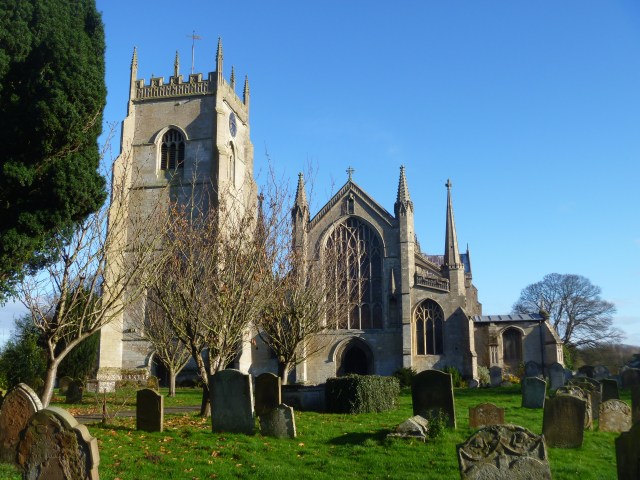
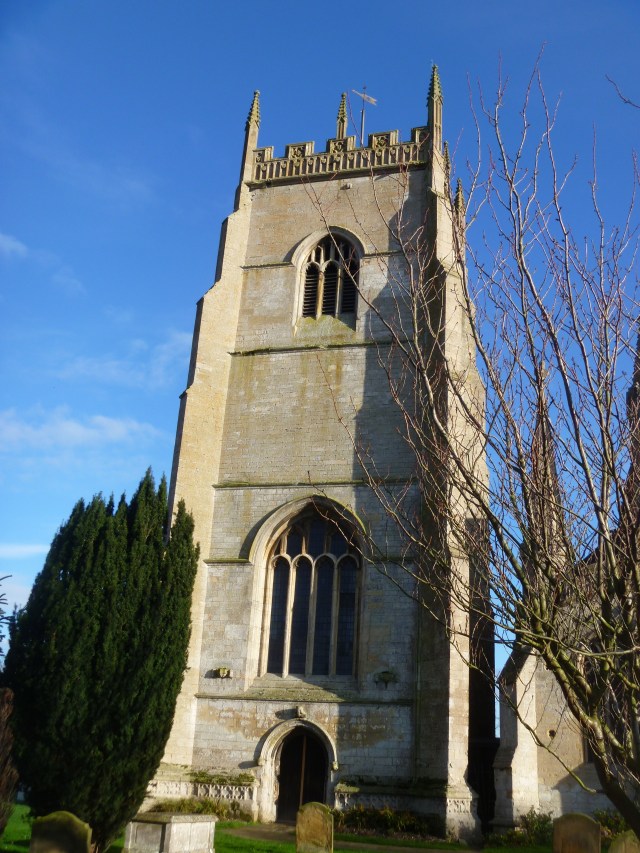
Interestingly, the tower is not attached to the church itself. Jenkins suggests that this was probably due to the soft soil of this marshland region.
“The tower came into its own during a flood in 1670 when the community gathered there and were fed by boat from King’s Lynn” This could easily have happened again this week since I noticed that many of the fields around Terrington and in the Fens were looking pretty wet, to say the least.
Yesterday I revisited Haworth with a friend. Looking back at my Flickr photos I see that my last visit to this Literary Shrine was in 2005. On that day, it was a Sunday, the queue to get into the Parsonage stretched down through the garden. I planned to return on a quieter day. So, a mere 7 years later, I was back again and indeed found the village and Parsonage very much quieter. [Mental note to self – visit Haworth Parsonage on a Monday in November] My only previous visit inside the house itself was in the early 1990s.
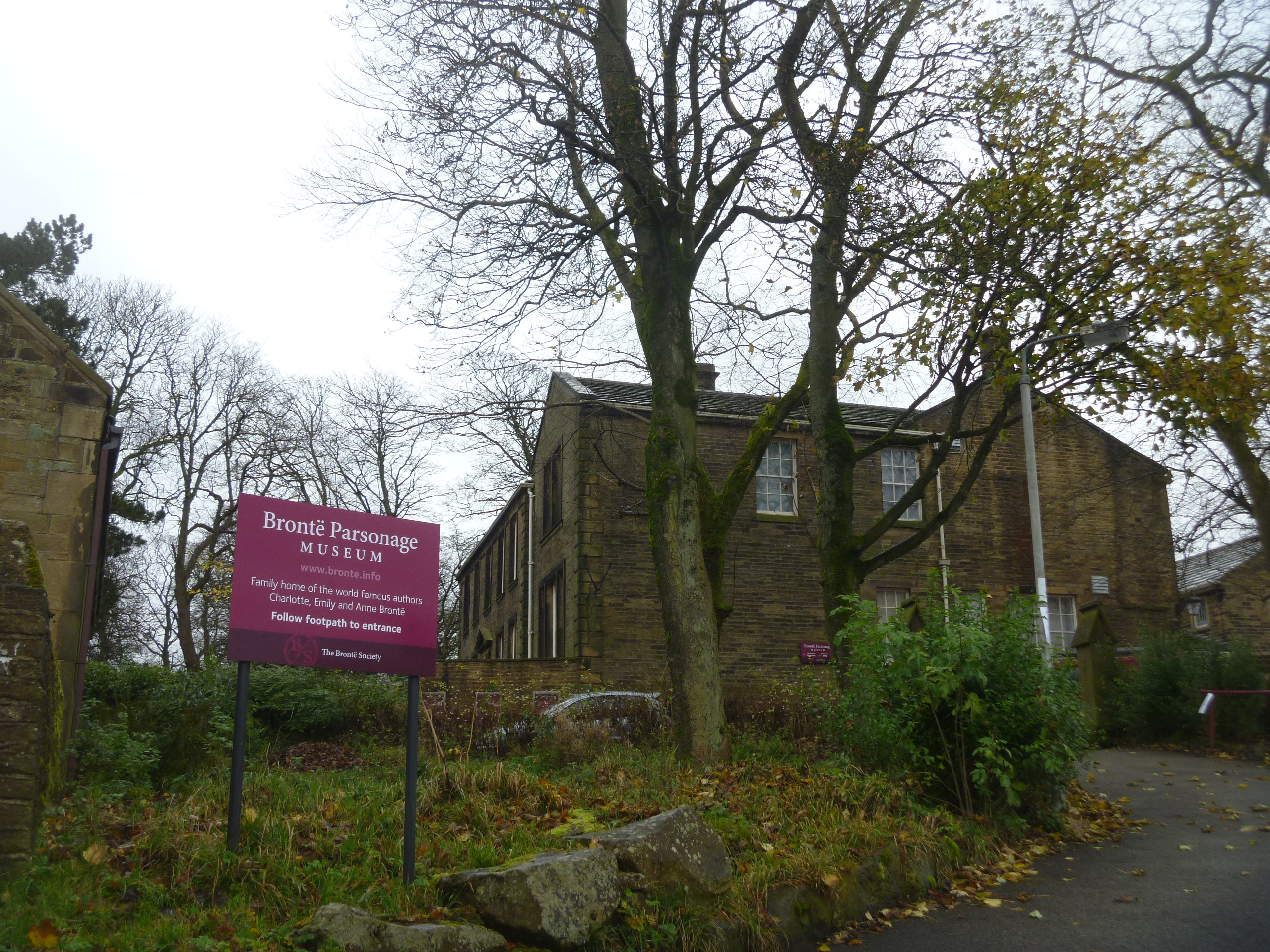
Approaching the Museum from the Car Park
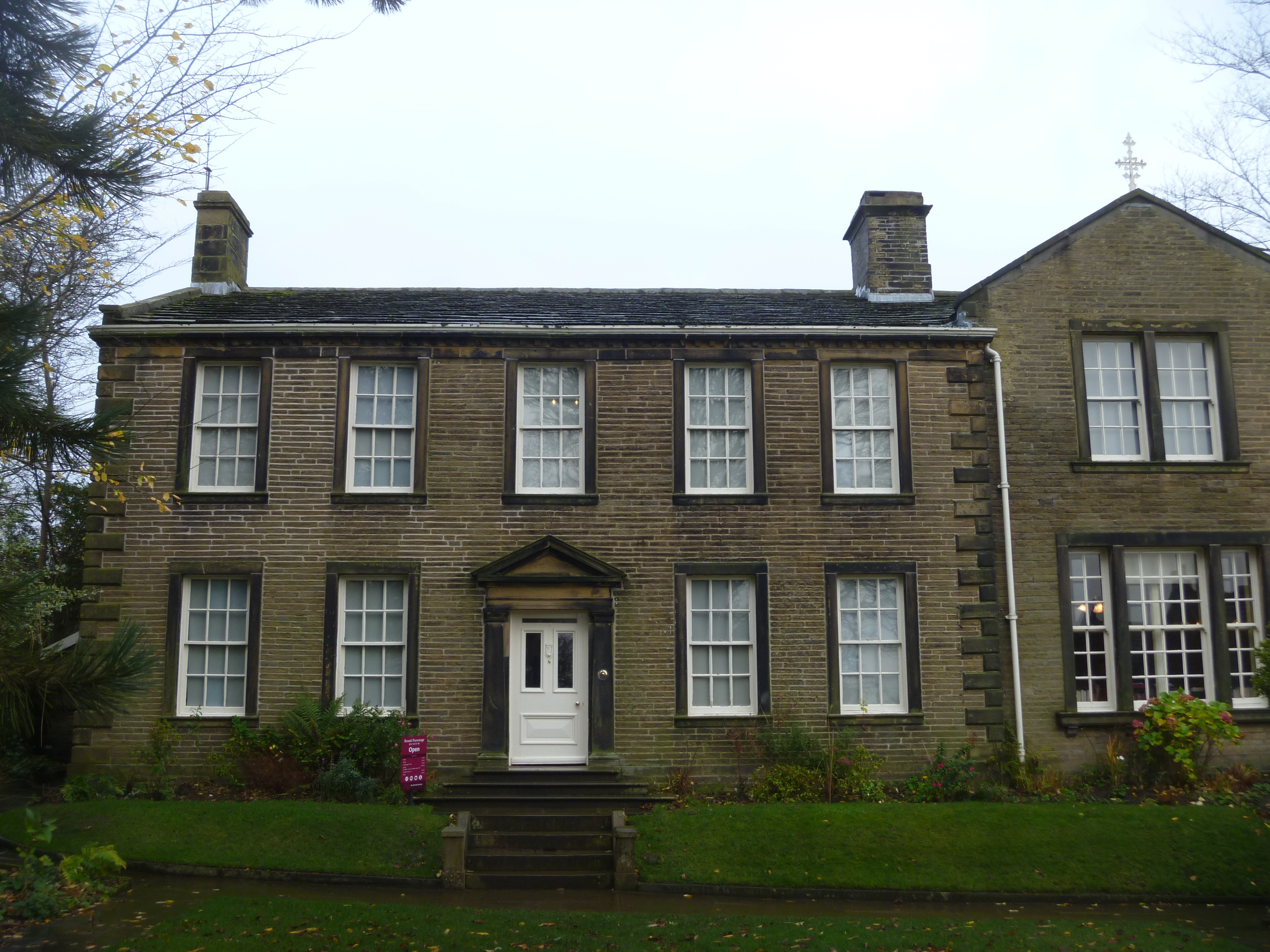
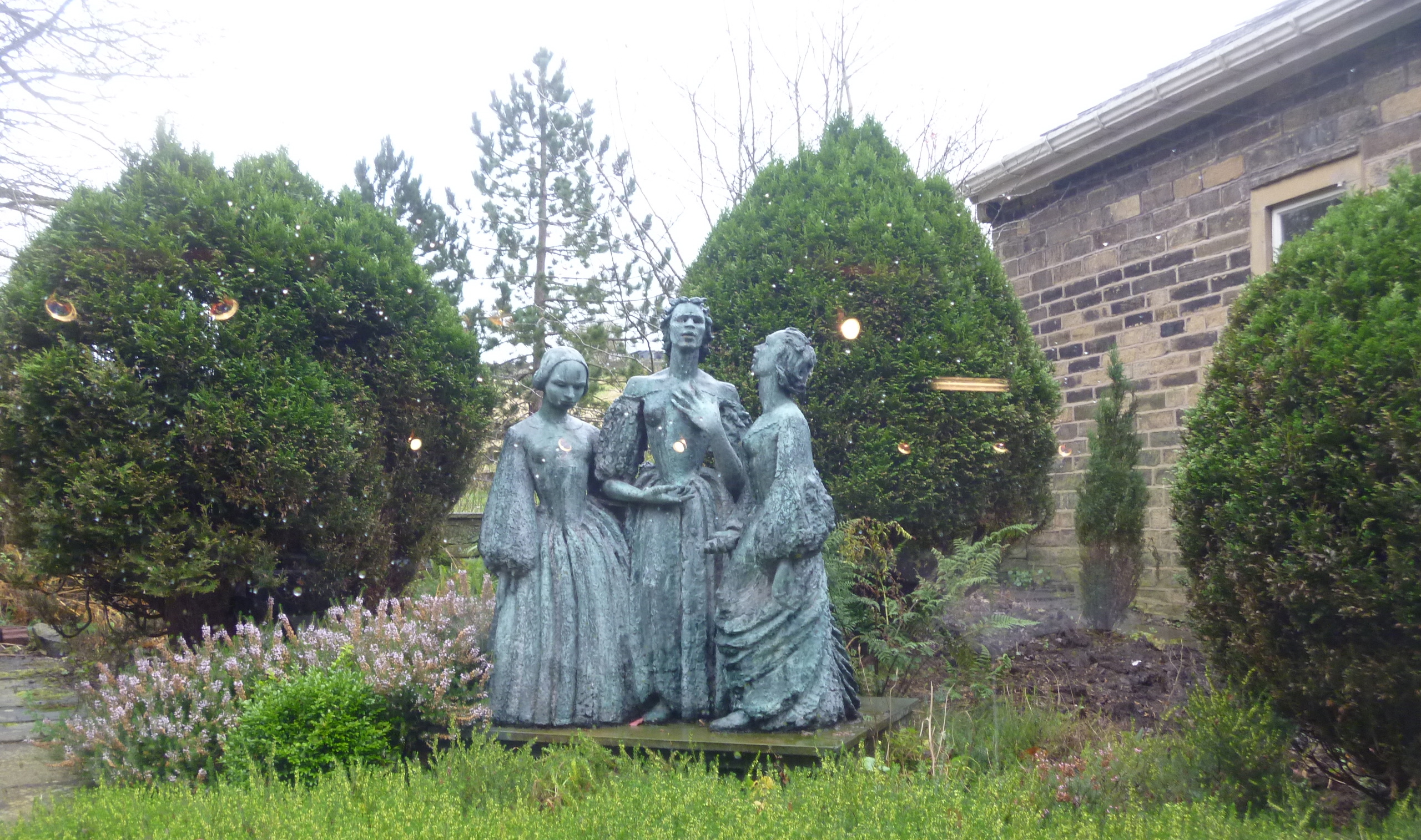
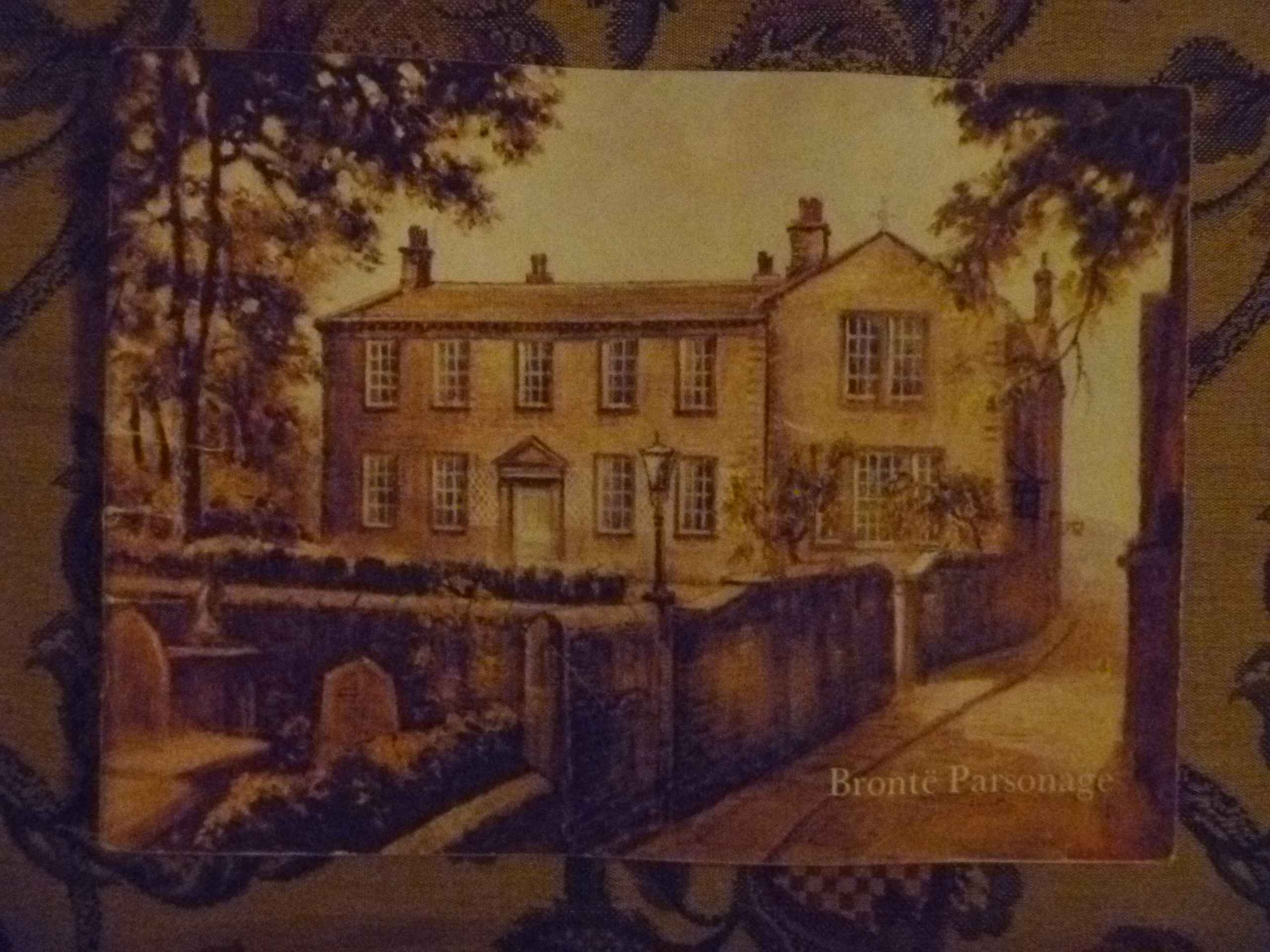
I’m sure I don’t need to explain here that the Parsonage at Haworth, near Keighley in West Yorkshire was home to the Bronte family (probably the world’s most famous literary family) from 1820 to 1861.
Bronze Sculpture (by Jocelyn Horner) of The Bronte Sisters in the Heather Garden
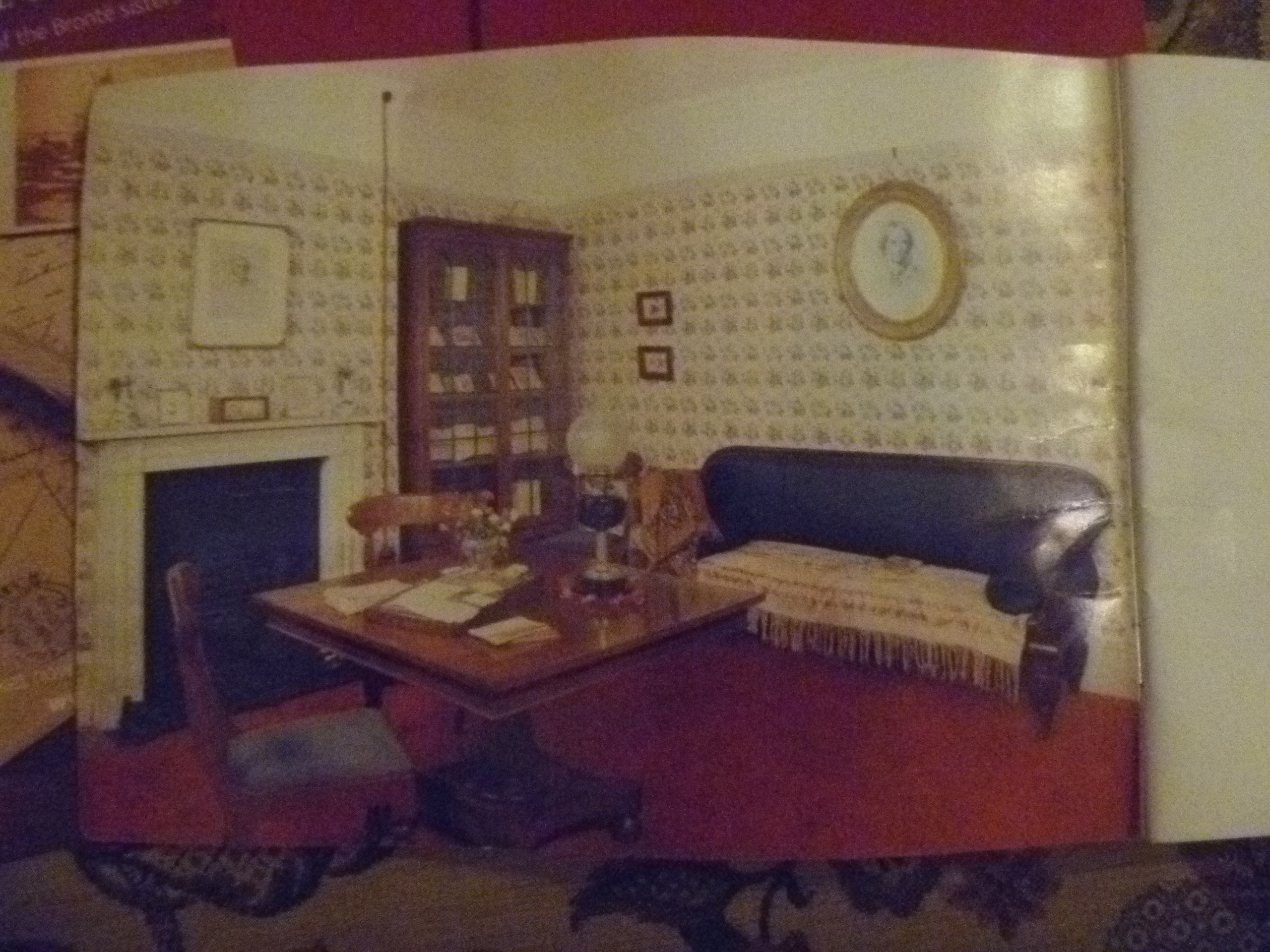
Little had changed in the house itself – my friend and I and one other couple were the only visitors at 1pm today. Some of the pictures had been moved about and there’s a much improved permanent exhibition called Genius: The Bronte Story. My friend had brought along her guidebook from a previous trip [in 1983] so we were able to compare and as photography inside the house is prohibited. Here are some pictures from that book:
The Dining Room
Mr Bronte’s Study
Bronte Parsonage Guide, 1983
There’s a further exhibition called Bronte Relics : A Collection History.
“New exhibition looking at the fascinating history of the Bronte Parsonage Museum collection, a story almost as extraordinary as the Bronte story itself.” [website]
“The provenance of a variety of objects is traced back through previous owners and collectors to the major sources of Bronteana; amongst them Charlotte’s husband, Arthur Bell Nicholls; Ellen Nussey, Charlotte’s lifelong friend; the family of Martha Brown, the Brontes’ servant, and the American collector, Henry Houston Bonnell.” [2012 flyer]
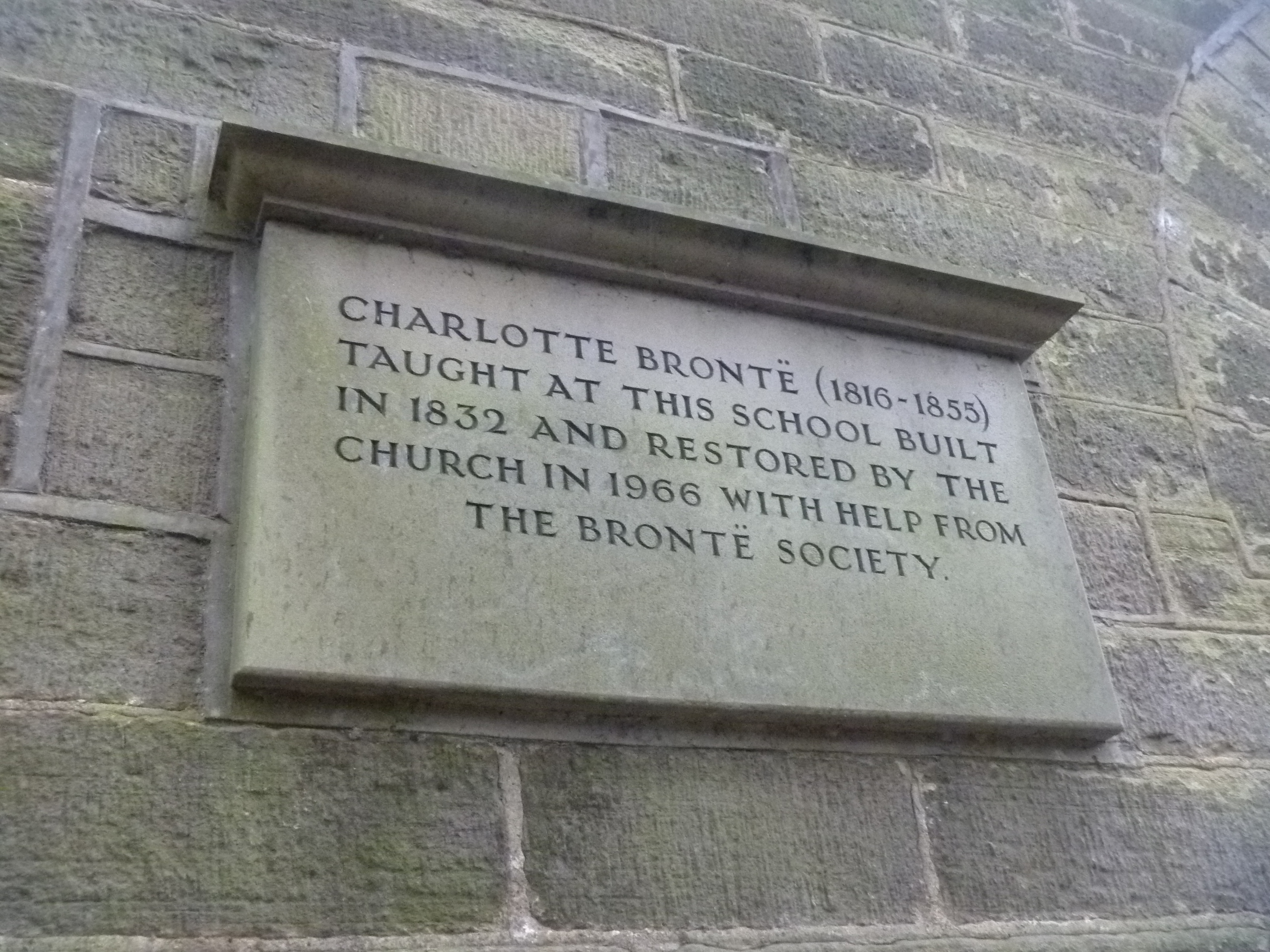
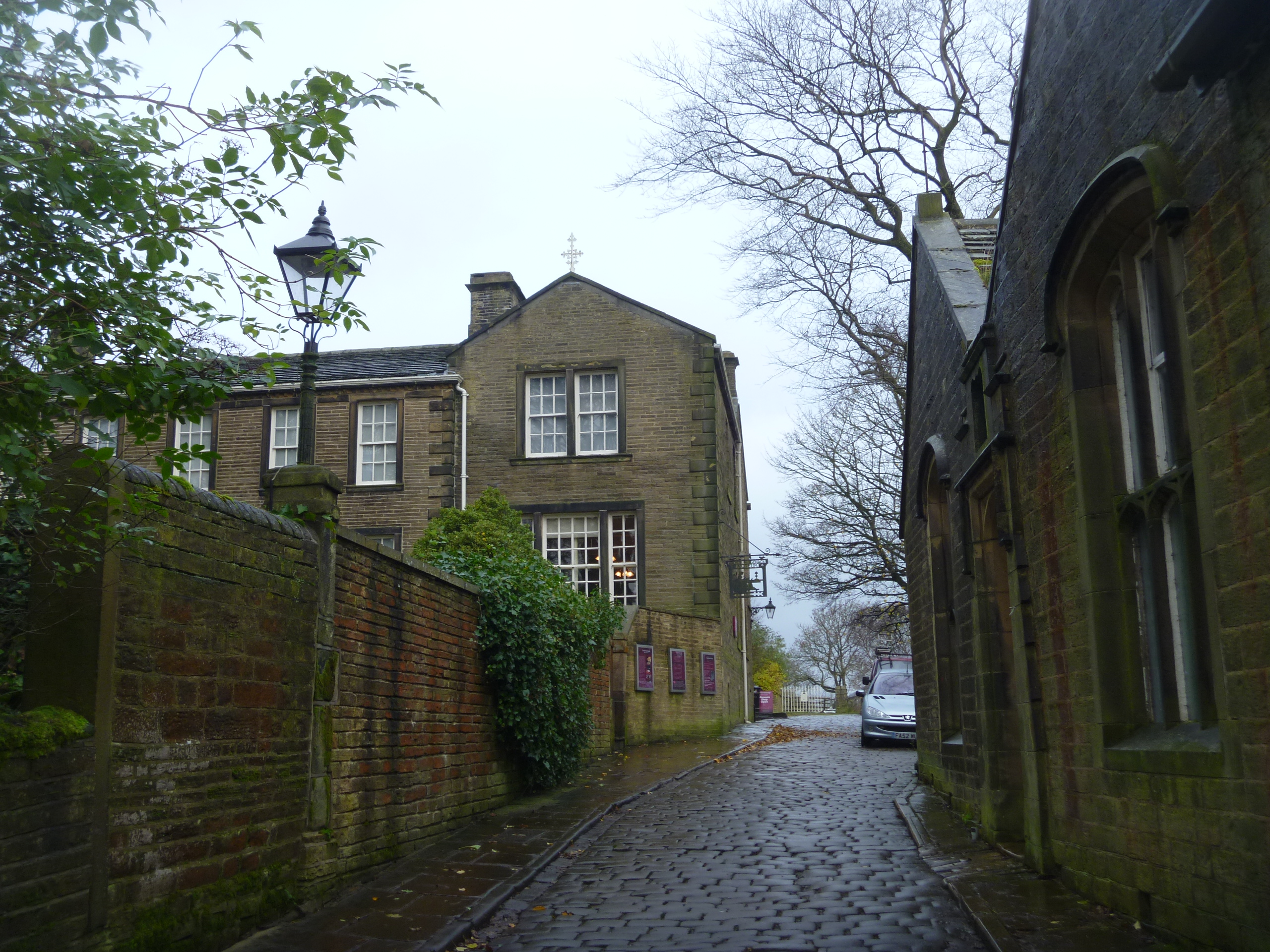
Opposite The Parsonage is the School in which Charlotte Bronte taught at one time.
The Parsonage is on the left and the School on the right
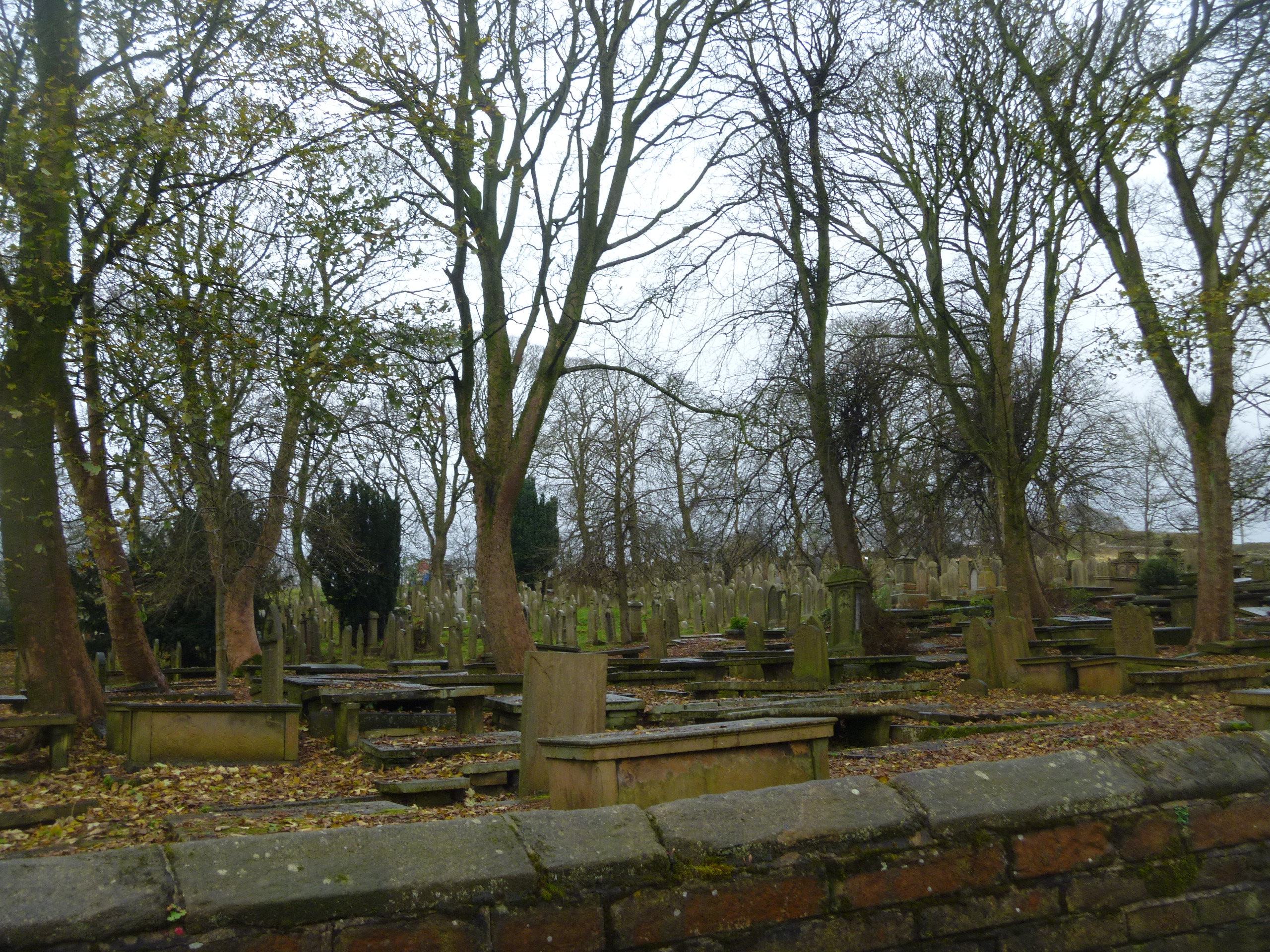
The Churchyard, Haworth
No visit to Haworth can be described without a mention of the weather. Maybe on occasion the sun shines up on Haworth Moor but I do believe that I have yet to experience this phenomenon! Today was cloudy and wet and typically atmospheric. But read here about a summertime visit.
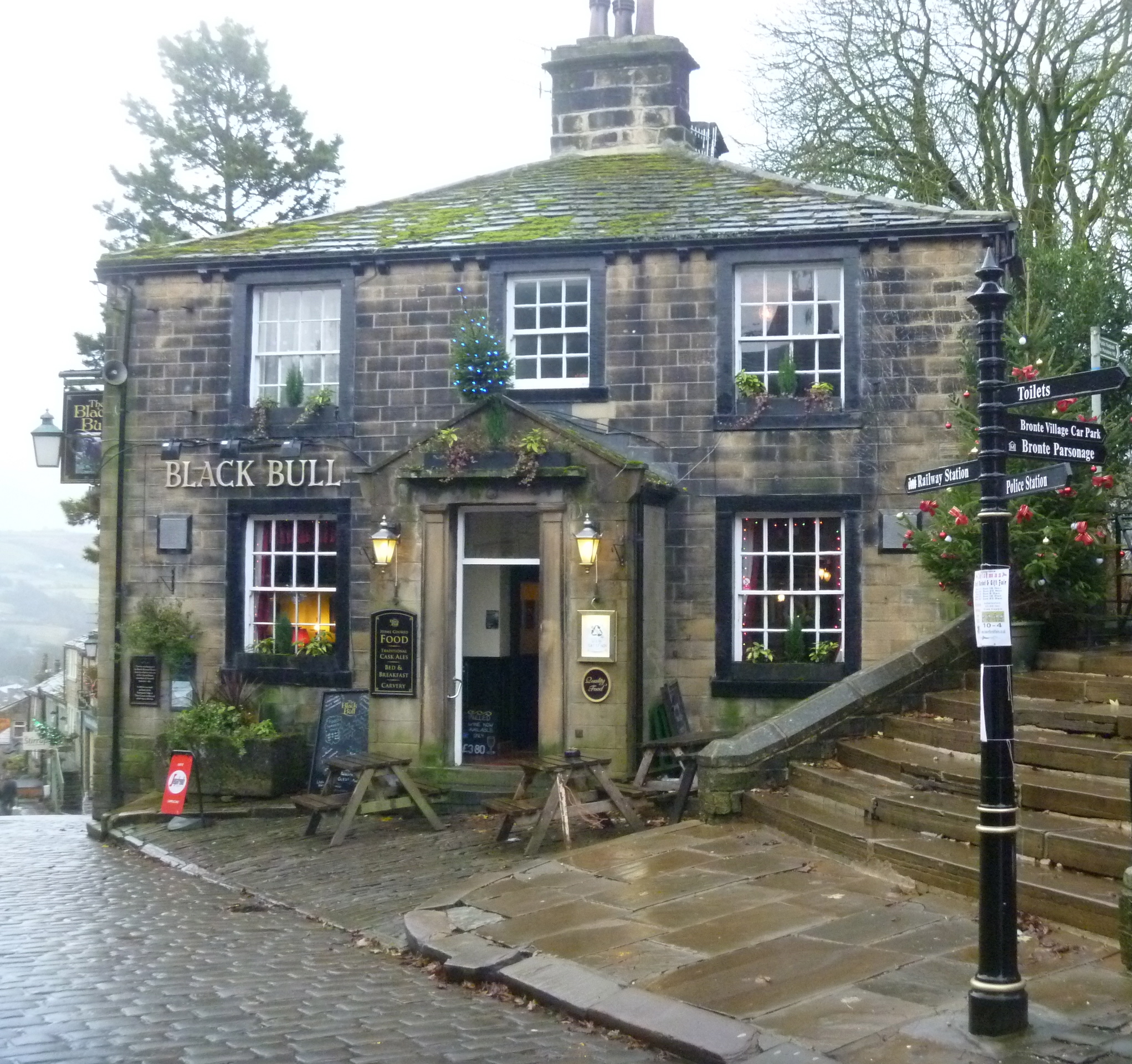
The Black Bull – Branwell was a ‘regular’
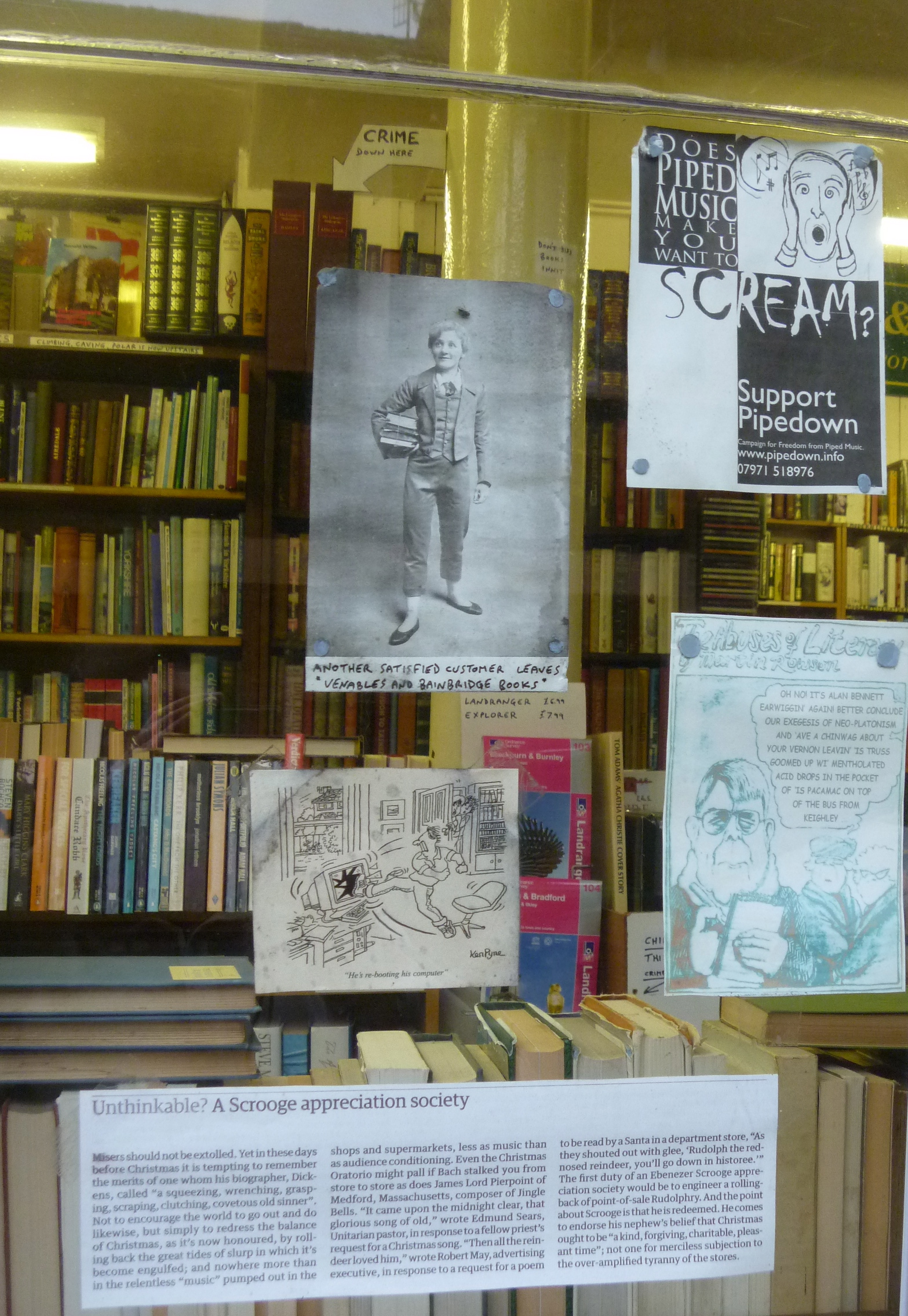
Through The Book Shop Window
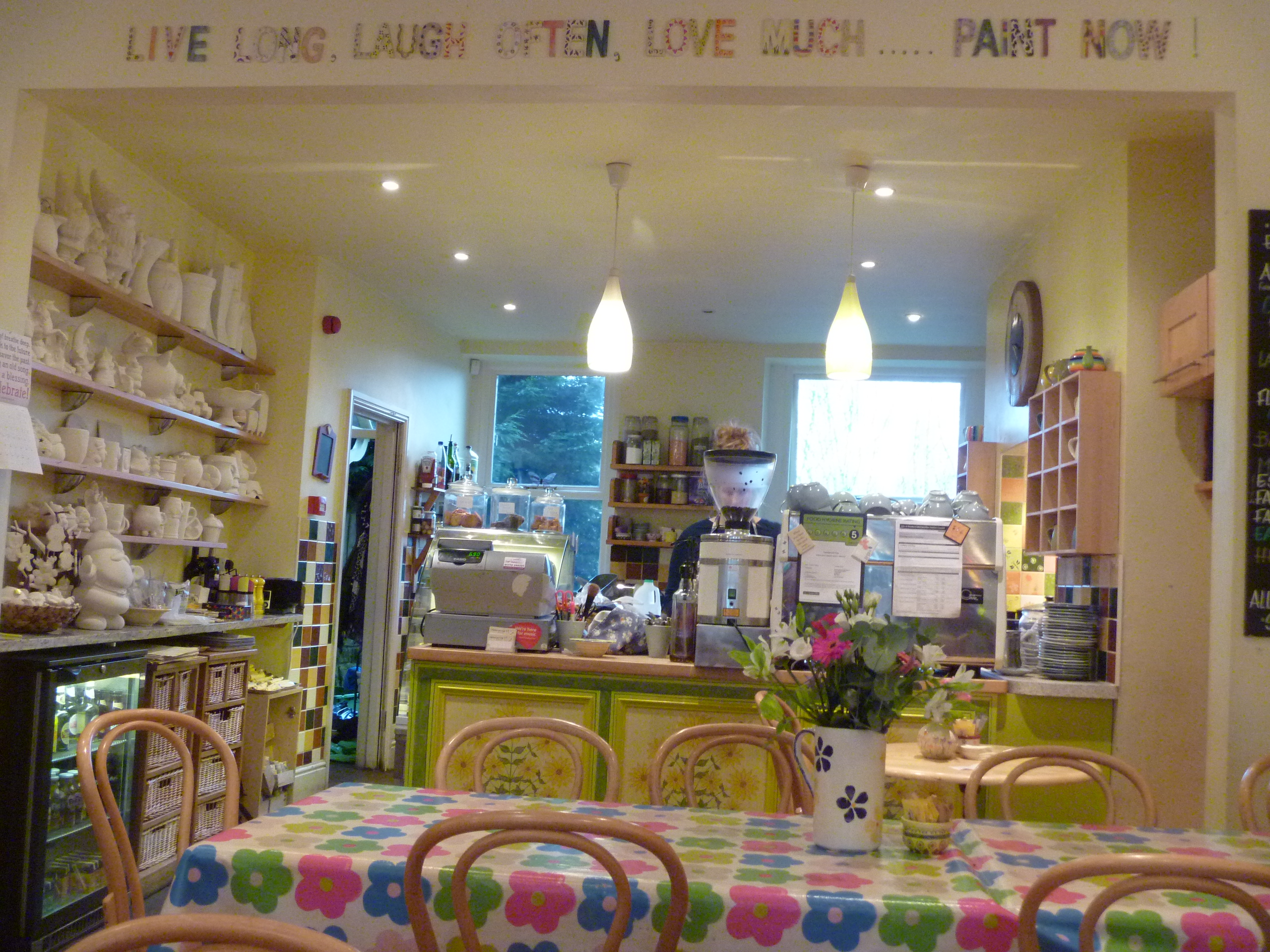
Cobbles and Clay Art Cafe, 60 Main Street, Haworth
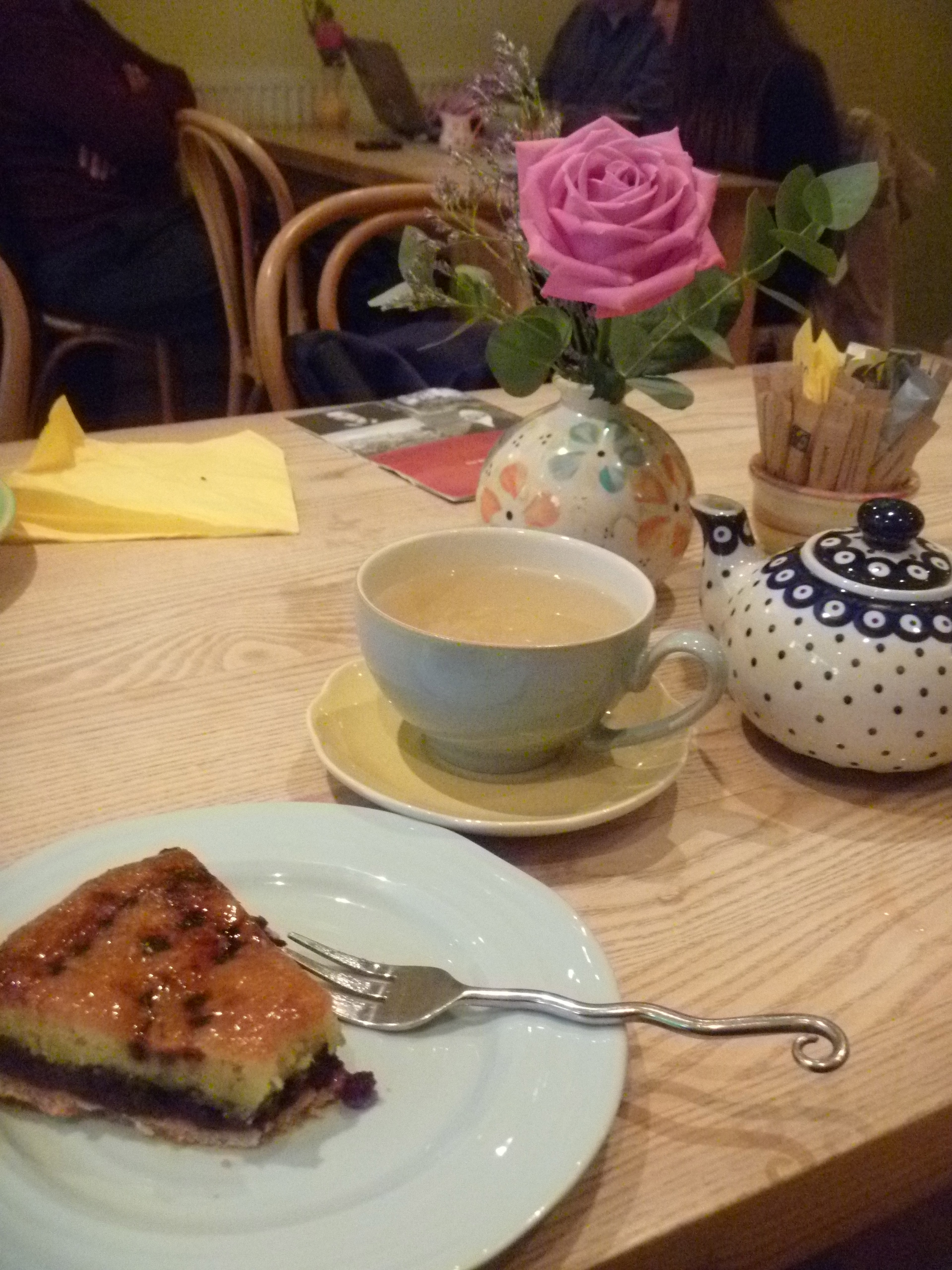
Tea and Tart at Cobbles and Clay
After just over an hour in the Museum we headed for a bright and jolly Haworth tea shop, stopping briefly to enquire whether the bookshop [Venables and Bainbridge] had any copies of Wuthering Heights in Polish for my friend to buy for her daughter-in-law. It didn’t. We were surprised that there were no foreign language versions of the great novels in the Bronte Museum Shop. We know they had sold French and German versions in the past.
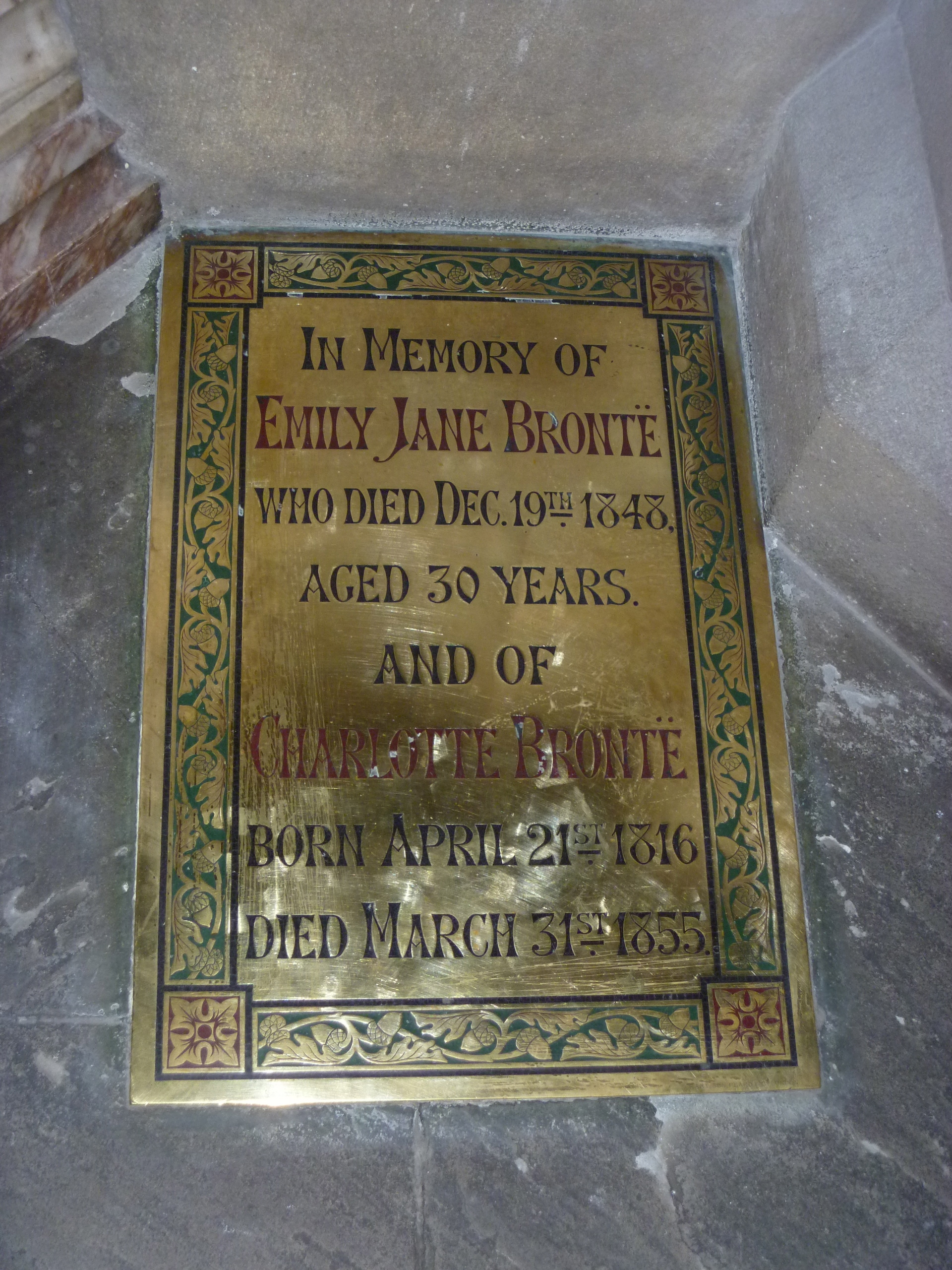
As we returned up the hill, back to the car park, we noticed that the church was open and popped quickly inside to look at the Bronte memorials before leaving the village.
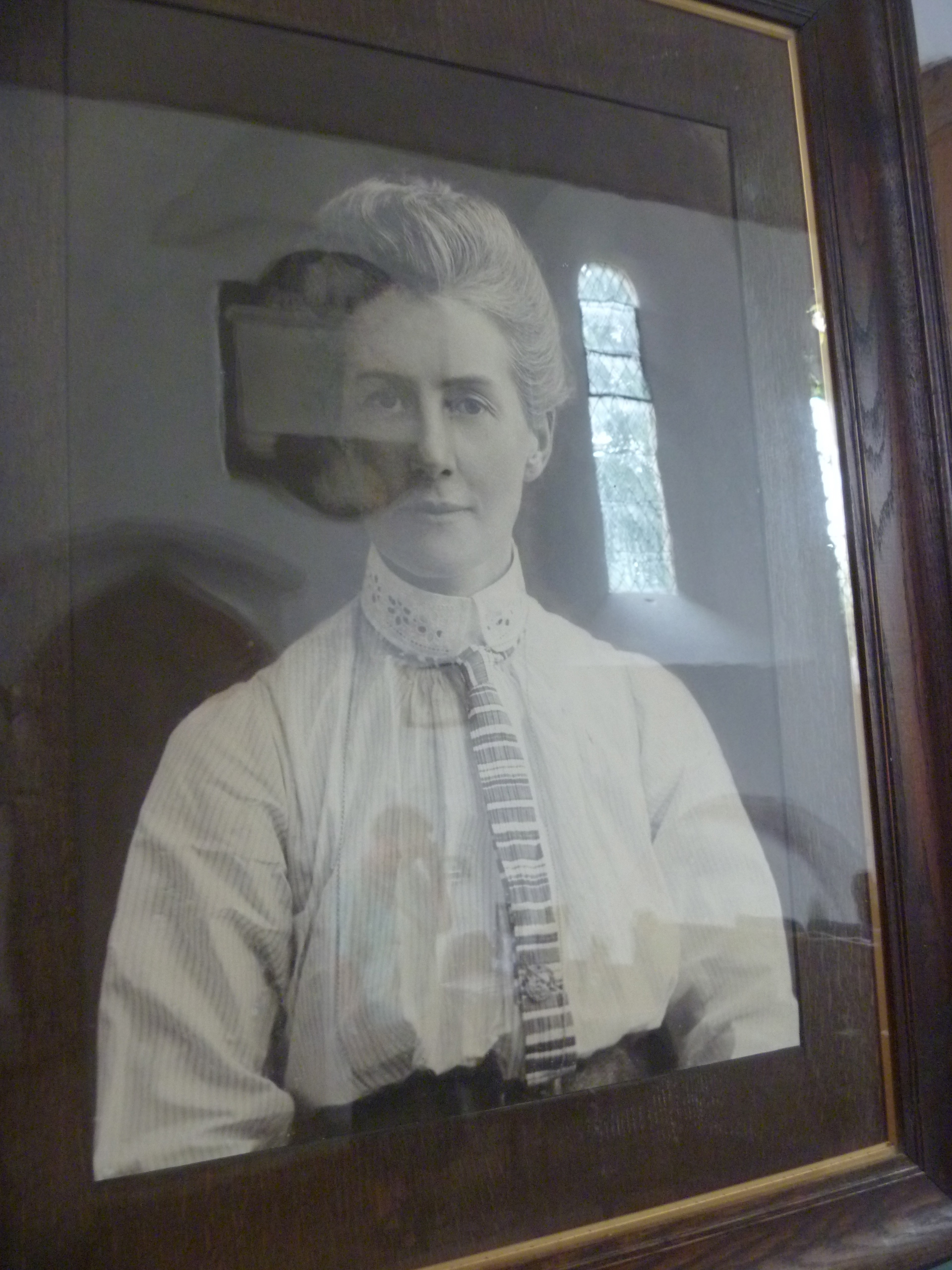
Photograph of Nurse Edith Cavell displayed in St Mary’s Church, Swardeston
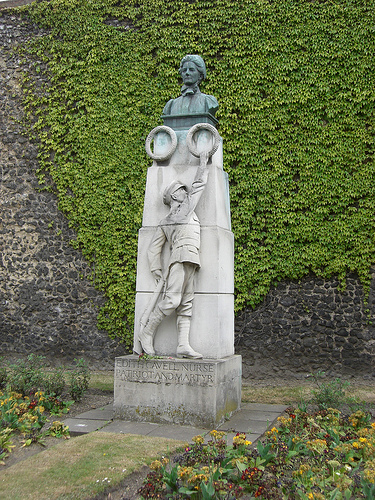
Growing up in Norwich I have always known about Edith Cavell our local Norfolk heroine of the First World War. My school bus passed by the Memorial to her located outside the Erpingham Gate at Norwich Cathedral, her grave lies within the Cathedral precincts and we had a school house called ‘Cavell’.
The Norwich Memorial to Edith Cavell
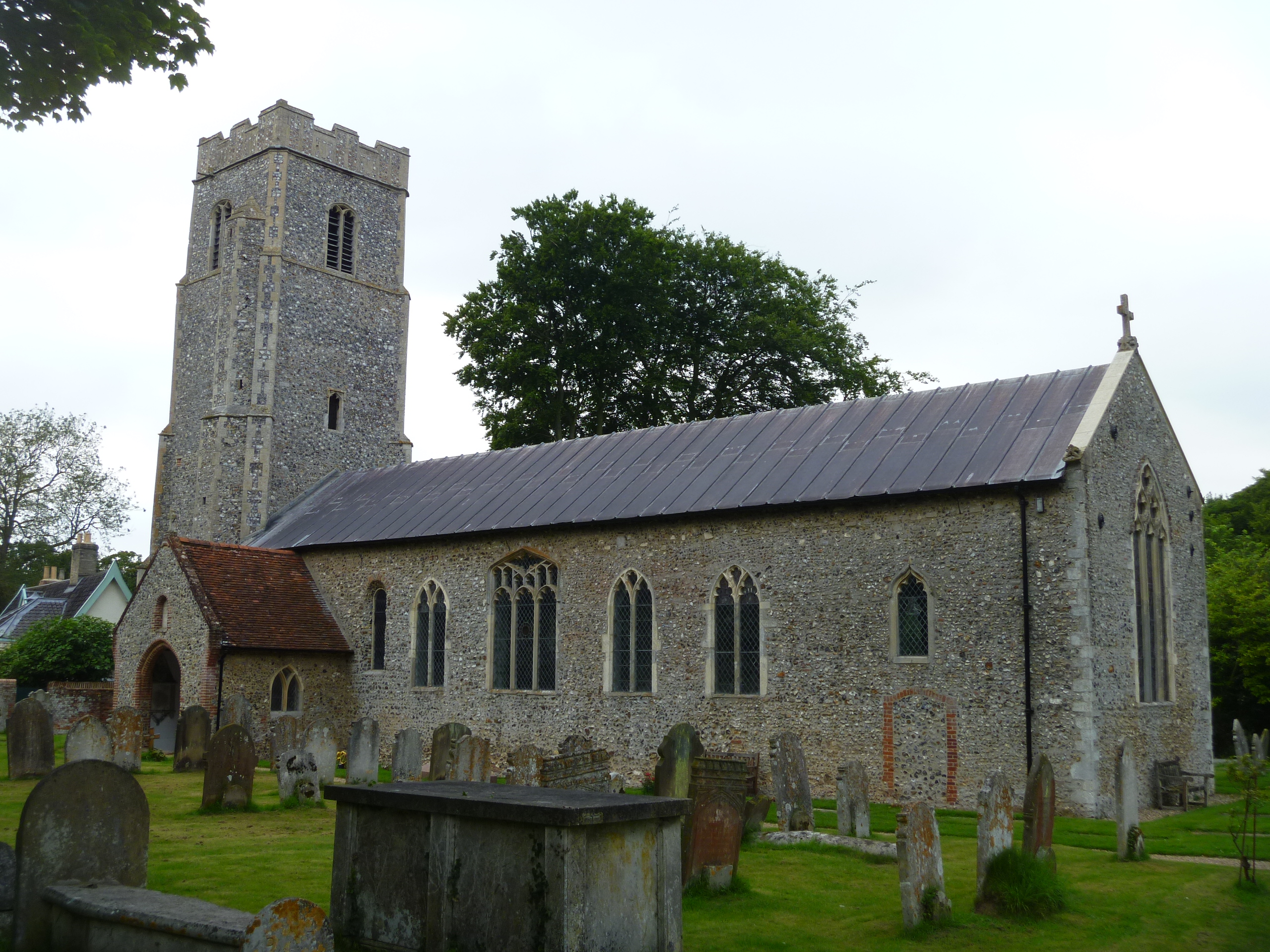
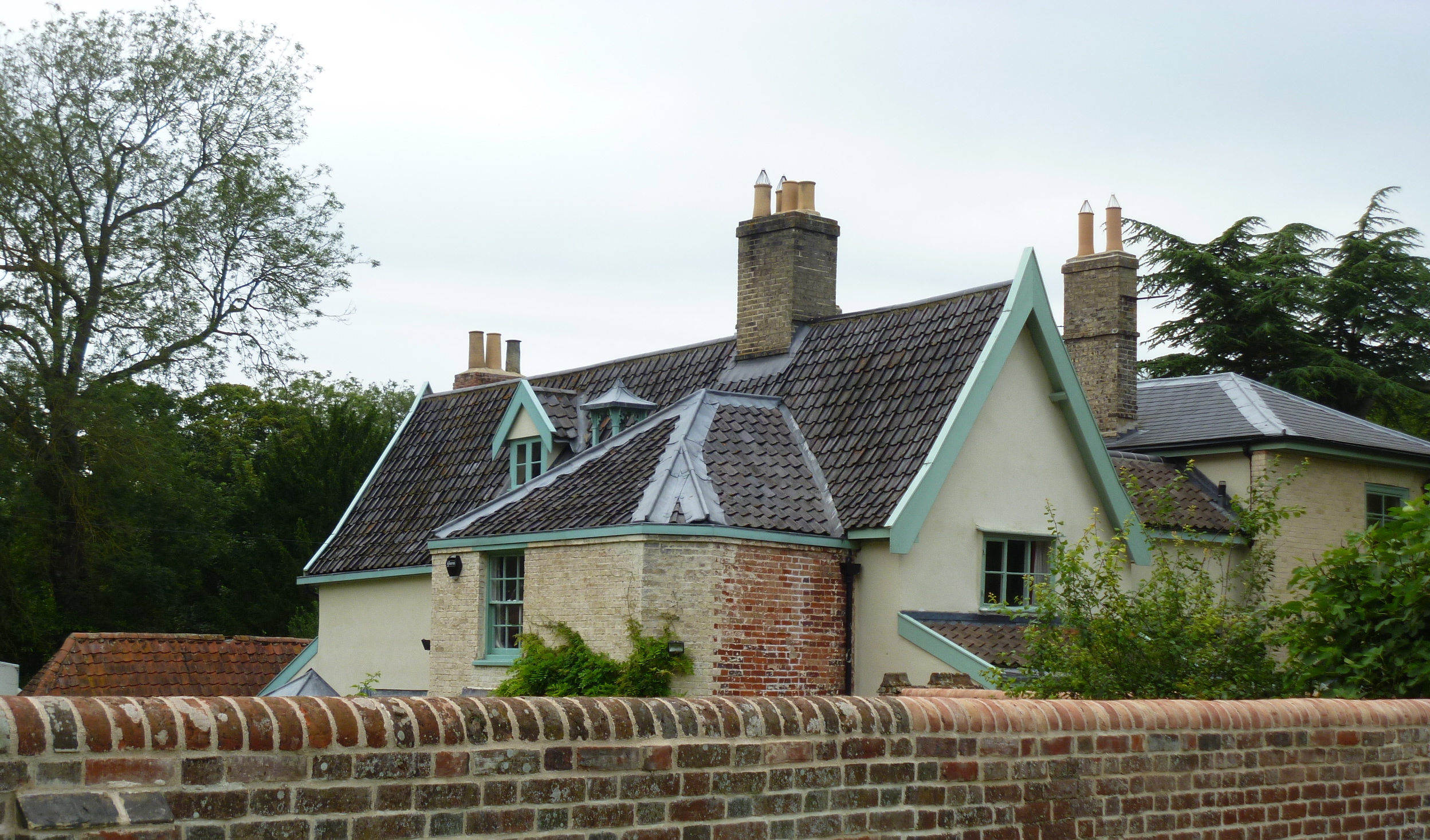
Born at Swardeston House in 1865 the family of the Reverend Frederick Cavell moved the following year in to the new Swardeston Vicarage which Edith’s father had paid to have built on land next to his parish church of St Mary the Virgin.
St Mary’s Church, Swardeston
Swardeston Vicarage Today
It was here that Edith Cavell spent her early days. You can read much more about her early life, interests, education and travels here.
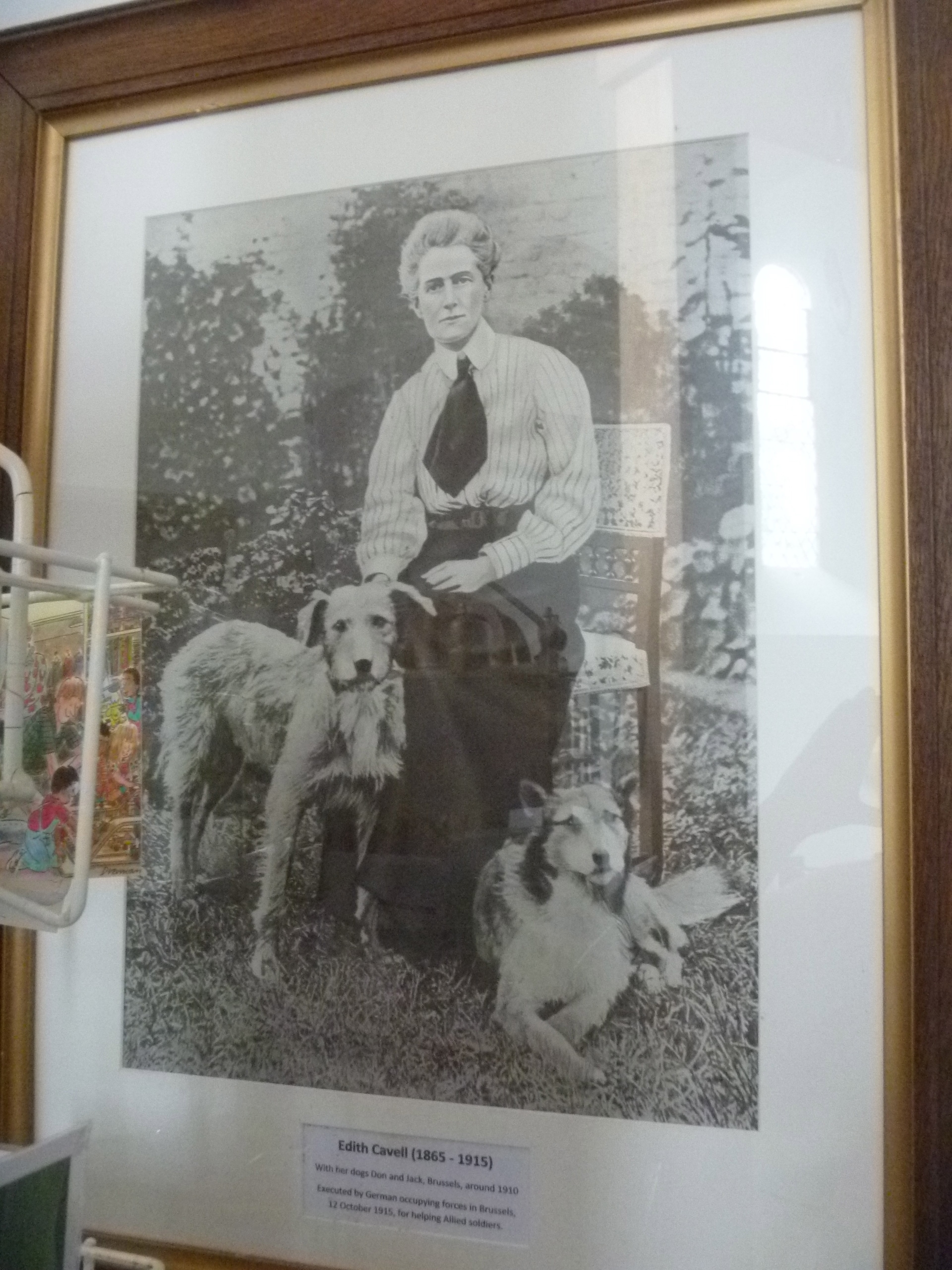
Edith Cavell in 1910 with her two adopted stray dogs Jack and Don (photo in Swardeston Church)
She had worked in Brussels, become fluent in French and later trained as a nurse working at times in both London and Brussels. She later turned to nurse training and such was her attachment to Belgium that when she heard of the invasion of Belgium by the Germans in 1914 she returned to that country and was already nursing there when Britain declared war on Germany on 3rd August 1914.
To Edith all men were equal and to be treated so at her hospital. She not only treated and nursed German and Belgian soldiers she later became involved in assisting British soldiers who were wounded and cut off from their retreating army beyond the front line.
“Edith also faced a moral dilemma. As a ‘protected’ member of the Red Cross, she should have remained aloof. But like Dietrich Bonhoeffer in the next war, she was prepared to sacrifice her conscience for the sake of her fellow men. To her, the protection, the concealment and the smuggling away of hunted men was as humanitarian an act as the tending of the sick and wounded. Edith was prepared to face what she understood to be the just consequences.” (Edith Cavell website)
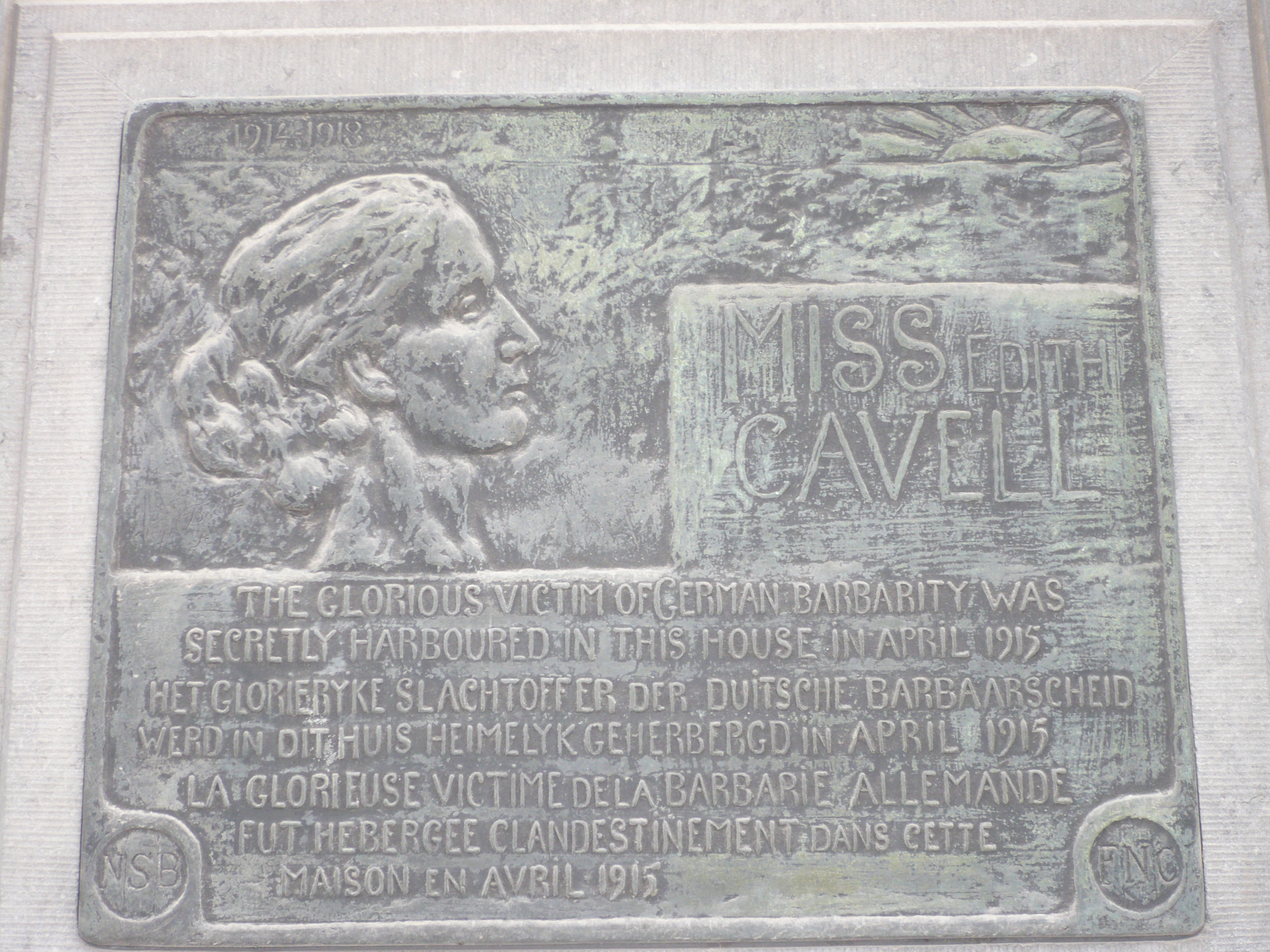
Plaque attached to a house in Ghent (Courtesy RB)
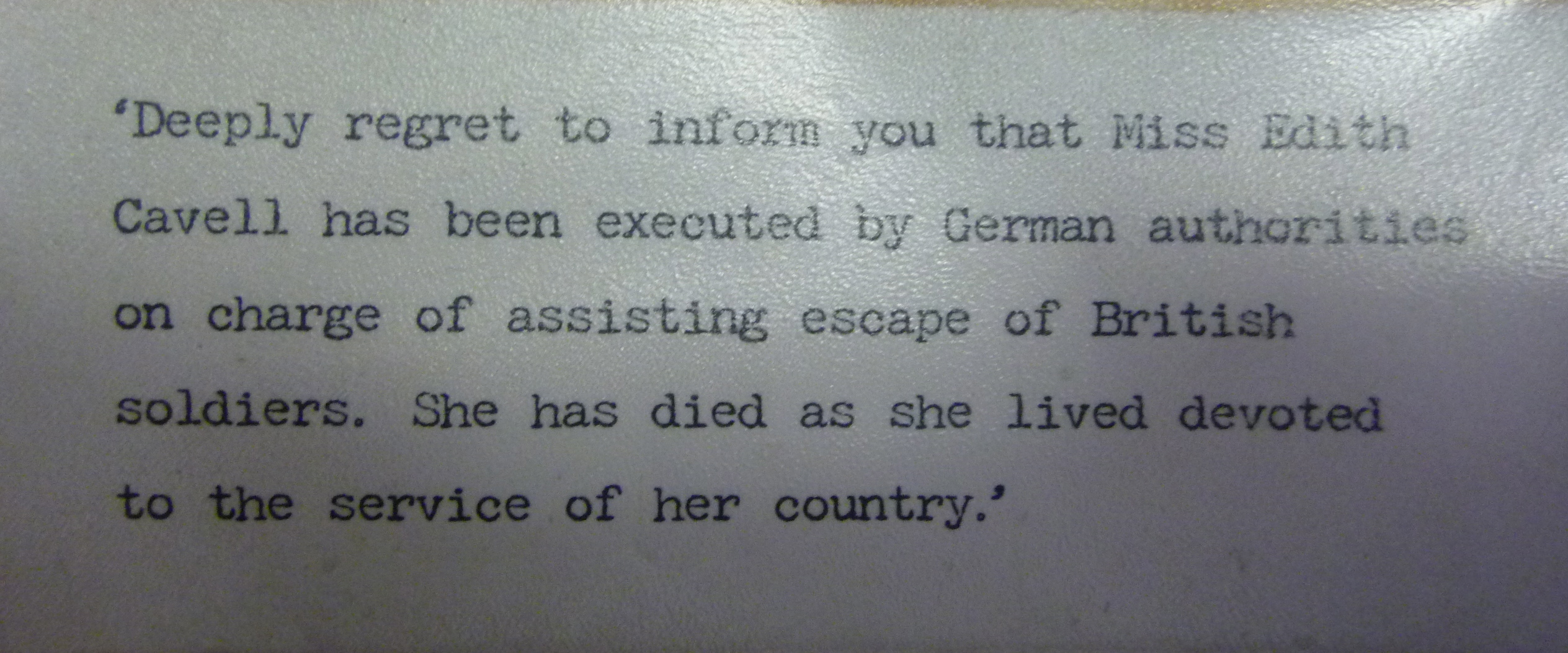
In August 1915 Edith was interned and the date for her execution as a collaborator was set as 12 October 1915. The evening before the English chaplain Stirling Gahan was allowed to visit her in her prison cell. There she received Holy Communion and they recited the words of the hymn Abide With Me together. This is what she said to him :
“I am thankful to have had these ten weeks of quiet to get ready. Now I have had them and have been kindly treated here. I expected my sentence and I believe it was just. Standing as I do in view of God and Eternity, I realise that patriotism is not enough, I must have no hatred or bitterness towards anyone”.
Despite Spanish and American attempts at intervention she was shot at dawn on Tuesday 12 October 1915.
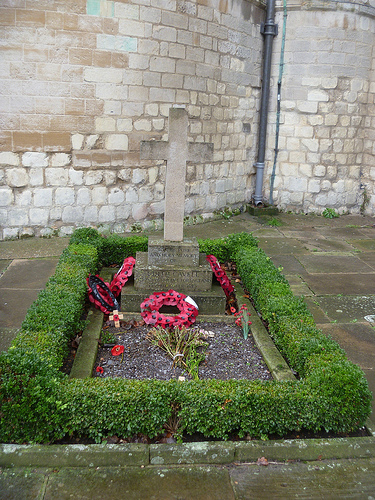
Edith Cavell’s Grave at Life’s Green
After the War, in 1919, Edith Cavell’s body was returned to England and a funeral service was held at Westminster Abbey on 15 May. A special train brought her remains to Norwich station from where she was buried in a spot called Life’s Green in the grounds of Norwich Cathedral. Ironically, her coffin was carried on a gun carriage!
Books and Film
YouTube film Edith Cavell (1939) starring Anna Neagle
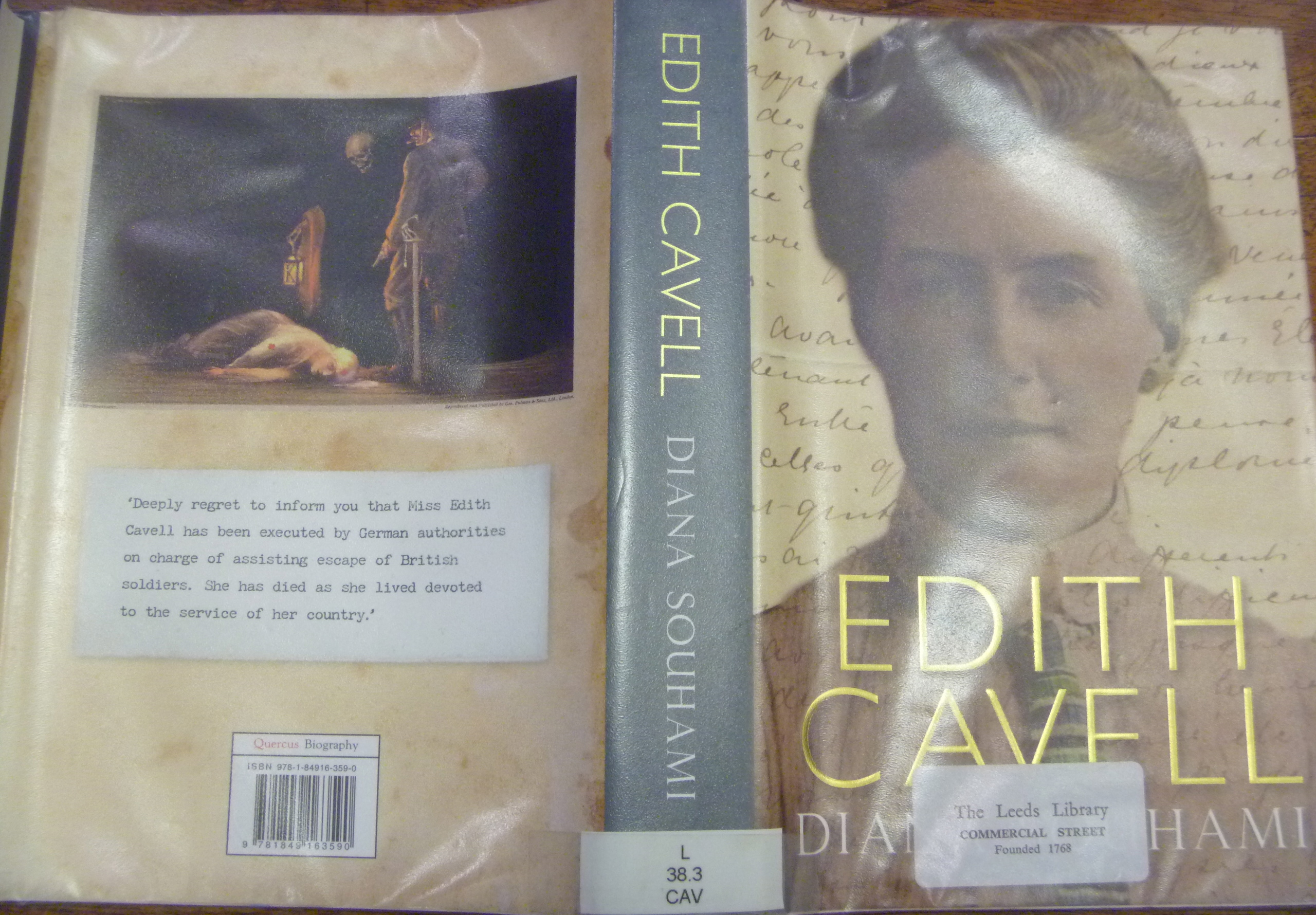
Friends Lynne and Lyn have both written eloquently about a recent biography of Edith Cavell by Diana Souhami. I heard Souhami speak in London about the biography and I’ve read it myself but I refer you to their superior reviews.
Lyn also read and reviewed a novel about Nurse Cavell Fatal Decision by Terri Arthur.
Other Memorials to Edith Cavell
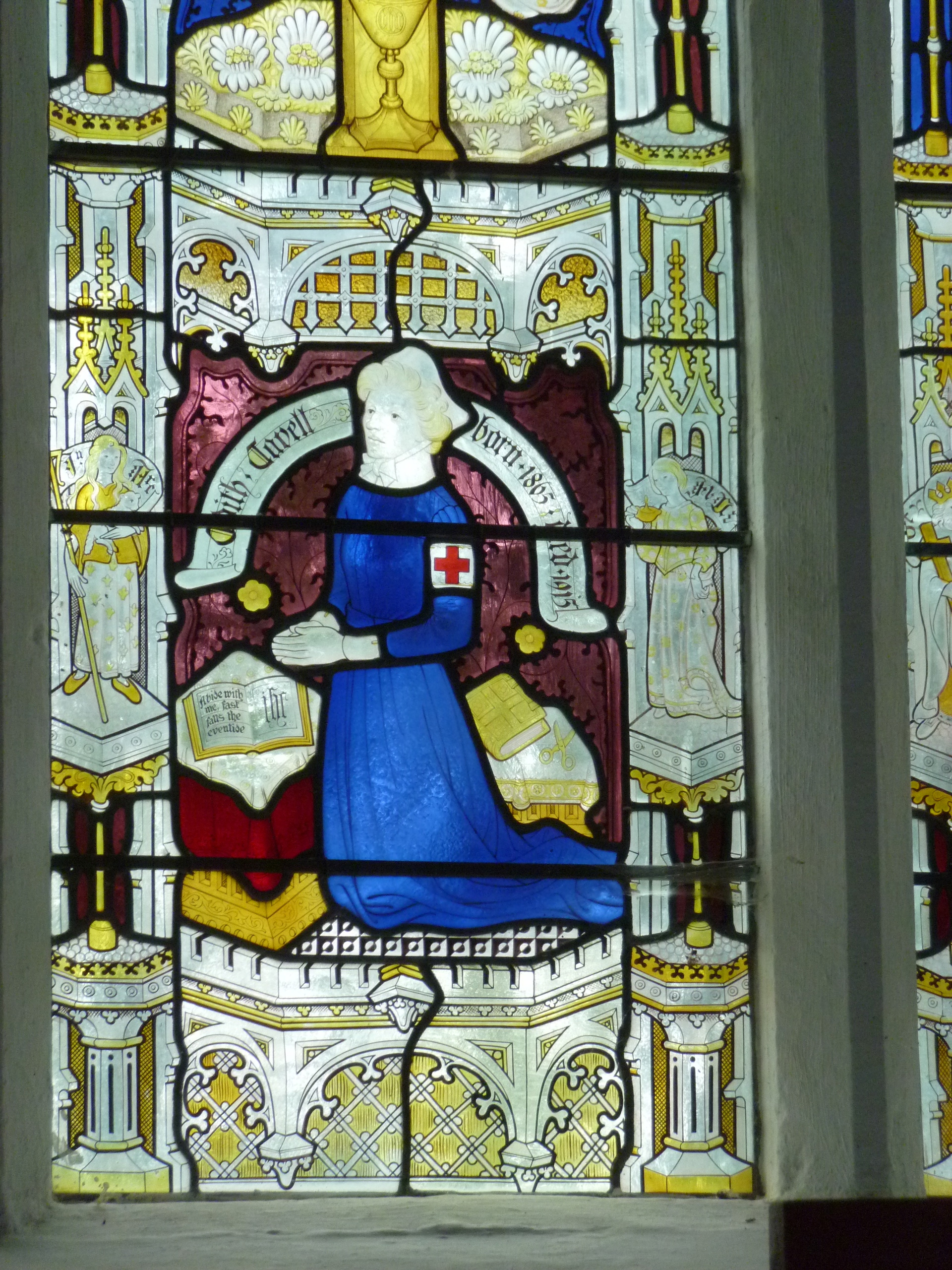
Edith Cavell Window at Swardeston Church
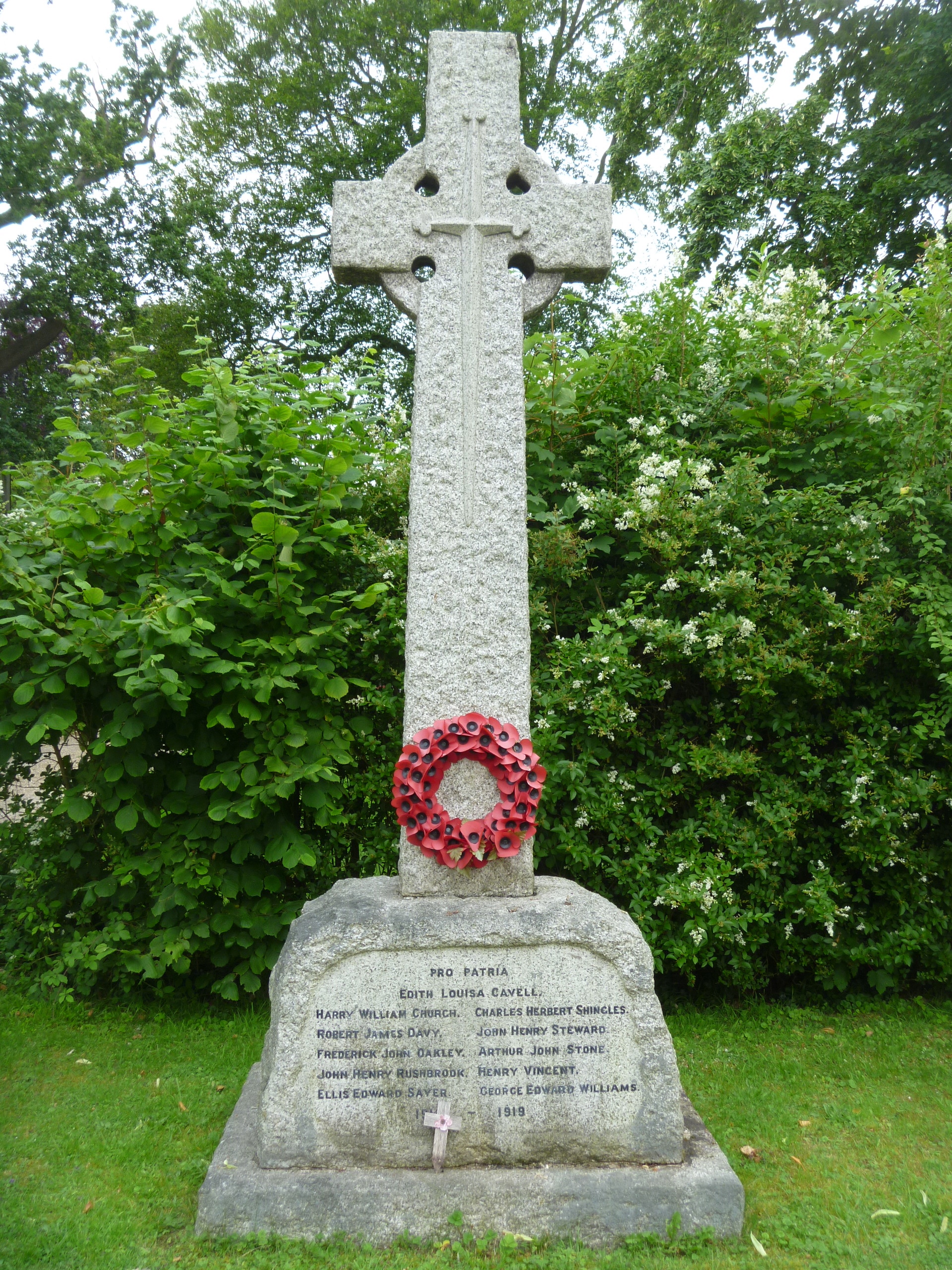
War Memorial at Swardeston, Norfolk
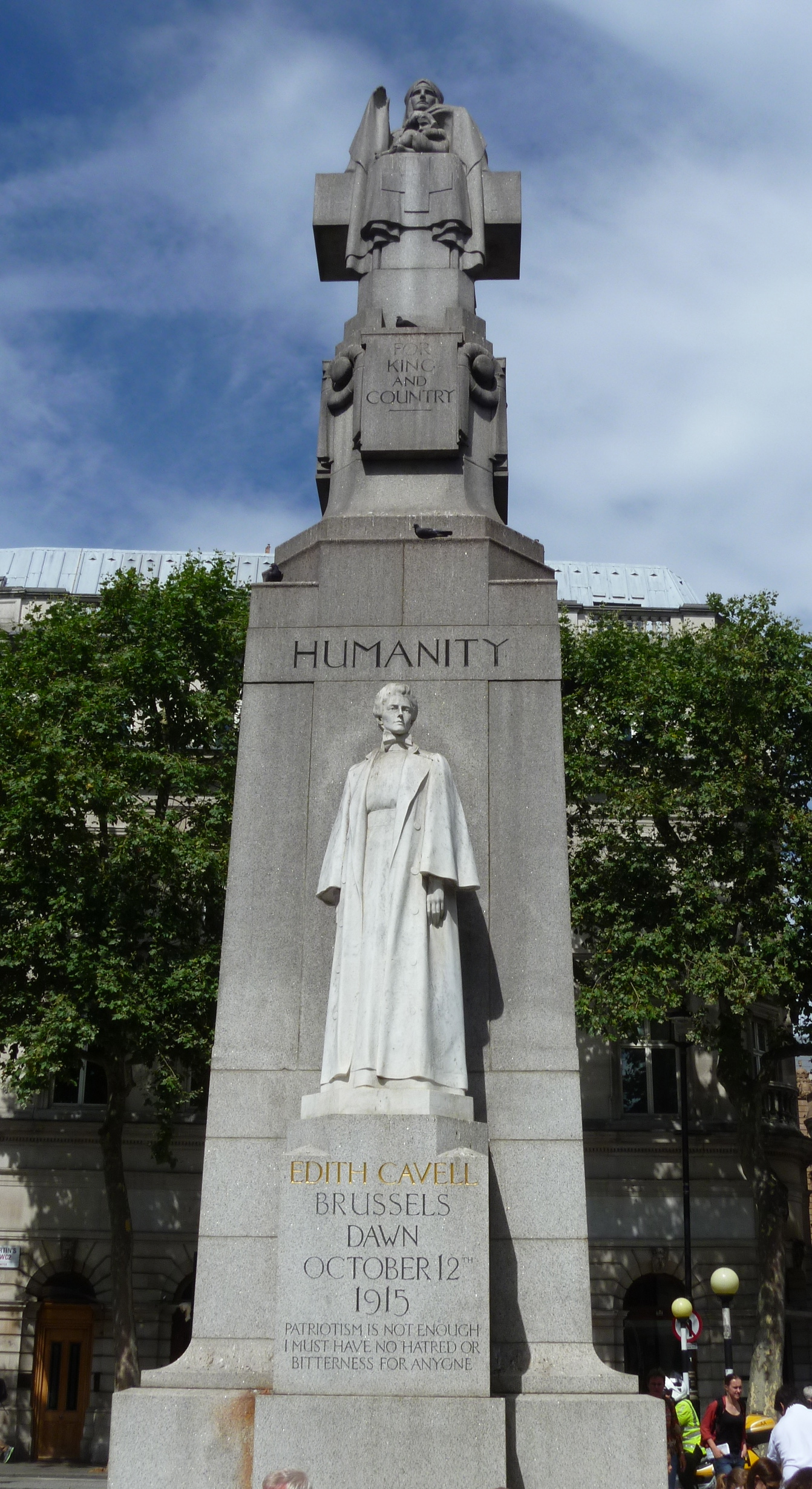
Statue erected in honour of Edith Cavell near Trafalgar Square, London.
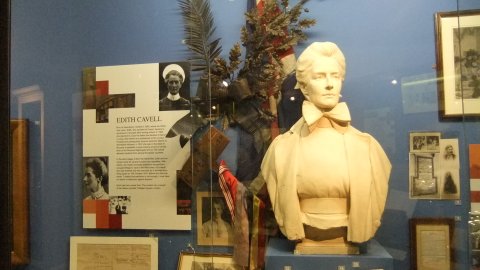
Edith Cavell bust in the London Hospital Museum. Lynne‘s photo. She says : “Apparently it was in the sitting room of the nurses home I lived in there, not that we ever noticed it.”
Sunday 14th October was the 946th anniversary of The Battle of Hastings. Our guide Sally Lawless deemed it therefore a fitting date on which to embark on one of a series of new initiatives at the Harewood Estate: The Harewood Castle Tour.
Earlier in the year I’d picked up the leaflet ‘Medieval Harewood 2012 : step back in time … ‘ This outlined a series of events, workshops, tours, tours and walks. Of course, it was the walk that appealed to me. I’d seen some of the archaeological dig results at Gawthorpe Hall last October on my ‘Capability Brown’ walk and I decided earlier in the week to sign up to visit Harewood Castle today.
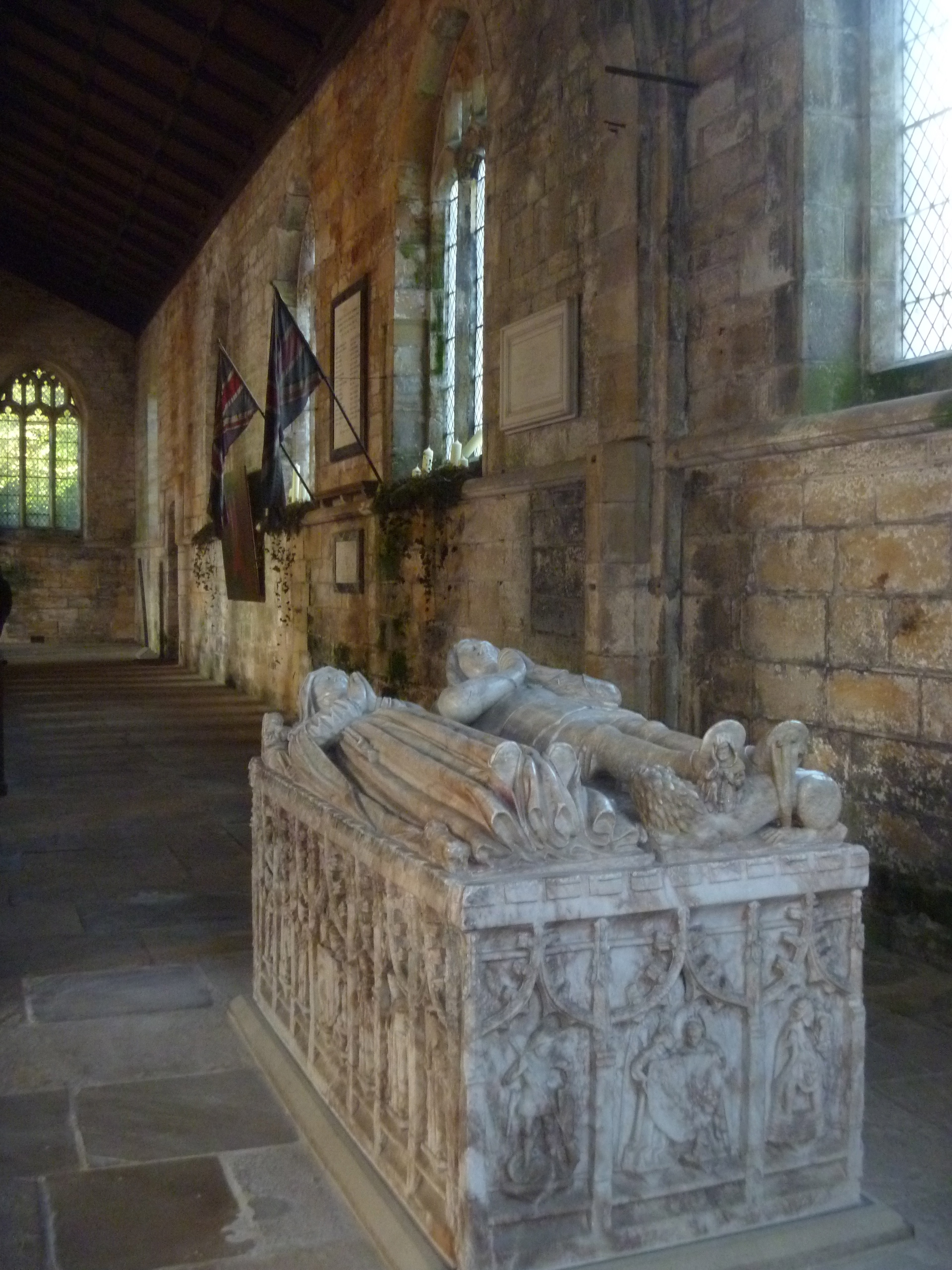
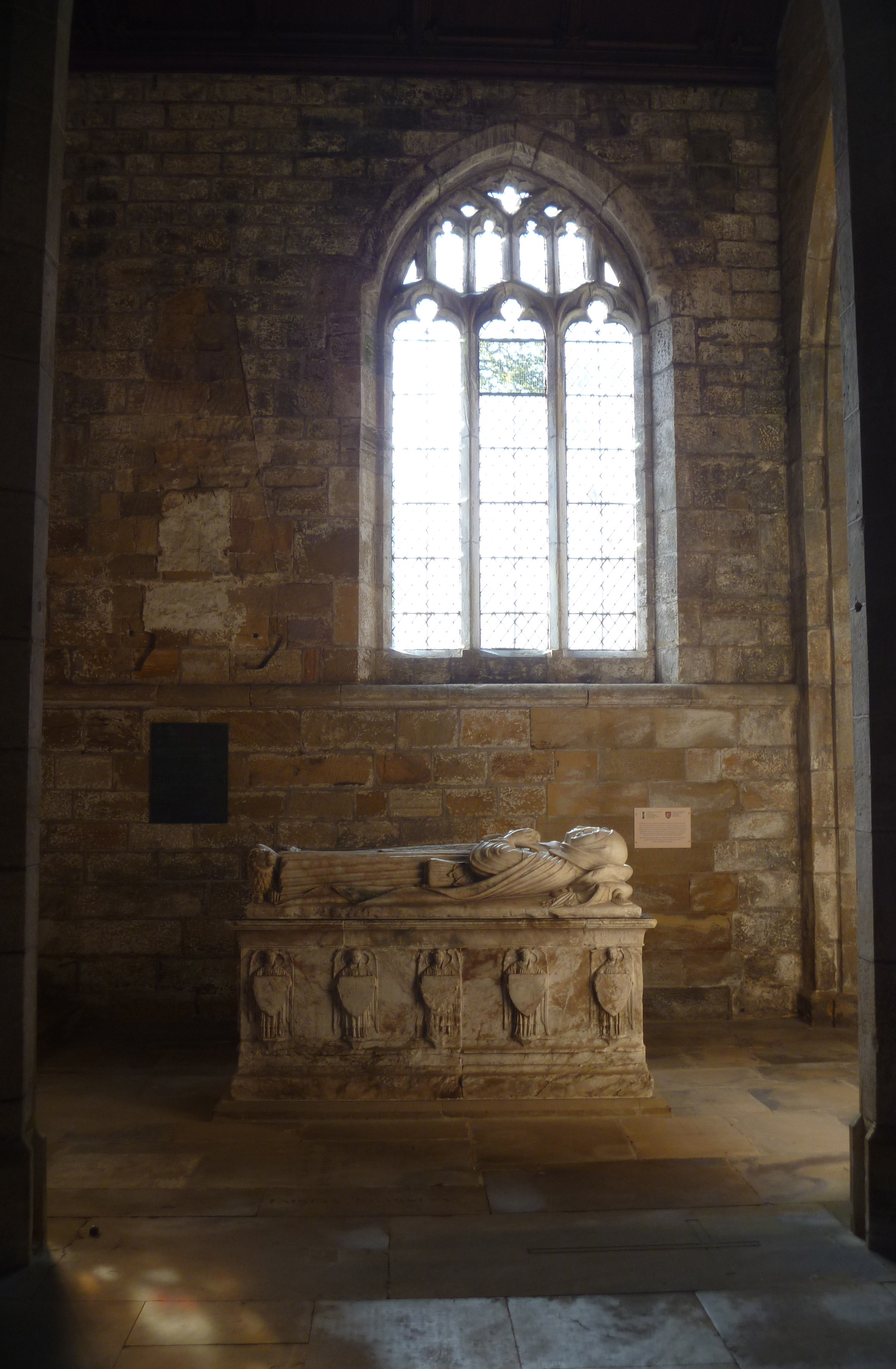
We all assembled in All Saints Church the Harewood Estate church which is now under the protection of the Churches Conservation Trust. Sally gave us a brief introduction to the church and the Harewood Estate in general. We were shown the important Alabaster Tombs – 6 pairs comprising some of the best surviving examples in England. All the figures represented had played a part in the history of the Castle.
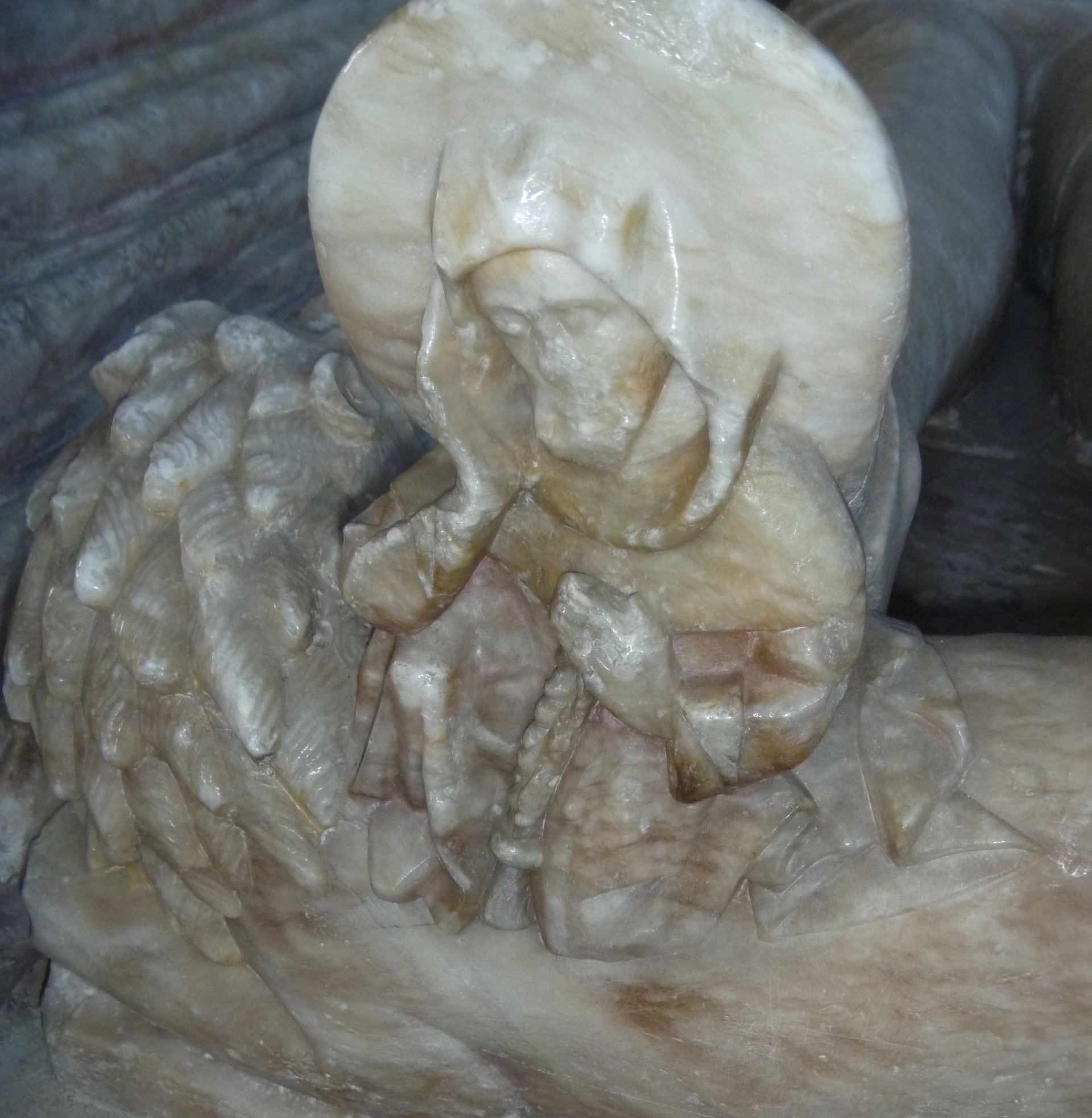
Close up of an alabaster beadsman or professional mourner
Then our walk began, through the churchyard where many of the estate and household workers are now buried, and out down a track to the public footpath Church Lane. This is was the former turnpike road between Tadcaster and Otley. It cuts through what was formerly the northern pleasure grounds of the Estate.
Sunken tracks like this criss-cross the Harewood Pleasure Grounds
Peering over the wall we were fascinated to see the various tunnels and trenches which passed under the road so that the vicar could reach his church and the local inhabitants cross the Estate without being seen by the Lord and Lady and their family and guests.
The Ha-ha approach to the Castle
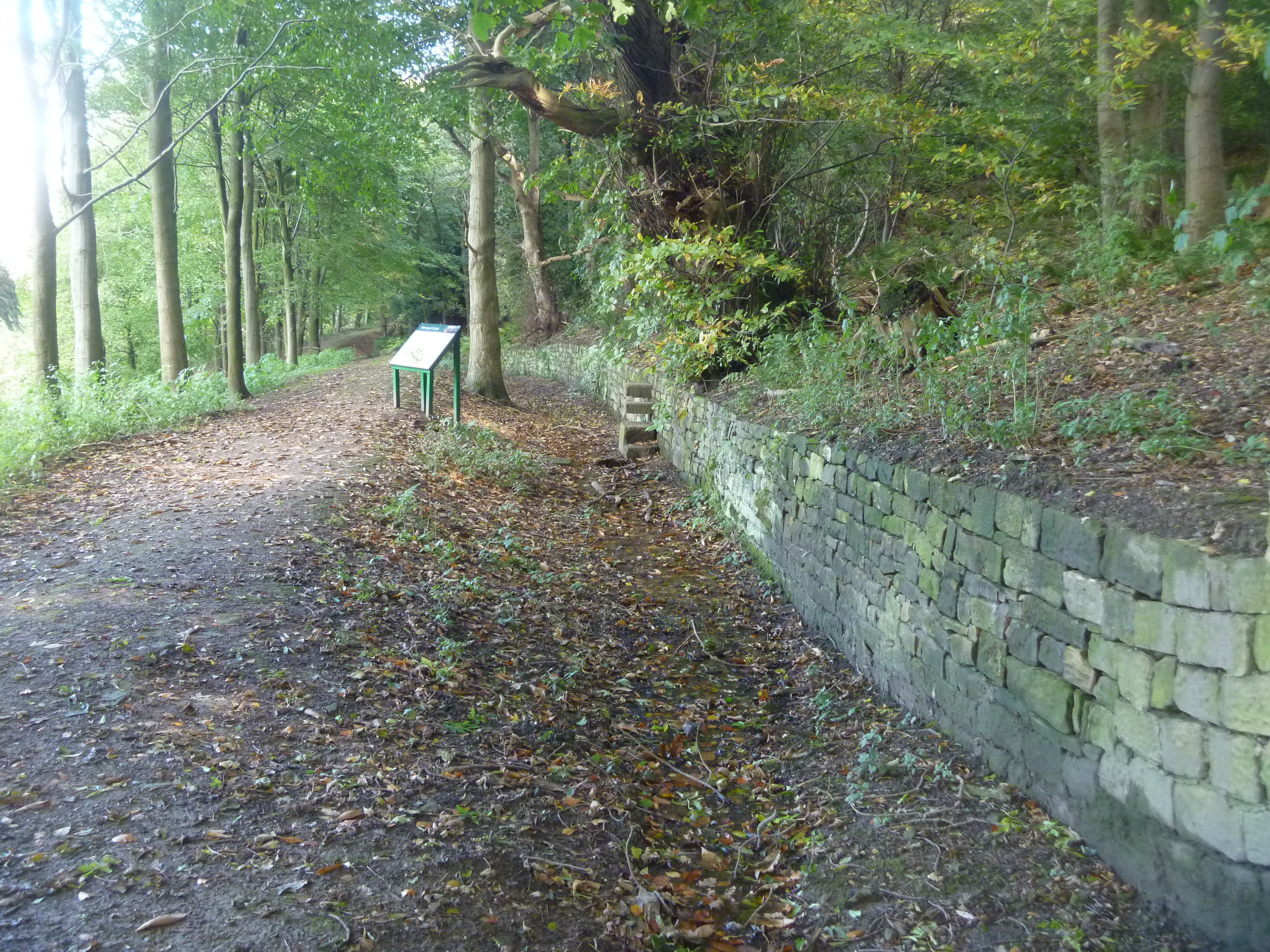
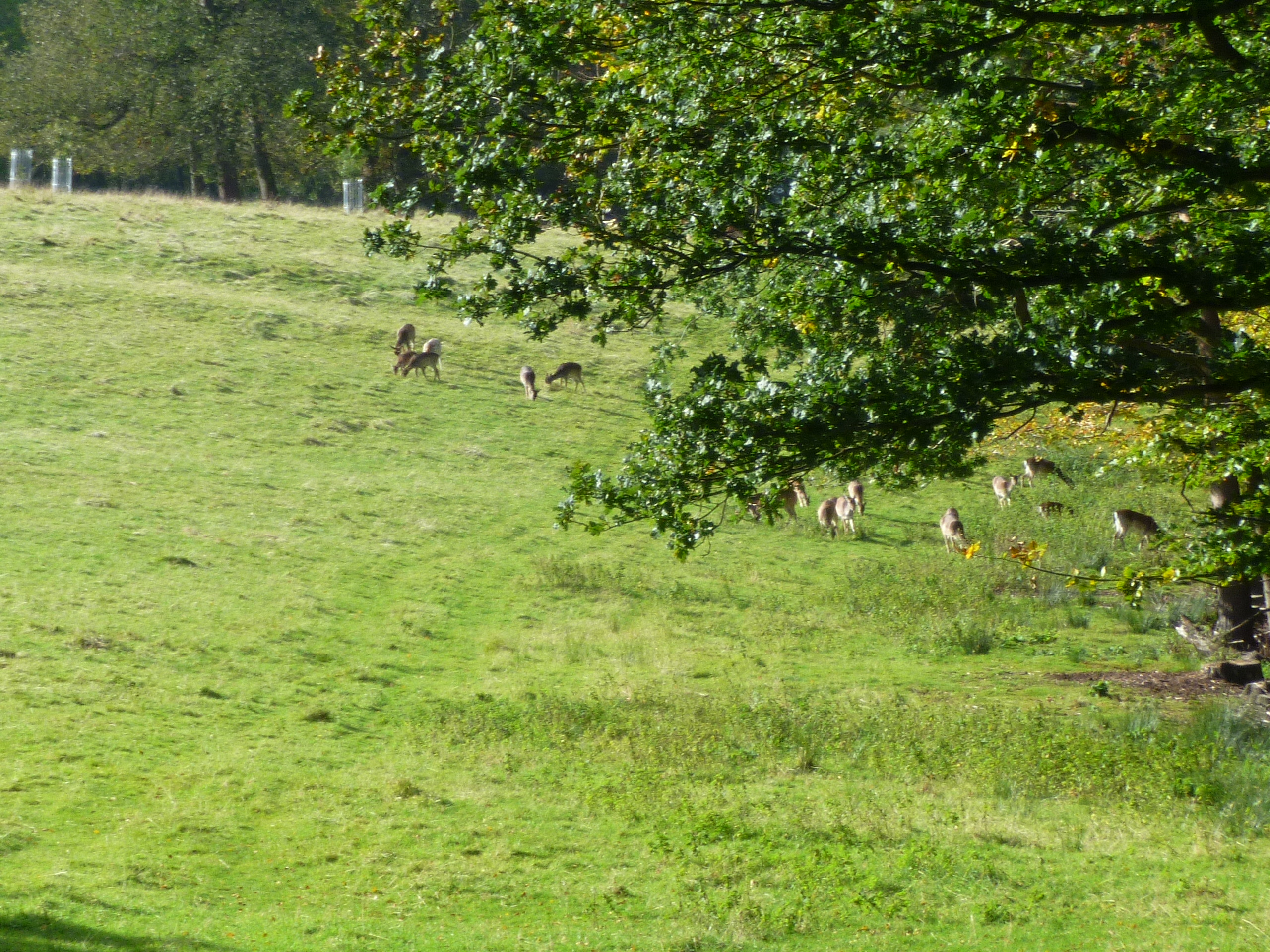
From Church Lane we entered the original Harewood village and proceeded down a deep walled public footpath to the Ha-ha which separated the Pleasure Grounds from the Deer Park – where we could still see deer today.
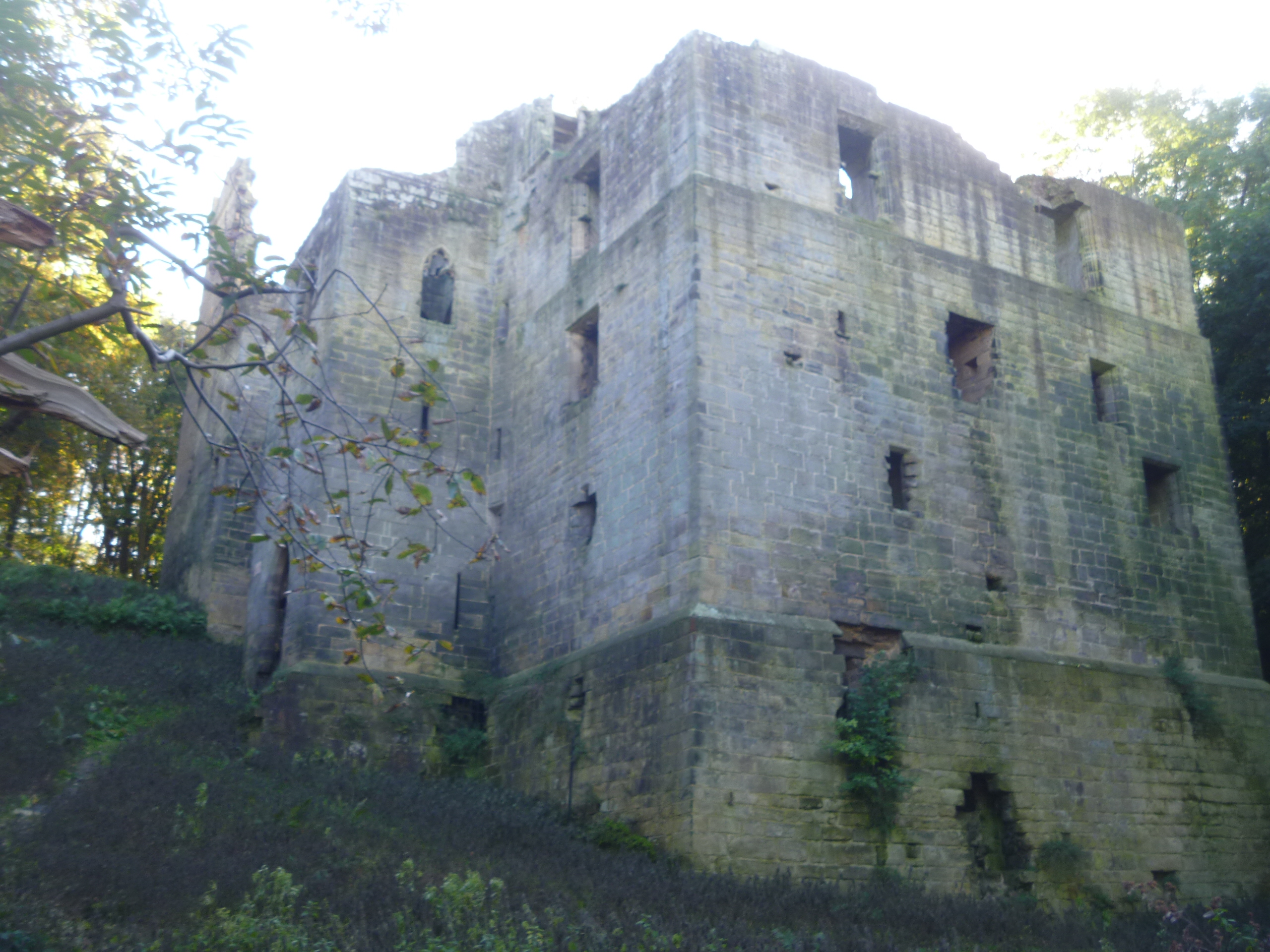
Harewood Castle built into the hillside looks out over Wharfedale
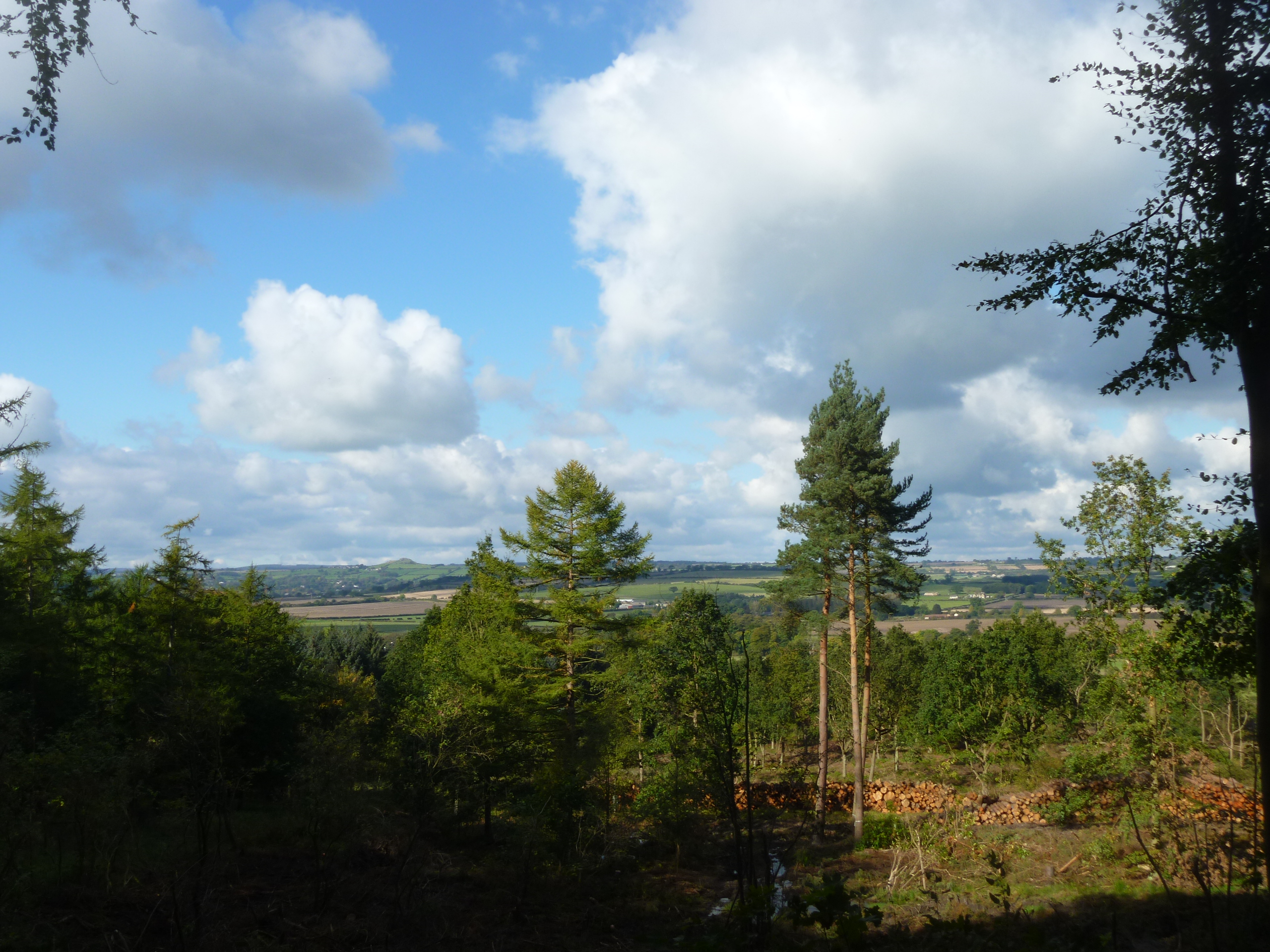
The Castle itself now stands very near to the A61 main road between Leeds and Harrogate but despite its size and proximity it’s almost impossible to see it from the road. There has been some tree clearance in the area lately and the view across Wharfedale can be seen more clearly.
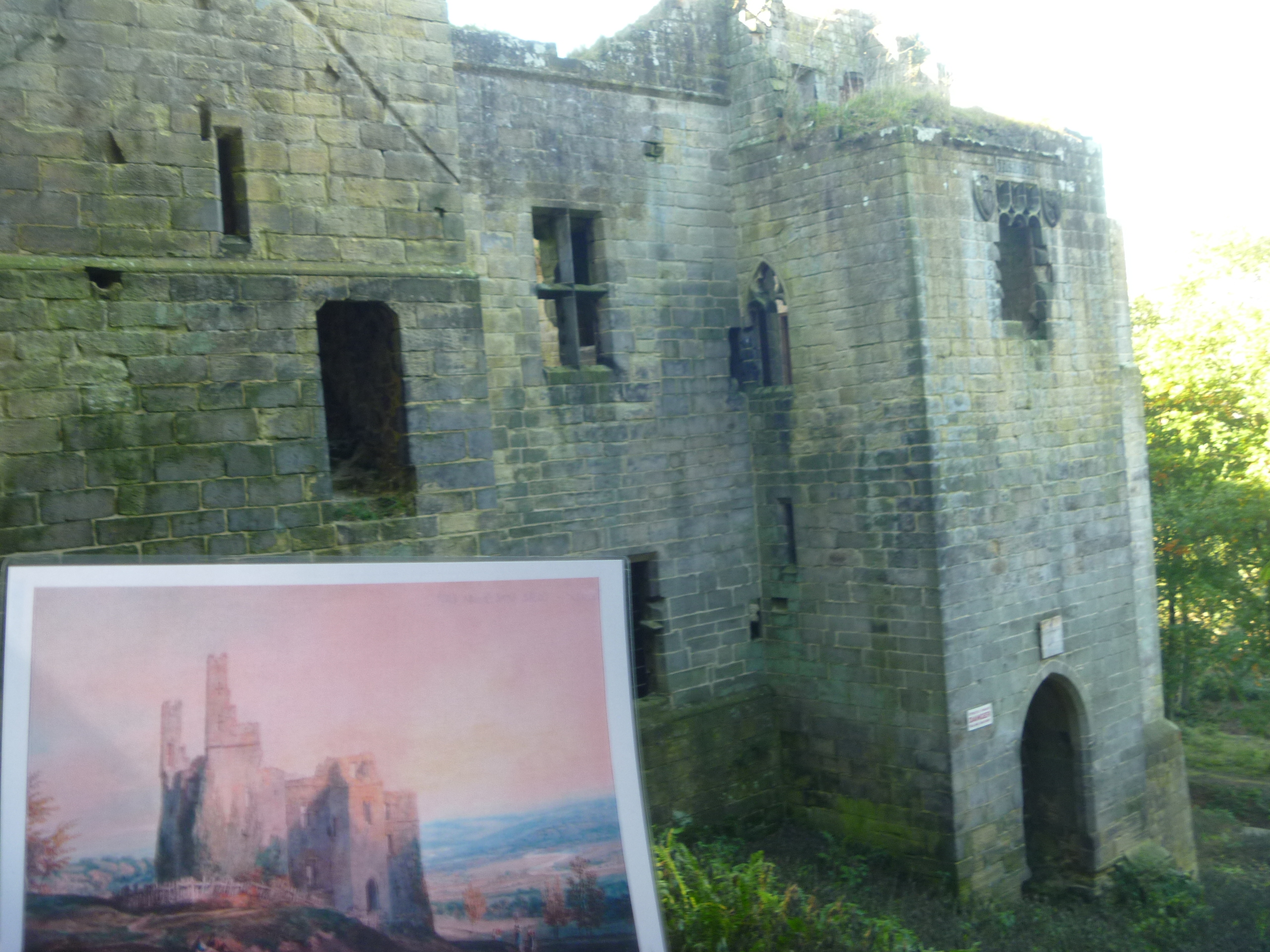
Castle with Turner watercolour from similar standpoints
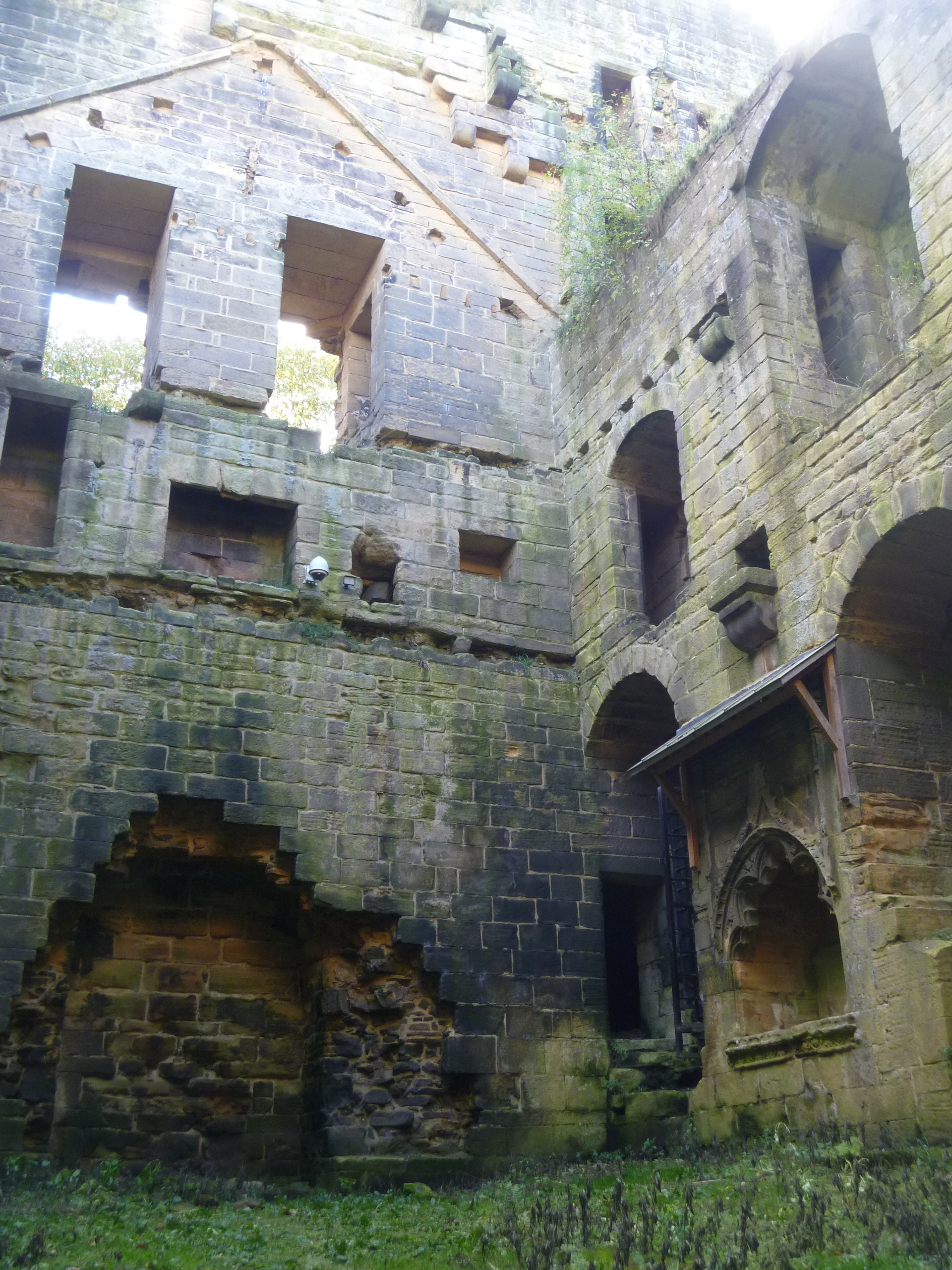
After hearing more about the history of the castle, comparing Turner’s watercolour views with today’s view we were admitted into the ruin and able to inspect more closely the layout and remains of the Harewood Tower House.
Following the path in a loop around the castle (it’s not open to the general public) we retraced our steps to the church where the tour finished.
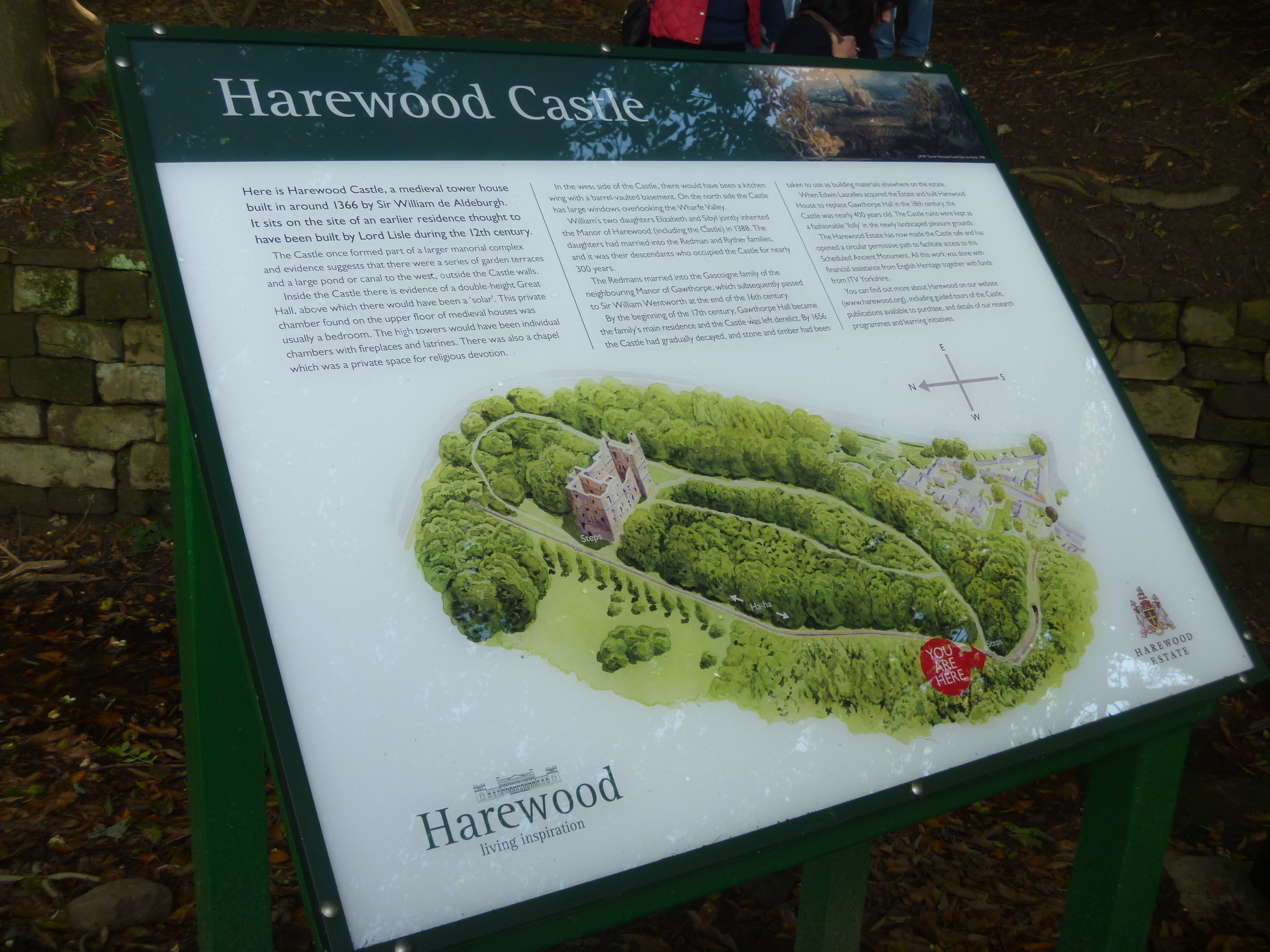
“Harewood Castle is technically not a castle but a fortified manse, a converted manor house. A ‘licence to crenellate’ (to fortify) was granted to William De Aldeburgh in the mid-14th century. Two families, the Redmaynes and the Rythers, whose tombs are in Harewood church, shared occupation during the 15th and 16th centuries. It was abandoned in the early 17th century and its stone and ornamental masonry plundered for use in other buildings nearby. By the late 18th century it was a picturesque ruin, painted by Turner, Varley, De Wint, Cotman and Buckler. It remained in that condition until 2004 when stabilisation work was carried out with financial support from English Heritage and matched funding from the Harewood Estate.”
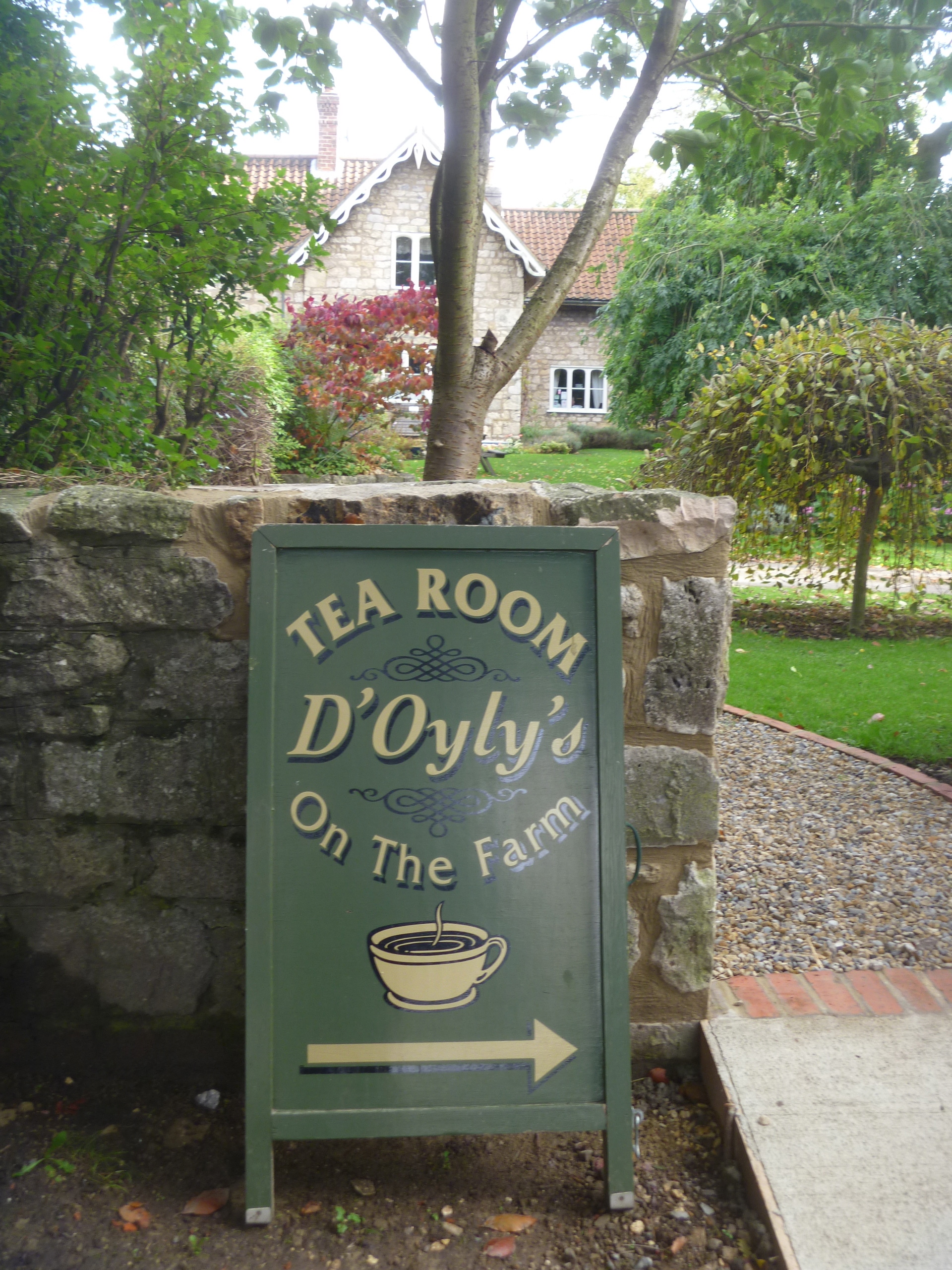
Barely half an hour’s drive from home we turned off the A64 Leeds to York road into Tadcaster and there’s a little sign ‘Bolton Percy’, which would be easy to miss, just after crossing the River Wharfe in the centre of town. About 3 or 4 miles down this lane and we arrived at the village of Bolton Percy. On the right as you enter the village there’s a cricket green and pavilion and soon on the left is the car park for D’Oyly’s Tea Room.
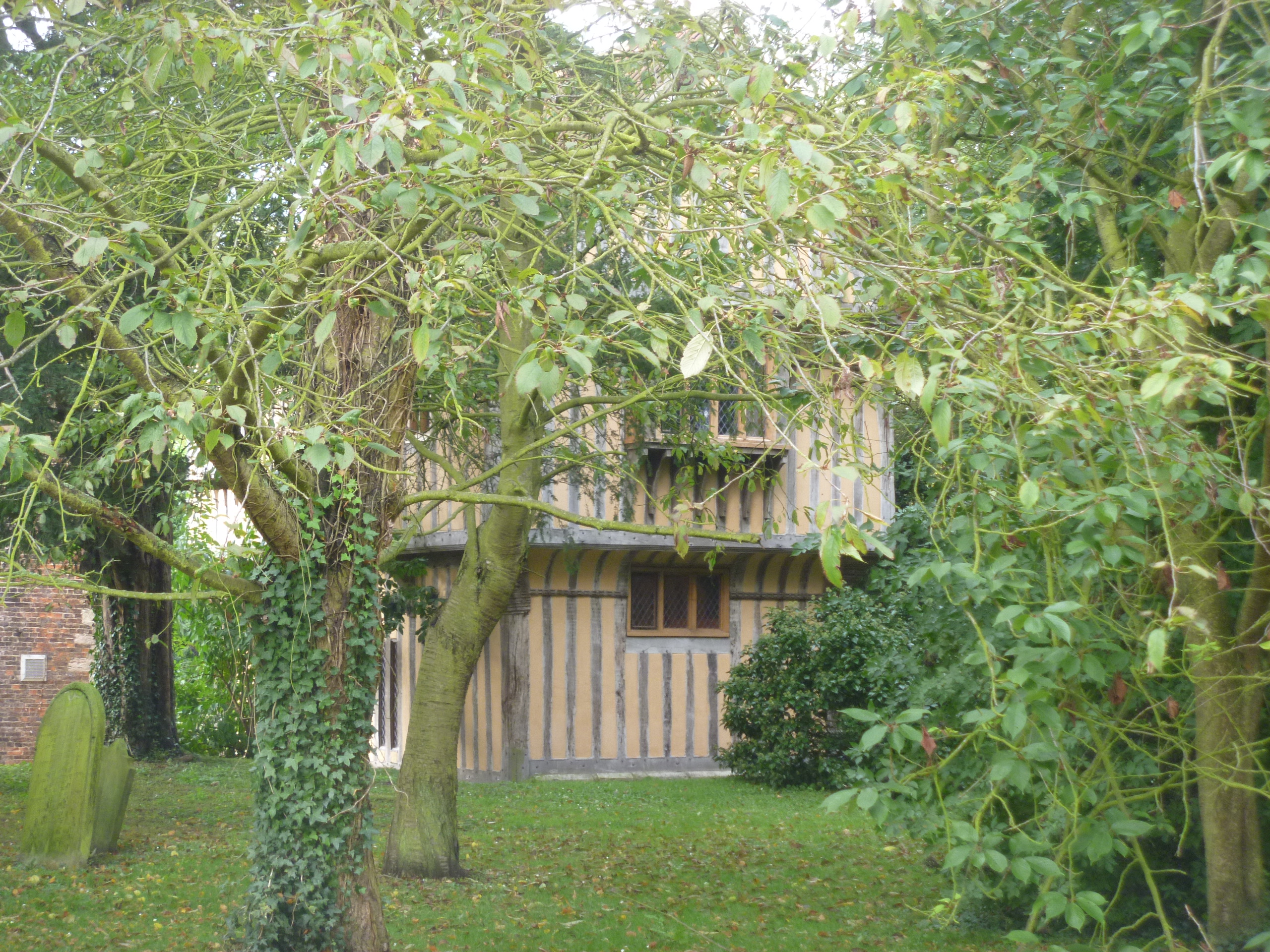
We parked up and went to explore the village. Right in the centre are the four other things we came to see –
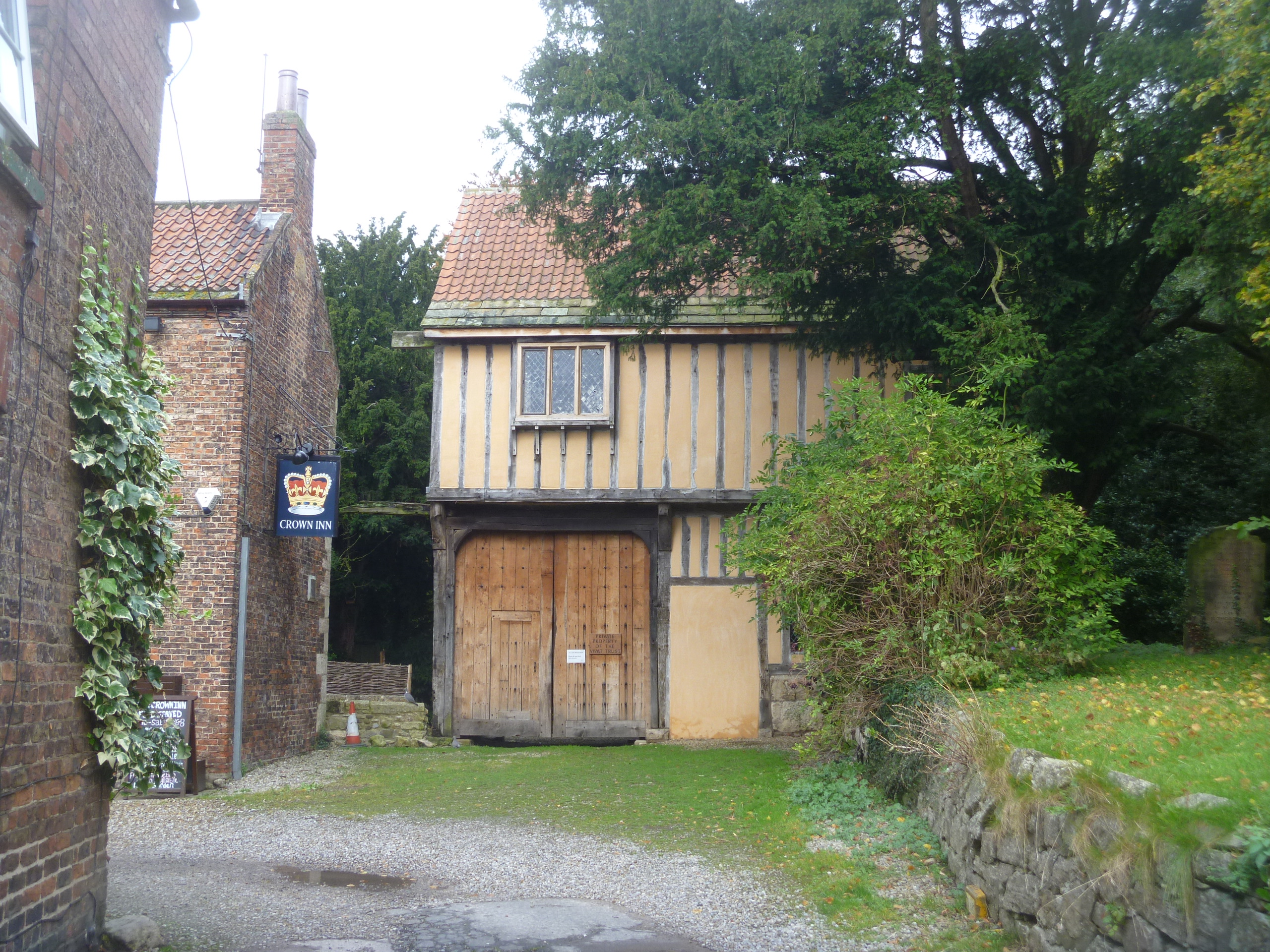
and the piece de resistance the fifteenth century Bolton Percy Gatehouse recently fully restored and now let as holiday accommodation by The Vivat Trust.
I first heard about the village of Bolton Percy when The Vivat Trust added the Gatehouse to its portfolio. Later I read a magazine feature in Intelligent Life about Tom Denny and the installation of the Millennium Window in All Saints Church. Any reference to English country (or other) churches always leads me to my Simon Jenkins’ ‘England’s thousand best churches‘ (All Saints was awarded one star) and a couple of years ago Nun Appleton Hall (about a mile or so from BP) turned up in another book I was reading : Michael Holroyd’s ‘A Book of Secrets: illegitimate daughters, absent fathers‘. (I checked with the waitress at D’Oyly’s) and it’s impossible to see the Hall from the road and no Rights of Way pass through the estate). Internet searches for Bolton Percy bring up D’Oyly’s and further searches for All Saints church bring up references to Roger Brook and his No-Dig Gardening in the churchyard. So, when a walking friend urged me to let her treat me to lunch or tea as a ‘thank you’ for the lifts I’ve given her (I’m always happy to have her company anyway) I suggested we might give Bolton Percy a try.
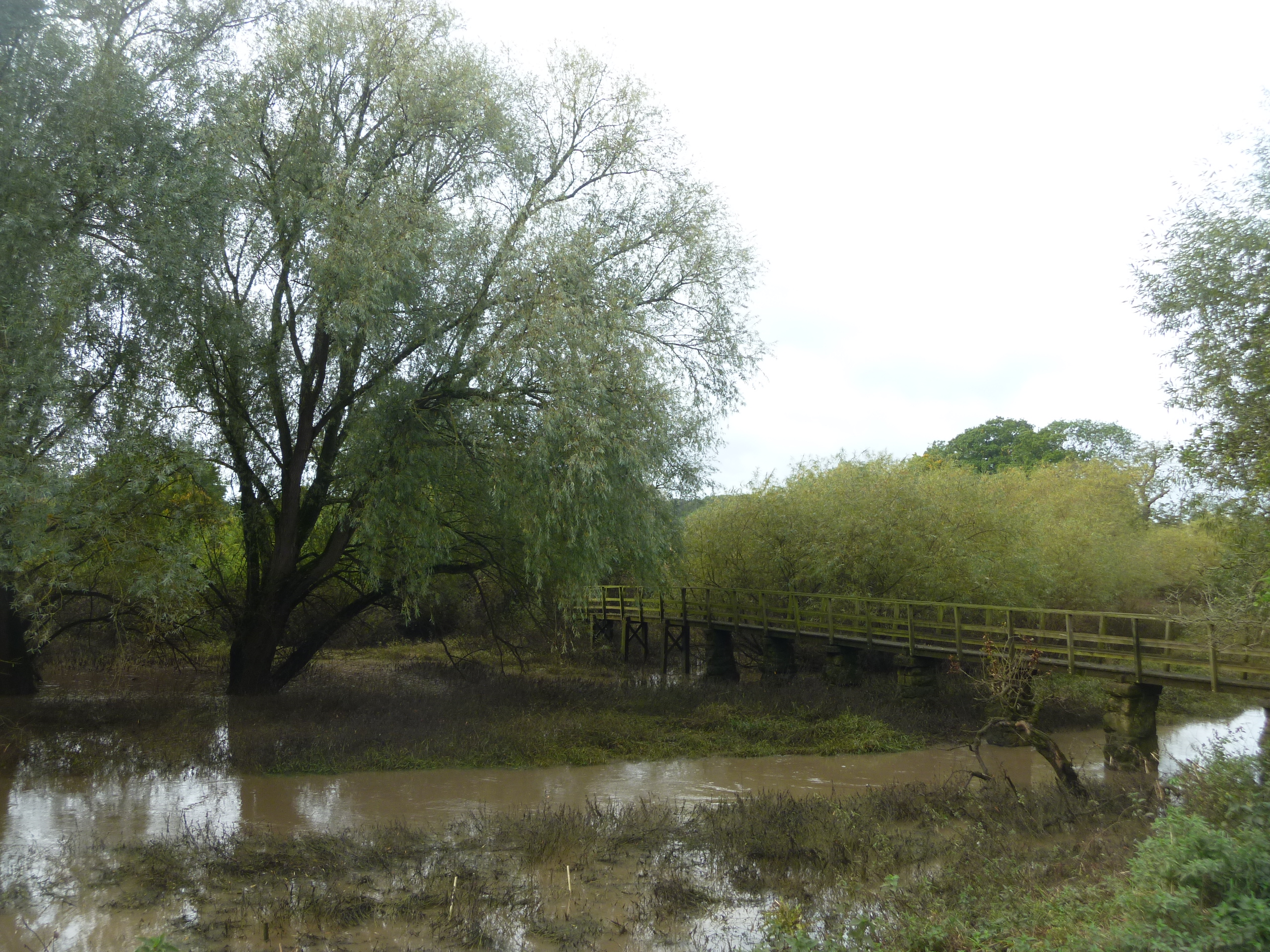
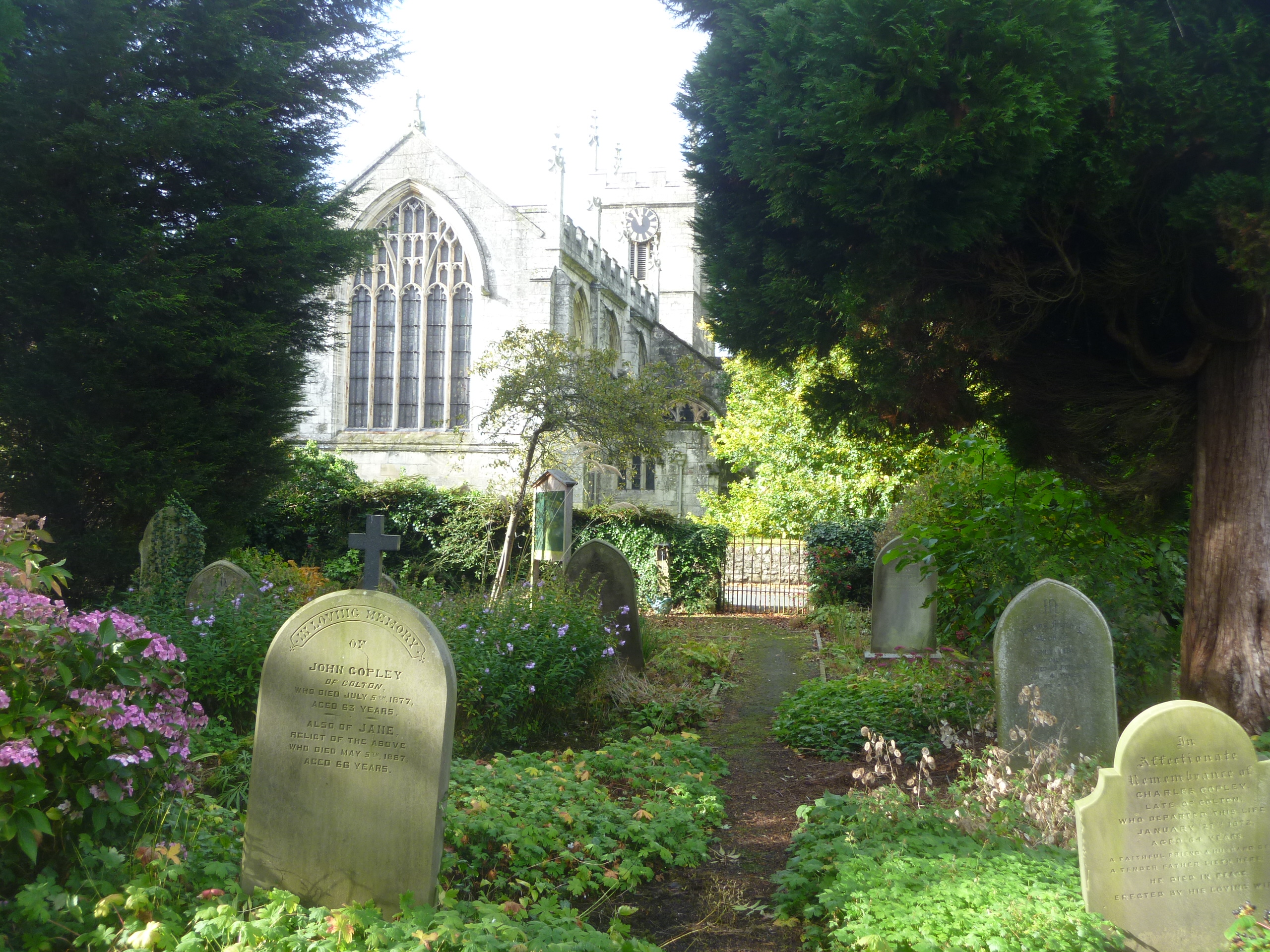
Jenkins says : “The church sits on the Yorkshire plain next to the remains of a river crossing. The gatehouse of an ancient manor lurks next door among the trees”
“The early 15th century church is big and grey, its white limestone interior darkened by age and stained glass, but saved from impenetrable gloom by some clear windows in the south aisle.”
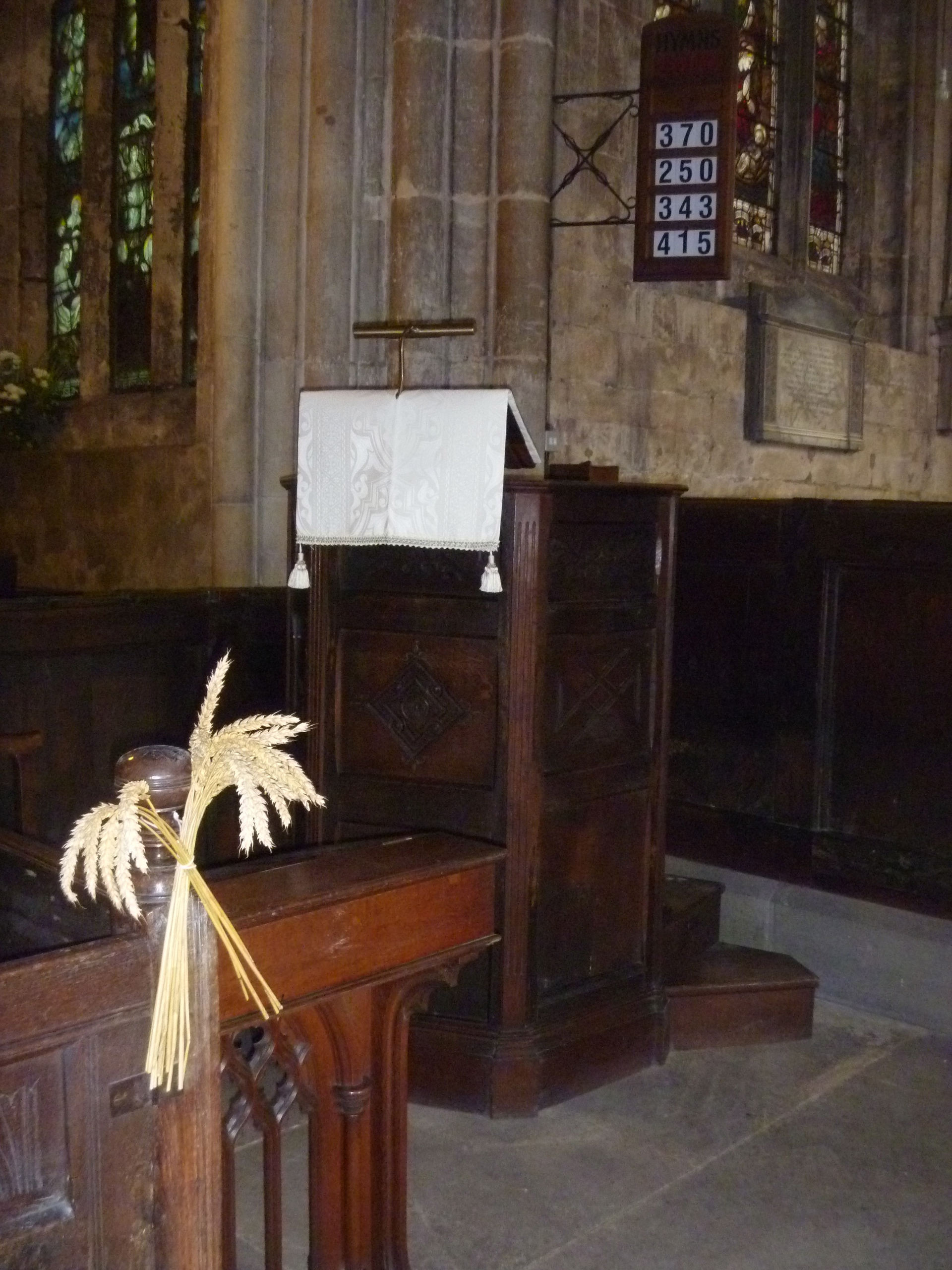
“The Jacobean box pews are complete, with charming knobs as poppy-heads.” Currently decorated in anticipation of Harvest Festival.
“There are two pulpits, one early 17th century and one early 18th century, the former austere, the latter more flamboyant, its tester supported on an Ionic column.”
Then there are the stained glass windows : an east window with a rare depiction of the Virgin Mary as its centre piece;
the Burne-Jones for Morris and Co. Caritas window;
the Millennium window by Tom Denny inspired by Isaiah 43: “I will even make a way in the wilderness, and rivers in the desert.” The River Wharfe flows through it and an owl and a curlew are flying.
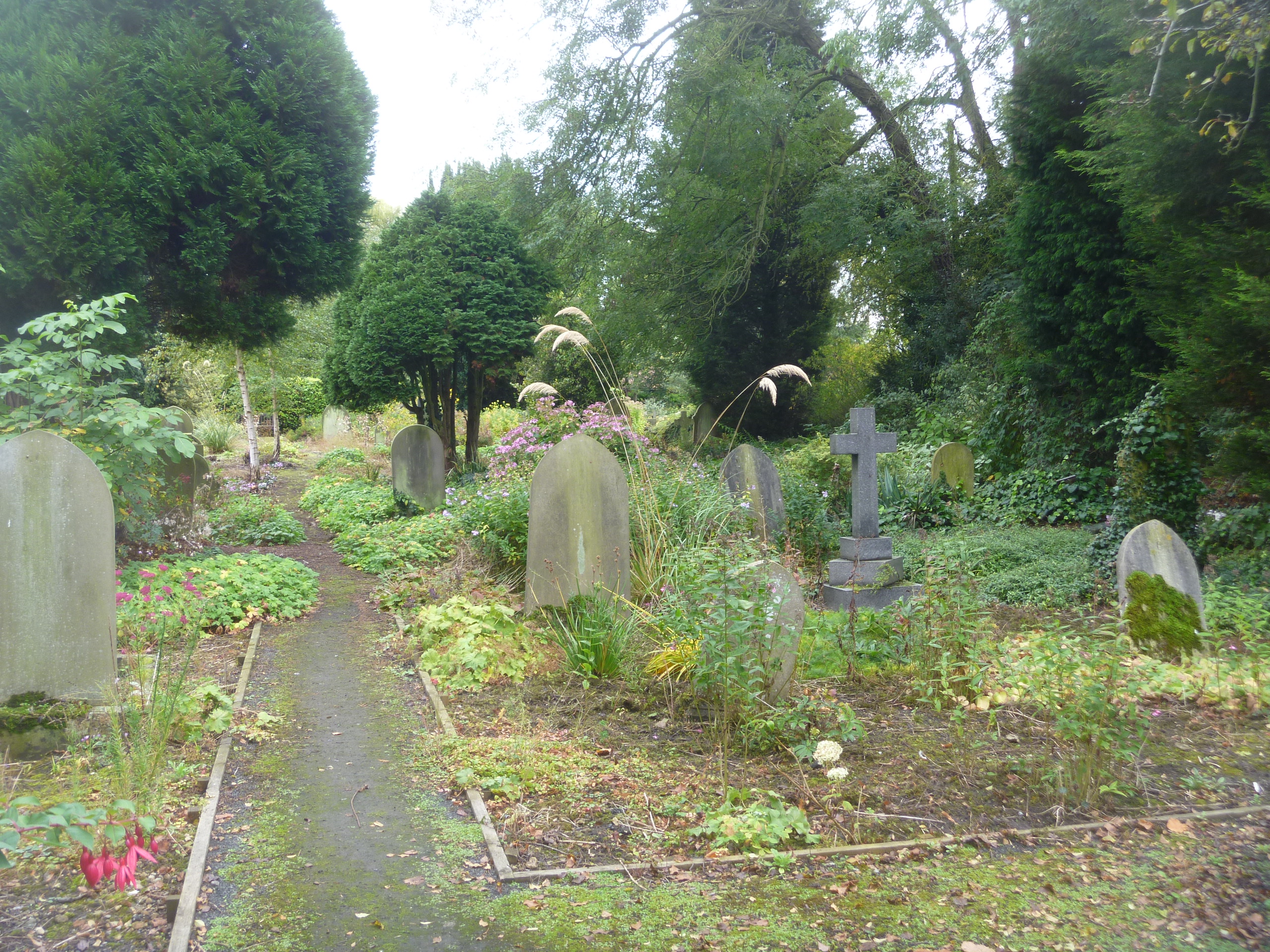
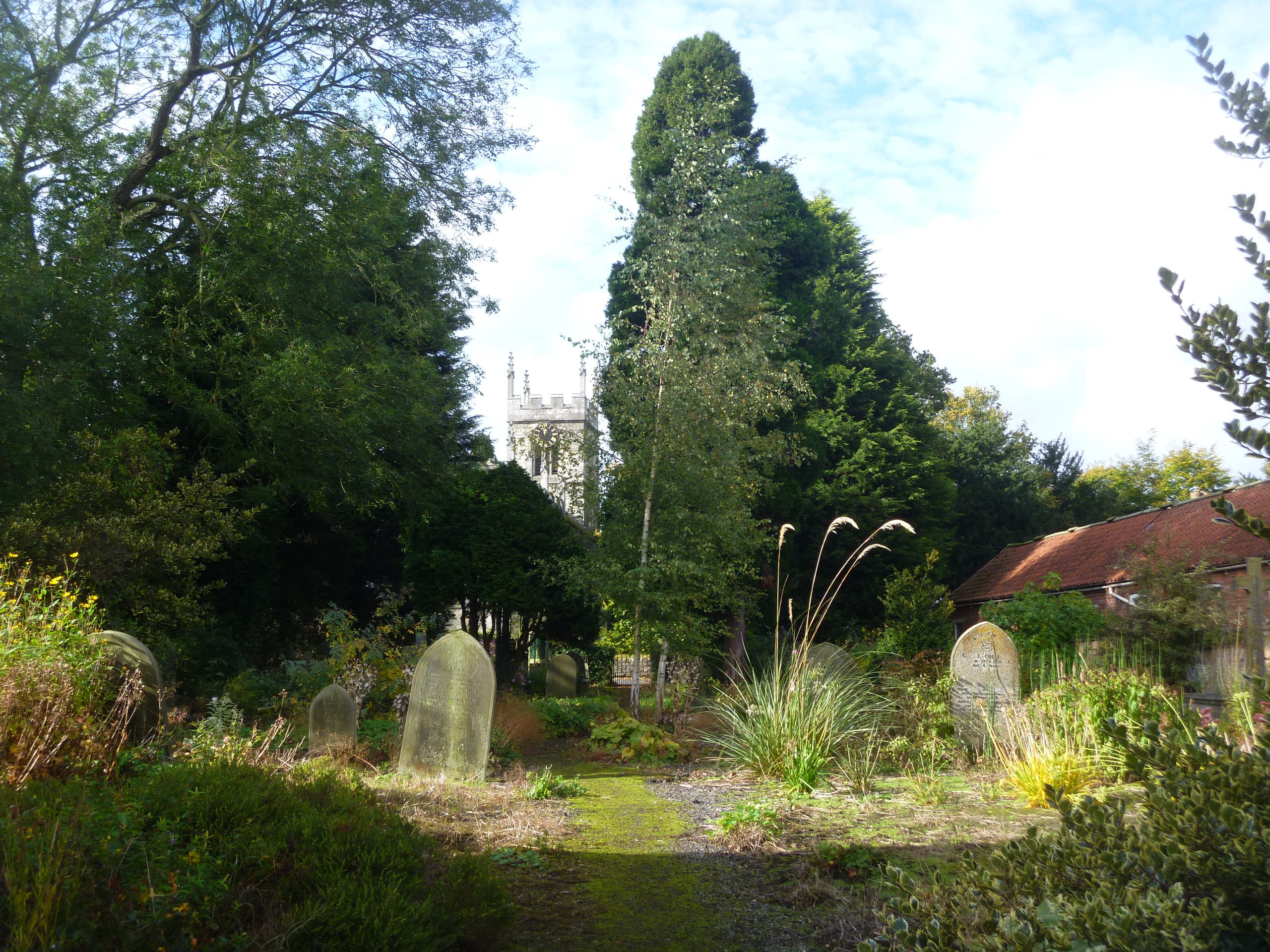
Outside and just across the road is the continuation of the churchyard. This lovely, natural space is full of wildflowers and a haven for wildlife and a peaceful resting place for Bolton Percy villagers. I’m sure it is hard work keeping it looking naturally ‘unkempt’.
It was a difficult decision as to where to take lunch but we finally chose the tea room and enjoyed a toastie followed by tea and lemon cake. All homemade and beautifully served on classic china. A perfect morning out.











 miladysboudoir