The Garden Museum

Some exhibitions, especially those national museum ‘blockbusters’, are just too unwieldy but the bijou exhibition Fashion and the Garden occupied just over half an hour of my visit the the Garden Museum on Thursday. Just a short walk along the Albert Embankment (opposite The Houses of Parliament) from Westminster Tube Station, the Garden Museum is right next door to Lambeth Palace, the official London residence of the Archbishops of Canterbury. GM exterior Formerly known as the Museum of Garden History, The Garden Museum is based in the deconsecrated parish church of St Mary-at-Lambeth. I’d met up with my friend Rosanna (the mosaics maker) with whom I had recently been to see The Isabella Blow Show at Somerset House. Garden Museum Church
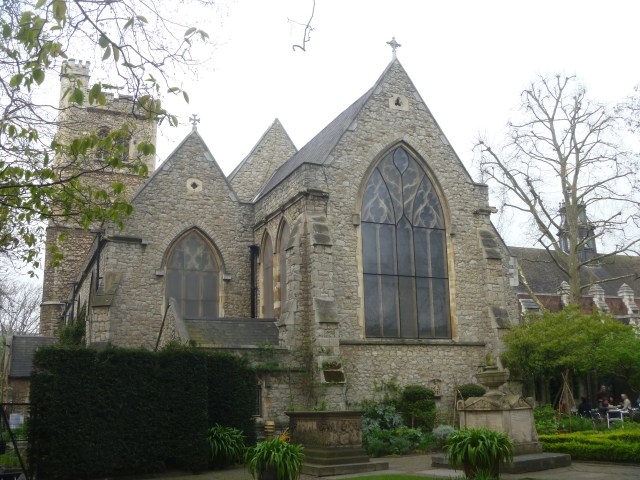
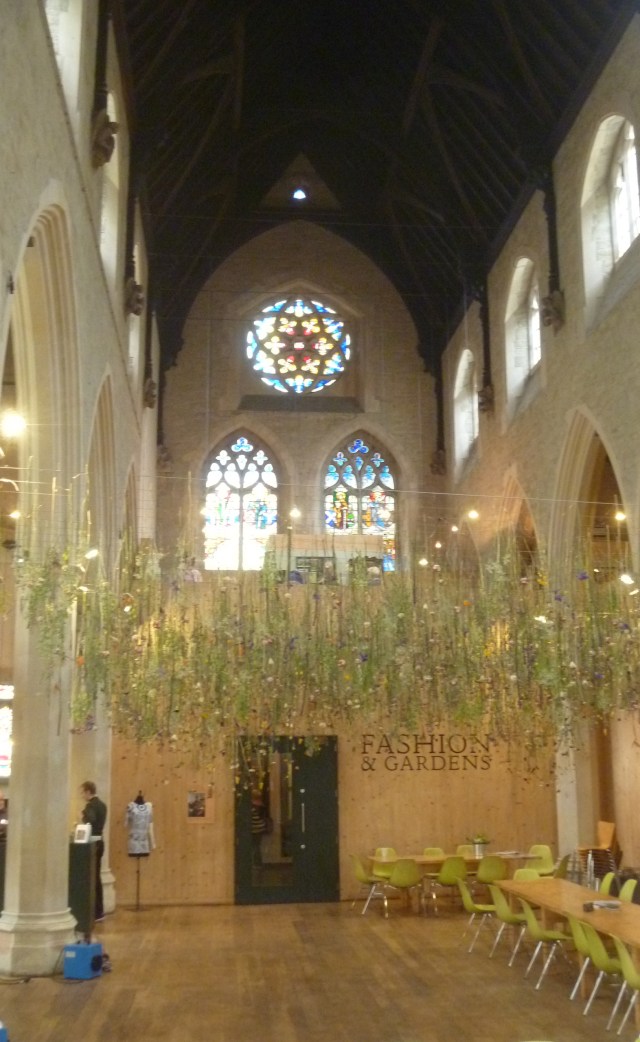
Inside the Garden Museum with Rebecca Louise Law Installation

After morning coffee in the Museum Cafe (we couldn’t resist a tiny home-cooked apple tart as well – all the food served looked very acceptable!) we headed under Rebecca Louise Law’s installation ‘The Flower Garden Display’d’ for the Fashion and the Garden exhibit that I had read about recently in the press. Booklet
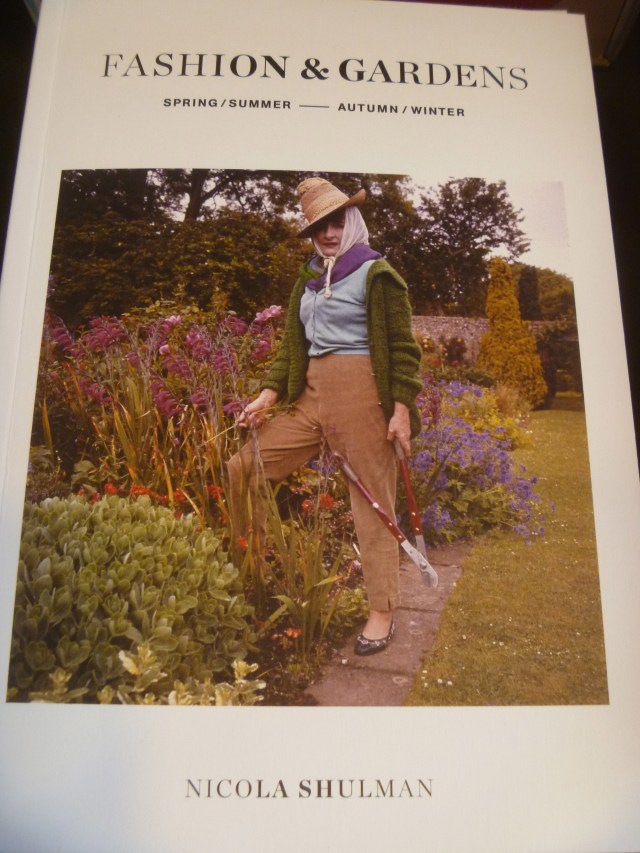
The Accompanying Booklet

Put together by Nicola Shulman, sister of British Vogue editor-in-chief Alexandra Shulman, the displays cover fashion and garden connections between the 17th and 21st centuries.
TV Introduction

unknow artist-796785

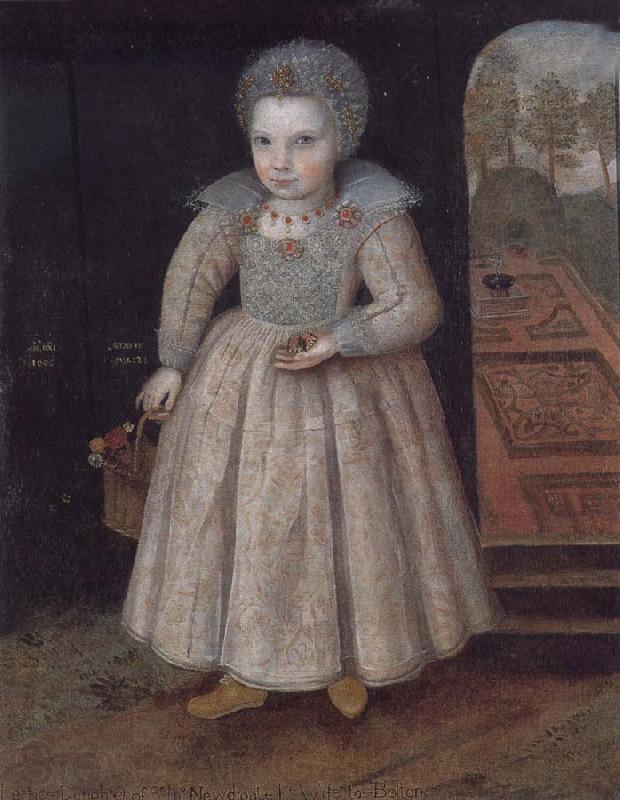
This portrait of Lettice Newdigate (1608) by an unknown artist is the first known example of a Knot Garden in art.

Influences of gardens on fashion extend over time from knot gardens reproduced through embroidery on clothing to Philip Treacy hats such as the Orchid.

Philip_Treacy__Orchid

Philip Treacy Orchid Hat

I noted that an interest in flowers is a very English characteristic. They have featured in English clothing designs throughout the centuries where they are absent, for example, in France. There were exquisitely embroidered gloves and pockets; flowers feature in the silk designs of Anna Maria Garthwaite and other 18th century Spitalfields silk weavers; phaeton carriages were built very high so that owners and their families and guests could drive around their landscape parks and show off; and then there are the clothes that we wear when visiting gardens or even when gardening.

It’s a small show but perfectly formed.

We had time to visit the permanent collection – gnomes; gardening tools from trowels to lawnmowers; rare books; paintings such the recently acquired ‘Portrait of a Black Gardener‘ by Harold Gilman; posters, ephemera and garden seed packet displays.
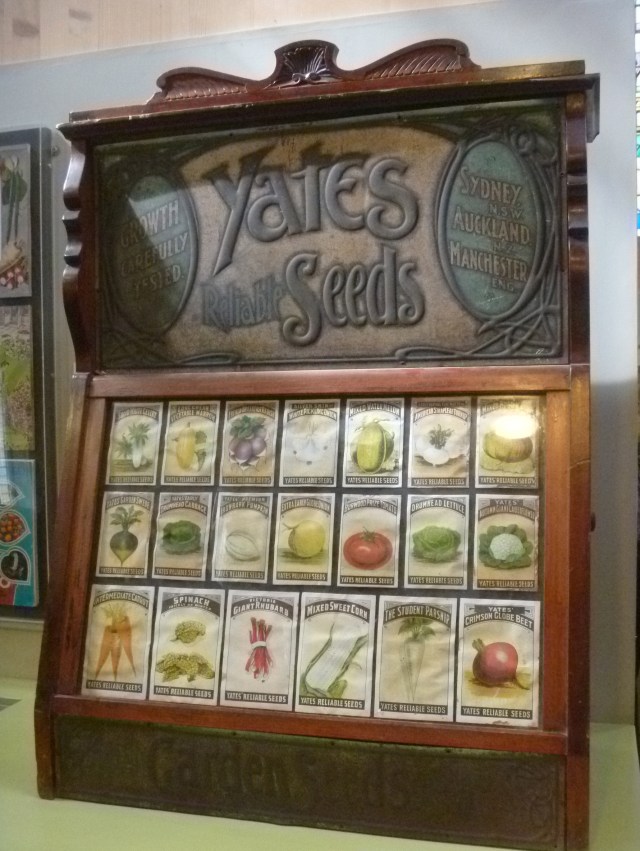
Yates Seeds

Yates Seeds. No longer sold in the UK but still available in Australia and New Zealand.

The Museum’s garden was created in 1980. At its heart is a knot garden designed by the Museum’s President, The Dowager Marchioness of Salisbury (who was then also re-making the gardens at Hatfield House, Hertfordshire). The reason for the seventeenth-century spirit of the design is that our garden also houses the tomb of the great plant-hunters, gardeners and collectors, John Tradescant the Elder (c.1570-1638) and Younger (1608-1662), the rediscovery of which originally inspired the creation of a museum of garden history in the deconsecrated, and then derelict, church of St Mary-at-Lambeth.” From the Garden Museum website.
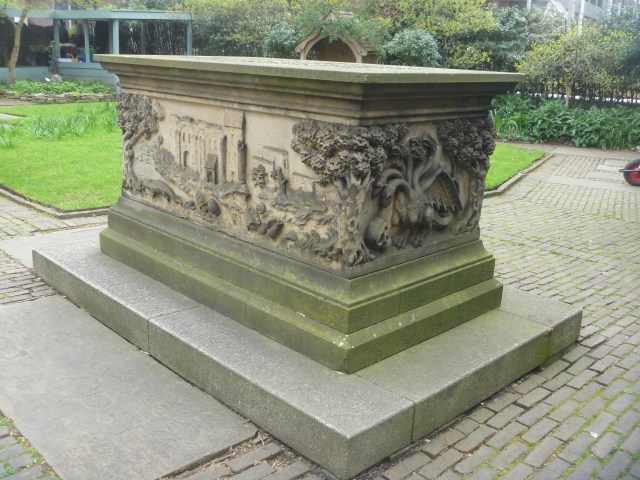
Tradescant Tomb

The Tradescant Tomb

In addition to the tomb and monument to the Tradescants is the tomb of Captain William Bligh of ‘The Bounty’.
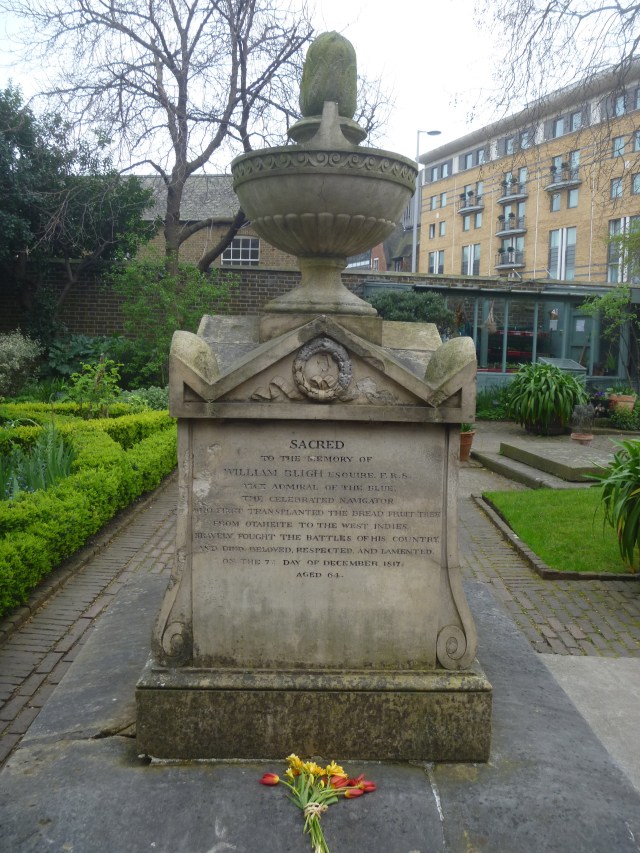
Tomb of Bligh

Captain Bligh Tomb
Villages and Churches of Lower Nidderdale

What a difference a day makes! Well, most of the day anyway. Sunday’s walk was with The Dalesbus Ramblers again. It was another visit to Nidderdale but much lower down the dale and just a short bus journey from Harrogate. For most of the day we had blue sky and sunshine but after lunch we walked through a brief snowfall.

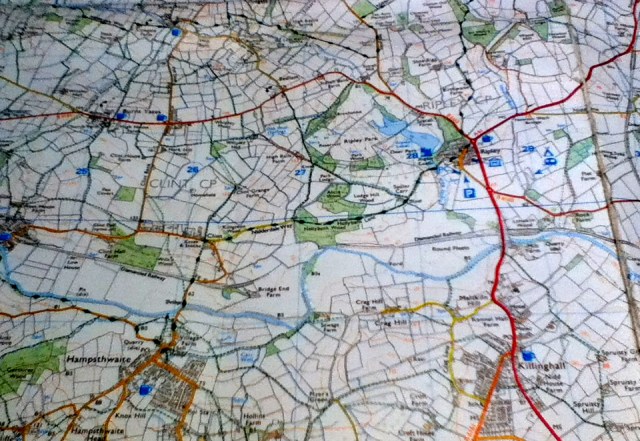
map

SUNDAY 23rd MARCH: VILLAGES & CHURCHES OF LOWER NIDDERDALE
Learn some of the history of the villages of Lower Nidderdale.
Start: Hampsthwaite: 11:25
Finish: Ripley: Approx. 15.30
Distance/Grading: 7 miles / Moderate
TRAVEL: Outward: Bus 24 from Harrogate (11.05). Connections on bus 36 from Leeds (09.45) to Harrogate or from Ripon (10.45) to Killinghall.
Return: Bus 36 to Ripon, or Harrogate and Leeds.
Walk Leaders: Duncan & Brenda”

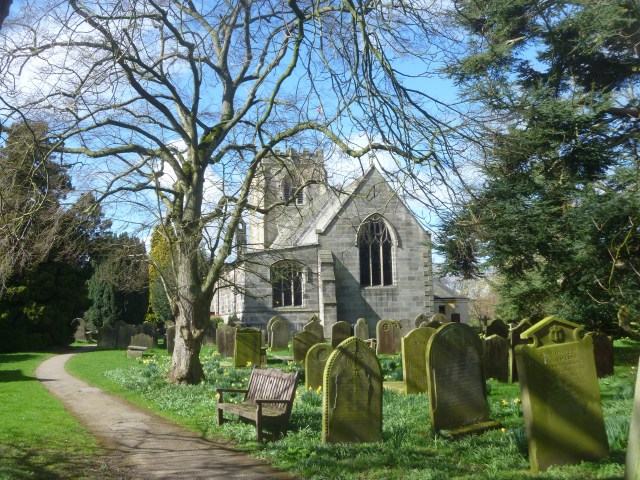
Hampsthwaite Church

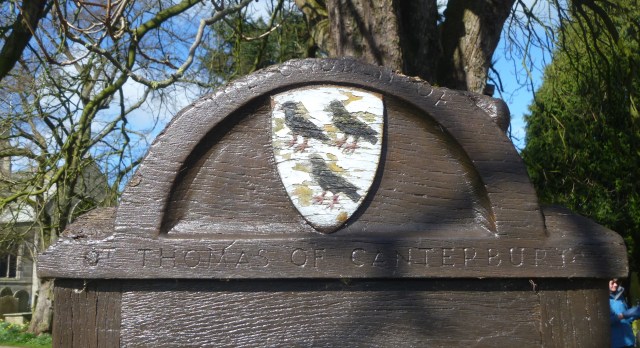
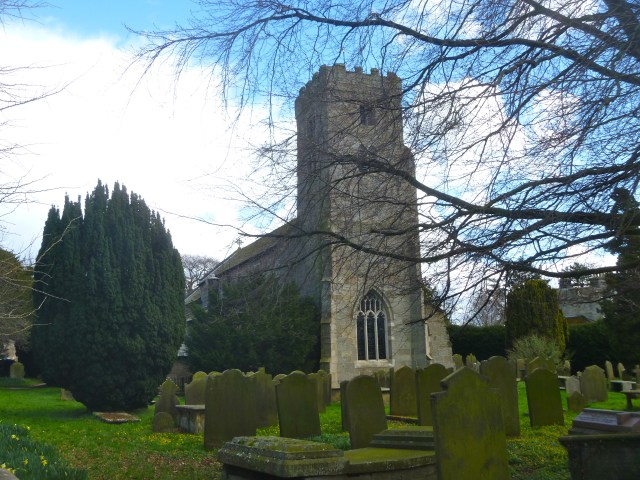
St Thomas a Becket Church in the large village of Hampsthwaite has a long history probably dating back to Saxon times. It has connections with the murder of St Thomas of Canterbury.

St Thomas a Becket

The first known church to be built here was probably completed about 1180 and is believed to have been constructed by Hugh de Morville the then Constable of Knaresborough Castle and one of the four knights responsible for the murder at Canterbury in 1170 of Archbishop Becket. The knights were later pardoned for their crime by the Pope who (it is thought) required the building and dedication of the church as part of the penance imposed upon Hugh de Morville. The church is believed to be one of only two churches in the Church of England to currently enjoy that dedication to St. Thomas a Becket.”

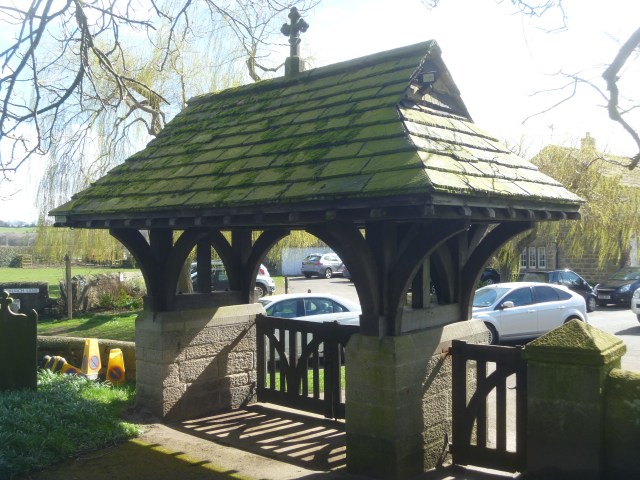
Hampsthwaite Lych Gate

The Lychgate …

The lychgate at the entrance to the church is the work of Robert Thompson of Kilburn. It was given by Lady Aykroyd and was erected in 1938 in memory of her parents, Sir James Roberts Bt. and Lady Elizabeth Roberts. Sadly, in comparatively recent years the original four-legged Thompson mice have been damaged.

… and the War Memorial

Hampsthwaite war memorial

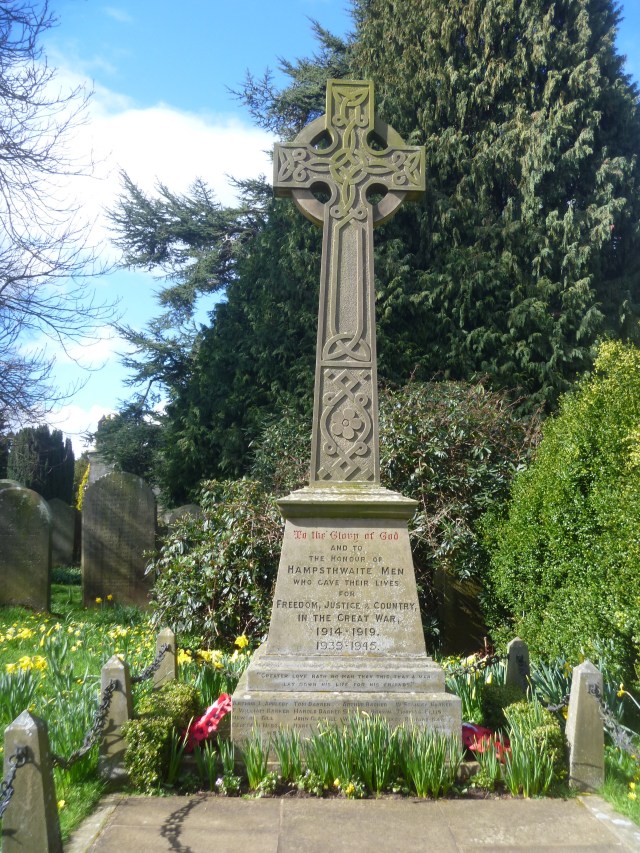
Nearby, is the War Memorial, which commemorates the men from the village who died in the two world wars. It takes the form of a Celtic cross on a stone plinth and lies in direct line with the cross on the altar in the church. This was stipulated by Canon Peck and the churchwardens in their application for a faculty from the Diocese.”

A church service was in progress so we began our walk out of Hampsthwaite towards Ripley along the tracks of the Nidderdale Way which we followed for the best part of the day’s walk.

Hampsthwaite

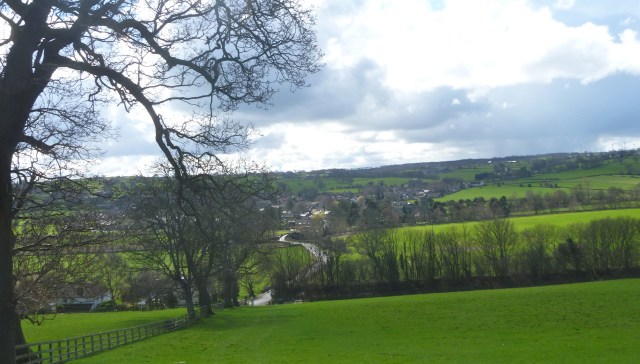
Looking back to Hampsthwaite after a steep climb out of the village.
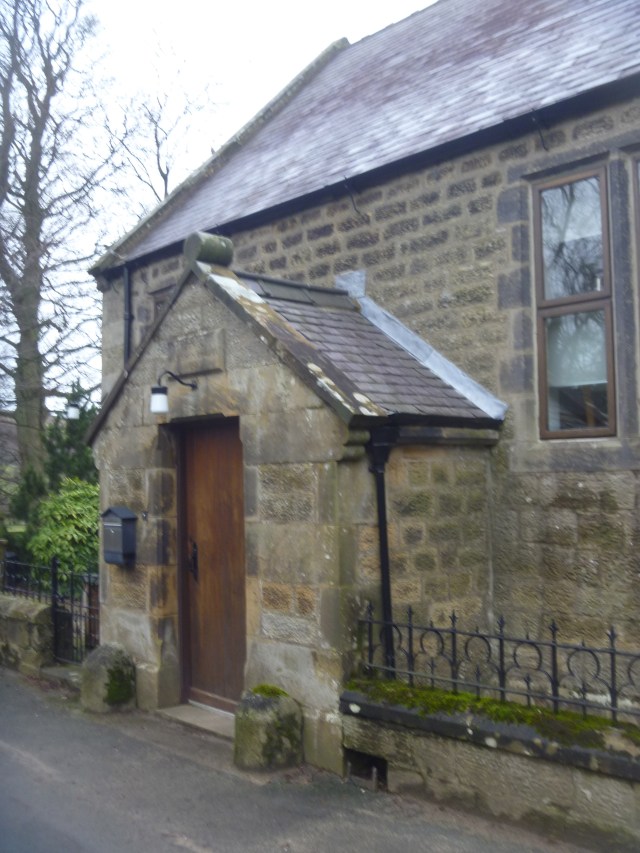
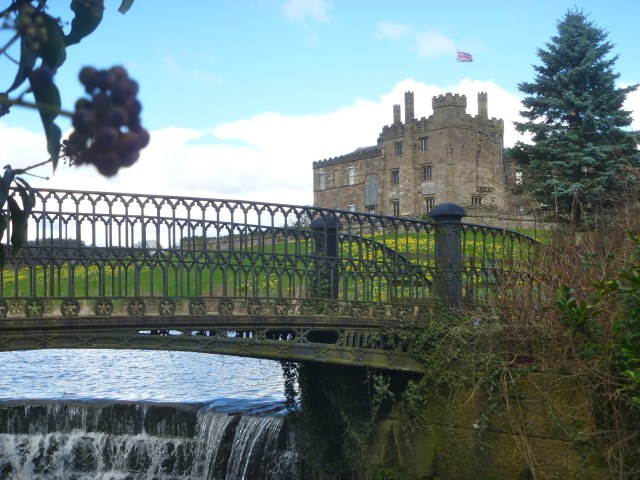
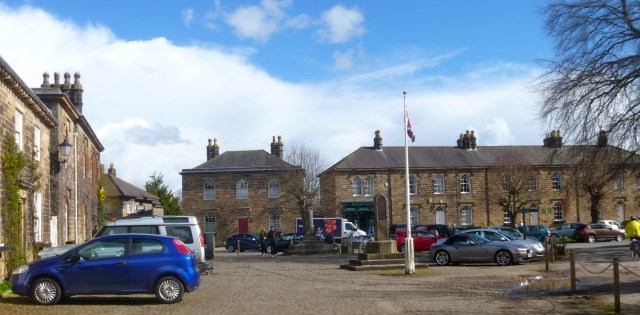
After a couple of miles of broad track, much of it through woodland, we approached the Castle and village of Ripley. Ripley Castle also has a long and fascinating history with connections to the Gunpowder Plot. It is a great visitor attraction and popular local wedding venue. The village of Ripley itself, where we stopped for our lunch break, has a unique style and history. It was rebuilt in the 19th century and modelled on a village in Alsace, France, complete with a Hotel de Ville-style town hall.

Ripley Castle and Church

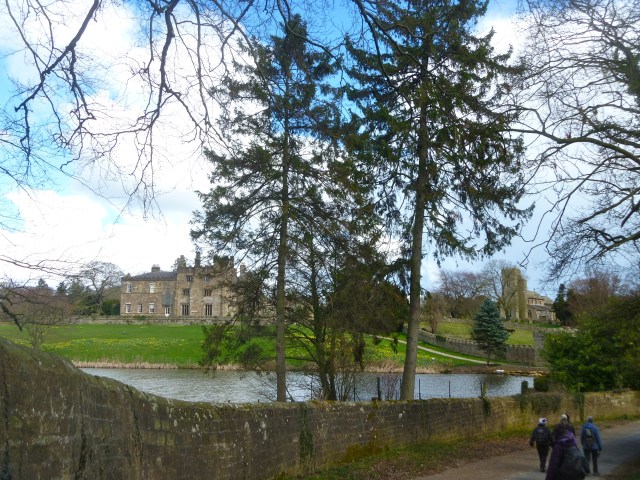
Approaching Ripley we had a glimpse of the Castle and grounds

Ripley Castle

Ripley Castle

Ripley Church

Ripley All Saints Church

Ripley village square

Ripley Village Square

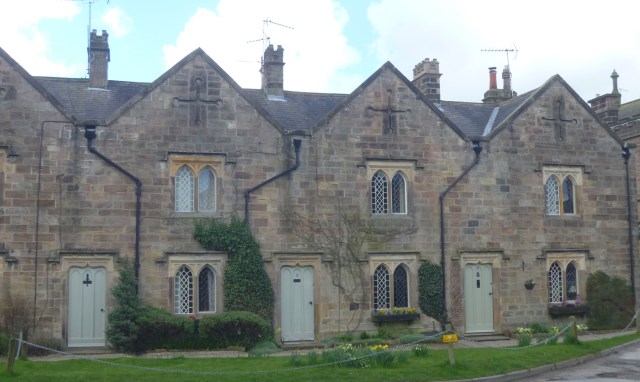
Ripley Houses

Typical Ripley Houses

From Ripley we took The Nidderdale Way to add a loop to our walk via Cayton Gill meadows and woodland returning to Ripley for the bus back to Harrogate.

On my recent rambling forays I have been made more and more aware of the fact that The Tour France ‘Grand Départ’ will be staged on two days in Yorkshire in July this year.

Grand Depart

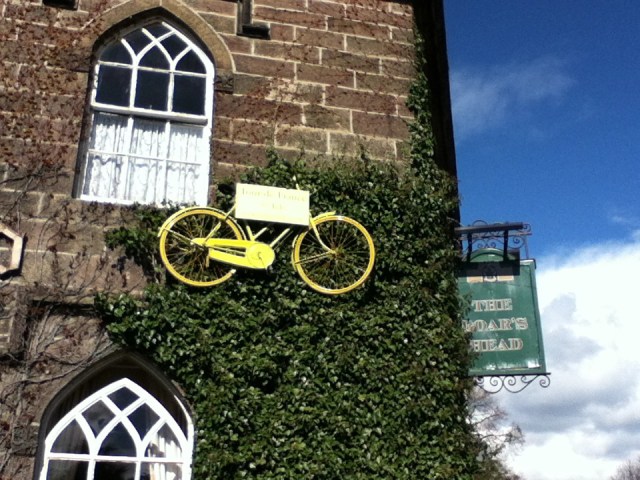
Le Grand Départ will pass through Ripley. Signs at The Boars Head Hotel


A Founder of British Geology and The Terrible Knitters of Dent

Leeds Station sign

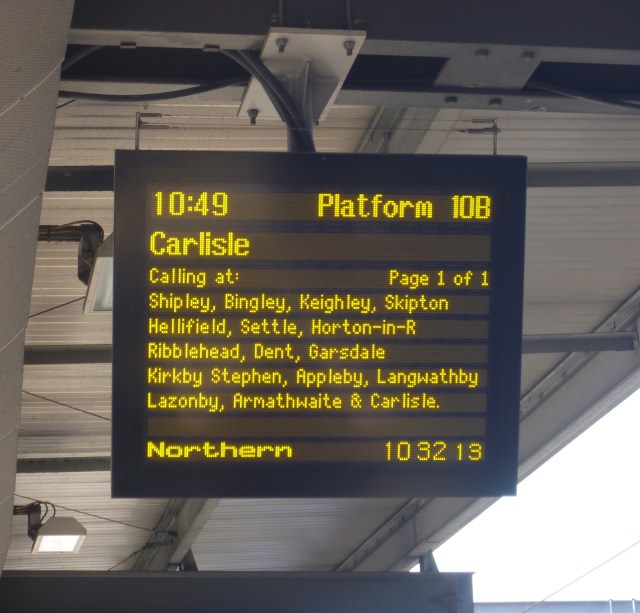
“Sat 22 Mar – Dentdale Explorer – 7mi Moderate

Dent Station – Cowgill – Dales Way – Whernside Manor – Deepdale – Coventree – Dent Village. Alight (12.12) and return Dent. Connects with 10.49 train from Leeds. (JD/DW) Please ring to book your place on the return minibus from Dent Village to Dent Station. [About 5 miles]”

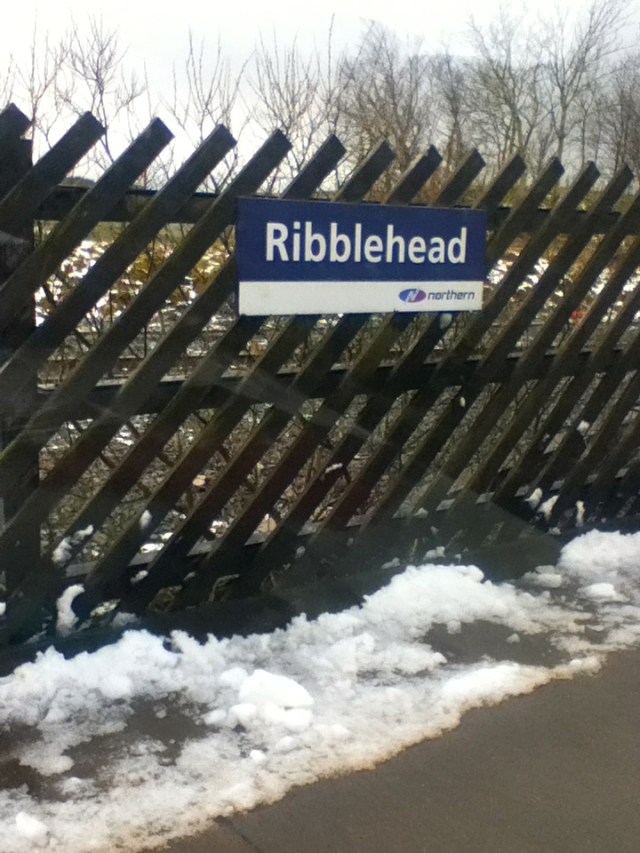
Ribblehead Station

That was the description of the guided walk organised by the Friends of the Settle-Carlisle Line on Saturday. Leaving Leeds in bright sunshine and with a cloudless blue sky we arrived at Dent Station to a rain shower closely followed by a hail storm which turned into blinding snow. By the time we (five of us) reached Cowgill and the Dee valley bottom all weathers had cleared temporarily but we were beset by rain showers (some heavy) and cold winds for most of the walk.

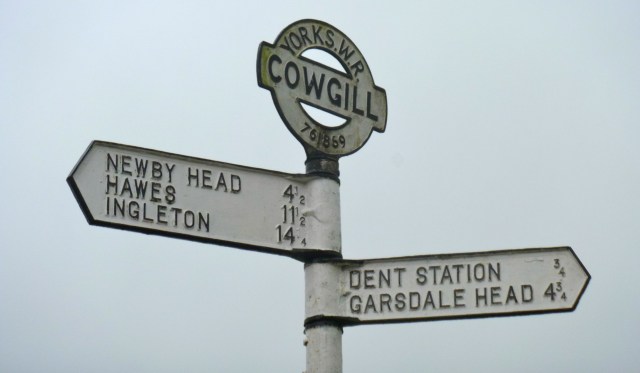
Cowgill signpost

Signpost at Cowgill – formerly in the West Riding of Yorkshire and complete with OS Grid Reference

Much of our route followed the Dales Way long distance path that crosses the country from Ilkley in West Yorkshire to Bowness on the shores of Lake Windermere. I’m familiar with and have walked most of  it between Ilkley and Yockenthwaite so it was interesting to fill in a section with which I was not familiar. As we left Cowgill we were able to pick out across the river the 150 year old church of St John, Cowgill. My Dales Way Companion by Paul Hannon tells me that “Outside are the unmarked graves  of smallpox victims from railway construction days.”

Cowgill Church

Cowgill Church

With variations in the weather tracks took us across fields, through former pinewoods, along quiet country lanes past waterfalls at full spate, ancient farm buildings and a deserted chapel.

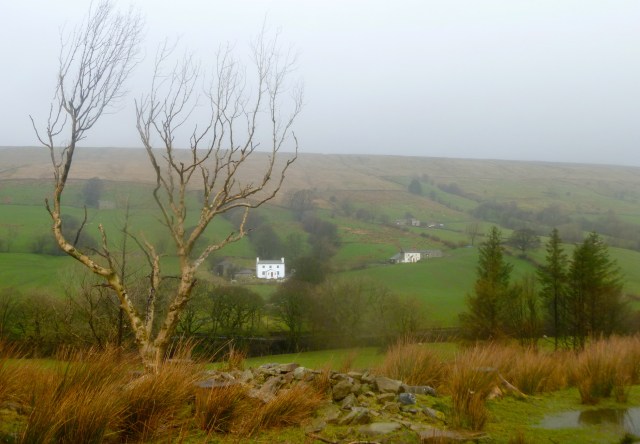
View from lunch spot

View from our lunch spot

Former pine woods now cleared

Former Pine Woods now cleared

Waterfalls

Chapel

The deserted chapel near Whernside Manor

Ancient building

Ancient Farm Building

Arriving Dent

First View of Dent

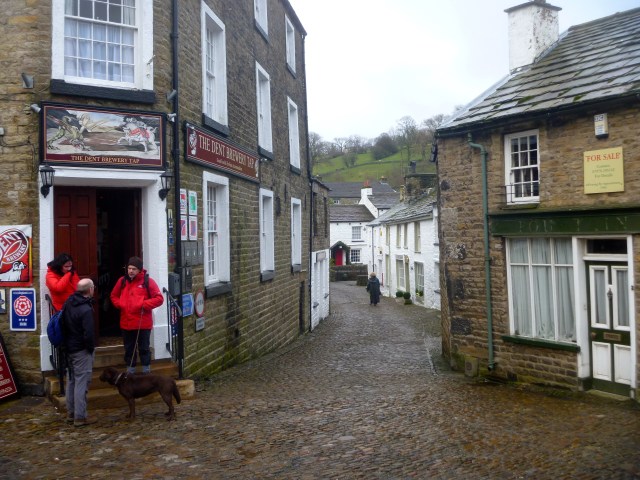
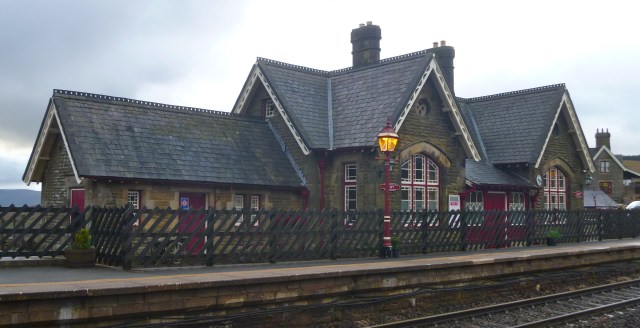
Finally and quite suddenly we arrived at the quiet backwater village of Dent. At some point we must have crossed the border between North Yorkshire and Cumbria for, although within the boundary of The Yorkshire Dales National Park, Dent is in the South Lakeland district of Cumbria. On Saturday afternoon the village was very quiet. The cobbled streets were practically deserted. We had about an hour to explore before catching the bus back up the valley to the rather mis-named Dent station nearly 5 miles away.

Dent Village

The Main Streets in Dent

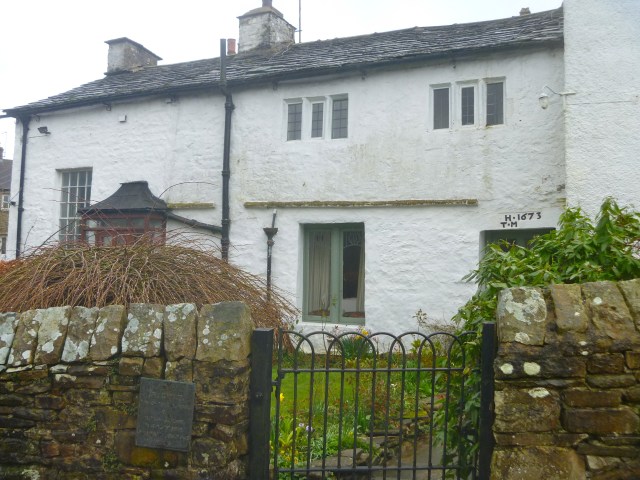
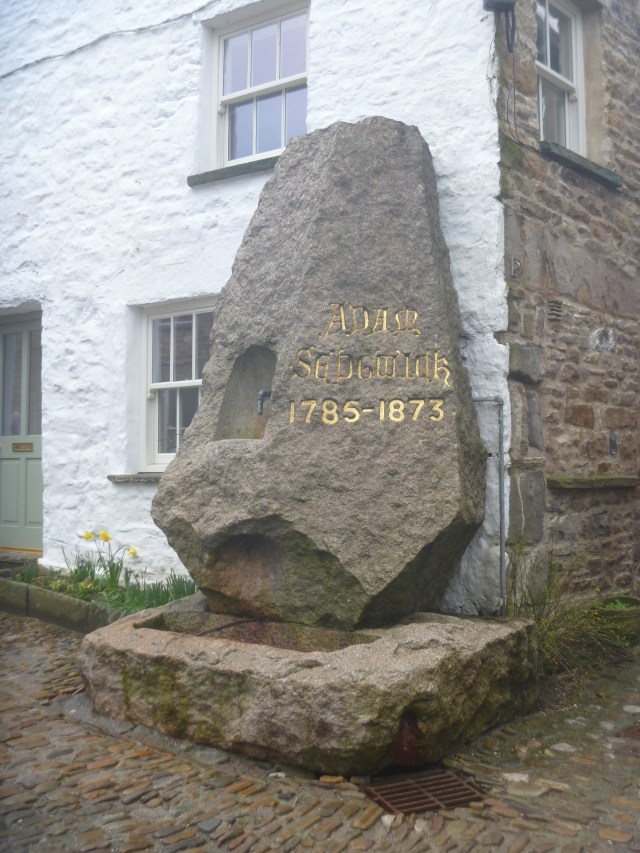
Our leader Duncan first explained some of the history of Dent. One notable son was Adam Sedgwick one of the founders of British Geology. Sedgwick was born in Dent in 1785 the son of the local vicar.

Sedgwick Birthplace

The Old Vicarage – Adam Sedgwick’s Birthplace

Memorial stone

Granite Memorial to Adam Sedgwick in Dent Main Street

He was educated at nearby Sedbergh School and went up to Cambridge University where he became a Fellow in 1810 and by 1818 he was Woodwardian Professor of Geology. Read more about Sedgwick and his geological studies here. The Cambridge University Earth Sciences Museum is called The Sedgwick Museum.

We then learnt about the Terrible Knitters of Dent and the unusual knitting method they employed. The last of the knitters, Elizabeth Hartley and Elizabeth Middleton died in 2007 aged 93 and 91 years respectively.

3 storey house

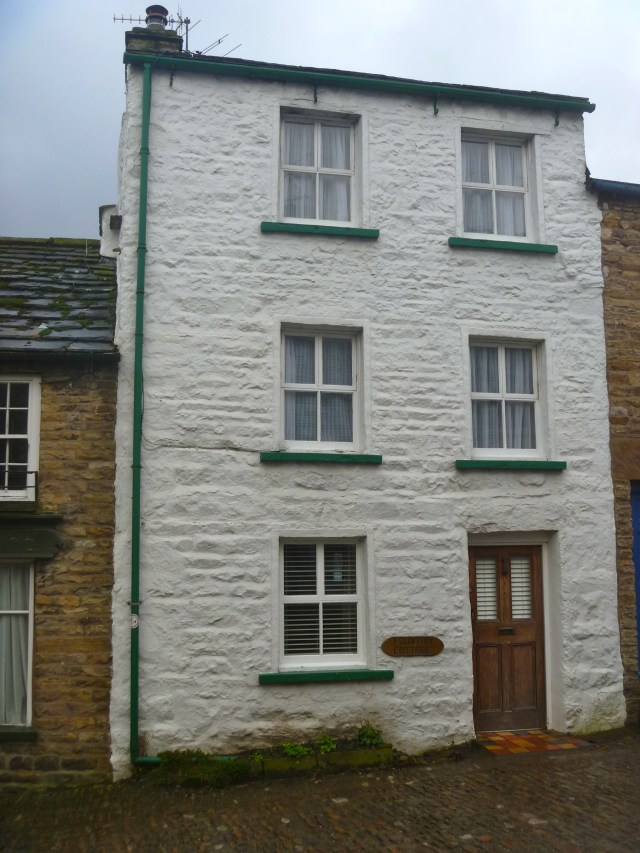
Typical 3-storey house in Dent

There are two pubs and two tea shops in Dent but before heading for one of the cosy tea shops we had a look round the church.

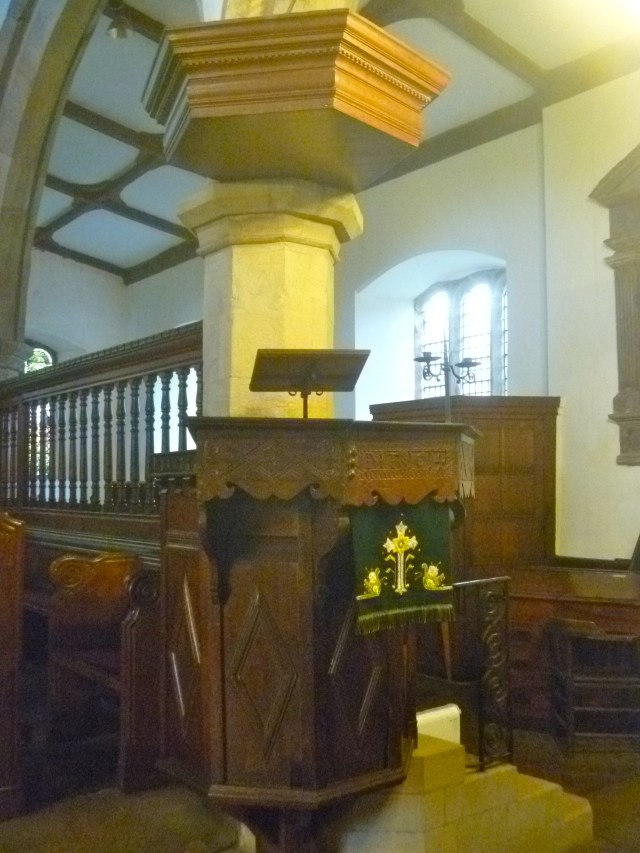
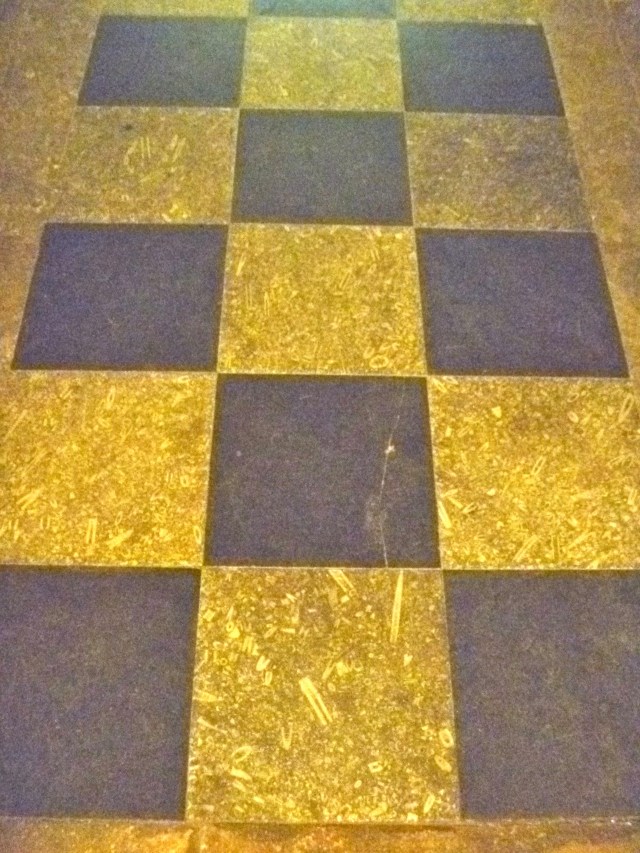
The church of St. Andrew is a Norman foundation, though largely rebuilt in 1417 and restored in 1590. The top storey of the 1614 three-decker Jacobean pulpit is still in use. The chancel is paved with fossil-rich marble, quarried in Dentdale. The box pews were removed in 1889, much of the wood being used to panel the walls of village cottages. On the south side of the aisle are the famous pews of the 24 sidesmen. Originally yeomen farmers, today landowners of Dent, they have shared with the Bishop (now of Bradford) the patronage of the living since 1429.” [Source]

Pulpit

The Remainder of the Jacobean Pulpit

Marble Floor

Fossil-Rich Marble floor

The Western Dales Bus left Dent promptly at 17.05 and brought us back along the valley to Dent Station comfortably in time to catch the 17.32 train back to Leeds where I noted it had also been raining.

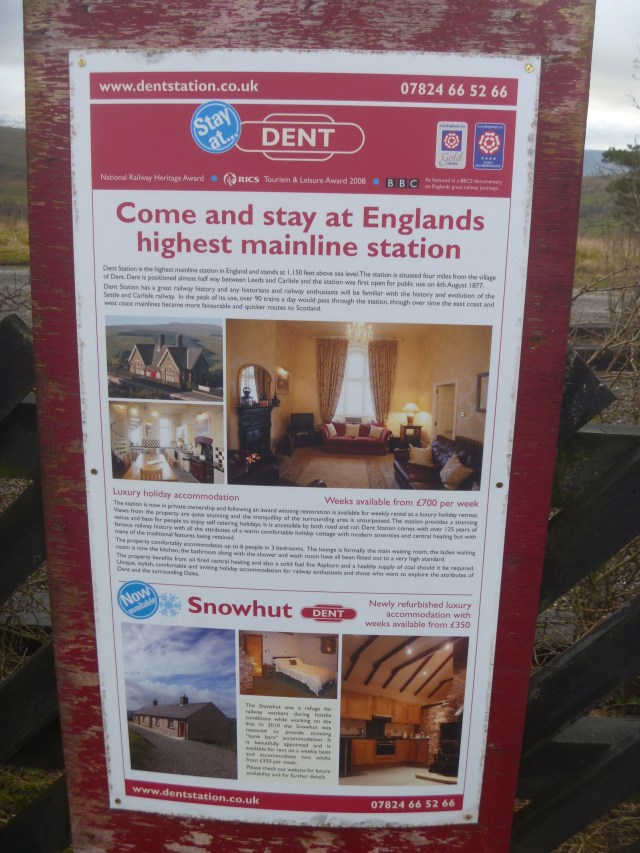
Self Catering at Dent Station

You can stay at Dent Railway Station!

Come and Stay

Villages and Churches of Upper Nidderdale, Part 2

Subtitled : Learn some of the history of the villages of Upper Nidderdale.

Happy New Year, everyone, and welcome to another year of rambles (in more senses than one!)

Arriving at Ramsgill

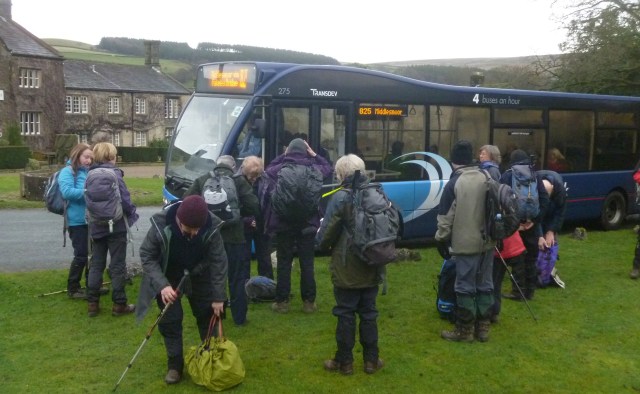
Dalesbus arriving at Ramsgill in Nidderdale

Such a pity that I missed Part 1! But I had never heard of Dalesbus Ramblers when that walk took place. At the end of last year I discovered walking with the Friends of the Settle – Carlisle Line and one the leaders told me about Dalesbus Ramblers so today I drove to Harrogate and joined my first walk with that particular group. With my new Metro Concession Bus Pass I enjoyed free travel from Harrogate up through Nidderdale where the group assembled for the walk:

SUNDAY 5th JANUARY 2014: VILLAGES & CHURCHES OF UPPER NIDDERDALE Part 2
Learn some of the history of the villages of Upper Nidderdale.
Start: Ramsgill: 11.05
Finish: Pateley Bridge: Approx: 14.20
Distance/Grading: 5 miles / Moderate
TRAVEL: Outward: Bus 823/825 from York (08.58), Tadcaster (09.20), Wetherby (09.40), Harrogate (10.05) and Pateley Bridge (10.50). Connections on bus 36 from Leeds (09.15) to Harrogate or Ripon (09.45) to Ripley.
Return: Bus 24 to Harrogate for onward connections.
Walk Leaders: Duncan & Brenda: 0796 951 2743

Naturally, our first church call was at St Mary the Virgin, Ramsgill just across the road from the bus stop.

St Mary's Ramsgill

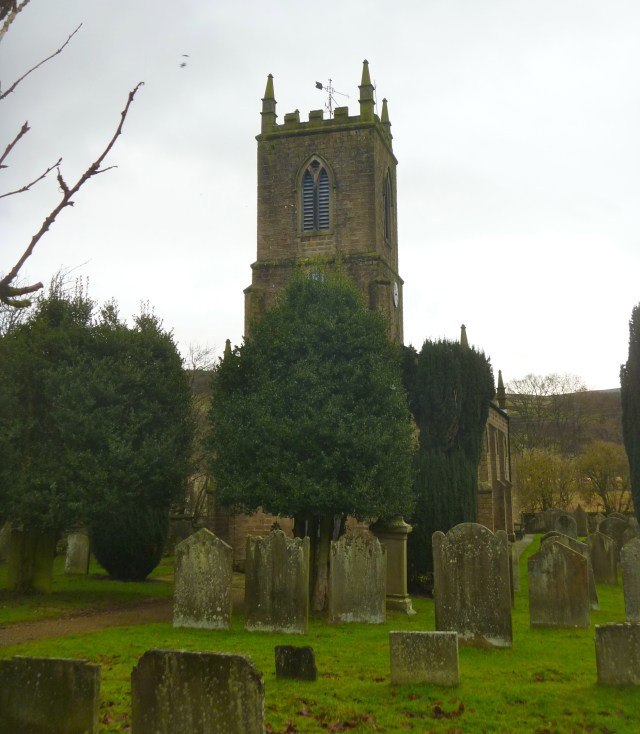
St Mary the Virgin, Ramsgill

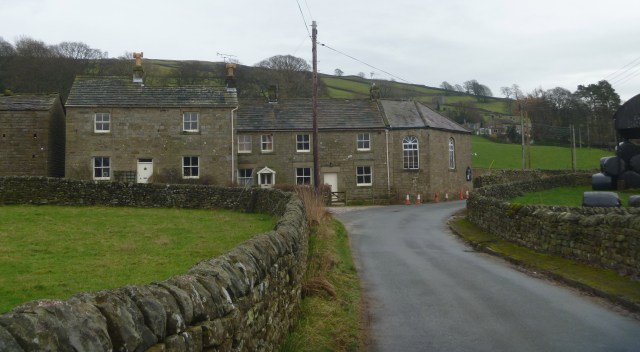
Most of the 20 or so houses in Ramsgill were built in the 19th century and the church was built in 1899 but on the much older site of a grange of Easby Abbey. The remains of the Abbey buildings are  behind the present church.

Easby grange

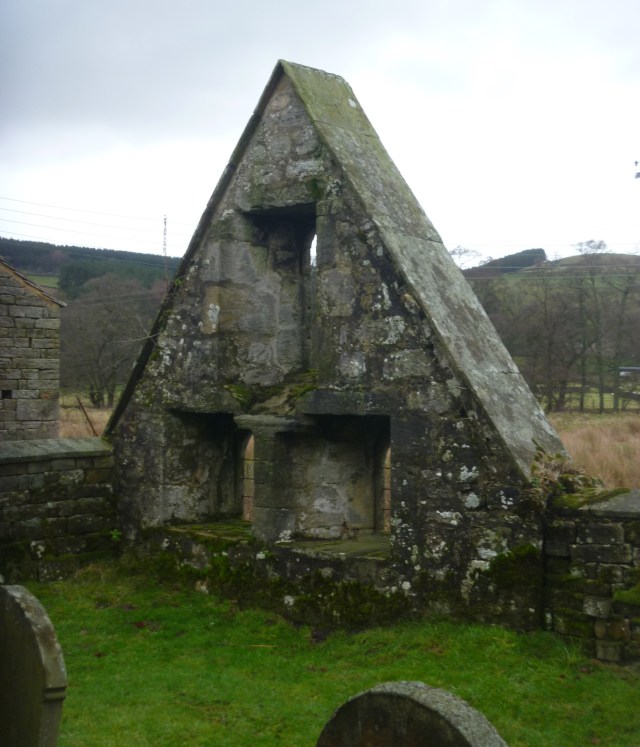
Remains of Easby Grange, Ramsgill

We also found out that Ramsgill had been one of the film locations for the 1997 movie ‘Fairy Tale: a true story‘ about the two little girls in Cottingley, near Bradford, who in 1917 took a photograph believed by some to be the first scientific evidence of the existence of fairies [The Cottingley Fairies]. Sir Arthur Conan Doyle was one of those who believed this to be true.

Ramsgill scenes :

Village Hall

Ramsgill Village Hall

Ramsgill Houses

Ramsgill Houses

Yorke Arms

The Yorke Arms, Ramsgill

So we moved from Ramsgill to Bouthwaite where we came across our second church – the Wesley Chapel built in 1890 and joined the Nidderdale Way down to Pateley Bridge.

Bouthwaite chapel

Bouthwaite Chapel

Chapel

Wesley Chapel, Bouthwaite

Ramsgill and Bouthwaite lie less than a mile apart at the head of Gouthwaite Reservoir. Our walk continued down the valley parallel with the reservoir and mostly overlooking it as far as Wath which lies at the southern end of the 3 mile long body of water.

Gouthwaite 1

Gouthwaite Reservoir lunch stop

Gouthwaite 2

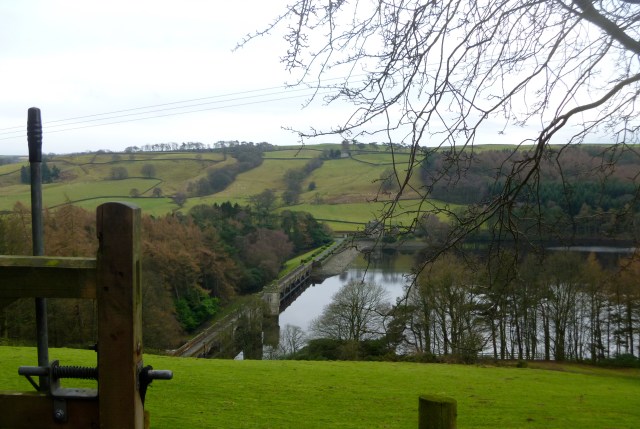
Looking back up Gouthwaite

Gouthwaite 3

Gouthwaite and the Nidderdale Way

Gouthwaite 4

Gouthwaite Dam

The small Wesleyan chapel at Wath seats just 50 and has 5 walls. It also has links with Rudyard Kipling whose grandfather was once minister here.

Wath chapel

Walkers stop at Wath Chapel

Wath and chapel

Wath and Chapel

From Wath our path joined the trackbed of the former Nidderdale Light Railway to our destination Pateley Bridge where there was just time to have a well-deserved cuppa before catching our return bus to Harrogate. The Dalesbus system, which operates on Sundays with limited winter timetables, enables walkers and others to reach more remote and beautiful areas in North Yorkshire and I hope to make more such excursions during the year.

Old rail track

The track of the former Nidderdale Railway track approaching Pateley Bridge

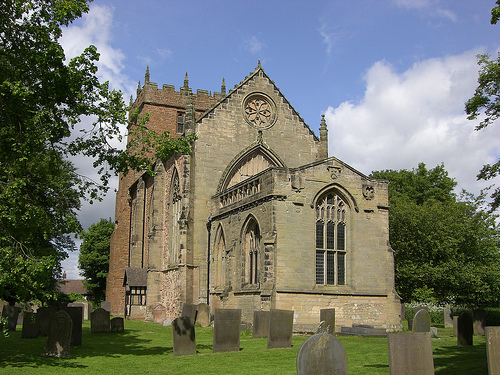
“A wonderful little church with a chequered pavement … with coats of arms in clusters on the lofty roof” : St Mary’s, Astley

 Astley Church

The above quotation is from ‘Scenes of Clerical Life : Mr Gilfil’s Love Story’ by George Eliot who based her fictional village of Knebley on the real life village of Astley. I wrote about my first visit to Astley here and this what I wrote there about the George Eliot connection :

I first visited Astley in the mid-1990s when studying for a Masters degree in Victorian Studies. A ‘field trip’ to the places associated with George Eliot was planned  and we spent the day visiting Coventry, Nuneaton, Arbury Hall and other places mentioned in her life and works including Astley church where we took in a view of the ruined castle. Astley Castle appeared in George Eliot’s story ‘Mr Gilfil’s Love Story’ as Knebley Abbey. The whole site is also part of the Arbury Estate, where George Eliot’s father, Robert Evans, was a farmer, surveyor and land agent and where the young Mary Ann Evans (GE’s real name) grew up.”

George Eliot’s parents were married in St Mary the Virgin, Astley parish church. “Robert Evans and Christina Pearson, were married in Astley Church in February 1813.” [Parish website]

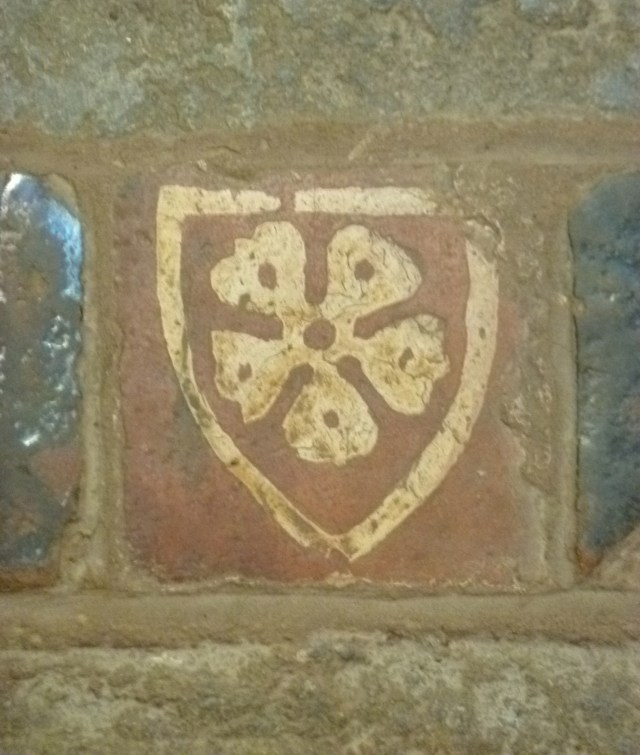
tiled floor

Tile from the floor or “chequered pavement”

The church is open regularly to visitors on the first Saturday of the month from 10.30am until 2pm and also from 11am until 2pm on every Bank Holiday. (Always check the website if you do intend to visit though)

Staying at the Castle you are invited to call one of the churchwardens (numbers are given in the Information File) in order to arrange a personal tour. I decided to do this and at 10.30 the other Thursday met Judith who was able to show me changes that had taken place since my last visit and to explain lots of the features of the church. Here is how  the Welcome Leaflet briefly describes the church and its ‘treasures’.

We know that a church existed at Astley as early as 1285 because a priest was appointed in that year. However, what remains today contains part of the church that was built in 1343 together with some additions that were built in 1607/8. 

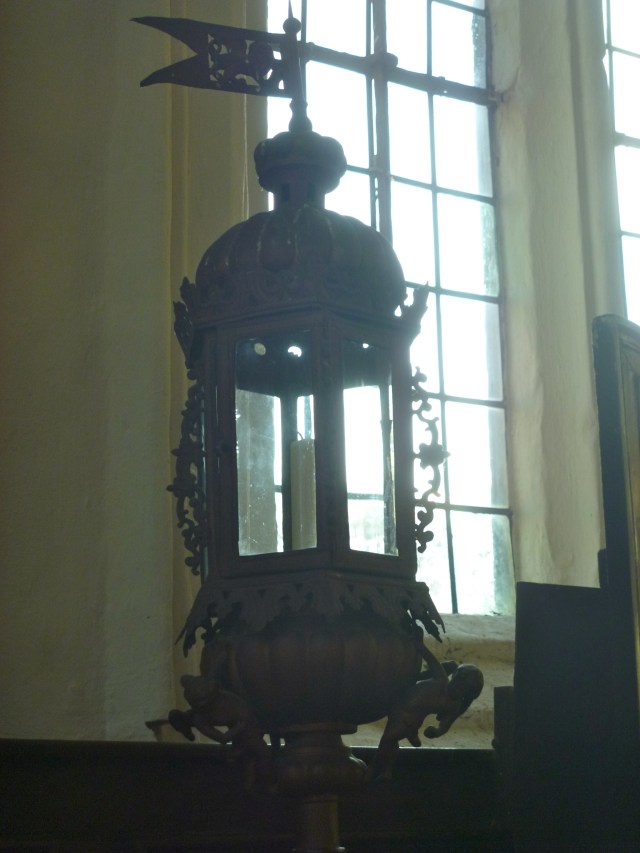
The 1343 church was built in the form of a cross, with a central tower which had a lead covered spire. After dark a light was always shown from the spire which was known as “The Lantern of Arden”. The light was to guide travellers through the thick forest which surrounded the area in those days.

Church lantern

A Lantern in the Church

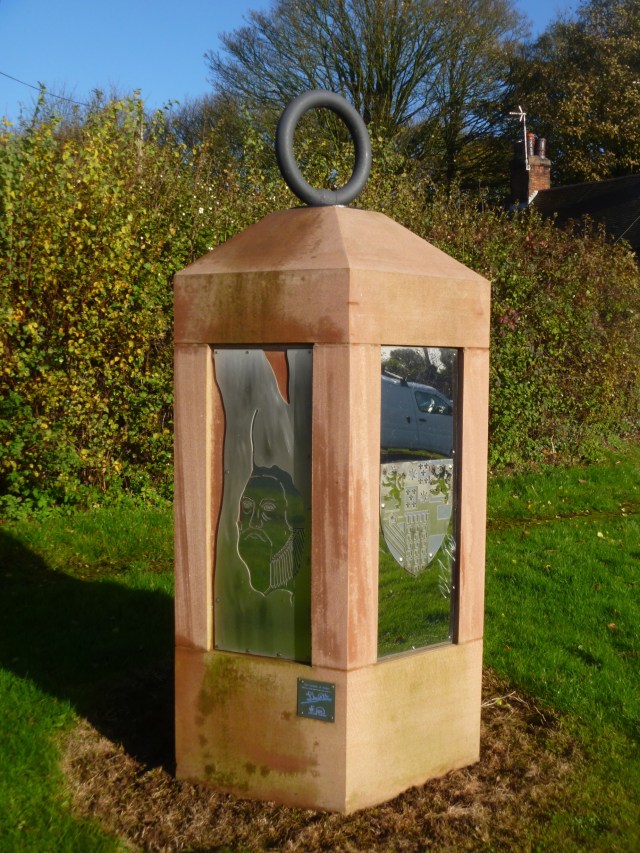
Lantern of Arden

The Modern Lantern of Arden

“When artist Johnny White created Astley’s heritage feature, the new Lantern of Arden, he took his inspiration from the church. It is made of similar red sandstone. In the lantern’s windows, stainless steel panels mirror the ancient themes and history of the parish. Three queens and the castle are represented. Sir Henry Grey hiding in an oak tree and the Victorian author, George Eliot, can all be found on the lantern, made from the same red sandstone as the church.”[Source]

The church’s purpose was a chantry for Thomas Astley. here priests sang mass daily for both him and his family to aid their souls in purgatory. Over the years the church has passed ownership through Sir Richard Chamberlayne to the Newdegate family.

The main body of the church was about 30 m. long but by 1600 the tower had fallen down and the church was in a state of disrepair.

In 1607/8 the present tower and chancel were built, using some of the materials from the old church, at each end of the chancel of the earlier building.”

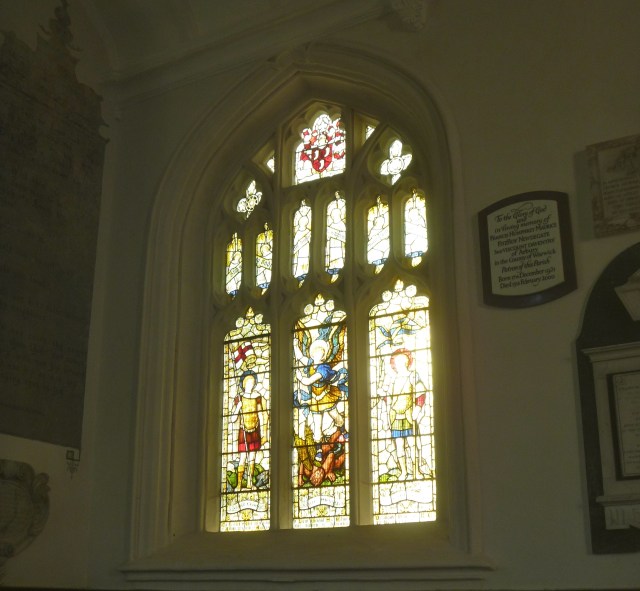
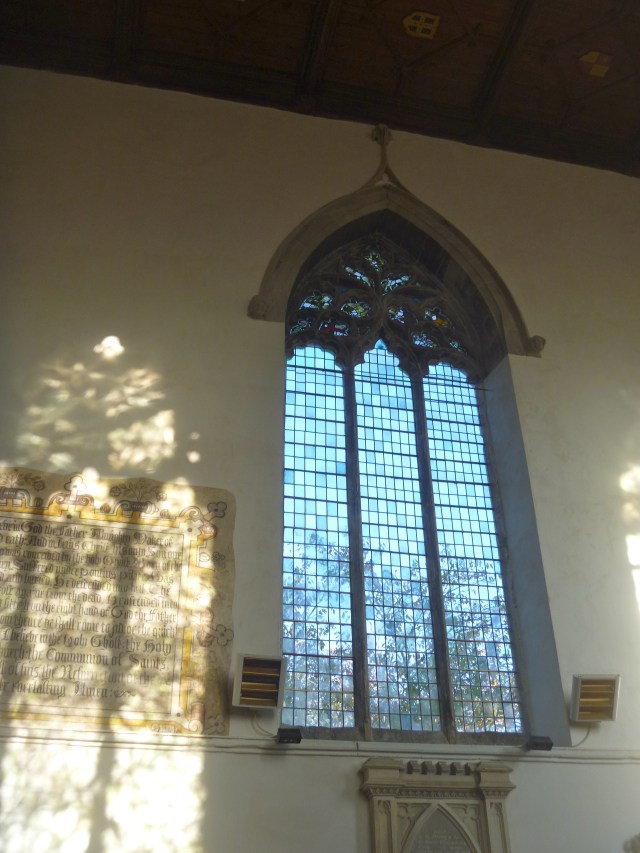
Stained Glass Windows

Stained glass window 1

Stained glass window 2

The east and north windows contain some 14th century stained glass whereas the south window is modern.

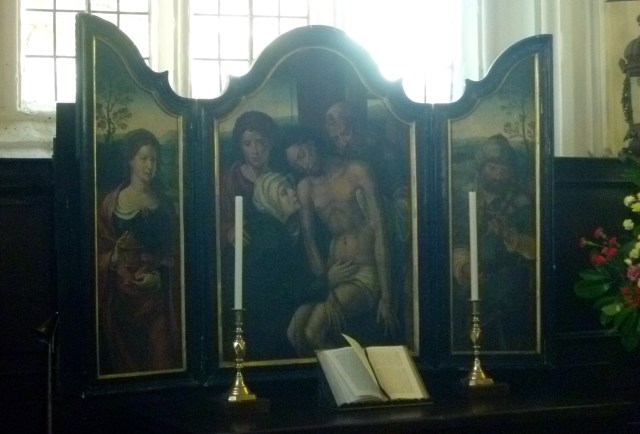
Altar Picture

Altar picture

This dates from the 17th century and depicts the taking down of Our Lord from the cross. It was given to the church in 1905 by Sir Francis Newdegate.

Tower

A stone circular staircase leads up to the bells of which there are five. Four of these have an inscription showing that they were made in Leicester in 1607.

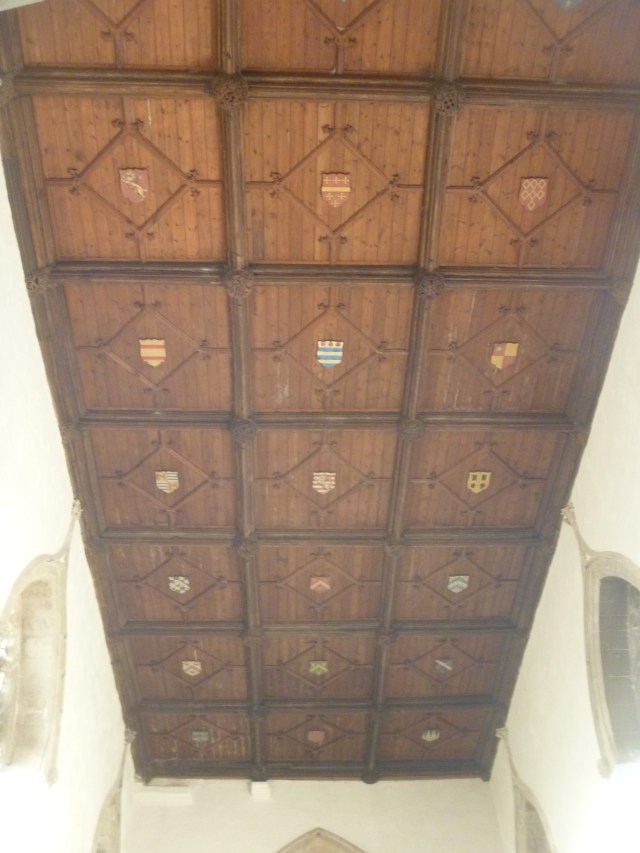
Nave Ceiling

Roof

“With Coats of Arms in clusters on the painted roof” [‘Scenes of Clerical Life : Mr Gilfil’s Love Story’ by George Eliot]

This is made of oak and has twenty one shields connected with the church. It was extensively restored in 1876.

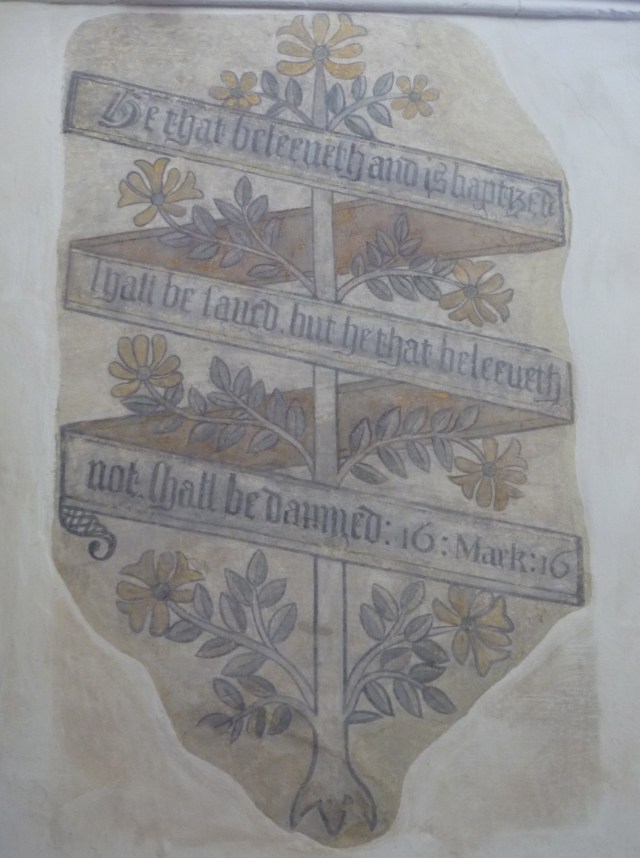
17th Century Wall Paintings

Wall painting

[“He that believeth and is baptized shall be saved; and he that believeth not shall be damned.” Mark Ch. 16 v. 16]

There are six on the south wall showing seven Bible passages, the Lord’s Prayer and the Creed.

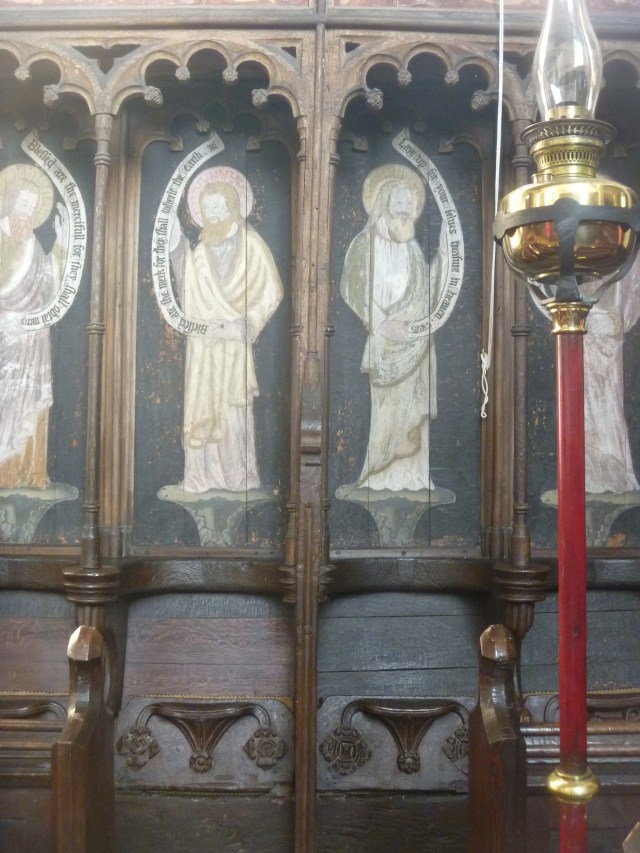
14th Century Choir Stalls

Choir stalls and apostles

There are two sets of nine and behind each stall is a painted panel. There are nine apostles on the north side and nine prophets on the south side.

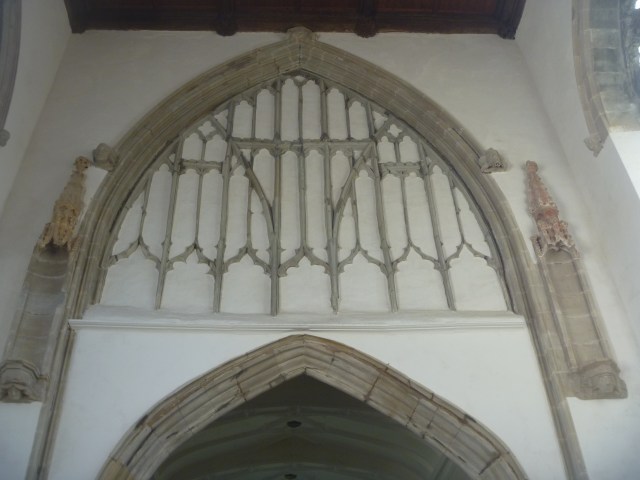
The Original East Window

Blocked window

Now blocked, this window would have been at the end of the original church. It sits above the 17th century chancel arch. Some of the stained glass from this once magnificent window was moved and placed in the windows of the north side of the chancel and also in the tracery in some windows in the nave.

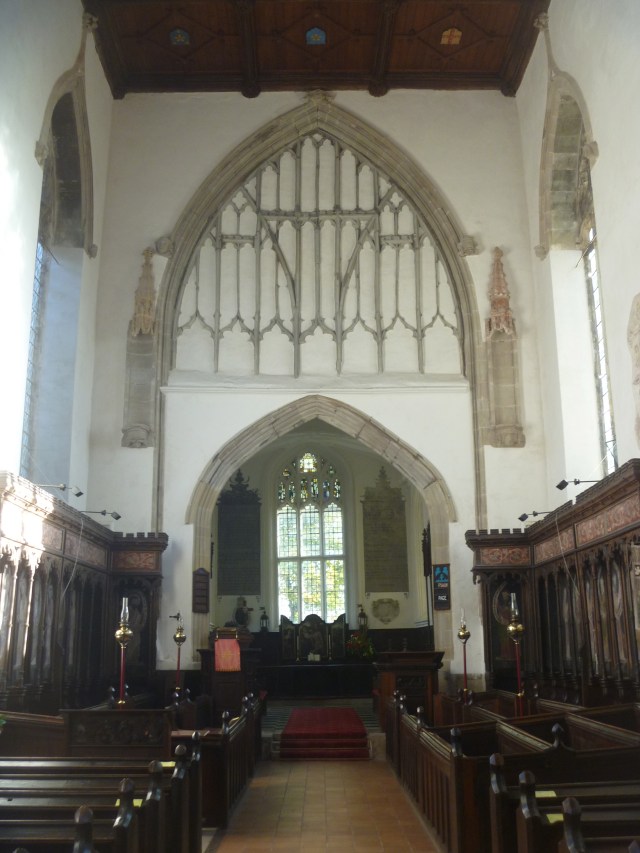
Interior view chance

Interior view towards the Chancel

Interior rear

Interior view towards the rear and access to the church tower and bells

Welcome to Lustleigh : A Short Tour of the Village – Wreyland back to Lustleigh

Continuation of  “A Walk Around Lustleigh

9. Brookfield also originally belonged to Bovey Tracey [3 miles down the A382]. The first houses here were built in the late 19th century for the men who worked at Kelly Mine.

Brookfield

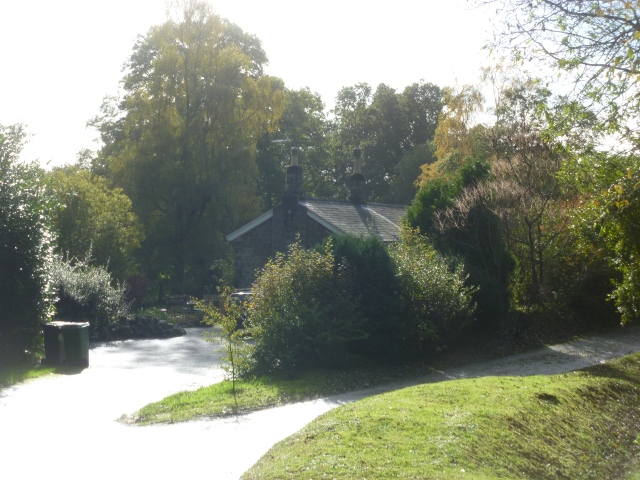
10. Station House : The Newton Abbot to Moretonehampstead Railway opened in 1866 running for just under 100 years and being famed for its well-kept garden [presumably, The Station House]. The passenger service ended in 1959.

Former Station House

The Station House [private drive]

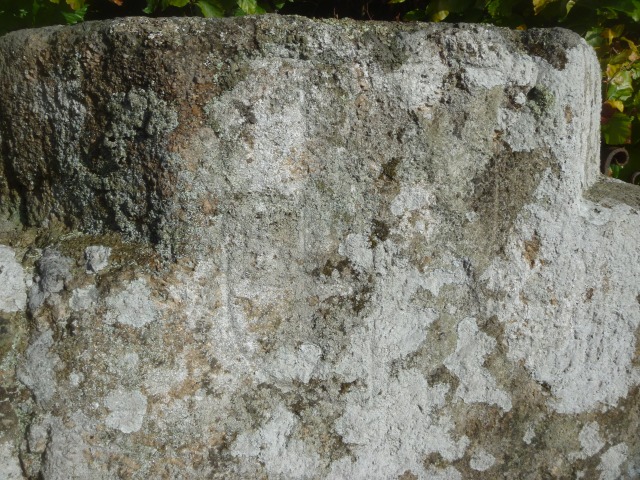
11. Bishop’s Stone : the indistinct coat-of-arms carved on the front may be that of the See of Exeter but little is known of the history surrounding the stone.

Bishop Stone

Bishop’s Stone

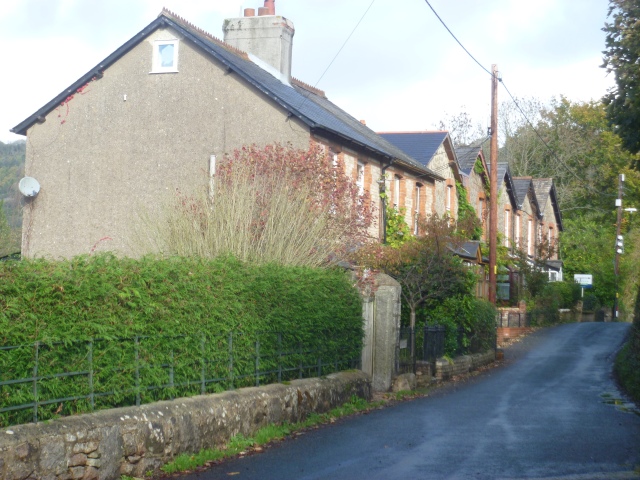
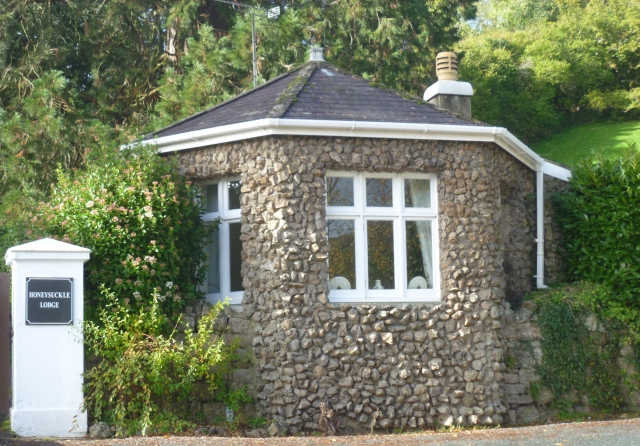
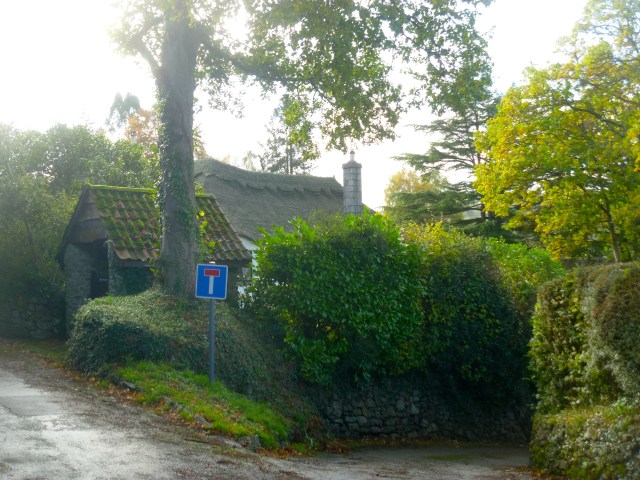
12 : Old Gatehouses: built for Coombe Hill but are now private dwellings.

Gatehouse

One of the Gatehouses

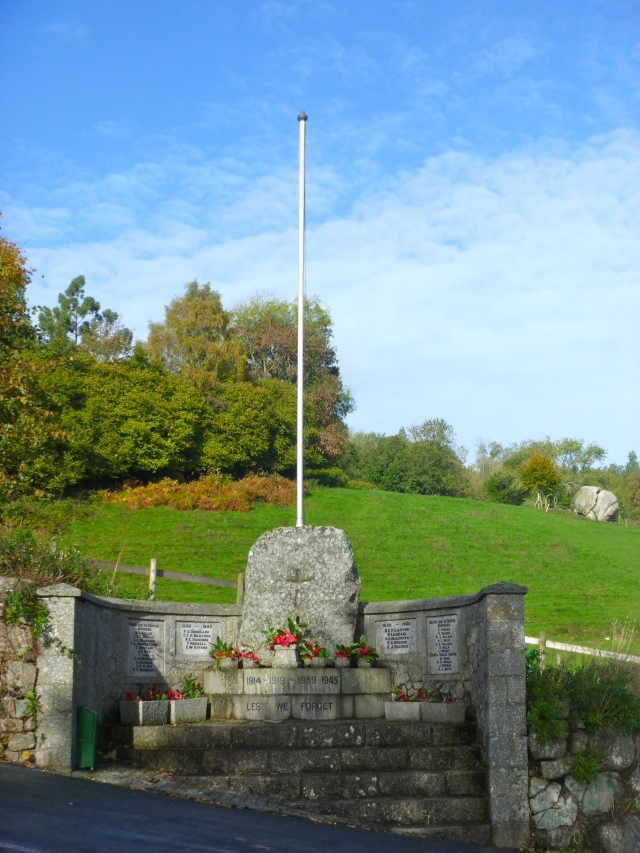
13. War Memorial: dedicated to the memory of all who fell in the two World Wars.

War Memorial

14. Great Hall,  or Old Rectory: This historic building with its 14th century timber roof was once the home of the Lords of The Manor and later the Rectory. It was divided up into three private properties in the 20th century.

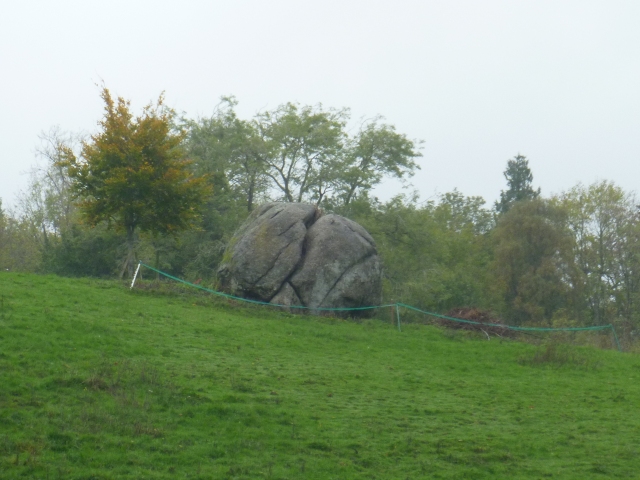
15. “Parson’s Loaf” : There is only speculation as to why this unusual rock came to be so called.

Parson's Loaf

“Parson’s Loaf”

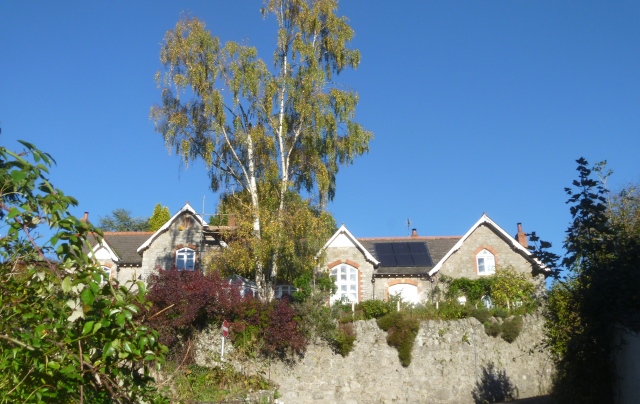
16. School House. The Board School built following the Education Act of 1870 for Infants and Juniors also provided accommodation for the Head Teacher. It was closed in 1963 and is now a private dwelling.

[The Infants School on the rights is now holiday accommodation and that is where we stayed in Lustleigh]

School House

The School House

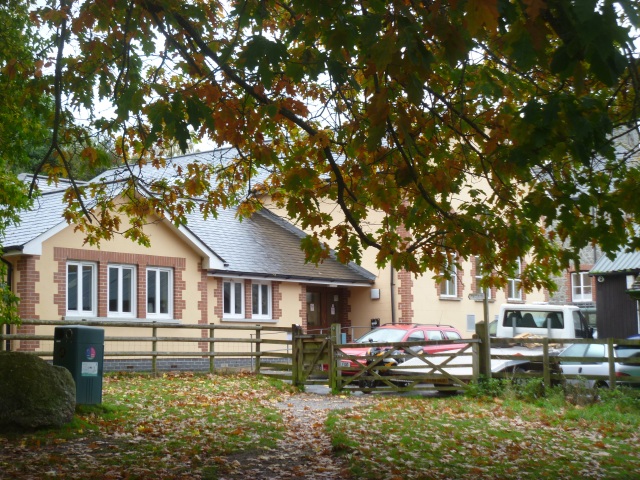
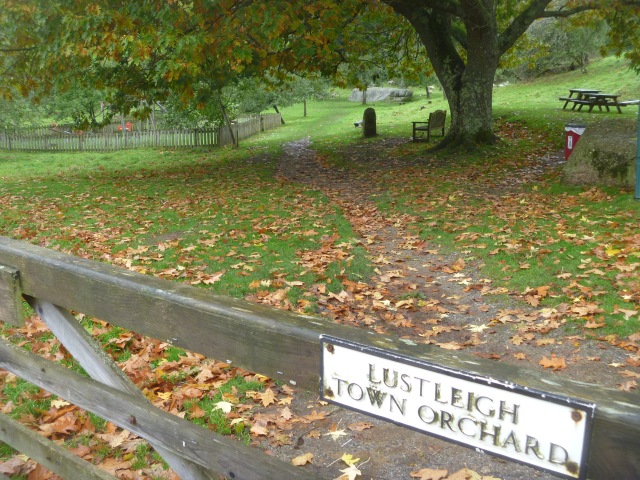
17. Town Orchard: The road between The Dairy and the Former Post Office leads past the recently-rebuilt Village Hall to The Town Orchard given to the people of Lustleigh by a resident, Mr W. Bennett. It is where the annual May Day festivities take place.

Village Hall

Village Hall

Town Orchard

Town Orchard

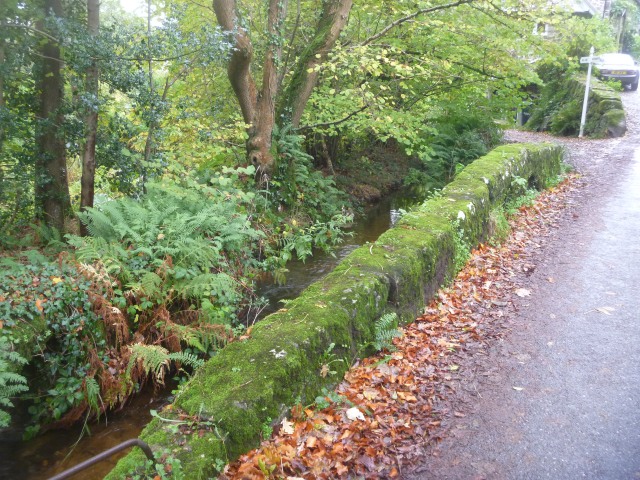
18. The Bridge over the leat taking water the the Old Corn Mill, now a private dwelling.

Bridge and Leat

The Bridge and Leat

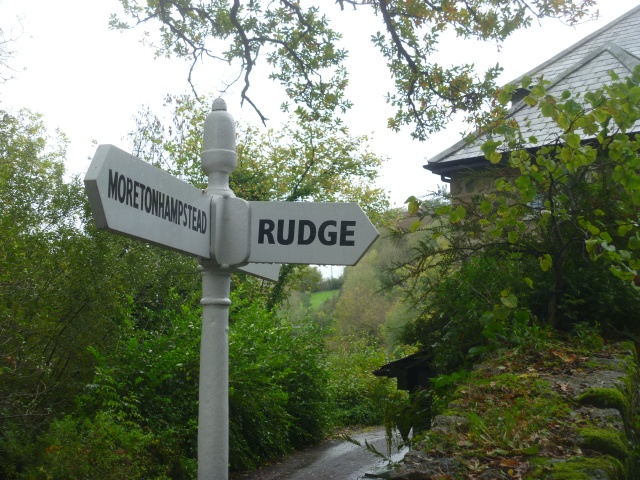
19. The road leads to Rudge, one of the old farms of the Manor of Lustleigh, and from where a footpath continues past another old farm, Lower Hisley and on to Hisley Bridge in Lustleigh Cleave.

Road to Rudge

Road leads to Rudge

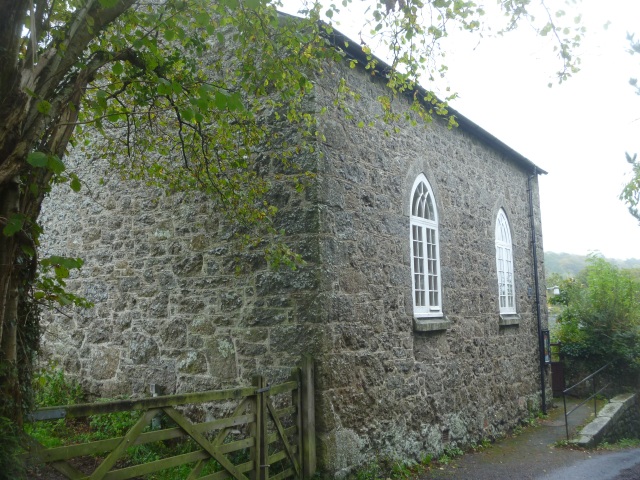
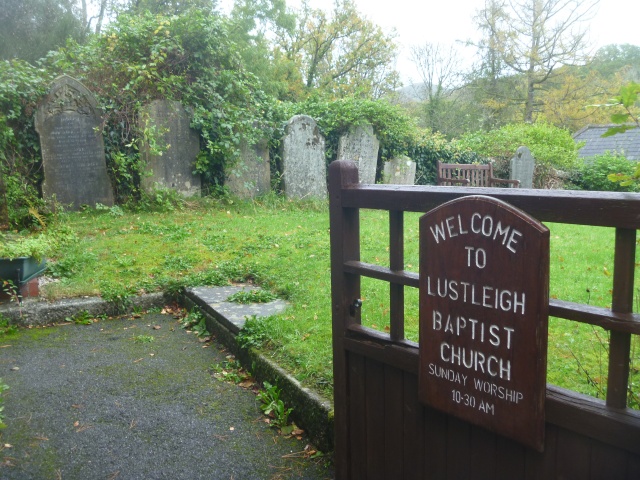
20. Baptist Chapel : built in 1853 and still in regular use as a place of worship.

Chapel 2

Chapel 1

Welcome to Lustleigh : A Short Tour of the Village – The Church, The Green and Wreyland

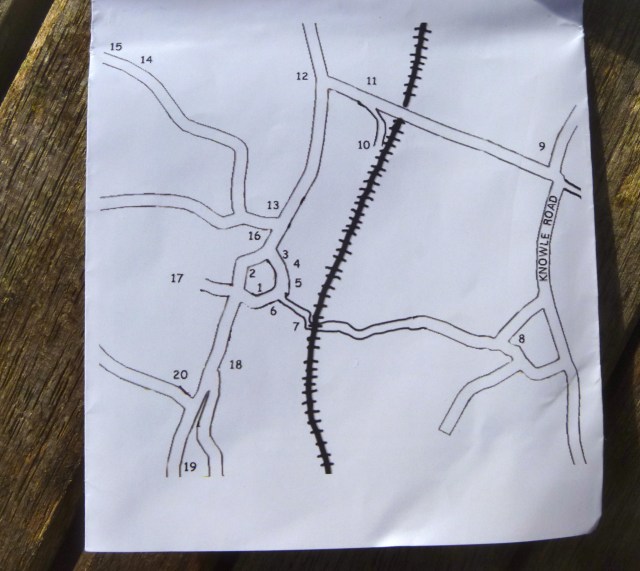
Walk Map

A Walk Around Lustleigh Map

Last week I was staying in deepest Devon in the lovely village of Lustleigh on the edge of Dartmoor but within the boundary of the Dartmoor National Park. In addition to everything listed on the walk leaflet there is an excellent community shop called The Dairy. It houses the Post Office (open 9-1 each weekday) and itself is open every day including Sunday. Come with me on a walk through Lustleigh …

Starting at the village centre, outside the Church.

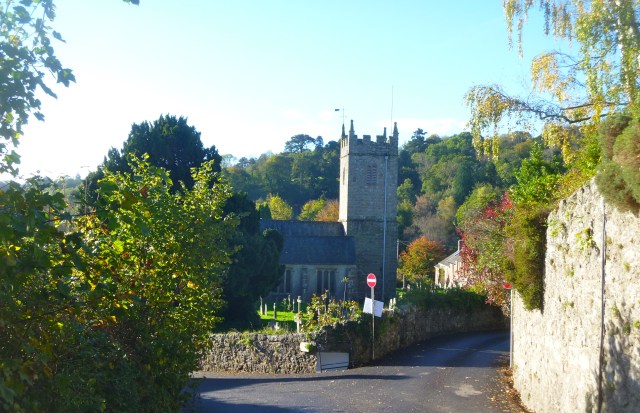
Lustleigh Church

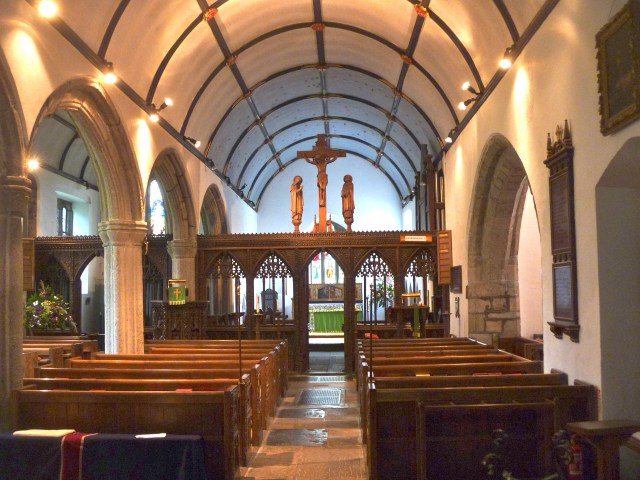
1. Church of St John the Baptist: built in the 12th century on a Celtic site. Inside see the raised Celtic stone and the beautiful rood screen.

The nave

The Nave with Rood Screen, Barrel Roof and Carved Pew Ends

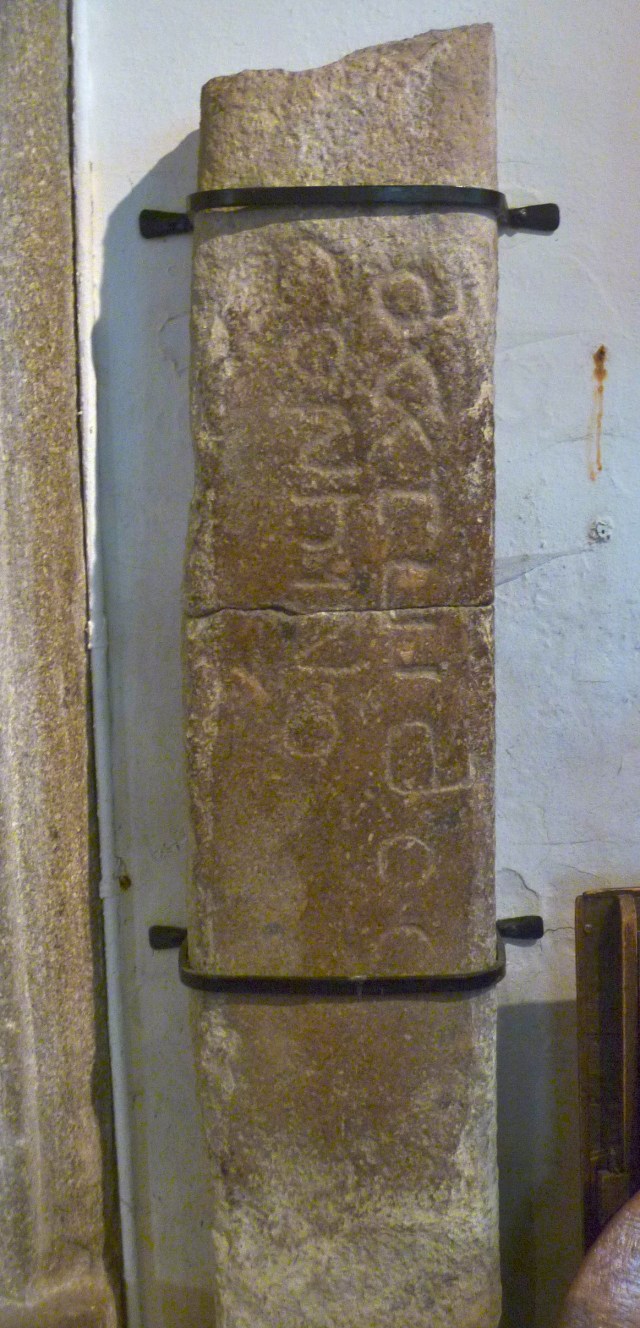
Celtic stone

The Raised Celtic Stone

[This ancient stone was removed from the position in the paving below the inner doorway of the church porch in 1979 in order to preserve it from further wear. It belongs within a well-recognised series of commemorative stones erected in the post-Roman period between about AD450 and AD600. The inscription probably read ‘DATUIDOCI CONHINOCI FILIUS’ – the stone Datuidoci the son of Conhinoci’.]

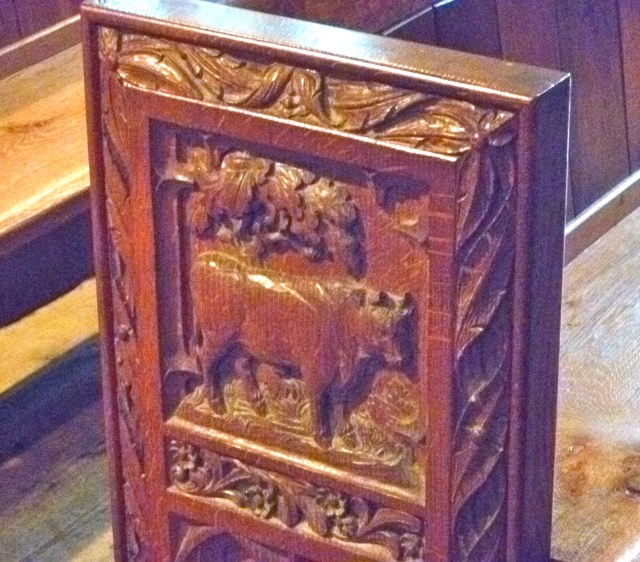
Carved pew end

Carved Pew End

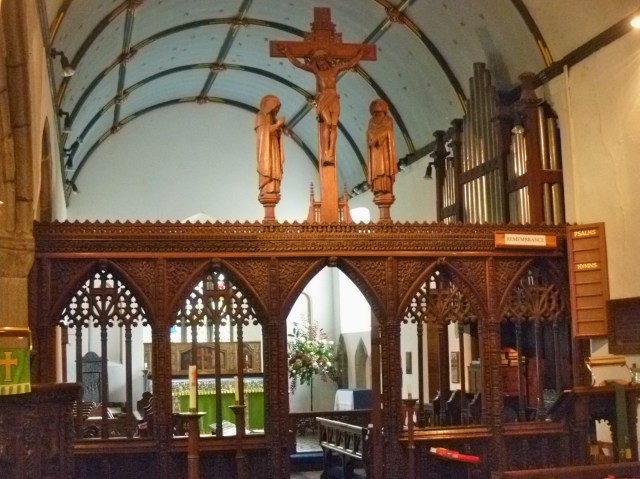
Rood screen

Rood Screen and Carved Pulpit

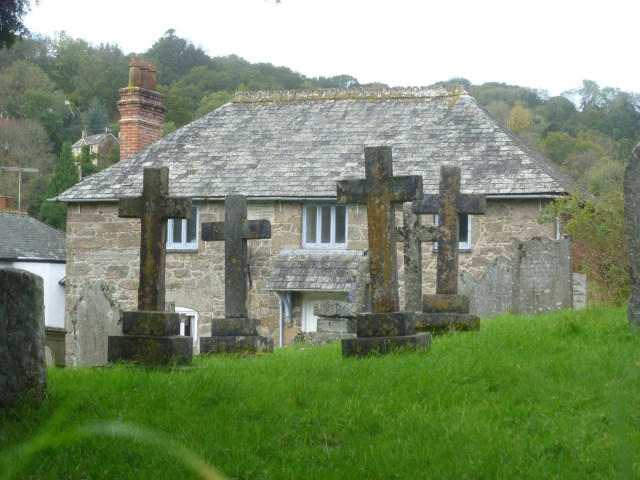
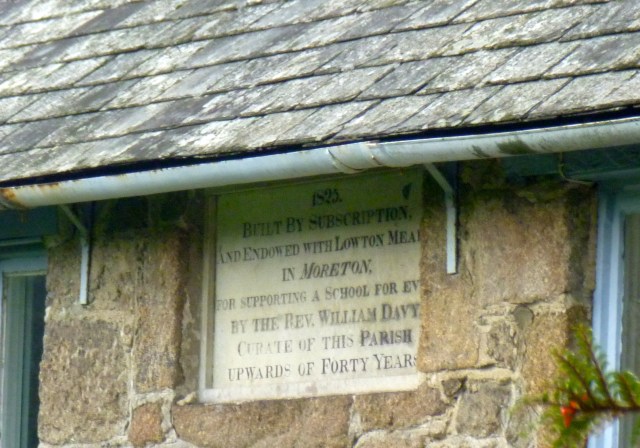
2. The Old Vestry: originally a school (see tablet on wall above the door). Now used for church choir rehearsals, parish council meetings and by the Lustleigh Society for the Community Archive.

Old Vestry

The Old Vestry

Tablet

Tablet on The Old Vestry

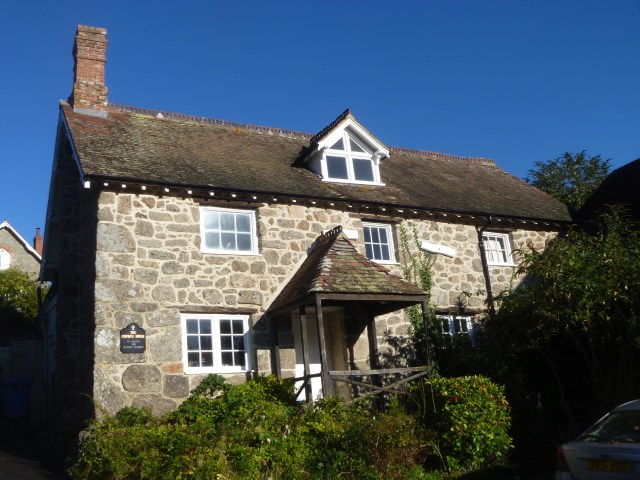
3. Church House: built around the 14th century. It was once a centre for village social activities, later became a Poor House and then a Reading Room.

Church House

Church House

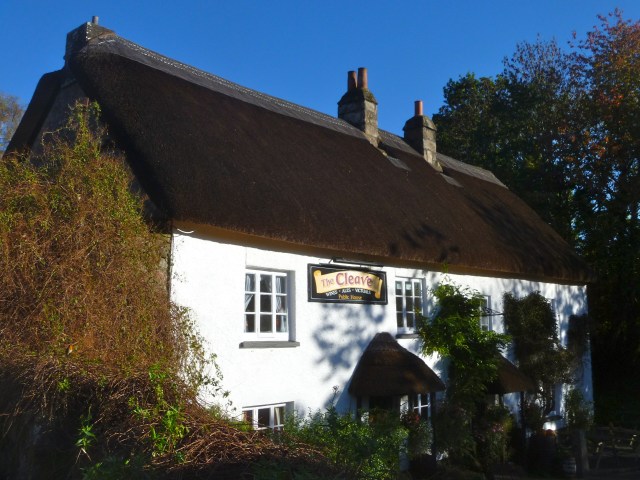
4. The Cleave Hotel: originally an old farm “Gatehouse” and became a public house in the 19th century.

The Cleave

The Cleave Public House

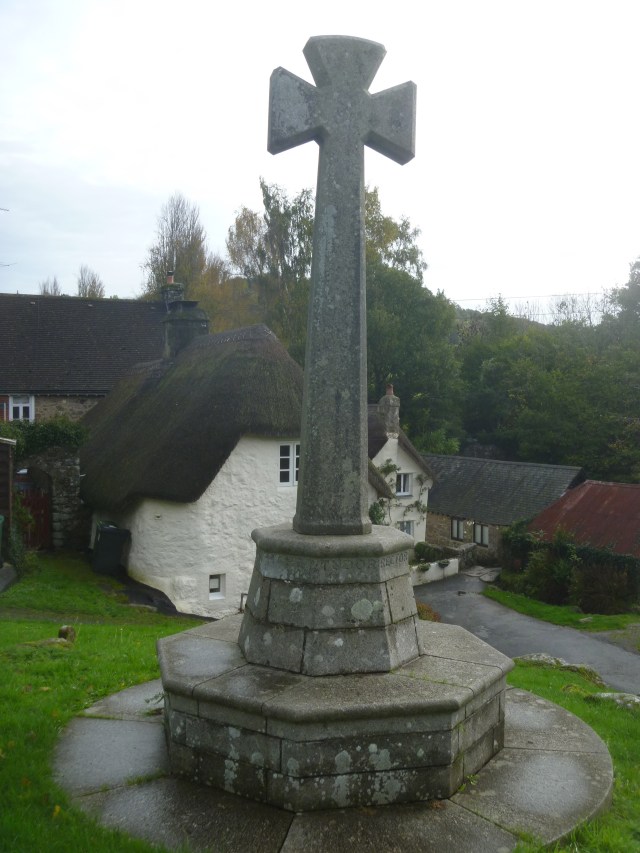
5. Tudor Cross on the village green. Made of stone with a Maltese Cross head and chamfered shaft on an octagonal base. Erected in memory of Rector Henry Tudor (1888-1904). Nearby was the site of the village pump. Only the granite trough remains.

Tudor Cross

Tudor Cross

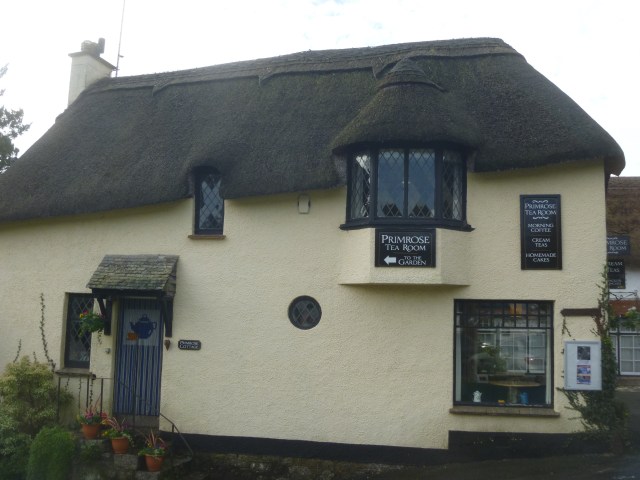
6. Cottages around the green: In the mid 19th century many were shops and one a Post Office. Primrose Cottage [tea rooms] was built in 1940 on the site of a hardware shop.

Primrose Tea Rooms

Primrose Tea Rooms

7. Old Gospel Hall: formerly used for worship by the Plymouth Brethren.

Baptist Chapel

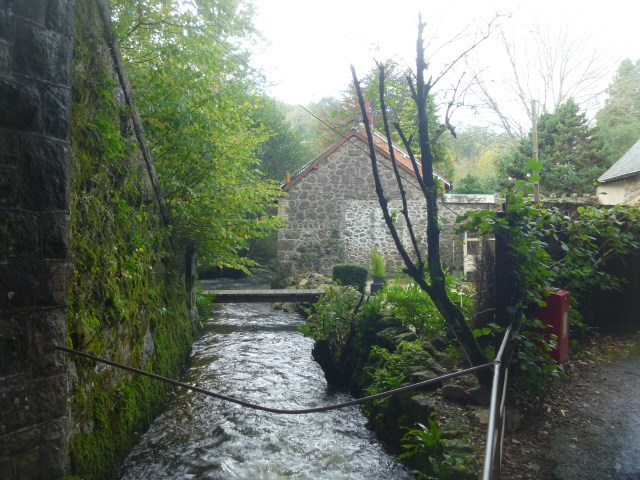
The Old Gospel Hall and Wrey Brook

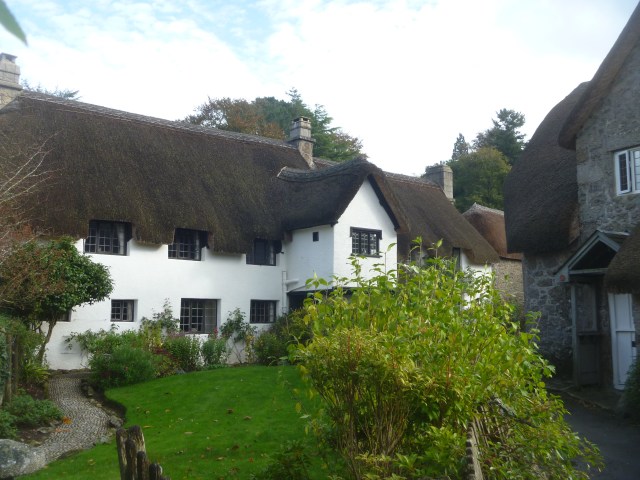
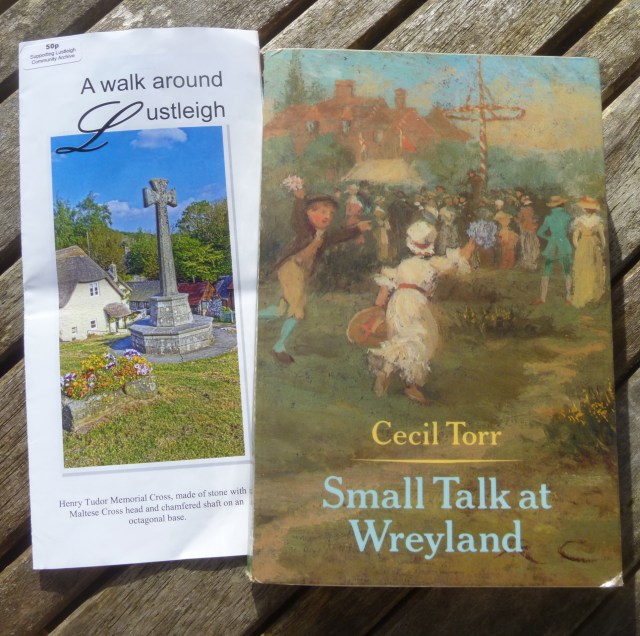
8. Wreyland: Approached from under the railway bridge Wreyland (or Wrayland) is a small hamlet that was part of the parish of Bovey Tracey until 1957. The Wrey Brook being the boundary between Lustleigh and Bovey. The thatched cottage on the left, known as Wreyland Manor, was where early manorial courts were held. Cecil Torr’s family owned properties here, including Yonder Wreyland where “Small Talk at Wreyland” was written.

Wreyland Manor

Wreyland Manor

Yonder Wreyland

Yonder Wreyland

Small Talk at Wreyland

Small Talk at Wreyland

Garden Walks in the City of London : Gardens, Inns and Alleyways

GARDENS, INNS AND ALLEYWAYS
Meet At Chancery Lane Tube Station, Exit 3
Fridays at 12.00 Noon (accept Good Friday 29 March 2013).

A walk through London’s historic legal quarter, exploring glorious hidden gardens, distinguished and ancient buildings and hidden alleyways. Venture into a private world where few walkers stray – unless they have need of a lawyer!.
This walk includes steps and ends at the river near to Temple Tube Station.” [Source]

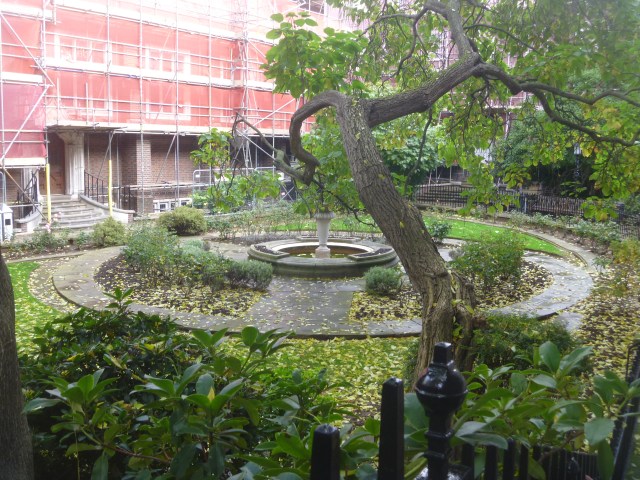
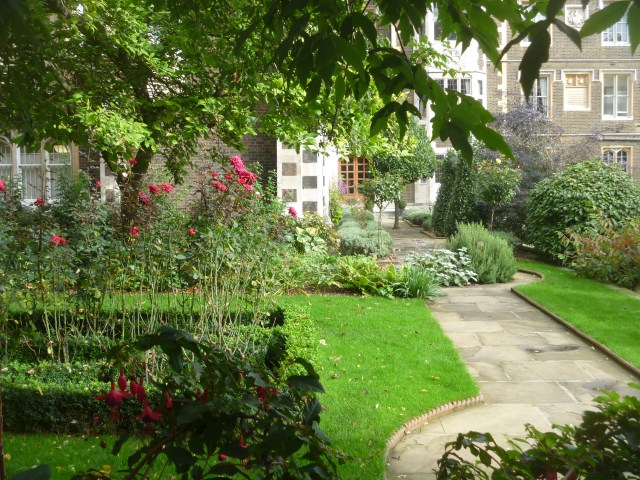
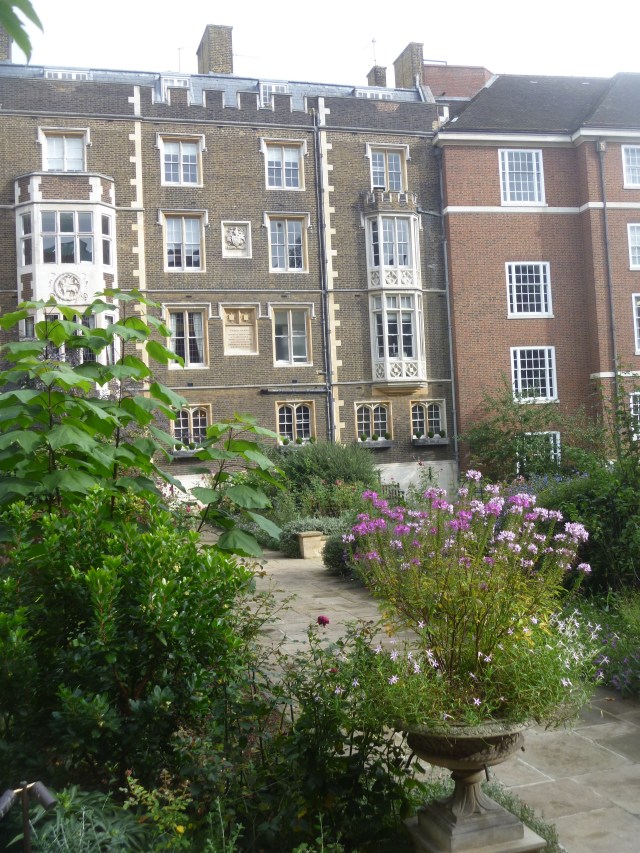
Staple Inn Garden

Staple Inn Courtyard Garden

This was our choice of activity when I met my sister in London on Friday. Eight of us, including three French women, turned up at Chancery Lane Tube Station at noon just as the rain was stopping and the skies were brightening. We met Jackie who was to lead the tour and she took us just behind the station and into Staple Inn garden.

Staple Inn

“Staple Inn was originally attached to Gray’s Inn, which is one of the four Inns of Court. The Inns of Chancery fell into decay in the 19th century. All of them were dissolved, and most were demolished. Staple Inn is the only one which survives largely intact. It dates from 1585.” [Source]

The name Staple Inn comes from the fact that the building (dating from 1585) was originally the wool staple where wool was taxed and weighed.

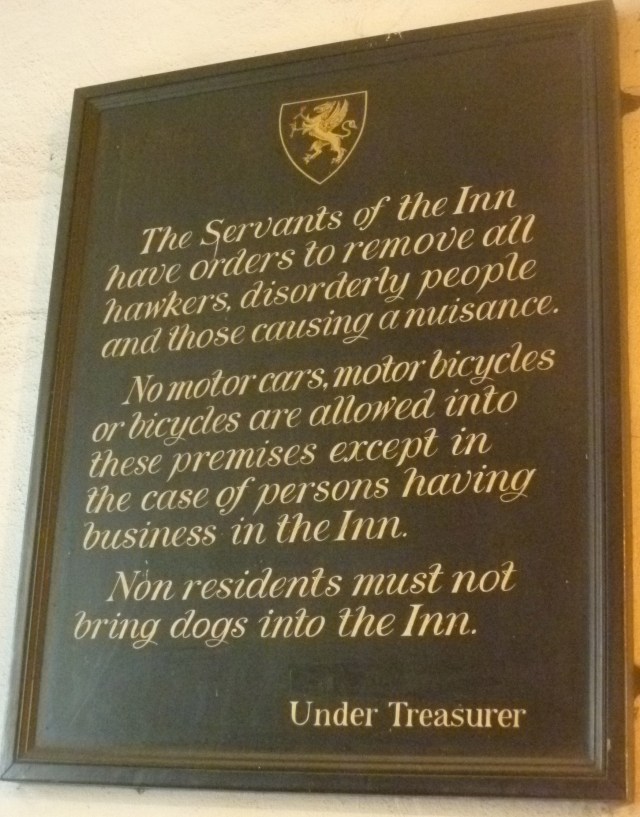
Grays Inn notice

There’s a lot of building work going on here so we didn’t tarry, just had a quick look round and then headed straight over Holborn and into our second garden that of Gray’s Inn.  “The Inn is known for its gardens, or Walks, which have existed since at least 1597.” [Source]

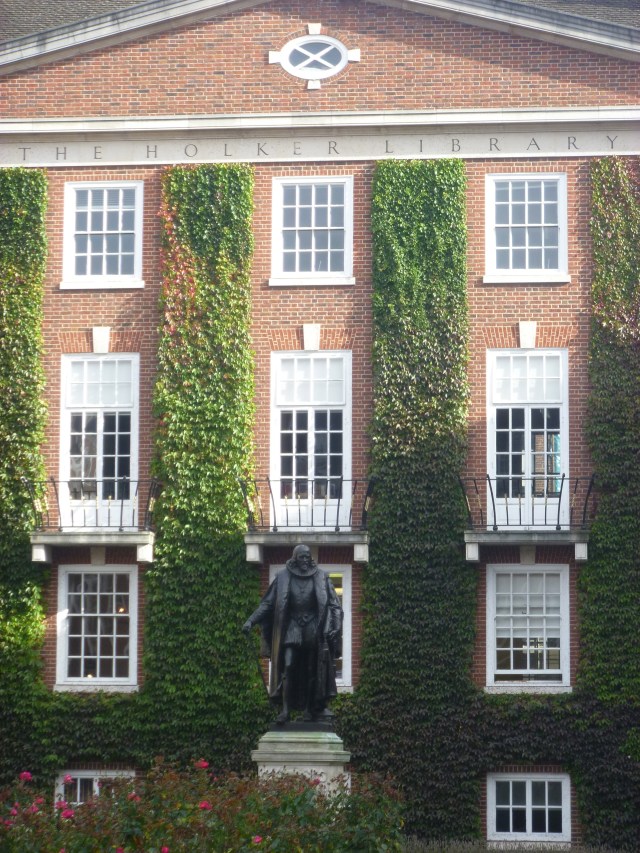
Bacon and Holker Library

Statue of Francis Bacon (1912) and The Holker Library

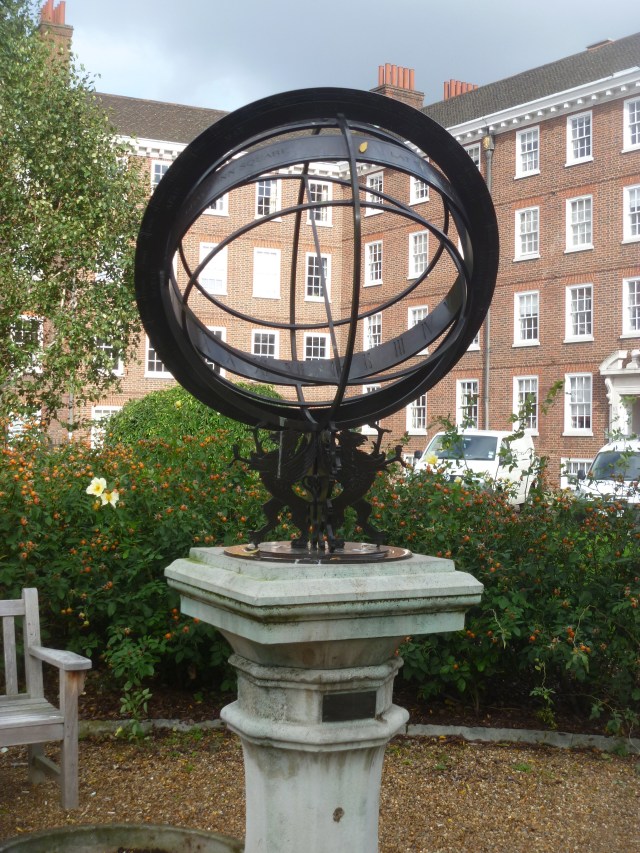
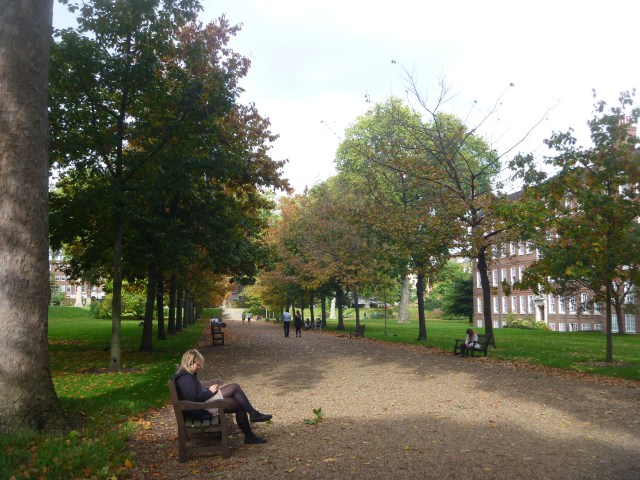
All of the gardens visited are havens of peace and tranquility and are just steps from the busy City of London streets. Gray’s Inn gardens are no exception. Dickens worked as a clerk here in 1828, and it features in several of his books including ‘David Copperfield’ and ‘Great Expectations’. There is a statue of Francis Bacon outside the Holker Library and through another arch and in another part of the gardens is an armillary – a form of sundial.

Peaceful Grays Inn

Peaceful Gray’s Inn Garden

Armillary consisting of hoops or rings

The Armillary

Grays Inn

The Gray’s Inn Walk

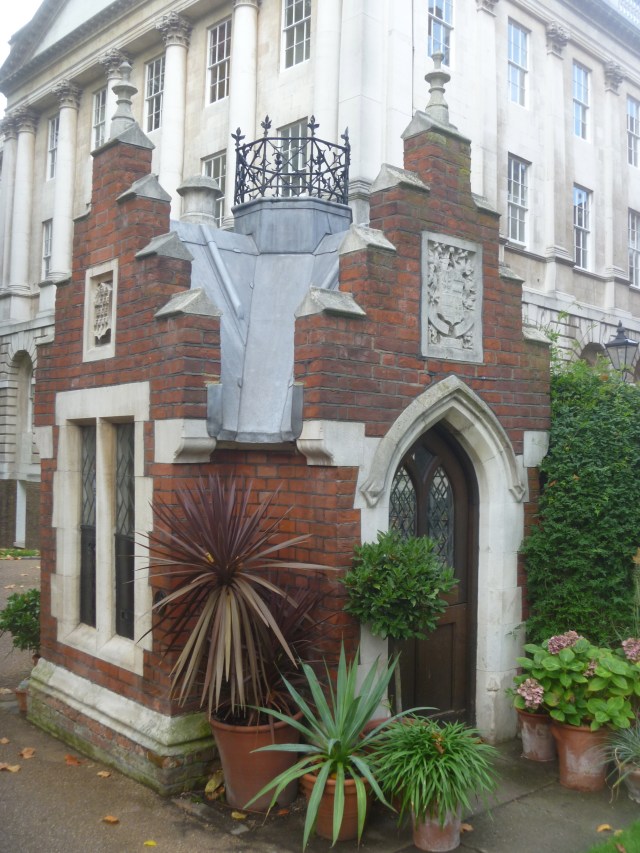
Back on the south side of Holborn is Lincoln’s Inn. Beautiful gardens surrounded by beautiful ancient buildings. On entering from Chancery Lane we came across a tiny ornate building which Jackie explained was the smallest City Grade 1 Listed building which had originally been built in 1860 for the man attending to law students’ horses while they worked : The Ostler’s Hut.

Lincolns Inn Ostler's Hut

The Ostler’s Hut, Lincoln’s Inn

Lincoln's inn

Lincoln’s Inn Chimney Pots

Lincoln's Inn rose

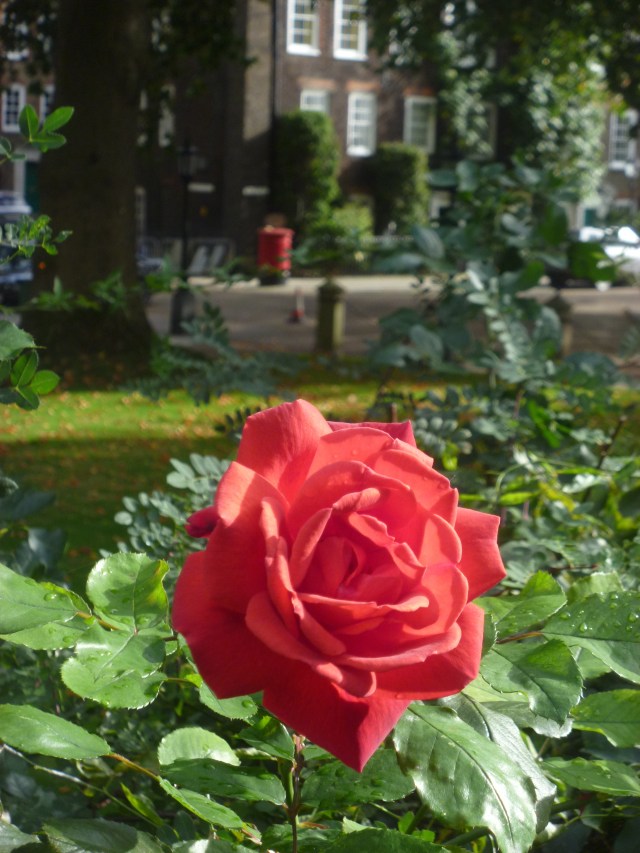
The Last Rose of Summer? Lincoln’s Inn

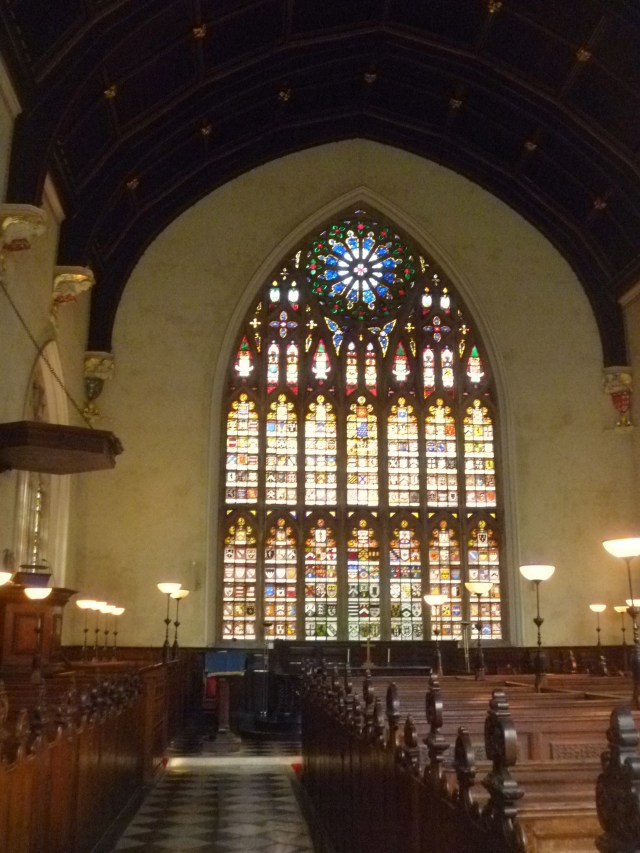
In Lincoln’s Inn we were able to go in the Chapel where the windows show the crests of the Treasurers from 1680 to the present day. The Treasurer is the head of the Inn and changes annually.

Lincoln's Inn Chapel

Lincoln’s Inn Chapel

L Inn Chapel window

Lincoln’s Inn Chapel Window

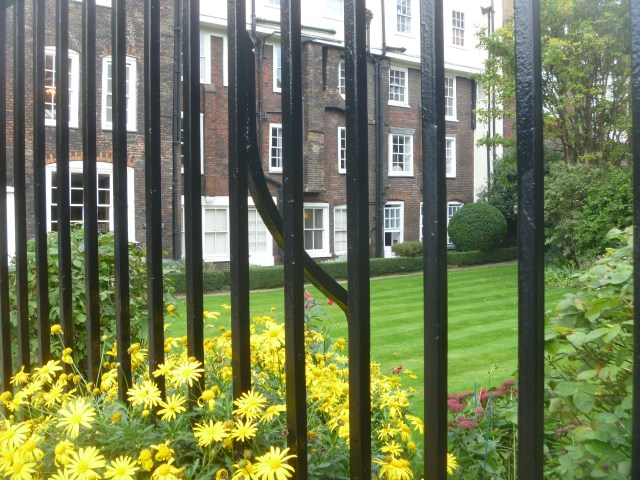
Lincolns Inn dry garden

Lincoln’s Inn tiny ‘dry’ courtyard Garden

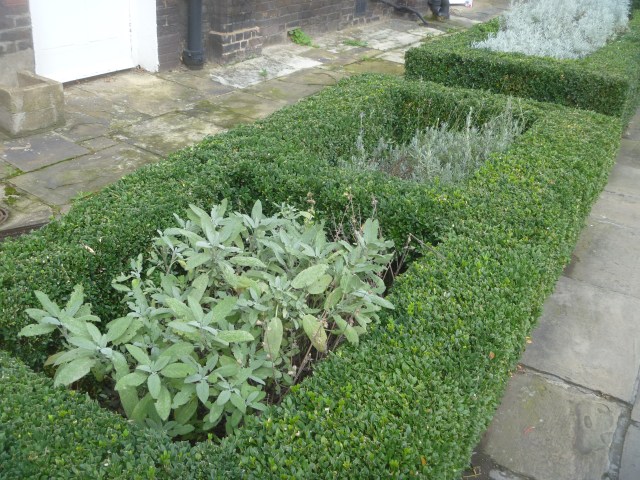
Lincolns Inn herb plan
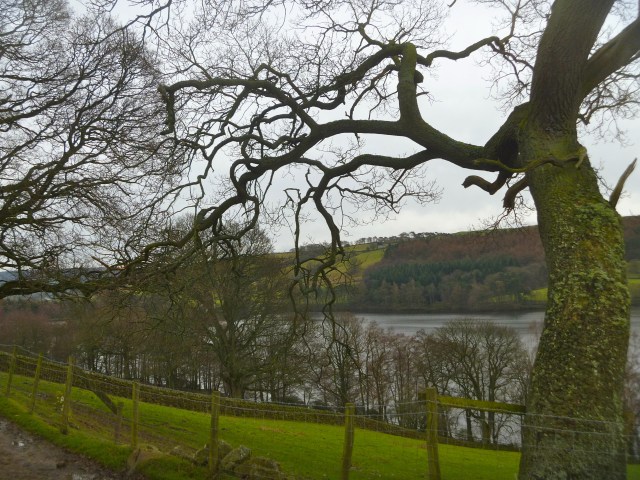
Lincolns Inn herbs

Lincoln’s Inn Herb Garden

LI looking back at herbs

Leaving Lincoln’s Inn

Leaving Lincoln’s Inn through Bell Yard we crossed Fleet Street and arrived at The Temple. It’s another fabulous place for a quiet picnic on a fine day although watch out for limited opening hours of some of the gardens.

Hare Court, within the Inner Temple, is home to several Chambers and some very comfortable benches.

Hare Court IT

Quiet Comfort in Hare Court

Hare Court Inner Temple Chambers

Inner Temple

IT gardens

Inner Temple garden

Inner t garden

Inner Temple Gardens

It was at this garden, almost on the banks of the River Thames, that our City Gardens Walk ended. What lovely and still colourful, despite the autumnal weather, tranquil oases for further discovery and appreciation. Just our kind of “Quiet London“. So it was back to the bustle of Fleet Street and off to find somewhere for a late lunch.

The Aislabie Walk from Fountains Abbey – The Short Route

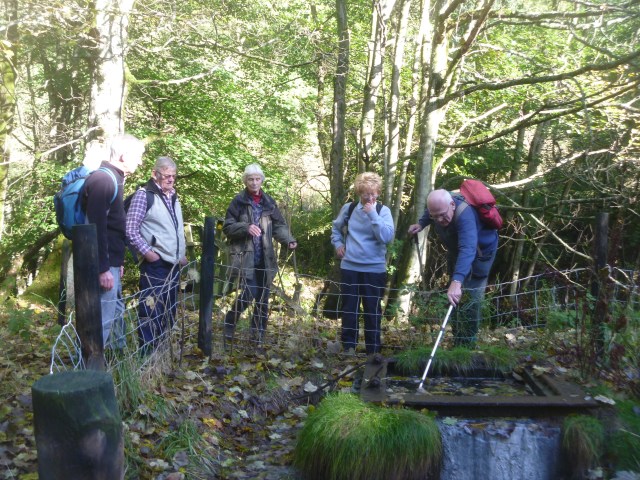
Referring back to the Barden Moor Access Area practice walk a couple of weeks ago I’m pleased to announce that the alternative walk, which I had initially thought rather dull, was a big success so here’s a brief description of it and some photos. You will notice that the weather was exceptional that day. Several days on either side were dark and wet but the weather last Thursday was truly a gift.

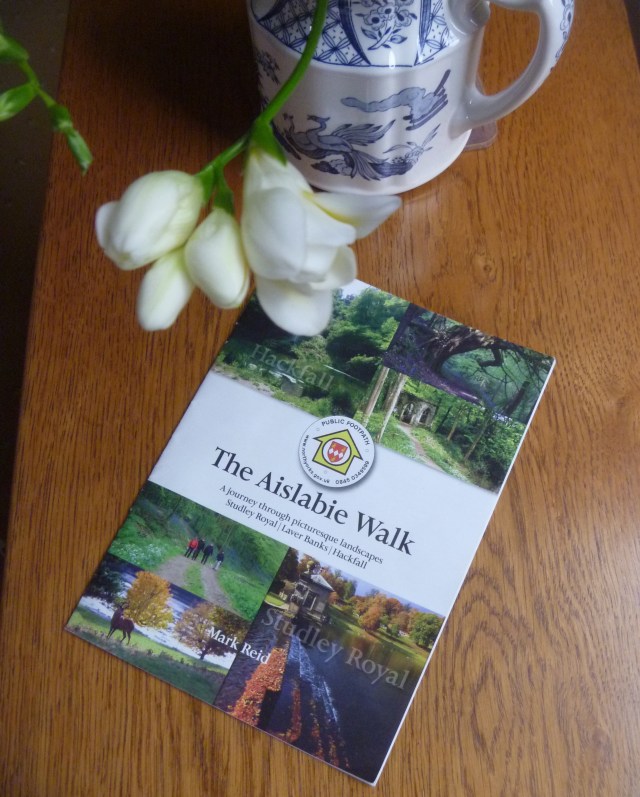
Aislabie Walk

The walk was taken from a rather nice leaflet I picked up on a previous visit to Fountains Abbey. The Aislabie Walk (subtitled A journey through picturesque landscapes) is 17.5 miles (allow 8-9 hours) altogether. It’s a circular walk from Fountains Abbey (car parks and toilets) to Hackfall and back. However, along the way there are several points at which you can cut short the route and I chose the 7.5 mile option.

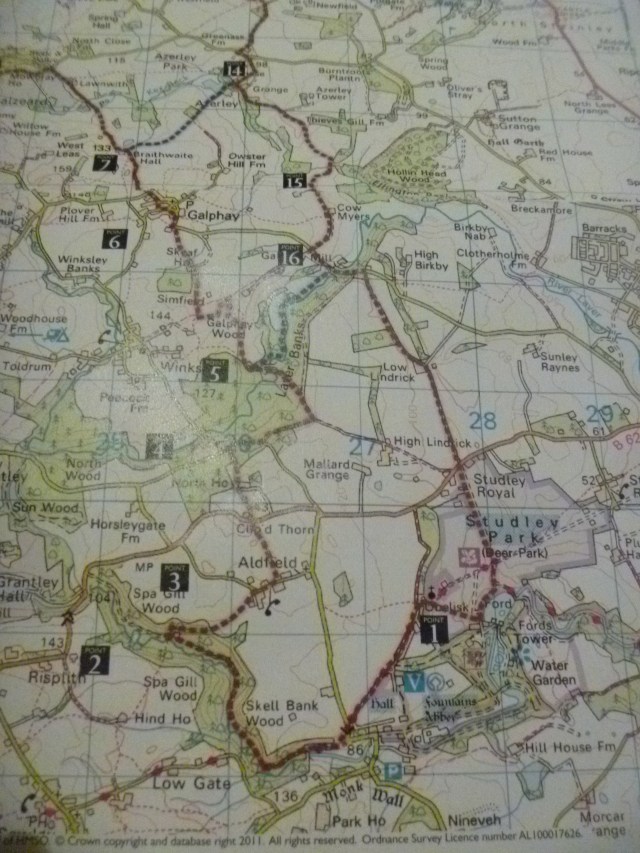
Aislabie map

We parked at the main Visitor Centre car park and set off down the road to the River Skell following it west and then north for nearly two miles until we reached the old sulphur springs and ruined buildings of Aldfield Spa. You could smell them as you approached.

Sulphur Springs

The Wanderers disturbing the Sulphur Springs

From the Springs we headed slightly uphill to Aldfield village itself, passed through a couple of fields of kale (this had been what I remembered as the ‘dull’ part of the walk, across meadows to Laver Banks where we lunched at Woodhouse Bridge and joined the road later at Galphay Mill Bridge (point 5 to point 16 on the map).

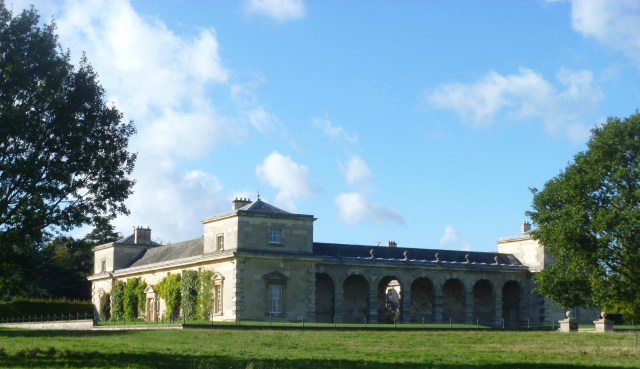
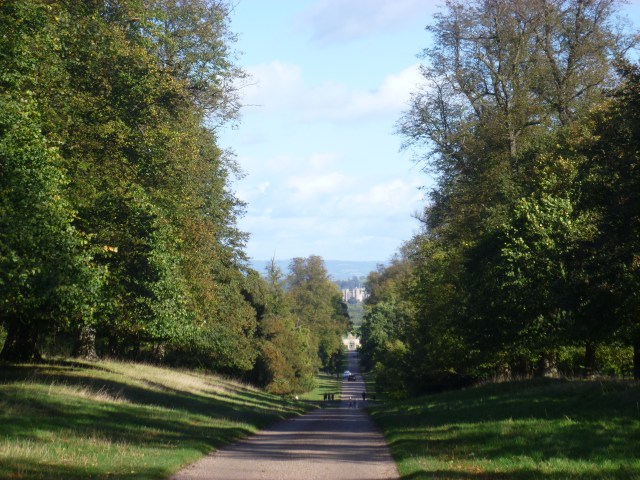
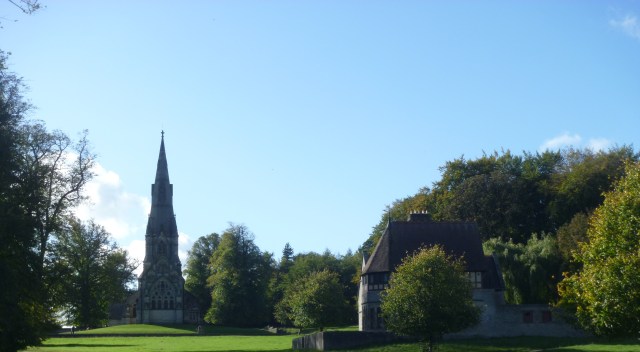
A pleasant track through former parkland, now grazed by cows, brought us back to the the gates of Studley Royal Park. We crossed the deer park (only spotted one) taking in views of the Choristers’ House, St Mary’s Church and Ripon Cathedral.

Studley Royal

Studley Royal Hall much of which was destroyed by fire in 1946

Ripon Cathedral in the distance

Ripon Cathedral in the distance

Church and House

St Mary’s Church and the Choristers’ House

St Mary's

St Mary’s, Studley Royal Church

So my concerns about the walk were not at all justified and a good day out was had by all!

The Pinecone : a Visit to St Mary’s Church, Wreay in Cumbria

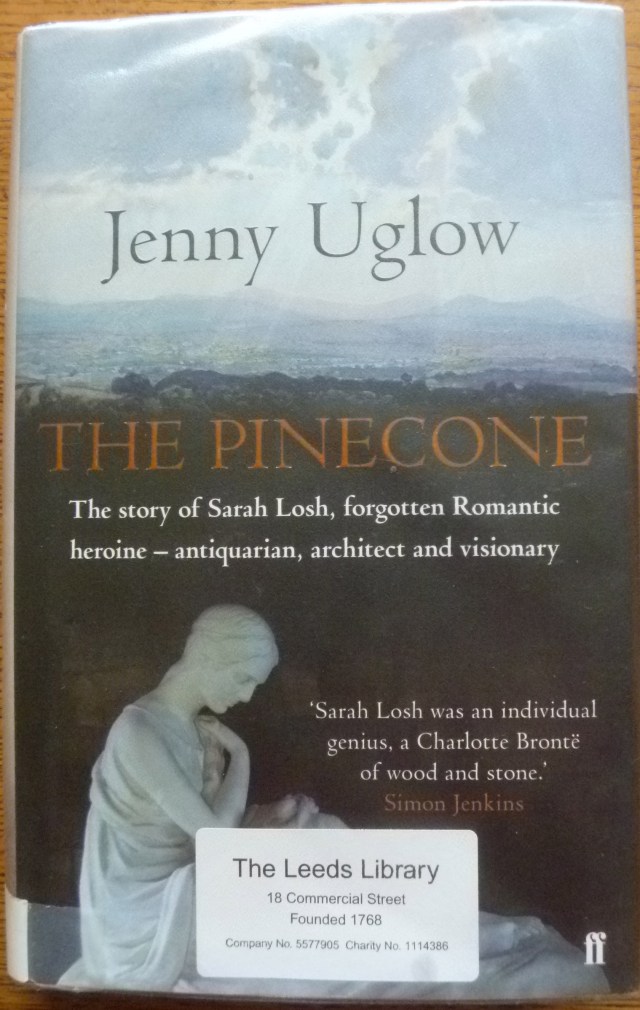
Earlier this year I read Jenny Uglow’s latest book “The Pinecone : the story of Sarah Losh, forgotten Romantic heroine – antiquarian, architect and visionary”. I had heard Jenny speaking about the book at the 2012 Ilkley Literature Festival. Sarah Losh’s life and her work are almost totally unknown.

Pinecone book

The village of Wreay lies five miles south of Carlisle. Four country roads meet at the village green, shaded by trees, and across the way is the church. It looks like a small Romanesque chapel from northern Italy. What is it doing in this northern village, with the mountains of the Lake District to the west and the Pennines to the east?”

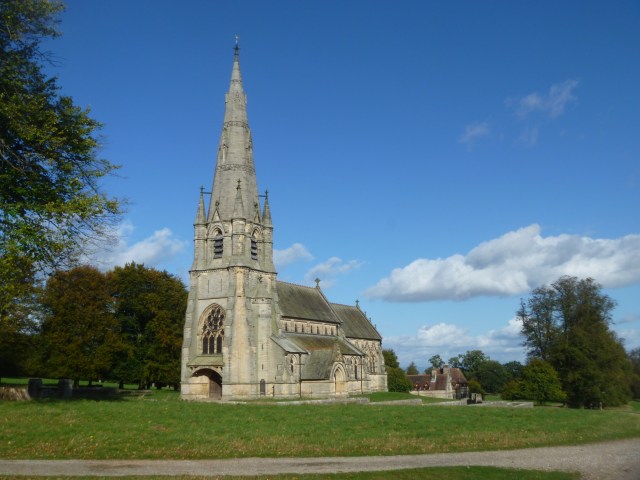
St Mary's Wreay

This is the premise for the book [on the back cover] and it’s a fascinating tale.  Jenny Uglow first sets the scene by telling the story of Sarah Losh’s antecedents who made money in Newcastle from alkali works and later from iron works and the railways. Sarah was born in 1786 and her sister Katharine, with whom she was especially close, in 1788. Their parents died in 1799 [their mother] and 1814 [their father]. The sisters were brought up in the countryside south of Carlisle but as adults they made several tours on the Continent including to Italy. This must be where Sarah received her inspiration. For women at the time they were very highly educated.

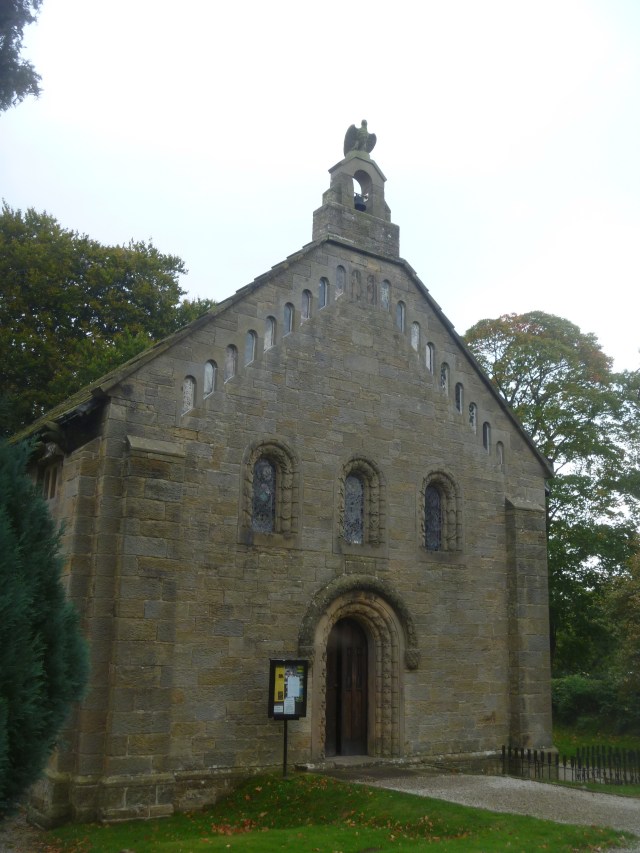
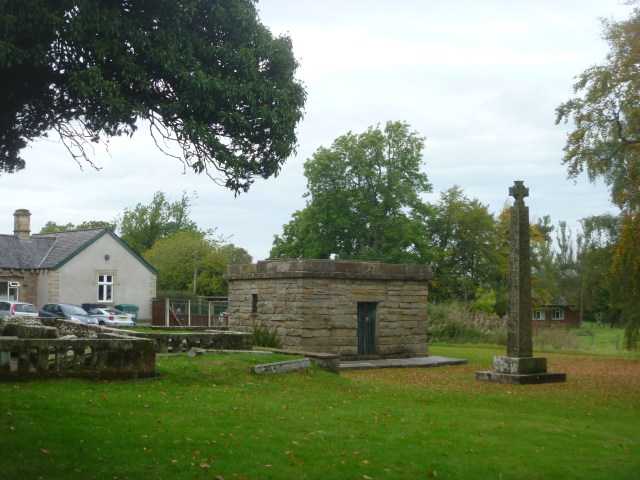
Mortuary Chapel

The Mortuary Chapel Across the Field from the Church

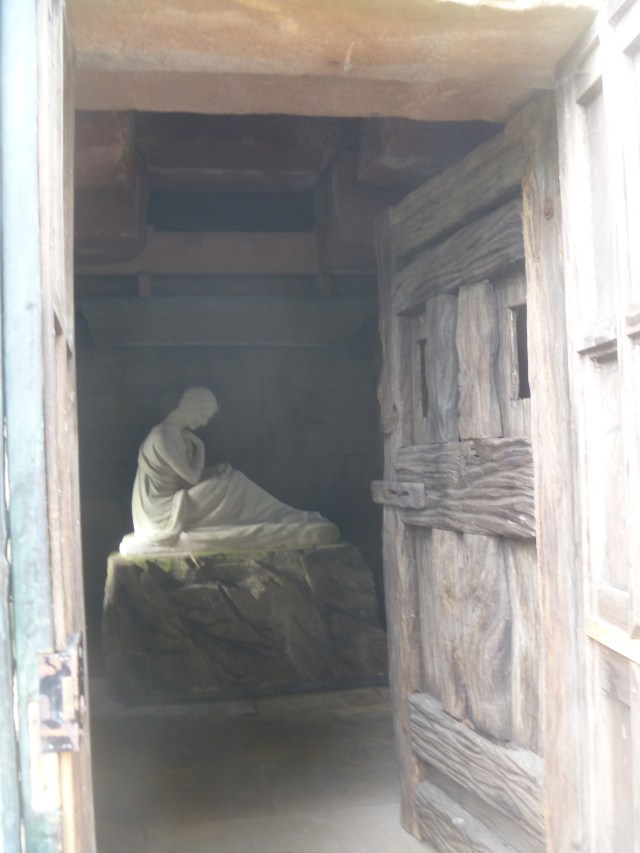
Following the death of their father and their travels on the Continent the Losh sisters returned home and began to make improvements to their home and estate and to the village of Wreay itself including the building of a school. But Katherine fell ill and died in 1835 and Sarah was inconsolable. She then directed her efforts to building a Mortuary Chapel modelled on one she had seen at St Piran in Cornwall.

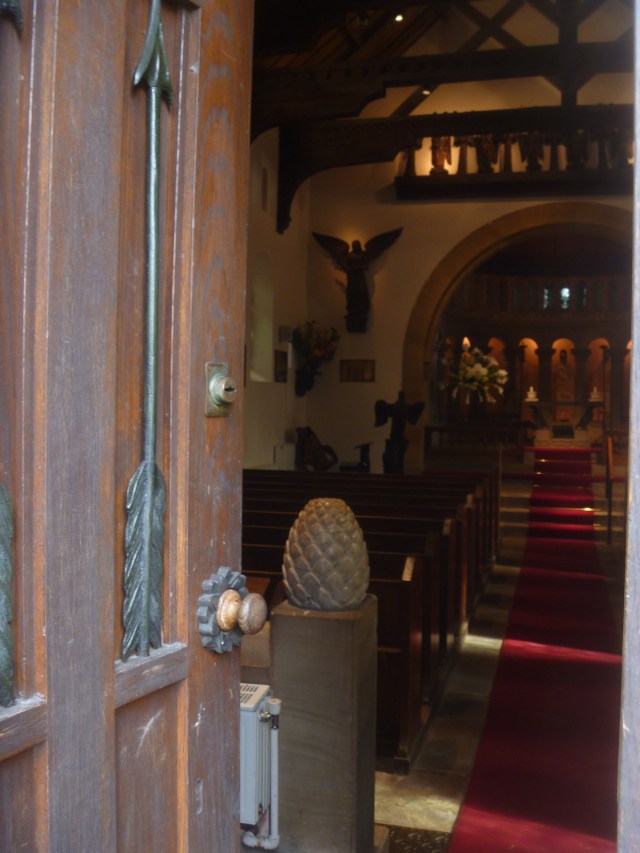
Peep inside the church

Then Sarah began work on the new church 1835. It was completed in 1845. She declared that it was to be “Not in the Gothick style” but based on a Romanesque design and it is a masterpiece and very obviously the work of one person – the untrained architect and designer – Sarah Losh.

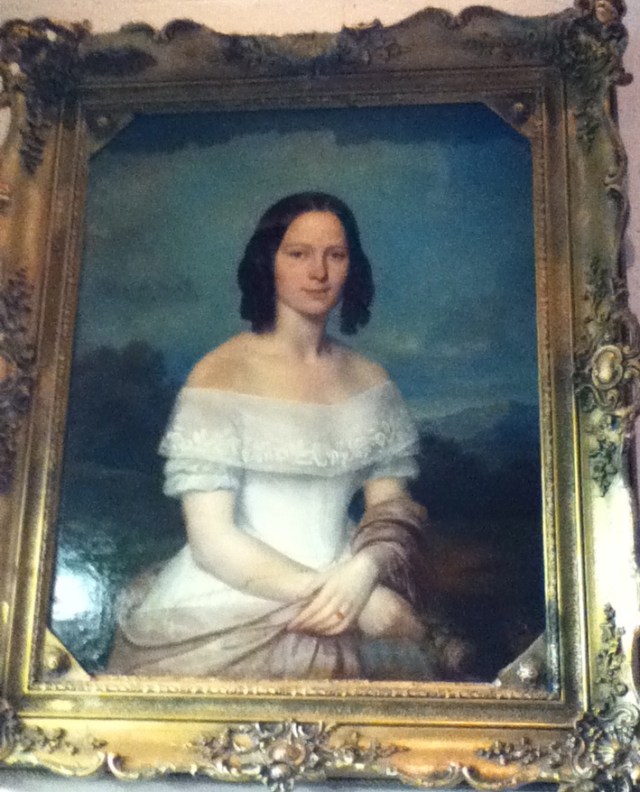
Sarah Losh portrait

Sarah Losh

I can’t go into all the details of both the interior and exterior decoration of the building. It’s a perfect gem – earning four stars in Simon Jenkins’ England’s Thousand Best Churches “This is one of the most eccentric small churches in England … unlike almost all the works in this book, Wreay appears to have been the creation of a single original mind … The Arts and Crafts Movement took half a century to catch up with her.”

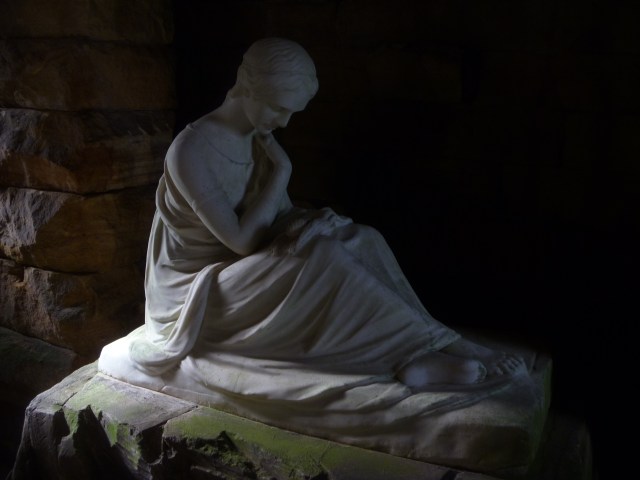
Mausoleum

The Mausoleum

Katherine

Dedicated to Katherine Losh

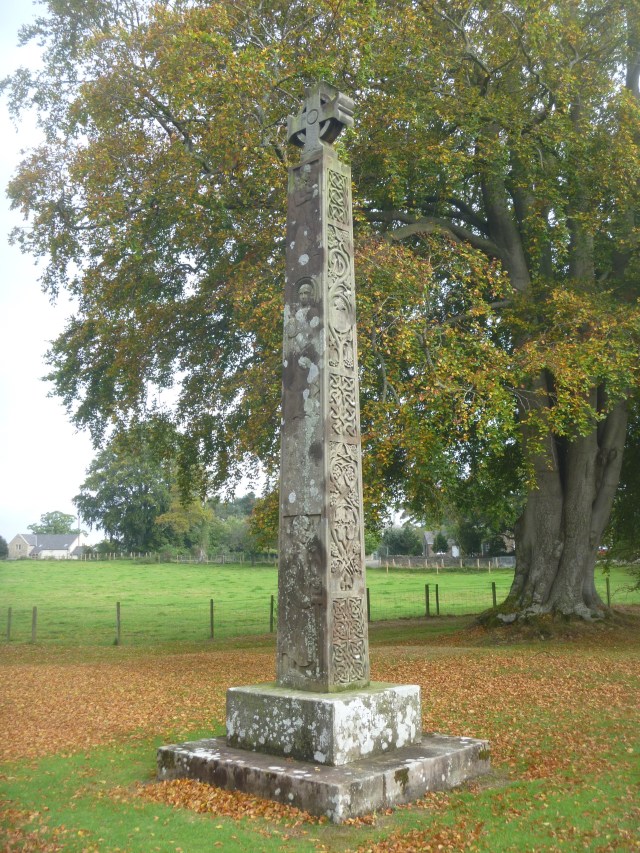
There is a Mausoleum dedicated to her sister and an exact replica of the Bewcastle Cross (the original of which stands by Hadrian’s Wall) alongside the church. The Loshes, including Sarah and Katherine, are buried in a grave enclosure nearby.

Bewcastle Cross

The Bewcastle Cross

Mausoleum and cross and school

The Mausoleum and Cross with the School across the road

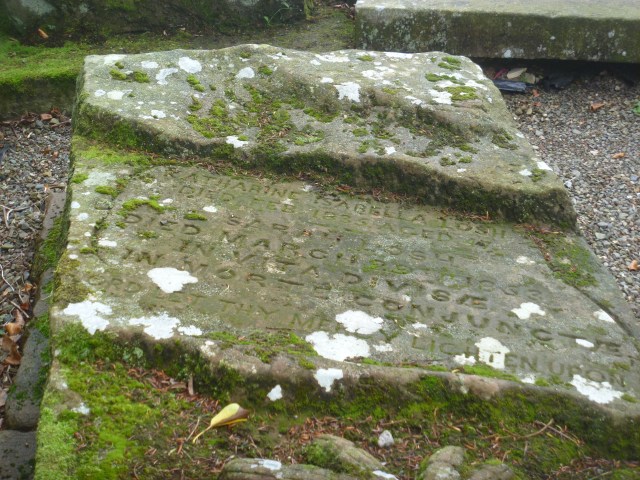
Losh sisters' grave

“IN VITA DIVISAE, IN MORTE CONJUNCTAE” – Parted in life, in death united”

I’m lucky to have a friend who lives not far from Wreay. I visited her in Carlisle last year. So last Thursday I took to the Leeds-Settle-Carlisle Line again to visit Wreay Church with June and her husband, David. We were lucky to arrive whilst a group were being shown round and had the good fortune to have access along with them to the small Mausoleum dedicated to Katherine.

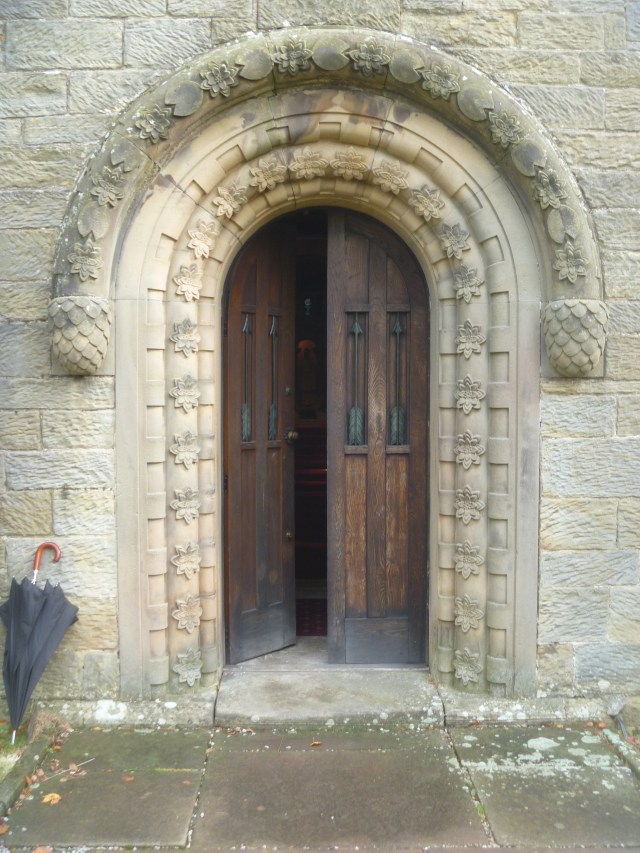
Church door

The Ornate Church Door

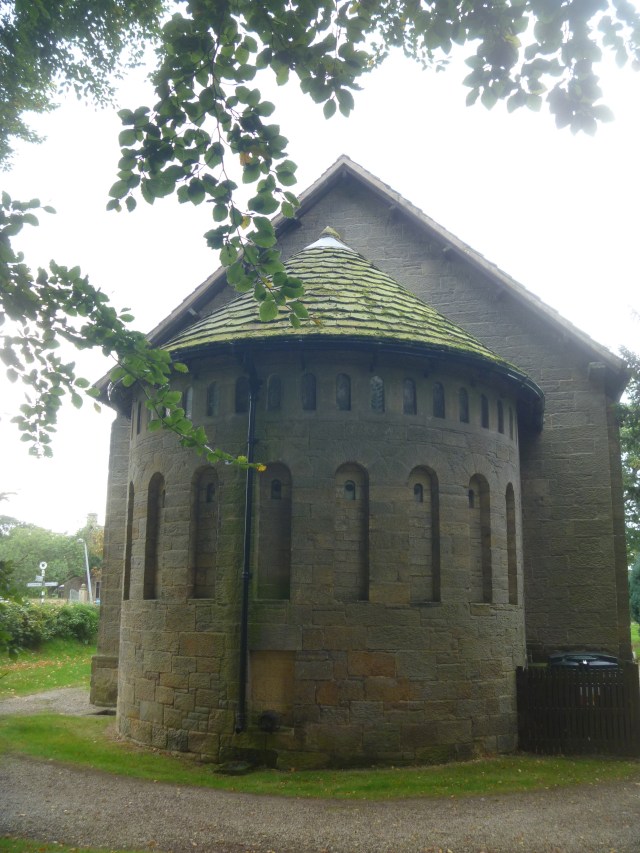
East end with apse

The East End, with Apse

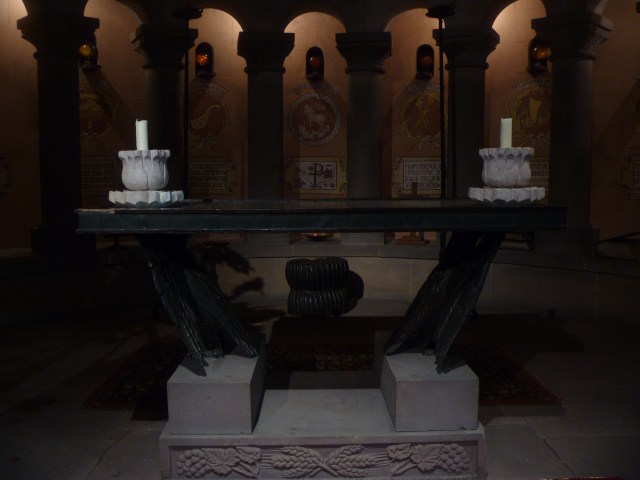
Altar

The Altar

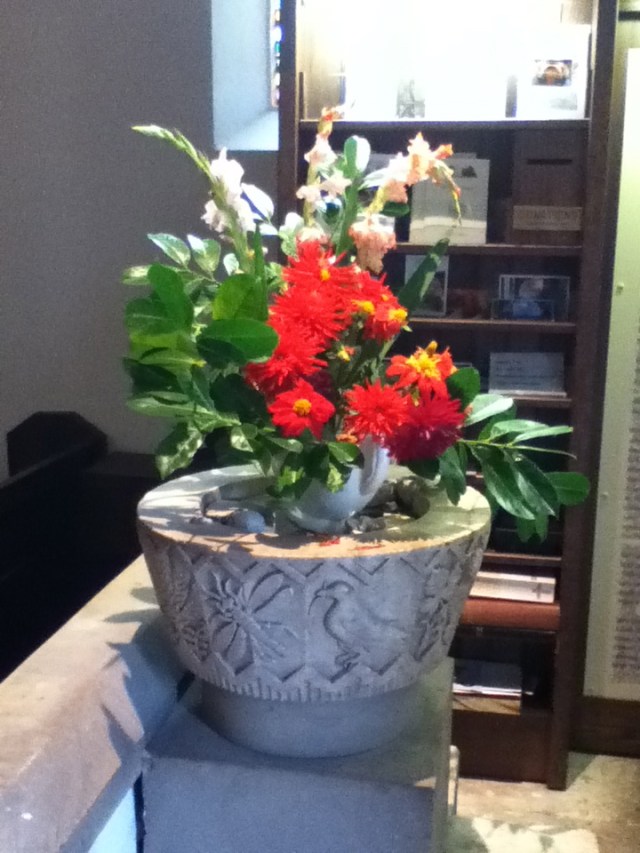
Alabaster font

The Alabaster Font – Carved by Sarah

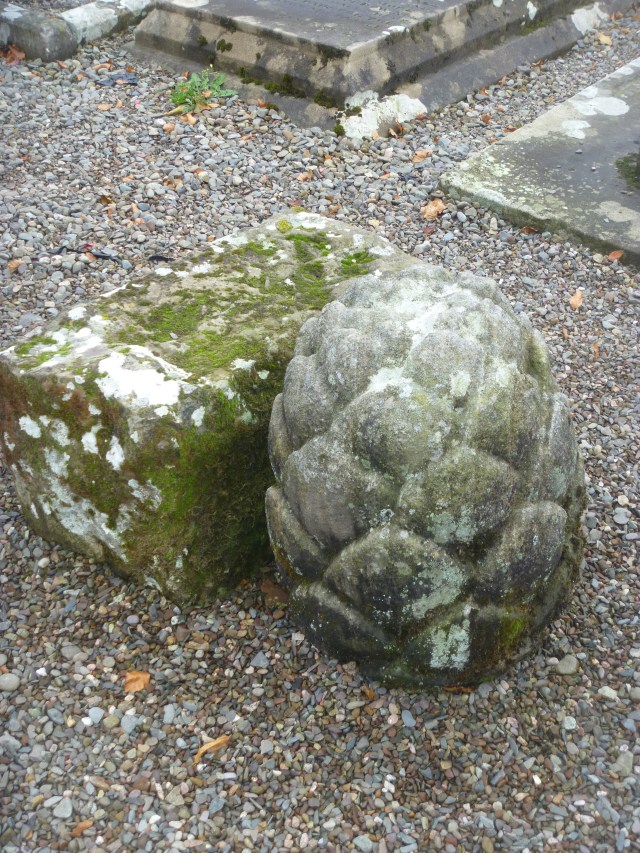
A pinecone

One of Many Pinecones

So, why the Pinecone? Because it is an ancient symbol of regeneration, fertility and inner enlightenment. It is a promise of rebirth.