“William Kent : Designing Georgian Britain” at The Victoria and Albert Museum

Polymath Transforms Georgian England!
w290

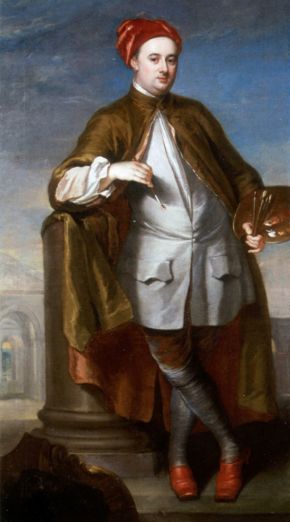
 William Kent (1685 – 17480) [source]

What a man! William Kent was hugely influential within Georgian English aristocratic circles. His designs spanned the widest spectrum of English upper class design from art to architecture and from furniture to gardens. Kent’s patrons included Lord and Lady Burlington, the Cokes of Leicester, the Walpoles of Houghton. Influenced by his early visits to Italy it’s surprising that William Kent is not far better known. This exhibition at the V&A tells his story with rich illustrations and varied artefacts. Go yourself and ponder why William Kent is not more familiar to us today.

I wrote that little appreciation/review for the ticket agent that supplied our tickets for the show last Friday afternoon.

The Georgians are big business as 2014 marks 300 years since the accession of George I thus beginning a succession of Hanoverian Kings of England which lasted until 1830.

The season started well with the British Library’s overview The Georgians Revealed that covered many aspects of life in 18th and early 19th century Britain. There are significant exhibitions at The Queen’s Gallery : The First Georgians: Art & Monarchy 1714-1760 and at The Historic Royal Palaces (Kensington Palace; Kew Palace and Hampton Court Palace) : The Glorious Georges. And BBC television is currently broadcasting a month-long Georgian season.

William Kent Paintings

Slideshow of William Kent Paintings

William Kent was born in Bridlington, North Yorkshire, the son of a carpenter. From 1709 to 1719 he studied in Rome, copying Old Master paintings and learning the techniques of etching and engraving. Here in Italy he was to meet Lord Burlington who, with his wife, became patron and good friend to Kent. Burlington gave him his first commissions back in England and helped to set Kent off on his course designing for many of the great English landowners.

kent_holkham_4

 A Kent-designed chair from Holkham Hall

Kent designed the interiors of many stately homes including Houghton Hall, home of the Walpoles, in Norfolk.
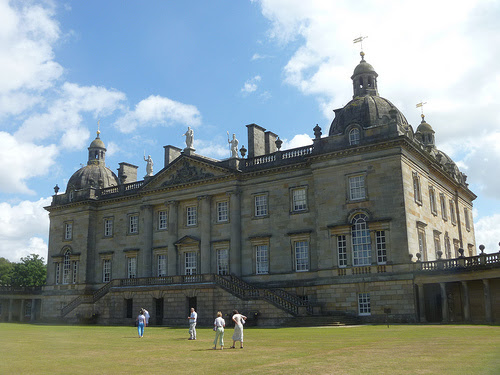
Houghton Hall

 Exterior of Houghton Hall, Norfolk

Stowe

Stowe Landscape Garden with Gothic Temple and Palladian Bridge

Most of all Kent is best-known to me as the designer of landscape gardens.

Elysium

Kent’s landscape designs confirm his status as the artistic genius of the era, a father of the English landscape garden. In contrast with the French and Dutch fashions for formal gardens, Kent took his inspiration from the ideal landscapes of pastoral literature and painting. His design drawings are not detailed plans, but poetic evocations of the landscape effects he was attempting to achieve.

Kent’s gardens could be places of activity and good fellowship, or places of reflection and solitude. Carefully crafted vistas lead the eye out beyond the garden into the surrounding countryside. He designed over fifty garden buildings which were positioned to act as picturesque focal points for views and also as places from which to contemplate the garden. His buildings vary from sober copies of ancient buildings to wild flights of fancy, from pyramids, triumphal arches and Chinese kiosks to grottoes and artificial ruins.” [V&A website]
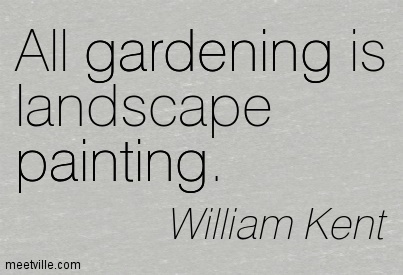
Quotation-William-Kent-painting-gardening-Meetville-Quotes-104548

Two Art Talks

Last week I went to two art talks and very interesting they were too. One was an evening reception at The Mercer Gallery in Harrogate organised by the Art Fund. The other was ‘Tea with the Curator’ at Temple Newsam House near Leeds.

npg_npg_2531_slide

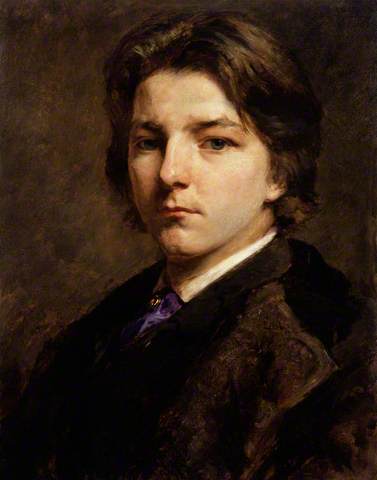
Self-portrait of Frank Holl as a young man [source]

Frank Holl : Emerging from the Shadows [Mercer Gallery, Harrogate 23 November 2013 to 30 March 2014]

‘Frank Holl (1845-1888) is one of the great painters of the Victorian period, notable for his tragic social realism as well as his penetrating portraits. Revered in his lifetime, he died young whilst at the height of his powers. His early death meant that he never fully received the acclaim that his work merited. This exhibition represents the first modern retrospective of this significant artist.’ 

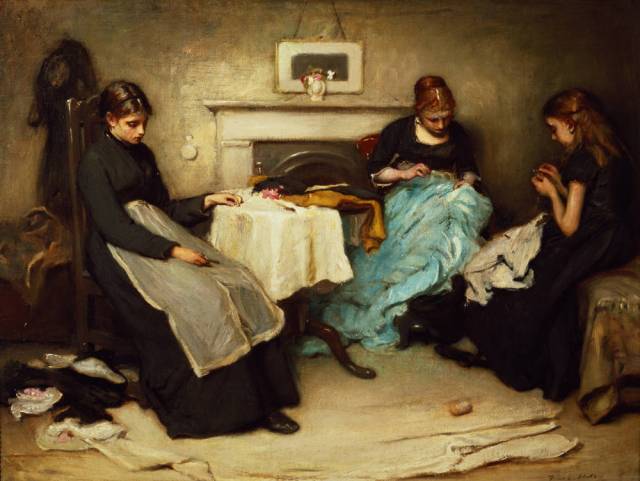
I have been aware of Holl since the mid-1990s when one of my masters papers in Victorian Studies was on the subject of narrative paintings with a theme of poverty and the poor in Victorian England. The Holl picture we looked at was The Seamstresses now owned by The Royal Albert Museum in Exeter. It is on show at the Harrogate exhibition.

4

Seamstresses. Frank Holl. 1875. Oil on canvas. Courtesy of the Royal Albert Memorial Museum, Exeter.

Jane Sellars, curator of the Mercer Gallery, introduced Holl and told us more about his life and travels and spoke about each of the, perhaps 30, paintings. It was interesting to note the themes of Holl’s narrative paintings on loan from prestigious galleries around the country, including The National Portrait Gallery – soldiers off to fight in Afghanistan, sweatshops, guilty bankers – all themes that appear in the news today. So not much has changed there. Jane pointed out the “Rembrandtesque” effect in many of these paintings.

5

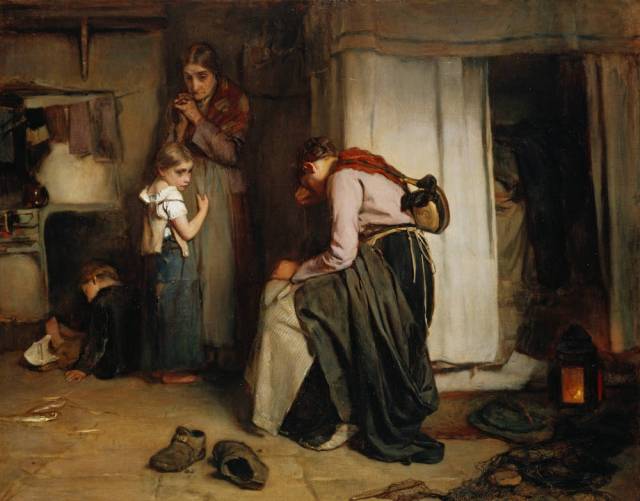
No Tidings from the Sea. Frank Holl. 1870. Oil on canvas. Courtesy of the Royal Collection Trust. [source]

Even Queen Victoria bought one of his pictures No Tidings from the Sea (1870 and  in The Royal Collection). Later Holl gained commissions to paint portraits and his subjects included national figures like William Gladstone and W.S.Gilbert. The BBC ‘Your Paintings’ website shows 68 of his paintings. Jane quoted several times from his eldest daughter’s, Ada Mabel Reynolds,  1912 biography of her father. There is an accompanying book/catalogue to the show. Earlier last year the exhibition was shown at the newly refurbished Watts Gallery in Surrey. In Harrogate the pictures have been hung beautifully for ease of viewing and the lighting is excellent for all except maybe one glazed picture.

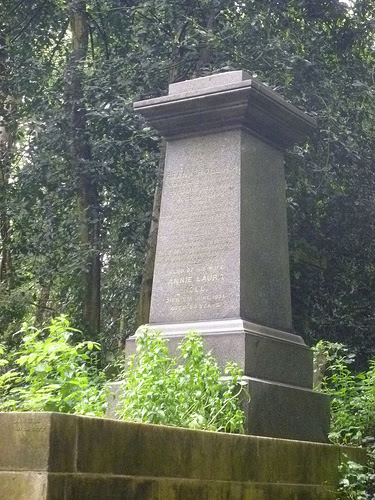
Last May on a visit to Highgate Cemetery I noticed his tomb and photographed it.

Frank Holl tomb

The Tomb of Frank Holl in Highgate Cemetery

I’m very pleased that Frank Holl is at last emerging from the shadows.

Rembrandt : etchings from the Collection of Leeds City Art Gallery [Temple Newsam House 19 November 2013 – 20 July 2014]

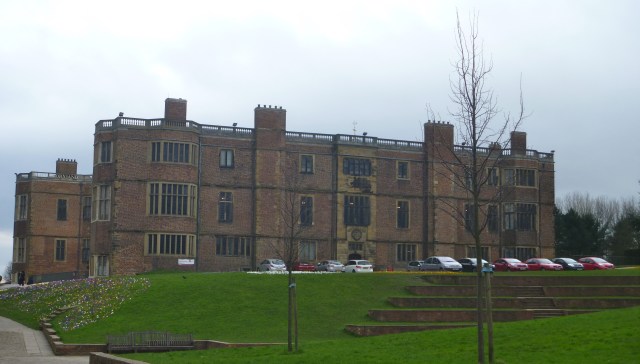
TNH side view

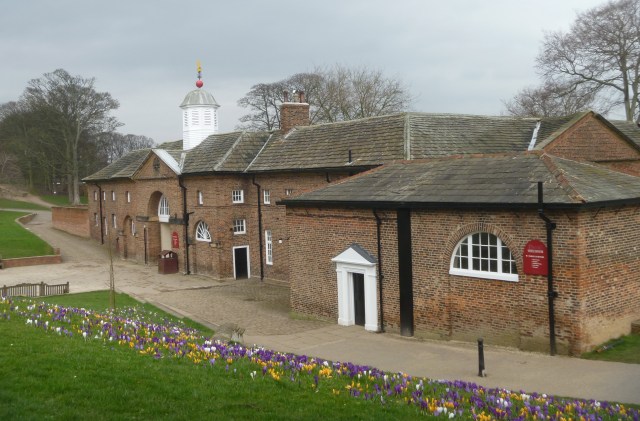
It’s very difficult to get a ‘front on’ view of Temple Newsam. The land drops away significantly from the front of the house and a wider angled camera lens is required to capture it closer up. The photo above is of the side view. Temple Newsam’s history goes back beyond the Domesday Book. Lord Darnley former husband of Mary Queen of Scots was born here in 1545.

Stable Block

The Stable Courtyard makes a much better view

So, last Thursday afternoon I made my way to Temple Newsam for Tea with the Curator of the Rembrandt Etchings Display.

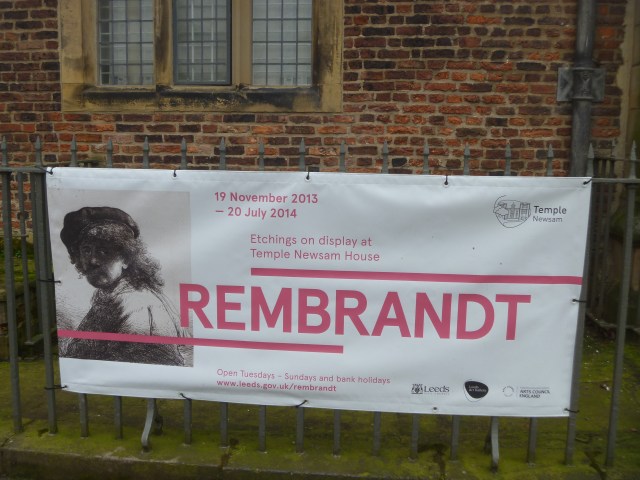
This season’s Winter/Spring exhibition at Temple Newsam House offers the rare chance to see a selection of prints made by the greatest printmaker the world has ever seen – Rembrandt Harmensz van Rijn (1606 – 1665). The exhibition will run for nine months and will consist of two displays; the first will examine Rembrandt’s portraits and figure studies and the second, will showcase a selection of Rembrandt’s biblical prints.

Rembrandt’s career as a printmaker ran parallel with his painting, but he rarely treated the same subject in both medium and only on a few occasions did he reproduce his paintings in print. Indeed for Rembrandt, print was a distinct art form which he pursued as actively as he did his painting; quickly learning the technical skills involved in etching Rembrandt virtually recreated this technique. His impact and contribution to printmaking is unprecedented and is so significant that it is still reflected in etchings produced today.

Rembrandt poster
Portraits and People, 19th November 2013 – 30th March 2014
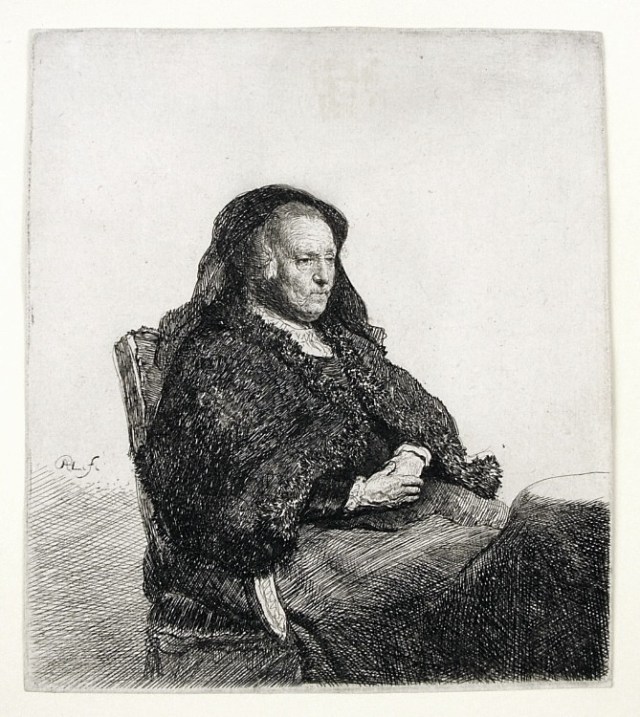
Bringing together Rembrandt’s prints of people the first half to this exhibition will focus on his early experimental prints in which Rembrandt developed both his technique and his interest in showing emotion and thought through detailed observations of facial expressions. Highlights include a selection of Rembrandt’s iconic self-portraits, etchings of his mother and wife Saskia and a group of Rembrandt’s prints of beggars.

rembrandt-mother1

The Artist’s Mother [source]

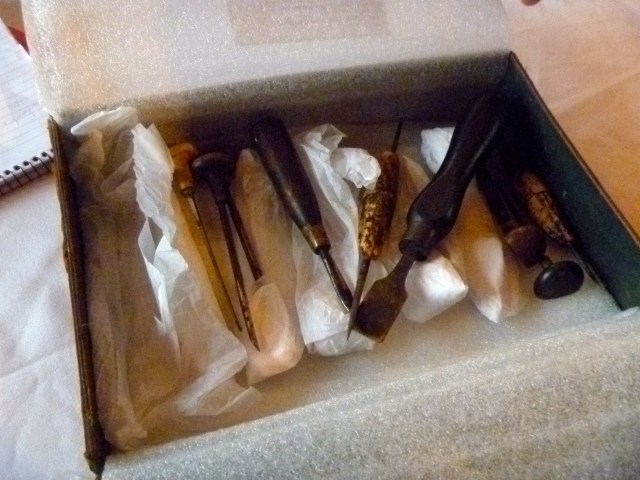
Theodore, the curator, and I and four others assembled in the Dining Room for a friendly discussion and an opportunity to examine etching and engraving tools. The tool box and tools themselves that Theodore brought along had all been the property of Frank Brangwyn. Theodore explained the processes and their differences to us before taking us upstairs to the small but excellent display of Rembrandt etchings.

Frank Brangwyn's tools

Frank Brangwyn’s Etching Tools

The etchings themselves are small and exquisite and beautifully displayed. Magnifying glasses are supplied through which we could study the minute detail of each print.

Tes is served

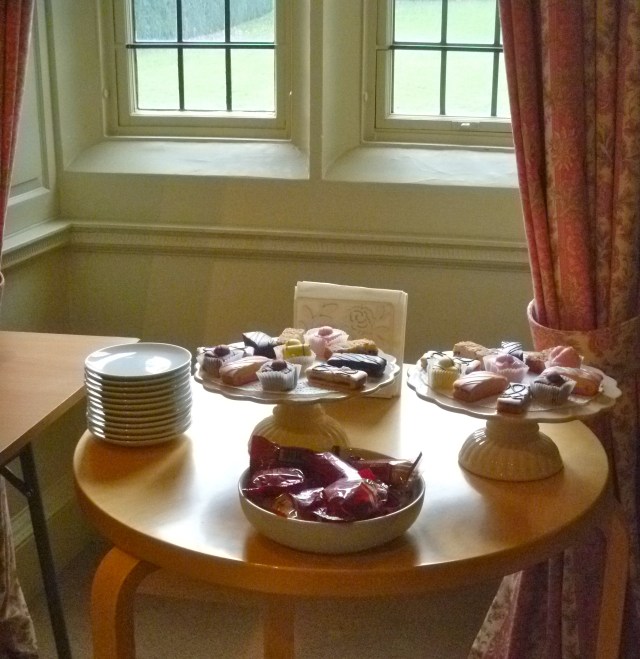
Tea and cake and biscuits are served

On returning to the Dining Room for tea and cakes we had further opportunities to examine at close quarters etchings and tools and a brief slideshow of a 16th  century printmaking shop which reminded me of my visit last month to the Plantin-Moretus Museum in Antwerp.

The current etching display will be replaced next month by a further series from the 70 or so donated to the Art Gallery on the theme of Rembrandt and the Bible.

Art Deco and Art Nouveau in Lille and Antwerp : Day Three

Day 3 : A full day’s excursion today to the historic Belgian City of Antwerp (about 1.5 hours from Lille) famed as the birthplace of Rubens with a strong artistic heritage in its fine museums and churches. This heritage was reflected too in the city’s enthusiastic embracing of the Art Nouveau movement with an entire district, known as the Golden Triangle of some 170 Art Nouveau houses as well as the famed “Five Continents” house and the Reunion exhibition in the Cathedral of Our Lady. Evening free.”

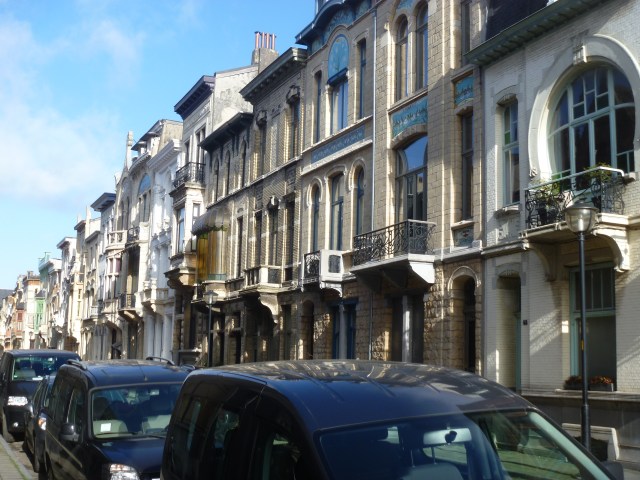
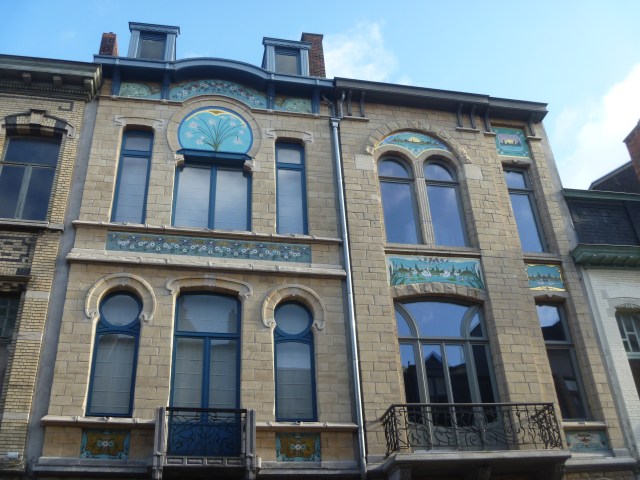
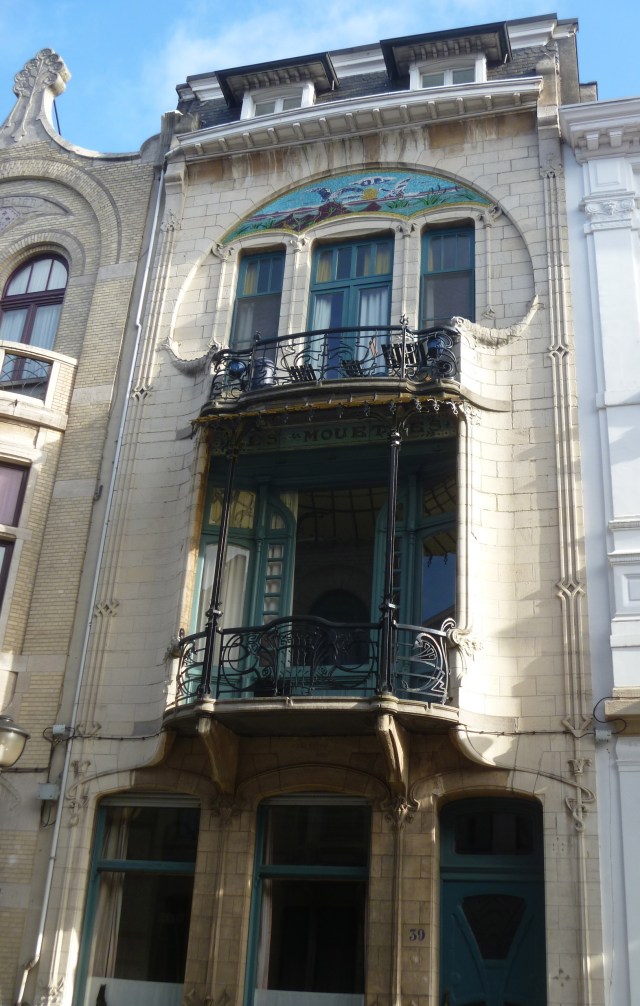
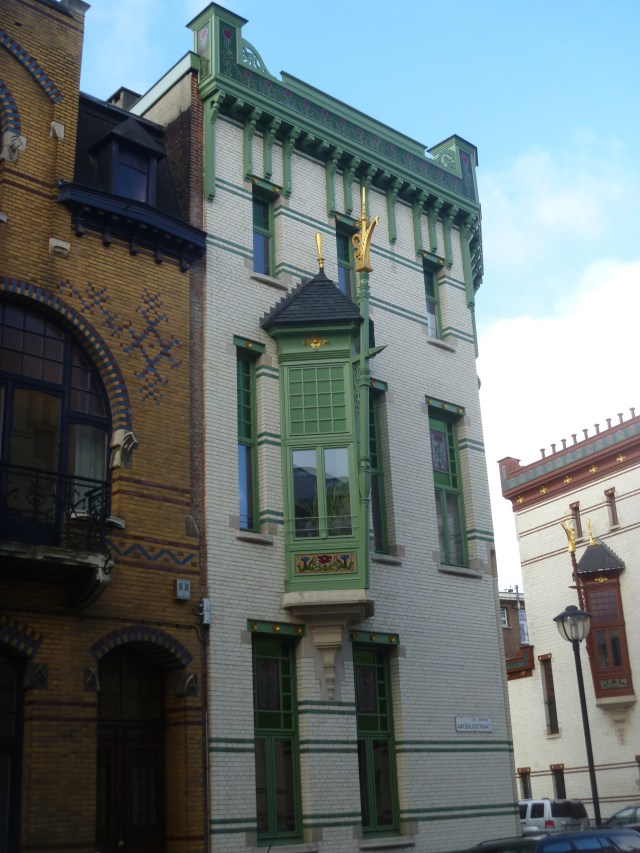
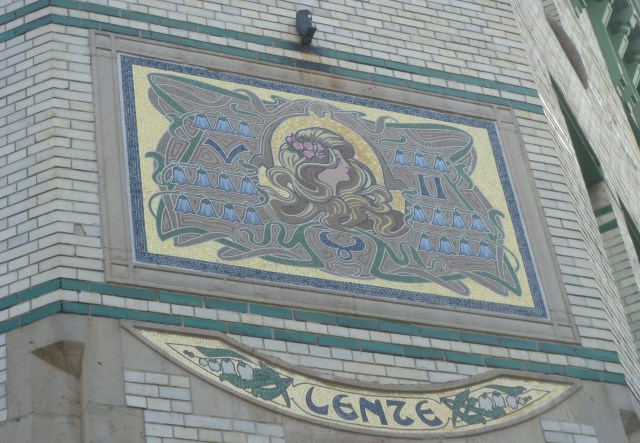
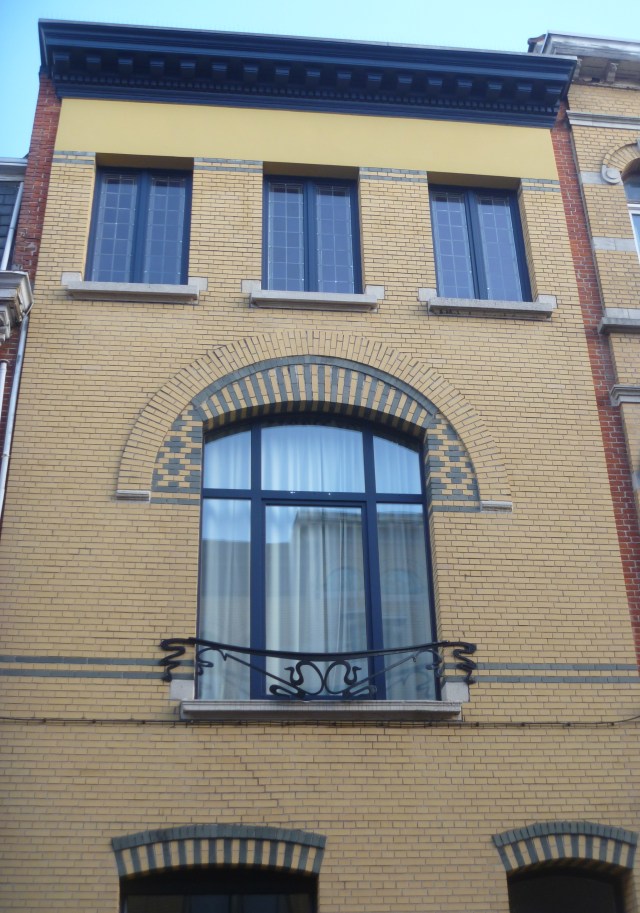
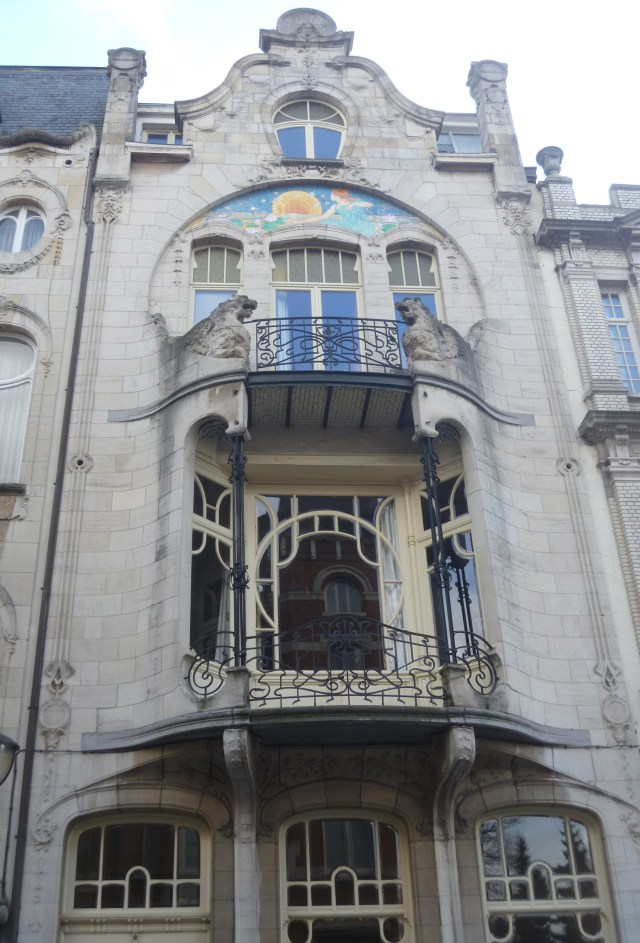
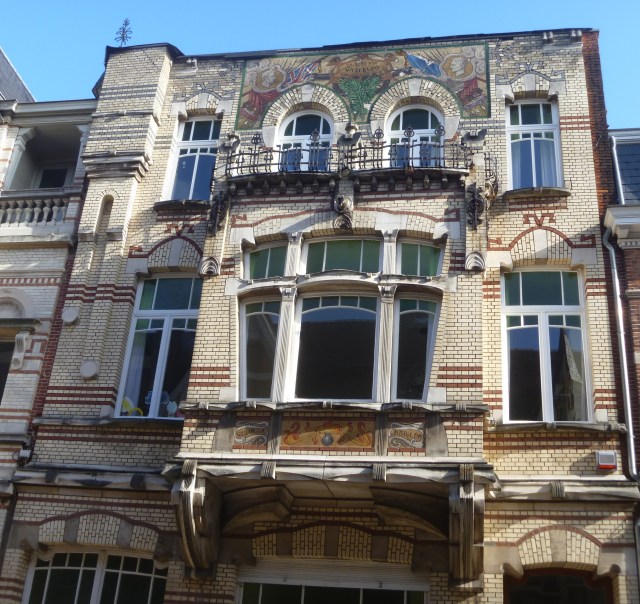
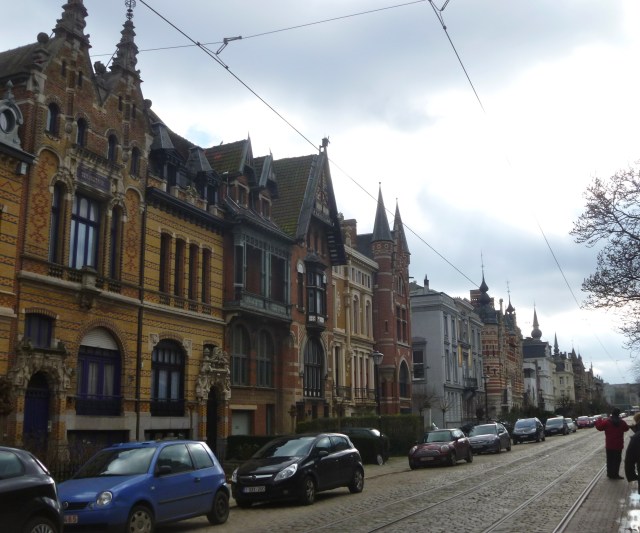
There are so many Art Nouveau houses in Antwerp’s Golden Triangle that it is impossible I’m afraid to give the addresses of each but here are some examples from those 3 streets – Waterloostraat, Transvaalstraat and Cogels Osylei. Quite amazing! According to Mike at one time threatened with demolition this now an area of prime real estate.

AN on Waterloost

Waterloostraat, Antwerp crammed with Art Nouveau houses

With more than 100 Art Nouveau buildings, Antwerp is the second town of Belgium (after Brussels) and one of the two most important ports in Europe.

Zurenborg – Cogels Osylei quarter

This is the Art Nouveau “golden triangle”, a quarter defined by three streets (Cogels Osylei, Waterloo straat and Transvaal straat) that was built mainly between 1890 and 1906. The urban planning of Zurenborg and the Cogels Osylei dates from 1894 (and half of the area was built in 1895, which became an important place for Art Nouveau which began around 1897 in Antwerp). An incredible number of Art Nouveau buildings are still preserved for your pleasure. It is often presented as the most important Art Nouveau quarter in Europe and in the world.” [Source]

So, here are some of those buildings preserved “for your pleasure”.

Waterloostraat

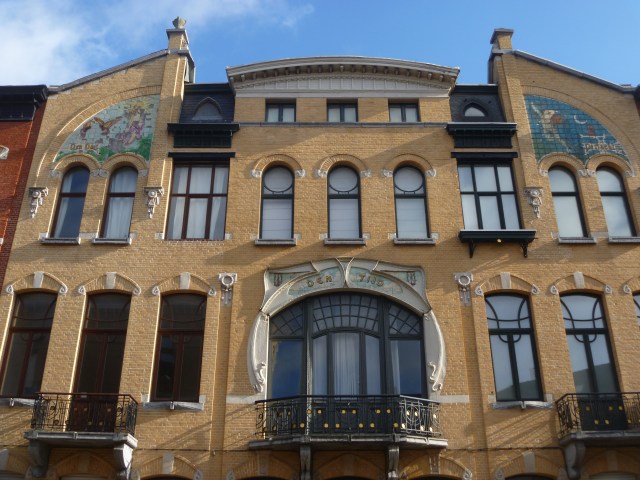
Den Tijd, Waterloostraat

Close up Den Tijd

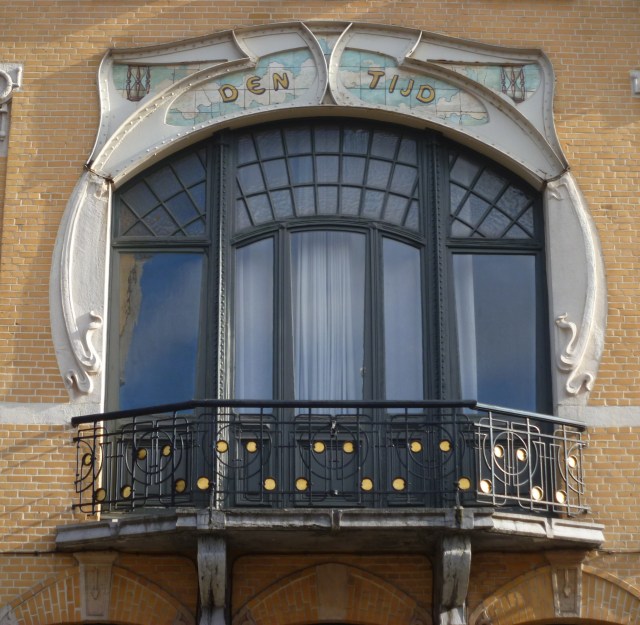
Close-up of Den Tijd

Waterloost

On Waterloo Straat

Waterloo St

Also on Waterloostraat

4 seasons 1

One of the Four Seasons Houses at a cross roads, Waterloostraat

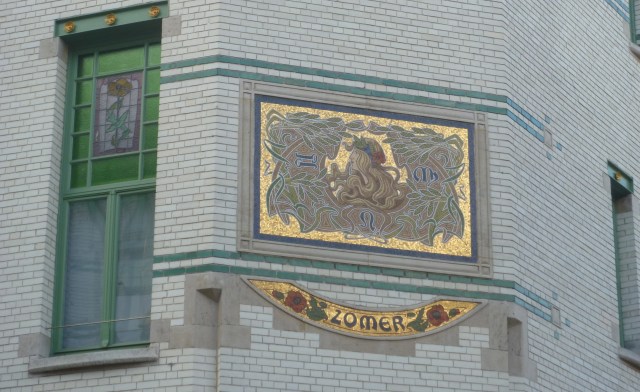
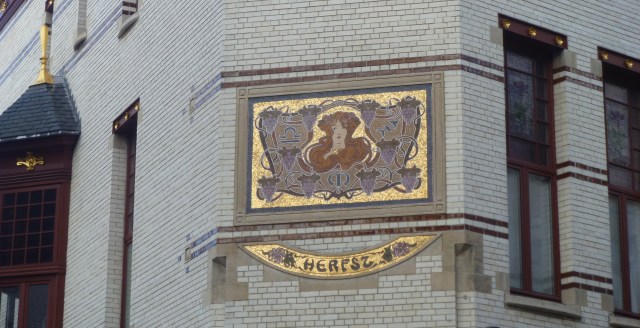
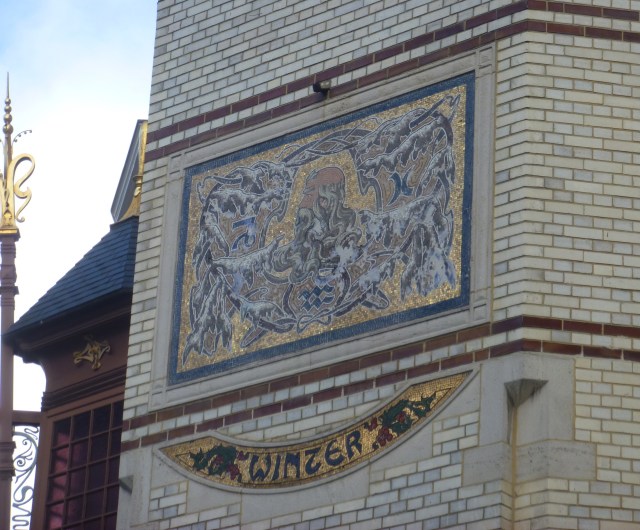
[“De Vier Seizoenen” villas built by Joseph Bascourt in 1899 : the 4 symetrical villas corner a cross roads. Each corner is decorated by a fresco dedicated to a season.]

4 seasons spring

Four Seasons – Spring

4 seasons summer

Four Seasons – Summer

4 seasons autumn

Four Seasons – Autumn

4 seasons winter

Four Seasons – Winter

Peacock

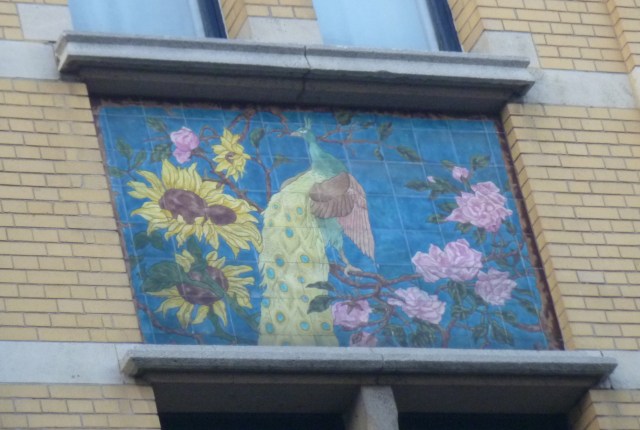
There are the peacock’s eyes!

Plain

Plain – but with peacock eye balcony

Art Nouveau triangle

Art Nouveau in the Golden Triangle

OTT

Over The Top in the Golden Triangle

Cogels Osylei

Cogels Osylei

Grander House on Cogels Osylei

Grander house on Cogels Osylei

On Cogels Osylei

Also on Cogels Osylei

I probably have another 50 photos but that is enough for now.

Art Deco and Art Nouveau in Lille and Antwerp : Day Two

Day 2 : Morning walking tour of the Art Nouveau houses of Lille, including the exterior of the beautiful Maison Coilliot,  followed by the hidden gem that is La Piscine Museum at the former textile town of Roubaix. Afternoon tour to Tournai and its Musée des Beaux Arts. Lecture “Art Nouveau and Belgium” followed by dinner at the Brasserie de la Paix.”

… so, another full day.

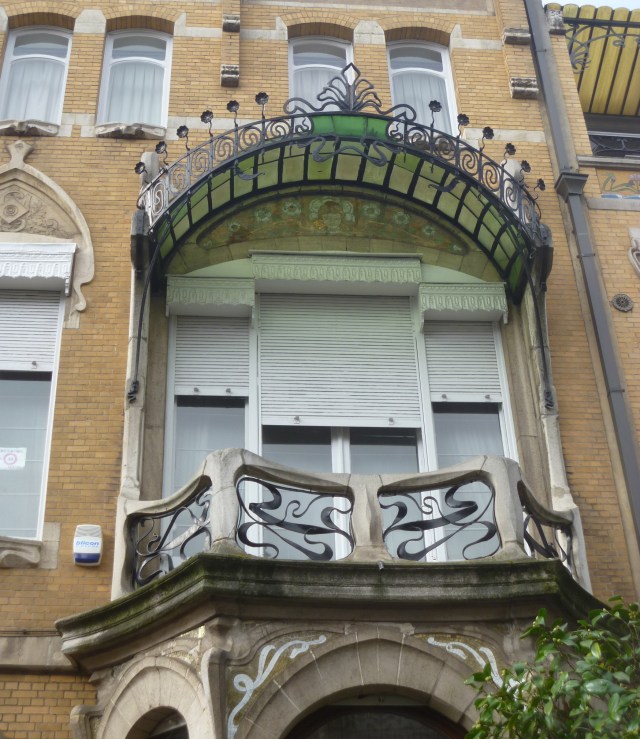
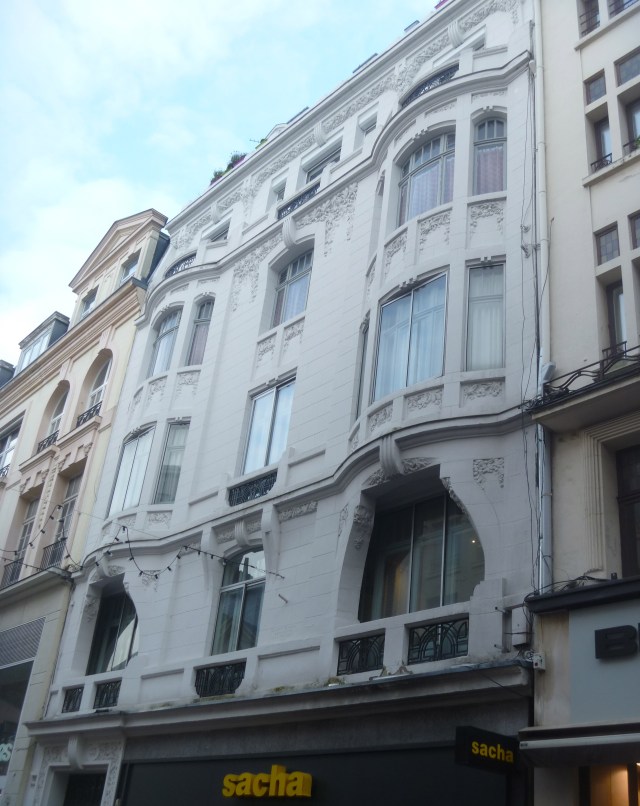
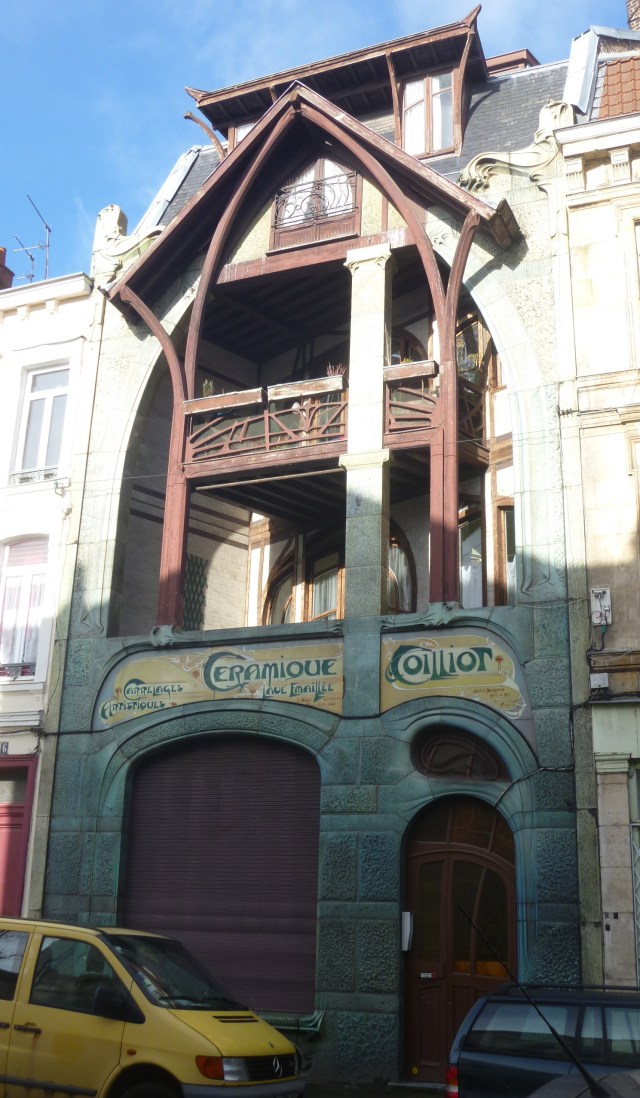
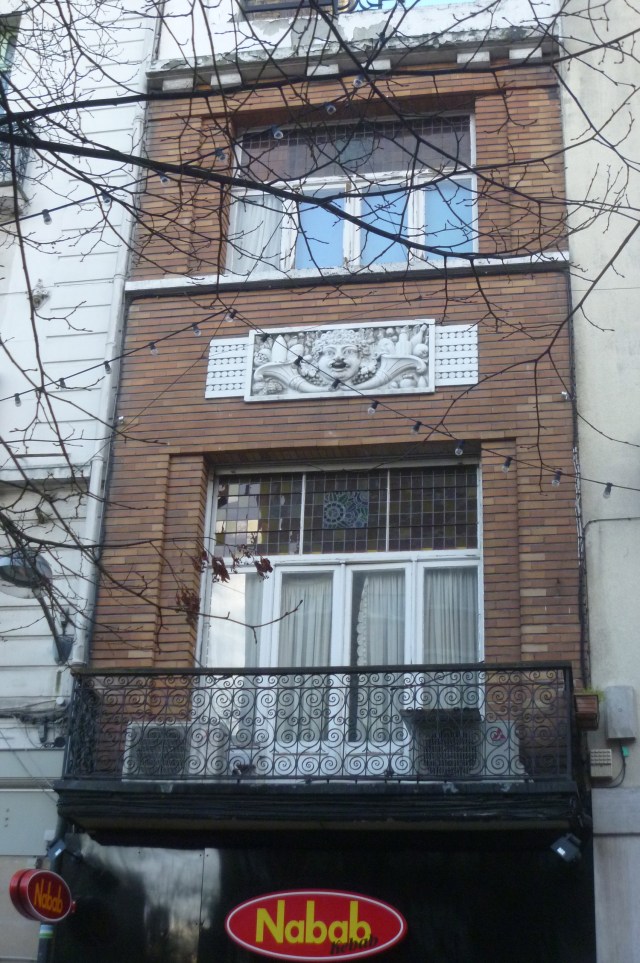
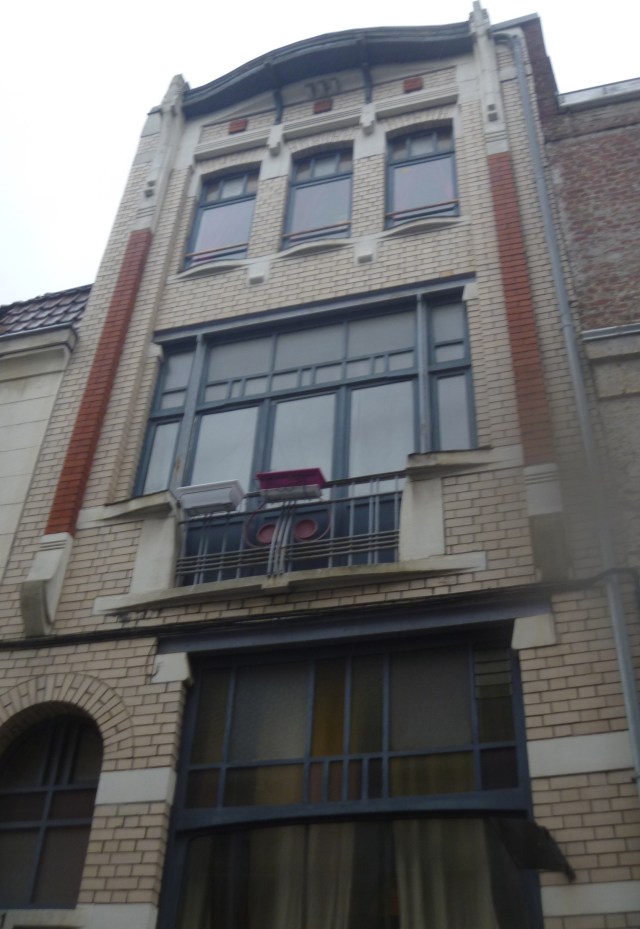
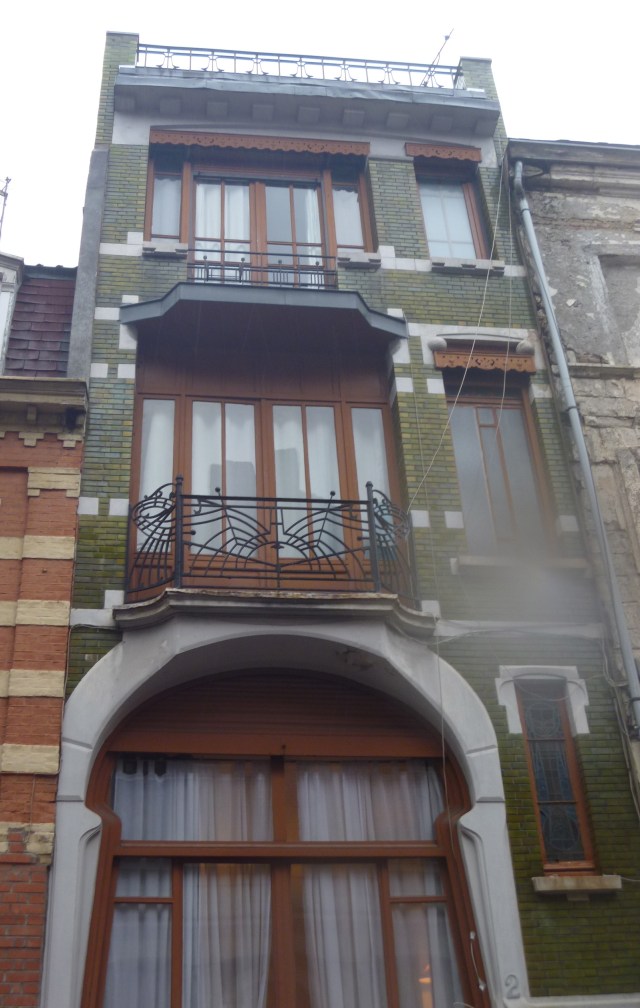
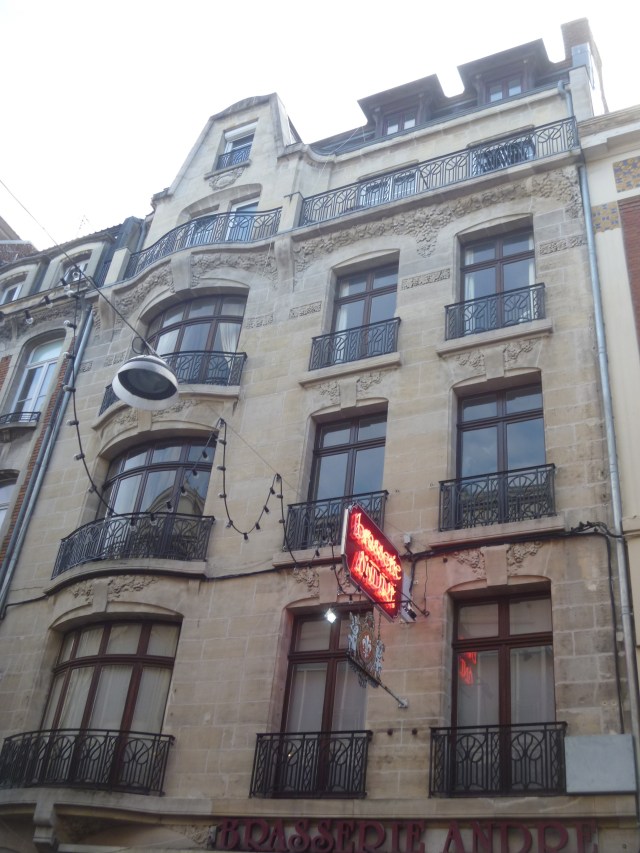
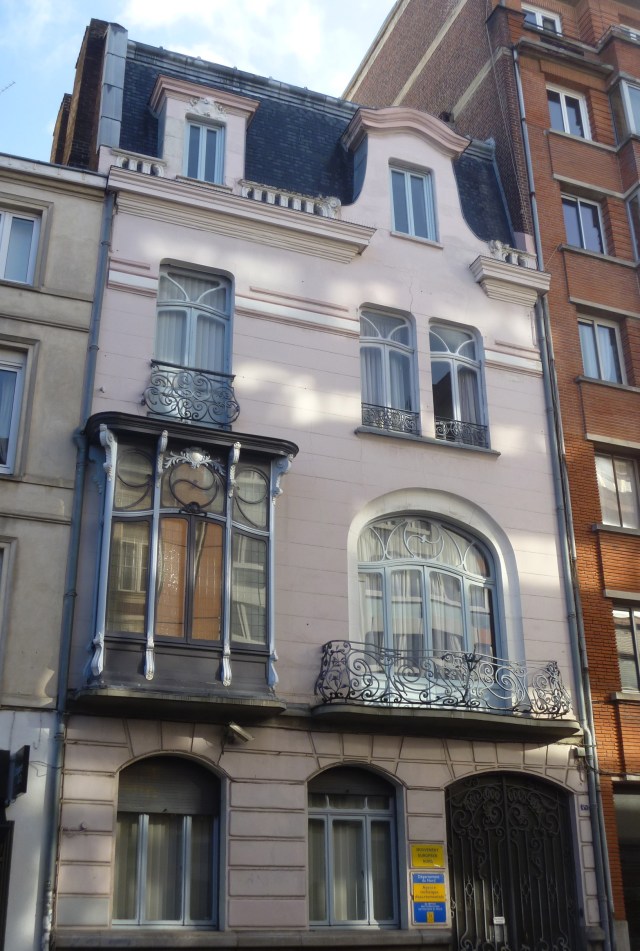
Our second day dawned overcast but brightened up considerably as we began our walk through the streets of Lille. Ignore the shop fronts and look up and a whole new world appears. Interspersed between plain dull shop fronts and ordinary apartment exteriors are a multitude of different, often colourful, Art Nouveau and Art Deco façades.

Here are some of the style features of Art Nouveau which developed during the 1890s and continued until the outbreak of the First World War :

  • sinuous, elongated, curvy lines
  • the whiplash line*
  • vertical lines and height
  • stylised flowers, leaves, roots, buds and seedpods

* Definition of the whiplash line from the V&A website : ‘This is a decorative line that seems to have a life of its own. It writhes and coils with dynamic force, as if trying to break free of the forces holding it in place. It is everywhere in the early Art Nouveau works. Architectural ironwork, decorative borders, textile patterns and the flowing hair of the poster girls all seethe with an excess of feverish energy. The whiplash form can be seen as a metaphor. It displays in graphic form the radical drive to break away from the constraints of tradition.’

In the UK we have Charles Rennie Macintosh and in France Hector Guimard and in Belgium Victor Horta. In Lille the buildings are tall and thin and squeezed in between other buildings.

Another architectural feature are the ‘peacocks’ eyes’. At first I thought I had never been near enough to a peacock to look at its eyes but soon realised that the eyes are in the peacock’s tail feathers.

Spot the eyes and lines and stylised flowers and roots and leaves in this small sample of buildings above the shopping streets of Lille.

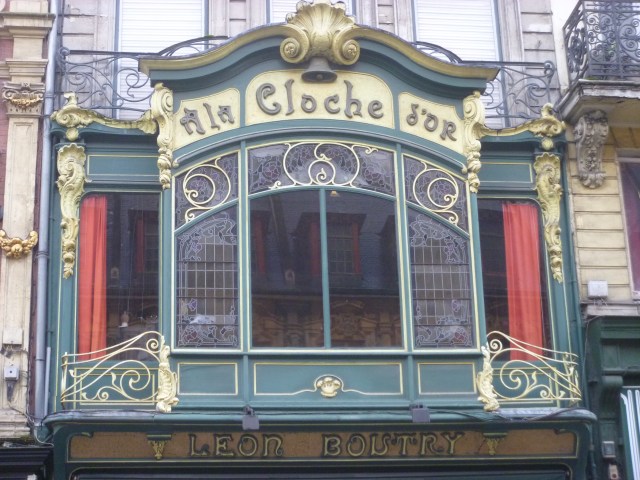
A La Cloche

A La Cloche d’Or, rue Saint Nicolas, Lille

43 Rue du Faubourg de Béthune

43 Rue du Faubourg de Béthune, Lille

71 Rue de Béthune

71, rue de Béthune, Lille

Rue Nicolas Leblanc

Rue Nicolas Leblanc

Ceramique Colliot

Maison Ceramique Coilliot by Hector Guimard

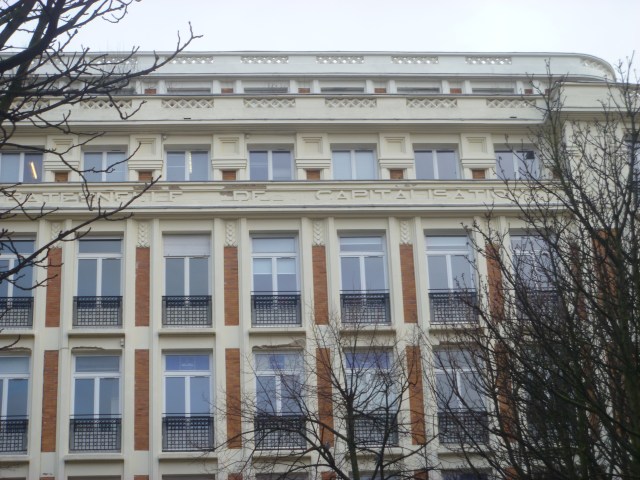
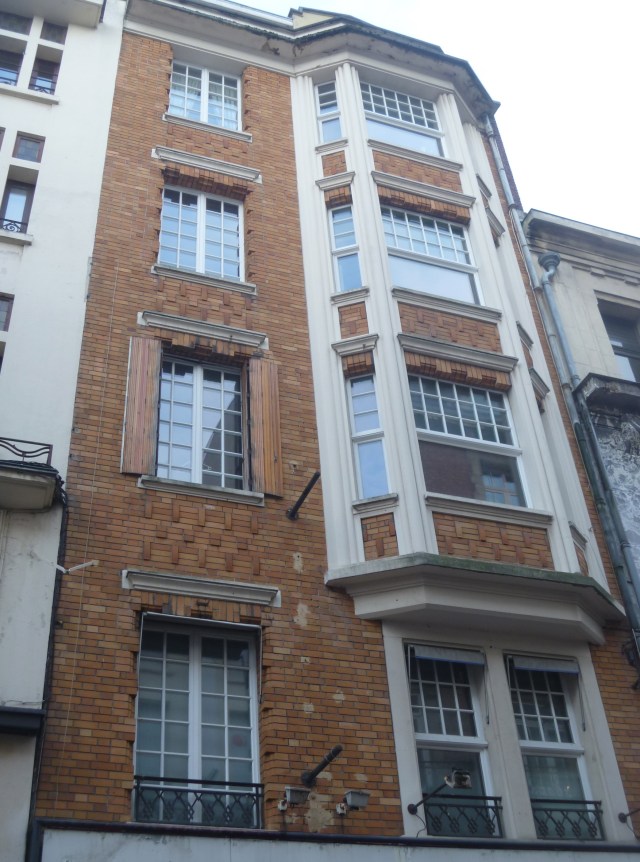
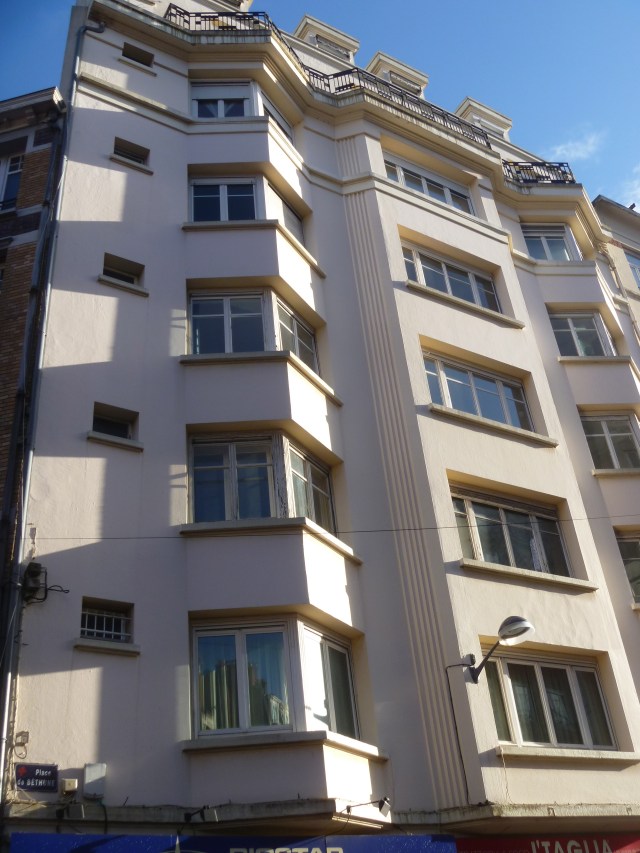
Art Deco of the 1920s on the other hand is characterised by clean lines and strong curves and by

  • geometric and angular shapes
  • chrome, glass, mirrors and mirror tiles
  • stylised images of aeroplanes, cars, cruise liners, skyscrapers
  • nature motifs – shells, sunrises, flowers
  • theatrical contrasts – highly polished wood and glossy black lacquer

The fonts or typescripts are sans serif – no added curlicues or decoration.

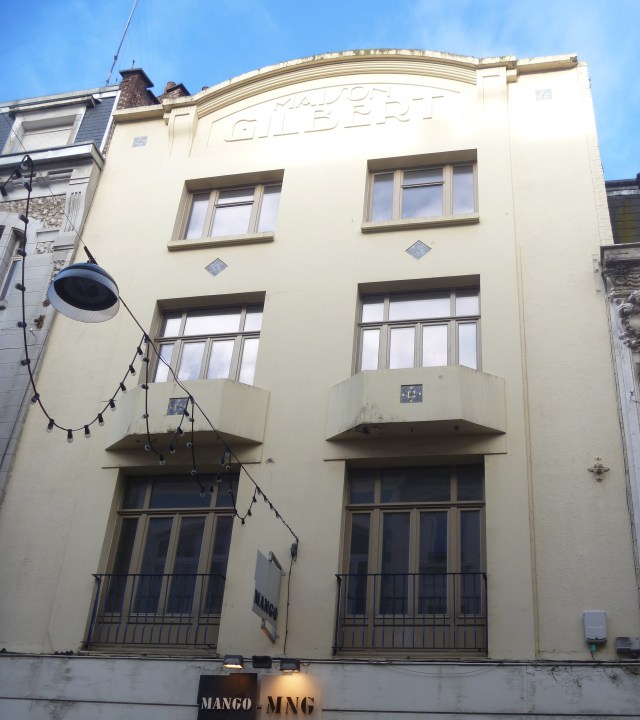
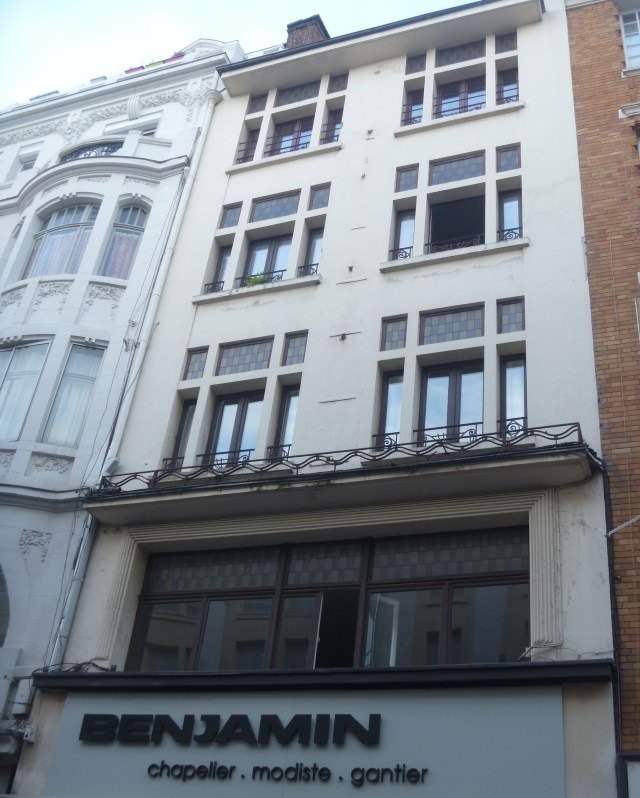
Spot the art deco style features and sans serif scripts on the buildings on our morning walk in Lille :

AD near hotel

Art Deco near The Hotel Mercure, Lille Centre

Maison Gilbert Lille

Maison Gilbert, Lille

Shoe shop

Former shop or factory?

45 rue de Béthune

Above hat maker, Benjamin, 45, rue de Béthune

Also r de Béthune

Also on the rue de Béthune

rue de Bethune

Another on the rue de Béthune

Place de Béthune

At the Place de Béthune

After the Maison Ceramique Coilliot by Hector Guimard we joined our coach for the next stages of the day’s tour.

Art Deco and Art Nouveau in Lille and Antwerp : Day One

Last Thursday I set off from St Pancras Station to Lille along with 23 others booked on a Travel Editions art trip to northern France and Belgium.  The train journey took just less than 1 hour 30minutes.

Lille Town Hall and belfry

Lille Town Hall and Belfry [UNESCO World Heritage listed] from the hotel balcony

Day 1 : Travel by Eurostar from St Pancras to Lille and transfer by coach to hotel for check in for 3 night stay. Afternoon walking tour of central Lille.
Welcome reception lecture “Art nouveau – an Overview” and dinner with wine at the atmospheric Art Nouveau Brasserie de la Paix located 2-3 minutes from the hotel.

Vieille Bourse with Belfry behind

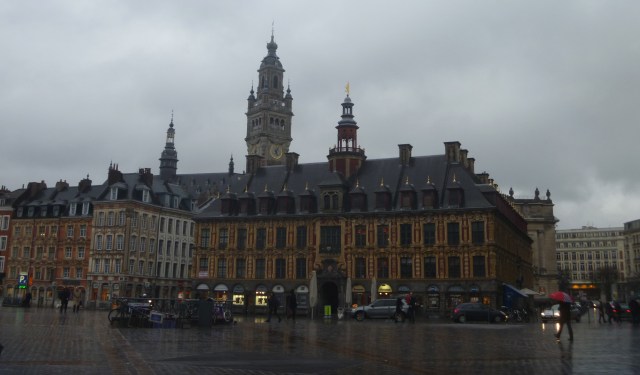
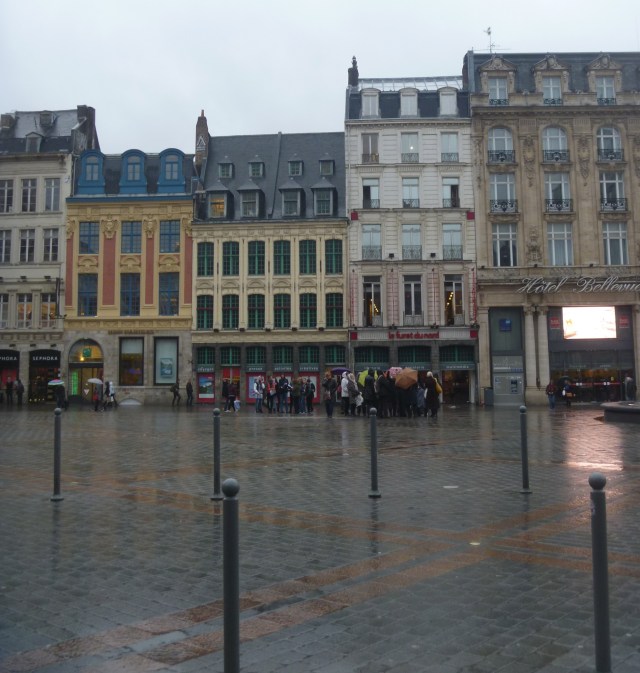
Unfortunately, it was raining hard in Lille so an hour after arrival and check-in with our brollies out we were on our first guided walk with tour guide and lecturer Mike Hope who mixed his vast knowledge with humour, patience and enthusiasm and from whom I learned all I now know about Art Deco and Art Nouveau in Lille (and nearby towns) and Antwerp during the following three days.

La Grand Place in the rain

The Grand Place in the rain

Once the jewel of the Spanish Netherlands, Lille is France’s most besieged city. It was incorporated into the royal domain in 1304 before passing under Burgundian (1369), then Austrian (1477), then Spanish rule under Charles V. The city became French in 1667 and remained so, except for a brief interlude from 1708 to 1713 and the absurd Nazi Aryanization (1940) from which it was delivered by its illustrious native son, a certain Charles de Gaulle. Throughout the 20th century, Lille was the capital of the French textile industry. … The city [has made] an extraordinary transformation that began with the arrival of France’s high-speed train, the TGV. [It] boasts prestigious colleges, abounds with café terraces and brasseries. Since 2004, when Lille was European City of Culture, it has stood at the forefront of the French cultural scene.” [From my LV Guide Lille, Lyon, Monaco, Toulouse 2012]

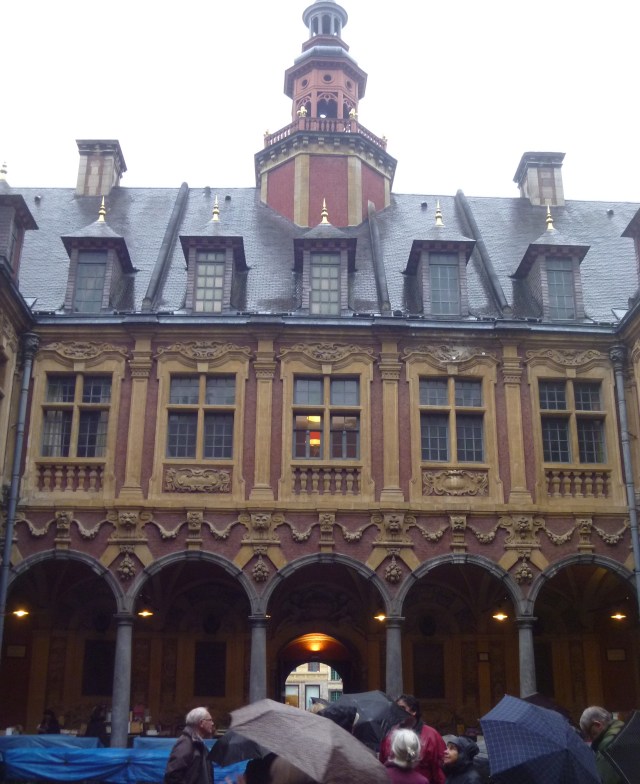
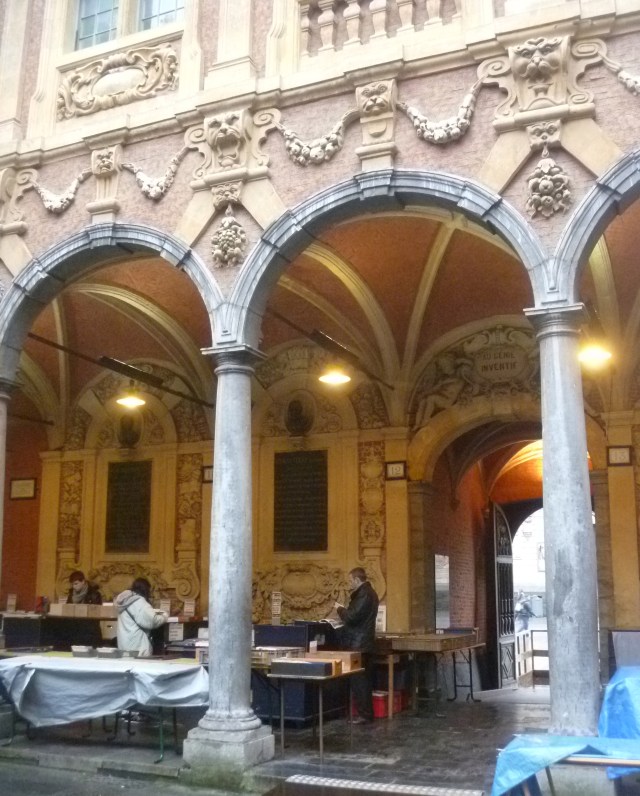
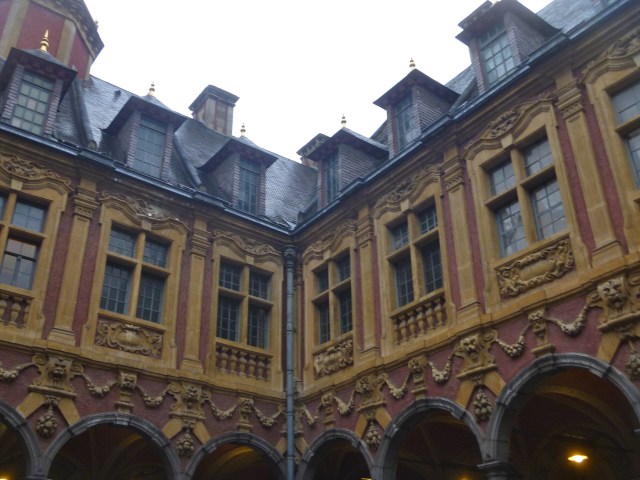
From the hotel we were just steps away from the main square and the important civic buildings – the town hall, the old bourse (now a secondhand book market), the opera and theatre – and shopping and business areas.

Vielle Bourse

V Bourse

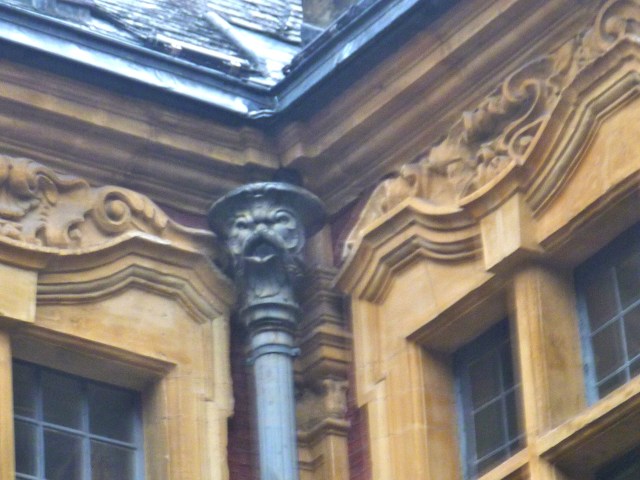
VB Detail

VB Drainpipe

In the Vieille Bourse

Theatre du Nord

The Voix du Nord Building: Mike points out the architectural features

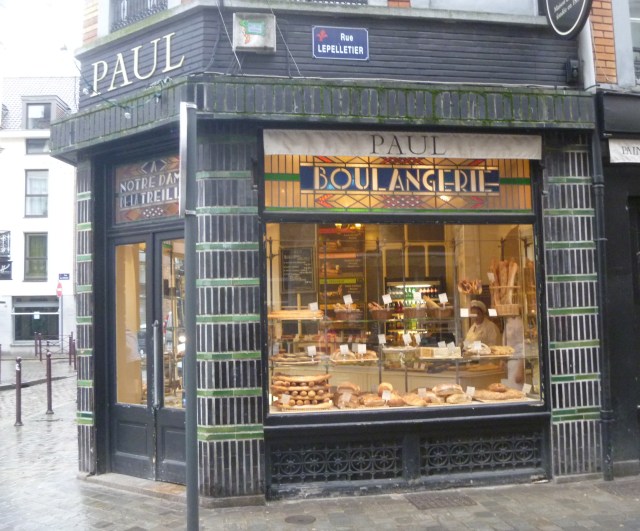
Paul, Lille

Art Deco Bakery on the rue Lepelletier – still a bakery shop

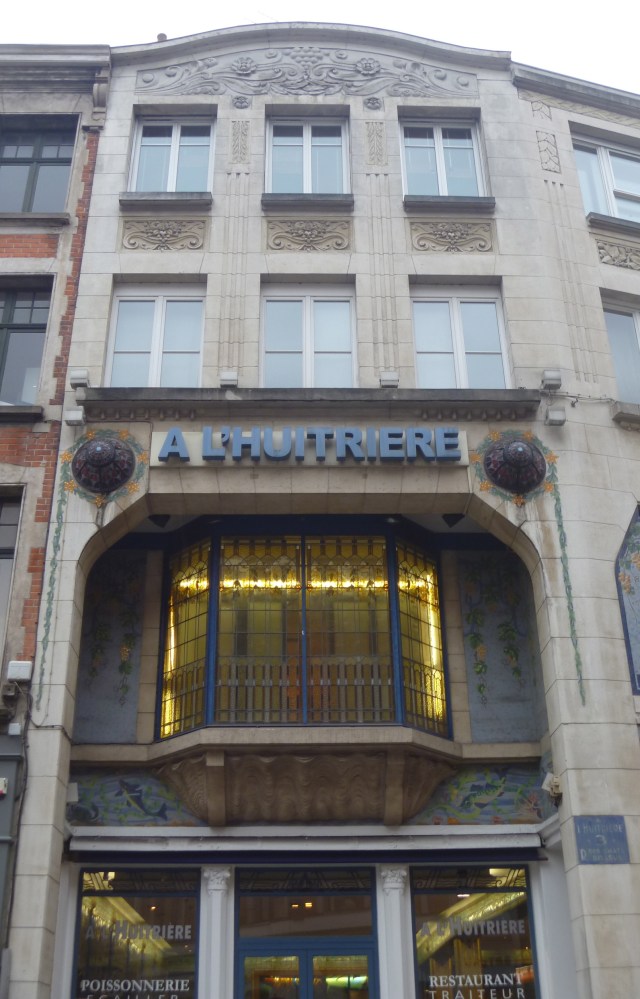
Huitriere

A L’Huitriere

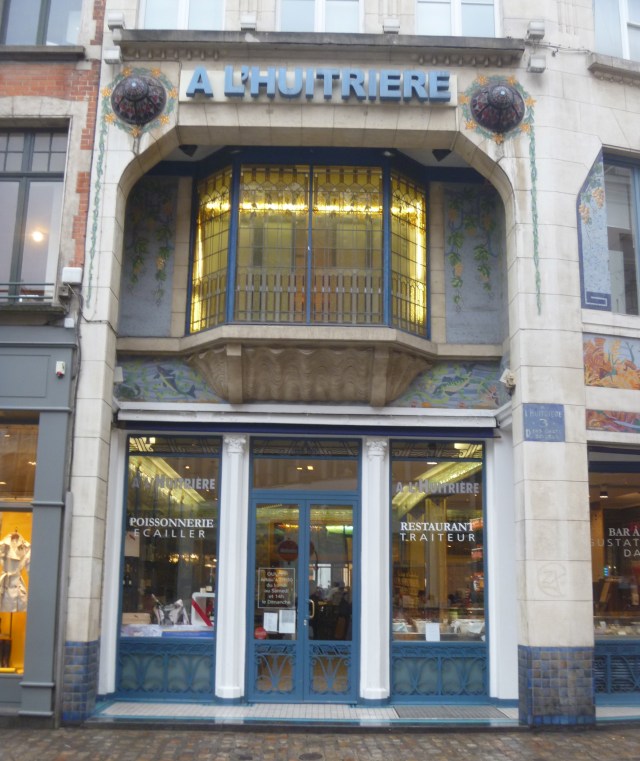
A L'Huitriere

A L’Huîtriere, rue des Chats Bossus. Renowned fishmonger and restaurant with pure Art Deco decor inside and out.

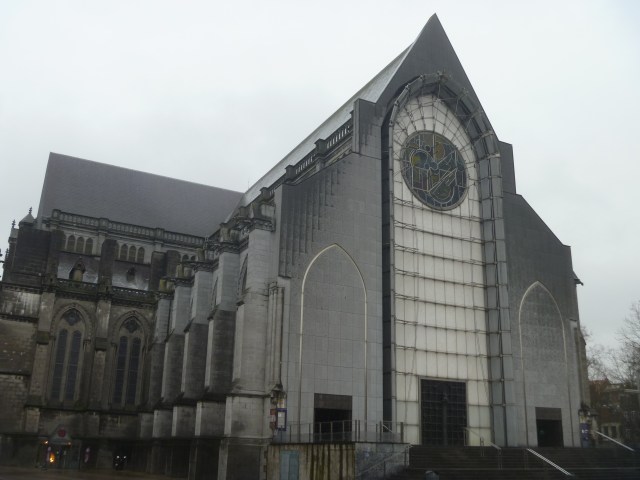
ND de la Treille

The Cathedral of Notre Dame de la Treille : building began in 1854 and was finally finished in time for Lille’s European City of Culture year 2004

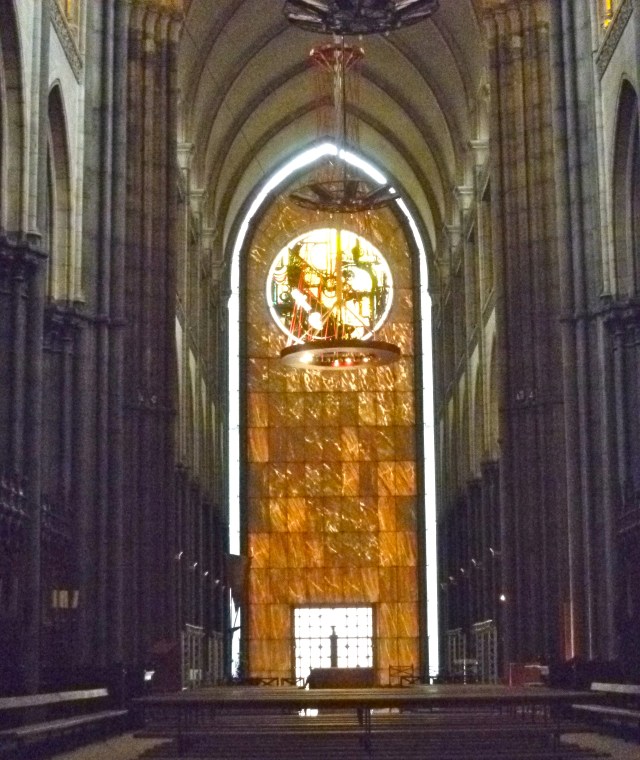
West Window

The West Window from Inside

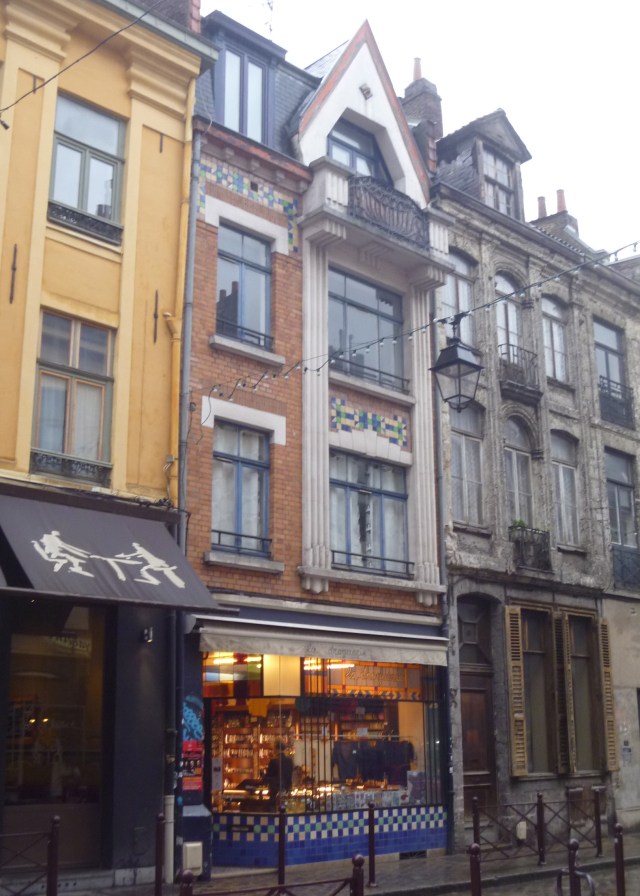
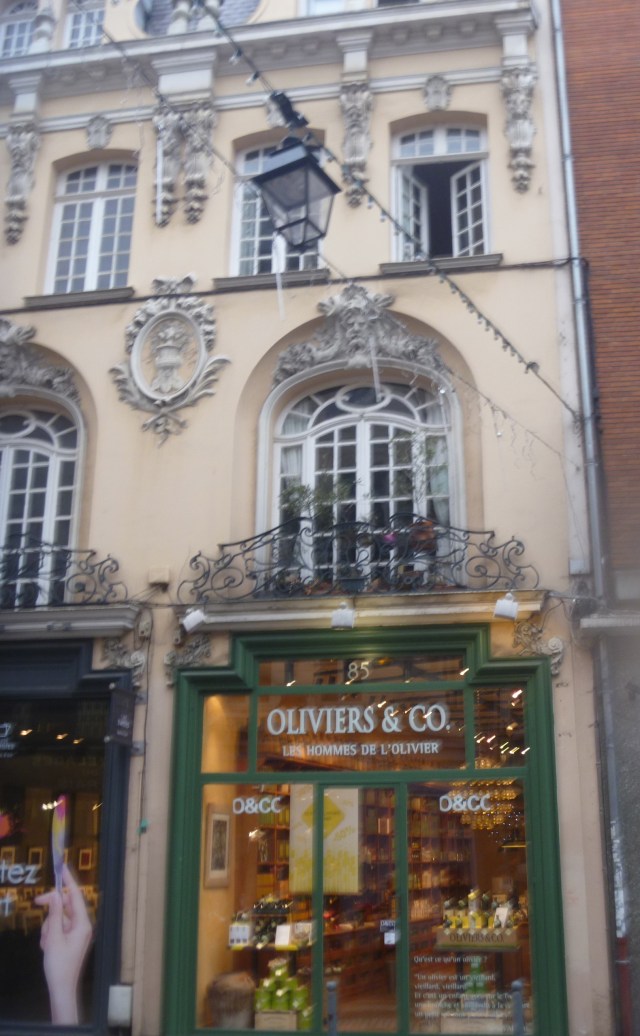
… and other Art Deco and Art Nouveau façades in Lille :

Others 1

Others 2

Others 3

Others 4

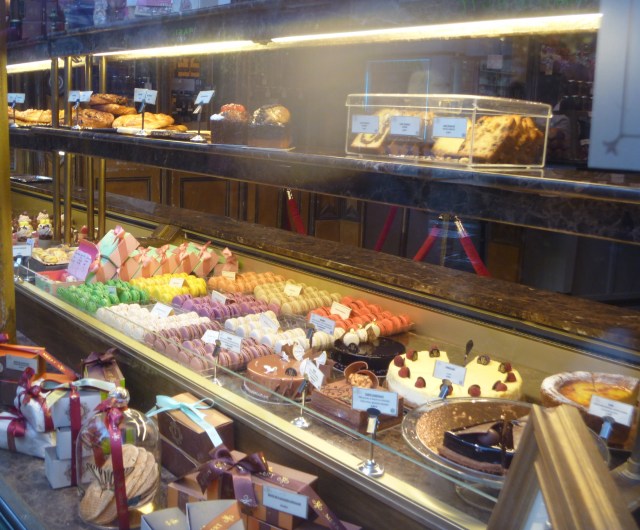
And the best place to finish is at Méert famous for its butter and vanilla waffles

Meert

A Visit to The Freud Museum in London

20 Maresfield Gardens

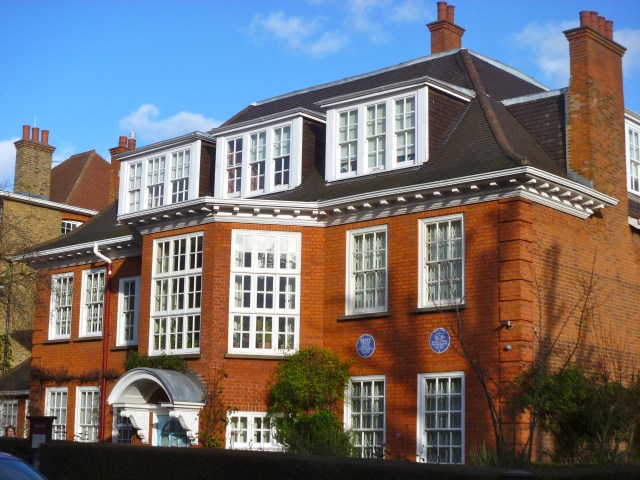
20, Maresfield Gardens  NW3 : The Freud Museum

Today I visited The Freud House Museum just up the road from where I am staying in Belsize Park. It has limited opening hours and days so I haven’t managed to get there before. If you show your National Trust Card you get half price admission and if you are, like me, over 60, it is only £2.25 as opposed to the full £6.

2 blue plaques

Anna Freud and her father Sigmund Freud lived here

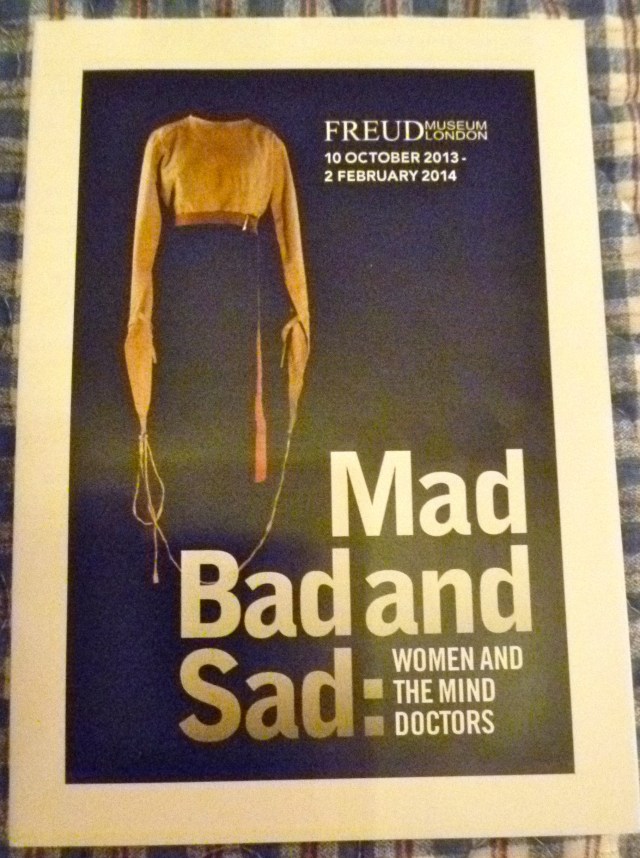
I thought £2.25 was enough to pay, really. There are only really one and half rooms worth seeing plus an introduction to the house and family in the Dining Room and a video room. Two upstairs bedrooms are devoted to the temporary exhibition, Mad, Bad and Sad: Women and the Mind Doctors, which was partly interesting. I could have done with fewer subjects and a more full portrait of each.

Mad sad and bad

Women featured included Sylvia Plath, Marilyn Monroe, Mary Lamb and Virginia Woolf. Virginia and Leonard Woolf visited Freud here at his home. The exhibition was accompanied by modern art and installations mainly by women. On the staircase wall and in lights was Tracy Emin’s “Be Faithful to your Dreams”

be-faithful-to-your-dreams

[Source]

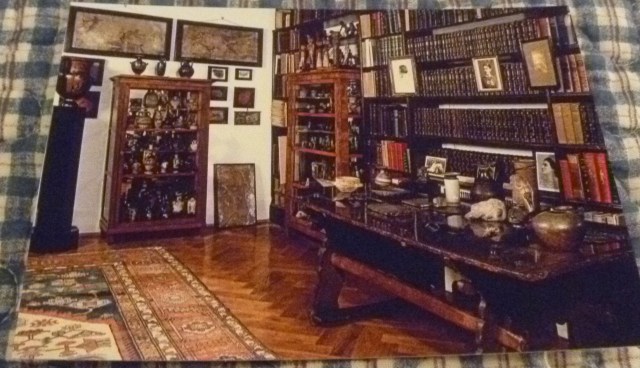
The most interesting room to me was Freud’s ground floor study and consulting room with his famous couch and the green chair in which he sat to listen to his patients baring their souls.

Freud's study

The Freuds were fortunate in being able to leave Vienna in 1938 after the annexation of Austria by Adolf Hitler. They were even able to bring their furniture, hundreds of books (although Sigmund Freud sold 800 before he left) and household ornaments and Freud’s collection of antiquities also including his daughter Anna’s traditional painted Austrian country furniture now on show in the Dining Room. The study is jam-packed with stuff and books and is set up just as it was in Berggasse, 19 his former Viennese home and now another Freud Museum.

Freud couch

Freud’s Couch and Chair

On asking I was told that no photography was allowed in the house. So I bought postcards and these are reproduced here. However I found it very annoying that people were ignoring this and snapping away with their smart phones.

With other rooms having the curtains closed I found the half-landing refreshing and bright – the sun shining through the window. It was an area loved by Freud’s wife, Martha, for afternoon tea and chat. See the bay window above the front door in the top photo.

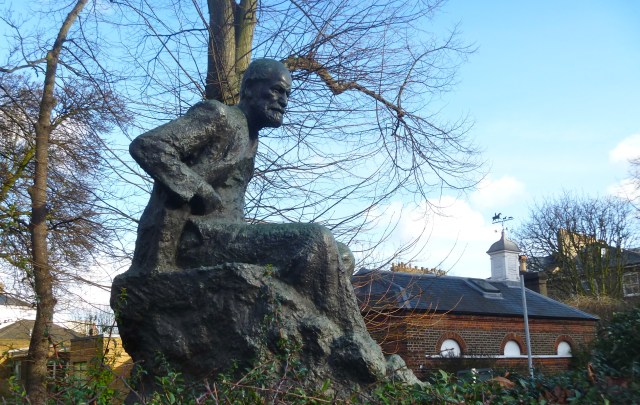
Between the flat and  Maresfield Gardens is a statue of Sigmund Freud. It’s in the grounds of The Tavistock Clinic for Mental Health Care and Education.

Freud Statue 1

Freud was already sick with throat cancer when he arrived in Britain and he was to die just a year later on 23 September 1939 just a few weeks after war was declared on Germany. The couch on which he died is also displayed at the house. His wife and his unmarried daughter Anna lived on in the house. Anna was also a well respected practising psychoanalyst.

Fellow Blogger ‘Down by the Dougie‘ got there before me!

“The Building Bears Strong Marks of the Ravages of Time and Presents an Extremely Picturesque Appearance” Astley Castle

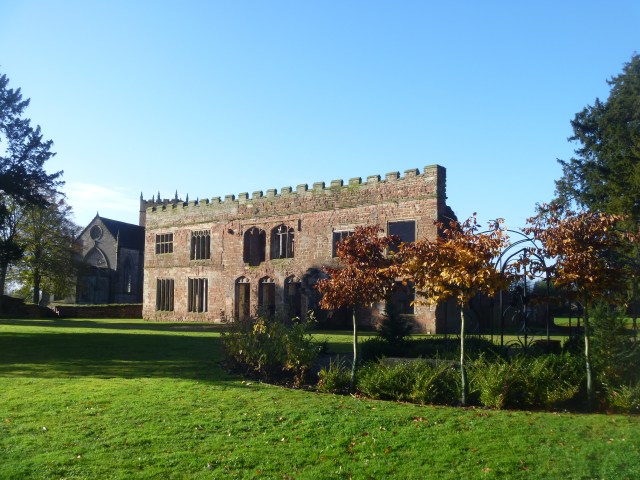
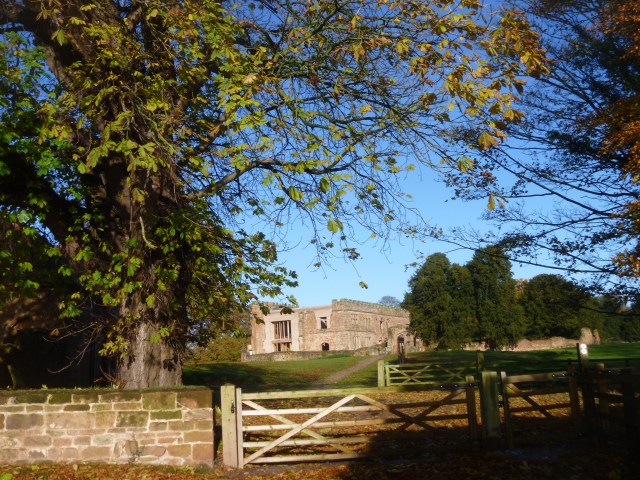
Astley and Knot Garden

Astley Castle and Elizabethan Knot Garden

“The Building Bears Strong Marks of the Ravages of Time and Presents an Extremely Picturesque Appearance” Britton’s “Beauties of England and Wales“.

The Stirling Prize is the most prestigious prize for British architecture awarded annually :

to the architects of the building that has made the greatest contribution to the evolution of architecture over the past year. The prize is for the best building in the UK by RIBA chartered architects and International Fellows, or in the rest of the EU by an RIBA chartered architect.”

The RIBA Stirling Prize was born in 1996 out of its predecessor The Building of the Year Award. The Building of the Year Award had been running since 1988 and the winner was chosen by the RIBA President from a handful of National Award winners. This was thought of as neither transparent nor democratic. The aim with the Stirling Prize was that the winner should be decided in an unbiased way, with different juries visiting the ‘midlist’ and shortlist.

The new prize was named after James Stirling, the great British architect who died in 1992. The aim was that the Stirling Prize would be for architecture what the Booker Prize was for literature, and a £20,000 cash prize for the winning architects made the prize covetable as well as prestigious.” [Source]

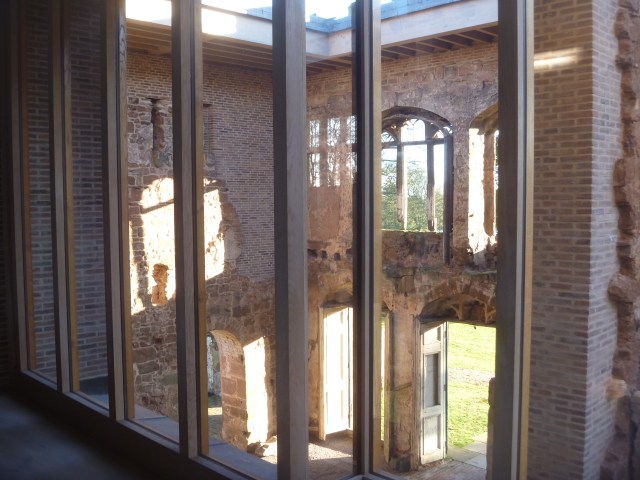
In 2012 I was fortunate enough to be invited by friends who are Patrons of The Landmark Trust to attend the celebration opening of Astley Castle in July 2012. Immediately on leaving the reception and arriving home I decided to book the castle for a week (Monday to Friday) in November 2013.

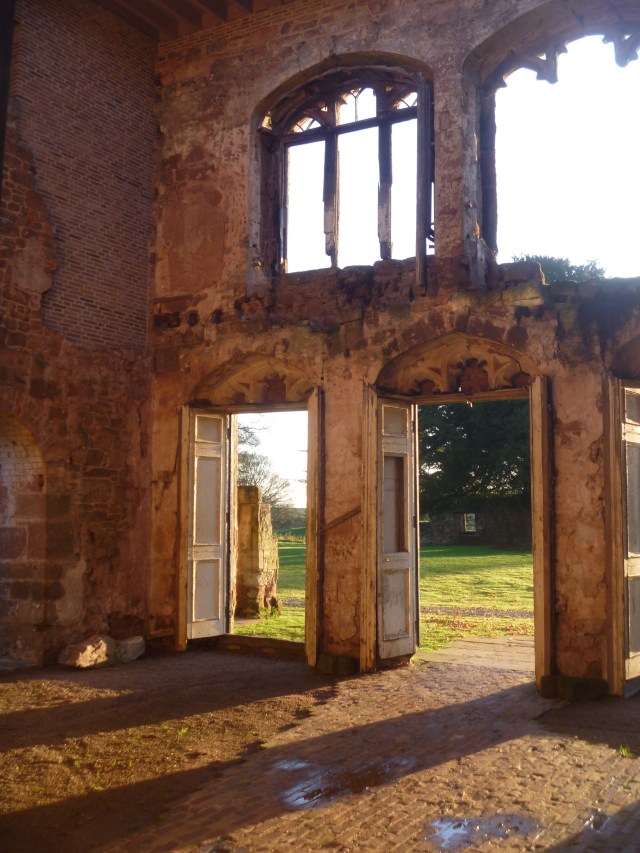
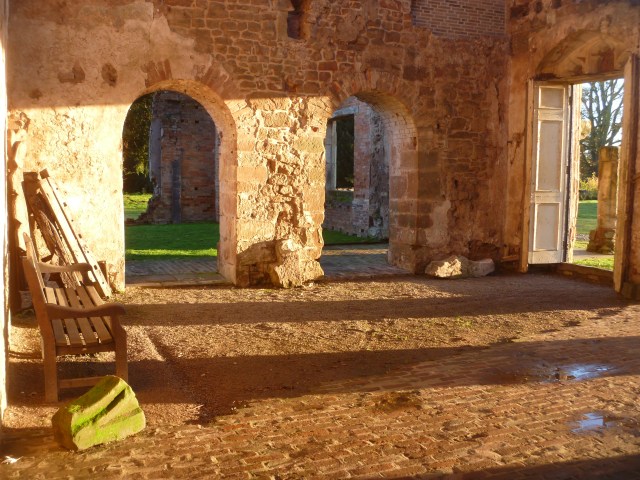
Here are some of the highlights and light effects from this unforgettable stay.

Arriving at Astley

Arriving at Astley

The Ruins

The Ruins

Sunlight after the rain

Sunlight after the rain

Outdoor Dining

Outdoor Dining

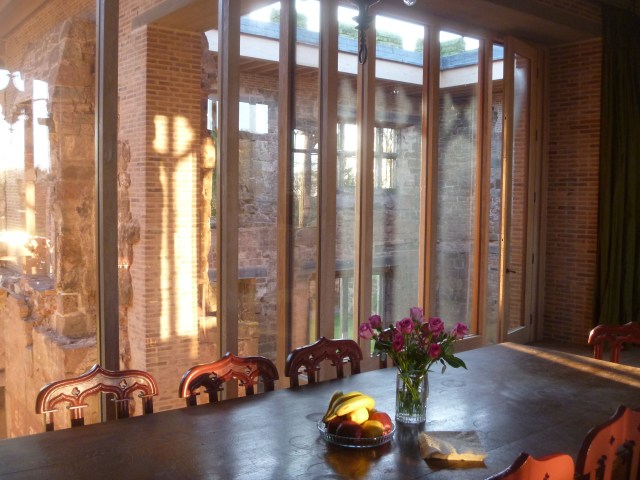
Dining table shadows

Indoor Dining

Courtyard

Courtyard

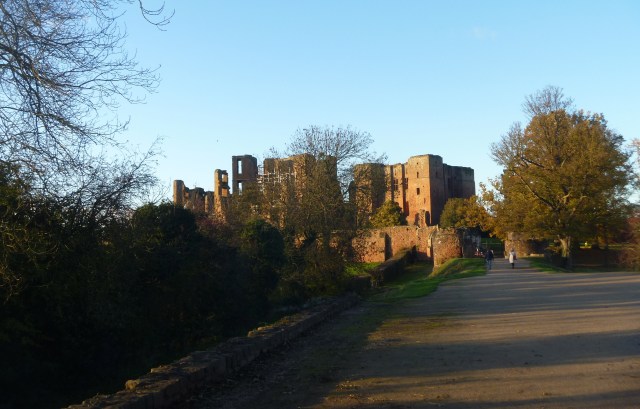
Kenilworth Castle

Castle Visiting – Kenilworth Castle

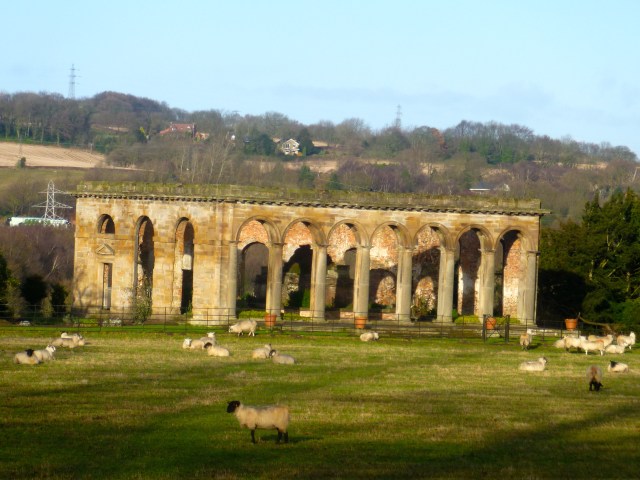
Gibside : “The Chapell, Greenhouse, Banquiting House, Bath, Gardens, and Walks, [and] pleasure grounds are all gone to Ruin.”

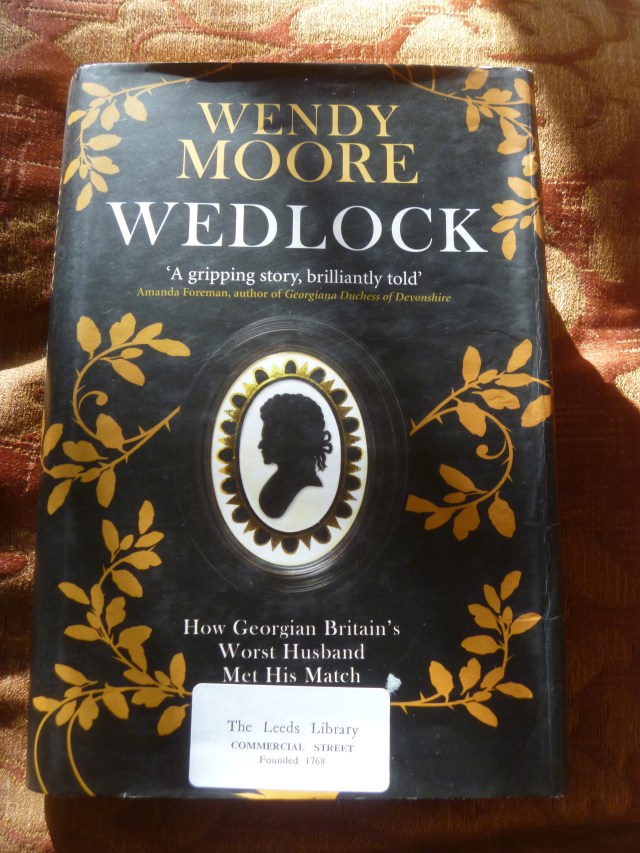
Last week I finished reading ‘Wedlock’ by Wendy Moore, subtitled on the cover ‘How Georgian Britain’s Worst Husband met his Match’. And what a tale it tells. It’s been recommended to me from several sources not least from Nilly Hall‘s wittily titled ‘Bowes and Cupid’s Arrows‘ published last February.

Wedlock

The book is the story of Mary Eleanor Bowes (1749-1800) daughter of the coal baron creator of “Gibside, a Georgian ‘grand design’ on a spectacular scale. The vision of coal baron George Bowes, the Palladian chapel is an architectural masterpiece, the stable block is a vibrant learning and discovery centre, and the once grand hall is now a dramatic shell. Gibside is also a haven for wildlife with red kites often circling in the skies above.” [NT]

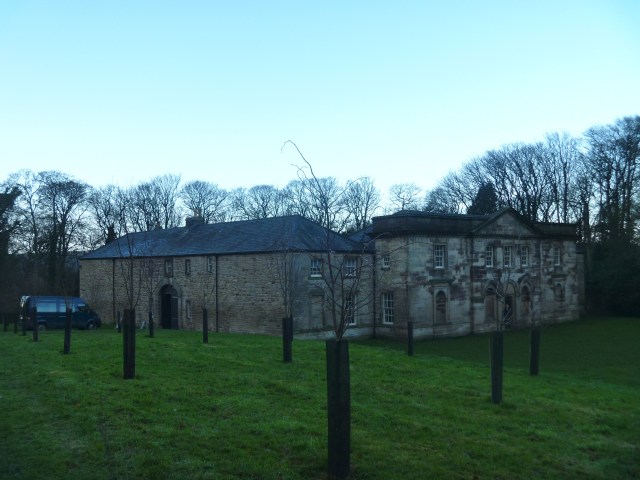
Stable Block 2

The Stable Block

Gibside just a few miles from Newcastle is now the property of the National Trust. I have visited Gibside twice. The most recent time was just last December on my way to a course at Sage plc.

The Chapell

The Chapell

Orangery

The Greenhouse or Orangery

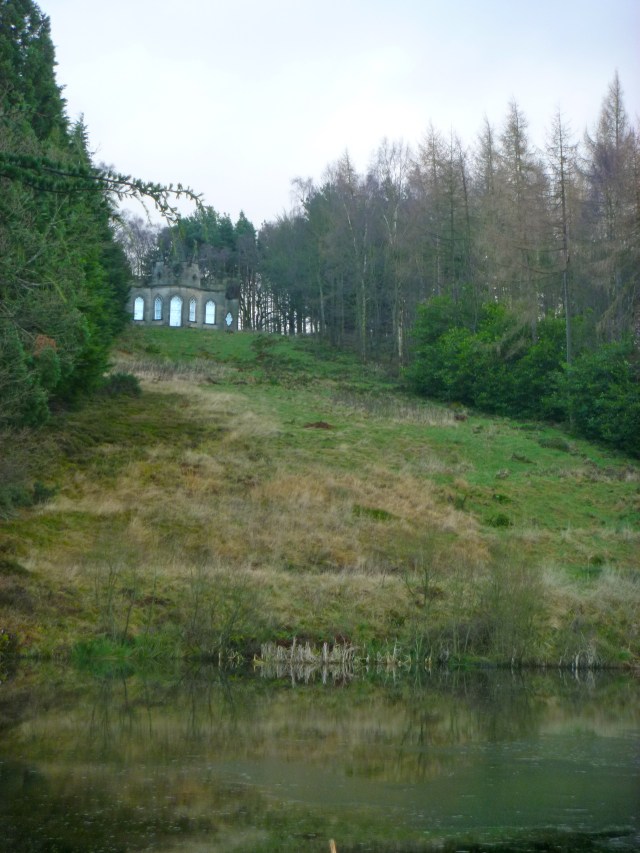
Banqueting House

The Banquiting House

The water feature below the Banqueting House was an elegant octagonal pond built in the Greek style to add to the stately vistas. A fountain cooled he air and statues stood on the terraces above. The Banqueting House was restored by The Landmark Trust after many years of neglect. That same neglect has had some happy consequences for the pond. It is now a Site of Special Scientific Interest (SSSI) for its population of great crested newts. There are no plans to restore the Octagon Pond as any such work could destroy the habitat of these shy and rare creatures, as well as upsetting the many other types of bird and aquatic life that thrive here. [Extracted from the Information Board at the Pond]

A highly educated woman for her time Mary Eleanor’s father, George Bowes, died when she was 11 leaving her a vast fortune and prey to future gold-diggers. She married her first husband, John Lyon, the 9th Earl of Strathmore, in 1767, gave birth to five children in six years and was left a widow when Lyon died of tuberculosis in 1776.

Her second marriage to Andrew Robinson Stoney, an Anglo-Irish adventurer, was a total disaster. Self-styled ‘Captain’ Stoney duped Mary into marriage in 1777. From then on she was brutally treated and virtually held captive by him. Finally, she did manage to escape his clutches and even to divorce him – highly unusual at the time. He is the origin of the term “stony broke” – he died in a debtor’s prison – and he was the inspiration to William Makepeace Thackeray who learned of Stoney Bowes’ life story from the Countess’s grandson John Bowes and used it in his novel “The Luck of Barry Lyndon.” 

Stoney’s or Bowes’, as he is called in the book (in compliance with Mary’s father’s will, Stoney changed his name to Bowes his marriage to Mary Eleanor), greed was responsible for the ruin of Gibside and the destruction of thousands of trees on the estate .

It is ironic that Mary’s father constructed the Column of Liberty in the grounds of the estate when for several years during her marriage to Bowes she was very far from being at liberty.

Column of Liberty

The Column of Liberty at Gibside

An Invitation to View : Lukesland

In addition to a shared love of reading  Lynne (alias Dovegreyreader) and I have a love of houses and a nosey poke around in other people’s – especially the grander sort – when we get an opportunity. The chance arose when I was wondering how to belatedly celebrate her big birthday on our annual Devonshire Day Out.

dgr can't wait

Dovegreyreader can’t wait to get inside Lukesland

Then I remembered “Invitation to View” an organisation that brings together house owners and those inquisitive members of the public prepared to pay to have a private guided to tour of their homes followed by tea and cake or a light lunch by the fire or in the garden depending on the time of year. A small number of houses in Norfolk and Suffolk were included in the early years. This number has increased quite significantly and a few years ago The Southwest joined the group and there are now 23 houses in Devon, Cornwall and Somerset included in the scheme.

So,  a couple of weeks ago I extended An Invitation to View to Lynne who accepted right away and we made our arrangements to meet last Thursday. Meeting at 11.30 in a favourite cafe of ours in Ashburton – Moorish – we allowed ourselves an hour and a half to catch up on each other’s families and reading and what-not, to drink tea, eat soup and, oh dear, have the first cake of the day. (Well, we were celebrating a birthday – any old excuse will do when the Moorish Tunisian Orange Cake is winking at you!).

Comfortably sustained by soup and cake Lynne drove us to Ivybridge and up out of town onto the edge of Dartmoor to Lukesland; the house  we were booked to visit. From about 1.30pm the gardens were opened to us and the house tour began at 2.30pm.

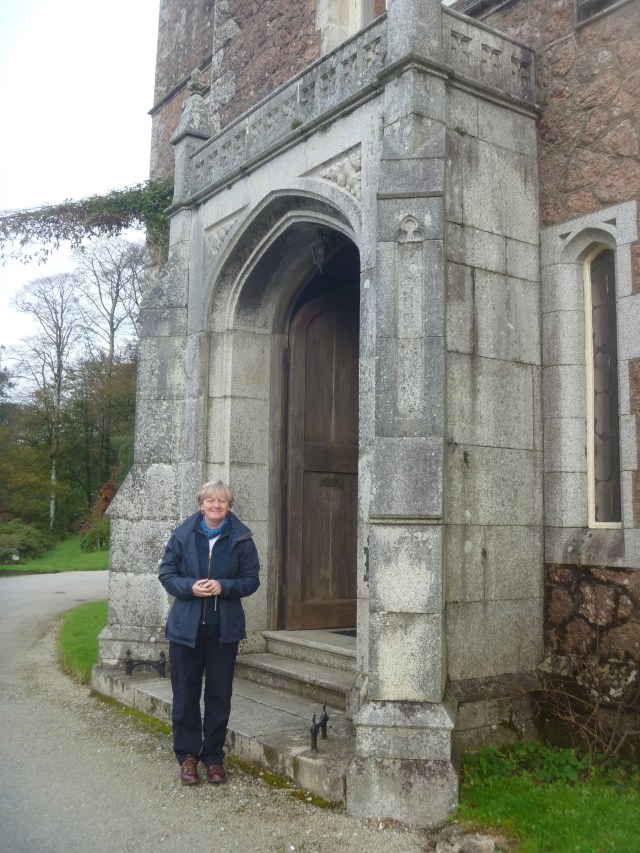
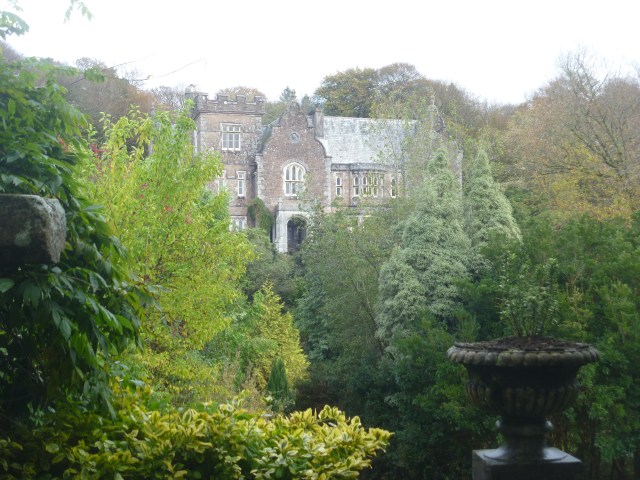
Lukesland

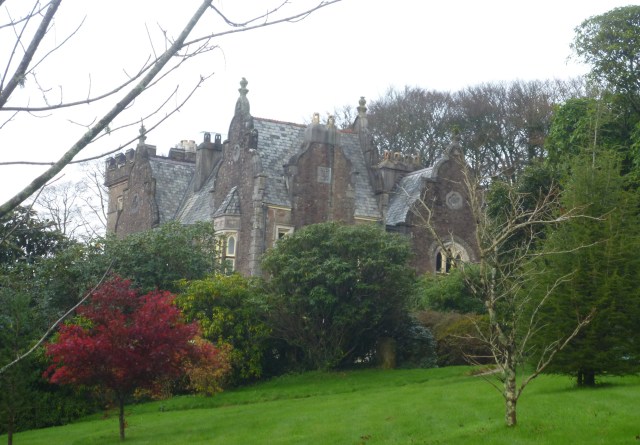
Lukesland House and Garden

The gardens at Lukesland are generally open to the public in the spring and in the autumn. We thought there would be more autumn colour in early November than there was but nevertheless we enjoyed a chatty wander and took some photos as photography inside the house is not permitted.

Kitchen Garden

The Kitchen Garden

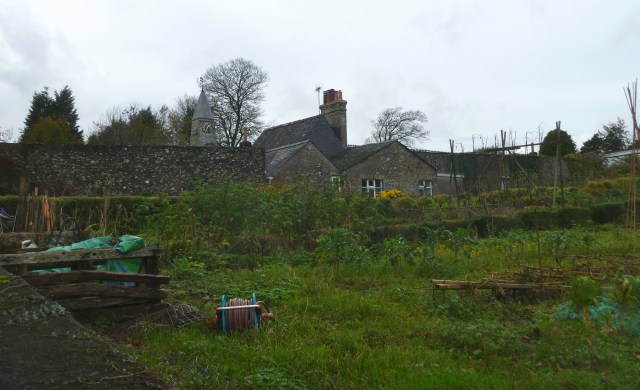
The Kitchen Garden was the main garden of the original Tudor estate. It was much reduced in size by the Victorian owners in order to build a drive between the house and the stables (under the clock in the photo). The garden produced vegetables for the family, the domestic staff and for the farm workers on the estate until the 1940s. Since 2005 parts of it have been let as allotments to local Ivybridge residents.

Lukeland sfrom garden

Lukesland

Milady and Doevgreyreader

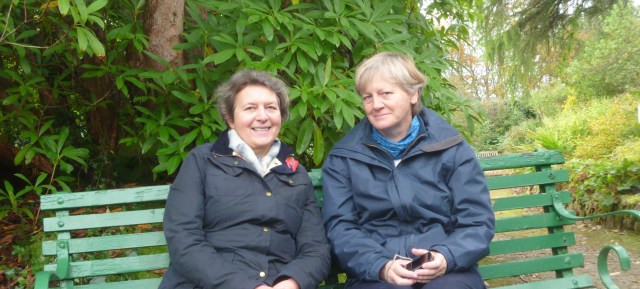
Milady and Dovegreyreader at Lukesland

By 2.30 about 14 of us were assembled in Rosemary Howell’s sitting room waiting for the talk and tour to begin. Rosemary and her daughter-in-law Lorna welcomed us to the house and told us the brief history of the place.

The Place Names of Devon lists “Lukesland” as being derived from the family of John Lucas in the 1330 Lay Subsidy Rolls.”  There is evidence – written and in carved stonework – of settlement at Lukesland during and ever since Tudor times.  The Tudor house was called Lukesland Grove. In 1863 a new (the current) house was built of Dartmoor granite and Portland stone on a new site and in the popular Victorian Gothic style for William Edwin Matthews, as a base for hunting on the moor. “Around 1875, Matthews was obliged to sell Lukesland and it was bought by James and Barbara MacAndrew, who came from the family of the London-Liverpool shipping line of that name.”

Howard Howell, a Canadian who came to Britain with the Canadian Expeditionary Force during the First World War, worked locally in forestry and married a Welsh woman, Muriel Neale and they settled in Exeter later buying Lukesland. The estate was in its heyday before the Second World War.

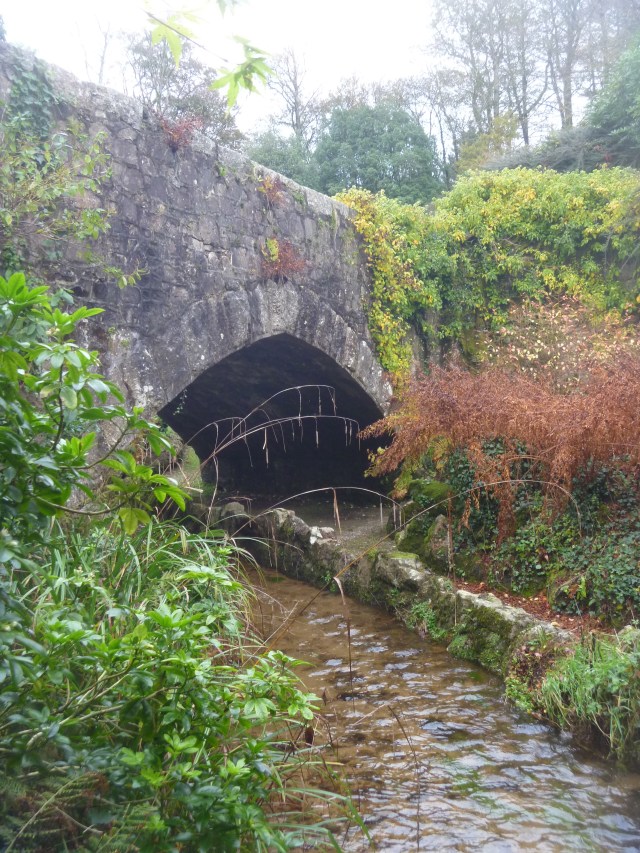
A second phase of landscaping of the garden took place. A pond was dug (‘The Lower Pond’ as it is now), many waterfalls installed and three stone-arch bridges built (one, just below Rh. smithii, collapsed after a flood undermined the foundations in the early 1970s). A bathing pool was built on the island in front of the house, and a much bigger range of rhododendrons was planted, along with other shrubs and trees. Although the Victorians had planted some newly introduced exotic trees in the Cleave, including some Wellingtonias, this was the first time that the garden was really diversified. Many more flowering shrubs were available by the 1930s, and Howard was a forester who took a keen interest in them.”

Bridge and stream

Despite all the social changes in Britain since the War the Howell’s have lived on at Lukesland making changes and adapting the house and garden. Rosemary and her husband Brian moved in in 1975. Brian’s background was also in forestry. A lot of work needed to be done on the house. Brian died in 2003 and his son John and wife Lorna moved in in 2004. Adaptations include opening the gardens and tea room and letting holiday accommodation in out-buildings and in a wing of the house itself. [Adapted from Source]

Rosemary’s sitting room was in a separate wing of the house created by the insertion of a gothic-style but fully glazed door which separates it physically from the main body of the house. But done in this way I’m sure she still feels very much a part of the family.

We were then shown a larger sitting room and the big family kitchen created from a butler’s pantry and other servants’ quarters. It seems as if nothing is thrown away at Lukesland. Lorna joked as we moved from one scullery or dairy to the next that after the national collection of wallpapers we moved on to the national collection of flower vases. I kept making mental notes to self – get that loft and cellar cleared out!

Upstairs there seemed to be a multitude of bedrooms and bathrooms created from bedrooms all of which seem to be in use. There is also a separate apartment which is let a long-term holiday let. The house has a sheltered courtyard behind and here as well is the old billiard room and former nursery converted to a tea room and in use when the gardens are open.

Finally we returned to Rosemary’s sitting room where DGR remarked that the shabby, but not threadbare, rugs seem to be a feature of these old properties and I was able to tell her that the Landmark Trust would never use a new rug in an old property and that they have a huge store of suitably worn rugs ready to furnish future properties.

Tea and delicious home-baked cakes (yes, we carried on in the tea- and cake-tasting tradition established over the years) were served by the log fire and we discussed further what we had seen and how these lived-in houses are constantly evolving and adapting and how nice it was to see bookcases in every room, everyday objects and even imagining ourselves descending the stairs in Edwardian times as if we lived there!

Sky leaving Lukelands

Leaving Lukesland

Lancaster II : The Ashton Memorial in Williamson Park and The Judges’ Lodging

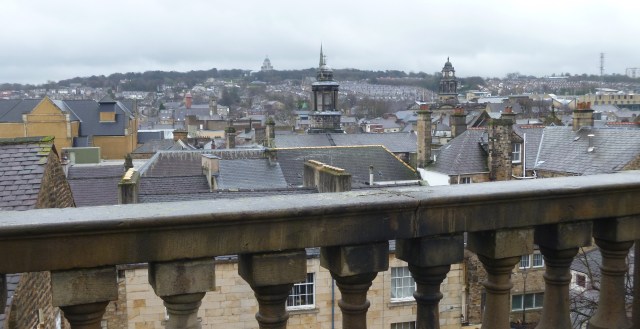
A couple of weeks ago I paid my second visit to Lancaster. The main purpose of my visit last March was meet a friend and visit the newly refurbished Landmark property The Music Room. From the Music Room roof we could see across the city Williamson Park and the very prominent Ashton Memorial. We promised each other that later this year we’d meet again and visit the Memorial.

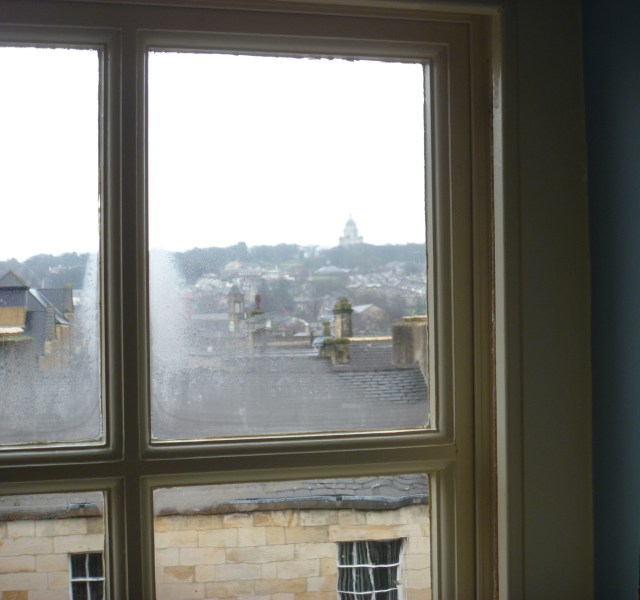
Ashton M Ashton M from MR

The Ashton Memorial from Music Room Window and Roof

So that is what we did. Again we met at the Railway Station and headed for coffee and catch-up. Then we took the bus out of the city and up Wyresdale Road to the entrance to the park. In September the weather proved to be drier and sunnier than in March.

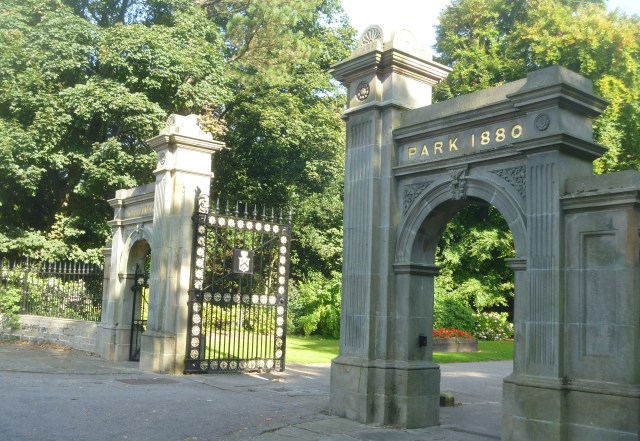
Gate Williamson Park

Williamson Park Gates

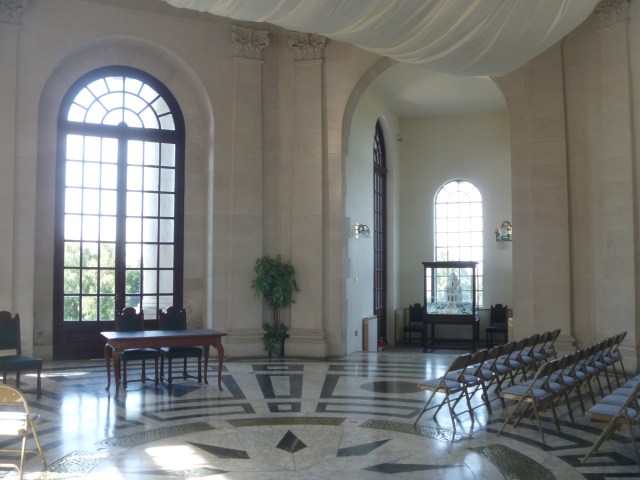
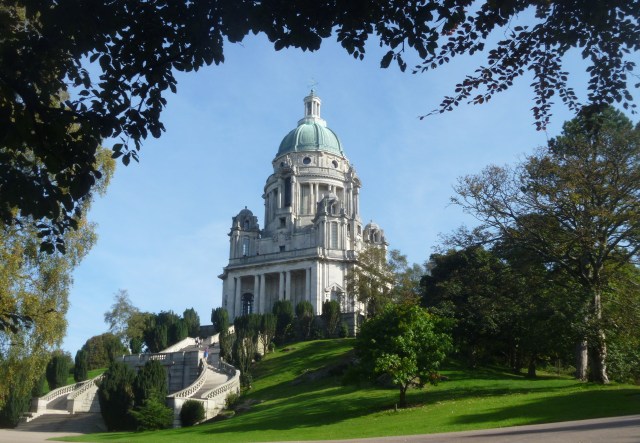
The Ashton Memorial was commissioned by Lord Ashton as a tribute to his late wife. It was designed by John Belcher and completed in 1909, the restored interior hosts exhibitions and concerts and can be hired for private functions, including wedding ceremonies.

Externally, the dome is of copper. The main stone used in the building is Portland stone although the steps are of granite from Cornwall. Externally around the dome are sculptures representing “Commerce”, “Science”, “Industry” and “Art” by Herbert Hampton. The interior of the dome has allegorical paintings of “Commerce”, “Art” and “History” by George Murray. The ceiling is presently undergoing restorative works and has been covered with drapes.

Ground Floor Wedding Venue

The Ground Floor Wedding Venue

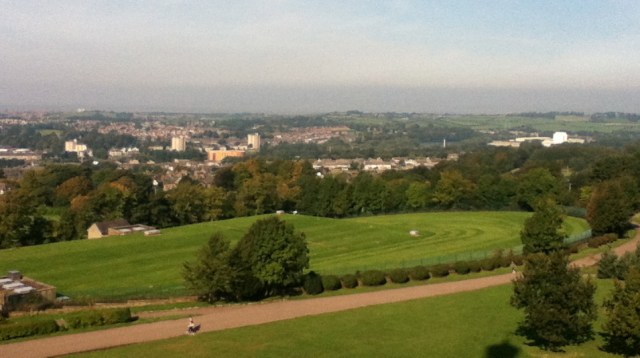
At around 150 feet tall it dominates the Lancaster skyline. The first floor outdoor viewing gallery provides superb views of the surrounding countryside and across Morecambe Bay.

[From The City Council website]
Ashton Memorial

The Ashton Memorial in Williamson Park

Hazy view to coast and Morecambe

Hazy View from the Gallery to Coast at Morecambe

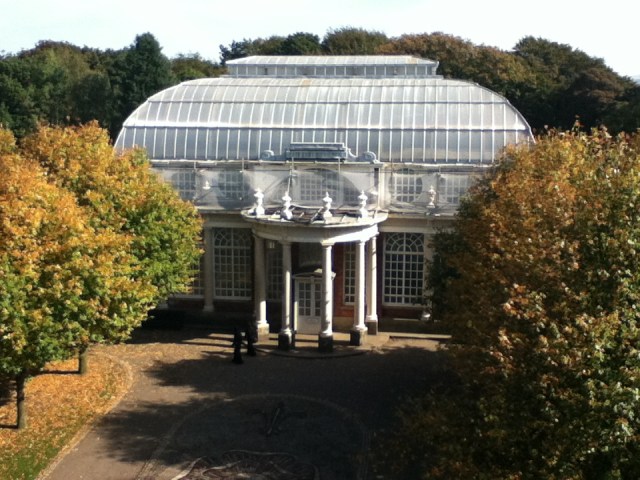
It’s a lovely park with lakes and follies, woodland paths and a Butterfly House in the original Edwardian Palm House. We ate our lunch from the very nice Pavilion Cafe out on the sunny terrace.

Butterfly House

Butterfly House

We decided to walk back to the city centre and had a peep at the Lancaster Grammar School Hall and the Roman Catholic Cathedral of St Peter on our way.

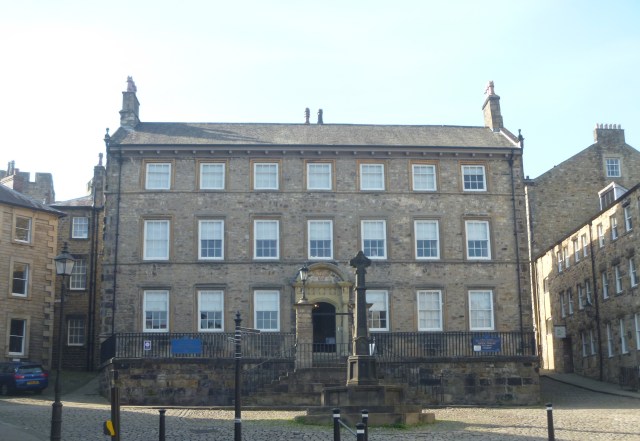
The Judges’ Lodging is so called because it was where until the 1970s the circuit judge would be accommodated during his visit to the Assize Court in the Castle.

Judges' Lodging

Discover the treasures of Lancaster’s oldest town house

Built in the centre of Lancaster against the backdrop of Lancaster Castle and Lancaster Priory this elegant, Grade I listed building is Lancaster’s oldest town house. The house was originally home to Thomas Covell, Keeper of Lancaster Castle and notorious witch hunter. Between 1776 and 1975 the house became an impressive residence for judges visiting the Assize Court at nearby Lancaster Castle.

The museum is now home to a renowned collection of Gillow furniture which is displayed in fabulous Regency period room settings, fine art and also the enchanting Museum of Childhood which explores toys and games from the 18th century to the present.”

[From the Judges’ Lodging website]
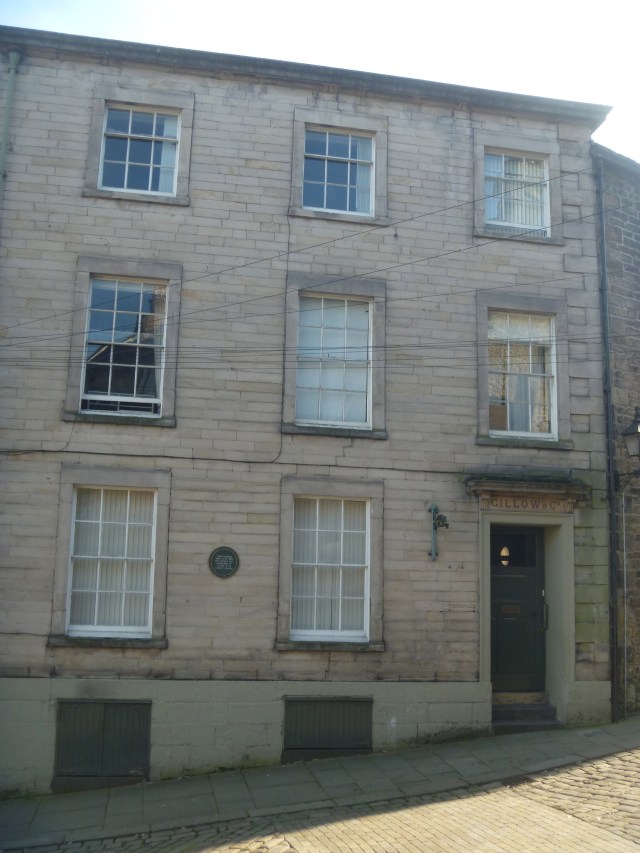
Gillow Lancaster

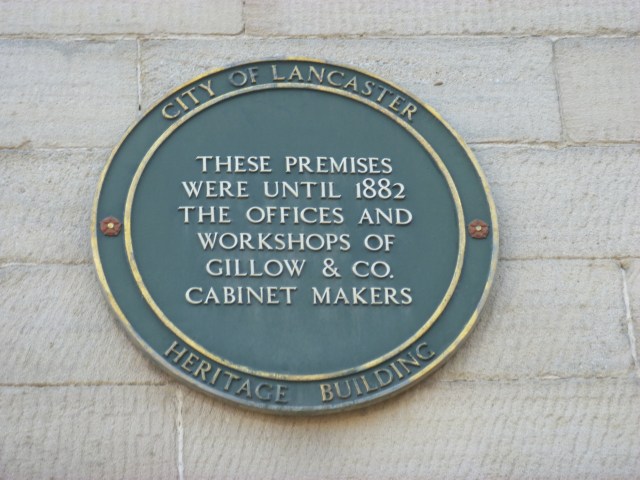
Gillow Plaque

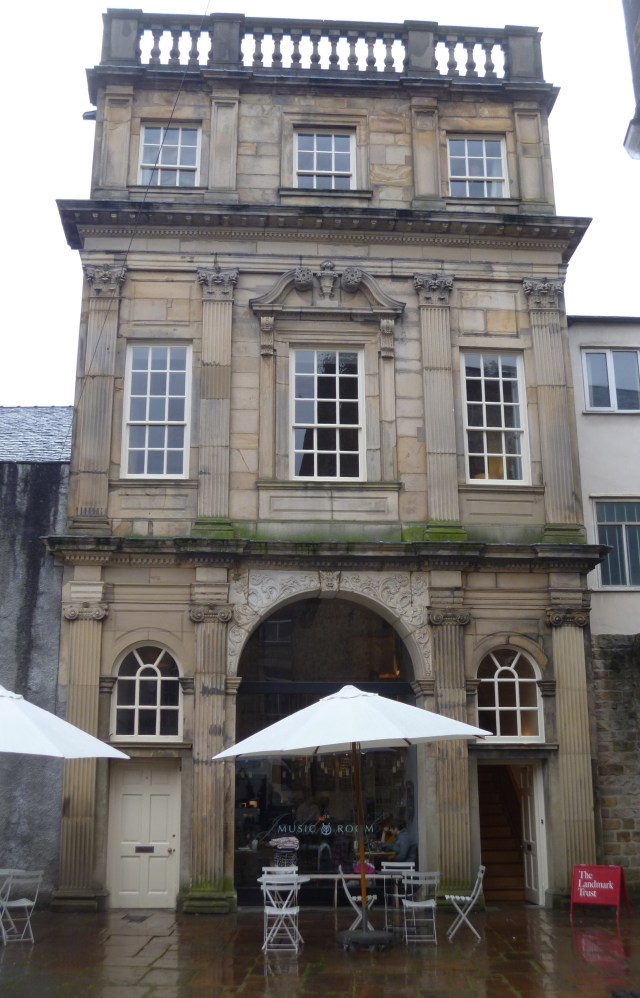
The former Gillow and Co. workshop and offices is next door to The Judges’ Lodging.  After our visit (No Photography Allowed) there was just time for a cup of tea outside the cafe below the Music Room in what is now called Lancaster’s “Coffee Quarter”.

Music Room Cafe

It was warm and sunny on our last visit!