Tea and Cake and Quiet London (2)

From the peace and shade of the Bonnington Square Garden we headed for nearby Newport Street (SE11) and The Ragged Canteen at Beaconsfield (QL p.115). However when we arrived we found that it is closed for most of August. On our way there we had passed through what was left of the original Vauxhall Pleasure Gardens and we had noticed a very nice tea shop with a buzz of friendly chatter and gentle music coming through the wide open doors and windows (it was a very hot day), so we decided to turn back and take our afternoon break there. It turned out to be an excellent choice despite not being Quiet; there’s a classical guitarist strumming gently in the corner.
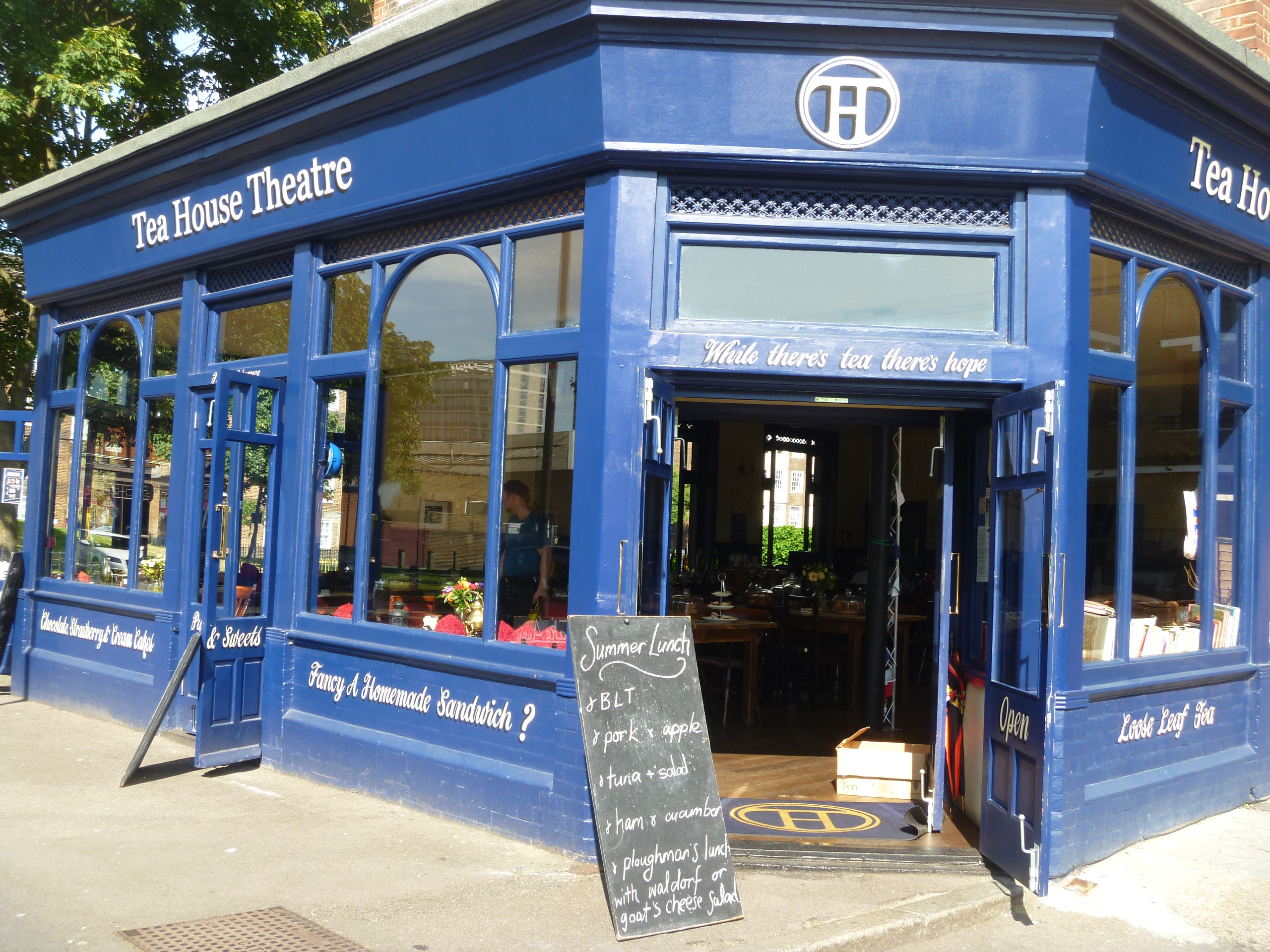
The Tea House Theatre

Inside The Tea House Theatre
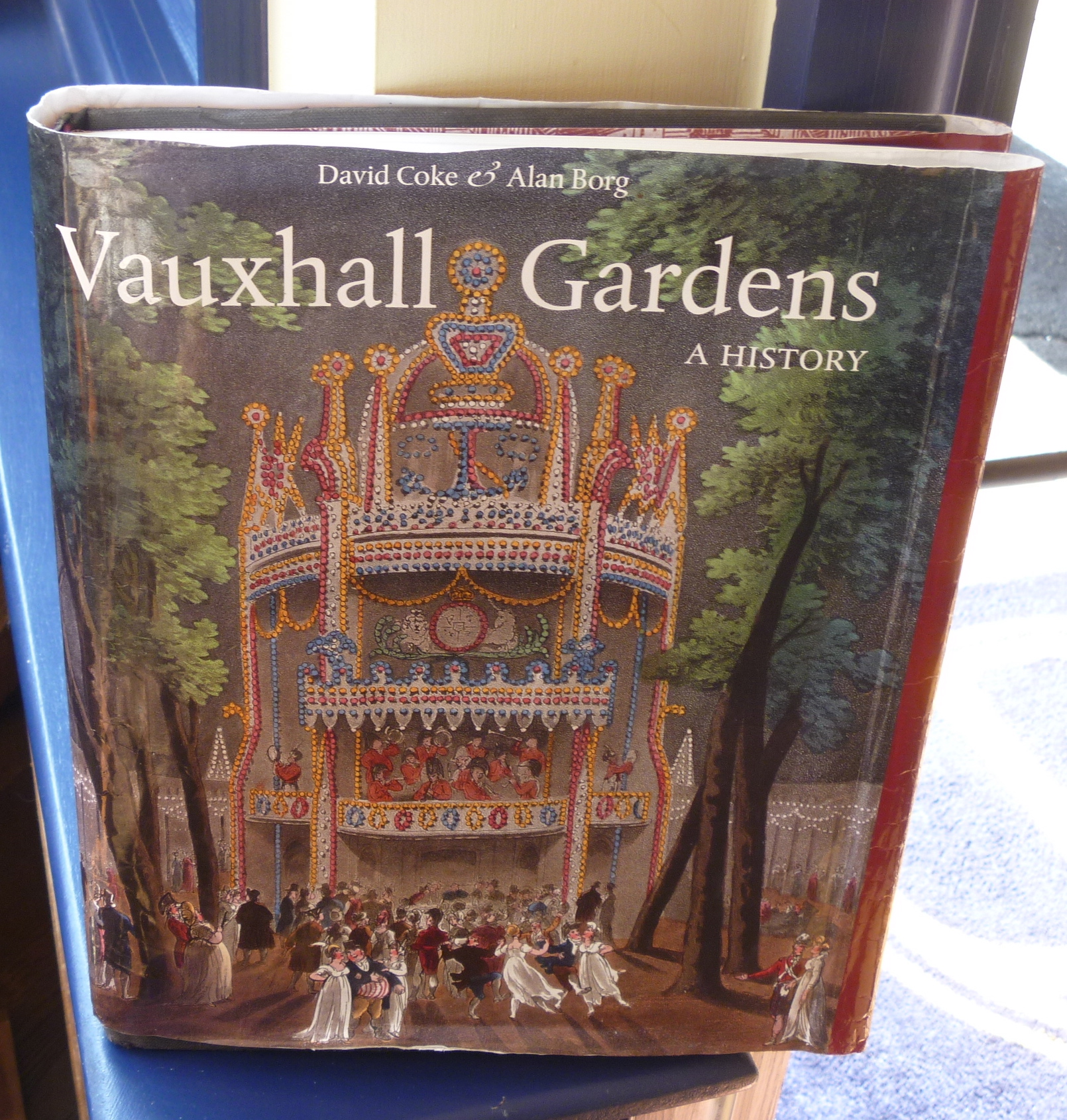
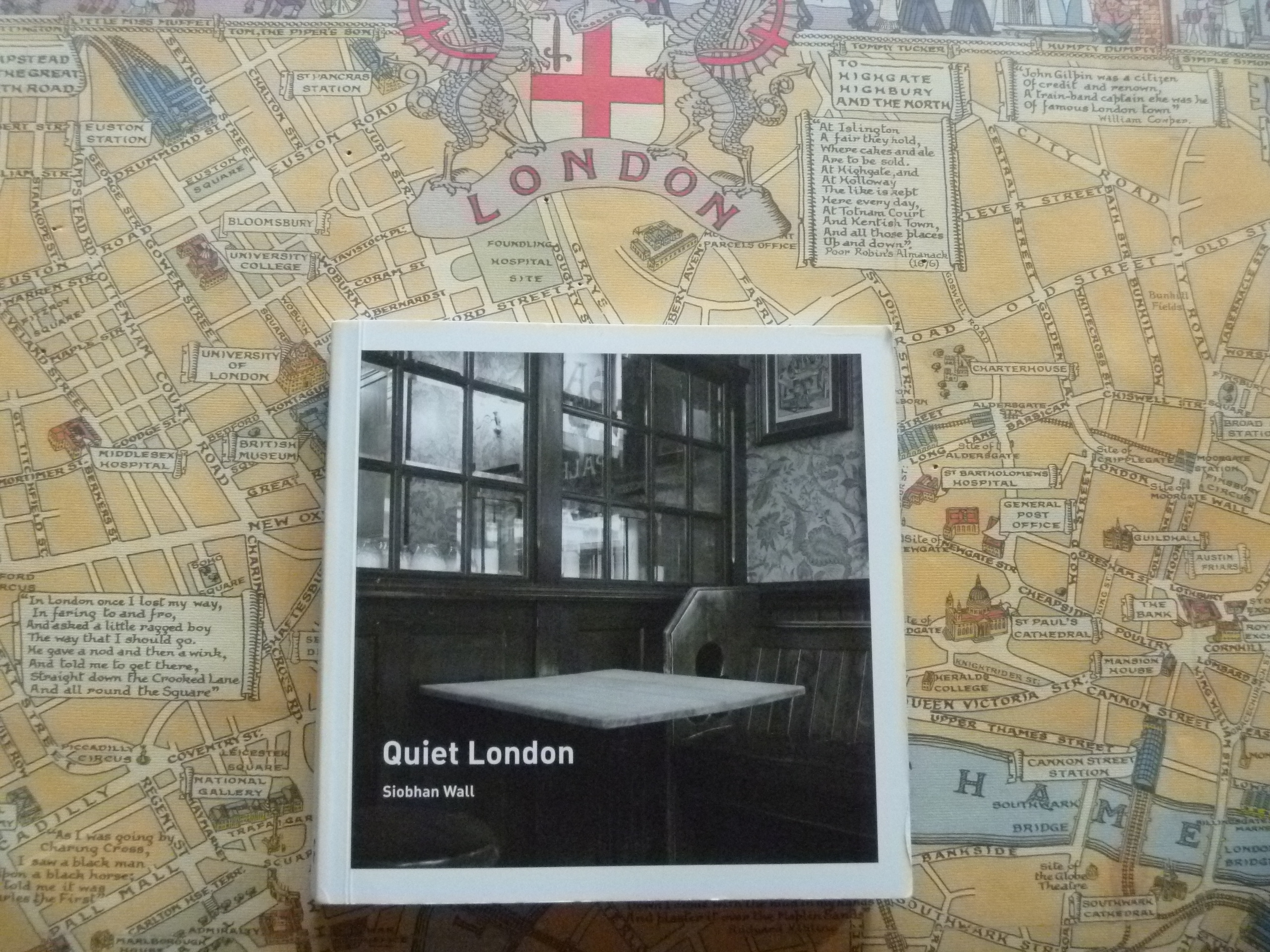
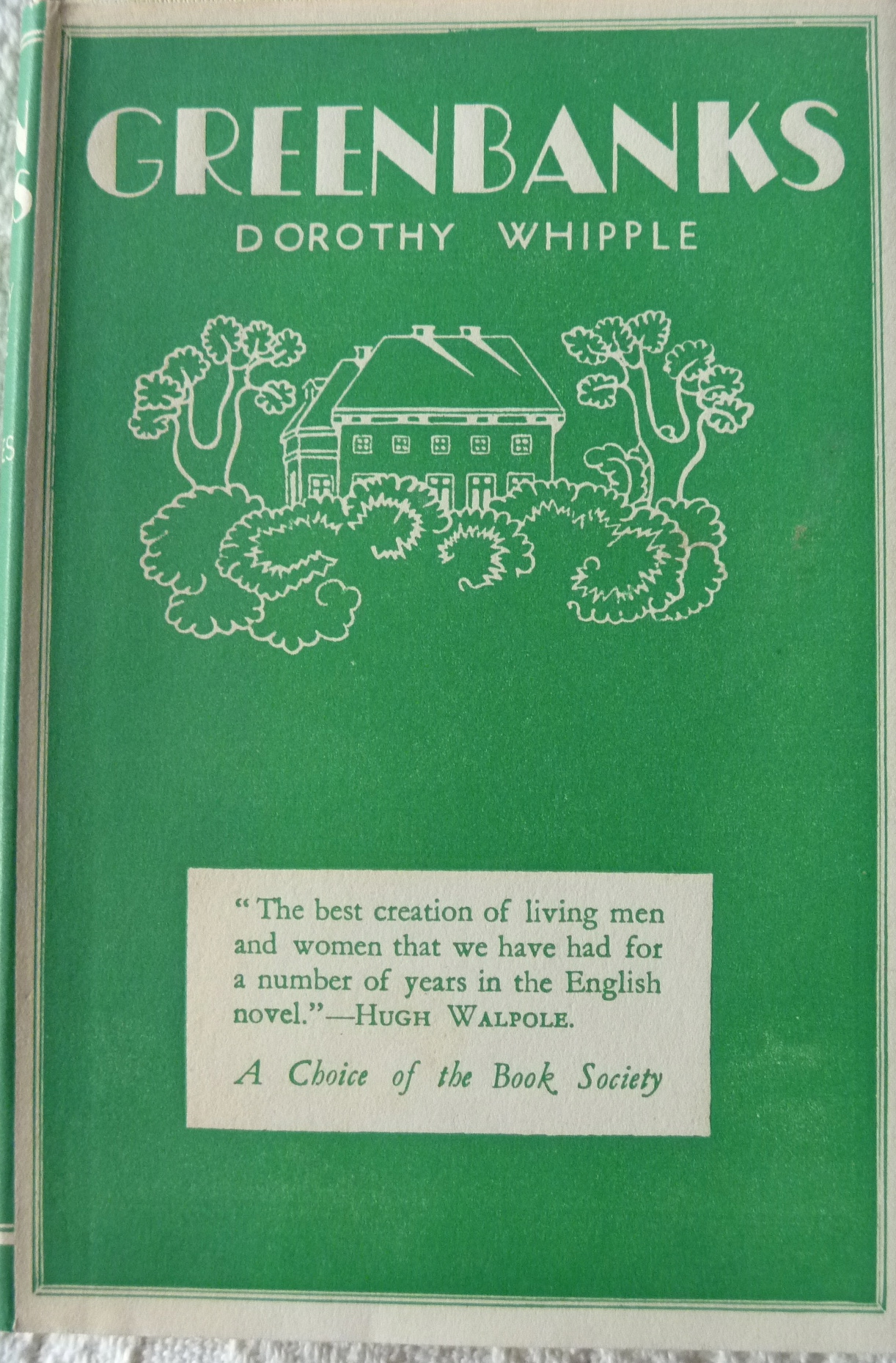
This book stood on a chair by the door.

Refreshed, we strolled along the Albert Embankment to The London Eye where we met huge milling crowds and quickly bought tickets for the Thames Clipper service to take us back down the river to Tower Pier, a short walk from our hotel.

We chose and booked a Quiet restaurant for our evening meal : Carnevale near The Barbican (QL p. 91). After an hour or so in which to refresh ourselves we then walked the mile or so to and from the restaurant. We marvelled at the height of so many buildings, the almost hidden churches and all the new work that seemed to be going on in order to cram this city with even more curiously shaped high buildings. On our way back we noticed that one of the hidden churches was still open so we peeped inside at the exhibition “This is not a Plate : your heritage, your language, your culture“. St Ethelburga’s Church (QL p. 66) is a centre for peace and the exhibition and late opening were to coincide with the London 2012 Olympic Games.
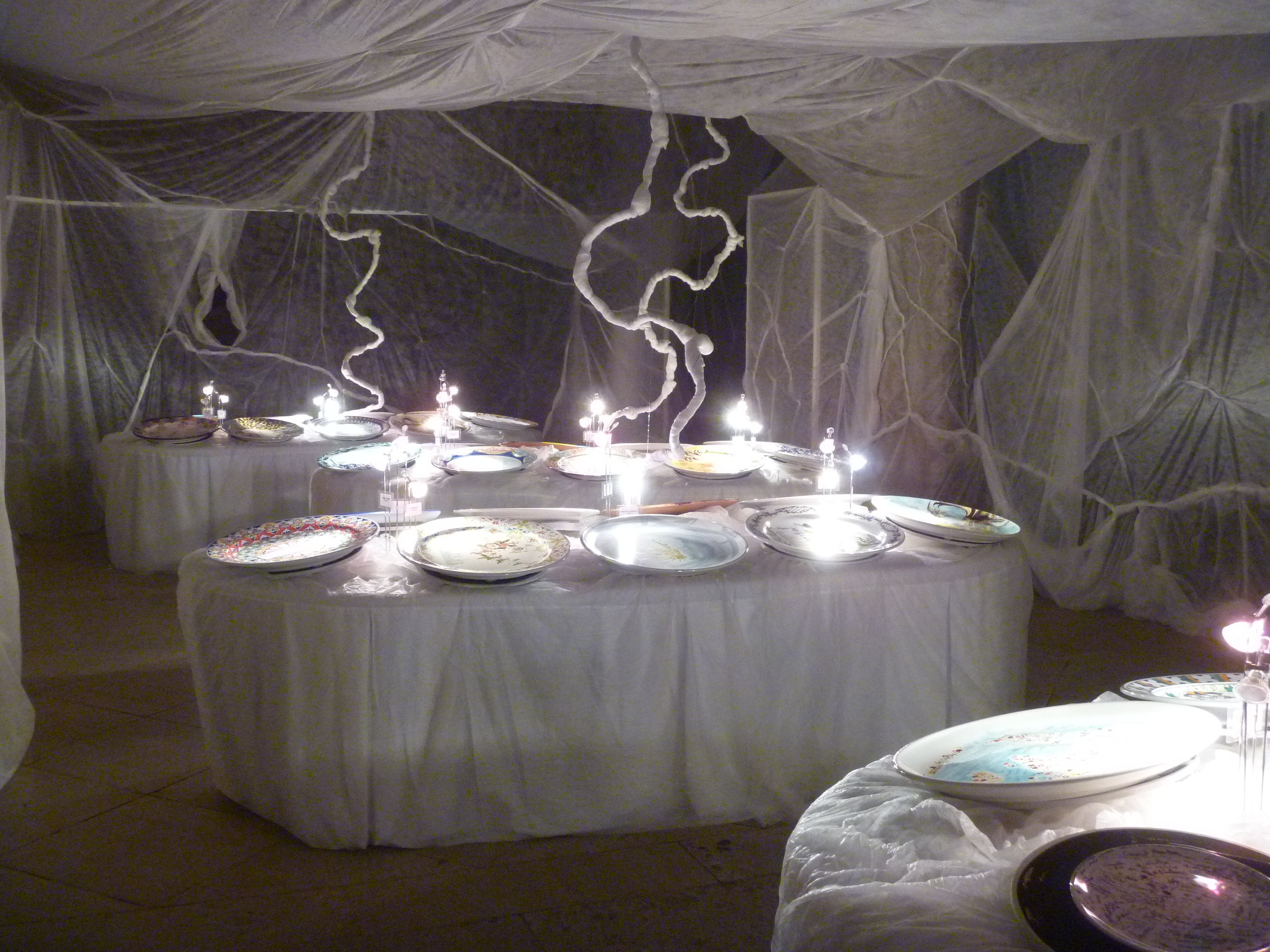
This is not a Plate display

“Following devastation by the IRA bomb in 1993, this small 700 year old church has been transformed into a centre for peace and reconciliation. Not only are services still held here, meditation sessions are also offered once a week. In the pebbled courtyard visitors can enter a Middle Eastern Bedouin tent made of woven goats hair – a special place for anyone seeking quiet contemplation.” [QL p. 66]
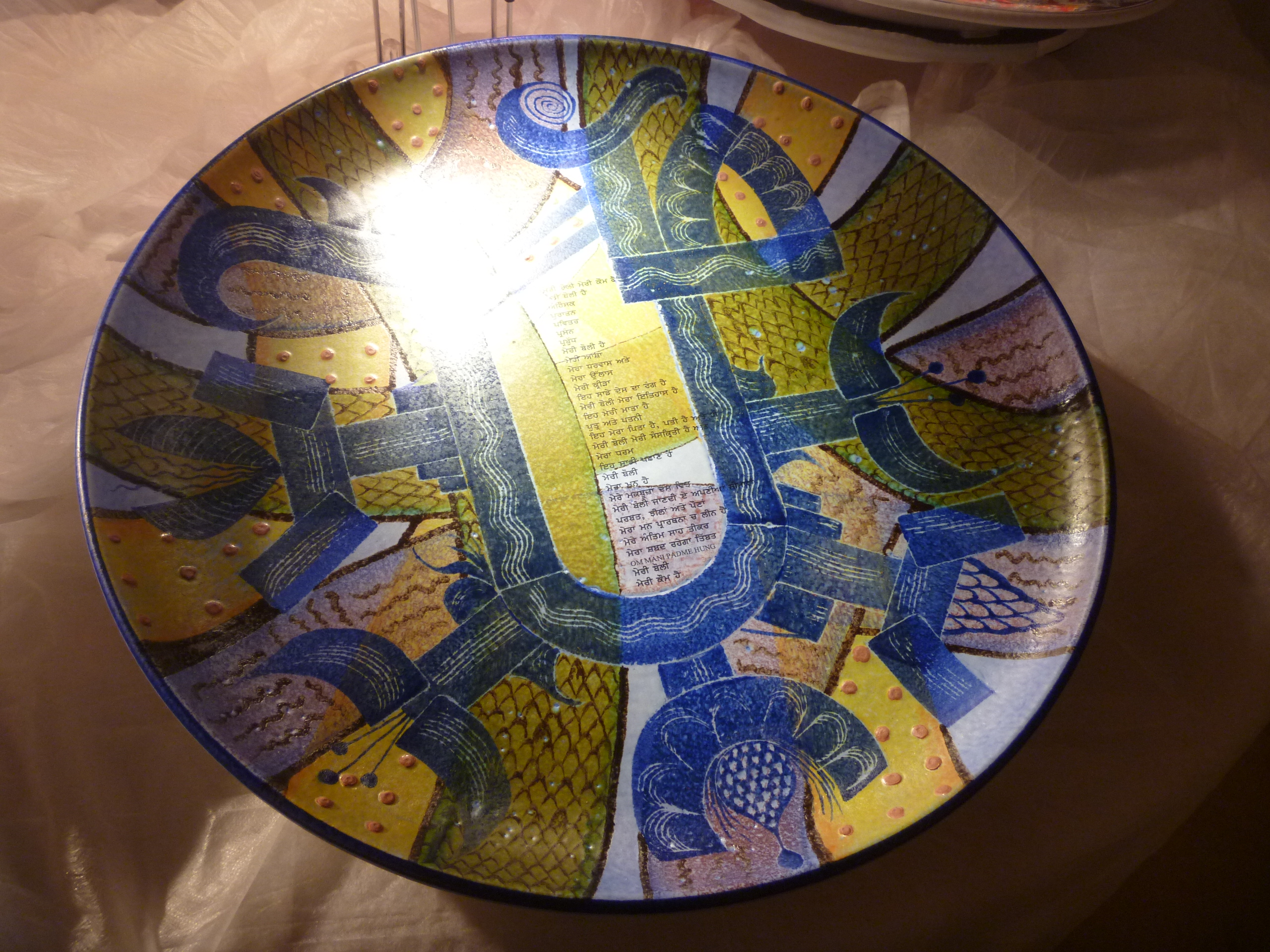
It kind of rounded off our hot and dusty day very serenely.

Sunday was another hot and sunny day but despite this we had decided to participate in one of The London Walks “The Old Jewish Quarter” departing from nearby Tower Hill at 10.30am. Perfect.

“This walk traces the history of London’s Jewish community in the East End. It’s a story that embraces the poverty of the pogrom refugees and the glittering success of the Rothschilds; the eloquence of the 19th-century Prime Minister Disraeli and the spiel of the Petticoat Lane stallholder; the poetry of Isaac Rosenberg and the poetry-in-motion of Abe Saperstein’s Harlem Globetrotters. Set amid the alleys and back streets of colourful Spitalfields and Whitechapel, it’s a tale of synagogues and sweatshops, Sephardim and soup kitchens. Guided by Shaughan.” [From the London Walks leaflet]

Lo and behold the highlight of this walk is a visit to The Bevis Marks Syngogue (QL p. 65) where Maurice took over from Shaughan to tell us more about the synagogue and its former members.

“Thanks to Oliver Cromwell, Jews in England could practice their own religion openly for the first time since the Middle Ages. In 1657, a Quaker builder was invited to build this London synagogue and it was completed in 1701. (He later returned all profits from its construction to the Jewish community). Bevis Marks is the oldest synagogue in Britain and has barely changed since the early 18th century. In the main room of the synagogue hang seven ornate brass candelabra, one for each day of the week, but overall, with its original wooden seating and simple balconies, the interior is very simple and unadorned.” [QL p. 65]

The walk finished just by Christ Church Spitalfields so we made our way down Commercial Street to Whitechapel Art Gallery. There’s a cafe serving quiches and salad, sausage rolls, Scotch eggs and cookies and cakes – all homemade. After a bite to eat and a cup of tea we found we had time to see one exhibit and we chose “Government Art Collection: Commissions: Now and Then” and “The Story of the Government Art Collection” a fascinating insight into art in public/government ownership.
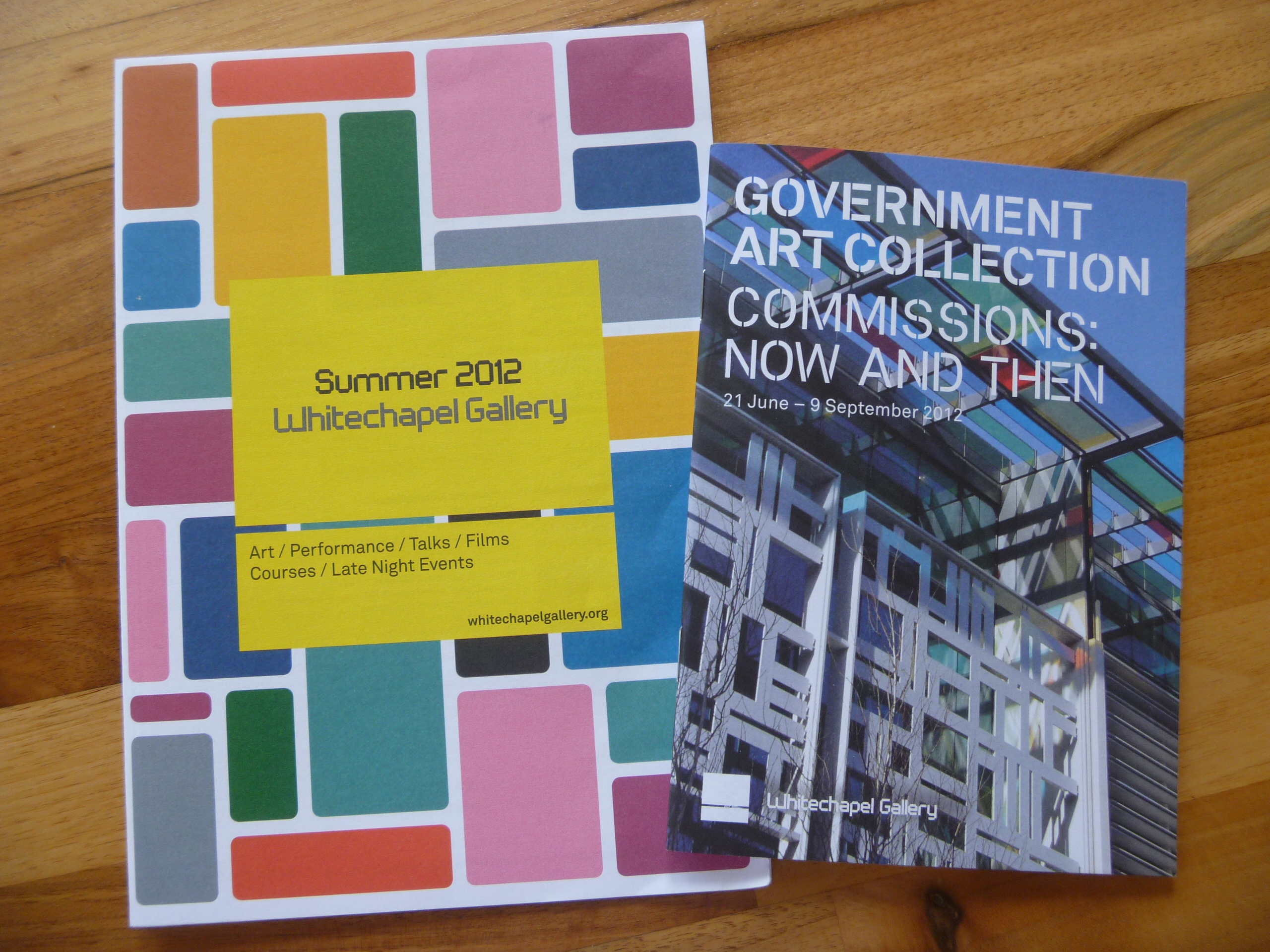
“It was the cost of decoration that prompted the use of art instead of wallpapers to cover the walls of government buildings in 1899. Today the Government Art Collection is one of the most important collections of British art, with 13,500 works dating from the 16th century to the present day displayed in over 420 government buildings worldwide.

On display for the first time from the Collection’s archives are rare documents, such as papers detailing the loan of Winston Churchill’s bust to the Oval Office in Washington from 1997 to 2008, and records of paintings hung in 10 Downing Street under Prime Ministers from the first Duke of Wellington to Margaret Thatcher. A 1962 document records artist William Coldstream’s proposal that the Whitechapel Gallery hold an exhibition of the Collection, while a World War II photograph shows the bomb damage to the State Rooms at 10 Downing Street.” [Whitechapel Art Gallery promotional literature]

A Quiet Weekend with Tea and Cake and much more besides!
Tea and Cake and Quiet London (1)

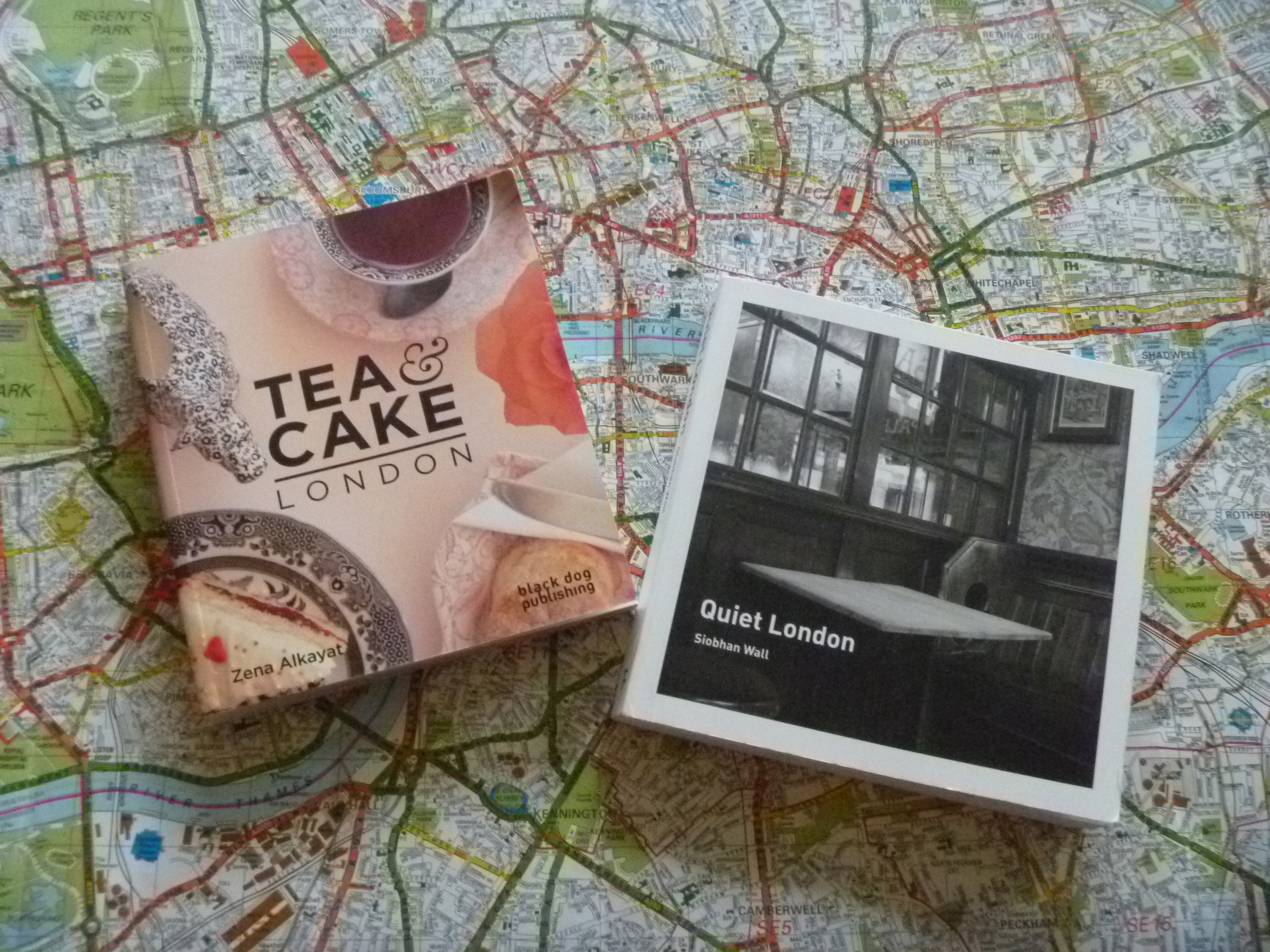
Our visit to Benjamin Franklin House (QL p. 23) on Friday was such a success for us both that we decided to devote the rest of the weekend following up places suggested by Siobhan Wall in her book Quiet London and some eateries suggested in another little book of mine Tea and Cake London by Zena Alkayat.

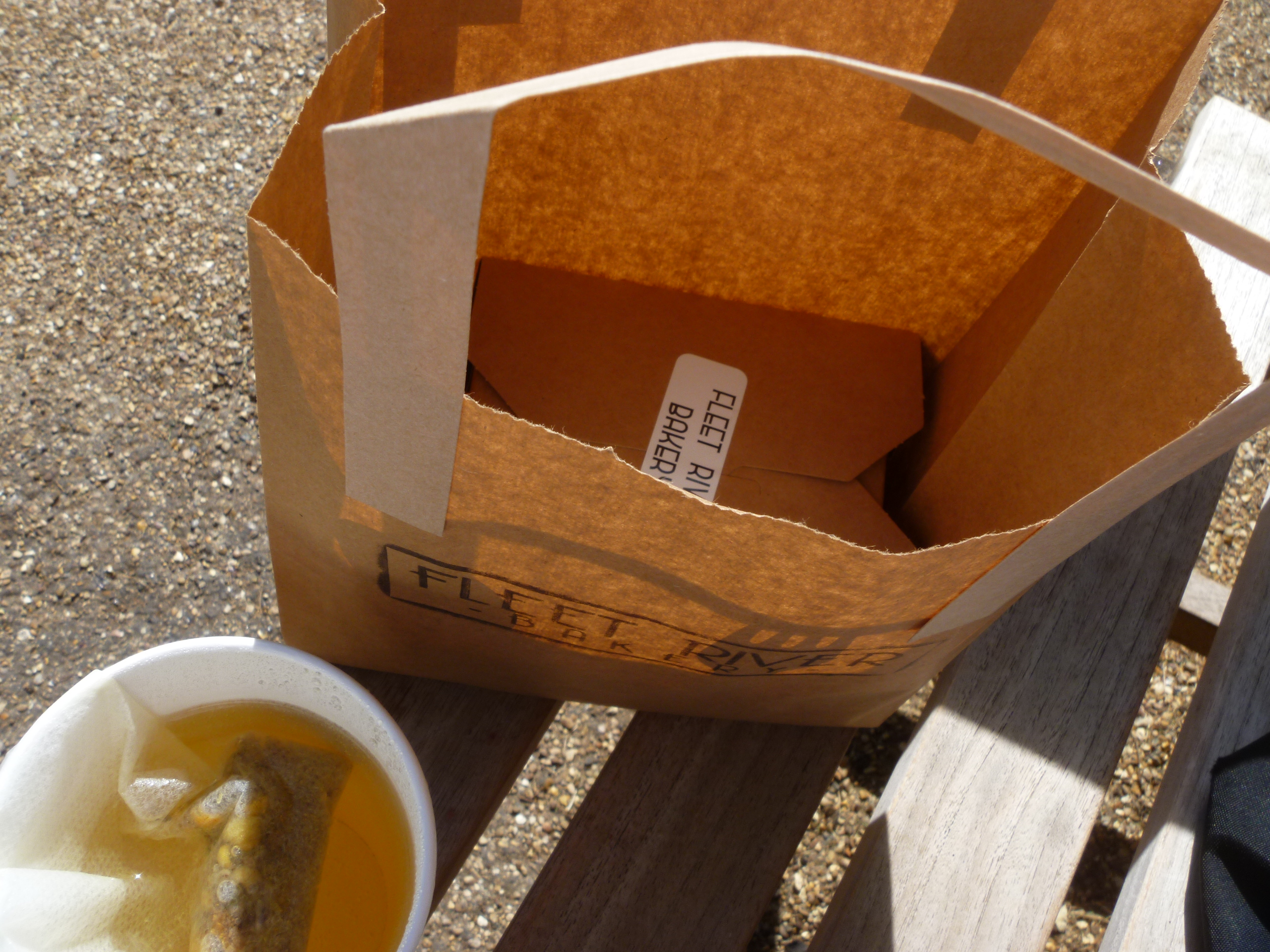
From BHF we trotted off to Lincoln’s Inn Fields to try to track down The Fleet River Bakery  (T&C L p. 40) mentioned in the Tea and Cake book. We eventually found it and bought ourselves tea and cake (my cake was Hummingbird – pineapple, mango and pineapple – so lovely and moist). We decided not to eat in but to take our food and drink into the Lincoln’s Inn Fields and picnic on a park bench in the sun.

London is so interesting and you never know what you might see so we usually walk whenever we can. Our route back to the hotel took us along Fleet Street, Ludgate Hill, past St Paul’s Cathedral, past 30 St Mary Axe (The Gherkin, to you and me) and finally to Aldgate and Minories.

The Royal Exchange and The Gherkin

We called a few of the Quiet restaurants that evening but all were full. We ended up at Morito the Tapas bar next to and owned by Moro on Exmouth Market. The tapas was excellent but the bar would not gain a place in Quiet London!

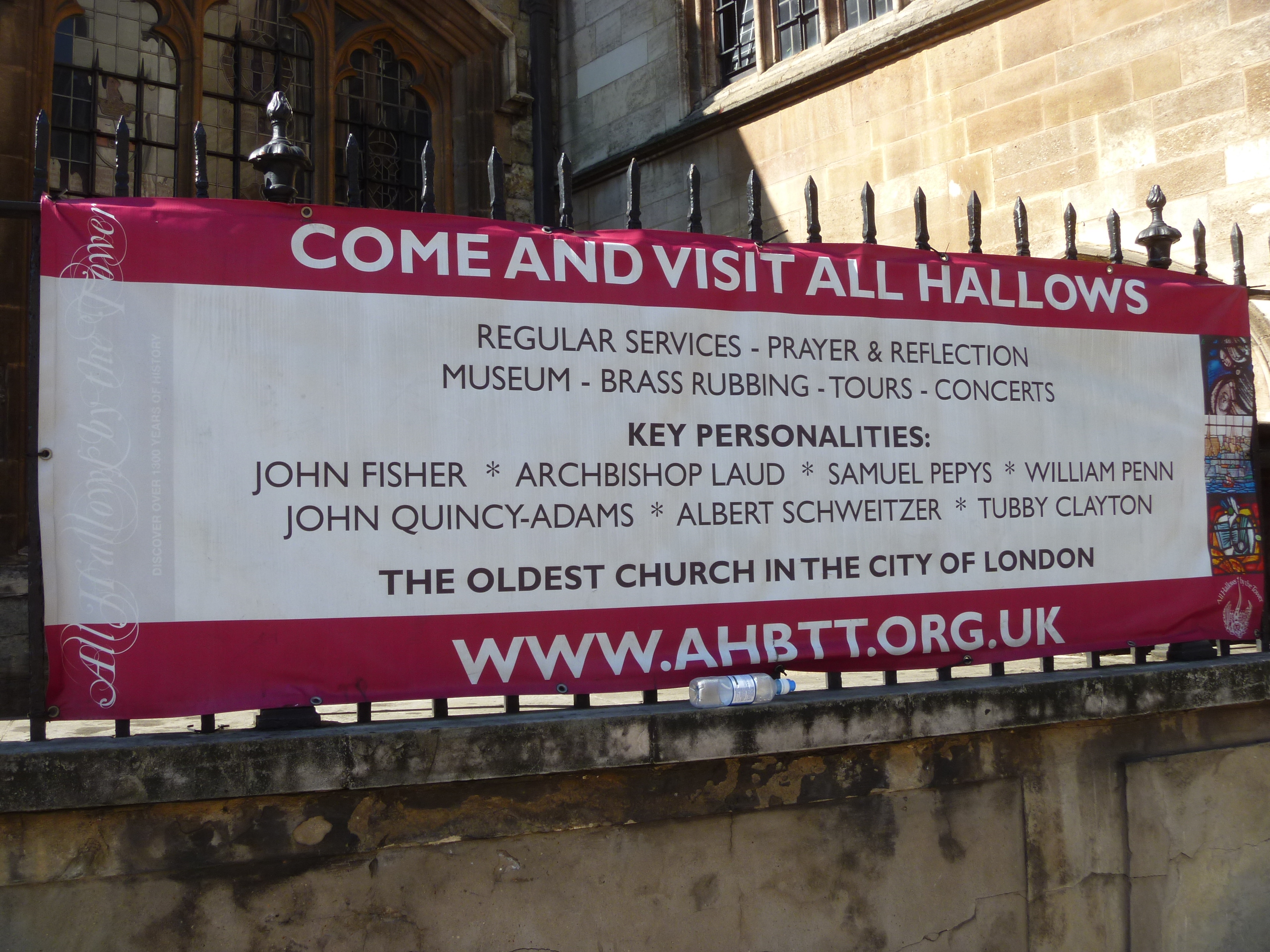
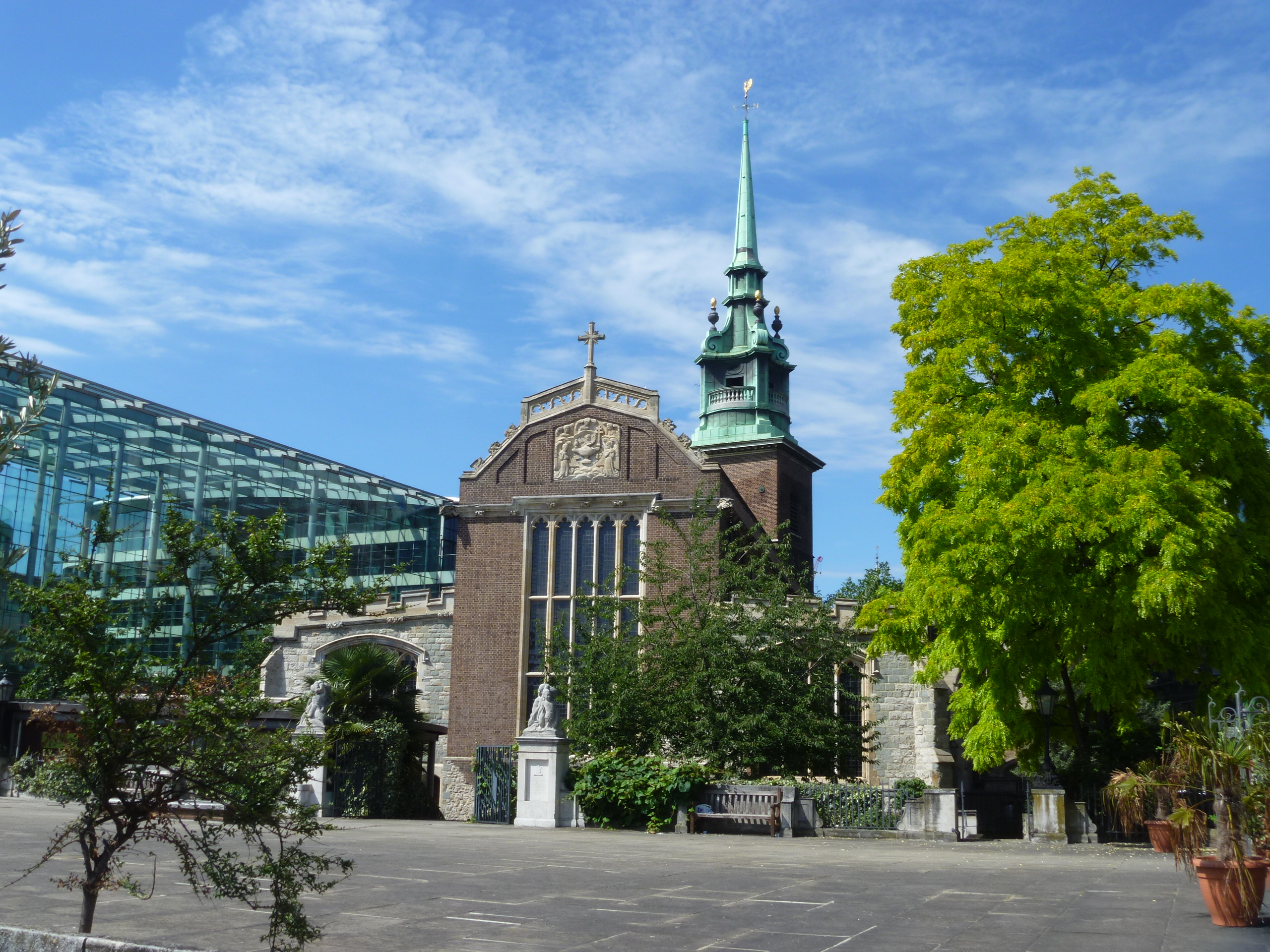
Next day we had a number of places in mind and began our Quiet London Trail at the Crypt Museum (QL p. 20). A 20 minute ‘pop in’ to the church of All Hallows By The Tower ended about two hours later! You can see why (and this poster does not mention the exhibition “Bonuses, Benefits & Bailouts : the morality of the King James Bible”).

All Hallows By The Tower

“To tie in with the 350th anniversary of the Book of Common Prayer, All Hallows by the Tower and The Museum of the Book in Limehouse are pleased to present this exhibition of manuscripts, first edition bibles, prayer books and other artefacts challenging our thinking on issues of legality versus morality using the King James Bible as a starting point.” [Summer Programme leaflet]

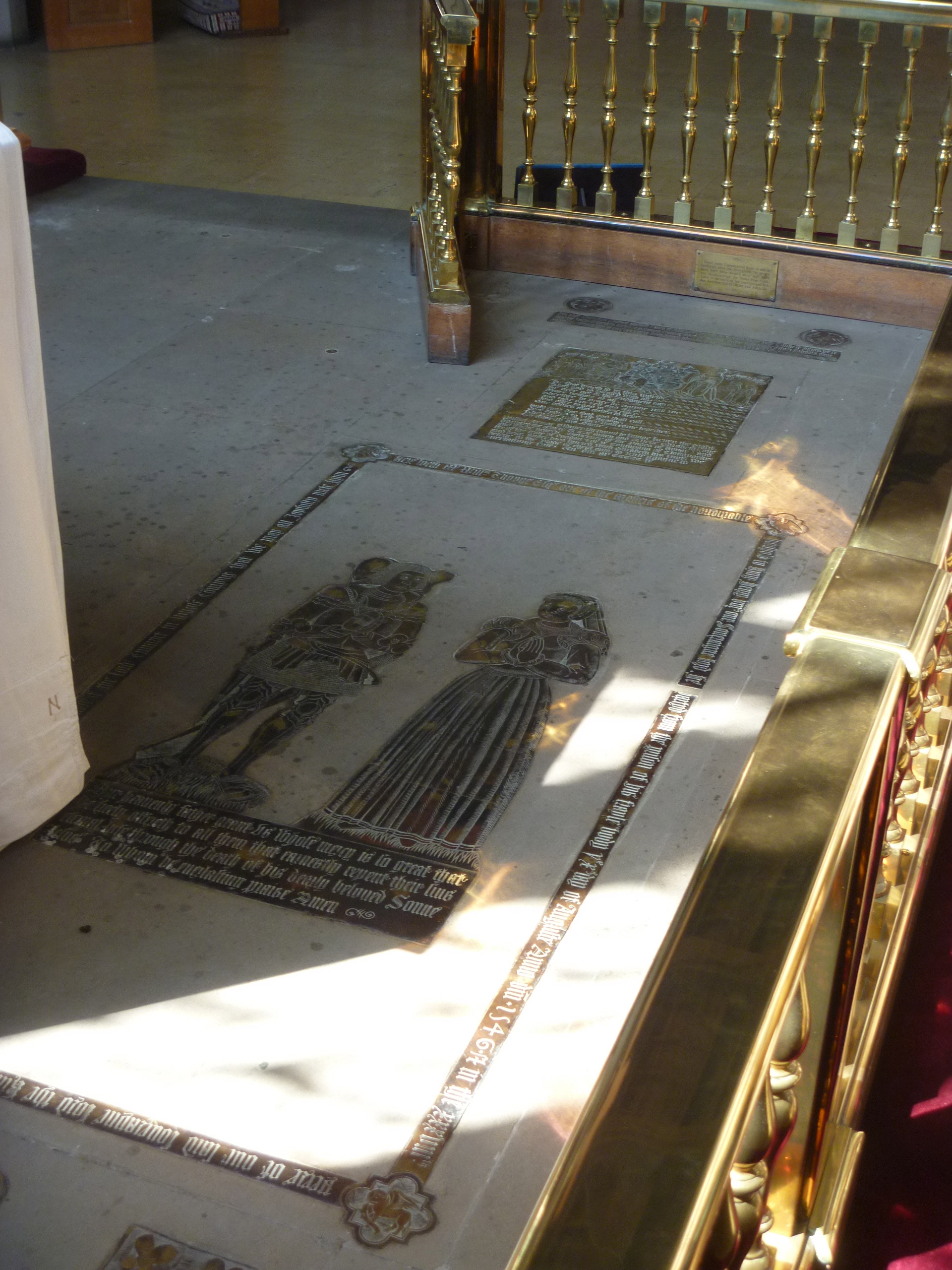
“This tiny museum lies underneath one of London’s original Saxon churches. In the crypt is a Roman tesselated floor from a house built in the late 2nd century. The museum also holds registers dating back to the 16th century. The highlight, however, is the intricate brasses inlaid in the stone floor of the church, near the altar.” [Quiet London, p. 20]

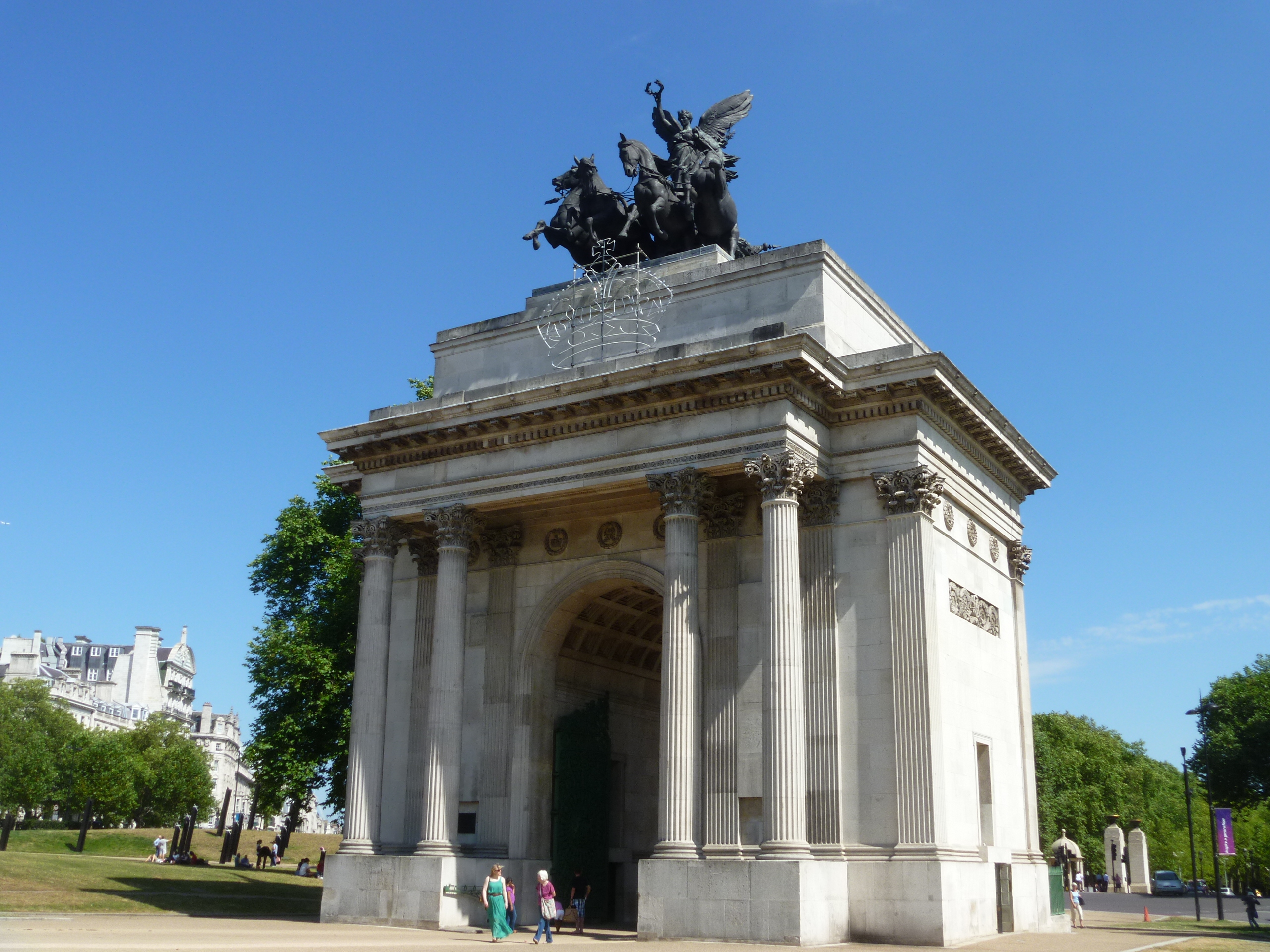
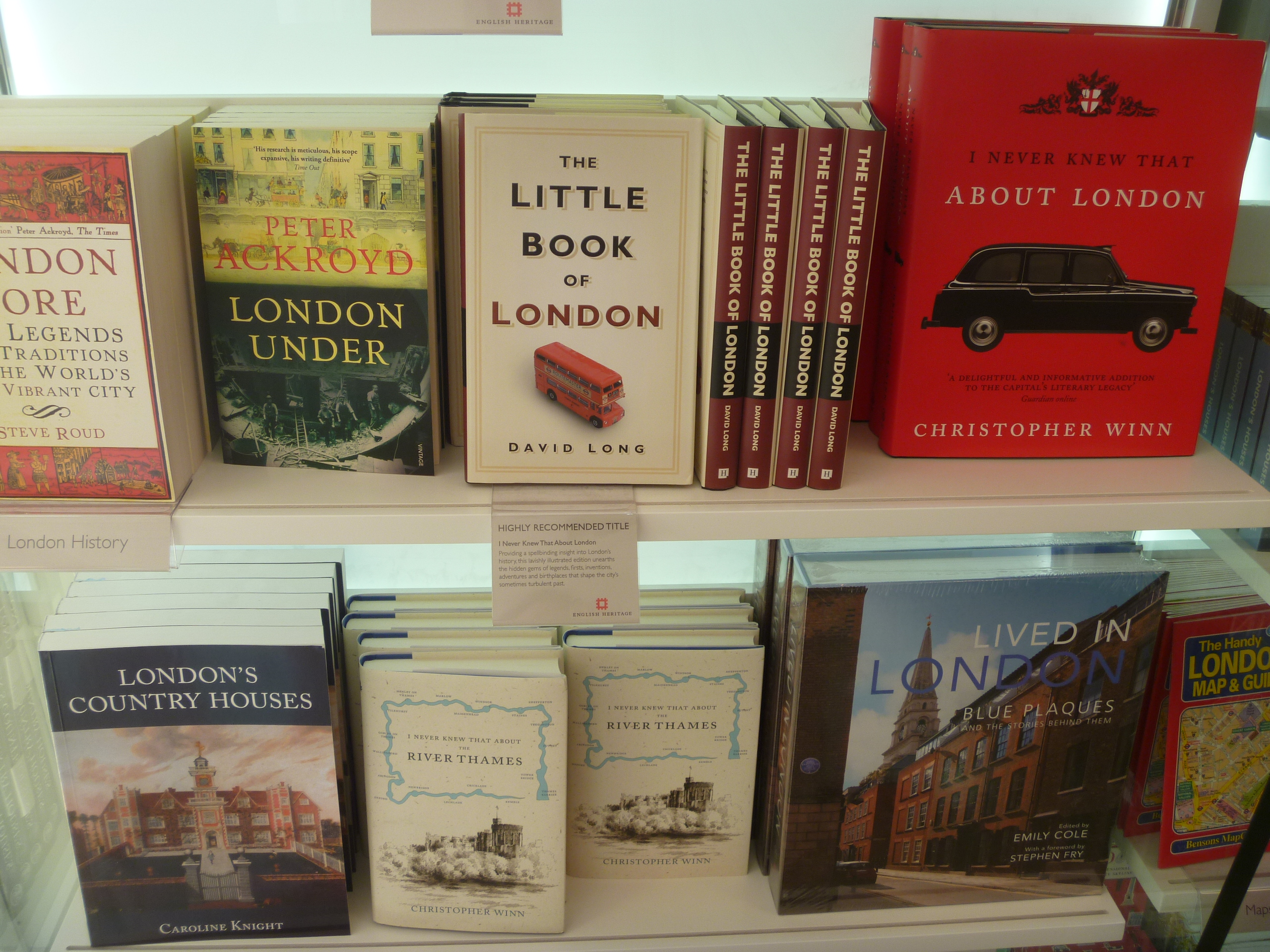
Moving on from All Hallows we visited The Wellington Arch. Recently opened by English Heritage this London landmark has not yet arrived in Quiet London. You can climb (or take the lift) to the top for views towards Hyde Park, Buckingham Palace Gardens, Green Park and Piccadilly. There’s an exhibition space (at the moment it commemorates 100 years of Blackpool Illuminations and the Blackpool Tower), a further gallery showing the history of the Arch and its former locations plus a bijou bookshop of London book titles.

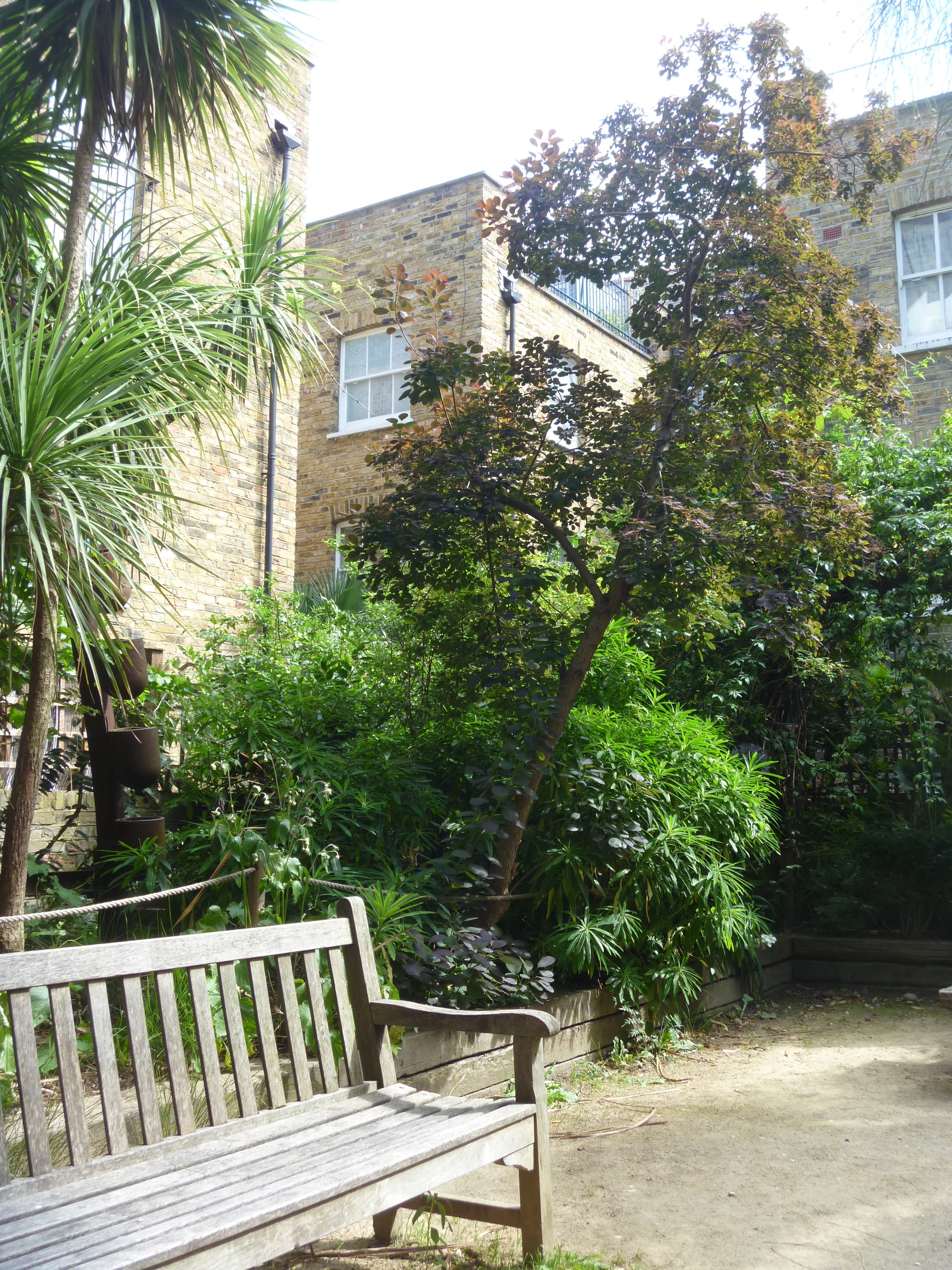
Next up we crossed the river (underground by tube) to Vauxhall. During the 17th, 18th and 19th centuries the pleasure gardens of Vauxhall were one of the London places to see and be seen but our hunt was for something very much more esoteric : Bonnington Square Garden (QL p. 46).

Bonnington Square Garden

“Known as ‘the Pleasure Garden’ in homage to the Vauxhall Pleasure Gardens, this former bomb site and derelict playground  was transformed by the imaginative residents of the Bonnington Square Garden Association. Amazingly, this south London oasis is full of lush tropical plants and intriguing public sculptures.” [QL p. 46]

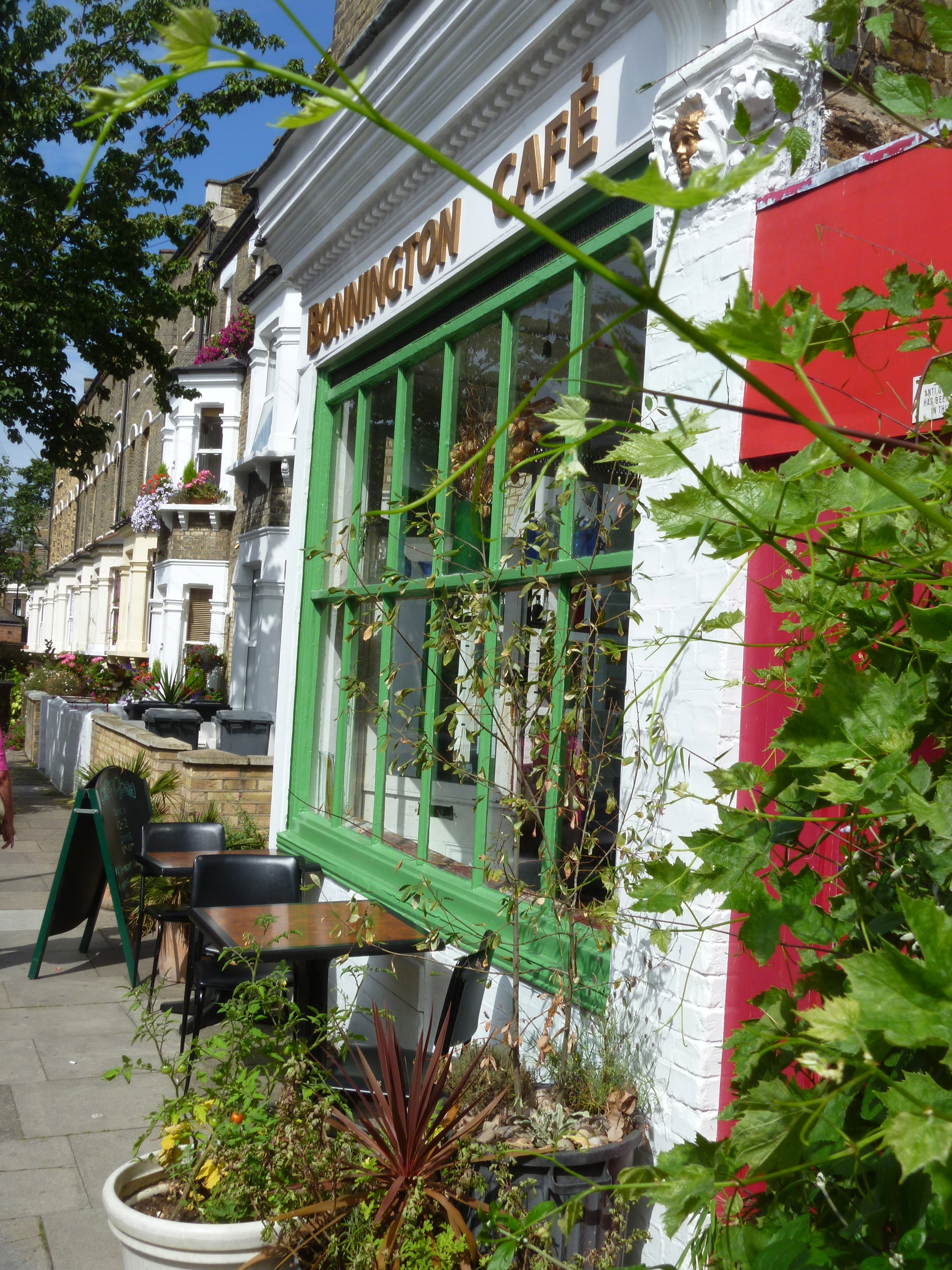
The residents continued their enthusiasm for all things green by planting out more areas in the neighbourhood, on street corners and other small open spaces.

Bonnington Cafe (plays music so not quiet!)

[To be continued]

An Eighteenth Century American Polymath in London : Benjamin Franklin

On Friday I joined my sister for a weekend break in London. Right now London is riding on the crest of the Olympic Games wave and there’s evidence everywhere that the Games have just taken place and the Paralympics are due to begin in about ten days’ time. We checked in at our bargain priced four star hotel in the City early on Friday and shared ideas on where to go and what to do. My first suggestion, taken from Quiet London by Siobhan Wall, was to call and make a booking to visit Benjamin Franklin House.

We’d both come across Franklin in a vague sort of way on our various trips to Boston and New England but we really knew nothing much about him. Our visit to 36, Craven Street right next door to Charing Cross Station was to change all that.

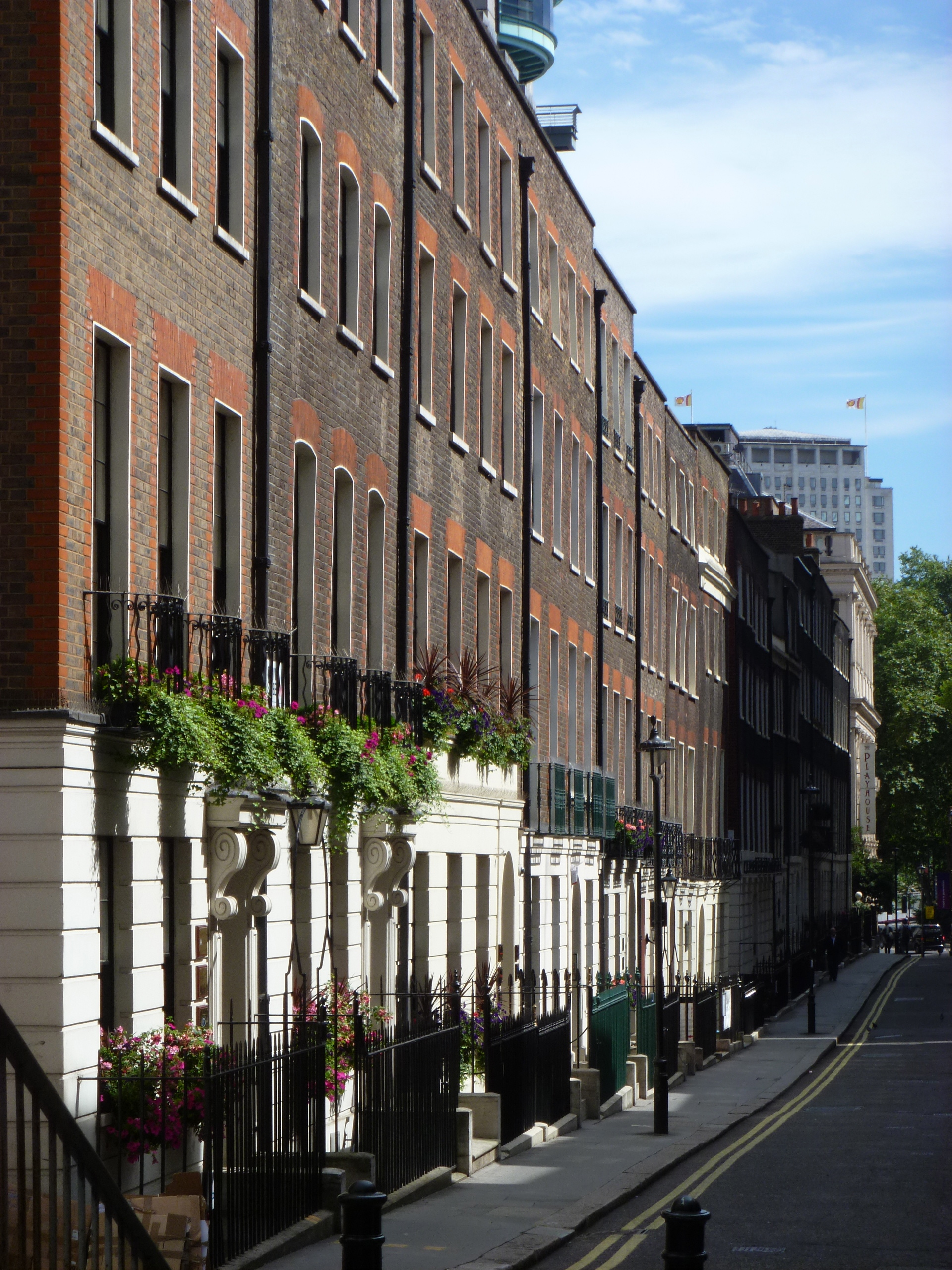
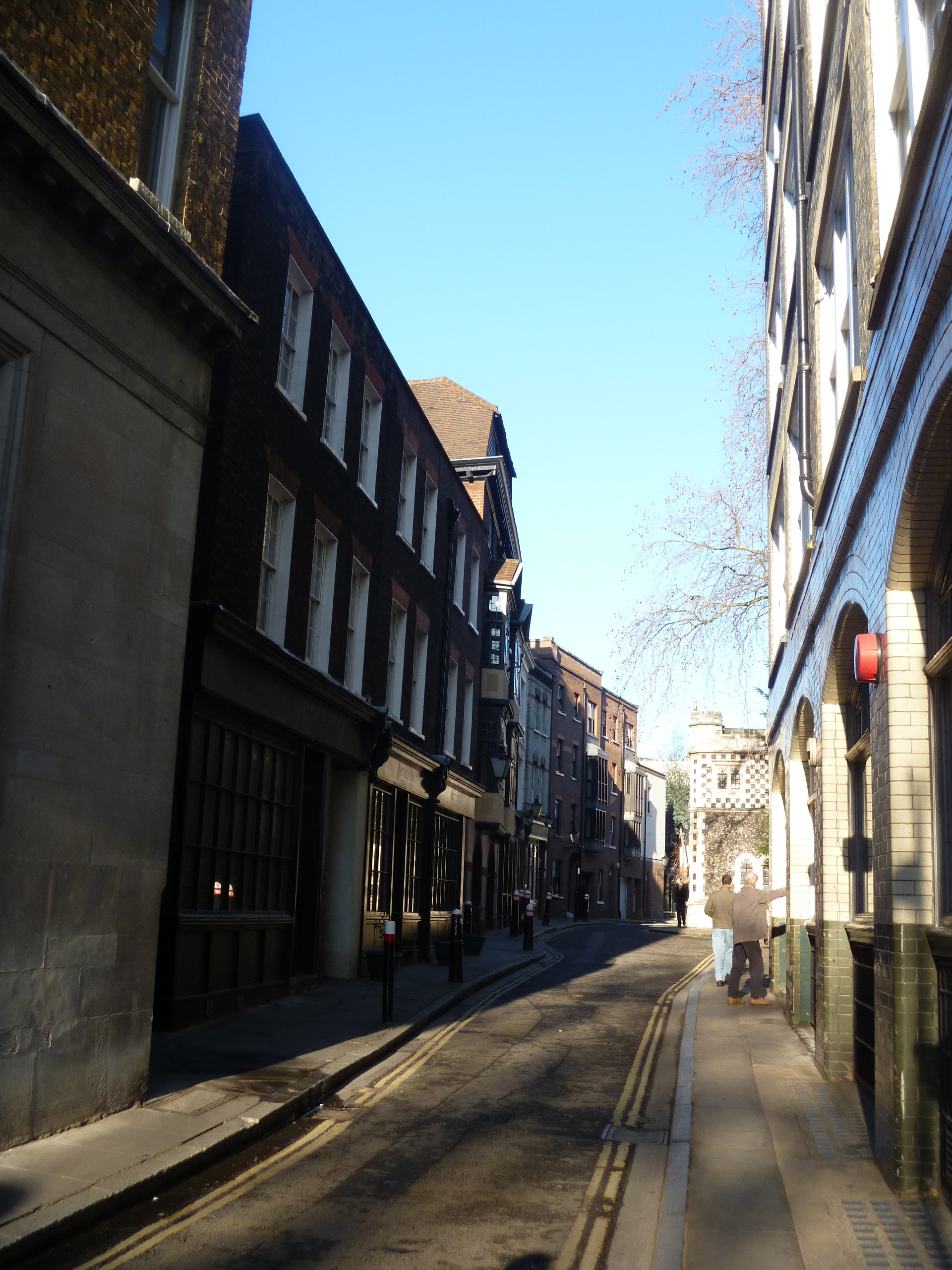
Craven Street, WC2

Here’s a brief resumé of his career in England taken from the Benjamin Franklin House website.

“While lodging at 36 Craven Street, Franklin’s main occupation was mediating unrest between Britain and America, but he also served as Deputy Postmaster for the Colonies; pursued his love of science (exploring bifocal spectacles, the energy-saving Franklin stove); explored health (inoculation, air baths, cures for the common cold); music (inventing the delightful glass armonica for which Mozart, Bach and Beethoven composed) and letters (articles, epitaphs, and his witty Craven Street Gazette), all while forging a hearty social life and close friendships with leading figures of the day.”

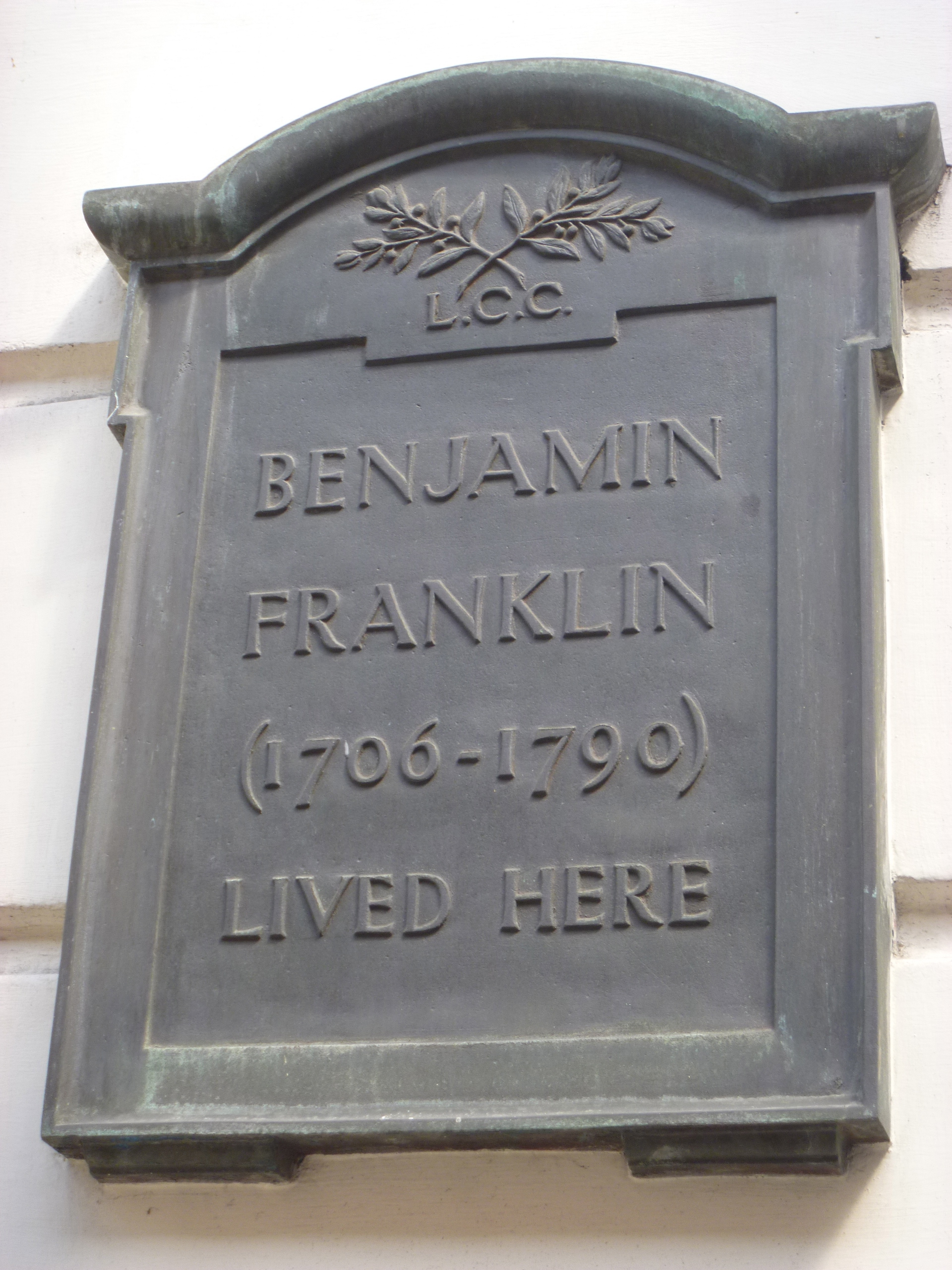
Franklin lived at 36 Craven Street between 1757 and 1775

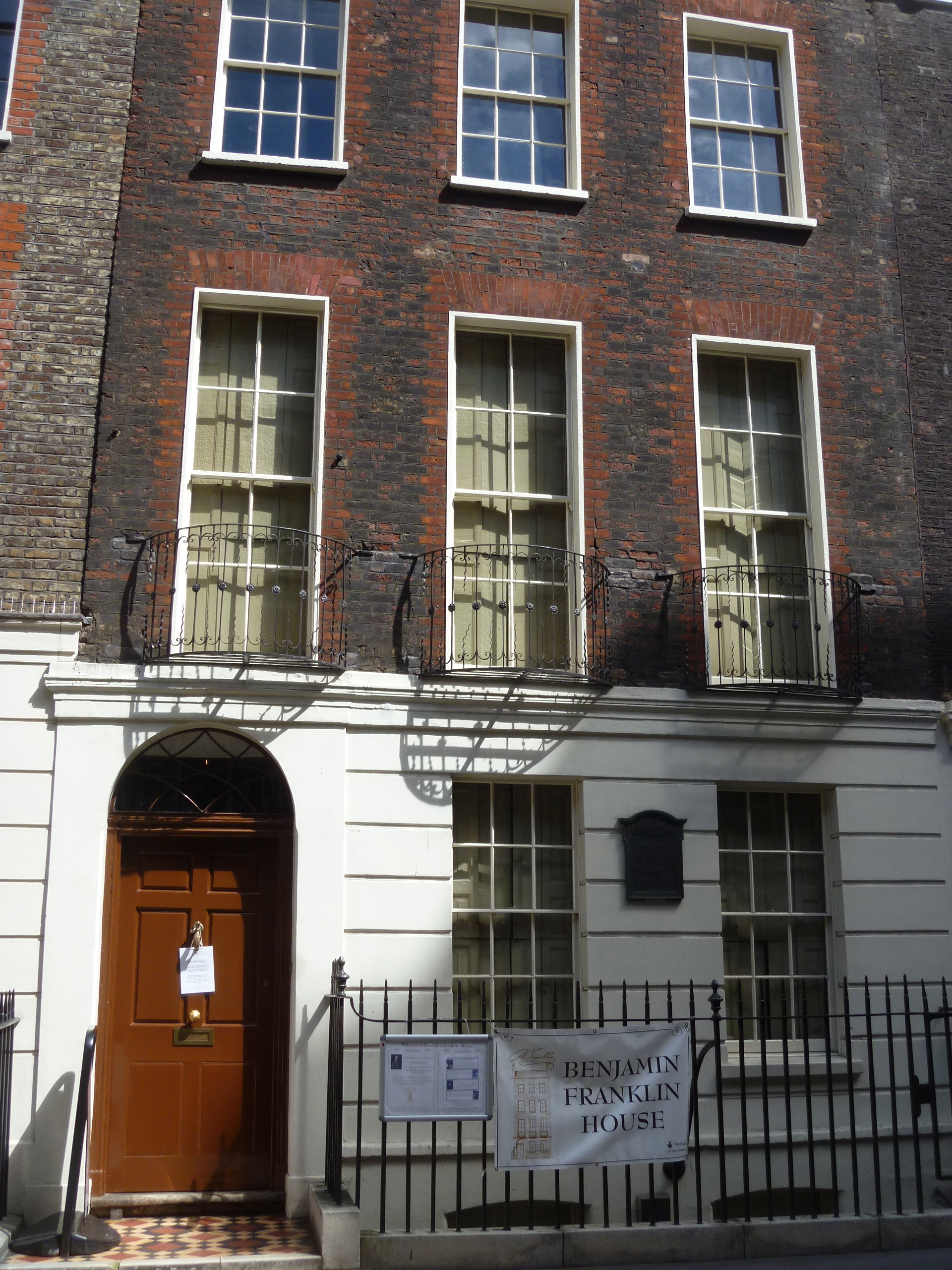
Benjamin Franklin House, 36, Craven Street, London, WC2

The Historical Experience brings to life the years that Franklin spent in London lodging in this house with Mrs Margaret Stephenson and her daughter Polly, later to be joined by Polly’s husband William Hewson (in 1770) who ran an anatomy school on the premises. The Historical Experience is based on Franklin’s last day at the house (20 March 1775) and we followed the actress as Polly around the house from room to room as the drama unfolded with use of lighting, sound and visual projection.

The house itself held great interest for us. It was so very like 13, Princelet Street in Spitalfields where we stayed last January. Both houses were built in the first half of the eighteenth century and have a very similar design and  layout and have managed to survive with surprisingly many of their original fixtures and fittings in place.

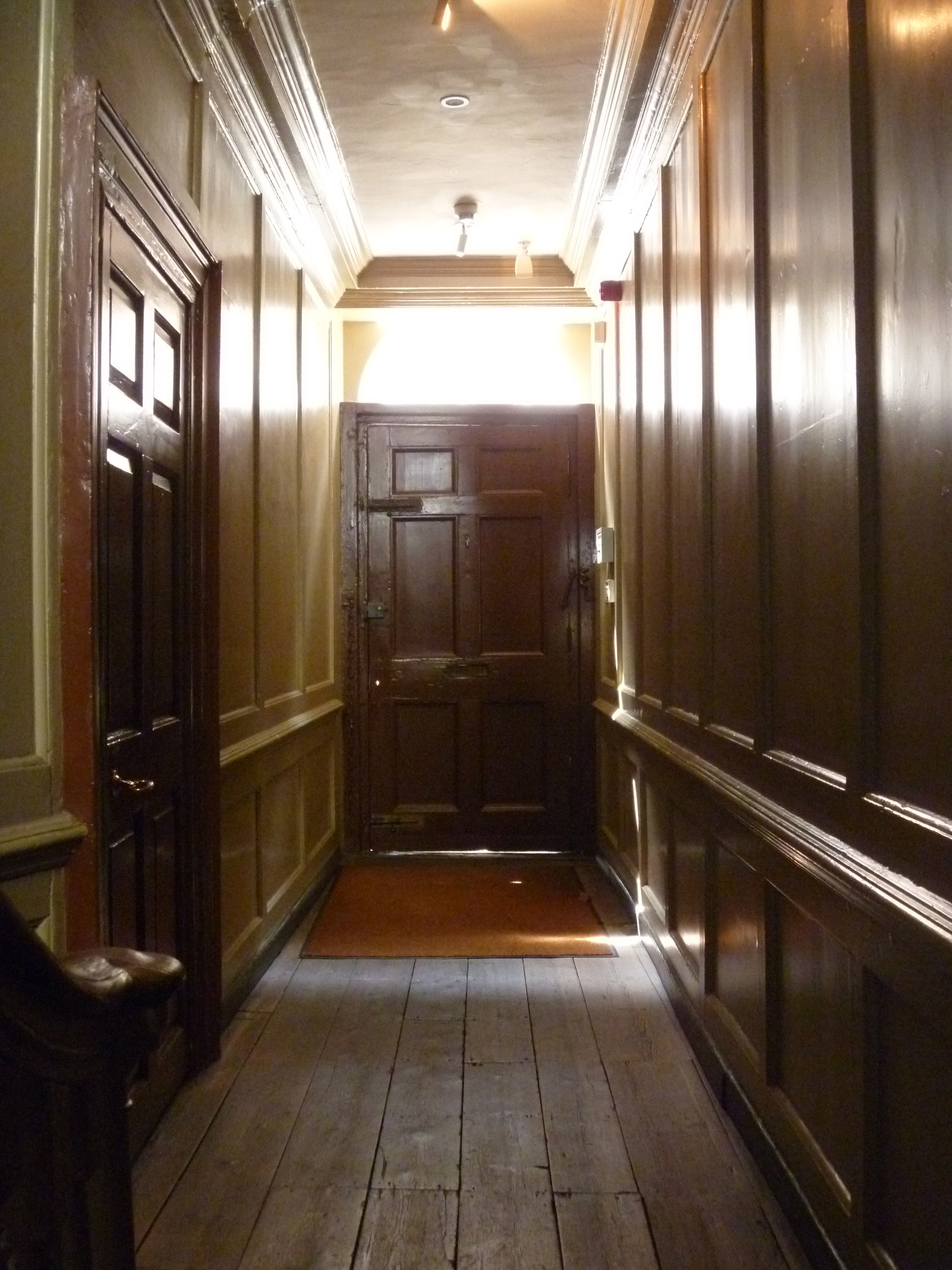
The Hall, Benjamin Franklin House

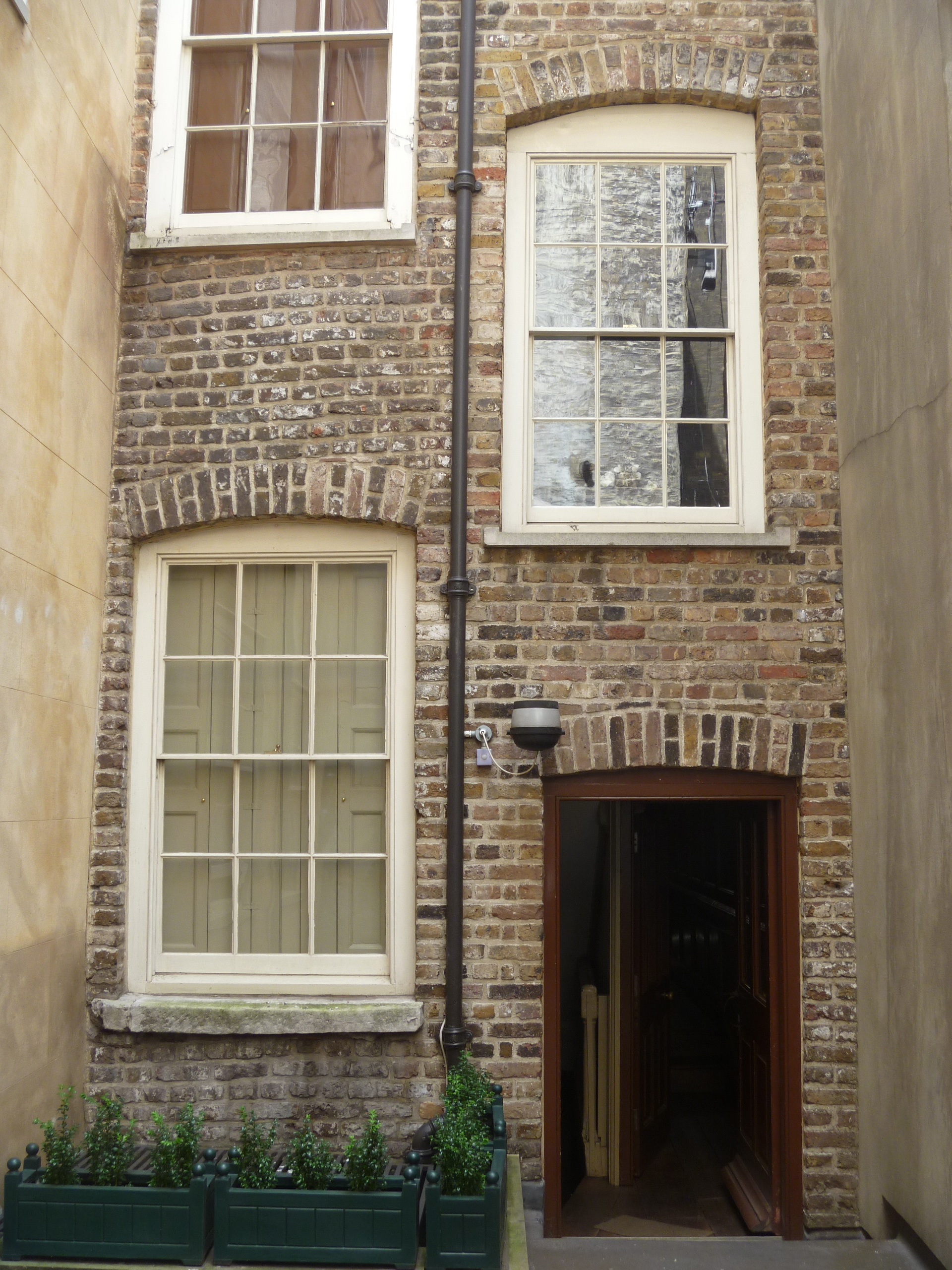
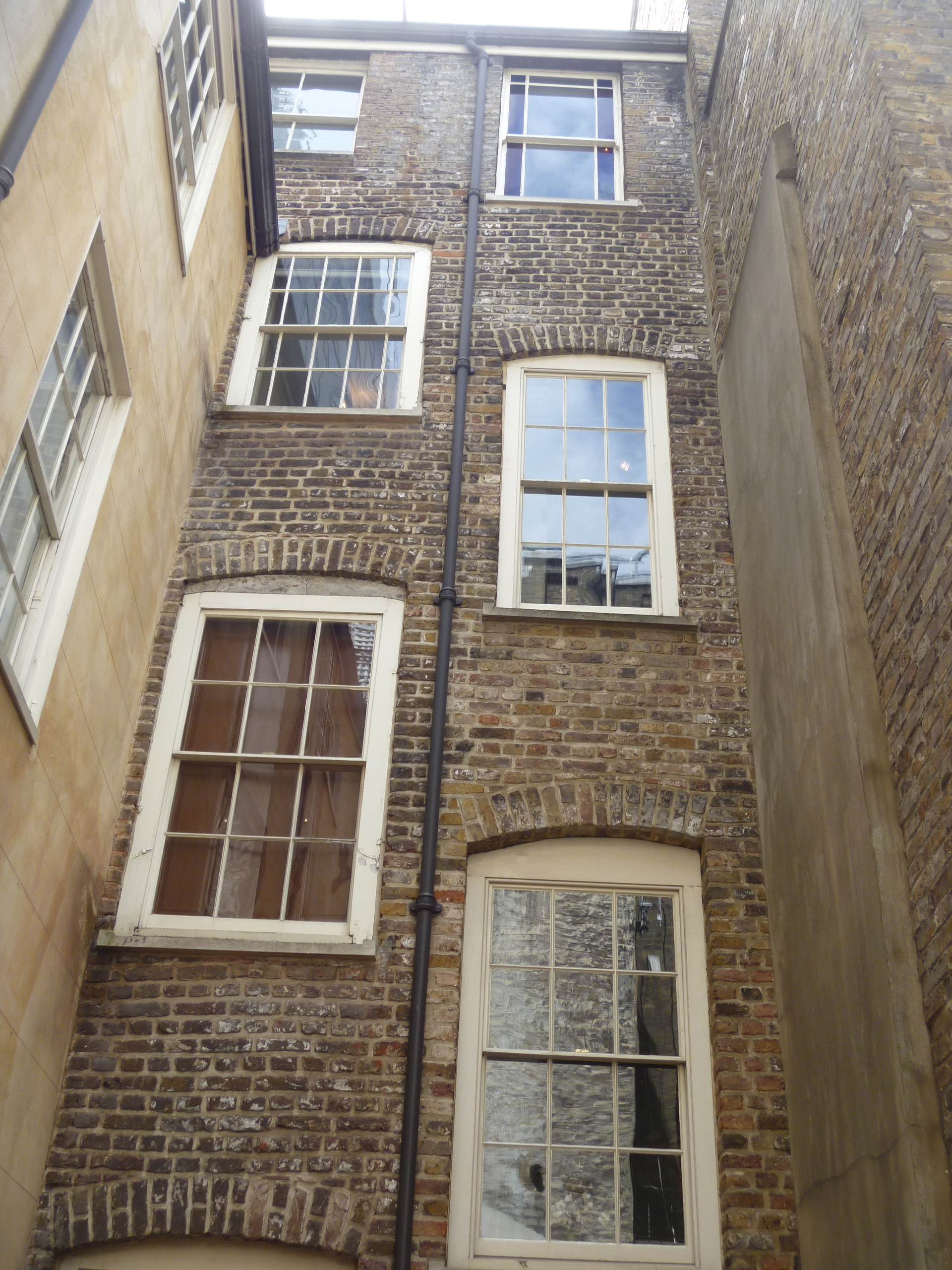
The rear of Benjamin Franklin House

The Friends of Benjamin Franklin House rescued the house from its dire condition at the end of the last century and after a great deal of hard work the Grade 1 listed Georgian building was opened to the public on 17 January 2006 which was 300 years to the day since the birth of Benjamin Franklin. Miraculously it is the only surviving house on the street. From the front this is not at all obvious but at the back the neighbouring houses are all of new brick.

“A house is not a home unless it contains food and fire for the mind as well as the body.”
Read more athttp://www.brainyquote.com/quotes/authors/b/benjamin_franklin.html#VtV0qrzico5gm2OK.99

The Brownlee Brothers of Bramhope

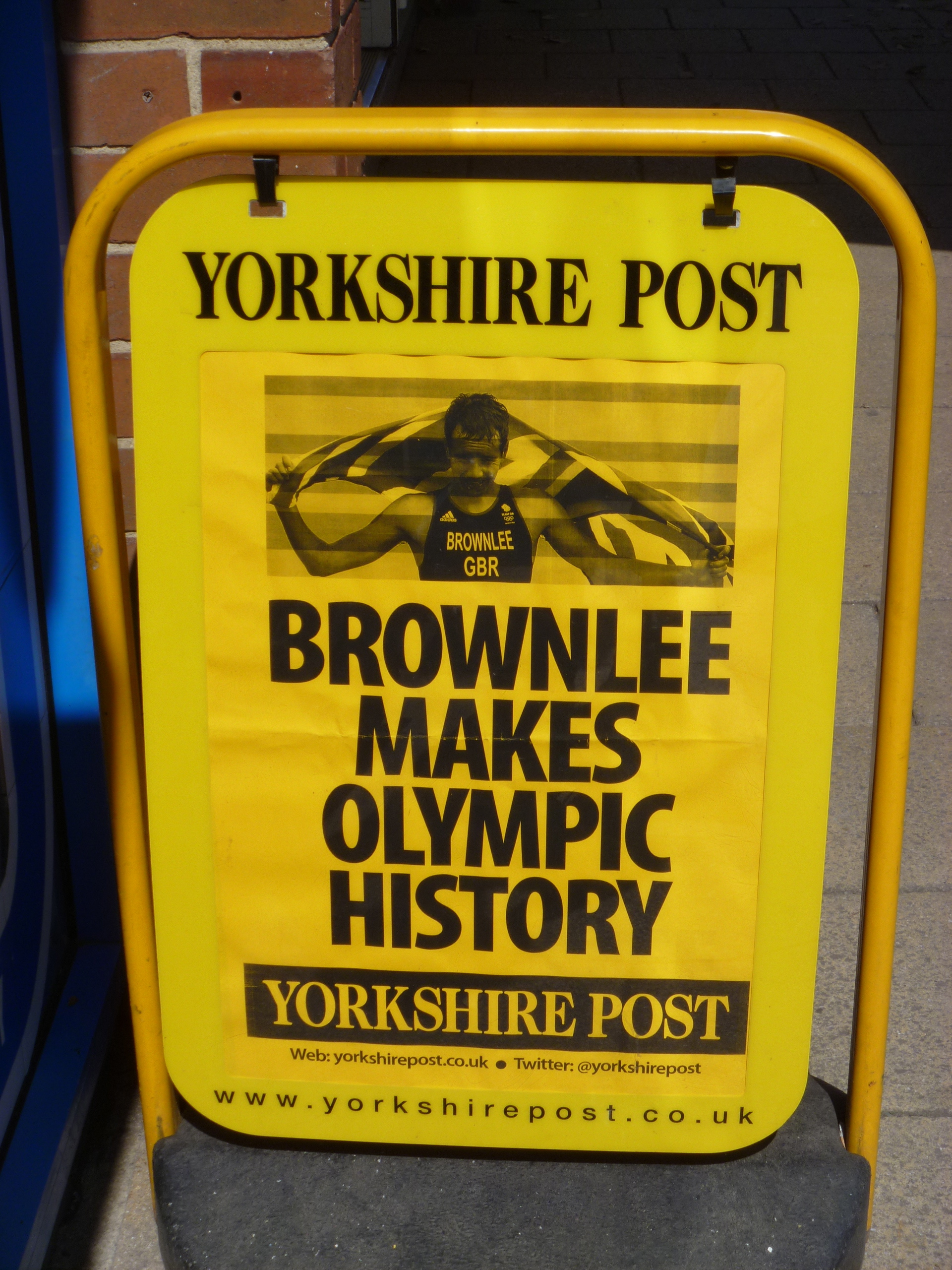
Read All About It! Read all about it!

The Golden Post Box on New Road Side Horsforth

Yesterday I was in Morecambe. I planned the trip a few weeks ago not realising that the 2012 London Olympics Men’s Triathlon was to take place from 11.30 on that very day. I missed seeing the race in its entirety, there was no public TV at the hotel (we did ask), but I received the good news by text almost instantly from a friend, followed by several others, whilst lunching at The Midland Hotel.

What we wanted to hear was that one of the brothers had won gold and the other silver. In fact the result was Alistair Brownlee – Gold and his brother Jonathan – Bronze. A superb effort and result nonetheless.

Alistair and Jonathan now live in Bramhope having moved there from nearby Horsforth. Both boys attended Bradford Grammar School where, along with my own two sons, they were keen members of the Cross Country Team. Sometimes we would share lifts to and from the school cross country coach on a Saturday.

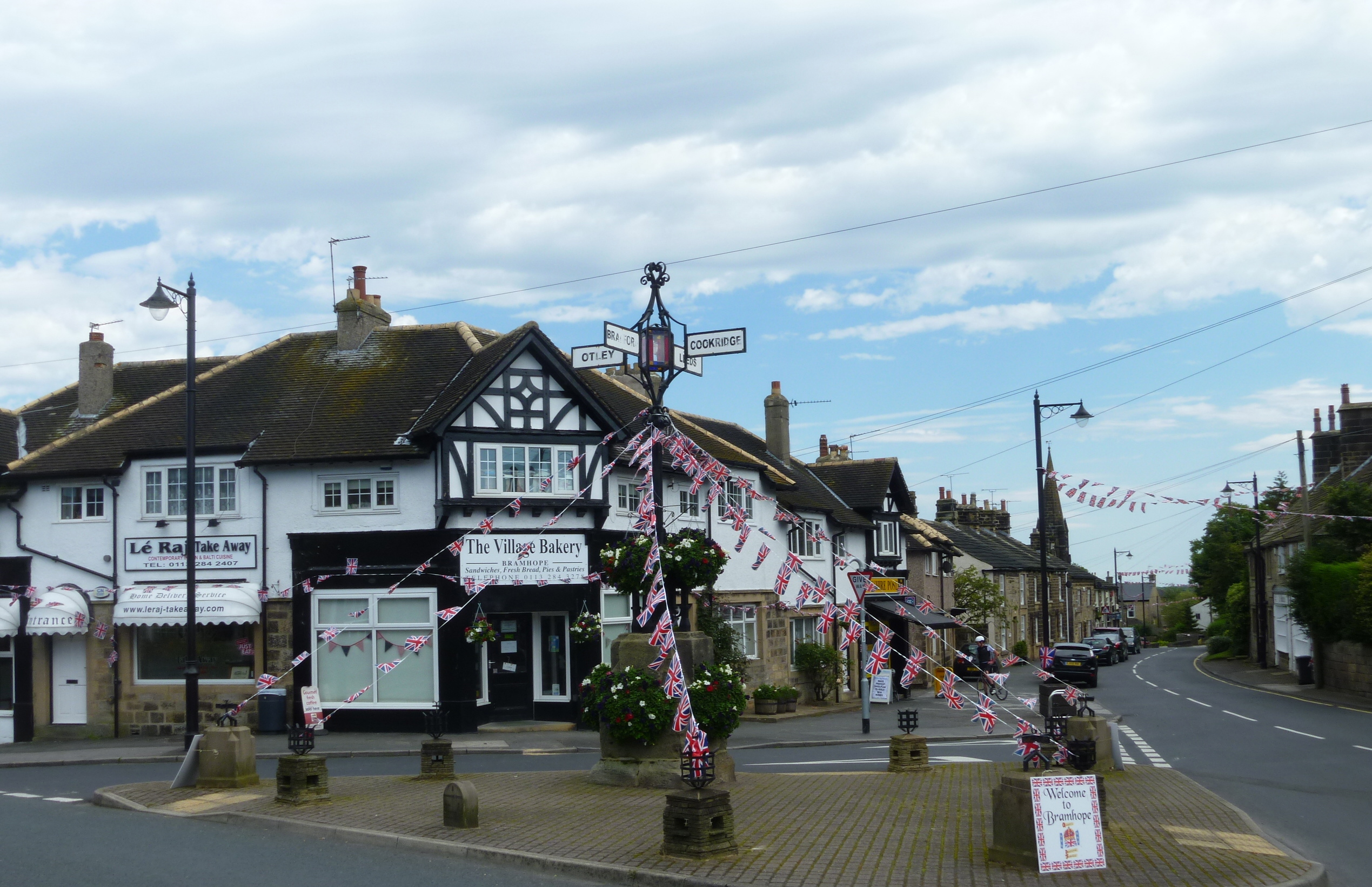
Every Sunday I drive through the village of Bramhope and for the last several months have noticed the street decorations for the Queen’s Diamond Jubilee which have stayed in place for the London Olympic Games. Two Sundays ago I remembered to take my camera with me and stopped to take a snap of the decorated village signpost. As I walked around trying to find the best angle my eye fell on two cyclists who had stopped outside the village shop. Two cyclists in Bramhope? Surely they must be Alistair and Jonny so I wandered over to say ‘hello’ and wish them good luck. We had a chat and I’m sorry I didn’t think to take a photo of them. You can just see a white cycle helmet behind the display in the picture below. That is Alistair.

Well done, boys! You have done Yorkshire and Britain proud. And Good Luck in the future.

I leave you with one further comment. Yesterday, after Alistair’s win, the medals table showed the county of Yorkshire in 10th position!
Ode to an Excellent Bookshop

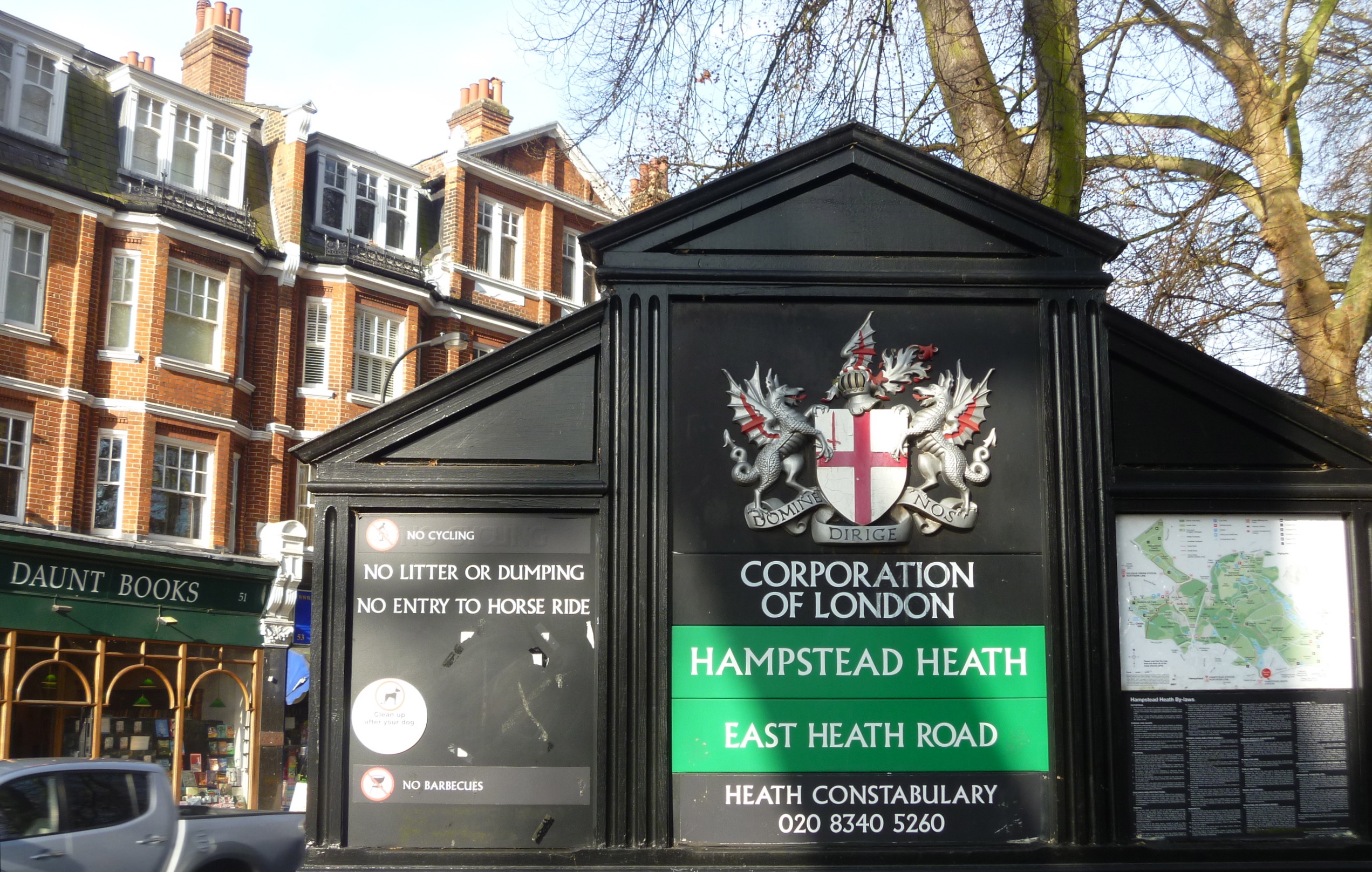
I don’t normally buy new books these days. I tend to use the library and sometimes buy secondhand out of print. The exception is if I’m in an independent bookshop. Some of my favourites are in London and last Thursday and Friday I visited two branches of this shop :  Daunt Books.

On Thursday I popped into the Hampstead Branch at South End Road near the former bookshop in which George Orwell worked now a branch of Le Pain Quotidien (right).

The shop advertises a great idea that I had never heard of before : Daunt Books Walking Book Club! I hope the weather stays fine for them.

On Friday I revisited the shop and its sister branch opposite Belsize Park tube station. I had decided to take up the “challenge” put to me by a member of my local book group to choose a couple of suggestions for future reads for the group. After a search of the tables and shelves I came up with (and bought) my two choices.

Deep Country: five years in the Welsh hills” by Neil Ansell is “Touching. Through Ansell’s charming and thoroughly detailed stories of run-ins with red kites, curlews, sparrowhawks, jays and ravens, we see hime lose himself … in the rhythms and rituals of life in the British wilderness.” (Financial Times)

and

The hare and the tortoise” by Elizabeth Jenkins – well, if it’s good enough for discussion on Hampstead Heath on Sunday, it’s good enough for us! Jenkins lived very near South End Road on Downshire Hill. Her memoir ‘The View from Downshire Hill‘ tells about her life and home and living in this delightful area of north London.

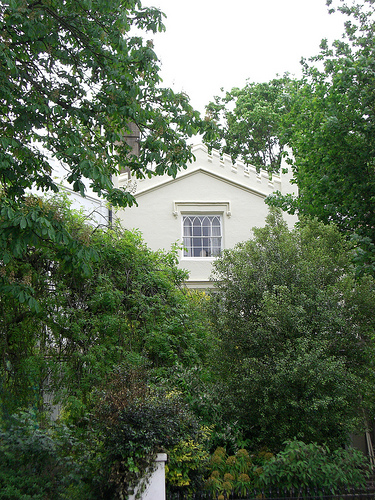
8 Downshire Hill, Hampstead. The former home of Elizabeth Jenkins.

Another author who lived very near here was the poet John Keats and that very morning I had heard a brief radio snippet in which there is a visit to the Keats Shelley House in Rome where Keats died on 23 February 1821. I visited Rome back in 2008 and it was one of the highlights of the trip to see inside The Keats Shelley Museum by the Spanish Steps. There is a Landmark Property at the top of the building : Piazza di Spagna. How I would love to stay here!

The Salone, Keats-Shelley House

The Salone is dedicated to the posthumous reputations of Keats, Shelley and Byron. The main library collection of the house is here.

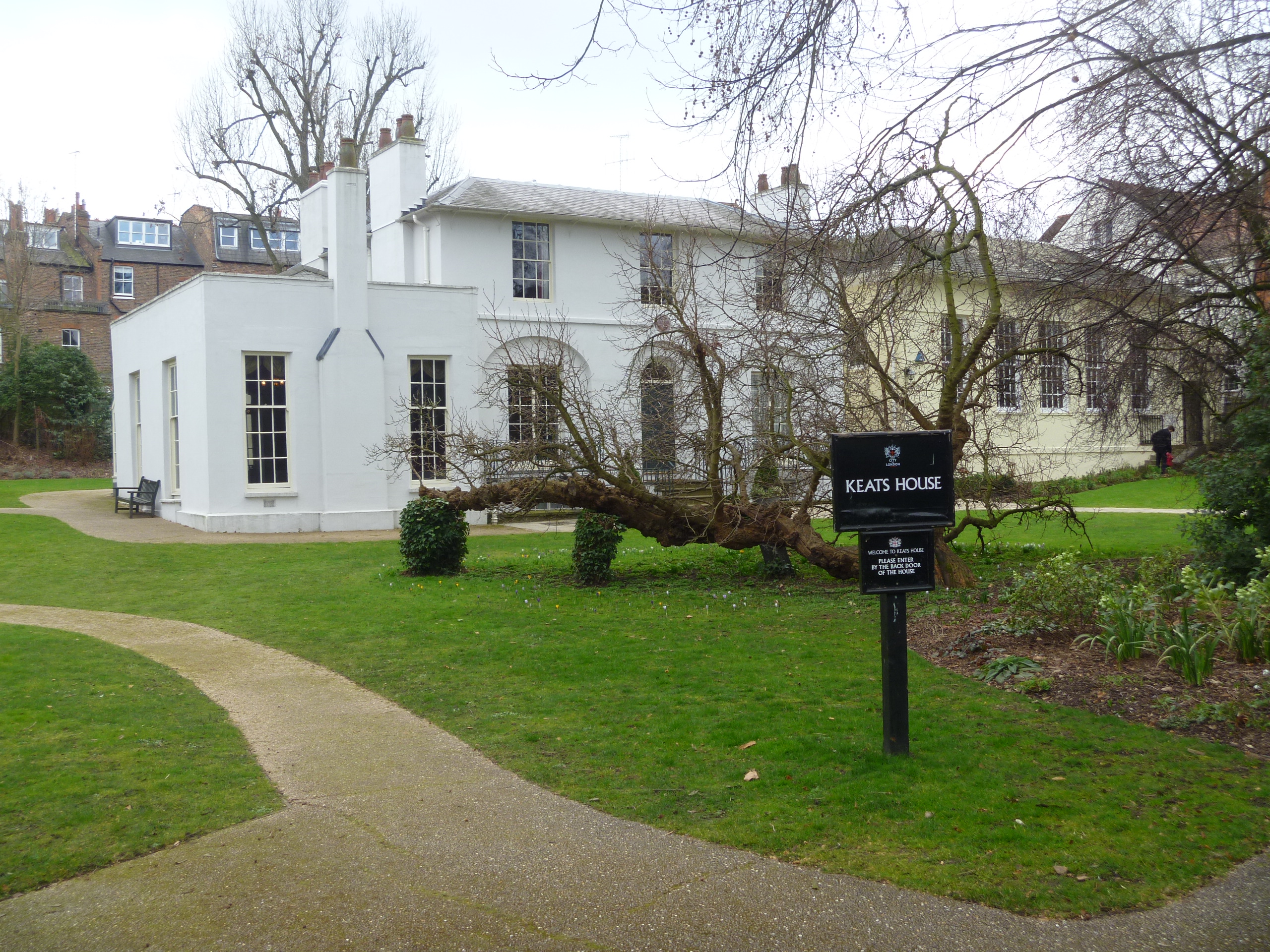
Keats House, Hampstead.

I am convinced more and more day by day that fine writing is next to fine doing the top thing in the world.

(John Keats 1795-1821~Letter to J. H. Reynolds, 24 August 1819, in H. E. Rollins (ed.) ‘The Letters of John Keats’ (1958) vol. 2, p. 146.)

Give me books, French wine, fruit, fine weather and a little music played out of doors by somebody I do not know.

Letter, August 28, 1819, to his sister Fanny Keats. Letters of John Keats, no. 146, ed. Frederick Page (1954).

Have you seen ‘Bright Star’?

Tea and Books and Two London Gems

I was in warm, sunny London on Thursday. The original plan was to meet a friend from my online book group and attend a showing of the 1953 film “Little Boy Lost” organised by the Persephone Book Shop. I always book my cheap train tickets way ahead and when we came to enquire about the film all the places had been taken but I still had my train tickets. In the end it turned happily as the weather was so warm and sunny that it might have been a shame to have been cooped up in the BFI.

Our Plan B was to visit the National Trust property Sutton House instead. I’ll copy and paste Clare’s summary of the history of the house as she summed it up perfectly to our group yesterday :

“It is a Tudor house, with lots of later additions, and a
fascinating history. It was first owned by Ralph Sadleir, an important
official in four reigns starting with Henry VIII. After that it was owned by
other individuals plus passing through the hands of two separate girls’
schools, a boys’ school, a church institute which ran all sorts of
activities for young men, and in the 1980s it was occupied by squatters who
wanted to form an arts community there.”

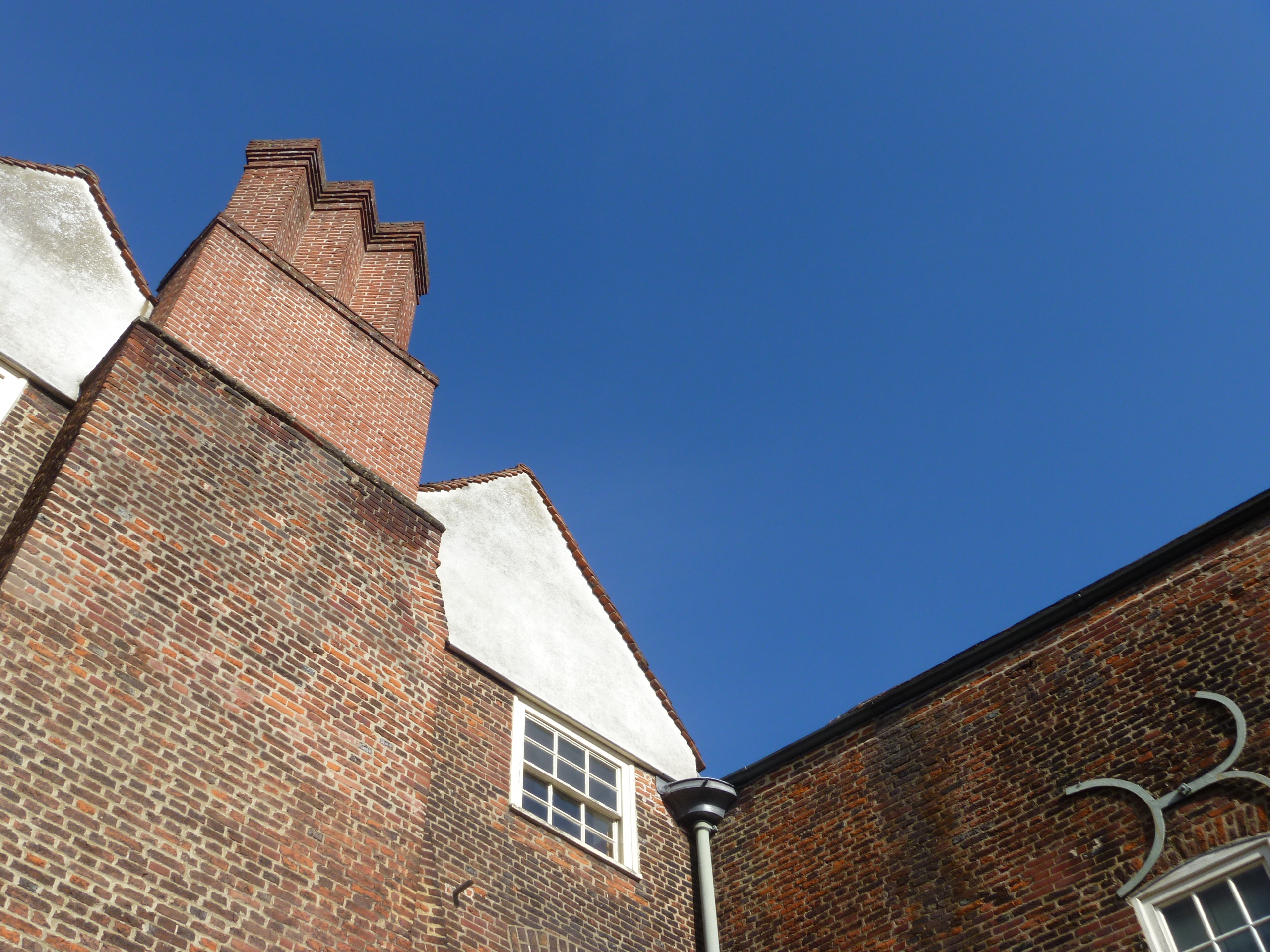
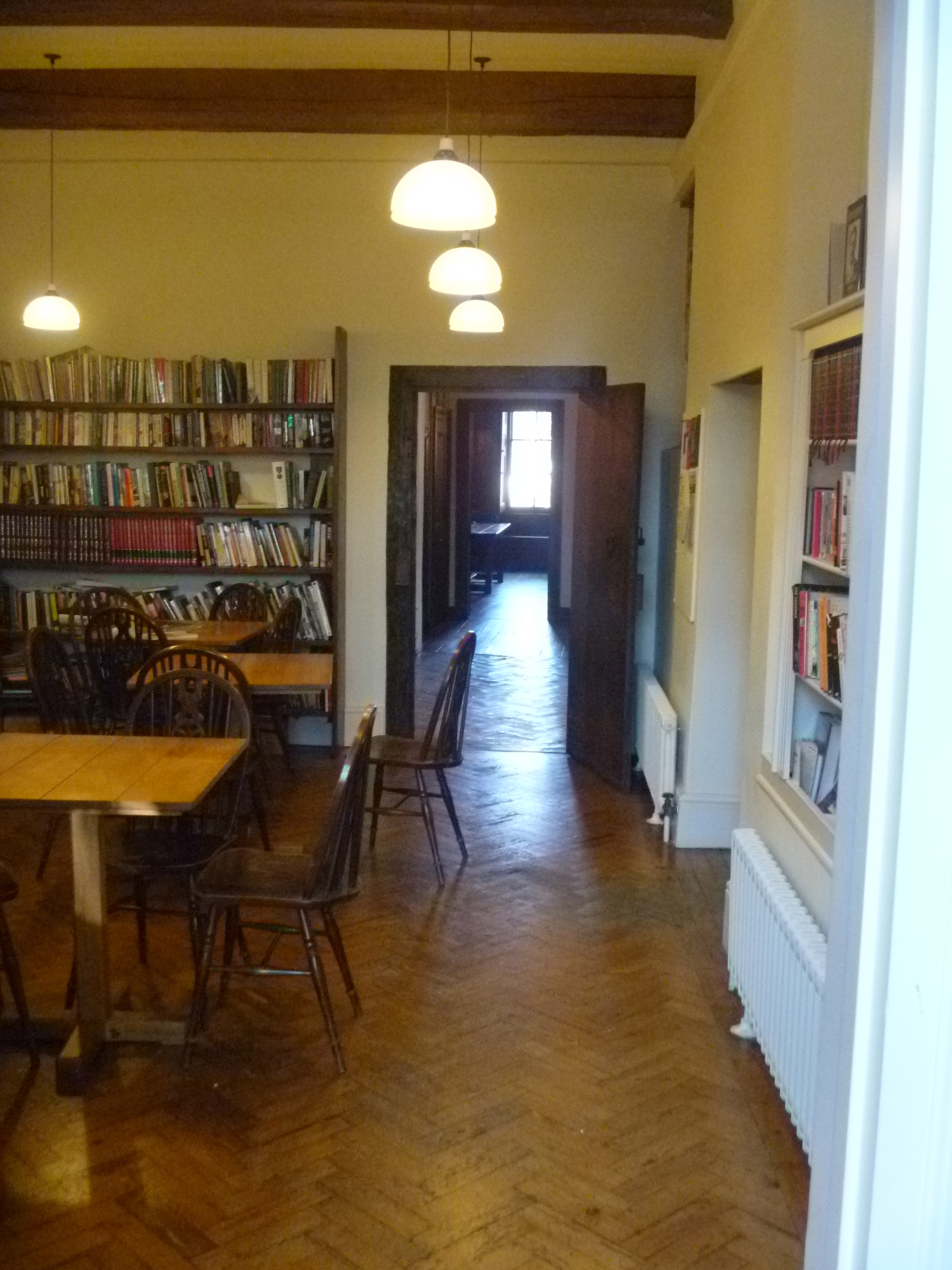
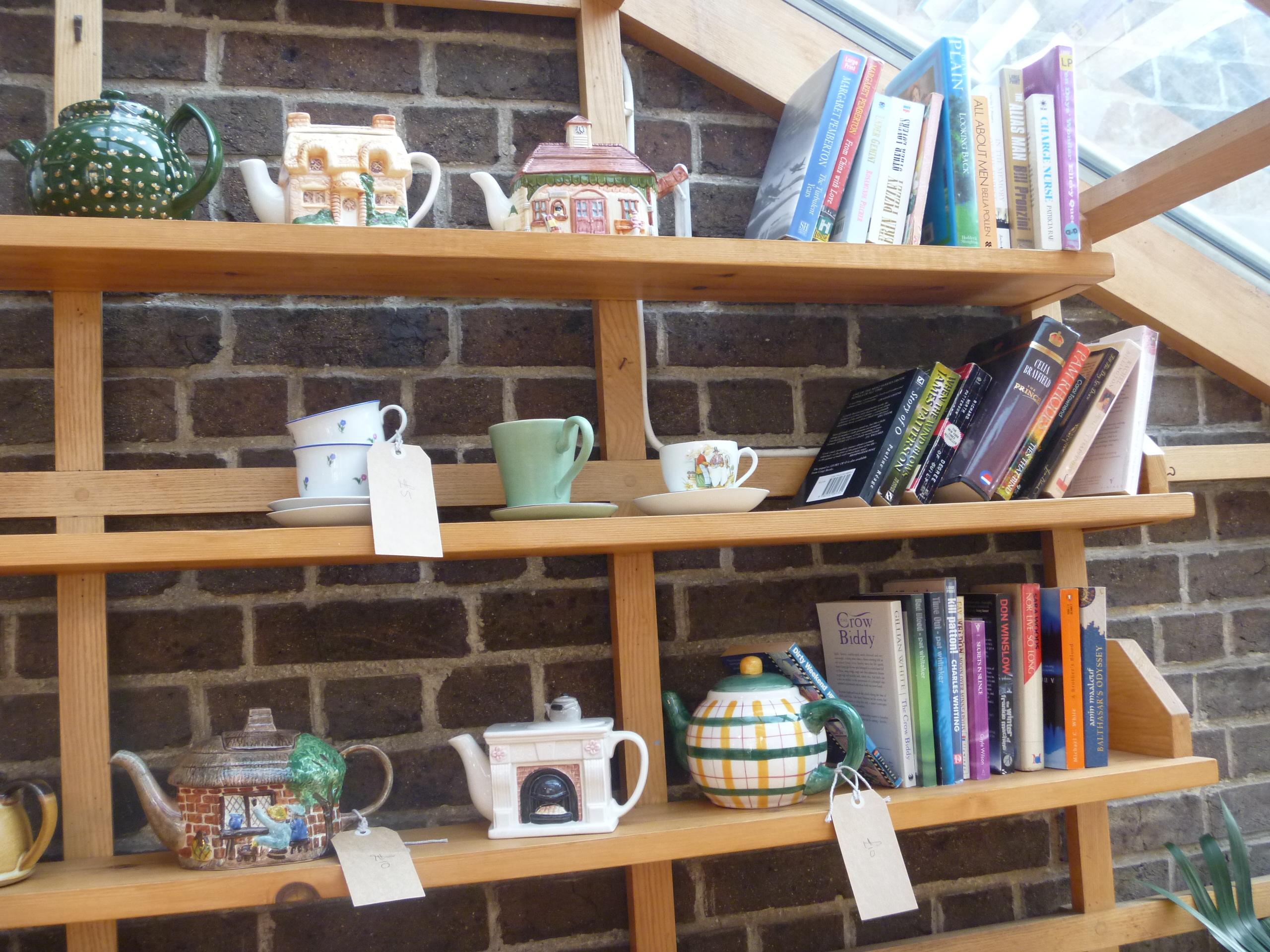
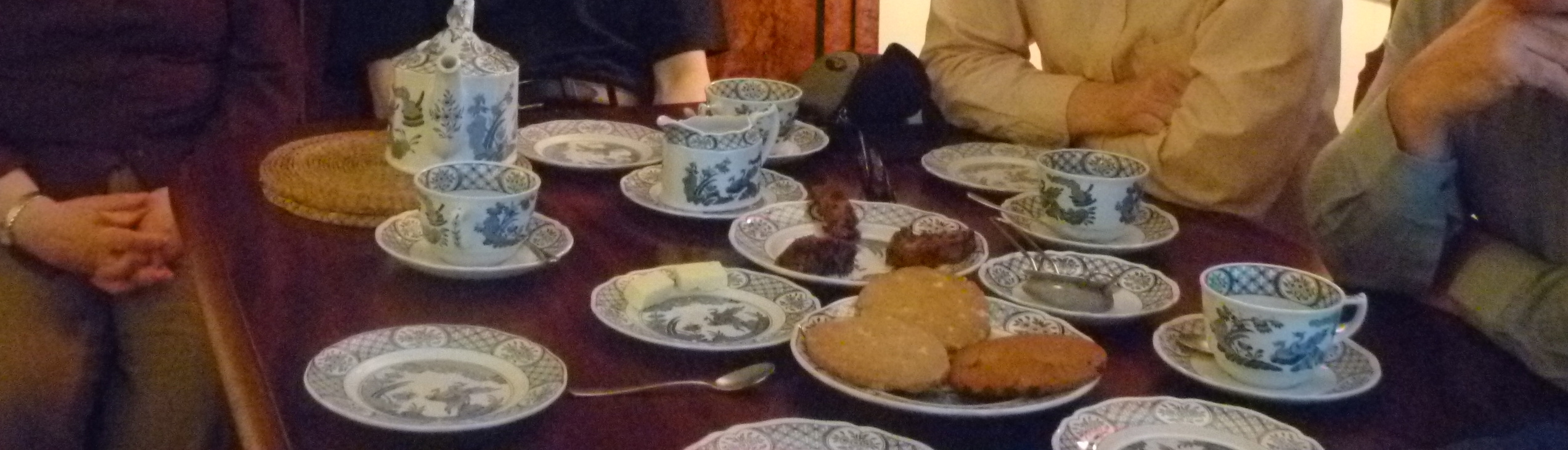
Today Sutton House is very much a part of the local community and the only staff we came across were volunteers all of whom were friendly, helpful and knowledgable. You can check out the website to see the variety of activities organised at the house – not surprisingly it’s booked up for over a year for school party visits. At one point I spotted a flyer for ‘Sutton House Book Brunchers’ who meet at the Bryck Place Tea Room once a month. Bryck Place is the original name for Sutton House and the tea room is a delight – a book lovers’ and tea drinkers’ paradise! There was a bit of renovation going on in the tea room on the day we visited so it was a matter of help-yourself to drinks and cake or scones and jam and drop a contribution in the box. So we did! The tea rooms are surrounded by shelves mostly stacked with secondhand books but some also with secondhand cups and saucers and jugs and teapots all for sale.

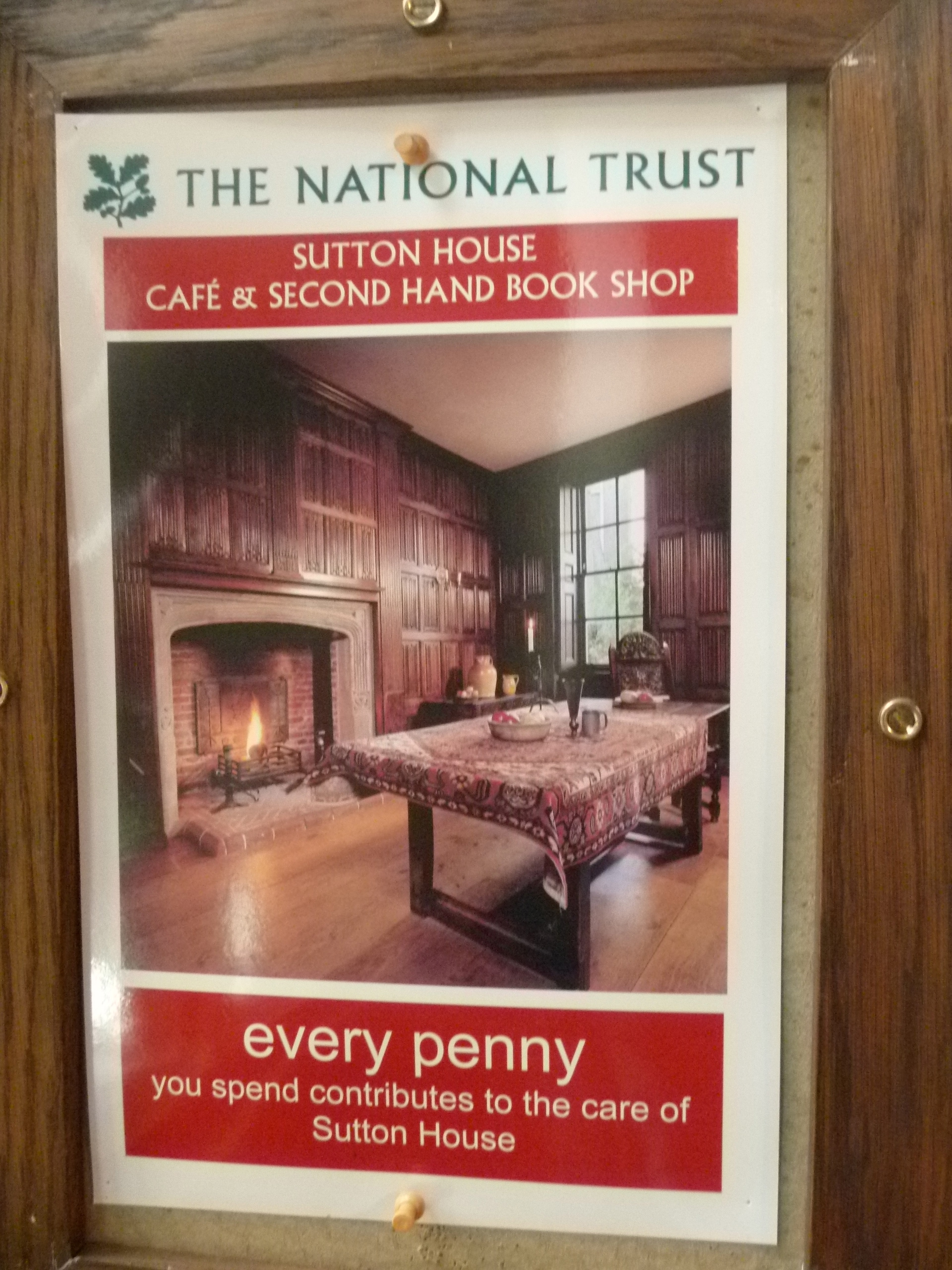
The tour of the house began in the Linenfold Parlour (see the poster pictured above). This would have been an important room in Sadleir ‘s original building in what was at the time (1535) a quiet, rural village. You then can visit the cellars, climb the Painted Staircase to the Gallery, the Little Chamber and the Great Chamber, a bedroom now decked out as a Victorian study and climb up again to an exhibition and history room on the second floor. A further staircase takes you right down to the ground floor again where, on this east side of the house, is a Tudor kitchen with access to an enclosed courtyard and a Georgian Parlour. This last room had a corner devoted to tea and it’s accoutrements and I was happy to note the following little verse :

 “In lands near or far

or wherever you be

friendship is welded by

a good cup of tea”

From Sutton House it’s a short walk to Hackney Central Station where we boarded our London Overground trains in opposite directions. As I sat on my train heading towards Whitechapel the following text came through on my ‘phone : “Afternoon tea now available at 45a!”  Some friends, staying at the Landmark Trust property 45A Cloth Fair this week, were inviting me to join them for (another) cuppa and more cake. I’ve stayed at 45A in the heart of Smithfield between Barbican and St Paul’s tube stations half a dozen times already so it was like arriving home as I climbed the creaking staircase to the first floor sitting room and joined my friends for tea and cake.

Princelet Street – A Landmark Library Reviewed

One thing I should point out about in case you didn’t already know is that there are no tellys at Landmark Trust properties. Self-made entertainment is the order of the day. Each property usually has a small supply of jigsaws and every one also has its own library. I have already mentioned Landmark Libraries here.

There are all the reference books needed to find your way around the area, check spellings during Scrabble games or whilst doing a crossword, the trusty latest edition of The Handbook, a Bible and some recipe books NB here these consist of a Madhur Jaffery and The Paupers’ Cookbook and there is always the local Pevsner architectural guide.

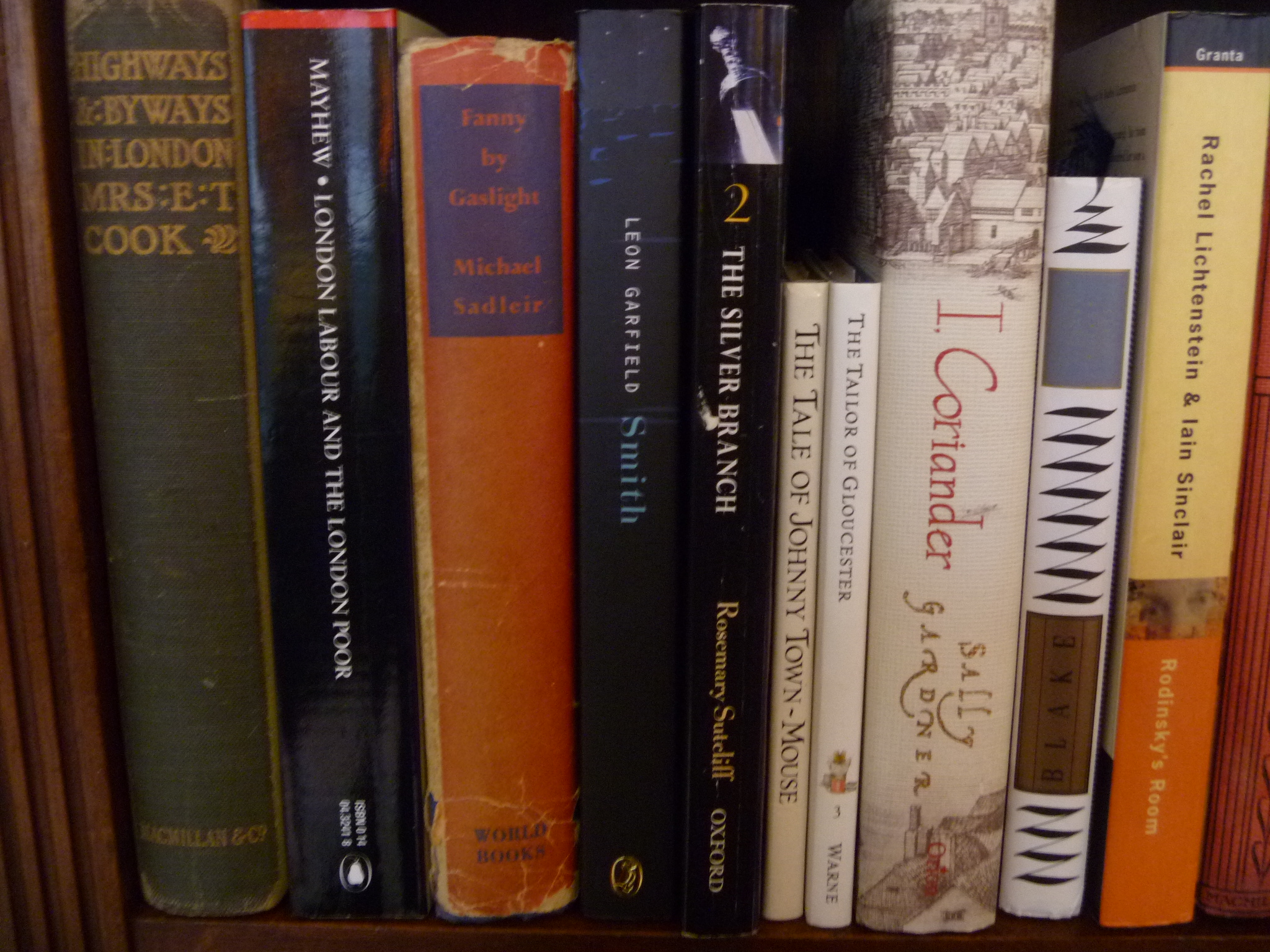
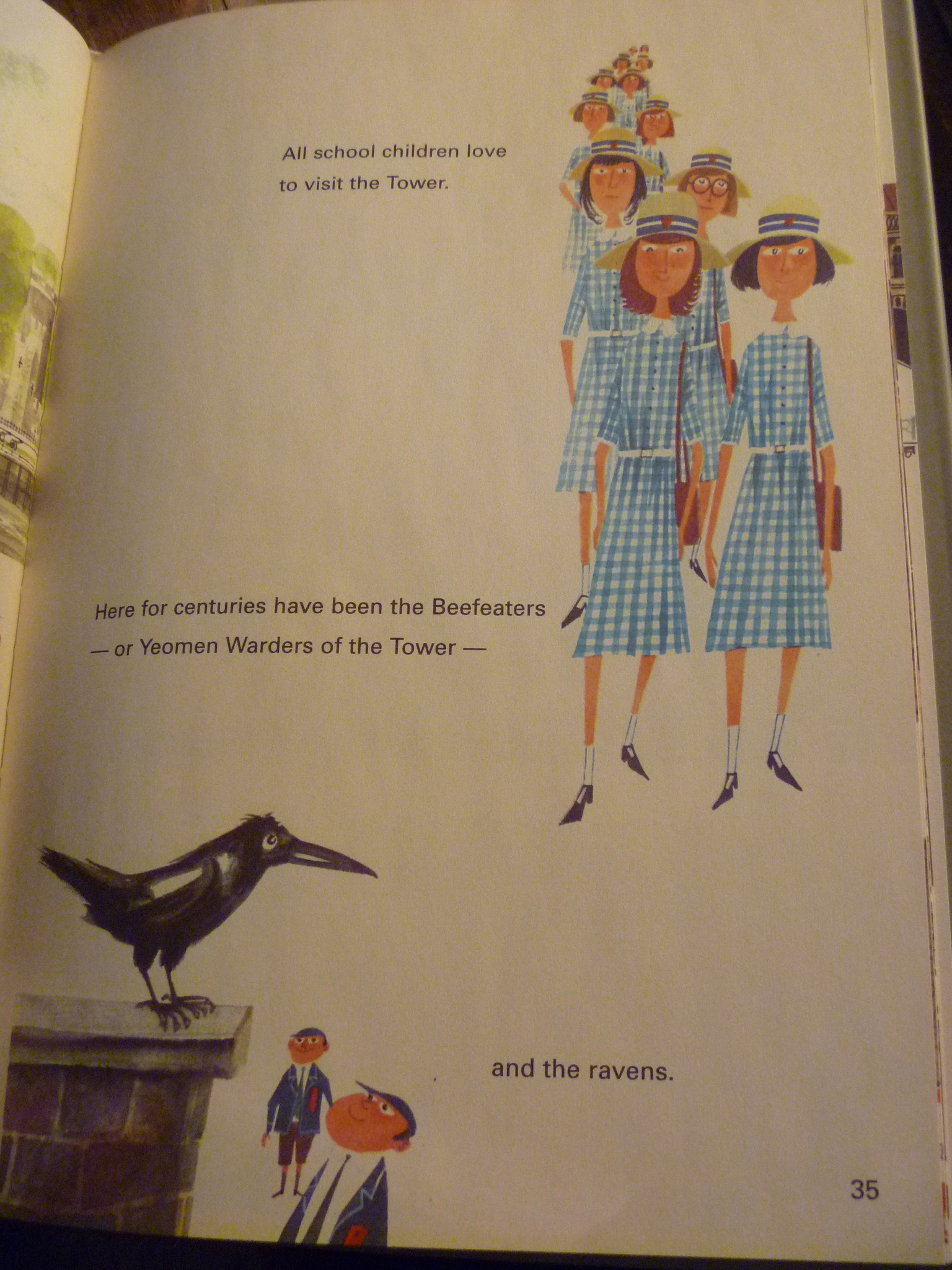
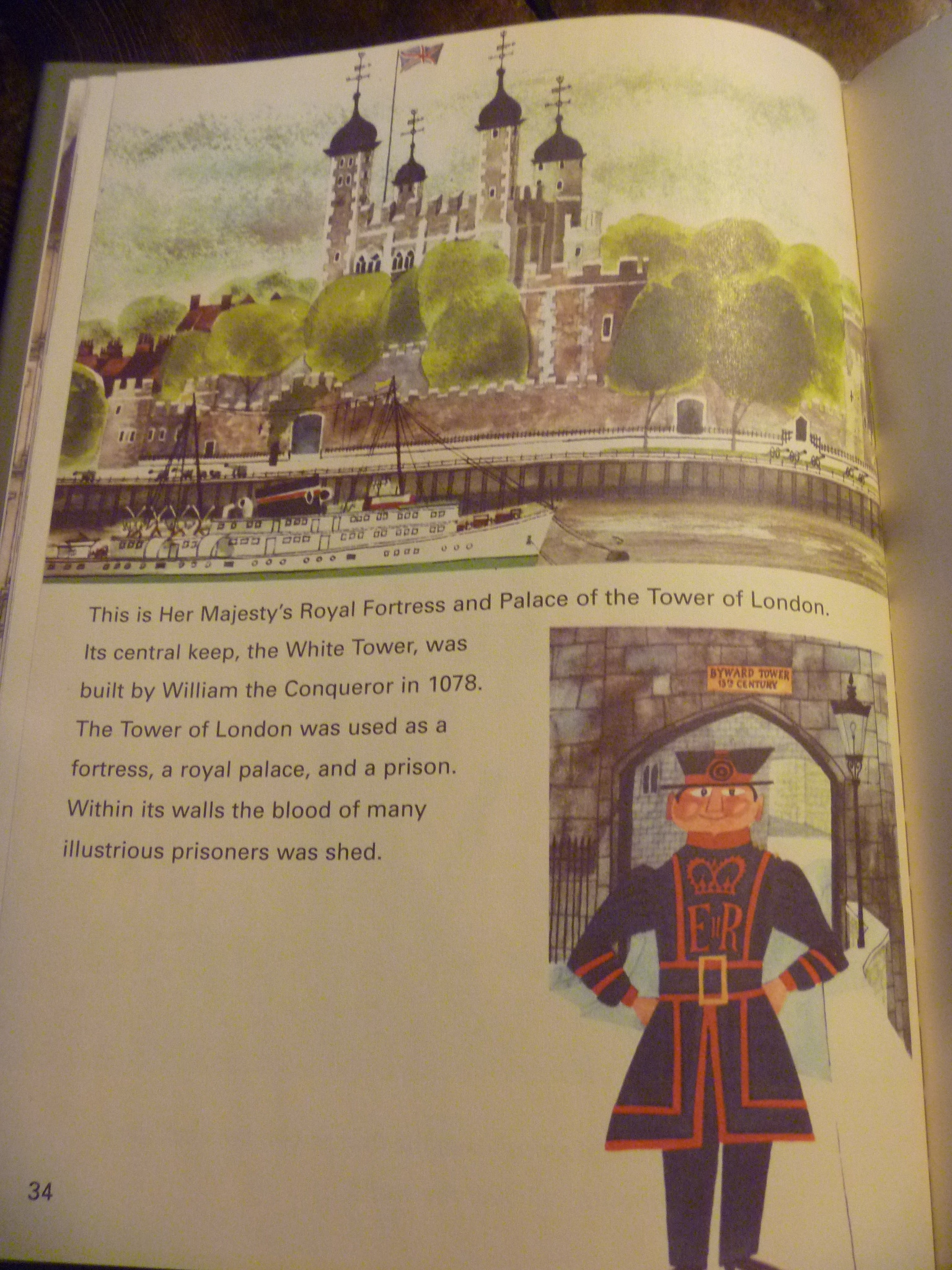
Here at Princelet Street the children’s and young people’s books include that lovely ‘This is London’ featured in the previous post about The Tower of London, some Beatrix Potter books and well-chosen titles by Rosemary Sutcliff, Leon Garfield and Sally Gardner.

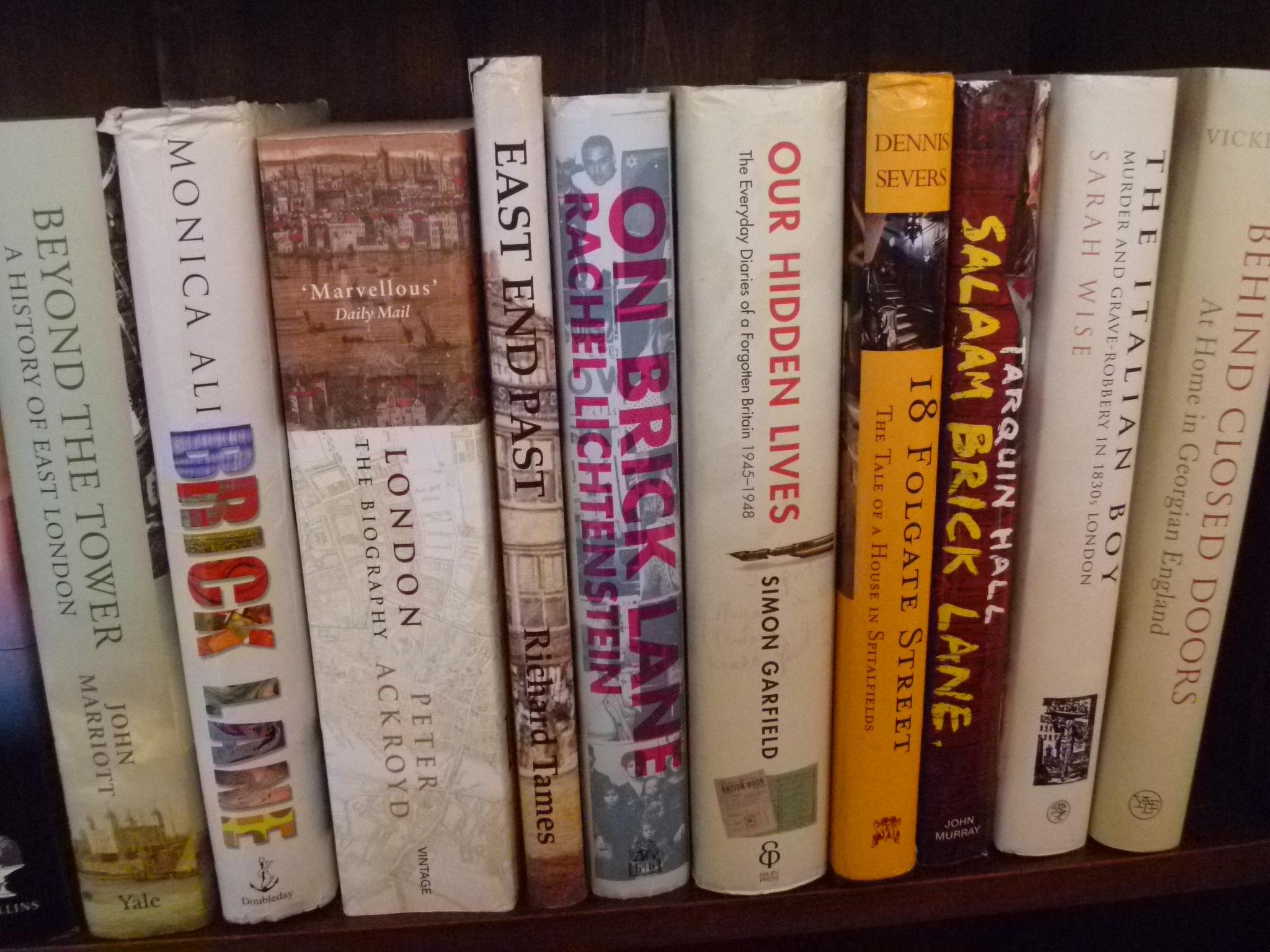
Of course, you can’t stay within a stone’s throw of Brick Lane without finding a copy of Monica Ali’s book of the same name on the bookshelves.

There is also ‘On Brick Lane’ by Rachel Lichtenstein (her grandparents came here from Poland in the 1930s). A book I noticed on a previous visit and read shortly after. It’s a history of the neighbourhood and the different nationalities and cultures that lived here in Spitalfields and an excellent introduction to the area. ‘Rodinsky’s Room’ is another of Rachel L’s books and the result of her investigation together with Iain Sinclair into the strange mystery of the disappearance in the 1960s of David Rodinsky from his room above the synagogue in Princelet Street itself. It’s another book that I bought after seeing it here although I haven’t read it yet.

“Rodinsky’s world was that of the East European Jewry, cabbalistic speculation, an obsession with language as code and terrible loss. He touched the imagination of artist Rachel Lichtenstein, whose grandparents had left Poland in the thirties. This text weaves together Lichtenstein’s quest for Rodinsky -which took her to Poland, to Israel and around Jewish London -with Iain Sinclair’s meditations on her journey into her own past, and on the Whitechapel he has reinvented.” [From Amazon product description].

The area has been well researched, not only by Lichtenstein. My sister read me all sorts of stuff about the churches in the City and about walks in the East End. And not surprisingly, books on architecture feature strongly, and not only church architecture. I loved this title and mused for a while flicking through looking at the sketchy illustrations of buildings.

Peter Ackroyd’s biography of London is here as well as his novel ‘Hawksmoor’ a dramatisation of which was broadcast on the radio a few years ago. It’s about the architect Nicholas Hawksmoor and the building of Christ Church, Spitalfields, a couple of streets away. I could not find that recording but I have found an interview with Ackroyd talking about ‘Hawksmoor’ with James Naughtie on Book Club on Radio 4, here.

And here also, is dear Amanda Vickery’s ‘Behind Closed Doors’. Very apt for this house as the TV programme ‘At Home with the Georgians’ featured nearby Denis Severs House (that book is here too: 18, Folgate Street).

It would also be impossible to have a library books in London without featuring several Charles Dickens titles.

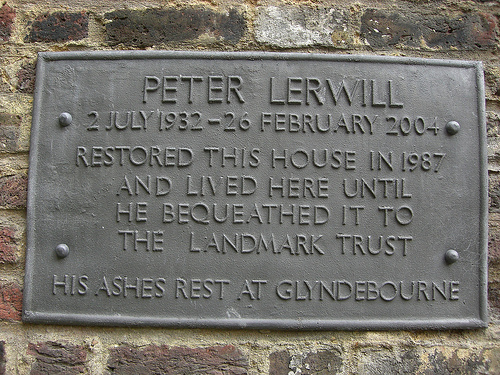
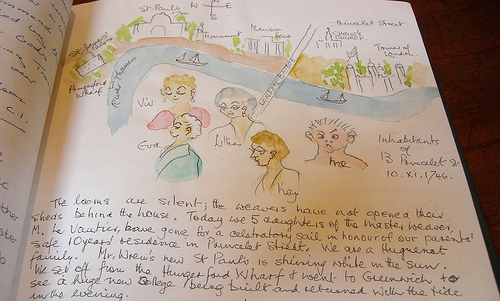
Finally, the Landmark Trust supply their own History Album at every property. This makes fascinating reading as their investigations into the buildings and their histories are rigorous to a degree. 13, Princelet Street was left to the Trust by Peter Lerwill who bought the house and renovated it very much in the LT fashion. There was little more for the Trust to do when they took over other than decorate, equip and furnish the house ready for its guests . There is still a detailed history album on the shelves.

But possibly the best source of Landmark entertainment of an evening is the reading aloud of the many comments in The Log Book.


I was sent to The Tower – but I kept my head!

I’ve just returned from a couple of nights in London staying at the lovely Landmark Trust property at 13, Princelet Street. The house was built in 1719 in the Spitalfields area of east London for Huguenot silk weavers. It’s a lovely, warm, characterful house with all the comforts you could wish for on a cold winter’s evening in the east end of London when the wind and rain are blowing outside – as they were on our first evening. Fetch a takeaway curry from one of about 50 curry houses on Brick Lane, then over a cup of tea inspect the Landmark Library and plan the next day’s entertainment, review the day that’s just finished or take up the Landmark Handbook and plan another trip. I visited the house for a Friends’ Reception last October and wrote about it here.

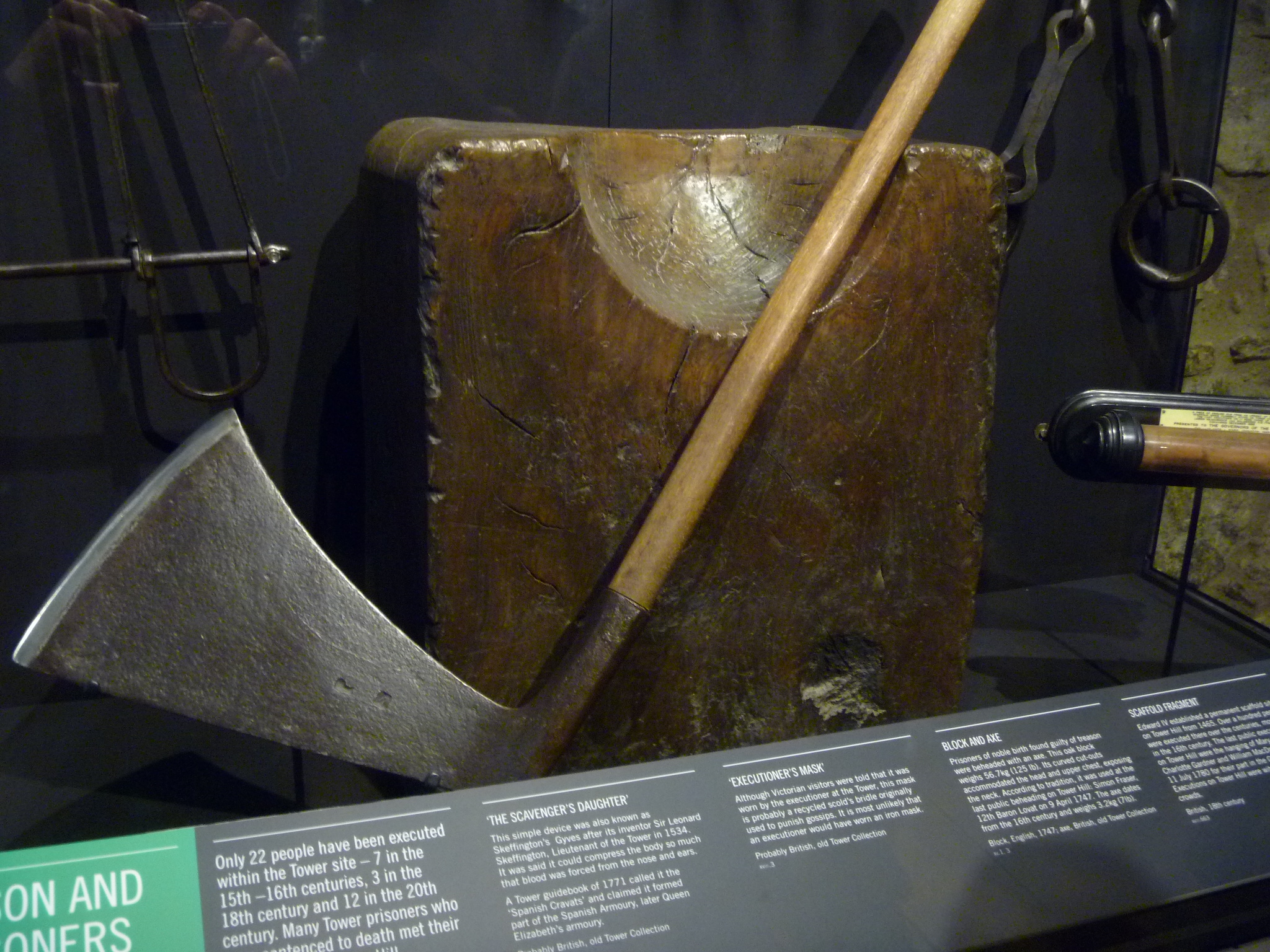
Staying just two nights gave us only one full day in London and we decided to spend it at The Tower of London. I have visited this Historic Royal Palace on two previous occasions. The first time was at the age of 10 on the annual schools visit to London with my primary school in Norwich. I remember clearly seeing the Crown Jewels in one of the towers, that we all giggled at the name of one of the towers The Bloody Tower, seeing the ravens hopping over the lawns, their wings clipped, seeing The Traitors’ Gate and the wooden block and axe which took the life of Queen Anne Boleyn. I had long wished to return and my next visit was with a Swiss guest in 2010. We had a lot of London sights to fit into our day so I planned to return on the next appropriate occasion to have a closer look.

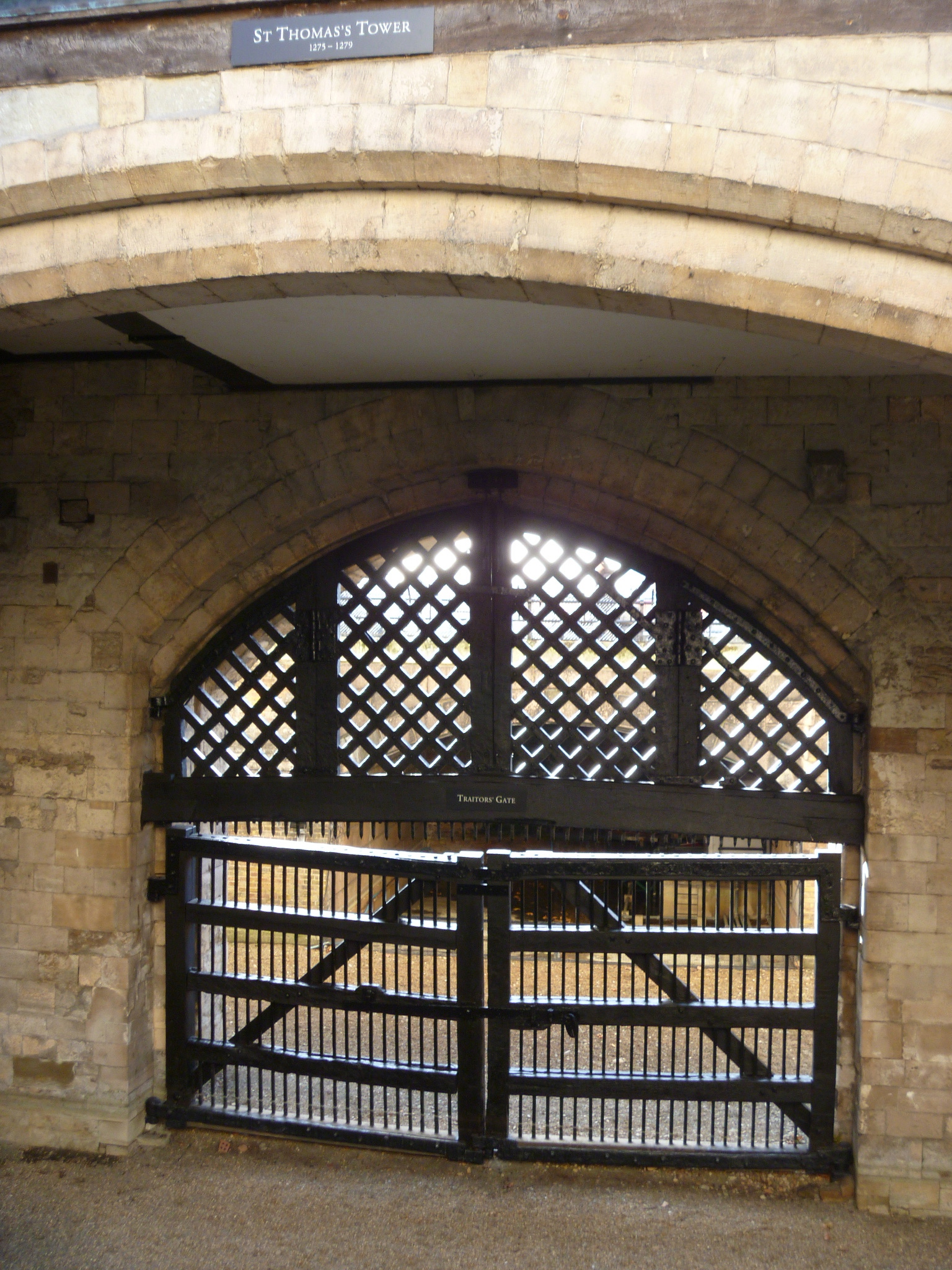
The Traitors Gate

Off with her head!

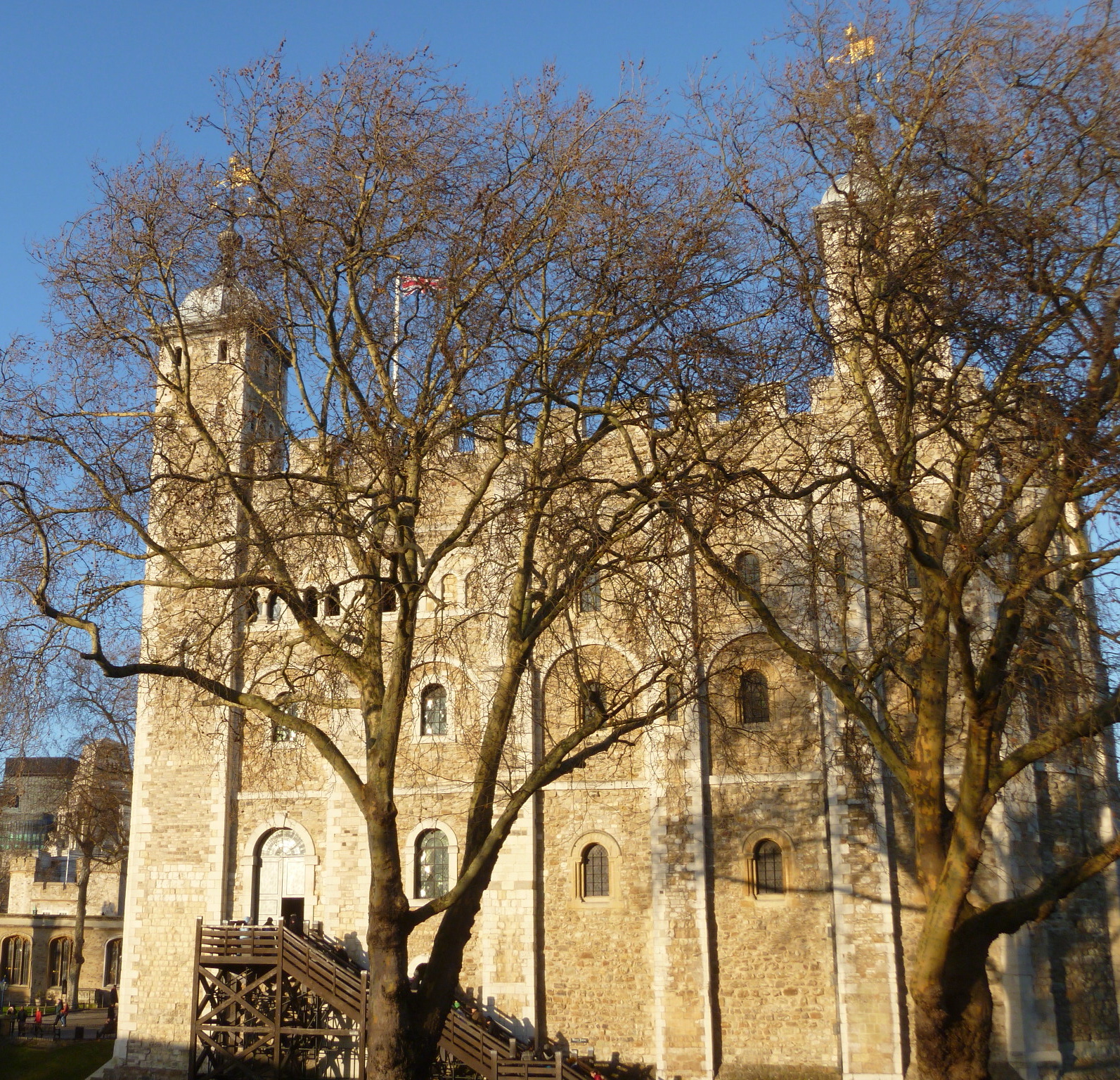
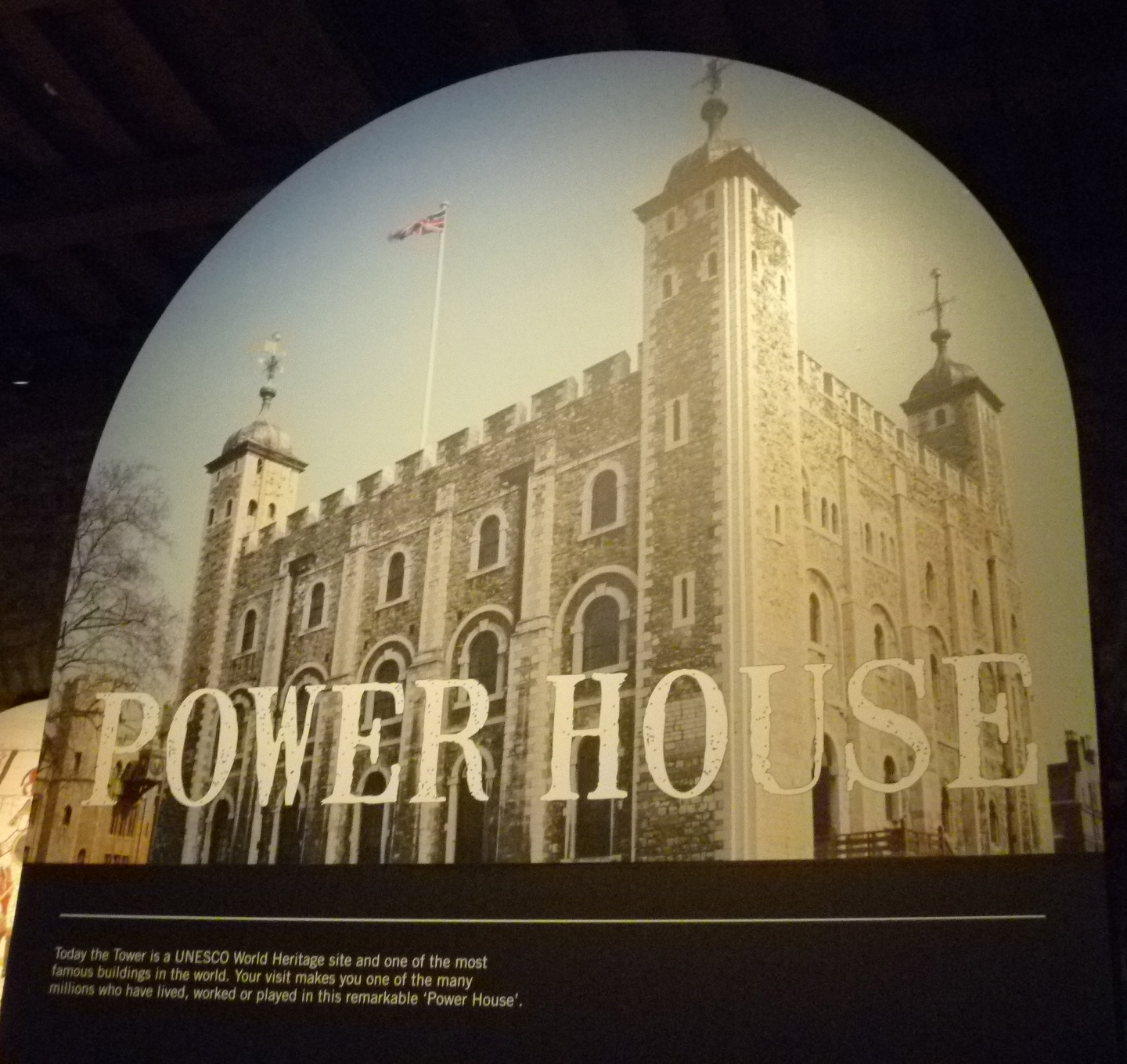
On Thursday with our 85 year old mother in tow we made a beeline for the Crown Jewels. These magnificent symbols of the British monarchy are displayed in such a way that everyone gets a good look at them however crowded the Tower may be. In fact, on this bright and dry early January day, although there seemed to be lots of people – of all nationalities – there were no queues at all. Our next port of call was the White Tower which houses an exhibition, The Power House, which tells about all the institutions that originally had their homes at The Tower – The Royal Mint, The Menagerie (now London Zoo), The Ordnance Survey, The Royal Observatory. There are also displays of royal armour and, rather strangely, gifts given to our royalty by nations around the world.

Chatting with a Yeoman Warder (or Beefeater) I discovered that 37 YWs and their families live within The Tower’s walls, plus a doctor and a priest. They have their own church and pub and it’s like a village community. But the Power House exhibition showed that in former times The Tower had been a virtual town.

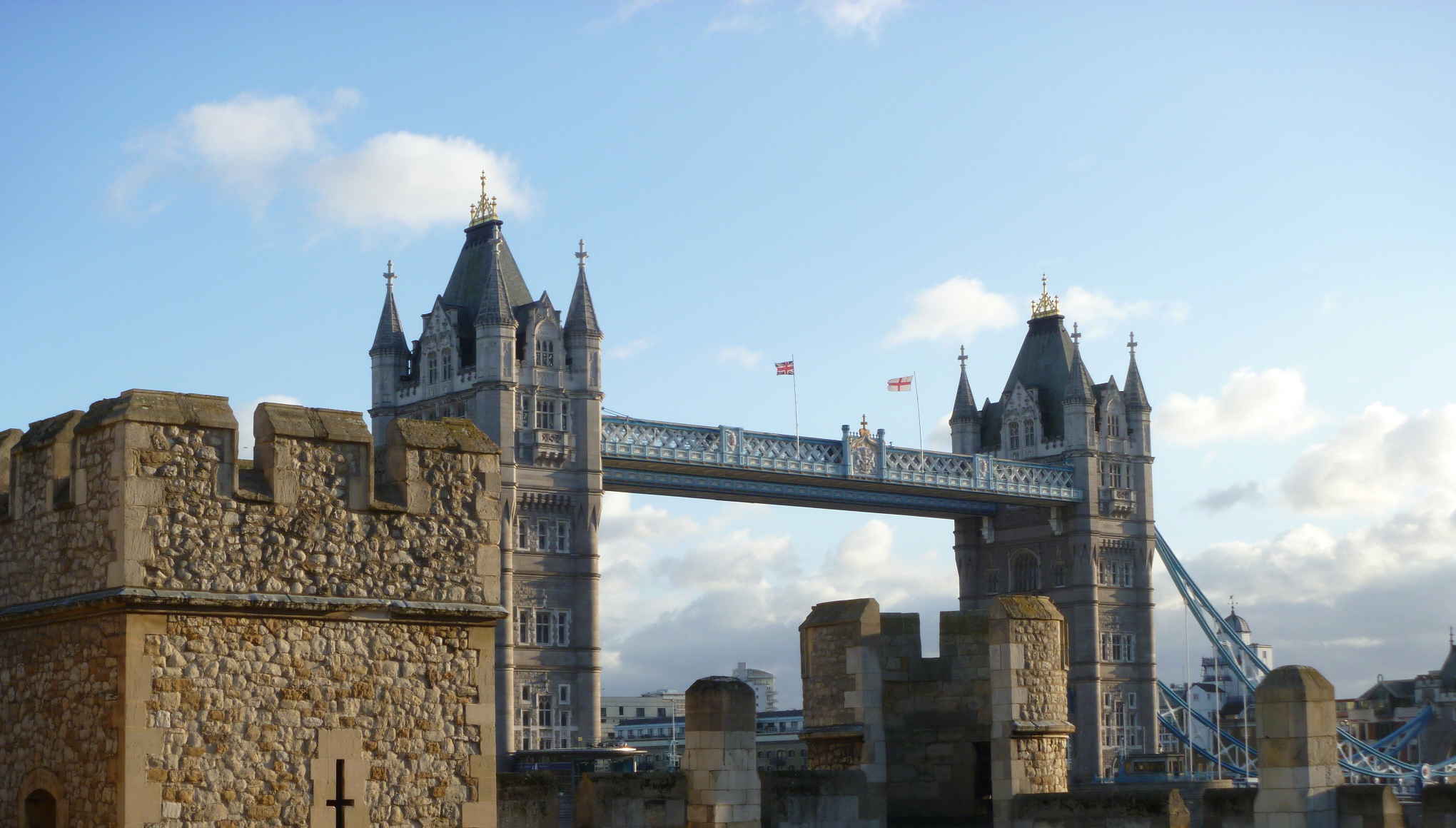
After lunch we left mum in the warmth of the cafe to have a walk round the walls (for a great view of Tower Bridge)

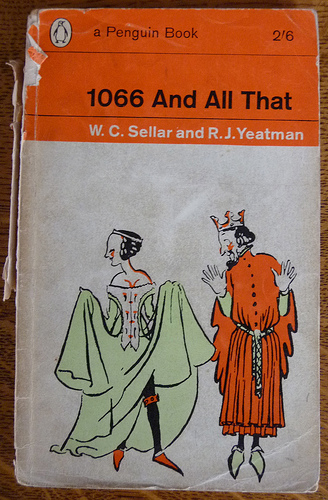
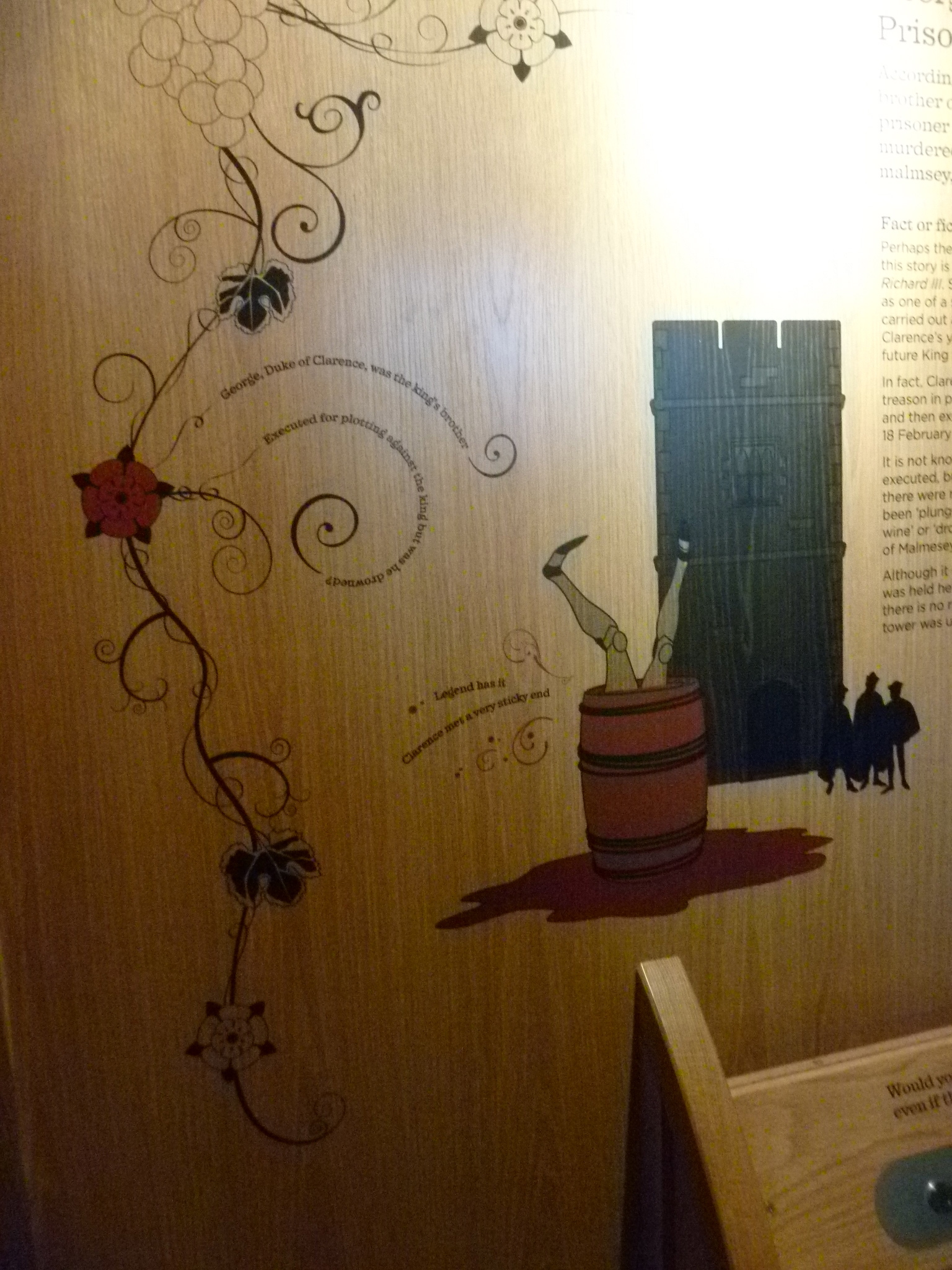
and to see inside some of the other towers (the ones with narrow stone spiral staircases) to discover more about the Duke of Clarence who drowned in a Butt of Malmsey wine, about The Little Princes murdered in the Tower and about other prisoners including Sir Walter Raleigh. And my thoughts go back to that earlier visit and to the discovery a few years later of my best history book ever – W. C. Sellar and R. J. Yeatman’s “1066 and all that”

“During the Wars of the Roses the Kings became less and less memorable (sometimes even getting in the wrong order) until at least one of them was nothing but some little princes smothered in the Tower, and another, finding that his name was Clarence, had himself drowned in a spot of Malmsey wine; while the last of all even attempted to give his kingdom to a horse.”

Looking Back on the Missed Months of 2011

A Happy New Year to You All!

Transferring stuff from one year’s diary to the next’s made me think I might make a note here on an event/category from each month of 2011 up to my starting this blogging lark in August. One event with one picture is quite a tough call – especially in the summer months – but I will give it a go.

January 2011 : Landmarking with Milady

The year started well with my usual London Landmarking Trip but this January I was fortunate enough to get a double dose of London Landmarks. I stayed in the 45A Cloth Fair property for 3 nights and visited friends at the Hampton Court Georgian House on one of the days. There is so much to see and do at Hampton Court that we have booked our January 2013 London stay at Fish Court in order to experience more. If you stay there is no extra charge for visiting the Palace. On the other day at Cloth Fair we took tea at the recently totally renovated Savoy Hotel – an out-of-this-world experience from the moment your carriage arrives to the moment you are driven away.

February 2011 : Milady gets culture

An early wet and windy two night excursion to Cambridge led to the wonderful discovery of Kettles Yard. Our trip was planned around a visit to The Scott-Polar Research Institute whose museum had just re-opened after extensive renovation work. But interesting as it was to see the exhibits at the SPRI the highlight of my visit was Kettle’s Yard. We even went there twice. On the Thursday afternoon of our arrival we took a walk from the hotel and ended up at the house that is Kettles Yard. It is like walking into someone’s home – you ring the doorbell and are welcomed, photography is no problem, you may sit and look at the books and the place is crammed full of art and artefacts of what I suppose is called the modern era. It was on this visit that we heard about the Friday Lunchtime Concerts so from the SPRI we headed back to KY and joined a winding queue of keen concert-goers and enjoyed with them a chamber group of student musicians.

March 2011 : Milady gets Culture

Photograph: Robert Workman

At the end of March Out of Joint brought their play  “A Dish of Tea with Dr Johnson” to The Carriageworks in Leeds. I’d read quite a bit a bit about Dr Samuel Johnson and visited his house in Gough Square in London so was intrigued to see this well-reviewed piece. I was not disappointed. It is quite short, full of fun but with some pathos and there is also the most wonderful dog actor who must have been standing in for Johnson’s cat, Hodge. I would have loved to have seen the performance actually at Dictionary Johnson’s House but this was the next best thing. Highly recommended although I think the tour is finished now.

April 2011 : Landmarking with Milady

Friday 29th April 2011 must have seen the high point of the year in Britain – The Royal Wedding of HRH Prince William and Miss Catherine Middleton. That very day I had booked (long before the wedding date was announced) to spend the May Day Holiday Weekend in France at Gif-Sur-Yvette the former weekend home of the Duke and Duchess of Windsor just outside Paris and now managed as a holiday let by The Landmark Trust. I was visited there on one of the days by my good friend MN and we spent a literary day visiting Alexandre Dumas’ The Chateau of Monte Cristo at Port-Marly and La Maison Litteraire de Victor Hugo at Bievres, Île de France. It was such a good trip that we’ve booked to go back again next May so I’ll be posting in more detail then.

May 2011 : Milady Visits

Window shopping at Didier Ludot in the Jardin du Palais Royale

On 12th May the Optimist celebrated a special birthday! And on that very day we were booked to travel – in style, I might add – by Eurostar train from Yorkshire to Paris to attend our nephew’s wedding in Vincennes, just outside Paris, on the Saturday. What a fab weekend we had – lovely hotel quiet but right in the centre of Paris, lovely weather, except that it rained on the Sunday as we were leaving, excellent company and good food and wine with some “flanez” and pavement cafes thrown in for good measure.

June 2011 : Milady Reads and Visits

In Spring 2011 Persephone Books published a reprint of Adam Fergusson’s “The Sack of Bath”. On June 16th there was an Afternoon of Walks in Bath led by Caroline Kay, of the Bath Preservation Trust, and Adam Fergusson. We met at The Circus cafe for a lovely two course lunch and were then taken on a walking tour to view the effects of City planning policy on Bath during the 1960s. The walk ended at The Museum of the Building of Bath where we were served tea and cakes. But before all those pleasures I had the great pleasure of spending the morning with my online reading group friend Carol who lives in Bath and took time out to show me all the bookish delights of that city – of which there are very many. It was one of those days where looking back it seems impossible to have fitted so much into a mere 7 hours.

July 2011 : Milady Steps Out

On 30th June I set out with my sister on my first long distance walking trail – Wild Edric’s Way in Shropshire. The ‘holiday’ was organised by a local company with the delightful name of Wheely Wonderful Cycling Holidays which deals mainly in cycling holidays but with some walking tours also on their books. I say ‘holiday’ but at times it was jolly hard work!  We walked from the Stiperstones to Ludlow over 3.5 days. Approximately 40 miles was covered in total with 4 overnight stops. For the most part it followed the route of The Shropshire Way which coincided also with The Kerry Ridgeway and Offa’s Dyke National Trail. There were several places of interest on the route – churches at More, Churchtown and Ludlow and castles at Clun, Stokesay and Ludlow. We met other walkers and some lovely B&B owners along the way. I was glad to have done it and it felt like quite an achievement but I was not sure whether I wished to repeat the experience. However, the further away it has become the more I think maybe I would indeed like to do another such walk in the future.


Neglected classics – but not any more thanks to Persephone Books.

“Persephone Books reprints neglected classics by C20th (mostly women) writers. Each one in our collection of 96 books is intelligent, thought-provoking and beautifully written.”

As you know I love to sit in my boudoir reading. Some of you may have noticed the uniform grey bindings of the books on the shelves just behind my chair.

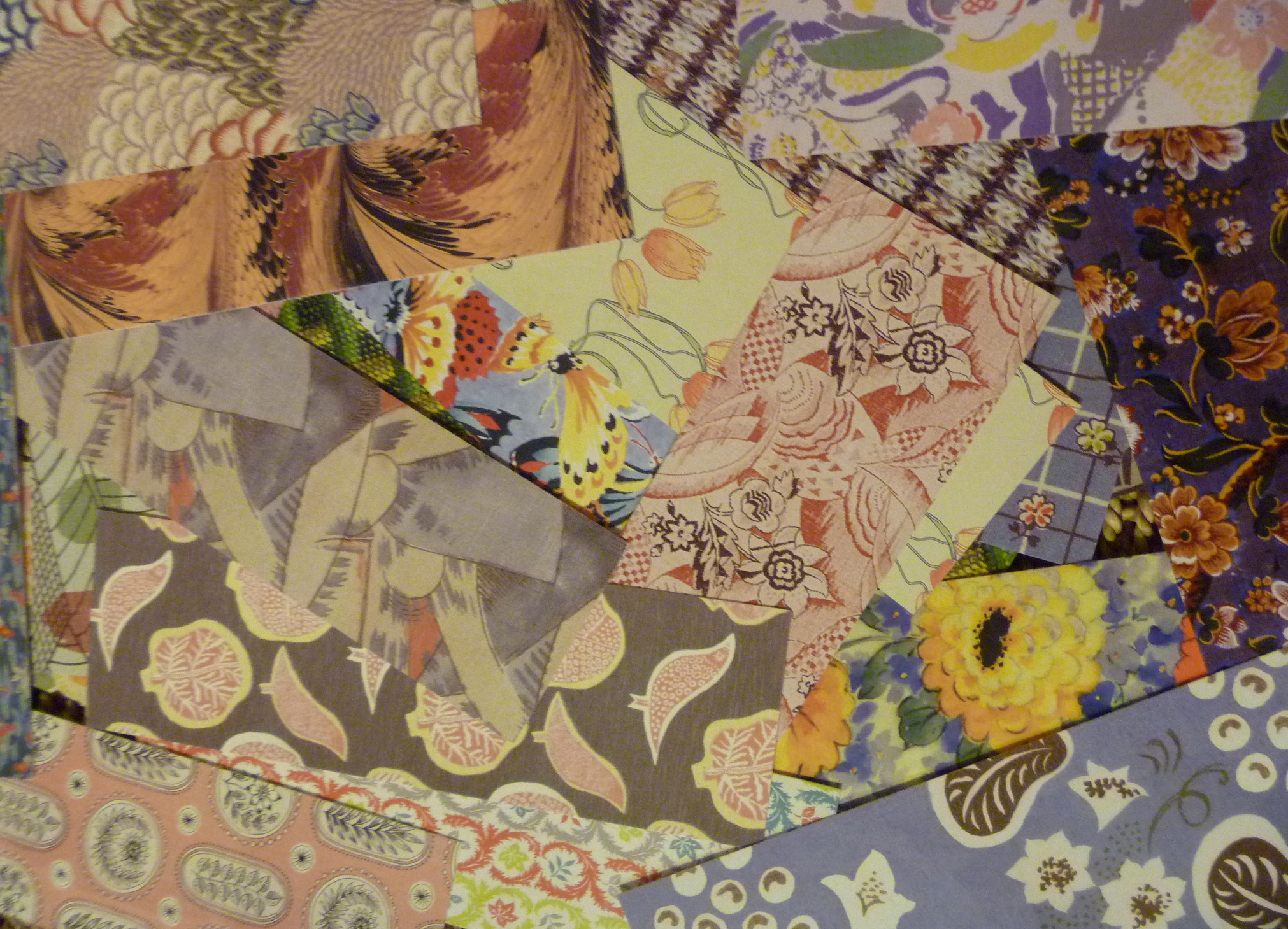
Persephone Books produce the most beautiful books, ever – totally thought through with care from beginning to end – from the simple grey covers to the endpapers to the quality paper and print to the Forewords and Afterwords written by well-known authors and others relevant to each book’s content or its provenance.

Each book comes complete with its own bookmark.

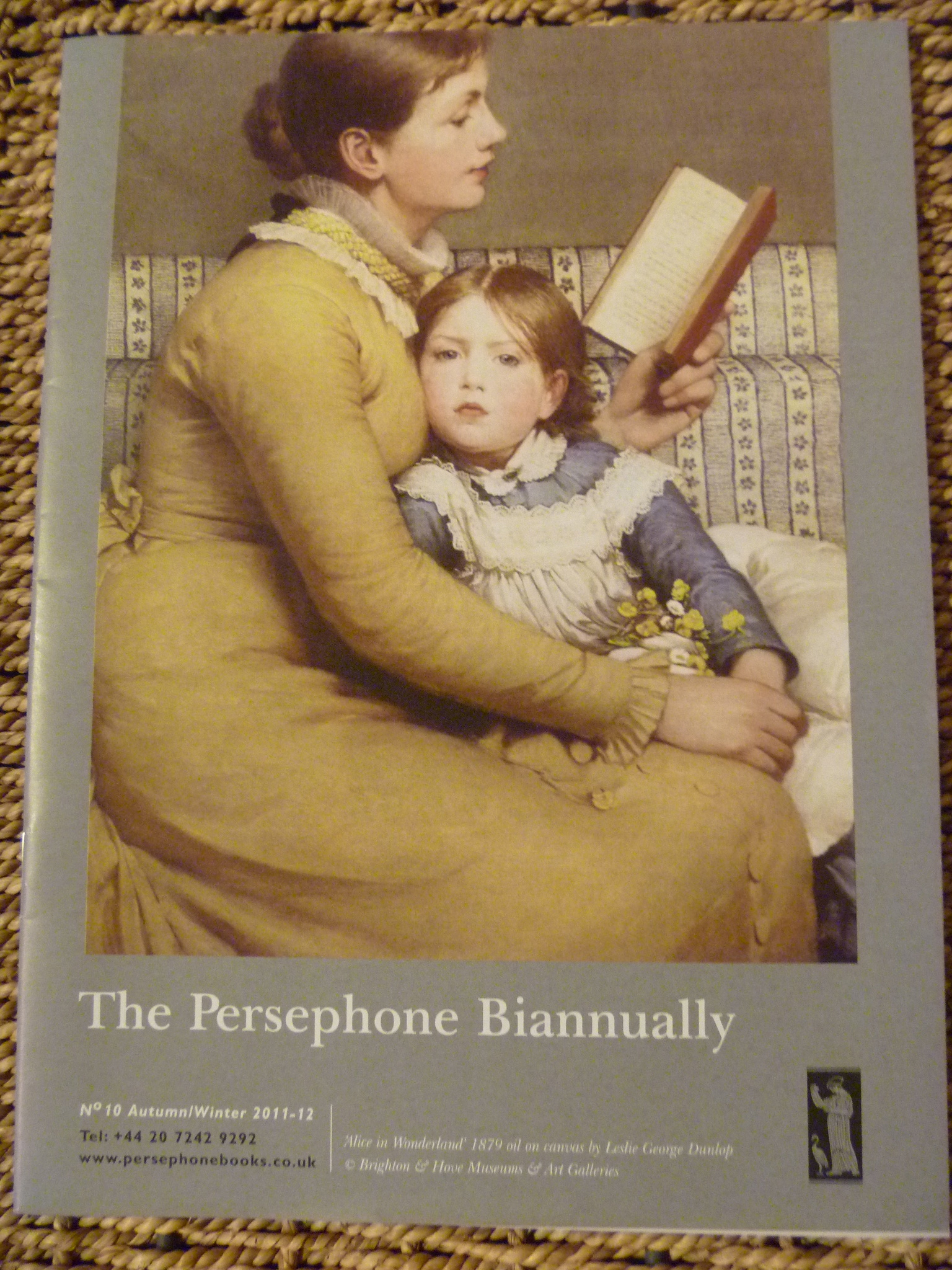
As long as you keep buying the books – is that a problem? – they send out a lovely printed newsletter “The Persephone Biannually” free of charge twice a year. In the past it was “The Persephone Quarterly” and  so I have to wait a bit longer these days for my new copy to arrive – Spring/Summer in April and Autumn/Winter in October. The Biannually is always accompanied by a new bookmark.

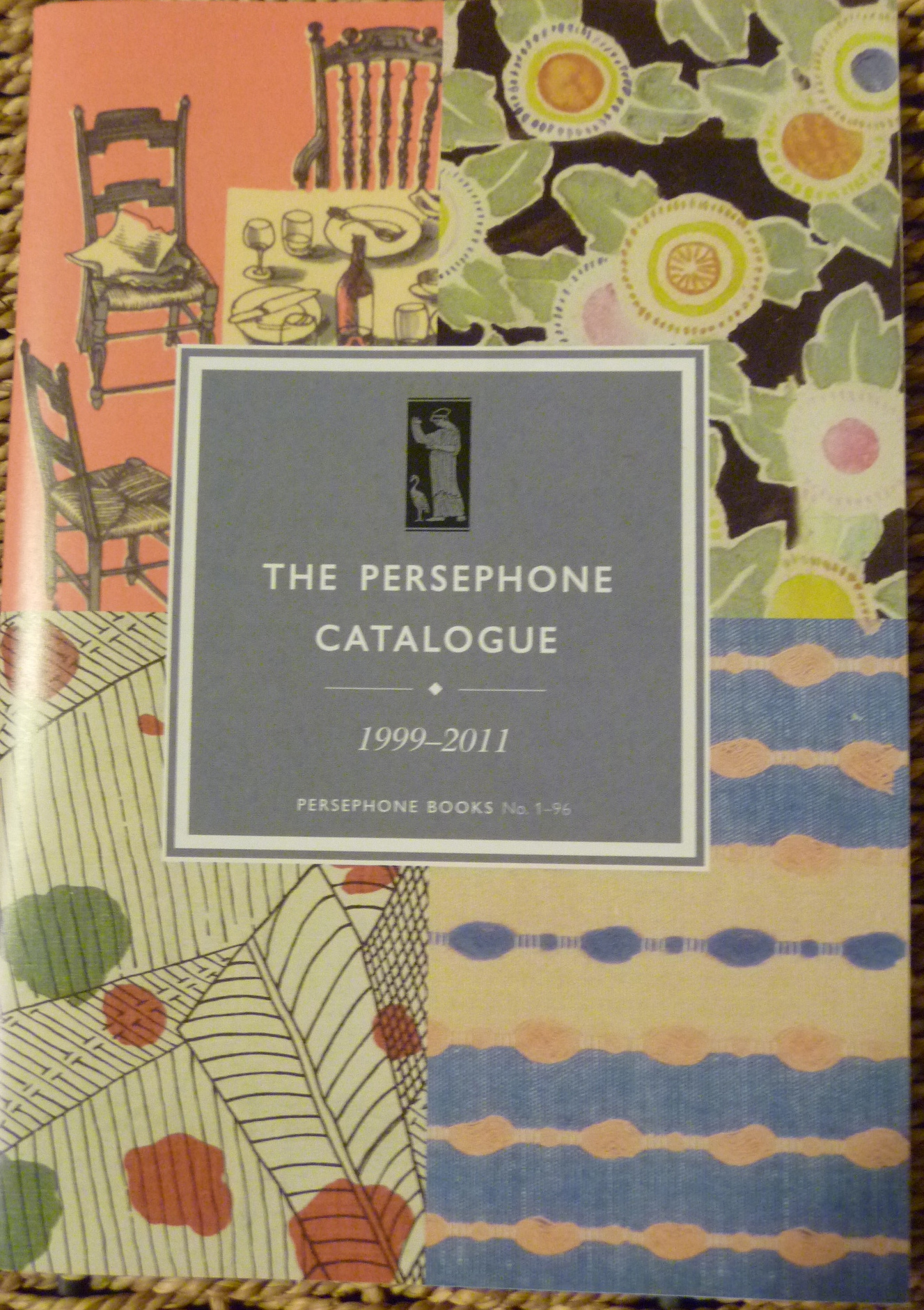
If you request a copy they’ll also send you their latest annual catalogue. Generally this is published to coincide with the Autumn/Winter magazine.

The publishers operate from their own shop premises in Lambs Conduit Street in Bloomsbury which are a delight to visit. Besides their own books they sell copies of the 50 books which they wish they had or wish they could publish and a selection of relevant secondhand  titles too. Besides books there are some household textiles, some pottery, cards, postcards and their notebook for sale.

Not all of the books are fiction – there’s some cookery, a gardening book, a book about The Sack of Bath in the 1960s, personal memoirs, biography. I certainly don’t have them all. Books can be ordered online, bought from the shop and from good booksellers. For a small extra payment they’ll gift wrap any book. They make perfect presents.

To keep your interest, just in case it is beginning to wane between book publications, you can sign up for an online Persephone Post to drop into your Inbox every day – mine arrives about 9pm each evening. There is also an online book group forum with a new book under discussion each month and you can receive email offers occasionally.

Then there are the real live discussions, talks, films, tea parties and book groups – usually held in London but they have been known sometimes to travel out of town – even as far as Scotland – and once they even went  to New York – to promote their wares and meet their customers.

And what’s best about them is that it was through them that I joined my lovely online reading group of friends around the world in 2004. I have met many of the members, mainly in the UK and mainly in London but also in Stratford upon Avon, Edinburgh, Berlin, Potsdam, Chicago and Massachusetts!

What’s my next Persephone read? In the new year I’ll be reading, along with the group, the latest Dorothy Whipple book to be republished in a smart grey cover – Greenbanks PB95. I already had an ‘original’ copy of the book!