Barry : an exhibition for a Swiss icon

On arrival at Bern Railway Station on Monday evening (18th) the first poster to catch my eye (well, it’s quite a big one) was this :
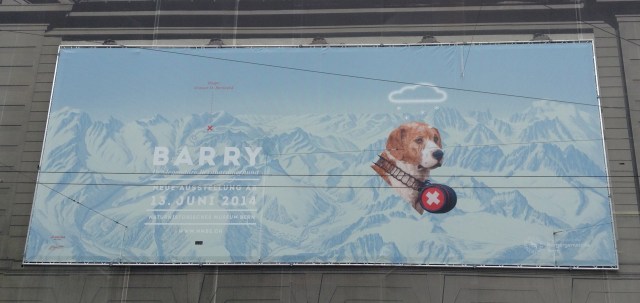
Barry Poster

Barry, the most famous rescue dog in the world, died 200 years ago but remains a legend to this day. Barry can be admired at the Natural History Museum Bern, where a new exhibition explores the heroic deeds attributed to this extraordinary St Bernard from the Great St Bernard Pass. The question is, which of the stories surrounding him are fact and which are myths? The exhibition tells the whole truth.”

I knew Barry was a popular dog’s name in Switzerland. I have a children’s picture book which tells his story. So on the Wednesday morning I took the short stroll from Barbara’s house to the Natural History Museum of Bern to find out more. The excellent display is on the second floor of the museum.
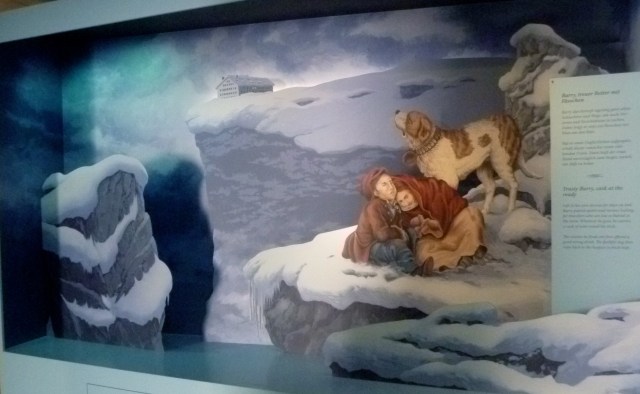
Barry diorama

Trusty Barry Diorama

Trusty Barry, cask at the ready. Left to his own devices for days on end, Barry patrols paths and ravines looking for travellers who are lost or buried in the snow. Wherever he goes he carries a cask of wine round his neck. The victims he finds are first offered a good strong drink. The faithful dog then runs back to the hospice to fetch help.
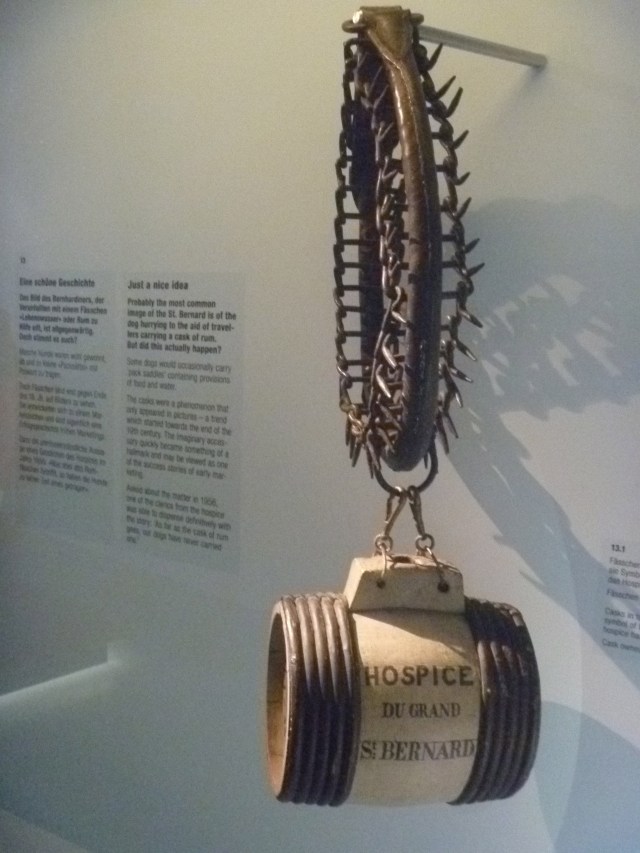
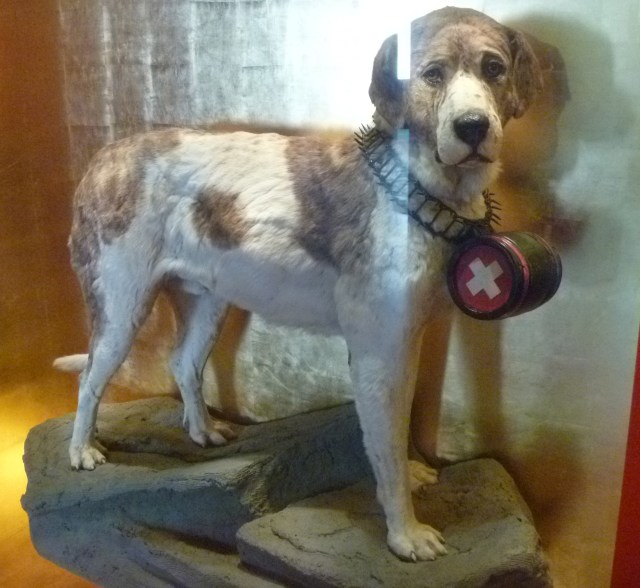
The Barrel


The real Barry

The Real Barry reworked by Georg Ruprecht in 1923.

Barry had been stuffed in 1814 using the primitive techniques of the time. Ruprecht used modern techniques at the time to create a plaster model of Barry’s body and clad it in the dog’s skin.

Barry was born in 1800 at the hospice on the summit of the Great St Bernard Pass. At almost 2500m altitude cold, fog and snow posed a danger to travellers and, accompanied by dogs, clerics and lay brothers from the hospice would go out each day looking for lost and weary travellers. Barry was to become their most tireless assistant he is said to have saved over 40 people from an icy death.

In 1812 a servant from the hospice brought the old and weary dog to Bern and he died there in 1814. After his death his body was handed over to a taxidermist so “that after his death this loyal dog will not be forgotten” [F. Meisner, 1815]
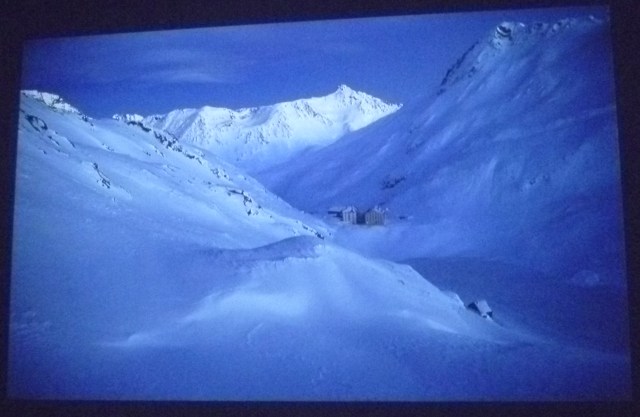
Great St Bernard Pass

The Great St Bernard Pass in Winter

The Hospice of the Canons Regular of St Augustine at the summit of the Great St Bernard Pass has been a place of safety and shelter for travellers for almost 1,000 years. In the 11th century, in order to help wayfarers, Bernard of Menthon founded a simple monastery at the highest point of the pass, and so the hospice was founded.
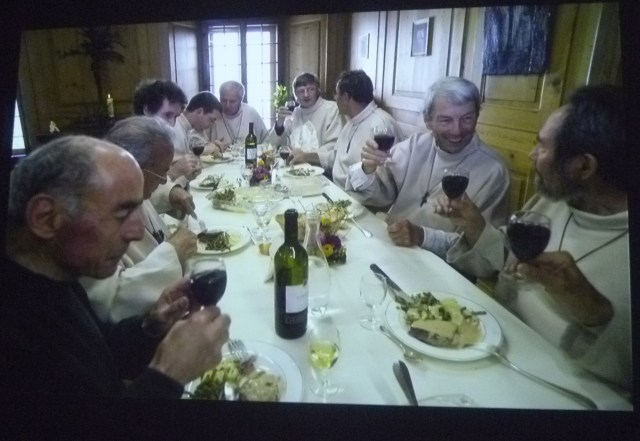
Modern Day Monks

Nice to see the modern-day monks (clerics) enjoying a tasty meal with wine

By providing shelter, food and a bed for the night the hospice vanquished the perils of the frightening, seemingly infernal, mountain world outside. Exhausted travellers and victims of bandits knew that they would be safe as soon as they reached its doors. For this Bernard was widely revered, and in 1123 eventually made a saint.

In addition to the story of Barry and the hospice high up on the pass the exhibition moved on to tell about the real dangers of avalanches today and to dispute the exaggerated stories of Barry. Even the best trained and strongest St Bernard dog could not have carried a child on his back as the story is told. But dogs still do important work in the field even today.
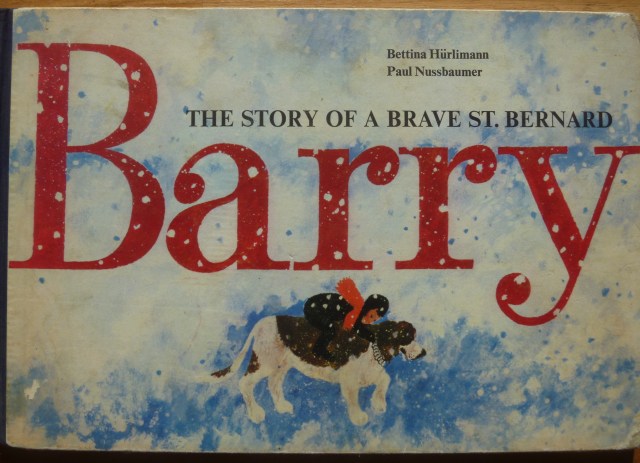
Barry Book

The Story of Barry

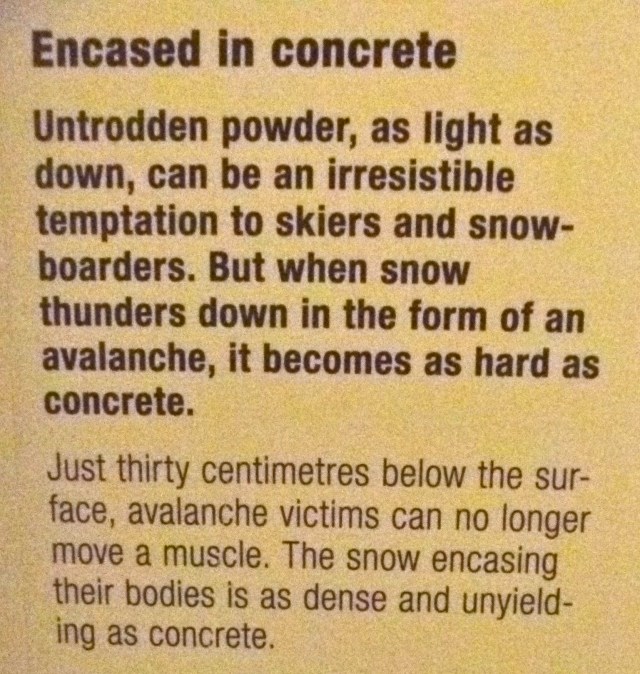
Finally, we could listen to the shocking stories told by the fortunate survivors of avalanches; as a clock ticked away the number of minutes that are needed in order to achieve a successful rescue. The chance of survival declines dramatically after just 15 minutes.

Around 70% of avalanche victims survive if the remaining members of their party manage to dig them out straightaway. This is only possible if everyone is carrying a detector device and knows how to use it. If an external rescue party is required the survival rate drops to 30%.”
P1140438

Warning
When in Doubt Add Twenty More Colours! Kaffe Fassett at The American Museum in Bath


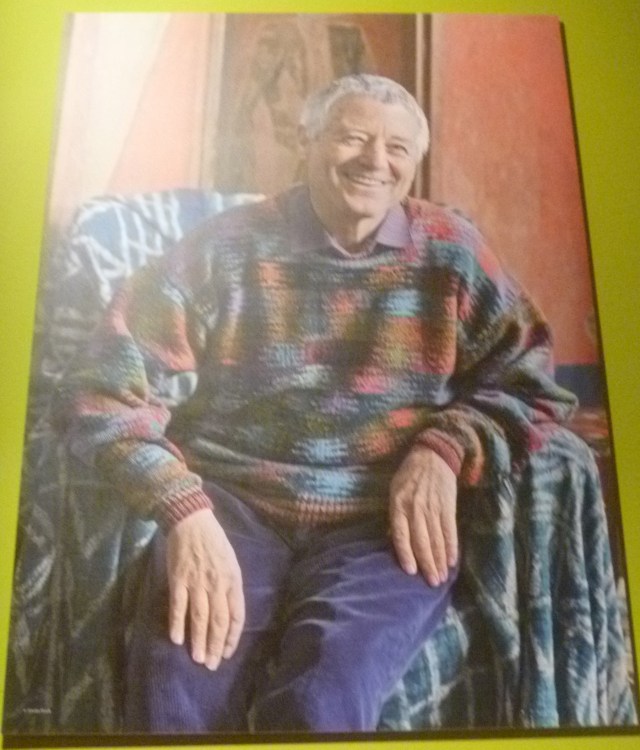
Kaffe himself

Last year I read ‘Dreaming in Colour : an autobiography’ by Kaffe Fassett. I’d always been aware of his knitting books and collaboration with Rowan Yarns of Holmfirth and vaguely knew that he had created some veggie designs for cushions for Ehrman but had been unaware of the person behind these enterprises and the prolific output and inspiration of the man. The Amazon Book Description sums it all up :

Kaffe Fassett has led an extraordinary life and is a captivating storyteller with a vivid memory. Born in 1937 in San Francisco, he spent much of his youth in Big Sur, where his parents bought a log cabin from Orson Welles and transformed it into the world-famous Nepenthe restaurant, a gathering place of artists of all sorts. After attending a boarding school run by the disciples of Krishunamurti, an Indian guru, he studied painting on scholarship at the School of the Museum of Fine Arts in Boston, but left after less than one year and travelled to England, where he ultimately made his home. After struggling to make a living as a fine artist for several years, Fassett met the fashion designer Bill Gibb and began designing knitwear for his collection. He went on to design knitwear for Missoni and for private clients and to revolutionise the hand knitting world with his explosive use of color. Further explorations led him to needlepoint, mosaics, rug-making, yarn and fabric design, set design and quilting. Now in his 70s, Fassett continues to produce new work in his studio in London and to travel worldwide to teach and lecture. This intimate autobiography is lavishly filled with Fassett’s amazing stories about his bohemian childhood, his hard-earned rise to fame, and all of his creative pursuits. It includes photos of him throughout his life, his home (which is an artwork in itself), his work (everything from childhood drawings to pencil sketches, to oil paintings, to massive tapestries and set designs, to hand knits and quilts) as well as the people and places around the world that have inspired him.”

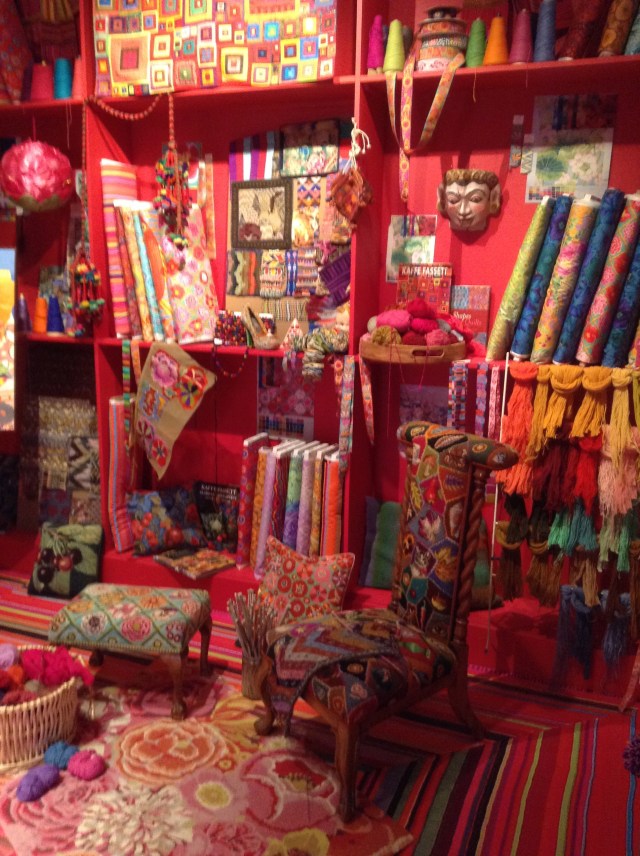
Opening display

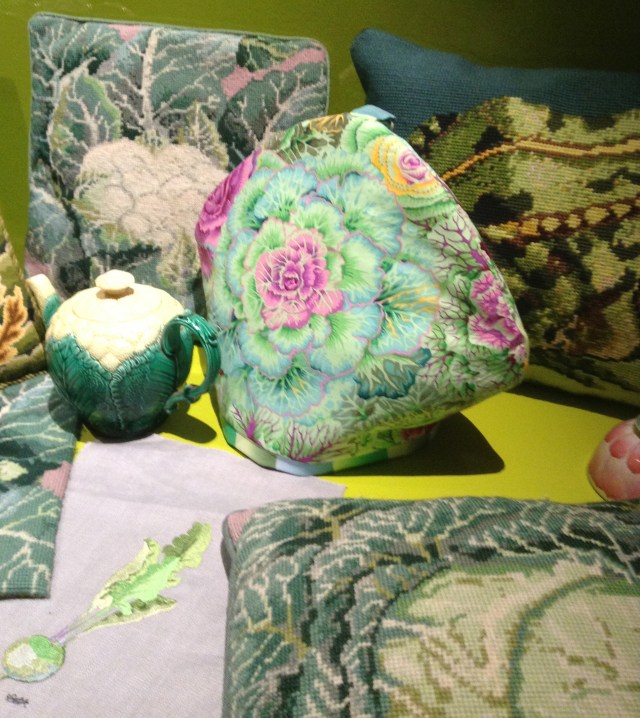
The Display that hits you as you enter the show!

So, inspired by this book and the riot of colour in Kaffe’s designs when I decided to drive down to Cornwall I thought it would be a good opportunity to see his work for myself. It’s currently on display at The American Museum in Bath until 2nd November 2014.

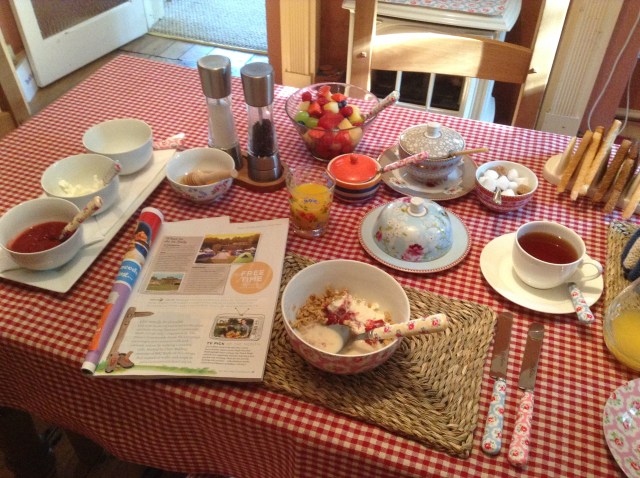
Colourful breakfast

My Colourful Breakfast Table (I’m reading about Port Eliot in Waitrose Kitchen magazine)

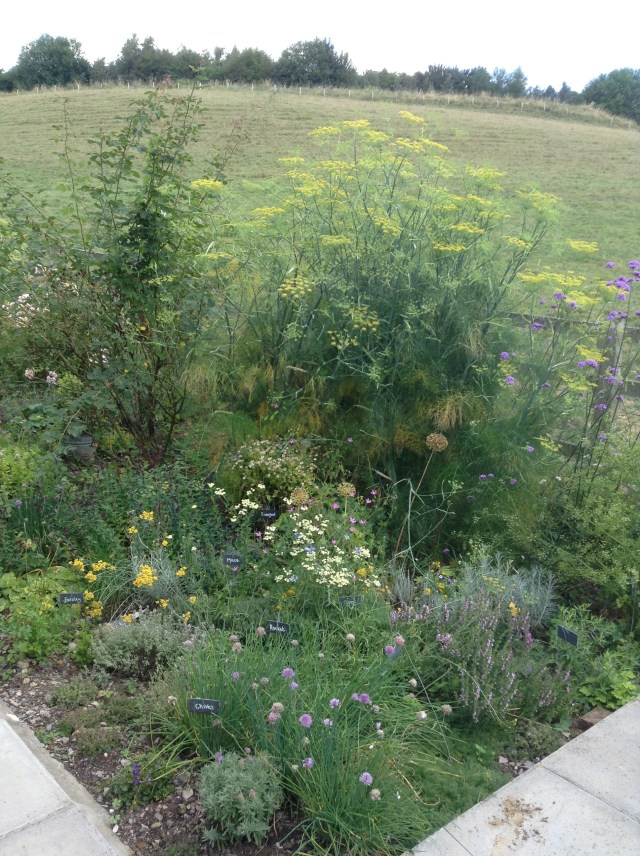
It was a day of colour, really, which began with a lovely breakfast : a combination of fruits and Cath Kidston tableware, moved on to meeting a friend at the Galleries Cafe at Freshford with its colourful herb garden and culminated with the exhibition and gardens at The American Museum.

Herbs

Herbs at The Galleries – A Magnet for Butterflies

Museum, Bath

The American Museum at Bath

artist reminder

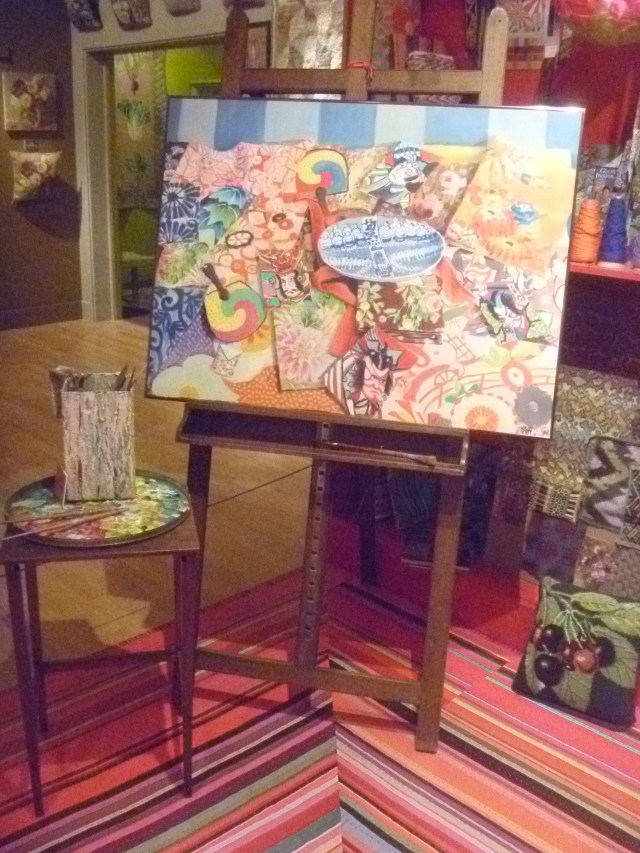
A Reminder that Kaffe was initially an artist

Red quilt

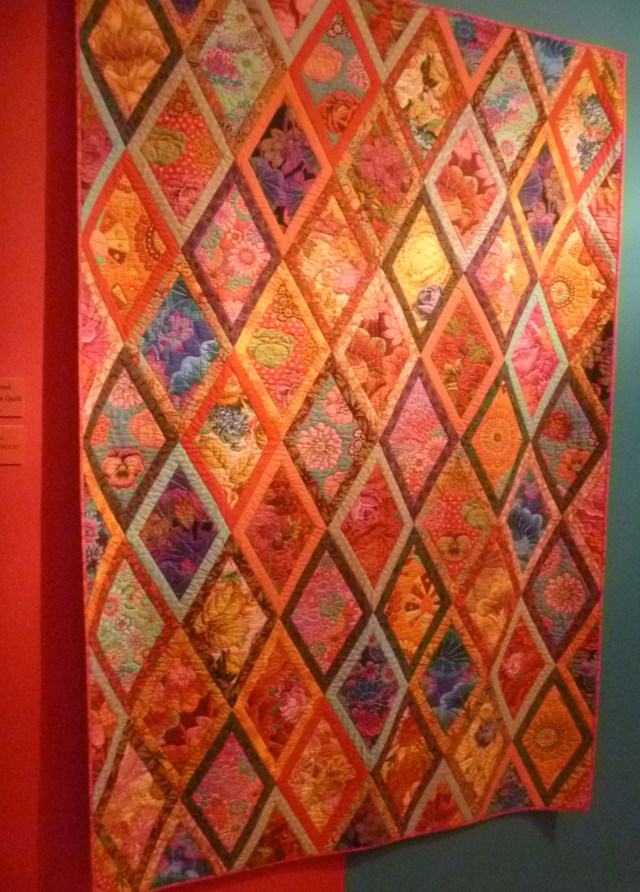
Red Quilt

VEGGIE THAME

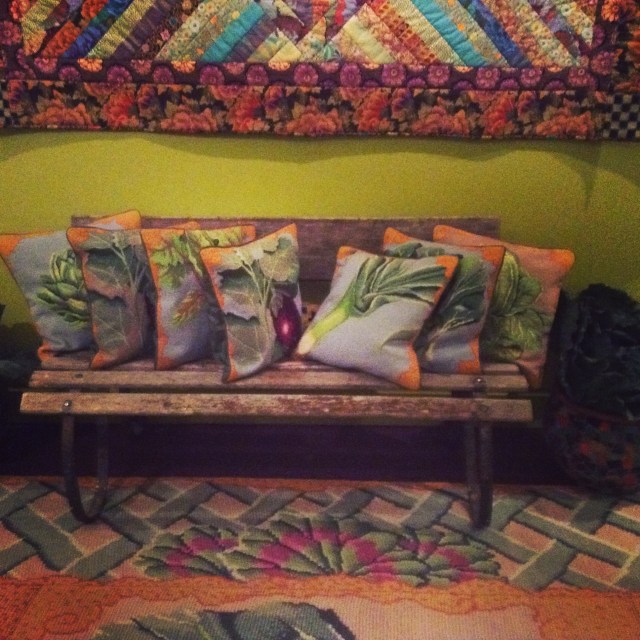
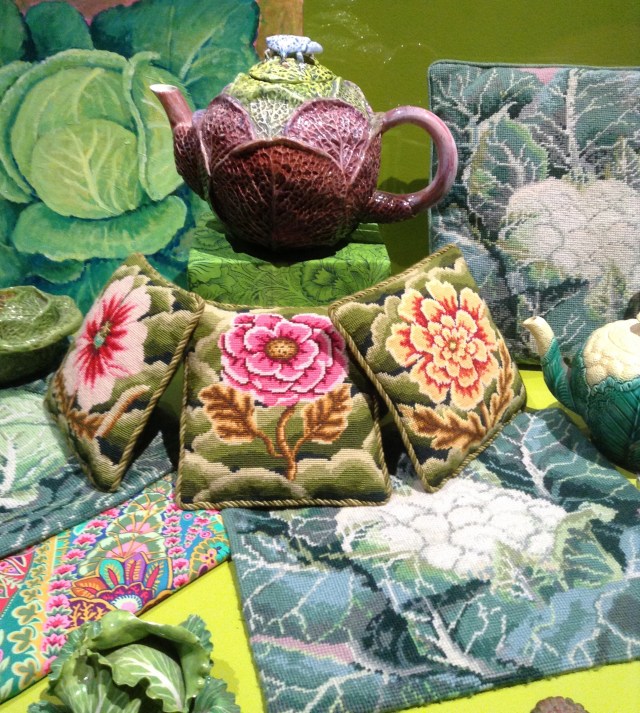
Veggie Theme Garden Bench

Teapot and cosy

Teapot and Cosy

On a garden theme

Tea and Gardens Theme

Knitted blocks

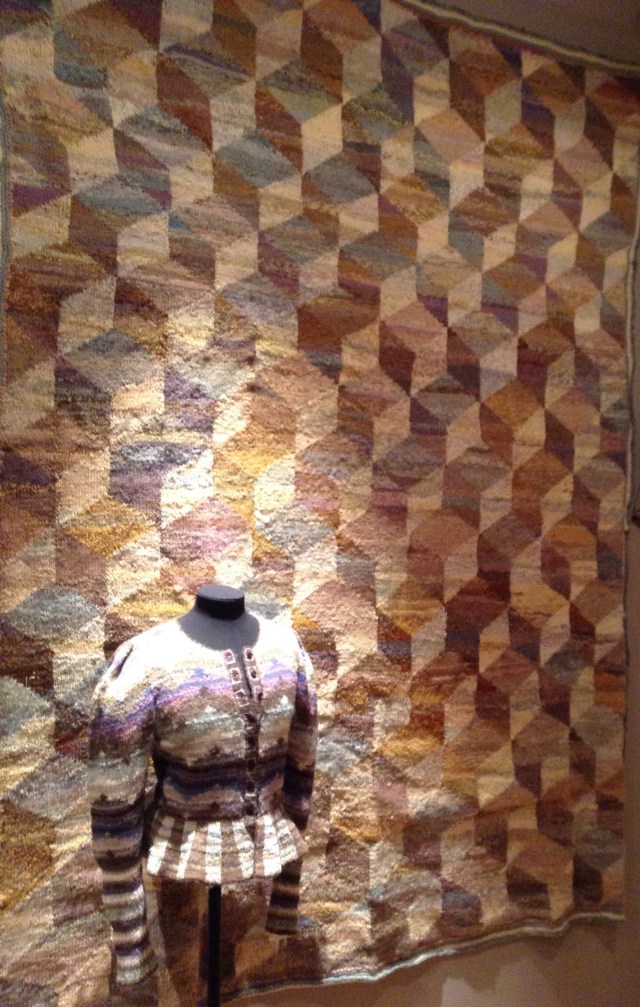
Muted Knitted Blocks Hanging and Cardy

Tea at American Mus

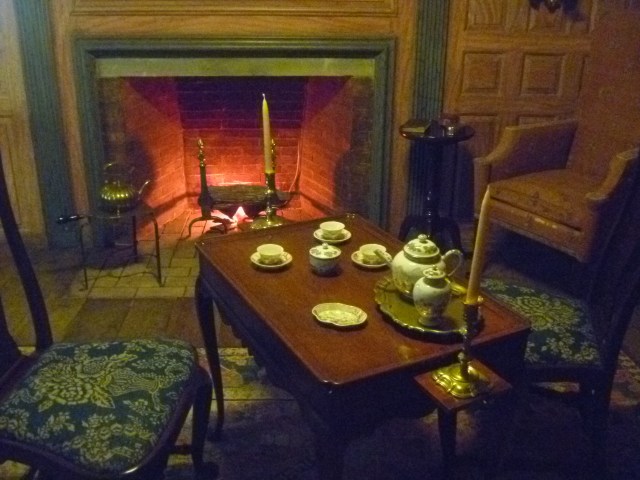
Period Room Setting with 1750s Tea Table – Connecticut or Massachusetts

G Washington garden

George Washington Mount Vernon Garden

K Fassett hare

Remember the Kaffe Fassett Hare from Yesterday?


Mad March Hares in Cirencester in July

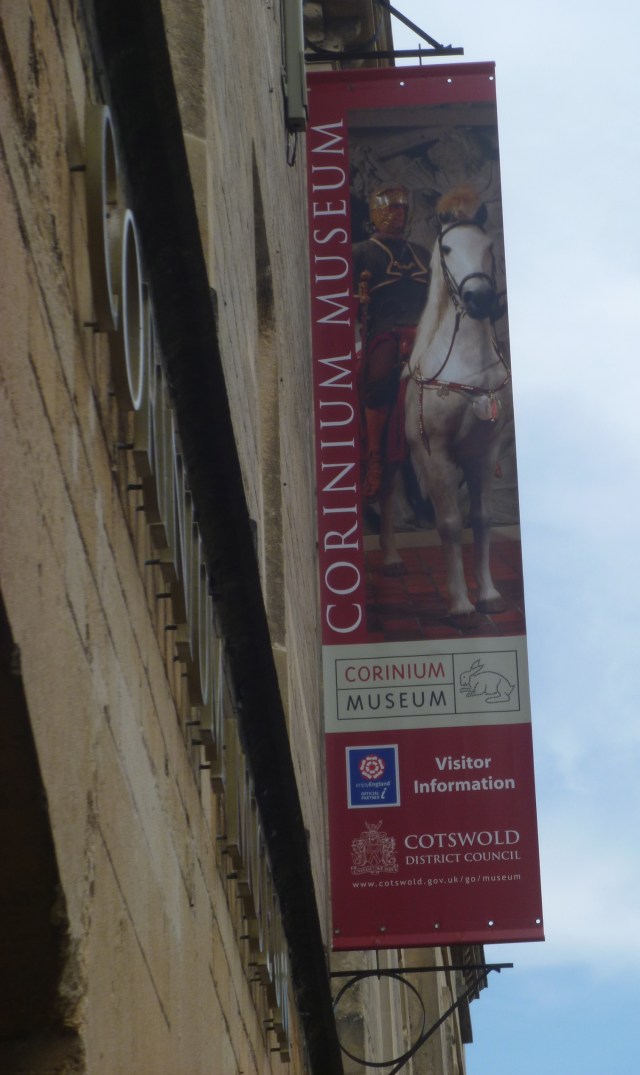
After moving at what seemed like snails pace on the M1 this morning I was glad to slip onto the Fosse Way and make my way to Cirencester a lovely mellow stone Cotswold town with Roman (and even pre-Roman) origins. My goal was to visit the Corinium Museum to see the  mosaics and other treasures of the town. With my Art Pass I gained free admission.

Corinium sign

The Corinium Museum

Museum entrance

Museum Entrance

Abberley House and Corinium Museum was built by John Cripps as a town house in c.1765. It was purchased in 1936 by the local Bathurst and Cripps families and given to Cirencester Urban District Council to house the Museum.

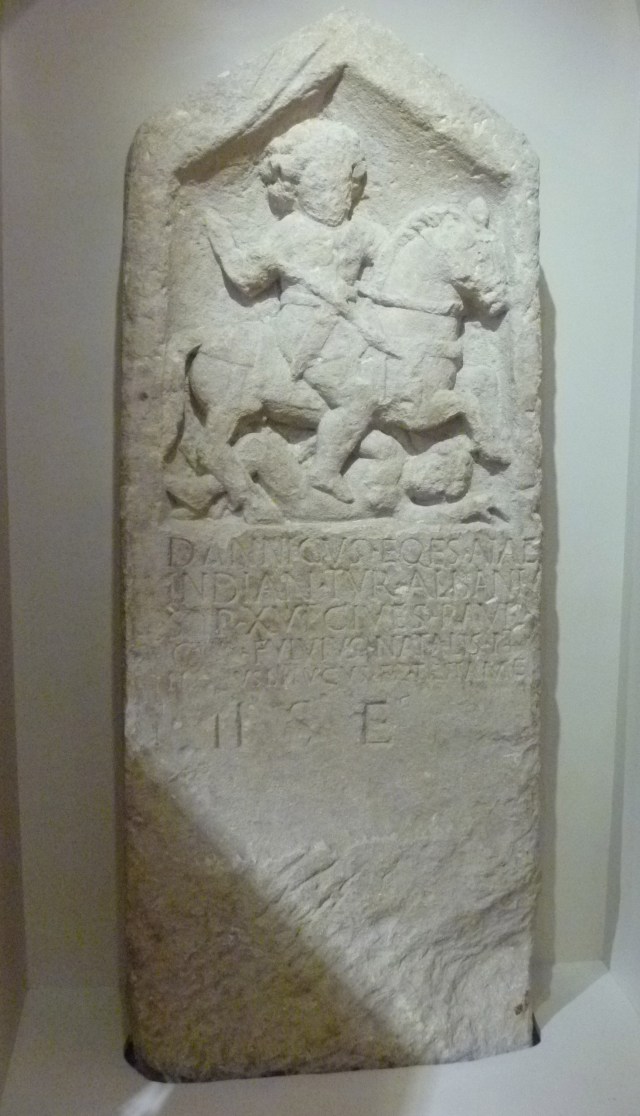
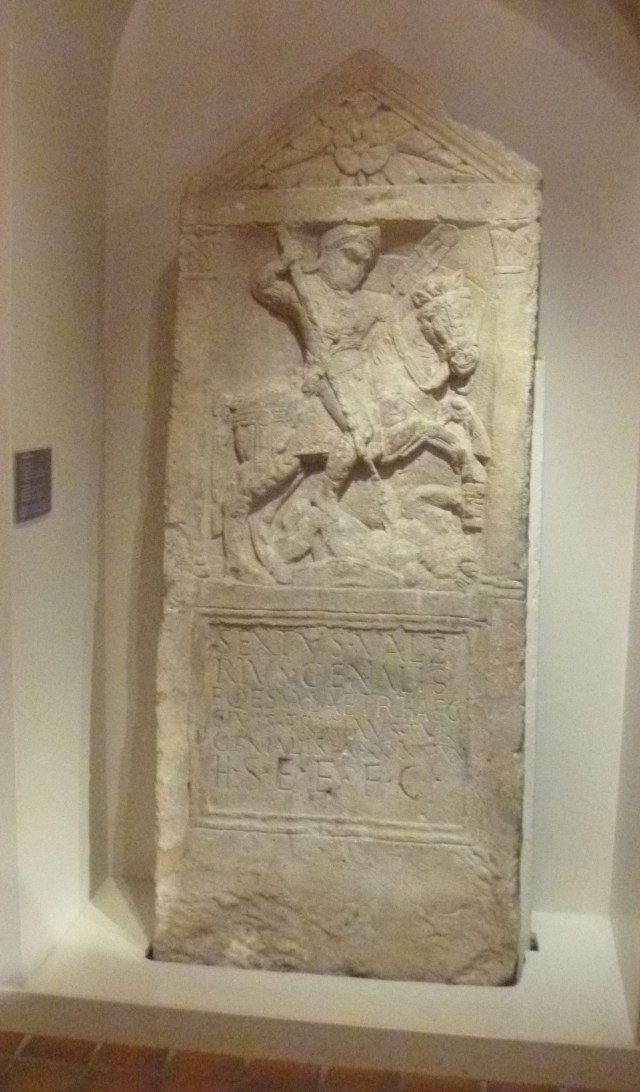
Including the mosaics Corinium Museum lists Ten Treasures as you go round the displays. Two Roman Tombstones were discovered. Soldiers of the Roman Army who died in service were awarded full military honours but they had had to pay a small sum out of the pay packet towards this. Families who wished to have a more elaborate memorial to their sons could pay the extra. The tombstones found near Cirencester were two such memorials.

Tombstone of Dannicus

Tombstone of Dannicus found in Watermoor, Cirencester in 1835

Tombstone of Genialis

Tombstone of Genialis dates to 60AD and also found at Watermoor

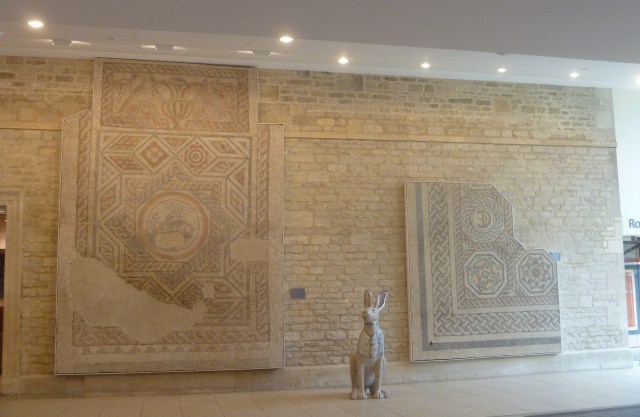
The Museum is famed for its mosaics. Chief among these are four fine (though damaged) mosaic floors, each with striking picture panels set within patterned borders.” 

Mosaics 1

Mosaics (and Hare) in the Museum Foyer – a taste of what’s to come!

Hare mosaic

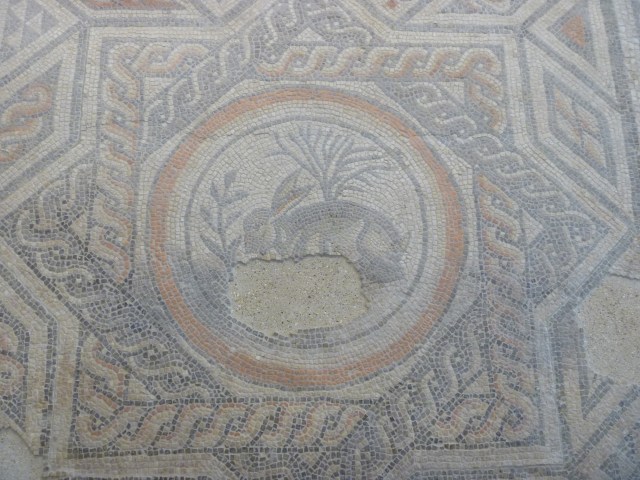
Hare Mosaic

This virtually complete mosaic was found in a Roman town house at The Beeches, Cirencester. It dates to the 4th century AD. The hare motif is unique as a centrepiece in Britain.

Hunting dogs mosaic

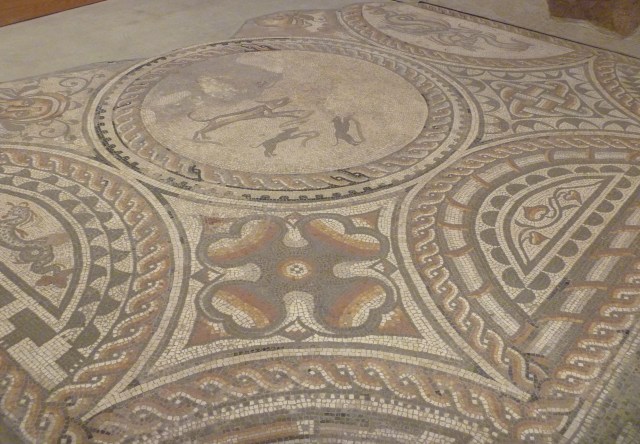
Hunting Dogs Mosaic Pavement found in Dyer Street in 1849

column

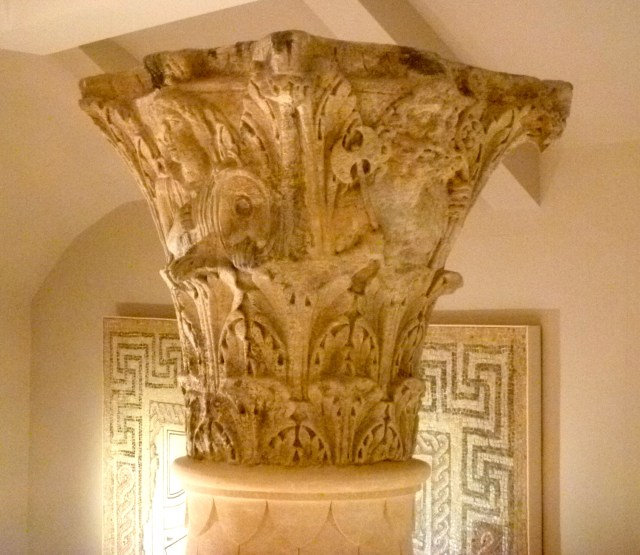
The Jupiter Column

The Jupiter Column has an original carving of the Greek god Bacchus and his drunken companions. The rest of the column has been reconstructed, and gives a hint of the size and grandeur of Roman public building even in this distant part of the Empire.

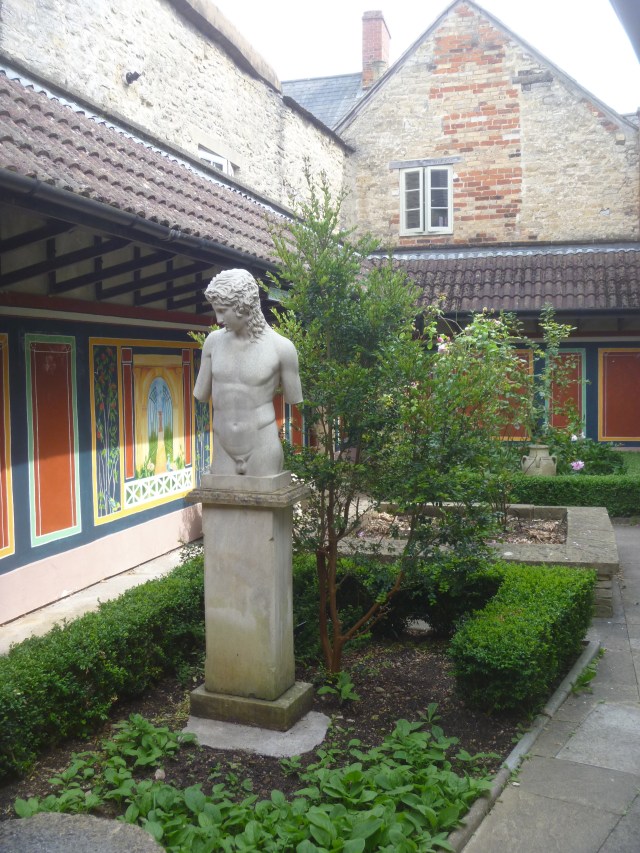
Roman garden

The Roman Garden

This small patch of garden has been planted out as might have been by Romans. The Museum is currently advertising for a volunteer to help keep the garden in shape.

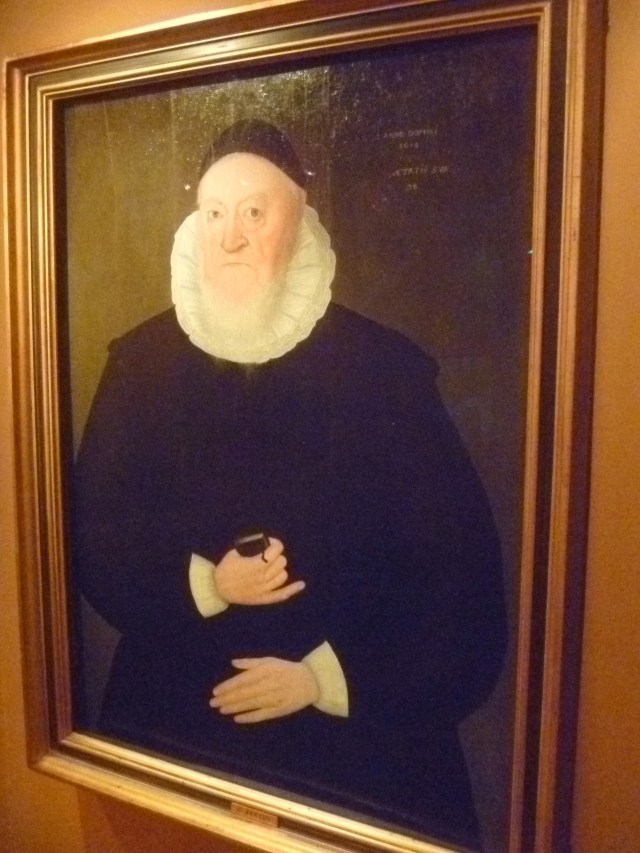
John Coxwell

John Coxwell (1516 – 1618)

Finally, in the Museum, as we moved away from the Romans we arrived at the last room where the displays are concerning the growth of Cirencester as a very significant wool town. John Coxwell played a big part in the history of wool on the town.

The Museum describes his painting :

An old man looks directly at us. Now aged nearly 100, he is dressed in costly black and carries what appears to be a prayer book. During his life, wool had made him rich; and the wool trade had brought the wealth to build churches and grand houses throughout the Cotswolds.”

When I left the Museum I realised that I still had enough time to visit the Parish Church of St John the Baptist to see The Boleyn Cup.

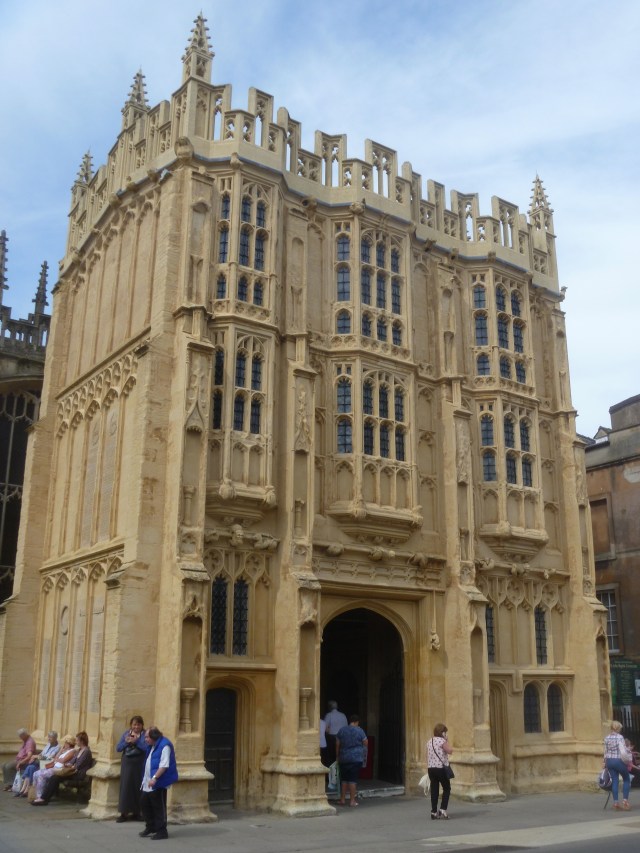
Parish church

The Parish Church Tower

Cirencester parish church is one of the biggest parish churches in the country. It is an historic Wool Church and is sometimes confused with the former Cirencester Abbey which was situated nearby. The tower was erected in 1400 with funds taken from the rebellious Earls of Kent and Salisbury arrested by the townspeople and executed in the market place. Built on the site of an old Roman ditch it needed the support of flying buttresses. [From the church leaflet]

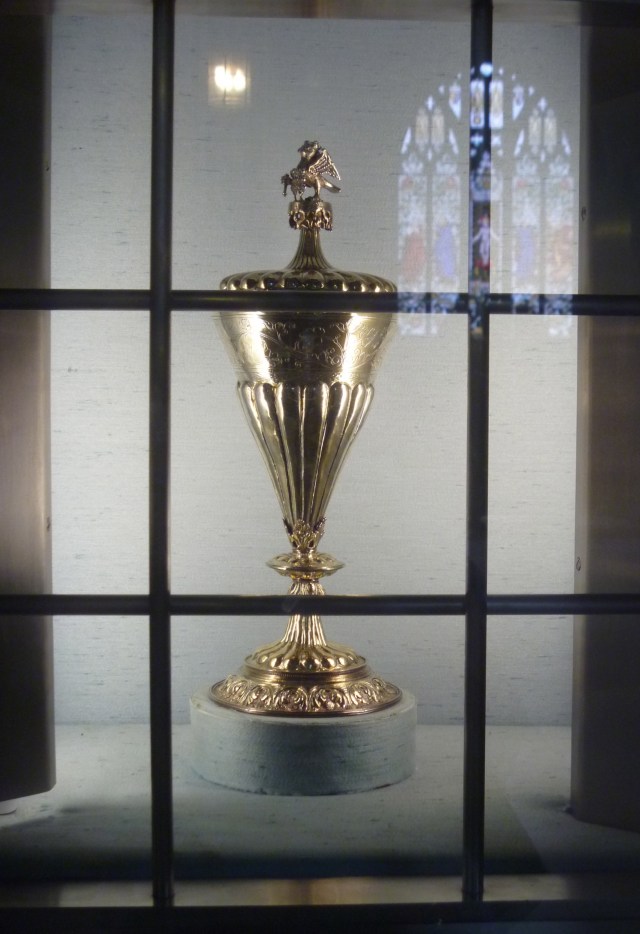
Boleyn cup

The Boleyn Cup

The Boleyn Cup was made in 1535 for Anne Boleyn and given first to her daughter Elizabeth, then by the Queen to her physician, Richard Master, who lived nearby,  and finally, by him to the church.

Church gate

The Fan-Vaulted South Porch has rooms above. It was built in 1500 for the Abbey but after the Reformation it served as the Town Hall.

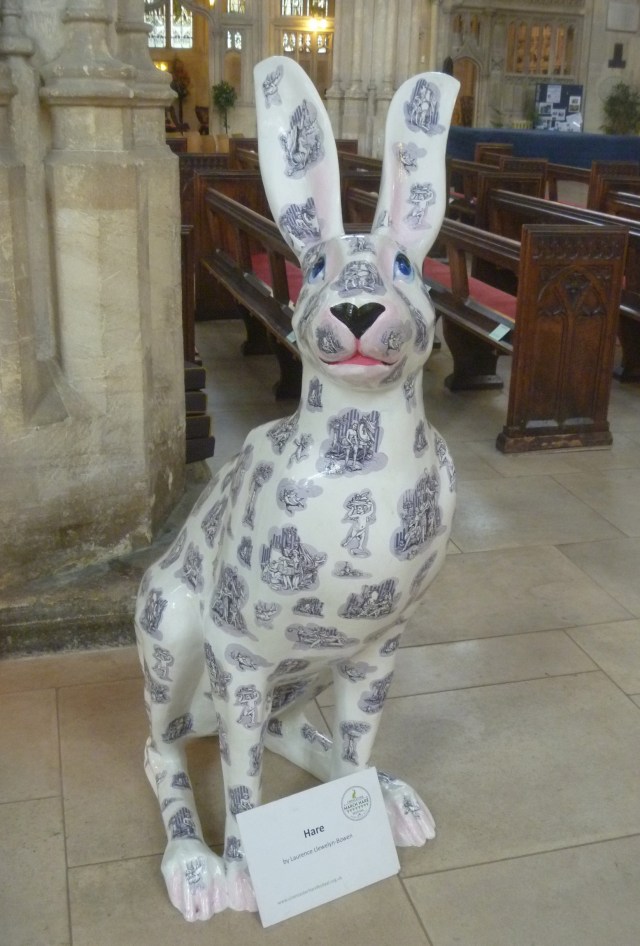
The significance of the March Hare Festival only dawned on me when I looked closely at the Hare in the church and noticed that it had been designed by Lawrence Llewelyn Bowen (of TV fame).

LLB hare

The LLB Hare

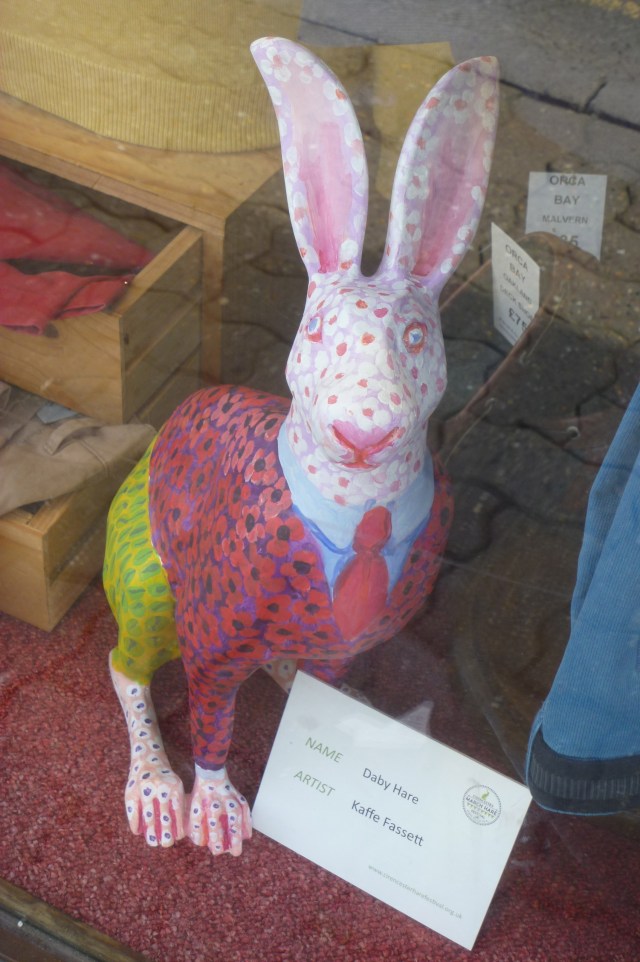
I then saw this hare by Kaffe Fassett in the window of a men’s outfitters shop.

K Fassett hare

The KF Hare

Birdy Thursday at Norwich Castle and Hickling Broad

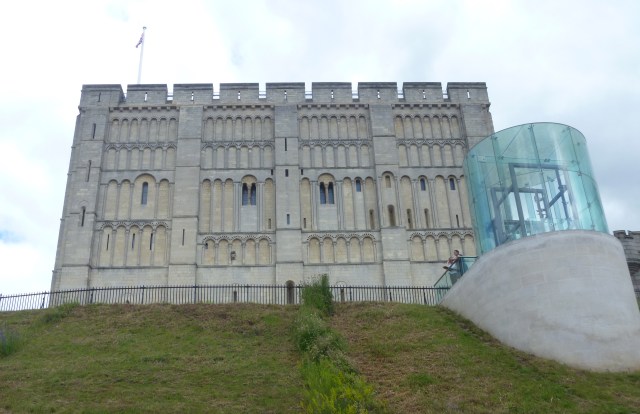
Norwich Castle

Norwich Castle Museum and Art Gallery

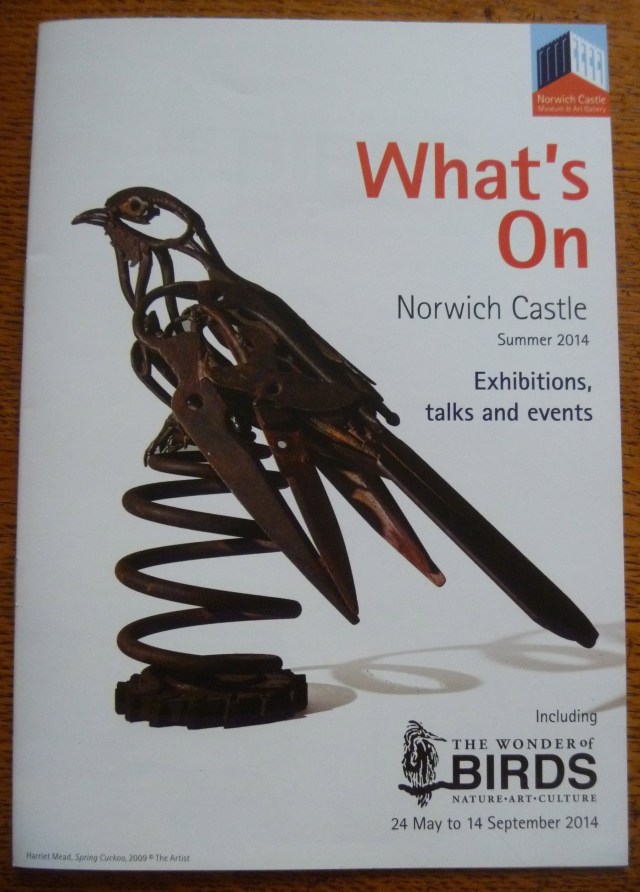
The Wonder of Birds exhibition is currently showing at Norwich Castle Museum and Art Gallery. I’ve written about a gallery visit here before. One Thursday a couple of weeks ago when I was in Norwich for a few days visiting family I thought I’d see what all the fuss about birds was all about. Well, it was about quite a lot of amazing stuff, actually.

Wonder of birds

When I first heard that The Wonder of Birds was to be next up I wasn’t too keen. Then I read this article in the Guardian and saw the accompanying pictures and changed my mind. Many of the artefacts and pictures came from the Museum’s own collections.

The Wonder of Birds’ explores the cultural impact of birds upon mankind. Eliciting a wide range of emotions from awe to fear, from pleasure to cruelty – birds have intrigued humanity since the earliest of times. The exhibition will span the centuries, informed by local and national collections, to include the arts, natural history, archaeology, fashion and social history. Works by major artists and illustrators, historical and contemporary, will be included and the exhibition will examine local, national and international issues.

Metal bird

Spring Cuckoo by Harriet Mead, 2009

‘The Wonder of Birds’ comprises six sections, each highlighting a different aspect of birds, their meanings and our relationships with them. It begins by introducing the visitor to the breadth of this fascinating subject: what is a bird; what do they mean to us; how have we studied, portrayed, preserved, endangered and used them?

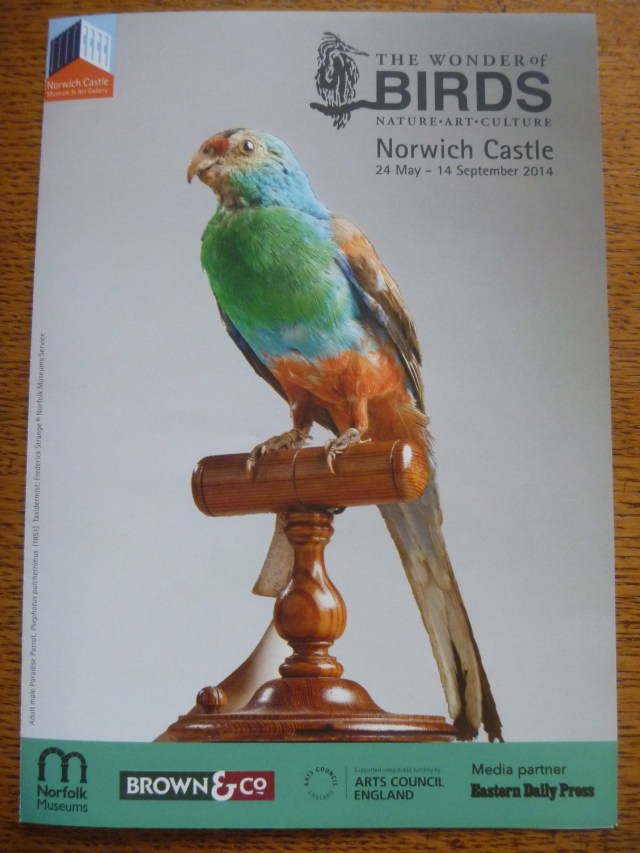
Parrot

Adult Male Paradise Parrot : Frederick Strange, taxidermist, 1851

Section 2, ‘Predators and Prey’ … Section 3, ‘Birds & Landscape’, primarily examines birds in East Anglia, …  Section 4, ‘Migrants and Ocean Travellers’, will examine the seasonal behaviour which may take migrating birds from Norfolk to the Arctic, Africa or South America …Section 5 is titled ‘Introducing the Exotic’. Exotic birds have always been coveted for their brilliant plumage, combined with their sheer rarity value, both as high status pets and for their feathers.

Feather hat

Exotic feathered hat from the 1960s

‘The Realms of the Spirit’, the final section, will illustrate how songbirds and their relatives have symbolised the immortal soul, been seen as heralds of the seasons, messengers from heaven, or magical beings moving between the worlds.” [Museum website]

Cards

Bird related postcards in the Museum Shop

I discovered that birds may not need humans but humans certainly do need birds. They appear in our decorative arts, religion, symbolism, folklore, heraldry, fashion, literature and language.

The 147 million year old Archaeopteryx fossil cast is the earliest known bird. The Natural History Museum cares for the first skeleton specimen ever found and this spectacular fossil helped prove that modern birds evolved from dinosaurs. It was the first example providing support for Darwin’s theory of evolution. It is the most valuable fossil in the NHM’s collection.

archaeopteryx-banner_112755_1

Archaeopteryx fossil [source]

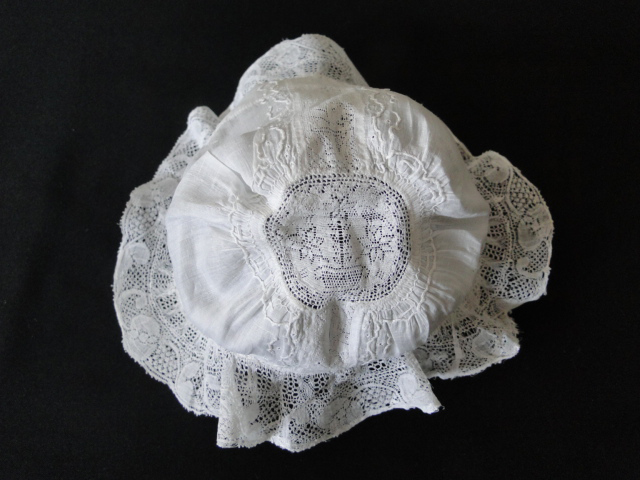
I saw an exquisite hollie point (English needle lace) baby’s Christening cap featuring a dove – a visual reminder of the Holy Spirit …

archive2

Here is a similar example [source]

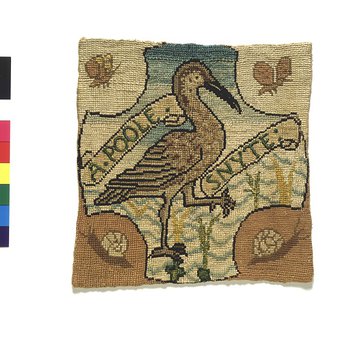
… and a pincushion made by Sylvia Pankhurst whilst she was incarcerated in Holloway Prison and a copy of the Swiss naturalist Conrad Gessner’s Bestiary ‘Historiae animalium’ which must have been seen by Mary, Queen of Scots. A group of her embroideries The Oxburgh Hangings feature animals and birds from this book.

Oxburgh hanging

Bird detail from the Oxburgh Hangings [Source – V&A]

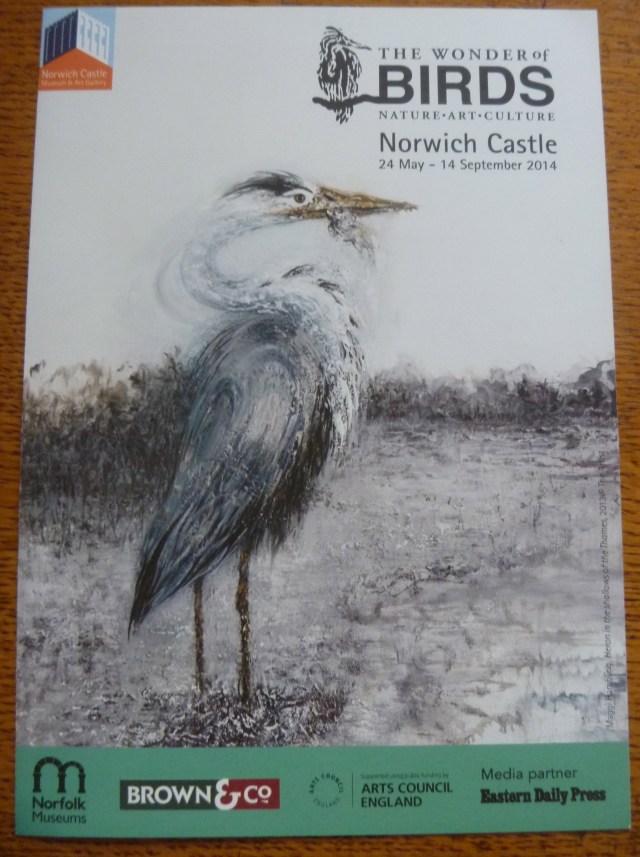
Hambling heronMaggi Hambling’s Heron

The section on birds in the landscape featured Maggi Hambling’s Heron in the shallows of the Thames bearing its environmental message. The bird has a mouthful of sewage.

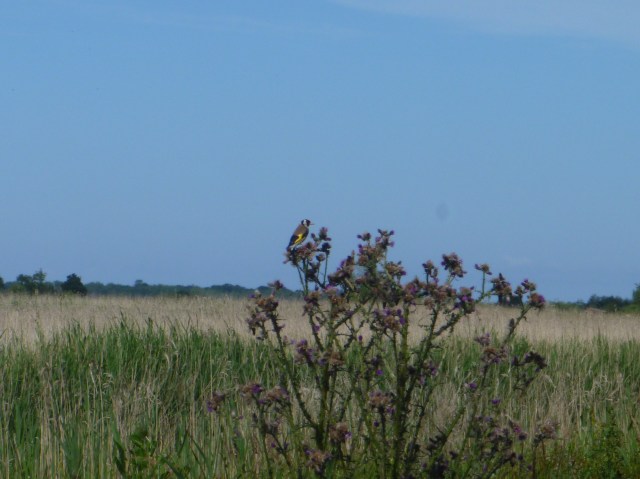
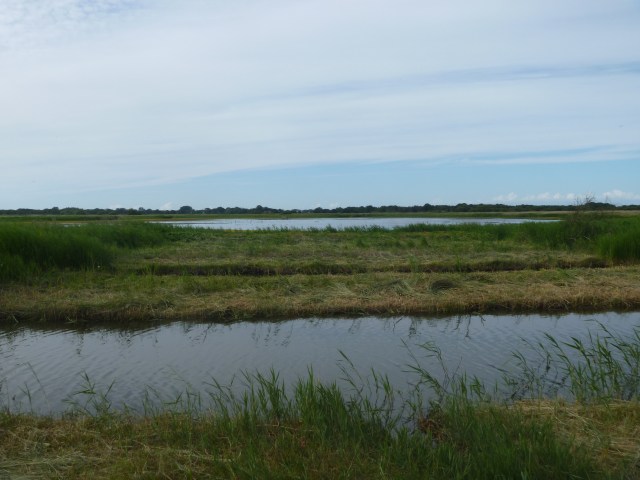
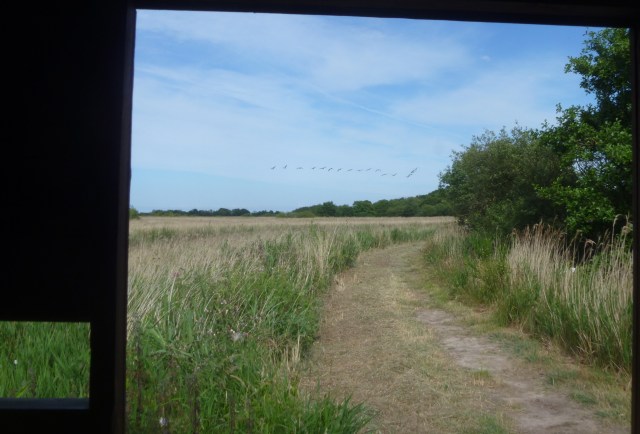
Then in the afternoon I saw birds in their true East Anglian landscape. I drove out to the Norfolk Broads to meet up with an old schoolfriend and we walked around Hickling Broad stopping to look at a variety of birds including a goldfinch, a plump of geese * and many different species from a hide along our path.

* The collective noun for a group of geese on the ground is a gaggle; when in flight, they are called a skein, a team or a wedge; when flying close together, they are called a plump. [source]

Goldfinch

A Goldfinch

Hickling from hide

Hickling Broad from the Hide

geese

The Plump of Geese from the Hide

red sails

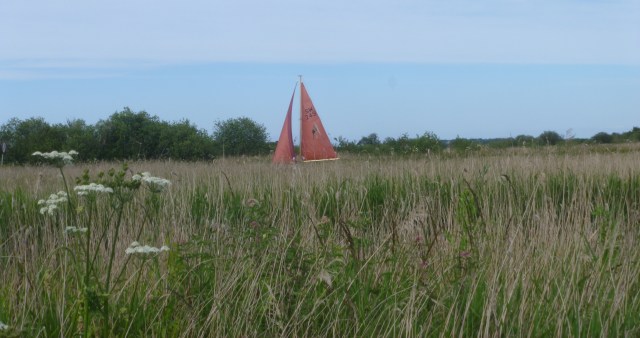
Typical Broads View

Ladybird birds

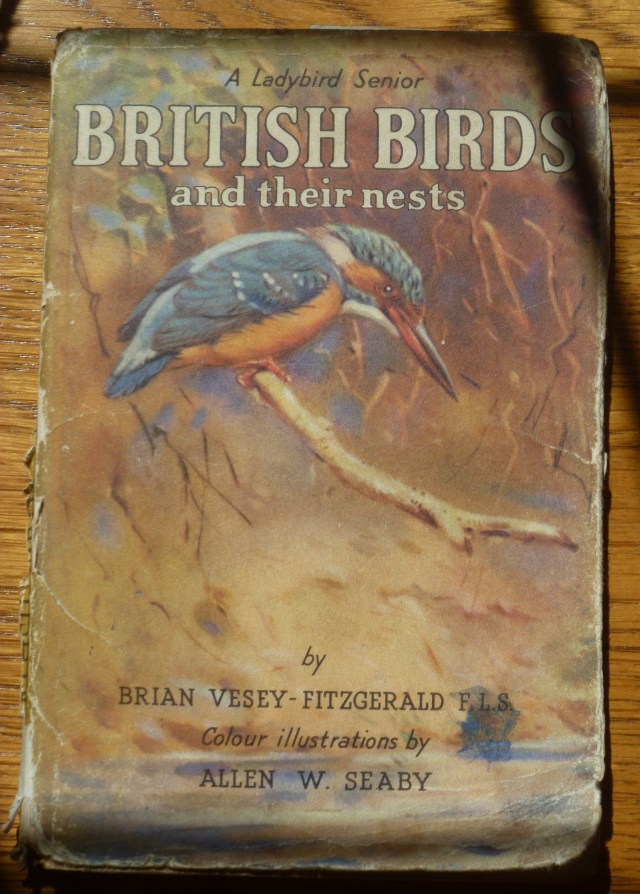
I must have been interested in birds once upon a time – my well-loved book!

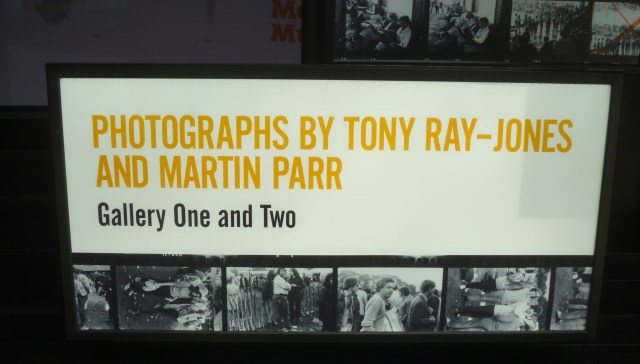
Only in England : Photographs by Tony Ray-Jones and Martin Parr

Intro Poster

Later this month I’ll be assisting Dovegreyreader (alias Lynne) at the Port Eliot Festival in Cornwall. Any posts I may do about events may be on here or maybe over at Lynne’s blog.

M Parr 1976

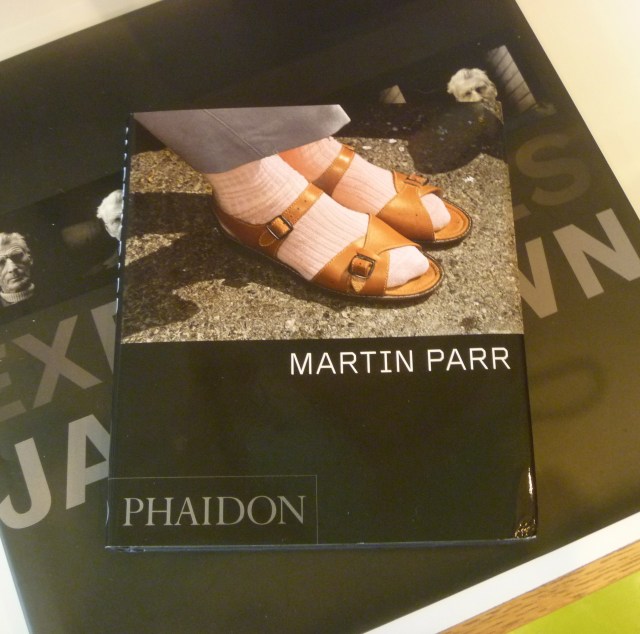
One of Lynne’s guests will be the photographer Martin Parr. For many years I have been intrigued by Parr’s photos. We had lots of his titles in my library so I would often have a look and wonder to myself – Is this a put up job? Or are the subjects unaware that they are having their picture taken?

MP book

Parr Book

 A Couple of Parr’s books in the Museum Shop : sandals are the theme of the day

Until Lynne gave me the nod I was unaware that Parr was involved in an exhibition locally: Only in England : Photographs by Tony Ray-Jones and Martin Parr. It was showing at the National Media Museum in Bradford until the end of June. Bradford is but a few miles away so the other Saturday afternoon I took a trip over there to see what the exhibition was all about.

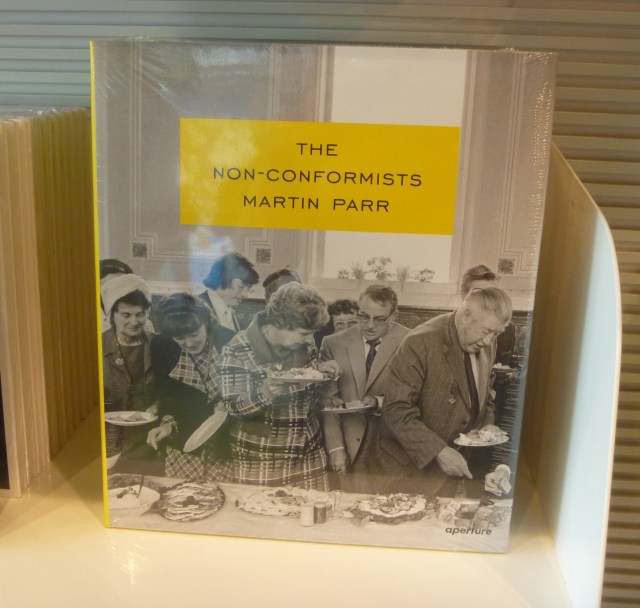
I found that the two galleries of the exhibition were complementary to each other exploring the relationships between Tony Ray-Jones (1941-72) and Martin Parr (b.1952). Parr was invited by the Curator of Photographs, Greg Hobson, to study the Ray-Jones archive (acquired by the Museum in 1993) and help bring together a collection for display alongside early work of Parr’s centred on the local Calder Valley between 1975 and 1979 when he himself lived in Hebden Bridge. “The Non-Conformists” was his first major body of work.

Non-Con Book

Ray-Jones spent the latter half of the 1960s travelling around England photographing what he thought of as fast-disappearing way of life. He also spent half a year travelling in the USA but sadly Tony Ray-Jones died in 1972, aged 30, of leukaemia.

“Ray-Jones was interested in the eccentricities of human behaviour, which for him embodied the English personality. He approached his project like an anthropologist, thoroughly researching his methods, locations and subjects. The resulting photographs are remarkable. Characterised by wry humour, they are nonetheless full of melancholy and lament the disappearing cultures that influenced Ray-Jones’s own emotional and artistic development. The England that Ray-Jones photographed is very different to the England of today.” [Information board at the exhibition]

“Ray-Jones’s photographs of the English seaside were a powerful influence on Martin Parr. He was fascinated by Ray-Jones’s ability to see the quirky and absurd in the everyday.” [Information board at the exhibition]

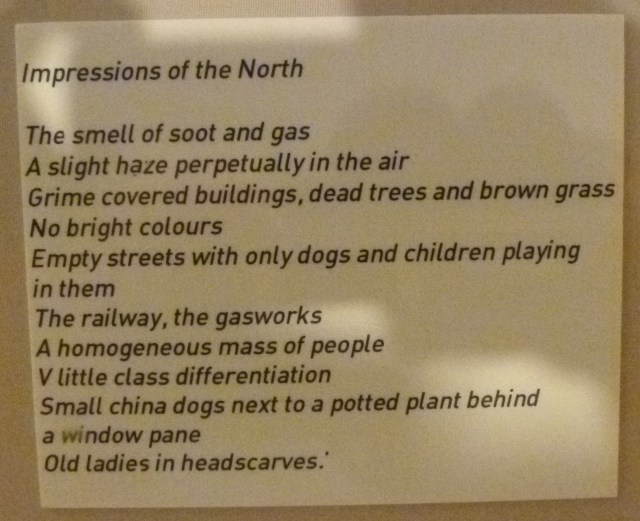
Impressions of north

Impressions of the north

I liked reading his notebooks and inspecting other memorabilia on display.

R-J's notes

Ray-Jones’s notes

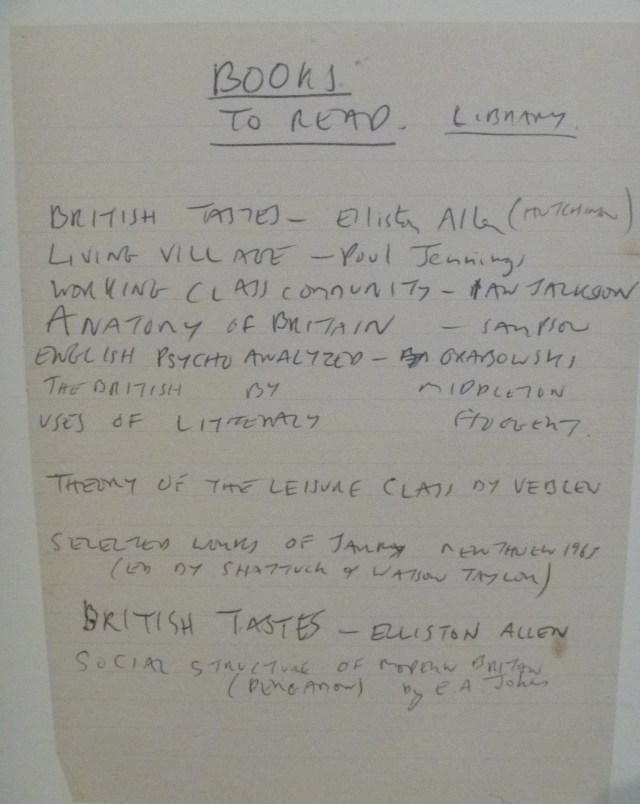
Books to read

Books to Read

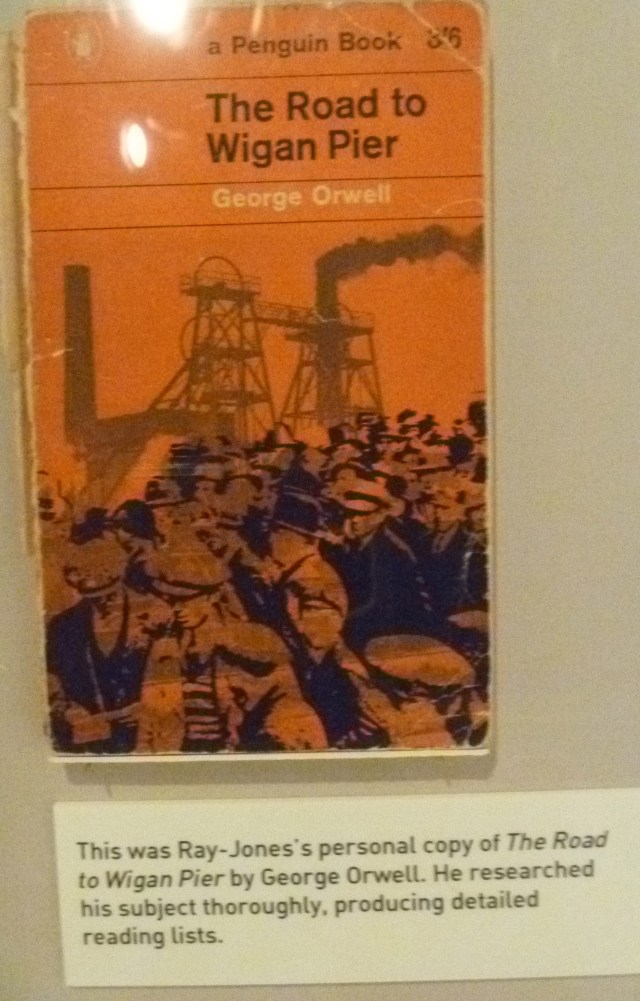
Road to Wigan Pier

His well-thumbed The Road to Wigan Pier

Martin Parr’s selection were based on his collection The Non-Conformists taken in Hebden Bridge and the surrounding area in 1975 when he and his wife moved to live in the town. He focussed on the chapels and their declining congregations and the changing way of life. Being in black-and-white, like Ray-Jones’s, this gives his pictures an old-fashioned, dated, sad, shabby and gloomy feel. It’s grim up north, you know.

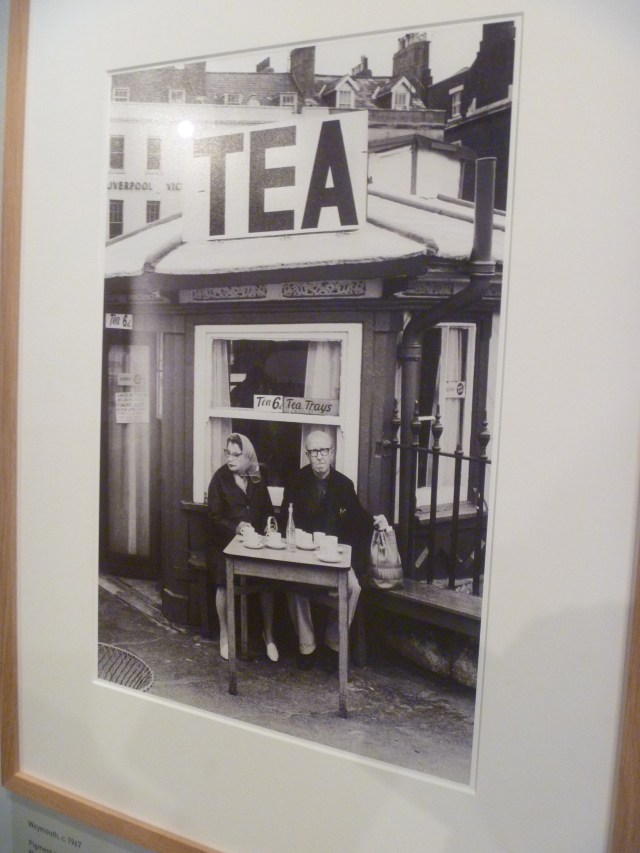
I’ve just chosen two photographs – one from Parr and one from Ray-Jones – that both made me smile.

Tea

Love this Ray-Jones Tea Scene taken at Weymouth in 1967

Last Cuppa

 And I call this one The Last Cuppa (Parr)

A fellow WordPress blogger took much better notes and has written more extensively about the exhibition here.

Two Henrys : The Fourth Part Two and Moore

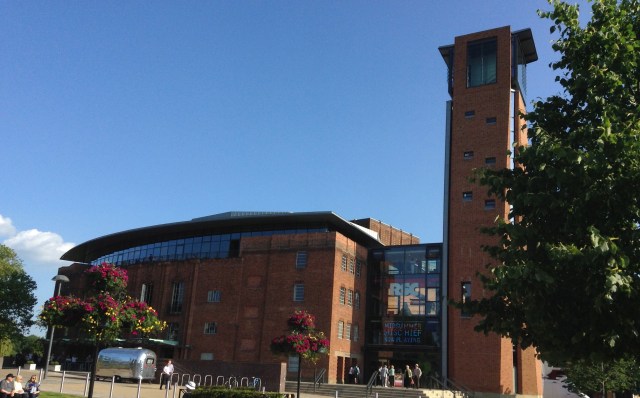
From Renishaw Hall on the eighteenth of June we made our way to Stratford upon Avon where we checked in at our hotel in time to wash and brush up before heading on foot (only a few minutes distant) to the Royal Shakespeare Theatre by the River Avon. It was a lovely warm evening and there were lots of people about enjoying relaxing by the River and the Canal.

RST

We were booked for supper at The Rooftop Restaurant followed by a performance of Shakespeare’s Henry IV Part Two by the Royal Shakespeare Company. This was no dull, boring history play rather it seemed to me dominated by comedy. Anthony Sher played Falstaff and the whole performance was being filmed and relayed simultaneously to a greater audience in cinemas throughout the country. This meant that the director, Greg Doran, came on stage at the beginning to introduce the play.

Swans of Avon

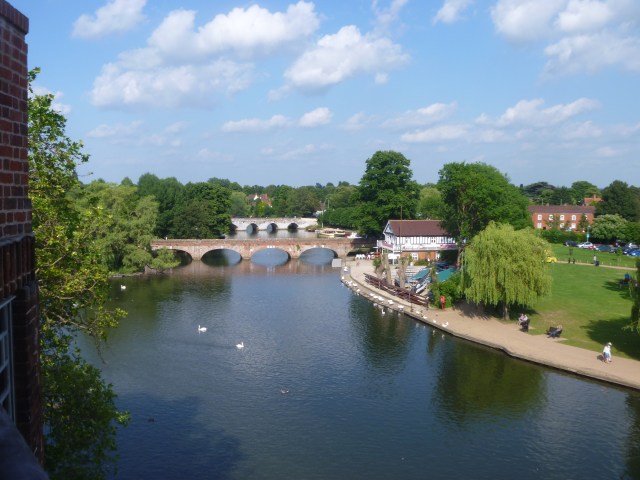
The Swans of Avon and Clopton Bridge from The Rooftop Restaurant

HT Church

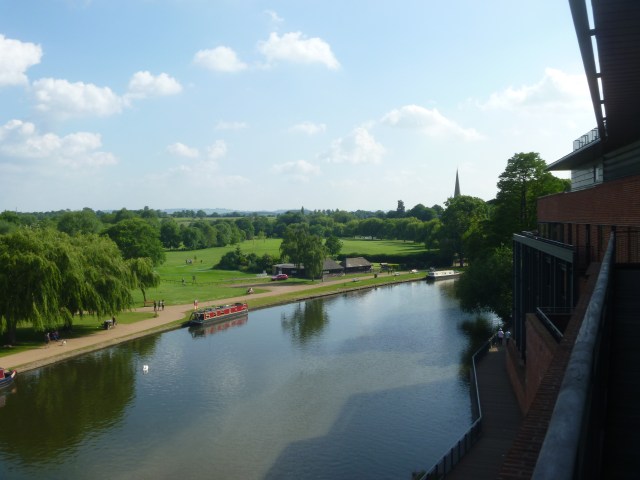
River Avon and Spire of Holy Trinity church from The Rooftop Restaurant

Shakespeare Hotel

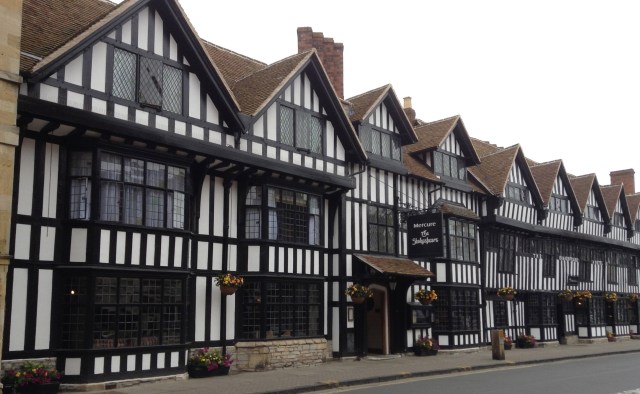
The Shakespeare Hotel – one time I stayed here

Grammar School

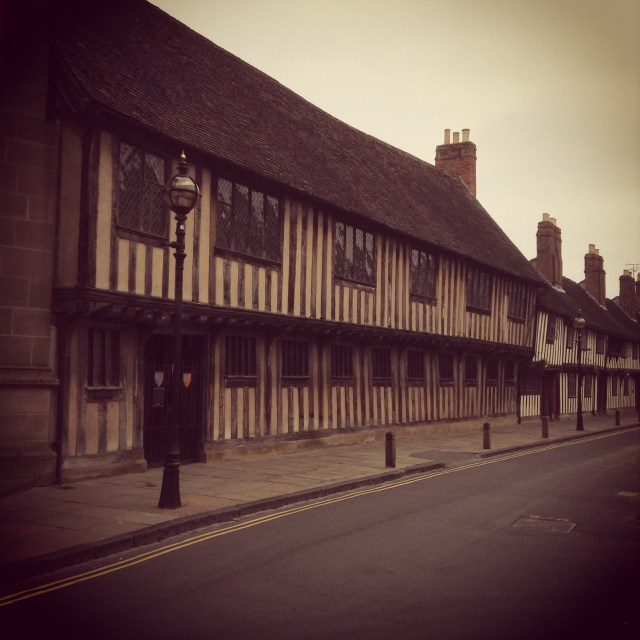
The Grammar School, Stratford upon Avon

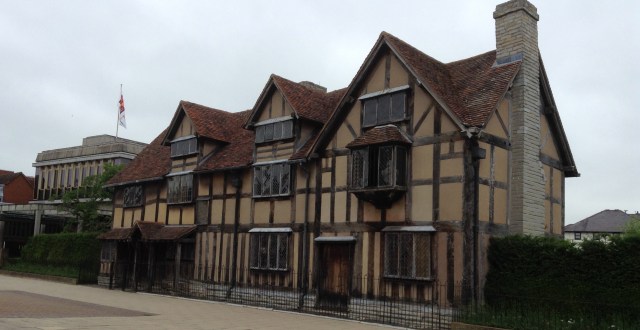
Birthplace

The Birthplace

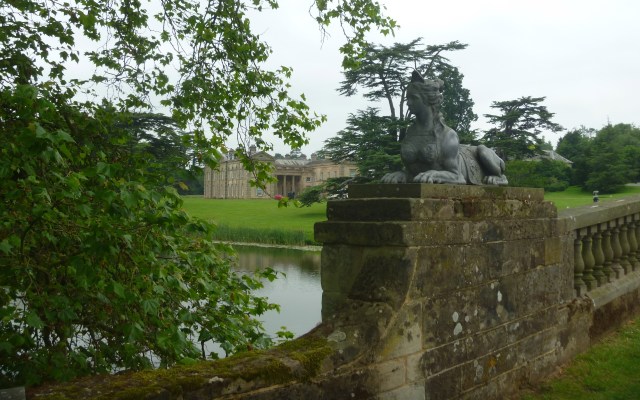
The next morning after a leisurely breakfast and opportunity to take a walk in Stratford we headed off to nearby Compton Verney where we had a full programme of tours, a sandwich lunch and time also to walk in the park, visit the chapel and spend time (and money) in the attractive gift shop.

Approaching CV

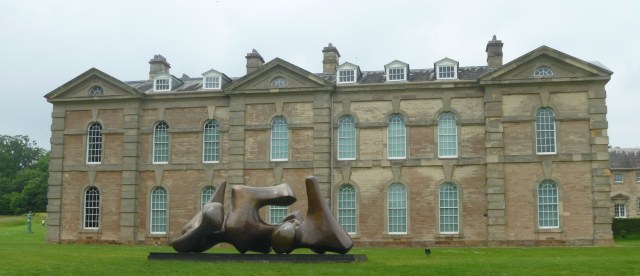
CV and 3 piece

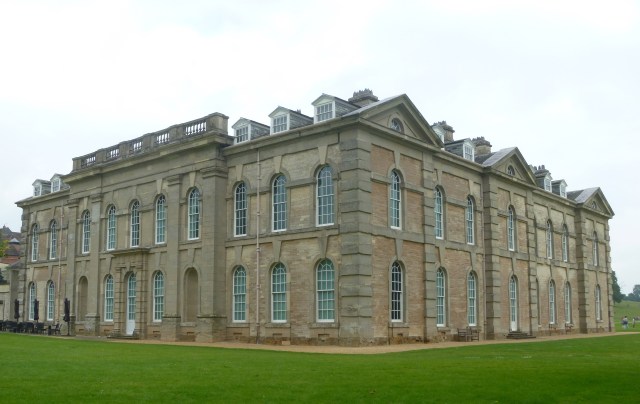
CV House

“10.30am Depart for Compton Verney. Set in a park designed by the ubiquitous ‘Capability’ Brown, this long-derelict house of the Willoughby de Broke family is now resurgent under the inspiration of the [Peter] Moore’s Foundation. The collections are numerous and varied. The morning will be given over to the current display of sculptures by Henry Moore and Auguste Rodin, while the afternoon will feature a guided tour of salient points of the main collection which encompasses British Portraits, Chinese Ceramics and Bronzes, British Folk Art and for Textile-buffs The Marx-Lambert Collection. You will be free to visit those parts of the collection which are your particular interest. www.comptonverney.org.uk” [Our Programme]

Moore Rodin

Moore – Rodin

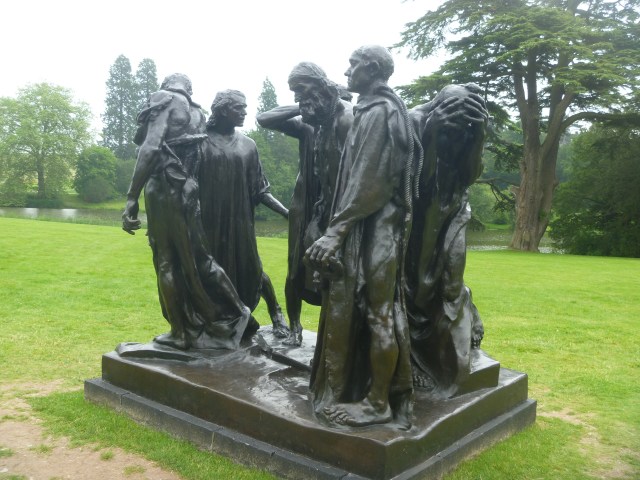
Calais Burghers

Rodin’s Burghers of Calais

Exhibition
Moore Rodin
15 February 2014 to 31 August 2014
10th Anniversary Year – Moore Rodin at Compton Verney

This ground-breaking international exhibition compares the work of two giants of modern sculpture: Henry Moore and Auguste Rodin. This is the first exhibition to be devoted exclusively to these artists, with major works being displayed in our ‘Capability’ Brown landscape as well as in our exhibition spaces.

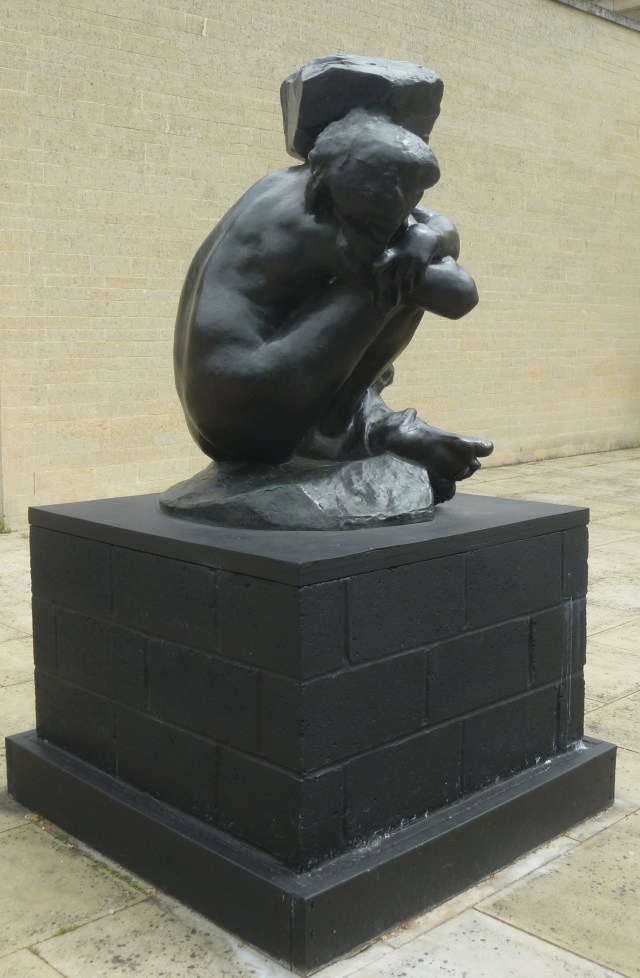
Fallen Caryatid

Fallen Caryatid by Rodin

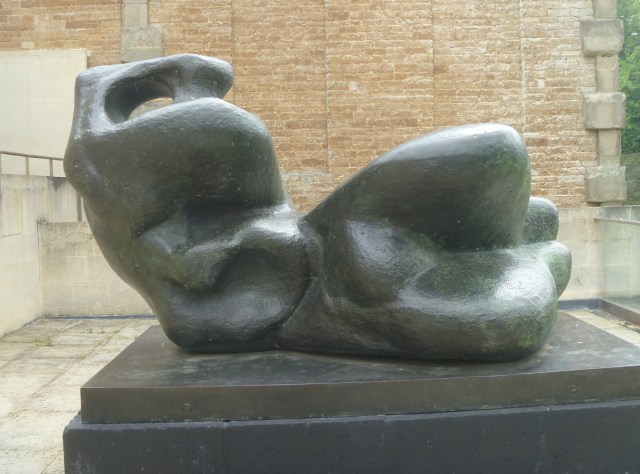
Bunched figure

Reclining Figure : Bunched by Henry Moore

In the grounds
Enjoy eleven large scale works which complement, challenge and create new perspectives to vistas ‘Capability’ Brown formed in the 1760s. Amongst these amazing pieces is one of Rodin’s most famous works, Monument to the Burghers of Calais (usually on display outside the Houses of Parliament), Moore’s magnificent monumental Three Piece Sculpture: Vertebrae and The Arch.

Walking man on column

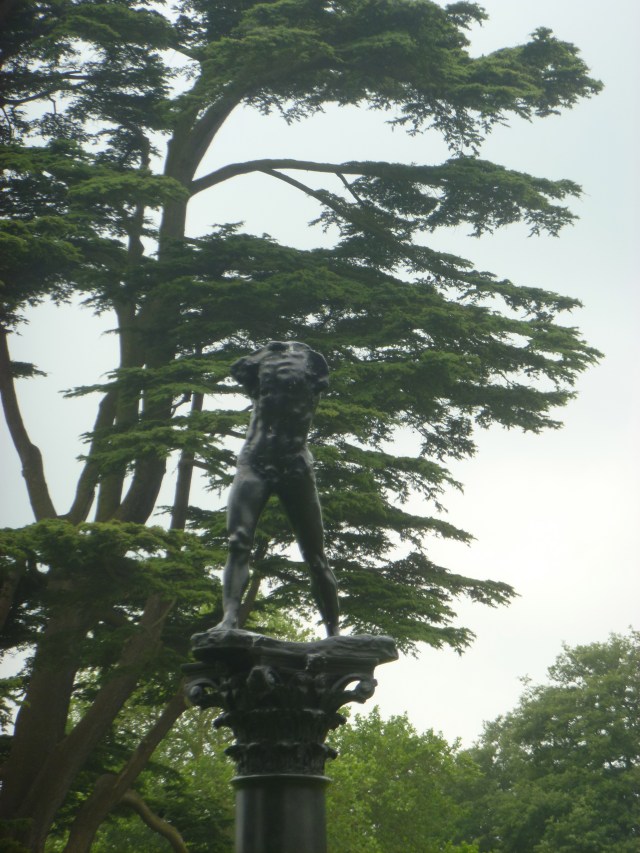
Rodin’s Walking Man on Column

Upright Motive No. 9

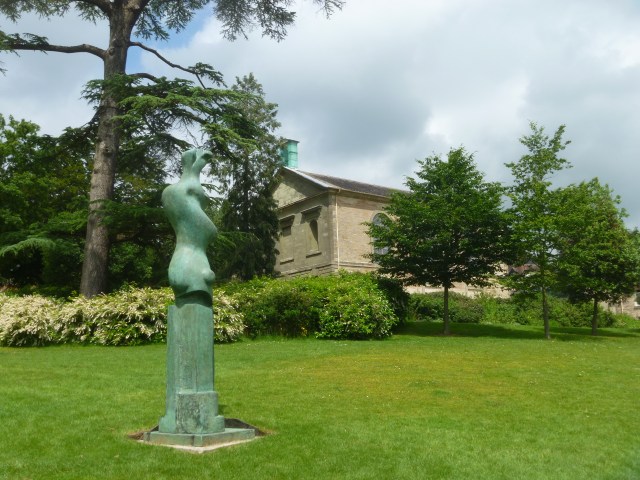
Henry Moore Upright Motive No. 9 with Chapel

Inside the galleries

Gain an amazing insight into the works of these two artists. Explore the parallels between their treatment of the figure through a beautiful collection of drawings and models made for larger works. See a special display curated by Moore’s daughter Mary which reveals both artists as keen collectors of antiquities and found objects which profoundly influenced their work. The final treat is a display of rarely seen archival documents and photographs taken by Henry Moore revealing that … ‘as time has gone on, my admiration for Rodin has grown and grown’.

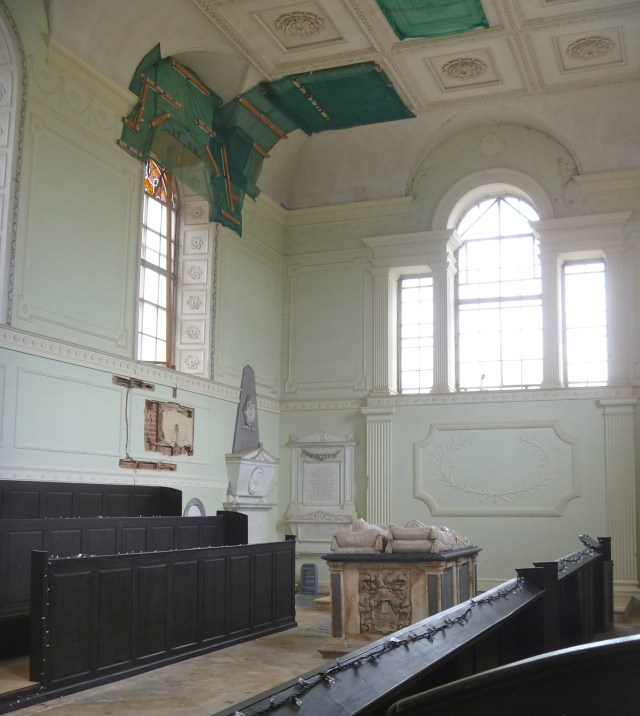
After our sandwich lunch I wandered round the grounds and visited the Capability Brown Chapel.  This was built in 1776 as part of the relandscaping of the site and is one of the few surviving Georgian chapels in Britain, and one of the very few remaining architectural works by ‘Capability’ Brown. It is currently undergoing a restoration project and more funds are needed to support this work as it’s hoped to use the building in future for music and learning.

CB's chapel

The Chapel Interior

And in the afternoon we had a tour of the permanent collection – British Portraits

Beautiful display

Beautiful Displays

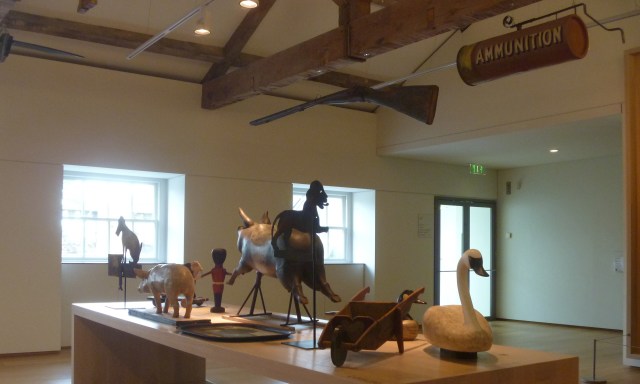
and British Folk Art. Currently there is an exhibition of British Folk Art at Tate Britain and this will then come to Compton Verney  from 27 September 2014 to 14 December 2014.

British Folk Art

British Folk Art

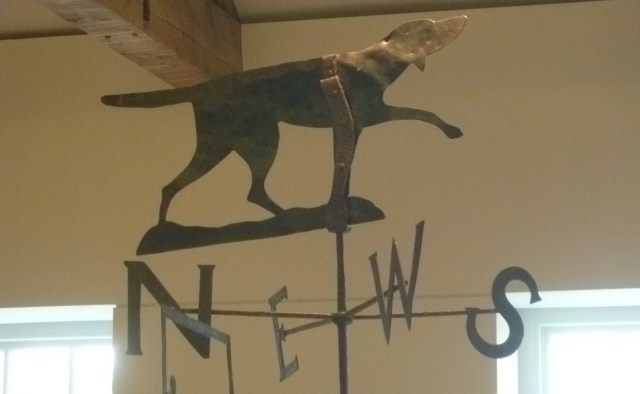
Weather vane

Weather Vane

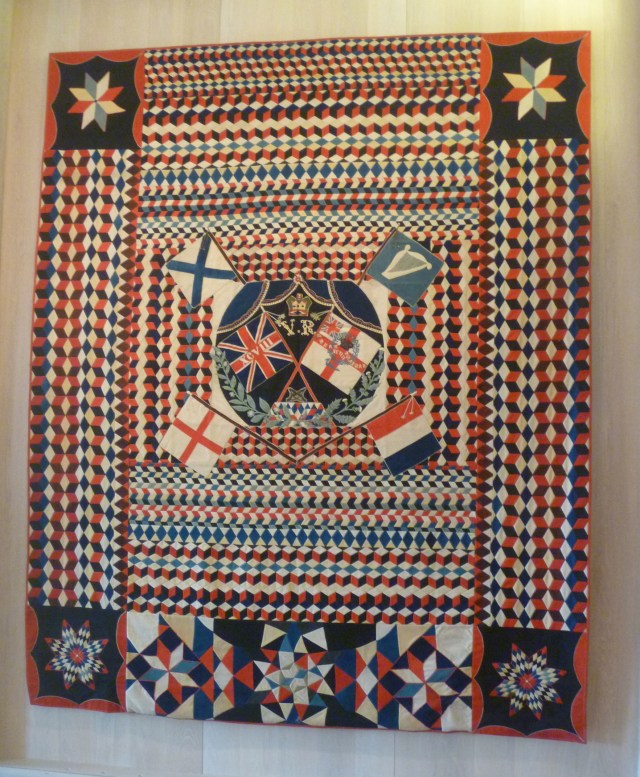
Quilt

Quilt

And finally, the Marx-Lambert Collection.

Marx Lambert collection

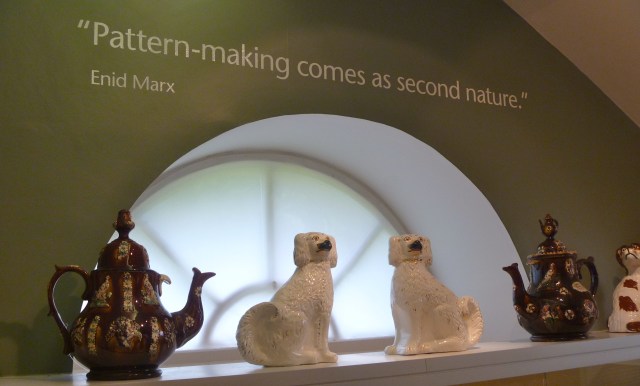
Enid Marx (1902-1998) was one of the brightest design stars to emerge from the Design School of London’s Royal College of Art (RCA) during the interwar years. She was an author and illustrator of children’s books, a book designer, a printmaker, a textile designer and a painter.
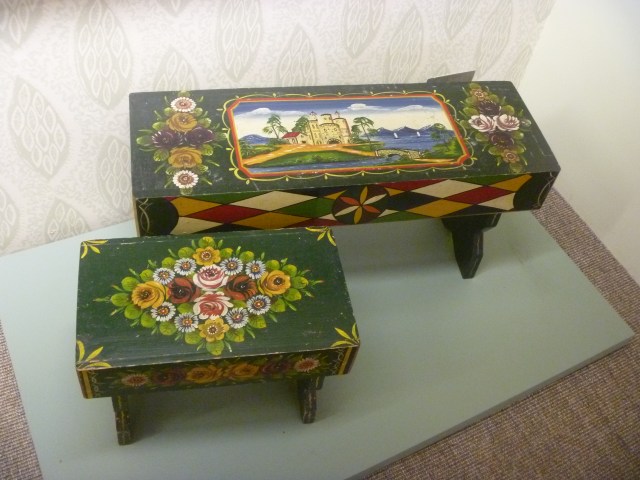
The Marx-Lambert collection at Compton Verney features both work produced by Marx and a large number of pieces of folk or popular art which were collected by Marx and her friend Margaret Lambert (1906-95). These then inspired Marx’s own work -sometimes directly, as seen in the pair of ceramic wall-mounted cornucopia cases which inspired her ‘Cornucopia’ textile design.”

Canal art and wallpaper

Canal Art and Wallpaper

A wonderful trip full of interest and variety marred only by a 3 hour delay on the M1 due to a lorry on fire.


The Leeds Library Summer Day Out In The Lake District

How can you tell you’re on a summer day trip to the Lake District? Yes, it teems with rain all day long. Still, we were not deterred as we waited for our coach to pick us up at Bramhope Church bus stop. We hoped the rain would cease but unfortunately it didn’t. Never mind our main aims were not to climb  the peaks nor to stride out across the fells but to make indoor visits to The Armitt Library in Ambleside in the morning and to Blackwell near Bowness in the afternoon.

logo_header

How true! How true!

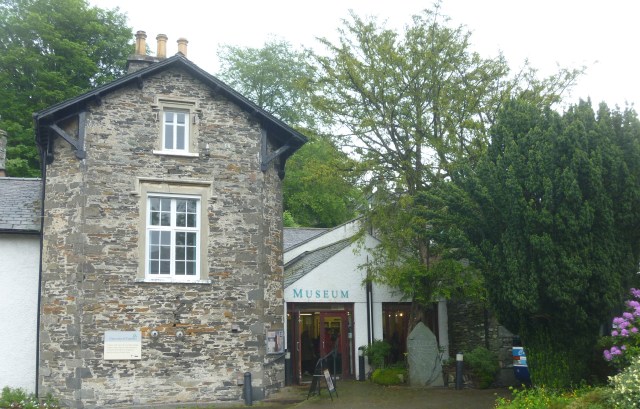
Armitt

The Armitt Library was founded by the will of Mary Louise Armitt and the wishes of her two sisters, “to create a collection of books of scientific, literary and antiquarian value” for the “student and book-lover”, and eventually a small museum. It was opened in 1912, and embodied the old 1828 Ambleside Book Society, of which William Wordsworth had been a member, and the Ambleside Ruskin Library, founded by Hardiwcke Rawnsley in 1882 with the active support of John Ruskin. The Library is now in a purpose-built home just north of Ambleside on the Rydal Road.

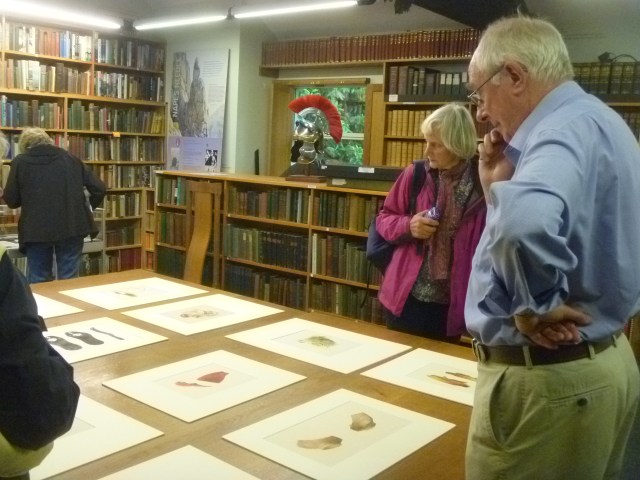
In 1934 Beatrix Potter gave many of her watercolours and drawings of fungi, mosses and fossils to the  Armitt Library some of which are on display. She had become a member on her marriage to William Heelis in 1913 who was the Library’s solictor since 1912.”

Potter's work

Admiring Potter’s drawings and watercolours

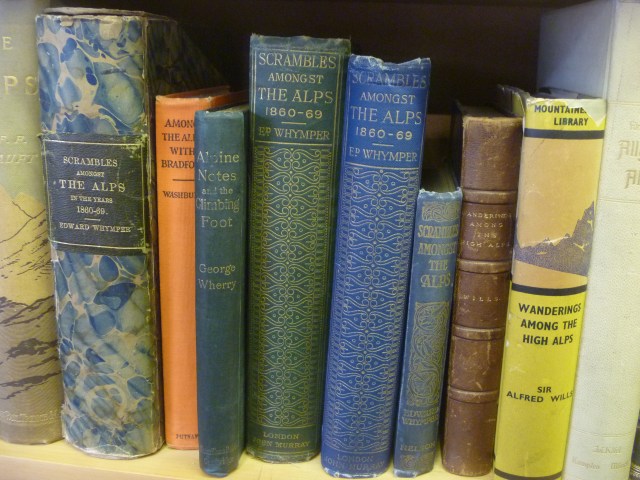
The Armitt Museum houses so much more than just the original core book collection. Alongside the story of Beatrix Potter and the Lake District is a large collection of her exquisite drawings, the library of The Fell and Rock Climbing Club and a gallery devoted to the work of German artist Kurt Schwitters.

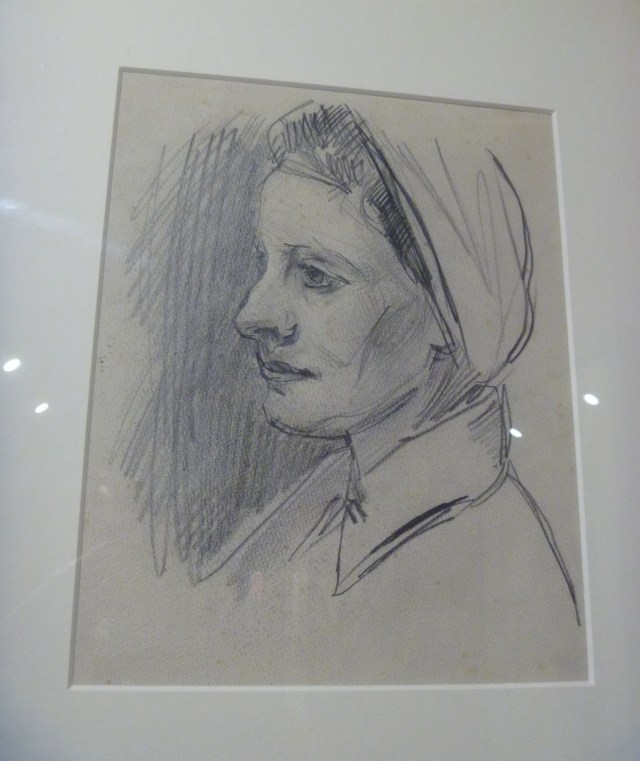
Edith Thomas

Portrait of Edith Thomas by Kurt Schwitters

Born in Hanover in 1887, he studied art at Dresden, but it was not until the Dada movement of 1916 that he finally liberated himself from conventional art. Schwitters took from Dada the freedom to use what materials he wanted to in his pictorial compositions … In 1937 for a variety of compelling reasons Schwitters left Hanover for Norway, never to return to his home again. The Norwegian experience was mixed … and in 1940 Schwitters and his son fled to Britain where they were both interned on the Isle of Man. Afterwards Schwitters lived in London until the end of the war in 1945, when he moved to Ambleside where he remained until his death in poverty and obscurity in 1948. Schwitters never received the recognition in Britain he had enjoyed in Europe, and his art did not sell. However, in 1947 he was fortunate enough to start his third Merzbau in a barn in Elterwater. Regrettably only a fragment was completed before his death, and this small monument to his genius can now be seen in the Hatton Gallery, Newcastle.” [Armitt Museum website]

Fell and Rock Collection

Books on an Alpine theme

After lunch in Windermere we continued to Blackwell the Arts and Crafts House overlooking Lake Windermere. This was my second visit to the house, my first being in 2002 which was not long after the house was opened to the public.

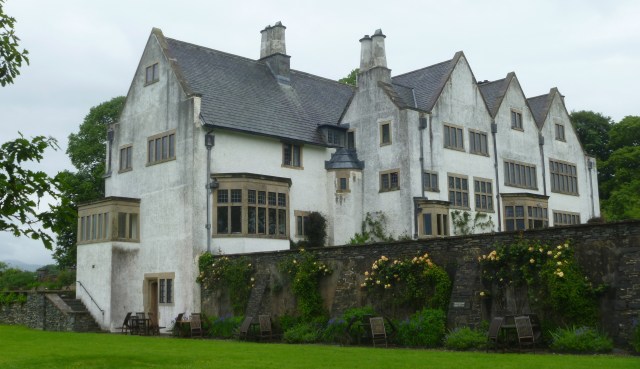
Blackwell

When the architect Mackay Hugh Baillie Scott (1865 – 1945) built a holiday home overlooking Windermere for his client Sir Edward Holt, a brewer from Manchester, he created Blackwell, a masterpiece of twentieth-century design; a perfect example of the Arts & Crafts Movement.

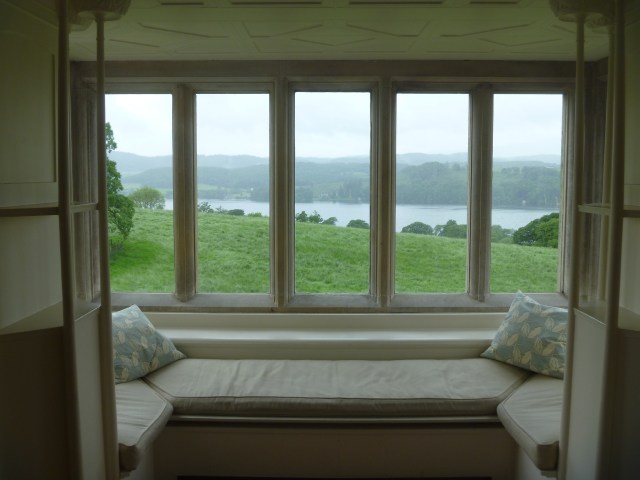
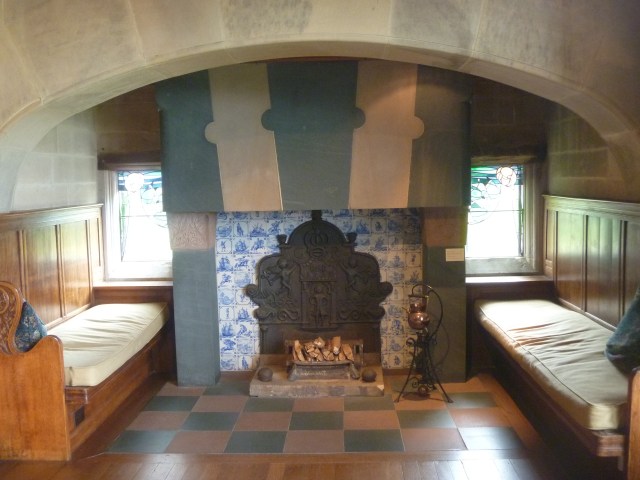
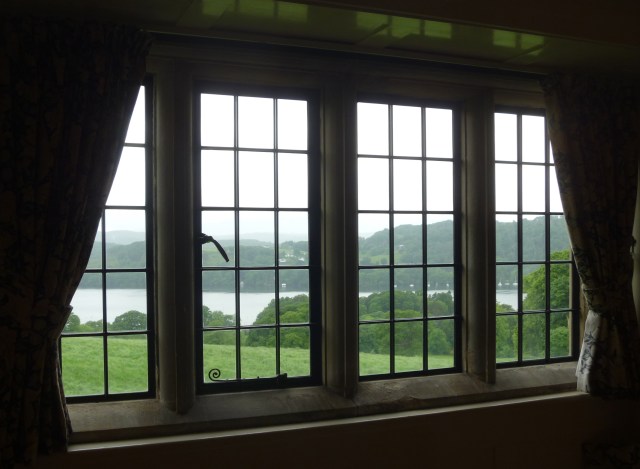
Enjoy a lovingly crafted day out at one of the most enchanting historic houses in the Lake District. When you visit you are invited to relax and immerse yourself in all the beauty and craftsmanship of Blackwell. We encourage you to sit and soak up the atmosphere in Blackwell’s fireplace inglenooks, which have fine examples of tiles by Arts & Crafts designer William de Morgan. The inviting window seats offer stunning views of the surrounding Lake District scenery. You can appreciate the house as it was originally intended, without roped-off areas.

Window 1

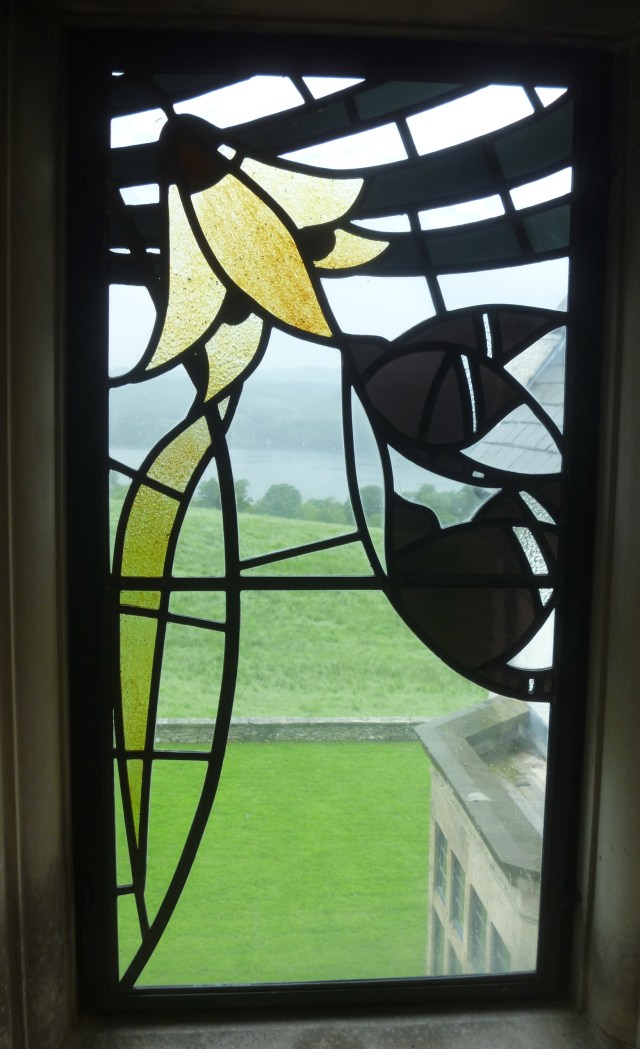
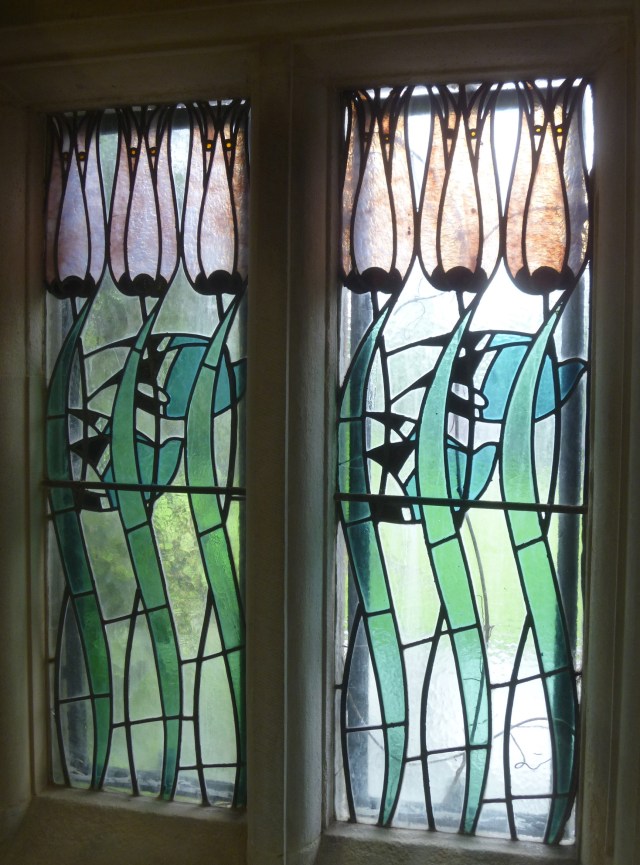
Stained glass window

Window 2

Another stained glass window

Window seat

Window Seat

Blackwell retains many of its original decorative features, including a rare hessian wall-hanging in the Dining Room, leaf-shaped door handles, curious window catches, spectacular plasterwork, stained glass and carved wooden panelling by Simpsons of Kendal. The rooms contain furniture and objects by many of the leading Arts & Crafts designers and studios – metalwork by WAS Benson, ceramics by Pilkingtons and Ruskin Pottery and furniture by Morris & Co., Stanley Webb Davies, Ernest Gimson and Baillie Scott himself.”

Fireplace 1

Fireplace

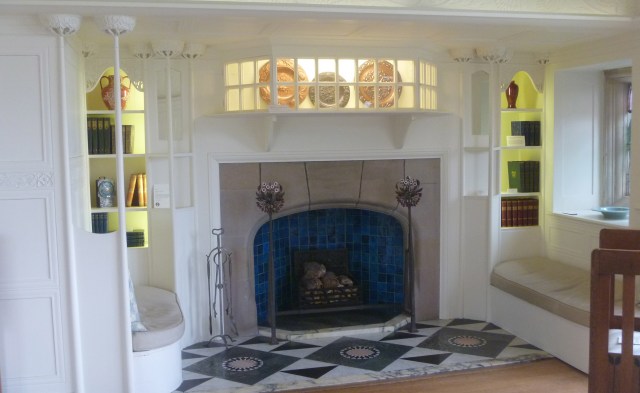
Fireplace 2

Another Fireplace (My Favourite)

For more and better pictures of Blackwell see here a fellow Blog Poster’s visit to the House earlier this year.

Windermere


Farewell to Armitt, Blackwell and Windermere, but not, alas, to rain … it followed us home.


“William Kent : Designing Georgian Britain” at The Victoria and Albert Museum

Polymath Transforms Georgian England!

w290

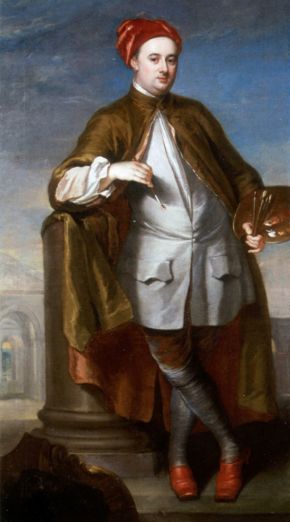
 William Kent (1685 – 17480) [source]

What a man! William Kent was hugely influential within Georgian English aristocratic circles. His designs spanned the widest spectrum of English upper class design from art to architecture and from furniture to gardens. Kent’s patrons included Lord and Lady Burlington, the Cokes of Leicester, the Walpoles of Houghton. Influenced by his early visits to Italy it’s surprising that William Kent is not far better known. This exhibition at the V&A tells his story with rich illustrations and varied artefacts. Go yourself and ponder why William Kent is not more familiar to us today.

I wrote that little appreciation/review for the ticket agent that supplied our tickets for the show last Friday afternoon.

The Georgians are big business as 2014 marks 300 years since the accession of George I thus beginning a succession of Hanoverian Kings of England which lasted until 1830.

The season started well with the British Library’s overview The Georgians Revealed that covered many aspects of life in 18th and early 19th century Britain. There are significant exhibitions at The Queen’s Gallery : The First Georgians: Art & Monarchy 1714-1760 and at The Historic Royal Palaces (Kensington Palace; Kew Palace and Hampton Court Palace) : The Glorious Georges. And BBC television is currently broadcasting a month-long Georgian season.

William Kent Paintings

Slideshow of William Kent Paintings

William Kent was born in Bridlington, North Yorkshire, the son of a carpenter. From 1709 to 1719 he studied in Rome, copying Old Master paintings and learning the techniques of etching and engraving. Here in Italy he was to meet Lord Burlington who, with his wife, became patron and good friend to Kent. Burlington gave him his first commissions back in England and helped to set Kent off on his course designing for many of the great English landowners.
kent_holkham_4

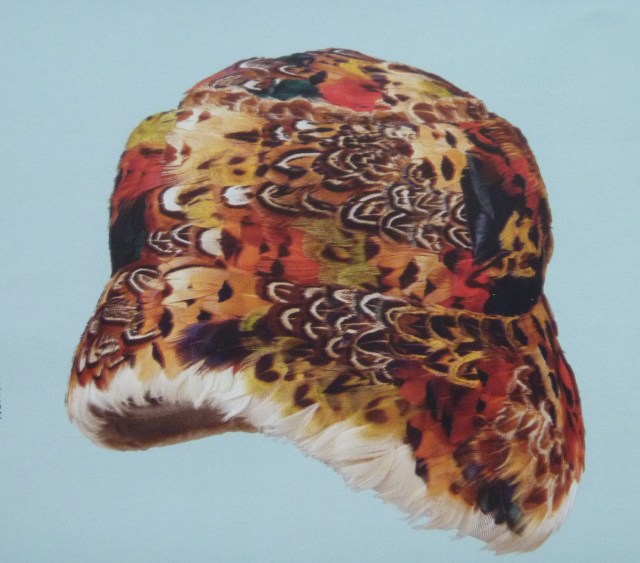
 A Kent-designed chair from Holkham Hall

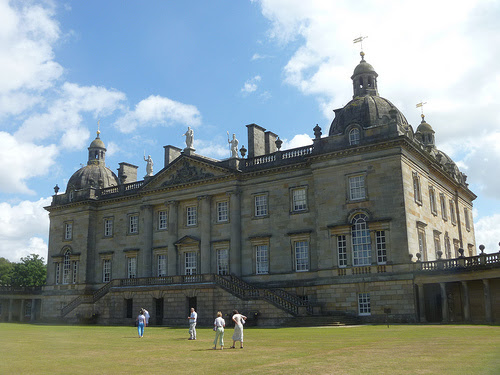
Kent designed the interiors of many stately homes including Houghton Hall, home of the Walpoles, in Norfolk.

Houghton Hall

 Exterior of Houghton Hall, Norfolk

Stowe

Stowe Landscape Garden with Gothic Temple and Palladian Bridge

Most of all Kent is best-known to me as the designer of landscape gardens.

Elysium

Kent’s landscape designs confirm his status as the artistic genius of the era, a father of the English landscape garden. In contrast with the French and Dutch fashions for formal gardens, Kent took his inspiration from the ideal landscapes of pastoral literature and painting. His design drawings are not detailed plans, but poetic evocations of the landscape effects he was attempting to achieve.

Kent’s gardens could be places of activity and good fellowship, or places of reflection and solitude. Carefully crafted vistas lead the eye out beyond the garden into the surrounding countryside. He designed over fifty garden buildings which were positioned to act as picturesque focal points for views and also as places from which to contemplate the garden. His buildings vary from sober copies of ancient buildings to wild flights of fancy, from pyramids, triumphal arches and Chinese kiosks to grottoes and artificial ruins.” [V&A website]

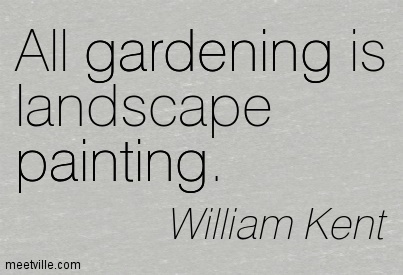
Quotation-William-Kent-painting-gardening-Meetville-Quotes-104548

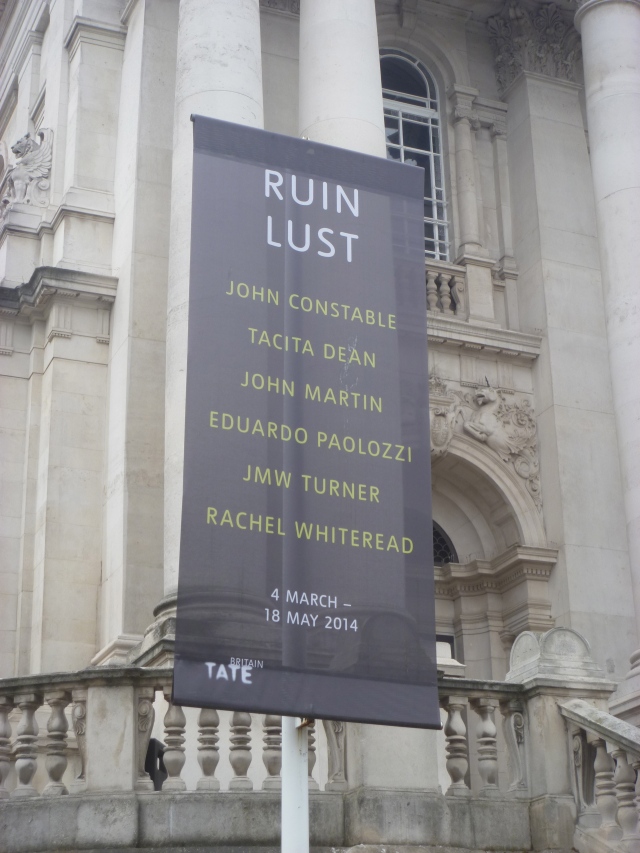
Ruin Lust at Tate Britain

RUIN : “The physical destruction or disintegration of something or the state of disintegrating or being destroyed”

According to the little leaflet that accompanies this Tate Britain exhibition the title Ruin Lust was taken from the German word Ruinenlust. 

Ruin Lust

Ruins are curious objects of desire: they seduce us with decay and destruction” it goes on to say. Although I found the whole show intriguing and was amazed at the countless interpretations of the word ‘ruin’, by far the most interesting part for me was the initial ‘Pleasure of Ruins’ section.

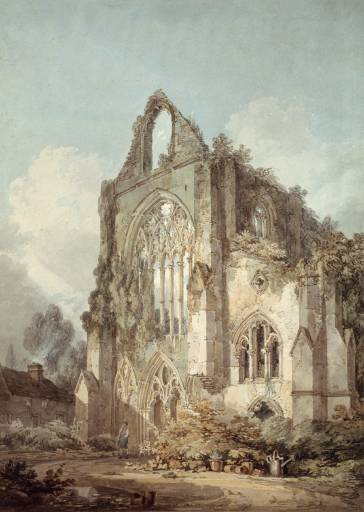
Ruins of West Front, Tintern Abbey circa 1794-5 by Joseph Mallord William Turner 1775-1851

W M Turner’s Tintern Abbey (1794) which was emblematic of the new trend to visit ruins at home rather than on a Grand European Tour.

Here were the traditional interpretations; the paintings, photographs and etchings that I had expected to see in an exhibition with this title. My interest in landscape and man’s influence on it is mainly historical. So, although I appreciate that modern day ‘Bunker Archaeology’ and Tacita Dean’s films and ‘Ruins in Reverse’ and [modern] ‘Cities in Dust’ all have a part to play in an overall picture of ruins over the centuries I prefer to see historical ruins of abbeys and castles and even the man-made ruins that gave character and focal points to 18th century landscape gardens.

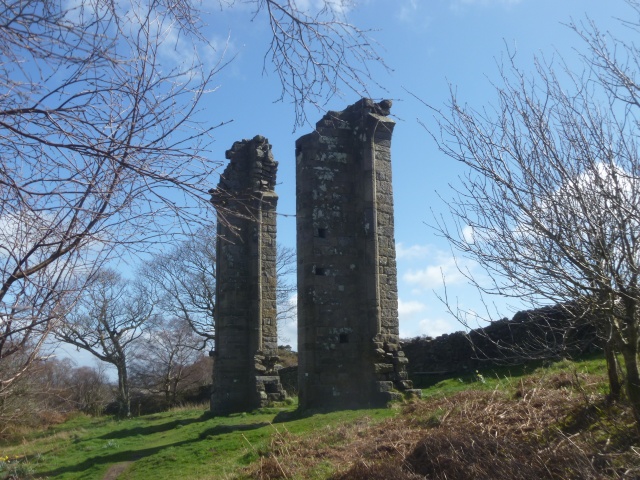
Leaving Yorke's Folly

The man-made Yorke’s Folly in Nidderdale, North Yorkshire built in 1810

“A craze for ruins gripped European culture in the eighteenth century. Classical remains inspired artists such as Piranesi to depict great civilisations falling into decay. British architects and garden designers embraced this ruinous aesthetic, and artificial ruins were a popular addition to many great estates. William Gilpin’s writings on the picturesque encouraged many tourists — as well as artists such as J.M.W. Turner and John Sell Cotman — to travel in search of picturesque views of medieval ruins. Later, photography became essential to the recording and reimagining of ruins.

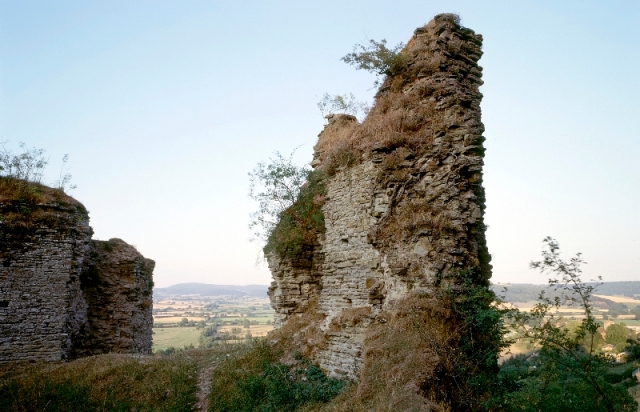
I remember reading in the newspaper probably 15 years ago [and commending] English Heritage’s intentions to conserve and deliberately retain the wildness surrounding Wigmore Castle in Herefordshire. Some ruins these days are just too manicured.

gallerywigmorecastle1

A GLORIOUS RUIN
Wigmore has an overgrown appearance that once characterised many ruined sites. When conserving the site in the 1990s, English Heritage deliberately retained its wildness, as the castle had become home to rare and unusual species including lesser horseshoe bats and wild flowers like ploughman’s spikenard. Accumulated debris was allowed to remain, and the grasses, ferns and flowers growing on the walls were carefully lifted up and replaced as ‘soft-capping’ to protect the walls from rain and more destructive plants like trees. [From the EH website]

To finish here are some recently visited picturesque ruins in Yorkshire and beyond.

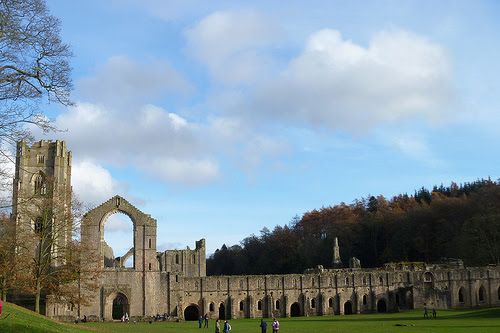
Fountains Abbey

Fountains Abbey

The Ruin

The Ruin a Landmark Trust property at Hackfall, North Yorkshire

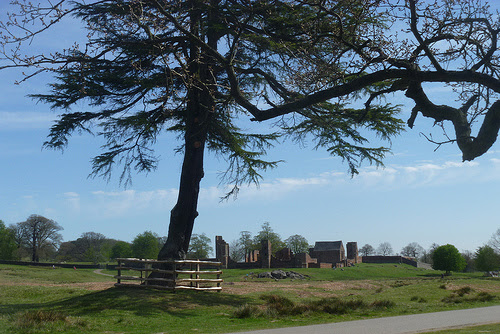
Bradgate Park

Ruins of the former home of Lady Jane Grey, Bradgate Park, Leicester

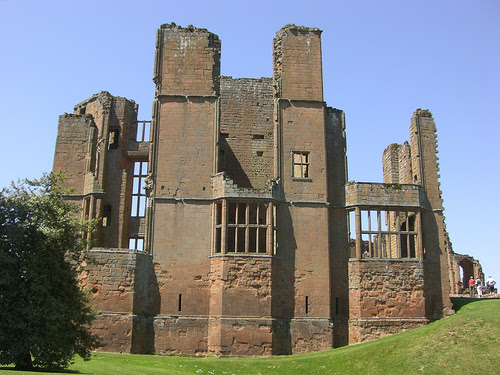
Kenilworth

The Ruins of Kenilworth Castle

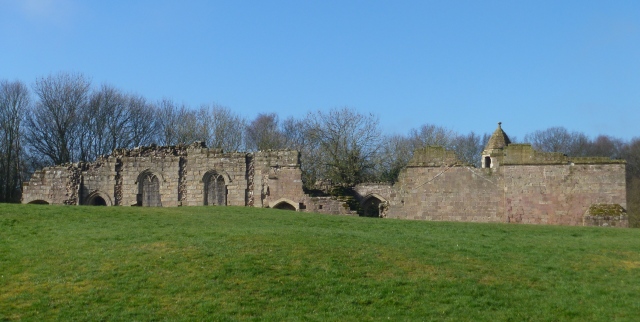
Spofforth Castle

Spofforth Castle, Yorkshire, visited on a recent hike

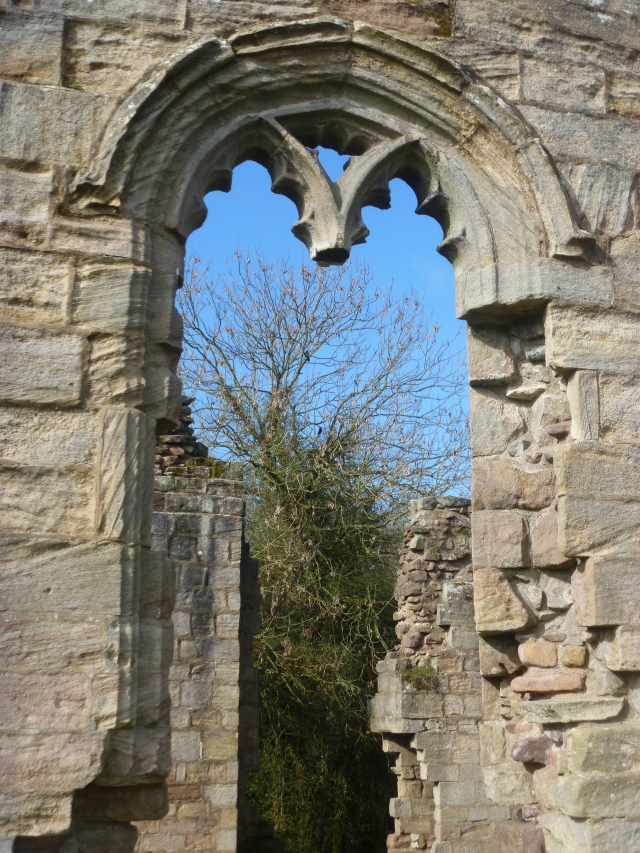
Window ruin Spofforth

Ruined Window, Spofforth Castle

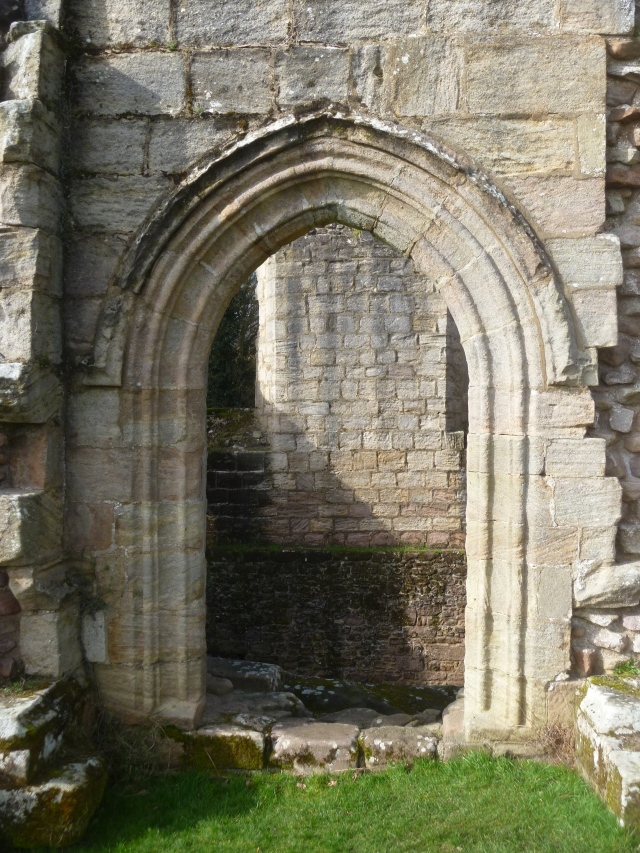
Doorway ruin Spofforth

Ruined Doorway, Spofforth Castle

Here is a brief review of the exhibition by Christopher Beanland; which finished by showing ‘The London Nobody Knows’ documentary featuring James Mason in the derelict Bedford Theatre in Camden. The unabridged film is now available on DVD.


The Garden Museum

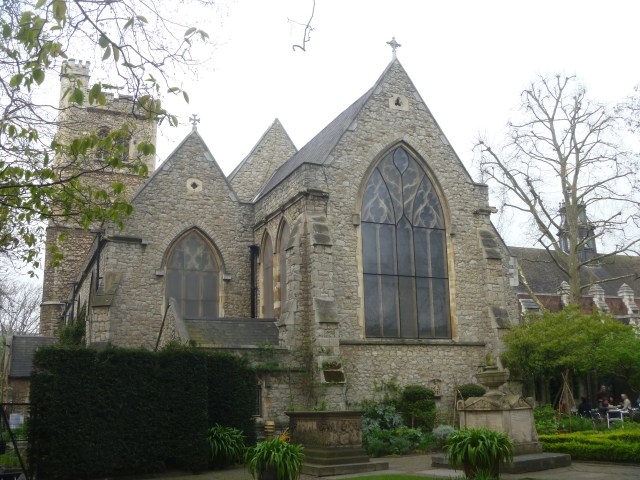
Some exhibitions, especially those national museum ‘blockbusters’, are just too unwieldy but the bijou exhibition Fashion and the Garden occupied just over half an hour of my visit the the Garden Museum on Thursday. Just a short walk along the Albert Embankment (opposite The Houses of Parliament) from Westminster Tube Station, the Garden Museum is right next door to Lambeth Palace, the official London residence of the Archbishops of Canterbury. GM exterior Formerly known as the Museum of Garden History, The Garden Museum is based in the deconsecrated parish church of St Mary-at-Lambeth. I’d met up with my friend Rosanna (the mosaics maker) with whom I had recently been to see The Isabella Blow Show at Somerset House. Garden Museum Church

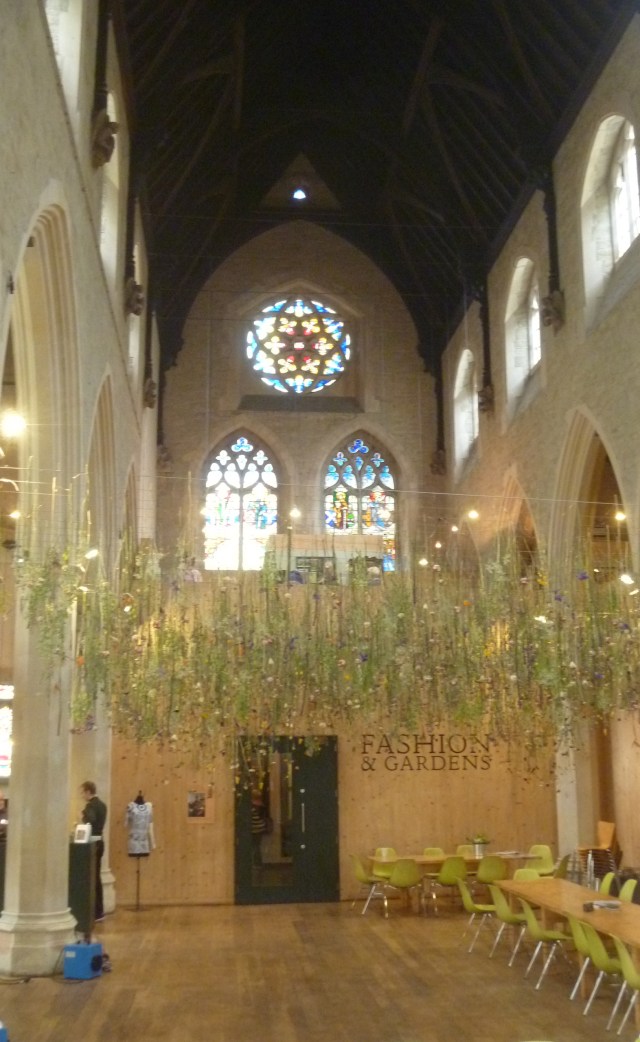
Inside the Garden Museum with Rebecca Louise Law Installation

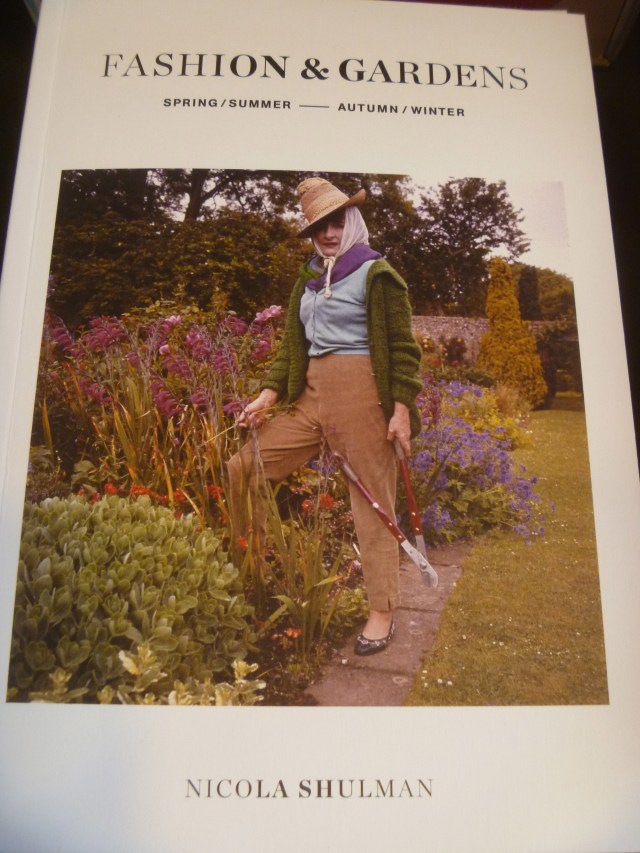
After morning coffee in the Museum Cafe (we couldn’t resist a tiny home-cooked apple tart as well – all the food served looked very acceptable!) we headed under Rebecca Louise Law’s installation ‘The Flower Garden Display’d’ for the Fashion and the Garden exhibit that I had read about recently in the press. Booklet

The Accompanying Booklet

Put together by Nicola Shulman, sister of British Vogue editor-in-chief Alexandra Shulman, the displays cover fashion and garden connections between the 17th and 21st centuries.

TV Introduction

unknow artist-796785

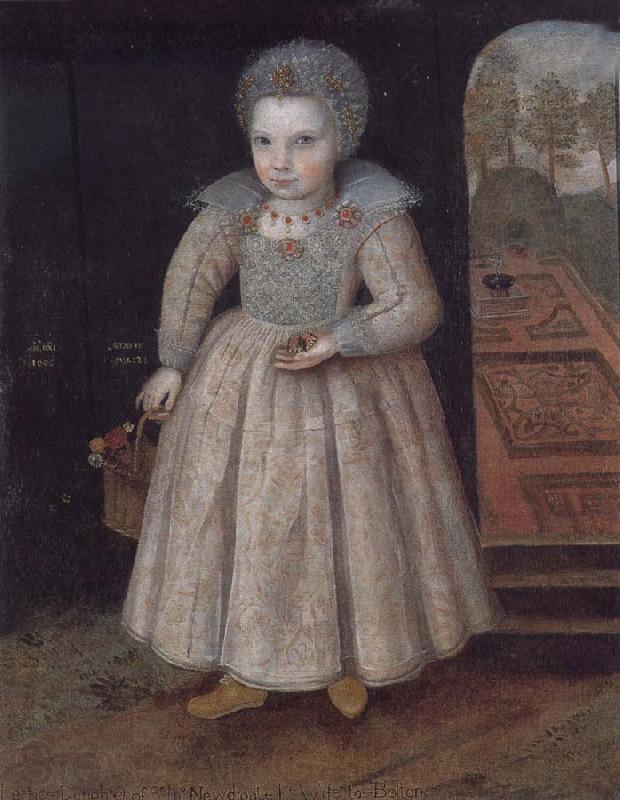
This portrait of Lettice Newdigate (1608) by an unknown artist is the first known example of a Knot Garden in art.

Influences of gardens on fashion extend over time from knot gardens reproduced through embroidery on clothing to Philip Treacy hats such as the Orchid.

Philip_Treacy__Orchid

Philip Treacy Orchid Hat

I noted that an interest in flowers is a very English characteristic. They have featured in English clothing designs throughout the centuries where they are absent, for example, in France. There were exquisitely embroidered gloves and pockets; flowers feature in the silk designs of Anna Maria Garthwaite and other 18th century Spitalfields silk weavers; phaeton carriages were built very high so that owners and their families and guests could drive around their landscape parks and show off; and then there are the clothes that we wear when visiting gardens or even when gardening.

It’s a small show but perfectly formed.

We had time to visit the permanent collection – gnomes; gardening tools from trowels to lawnmowers; rare books; paintings such the recently acquired ‘Portrait of a Black Gardener‘ by Harold Gilman; posters, ephemera and garden seed packet displays.
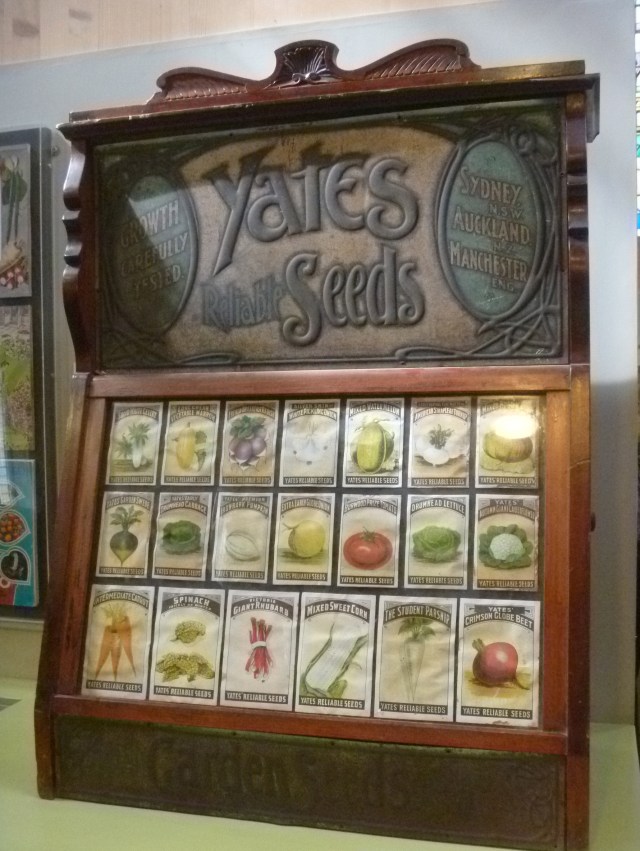
Yates Seeds

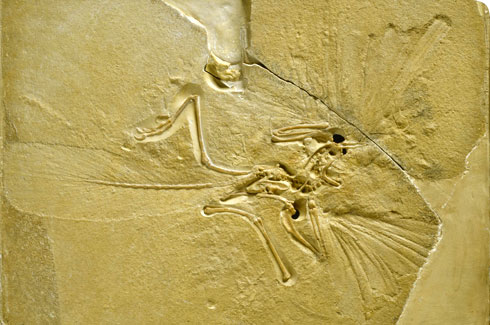
Yates Seeds. No longer sold in the UK but still available in Australia and New Zealand.

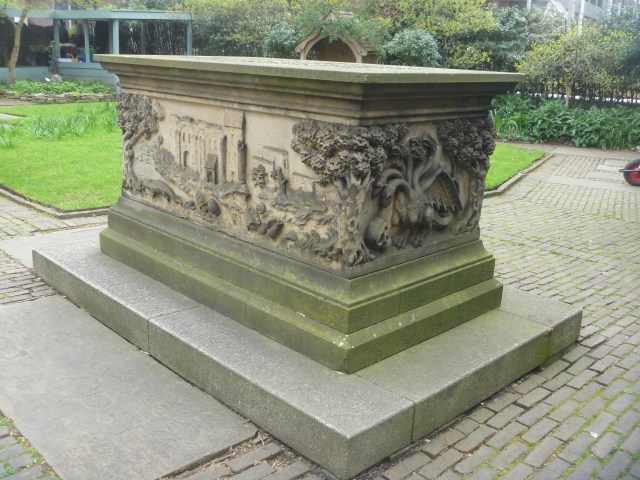
The Museum’s garden was created in 1980. At its heart is a knot garden designed by the Museum’s President, The Dowager Marchioness of Salisbury (who was then also re-making the gardens at Hatfield House, Hertfordshire). The reason for the seventeenth-century spirit of the design is that our garden also houses the tomb of the great plant-hunters, gardeners and collectors, John Tradescant the Elder (c.1570-1638) and Younger (1608-1662), the rediscovery of which originally inspired the creation of a museum of garden history in the deconsecrated, and then derelict, church of St Mary-at-Lambeth.” From the Garden Museum website.
Tradescant Tomb

The Tradescant Tomb

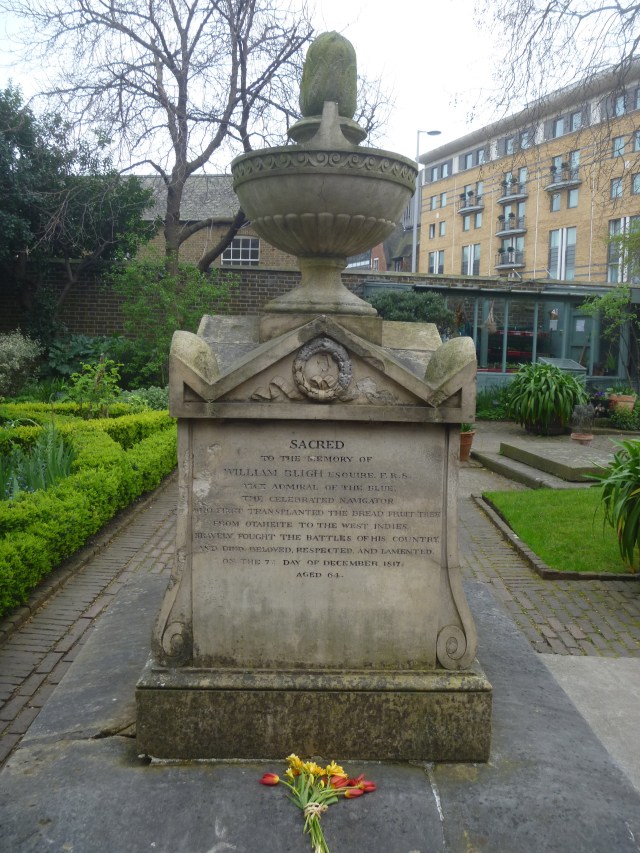
In addition to the tomb and monument to the Tradescants is the tomb of Captain William Bligh of ‘The Bounty’.

Tomb of Bligh

Captain Bligh Tomb