Croome Park, Court and Church

Last Thursday I met up with a good friend of mine at Coleshill Parkway Station for a couple of days’ adventures in Evesham and Tewkesbury.
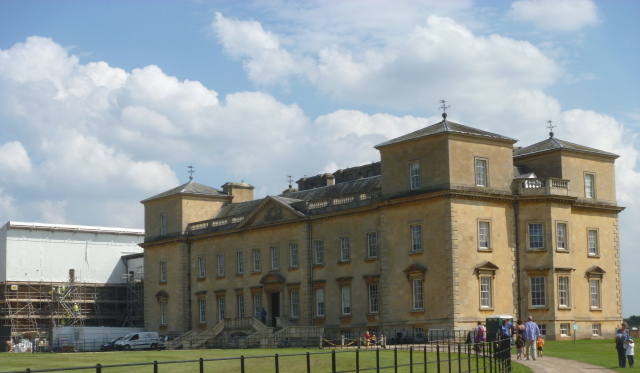
Croome Court

Croome Court

Our first port-of-call on meeting up was an hour’s drive away – the National Trust owned Croome Park and Court in Worcestershire. The park was the responsibility of ‘Capability’ Brown – he crops up everywhere, of course. The house has only been in the possession of the Trust for about 4 years. They have carried out an awful lot of work during that time and a lot more is ongoing. It will be interesting to revisit in a year or so to see what has been achieved/improved/changed using the £1.8m granted by the Heritage Lottery Fund under the programme “Croome Redefined”.
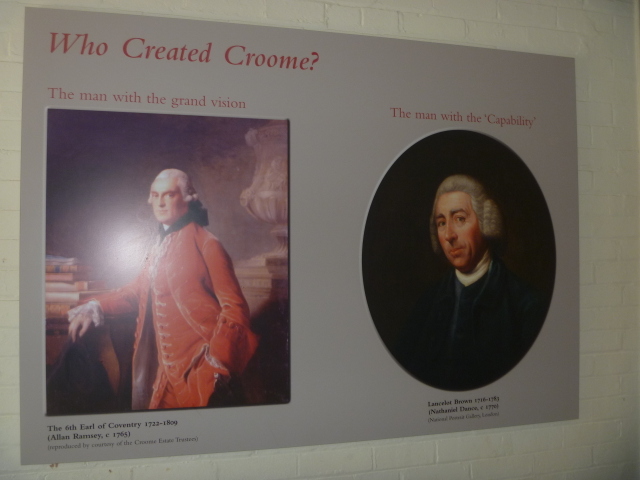
Coventry and Capability

When you arrive the visitor centre seems to occupy what appear to be black painted army Nissen huts but on closer inspection are in fact restored RAF buildings which once served the nearby airbase as their sick quarters.  Exhibition rooms tell the story of RAF Defford.
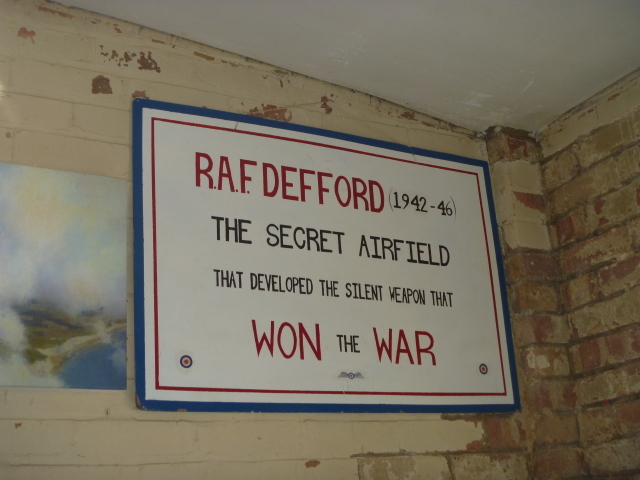
Defford

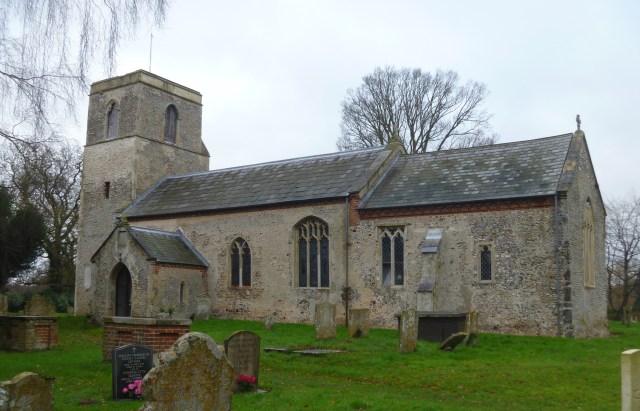
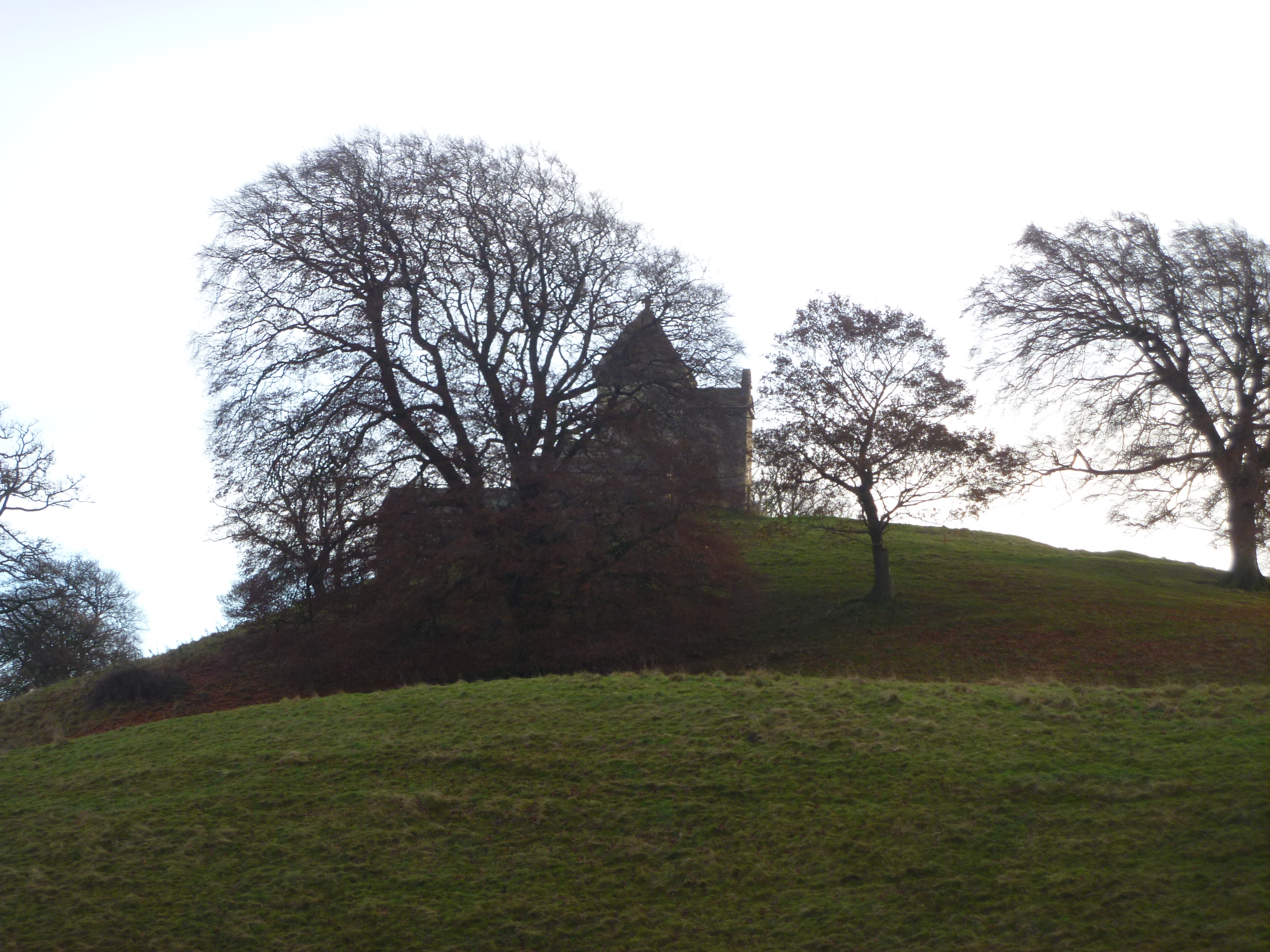
After our picnic we headed into the Park and the first stop was the church. The church of St Mary Magdelene, Crome d’Abitot is cared for by the Churches Conservation Trust and just celebrated its 250th anniversary in June. Gothick in style the building, like the house, is attributed to Robert Adam.
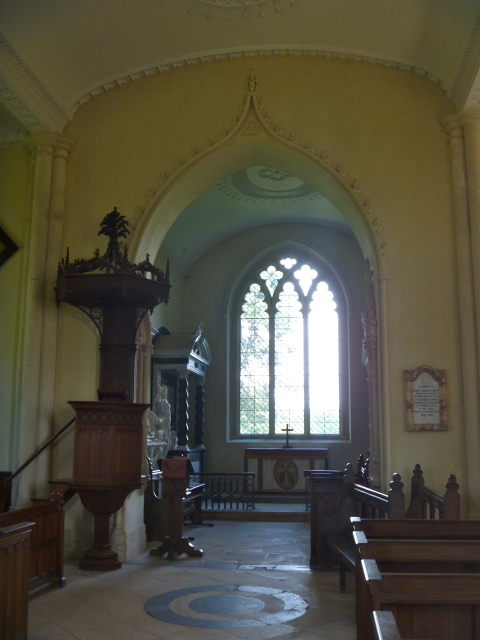
Croome d'Abitot Church

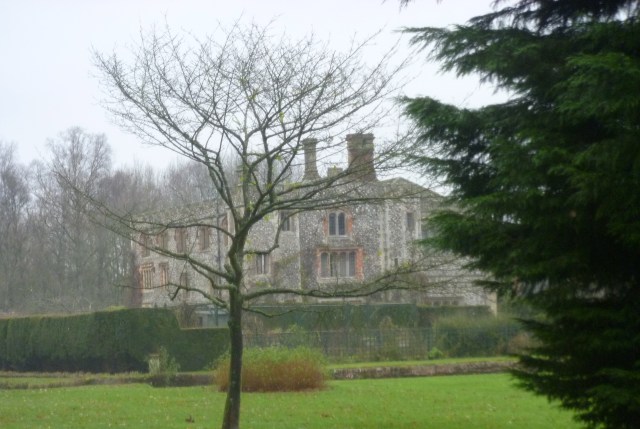
From the church, as time was limited and the house would close to the public at 4pm (the park stays open until 5.30), we made straight for Croome Court itself, missing a large selection of follies and the lake.
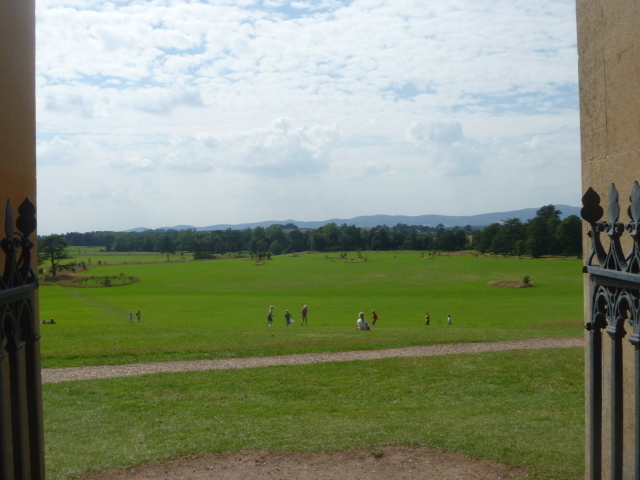
Croome Park

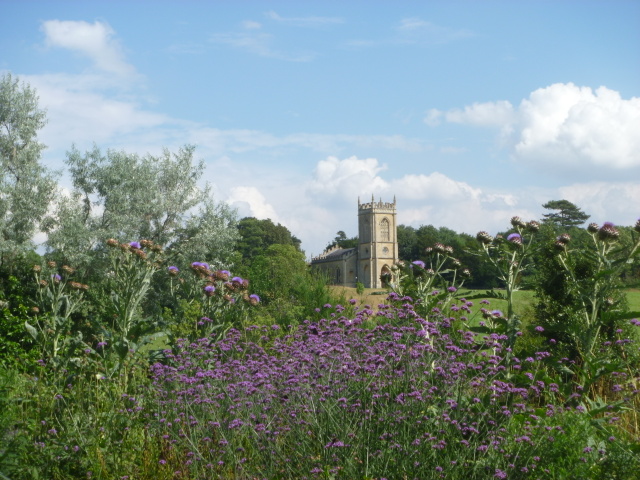
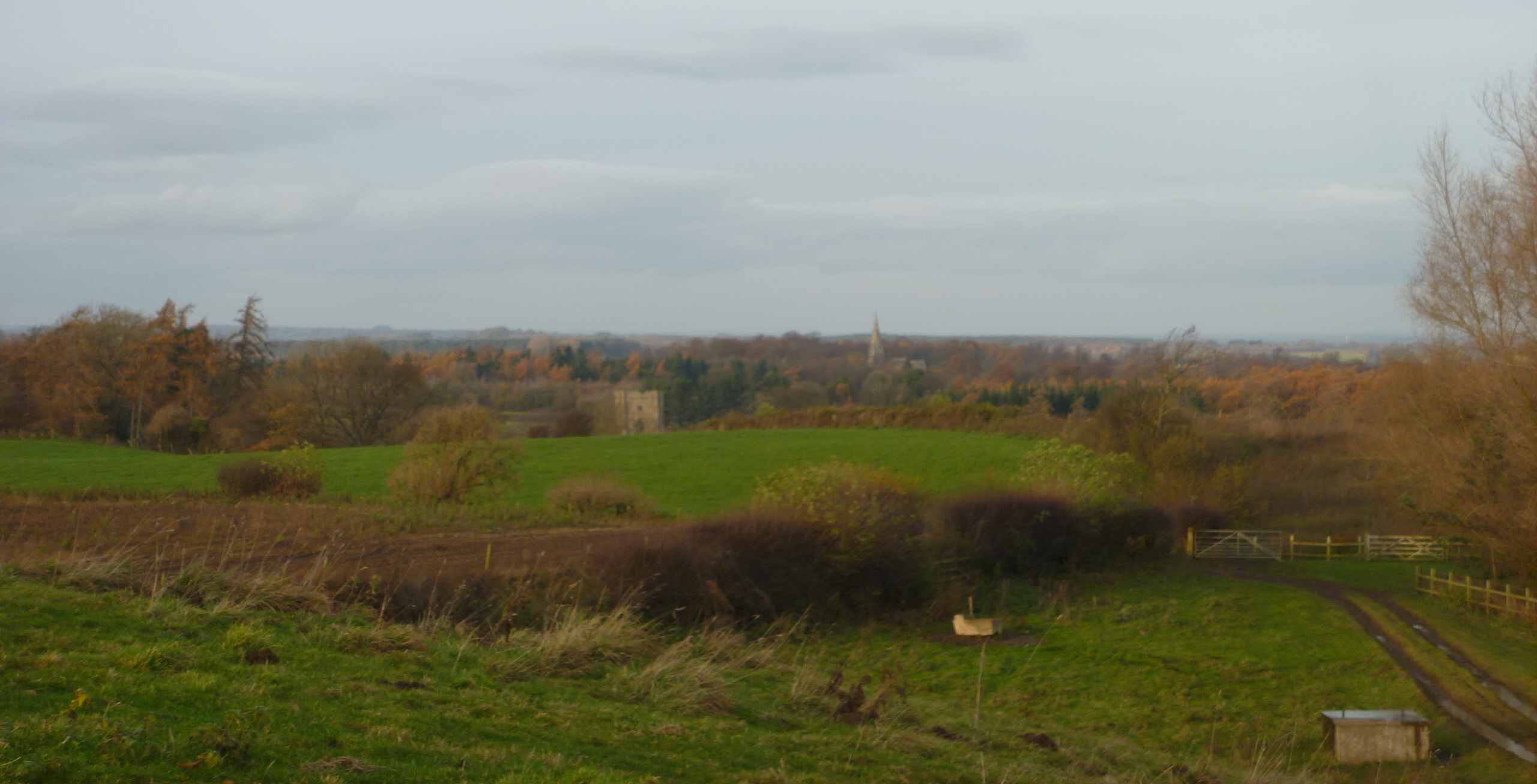
The Park from the Church Door

Church from shrubbery

The Church from the Evergreen Shrubbery

Our walk from the church to the house did take us past some follies notably The Temple Greenhouse and the Dry Arch Bridge. We noted Coade Stone had been used in several places. And as we walked along I was reminded of Stowe Landscape Gardens in Buckinghamshire and indeed it turns out that Brown moved from Stowe down to Croome.
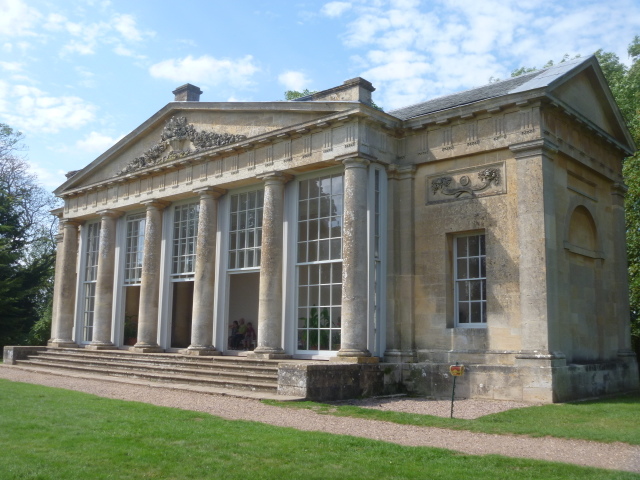
Temple Greenhouse

The Temple Greenhouse

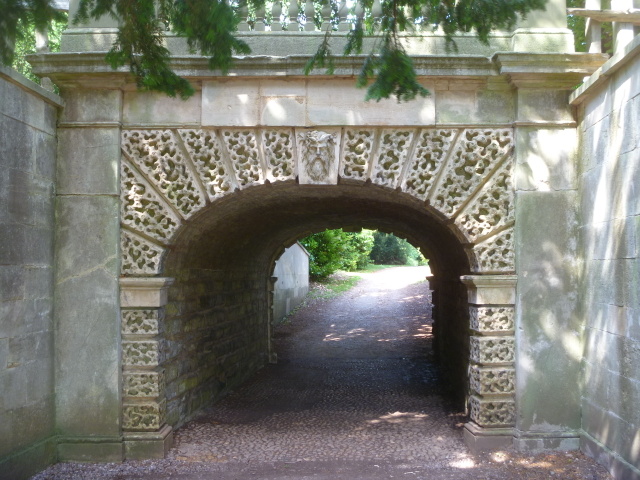
Dry Arch Bridge

The Dry Arch Bridge with Coade Stone Façade and Keystones

To me the house was a refreshing change from the usual ornate furniture, furnishings and priceless contents and restricting ropes. You could go anywhere and touch everything. Of course, there was nothing of value to touch and that may change as renovations and restorations continue but for the moment it suited me fine to read about the house and family; to listen to recordings of workers and hear what the inhabitants might have said; to dress up; contribute a few pieces to a jigsaw puzzle.
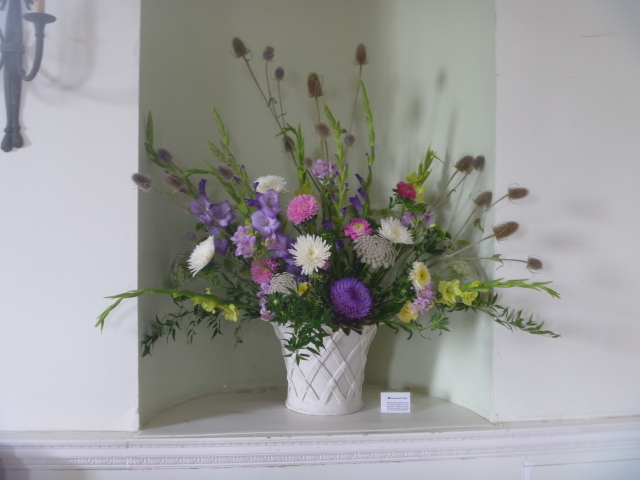
Donor Flowers

Flowers – given by a generous donor

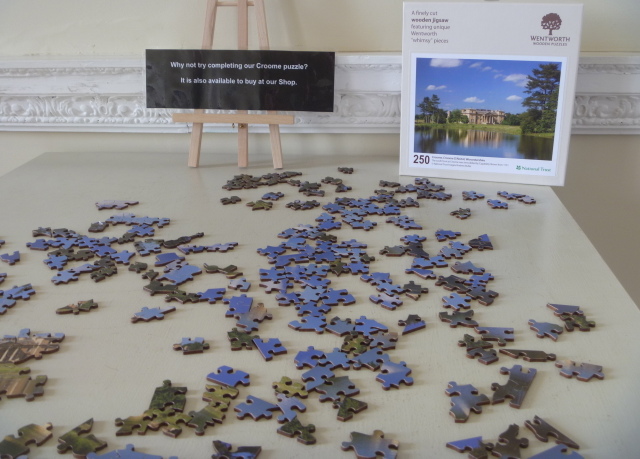
Jigsaw

The Croome Park Jigsaw

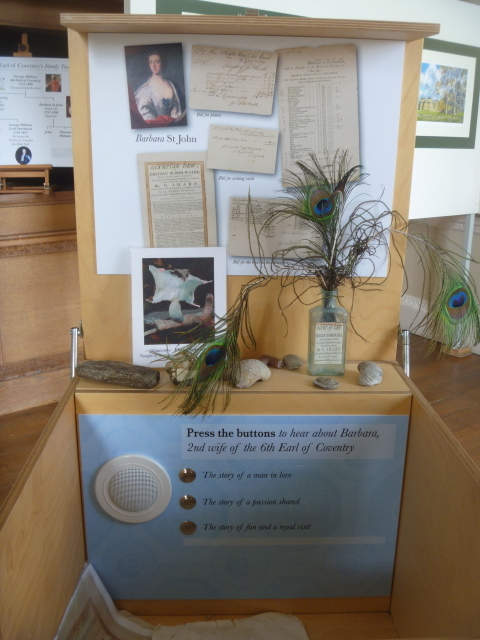
Listen and read

Read and hear about former inhabitants
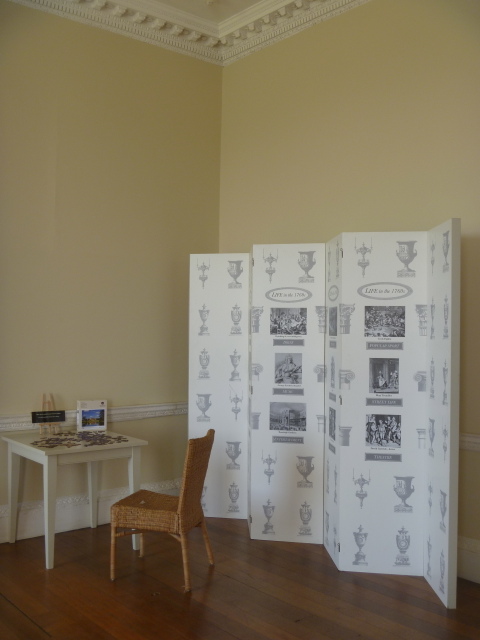
Croome Room

A Corner of Croome

Croome Bookshop

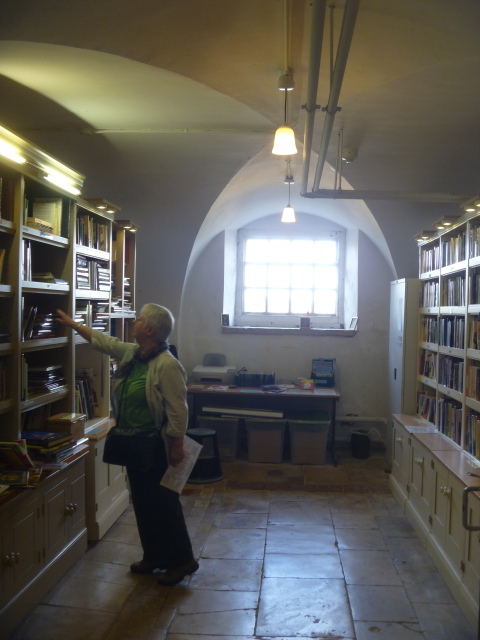
Bookshop Browsing in the Basement

One of the rooms is now a tea room with some tables outside but we only had time for a quick browse and buy in the secondhand book shop before heading out into the park and a longish walk around the perimeter via the Rotunda and Park Seat.
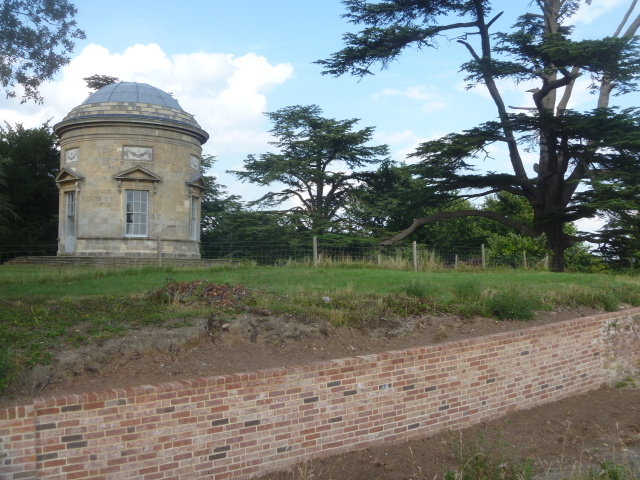
Rotunda

The Rotunda and Ha-ha (Cedars planted by Brown)
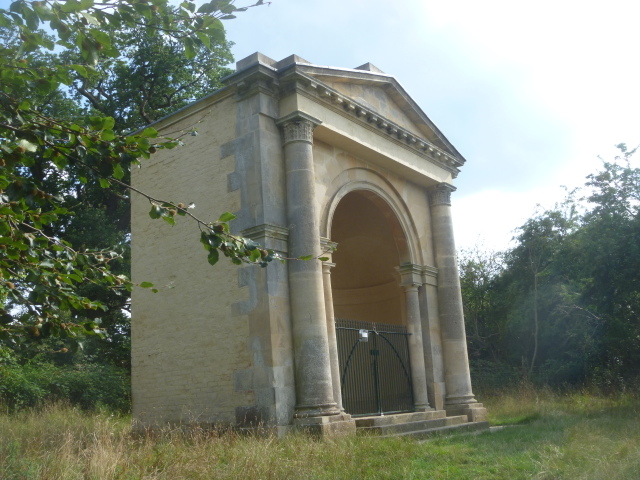
Park Seat

Park Seat has the best views across the Park and the Court

We managed to leave at about 5.30pm knowing that we had left a few things to enjoy on a future visit!
Bolsover Castle to Hardwick Hall, and back, and on foot

This month’s ATG Saturday Walk is a new one for them (and for me) : ‘Bolsover and Hardwick Hall’.

Here’s the itinerary :

Starting alongside the impressive 17th century castle of Bolsover, this walks heads south along the Doe Lea, passing the Saxon church at Ault Hucknall en route to the impressive Elizabethan home of Bess of Hardwick – Hardwick Hall. After strolling through the extensive grounds, we head north back to Glapwell for lunch. After lunch, quiet farmland tracks take us back to Bolsover for tea. 12.75 miles.” [ATG brochure]

I was so attracted by the idea of the walk and its route and the fact that today I would be travelling down the M1 from Leeds to Leicester with a whole day to spare that I failed to register quite the distance involved! There are opportunities to be picked up and returned comfortably to the start/end from both at Hardwick and at Glapwell but most of us soldiered on to the end. Luckily the route is not too demanding as regards climbs but it’s quite a long tramp and I’m now happily down in Leicetershire.

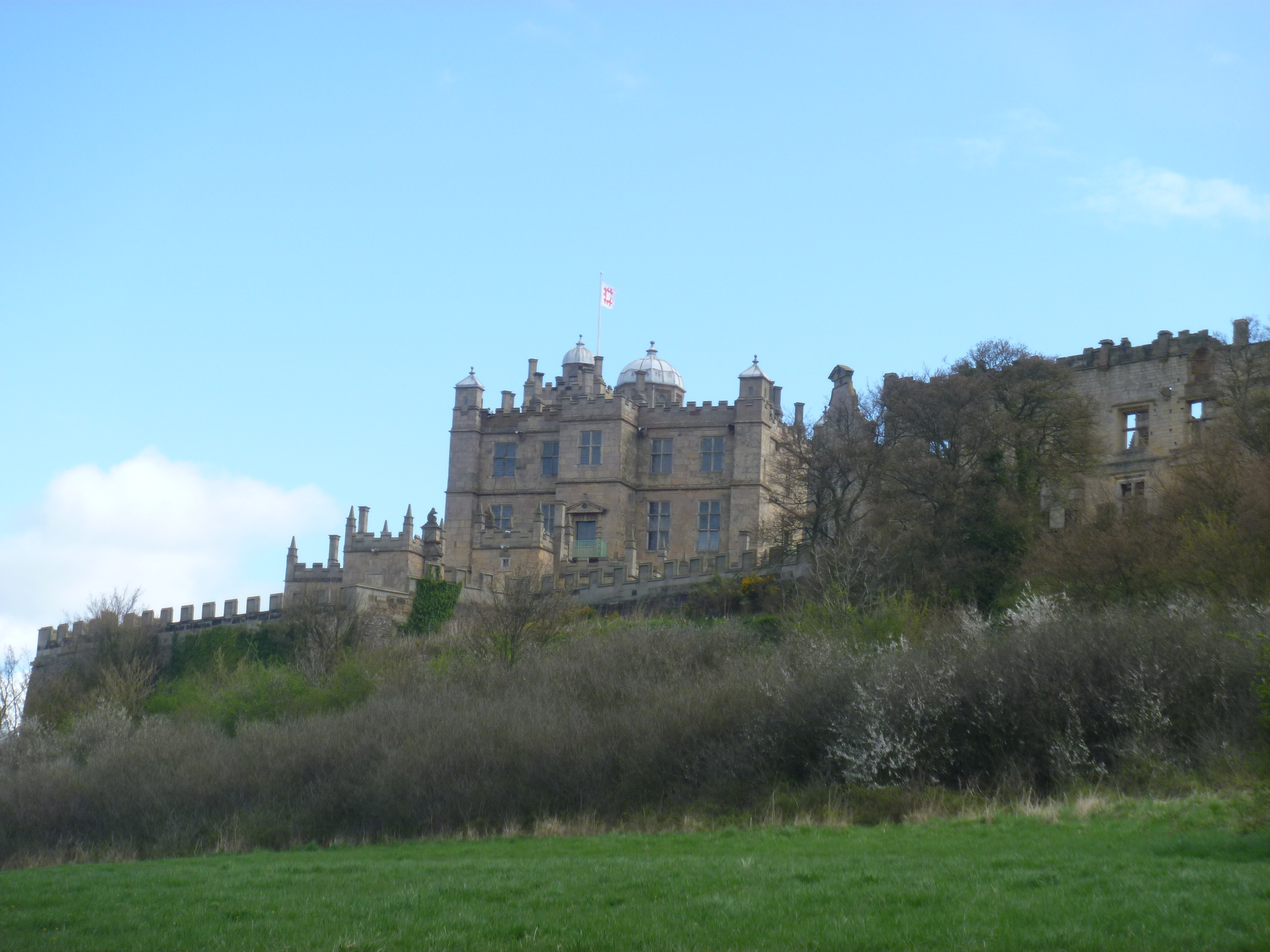
Bolsover Castle

I’ve written about Bolsover Castle before – a misty, foggy visit in November 2011. Today we passed through several weathers but only one brief shower otherwise sunshine, cloud, heavy black threatening cloud and cold winds all took it in turns.

New Bolsover

New Bolsover

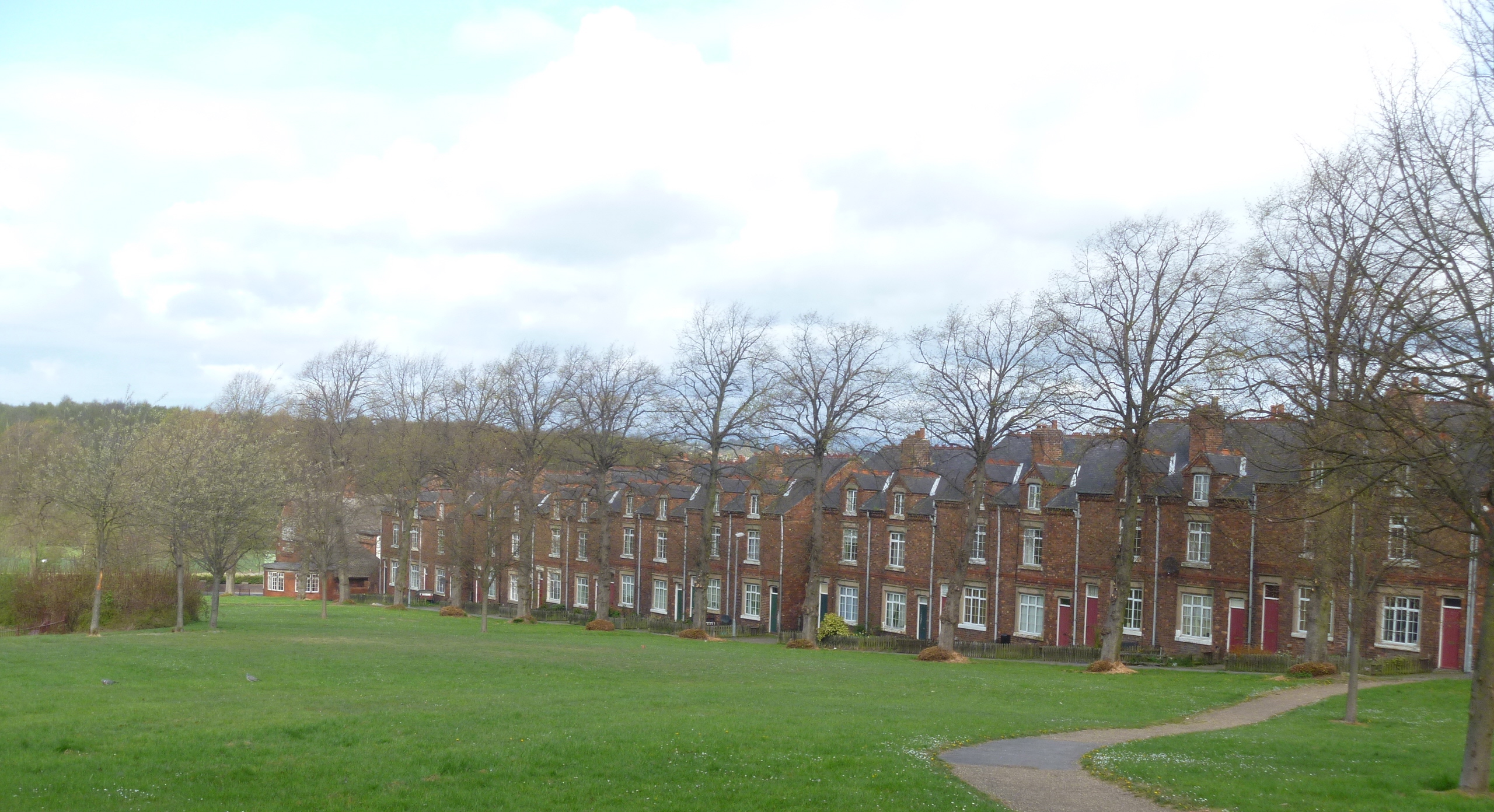
From Bolsover town we headed down below the Castle to New Bolsover which is actually not so new just newer than the old settlement around the Castle. It was a purpose-built miners’ village of neat red-brick terrace houses enclosing a large grassy area and is still occupied today even though the pits around this coalfield closed in the 1990s.

In New Bolsover

In New Bolsover

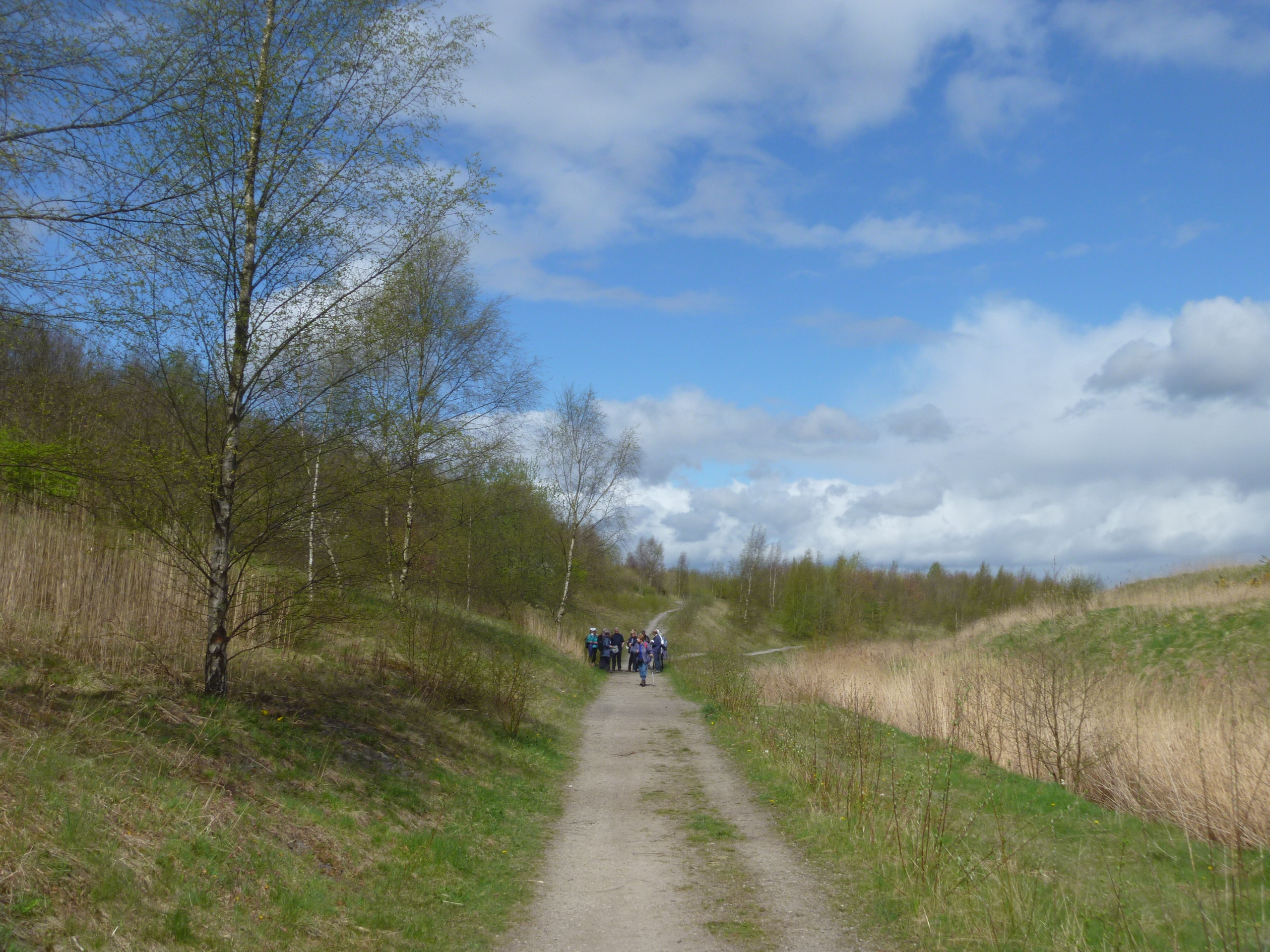
The theme of much of the walk was past or along the remains of the coal industry: along a disused railway track and past grassed over open cast mines on the Stockley Ponds and Trail maintained by Bolsover Countryside Partnership.

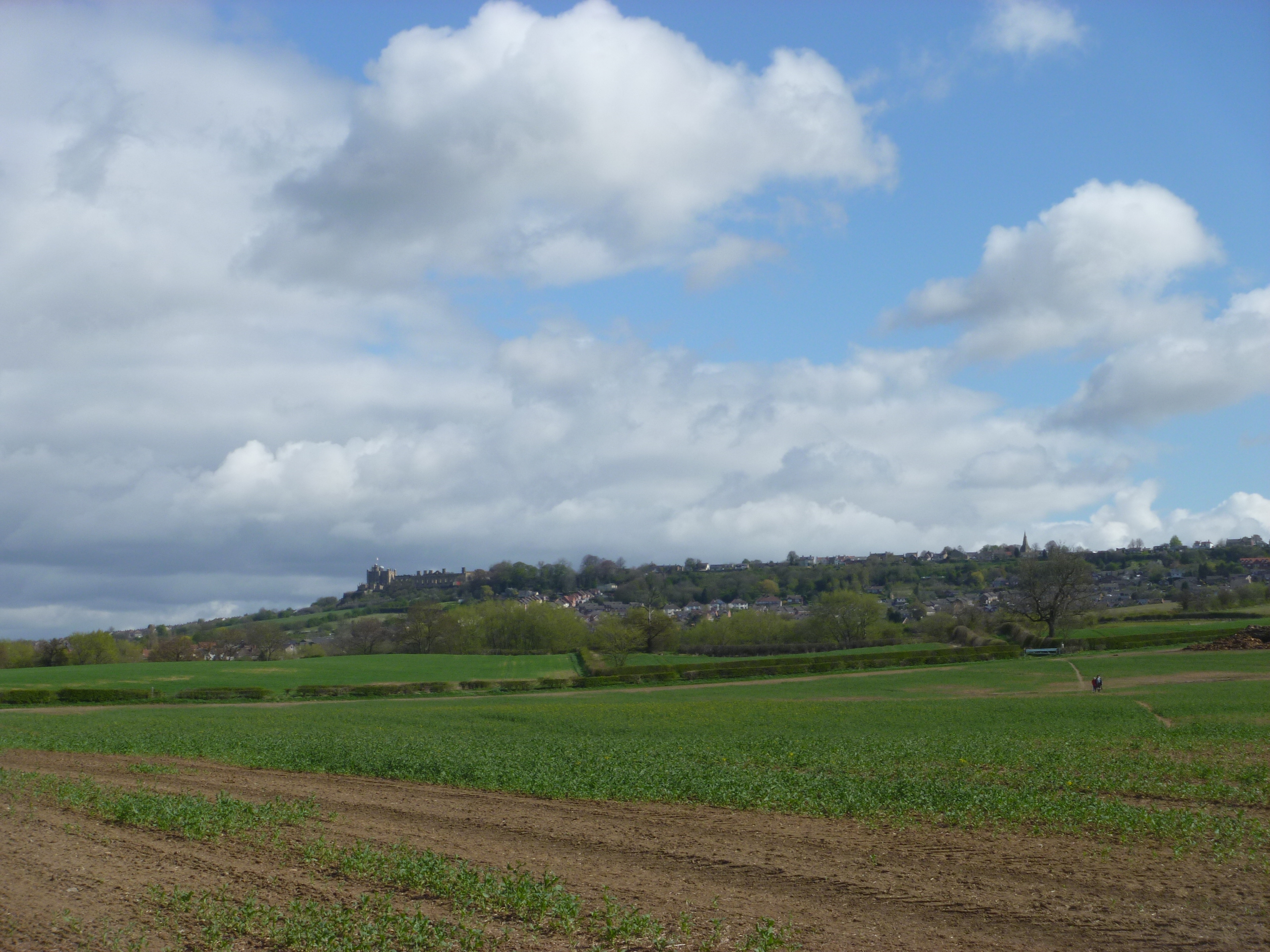
We could still see Bolsover Castle

We could still see Bolsover Castle

The Stockley Trail

The Stockley Trail

Stockley Ponds

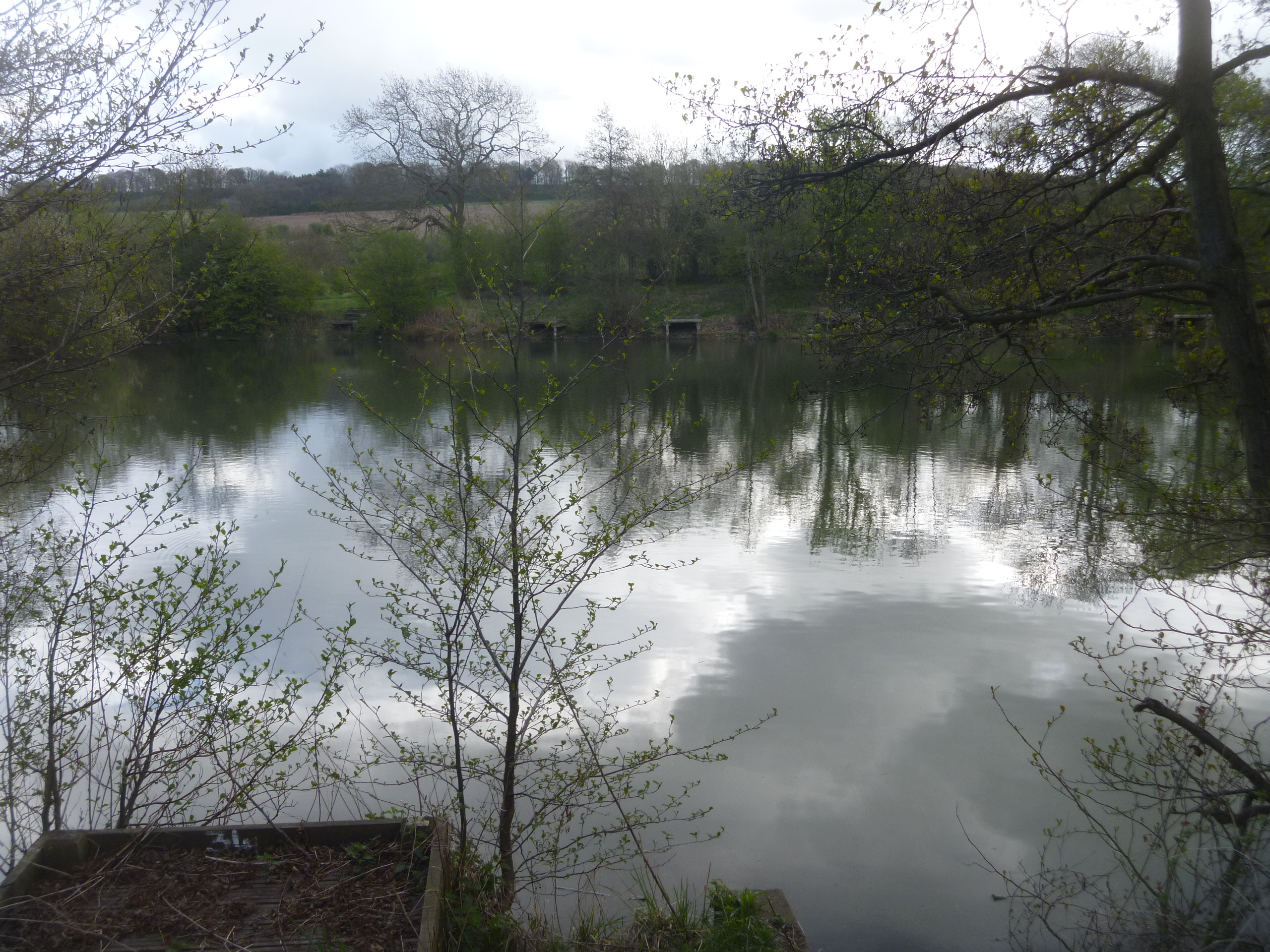
The Stockley Ponds (Beware! Contaminated water) no fishing today

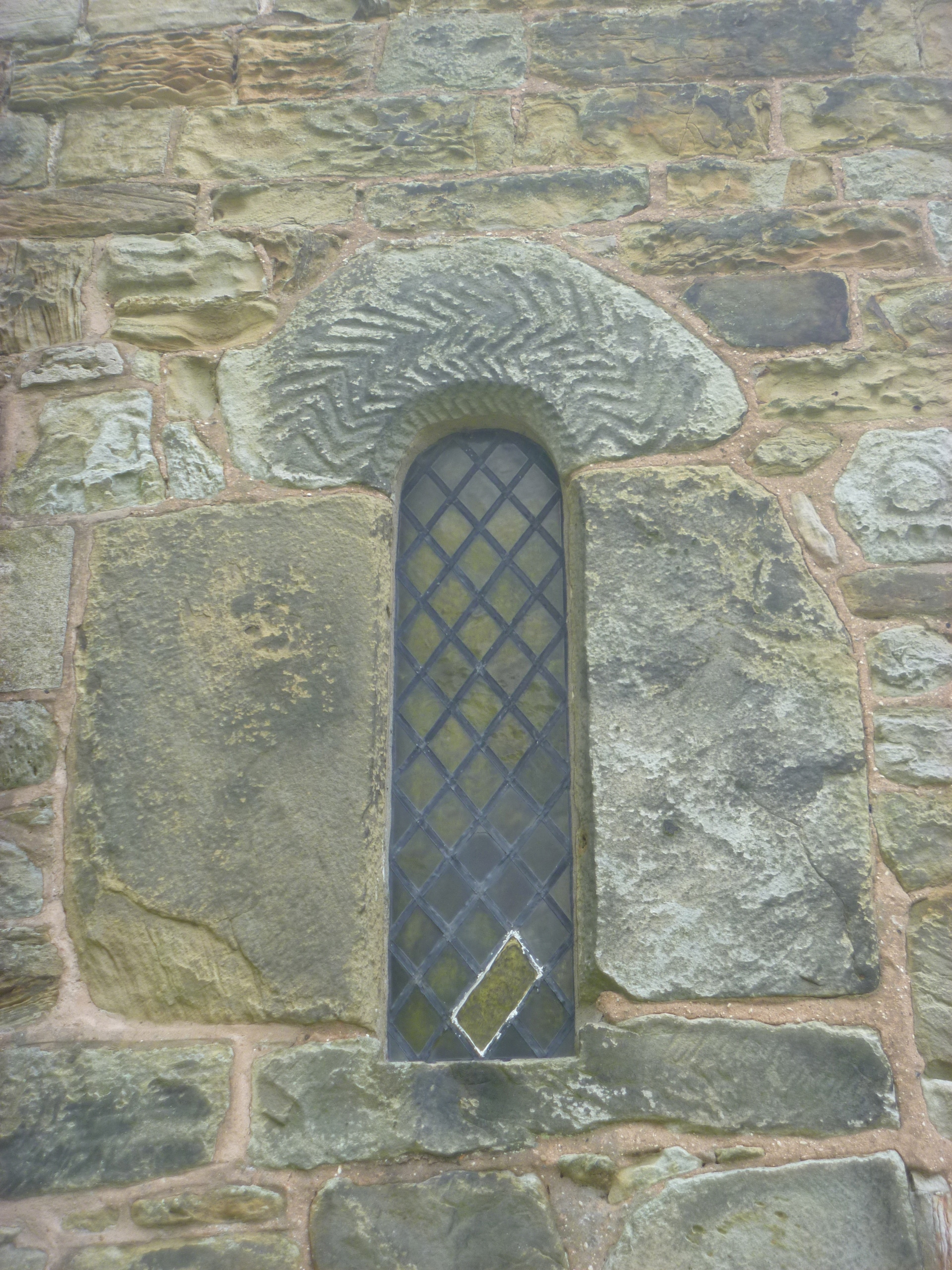
Apart from the two very significant buildings – Hardwick Hall (NT) and Bolsover Castle – we stopped by a small Saxon Church. The Church of St John the Baptist at Ault Hucknall was closed unfortunately but it would have been good to get inside. Read more about its chapel, windows and the grave of Thomas Hobbes, the author of The Leviathan, here.

St John's Ault Hucknall

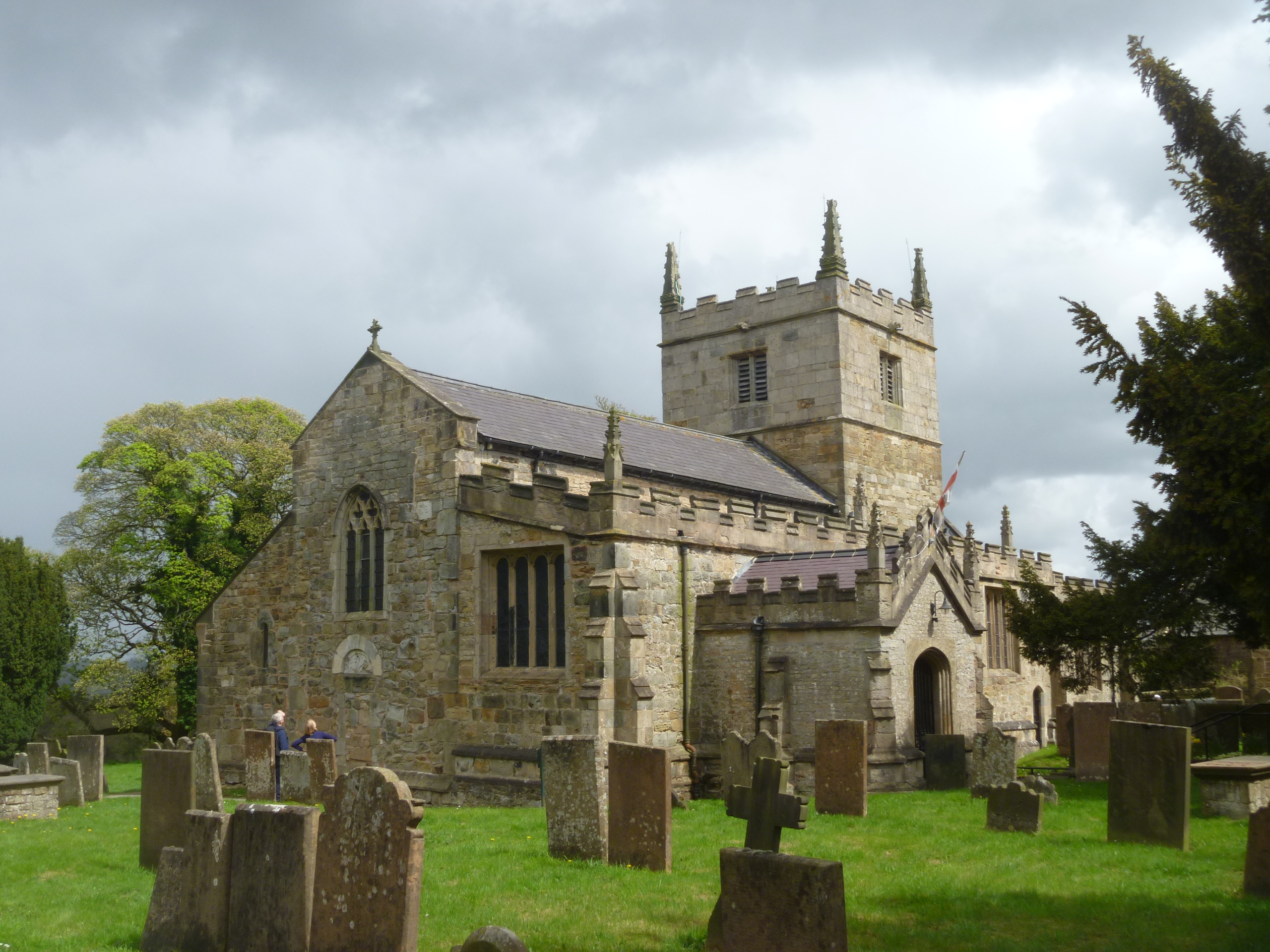
St John the Baptist Church, Ault Hucknall

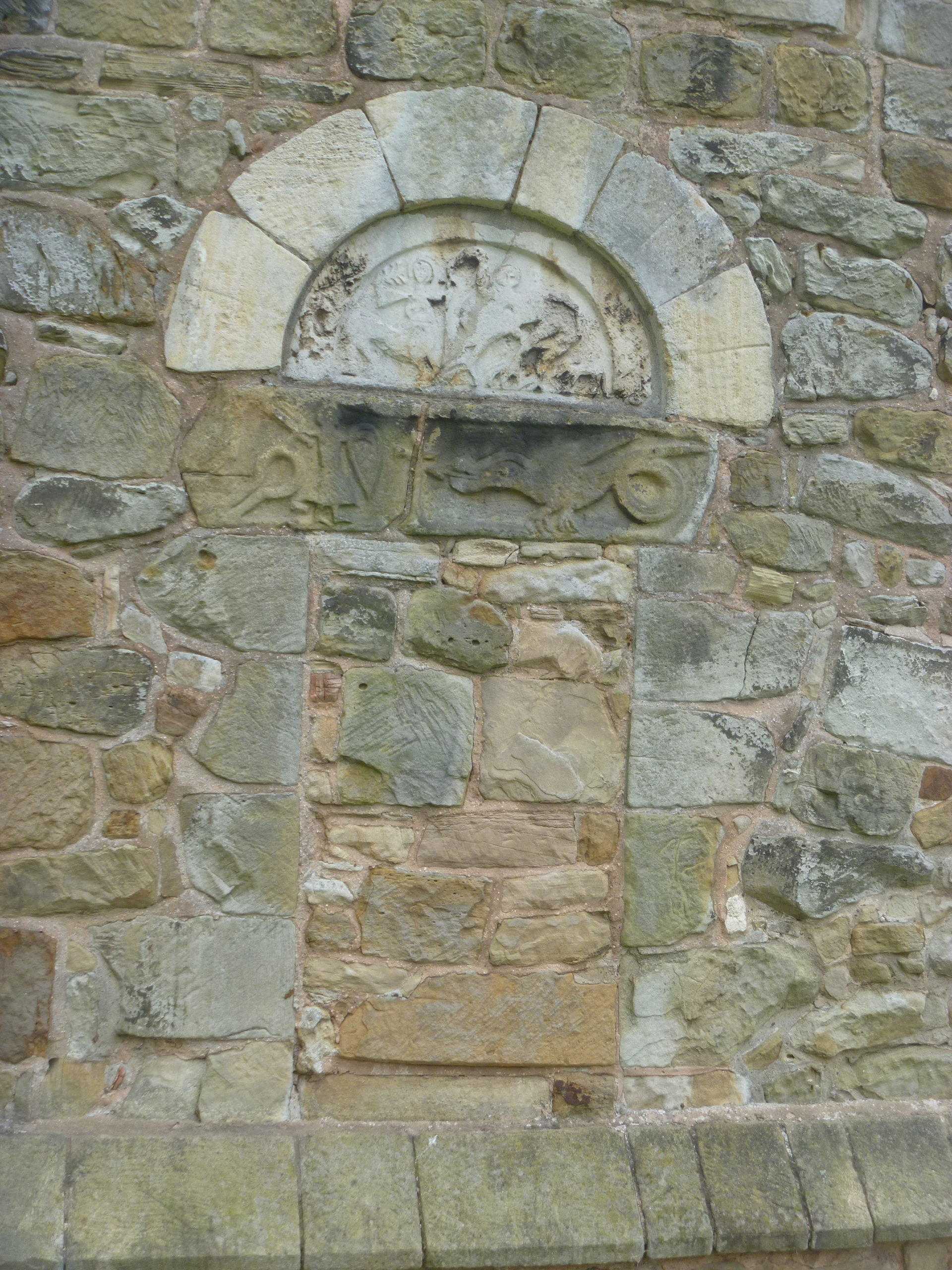
Saxon Arch and figures

Saxon Arch with figures

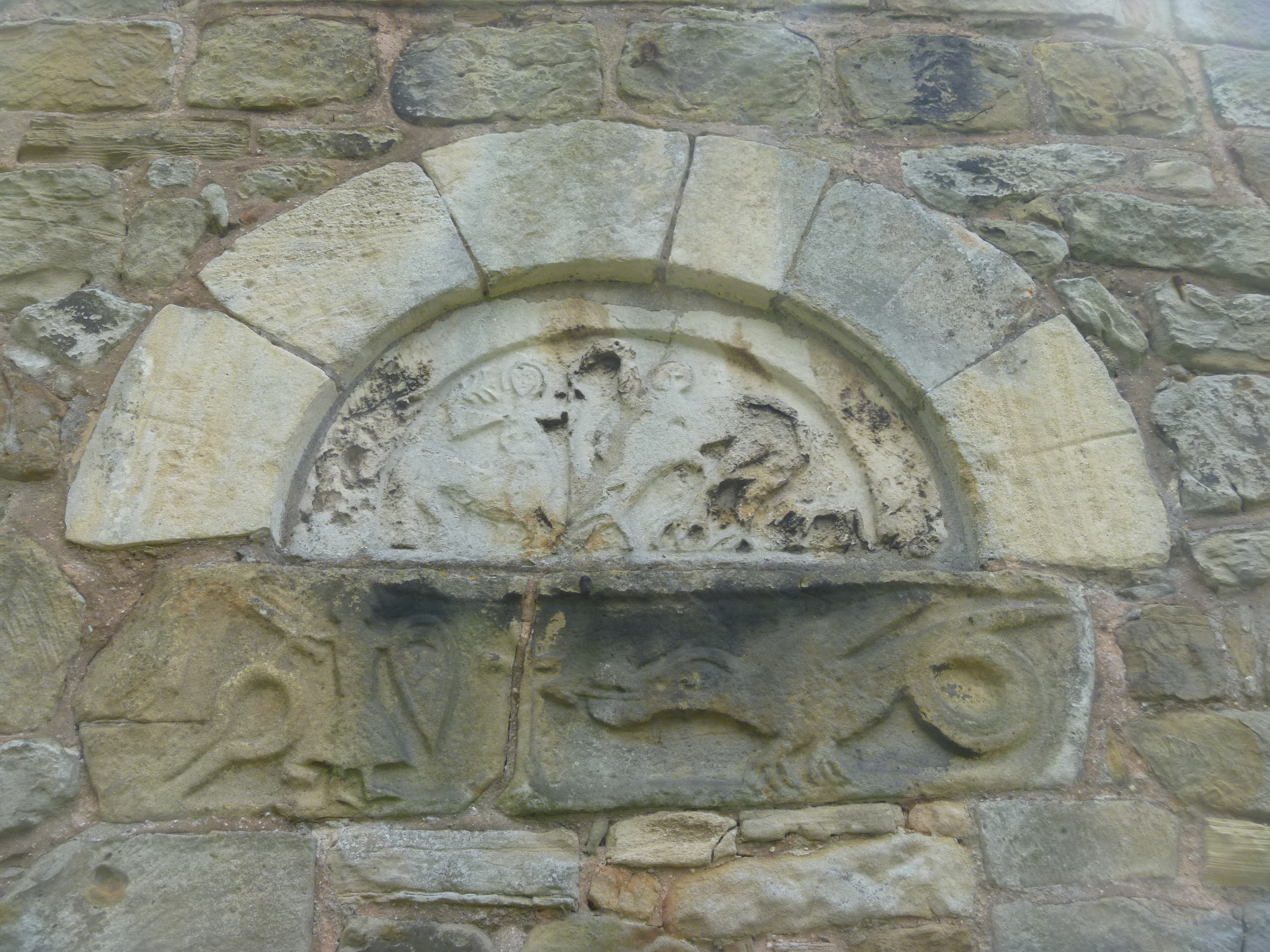
Close-up of the Saxon Arch

Saxon Arch details

Saxon Window

Saxon Window

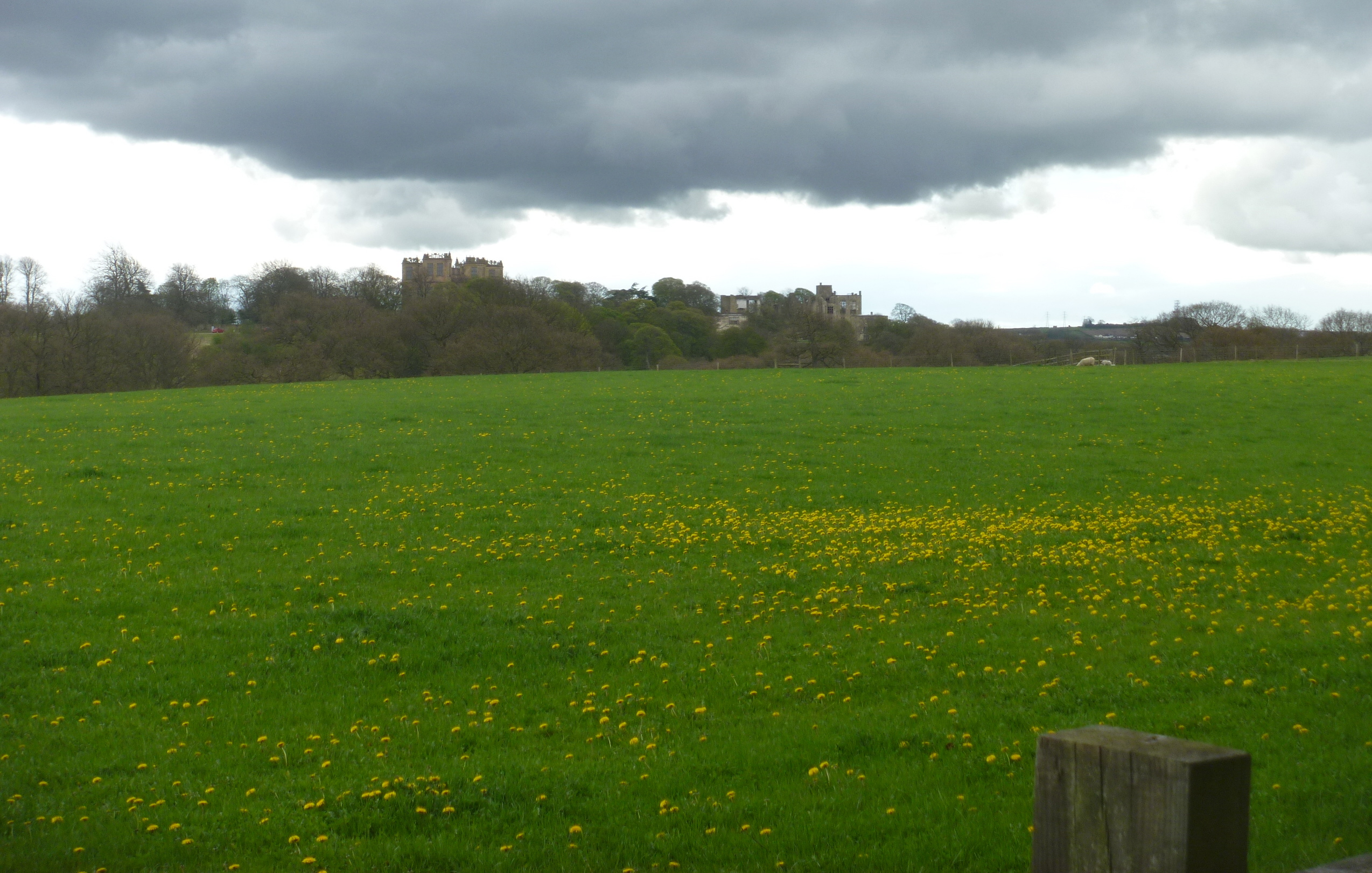
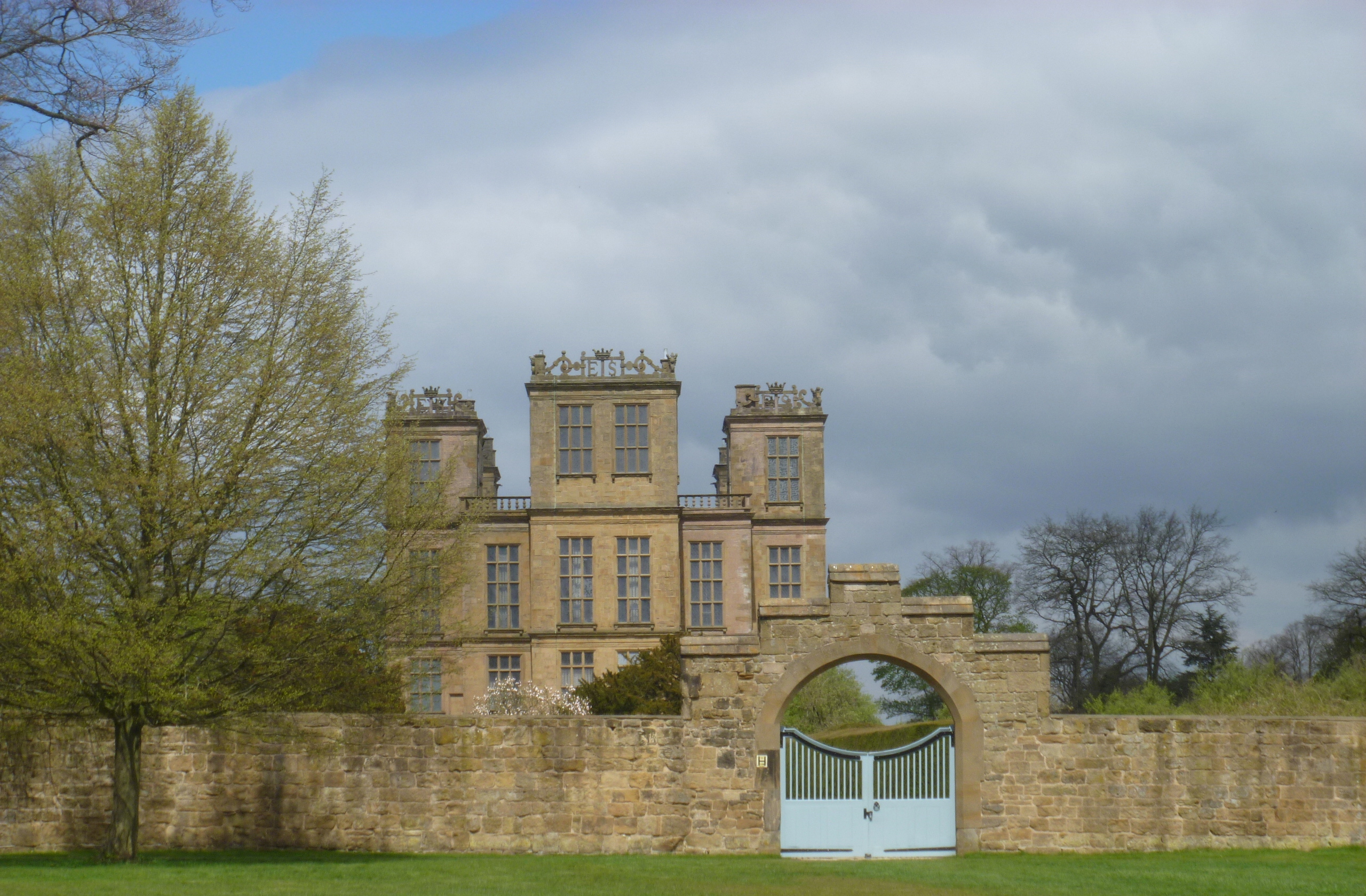
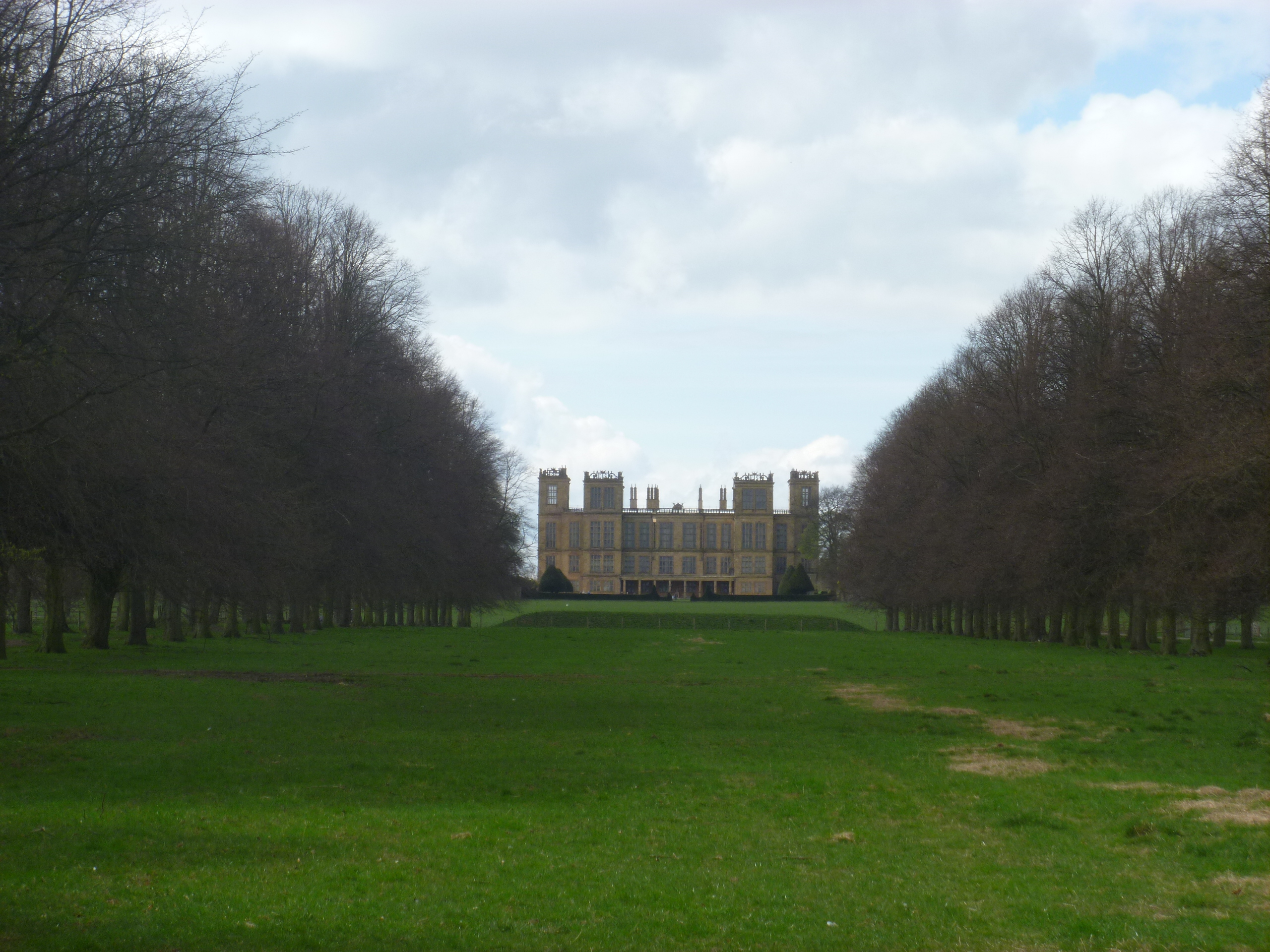
By lunchtime we’d arrived at Hardwick Hall, “more glass than wall”.

Approaching Hardwick Hall

Approaching Hardwick Hall

Hardwick Hall More Glass than Wall

Hardwick Hall

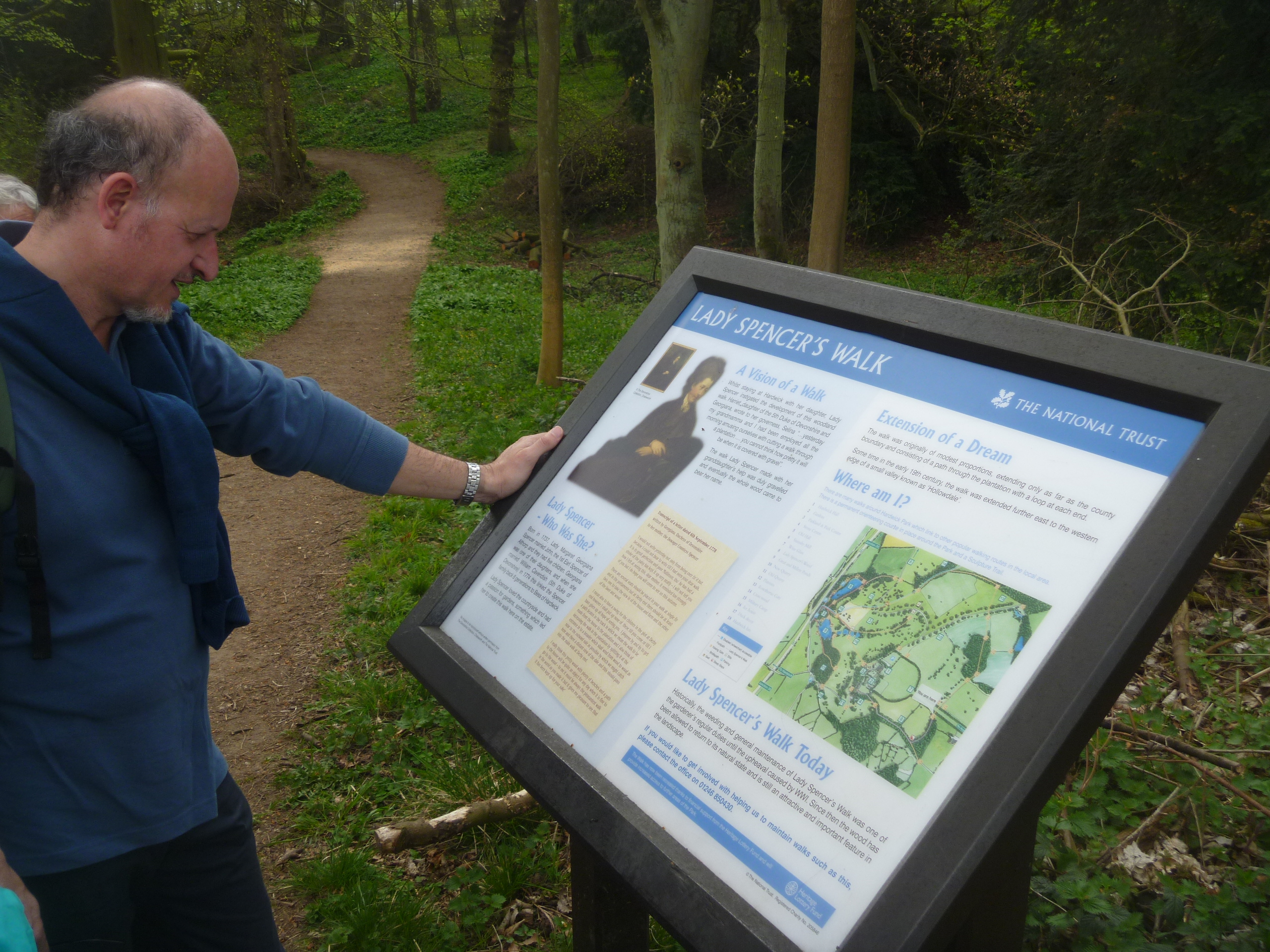
But it wasn’t our lunchtime so we just walked through the grounds, admiring the house as we went and continued along Lady Spencer’s Walk and other tracks on the estate finally arriving at Glapwell where lunch was waiting for us in the Community Centre.

Lady Spencer's Walk

Our Leader, Rob

Hardwick Hall avenue

Hardwick Hall from the Avenue of Trees

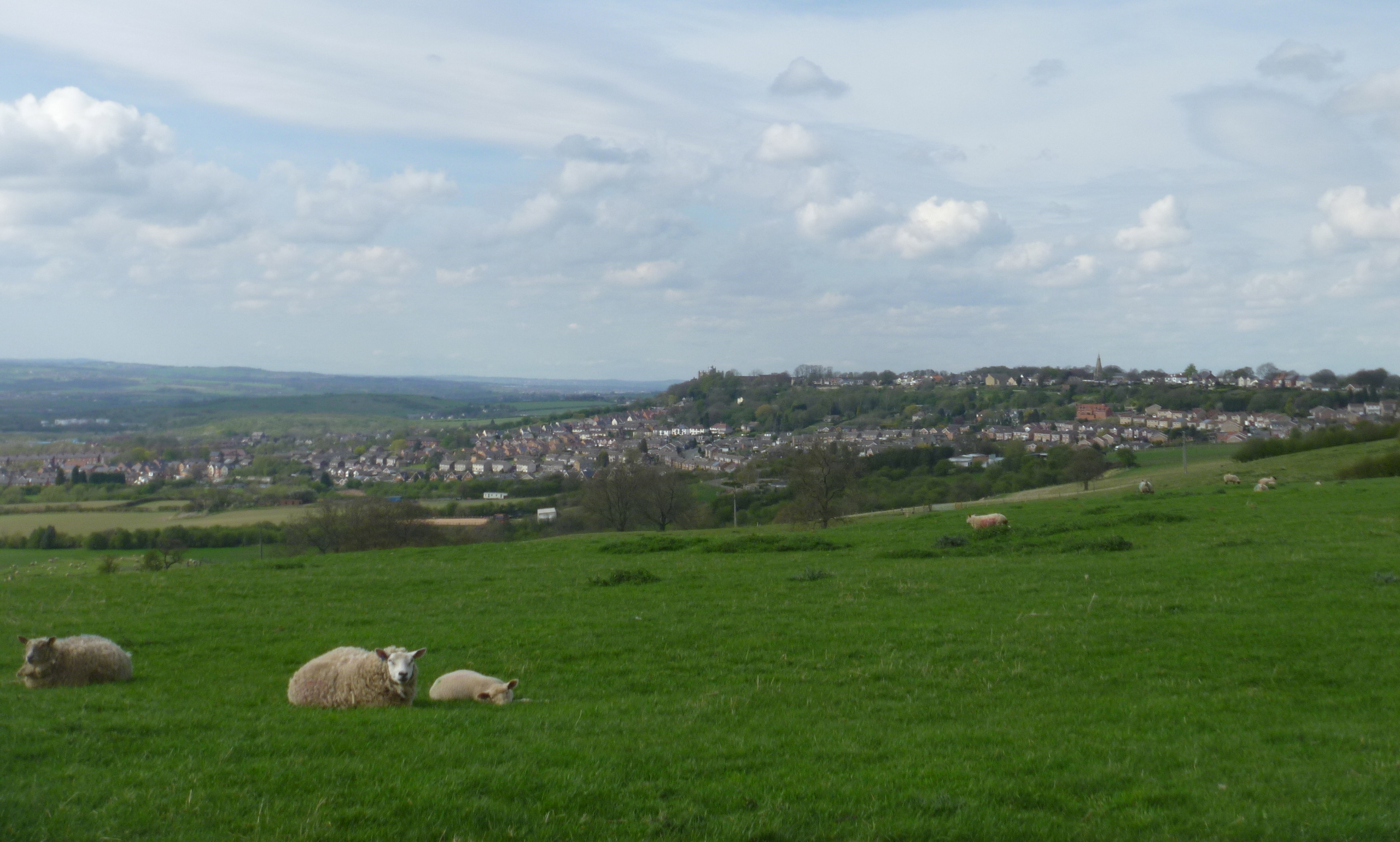
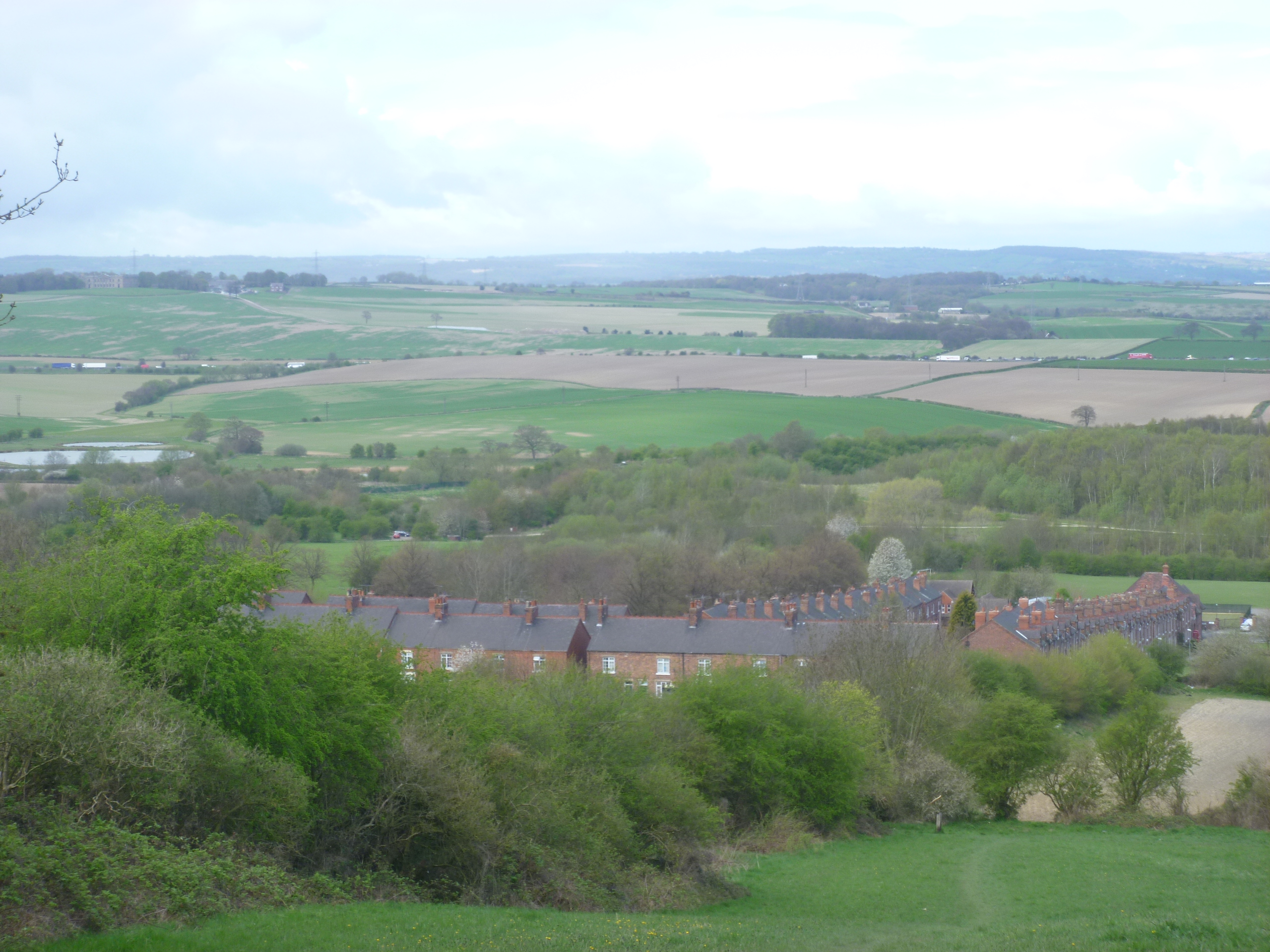
Comfortably refreshed, the best part of the walk, although fairly short now, lay ahead. After crossing several fields we followed a ridge directly back up to Bolsover with magnificent views west right across to the Derbyshire Dales.

Return to Bolsover

Return to Bolsover

Arriving in Bolsover more sustenance awaited us at The Bluebell pub – a generous spread of home baked scones, butter, cream and jam and pots of tea, to boot.

Less than an hour’s drive I am comfortably ensconced in my homely B&B for the night!
The Three Halls, Norfolk, Walk

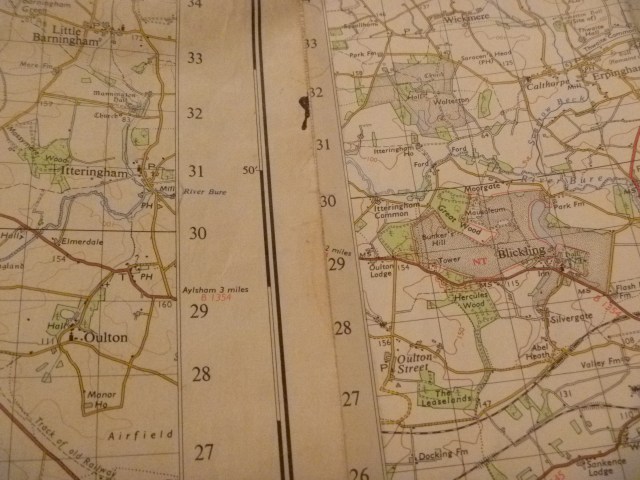
1950s OS Maps

The walk crossed the join of my two 1950s treasured OS maps of Norfolk (Sheets 125 and 126 Seventh Series)

“Blickling Hall is a masterpiece of Jacobean architecture famed for its spectacular long gallery, superb library and exceptional gardens. The estate has been home to Falstaffs, Boleyns and Saxon Kings. We walk from Blickling Hall, in the heart of the Norfolk countryside, through the 5000 acre estate northwards to Wolterton, the seat of the Walpole family. From Wolterton we follow country lanes to Mannington Hall, with its famous gardens, before turning south to Itteringham for lunch. After lunch we head back to the Blickling Estate for tea. 11.5 miles.” [From the ATG-Oxford website]

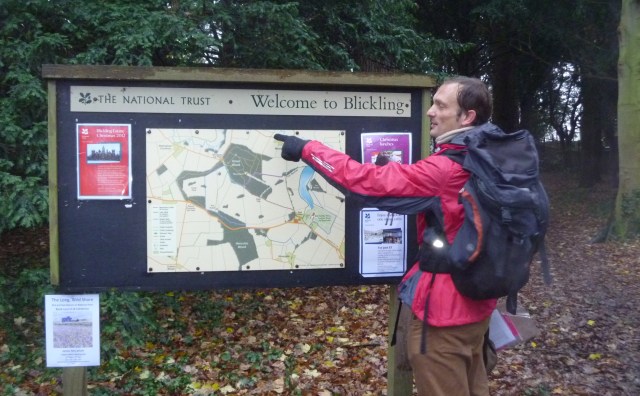
Adrian shows the way

Adrian, our leader, shows the route we’ll follow

This has been my day today! ATG Oxford The Alternative Travel Group organise walking holidays in this country and abroad – both escorted and self-guided. In fact my walking holiday in Alsace in June was an ATG (Footloose) holiday. As a supplement to these, mainly summer holidays, ATG organise a series of Saturday Walks throughout the year in order to raise money for chosen charities and as a ‘subtle’ marketing ploy; for we are like-minded people and keen to hear others’ experiences of walks.
As I left Norwich snow began to fall and in the car the outside temperature measured -1C. By the time I left the outskirts of Norwich behind me the snow had turned to rain and the temperature had risen to +1C. The group of intrepid walkers met by the Buckinghamshire Arms and we set off in misty drizzle past the beautiful Jacobean Blickling Hall and, after a quick look inside the church (even colder than outside!), began our muddy tramp around the icy Blickling Lake and across the estate.

Blickling Hall

Rear of Blickling Hall one-time home of Anne Boleyn

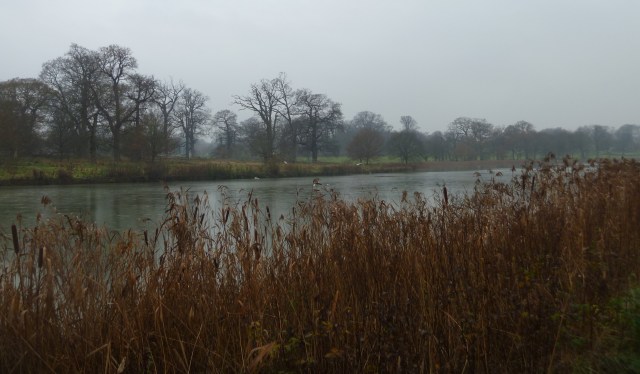
Frozen lake

The half frozen lake at Blickling

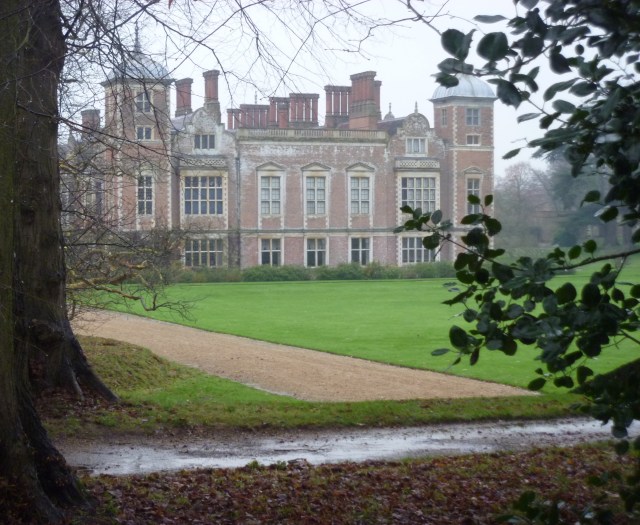
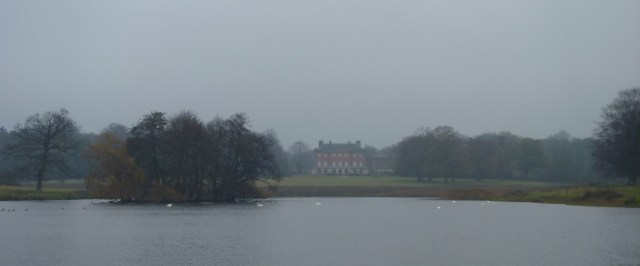
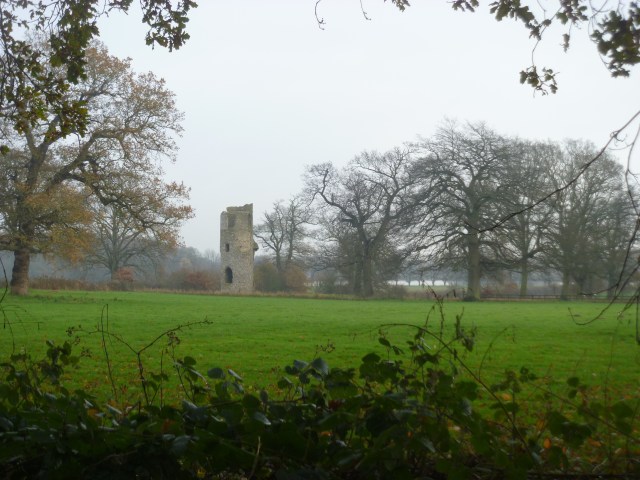
Our next Hall – a Palladian design – Wolterton appeared empty and unused but looked quite beautiful from across the Lake. There’s a ruined church in the field next door. Read here about Simon Knott’s delightful birthday visit to the ruin.

Wolterton Hall

Wolterton Hall across its lake

Wolterton church ruin

The Ruin of St Margaret’s Wolterton

As we tramped through muddy fields and along wet lanes I talked with many of the group (about 17 of us) about where we had come from. Had we been on any of the holidays? Had we been on Saturday Walks before – if so where? I don’t think there were any local people most had come from London and Cambridge and one or two of us from further afield and making a weekend (or longer) of it – Leeds, Manchester, Stow-on-the-Wold.

Mannington Hall

Mannington Hall

Our next and final Hall was the lovely Tudor Mannington Hall whose gardens are renowned in the area and where popular summer events are held. It looked rather bleak today but it definitely has a lived-in feel and is the home of the current Lord and Lady Walpole (they own Wolterton too). Read here an interesting article about owning two stately homes and access to them.

Mannington church ruin

Saxon Church Remains

Our walk continued across more muddy fields and we were just able to glimpse the remains of the Saxon chapel at Mannington. Not far now …

Bure Centre

Lunch is about to be served at Itteringham Village Hall

And we arrived at our lunch spot. ATG lay on a super lunch – mulled wine, creamy hot soup, a choice of salads, breads, meats and cheeses. I noticed some chocolate tarts for pudding but opted for fresh fruit – grapes and a tangerine. The lunch was served by ATG’s  Sarah in Itteringham Village Hall or The Bure Valley Community Centre as it is known locally. It’s right opposite another Norfolk flint church – St Mary’s Itteringham – with its neighbouring ruined chapel and the preservation of which has been aided by The Churches Conservation Trust.

Itteringham Church

St Mary’s Itteringham

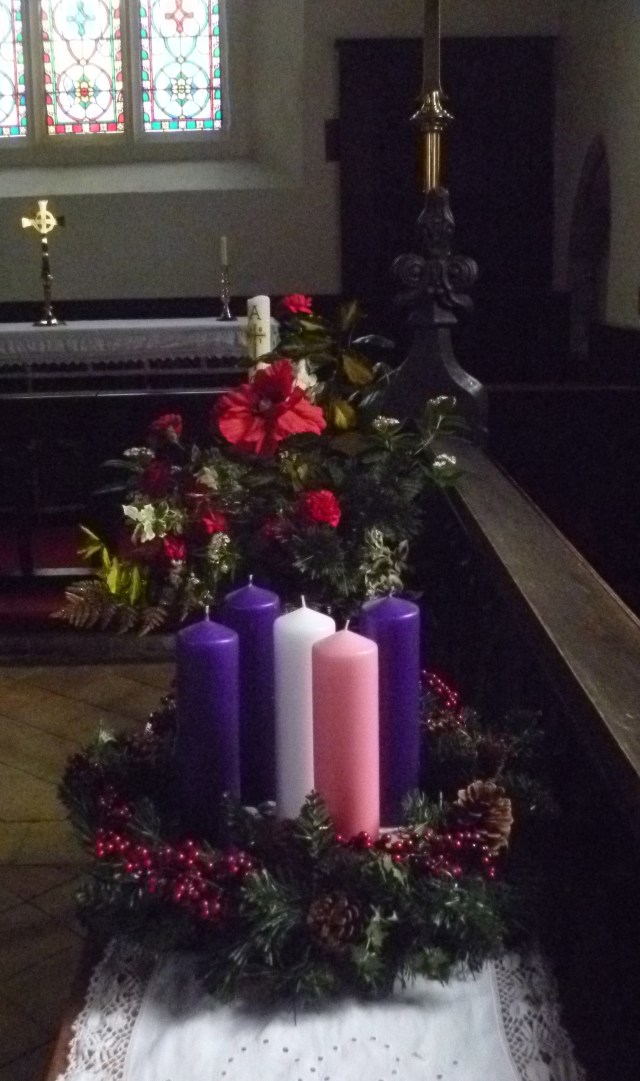
Advent at Itteringham

The lunch was served at the 7.2 mile point so a further 4 miles were walked to our destination. The rain began to fall as we re-entered the Blickling Estate and passing The Grandstand – a strange and rather industrial-looking building (erected for the purpose of viewing the shooting and horse racing on the Blickling Estate) and is now a holiday-let.

The Grandstand

We were glad to spot the Blickling Lake and smell the wood smoke of the stoves in the Buckinghamshire Arms where afternoon tea was served. There we heard more tempting morsels about dry, stony Italian tracks, drinks on sunny terraces, gorgeous picnics served on craggy peaks in Spain and Italy and generally about locations that had rather more appeal by 4pm on a very wet, cold Saturday afternoon in December.

Blickling at night

Blickling at night (actually 4.30pm)

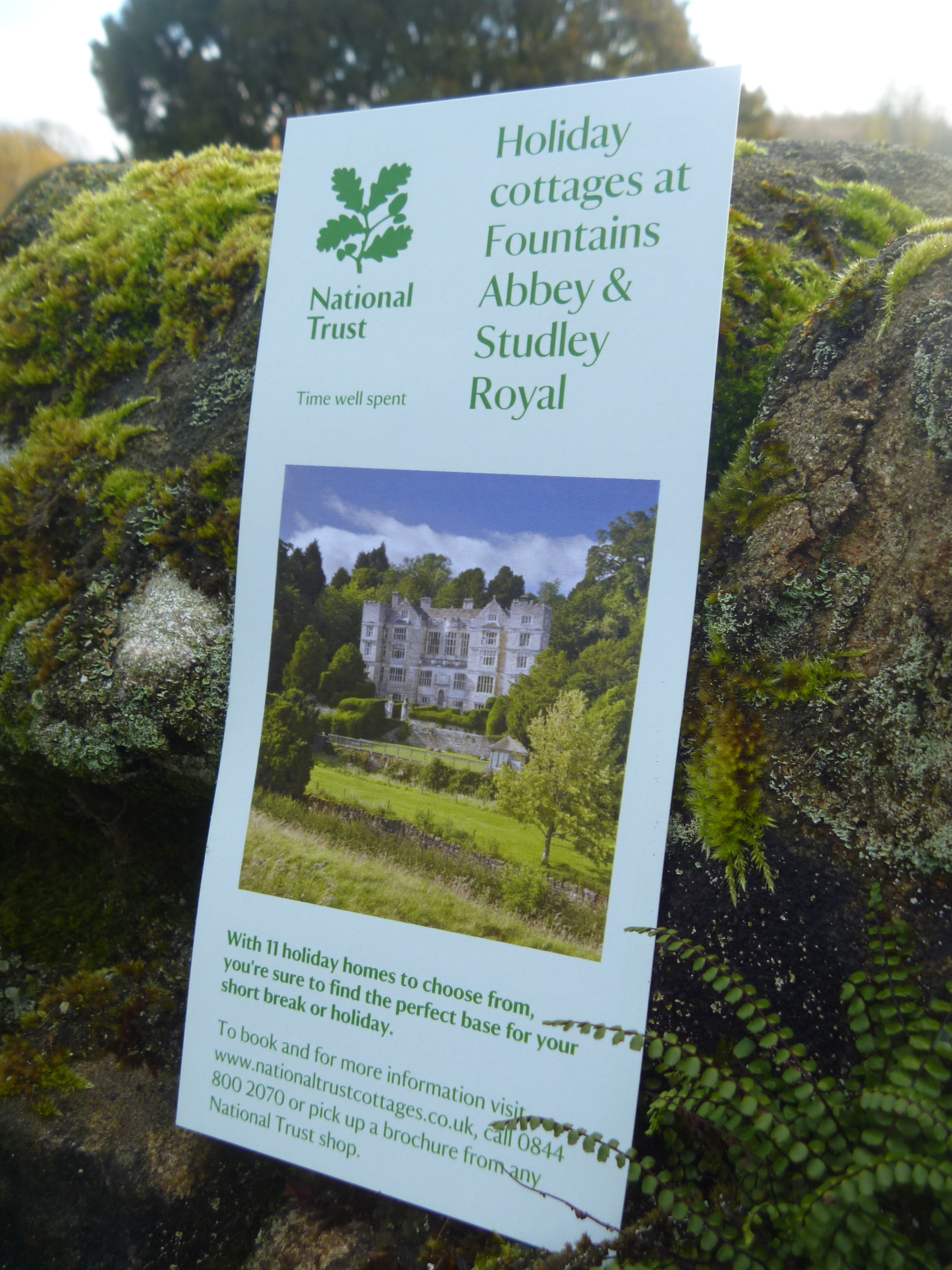
Where to stay at Fountains Abbey

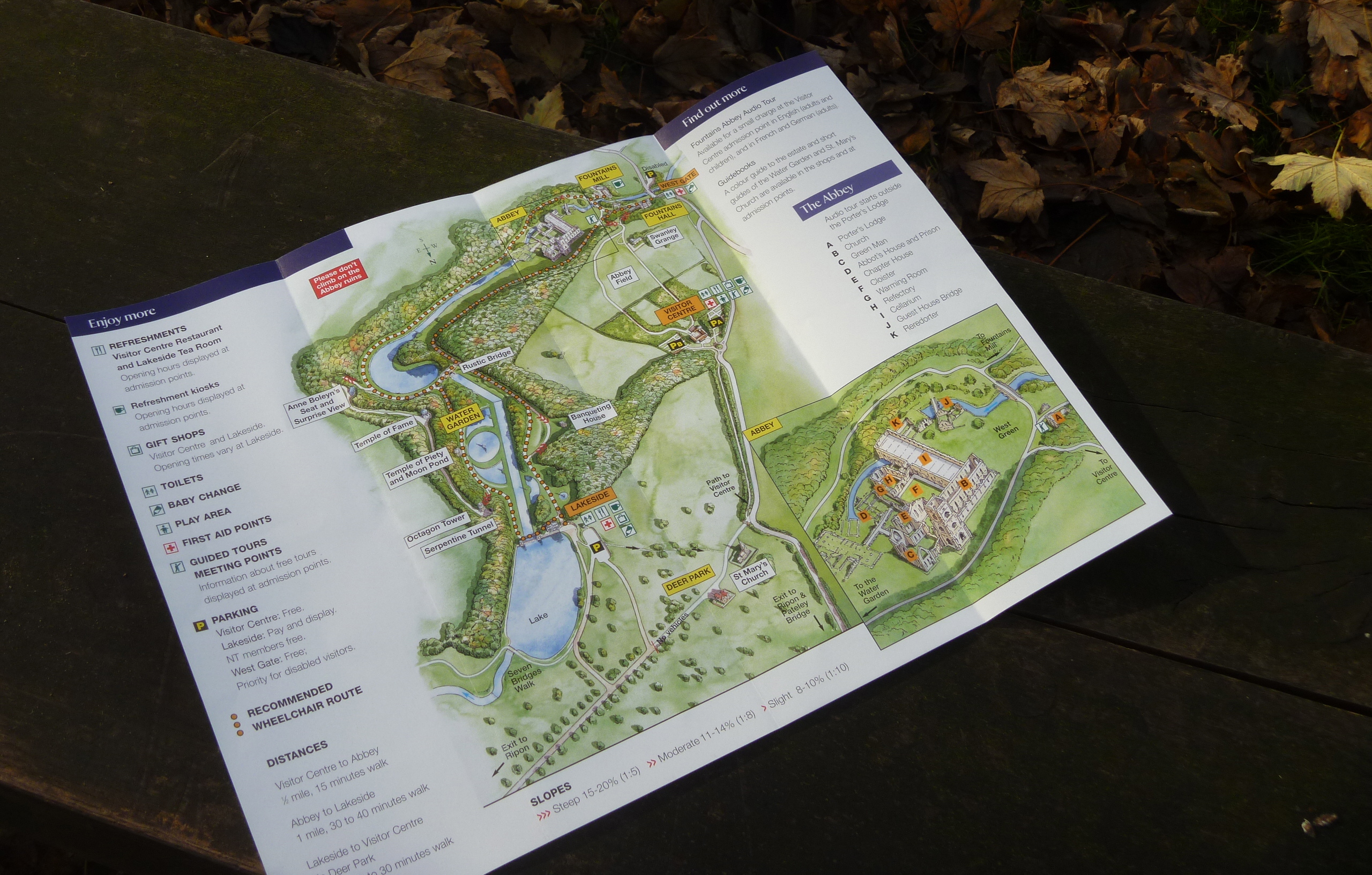
Back in January this year I wrote about a visit to Fountains Abbey and Studley Royal Water Garden saying that I’d be visiting throughout the year at different seasons and reporting back. Yesterday was my second visit this year. Maybe this was because I took out an annual membership to Harewood House in March. Harewood is much nearer home than Fountains and I may only retain the membership for a year or two whereas I will always be a member of the National Trust.

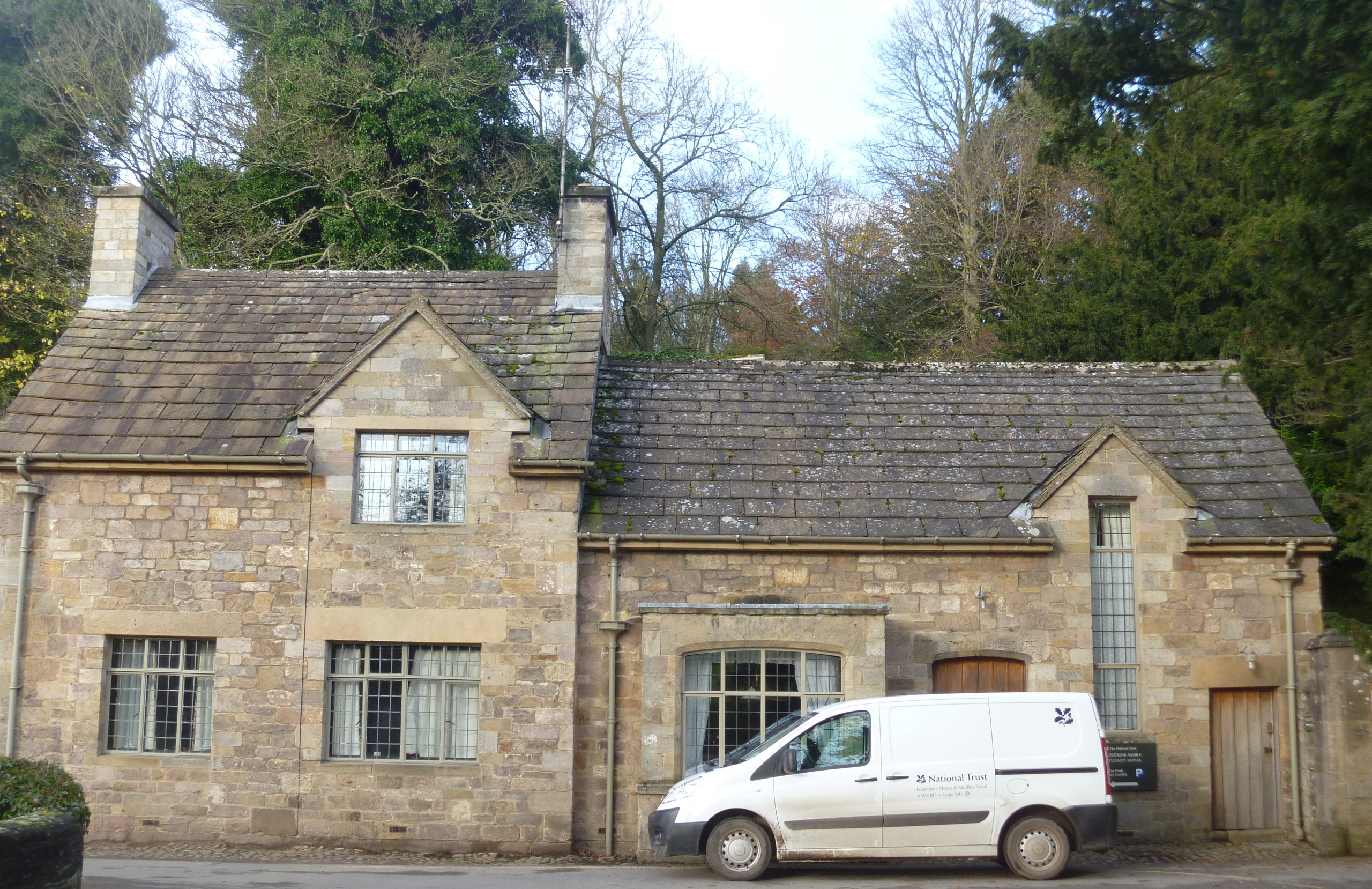
Fountains Abbey may be further from home than the Harewood Estate but still it’s very unlikely that I would ever stay there for a holiday although whenever I visit I think the NT Cottage Properties (as they are called) always look very inviting. They may be part of the Trust’s portfolio of Cottages but several do not warrant this title – for they are very much grander than one would suppose from the blanket “Cottages” title. Yesterday I made these properties the ‘theme’ of my walk through the estate.

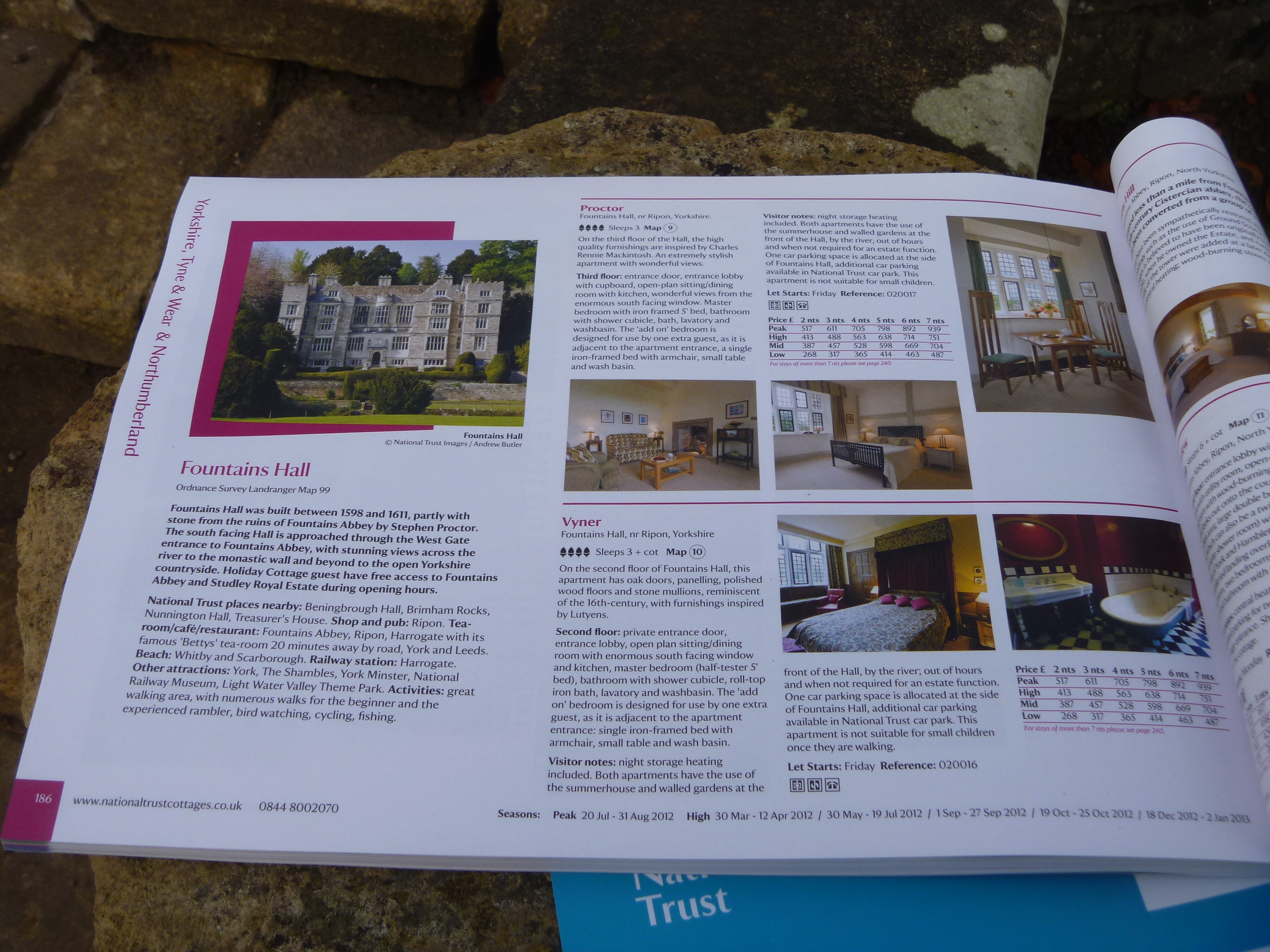
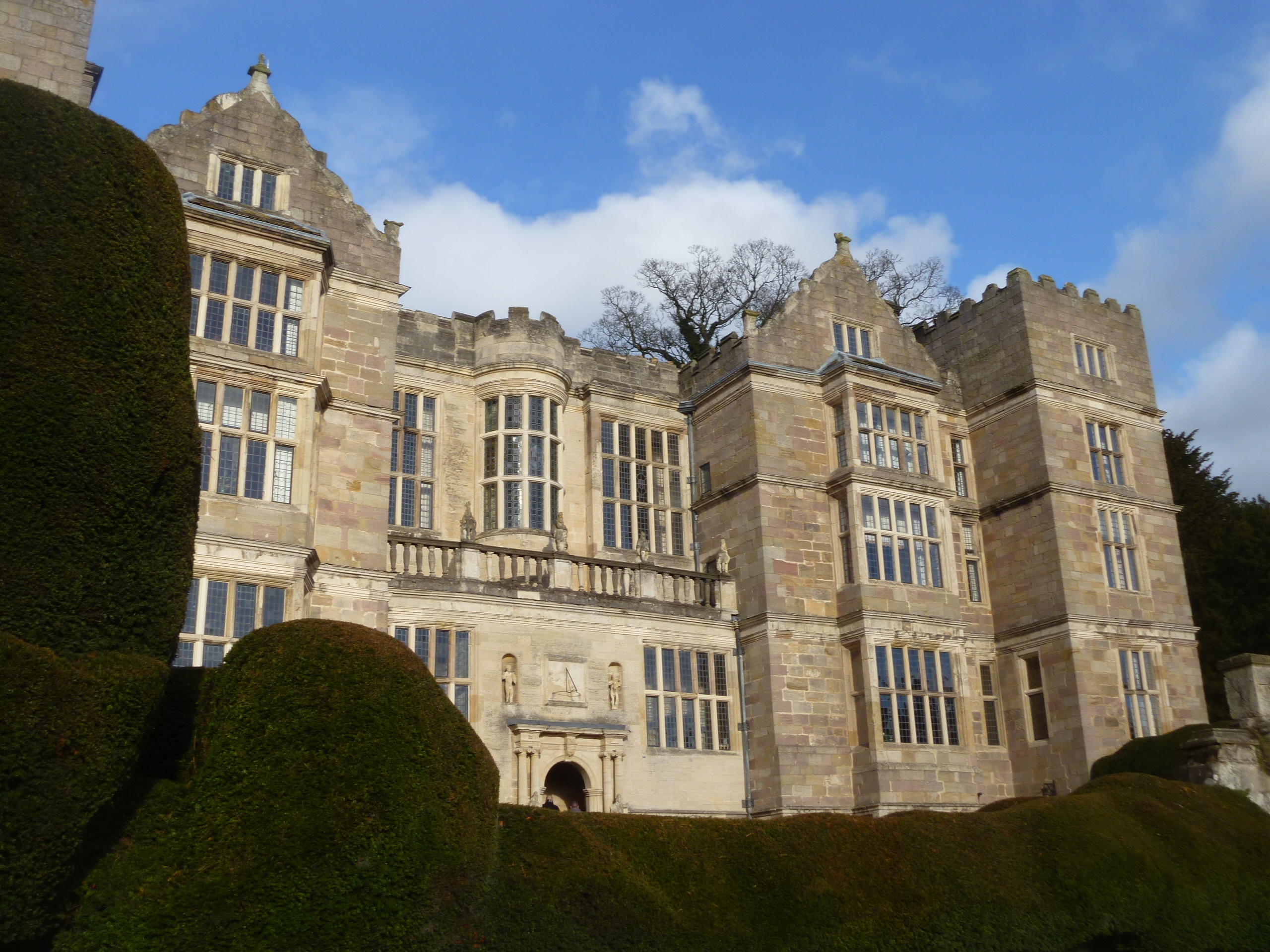
Built between 1598 and 1611 Fountains Hall is home to two apartments. On the third floor Proctor is furnished in the style of Charles Rennie Mackintosh and the views must from there must be spectacular. Below Proctor, on the second floor is Vyner furnished in the style of Edwin Lutyens.

Fountains Hall

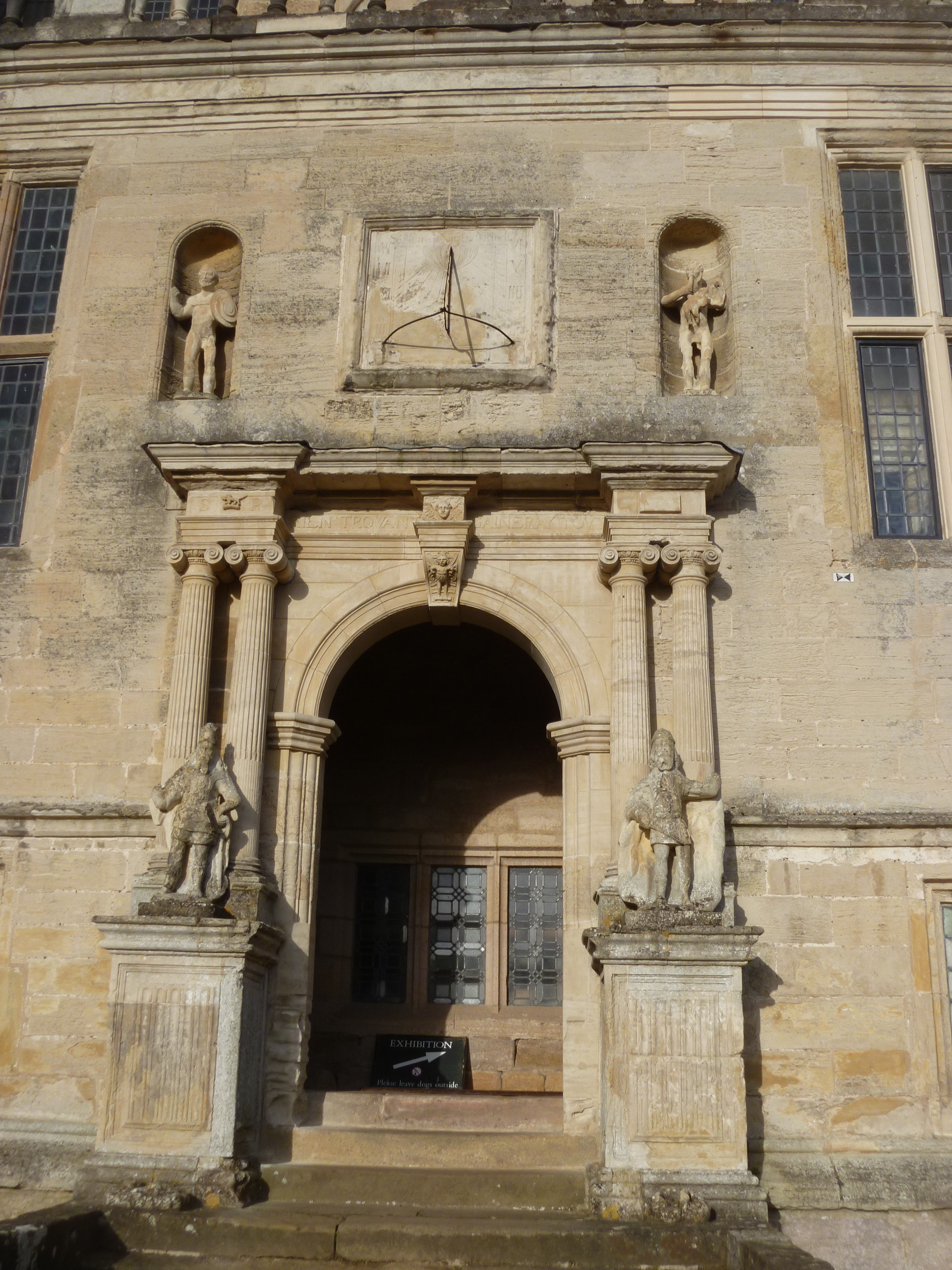
The Doorway to Fountains Hall

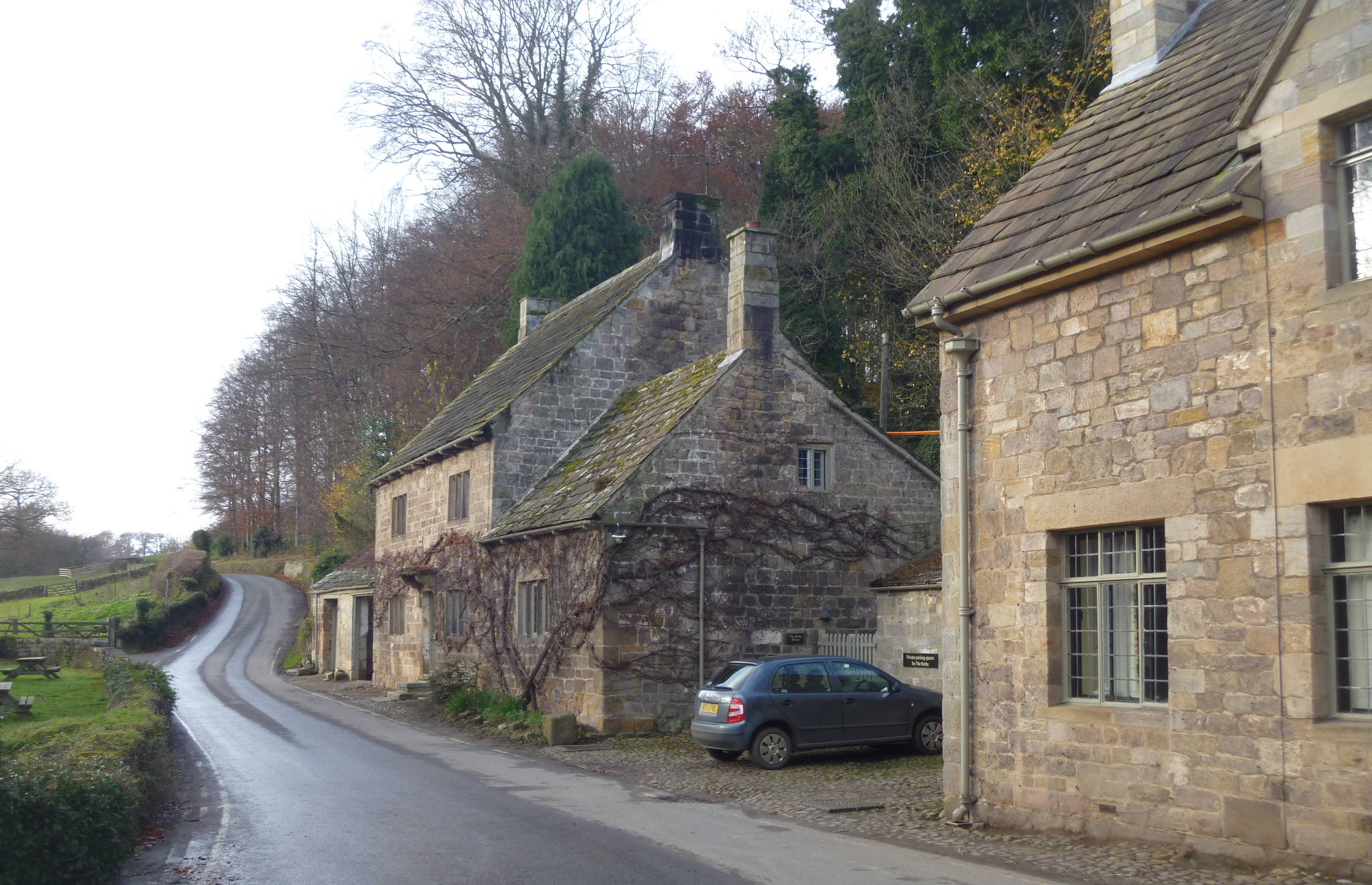
Just outside the gates of Fountains Abbey and opening straight out onto one of the minor approach roads are three self-catering cottages converted from what I remember well from a few years ago as the NT shop.

Abbey Cottage and Abbey Stores

Fountains Cottage

Until the ‘new’ Visitor Centre was opened in 1992 this was the main entrance and car park to the ruins. My, how things have changed – I couldn’t even find a space in that car park yesterday, the main car park was overflowing and the Studley Royal Car Park was full too.

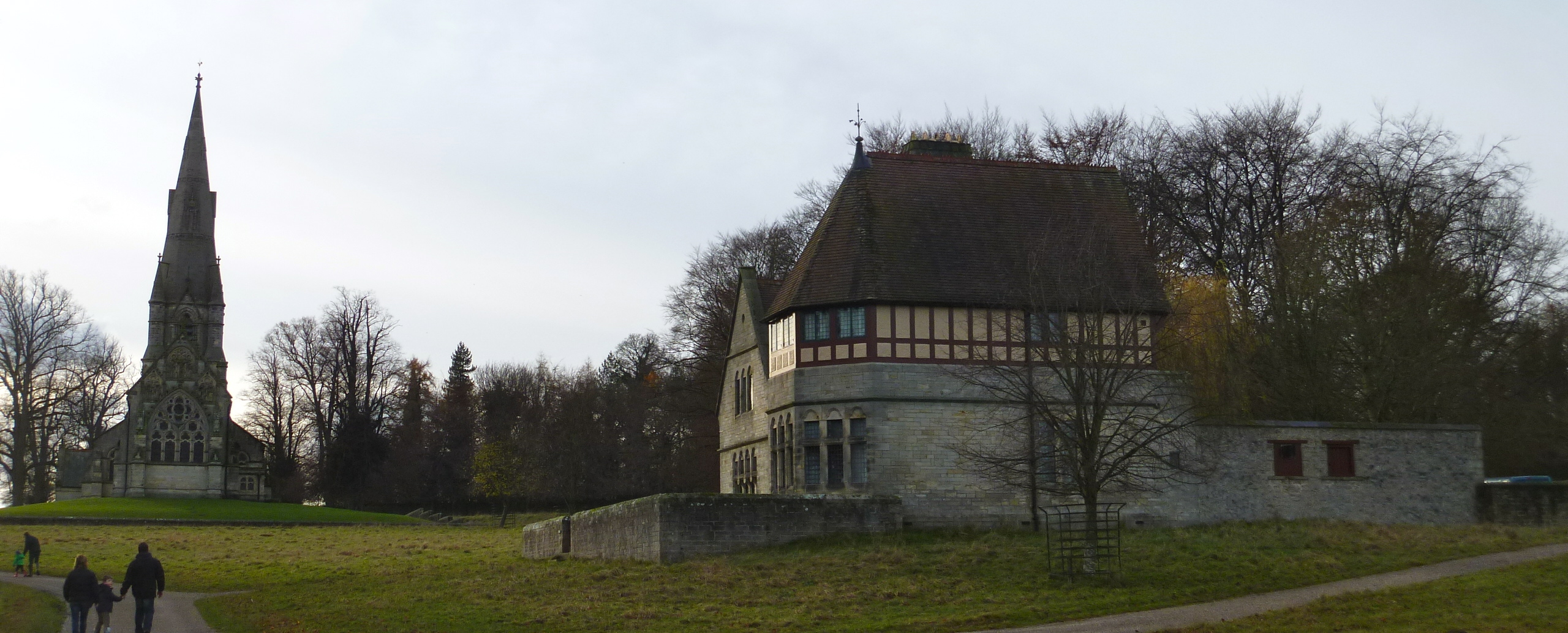
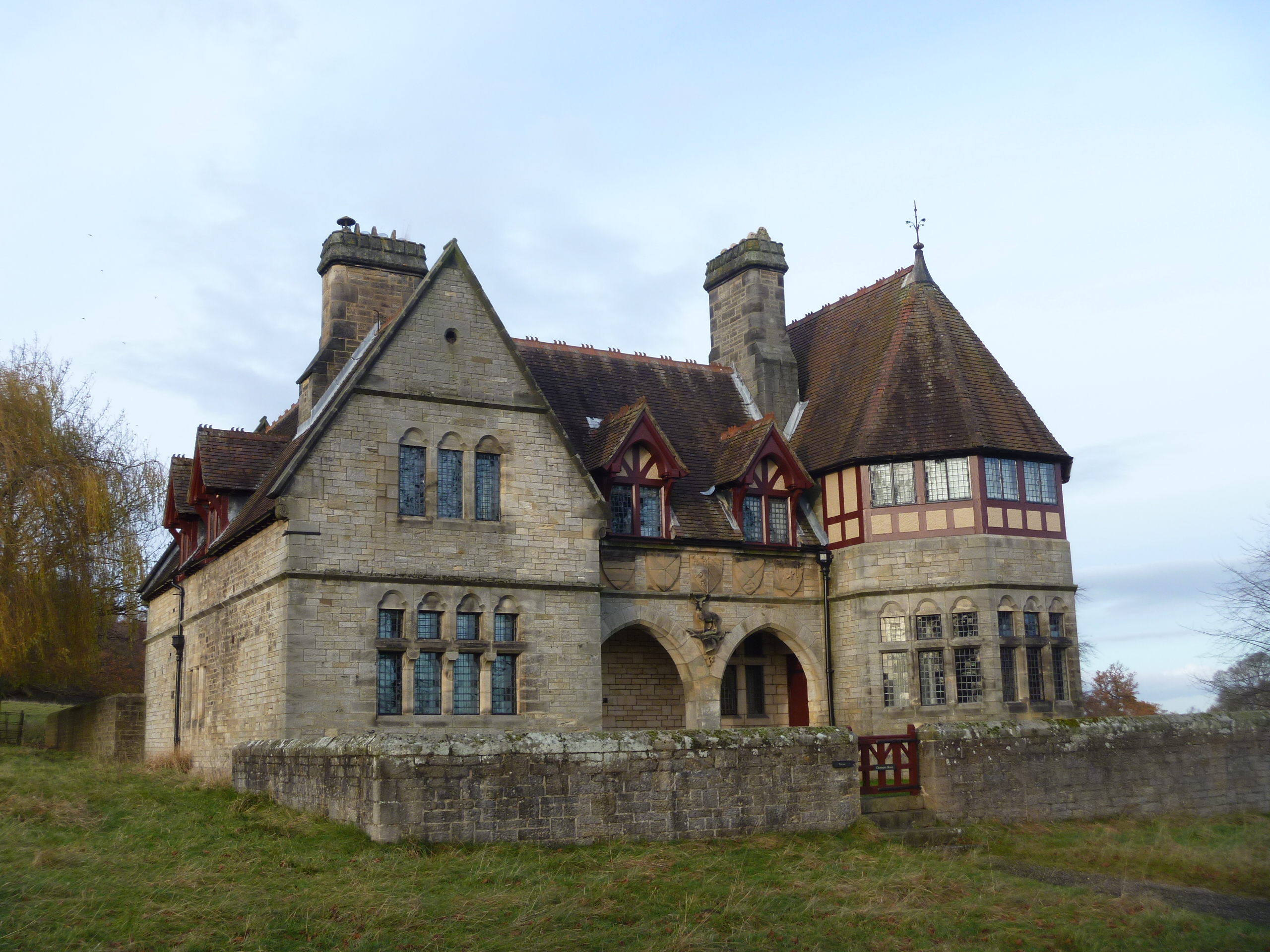
Burges’s St Mary’s Church and Choristers’ House

Finally, on the actual Fountains/Studley Royal Estate, a walk though the grounds from the ruins to the Lake brings you out into the Studley Royal Park. Walking along the main drive through the deer park one can clearly see Ripon Cathedral to the east and the Church of St Mary to the west. On the approach to the church, just on the right and standing detached and rather exposed, is the William Burges designed Choristers’ House which sleeps 10 and has been awarded 5 ‘acorns’ for comfort.

Built in 1873 the original use was to house a music school along with the organist and music master. It was the Estate Office until 2001 and now it is a holiday home sleeping ten people. The interior reflects the Burges style with all existing original features maintained.” (NT Holiday Cottages Brochure)

It’s another holiday home in an outstanding location: right in the middle of a deer park.

How Hill Cottages

Finally, a short walk along one of the approach lanes to Fountains Abbey are the newly converted, and lately added to the portfolio, How Hill Cottages. These fall into the Trust’s “Celebration Collection” category of properties. From a group of 18th century farm buildings five self-catering units (using the most up-to-date green technology) have been created.

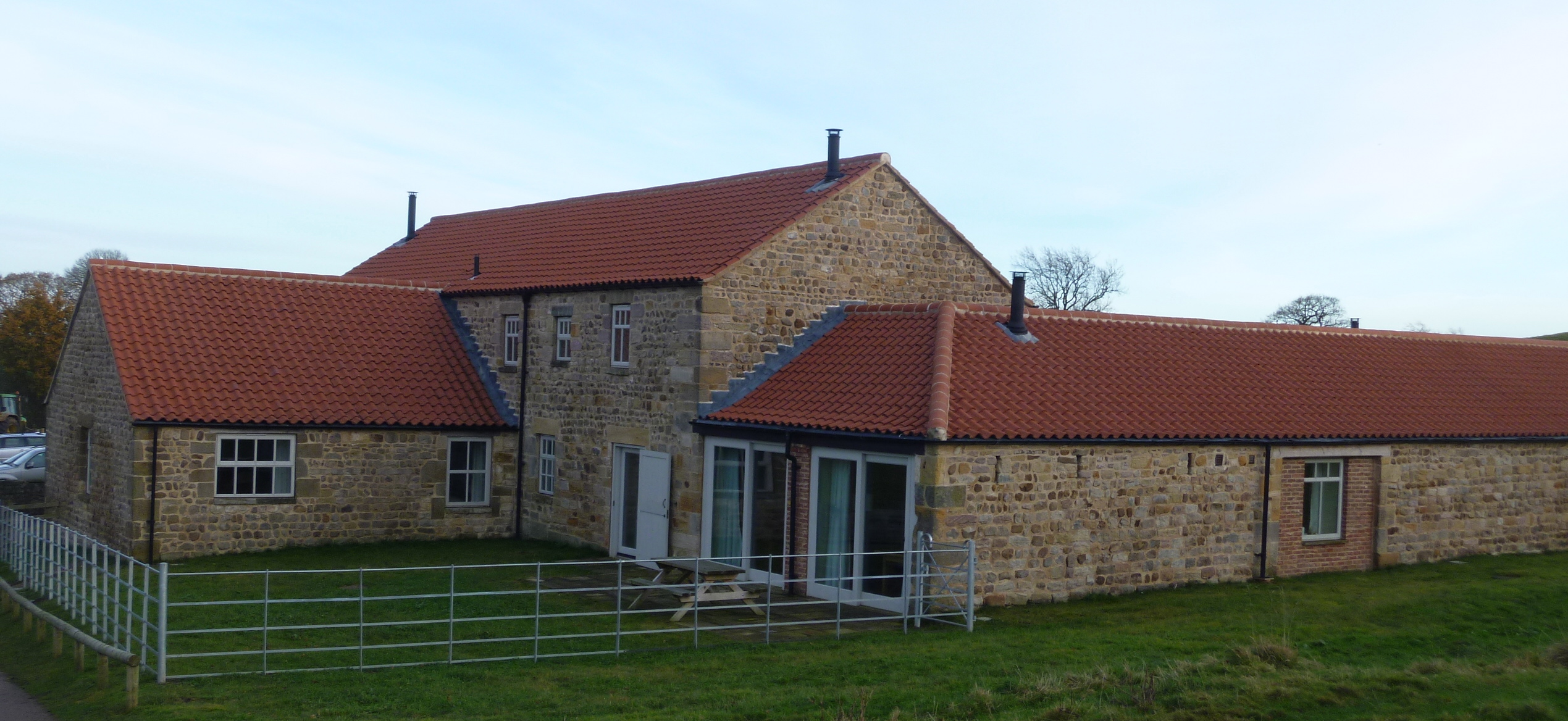
The Shared Courtyard at How Hill

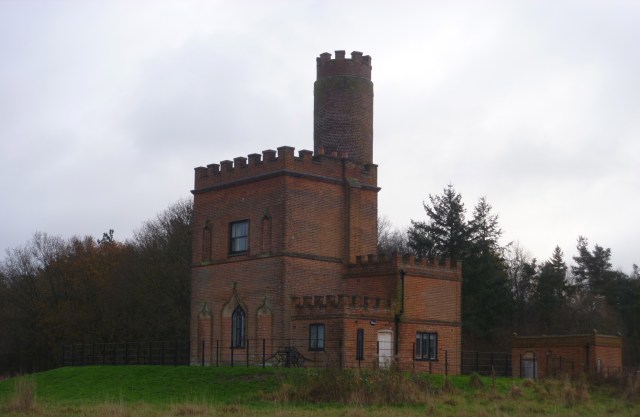
The tower on the hill behind the cottages is believed to have been originally built as an outlying chapel for the Abbey. It was restored by John Aislabie, when he owned the Estate, and rumour has it that he used it as a gambling den.” (NT Cottages Brochure, 2012)

How Hill Tower

The cottages share a single sheltered courtyard and there are magnificent views, including some of the Fountains Abbey buildings from a couple of them. Each is named after a bird : Curlew, Lapwing, Wren, Swallow and Lark.

The View from How Hill Cottages

Overbecks to Bolt Head : a Devon Coastal Walk

Each year at this time when we visit Devon we spend an afternoon having the cobwebs blown away by walking from Overbecks to Bolt Head by coastal path and returning on a higher path a total walk of only 4 or 5 miles but sufficient to enjoy different coastal views and work up an appetite for dinner! We are on holiday after all.

Back in 1972 my husband, The Optimist, spent one heavenly summer working as the male assistant warden at Salcombe Youth Hostel. It was  obviously a fantastic experience for him and he has relived it ever since, so much so that I now feel as if I worked there too. Besides the work itself which was fairly mundane, he enjoyed snorkelling and swimming and diving and generally messing about in boats and the sea through one long warm sunny summer … yes, those were the days! I don’t think a single drop of rain fell on South Devon that summer. I must say, that having seen this Youth Hostel, I do think it is located in one of the most idyllic locations imaginable.

The Tower Bedroom – reserved for the male assistant warden

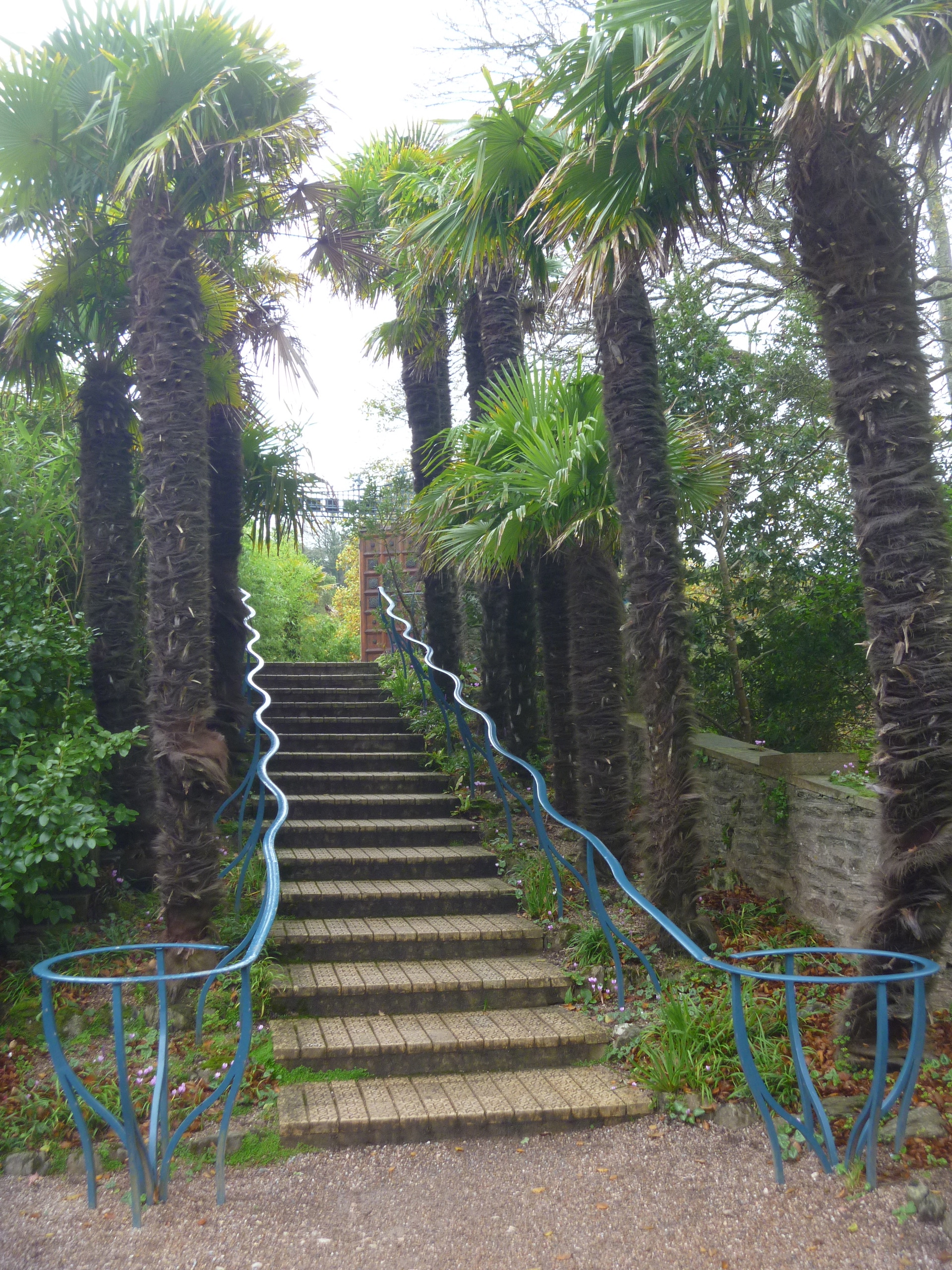
So, as I say, each year when we spend a week in October/November in Devon we make an excursion to the Salcombe area and in particular to the National Trust estate of Overbecks Sharpitor. The gardens stretch steeply down the cliff face from the house and the influence of the local microclimate has lead to a singular garden of luscious tropical vegetation.

A hidden paradise of subtropical gardens and eclectic collections…
An exotic and fascinating hidden treasure perched high on the cliffs above Salcombe. Explore the banana garden, meander through the woodland, or relax beneath the palms. Walk along the coast path and soak up the spectacular panorama across miles of beautiful coastline and estuary.”

So, walk along the coast path and soak up the panorama we did. A few paces down from the Overbecks car park there is a sign inviting one to join the footpath to Starehole Bay. This clearly defined path clings to the cliff face and in each direction are wonderful views down the ria (a tidal inlet with no major fresh water source flowing through it) to Salcombe or out, over the bar :

This shallow sandbank, evoked by Tennyson in his poem ‘Crossing the Bar’, lies across the ria’s mouth and is barely 60cm (23 inches) below water on an ebb tide. Devon’s worst life boat loss occurred here on 22 October 1916, when the ‘William & Emma’ capsized rowing back from a rescue.” (NT Website)

to the English Channel.

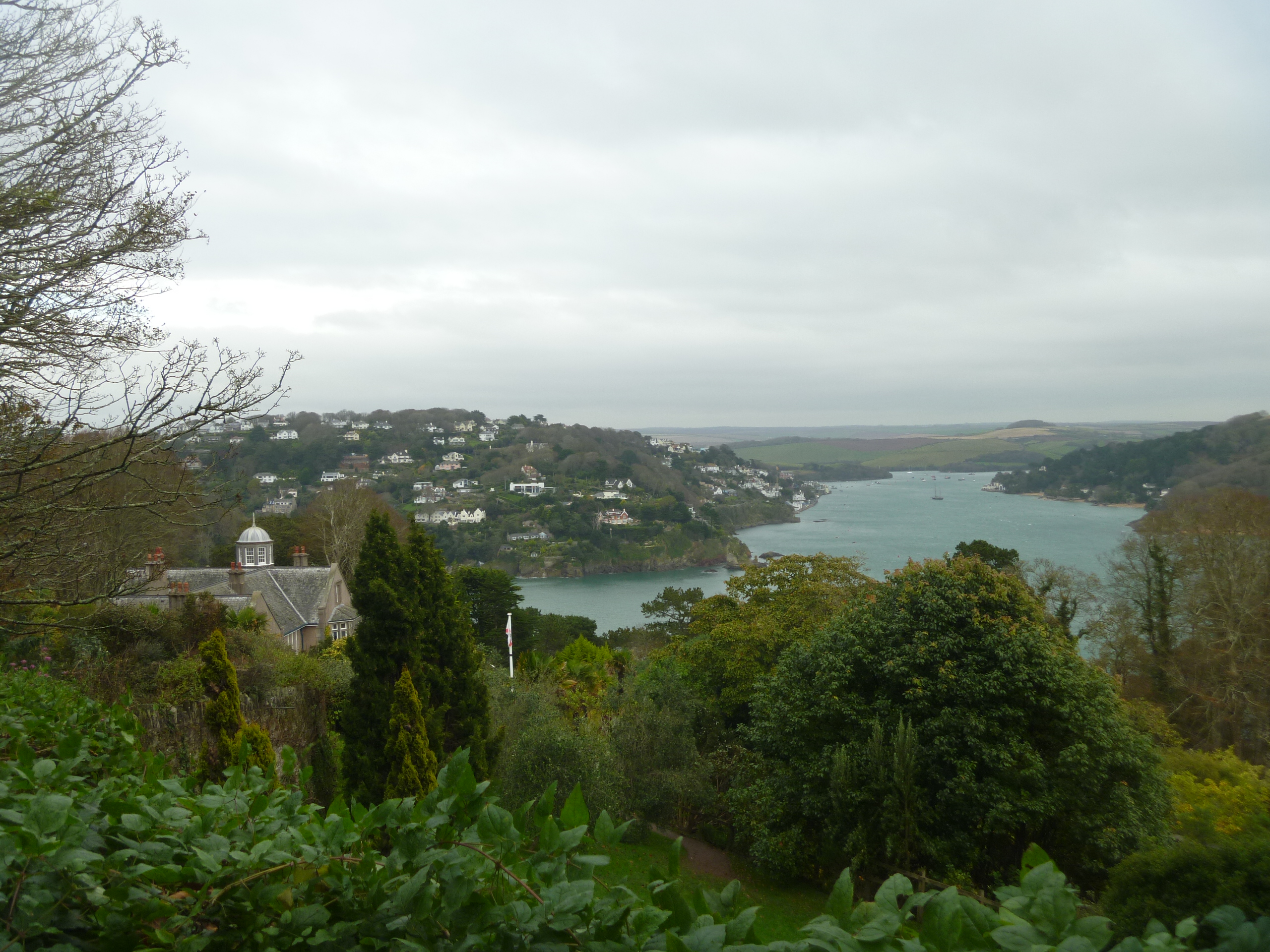
Salcombe and Ria from the lower footpath

Salcombe and the Ria from The South West Coastal Path

The path is dotted with handily placed seats upon which one may rest and enjoy the view but last Friday there was a misty rain blowing so we tended to keep walking.

Official Long Distance Footpaths are indicated by an Acorn on the sign posts

Starehole Bay from the NT site :

“On calm days you’ll see the dark patch of seaweed beneath the north waters of the cove, marking the Hezogin Cecile wreck. This grain clipper ran aground off Soar Mill Cove on 24 April 1936. For seven weeks the ship lay stranded whilst sightseers in their thousands lined the cliffs, holding their noses from the stench of rotting wheat. The ship was smashed in a July gale after being towed to Starehole Bay.”

From Starehole Bay there is a steep a path up to Bolt Head and from there it’s possible to join the SouthWest Coast Path and return to Overbecks along the cliff top.

Starehole Bay

Bolt Head from the NT site :

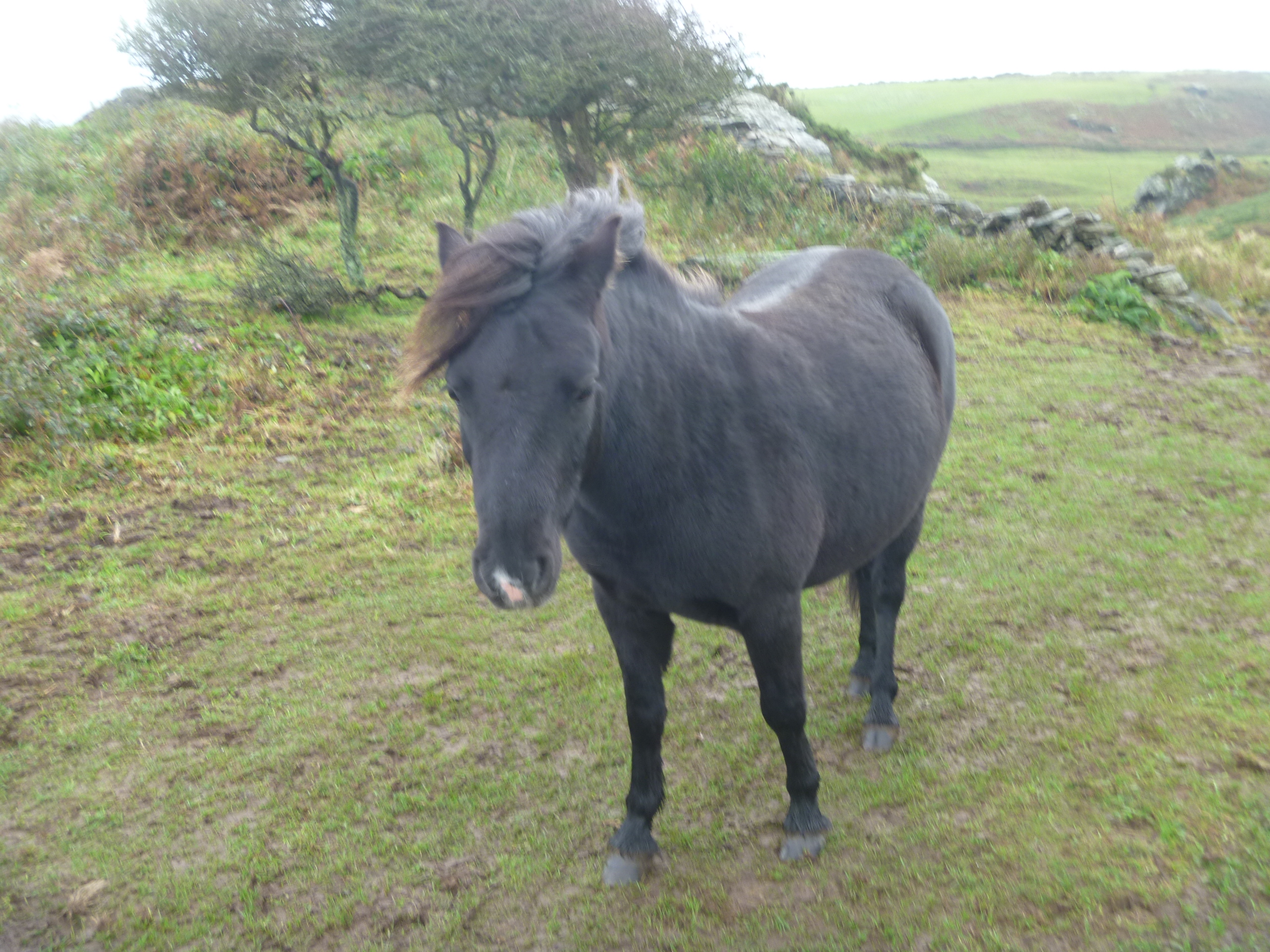
People have been farming at Bolt Head for centuries and the cliffs are dotted with the remains of field boundaries and animal enclosures, some dating back to the Bronze Age. Today, Dartmoor ponies graze on the cliffs, preventing blackthorn and gorse from smothering the slopes. Look out for grey bush crickets and their great green cousins (the largest in the British Isles). Fulmars, gulls, cormorants and shags bred on the cliff-faces. The headland was the site of a Second World War lookout until it was demolished in 2007, and is also a stop over for migrating swallows and house martins.”

Funnily we didn’t see a Dartmoor pony on Dartmoor this year – just  cattle. We did see the cliff top grazing ponies at Bolt Head, though.

The cliff top path descends again into Starehole Bay before climbing up again for the final mile and a half or so back to Overbecks. There’s a tempting sign very strategically placed to encourage one into the tea shop (also the Youth Hostel dining room) but we had a table booked for dinner so didn’t linger for refreshments on this occasion.

Time for a Cuppa?

Final view of Overbecks and Salcombe from the SW Coastal Path

Day Out at Dartington Devon with Dovegreyreader

The Dovegreyreader has made several comments to me to the effect that reading Milady’s posts here save her a great deal of time and expense and the bother of travelling when she can read about the places that appeal – with her feet up by the fire in winter or in her deckchair in the garden in summer. Well, last Thursday she was persuaded to leave home and travel a few miles across misty Dartmoor to join me and act as guide for the day at the Dartington Estate near Totnes.

The arrangement was to meet late morning at The Cider Press Centre, now called simply, and to the point, Dartington Shops. This was the part of the Estate that I was already familiar with and it was by mutual consent that we headed straight for Cranks Restaurant. I’d eaten here many times over the years since the early 1980s and I have the cookery book still. It’s been well-used and the recipes are well-loved. The restaurant and the food were little-changed and with tea and cake followed later by soup and cheese scones we clung to our table for probably three hours (who’s counting the time when there is so much book and family talk to catch up with??).

Eventually we decided a walk was in order as that had been the ‘plan’ for the day in the first place and our reason for meeting at Dartington; besides we needed to work up an appetite in order to take afternoon tea at some point later in the day!

We headed straight out of the car park along a public path (past the former Dartington School) and along the main approach road to Dartington Hall to our first port-of-call the School’s  former Headmaster’s House – High Cross House.

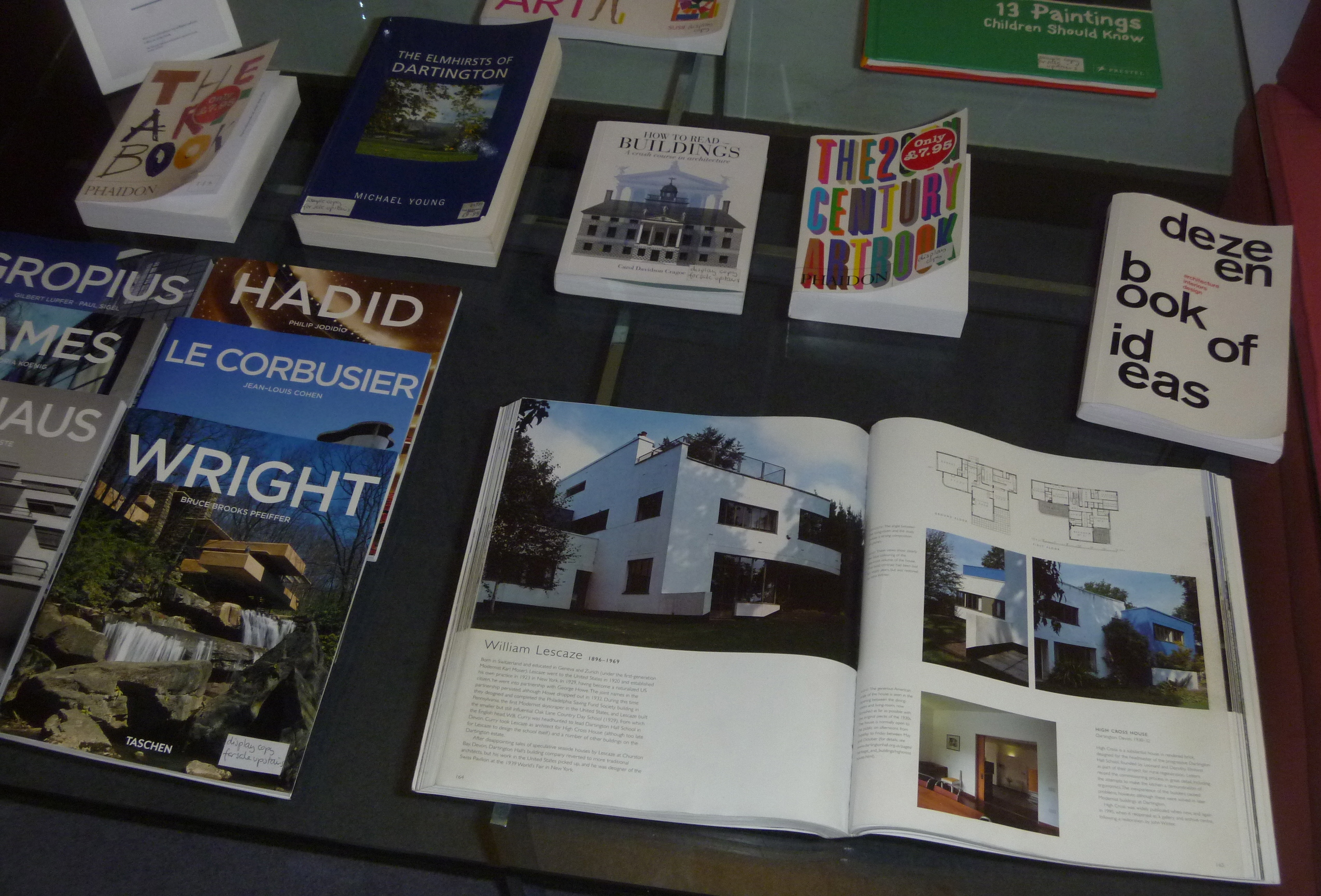
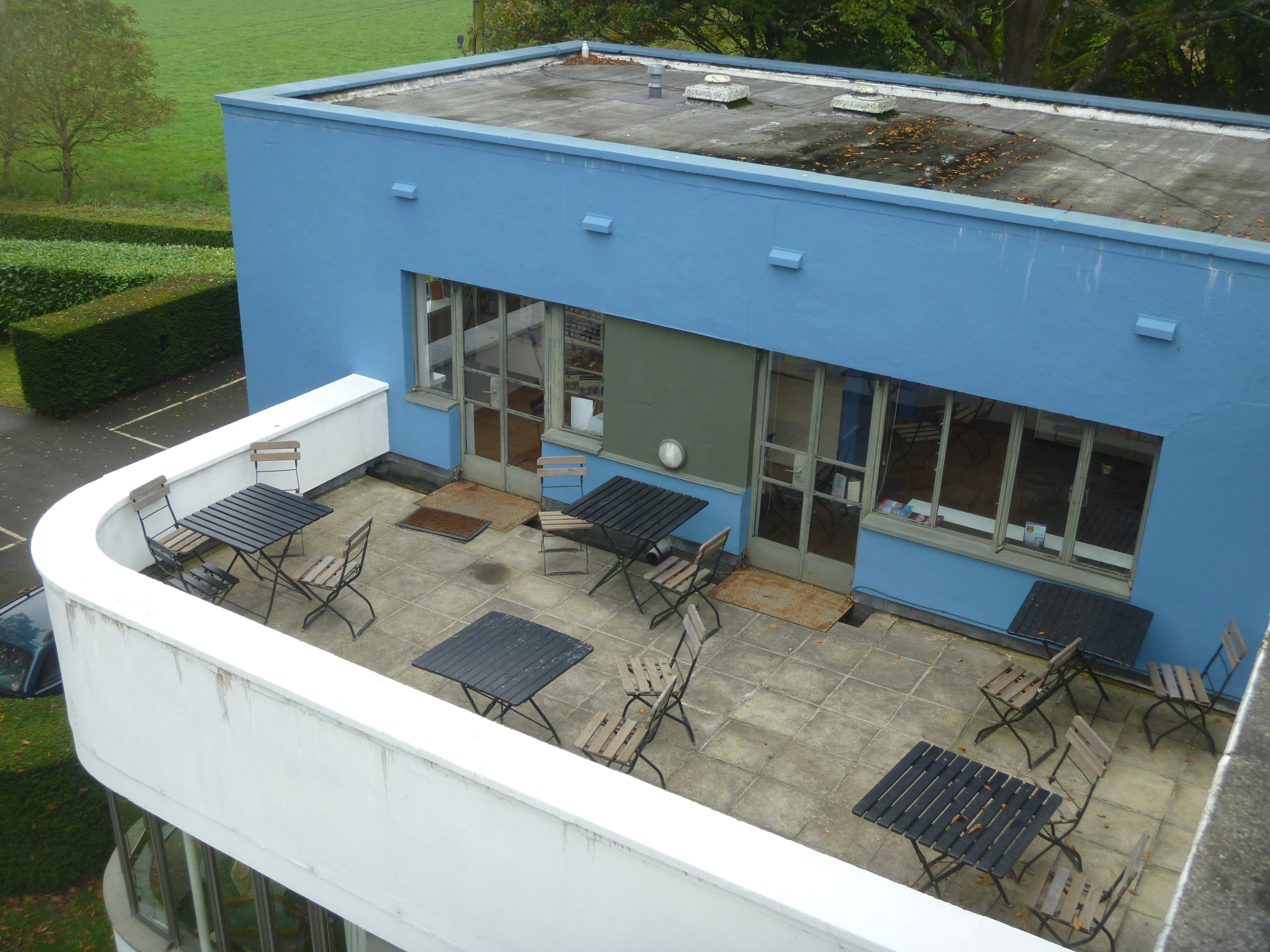
It’s now under the auspices of The National Trust and is a fine example of Modernist architecture and a host to a number of exhibitions and resident artists. There’s a cafe (that spreads out onto a roof terrace in summer) and small bookshop. The house has a relaxed atmosphere and you may sit on the chairs and handle the books.

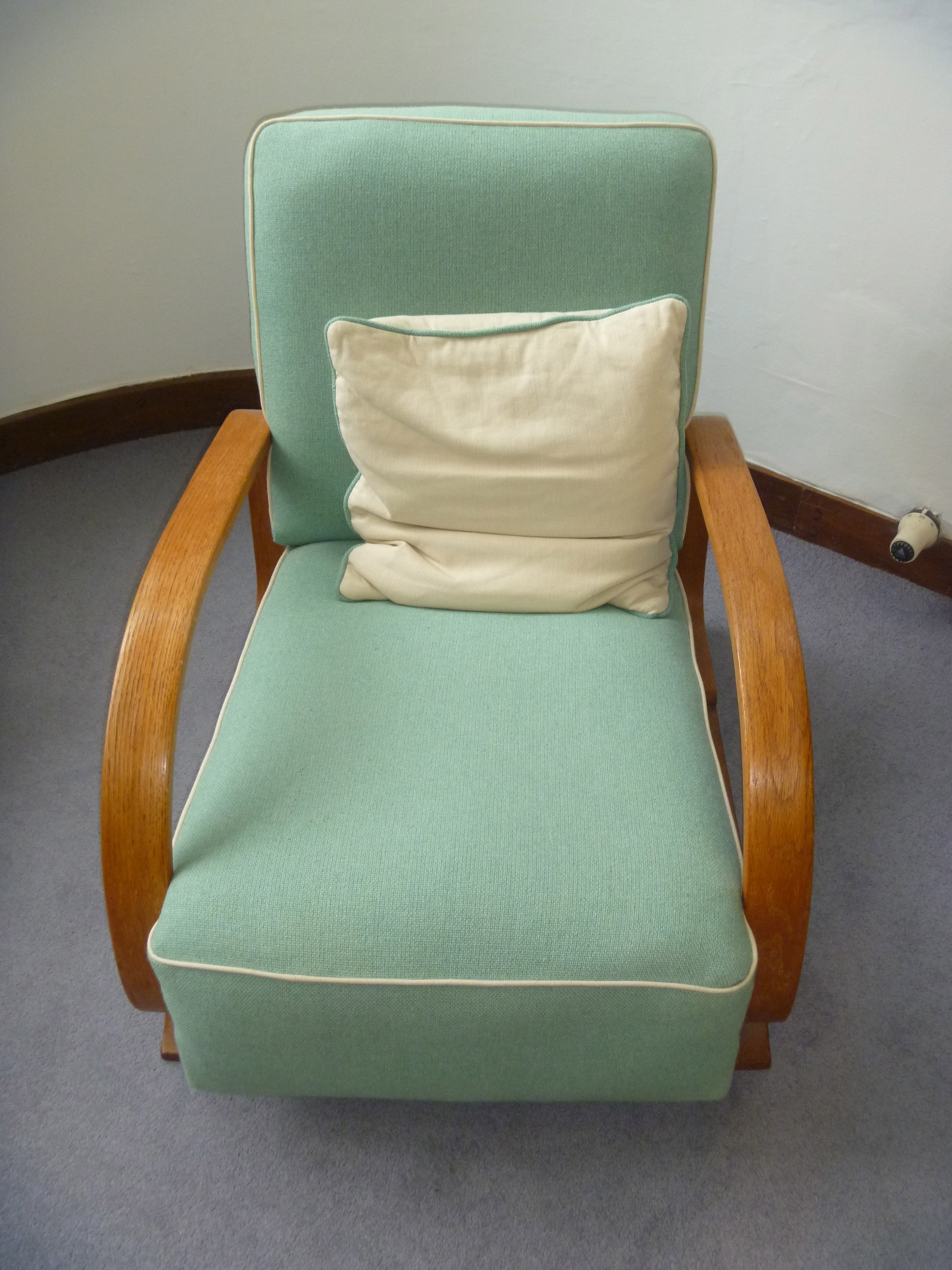
Comfy chair originally to be found in the common rooms at Dartington Hall residences

Cafe Terrace

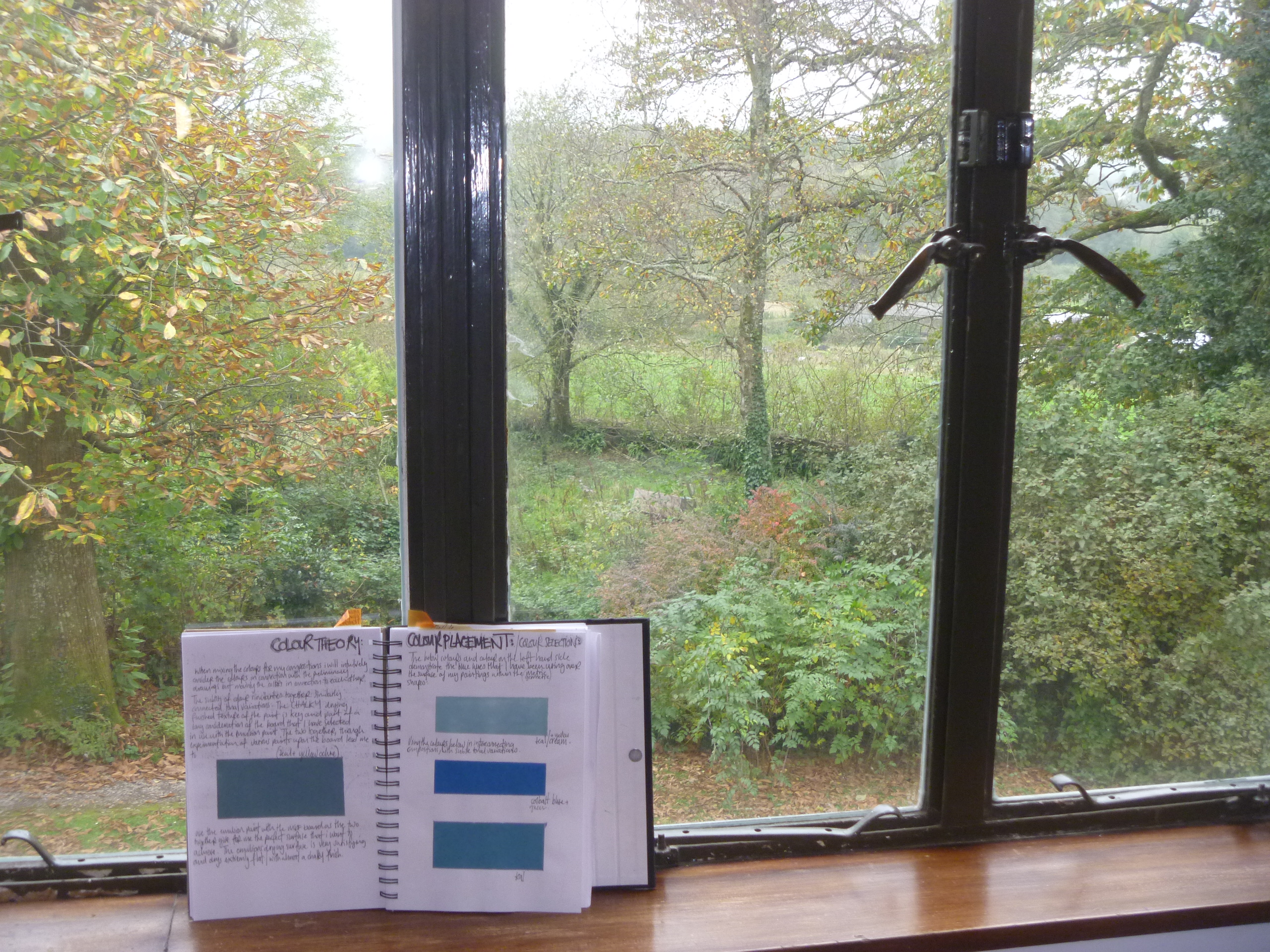
Colour Theory and the View of  High Cross House Garden

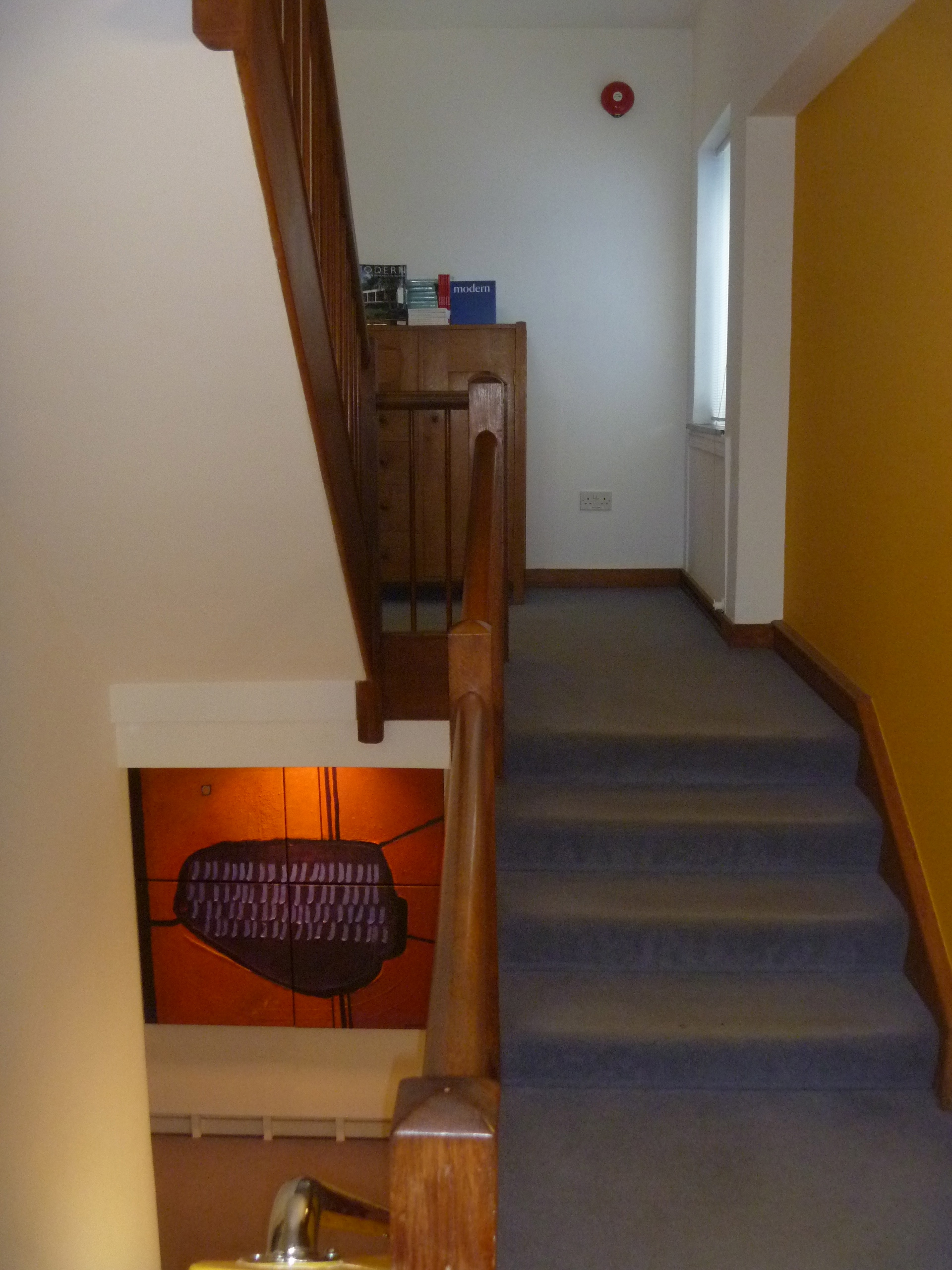
Staircase at High Cross House

Any artist who is in residence that day and helpful room stewards will also answer any questions you may have. Here is the NT brief resumé of the house :

“Built for William Curry, headmaster of Dartington Hall School, this Modernist gem was commissioned by Leonard Elmhirst and designed by William Lescaze in 1932. The house still evokes the ‘serenity, clarity and a kind of openness’ described by Curry.

High Cross is one of Britain’s most celebrated Modern residences, and we are excited to be presenting it to the public under our management, working in partnership with the owners of High Cross House, the Dartington Hall Trust.

The architecturally important building is playing host to contemporary art exhibitions and sales, talks, demonstrations and musical evenings, and is a perfect and unusual space for events. High Cross is to become a local centre for contemporary arts, as a community-led sustainable model of management.”

View from the footpath – High Cross House to Dartington Hall

From the HCH we headed towards Dartington Hall which I particularly know of as host to the summer Ways With Words literary festival. I’ve only heard of it and read about it but DGR has attended and participated there. This makes her the perfect guide to the estate and buildings.

In the gardens we admired the autumn colours and sculptures and topiary and we entered the Hall and the Residences. Lynne painted a vivid picture of leisurely picnic lunches, crowded halls of participants on tiered seating and comfy common room chats bringing the summer festival alive for me.

Dartington Hall and Garden Topiary

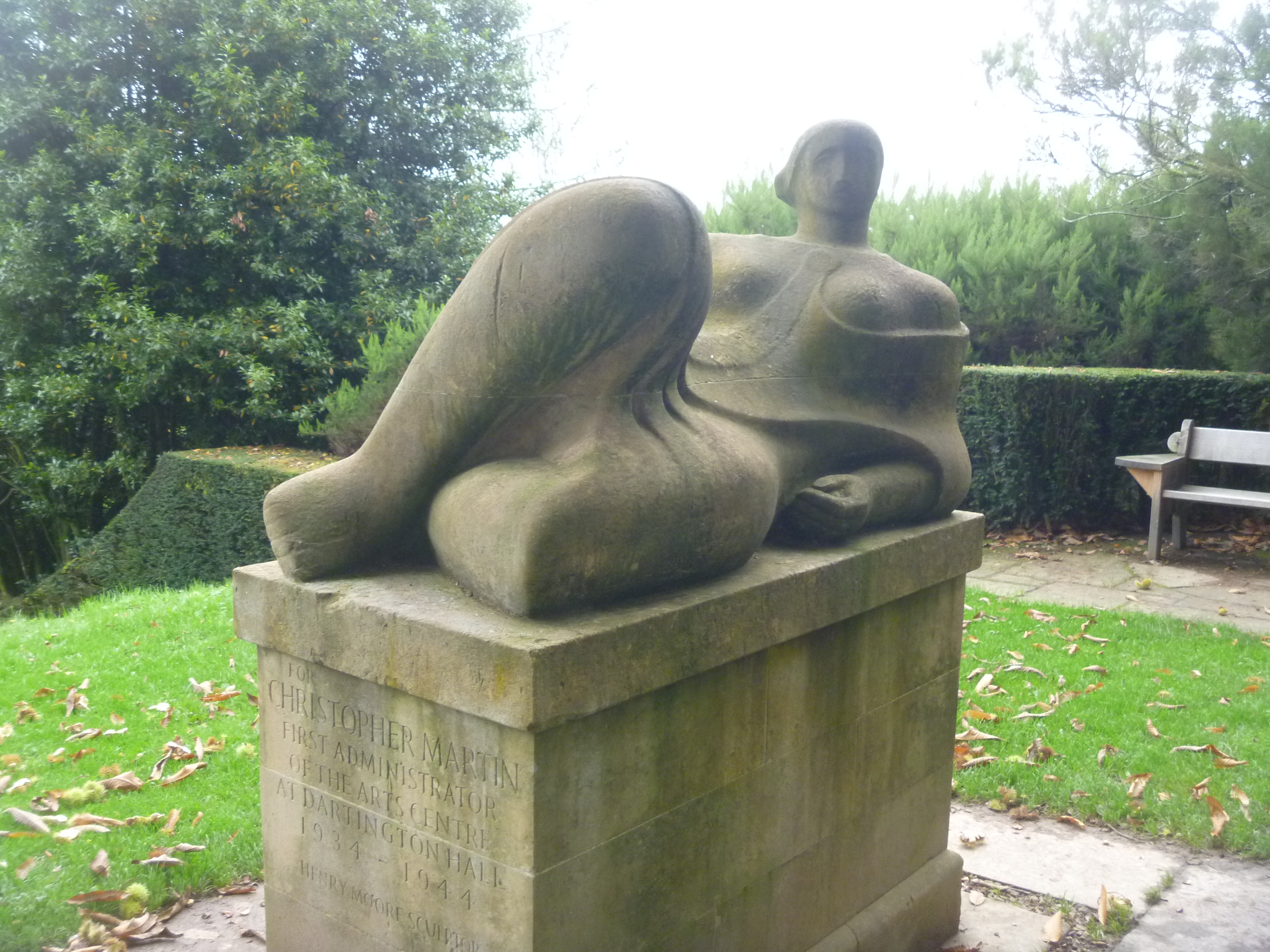
Henry Moore Reclining Figure Sculpture

The Dartington Hall

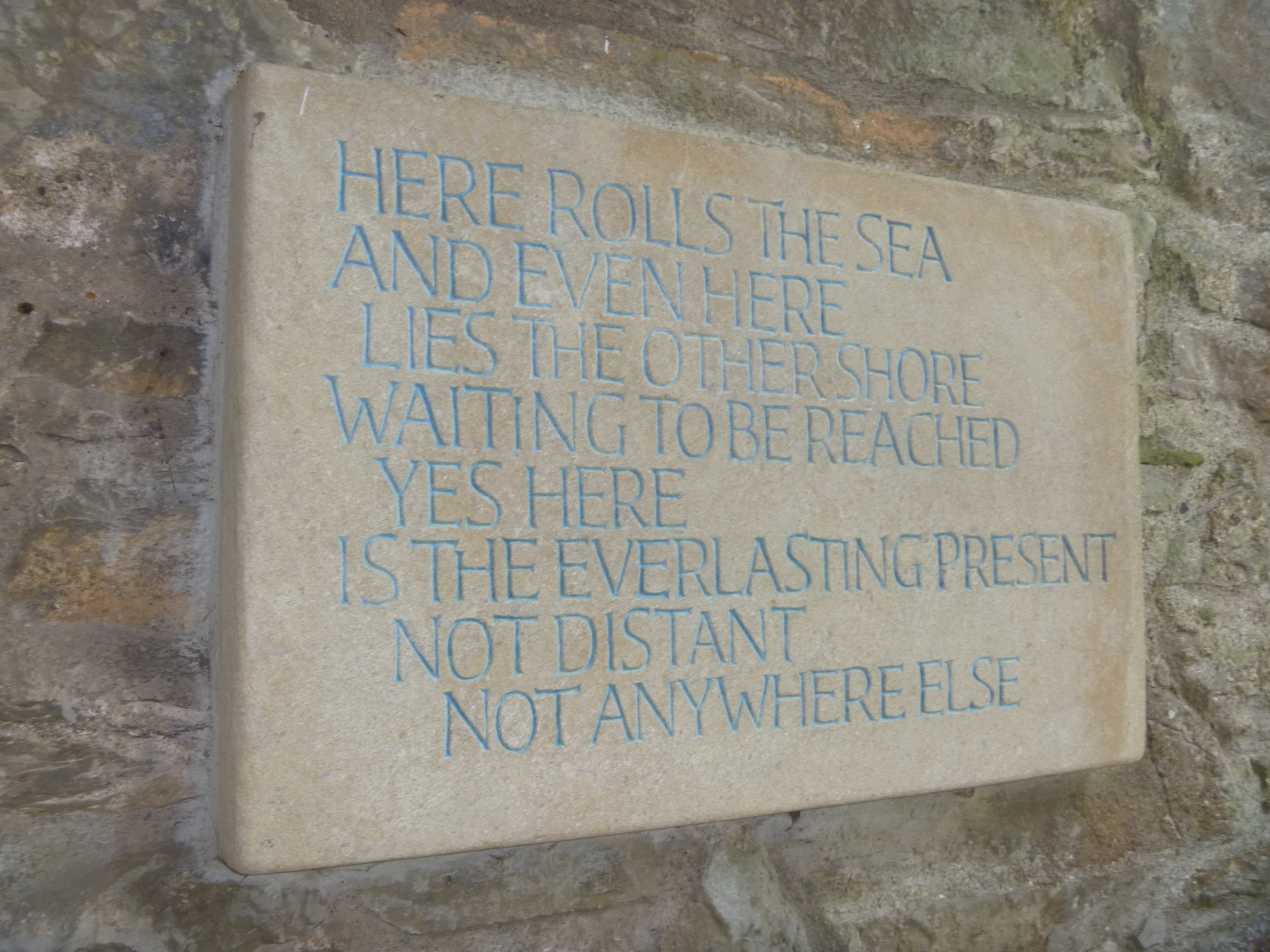
Calligraphy at Dartington

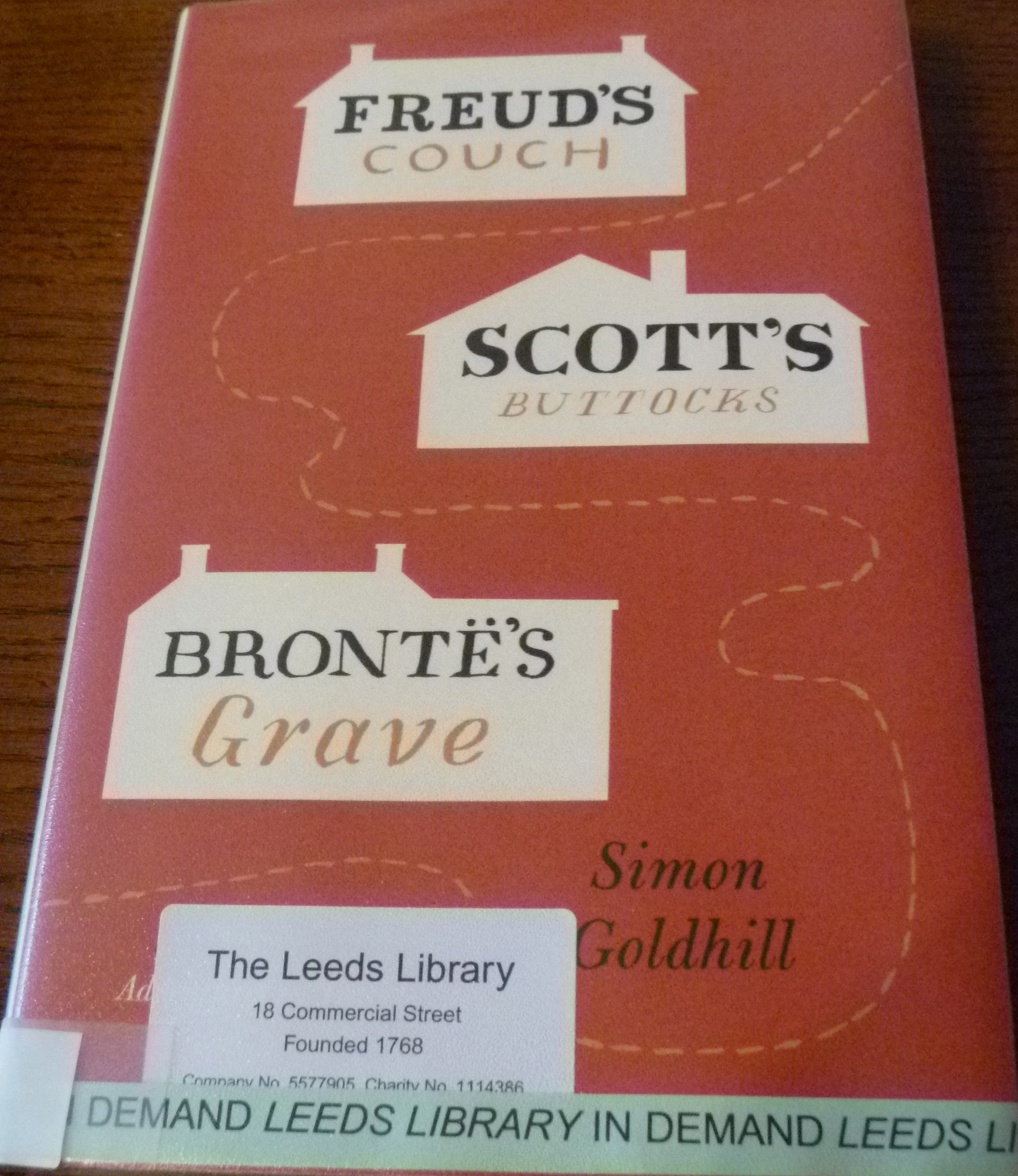
Freud’s Couch, Scott’s Buttocks, Bronte’s Grave

What a title! It’s the title of the book I have just finished reading. It was written by Simon Goldhill. He’s Professor of Greek Literature and Culture and Fellow and Director of Studies in Classics at King’s College, Cambridge and in addition he is Director of the Cambridge Victorian Studies Group.

But despite all his academic qualifications the book is very readable and very personal to him. His premise is to visit the homes of authors to discover what it is that attracts pilgrims to want to visit these houses and to try to find out just what they get from such visits.

Encouraged by his publisher to “do something Victorian” he plumped for visiting writers’ houses but is extremely sceptical about his proposed ‘pilgrimage’.  Apparently, such a tour was a very Victorian pastime and in the first chapter, “The Golden Ticket”, he tells of his intention to travel in as near a Victorian manner as possible and that unlike pilgrims he doesn’t wish to travel alone but with his wife and friends. Finally he lists which properties he’ll visit. He chose Sir Walter Scott’s Abbotsford in the Scottish Borders; Dove Cottage and Rydal Mount, William Wordsworth’s homes in the Lake District; the Bronte Parsonage at Haworth, here in West Yorkshire; William Shakespeare’s Birthplace in Stratford upon Avon; and finally, Freud’s House in Hampstead.

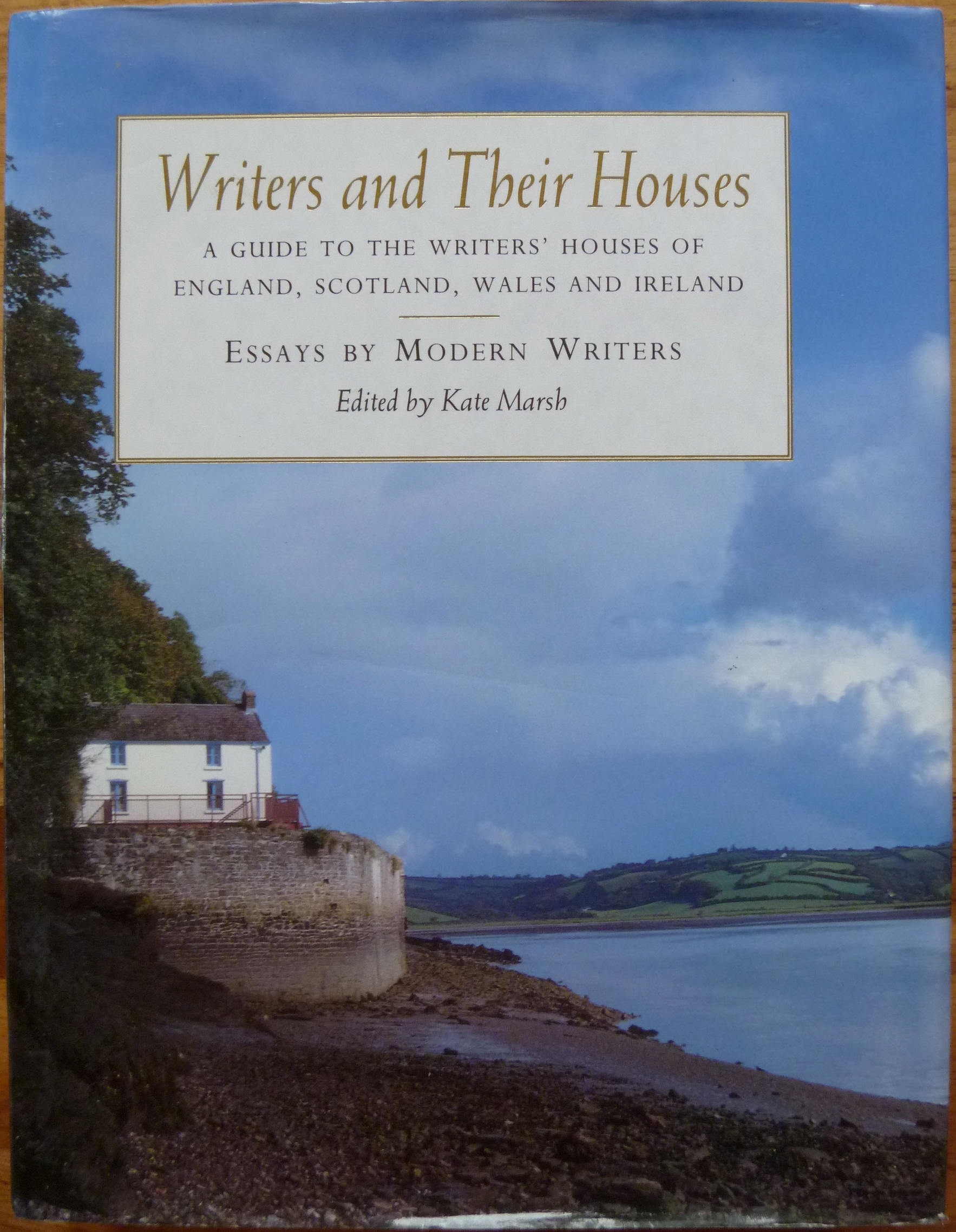
My impression after reading this book was that SG felt justified in his initial reaction that visiting writers’ homes was a pointless exercise and that the house/writer that got it most ‘right’ was Sir Walter Scott who built the house and decorated it intentionally in order to promote himself and his novels. His description of the visit to Abbotsford (and that of A. N. Wilson in my copy of Writers and their Homes) has encouraged me add it to my ‘list’.

“Abbotsford!” so writes A. N. Wilson “There is perhaps no writer’s house more expressive of its occupant’s literary personality. Indeed, one could say that Abbotsford was an extension of Scott’s oeuvre –an architectural Waverley novel, or a poem in stone of Border life and history.”

I love to visit authors’ homes but I never before thought of myself as a pilgrim. I suppose I like to visit houses full stop and the added attraction of it being an author’s home is that I can experience the atmosphere and see the surroundings that may (or may not) have influenced his or her work.

I have several books to help me in my choice of ‘pilgrimage’ to writers’ houses!

I would make quite a different choice for my own tour: Lamb House in Rye (Henry James); The Boat House at Laugharne (Dylan Thomas); Monk’s House at Rodmell in East Sussex; Kipling’s Bateman’s also in East Sussex; Thomas Hardy’s Higher Bockhampton and Max Gate, Dorchester.

Here are five that I have visited in the last few years :

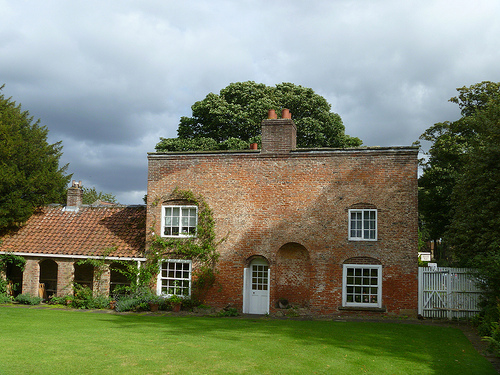
Shandy Hall, Coxwold, North Yorkshire (Tristram Shandy)

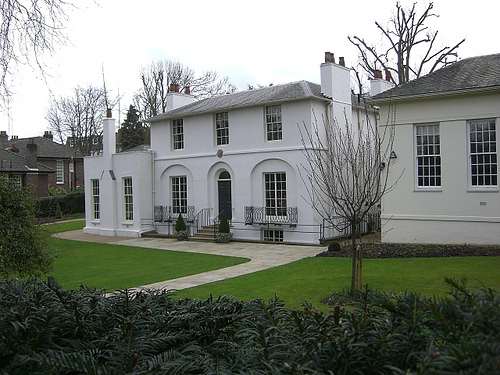
Keats House, Hampstead, London (John Keats)

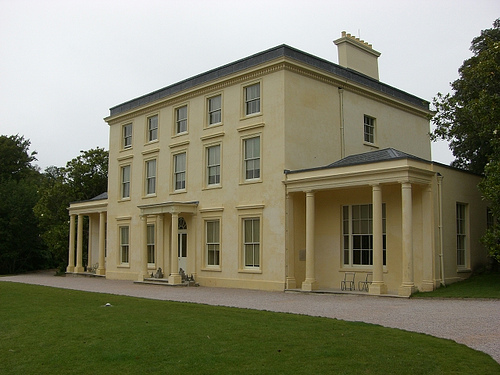
Greenway, River Dart, Devon (Agatha Christie)

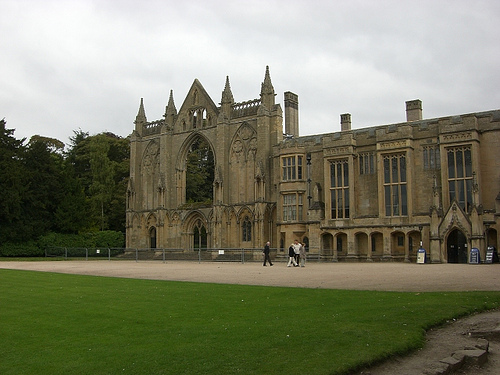
Newstead Abbey, Nottinghamshire (Lord Byron)

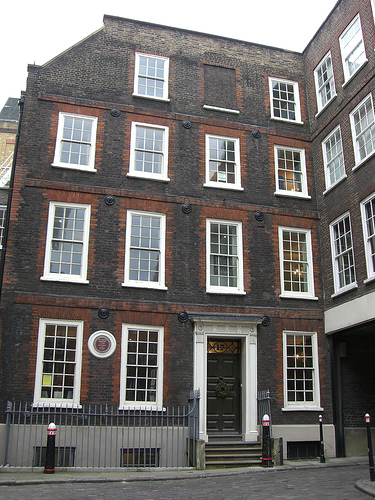
Johnson’s House, City of London (Dr Samuel Johnson)

A Bridge, Rocks and Old Bushmills Whiskey – a Day on the Antrim Coast

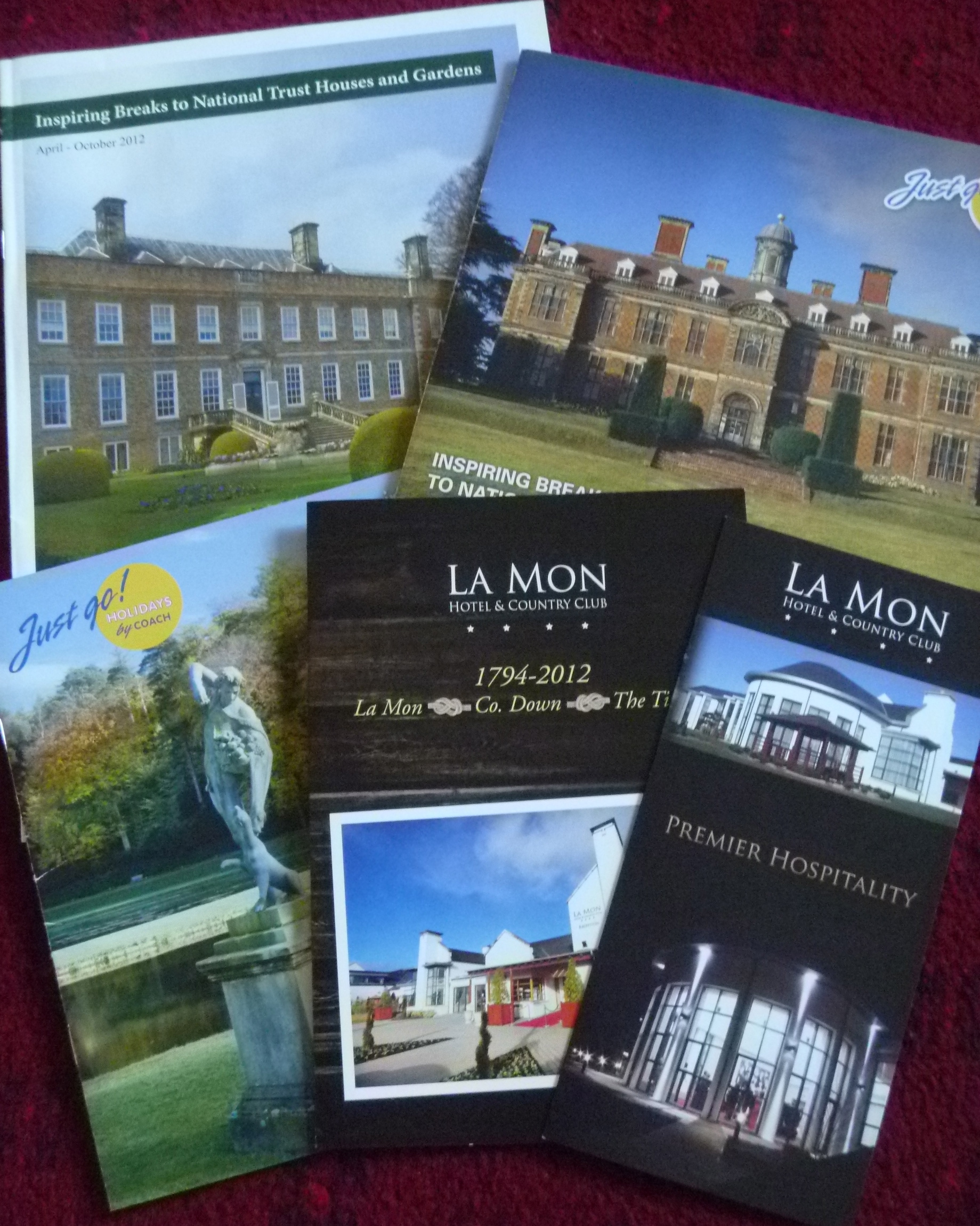
Last week I went on my first ever coach holiday. And I must say I was pleasantly surprised to find that it was a very enjoyable experience. In mid-2011 I received a mail shot through the post from the National Trust advertising coach holidays in the UK in conjunction with the company Just Go! If you follow the link you will see the wide selection of holidays available. The brochure last year arrived too late to consider booking in 2011 but I hoped the experiment would be repeated for this year. It was and my first choice “Welcome to Northern Ireland” was available with bookings from Leeds during May. Perfect! Although in the end we decided to fly out from our local airport and take a taxi from Belfast City Airport to join our party at the Hotel La Mon in the countryside just outside the city.
The first day dawned somewhat misty and overcast but as we got underway, heading north through the Belfast traffic, the sun appeared and the sky turned blue. The week continued in the same vein.

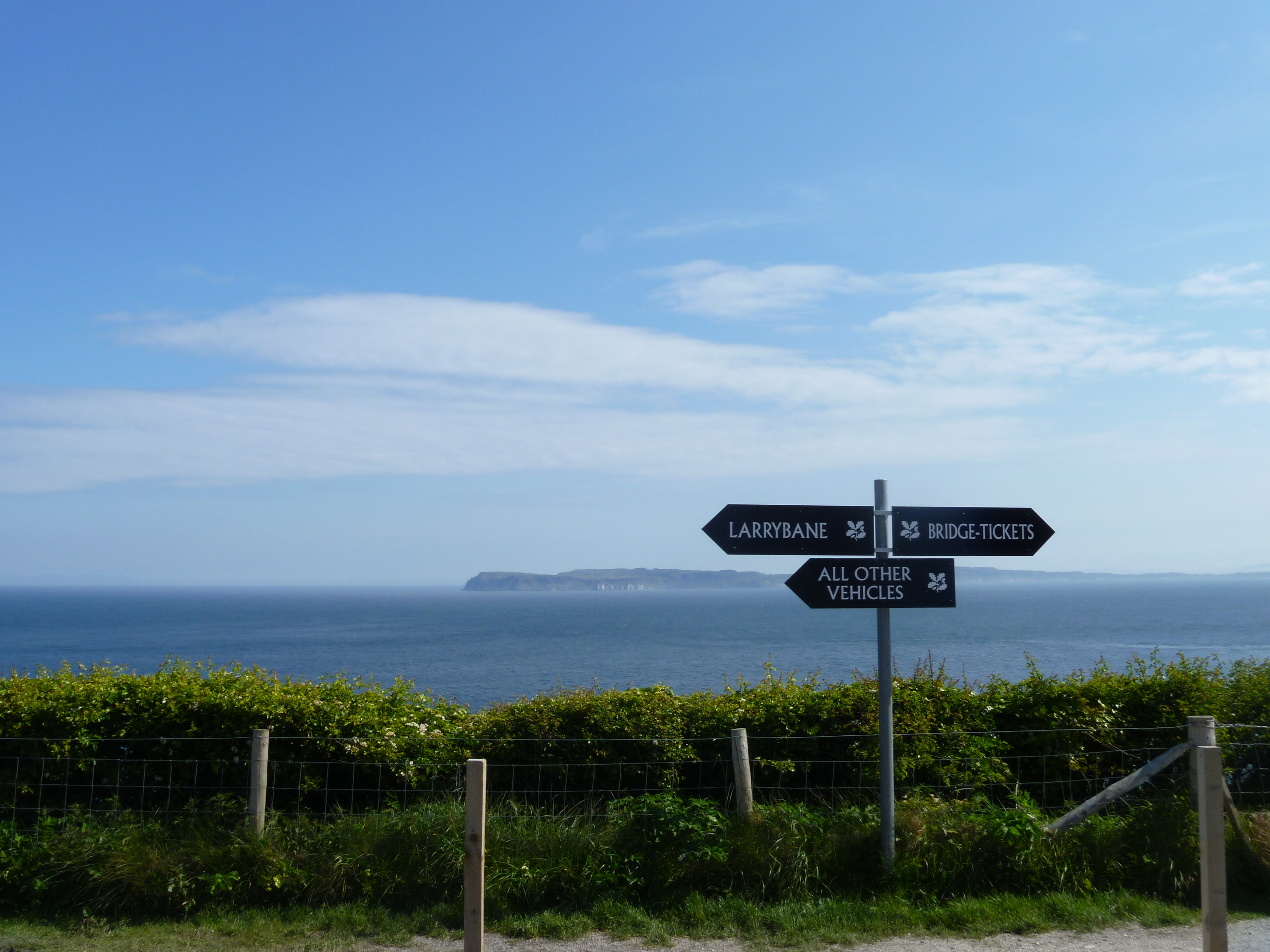
Our first destination was Carrick-a-Rede on the north Antrim coast. From here we had a clear view of Rathlin Island and the Scottish mainland – The Mull of Kintyre. My previous visit to Northern Ireland had been 45 years ago when I spent just over a week at Girl Guide camp at Magilligan Point a beautiful and remote spot on the County Londonderry coast. (Sadly, it became an internment camp and prison during the recent troubles.) From there we visited north Antrim coast and I made my first walk across The Carrick-a-Rede Rope Bridge. Today the whole area is owned by the National Trust. There’s a large car park and cafe-cum-shop and there’s a one mile walk along the coast path from there to reach that wobbly bridge.

The Rope Bridge was originally erected by local fishermen and links the mainland of County Antrim to the rocky outcrop 20 metres away. The chasm between the two is 30 metres deep. It’s an exhilarating walk, challenging crossing and satisfying achievement to arrive on the island where there are great opportunities for birdwatching and more spectacular views.

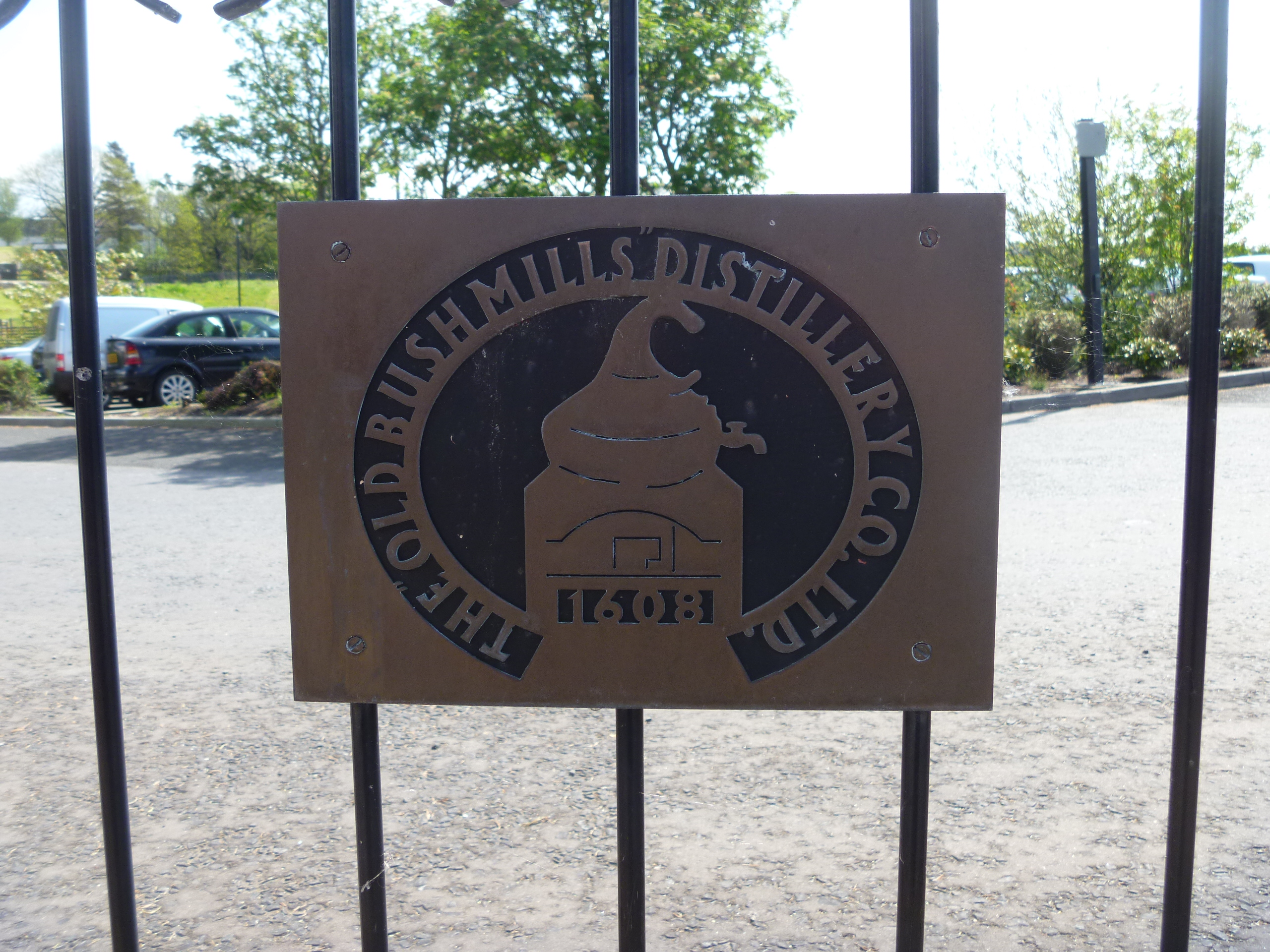
From Carrick-a-Rede we headed slightly inland to the nearby town of Bushmills where the Old Bushmills Distillery is open to group tours. Making whiskey here is huge business and it has been carried on since the first licence was granted in 1608. The tour is very well done and very professional – you get to see the process of Whiskey making step-by-step and you end up in the ‘pub’ at the end where you may claim your nip, or hot toddy or (in my case) soft drink.

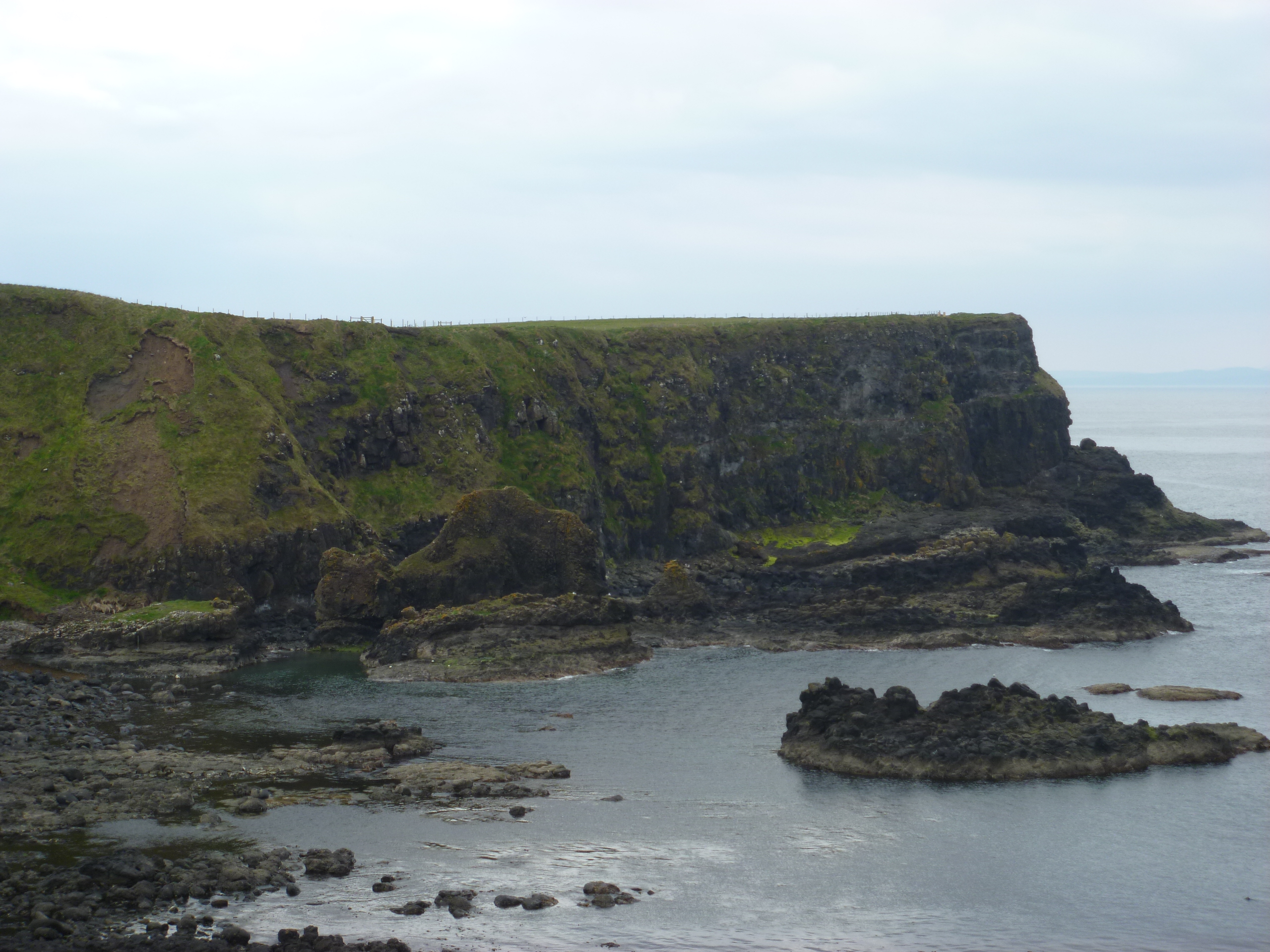
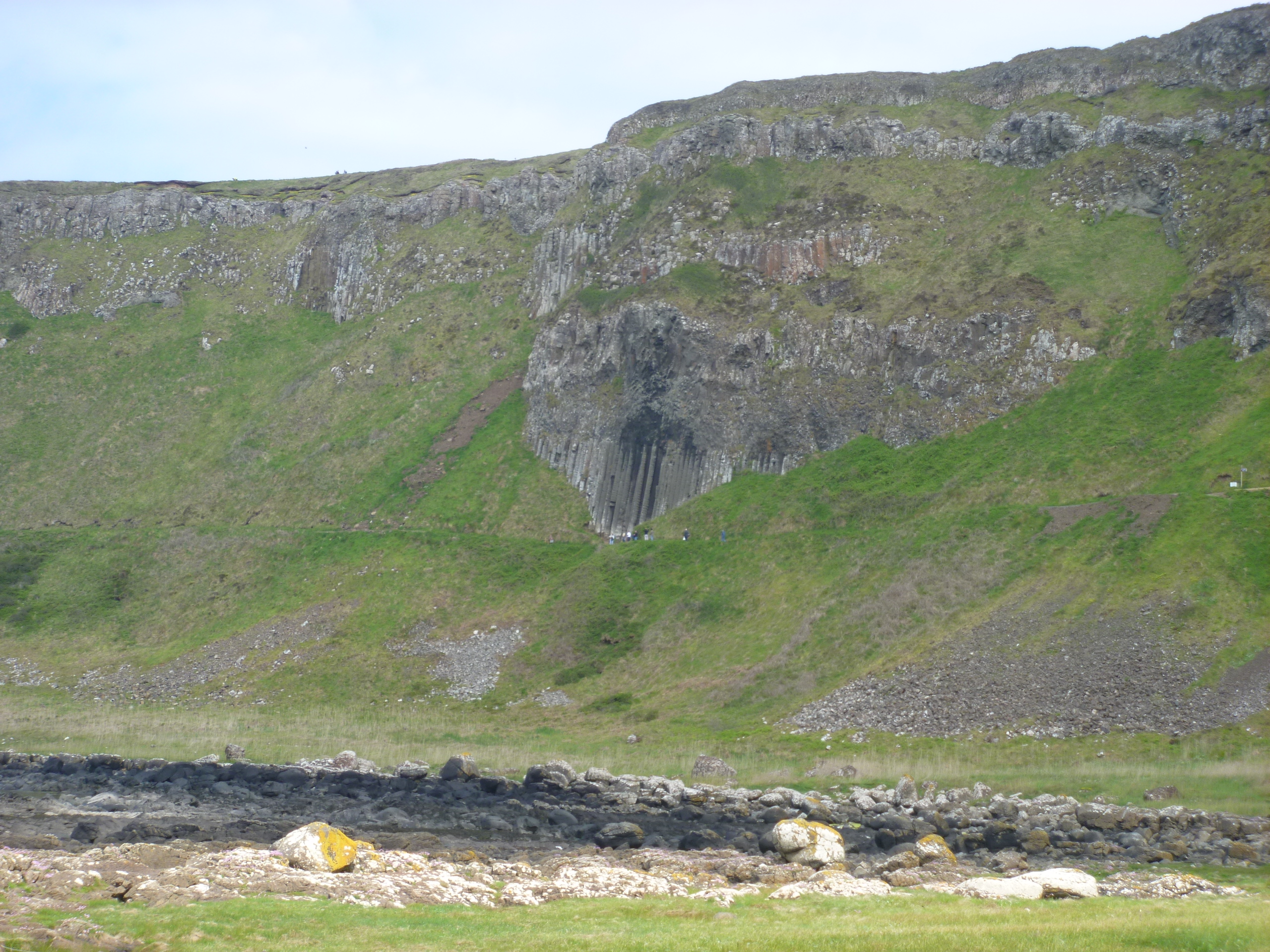
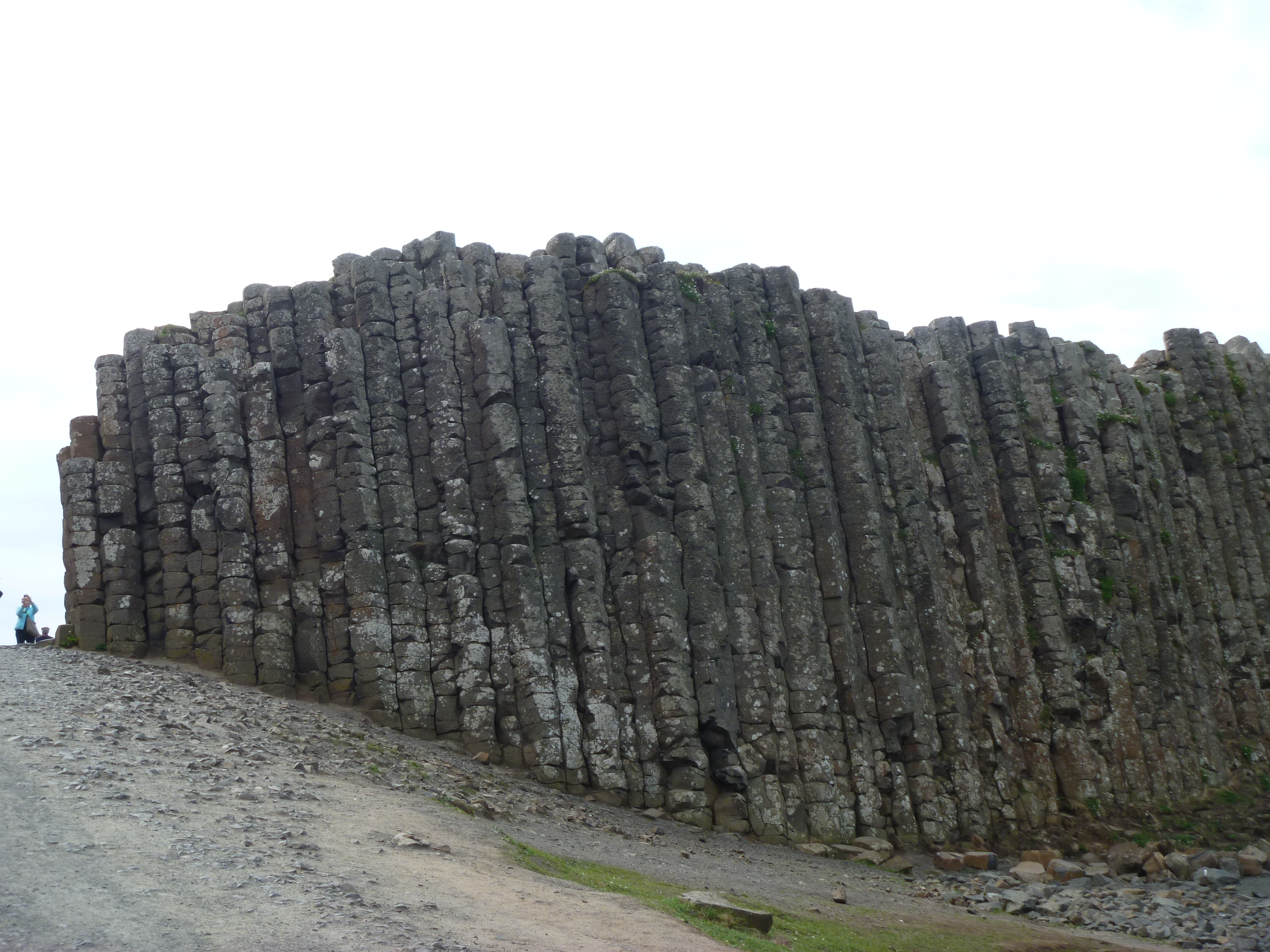
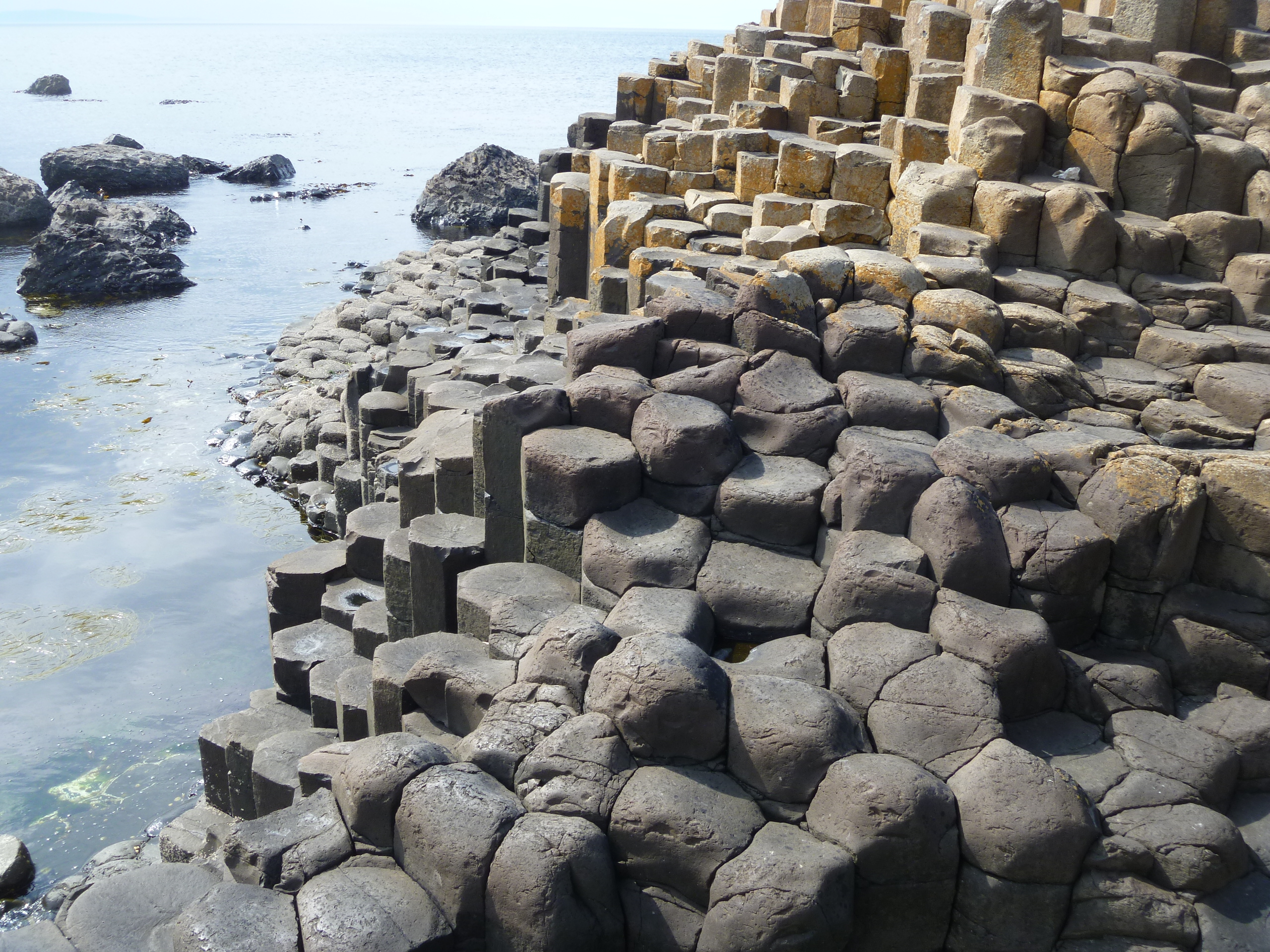
Then it was on to the final stop for the day – the Unesco World Heritage Site of The Giant’s Causeway.The Causeway today is a very busy place. Besides all the visitors, there is a lot of building work going on. The National Trust is building a whole new visitor centre and car park behind the Causeway Hotel where the present shop and facilities are located. For our walk to the Causeway we were accompanied by a volunteer guide who was well-versed in Irish mythology and legends and possibly also in geology and coastal geomorphology. The few facts have been lost amidst the mass of stories connected with Giant Finn MacCool and the unusual rock formations.

The Camel

The Organ

Tall Rock Formations

Taking Time at Waddesdon Manor – Diderot’s ‘Great Magician’

Blockbuster art exhibitions are all very well but to my mind Small is Beautiful.

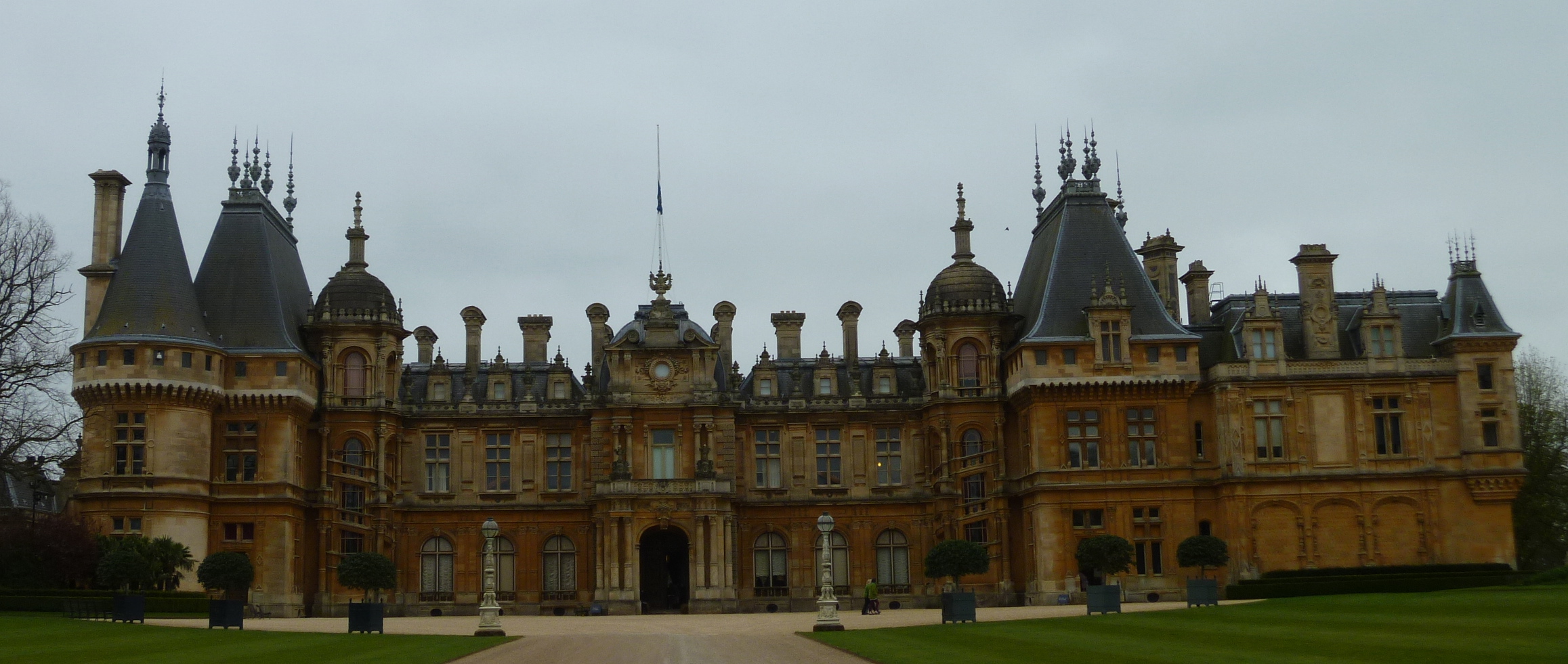
Waddesdon Manor is a vast stately pile sitting in acres of grounds atop a hill and overlooking the neighbouring countryside in the county of Buckinghamshire. Baron Ferdinand de Rothschild planned and built Waddesdon during the last decades of the 19th century  as a country retreat  in the style of a Loire château. It was designed for him by French architect Gabriel-Hippolyte Destailleur.

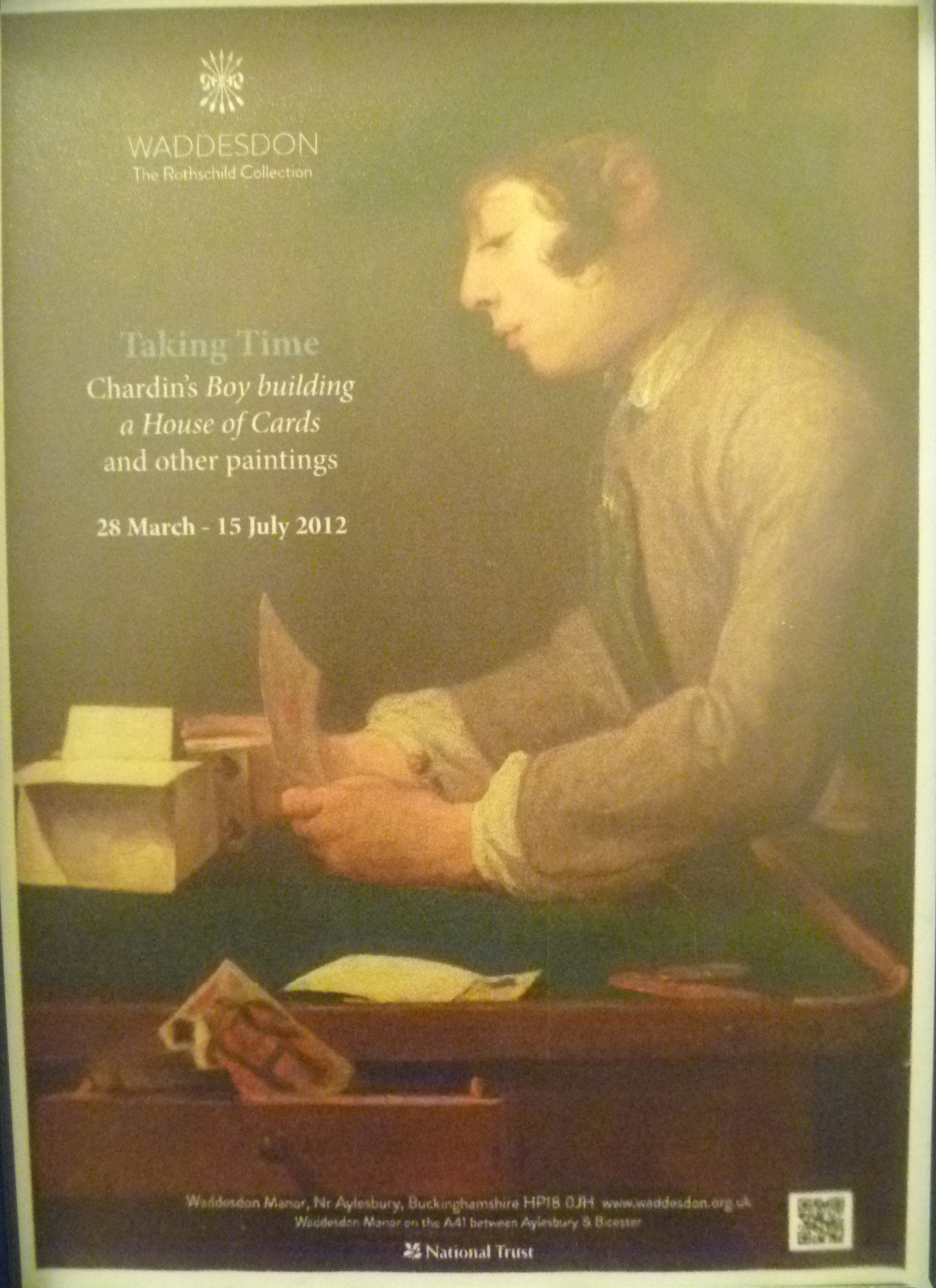
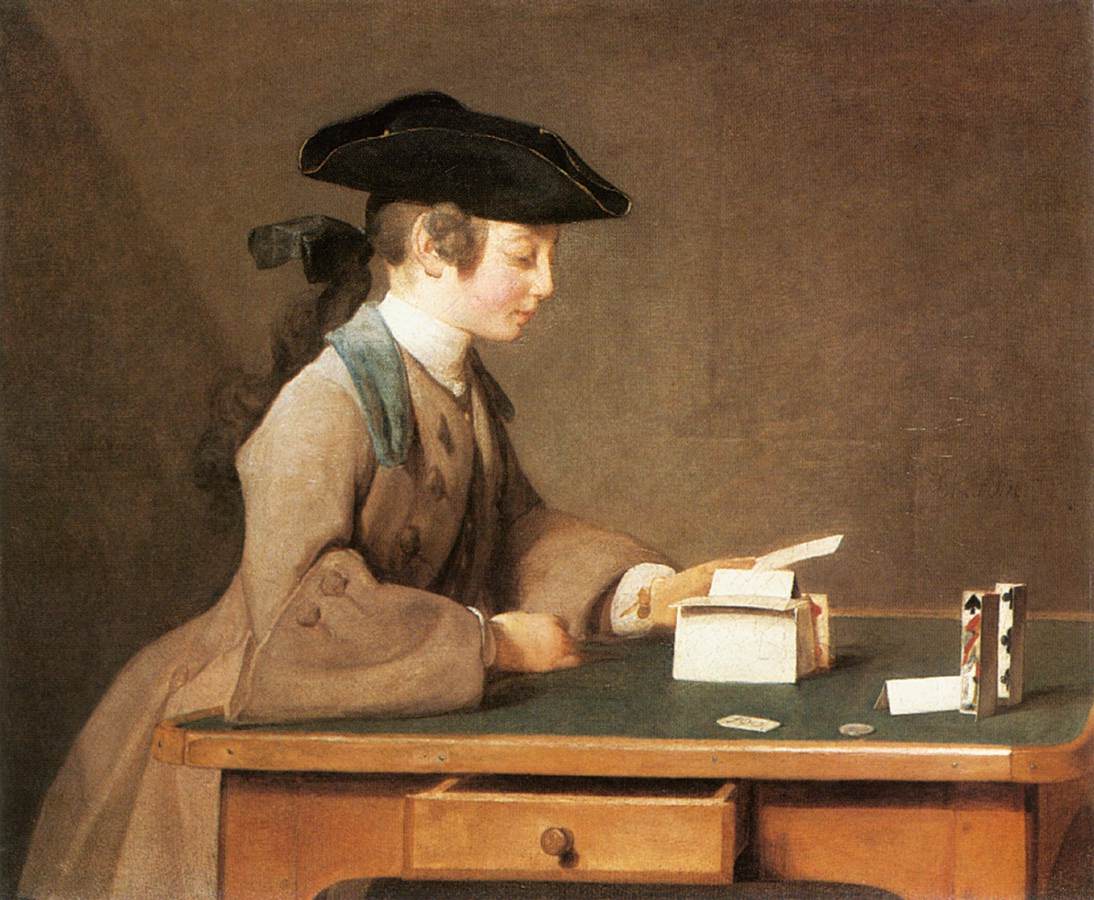
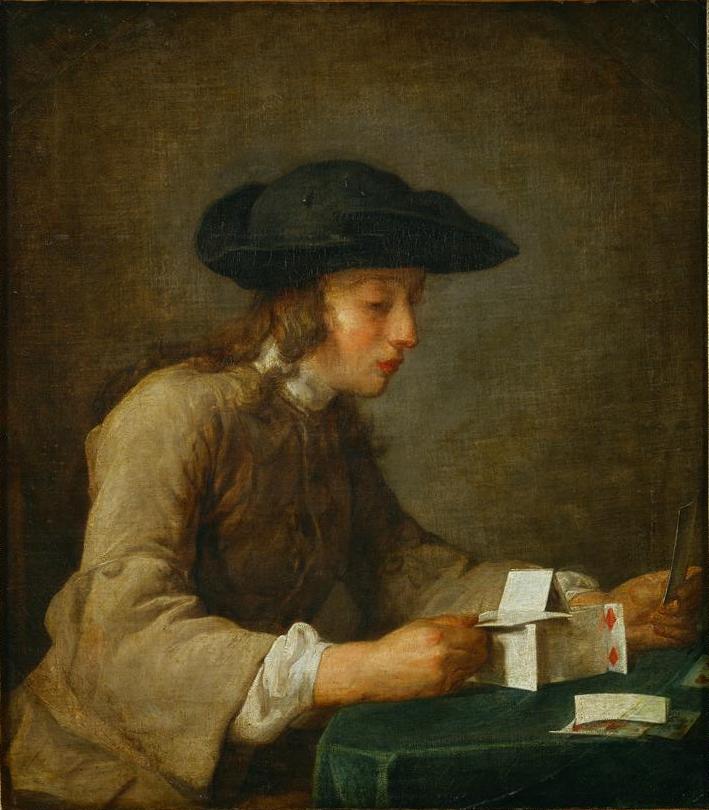
Our main intention for driving  from Stratford to Waddesdon was to view the recently opened Chardin exhibition: “Taking Time: Chardin’s Boy Building A House Of Cards and other paintings”. Jean-Simeon Chardin (1699-1779) lived and worked in Paris at first painting figures and later still life. He moved back to figure painting later in life. The idea for this particular exhibition came about when the Rothschild Trust recently acquired one of the Boy Building A House Of Cards paintings. That painting (shown in the poster above) is exhibited alongside 3 others on the same theme on loan from the Louvre, The National Gallery of Art, Washington and our own National Gallery in London.


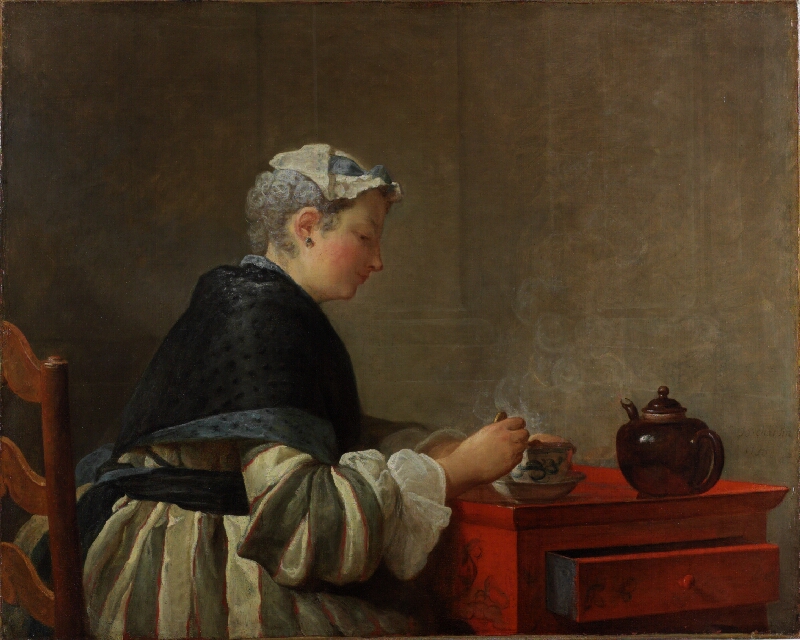
In addition the Trustees and National Trust have assembled several other Chardins including a favourite of mine : Lady Taking Tea (on loan  from The Hunterian in Glasgow):

Photo © The Hunterian Museum and Art Gallery, University of Glasgow 2012

and Girl With a Shuttlecock, 2 Cellar Boys and 2 Scullery Maids, plus engravings and etchings in the style of Chardin from The British Museum and private collections. All in all a delightful glimpse at colours, textures and expressions of 18th century French lives. By calling Chardin a great magician Diderot is saying that it is about – the “magic” of seeing the world clearly. Paying attention. Seeing what is there. (From a Guardian article in 2000).

The exhibition is tucked away in one room towards the end of the house tour. We missed much of the art and furnishings as we passed through the house but we did take a bit of time out to study another temporary display Playing, Learning, Flirting: Printed Board Games from 18th Century France. It was striking to note how similar these board games were to games still played today. We were also intrigued by all the Singerie or Monkey Tricks around the house. Dressing monkeys up in human costume was once a very popular and fashionable pastime: there are paintings and sculptures around the house. I was reminded somewhat of another popular theme also unfashionable in today’s enlightened times – the Blackamoor or Negro slave.

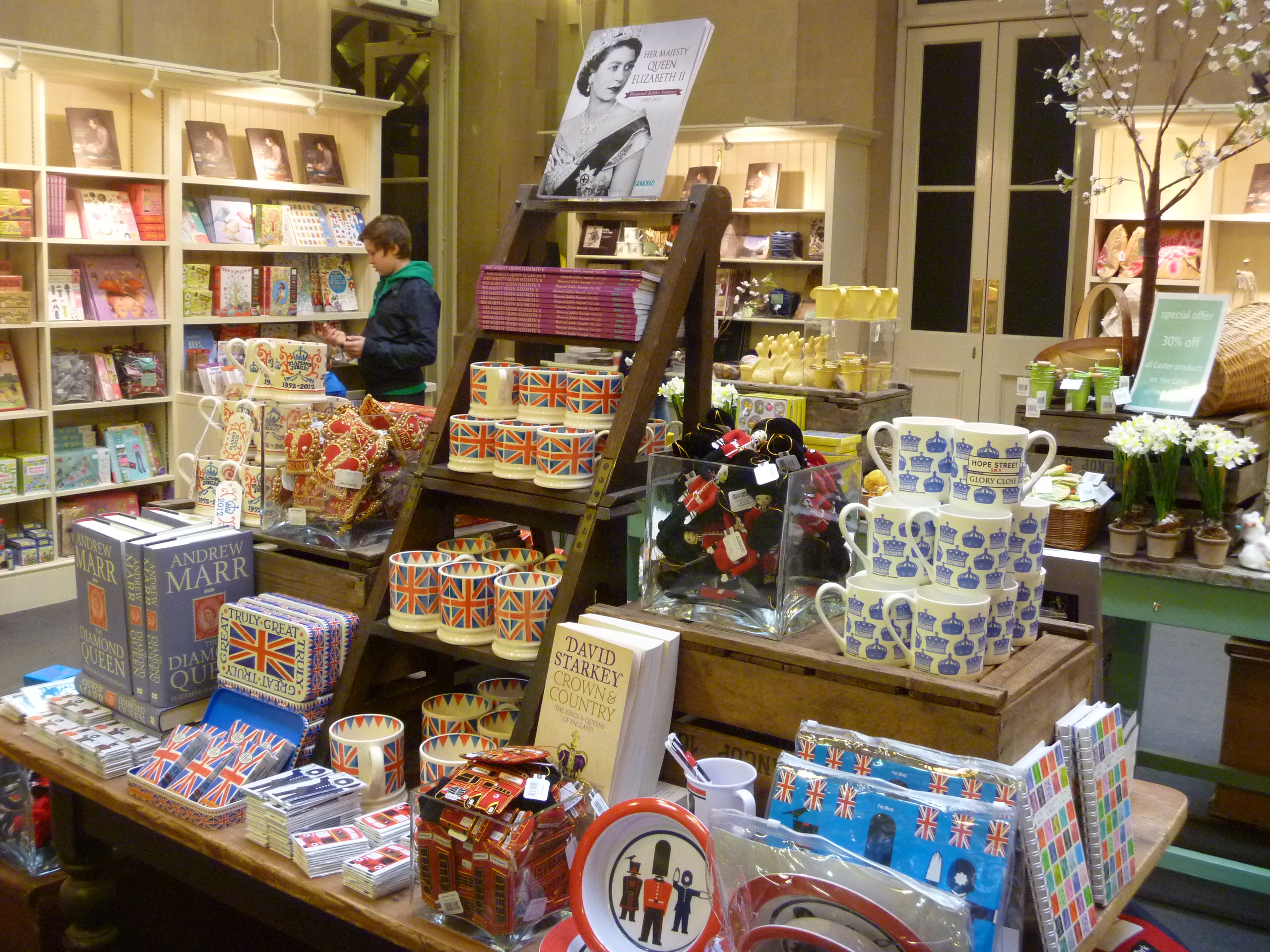
We enjoyed a delicious late light lunch in the lovely Manor Restaurant and visited the shop and wine shop (well there would be one here of course, Rothschilds!).

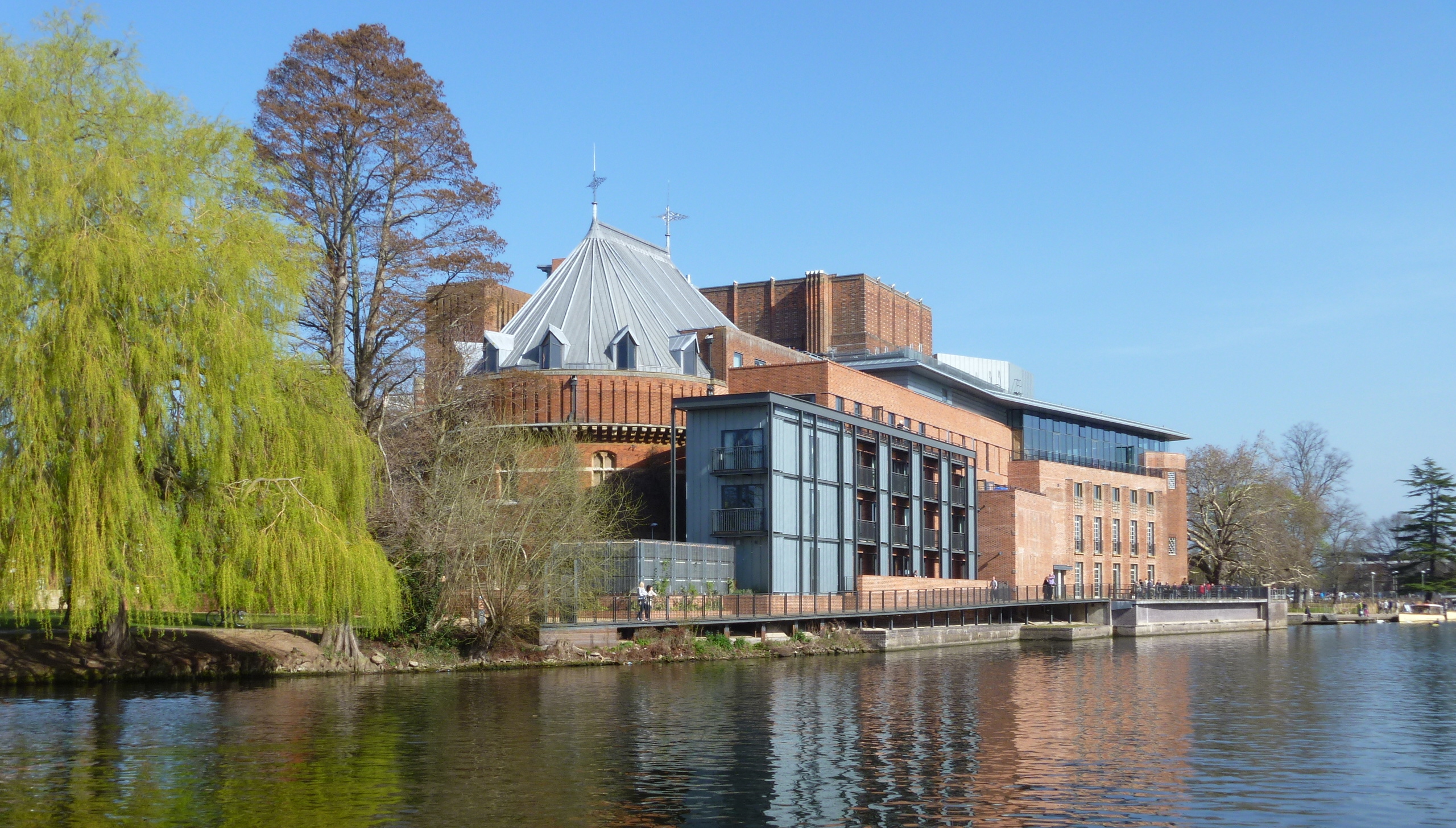
Later that evening after a pre-theatre supper in the Rooftop Restaurant we attended an RSC company performance in the Swan Theatre of Shakespeare’s Richard III. Part of a series of plays on the theme Nations at War that will include Shakespeare’s King John and Mexican playwright Luis Mario Moncado’s A Soldier in Every Son – the Rise of the Aztecs. What a day to remember!
Tea and Books and Two London Gems

I was in warm, sunny London on Thursday. The original plan was to meet a friend from my online book group and attend a showing of the 1953 film “Little Boy Lost” organised by the Persephone Book Shop. I always book my cheap train tickets way ahead and when we came to enquire about the film all the places had been taken but I still had my train tickets. In the end it turned happily as the weather was so warm and sunny that it might have been a shame to have been cooped up in the BFI.

Our Plan B was to visit the National Trust property Sutton House instead. I’ll copy and paste Clare’s summary of the history of the house as she summed it up perfectly to our group yesterday :

“It is a Tudor house, with lots of later additions, and a
fascinating history. It was first owned by Ralph Sadleir, an important
official in four reigns starting with Henry VIII. After that it was owned by
other individuals plus passing through the hands of two separate girls’
schools, a boys’ school, a church institute which ran all sorts of
activities for young men, and in the 1980s it was occupied by squatters who
wanted to form an arts community there.”

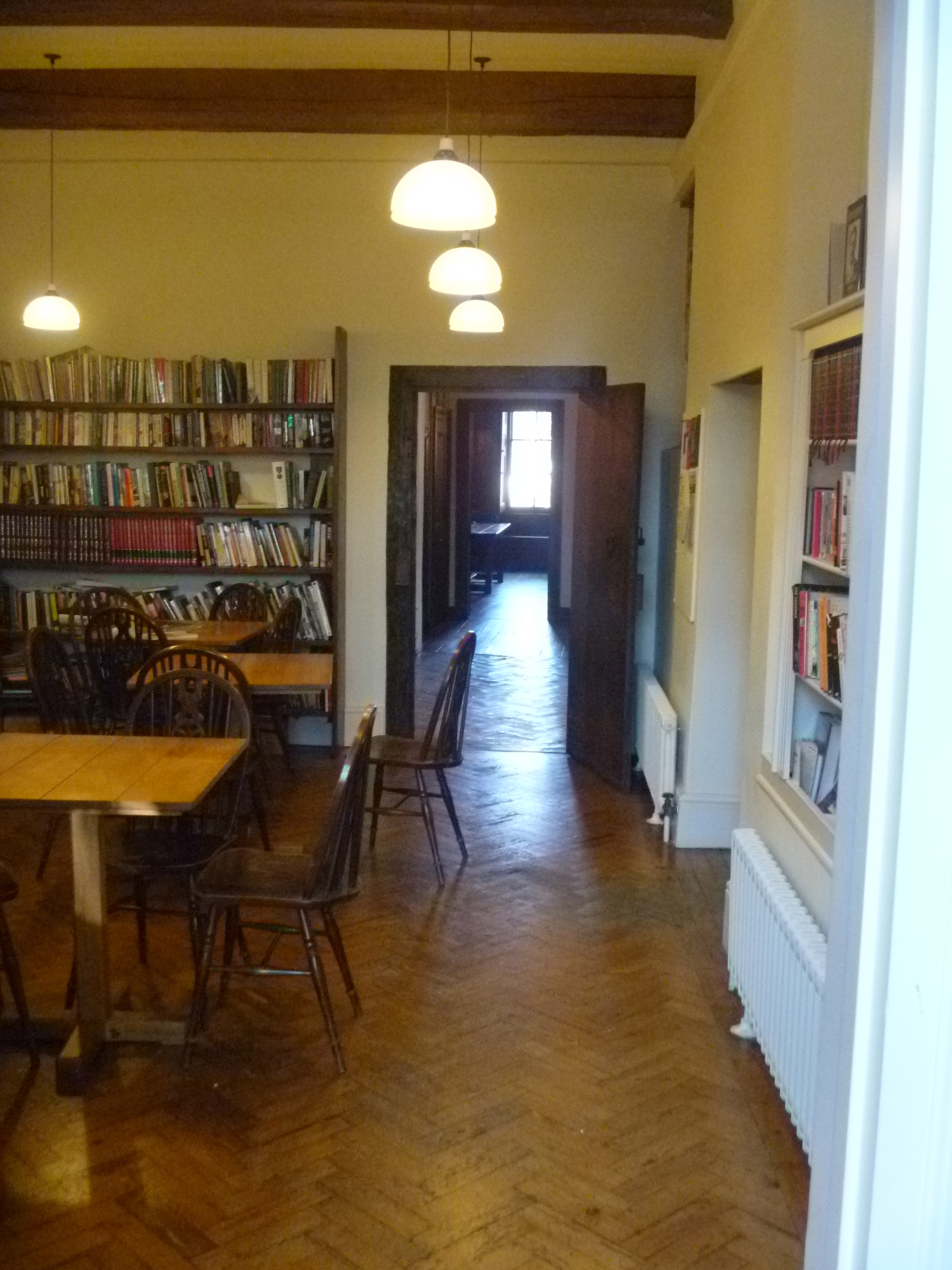
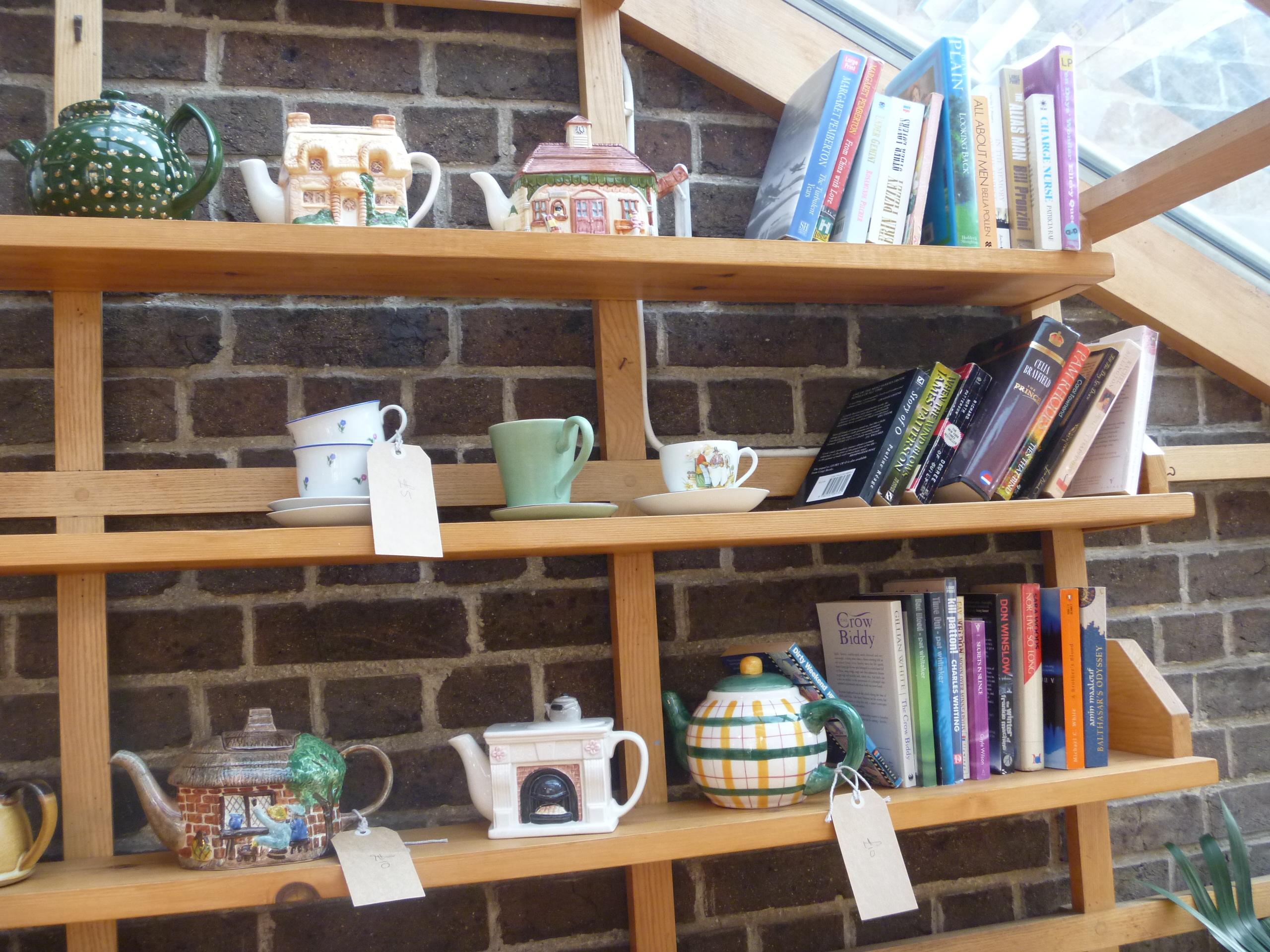
Today Sutton House is very much a part of the local community and the only staff we came across were volunteers all of whom were friendly, helpful and knowledgable. You can check out the website to see the variety of activities organised at the house – not surprisingly it’s booked up for over a year for school party visits. At one point I spotted a flyer for ‘Sutton House Book Brunchers’ who meet at the Bryck Place Tea Room once a month. Bryck Place is the original name for Sutton House and the tea room is a delight – a book lovers’ and tea drinkers’ paradise! There was a bit of renovation going on in the tea room on the day we visited so it was a matter of help-yourself to drinks and cake or scones and jam and drop a contribution in the box. So we did! The tea rooms are surrounded by shelves mostly stacked with secondhand books but some also with secondhand cups and saucers and jugs and teapots all for sale.

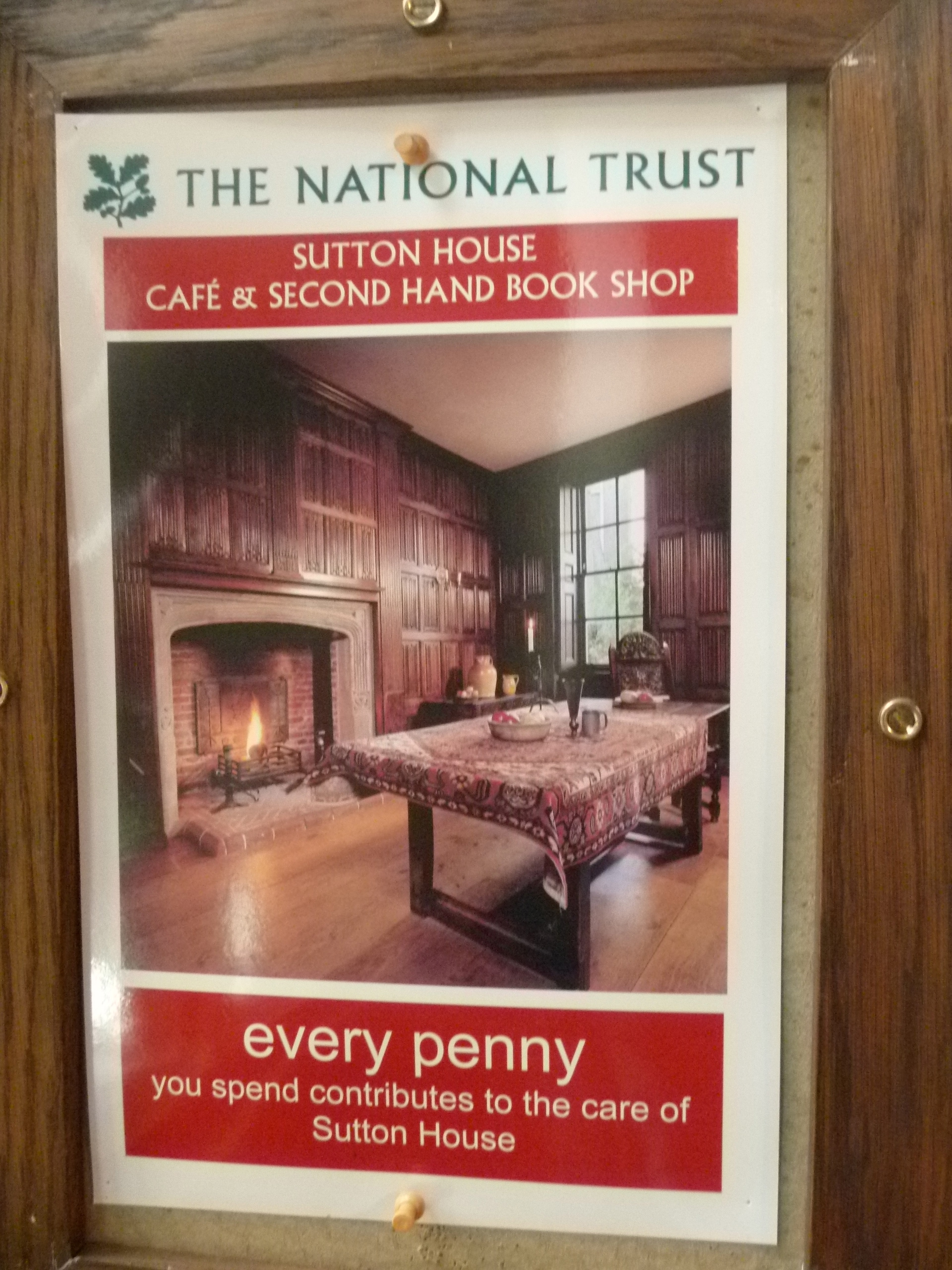
The tour of the house began in the Linenfold Parlour (see the poster pictured above). This would have been an important room in Sadleir ‘s original building in what was at the time (1535) a quiet, rural village. You then can visit the cellars, climb the Painted Staircase to the Gallery, the Little Chamber and the Great Chamber, a bedroom now decked out as a Victorian study and climb up again to an exhibition and history room on the second floor. A further staircase takes you right down to the ground floor again where, on this east side of the house, is a Tudor kitchen with access to an enclosed courtyard and a Georgian Parlour. This last room had a corner devoted to tea and it’s accoutrements and I was happy to note the following little verse :

 “In lands near or far

or wherever you be

friendship is welded by

a good cup of tea”

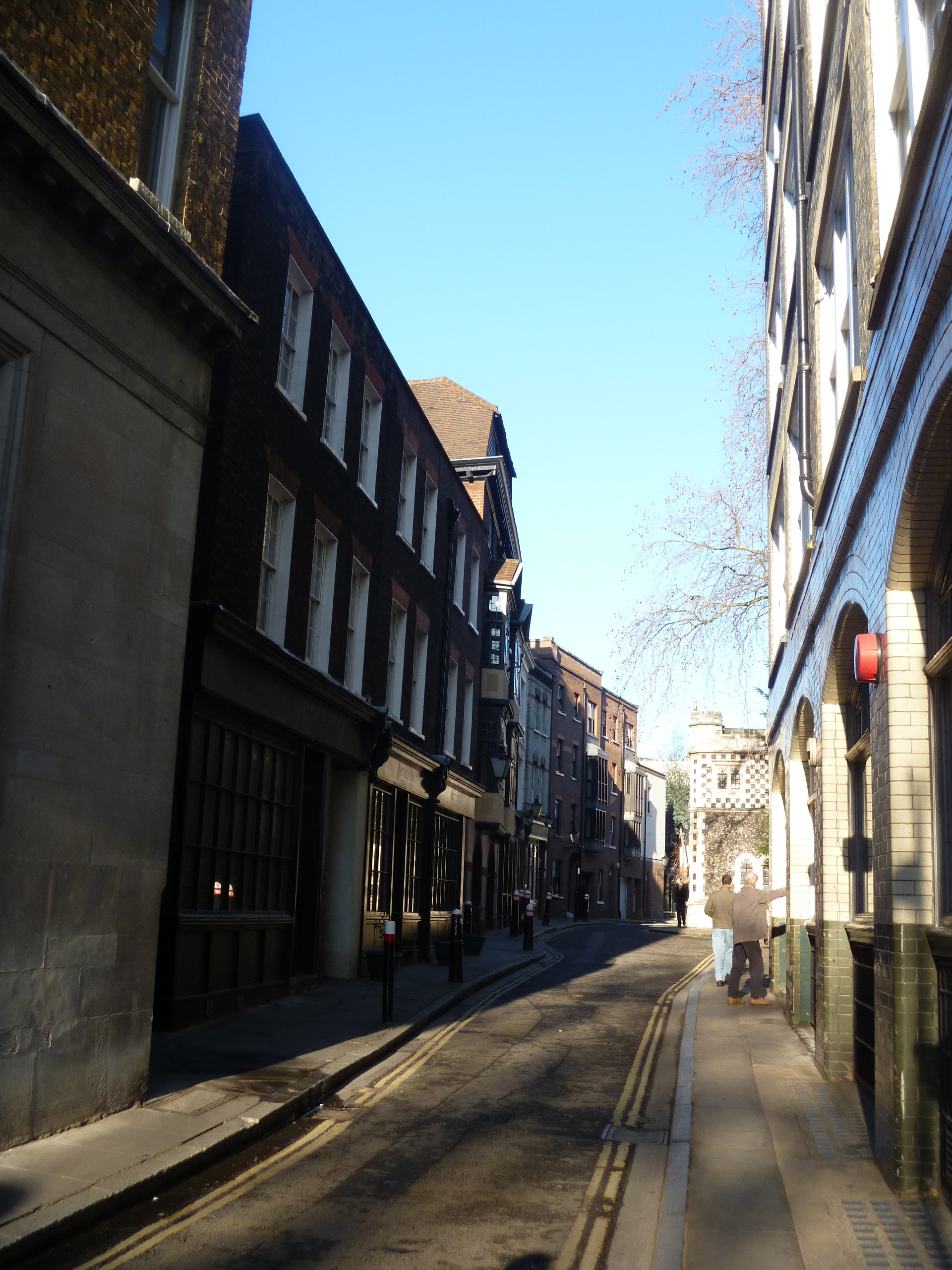
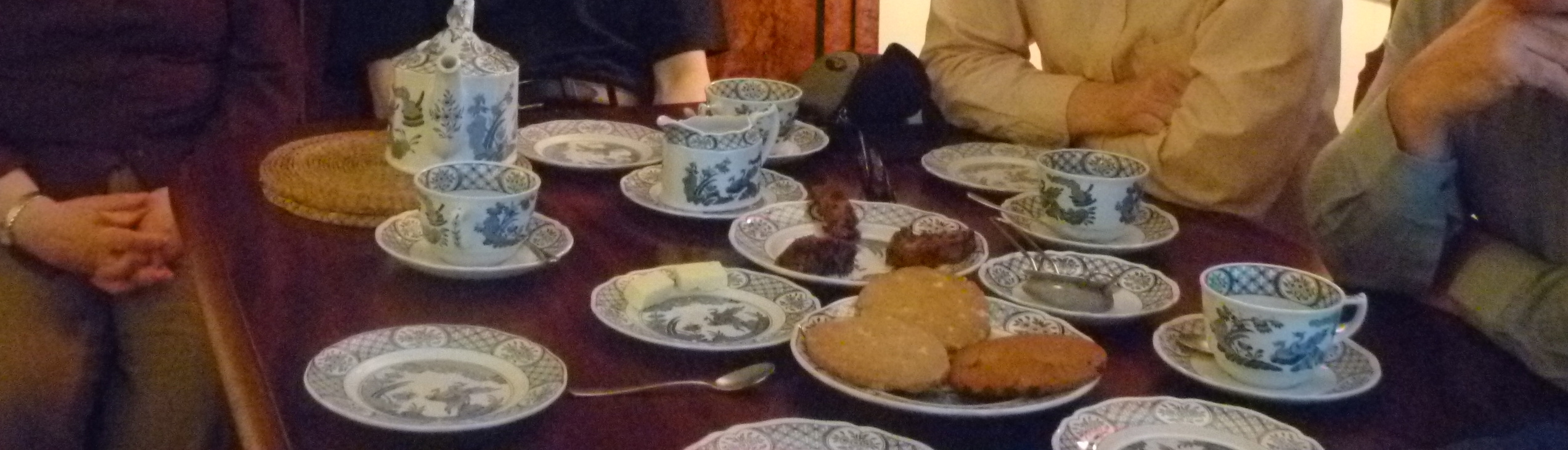
From Sutton House it’s a short walk to Hackney Central Station where we boarded our London Overground trains in opposite directions. As I sat on my train heading towards Whitechapel the following text came through on my ‘phone : “Afternoon tea now available at 45a!”  Some friends, staying at the Landmark Trust property 45A Cloth Fair this week, were inviting me to join them for (another) cuppa and more cake. I’ve stayed at 45A in the heart of Smithfield between Barbican and St Paul’s tube stations half a dozen times already so it was like arriving home as I climbed the creaking staircase to the first floor sitting room and joined my friends for tea and cake.