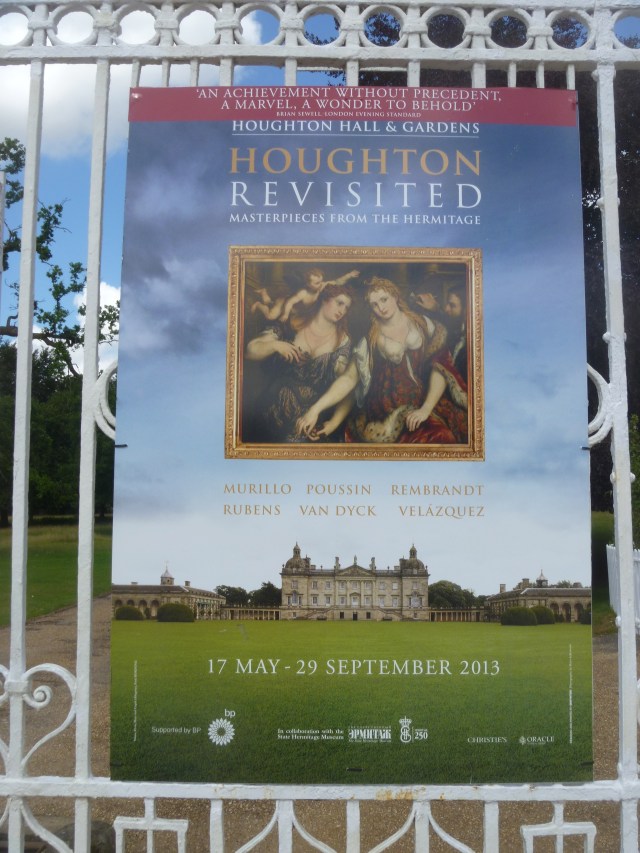
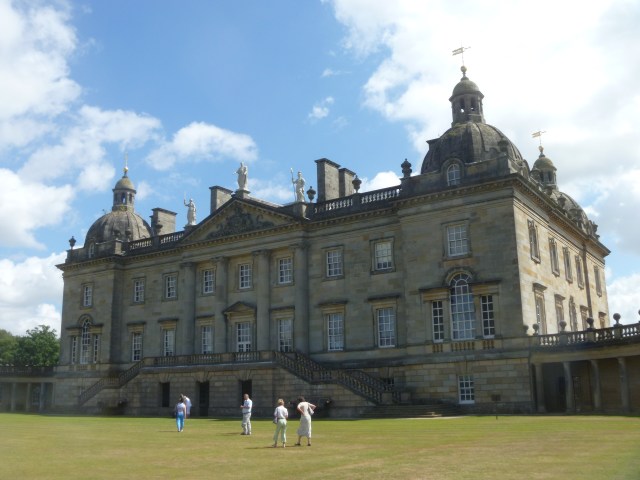
Fellow WordPress member Visiting Houses and Gardens wrote about her visit to Houghton Hall and Gardens and remarked that had the pictures not all been sold she would have given the house a five star rating. Well, this summer the pictures, although sold to Catherine the Great, have all been re-hung in the exact locations from which they were lifted 250 years ago. This unique exhibition is the result of a collaboration between the Hall and the Hermitage Museum in St Petersburg and a great deal of work has resulted in an exceptional country house visit.
Houghton Hall
Last Saturday my sister and brother-in-law and I studied the Houghton Hall and other websites in order to get a foretaste of the show we were to visit the next afternoon.
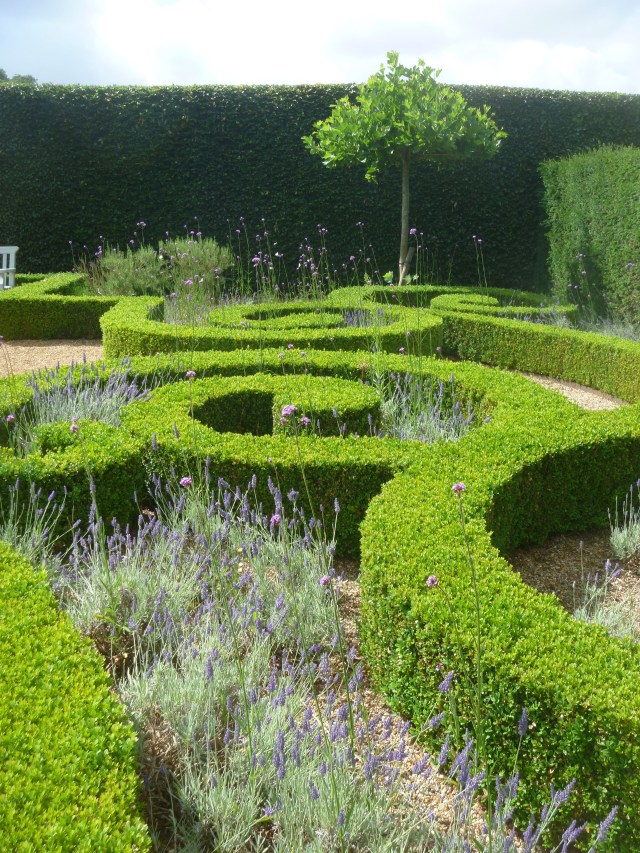
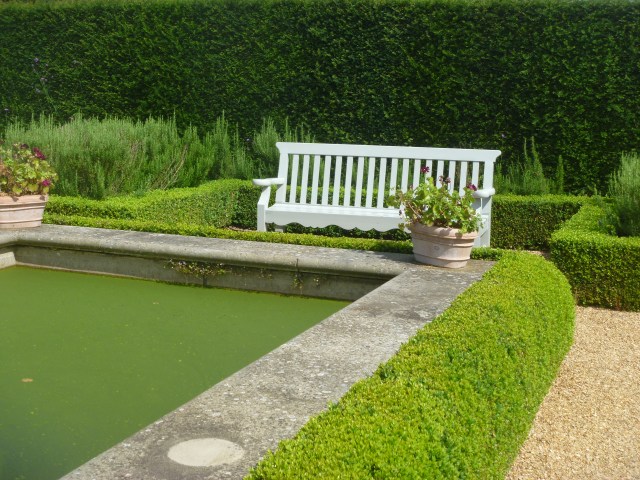
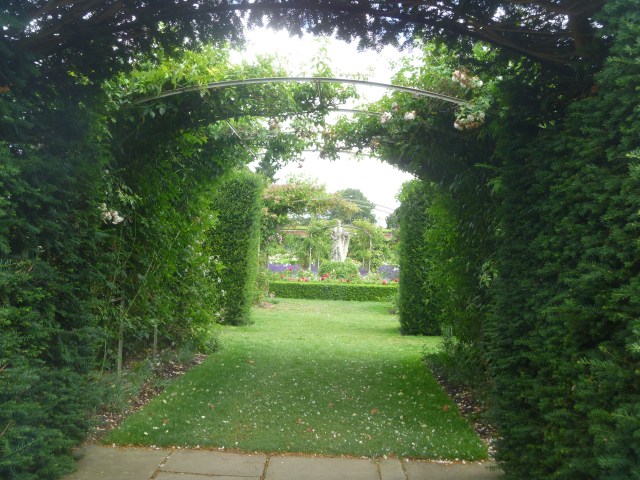
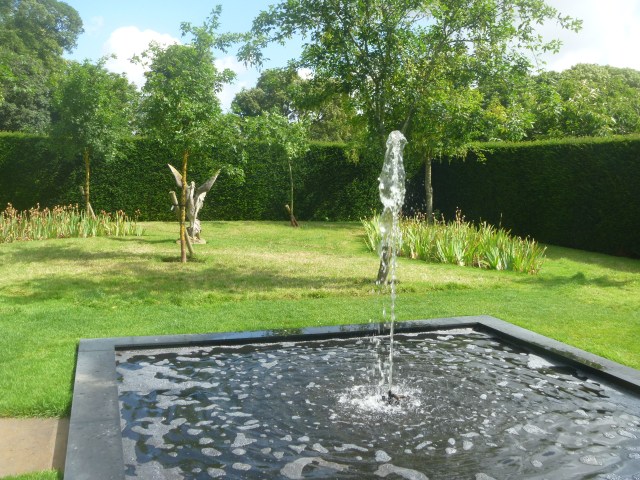
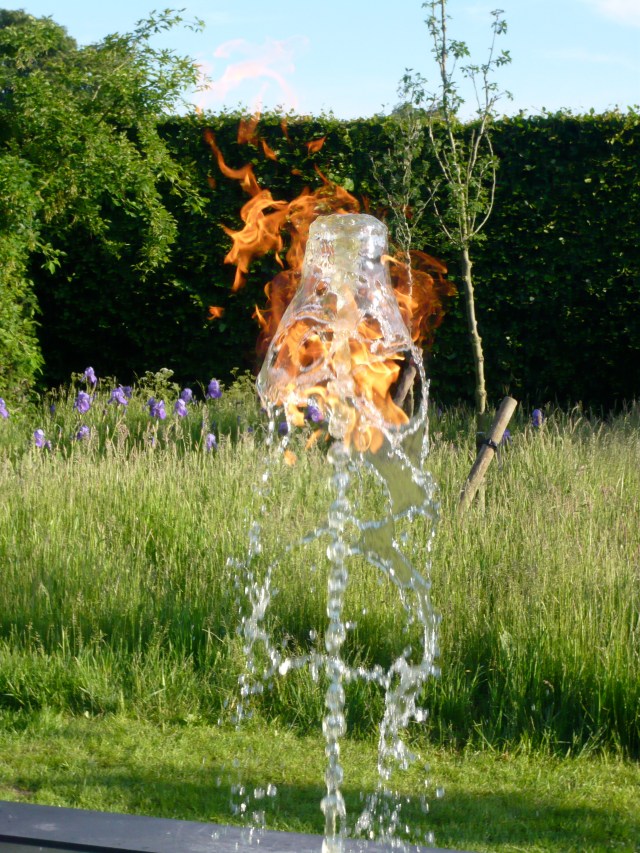
No photography is allowed in the Hall so my pictures show the beautiful garden. Luckily we arrived in good time before our timed ticket slot and had time to inspect the Walled Garden in all its glory and have a cup of tea before the highlight of the visit: Houghton Revisited.
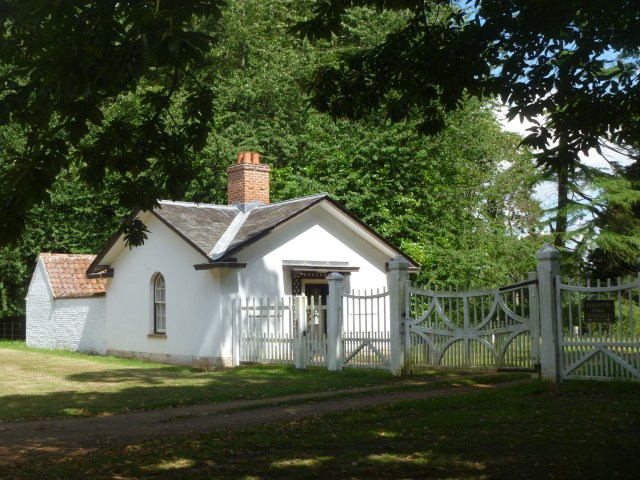
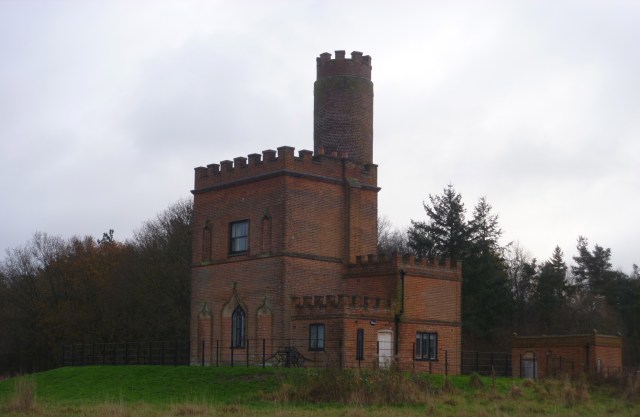
Before leaving the Houghton Estate I just had time to take a quick look at the Landmark Trust property : Houghton West Lodge. Not surprisingly it’s fully booked until October.
Pebbles are beneath, but we stand softly
On them, as on sand, and watch the lacy edge
of the swift sea.
Which patterns and with glorious music the
Sands and round stones — It talks ever
Of new patterns.
And by the cliff-edge, there, the oakwood throws
A shadow deeper to watch what new thing
Happens at the marge.
Ivor Gurney, Selected Poems (edited by George Walter) (J. M. Dent 1996).
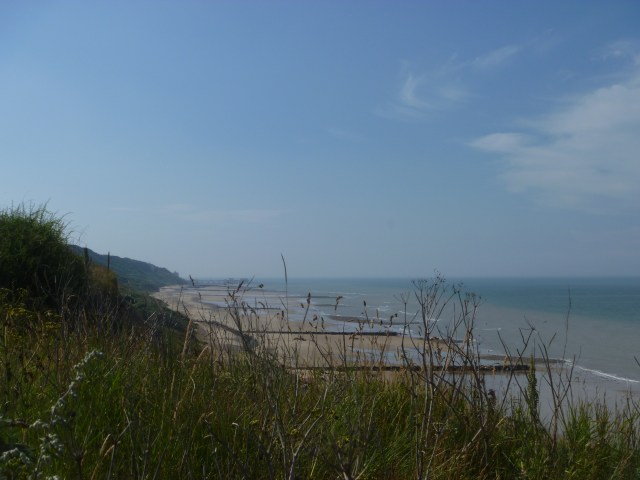
I came across this poem last March whilst staying in Tewkesbury. Until then I had wondered about the name of the hotel in Overstrand, north Norfolk, where I had booked to stay a couple of nights last week.
Despite growing up in Norwich just 22 miles south of Overstrand I had never actually visited this neighbouring resort of Cromer.
“Overstrand lies on the North Norfolk coast between Cromer and Sidestrand. It’s name derives from ‘narrow shore with a steep edge’. There is a nice walk along the cliff-top path from Cromer which passes the old lighthouse and the golf course. Like it’s larger neighbour, it was once a genteel Edwardian holiday destination – but today has an air of faded grandeur.
Lord and Lady Battersea had a holiday home called The Pleasaunce built here in 1897. It was designed for them by Sir Edwin Lutyens and hosted a number of literary visitors including Arthur Conan Doyle and George Meredith.
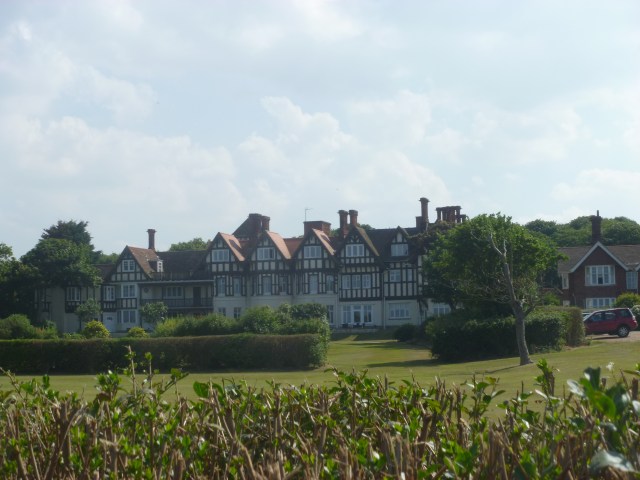
Winston Churchill used to stay at the Sea Marge Hotel in the village and this may have provided the inspiration for Jack Higgins’ novel The Eagle Has Landed – which is set in North Norfolk (see Blakeney) and concerns an attempt by German paratroopers to assassinate the English PM. While in residence Churchill had elaborate arrangements in place with Cromer Post Office in case the grand fleet needed mobilising.” Source
The Sea Marge Hotel, Overstrand
Sea Marge Front
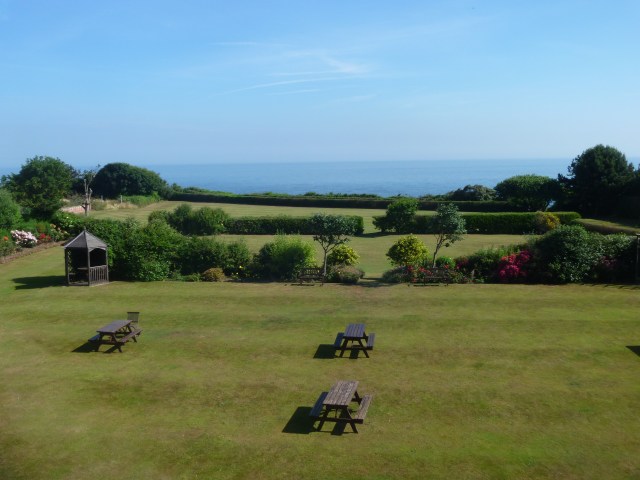
Sea View from The Sea Marge
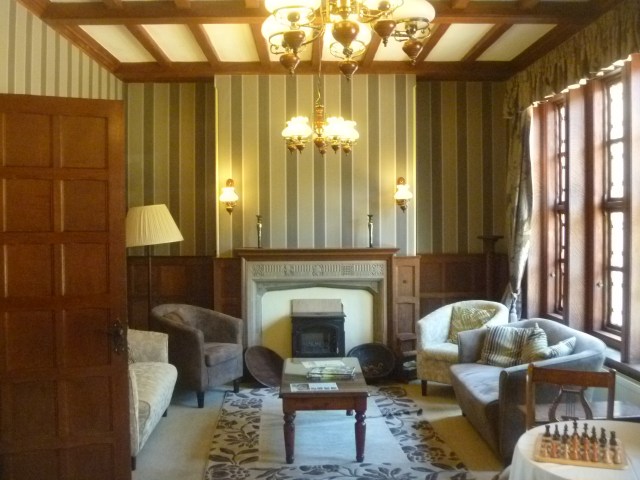
The Sea Marge Lounge
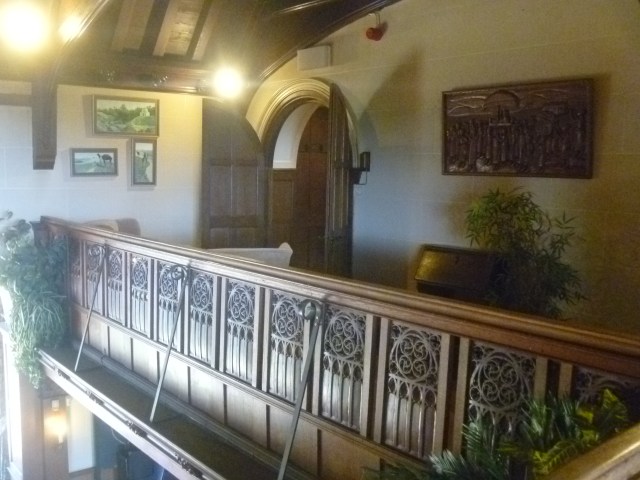
Gallery overlooking the bar at The Sea Marge
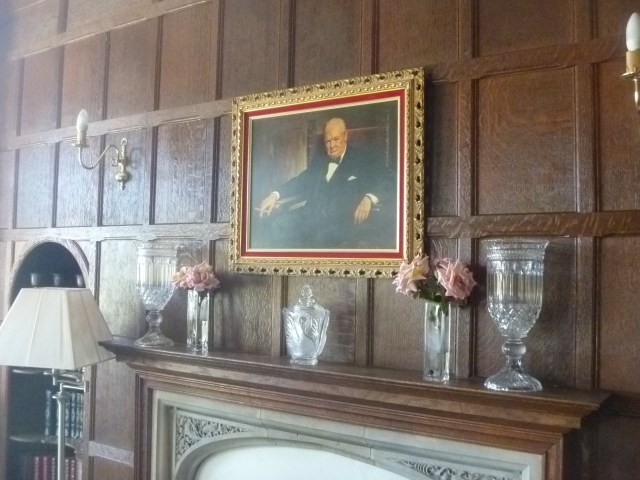
Sir Winston Churchill above the Fireplace in the Winston Room
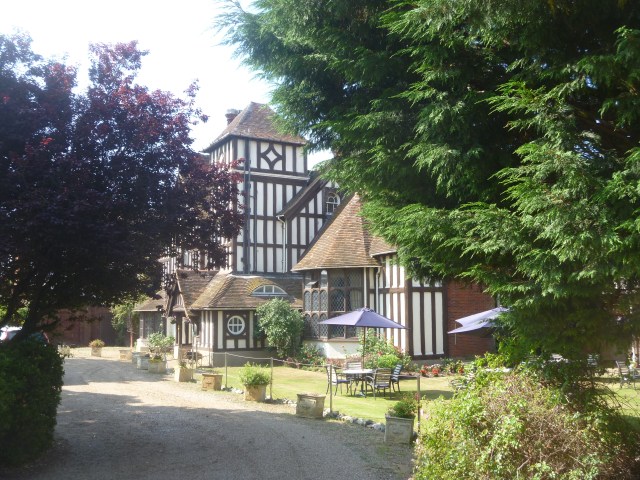
Pleasuance (now a Christian Retreat and Holiday Centre) Front
Pleasuance Side Entrance
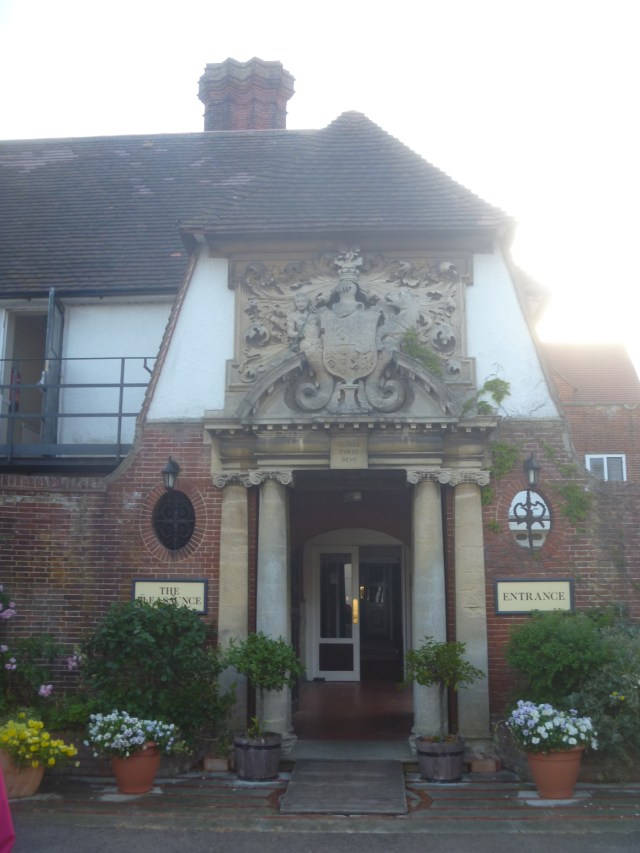
Pleasuance Entrance
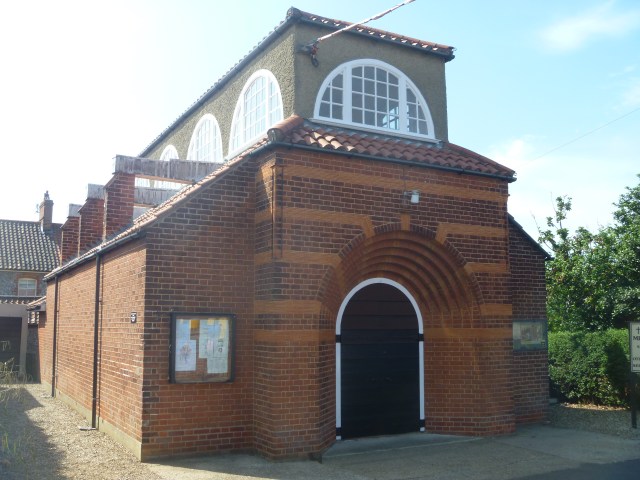
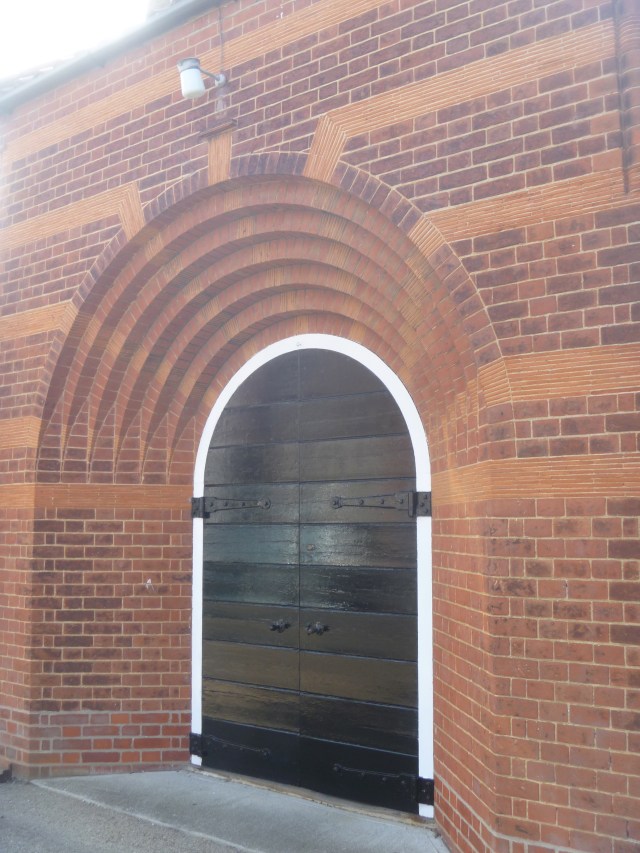
The Methodist Church at Overstrand designed by Sir Edwin Lutyens
Last week I was recalling memories of the Norwich public libraries. On that same visit I also recalled other of my early hang-outs: the Norwich museums. Until my mid-teenage years when I discovered that Shopping was the thing to do and that museums were distinctly ‘uncool’ I liked nothing better on a Saturday (after a library visit) than to visit one or other of the museums in the city. The most popular was Norwich Castle Museum and Art Gallery and it still is today. Here is the record of the last visit I made there in December 2011.
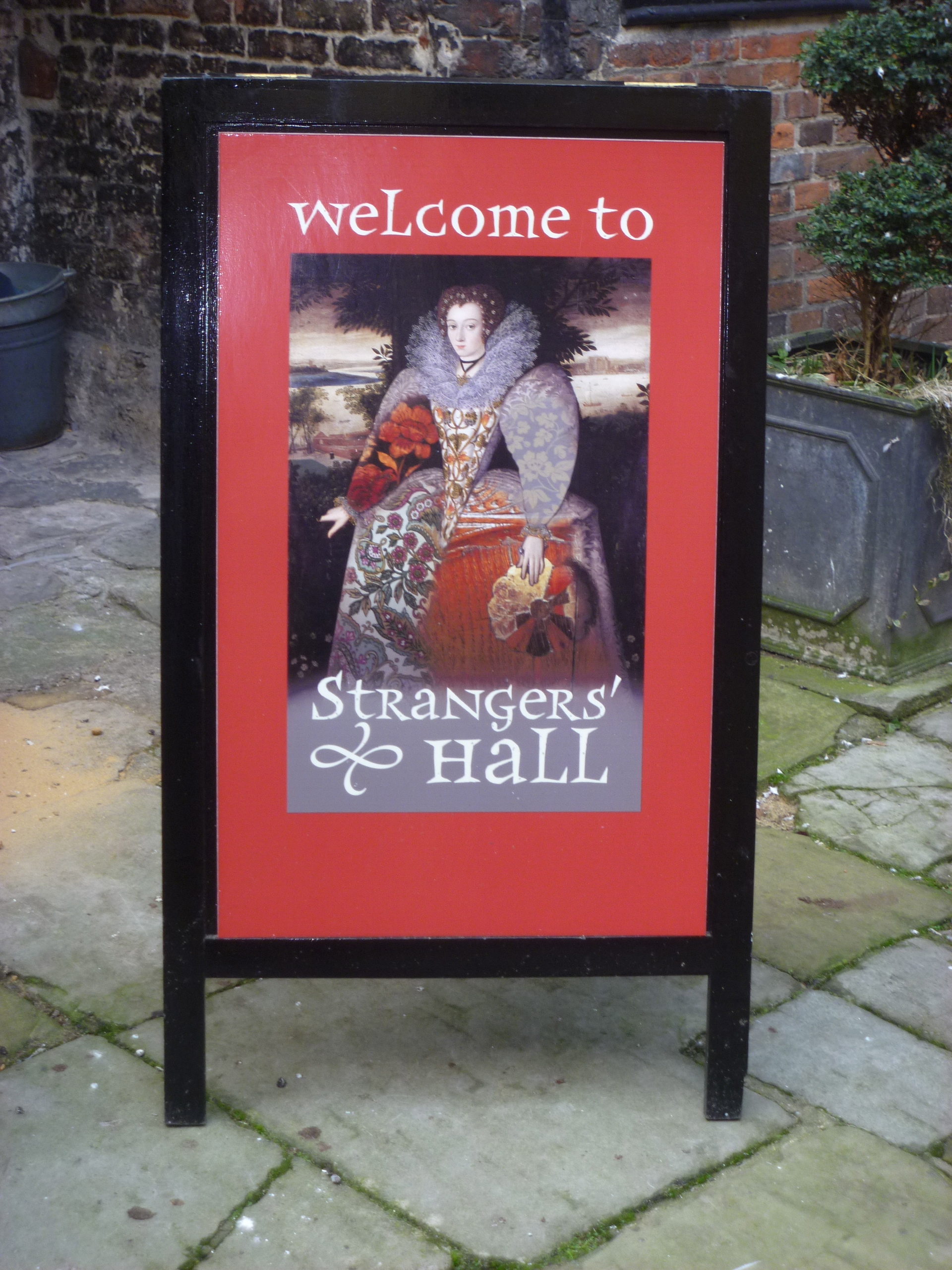
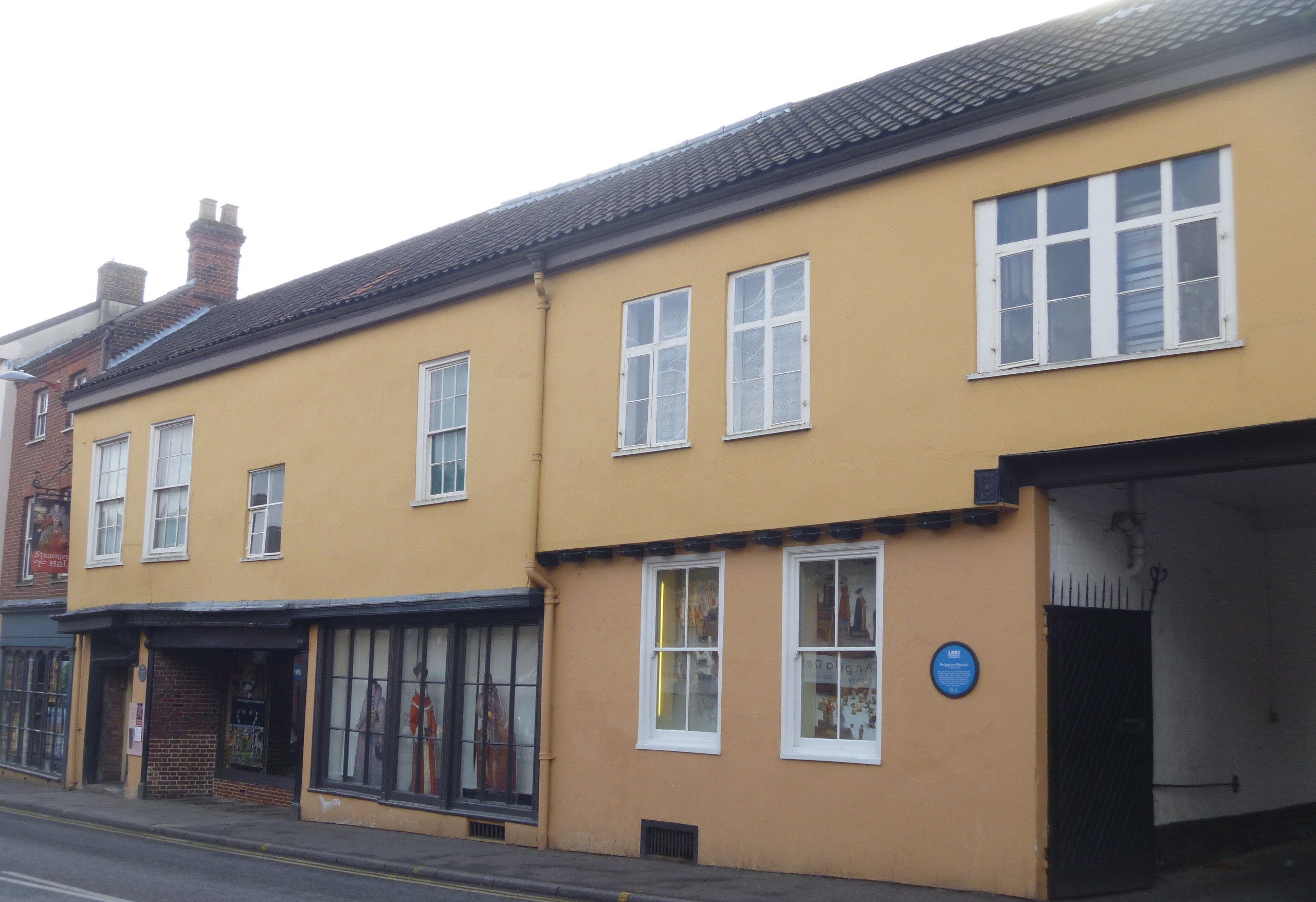
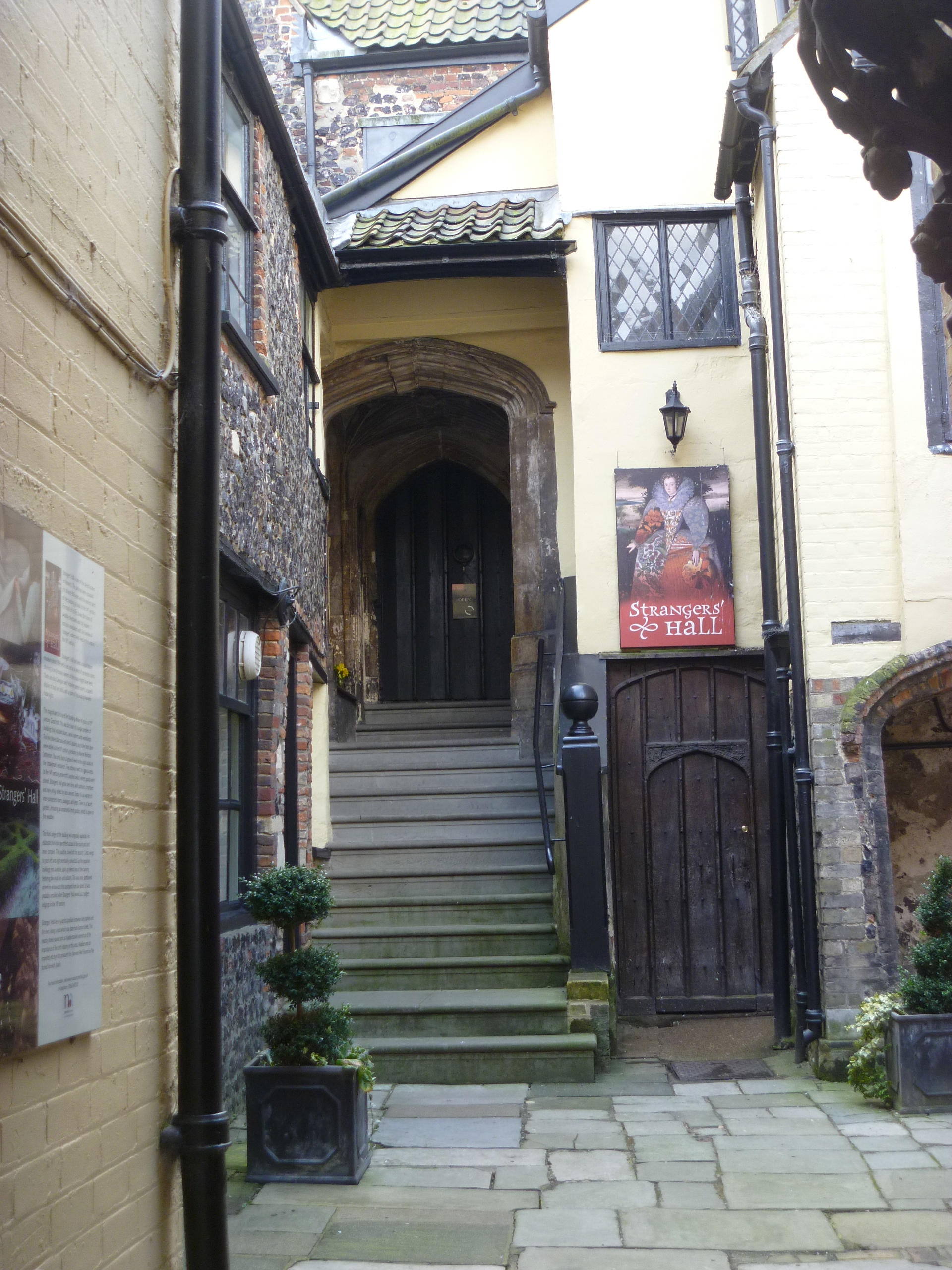
My favourite museum in Norwich has always been The Strangers’ Hall on Charing Cross. I decided to join an Introductory Tour there last Wednesday afternoon to remind myself of the story of the Hall and its contents. For many years the Hall was closed for renovation and its reopening was at one time threatened but it is now open to the public just on Wednesdays and Saturdays. I was lucky to be in Norwich on a Wednesday!
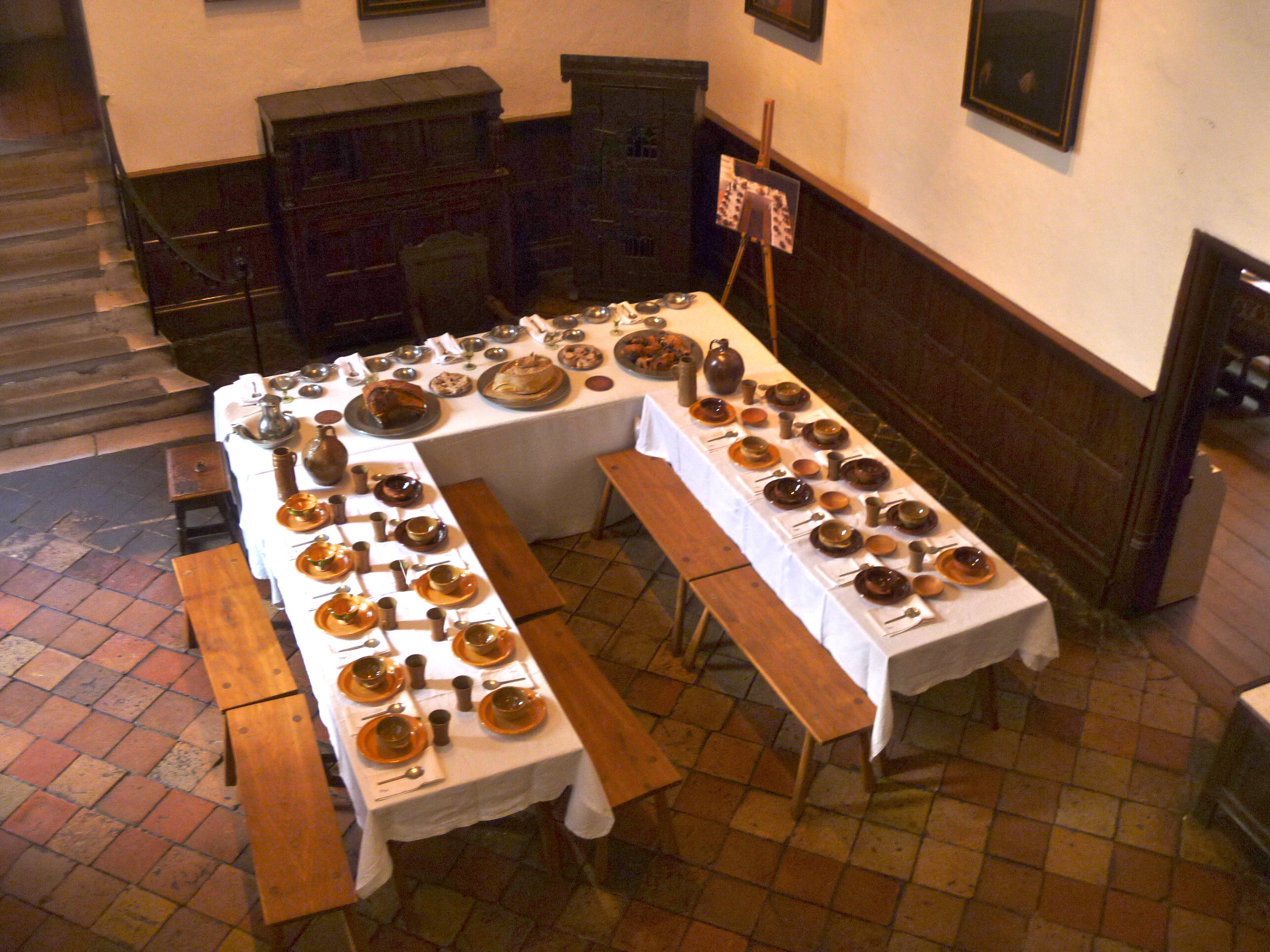
Our guide, Bethan, sat us all down in the great hall and started by telling us that this was one of Europe’s finest houses of its kind.
The Great Hall from the Gallery
Strangers’ Hall tends to be overlooked by tourists and visitors to Norwich because of all the other historic, cultural and non-cultural attractions that the city has to offer. We have a fine Norman Cathedral, a Norman Castle Keep that is also an excellent museum and art gallery, numerous other museums to say nothing of the shopping opportunities and that old saying – that Norwich has 52 churches (one for each Sunday in the year) and 365 pubs (one for each day of the year).
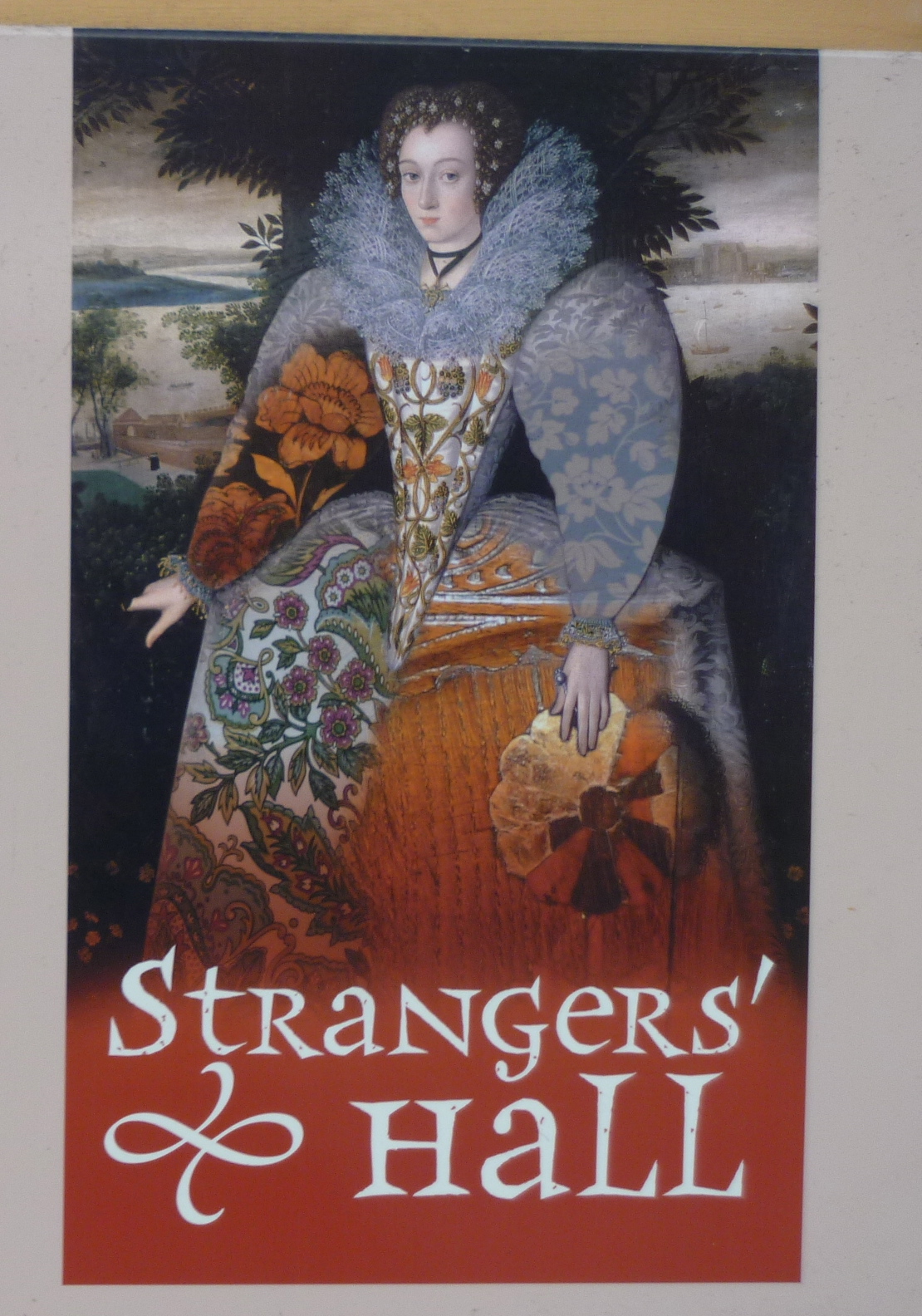
Elizabeth Buxton whose portrait hangs in the Great Hall
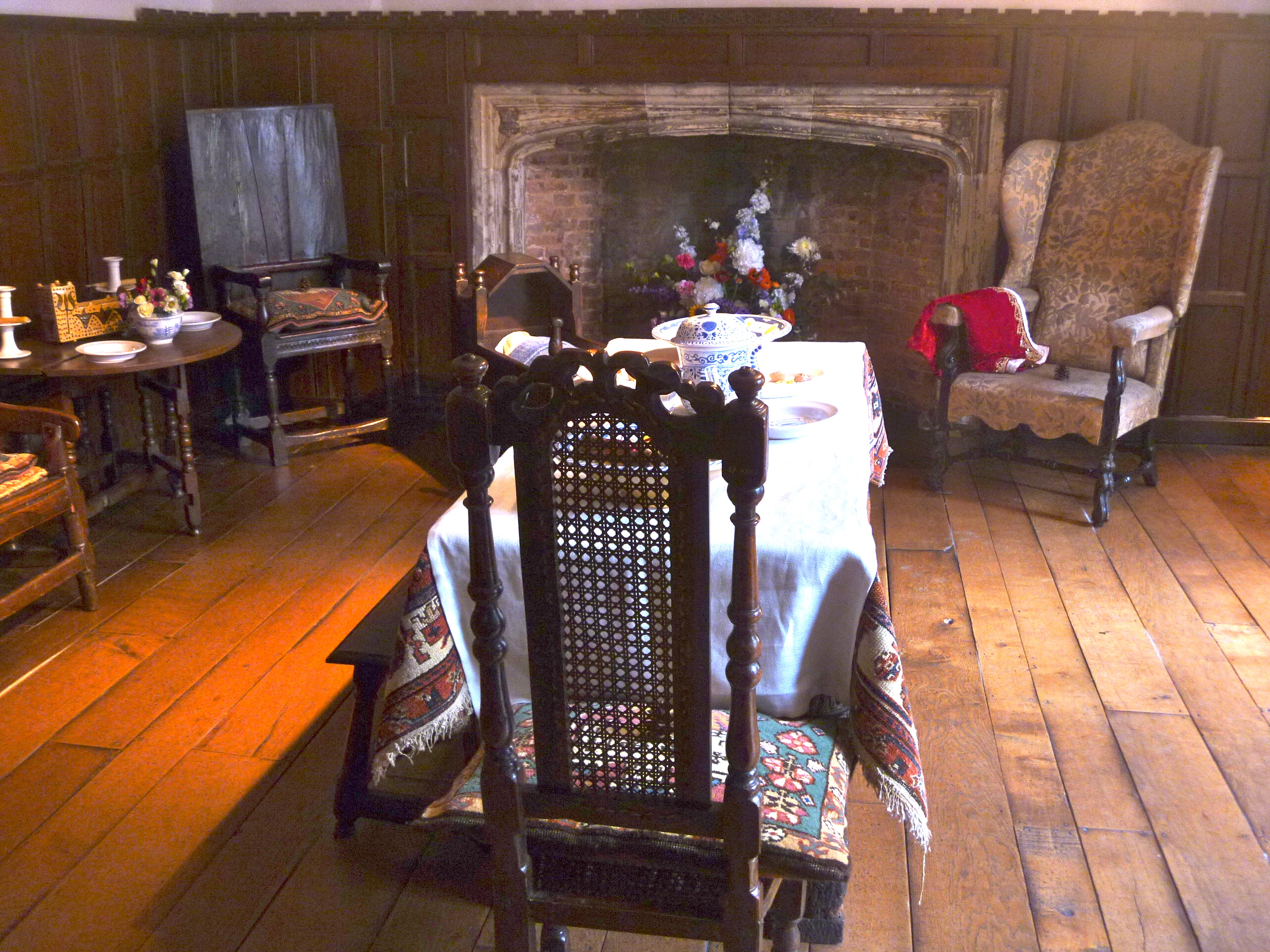
The original Undercroft of the house dates back to 1320. The other rooms reflect the house through its various incarnations throughout history. On this tour we only visited Lady Paine’s Bedroom, The Little Bedchamber and The Great Chamber.
The Parlour
To explain briefly the history of this fascinating museum and the possible origin of its name I have extracted the following from the BBC History Magazine.
“Strangers’ Hall in Norwich gained a new lease of life when it became one of England’s first social history museums
Empty and neglected at the end of the 19th century, Strangers’ Hall’s illustrious history appeared all but forgotten. Constructed by Ralph de Middilton in 1320 and rebuilt in the 15th century by William Barley, it had been home to an eclectic mix of people including mayors, merchants, judges, Roman Catholic priests and a dancing master.
Leonard Bolingbroke, a local solicitor and treasurer of the Norfolk Archaeological Society, realised its importance and saved it from demolition. As an enthusiastic collector he furnished the house with antiques, appointed a caretaker and opened it to the public in 1900. Several years later he presented it to the city of Norwich as a museum of domestic life.
The rooms reflect different periods during the house’s history. The Great Chamber is laid out as it was in the 1600s when owned by hosier Sir Joseph Paine, with a high table at one end and service rooms beyond a screen at the other. The Walnut Room is styled as a 17th-century sitting room and one of the bedrooms is decorated as it might have been for his wife, Lady Emma Paine. Other rooms include a Georgian dining room, a 17th-century oak bedroom and a Victorian nursery, parlour and dining room.
One of the largest rooms is the Sotherton Room, which may once have been a counting-house. As mayor, Nicholas Sotherton boosted the textile industry by encouraging skilled Dutch and Flemish weavers to settle in Norwich. Called Strangers by the locals, it’s the presence of these refugees that may have given the building its name.
While the interiors are interesting, the architecture also deserves investigation, from the magnificent, vaulted, 14th-century cellar via the crown-post roof, stone-mullioned bay window and porch of the 16th century to the imposing staircase of the 17th. Take your children with you – the hall is great as a historical teaching resource.
Don’t miss: the beaded christening basket in Lady Paine’s chamber. Worked in tiny glass beads on a wire frame, it held gifts such as money, jewellery, spoons, rattles and silver items.”
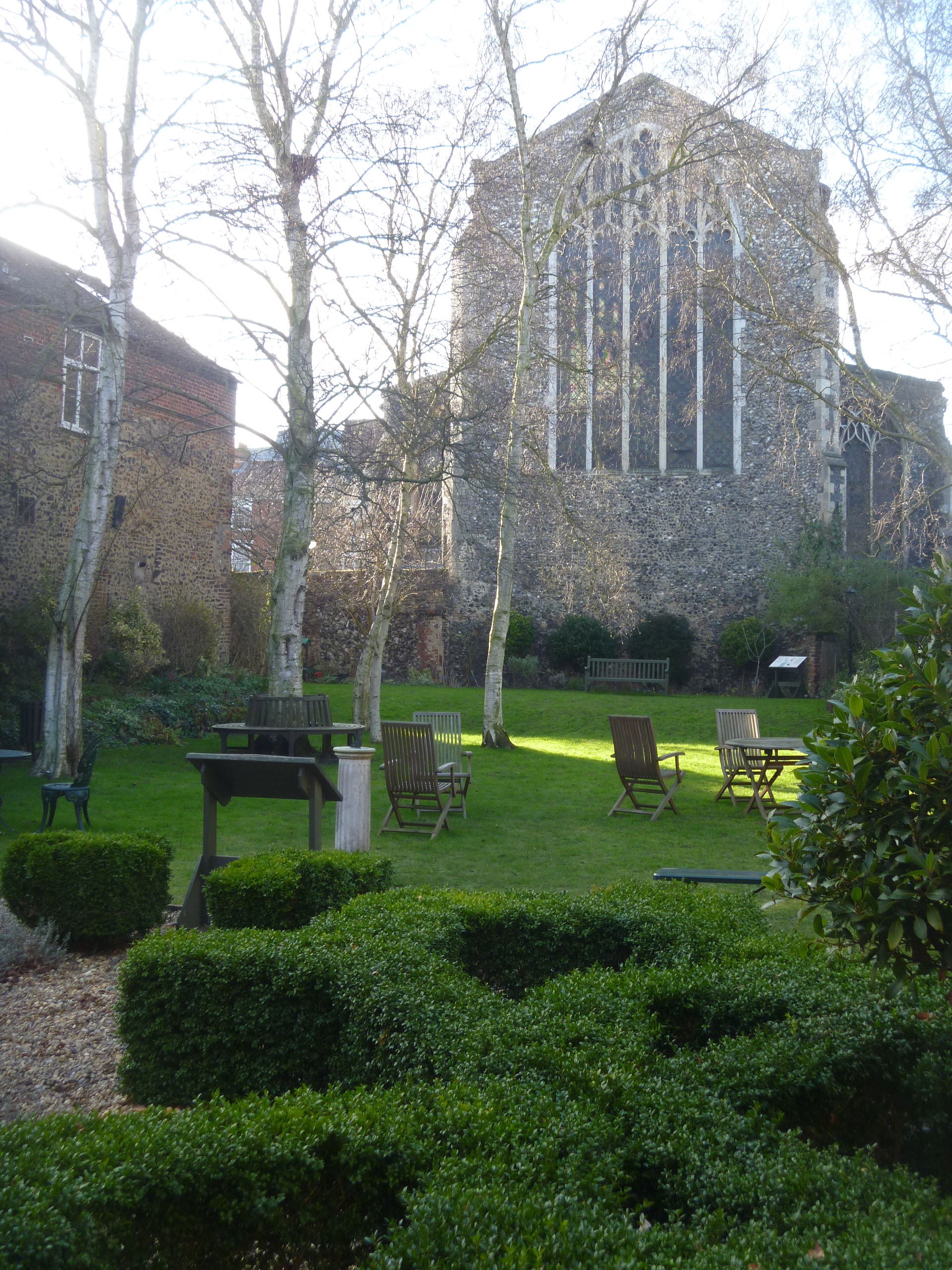
After our tour it was nearly time for the museum to close so we just briefly stepped outside into the Knot Garden. I’m looking forward to a follow-up visit to The Strangers’ Hall very soon.
Yesterday I wrote about the libraries of Norwich, which I knew and loved. Within these libraries there was (and still is) an important post-war link with our American friends and allies. The ‘new’ library [the one opened in 1963] had a special space and a fountain as a dedicated memorial to the airmen of the United States Air Force who fought along with the British from UK bases during the Second World War.
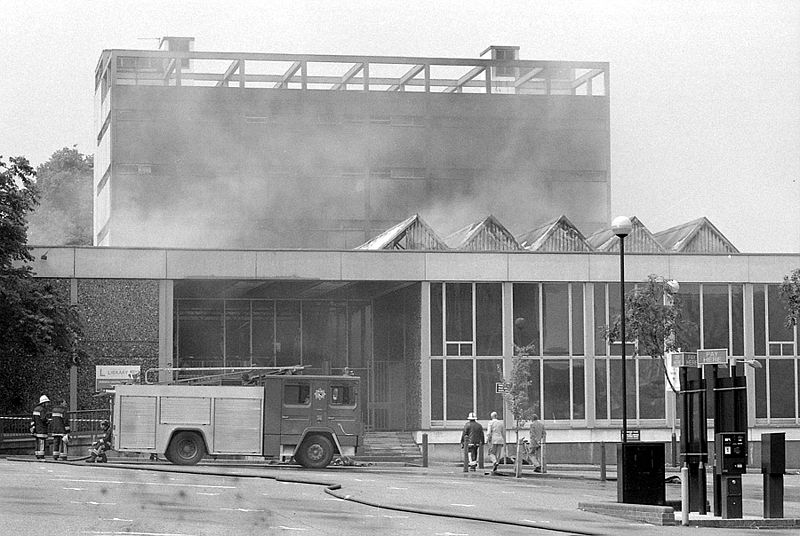
Sadly the contents of that library and the fountain itself were destroyed by the raging fire in 1994. This would have included the Roll of Honour and other precious documents and artefacts.
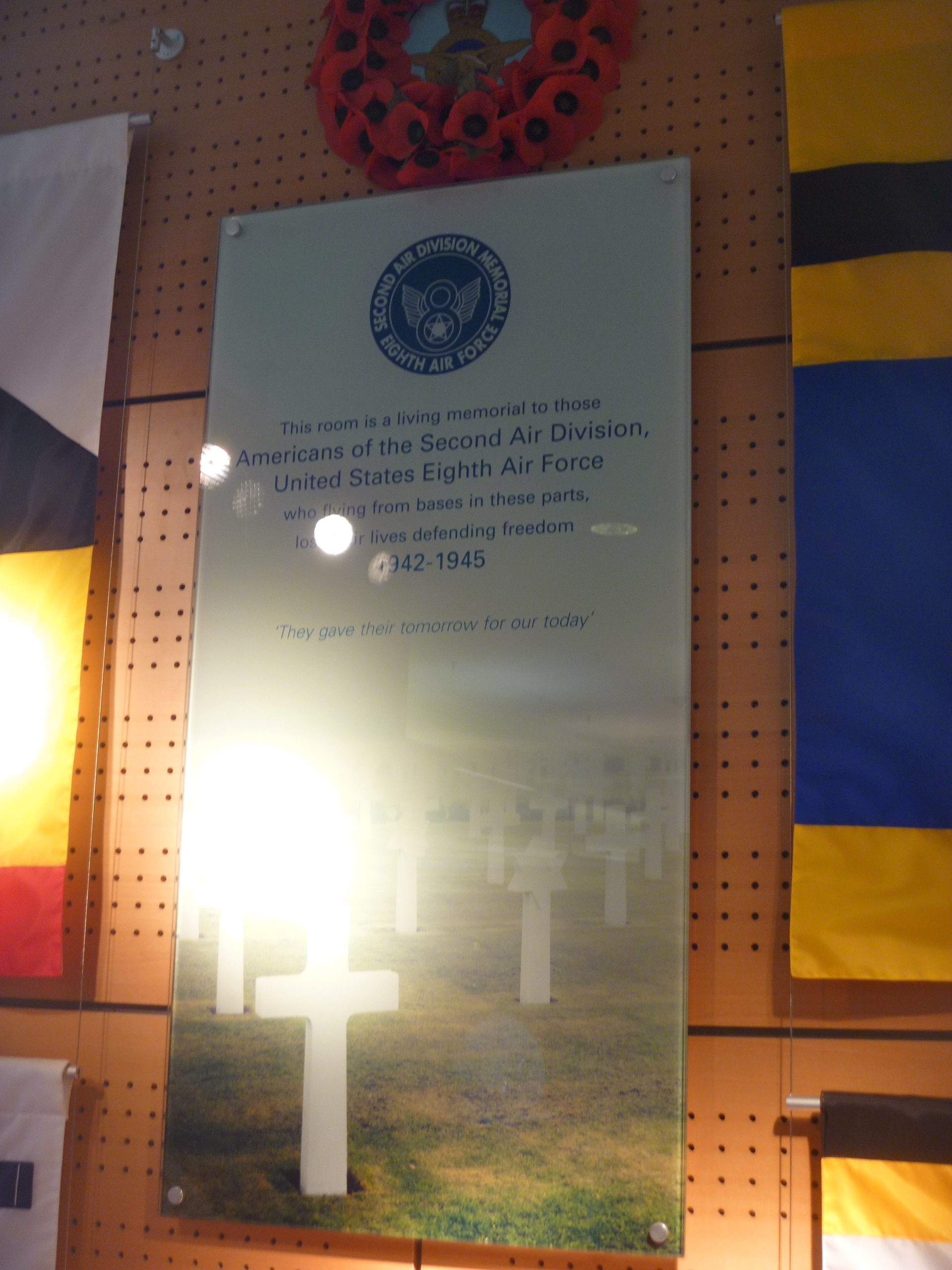
‘They gave their tomorrow for our today’
The staff and trustees were not going to let a little thing like a devastating fire get in their way and immediately after the fire work began on planning the replacement and a bigger library has now replaced the old one in a place of honour within the Forum.
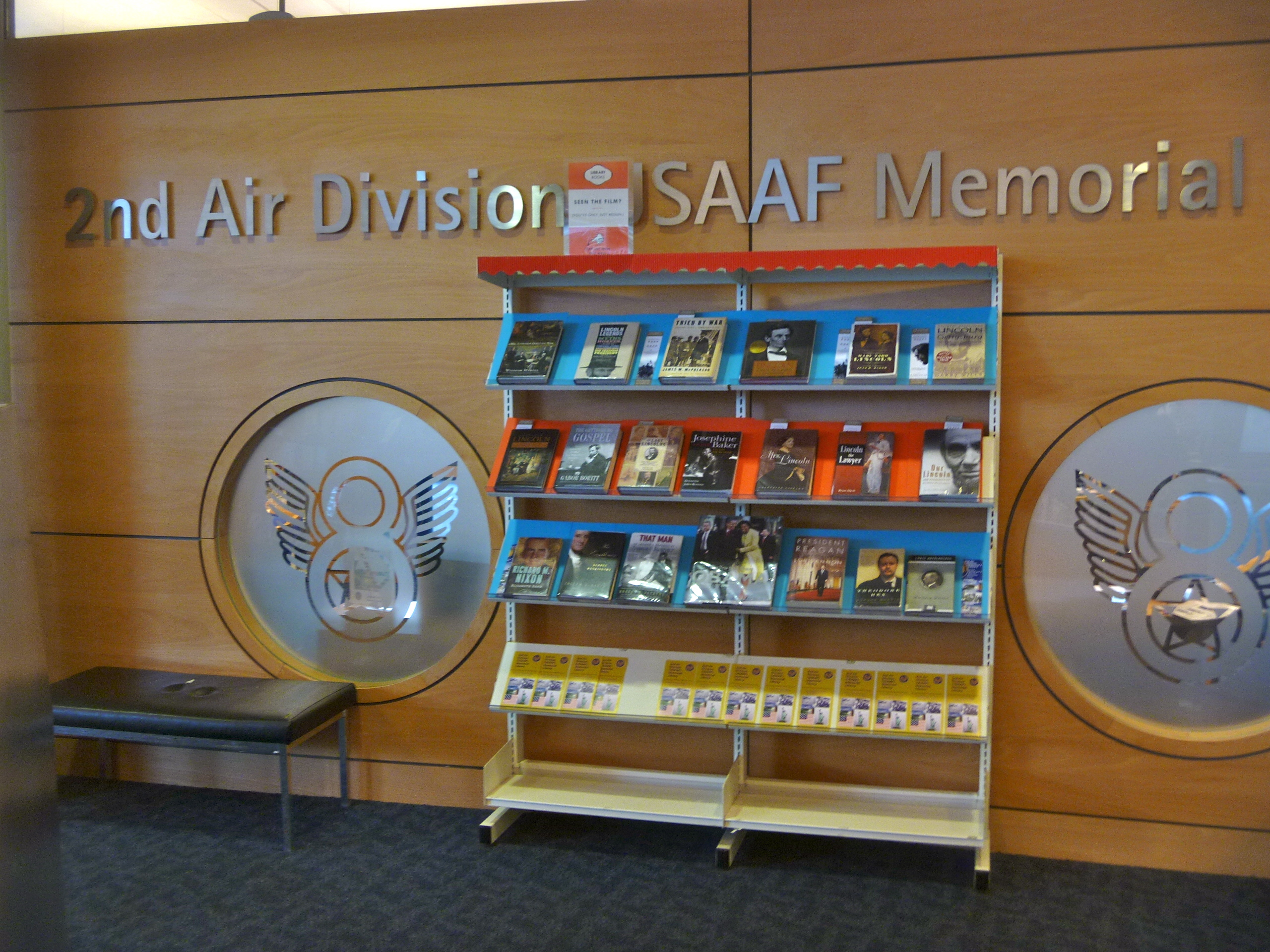
On this recent visit I took a closer look at the Memorial Library and its contents. Here is what it says about the library on the website :
“During the Second World War the United States Eighth Air Force despatched 3,000 bombers and fighters on a day’s operations involving more than 20,000 airmen, flying from airfields in East Anglia; the largest air strike force ever committed to battle. At full strength the Second Air Division, one of the Eighth’s three divisions, controlled fourteen heavy bomber airfields in Norfolk and northeast Suffolk, and five fighter airfields. Ketteringham Hall served as the Division’s headquarters. Nearly 7,000 young Americans, in the Second Air Division lost their lives in the line of duty. With peace, the Second Air Division chose to honour its casualties through a unique library in Norwich, a ‘living memorial’, not only a tribute to those Americans ‘who flying from bases in these parts gave their lives defending freedom’, but also an educational and friendship bridge between two nations.”
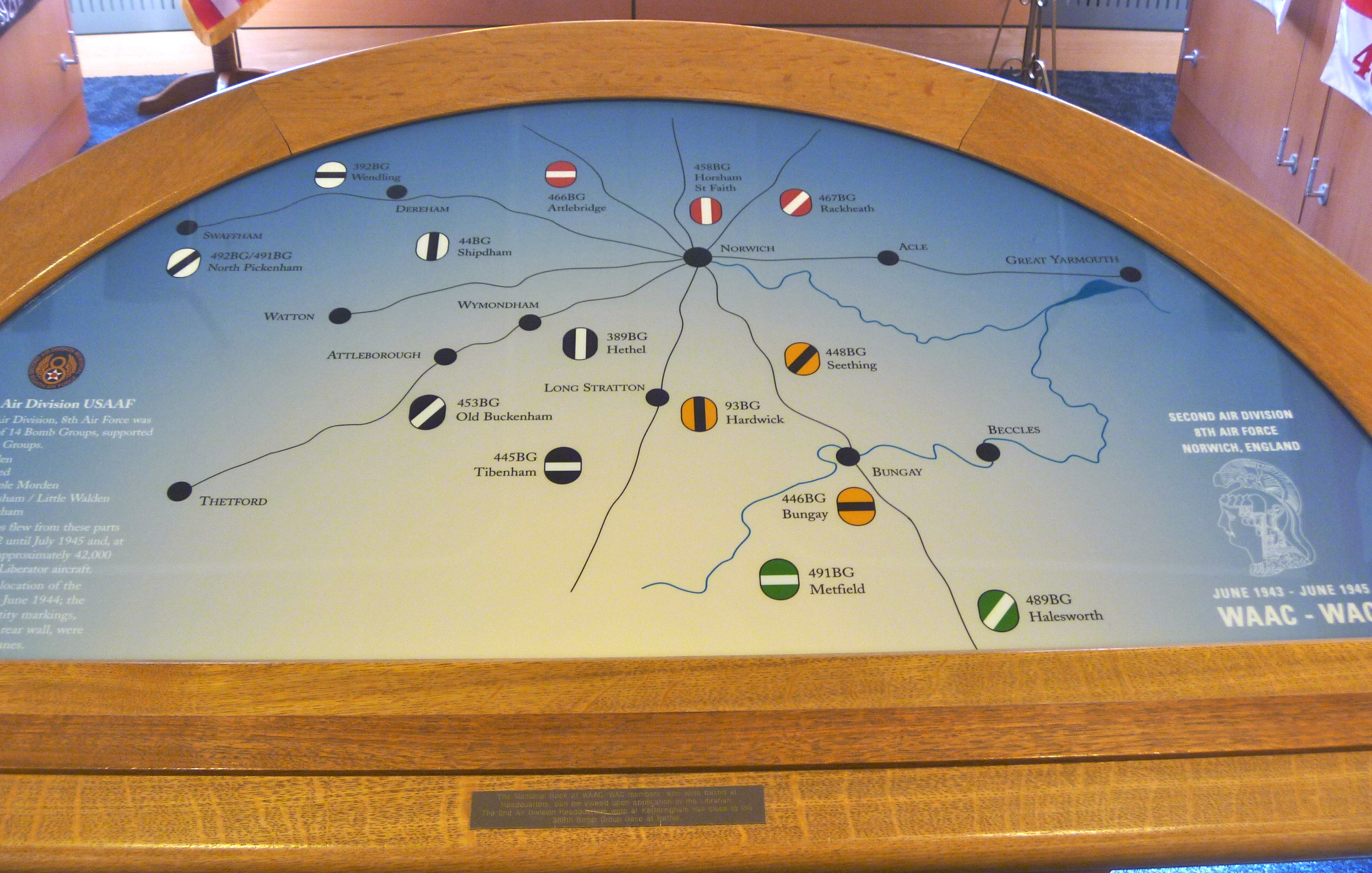
Locations of the USAAF bases in Norfolk and Suffolk
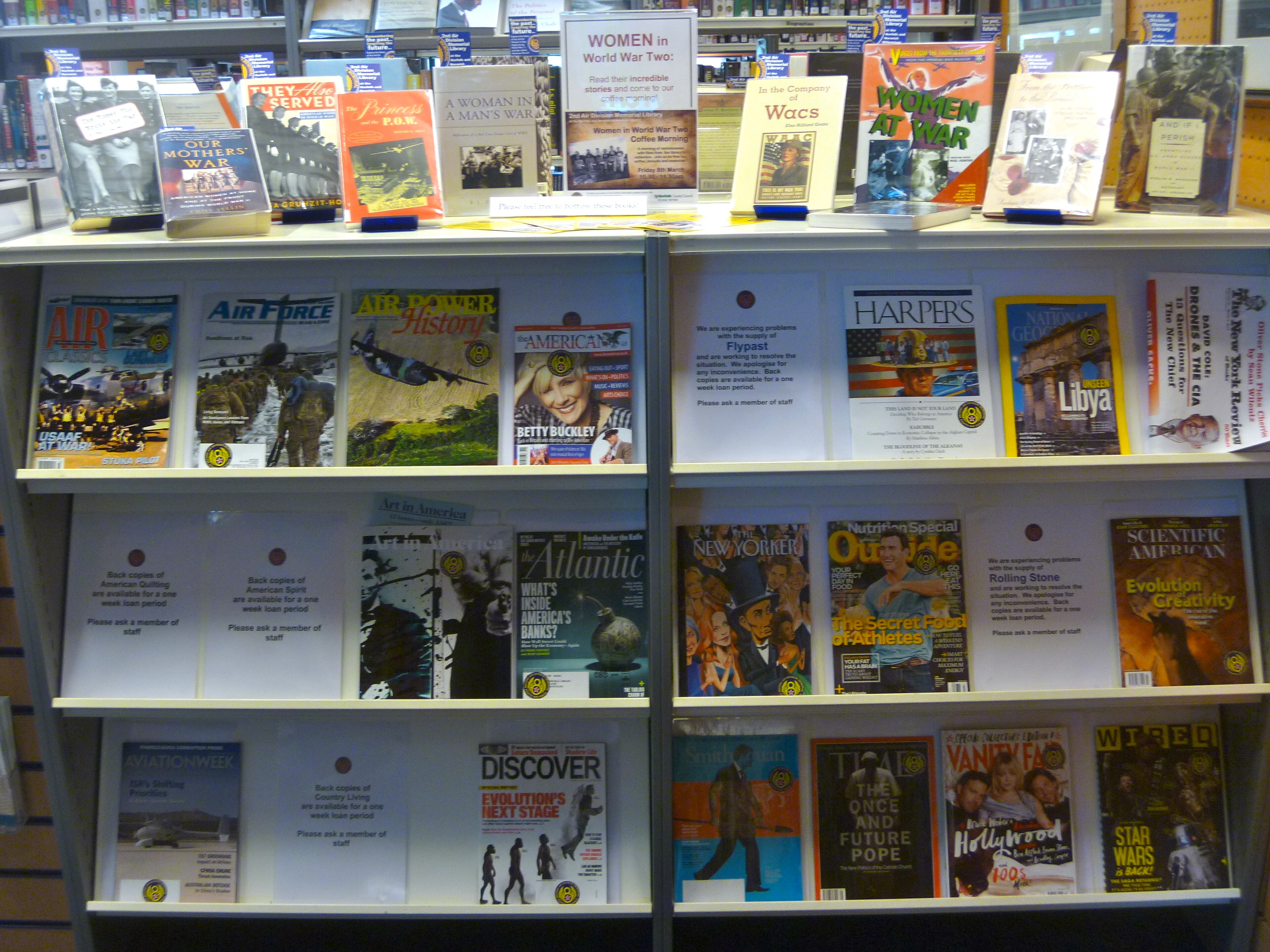
New books and US magazines display
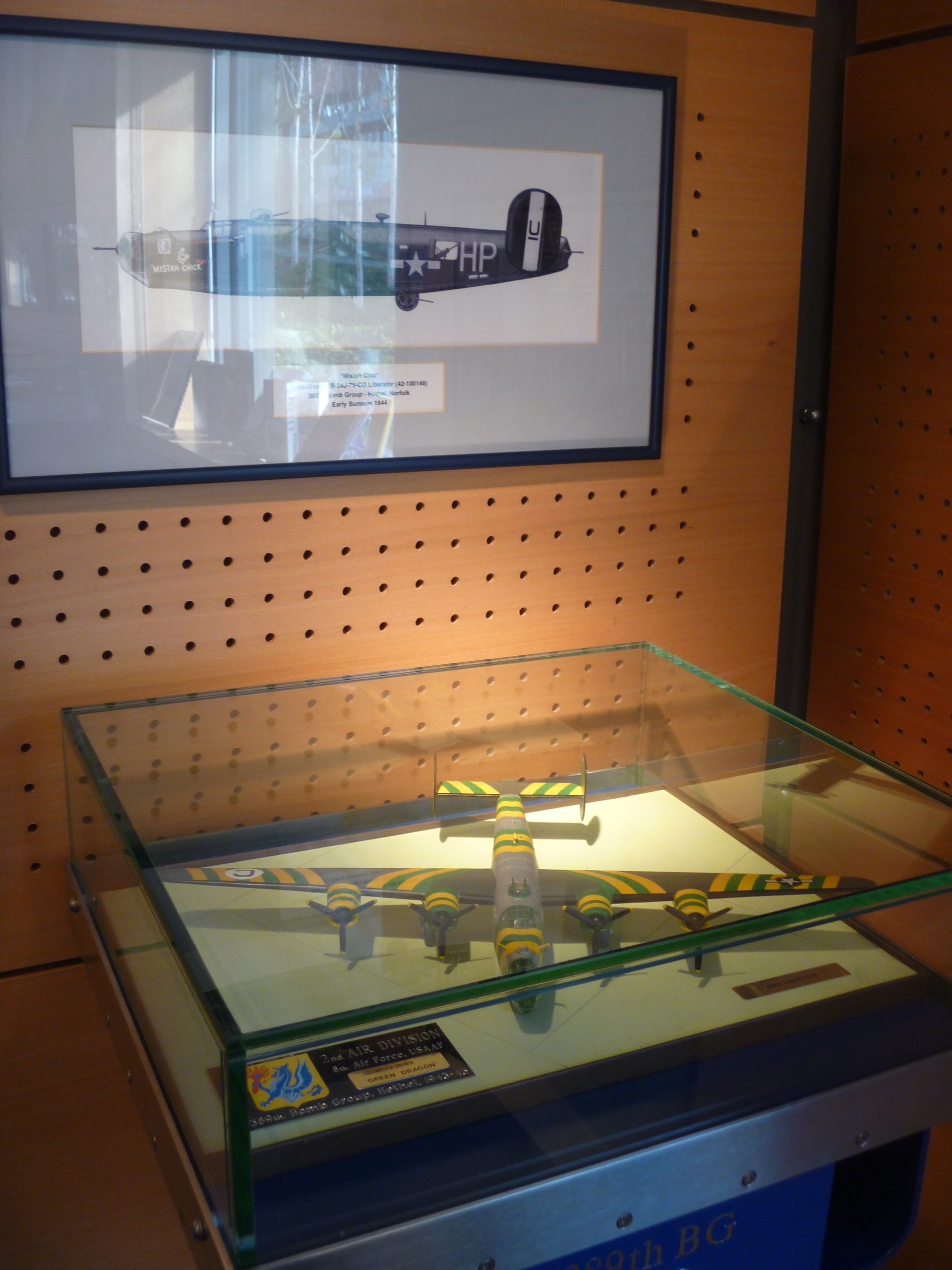
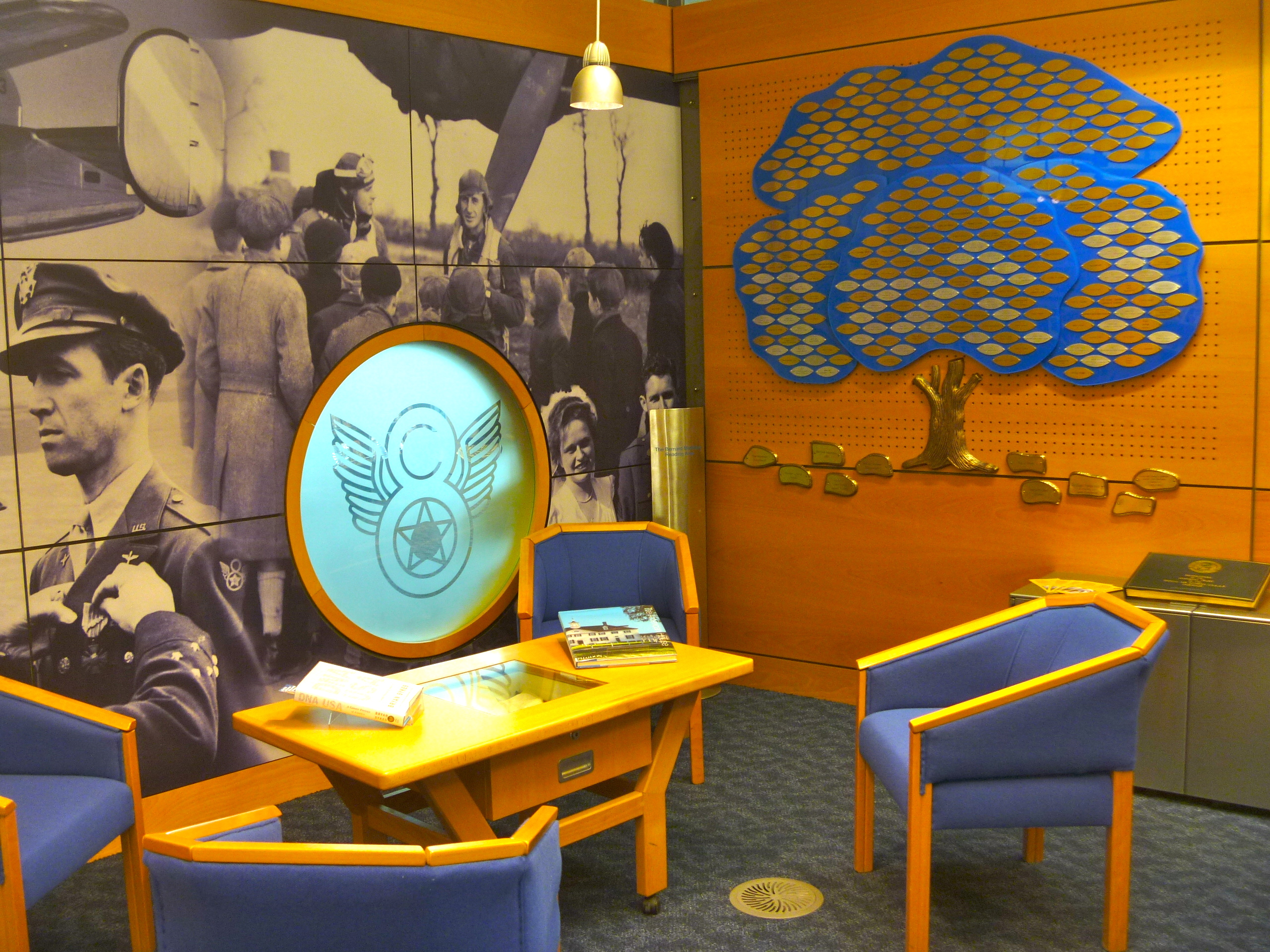
Other library displays
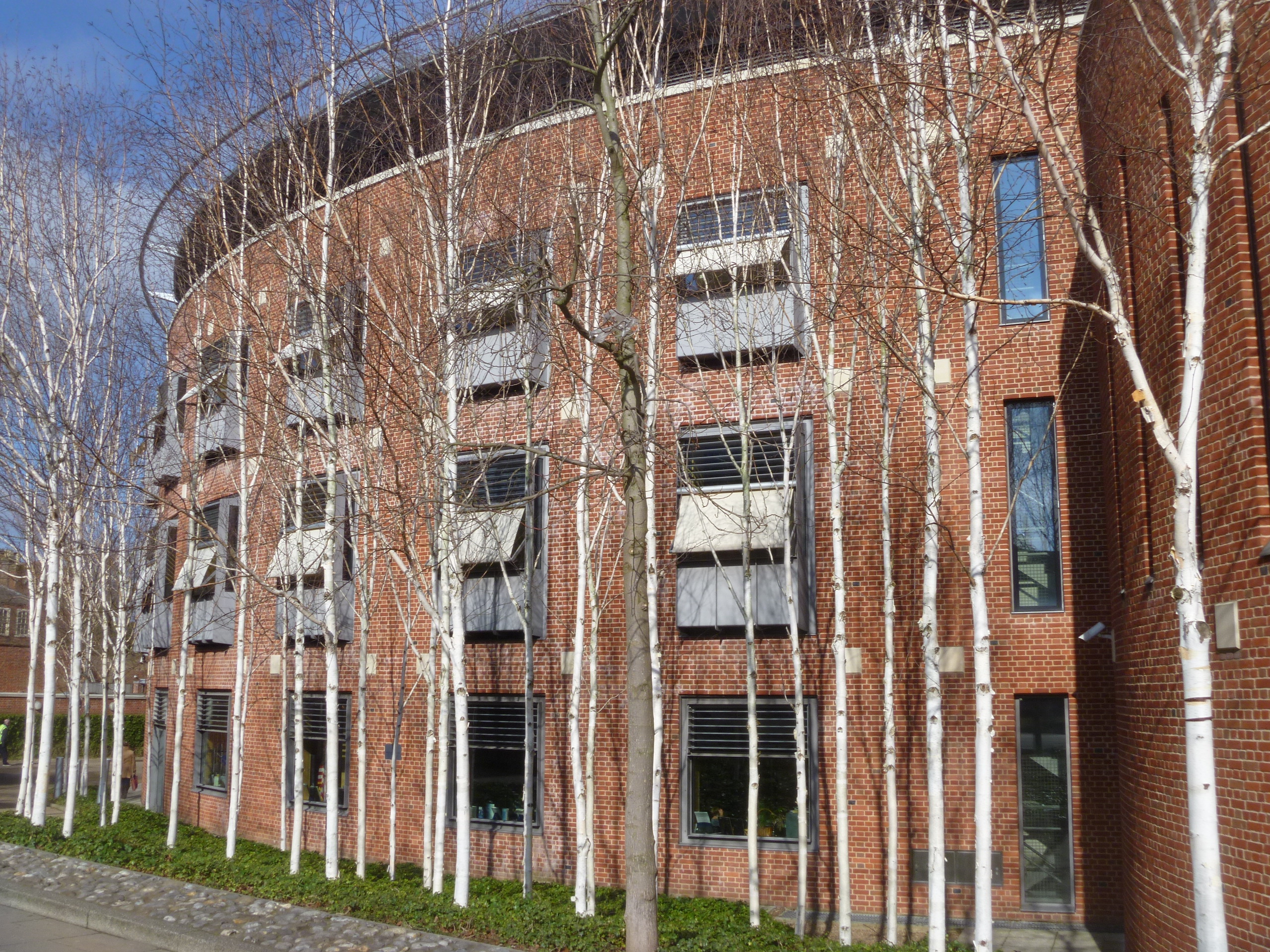
A number of American birch trees were given to the Trust by The Friends of the Memorial Library and planted just outside.
What a wonderful idea. I cannot think of a better living and ever-evolving memorial to those brave fighters who died in defence of freedom so far from home!
This week I was back in the city of my birth, and where I grew up, Norwich. These days almost everything looks smaller than I remember from my childhood.
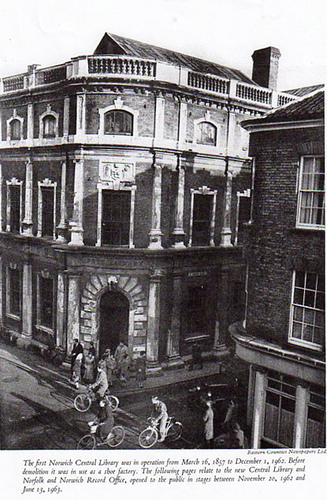
One of my earliest memories that lead to a lifetime’s love, and my career, was my first visit one Friday tea-time when I was about 5 to the local Norwich Public Library. It must have been summer as it was light and the whole family walked from where we lived, off St Stephen’s Road, to the library (opened in 1857) on the corner of Duke Street and St Andrew’s Street. It seemed a long way at the time but later I can remember running there with my sister and a neighbour ready for the Children’s Library opening time at 10am on each morning of one school summer holiday, ready to exchange our books.
The Norwich public library that I knew and loved. Photo credit here.
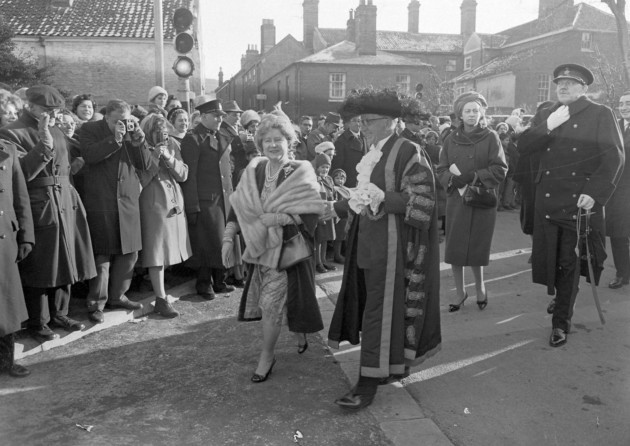
In 1963 Queen Elizabeth The Queen Mother opened a new public library in Norwich much nearer home for me! Photo credit here.
I was in the crush – on the front row – and I think somewhere in my ‘archive’ [shoe box] I have the newspaper snipping. Not a week went by for the rest of my time in Norwich when I didn’t visit that library at least once. I studied for exams there. Used the local history library for my Regional Essay and final year dissertation. I even worked there briefly between study and ‘proper’ job.
Norwich Public Library 1st August 1994
Amazingly, even though I had long since left Norwich to marry and bring up my family in far away Yorkshire, I was one of the last people to leave that library on the eve of the devastating fire that all but destroyed the building and its contents. I had even borrowed a book which I was happy to return by post to the temporary premises in Ber Street!
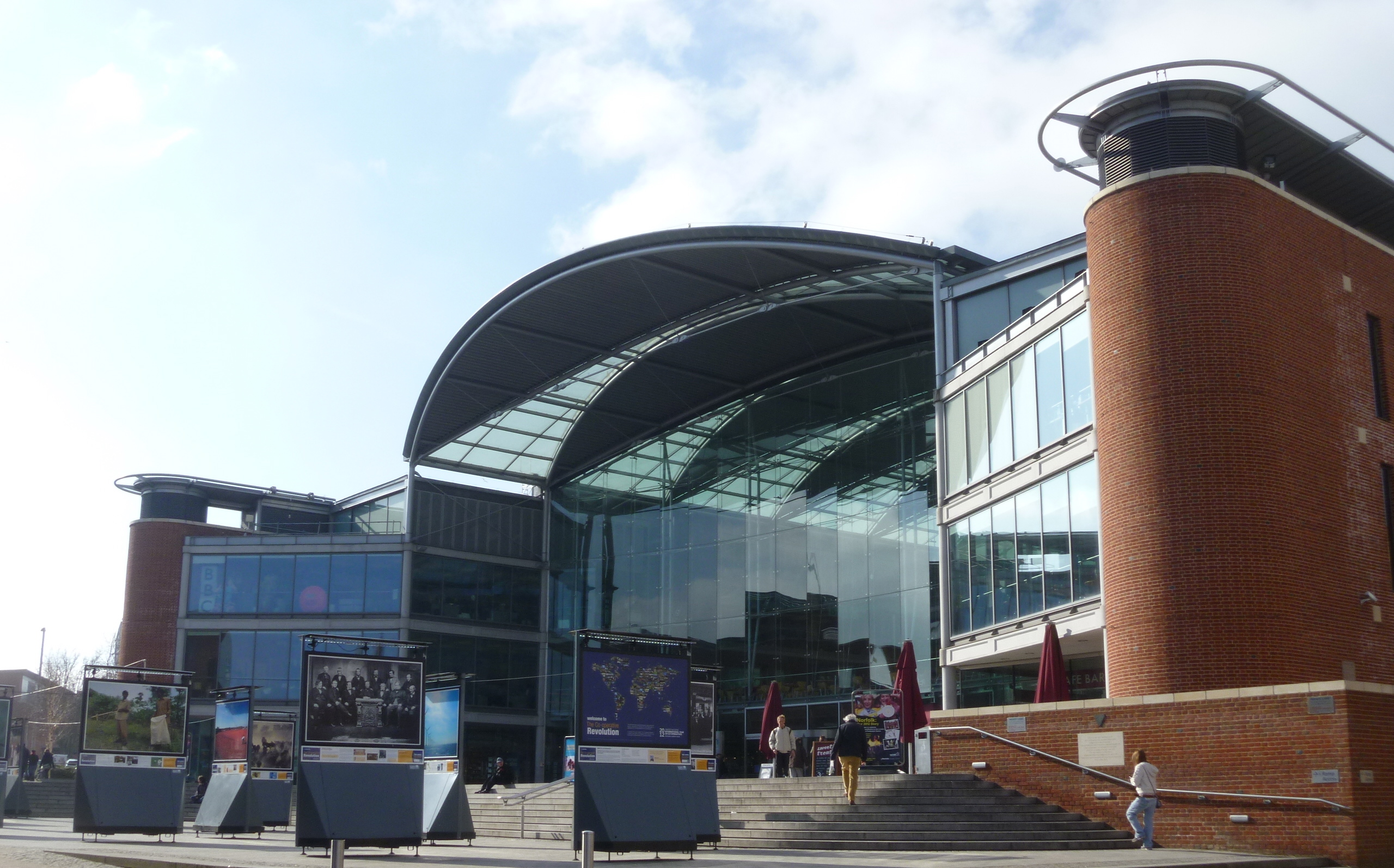
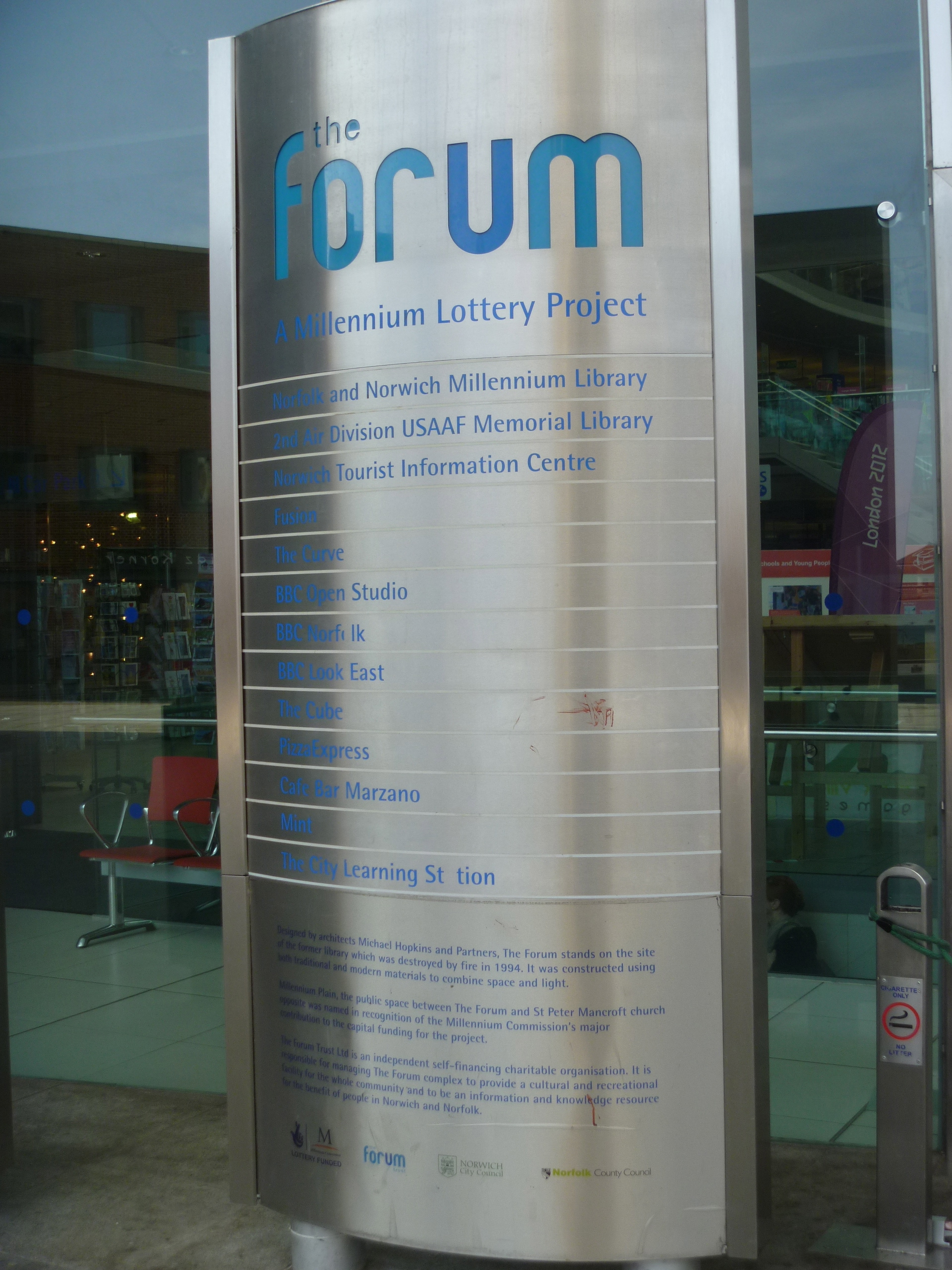
It took many years but eventually a new library was built and opened on the site. It is HUGE! So this is one library that is not smaller than I’d remembered in my childhood. The vast Norwich Forum which contains the Norfolk and Norwich Millennium Library opened in October 2003 and its building benefitted from The Millennium Lottery Project.
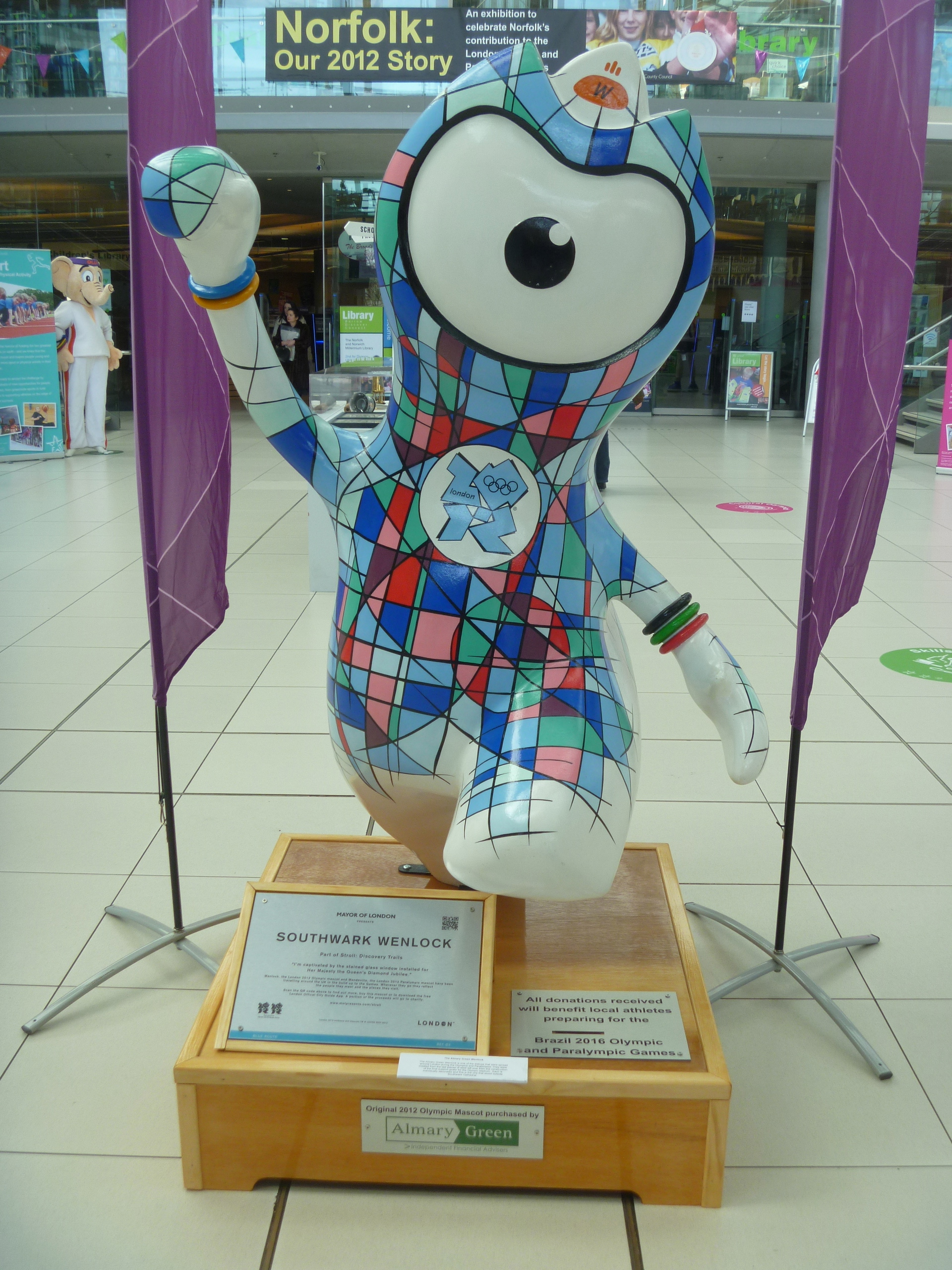
“An exhibition to celebrate our local contribution to the London Olympic and Paralympic Games. Since the Olympic and Paralympic flames were handed from Beijing to London, Norfolk has embraced the 2012 opportunity. We have seen over four years of exciting projects, innovative programmes and celebrations large and small to ensure that these once-in-a-lifetime events will never be forgotten in our county.”
The Forum is open everyday (except Christmas day and Boxing Day) from 7am until 11.30pm. Along with the library there are cafes and a Pizza Express, the BBC Norwich studios, exhibition space and the Tourist Information Centre and shop.
It’s been declared that the Norfolk and Norwich Millennium Library has been named as the UK’s most popular library for the sixth year running!
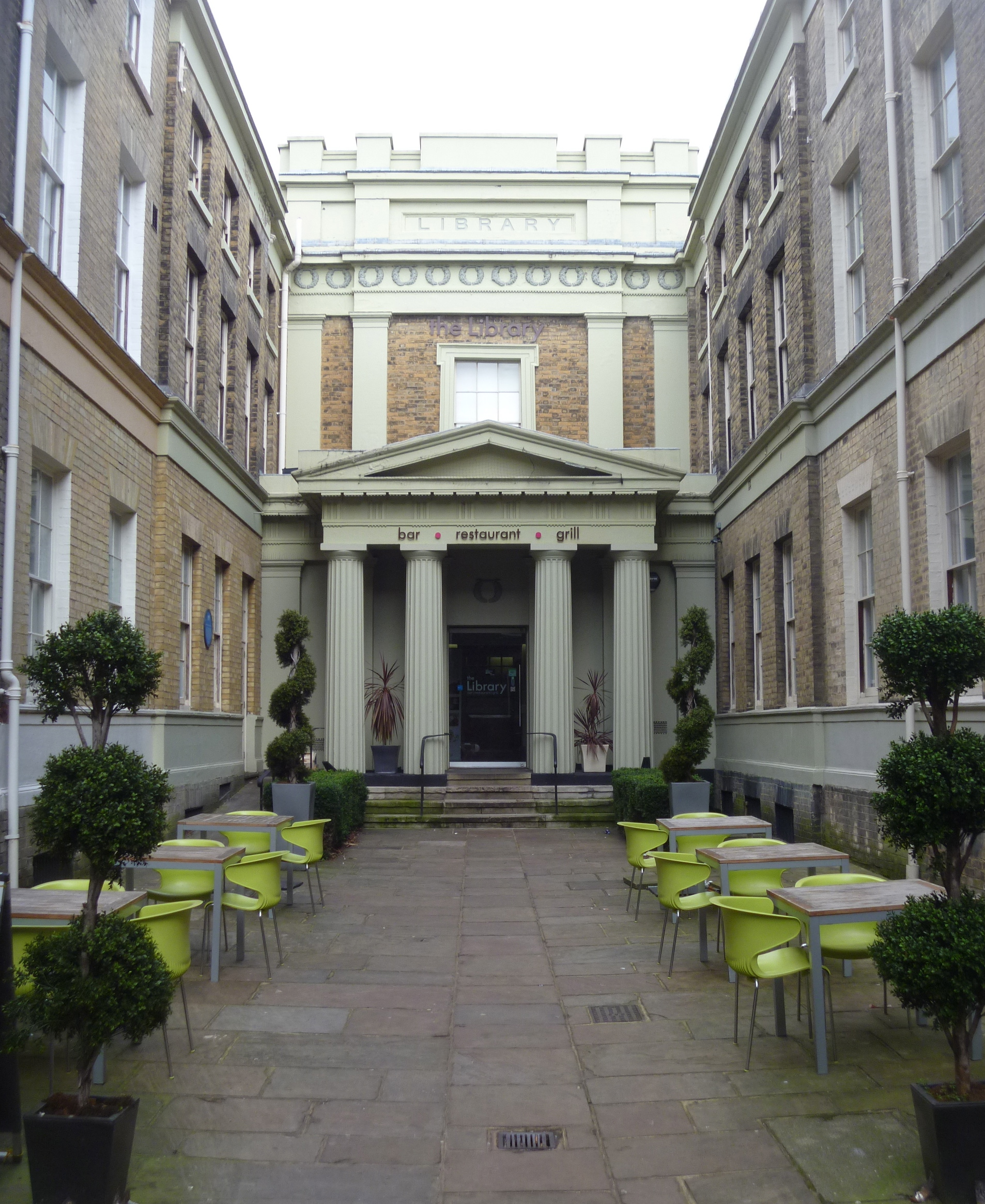
There was another library in Norwich when I was growing up although I never went inside. The Norfolk and Norwich Subscription Library was instituted as a private library in 1784. It eventually closed in 1976. It’s stock was transferred to the Norwich School and forms the basis of its Local History Library.
The Library, Norwich
I have now been in the N&N Subscription Library as these days it is a restaurant. We ate a very good meal there on Wednesday evening.
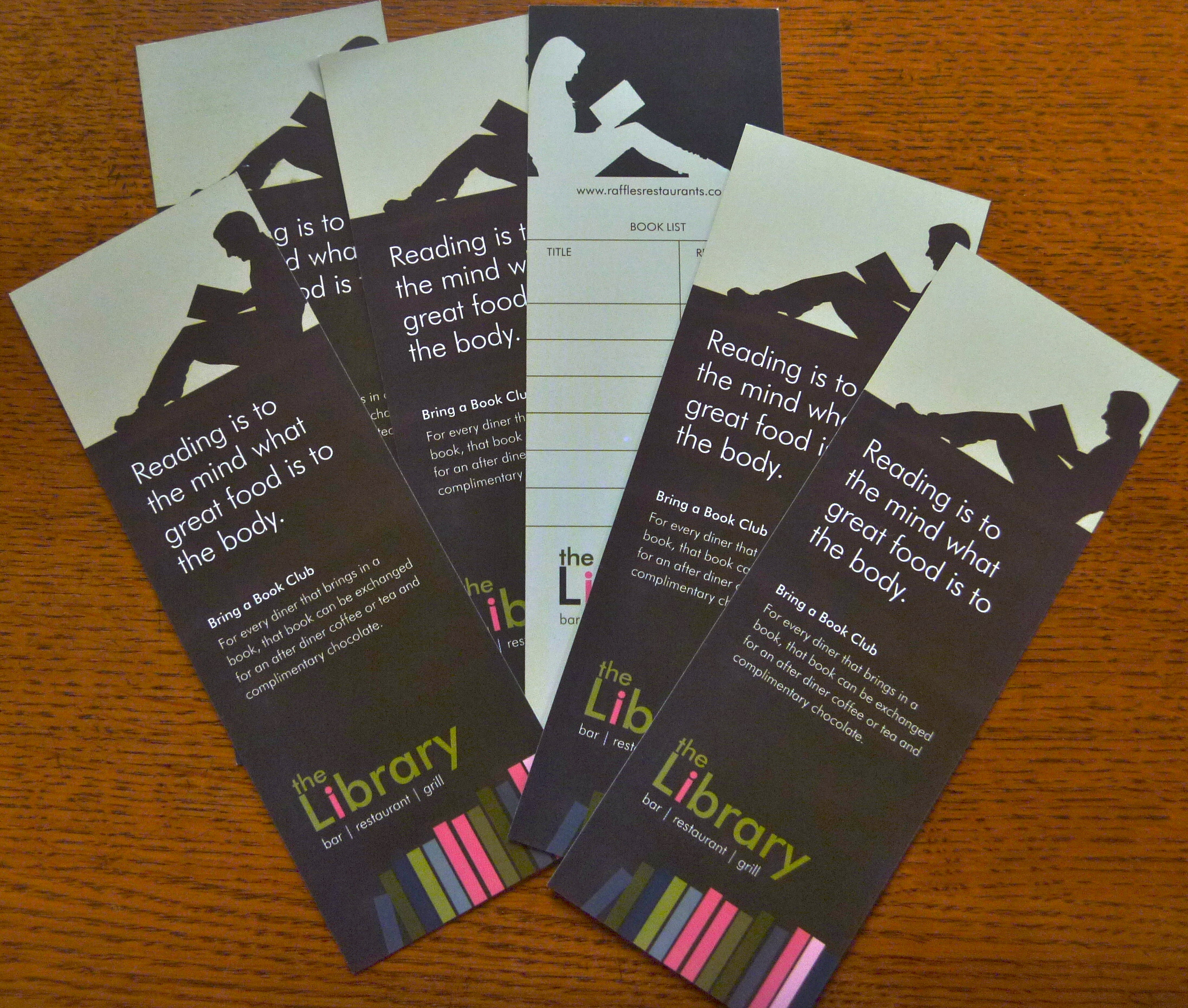
“Reading is to the mind what great food is to the body”
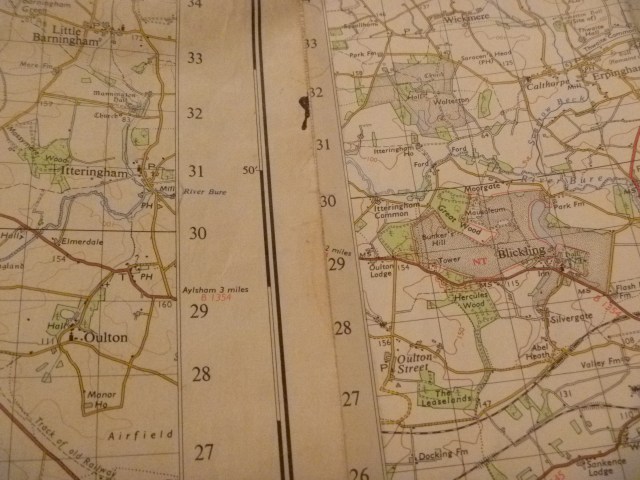
The walk crossed the join of my two 1950s treasured OS maps of Norfolk (Sheets 125 and 126 Seventh Series)
“Blickling Hall is a masterpiece of Jacobean architecture famed for its spectacular long gallery, superb library and exceptional gardens. The estate has been home to Falstaffs, Boleyns and Saxon Kings. We walk from Blickling Hall, in the heart of the Norfolk countryside, through the 5000 acre estate northwards to Wolterton, the seat of the Walpole family. From Wolterton we follow country lanes to Mannington Hall, with its famous gardens, before turning south to Itteringham for lunch. After lunch we head back to the Blickling Estate for tea. 11.5 miles.” [From the ATG-Oxford website]
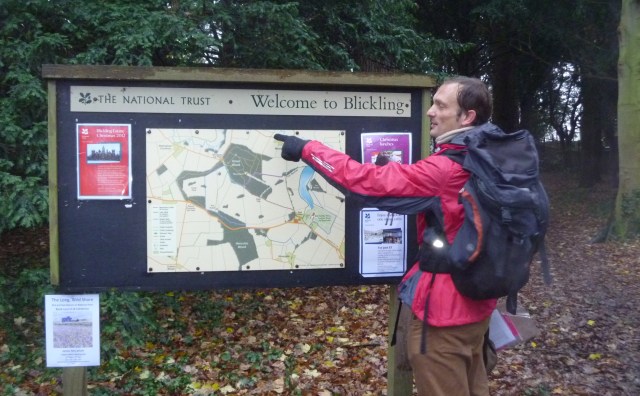
Adrian, our leader, shows the route we’ll follow
This has been my day today! ATG Oxford The Alternative Travel Group organise walking holidays in this country and abroad – both escorted and self-guided. In fact my walking holiday in Alsace in June was an ATG (Footloose) holiday. As a supplement to these, mainly summer holidays, ATG organise a series of Saturday Walks throughout the year in order to raise money for chosen charities and as a ‘subtle’ marketing ploy; for we are like-minded people and keen to hear others’ experiences of walks.
As I left Norwich snow began to fall and in the car the outside temperature measured -1C. By the time I left the outskirts of Norwich behind me the snow had turned to rain and the temperature had risen to +1C. The group of intrepid walkers met by the Buckinghamshire Arms and we set off in misty drizzle past the beautiful Jacobean Blickling Hall and, after a quick look inside the church (even colder than outside!), began our muddy tramp around the icy Blickling Lake and across the estate.
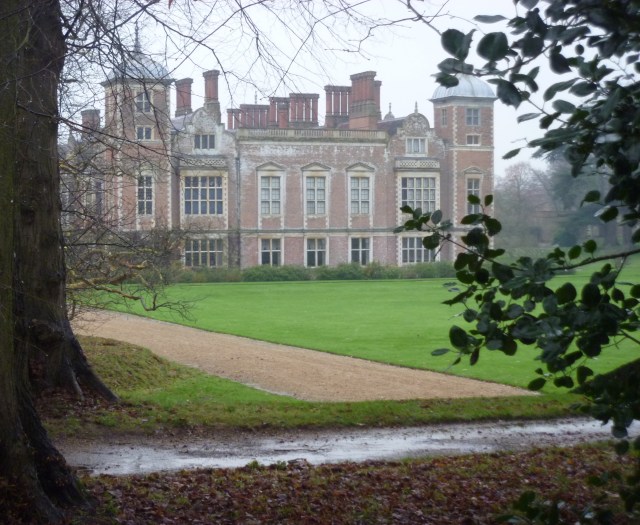
Rear of Blickling Hall one-time home of Anne Boleyn
The half frozen lake at Blickling
Our next Hall – a Palladian design – Wolterton appeared empty and unused but looked quite beautiful from across the Lake. There’s a ruined church in the field next door. Read here about Simon Knott’s delightful birthday visit to the ruin.
Wolterton Hall across its lake
The Ruin of St Margaret’s Wolterton
As we tramped through muddy fields and along wet lanes I talked with many of the group (about 17 of us) about where we had come from. Had we been on any of the holidays? Had we been on Saturday Walks before – if so where? I don’t think there were any local people most had come from London and Cambridge and one or two of us from further afield and making a weekend (or longer) of it – Leeds, Manchester, Stow-on-the-Wold.
Mannington Hall
Our next and final Hall was the lovely Tudor Mannington Hall whose gardens are renowned in the area and where popular summer events are held. It looked rather bleak today but it definitely has a lived-in feel and is the home of the current Lord and Lady Walpole (they own Wolterton too). Read here an interesting article about owning two stately homes and access to them.
Saxon Church Remains
Our walk continued across more muddy fields and we were just able to glimpse the remains of the Saxon chapel at Mannington. Not far now …
Lunch is about to be served at Itteringham Village Hall
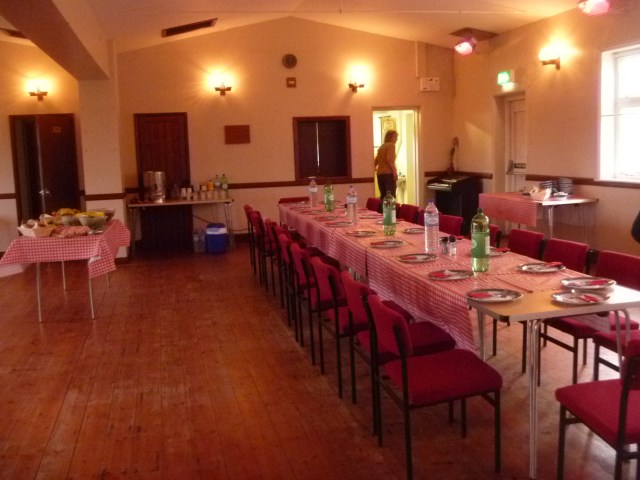
And we arrived at our lunch spot. ATG lay on a super lunch – mulled wine, creamy hot soup, a choice of salads, breads, meats and cheeses. I noticed some chocolate tarts for pudding but opted for fresh fruit – grapes and a tangerine. The lunch was served by ATG’s Sarah in Itteringham Village Hall or The Bure Valley Community Centre as it is known locally. It’s right opposite another Norfolk flint church – St Mary’s Itteringham – with its neighbouring ruined chapel and the preservation of which has been aided by The Churches Conservation Trust.
St Mary’s Itteringham
The lunch was served at the 7.2 mile point so a further 4 miles were walked to our destination. The rain began to fall as we re-entered the Blickling Estate and passing The Grandstand – a strange and rather industrial-looking building (erected for the purpose of viewing the shooting and horse racing on the Blickling Estate) and is now a holiday-let.
We were glad to spot the Blickling Lake and smell the wood smoke of the stoves in the Buckinghamshire Arms where afternoon tea was served. There we heard more tempting morsels about dry, stony Italian tracks, drinks on sunny terraces, gorgeous picnics served on craggy peaks in Spain and Italy and generally about locations that had rather more appeal by 4pm on a very wet, cold Saturday afternoon in December.
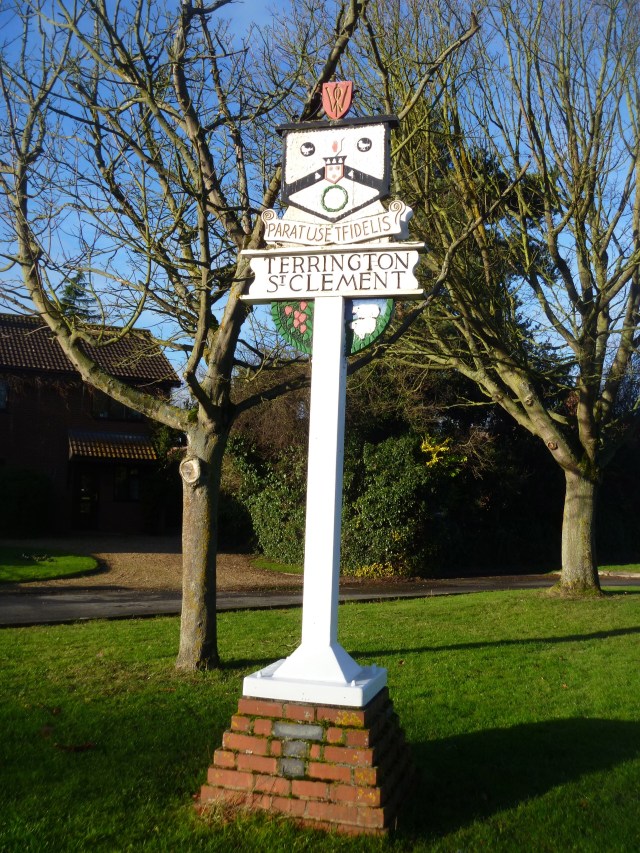
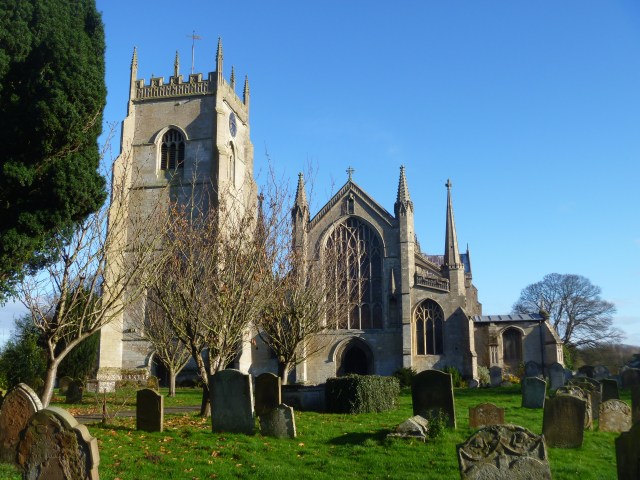
This morning whilst sipping my morning tea and flicking through a back issue of Country Life (17 October 2012) I noticed a single page in a series devoted to things to see in country churches. My eye was caught by the name Terrington Saint Clement and the amazing 17th century painted font cover. I recognised the name of this village and, checking my road atlas, found it lay very close to my route to Norwich; just in Norfolk and west of Kings Lynn. As I just happened to be driving down to Norwich this morning I decided this would be just the spot to have my picnic lunch and take a look at the church and the stunning font cover.
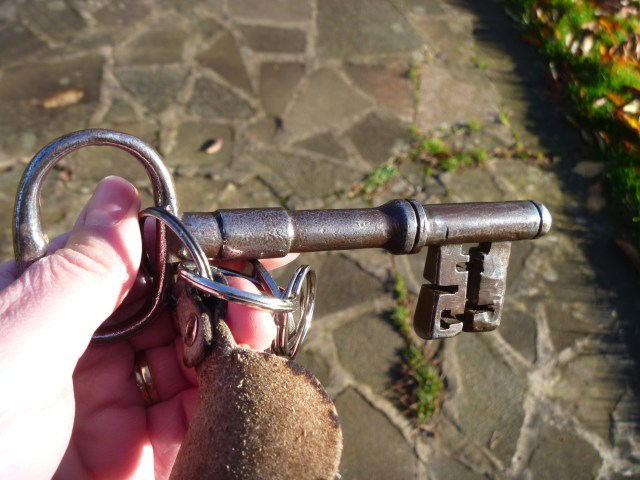
It was a beautiful day for the drive and after my quick picnic lunch I headed for the church door. Like many churches it’s kept locked but the notice on the door told me to call at the house next door to collect the key. So I did.
The Church Door Key
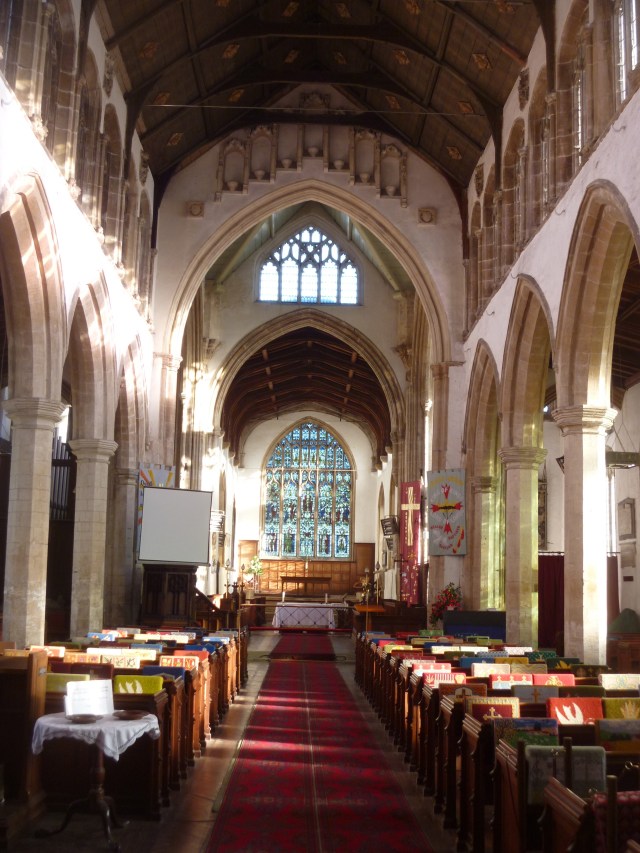
Once inside I could see what Simon Jenkins meant when he said “This church is a hymn to light”.
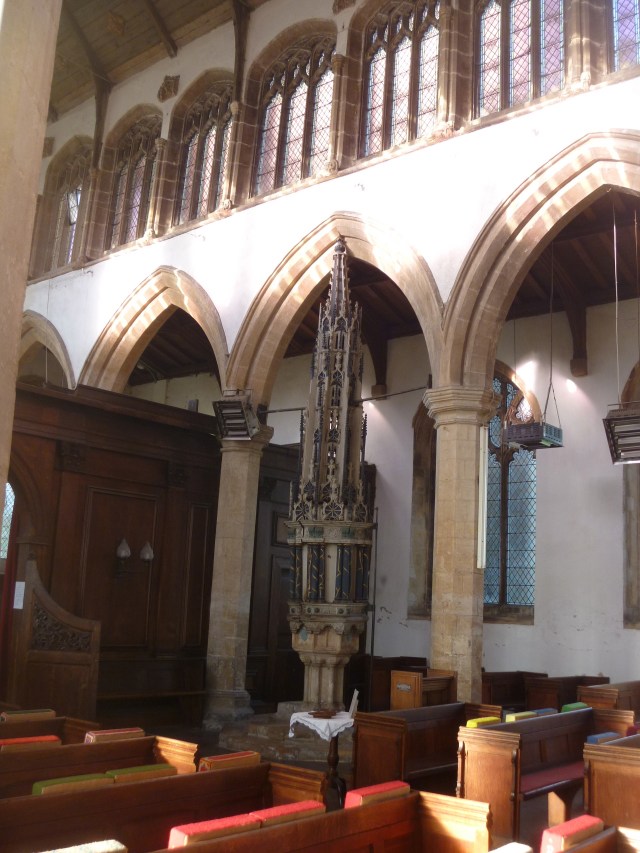
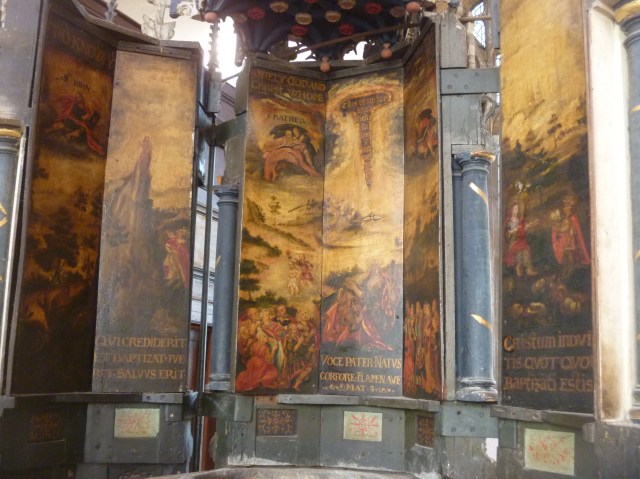
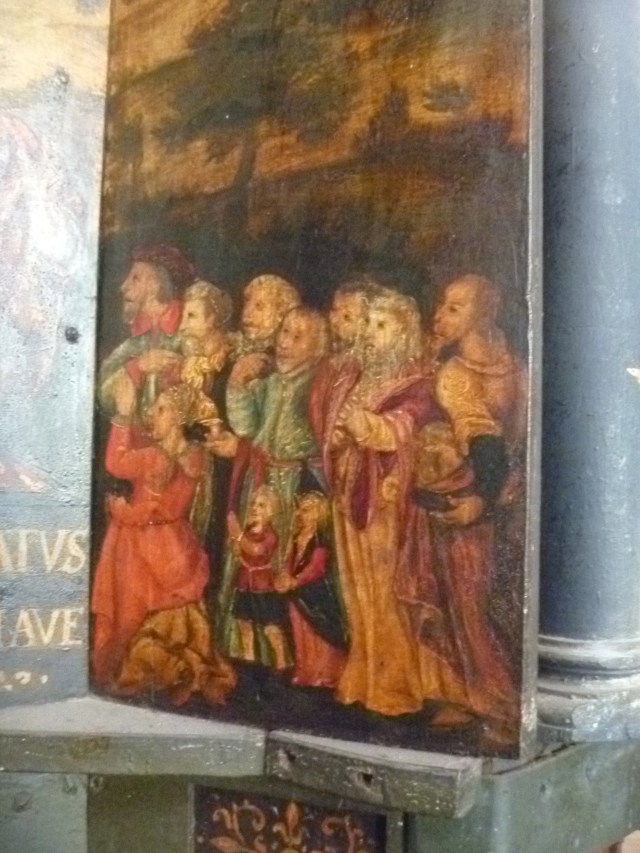
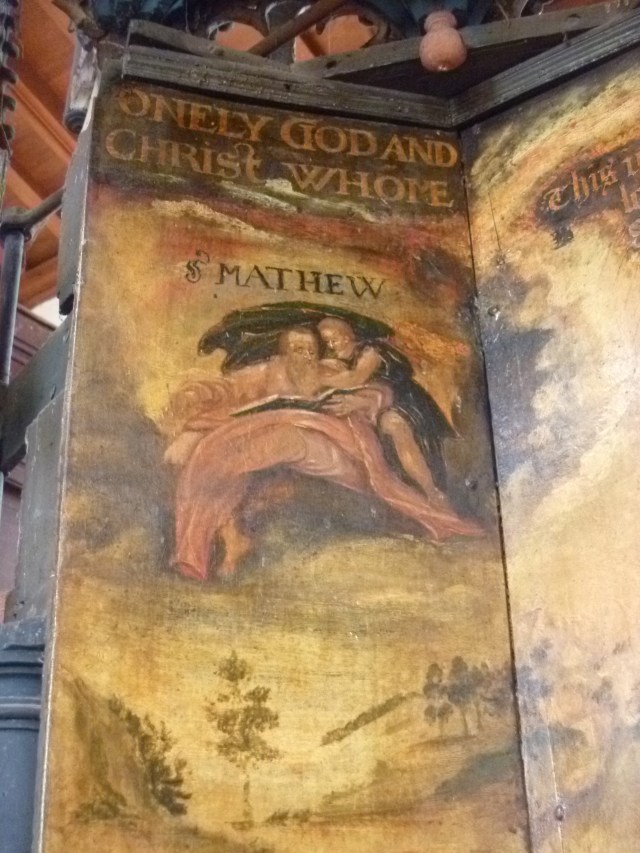
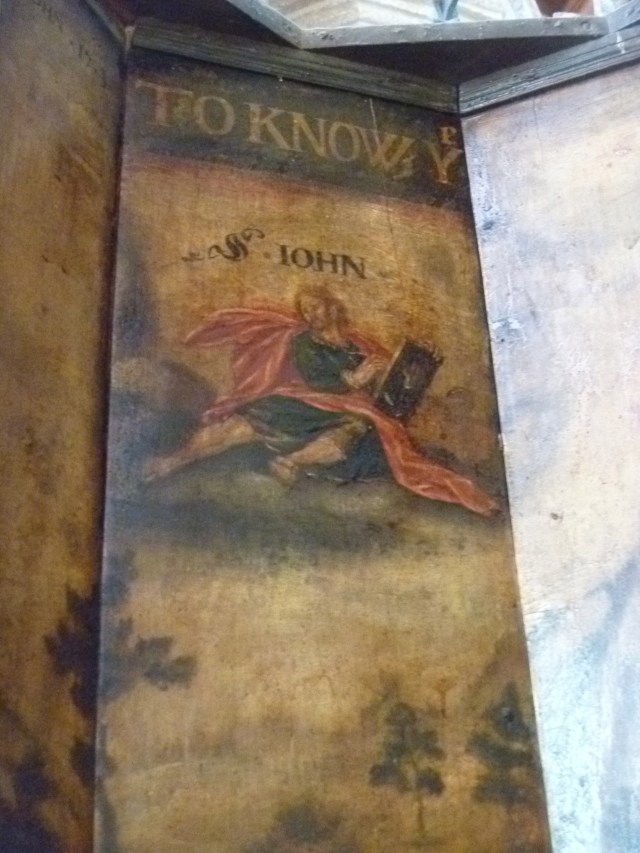
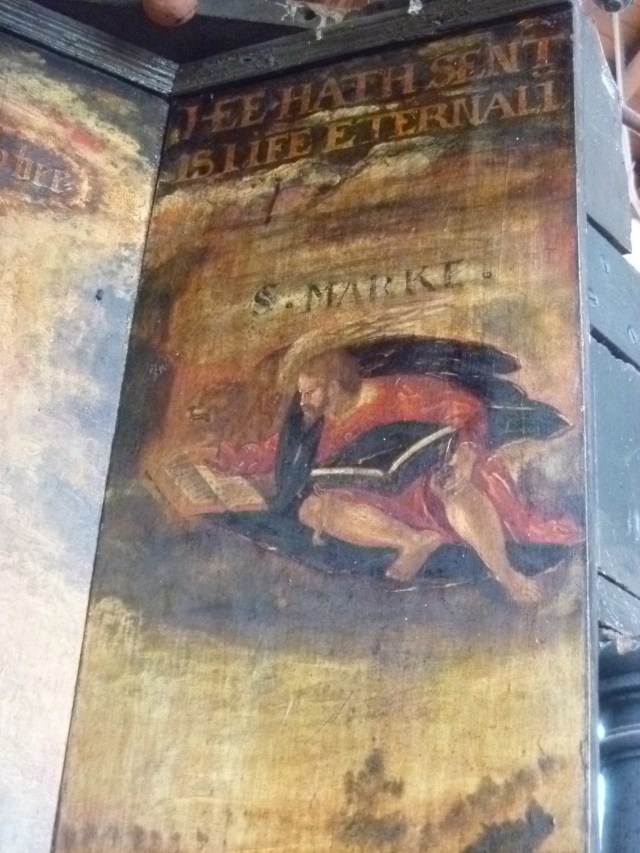
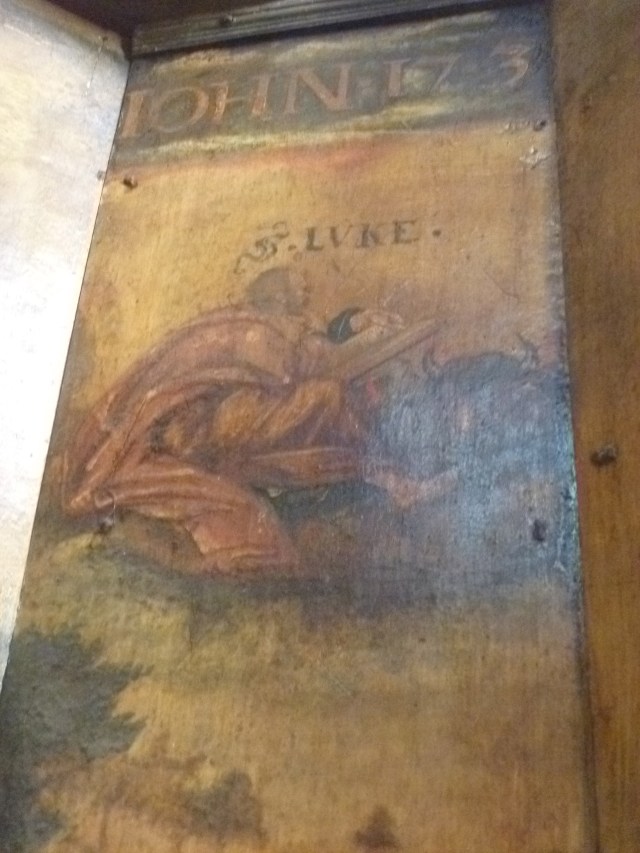
The font is indeed impressive. The triptych was closed but I gently lifted the latch and the whole opened up to display the 17th century paintings of Saints Matthew, Mark, Luke and John and the baptism of Christ by Saint John The Baptist. The Gothic font cover, painted blue, rises up almost to the church rafters.
The font cover
The open triptych
Saint Matthew
St John
St Mark
St Luke
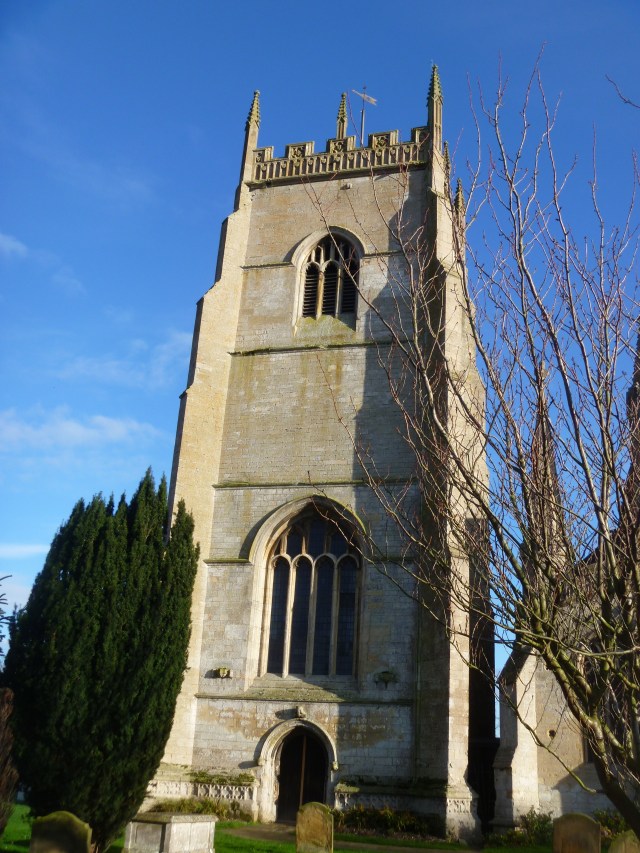
Interestingly, the tower is not attached to the church itself. Jenkins suggests that this was probably due to the soft soil of this marshland region.
“The tower came into its own during a flood in 1670 when the community gathered there and were fed by boat from King’s Lynn” This could easily have happened again this week since I noticed that many of the fields around Terrington and in the Fens were looking pretty wet, to say the least.
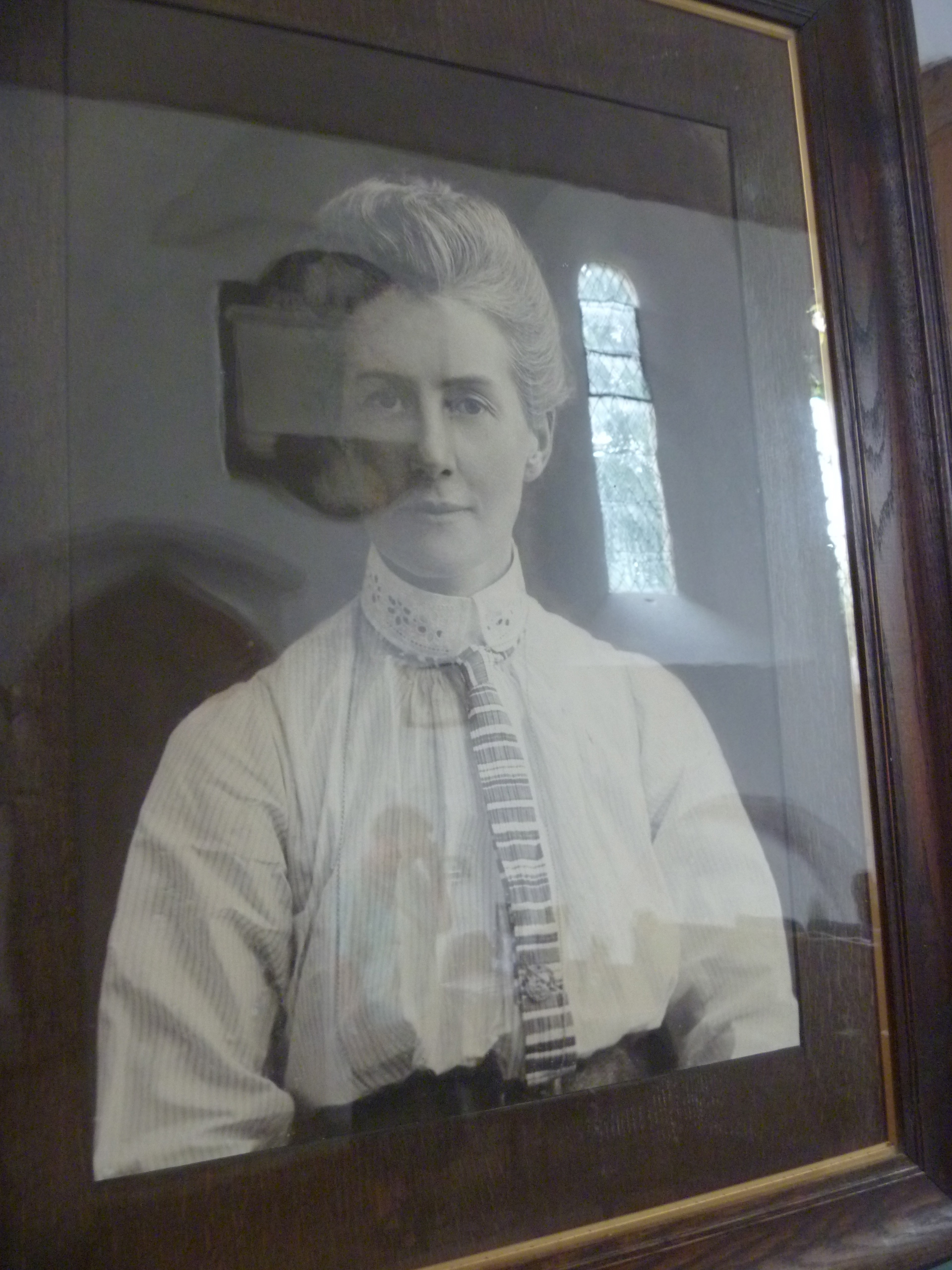
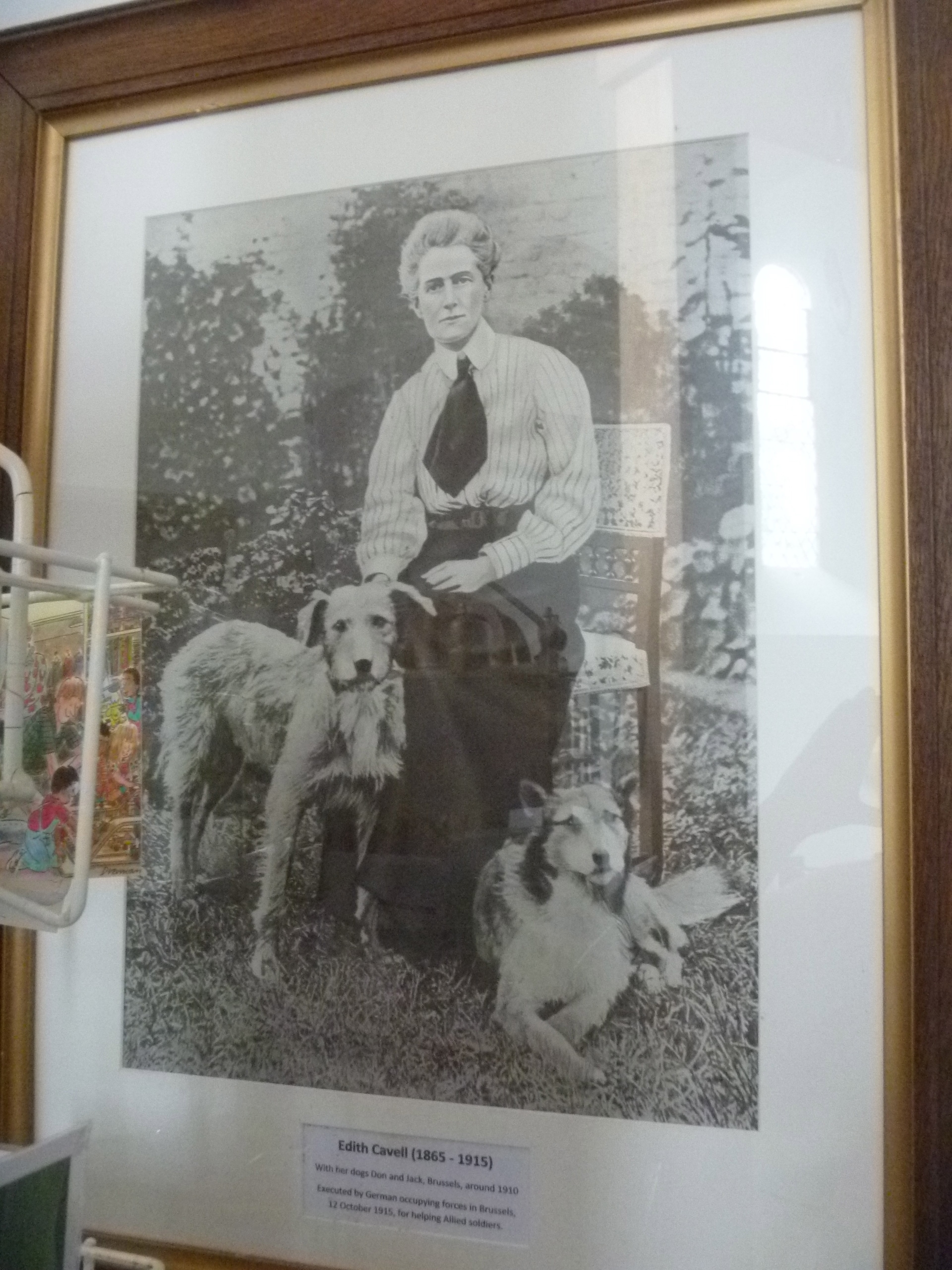
Photograph of Nurse Edith Cavell displayed in St Mary’s Church, Swardeston
Growing up in Norwich I have always known about Edith Cavell our local Norfolk heroine of the First World War. My school bus passed by the Memorial to her located outside the Erpingham Gate at Norwich Cathedral, her grave lies within the Cathedral precincts and we had a school house called ‘Cavell’.
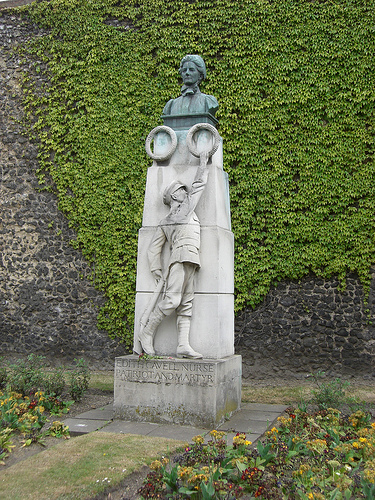
The Norwich Memorial to Edith Cavell
Born at Swardeston House in 1865 the family of the Reverend Frederick Cavell moved the following year in to the new Swardeston Vicarage which Edith’s father had paid to have built on land next to his parish church of St Mary the Virgin.
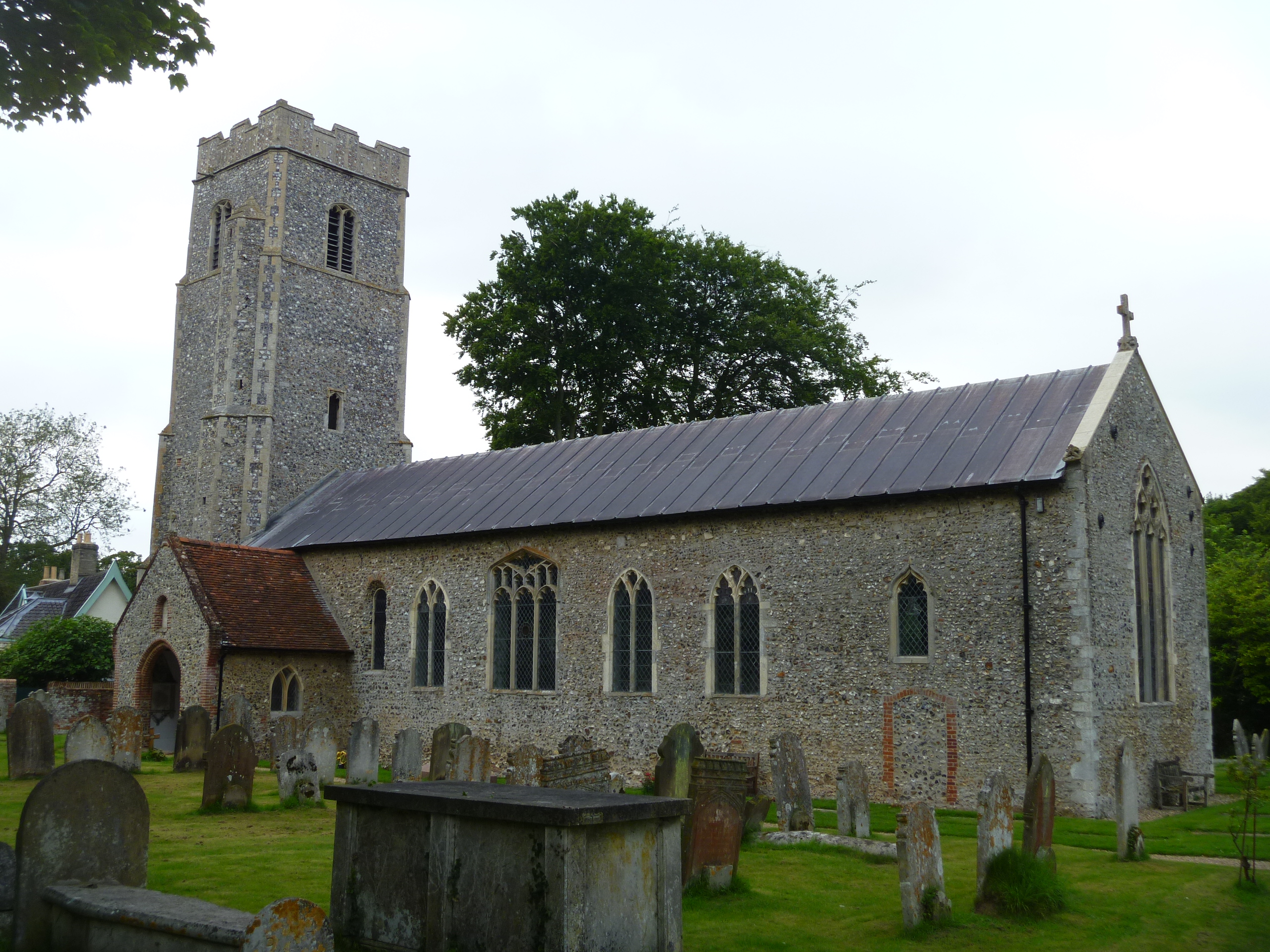
St Mary’s Church, Swardeston
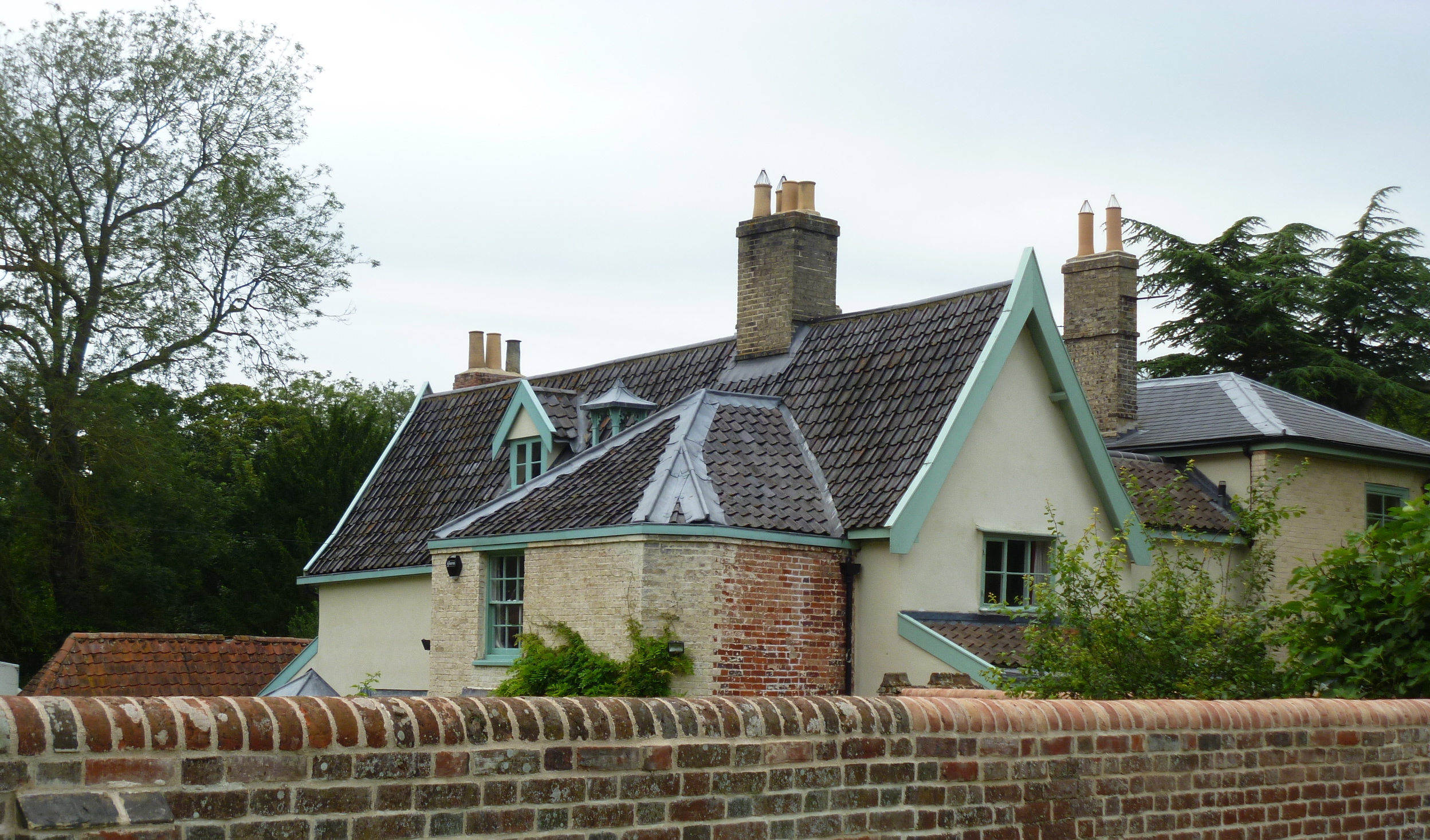
Swardeston Vicarage Today
It was here that Edith Cavell spent her early days. You can read much more about her early life, interests, education and travels here.
Edith Cavell in 1910 with her two adopted stray dogs Jack and Don (photo in Swardeston Church)
She had worked in Brussels, become fluent in French and later trained as a nurse working at times in both London and Brussels. She later turned to nurse training and such was her attachment to Belgium that when she heard of the invasion of Belgium by the Germans in 1914 she returned to that country and was already nursing there when Britain declared war on Germany on 3rd August 1914.
To Edith all men were equal and to be treated so at her hospital. She not only treated and nursed German and Belgian soldiers she later became involved in assisting British soldiers who were wounded and cut off from their retreating army beyond the front line.
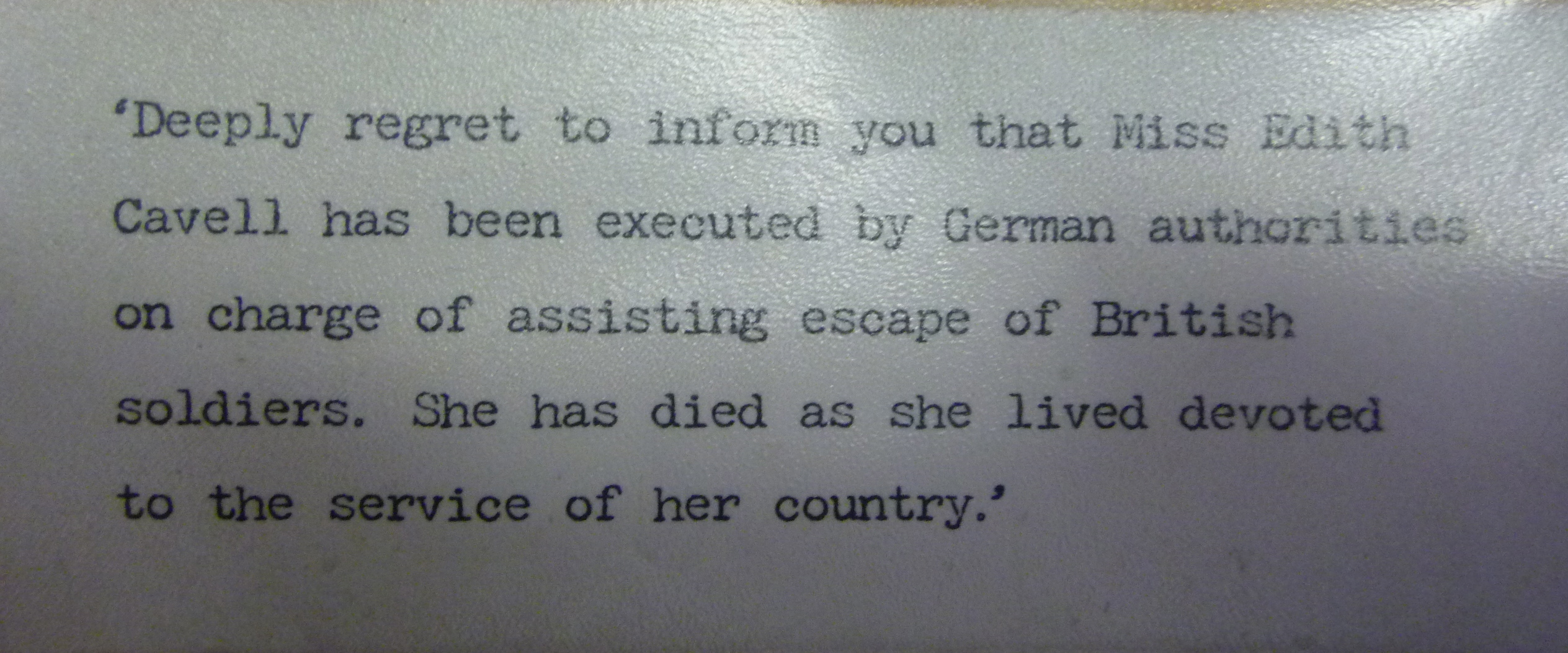
“Edith also faced a moral dilemma. As a ‘protected’ member of the Red Cross, she should have remained aloof. But like Dietrich Bonhoeffer in the next war, she was prepared to sacrifice her conscience for the sake of her fellow men. To her, the protection, the concealment and the smuggling away of hunted men was as humanitarian an act as the tending of the sick and wounded. Edith was prepared to face what she understood to be the just consequences.” (Edith Cavell website)
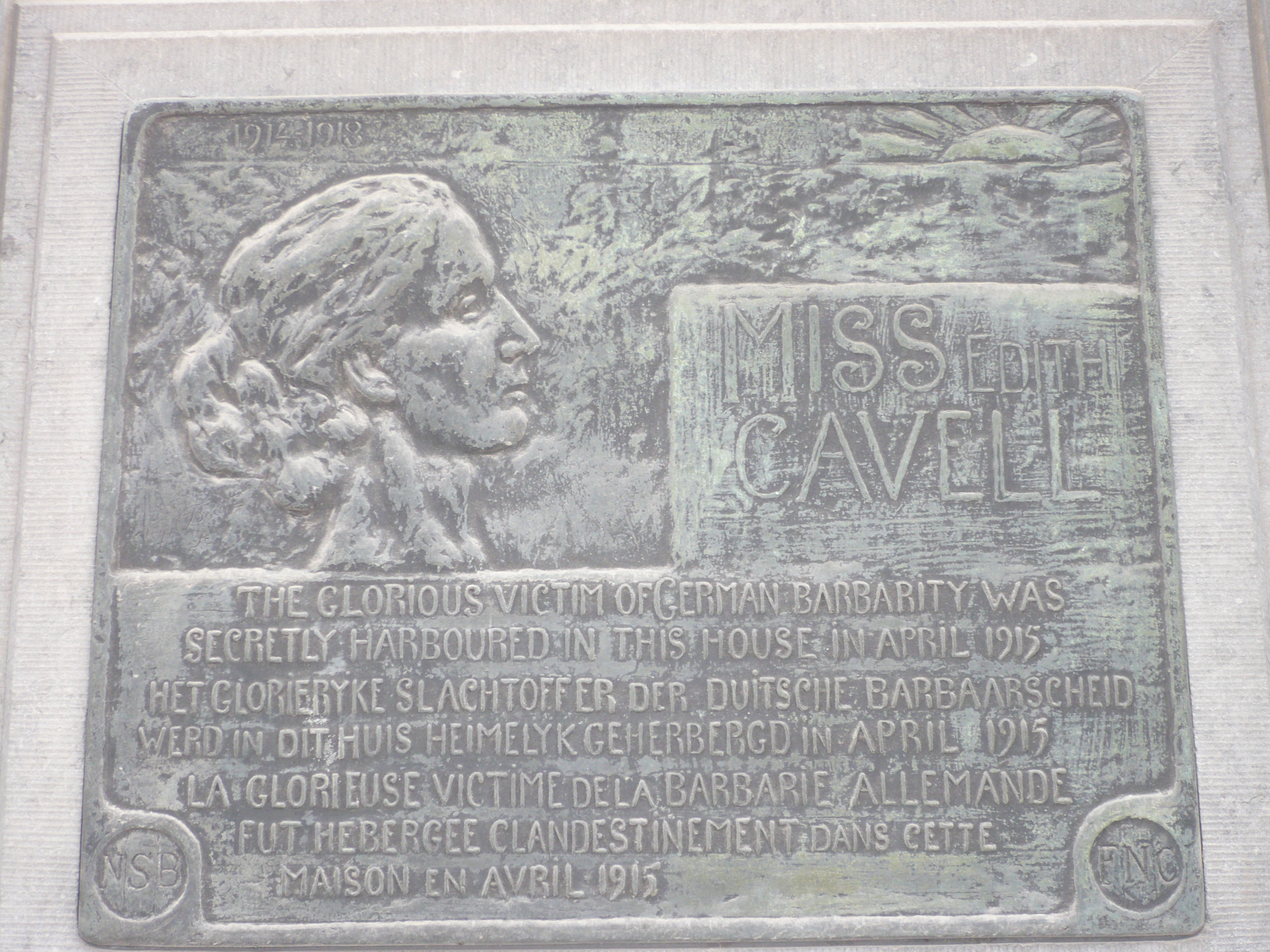
Plaque attached to a house in Ghent (Courtesy RB)
In August 1915 Edith was interned and the date for her execution as a collaborator was set as 12 October 1915. The evening before the English chaplain Stirling Gahan was allowed to visit her in her prison cell. There she received Holy Communion and they recited the words of the hymn Abide With Me together. This is what she said to him :
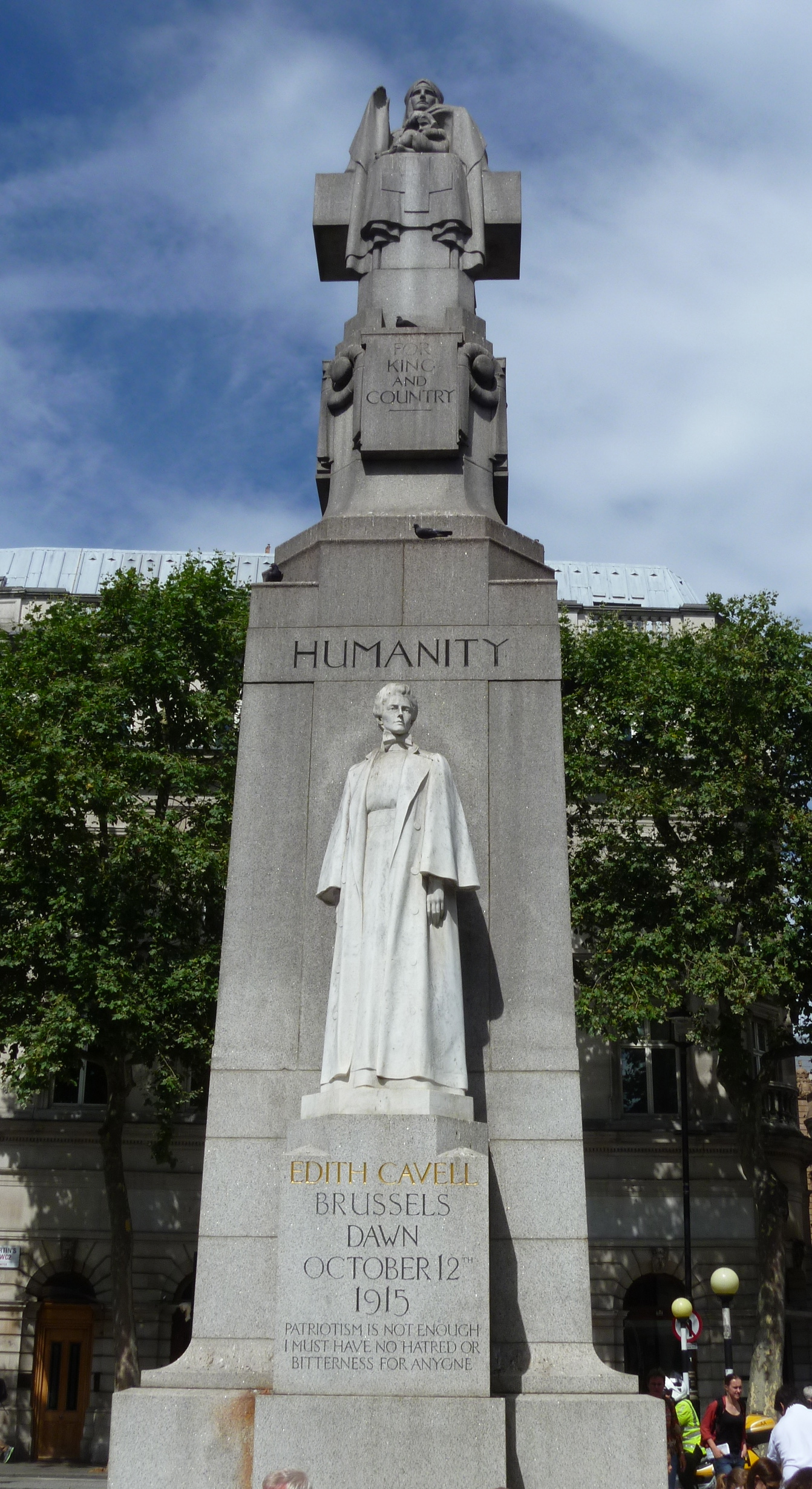
“I am thankful to have had these ten weeks of quiet to get ready. Now I have had them and have been kindly treated here. I expected my sentence and I believe it was just. Standing as I do in view of God and Eternity, I realise that patriotism is not enough, I must have no hatred or bitterness towards anyone”.
Despite Spanish and American attempts at intervention she was shot at dawn on Tuesday 12 October 1915.
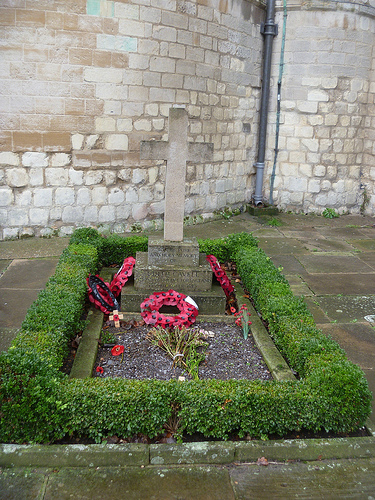
Edith Cavell’s Grave at Life’s Green
After the War, in 1919, Edith Cavell’s body was returned to England and a funeral service was held at Westminster Abbey on 15 May. A special train brought her remains to Norwich station from where she was buried in a spot called Life’s Green in the grounds of Norwich Cathedral. Ironically, her coffin was carried on a gun carriage!
Books and Film
YouTube film Edith Cavell (1939) starring Anna Neagle
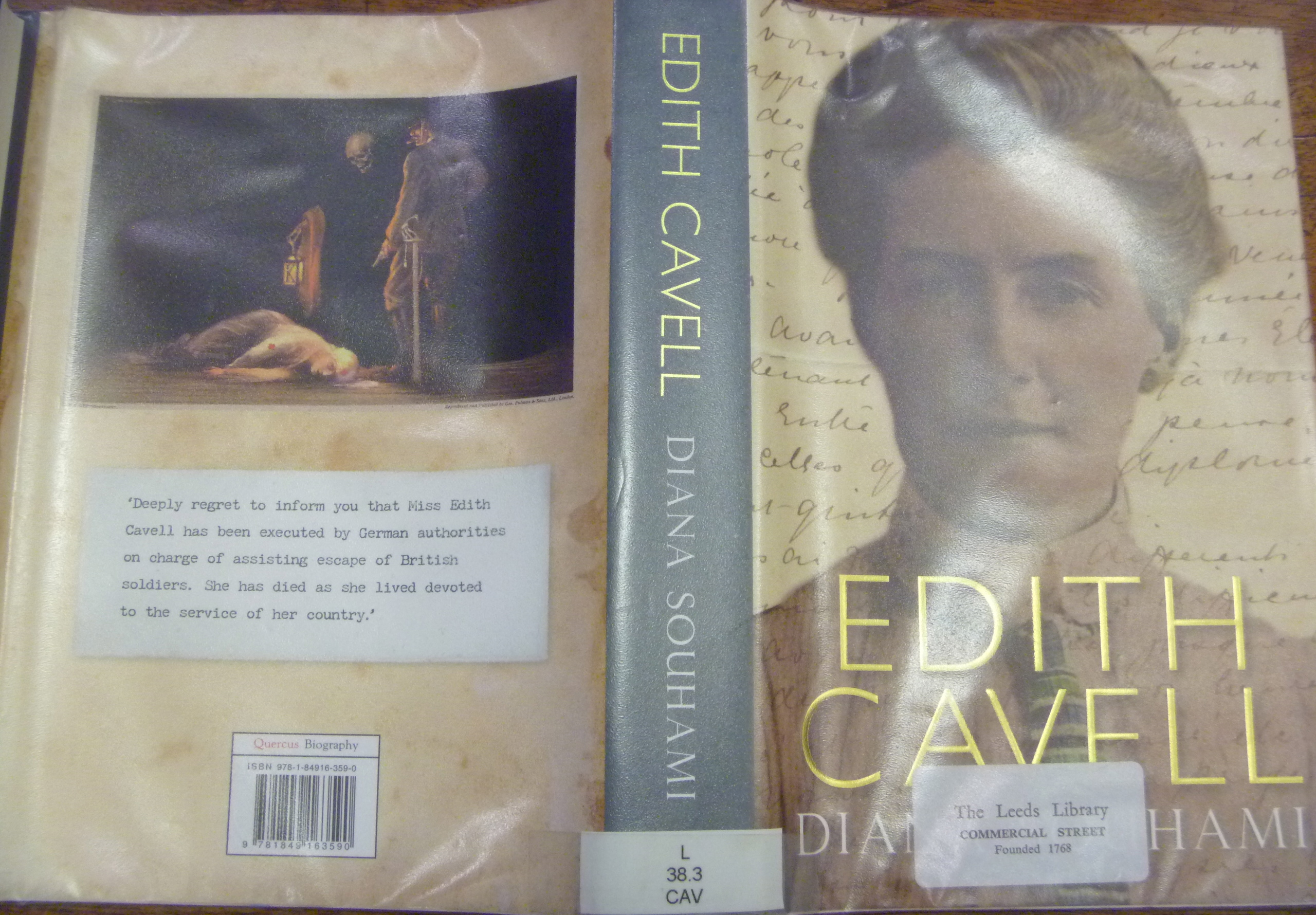
Friends Lynne and Lyn have both written eloquently about a recent biography of Edith Cavell by Diana Souhami. I heard Souhami speak in London about the biography and I’ve read it myself but I refer you to their superior reviews.
Lyn also read and reviewed a novel about Nurse Cavell Fatal Decision by Terri Arthur.
Other Memorials to Edith Cavell
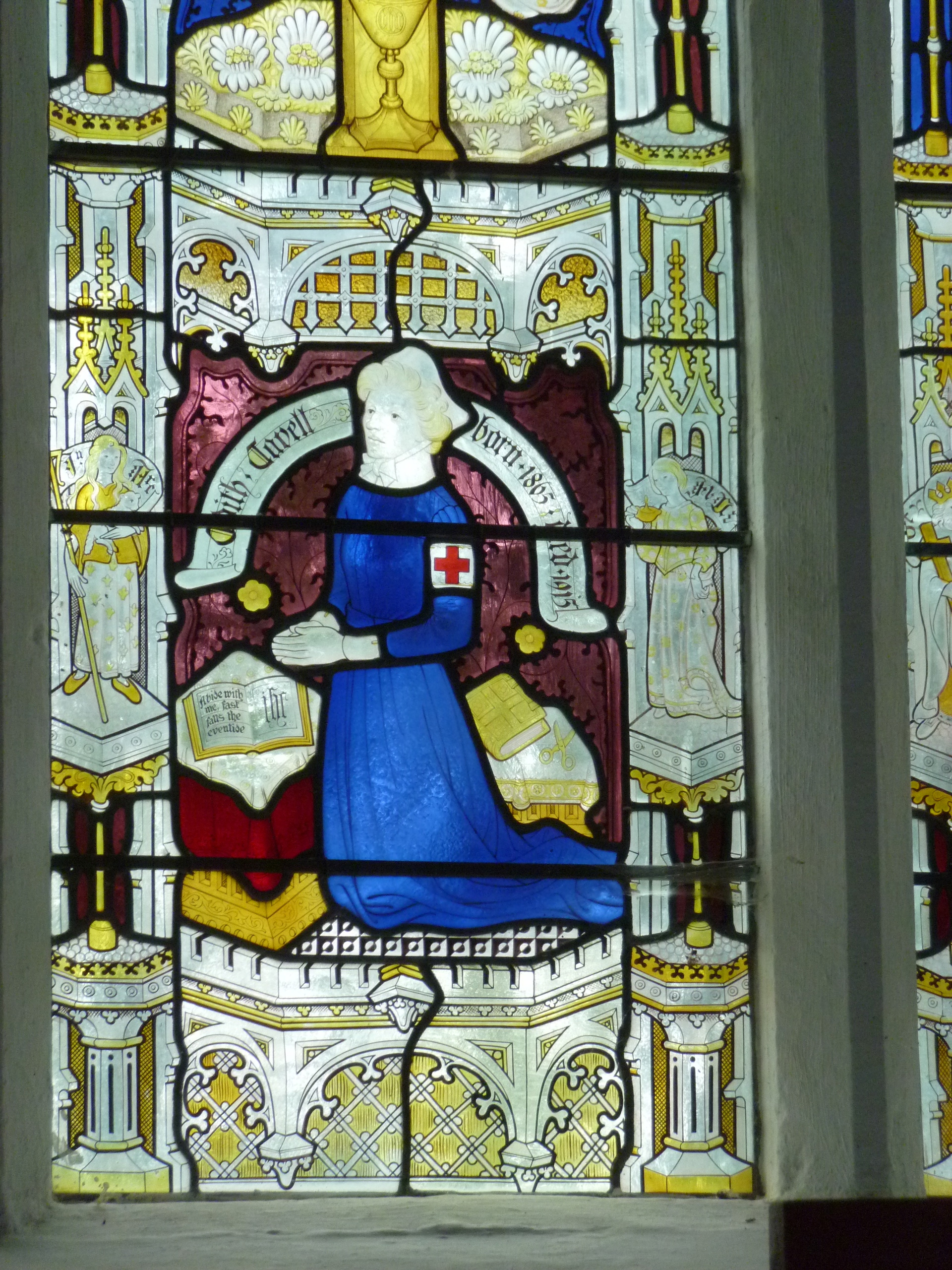
Edith Cavell Window at Swardeston Church
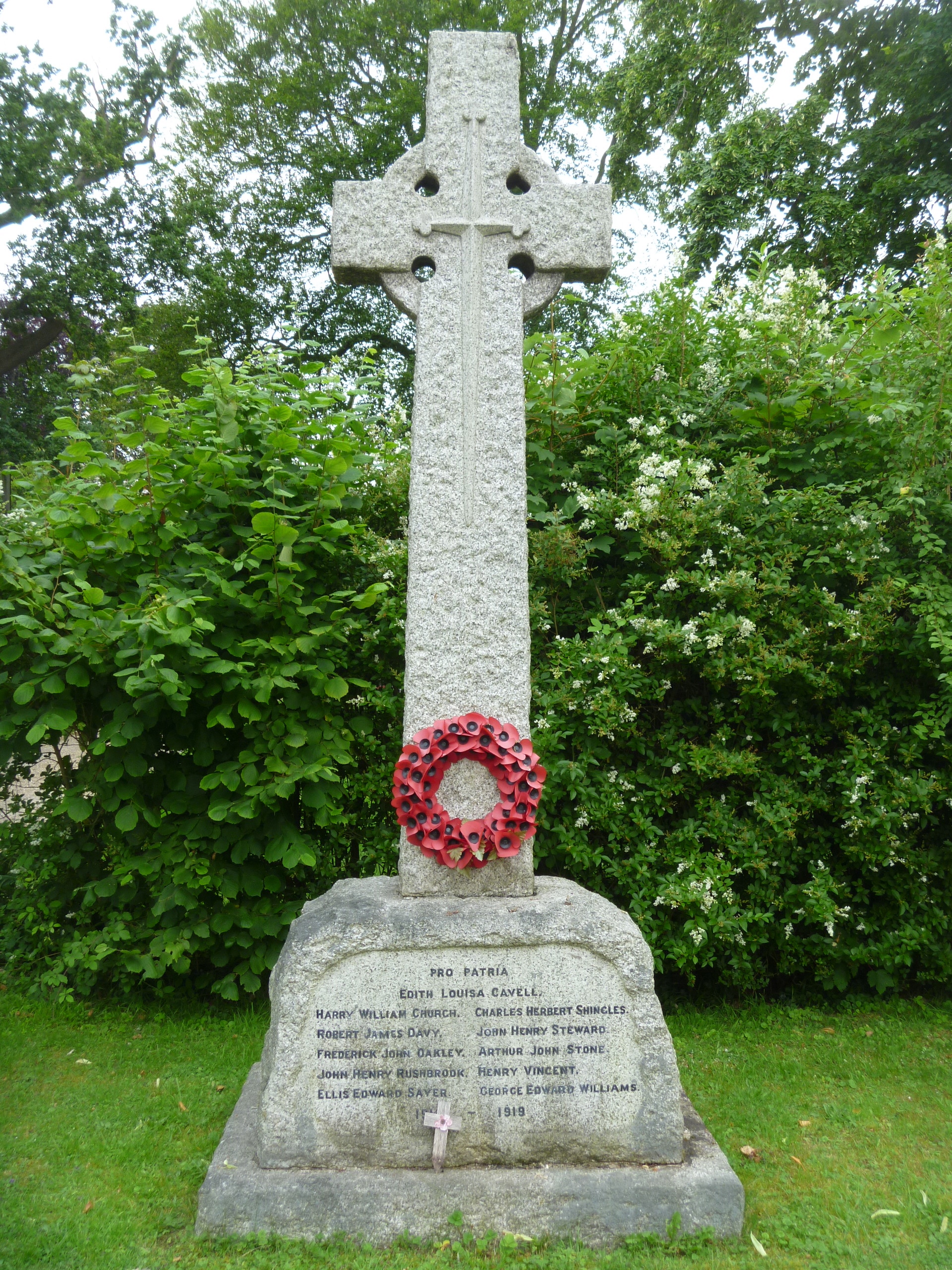
War Memorial at Swardeston, Norfolk
Statue erected in honour of Edith Cavell near Trafalgar Square, London.
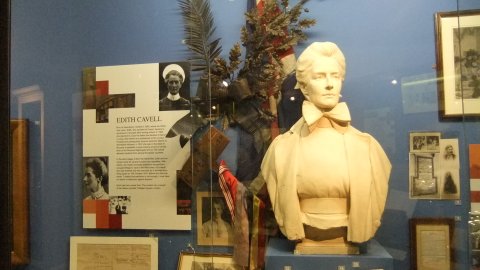
Edith Cavell bust in the London Hospital Museum. Lynne‘s photo. She says : “Apparently it was in the sitting room of the nurses home I lived in there, not that we ever noticed it.”
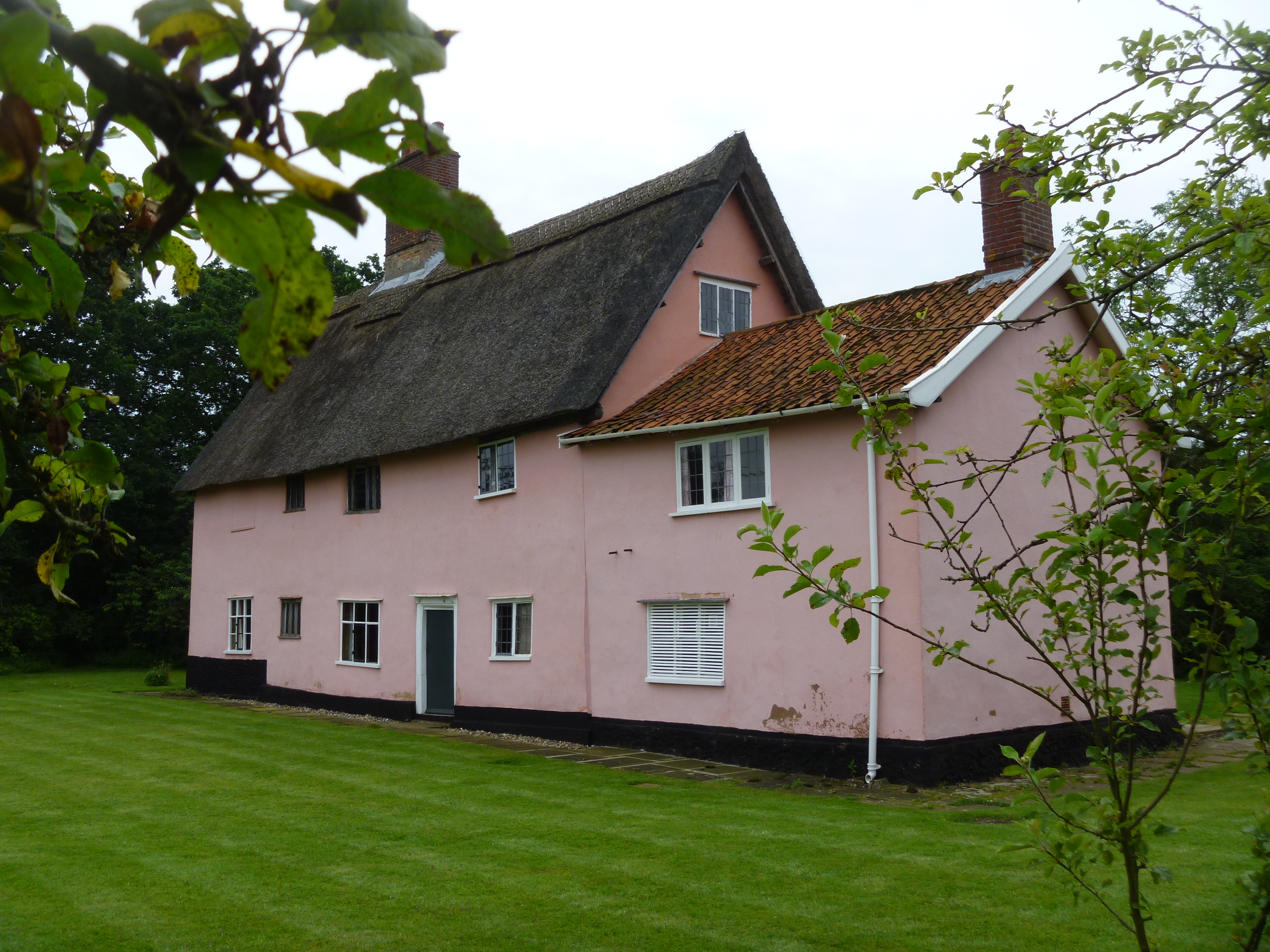
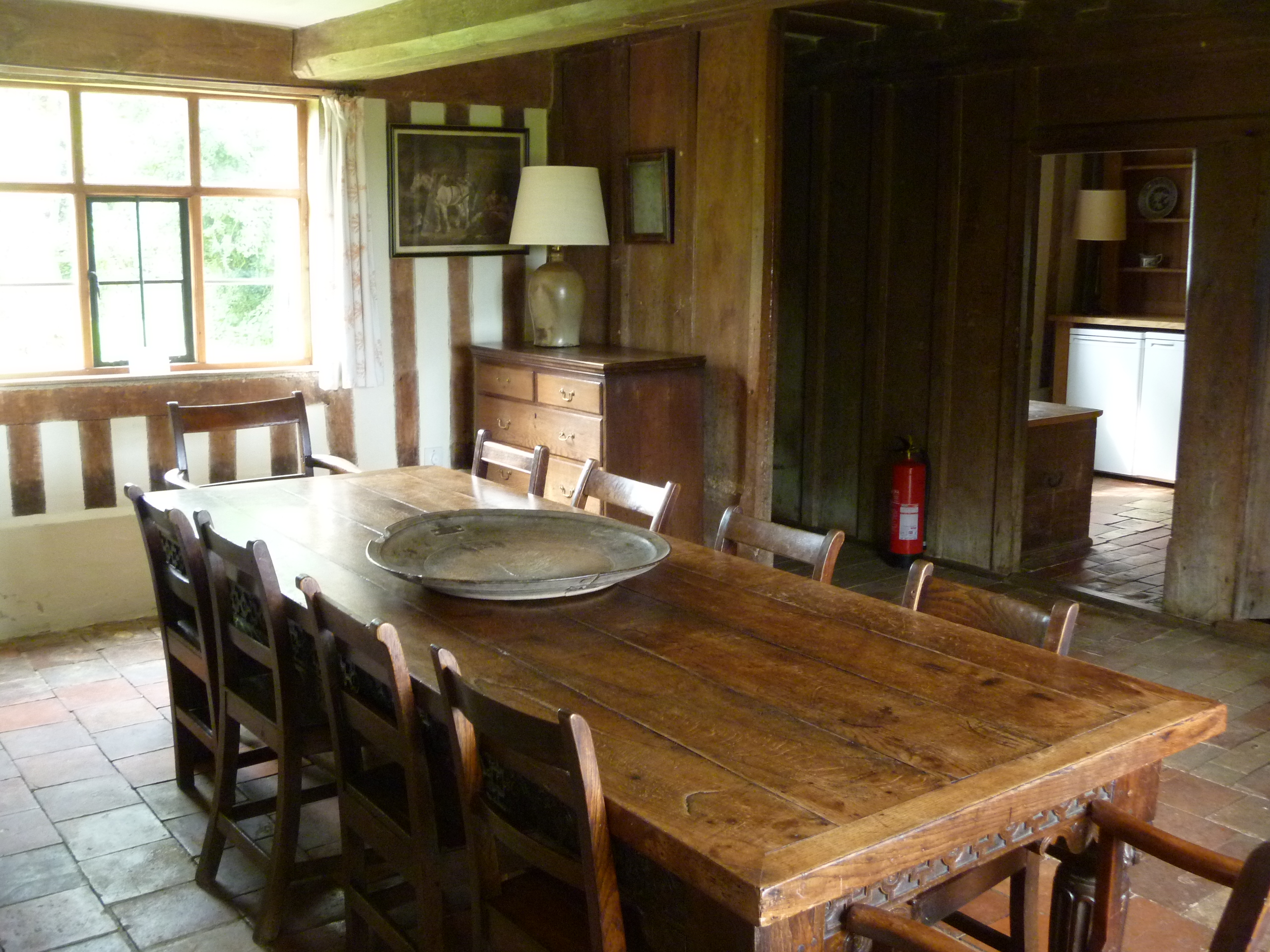
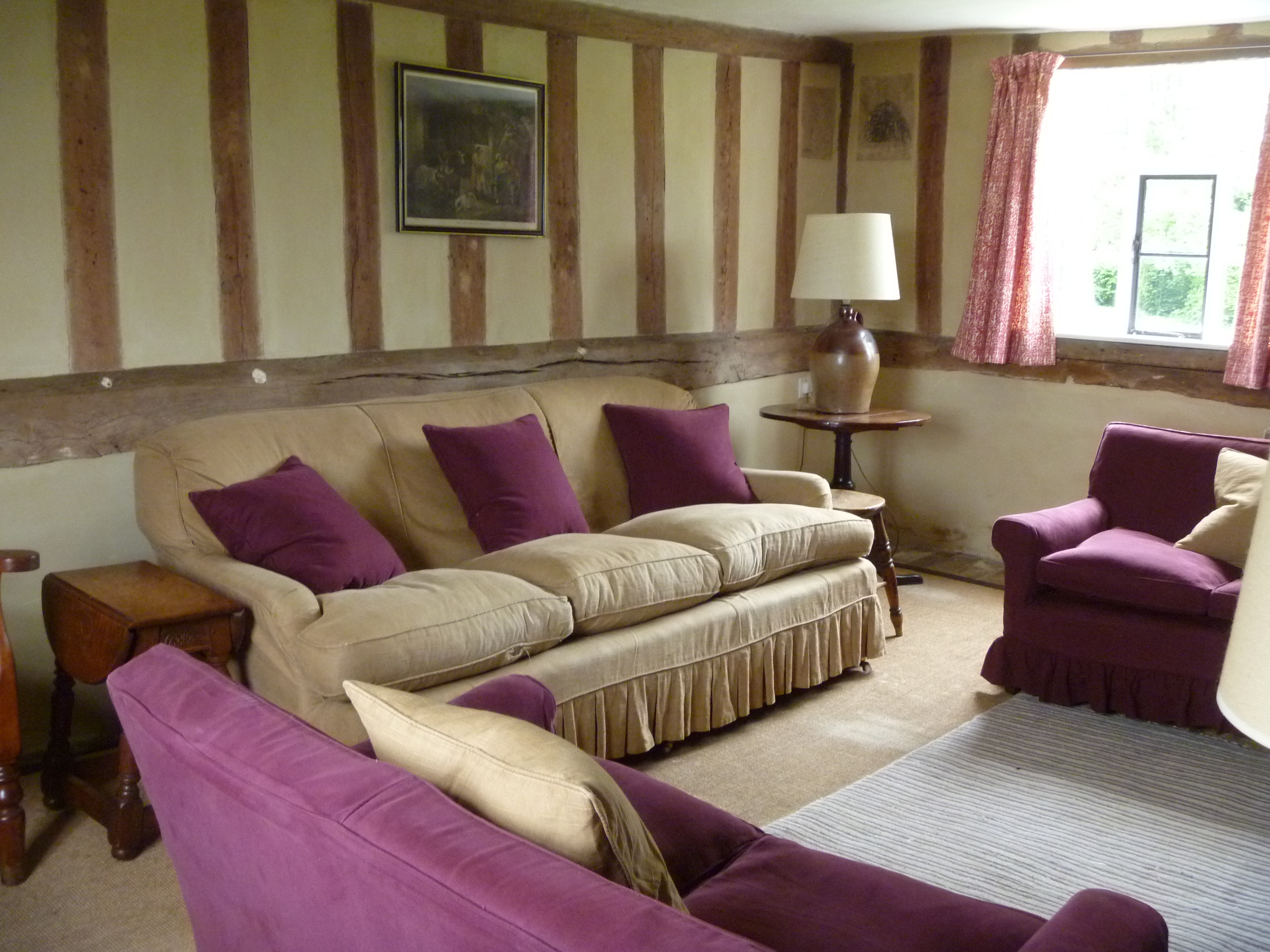
Landmark Trust properties are usually very easy to find. For each stay you are always sent meticulous instructions which in some cases may be totally unnecessary but on other occasions you really do wonder whether the building will ever materialise. As we drove further and further off the beaten track in South Norfolk this morning along narrow lanes, with grass growing down the middle, we did wonder if we were ever going to find our quest. Suddenly, on the other side a big field we spotted Manor Farm “in the pink” just as my friend’s directions suggested!
We were visiting the Norfolk Landmark – Manor Farm – on changeover day. The housekeeper very kindly allowed us to have a quick peep around and I must say it is a lovely old building in which one would very quickly feel at home. The Landmark staples are all there plus the advantage of peace and quiet and a lovely big grassy garden. There is birdsong and there are wildflowers. You are truly in the depths of the countryside.
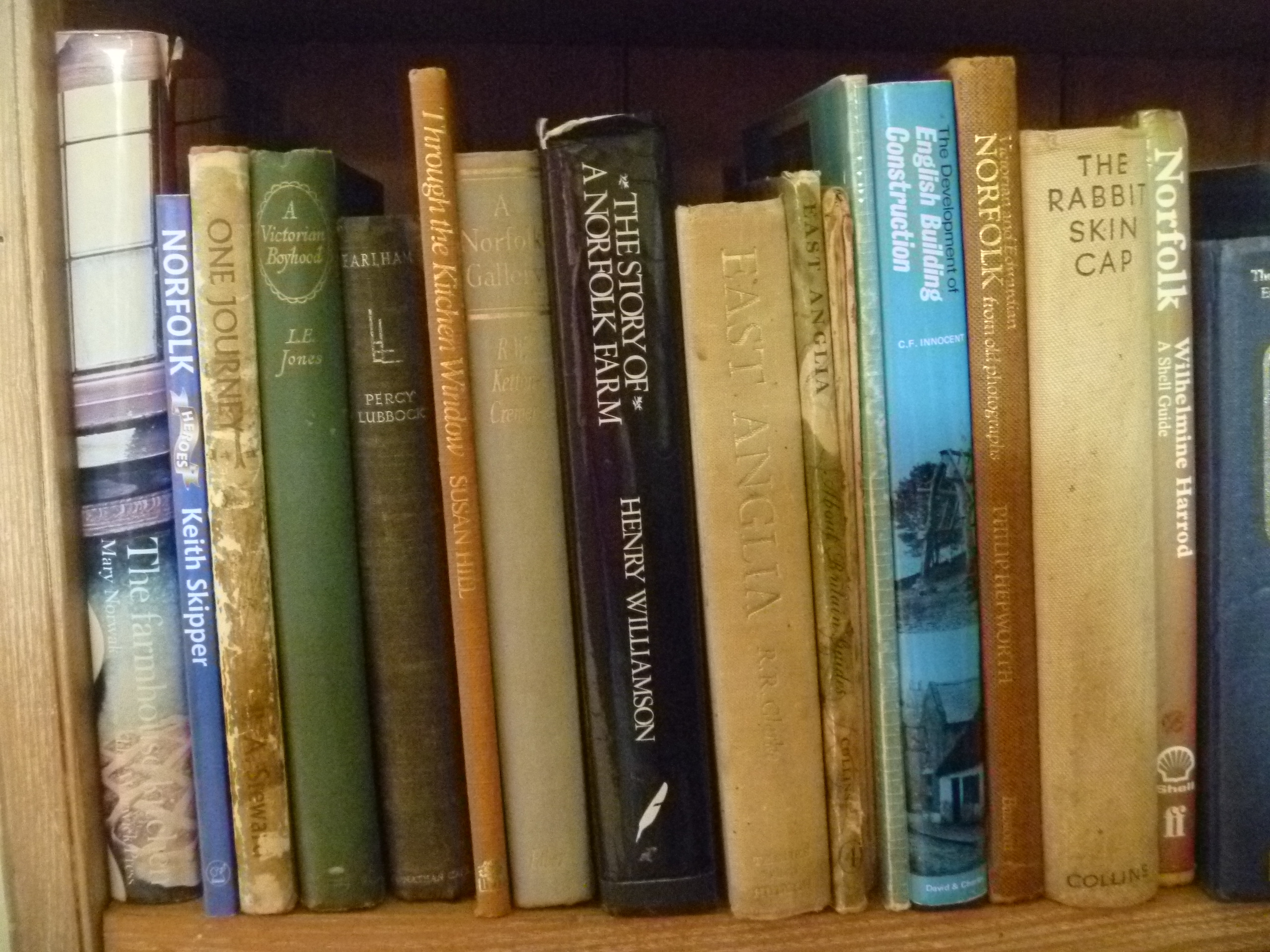
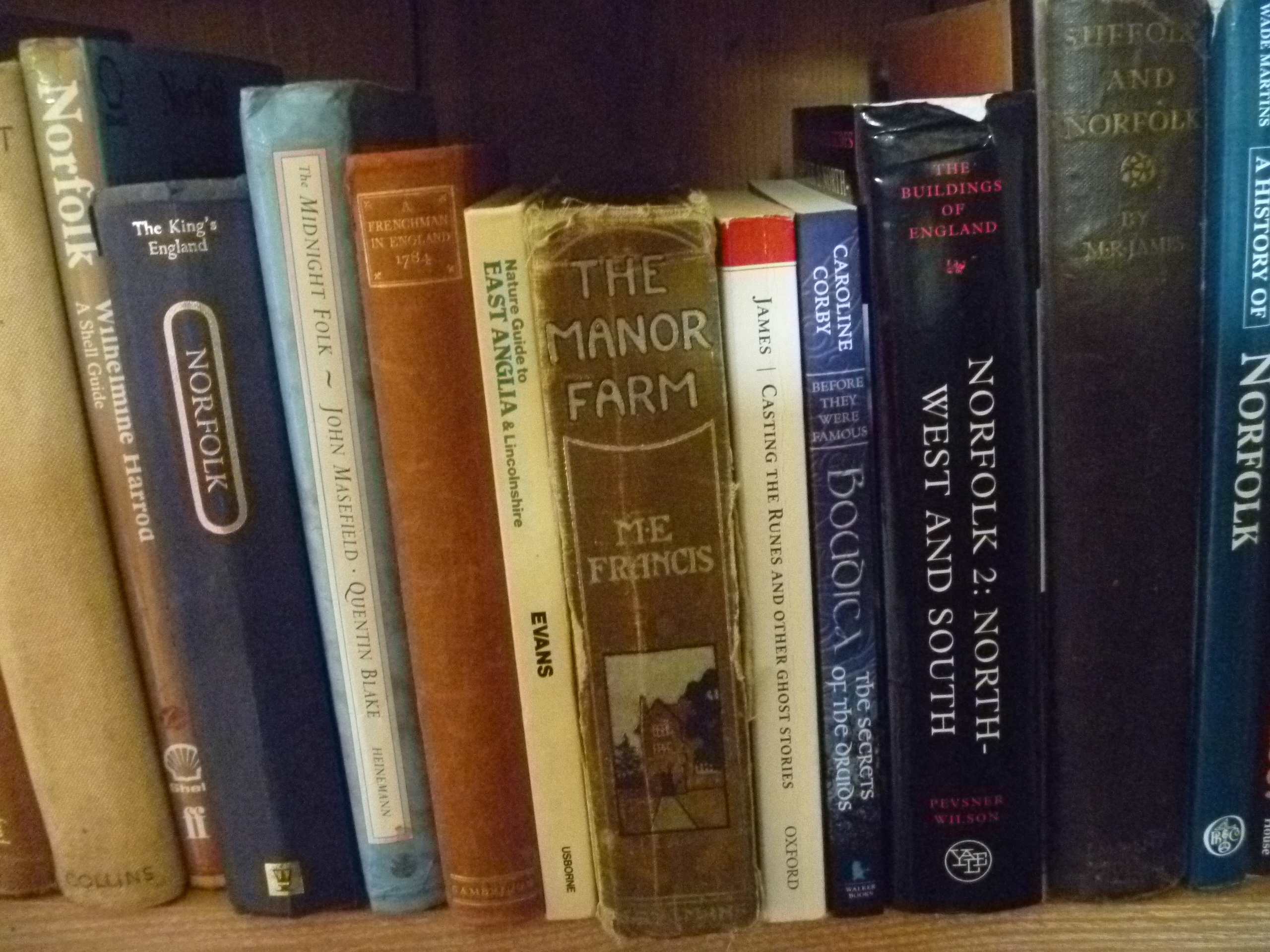
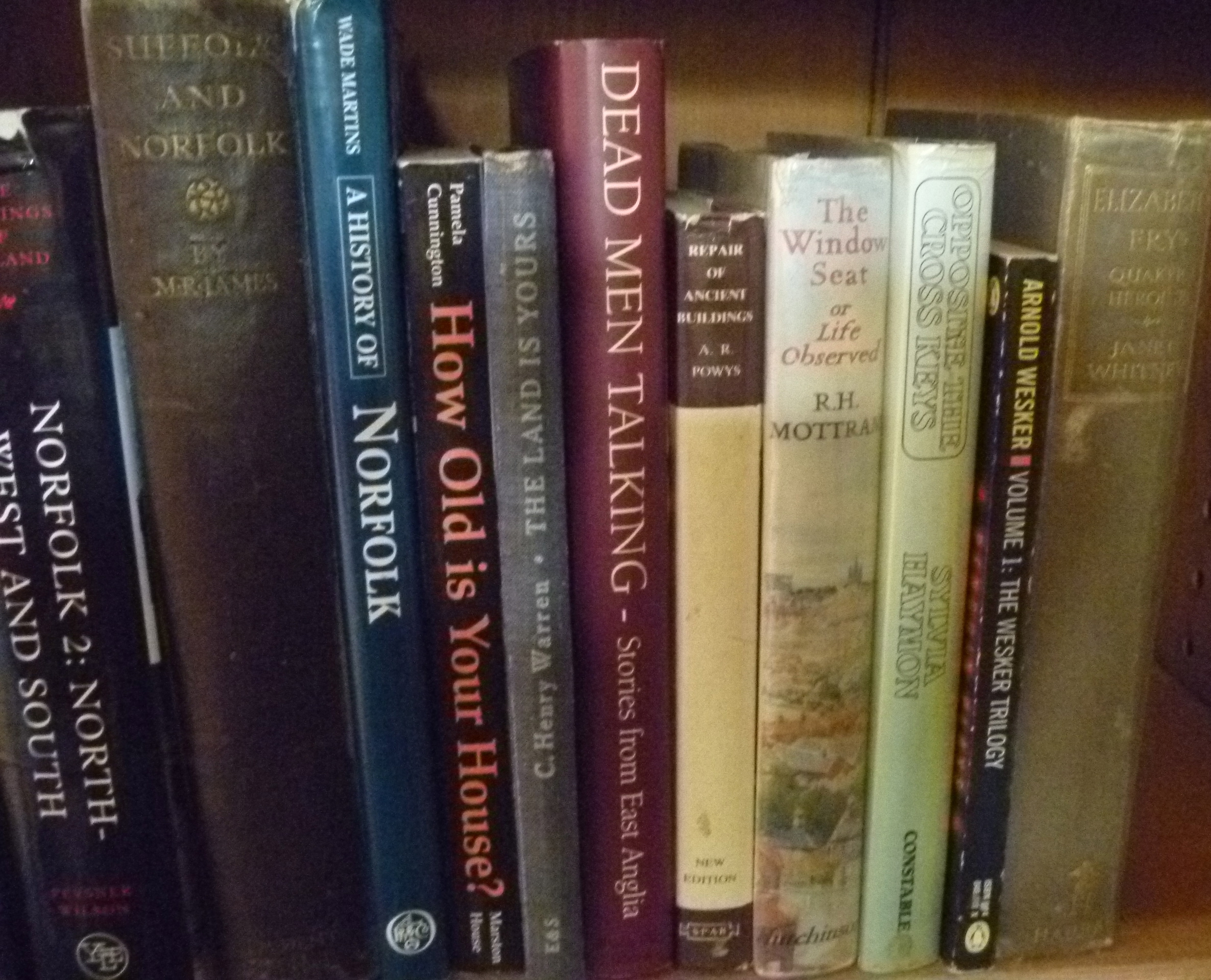
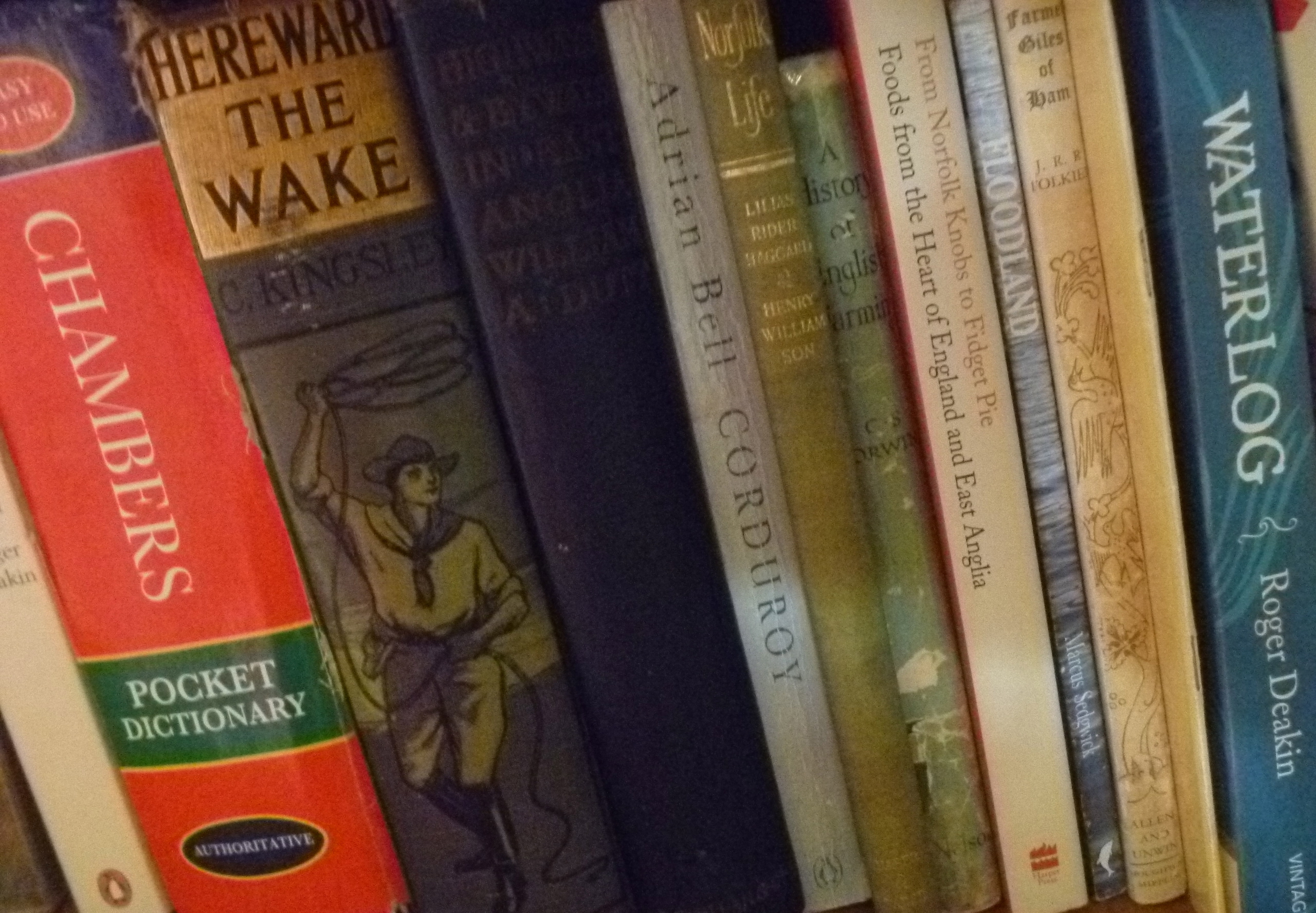
I took a particular interest in the Library at Manor Farm as Norfolk is my county of birth and I grew up and lived there for my first 18 years. I’ve read and I own lots of books about Norfolk and it’s always fascinating to see another’s take on what’s considered to be the essential reading matter for one’s own county.
I’d expect to see Henry Williamson’s The story of a Norfolk Farm and Ketton-Cremer’s A Norfolk Gallery. I love Susan Hill’s Through the Kitchen Window which would make a good addition to all country Landmarks. I know nothing about The rabbit skin cap but it sounds very cosy!
Ha! I love the fact that a copy of The Manor Farm by M. E Francis was tracked down. First published in 1902 it has no Norfolk connection (as far as I am aware) but the title is very fitting. Another good one is A Frenchman in England, 1784 Francois de la Rochefoucauld’s account of his observations of Britain and its people whilst living in Bury St Edmunds.
There’s a life of Elizabeth Fry the Victorian woman prison reformer born of a quaker banking family at Earlham Hall in Norwich and I note a copy of Arnold Wesker’s play Roots. I bet all Norfolk school pupils in the 1960s had to read this play – I know we did – the accents came easy to us! I’m familiar with several R. H. Mottram books. I’ve read his The Spanish Farm and If stones could speak but I don’t know The window seat. Will have to investigate. He was a prolific writer on many topics. See the list of works here.
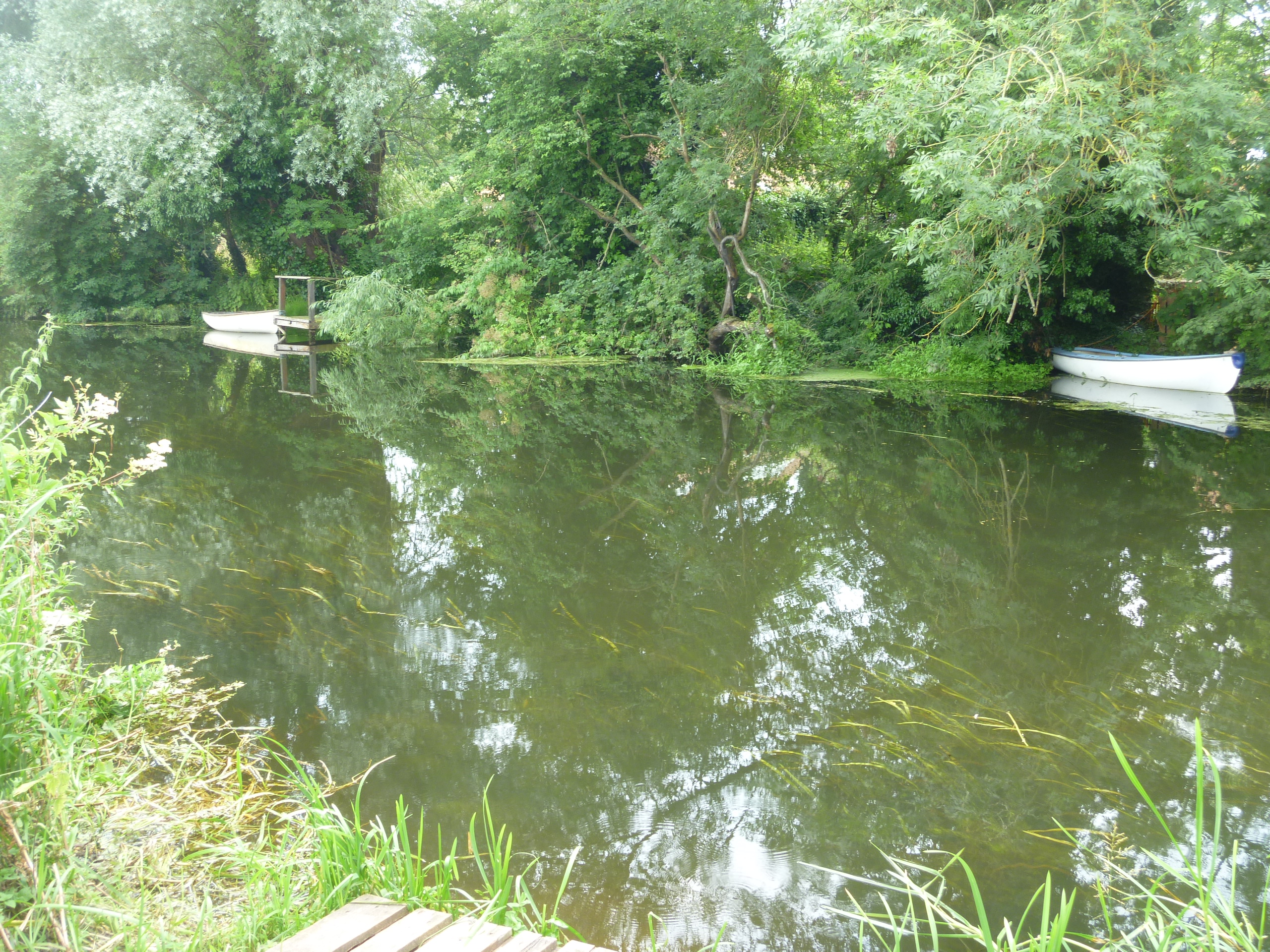
Parson Woodforde, The Go-Between, The Paston Letters all very necessary for Norfolk. And, oh yes, I’d definitely include works by Roger Deakin. That’s his Notes from Walnut Tree Farm at the end there. Excellent reading in this part of the country especially his Waterlog. I read this book when it first came out. With the subtitle A swimmer’s journey round Britain Deakin writes here about his travels around Britain swimming in lakes and rivers and the sea. The book begins by relating his daily swims in his own moat. Moats surround many old properties in South Norfolk and North Suffolk. Here’s a quiet reach of the local River Waveney in Bungay where Deakin enjoyed swimming.
Sadly, Roger Deakin died in 2006. It’s still possible to listen to his radio programme Cigarette on the Waveney.
On leaving Manor Farm we only got lost twice and had to check maps and turn back twice and puzzle over road signs before reaching the real world of Harleston, Bungay and Hempnall. No one gave us instructions for leaving the Landmark!
On my journey between Leeds and Norwich today I was held up in traffic for well over an hour near Kings Lynn due to the Sandringham Flower Festival and the presence there of Prince Charles and the Duchess of Cornwall. They had the good sense to avoid the crowds and arrive by helicopter.
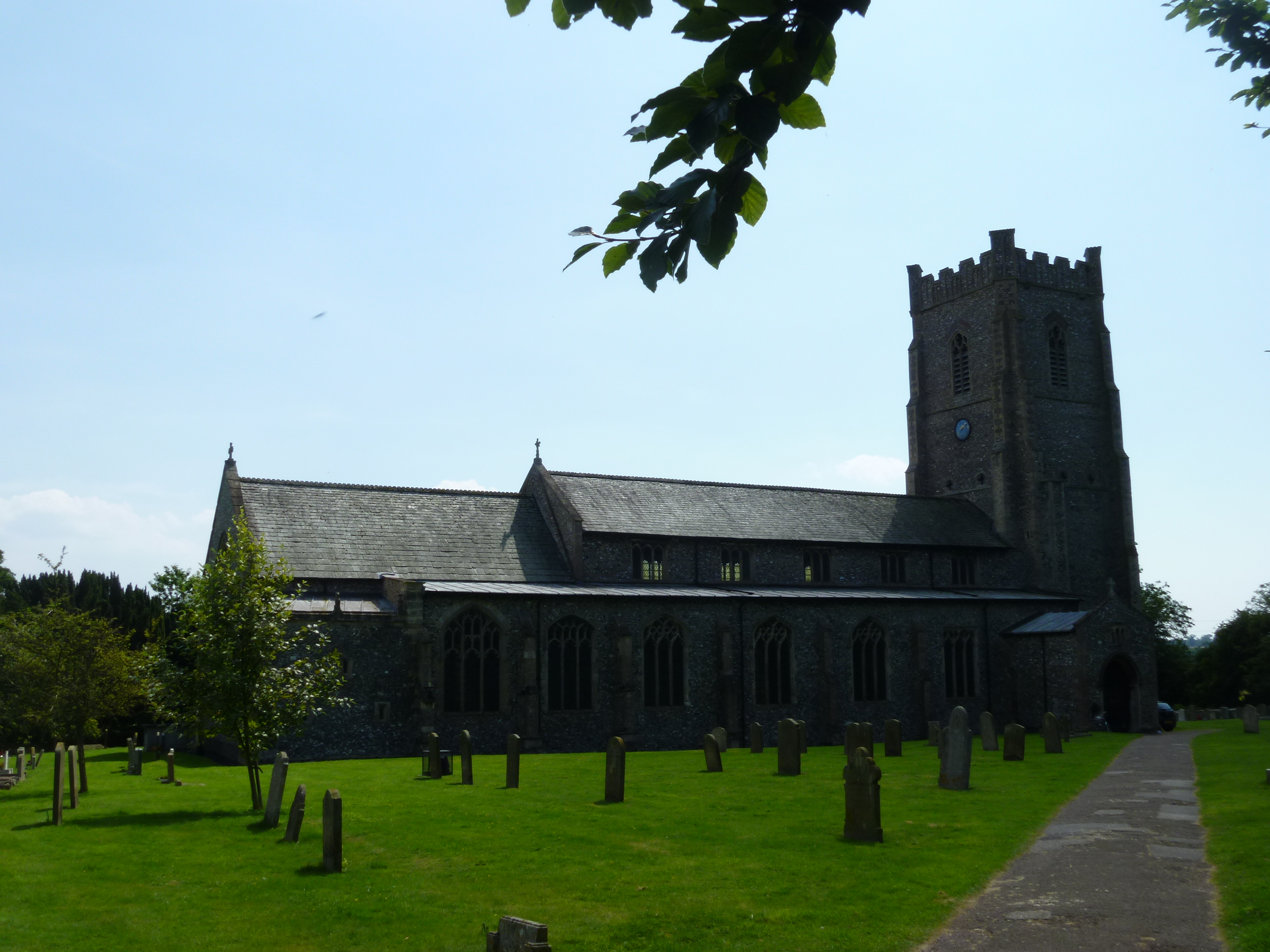
The Church of Saint James the Great, Castle Acre, Norfolk
I’d planned to break my journey with lunch at the Churchgate Tea Rooms in Castle Acre and then pay a visit to the Cluniac Priory and, if time permitted, to the Castle. Instead I just had my lunch and took a look around the church.
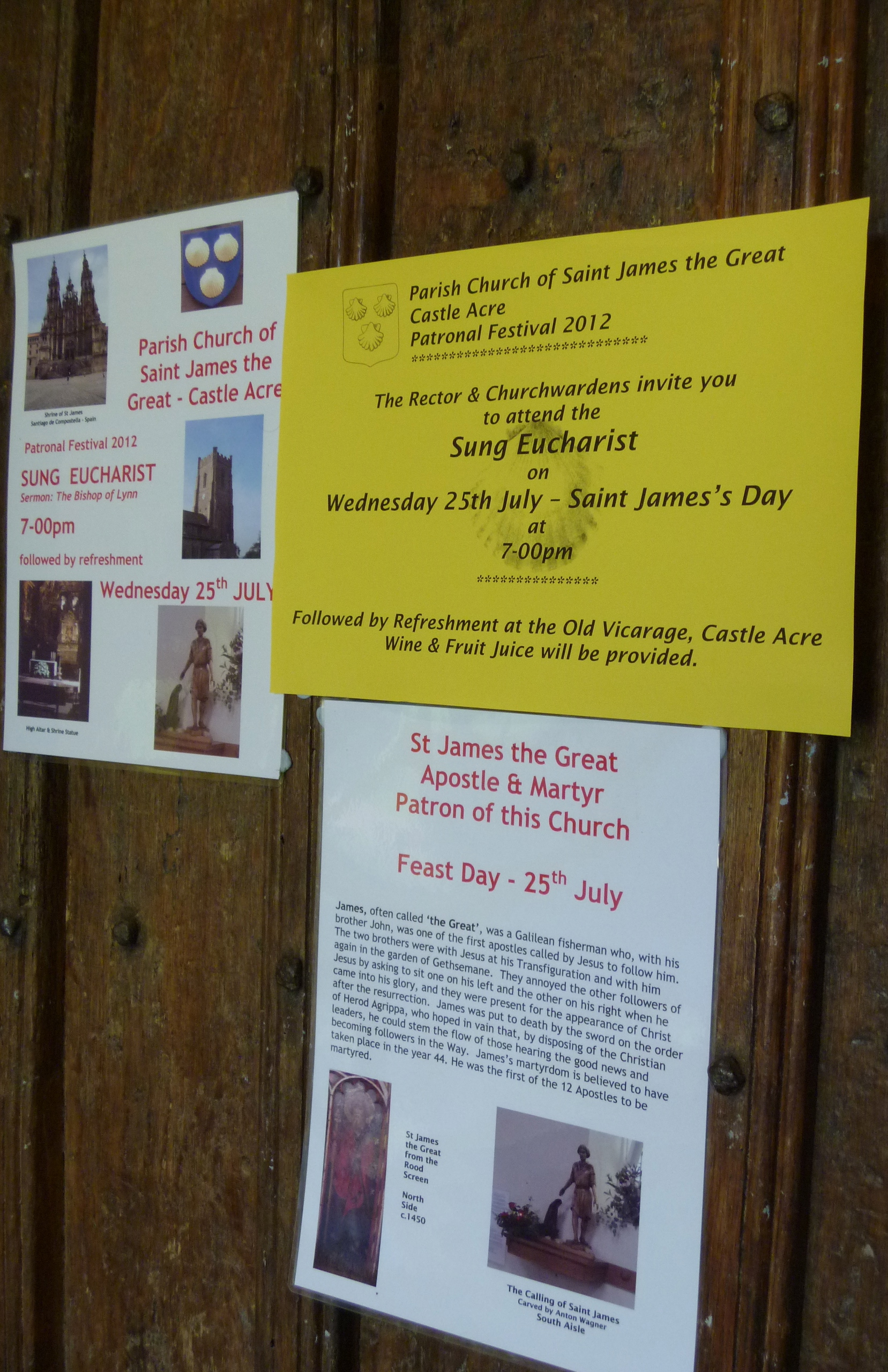
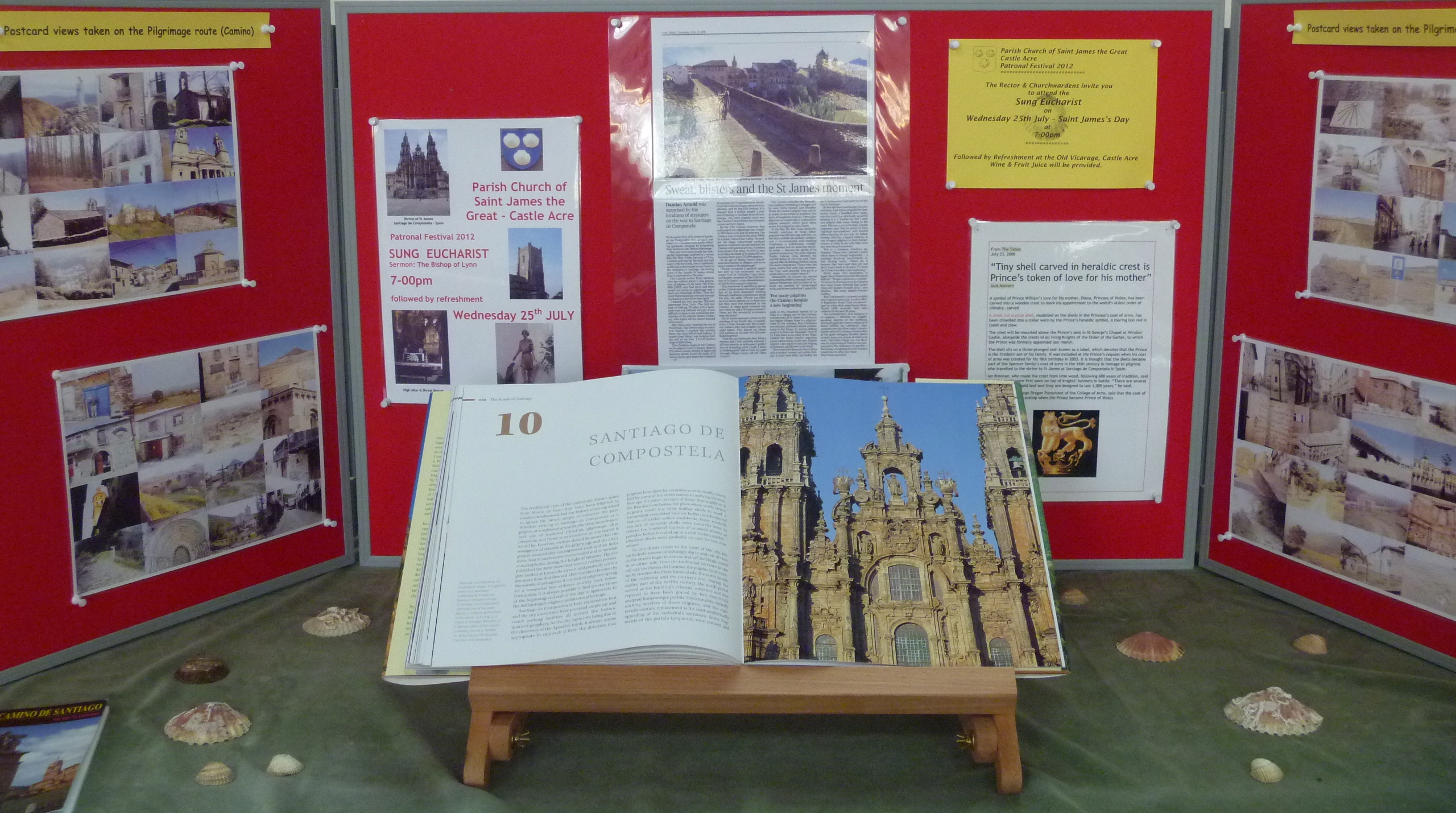
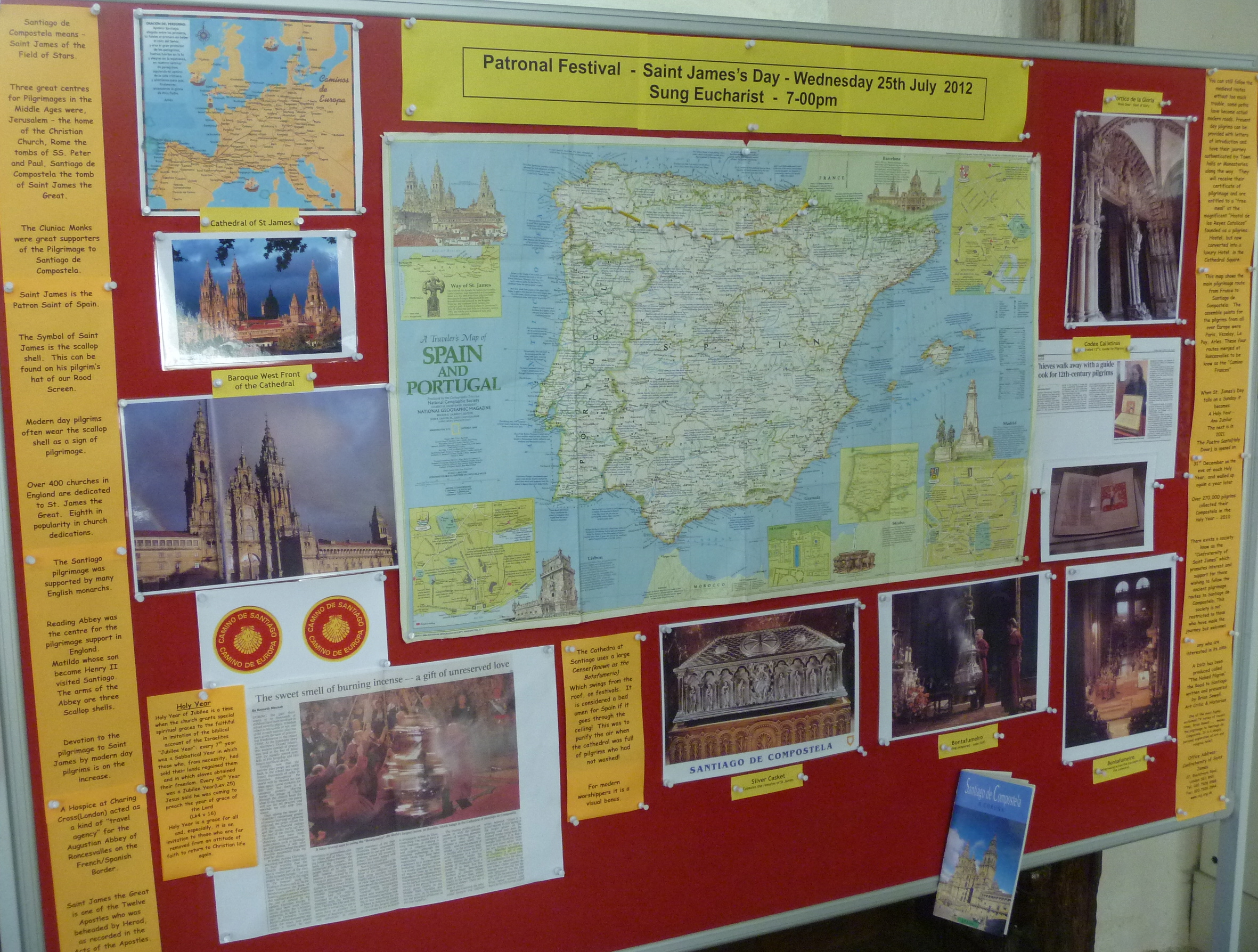
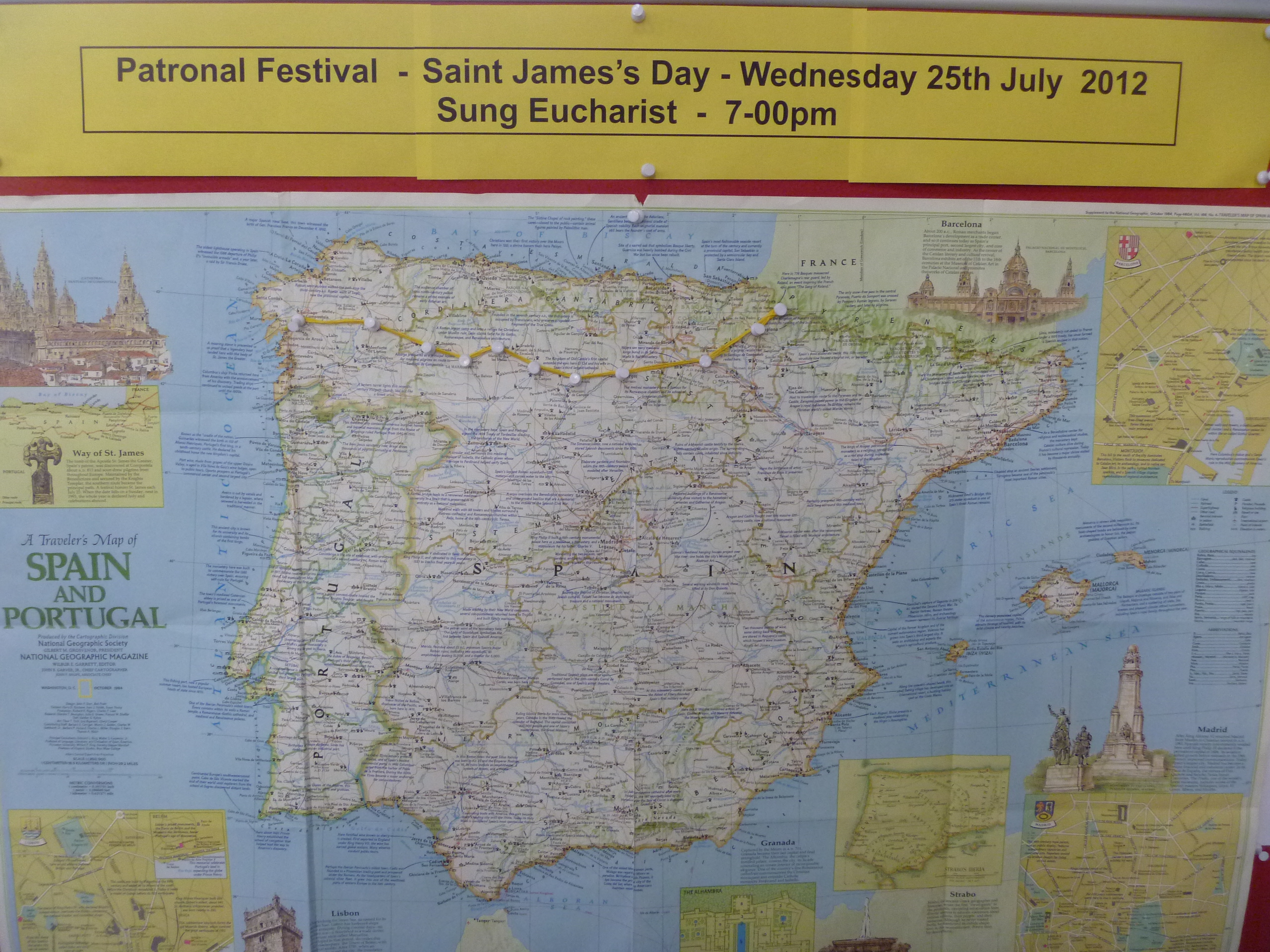
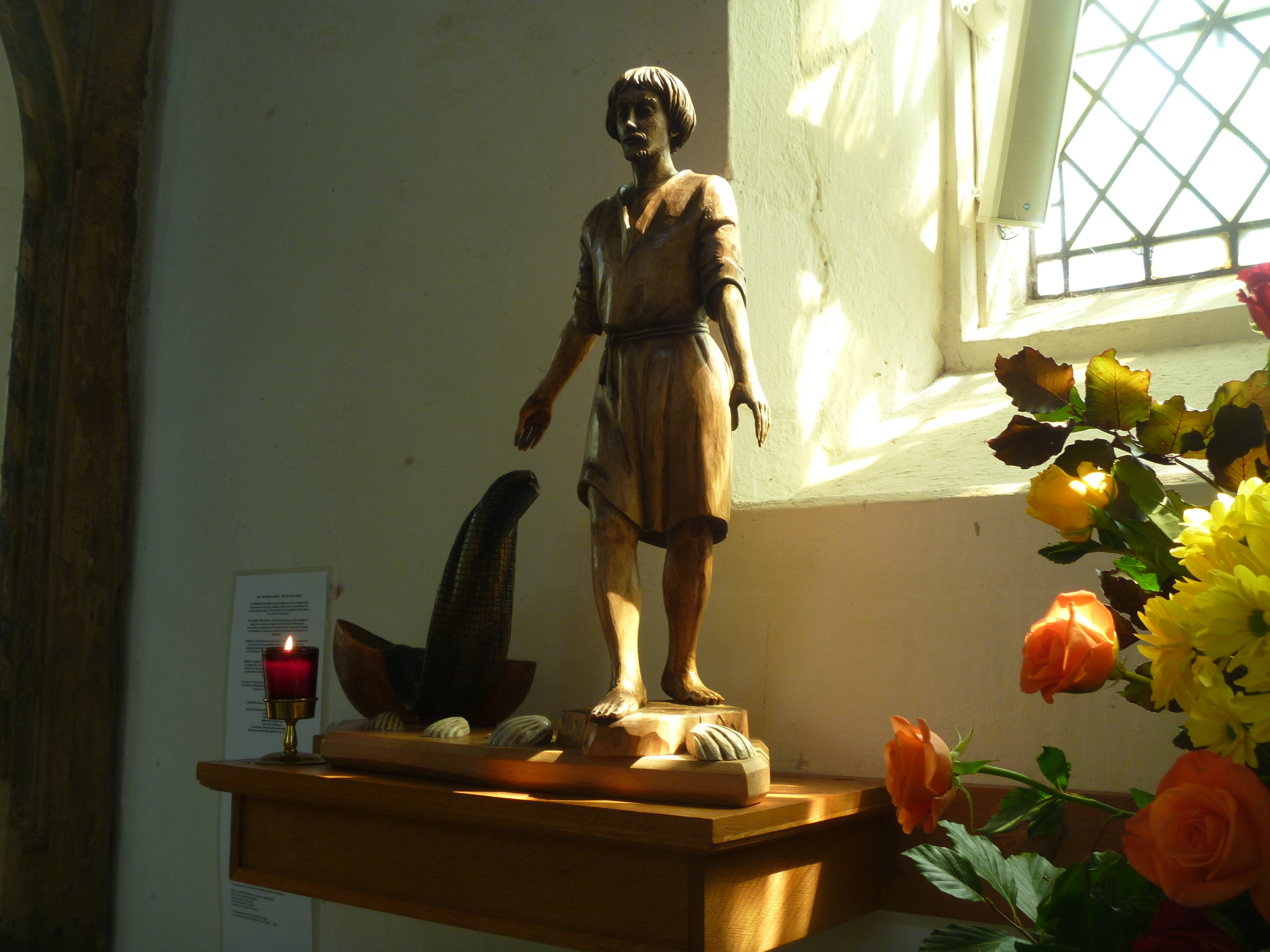
Bless me, if today isn’t the patronal feast of Saint James and there in the church (being prepared for this evening’s Sung Eucharist in the presence of the Bishop of Lynn) were displays relating to The Camino de Santiago de Compostela or The Way of Saint James.
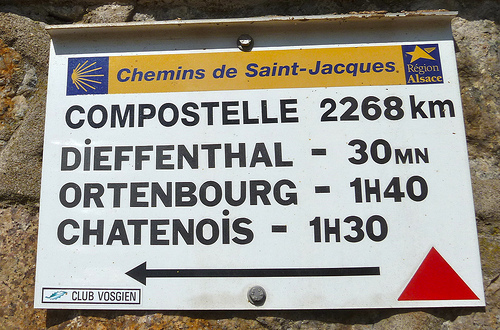
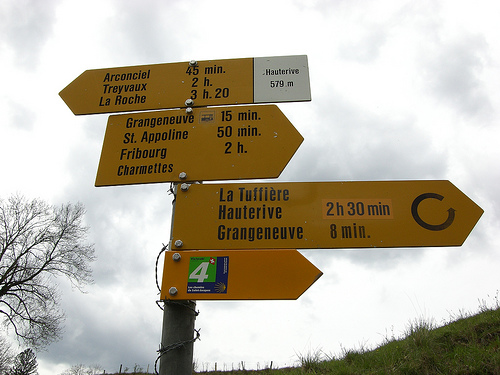
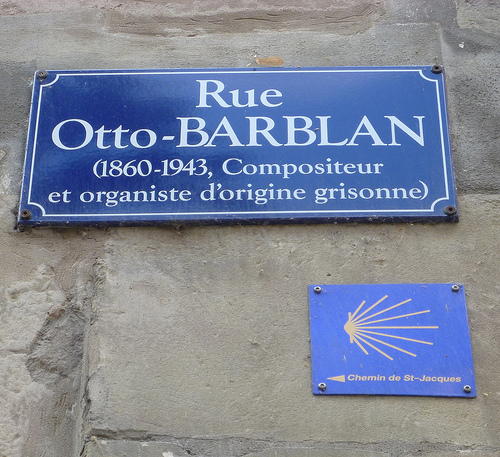
I have come across this path, or perhaps I should say these paths, many, many miles away from their single destination – Santiago de Compostela in Spain – in Alsace , in Geneva and in Hautrive in the Jura region of Switzerland.
In Alsace last month
In the Jura Region in 2008
In Geneva earlier this month
And on my latest walk in the Yorkshire Dales last week a fellow member of The Weekday Wanderers who had just returned from a three week cycling pilgrimage beginning in southwest France was telling me all about this fantastic experience.




 miladysboudoir