Tea and Books in Oxford

When I meet with my online book group chums there is not much chance of sightseeing. Rather we seem to stagger from book shop to tea shop with our bags getting heavier and our purses lighter (although every purchase is always a bargain) and tummies fuller.

Saturday was no exception. Back in December Simon, over at Stuck-in-a-book, had invited us to join him for a day in Oxford. Although it is possible to get there and back in a day from Leeds for easier travel I opted to go via two nights in London. This meant a not so early start from Paddington in the company of another group member on Saturday morning.
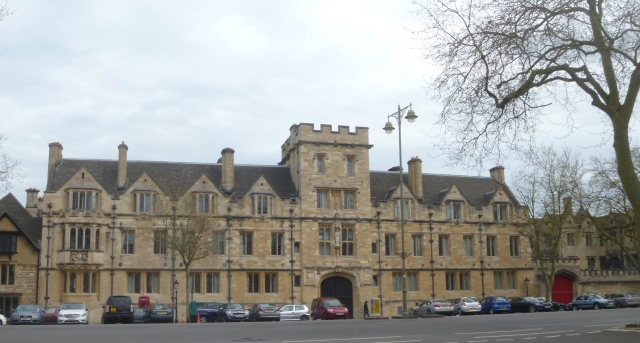
St John's Oxford

St John’s College, Oxford, on St Giles

The Jam Factory is just across the road (more or less) from Oxford Railway Station. (I should just add that from the station there is no indication that one is in the city of dreaming spires and all that; but we did eventually pass hurriedly by one or two colleges and churches so the joys of Oxford await me on a future visit.) The JF is a lovely light and airy venue and the food looked excellent although I only shared a pot of Oxford Blend Tea before we set off on our books and teas trail. Whilst we all assembled at this venue Simon told us more about the new project that he’s a founder member of Shiny New Books an online book review magazine. I urge you to pop over now and have a look.
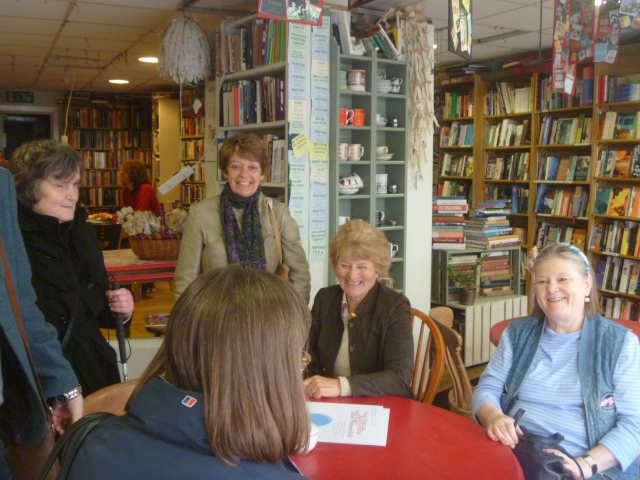
In Beatnik Books

At Albion Beatnik Books

From the Jam Factory we headed to The Albion Beatnik Bookstore at 34 Walton Street. “Opened in 2009, this bookworm’s paradise is the coolest and most maverick of Oxford’s many bookstores. It offers an eclectic selection of new and secondhand books with a particular focus on jazz and blues … , American pulp fiction, graphic novels, beatnik poetry, Virginia Woolf and the Bloomsbury Group and neglected 20th century novels.”  Says my 2011 LV City Guide to Edinburgh, London and Oxford. On the table were flowers made of printed paper and our purchases were wrapped in more printed paper with a quotation sticker to seal.
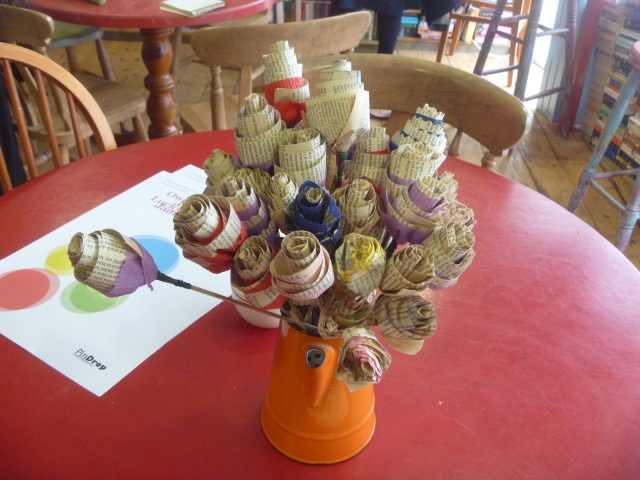
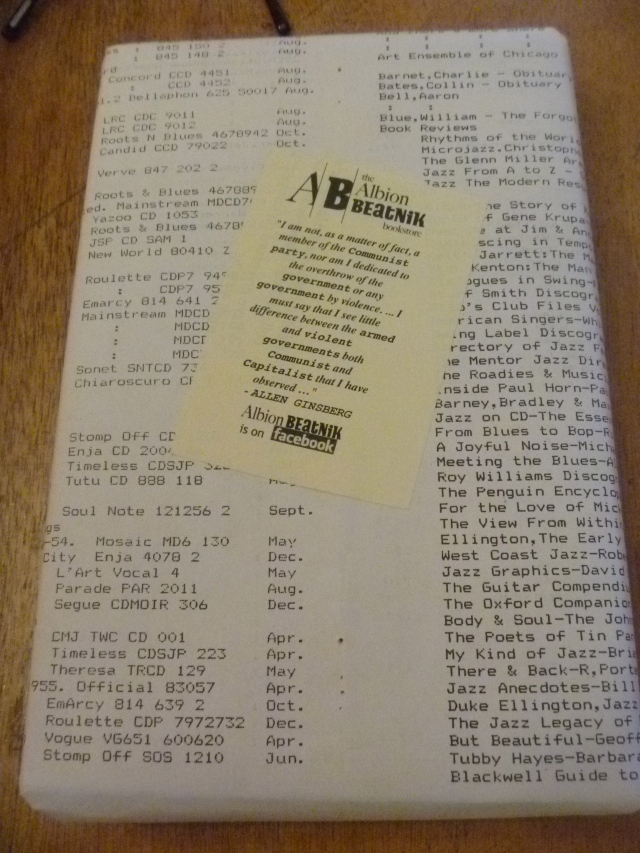
Beatnik books


Beatnik book

Our next stop was the Oxfam Bookshop on St Giles but I also spotted the pub The Eagle and Child which has associations with the Inklings writers’ group which included J. R. R. Tolkien and C. S. Lewis.
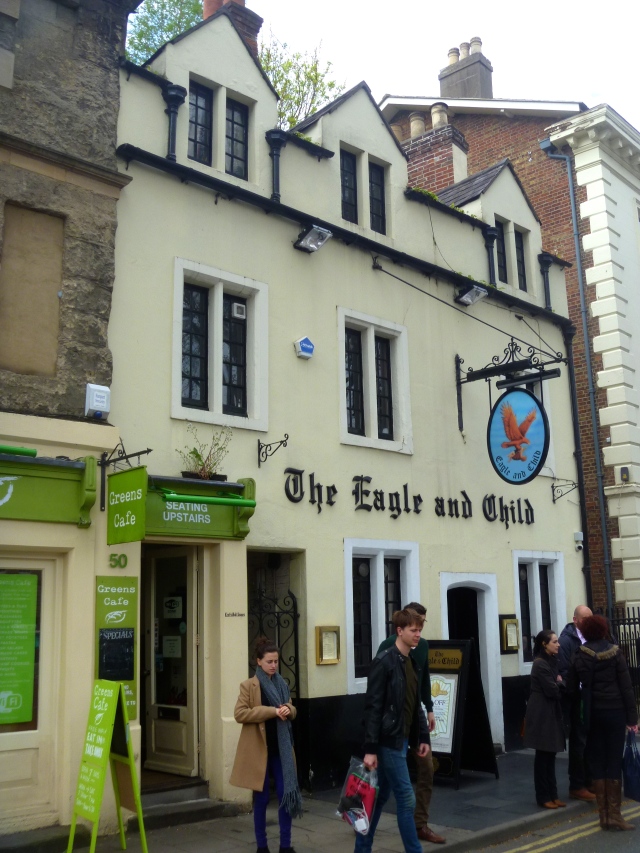
Eagle and Child


“A fascinating past :
The Eagle and Child lays claim to a number of interesting literary connections. J.R.R. Tolkien, C.S. Lewis and fellow writers met here and dubbed themselves ‘The Inklings’. They nicknamed the pub ‘The Bird and Baby’. A public house since 1650, our hostelry takes its name from the crest of the Earls of Derby. During the Civil War, our building was used as the playhouse for Royalist soldiers.” [From the pub website]
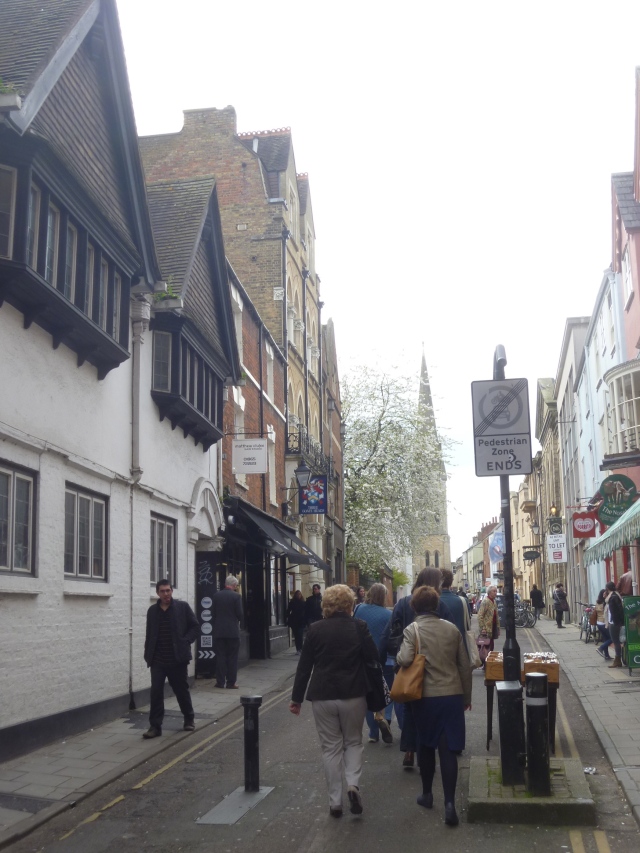
St Michael's St

St Michael’s Street

Time for lunch and the recommended venue was The Nosebag on St Michael’s St. I immediately recognised the address and building of The Oxford Union for it is the location of a Landmark Trust apartment : The Steward’s House. Even though it was after 2pm The Nosebag was packed so rather than miss out we had to split into two groups of 3 and 4. After the meal we dragged together enough chairs round one table in order to discuss the next steps in the campaign.
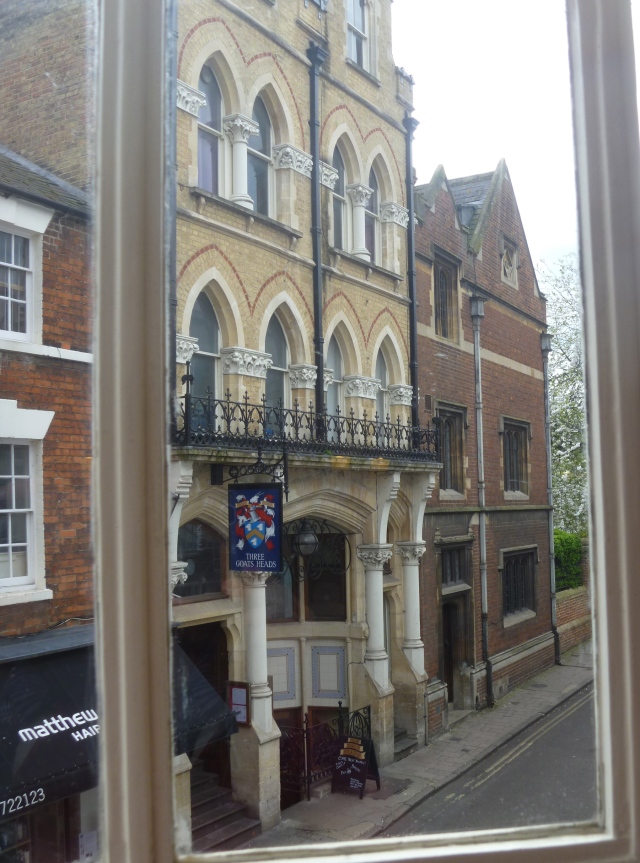
Oxford Union from The Nosebag

The Steward’s House and Oxfrod Union (red brick building) from the Nosebag

Pretty Arcadia is next door. It’s doesn’t just sell books but has a few displays and boxes outside and lots of vintage cards and accessories inside.

Before the end of our day we reached The Last Bookshop. This is also known as the £2 bookshop. It’s a great source of, presumably remaindered, new paper and hard back books. All priced (as it says on the tin) at £2. If I wasn’t such a devoted library user I would have bought loads here.
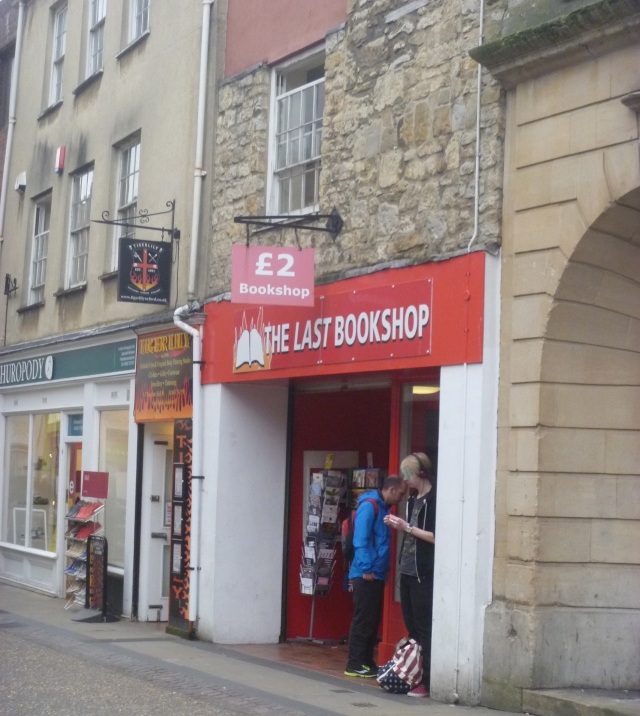
Last Bookshop

Actually, not The Last Book Shop for us

Our final two shops were – sellers of brushes not books – Objects of Use on Market Street – and a further Oxfam Bookshop on Turl Street. At least I thought OoU was more or less a kitchen wares shop as my companion and I only hovered near the entrance at a table full of brushes for different uses but I see from the website that it sells so much more. Apart from at The Home at Salts Mill this is the only other place that I have seen my Book Brush!
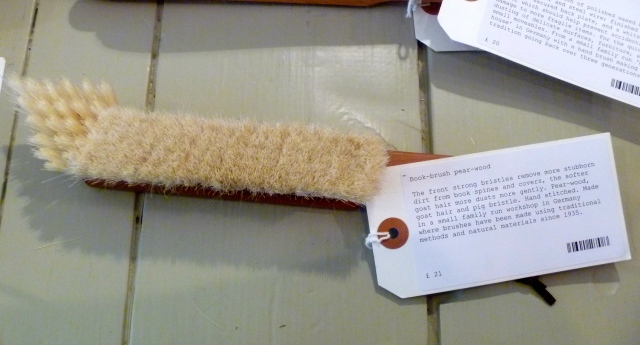
Book Brush

The very handy Book Brush

Book Brush Label

Instructions for Use

With trains and buses to catch around 5.30 time was pressing so we had a final tea and cake at ‘news’ and discussed plans for a Tenth Birthday Celebration in the autumn. All too soon it was time to hurry to station and rest our weary legs and heavy bags on the journey back to London.



Around the World in Christmas Gifts

Every gift received this Christmas has a special association for me: be it reading, travelling, visiting libraries, drinking tea or communicating via traditional pen and ink or modern internet methods.

ipad mini

I am now the rather nervous owner of an iPad Mini. I’m sure I will get used it and love using it but currently it sits pristine on its box whilst I still tap away at my laptop and snap away with my camera or iPod Touch.

Calendar

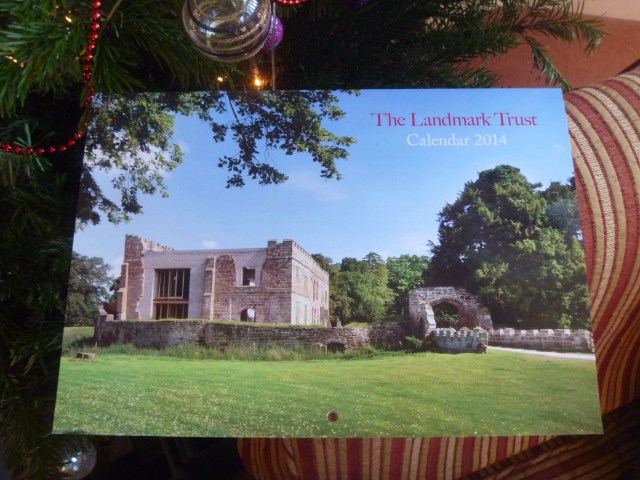
I’ll be checking dates and tempted to book Landmark Trust stays every time I look at my Landmark Trust Calendar for 2014. There is Astley Castle on the front (and also on the back) cover.

Cotswolds

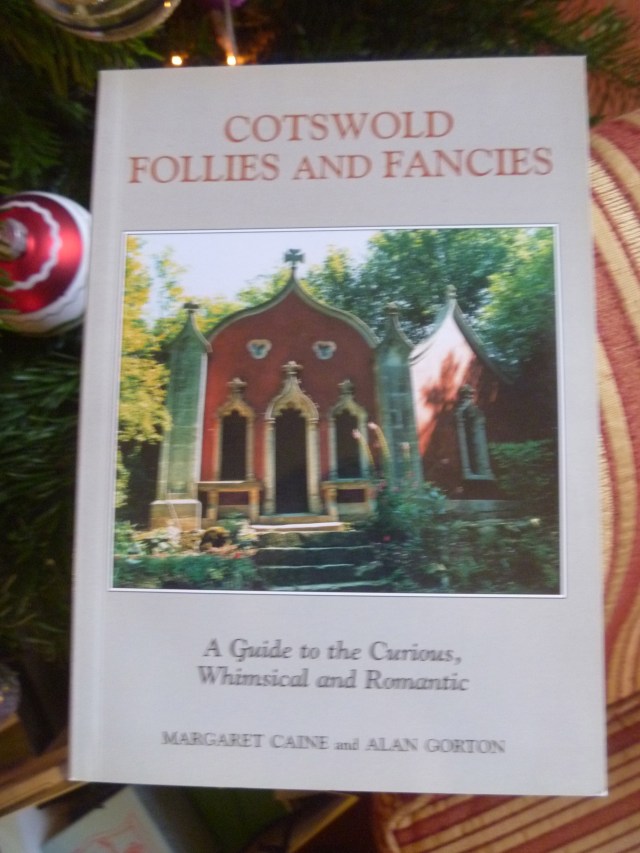
Whilst at the Landmark St Mary’s Lane in Tewkesbury earlier this year I came across “Cotswold Follies and Fancies”. It’s a guide to the curious, whimsical and romantic buildings around the area. I’m happy to have a copy of my own to take with me next time I visit the Cotswolds.

Rome

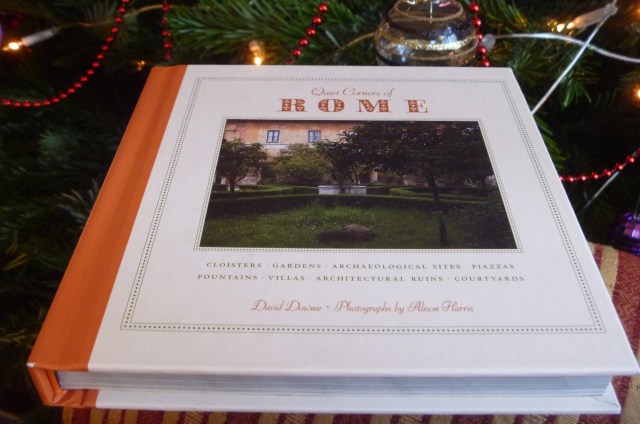
In 2014 I have travel plans for another ATG walking holiday this time in Italy. We will be staying just one night in Rome but will be sure to hunt out at least one of its “Quiet Corners”. In 2015 I’m hoping to spend a bit longer in and around The Eternal City.

Fodors Maine

No plans yet to return to New England next year but if we do I have just the up-to-date guide to make planning easy in Maine, Vermont and New Hampshire.

Tea and spoons

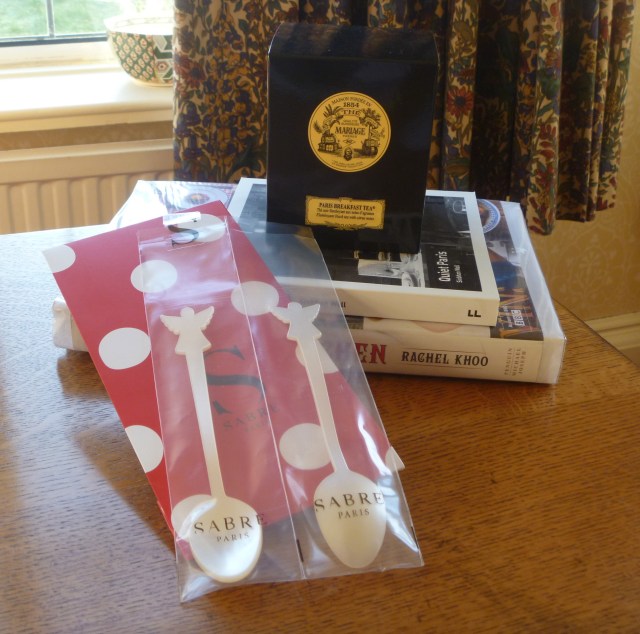
Paris is one of my favourite destinations and this (academic) year one of my Swiss friends is working there in her Gap Year. She sent me lovely Mariage Freres loose tea in a tin and two pearl spoons from the shop where she’s working : Sabre. It would be lovely to visit her whilst she is there.

“The fragrance of adventure and poetry endlessly pervades each cup of tea” – Henri Mariage [Founder]

Candle

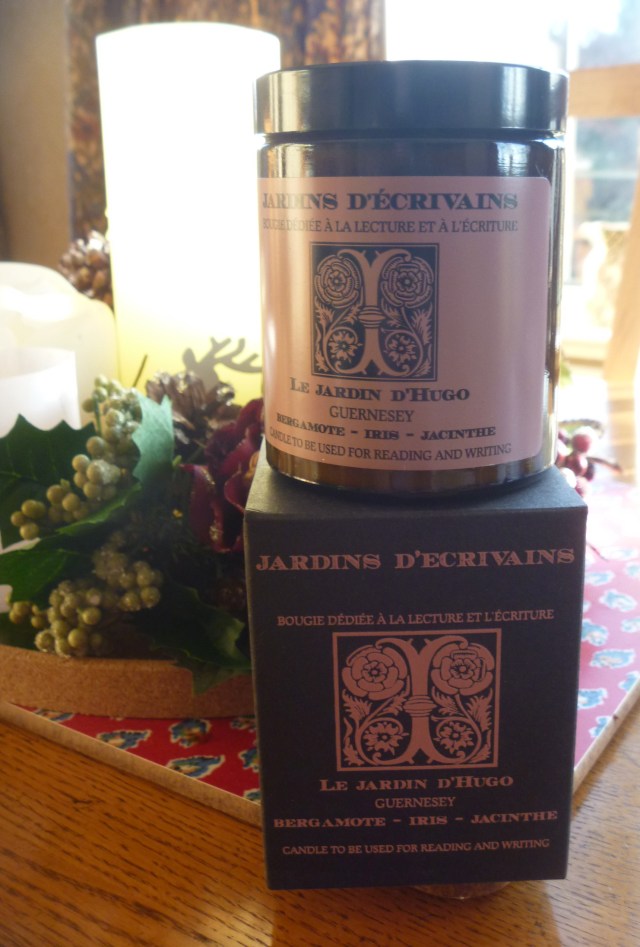
On a visit to Paris in 2010 a Parisian friend and I visited The House of Victor Hugo in a quiet corner of the Place Des Vosges. We’re still hoping to make a rendez-vous together at his other former home (owned by the City of Paris) Hauteville House on Guernsey. In the meantime I have this ‘writer’s’ candle whose scent of bergamot-iris-hyacinth is reminiscent of Le Jardin D’Hugo.

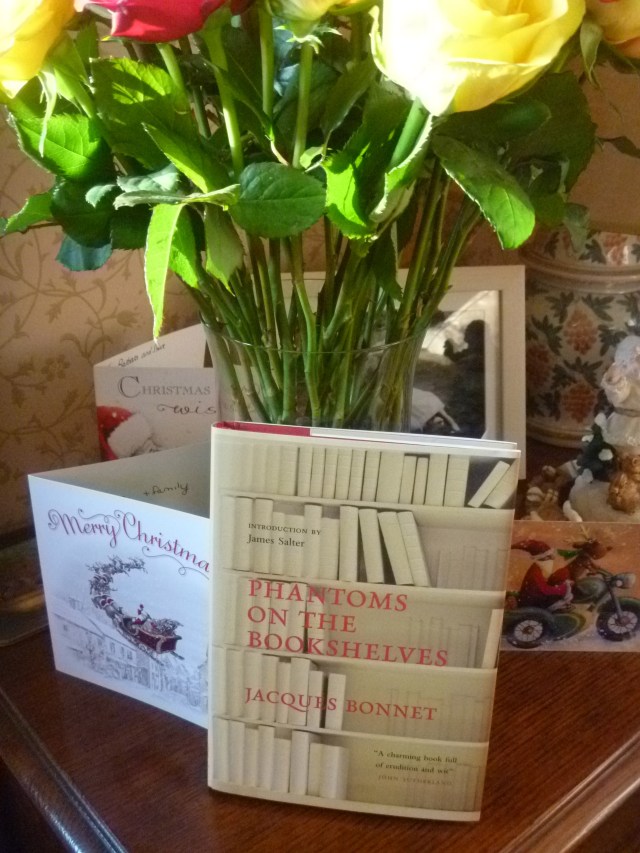
phantoms

My friend, fellow blogger and fellow online book group  moderator Simon at Stuck-in-a-Book read and recommended “Phantoms on the Bookshelves” this year. About it he says “Jacques Bonnet is more like the friendly face at your book group who will enthuse about managing to squeeze another bookcase into the corner of the living room.” I’m looking forward to reading Mr Bonnet’s book, translated from the French, very soon.
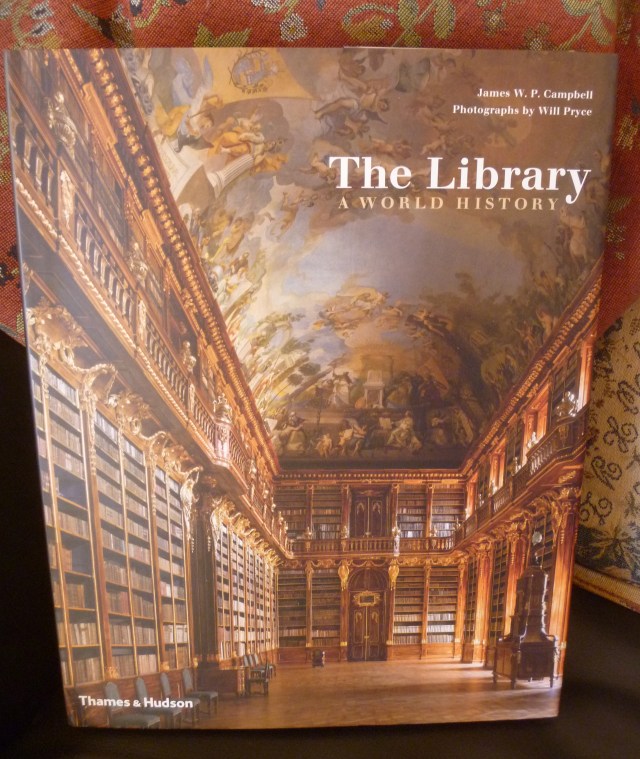
The Library

I understand that M. Bonnet writes about other libraries beside his own and some may be included in this coffee table book “The Library : a world history” which will find pride of place on Miladys table. I’ll be dipping into it all year and beyond.

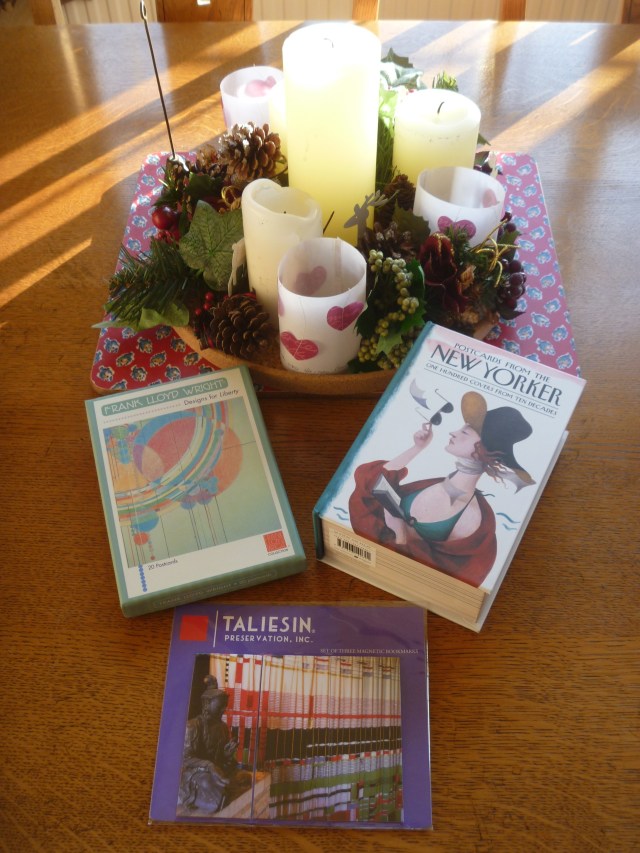
Postcards

Since joining The Leeds Library I have been a regular reader of The New Yorker so it was with great delight that I unwrapped a box of 100 cards taken from the covers of that magazine over ten decades. When I need to send a card I should find a date or subject suitable for almost every recipient. If I don’t find one in that box then I can turn to a gift box of 20 cards of designs by Frank Lloyd Wright for the American Liberty Magazine.

Lavendar bath

And at the end of the day I can relax in a Lavender Foaming Bath: “A new definition of calm.”

Many thanks to everyone who gave these gifts … and I hope you were at least half as pleased with what I gave you!

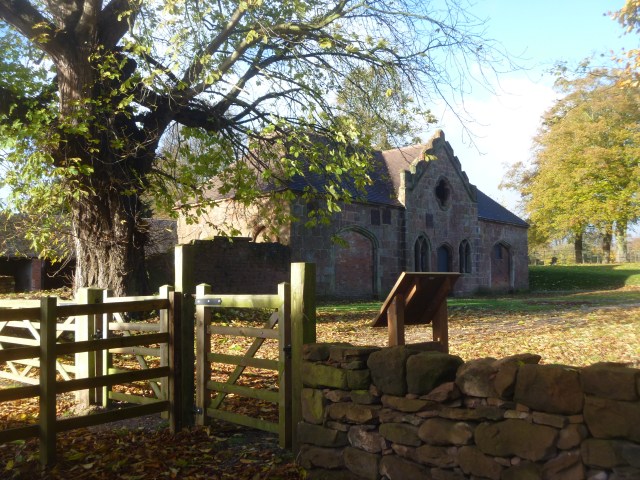
Astley Castle Interpretation Trail

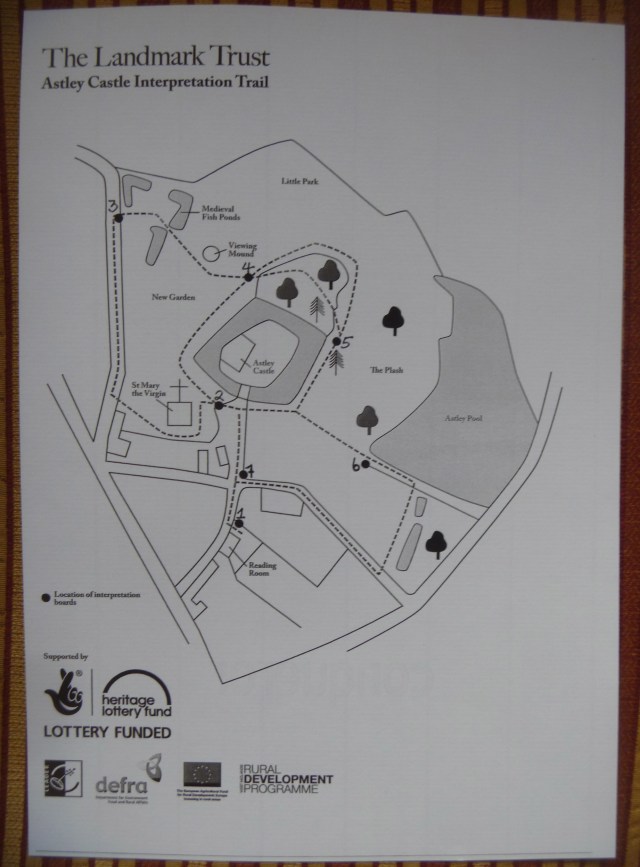
Astley trail map

The Interpretation Trail Map

Amongst many generous donors towards the reconstruction of Astley Castle the Heritage Lottery Fund was one of the major ones; giving a grant of well over a million  pounds to help the project on its way. HLF grants come with strings attached. So Astley Castle, quite rightly, enjoys many features and events not normally connected with Landmarks, in which the general public may be involved such as local school visits, open days and living history weekends. Public involvement has also included art exhibitions and a competition to design an Elizabethan knot garden in the grounds.

Knot Garden

The Winning Knot Garden

One  excellent result of the HLF involvement lead to the establishment of an Interpretation Trail on public footpaths through the area surrounding the castle (but keeping to the other side of the moat!). Information boards along the route explain the views and relate the history of the castle and its royal connections. Of course, I walked this trail many times in both directions. The views changed as the weather and light did throughout each day.

Let me take you along the trail. (Numbers refer back to the map above)

Astley Reading Room

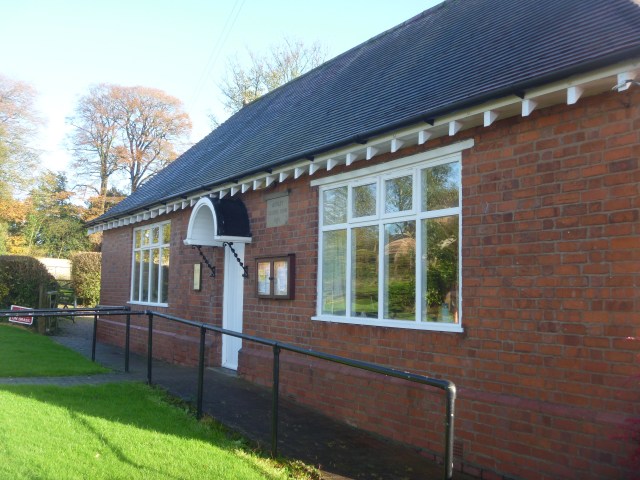
Astley Reading Room

1. At The Astley Reading Room two boards give a general introduction and explain the creation of Astley Castle as a ‘Landmark for the 21st Century’.

AC South elevation

Astley Castle : South Elevation

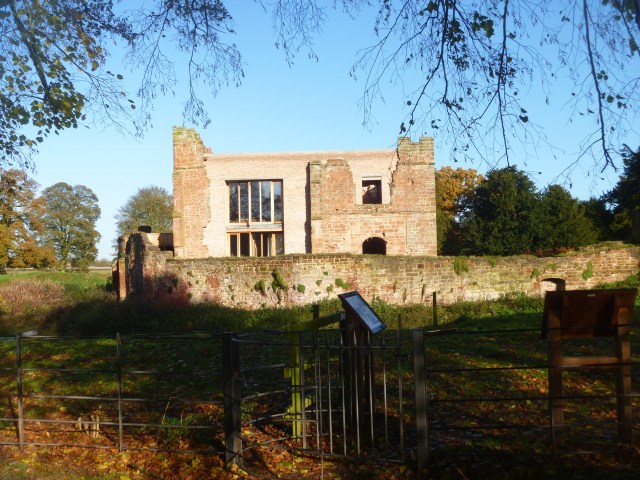
2. Astley Castle : South Elevation. Staying at the castle; this is where I began the trail each time.
“This ancient structure still remains, and the grounds surrounding it being tastefully laid out and kept in good order.” (Smith’s “A new and complete history of the County of Warwickshire”, 1829)

Astley Church

Astley Church

Collegiate church

From the Interpretation Panel

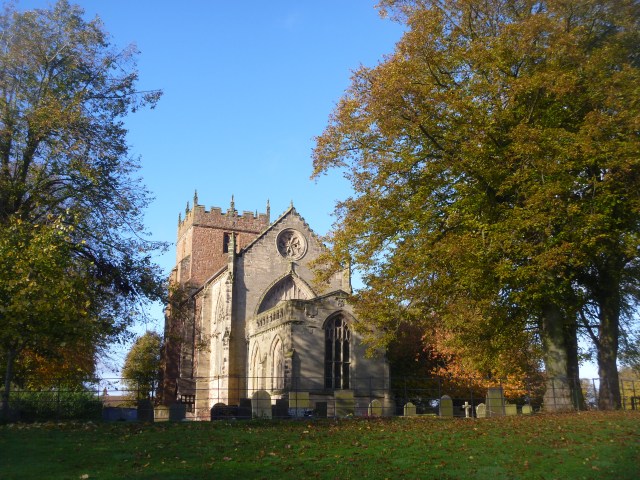
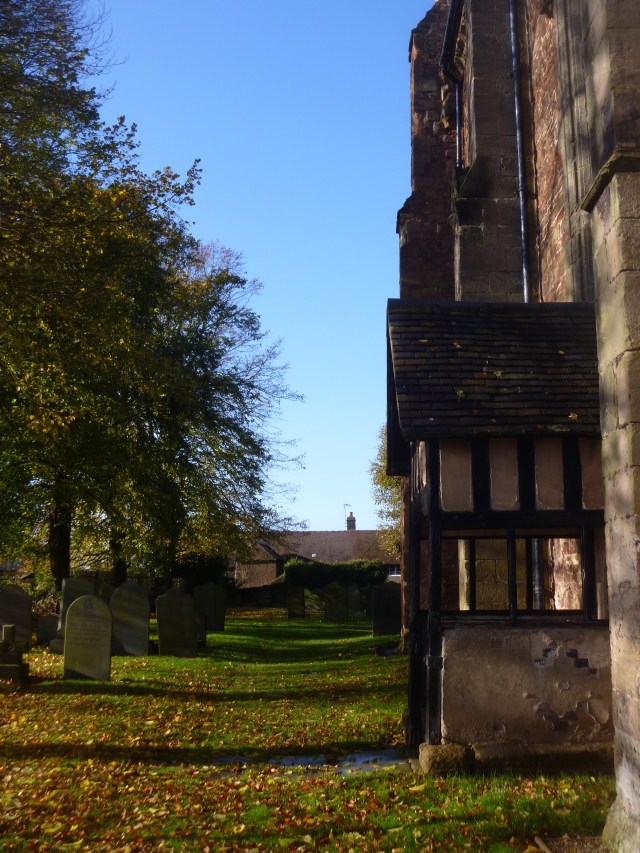
From here there’s an excellent view of Astley Church of St Mary the Virgin. [To be the subject of another post] Proceed through the churchyard to a rather muddy lane and panel 3.

Path through churchyard

Path through churchyard

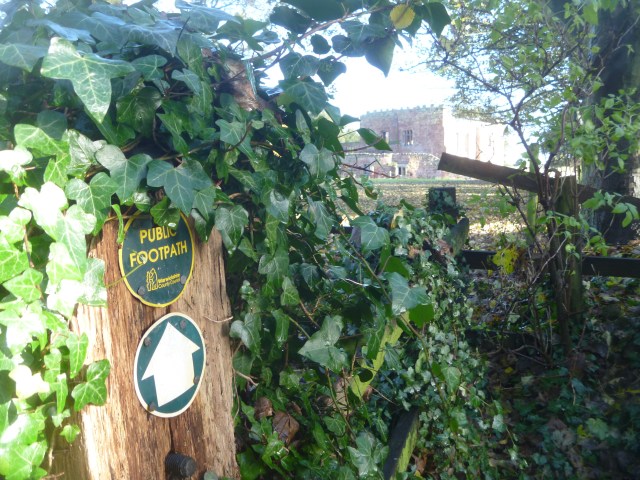
Trail this way

Follow the Trails this way

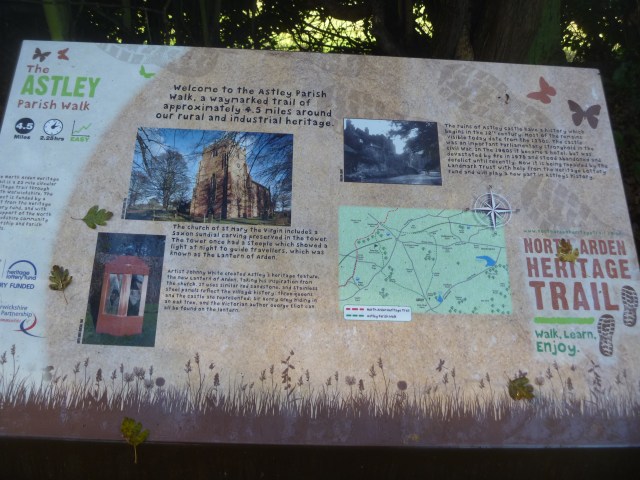
Astley Parish Walk

The Astley Parish Walk shares this lane with the Trail

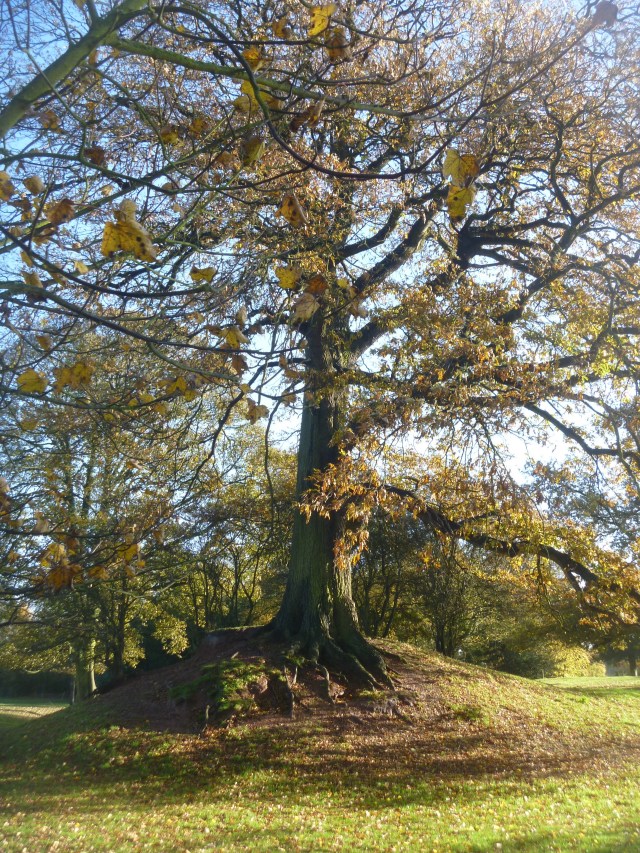
3. The New Garden. “Today the New Garden is used as pasture but the many lumps and bumps hint at significant buried archaeology, especially in this north-western corner” [Interpretation Board] In fact from this point we re-enter the Castle grounds and here are ancient fish pools and a man-made ‘Viewing Mound’.

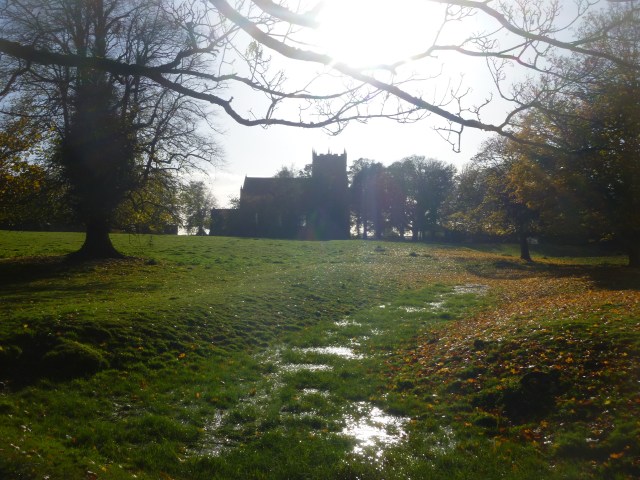
Fish pond and church

The former Fish Ponds and Astley Church

Viewing mound and old oak

The Viewing Mound topped by an ancient oak tree

There can be no real doubt that the New Garden was designed as a garden for the adjacent castle and it was probably laid out with paths, raised-bed type planting, arbours, hedges, and seats, perhaps in the late 15th century. The viewing mount could date from this period too.”.

1690 Estate Map

The area is labelled as New Garden on this estate map dated 1690.

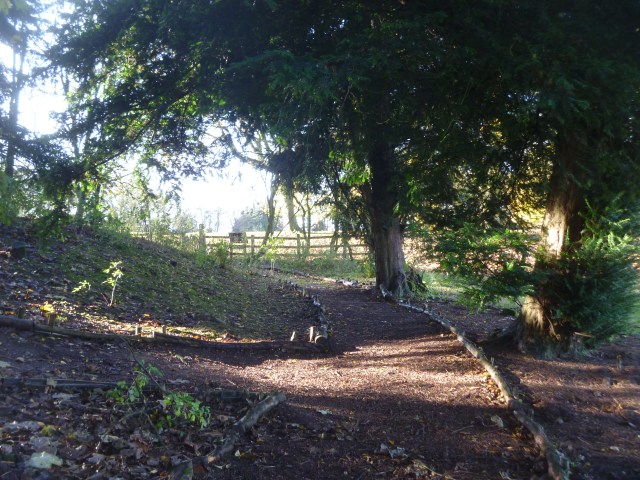
4. Little Park and Shrubbery. Here we leave the meadow and pass through a gate into a small wood or copse now known as The Shrubbery. It contains the kind of cultivated shrubs popular in the 19th century and is only shown on maps as a separate area on maps of the late 19th century and after.

BCTV path through shrubbery

BCTV footpath through the Shrubbery

Just as building work on the castle began and continued from 2008 “volunteers from the British Trust for Conservation Volunteers (BCTV) worked  tirelessly to clear fallen debris, self sown trees and invasive weeds along the footpaths, here in the Shrubbery and around the banks of the moat.”

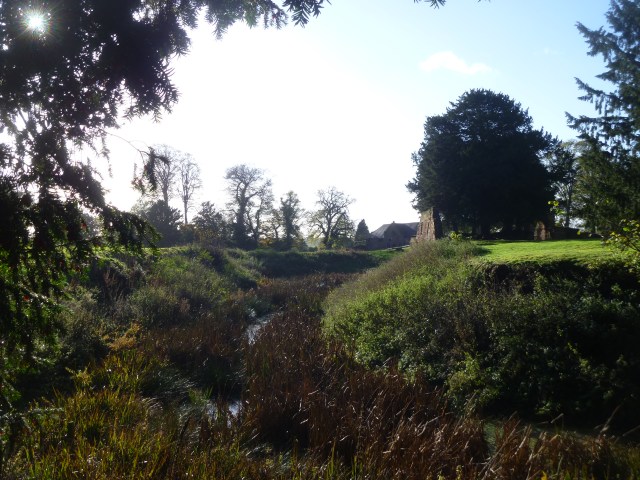
Moat

The Moat contains water in places

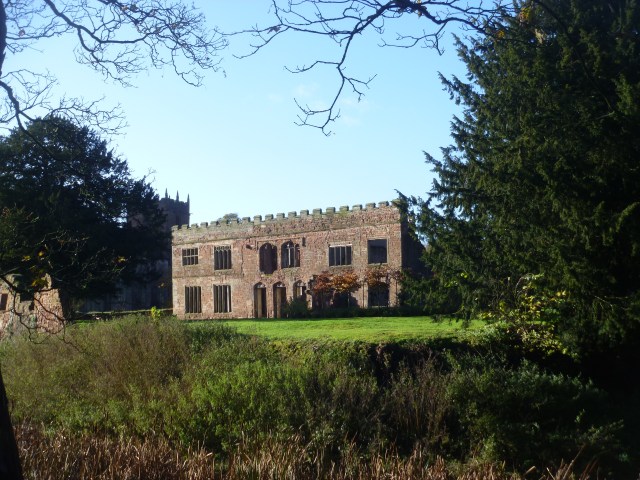
5. East Elevation and The Plash. Emerging from the Shrubbery we gain another view of the Church and the Castle. The East Elevation is to all intents and purposes the Front and Entrance to the building. But looking in the opposite direction there’s a broad green meadow (The Plash) and the still waters of the Astley Pool fishing lake.

East elevation

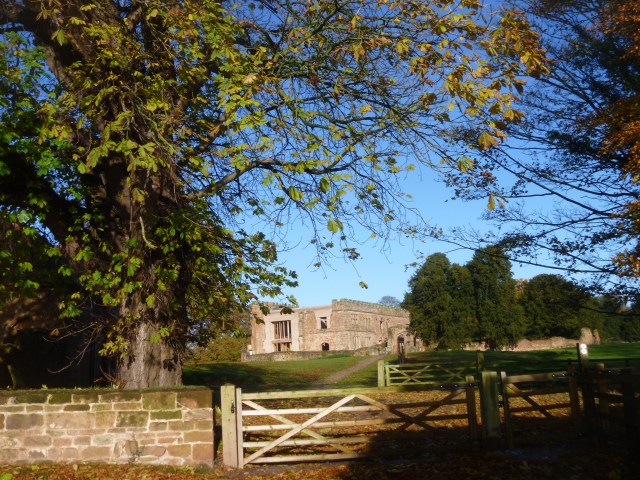
The East Elevation (Front) of Astley Castle

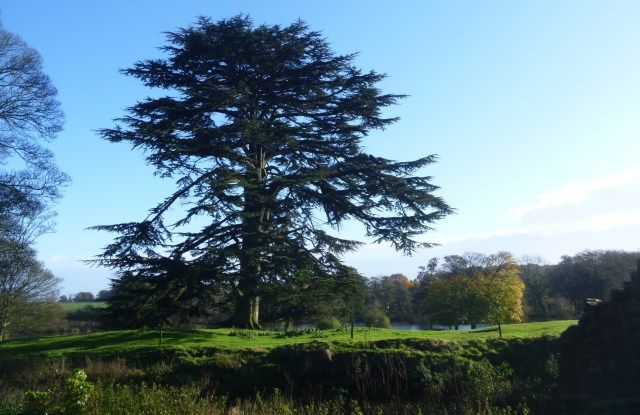
The Old English plaesc, modernised as ‘plash’ means ‘a shallow piece of standing water, a marshy pool’ so this is likely to be an ancient natural feature, enhanced and adapted by the castle residents. … The Plash is dotted with trees, several of which are mature specimen trees – including a fine cedar tree.”

Cedar

The Cedar Tree

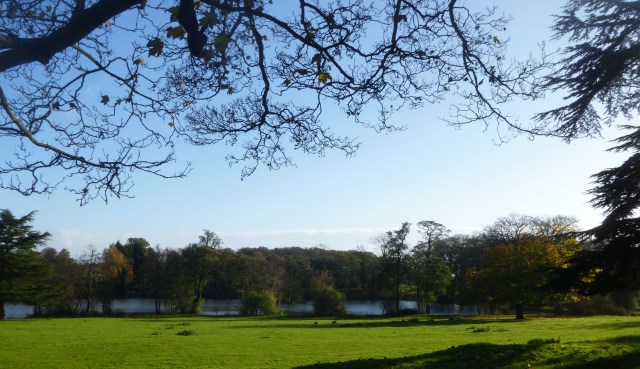
Plash and Pool

The Plash and the Pool

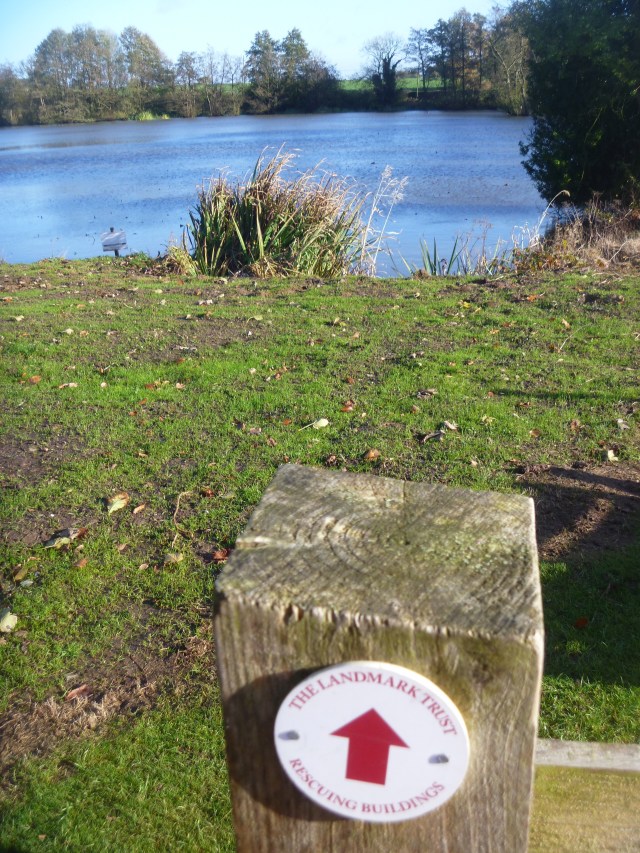
6. Astley Pool and New Road. Our path takes us across The Plash to Astley Pool, a man-made lake. Although it may seem a typical 18th or 19th century creation it is first referred to in 1501. It is now a private fishing lake.

Astley Pool

The New Road was created to link the drive from Arbury Hall to a new access to Astley Castle. The first part of this was across the top of the pool dam and this would have provided a suitably attractive route up to the castle.”

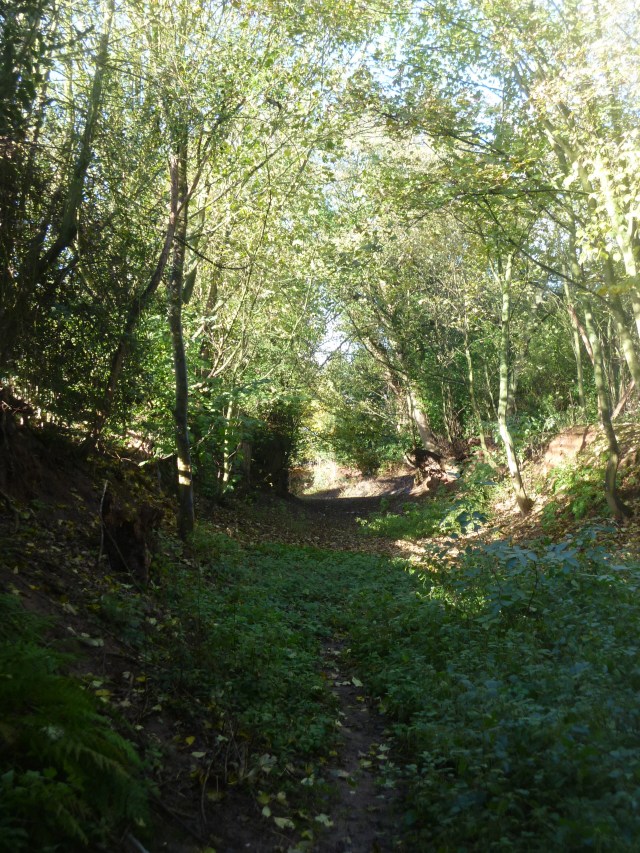
7. Dark Lane and Castle Approach. The BTCV volunteers had been busy clearing the last lane that leads back to the village and the Castle. I was surprised to read in the interpretation notes that this lane was in fact a disused ‘holloway’. I have recently read Robert MacFarlane’s recent book “Holloway“. I had assumed that these features of the landscape only occurred in Dorset and the Downs of the South of England but here was one in the Midlands.

The Holloway

The Holloway

“‘Holloway – the hollow way. A sunken path, a deep and shady lane. A route that centuries of foot-fall, hoof-hit, wheel-roll and rain-run have harrowed into the land. A track worn down by the traffic of ages and the fretting of water, and in places reduced sixteen or eighteen feet beneath the level of the fields.’ “

[See more at: http://www.faber.co.uk/catalog/holloway/9780571302710#sthash.KNxb85gv.dpuf ]

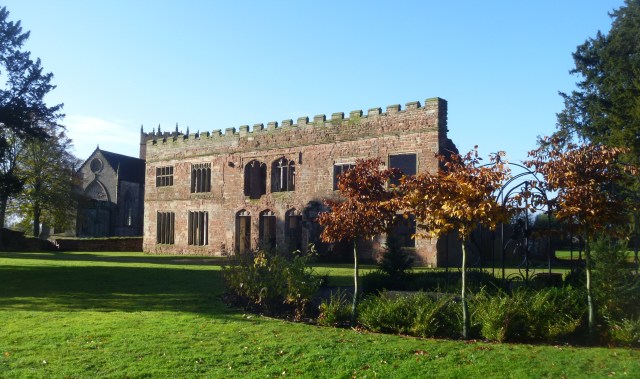
And here we are back where we started at the approach to the castle. On the left is the Coach House like the Castle left to ruin but now repaired and water-tight although it has no use at the moment. Behind are the 18th century Gothick stables.

Coach House

The Coach House

Notice

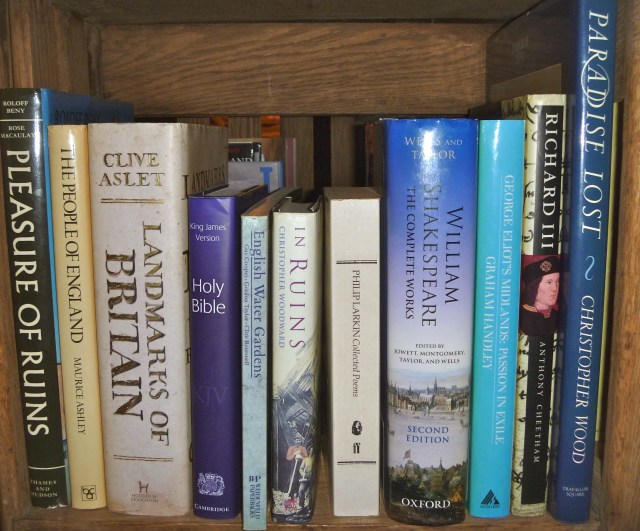
I return to the Castle to study the library and read more about ruins and the rich history of Astley and England.

Bookshelves

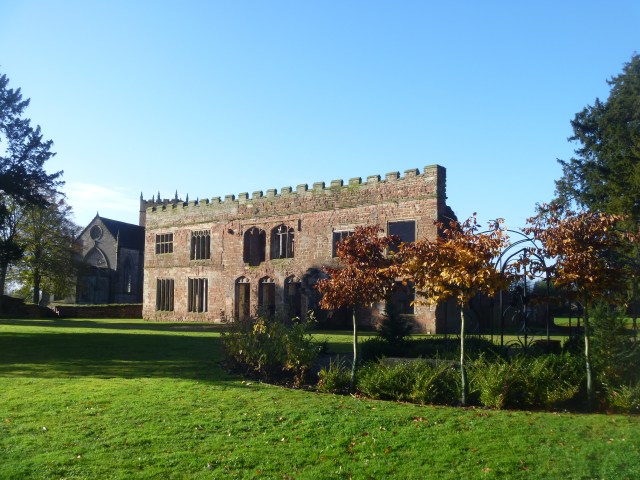
“The Building Bears Strong Marks of the Ravages of Time and Presents an Extremely Picturesque Appearance” Astley Castle

Astley and Knot Garden

Astley Castle and Elizabethan Knot Garden

“The Building Bears Strong Marks of the Ravages of Time and Presents an Extremely Picturesque Appearance” Britton’s “Beauties of England and Wales“.

The Stirling Prize is the most prestigious prize for British architecture awarded annually :

to the architects of the building that has made the greatest contribution to the evolution of architecture over the past year. The prize is for the best building in the UK by RIBA chartered architects and International Fellows, or in the rest of the EU by an RIBA chartered architect.”

The RIBA Stirling Prize was born in 1996 out of its predecessor The Building of the Year Award. The Building of the Year Award had been running since 1988 and the winner was chosen by the RIBA President from a handful of National Award winners. This was thought of as neither transparent nor democratic. The aim with the Stirling Prize was that the winner should be decided in an unbiased way, with different juries visiting the ‘midlist’ and shortlist.

The new prize was named after James Stirling, the great British architect who died in 1992. The aim was that the Stirling Prize would be for architecture what the Booker Prize was for literature, and a £20,000 cash prize for the winning architects made the prize covetable as well as prestigious.” [Source]

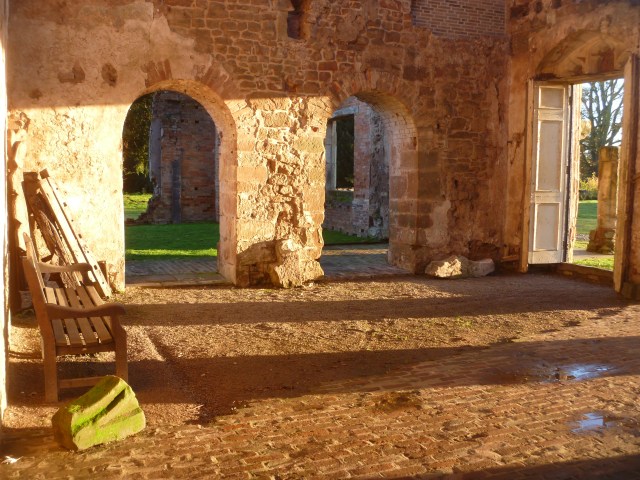
In 2012 I was fortunate enough to be invited by friends who are Patrons of The Landmark Trust to attend the celebration opening of Astley Castle in July 2012. Immediately on leaving the reception and arriving home I decided to book the castle for a week (Monday to Friday) in November 2013.

Here are some of the highlights and light effects from this unforgettable stay.

Arriving at Astley

Arriving at Astley

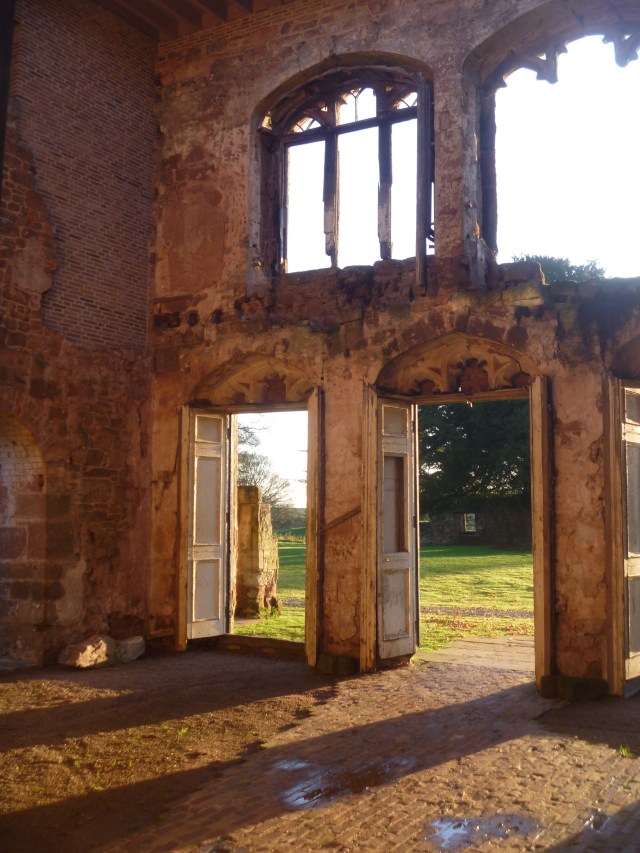
The Ruins

The Ruins

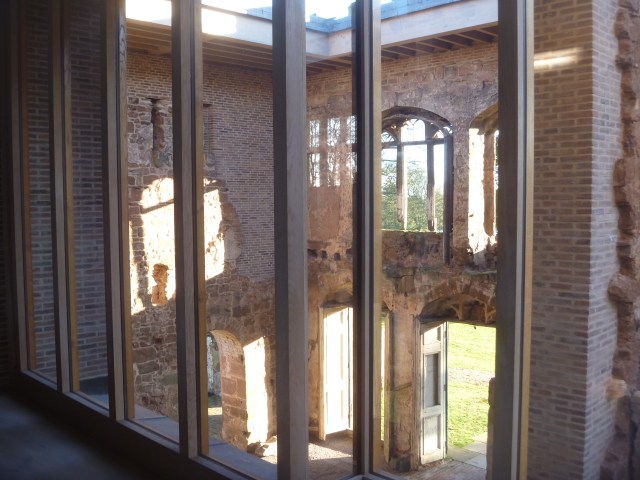
Sunlight after the rain

Sunlight after the rain

Outdoor Dining

Outdoor Dining

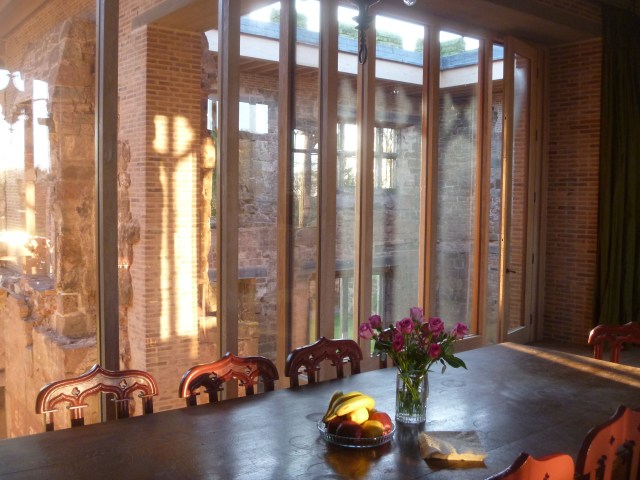
Dining table shadows

Indoor Dining

Courtyard

Courtyard

Kenilworth Castle

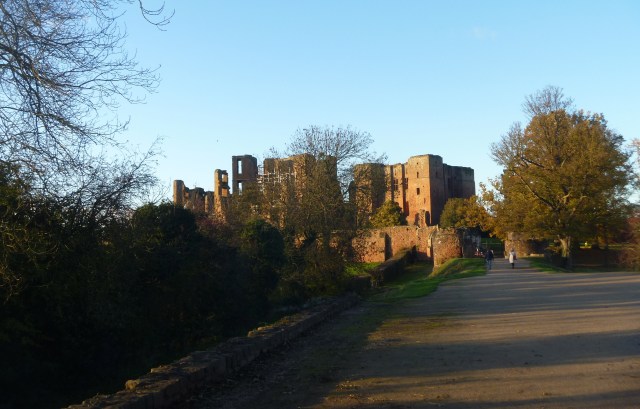
Castle Visiting – Kenilworth Castle

Gibside : “The Chapell, Greenhouse, Banquiting House, Bath, Gardens, and Walks, [and] pleasure grounds are all gone to Ruin.”

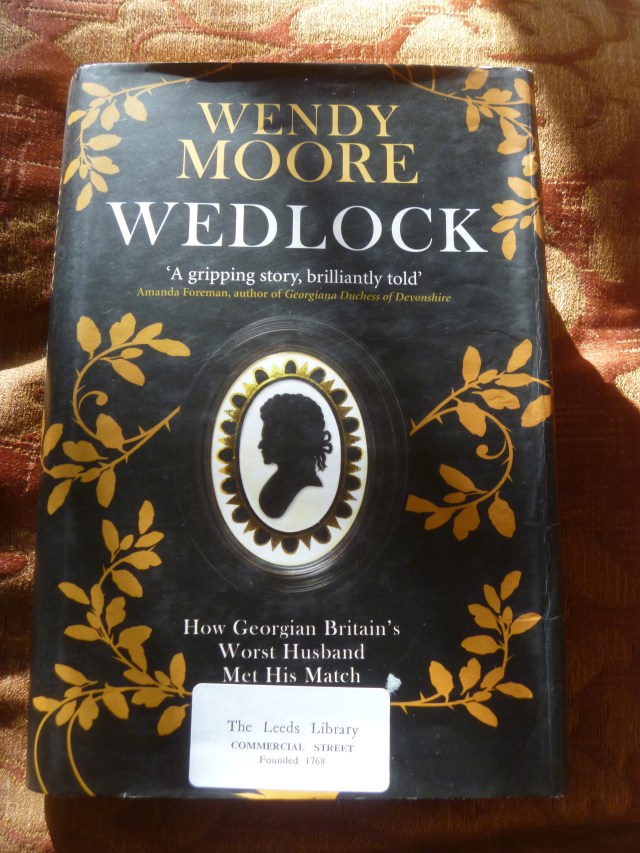
Last week I finished reading ‘Wedlock’ by Wendy Moore, subtitled on the cover ‘How Georgian Britain’s Worst Husband met his Match’. And what a tale it tells. It’s been recommended to me from several sources not least from Nilly Hall‘s wittily titled ‘Bowes and Cupid’s Arrows‘ published last February.

Wedlock

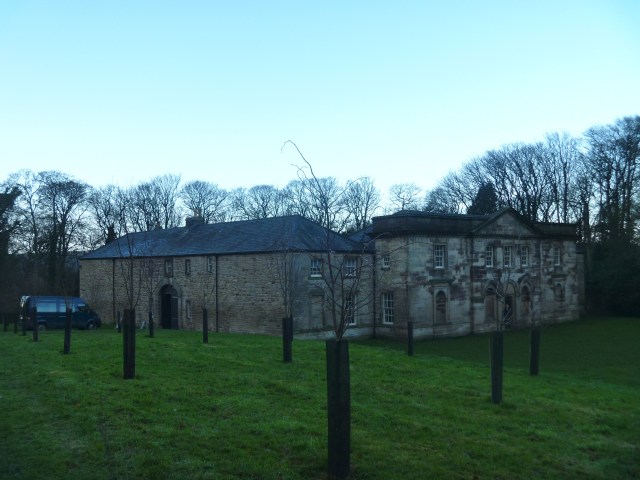
The book is the story of Mary Eleanor Bowes (1749-1800) daughter of the coal baron creator of “Gibside, a Georgian ‘grand design’ on a spectacular scale. The vision of coal baron George Bowes, the Palladian chapel is an architectural masterpiece, the stable block is a vibrant learning and discovery centre, and the once grand hall is now a dramatic shell. Gibside is also a haven for wildlife with red kites often circling in the skies above.” [NT]

Stable Block 2

The Stable Block

Gibside just a few miles from Newcastle is now the property of the National Trust. I have visited Gibside twice. The most recent time was just last December on my way to a course at Sage plc.

The Chapell

The Chapell

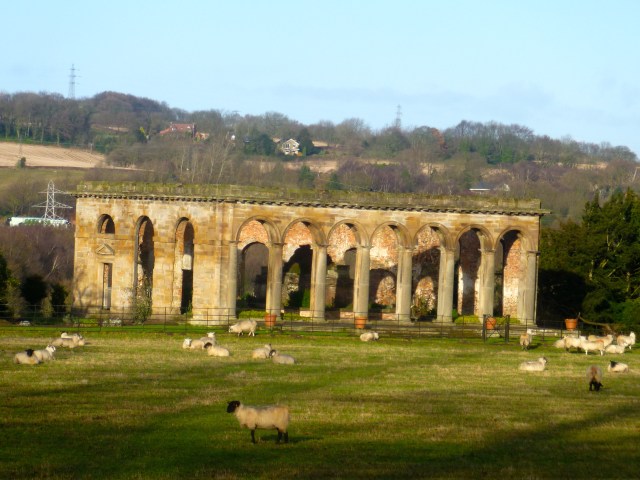
Orangery

The Greenhouse or Orangery

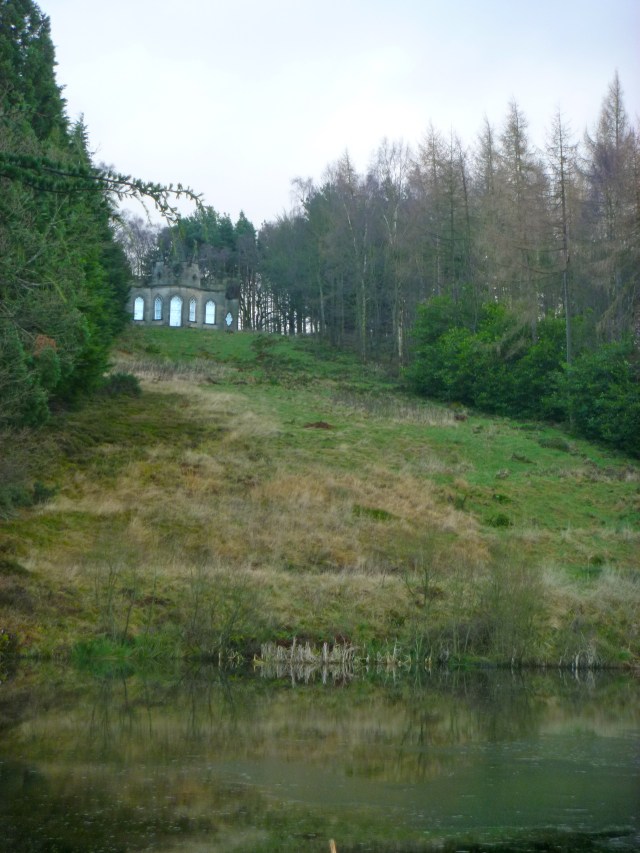
Banqueting House

The Banquiting House

The water feature below the Banqueting House was an elegant octagonal pond built in the Greek style to add to the stately vistas. A fountain cooled he air and statues stood on the terraces above. The Banqueting House was restored by The Landmark Trust after many years of neglect. That same neglect has had some happy consequences for the pond. It is now a Site of Special Scientific Interest (SSSI) for its population of great crested newts. There are no plans to restore the Octagon Pond as any such work could destroy the habitat of these shy and rare creatures, as well as upsetting the many other types of bird and aquatic life that thrive here. [Extracted from the Information Board at the Pond]

A highly educated woman for her time Mary Eleanor’s father, George Bowes, died when she was 11 leaving her a vast fortune and prey to future gold-diggers. She married her first husband, John Lyon, the 9th Earl of Strathmore, in 1767, gave birth to five children in six years and was left a widow when Lyon died of tuberculosis in 1776.

Her second marriage to Andrew Robinson Stoney, an Anglo-Irish adventurer, was a total disaster. Self-styled ‘Captain’ Stoney duped Mary into marriage in 1777. From then on she was brutally treated and virtually held captive by him. Finally, she did manage to escape his clutches and even to divorce him – highly unusual at the time. He is the origin of the term “stony broke” – he died in a debtor’s prison – and he was the inspiration to William Makepeace Thackeray who learned of Stoney Bowes’ life story from the Countess’s grandson John Bowes and used it in his novel “The Luck of Barry Lyndon.” 

Stoney’s or Bowes’, as he is called in the book (in compliance with Mary’s father’s will, Stoney changed his name to Bowes his marriage to Mary Eleanor), greed was responsible for the ruin of Gibside and the destruction of thousands of trees on the estate .

It is ironic that Mary’s father constructed the Column of Liberty in the grounds of the estate when for several years during her marriage to Bowes she was very far from being at liberty.

Column of Liberty

The Column of Liberty at Gibside

An Invitation to View : Lukesland

In addition to a shared love of reading  Lynne (alias Dovegreyreader) and I have a love of houses and a nosey poke around in other people’s – especially the grander sort – when we get an opportunity. The chance arose when I was wondering how to belatedly celebrate her big birthday on our annual Devonshire Day Out.

dgr can't wait

Dovegreyreader can’t wait to get inside Lukesland

Then I remembered “Invitation to View” an organisation that brings together house owners and those inquisitive members of the public prepared to pay to have a private guided to tour of their homes followed by tea and cake or a light lunch by the fire or in the garden depending on the time of year. A small number of houses in Norfolk and Suffolk were included in the early years. This number has increased quite significantly and a few years ago The Southwest joined the group and there are now 23 houses in Devon, Cornwall and Somerset included in the scheme.

So,  a couple of weeks ago I extended An Invitation to View to Lynne who accepted right away and we made our arrangements to meet last Thursday. Meeting at 11.30 in a favourite cafe of ours in Ashburton – Moorish – we allowed ourselves an hour and a half to catch up on each other’s families and reading and what-not, to drink tea, eat soup and, oh dear, have the first cake of the day. (Well, we were celebrating a birthday – any old excuse will do when the Moorish Tunisian Orange Cake is winking at you!).

Comfortably sustained by soup and cake Lynne drove us to Ivybridge and up out of town onto the edge of Dartmoor to Lukesland; the house  we were booked to visit. From about 1.30pm the gardens were opened to us and the house tour began at 2.30pm.

Lukesland

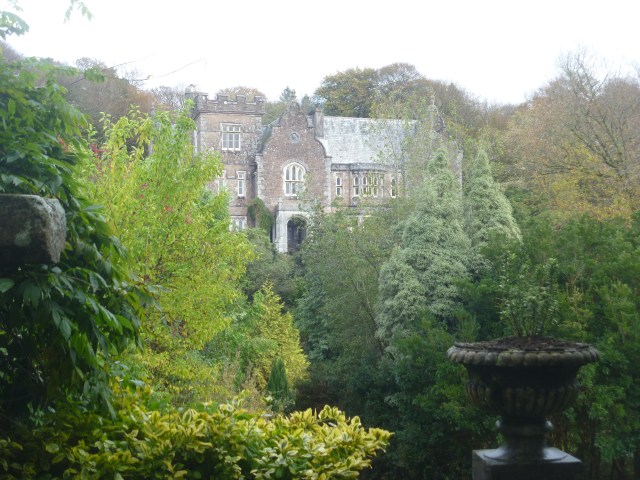
Lukesland House and Garden

The gardens at Lukesland are generally open to the public in the spring and in the autumn. We thought there would be more autumn colour in early November than there was but nevertheless we enjoyed a chatty wander and took some photos as photography inside the house is not permitted.

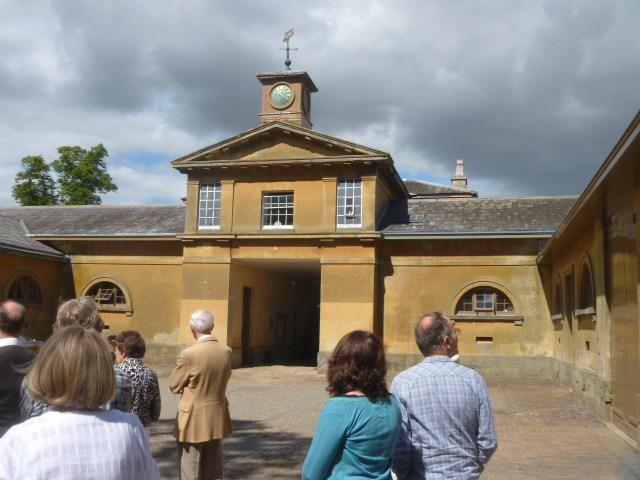
Kitchen Garden

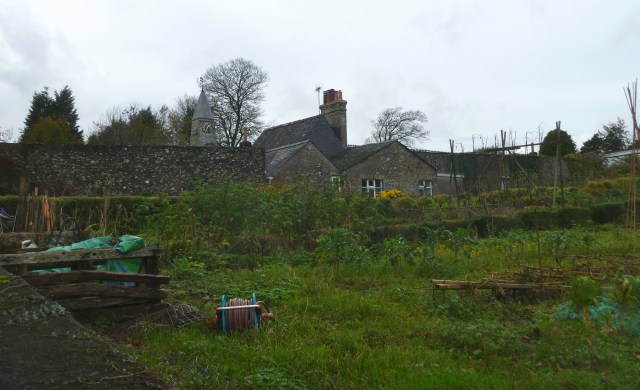
The Kitchen Garden

The Kitchen Garden was the main garden of the original Tudor estate. It was much reduced in size by the Victorian owners in order to build a drive between the house and the stables (under the clock in the photo). The garden produced vegetables for the family, the domestic staff and for the farm workers on the estate until the 1940s. Since 2005 parts of it have been let as allotments to local Ivybridge residents.

Lukeland sfrom garden

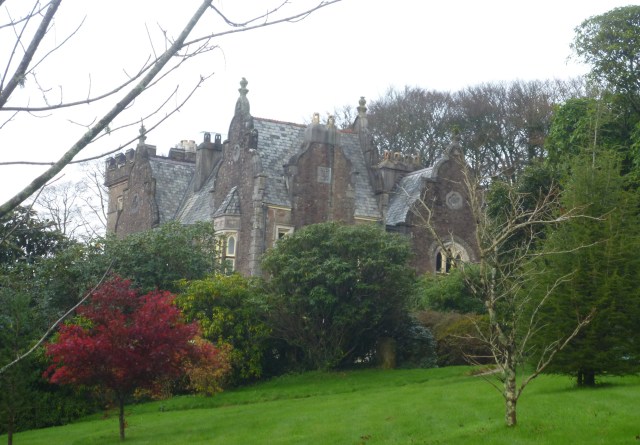
Lukesland

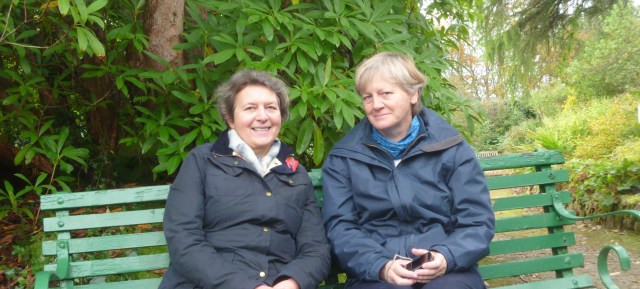
Milady and Doevgreyreader

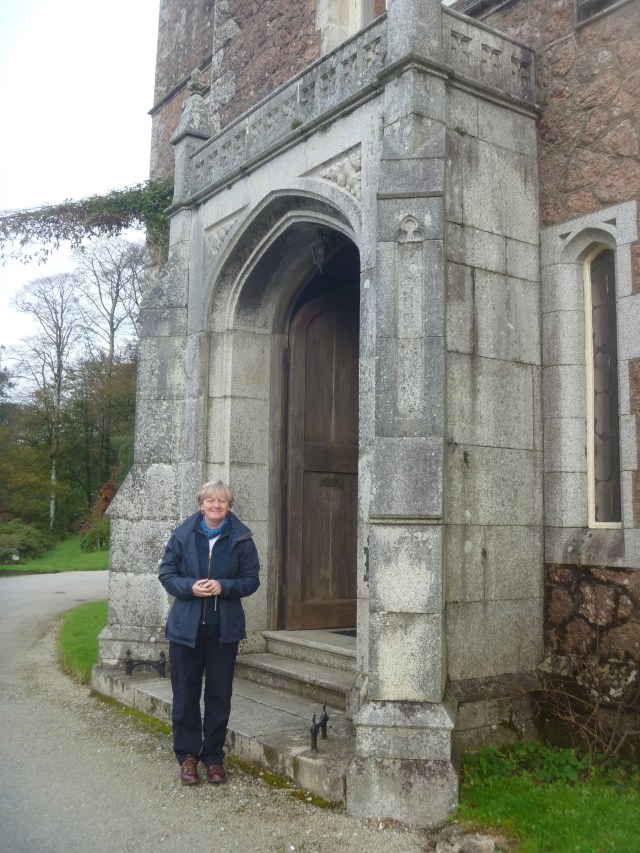
Milady and Dovegreyreader at Lukesland

By 2.30 about 14 of us were assembled in Rosemary Howell’s sitting room waiting for the talk and tour to begin. Rosemary and her daughter-in-law Lorna welcomed us to the house and told us the brief history of the place.

The Place Names of Devon lists “Lukesland” as being derived from the family of John Lucas in the 1330 Lay Subsidy Rolls.”  There is evidence – written and in carved stonework – of settlement at Lukesland during and ever since Tudor times.  The Tudor house was called Lukesland Grove. In 1863 a new (the current) house was built of Dartmoor granite and Portland stone on a new site and in the popular Victorian Gothic style for William Edwin Matthews, as a base for hunting on the moor. “Around 1875, Matthews was obliged to sell Lukesland and it was bought by James and Barbara MacAndrew, who came from the family of the London-Liverpool shipping line of that name.”

Howard Howell, a Canadian who came to Britain with the Canadian Expeditionary Force during the First World War, worked locally in forestry and married a Welsh woman, Muriel Neale and they settled in Exeter later buying Lukesland. The estate was in its heyday before the Second World War.

A second phase of landscaping of the garden took place. A pond was dug (‘The Lower Pond’ as it is now), many waterfalls installed and three stone-arch bridges built (one, just below Rh. smithii, collapsed after a flood undermined the foundations in the early 1970s). A bathing pool was built on the island in front of the house, and a much bigger range of rhododendrons was planted, along with other shrubs and trees. Although the Victorians had planted some newly introduced exotic trees in the Cleave, including some Wellingtonias, this was the first time that the garden was really diversified. Many more flowering shrubs were available by the 1930s, and Howard was a forester who took a keen interest in them.”

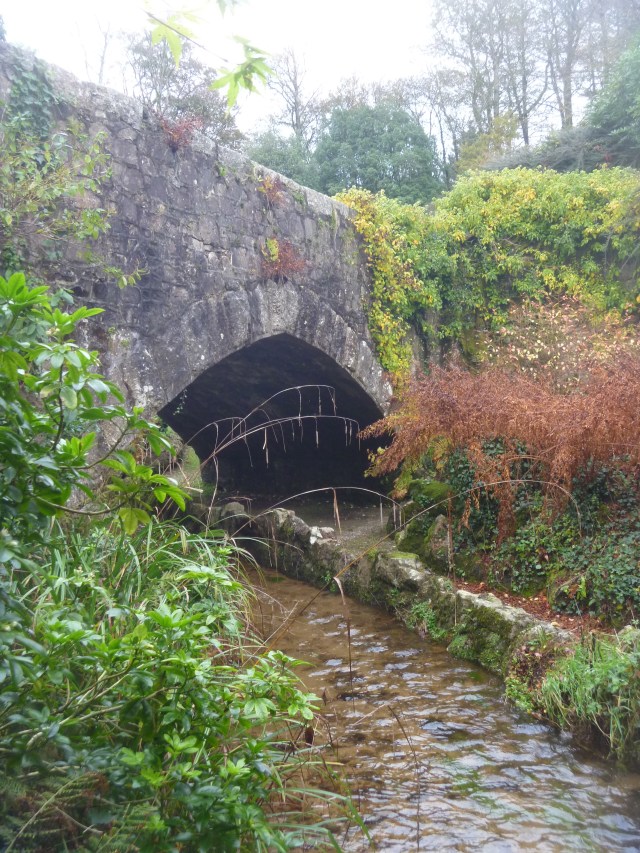
Bridge and stream

Despite all the social changes in Britain since the War the Howell’s have lived on at Lukesland making changes and adapting the house and garden. Rosemary and her husband Brian moved in in 1975. Brian’s background was also in forestry. A lot of work needed to be done on the house. Brian died in 2003 and his son John and wife Lorna moved in in 2004. Adaptations include opening the gardens and tea room and letting holiday accommodation in out-buildings and in a wing of the house itself. [Adapted from Source]

Rosemary’s sitting room was in a separate wing of the house created by the insertion of a gothic-style but fully glazed door which separates it physically from the main body of the house. But done in this way I’m sure she still feels very much a part of the family.

We were then shown a larger sitting room and the big family kitchen created from a butler’s pantry and other servants’ quarters. It seems as if nothing is thrown away at Lukesland. Lorna joked as we moved from one scullery or dairy to the next that after the national collection of wallpapers we moved on to the national collection of flower vases. I kept making mental notes to self – get that loft and cellar cleared out!

Upstairs there seemed to be a multitude of bedrooms and bathrooms created from bedrooms all of which seem to be in use. There is also a separate apartment which is let a long-term holiday let. The house has a sheltered courtyard behind and here as well is the old billiard room and former nursery converted to a tea room and in use when the gardens are open.

Finally we returned to Rosemary’s sitting room where DGR remarked that the shabby, but not threadbare, rugs seem to be a feature of these old properties and I was able to tell her that the Landmark Trust would never use a new rug in an old property and that they have a huge store of suitably worn rugs ready to furnish future properties.

Tea and delicious home-baked cakes (yes, we carried on in the tea- and cake-tasting tradition established over the years) were served by the log fire and we discussed further what we had seen and how these lived-in houses are constantly evolving and adapting and how nice it was to see bookcases in every room, everyday objects and even imagining ourselves descending the stairs in Edwardian times as if we lived there!

Sky leaving Lukelands

Leaving Lukesland

The Secret Life of Wormington Grange

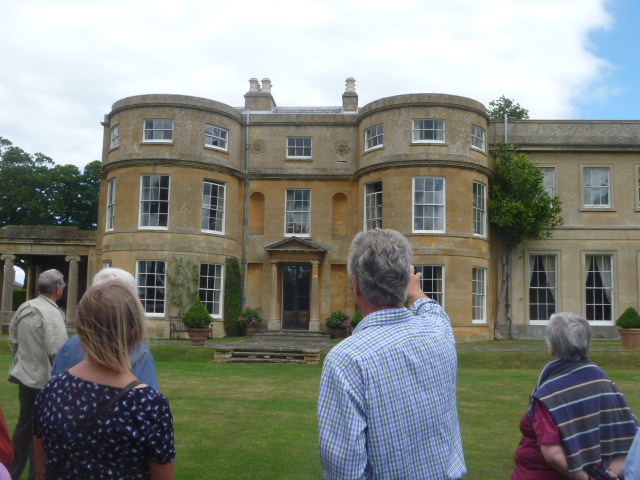
Wormington Grange

As you drive down the avenue of trees approaching Wormington Grange in Gloucestershire it appears as an elegant and serene Cotswold stately home.  Built of typical warm Cotwold stone and fronted by a smooth green lawn nothing gives a hint of what is going on in the stables and out-buildings behind the house.

Wormington Store

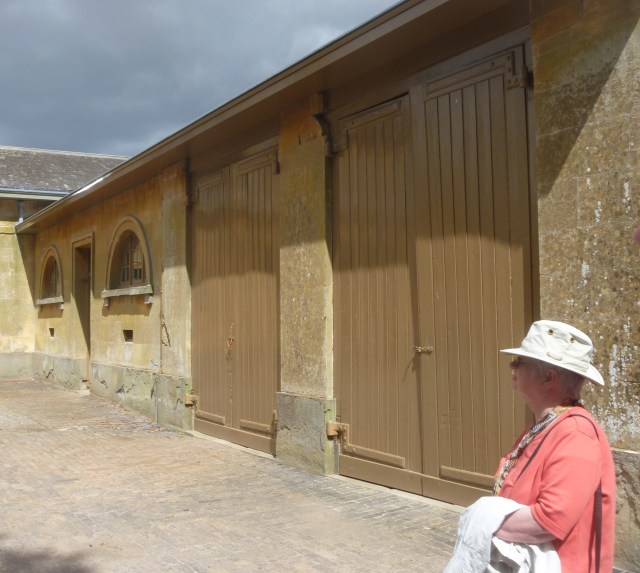
The impressive stable block store

Wormington Grange is the home and work place of John Evetts The Landmark Trust’s Furnishings Manager and on Friday 9 August I had the honour and pleasure to have been included in a small group of Landmark Patrons and their guests at a private and ‘magical‘ tour behind the scenes. We were shown the store of furniture and furnishings and the workshops and told the history (accompanied by amusing anecdotes and asides) of the collection and of the house and grounds by Mr Evetts himself.

JE in garden

We started our tour behind the house at the impressive set of stable buildings.  John explained the history and architectural features and then … the moment of revelation … he unlocked each of the large heavy doors to reveal the furniture delights held inside.

Ann at Stables

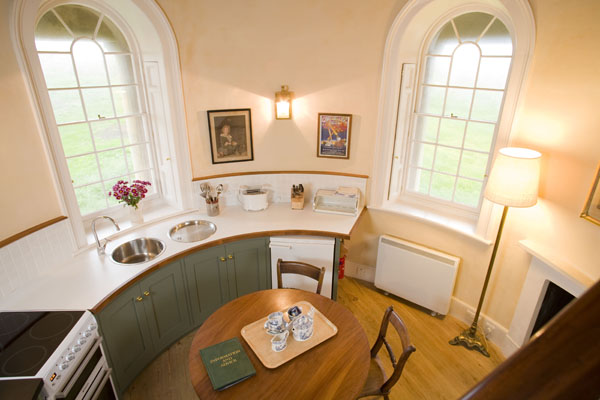
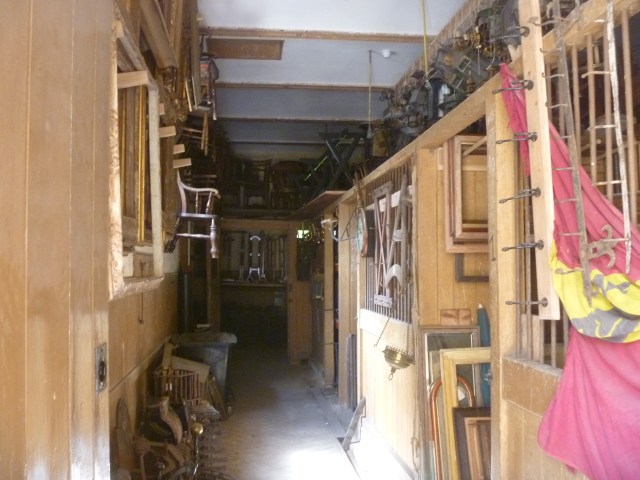
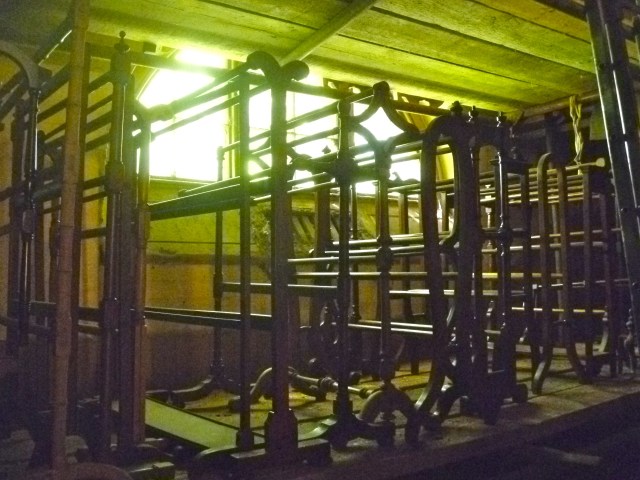
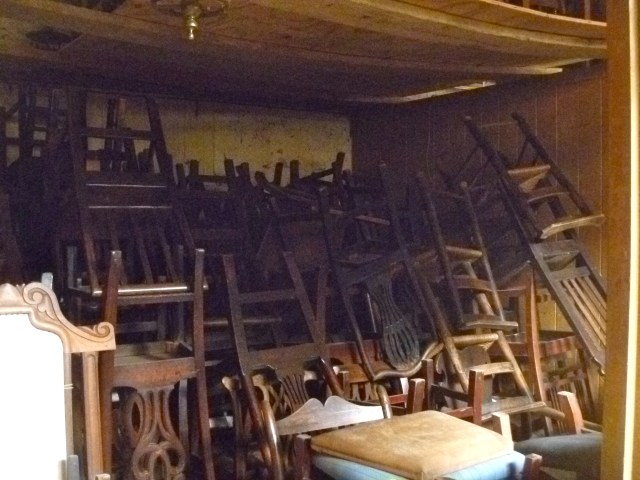
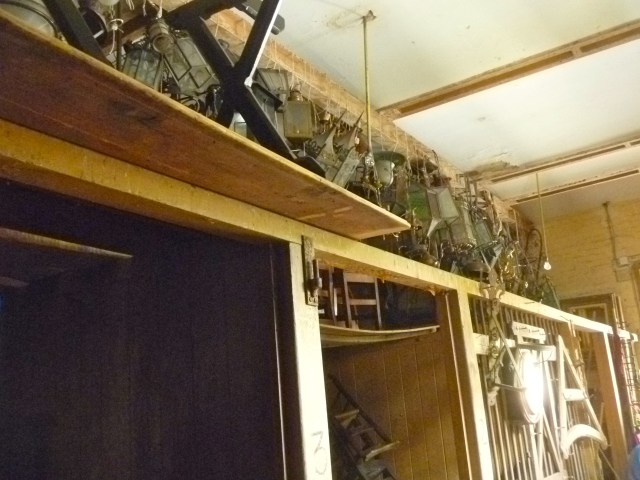
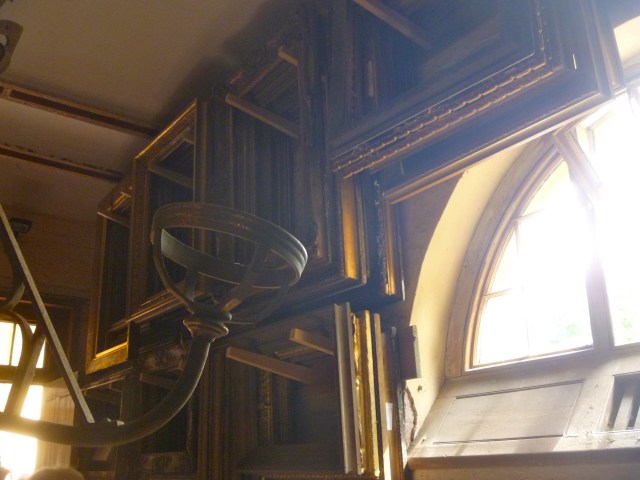
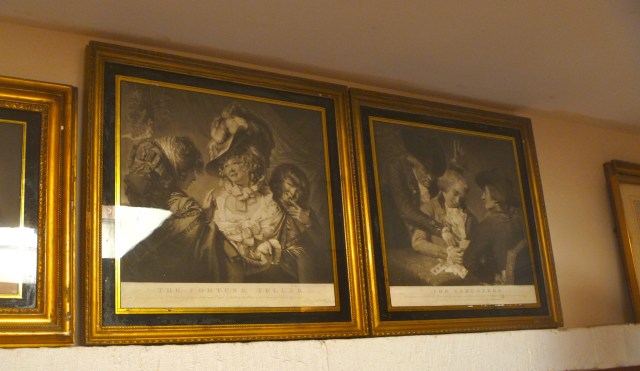
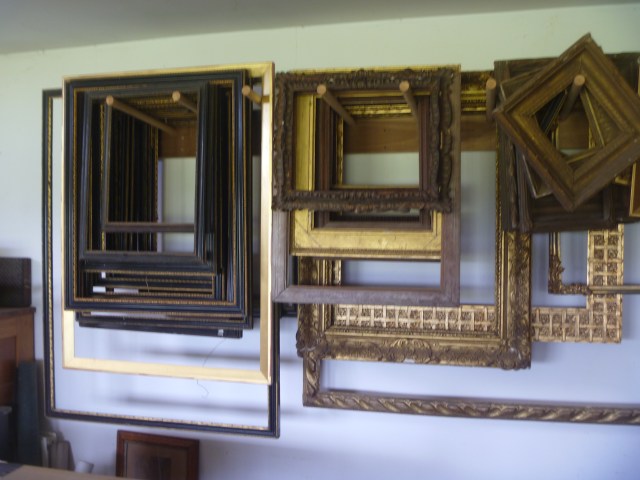
So much of it was familiar to us as devout Landmarkers! Here were ‘container’ pieces – chests of drawers, wardrobes and the like. There were shelves of towel rails and hook upon hook of picture frames and brass lanterns. Another former horse box was piled high to the rafters with kitchen chairs – and not just any old kitchen chairs – each one had been chosen for its shape and stretchers. John is on the lookout everywhere for the right furniture and suitable pictures. Years ago he bought ‘brown’ furniture at a higher price than today. Currently it is out of fashion. When Landmark acquire a ‘new’ property John is asked to provide suitable furniture, soft furnishings, pictures and often adapts items for new purposes or builds completely from scratch pieces to fit – like here in the kitchen at the Clavell Tower:
Clavell Interiors JMiller Oct 2008 (4)

Photo source.

As he travels up and down the country from Landmark to Landmark John is always on the look out for suitable pieces to add to the collection. He has special sources abroad – he finds suitably large bed heads in Italy and fabrics in France at the Marché St Pierre in Paris.
Inside Stable Store

Inside the Stable Store

Towel rails

How many towel rails?

Chairs

A Choice of Chairs

Brass lanterns

Brass Lanterns Abound

Picture frames

Picture Frames Galore

Prints

Prints for the Hanging

More frames

More Picture Frames – the Hogarth frames (left) for prints (currently being collected) for Belmont.

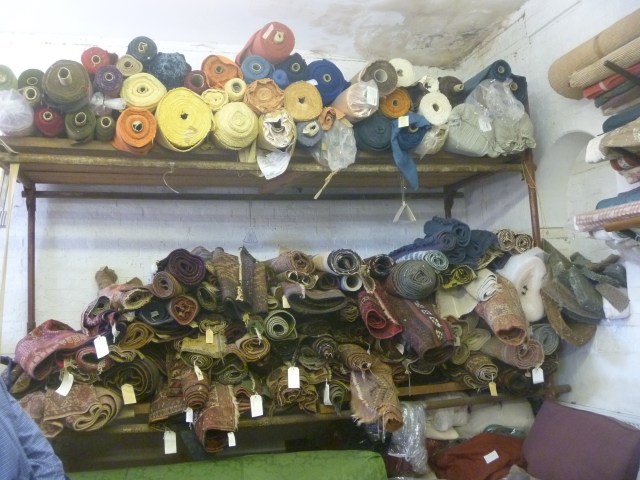
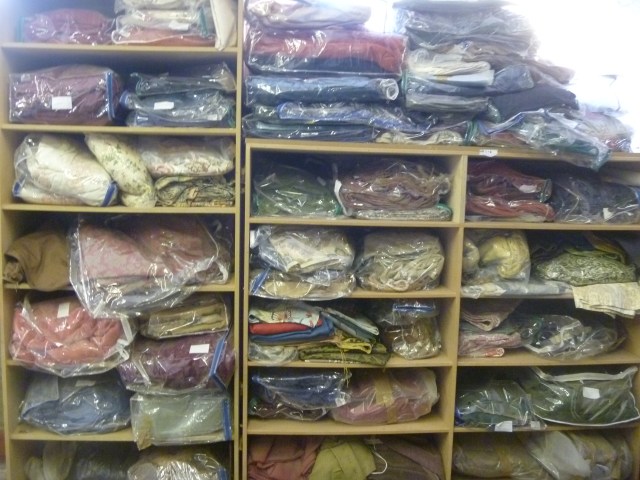
In the past soft furnishings were made up here, too. These days the orders are shipped off to Bideford in Devon where a specialist company can perform the ‘magic’ at a more reasonable price than can be done in house. The same for the actual sofas and easy chairs (I use the term guardedly!). These are now made to order by an upholstery company in Nottingham.

Soft furnishing fabrics

Rolls of Furnishing Fabrics

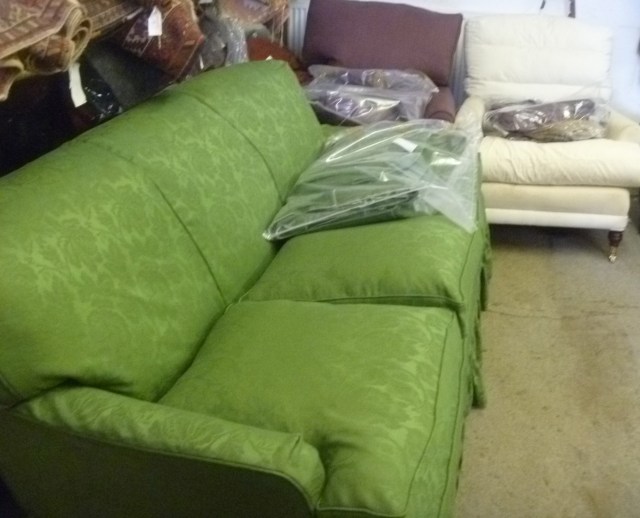
Easy chair and sofa covers

Easy Chair and Sofa Covers in Waiting

Sofa ready to go

Sofa Ready to go

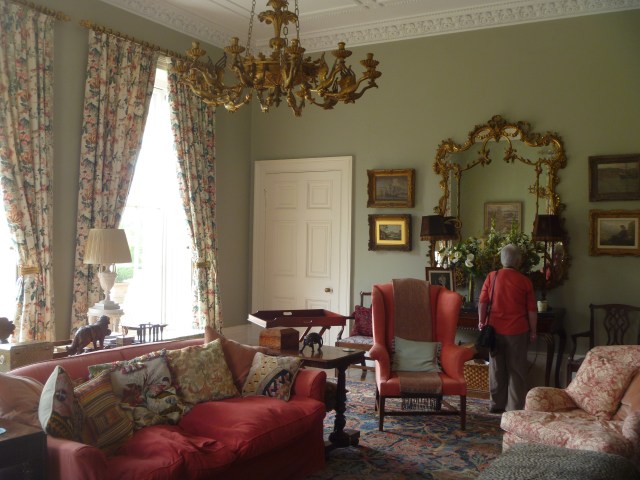
After the tour we were invited into the house – equally as elegant and serene as it appears on the outside – for a buffet lunch. Here we could enjoy the Dining Room, Sitting Room and Hall and have a chance to meet other members of the group and talk Landmarks.

The dining room

The Dining Room

The sitting room

The Sitting Room

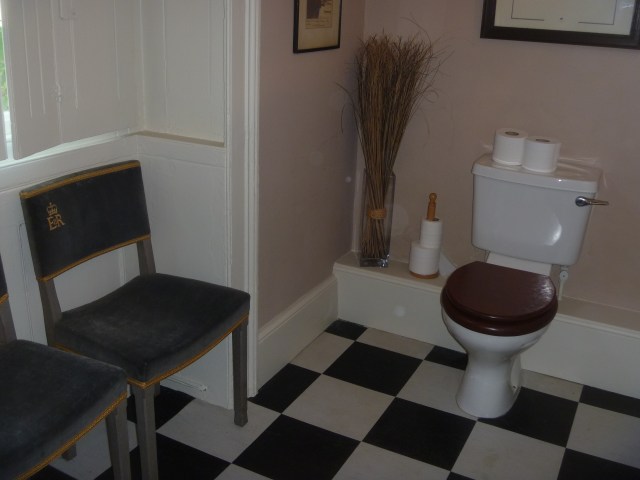
John Evetts’ grandfather was Lord Ismay former Chief of Staff to the Ministry of Defence 1940-46 and as chief military assistant to Winston Churchill during the Second World War he served on the Chiefs of Staff Committee. So it was interesting to see in the ‘Throne Room’ the chairs sat upon by Lord and Lady Ismay at the Coronation of our Queen in 1953.

The Throne Room

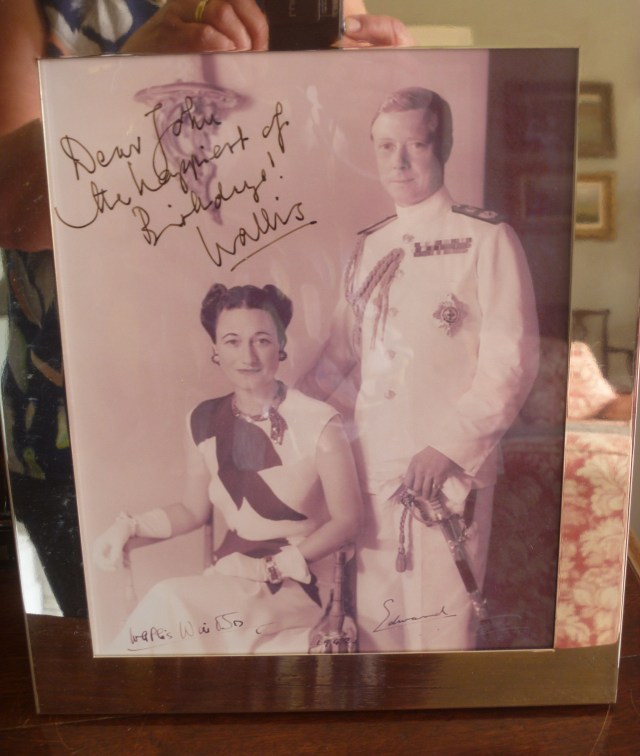
And even That Woman had connections here.

That woman she gets everywhere

I now view Landmarks and their furnishings with added insight – from the lamps and light bulbs through the towel rails and cushions to the double beds and sofas! Ann and I continued our Landmarking theme by staying at Saint Mary’s Lane in Tewkesbury that night where we were able to put our newly found knowledge to the test. Thank you, Ann, for a wonderful day out!

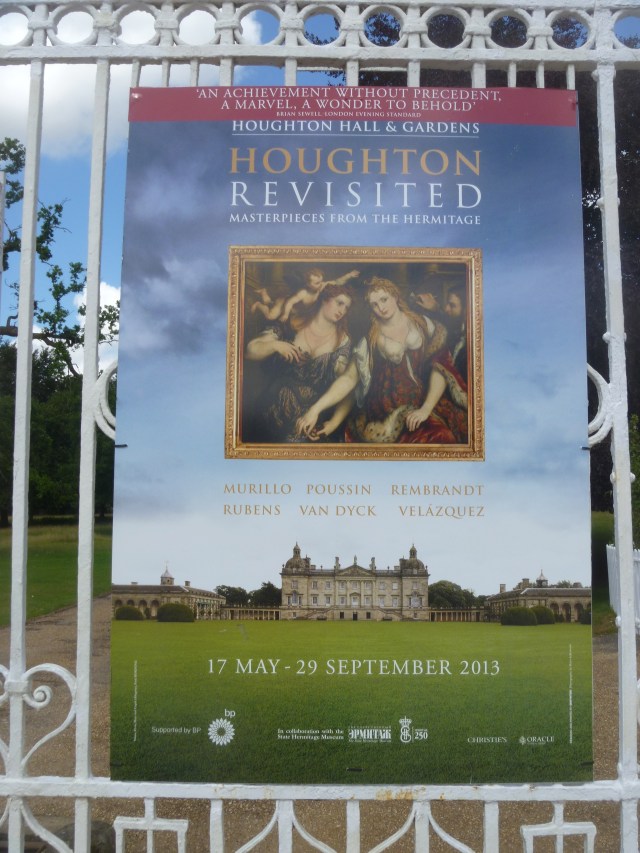
Houghton Revisited : Masterpieces from The Hermitage

Houghton Revisited

Fellow WordPress member Visiting Houses and Gardens wrote about her visit to Houghton Hall and Gardens and remarked that had the pictures not all been sold she would have given the house a five star rating. Well, this summer the pictures, although sold to Catherine the Great, have all been re-hung in the exact locations from which they were lifted 250 years ago. This unique exhibition is the result of a collaboration between the Hall and the Hermitage Museum in St Petersburg and a great deal of work has resulted in an exceptional country house visit.

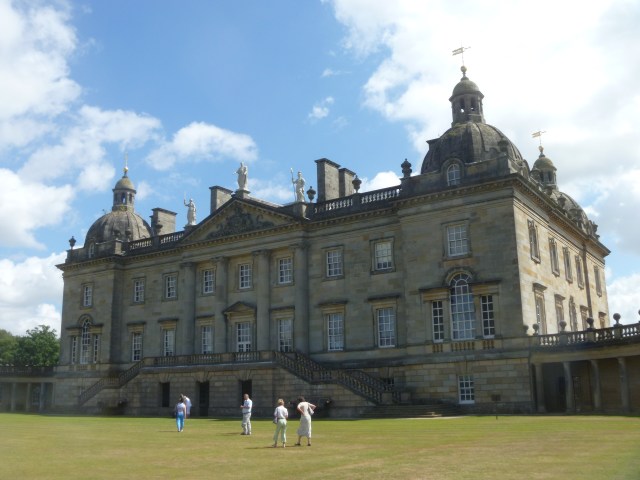
Houghton Hall

Houghton Hall

Last Saturday my sister and brother-in-law and I studied the Houghton Hall and other websites in order to get a foretaste of the show we were to visit the next afternoon.

http://www.bbc.co.uk/news/uk-england-norfolk-22439230

http://www.edp24.co.uk/news/gallery_and_mustard_video_prince_of_wales_says_houghton_hall_exhibition_is_once_in_a_life_time_experience_1_2187869#ooid=V1ZGVpYjpg7VNsOFDKDMBVTYD1rttT6-

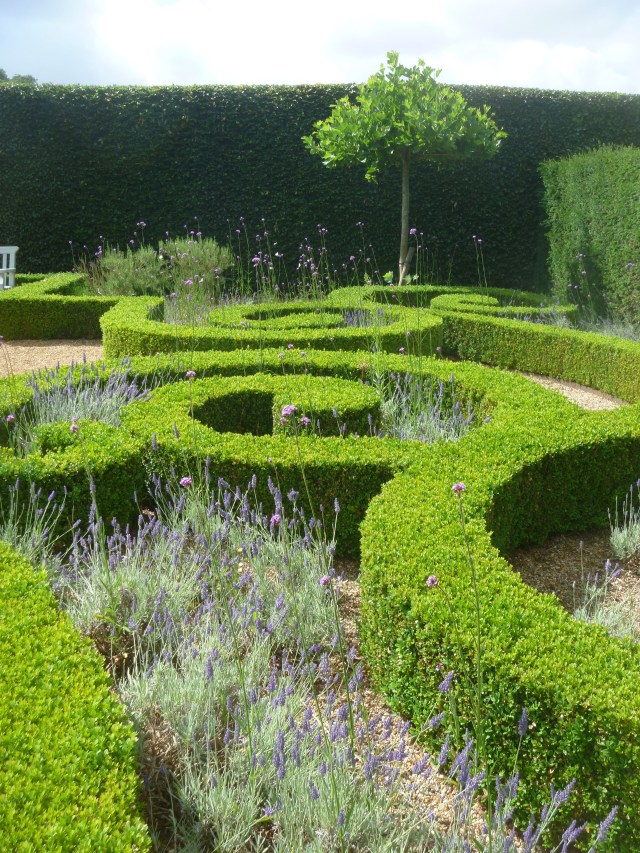
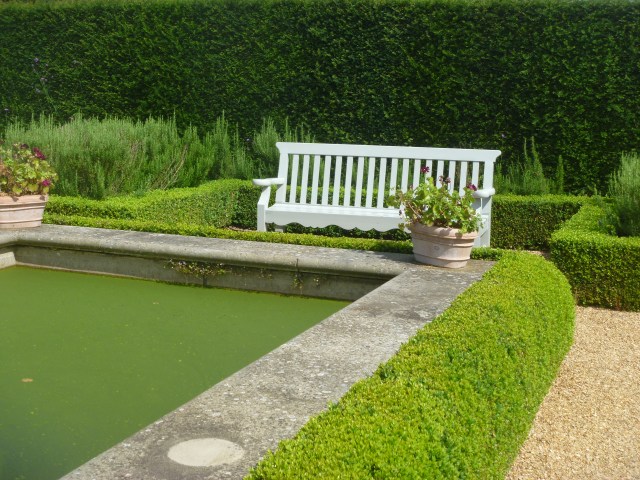
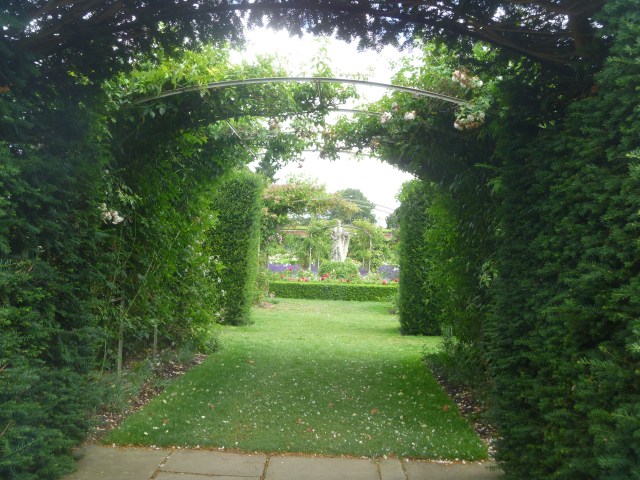
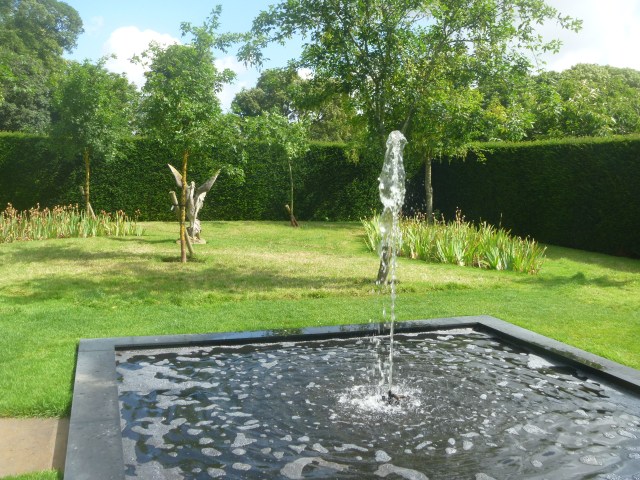
No photography is allowed in the Hall so my pictures show the beautiful garden. Luckily we arrived in good time before our timed ticket slot and had time to inspect the Walled Garden in all its glory and have a cup of tea before the highlight of the visit: Houghton Revisited.

Lavender knot garden

Corner of pool with hedging

Garden arch

Near the beehives

Near the Beehives

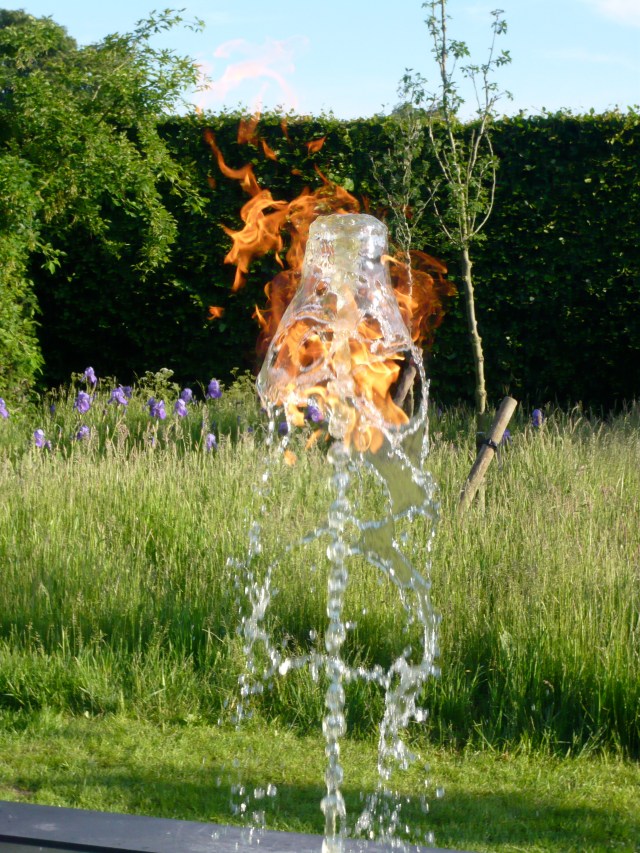
Jeppe Heins Waterflame

Waterflame by Jeppe Hein

Garden106

And here is the flame (source)

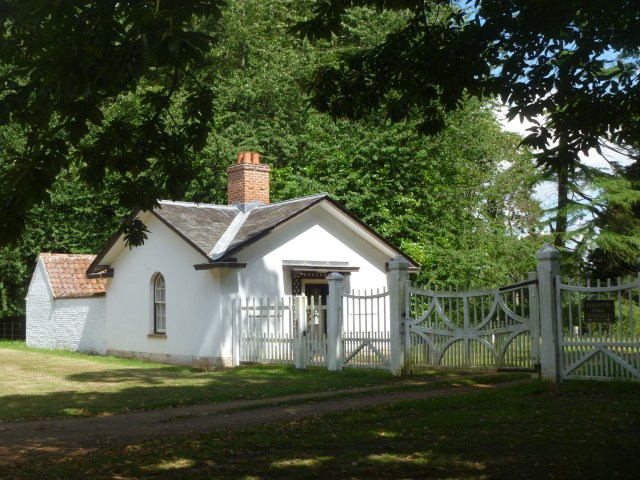
Before leaving the Houghton Estate I just had time to take a quick look at the Landmark Trust property : Houghton West Lodge. Not surprisingly it’s fully booked until October.

Houghton West Lodge

Houghton West Lodge

In and Around Anderton House : a Photo Album, 3 [Goodleigh to Gidleigh]

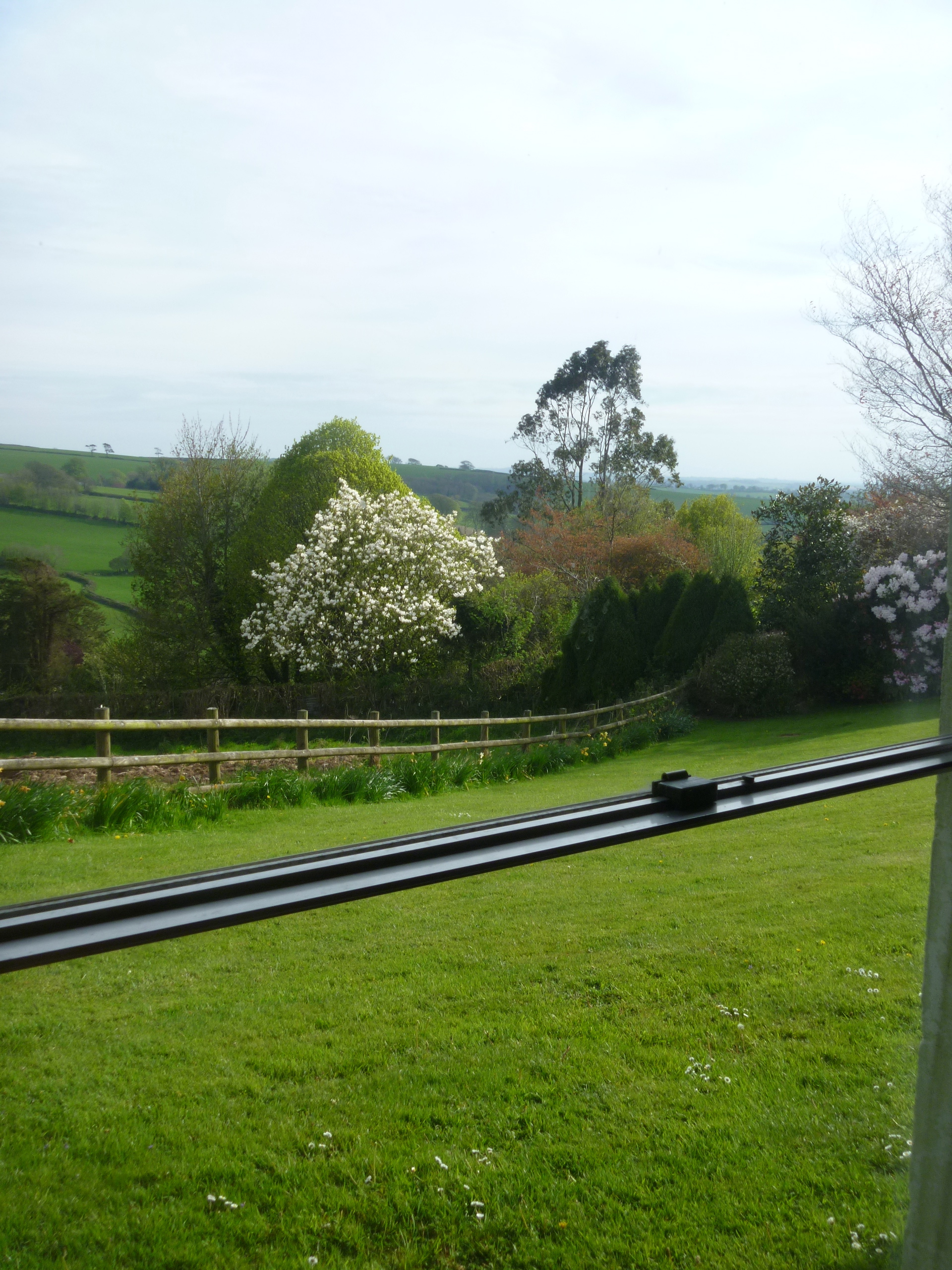
Anderton House view from single bedroom

I have mentioned the wonderful views to be had from the glass walls of the sitting area and from each of the bedrooms at Anderton House but there is also a very relaxing garden on a couple of levels and sloping down the fields in front.

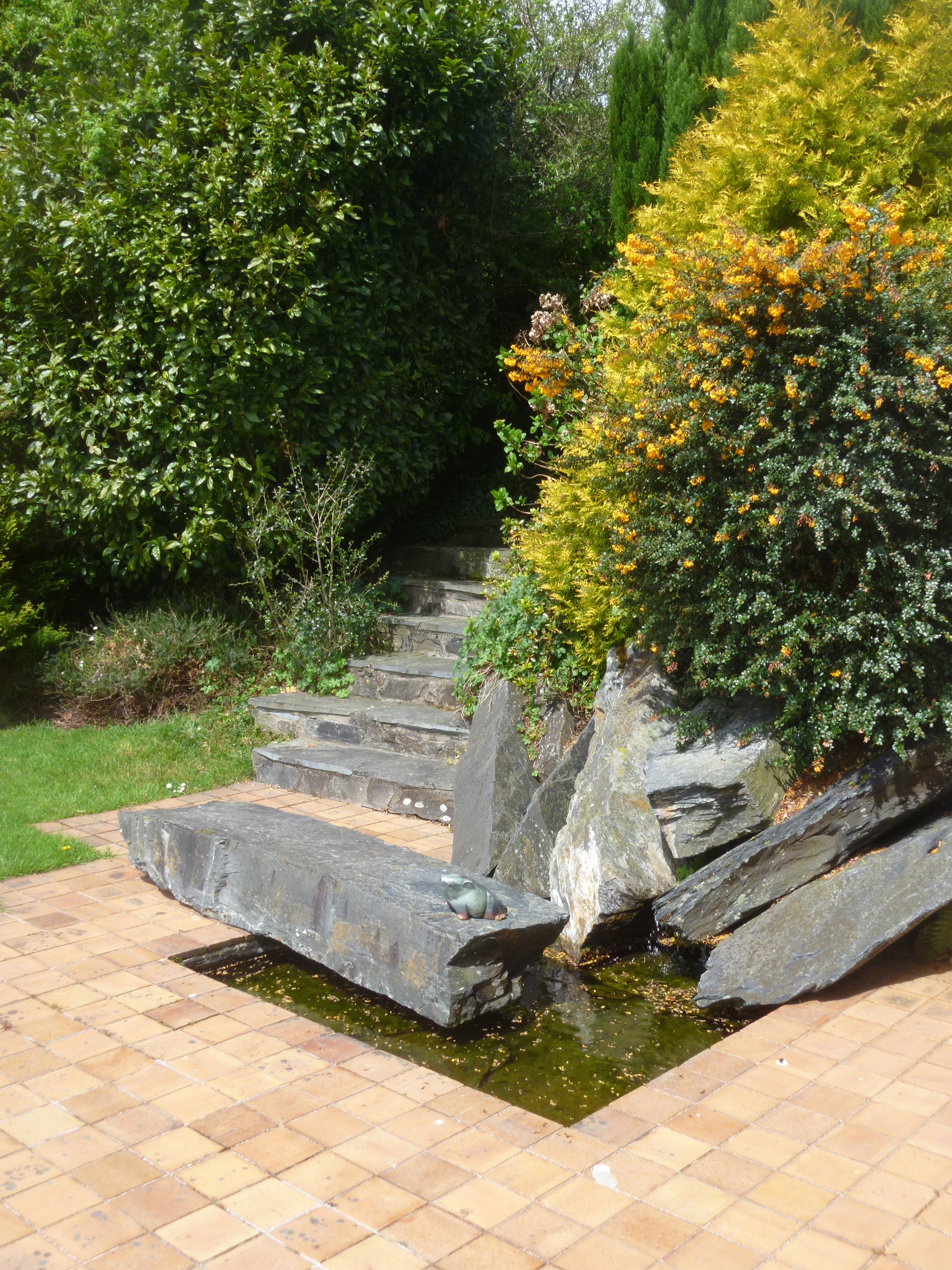
Anderton House water feature in garden

When the sliding glass door is opened, even fractionally, you can sit inside and hear the gentle tinkle of the water feature just outside.

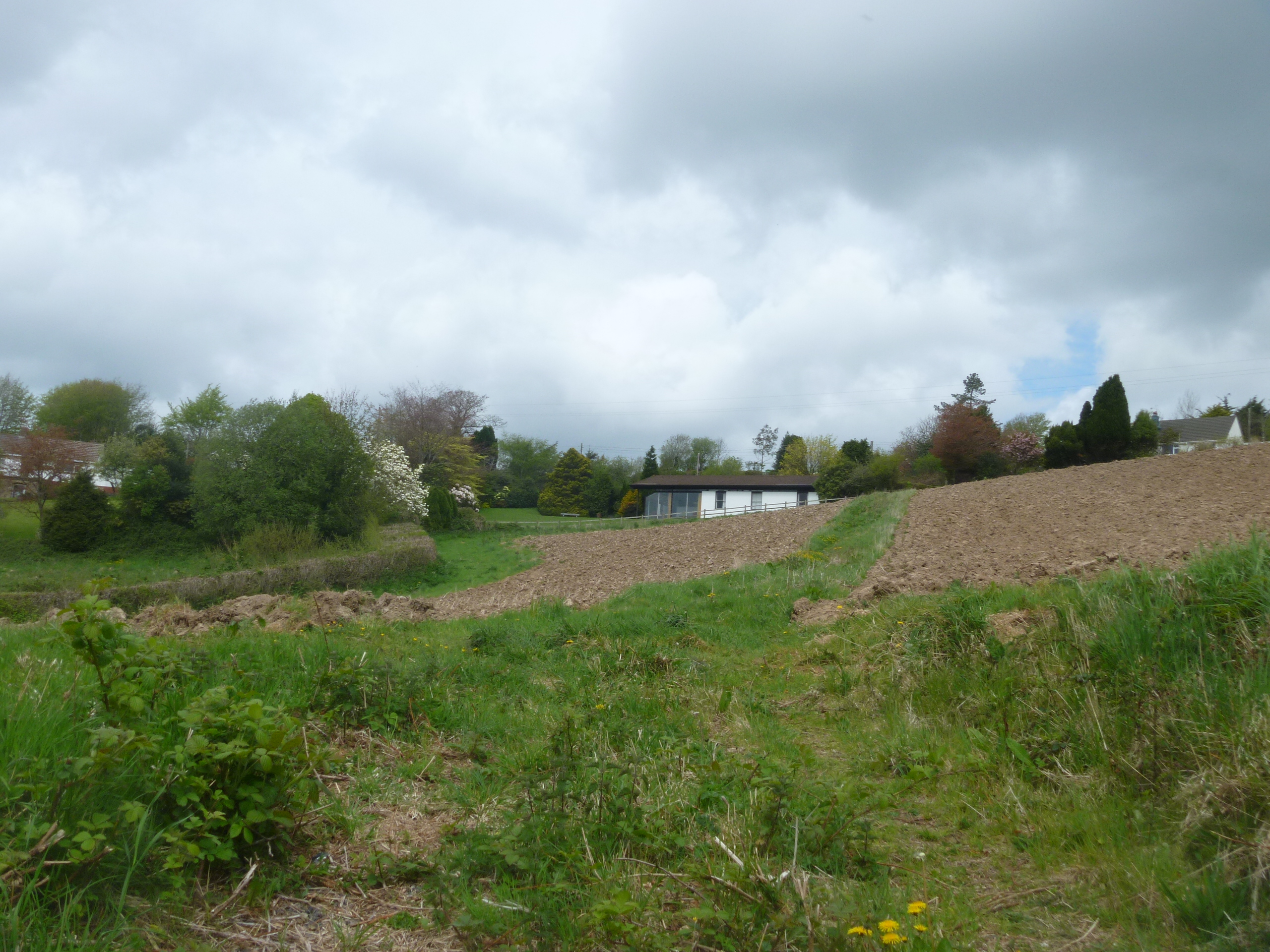
Anderton House and footpath

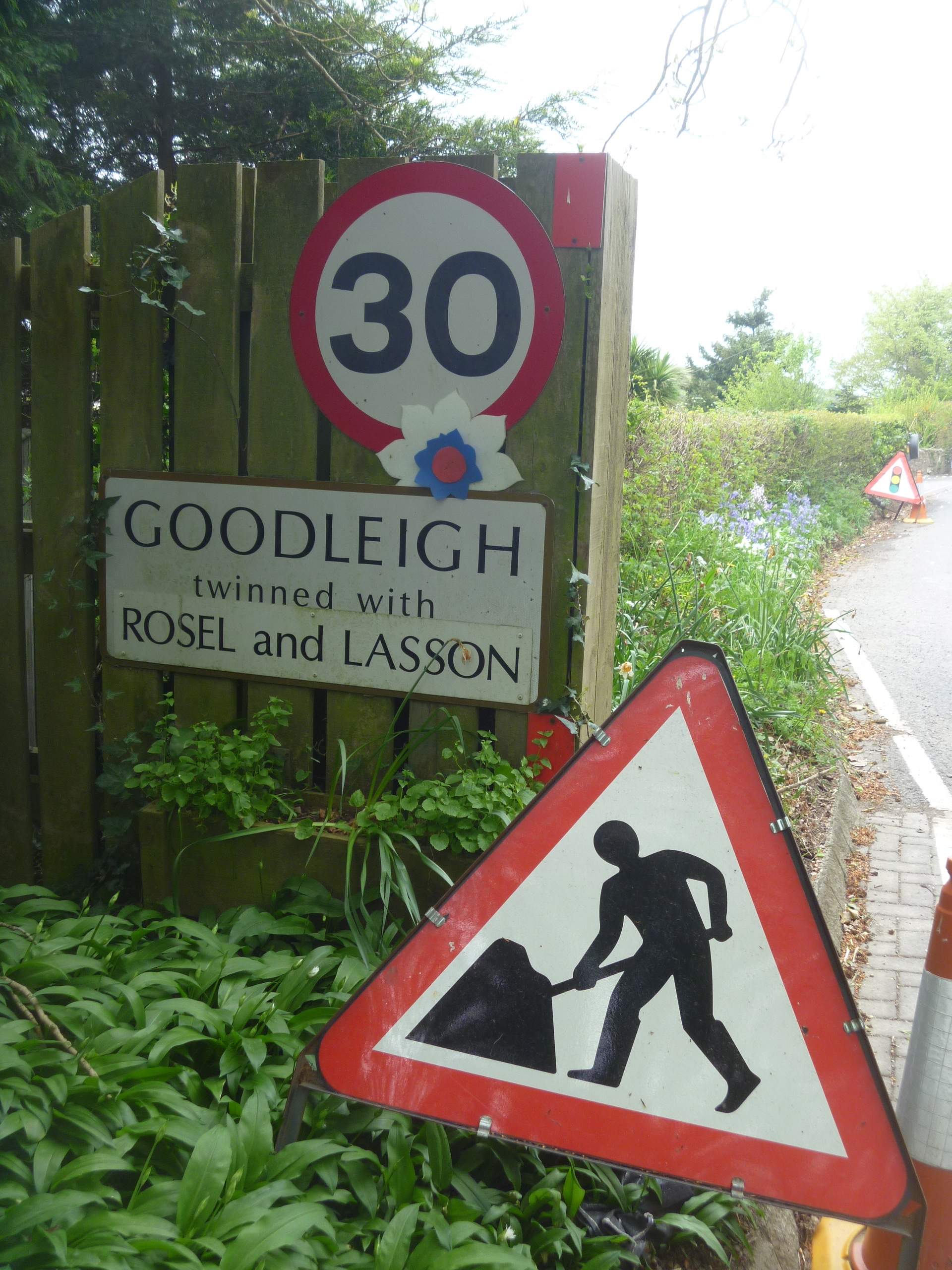
There’s a short Public Footpath across the field which leads down to the main road that runs through Goodleigh, two miles from Barnstaple. I surprised to see that the village had two twins. Both sound like villages in France and indeed they lie close to each other in Normandy, not far from the Normandy Landing Beaches of the Second World War.

Goodleigh twinnings

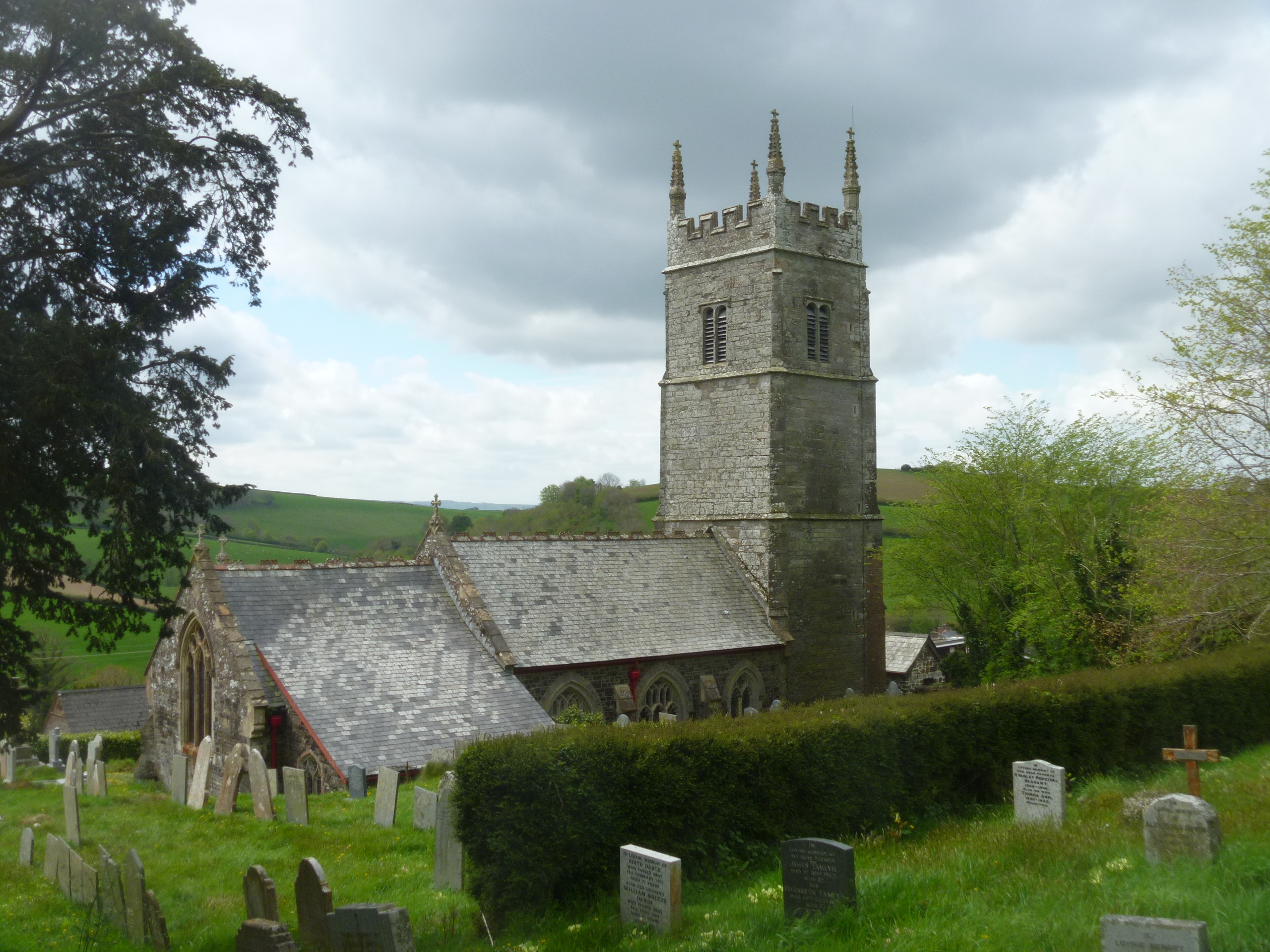
The church of St Gregory stands high above the main street and right on the street itself is The New Inn. We didn’t manage to get there but plenty of Landmarkers at Anderton House had enjoyed their meals.

Goodleigh Church

The Church of St Gregory, Goodleigh

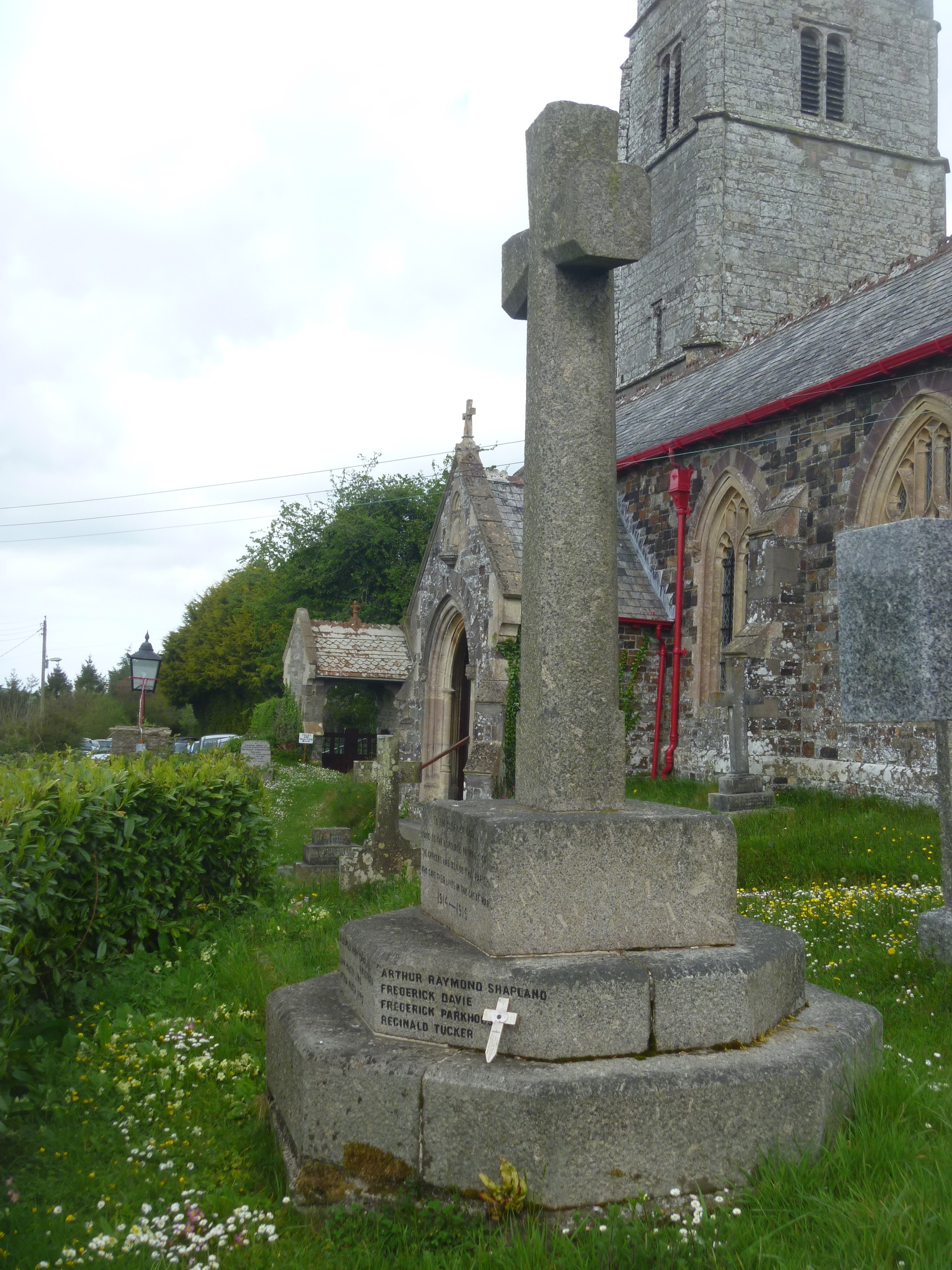
Goodleigh War Memorial

The Goodleigh War Memorial

New Inn

The New Inn, Goodleigh

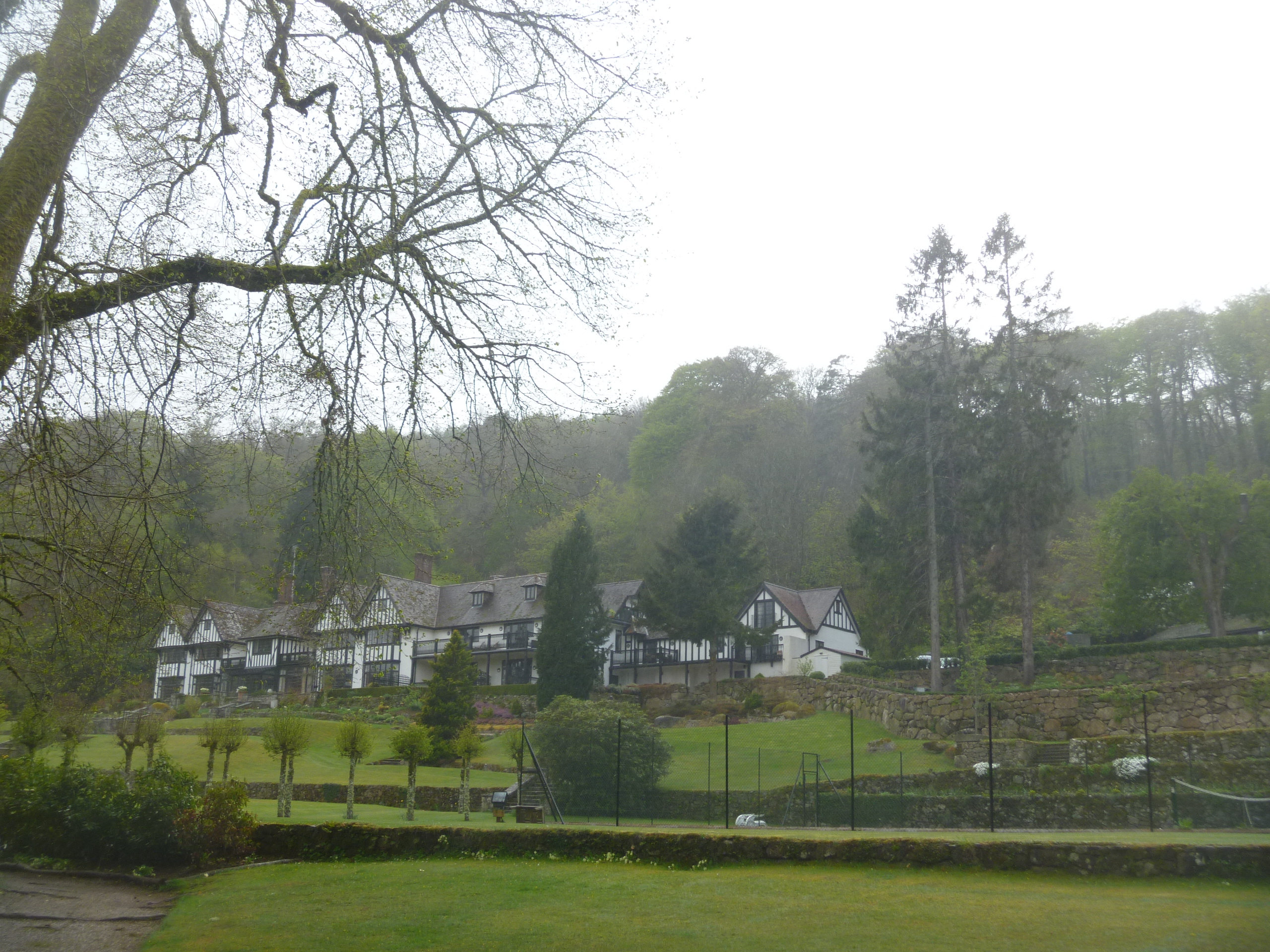
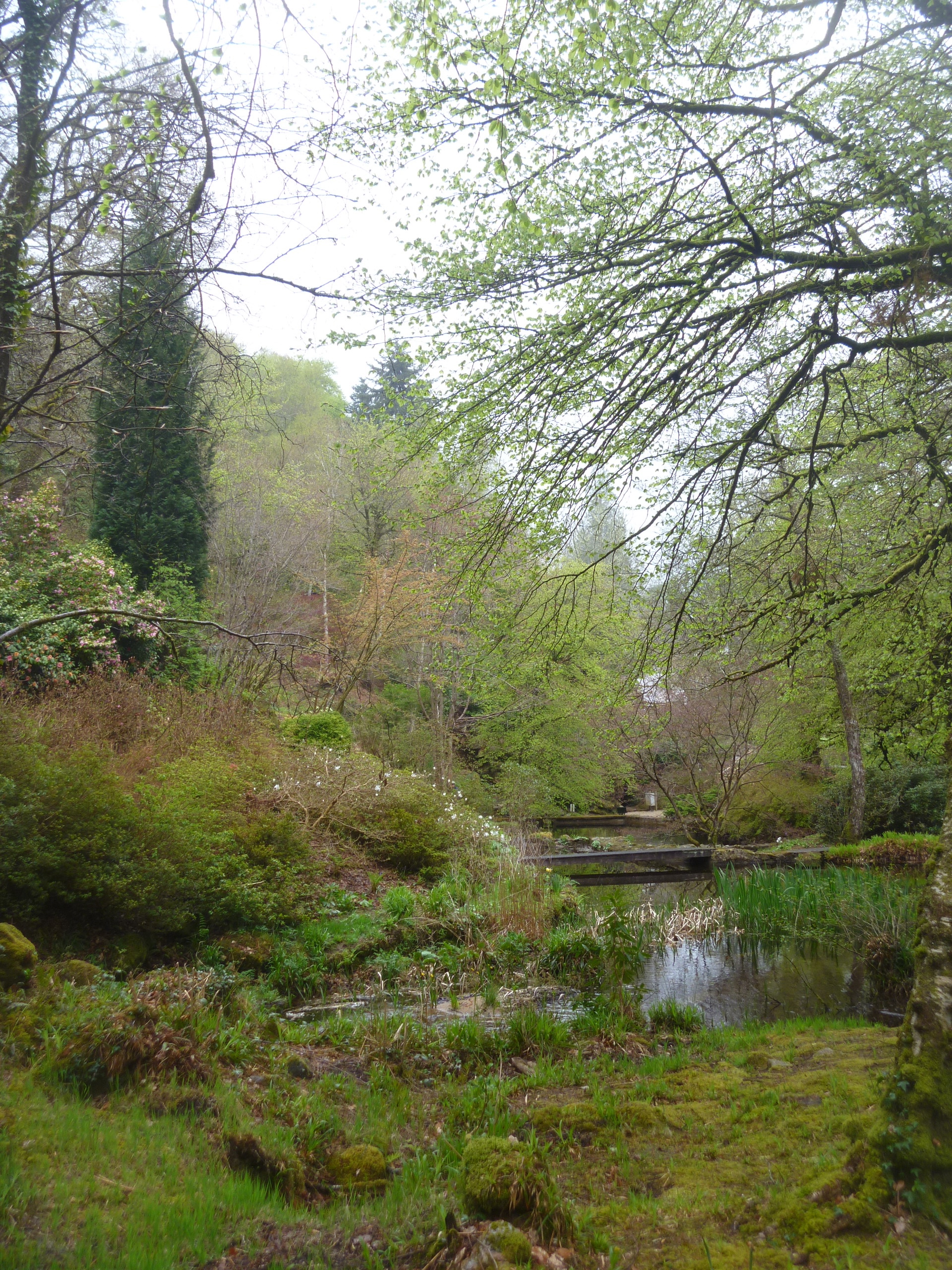
One of my favourite walks in Devon is through the grounds at Gidleigh Park. Although it’s a drive from Goodleigh we were really looking forward to it as after the very wet walk we had booked an Afternoon Tea. Yummy!

Gidleigh Park Hotel

Gidleigh Park in the rain!

Gidleigh Park

The Water Garden at Gidleigh – brimming over!

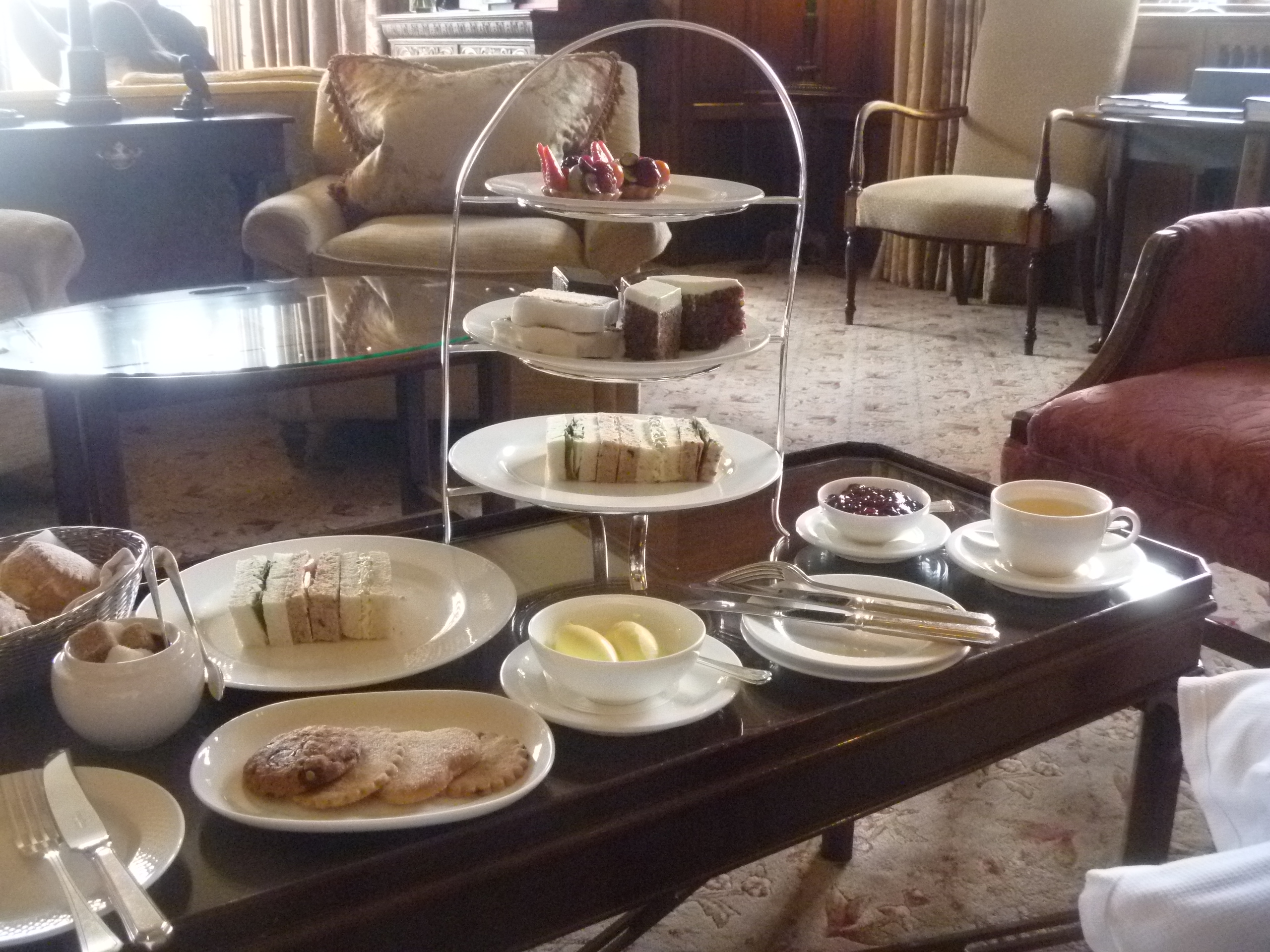
Tea at Gidleigh Park

The Afternoon Tea

In and Around Anderton House : a Photo Album, 2

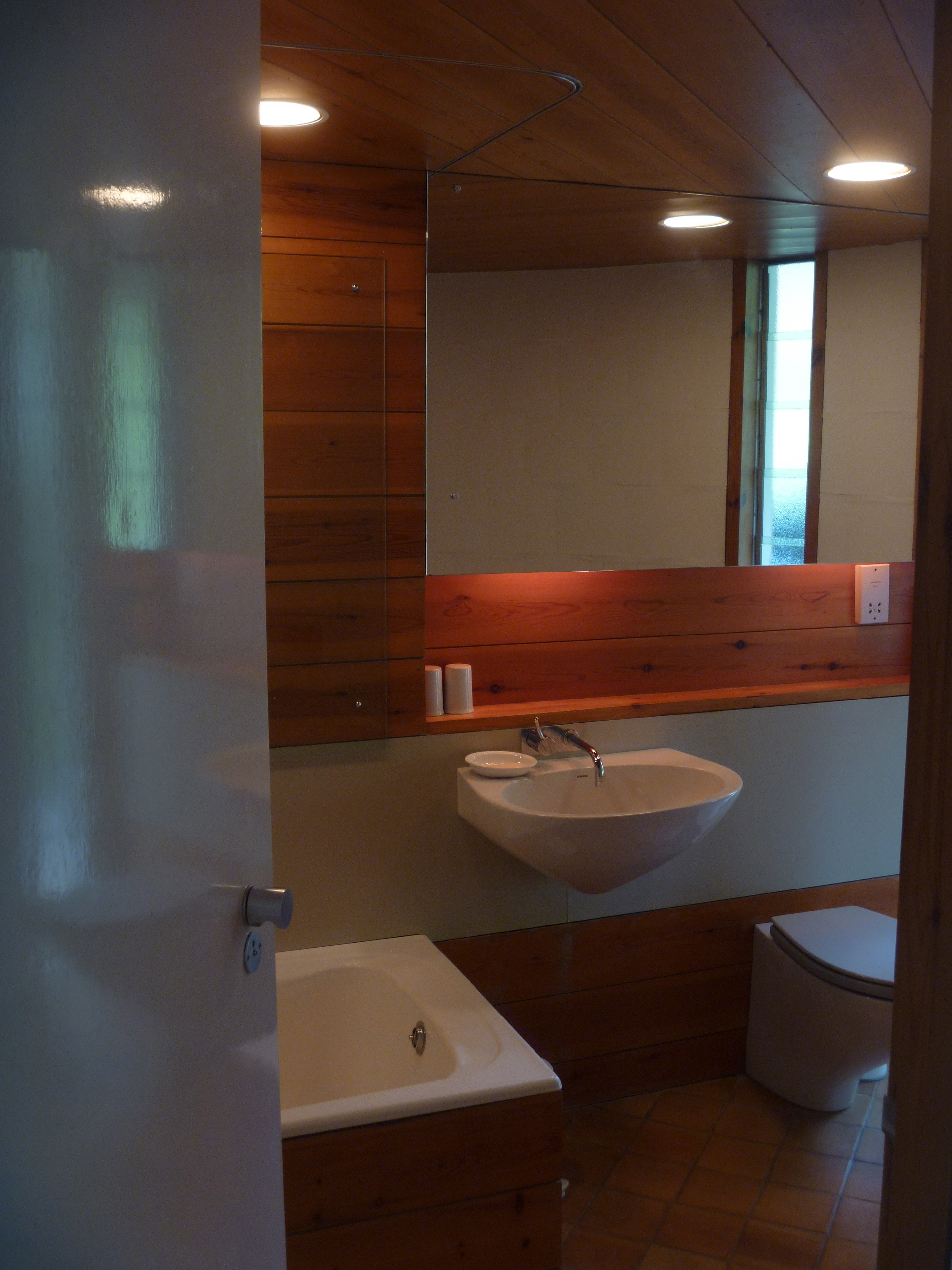
You’ll notice on the plan shown in the previous post that there’s a circular pod containing a guest cloakroom and house bathroom. This pod narrows the corridor between the ‘public’ areas – sitting room, dining area, kitchen – and the ‘private’ sleeping quarters. It’s simple but effective.

Anderton House bathroom

The House Bathroom

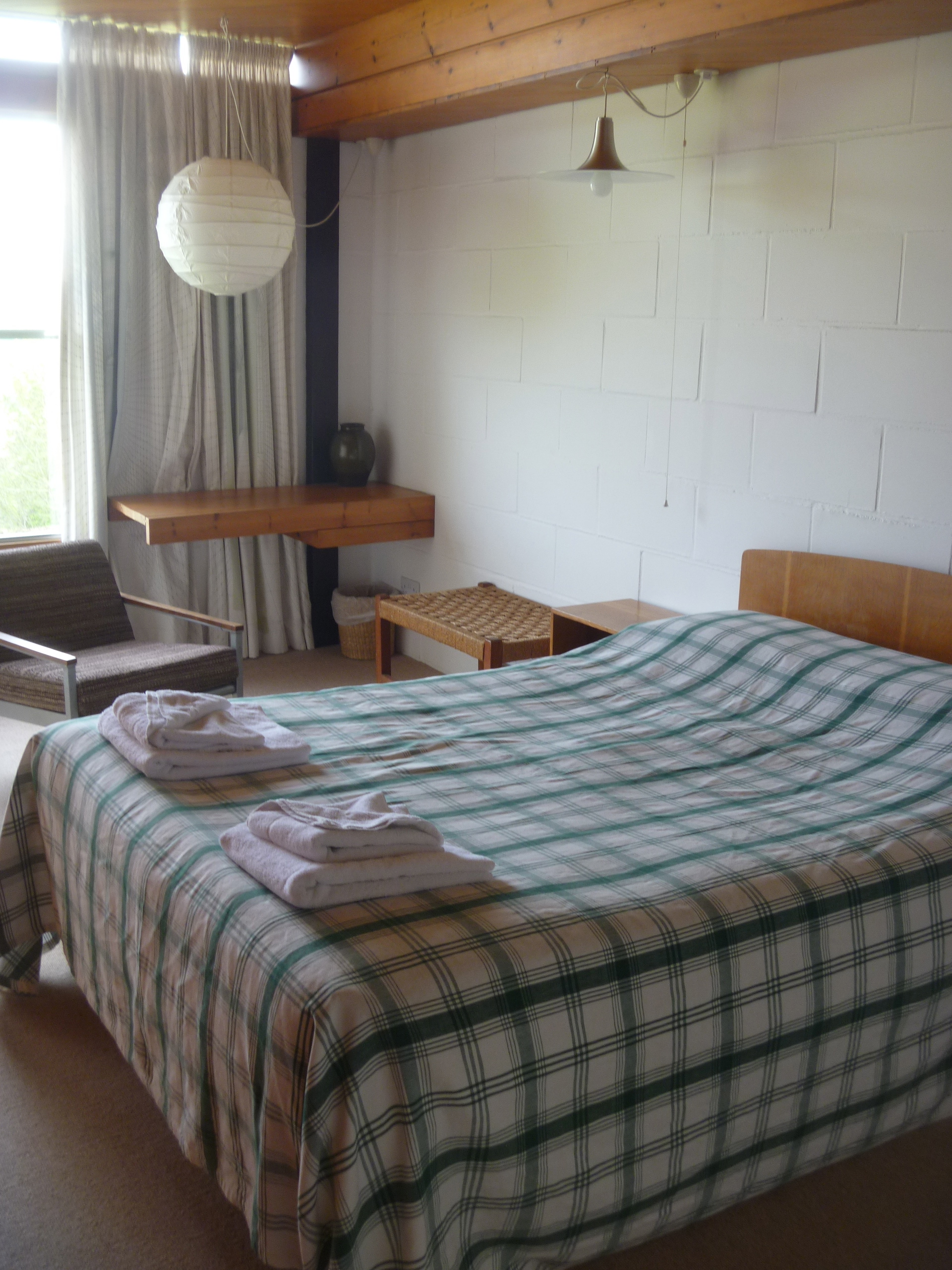
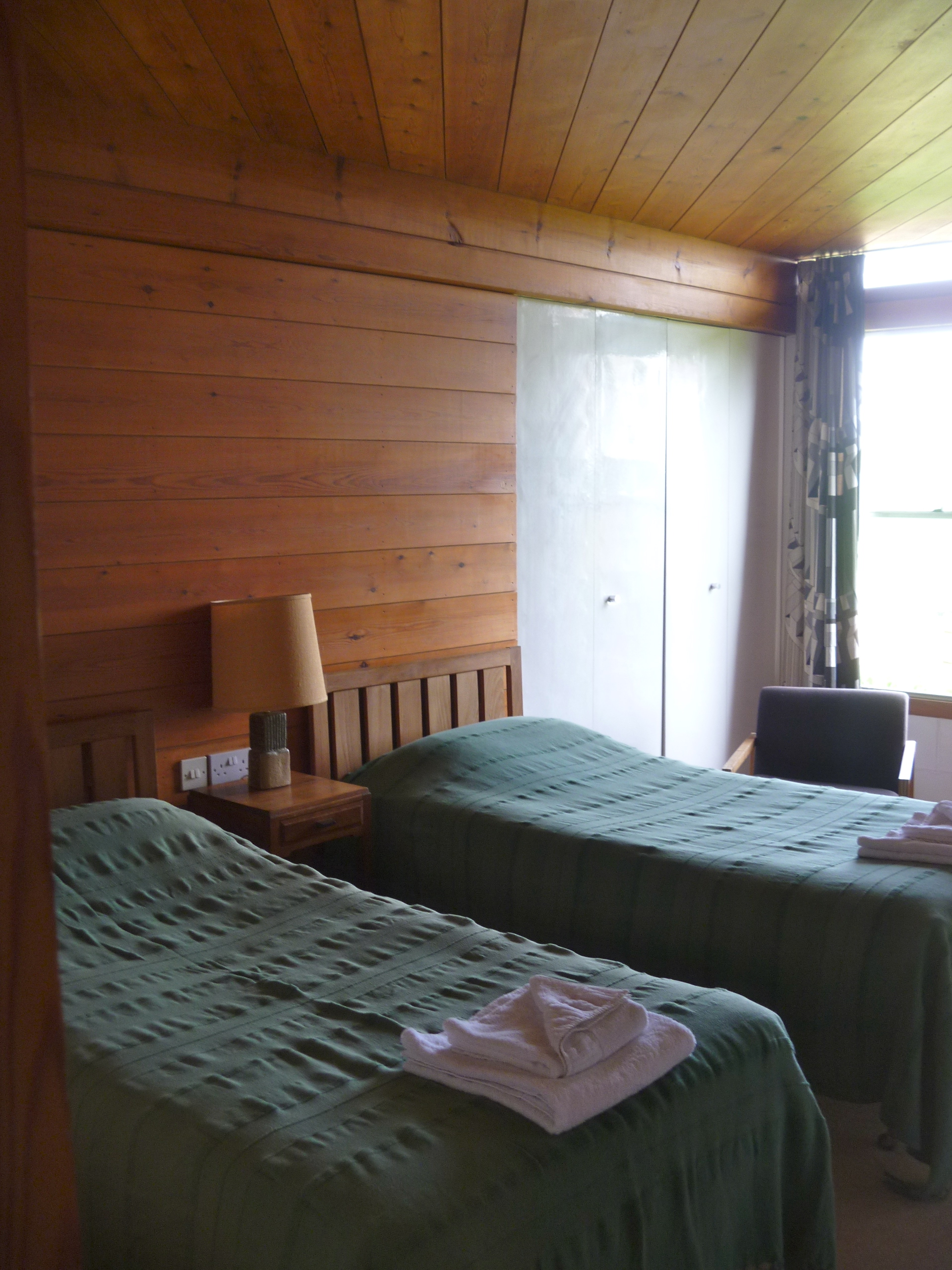
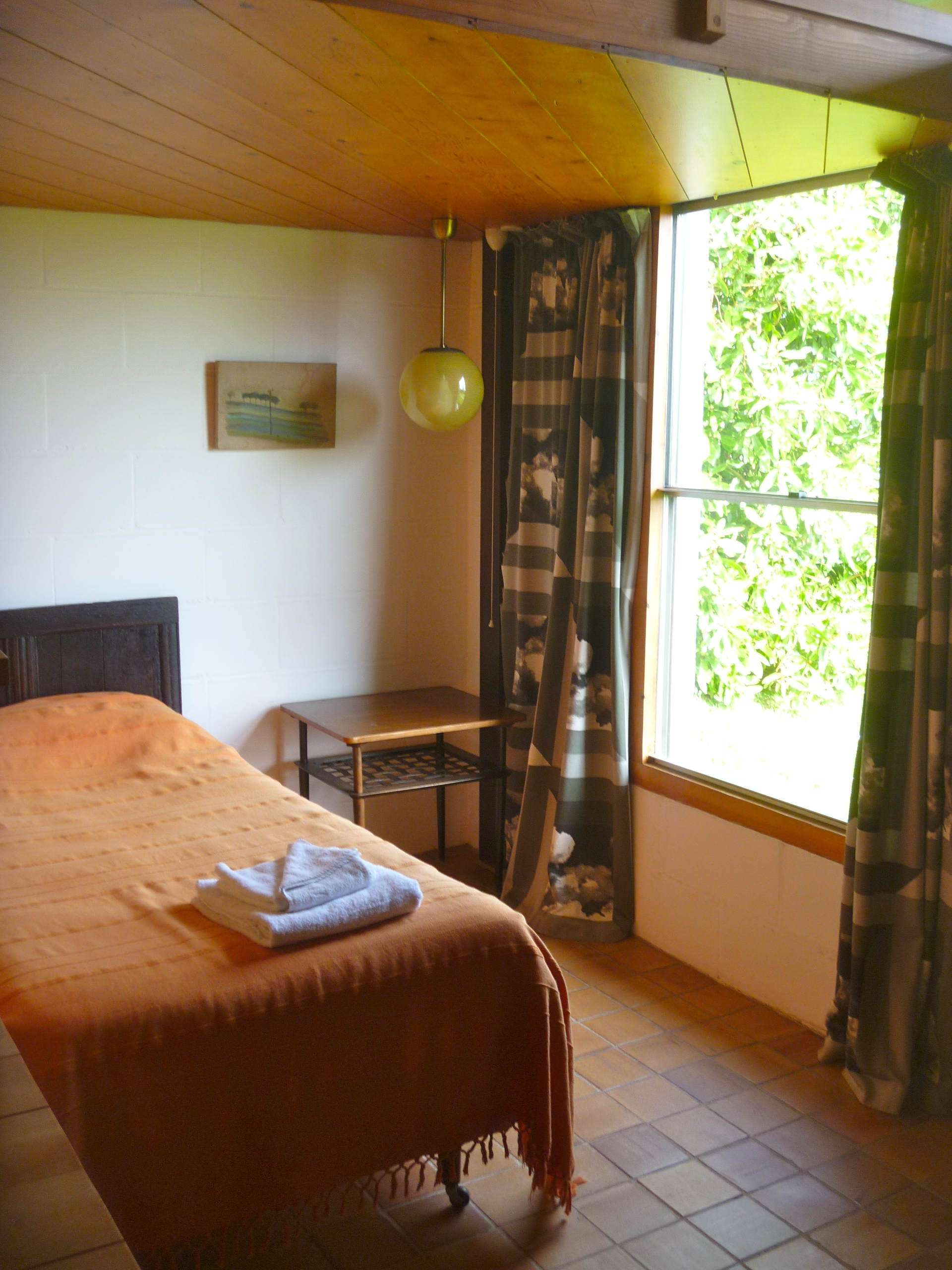
There are three bedrooms: a double, a twin and the single study bedroom (designed for the Andertons’ teenage daughter) that reminds me so much of my student days at The Lawns, Cottingham.

Anderton House double bedroom

The Double Bedroom

Anderton House Curtain fabric 'Palm Trees' by Liberty

Double Bedroom Curtain Fabric – Palm Trees by Liberty

Anderton House twin room

The Twin Bedroom

Anderton House Curtain fabric 'Cogwheels' by Heals

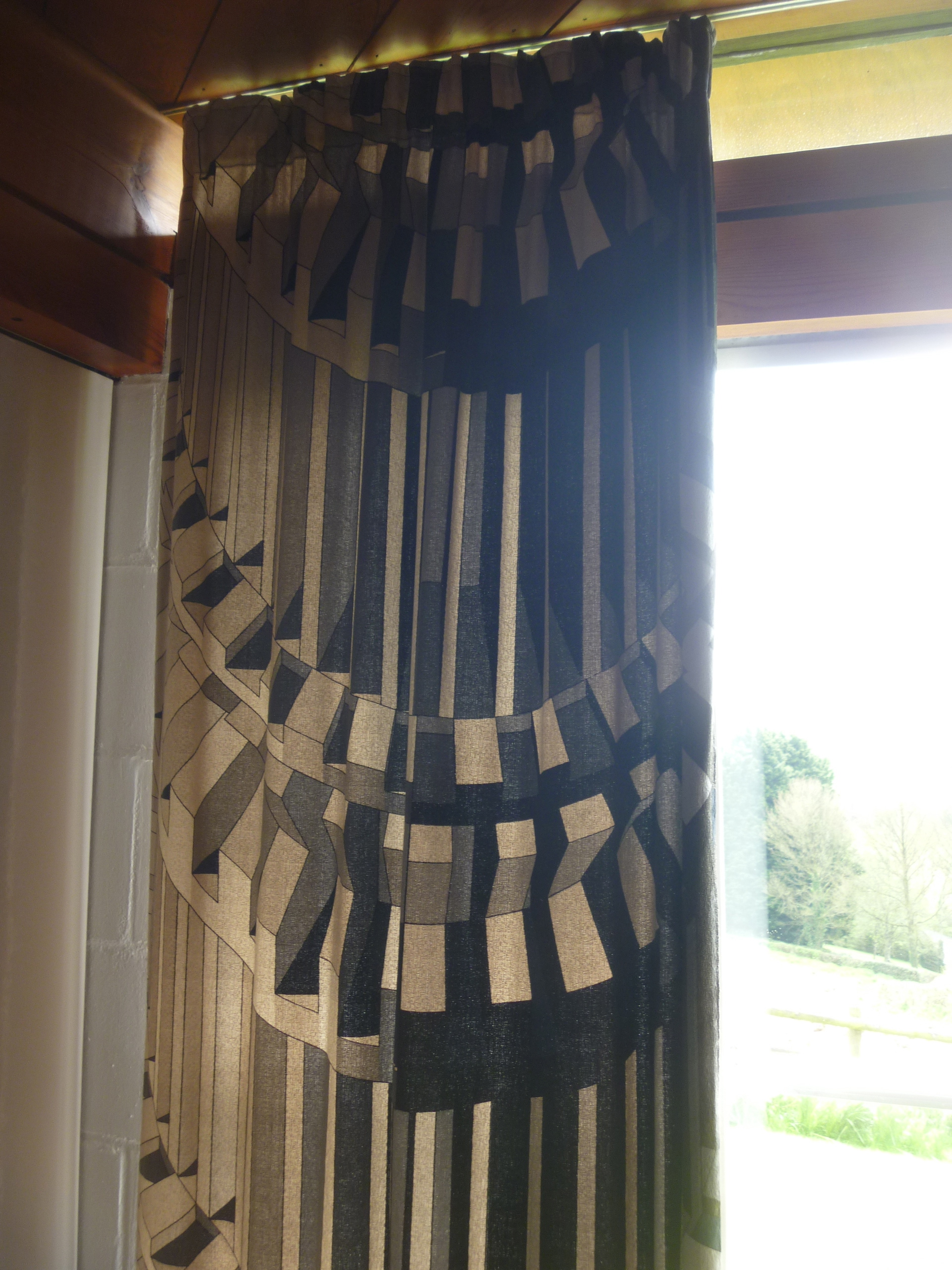
Twin Bedroom Curtain Fabric – Cogwheels by Heals

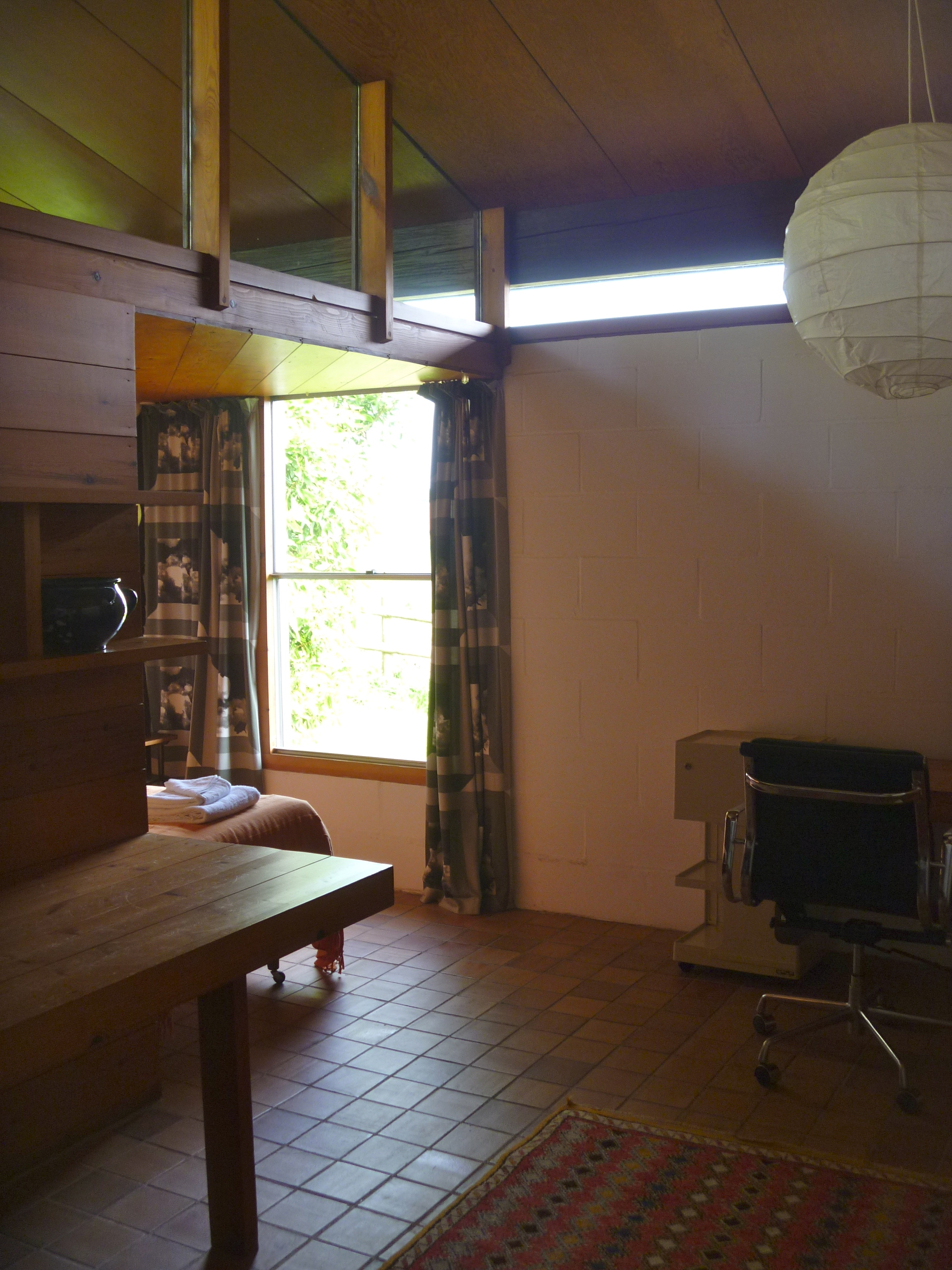
Anderton House single bedroom

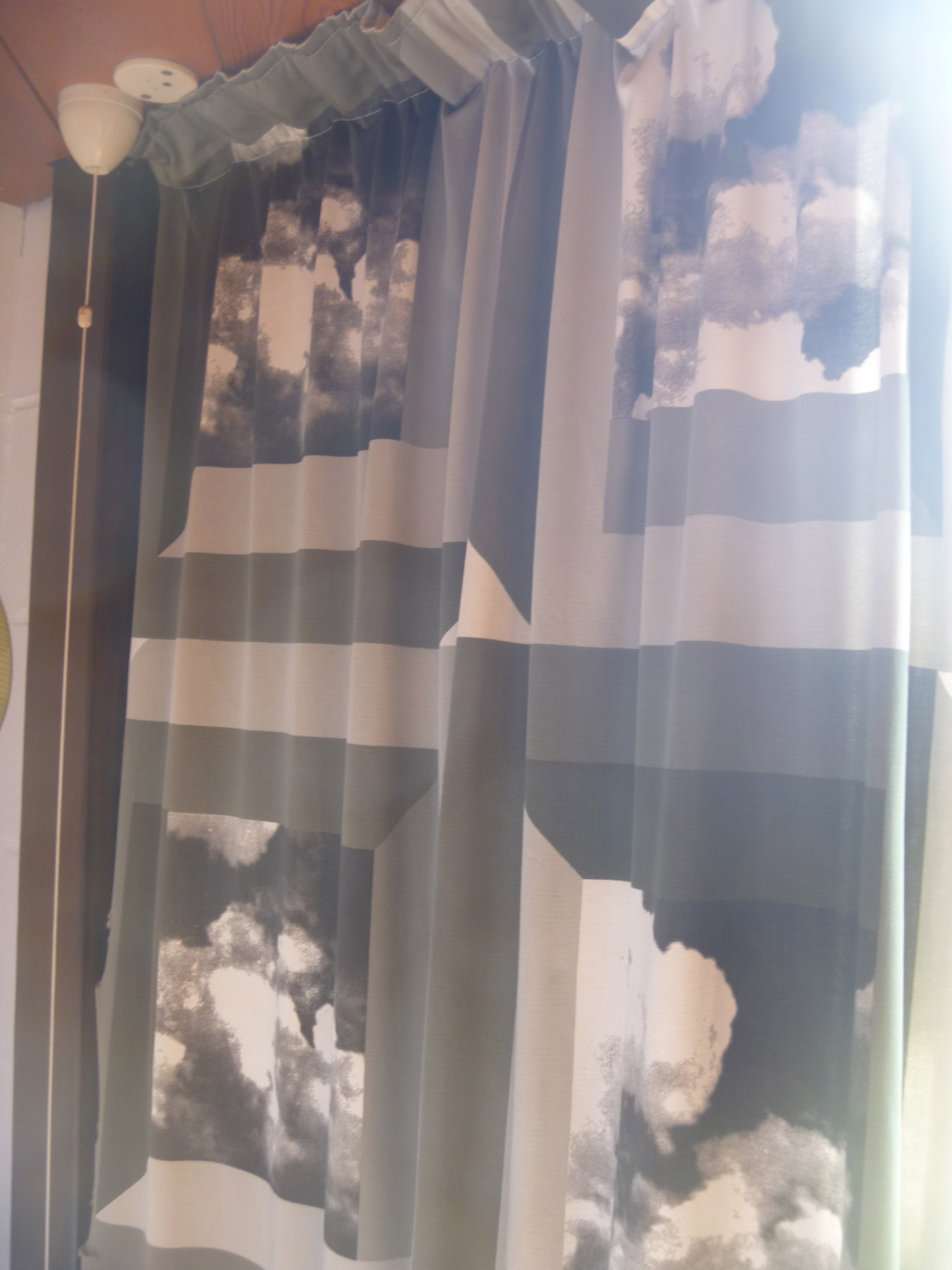
Single Bedroom with Curtain Fabric Nimbus by Heals

Anderton House 'Nimbus' curtains by Heals

Curtain Fabric, Nimbus by Heals

Anderton House single room

Single Bedroom

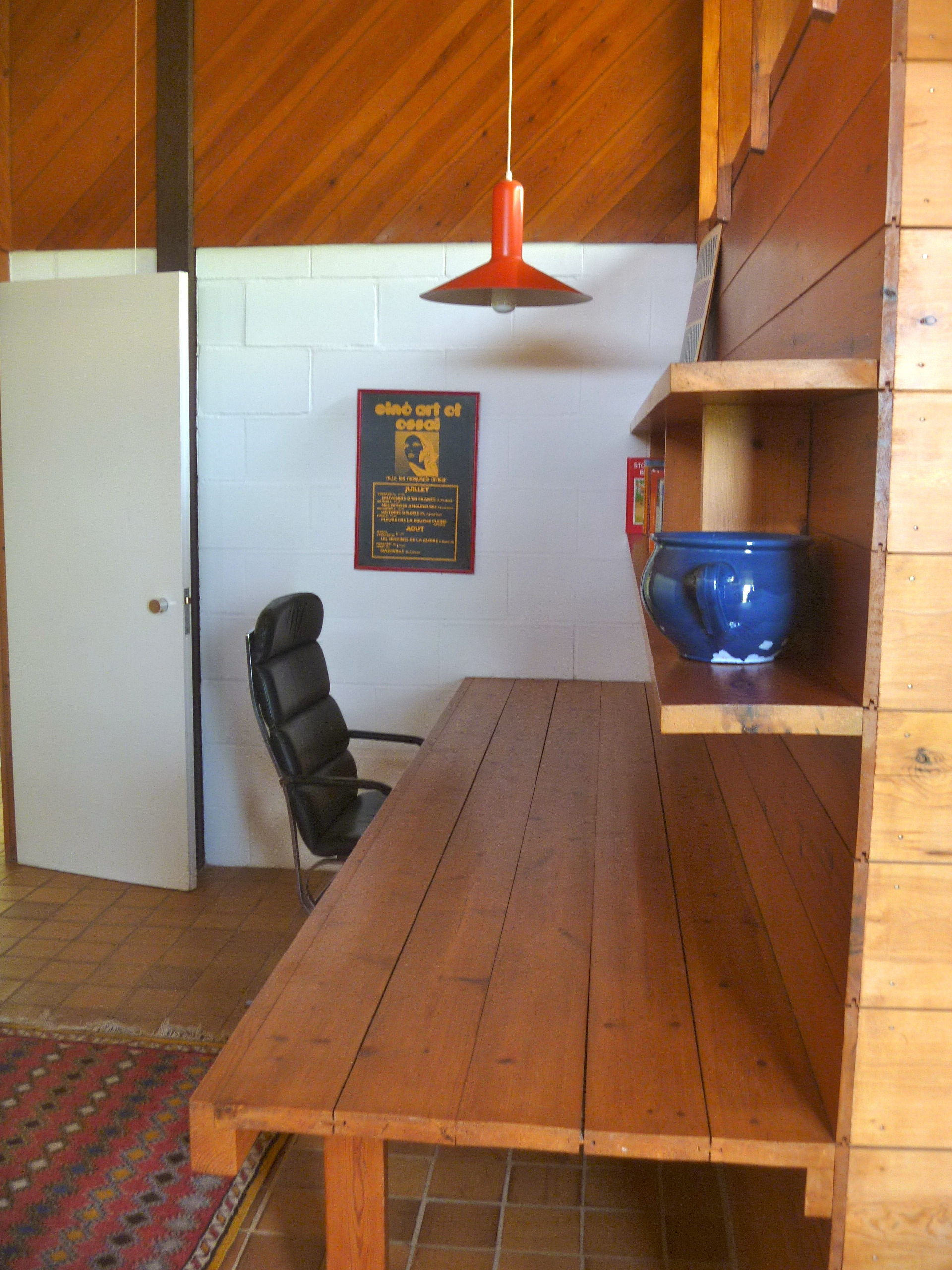
Anderton House single study bedroom

Study Desk in the Single Bedroom

I was intrigued to see a separate selection of fiction on the single study bedroom shelf. Many of the titles/authors I knew had Devonian connections – Ted Hughes, Sylvia Plath, Williamson’s ‘Tarka the Otter’, Thomas hardy, Charles Kingsley. Some I have made a note to read in future in order to discover whether or not there’s a connection or whether the connection is merely the decade of publication  e.g. Dodie Smith’s ‘It ends in revelations’ and David Garnett’s ‘Plough over the bones: a novel about a French village in the Great War’.

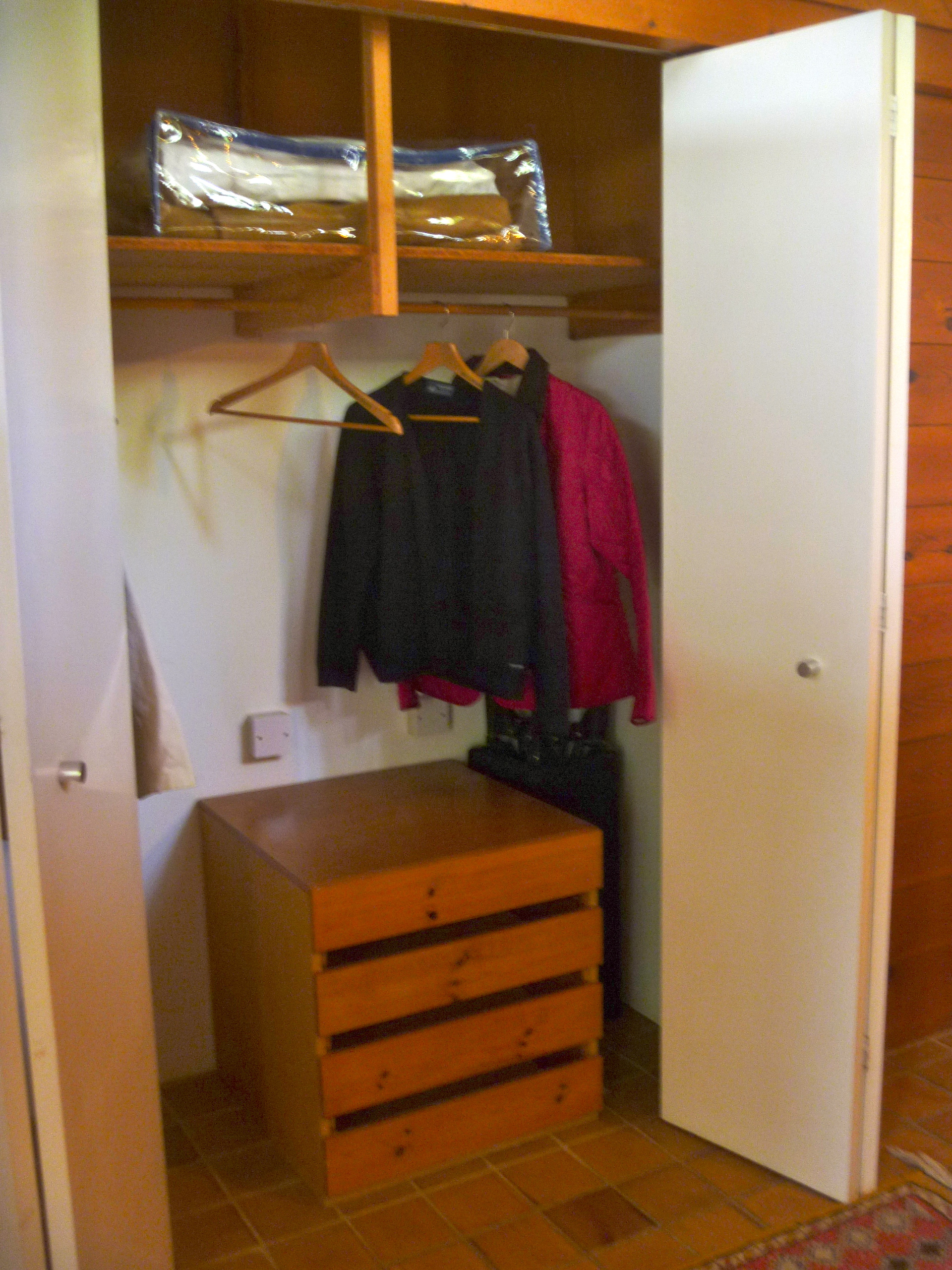
Sometimes I find that hanging space at Landmark properties is at a premium. Not the case here at Anderton House. Each room had a decent built-in cupboard and set of drawers.

Anderton House decent hanging space