Emily Dickinson Museum : The Homestead and The Evergreens

The Emily Dickinson Home

This year we made our third visit to Brattleboro, Vermont and on each visit I have wanted to make the trip an hour south to Amherst where the former home of the poet Emily Dickinson is open to the public as a museum. Amherst is an attractive College town – five in all in the area – with some interesting shops and plenty of eateries.
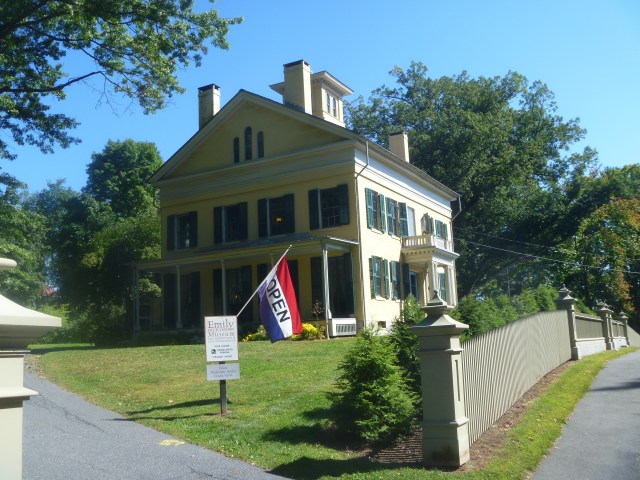
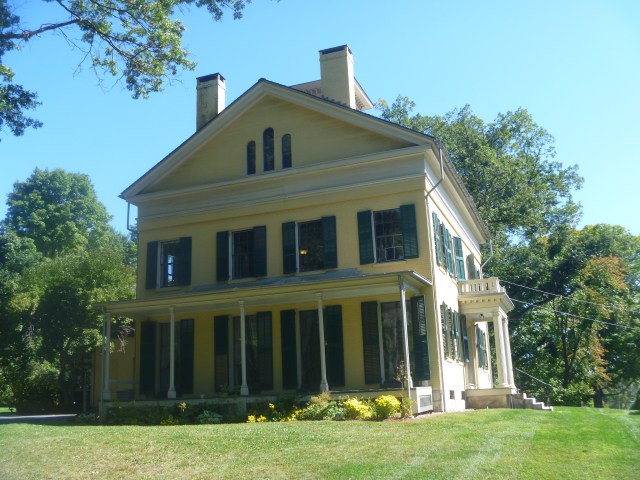
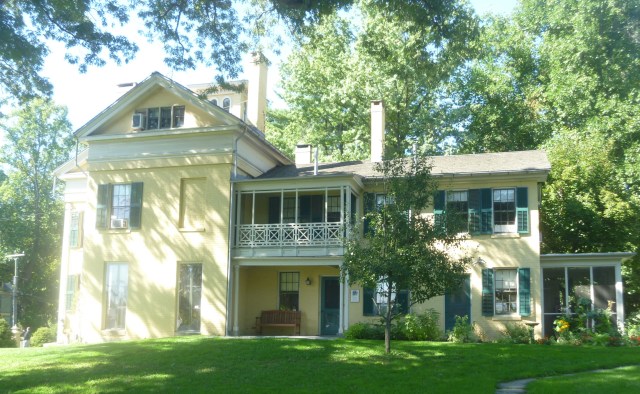
Emily Dickinson Homestead

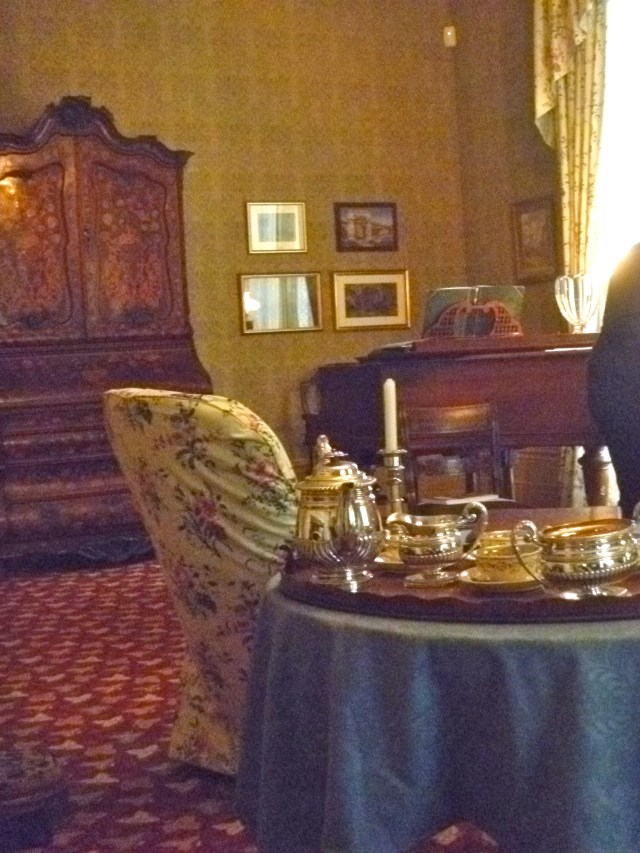
On the Friday of our stay I drove myself back down into Massachusetts. The museum was easy to find and I was able to book onto the second tour of the day : Emily Dickinson’s World a 90-minute guided tour of both the Homestead (Emily Dickinson’s house) and The Evergreens (Austin and Susan Dickinson’s home). This constitutes an in-depth focus on Emily Dickinson’s life and family and the major influences on her writing. Includes the parlors, library, and the poet’s bedroom at the Homestead; the library, parlor, dining room, kitchen, maid’s room, water closet, nursery, and “Emily Room” at The Evergreens.
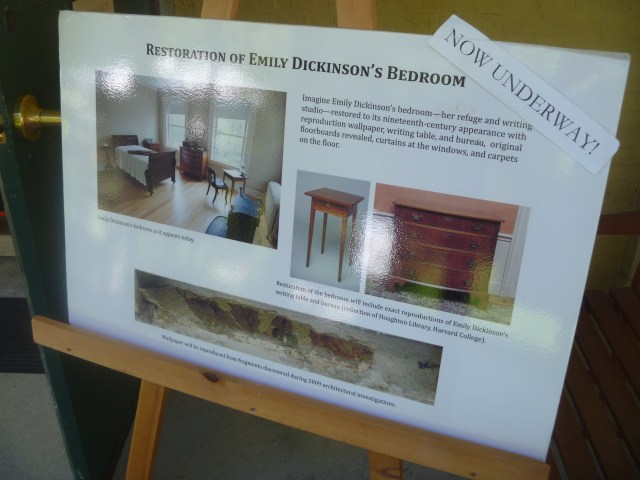
Emily Dickinson room

The Poet’s Bedroom is currently under renovation

As I had just missed the first tour by a few minutes I decided to buy the tour of the grounds which is an audio and self-guided.

“Grounds of Memory: a guide to the Dickinson landscape” The audio tour of the outdoor Dickinson grounds (duration of full-length tour is 60 minutes; visitors may tailor the tour to fit their needs) Explores Emily Dickinson’s fascination with the natural world and her family’s deep interest in the land and  includes eighteen stops outside the Homestead and The Evergreens. Stops may be visited in any order. Each stop offers a 2- or 3-minute narration and at least one Dickinson poem appropriate to that stop.

Narrated by poet laureate Richard Wilbur
Voice of Emily Dickinson provided by poet Mary Jo Salter
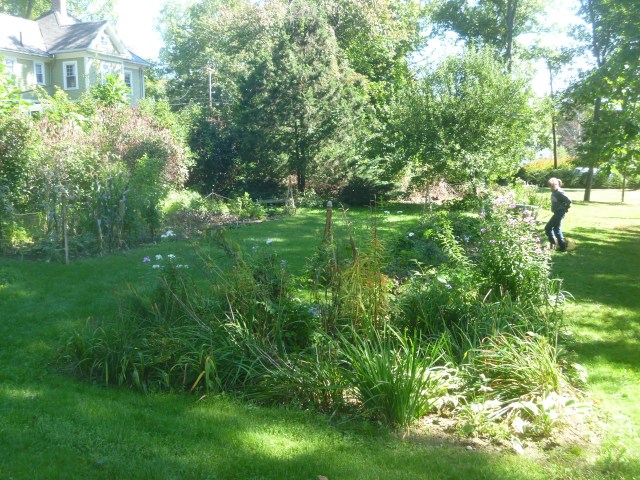
The Flower Garden

 First three stops are at the Flower Garden
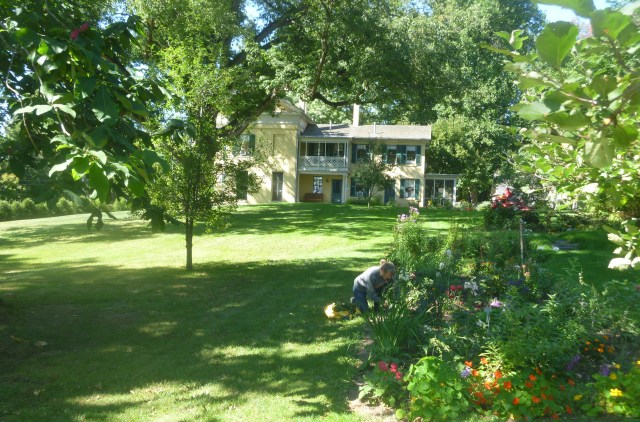
Flower Garden and Home

The Ornamental Flower Garden and the Homestead
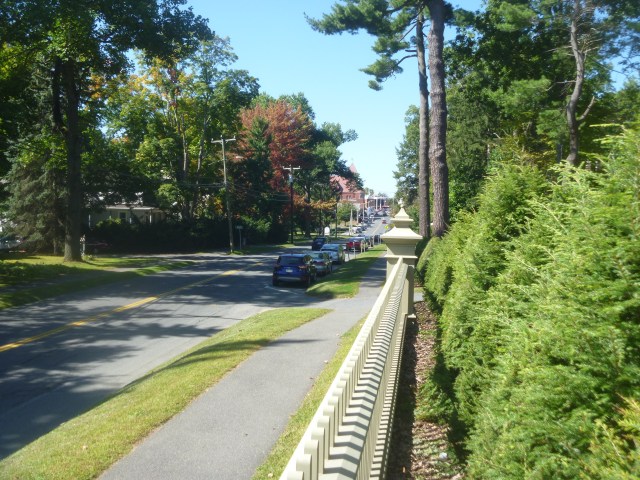
Main St and Amherst

Main Street looking towards Amherst

Evergreens

The West Bedroom (1st floor, RHS) was Emily’s
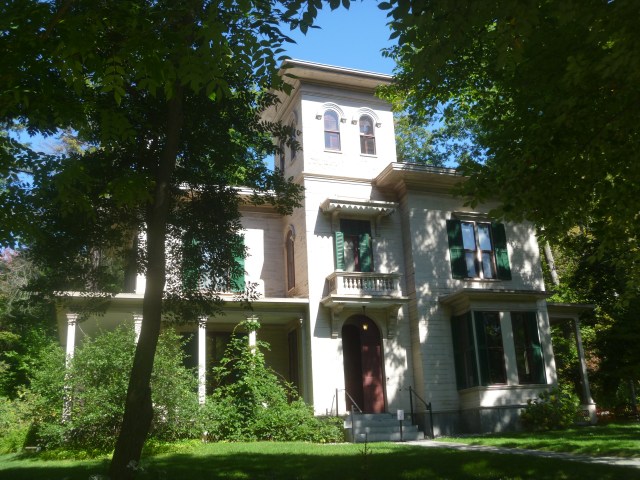
The Evergreens

The Evergreens – built by Edward Dickinson as a wedding gift to his son and daughter-in-law on their marriage
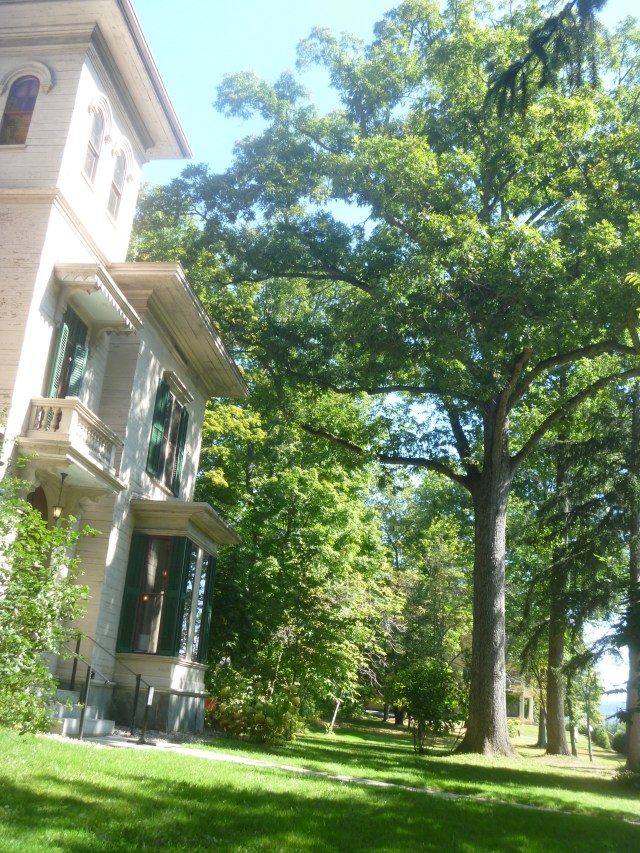
The grassy path

The grassy path between the two homes – “Just wide enough for two who love” (ED)

Here is a brief biography of the poet but the tour really brought to life her life and the lives of her family in particular her sister, Lavinia, her mother and father and her brother, Austen and his family.

EMILY DICKINSON was born in Amherst at the Homestead on December 10, 1830. Her quiet life was infused with a creative energy that produced almost 1800 poems and a profusion of vibrant letters.

Her lively childhood and youth were filled with schooling, reading, explorations of nature, religious activities, significant friendships, and several key encounters with poetry. [She was not always the recluse that many choose to characterise her – at one  time she called herself The Belle of Amherst.] Her most intense writing years consumed the decade of her late 20s and early 30s; during that time she composed almost 1100 poems. She made few attempts to publish her work, choosing instead to share them privately with family and friends. In her later years Dickinson increasingly withdrew from public life. Her garden, her family (especially her brother’s family at The Evergreens) and close friends, and health concerns occupied her.

With a few exceptions, her poetry remained virtually unpublished until after she died on May 15, 1886. After her death, her poems and life story were brought to the attention of the wider world through the competing efforts of family members and intimates.” [source]

This was a house visit par excellence. The 90 minute houses tour was filled with interest and insight into the lives. The Dickinson Landscape self-guided audio tour complete with poetry readings added to almost complete immersion into ED’s life and thoughts. Our house guide was entertainment herself and added poetry quotations and a quick ‘class’ in the importance of word choice in a ‘schoolroom’ – in which we all participated. No photography was allowed in the house but the tour was such fun and so informative that I will forgive them for that. Having visited the home of a poet I had barely heard of I came away feeling as if I met her myself. Well done, Emily Dickinson House Museum!

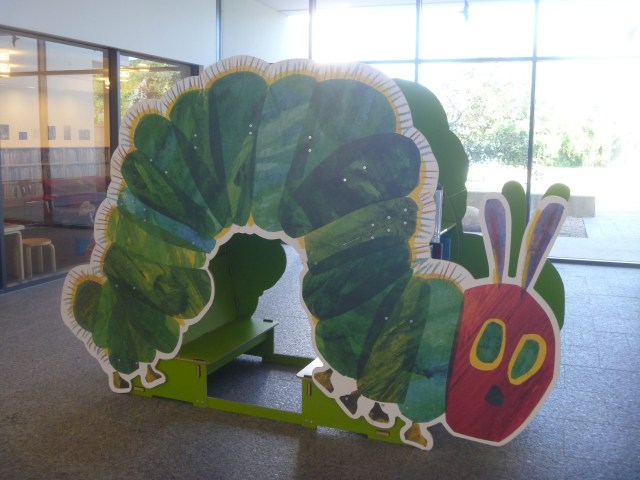
On leaving the Museum I couldn’t resist a quick visit to another nearby museum – almost from the sublime to the ridiculous – The Eric Carle Museum of Picture Book Art. A purpose-built centre devoted to the art of contemporary children’s book illustrator Eric Carle. We still have a very dog-eared copy of The Very Hungry Caterpillar at home.
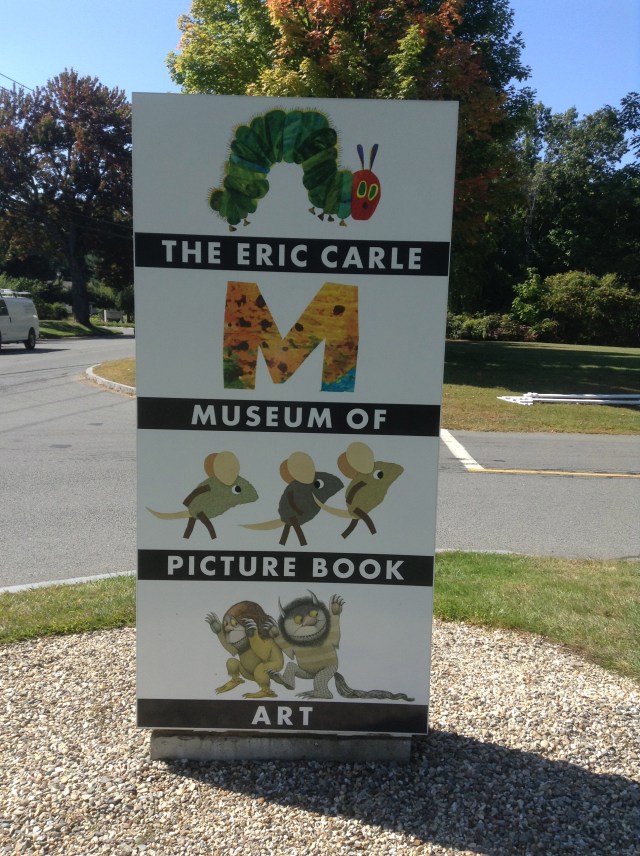
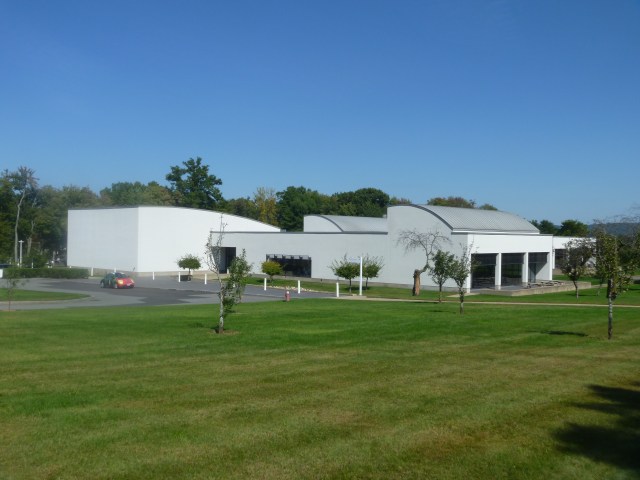
Picture Book Art


Carle Museum

 The Eric Carle Museum

The very hungry caterpillar

This is what a Very Hungry Caterpillar looks like!

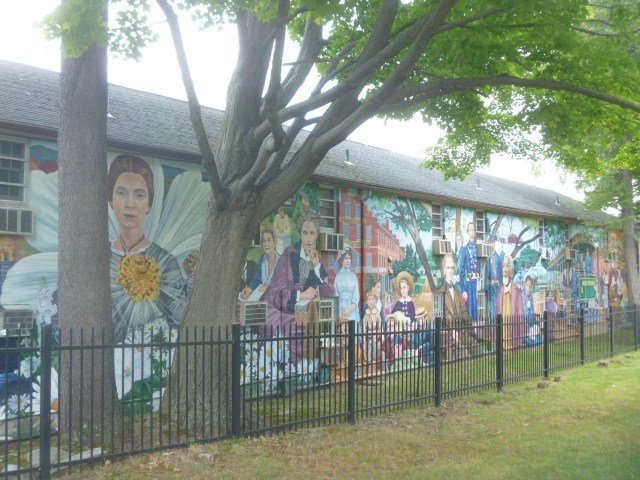
And finally, the next day we both made the journey back down to Amherst, enjoyed a decent lunch and I tracked down the Dickinson graves in West Cemetery where there is also a Community History Mural featuring characters from the Amherst story from all fields of experience (farming, literature, domestic life, education, military, industry and economic life) and including, of course, Emily Dickinson herself.
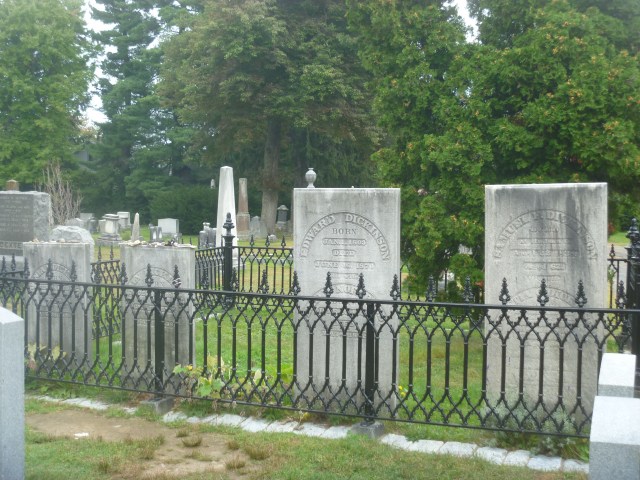
Dickinson family graves

The Dickinson Graves in West Cemetery, Amherst
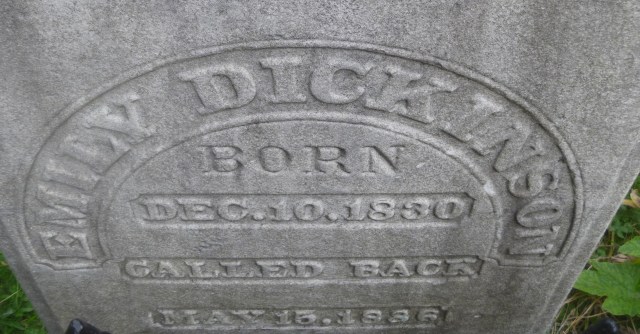
Emily Dickinson grave stone

Wording on Emily’s Gravestone

History Mural West Cemetery Amherst

The Amherst Community Mural, West Cemetery
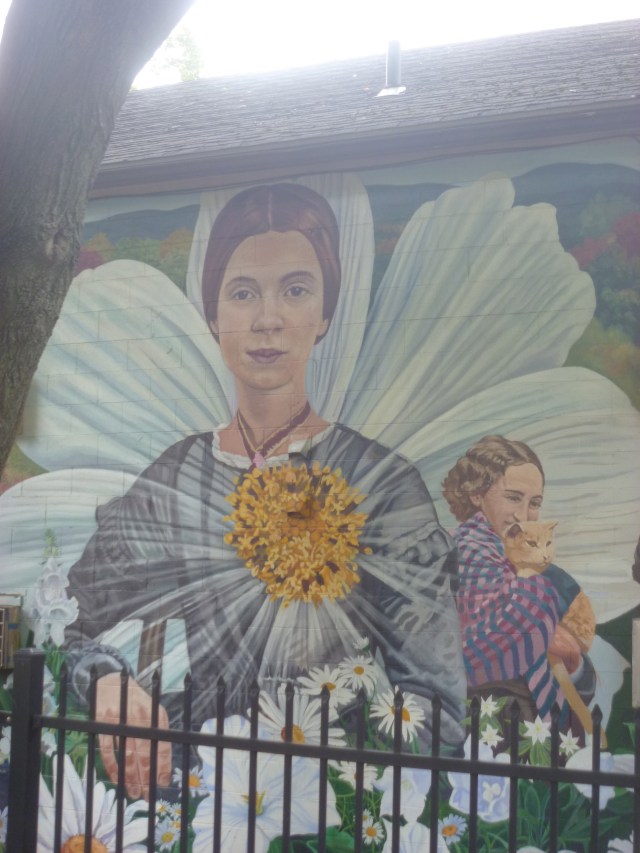
Emily Dickinson on History Mural

Emily Dickinson (Lavinia behind) on the Community Mural

Elizabeth Gaskell’s House and Home

GH Blue Plaque

In the 28 September Arts and Books supplement to The Independent on Sunday I was pleased to read about the imminent opening in Manchester of the former home of Elizabeth Gaskell – more commonly known as the novelist Mrs Gaskell. Her Cranford books have been serialised on TV recently. But there is much much more to Mrs Gaskell and her writing than this rather cosy drama portrays. I recently read “Ruth” and for a novel written by the respectable wife of a Unitarian Minister it is really quite an eye-opener but an excellent read. Read a resumé here. In addition two excellent miniseries of her books ‘North and South‘ and ‘Wives and Daughters‘ were first broadcast on BBC TV in 2004 and 1999 respectively.

I straightaway headed to the house website and read this :

Tuesday, October 14, 2014 – 14:30 to 16:00

Book Launch: Carolyn Lambert ‘The Meanings of Home in Elizabeth Gaskell’s Fiction”

Book

Join us for the launch of Carolyn Lambert’s new book ‘The Meanings of Home in Elizabeth Gaskell’s Fiction’. Lambert explores how Gaskell challenges the convention of the Victorian home as a place of safety in her novels. In particular she illustrates her theme through the importance of homelessness in Gaskell’s work. Lambert’s book draws not only on the novels but also Gaskell’s letters and non-fiction writings and has recently been shortlisted for the Sonia Rudikoff Prize for the best Victorian book by a first time author.

A tour of the house and refreshments are included in the ticket price. Copies of the book will be on sale at a special price.

Gaskell House

84 Plymouth Grove, Manchester

So I booked a ticket for the talk and for the train and yesterday set off for Manchester. I’m afraid I don’t find Manchester any easy city to get around. Perhaps I don’t know it well enough. I eventually found a bus that would take me to Plymouth Grove and which  dropped me off outside number 84.

Welcome to Gaskell House

Carolyn’s talk took place in the Gaskell’s sitting room – yes, the very room in which Charlotte Bronte hid behind the curtains in order to avoid being seen by guests! Photography is allowed and we could sit on the comfy chairs, sofas and chaise longues. I was told that items covered in perspex were original to the house and had been gifted or lent by various donors or galleries and the rest of the furnishings and fittings were either of the period and style of the house during the time when the Gaskells had lived there or were reproductions.

Sitting room

The comfortable, relaxed sitting room

Carolyn began her talk with a resumé of Mrs Gaskell’s life. I have lifted this from the House website :

Elizabeth Cleghorn Gaskell was born in 1810 and lived at 84 Plymouth Grove with her family from 1850 until her death in 1865.

“To begin with the old rigmarole of childhood…” Wives and Daughters

She was born as Elizabeth Cleghorn Stevenson in London in 1810. A year later, on the death of her mother, she was taken to live in Knutsford, Cheshire, with her aunt, Hannah Lumb. The arrangement was a happy one – she was to refer to her aunt as “my more than mother” and was to use Knutsford as the inspiration for her fictitious town of Cranford. Knutsford also became ‘Hollingford’ in Wives and Daughters.

In 1832 Elizabeth married William Gaskell, the assistant minister at Cross Street Unitarian Chapel in Manchester. Their third home was a large house near open fields – 42 (now 84) Plymouth Grove. Here they grew flowers and vegetables, and kept a cow, pigs and poultry. The House was always bustling and the family entertained a stream of visitors, including many eminent people. Gaskell connections included such people as the Wedgwoods, the Darwins and the Nightingales, but girls from the Sunday School also came to the house regularly, as did William’s students and fellow clergy.”

She then went on to discuss some of the aspects of home touched upon in the Gaskell novels as well as in Mrs Gaskell’s own life. (Interestingly, she was a keen traveller and some years spent only half the year at home). The home in the novels symbolises security, it’s where relationships develop, it’s a place for creativity and self-expression. But she also wrote about homelessness and the role of servants. Elizabeth Gaskell was ambivalent about Manchester and was torn between family and a longing for the rural environment. Her large house looks rather incongruous these days amidst modern buildings and areas of wasteland on Plymouth Grove but when she was living and writing here it was rural area and the house had a long garden stretching back down Swinton Grove but now built upon by flats.
There wasn’t time in the end to do the full tour – so I will have to return on another occasion and make a more full report of the house but I did peep into ground floor rooms :

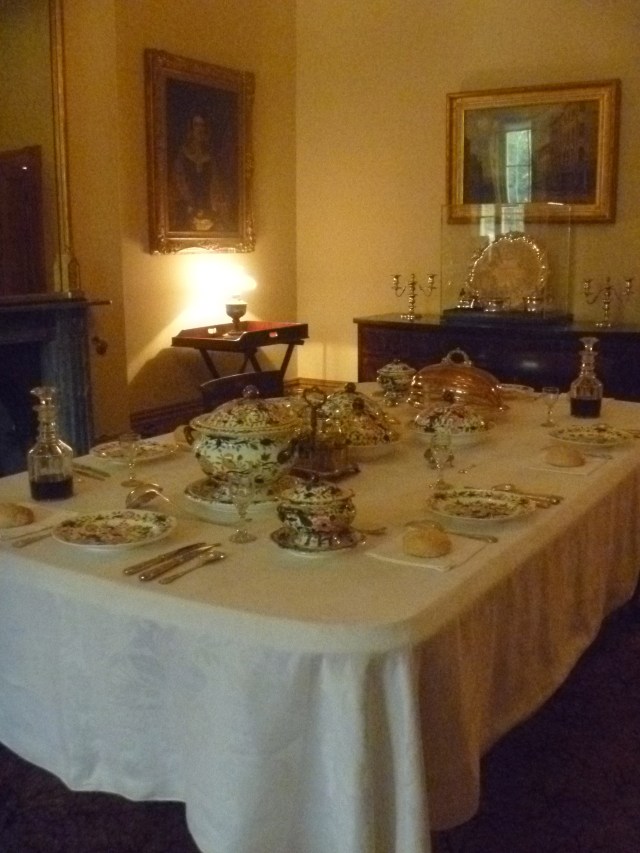
Dining Table

The Dining Room

Gaskell writing desk

Mrs Gaskell’s Desk at one end of the Dining Room

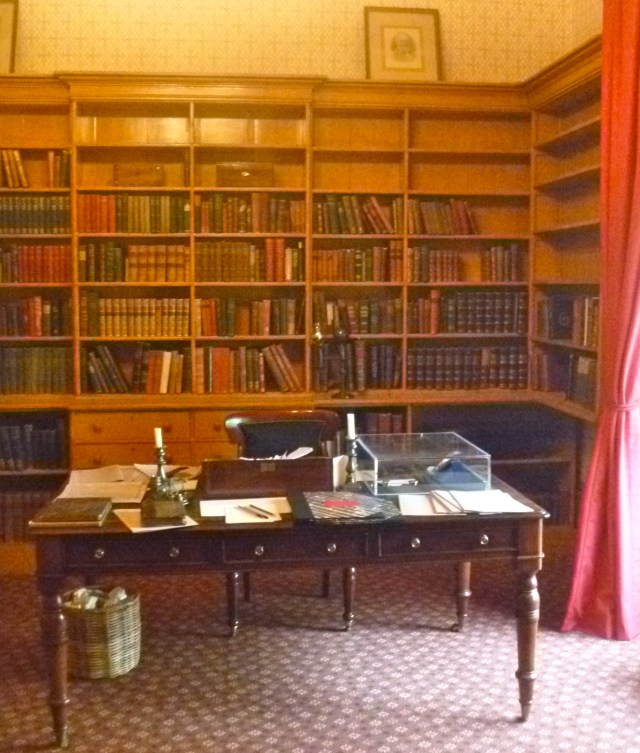
William's study

William Gaskell’s Study

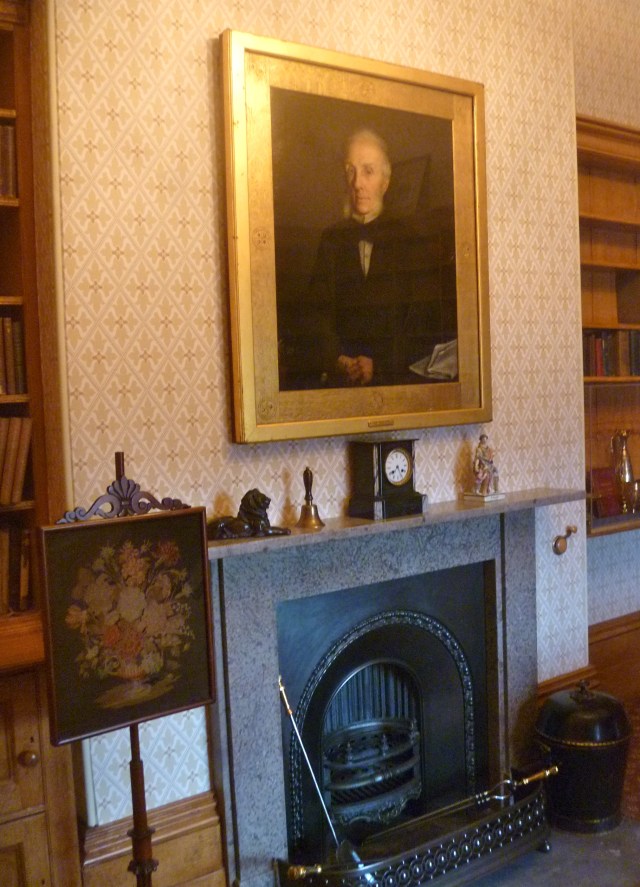
William portrait in study

William Gaskell

and refreshments were served downstairs in the basement tea room and bookshop (new and secondhand).

Tea room

The Tea Room

Pertinent quotations from Mrs Gaskell add a touch of humour

Quote 1


Quote 2

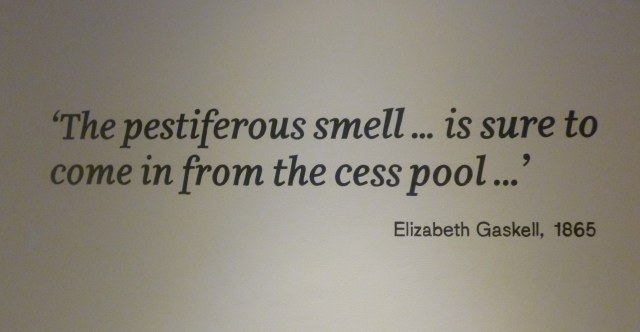
And in the Ladies Loos :

Ladies' quote

As the instructions for finding a bus that would take me back to Piccadilly Station didn’t work out I was thankful for one thing about Manchester – taxis with lights were easy to hail and thus I made my way back to the train and thence to my own home in comfort.

GH Rear view

Rear of Gaskell House


The Carriage House

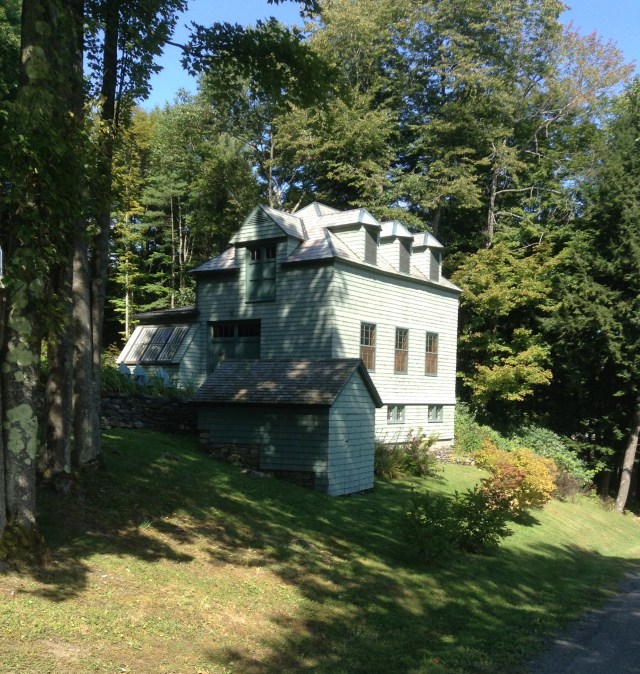
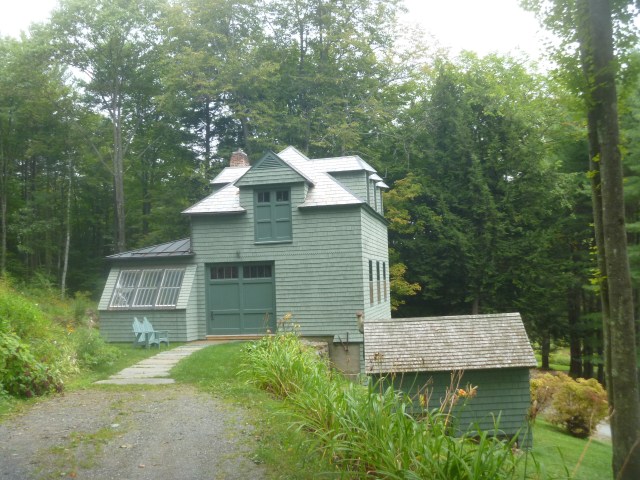
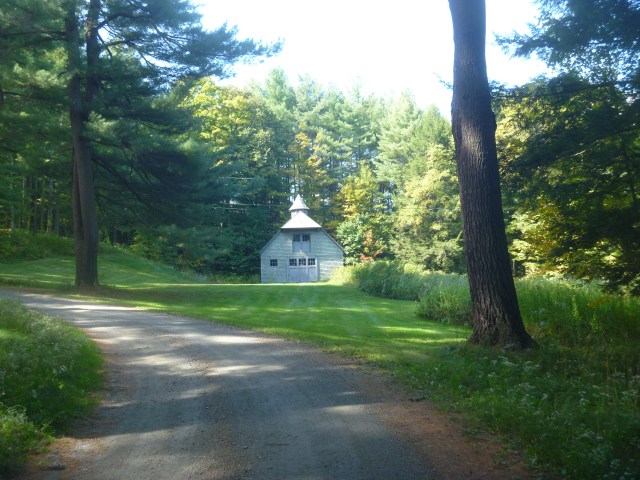
The Carriage House

This September just past we made our third visit to Brattleboro Vermont. We stayed again in a property that had once belonged to poet and novelist Rudyard Kipling and which is now owned and run under the auspices of The Landmark Trust USA. The house is on a much smaller scale than Naulakha and sits on the same driveway a little way down from that grand, commanding house.

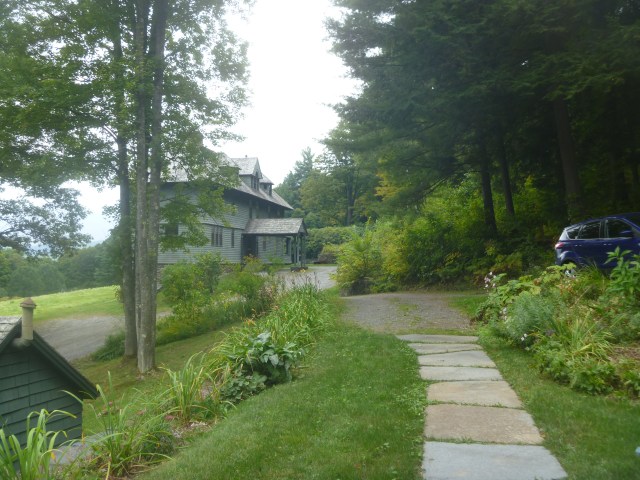
Naulakha from Carriage House

Naulakha from The Carriage House

Here is the description of it from the Landmark Trust USA website :

When you stay at this Landmark, you’ll awaken wonderful memories. Formerly this was the barn where Rudyard Kipling’s carriage was kept, then it was converted to housing for his staff. This beautiful smaller example of the tones, designs and appointments of Naulakha, accommodates 4, has one bathroom, a complete spacious kitchen, and beautifully landscaped lawn area where you can relax in an adirondack chair or picnic in the shaded backyard.

Adirondack chairs

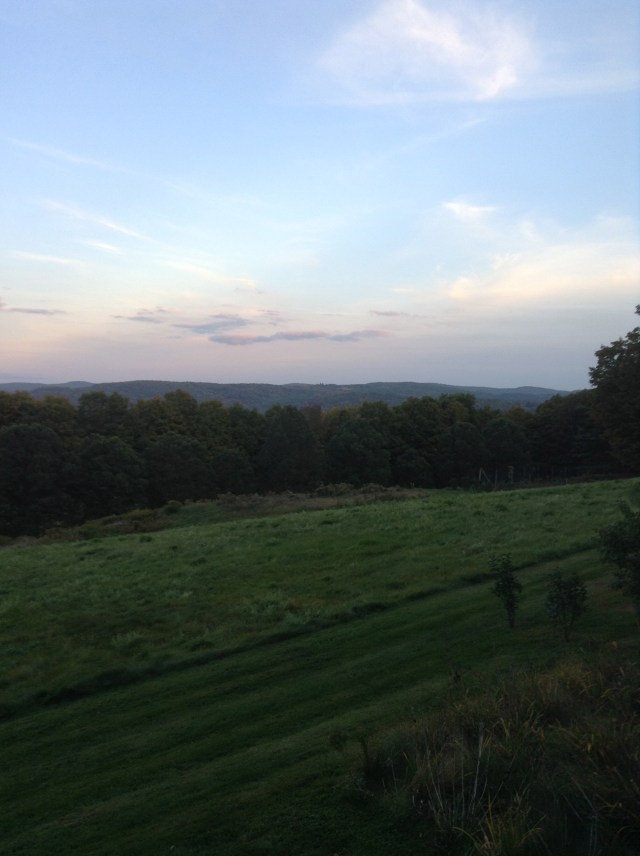
The view NH from those chairs

The View from the Chairs : New Hampshire

 From the patio outside the kitchen, there is a stone pathway which will lead you from the lawn area to the barn where Kipling’s horses, Nip & Tuck, were stabled.

Barn

 The Barn

This property is super comfortable, nestled in among the trees, and banked by perennials. You’ll feel a certain sense of having lived in a cabin in the woods, with comfort.”

Sooooo, comfortable :

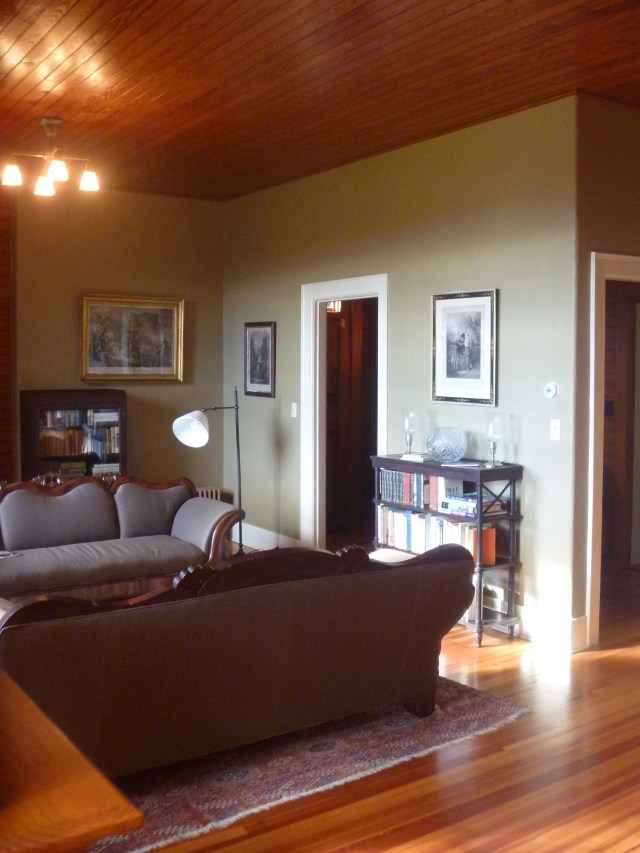
Sitting Room CH

The Sitting Room

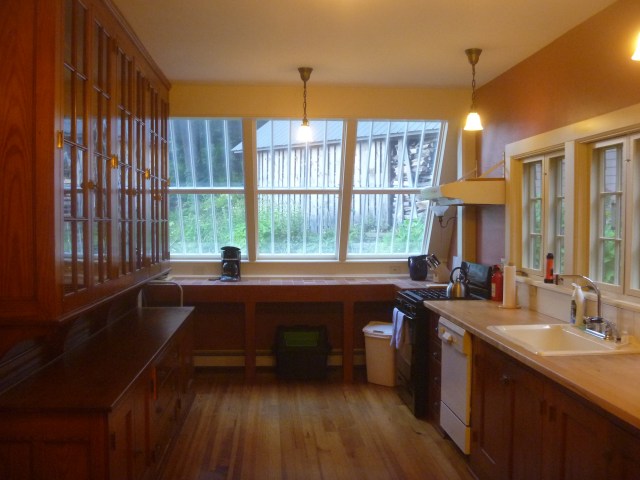
Carriage House Kitchen

The Kitchen

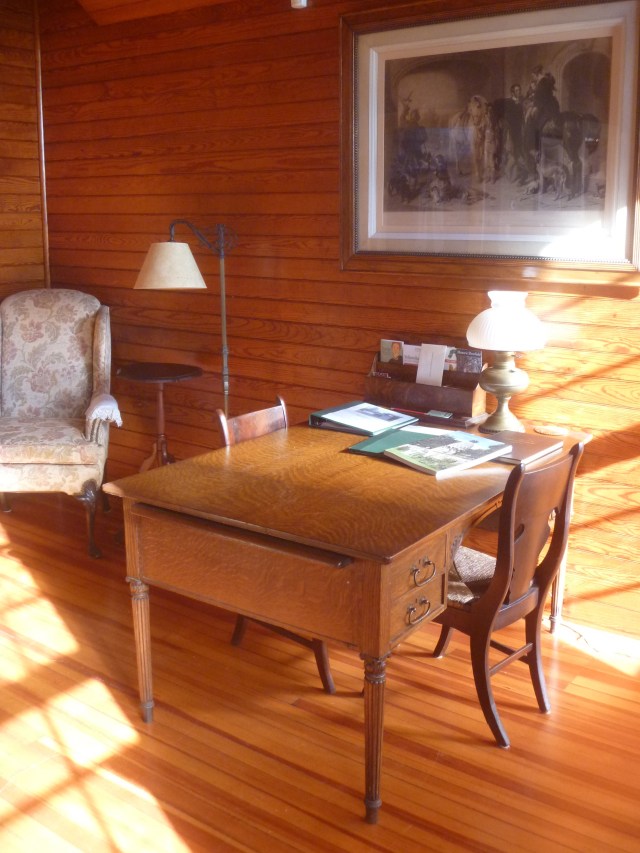
Desk. Carriage House

Desk at rear of Sitting Room

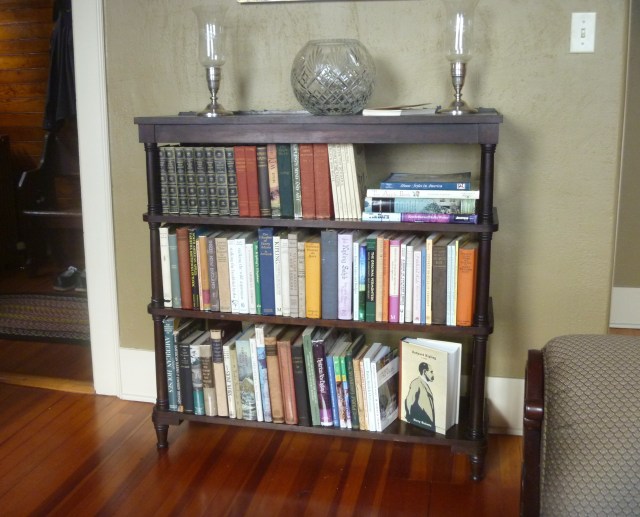
Carriage House bookcase

One of the Bookcases

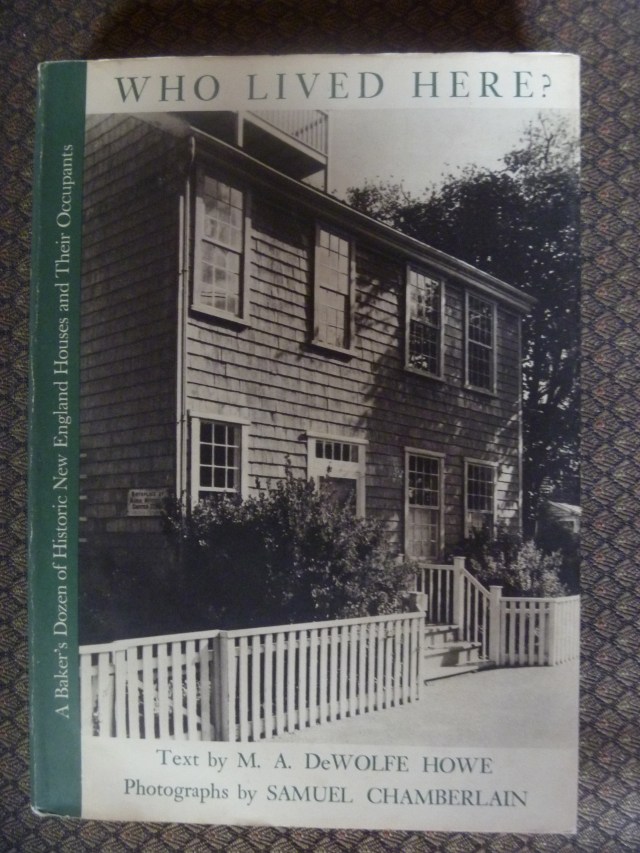
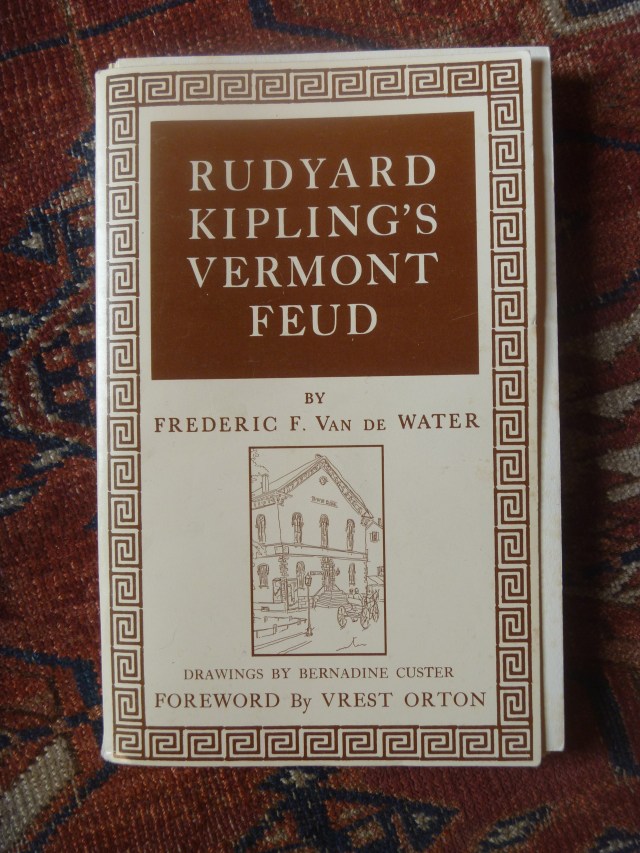
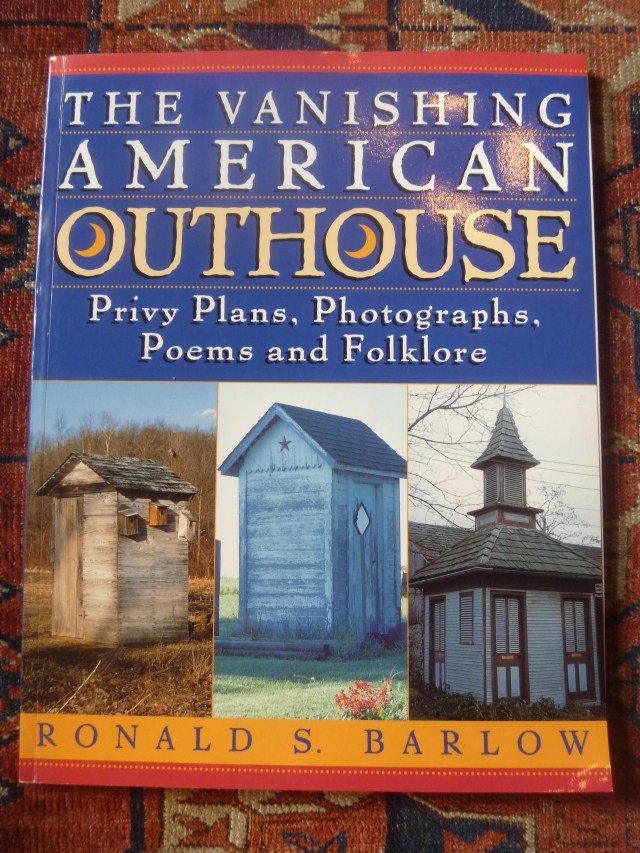
Kipling still predominates on the shelves but I read and enjoyed :

Who lived here book

Who lived here?

vermont Feud

Rudyard Kipling’s Vermont Feud

American Outhouse

The Vanishing American Outhouse

RK picture

Rudyard Kipling was keeping a watchful eye on us!

In Daphne’s Corner of Cornwall

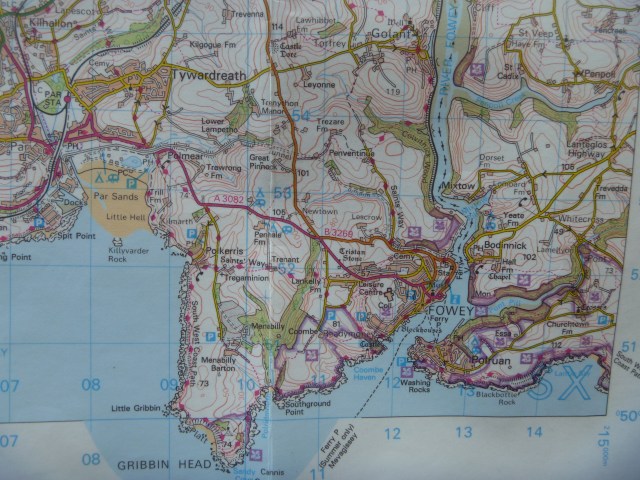
OS Map

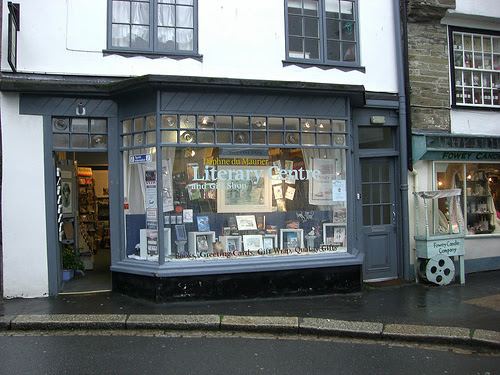
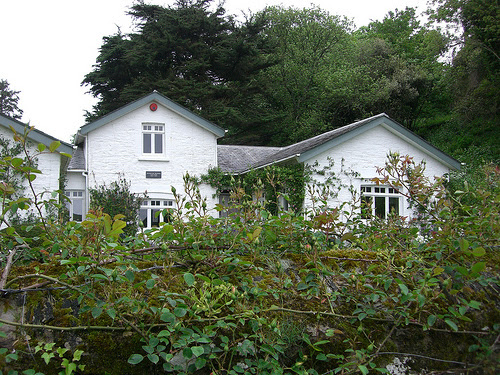
On my walk ‘Strolling hand in hand with romance‘ I visited the church in which Daphne Du Maurier married Major Tommy “Boy” Browning in July, 1932. I’d visited the Daphne Du Maurier Centre in Fowey and seen one of her former homes nearby in my only previous visit to Cornwall in 2008.


Daphne Du Maurier Centre

The Literary Centre in Fowey in 2008

unnamed

Daphne Du Maurier’s former home (1942-1943) at Readymoney Bay

But I hadn’t realised that I would come across so many other  Du Maurier connections in my small corner of Cornwall and during such a short visit.

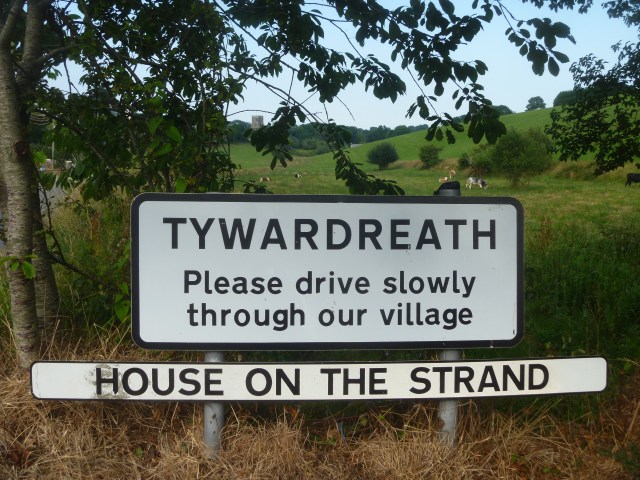
For a start when I drove into the village where I was staying I noticed that it features The House on the Strand in its sign. And when I asked my hostess about this she declared “This IS the house on the strand!”.

Tywardreath

I decided to find out more and came across this walk and the following :

Tywardreath means “House on the Strand”, as the village was once surrounded by tidal waters on all sides bar the east, and the ground beneath the church was a creek.
A Benedictine Priory was founded here soon after the Norman Conquest, and the possessions included the church, St Sampson’s Chapel at Golant and huge nearby estates. The monks were a corrupt, drunken and dissolute bunch as described in du Maurier’s [time travel] novel; knowing it was true adds to the fascinating reading.

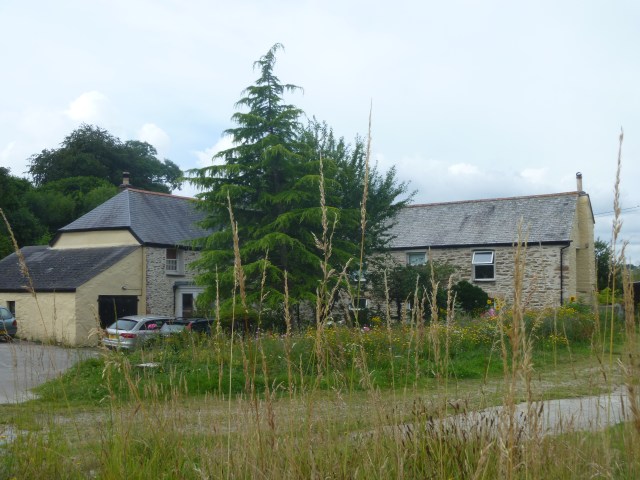
Bumblebee Farm

Bumblebee Farm, alias The House on the Strand …

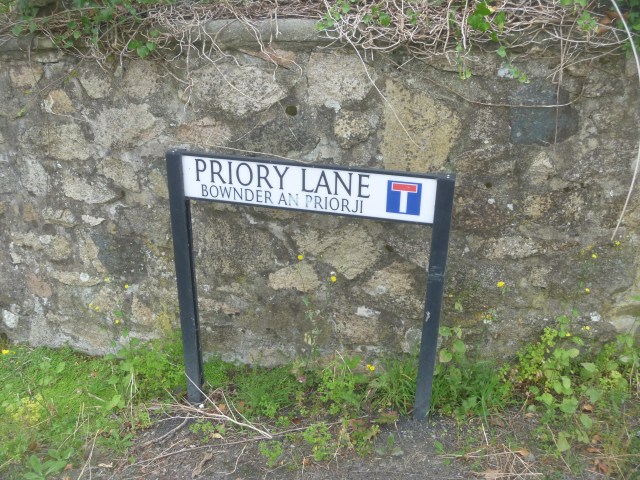
Priory Lane

… is on Priory Lane, Tywardreath

In fact archaeologists were visiting the site that very Saturday to ascertain exactly where the Priory stood and what remains might be found on the farm’s land.

Bumblebee

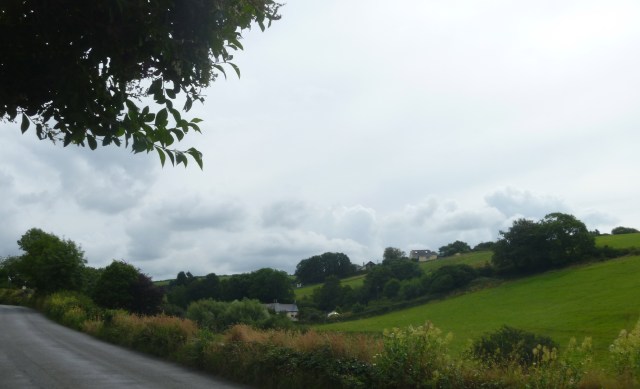
The House on the Strand from the Village Road

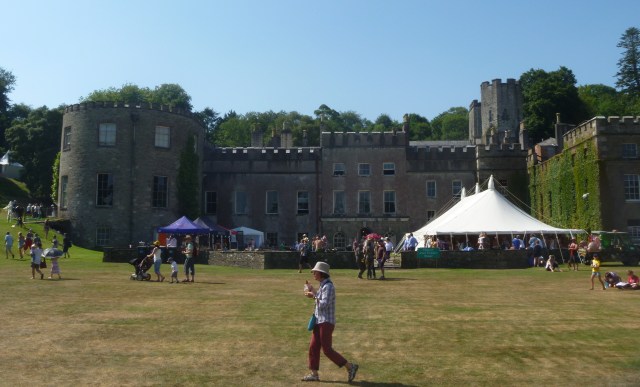
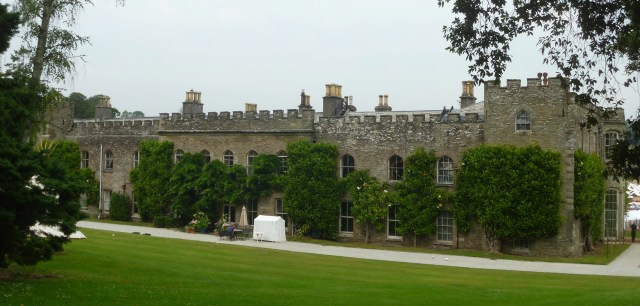
Then at the Festival I heard talk that Port Eliot House itself had been Daphne’s inspiration for Manderley the house featured in her most famous book : Rebecca.

Port Eliot front

Port Eliot House in Festival Spirit

Last night I dreamt I went to Manderley again. It seemed to me I stood by the iron gate leading to the drive, and for a while I could not enter, for the way was barred to me. There was a padlock and a chain upon the gate. I called in my dream to the lodge-keeper, and had no answer, and peering closer through the rusted spokes of the gate I saw that the lodge was uninhabited. No smoke came from the chimney, and the little lattice windows gaped forlorn. Then, like all dreamers, I was possessed of a sudden with supernatural powers and passed like a spirit through the barrier before me.” [Opening lines to Rebecca]

Port Eliot - rear view

Rear of Port Eliot House

Daphne Du Maurier was a prolific writer. She produced novels and volumes of short stories, five biographies and her own autobiography. The place Cornwall held in her heart and the inspiration it provided was captured in many of her books. Her special connection above all was this small estuarine area where by chance I happened to stay.

English Eccentricity Lives On at Renishaw Hall

On Thursday I returned from a two-day Art Fund Expedition to Compton Verney and Stratford. I never need asking twice to go to Stratford to see world class Shakespeare being performed live before my very eyes. I have made several visits over the years. So, when a flyer arrived advertising the expedition to Stratford and to include a tour of Renishaw Hall (generally very limited access) and visit to Compton Verney House in Warwickshire I was ready to sign up and go.
Renishaw

Our band of 25 set of from Leeds at 9.30 on Wednesday arriving at Renishaw about 10.45. Our visit began with tea (or coffee) in the Gallery Cafe followed by a personal tour of the house.

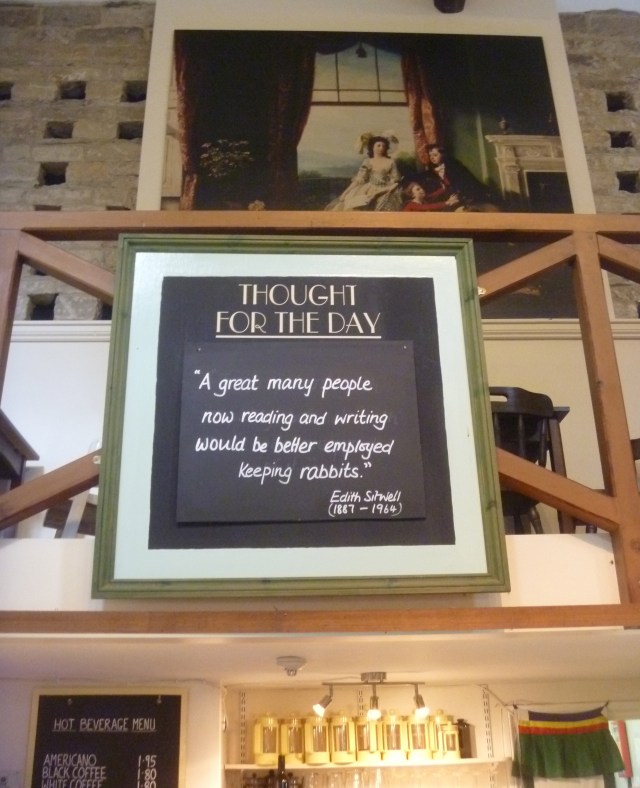
Thought for the day

Thought for the Day in the Courtyard Cafe

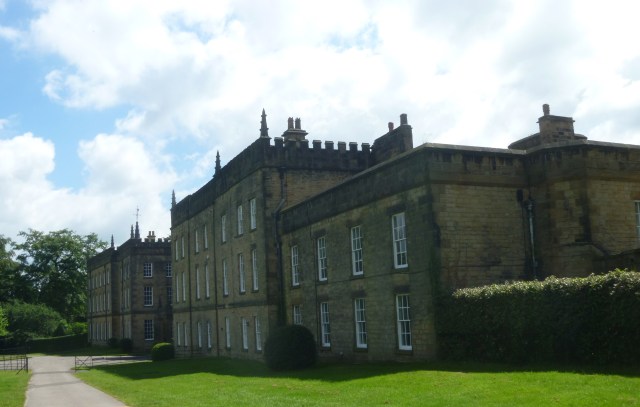
After a brief introduction outside we ventured inside to see the fabulous interior. Definitely the former home of eccentrics and eclectic collectors. It is a Sitwell descendant’s home. Here’s a potted introduction to the famous Sitwell siblings from the Renishaw Hall website :

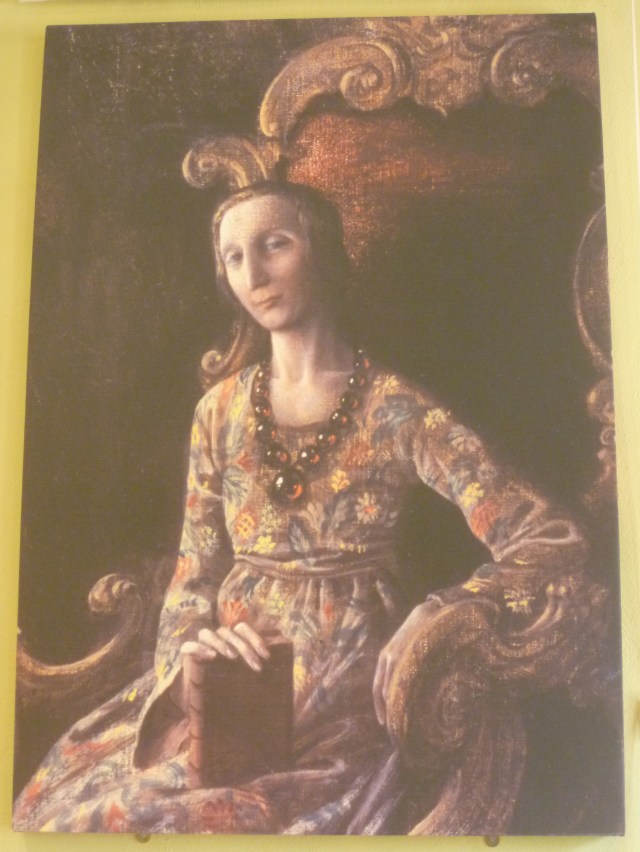
Edith oversees luncheon

Edith Sitwell overlooked our luncheon. The throne is still to be seen in the ballroom.

The Sitwells

The current owner of Renishaw is Alexandra Sitwell, daughter of the late Sir Reresby and Lady Sitwell. Her extraordinary family have lived at Renishaw for nearly 400 years.

The Sitwells have always been avid collectors and patrons of the arts and the history of the family is filled with writers, innovators and eccentrics.

Perhaps the most famed of the Sitwells were the prolific writers Edith, Osbert and Sacheverell:

Dame Edith Sitwell (1887 – 1964) was a grandly eccentric poet and novelist, described by one observer as “an altar on the move.” Perhaps better known for her poetry, two of her most important works were the books English Eccentrics and Fanfare for Elizabeth

Sir Osbert Sitwell (1892-1969) wrote prose, poetry and also many short stories and novels, including Before the Bombardment (1926). He is probably best known for his five volume autobiography Left Hand Right Hand

Sir Sacheverell Sitwell (1897-1988) was well known for his work on art, architecture, ballet and travel and arguably his greatest book was Southern Baroque Art which secured him a reputation as author and art historian.”

But they were by no means the only family members to have influenced the Hall over the centuries.

Main Entrance

The Main Entrance of the original house still used as such today

The house was built in 1625 by George Sitwell (1601–67). The Sitwell fortune was made between the 17th and 20th centuries from iron nails, coal, land and through marriage.

Between 1793 and 1808 Joseph Badger of Sheffield made additions and alterations to the original and in 1908 Sir Edwin Lutyens made some changes; about some of which our guide was rather scathing. Lutyens was a good friend of Sir George Sitwell and forty of his notebooks were found in the attics. But he apparently did very little – Christine pointed out the black pillars, the garden doors and the ceiling of the Old Billiard Room plus the recycling of piano keys as surrounds for tapestries in the ballroom.

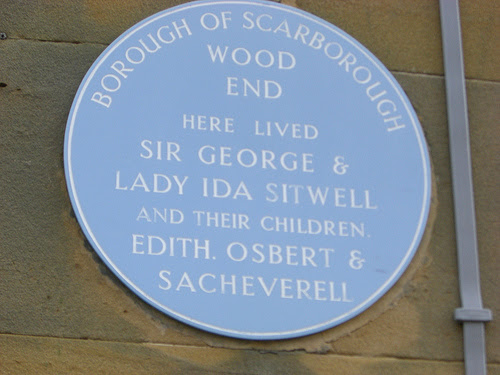
Sir George Sitwell (1860-1943) who had succeeded to the baronetcy in 1862  was responsible for laying out the stunning Italianate gardens in the late 19th Century. For many years he lived in Scarborough where he was the town’s MP. A Blue Plaque at Woodend his home in Scarborough now  commemorates his children Edith, Osbert and Sacheverell. He bought a castle in Tuscany and assembled the largest private collection of John Piper’s paintings.

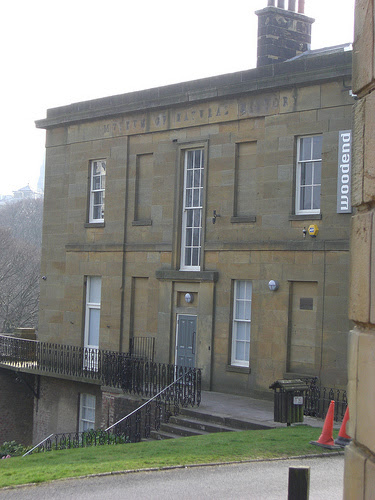
Woodend

Woodend, Scarborough

Blue Plaque Scarboro

Blue Plaque at Woodend commemorating the famous Sitwell siblings

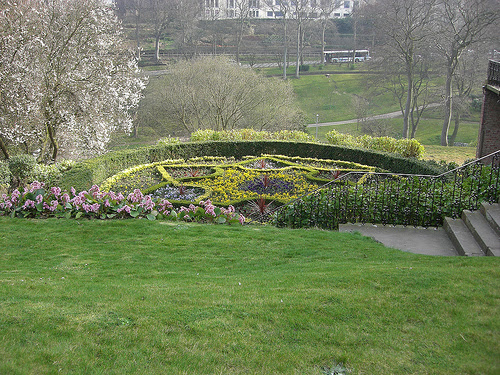
Woodend garden

The Woodend Garden in March 2009

Besides the Pipers there was a host of other paintings including a Sir John Singer Sargent of Sir George Sitwell Lady Ida Sitwell and Family. 

[wallcoo]_Sargent_John_Singer_Sir_George_Sitwell_Lady_Ida_Sitwell_and_Family

Here is Ida in a gown by … Madam Clapham of Hull

The library was somewhere I could have stayed for the rest of the day – comfy sofas and chairs and with a beautiful view of the gardens; plus walls of books including lots of first half of the 20th century volumes. There are 30,000 books in the house altogether. What’s wrong with that? I say.

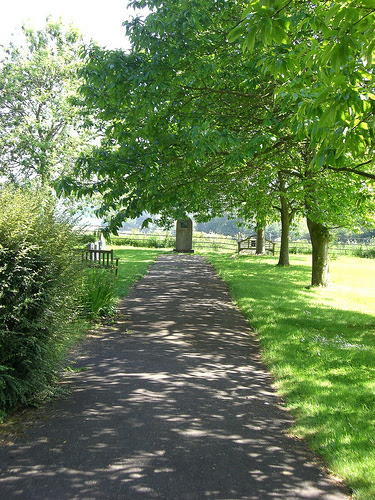
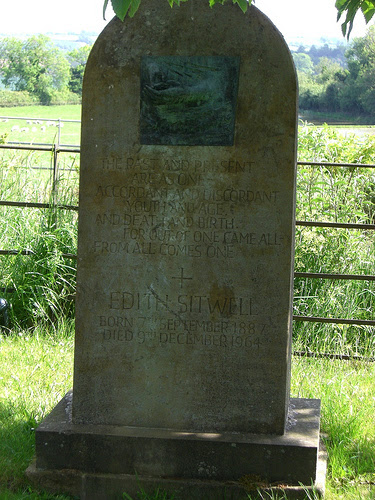
Several years ago whilst staying in Northamptonshire I visited the church and graveyard at Weedon Lois where Edith and her brother Sacheverell are buried. Interestingly, her gravestone is the work of Henry Moore. Weston Hall nearby was another family home of the Sitwells.

Weedon Lois

The ‘new’ churchyard at Weedon Lois in June 2009

Headstone by Henry Moore

Edith Sitwell Headstone by Henry Moore

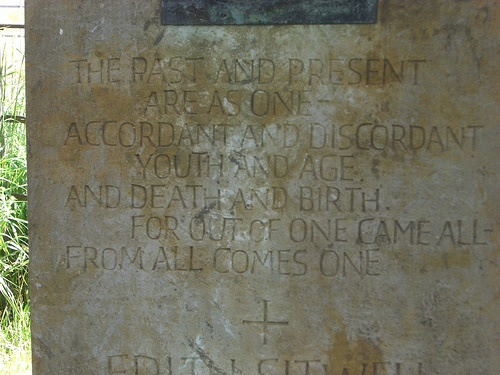
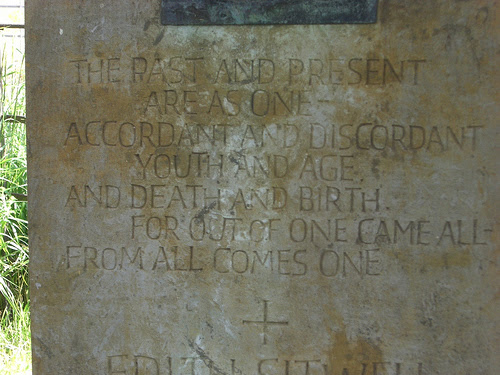
Sitwell wording


Sitwell wording

I have always suspected that the editor of the Waitrose Kitchen free magazine William Sitwell is a member of that illustrious and eccentric family … and indeed he is cousin of the present owner of Renishaw, Alexandra Sitwell.

This year is the 50th anniversary of the death of Dame Edith Sitwell and I see from the website of the Sitwell Society that some interesting events are planned to coincide with this including :

1st November 2014, Edith Sitwell (1887-1964) Remembered by Chris Beevers, archivist at Renishaw Hall, Derbyshire, the present day home of Lady Alexandra Sitwell (Edith Sitwell’s great-niece).
‘Edith Sitwell Remembered (1887-1964)’ commemorates the fiftieth anniversary of her death by looking back over the public and private lives of this extraordinary woman. She was not only a key 20th century literary figure but also a much loved sister, aunt and great aunt to the Sitwell family. Using material from Alexandra Sitwell’s family archive, along with published biographical information, Chris Beevers will present the life of Edith, illustrating key milestones in her personal and professional life. A complex individual, the talk attempts to reveal the ‘real’ Edith, and what lay behind her public ‘facade’ as an avant garde poet, performer and fashion figure, often labelled ‘eccentric’, as well as highlighting the literary significance of her work. It will also represent another Edith, a kind, generous and loyal friend who did much to help others in private, as well as supporting new, undiscovered talent.
Friends of the Library event. 1st November, 2014, 11.15am-midday (tea & coffee served from 10.30am) Cost: Free to members of Friends of the Library, £1 to non-members. Contact: Karen McCabe, 01723 367009 or Colin Langford, 01723 375602

After the House Tour we returned to the Courtyard where we had our soup and sandwich lunch in a separate dining room. We then had a further hour or so to inspect the gardens and courtyard shop before continuing down to Stratford-Upon-Avon.

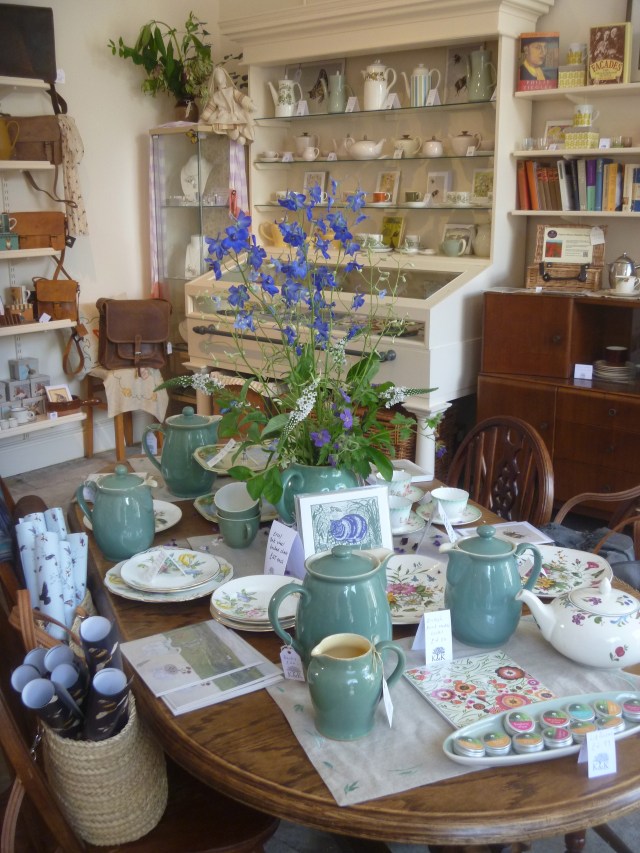
Renishaw Shop

Inside the Renishaw Shop

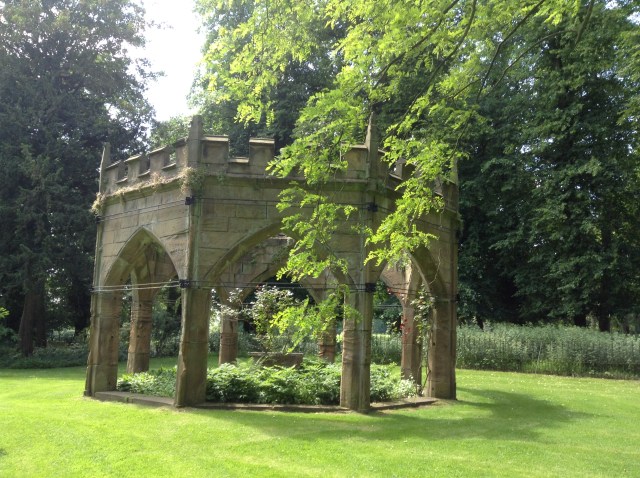
Gothic Aviary

Gothic Aviary in Renishaw Garden

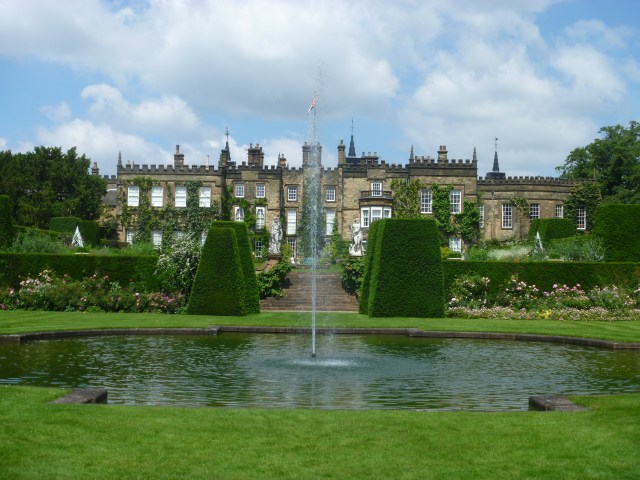
Renishaw and garden

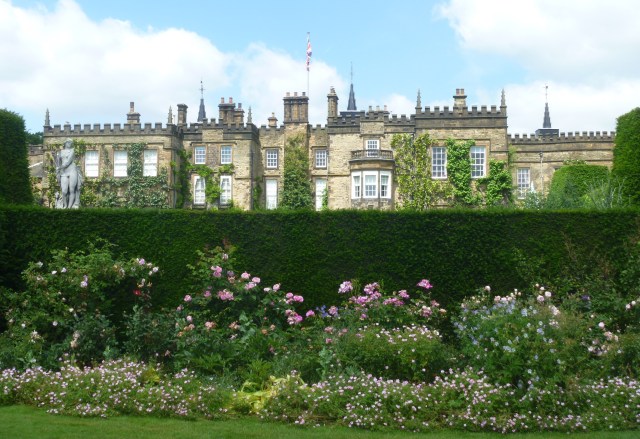
Renishaw Hall and Garden

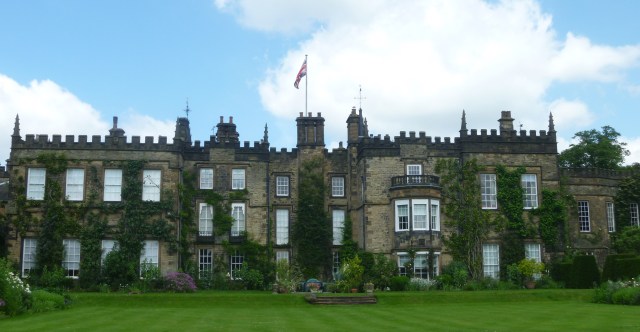
Rear of Renishaw

Rear of Renishaw Hall

Flower beds and hall

Flowerbeds and hall

Great Dixter : A Visit to the Garden and House

Arriving at Great Dixter

We arrive at Great Dixter

Our Saturday excursion in Sussex was intended to be to Sissinghurst former home of Vita Sackville-West : a kind of continuing of the Bloomsbury trail. However, word must have reached the Swiss Alps to the effect that the house and garden at Great Dixter must not be missed. Thus we wended our way across county to near the Kent border to visit this wonderful house and its almost overpowering garden.

Gt Dixter

Great Dixter recently featured in a one hour presentation on the BBC TV series British Gardens in Time.

http://www.bbc.co.uk/programmes/p01wjd2t

http://www.bbc.co.uk/programmes/p01wjcl2

I’d seen the programme and therefore knew a bit about Christopher Lloyd (1921-2006) whose parents moved to Great Dixter in 1910. He was born here; the youngest of 6 children. In 1954, after attending Rugby School and King’s College, Cambridge and studying and later teaching horticulture at Wye College, he moved back to Dixter to live with his mother Daisy. They shared their love gardening until 1972 when Daisy died. He lived here until his own death in 2006 gardening and writing and encouraging students of gardening to stay at the house and study. His work continues today under the stewardship of Fergus Garrett and the Great Dixter Charitable Trust.  Read more about Christopher Lloyd here.

GD Nursery

Great Dixter Nursery Garden

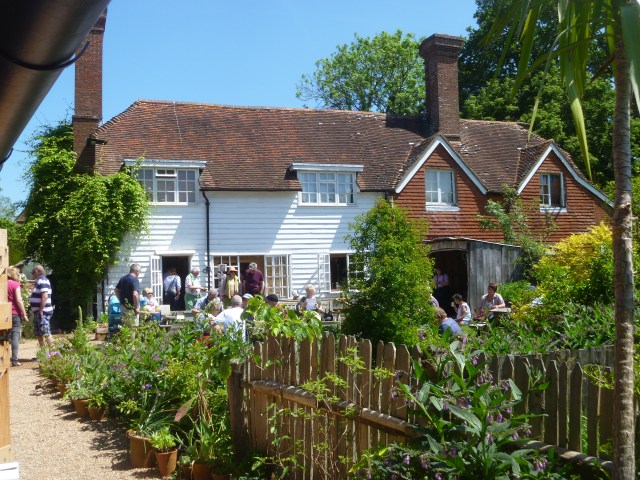
You can only visit the House in the afternoons between 2 and 5pm so we spent the morning in the Nursery Garden, walking in the Wild Flower Meadows and Orchard, visiting the shop and refreshment area and generally the more informal garden areas. After a (disappointing) lunch we visited the House and the more formal parts of the garden nearer to the house.

GD shop and cafe garden

Shop and Picnic Garden

GD Potting shed

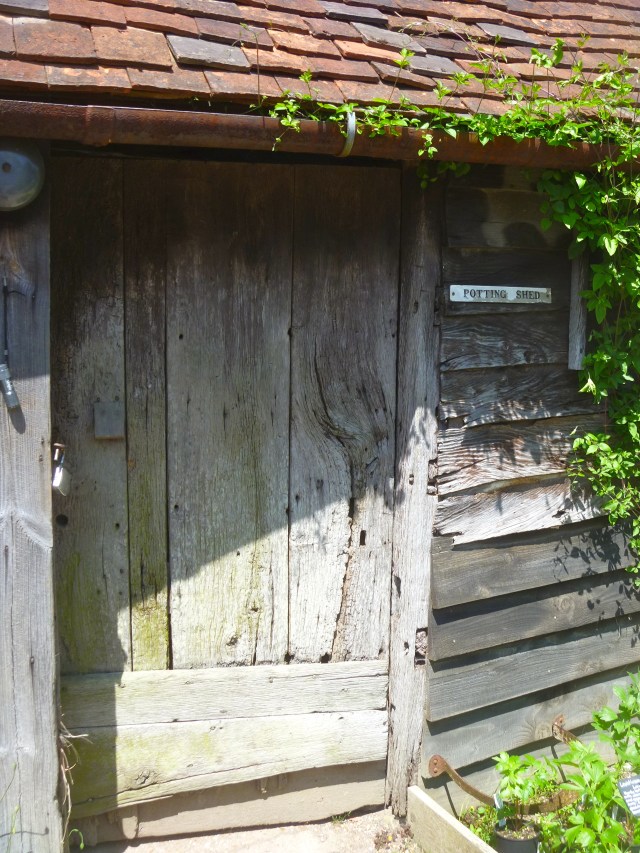
The Potting Shed

GD Seeds Packet

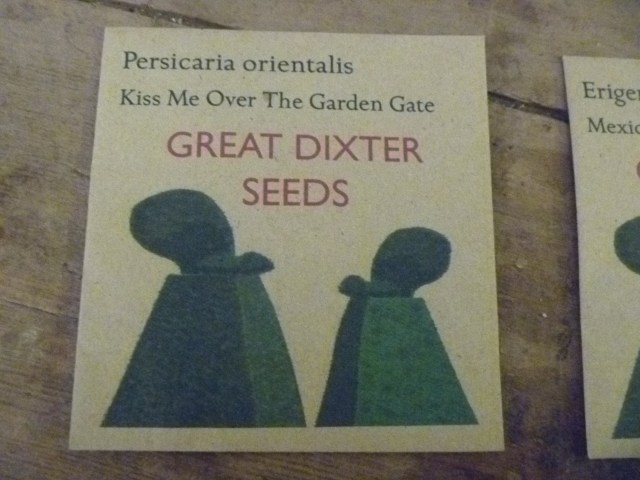
Great Dixter Seeds

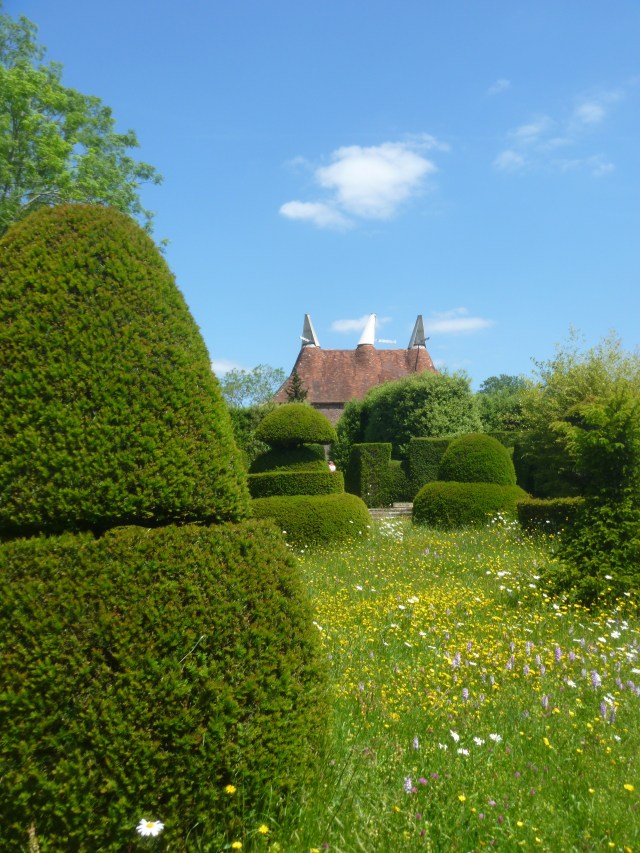
Wild flower meadow and house

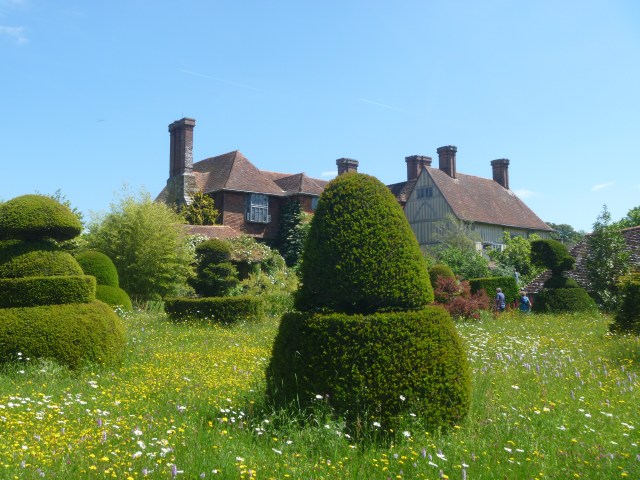
Wild Flower Meadow, Topiary and House

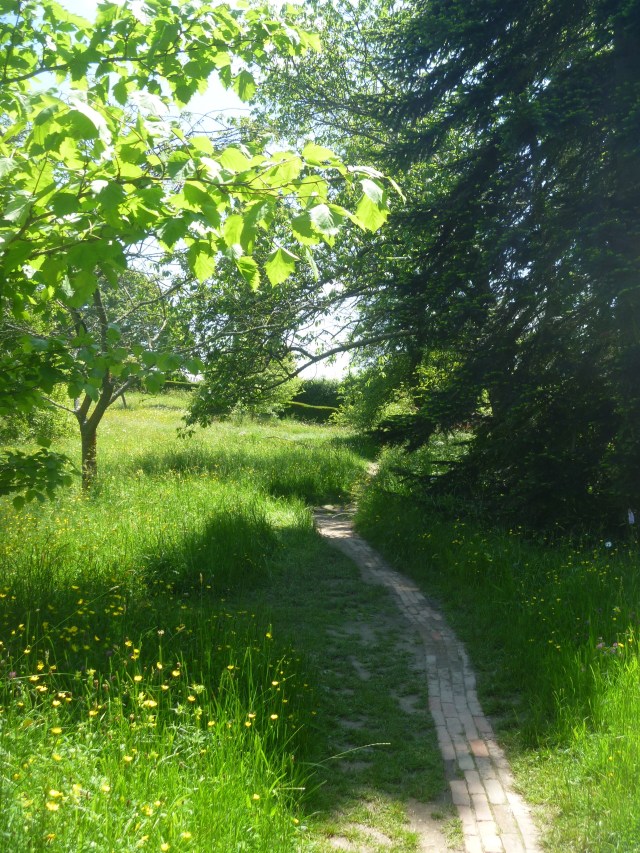
Meadow path

Meadow Path

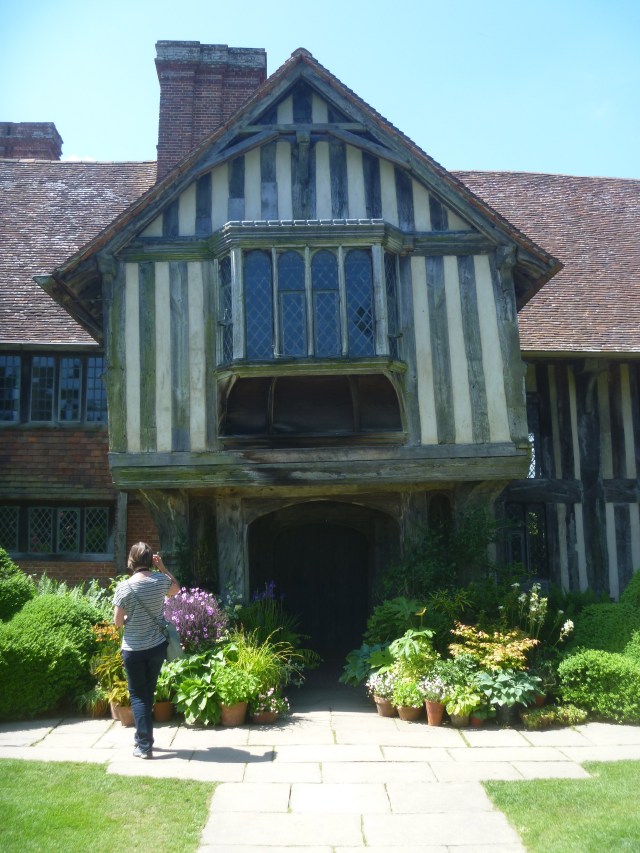
Just three rooms in the Great Dixter House are open to the public : The Great Hall, The Solar and The Parlour. No photography is allowed inside. There were knowledgable room stewards in each room. None of these rooms were part of the Edwin Lutyens ‘extension’ as this is used still today to accommodate GD’s horticulture students. I learned that a barn had been spotted by Lutyens some miles away and bought and removed to Great Dixter beam by beam. The ‘Benenden’ House and the Lutyens features are described here :

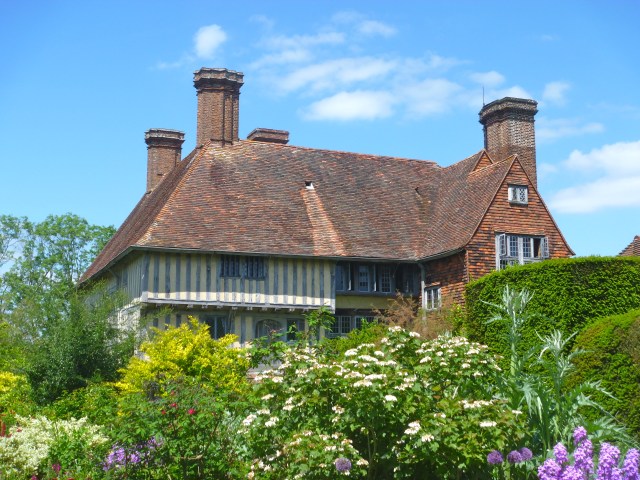
As you face the entrance side of Great Dixter, the porch and everything to the right is 15th or early 16th-century, while the left hand side of the house, containing service quarters below and bedrooms above, is by Edwin Lutyens.

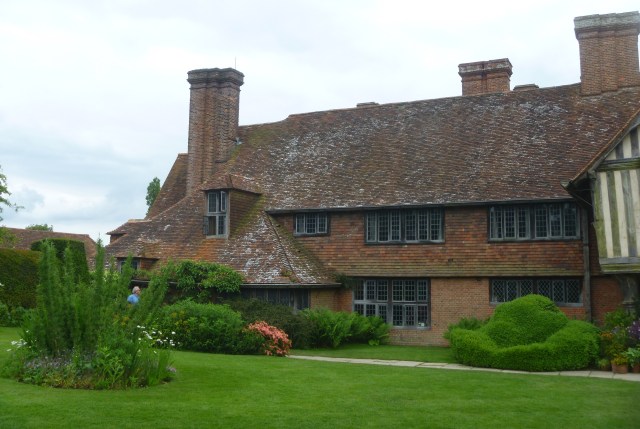
The extraordinary sweep of the tiled roof, particularly when seen from the upper garden, punctuated by tall chimneys and small dormer windows, is the most dramatic element of Lutyens’ otherwise self-effacing work at Great Dixter.

Following the path to the right, the huge chimney breast on the end wall of the house was a substitution by Lutyens for the miserable small flues then serving the Parlour and Solar.

The ground on the garden side of the house falls away quite steeply, so a terrace was built where additions to the south side of the Great Hall were destroyed, and the reconstructed house from Benenden was erected on a high brick base (containing the Billiard Room).

As you begin to walk along the Long Border, look back at the east side of the house. On the right on the first floor is a small window on a different level from all the others. This was a characteristic touch of Lutyens’ and is a floor level window in the Day Nursery. He called it the Crawling Window. Few great architects would have bothered to ensure that the smallest inhabitant, unable to reach a conventional window sill, could also see out.

The doorway (now blocked) in the end of the Benenden house is original.” [Source]

Benenden House extension

Benenden House Wing

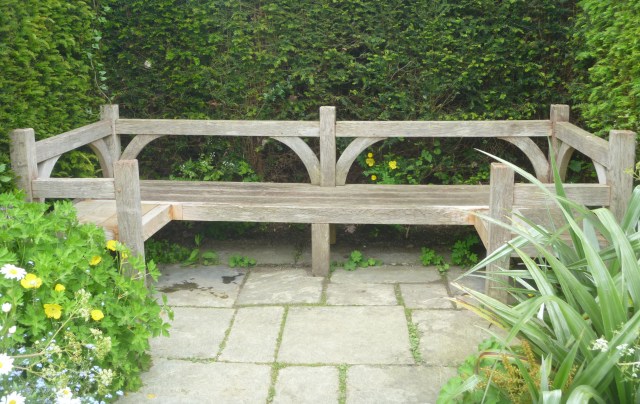
I was intrigued to learn that the exterior of the ‘Benenden House’ wing is reflected in the two Lutyens garden seats strategically placed at the end of the Long Border and by the Topiary Lawn.

Lutyens Garden Seat

Lutyens Garden Seat at the Long Border

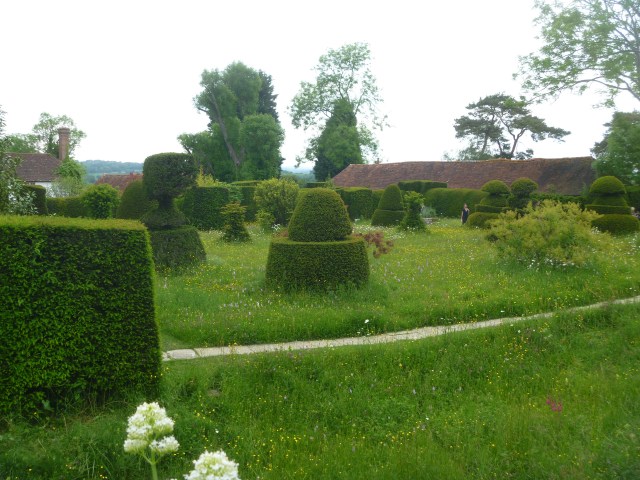
Topiary Garden

Topiary Garden

It was such a beautiful day that we didn’t go into the Oast House and White Barn exhibitions. Great Dixter is not just a place to visit and although it is the gardening students who stay here there are courses for everyone.

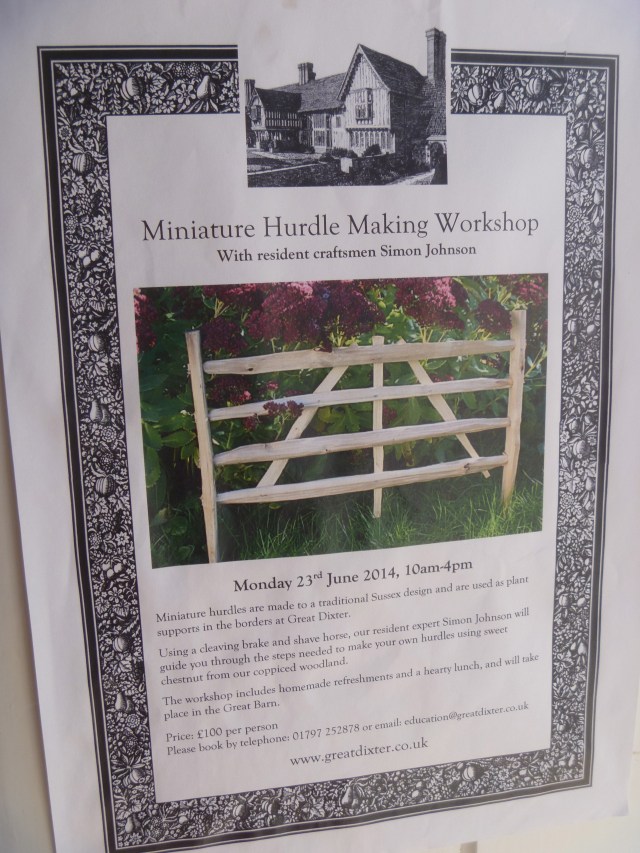
Hurdle workshops

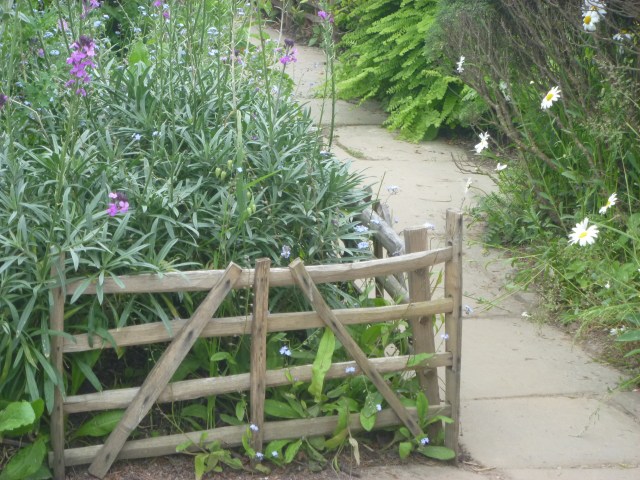
A miniature hurdle

Miniature Hurdles ‘in action’ in the garden

Oast house

Oast House

The only disappointment as far as we were concerned was the refreshment ‘kiosk’; I suppose it was just meant to be a place to obtain a minimal amount of sustenance and the intention was not to turn it into a destination in its own right. My advice would be – take your own picnic!

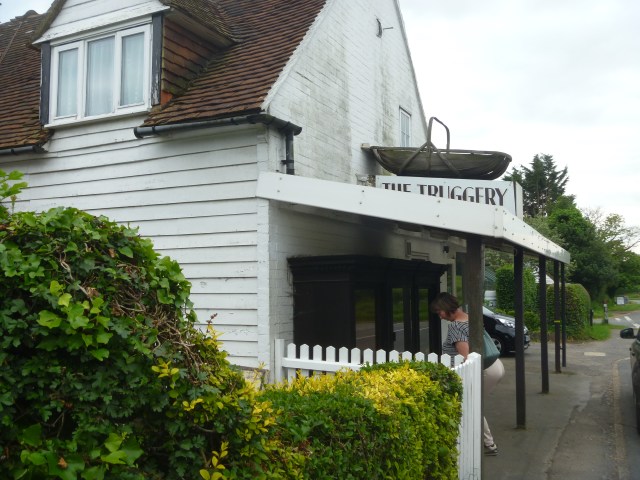
Our journey to and from Great Dixter took us through Herstmonceux and on our way we noticed the Sussex Truggery and decided to call in on our return journey. Unfortunately The Truggery closes at 1pm on Saturdays but we did stock up with fruit and vegetables at a nearby country farm shop.

Truggery

The Sussex Trugggery

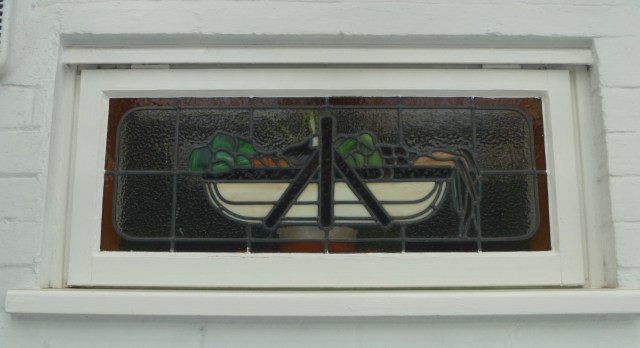
Trug window


Charleston Farmhouse : An Artists’ Home and Garden

Welcome to CF shop

Welcome to Charleston Farmhouse Shop

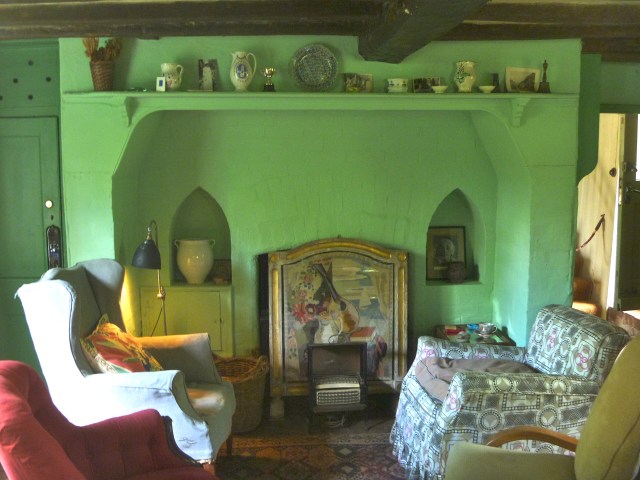
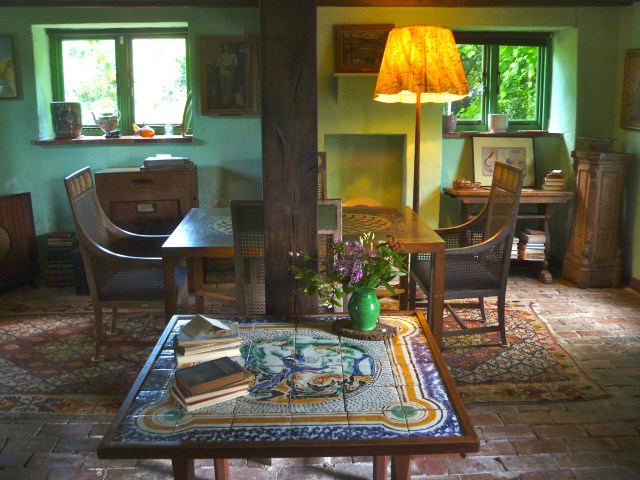
In some ways very different from Monks House but in other ways similar; on the Friday of our stay we headed to Charleston Farmhouse just a few miles from Laughton Place. It’s a rather more slick presentation in that tickets are sold and one is booked on one of the timed tours which take place at twenty minute intervals throughout the opening hours (just Wednesday to Sunday during the season). No photography is allowed in the house. But like Monks House there is colour inside and out and the garden is relaxed and colourful and again reflected the atmosphere of the house itself.

Chareston

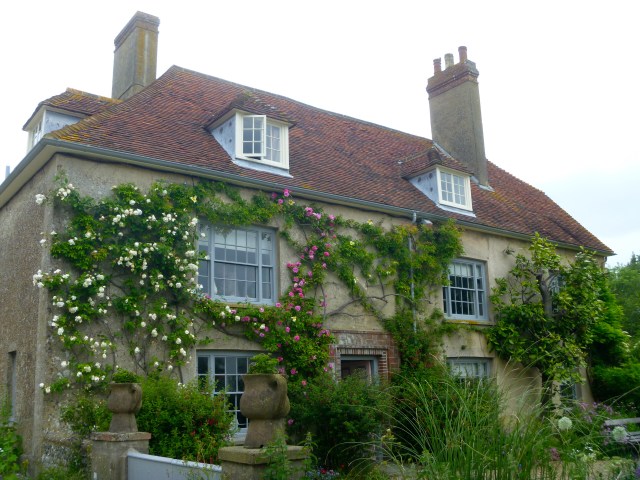
Charleston Farmhouse

“Charleston is a property associated with the Bloomsbury group. It was the country home of Vanessa Bell and Duncan Grant and is an example of their decorative style within a domestic context, representing the fruition of over sixty years of artistic creativity.

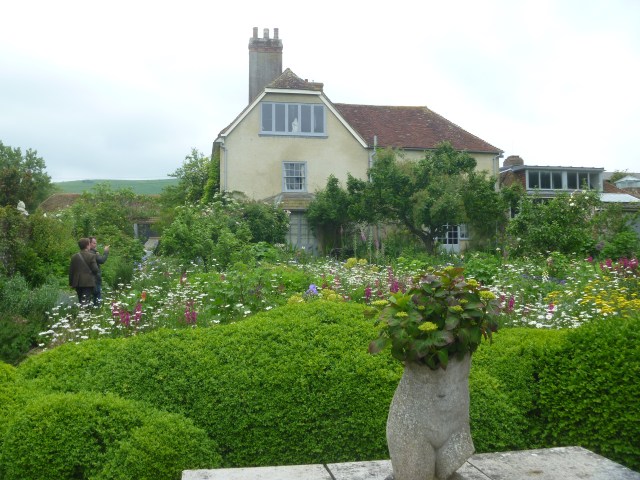
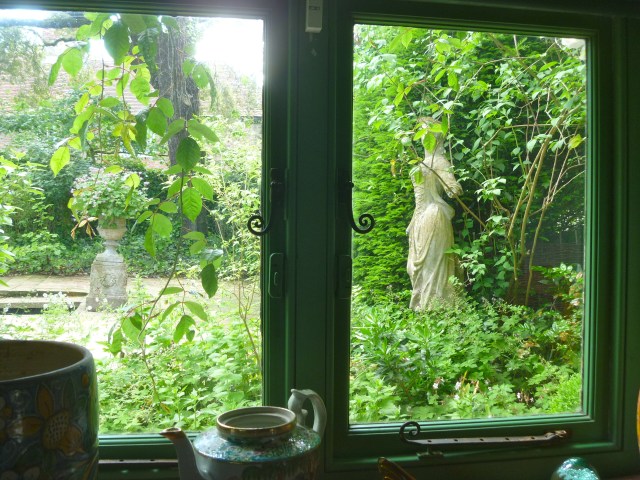
In 1916 the artists Vanessa Bell and Duncan Grant moved to Sussex with their unconventional household. Over the following half century it became the country meeting place for the group of artists, writers and intellectuals known as Bloomsbury. Clive Bell, David Garnett and Maynard Keynes lived at Charleston for considerable periods; Virginia and Leonard Woolf, E. M. Forster, Lytton Strachey and Roger Fry were frequent visitors. Inspired by Italian fresco painting and the Post-Impressionists, the artists decorated the walls, doors and furniture at Charleston. The walled garden was redesigned in a style reminiscent of southern Europe, with mosaics, box hedges, gravel pathways and ponds, but with a touch of Bloomsbury humour in the placing of the statuary.

Statuary

… humour in the placing of the statuary

“It’s most lovely, very solid and simple, with … perfectly flat windows and wonderful tiled roofs. The pond is most beautiful, with a willow at one side and a stone or flint wall edging it all round the garden part, and a little lawn sloping down to it, with formal bushes on it.” — Vanessa Bell

Charleston Pond

The pond is beautiful

The rooms on show form a complete example of the decorative art of the Bloomsbury artists: murals, painted furniture, ceramics, objects from the Omega Workshops, paintings and textiles. The collection includes work by Auguste Renoir, Picasso, Derain, Matthew Smith, Sickert and Eugène Delacroix.” [Adapted from here]

We arrived by 12 noon, when tickets go on sale, and our tour was booked for 1.20pm. In the meantime there was a delicious shop to mooch around and a video to watch. There is a cafe but it’s very limited in what it serves.

Our House Tour with Meg focused on A Day in the Life of Charleston, taking us on a journey of daily life in the house which included the Charleston kitchen not normally visited on other days. In fact the gardener actually lives in the house and it is his private kitchen.

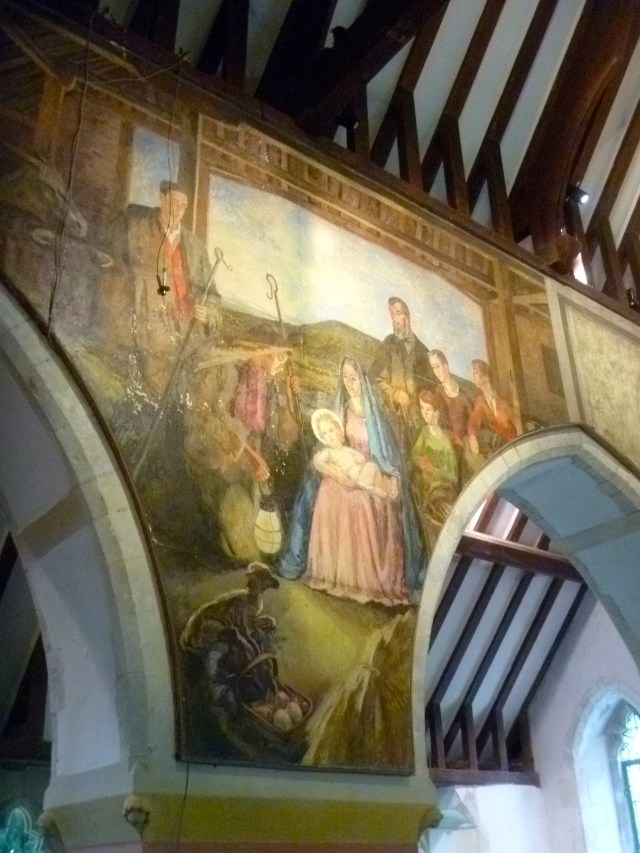
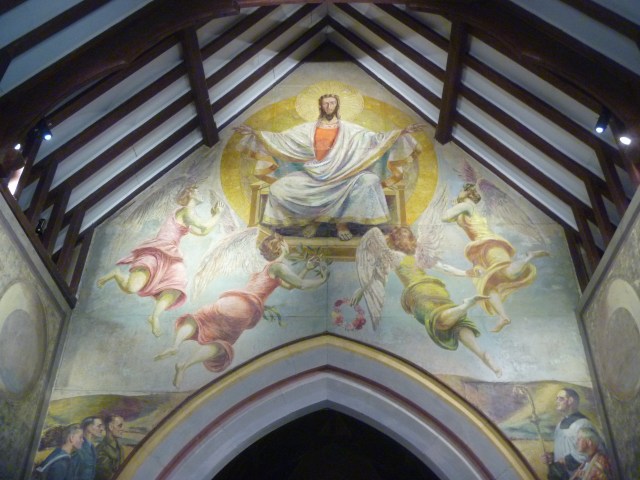
From Charleston we headed for the nearby village of Berwick where we had lunch at Cricketers Arms and afterwards visited the Church of St Michael and All Angels where Duncan Grant and Vanessa Bell decorated the walls with murals. The church itself had a rather unusual feel not just because of the famous murals but because in contrast to so many churches the windows are plain glass.

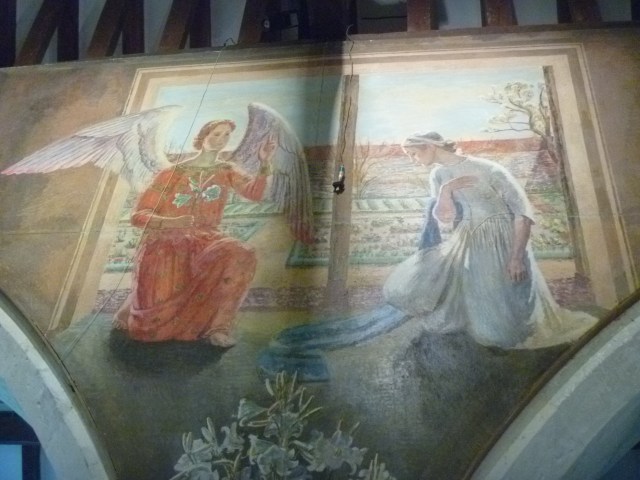
All the scenes are set in the local Sussex countryside and they were painted, for the most part, during the Second World War and they used members of their families and their Bloomsbury circle as models.


Nativity

The Nativity by Vanessa Bell

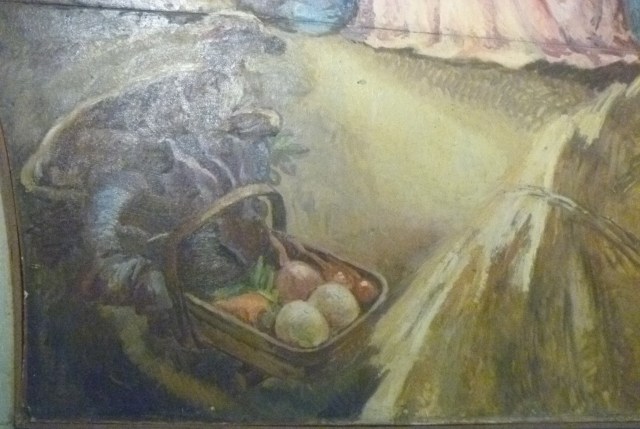
A Sussex trug

The Nativity Close-up : A Sussex Trug

P1130644

Christ in Majesty by Duncan Grant

Annunciation

The Annunciation by Vanessa Bell


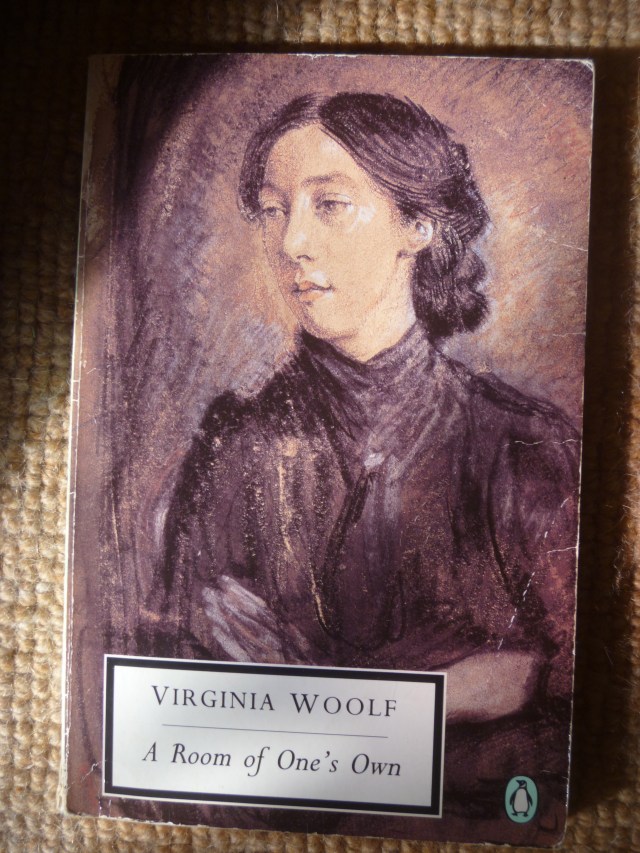
A Room of One’s Own at Monk’s House, Rodmell

A Room of one's own

‘A Room of One’s Own’ by Virginia Woolf in the Library at Laughton Place

The moment my Swiss friends stepped off the London train at Lewes Station the sun came out and this set the scene for the next few days. We stuffed the cases in the boot and I whisked them straight off down shady narrow lanes to the quiet village of Rodmell just a few miles from the town centre of Lewes. We parked up in the Monk’s House (NT) car park and ambled back up the lane past wisteria covered cottages and pretty gardens to the Abergavenny Arms for lunch where, wonder of wonders, we were able to sit outside in the garden.

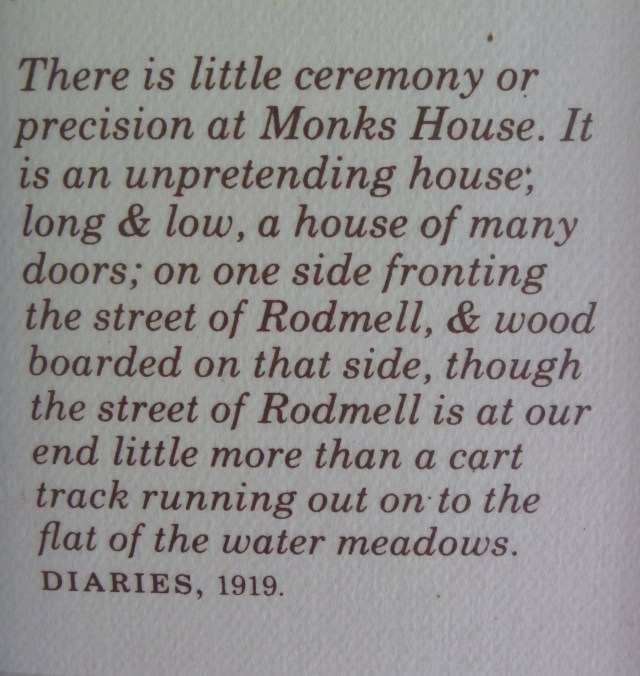
MH Quote VW Diaries

Description of Monk’s House by Virginia Woolf

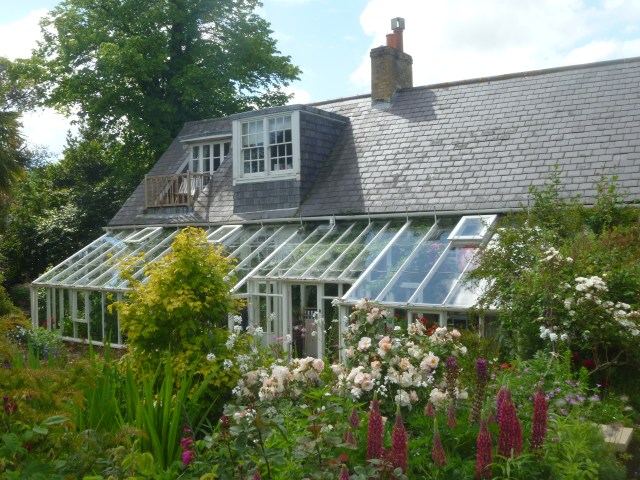
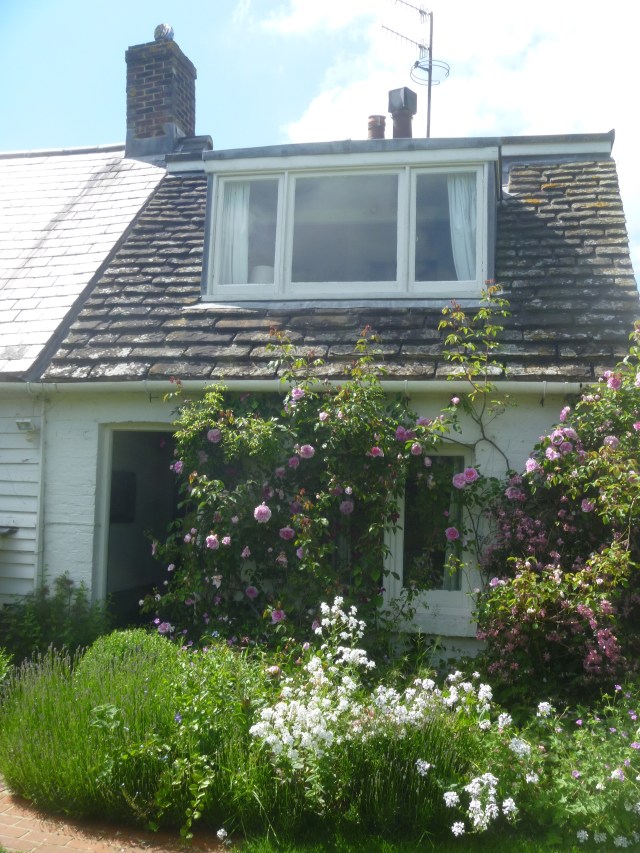
Monk’s House is the former 17th century summer cottage home of Virginia and Leonard Woolf. They lived here together from 1919 until Virginia’s death in 1941 and Leonard continued to live here permanently with his companion, Trekkie Parsons, until his death in 1969. The house was left to Trekkie but before she died in 1995 she had sold the house in 1972 to The University of Sussex. Visiting lecturers and researchers stayed here until 1980 when the National Trust took on the property.

Monk's House

Leonard Woolf had the Conservatory added when he was too frail to walk to the Greenhouses

VW Writing Garden House

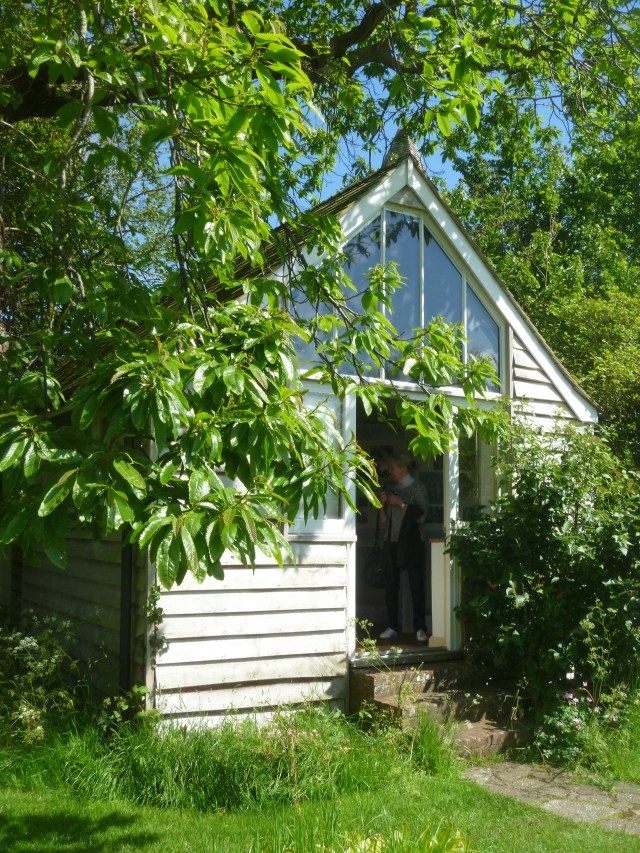
The Writing Lodge

Here Virginia Woolf wrote in the small wooden lodge at the bottom of the garden. Jacob’s Room was published in 1922, Mrs Dalloway in 1925, To The Lighthouse in 1927, Orlando in 1928, The Waves in 1931, The Years in 1937 and Between The Acts, published posthumously, in 1941. This latter is, apparently, steeped in references to Rodmell and the traditions and values of its villagers.

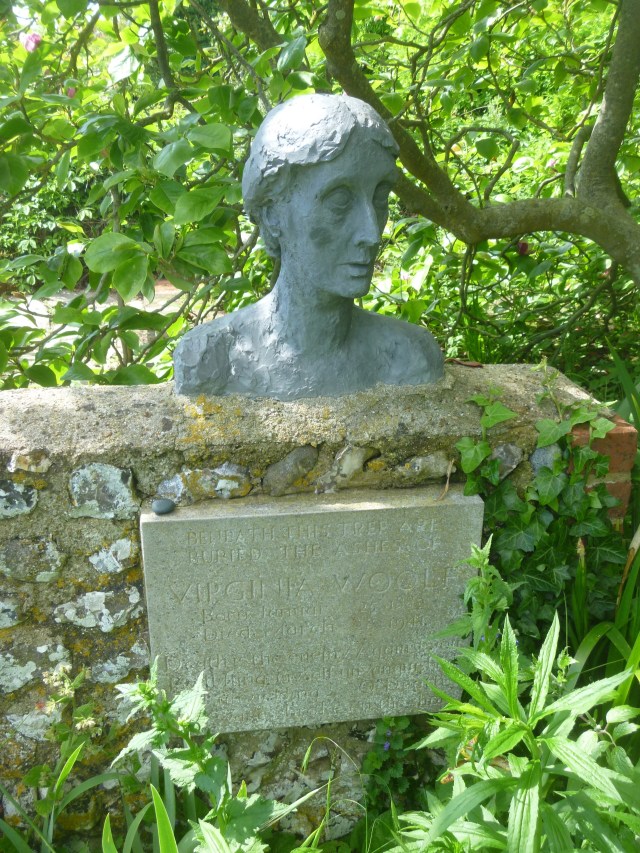
VW burial

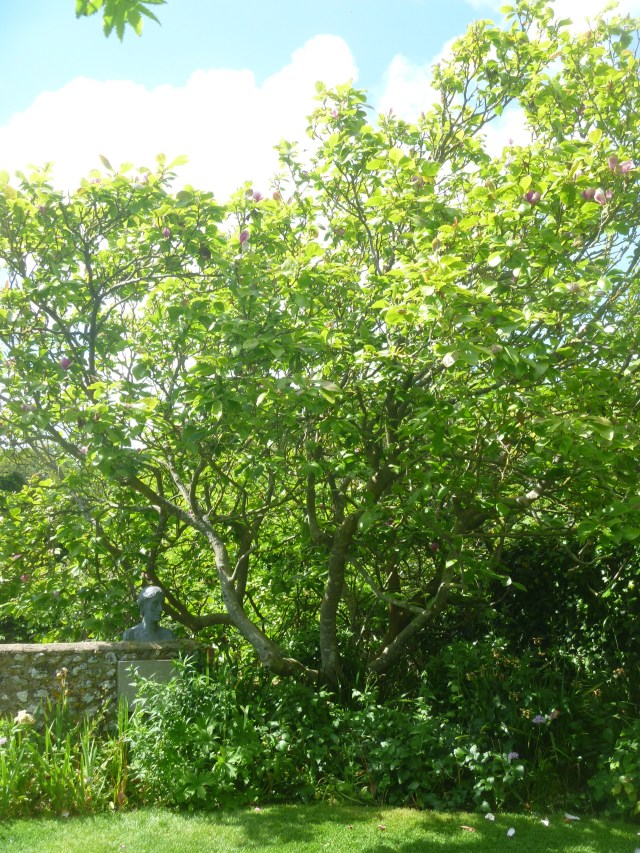
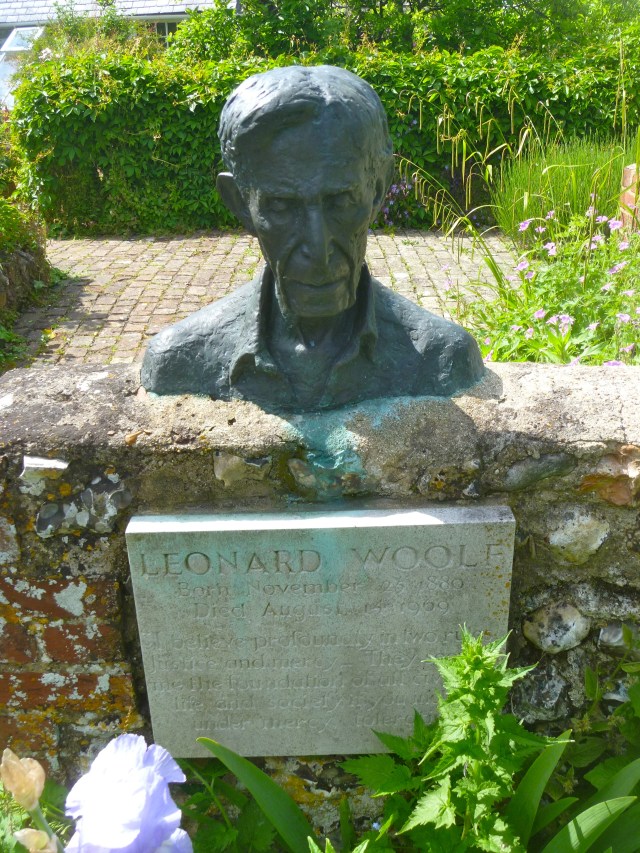
Both Virginia and Leonard’s ashes are buried beneath the magnolia tree in the garden.

LW Burial


Beneath the tree

The tree beneath which the ashes are buried

It’s a wonderful house. You can wander around as your fancy takes you and the garden is very pretty. Photography is not restricted and friendly local volunteers are on hand to answer questions as best they can.

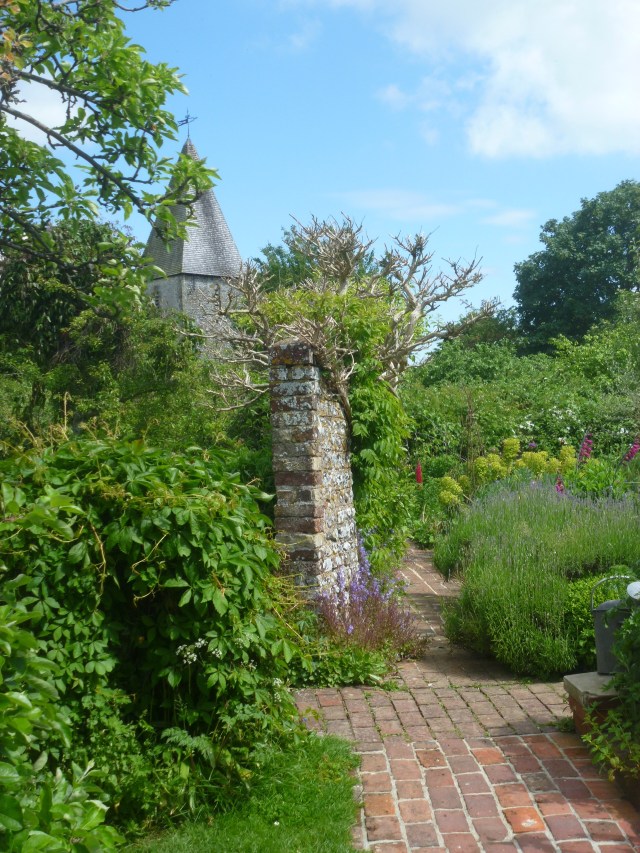
Garden and church

Garden and Rodmell Parish Church

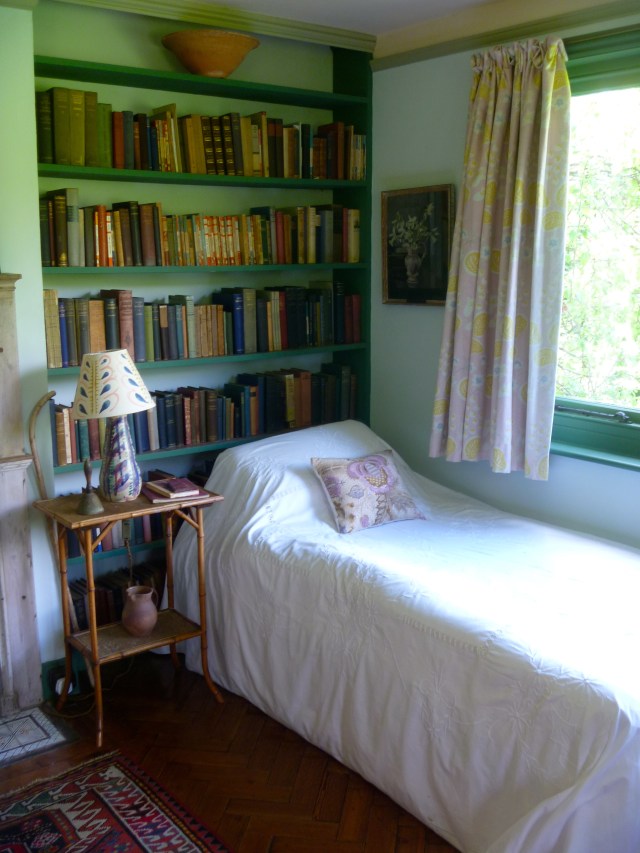
Leonard was the gardener, despite the recently published ‘Virginia Woolf’s Garden‘ by Jacqui Zoob who for ten years from 2000 lived at the house as a tenant of the National Trust. However, we were able to visit Virginia’s bedroom which is very much a garden room in an extension which they had added to the house.

VW Garden room

Virginia Woolf’s Garden Bedroom Exterior

VW Garden Room Interior

Virginia Woolf’s Garden Bedroom Interior

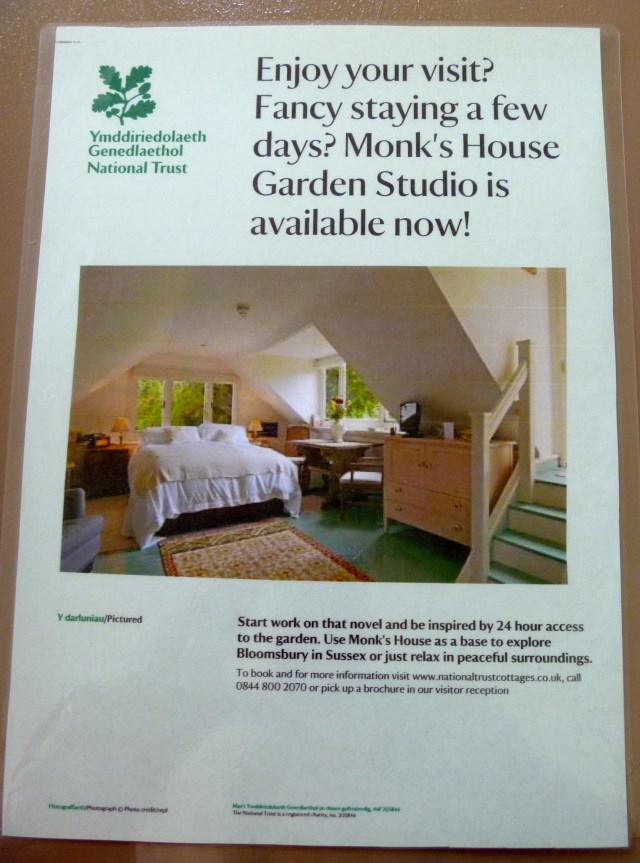
Originally proposed as the sitting room it was given over to VW when they realised that the view from the room above would be more suited to a sitting room. This room, which we didn’t see, is now let by the Trust as holiday accommodation.

Stay at MH

Room to Let

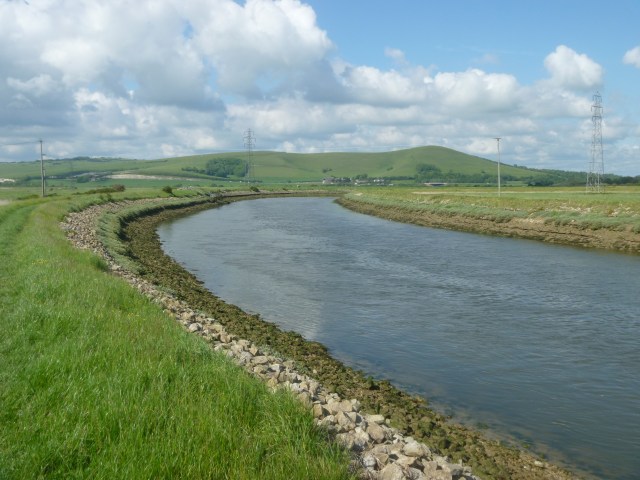
On leaving the house we walked the same route to the River Ouse that Virginia took on that fateful day 28 March 1941.

River Ouse

R Ouse

The River Ouse near Rodmell

More pictures inside Monk’s House :

Woolf sitting room

Sitting Room MH

Garden from sitting room MH

 Bloomsbury style

Walking in East Sussex

The main aim of my stay in Sussex was to meet up with two Swiss friends. Last year when I was staying with Barbara in Bern for the weekend the idea of visiting Charleston and all those ‘Bloomsbury’ related places in Sussex was suggested. I said I’d also wanted to visit them and showed Barbara the Landmark Trust website. When she saw Laughton Place tower she would not be budged to look elsewhere for accommodation. So we ended up last weekend in the tower and visiting as many Bloomsbury locations as we could manage.

Alfriston Church

Alfriston Church and Village Sign

Badgers

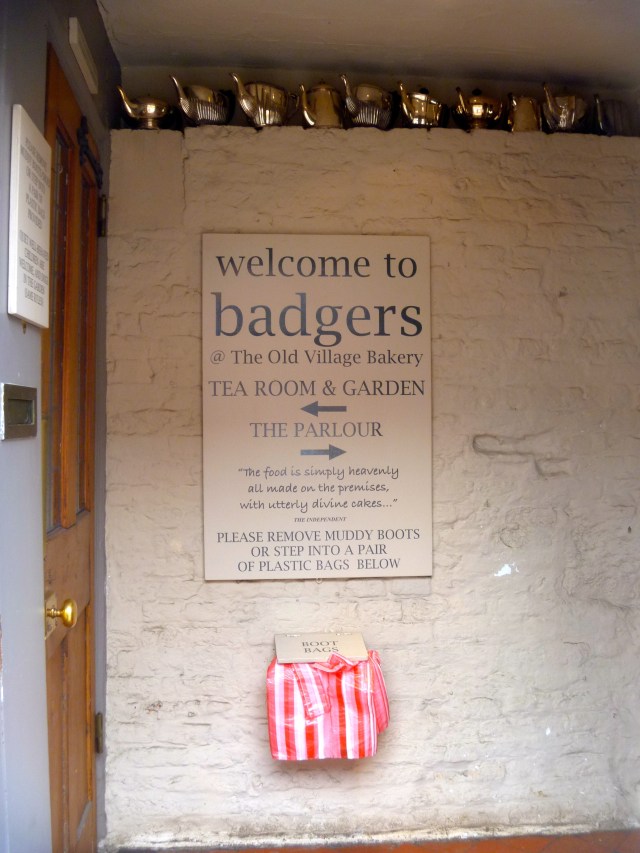
Badgers Alfriston (Note the Boot Bags – it’s on the route of the South Downs Way)

Barbara and Kathryn first wanted to have a few days in London so I spent the first two nights at Laughton Place on my own. But for the most part I wasn’t alone thanks to Fran being able to spend Tuesday afternoon and all day Wednesday with me.

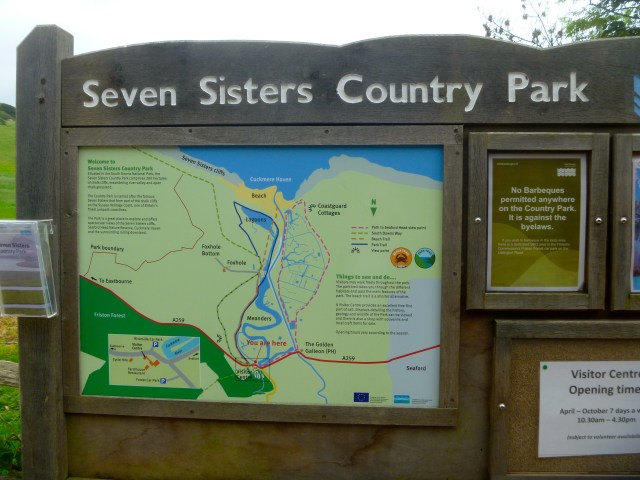
Seven Sisters Info

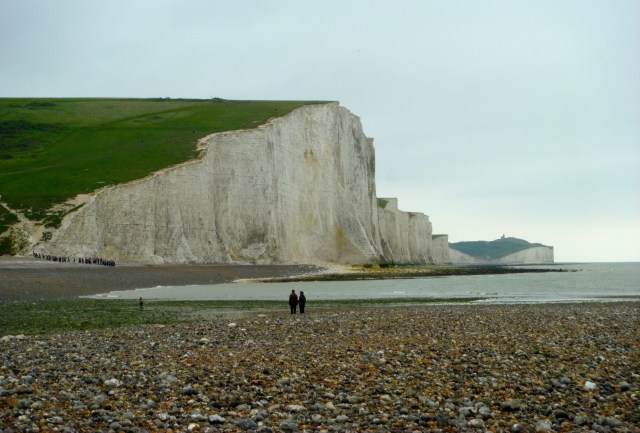
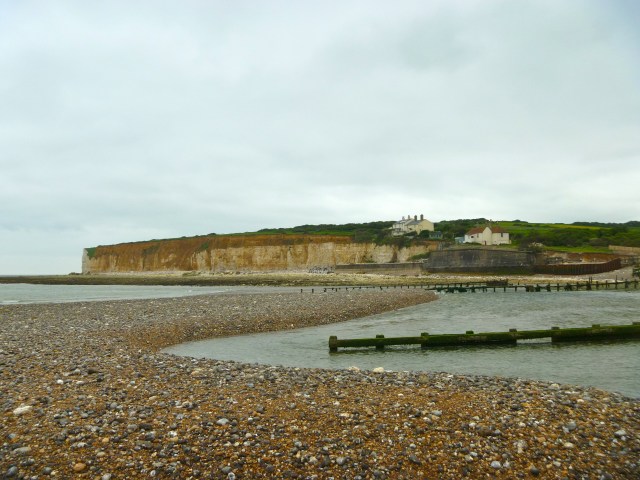
Knowing my love of hiking she had planned a walking expedition for us but the weather was not kind on the Wednesday morning so we took lunch in Alfriston and drove later in the afternoon to the Seven Sisters Country Park car park, donned our boots and set off on a shorter walk following the River Cuckmere to where it joins the English Channel. At the sea’s edge you have a wonderful view of The Seven Sisters cliffs over which we might have walked part of the South Downs Way had the morning’s weather been different.

Seven Sisters

The Seven Sisters (looking east)

Looking west at 7 sisters

Looking west

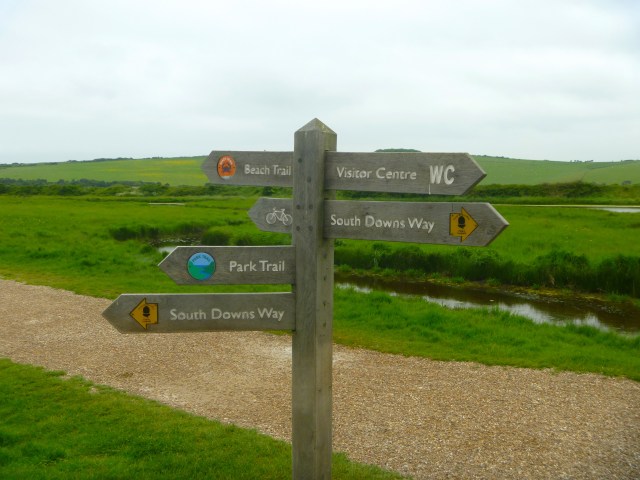
Sign and River

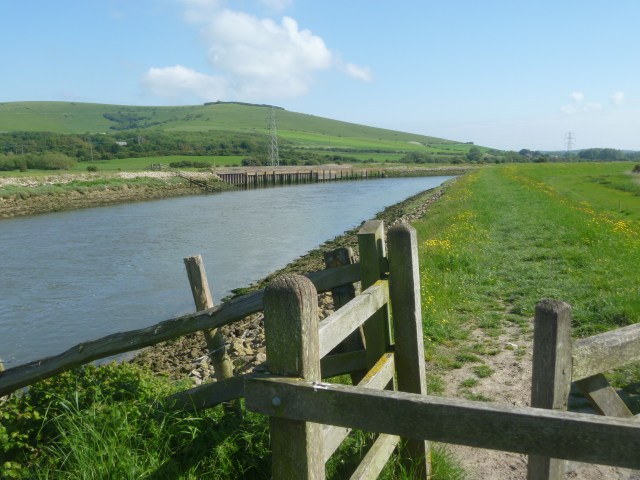
River Cuckmere behind the Footpath Signpost

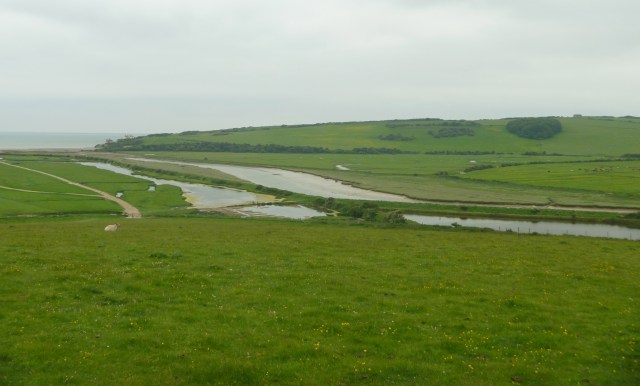
River Cuckmere

River Cuckmere with Ox Bow Lakes, Meanders and the English Channel

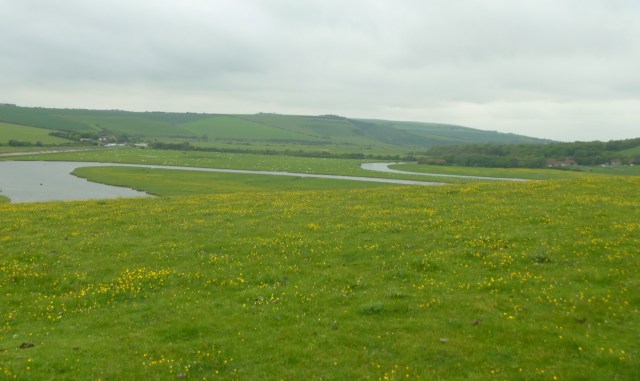
Meanders and Buttercups

Meanders and Buttercups

Thank you, Fran, for your good company and for being the most informative guide possible!

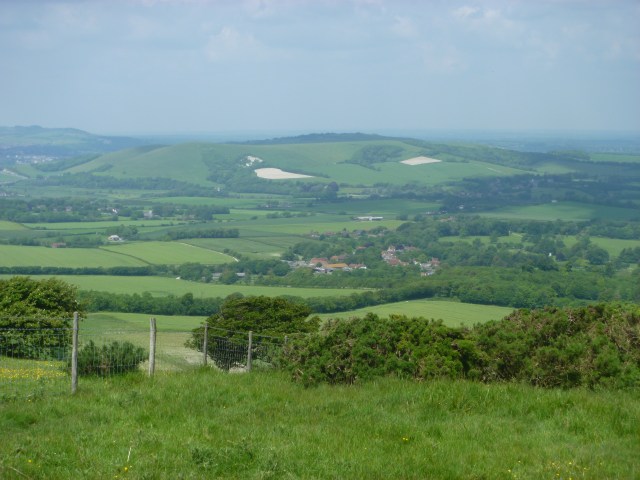
Firle

The Village of Firle nestled below the South Downs

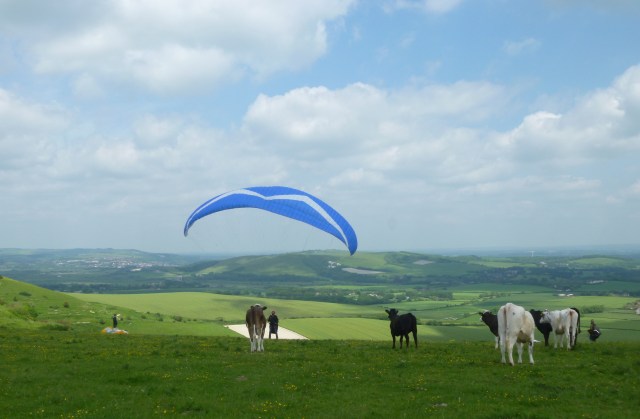
On Sunday Barbara, Kathryn and I drove to the car park above the village of Firle and walked a mile or so each way to Firle Beacon and back. At the Beacon (an Ordnance Survey Triangulation Point) we could see the Channel and a cross-channel ferry arriving at Newhaven in one direction and the flat levels and meadows that surround Laughton Place in the other. There right in front of us but a little distant was our Tower itself.

On South Downs

Sunday Morning on the South Downs

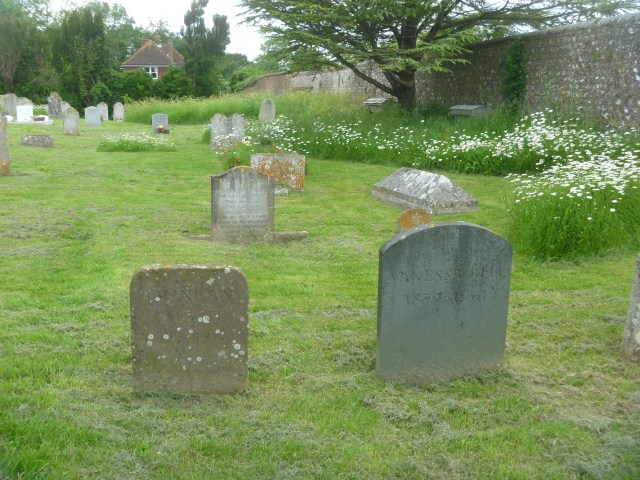
After our walk we headed down into Firle village. Vanessa Bell and Duncan Grant (see future posts about ‘Bloomsbury-on-Sea) are buried in the churchyard; Virginia and Leonard Woolf had a house in Firle before they moved to Monk’s House and we had a drink in the warm sunshine at The Ram Inn.

Firle churchyard

Firle Churchyard : Graves of Duncan Grant and Vanessa Bell

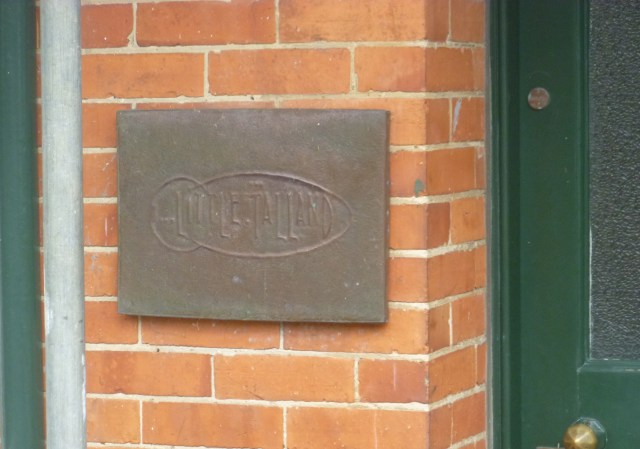
LT Firle

Little Talland

Little Talland House, Firle

I also managed to fit in a short walk directly from the Tower towards Laughton village but I never quite made it. I was anxious to see the village but had the time constraint of meeting the London train too so after a mile or so I turned back and drove to Laughton (the village of the buckle).

Bridge Stile

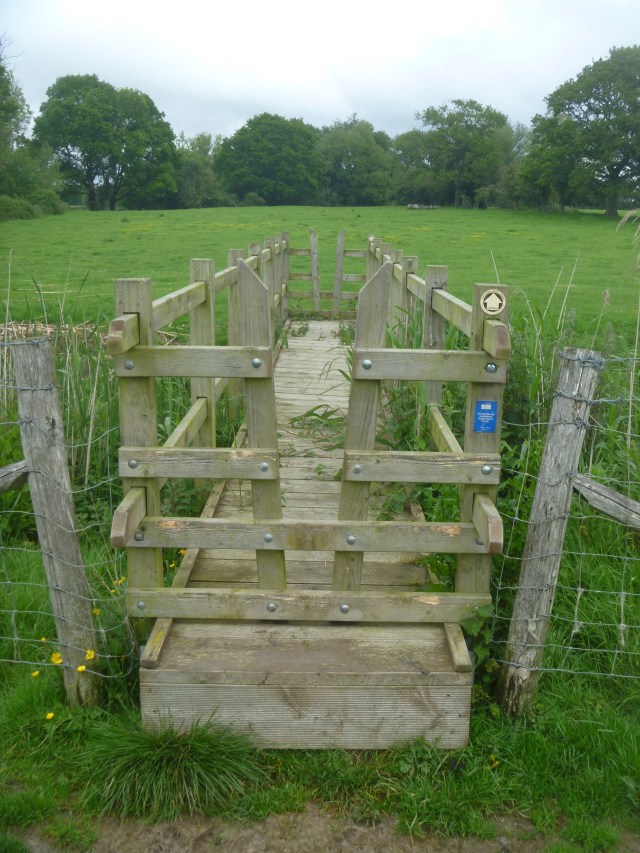
Complicated Bridge/Stile near Laughton Place

LP from footpath

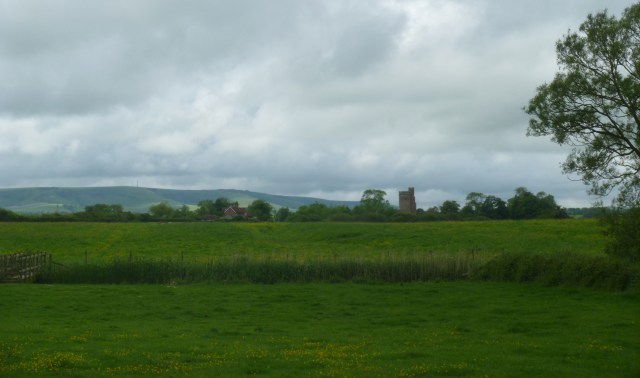
Laughton Place in its Landscape

Laughton, East Sussex : The Village of the Buckle

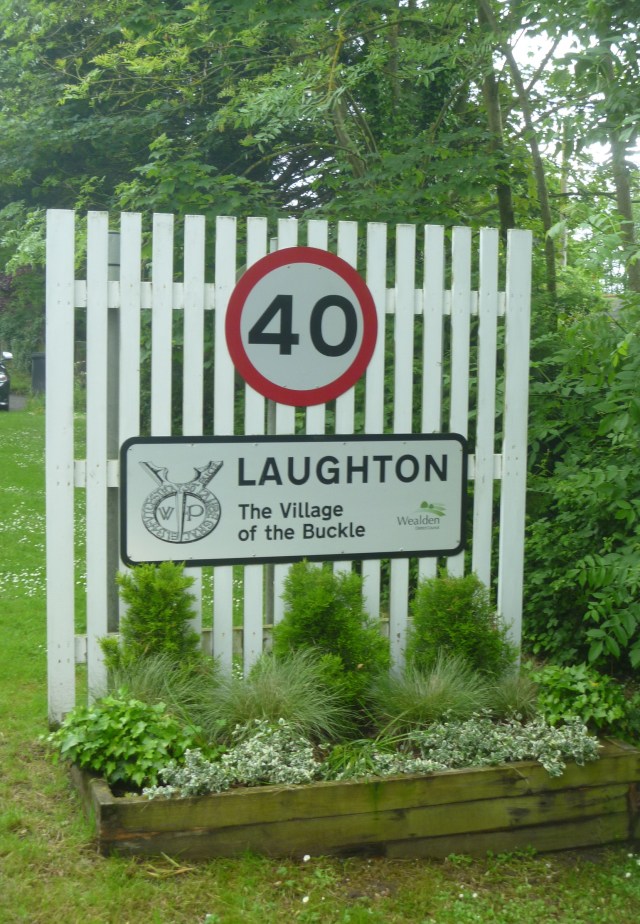
Road sign Laughton

Laughton in East Sussex lies about 5 miles NE of the county town of Lewes and that is where I spent 6 nights last week. Actually, not quite in Laughton itself but at the Landmark Trust property Laughton Place about a mile and a half from the village on foot but probably two miles by road. I’ll write more about Laughton Place next time but just show some pictures of the village and explain about the Buckle here.

What time ye French Sought to have Sackt Seafoord;

This Pelham did Repell them back Aboord”

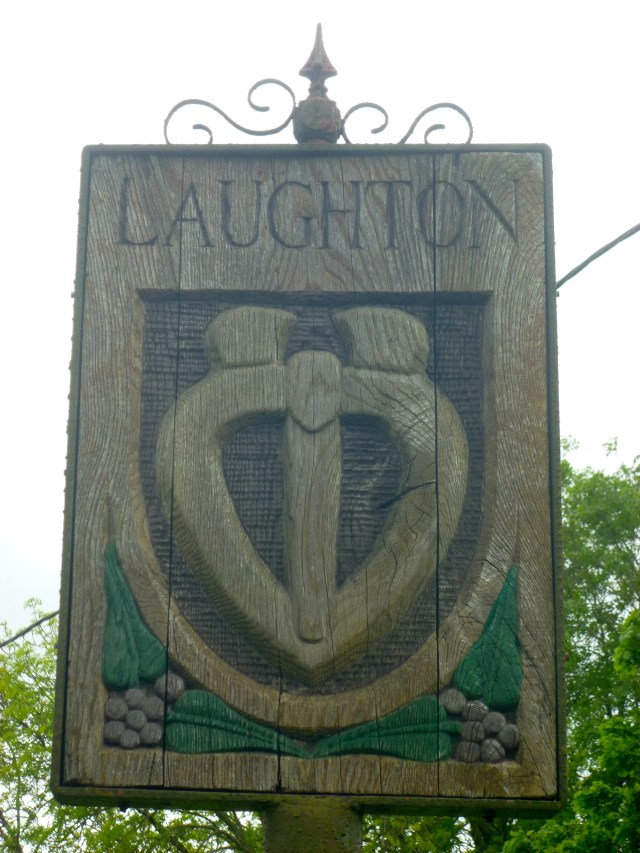
Laughton Village sign

This poem and the buckle on the village sign represent the colourful Pelham family whose own history dominates that of this area. During battle in 1356 Sir John Pelham managed to capture the King of France. The English king [Edward III] was so impressed that he removed the buckle of his sword belt and handed it to Sir John as a reward. It henceforth became the badge of the Pelhams and can be seen throughout the village. [Adapted from Wealden Walks leaflet]

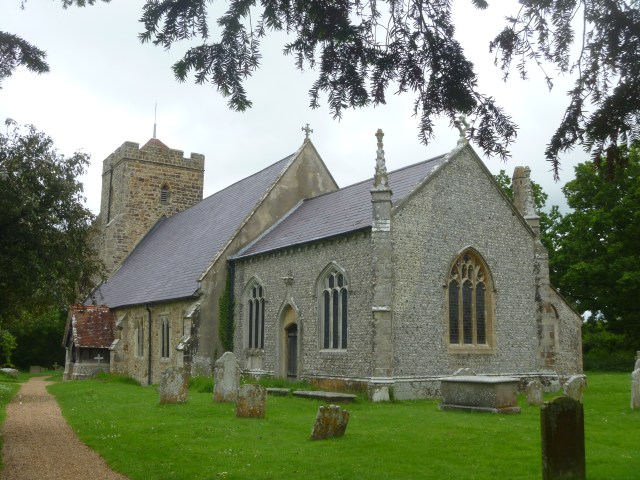
Laughton Church

All Saints Church, Laughton

Below Laughton church lie the remains of over sixty Pelhams, including two Prime Ministers [Henry Pelham (1694-1754) and his brother Thomas Pelham-Holles (1st Duke of Newcastle) (1693-1768)]. The latter rebuilt the chancel and donated a new set of bells to the church in 1724, which he had cast on the spot by a travelling founder.

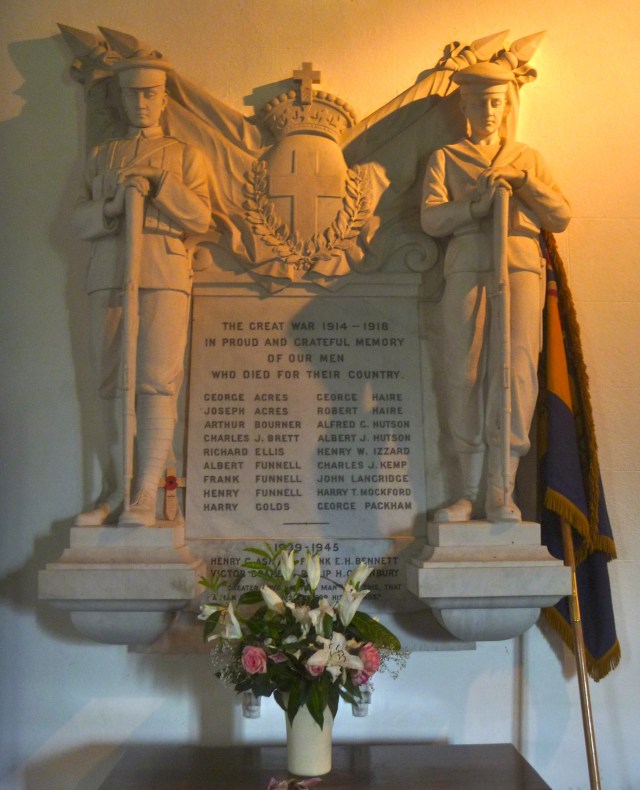
War Memorial Laughton Church

War Memorial in Laughton Church

“In front of the now blocked north door an impressive war memorial was erected in 1921 in honour of the eighteen Laughton men killed in the Great War. The striking war memorial in the nave was dedicated in 1921. Sculpted in Italy of Carrara marble, it was paid for in Italian lira to take advantage of the exchange rate at the time. Four names were added following World War II.” [Source]

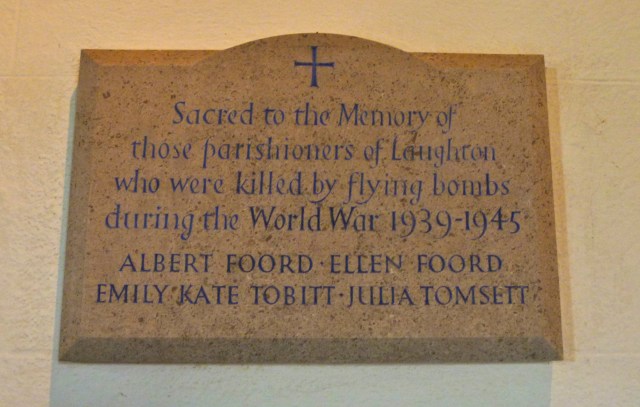
Flying Bombs memorial

A tablet on the same wall records the death of five people killed by a flying bomb in Shortgate.

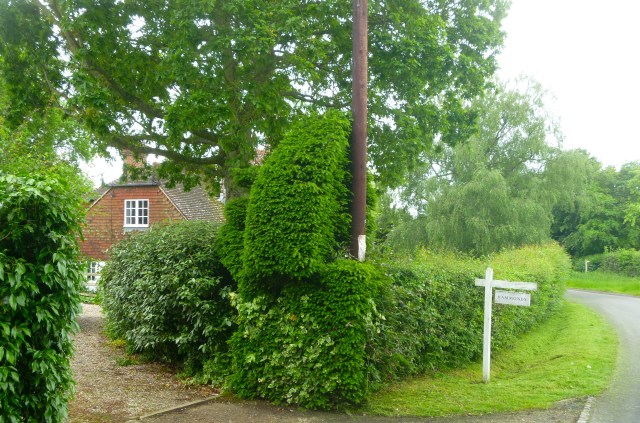
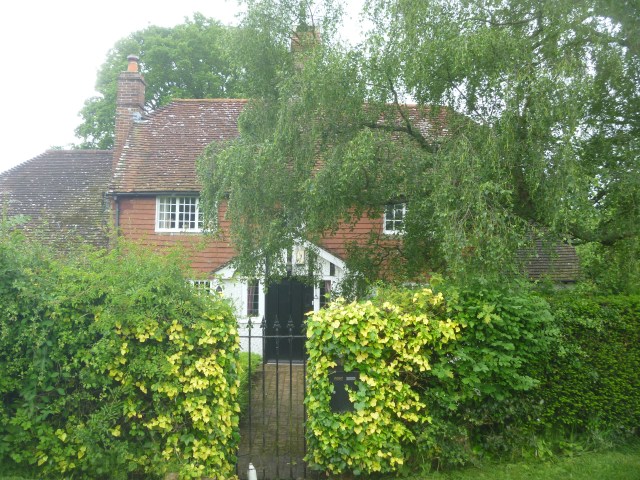
Laughton has a pub, the Roebuck (shouldn’t that be Roebuckle??) which I didn’t try and a village shop and Post Office, which I did. The kind shopkeeper was able to point me in the direction of The Hammonds where the poet and author Eleanor Farjeon lived during the First World War.

Hammonds

Hammonds Laughton

Eleanor Farjeon wrote The Little Bookroom for children and the Martin Pippin books which are based on the East Sussex countryside.

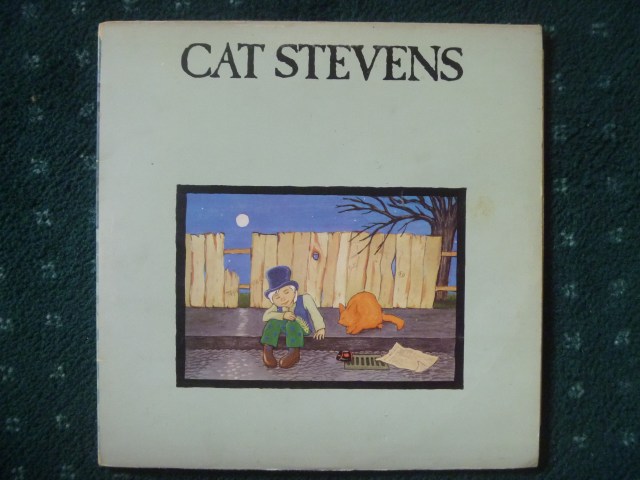
Farjeon is most famous for her hymn Morning Has Broken which became a popular track on Cat Stevens’ album .

Morning has broken,
like the first morning
Blackbird has spoken,
like the first bird
Praise for the singing,
praise for the morning
Praise for the springing
fresh from the word

Sweet the rain’s new fall,
sunlit from heaven
Like the first dewfall,
on the first grass
Praise for the sweetness
of the wet garden
Sprung in completeness
where his feet pass

Mine is the sunlight,
mine is the morning
Born of the one light,
Eden saw play
Praise with elation,
praise every morning
God’s recreation
of the new day

Oh, yes, we’ve still got our Teaser and the Firecat LP record (1971)!

Teaser and the Firecat

Teaser and the Firecat LP Cover