Agatha Christie at Home and at Hotels

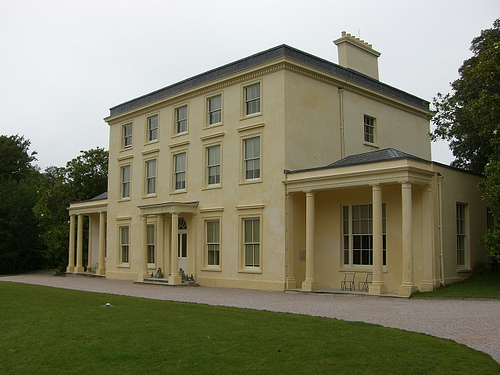
It was great news when The National Trust announced in 2000 that they had received the gift of Greenway to add to their inventory, although the house did not open to the public until 2009. Being a regular visitor to Devon I made particular point of arranging a visit to Greenways on 22nd August that year. I’d seen the house, perched above the River Dart, several times from river excursion boats and apparently travelling by river boat (The Green Way) is the best way to approach it.
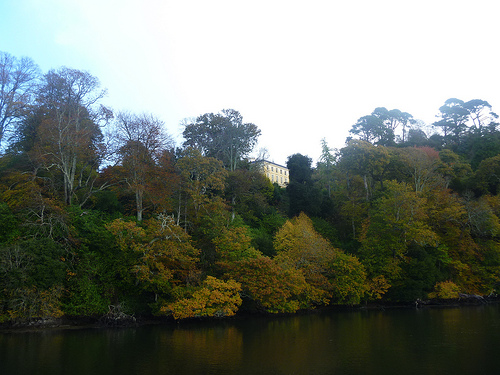
But I had my elderly mother in tow so we booked a car parking space and a table in the restaurant (converted from Agatha’s own kitchen). The gardens are beautiful and varied and paths lead up above the house to the kitchen garden and down to the River Dart and the Greenway Boat House.
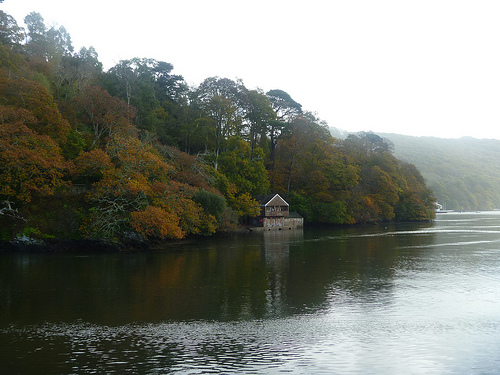
Greenway Boat House from the River Dart: featured in Agatha Christie’s ‘Dead Man’s Folly’.
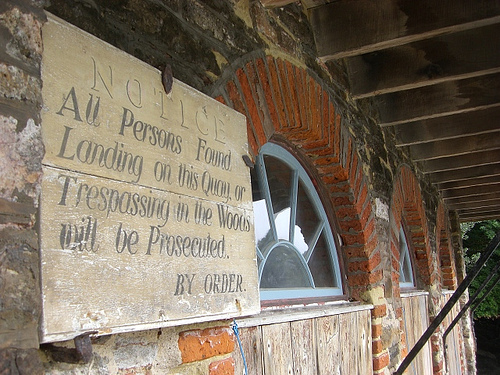
The Greenway Boat House (above and below)
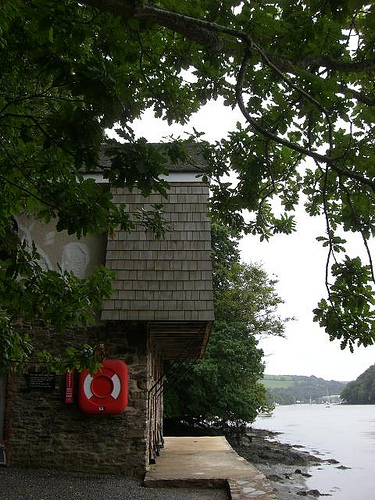
Agatha Christie used the boathouse as the location for the fictional murder of Marlene Tucker in ‘Dead Man’s Folly’
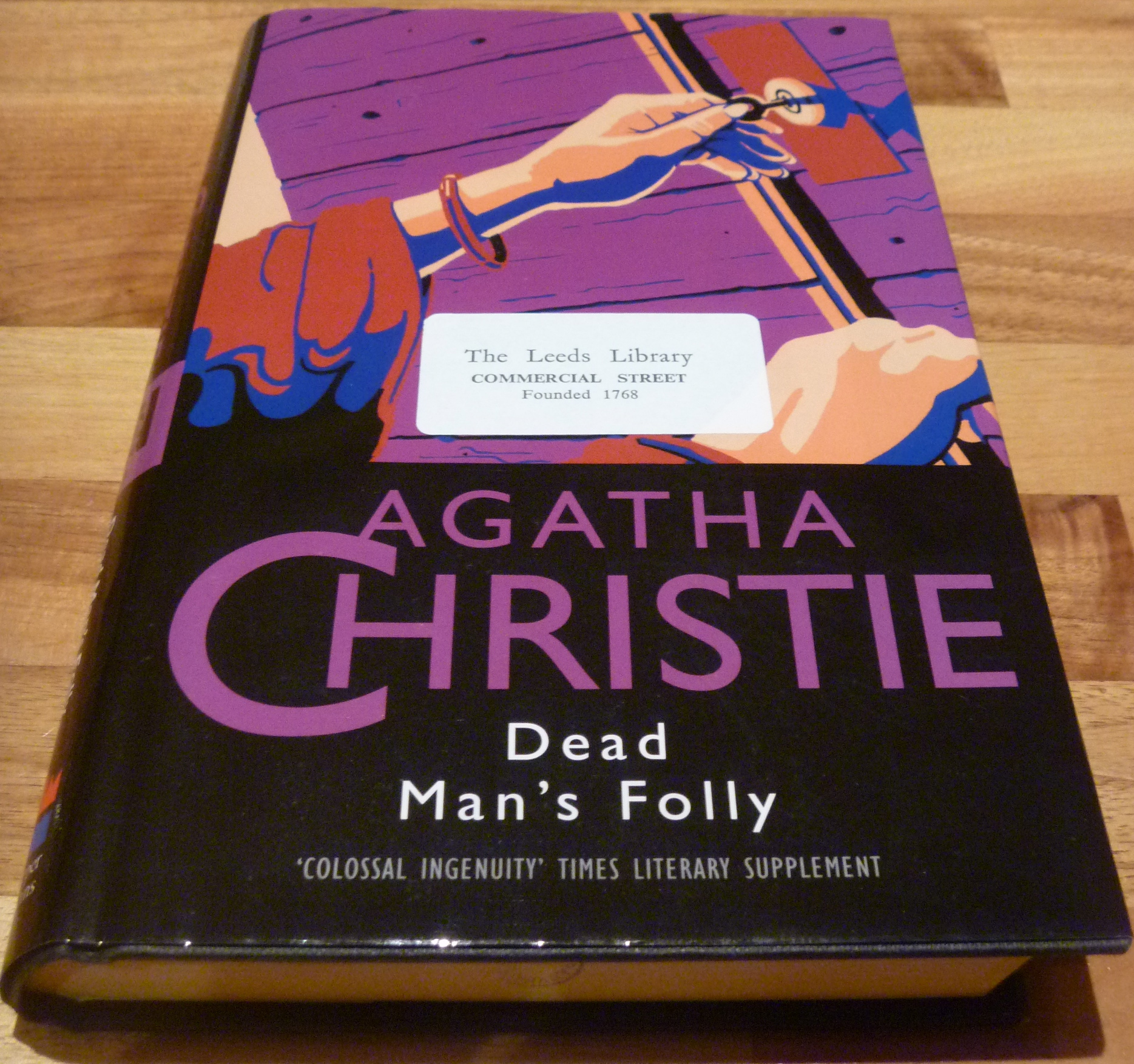
We made a tour of the house with an introduction by a room steward and were then left to our own devices. I don’t have any interior photos so we were probably asked not to take any. My question to the guide was “Which books did Agatha actually write here?”. The answer was “None”. She used the house as a summer retreat and invited guests of friends and family to join her. Here she would read her latest manuscript to these guests in the evenings before publication in the following autumn. However, one book was written based entirely around the Greenway location : “Dead Man’s Folly“. I read loads of Christie novels in my late teens but have never gone back to them since. With the exception of DMF which I bought secondhand the day after visiting the house and read straightaway. All the locations came back to me with immediate clarity. The boat house featured as the location where the murder took place.
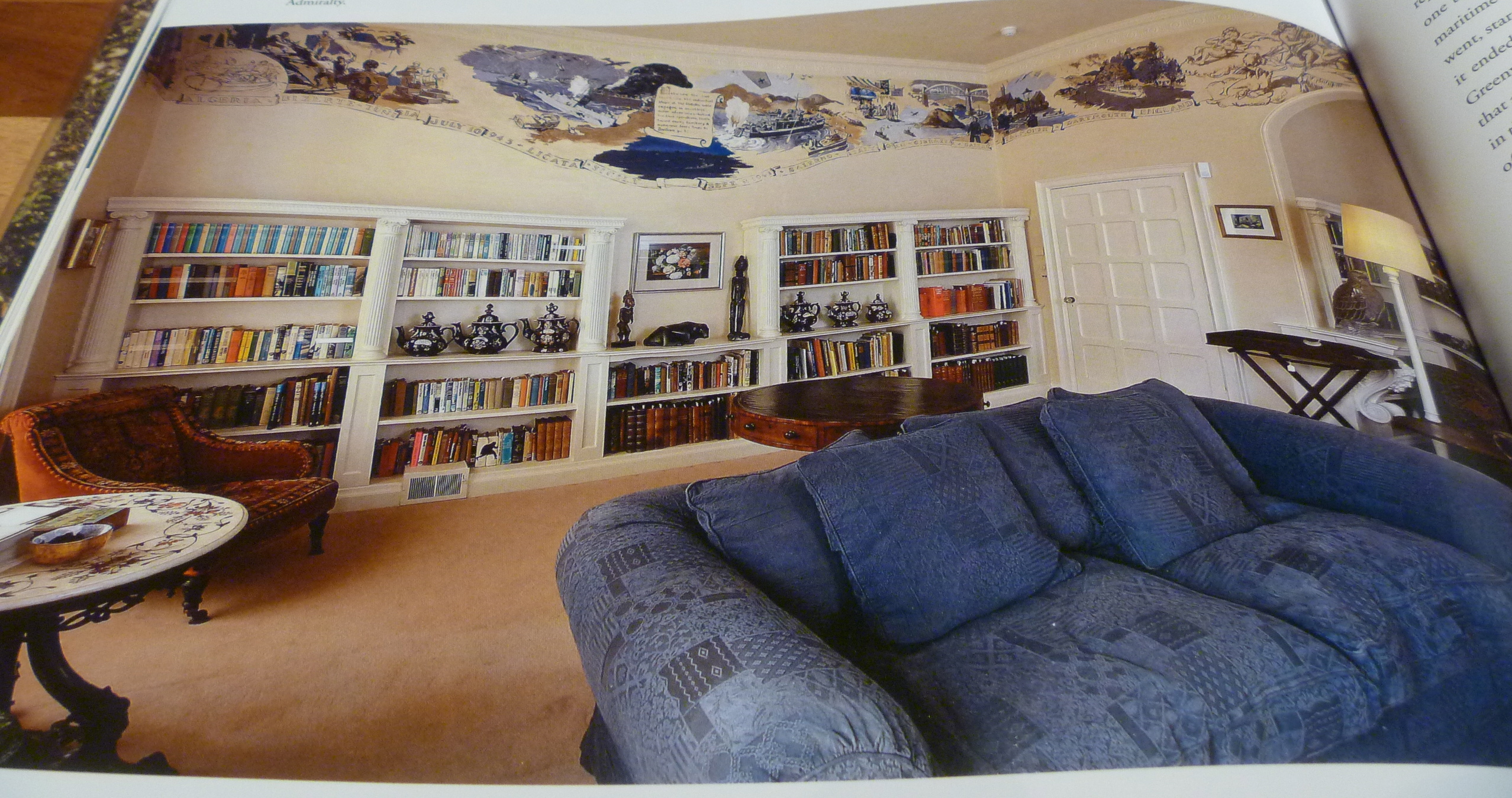
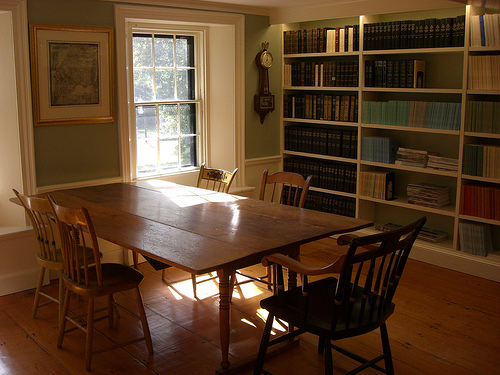
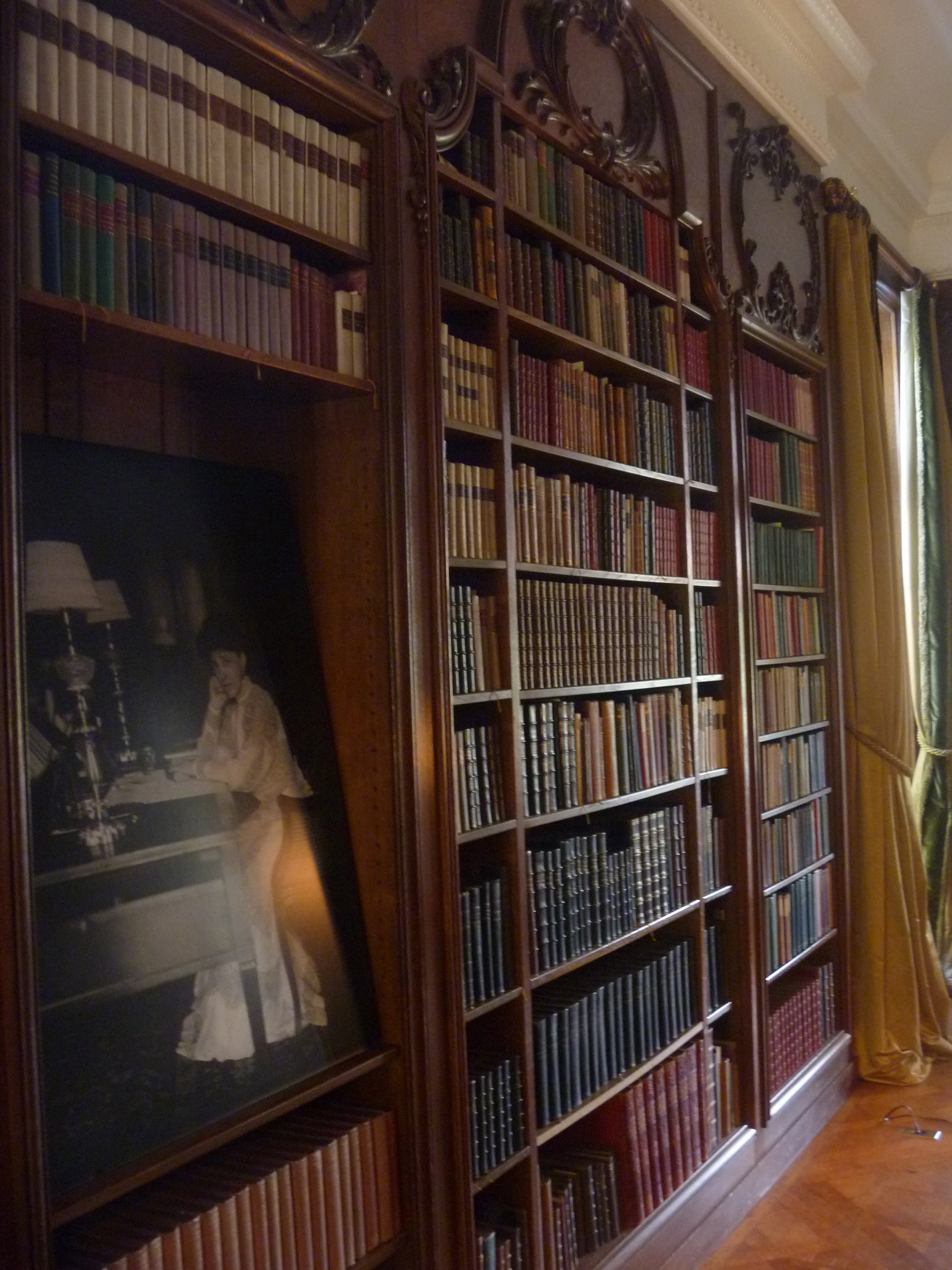
Greenway Library – my favourite room (Photo from Agatha Christie at Home by Hilary Macaskill)

[The frieze was painted by Lieutenant Marshall Lee when he was stationed at Greenway by the US Navy. The house had been requisitioned by the Admiralty during the Second World War.]

After our house tour we used the servants’ entrance to the dining room where only 3 or 4 tables were set for lunch. We enjoyed our meal surrounded by Agatha Christie’s cookery books and kitchen equipment.
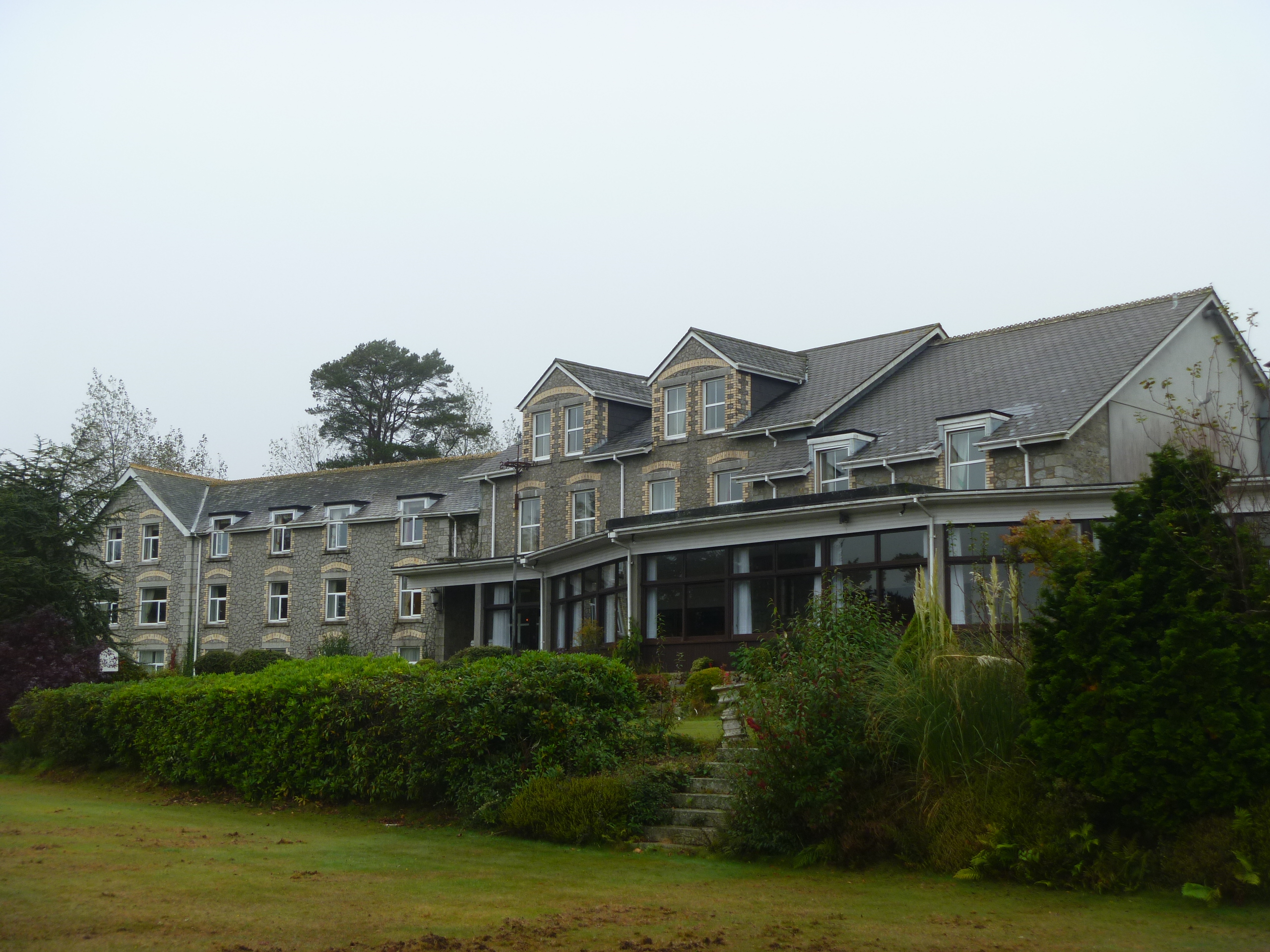
Moorlands Hotel

Interestingly, I have come across two hotels with Agatha Christie connections within just a couple of weeks. The first is Moorlands near Haytor just on the edge of Dartmoor. Whilst staying here Agatha Christie was inspired to write her first book, The Mysterious Affair at Styles.
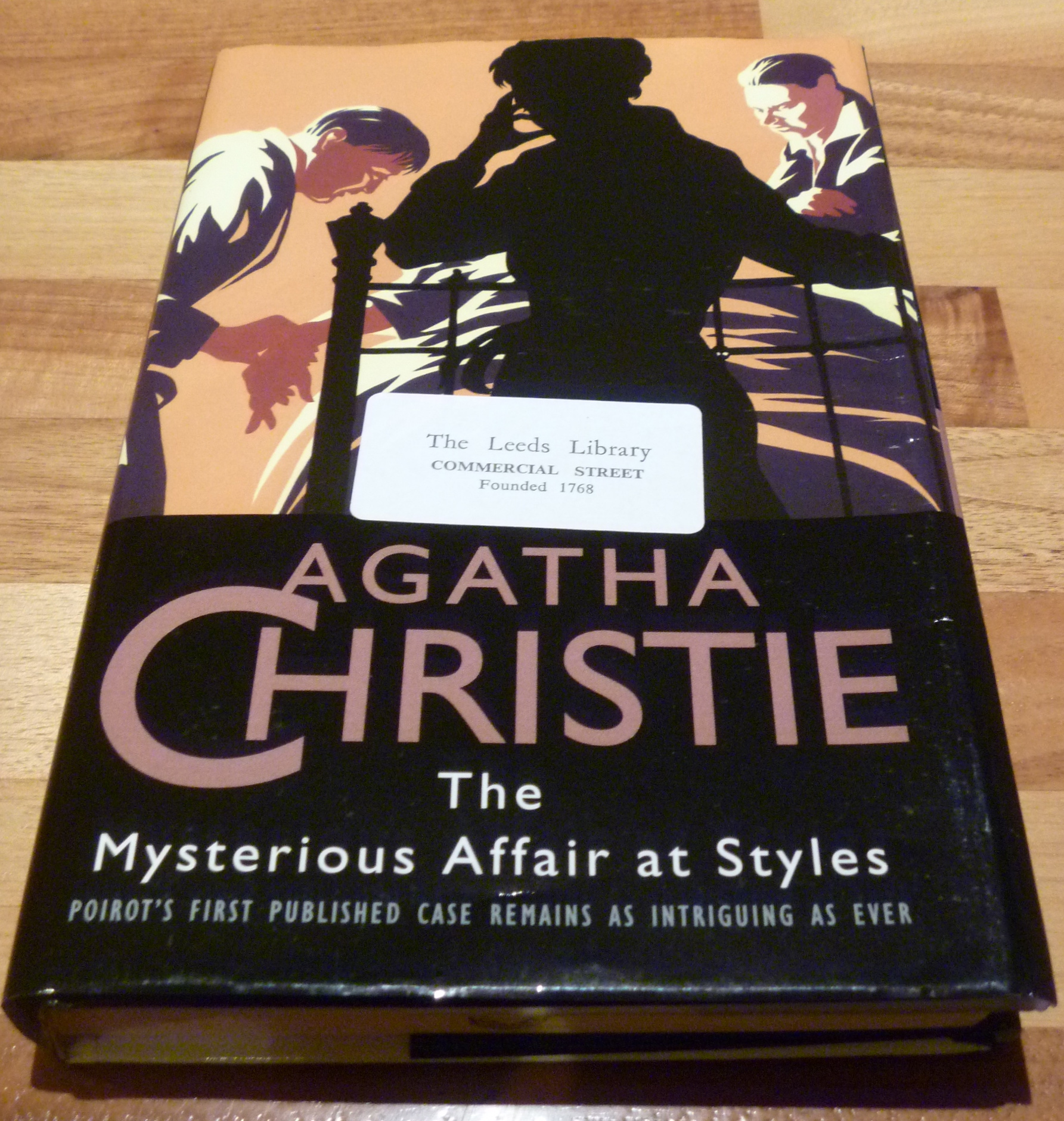
Moorlands is now a hotel belonging to the HF Holidays organization and it was just steps away from our cottage on Dartmoor in October. There’s a lovely cafe (with wifi) – Dandelions – which is open to non-residents. I already knew about the Christie connection and asked to see the picture.
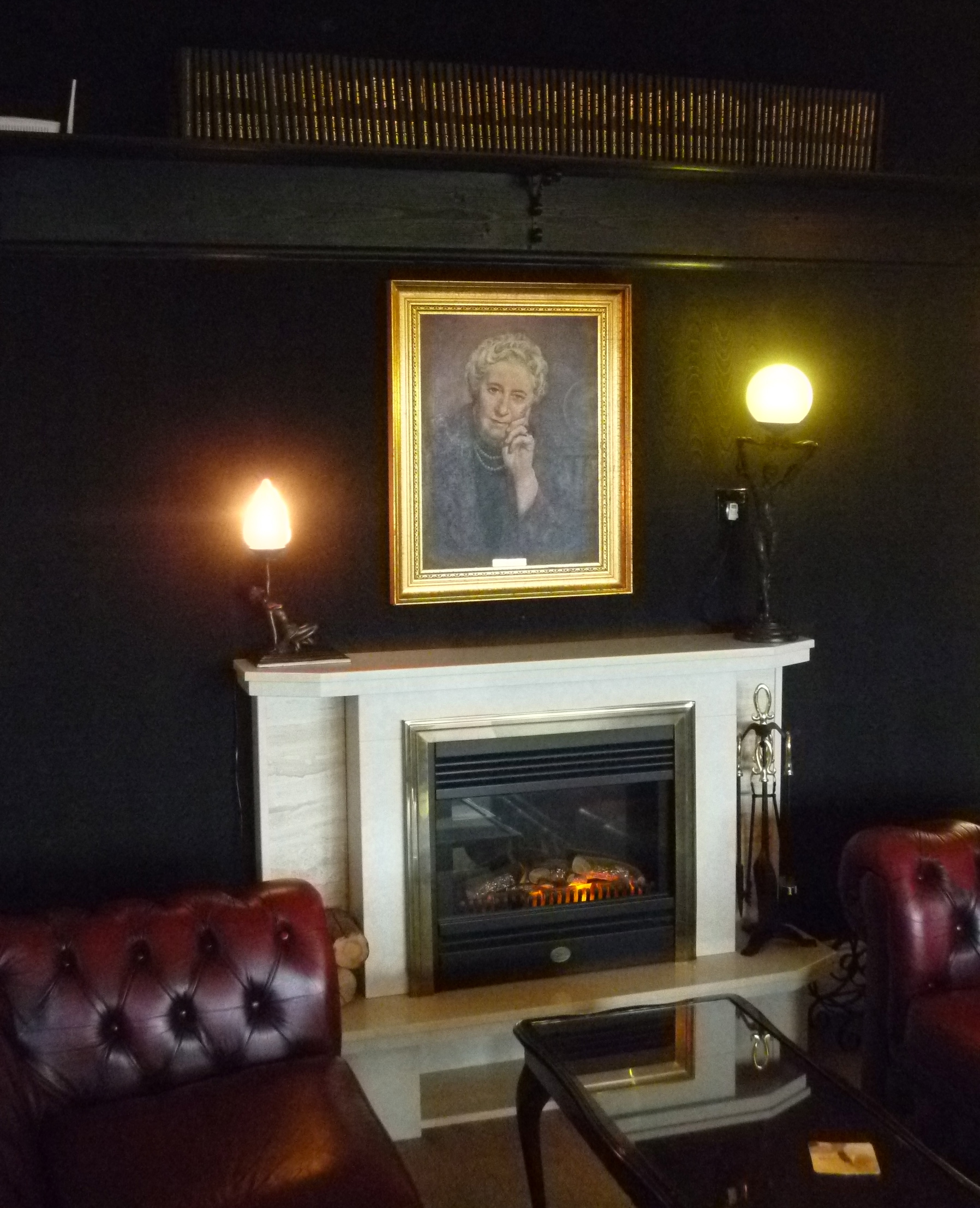
Agatha Christie Portrait and Complete Works
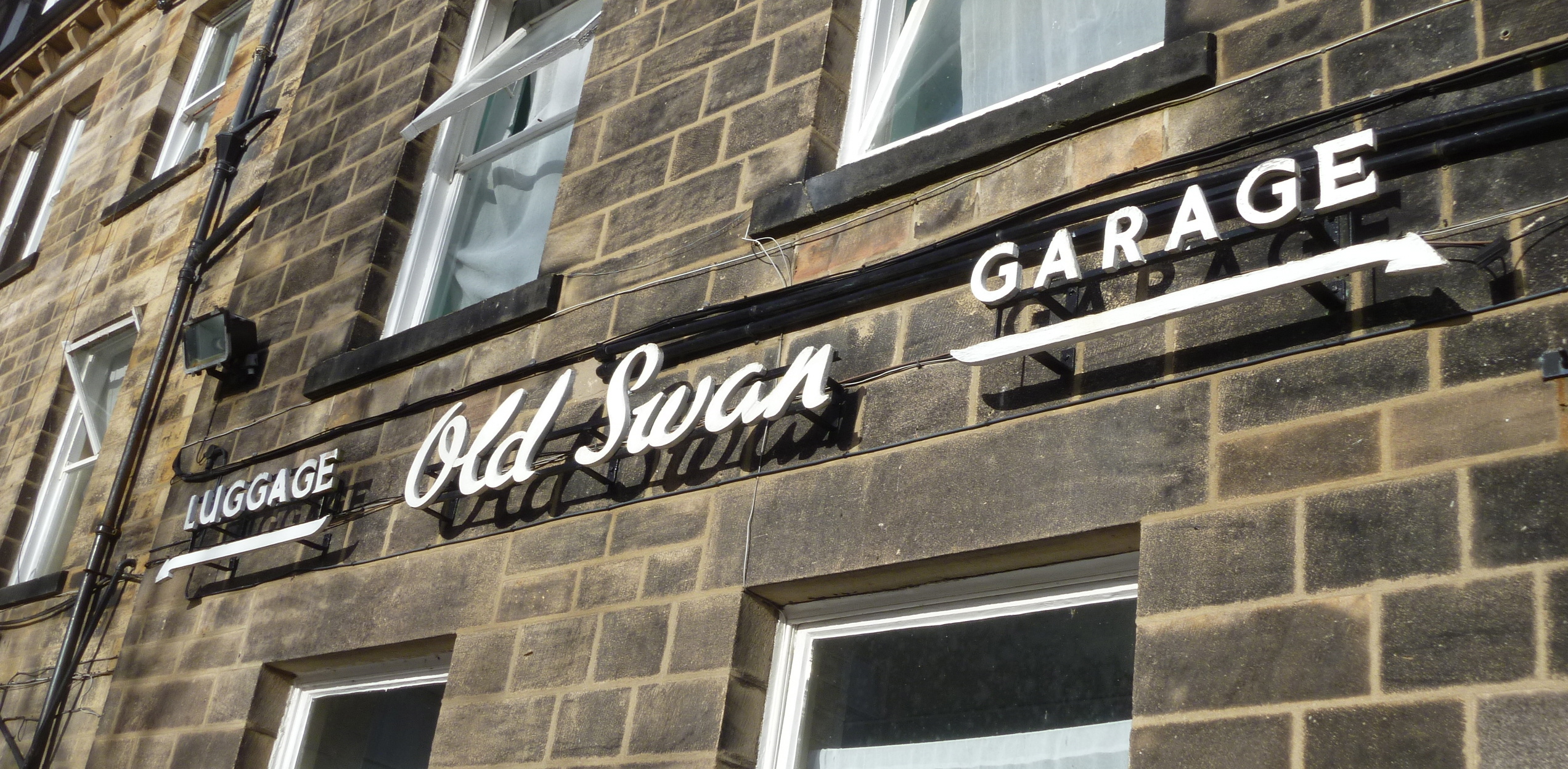
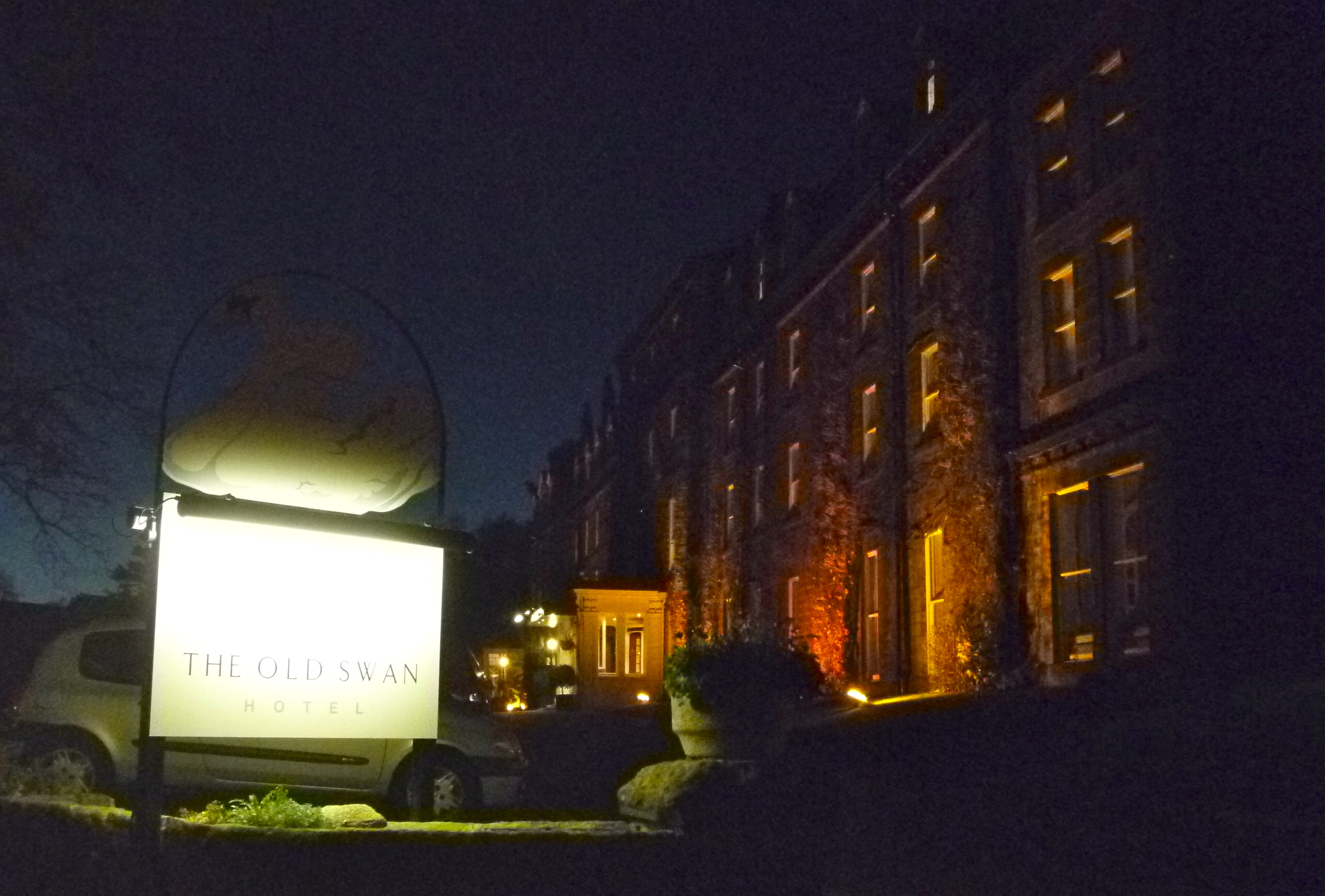
Then this weekend I visited a friend who was staying at The Old Swan Hotel in Harrogate. This was the hotel where AC was found 10 days after she mysteriously disappeared following her husband’s revelation that he was leaving her for another woman.
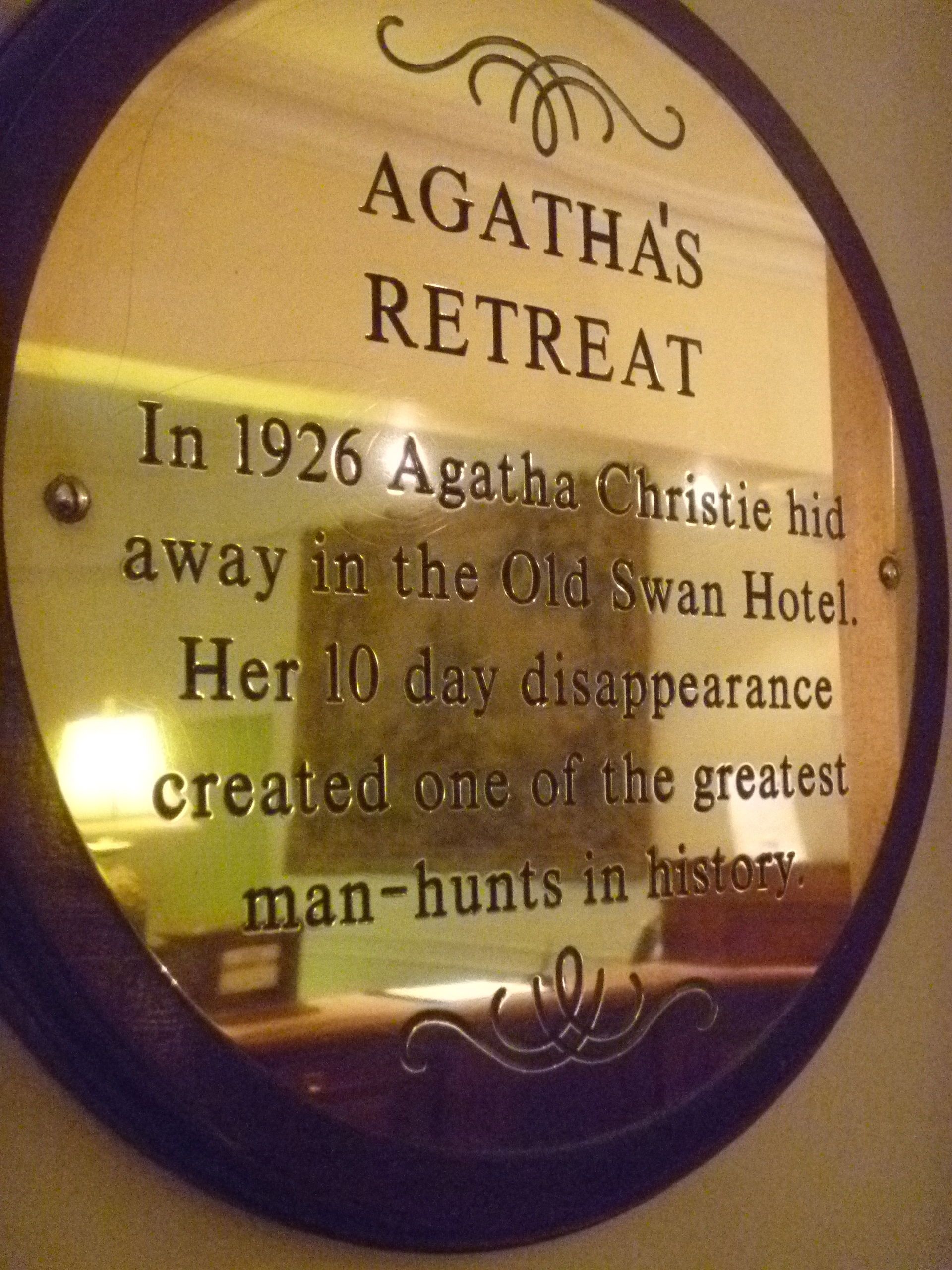
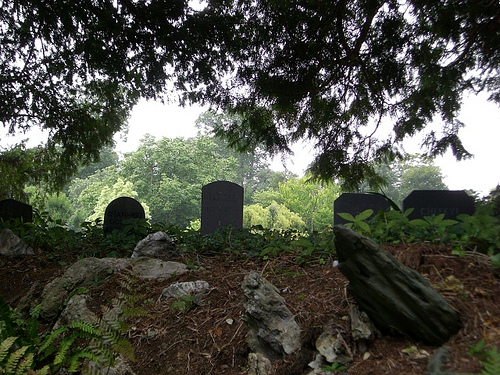
And finally, what do Agatha Christie, The Duke and Duchess of Windsor and Edith Wharton (all featured in these pages) have in common? Answer : they all had doggie cemeteries for their own pets.
The Old King’s Highway : Route 6A Cape Cod

The final nine nights of our September New England holiday were spent on Cape Cod at one of our very favourite places : The Lamb and Lion Inn at Barnstable. This year was our fourth visit but this shrank in insignificance when we met two couples who had been visiting for their 18th and 23rd times respectively.

The Lamb and Lion Inn right on the 6A

So, I was pretty familiar with the Old King’s Highway but have only on more recent visits realised the full historical significance of this road. When you cross the Sagamore Bridge you join Highway 6 the main dual carriageway that links the Sagamore with Provincetown 72 miles away. However, to reach the Lamb and Lion and follow a slower pace and drop down a gear or two you need to take the Route 6A to the north.

The 6A leaves the 6 at Sagamore and rejoins it just west of the town of Orleans and in total the OKH is 34 miles long and traverses seven towns and is just yards from the beach in some places. In fact it is hard to realise that you are so near the seaside as you drive along but turn left (north) down almost any lane as you drive from Sagamore to Orleans and you’ll find  sandy beaches hugging Cape Cod Bay or, nearest to us at the L&L, the lovely sheltered Barnstable Harbour.

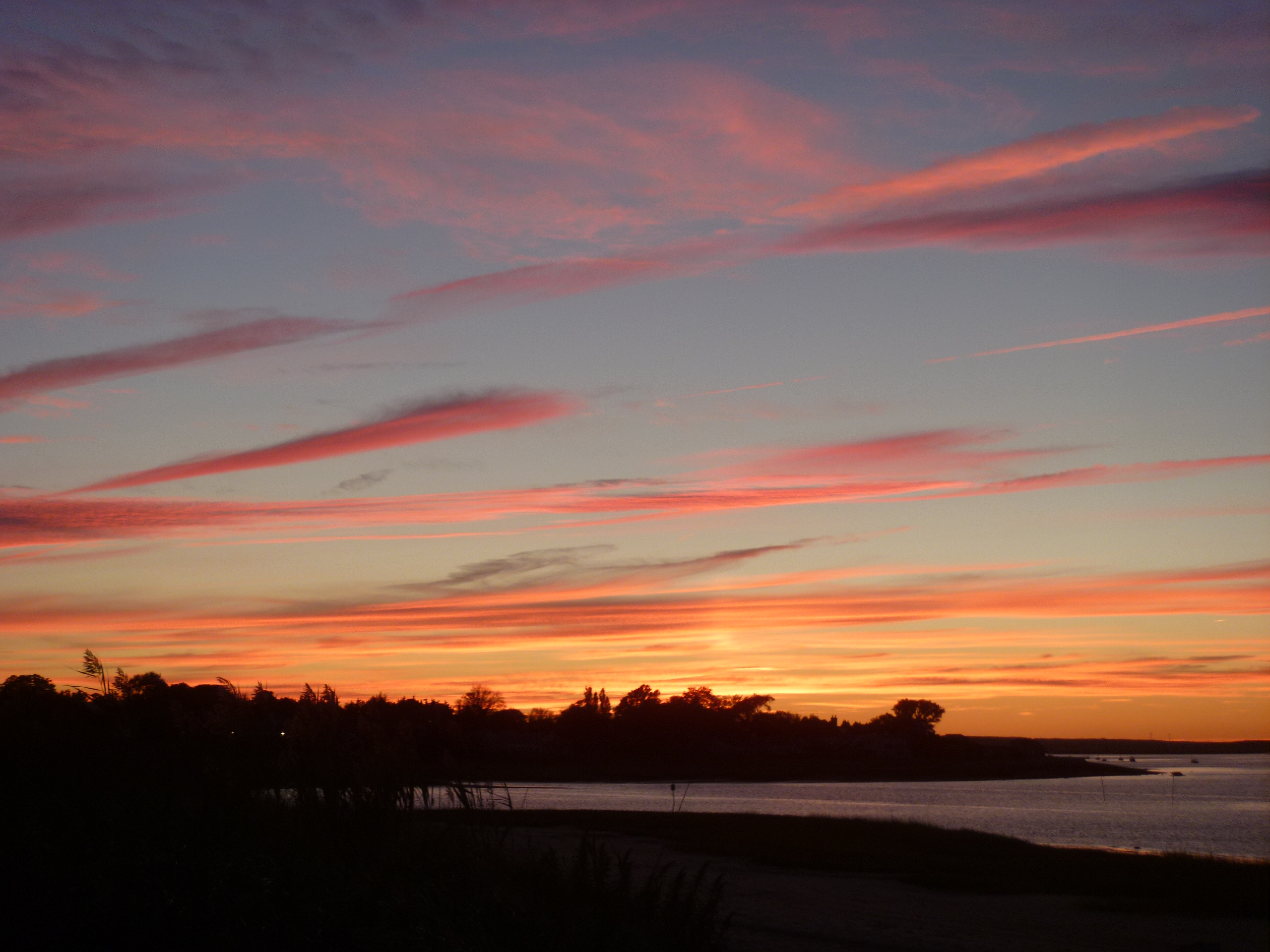
Sunset at Barnstable Harbor Beach

When we stay on Cape Cod we have a very limited “comfort zone” so the part of The Old King’s Highway that I’m going to tell you about is just that between Barnstable and Dennis. I just checked on Mapquest and it’s a distance of about 11 miles.

I have tried to find out exactly which “Old King” the highway is named for but it’s not mentioned in the bits of literature that I have collected and no sign on “Google” either. I assumed King George III but it’s much older than that – a late 17th century extension of the King’s Highway from Plimouth. The whole of it is designated a Regional Historic District and is the largest such district in America. It is also one of America’s most scenic highways.

This 34 mile roadway winds through 7 cape towns, past hundreds of historic sites and landscapes, including farmsteads, cranberry bogs, salt marshes, sea captain’s homes, and village greens.”

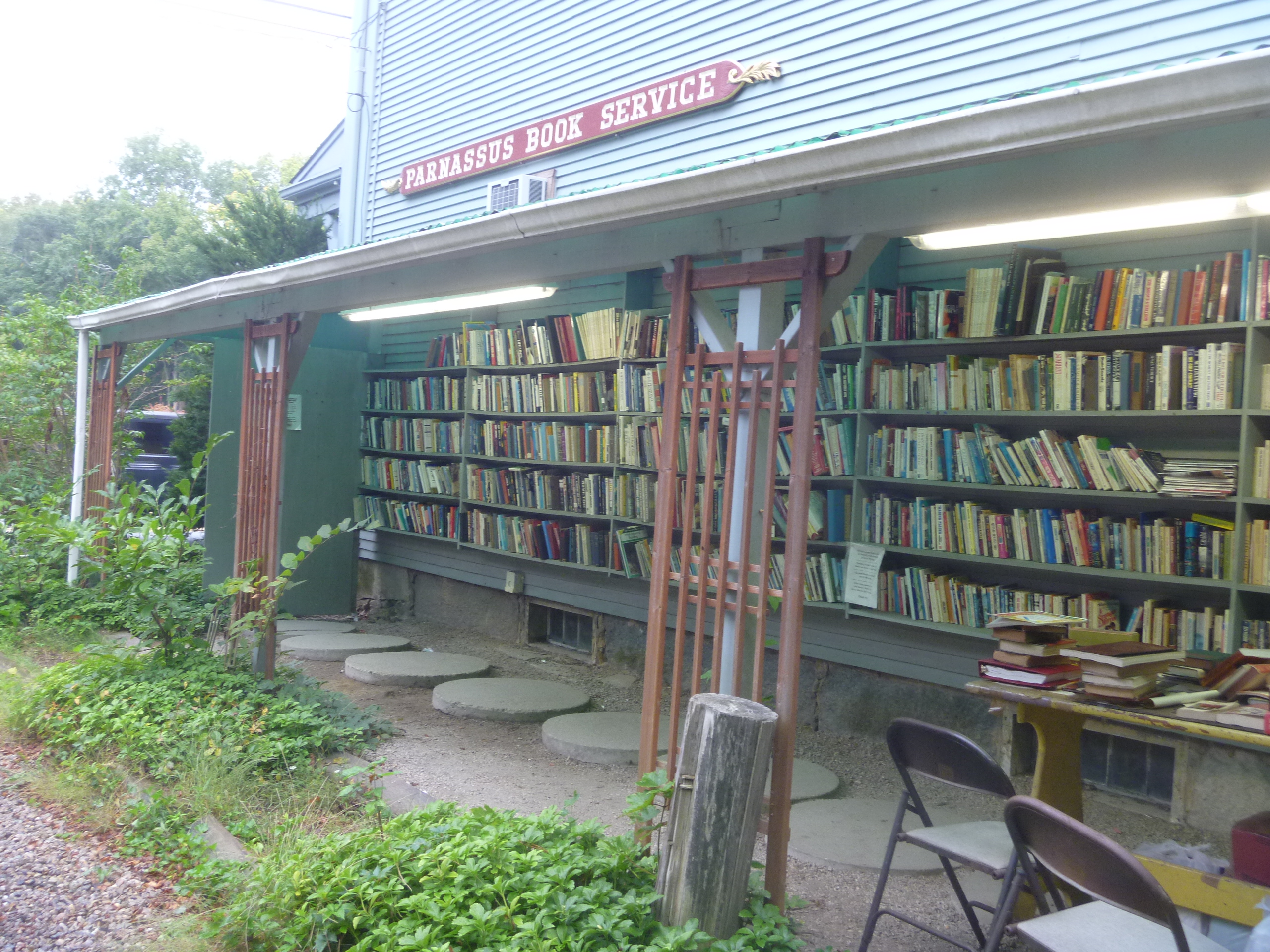
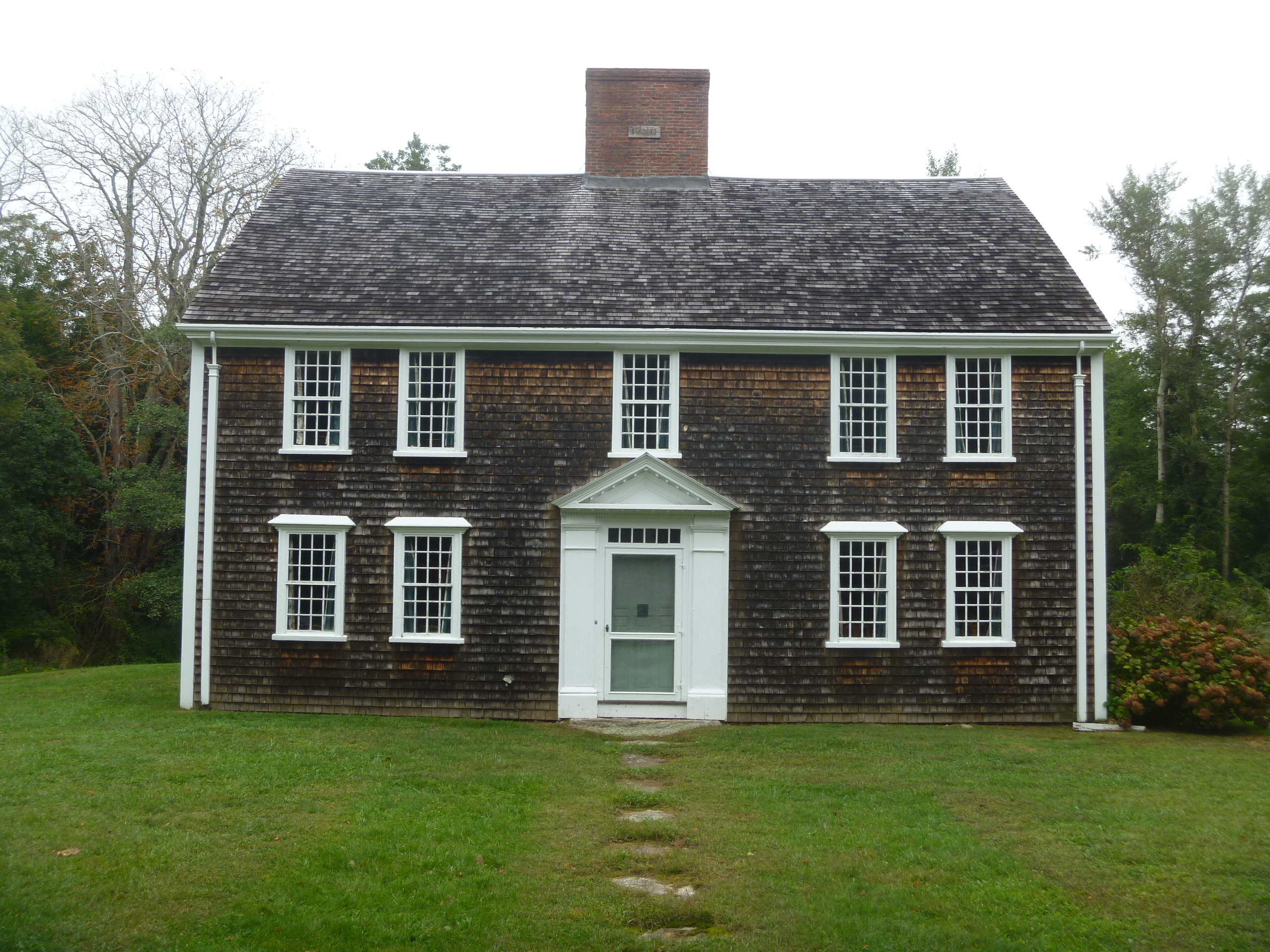
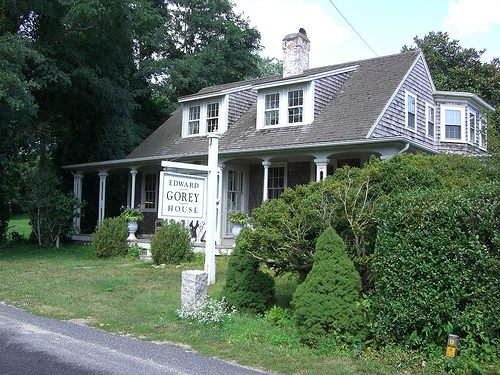
In addition there’s America’s oldest library (The Sturgis Library), a famous artist’s home (Edward Gorey), a Coastguard Museum, a unique secondhand bookshop (Parnassus Books), an Historic New England property (The Winslow Crocker House), great eateries and interesting, one-of-a-kind shops and galleries, roadside fruit and veg. stalls (we recommend the heritage tomatoes), shipyards and churches and cemeteries and all of those just within our 11 mile zone.

Historic House plaque – one of very many along the 6A

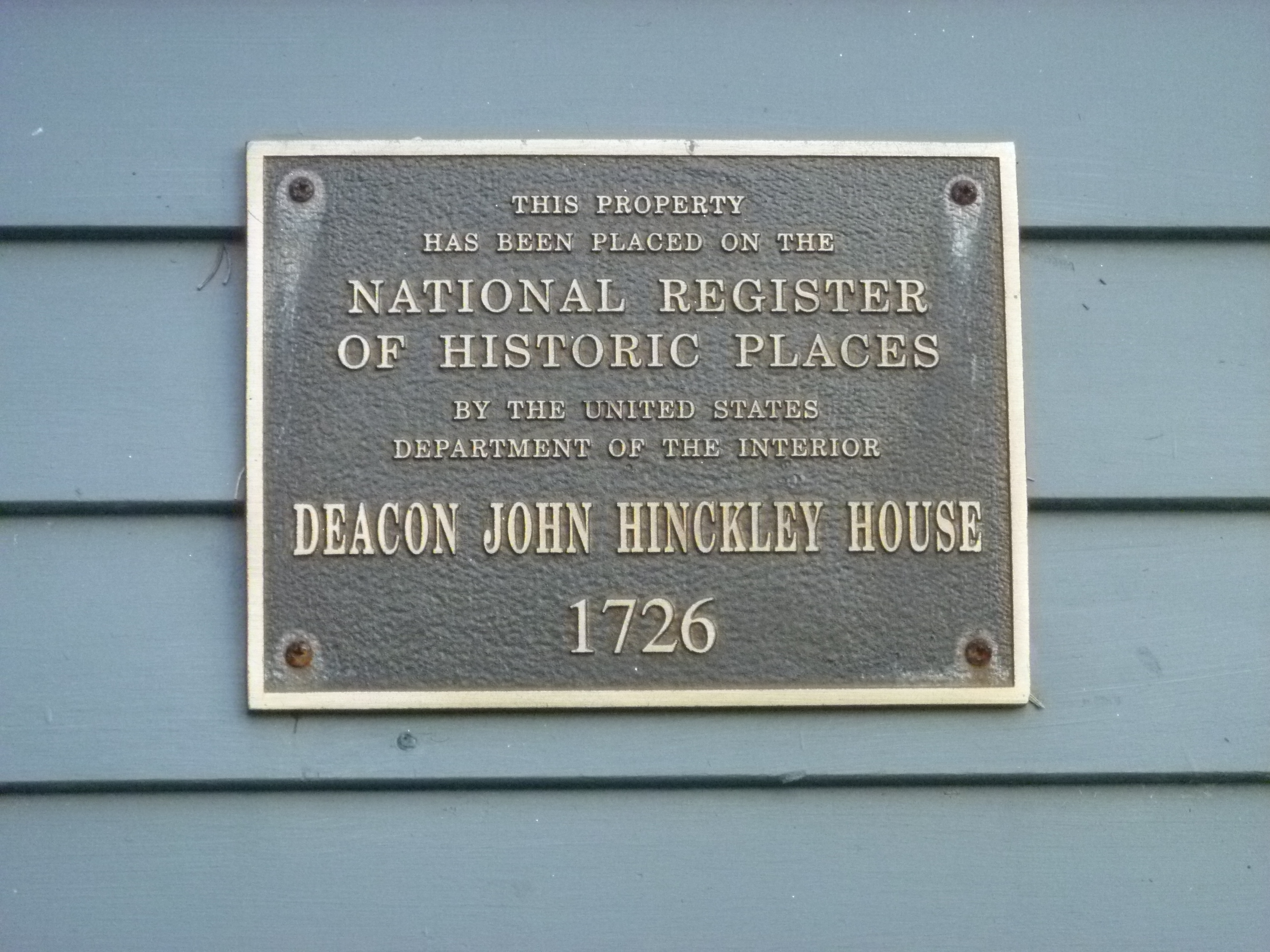
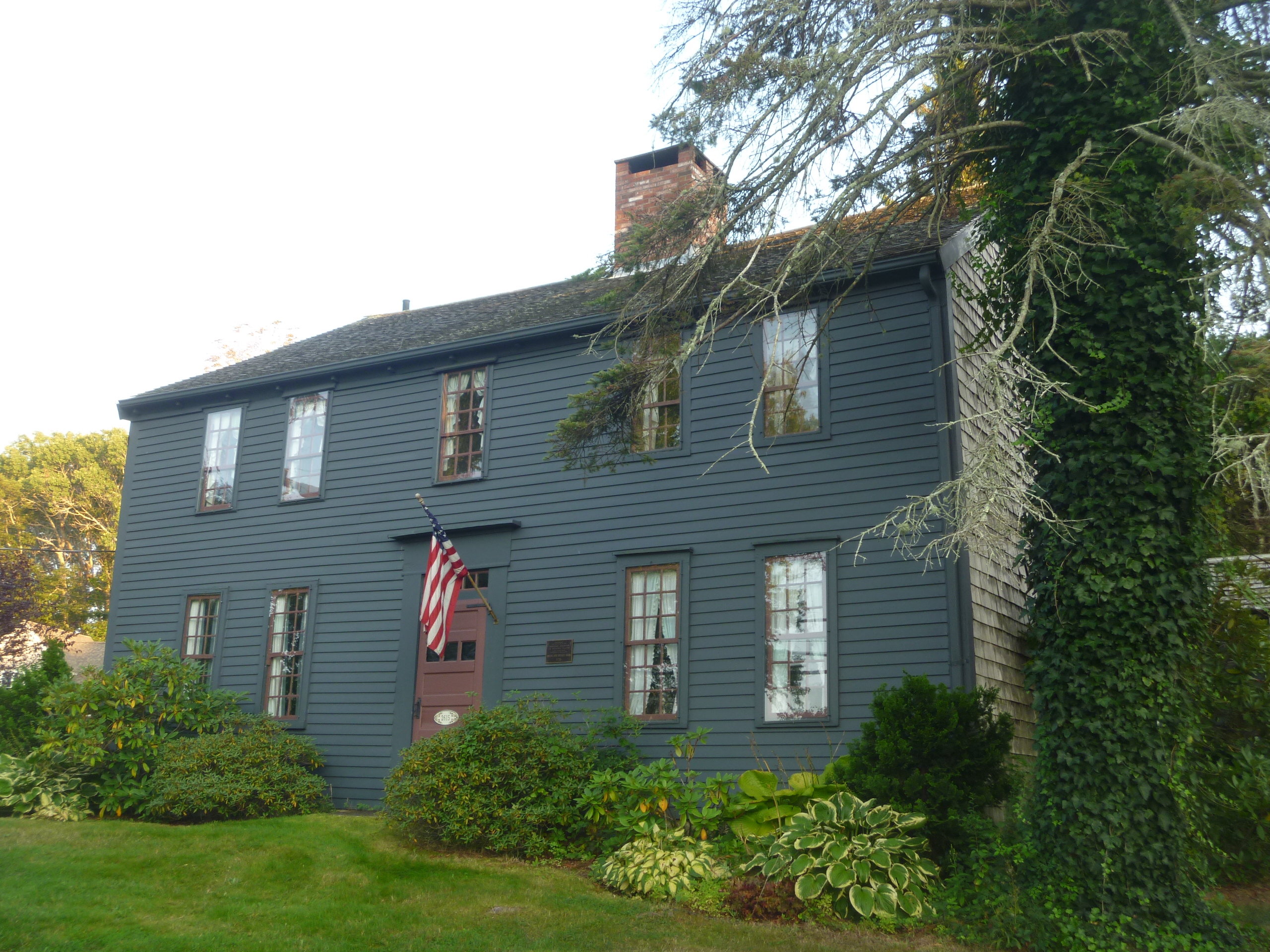
Deacon John Hinckley House (one of many historic properties along 6A)

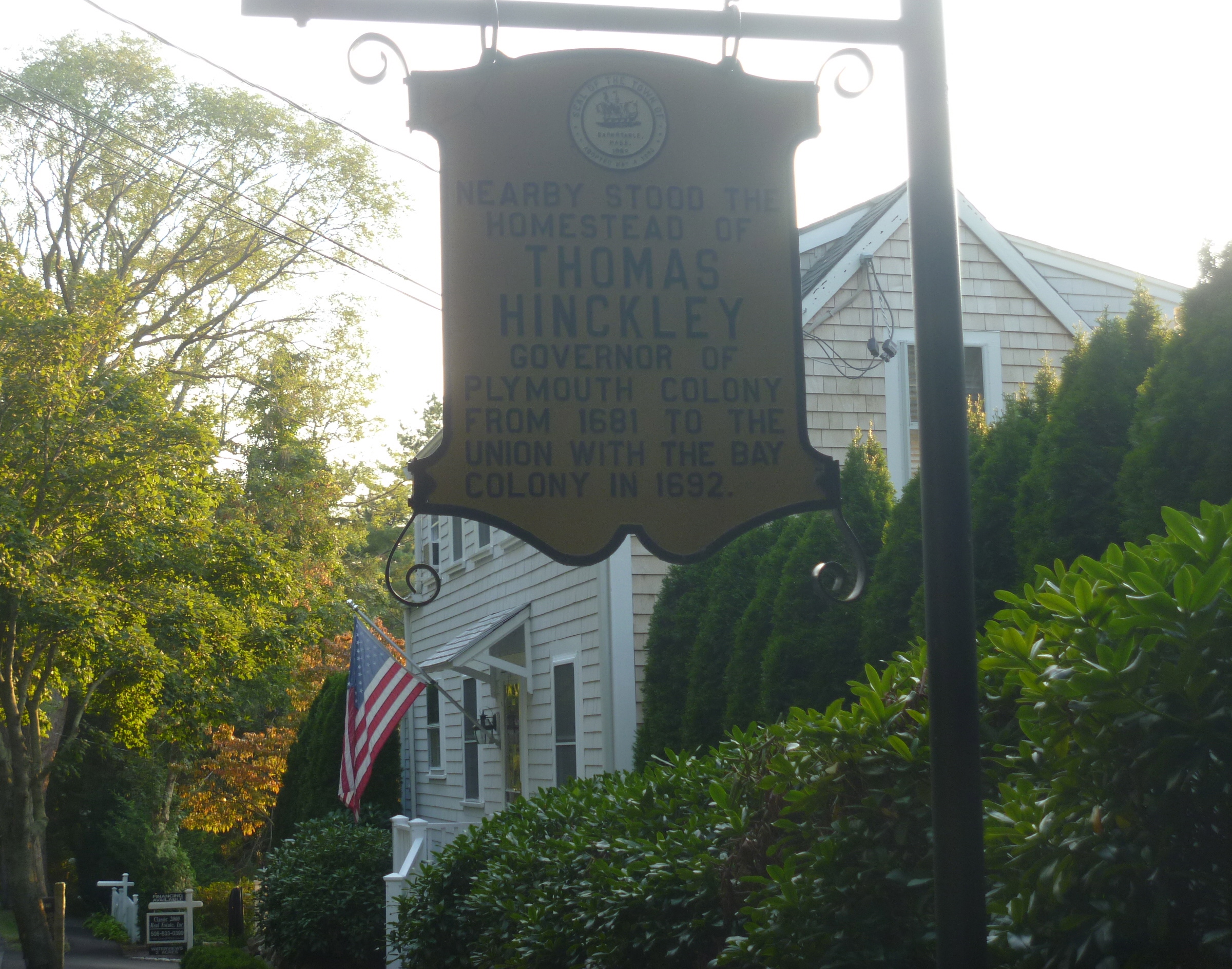
Thomas Hinckley Lived Near Here – such signs abound on the 6A!

Inside The Sturgis Library, Barnstable

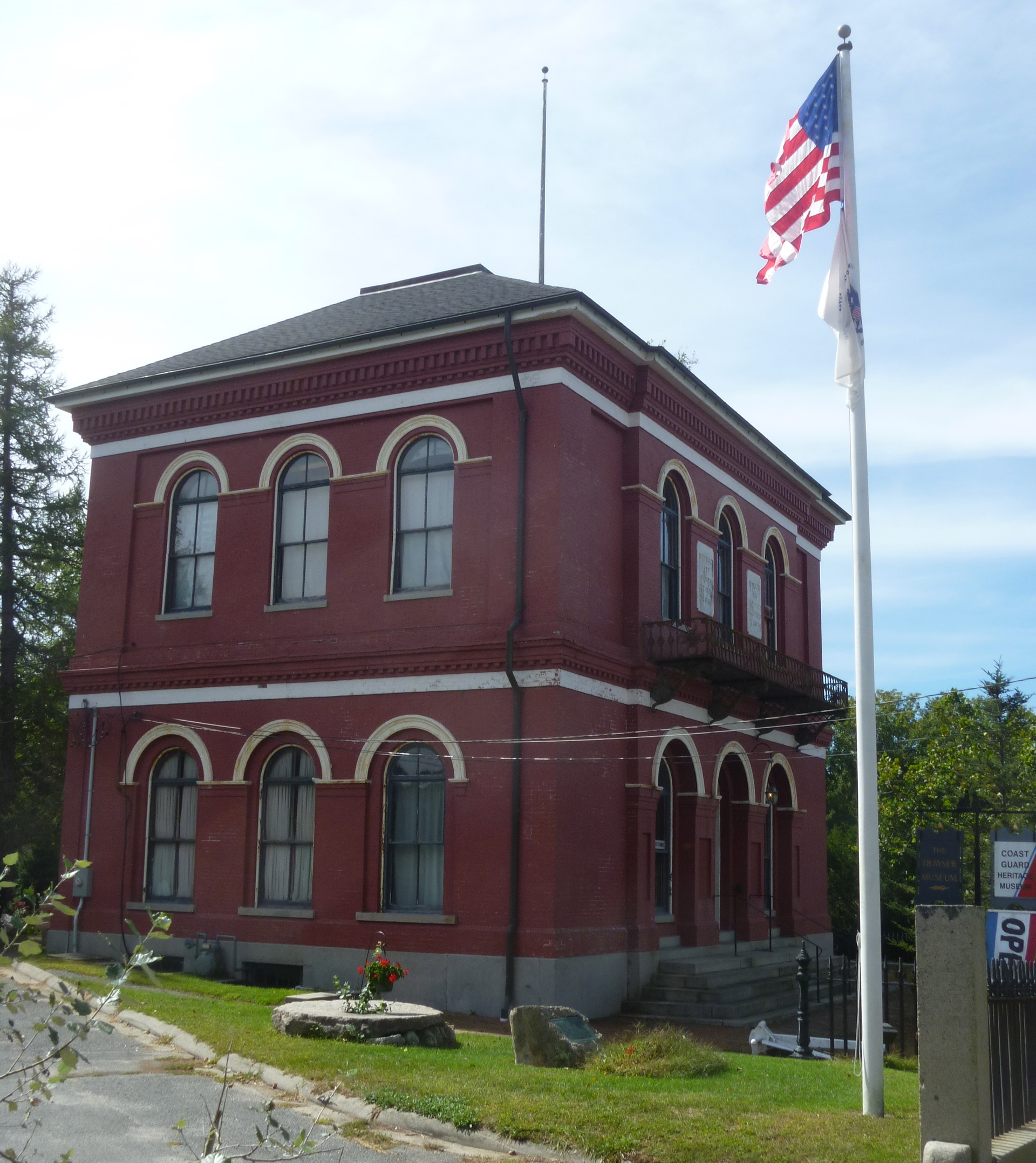
The Trayser Coastguard Museum, Barnstable

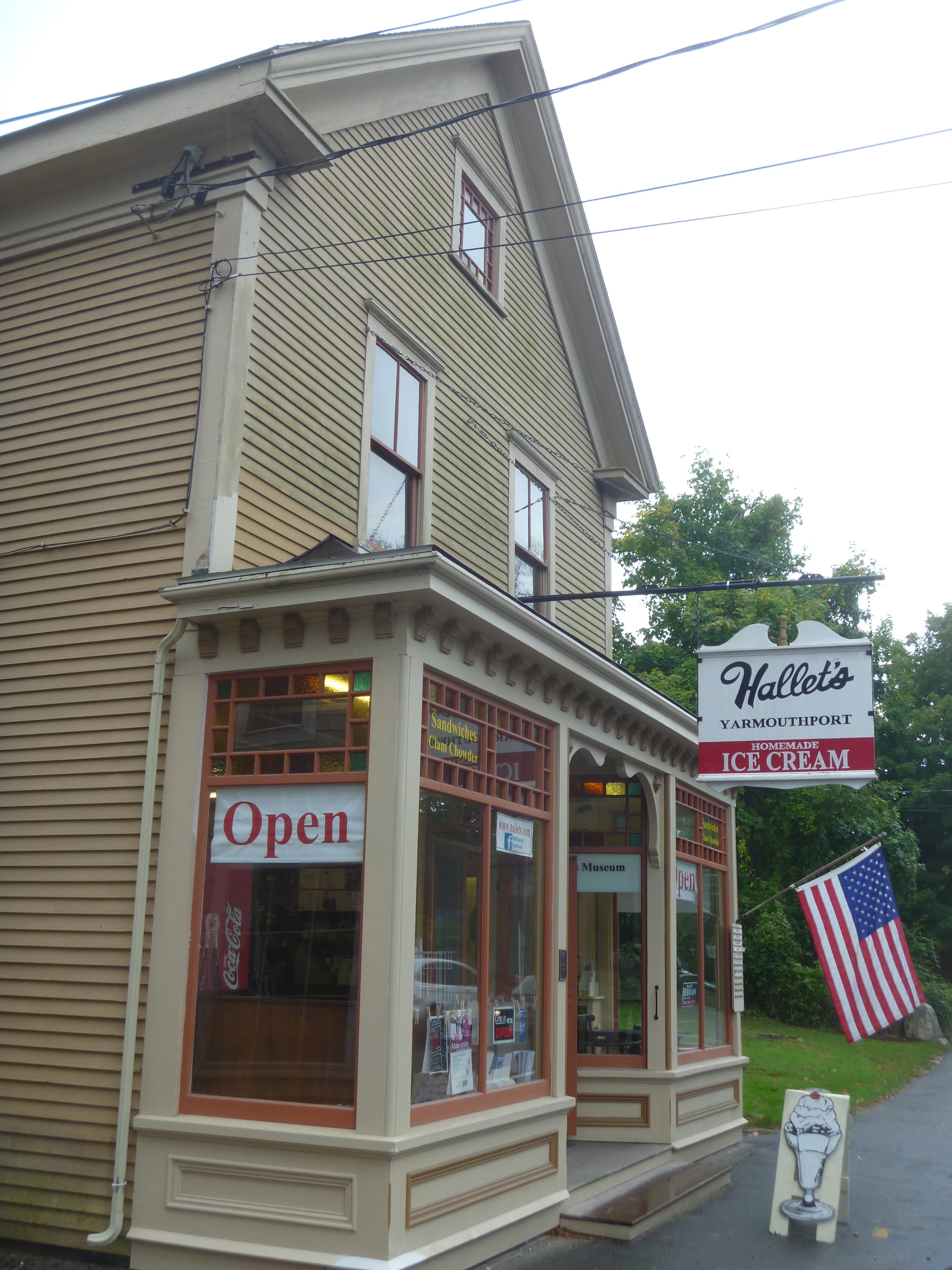
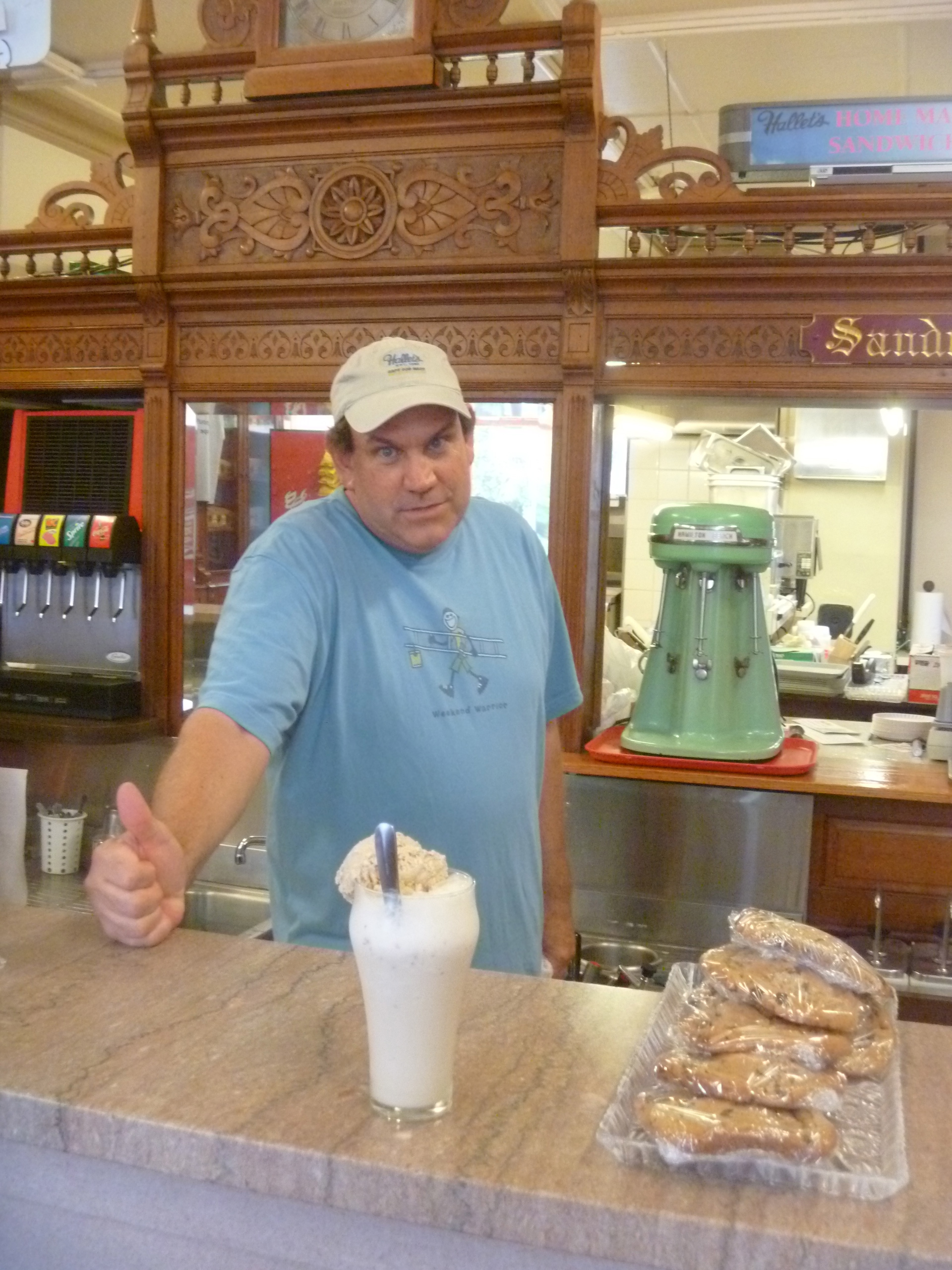
Hallet’s Soda Fountain

My ice cream soda is ready!

Parnassus Books (so much more inside!)

The Winslow Crocker House

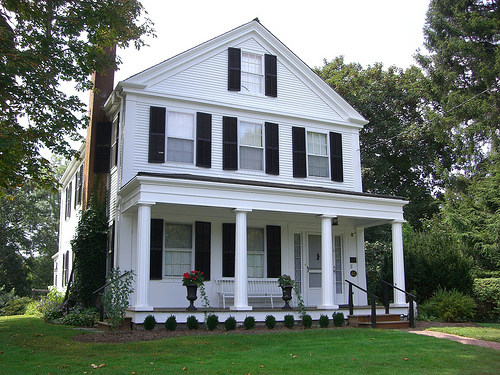
(Sea) Captain Bang’s Hallet House

Edward Gorey House

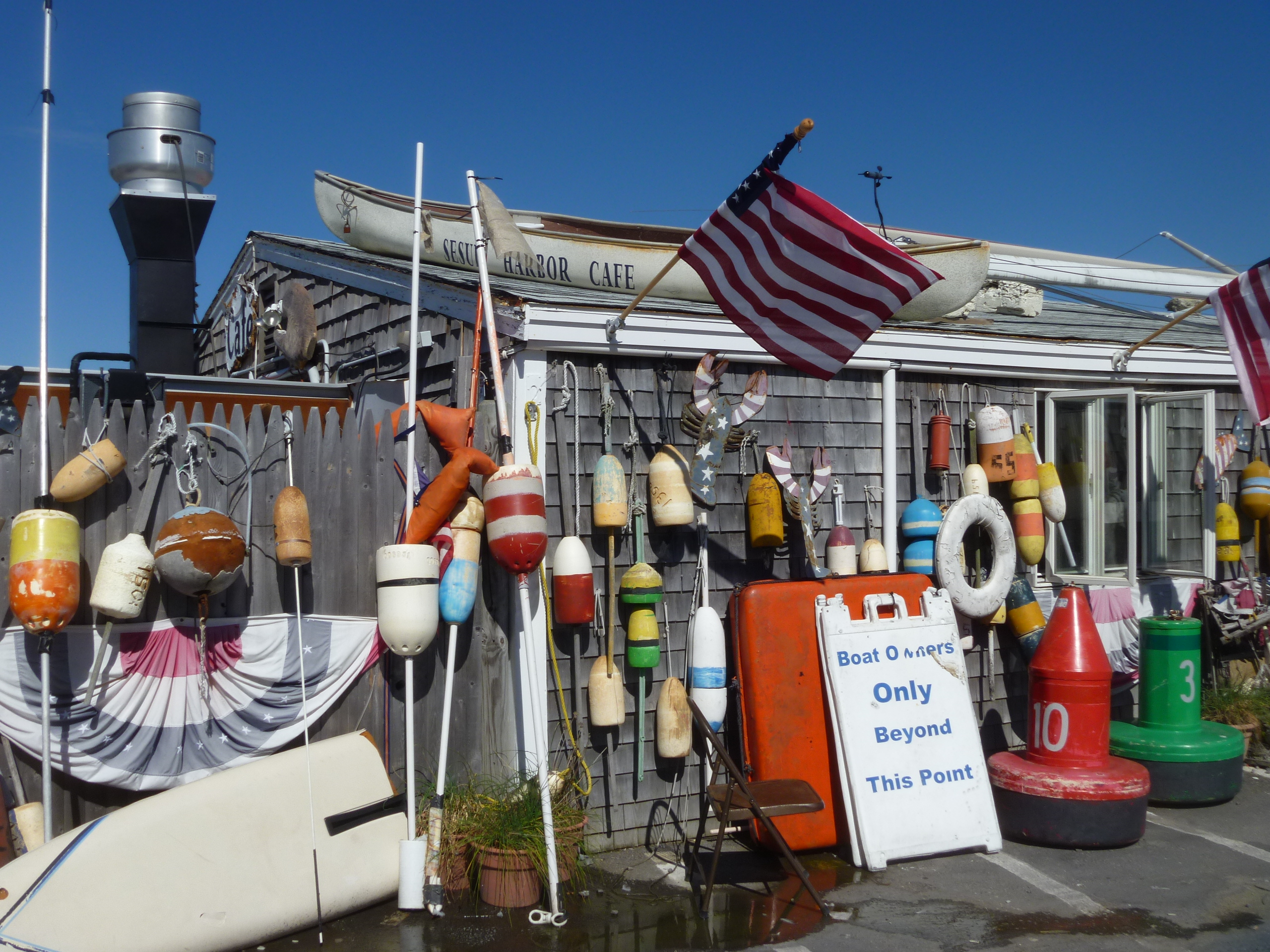
Sesuit Harbor Cafe

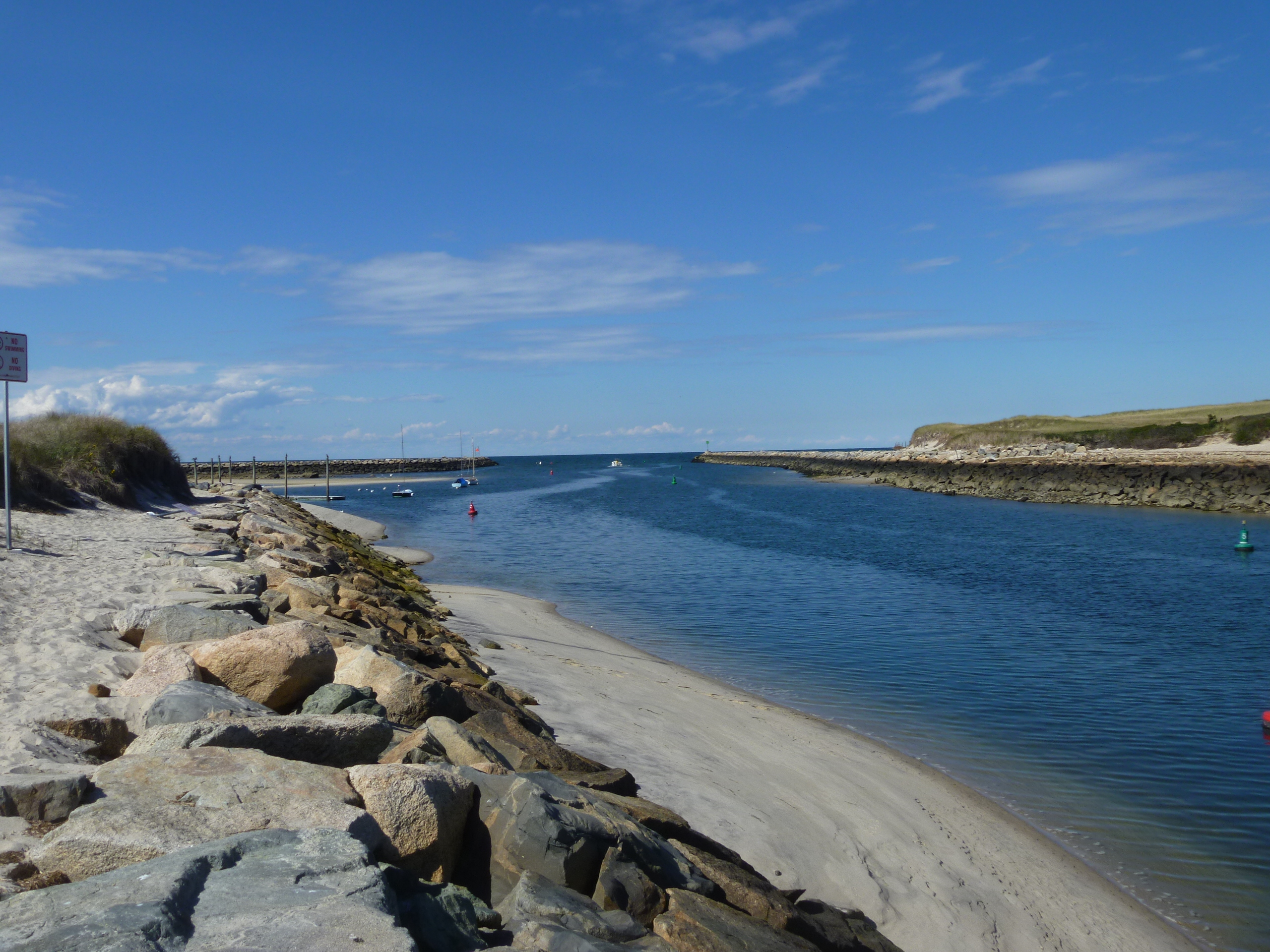
Sesuit Harbor

Don’t Call Me Ishmael – Part Two : Where a Mountain Inspired a Tale of a Whale : Herman Melville’s Arrowhead

Don’t Call Me Ishmael‘ was the title of a post here a year ago in which I wrote about a visit with a friend to the Mattapoisett Historical Museum to inspect the Ashley Whaling Mural a map of the south coast of New England from the mouth of the Connecticut River to Cape Cod. We also looked at Whaling Journals.

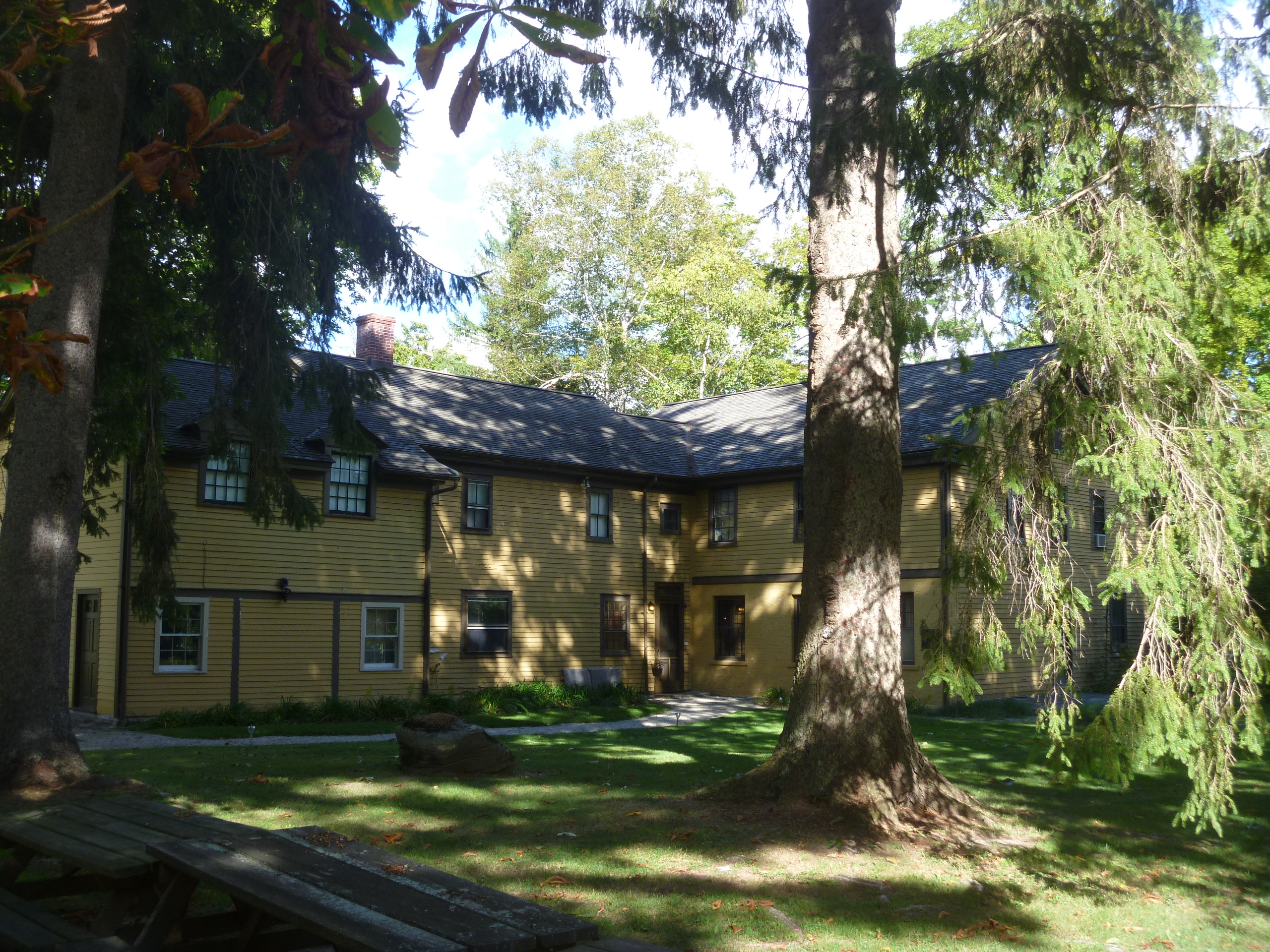
There was just time on Saturday 15 September, after our visit to The Norman Rockwell Museum and Stockbridge, to fit in a tour of Herman Melville’s home Arrowhead, just a mile along the road from our Lenox motel in Pittsfield, MA.

In the summer of 1850, seeking a reprieve from the heat and noise of New York City, Herman Melville brought his young family to Pittsfield, Massachusetts, a place he had visited since childhood.

Flush with the success of his first books and entranced by his meeting of Nathaniel Hawthorne, Melville impulsively bought a nearby farm, which he named Arrowhead. That winter, ensconced in his study with its view of Mount Greylock, Herman Melville wrote his masterpiece ‘Moby Dick’.

Melville’s most productive years were those he spent at Arrowhead; works written here include ‘Pierre’, ‘Benito Cereno’ and ‘The Confidence-Man’. Melville and his family returned to the city in 1863, but Arrowhead remained in the Melville family until 1972.”

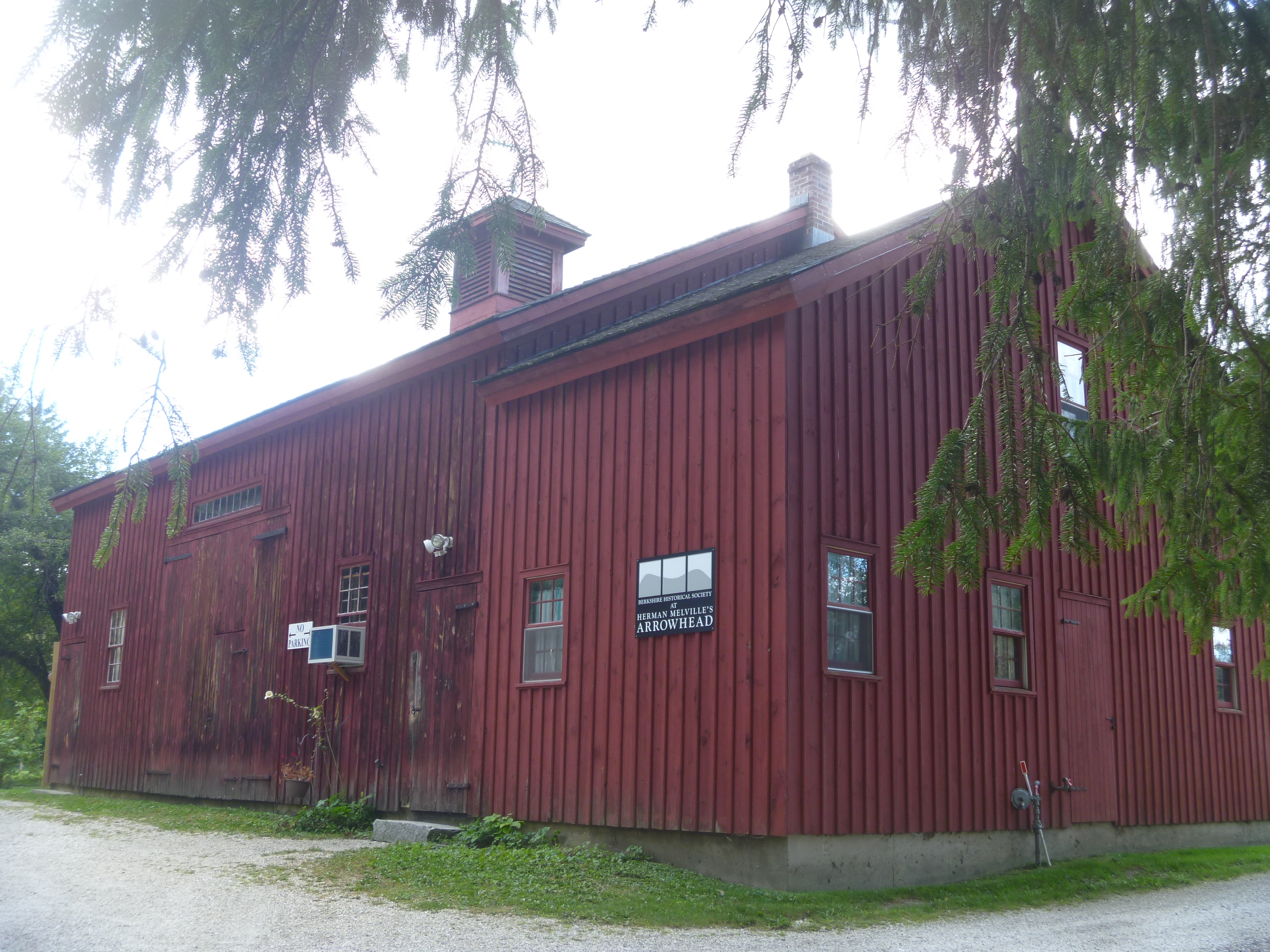
The Barn Shop and Information Desk

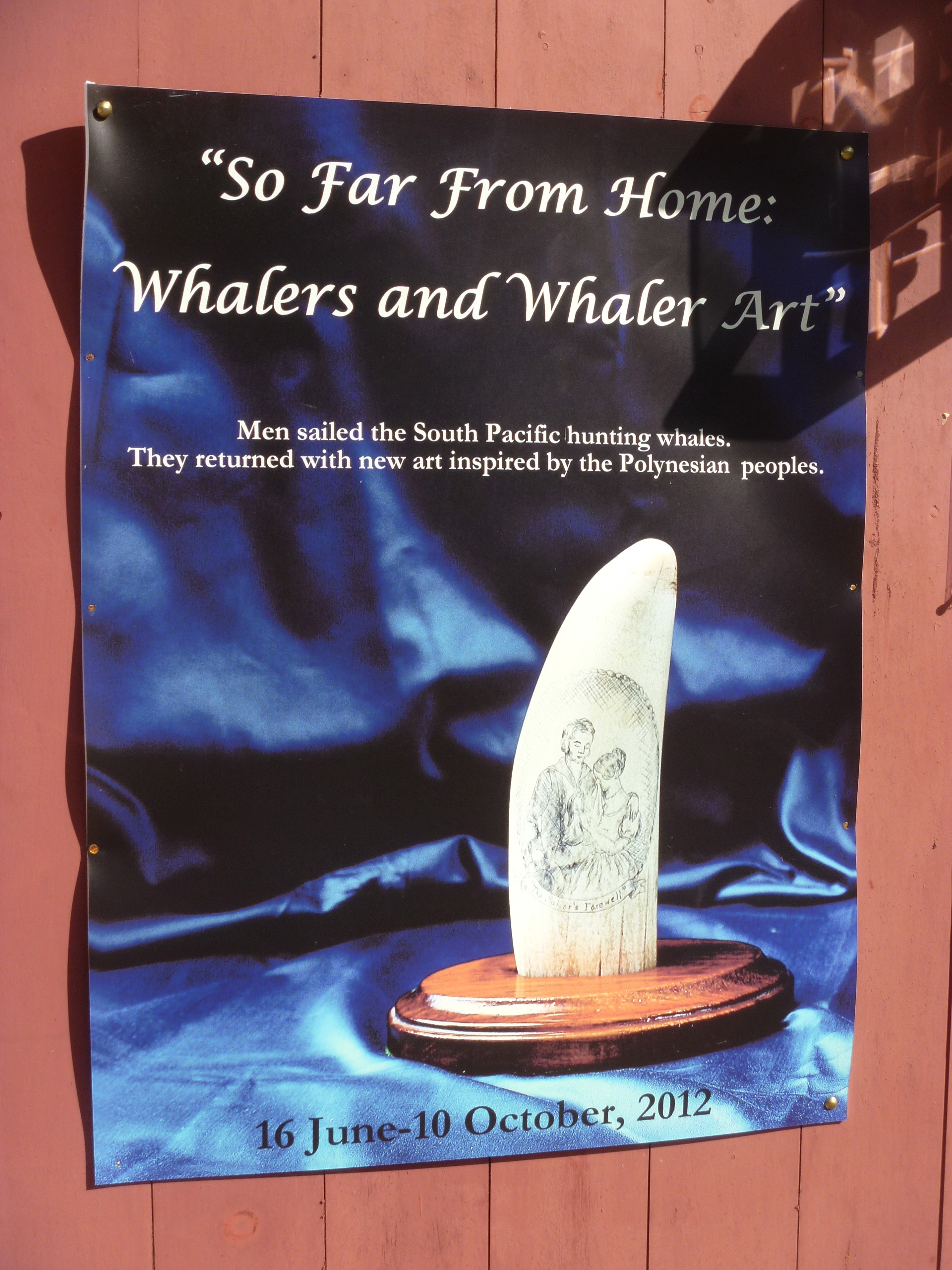
In a barn behind the house there’s a shop and the desk where you can book for a house tour. In another out-building there’s an exhibition “So Far From Home: Whalers and Whaler Art”.

“The exhibit explores how Polynesian artworks influenced the art of visiting whalers like Melville, with a display of images, text, scrimshaw, tattoos, and Polynesian art and artefacts. Collector Jeffrey McCormick loaned a large selection of scrimshaw and other items to make this exhibit possible.”
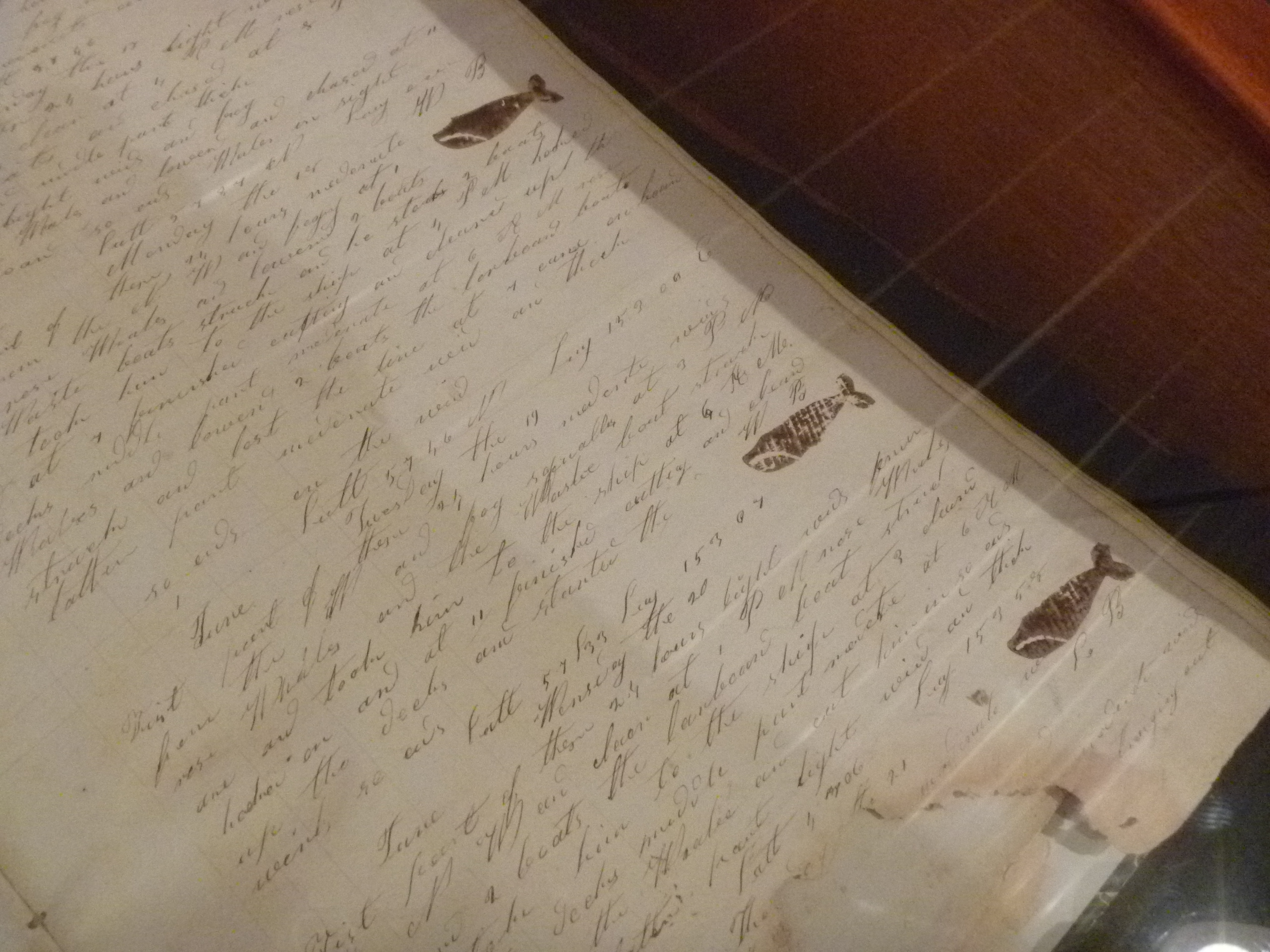
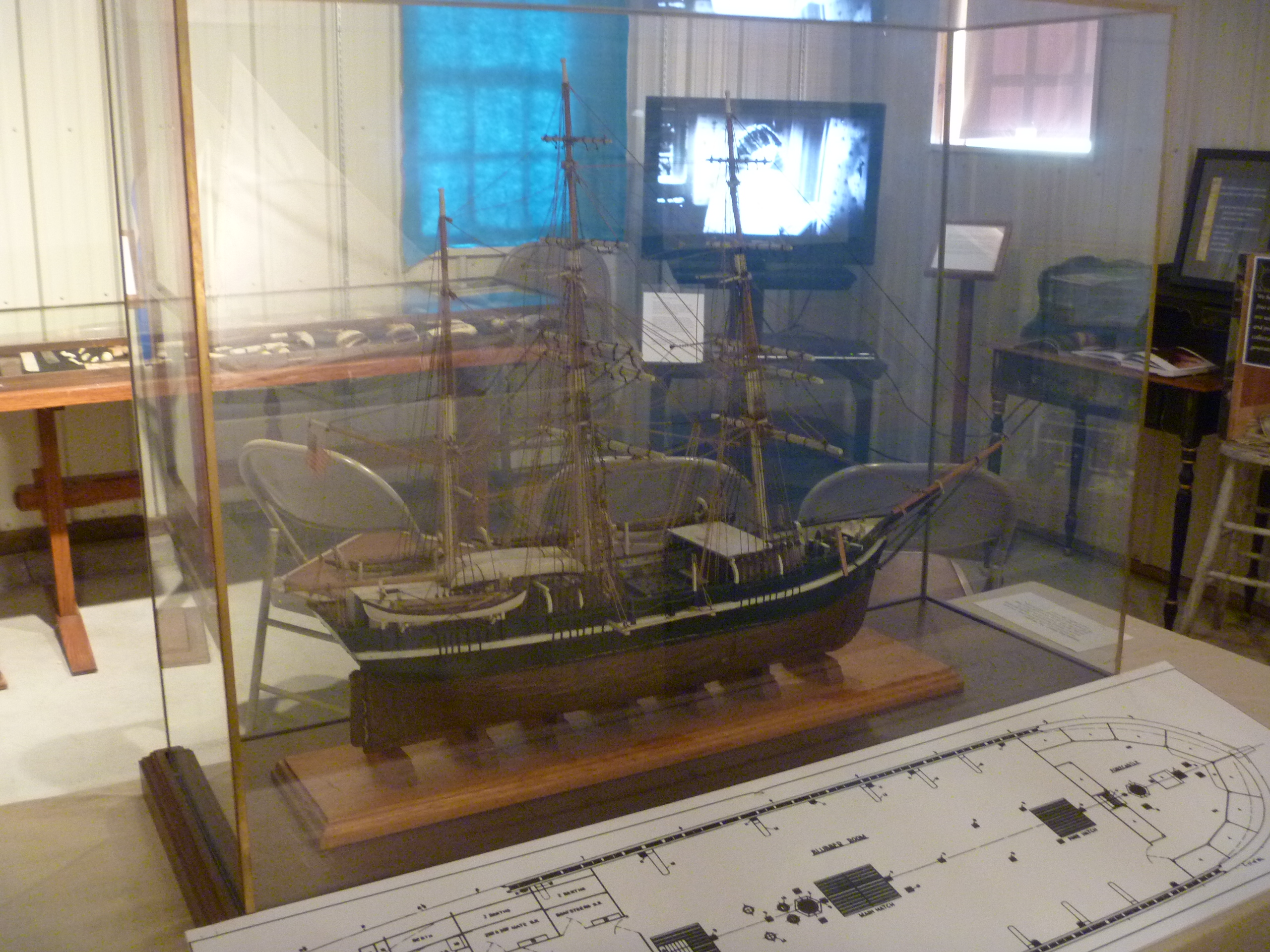
There are also some fine examples of Whaling Journals and a model of the whaling ship ‘The Wanderer’.

Model of The Wanderer

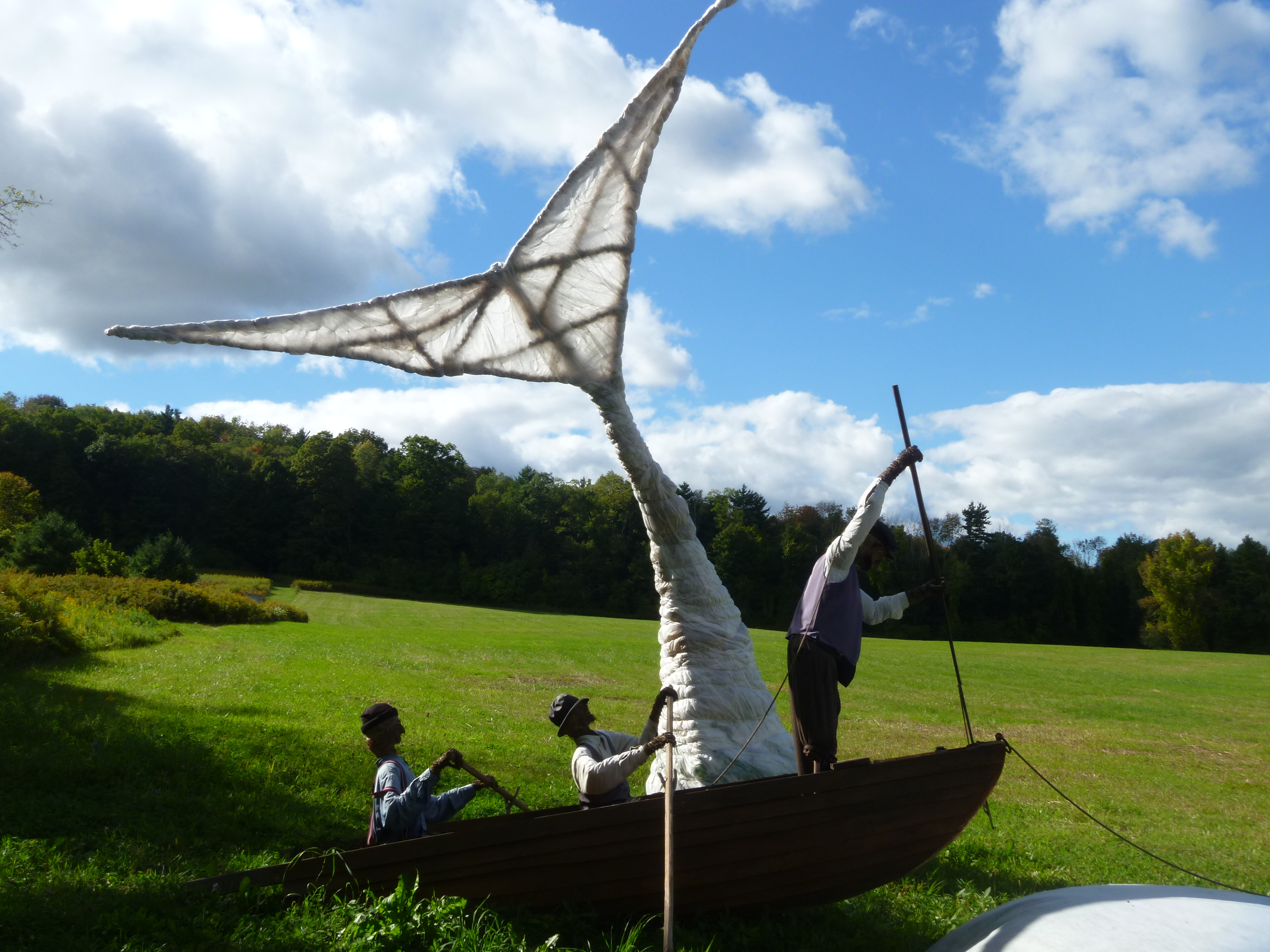
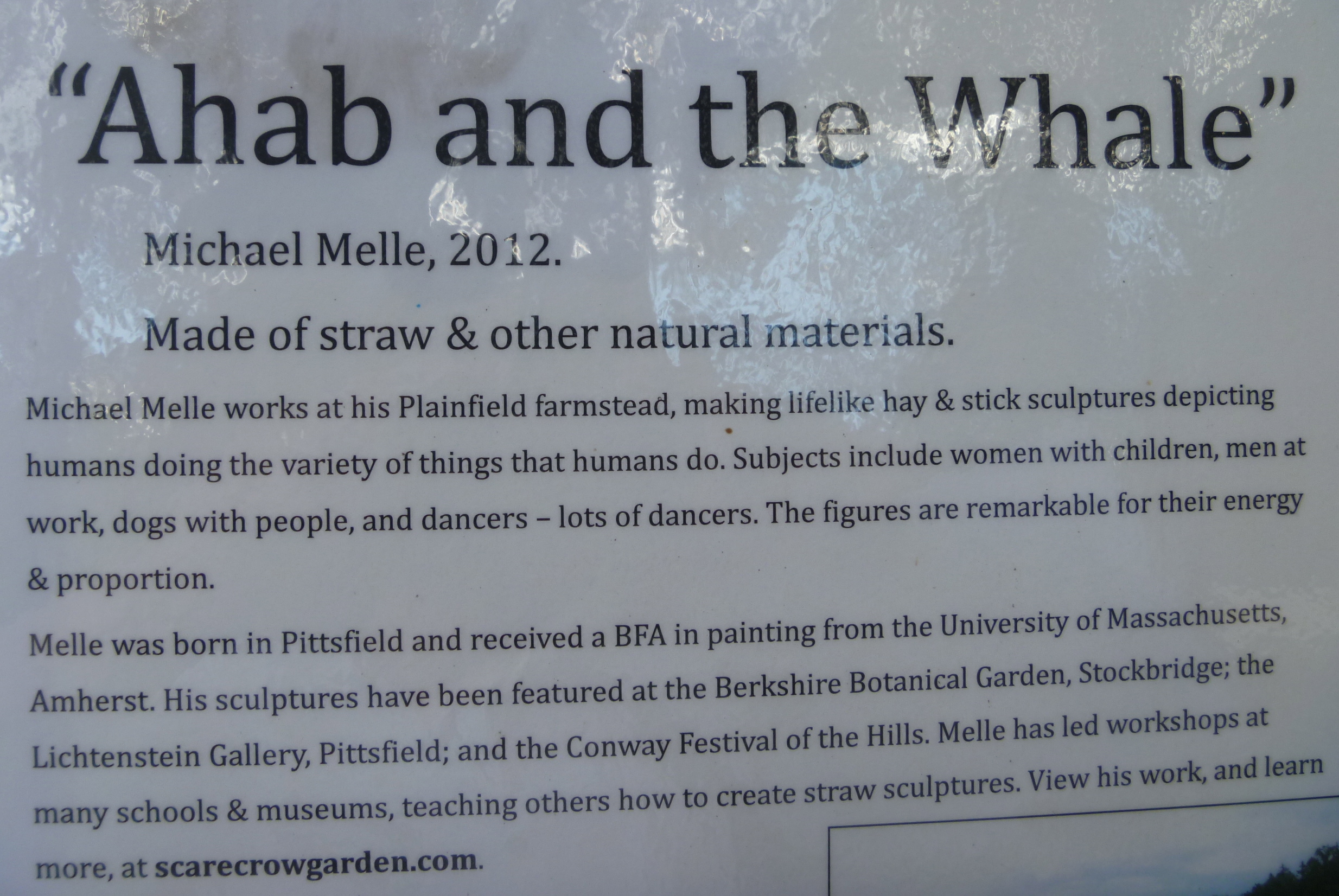
In the field next to the house and garden there’s a rather strange sculpture. It’s called ‘Ahab and the Whale’ and it’s a startlingly life-like straw sculpture by Michael Melle.

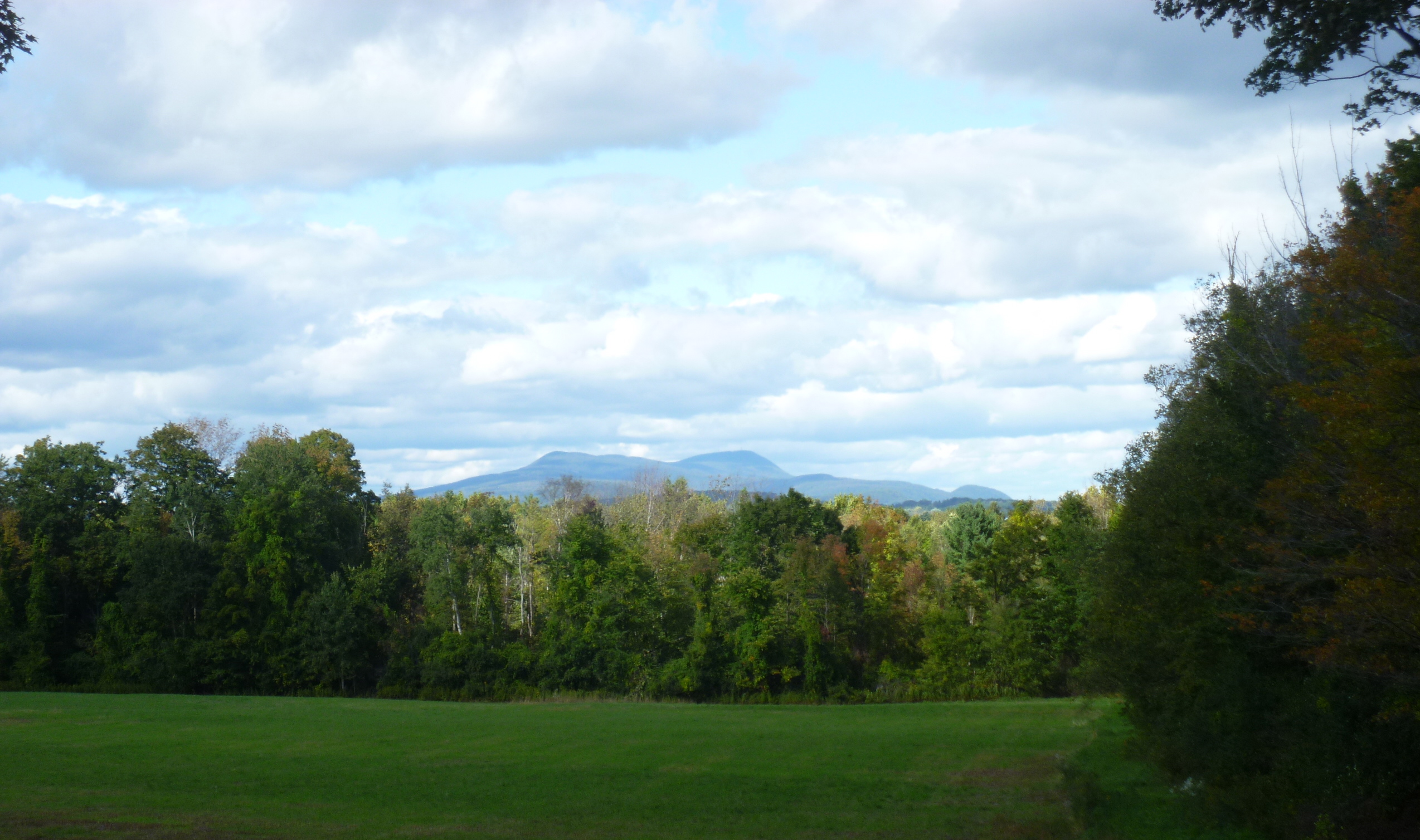
The house tour itself was fairly interesting (no photography allowed) and the best part was visiting the study and seeing the view of Melville’s inspiration Mount Greylock.

Mount Greylock from Arrowhead

In addition to the house tour and exhibitions there’s a self-guided grounds tour described on the free leaflet that you are given when booking your ticket. Complete with quotations from Herman Melville the leaflet details the immediate house surroundings and barn and the Arrowhead Nature Trail across the meadow and through the woods where Melville was inspired to write. Unfortunately, time was tight at this point and I was unable to undertake the Nature Trail. Something else for next time!

By pure coincidence I received a Folio Society newsletter just this week alerting me to the Moby Dick Big Read. Here is what it says on the website :

… an online version of Melville’s magisterial tome: each of its 135 chapters read out aloud, by a mixture of the celebrated and the unknown, to be broadcast online in a sequence of 135 downloads, publicly and freely accessible.”

A year ago I said I wouldn’t be reading ‘Moby Dick’ but this year I intend to start listening to The Moby Dick Big Read.

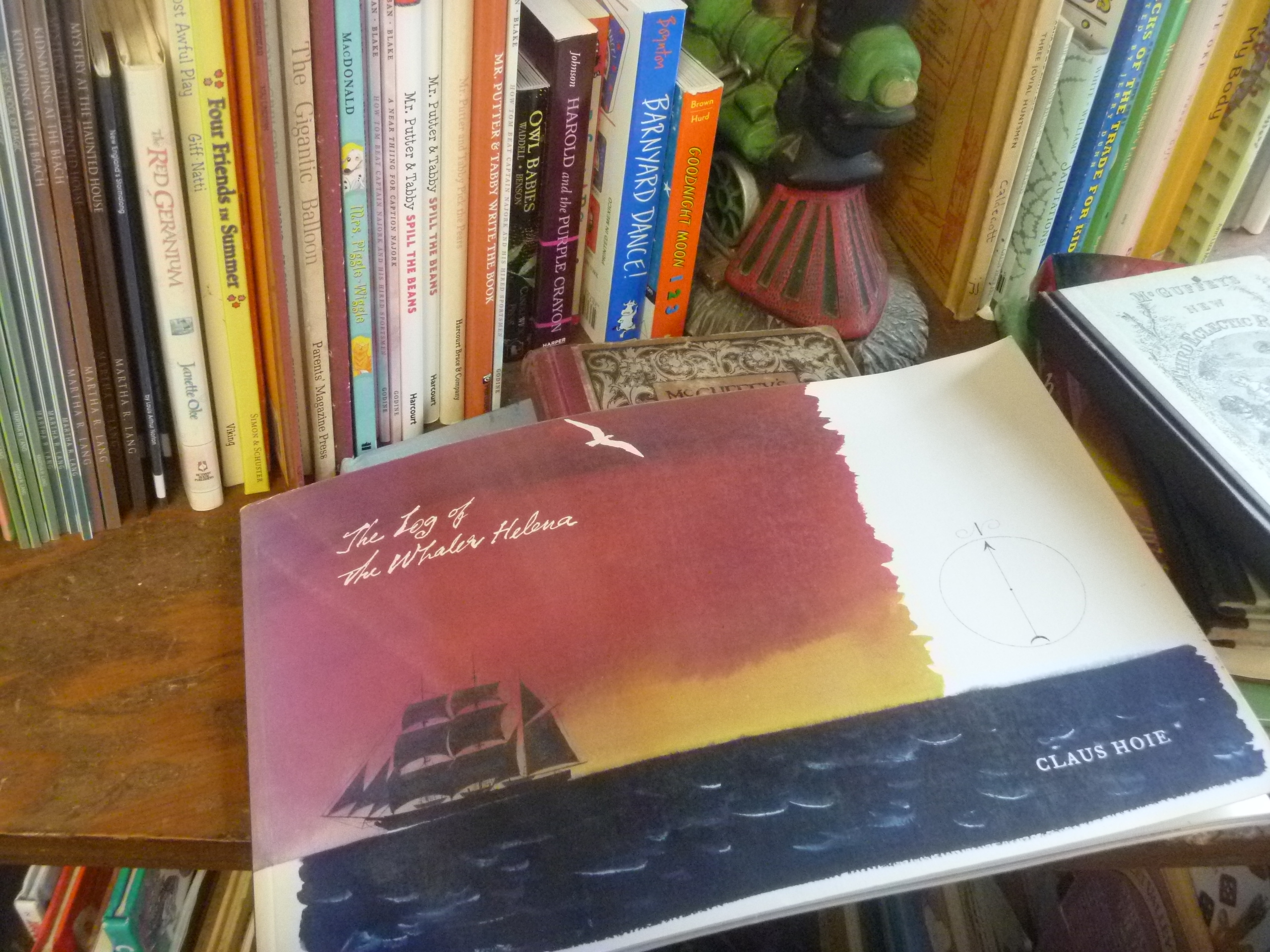
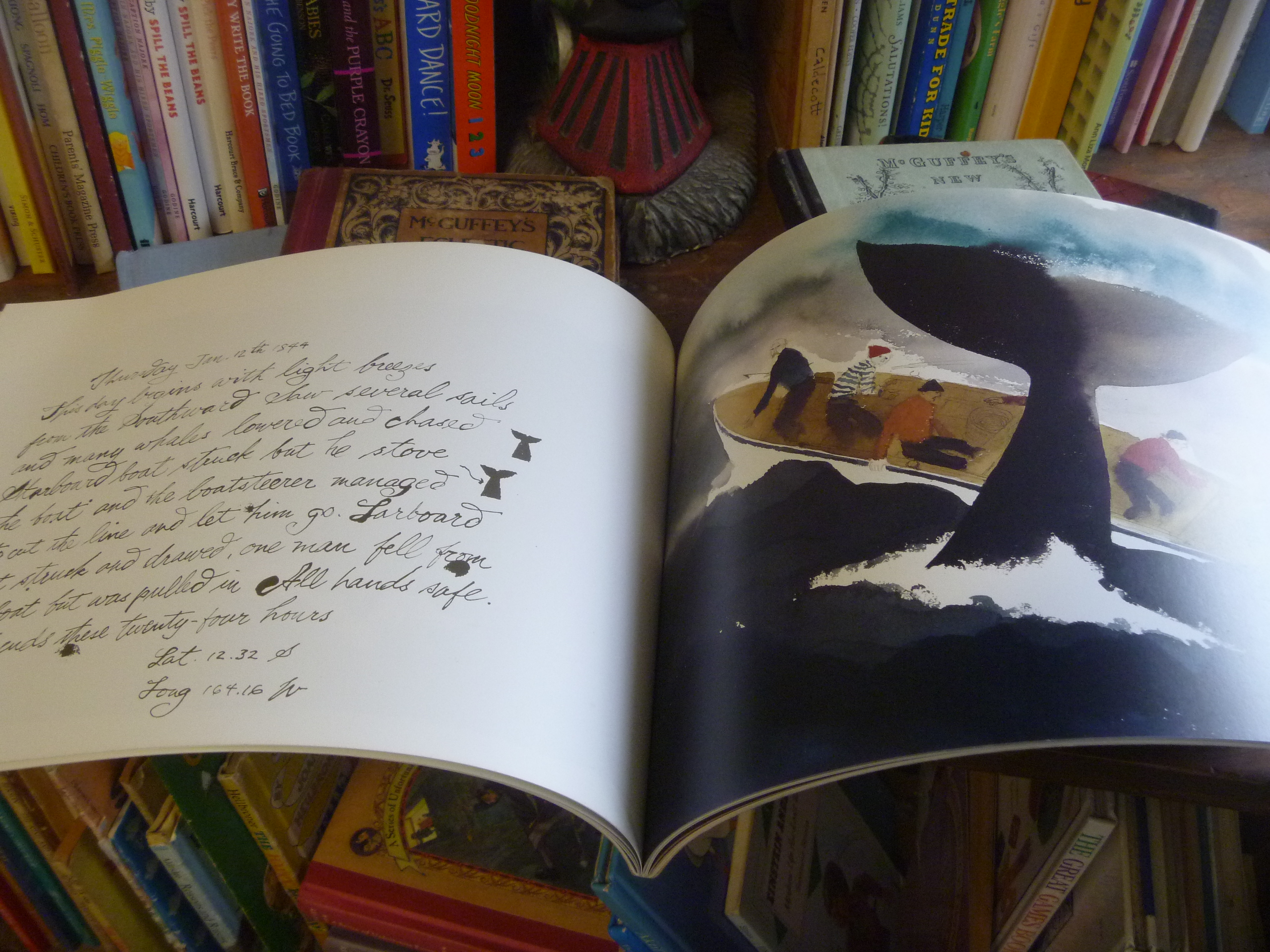
A book for young whale watchers

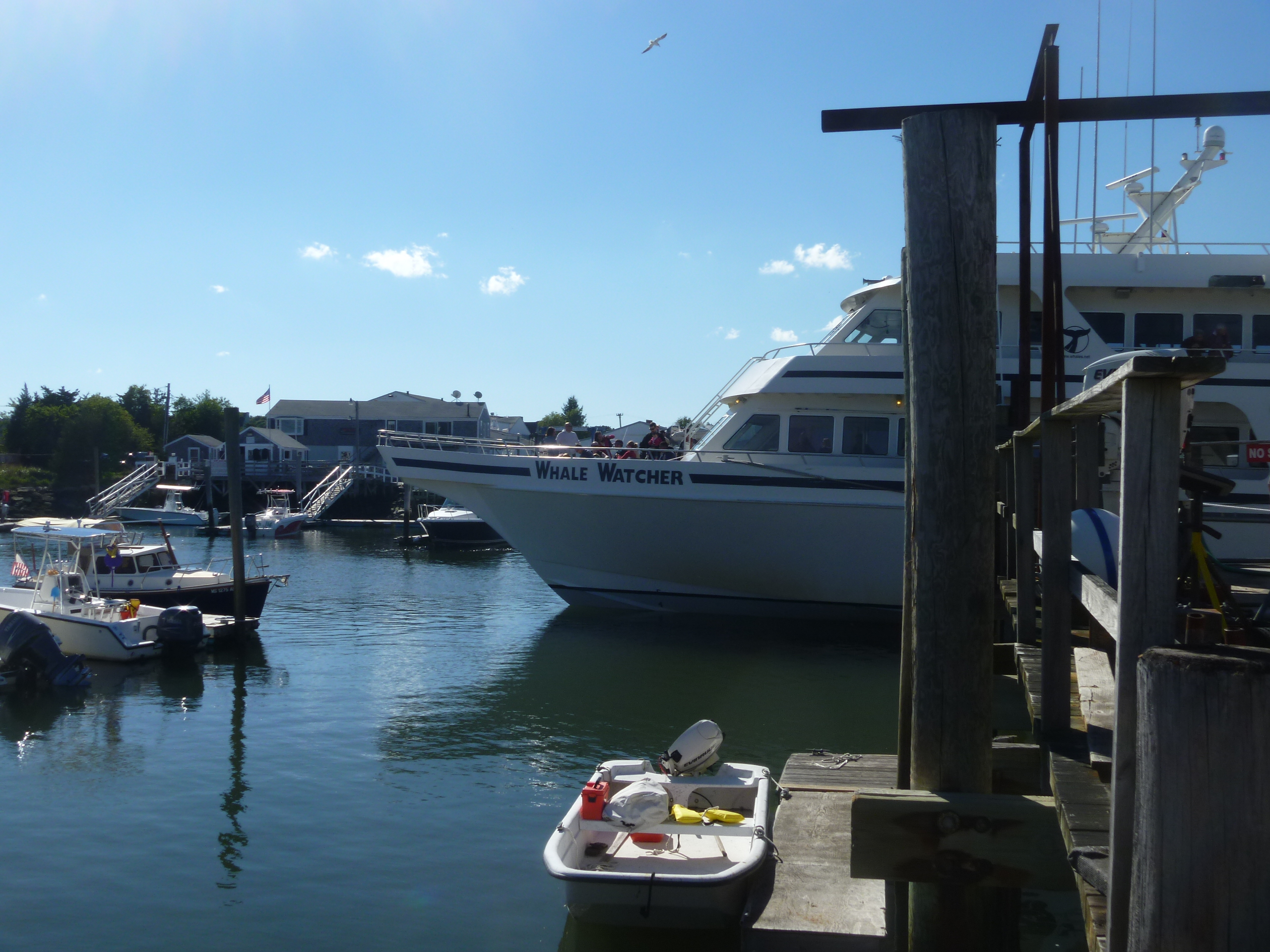
As for embarking on a Whale Watch Cruise – well, I still won’t be doing that – but I now have a husband who did! And he saw some!! The whale watchers return :

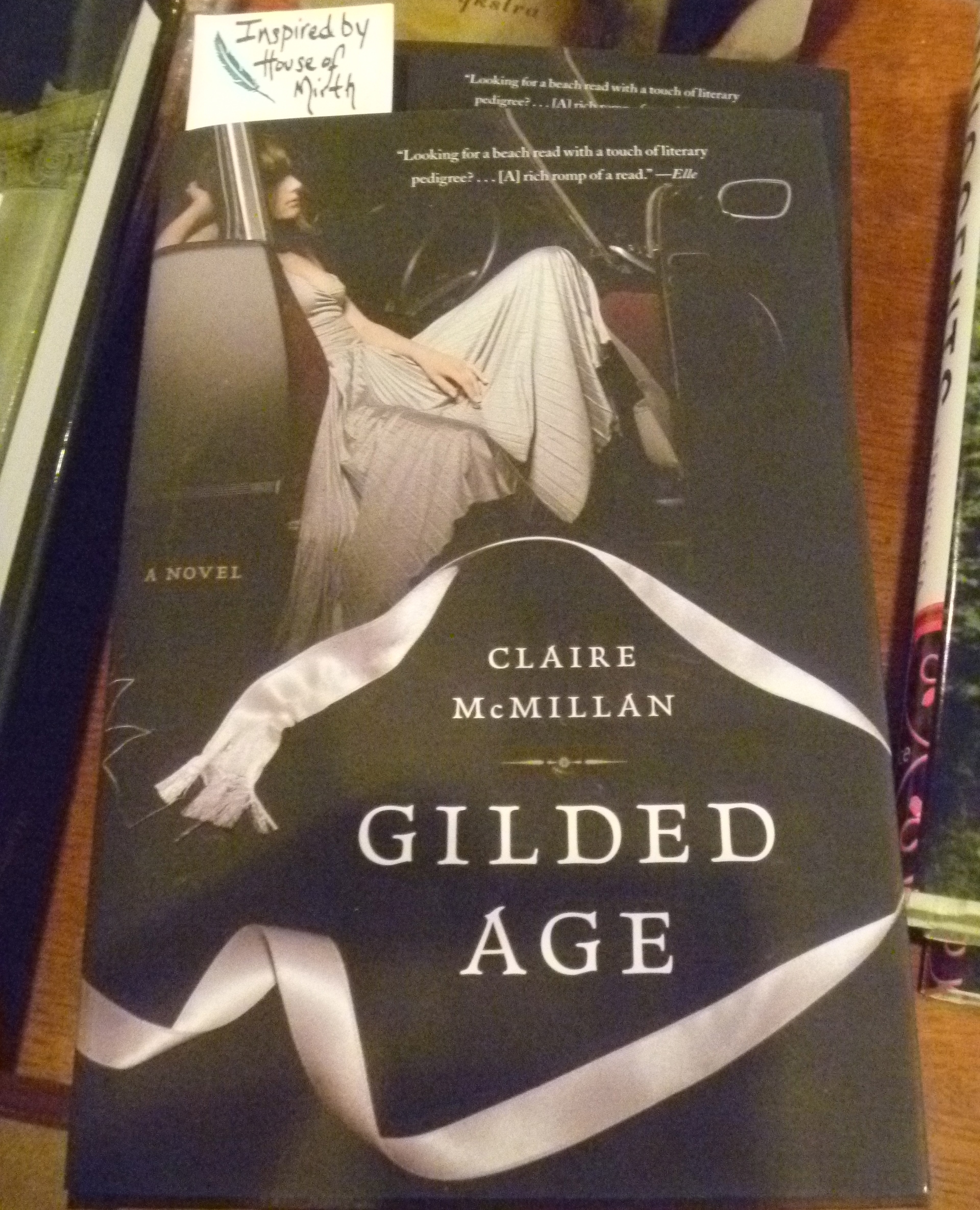
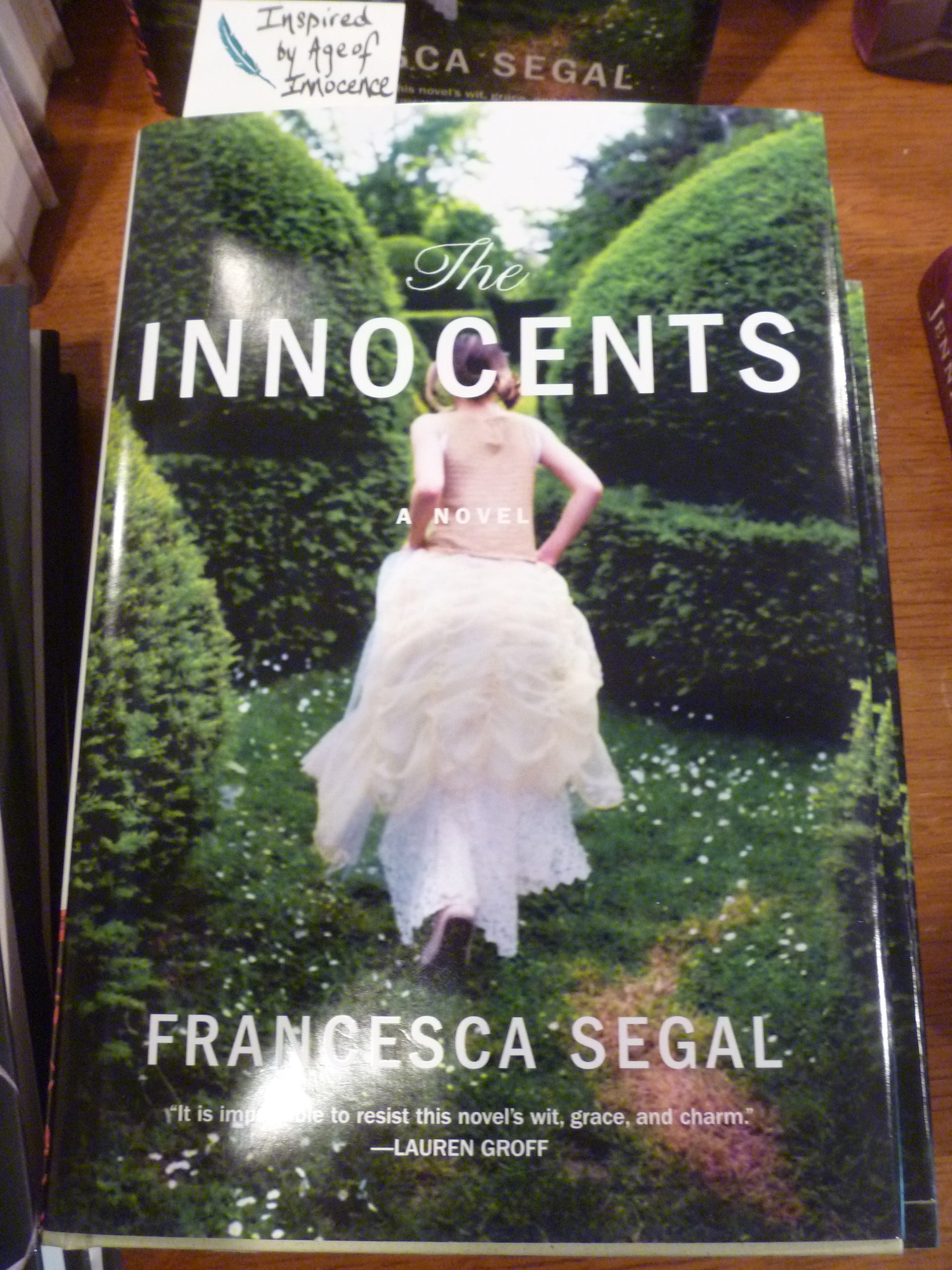
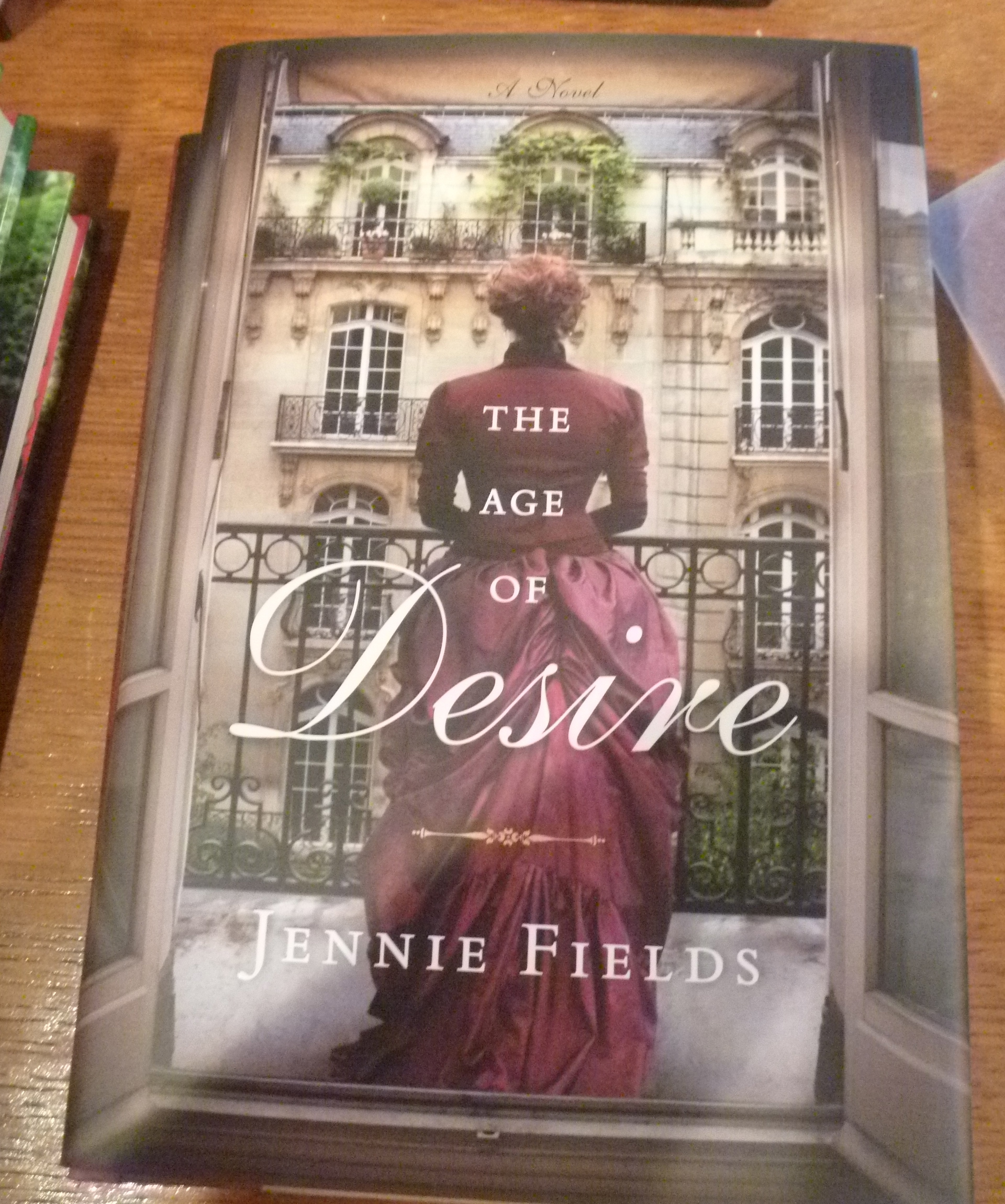
The Custom of the Country, Dramatic Licence and Edith Wharton and The First World War

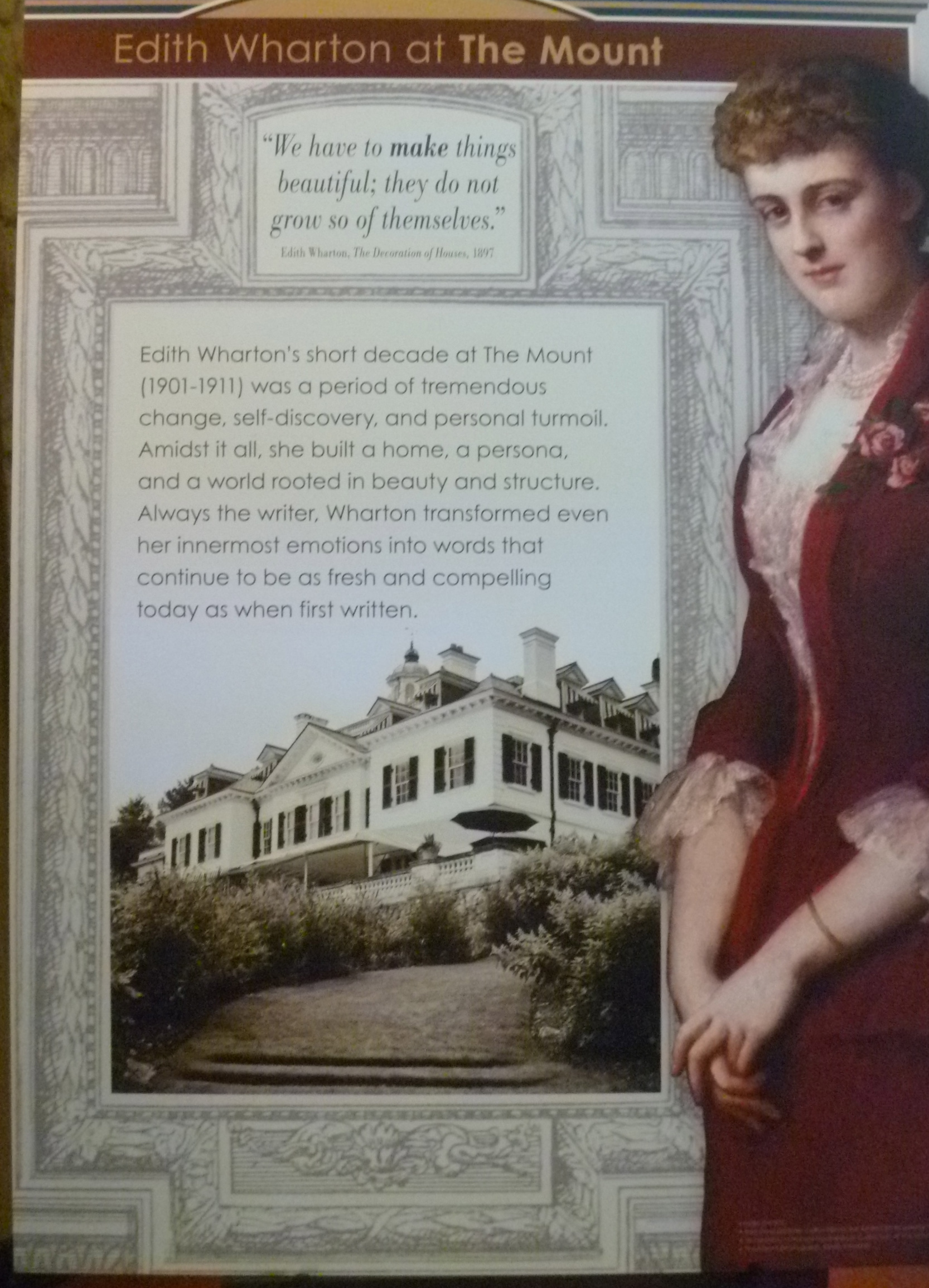
Writing these posts about my visit to The Mount has made me want to revisit as I now feel that I missed a lot.  I spent two hours there and after the 50 minute tour I rather hurried round the rest of the house and the gardens and took twenty minutes or so out of my remaining time to have a cup of tea. If I am ever fortunate to have the chance to pay a visit to The Mount again then I’d try to spend the greater part of a day there. I suppose this post consists of things I missed or very nearly missed or was only able to scan very quickly.

The Custom of the Country was the title (taken from an Edith Wharton fiction title) of the result of an American Vogue fashion shoot by Annie Leibovitz that had taken place at The Mount and was published in the September (2012) Issue. Copies of the 18 page feature were piled up around the house, presumably for the paid-up attendees at the Berkshire Wordfest 2012 event that was due to start at 5pm that very afternoon. Copies of the full size magazine were for sale in the shop – all 916 pages of it, weighing in at just under 5lbs – I could hardly lift it let alone consider packing it in my suitcase to bring home with me!  Anyone who has seen the fly-on the wall documentary The September Issue will know just what I’m talking about here. To be featured in the magazine at all is one thing; to feature in the September Issue is an achievement indeed and Edith Wharton has done it and deserves it. There’s been a bit of hoo-ha that male writers and actors appear as various men in the sets but that Wharton herself is played by a model but I don’t want to get into that discussion here.

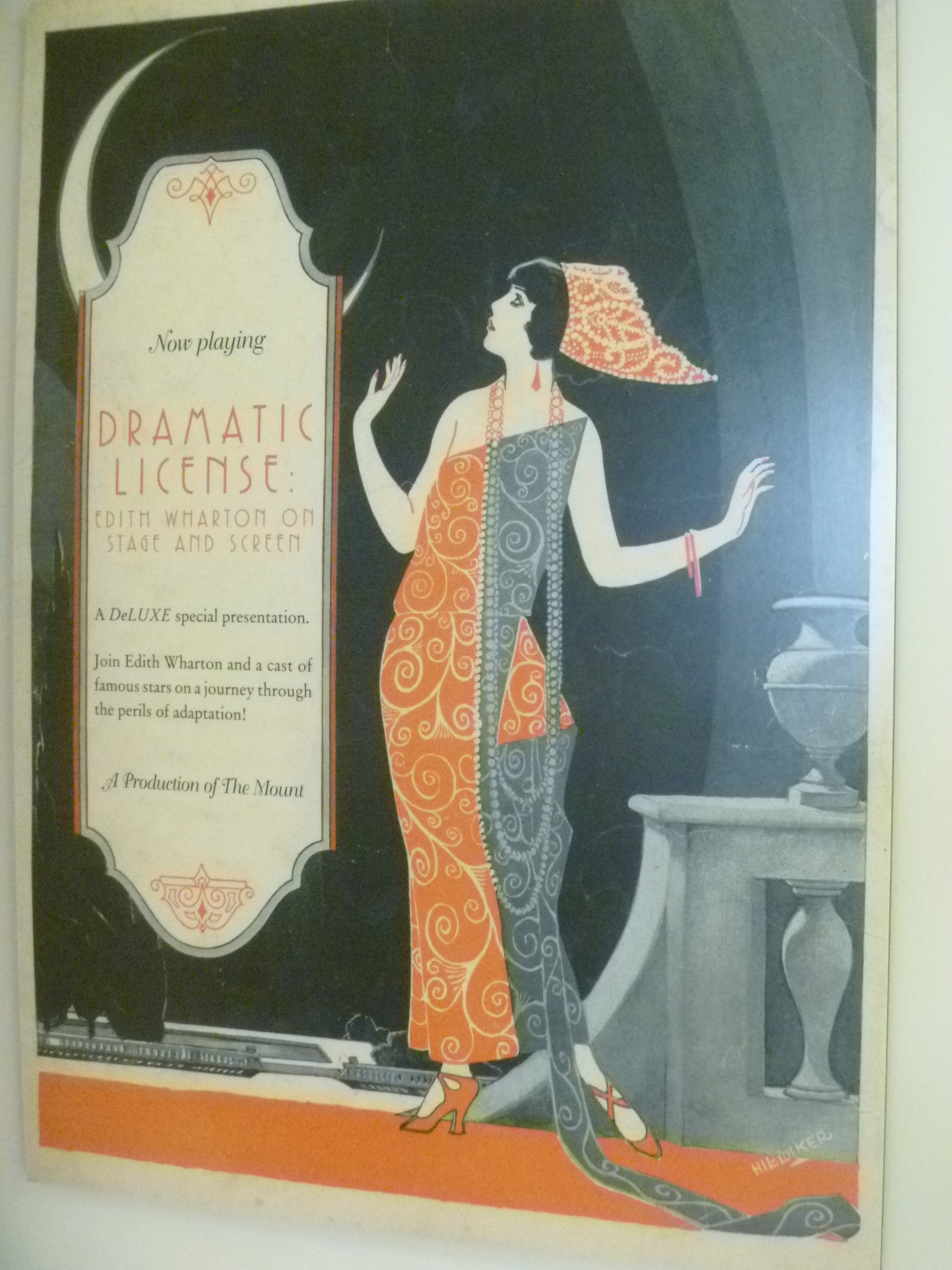
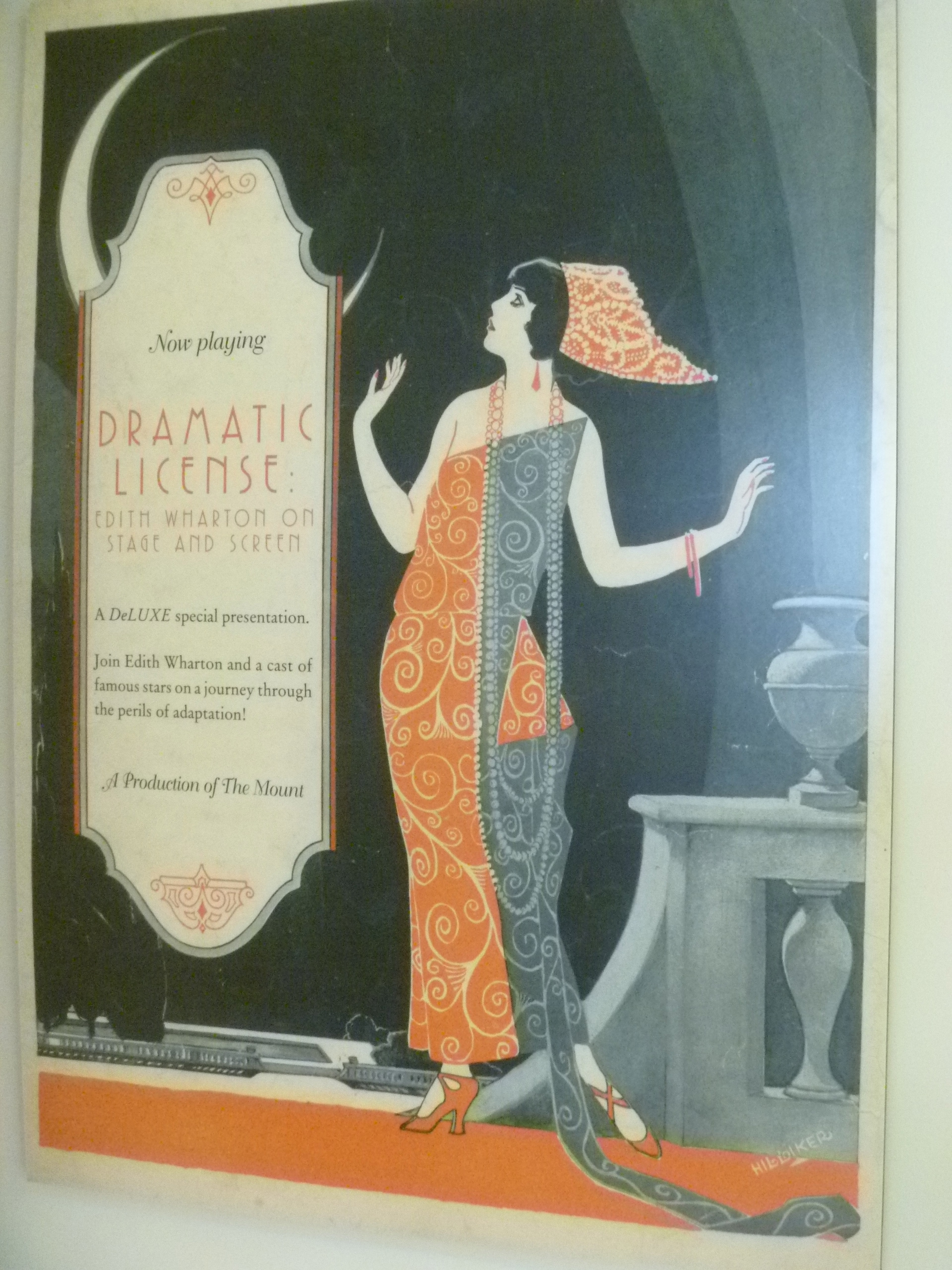
Dramatic Licence is the name of one of the two ongoing exhibitions on the top floor of The Mount.

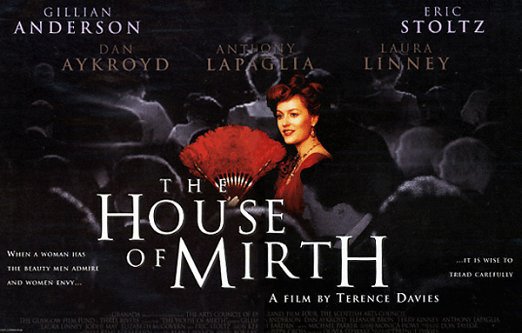
Room 1 : The Henry James Suite at the top of the stairs has been transformed into a movie theater. After you enter the room turn to your left to start the journey through the trials and triumphs of Edith Wharton’s early attempts at adapting her own work and later efforts by others. Please sit in our vintage 1905 theater seats and watch a special Mount production of trailers and clips from films made of Wharton’s works. 
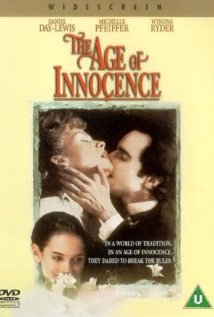
[I watched a few minutes of The Age of Innocence before moving on]

Room 2 : Teddy Wharton’s bedroom now hosts a bevy of beauties who have starred in adaptations of ‘The Age of Innocence’, ‘The Buccaneers’ and ‘Summer’. Given Mr Wharton’s reputed eye for the ladies, we think he would have approved. This room features material from the 1993 ‘The Age of Innocence’ on loan from screenwriter Jay Cocks and director Martin Scorsese.

Teddy Wharton’s bathroom depicts the interior of the ‘Ethan Frome’ kitchen based on a set design from the 1936 hit play based on Wharton’s tragic masterpiece.

The notes then go on to list the six films still available as DVDs, a note about lost movies, a list of books still in print and available from The Mount Bookshop.  There were lots of other relevant titles in the shop.

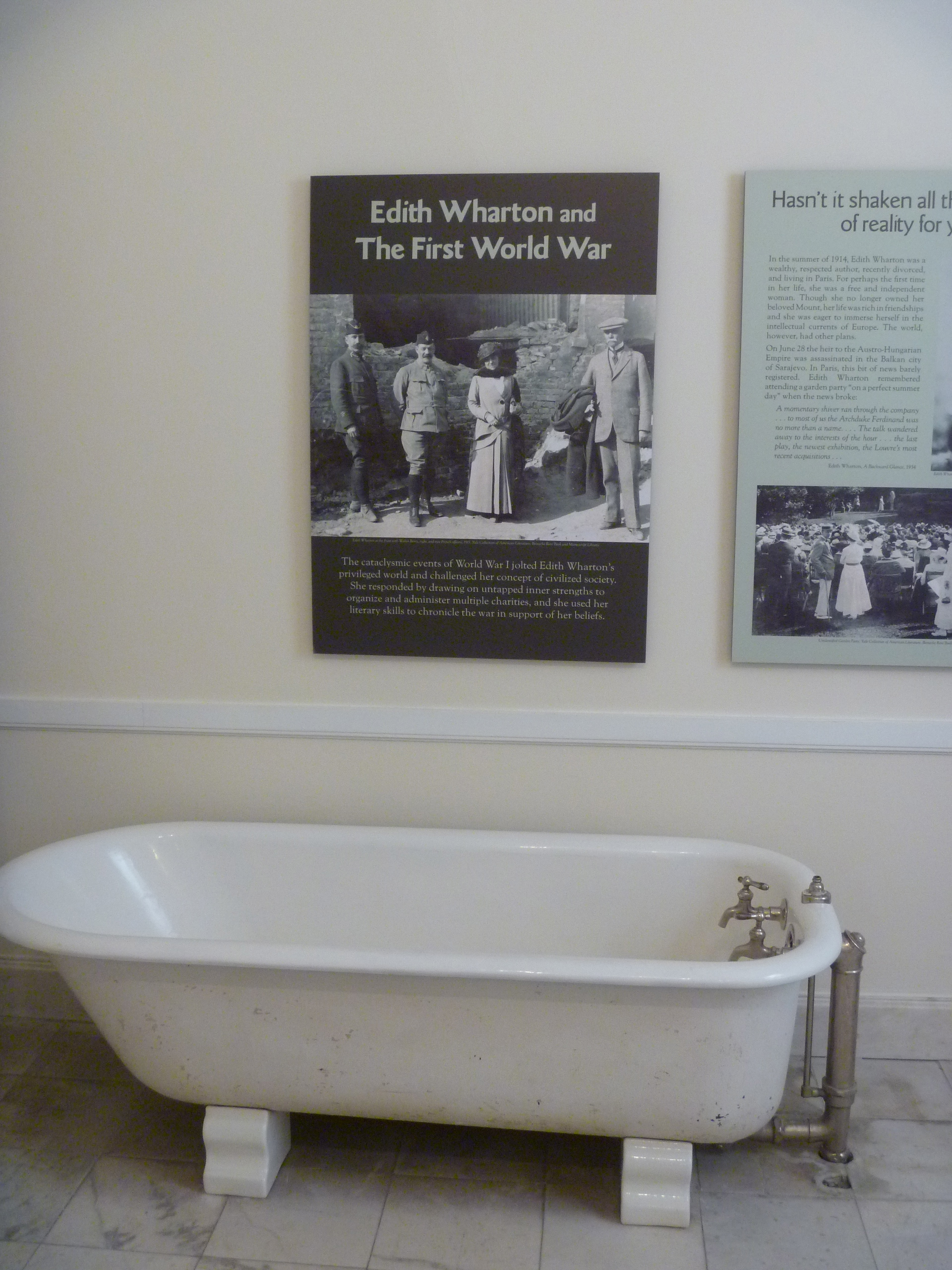
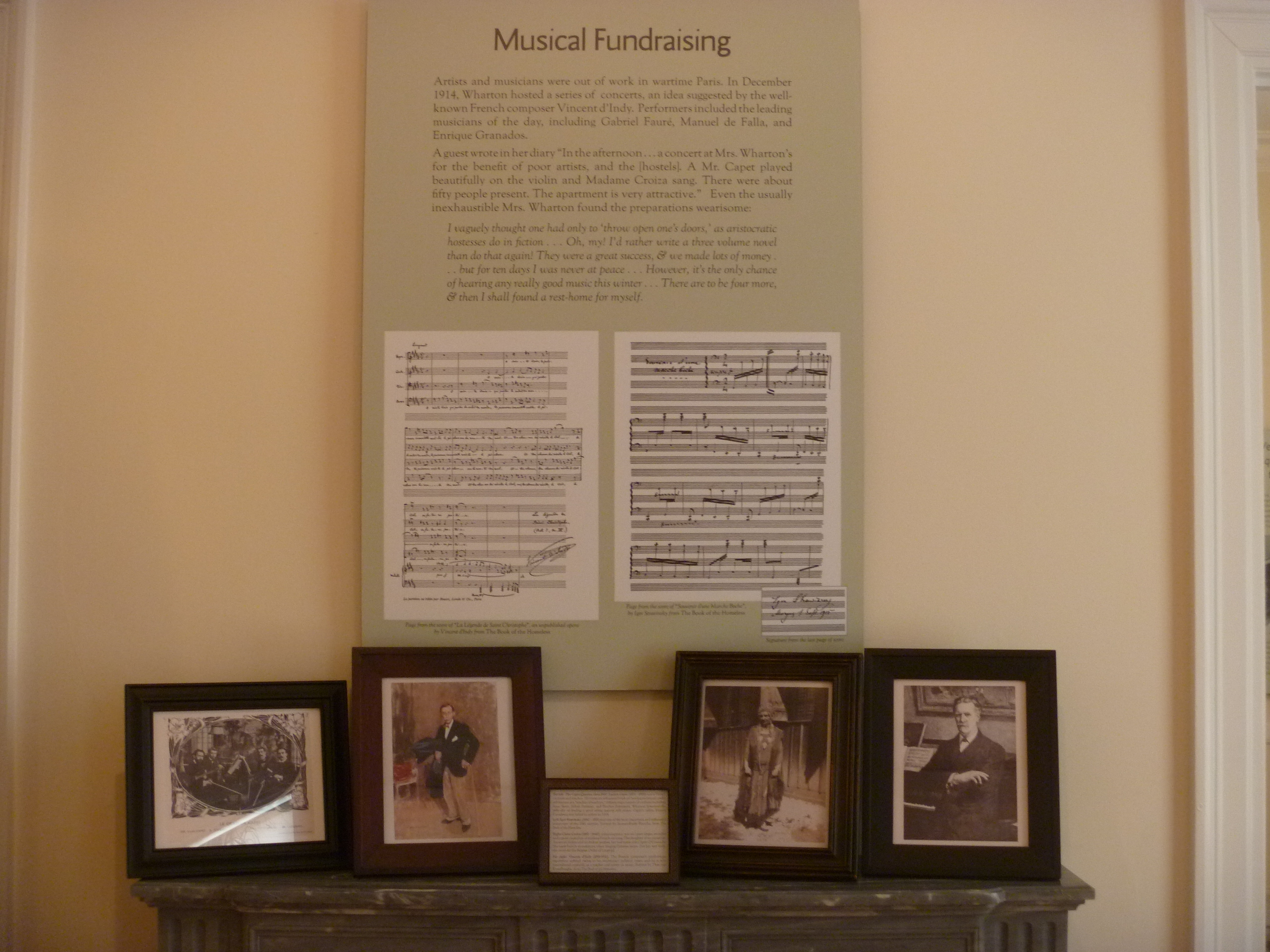
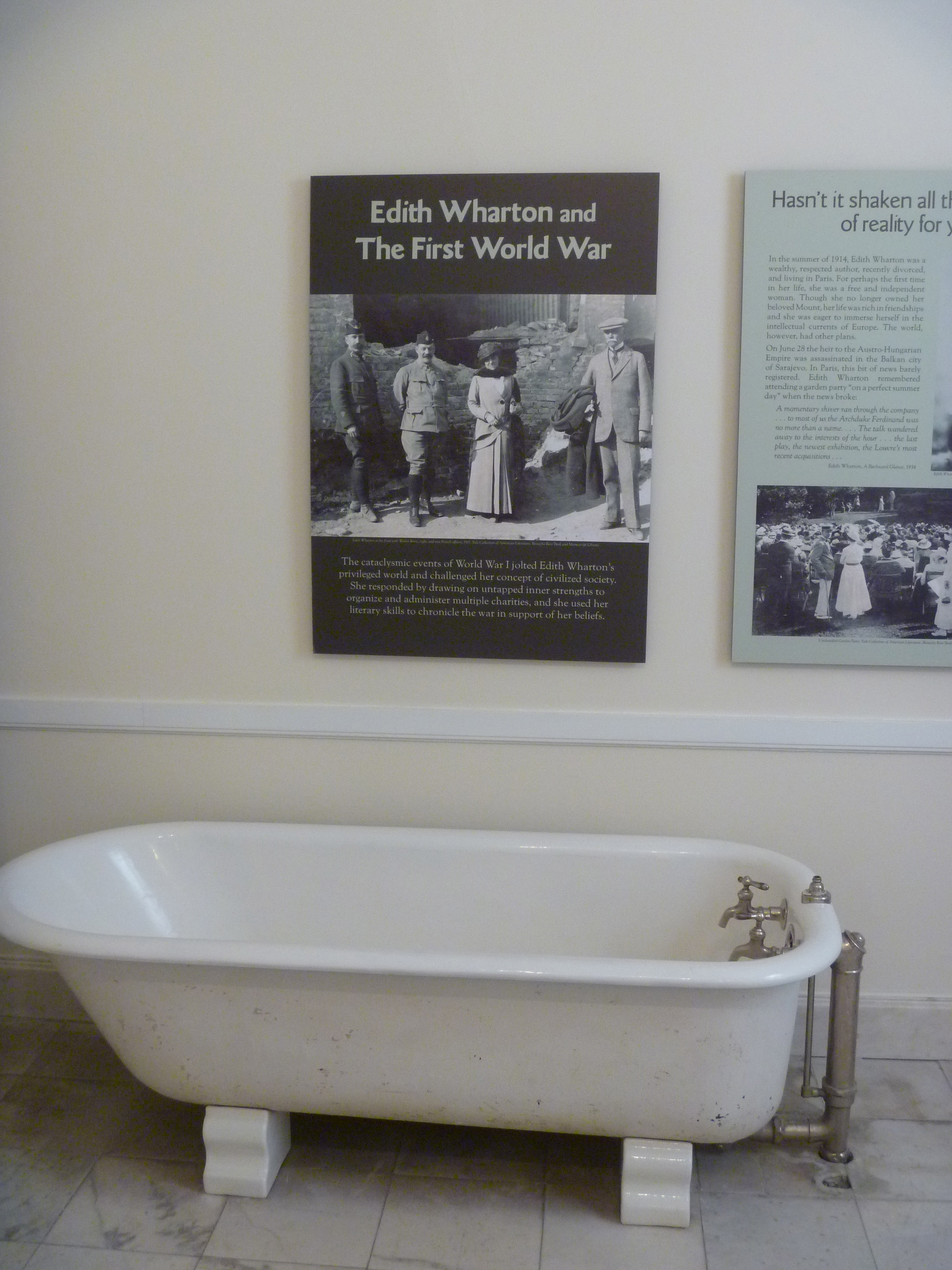
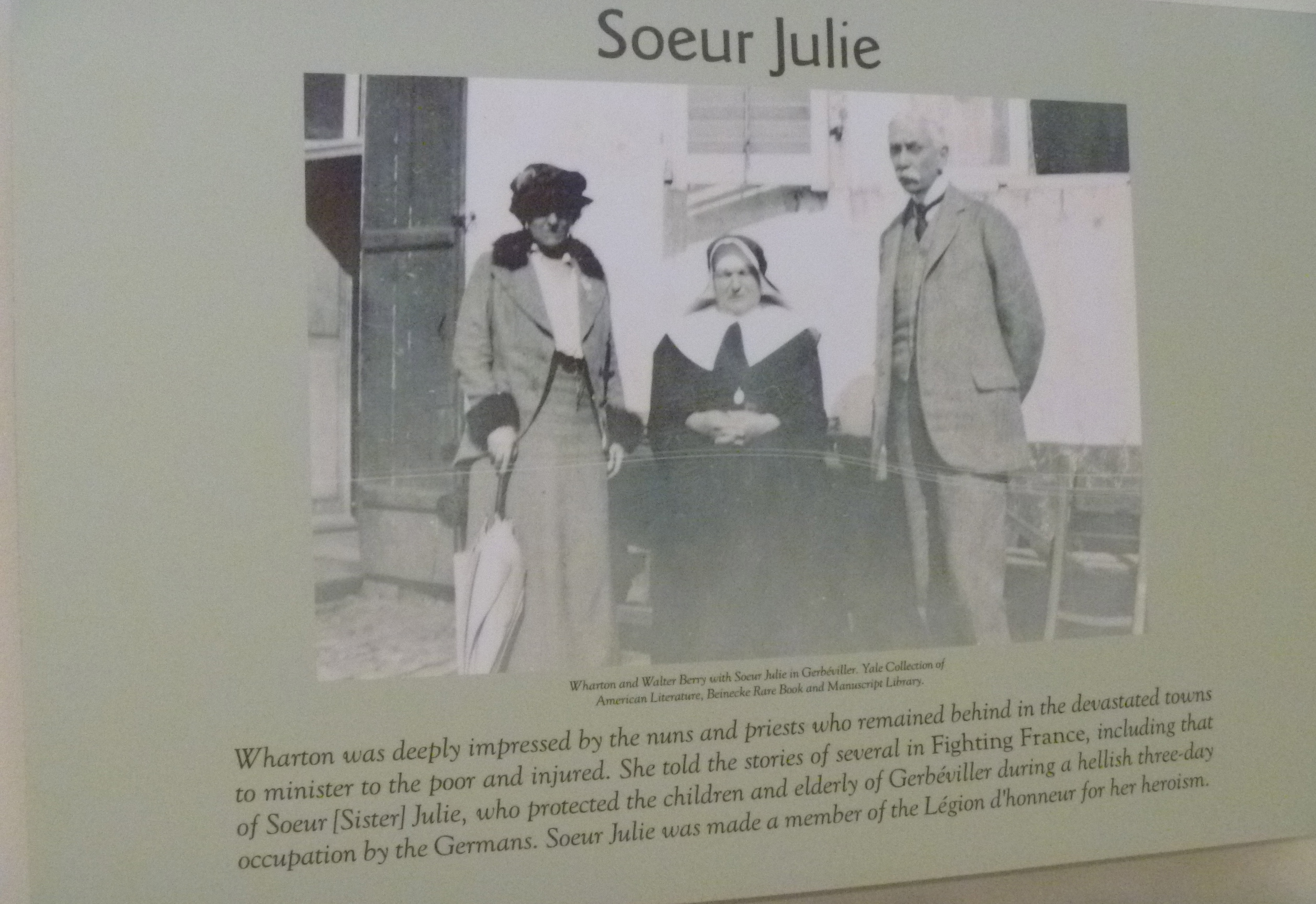
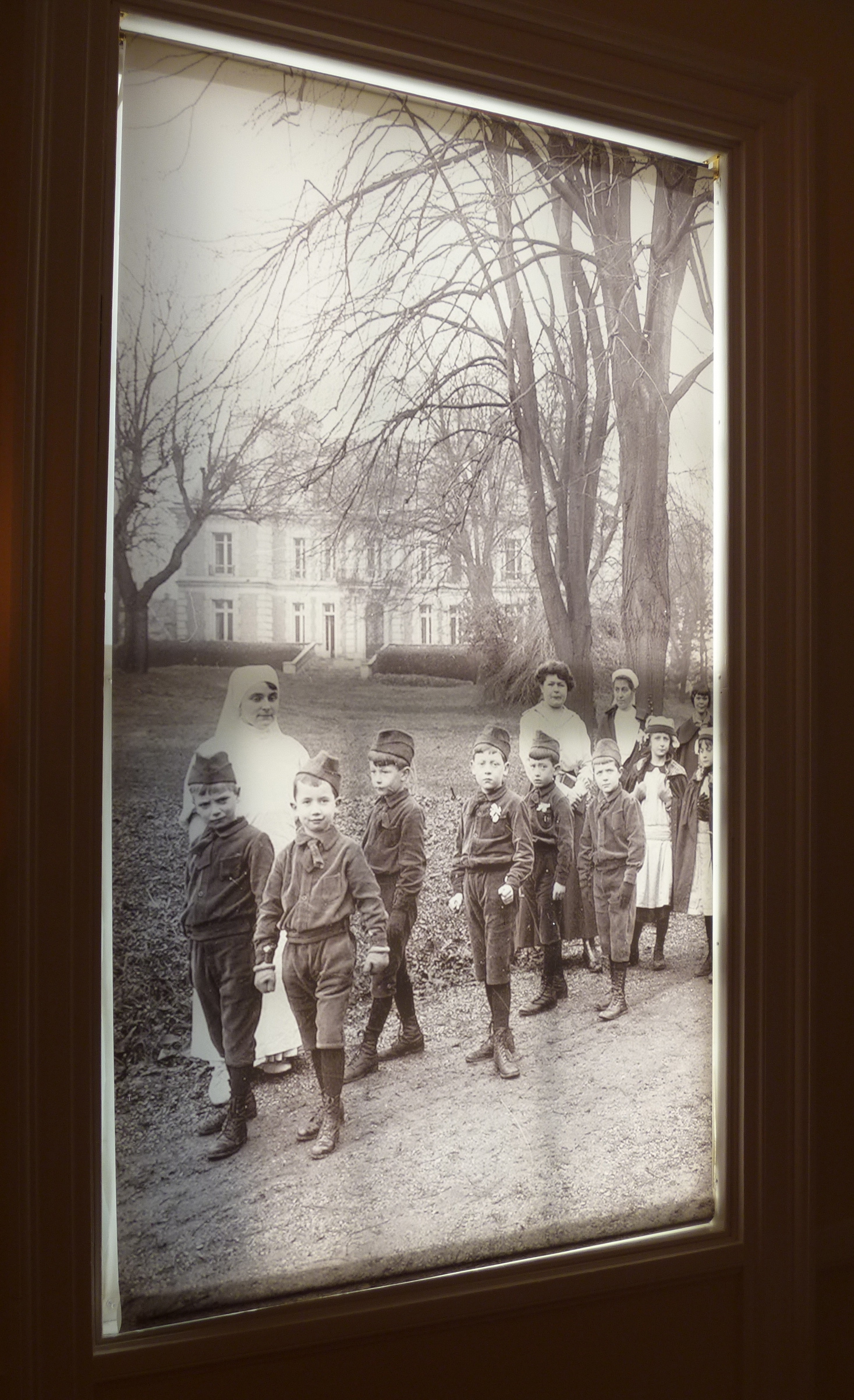
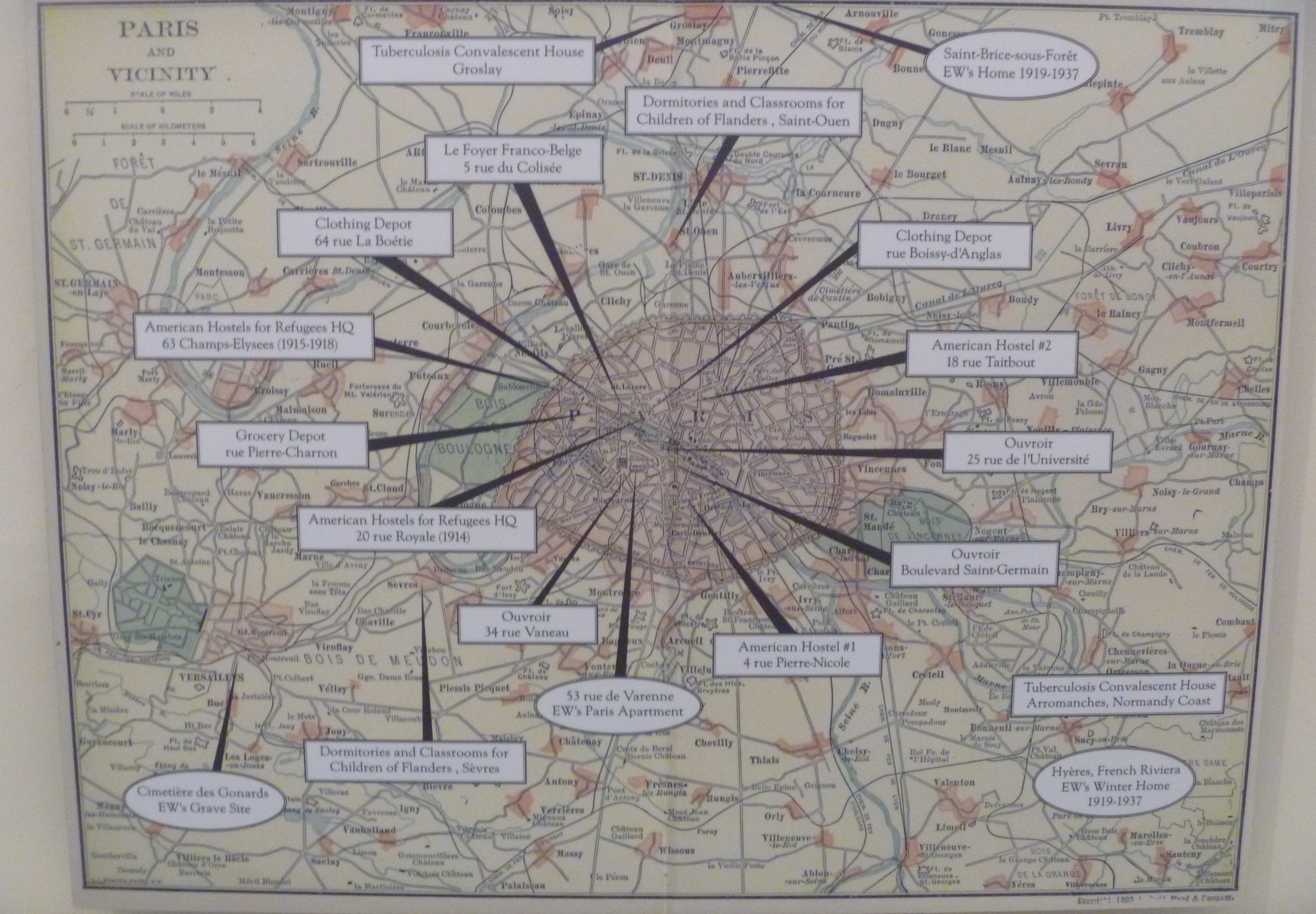
The Edith Wharton and The First World War exhibit speaks for itself. I knew that Wharton had lived much of her life in France and that she is buried in Les Gonards Cemetery in Versailles. In fact I wanted to find her grave when I was there in May but didn’t have time. I had not realised just how involved she was during the First World War.

Coincidently, even just the brief overview of the exhibit brought to life the poignant story of Molly and Tom the characters that I had just finished reading about in my friend Diney Costeloe’s book ‘The Ashgrove‘. Much of the action in the book takes place in a French convent.

Edith Wharton was profoundly affected by the First World War. This year, The Mount has designed an exhibition which examines her reaction to the devastation of the world she knew. Using images, artifacts, music, and the written word, it presents aspects of Wharton’s experience as a woman and a writer that are less well known to the public.

By throwing herself tirelessly and energetically into work, both literary and charitable, she was able to make use of her talents in ways previously unknown to her. Her charities, which included hostels for refugees and orphans from Belgium, workrooms to help widows and women who had lost their jobs, and hospitals for TB patients, benefited from her amazing organizational and fundraising skills. She used her great talent as a writer to send back reports from the Front detailing the horrors of war, in order to influence the United States to join the conflict.

By highlighting these two aspects of her war experience, we hope to bring a new understanding of Edith Wharton to the public.

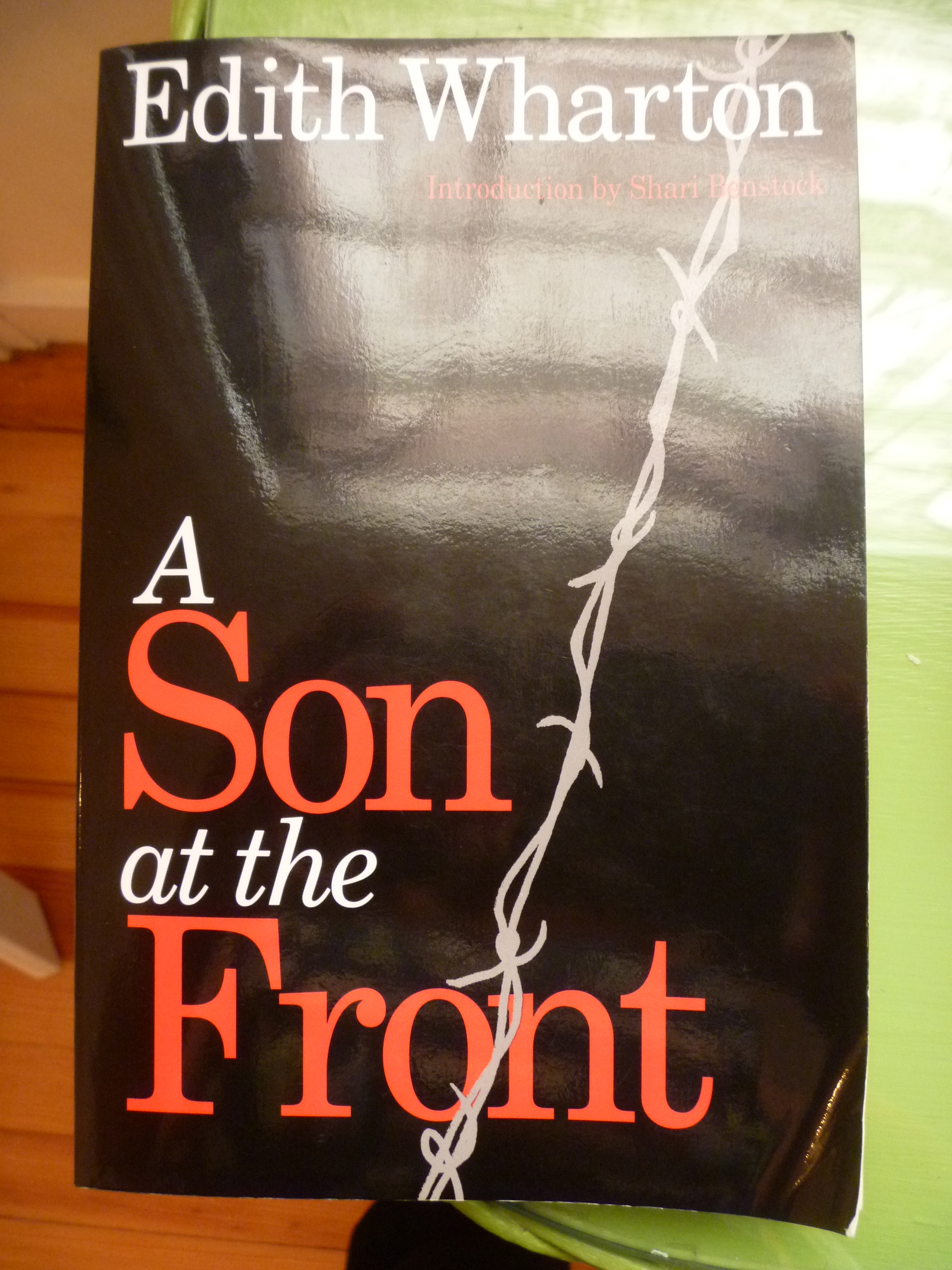
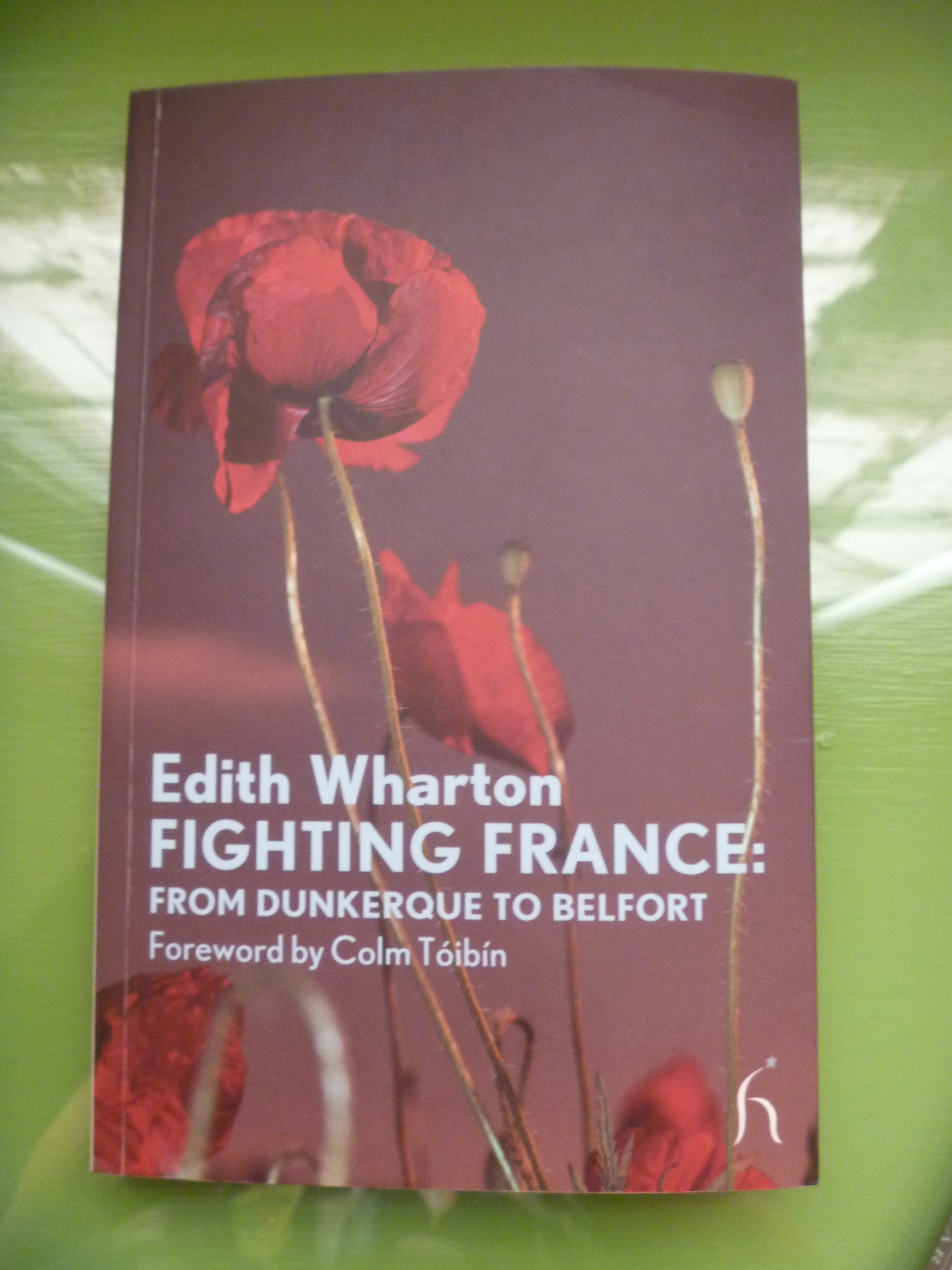
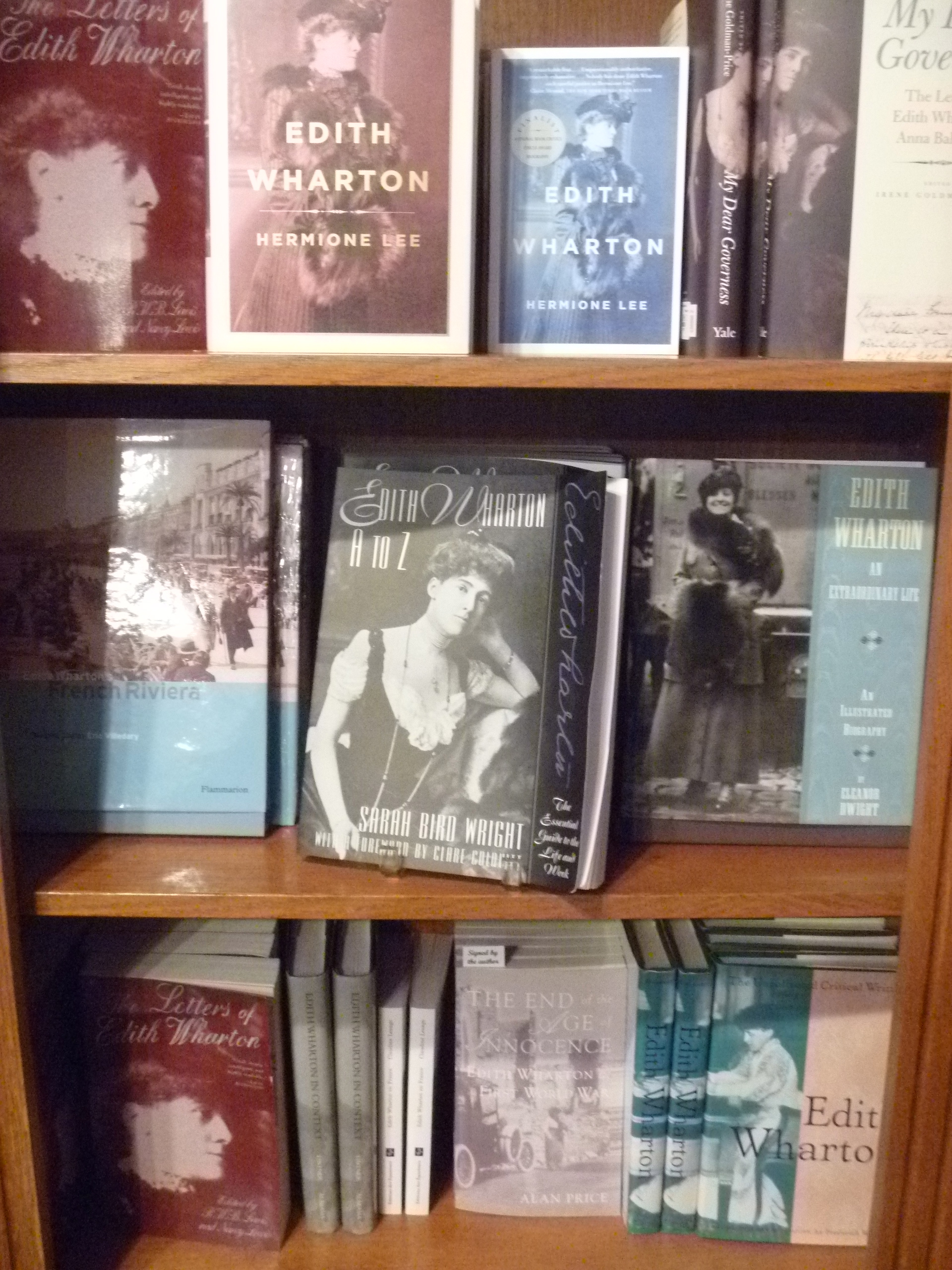
In the Book Shop were several titles by Edith Wharton about the the War and her experiences.

A Step from the House is a Step into Nature : the Grounds and Gardens at The Mount

Wharton carefully planned the grounds of The Mount, which during her ownership comprised 150 acres of drives, woodlands, orchards, meadows, wildflower fields and formal gardens. Her niece, the noted landscape architect Beatrix Farrand, assisted by designing the maple-lined drive leading to the house and the elaborate kitchen garden that occupied the field in front of the stable. Wharton’s restored greenhouse still stands near the original gates.

The formal gardens around the house were designed by Wharton herself. Completely overgrown for many years, they now appear much as they did when the were new. At this time she was also writing her book Italian Villas and Their Gardens.

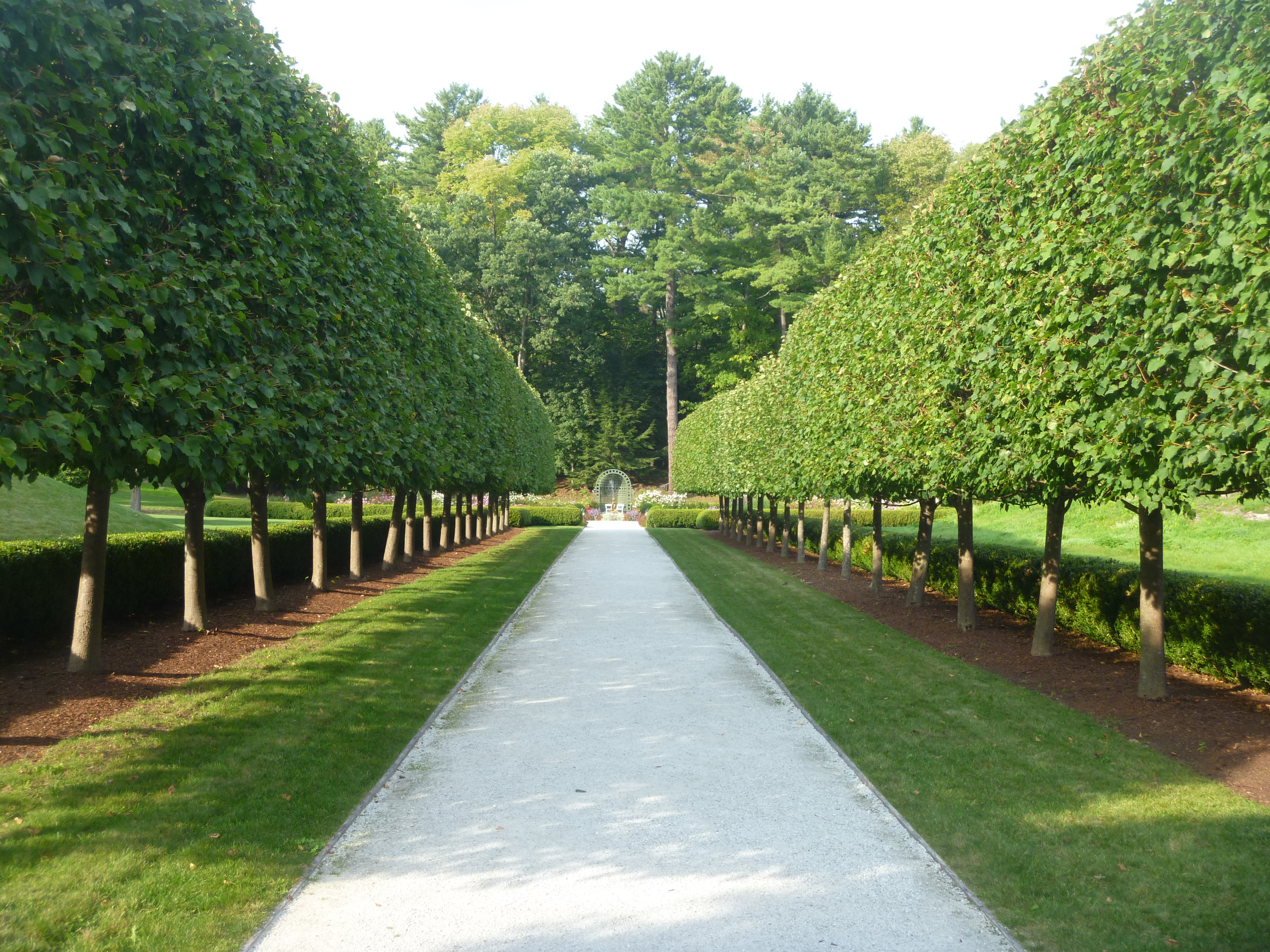
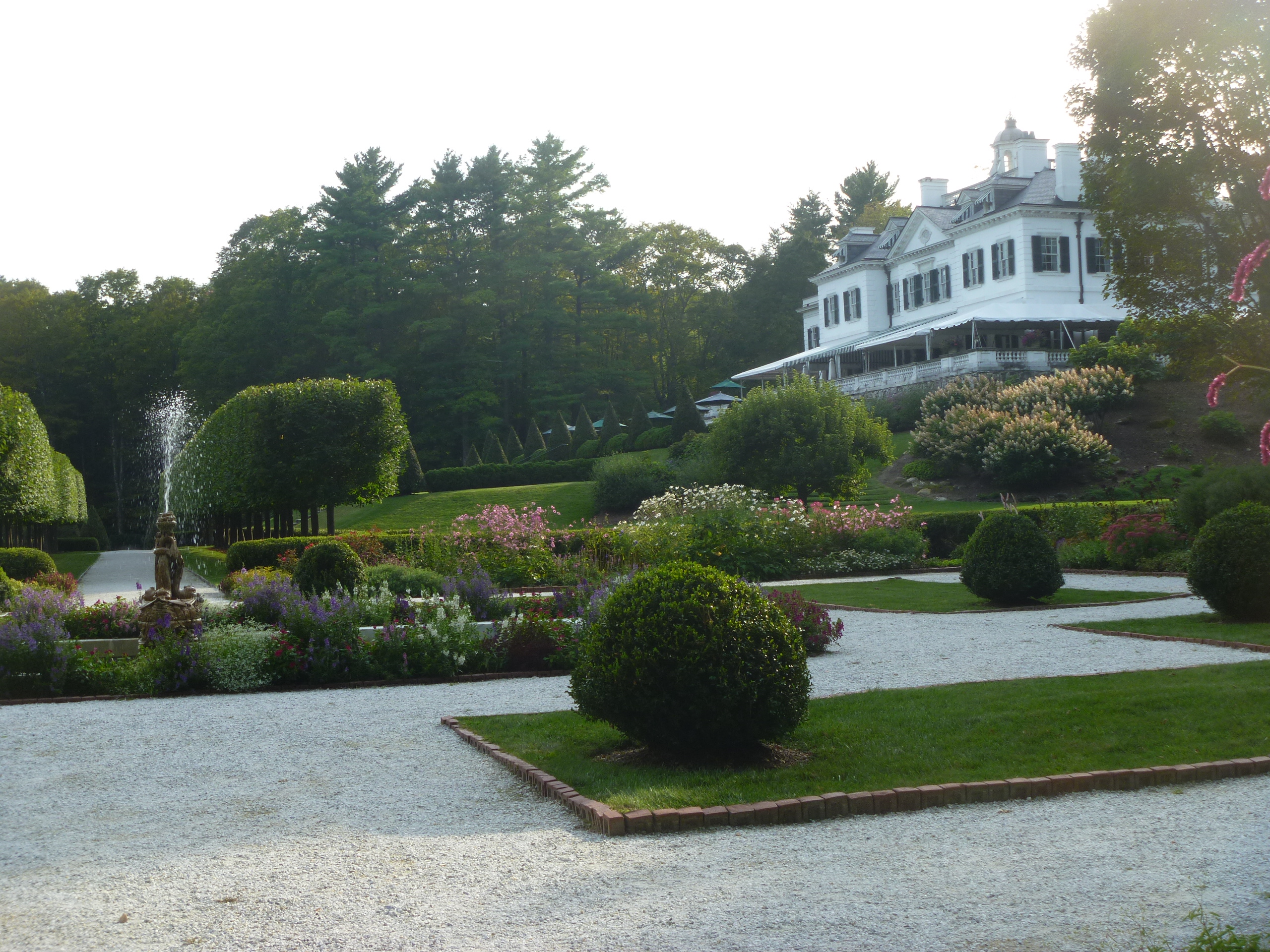
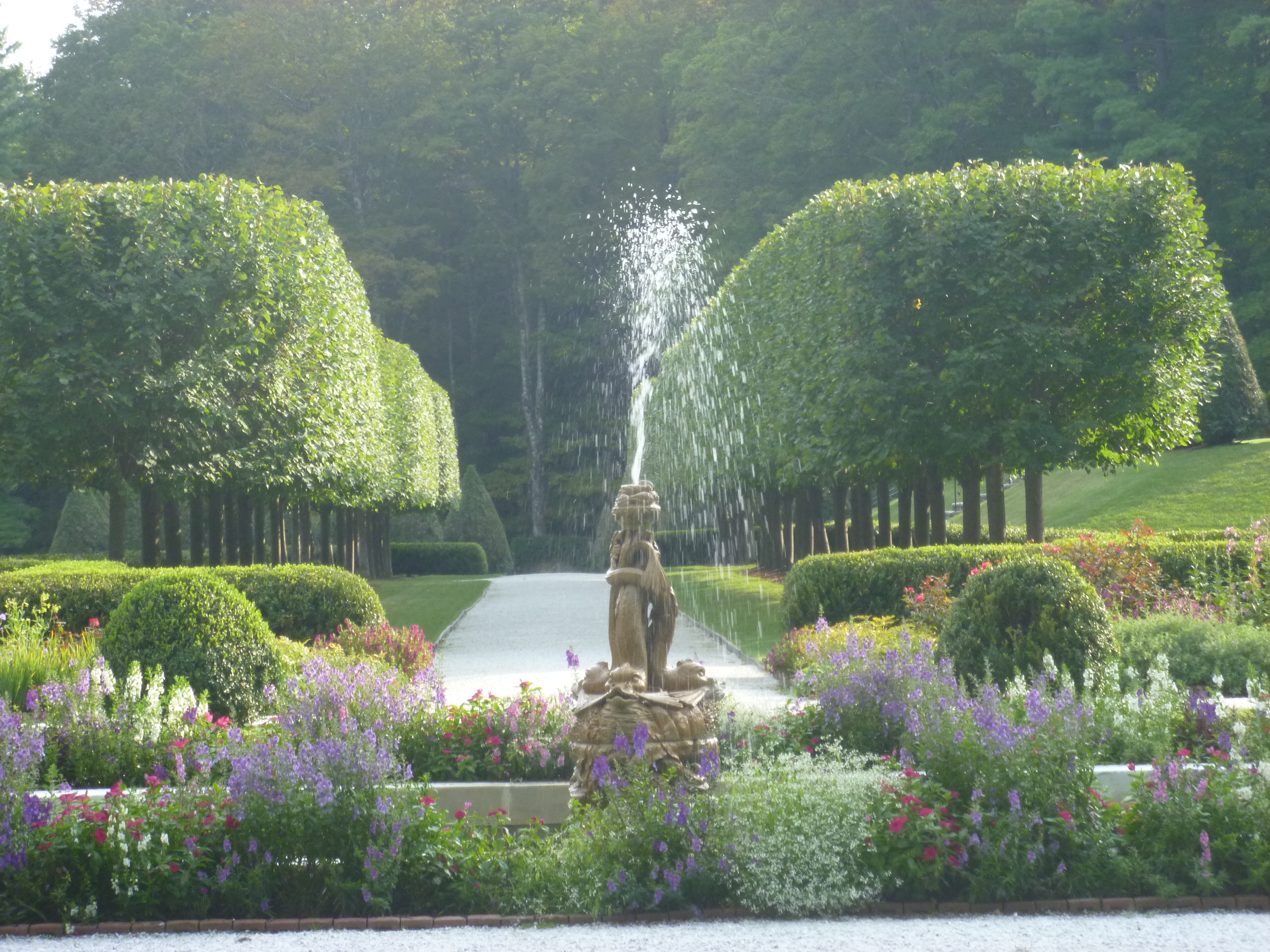
A broad Palladian staircase leads down from the terrace to gravel walks which descend to a lime walk of linden trees. The Lime Walk serves as a connecting hallway between the two major garden rooms. 

To the right when facing away from the house, the walled garden is an Italian “giardino segreto”. Wharton completed this garden with the proceeds from her first best-seller “The House of Mirth”.

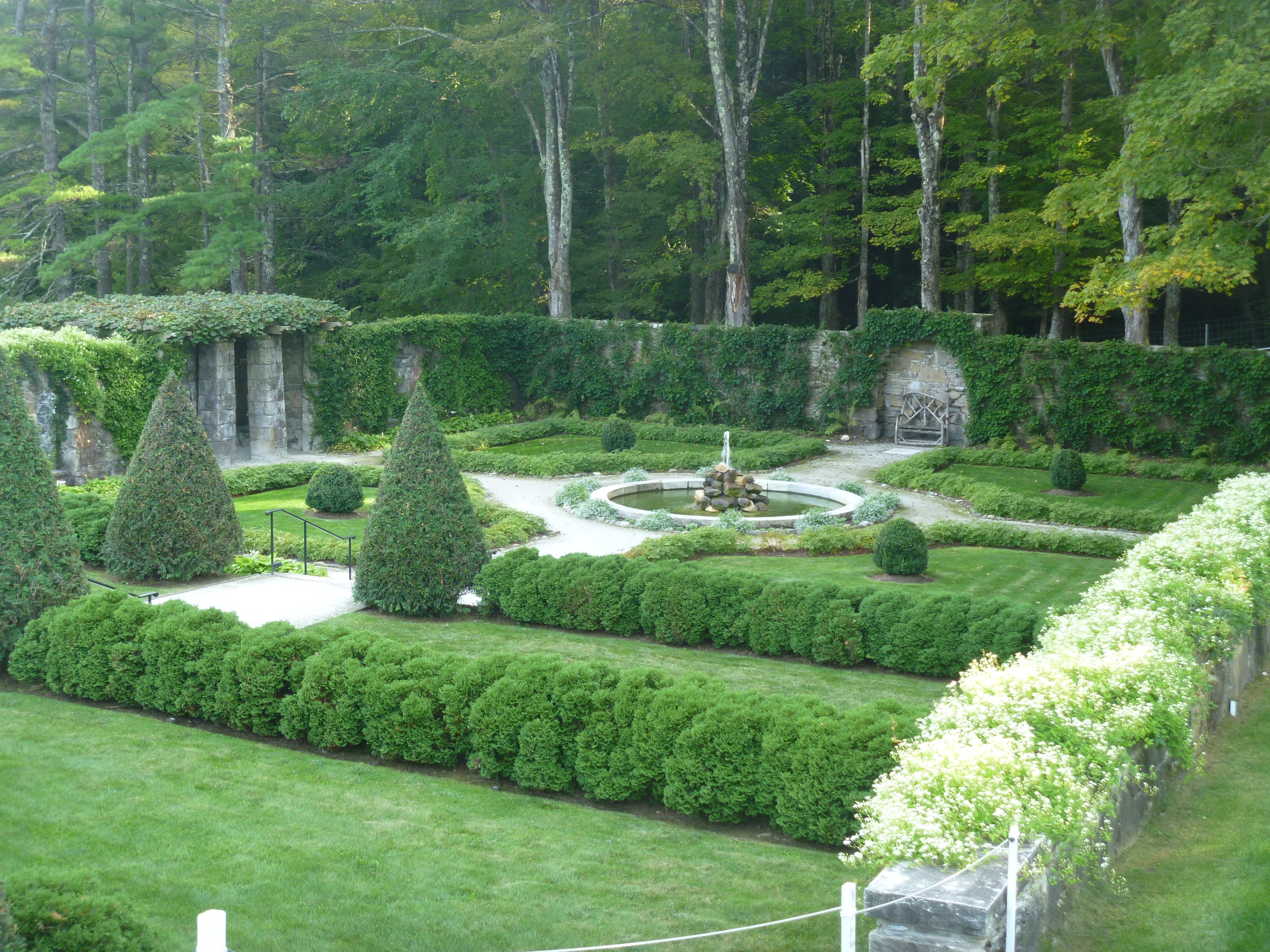
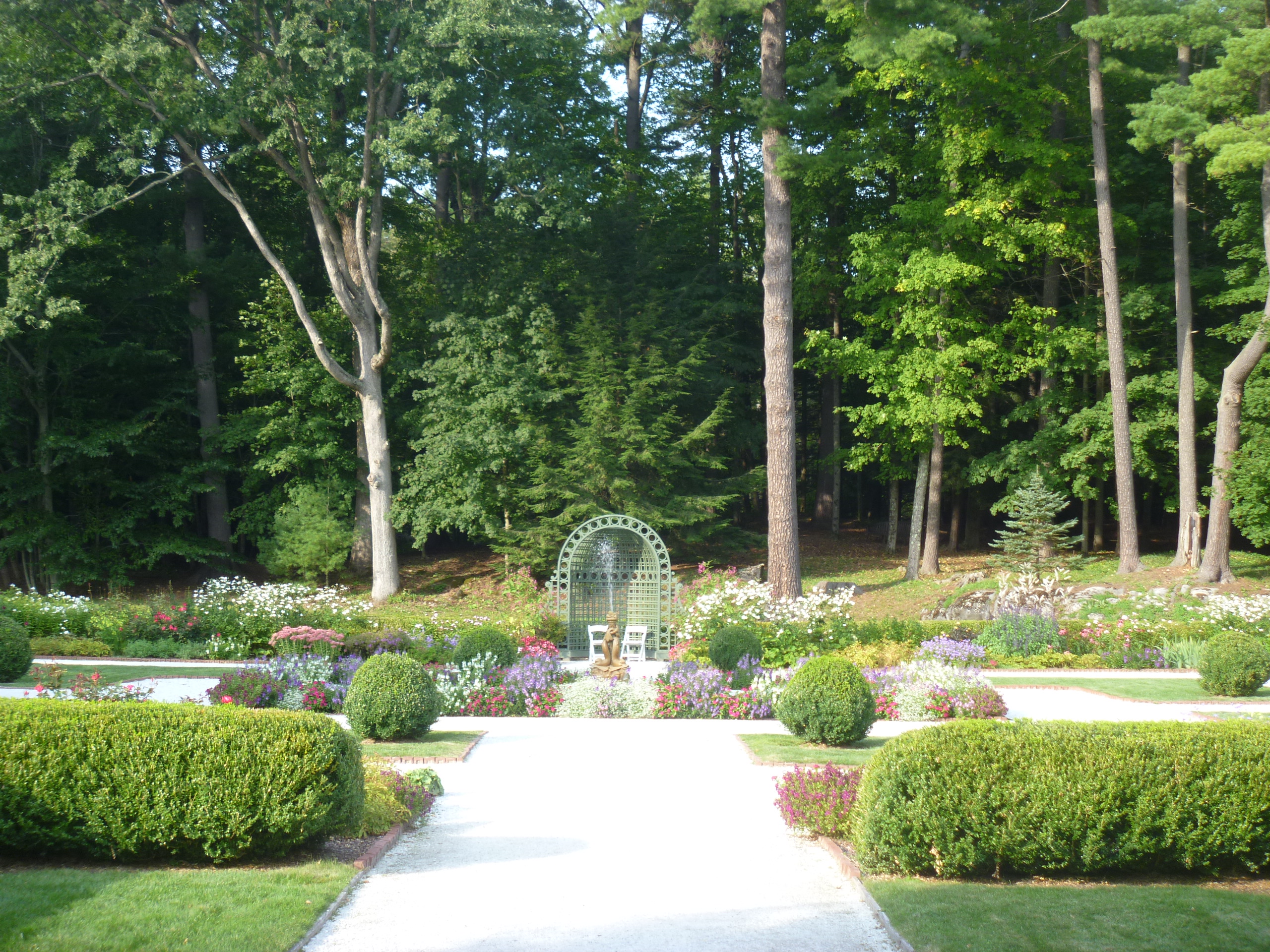
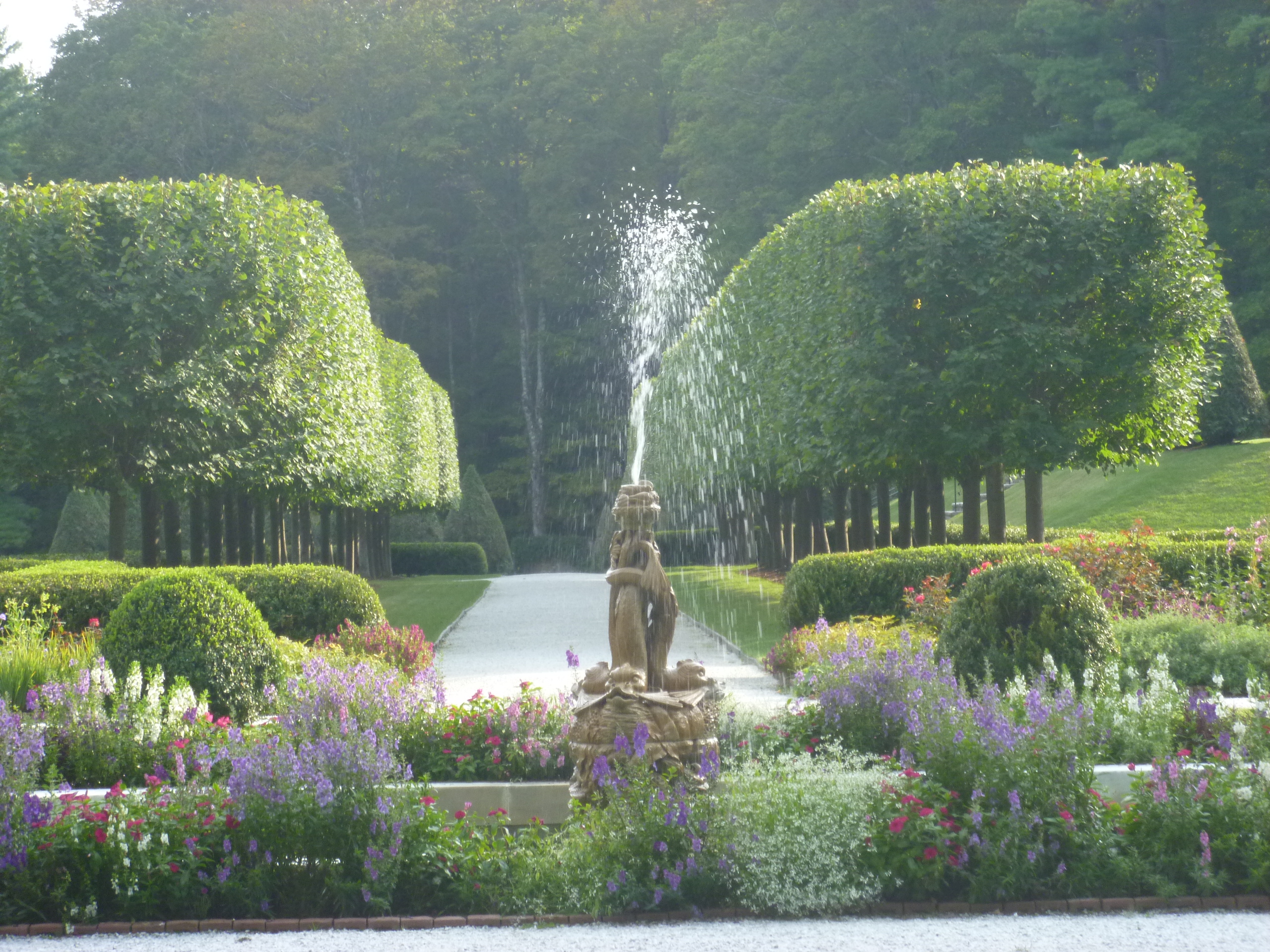
On the left, the French-style flower garden has eight boxwood bushes arranged around a pool with Wharton’s dolphin fountain. Over 3,000 annuals and perennials have been planted here to suggest Wharton’s design. The trellis-work niche was recreated from photographs.

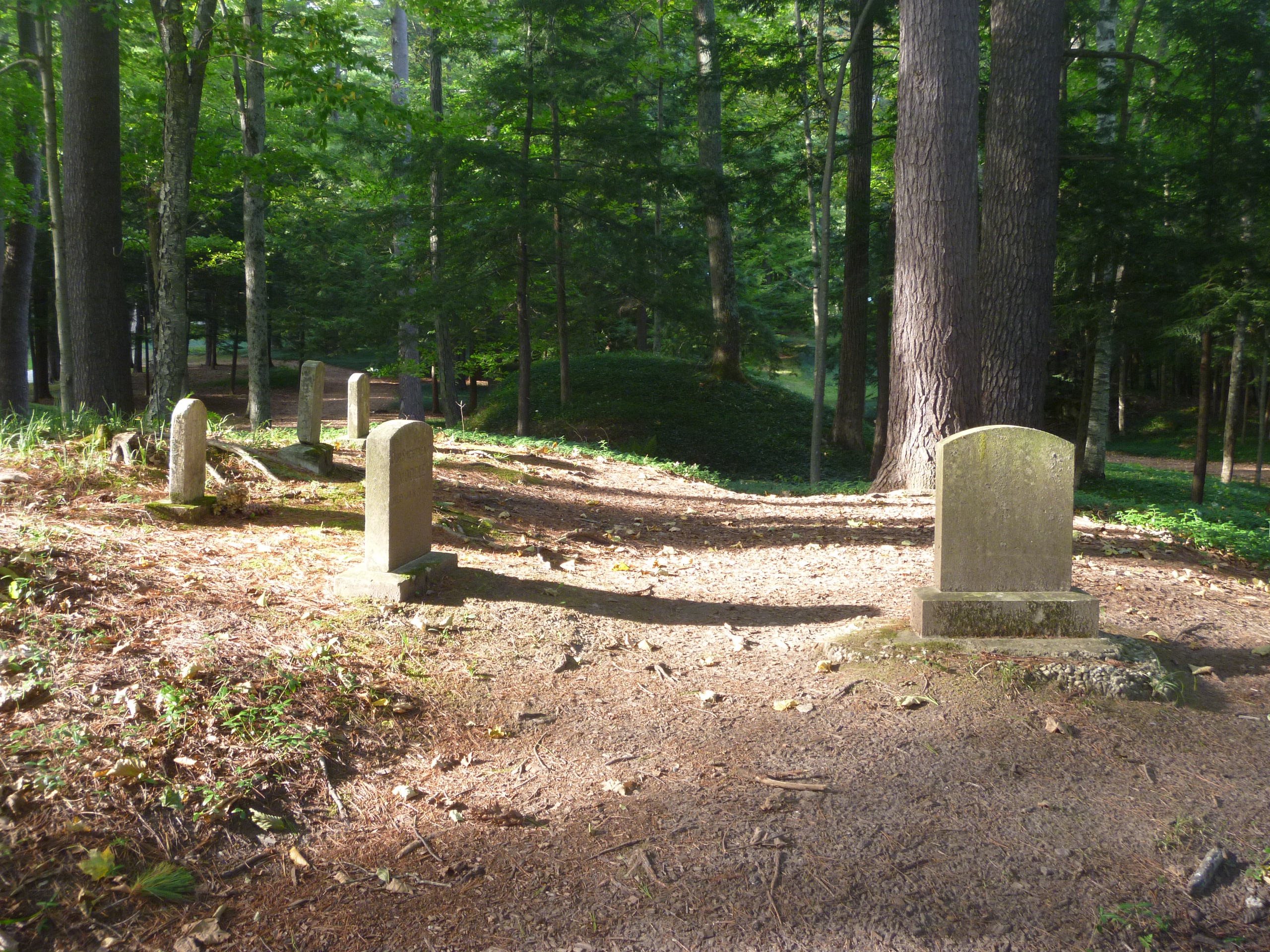
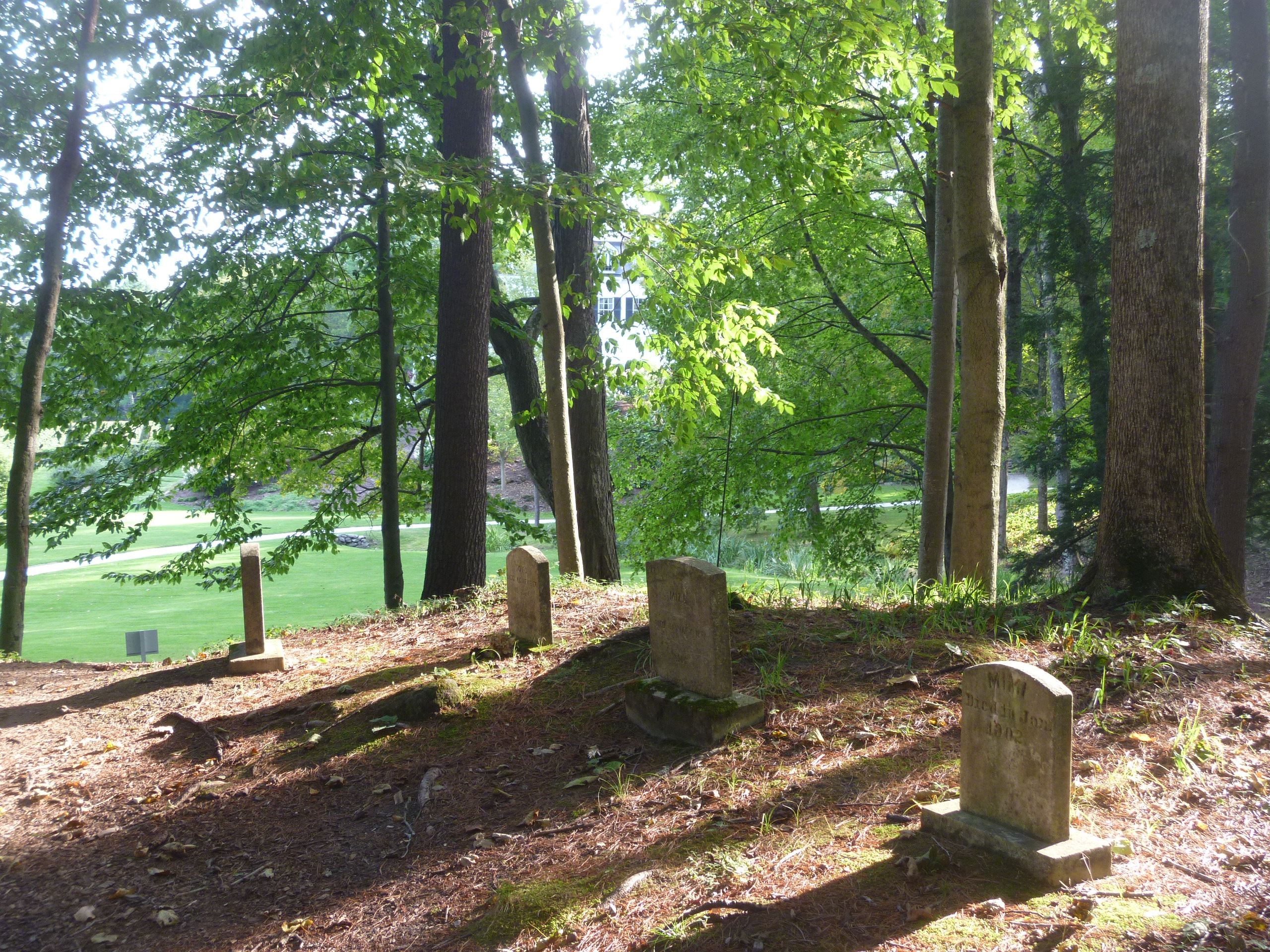
I wish I had had more time to wander the grounds at The Mount. I never visited the greenhouse, the woodland and the walled garden but I did walk up the small mound where Edith’s beloved dogs are buried.

Reminded me of the little gravestones of the Duke and Duchess of Windsor’s pet pugs at Le Moulin de la Tuilerie.

“A Delicate French Chateau Mirrored in a Massachusetts Pond” : A House Tour of The Mount

Note and acknowledgement : All sections in italics are taken from the leaflet Welcome to the Mount : Self-Guided Tour

GROUND FLOOR

In my last post the tour group had just arrived in the Entrance Hall. Just as the forecourt was designed to be an extension of the house into the landscape, the entrance hall was an extension of the landscape into the house. It was conceived as a grotto, or artificial cave, with stylized plaster-work simulating mossy walls and dripping water. 

MAIN FLOOR

GALLERY

The Gallery was inspired by similar rooms Wharton had admired in Italy. It is essentially a circulation space, allowing separate access to all the surrounding rooms and cross ventilation in the heat of summer. Here Wharton displayed a collection of Objets d’Art from her travels.

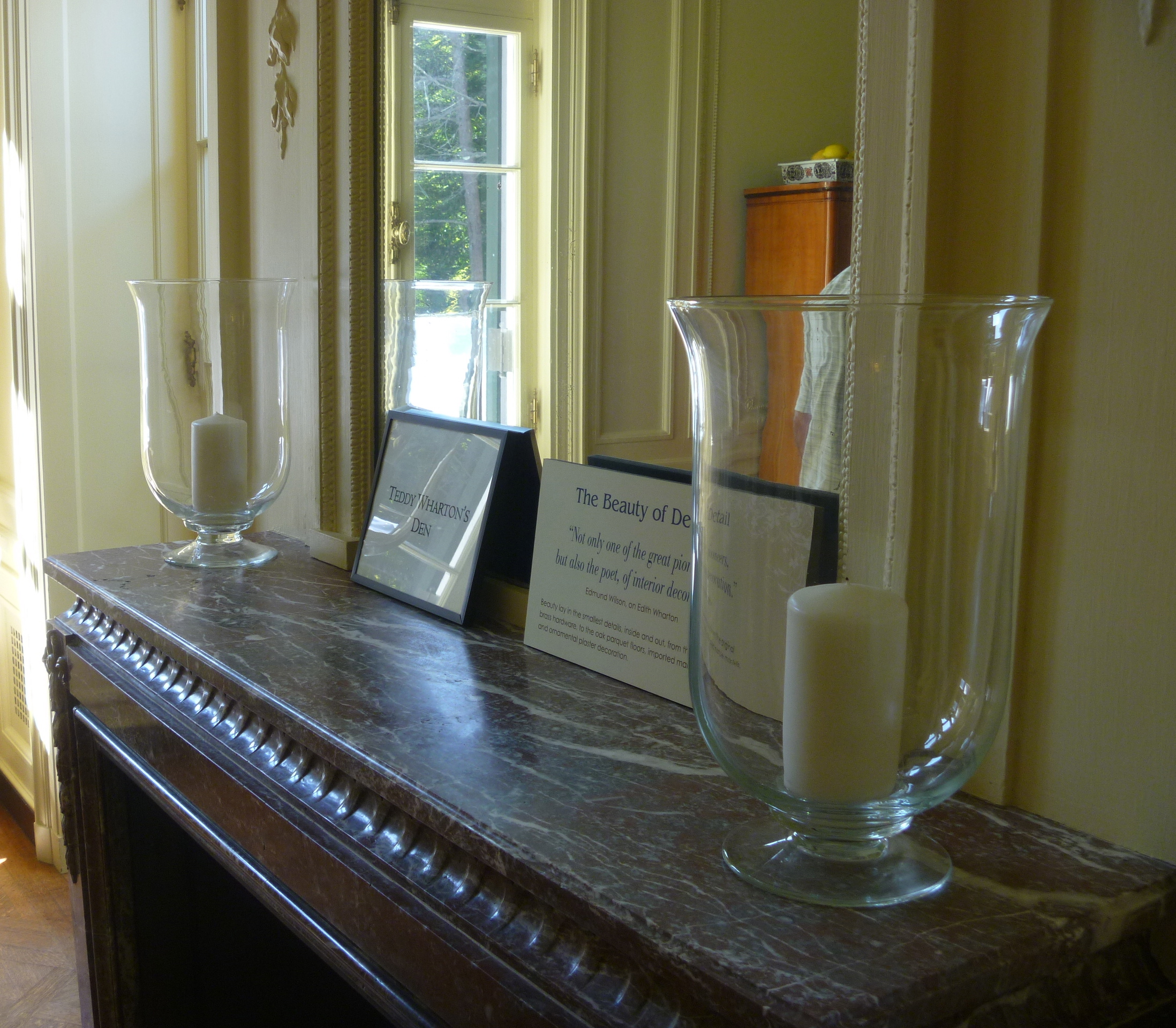
TEDDY WHARTON’S DEN

This room was Teddy Wharton’s office. A bookcase displays treasures from Mrs Wharton’s book collection, which can be viewed in the Library through the “hidden” doorway. It maintains original hardware (ordered from France), mirror, marble fireplace, cast-iron fireback, French doors and parquet floor.

EDITH WHARTON’S LIBRARY

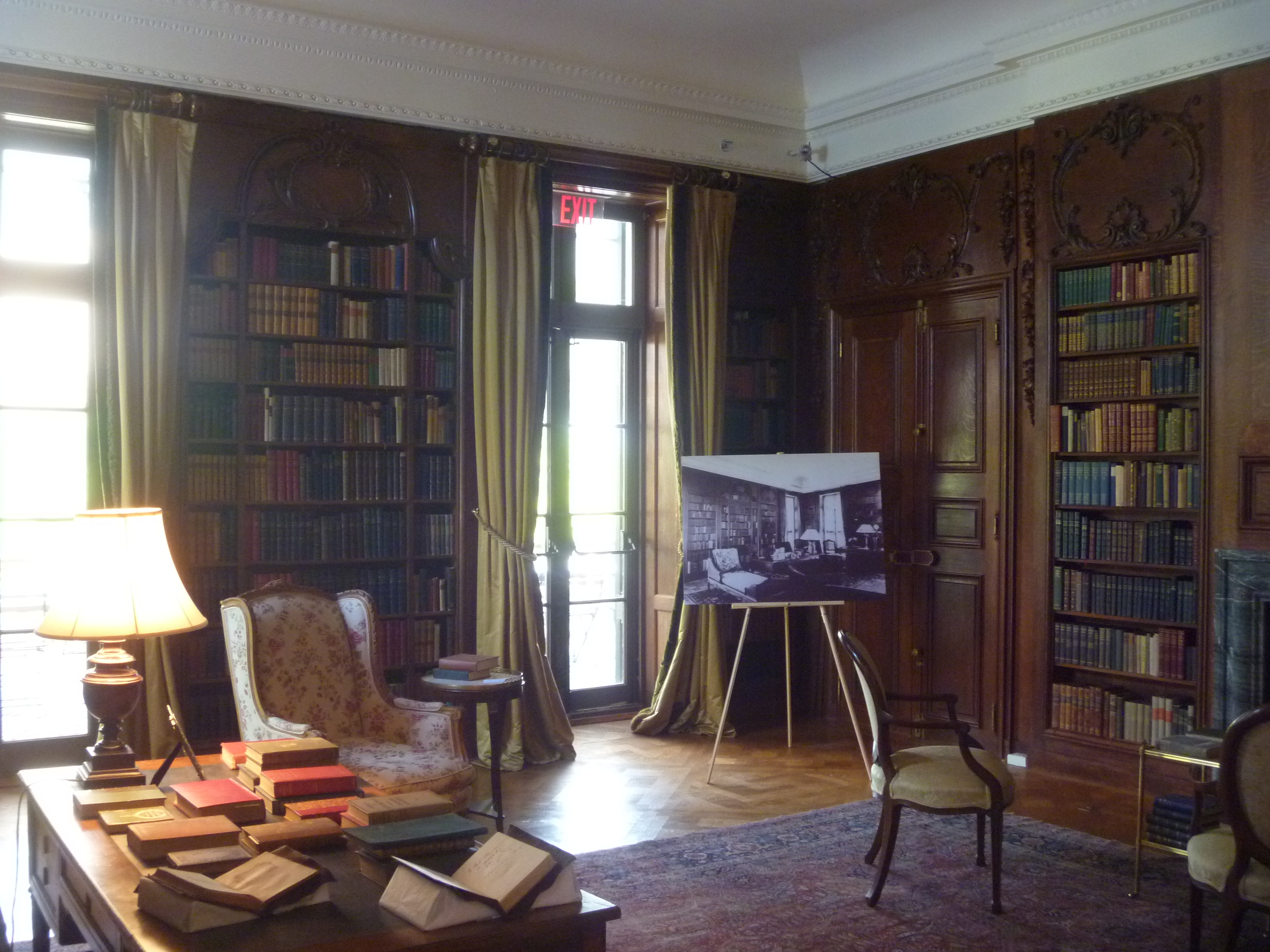
The design of Wharton’s library follows recommendations in ‘The design of houses’ that the primary decoration of a library should be its books [I can’t argue with that!], and that the shelves be organic built into the walls rather than freestanding furniture. The panelling is oak. 

Although Wharton is photographed several times sitting at her desk, she actaully did most of her creative writing in her bedroom. The library was a place for solitary study, or for entertaining close friends with readings before the fire.

The books on the shelves are Wharton’s own, having returned to The Mount in January 2006, after almost a century in Europe.

DRAWING ROOM

The largest room in the house (36ft x 20ft) it also the only room with an elaborate ceiling treatment, which was completely recreated in 2002.

The room features a beautiful French marble mantel with cast-iron fire-back depicting Abraham’s sacrifice of his son Isaac. The terrazzo floor was covered by a carpet, probably an Aubusson from France.

Books in the Drawing Room

DINING ROOM

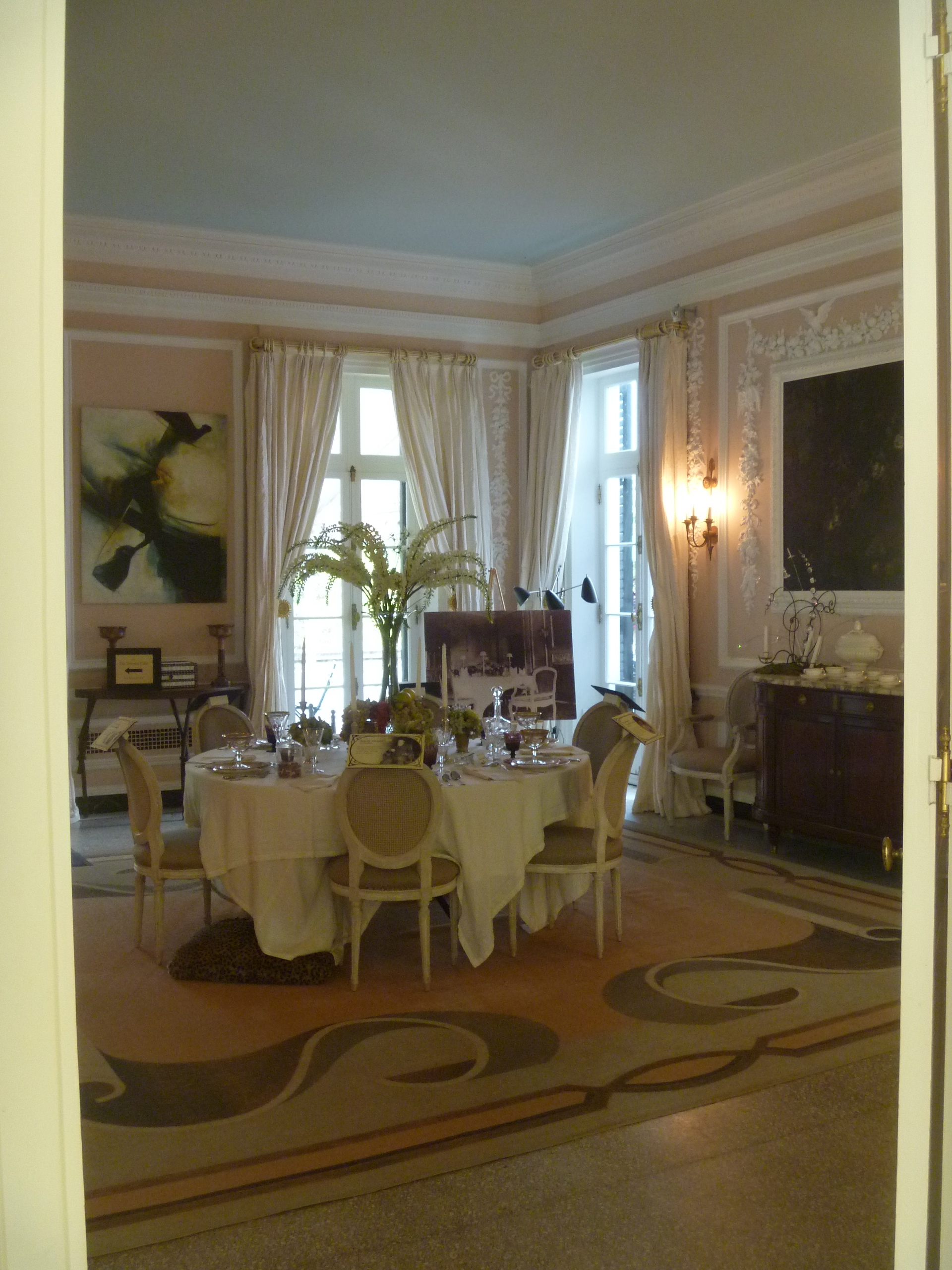
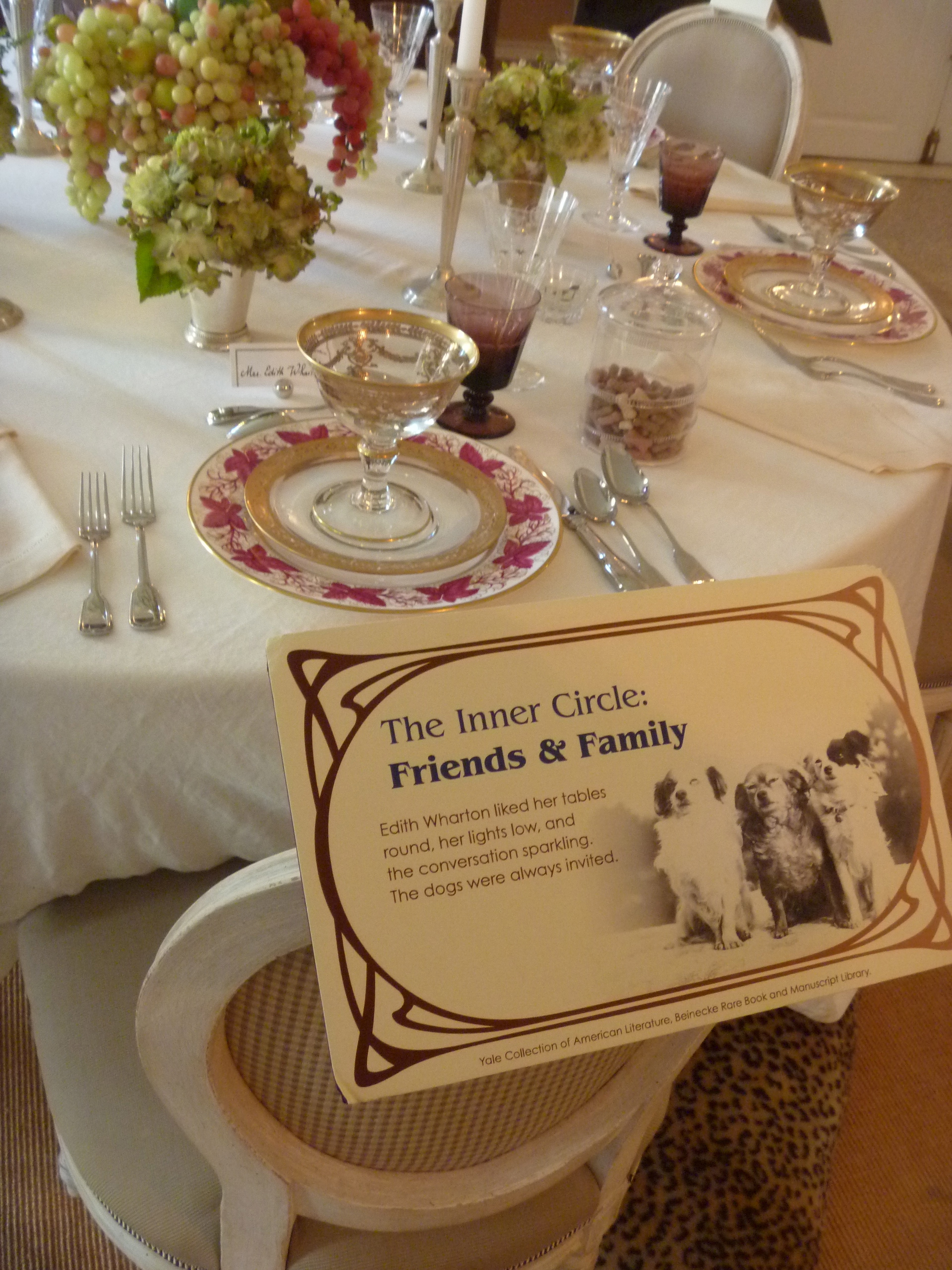
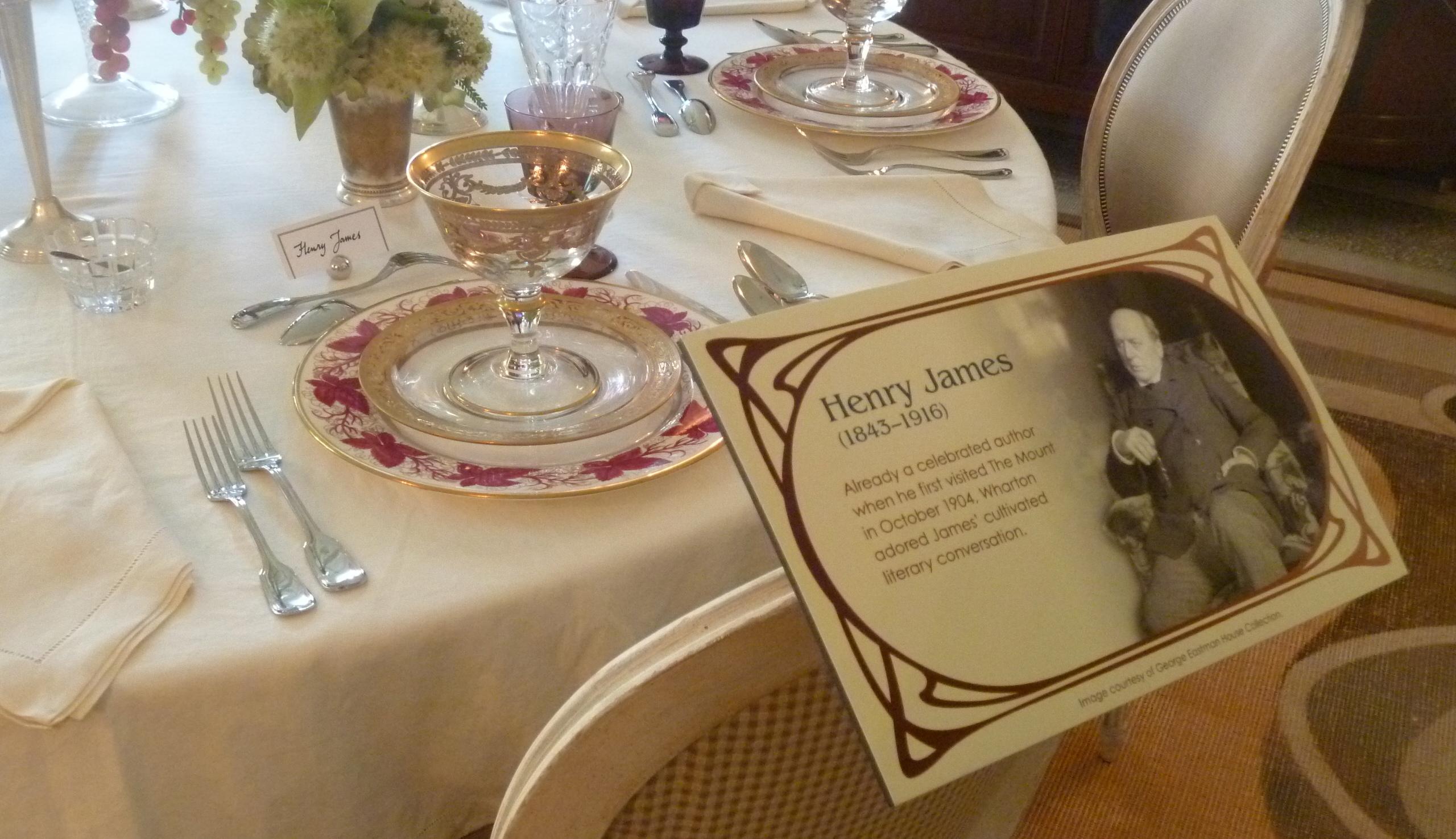
The one photograph of the dining room in the Wharton’s time reveals a round Victorian table with white-painted French armchairs. A cushion under the table was provided for a favourite dog. This has been recreated today. It is an intimate space that bears no relation to the dining tables in all the many other stately homes that I have visited. Attached to the back of each chair is a label indicating who was sitting there enjoying Edith’s food and wine and, above all, her stimulating company.

BEDROOM FLOOR

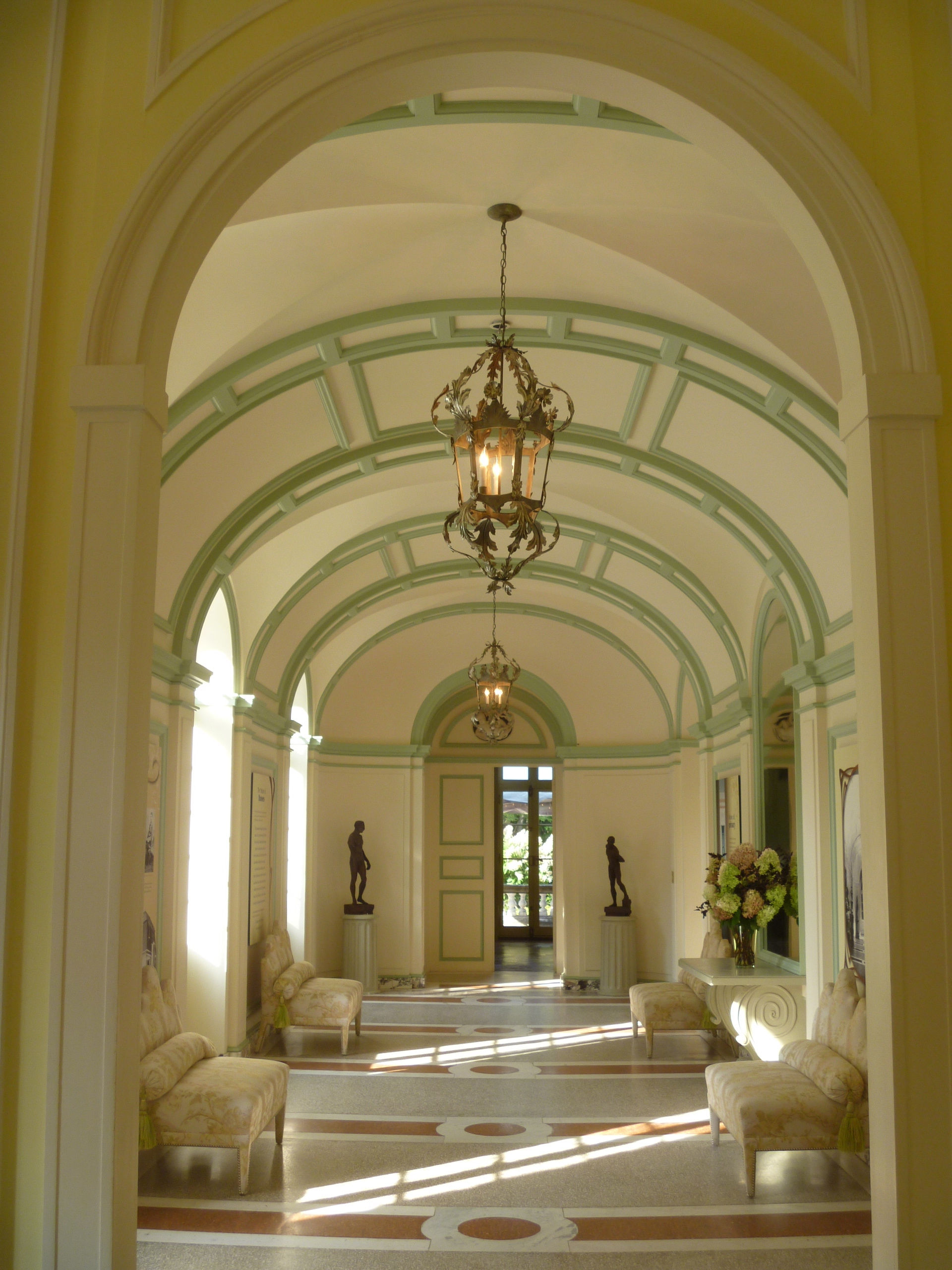
HALL

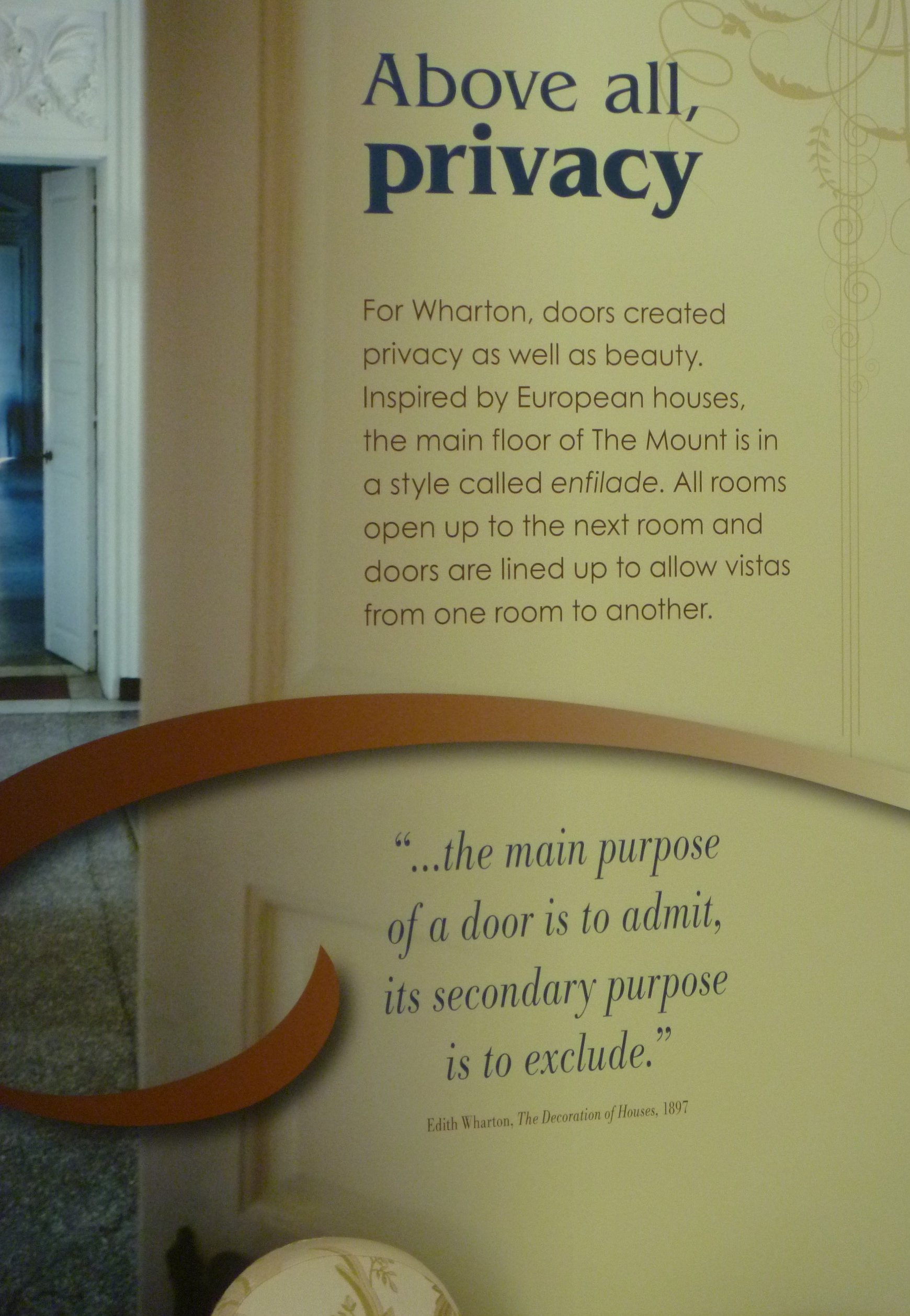
The hall, which is approximately 95 feet long, was decorated plainly in Wharton’s time, in keeping with her belief that a hall was principally a passageway and not a living space.

WEST GUEST SUITE

The suite of two adjoining  rooms on the western, or forecourt [courtyard], side of the house was probably used by Wharton’s married guests.

HENRY JAMES GUEST SUITE

The novelist Henry James was Wharton’s most honoured guest, and it is likely that he stayed in this, the best guest room during his three visits to The Mount. James was deeply impressed by the beauty of the estate, which he called “a delicate French chateau mirrored in a Massachusetts pond”, and by the Whartons’ hospitality. 

TEDDY WHARTON’S BEDROOM SUITE

Just as Teddy Wharton’s den is smaller than his wife’s library, so is his bedroom suite smaller, as if to emphasise his secondary position in the household.

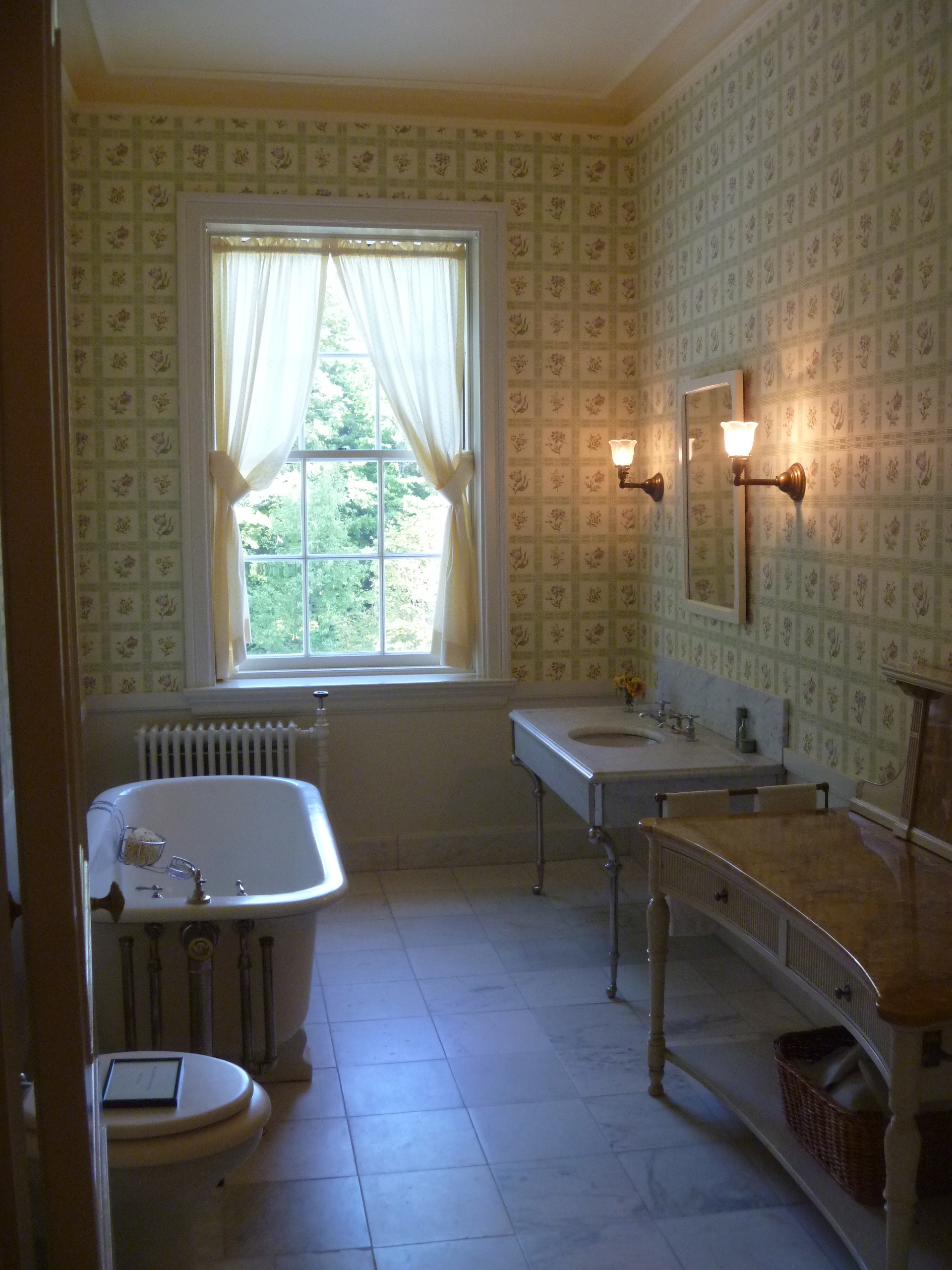
EDITH WHARTON’S BOUDOIR & BATHROOM

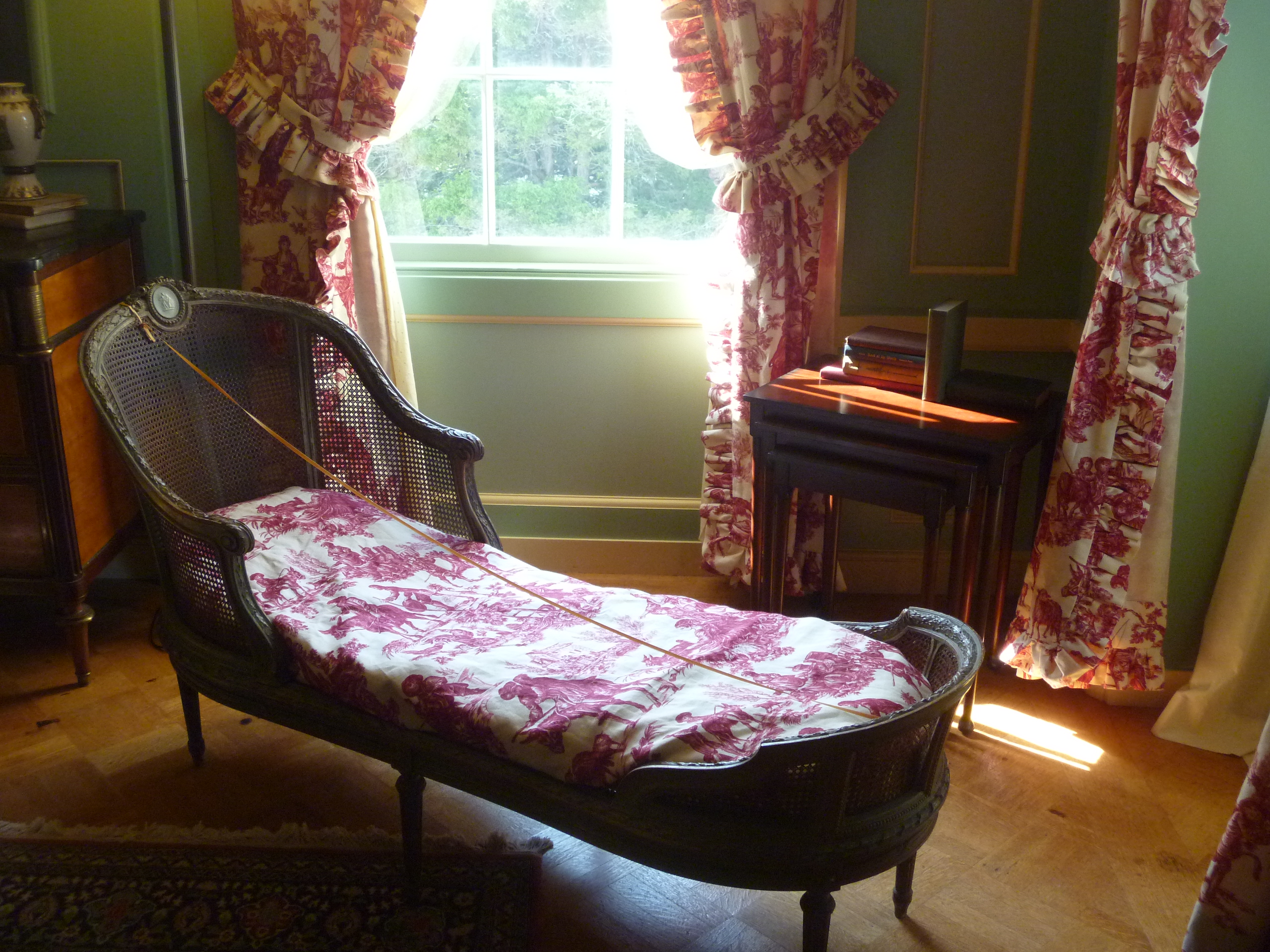
Wharton’s boudoir, or sitting room, is the most elaborately decorated room on the bedroom floor. It is dominated by eight floral still-life paintings set into the panelling, which came from Milan in Italy. Original furnishings included a desk, a sofa, and a daybed, with curtains and upholstery in Toile de Jouy. The original paint colours have been restored, and the room will soon be furnished as it was in Wharton’s time.

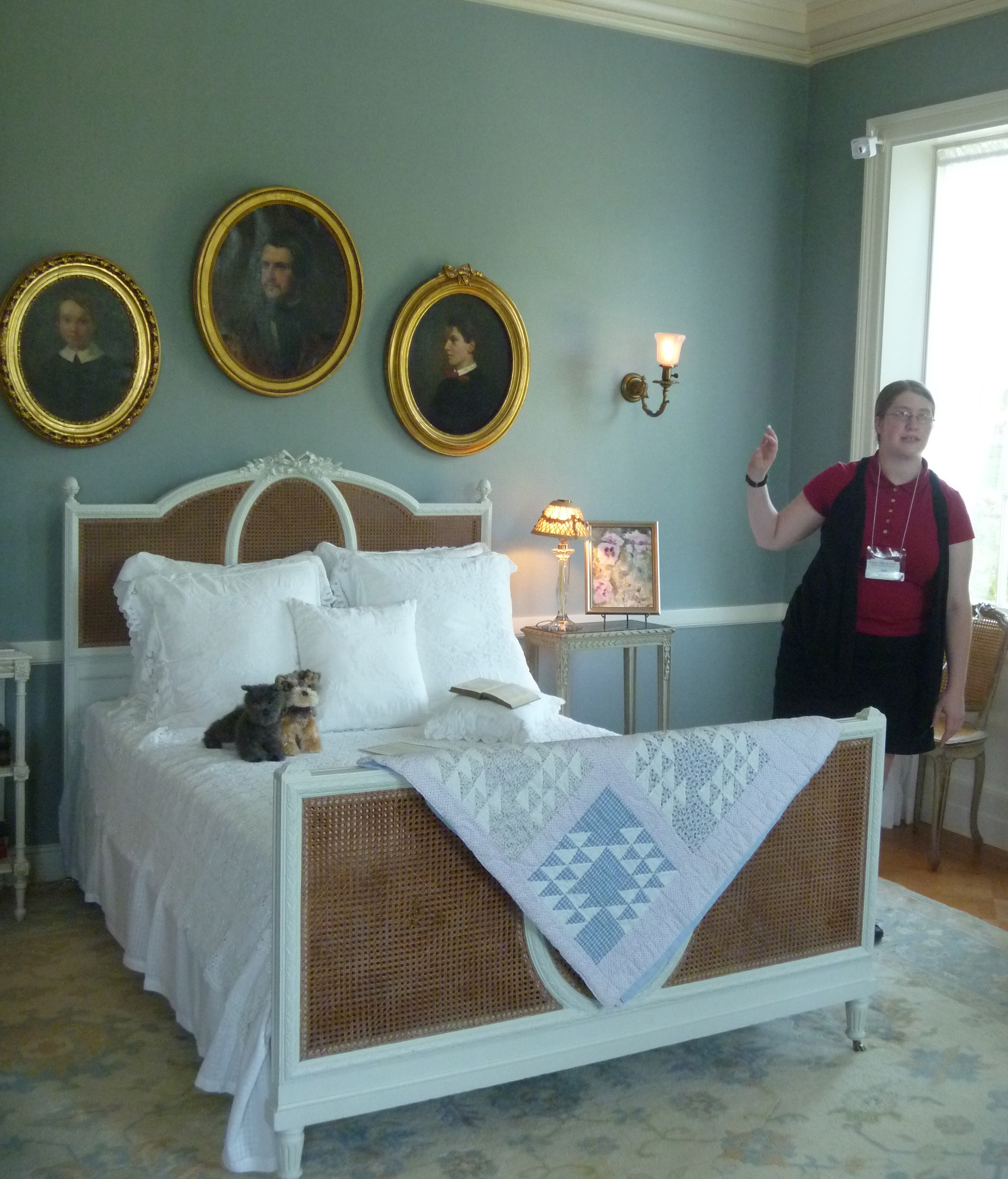
EDITH WHARTON’S BEDROOM

This room was decorated simply; the treatment “most fitting” for a bedroom. 

Wharton did most of her writing here; she would awaken early and write in bed, dropping the finished pages to the floor to be collected later for typing by her secretary.

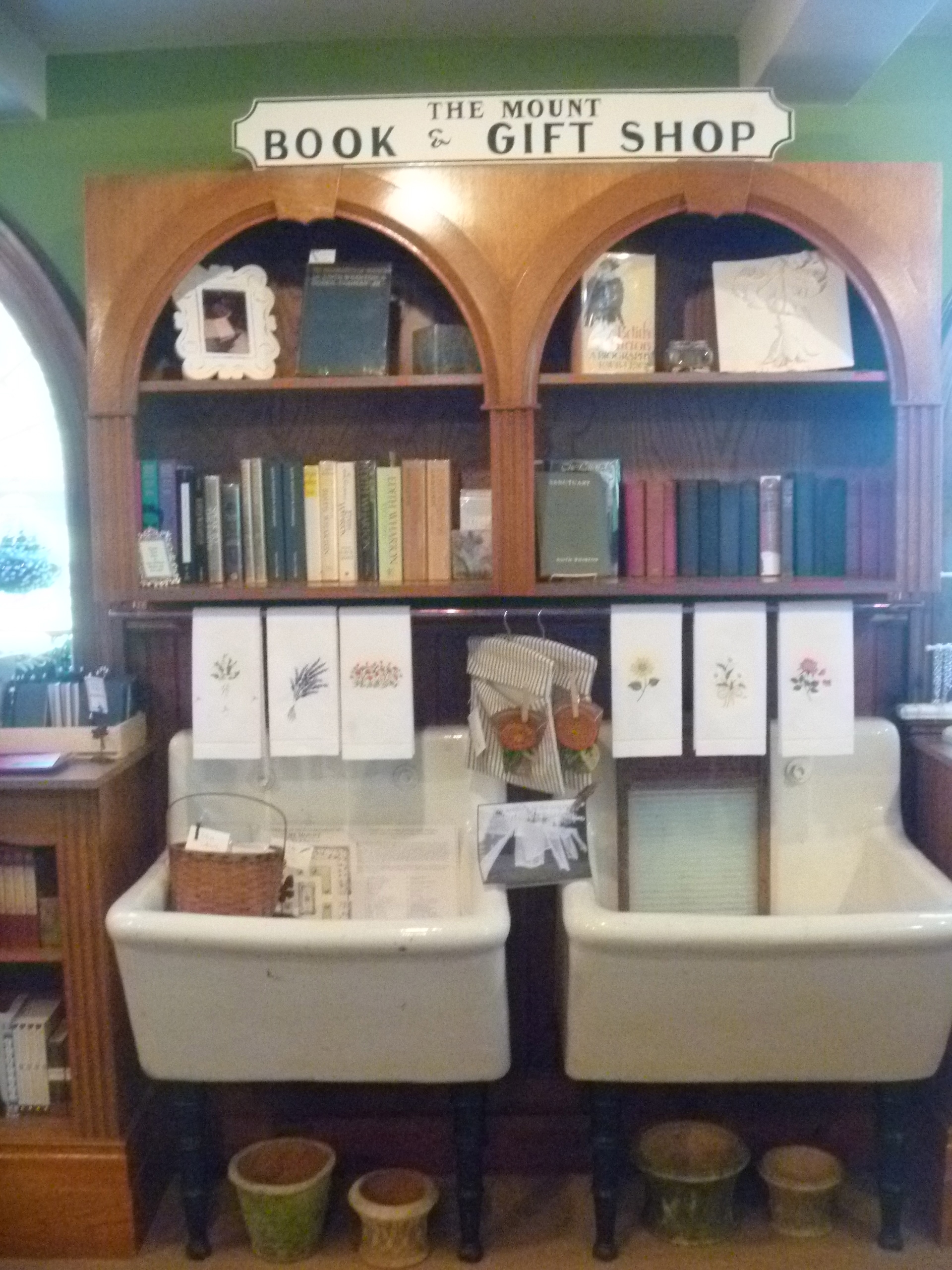
Other rooms included a sewing room, closet for Mrs Wharton’s dresses, a butler’s pantry, a brush room for cleaning shoes and outdoor wear, offices for household management, kitchen, scullery, servants’ dining room and laundry – now the Book and Gift Shop.

Every effort has been made to make the visit enjoyable and informative with the added touches of flowers and books relating to the decoration of this and any house and appreciation of those who have been involved in bringing the house back to life again as nearly as possible as it would have been during Edith Wharton’s time. The renovations and improvements are ongoing.

The Decoration of Houses : a Visit to Edith Wharton’s New England Home : The Mount

There will be some readers here who know very much more about Edith Wharton than I do and who will have read many more of her books than I have but for many years I have wished to visit her home The Mount in western Massachusetts. I have a collection of newspaper clippings about the house, its renovation plans and about her library of 2,600 volumes that finally arrived back at her American home in 2005 after 100 years spent in Europe.
On 14 September, the day we left Naulakha, we arrived in Lenox, the location of The Mount, and after a delightful lunch on the tree-lined main street we set off to find the house. It’s a little way out of town but handily placed just off the Highway. But once dropped off at the ticket office I was in another world of peace and comfort a million miles from the roar of traffic.

That Friday was the start of a weekend-long Wordfest a literary festival of writers and readers the first talk due to begin at 5pm. I’d checked this out in advance and been told that although the house would remain open to the general public there would be no guided house tours. Luckily, I arrived with minutes to spare before the final house tour of the week.

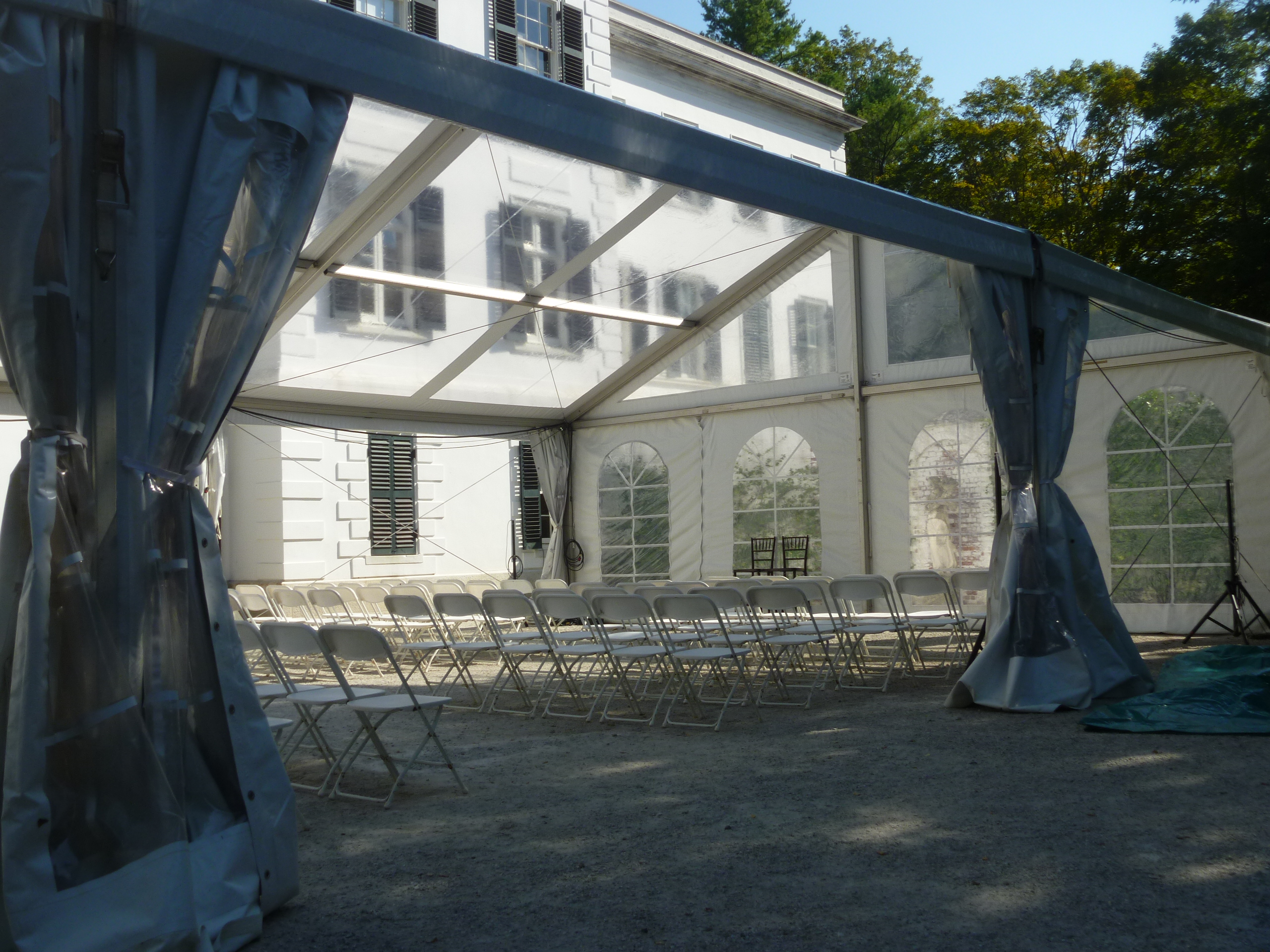
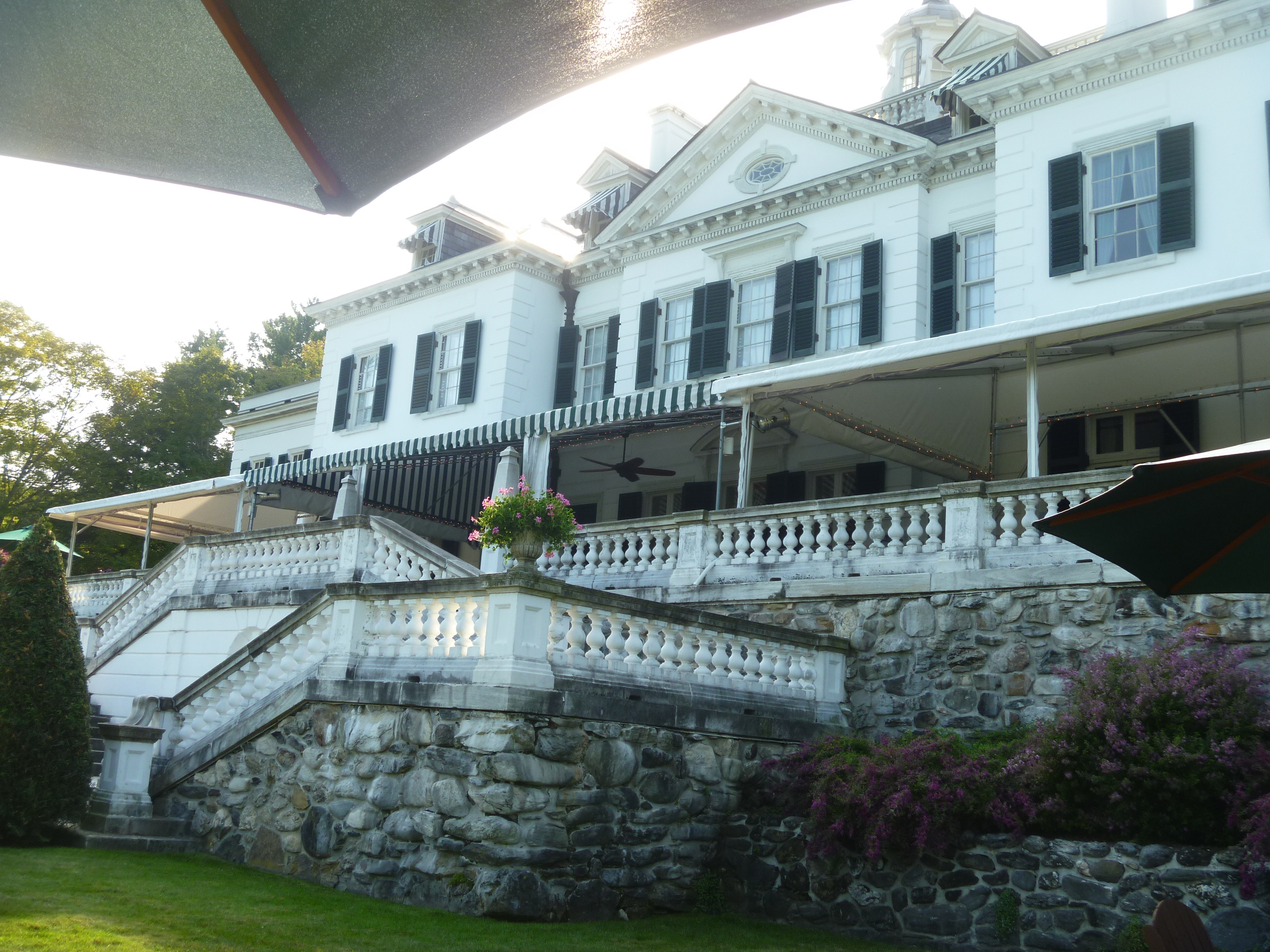
We assembled at the back of the house in a courtyard, which that day was covered with an awning to protect Wordfest members from either sun or rain, to be told about EW’s plans to build The Mount and their execution. As I heard more and more about this remarkable woman throughout the afternoon I began to think that here was another American polymath about whom I knew only the merest facts and of whose literary output I have read very little. (But I have seen several of her films!)

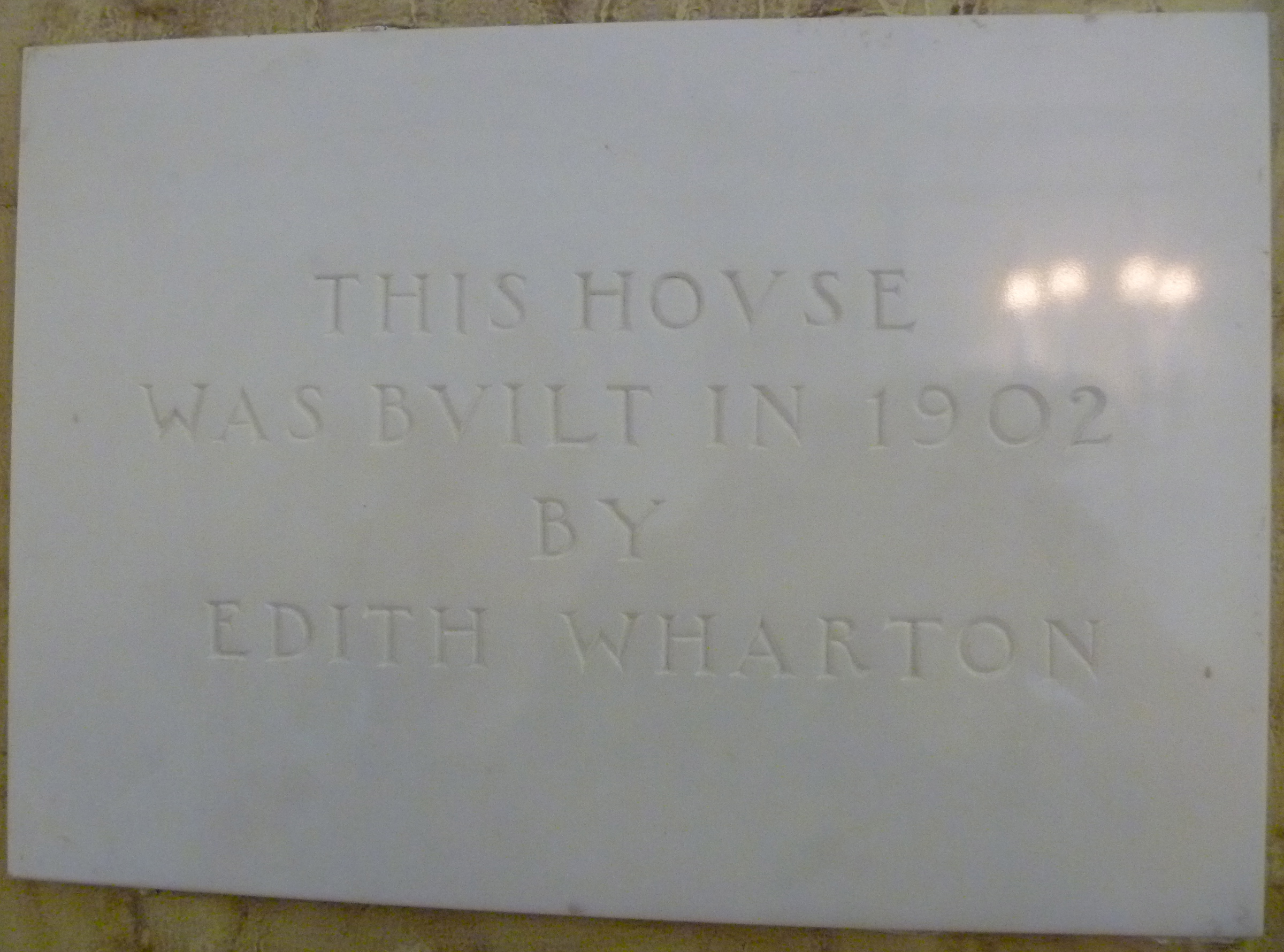
Edith Wharton collaborated with architect Ogden Codman to produce her first book The Decoration of Houses. Published in 1897 it was a denunciation of all the excesses of Victorian interior decoration and a plea for a return to classical proportions, harmony and simplicity. She designed and built The Mount according to these principles. She was able to move in in 1902 and spent the summers and autumns between 1902 and 1911 at the house (the rest of the year she lived in France). By 1911 her marriage to Teddy had failed and she moved to live permanently in France. That year the house was put on the market.

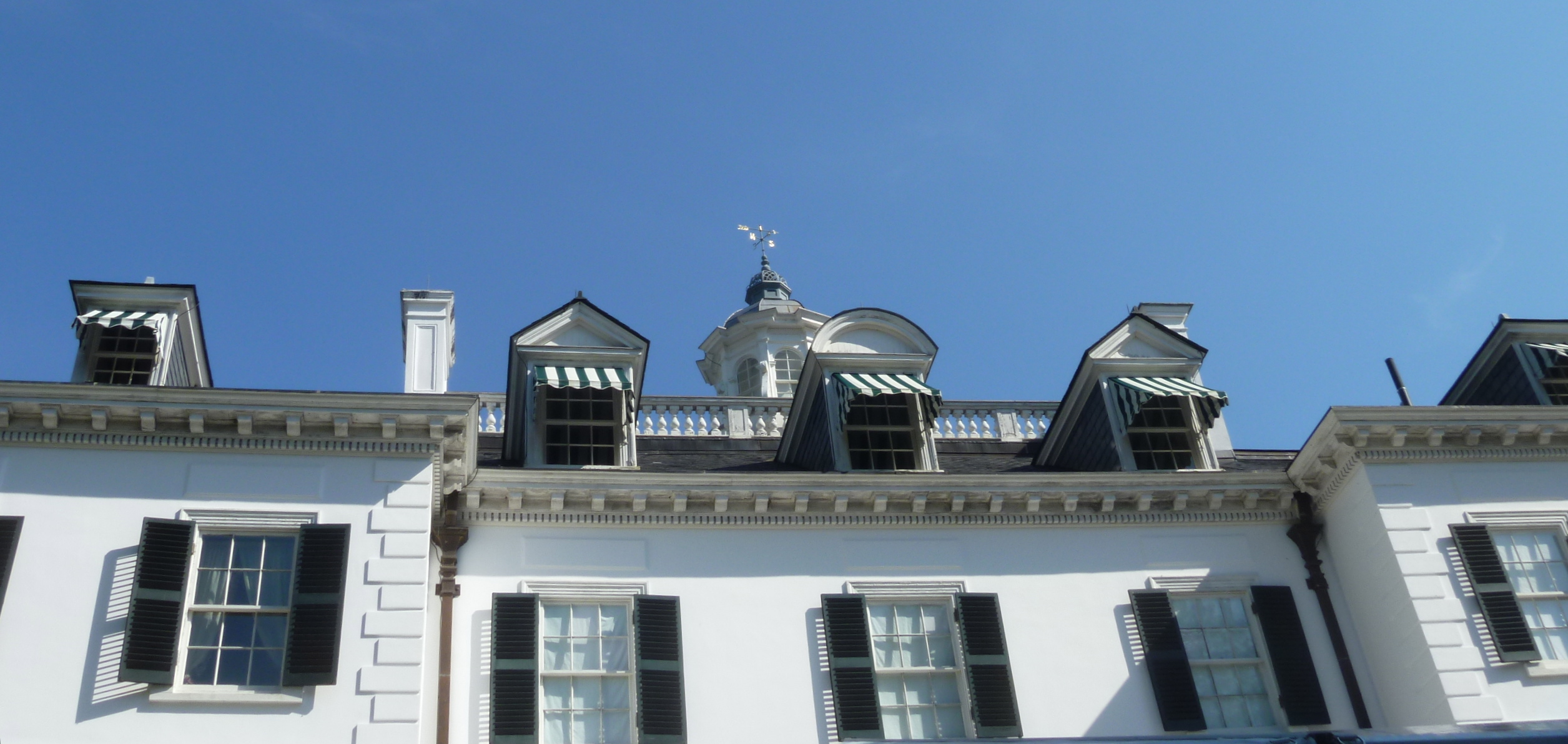
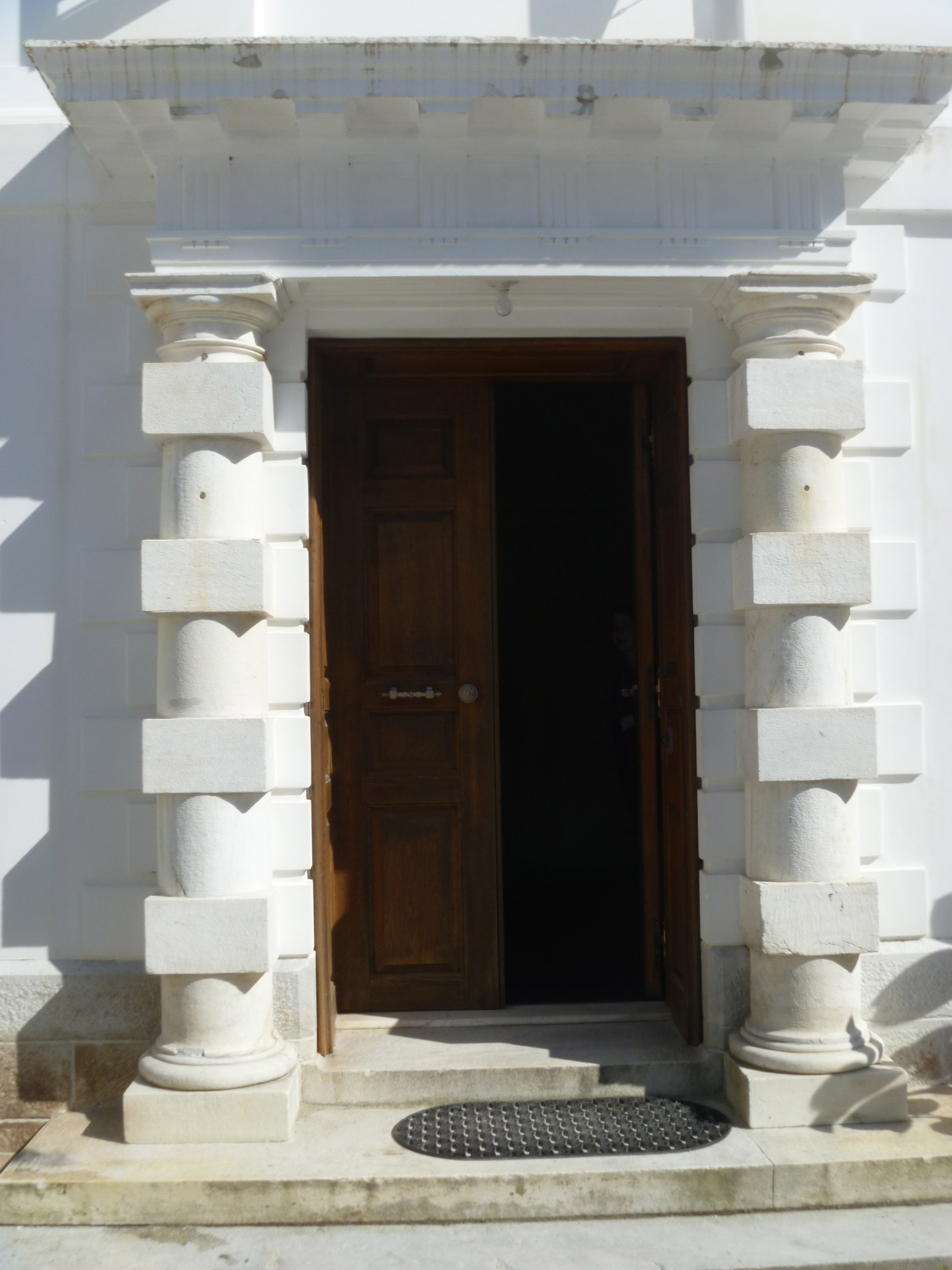
From the courtyard (which was to serve as a bridge between the outside of the house and the inside) we went in at the back door. The entrance hall was planned to bring the outside into the house. It was conceived as an artificial cave or grotto with statues and fountains. Here visitors wishing to see the great novelist had to wait to know whether they would be admitted to her presence or not. It was here that we learned that The Mount was modelled on the English 17th century Palladian-style Belton House in Lincolnshire and on neo-classical Italian and French examples.

Next time I will take you on a tour of the house but just now I want to show you what a lovely lovely place it is.  After the tour free access is allowed throughout the house and grounds. There are room stewards handily placed who are able to answer any questions and Information Boards in every room.

Photography is allowed everywhere. There is a great gift and book shop in the basement scullery.

Some of the many book displays in the shop

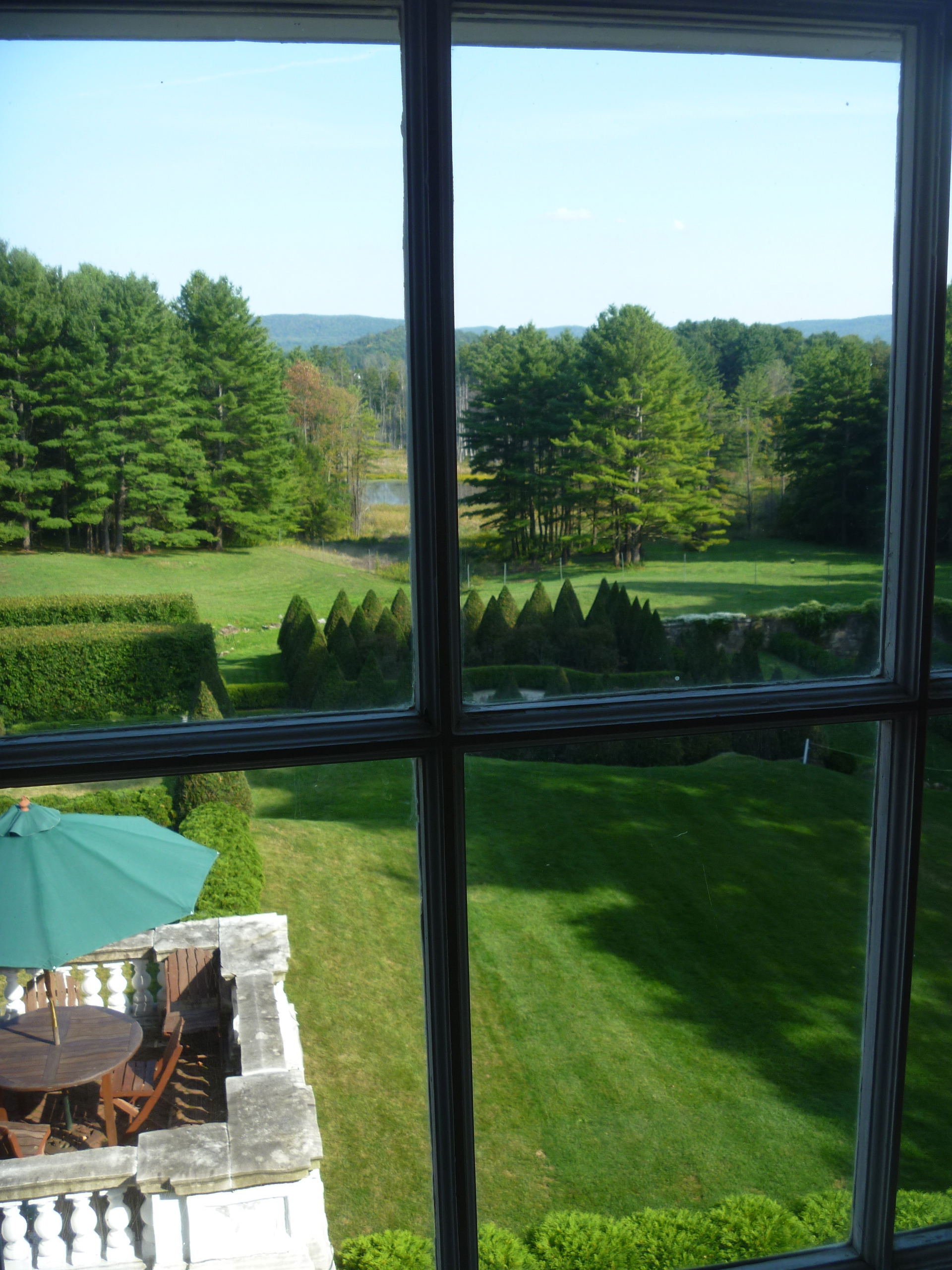
Teas and other refreshments are served on the terrace and you may sit at tables on the front lawn.

The View and A Terrace Tea Table

The house from my terrace tea table

There are two interesting and entertaining exhibitions on the second floor.

and

You may walk around the estate and the gardens and even visit the mound where her beloved dogs are buried.

There’s a further exhibit in the Stables but these were being prepared and were already receiving the Wordfest participants.

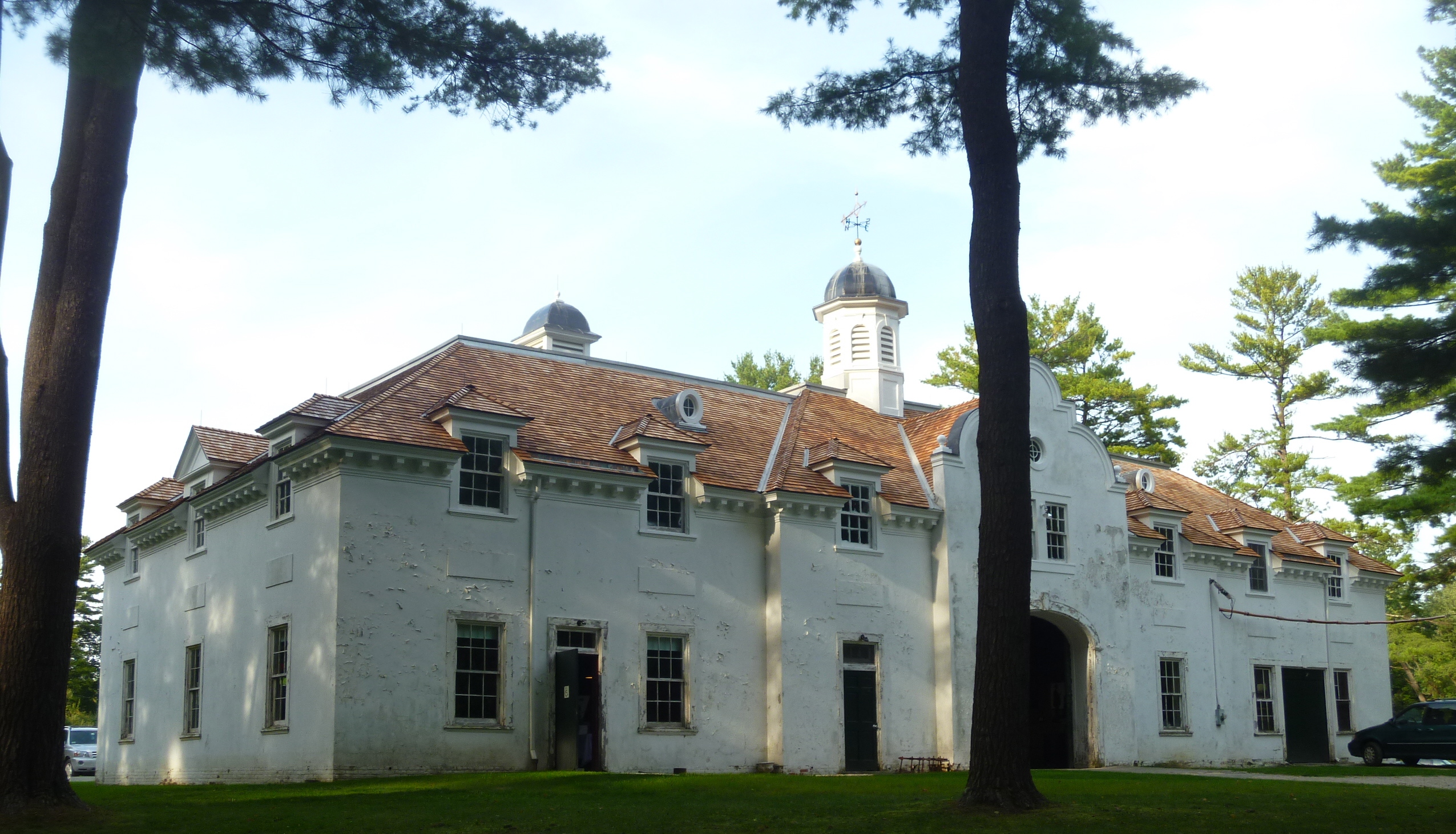
The Stables

All in all my time there was too short to take it all in and I’m definitely up for another visit if I can manage to pass by again in future. Because of the Wordfest event I decided not to return that same weekend.

A Tale of Bliss and Tragedy : Rudyard Kipling in Vermont, 1892-1896

Naulakha has been wonderfully restored and there are a great many original furnishings and fittings, as I have mentioned already. In addition there is a barn set  out like a museum with Kipling-related artefacts and display cases in the second floor attic showing some of the smaller stuff.

Bliss Cottage as it stands today on the opposite side of the road from that upon which it stood in Kipling’s day

I imagine that the Bliss in the title must come from the name of the cottage in which the Kiplings lived,  just down the road in Brattlebooro, whilst Naulakha was being built and where baby Josephine was born but also from the fact that Rudyard states that his Naulakha days were the happiest of his life. His second child, another daughter, Elsie, was born at Naulakha.

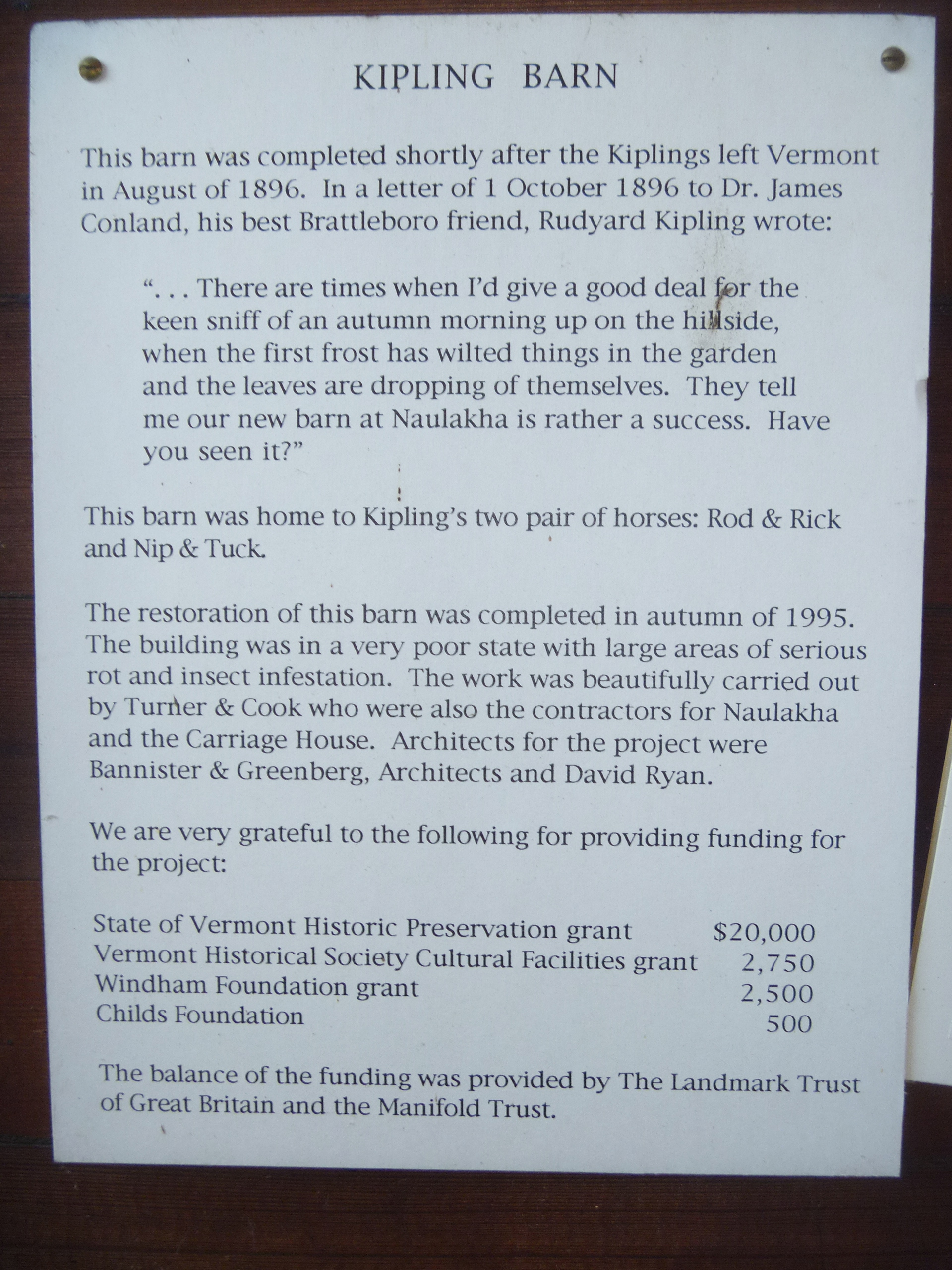
The Barn Museum – exterior

Note the very strong connection with British Landmark Trust. All of their properties abroad – in France, Italy and Naulakha – have British connections.

The Barn Museum – interior

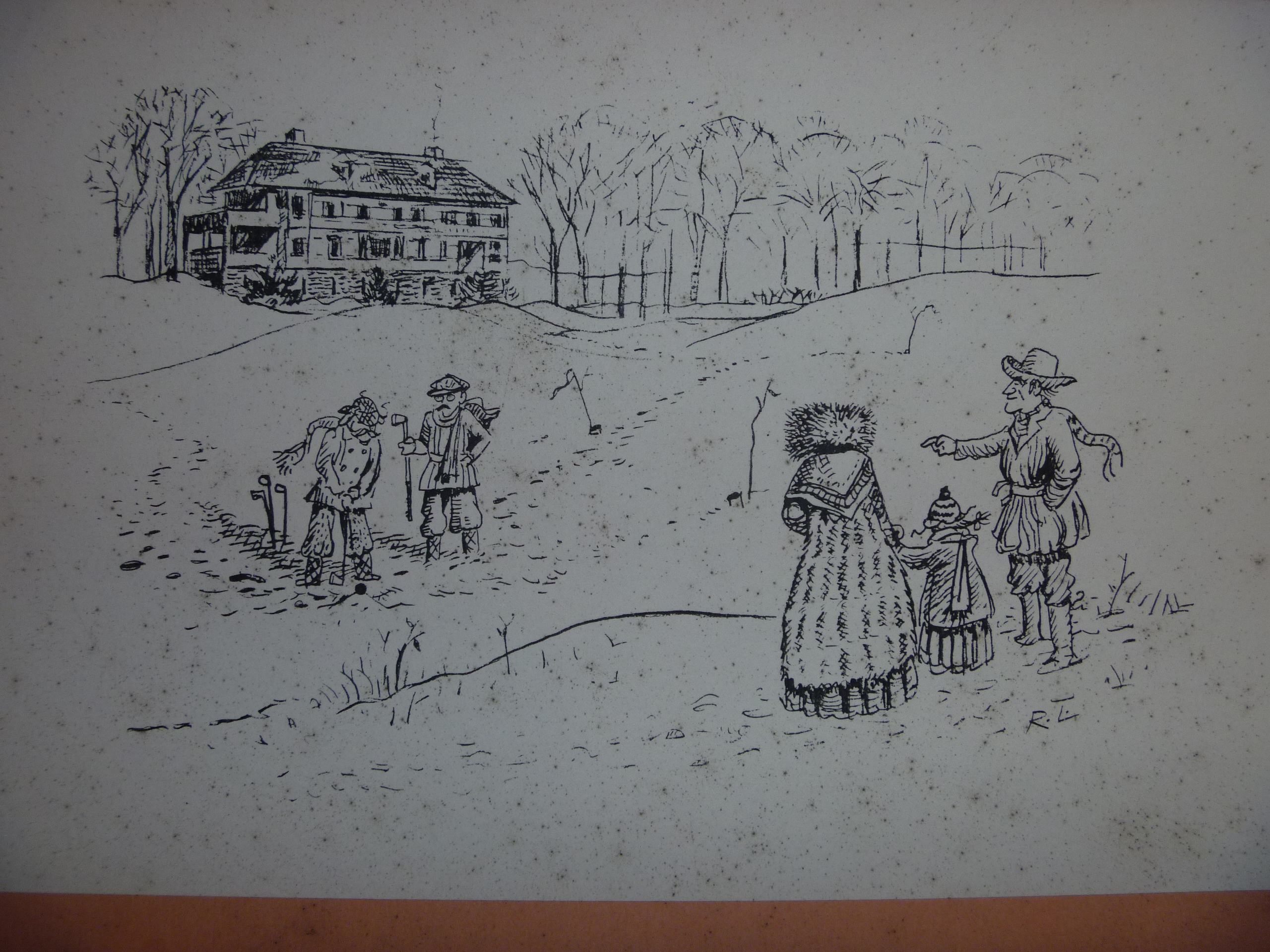
Kipling invents Snow Golf

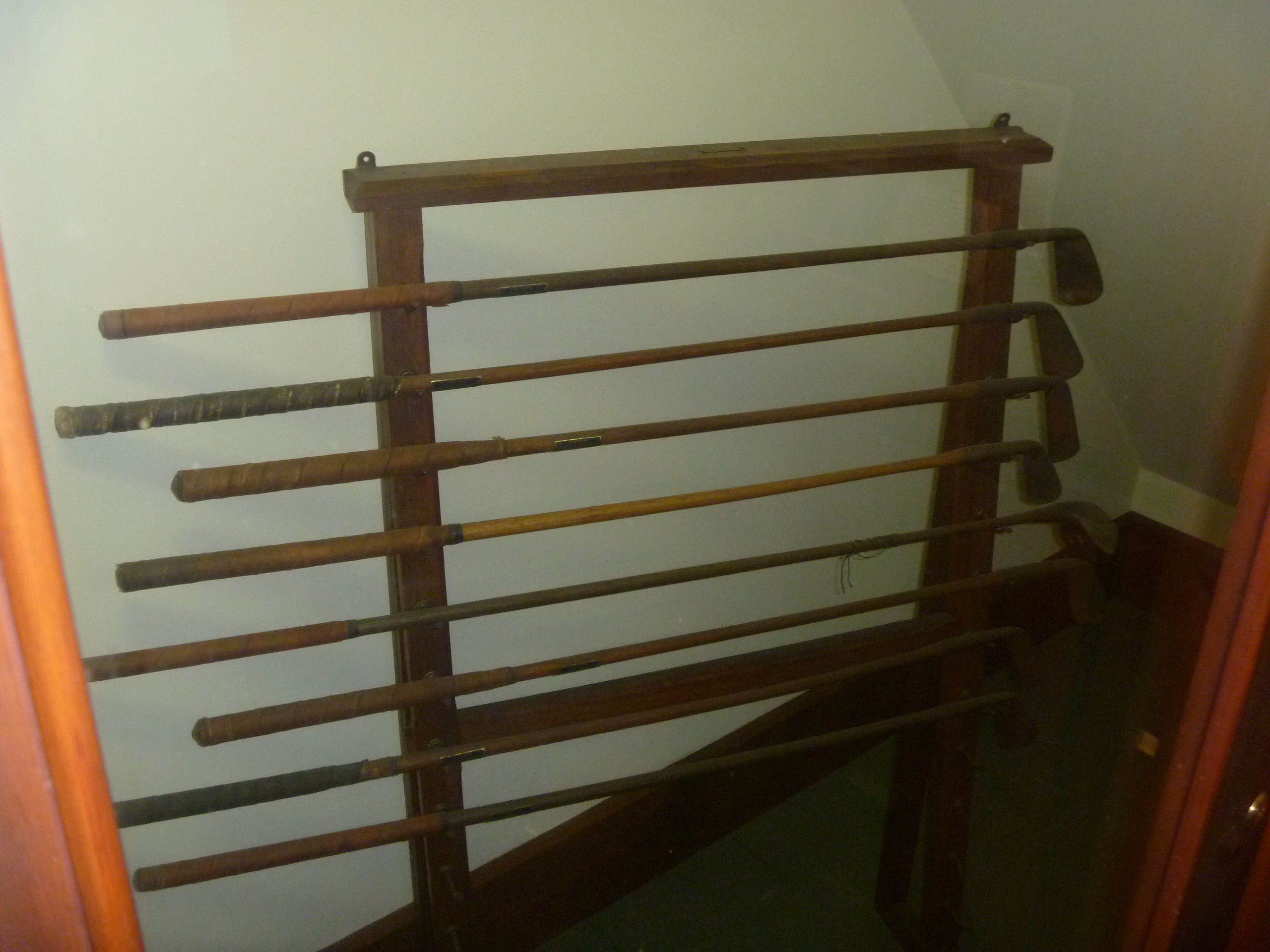
In the attic are a set of Rudyard Kipling’s golf clubs. These must once have stood in the Entry Hall or Loggia as the House Tour states :

The golf clubs and rack are Kipling’s also. According to the United States Golf Association, Kipling invented “snow golf” here in Dummerston.

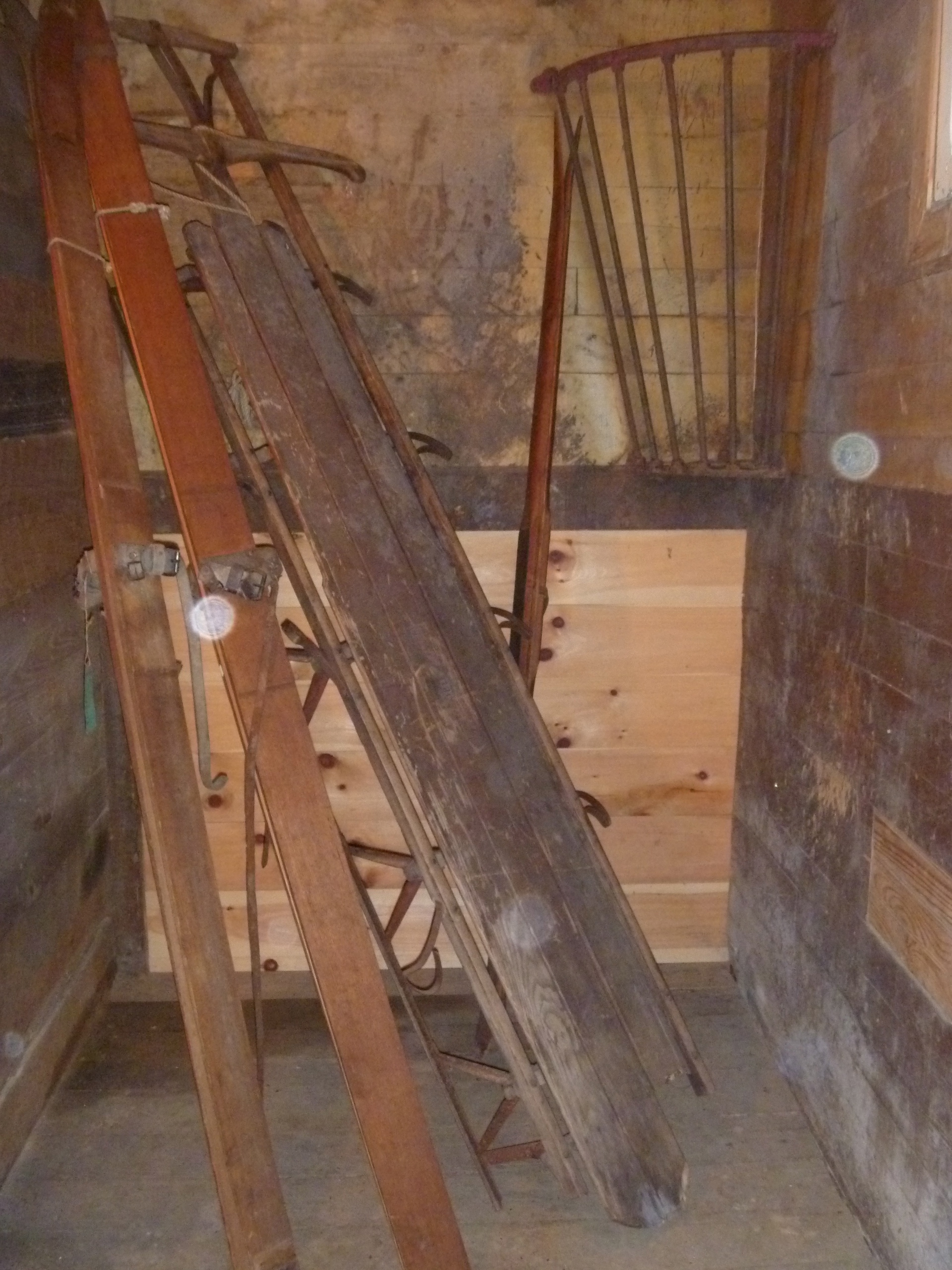
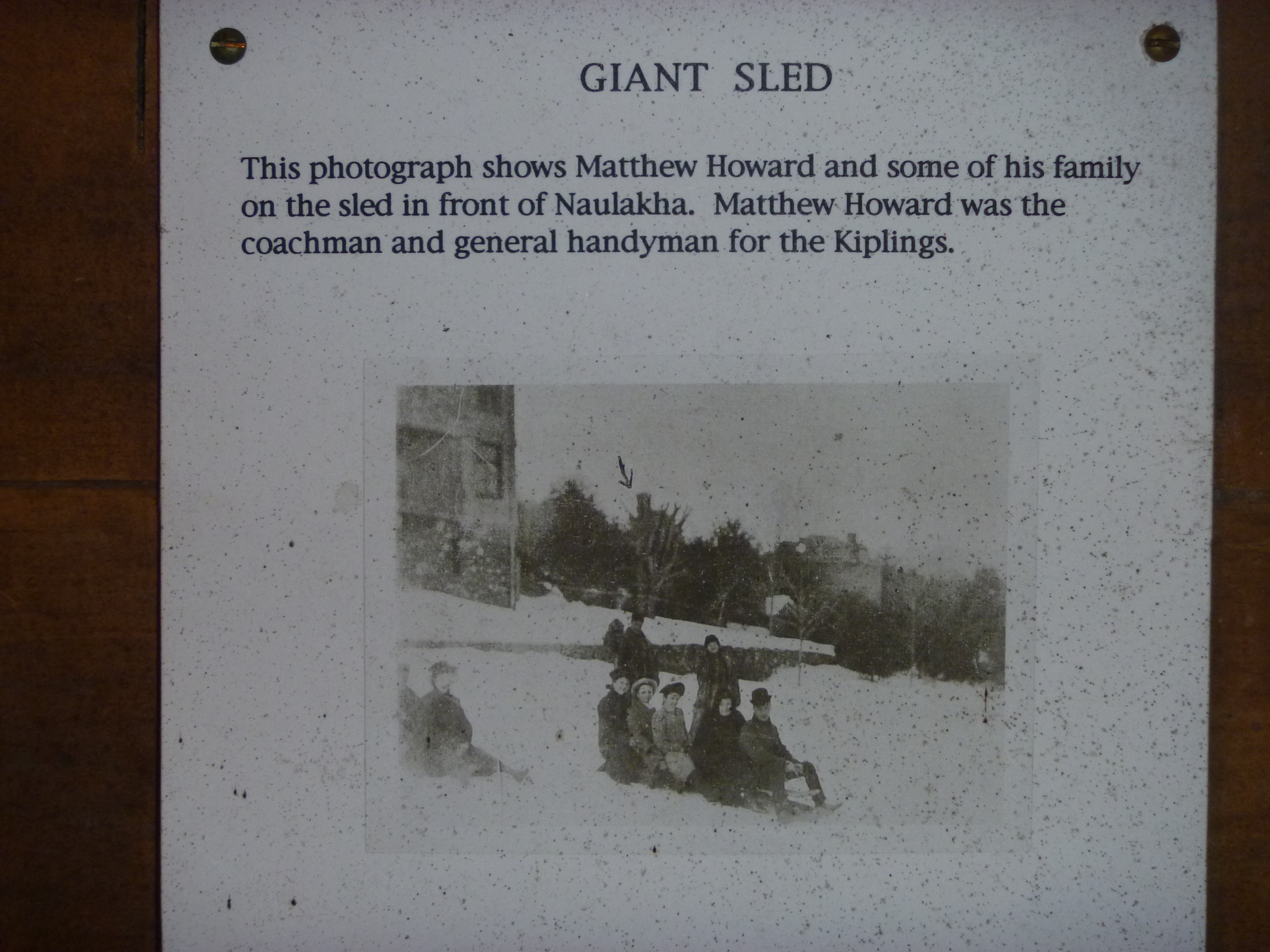
The giant sled, “Red Phaeton”, stands in pieces in one of the abandoned horse boxes.

The Barn Museum really puts the story of the Kiplings and their time at Naulakha into perspective. Mostly it’s told on storyboards with copies of illustrations and typed out quotations.

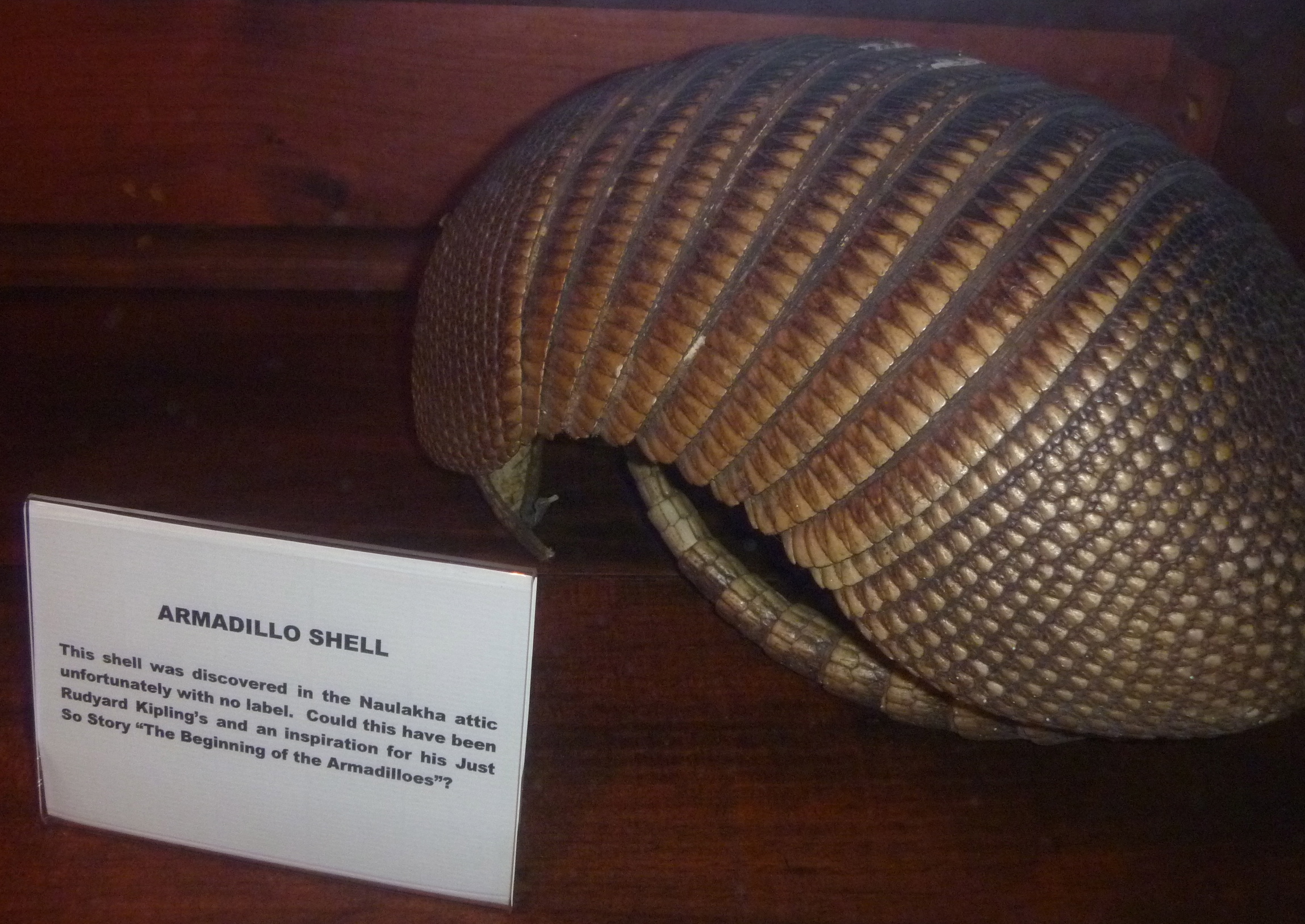
There is more memorabilia in the Attic Display Cases.  Not everything dates from the Kipling era.

Top: Present day postcards and leaflet (my display!). Middle: Close up of the postcards and a postal first day cover. Bottom: The postcards display case.

Also in the attic is a double fronted bookcase containing many many volumes of Kipling biography and criticism. It’s a separate collection of British, US and some French books donated to Naulakha. Most of the information that I absorbed about the author and his New England home came from the box file of notes which contained the House Tour, the very detailed notes of submission for the house to be included on the [US] National Register of Historic Places and magazine and newspaper articles; from the museum information boards and from the 96 page The Hated Wife ; Carrie Kipling, 1862-1939 by Adam Nicolson and published in the short lives series by Short Books in 2001. Lent to me by a friend (and reader here) it sums up the Kipling life stories but left me still sympathetic to Caroline and, of course, their tragic lives which included the early deaths of two of their three children.

Rudyard Kipling never built any other homes for himself and eventually settled in a 17th century house in the Sussex Weald.  He lived there for 32 years from 1902 to 1936. Since 1940 it has been in the ownership of The National Trust. How I long to visit Bateman’s.

Josephine Kipling died of influenza in New York in 1899 as the family were on their way to visit Caroline’s mother in New England. Kipling was very ill at the same time  and after his recovery they returned to the UK. They were never to revisit New England and their beloved Naulakha was sold.

Do watch, if you haven’t already, the 2007 BBC film ‘My Boy Jack’.

‘My Boy Jack’

1914-18

 “HAVE you news of my boy Jack? “

Not this tide.
“When d’you think that he’ll come back?”
Not with this wind blowing, and this tide.
“Has any one else had word of him?”
Not this tide.
For what is sunk will hardly swim,
Not with this wind blowing, and this tide.

“Oh, dear, what comfort can I find?”
None this tide,
Nor any tide,
Except he did not shame his kind—
Not even with that wind blowing, and that tide.

Then hold your head up all the more,
This tide,
And every tide;
Because he was the son you bore,
And gave to that wind blowing and that tide.

So you see how Bliss turned to Tragedy for Rudyard and Carrie Kipling.

The Complete [Water] Works of Rudyard Kipling

Writing my description of the House Tour of Naulakha yesterday I purposely omitted any mention of bathrooms. I thought that they deserved a separate post of their own.

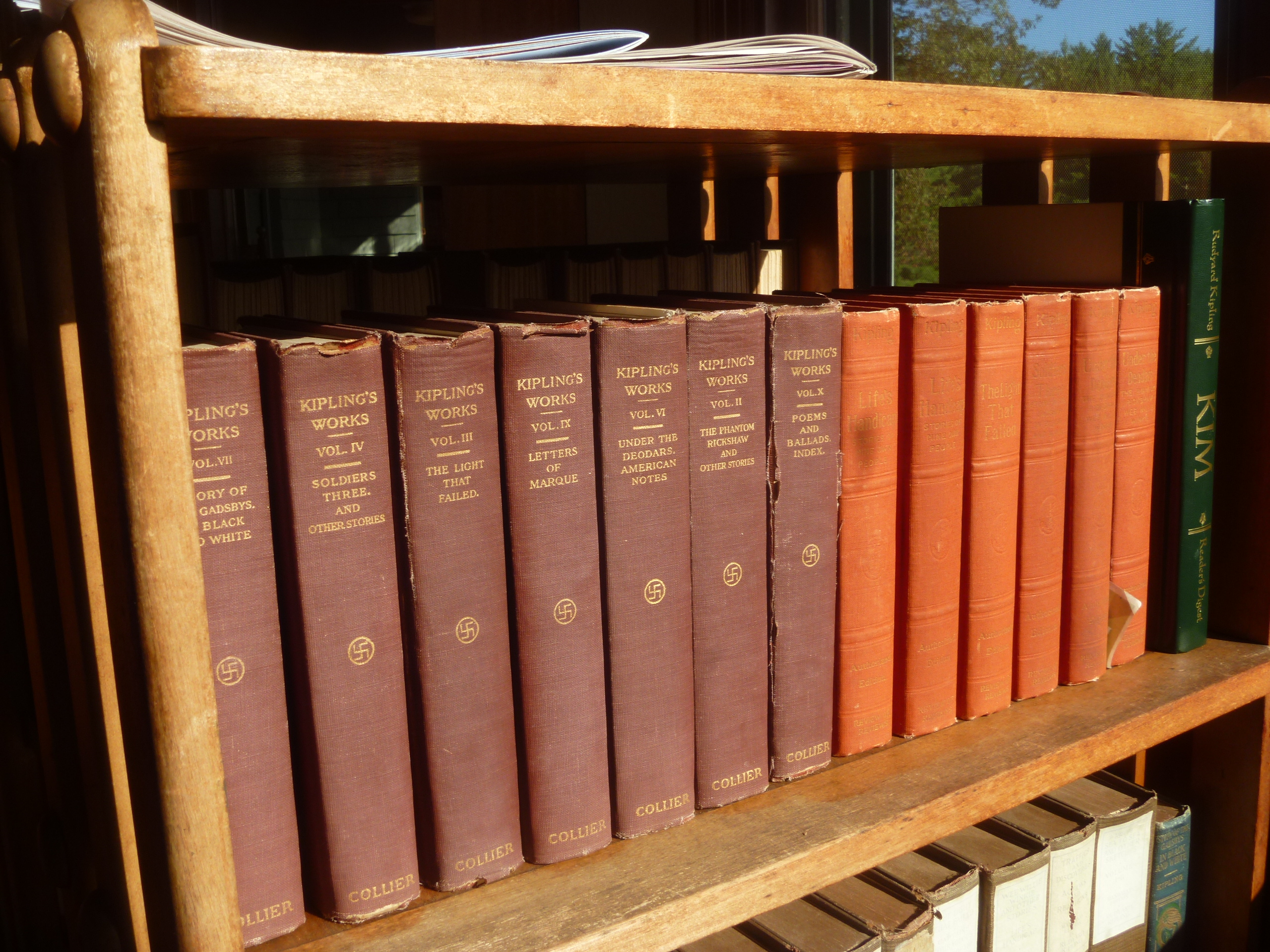
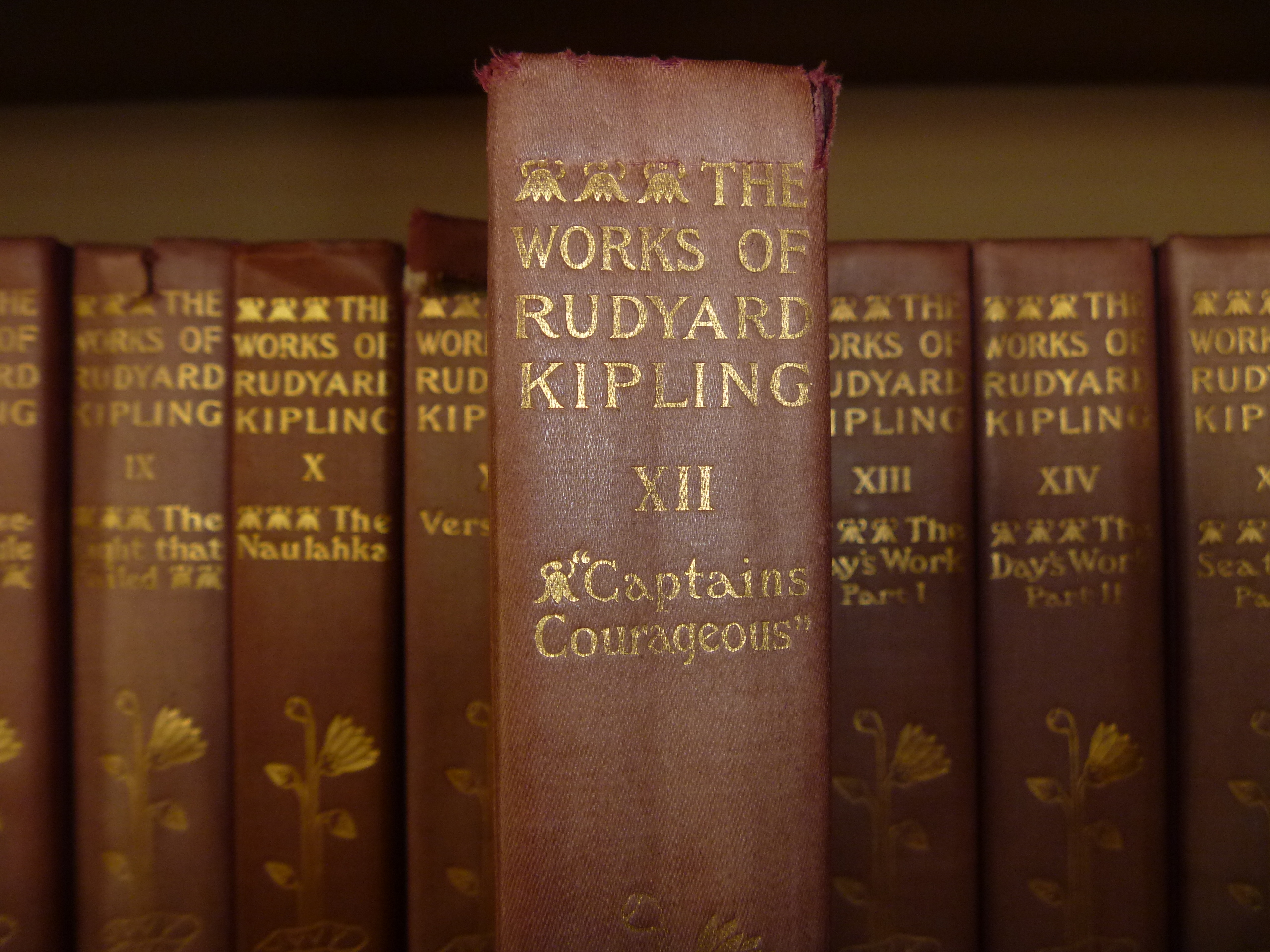
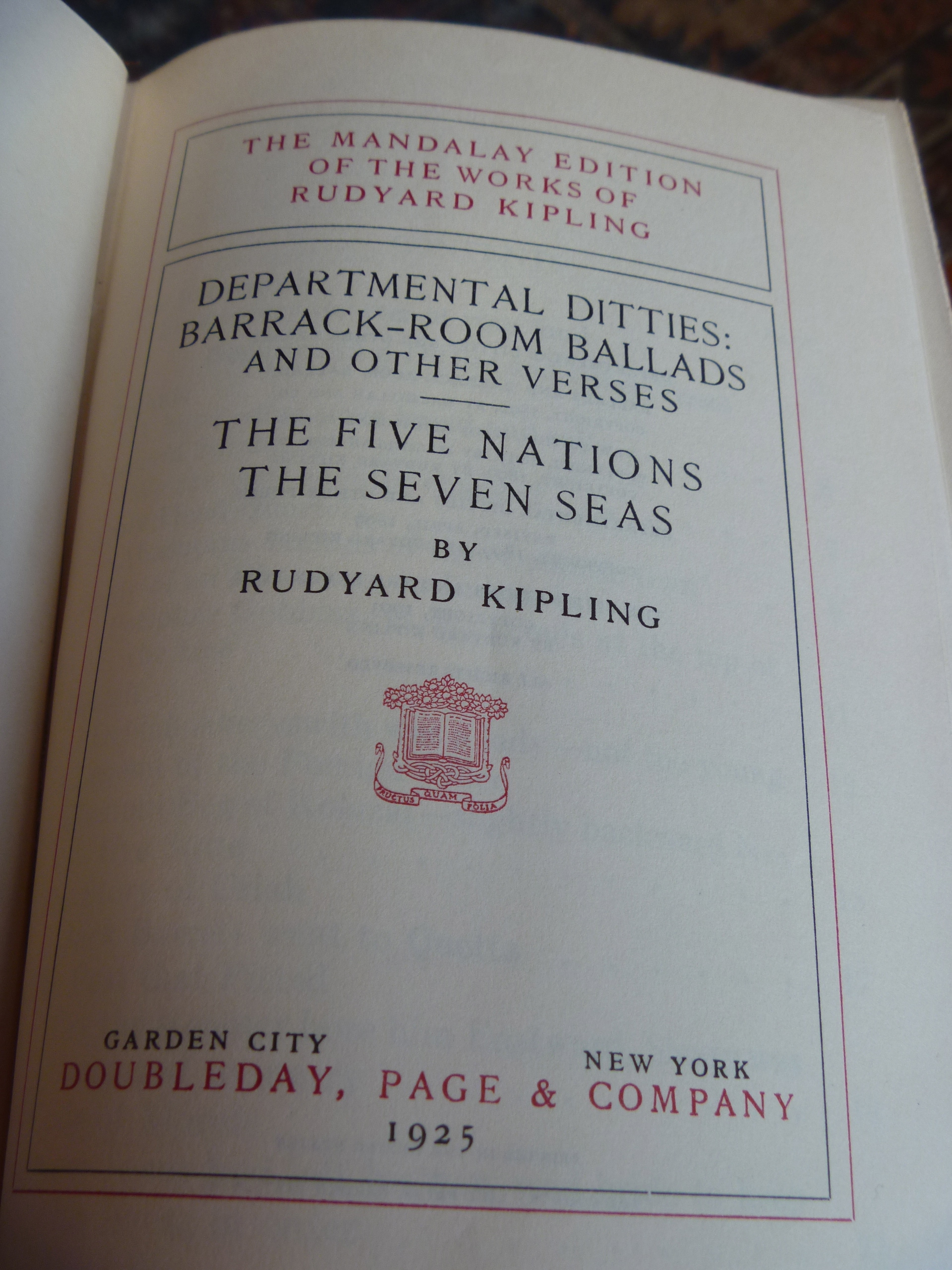
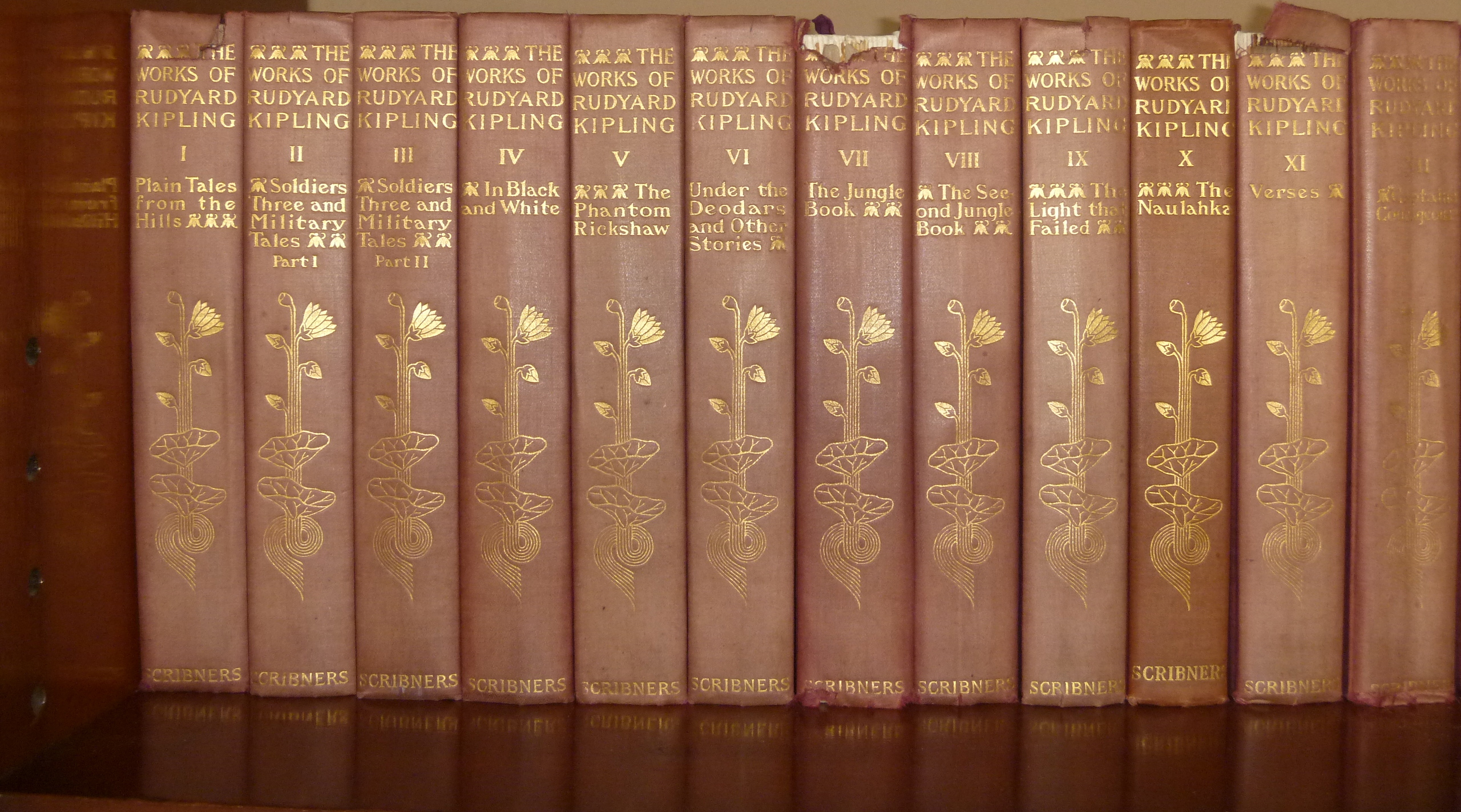
A quick deviation to books here before I start on bathroom descriptions. Compared with all other Landmarks that I’ve visited the library (like the house itself) is h-u-g-e. In fact, it could be called a library (as in room) if it were not already called a study. Bookshelves fill all wall space not already occupied by desk, couch and fireplace. There is the usual couple of shelves of local and house related books but in addition there are full sets of classic authors – Hawthorne, Austen, Scott – unfortunately no Edith Wharton (more about her later) and there are many ‘old’, but no less interesting I’m sure, books. In addition there are, as you might suppose, several runs of The Complete Works of Rudyard Kipling.

From the House Tour notes :

CENTRAL BATHROOMS

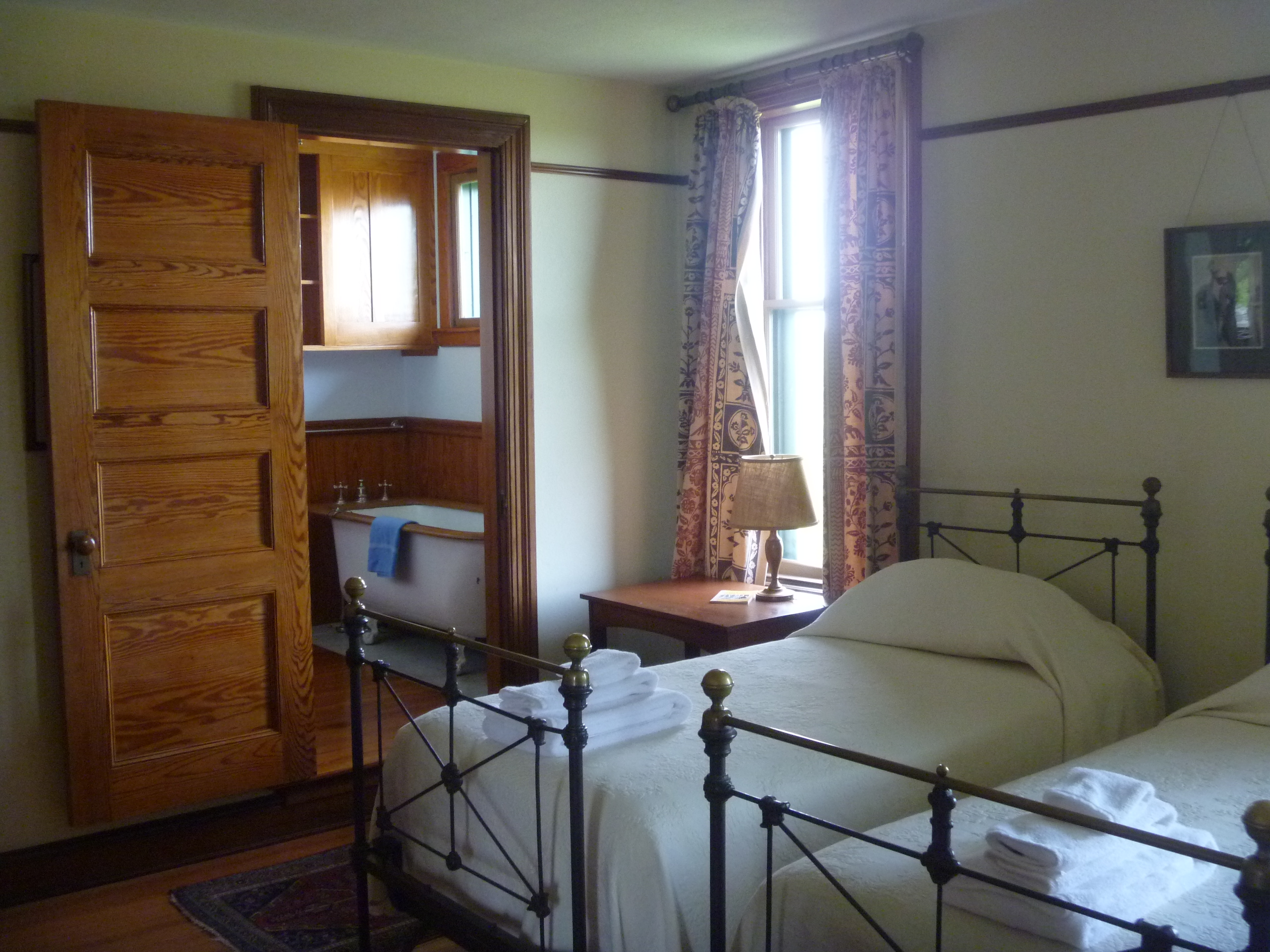
The Kiplings had one L-shaped bathroom. The Holbrooks divided this in two and made a pair of complete bathrooms. We left the latter arrangement as more suitable to modern usage. The toilet in the middle bath and the tub in the south bath are original.

We didn’t dare to use it!

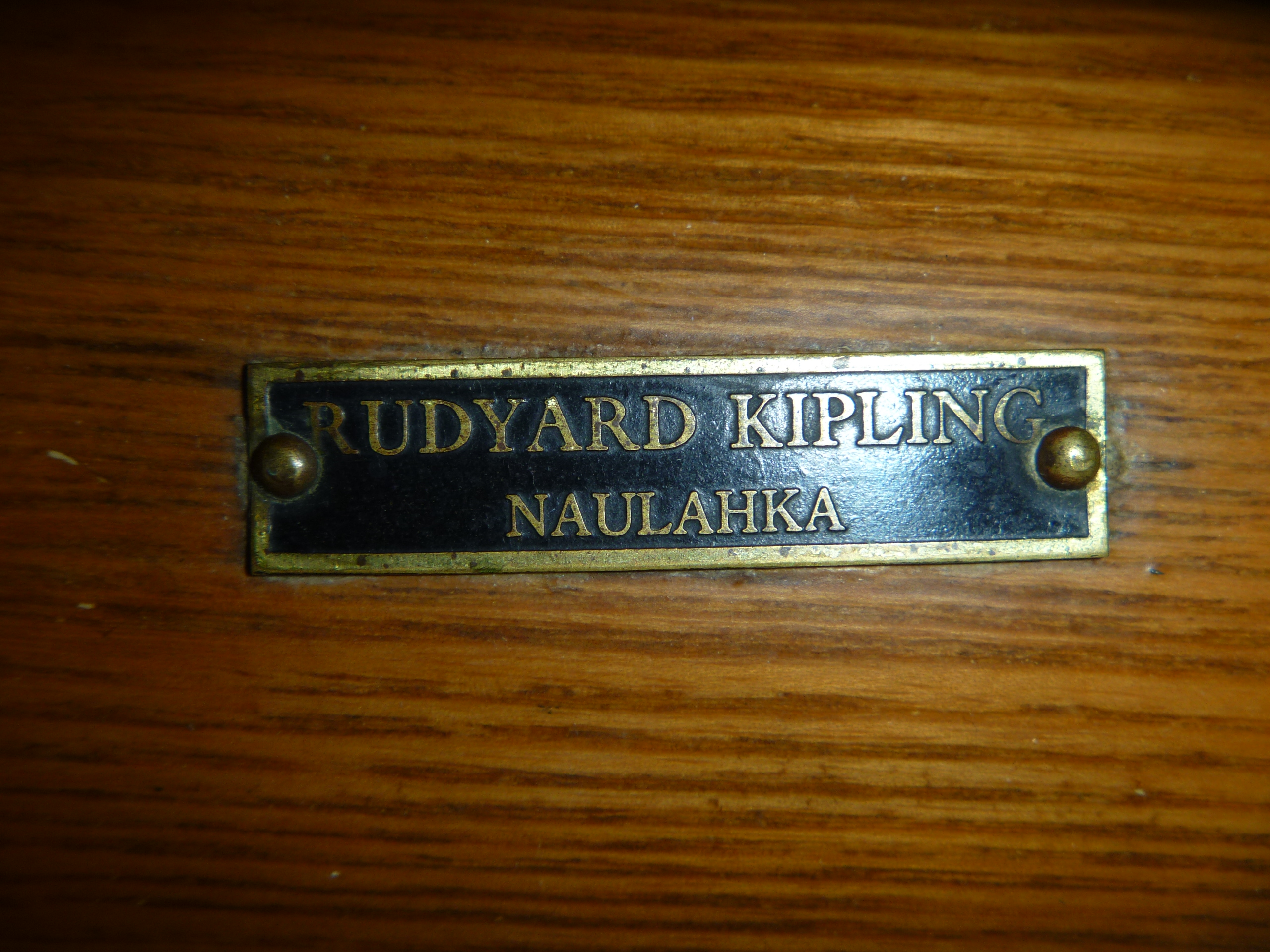
We know it’s RK’s bath because it has his nameplate on it :

The fixtures all required re-nickeling.

One of the servant’s rooms was converted to a bathroom by the Holbrooks. The Trust removed the concrete floor that had been installed during these alterations, and replaced it with tile in a typical turn-of-the-century design.

In amongst the local/house related books I found :

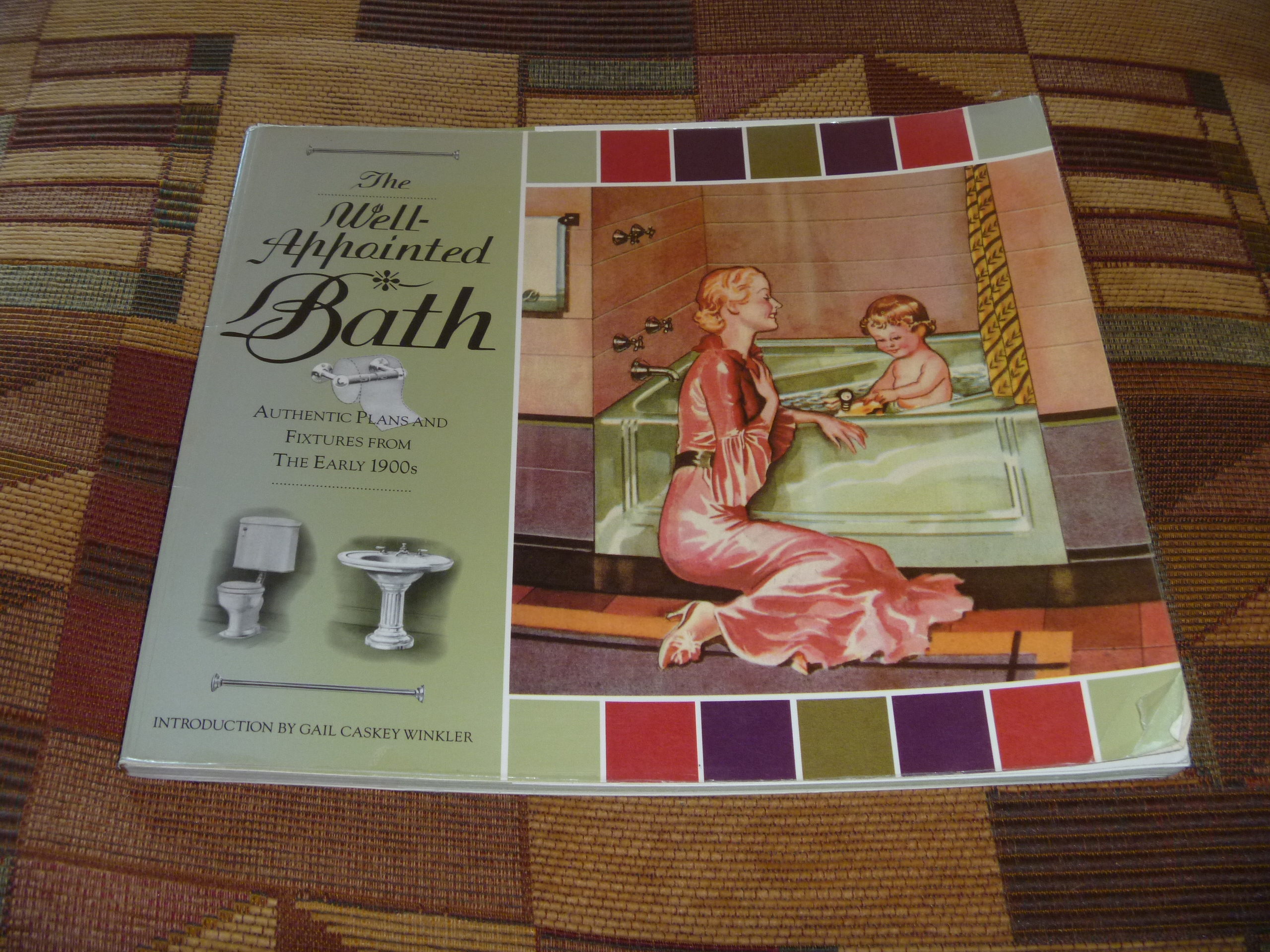
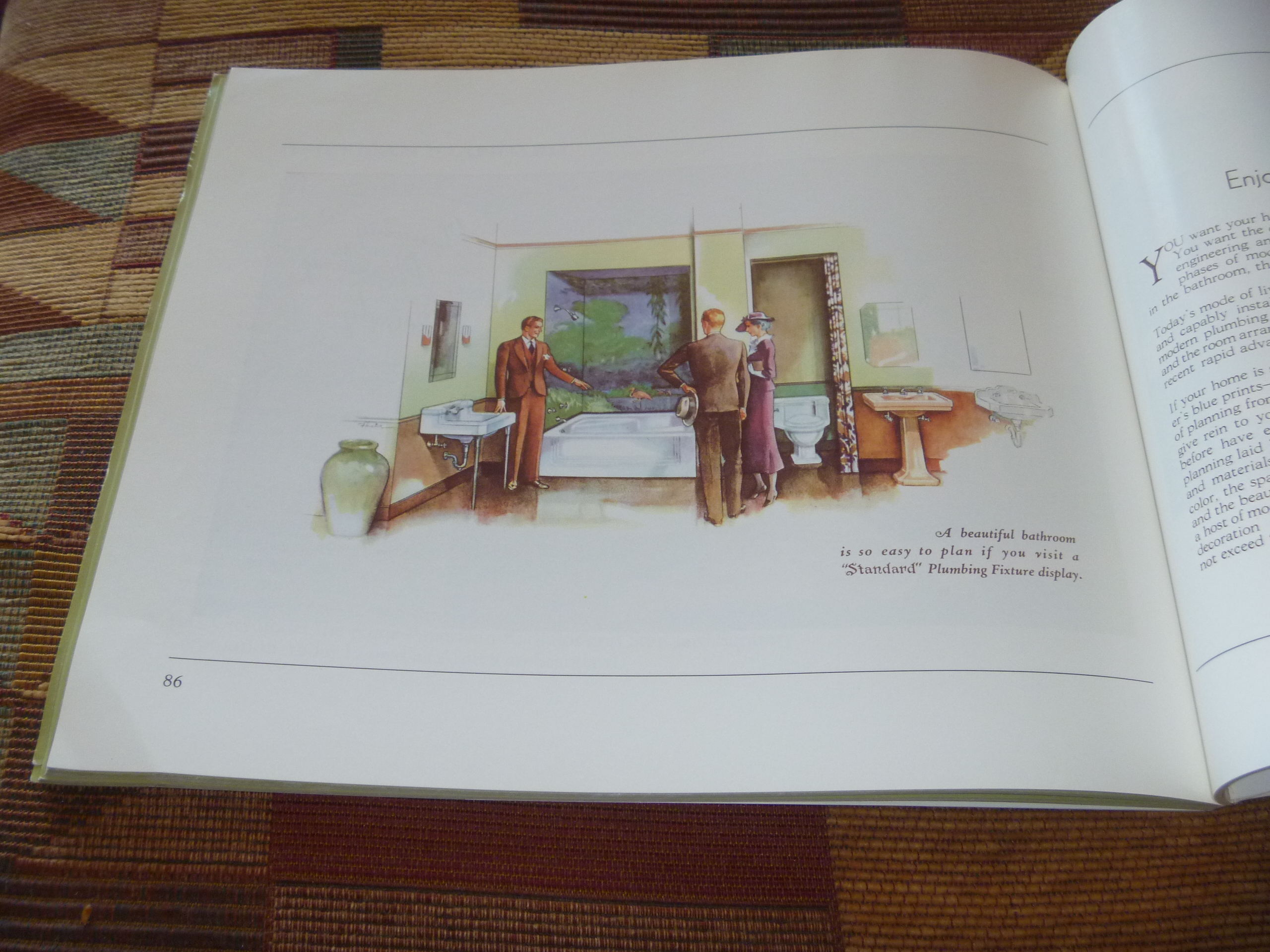
It’s a fascinating study of bathrooms but I can’t believe it dates all the way back to the early 1900s. It’s a reprint, but even so … I’m sure this would not be Rudyard Kipling choosing his sanitary wear.

Or even the Holbrooks – theirs is far too complicated :

Naulakha : a tour of Rudyard Kipling’s New England home

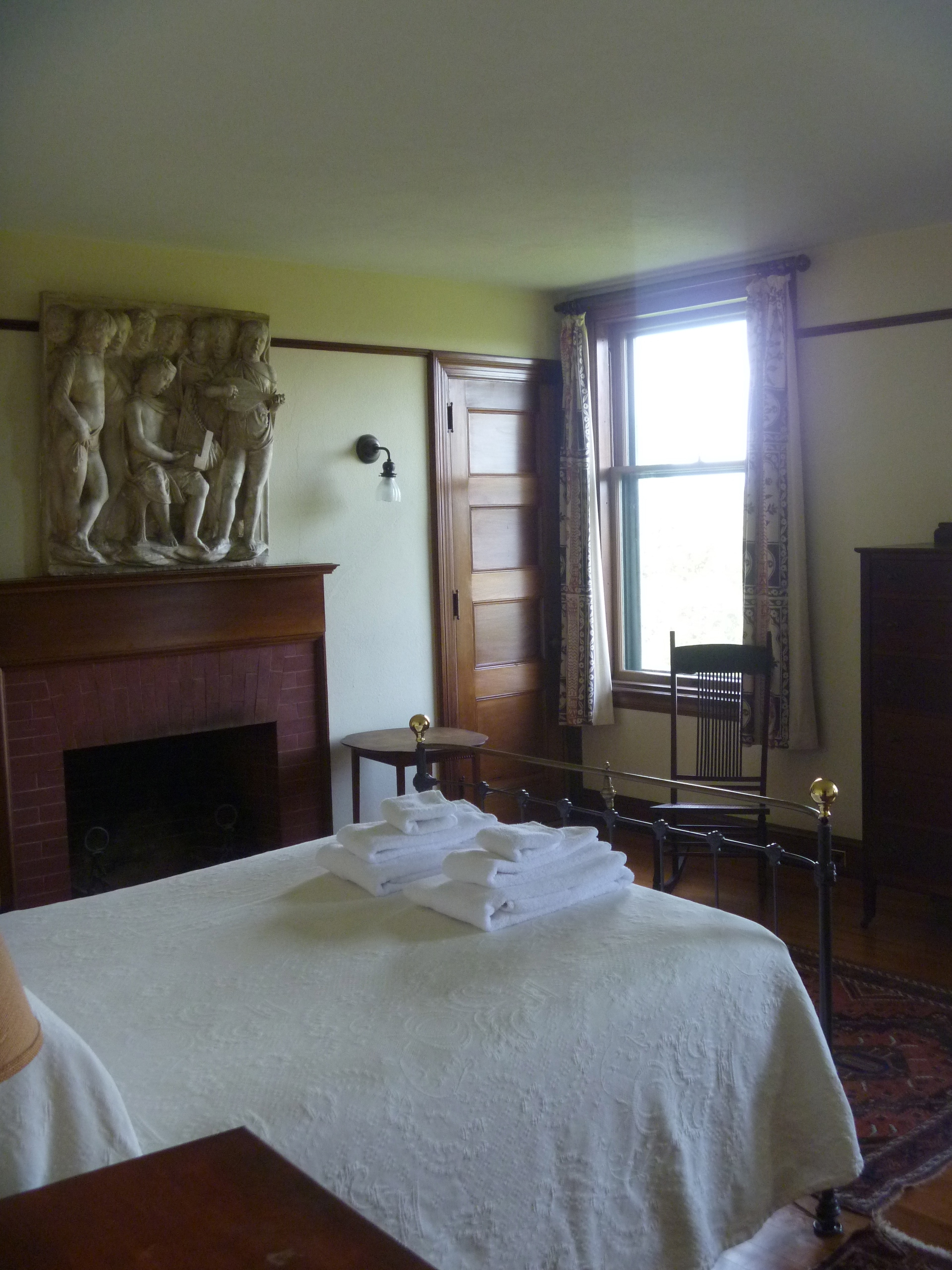
For a whole week from 7th to 14th September I was immersed in Kiplingiana. I stayed at Naulakha near Brattleboro Vermont and enjoyed chota pegs on Rudyard Kipling’s verandah, ate vegetable curry at his dining table, slept in his (and his wife Carrie’s) bedroom, relaxed in his bath, read his books in the study where he wrote some of them and wrote postcards home from his desk for Naulakha is a Landmark Trust USA property and anyone can book to stay to there.

In a box file in the study is a typescript House Tour Guide so I have adapted this and added my own photographs in order to take you on a tour of this wonderful house.

BACKGROUND

Naulakha is a Hindi word that means ‘great jewel’. It was built in 1892-1893 on an 11 acre plot that the Kiplings bought from Beatty Balestier, Mrs Kipling’s brother. Henry Rutgers Marshall of New York was the architect who carried out Rudyard Kipling’s wishes. The house, described as a ship by  Kipling, is 90 feet by 22 feet with the rooms facing the lovely view over the Connecticut River valley; a hallway runs along the uphill side.The windows are  large and were called “lavish and wide” by Kipling. The house cost just over $11,000 and is the only one built by Kipling.

ENTRY HALL AND LOGGIA

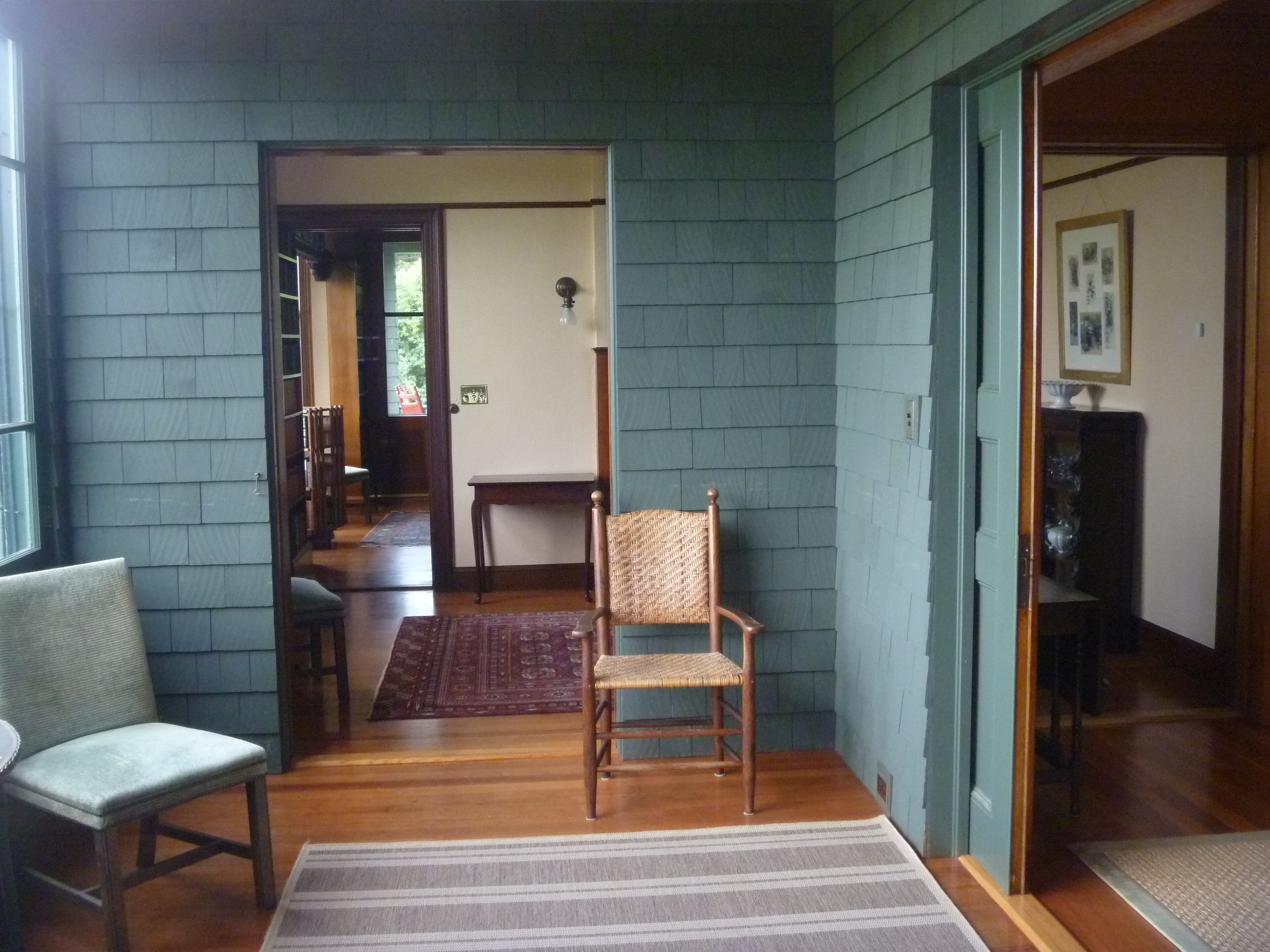
The interior walls forming these rooms were removed by later owners, the Holbrooks, in order to create a large, open central space. Rudyard Kipling himself said that the Loggia was “the joy of the house” so its reinstatement was important. Fortunately, the original pocket doors and ash panelling were discovered in a barn up the road. The two brown wicker chairs are original.

MRS KIPLING’S STUDY

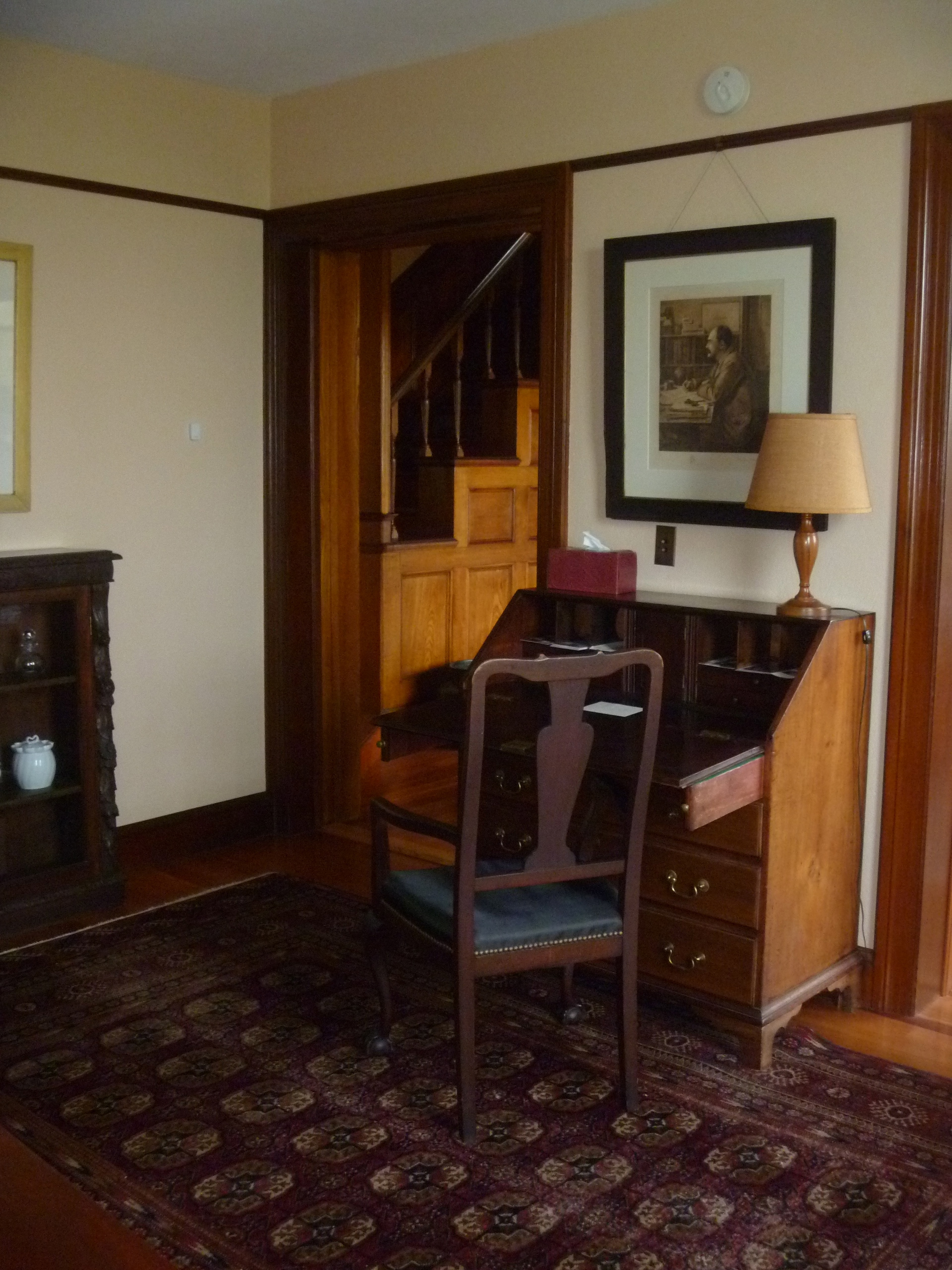
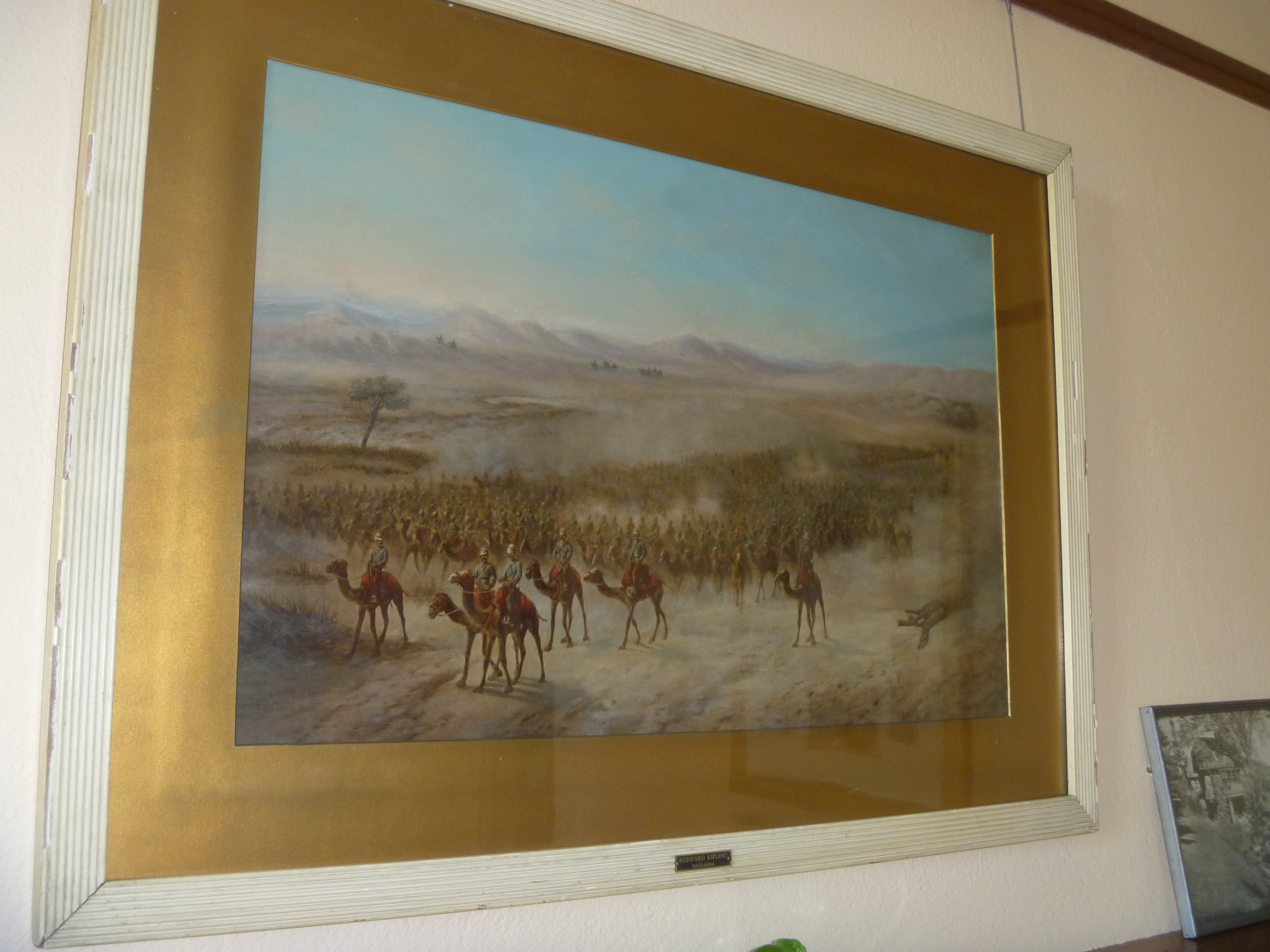
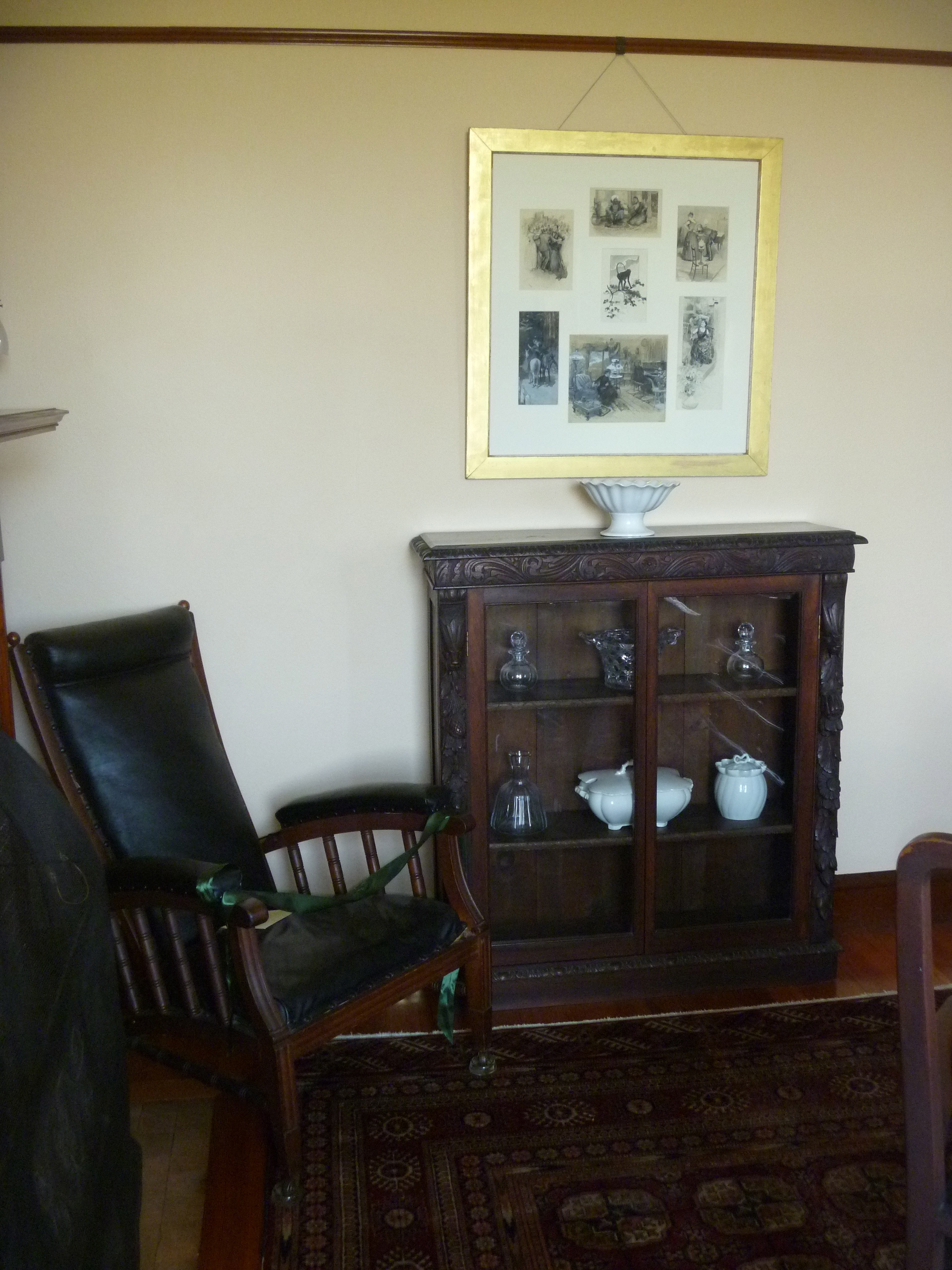
Visitors wishing to see Rudyard had to pass through this room. Carrie diligently protected her husband’s work time and privacy – so effective was Mrs K that this became known as the ‘dragon’s chamber’. The picture ‘The camel corps’ and illustrations from Mrs Hauksbee stories are original.

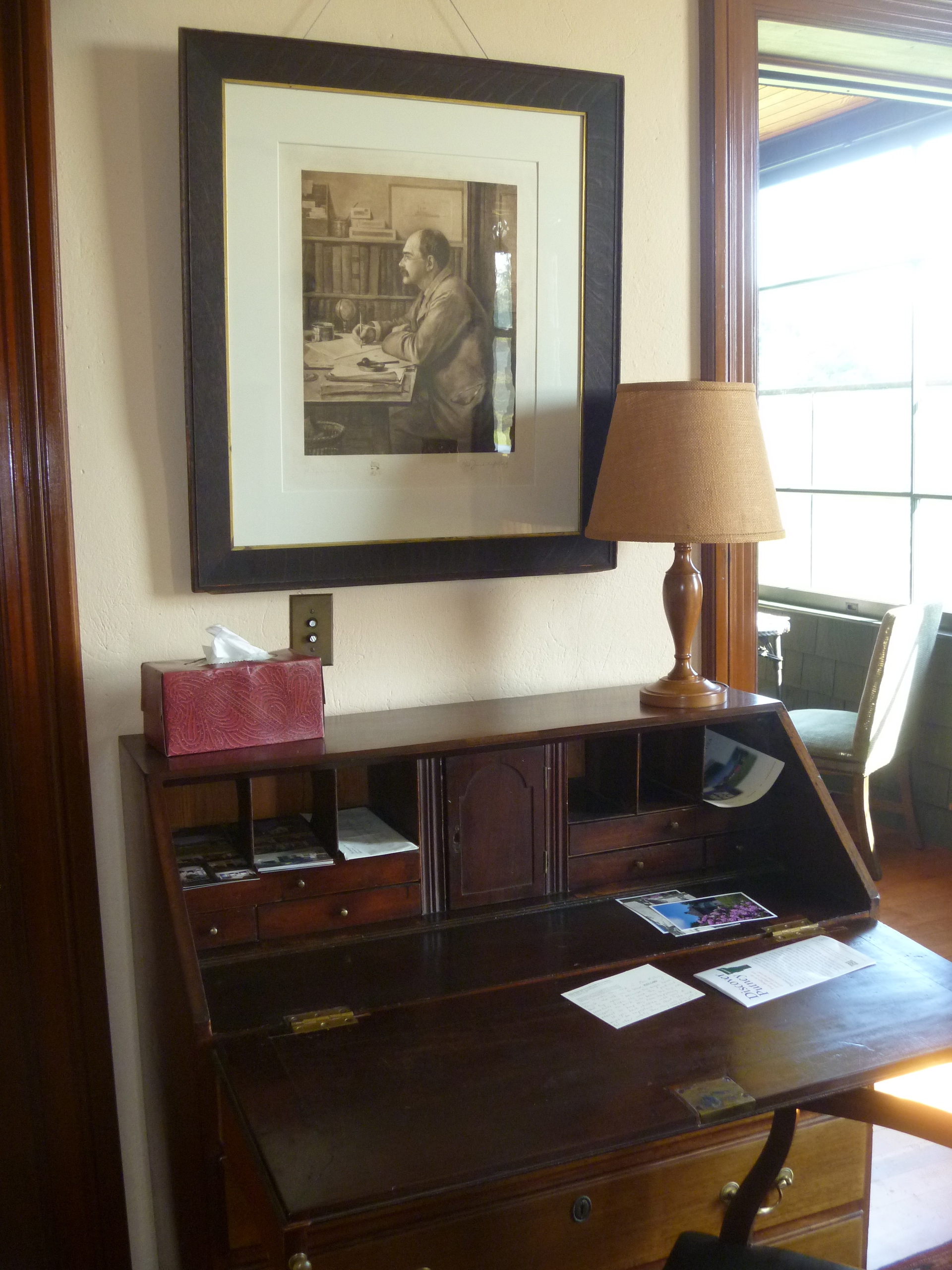
The lithograph of Kipling is based on the oil painting by his cousin Philip Burne-Jones which now hangs in the National Portrait Gallery in London. Philip and Rudyard made this lithograph.

RUDYARD KIPLING’S STUDY

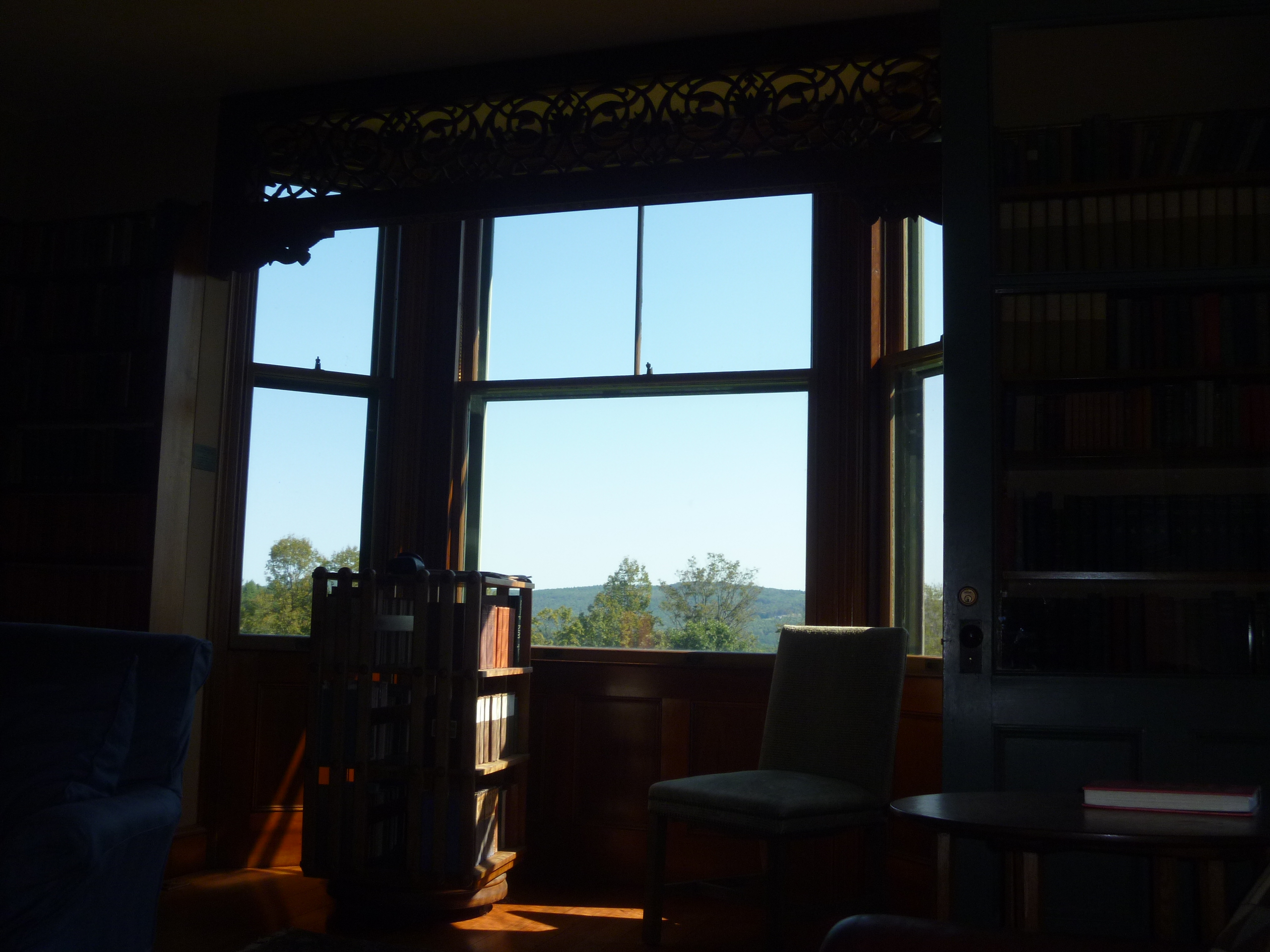
Most of the bookcases are original including the revolving case. The inscription over the fireplace was done in 1893 by Rudyard’s father, John Lockwood Kipling and is from the Gospel of St John.

“The Night Cometh When No Man Can Work”

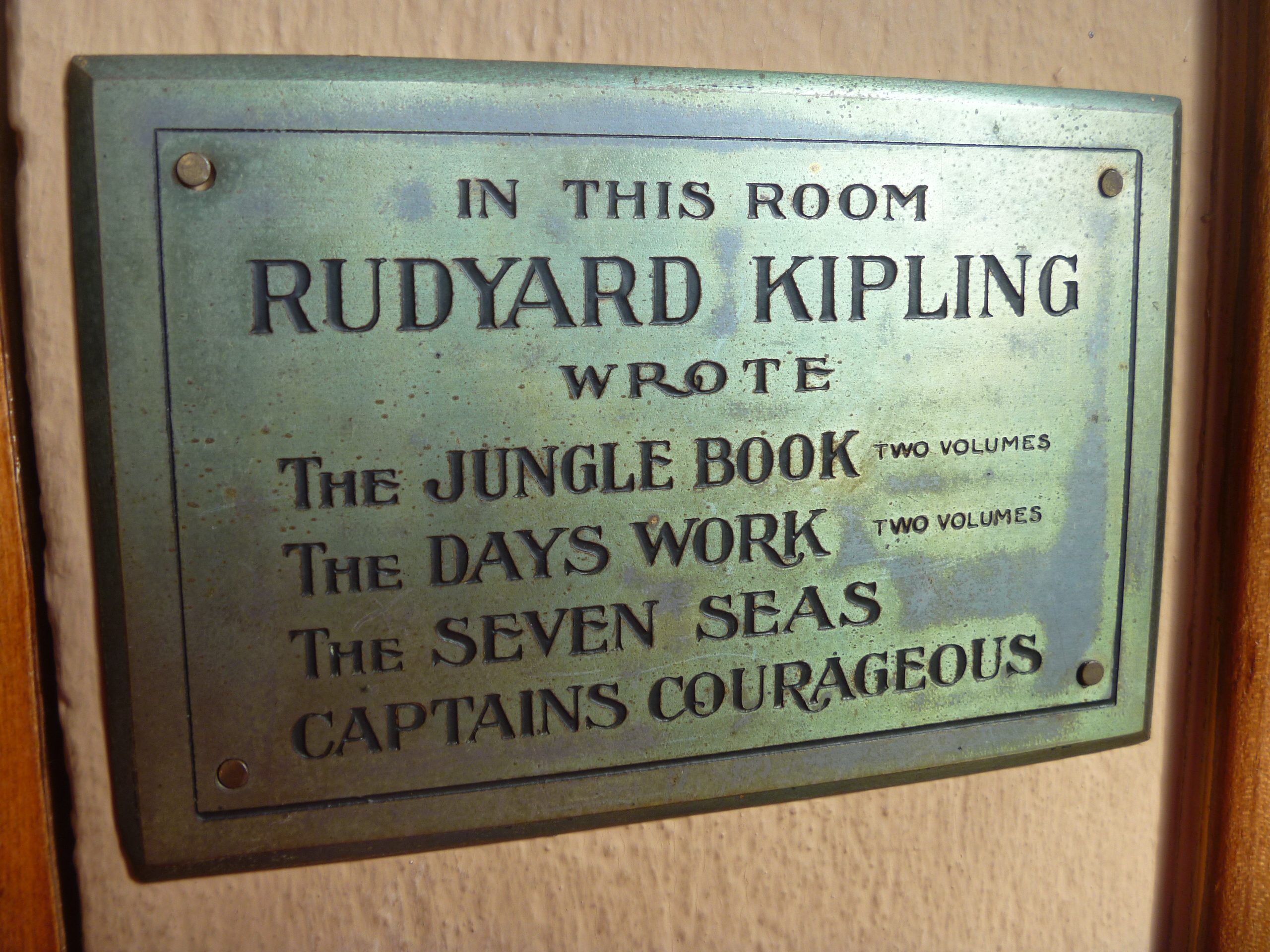
In this room Rudyard Kipling wrote the Jungle Books, Captains Courageous, A Day’s Work and The Seven Seas. He also began Kim and the Just So Stories.

The original leather couch is too frail to leave out. The decorative screen in the bay window is likely from Kashmir. The bookcases and stained glass panels on the west wall were added to ensure privacy.

MAIN STAIRCASE

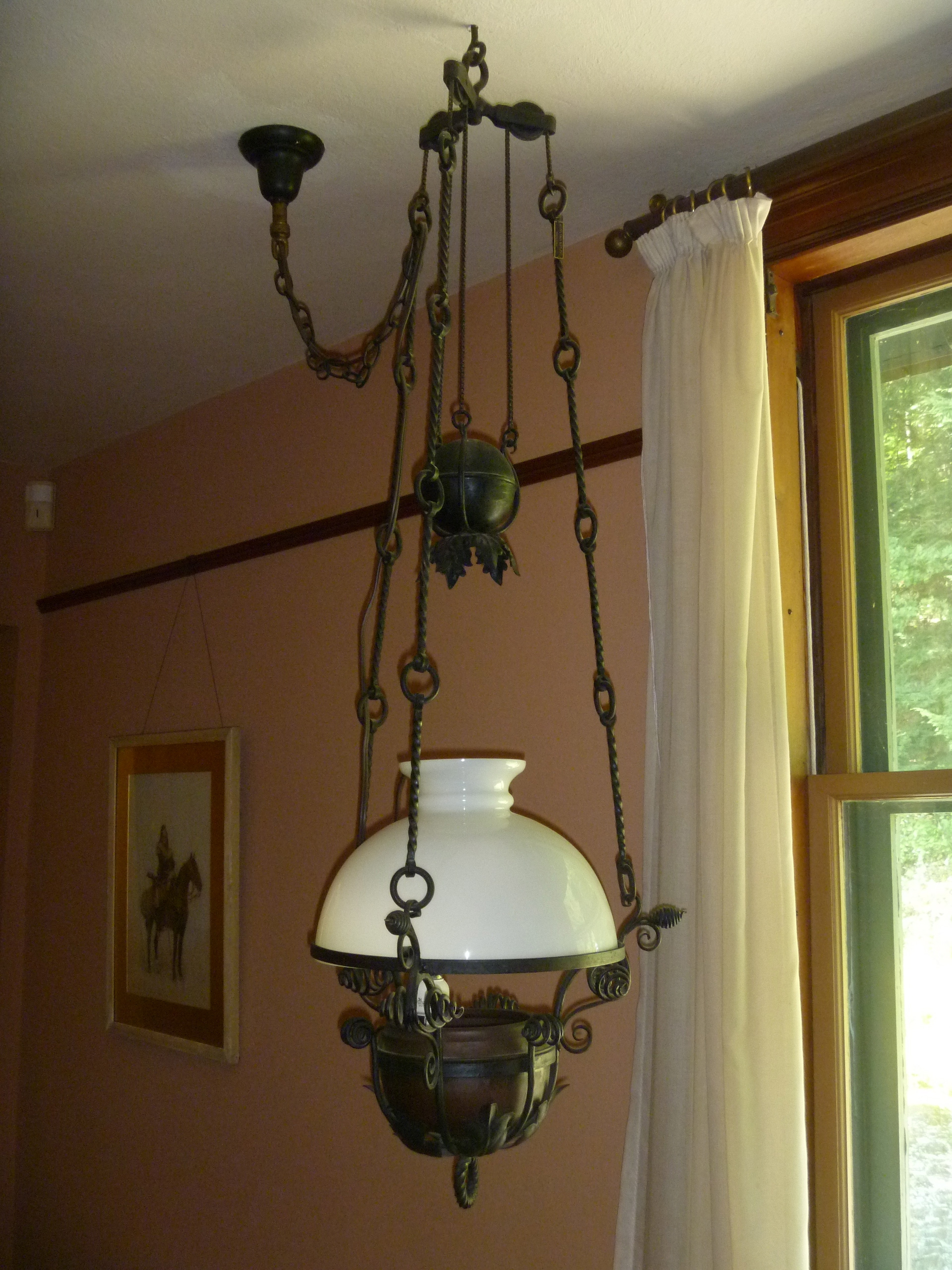
This is the original oil light fixture, later electrified by the Holbrooks. Most of the pictures on the first floor landing are original.

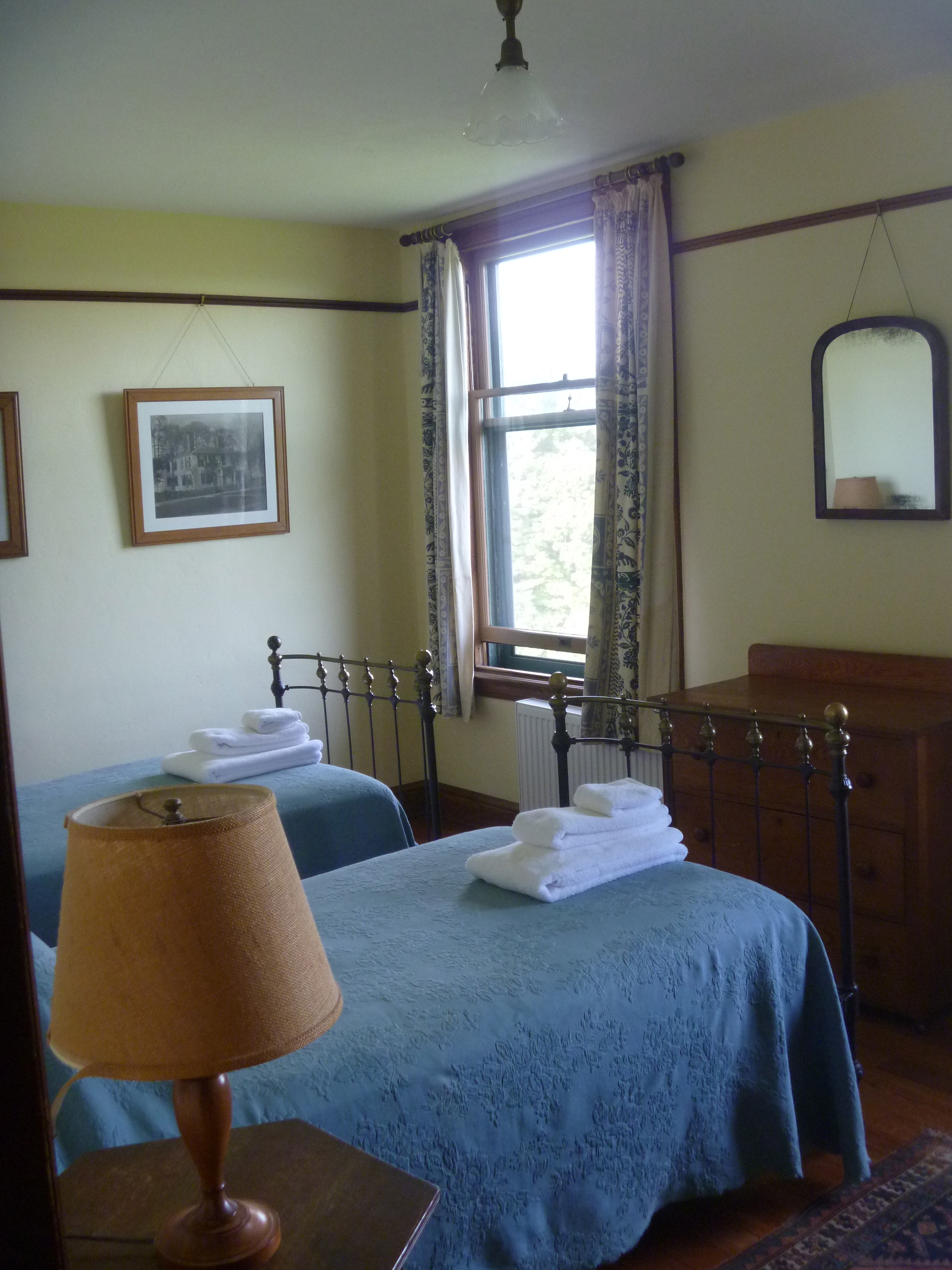
GUEST BEDROOM

At the top of the main flight of stairs is the main guest room. Sir Arthur Conan Doyle and William James (brother of novelist Henry) are two famous guests who have slept here.

MASTER BEDROOM

This was the bedroom of Rudyard and Carrie Kipling.

NURSERY

This is divided into the day and the night nurseries. The decorative plaster work in the day nursery was done by John Lockwood Kipling for his first granddaughter, Josephine. It was for Josephine that the Just So Stories were composed. Jospehine was born down the road at Bliss Cottage in 1892. Elsie Kipling was born in Naulakha in 1896.

ATTIC

There is a large playroom used by the Kiplings (still a games room today) and a small bedroom (now houses display cases and a book collection) probably used by the maid.

SERVANTS ROOMS

The north end of the house was for servants’ use. One of the sernants’ bedrooms was converted to a bathroom by the Holbrooks. The bedroom furniture is not original. There are no records of how these rooms were furnished.

KITCHEN

The layout is original including the stove hood and hearth stone. The small windows to the east of the stove allowed light but did not allow the servants to see the Kiplings on the small porch. The Holbrooks used this room as a study and moved the kitchen to the basement. The Trust have restored it to its original ground floor location.

DINING ROOM

The table and china cabinet are original The sideboard was built for the Kiplings in New York with panels brought from India. Most of the dining chairs are too fragile to use and were, in fact, broken over the years; they are currently in storage. The stained glass is original except for one panel which was broken. The small porch was built as a fun space and gives the feeling of being on a ship’s deck.

THE GROUNDS

The tennis court and small gazebo (called ‘the summerhouse’ by the Kiplings) were built by the Kiplings.

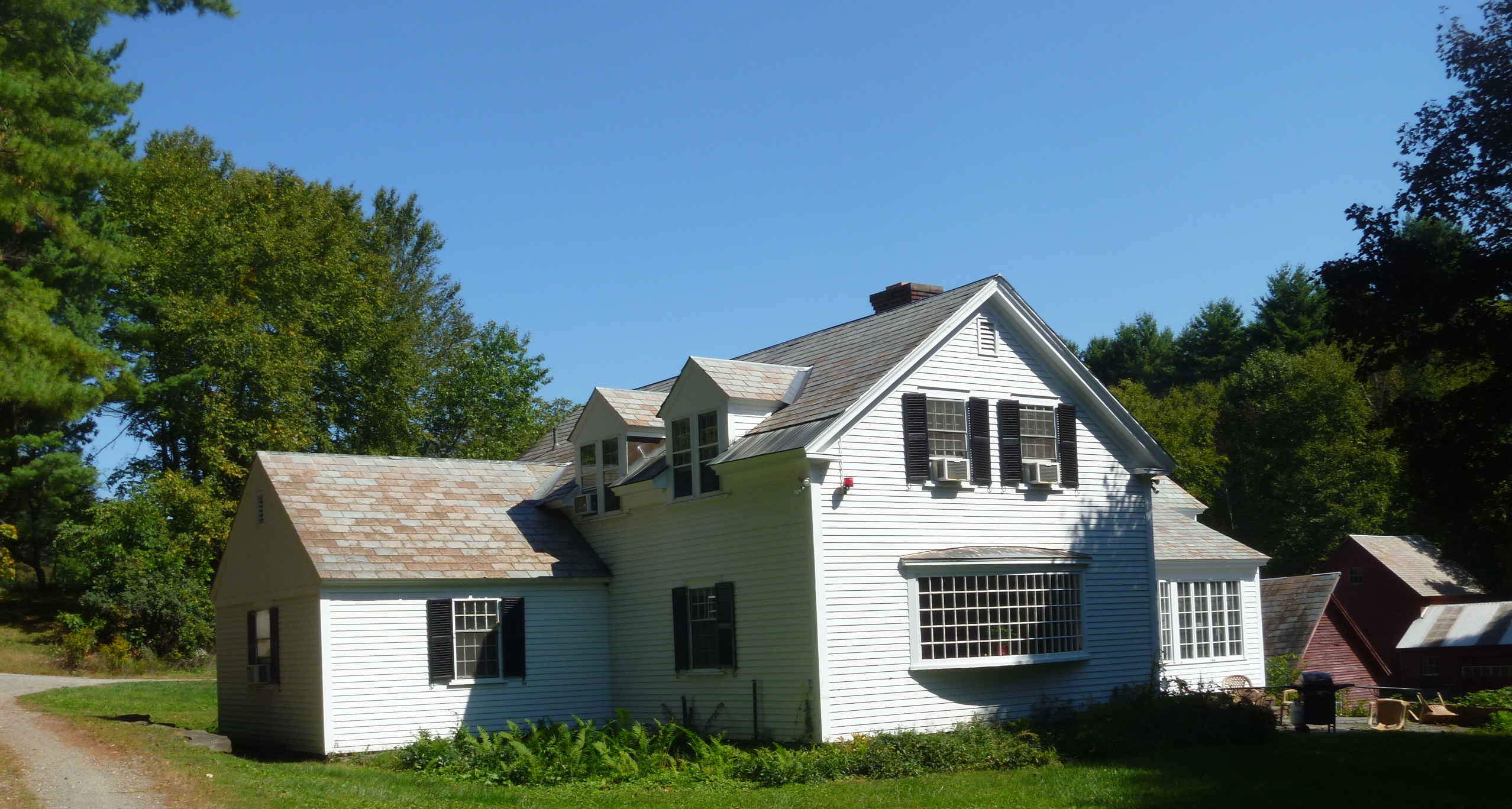
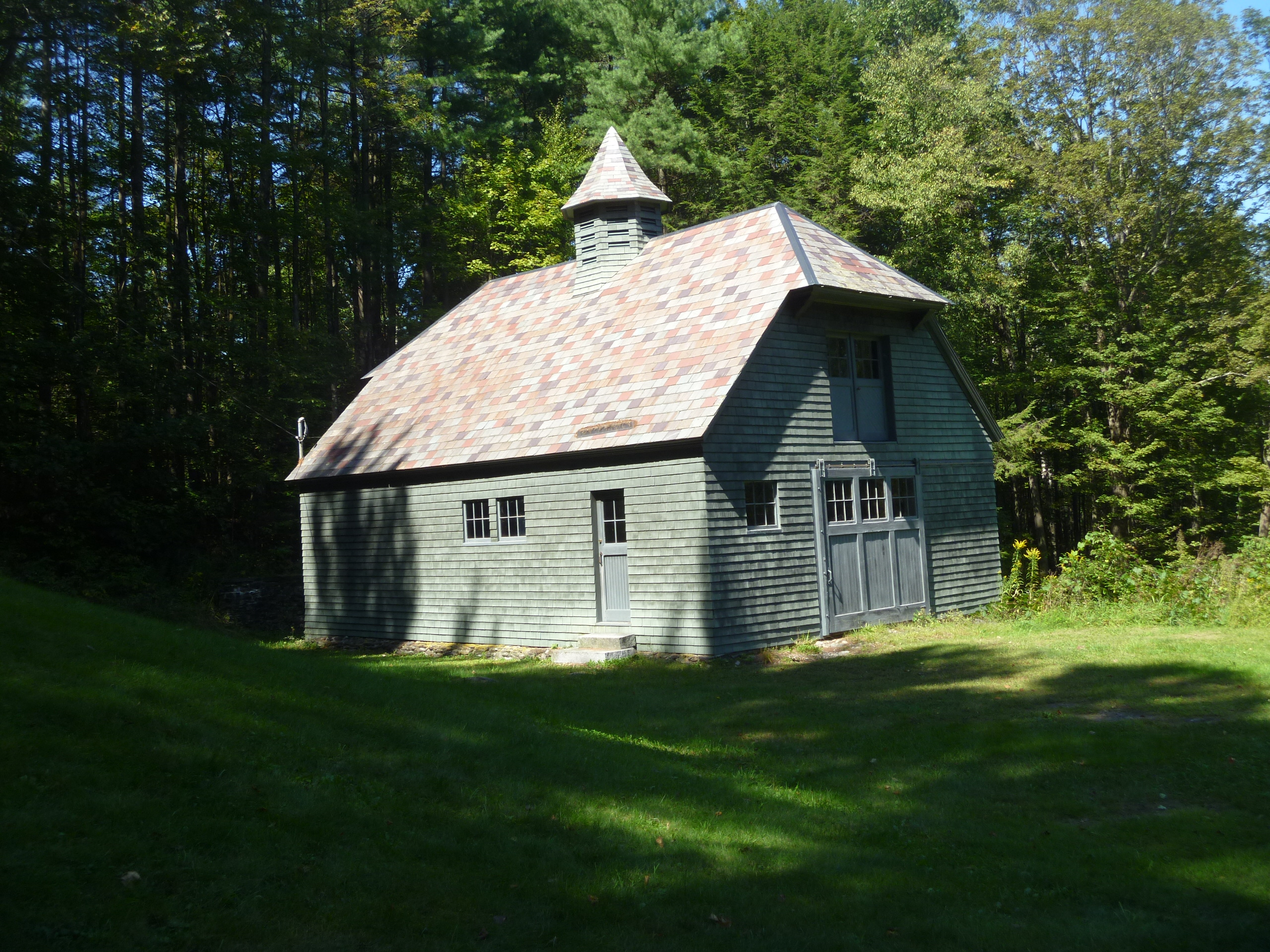
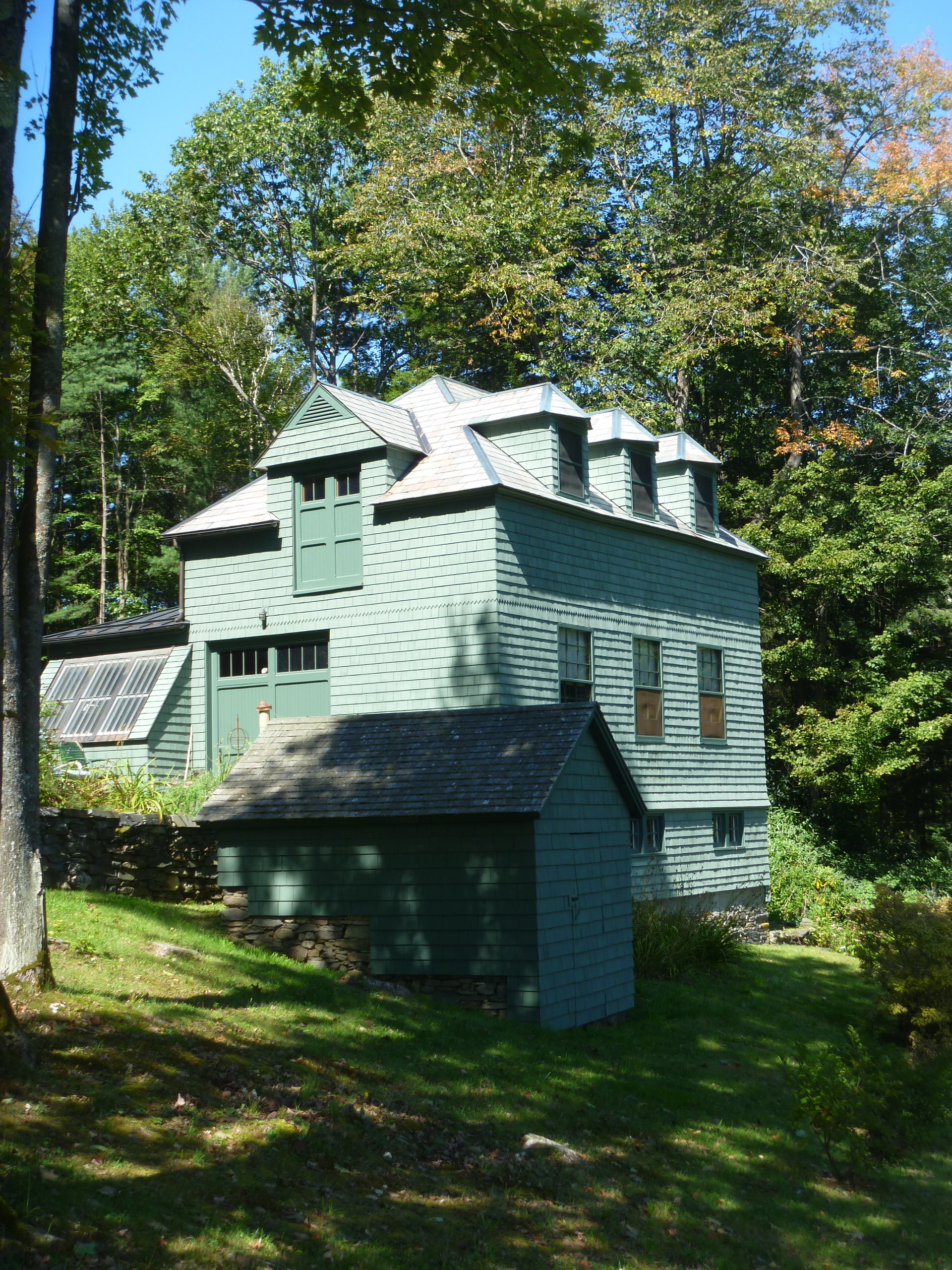
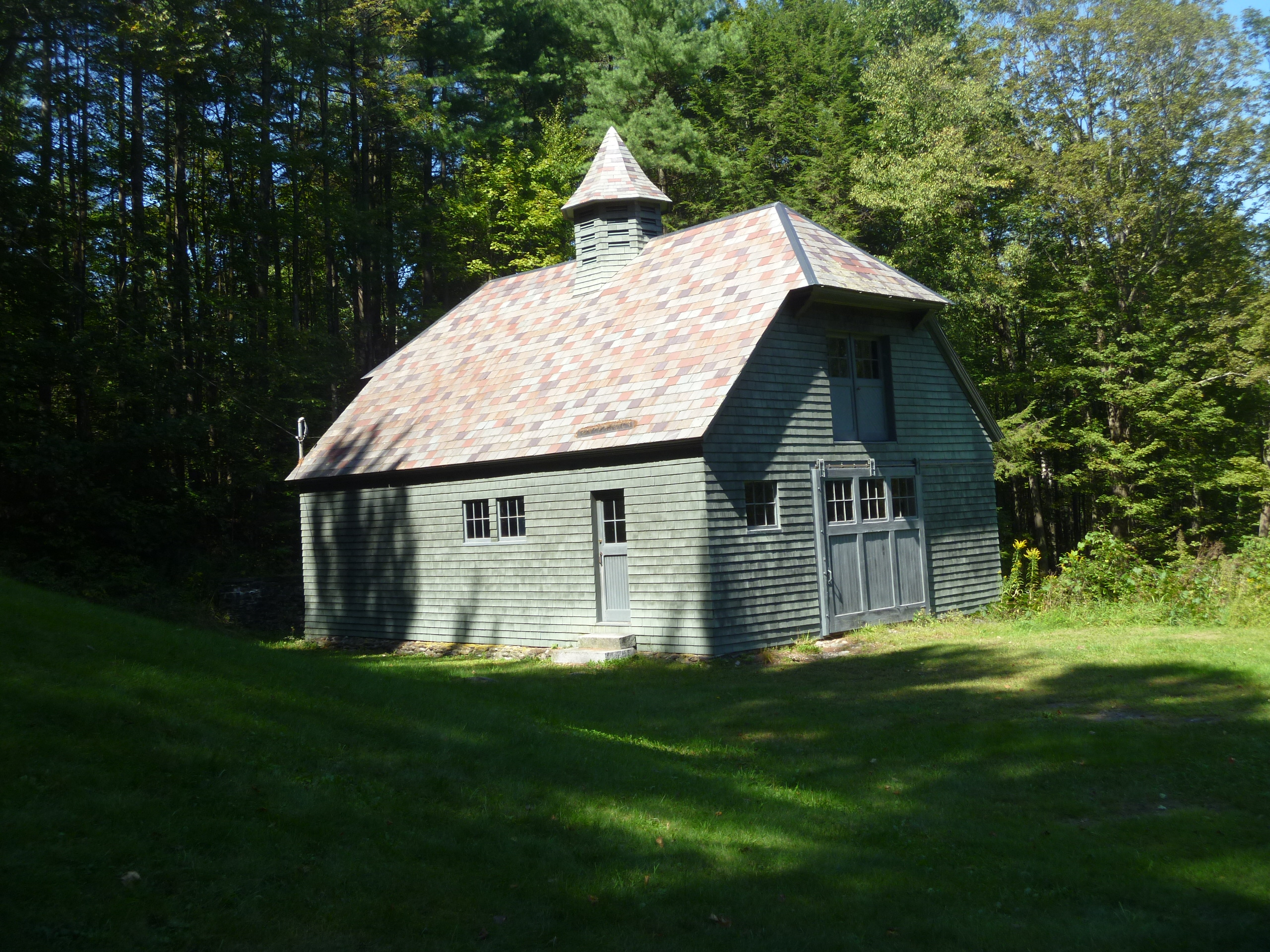
The small gabled building along the driveway was the Kiplings’ ice house. The house behind was originally the carriage house with living quarters above for the coachman, Matthew Howard, and his family.

The barn, which now houses displays of Kipling’s years in Vermont, was built by the Kiplings in 1896. No other buildings are from the time of the Kiplings. The layout of the garden walls is the same as for the Kiplings, although all of the walls have collapsed at different times over the years and been rebuilt.