More Ghosts at Christmas : Edith in the Dark

Edith in the Dark

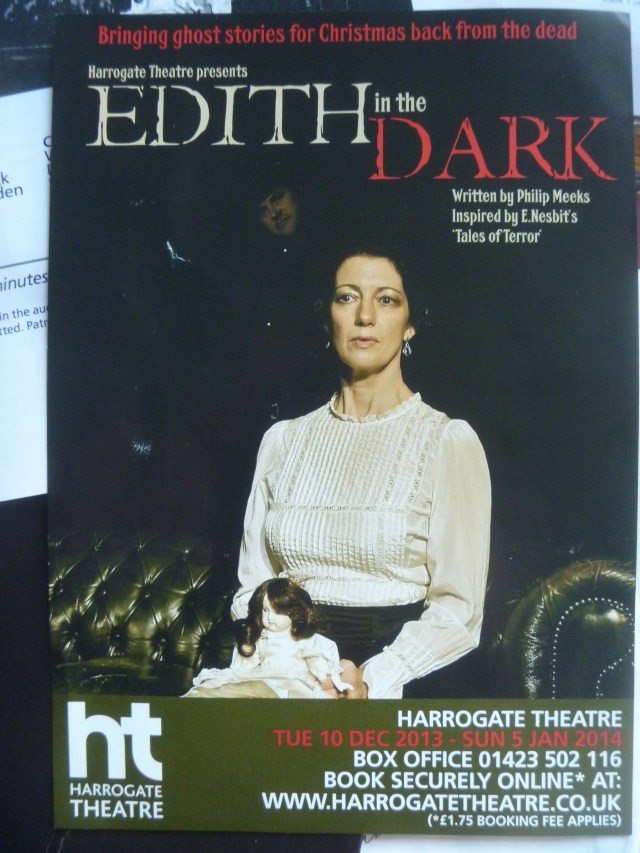
Celebrated children’s author Edith Nesbit escapes her annual Christmas Eve soiree and finds herself in her attic writing room with a young male guest and Biddy Thricefold, her loyal housekeeper.

The trio decide to observe the festive tradition of reading scary stories to help ward off wicked spirits, choosing the stories penned by Nesbit herself. Yet as they breathe life into these terrifying creations, all is not as it seems…

One of the people in the attic is hiding a deadly secret.

Millions have grown up with the fabled work of E Nesbit,which includes classic novels Five Children and It and The Railway Children, but she began her writing career as a mistress of horror. For the first time ever, these flesh-creeping yarns have been freely adapted for the stage.” [Source Harrogate Theatre website]

Way up on the second floor of the Harrogate Theatre (just a 20 minute train journey from home) is the intimate 50 seat Harrogate Studio Theatre. Yesterday afternoon I very much enjoyed a couple of hours in the company of the three characters playing out some of Nesbit’s ghost stories.

I had read a review in the local free paper earlier in December and was intrigued to know that Edith Nesbit, author of such children’s (and adults’) favourites as ‘The Railway Children’, ‘Five Children and It’ and ‘The Story of the Treasure Seekers’, wrote much more besides including ‘Tales of Terror’.

Edith in the dark

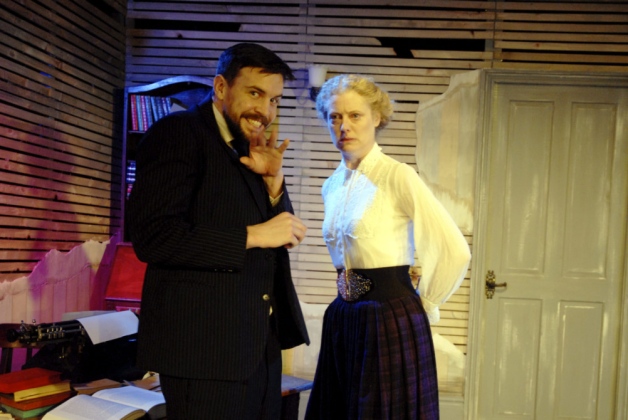
Here are Scott Ellis (as Mr Guasto) and Blue Merrick (as Edith) in Edith in the Dark [source]

Blue Merrick the actress who played Edith could have been EN herself. I had never heard of her but my friend recognised her as having played the registrar presiding over marriages in eleven separate episodes of Coronation Street on ITV.

From this new play I learned more about E. Nesbit’s life and the past that haunted her. She was an original member of the Fabian Society and named her son Fabian after it. Sadly he died at the age of 15 during a tonsil operation. She dedicated several of her books to this son including Five Children and It. She also seemed to feel very strongly that she did not want to be famous just through her children’s books. She was a keen socialist and defender of women’s rights.

I don’t know whether the play will transfer to other theatres but I was very glad to have spent the afternoon away from the shopping hordes again and in the company of Edith Nesbit.

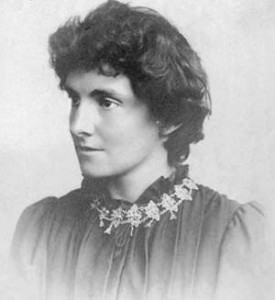
Edith-nesbit-275x300

Around the World in Christmas Gifts

Every gift received this Christmas has a special association for me: be it reading, travelling, visiting libraries, drinking tea or communicating via traditional pen and ink or modern internet methods.

ipad mini

I am now the rather nervous owner of an iPad Mini. I’m sure I will get used it and love using it but currently it sits pristine on its box whilst I still tap away at my laptop and snap away with my camera or iPod Touch.

Calendar

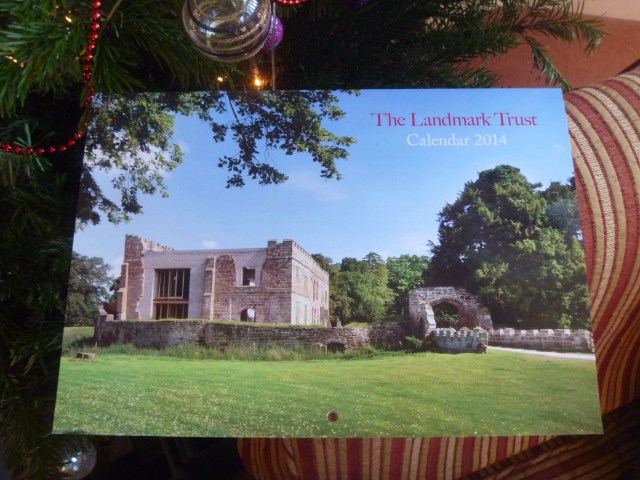
I’ll be checking dates and tempted to book Landmark Trust stays every time I look at my Landmark Trust Calendar for 2014. There is Astley Castle on the front (and also on the back) cover.

Cotswolds

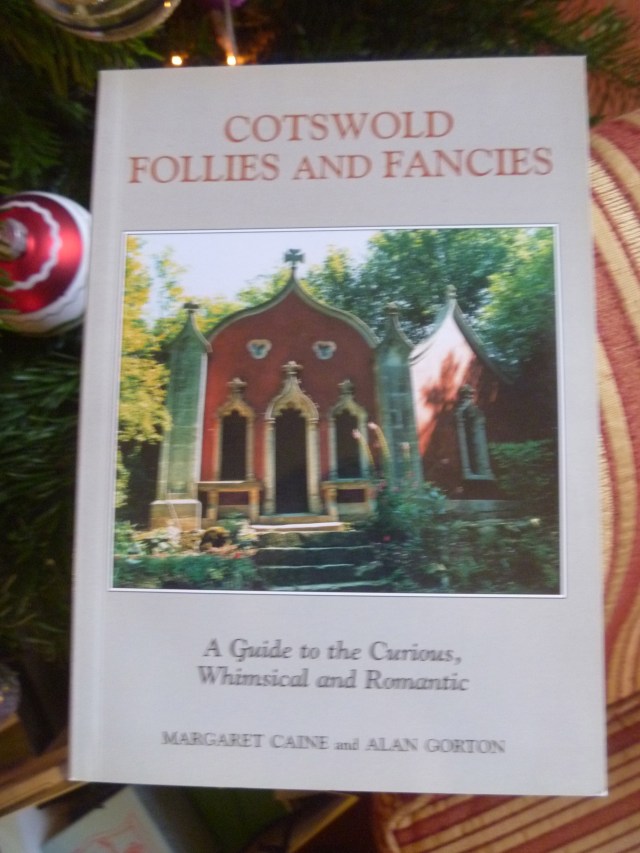
Whilst at the Landmark St Mary’s Lane in Tewkesbury earlier this year I came across “Cotswold Follies and Fancies”. It’s a guide to the curious, whimsical and romantic buildings around the area. I’m happy to have a copy of my own to take with me next time I visit the Cotswolds.

Rome

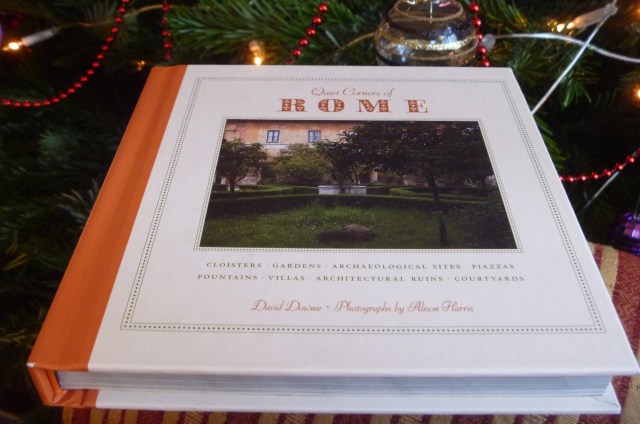
In 2014 I have travel plans for another ATG walking holiday this time in Italy. We will be staying just one night in Rome but will be sure to hunt out at least one of its “Quiet Corners”. In 2015 I’m hoping to spend a bit longer in and around The Eternal City.

Fodors Maine

No plans yet to return to New England next year but if we do I have just the up-to-date guide to make planning easy in Maine, Vermont and New Hampshire.

Tea and spoons

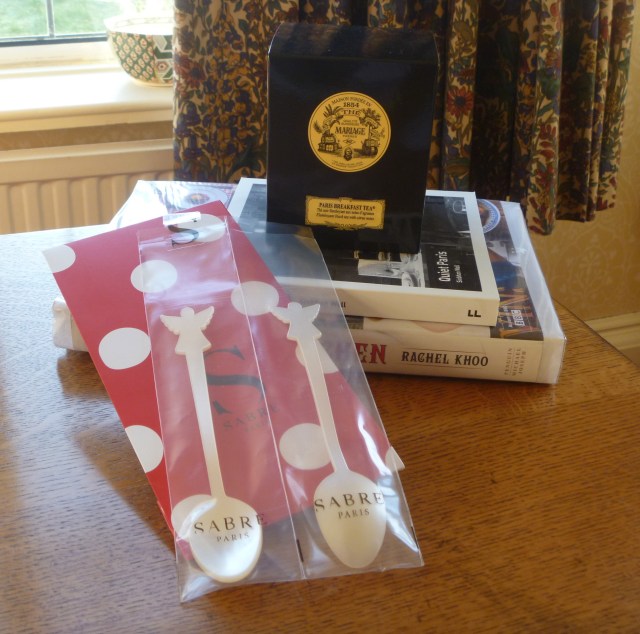
Paris is one of my favourite destinations and this (academic) year one of my Swiss friends is working there in her Gap Year. She sent me lovely Mariage Freres loose tea in a tin and two pearl spoons from the shop where she’s working : Sabre. It would be lovely to visit her whilst she is there.

“The fragrance of adventure and poetry endlessly pervades each cup of tea” – Henri Mariage [Founder]

Candle

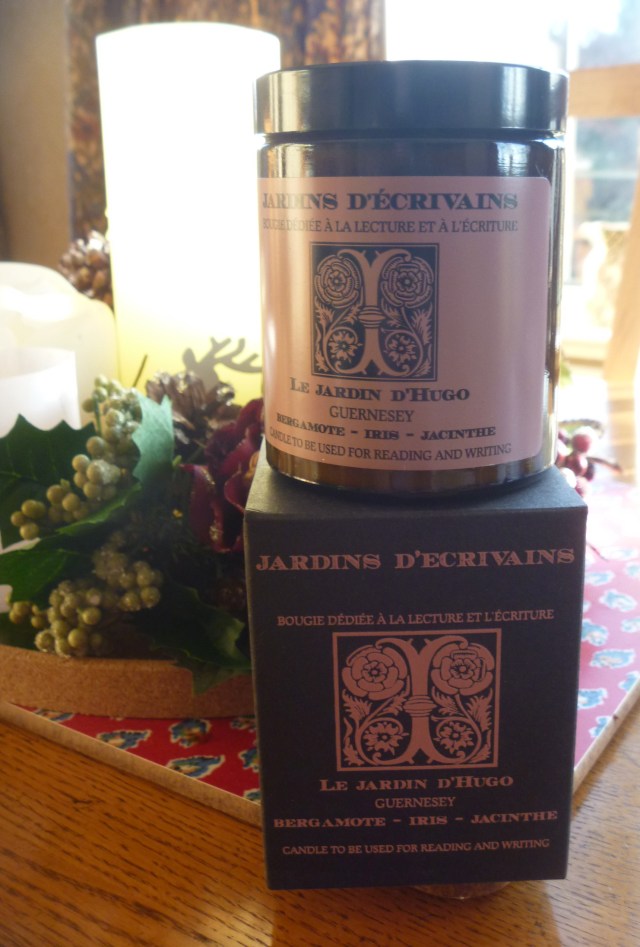
On a visit to Paris in 2010 a Parisian friend and I visited The House of Victor Hugo in a quiet corner of the Place Des Vosges. We’re still hoping to make a rendez-vous together at his other former home (owned by the City of Paris) Hauteville House on Guernsey. In the meantime I have this ‘writer’s’ candle whose scent of bergamot-iris-hyacinth is reminiscent of Le Jardin D’Hugo.

phantoms

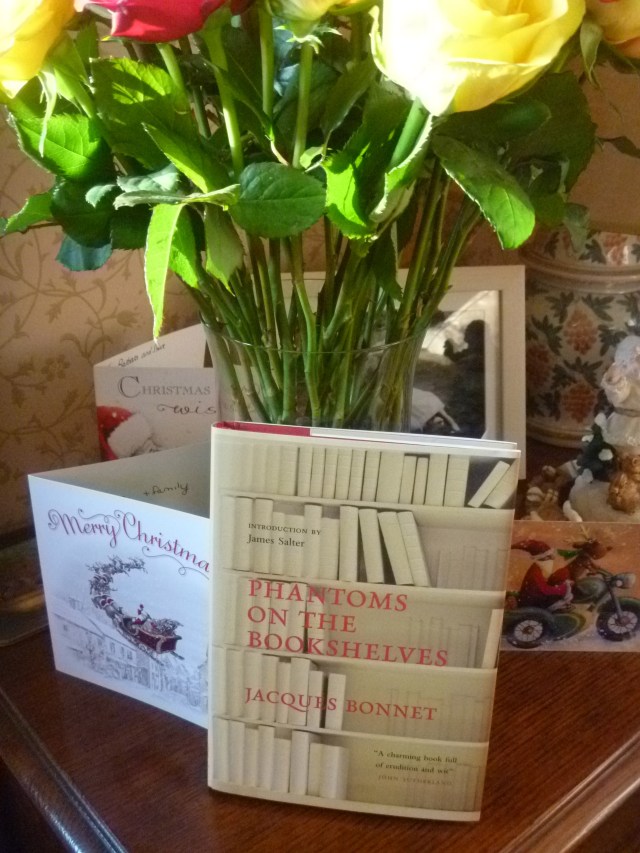
My friend, fellow blogger and fellow online book group  moderator Simon at Stuck-in-a-Book read and recommended “Phantoms on the Bookshelves” this year. About it he says “Jacques Bonnet is more like the friendly face at your book group who will enthuse about managing to squeeze another bookcase into the corner of the living room.” I’m looking forward to reading Mr Bonnet’s book, translated from the French, very soon.

The Library

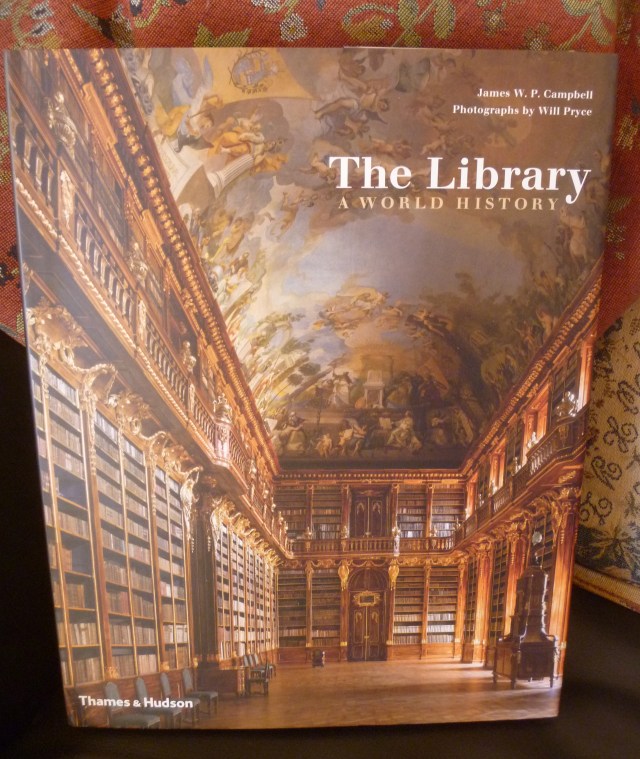
I understand that M. Bonnet writes about other libraries beside his own and some may be included in this coffee table book “The Library : a world history” which will find pride of place on Miladys table. I’ll be dipping into it all year and beyond.

Postcards

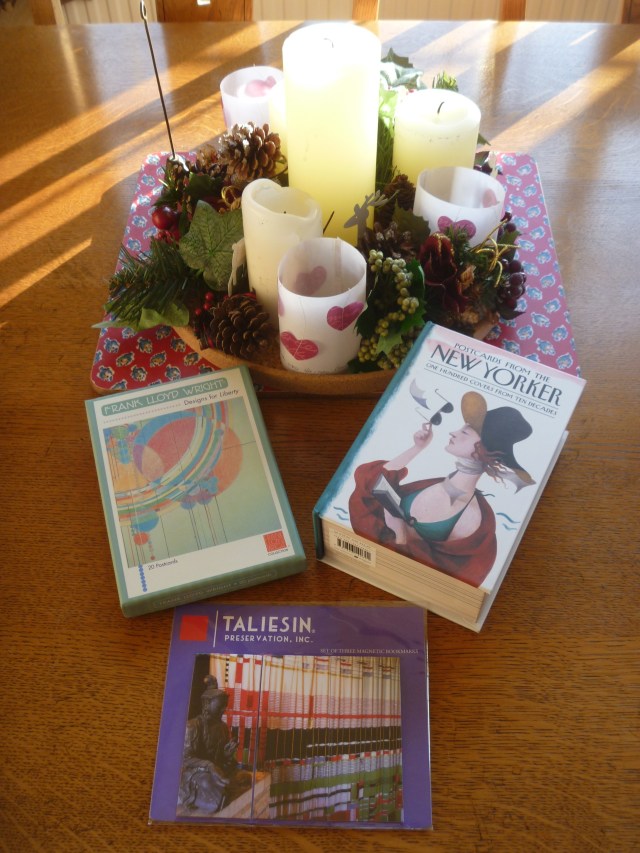
Since joining The Leeds Library I have been a regular reader of The New Yorker so it was with great delight that I unwrapped a box of 100 cards taken from the covers of that magazine over ten decades. When I need to send a card I should find a date or subject suitable for almost every recipient. If I don’t find one in that box then I can turn to a gift box of 20 cards of designs by Frank Lloyd Wright for the American Liberty Magazine.

Lavendar bath

And at the end of the day I can relax in a Lavender Foaming Bath: “A new definition of calm.”

Many thanks to everyone who gave these gifts … and I hope you were at least half as pleased with what I gave you!

Slightly Foxed on Gloucester Road

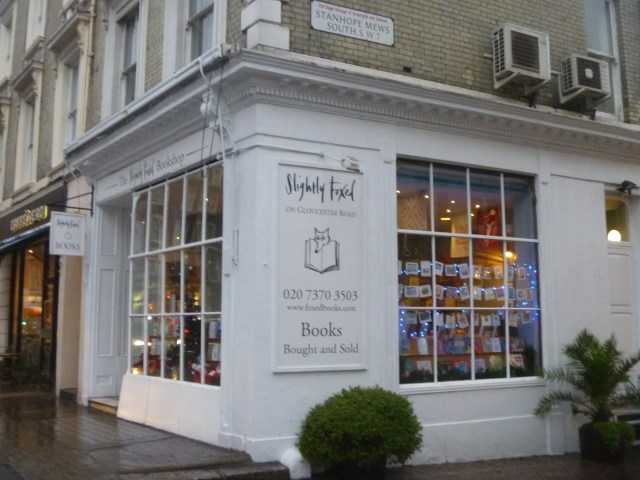
When the quarterly reader’s magazine Slightly Foxed: the real reader’s quarterly started ten years ago I took out a subscription but this year now that I can borrow issues from The Leeds Library I have cancelled my subscription. The result is that I actually read the magazine instead of flicking through it and putting it in a pile “to read later”. However, I am still a great fan of all things ‘Slightly Foxed’ which includes the lovely bookshop on Gloucester Road, Kensington.

SF1

Due to predictions of inclement weather yesterday I left home in Leeds extra early to drive down to London. The journey presented no problems and I arrived in good time; leaving the afternoon free.

SF2

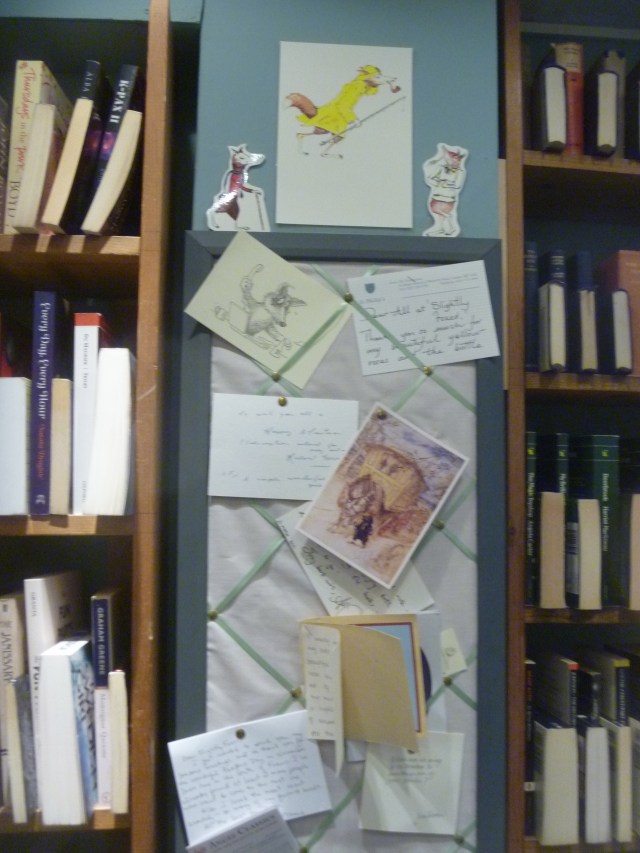
Letters and messages to the Sly Fox

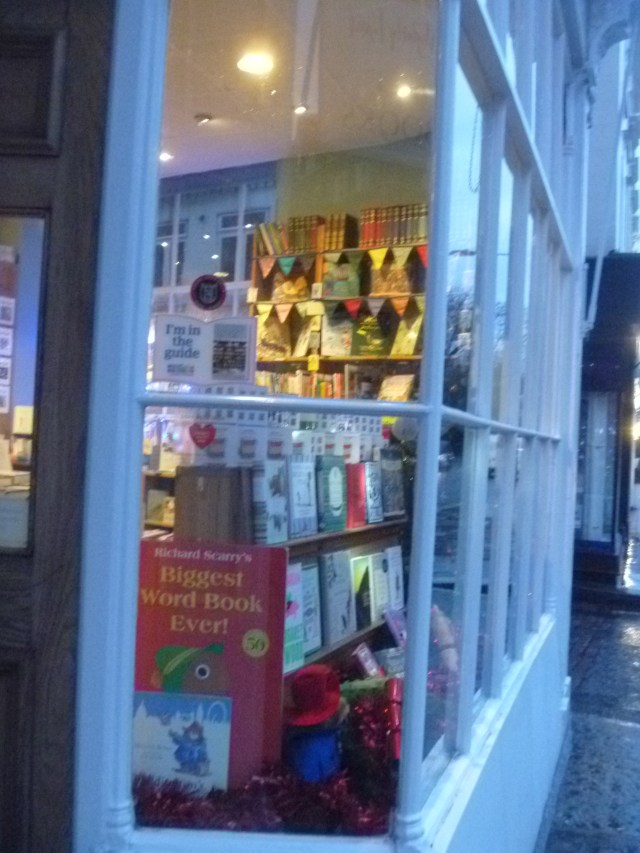
So I took the Underground Train to Gloucester Road Tube Station and revisited this lovely bookshop. Stocks include new books as well as secondhand, plus cards and bags and mugs. The friendly bookseller [Tony] found me the titles I was interested in from the Winter Catalogue.

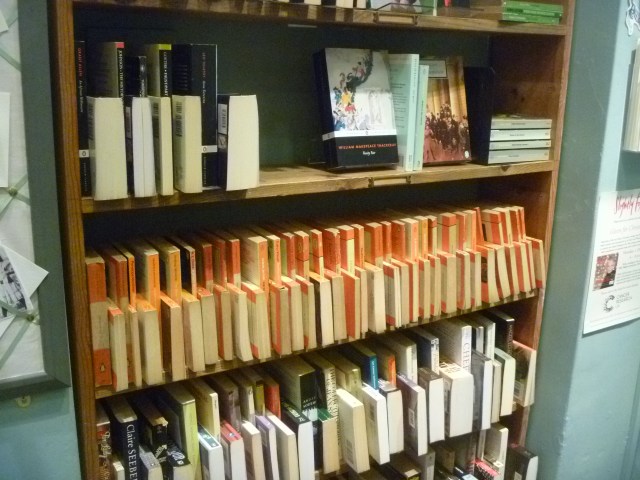
In addition to publishing the Quarterly SF also reprint some lovely out-of-print classic memoirs in their Slightly Foxed Editions and Paperbacks.

SF3

Preparations for stocktaking at Slightly Foxed Bookshop

Browsing wasn’t easy in the downstairs secondhand department as staff are preparing to stock-take on the 2nd January. The shop was about to close for the Christmas and New Year holiday at 5pm today and is due to re-open on 3rd January 2014.

If you are wondering where the name/term ‘slightly foxed‘ comes from here is one definition:

FoxingIn a nutshell, a foxed book’s pages have some spotting, ranging from sort of a beige color to a rusty brown (like a fox’s footprints, or maybe its reddish coat). Sometime foxed spots are referred to as “age spots.” The causes of foxing include temperature & humidity changes (don’t store your books in damp or unheated places!), and impurities within the paper (high acidity – most common in modern books with cheap paper, or iron or copper, commonly found in 19th century & older books). There may be other causes as well, such as fungus or other microorganisms. The reason for foxing in a particular book is often difficult to discern.

Foxing is very common in antique books (due to the paper used) and can certainly be found in contemporary books as well.
A book conservator / archivist can sometimes remove foxing, but it’s a very difficult & expensive process.
As far as how it effects value, well, it just depends on how easy it is to find an unfoxed copy. Some very old books may be difficult to find in unfoxed condition; in that case value will not be greatly affected. Modern books are devalued by foxing to a greater degree, because they are more readily available in fine condition.”

Of course, there’s another meaning to fox – sly, clever, crafty. So the sly fox can cleverly suggest all sorts of books for all sorts of reading problems.

SF4

Ribblehead to Horton via Selside

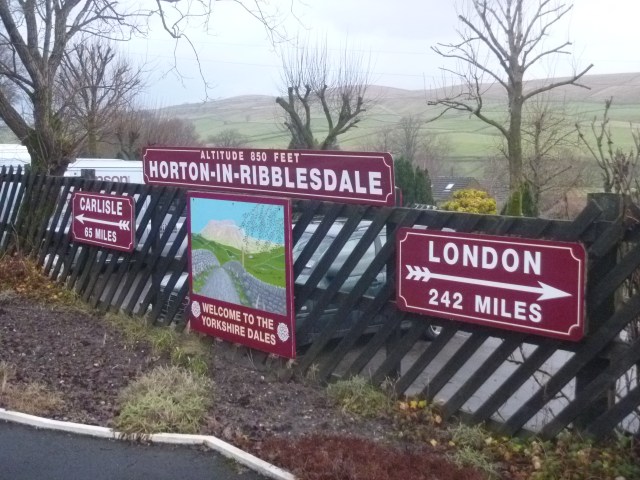
On Saturday I travelled via Leeds City Station to Ribblehead leaving the shopping hordes behind in Leeds. I was joining my second walk organised by the Friends of the Settle-Carlisle Line :

Sat 21 Dec Ribblehead to Horton via Selside 6m M(oderate)

Ribblehead station – Colt Park – Selside – Borrins – Sulber Nick.

Alight Ribblehead (10.06), return Horton-in-Ribblesdale. (DW/BH) (Alias Duncan and Brenda)

As we travelled along the line from Leeds the dark clouds gathered and I was glad to have a set of waterproofs as rain was forecast for the Settle area.

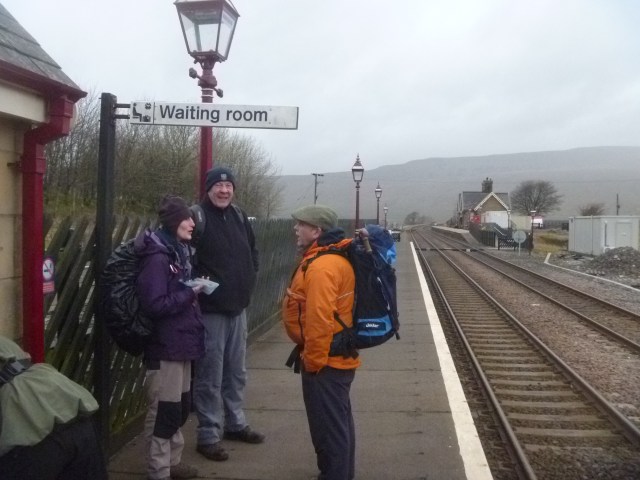
Brenda, Peter and Duncan

Brenda, Peter and Duncan at Ribblehead Station

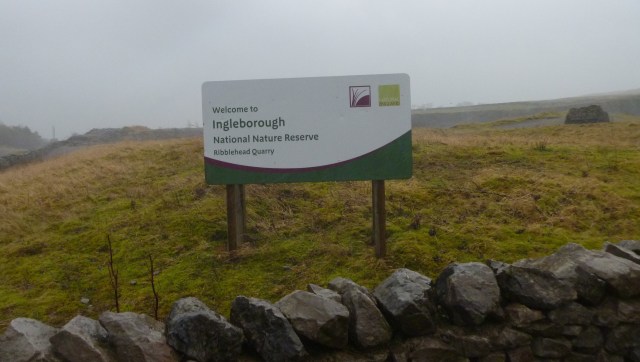
Five hardy ‘wanderers’ assembled on the platform at Ribblehead just as the heavens opened and fierce horizontal rain blew like needles in our faces. We set off though; leaving the station behind and passing through Ingleborough National Nature Reserve.

Ingleborough NNR

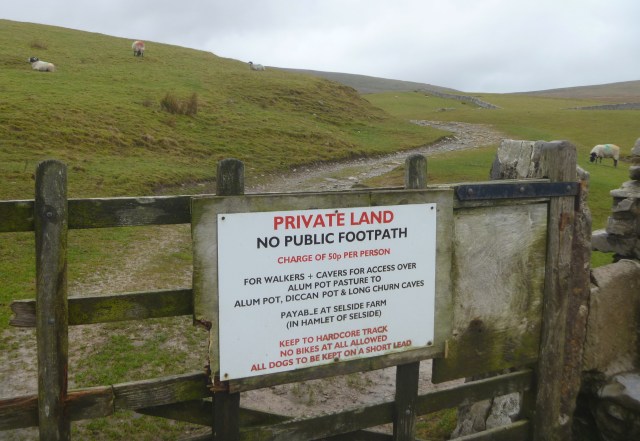
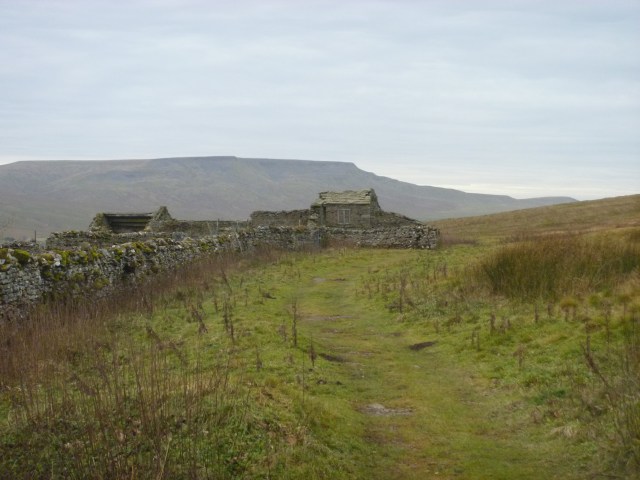
After about 20 minutes the rains blew over and we only had to cope with what seemed to me gale force wind. Our path followed relatively easy, grassy tracks across fields. And later stony, slippery limestone paths through limestone pavement but all very clearly marked. According to Duncan our leader it’s a wet area all year and in places, especially where we finally descended into Horton-in-Ribblesdale, we had to step across many little rivulets and some rather boggy areas. The area is very popular with pot-holers and we passed very near to the famous cave system of Alum Pot.

Snow

We even saw some snow!

To Alum Pot

This way to Alum Pot … no fear!!

Eventually, after a brief lunch stop sheltering under a dry stone wall the sun came out and we saw some blue sky. As we turned to follow the final two miles of path down towards Horton the wind became more favourable to us battering us to the side rather than head on.

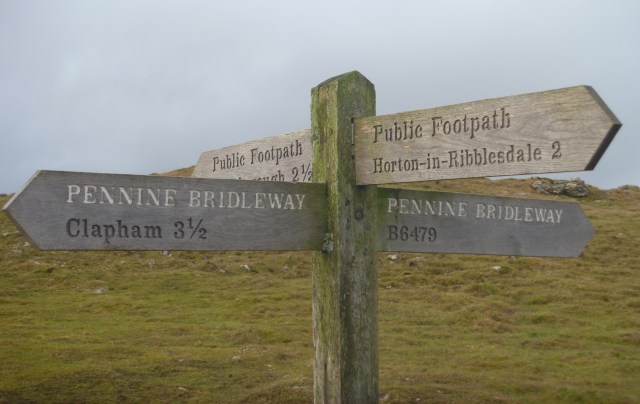
Signpost

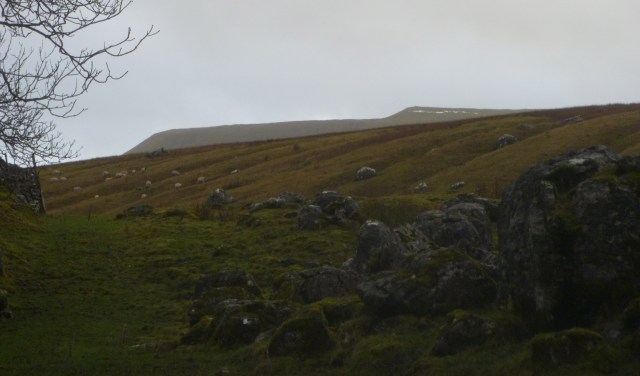
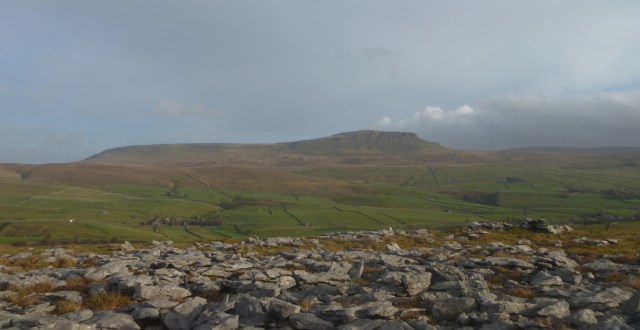
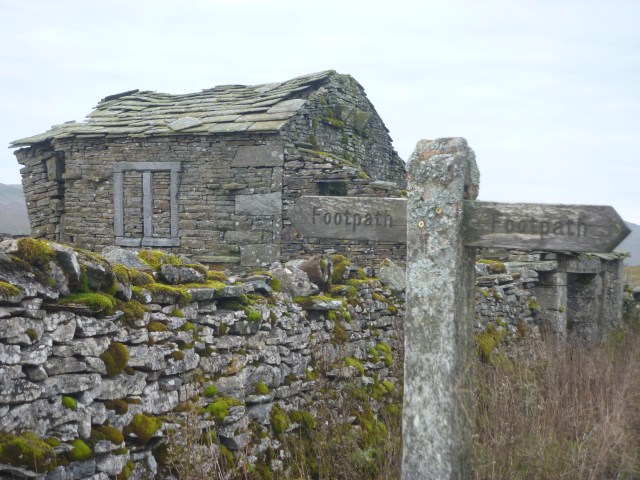
At some point near the end of the walk we had all three of the famous Three Peaks in sight : Ingleborough, Whernside and Pen-Y-Ghent.

Pen-y-gent.

Pen-Y-Ghent enjoying a little blue sky and sunshine

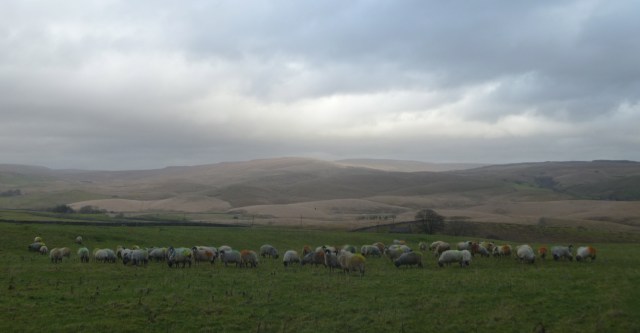
Sheep match landscape

The sheep match the background landscape

Finally we arrived at our destination in the light. Saturday was the shortest day but we managed our hike in the daylight which hadn’t seemed possible when we started.

Horton Station

Thanks to Duncan and Brenda, our indomitable volunteer leaders, for taking us out today and despite the stormy start I wouldn’t have swopped my day for a day’s shopping for anything!

Map

Ribblehead (top LH corner) to Horton (bottom middle) via paths to the west of the railway line

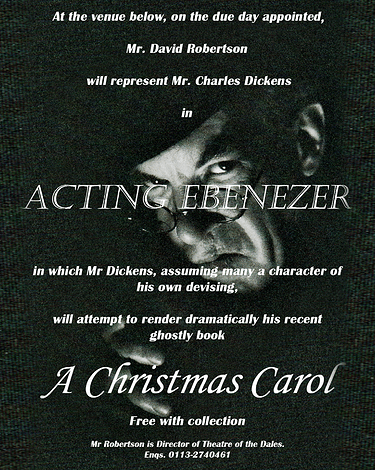
Acting Ebenezer, in which Mr Dickens assuming many a character of his own devising will attempt to render dramatically his recent ghostly book : A Christmas Carol

Leeds Library at Christmas

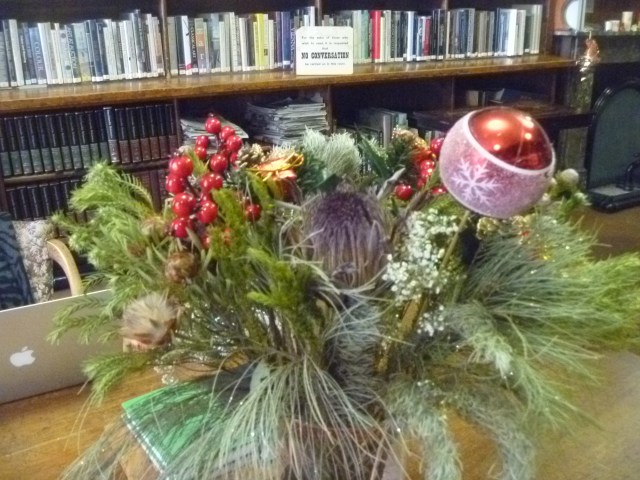
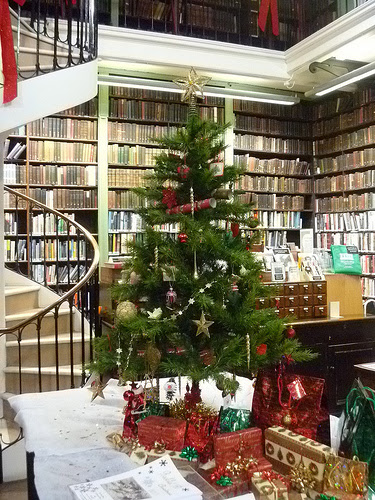
Christmas at The Leeds Library 2013

Xmas Leeds Lib

Christmas at The Leeds Library 2011

On Friday at lunchtime David Robertson of Theatre of the Dales brought his excellent one man show ‘Acting Ebenezer’ to The Leeds Library and performed his abridged version of ‘A Christmas Carol‘ very much in the style of the inimitable Mr Dickens. In addition to his powerful acting of the part of CD Mr Robertson has the distinct advantage of looking the image of Dickens himself!

It was the perfect start to Christmas week and the perfect venue for such a literary performance.

Poster

I didn’t like to take photos during the performance and at the end Mr Robertson disappeared in whoosh! So here are some quotes from the book itself and from the flyer left on our seats before the performance.

Christmas Carol

PREFACE

I HAVE endeavoured in this Ghostly little book, to raise the Ghost of an Idea, which shall not put my readers out of humour with themselves, with each other, with the season, or with me. May it haunt their houses pleasantly, and no one wish to lay it. 

Their faithful Friend and Servant,

C. D.                  December, 1843.*

” “A merry Christmas, Bob!” said Scrooge, with an earnestness that could not be mistaken, as he clapped him on the back. “A merrier Christmas, Bob, my good fellow, than I have given you for many a year! I’ll raise your salary, and endeavour to assist your struggling family, and we will discuss your affairs this very afternoon, over a Christmas bowl of smoking bishop, Bob! Make up the fires, and buy another coal-scuttle before you dot another i, Bob Cratchit!” *

[* Source of quotations from ‘A Christmas Carol’]

And David Robertson writes :

“After the success of Pickwick Papers, Oliver Twist and Nicholas Nickleby, Dickens quarrelled with his publishers, whom he suspected of taking too much of the profits, and rashly told them he himself would bear the cost of their publishing A Christmas Carol.

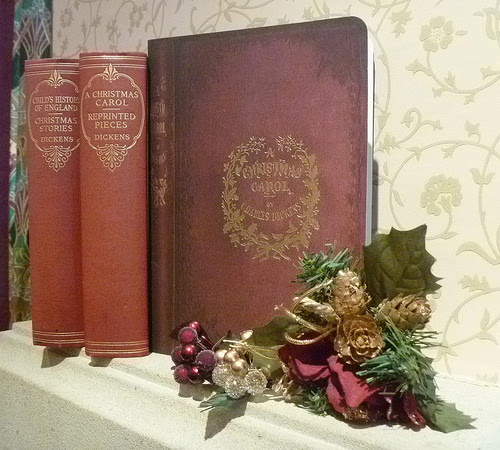
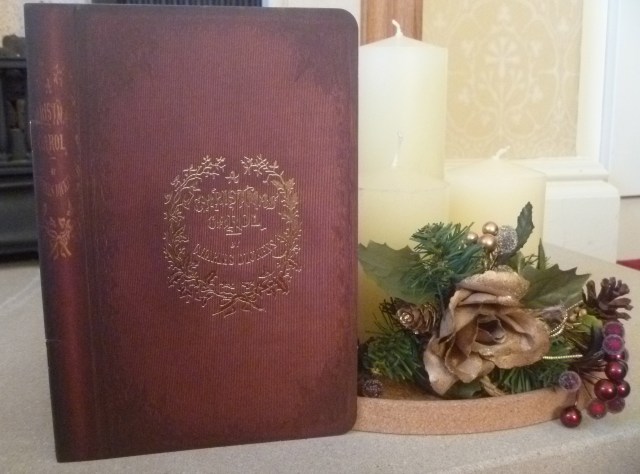
He wouldn’t scrap the gold embossed cover or the four coloured etchings and insisted on keeping the price to 5/- to be affordable to almost everybody. As it turned out, he landed in considerable debt because so many pirate editions, claiming to be ‘improvements’, reduced his sales. Of course, in the end, A Christmas Carol proved the most popular of all his works and has remained so this day.

I’ve been playing Scrooge in one form or another for twelve years now, starting with a recording I was commissioned to make for students learning English (in which Bah, humbug! was watered down to Oh, nonsense). But I recently met Gerald Dickens, the great great grandson of Charles, and was so impressed by his one-person enactment of Nicholas Nickleby that I’ve been tempted to (gingerly) follow in his footsteps.

I hope you’ll enjoy the result.

David”

We certainly did, thank you, David. And a Merry Christmas Everyone!

Christmas Carol

Masterpieces : A Wealth of Art in East Anglia

There is a marvellous exhibition currently showing at The Sainsbury Centre for Visual Arts at the University of East Anglia in Norwich.

A new exhibition, Masterpieces: Art and East Anglia is opening at the Sainsbury Centre for Visual Arts in September, in celebration of the rich and unique artistic heritage of the local region. Approximately 250 objects will be on show, from across the visual arts, ranging from the prehistoric period to the present day. Drawn from more than 60 major public and private collections, the exhibition will showcase the array of masterworks that East Anglia has inspired, produced and collected, and demonstrate the region’s importance in both a national and international context.

The oldest exhibit, the Happisburgh flint handaxe, crafted at least 700,000 years ago, will sit beside works by John Sell Cotman, John Constable, Thomas Gainsborough and Olive Edis. Sculptures by Barbara Hepworth will be dispersed throughout the SCVA’s newly-refurbished galleries and the iconic Lotus 72 sports car will take up pole position in the West End.

Masterpieces: Art and East Anglia will be the first show on display in the SCVA’s newly-refurbished galleries. The exhibition coincides with the University’s 50th Anniversary and will help to mark the significant contribution that UEA has made to the region.” [Source]

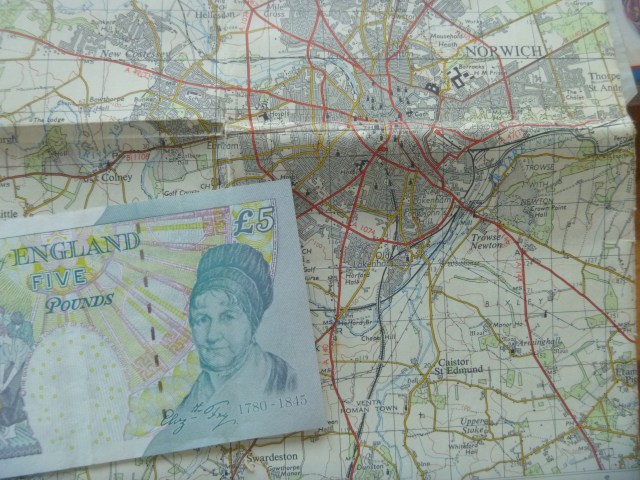
I was lucky enough to catch this show when I was down in Norwich a few weeks ago visiting family. The Exhibition comprises part of the 50th anniversary celebrations for the University of East Anglia, in Norwich. Oh dear, I can remember when it opened in one of my favourite parks (Earlham Park) and some of its offices occupied Earlham Hall (the childhood home of prison reformer Elizabeth Fry) …

E Fry

My Norwich OS map and Elizabeth Fry on the five pound note

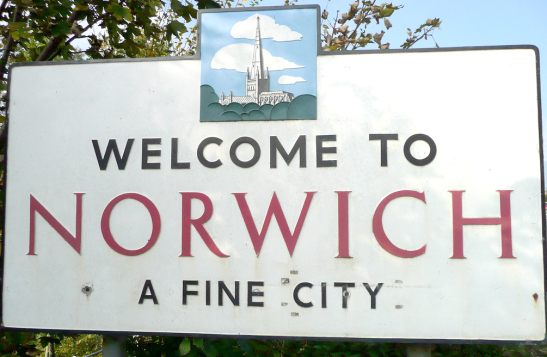
… and the neo-brutalist buildings were seen as an insult to our ‘Fine City’

norwich

[Source]

But I digress and return to the excellent exhibition which has the best opening times, ever. Although closed on Mondays and between 22nd December this year and 2nd January 2014 it’s open Tuesday to Saturday 10am – 8pm and on Sundays from 10am until 5pm. We made our visit on a Saturday at 5.30pm. We were able to park right outside and had the whole gallery to ourselves. With our Art Fund cards we paid half price for entry.

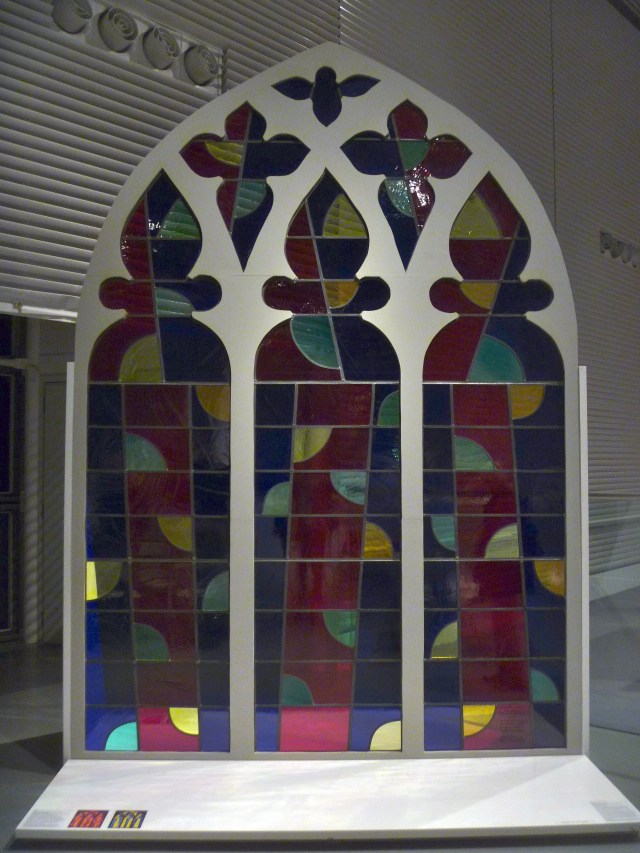
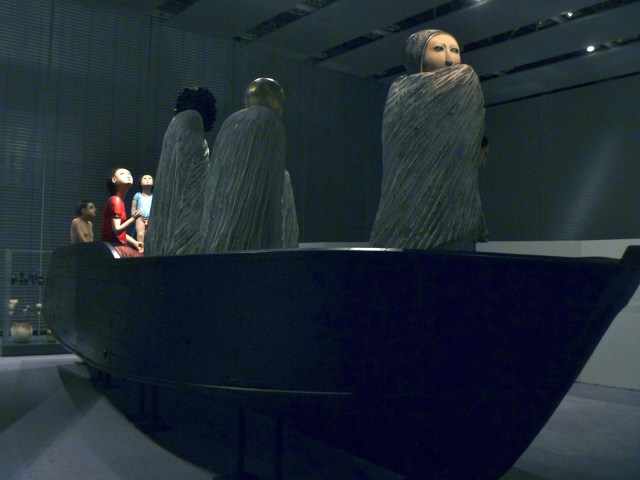
No photography is allowed in the main lower gallery but four large exhibits are displayed alongside the Sainsbury Centre for the Visual Arts permanent collection. A Lotus racing car is displayed in the restaurant but that was closed and too dark to photograph.

Conservatory Stained Glass

In the Conservatory Cafe is a 2013 stained glass window designed for Norwich Cathedral by John McLean

Longest Journey 1

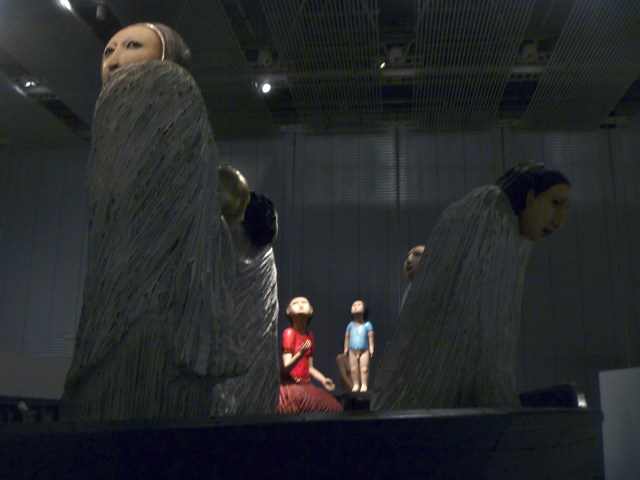
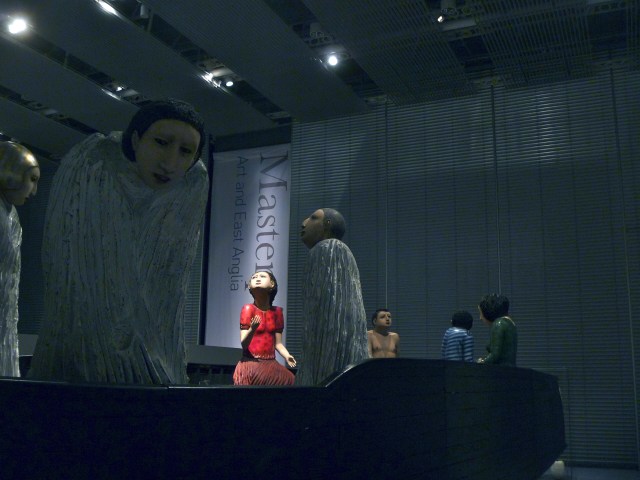
In the East End Gallery is ‘The Longest Journey’  made by Ana Maria Pacheco in 1994 of polychromed wood

Longest Journey 2

Longest Journey 3

More ‘Longest Journey’ pictures

Reception, shop and Longest journey

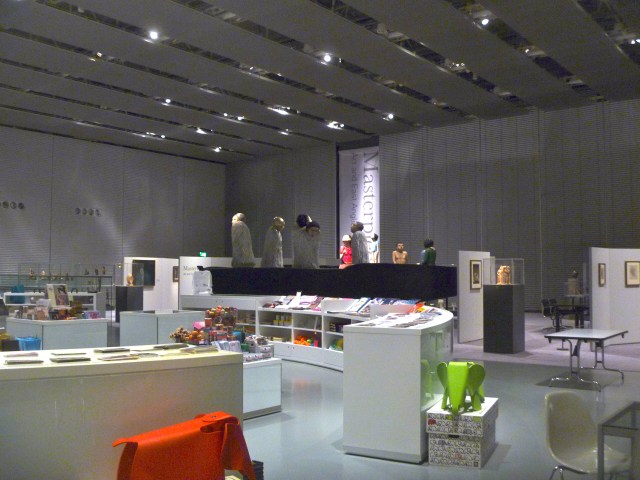
East End Gallery, shop and ‘The Longest Journey’

8b._scva_masterpieces_-_worth_dress

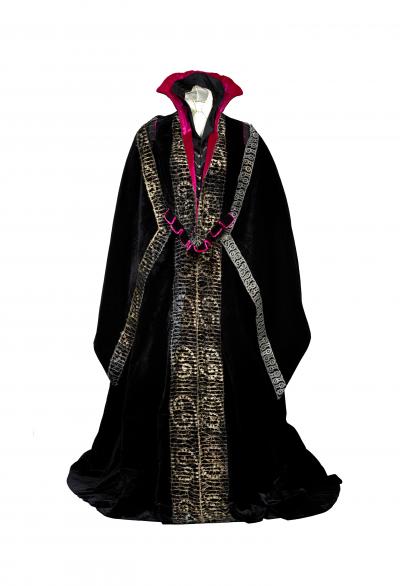
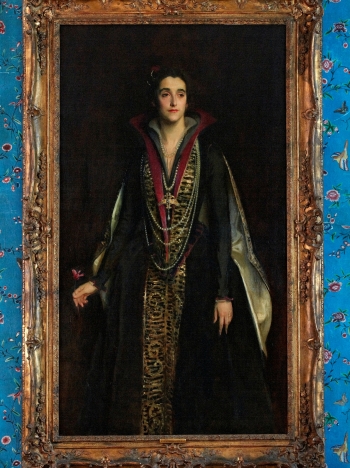
Here is an example from the displays. The Marchioness of Cholmondeley’s gown [photo source] made by Jean-Charles Worth stands next to her portrait painted by  John Singer Sargent and wearing the gown borrowed from Houghton Hall.

John_Singer_Sargent_(1856-1925),_Portrait_of_the_Marchioness_of_Cholmondeley,_1922_350_468_s_c1_smart_scale

Sargent’s portrait of the Marchioness of Cholmondeley [source]

Norfolk has been full of Masterpieces this year!

“A wonderful little church with a chequered pavement … with coats of arms in clusters on the lofty roof” : St Mary’s, Astley

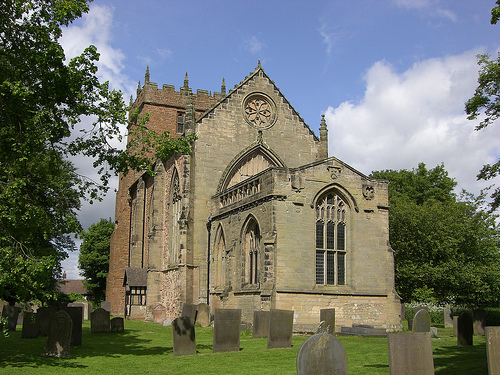
 Astley Church

The above quotation is from ‘Scenes of Clerical Life : Mr Gilfil’s Love Story’ by George Eliot who based her fictional village of Knebley on the real life village of Astley. I wrote about my first visit to Astley here and this what I wrote there about the George Eliot connection :

I first visited Astley in the mid-1990s when studying for a Masters degree in Victorian Studies. A ‘field trip’ to the places associated with George Eliot was planned  and we spent the day visiting Coventry, Nuneaton, Arbury Hall and other places mentioned in her life and works including Astley church where we took in a view of the ruined castle. Astley Castle appeared in George Eliot’s story ‘Mr Gilfil’s Love Story’ as Knebley Abbey. The whole site is also part of the Arbury Estate, where George Eliot’s father, Robert Evans, was a farmer, surveyor and land agent and where the young Mary Ann Evans (GE’s real name) grew up.”

George Eliot’s parents were married in St Mary the Virgin, Astley parish church. “Robert Evans and Christina Pearson, were married in Astley Church in February 1813.” [Parish website]

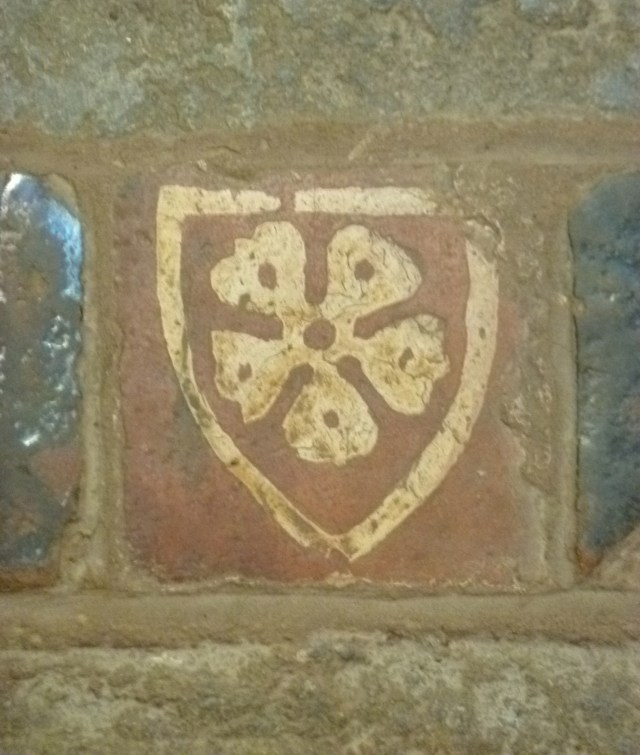
tiled floor

Tile from the floor or “chequered pavement”

The church is open regularly to visitors on the first Saturday of the month from 10.30am until 2pm and also from 11am until 2pm on every Bank Holiday. (Always check the website if you do intend to visit though)

Staying at the Castle you are invited to call one of the churchwardens (numbers are given in the Information File) in order to arrange a personal tour. I decided to do this and at 10.30 the other Thursday met Judith who was able to show me changes that had taken place since my last visit and to explain lots of the features of the church. Here is how  the Welcome Leaflet briefly describes the church and its ‘treasures’.

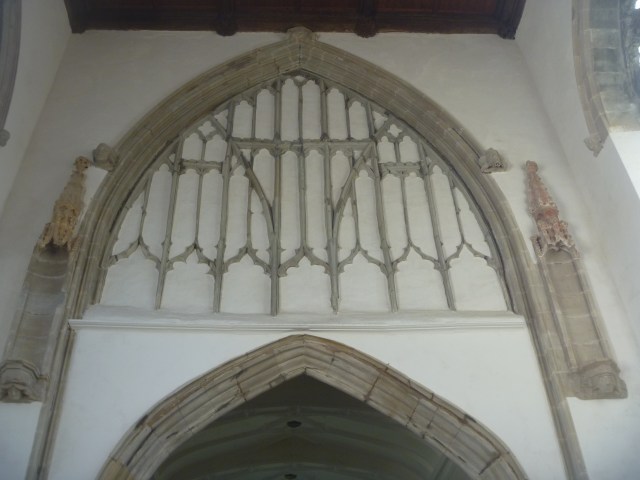
We know that a church existed at Astley as early as 1285 because a priest was appointed in that year. However, what remains today contains part of the church that was built in 1343 together with some additions that were built in 1607/8. 

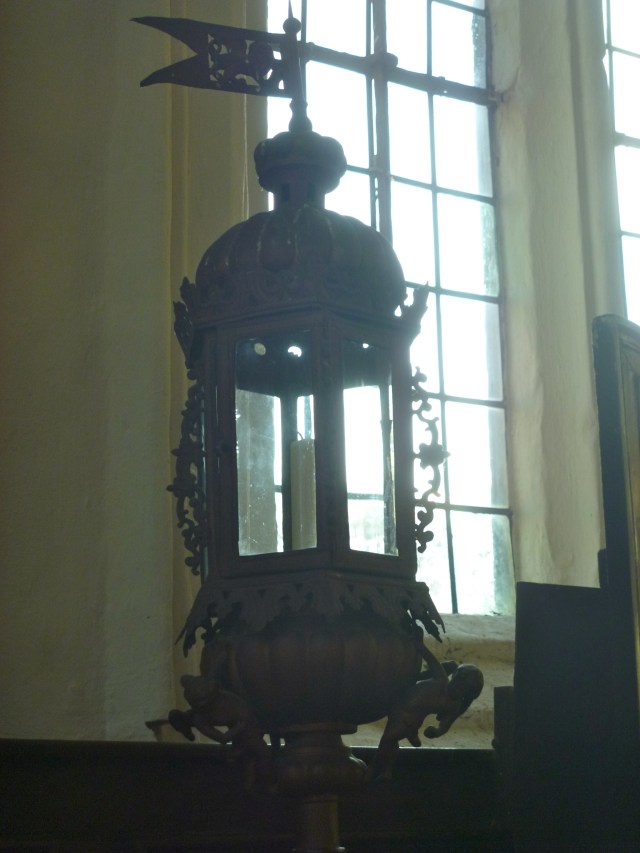
The 1343 church was built in the form of a cross, with a central tower which had a lead covered spire. After dark a light was always shown from the spire which was known as “The Lantern of Arden”. The light was to guide travellers through the thick forest which surrounded the area in those days.

Church lantern

A Lantern in the Church

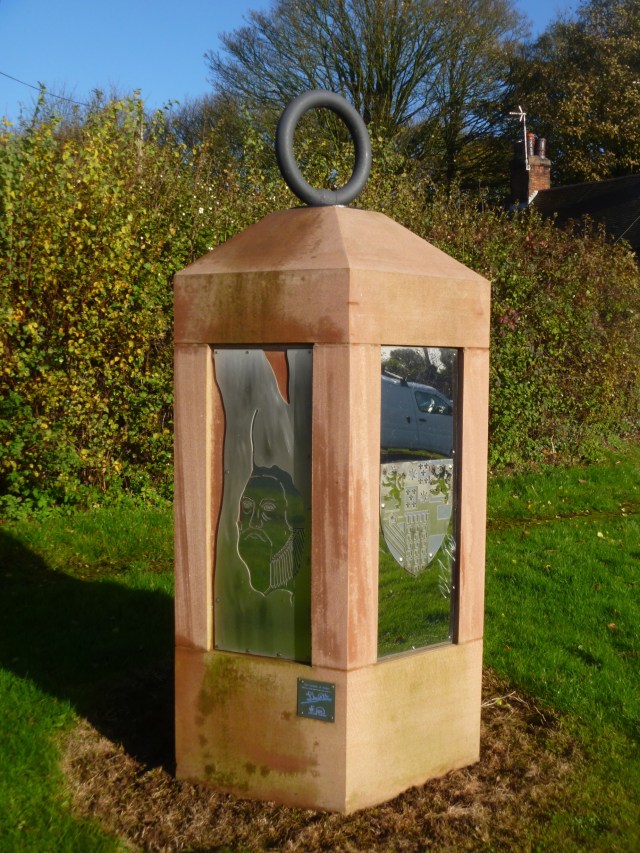
Lantern of Arden

The Modern Lantern of Arden

“When artist Johnny White created Astley’s heritage feature, the new Lantern of Arden, he took his inspiration from the church. It is made of similar red sandstone. In the lantern’s windows, stainless steel panels mirror the ancient themes and history of the parish. Three queens and the castle are represented. Sir Henry Grey hiding in an oak tree and the Victorian author, George Eliot, can all be found on the lantern, made from the same red sandstone as the church.”[Source]

The church’s purpose was a chantry for Thomas Astley. here priests sang mass daily for both him and his family to aid their souls in purgatory. Over the years the church has passed ownership through Sir Richard Chamberlayne to the Newdegate family.

The main body of the church was about 30 m. long but by 1600 the tower had fallen down and the church was in a state of disrepair.

In 1607/8 the present tower and chancel were built, using some of the materials from the old church, at each end of the chancel of the earlier building.”

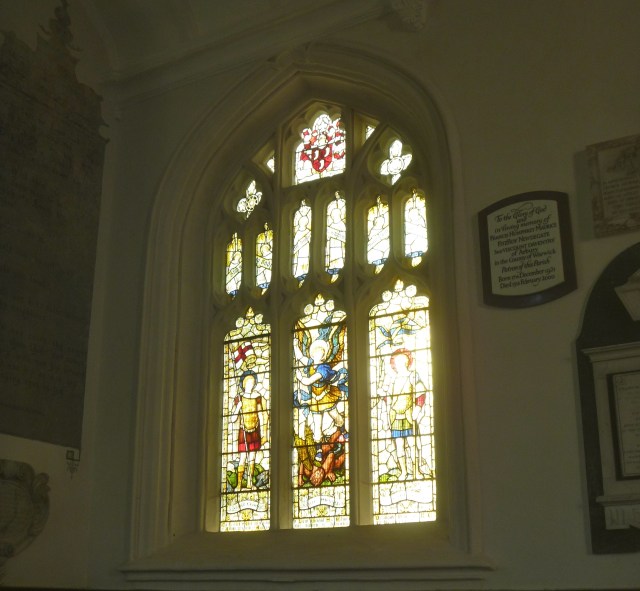
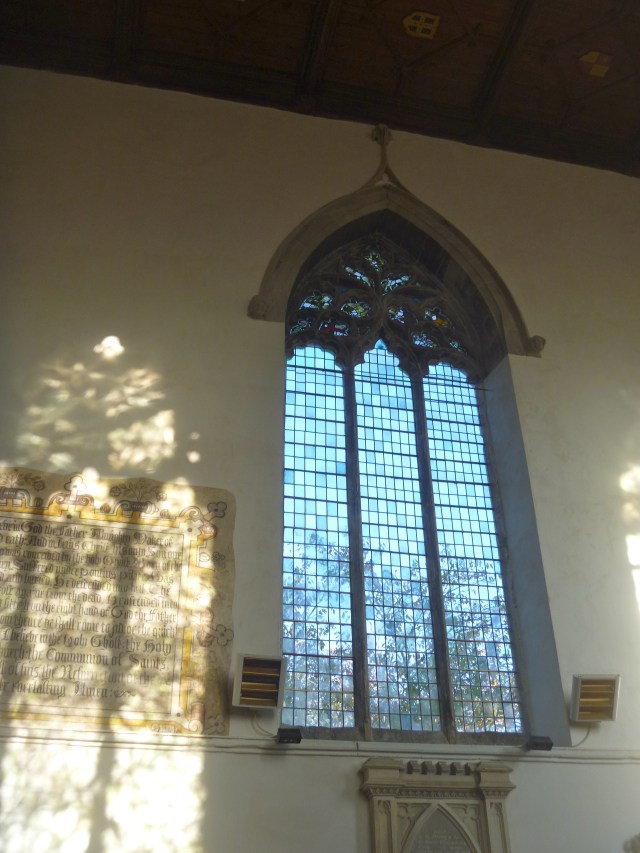
Stained Glass Windows

Stained glass window 1

Stained glass window 2

The east and north windows contain some 14th century stained glass whereas the south window is modern.

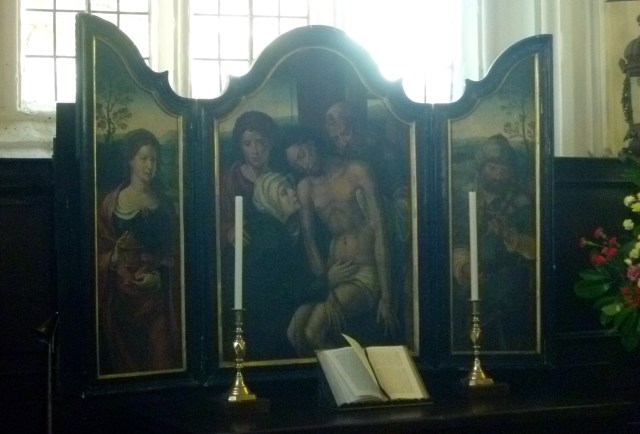
Altar Picture

Altar picture

This dates from the 17th century and depicts the taking down of Our Lord from the cross. It was given to the church in 1905 by Sir Francis Newdegate.

Tower

A stone circular staircase leads up to the bells of which there are five. Four of these have an inscription showing that they were made in Leicester in 1607.

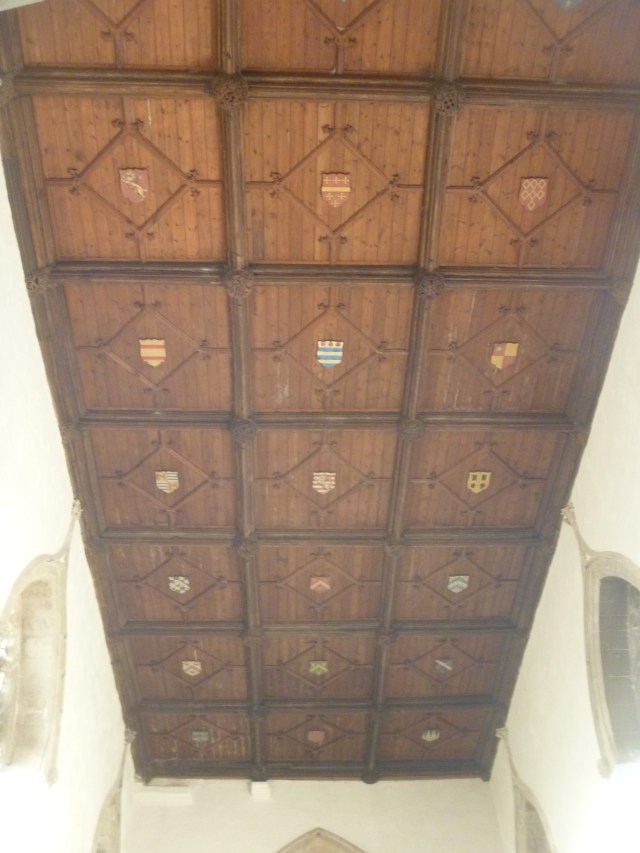
Nave Ceiling

Roof

“With Coats of Arms in clusters on the painted roof” [‘Scenes of Clerical Life : Mr Gilfil’s Love Story’ by George Eliot]

This is made of oak and has twenty one shields connected with the church. It was extensively restored in 1876.

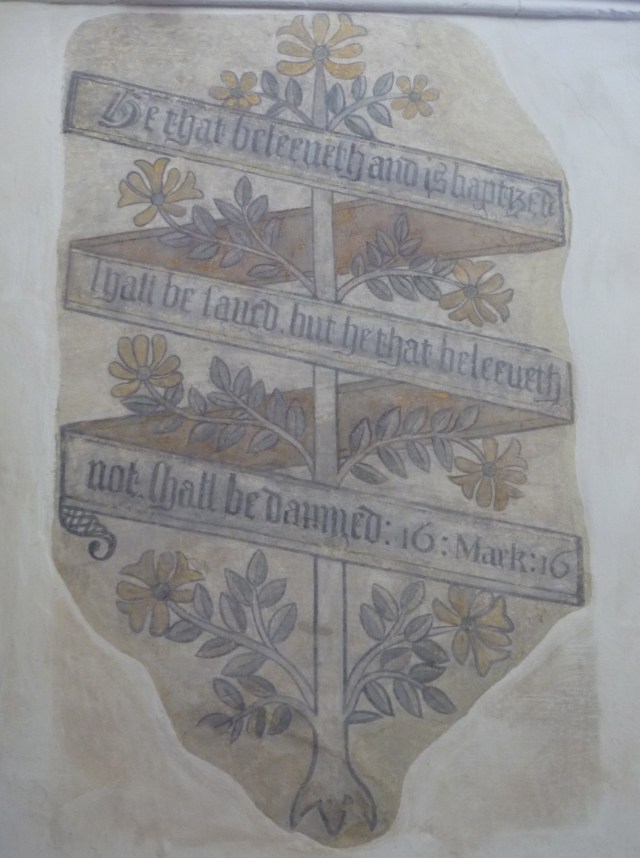
17th Century Wall Paintings

Wall painting

[“He that believeth and is baptized shall be saved; and he that believeth not shall be damned.” Mark Ch. 16 v. 16]

There are six on the south wall showing seven Bible passages, the Lord’s Prayer and the Creed.

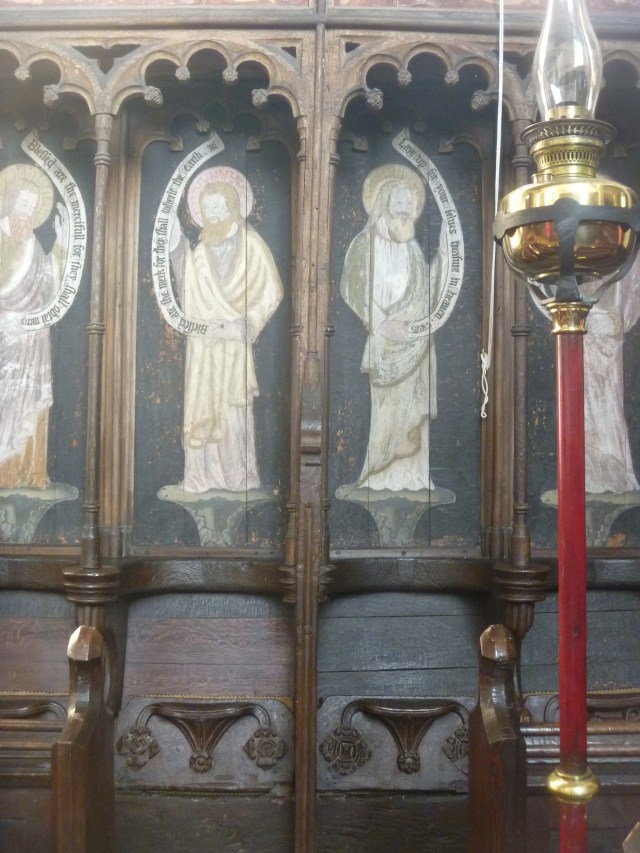
14th Century Choir Stalls

Choir stalls and apostles

There are two sets of nine and behind each stall is a painted panel. There are nine apostles on the north side and nine prophets on the south side.

The Original East Window

Blocked window

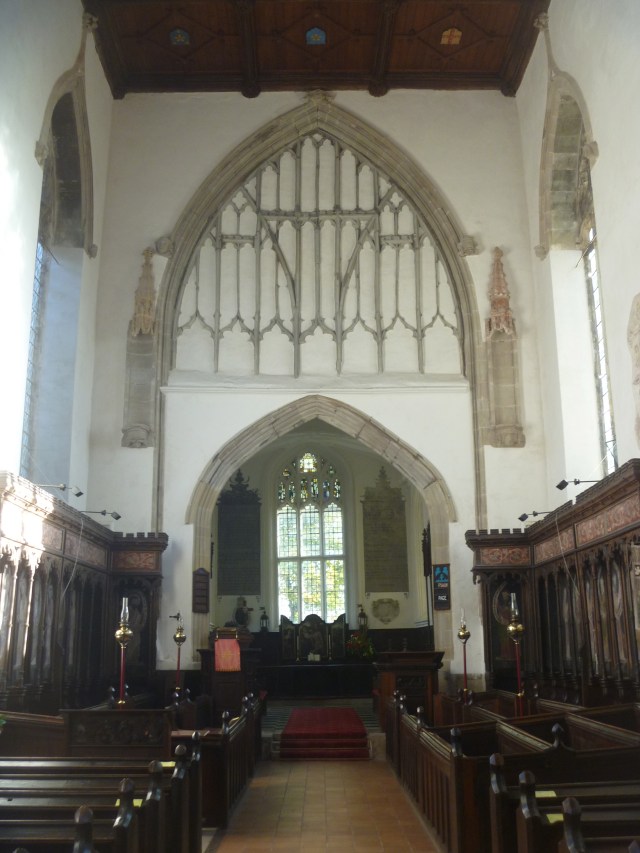
Now blocked, this window would have been at the end of the original church. It sits above the 17th century chancel arch. Some of the stained glass from this once magnificent window was moved and placed in the windows of the north side of the chancel and also in the tracery in some windows in the nave.

Interior view chance

Interior view towards the Chancel

Interior rear

Interior view towards the rear and access to the church tower and bells

Garsdale Circular via Cotter End

When I last went over to Lancaster from Shipley (West Yorkshire) Station I noticed several people dressed for hiking in the Dales waiting on the platform. They seemed to recognise each other but were obviously not specially friends. They were joining walks organised by the Friends of the Settle Carlisle Line or Dalesrail and had obviously met each other on previous walks. It seemed like an excellent way to enjoy walking in more distant parts of the Yorkshire Dales so I decided to find out more.

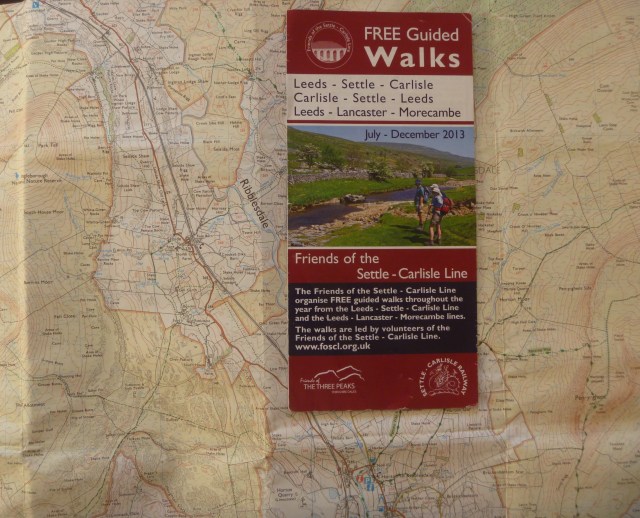
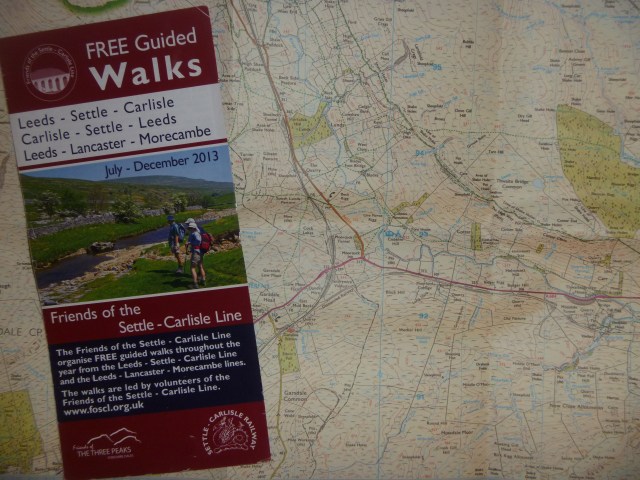
Map and leaflet

Later in the Tourist Office at Leeds Station I picked up two walks leaflets and, being aware that I was not interested in 14+ mile strenuous walks and being away or otherwise engaged some weekends, I selected a few walks on dates towards the end of 2013 that I thought I be able to manage. The first of these was today:

Walk leader: DW/BH (Bob had stepped in for Duncan W)
Garsdale Station – Yore House – Thwaite Bridge – Cotter End – High Dyke – Blades – Moorcock Inn – Garsdale Station.

Special Instructions:   Alight (10.21) and return Garsdale.

Date and time:  Sat, 30/11/2013 (All day)
Grade: M(oderate)
Length: 8 miles

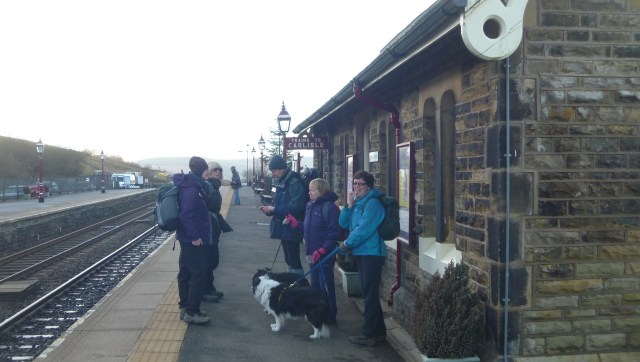
Assembling at Garsdale Station

Assembling at Garsdale Station.

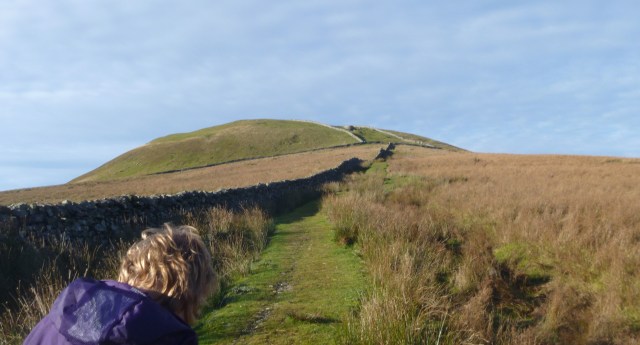
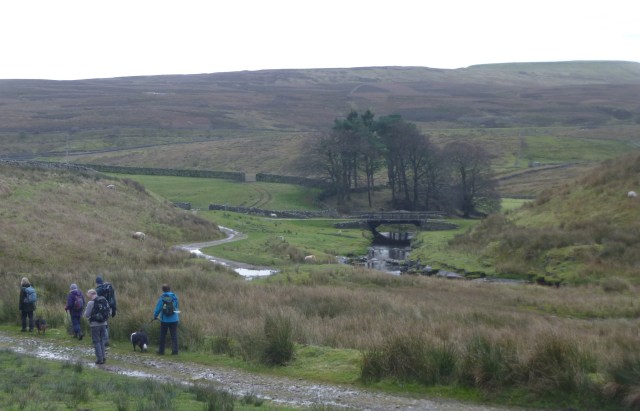
Five walkers and two dogs joined two leaders (Bob and Brenda) on Garsdale Station northbound platform this morning in bright sunshine and enjoyed the 8 mile hike. There was one steepish climb – but remember ‘No pain, no gain’ – to a high ridge path with wonderful views and the perfect late November picnic spot. The day could not have been better.

Viaduct

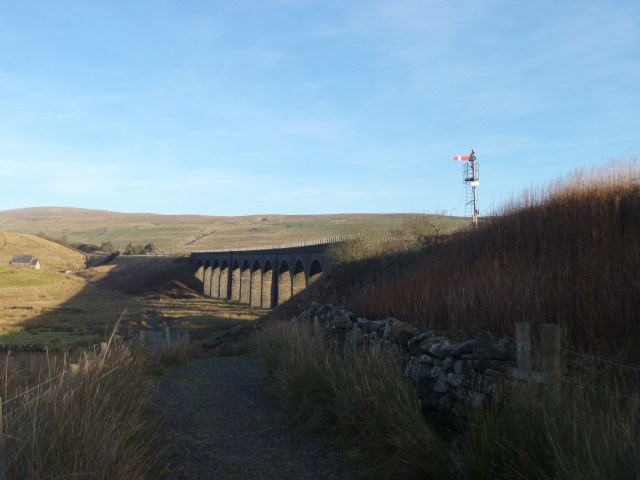
Our path took us under the viaduct

Herd of Sheep

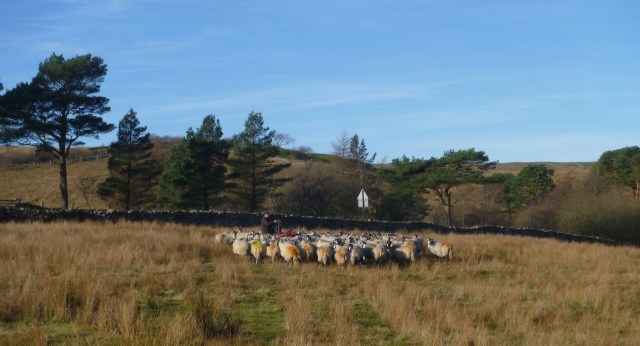
Past a herd of sheep being assembled

River Ure

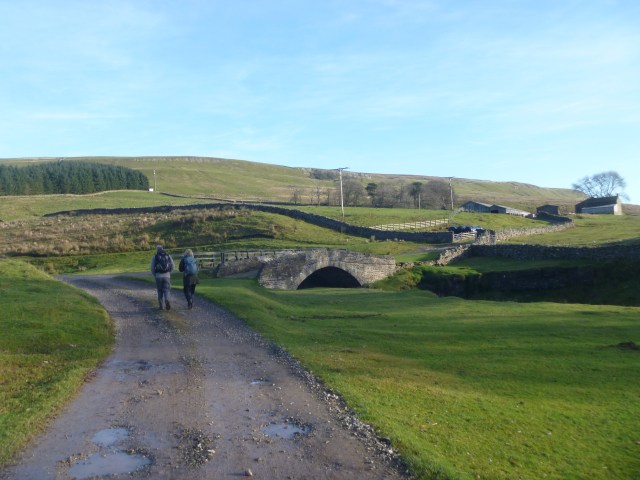
Over the River Ure

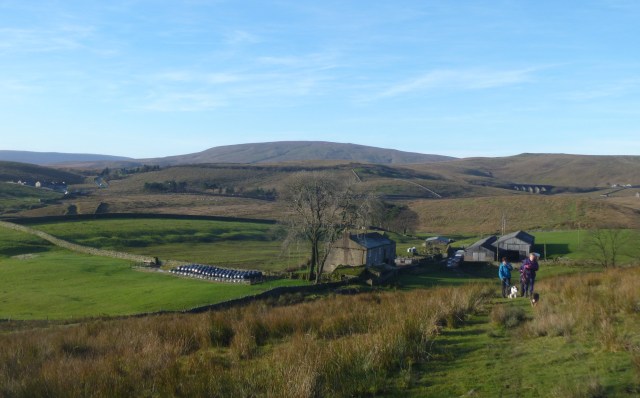
Yore House

Past Yore House

Lady Anne's High Way

After Thwaite Bridge House we climbed up to join Lady Anne’s High Way

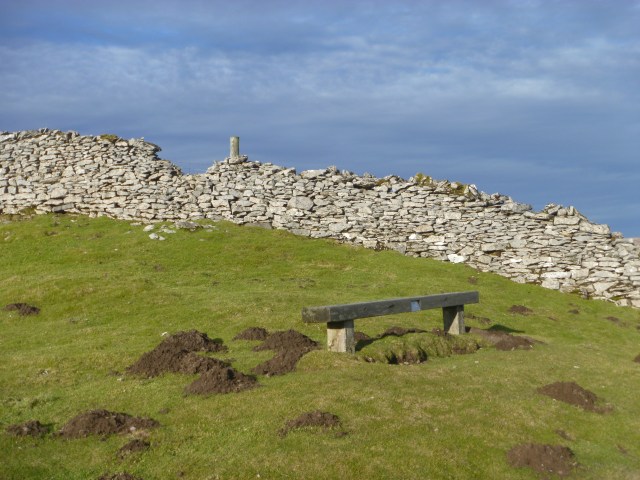
Bench awaits

And enjoyed a picnic (our bench awaits) at the highest point of the walk – Cotter End

Extent of walk

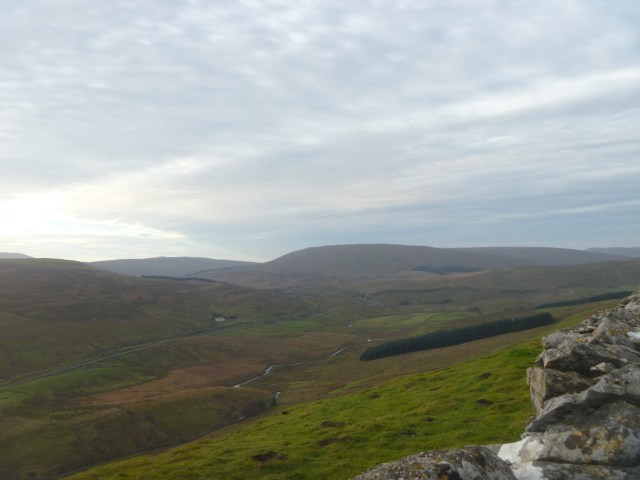
From the High Way we could see the extent of our walk

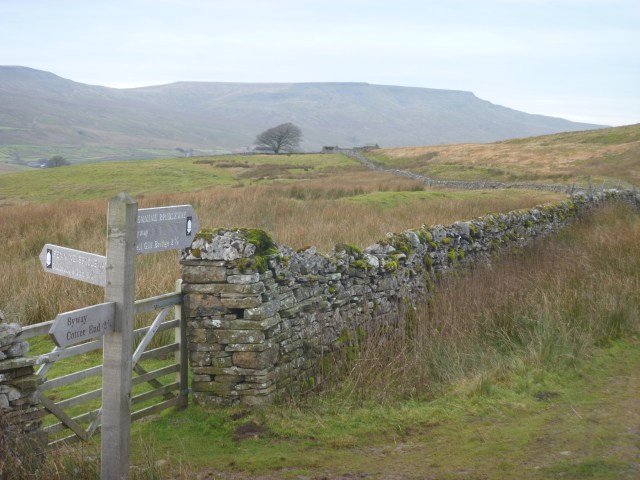
Pennine Bridleway

We descended from the High Way to join the Pennine Bridleway

Ruined INn

With plenty of time to spare we took a short detour to view the ruins of an Inn on the High Way

Former inn

Once a busy inn along a main thoroughfare for sheep drovers and the like now a ruin

Haeding back

As the sun went down we headed back down to the River Ure and …

Garsdale Station

Garsdale Station

Sunset

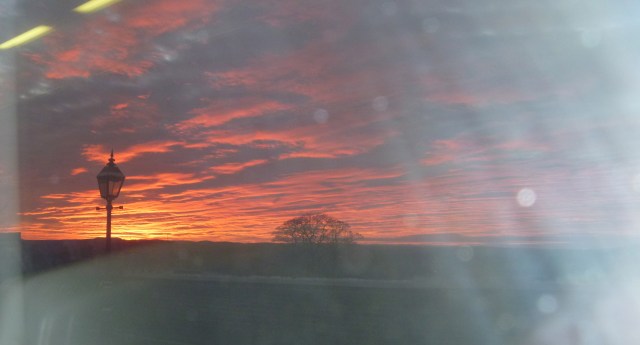
Sunset at Settle Station from the train window

Our train left at 3.35pm and we witnessed a wonderful sunset  over the hills and moors. My photo taken through the train window doesn’t do justice to it. It was great to get out on this beautiful day in an area I was not at all familiar with and I think I will try more of these walks in future.

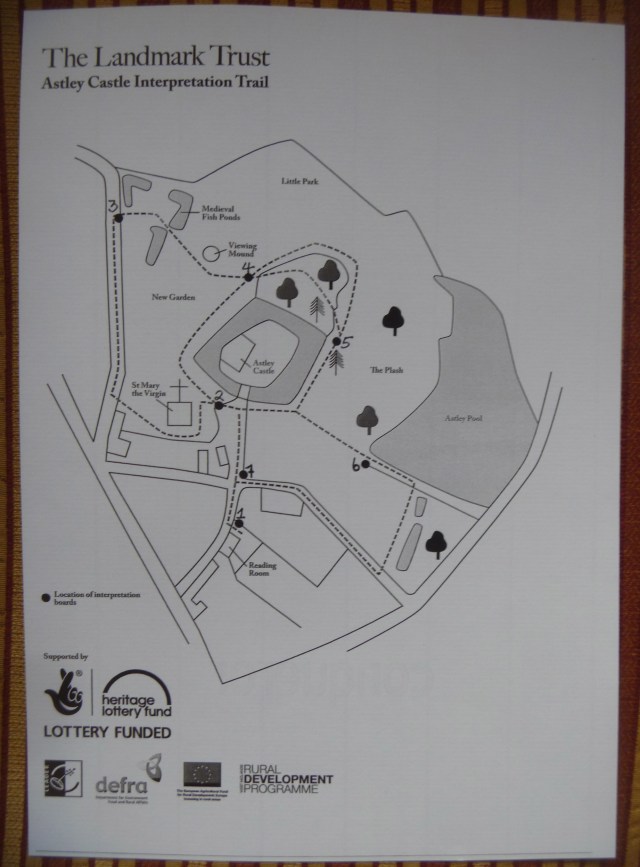
Astley Castle Interpretation Trail

Astley trail map

The Interpretation Trail Map

Amongst many generous donors towards the reconstruction of Astley Castle the Heritage Lottery Fund was one of the major ones; giving a grant of well over a million  pounds to help the project on its way. HLF grants come with strings attached. So Astley Castle, quite rightly, enjoys many features and events not normally connected with Landmarks, in which the general public may be involved such as local school visits, open days and living history weekends. Public involvement has also included art exhibitions and a competition to design an Elizabethan knot garden in the grounds.
Knot Garden

The Winning Knot Garden

One  excellent result of the HLF involvement lead to the establishment of an Interpretation Trail on public footpaths through the area surrounding the castle (but keeping to the other side of the moat!). Information boards along the route explain the views and relate the history of the castle and its royal connections. Of course, I walked this trail many times in both directions. The views changed as the weather and light did throughout each day.

Let me take you along the trail. (Numbers refer back to the map above)
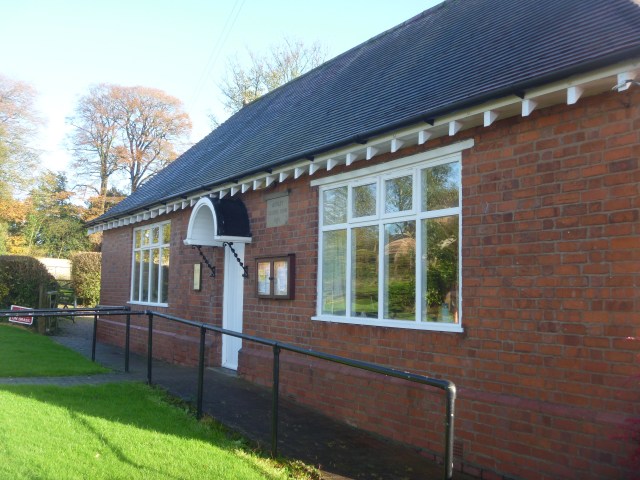
Astley Reading Room

Astley Reading Room

1. At The Astley Reading Room two boards give a general introduction and explain the creation of Astley Castle as a ‘Landmark for the 21st Century’.
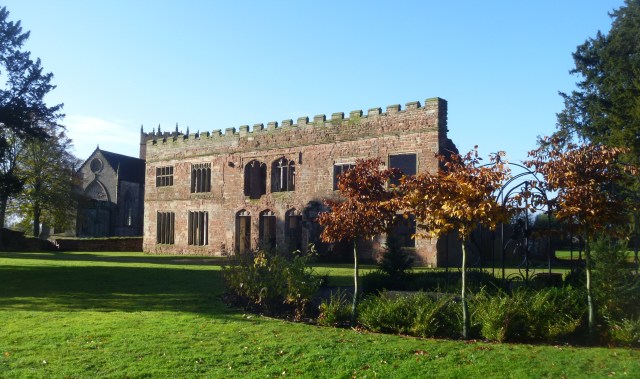
AC South elevation

Astley Castle : South Elevation

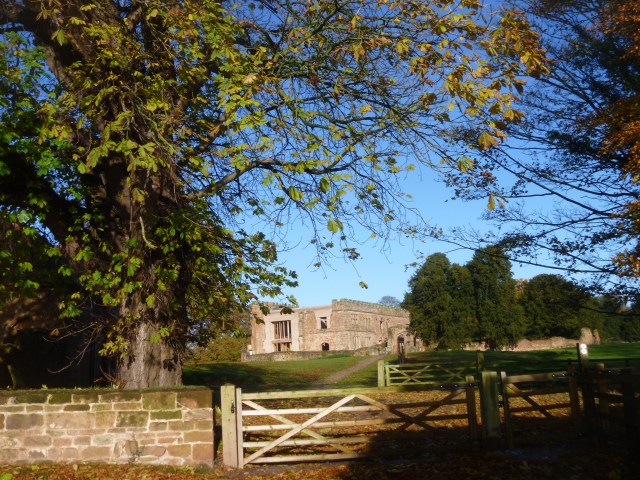
2. Astley Castle : South Elevation. Staying at the castle; this is where I began the trail each time.

“This ancient structure still remains, and the grounds surrounding it being tastefully laid out and kept in good order.” (Smith’s “A new and complete history of the County of Warwickshire”, 1829)
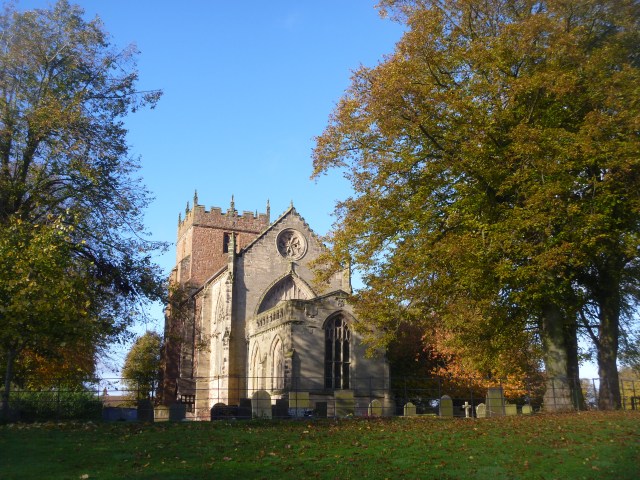
Astley Church

Astley Church

Collegiate church

From the Interpretation Panel

From here there’s an excellent view of Astley Church of St Mary the Virgin. [To be the subject of another post] Proceed through the churchyard to a rather muddy lane and panel 3.
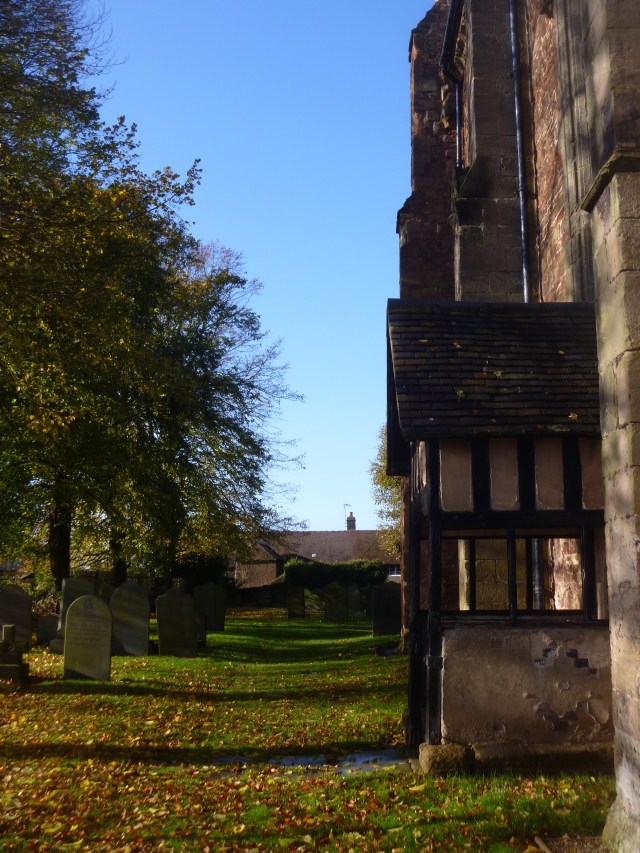
Path through churchyard
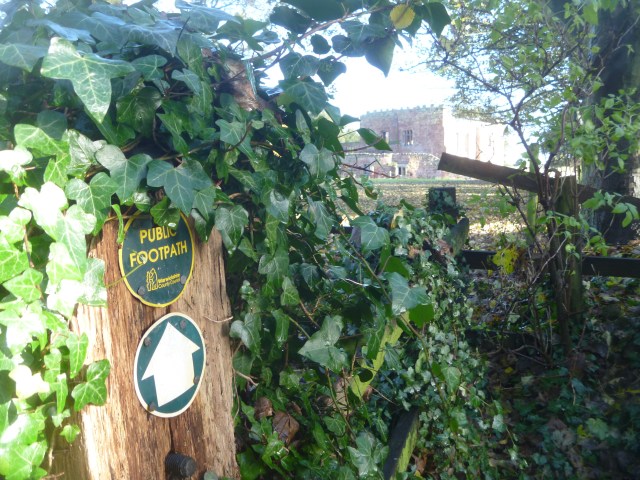
Path through churchyard

Trail this way

Follow the Trails this way

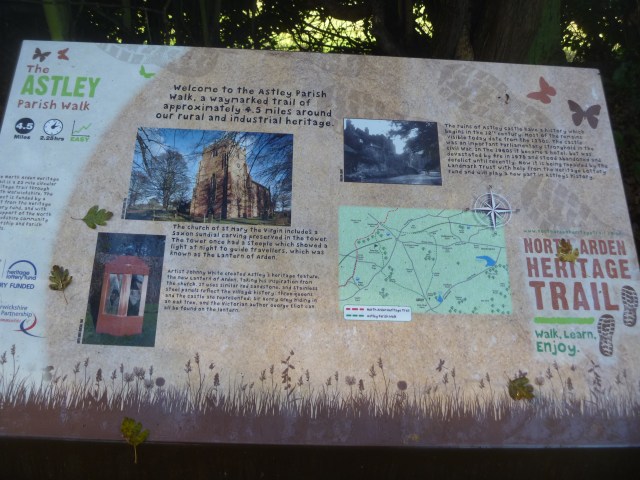
Astley Parish Walk

The Astley Parish Walk shares this lane with the Trail

3. The New Garden. “Today the New Garden is used as pasture but the many lumps and bumps hint at significant buried archaeology, especially in this north-western corner” [Interpretation Board] In fact from this point we re-enter the Castle grounds and here are ancient fish pools and a man-made ‘Viewing Mound’.
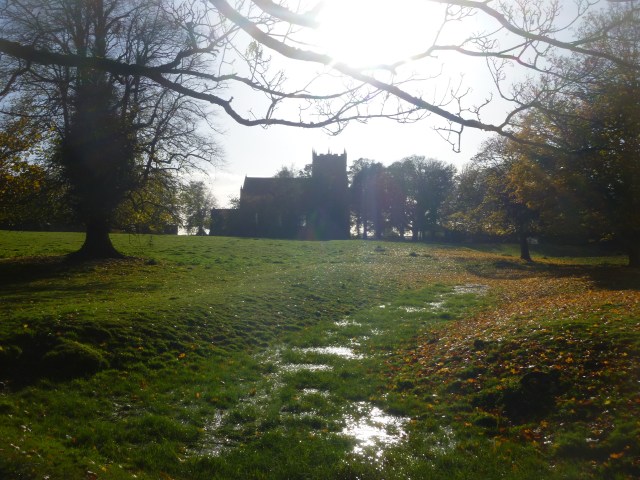
Fish pond and church

The former Fish Ponds and Astley Church
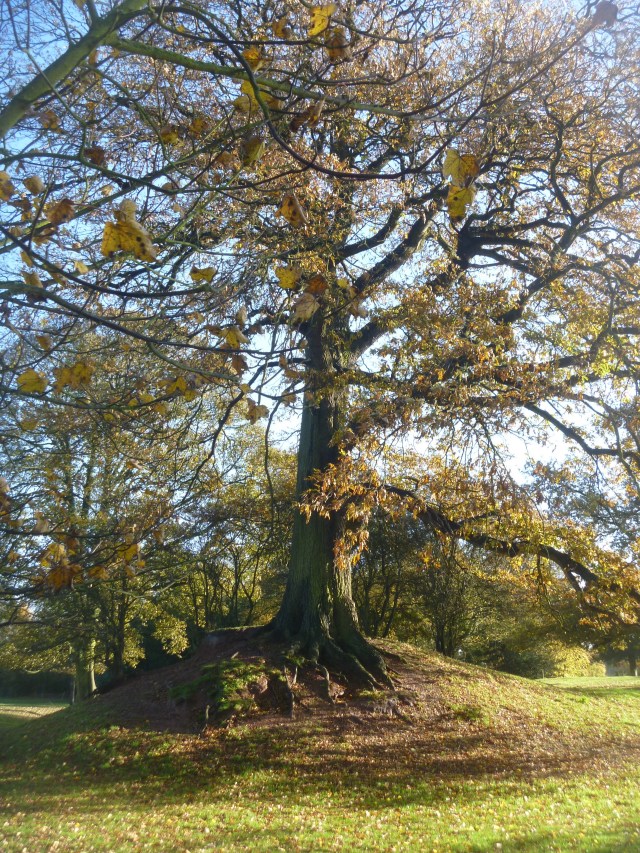
Viewing mound and old oak

The Viewing Mound topped by an ancient oak tree

There can be no real doubt that the New Garden was designed as a garden for the adjacent castle and it was probably laid out with paths, raised-bed type planting, arbours, hedges, and seats, perhaps in the late 15th century. The viewing mount could date from this period too.”.

1690 Estate Map

The area is labelled as New Garden on this estate map dated 1690.

4. Little Park and Shrubbery. Here we leave the meadow and pass through a gate into a small wood or copse now known as The Shrubbery. It contains the kind of cultivated shrubs popular in the 19th century and is only shown on maps as a separate area on maps of the late 19th century and after.
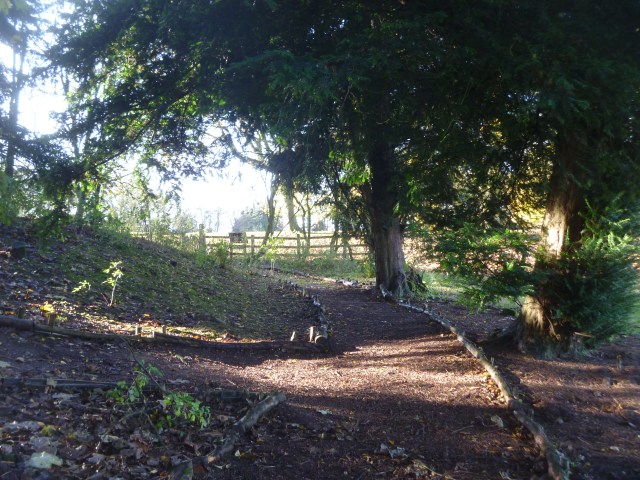
BCTV path through shrubbery

BCTV footpath through the Shrubbery

Just as building work on the castle began and continued from 2008 “volunteers from the British Trust for Conservation Volunteers (BCTV) worked  tirelessly to clear fallen debris, self sown trees and invasive weeds along the footpaths, here in the Shrubbery and around the banks of the moat.”
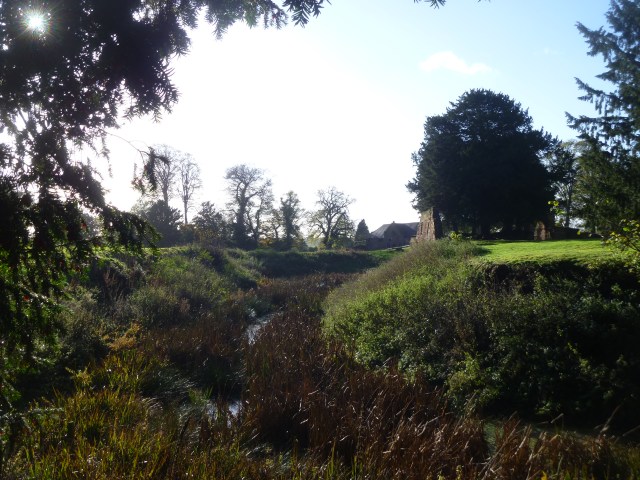
Moat

The Moat contains water in places

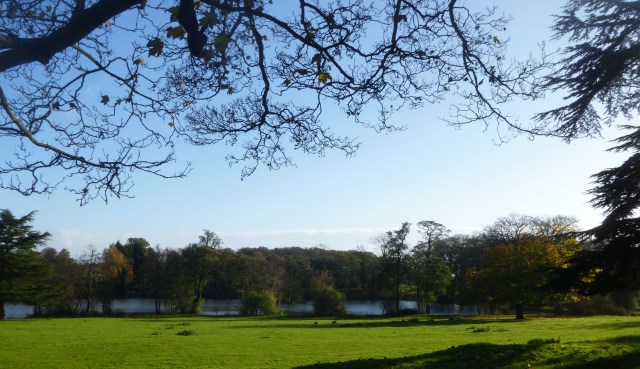
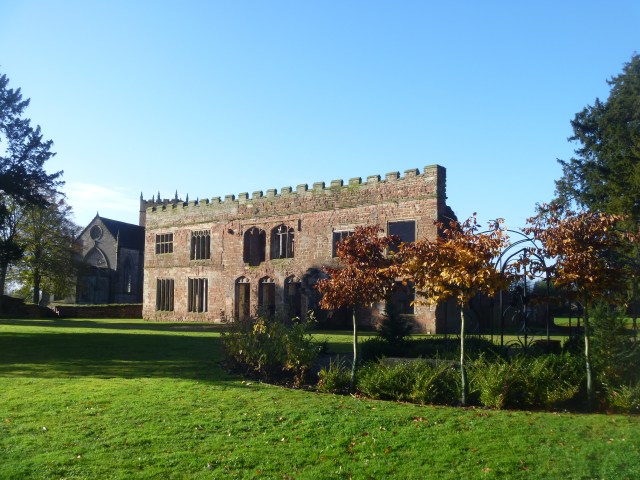
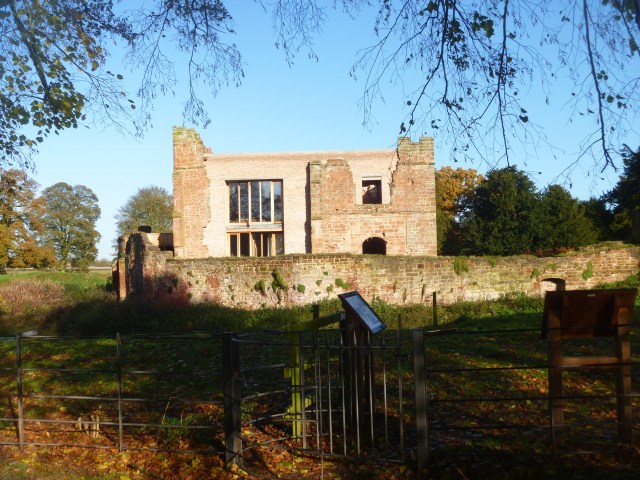
5. East Elevation and The Plash. Emerging from the Shrubbery we gain another view of the Church and the Castle. The East Elevation is to all intents and purposes the Front and Entrance to the building. But looking in the opposite direction there’s a broad green meadow (The Plash) and the still waters of the Astley Pool fishing lake.
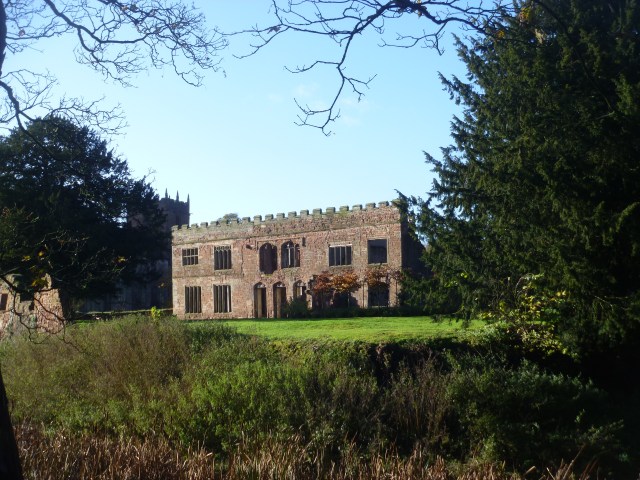
East elevation

The East Elevation (Front) of Astley Castle

The Old English plaesc, modernised as ‘plash’ means ‘a shallow piece of standing water, a marshy pool’ so this is likely to be an ancient natural feature, enhanced and adapted by the castle residents. … The Plash is dotted with trees, several of which are mature specimen trees – including a fine cedar tree.”
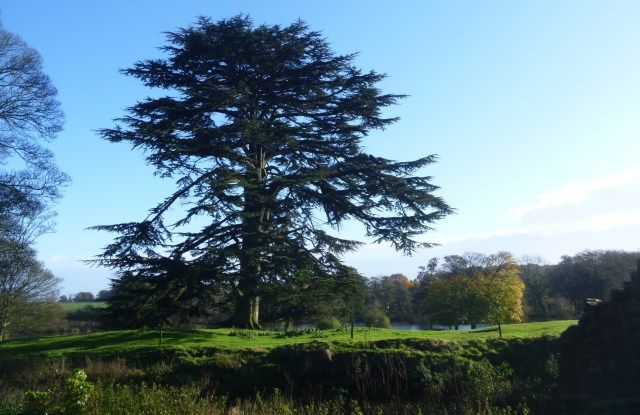
Cedar

The Cedar Tree

Plash and Pool

The Plash and the Pool

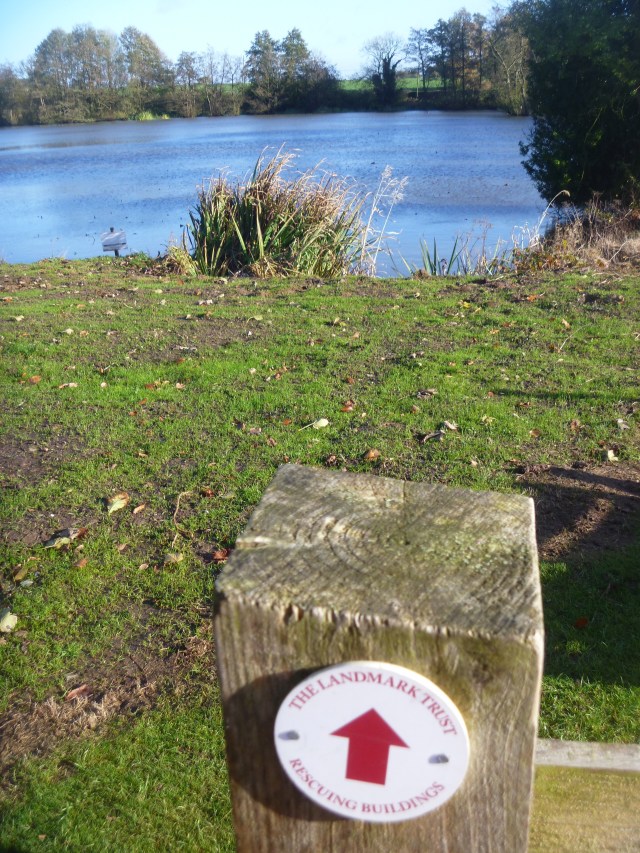
6. Astley Pool and New Road. Our path takes us across The Plash to Astley Pool, a man-made lake. Although it may seem a typical 18th or 19th century creation it is first referred to in 1501. It is now a private fishing lake.
Astley Pool

The New Road was created to link the drive from Arbury Hall to a new access to Astley Castle. The first part of this was across the top of the pool dam and this would have provided a suitably attractive route up to the castle.”

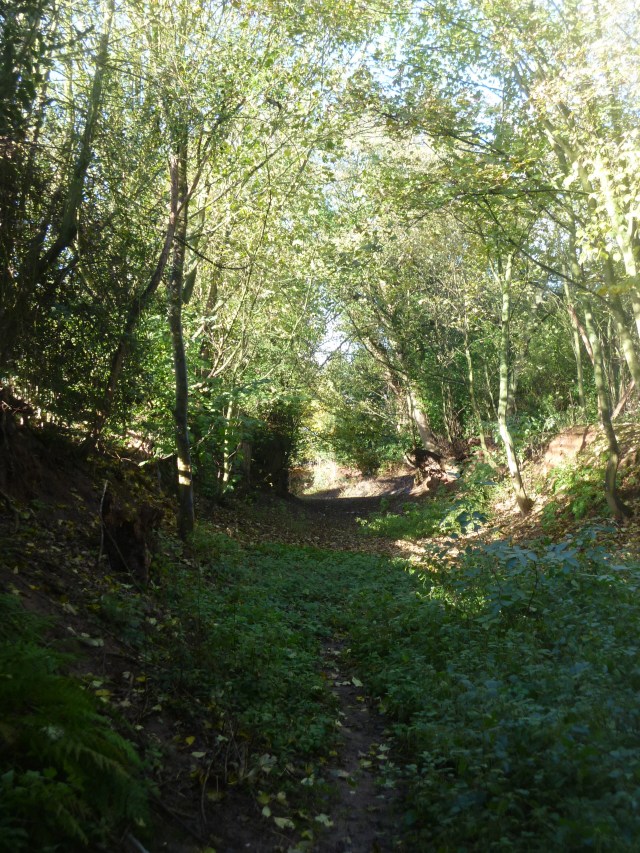
7. Dark Lane and Castle Approach. The BTCV volunteers had been busy clearing the last lane that leads back to the village and the Castle. I was surprised to read in the interpretation notes that this lane was in fact a disused ‘holloway’. I have recently read Robert MacFarlane’s recent book “Holloway“. I had assumed that these features of the landscape only occurred in Dorset and the Downs of the South of England but here was one in the Midlands.
The Holloway

The Holloway

“‘Holloway – the hollow way. A sunken path, a deep and shady lane. A route that centuries of foot-fall, hoof-hit, wheel-roll and rain-run have harrowed into the land. A track worn down by the traffic of ages and the fretting of water, and in places reduced sixteen or eighteen feet beneath the level of the fields.’ “

[See more at: http://www.faber.co.uk/catalog/holloway/9780571302710#sthash.KNxb85gv.dpuf ]

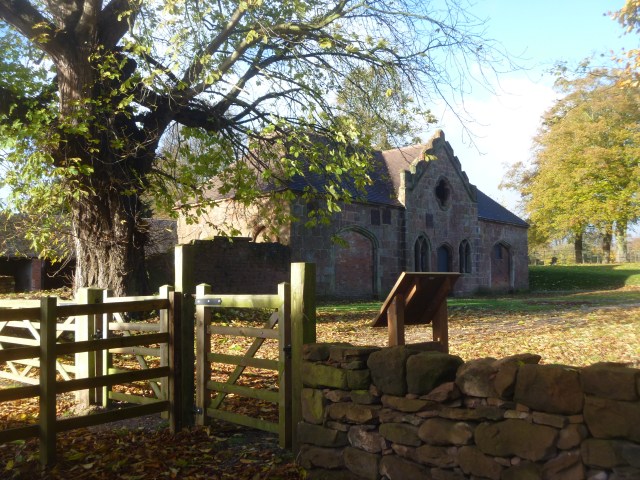
And here we are back where we started at the approach to the castle. On the left is the Coach House like the Castle left to ruin but now repaired and water-tight although it has no use at the moment. Behind are the 18th century Gothick stables.
Coach House

The Coach House

Notice

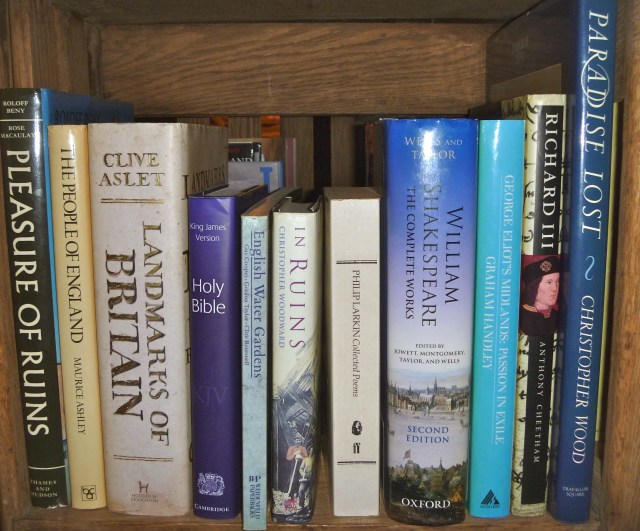
I return to the Castle to study the library and read more about ruins and the rich history of Astley and England.
Bookshelves

“The Building Bears Strong Marks of the Ravages of Time and Presents an Extremely Picturesque Appearance” Astley Castle

Astley and Knot Garden

Astley Castle and Elizabethan Knot Garden

“The Building Bears Strong Marks of the Ravages of Time and Presents an Extremely Picturesque Appearance” Britton’s “Beauties of England and Wales“.

The Stirling Prize is the most prestigious prize for British architecture awarded annually :

to the architects of the building that has made the greatest contribution to the evolution of architecture over the past year. The prize is for the best building in the UK by RIBA chartered architects and International Fellows, or in the rest of the EU by an RIBA chartered architect.”

The RIBA Stirling Prize was born in 1996 out of its predecessor The Building of the Year Award. The Building of the Year Award had been running since 1988 and the winner was chosen by the RIBA President from a handful of National Award winners. This was thought of as neither transparent nor democratic. The aim with the Stirling Prize was that the winner should be decided in an unbiased way, with different juries visiting the ‘midlist’ and shortlist.
The new prize was named after James Stirling, the great British architect who died in 1992. The aim was that the Stirling Prize would be for architecture what the Booker Prize was for literature, and a £20,000 cash prize for the winning architects made the prize covetable as well as prestigious.” [Source]

In 2012 I was fortunate enough to be invited by friends who are Patrons of The Landmark Trust to attend the celebration opening of Astley Castle in July 2012. Immediately on leaving the reception and arriving home I decided to book the castle for a week (Monday to Friday) in November 2013.

Here are some of the highlights and light effects from this unforgettable stay.

Arriving at Astley

Arriving at Astley

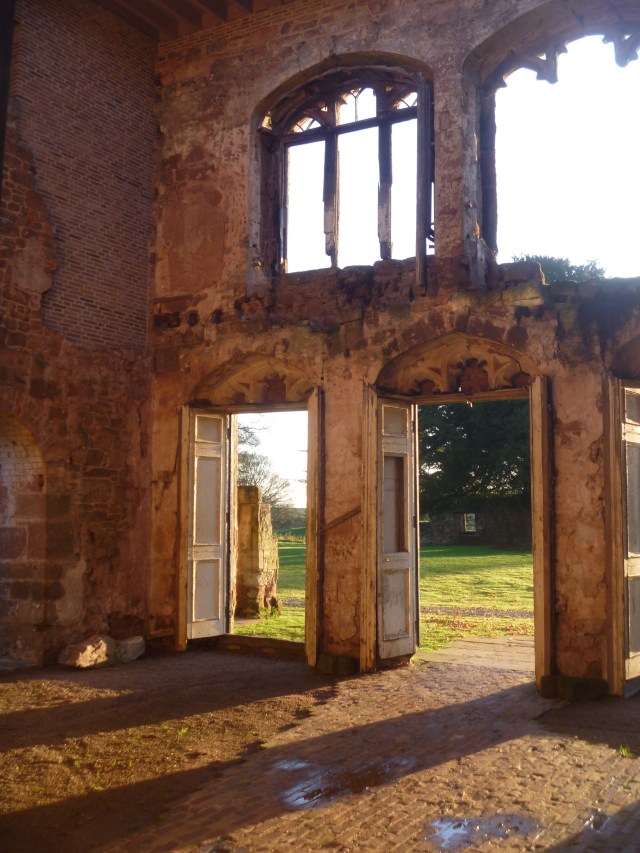
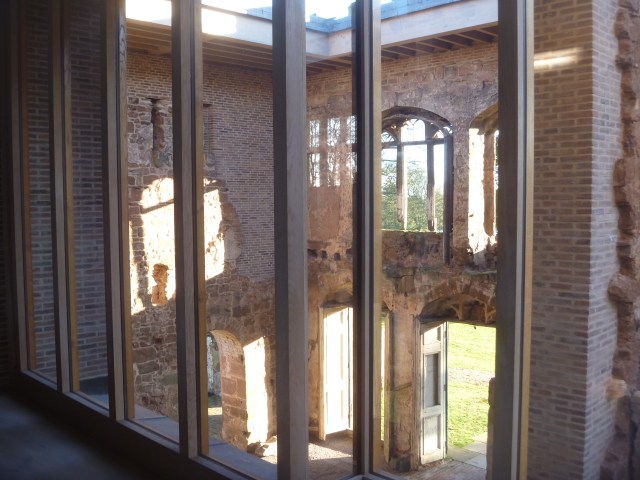
The Ruins

The Ruins

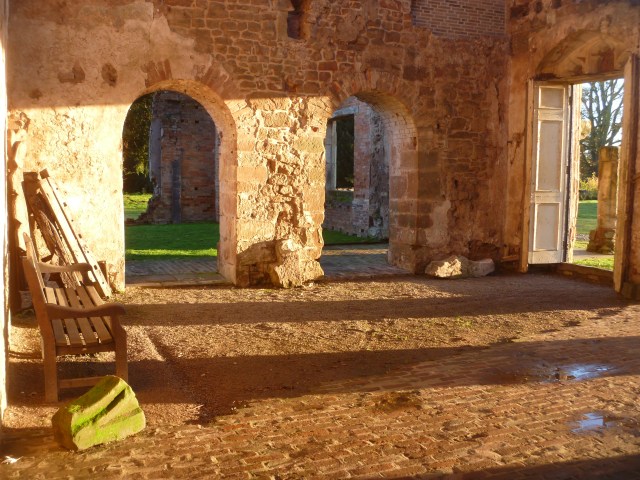
Sunlight after the rain

Sunlight after the rain

Outdoor Dining

Outdoor Dining

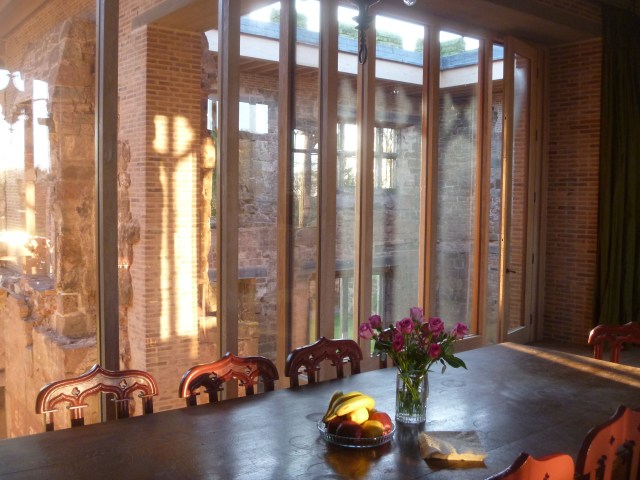
Dining table shadows

Indoor Dining

Courtyard

Courtyard

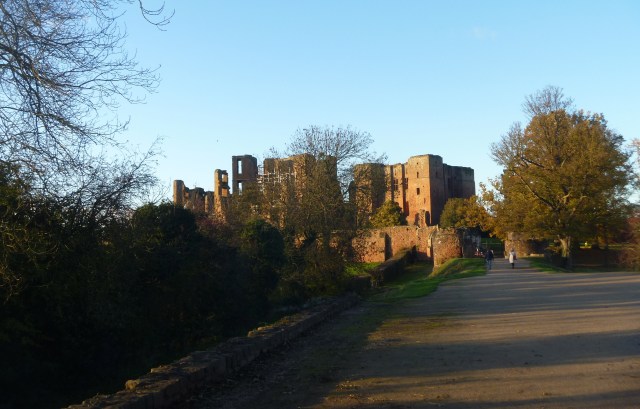
Kenilworth Castle

Castle Visiting – Kenilworth Castle