Hales Great Barn

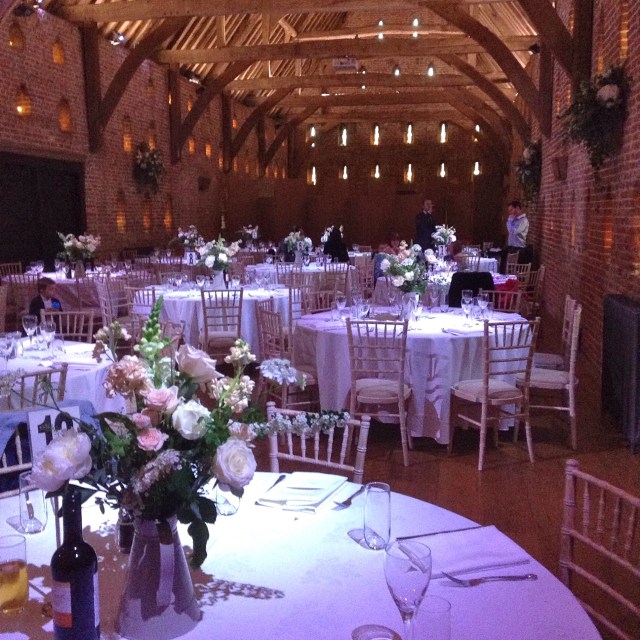
This weekend was our nephew’s wedding in Norfolk and as this was a family and friends occasion I never expected to conjure up a blog post about it. But, since we got home I couldn’t resist showing you the magnificent venue where the reception was held.

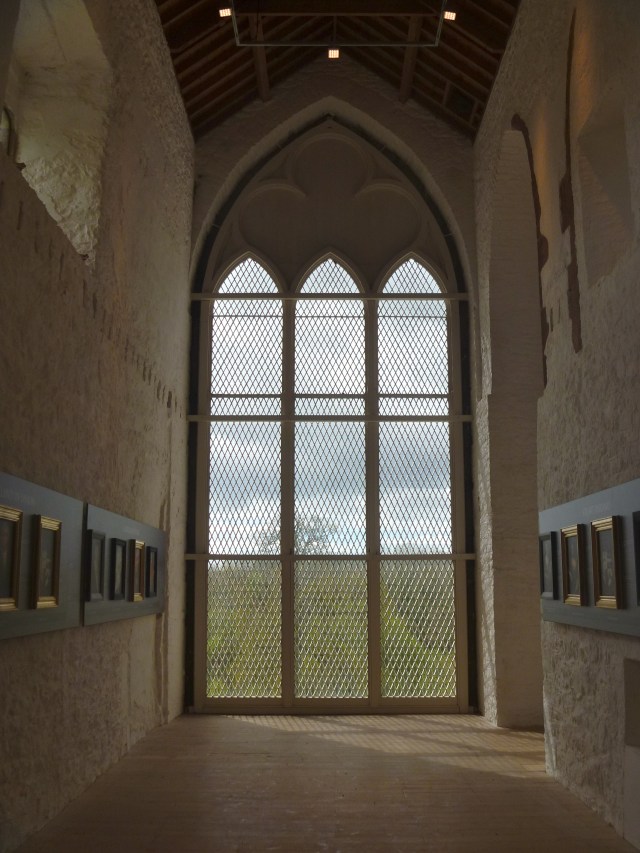
inside great barn

After a few days of seasonally summer weather at last, Saturday dawned wet and cloudy and the rain continued, on and off, throughout the day. It was a shame but it didn’t dull any of our festivities: it just meant that we were inside for rather more time than we had expected to be.

Hempnall Church

The wedding itself took place in St Margaret’s Church, Hempnall (above) and had a lovely relaxed country wedding atmosphere. From there a convoy of cars travelled along the quiet country lanes of Norfolk and Suffolk and across the huge Hales Green Common to reach Hales Hall Barn for the reception.

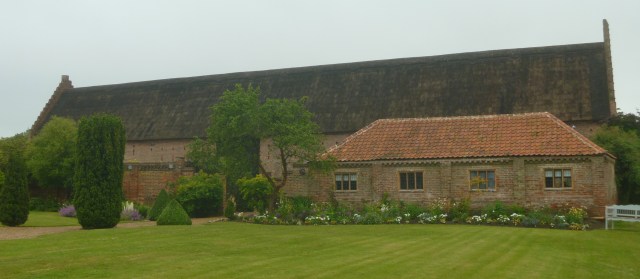
barn in full

About Hales Hall

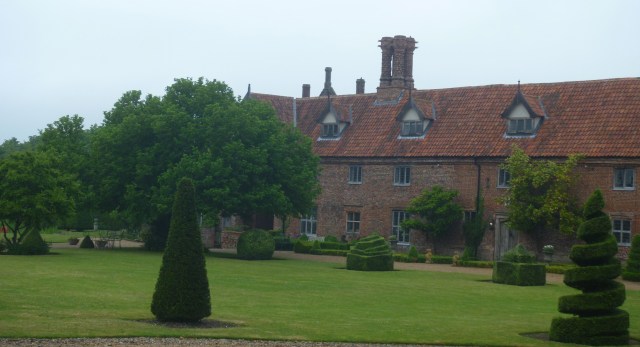
The Great Barn at Hales Hall and the Hall itself were built in 1478 and the present Hall is the surviving wing of an even larger house built by Sir James Hobart, the Attorney General to Henry VII. There have been buildings on the site since Roman times.

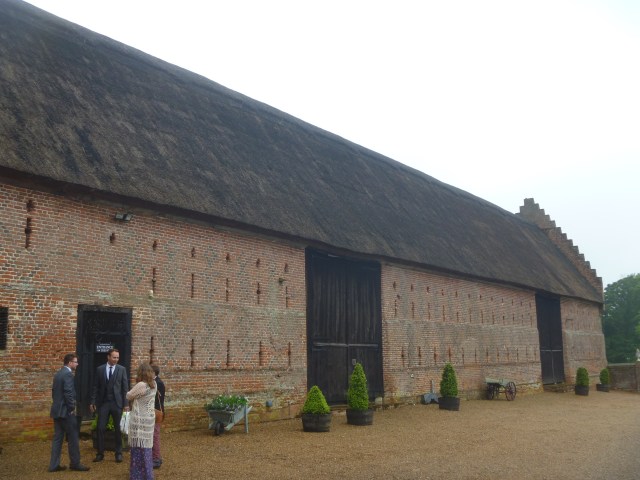
The barn outside

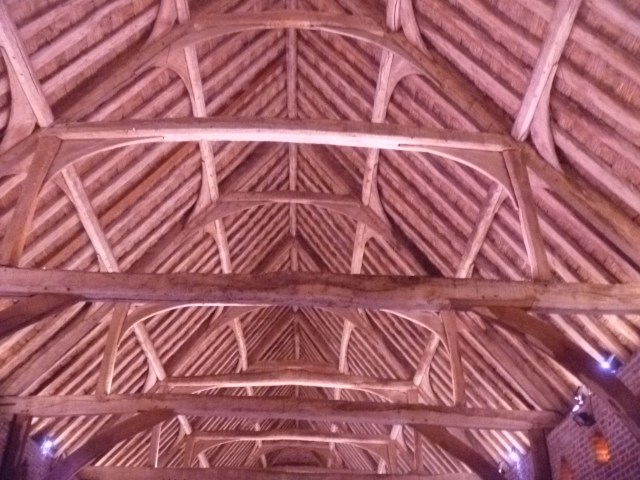
The 178ft Great Barn is the largest surviving brick-built medieval barn in Britain and features a superb example of a ‘queen-post’ roof.

Massive roof

The Hall and Great Barn had fallen into agricultural use by 1971 when it was purchased by the Read family. It has been lovingly restored and owners Peter Sheppard and Keith Day plan to continue the restoration in the future.

Hales Hall is set on the edge of Hales Green, one of only a few ‘commons’ still grazed by cattle in the summer and is a haven for wildlife. At the heart of the Waveney Valley, Hales is surrounded by market towns and is close to the historic city of Norwich and within easy reach of the Norfolk and Suffolk coast.” [from the Hales Barn]

HH Accommodation

Remaining Buildings of Hales Hall

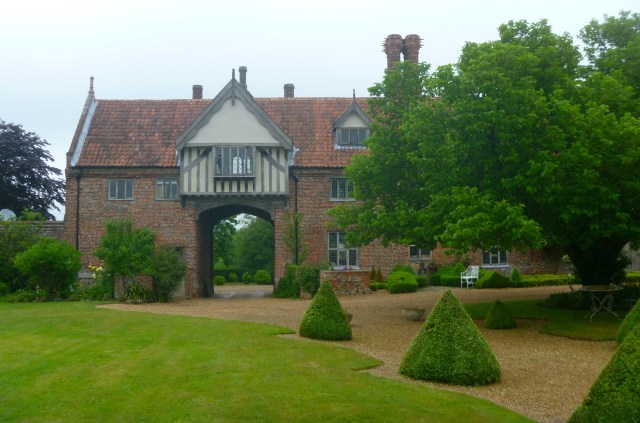
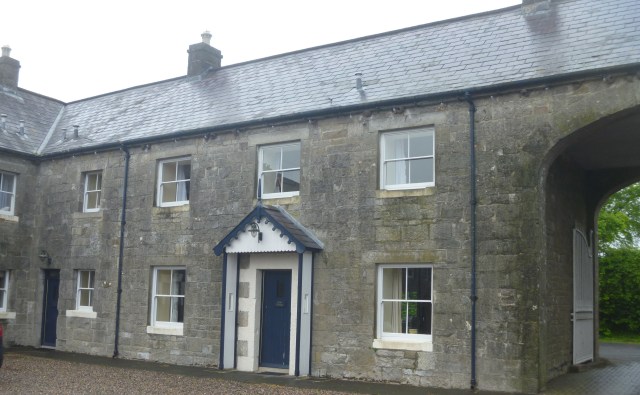
According to local information the Hall itself was demolished around 1700 leaving only the gatehouse and adjoining domestic building.

Remaining Hall

The Gatehouse

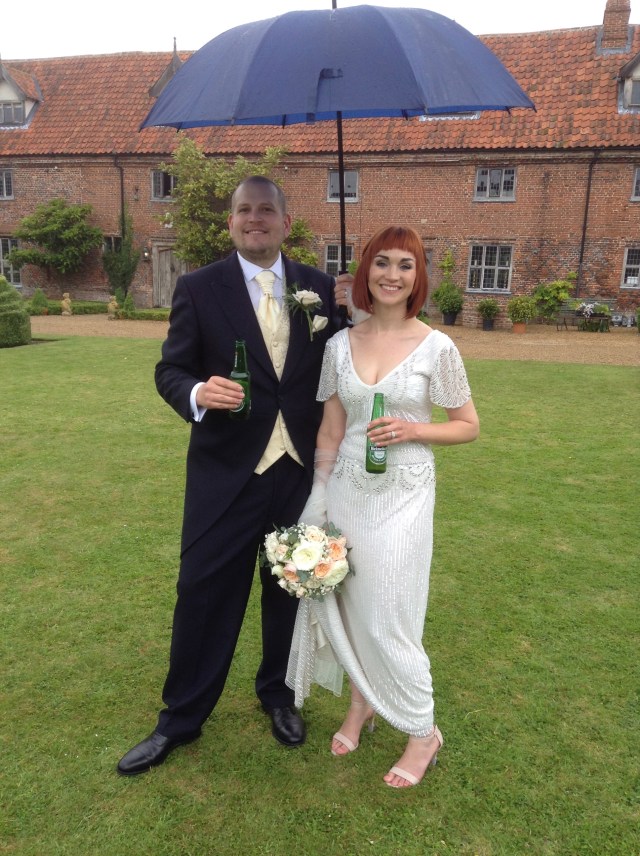
groom and bride

The Happy Couple in the Rain

The Leeds Library Summer Day Out in Whitby

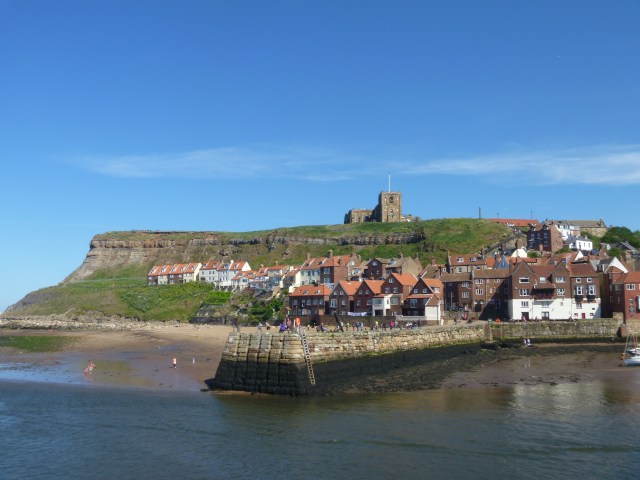
whitby view

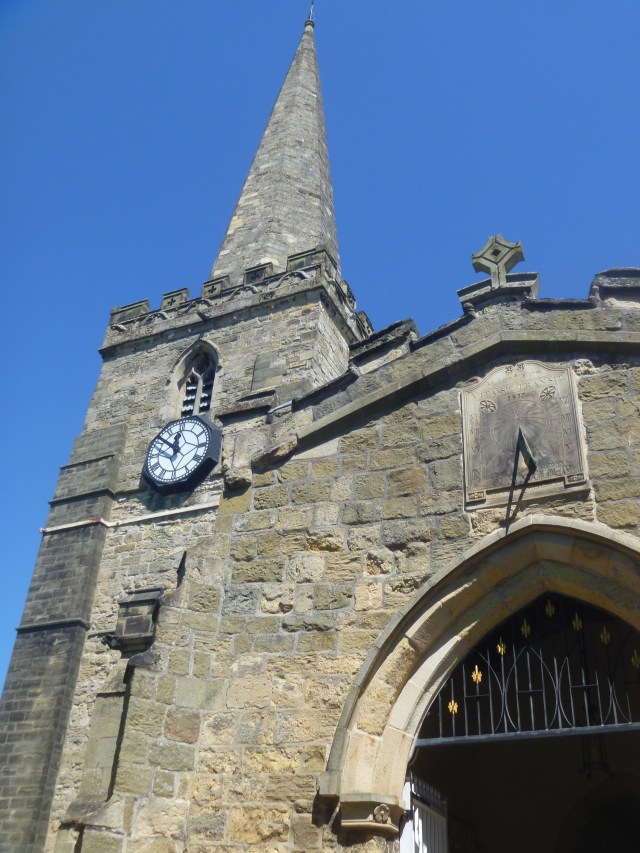
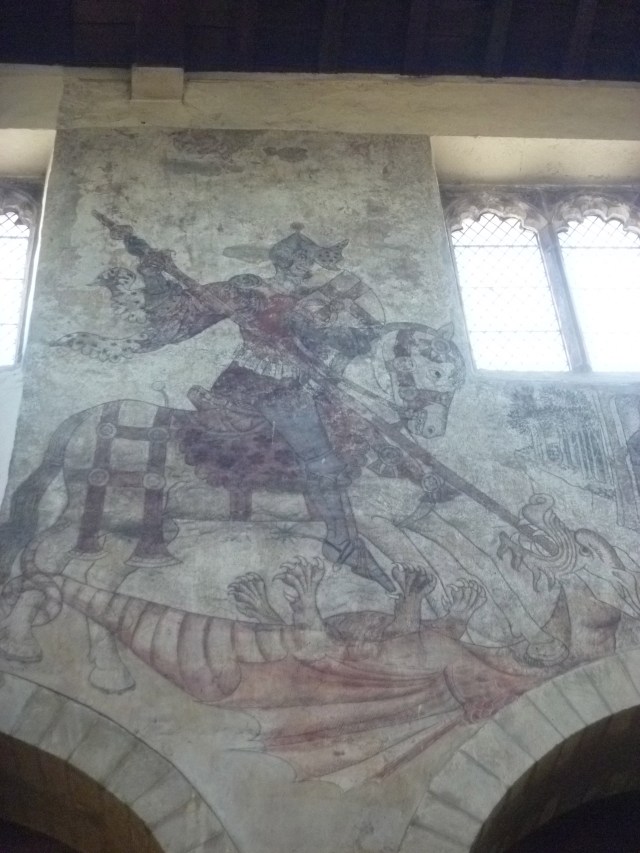
The weather on this year’s annual Leeds Library Visit to Whitby could not have been more different from last year’s The Lake District trip. The sun shone all day and the sky was blue as blue. Perfect weather for a day at the seaside. But first stop on our journey was in Pickering where after tea and toast in the Poppies Tearoom we visited the parish church of St Peter and St Paul where medieval wall paintings have been extensively restored. Originally discovered in 1851 they were almost immediately covered over again. In the 1870s they were restored and, as the leaflet tells us :

Nikolaus Pevsner, in his series of books The Buildings of England (1966), wrote that the church has “one of the most complete series of wall paintings in English churches, and they give one a vivid idea of what ecclesiastical interiors were really like”.

Pickering church

Pickering Church

George and dragon

St George and The Dragon Wall Painting

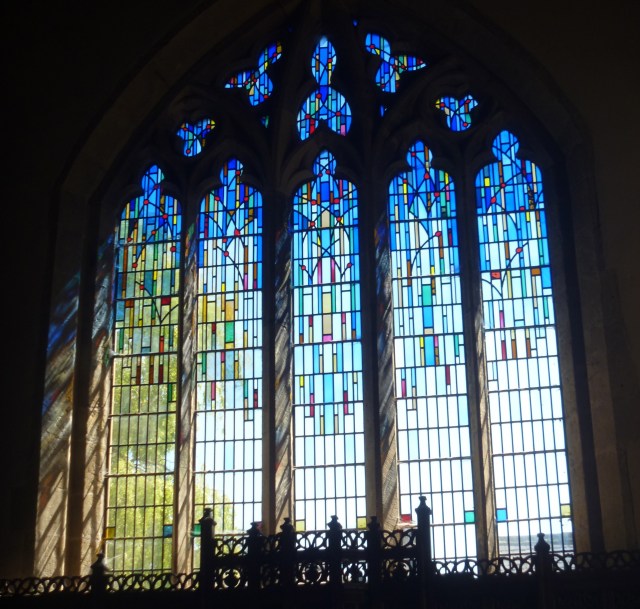
east window

The East Window

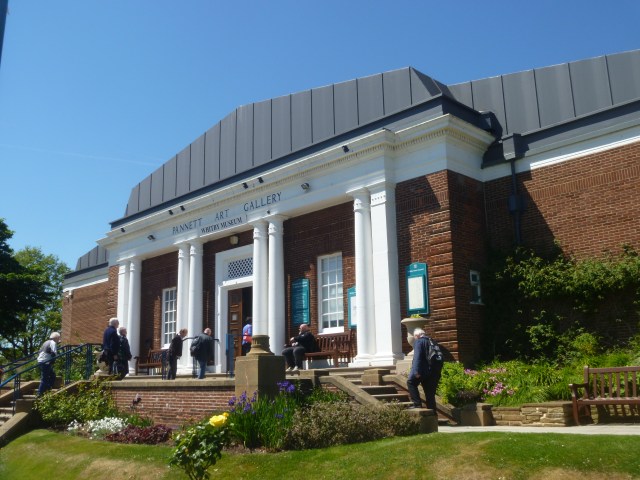
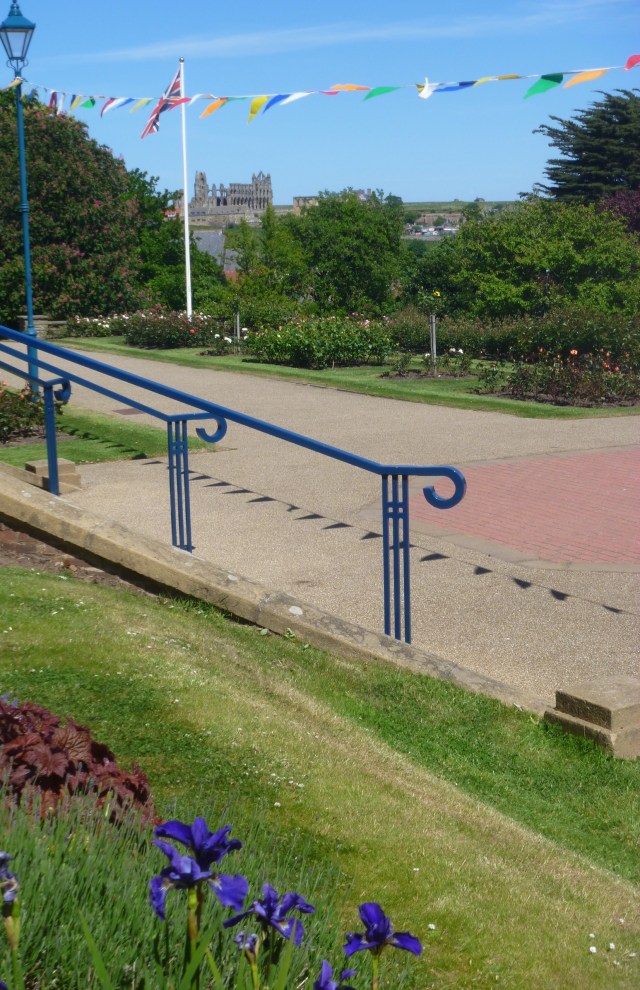
Our day out was  primarily to visit the Whitby Literary & Philosophical Society Library and Museum housed in a purpose built art gallery in Pannett Park above the town and with views of the Abbey opposite and the sea beyond.

Museum

The Society had been founded in 1823 by a group of Whitby citizens led by The Reverend George Young, a minister of the Presbyterian church. It’s chief object was to set up and maintain a museum specialising in fossils since “Whitby is a chief town of a district abounding with petrifications and containing not a few Antiquities”.

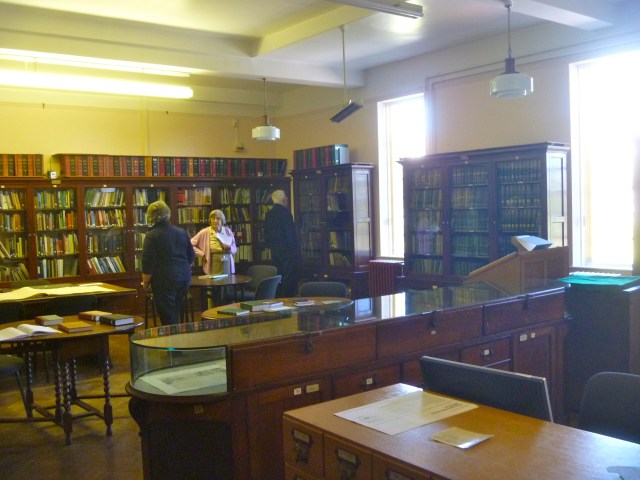
in library

The Society’s Library Today

Initially opened in two rooms over a shop in Baxtergate it subsequently moved to several other locations in the town but finally, by the end of the 19th century the Society decided it needed more space and a new building which opened in 1931 and adjoins the Municipal Art Gallery : The Pannett Art Gallery.

pannett park and abbey

We had an introduction to the collection in a new wing added 10 years ago with funds from The Heritage Lottery Fund. The volunteer curators, Stephen and Fiona, spoke enthusiastically about the collection and the Whitby Merchant Seaman’s Muster Rolls which are an important part of it.

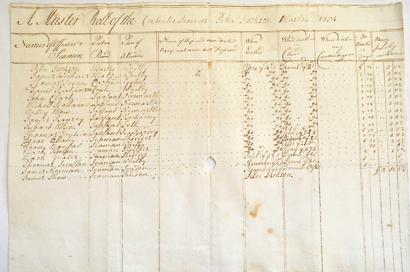
The Muster Rolls are a unique series of historical documents which are the surviving paperwork for the Whitby Merchant Seamen’s Hospital’s regulation of the “seaman’s sixpence”, an eighteenth century pension provision. This pension provided financial support to injured seamen and to the widows and children of seamen who died while serving on merchant ships.

example

Example of Muster Roll from the Library website

They record a wealth of information about crews and ships, and offer a particularly rare insight into working men’s lives : age and place of birth; port where and when enlisted; where and when leaving the ship; name of the ship and its owners.

The Library holds on microfilm the Whitby Muster Rolls from 1747 to 1795 and also some Whitby Muster Rolls from 1800 to 1850. The Museum passed 7,000 Rolls to the Society in 2010. These require careful repair and conservation and much of the cost of this is being defrayed by The Thomas Roe Trust.

The main specialism of the Library is the Whitby local area :

Local History – collections of books, pamphlets, journals, maps, prints and manuscripts for Whitby and the surrounding area (approx. 15 miles radius)

oblique sailing

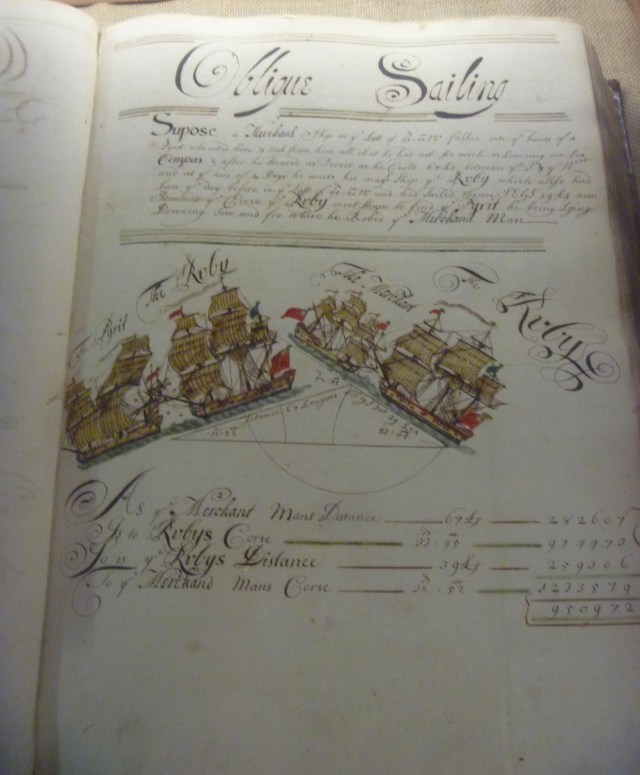
Maritime History – collections of books, Lloyds registers, and records including muster rolls, and ships’ account and log books

book

Geology – extensive collection of books and journals relating to the history of geology and the internationally important discoveries of Jurassic fossils made in the 19th Century in the Whitby area

Industrial heritage – sources for the development of the alum, jet, ironstone, and potash industries and the railways in the area

Family History – many sources including printed parish registers, lists of monumental inscriptions for many local churches, wills, and indexes to wills in the York Registry

Literature and language – a small literature collection focussing on novels, poetry and plays that are either by Whitby writers or are about Whitby, and a small collection on Yorkshire dialect

After tea and biscuits we were free to visit the Library and the Museum and Art Gallery.

After a picnic lunch in the lovely Pannett Park and a final look round the Museum a fellow library member and I headed into town. After a walk along the quayside we climbed the 199 steps to the church and the Abbey for more stunning views before returning to the coach pick-up point and the return journey to Leeds.

Whitby church

Whitby Church

abbey

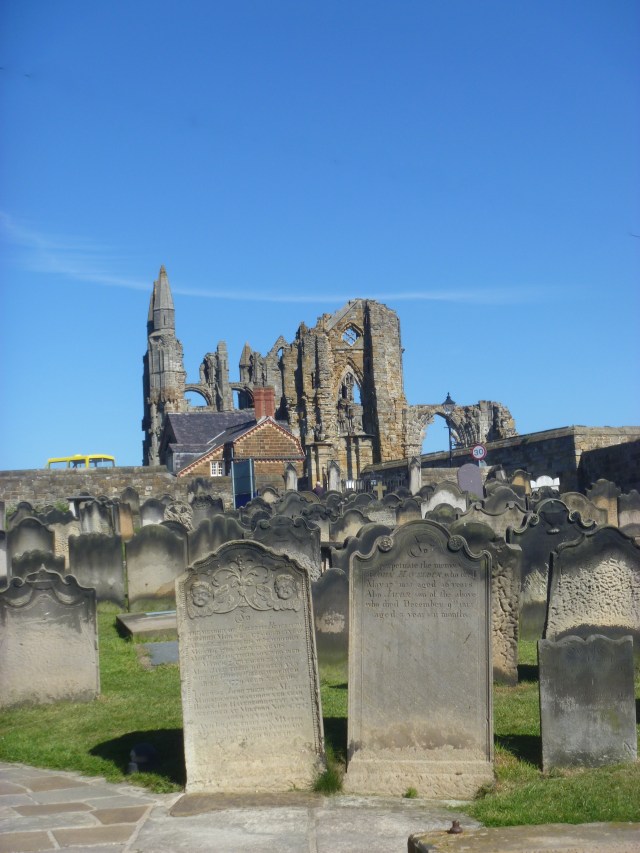
Whitby Abbey

view from steps

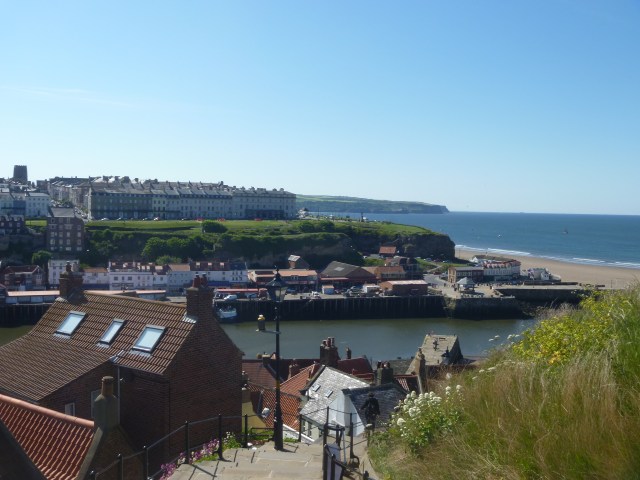
View from the Top of the 199 Steps

Libraries Big and Libraries Small [1]

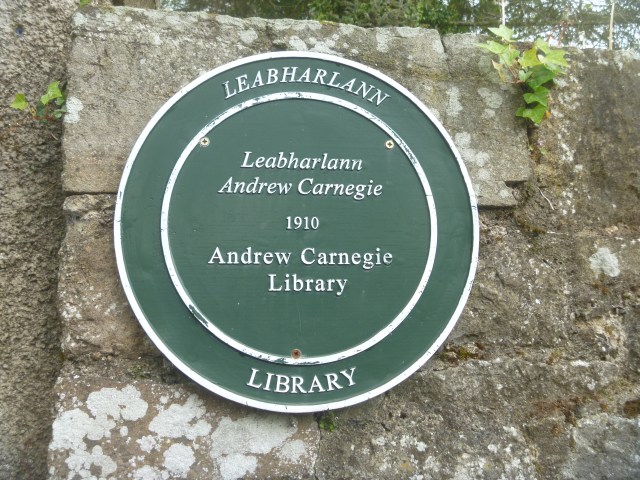
One Irish word I came to recognize on my recent trip, although I don’t know how it’s pronounced, was Leabharlann. Needless to say, it means Library.

TA Library

Colclough Room, former Tintern Abbey Library

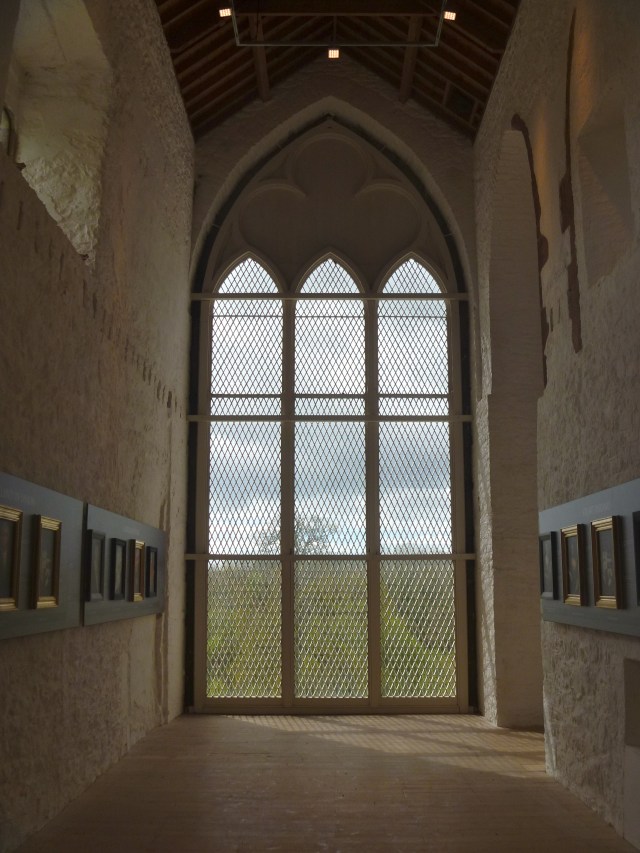
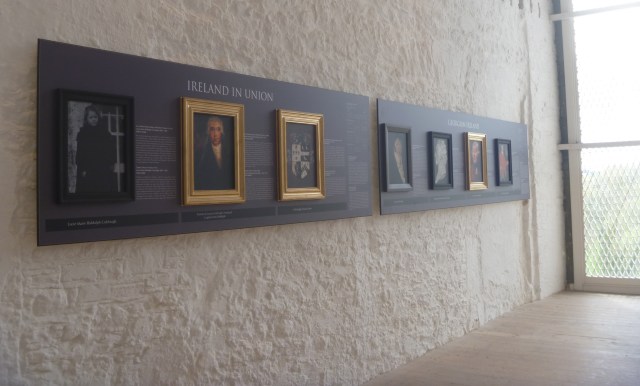
And the first Library I came across was no longer in use as such. It was the library at Tintern Abbey. Since restoration this room is now known as the Colclough Room and is used as a gallery to tell the stories of the families who lived here.

To my mind the best place to pick up wifi is at a Public Library and I made a couple of visits to Lismore Public Library and Dungarvan Library on some of the wetter days that I spent at Salterbridge Gatelodge.

Lismore Lib Lismore Library

Lismore Public Library

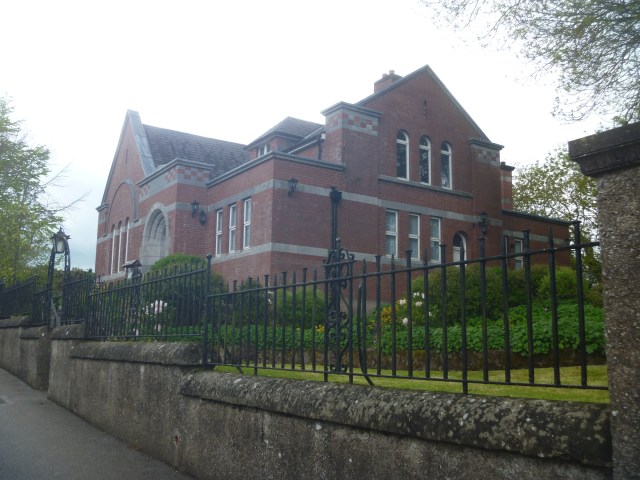
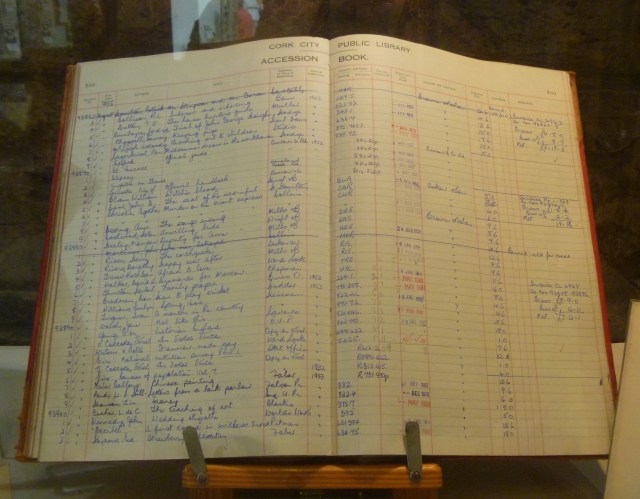
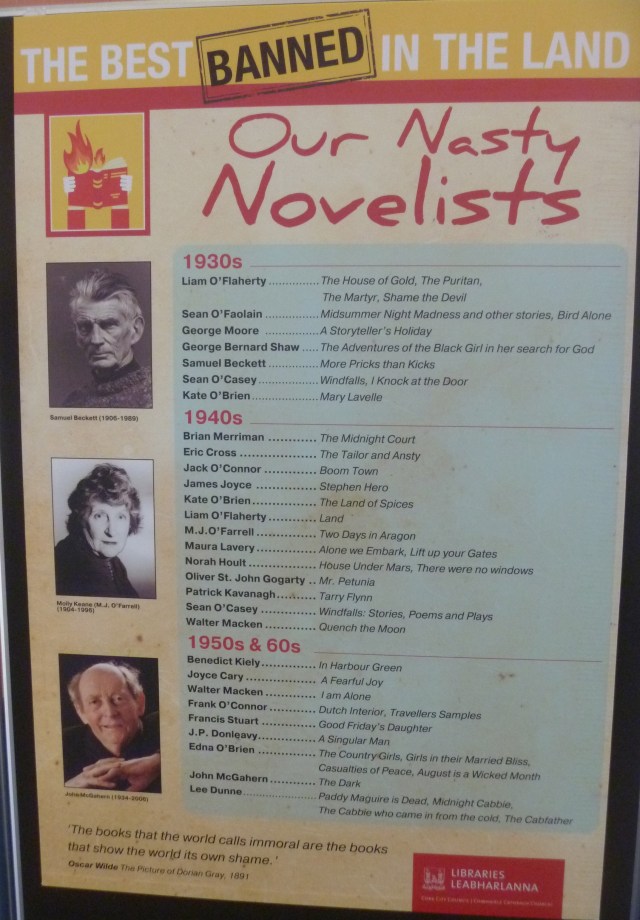
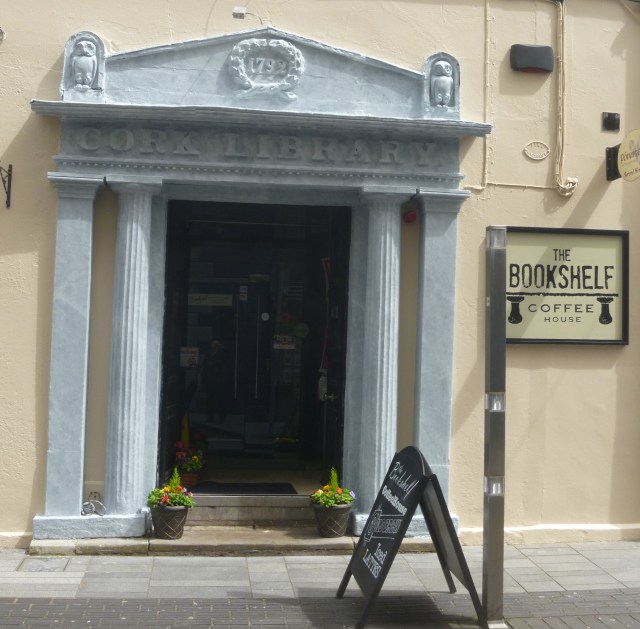
On my day out in Cork I popped into the Cork Public Library. There was an interesting display in the foyer : The Best Banned in the Land featuring books banned by the Catholic church in Ireland.

register

The Cork Library Register of Banned Books

nasty list

Best Banned Books

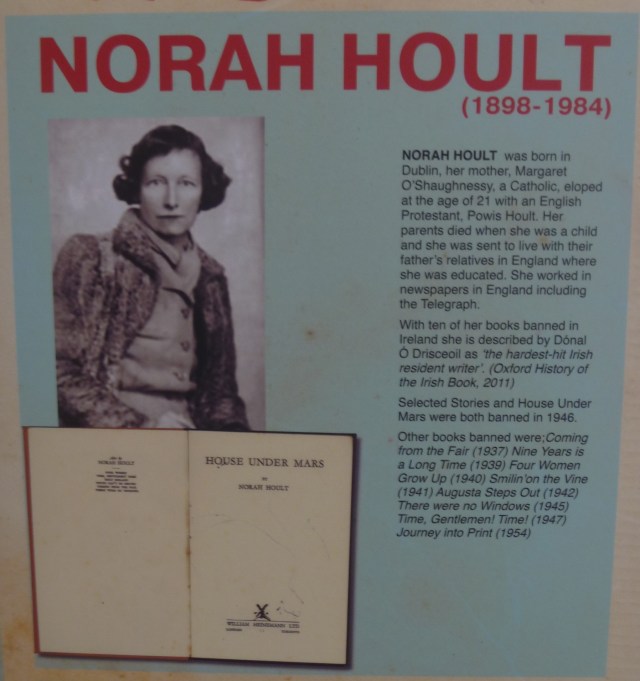
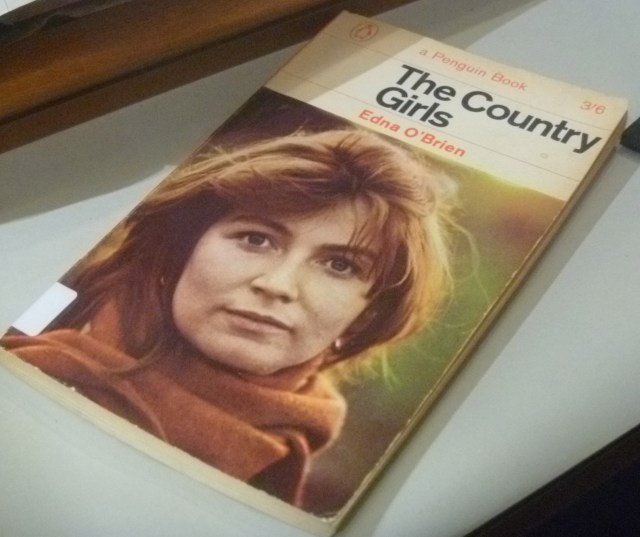
Many of the authors were Irish and often the Library had bought copies which were later removed from shelves and returned to booksellers for credit. The exhibition focussed on those Irish authors. The list of “Our Nasty Novelists” included George Bernard Shaw, Edna O’Brien, James Joyce, M J O’Farrell (Molly Keane), and I recognised ‘Persephone’ author Norah Hoult (Persephone Book 59 “There were no windows”)

banned women

Banned Women

Norah H

Norah Hoult – Banned

E O'Brien

Edna O’Brien – Banned

old cork library

Later, on a Walking Tour in Cork, I spotted a new use for an old library


Northern Irish Gate Lodges

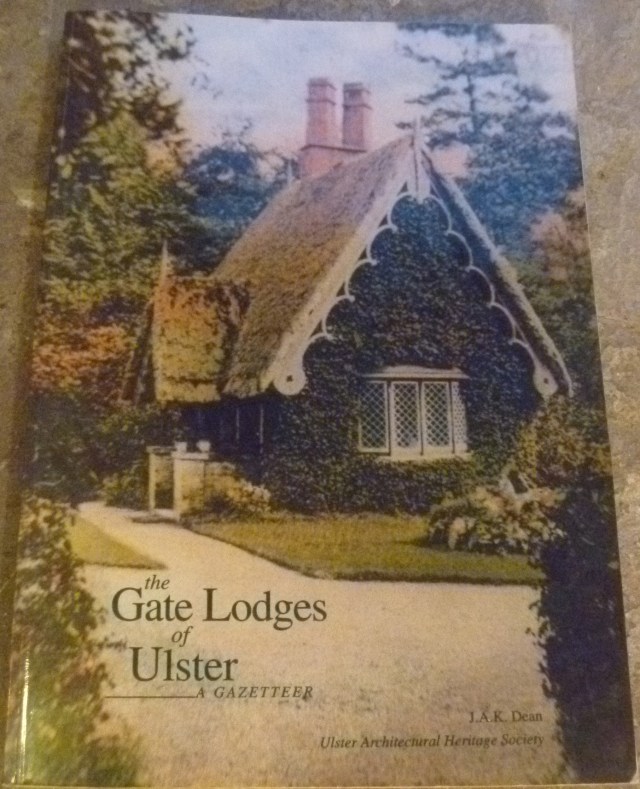
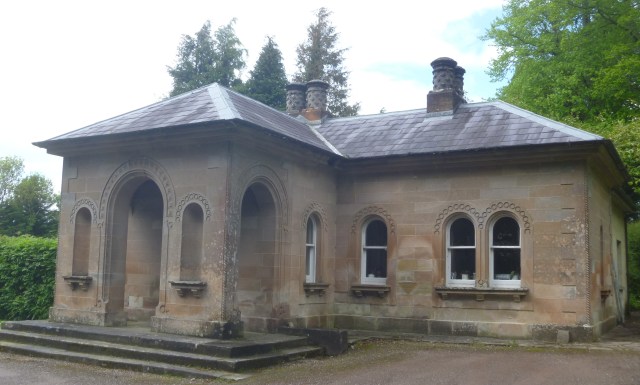
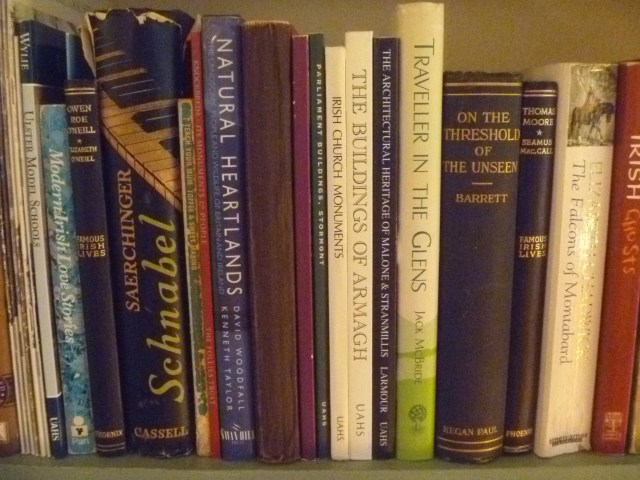
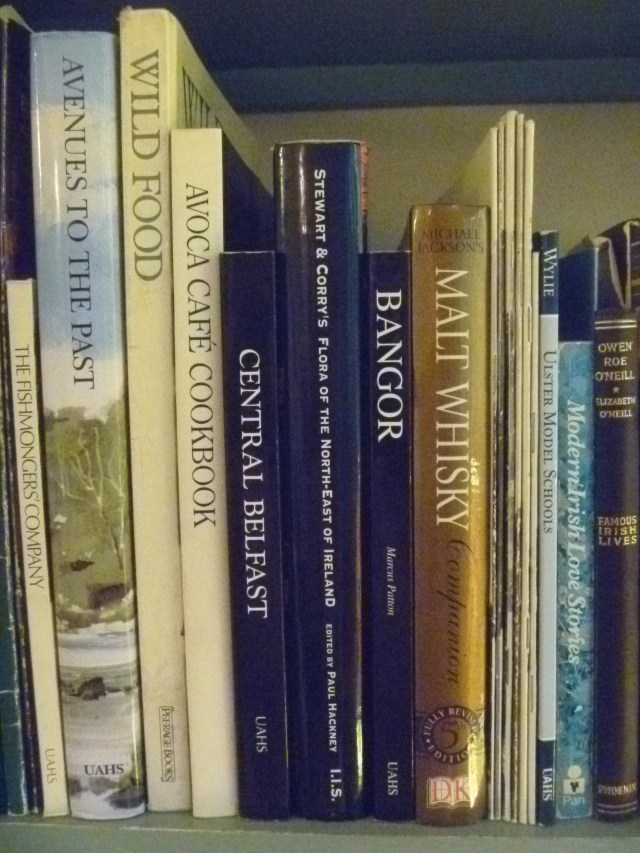
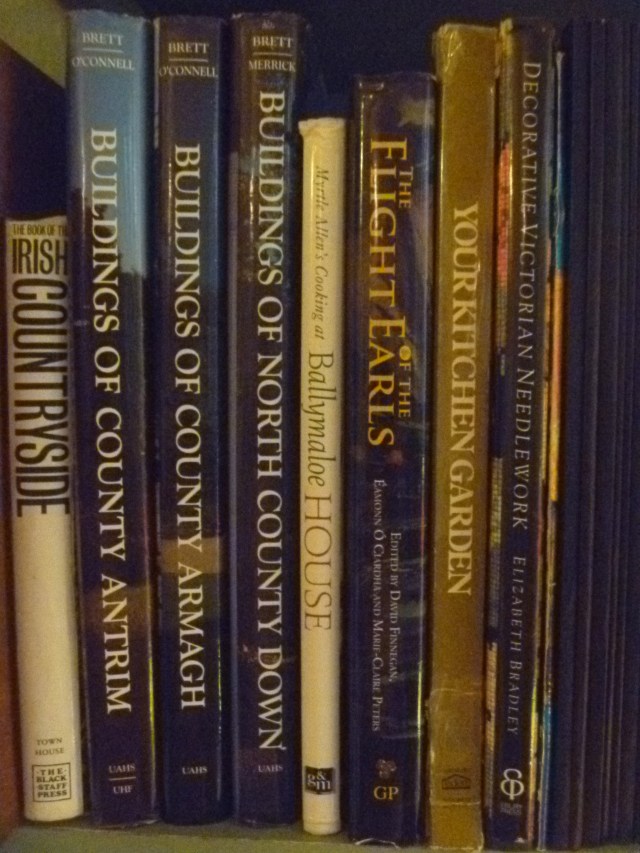
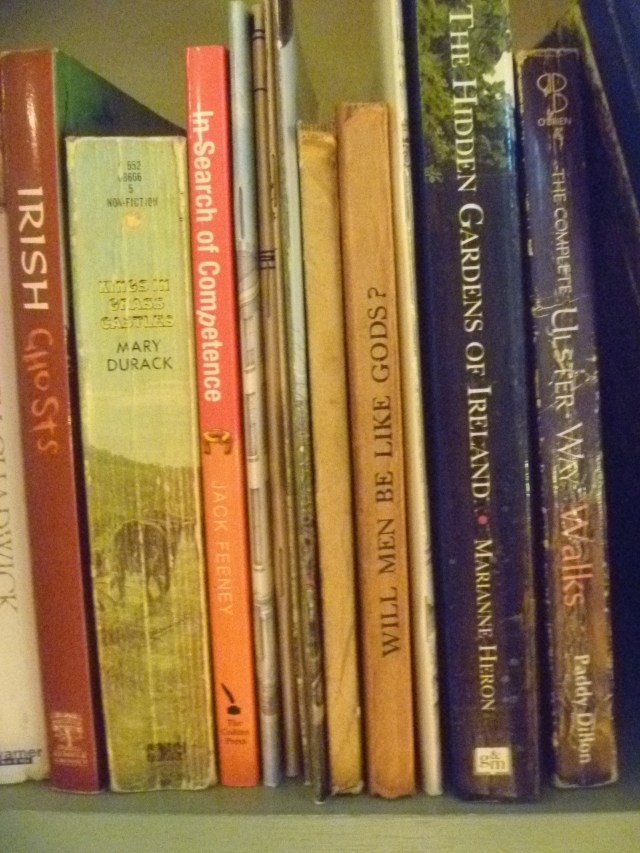
Gate lodge, or gatelodge, seems me to be an Irish term for what we, over here, would just call a Lodge. In amongst the majority of what I could only call dross (although there was one excellent shelf of local (in the sense of Northern Irish) books [see photos below]) in the Library at The Barbican, an Irish Landmark Trust property on the coast of Antrim in Northern Ireland, I found a most interesting book. “The Gate Lodges of Ulster : a gazetteer” by J A K Dean; Ulster Architectural Heritage Society, 1994. Book The book came about as a result of research carried out by Dean 30 years earlier. Another look at the topic during the early 1990s revealed much demolition and decay had occurred and a comprehensive renewal of study lead to the publication of the gazetteer. I’m wondering whether a similar study has been carried out in the South – a much greater project. Gate lodges had much to teach about developing awareness and ambitions of their patrons, and the changing skills of builders and architects. There’s a huge variety- from vernacular tradition to architectural sophistication yet they had a single simple purpose – to house the gatekeeper and his family. The Gazetteer is a fascinating study of individual gate lodges. Here I’ve abstracted details from the book and added my photos. CC Lodge

Gate Lodge at Castle Coole – Weir’s Bridge Lodge

Built c1880 i.e. after the Weir’s Bridge was built to carry the Enniskillen-Florence Court-Belcoo line of the Sligo, Leitrim and Northern Counties Railway. It’s a fine building in the Lombardie style [sic]. Built from the highest quality ashlar sandstone with immaculately carved detailing. Single-storey on a T-plan. It has a raised stepped platform to form a “porte-cochere” with semi-circular headed arches. CC twins

Gate Lodges – Castle Coole Twin Lodges

These were even recorded as being dilapidated in 1834. They not even mentioned on OS maps until 1857. Now they’re presented as Georgian Gothick. Built so close together a family carriage could hardly pass through. The chimney stacks have now been lost. Armar Lowry-Corry (1st earl of Belmore) the builder died in 1802 and his son Somerset had an energetic building programme for 40 years. He built up a lasting relationship with architect Sir Richard Morrison. CC single

Single gate Lodge at Castle Coole

Crom GL

Gate Lodge at Crom

The main entrance lodge at Crom was built in 1838 by Edward Blore, architect. Blore was responsible for many other buildings on the Crom Estate. It’s an irregular Tudor picturesque cottage on one and a half storeys. Dean’s book also contains interior plans. It has two main gables and pretty serrated bargeboards plus finialed hipknobs. On Wikipedia I found that a Hip-knob, in architecture, is the finial on the hip of a roof, between the barge-boards of a gable. The small gabled hall/porch has the only remaining lattice panes. GL Springhill

Gate Lodge at Springhill

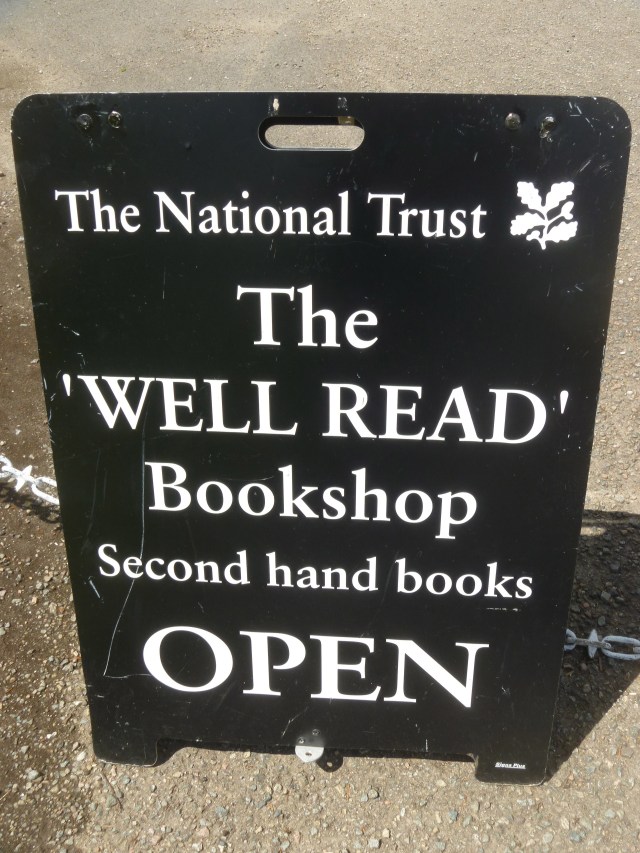
The Gate Lodge at the National Trust property Springhill in County Londonderry is now the secondhand bookshop. It stands at the original main entrance (which is now now the exit) and was built not long after George Lenox-Conyngham succeeded to the property in 1788. It is the sole survivor of a pair of Georgian Gothick porters’ lodges. Their gables faced each other across the avenue entrance. It is a simple rectangular two roomed structure, has steeply pitched gables with a wide door opening and a minuscule lancet opening above to light a bed loft. Well Read

The Well Read Bookshop

Glenarm Barbican

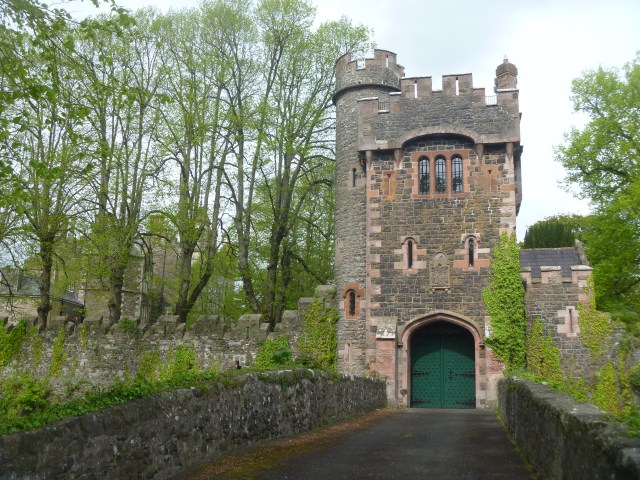
The Glenarm Barbican

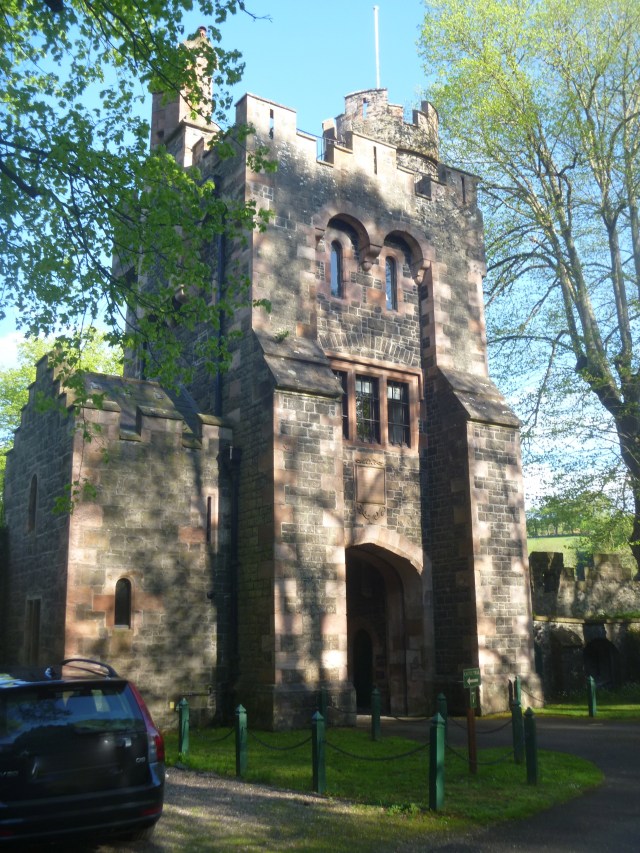
Built in 1824, the Barbican’s architect was William Vitruvius Morrison. Dean writes : “Beloved of photographers and Victorian illustrators for its dramatic architecture and romantic setting. Approached across a two-arched bridge spanning the Glenarm River the Barbican is a three-storey castellated gatehouse. An ancient sandstone coat of arms was inserted.” This had originally graced the front of the castle when it had been built by the first earl in 1636, while the other side of The Barbican was also given a commemorative plaque: THIS GATEWAY WAS BUILT AND THE CASTLE RESTORED BY EDMUND M’DONNELL, ESQUIRE, AND HIS WIFE ANNE KATHERINE, IN HER OWN RIGHT COUNTESS OF ANTRIM AND VISCOUNTESS DUNLUCE A.D. 1825. Attached to one side is the two-storey porter’s accommodation – one up and one down.

barbican rear

Rear of the Barbican

Books 3

Books 2

Books 1

Books 4

The Barbican Bookshelf

Crom Estate Walk

One of my favourite kinds of walk is on well marked paths around estates such as Fountains Abbey, Endsleigh, Astley Castle and Hackfall with an interesting variety of landscapes and views and ‘eye-catcher’ structures to add to the interest.

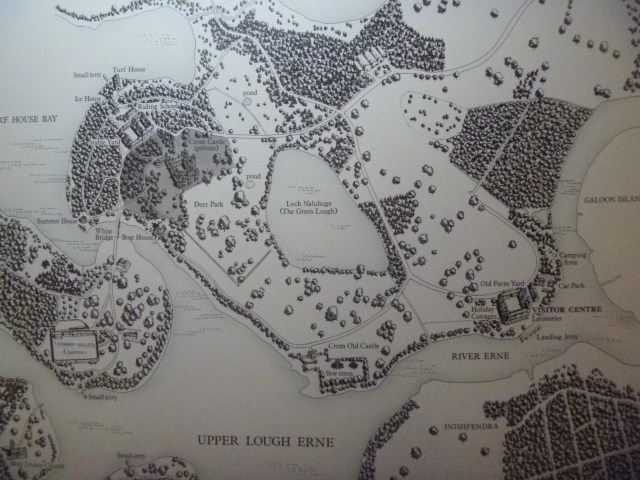
Crom Map

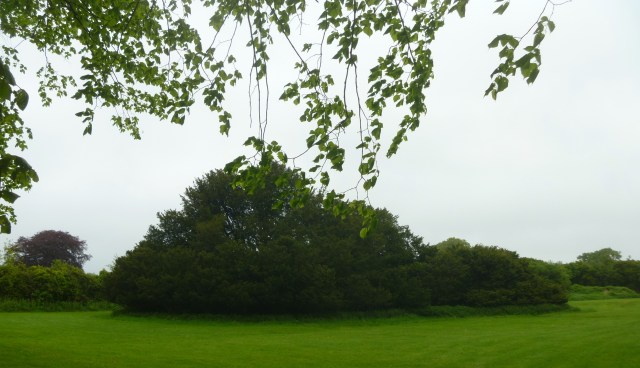
Despite the rain this afternoon I set out on such a walk here at The Crom Estate in Co. Fermanagh, Northern Ireland. The estate comprises almost 2,000 acres of woodland, wetlands, farmland and parkland on the shores of Upper Lough Erne. According to the map leaflet it was laid out in 1838 and is one of the best preserved and most extensive landscapes designed by William Gilpin in the British Isles. Its unique character rests upon the scale and relationship of water, wetland, woods and parkland with its veteran trees. The Great Yew Tree is located at the Old Castle ruins and was nominated as one of 50 Great British Trees for the Queens Jubilee Year 2002.

old yew

The Ancient Yews in the Castle Ruins

There are many fine buildings on the estate walk. Crom Old Castle was built on the shore by Michael Balfour, Laird of Mountwhinney in 1610. It withstood two sieges in 1689 but was destroyed by an accidental fire in 1764. The yew trees within the ruins are reputed to be the oldest in Ireland.

approaching the old castle

Approaching the Castle Ruins

lough erne

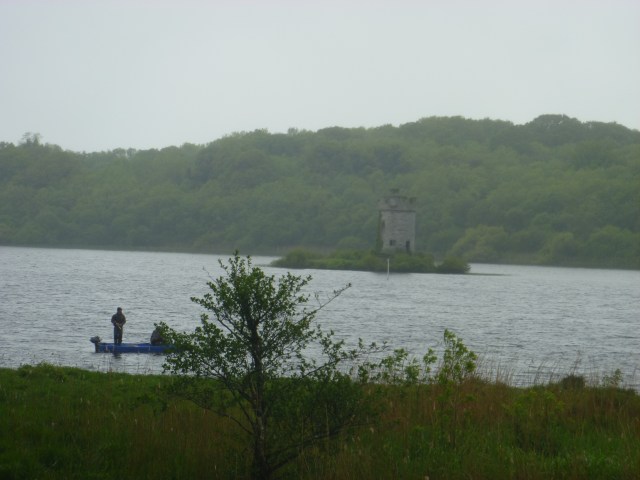
The Crichton Tower was built on Gad Island in 1848. Its architect is unknown.

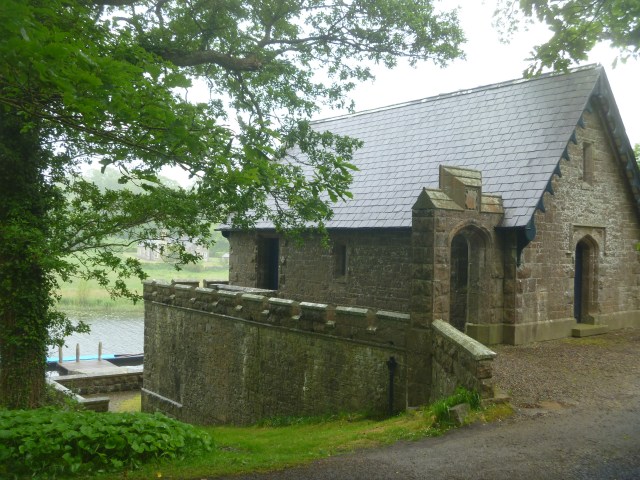
The Boathouse is a complex structure with decorated bargeboards and battlements designed in 1841 by Edward Blore. For many years it was the Lough Erne Yacht Club and the social centre for the Victorian houses in the area.

boathouse

The Boathouse

jetty

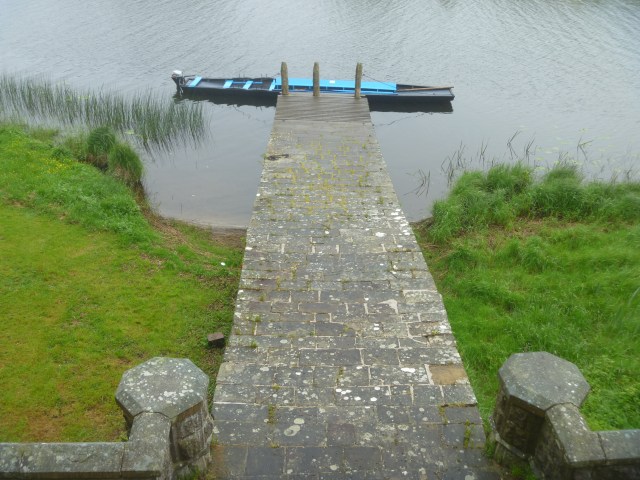
Boathouse Jetty

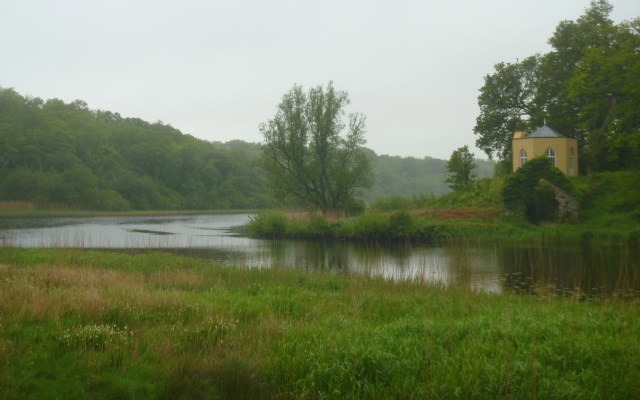
The Summer House was built around 1880 out of the structure of an old school house on the site. It was built for Lady Florence who used it as a picturesque retreat. Rustic inside, it had a woven straw mat, a cupboard above the fireplace with cups and other teatime items, a round table and chairs and a box for firewood. The original boathouse of the demesne, later made into a folly, lies below the summer house.

summerhouse

The Summer House

summer house view

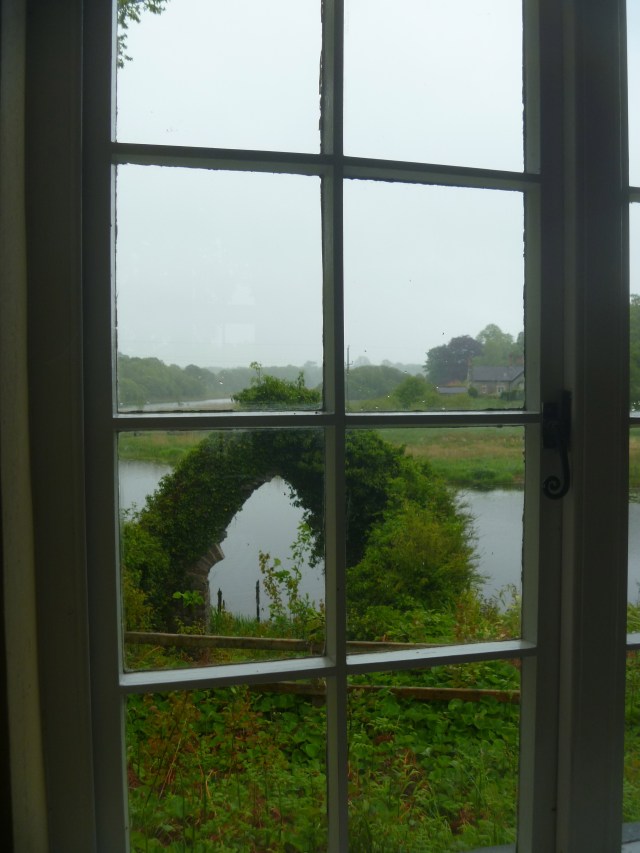
View from The Summer House

A white iron bridge connects the mainland with Inisherk (Inis means island in Irish) and a track leads straight across to another small jetty. There are two cottages – Bridge and Gamekeeper’s – and the remains of a Walled Garden.

garden gate

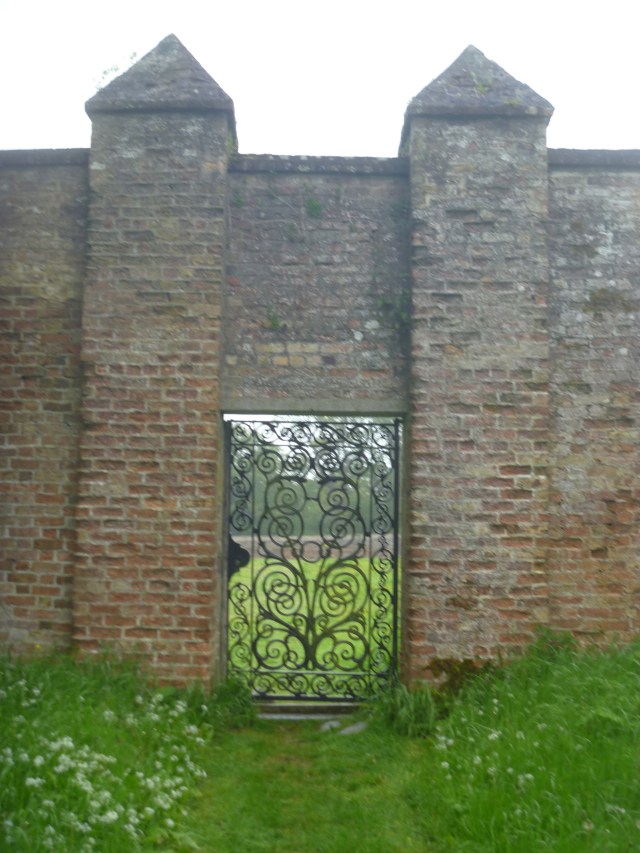
Gate to The Walled Garden

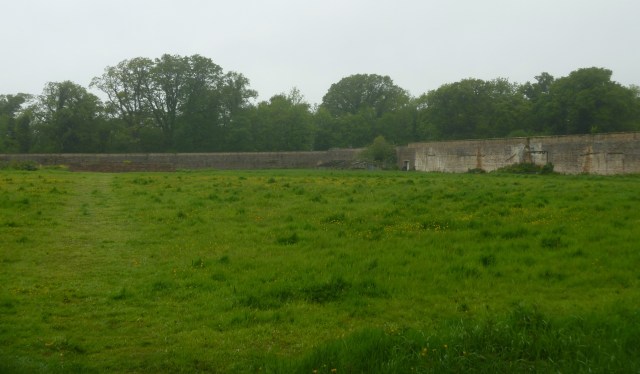
The Garden was completed in 1833 and included a hot house, potting sheds and a propagating house, built in later years. The Garden remained in use until the 1950s. Lately the Trust has carried out extensive repairs to the walls including the rebuilding of a large section of south wall.

extensive garden

The extensive Walled Garden

Returning over the bridge a track through woodland brought me to the Stable Yard (now NT Offices) and The Riding School (apparently never used as such as it was commandeered by the US Air Force for D-Day preparations/training).

saplings

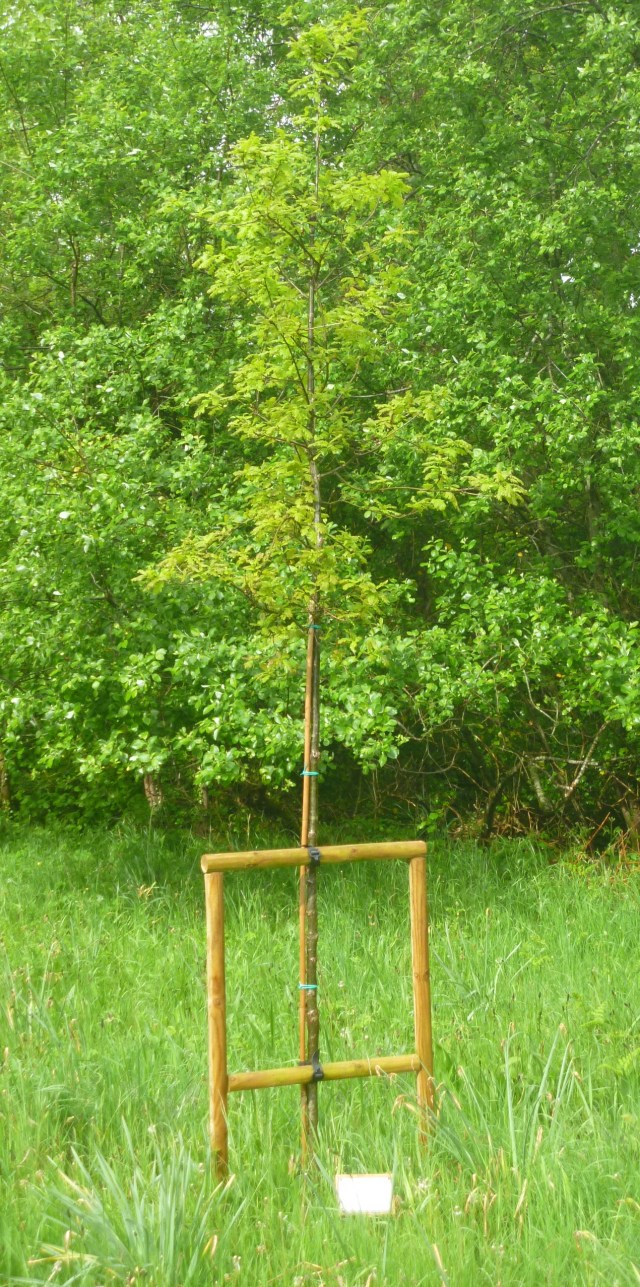
Oak Sapling Commemorating the USAF Presence

“This oak tree was planted on 6th June 2014 to commemorate the 70th anniversary of D-Day and the United States forces stationed here in WWII”

ice house

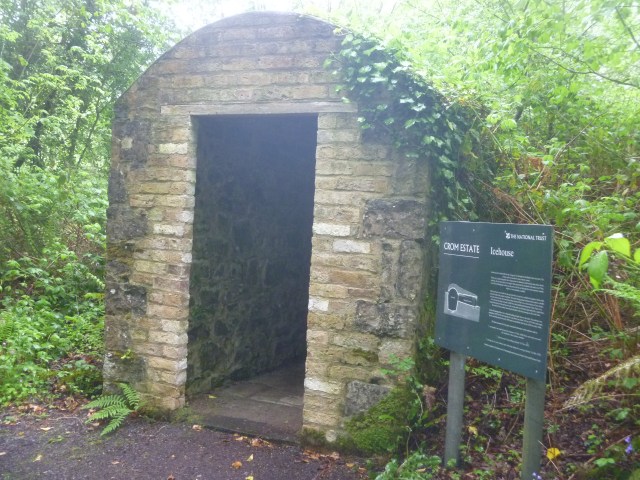
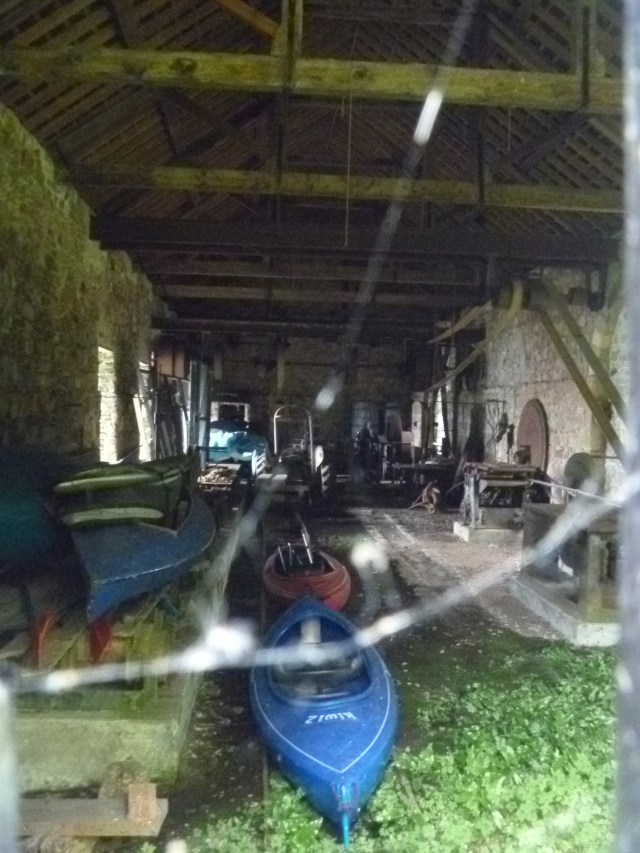
Nearby are The Turf House, also designed by Blore and built with an adjacent pier in 1840 for peat fuel to be originally unloaded here for the castle later in the century a sawmill was established, and an Ice House.

in turf house

Inside the Turf House today

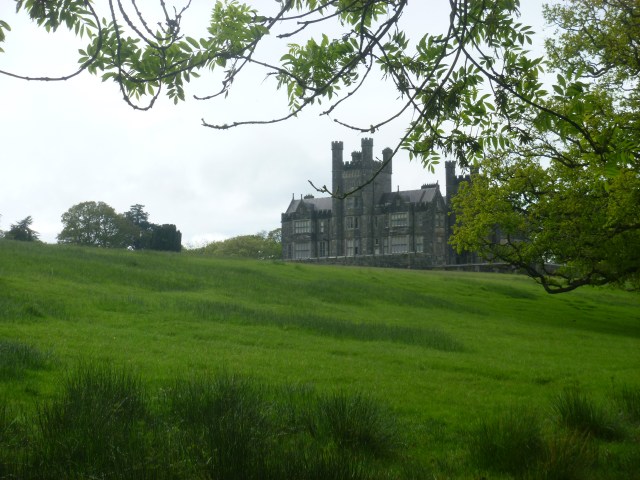
From the Stable Yard area the track continues through woodland after which I joined a grassy path alongside the Deer Park fencing with views of Crom Castle itself which is still a private residence and not open to the public.

crom castle

Crom Castle and Deer Park

And so back to dear Alder Cottage to dry off after a fascinating two hour walk.

Alder Cottage

Alder Cottage

Salterbridge Gatelodge and Salterbridge House

1 gatelodge

Funnily enough, I know which one I prefer to be in! The Gatelodge, of course. I’ve reproduced here the descriptions from a leaflet I found here at the Lodge :

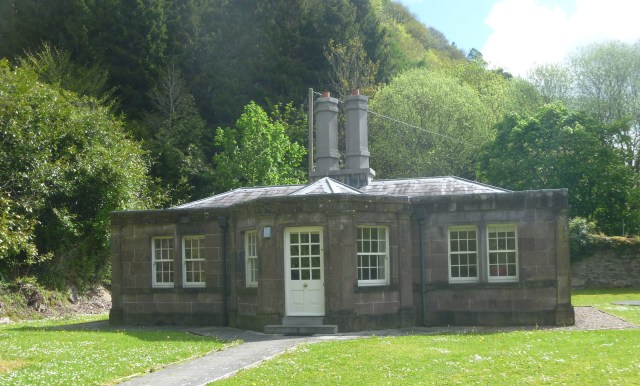
This tiny pavilion is located in the gorgeous Blackwater Valley within a mile of Cappoquin and near the Knockmealdown Mountains. It was built in around 1849 by the Chearnley family who owned the Salterbridge estate since the mid 18th century until the early 20th century. The Lodge, though obviously in habitation in the thirties when the Glanville family lived there, became derelict after the 1950s. Its function, like all gatelodges, was to indicate to the passer-by the good standing and taste of the original owner, and to showcase some of the features of the architect’s work, reinterpreted from the Big House.
 2 garden room

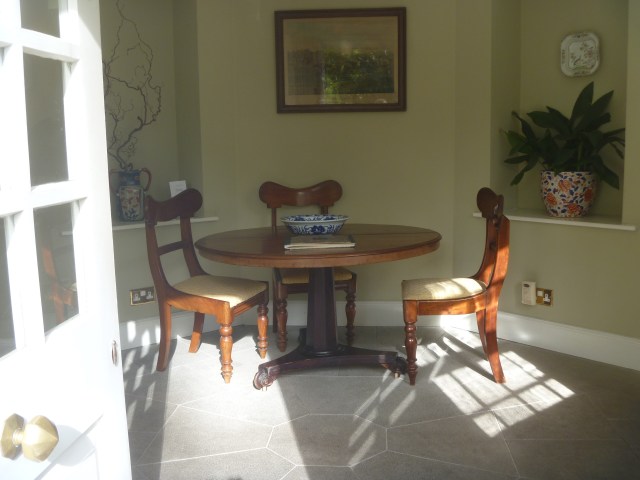
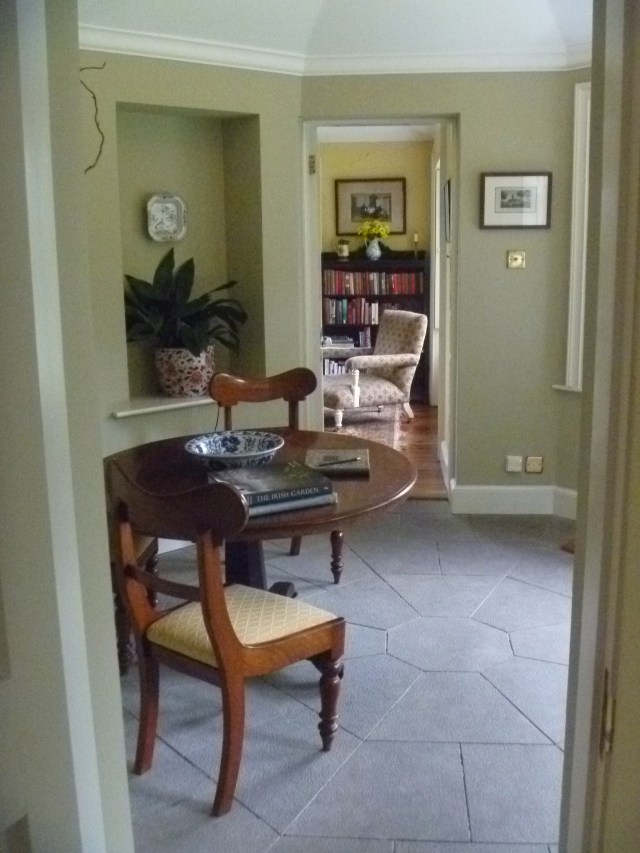
Among The Lodge’s interesting features is an octagonal garden room, from which the two main rooms, bedroom and sitting room, lead. The kitchen and bathroom are to the rear. The sense of balance and symmetry has been retained, and although when finding a modern use for such buildings, a bathroom and kitchen must inevitably be added, the rear extension has been carefully matched to the proportions of the existing rooms.

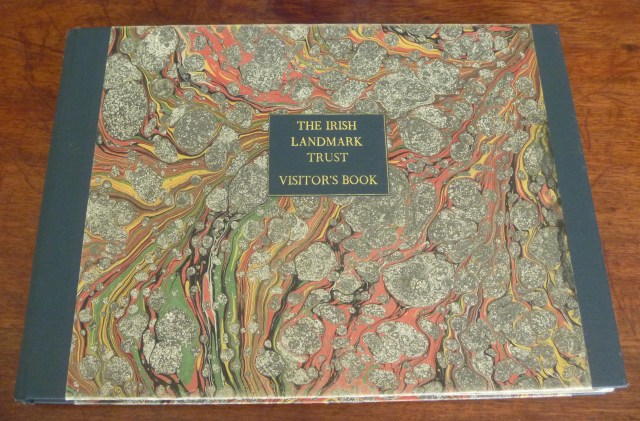
 The Irish Landmark Trust officially launched the property to visitors on 15th January 2002.

 Architectural Description

5 the gatelodge

It is a building of fine ashlar stonework and of charming classical proportions. When the Irish Landmark Trust took it on as a restoration project in 1999 the building was roofless, windowless, overgrown and a section of the back wall had collapsed. A considerable amount of repair to the stone was required – its long exposure to the weather and, in places, original bedding of the stone, had resulted in loss of some of the decorative surface of the ashlar blocks.

The restoration works involved the retention and repair of most of the original stone. Fallen facing sections from the surrounding overgrowth were salvaged and reinstated. Three pieces of new stone were required in total and this stone was obtained from small loose blocks in the disused quarry at Lismore Castle – a possible source of the original.
15 visitors book

 The symmetrical layout of the original lodge was retained with a small extension formed to the rear. The fine proportions of the building have been retained. The extension has been finished externally with a lined lime render. Internal walls and ceilings throughout are finished with lime plasters and paints and, with a fine quality of natural light in all rooms, this provides a healthy and pleasing atmosphere throughout.

The carefully crafted work of the masons, joiners, plasterers and other tradespeople involved has brought this formerly ruinous and vulnerable building back to health and restored it to use again.

 Interior Design Notes

The Lodge is simply furnished in an elegant Victorian style using a muted palette throughout and historic colours in a raw pigment limewash. The principal rooms are furnished in a vernacular style using mahogany pieces.
3 Sb garden room

The original entrance hall, now designated “The Garden Room” is apple green, with a round table.
6 bedroom

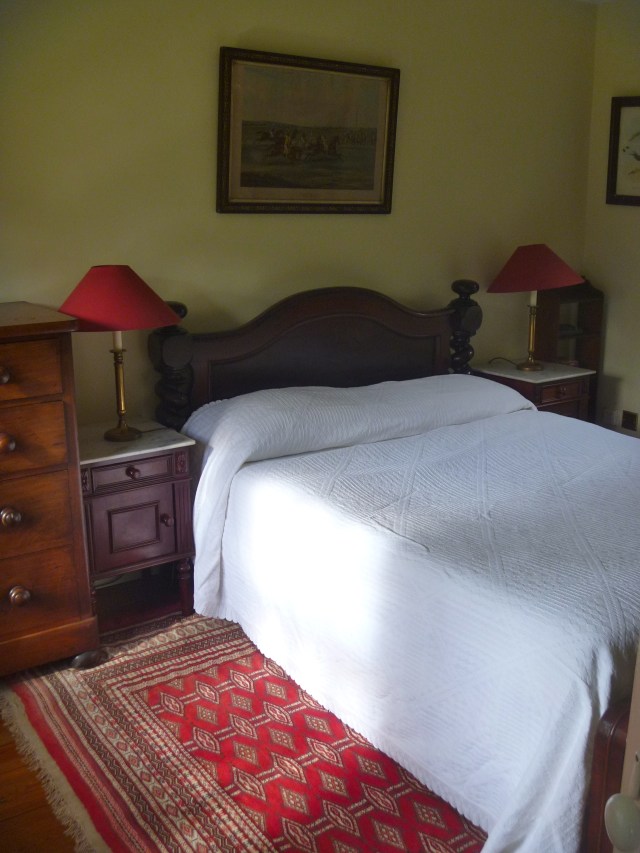
The bedroom is painted off-white and has an early Victorian mahogany double bed with barley twist ends and a traditional handwoven carpet in crimson. The wardrobe, chest of drawers and lockers are plain early Victorian. The shutters have been reinstated in the windows with Holland blinds added.
7 sitting room

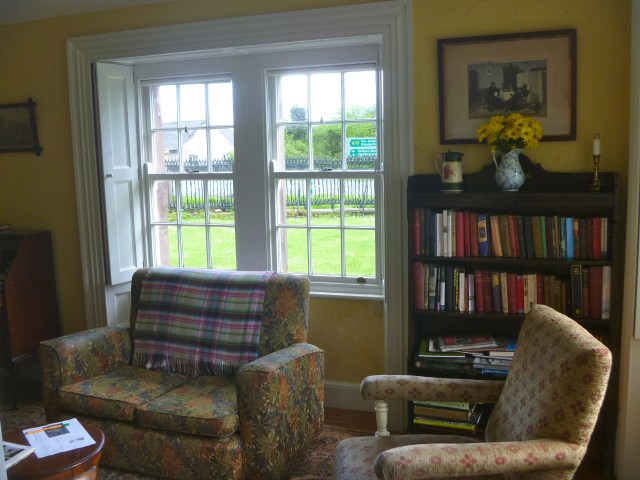
The sitting room is pale yellow with a handwoven carpet in gold and ochre. There is a Regency two-seater sofa and two comfortable chairs. A writing desk stands at the window and a bookshelf completes the furnishings.
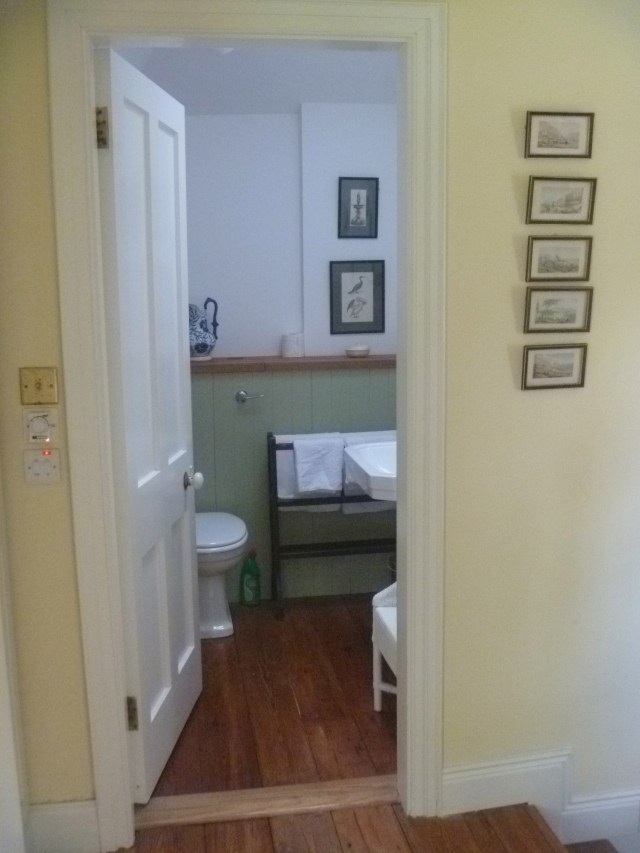
8 bathroom

The bathroom is plainly finished in white; and there are timber floors throughout except for the flagged hall.
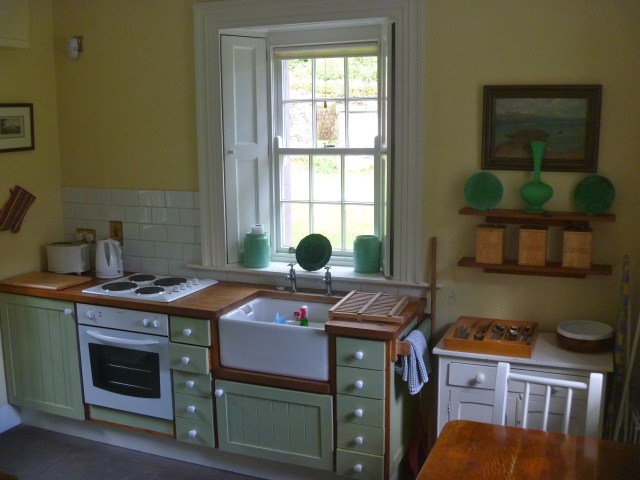
9 kitchen

The kitchen is fitted with an oak table and traditional sugan chairs, a traditional dresser, timber counter tops and a Belfast sink. The fittings are blue-green.”
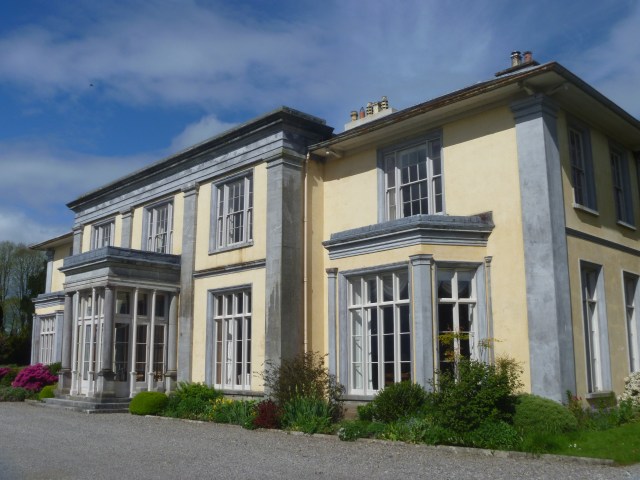
10 Salterbridge House

To visit I walked over a mile up the drive to the Big House – Salterbridge House. It’s open this month on a very ad hoc basis.
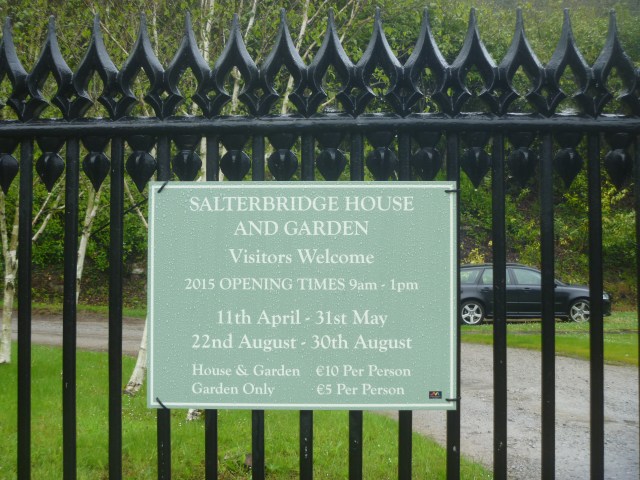
11 opening times

The owners weren’t home and I was shown around by the housekeeper. No photography was allowed but my overall feeling was a big house, not very cosy, but light and airy. Modern day furniture, of course, always looks too small and insignificant in big houses. Its saving grace was a beautiful walnut table in the entrance hall created from a tree from the estate. The book themes are political, historical and military with some modern novels.
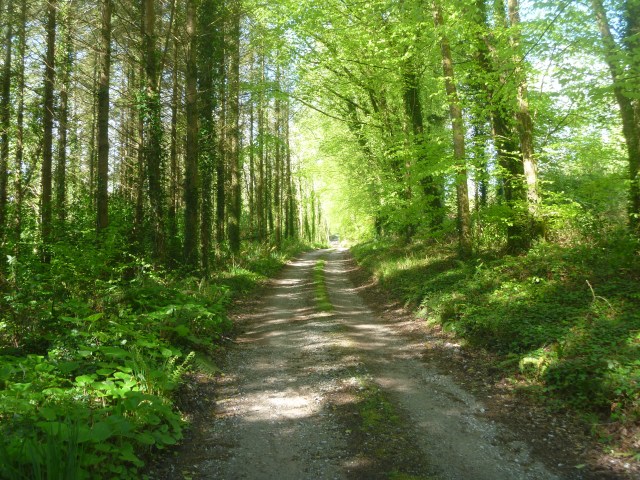
14 1 mile+ track

The Drive to the House

There was a house on the site, built by Richard Musgrave, since about 1750. Through his daughter it was owned by the Chearnley family until 1947. In 1940 it was occupied by the army for a few years and in 1947 it was sold to the present owner’s parents. The house was substantially rebuilt during the 19th century – architect unknown.
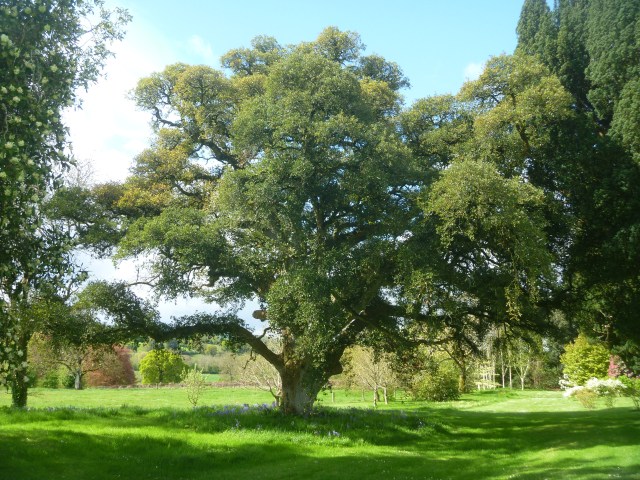
12The Cork Oak

From the garden notes there’s a Cork Oak and four Irish yews. On a grassy area is a “Woodhenge” created by sculptress Rebecca Johnson from a branch of one of the garden’s yew trees.
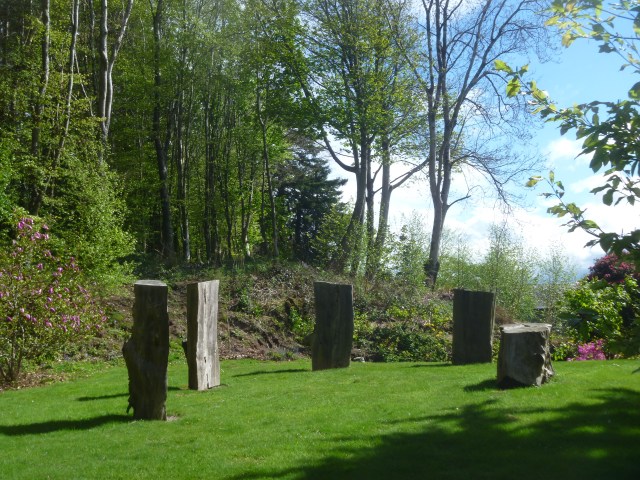
13 woodhenge

And can you believe it on an evening in May :
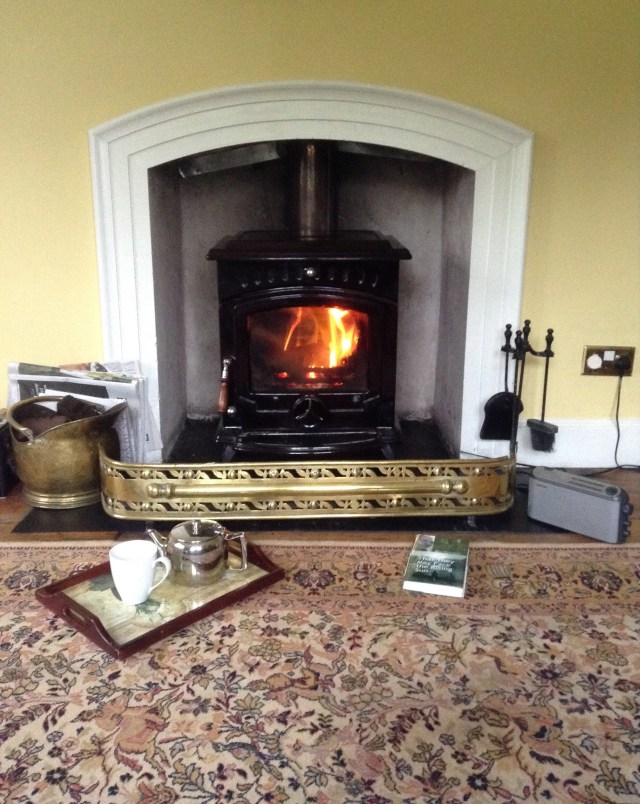
14 fireplace

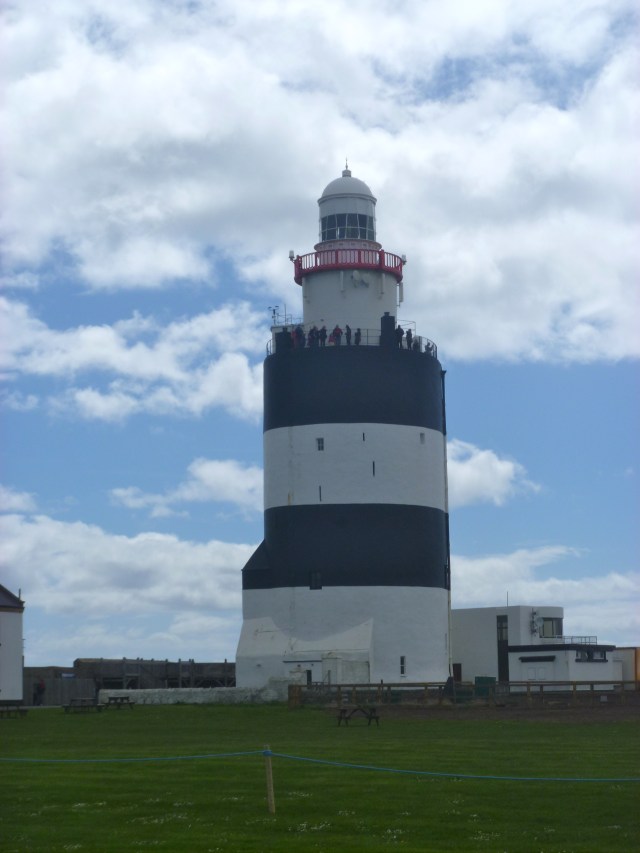
The Oldest Operational Lighthouse in the World : Hook Head
lighthouse From Tintern Abbey I drove to Hook Head Lighthouse. The roads were quiet and virtually traffic-free and I expected to be the only person booking in for a tour. Not so! Crowds were enjoying the bracing winds, the café and shop and the hourly tours of the lighthouse. At 800 years of age it Hook Lighthouse is still fully operational. It’s the oldest intact operational lighthouse in the world.   The Hook Head Lighthouse was built by the same William Marshall, Earl of Pembroke, who founded Tintern Abbey. the monastery

The Monastery

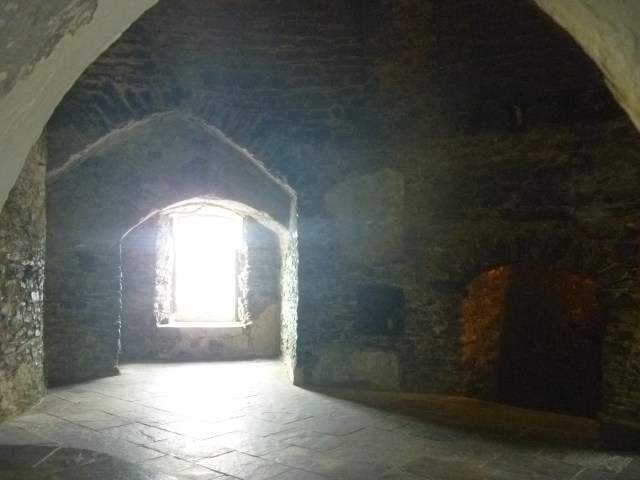
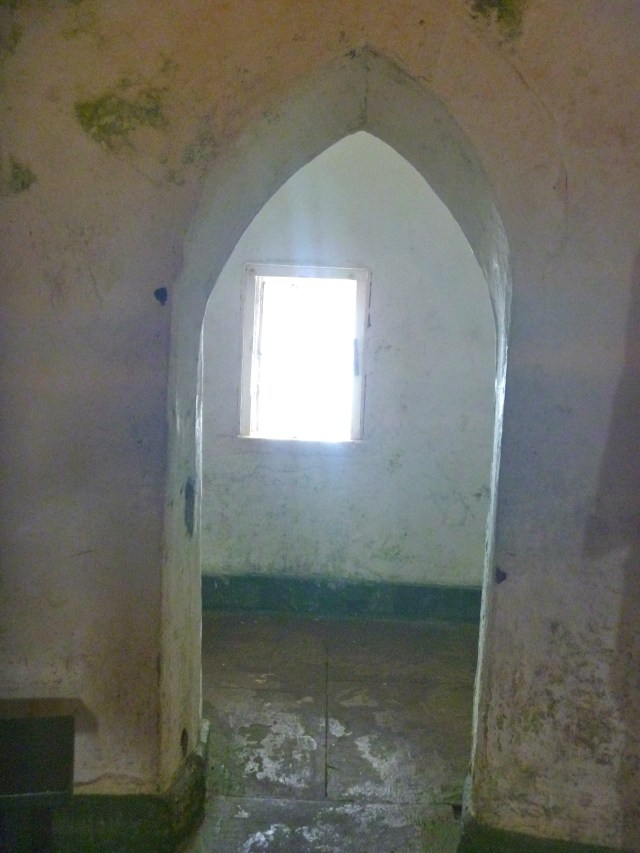
It’s 4 storeys high with walls up to 4 metres thick. The rib vaulted chambers with fireplaces still exist. One is called Liberty Hall and another The Monastery. On this spot monks lit fires to warn passing ships of local dangers. monk's cell

A Monk’s Cell

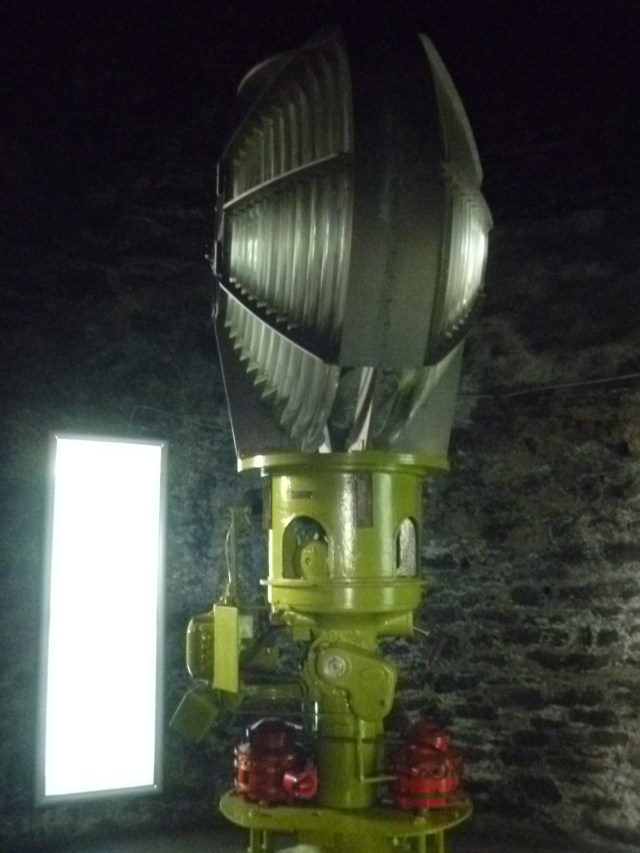
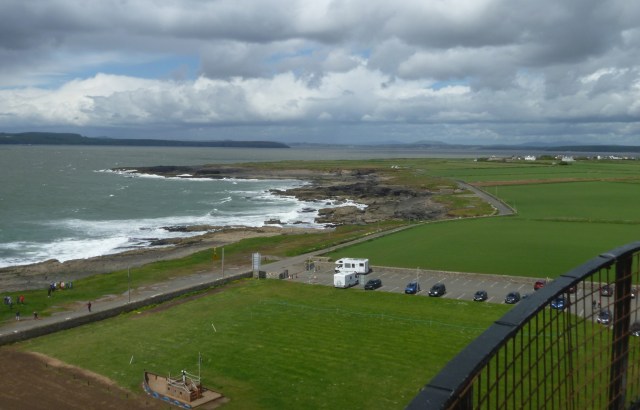
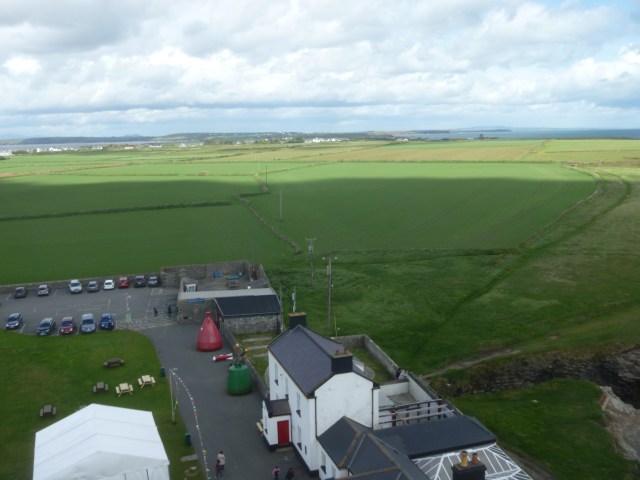
The Norman structure consists of three bullet-shaped chambers mounted one above the other. Each has an arched cross of stone at the top to strengthen the vaulted ceiling and bear the weight of the chamber above. Together they rise to a height of 100ft to support a light that has guided shipping for 1400 years. For most of that time the lighthouse was manned by monks, who carried timber and peat up 149 steps to the beacon fire, and who slept in rooms set in the walls. Now the light is run by electricity.” [Source : Reader’s Digest Illustrated Guide to Ireland] example light  It’s not possible to visit the top of the lighthouse and see the lamp close up (you just climb up to an outside balcony from where there are spectacular views) but on the ground floor is a similar light from a lighthouse from another County. But this light is only a third of the size and weight of the Hook light above us. 6:5 Hook View
Hook Peninsula

Views from Hook Lighthouse Balcony

Rhubarb, Rhubarb, Rhubarb : Colclough Walled Garden
 

Walled garden

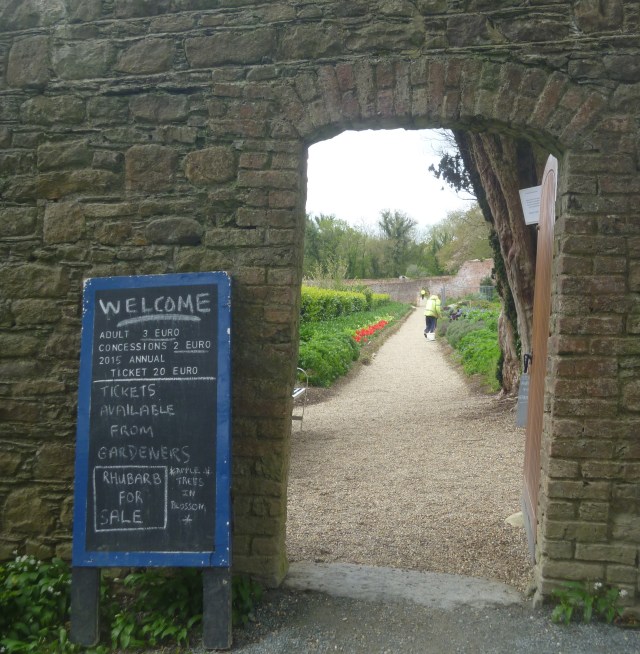
Established over 200 years ago and abandoned after Lucey Marie left Tintern Colclough (pronounced Coke-lee) Walled Garden has undergone a transformation in the past 4 or so years. The original layout has been reinstated using an Ordnance Survey Of Ireland historical map dated 1838. The map showed path structure, bridges, location of vegetable garden and fruit trees. It finally reopened in 2012.

At Tintern Abbey I joined Heritage Ireland and the card admitted me also to the Walled Garden.

Woodland path

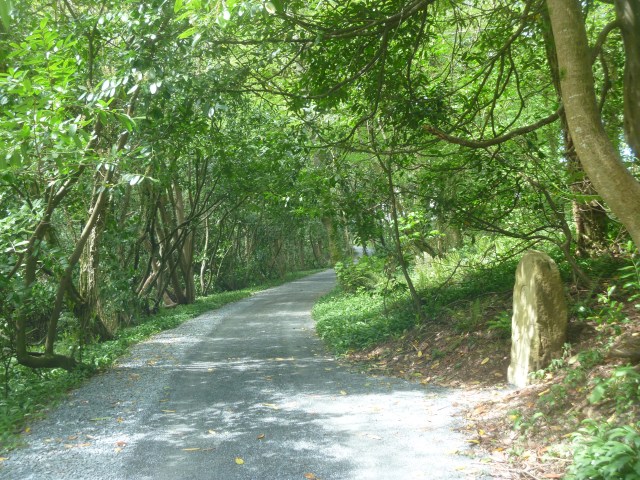
The approach from the Abbey is through the former village of Tintern and along a woodland path with a strong smell of garlic and fading bluebells.

edge of ornamental

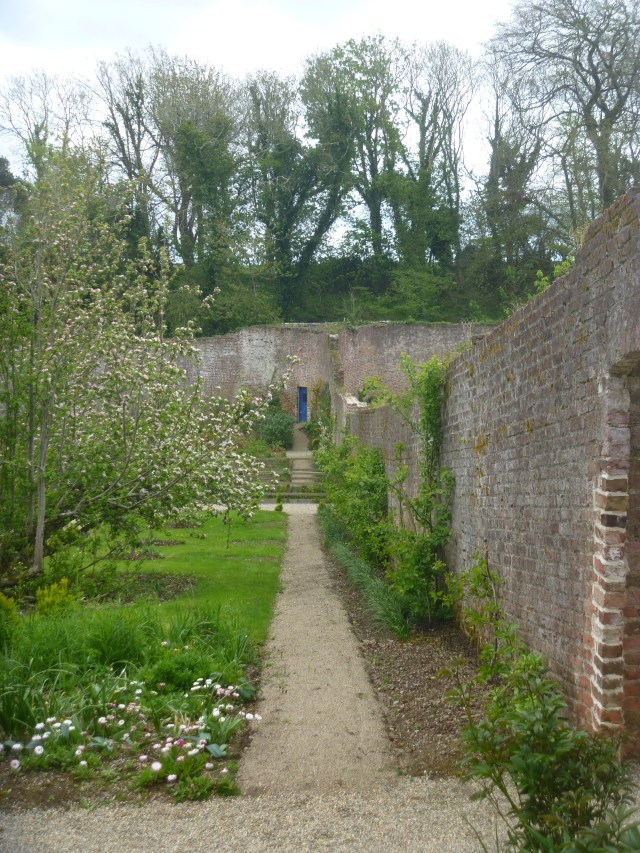
The Edge of the Ornamental Garden

Veg garden

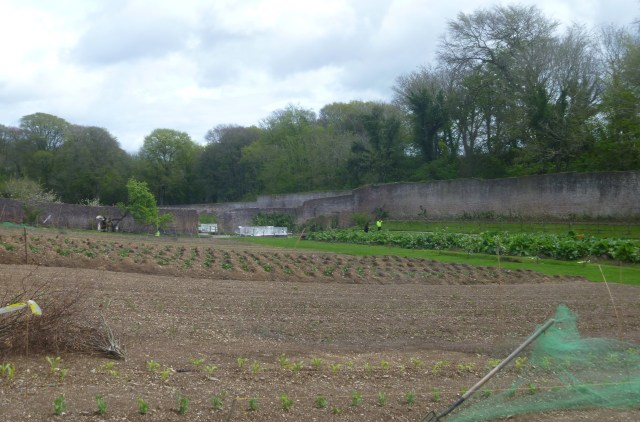
The Kitchen Garden

The garden is divided into an Ornamental Garden and a Kitchen Garden.

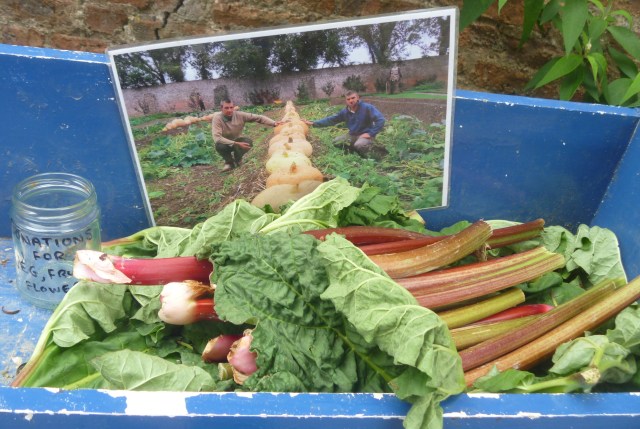
Rhubarb for sale

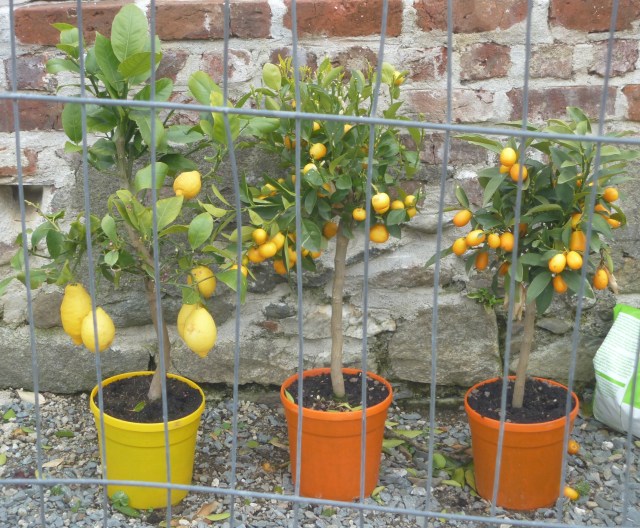
Rhubarb seems to a popular vegetable for May. The south-facing sheltered garden also supports Mediterranean fruits and efforts are made to garden as ecologically and organically as possible.

sheltered and south facing

Oranges and Lemons

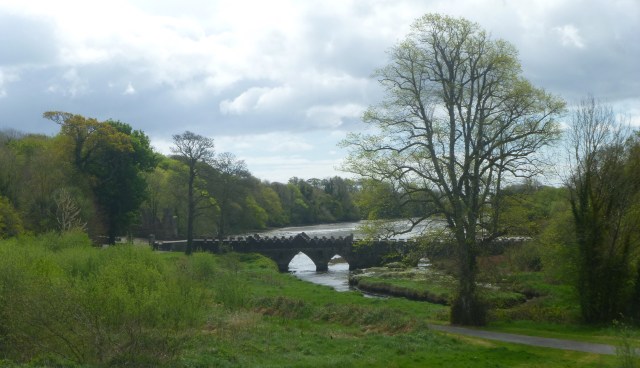
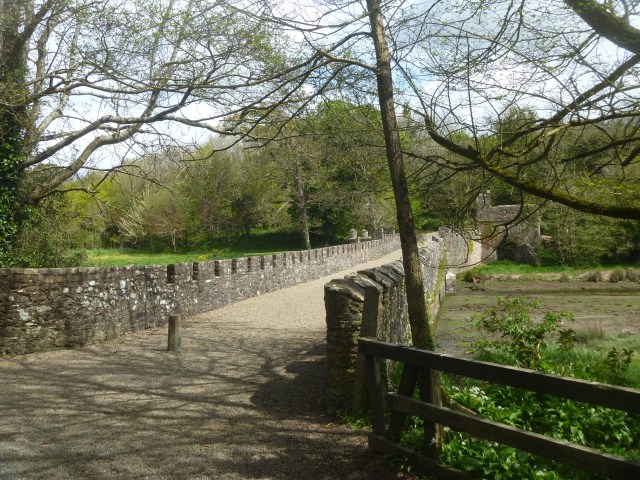
Returning to the Abbey and Car park I followed the longer route over the Battlemented Abbey Bridge and past the ruined church and burial ground.

Battlemented Abbey Bridge


Bridge


TA Church

Ruined Church and Graveyard

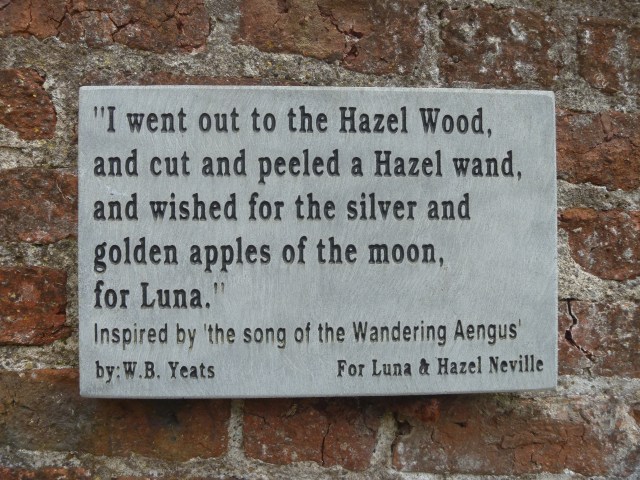
hazel wood quotation

The Irish Tintern Abbey, Co. Wexford

Tintern Abbey arrival

Arriving at Tintern Abbey

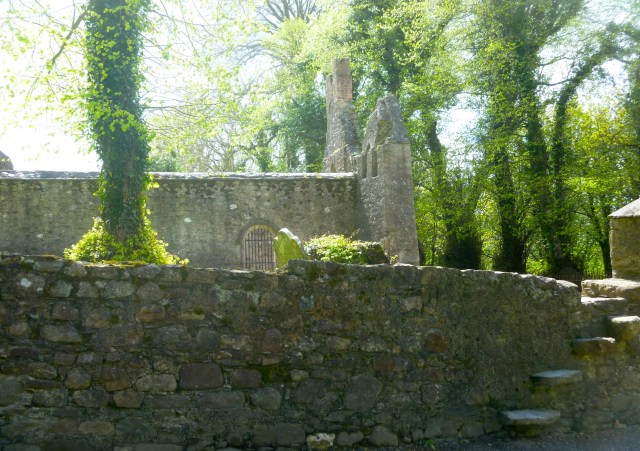
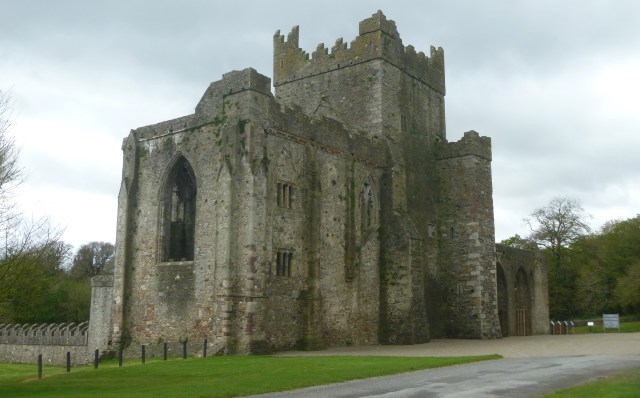
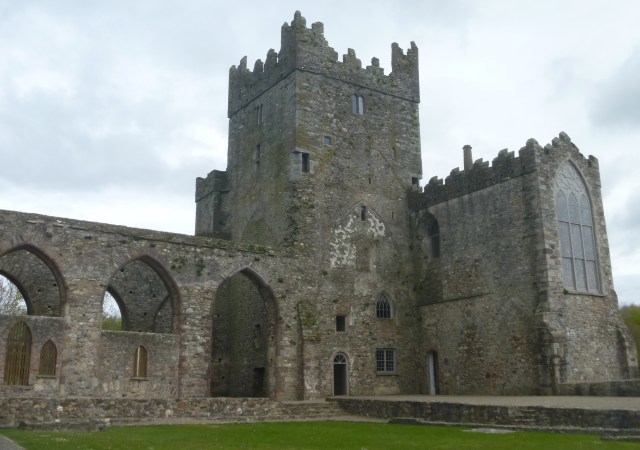
Tintern Abbey has been beautifully preserved and restored by Heritage Ireland (Office of Public Works) using only the best quality materials and workmanship.

Tintern today

Tintern Abbey today

Stone work

Stonework

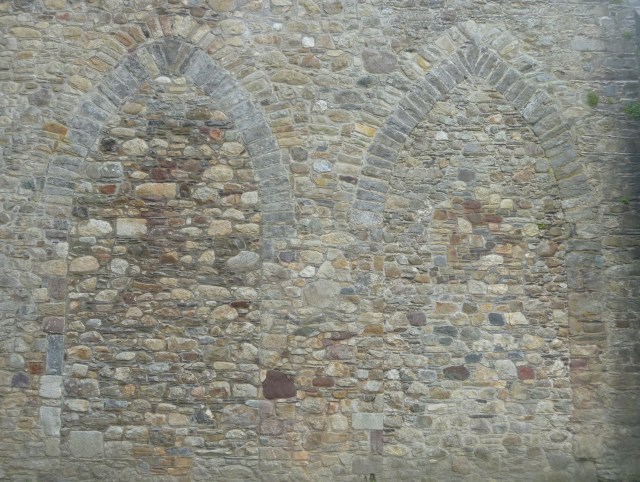
Some ruins remain

Ruins

The restored Abbey

The restored abbey

In AD1200 William Marshall, Earl of Pembroke and Earl of Leinster, was threatened with shipwreck off the south coast of Ireland and vowed to found an abbey whenever he should safely land. On reaching safety in Bannow Bay he redeemed his vow and granted 3,500 hectares of land for the foundation of a Cistercian Abbey – hence the name ‘Tintern de Voto’ – Tintern of the Vow. Once established, Tintern was colonized by monks from Tintern Abbey in Monmouthshire, Wales.

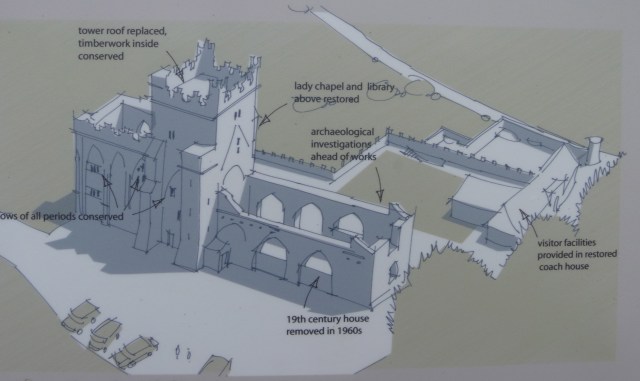
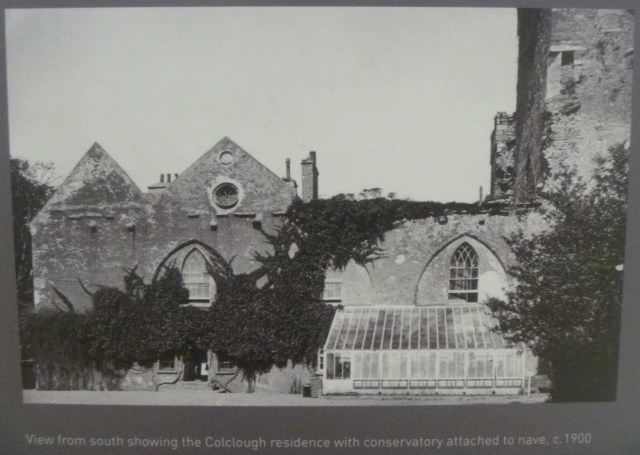
19th c house in nave

The 19th century house in the nave

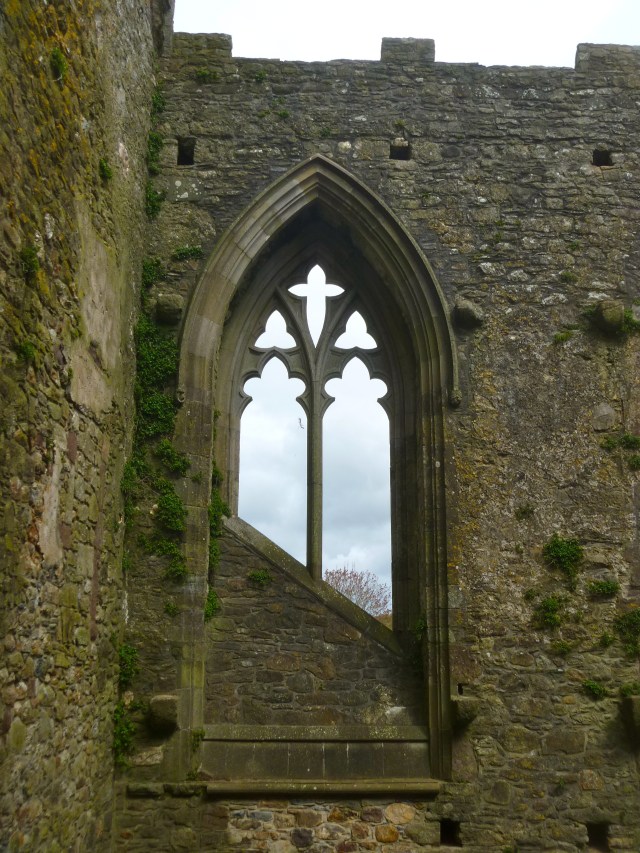
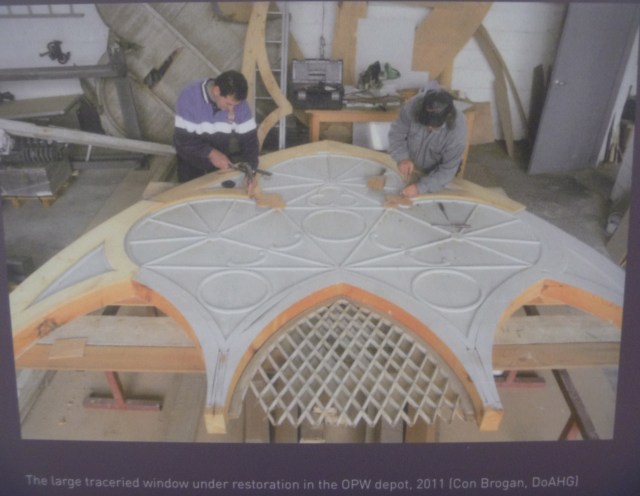
The 19th century house in poor condition was largely removed. The clearing out of the Library above the Lady Chapel was one of the initial steps in the conservation works. Removal of vegetation and the repair of the library roof were the next steps. Most recently the window of the Library (also known as The Colclough (pronounced Coke-lee)  Room) has been restored. Much of the timber was salvaged in the repair. Most of the glass has been broken but some has been retained.

Library window repair

Conserving the window of the Colclough Room

Colclough Room

Library displays

Library displays

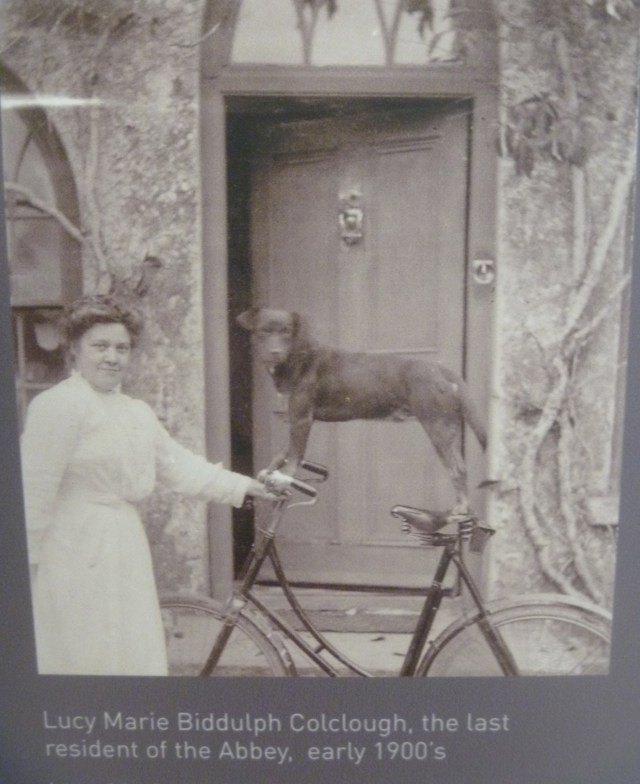
The Colclough Room tells the story of Tintern Abbey from after The Dissolution of The Monasteries in 1536 up to 1959 when Lucey Marie Colclough left the property and it passed into state care.

6:5 Lucey Colclough

Lucey Colclough (and trusting dog!)

Soon after the Dissolution the lands were passed to one Anthony Colclough from Staffordshire. He had two wives, the first was Protestant and together they had 12 children and the second was Roman Catholic and presented him with a further four children. With a mixed religious ancestry the family was saved from the worst of the atrocities which befell other Anglo-Irish families throughout the coming centuries.

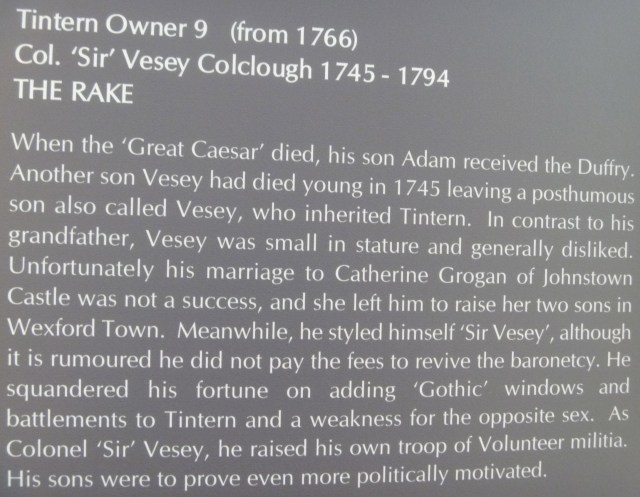
Sir Vesey

‘Sir’ Vesey

Read About The Rake :
About Sir Vesey

An Open Air Cathedral : Brompton Cemetery

Before we realised quite how cold it was outside, last Sunday morning, we had decided to walk to Brompton Cemetery. Our route took us down Fulham Road, a part of London where I loved to window-shop when I lived and worked in London in the 1970s.

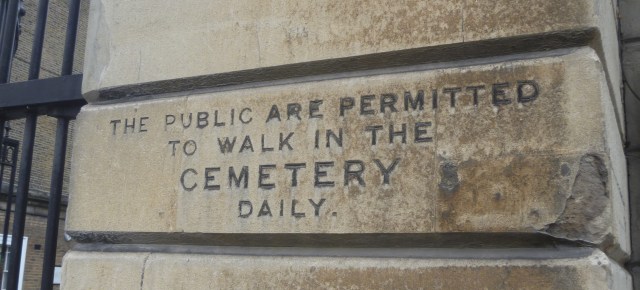
Cemetery sign

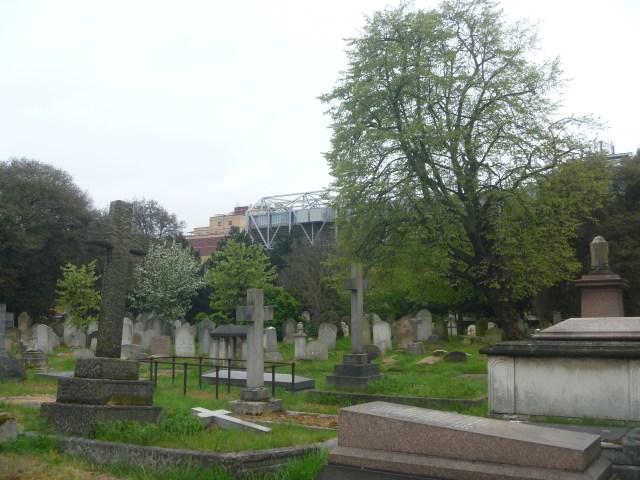
Brompton Cemetery lies parallel with the District Line Tube and right next door to Stamford Bridge Football Ground, where Chelsea FC play. There was no game last Sunday and we had discovered yet another peaceful haven for nature and contemplation.

Chelsea FC stand

Chelsea FC Football Stand

There aren’t many famous people buried there. Emmeline Pankhurst would probably be the best known. But we delighted in the atmosphere and inspecting graves and tombstones as we moved quite quickly through the cemetery. It was freezing cold.

Brompton Cemetery is the first and only cemetery to be in the care of the Royal Parks. It has what appears to be a thriving group of Friends who organise tours and events. It is one of the ‘Magnificent Seven’ cemeteries that opened in the countryside around London between 1833 and 1841.

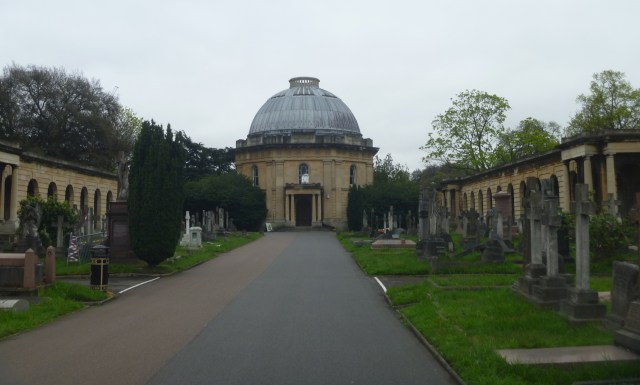
chapel

The Open Air Cathedral Design

Designed by architect Samuel Baud ‘his inspirational concept was to create an immense open-air cathedral with a central ‘nave’ running to a ‘high altar’ symbolised by the domed Anglican Chapel. The prominent features in the cemetery are the Colonnades flanking the Central Avenue and the Great Circle, beneath which are the catacombs entered through impressive cast-iron doors’.

Colonnades

The Colonnades

Here are some of the graves and monuments that caught our attention :

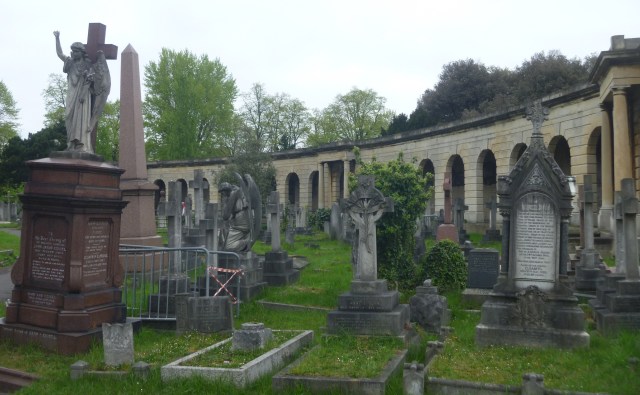
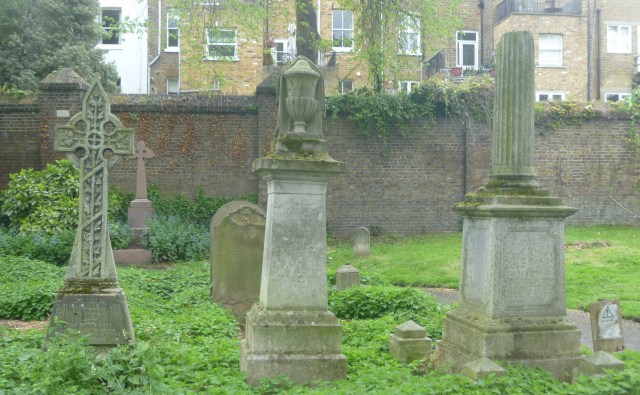
Typical Victorian headstones

Typical Victorian Symbolic Headstones

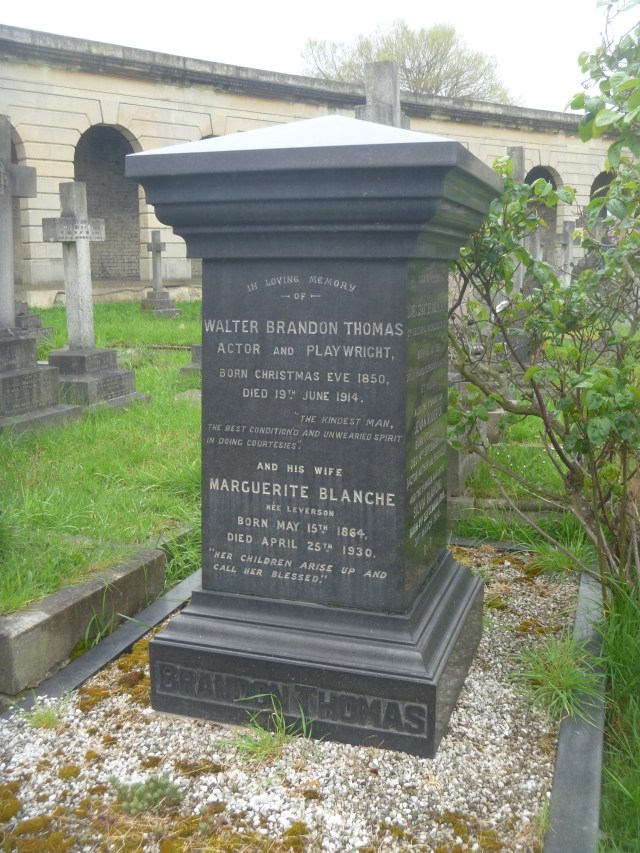
Brandon Thomas

Brandon Thomas who wrote the play ‘Charley’s Aunt’

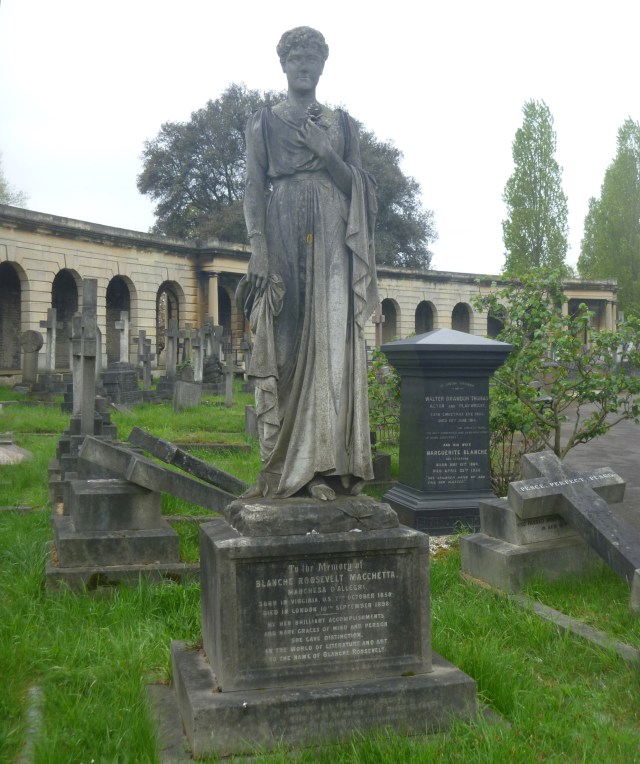
Blanche Roosevelt

Blanche Roosevelt, opera singer

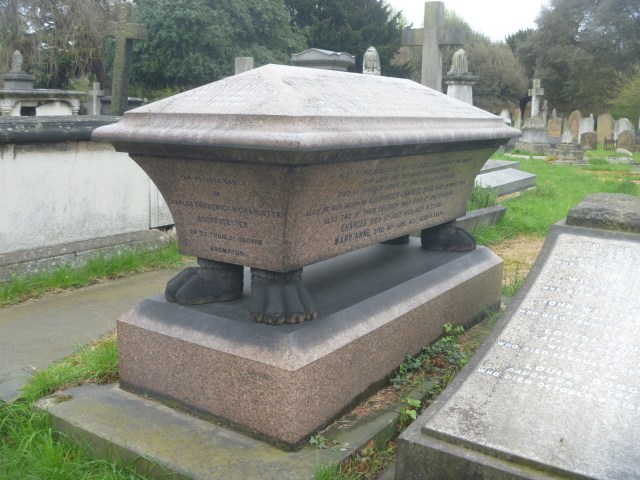
Hoofstetter

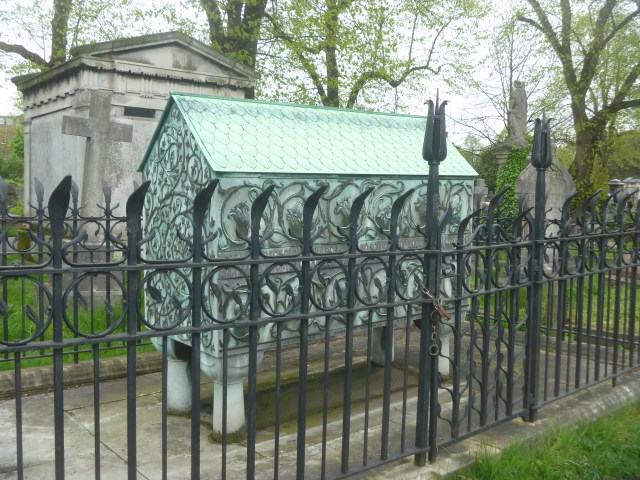
 Hoofstetter Mausoleum

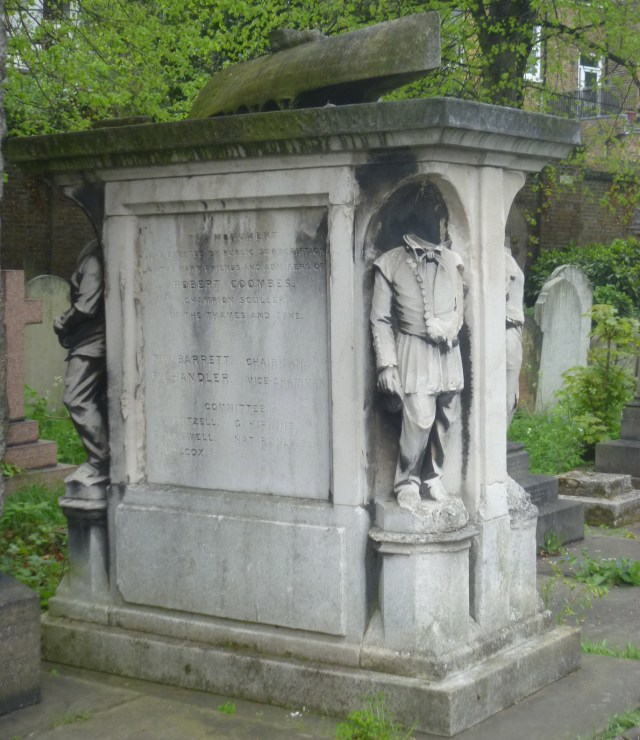
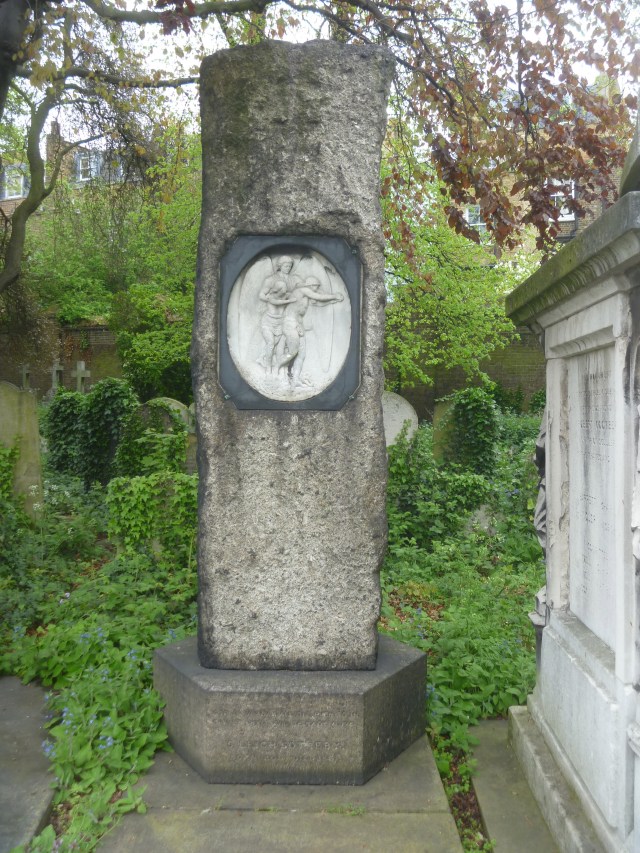
Robert Coombes Champion sculler

This monument erected by public subscription by the warm friends and admirers of Robert Coombes champion sculler on the Thames and on the Tyne

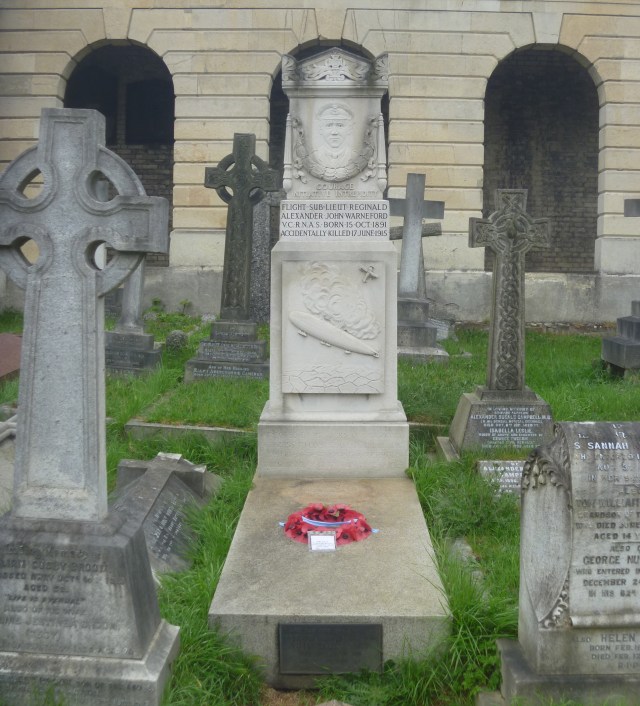
R Warneford

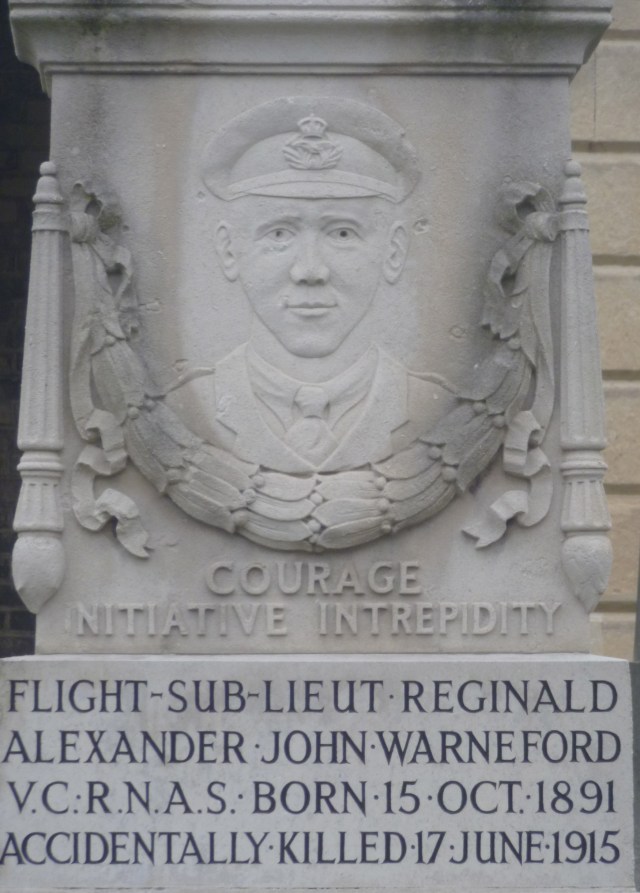
Flight Sub-Lieutenant Reginald Warneford

Reginald Warneford

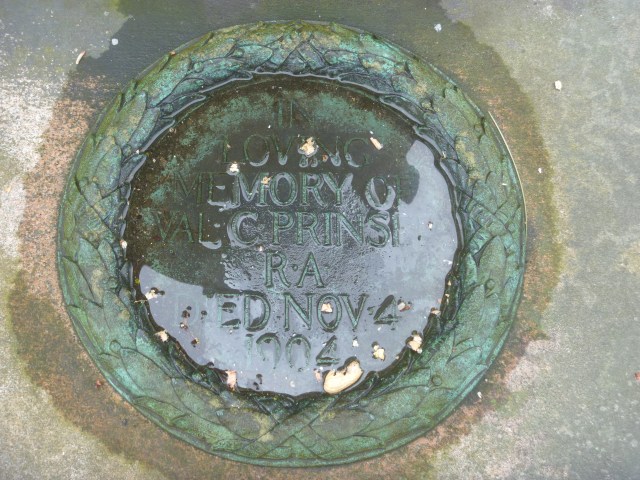
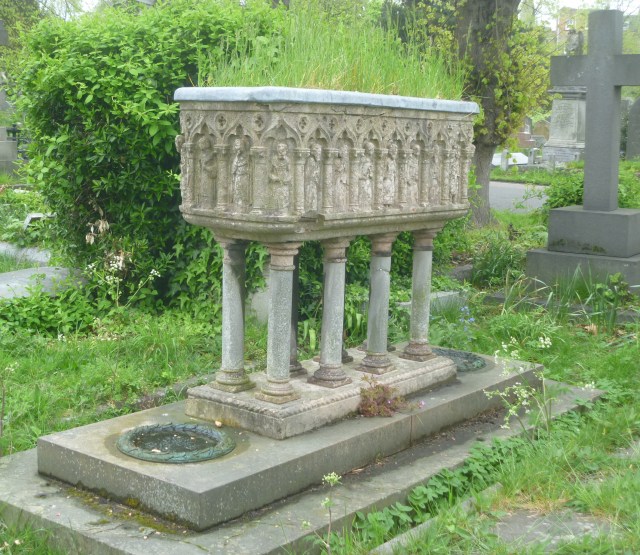
Val Prinsep

Pre-Raphaelite Painter Val Prinsep and his wife Florence

Prinsep

F R Leyland

Here Lies Frederick Richards Leyland sometime of Woolton Hall Liverpool : Designed by Edward Burne-Jones

Samuel Sotheby

Tree-Like Monument of Samuel Sotheby – Founder of the Auction House

Brigade of Guards

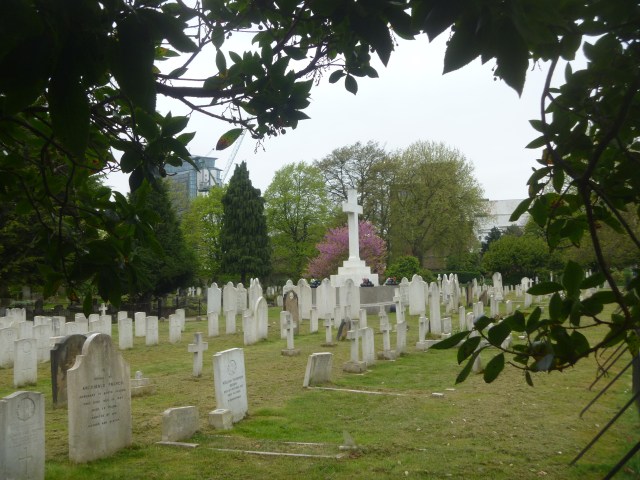
The Brigade of Guards and Commonwealth War Graves

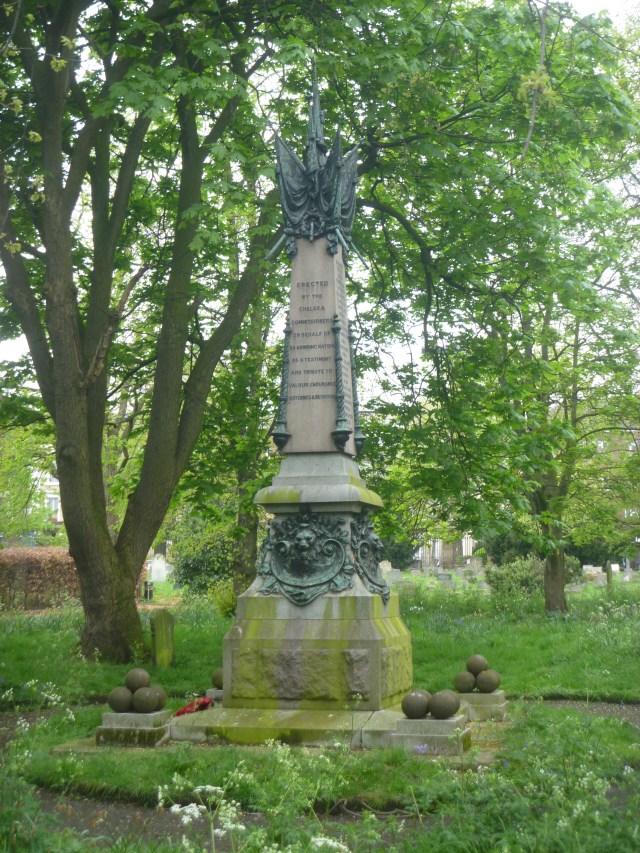
Chelsea Pensioners

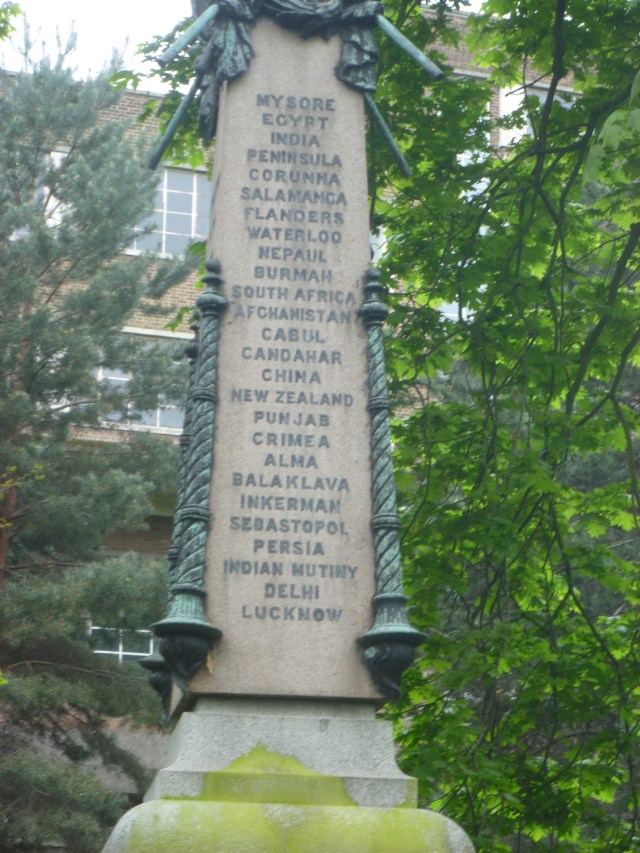
The Chelsea Pensioners Monument

CP Service

Where the Pensioners saw Active Service

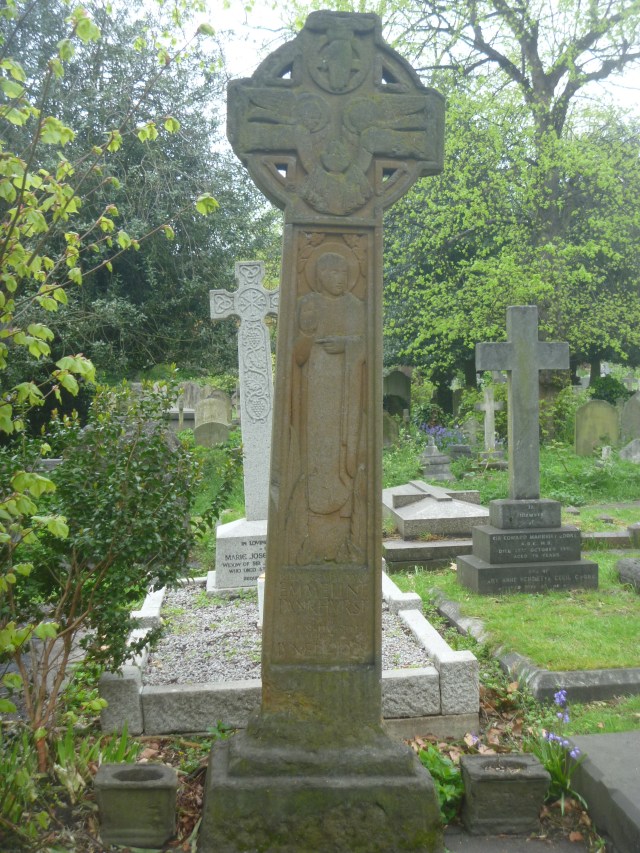
Mrs Emmeline Pankhurst

Mrs Emmeline Pankhurst – Number One Suffragette

Having walked from the South Lodge to the North Lodge on Old Brompton Road we were very cold and made for a nearby cafe [which just happened to be The Old Troubadour] for warming drinks before the walk back to the hotel, collecting our bags and travelling by crowded tube to Kings Cross where I joined many London Marathon Runners travelling home.