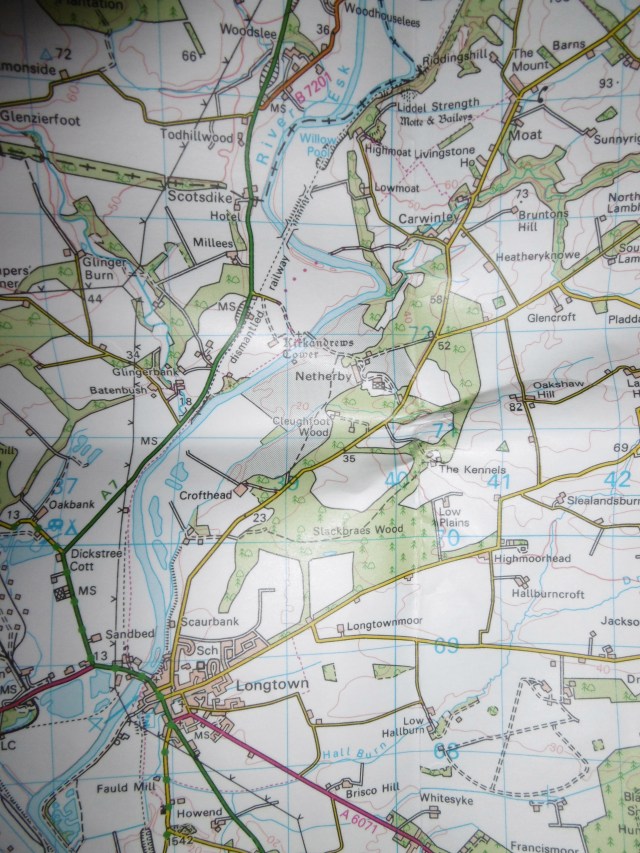
What better way to pass a day at a Landmark than to take a walk around the local area? Continue reading
What better way to pass a day at a Landmark than to take a walk around the local area? Continue reading
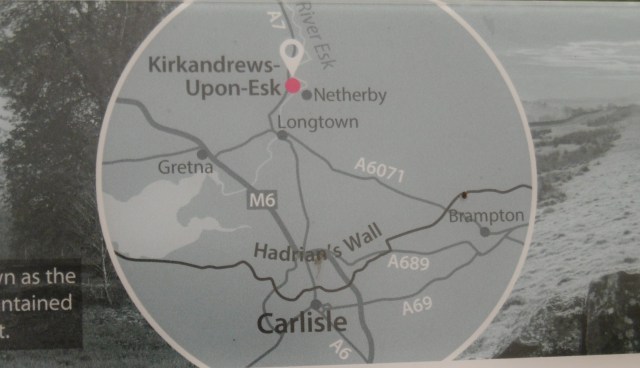
The tree is decorated, the presents have been bought and the cards have been written and posted. But there’s still shopping and cooking to be done and there are gifts to be wrapped so what better time could there be to take off for a 2 night pre-Christmas break, literally away-from-it-all, at a Landmark at Netherby in Cumbria – Coop House? Continue reading
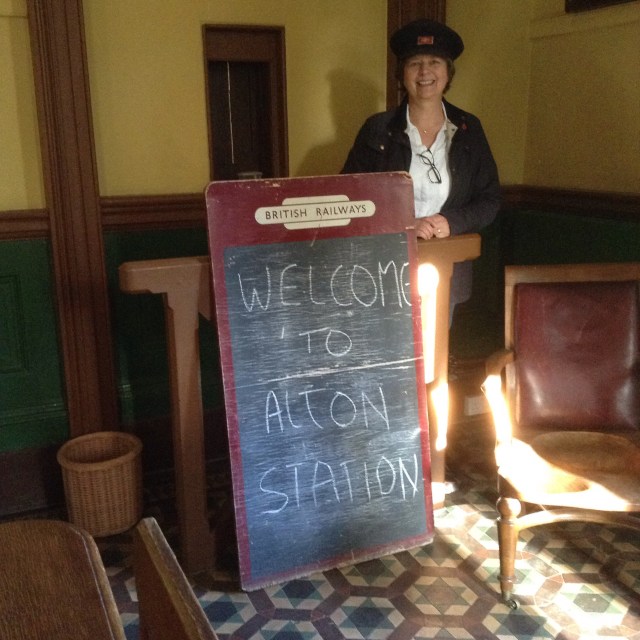
On Friday I stepped back in time visiting a pre-Beeching era railway station. My friend, Ann, and I were on our way to spend a weekend visiting Pugin-related buildings in East Staffordshire, staying at a National Trust cottage in the Manifold Valley (Peak District) and, hopefully, fitting in a country walk in the valley. More about these in future posts; but our first destination of the weekend was the Landmark Trust’s Alton Station which Ann arranged for us to visit on this changeover day. Continue reading
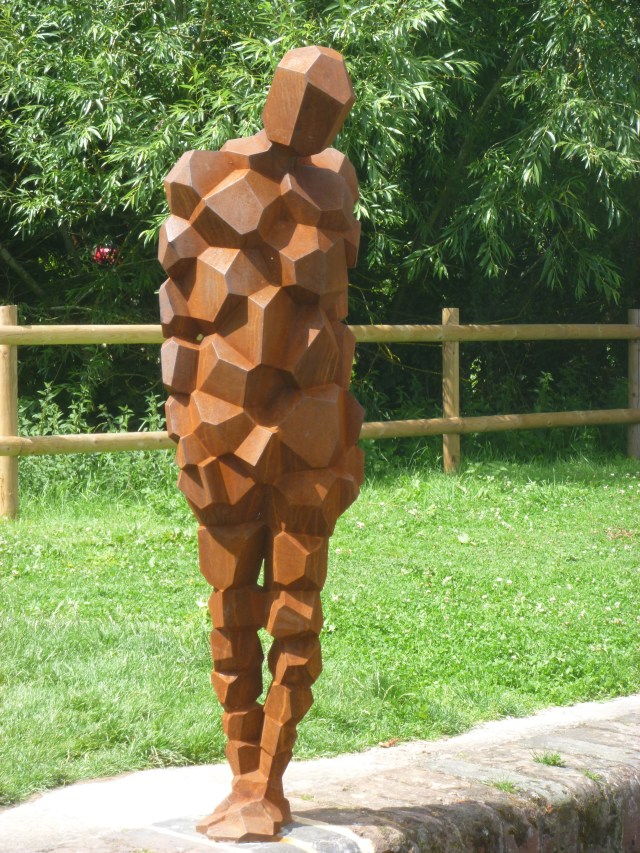
Travelling between Leeds and Cornwall last week I decided to take a detour and visit one of the LAND sculptures created by Sir Antony Gormley for The Landmark Trust in celebration of its Fiftieth Anniversary.
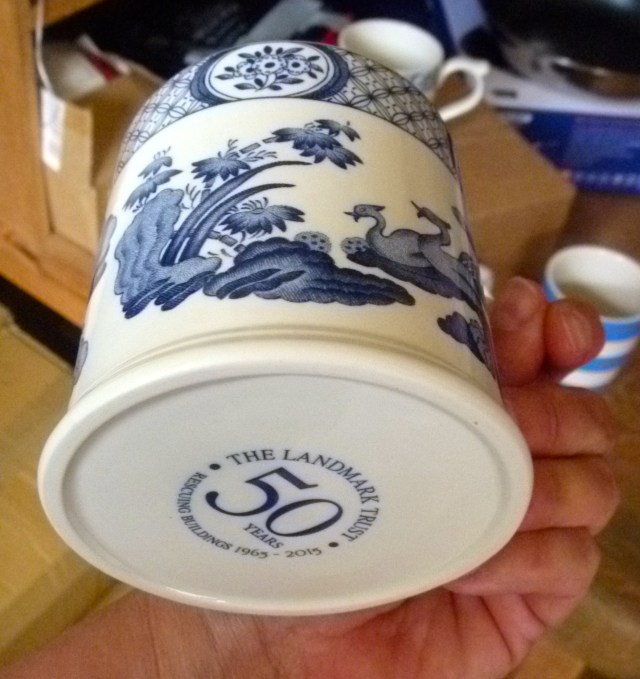
Back in May, when I was in Ireland, The Landmark Trust celebrated it’s 50th anniversary with a variety of activities and events on a Golden Weekend – the sun even shone! That weekend (16 and 17 May) properties were open to the public, Antony Gormley’s LAND sculptures were unveiled and visitors at all properties were entertained by choirs singing simultaneous performances of An Anthem for Landmark.
I was disappointed to miss this event but in the annual Friends’ mailing I received an invitation to attend “A reception for Friends to include a talk and tour about Shottesbrooke, its church and Landmark’s offices” and the date was to be the afternoon of Friday 26 June. I knew already that I’d be flying out of Gatwick on 18 June and back on 25. So I decided to drive to London, leaving the car at Belsize Park, and drive to Shottesbrooke in Berkshire on the Friday in question.
What a beautiful day it was and how lucky the Landmark Trust staff are to work in such beautiful, rural surroundings. A buffet lunch was spread before us upon arrival; and not long after the first group was assembled to have an introduction to the Estate and its deserted medieval village by local historian David Ford. You can read here his history of the Estate and his entertaining history of the Church.

Spire inspired by Salisbury Cathedral
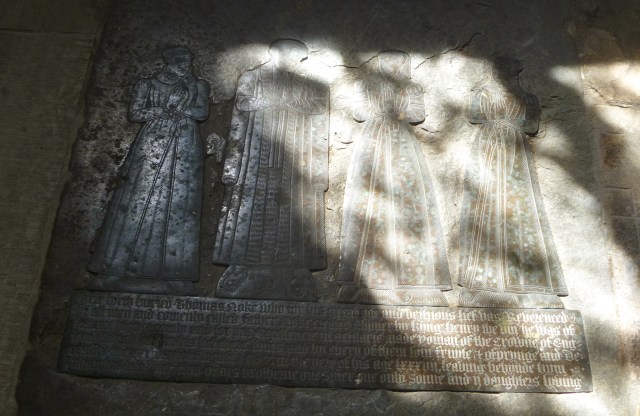
St John’s Church, Shottesbrooke features in Simon Jenkins’s “England’s Thousand Best Churches” which I’ve mentioned here several times before. “The spire is visible rising over the woods from a distance and is a splendid feature of the landscape.” Inside there are several extraordinary tombs, including the double tomb of Sir William Trussell and his lady with a canopy of eight ogee arches, and “The floors of Shottesbrooke are littered with splendid brasses still in place. one pair, of a priest and a layman of c.1370, has them both in prayer with singularly grim expressions on their faces.”
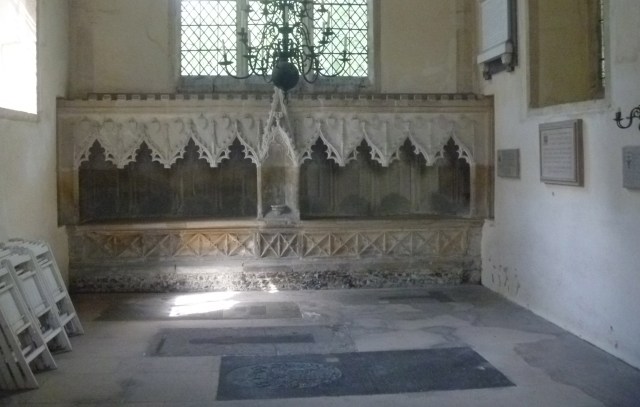
The Trussell Double Tomb
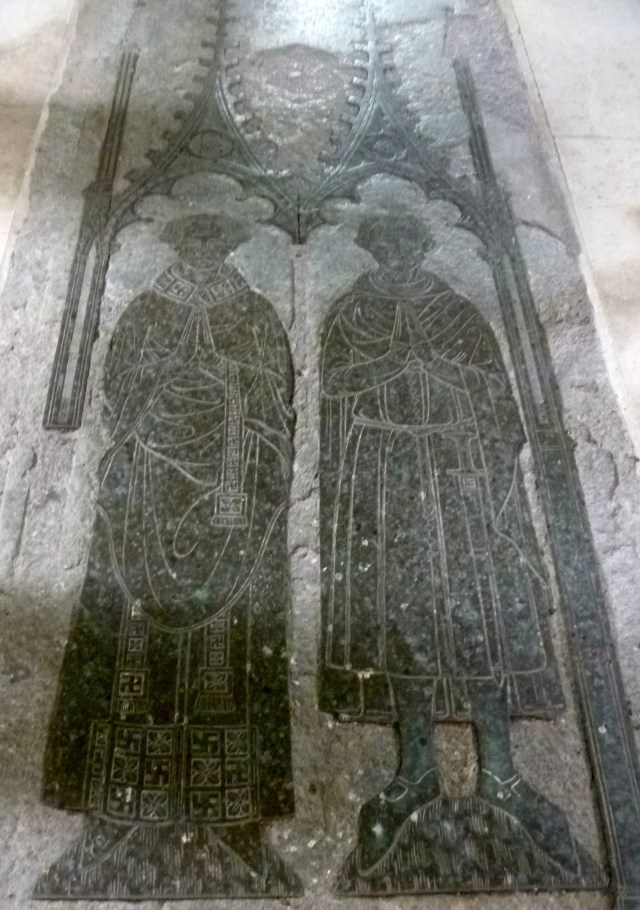
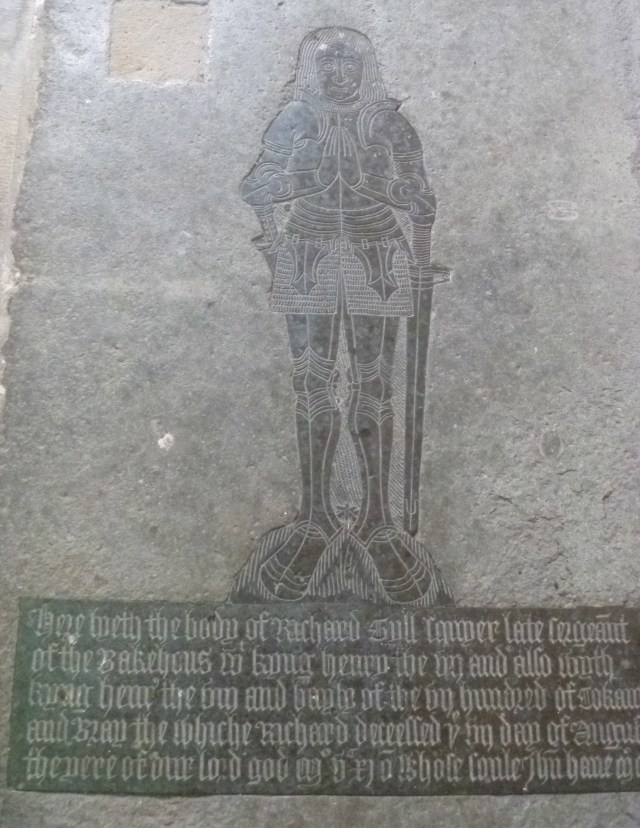
After visiting the church we were taken across the lawns to view the exterior of Shottesbrooke Park House. It is still owned by descendants of cousins of the Vansittart family who bought the property in 1716, namely the widow and son of Sir John Smith (founder of The Landmark Trust).
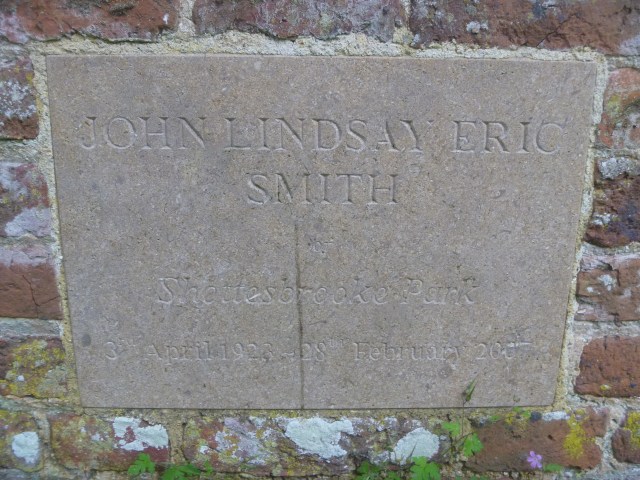
Sir John Smith Memorial in the Churchyard
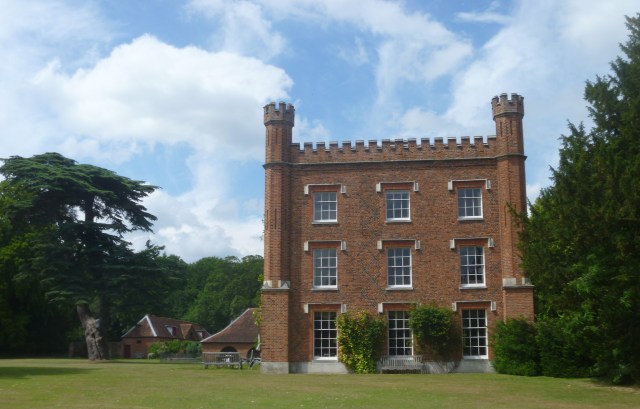
Side View of the House
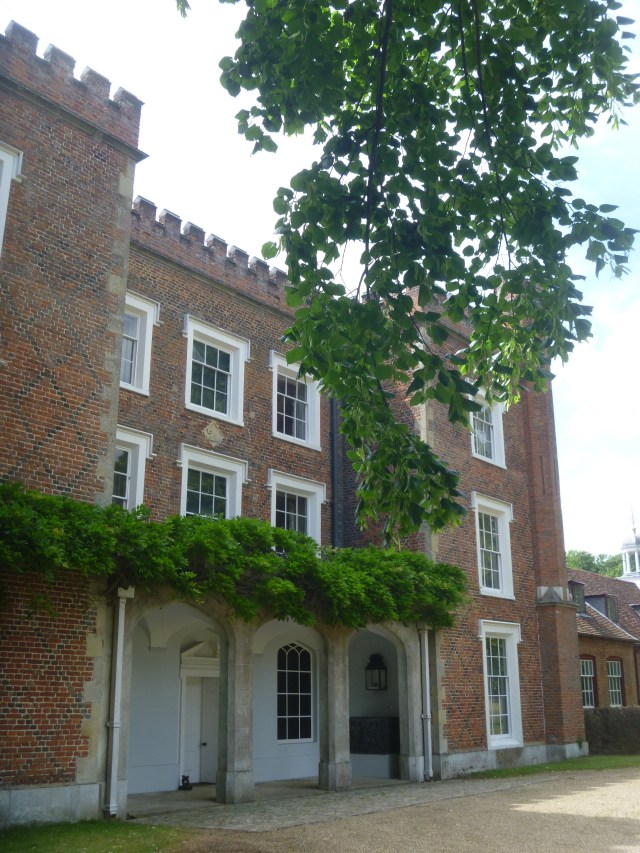
House Front
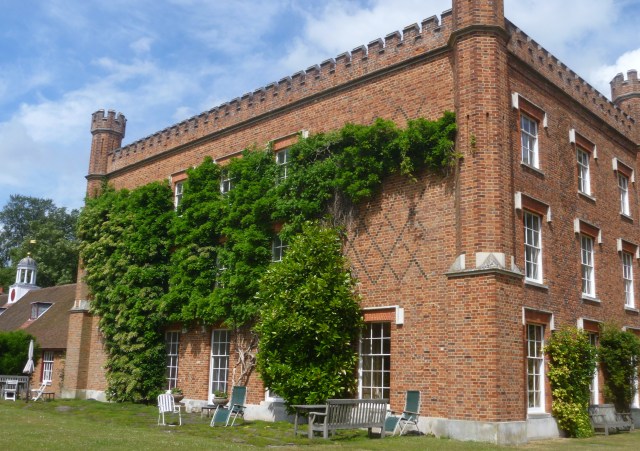
Rear of House
Following David’s tour we adjourned back to the cottage for further cups of tea and home made cake before being taken to see the anniversary exhibition in a barn, to offices in farm out-buildings and the Landmark main offices in the former farmhouse.
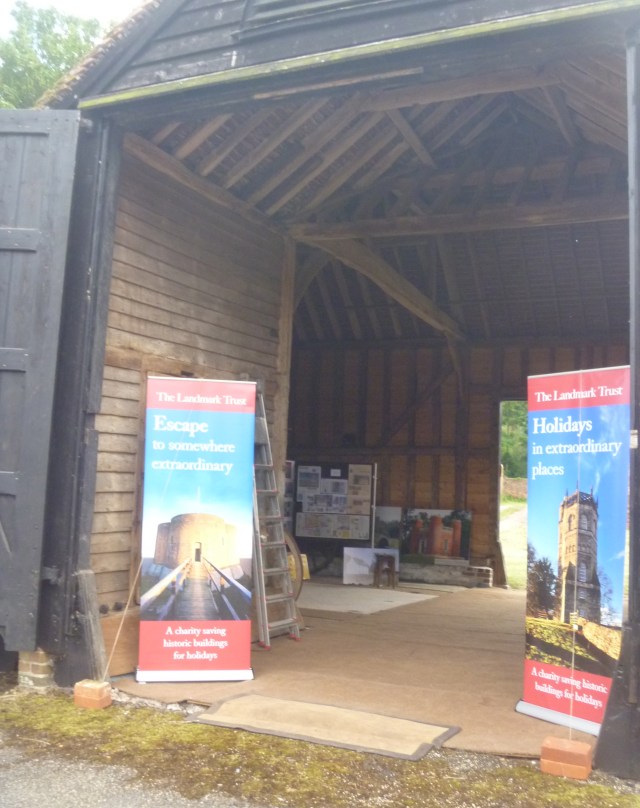
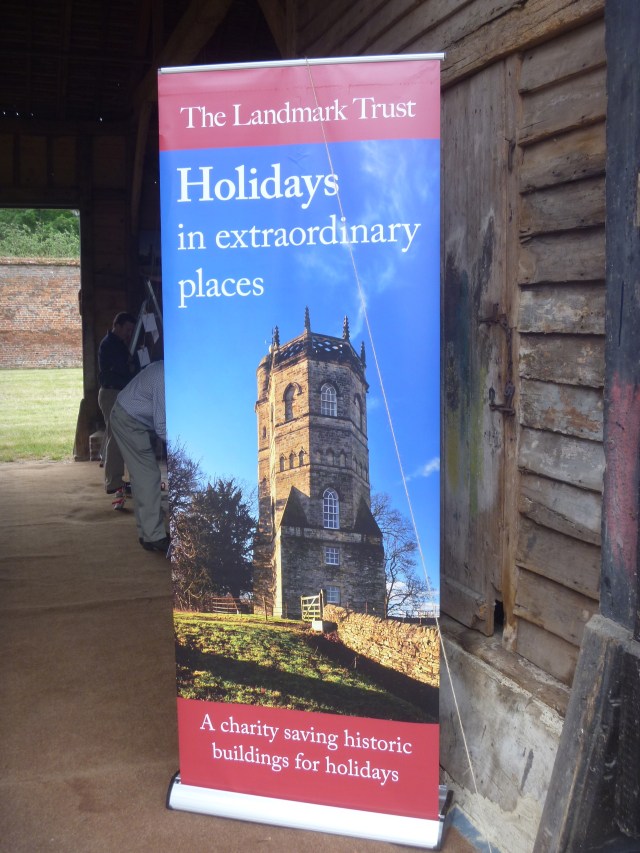
Welcome to the Exhibition
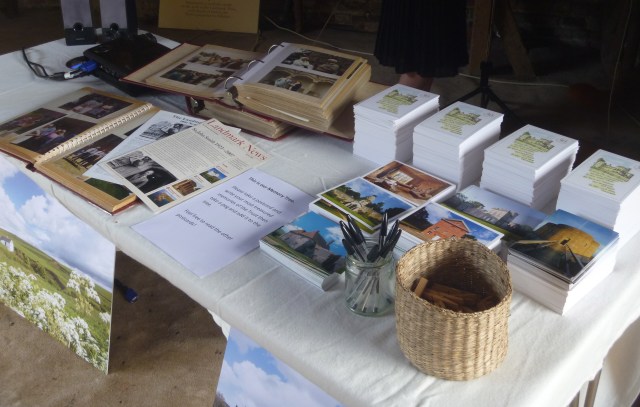
A Display Table
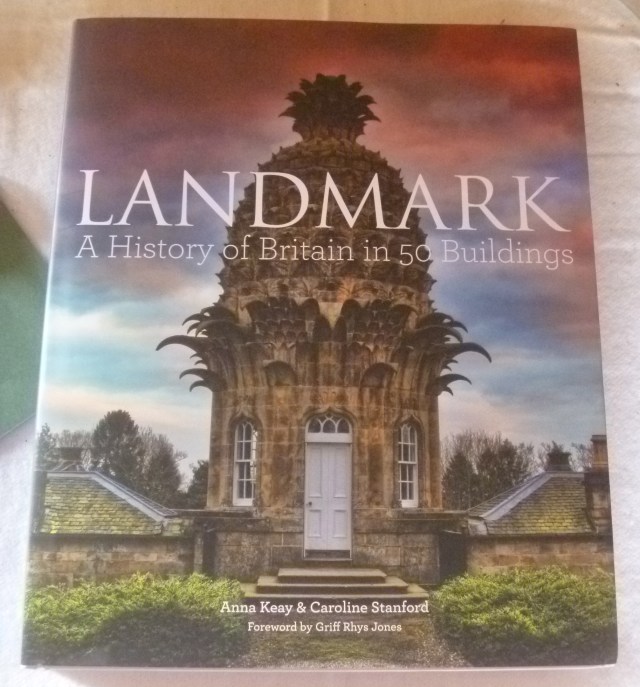
To be published soon!
The Director of The Landmark Trust, Anna Keay, then welcomed us and thanked us for our support before going on to tell us about two properties that are opening this year (Belmont at Lyme Regis and St Edward’s Presbytery at Ramsgate) and future projects. Strawberries and cream were served to round off a wonderful afternoon. Friday was the start of a weekend of festivities and receptions at Shottesbrooke including a Director’s Lunch for Landmark Patrons on the Saturday and a big anniversary celebration on the Sunday to which all staff including housekeepers and gardeners were invited.
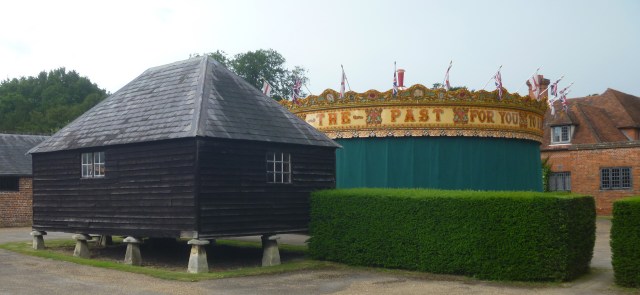
Carousel Fun on Sunday!
Gate lodge, or gatelodge, seems me to be an Irish term for what we, over here, would just call a Lodge. In amongst the majority of what I could only call dross (although there was one excellent shelf of local (in the sense of Northern Irish) books [see photos below]) in the Library at The Barbican, an Irish Landmark Trust property on the coast of Antrim in Northern Ireland, I found a most interesting book. “The Gate Lodges of Ulster : a gazetteer” by J A K Dean; Ulster Architectural Heritage Society, 1994. 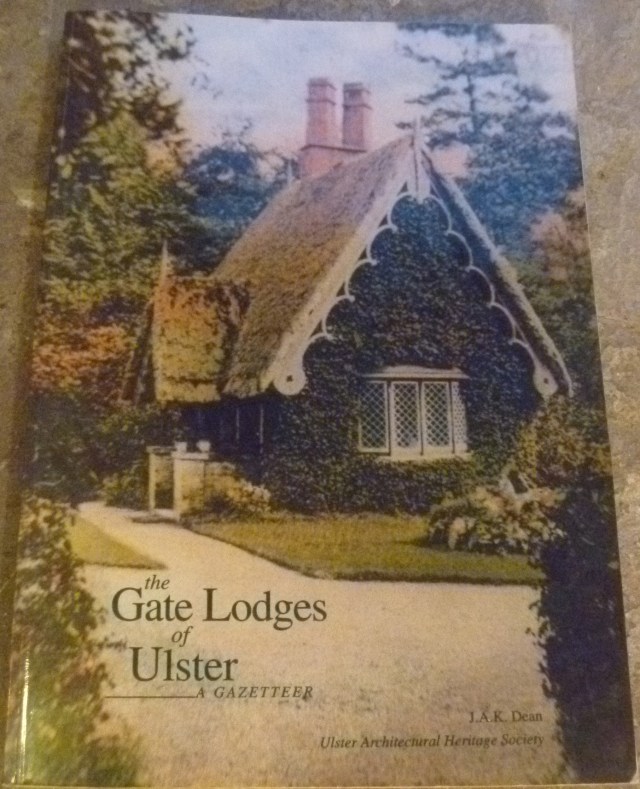 The book came about as a result of research carried out by Dean 30 years earlier. Another look at the topic during the early 1990s revealed much demolition and decay had occurred and a comprehensive renewal of study lead to the publication of the gazetteer. I’m wondering whether a similar study has been carried out in the South – a much greater project. Gate lodges had much to teach about developing awareness and ambitions of their patrons, and the changing skills of builders and architects. There’s a huge variety- from vernacular tradition to architectural sophistication yet they had a single simple purpose – to house the gatekeeper and his family. The Gazetteer is a fascinating study of individual gate lodges. Here I’ve abstracted details from the book and added my photos.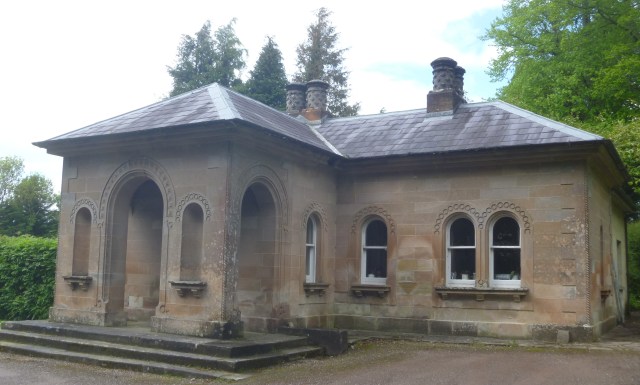
Gate Lodge at Castle Coole – Weir’s Bridge Lodge
Built c1880 i.e. after the Weir’s Bridge was built to carry the Enniskillen-Florence Court-Belcoo line of the Sligo, Leitrim and Northern Counties Railway. It’s a fine building in the Lombardie style [sic]. Built from the highest quality ashlar sandstone with immaculately carved detailing. Single-storey on a T-plan. It has a raised stepped platform to form a “porte-cochere” with semi-circular headed arches. 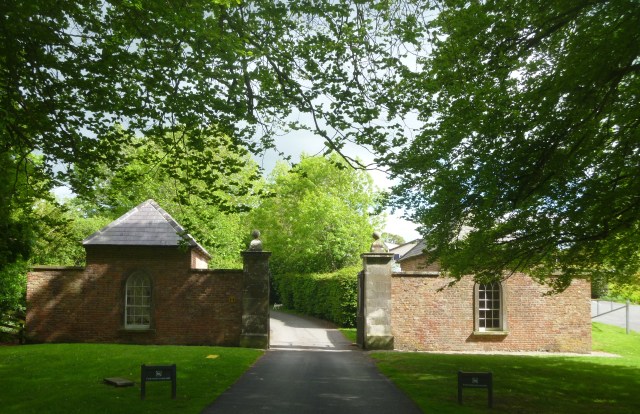
Gate Lodges – Castle Coole Twin Lodges
These were even recorded as being dilapidated in 1834. They not even mentioned on OS maps until 1857. Now they’re presented as Georgian Gothick. Built so close together a family carriage could hardly pass through. The chimney stacks have now been lost. Armar Lowry-Corry (1st earl of Belmore) the builder died in 1802 and his son Somerset had an energetic building programme for 40 years. He built up a lasting relationship with architect Sir Richard Morrison. 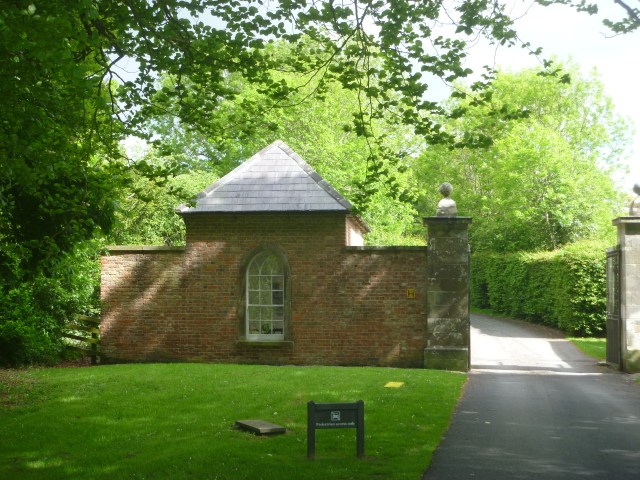
Single gate Lodge at Castle Coole

Gate Lodge at Crom
The main entrance lodge at Crom was built in 1838 by Edward Blore, architect. Blore was responsible for many other buildings on the Crom Estate. It’s an irregular Tudor picturesque cottage on one and a half storeys. Dean’s book also contains interior plans. It has two main gables and pretty serrated bargeboards plus finialed hipknobs. On Wikipedia I found that a Hip-knob, in architecture, is the finial on the hip of a roof, between the barge-boards of a gable. The small gabled hall/porch has the only remaining lattice panes. 
Gate Lodge at Springhill
The Gate Lodge at the National Trust property Springhill in County Londonderry is now the secondhand bookshop. It stands at the original main entrance (which is now now the exit) and was built not long after George Lenox-Conyngham succeeded to the property in 1788. It is the sole survivor of a pair of Georgian Gothick porters’ lodges. Their gables faced each other across the avenue entrance. It is a simple rectangular two roomed structure, has steeply pitched gables with a wide door opening and a minuscule lancet opening above to light a bed loft. 
The Well Read Bookshop
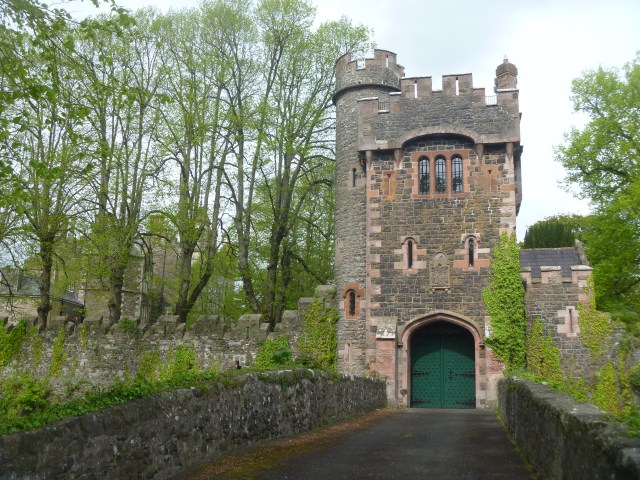
The Glenarm Barbican
Built in 1824, the Barbican’s architect was William Vitruvius Morrison. Dean writes : “Beloved of photographers and Victorian illustrators for its dramatic architecture and romantic setting. Approached across a two-arched bridge spanning the Glenarm River the Barbican is a three-storey castellated gatehouse. An ancient sandstone coat of arms was inserted.” This had originally graced the front of the castle when it had been built by the first earl in 1636, while the other side of The Barbican was also given a commemorative plaque: THIS GATEWAY WAS BUILT AND THE CASTLE RESTORED BY EDMUND M’DONNELL, ESQUIRE, AND HIS WIFE ANNE KATHERINE, IN HER OWN RIGHT COUNTESS OF ANTRIM AND VISCOUNTESS DUNLUCE A.D. 1825. Attached to one side is the two-storey porter’s accommodation – one up and one down.
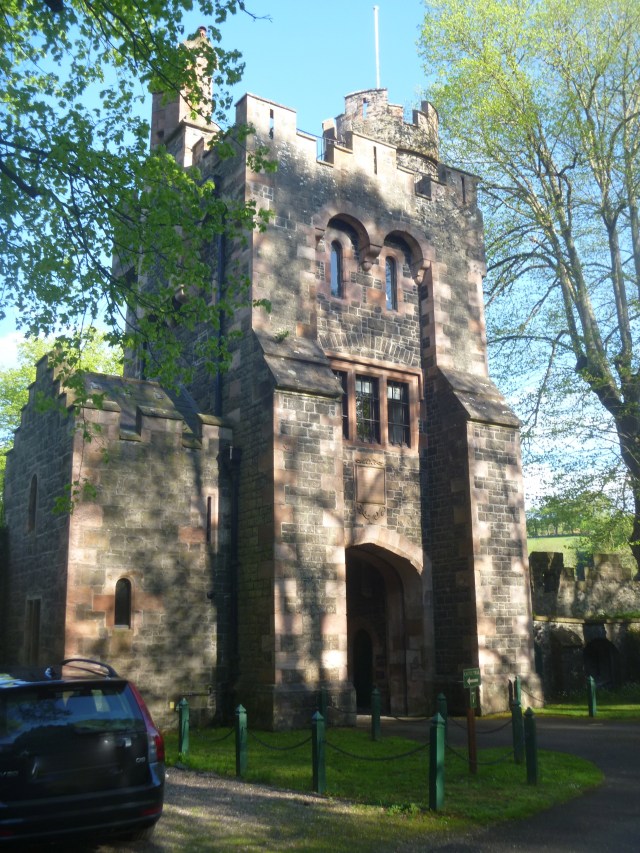
Rear of the Barbican
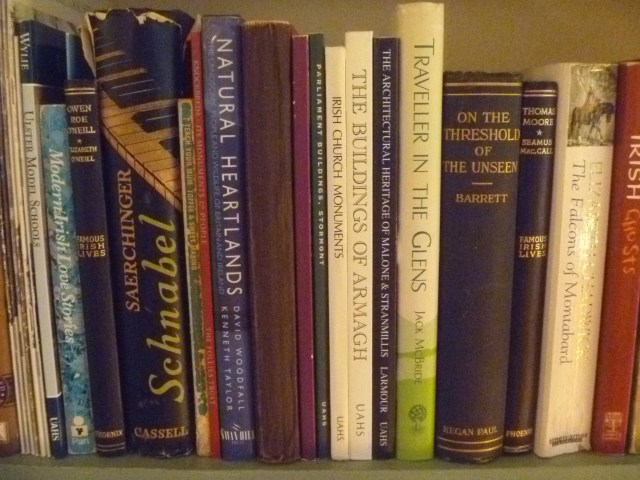
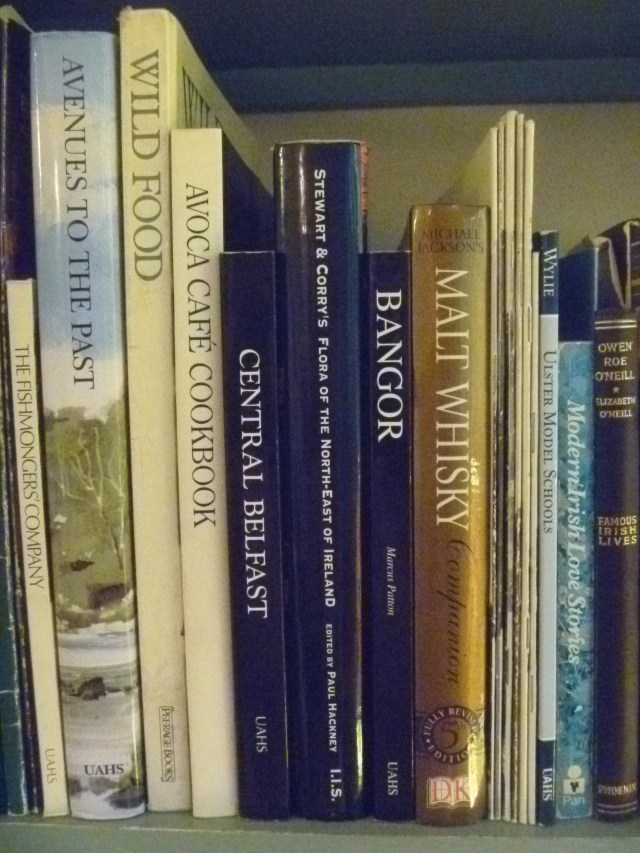
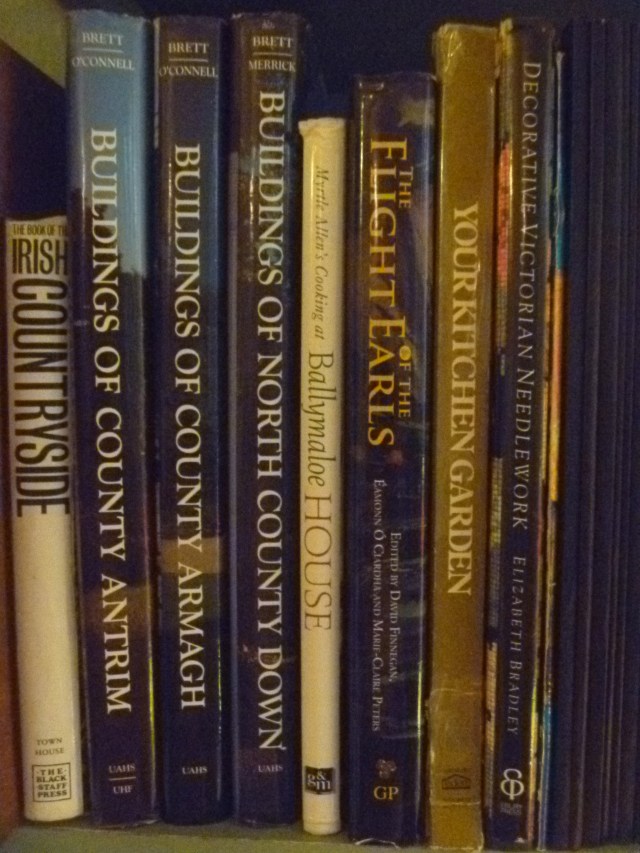
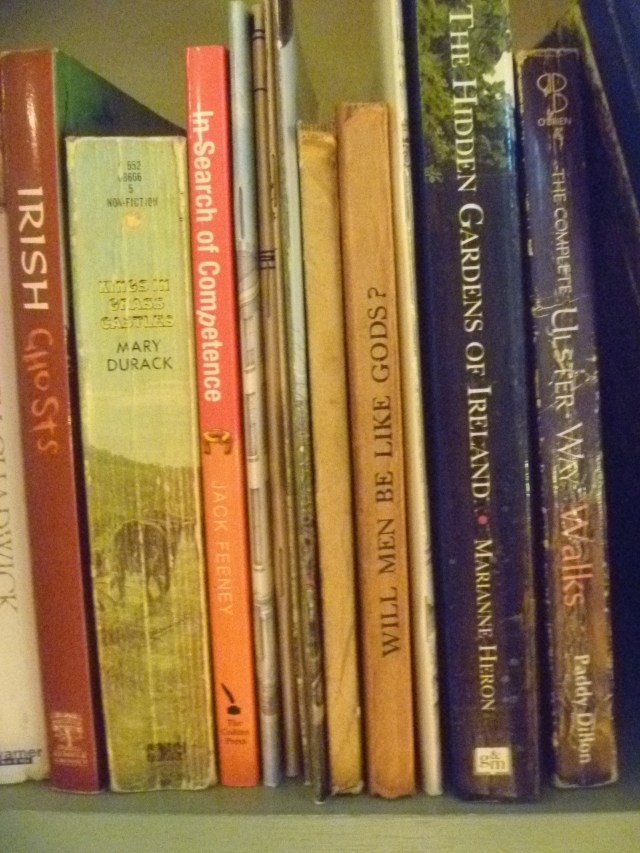
The Barbican Bookshelf
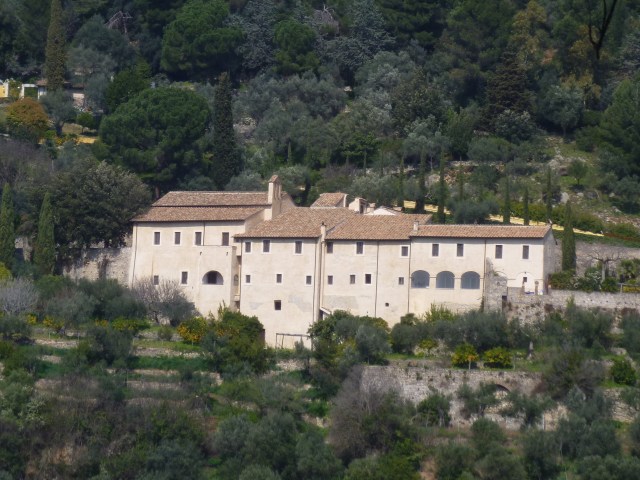
In the summer of 2013 I had the great good luck to be offered a room and to stay with fellow Landmarkers in the Italian countryside near Tivoli, about 20 miles northeast of Rome. I leapt at the chance and finally last week the trip became a reality. I have just spent a fabulous week at Sant’ Antonio and made a few excursions too when I could manage to drag myself away from this wonderful old house.
According to the History Album Sant’ Antonio was built around 100 BC. The upper parts were rebuilt in the late 16th and early 17th centuries: the monastery between 1583 and 1590; the east wing about 1625 and the church in 1647. It was acquired for preservation by Frederick Searle in 1879. The present owner, Vicomte Roger de Brisis, is his descendant but Sant’ Antonio has been managed by The Landmark Trust since 1995. It consists of a medieval monastery grafted onto a Roman villa of the time of Caesar Augustus, or maybe even before. It was rescued from abandon in 1879 by an Englishman newly returned from West Indies.
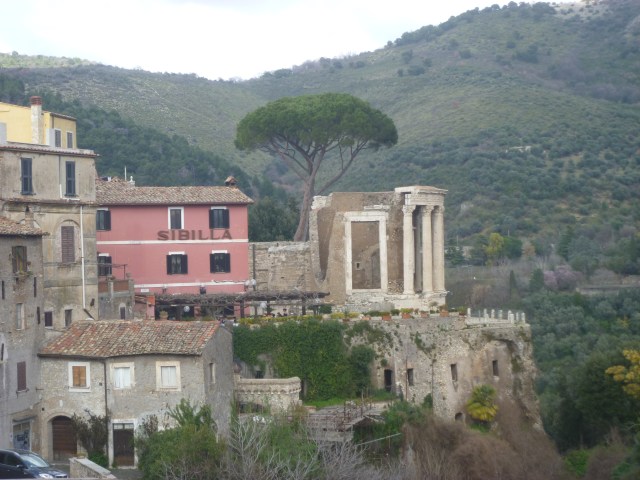
Temple of Vesta, Tivoli
A well-founded belief is that a frequent guest, if not an early owner, was the poet Horace. Across the ravine thunders the water of Anio, with temples of Vesta and the Sibyl poised above it. All these on the outskirts of Tivoli, the Roman Tibur, and you are approaching something very near the heart of the civilisation that has moulded Europe for two millennia.
It is fitting that the revival of this place should have fallen to an Englishman, because those two names – Horace and Tivoli have a particular resonance for his countrymen. From the Middle Ages , English boys learned their reading and writing by means of Horace’s Odes and Satires, along with the works of Virgil and other writers of the Augustan Age. Only in the late 20th century has academic education ceased to be built on these cornerstones.
In the 17th century Englishmen first began to visit Italy in large numbers and carried its influence home in the most direct manner, in their paintings, and their buildings and their gardens. The dramatic influence of Tivoli appealed strongly to painters, notably the great French creators of an ideal classical world: Claud Lorrain and Gaspard Dughet. The English imitators eg Richard Wilson, followed them here. Writers like Joseph Addison sought the places which the best paintings might be composed and the. Murmured to themselves of “Tivoli’s delightful shades and Anio rolling in cascades.”
In 1879 Frederick Searle was searching for a place to sketch the waterfall when he first saw Sant’ Antonio – “La casa di Orazio”. He made it his home; spent 20 years renovating and repairing it and encouraged scholars and archaeologists to share his discoveries. His daughter Georgina and her husband George Hallam and then her great-niece Lucy d’Aihaud de Brisis continued the tradition. In this generation Count Roger de Brisis took on the care of Sant’ Atonio and with Landmark’s help has made it possible for guests to stay here. Sant’ Antonio has long enjoyed the soubriquet ‘Horace’s Villa’ . There are several schools of thought relating to whether Horace lived here or not. It is known through the writings of Suetonius that Horace lived in Tibur (Tivoli).
The Sant’ Antonio History Album goes on to give various scholars’ opinions on the exact location of Horace’s Villa but I like to think that it was Sant’ Antonio and unless some future academic gives me proof to the contrary I will stick with this theory and the celebrity link with the house.
The Franciscan Friars took over the remains of a Roman villa – it had continued operating as a villa farm – with ample storage spaces, good water supply and fertile terraces. By becoming a monastery its survival was ensured for a further five centuries. Sant’ Antonio was a monastery complex of the lesser kind; common in the mountains of central Italy. The little church of this monastery is still an object of devotion for the many Catholics of the town. The feast day of St Anthony is 13 June.
Having read details of the architectural plans of the monastery it would appear that the arrangement of the rooms and their various uses has changed little over the centuries. We dined in the Refectory, cooked in the kitchen, slept in the monks’ cells (the numbers still painted on the doors) off long wide corridors decorated with church ornaments, crucifixes and reliquaries. Our sitting rooms – a range of three – occupy a northeast projecting wing. The main floors are of rectangular terracotta bricks laid in coursed and herringbone patterns with borders, a technique common to Italy. The small casement windows are a rare feature to have lasted so long in Italy, the details of the dark unpainted wood, the panes of glass and their fixings, and the modest catches all being precious survivals.
Welcome to Sant’ Antonio – come and have a look inside.
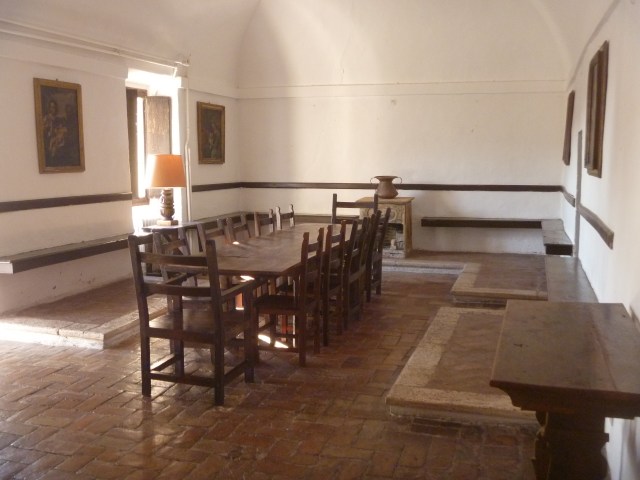
The Refectory
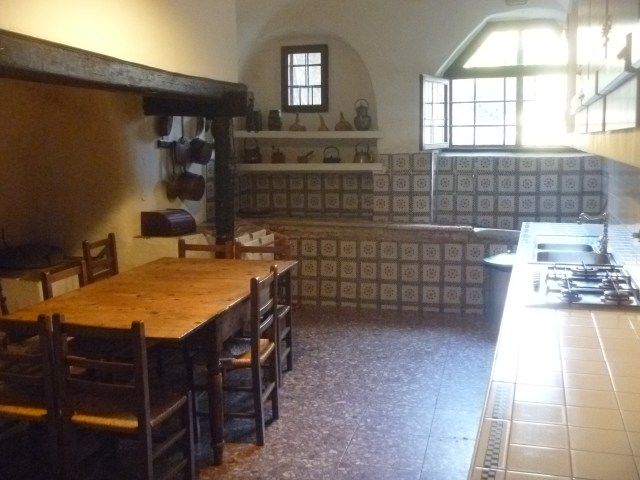
The Kitchen
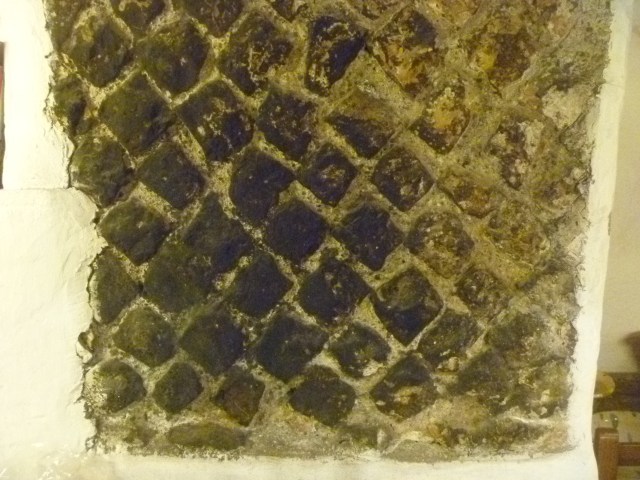
Roman Wall in the Kitchen
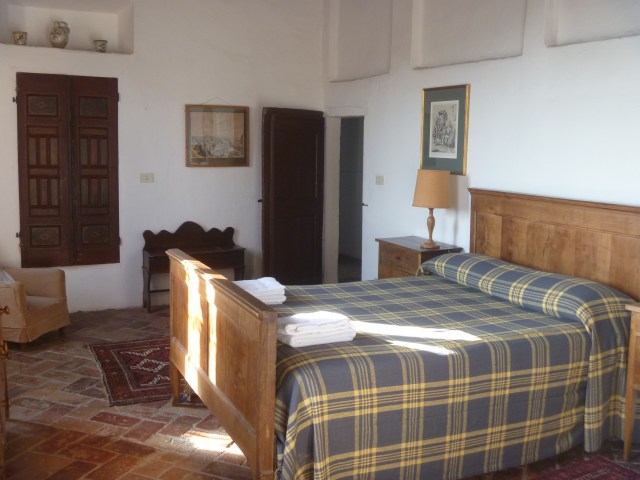
A Double Bedroom with Herringbone Pattern Floor
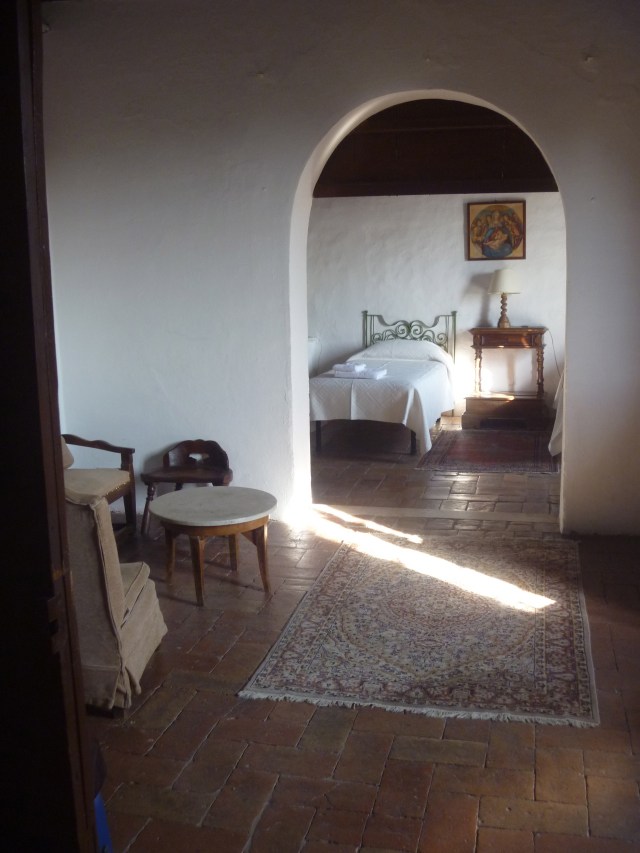
A Twin Room with Sitting Area
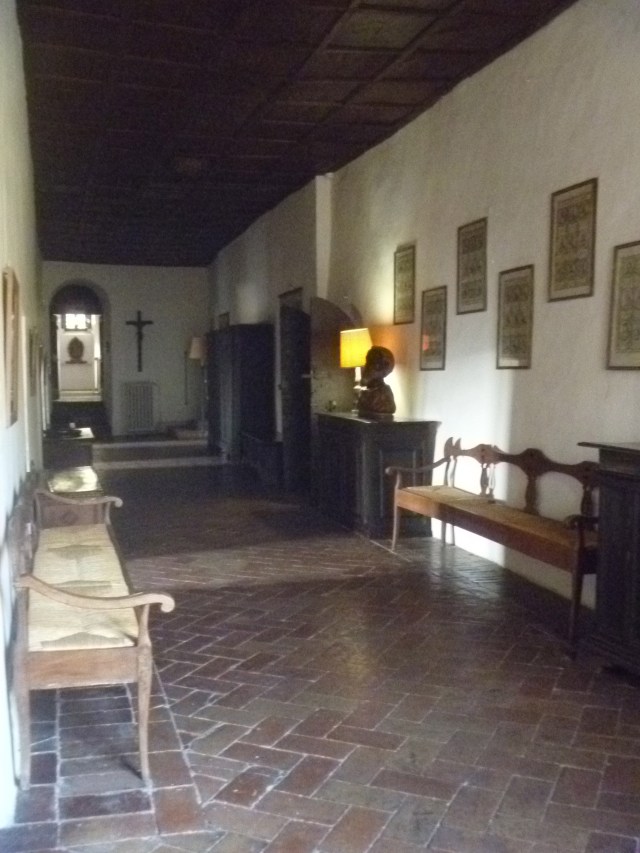
Upper Corridor
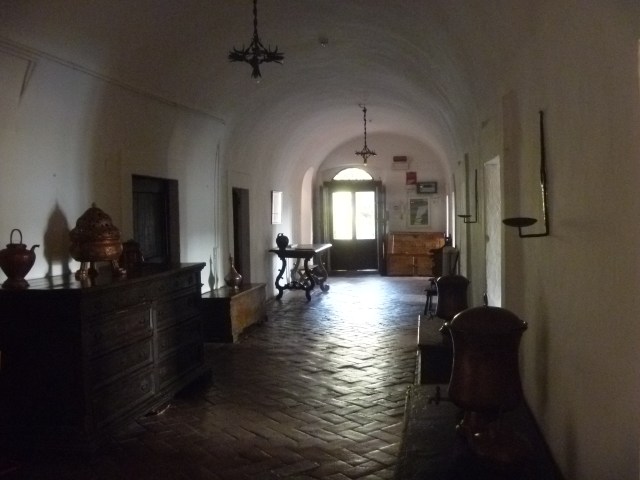
Lower Corridor
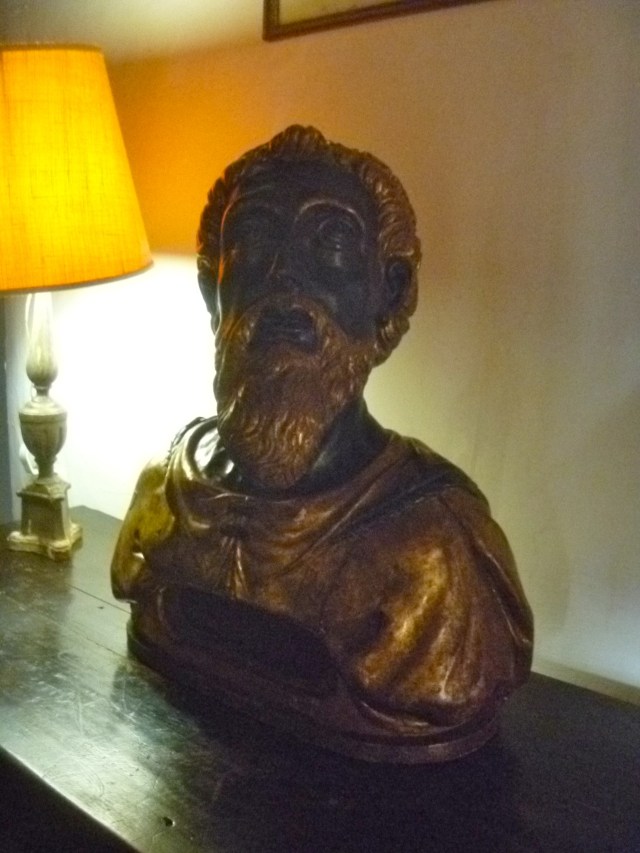
One of the Reliquaries
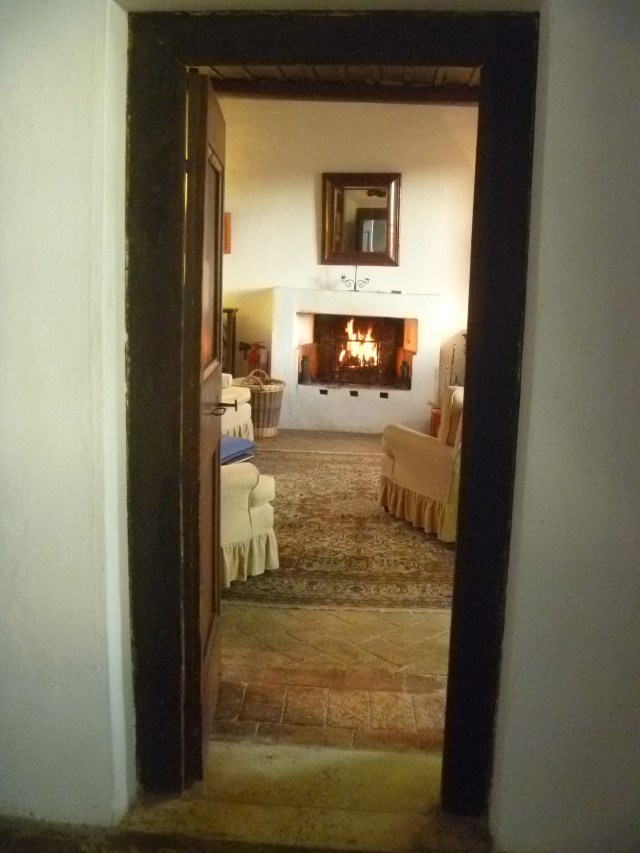
The Sitting Room
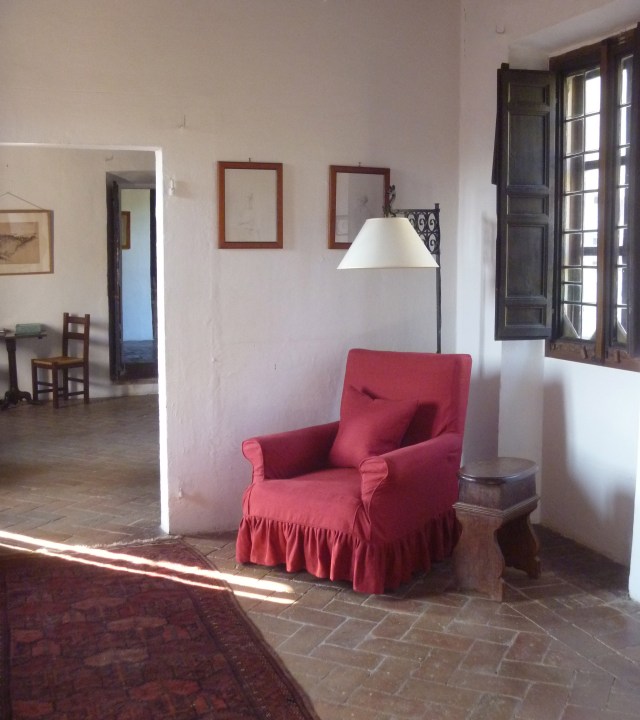
A Quiet Reading Corner
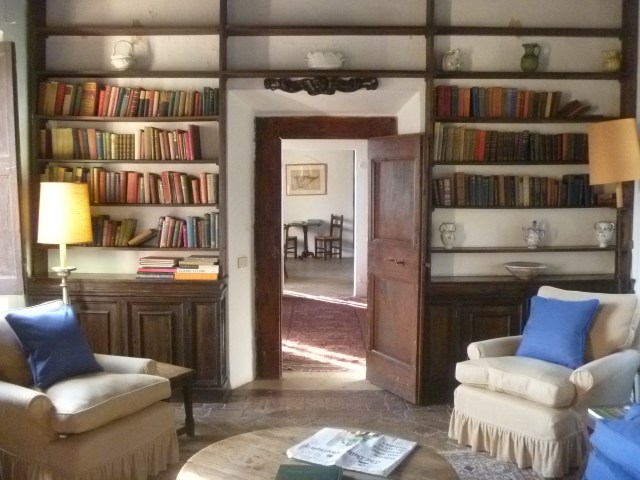
Three Sitting Rooms

The “Anio Rolling In Cascades” seen through a Casement Window
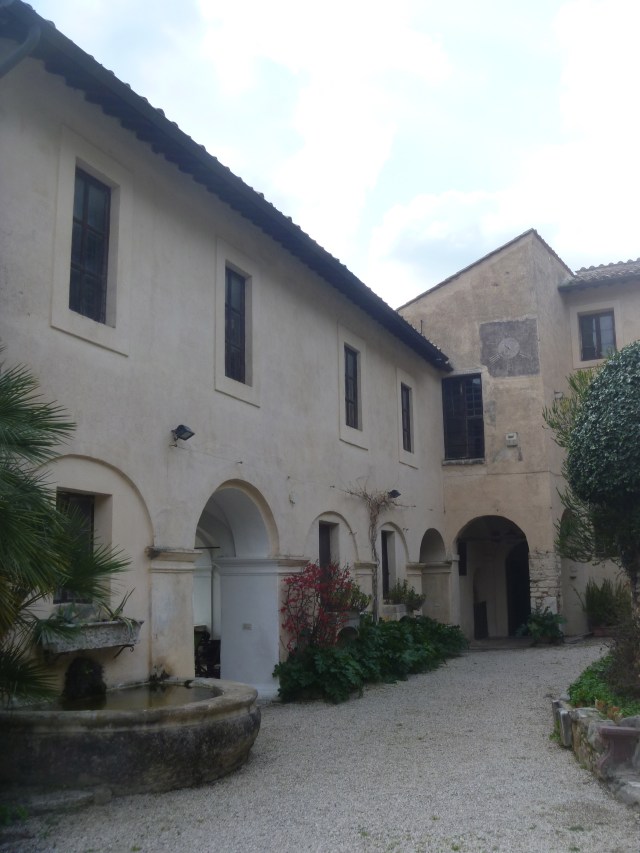
Former Main Entrance now Rear Door into the Garden
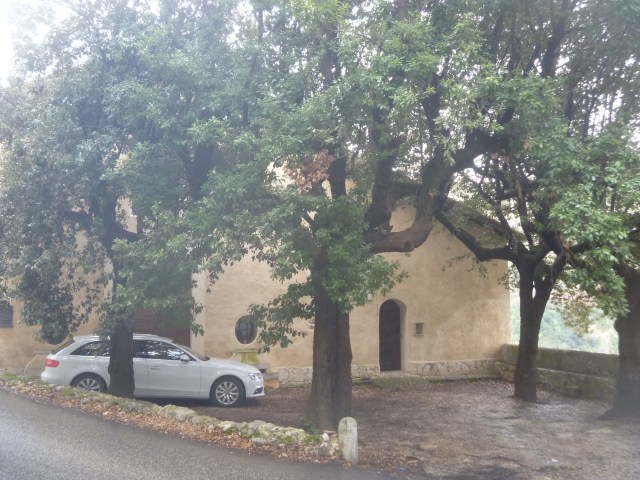
Today’s Entrance Approached from the Main Road
It’s not easy driving in Colchester. Even with very concise instructions as to how to reach the Landmark Trust’s Peake’s House we managed to take wrong turnings and narrowly missed driving in a bus lane. It was a big relief to reverse the car into the parking space provided and leave it there for the rest of our stay.
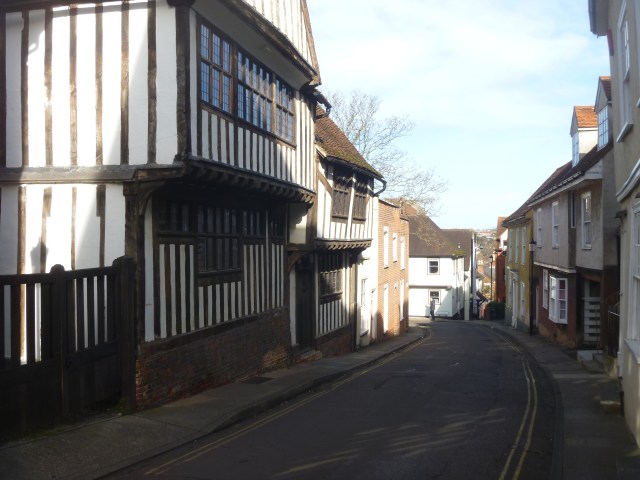
East Stockwell Street, Colchester. Peake’s House is the timbered building on the left.
Here’s what the Trust say about it :
“Originally three cottages at the centre of Colchester’s cloth trade, the long mullioned windows were designed to give light to the weavers at their looms. It is a snug retreat from which you can explore the historic town surrounding you.
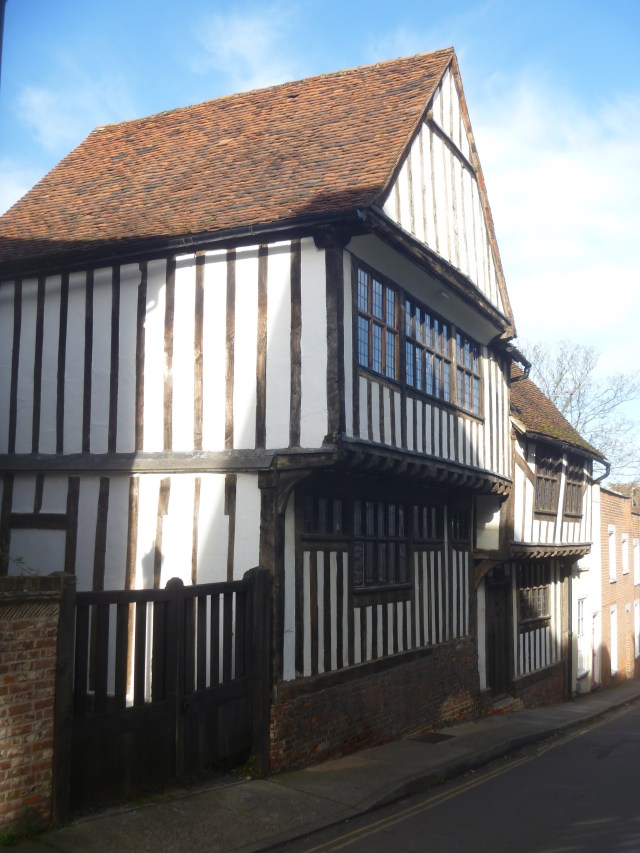
Peake’s House stands in the Dutch Quarter, north of the High Street, which has retained its old layout as well as many of its older houses, making its atmospheric streets a delight to wander. Here Flemish weavers settled in the 1570s, driven into exile by religious persecution.
The satisfying, late-Elizabethan interiors of this merchant’s house provide a particularly atmospheric existence within its walls. Workmanly, evenly set wall timbers inside and out give the house its character. The interiors of Peake’s House have barely changed since those weavers made themselves a prosperous new life.”
Mr Peake had been the last owner before he generously gave it to the Borough Council in 1946, specifying that it was to be used for social and cultural purposes only. The Landmark Trust secured a 99 year lease on the house in 1995. A detailed history can be read on the Trust’s website.
Here is a brief tour of this wonderful old house:
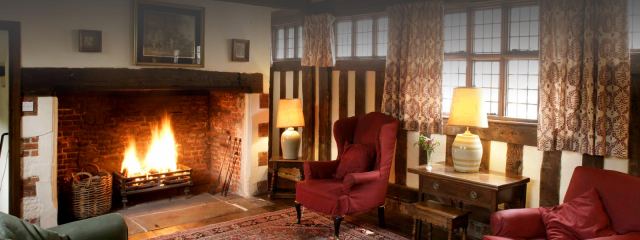
Sitting Room with Large Inglenook Fireplace [source]
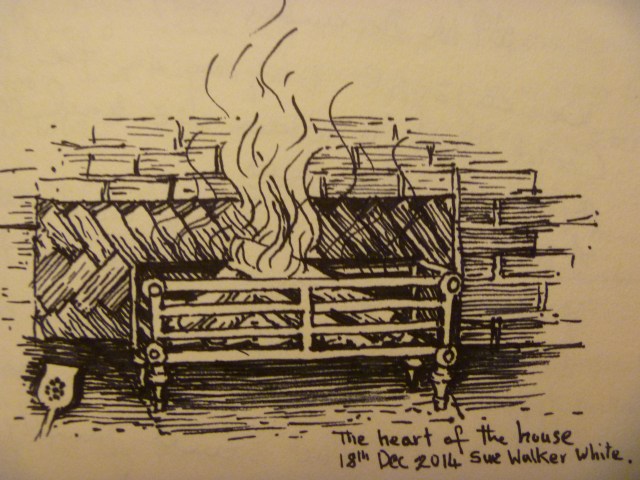
Log Book Fire
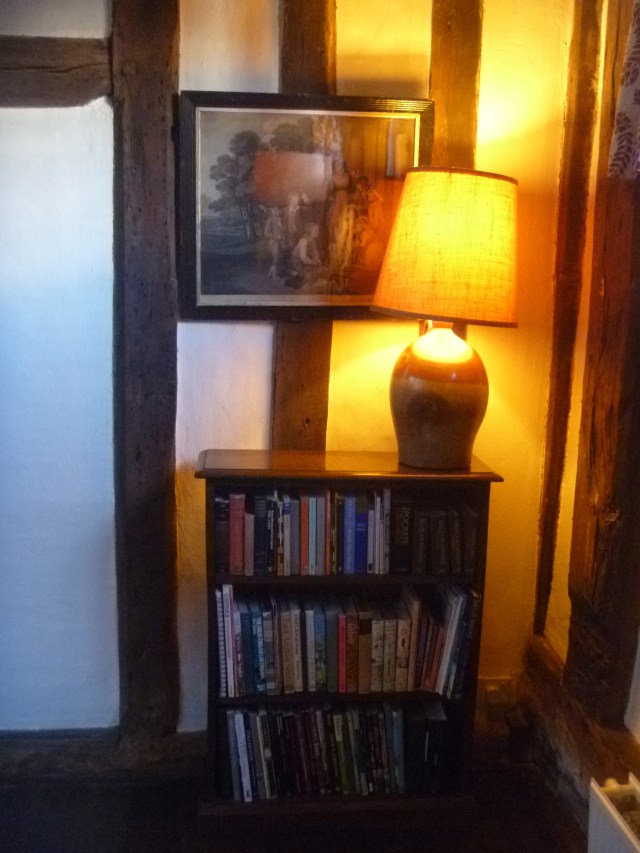
The Landmark Library (rather dimly lit)
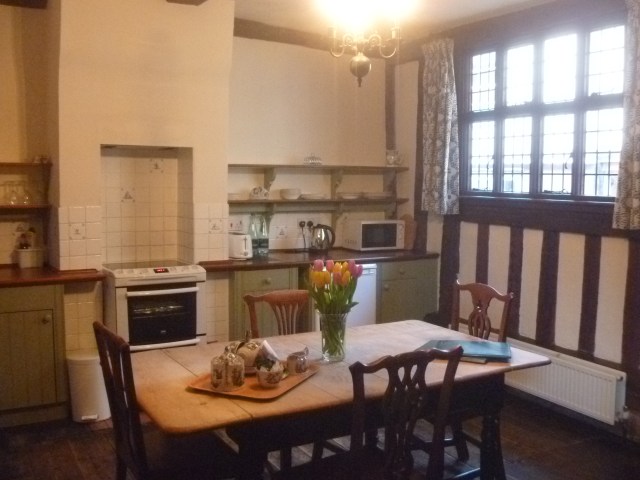
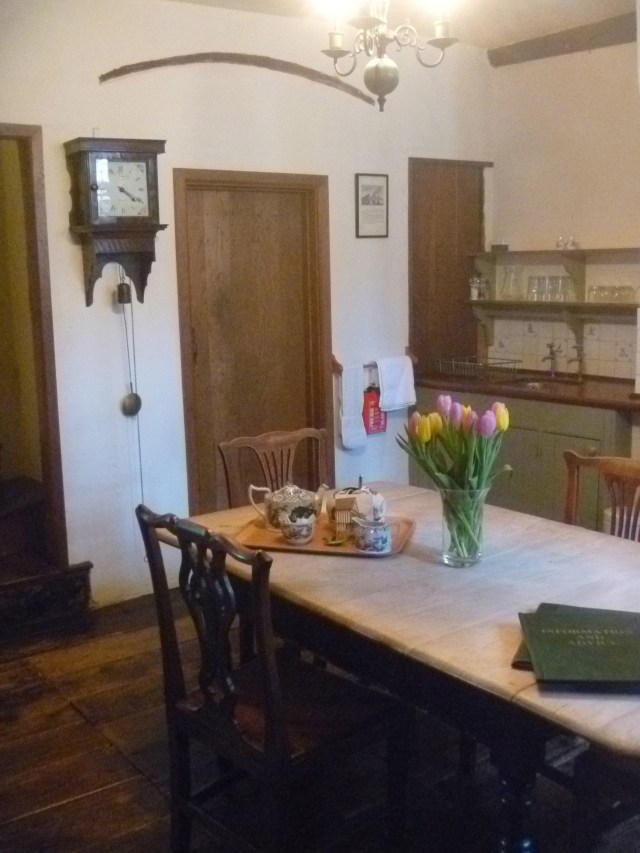
Welcoming, fully equipped kitchen
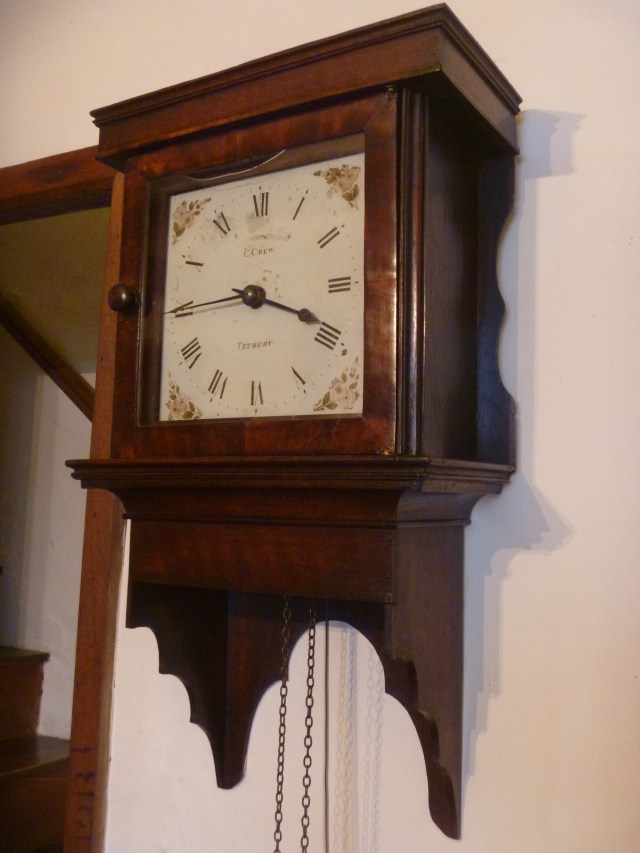
The Clock was a great point of interest
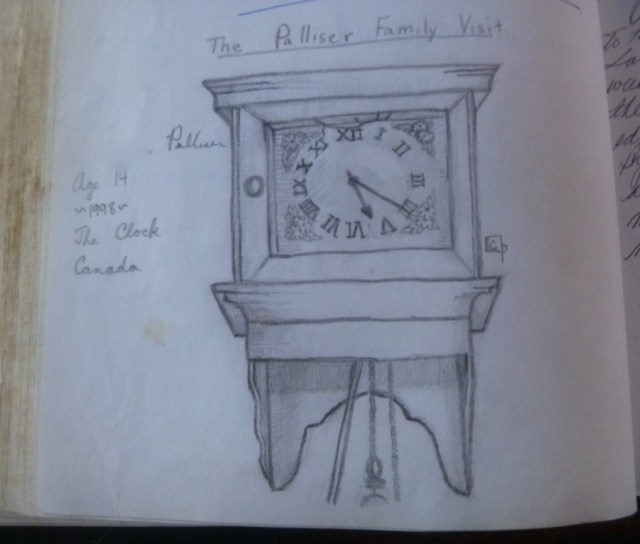
Clock in the Log Book
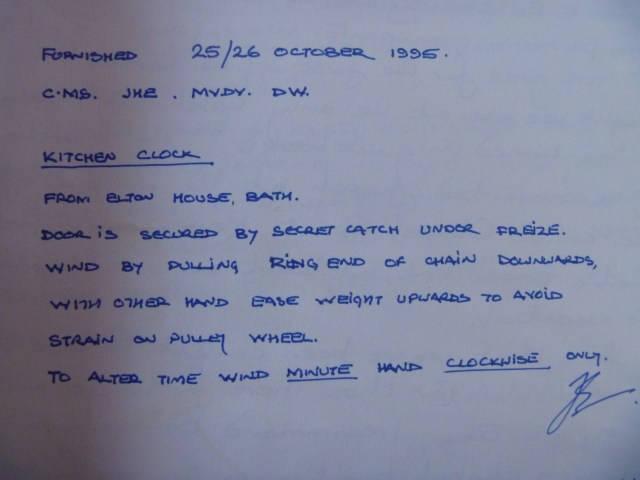
Clock Winding Instructions from the Log Book
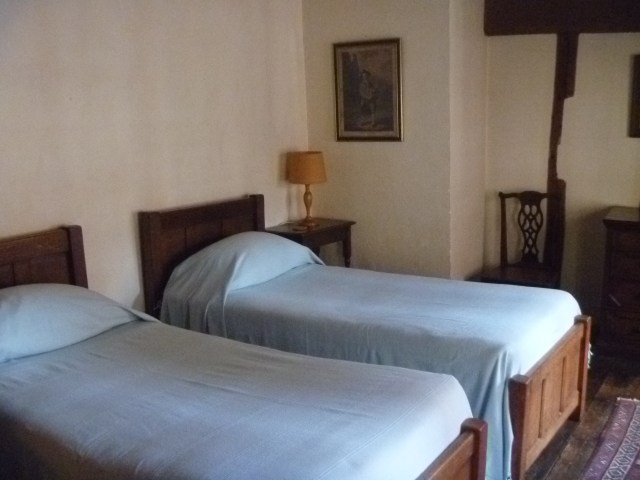
The Twin Bedroom
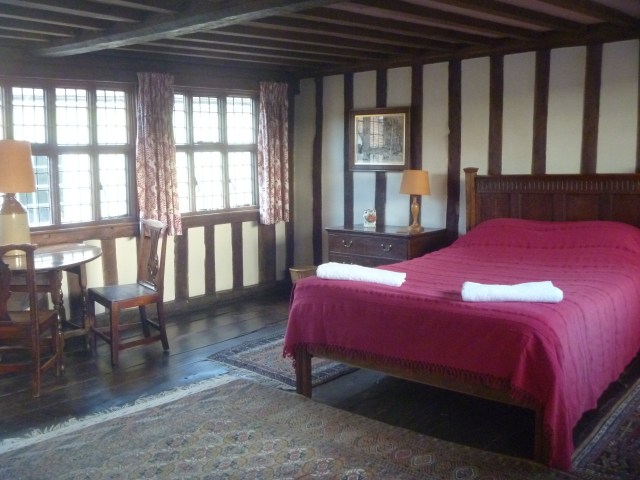
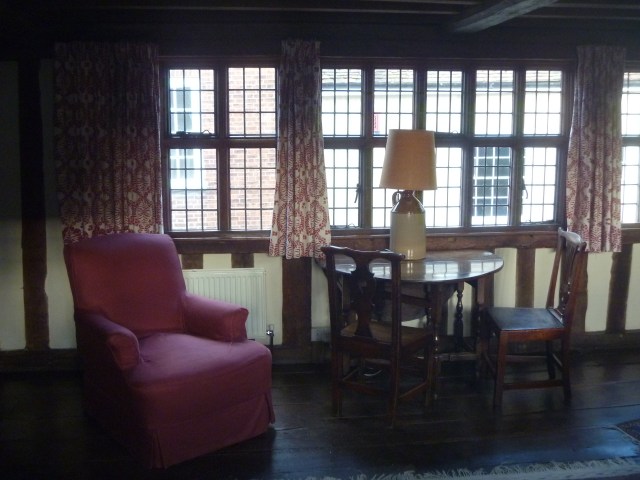
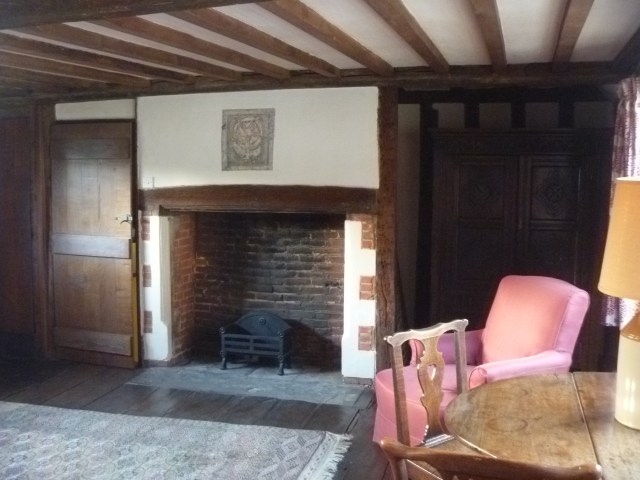
The Double Bedroom (all 3 pictures above)
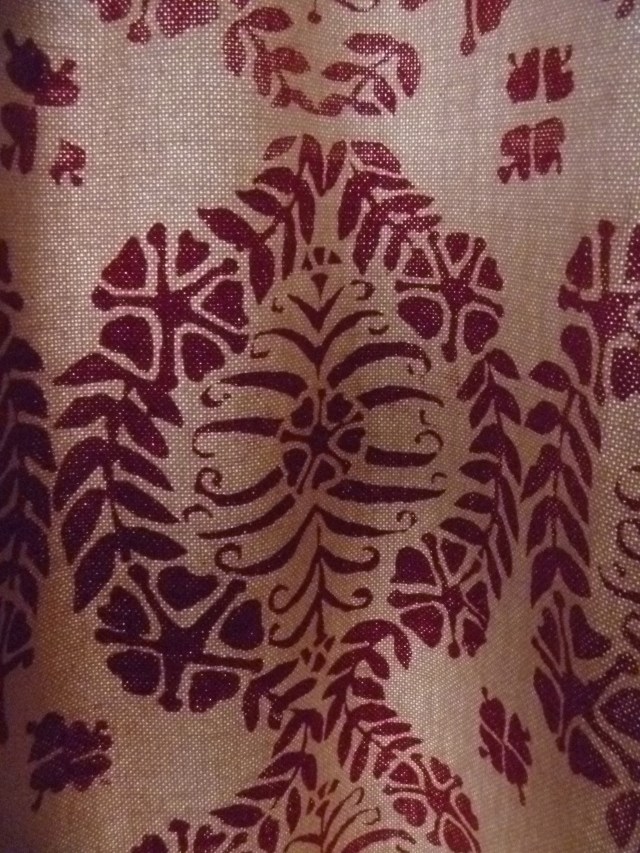
The specially printed curtain fabric. Lady Smith, wife of the Landmark Trust founder John Smith, designed and hand printed the curtain fabric for each individual property.
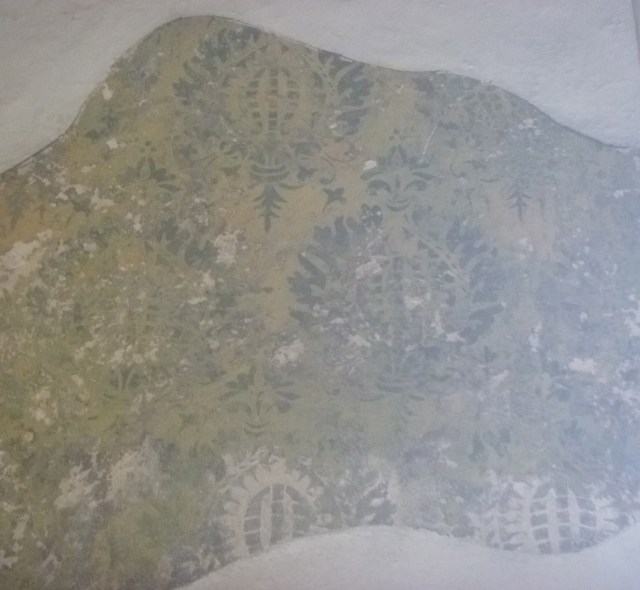
Could the design for Peake’s House curtains have come from the wall painting in nearby St Martin’s Church? Not quite, but very similar.
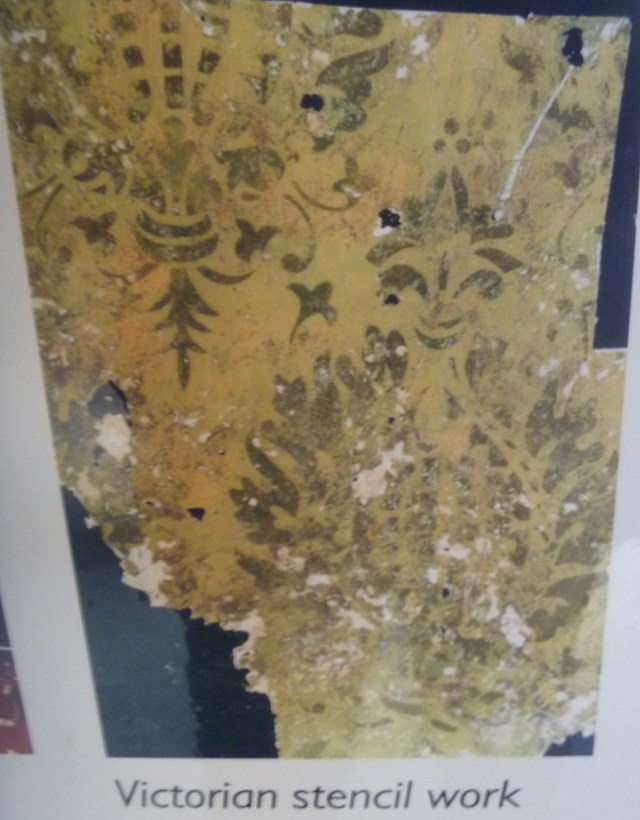
Photograph on the Church Display Board

Lovely Effective Curtains
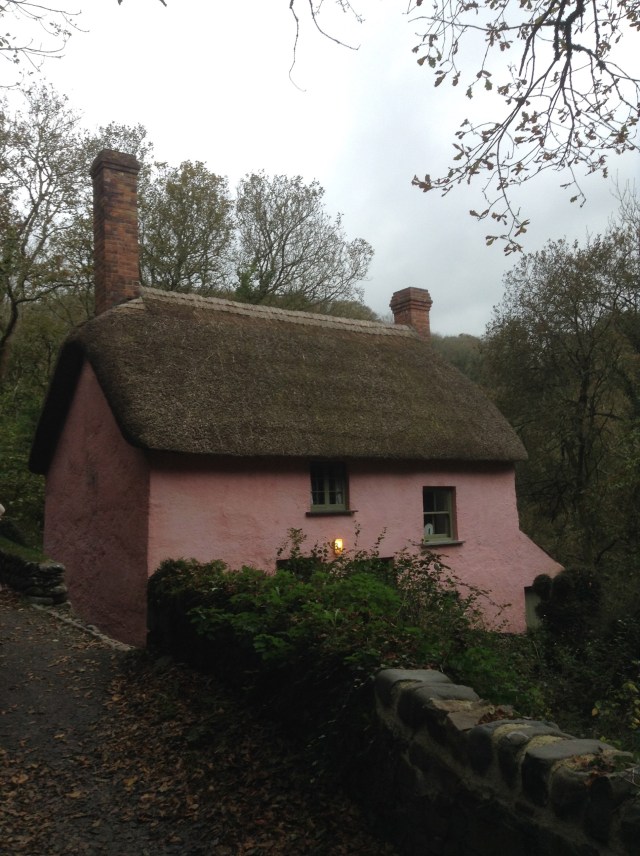
Bridge Cottage, Peppercombe
In the evening at Bridge Cottage I found a little book on the library shelves :
“Midway down the valley , deep in the woodland beside the first of the bridges , stands Bridge Cottage. Built about 1830 of stone and cob, it has stood derelict for years, suffering the onslaught of both weather and casual vandalism. Now pink -washed and with a good thatched roof and chimney once more, it is home to holidaymakers throughout the year. Christmas sees fairy lights at its tiny windows and woodsmoke coming from its chimney.
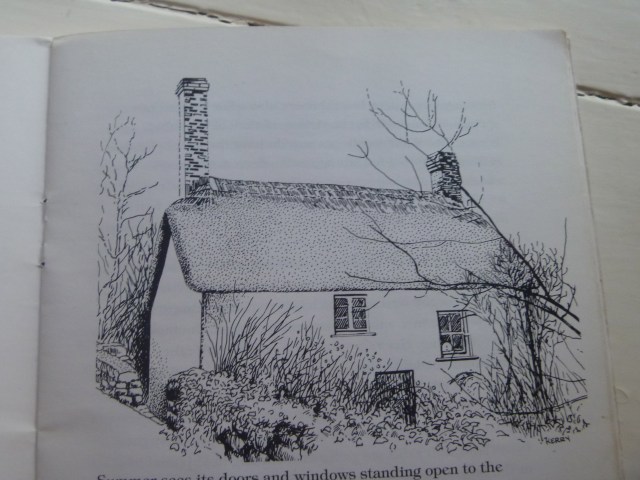
Bridge Cottage sketch by Kerry Garrett
Summer sees its doors and windows standing open to the sunlight, the woodland views, the birdsong, the splash and babble of the stream let as it cascades under the bridge by the cottage and onwards down the rocky slope. Mary Elizabeth , aunt to a very old friend of mine Eileen Tucker (who was born in Peppercombe) , lived in Bridge Cottage for a good 60 years. She came there as a bride in 1910 or thereabouts , and only left in the 1970s when she went to live with her niece. It was Mary Elizabeth who planted – tilled is the more usual word in these parts – the rhododendron and the lilac by the cottage that still bloom so richly when spring comes.” [1996. Prominent Press for Sappho Publications]
But before I settled down to read that book in the cosy sitting room with its glowing fire (its woodsmoke coming from the chimney!) I had been for a walk right along the valley to the sea. Entry to the lane from the main road at Horns Cross is by padlocked gate and I walked down to the cottage from there.
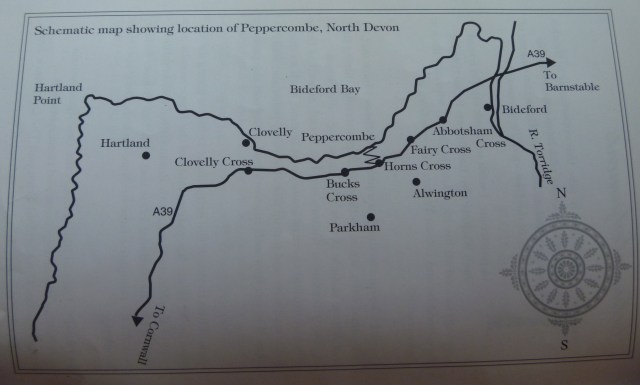
Map showing Peppercombe and surrounding areas
From the cottage the track goes down, down, down passing some other properties (also holiday cottages but part of the National Trust portfolio) :
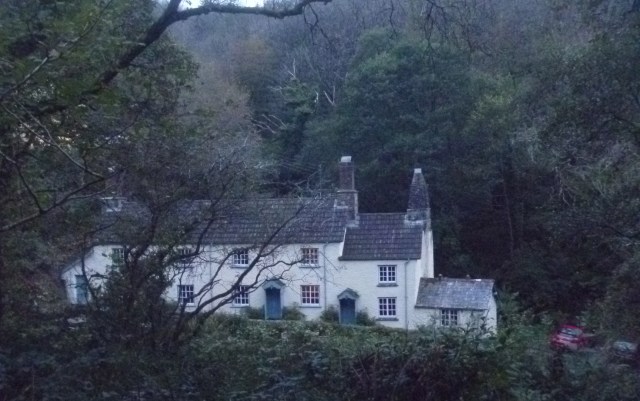
Coastguard Cottages (NT)
As the view opens up and the sea is revealed there on the left is an unusual building. It looks like a cricket pavilion and is painted brown and cream like the old Great Western Railway livery. It’s Castle Bungalow. Another Landmark Trust property. No-one was there so we crept around it and peeped through the windows. (Perhaps it should count as number five and a half?)
“Castle Bungalow enjoys magnificent views of the coastline from the verandah. The bungalow reflects a more recent strand in Peppercombe’s history. Since the early 19th century, there has been a growing appreciation of it as a place to be valued for the beauty of its scenery. You can enjoy the views from inside this 1920s Boulton and Paul bungalow from the snug wood-lined rooms and lattice windows.” [source]
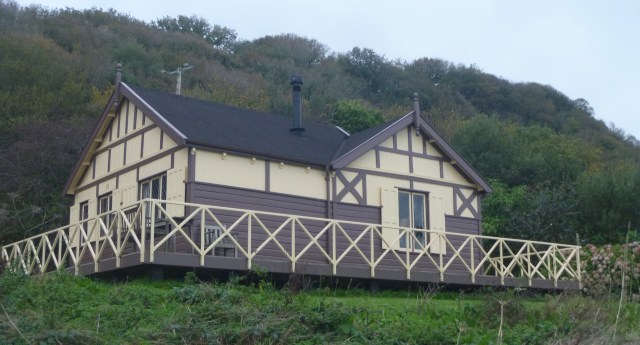
Castle Bungalow
Like me, the Castle Bungalow comes from Norwich! Boulton and Paul, the manufacturer, was a well-known and thriving industry when I was growing up there in the 1950s and 1960s.
The Landmark Trust handbook says : A catalogue in the Boulton and Paul archive advertises Residences, Bungalows and Cottages ranging from a substantial six-bedroom house on two storeys (at £4,000) to Bungalow B49 with just a bedroom, a living room and a verandah (in case you should live in the tropics). This, with brick foundations and carriage paid to the nearest goods station cost just £280.
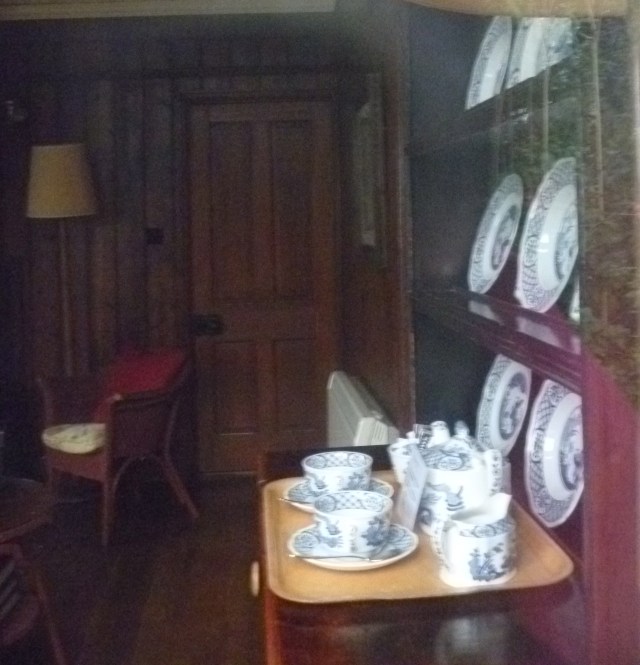
The Castle Bungalow Welcome Tray (through the window)
As it says in the Boulton and Paul website link above “Nothing too big, too small, or too difficult, was outside the scope of their ingenuity.”
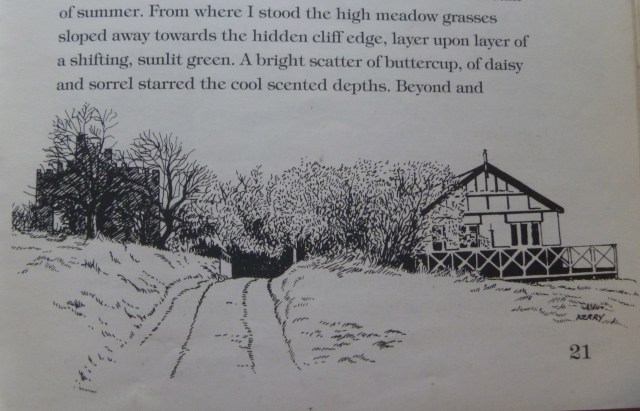
Drawing of the bungalow from the Peppercombe history book
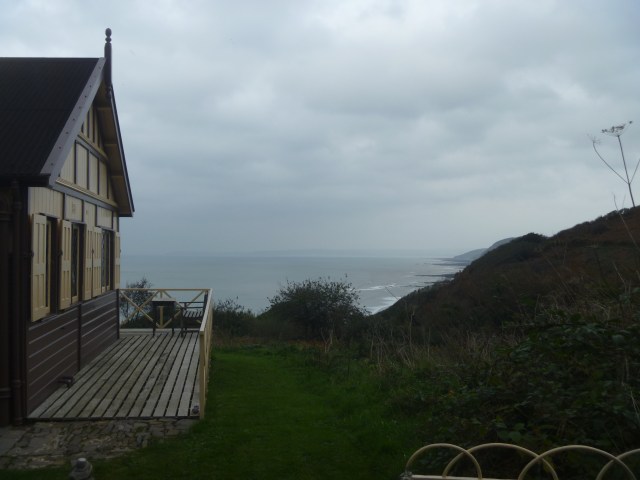
The Southwest Coastal Path national trail passes along the coast here and we couldn’t resist joining it for a while to get a view of the Castle Bungalow in its setting and, of course, just sit on a quiet bench and contemplate the sea and the sky and peaceful scene in front of us. In the other direction, beyond the bungalow, the path heads towards nearby picture-postcard Clovelly.
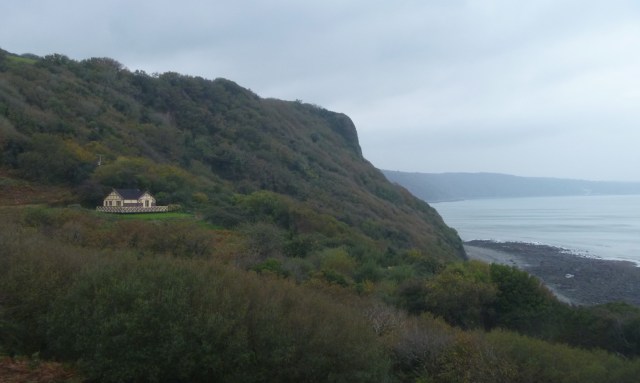
Castle Bungalow and the sea from the SW Path bench
I spent just one night as a guest at Bridge Cottage … I hope the Christmas Landmarkers will bring fairy lights for the windows!
On our final day at Pond Cottage (1) my friends had arranged a visit to The Swiss Cottage (2), another Landmark Trust property on the Endsleigh estate but a 15 minute walk away. With my love of all things Swiss I have always been intrigued to see the cottage for real and it did not disappoint.
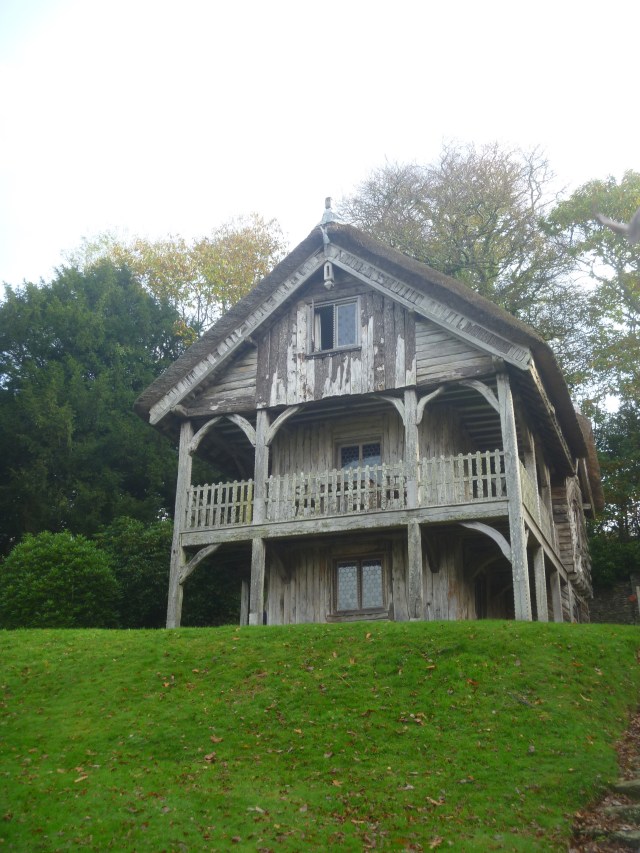
The Swiss Cottage
“A wonderfully eccentric chalet designed by Jeffrey Wyatville in a setting that indeed compares with Switzerland at Endsleigh, one of the best surviving examples of that most imaginative and English landscape aesthetic, the Picturesque.” Wonderfully perched above the Tamar Valley with a steep path to it from the drive and further steep slopes in front, the setting could indeed be in Switzerland. The balcony is a typical feature of the Swiss chalet.
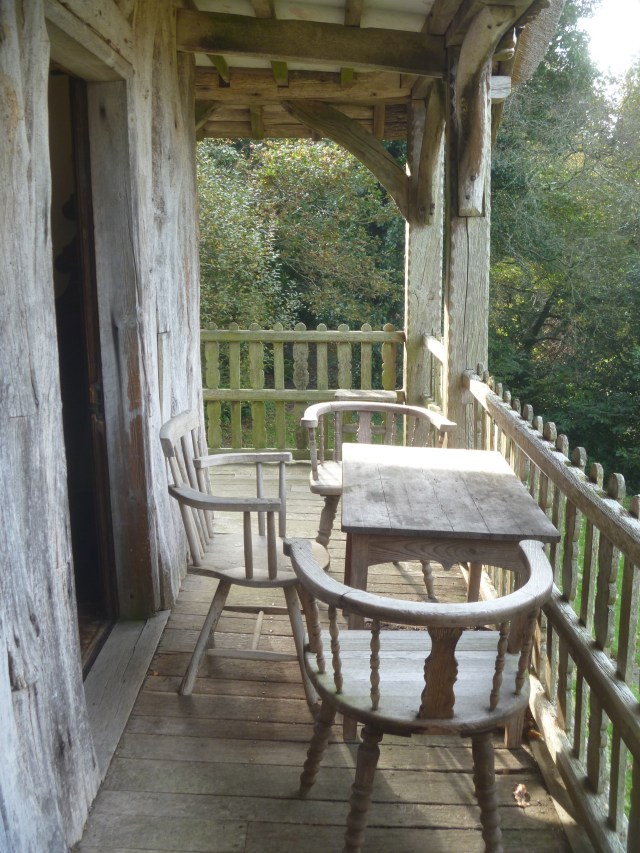
Tea on the Verandah
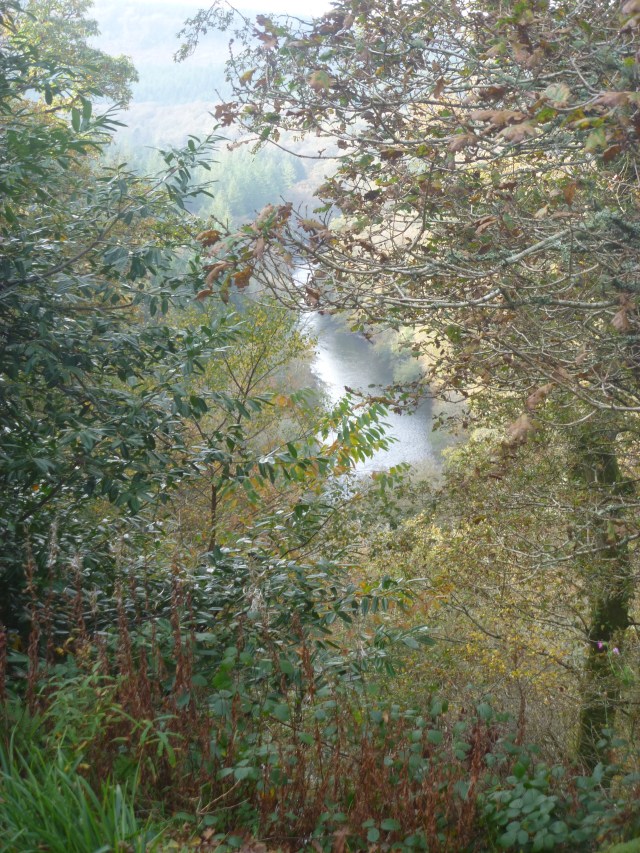
Through the Trees you can just see the Tamar River
On changeover days, by prior arrangement with head office, it is often possible to see inside Landmarks. This was the case with our three visits on that Friday.
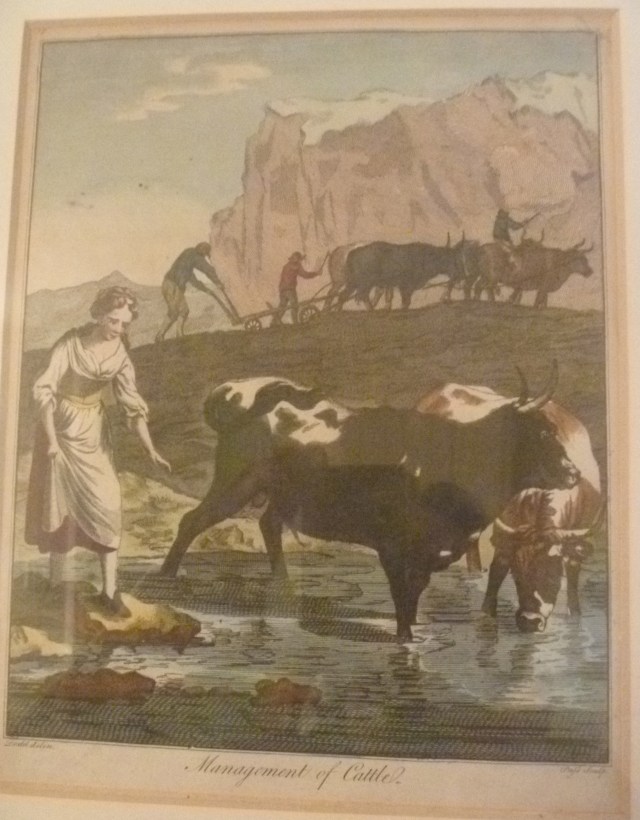
Swiss Cattle Management
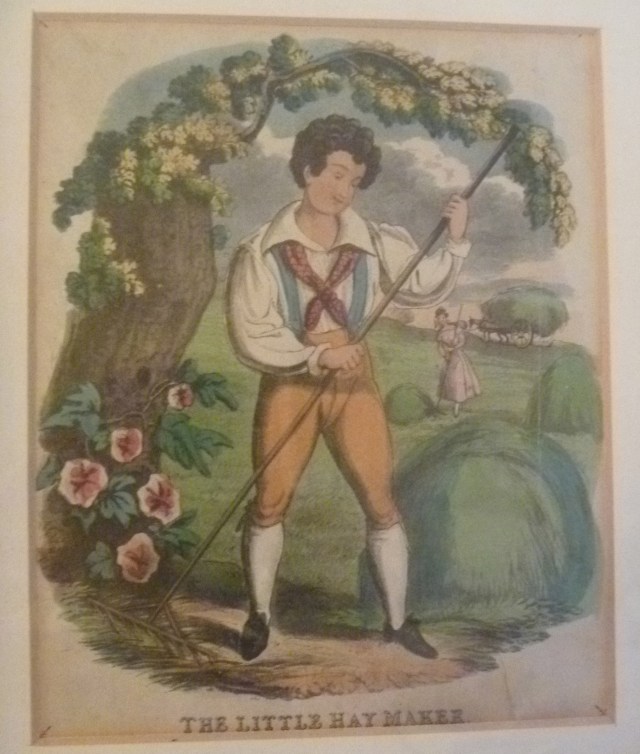
The Little Swiss Haymaker
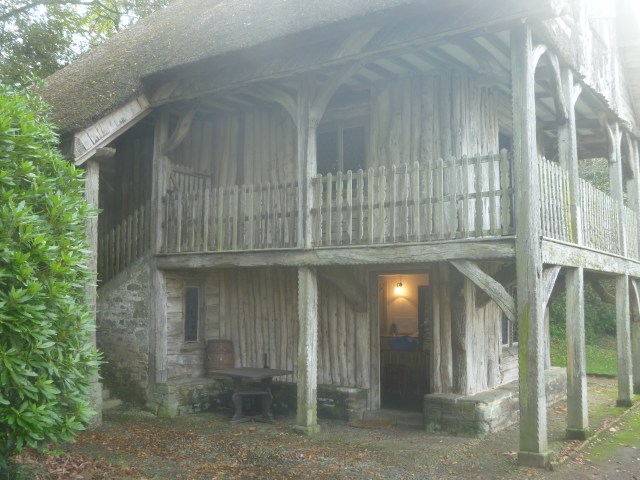
Welcome to the Swiss Cottage
Finally, we had to leave Endsleigh and its cottages behind and make our way across Devon to Peppercombe on its north coast. Our route just happened to take us through the country town of Great Torrington. Just a couple of miles before reaching Torrington, at Stevenstone, is another Landmark of interest to me – The Library (3).
“The Library and its companion, the Orangery, stand in the remains of a formal garden beside the ruins of the main house [Stevenstone]. Having a library in the garden remains a mystery to us, but to stay in these handsome spaces, even without the books, is an enlightening experience. Not only is the building rather charming, it is not far away from Exmoor and the beaches of North Devon. It has an open fire, enclosed garden and nearby parking.”
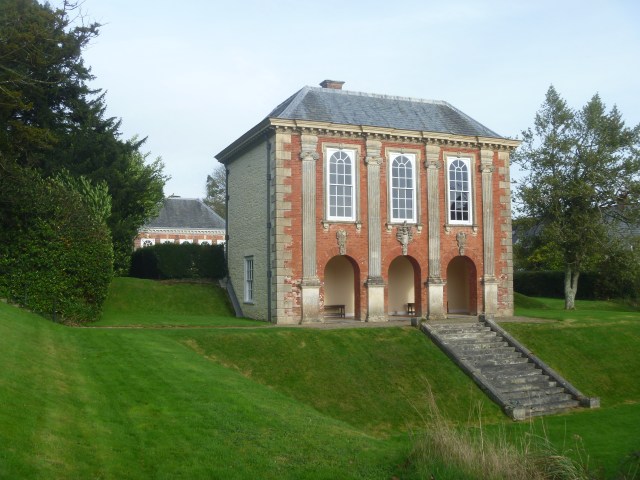
The Library with Orangery Behind
The Library has one grand sitting room/library on the first floor with an open fire and comfy chairs. In contrast the Orangery is an unheated bedroom which may be cool and refreshing in summer but struck me as rather chilly on that bright October morning. A room for only the hardiest of Landmarkers.
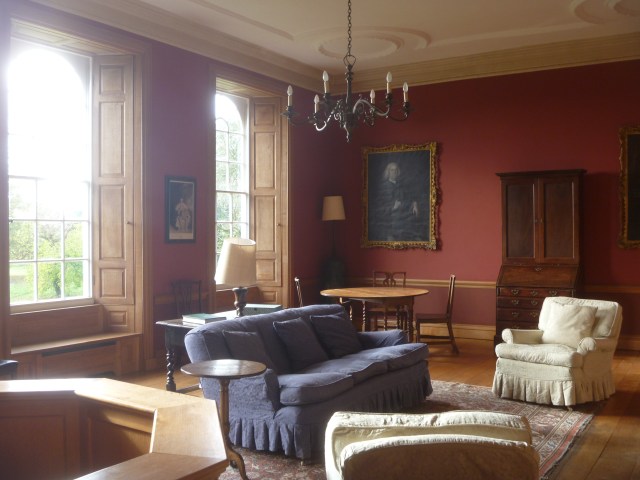
The Library Sitting Room
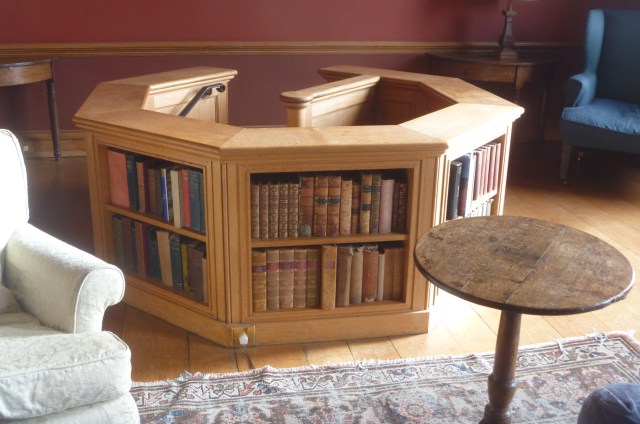
The Library’s Library
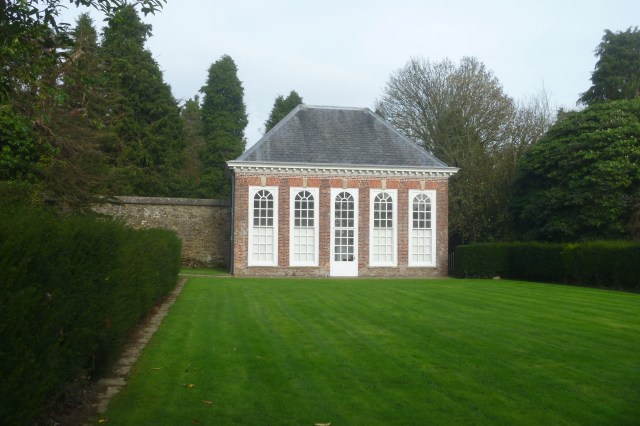
The Orangery
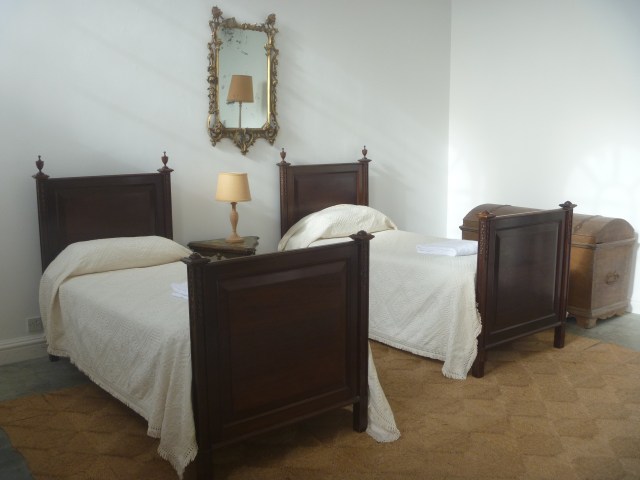
Hot Water Bottles at the ready inside the Orangery
Once known merely as 28 South Street Cawsey House (4) is a lovely big family house on one of the main streets of Torrington. The location means cafes and shops and the lively arts centre are on the doorstep.
“Cawsey House, an elegant late-Stuart townhouse, once belonged to a wealthy merchant who commissioned one of Devon’s most accomplished plasterers to embellish its main rooms. Torrington is a town rich in historic interest, scene of a decisive battle in 1646 during the Civil Wars.”
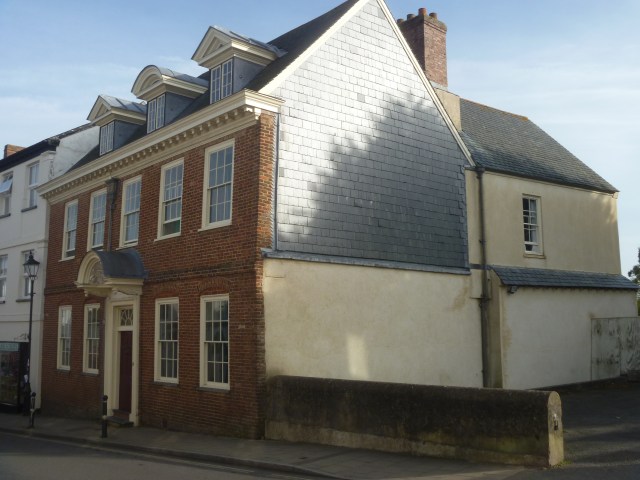
Cawsey House, Great Torrington
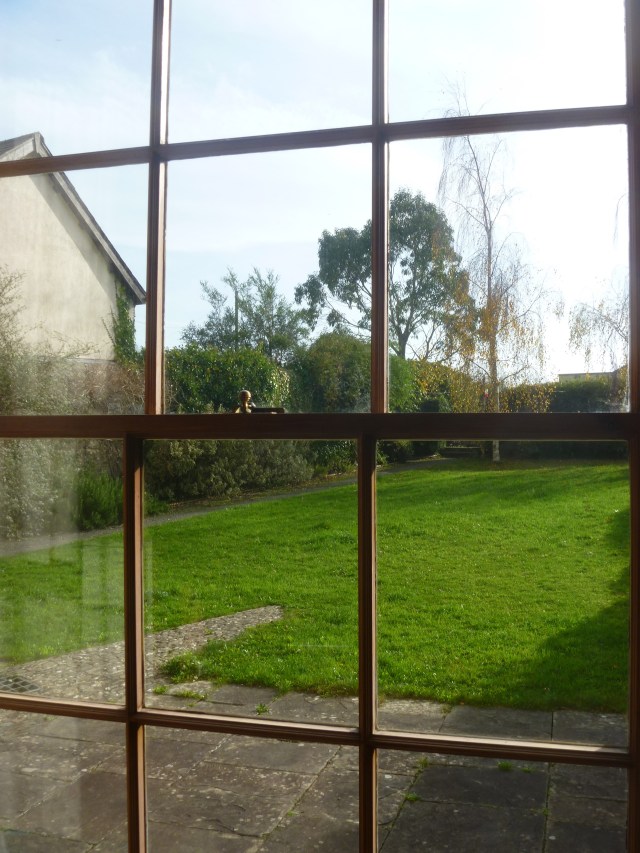
The Cawsey garden
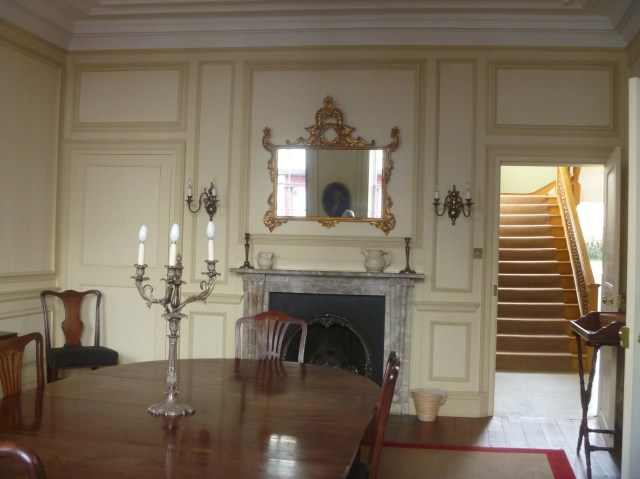
The Cawsey Dining Room
After lunch in Great Torrington we headed off for our destination but to get there you have to drive through Bideford. We weren’t going to stop but then we saw, tied up at the quay, the MS Oldenburg Lundy’s “lifeline”.
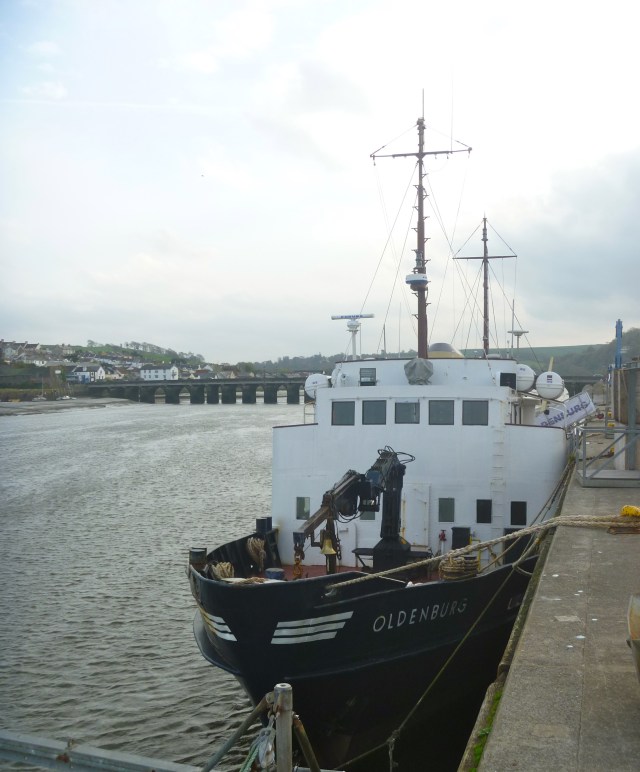
MS Oldenburg Fore
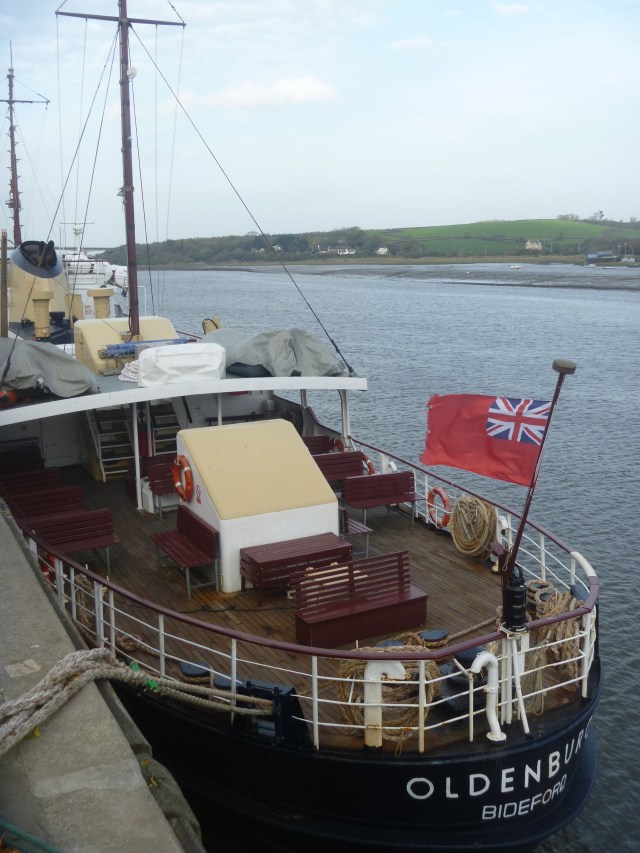
MS Oldenburg Aft
“She is a graceful motor vessel, comfortable and built on traditional lines. Below decks she retains her original panelling and brass fittings, but has been skillfully modernised to provide heated saloons, bar, buffet, shop and information centre.”
The Oldenburg was moored up alongside the quay where the rather distinctive Lundy Office operates. It’s there to provide information about the island and its 23 Landmark properties and to sell boat trip tickets. The Oldenburg had just finished its 2014 season criss-crossing the Bristol Channel between Lundy and Bideford and the other port from which it operates – Ilfracombe.
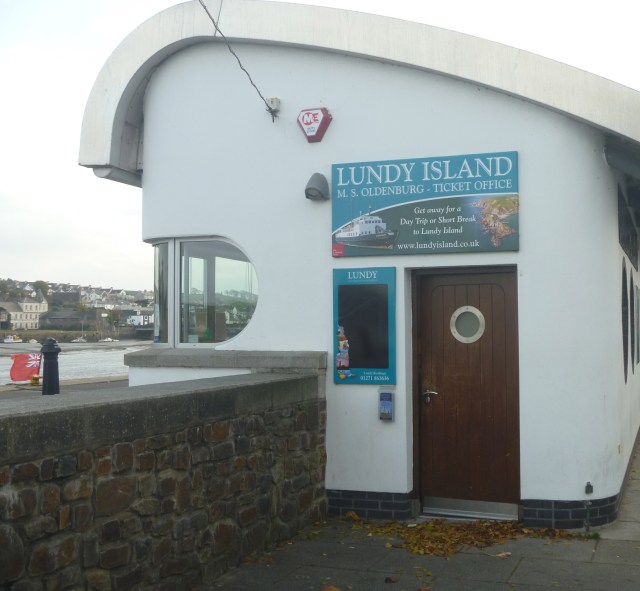
The Lundy Office at Bideford
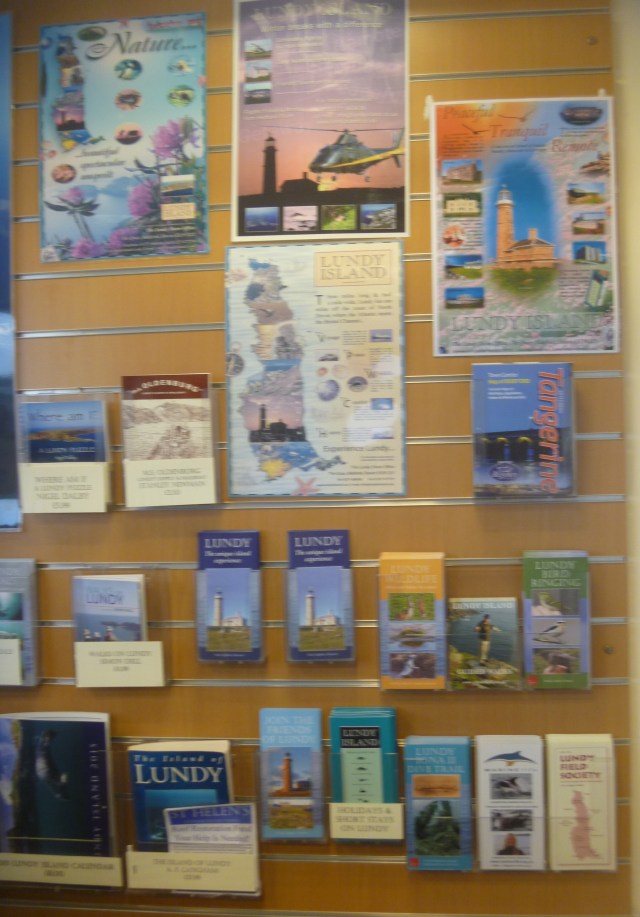
Lundy Information
I’ve made two day trips to Lundy during the season and, luckily, enjoyed perfect sailing weather on both. It’s a bit of a slog up the path from the mooring jetty to the village but then level walking along stony or grassy footpaths for wonderful sea views. There’s a shop, a pub and a church. Read more about my day trips here.
Finally we reached our destination : Peppercombe and I will write more about this delightful valley and my brief stay at Bridge Cottage (5) another time.
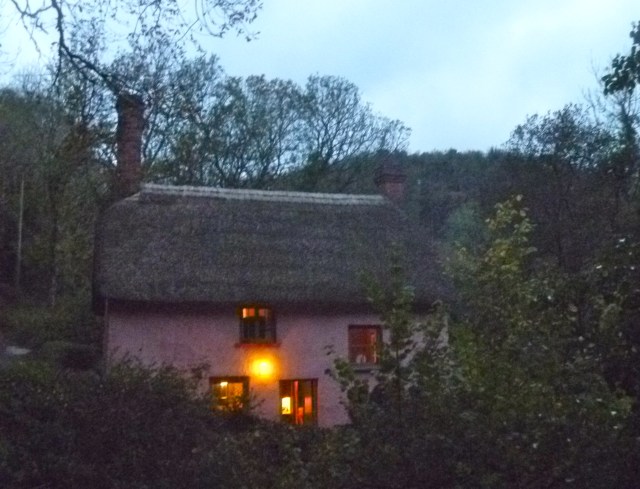
Evening Arrival at Bridge Cottage
 miladysboudoir