Amsterdam Made By Hand – De 9 Straatjes en De Noordermarkt

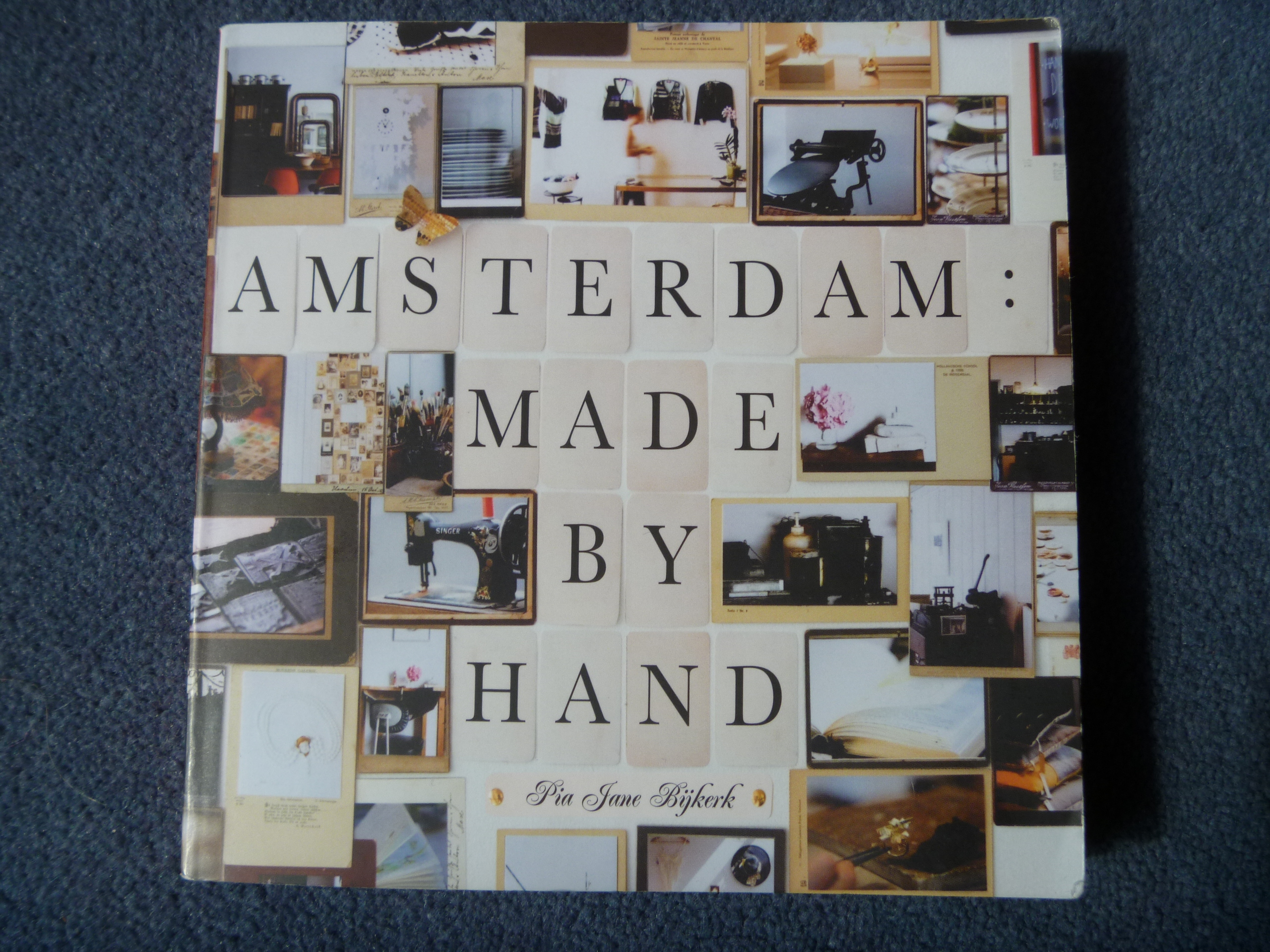
For quite some time I have had my eye on this lovely little book and as soon as I knew about my trip to the city I could not resist buying. To me there is something very special about these travel publications from the Little Bookroom. Here’s a press comment from their website :

“The Little Bookroom…wants travelers to slow down. They’ve carved themselves a niche in the over-crowded travel book industry by thinking small with titles that define the character of a city.”—The Pittsburgh Tribune
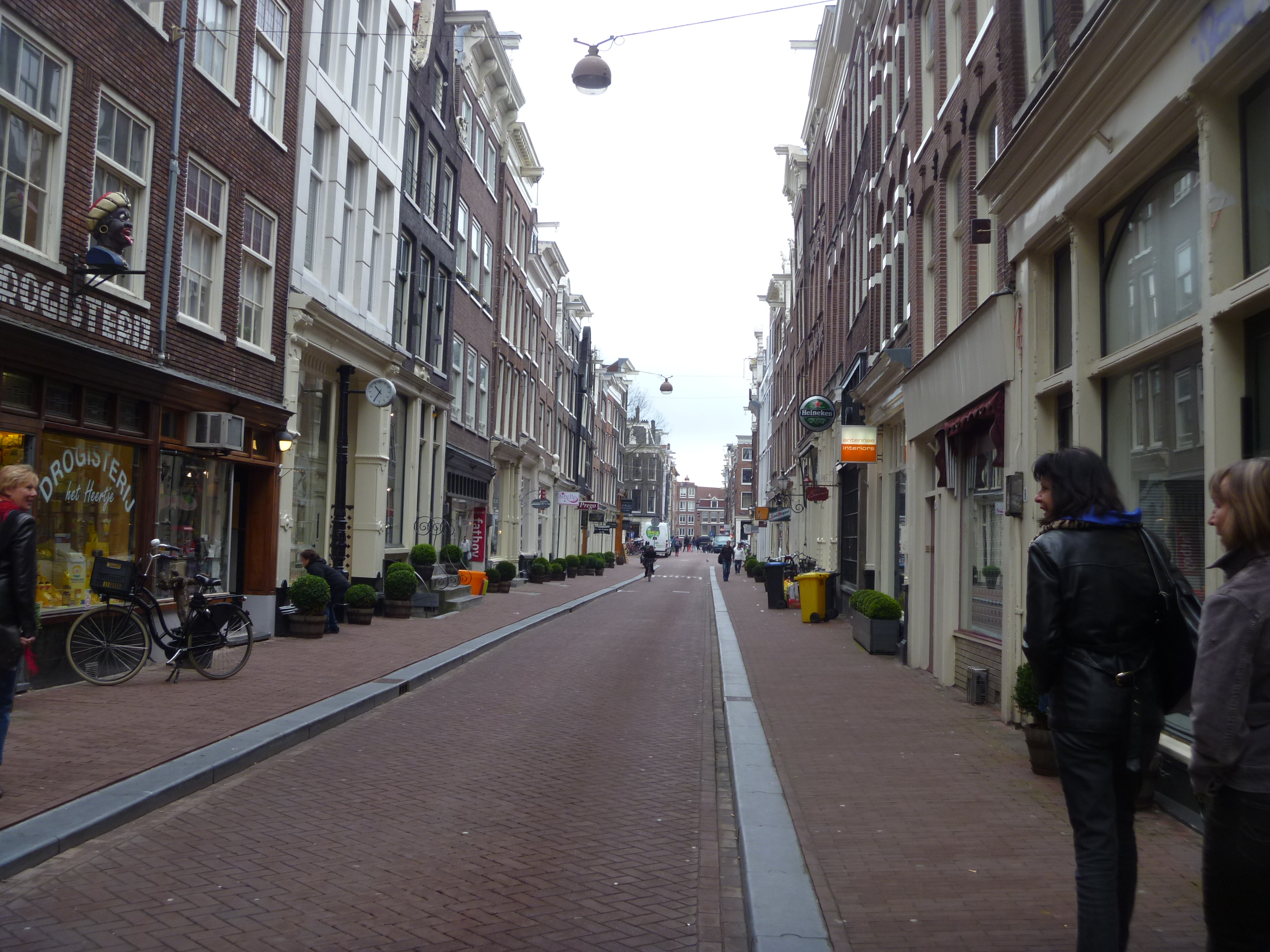
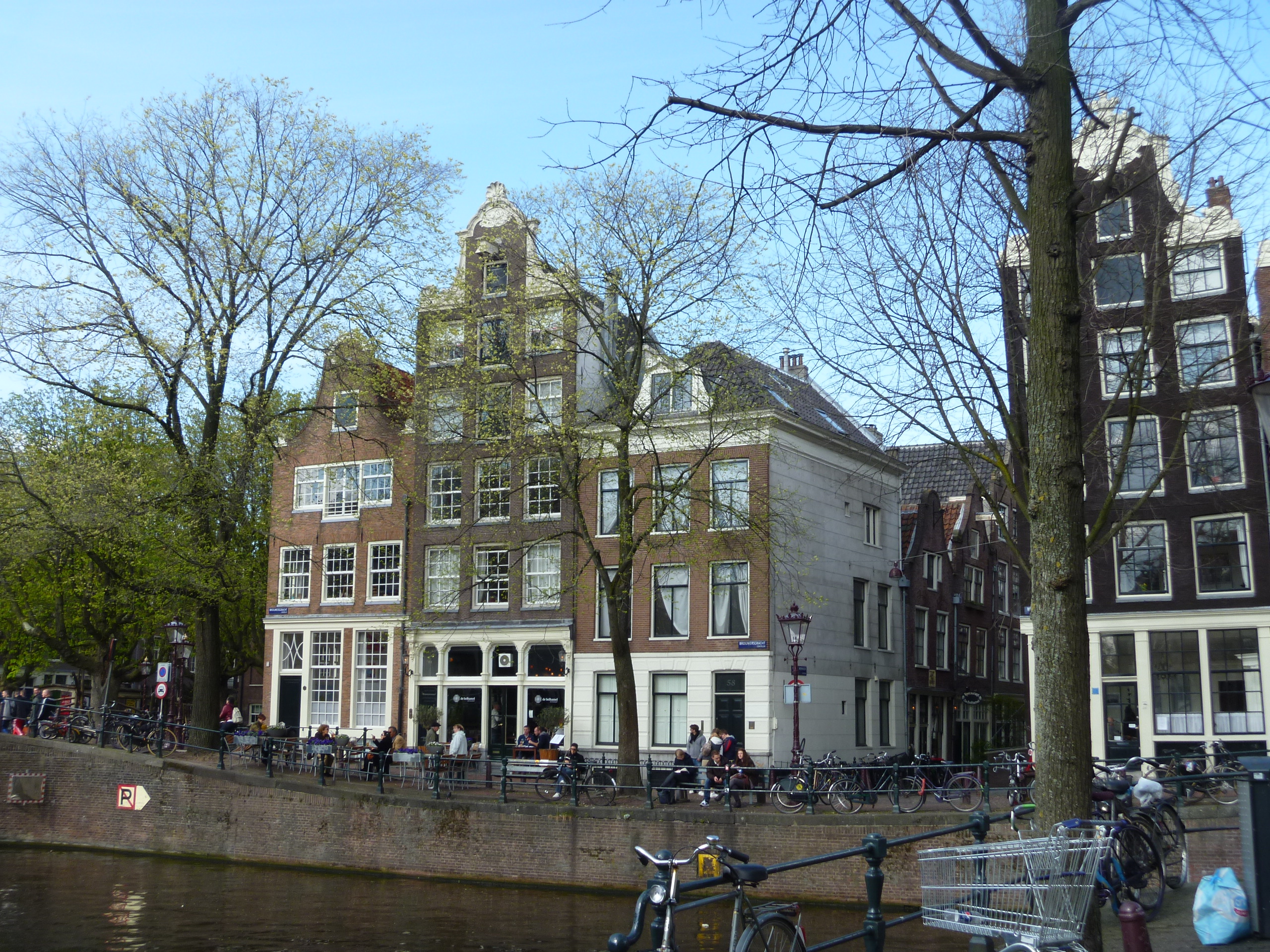
There’s an area of Amsterdam, very near to our digs, called The Nine Streets  [De 9 Straatjes]. On our first morning we found ourselves wandering along the nine streets, popping into cafes for sustenance and to warm ourselves, calling into boutiques, shoe shops, design shops, galleries and studios, trying things on and generally having fun spotting the unusual. We also took lots of photos.
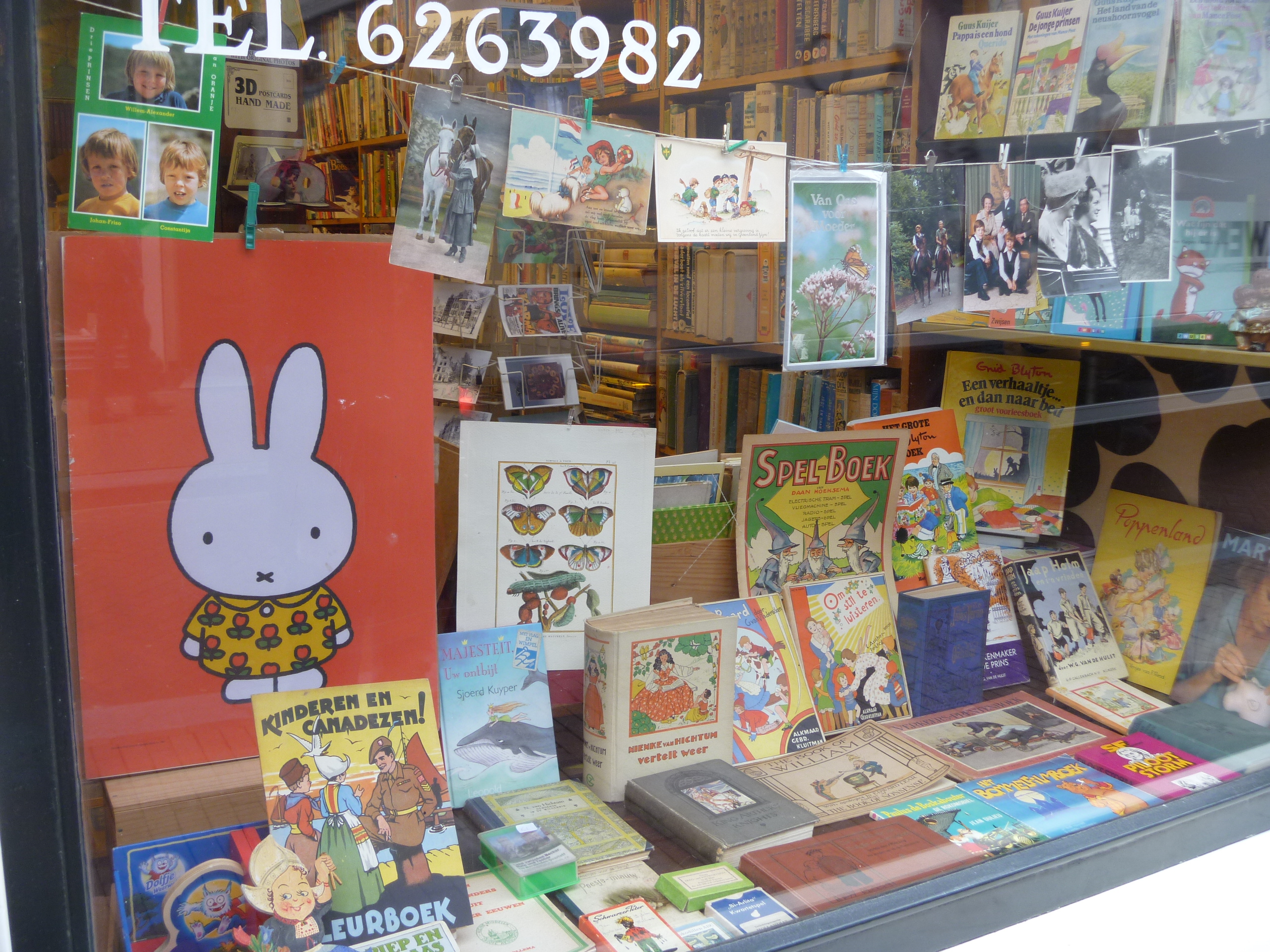
Antiquariaat Culturel

Gasthuismolensteeg 4

Culturel is run by Hans and Ina Cramer, who I like to imagine spending their non-working hours amid a snug muddle of crosswords, sleeping dogs and homemade cake. Their business oozes quintessential second-hand bookshoppishness, with precarious towers of tomes and ceiling-to-floor shelves crammed with literature, art and history books hand-picked by Ina. None of them is catalogued; there is no computer, let alone a website, or even a till. Among other books, I have bought an Esperanto translation of The Little Prince here, and also a copy of The Diary of a Nobody, mainly because I liked the fact that on the inside cover Hans has written ‘very funny’.”  From an article in the Guardian in 2008 : Amsterdam: literature’s capital city
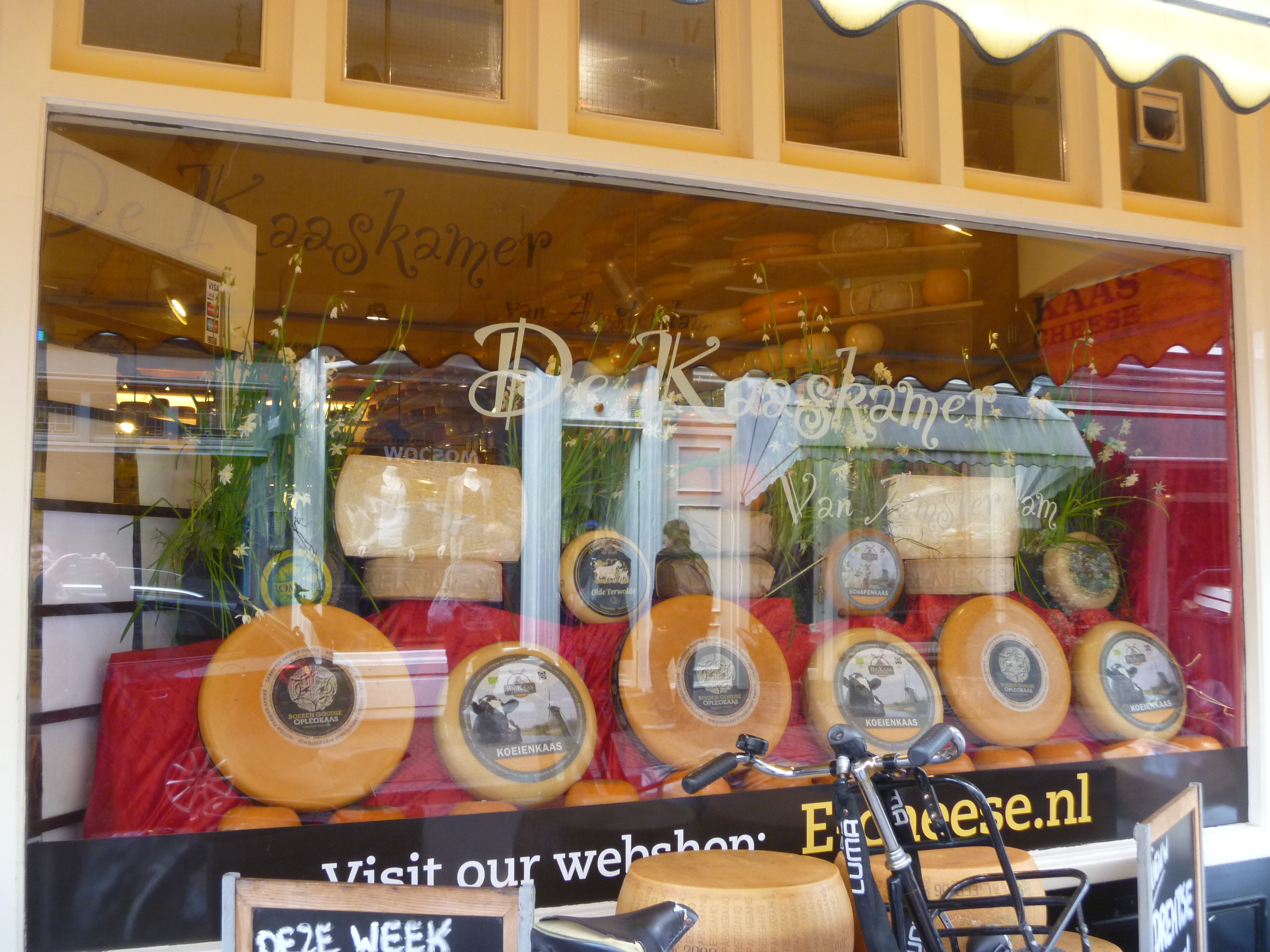
De Kaaskamer – The Cheese Shop (7, Runstraat)
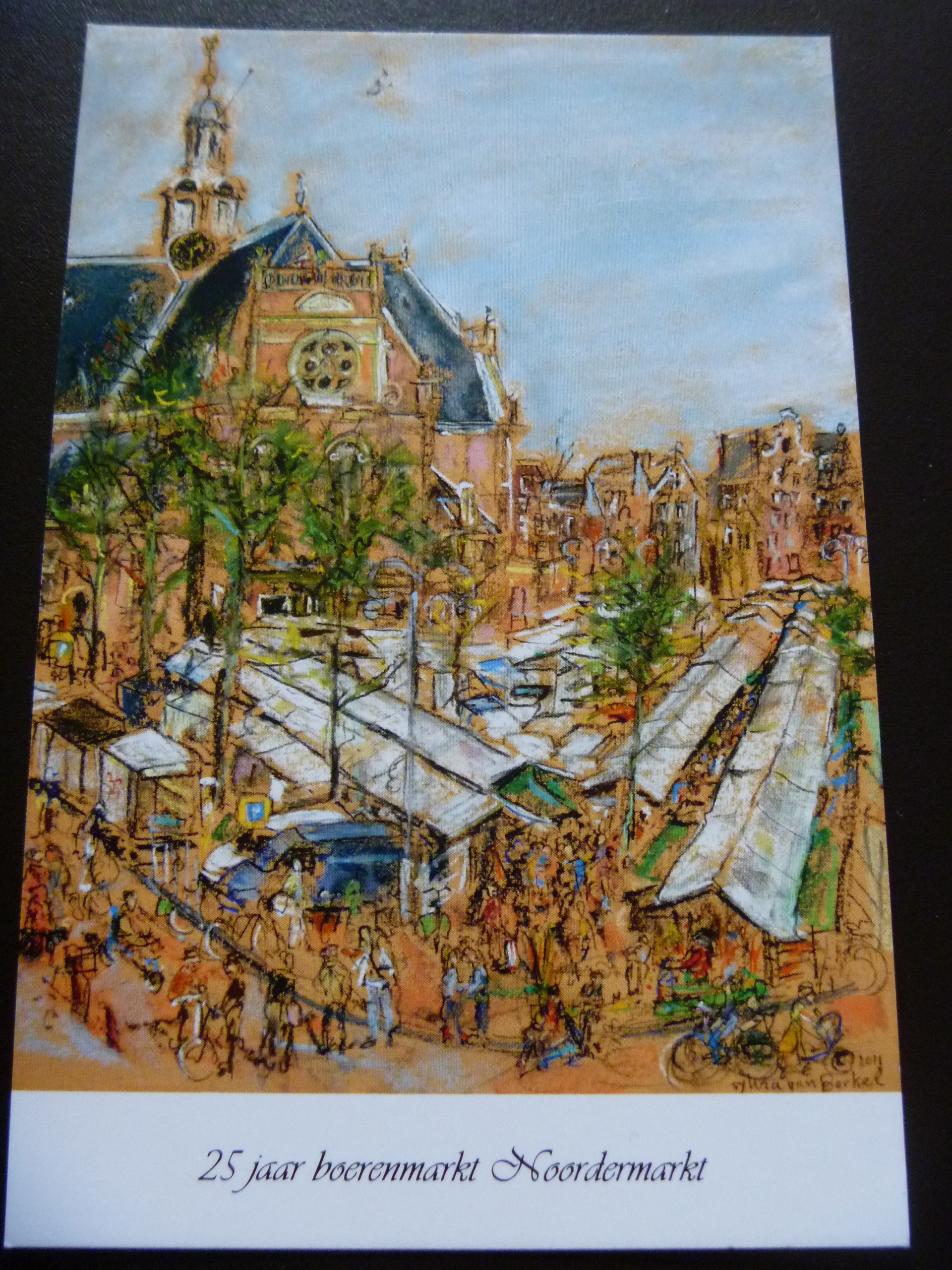
The Noordermarkt celebrates its 25th birthday on 5 May 2012.
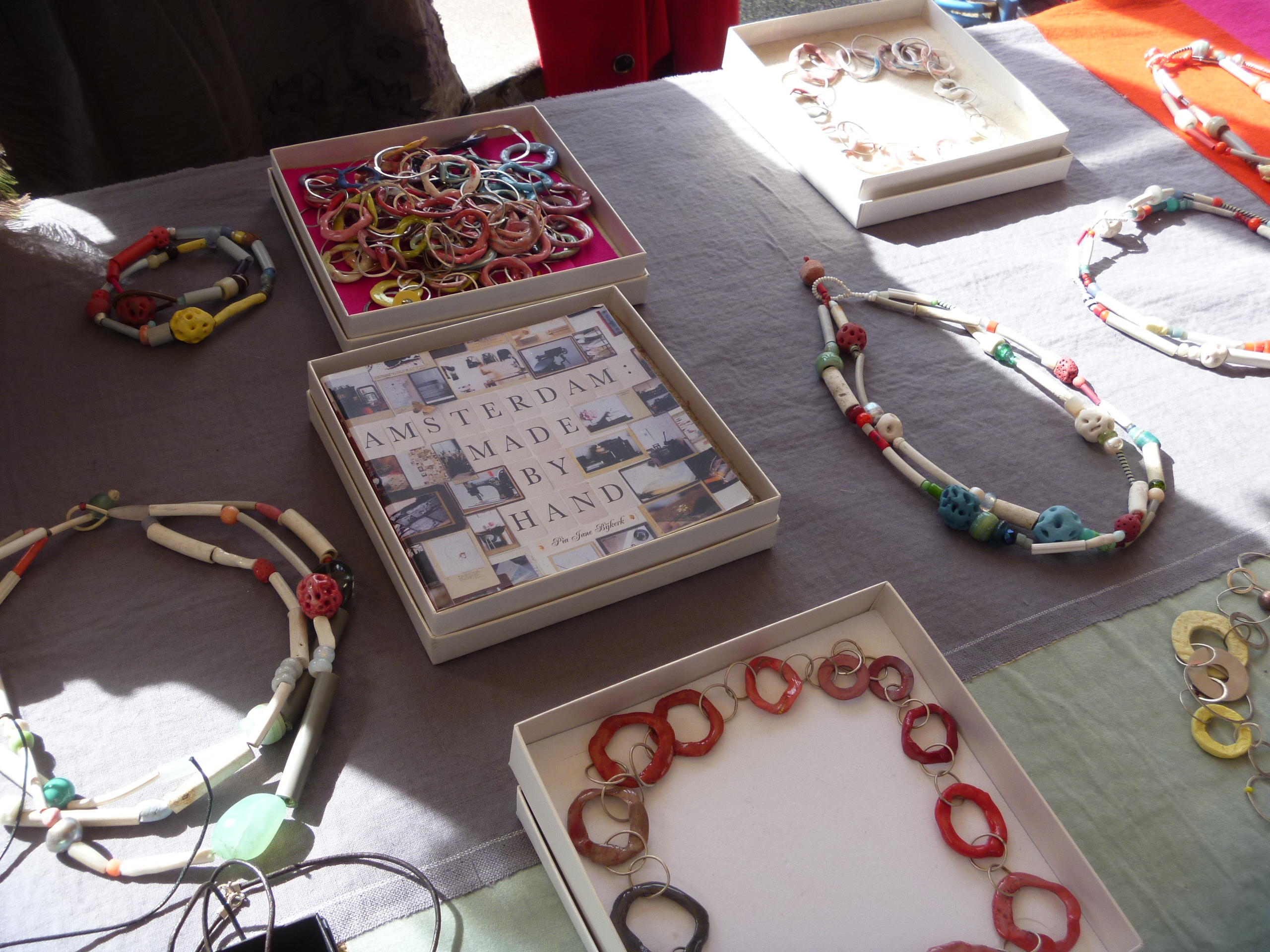
Akelei on the Noordermarkt

The Noordermarkt, also very near our place, lies in the shadow of the Noorderkerk just by the Prinsengracht. Mainly it’s an organic farmers’ market with stalls of mouthwatering fruit and vegetables, spices and herbs and homemade honeys and preserves. It operates on Saturdays and in addition to the food stalls there are several secondhand and ‘made by hand’ stalls, including Akelei (jewellery),  Anne (recycled clothing and stuff) and Anna Maria Preuss.
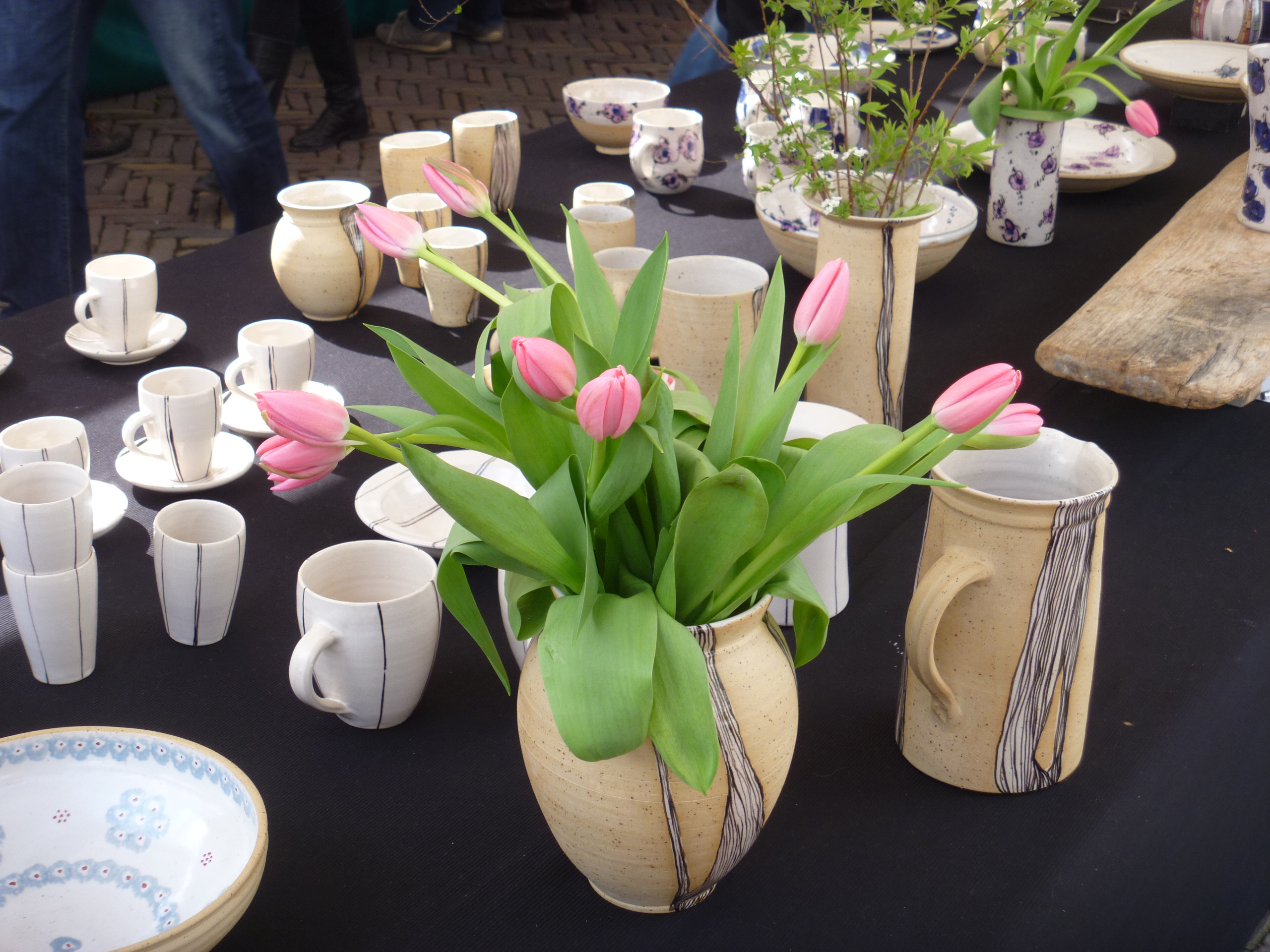
Anna Maria Preuss stall, Noordermarkt
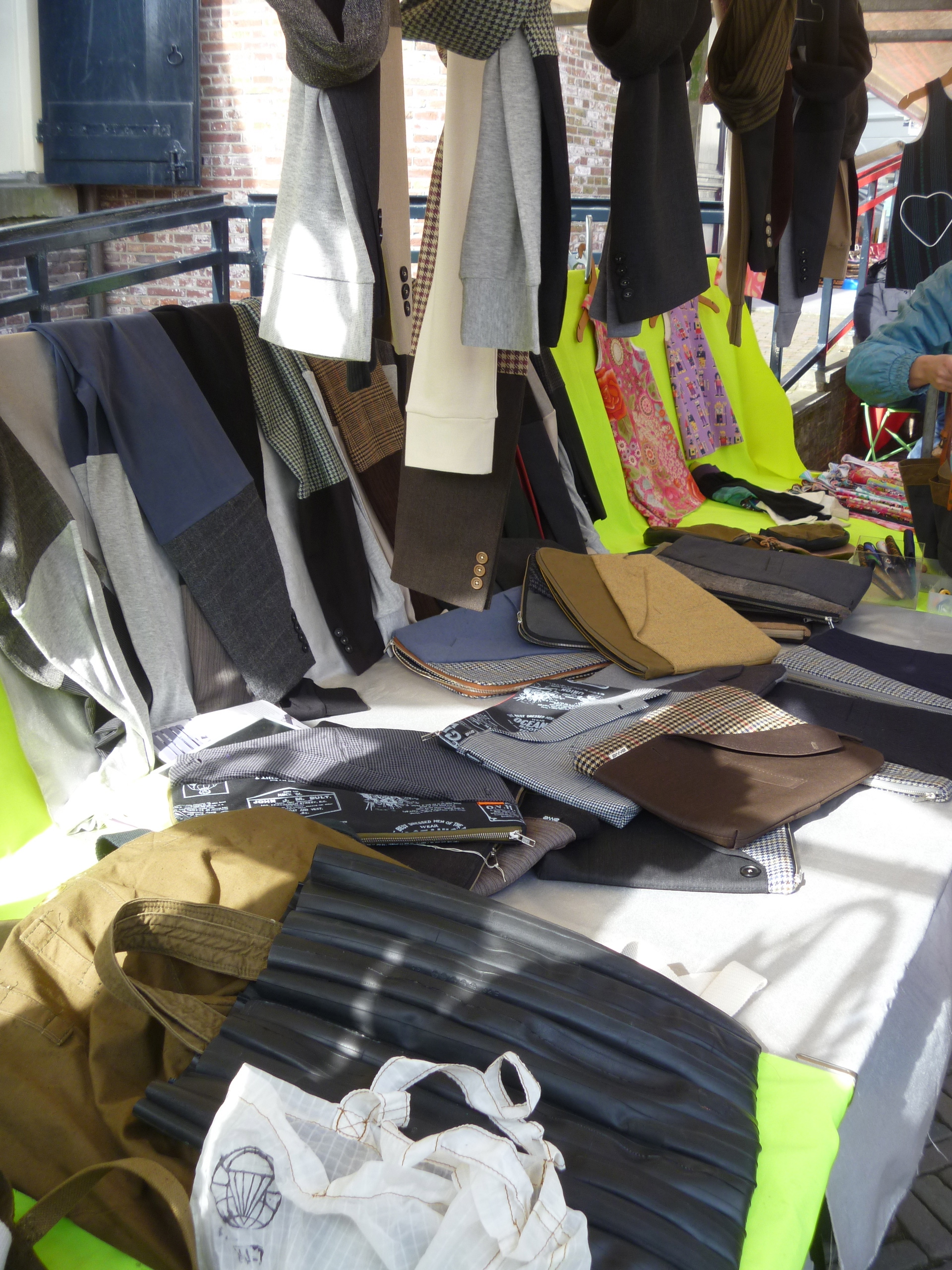
Anne’s Stall, Noordermarkt

On our Saturday morning the sun shone and we sat outside by the church where a band of musicians played Russian music and we watched the world go by.
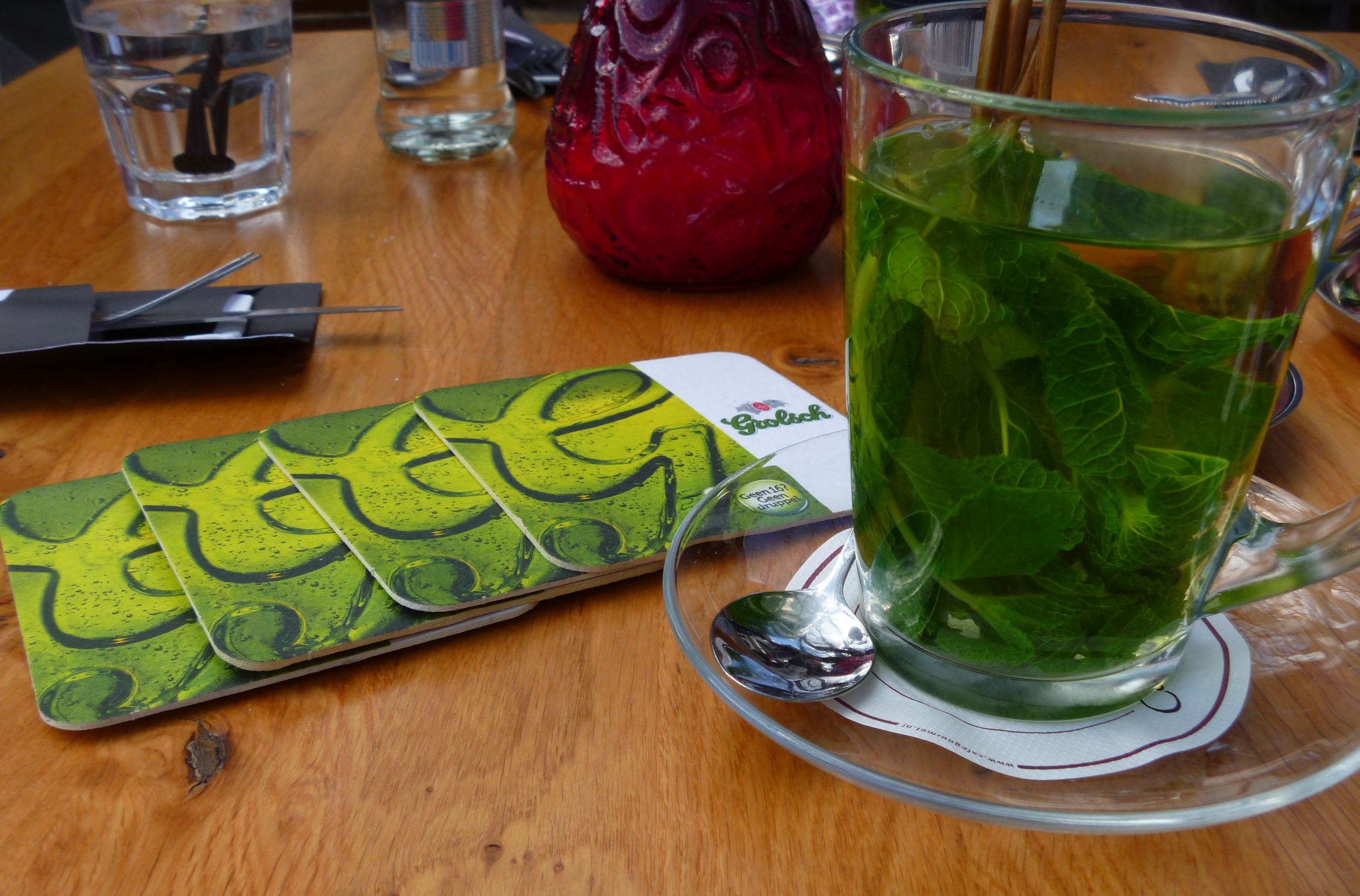
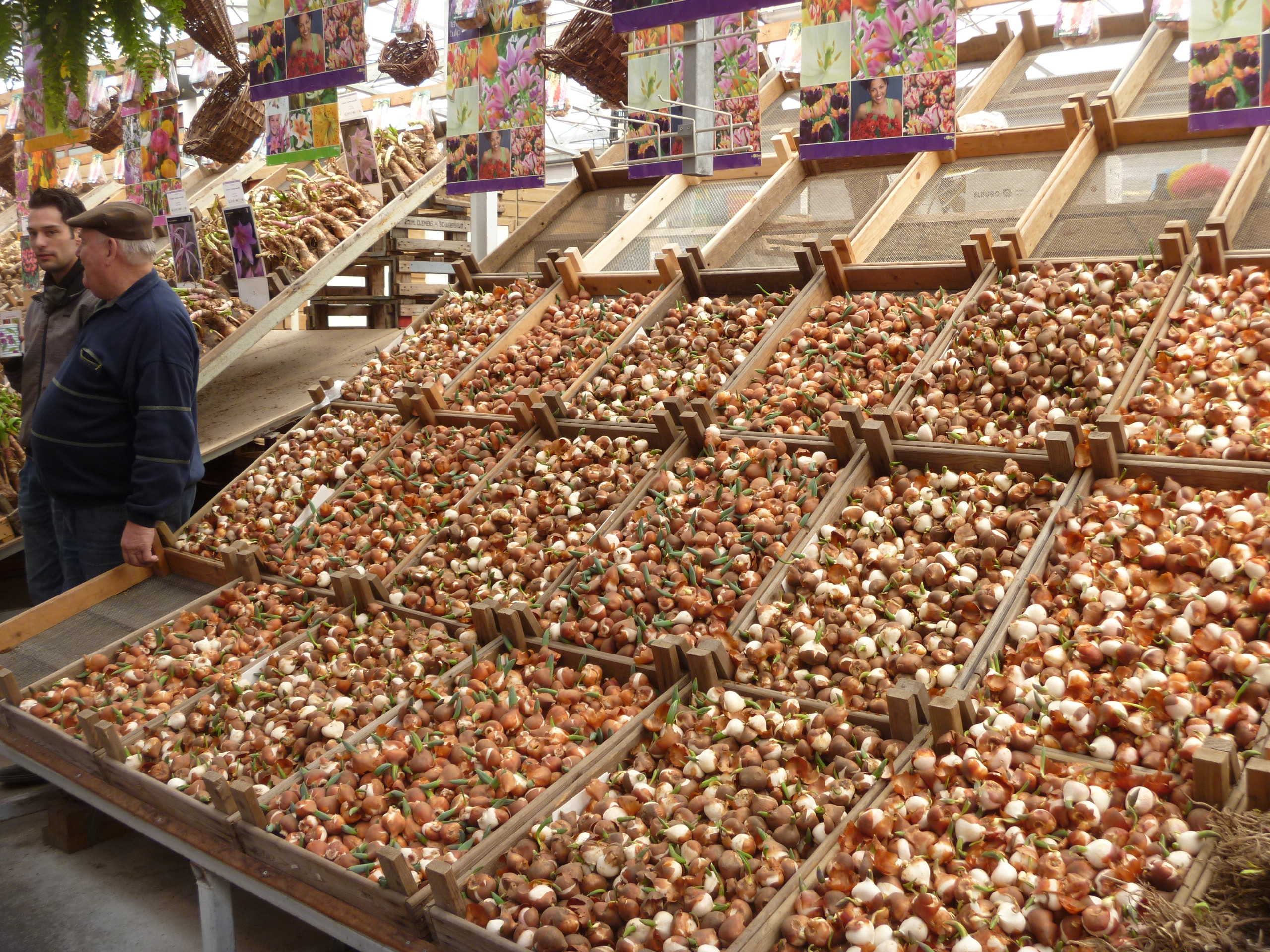
Then it was on to the famous daily Flower Market by the Singel canal – a good place to stock up on bulbs to take home!
Herengracht Life

Before the weekend just past I was last in Amsterdam in the late 1960s when it was all hippy and flower power and full of people sleeping rough and doing I don’t know what. I was on a cycling holiday and staying in a Youth Hostel outside the city by the Zuyderzee. I was not impressed by Amsterdam and couldn’t wait to get back to Broek in Waterland.

My previous impression of the city has been totally overturned. I love it! And I especially love the area where I stayed with my 2 Swiss friends. Our Dutch friend has a lovely flat nearby too. Of course, this Amsterdam canal ring is now, not surprisingly, a UNESCO World Heritage Site.

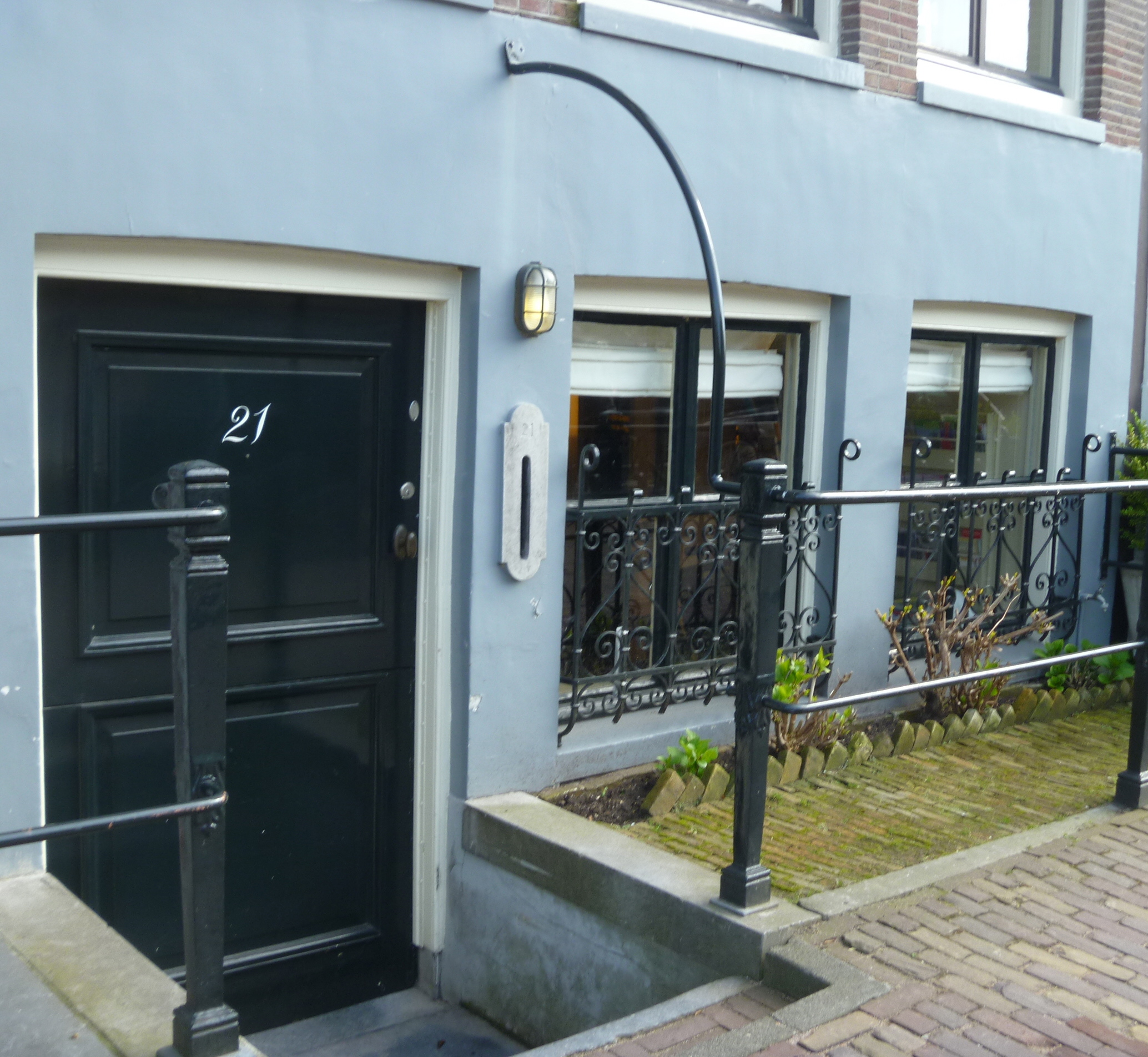
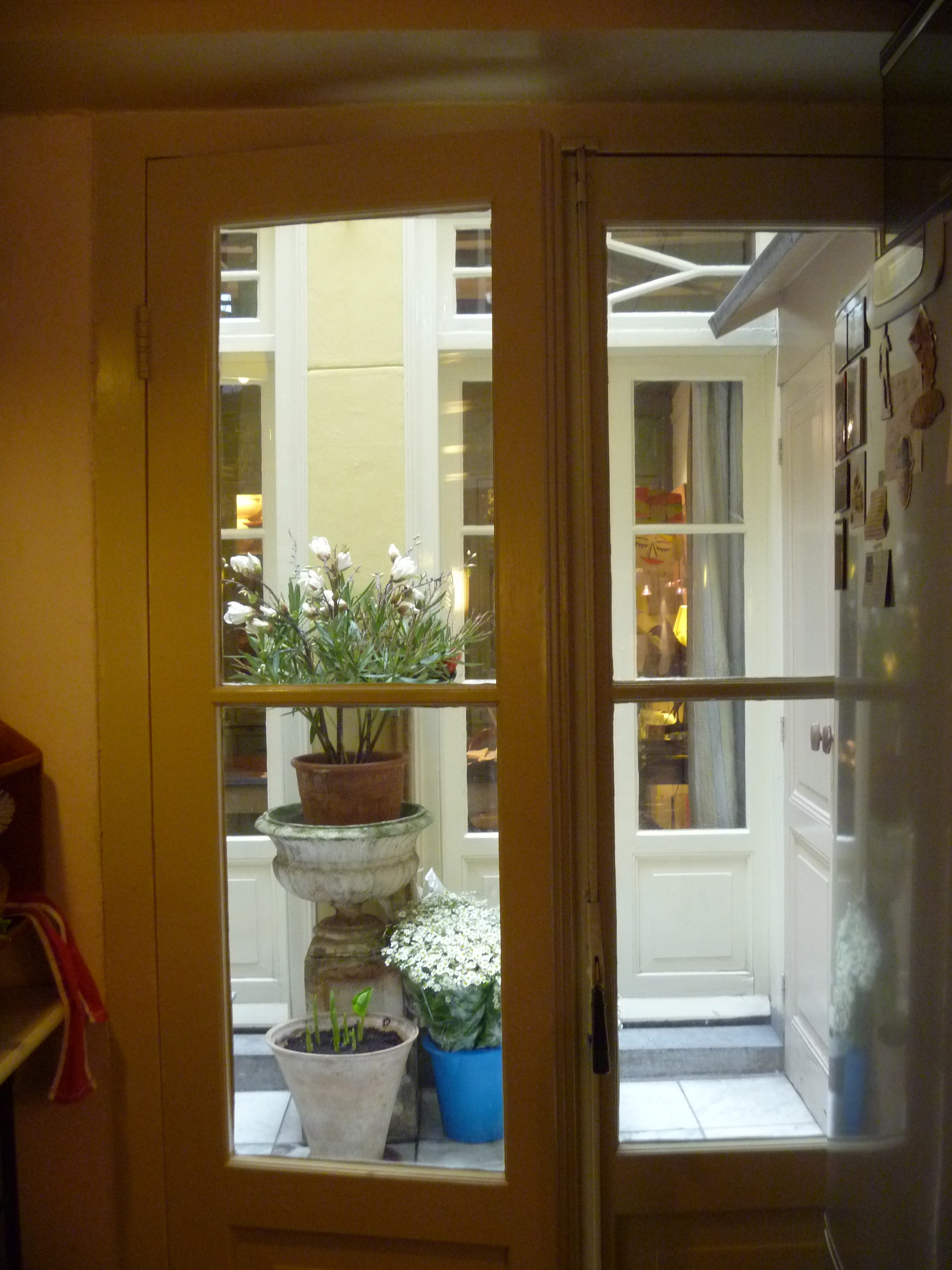
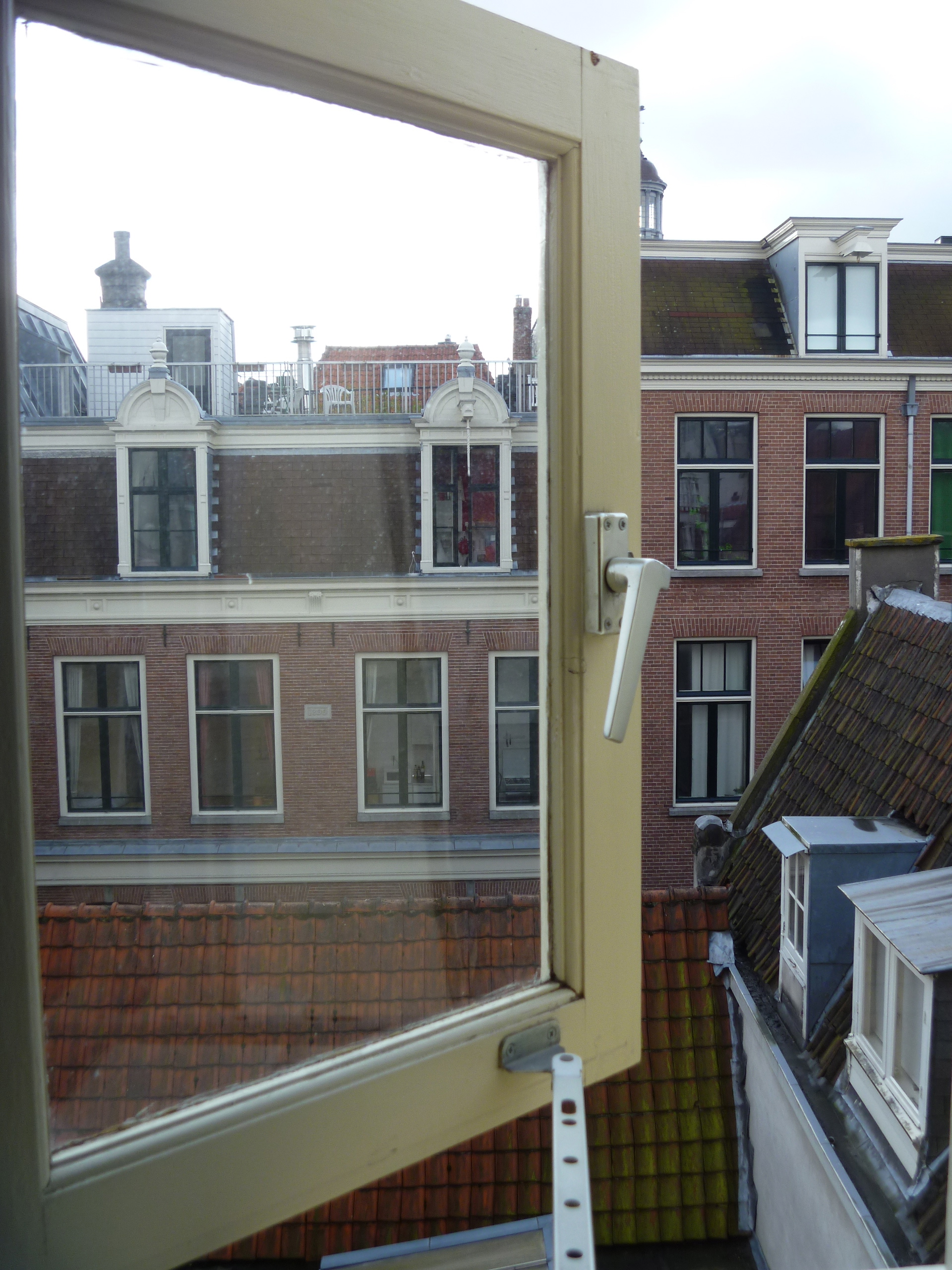
Our B&B was at 21 Herengracht in one of those so picturesque 17th century canalside houses of which Amsterdam is famous but which I didn’t even notice on my previous visit. Loes, our host, explained about the plan of the house – the narrow canal frontage was because the houses were taxed according to their width, the house is really 2 buildings linked by a covered passage (some houses still retain this tiny courtyard) – our duplex apartment on the second and third floors was reached by a very very narrow spiral staircase and situated in the ‘servants’ house at the rear of the building.

Courtyard within the house links the front with the rear building.

Rooftops of Amsterdam from our rear window.

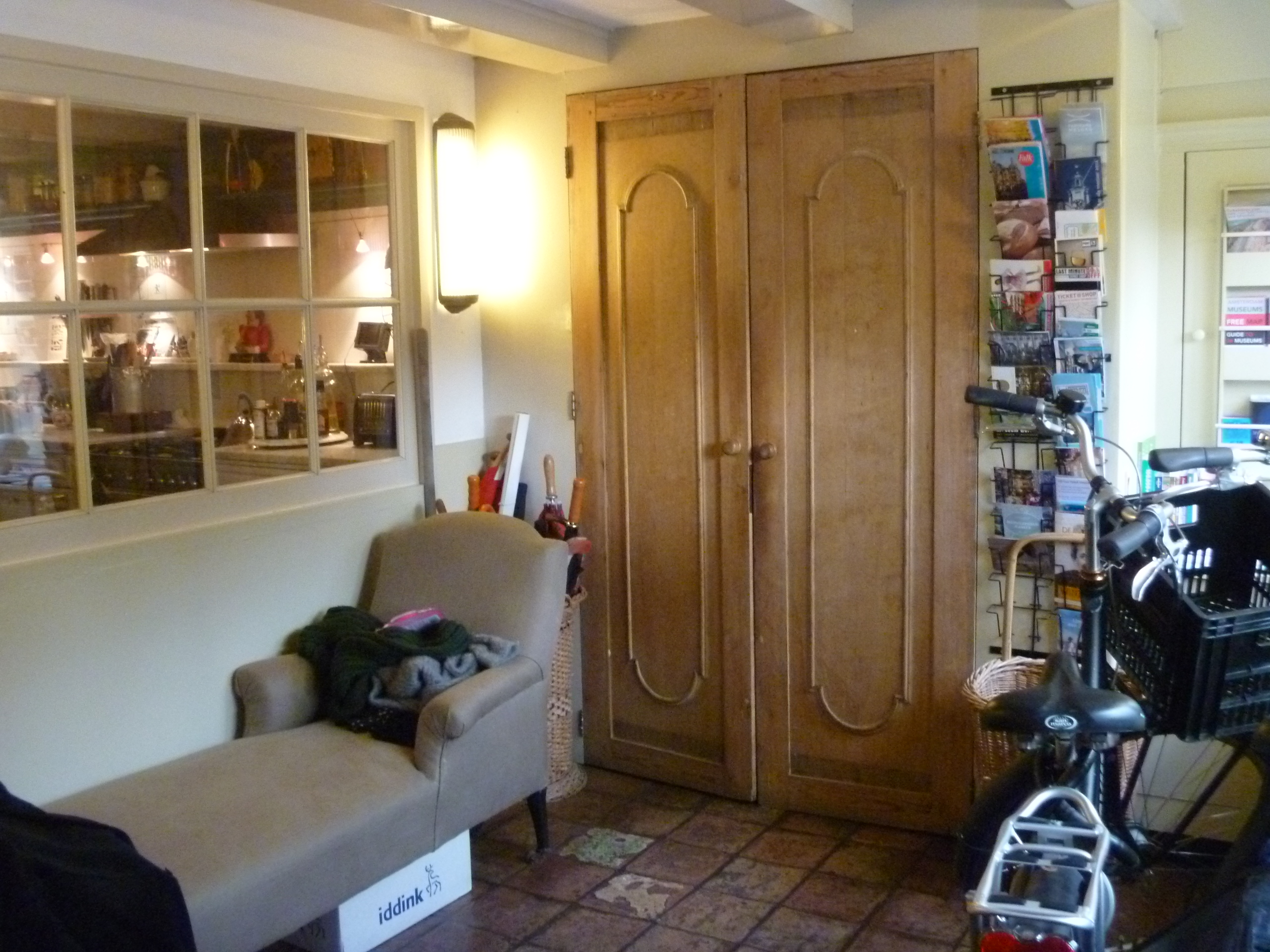
Entrance lobby with obligatory bike!

Within 5 minutes walk of the Centraal Station, past the multi-storey bike park, the Herengracht, Keizersgracht and Prinsengracht in this part of town are an oasis of calm and seemed totally tourist-free and almost totally car free. The bikes however could have proved hazardous – but we soon learned to look out behind us and step back onto the narrow pavement as we heard a tinkling bell approach.

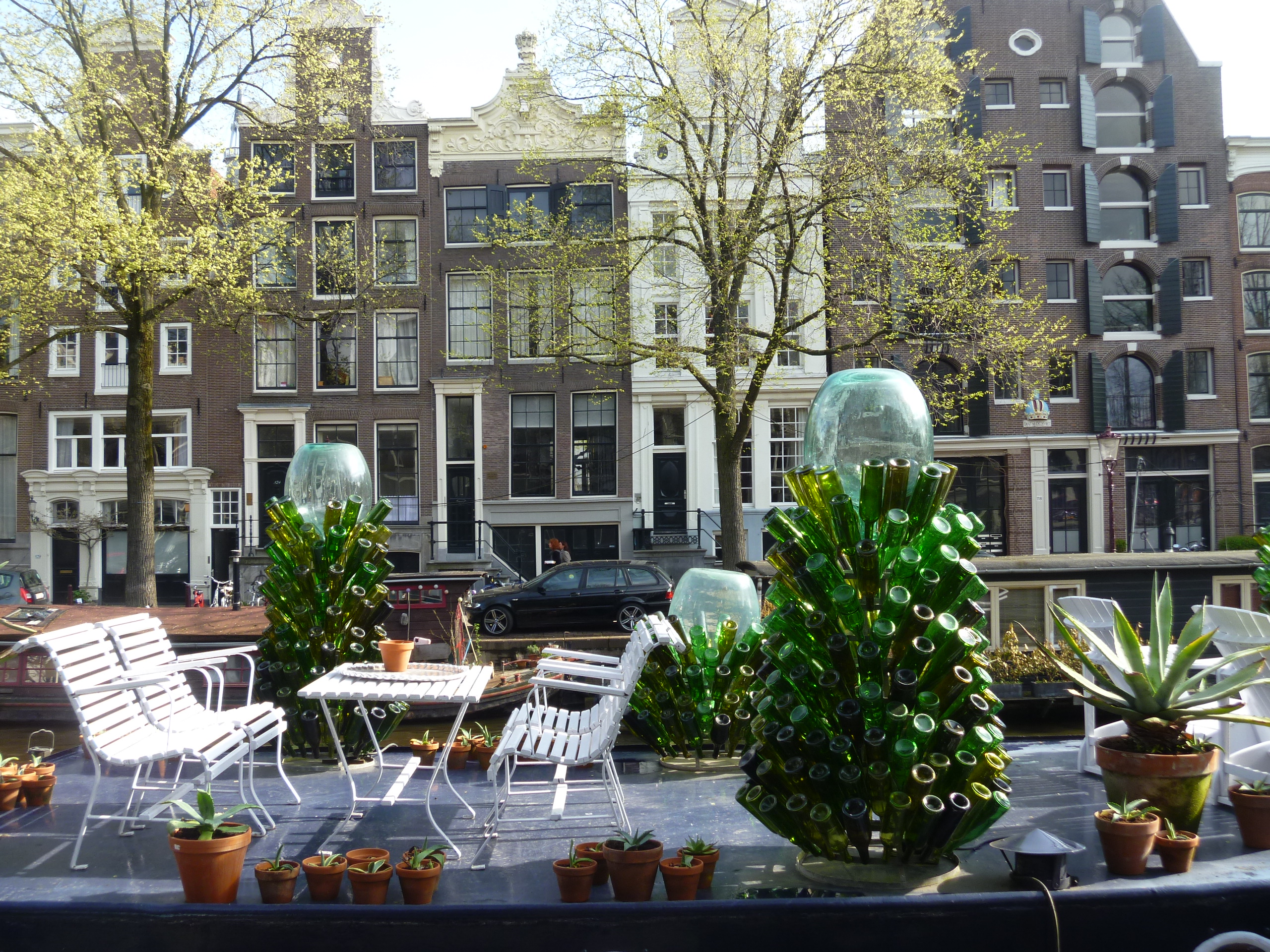
Houseboat garden with sculptures!
Of course, the folk of Amsterdam don’t just live in these picturesque houses by the canals, they also live in houseboats on the canals. Due to housing shortages in the 1960s and 1970s living in houseboats here was positively encouraged by the city council.

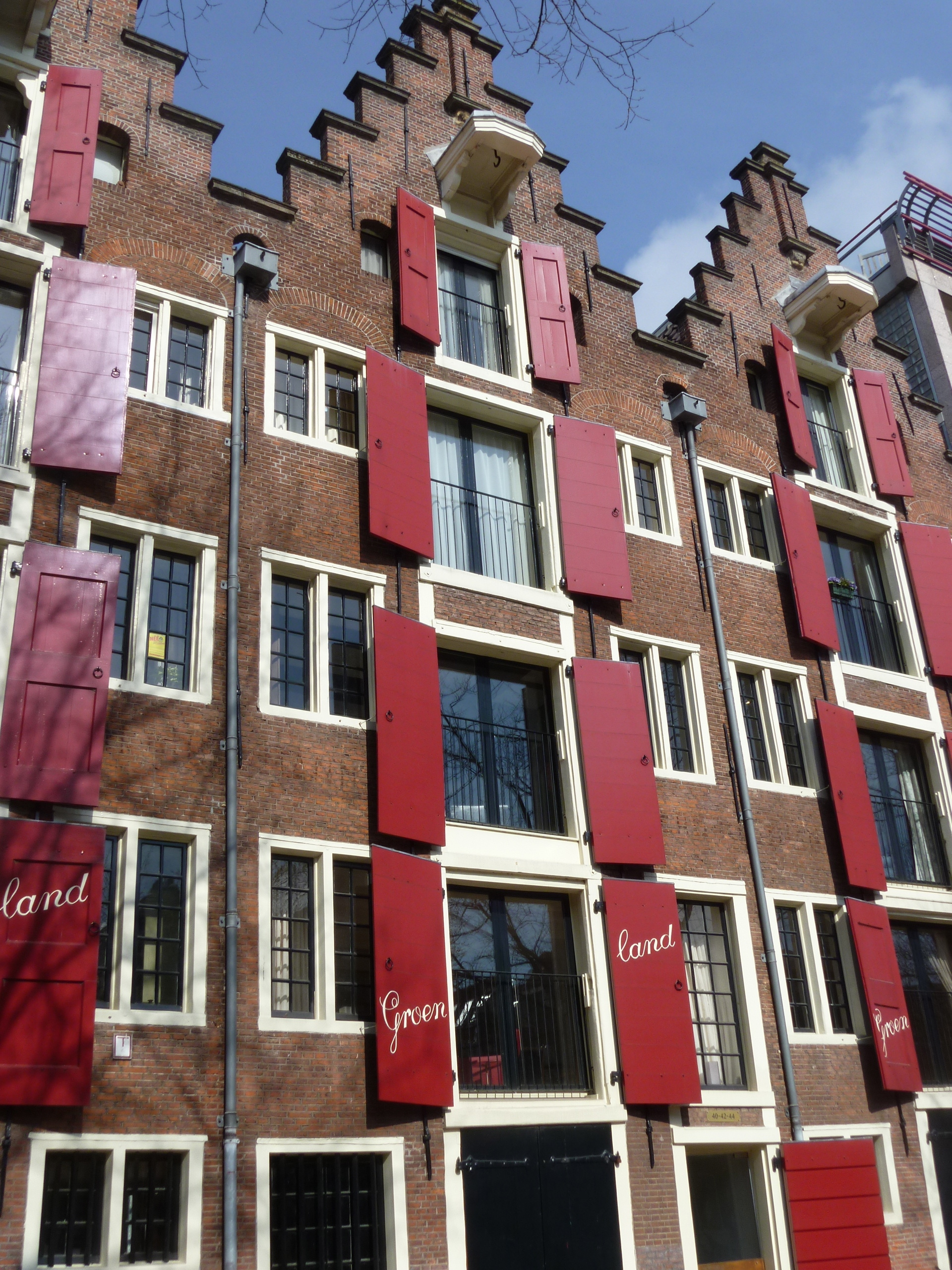
I’ve written about whaling here before. My friend’s flat on the Keizersgracht is situated on the ground floor of a 17th century whaling house [Walvissenhuis]. That is why the shutters have ‘Groenland’ written on them.

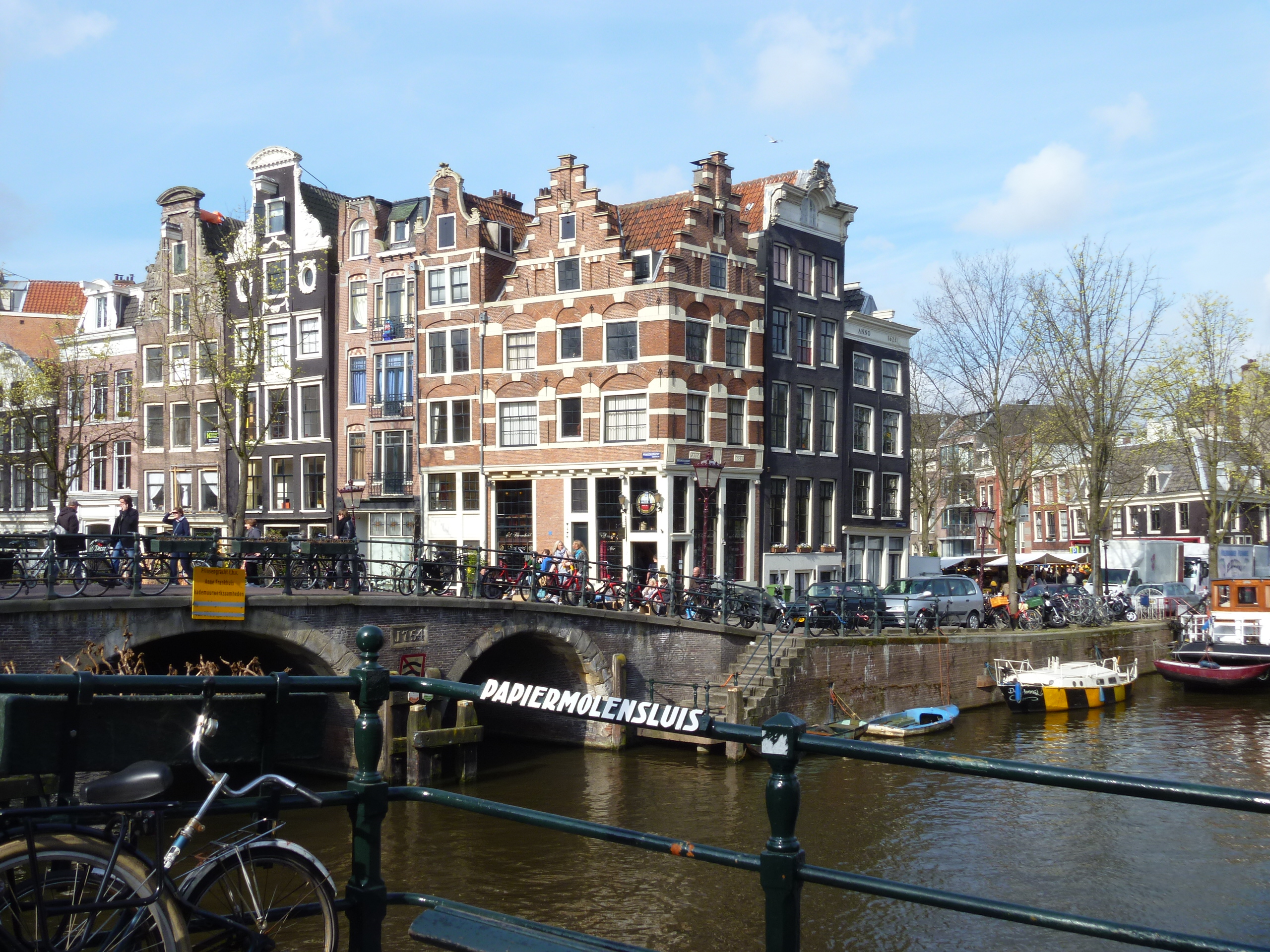
It was so relaxing to meet up at the Cafe Papeneiland at 2 Prinsengracht (right in the middle of the picture). It is a typical Bruin Cafe whose walls have turned brown from generations of cigarette smoke of the local regulars who meet here at all hours.

I can’t wait for another taste of Herengracht life!

Good Things in Ghent : Music, Art and Good Company

I have been in the Low Countries for a few days and in particular in Ghent and in Amsterdam. As mentioned in a previous post here I have a lovely set of friends made through my online Reading Group. One happens to live in Brussels just now and another found herself travelling to Belgium with her choir. At just the same time I had a couple of spare days before a long-planned trip to Amsterdam. So what could be easier and more enjoyable than to bring forward my flight, book a train from Schiphol to Brussels and spend a day with these two friends? A kind invitation to stay in Brussels proved impossible to resist and thus I found myself last Wednesday in both rain and shine in the interesting city of Ghent.

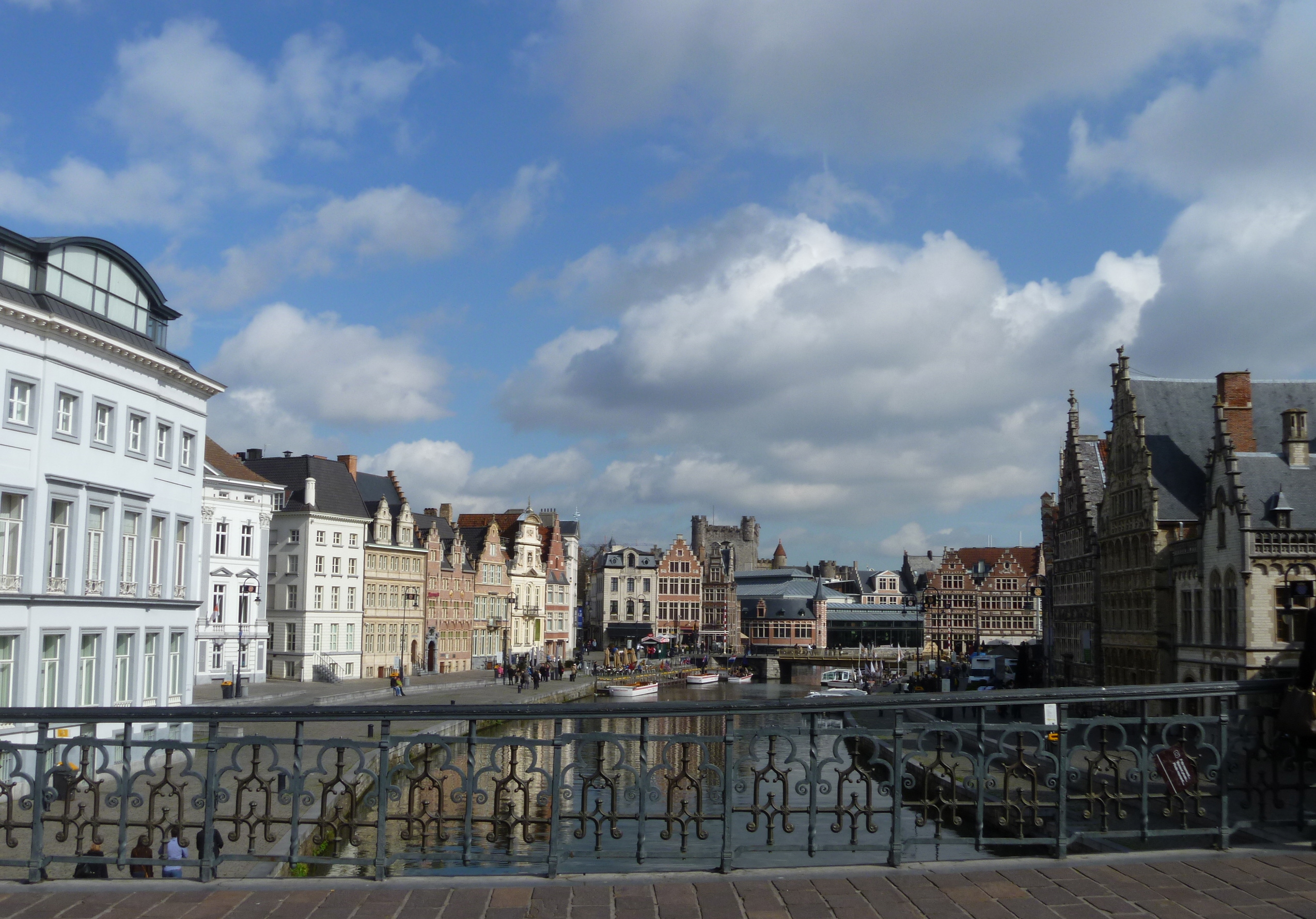
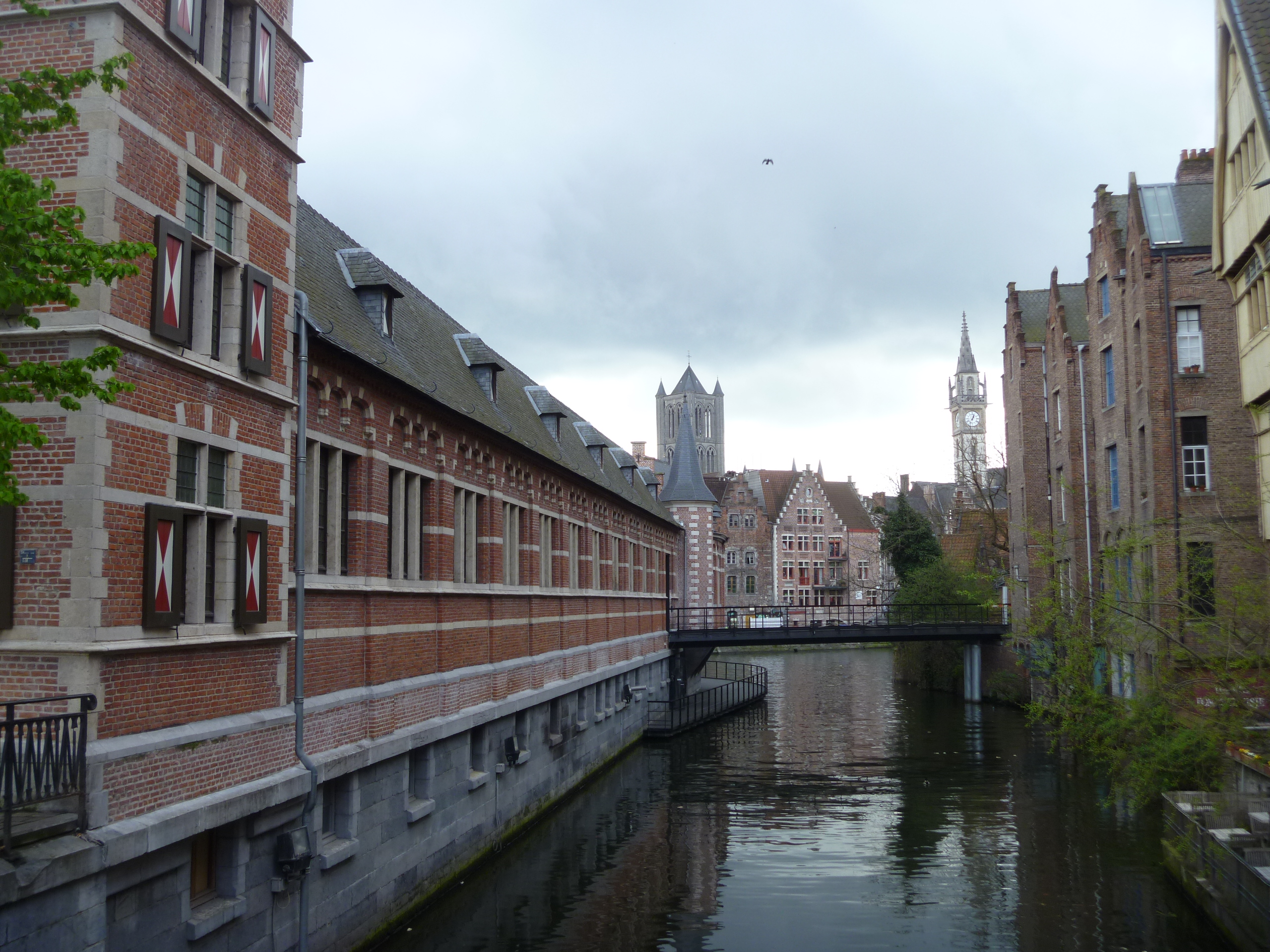
There was much chatter, some eating and drinking and quite a lot of walking during the day. Ghent has some lovely old buildings especially those Guild houses overlooking the canals and some huge churches.

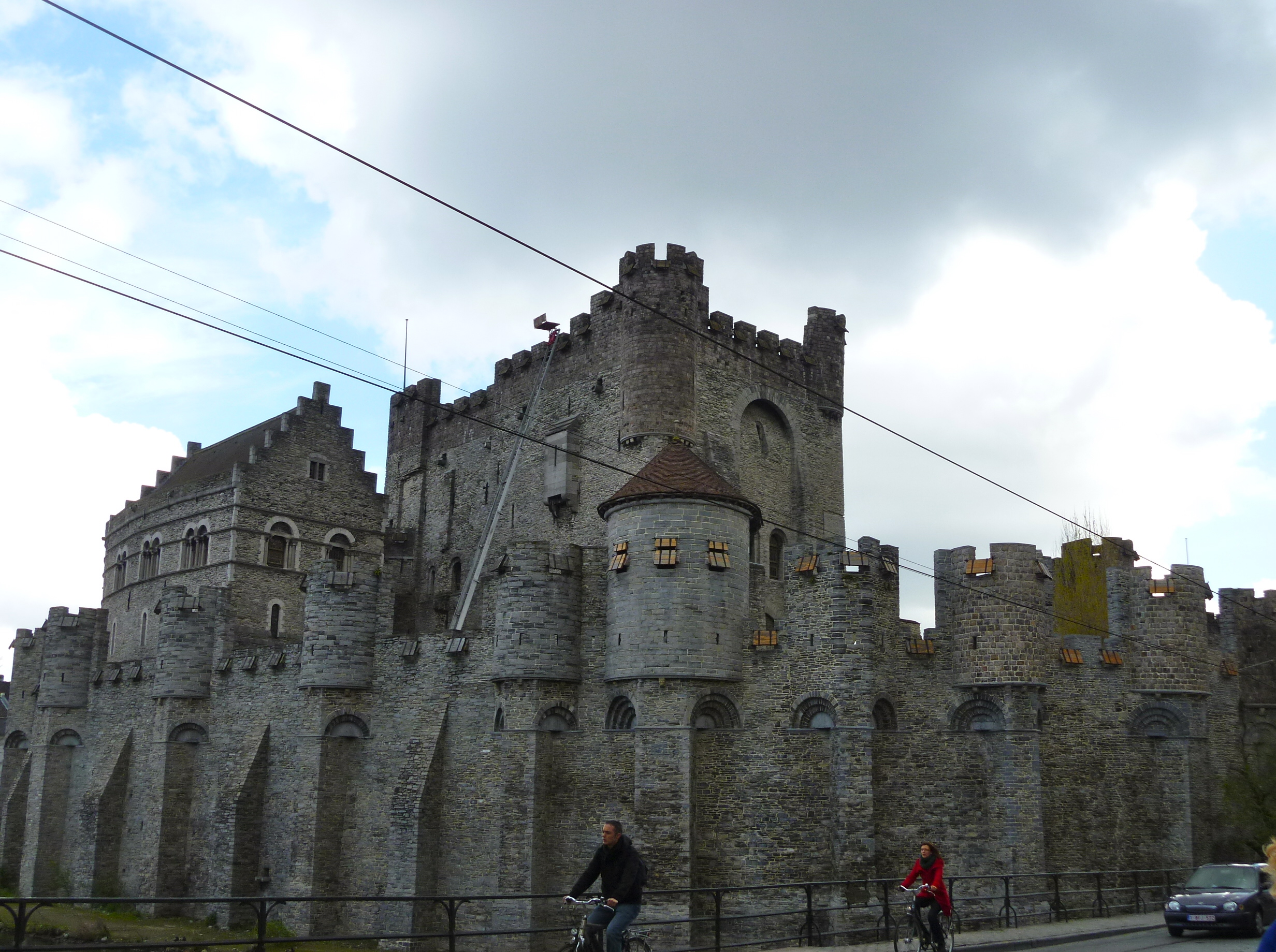
Het Gravensteen Castle, Ghent

The two highlights were a visit to St Baafs Cathedral, where we spent over half an hour inspecting Jan Van Eyck’s “The Adoration of the Mystic Lamb” in the Baptistry. The amazingly vivid colours are only a part of this exquisite multi-panelled treasure of Ghent. Included in the entry price is an excellent audio-guide explaining not only the symbols, characters and settings represented in the painting but also its fascinating history. One panel was actually stolen on the night of 10/11 April 1934. That panel has never been recovered. It is quite remarkable that this huge and complex altar piece has survived until today. Read more about it here.

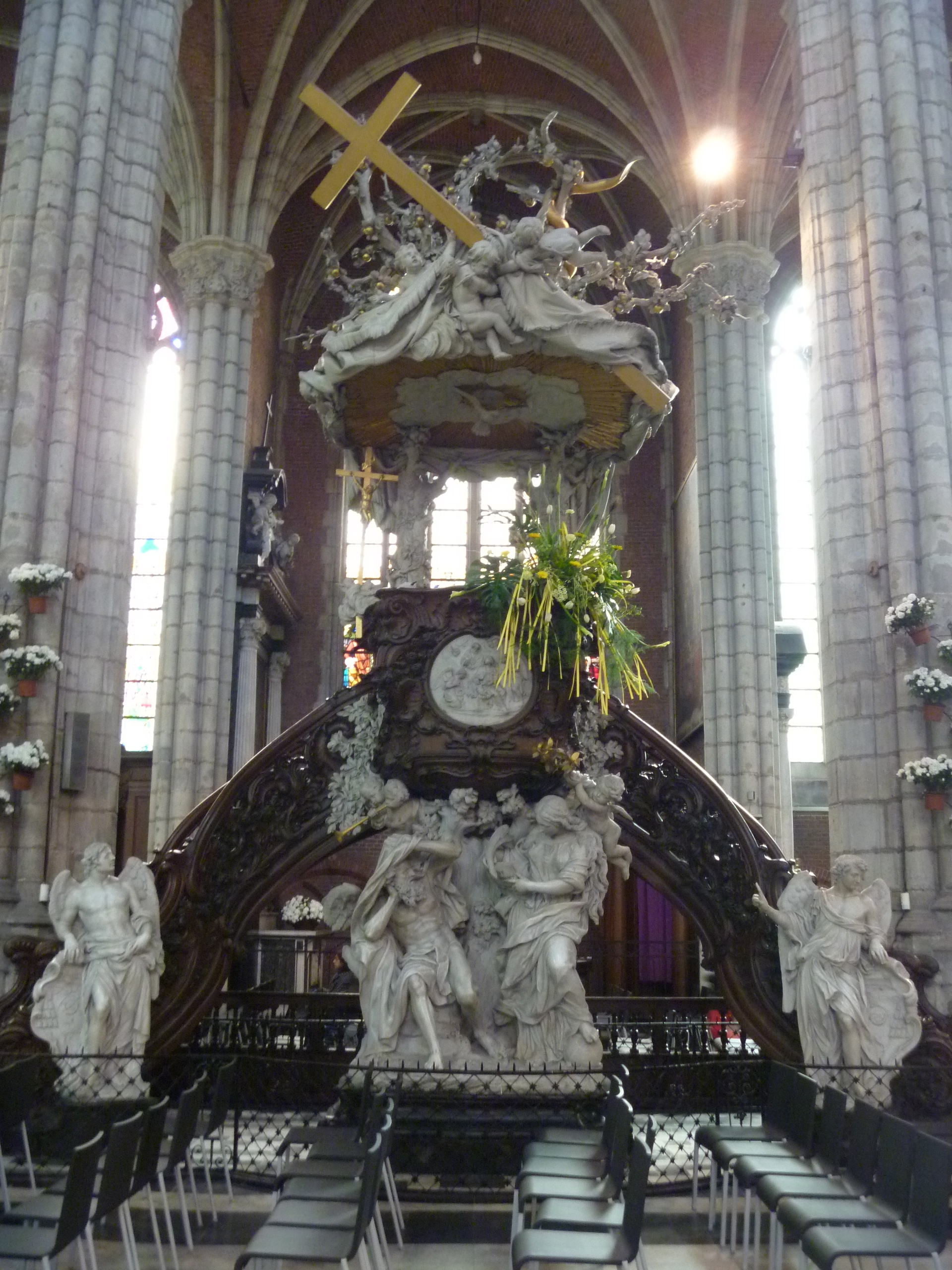
The Baroque Pulpit in St Baaf’s Cathedral

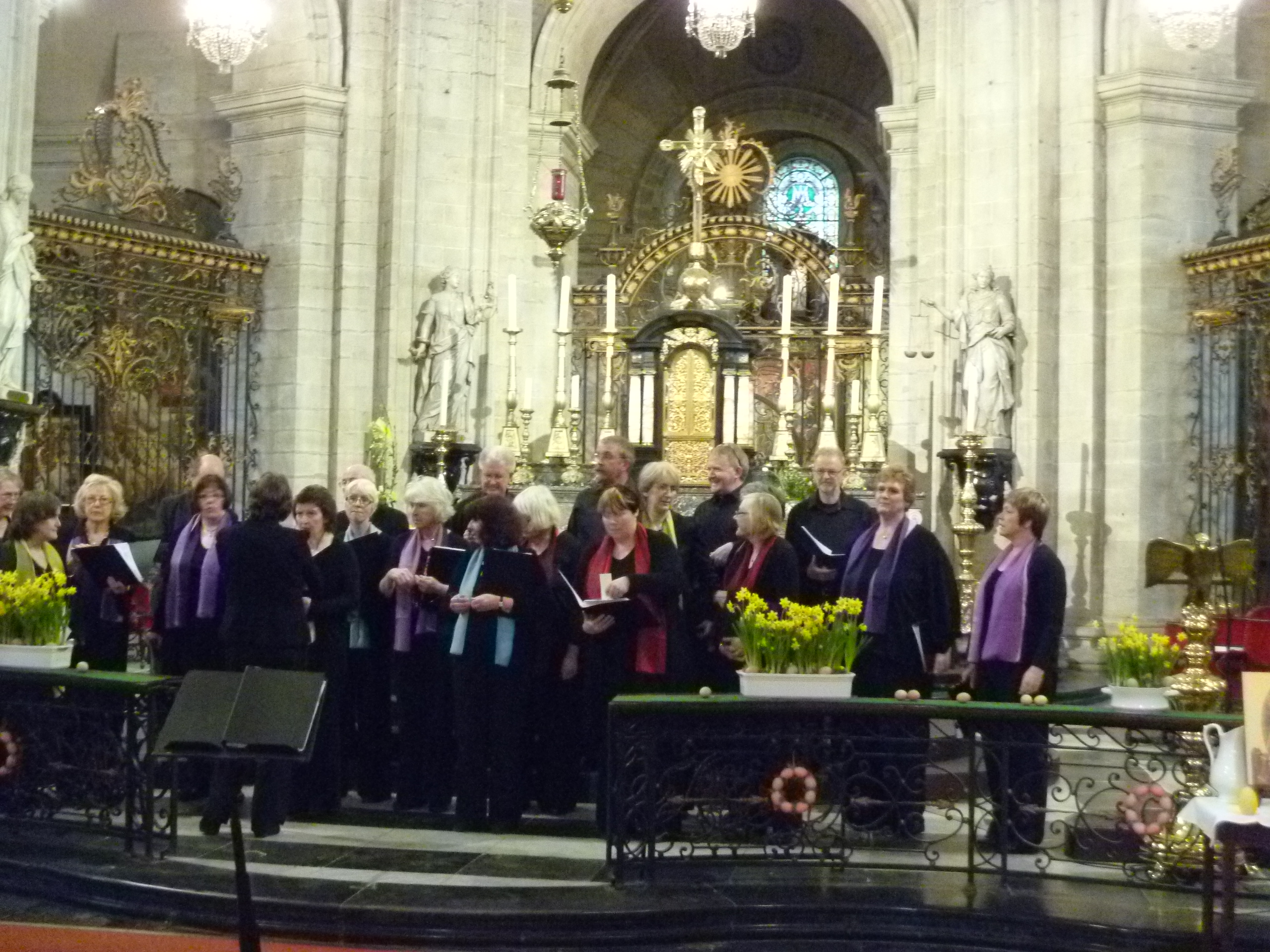
The second event was attendance at a concert during the afternoon at St Pieter’s church, about a 15 minute walk from the city centre. The Valentine Singers from London were performing 3 concerts in Ghent (including one in St Baaf’s Cathedral). Interestingly Ghent was appointed Unesco City of Music in 2009.

It was great to see and hear our friend in performance as we have long known about her musical career. The varied concert of church-related songs included a beautiful canon “Praise God” by Thomas Tallis and other songs by English composers – including Purcell and Elgar. There were works by Schubert, Bruckner, Saint-Saens and others and some Negro spirituals. We joined a fair-sized and very enthusiastic audience but even a full house would have looked minuscule in this vast Ghent church.

The Valentine Singers prepare their next piece in St Pieter’s Church, Ghent

All too soon the good things in Ghent came to an end and the two of us returned to Brussels.

As with many of our “meets” this one also produced further ideas worthy of investigation and upon which we may centre future meetings.

“Bear with Bern for Swiss Ski-ing” – Cosmopolitan and Charming

The Cathedral (Münster) is Bern’s most impressive example of Late Gothic architecture. The basilica with its three naves rises above Bern’s Old Town.

(Source: http://www.bern.com/en/city-of-bern/attractions )

I’ve been inspired again to write this post having read another travel article “Bear with Bern for Swiss Ski-ing” by Stephen Wood in the newspaper. This time it was The Independent Traveller section of Saturday’s ‘paper.

Now, I am not a skier and never have been but I have visited Bern very many times in winter, spring, summer and autumn. Stephen Wood, in his article, writes about his childhood love of the book Mostly Mary by Gwynedd Rae.

On the flight from London City Airport to Bern last week, I settled down to read Mostly Mary by Gwynedd Rae, a light classic of children’s literature. I have read it before, but not for half a century. On first reading, this book and the others in a series about a family of bears living in the bear-pit at Bern had considerable impact on my world view. You could keep your Paris, New York and Berlin; the place I most wanted to visit was Bern, for the bear pit.”

Apart from one very brief stopover in Bern when there was not sufficient time to visit the bears it was not until investigating for this article that he eventually makes a proper visit to Bern.

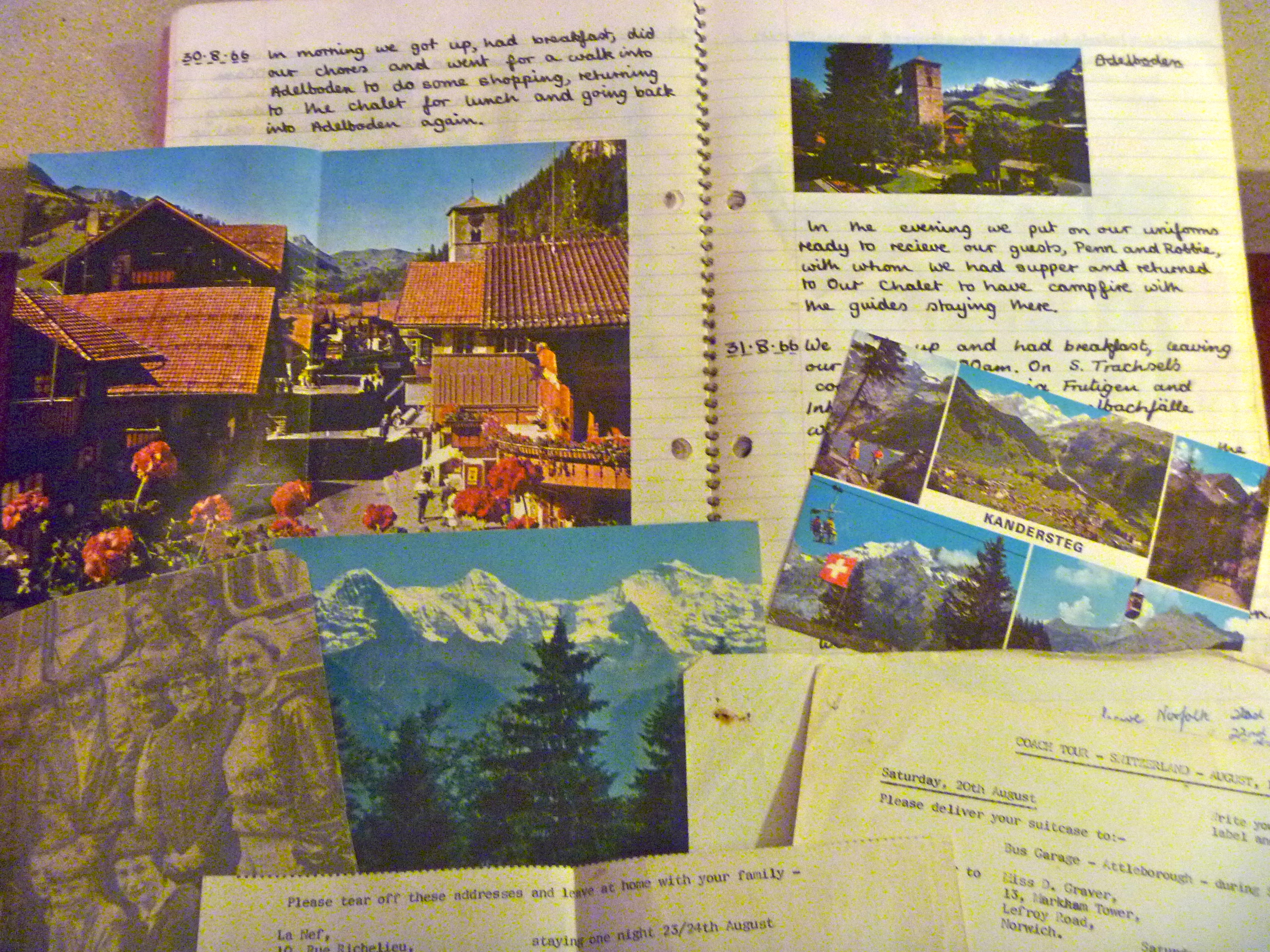
Wood applauds Bern’s small, but international, airport the use of which cuts down considerably on journey times to the Bernese Alps ski region. He, like me in 1966, ended up with a stay in Adelboden but my journey was far from quick travelling from Norwich by coach with a night in Paris and another in Neuchatel before we reached our destination.

Bern is another UNESCO World Heritage Site and I have a very good friend who lives there. We manage to get together at least once every couple of years and this year will be in Amsterdam after Easter but more of that in a future post.

My first ever visit to this gorgeous city – the capital city of Switzerland – was on the same Girl Guides trip mentioned earlier this month. On every visit since then I have been enraptured by this beautiful city. There is so much to see and do in the city itself let alone the surrounding countryside. I have shopped in the covered arcades, sipped a drink at an open air cafe watching the Bernese go by, walked by the green waters of the Aare River at the Tiergarten (zoo), and taken the funicular Gurtenbahn up the local mountain for a panoramic view over the city. But as I wrote in my ‘diary’ of the original visit “Bern is the city of bears. You see them everywhere and at Nydegg Bridge is a real bear pit.” I’ve taken my sons and my mother to visit the bear pits but today there are no longer bears there as Wood tells us :

Bears are an institution in Bern too, the city’s name being derived – at least in legend – from a bear killed by its founder, Duke Berchtold of Zähringen, while out hunting. There are bears all over the place: bear-shaped cakes, carved wooden bears, innumerable bear emblems. In fact, the only place you won’t find one is in the bear pit, despite a tradition of keeping bears there which goes back to 1513 (with an interruption in 1798 when the French army stole the animals). Quite rightly the bears – Björk, Finn, Ursina and Berna – are no longer confined to a pit; they now live in a “bear park”, below the pit on a bank of the river Aare.”

Peak Time Service – One Hundred Years At The Top Of Europe

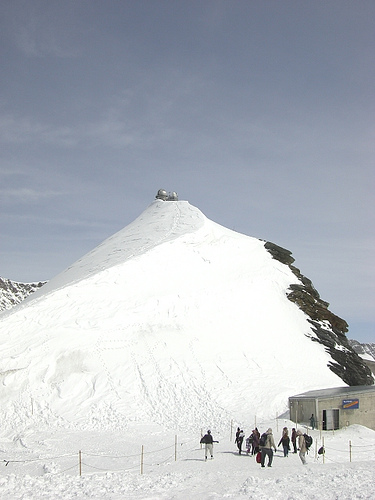
There was a full-page article in the Financial Times last weekend about the upcoming 100-year anniversary coming up in August this year of the Jungfrau Railway. The weather outside being rather ‘Jungfrauian’ my thoughts went back to my journey on this wonder of the manmade world and visit to the UNESCO World Heritage Site that is Swiss Alps Jungfrau-Aletsch.

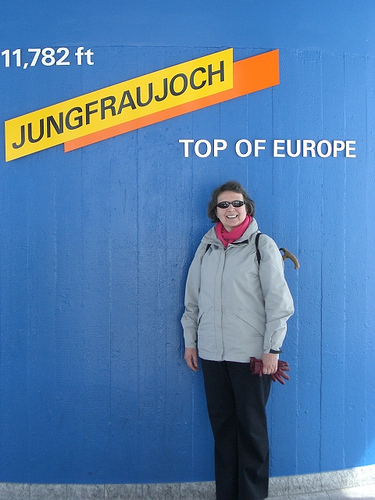
The author of the article, Jan Morris, was the guest of the Swiss National Tourist Office and stayed at the Victoria-Jungfrau Grand Hotel and Spa in Interlaken and travelled on the Jungfrau Railway to ‘The Top of Europe’. I was a guest of my dear friend Susanne and her family in their lovely home near Lucerne and we drove to Lauterbrunnen to join the same Jungfrau Railway.

My first visit to Switzerland coincided with my first ever trip abroad in 1966. A group of Girl Guides and Guiders travelled from Norwich and Norfolk by coach, via a stay in Paris in each direction, to spend 6 nights in a Swiss chalet in the tiny hamlet of Boden within walking distance of the large village of Adelboden and very near the Girl Guides Association’s ‘Our Chalet’.

Since then I have made possibly 20 or more visits to Switzerland including working in hotels for two long summer vacations from university, accompanying my husband on ski-ing trips, taking my mum on holidays and visiting my friends in Berne and near Engelberg (Wolfenschiessen).

I didn’t visit The Jungfrau until April 2010. It’s a very expensive day out and there has always been a huge choice of other things to do. My Bernese friend had also never done the journey and my friend Susanne had only taken her family on the trip in 2009. It was at her suggestion that we decided to bite the bullet and do the trip. I texted Bernese Barbara but unfortunately due to work commitments she was unable to join us.

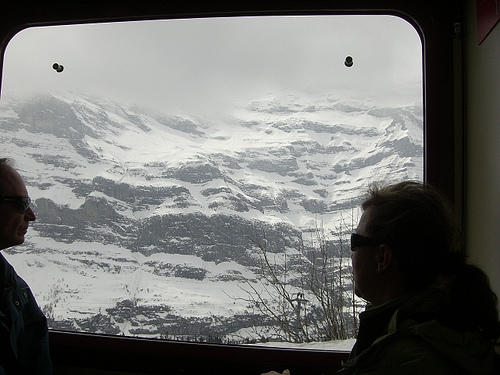
Unlike Morris we began our journey from the station at Lauterbrunnen.  Our visit fell between seasons so we left the car in the vast, empty multi-storey car park, purchased our tickets and travelled via Wengen on The Jungfrau Railway.

Morris describes much better than I could what it’s like at The Top Of Europe.

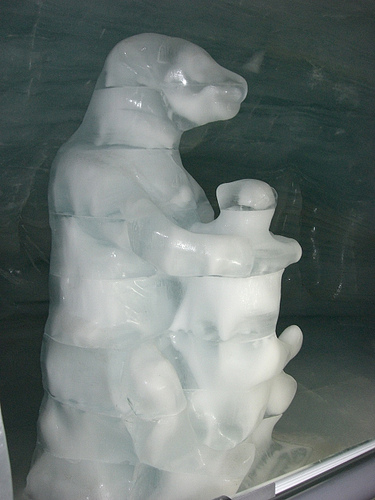
The settlement up here was first established in 1912 but it still feels to me almost surreally futurist. For inside the rock of that snowy mountain, or clinging to its surface, a small town thrives. Besides the highest railway station in Europe there is the highest post office and also, this being Switzerland, the highest watch shop. There are three restaurants (including Bollywood serving Indian cuisine) and souvenir shops, of course, and a coffee bar. If we have time to spare, we can wander through the Ice Palace, a long pedestrian tunnel beneath the glacier equipped with ice-figures of penguins, polar bears and such, together with instructive geological features. But dear God, that’s not all. We may well feel queasy now, after our trek through the Ice Palace at 11,000ft-plus, but after another trudge through another tunnel we find awaiting us a space-age elevator. In the blink of an eye this whisks us vertically another 400ft to the tip of a pinnacle called the Sphinx, the very top of the Top of Europe, and here science fiction becomes science fact.” 

For the full article see : http://www.ft.com/cms/s/2/7973ce3a-476c-11e1-b646-00144feabdc0.html#ixzz1m6qCETdx

Bernese Bear and Cub in the Ice Palace

Susanne brought sandwiches and fruit for our picnic so apart from a cup of tea we didn’t try out the restaurant facilities.

We made the return journey by train/funicular via Kleine Scheidegg and Grindelwald.

In the past I’d visited the peaks of the Stanserhorn, the Titlis, Pilatus and the  Gornergrat from Zermatt but the Jungfrau trip was truly the icing on the cake and the most memorable experience.

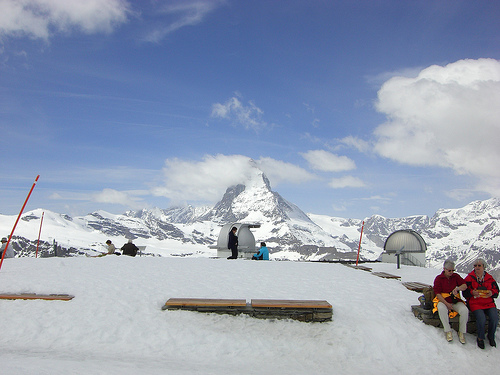
The Matterhorn from the top of The Gornergrat

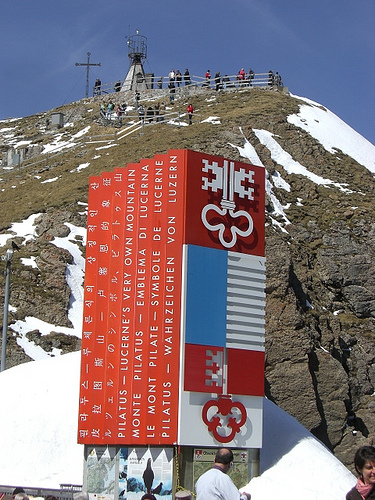
Mount Pilatus near Lucerne

The House that Mrs Jack Built

“Years ago I decided that the greatest need in our Country was Art… We were a very young country and had very few opportunities of seeing beautiful things, works of art… So, I determined to make it my life’s work if I could.” Isabella Stewart Gardner, 1917.

One of the loveliest and most interesting art museums that I have ever visited is just a few stops on the ‘T’ from downtown Boston.

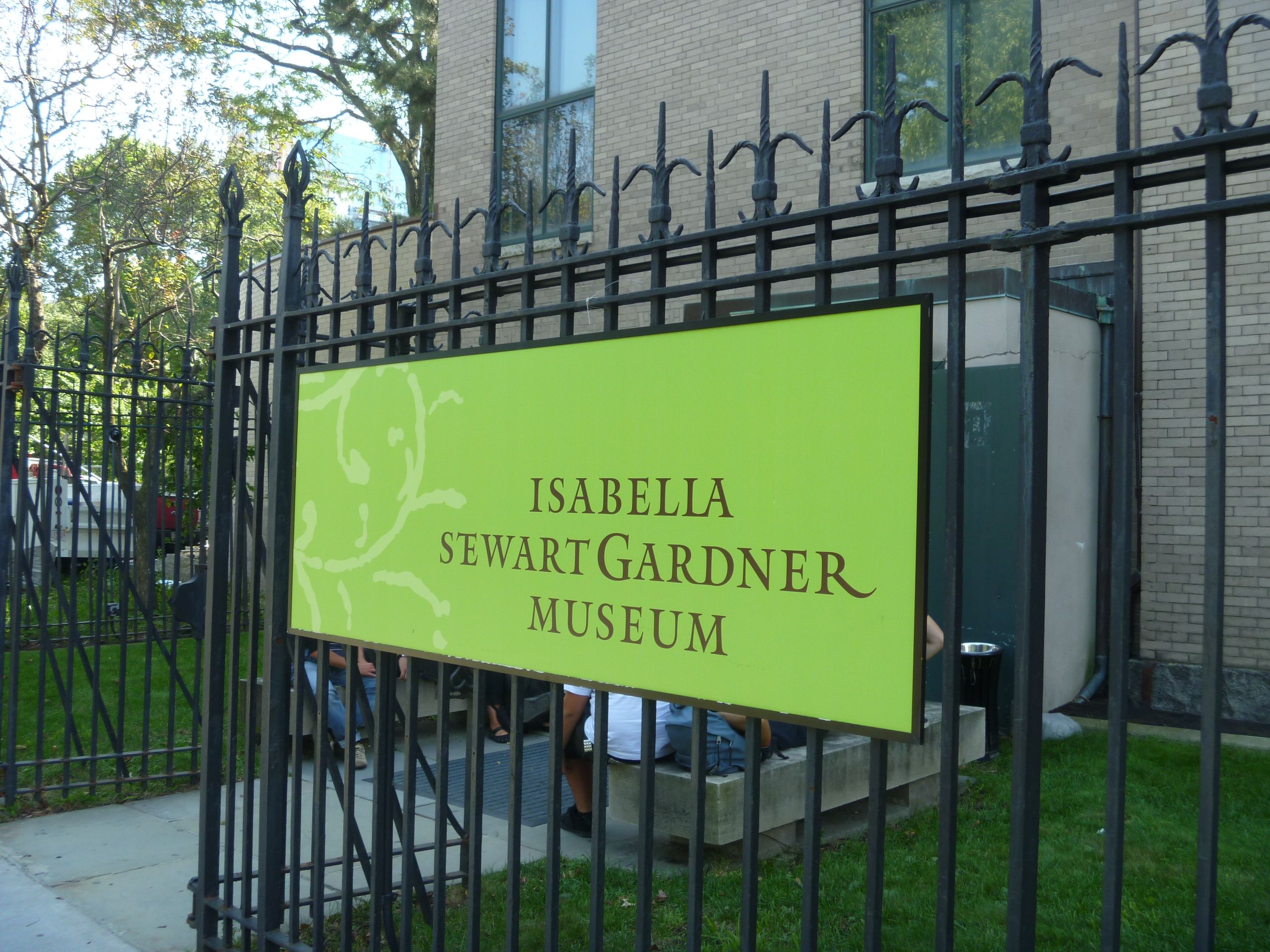
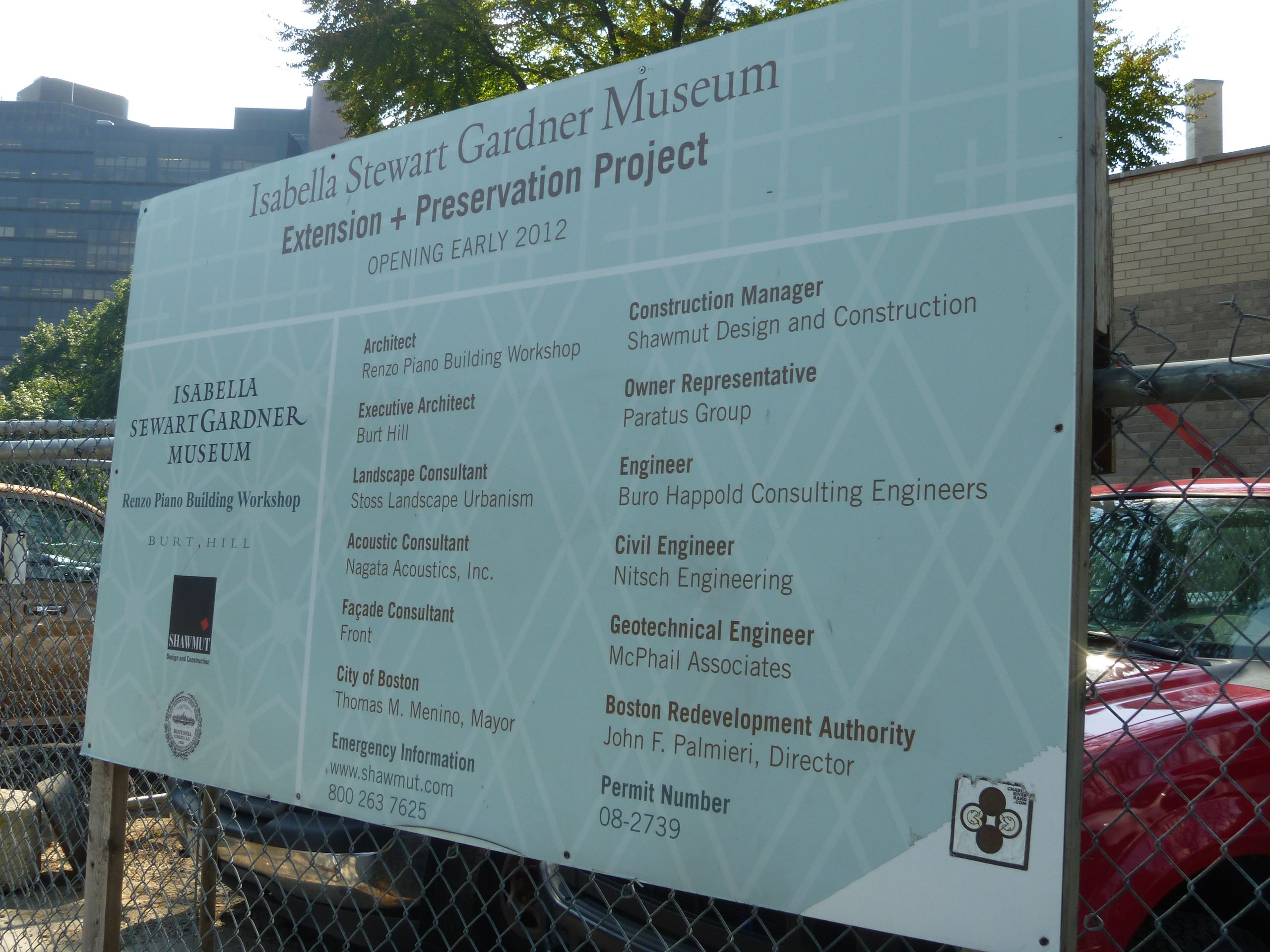
The Isabella Stewart Gardner Museum is currently undergoing change. Not too sure what Mrs Jack Gardner would make of that but there you go. We’re told on the audio guide that she planned the whole place herself from the building to the purchase of the works of art themselves to where she meant them to hang and then left strict instructions that that was how it was to stay.

Isabella Stewart was born in 1840 in New York and married John (‘Jack’) Gardner in 1860. They travelled widely and ‘Mrs Jack’ developed an interest in art which turned into a passion for collecting after her father left her his entire fortune when he died in 1891. Jack died in 1898 and she continued to collect, purchasing some land on Fenway and designing and planning the museum just as it is today. It opened to the public in 1903. She died in 1924.

Photo from ISGM website

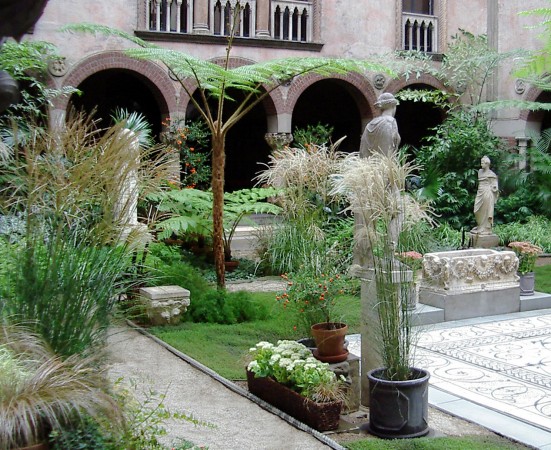
The Museum centres on the dramatic Japanese-style courtyard full of greenery and mosaic tiles which is in such great contrast to the darker rooms through which you approach it. On three floors each room has a theme of its own from The Titian Room to the Blue Room and the Yellow Room through to a Tapestry Room and a Gothic Room. Due to the work going on just now some of the rooms were closed and others had items removed.

My favourite room was the Dutch Room where an early Rembrandt self portrait hangs.

Photo from ISGM website

But when you enter the Dutch Room you are also in for a shock. There on the wall hangs an empty frame – where once Rembrandt’s ‘Storm on the Sea of Galilee’ was hanging. In 1990 the ISGM was victim of the largest single property theft in the world. None of the works of art has yet been recovered.

Also due to all the building works going on the shop and cafe are both closed. There were just two books for sale:

The Yale Guide, by H. T. Goldfarb and a biography of Mrs Jack by Louise Hall Tharp. No fridge magnets, no rubbers, no pens and not even one postcard!

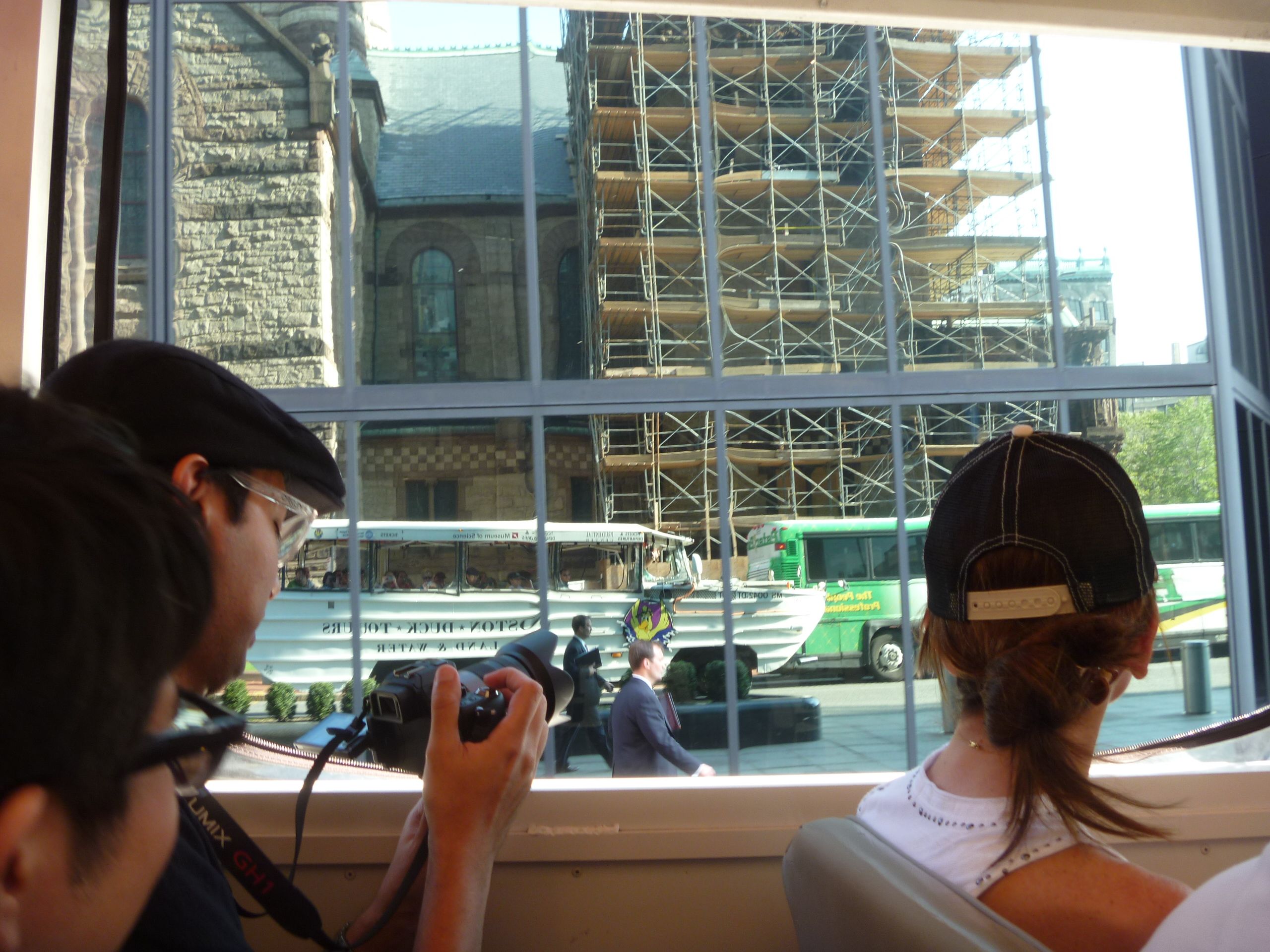
Then, from the sublime to the ridiculous, I fulfilled a long term wish of mine since first seeing it in 1995 – I went on DUCK TOUR!

There we are reflected in office windows on Copley Square!

My Historic Maine Coast 2

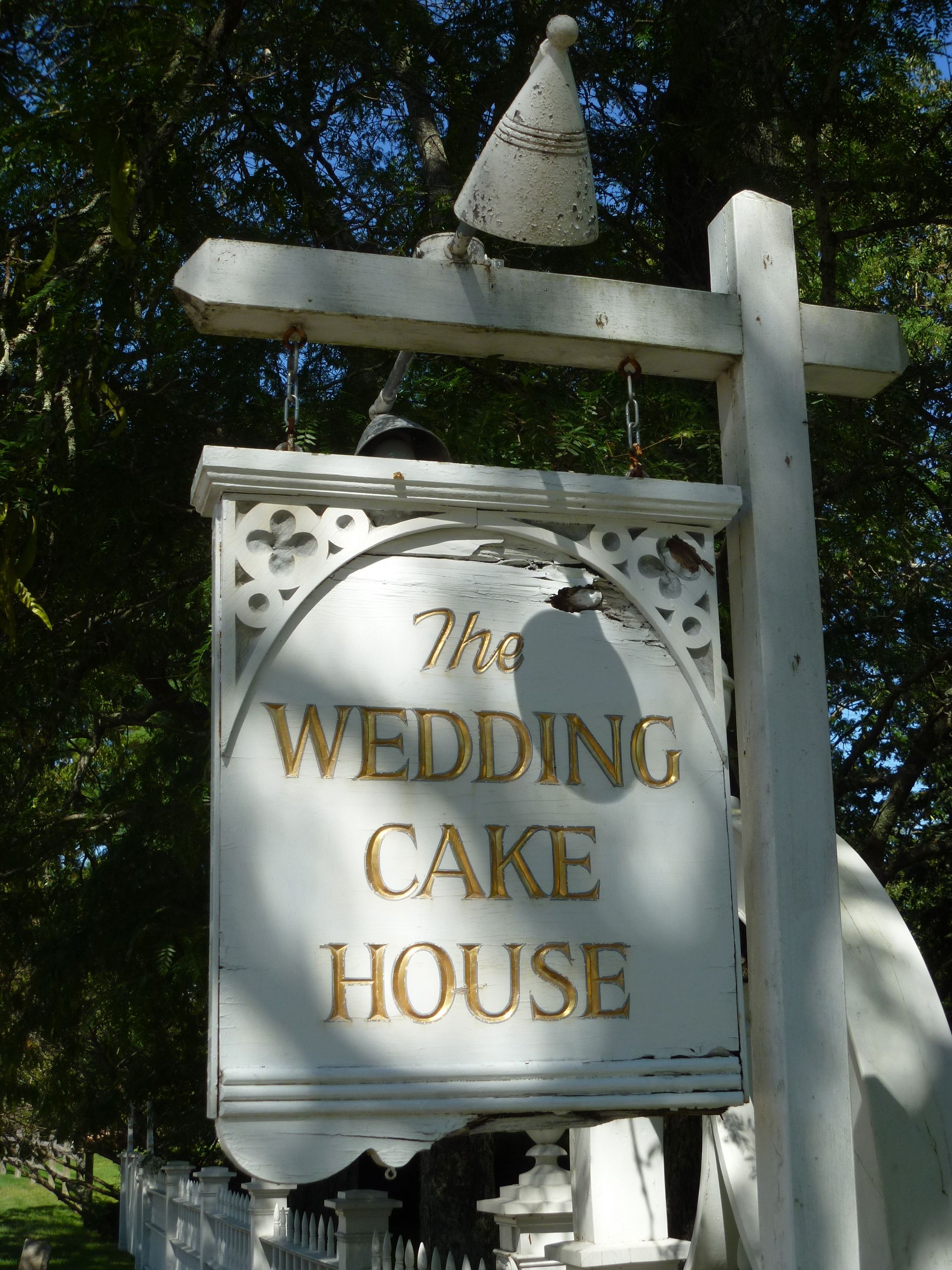
The Wedding Cake House in Kennebunk is said to be one of the most photographed houses in Maine and you can certainly see why!

The local myth is that it was built by a sea captain for his bride as an apology for leaving for his ship before the ceremony reached the cutting-the-cake stage! It’s a private home so not open to the public at all but I understand that a fund-raising event was held a few years back in aid of Hurricane Katrina victims.

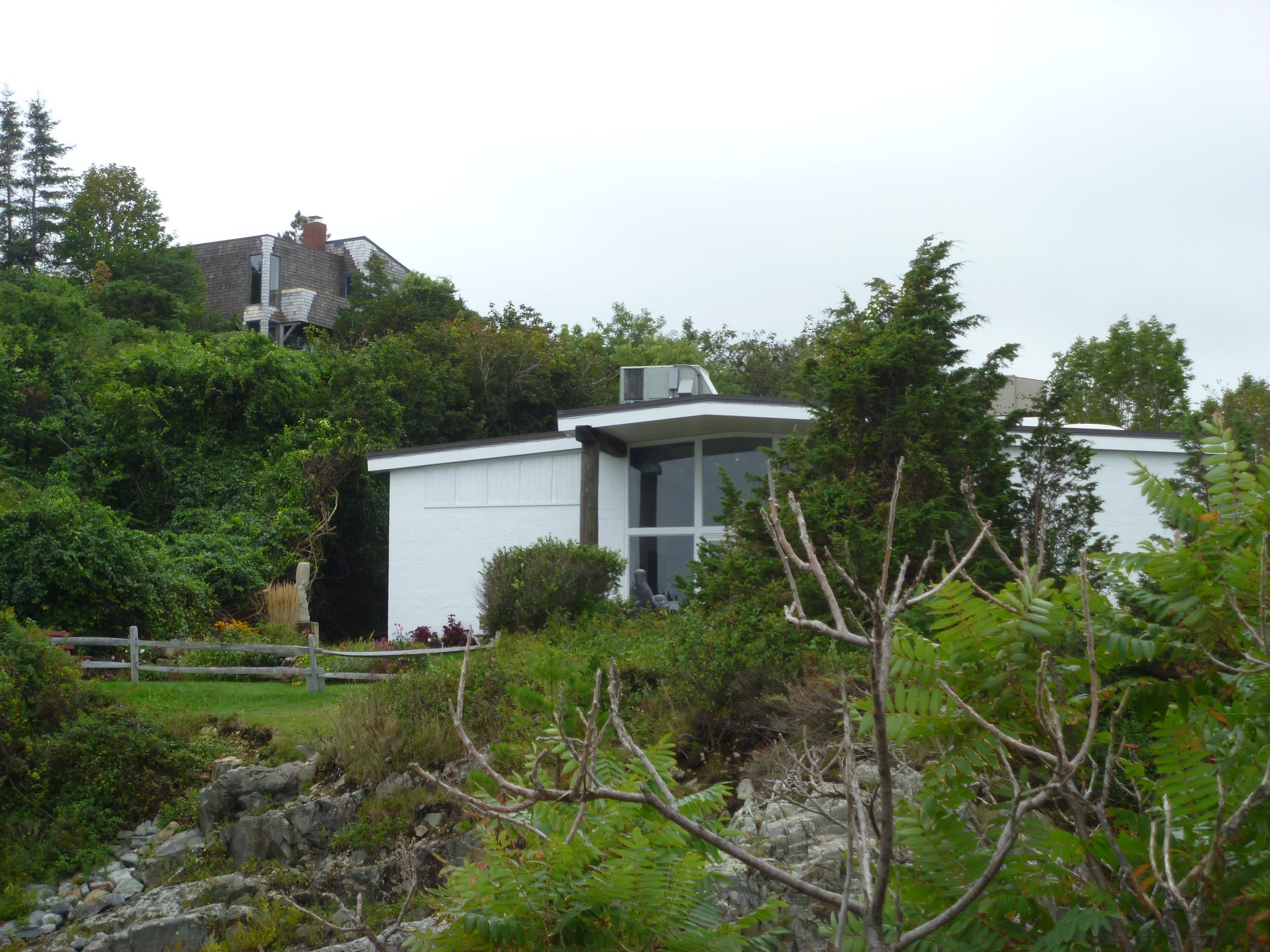
The Ogunquit Museum of American Art is the least historic of my selection of Historic Maine Coast visits. The Museum first opened in 1953 but has been extended since. Artist Henry Strater founded the Museum at 543 Shore Road, Ogunquit by first buying the Ocean facing plot of land on which it stands in 1950. Ogunquit and the Maine Coast area had long been the haunt of artists – an Ogunquit Art Colony was founded here in 1898.

In 2009 we visited The Portland Museum of Art and it was an exhibition there “Call of the Coast: exploring art colonies of New England” that drew my attention to the significant contribution of the Ogunquit colony to the American art scene in the 20th century.

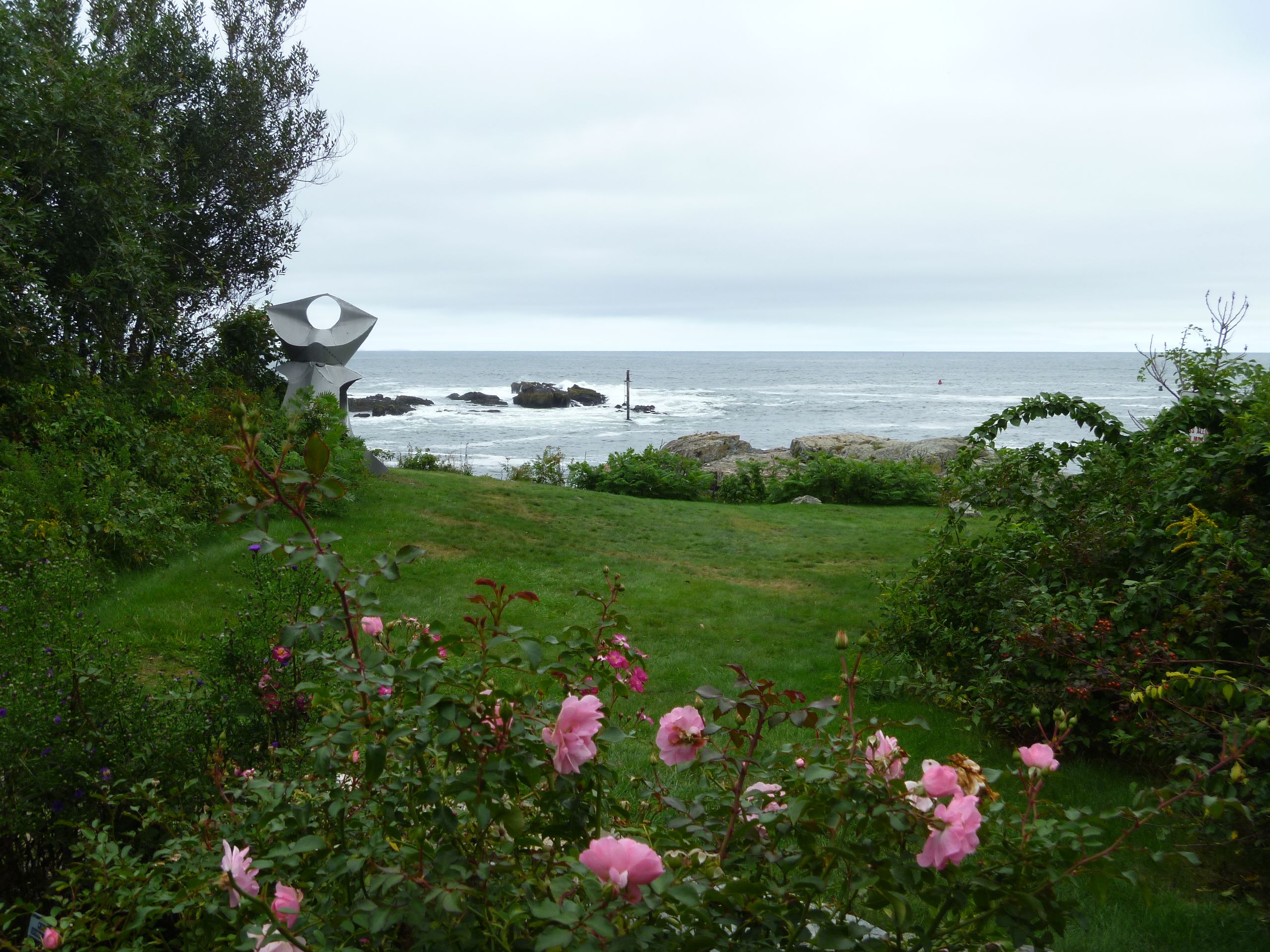
The Museum is surrounded by beautiful sculpture gardens with a wonderful view of the Ocean. The Museum and Gardens are a delight to visit during the Summer months and it is no surprise that it rates as one of the finest small art museums in the United States.

My Historic Maine Coast 1


” The last day of October in 1777, Colonel Jonathan Hamilton came out of his high house on the river bank with a handsome, impatient company of guests, all Berwick gentlemen. They stood on the flagstones, watching a coming boat that was just within sight under the shadow of the pines of the farther shore, and eagerly passed from hand to hand a spyglass covered with worn red morocco leather

‘The Tory Lover’ by Sarah Orne Jewett (1901)

Hamilton House is another property of Historic New England. This beautiful house is situated overlooking a peaceful and very wide stretch of the Salmon Falls River, just a couple of miles outside the town of South Berwick, Maine. It wasn’t always like this. When it was built in 1785 Jonathan Hamilton’s graceful Georgian home overlooked his busy shipping and ship building business and quayside.

The decor of the house today reflects the more recent ownership of Emily Tyson and her stepdaughter Elise. The Tysons made it their summer retreat during the late 19th and early 20th centuries. This “Colonial Revival” style characterises the house today. Again no photography is allowed inside but it’s a large, light and airy summer house with breathtaking painted murals on the walls of the downstairs reception rooms. There are antiques, hooked rugs and other handcrafted decorative arts in all rooms.

The house has limited opening hours but the beautiful garden is free for all to visit and admire daily from dawn to dusk.

Sayward-Wheeler House is in York Harbor and like The Hamilton House stands on a bank above a wide river – in this case the York River.

On the obligatory house tour we are told that this house is unique amongst all 36 Historic New England properties in that it is the least changed over the centuries with virtually all its original furnishings, including wall coverings, in tact. The most curious room in the house is the Parlour where the larger items of furniture (that can be dated back to when the house was built) never fitted properly! A clock has had its finials removed, a cabinet, too tall for the room, had its pediment removed and it’s always been a mystery as to how the sideboard ever got into the room in the first place – by its dimensions it could not fit through any of the room’s doorways in any direction!

In The Country of The Pointed Firs

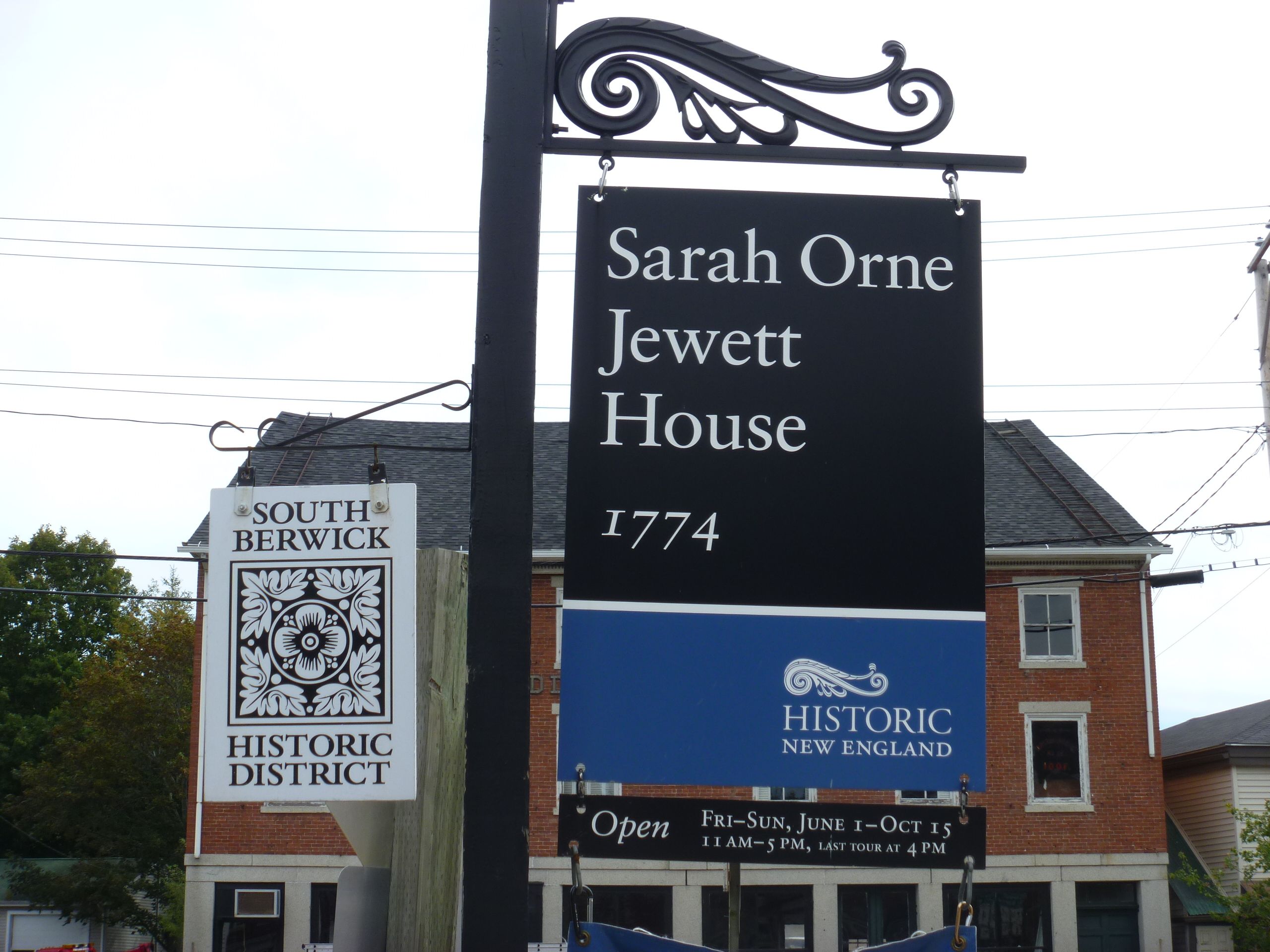
Just before leaving for my trip to New England I discovered the existence of an organisation that sounded like just my cup of tea: Historic New England. A close study of the website lead me to list 3 properties within easy reach of places where I’d be staying AND that would be open on a day or days when I would be able to visit.  I was especially happy to discover an author’s home just a 30 minute drive from our lodgings (The Dunes on the Waterfront) in Ogunquit, Maine.

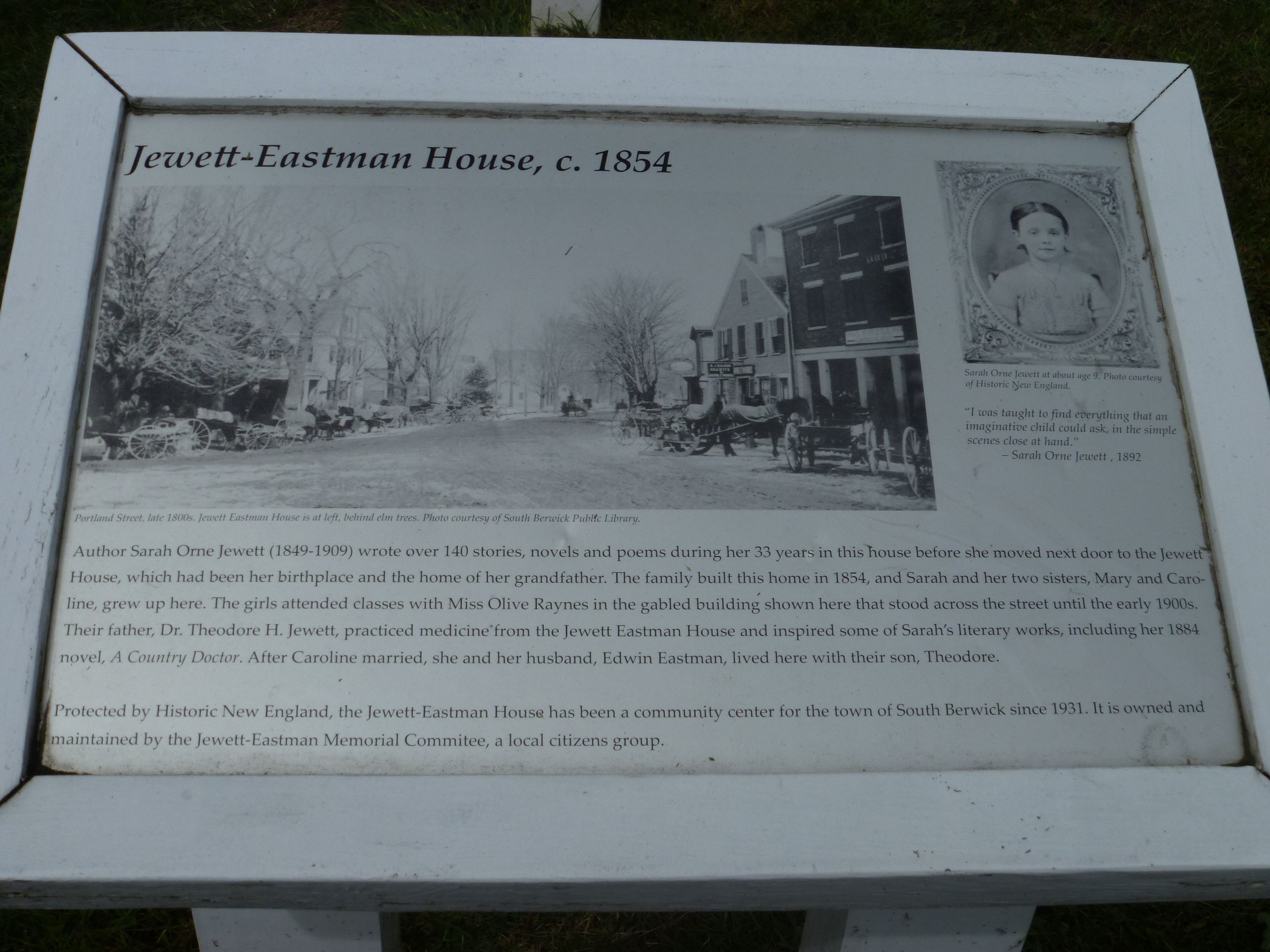
Sarah Orne Jewett (1849-1909) lived much of her life in the town of South Berwick, Maine. She was born in this house at 5, Portland Street when it belonged to her shipbuilding grandfather but soon the family built a home of their own next door (now the town’s public library).

Sarah and her sister moved back to the original house in 1887. She spent much of her time in Boston and travelling but this house was always home. No photography is allowed  in the house but it was fascinating to see the decor is still the same as Sarah and her sister Mary chose for it. Following their deaths a lot of the furniture was distributed to members of the family but Historic New England have bought back many original pieces at auction.

Having discovered the existence of the house I was anxious to read one of her books in advance of my visit. I chose a good one! A Country Doctor was first published in 1884. Like most of Jewett’s writing it is concerned with the everyday lives of the people living in the countryside of Maine. In particular Doctor Leslie is based on her beloved father, Dr Jewett.

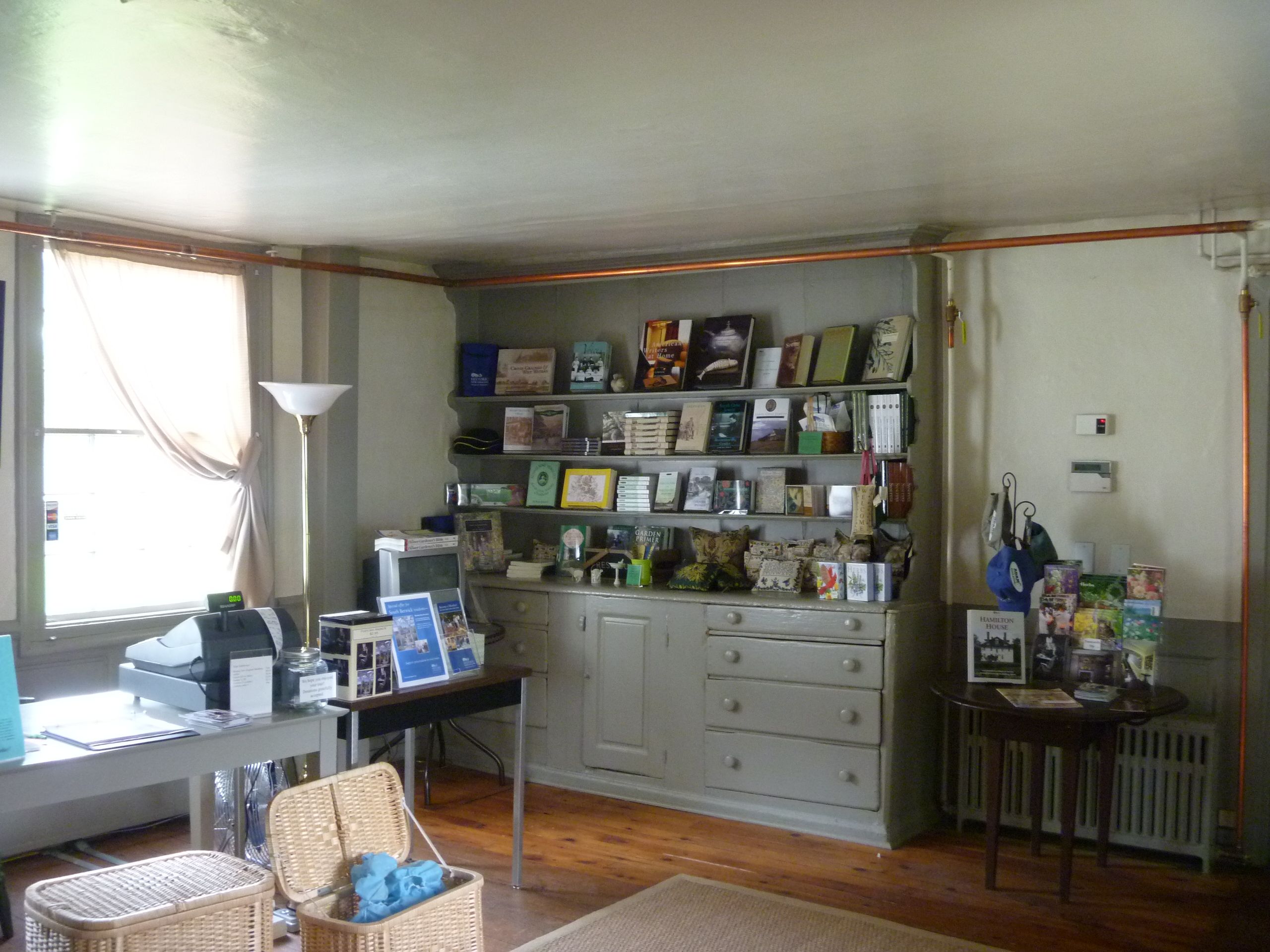
My friend Marion kindly gave me an illustrated copy of what is probably Jewett’s best known work The Country of The Pointed Firs. Her (Jewett’s) Deephaven is still in print in the USA and is set in the coastal Maine area around Ogunquit. Her books (those still in print) and other related works are available in the shop (where photography was allowed!).

There is a small garden around the house where today a gardener still carefully tends many of the herbs of the types that the Jewett sisters grew there during the nineteenth century.

On my way back to Ogunquit I sought out Sarah Orne Jewett’s grave on Agamenticus Road just outside South Berwick. I had been given instructions as to where to find it by the guide at the house. I expected a well-tended grave and was sorry that I hadn’t brought my own flowers. The tombstone was just about legible and the area filled with weeds. Sarah lies peacefully surrounded by various relatives including her sister. On the following Sunday a special ‘party’ was planned at the house in celebration of her birthday but sadly her grave is rather a forgotten memorial.

“Until the day breaks and the shadows flee away”

Don’t call me Ishmael

I have never read Herman Melville’s classic fictional work ‘Moby Dick’. That is, if you don’t count the numerous extracts from it that we had to read for English comprehension tests at school. I always marvelled that so much could be written on the subject of a whaling expedition – the Penguin Classics edition fills 720 pages.

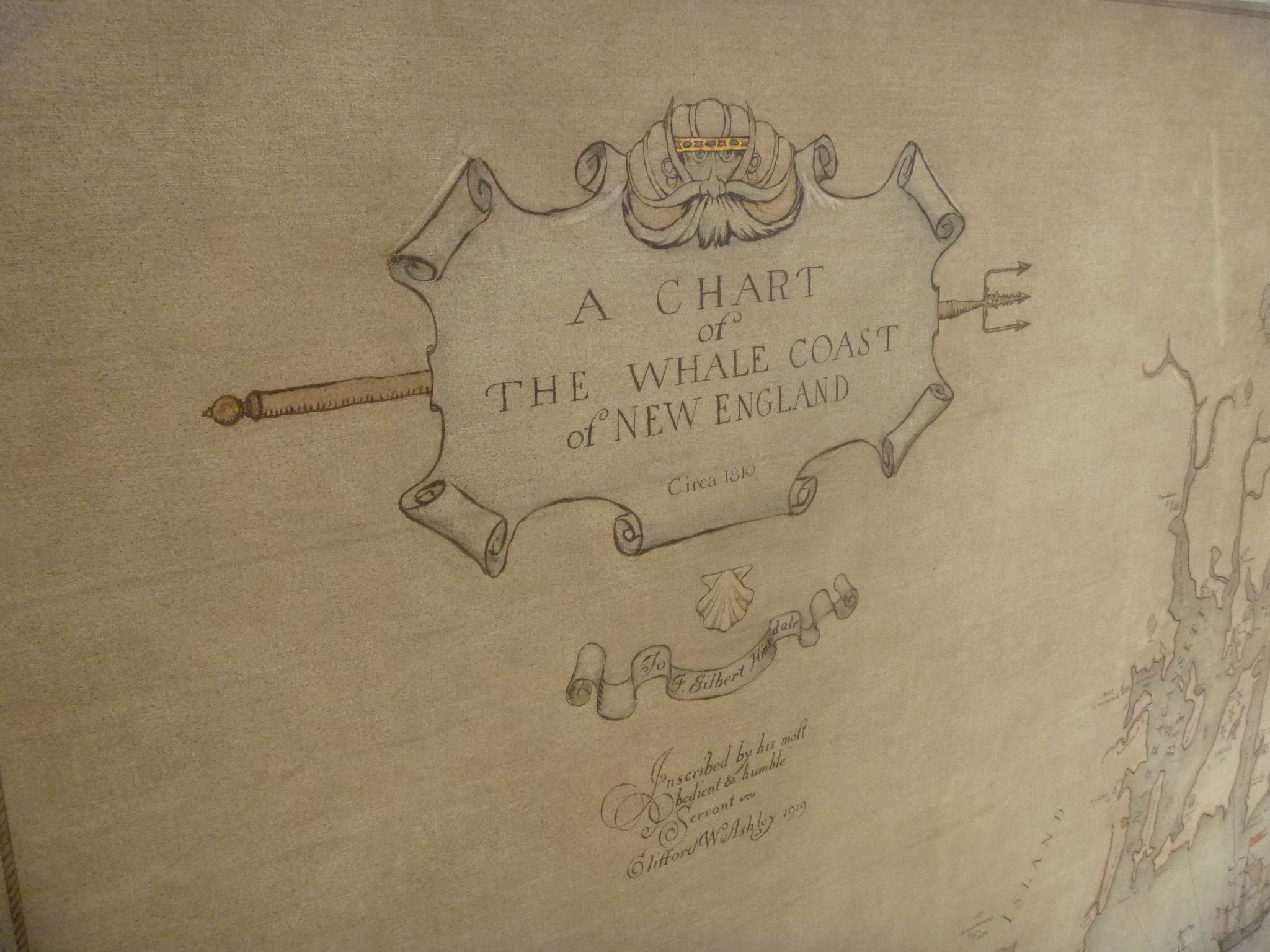
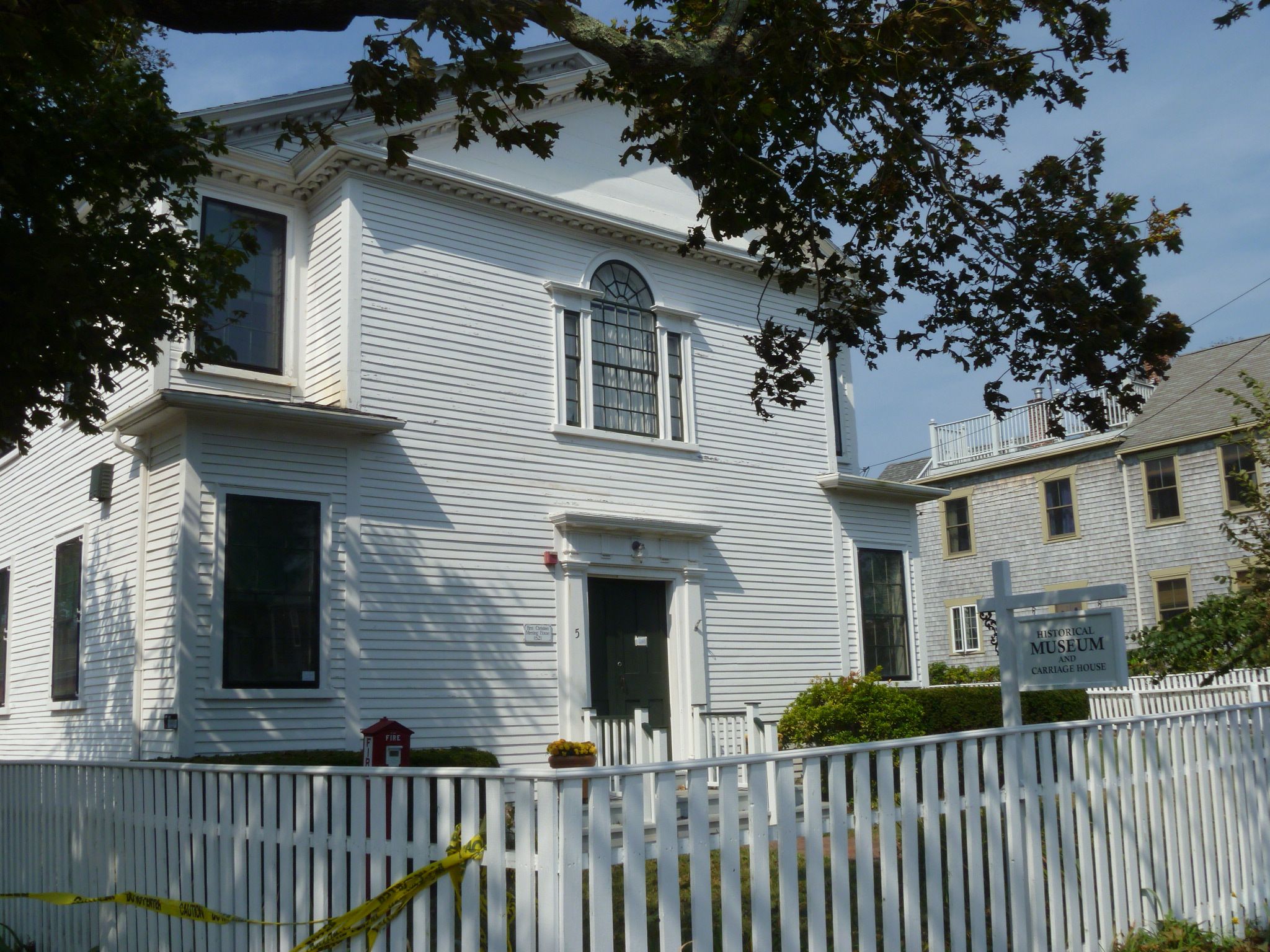
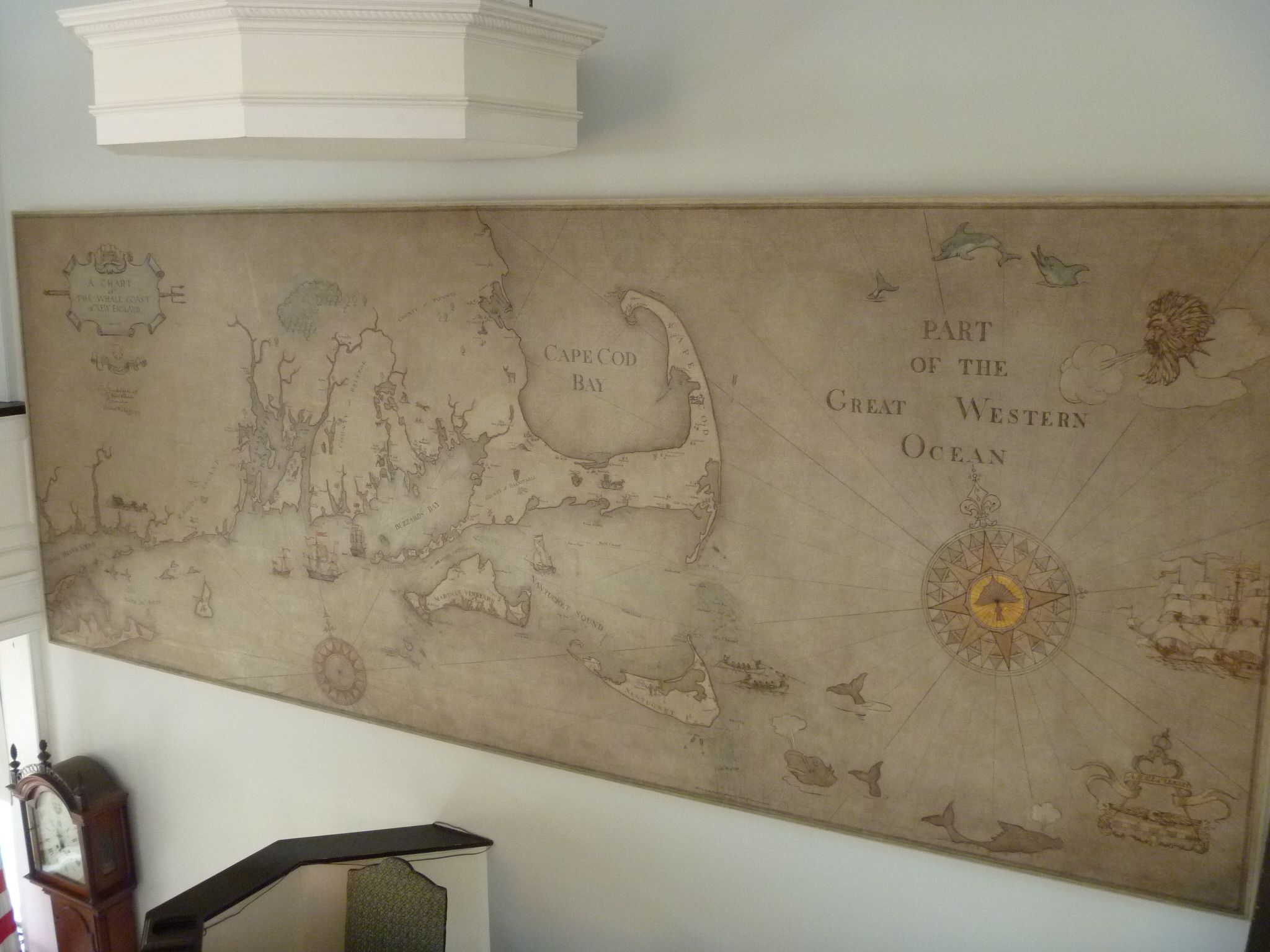
On a recent trip to Cape Cod I spent a day with my friend Marion who lives on the other side of Buzzards Bay. She knew just what I would be interested to see  – A Chart of the Whale Coast of New England.  M had chanced upon a newspaper report telling about a mural that had lately been removed from a seaside (bayside) home, had been carefully renovated and was now hanging proudly in the local museum. After lunch we drove to the Mattapoisett Historical Museum housed in a former Baptist church.

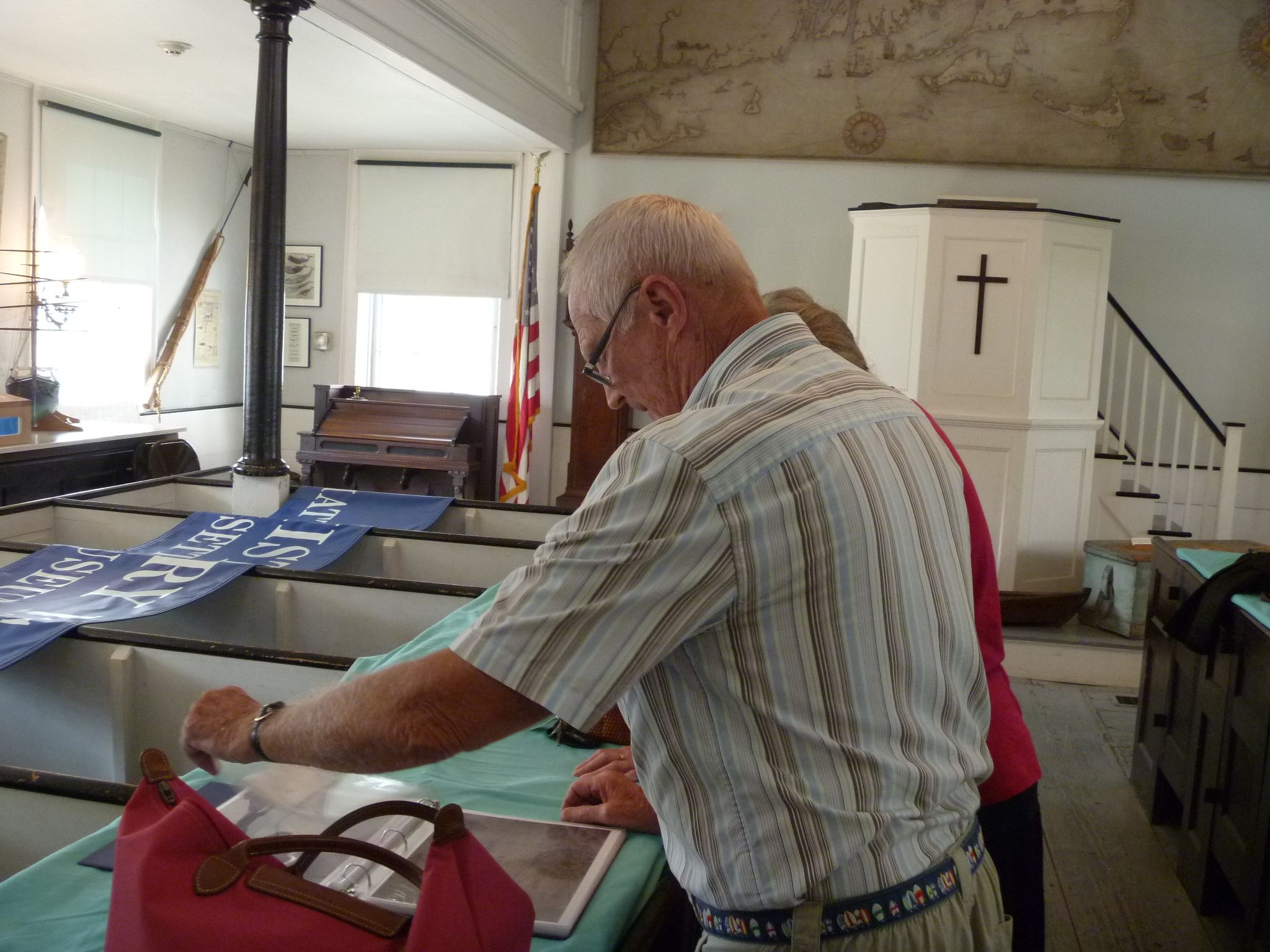
The icing on the cake for us was that we were welcomed to the Museum and shown in detail the Ashley Mural (as it is called) by Mr Seth Mendell himself, President of the Historical Society and a primer mover in the preservation of this wonderful piece of local whaling history for the community.

Mr Mendell explained all the intricacies involved in the creation, removal, renovation and final re-hanging of the Mural via the photo proofs for his book which is due to be published this autumn.

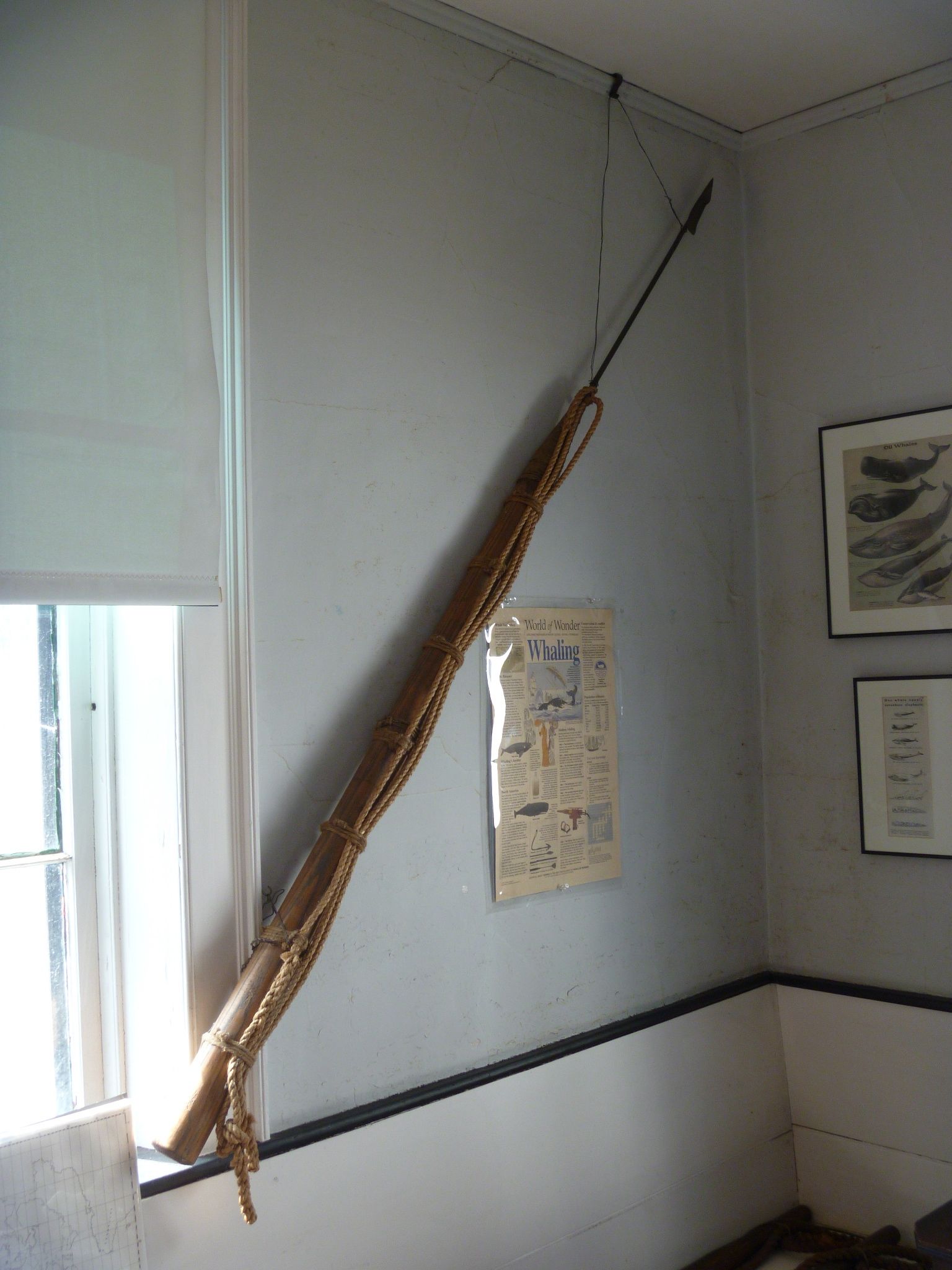
In addition to the Mural we were introduced to various forms of whaling harpoon.

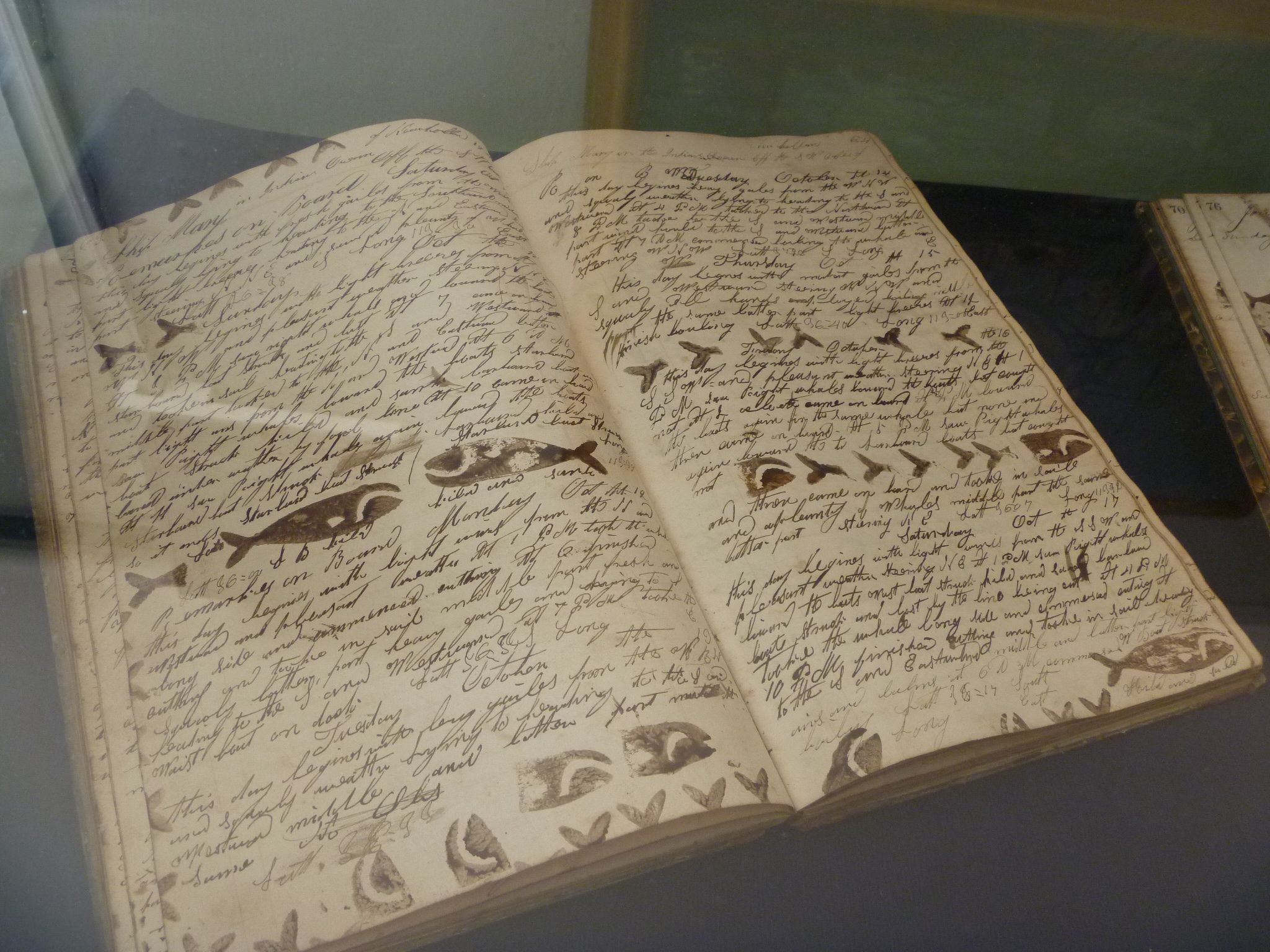
And we were delighted to inspect some very fine examples of Whaling Journals. After pages and pages of seemingly undecipherable handwriting there suddenly appear ink stamp prints of whale tails (indicating sightings/attempted harpoonings) and full whales (indicating capture). One of the museum copies was also decorated with beautiful drawings of full-masted ships.

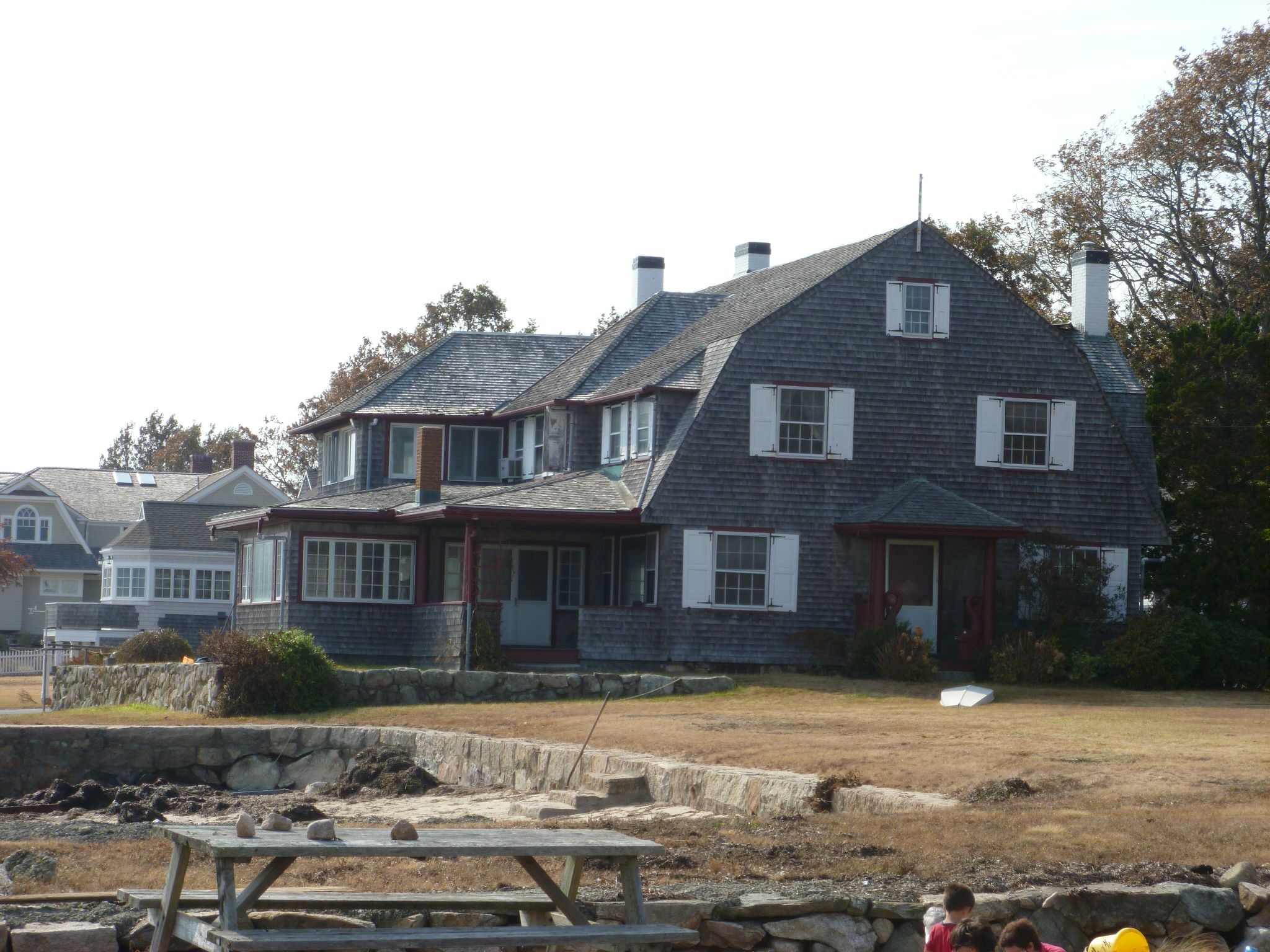
Later we went off to find the house where the Mural had hung for 90 years. It was discovered hanging at an angle from the ceiling in the conservatory at the front of the house (20, Water Street, Mattapoisett) overlooking the bay.

Yet, even after all this new-found whaling knowledge I was still not tempted to take a Whale Watch Cruise out into the Atlantic Ocean! And will I read the book? ….. probably not.