Art Deco and Art Nouveau in Lille and Antwerp : Day One

Last Thursday I set off from St Pancras Station to Lille along with 23 others booked on a Travel Editions art trip to northern France and Belgium.  The train journey took just less than 1 hour 30minutes.

Lille Town Hall and belfry

Lille Town Hall and Belfry [UNESCO World Heritage listed] from the hotel balcony

Day 1 : Travel by Eurostar from St Pancras to Lille and transfer by coach to hotel for check in for 3 night stay. Afternoon walking tour of central Lille.
Welcome reception lecture “Art nouveau – an Overview” and dinner with wine at the atmospheric Art Nouveau Brasserie de la Paix located 2-3 minutes from the hotel.

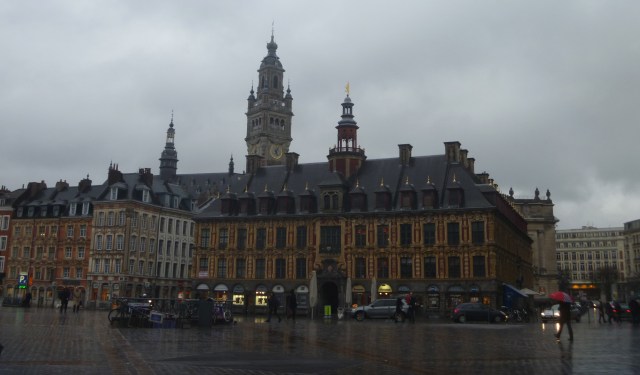
Vieille Bourse with Belfry behind

Unfortunately, it was raining hard in Lille so an hour after arrival and check-in with our brollies out we were on our first guided walk with tour guide and lecturer Mike Hope who mixed his vast knowledge with humour, patience and enthusiasm and from whom I learned all I now know about Art Deco and Art Nouveau in Lille (and nearby towns) and Antwerp during the following three days.
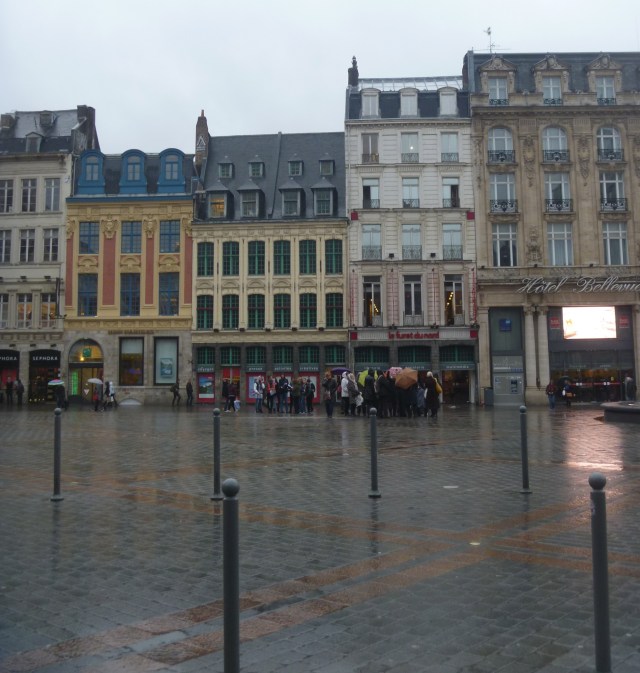
La Grand Place in the rain

The Grand Place in the rain

Once the jewel of the Spanish Netherlands, Lille is France’s most besieged city. It was incorporated into the royal domain in 1304 before passing under Burgundian (1369), then Austrian (1477), then Spanish rule under Charles V. The city became French in 1667 and remained so, except for a brief interlude from 1708 to 1713 and the absurd Nazi Aryanization (1940) from which it was delivered by its illustrious native son, a certain Charles de Gaulle. Throughout the 20th century, Lille was the capital of the French textile industry. … The city [has made] an extraordinary transformation that began with the arrival of France’s high-speed train, the TGV. [It] boasts prestigious colleges, abounds with café terraces and brasseries. Since 2004, when Lille was European City of Culture, it has stood at the forefront of the French cultural scene.” [From my LV Guide Lille, Lyon, Monaco, Toulouse 2012]

From the hotel we were just steps away from the main square and the important civic buildings – the town hall, the old bourse (now a secondhand book market), the opera and theatre – and shopping and business areas.
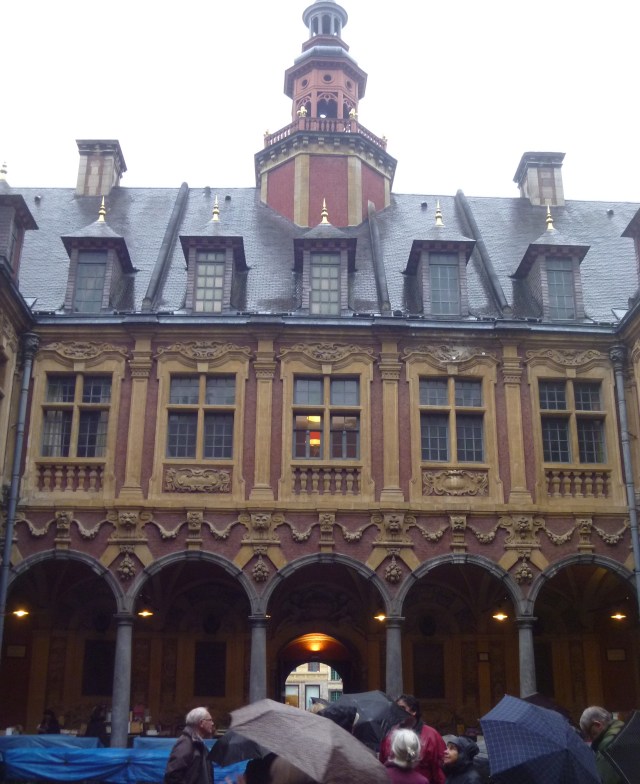
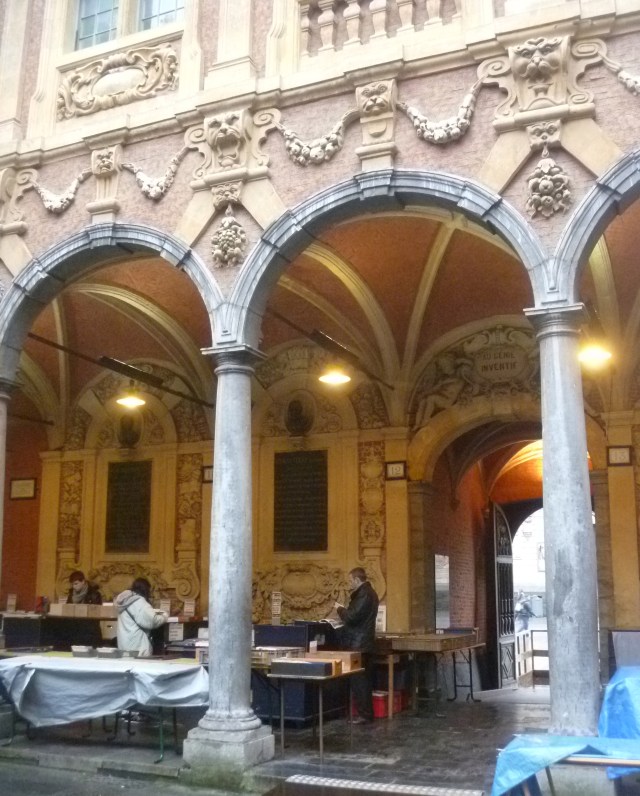
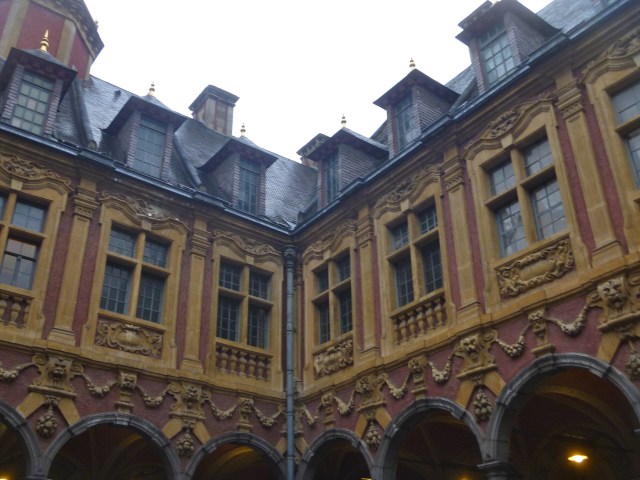
Vielle Bourse

V Bourse

VB Detail

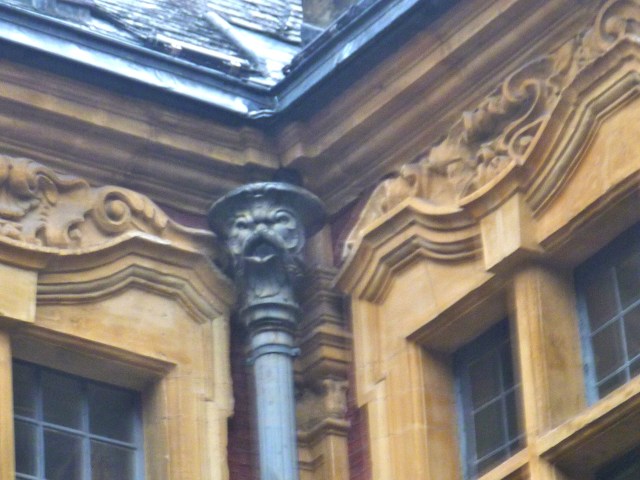
VB Drainpipe

In the Vieille Bourse

Theatre du Nord

The Voix du Nord Building: Mike points out the architectural features
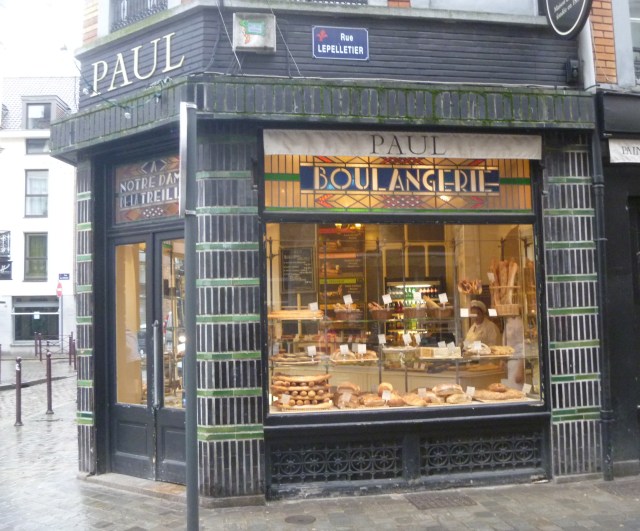
Paul, Lille

Art Deco Bakery on the rue Lepelletier – still a bakery shop
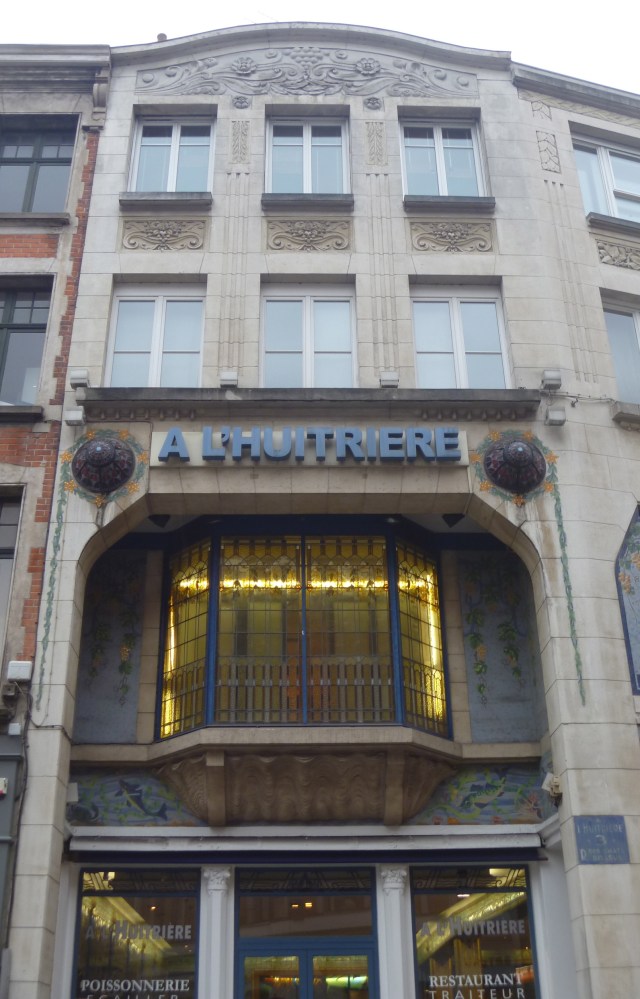
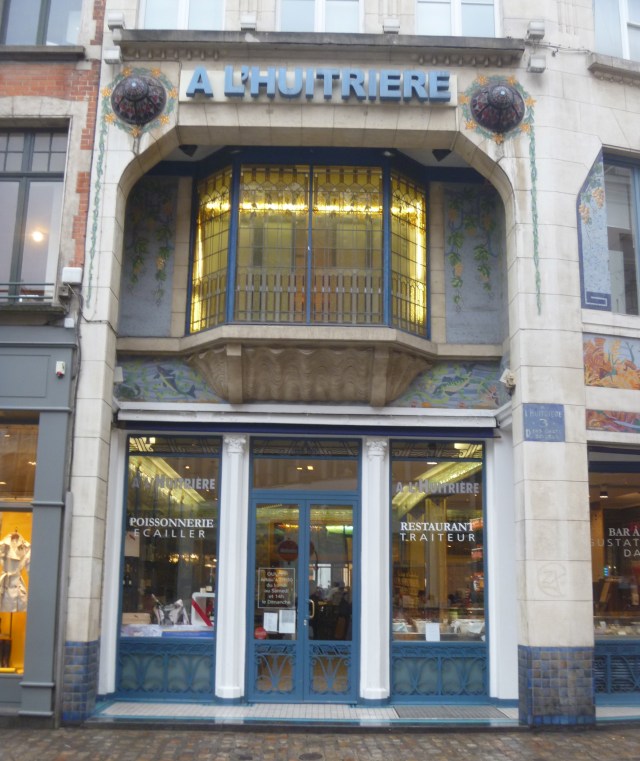
Huitriere

A L’Huitriere

A L'Huitriere

A L’Huîtriere, rue des Chats Bossus. Renowned fishmonger and restaurant with pure Art Deco decor inside and out.
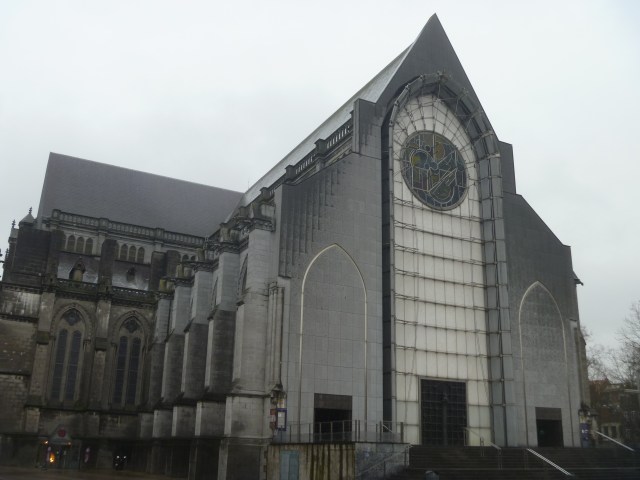
ND de la Treille

The Cathedral of Notre Dame de la Treille : building began in 1854 and was finally finished in time for Lille’s European City of Culture year 2004
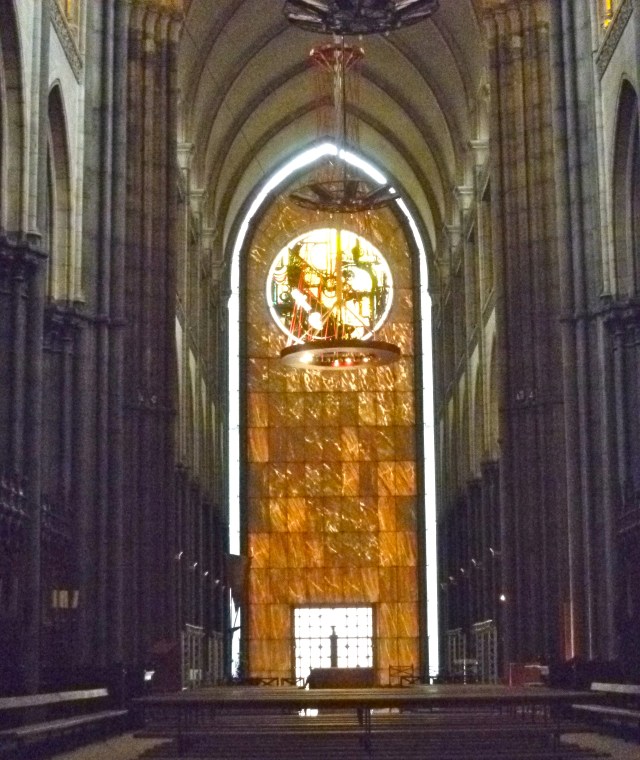
West Window

The West Window from Inside

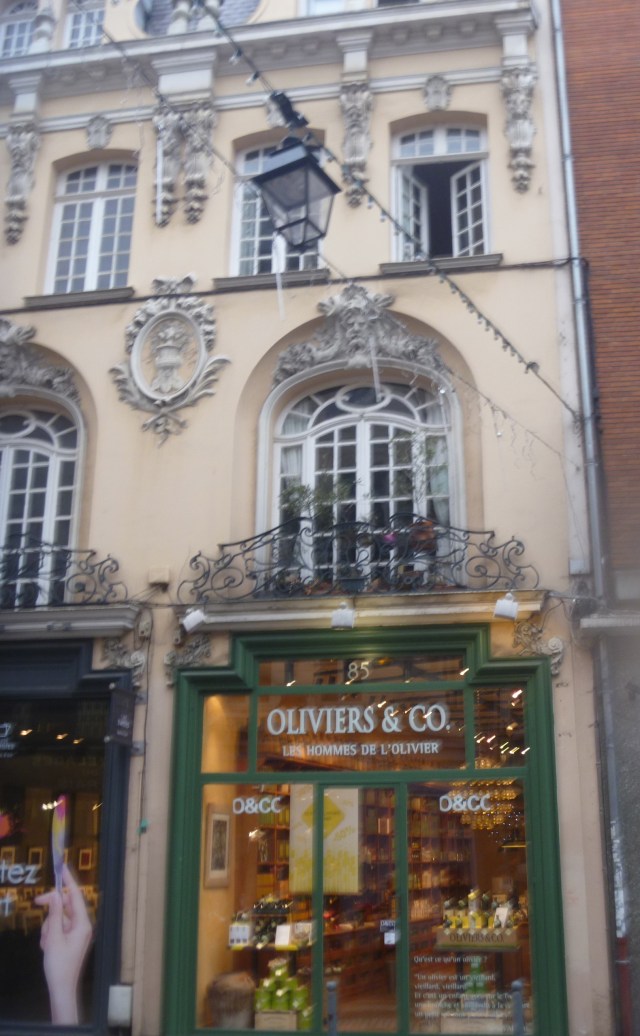
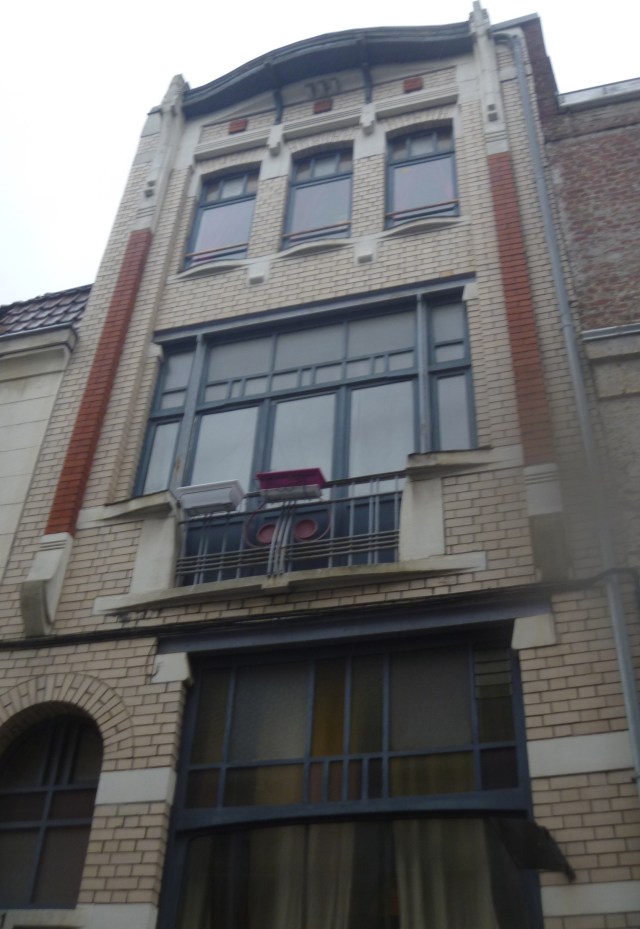
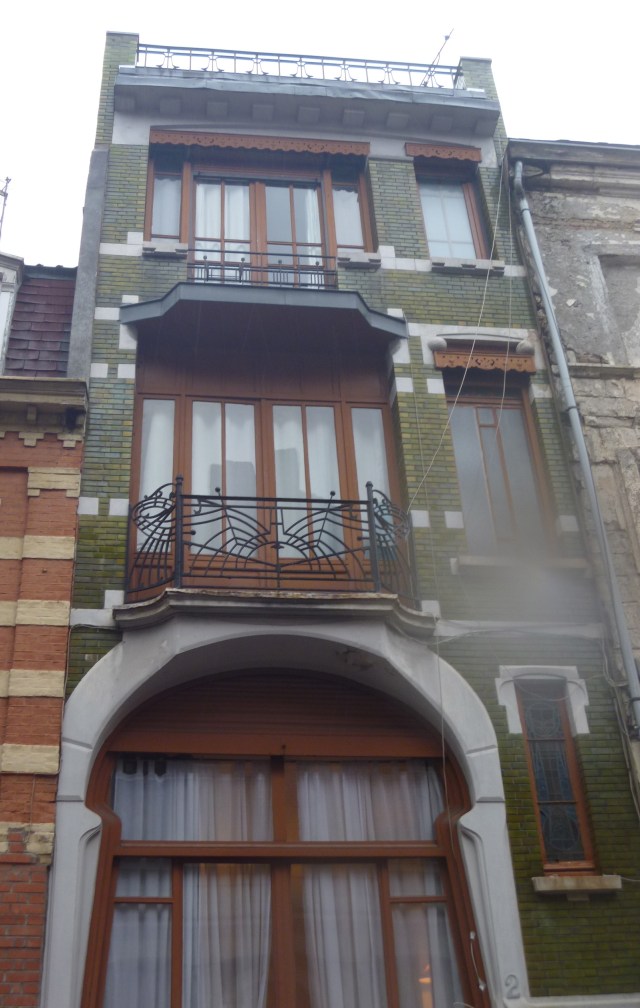
… and other Art Deco and Art Nouveau façades in Lille :
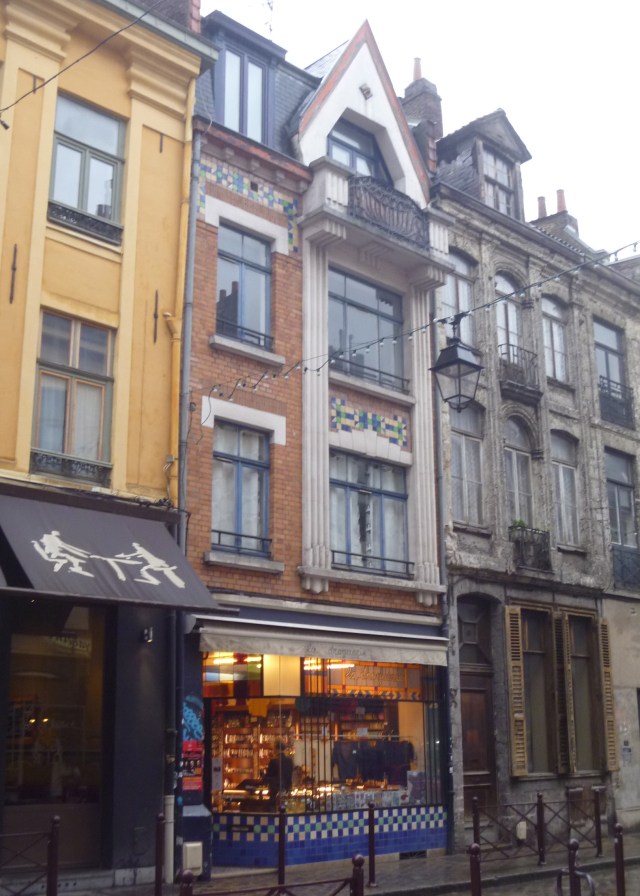
Others 1

Others 2

Others 3

Others 4

And the best place to finish is at Méert famous for its butter and vanilla waffles
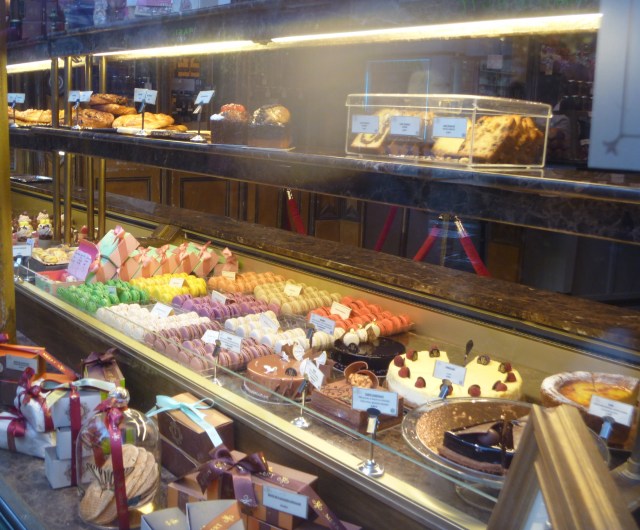
Meert

Horton-in-Ribblesdale to Settle

On Sunday I joined the second Ribble Valley Rambler walk of the year organised by The Friends of DalesRail (of which I am now a member) : Horton to Settle via Helwith Bridge and Stainforth Force: 7 miles, easy. Book and alight Horton; return from Settle. I worked out that since 21st December I have walked from Ribblehead to Long Preston in 3 sections.

On Saturday morning the sun was shining and the sky was blue so I decided to book my train ticket for Sunday from Shipley to Horton. As I left Bagshaw Museum at about 4pm it began rain and I don’t think it stopped until after midday on Sunday. But as I’d paid for my train ticket I resigned myself to a wet walk and dressed for the occasion.

Leaving Horton

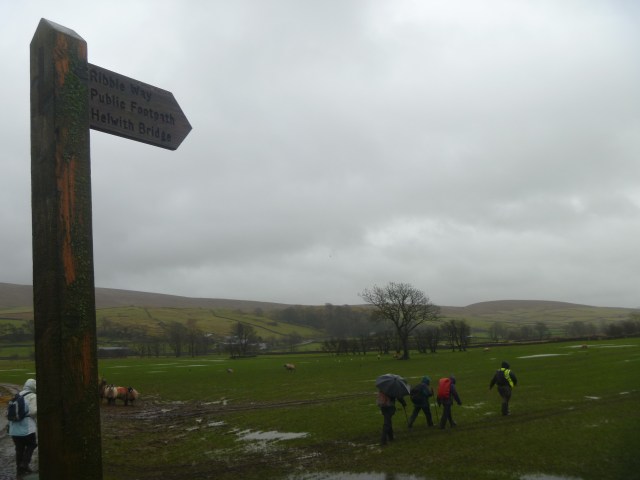
The Group moves off from Horton Station

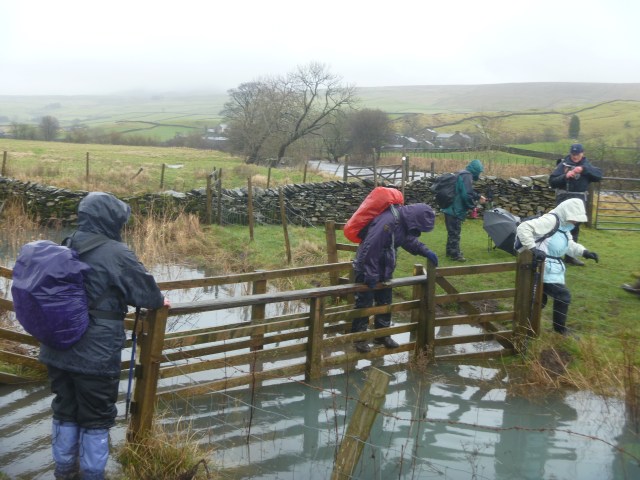
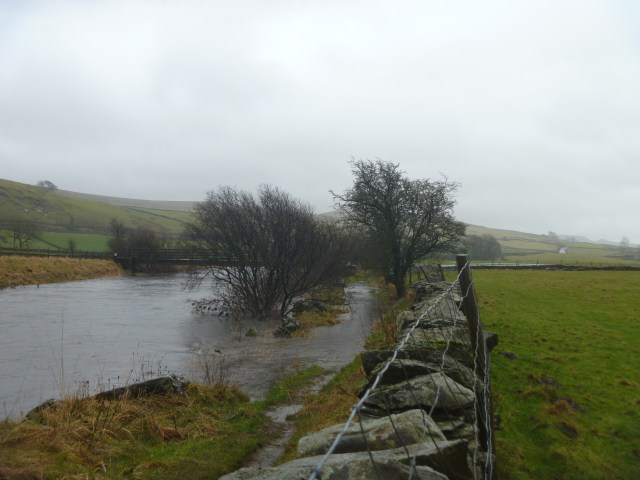
The wind blew and the rain fell but 9 of us met on Horton station and headed off towards Settle on a tarmac track. In fact much of the walk had to be diverted away from the Ribble Way and onto nearby lanes since the paths became extremely muddy and in some cases totally waterlogged and flooded. The river was running full to overflowing and many fields were under water.

Waterlogged fields

Typical Waterlogged Field

Liable to flooding

Liable to Flooding

Full Ribble

The Fast Flowing Ribble

Muddy field tracks

Muddy Field Tracks

Flooded footpath

Path Closed Due to Flooding

Path disappeared

Ribble Way has Disappeared Under Water

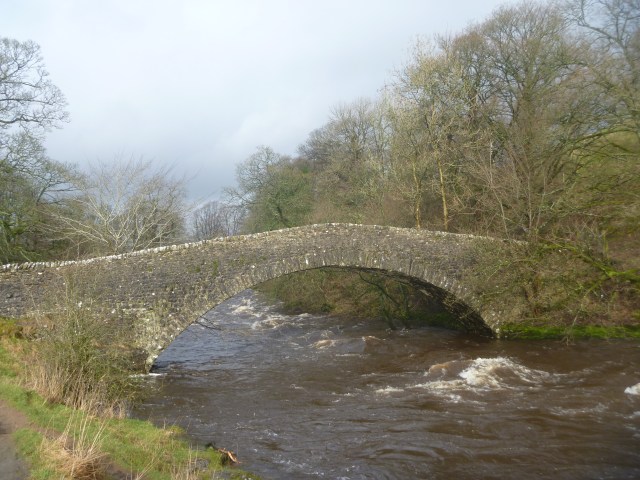
Stainforth Bridge

Fast Flowing River Ribble at Stainforth Pack Horse Bridge

The Force

The Full Force of Stainforth Force

Nearly at Settle

Nearly at Settle

The sun did eventually peep through and on arrival in Settle there were glimpses of blue sky. It was good to get out though despite the wet weather.

At Settle

Fashion Galore! and The Georgians Revealed

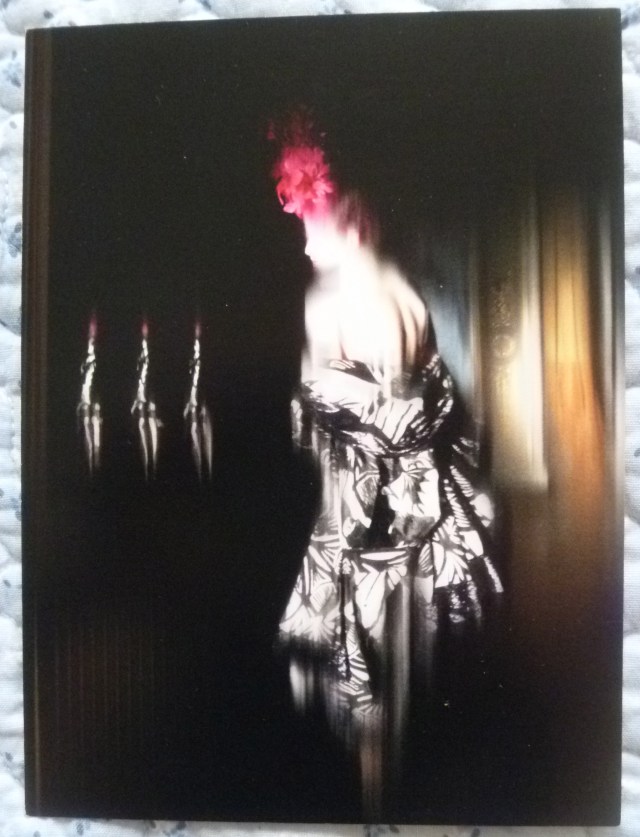
In addition to Uproar! at The Ben Uri Gallery I managed to fit in two further shows in London this week. On Monday (half price day) I accompanied a friend to see “Isabella Blow : Fashion Galore!” a spectacular exhibition of fashion and accessories from the collection of Isabella Blow at Somerset House.

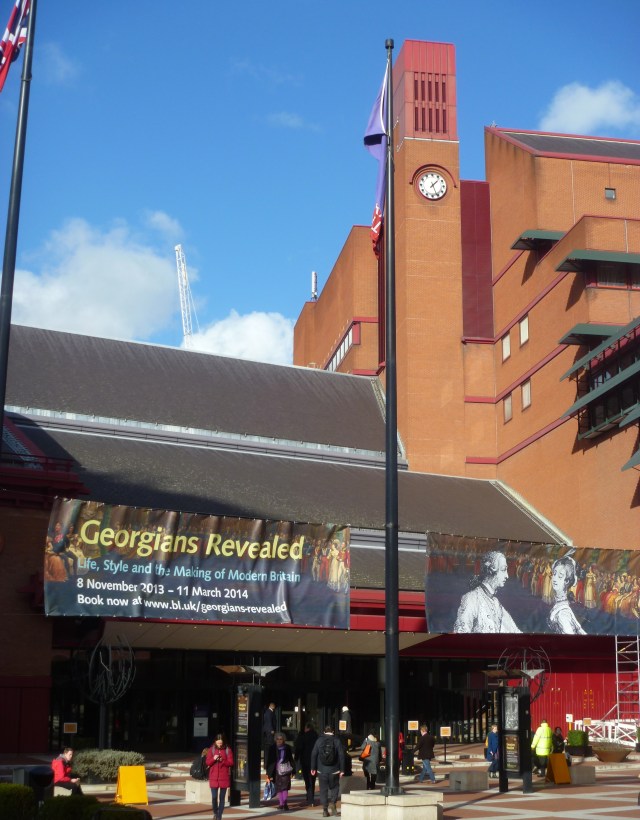
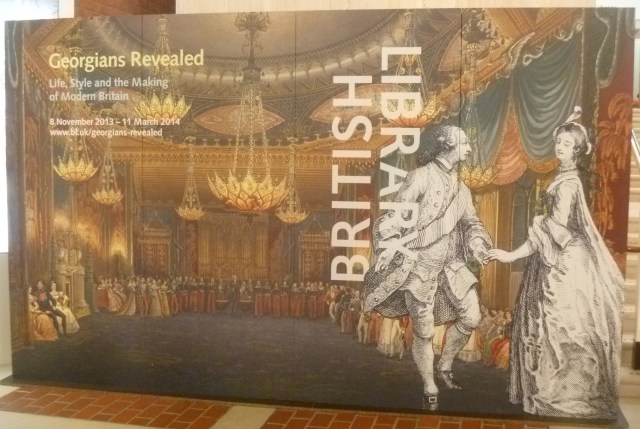
British Library

And  on Tuesday I met my sister at The British Library to see “The Georgians Revealed : life, style and the making of Modern Britain”. A far cry from each you might think but not so! There was Ms Blow with her aristocratic background, her celebrity lifestyle, her fashion journalism  and her promotion and patronage of design and style and fashion in clothes and shoes and hats. And there were the Georgians apparently just as obsessed with the cult of celebrity, with their outrageous fashions, with the first newspapers and popular magazines and with their aristocrats living in homes just like the one Ms Blow grew up in.

Born Isabella Delves Broughton brought up at the family seat is Doddington Park, near Nantwich, Cheshire. She became fashion director of The Tatler. She worked at Vogue and was an innovative editor the Sunday Times Style magazine.  Blow is credited with discovering such designers as Alexander McQueen, milliner Philip Treacy and Hussein Chalayan, as well as models Sophie Dahl and Stella Tennant.

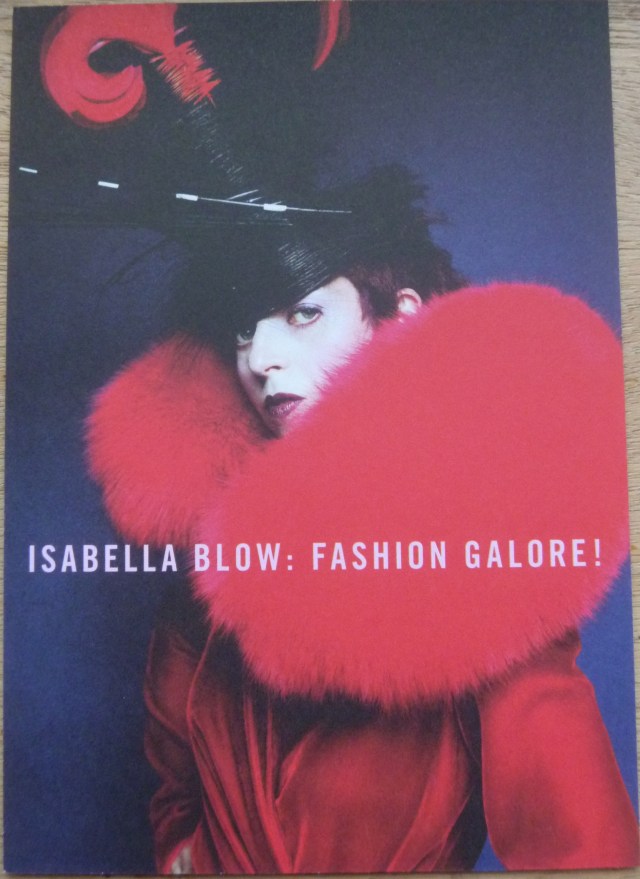
Postcard

Postcard from Isabella Blow : Fashion Galore!

Sadly, I have the impression that Isabella Blow could not cope with the changes and developments of the mood of fashion in the 21st century and she took her own life on 7 May 2007. Bu the exhibition certainly reflects a passion for fashion and is filled with colour and style and flamboyance reflected through the work of the designers she collected and promoted in particular Philip Treacy and Alexander McQueen.

Blow flyer

If I have one complaint about the exhibition, which was simply spectacular, it would be that the first few showcases illustrating Blow’s early life displayed scrapbooks and letters which everyone wanted to study closely and led to a jam of people at the start of the show which later easily dispersed.

Georgians large

The Georgians Revealed  marks the 300th anniversary of the accession of King George I in 1714 and reveals the unprecedented economic, social and cultural changes in Britain under the four successive kings of the House of Hanover. By 1830, when George IV died, every aspect of daily life had been transformed.

The show is divided into three broad areas illustrating their influences on :

1) Public places, private spaces

“New ideas of taste and politeness influenced much of Georgian life from the elegant new streets and squares to the entertainments enjoyed at home. London and the major provincial towns were transformed by classical architecture, providing new public buildings and comfortable homes for the elite and middle classes. Gardens and parks were radically redesigned. Formal parterres gave way to expansive lawns and exotically planted flowerbeds. In the home, luxury and comfort were to be had in refined new styles of interior decoration and a range of fashionable furniture made to order.
But the population of the British Isles tripled to some 24 million, there was disorder and want too. The poor often had just a single room to house a family, and popular public places, such as pleasure gardens and coffee houses, were also sites of bawdy entertainment, crime and scandal. Nevertheless, new middle class homes and gardens reflected the growing wealth and confidence of Georgian Britain and created a lifestyle to which many still aspire.” [Source The Exhibition Guide]
2) Buying luxury, acquiring style

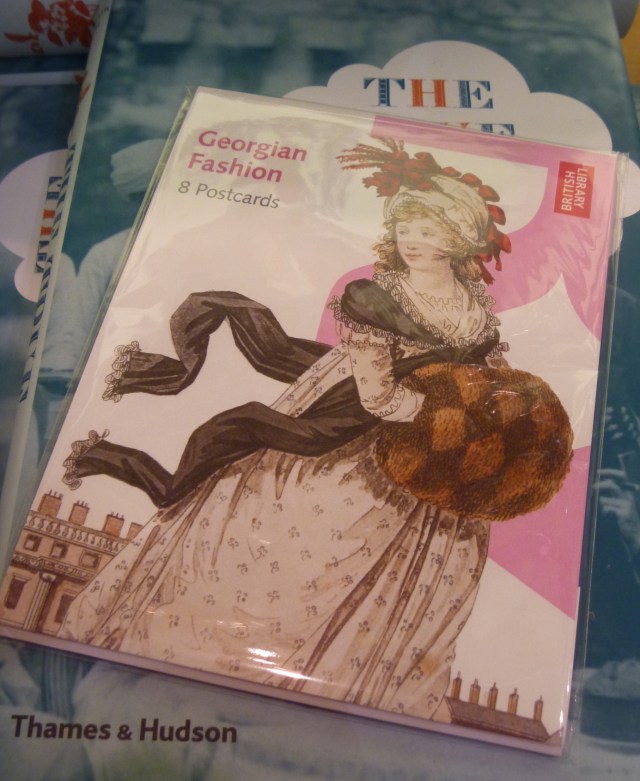
Georgian Fashion

“The East India Company was central to the import of luxury goods during much of the Georgian period. As Britain grew more powerful in the successive wars of the 18th and early 19th centuries, the company extended its monopoly over trade with the East Indies. Tea, coffee and sugar changed the lifestyles as well as the diets of the Georgians. British manufacturers enticed consumers with cheaper goods that copied those from abroad.

Shopping became a popular social activity. Advertising in newspapers, printed handbills and beautifully designed trade cards, encouraged spending on a wide range of luxuries. The fashion industry was born, as newspapers and magazines began regular commentaries on celebrity clothes and accessories. All who could afford it aspired to be fashionable.” [Source The Exhibition Guide]

3) Pleasures of society, virtues of culture

“Sociability to the Georgians was central to daily life, inspiring a huge increase in public entertainments. Theatre was well established, playhouses became larger and new theatrical genres catered for a wider and more diverse audience. Assembly Rooms were built where gentile society could show off their dancing skills, take refreshments and gamble. Pleasure gardens and masquerades added spice to social gatherings. All these opportunities to see and be seen, and to be reported on in print, fed a new culture of celebrity.” [Source The Exhibition Guide]

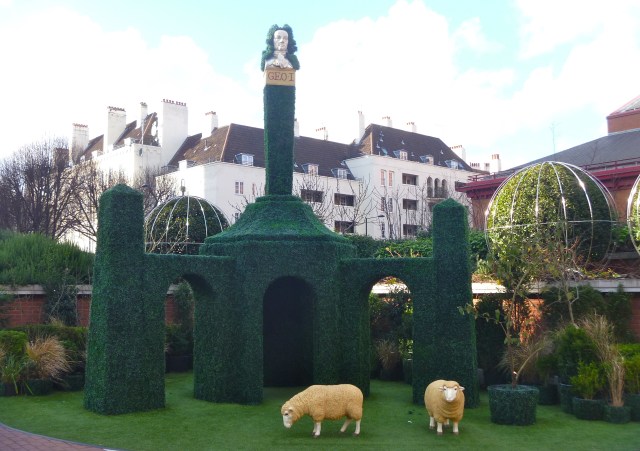
Georgeobelisk

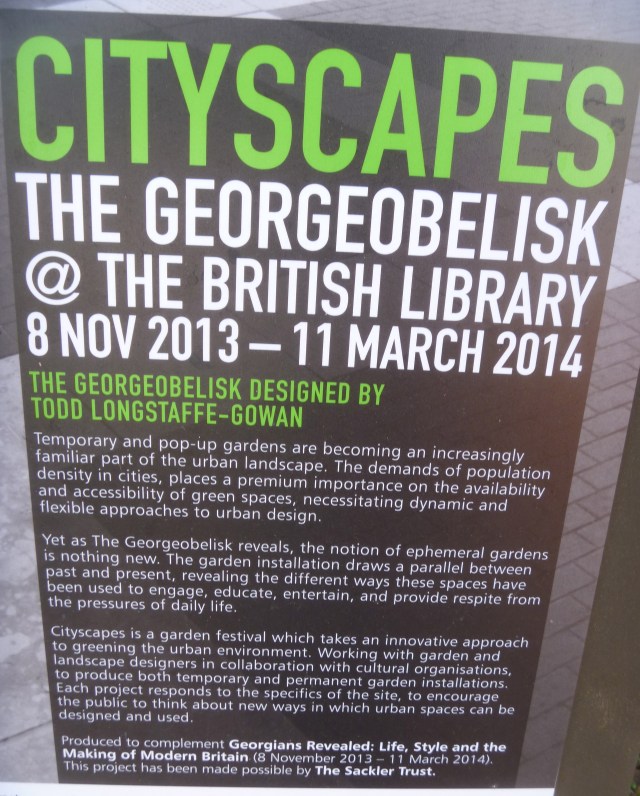
Outside, in the British Library courtyard, is the Georgeobelisk a 6 metre high eye-catcher which evokes the playfulness of temporary theatrical constructions that were popular during the Georgian period to mark special occasions or important historical events.

Cityscapes

I recommend both exhibitions if you can get to them!

Titanic : A(nother) History Wardrobe Presentation

Titanic ticket

Fun and fashion are hardly the first words to come to mind when thinking about The Titanic but Lucy and Meredith of The History Wardrobe brought both to a rather dreary (weatherwise) afternoon at The Bagshaw Museum in Batley on Saturday. Last November I attended Lucy Adlington’s History Wardrobe presentation “Oh my poor nerves!” at The Red House in Gomersal and found I was “hooked”. After that performance I immediately booked for Titanic, thus securing ticket number 1!

Bagshaw Museum

The Bagshaw Museum, Batley

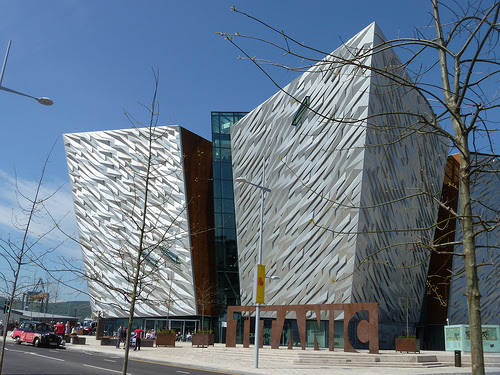
In 2012 I felt as if I never wanted to hear the word Titanic again. It seemed to crop up everywhere and on a visit to Belfast that June I even went to visit the Museum of the same name.

Titanic Experience

The Titanic Experience in Belfast

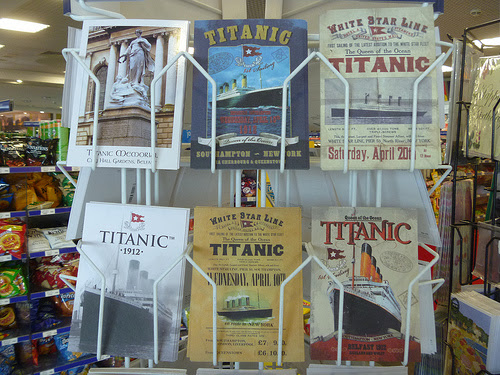
Titanic postcards

Titanic Postcards

Titanic keyrings

Titanic Keyrings

For 15 years now Lucy has presented history, and particularly women’s history, through women’s fashions. Visit her website here for a list of dates and presentations coming to a village hall or museum near you, soon.

Titanic set

The Titanic Set

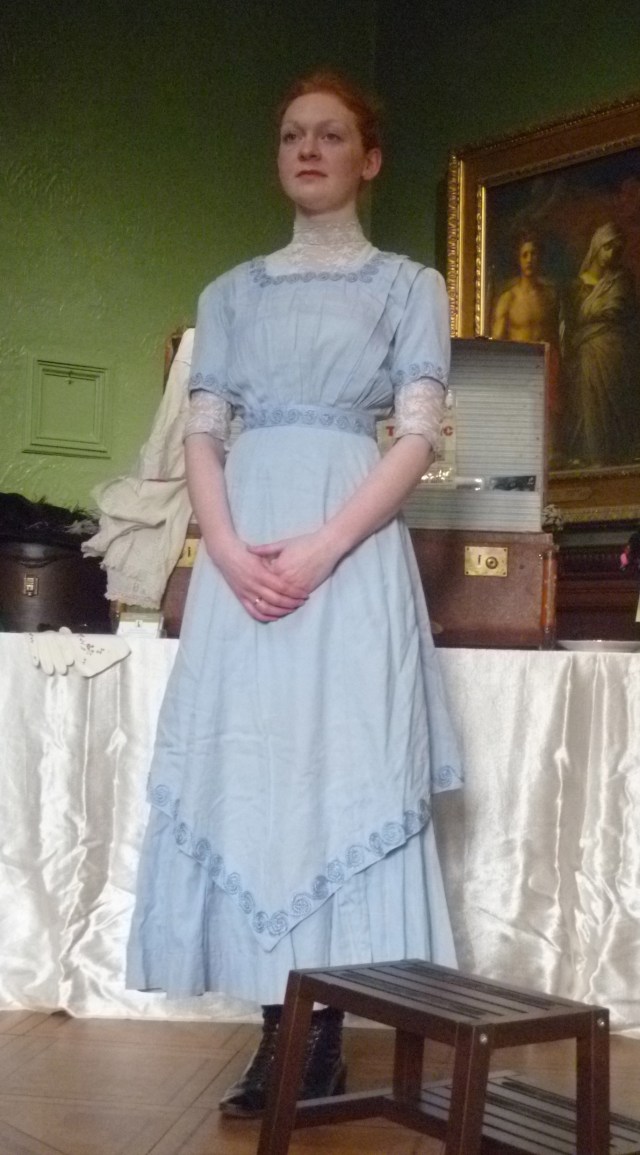
Meredith, who took on the character of Lady Lucy Duff Gordon’s maid Mabel Francatelli, introduced the programme before Lucy, alias Lady Duff Gordon herself, made her grand entrance. Married to Sir Cosmo the three of them boarded the fateful ship at Cherbourg.

Lady Duff Gordon and maid

Lady Duff Gordon and her Maid Mabel

Following the collapse of her first marriage “In 1894 she rented a shop and workspace at 24 Old Burlington Street, London, between Bond Street and Regent Street. ‘Maison Lucile’ was a success and the ‘personality’ dresses of ‘Lucile’ were immediately popular. Each design was unique which enhanced their appeal. In 1897 new, larger premises were purchased at 17 Hanover Square. By 1900 the firm had become one of the great couture houses of London under the name ‘The Maison Lucile.’  In 1910 she opened a branch of Lucile Ltd. in New York. A further salon was established in Paris in 1912, and in 1915 a branch in Chicago expanded the empire.”

Hobble dress

Second class suit and cream silk dinner gown with a ‘hobble’ skirt

Throughout the performance Lucy stressed the importance of class and gender on the ship from passengers to crew each had their role and adhered to the hierarchy of social class.

We learn that the ship was a floating palace, 11 stories high and that it smelt of the perfume of flowers. We are shown examples of the dresses worn by first and second class passengers but very few ‘steerage’ outfits survive. This is due to the fact that dresses were worn to threadbare or remade and repaired and then used as rags. Lucy has however rescued  a single wool petticoat lined with glazed cotton – one of the prizes of her collection.

Wool petticoat

The Prize Wool Petticoat

We are also told about activities aboard ship the main one being eating; although one could walk around the deck for two miles or dip into the unheated seawater pool. We’re shown a cotton tea dress, a cream silk dinner gown with a ‘hobble’ skirt (the height of fashion in 1912) and a fur cape, boa, ladies underwear and nightwear.

Maid's underwear

A Maid’s Underwear and Boots

Meredith in her tea dress

Meredith in Mabel’s Tea Dress

First class silk

First Class Silk and Lace Underwear

Nightwear

A Maid and her Mistress in their Night Attire

Lucy ends the two hour non-stop show with a favourite quotation “Eat the cake! Think of all the ladies who turned away the dessert trolley!”.

Hooray for The History Wardrobe – my next visit will be to see the premier of “Women and the Great War” in March.

“Like a jewel box shimmering in amber candlelight” – Sam Wanamaker Playhouse

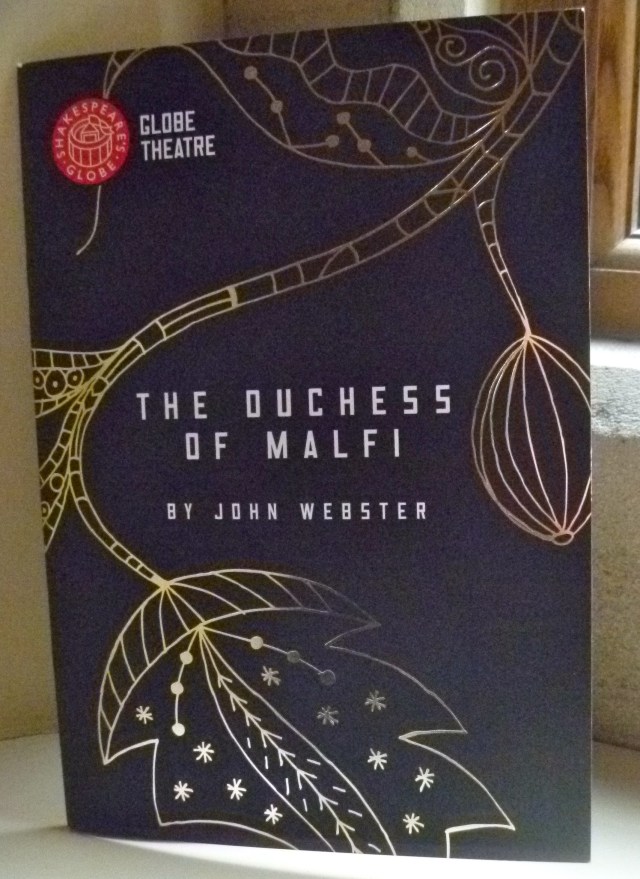
Programme

Tuesday evening was my last in London and I returned home on Wednesday morning.

The title quote is from a review in The Guardian.

A few weeks ago I was lucky enough to buy the last ticket for the evening performance of The Duchess of Malfi at the brand new Sam Wanamaker Playhouse at The Globe by the riverside in Southwark. I’ve visited its sister theatre The Globe proper several times and loved each performance. In rain and in sunshine and with a bench seat and cushion I have looked down on the (in my view) unlucky groundlings in the pit. These theatres are not built for comfort.

I’ll warn you now about the seating. Unlike in the Globe itself no cushions are required as all the benches (to call them seats would be an exaggeration) are padded. By lucky chance I was on the back row of four in the pit and I had a back wall (of sorts) to lean against (kind of). Looking round, and thinking of possible future visits, I could see none better to go for. As it happened, in the end, the comfort of the seats was unimportant.

This play and its performance in the intimate (seating for just 340), candle-lit auditorium was one of my theatre-visiting highlights of all time. And I can think of quite a few good ‘uns.

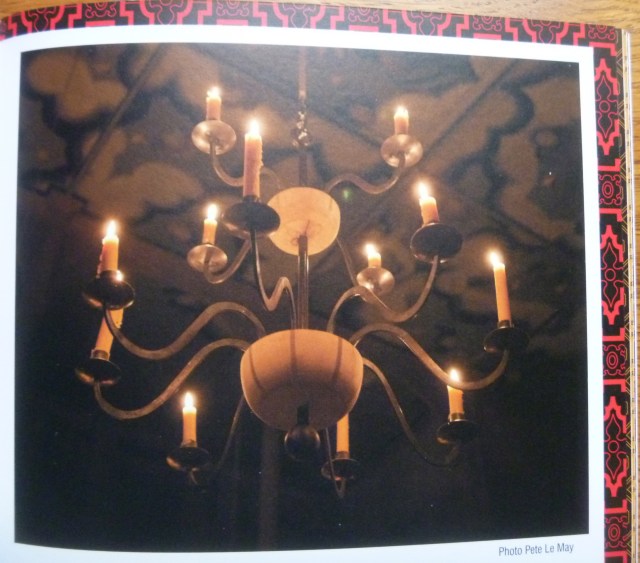
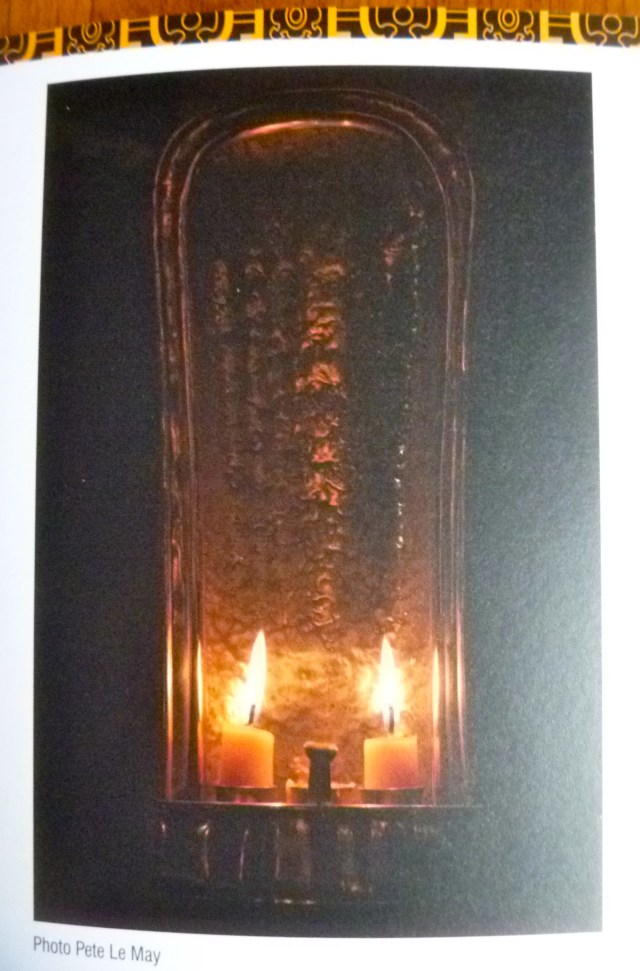
Candelabra

The candles themselves played a part in the performance; even just the lighting of them and the blowing out of them. The candelabras rise and fall from the ceiling, single candles are carried by actors and others flicker in their sconces. All contribute the atmosphere and action as the performance unfolds. I’ve been unable to add the Youtube video about the candles but scroll down through this link to watch.

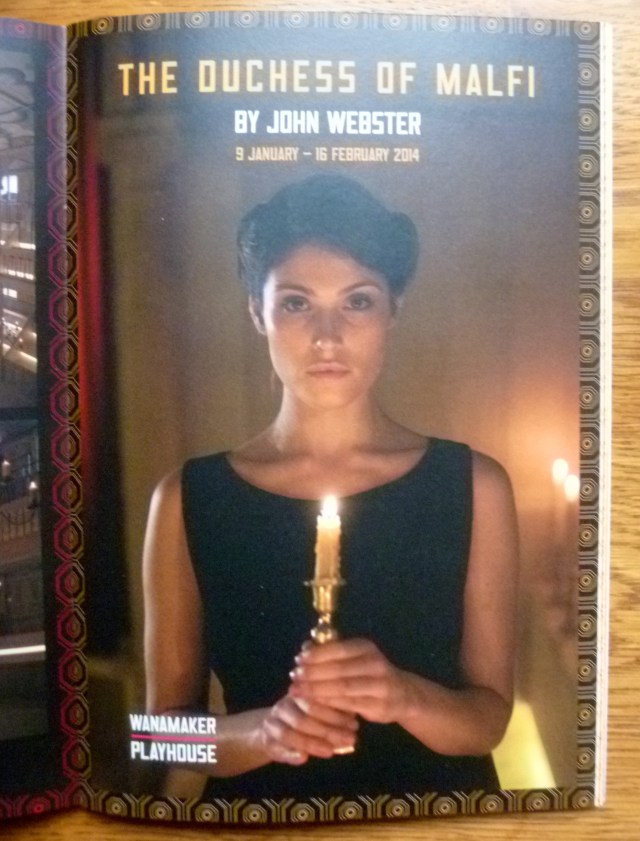
G Arterton

Gemma Arterton – The Duchess – with her candle

Sconce

Candles in a Sconce

“The Duchess of Malfi” was written by John Webster (1580-1634) and first performed around 1613-1614.

The widowed Duchess of Malfi longs to marry her lover, the steward Antonio. But her rancorous brothers, Ferdinand and the Cardinal, are implacably opposed to the match. When their spy, Bosola, discovers that the Duchess has secretly married and carries Antonio’s child, they exact a terrible and horrific revenge.

First performed by the King’s Men – Shakespeare’s own company – ‘privately at the Blackfriars and publicly at the Globe’, The Duchess of Malfi is a thrilling combination of brilliant coups de théâtre, horrific set-pieces and vivid characters – notably the tragic Duchess and the subtly villainous Bosola – all lit by Webster’s obsessional imagination.” [Source]

I’m looking forward to more visits to The Globe and The Sam Wanamaker Playhouse in future!

Just Walkin’ the Dog in Belsize Park and Blue Plaque Land

Until Saturday the weather had been atrocious and we have been walking out in the wet and wind which is not conducive to photo-taking. But then the weather changed. The sun came out and the sky turned blue and I have managed to capture some local landmarks here in the Swiss Cottage/Belsize Park area of northwest London.

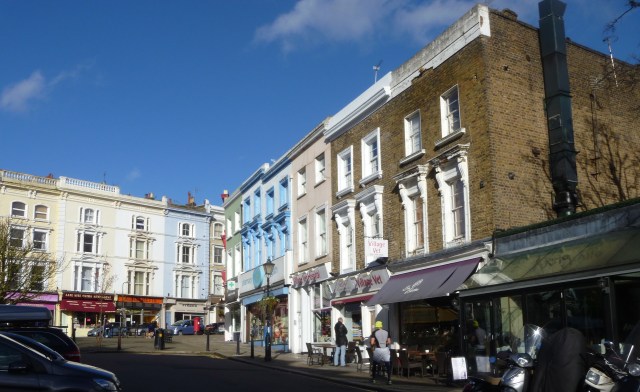
belsize Village

Belsize Village Square

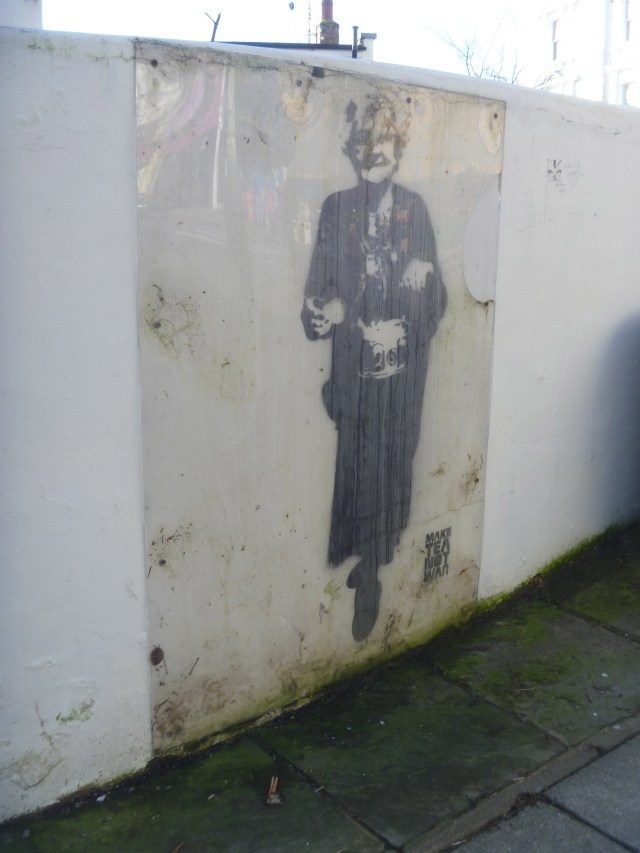
Here is the local “Banksy” but it isn’t a Banksy – read all about it here.

'Banksy'

Make Tea not War in Belsize Village

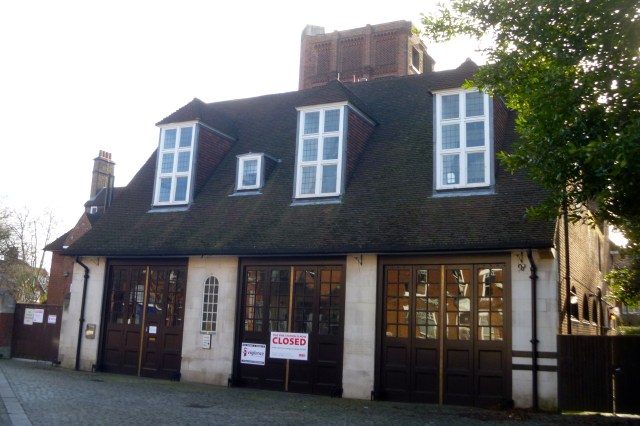
Fire Station

Even the local Fire Station is an Arts and Crafts building. It closed down last year. I expect it will be converted into apartments.

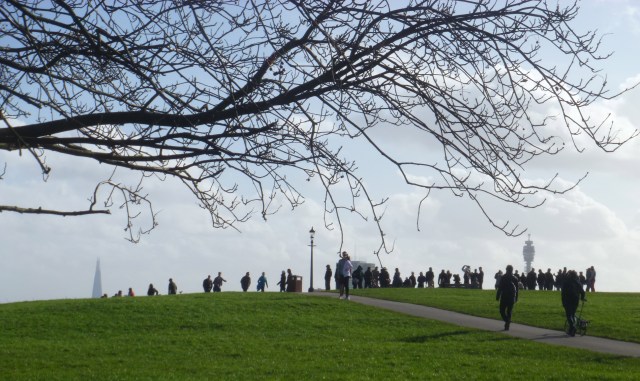
Primrose Hill

Then along with the world and his wife we headed for Primrose Hill summit to study the view, watch the kites and rub noses with other dogs (the dog, not me!).

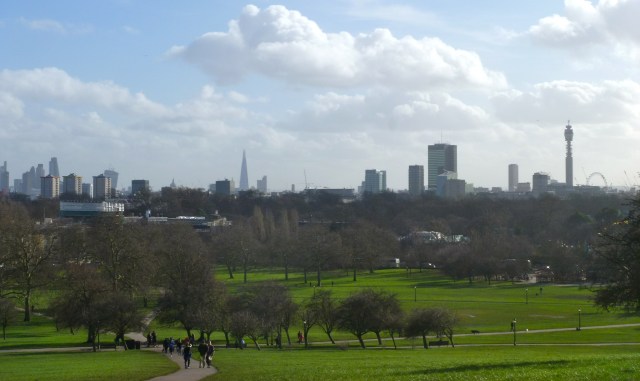
Primrose Hill view

It’s a pretty impressive view when you get up there.

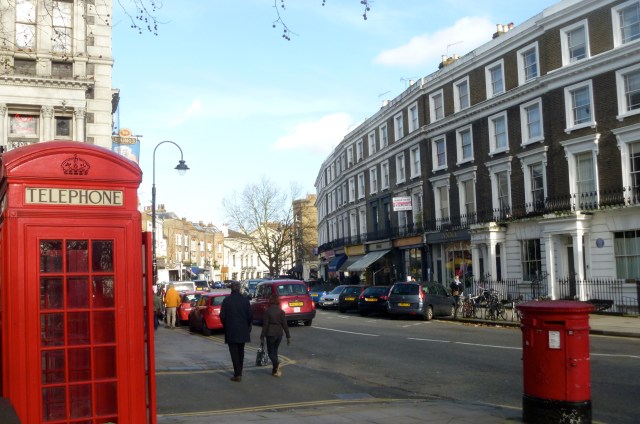
Regents Park Road

Regents Park Road

One of my favourite streets in London Regents Park Road has everything : bookshop, dress shop, cafes and restaurants, interiors and fabrics shops, bread and patisserie shops and delis. I also heard a lot of French being spoken so seems to be popular with French families.

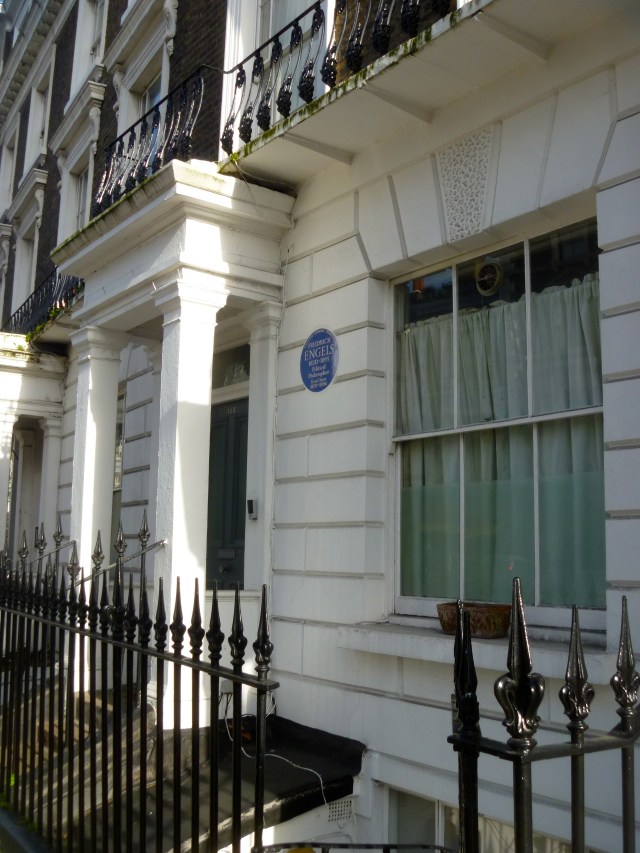
Engels House

Friedrich Engels [1820-1895], political philosopher, lived here (122 Regents Park Road) from 1870 to 1894

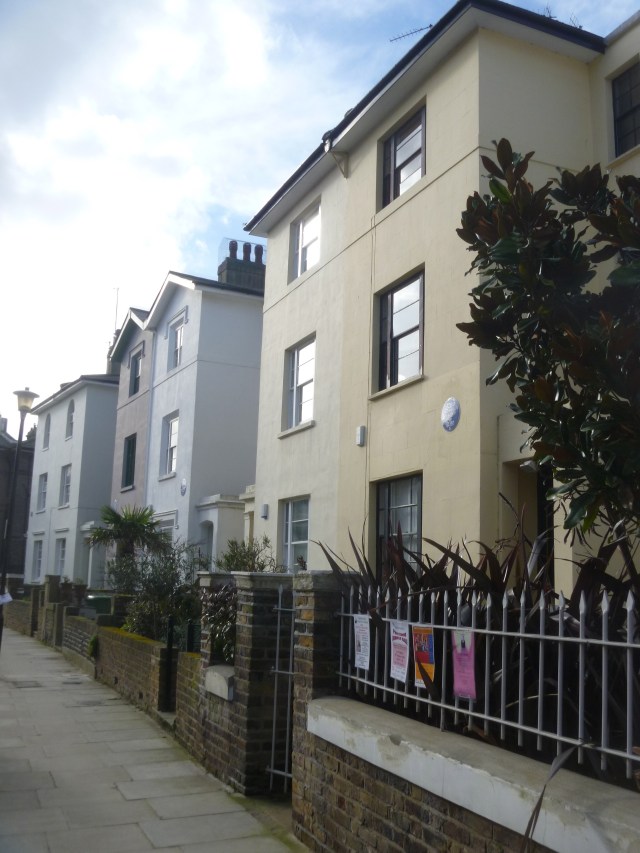
St Mark's Crescent

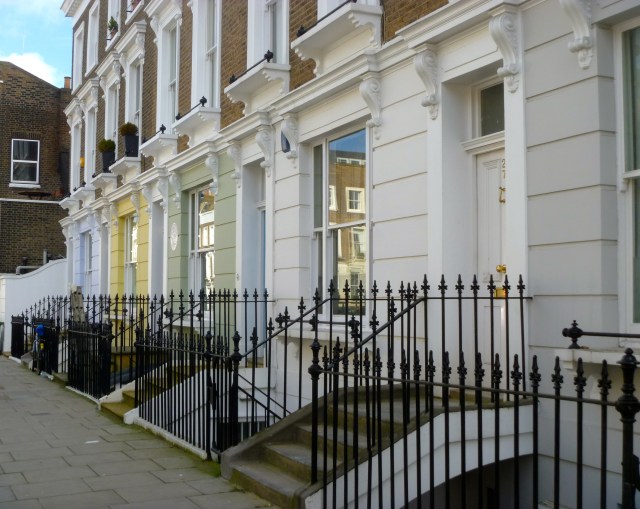
Two neighbouring plaques in St Mark’s Crescent

On the right, number  11, (pale yellow house) lived Arthur Hugh Clough [1819-1861], poet and author of Persephone Books reprint “Amours de Voyages” from 1854-1859. And in the pale blue painted house with the plaque lived the historian and broadcaster A.J.P. Taylor [1906-1990] from 1955 to 1978. Next door, at the dark grey painted house number 14, is the plaque commemorating William Roberts [1895-1980], artist, who lived, worked and died here 1946-1980.

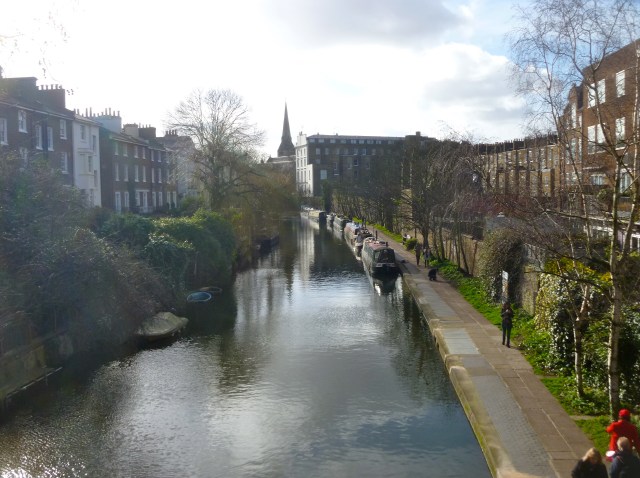
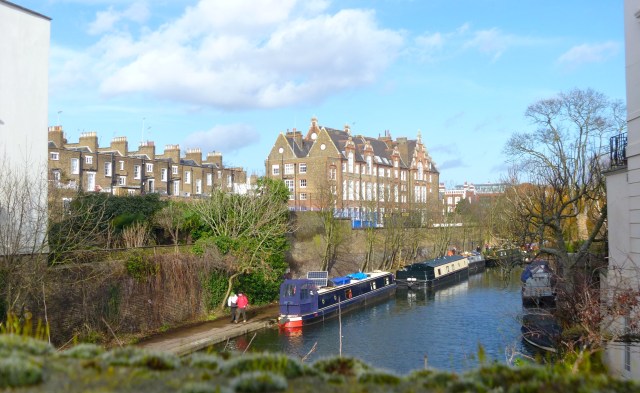
Regents Canal 2

The Regents Canal

Regents Canal 1

The Regents Canal

23 Fitzroy Road

23 Fitzroy Road, the green painted house near the middle of this row, was the home of W.B. Yeats [1865-1939] Irish dramatist and poet. It was also the house where, on 11 February 1963, the American poet and novelist Sylvia Plath [1932-1963] apparently took her own life. There is no plaque to explain this. Her plaque is attached to the nearby house at 3, Chalcot Square where she had lived from 1960 to 1961.

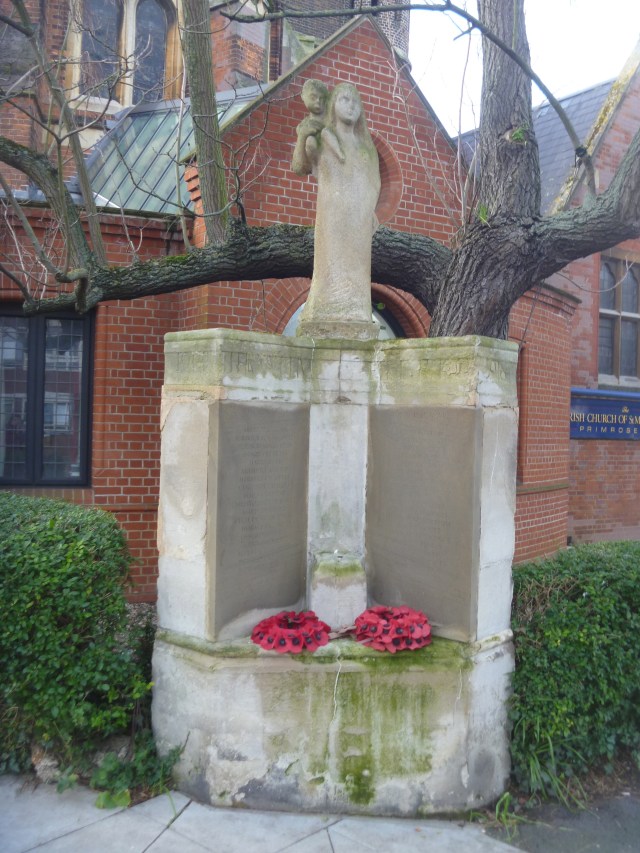
War Memorial Primrose Hill

War Memorial by St Mary’s R.C. Church, Primrose Hill

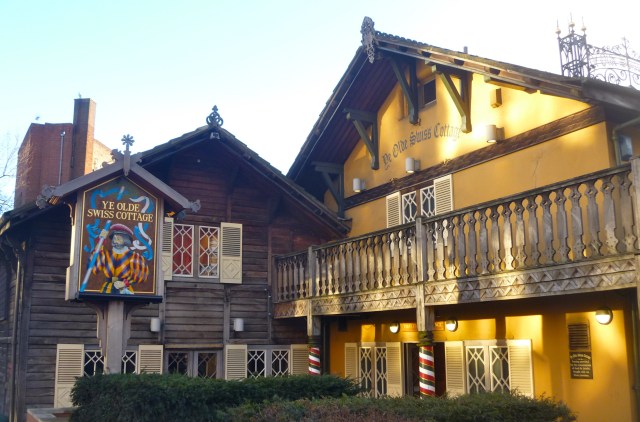
Swiss Cottage

And here is Ye Olde Swiss Cottage itself

A Visit to The Freud Museum in London

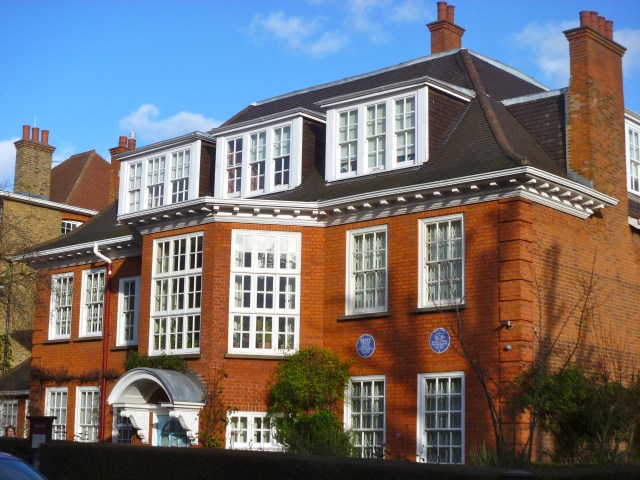
20 Maresfield Gardens

20, Maresfield Gardens  NW3 : The Freud Museum

Today I visited The Freud House Museum just up the road from where I am staying in Belsize Park. It has limited opening hours and days so I haven’t managed to get there before. If you show your National Trust Card you get half price admission and if you are, like me, over 60, it is only £2.25 as opposed to the full £6.

2 blue plaques

Anna Freud and her father Sigmund Freud lived here

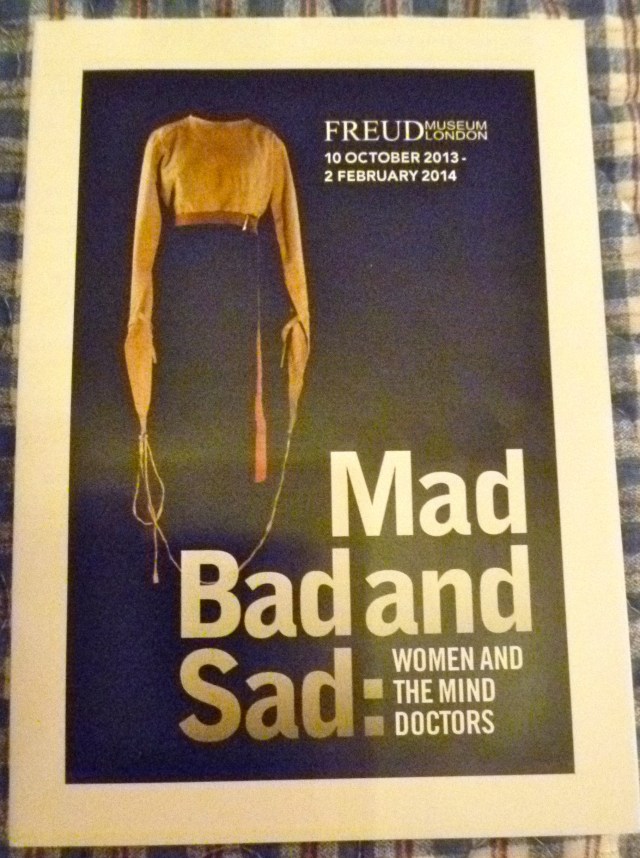
I thought £2.25 was enough to pay, really. There are only really one and half rooms worth seeing plus an introduction to the house and family in the Dining Room and a video room. Two upstairs bedrooms are devoted to the temporary exhibition, Mad, Bad and Sad: Women and the Mind Doctors, which was partly interesting. I could have done with fewer subjects and a more full portrait of each.

Mad sad and bad

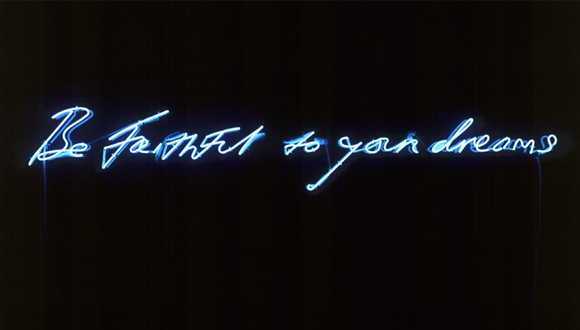
Women featured included Sylvia Plath, Marilyn Monroe, Mary Lamb and Virginia Woolf. Virginia and Leonard Woolf visited Freud here at his home. The exhibition was accompanied by modern art and installations mainly by women. On the staircase wall and in lights was Tracy Emin’s “Be Faithful to your Dreams”

be-faithful-to-your-dreams

[Source]

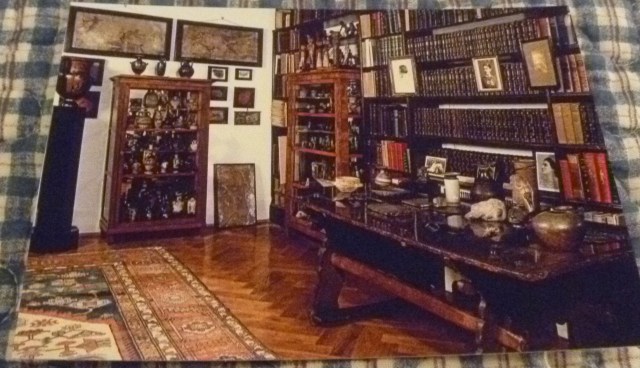
The most interesting room to me was Freud’s ground floor study and consulting room with his famous couch and the green chair in which he sat to listen to his patients baring their souls.

Freud's study

The Freuds were fortunate in being able to leave Vienna in 1938 after the annexation of Austria by Adolf Hitler. They were even able to bring their furniture, hundreds of books (although Sigmund Freud sold 800 before he left) and household ornaments and Freud’s collection of antiquities also including his daughter Anna’s traditional painted Austrian country furniture now on show in the Dining Room. The study is jam-packed with stuff and books and is set up just as it was in Berggasse, 19 his former Viennese home and now another Freud Museum.

Freud couch

Freud’s Couch and Chair

On asking I was told that no photography was allowed in the house. So I bought postcards and these are reproduced here. However I found it very annoying that people were ignoring this and snapping away with their smart phones.

With other rooms having the curtains closed I found the half-landing refreshing and bright – the sun shining through the window. It was an area loved by Freud’s wife, Martha, for afternoon tea and chat. See the bay window above the front door in the top photo.

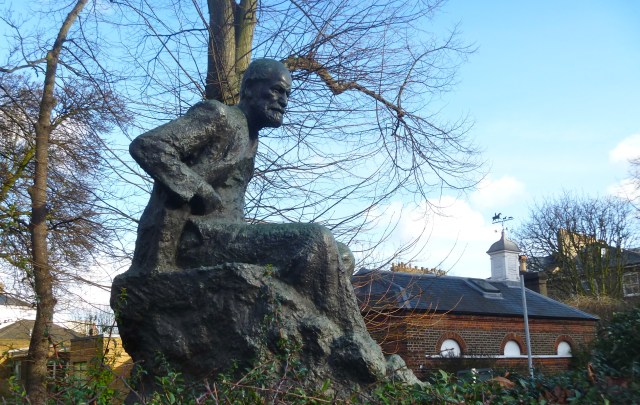
Between the flat and  Maresfield Gardens is a statue of Sigmund Freud. It’s in the grounds of The Tavistock Clinic for Mental Health Care and Education.

Freud Statue 1

Freud was already sick with throat cancer when he arrived in Britain and he was to die just a year later on 23 September 1939 just a few weeks after war was declared on Germany. The couch on which he died is also displayed at the house. His wife and his unmarried daughter Anna lived on in the house. Anna was also a well respected practising psychoanalyst.

Fellow Blogger ‘Down by the Dougie‘ got there before me!

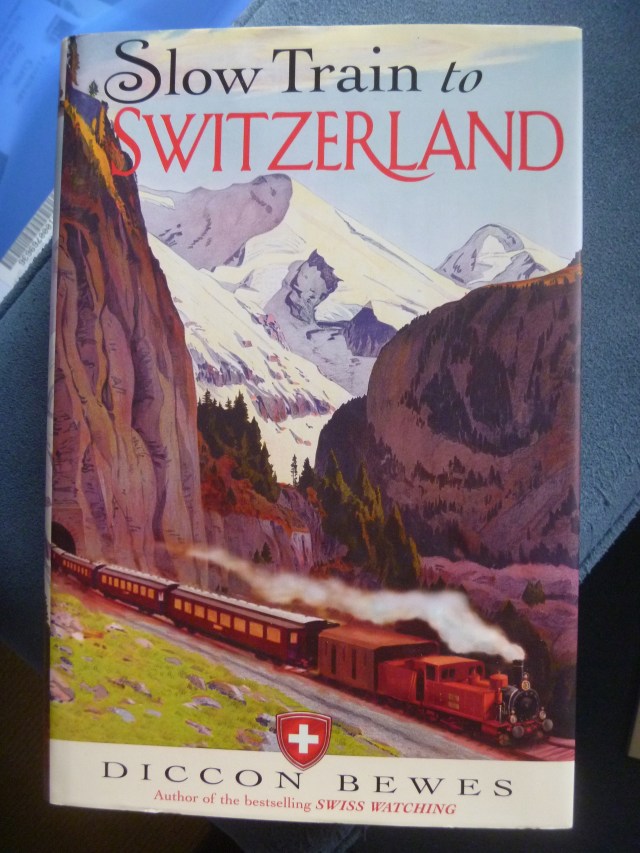
Slow Train to Switzerland: One Tour, Two Trips, 150 Years and a World of Change Apart

It’s my birthday and I have received some lovely gifts including this book :

Slow train

You may remember that last summer I spent a month in Switzerland and posted each day about my experiences here.

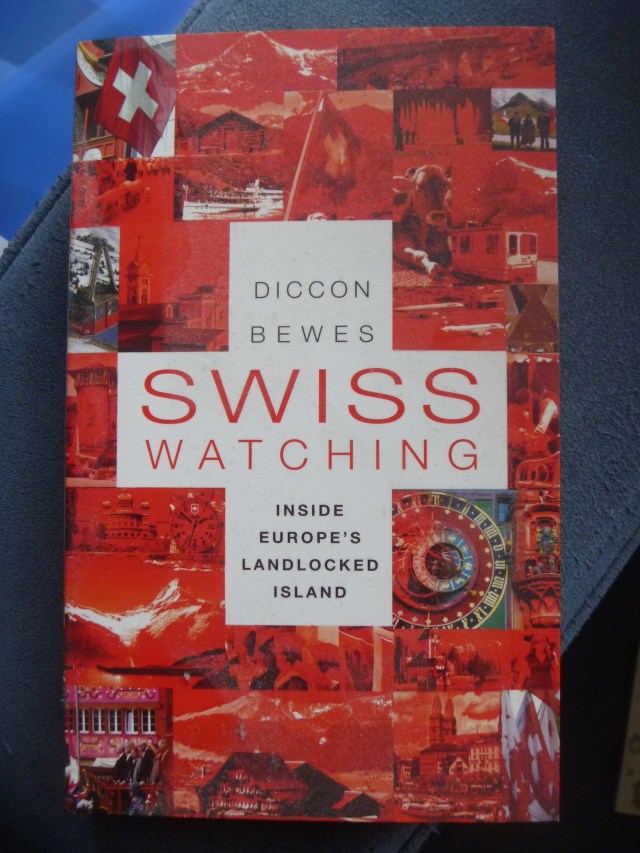
I still haven’t read Bewes’s ‘Swisswatching’ [below] but I think ‘Slow Train’ will jump the queue as I’m a seasoned traveller on Swiss trains and I remember there was feature about Miss Jemima’s diary on the Myswitzerland.com website and in the Financial Times around the time that I made my trip. I see there is now a fancy app. to accompany anyone wishing to emulate Miss J and D Bewes.

Swiss Watching

It was the tour that changed the way we travel. In the summer of 1863 seven people left London on a train that would take them on a thrilling adventure across the Alps. They were The Junior United Alpine Club and members of Thomas Cook’s first Conducted Tour of Switzerland. For them it was an exciting novelty: for us the birth of mass tourism and it started with the Swiss.” [From the fly -leaf of Slow Train to Switzerland]

Bewes followed in the footsteps of this group and is able to do so because one member, Miss Jemima from Yorkshire kept a diary that was lost for decades but survived as a unique record a historic tour.

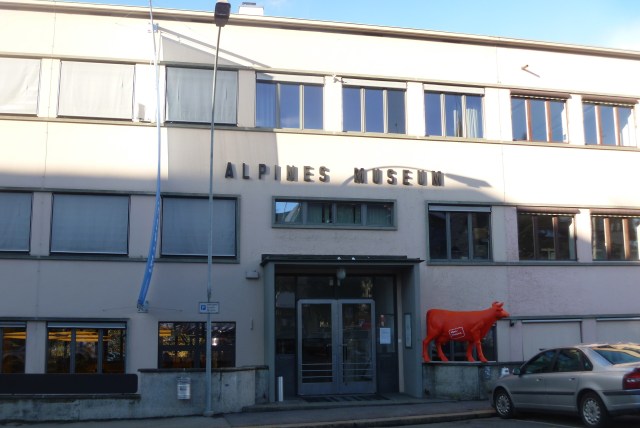
Alpines Museum

Reading about this I’m remembering my very disappointing visit to The Swiss Alpine Museum in Bern last February. I had expected to be able to see displays and dioramas illustrating the history of alpinism with particular reference to Switzerland (and including, of course, the British contribution) through books, maps, photographs, hotels, transport, clothes and footwear, transport, personalities, and other displays and artefacts. What I was presented with was a series of enlarged photographs and a heap of broken skis. My disappointment was so great that I  wrote to the Museum Director and here is part of his response :

“We decided to start up a new concept dealing much more with contemporary issues for people who like to face the reality of the alps. “Intensive care stations” is an example of this new approach … The reality of the alps today is packed with debates and very discursive issues, so our museum concept tries to shape a platform for contemporary themes around mountains.”

It was nice to get a personal response and good luck to them but I still felt cheated of my 12 Swiss francs entry fee!

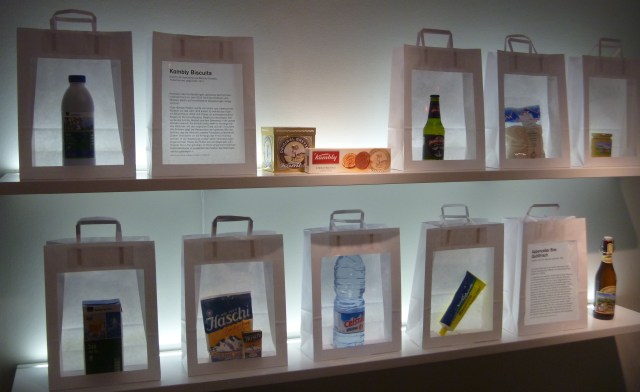
Packaging

Actually, this small display of Swiss products featuring mountains was quite interesting but this was small compensation to me!

“Uproar!” The first 50 years of The London Group 1913-1963

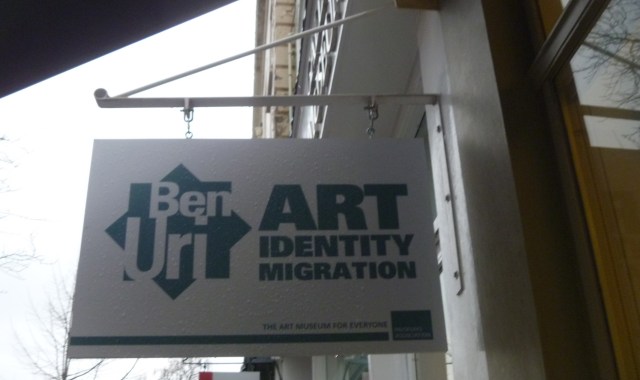
Ben Uri sign

Ben Uri : Art, Identity and Migration – The Art Museum for Everyone

I’m in London for a few days and this morning I walked from the flat between Belsize Park and Swiss Cottage to The Ben Uri Art Museum in St John’s Wood. It’s a 20 minute walk; unfortunately today it was pouring with rain.

The Ben Uri

Until 2nd March the Gallery is hosting a special exhibition of which I read favourable reviews in the FT Weekend and The Independent. I had never heard of the London Group but it seemed to fit in well with recent exhibitions visited in Kendal and in Leeds.

The Gallery is very small, entrance is free and there is currently no permanent display as ‘Uproar!’ fills all three rooms. Here is a short video introduction from the Gallery website.

To celebrate The London Group’s momentous centenary year in 2013, Ben Uri and The London Group are working together with two simultaneous exhibitions. Ben Uri has curated and is hosting a major historical exhibition, “Uproar!”: The first 50 years of The London Group 1913-1963, examining the first half century in the group’s turbulent history, while The London Group is holding a separate, complementary, contemporary exhibition showcasing work by its current members at The Cello Factory, London SE1 8TJ.” [source]

It was amazing to see side by side paintings and sculptures by such diverse artists as L S Lowry, Duncan Grant, Walter Sickert, Vanessa Bell, Henry Moore, Barbara Hepworth, C R W Nevinson, Jacob Epstein, Mark Gertler, Roger Fry, Euan Uglow and Leon Kosoff. I was lucky enough to turn up on the day of a tour and introduction by the curator of this small but powerful exhibition. The above video gives a feel of the intimacy of the small gallery and the importance of the works on display. And here are some of my photos of notable works.

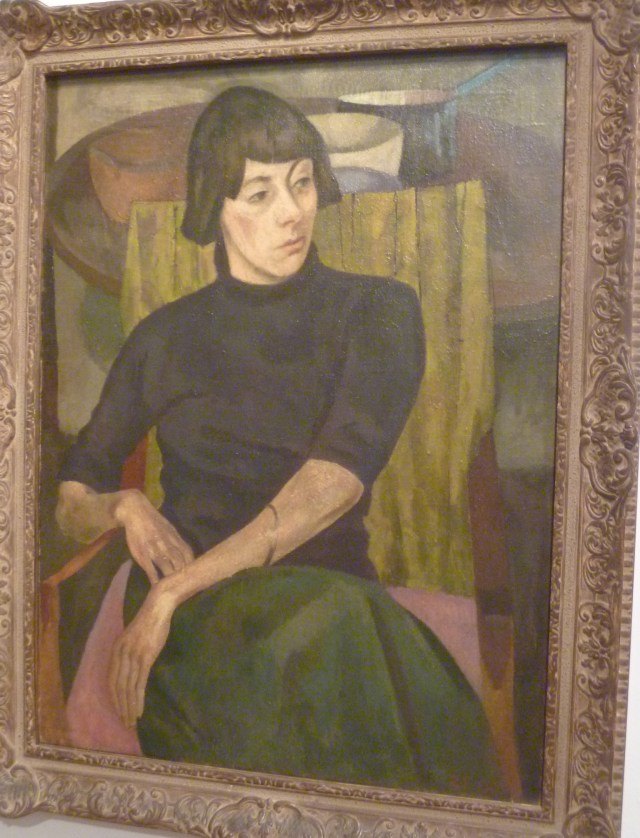
Nina Hamnett

Roger Fry’s Portrait of Nina Hamnett (1917)

Returning to the trenches

Nevinson’s Returning to the Trenches ((1915)

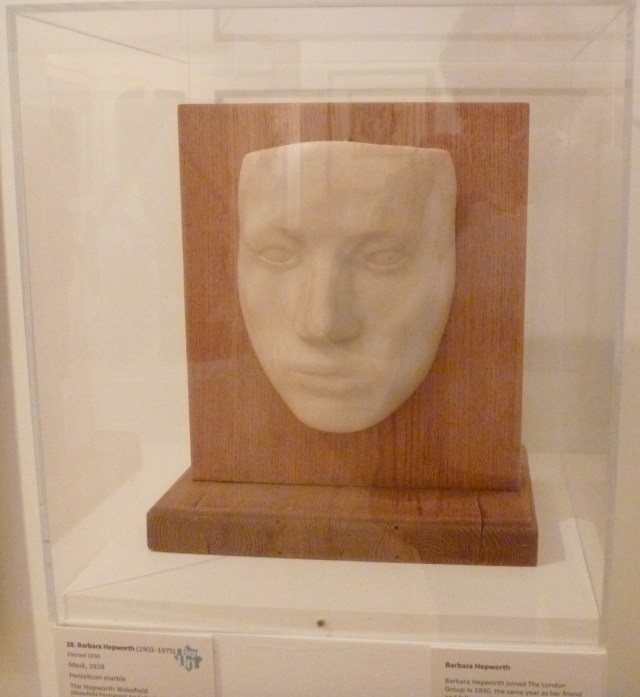
Pentelicon marble

Mask in Pentelicon marble by Barbara Hepworth (1928)

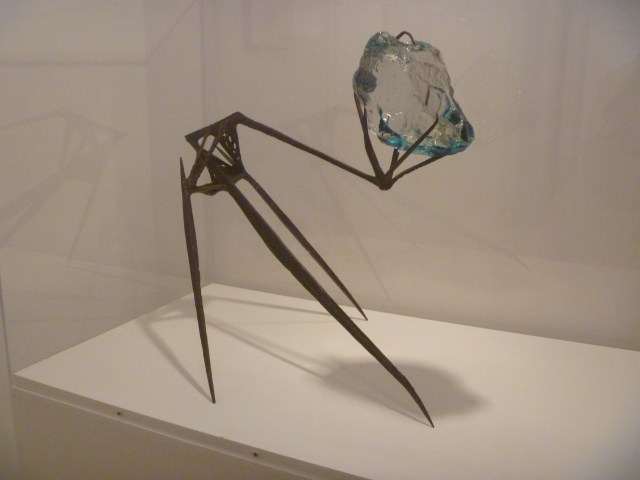
Iron sculpture

Untitled (Iron Sculpture) by Lynn Chadwick

Matthew Darbyshire and The W.A. Ismay Collection at The Hepworth, Wakefield

Hepworth

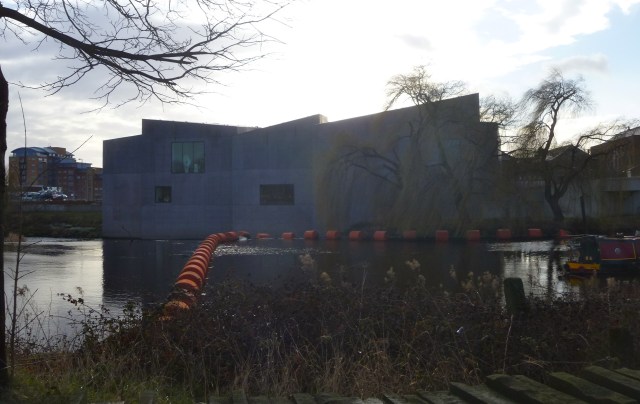
The Hepworth Gallery by the River Calder in Wakefield

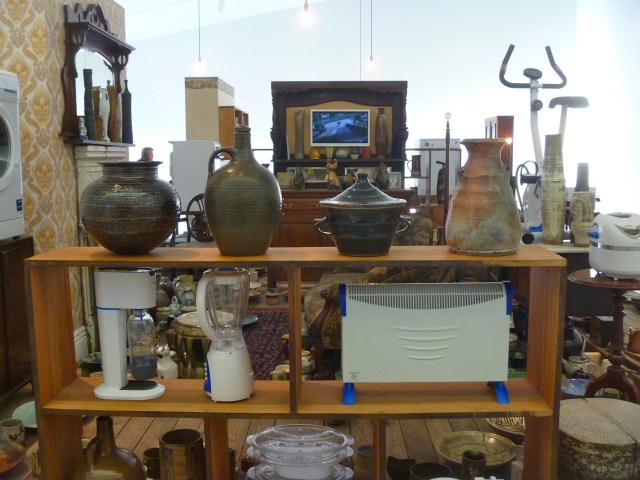
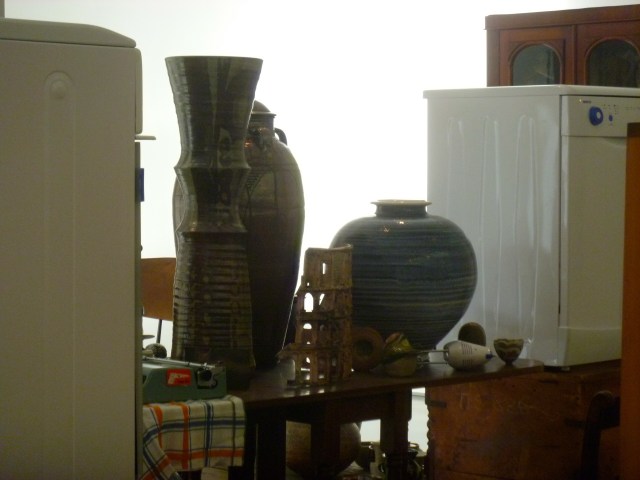
On Thursday I revisited The Hepworth Gallery in Wakefield. I went back specifically to see the Matthew Darbyshire installation of pots juxtaposed with modern white goods in Gallery 10. Unfortunately this exhibition closes today but the pots, which belong to the York Art Gallery collection, will be back in a special new gallery to be created at York when the museum reopens in 2015.

With my new-found appreciation of studio pottery I was looking forward to seeing this exhibition. I was not disappointed.

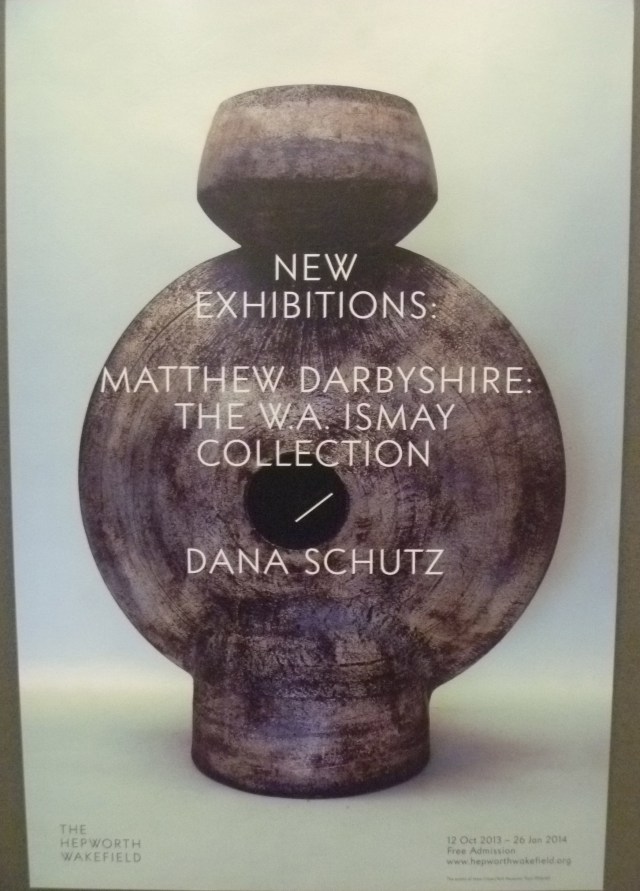
Hepworth poster

This fascinating project brings together one of Britain’s most exciting contemporary artists, Matthew Darbyshire, with one of the world’s most significant assemblages of post-war studio pottery, the W.A. Ismay Collection.

Ismay 2

Librarian and collector William Alfred Ismay (1910-2001) lived in Wakefield his whole life. From 1955 he began to collect pieces by some of the most renowned makers of studio pottery from Hans Coper and Shoji Hamada to works by local Yorkshire potters, Barbara Cass and Joan Hotchin, alongside lesser known ceramicists.

His extraordinary collection of 3,600 items, by 500 makers, covered all the available surfaces of his small terraced house in Wakefield. This extraordinary collection offers an insight into the compulsive and systematic habits and protocols of a unique and unusual collector.” [Introduction from The Hepworth website]

Ismay and TV

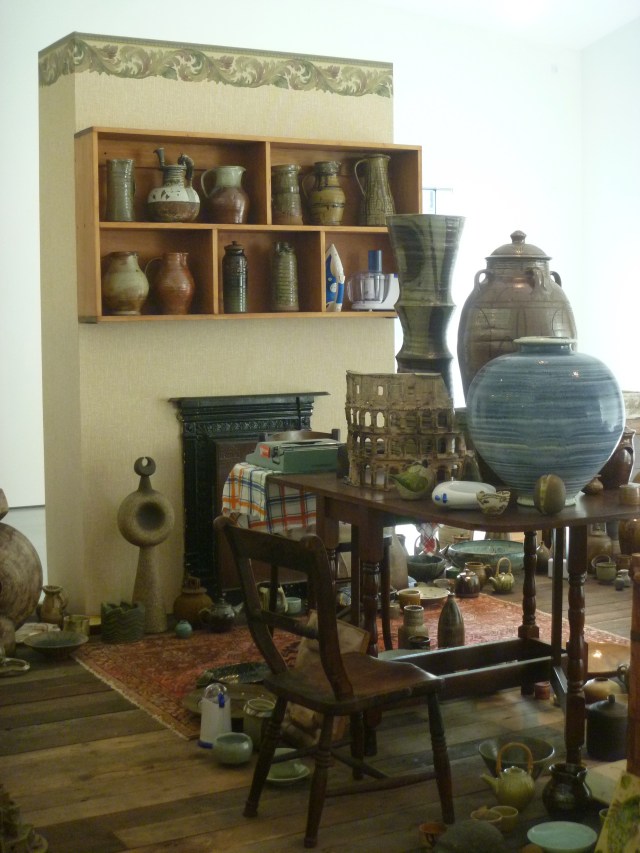
Contemporary installation artist Matthew Darbyshire assembled the display based on the floor plan and the furniture or kind of furniture that Ismay would have owned in his Wakefield terraced home; he added modern streamlined household white goods as a contrast to the handmade ceramics and he used just 700 of the total of 3,600 pots from Ismay’s collection. In addition a flat screen TV shows a loop of original motion picture clips that Darbyshire has put together on the themes of man and machines and dance including hip-hop and other natural human movement contrasting the manmade with machines and technology.

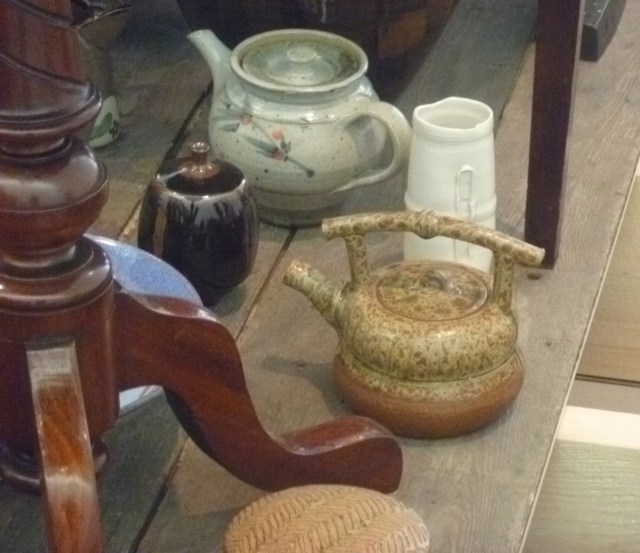
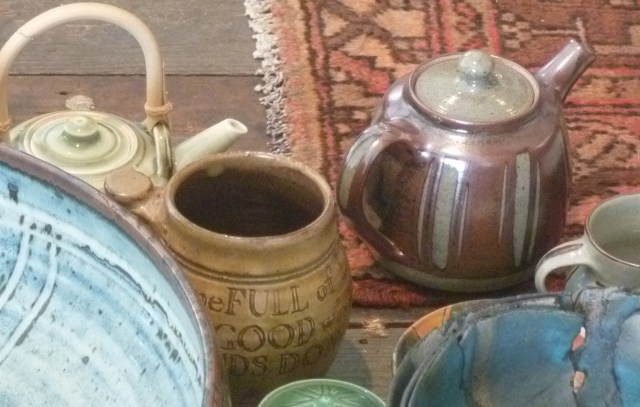
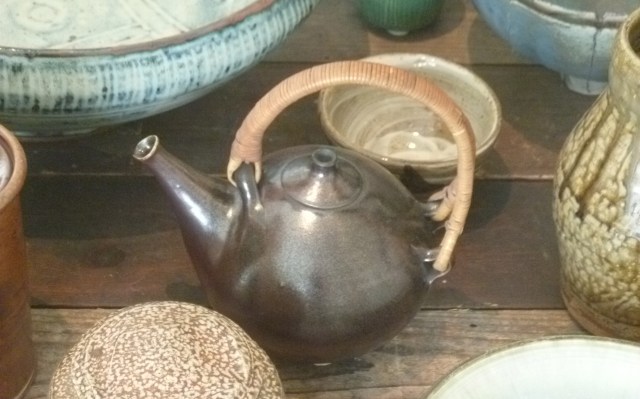
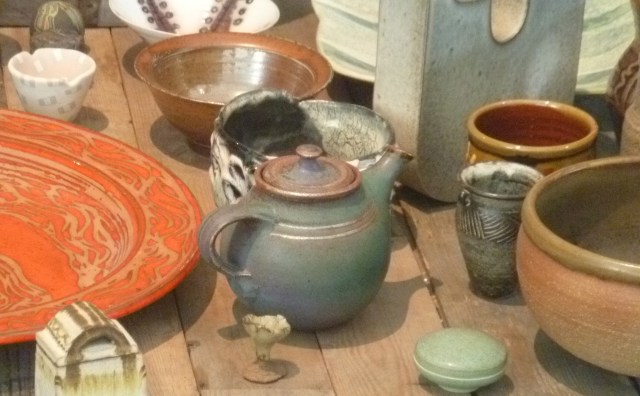
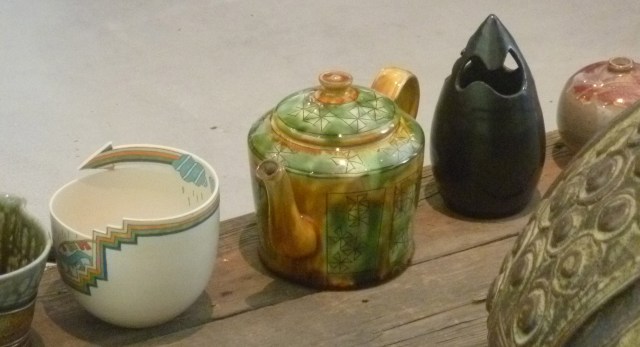
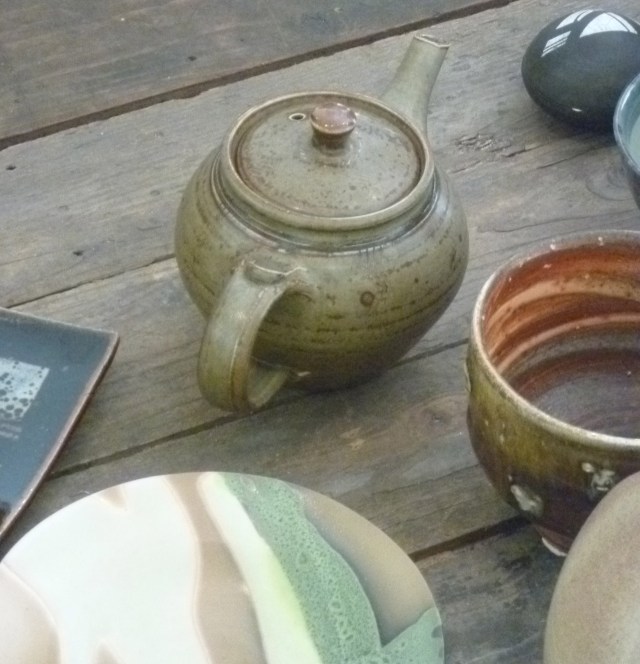
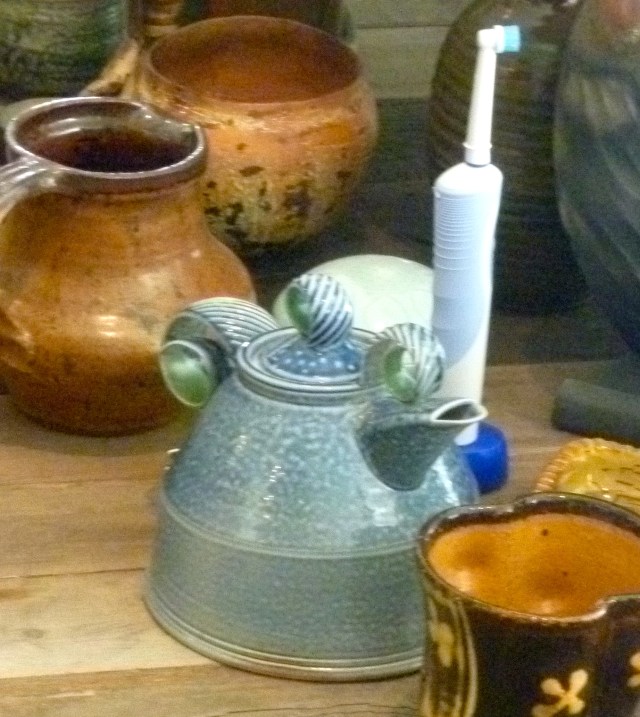
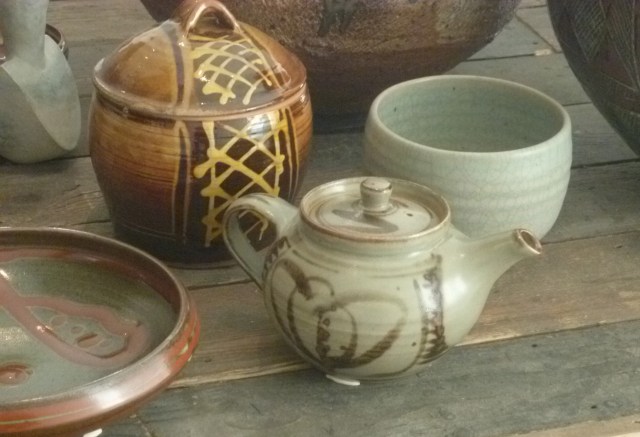
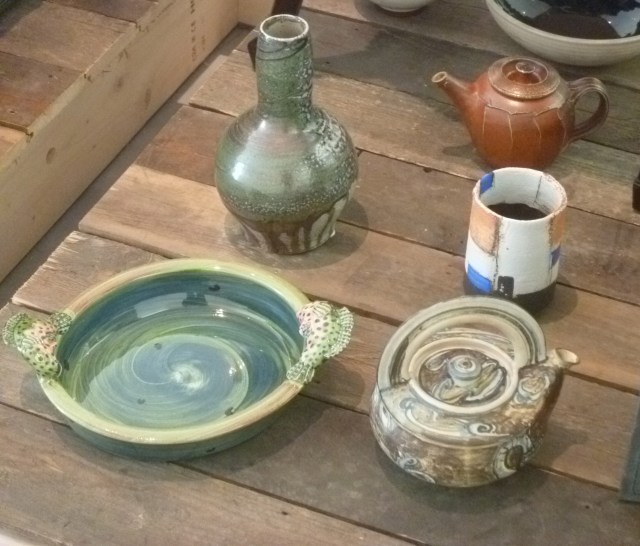
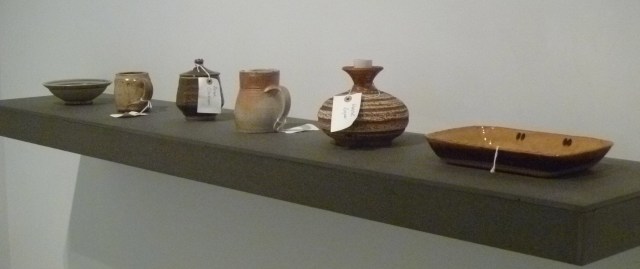
And here is my selection of pots (mostly teapots) :

With Coloseum

Includes a Roman Colosseum ‘pot’

Teapots 1

Teapots 2

Teapots 3

Teapots 4

Teapots 5

Teapots 6

Teapots 7

Teapots 8

Teapots 9

Nice pot

Viewing the pots made you really want to pick them up so luckily there was a small selection of pots that you were allowed to feel and examine and another TV loop of potters talking about their first meetings with Bill Ismay.

Examples

You may pick up these pots

See how Matthew Darbyshire put it all together here :

And here is Down By The Dougie’s view of “Lots of Pots” and more photos.