
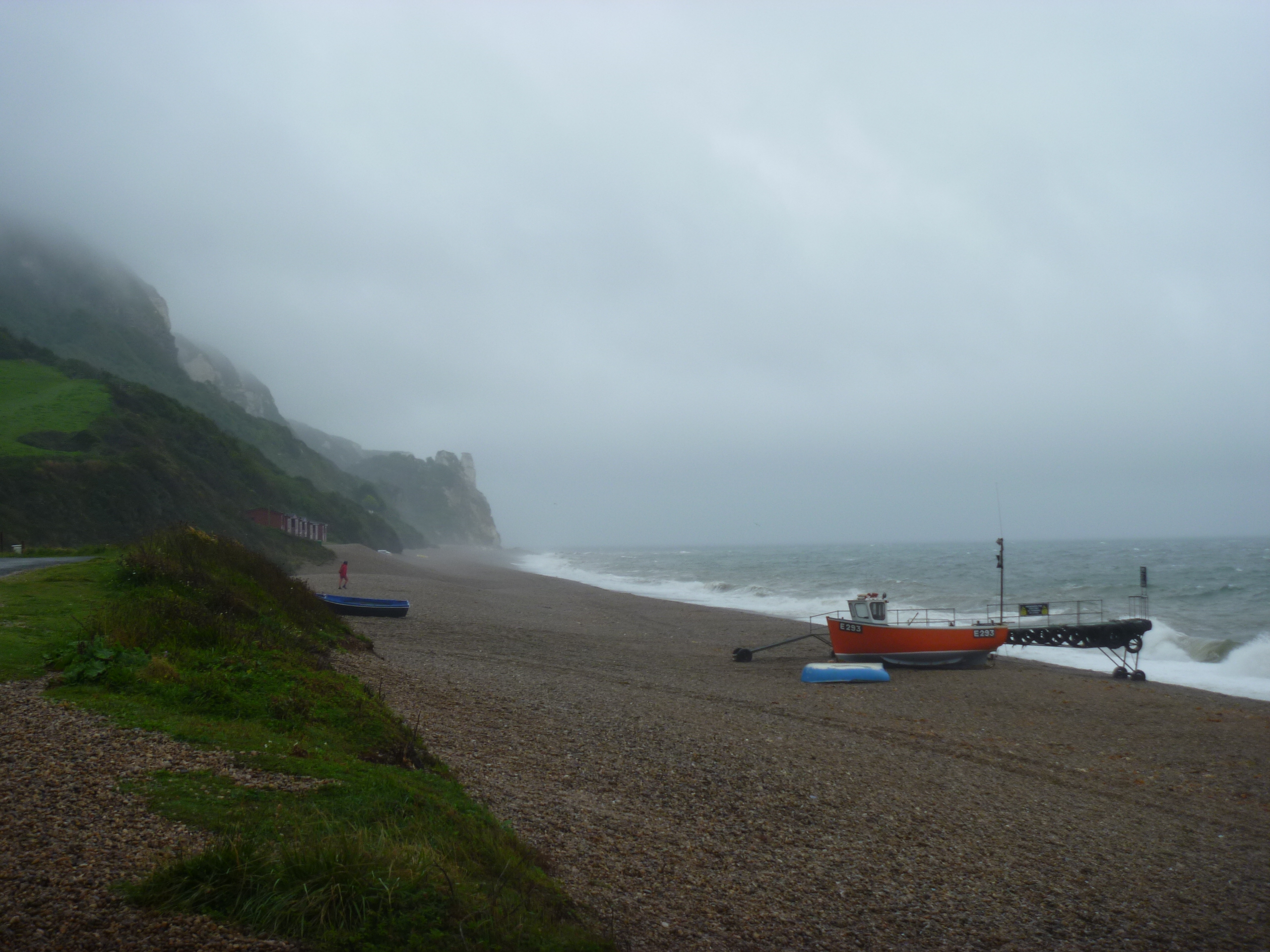
On a very wet and misty day at the British seaside what on earth is there to do?? If it’s a Friday then it is an excellent opportunity to visit a Landmark Trust property on changeover day, if there happens to be one handy. So, with an appointment made, I set off to walk the mile or so from my beach chalet, by the sea at Branscombe, to visit Margells at Street, on the western edge of the village that is not a village (according to historian W. G. Hoskins) – Branscombe.

Arriving at Margells (it’s a hard ‘g’) I was welcomed by the Housekeeper who asked me whether I would like to read the History Album (yes, I would) whilst she made the beds upstairs. I also expressed an interest in looking at the library and offered to put the books back into some kind of order. This gave me the opportunities that I needed to study the history and the books – two of my favourite Landmarking occupations.

From the History Album I discovered that Margells was a bit of a mystery to both the Landmark Trust and the historian who had been employed to supply information to the Trust before it proceeded with renovation in 1975.

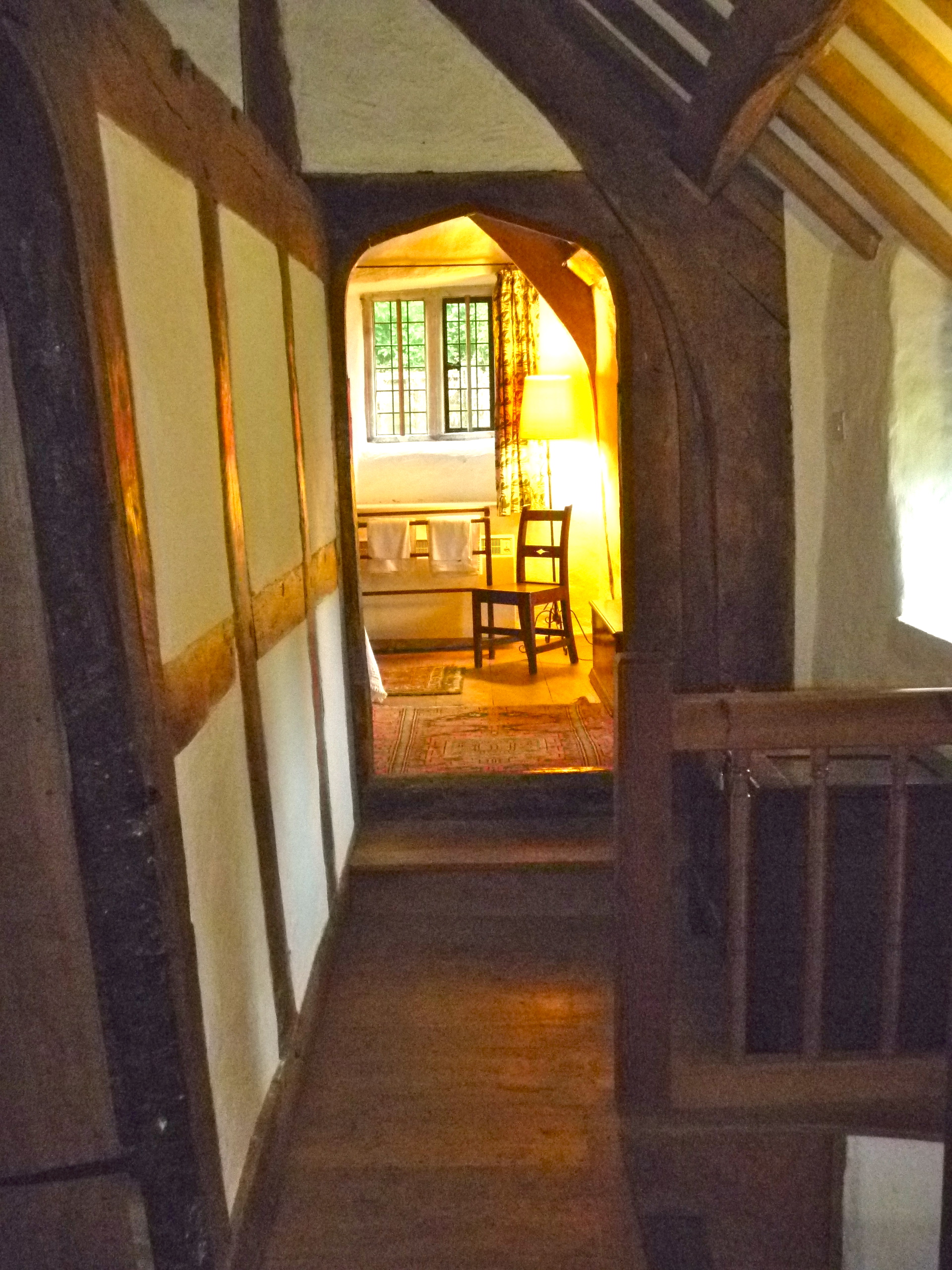
“Margells was originally a hall house, open to the roof, and probably built in the late 15th century. The frame is a very early construction, the cruck coming at first floor level. There would have been a sleeping gallery at first floor level reached by a ladder type stair probably from the sitting room side, using the rounded door which now goes into the painted bedroom.
About a hundred years later the present first floor was put in, making two big bedrooms. The fine coffered ceilings are typical of this period … The spiral stair would have been added at this time. It is made of solid blocks of chestnut, except for the top two treads which are oak, as is all the rest of the wood used in the house. At about this time, the two fireplaces were built on, added to the outside of the house.
The quality of such a small cottage has led some people to suggest that Margells was the cross-wing of a larger house. The doorway, which is clearly visible in the wall of the bedroom above the kitchen certainly suggests this. The door from the kitchen into the bathroom was at one time bigger than it is now, and that it was an important door is shown by the decoration in red-ish paint that can still be seen on the beam. The village of Branscombe contains a remarkable number of good houses of 16th and 17th century date, and as the church records show, it housed a number of minor gentry. Margells almost certainly belonged to one of these families.”
From The Landmark Trust website.

When friends visited me at the beach chalet last year they declared it to be like a TARDIS. Much the same could be said about Margells. The beach chalet sleeps four in two bedrooms and has a sitting room, kitchen and full bathroom, plus a verandah. There is parking for two cars.

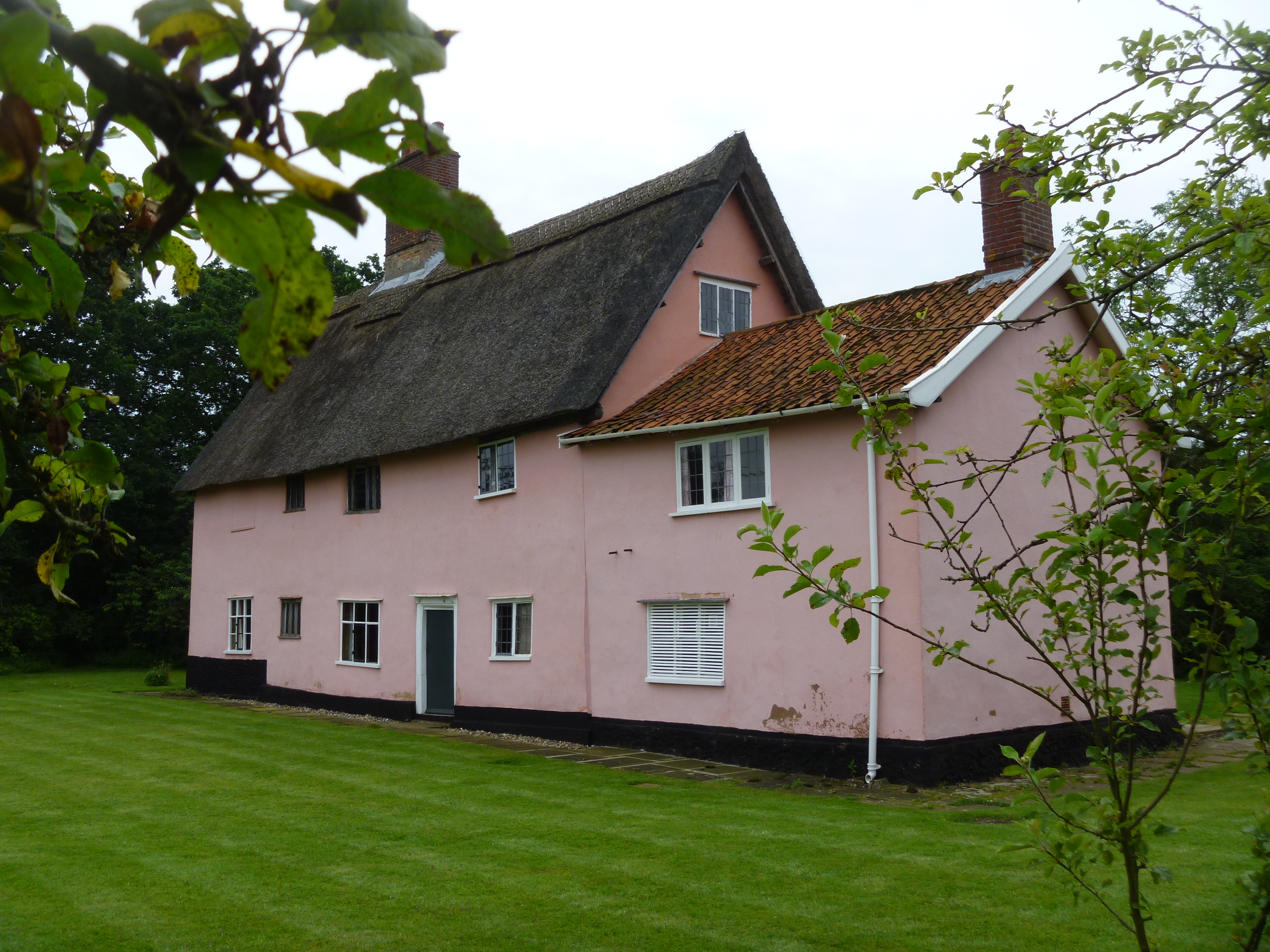
Margells looks like “any old” quaint Devon thatched cottage but inside has three large bedrooms a big sitting room and dining kitchen. So, more spacious manor house than bijou cottage. I would have loved to have seen the garden but it was really just too wet.

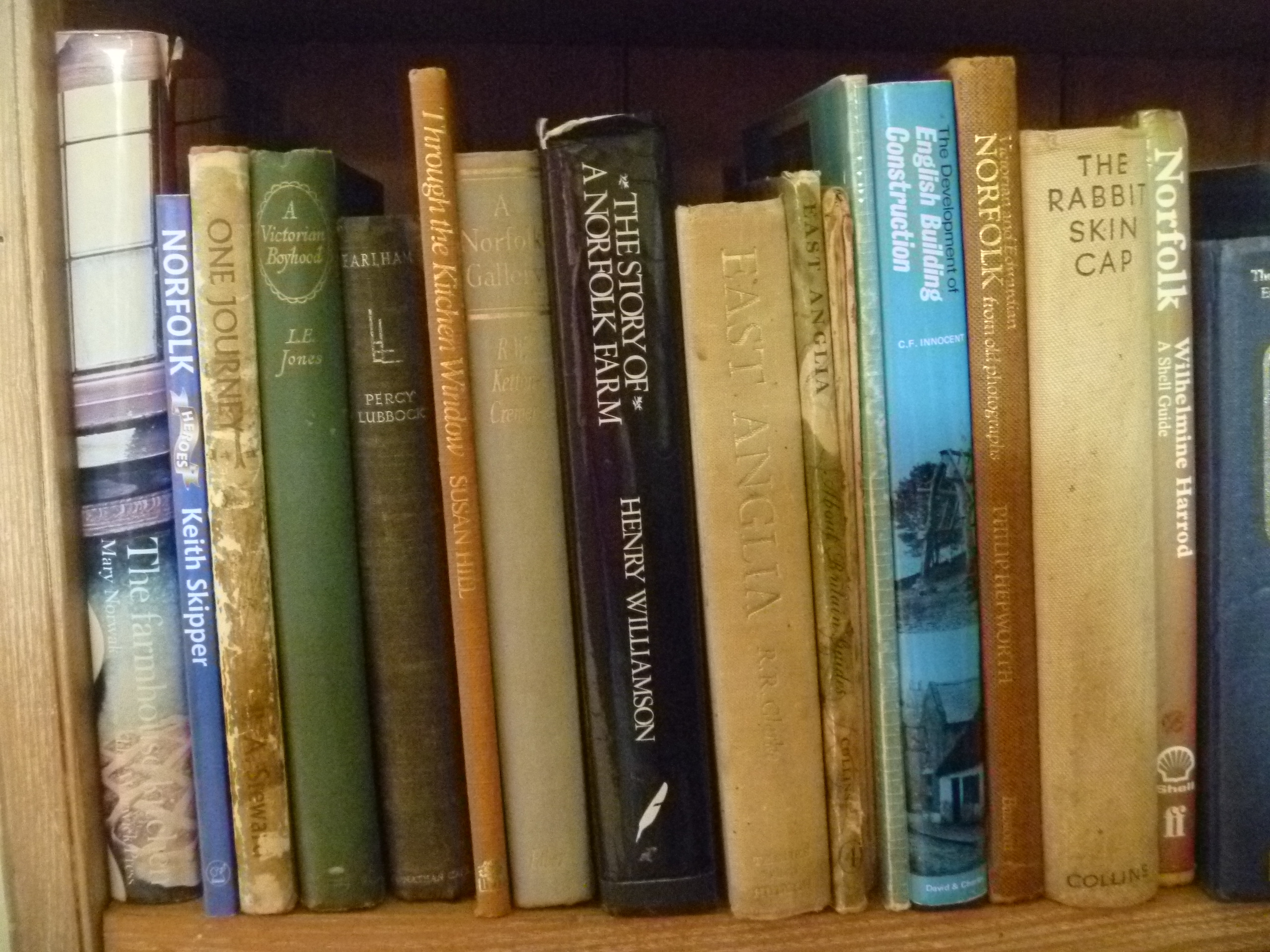
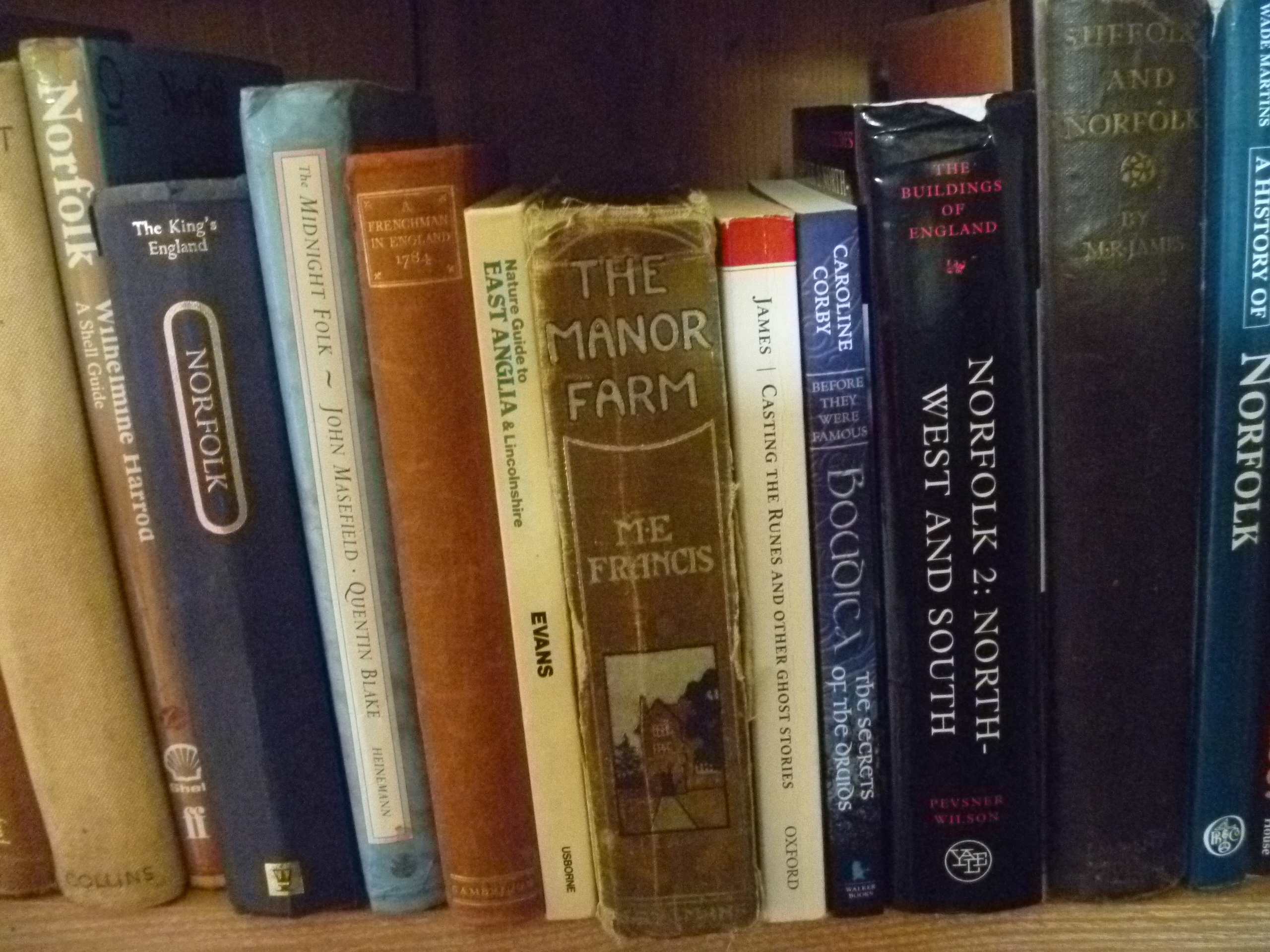
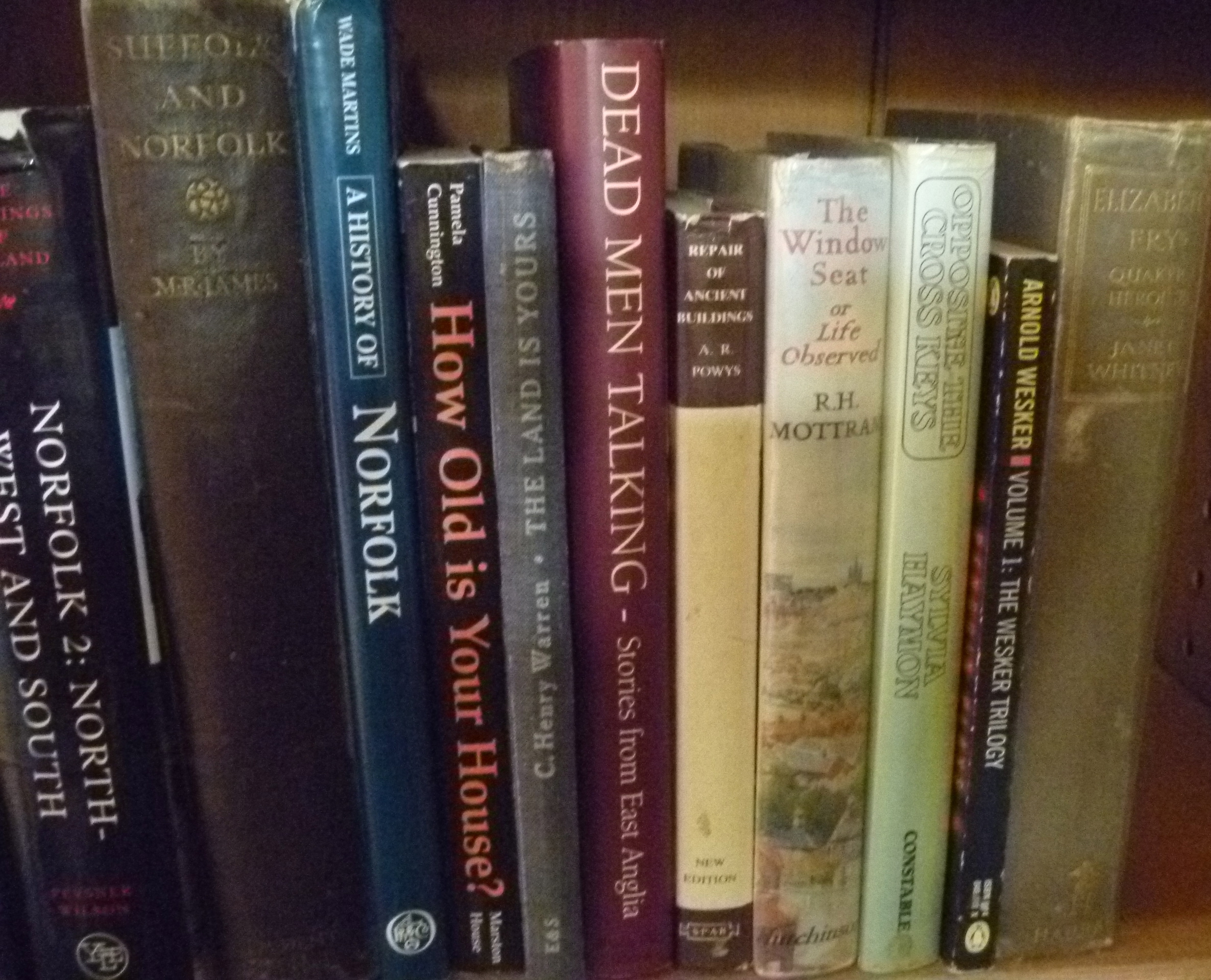
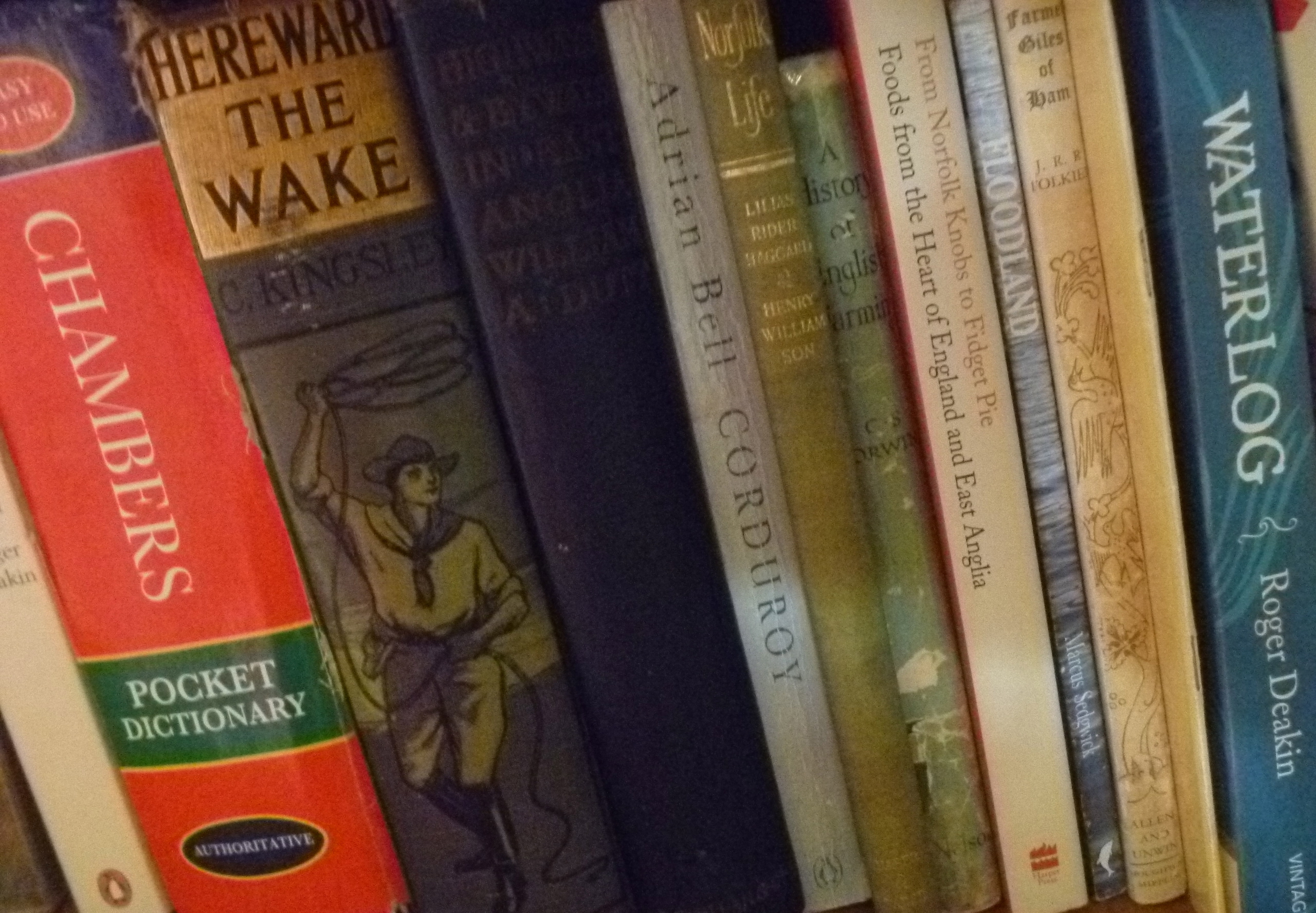
The library is a standard item in the Landmark property inventory. There’s a small but growing ‘library’ at the beach chalet too. At Margells I was expecting to find the Jane Austen, the John Fowles, some Thomas Hardy books, books on geology, fossils, the seashore, on thatching and some poetry. I was pleased to see Little Pig Robinson written and illustrated by Beatrix Potter during a visit to Lyme Regis.
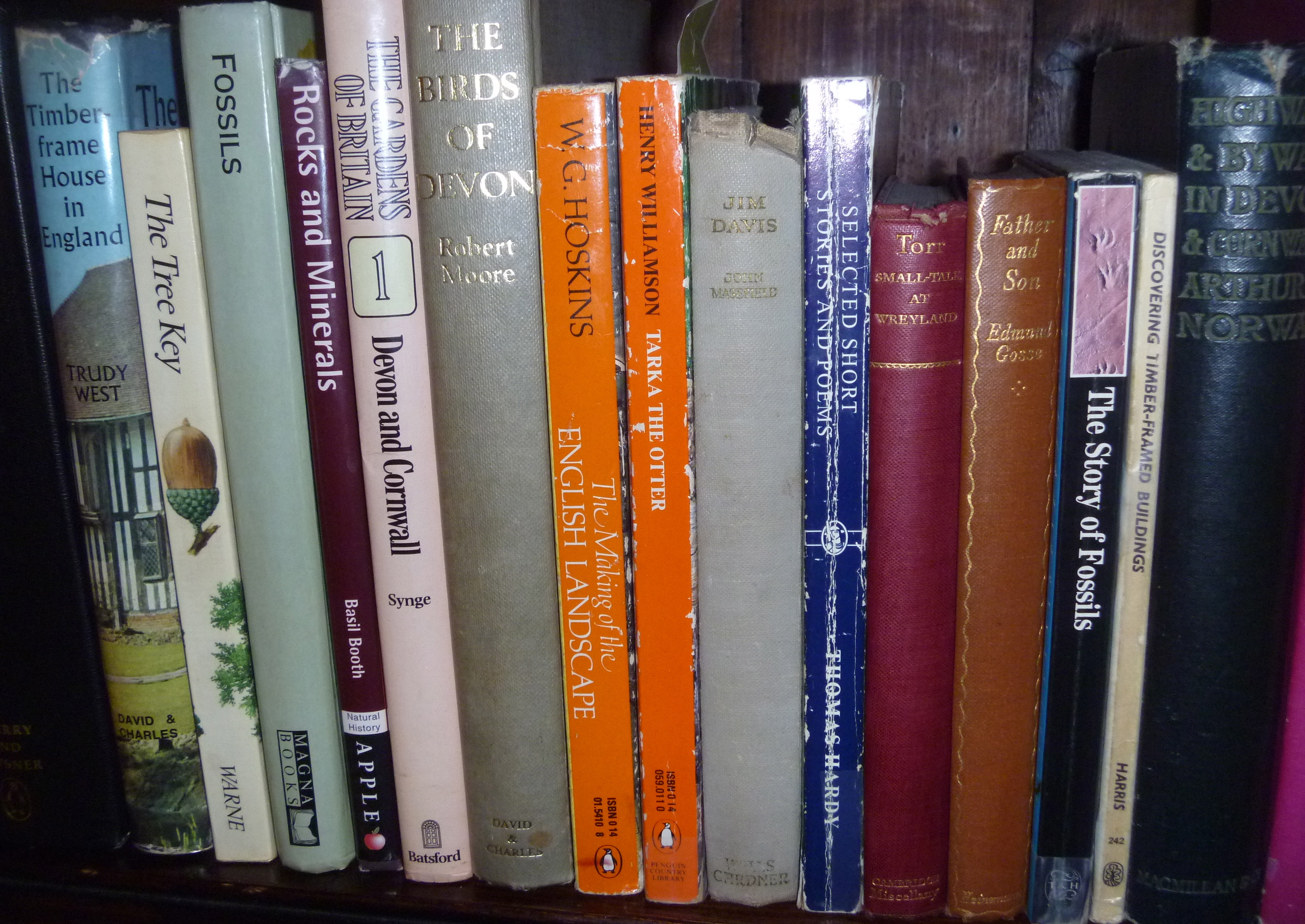

Above : books from the Margells Library
Below : The Beach Chalet Library

The crossover with the beach library is in the nature section – field guides are prominent at both : birds, wild flowers, seashore guides, plant life also local walking guides and books about the local geology/fossils. We are, after all, on the Jurassic Coast a World Heritage site designated in 2001.
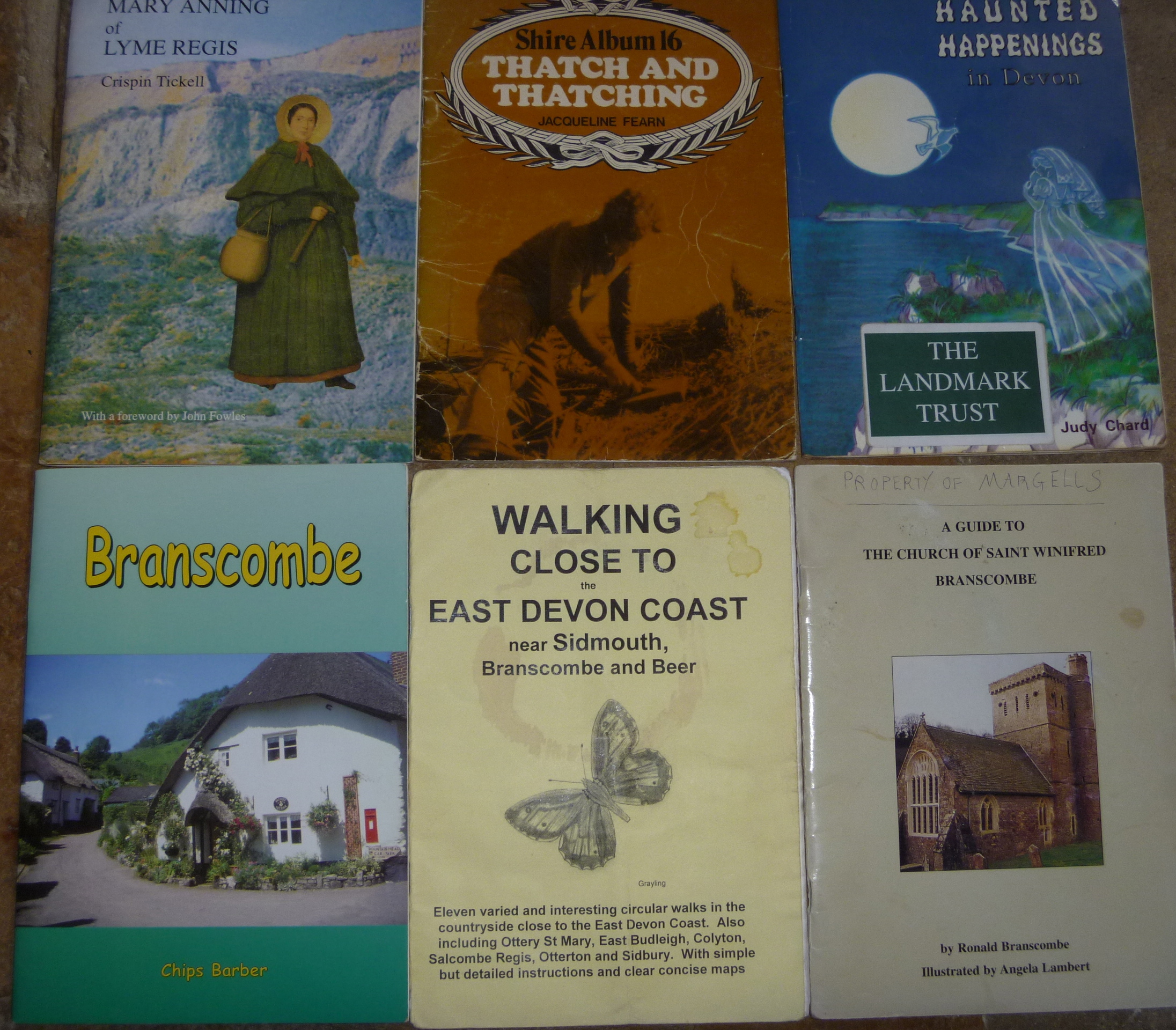
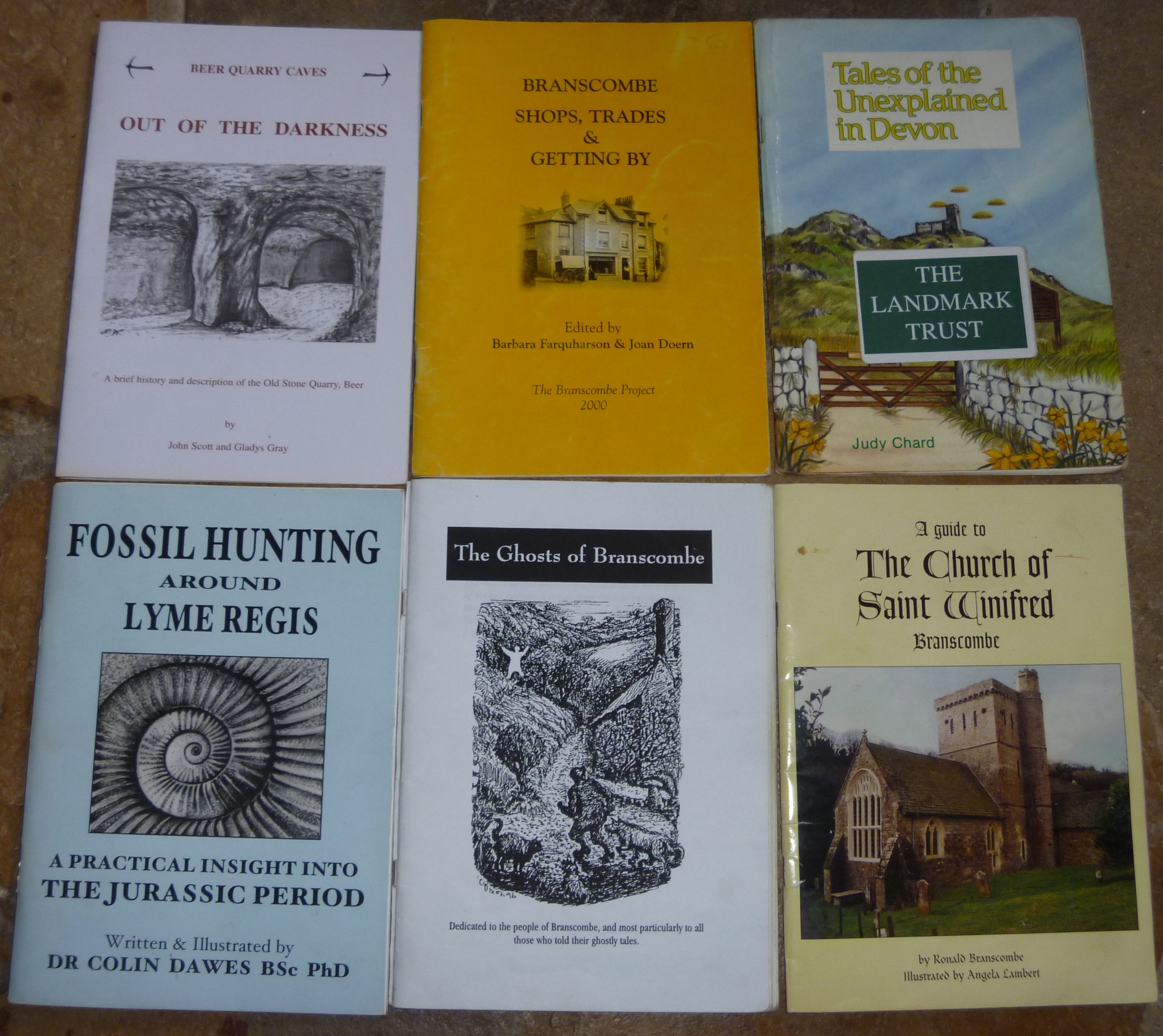
Above : Margells pamphlets
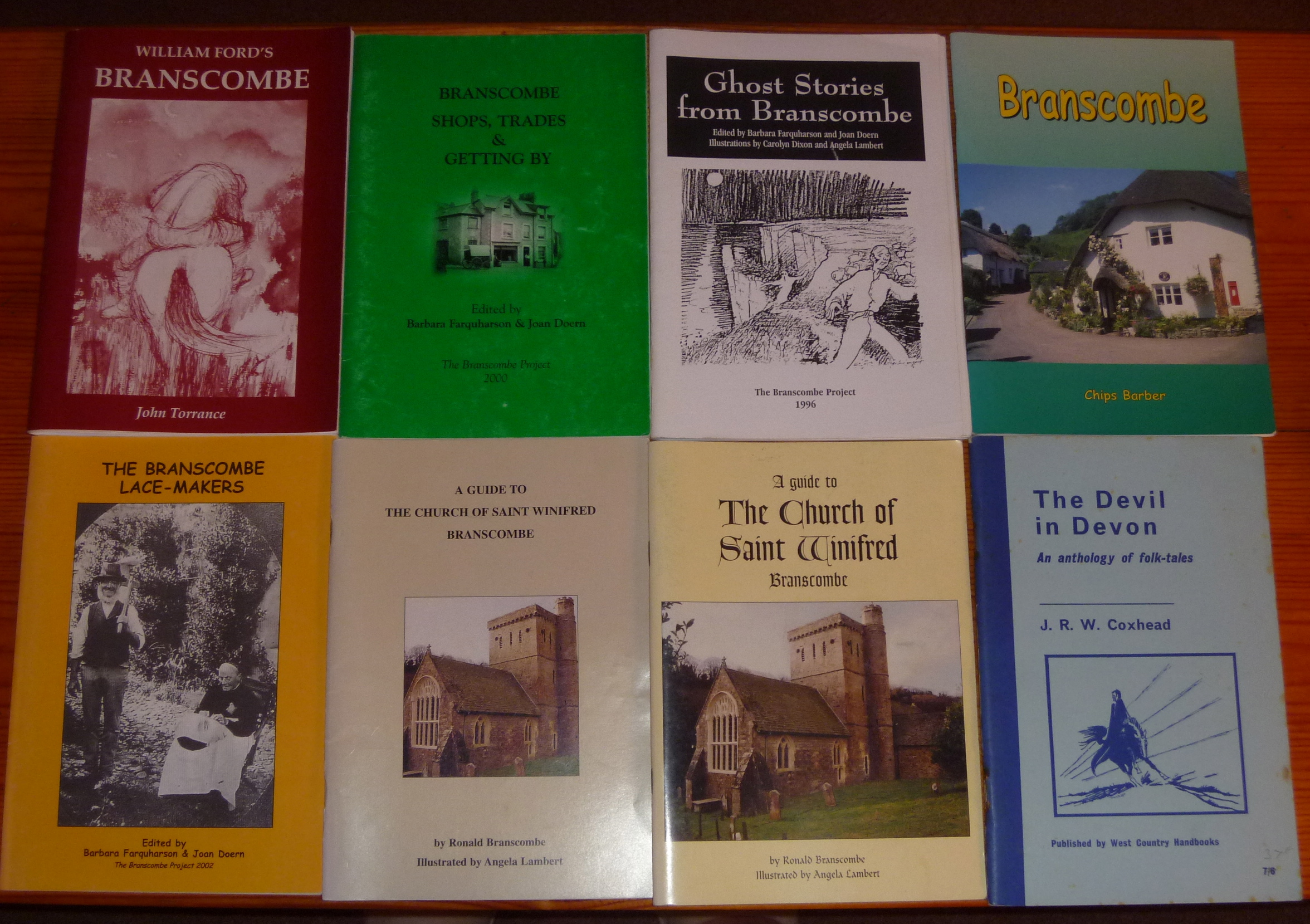
Below : Beach Chalet pamphlets
The chalet has some excellent maps – both an OS Explorer and a Landranger centred on Branscombe, a new local footpath map and lots of OS maps for areas further afield in Devon, Dorset, Cornwall and Somerset. No getting lost round here and plenty of inspiration for walking trips near and far!











 miladysboudoir