Bolsover Castle to Hardwick Hall, and back, and on foot

This month’s ATG Saturday Walk is a new one for them (and for me) : ‘Bolsover and Hardwick Hall’.

Here’s the itinerary :

Starting alongside the impressive 17th century castle of Bolsover, this walks heads south along the Doe Lea, passing the Saxon church at Ault Hucknall en route to the impressive Elizabethan home of Bess of Hardwick – Hardwick Hall. After strolling through the extensive grounds, we head north back to Glapwell for lunch. After lunch, quiet farmland tracks take us back to Bolsover for tea. 12.75 miles.” [ATG brochure]

I was so attracted by the idea of the walk and its route and the fact that today I would be travelling down the M1 from Leeds to Leicester with a whole day to spare that I failed to register quite the distance involved! There are opportunities to be picked up and returned comfortably to the start/end from both at Hardwick and at Glapwell but most of us soldiered on to the end. Luckily the route is not too demanding as regards climbs but it’s quite a long tramp and I’m now happily down in Leicetershire.
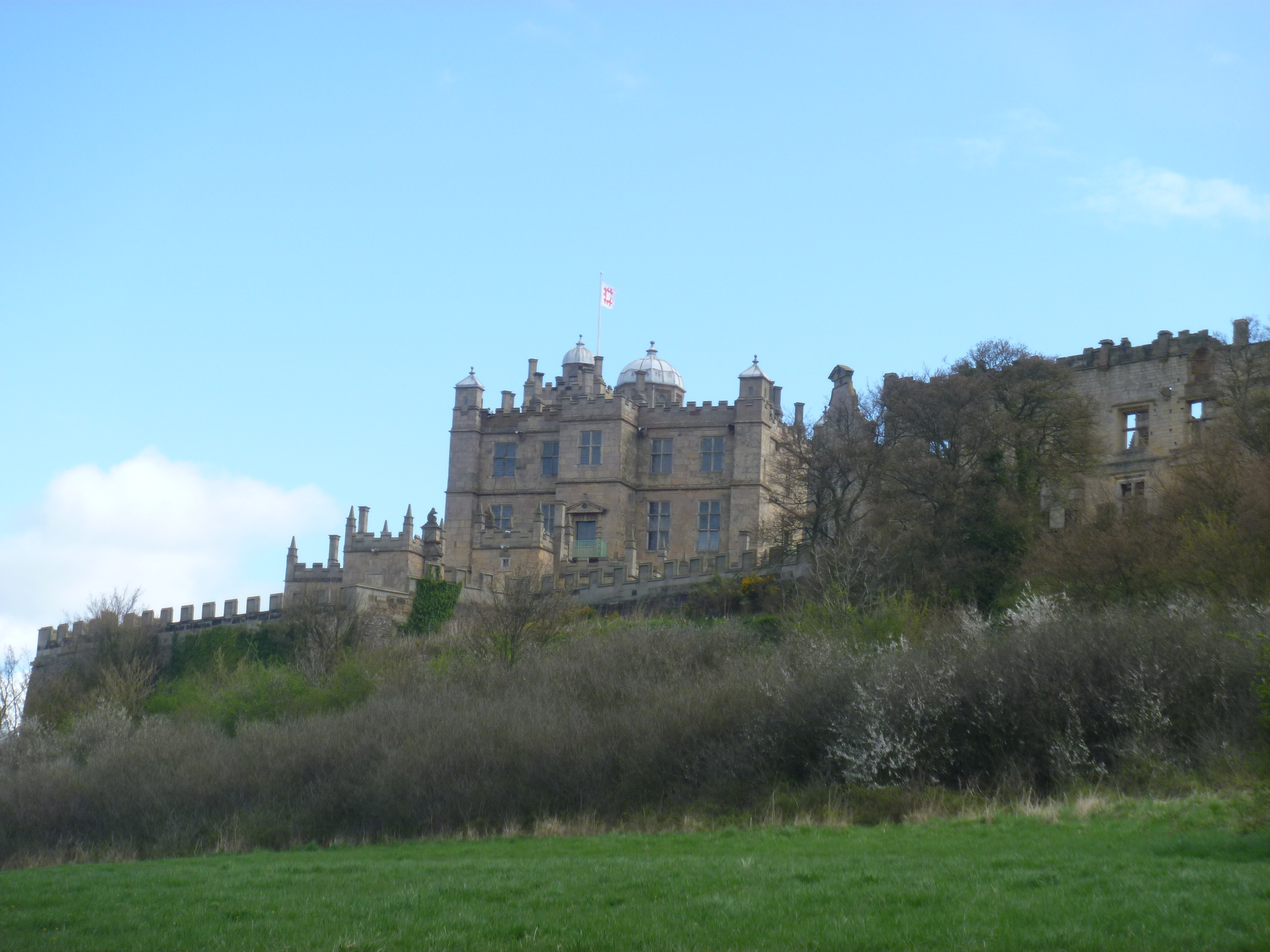
Bolsover Castle

I’ve written about Bolsover Castle before – a misty, foggy visit in November 2011. Today we passed through several weathers but only one brief shower otherwise sunshine, cloud, heavy black threatening cloud and cold winds all took it in turns.
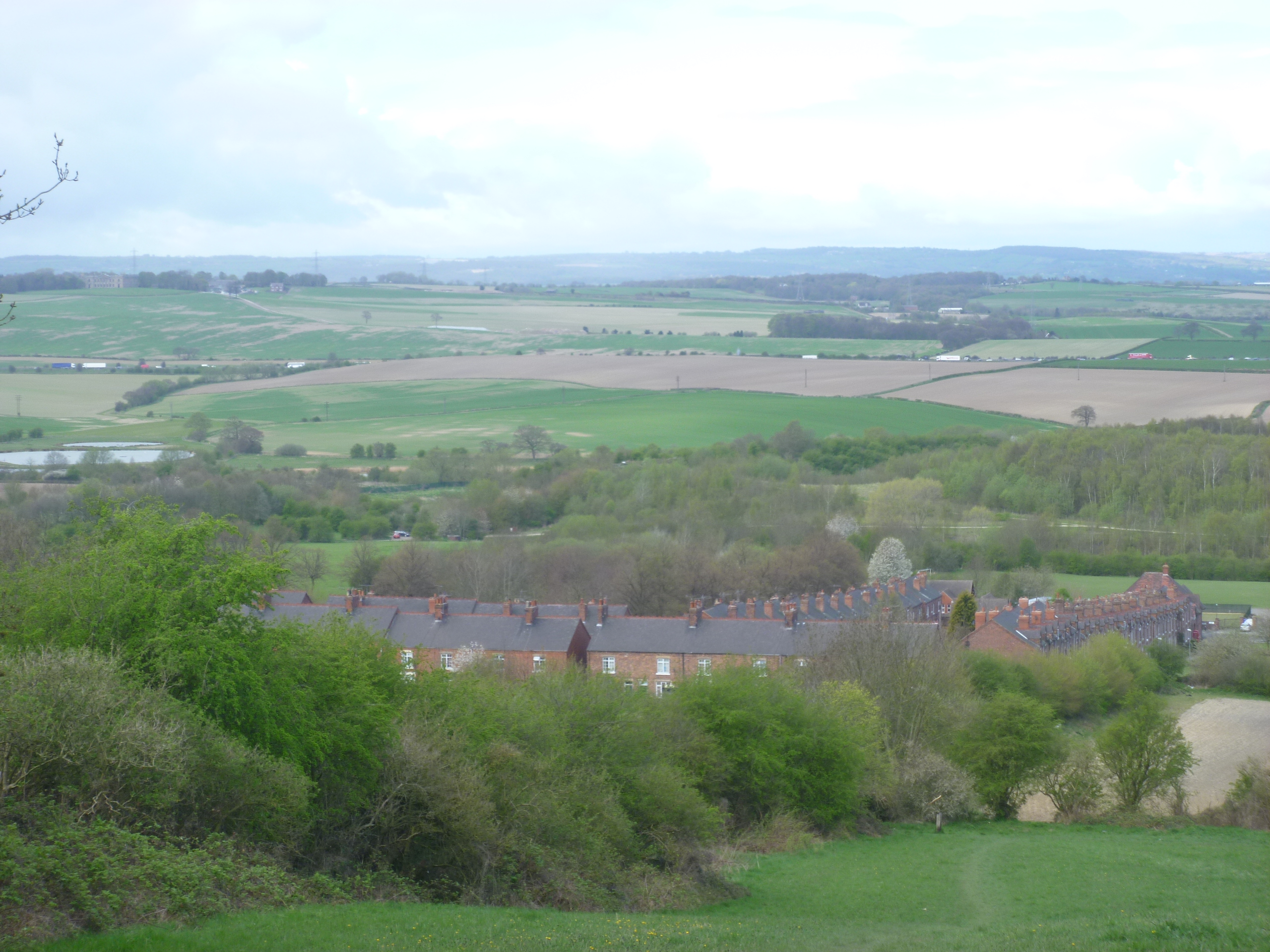
New Bolsover

New Bolsover

From Bolsover town we headed down below the Castle to New Bolsover which is actually not so new just newer than the old settlement around the Castle. It was a purpose-built miners’ village of neat red-brick terrace houses enclosing a large grassy area and is still occupied today even though the pits around this coalfield closed in the 1990s.
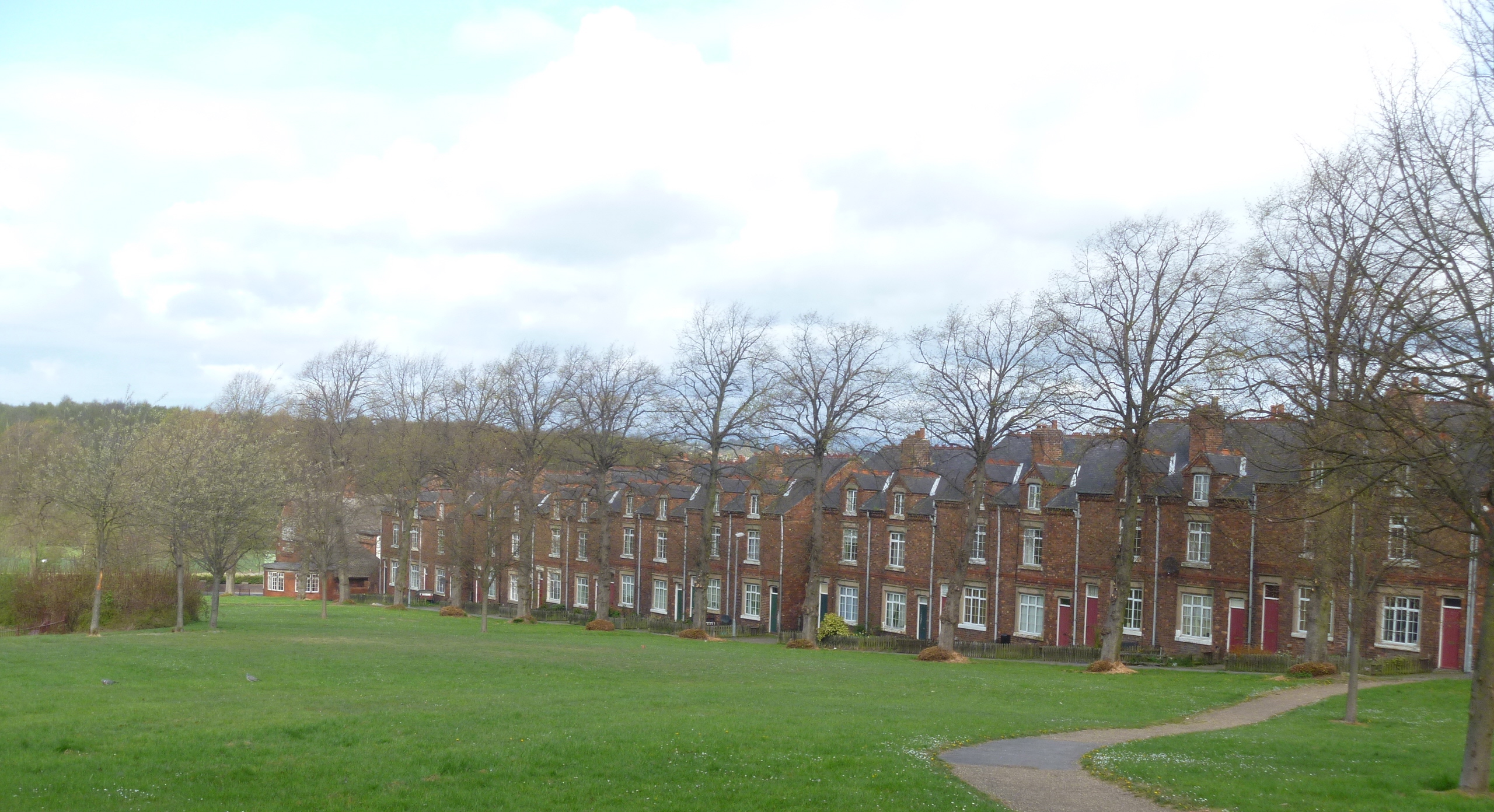
In New Bolsover

In New Bolsover

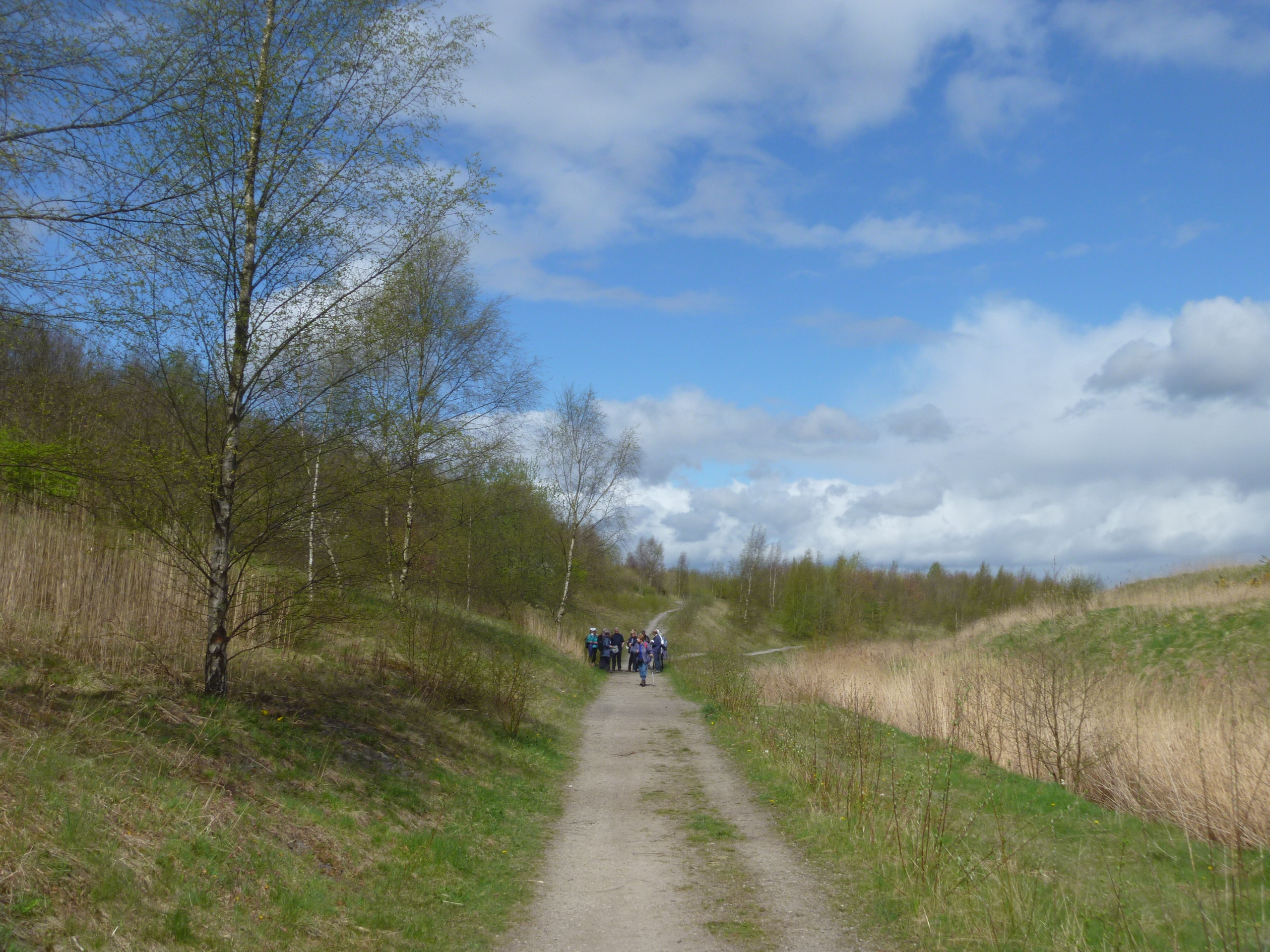
The theme of much of the walk was past or along the remains of the coal industry: along a disused railway track and past grassed over open cast mines on the Stockley Ponds and Trail maintained by Bolsover Countryside Partnership.
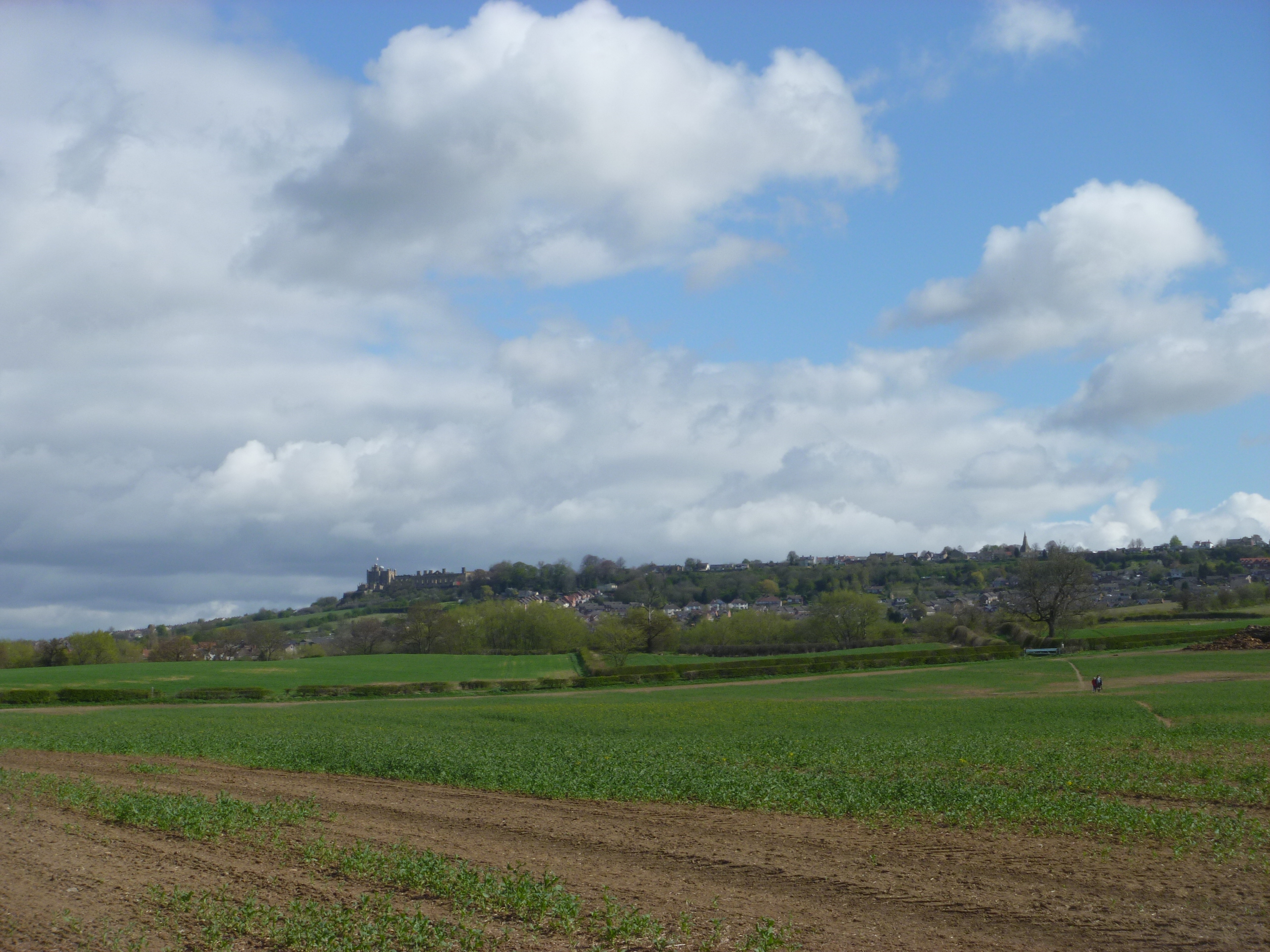
We could still see Bolsover Castle
We could still see Bolsover Castle

The Stockley Trail
The Stockley Trail

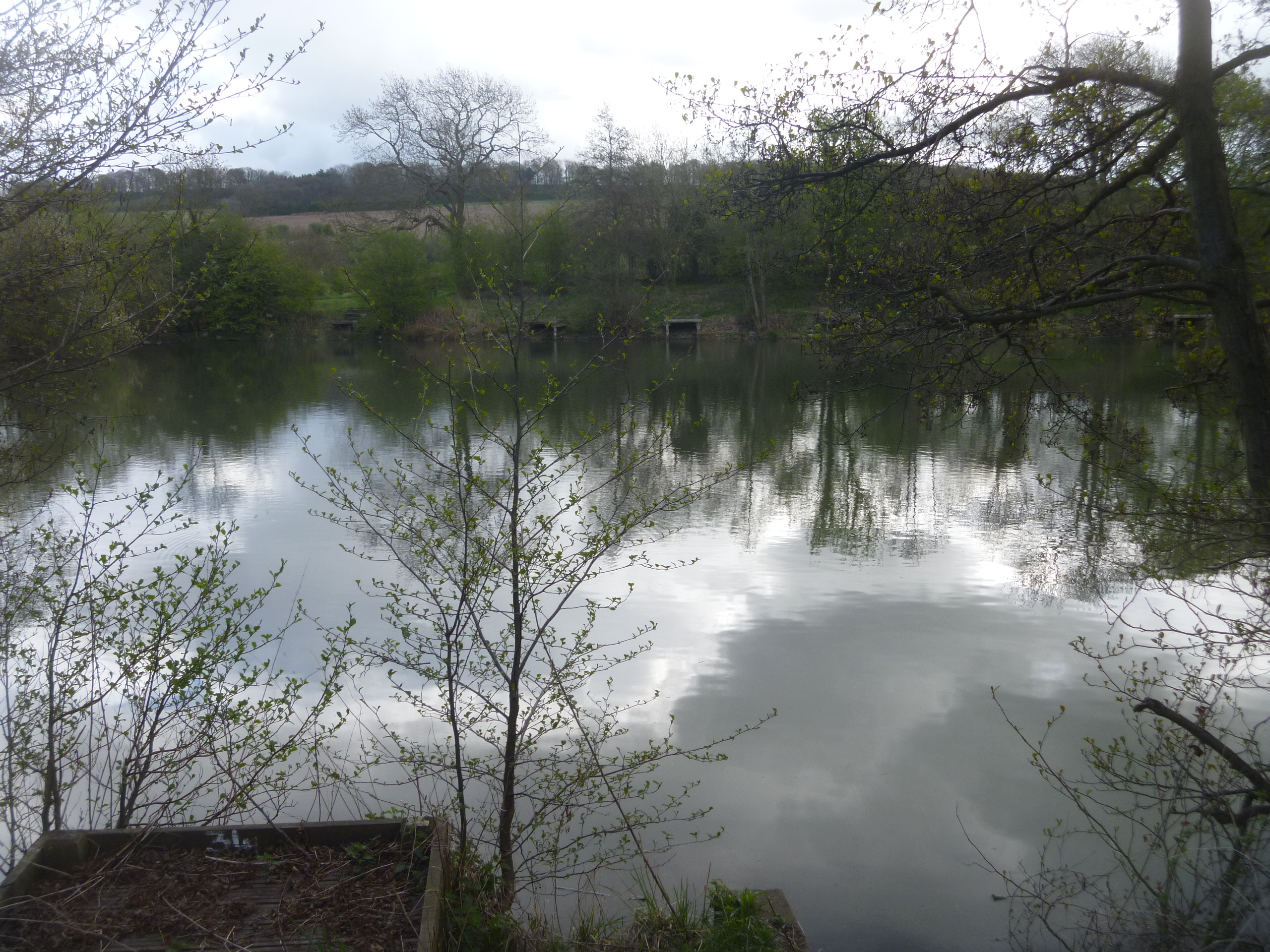
Stockley Ponds

The Stockley Ponds (Beware! Contaminated water) no fishing today

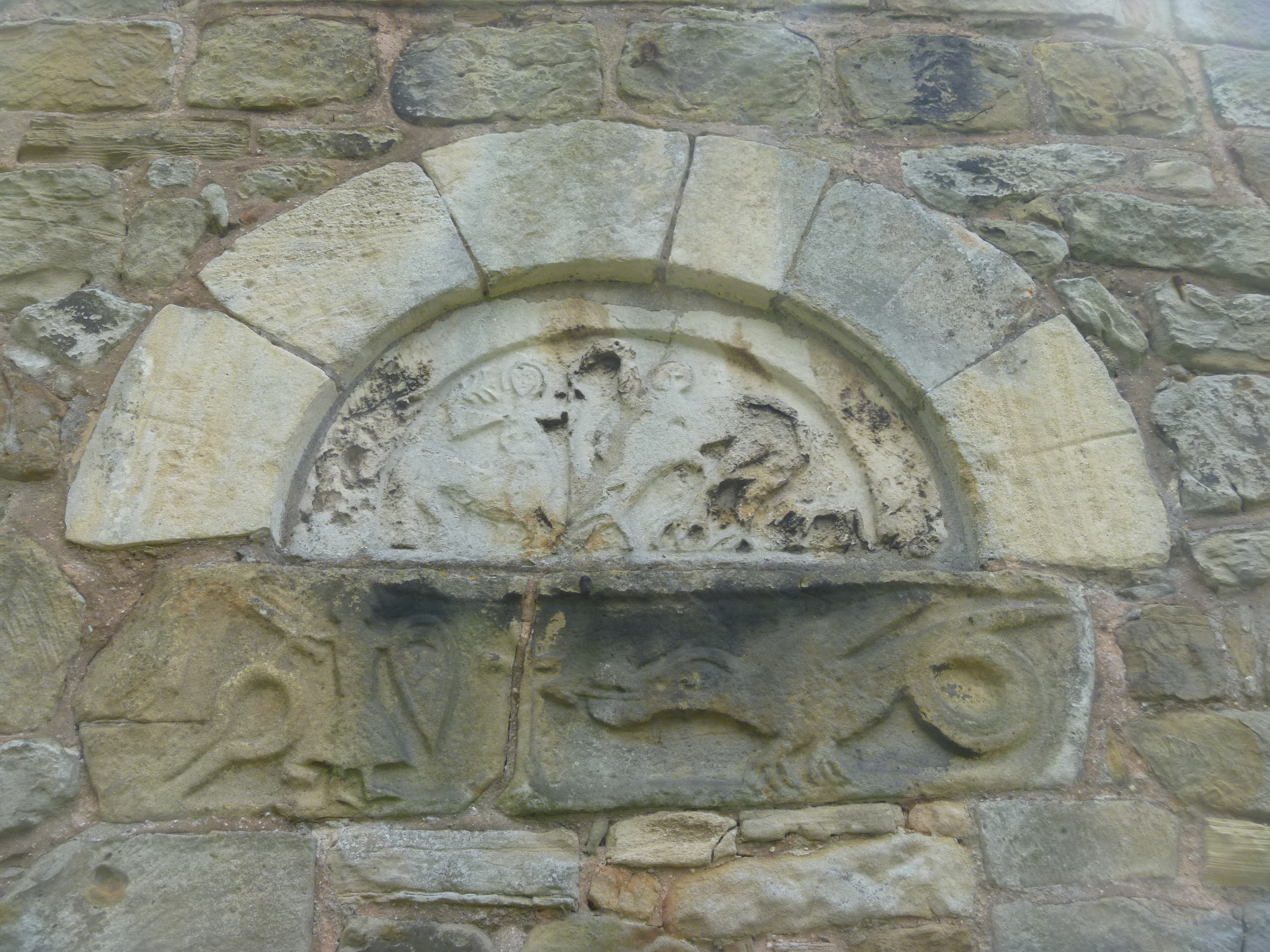
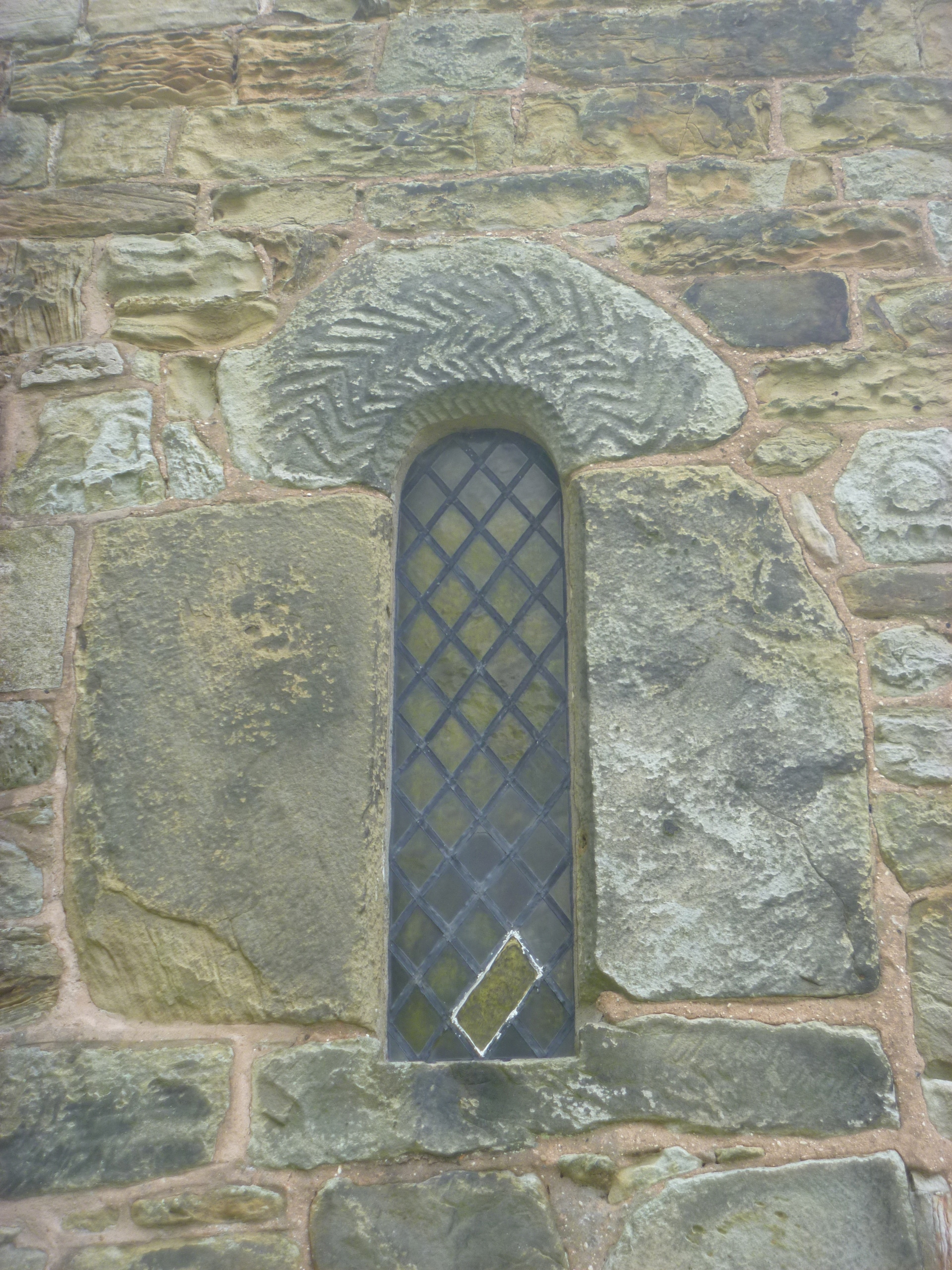
Apart from the two very significant buildings – Hardwick Hall (NT) and Bolsover Castle – we stopped by a small Saxon Church. The Church of St John the Baptist at Ault Hucknall was closed unfortunately but it would have been good to get inside. Read more about its chapel, windows and the grave of Thomas Hobbes, the author of The Leviathan, here.
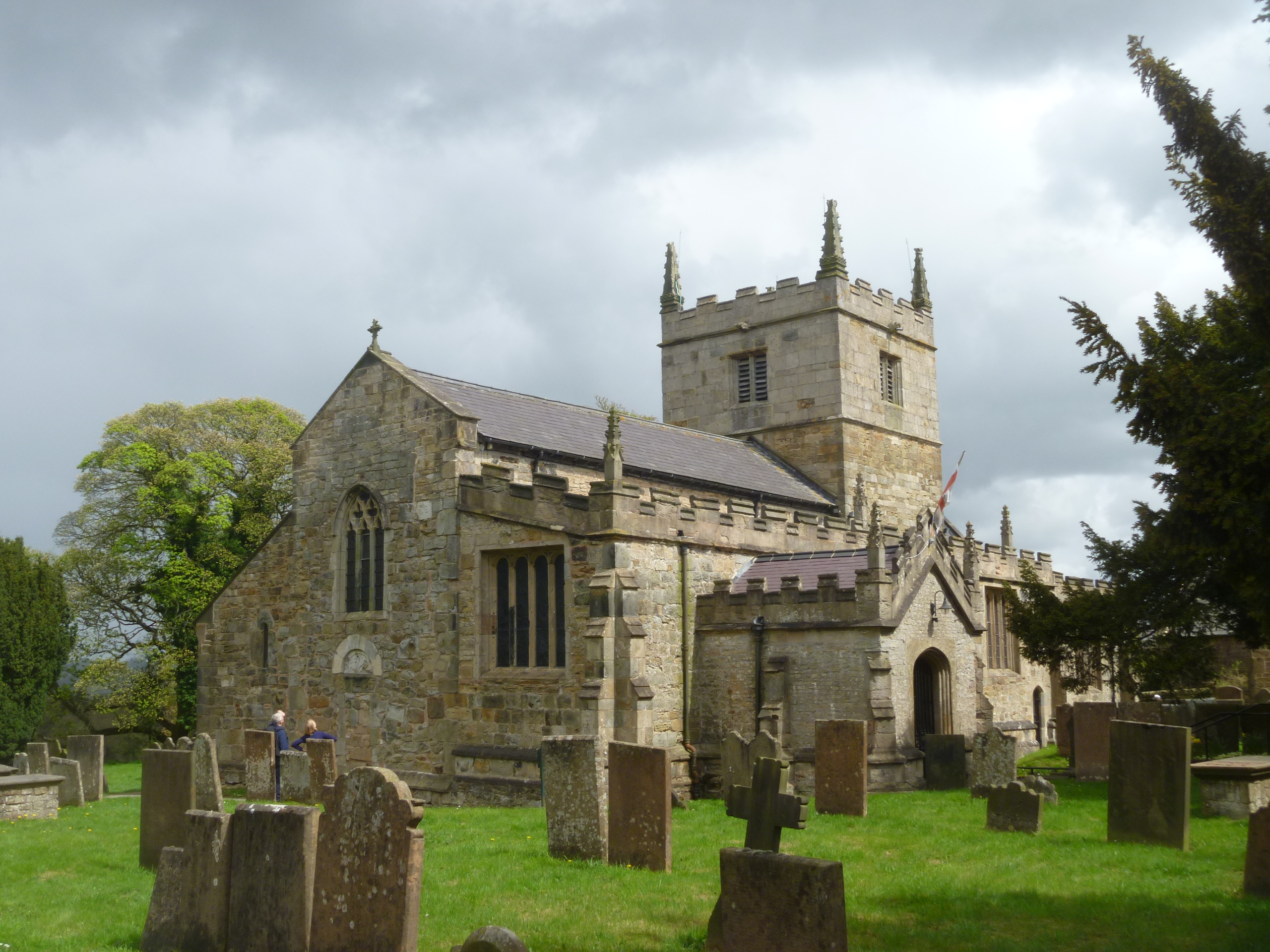
St John's Ault Hucknall

St John the Baptist Church, Ault Hucknall
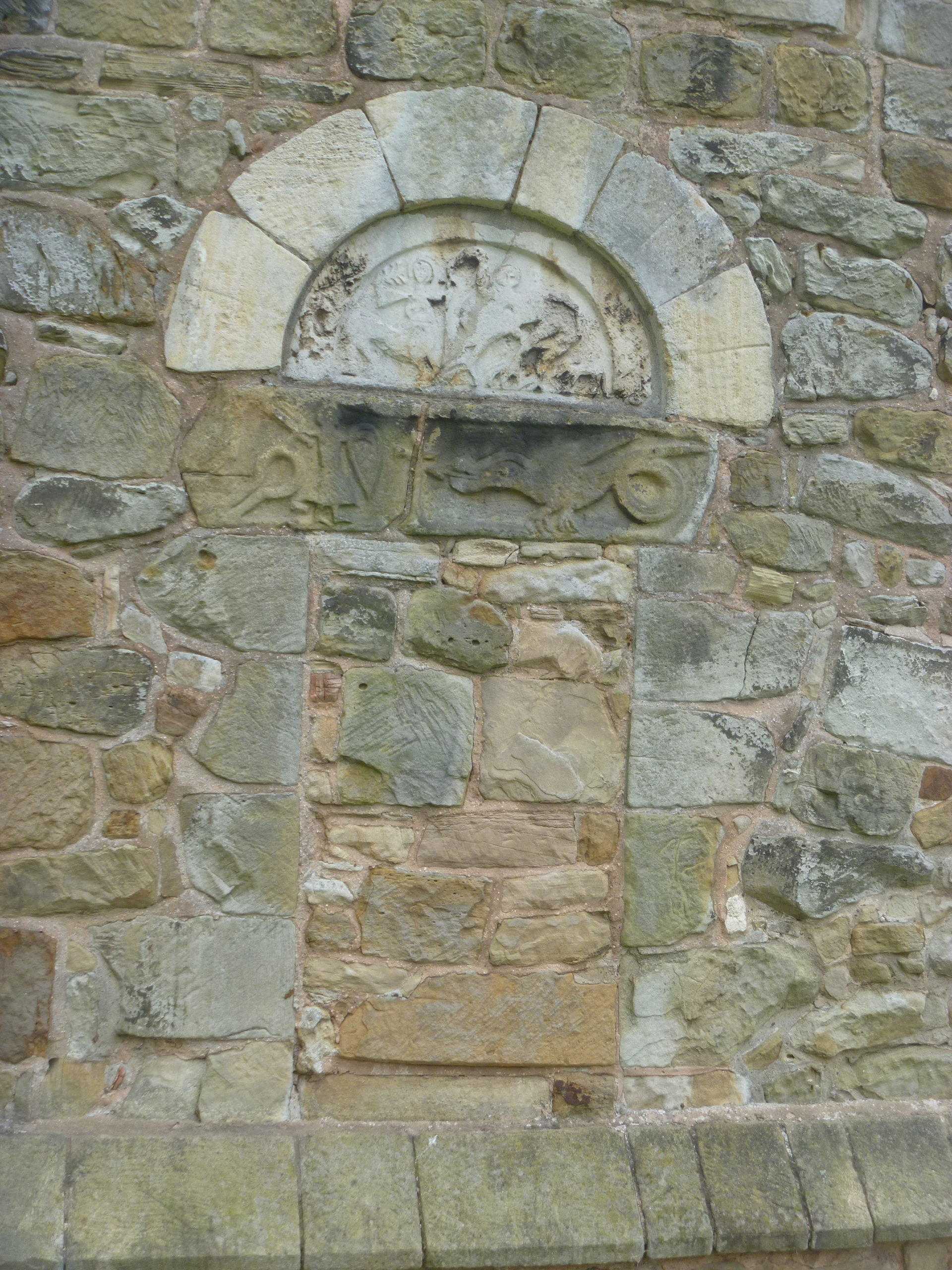
Saxon Arch and figures

Saxon Arch with figures

Close-up of the Saxon Arch

Saxon Arch details

Saxon Window

Saxon Window

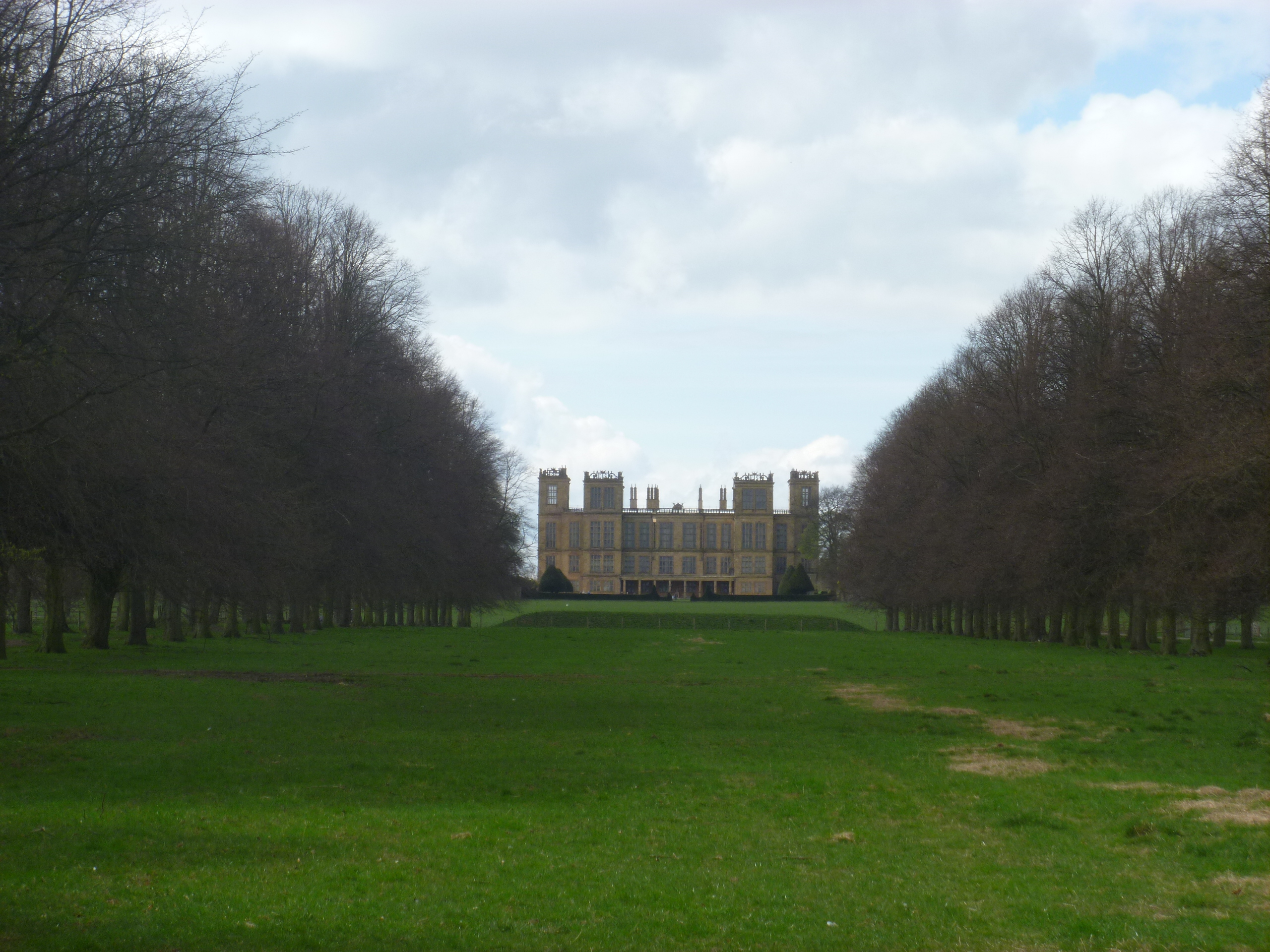
By lunchtime we’d arrived at Hardwick Hall, “more glass than wall”.
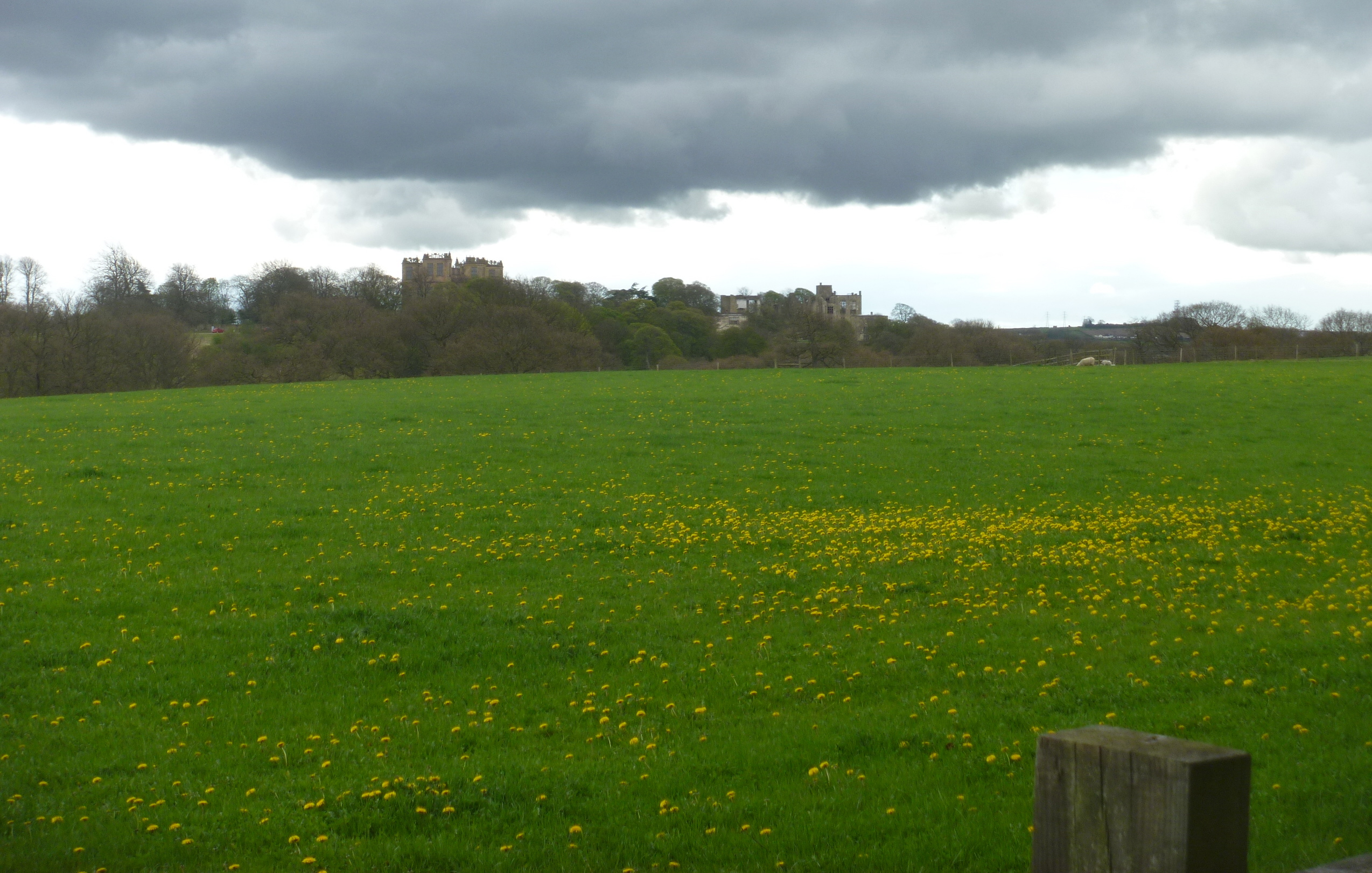
Approaching Hardwick Hall
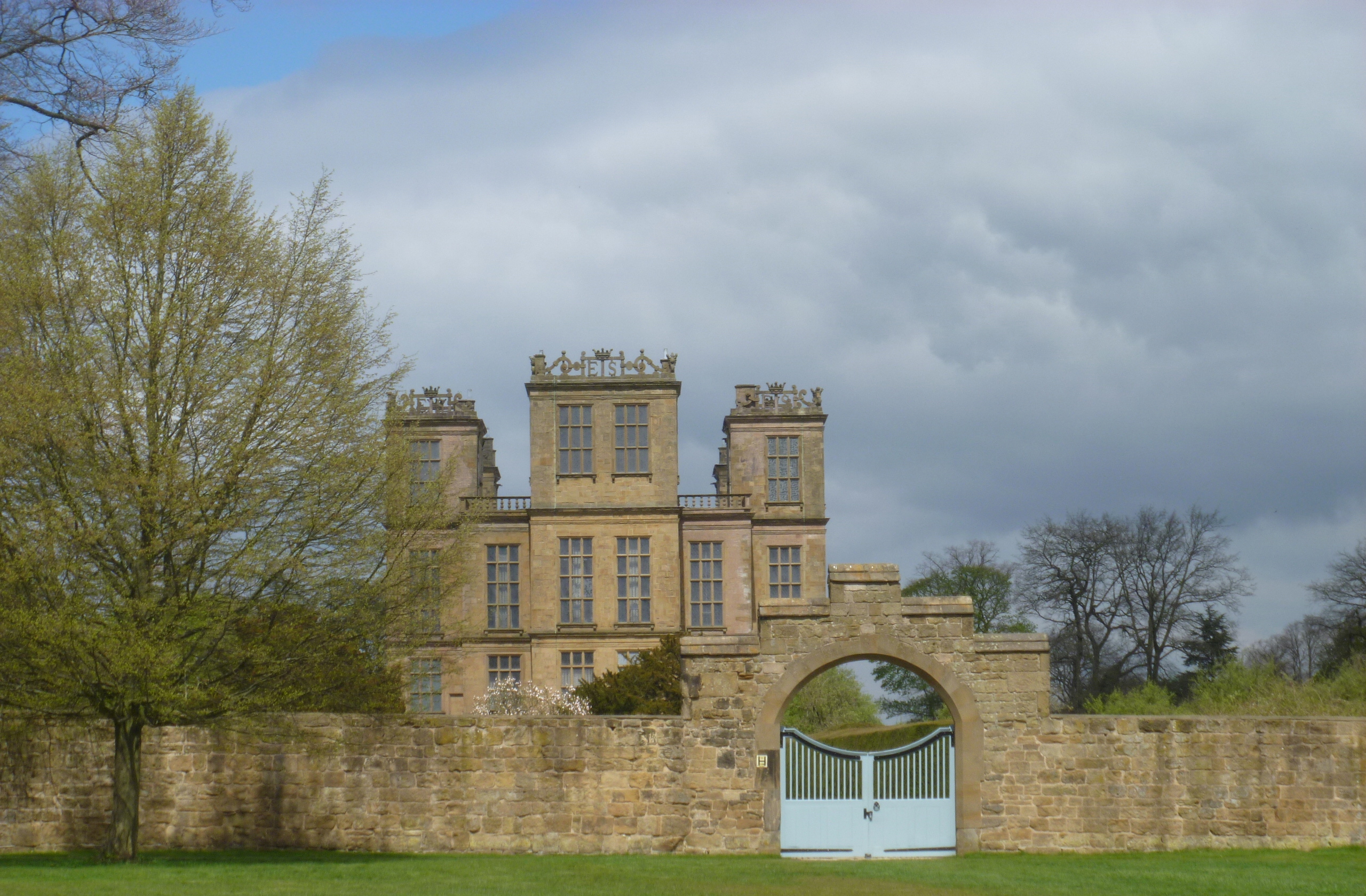
Approaching Hardwick Hall

Hardwick Hall More Glass than Wall

Hardwick Hall

But it wasn’t our lunchtime so we just walked through the grounds, admiring the house as we went and continued along Lady Spencer’s Walk and other tracks on the estate finally arriving at Glapwell where lunch was waiting for us in the Community Centre.
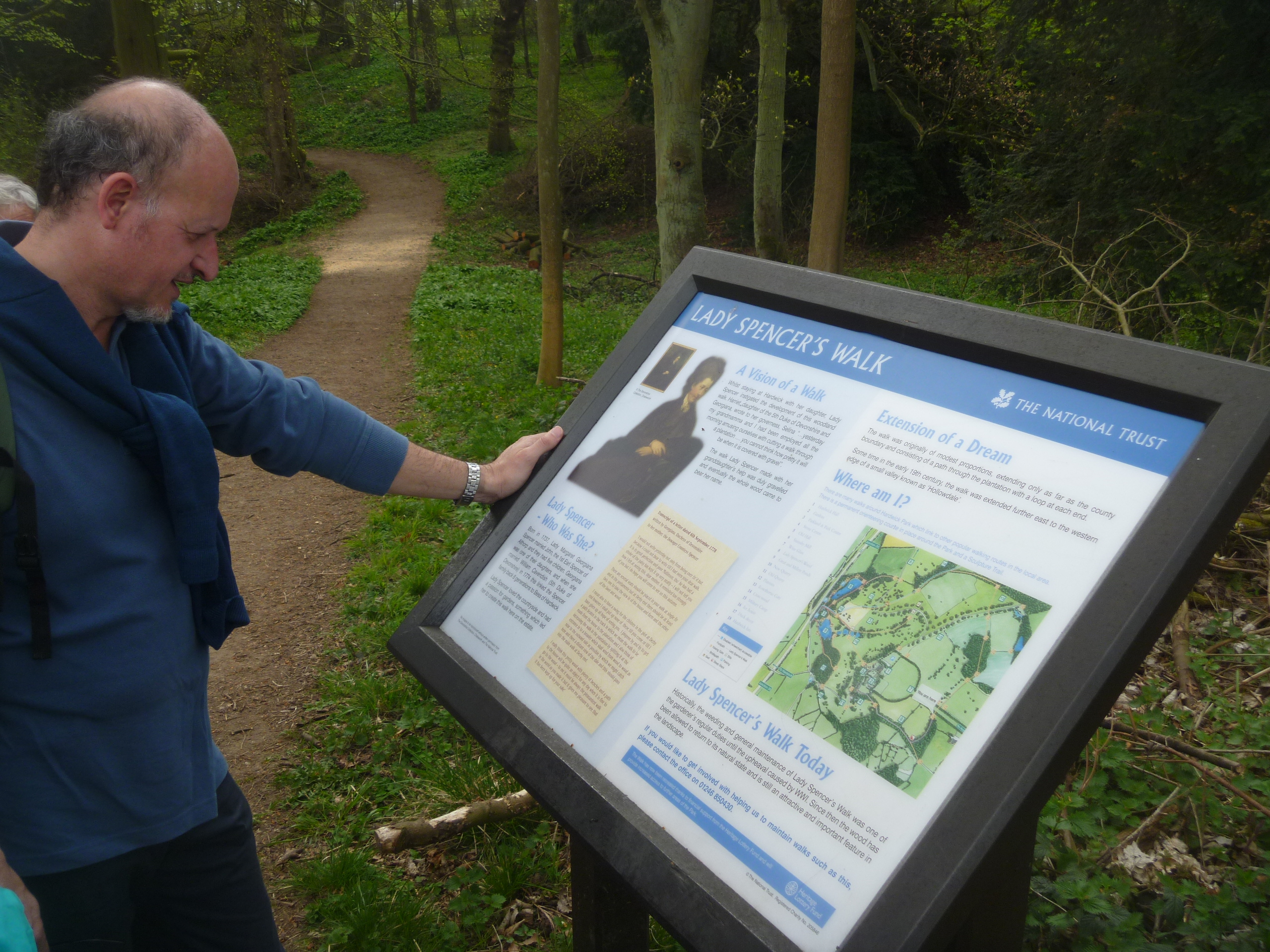
Lady Spencer's Walk

Our Leader, Rob

Hardwick Hall avenue

Hardwick Hall from the Avenue of Trees

Comfortably refreshed, the best part of the walk, although fairly short now, lay ahead. After crossing several fields we followed a ridge directly back up to Bolsover with magnificent views west right across to the Derbyshire Dales.
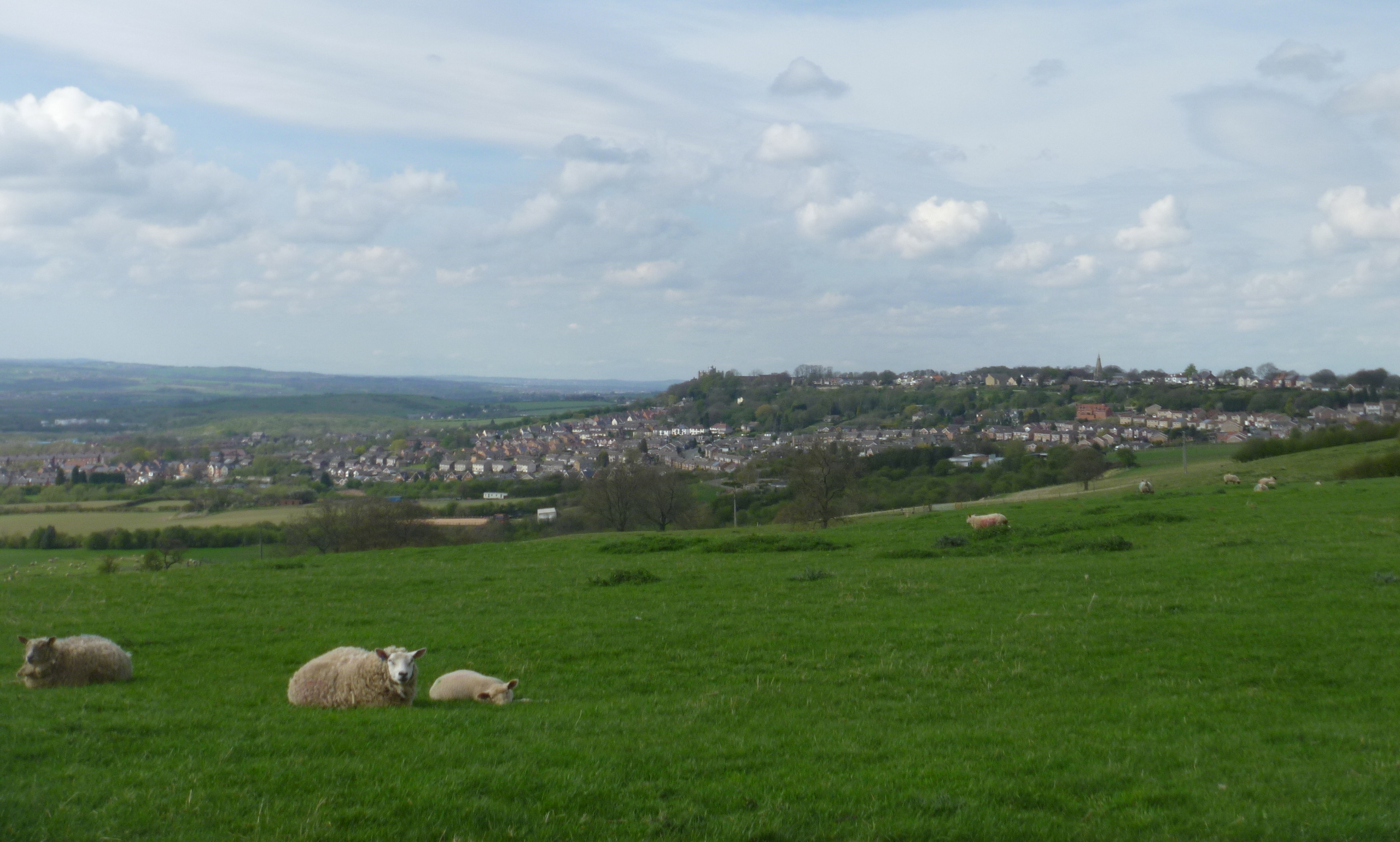
Return to Bolsover

Return to Bolsover

Arriving in Bolsover more sustenance awaited us at The Bluebell pub – a generous spread of home baked scones, butter, cream and jam and pots of tea, to boot.

Less than an hour’s drive I am comfortably ensconced in my homely B&B for the night!
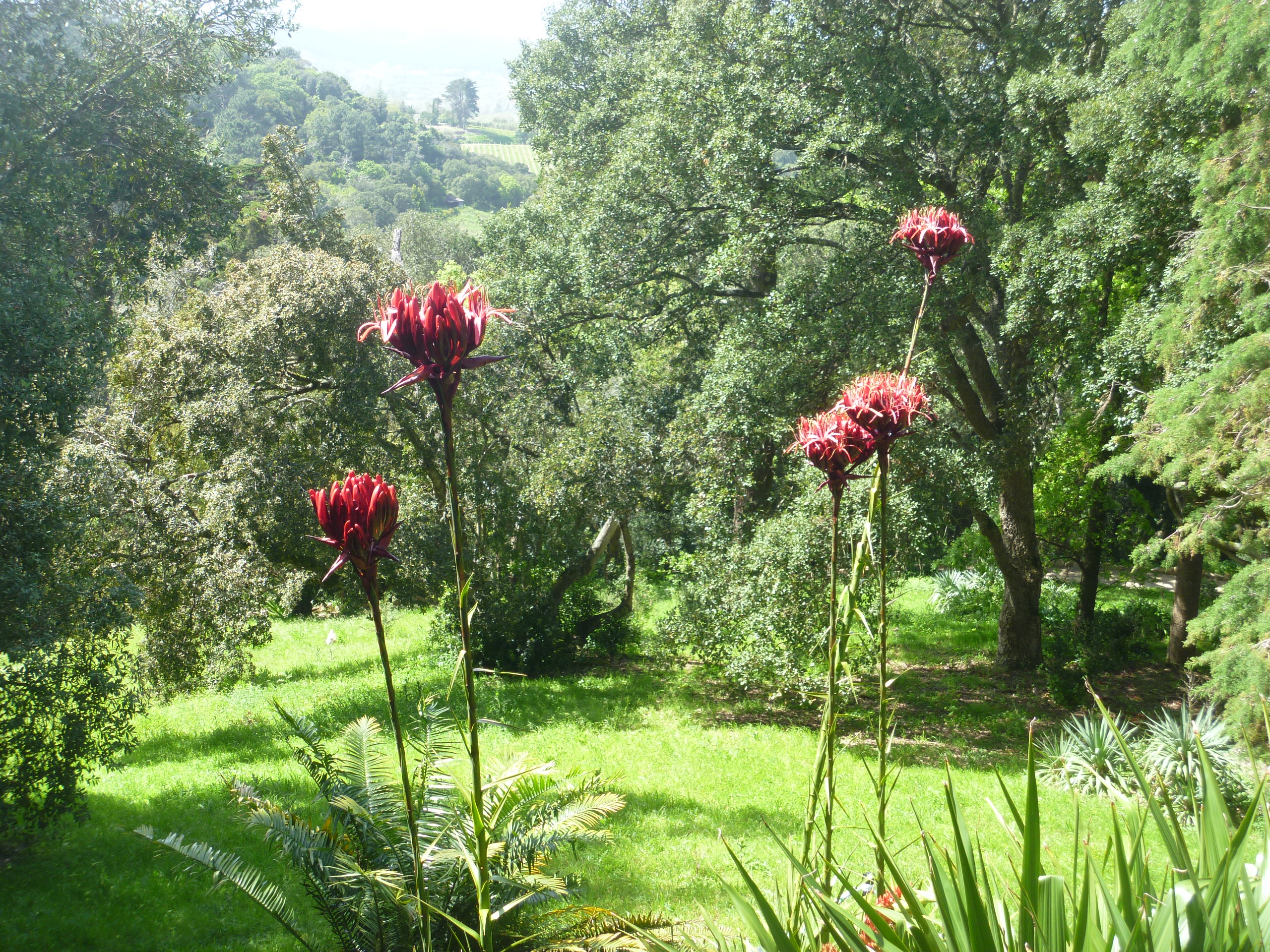
“Lo! Cintra’s glorious Eden” – A Day in Sintra
Here you will see that Lord Byron’s declamation still holds true today!

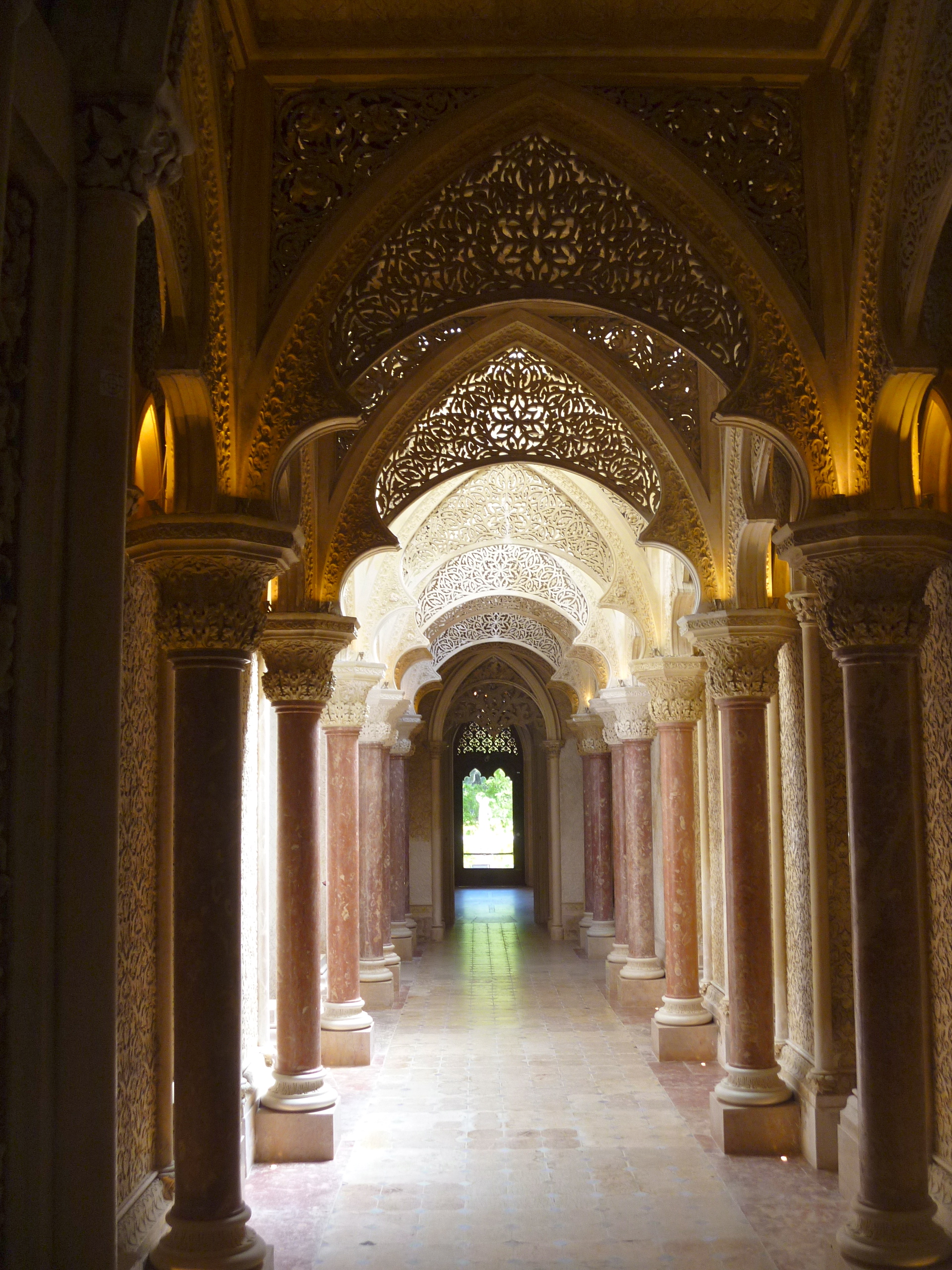
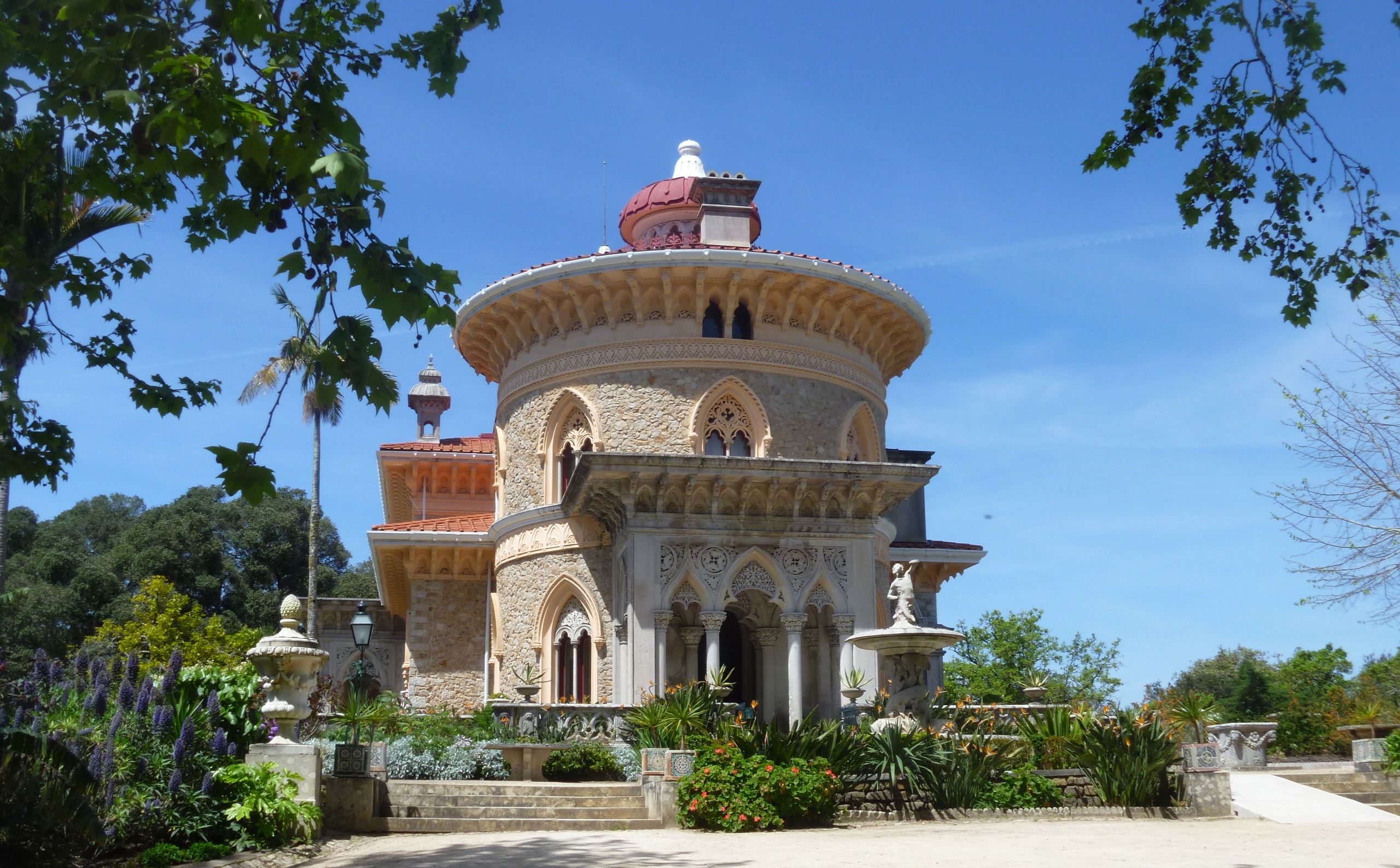
Our walk continued from Praia Grande for a further two days. We continued up the coast as far north as Praia de Magoito where the Sintra natural park ends and then turned inland away from the ocean views to the wine growing area of Colares. The town of Colares was  where we spent the next night and our journey on foot continued the next day to Sintra itself via a long stop at the wonderful Palace and Gardens of Monserrate.

Monserrate Gardens

In the Gardens at Monserrate

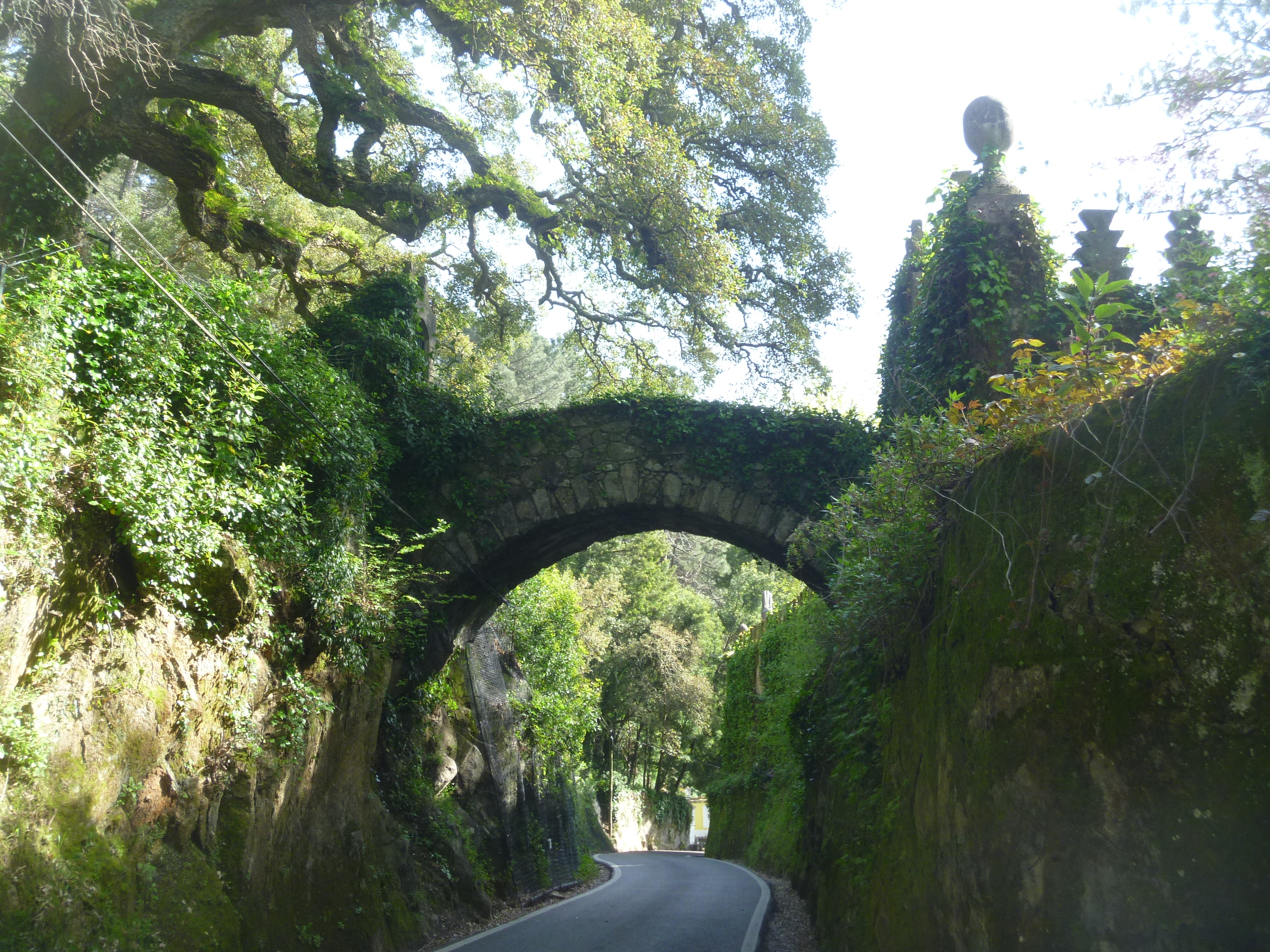
Entrance Gate to Sintra

Former Entrance to Sintra

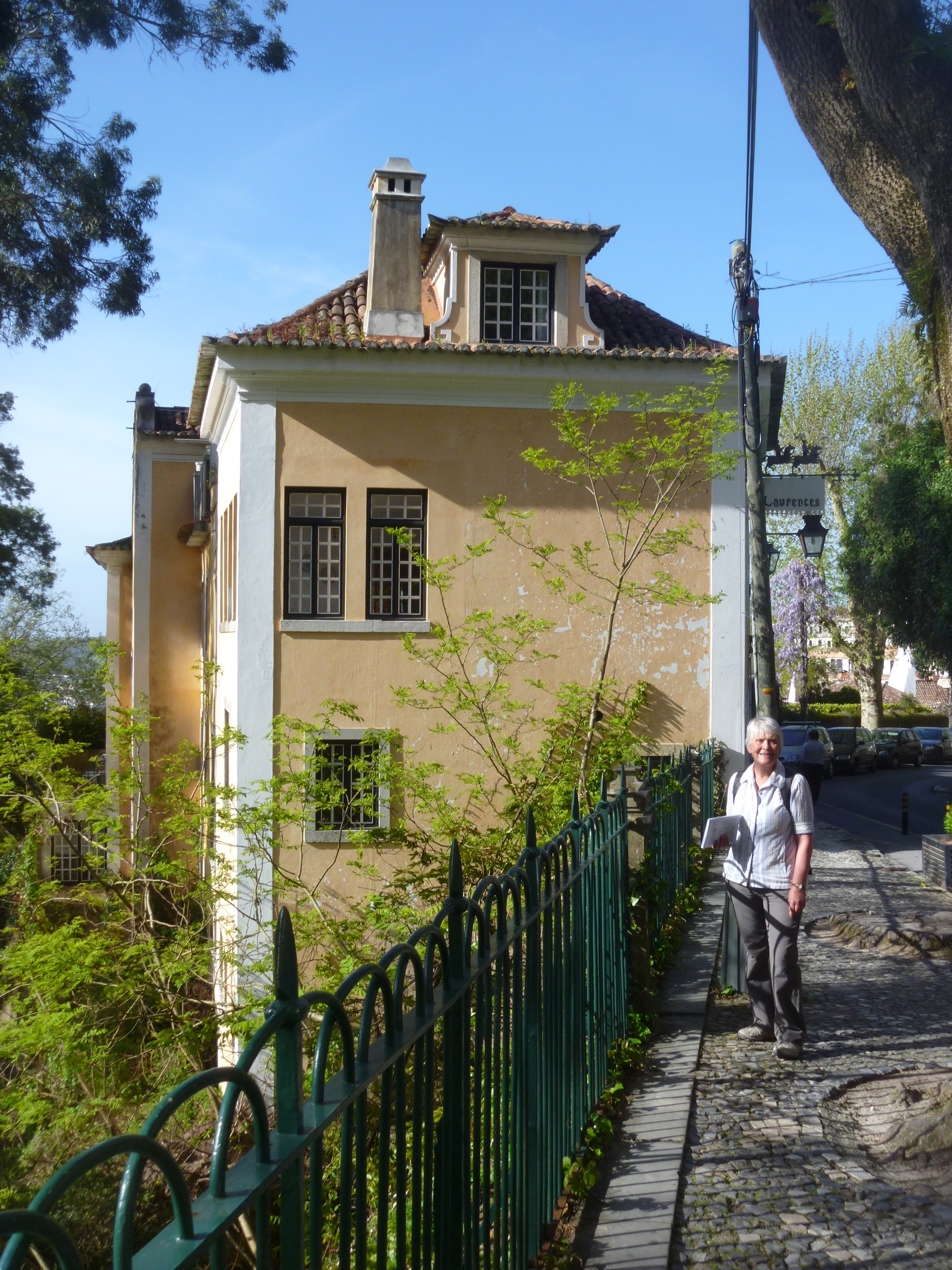
So, on the afternoon of the fifth day of walking we arrived at one of the former town gates and soon reached the famous Lawrence’s Hotel right in the old town of Sintra.

Lawrences

This hotel is the oldest in Spain and Portugal and (I believe) the second oldest in Europe. It has connections with Lord Byron who stayed here and whose portraits appear on many of the hotel and restaurant walls.

We stayed two nights at Lawrences which gave us a whole day to explore Sintra and its palaces.

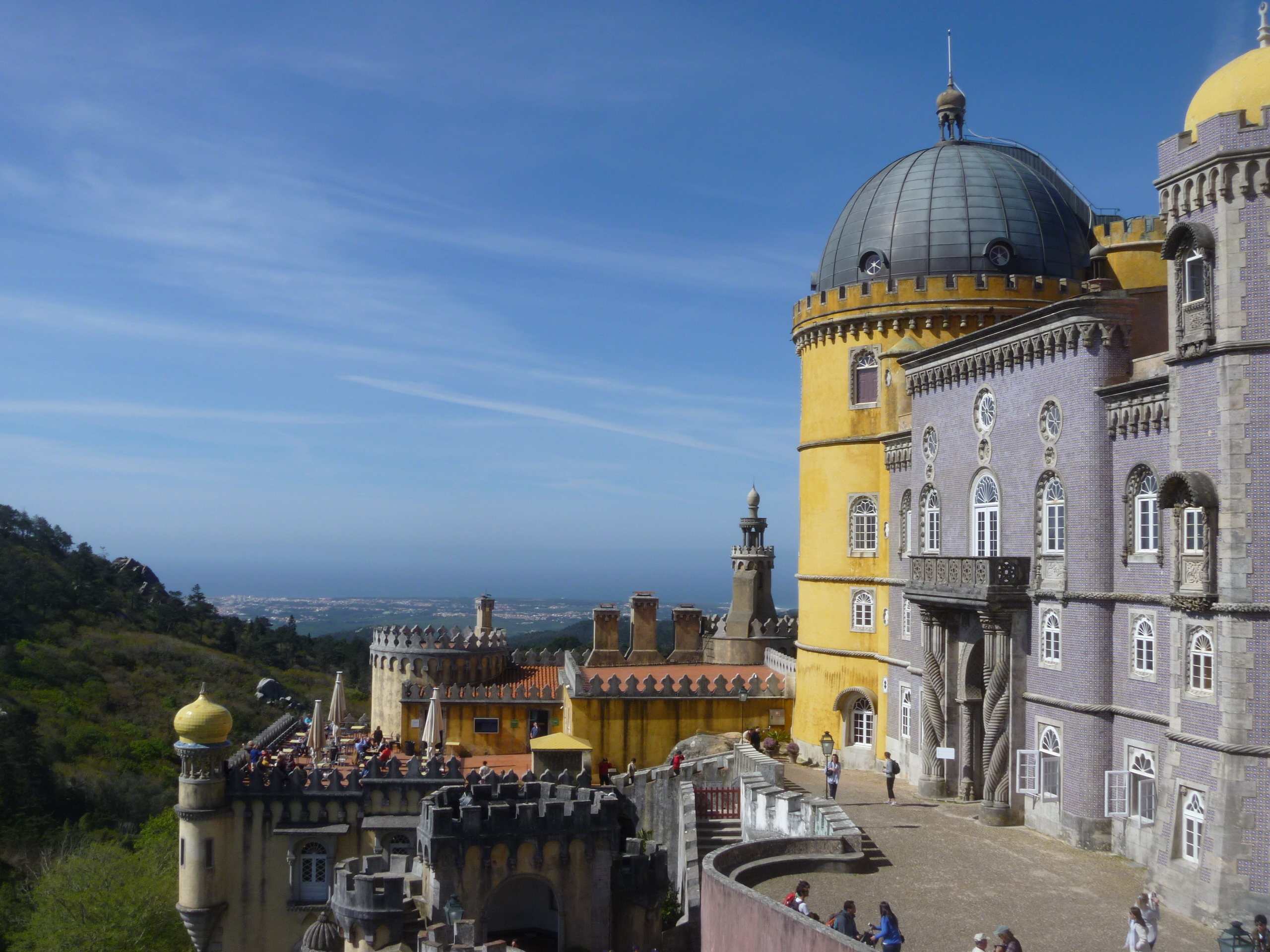
Pena Palace

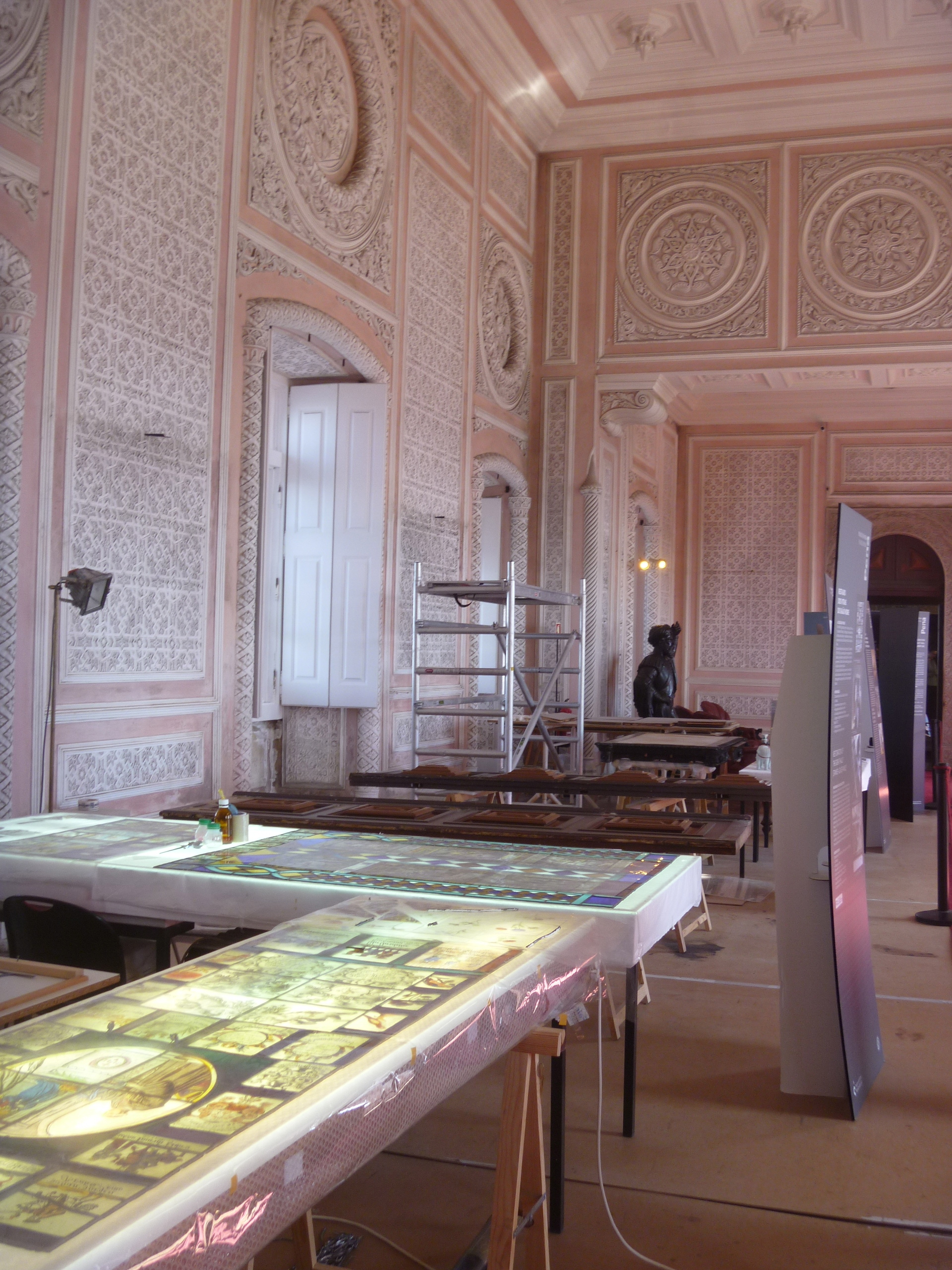
Most of our time was spent at the Park and Palace of Pena. It’s very popular; even on this Friday in April. There is lots to see in the Palace alone. Ongoing restoration could also be observed here as at Monserrate.

Open for Works at Pena

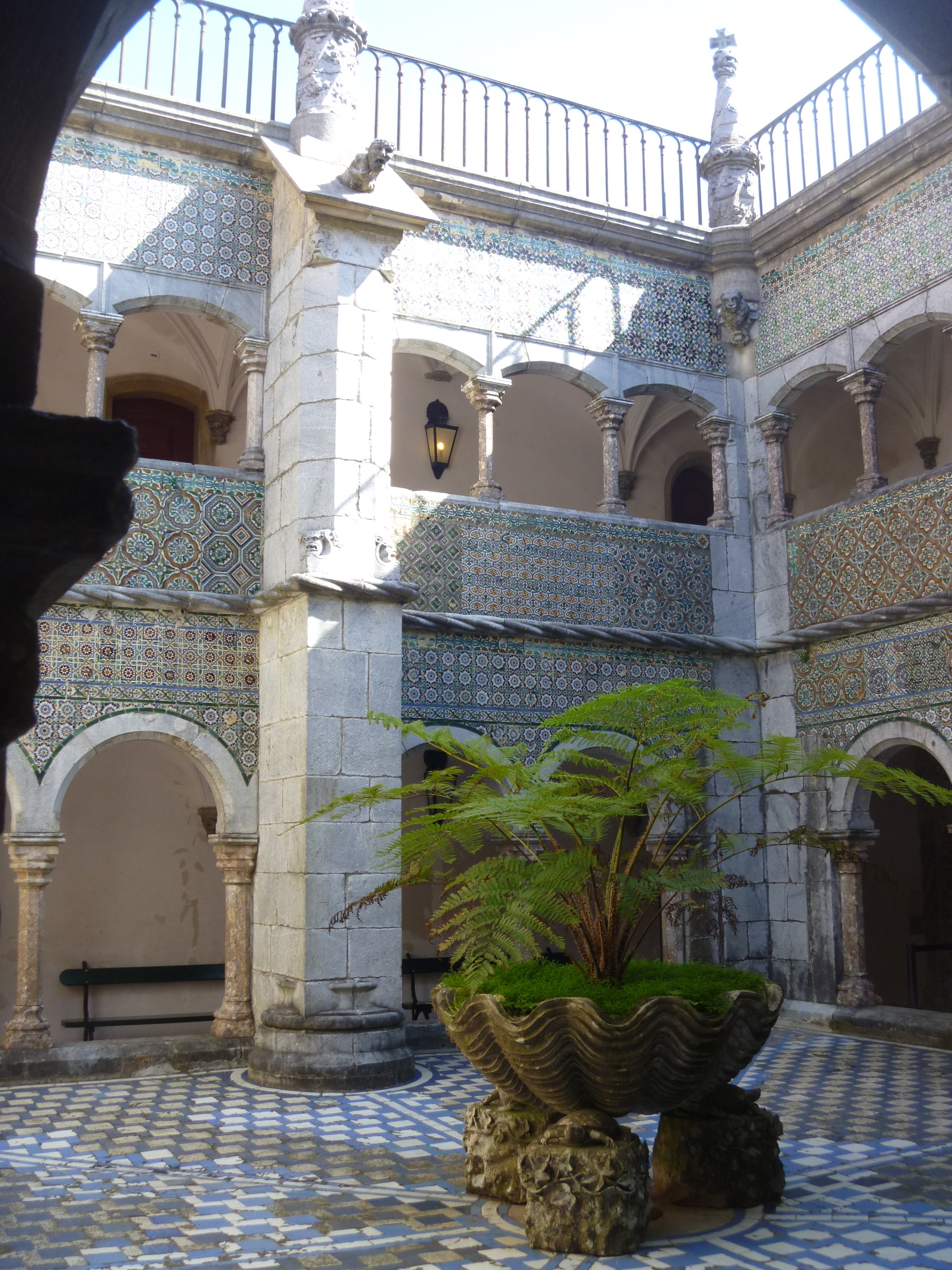
Tiled courtyard

An Inner Courtyard

The Park and Palace of Pena are the finest examples of nineteenth century Portuguese Romanticism and the integration of natural and built heritage. They constitute the most important part of the Cultural Landscape of  Sintra’s World Heritage site.” [From publicity leaflet]

Originally a chapel and later a monastery  in 1842 work began on a “New Palace” by the King Don Fernando II who left all the property on his death to his second wife the Countess Edla. The Palace and Park were acquired by the state in 1889 and converted to a museum in 1910-12.

A natural environment of rare beauty and scientific importance, the Park is remarkable as a project of landscape transformation of a hill, barren at the time, into an arboretum integrating several historic gardens. It occupies almost eighty-five hectares of exceptional geological and climatic conditions.” [From publicity leaflet]

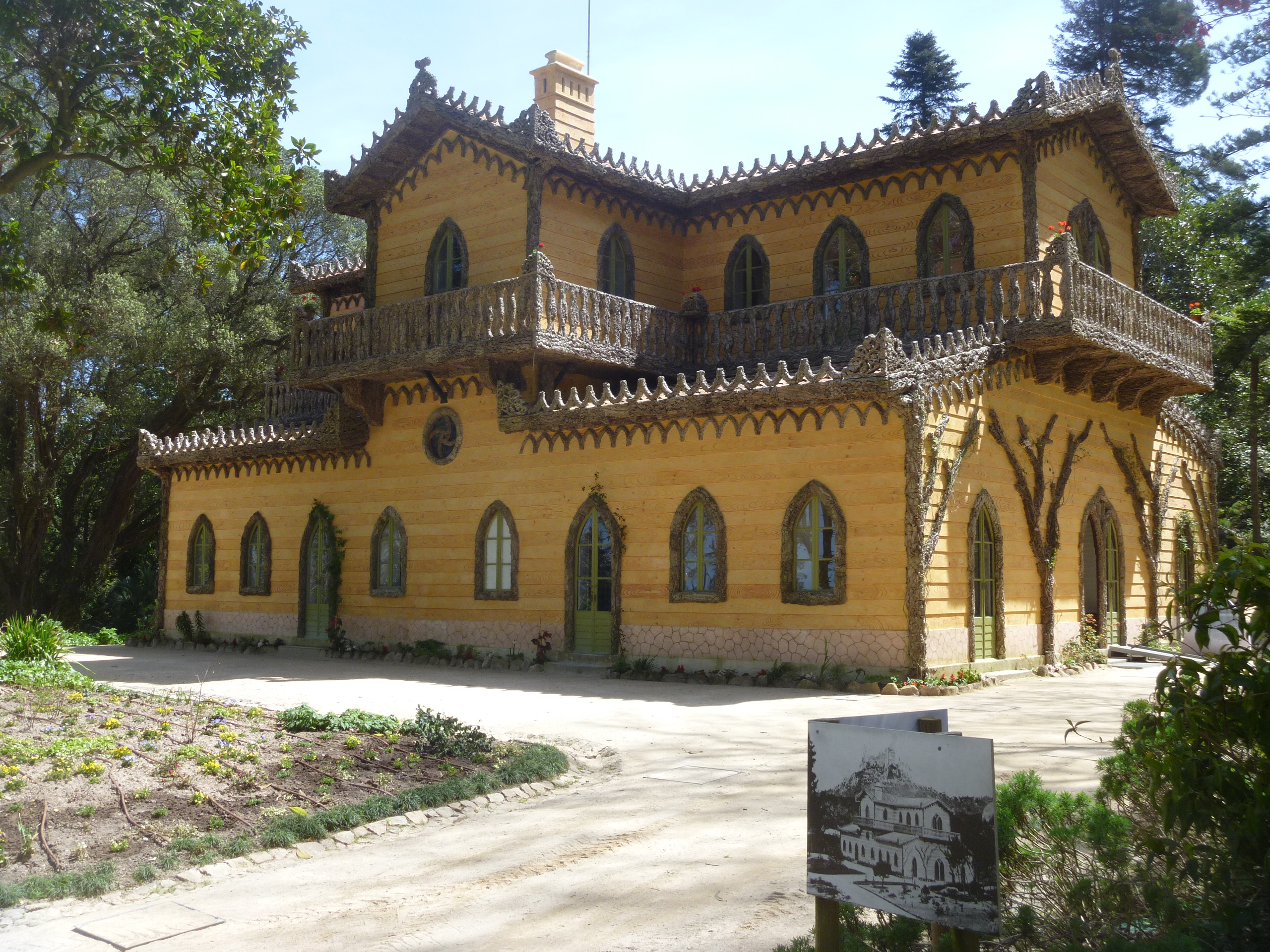
The Chalet Edla

The Chalet Edla

We could have spent hours in the grounds alone. Leaving the Palace you are soon away from the crowds and we decided on a route that would take in the Chalet Edla.

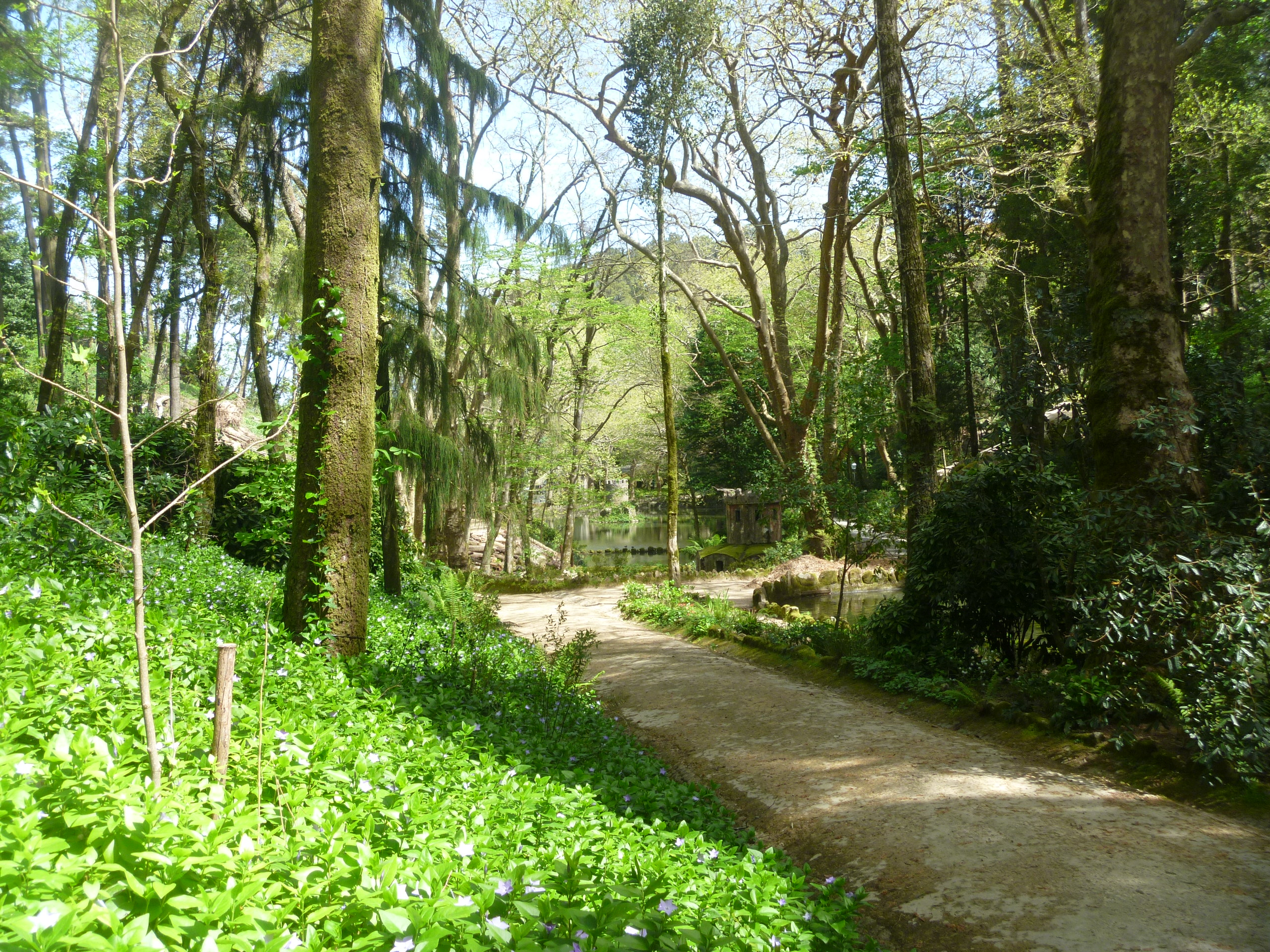
Pena Park

Lush Greenery of the Pena Park

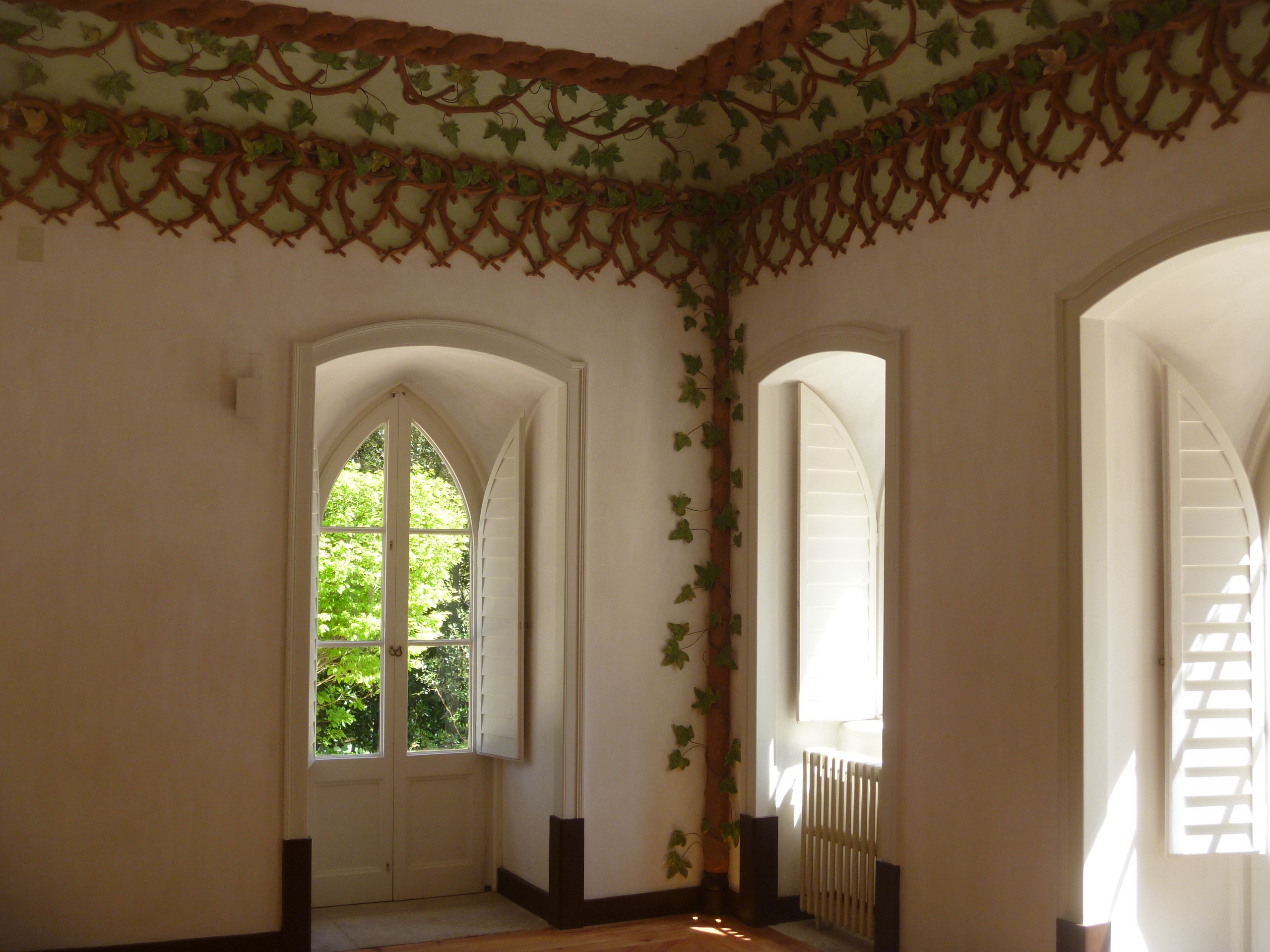
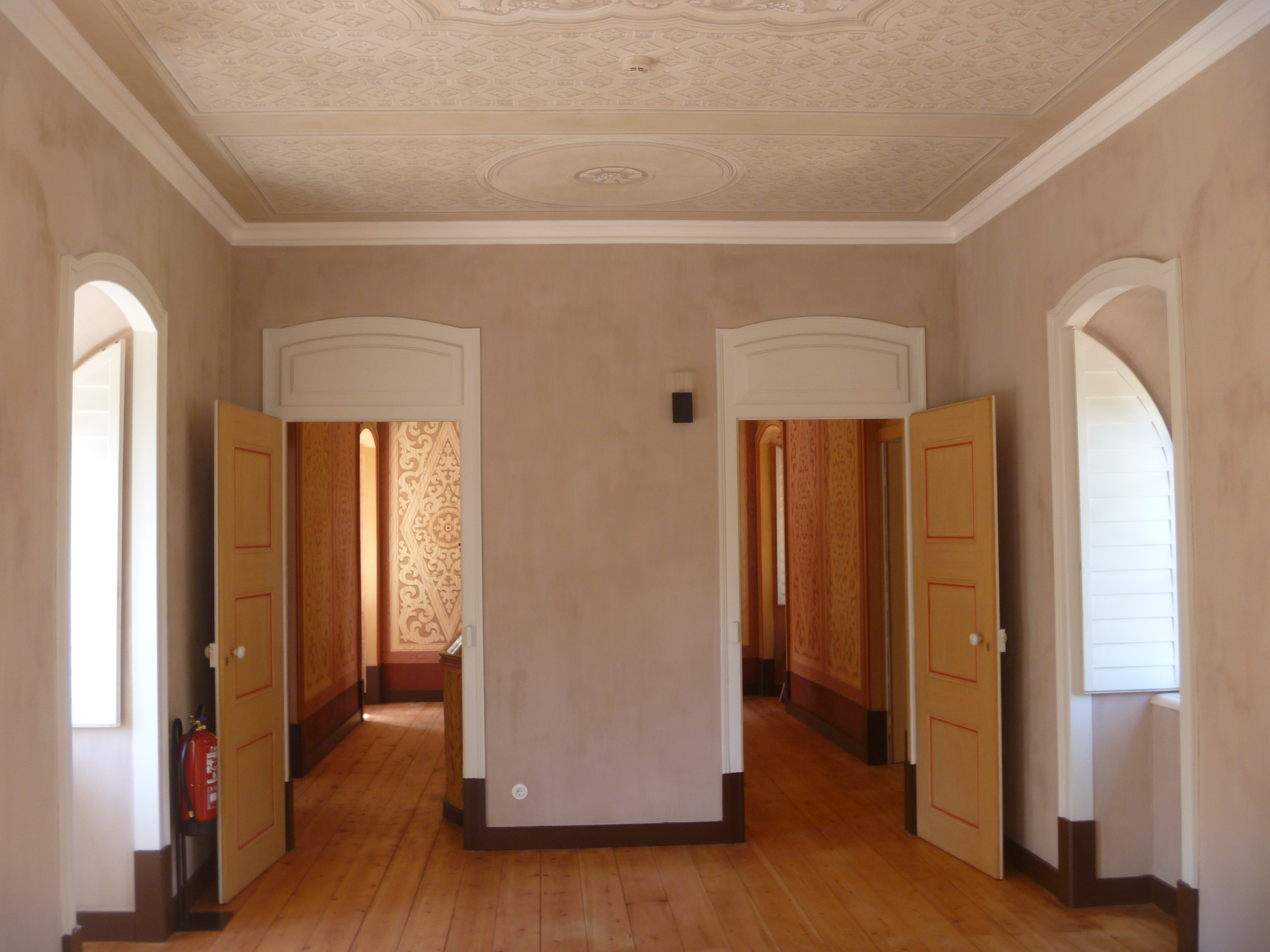
We had understood that due to damage following the storms in January the Chalet would not be open to the public. So we were surprised and happy to find that on that very day it was reopened  to the public! We bought our tickets and took a look round this unusual summer house built by Don Ferdinand for the Countess between 1864 and 1869. The Chalet also deteriorated badly over many years and in 1999 was damaged by fire. Here, again, renovation work is still ongoing. I’m not sure to what extent the recent storms damaged the house but there’s been a magnificent effort to restore this building to its former glory.

Before renovation

Photographs show the extent of the damage

Inside Edla 1

Interior Chalet Edla

Inside Edla 2

Renovations at The Chalet Edla

Inside Edla 3

Upstairs at The Chalet Edla

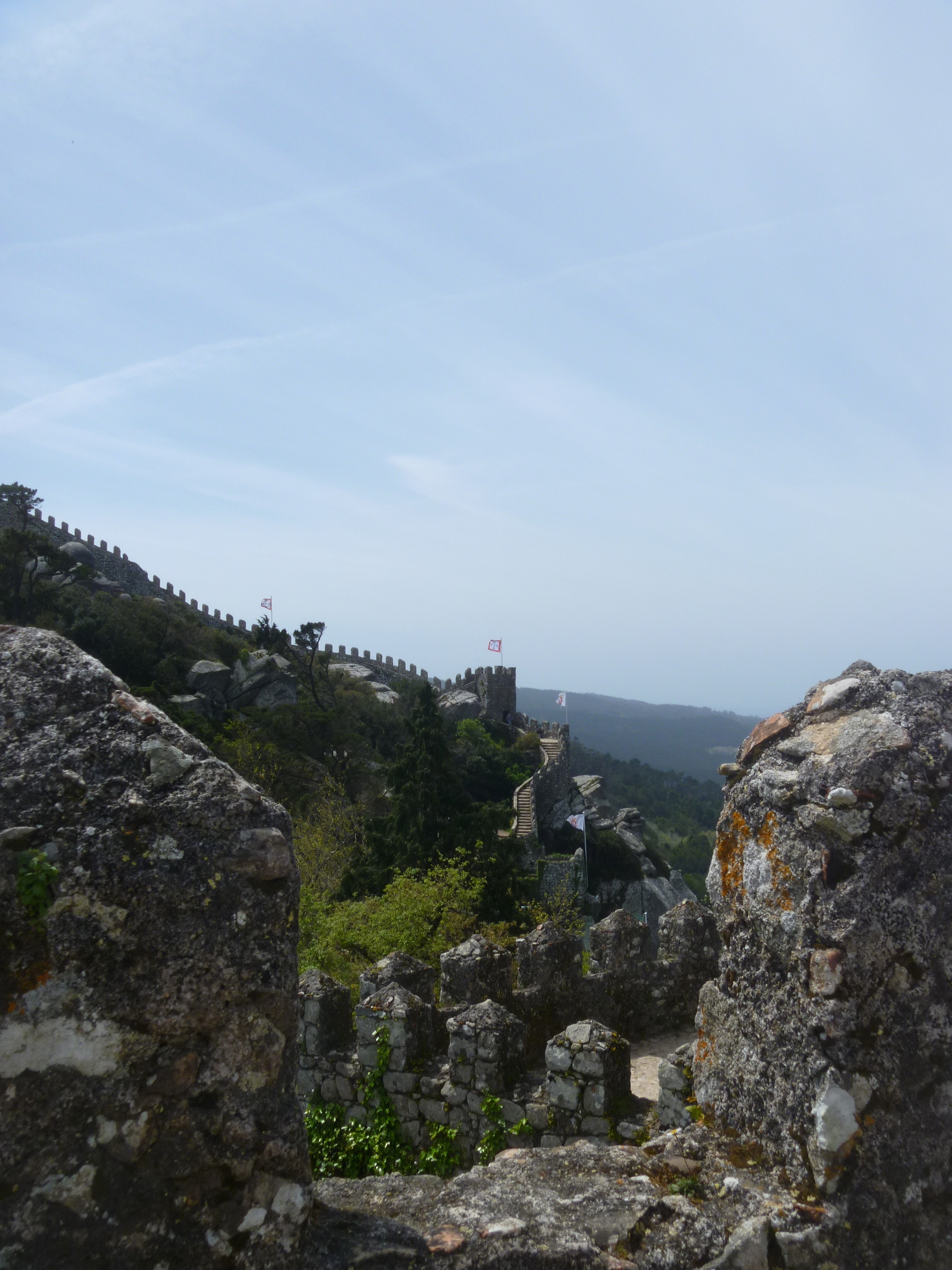
From the Pena gardens we stepped across the road to the Moorish Castle which is really just ramparts. But they are impressive  ramparts.Moorish Ramparts

The Moorish Castle Ramparts

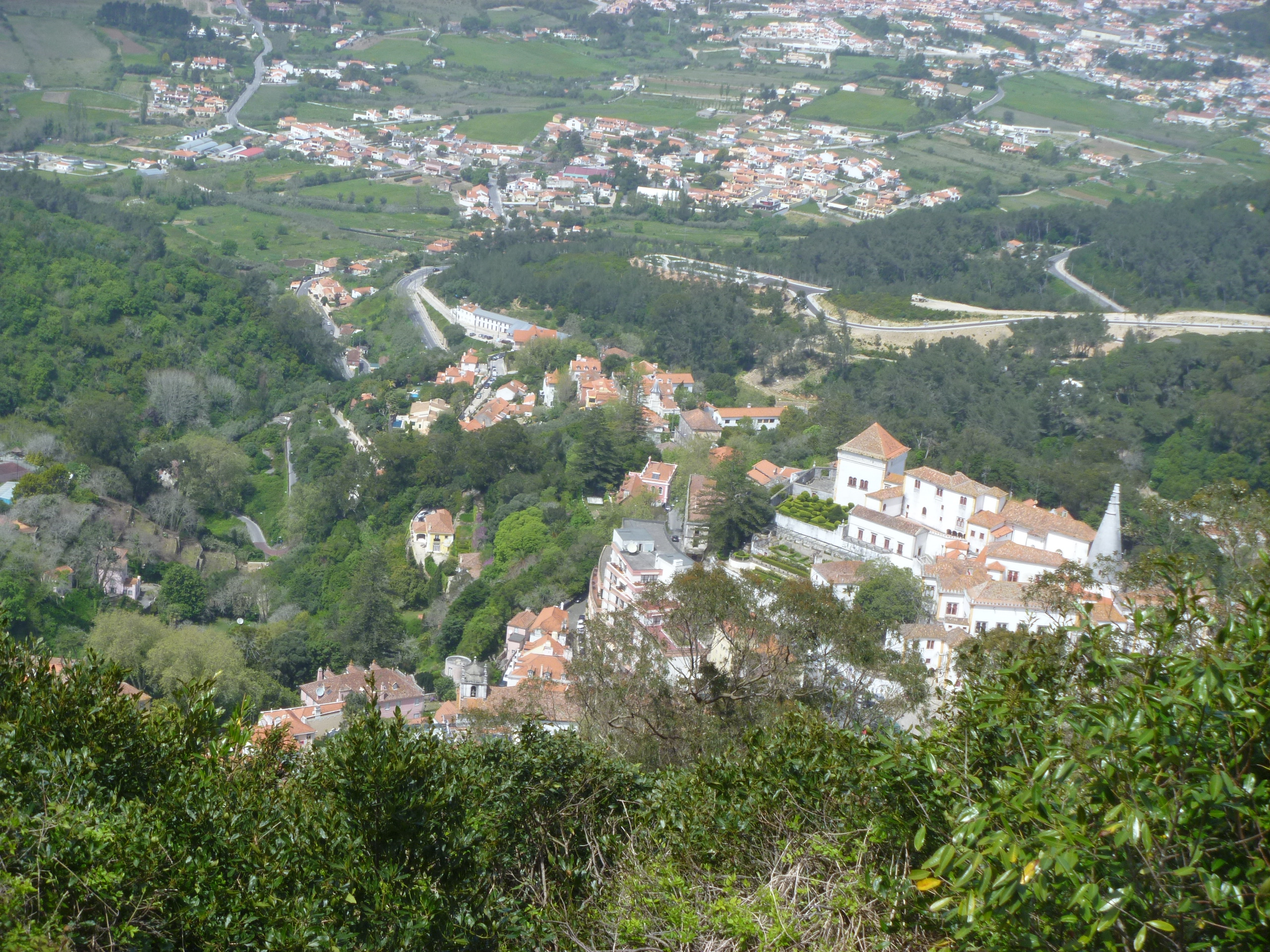
Sintra from Moorish

Sintra from the Moorish Castle Ramparts

They tower over the town and we could see them from our terrace at Lawrences.

From our terrace

The Palace of Monserrate Restoration Project

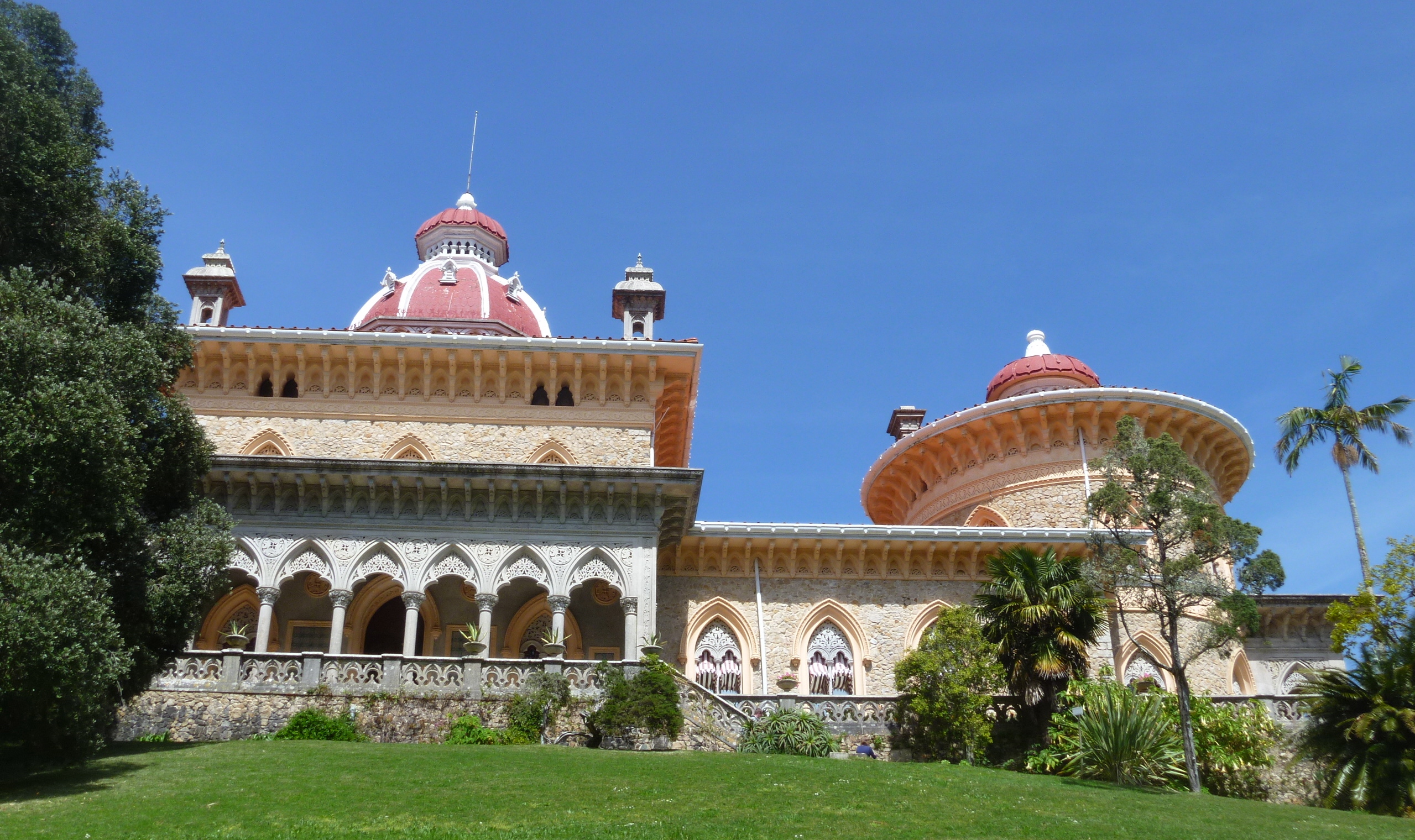
Palace of Monserrate

In 1995 the whole of the Sintra Region was awarded UNESCO World Heritage status and restoration of the various properties and conservation of the forests and parks continues to this day.

Hall at Monserrate

The Beautifully Restored Hall

Since 1949 Monserrate has been owned by the Portuguese state. Over the decades that followed the palace deteriorated but in 2001 restoration work began on the roof and facades.  After interruptions this work was finally completed in 2004 when work on the interior could begin. A successful bid for funds from EEA-Grants in 2007 enabled work to resume at a faster pace. At Monserrate this the project is called “open for works” and it allows for the Palace to be open to the public so that all may watch the ongoing ‘interventions’.

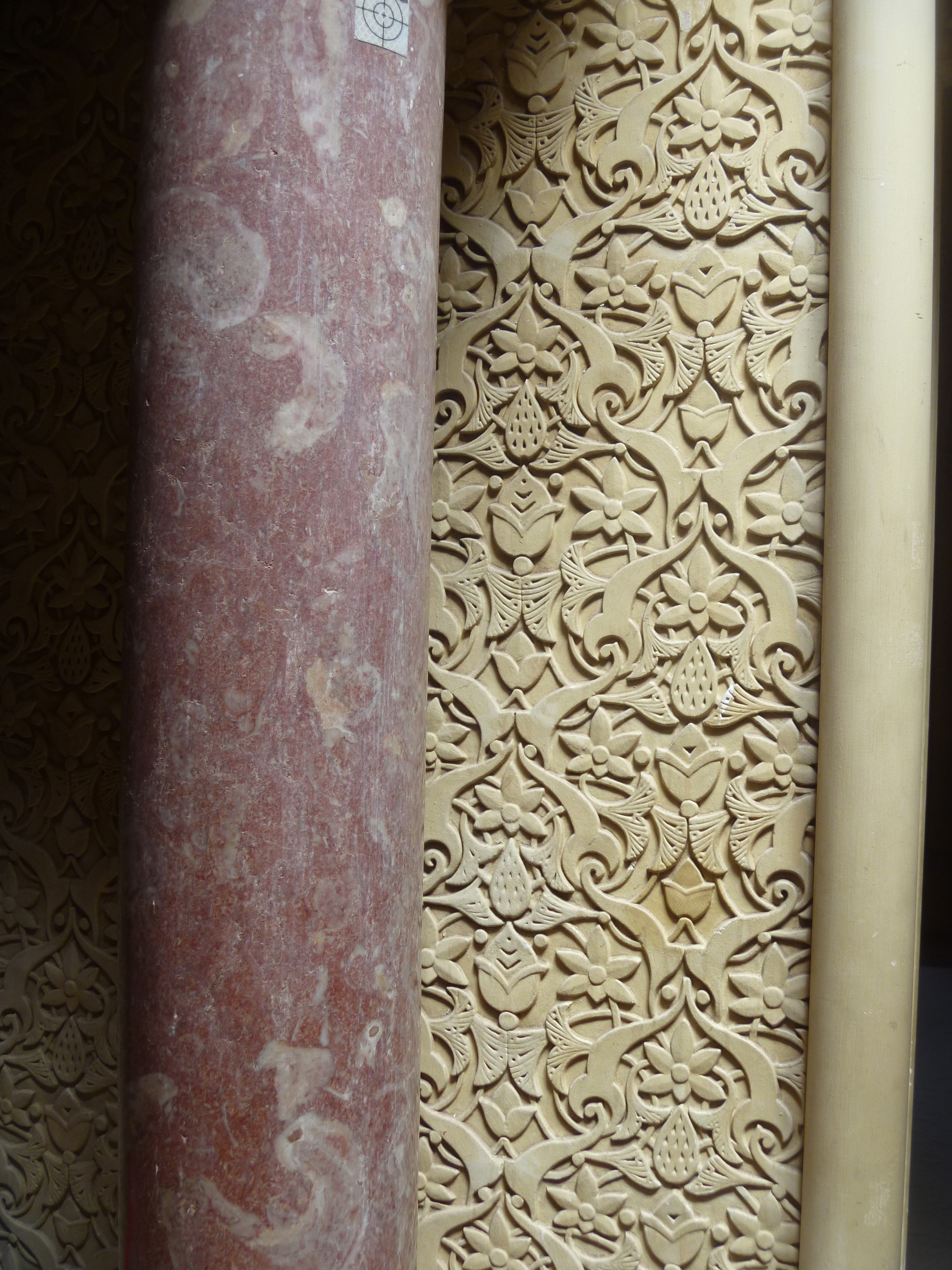
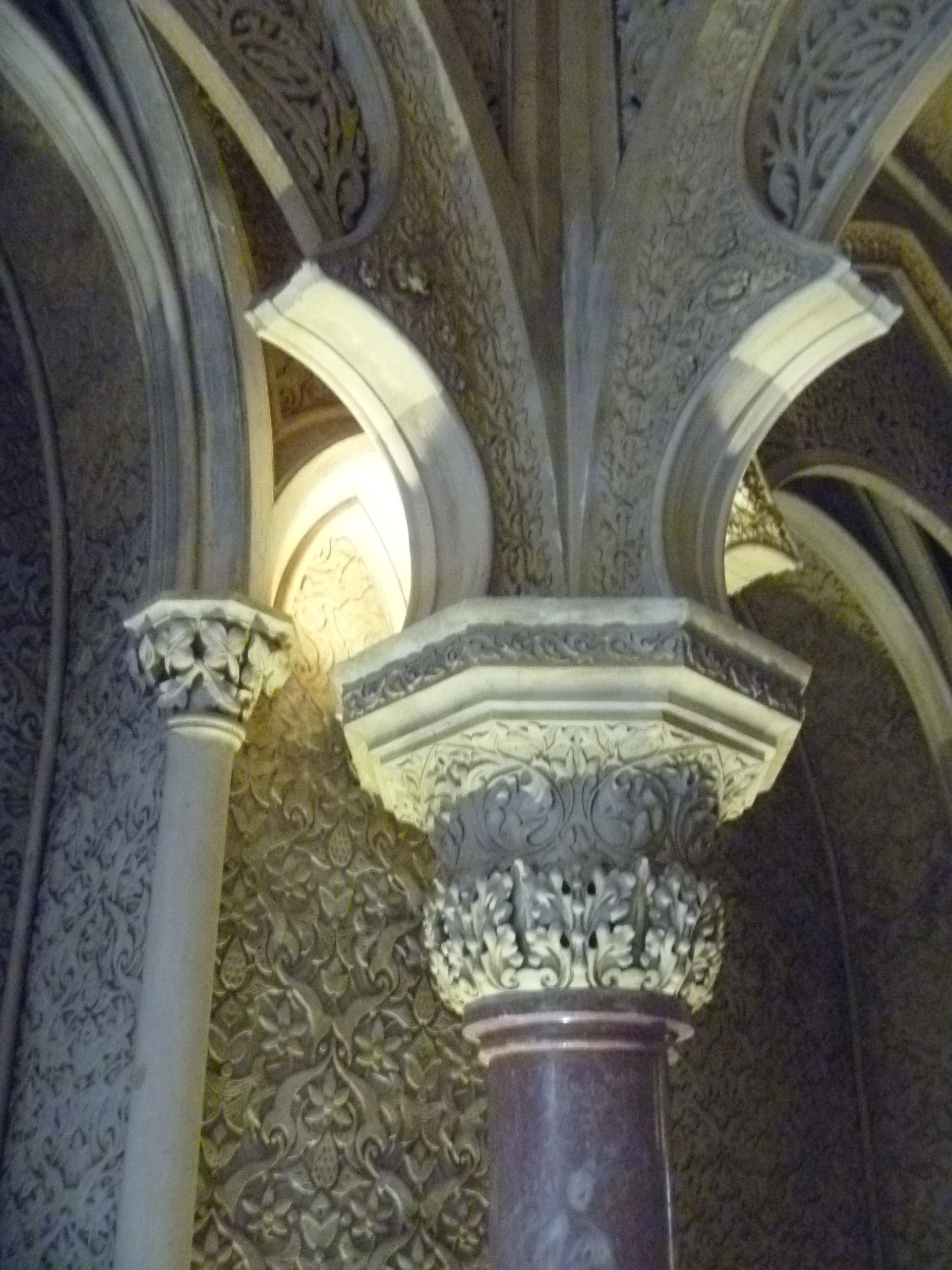
Exquisite renovation work

Fantastic renovation work

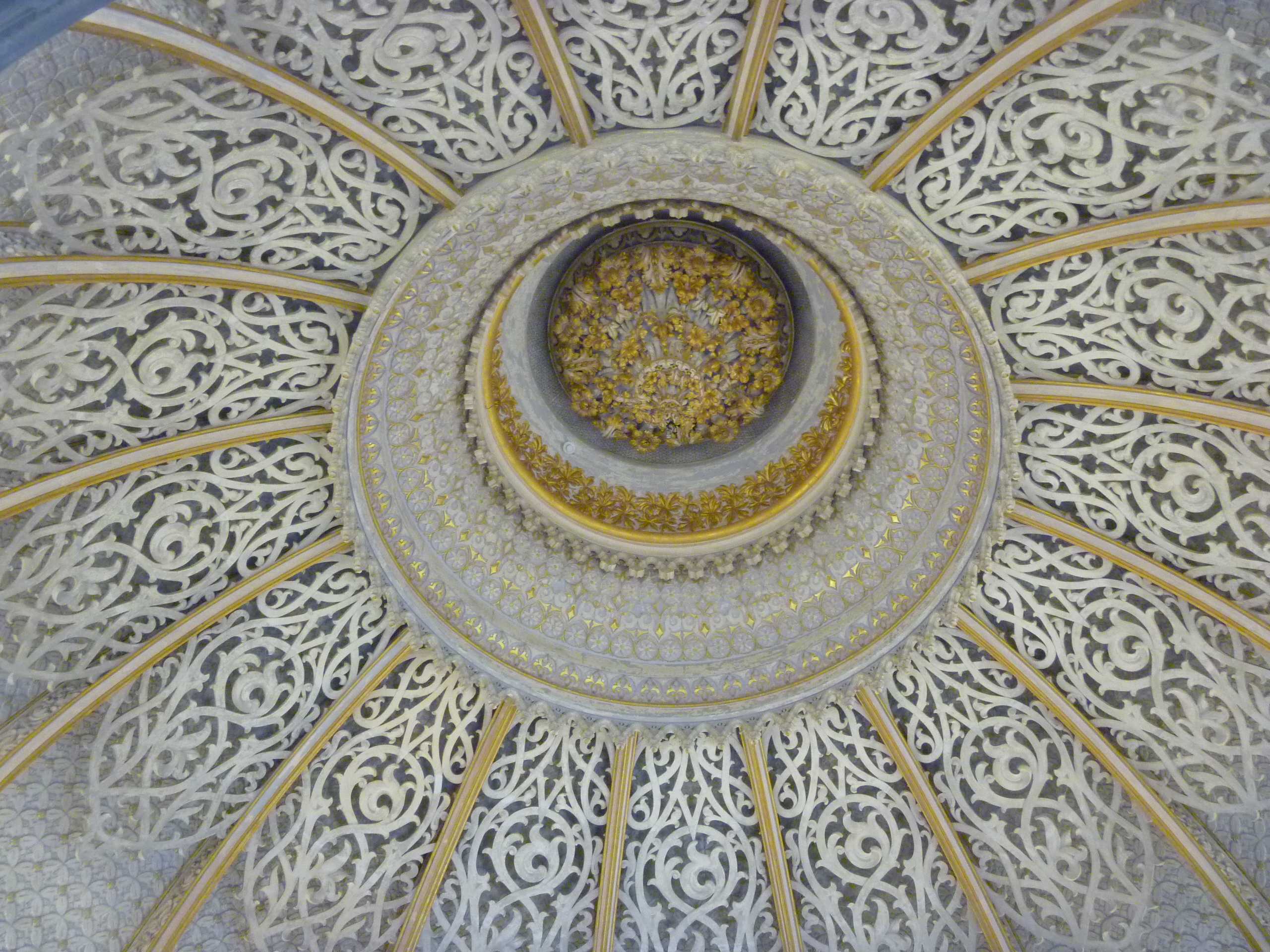
Exquisite Plasterwork

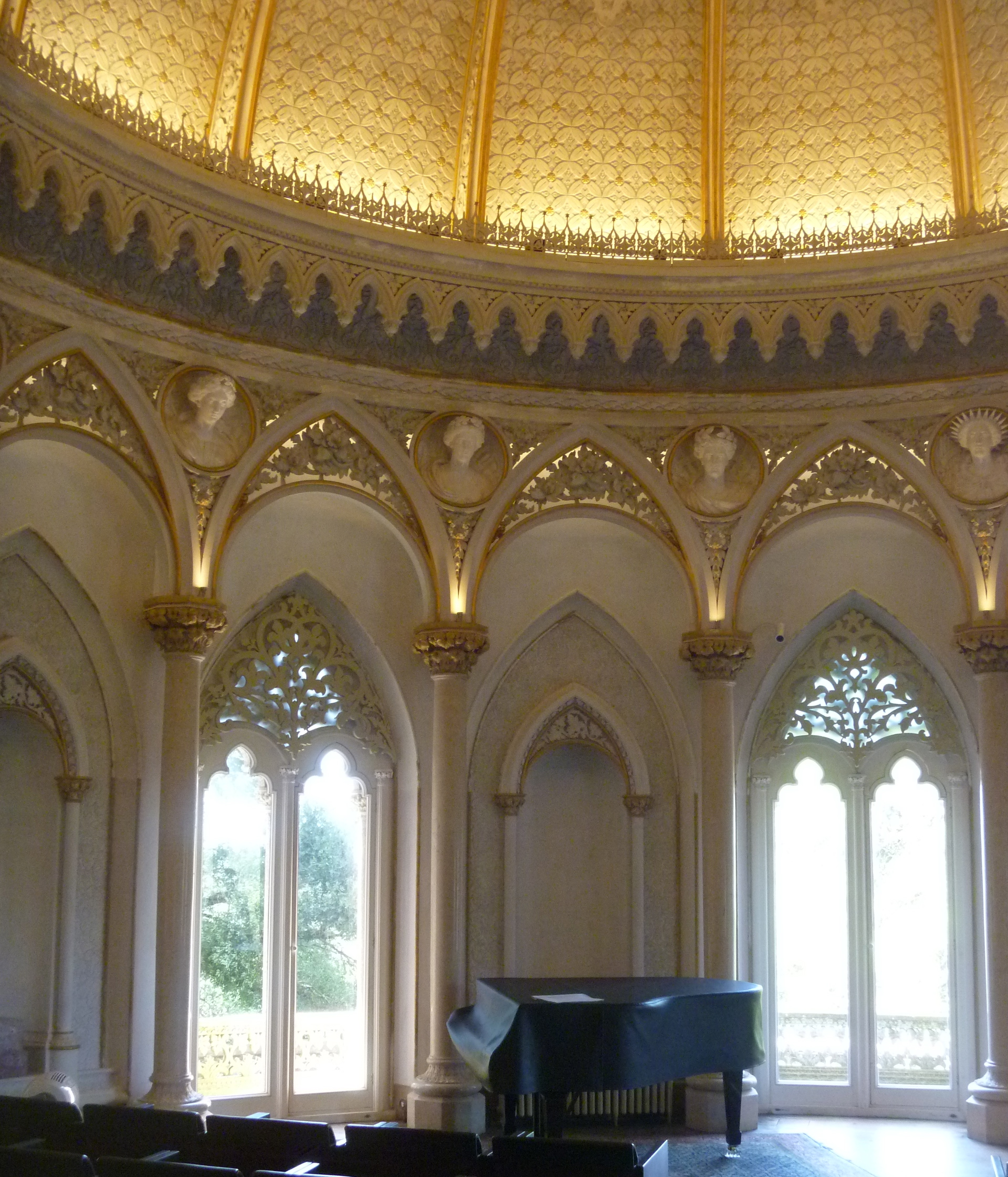
Restoration work carried out room by room allowed for the re-opening of the building to visitors. So far interventions in the Library, Chapel, Kitchen, Pantry, Wine Cellar, Larders, decorative plasterwork, cleaning of stonework, kitchen range have all been carried out in sight of the visitors. It is wonderful to see the artists and craftspeople at work and many of the rooms being brought back into use, like The Music Room for concerts.

Restoration work in the music room

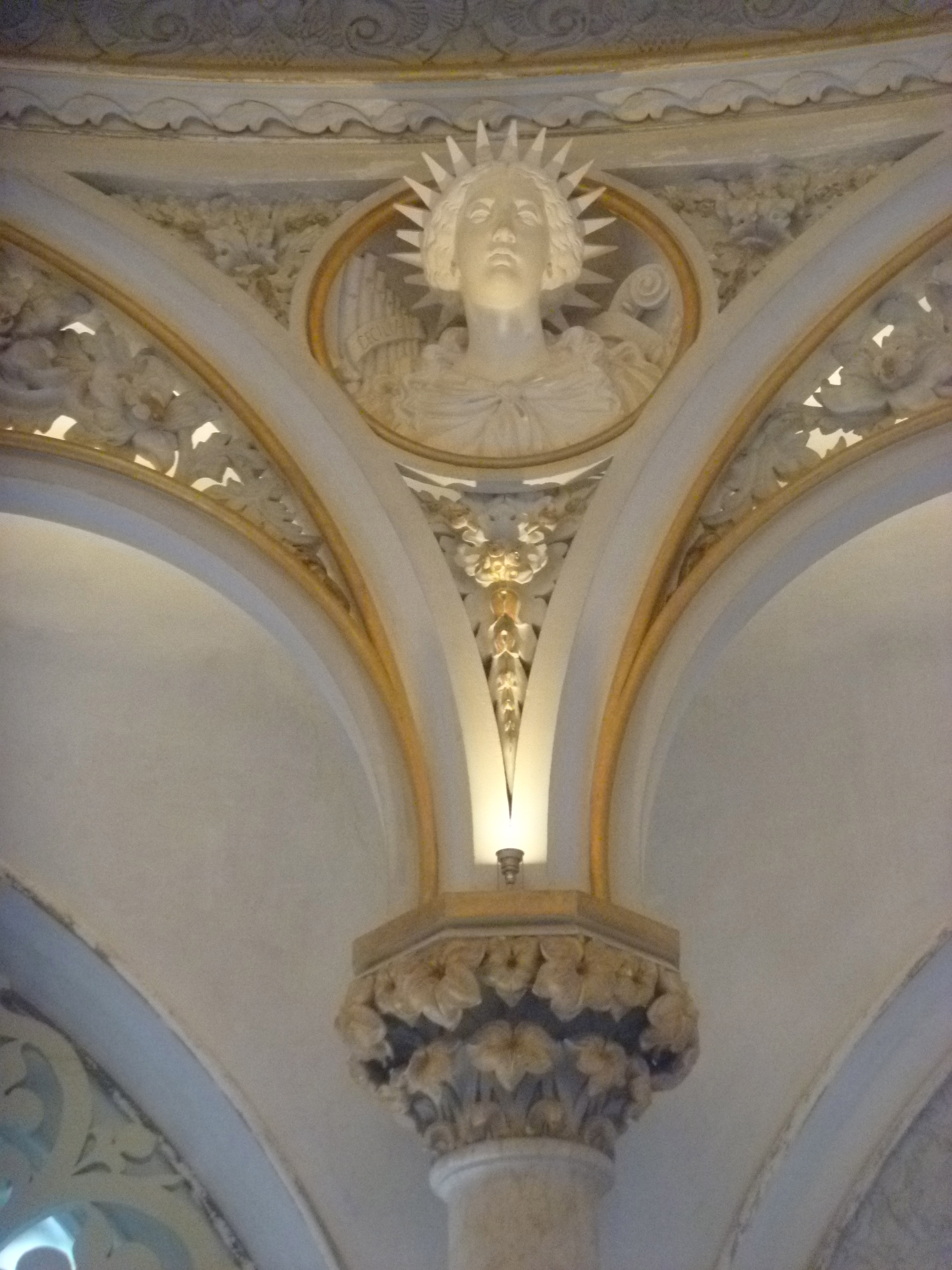
Music Room Plasterwork

The music room at Monserrate

The Music Room Today

Restored Music Room ceiling

The Restored Music Room Ceiling

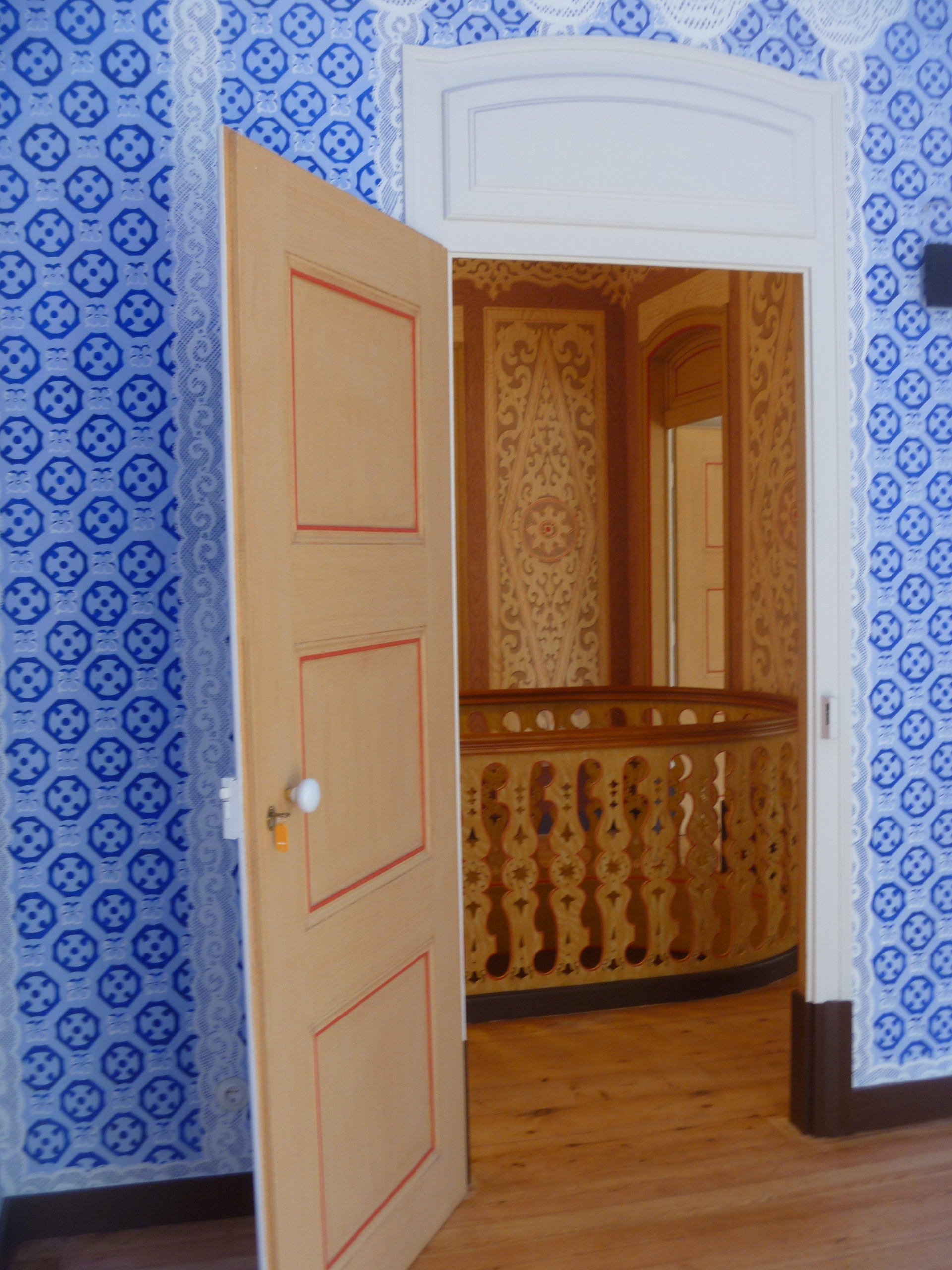
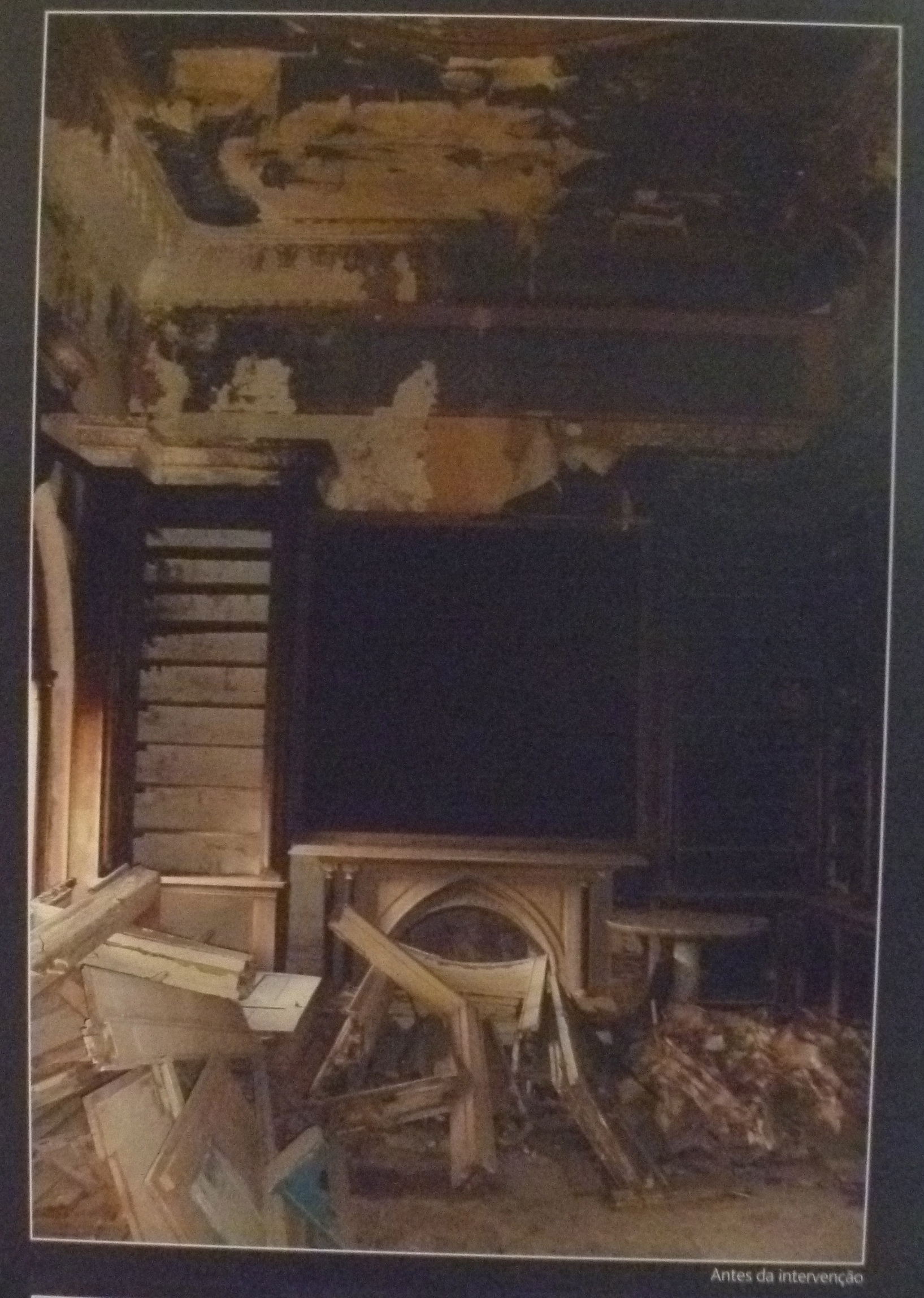
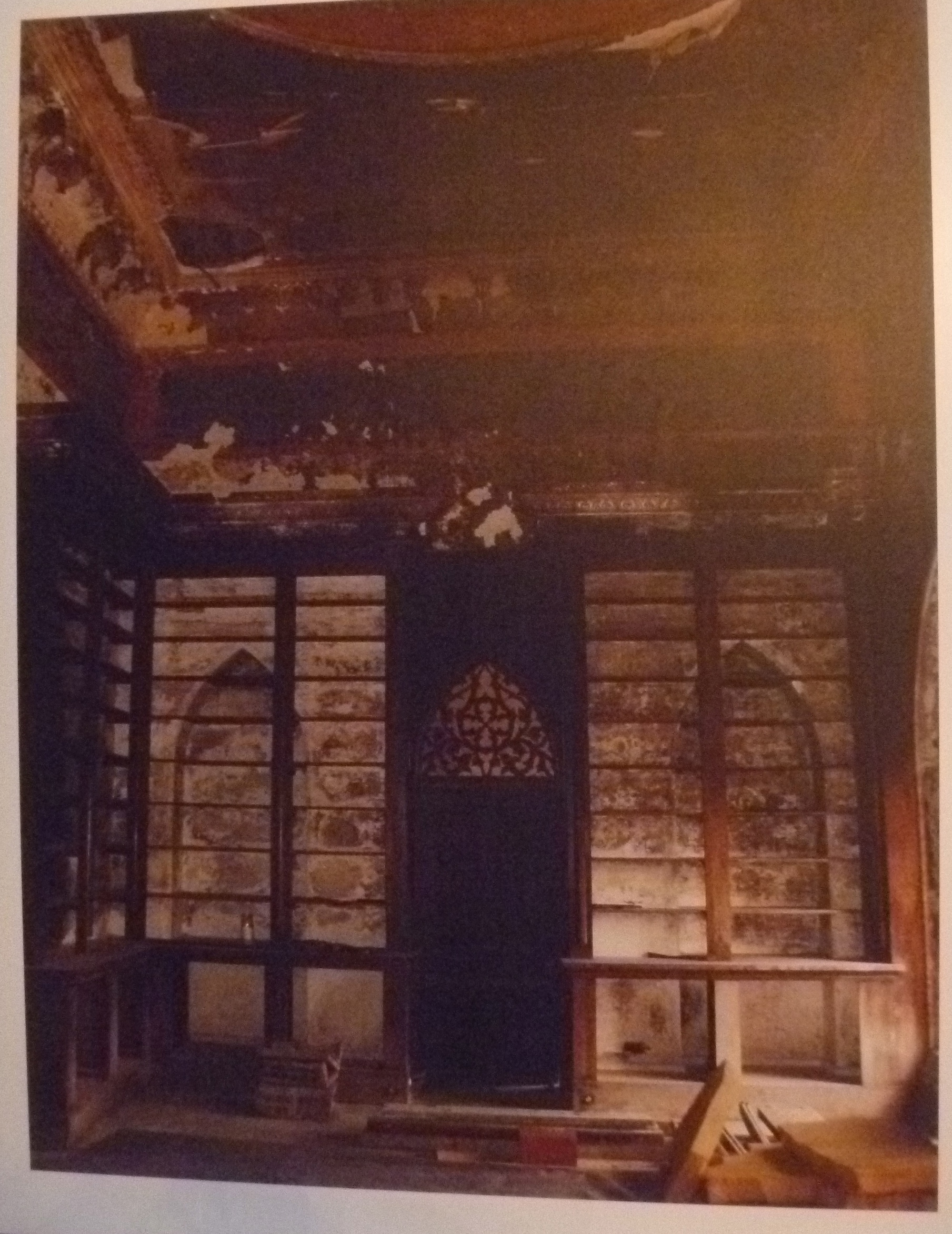
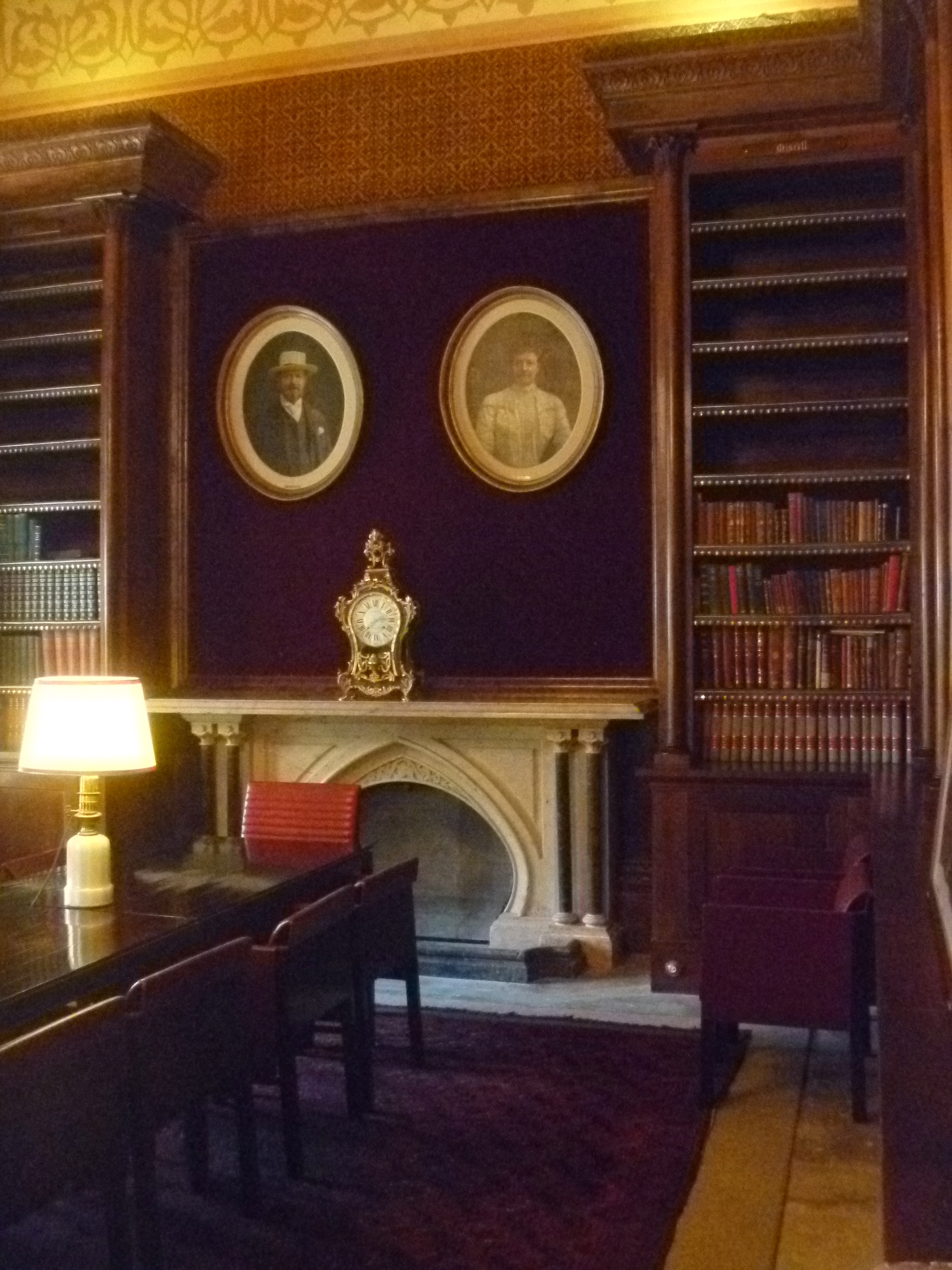
Photographs on display in the Library show just how bad the condition of this fine room became during the latter half of the 20th century. Once the roof and walls were repaired work began on the individual rooms. Paying careful attention to detail the Library has now been recreated in its former glory.

The library before renovation

The library pre-renovation

The above two photos show the extent of the damage

The library now

The Library as it looks today

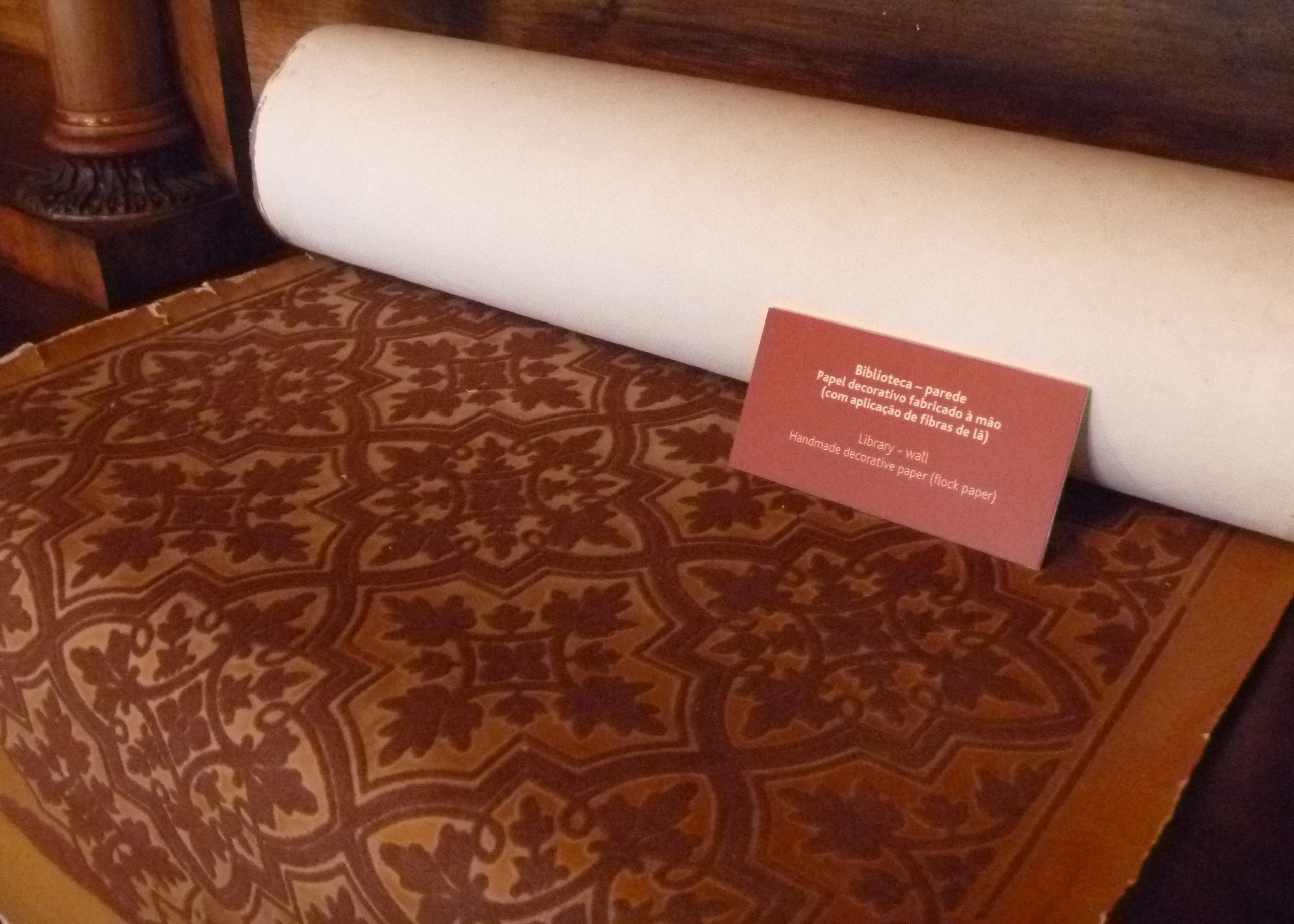
Example of library wallpaper

The Handmade Library Wallpaper

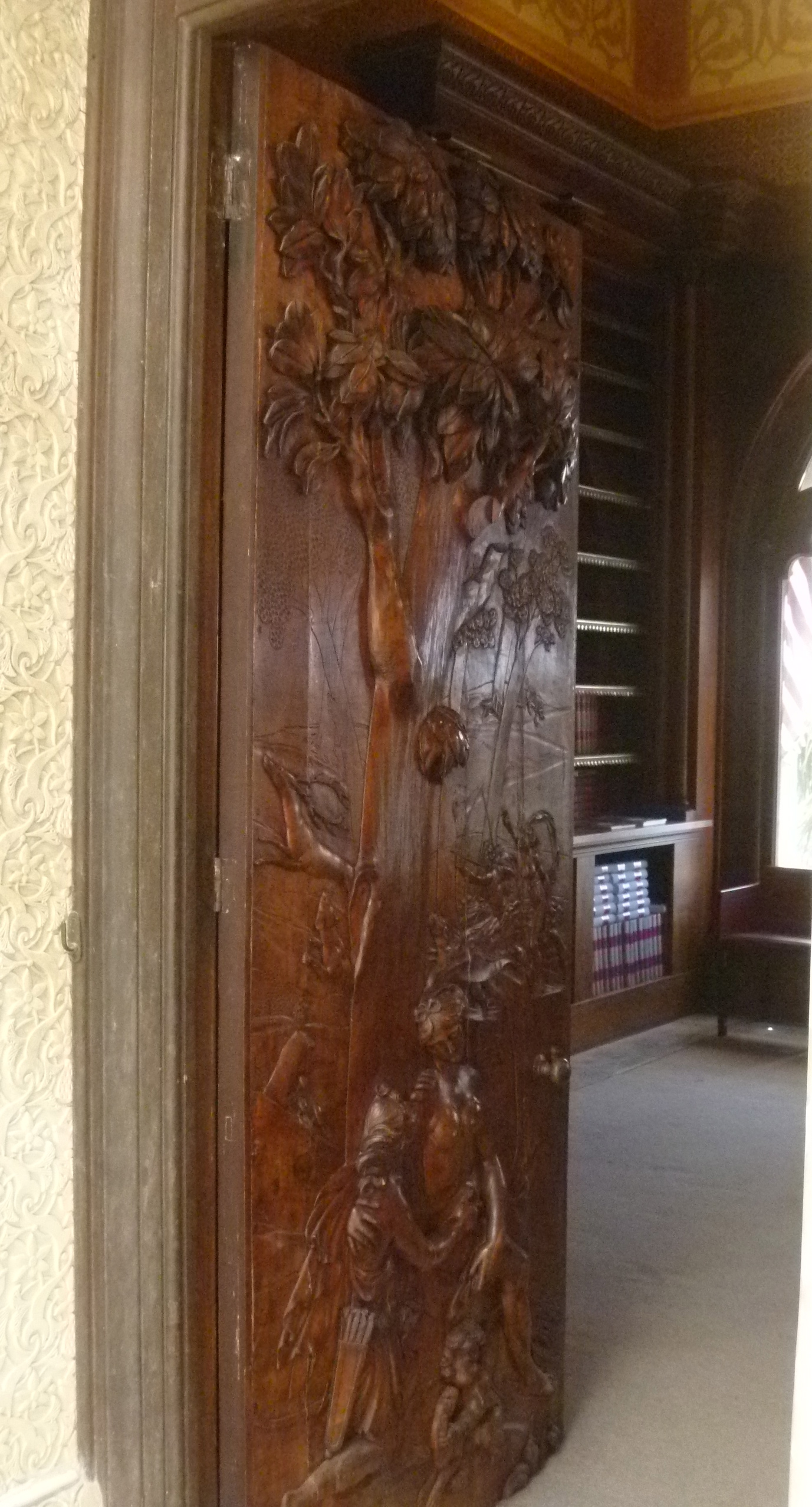
The library door

The Library Door

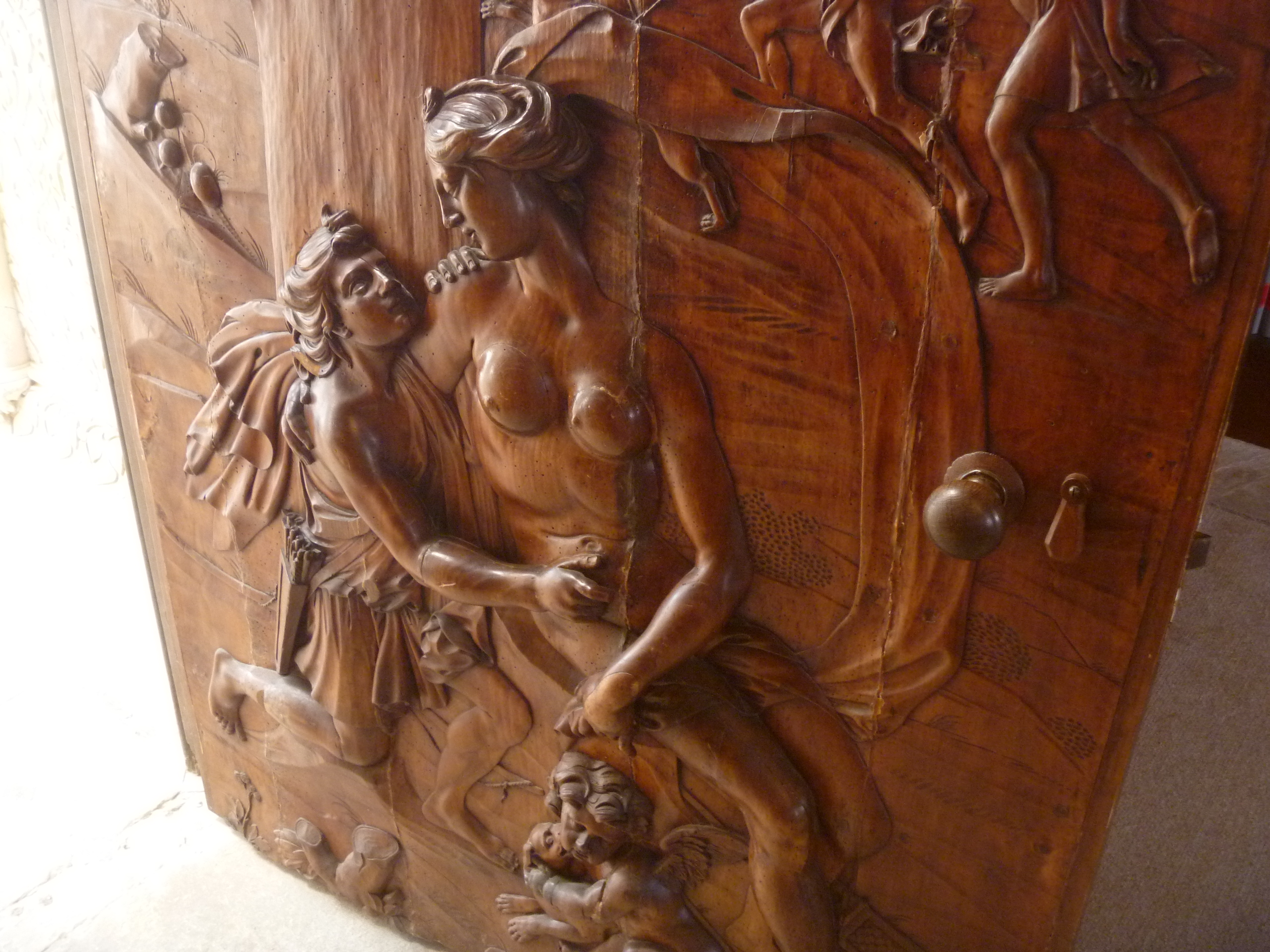
Library door (detail)

Detail of Library Door

The whole project makes me surprised that The Landmark Trust do not have an interest here as it definitely has the obligatory British connections that Landmark require of their overseas holdings. There are many follies and outbuildings ripe for occupation by we ‘Landmarkers’.

Childe Harold, Vathek and other literary inspirations of Monserrate

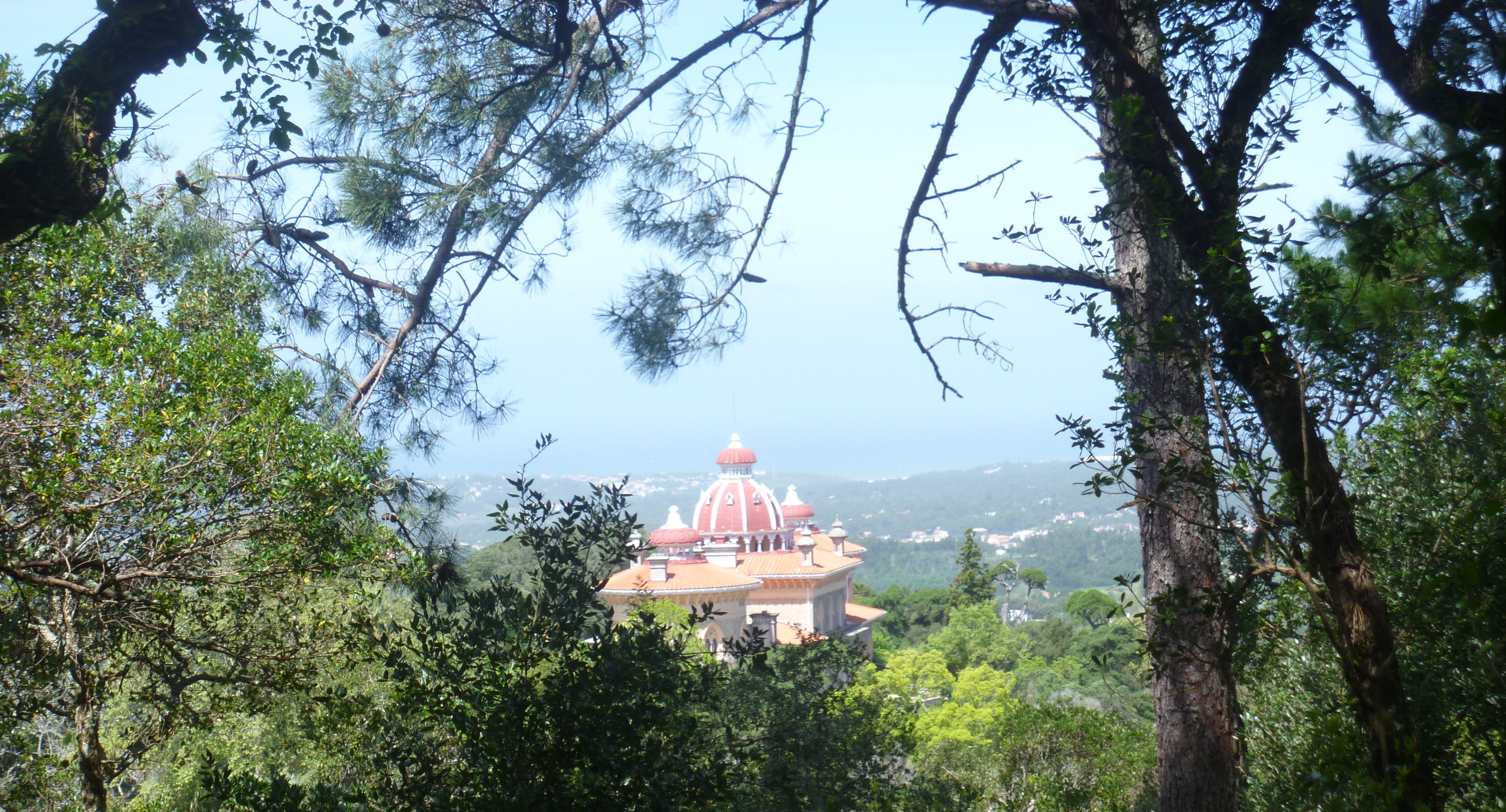
First glimpse of Monserrate Palace

On sloping mounds, or in the vale beneath,
Are domes where whilom kings did make repair;
But now the wild flowers round them only breathe:
Yet ruined splendour still is lingering there.
And yonder towers the prince’s palace fair:
There thou, too, Vathek! England’s wealthiest son,
Once formed thy Paradise, as not aware
When wanton Wealth her mightiest deeds hath done,
Meek Peace voluptuous lures was ever wont to shun.”

Childe Harold’s Pilgrimage, by Lord Byron [Canto the First XXII]

think the above verse applies to the beautiful palace and gardens of Monserrate. At least we were told in numerous books and leaflets that Lord Byron was smitten by Monserrate on his visit here in 1810 and reminisced about it in his poem ‘Childe Harold’s Pilgrimage’.

Monserrate Palace

Monserrate was probably my favourite place of the whole trip. It had everything: a palace with a library, exotic gardens(but with an English Rose Garden), a tea house, British connections, literary connections and to top it all we visited in beautiful weather!

The library today

The Library as it is today

In the gardens

In the exotic gardens

The Tea House

The Tea House

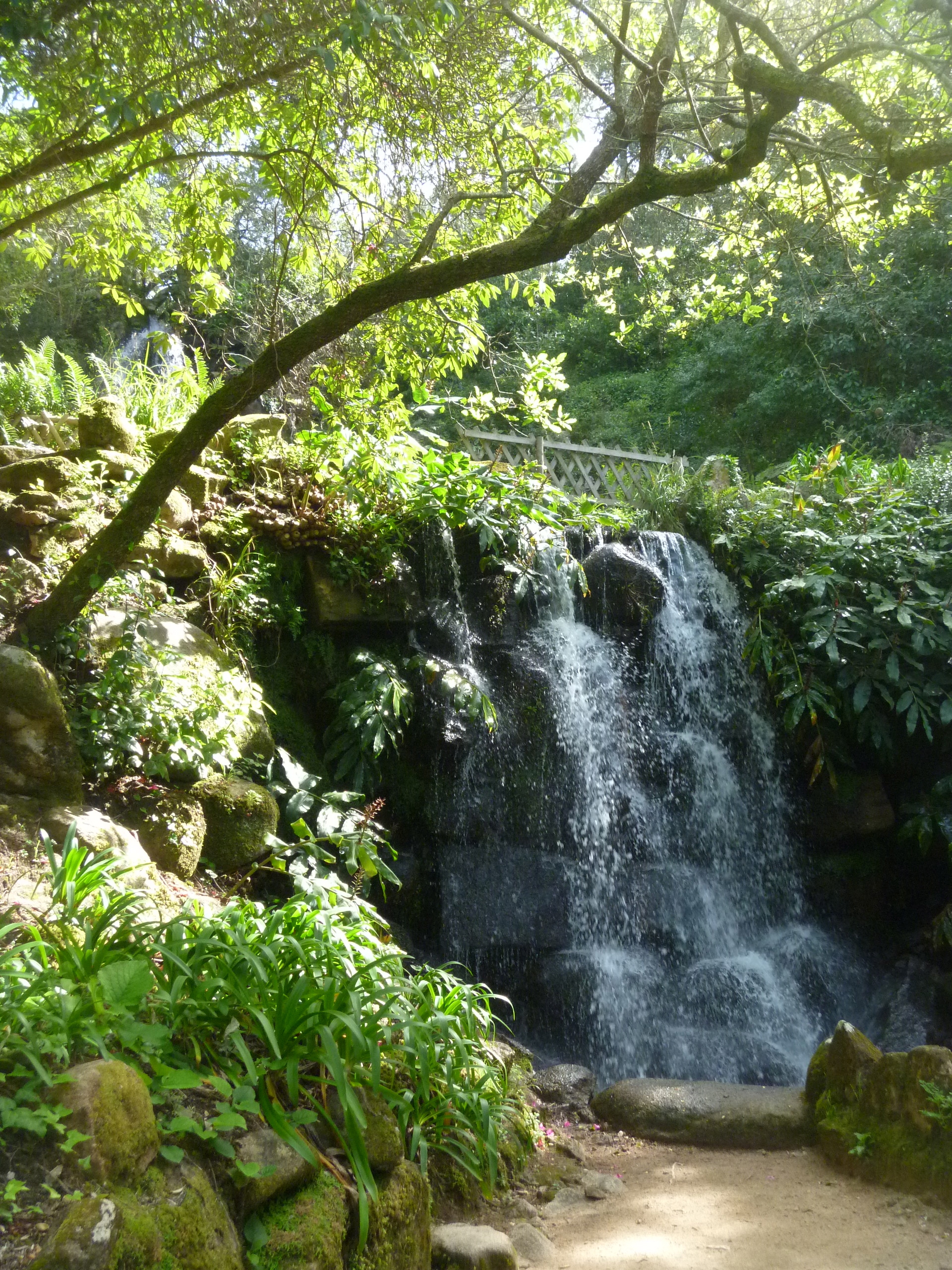
Beckford's Falls

Beckford’s Falls

William Beckford ordered this waterfall to be constructed between 1794 and 1799. Beckford, a writer who enjoyed great fame at the end of the 18th C, visited Portugal and fell in love with Sintra, where he rented this property from Gerard de Visme.” [On a nearby information board]

Vathek's Arch

Vathek’s Arch

This arch was built by William Beckford … We think that it could represent the entrance of the property which, at the time, was not enclosed. Beckford wrote his most famous book, Vathek, an oriental tale, in 1786 before his first visit to Portugal. Vathek was the hero of the book which is considered by many to be somehow autobiographic” [From nearby Information Board]

Gerard de Visme an English merchant holding the concession to import Brazilian teak was responsible for the construction of the first palace. Later, William Beckford, writer, novelist, art critic and eccentric lived here. There’s a waterfall named for him and an arch for his most famous character; Vathek.

Sir Francis Cooke bought the property in 1856 and had it restored by the English architect James Knowles, who employed a thousand workmen. In the 1850s the artist William Stockdale created a botanic garden there with plants including rhododendrons  from all over the world – Mexico, Australasia, Japan and the Himalayas.

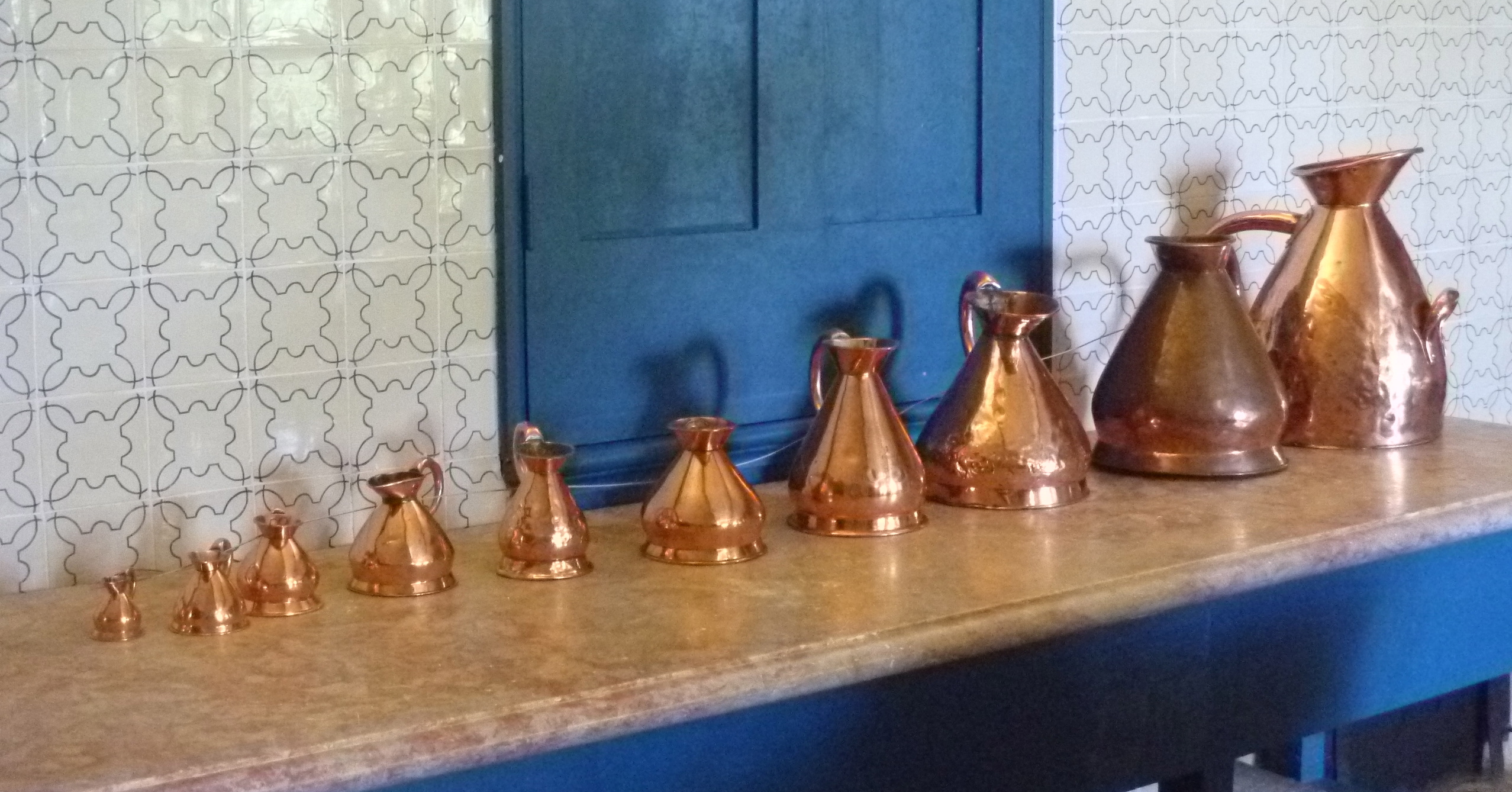
Brass jugs in kitchen

Brass jugs in the kitchen – could be Below Stairs at any National Trust property!

Mary Taylor : Strong Minded Woman & Friend of Charlotte Brontë

Discover the pioneering 19th century life of early feminist Mary Taylor of Red House, friend and inspiration to Charlotte Brontë. Mary’s exceptional life included emigrating to New Zealand; starting a business; leading expeditions of women mountain climbing in Europe and writing radical feminist articles and books.” (It’s Happening …)

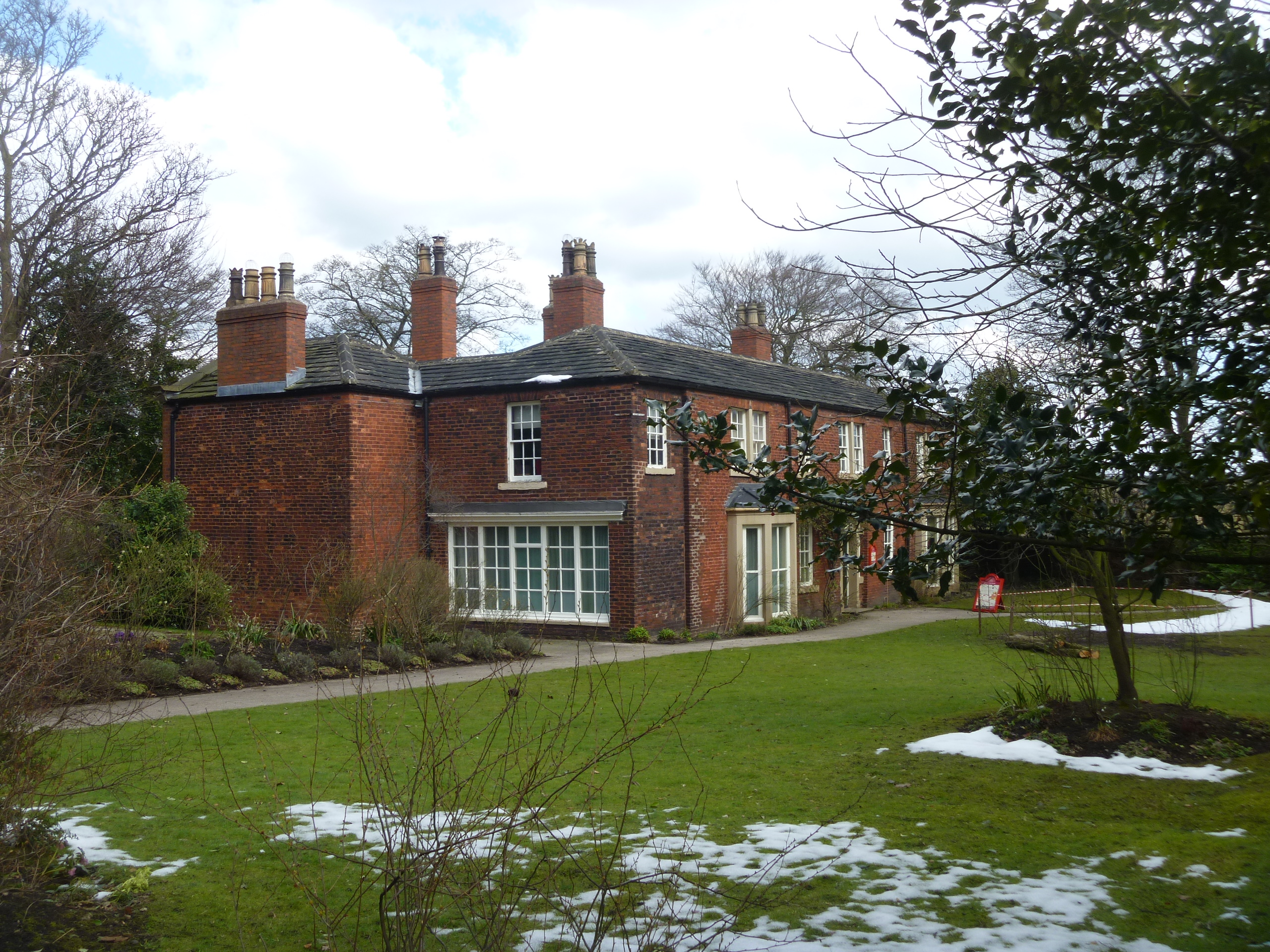
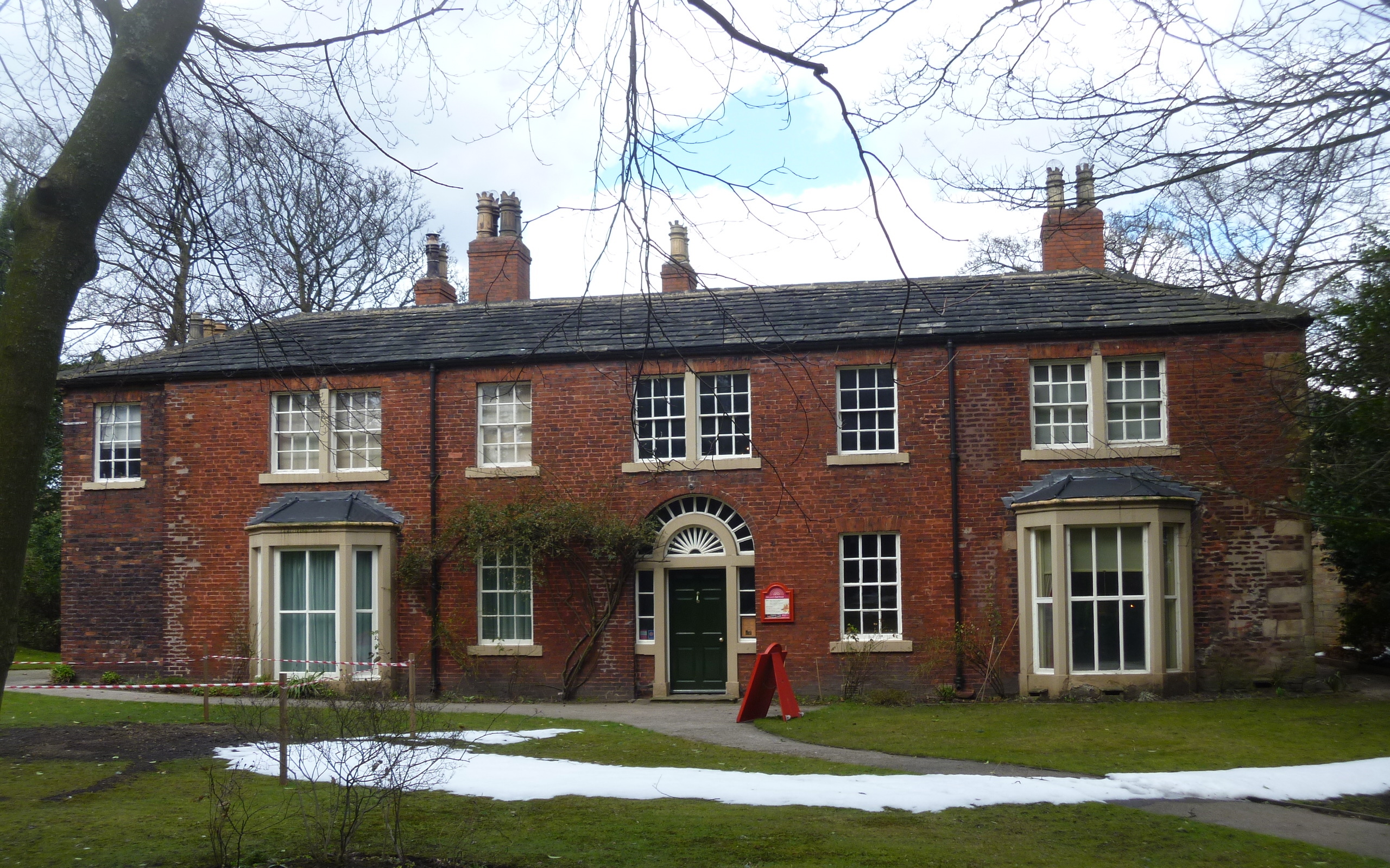
Red House

Back in December I visited Oakwell Hall in Birstall to look at the Christmas decorations and promised myself that I would follow up with a visit to the nearby Red House; which also has Brontë connections. In the ‘It’s Happening …’ leaflet which I picked up that day I noted a future exhibition to be mounted at Red House on the topic of its one-time inhabitant Mary Taylor. The exhibition runs from 2 March until 2 June.

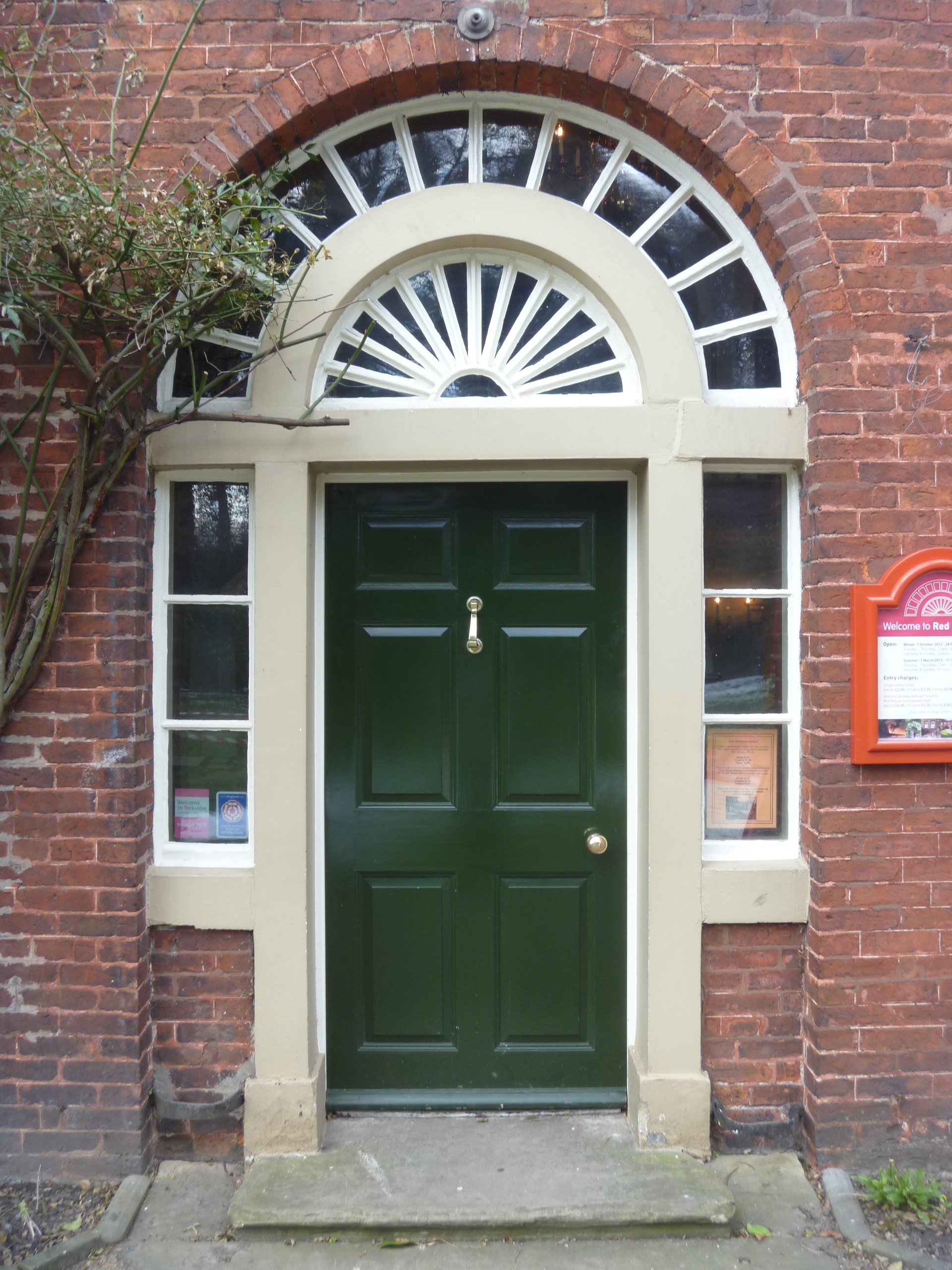
Front door Red House

No photography is allowed inside the house; but never mind it’s a bit disappointing anyway. Several times in the 1980s I brought my sons here as they laid on some good children’s craft workshops (and still do). For quite a few years it was closed for renovations and yesterday was my first visit since then.

Red House - front

I was told that the house has been returned as nearly as possible to how it would have looked in the 1830s; the time when Charlotte Brontë visited. Some furniture, pictures and fittings are original, or of the period, and the rest have been carefully copied; for example the ‘Brussels’ weave, looped pile carpet in the Parlour, window curtains and bed hangings in the Main Bedroom and wallpapers.

There are very few rooms to visit – The Parlour (left in photo) with waxworks of Mary Taylor (playing the piano) and her mother (stitching tapestry); the adjoining scullery and kitchen; across the hall (which serves as reception and shop) there is the dining room and a study (right in photo). Upstairs you can visit the Main Bedchamber (above the parlour), the Governess’ room and the Girl’s room.

The Taylors were  a prosperous, middle class family and Joshua (a woollen cloth manufacturer and merchant) lived here with his wife Anne and their six children. Their daughter Mary (1817-1893) was a great friend of Charlotte Bronte, who often visited Red House and featured the house as ‘Briarmains’ and the Taylor family as ‘The Yorkes’ in her novel ‘Shirley’.

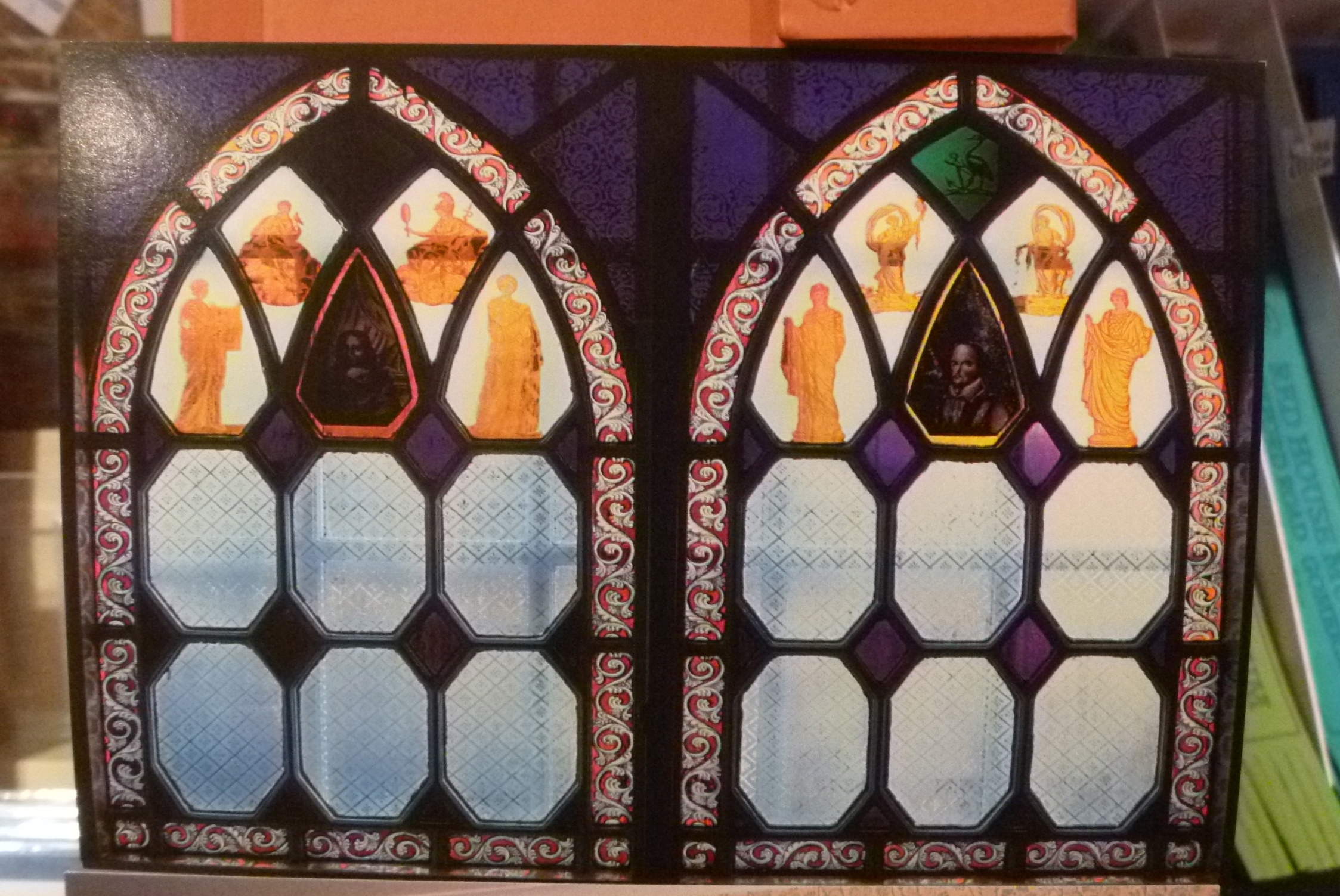
postcard

Perhaps the most interesting feature, to me, were the stained glass windows in the Dining Room with painted heads of William Shakespeare and John Milton. Charlotte Brontë describes in ‘Shirley‘.

Those windows would be seen by daylight to be of brilliantly-stained glass – purple and amber the predominant hues, glittering round a gravely-tinted medallion in the centre of each representing the suave head of William Shakspeare, and the serene one of John Milton.” (Shirley Ch.9)

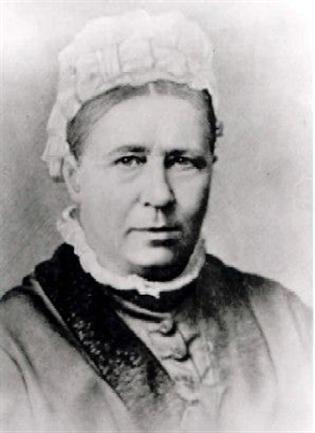
MARYTAYLOR2

Mary Taylor (Photo source)

So, having almost galloped through the main house I spent quite some time in the Exhibition Gallery studying the fascinating life of this woman Mary Taylor. One hundred years after her death she is now gaining recognition through Charlotte Brontë’s descriptions, through her letters and through her own published works. Examples of her books were displayed (including modern reprints). She wrote “The First Duty of Women” and a novel “Miss Miles, or a tale of Yorkshire life 60 years ago”. She was a strong-minded woman intent on pursuing her own way of life and living by her own ideals. She was an early feminist and strongly believed in women having their own independence.

She attended Roe Head School near Mirfield (where she met CB) and later The Chateau de Koekelberg in Brussels. She taught in Germany and I was surprised to read that in 1845 she emigrated to New Zealand and was one of its earliest settlers. There she owned a successful shop. She returned to Britain in 1860 and spent the rest of her life in nearby Gomersal. That is, when she wasn’t being a woman after my own heart and leading women’s mountaineering holidays in Switzerland! “Swiss Notes by Five Ladies : an Account of  Climbing and Touring in 1874″ was reprinted with a supplement by Peter A. Marshall and Jean K. Brown.

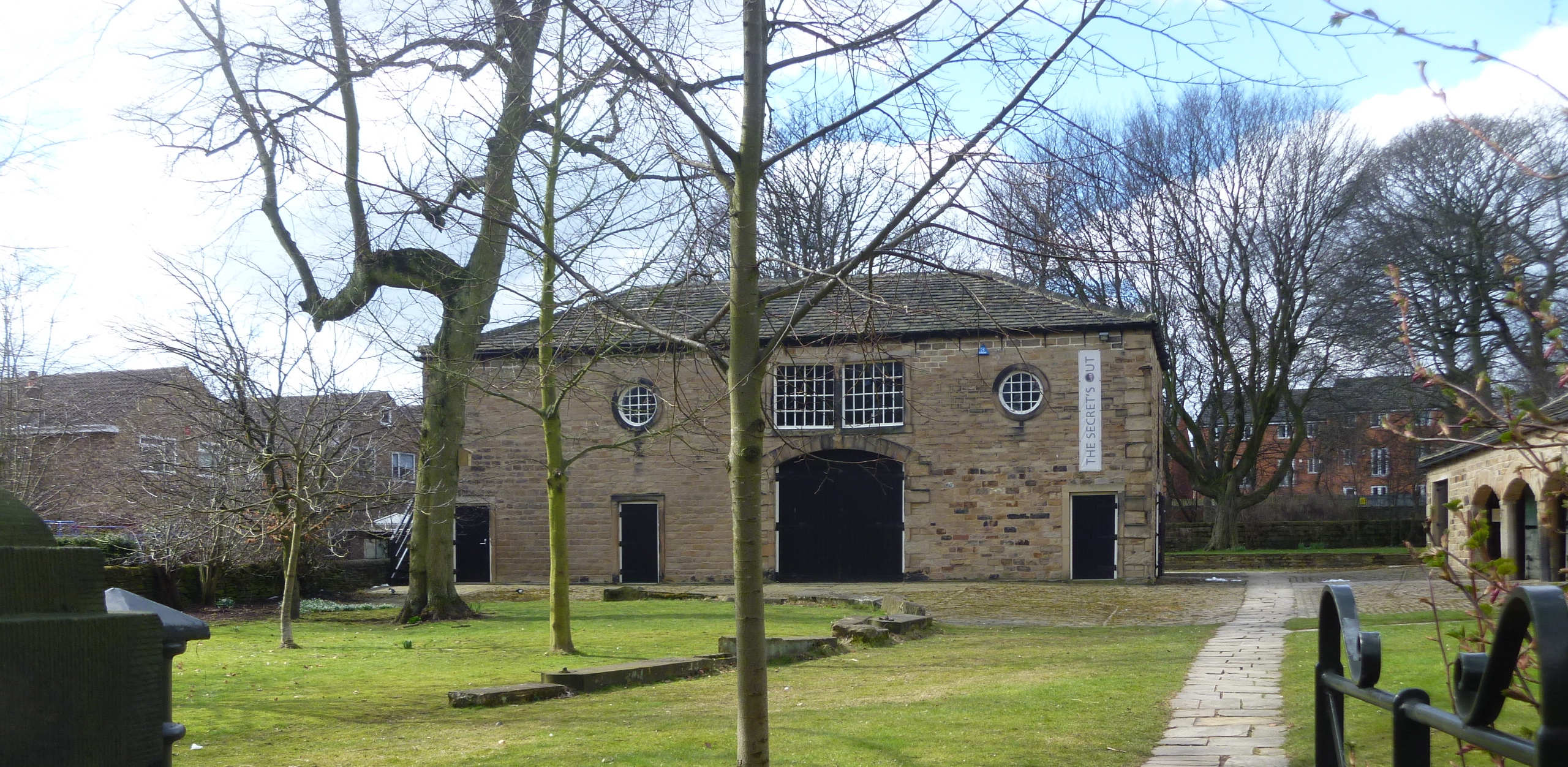
Secret's Out and Spen Valley Stories

The Secret’s Out with Spen Valley Stories (right)

So that was the house … but there is more. In the converted stables and outbuildings are two more displays. The Secret’s Out all about the Brontë connection with Red House and its local area and Spen Valley Stories : “Everyday community life through a century of change is illustrated through personal stories – displays include Schooldays; Working Lives; At Home; Freetime and Shopping.”

I didn’t have time to investigate these but I will be definitely go back, so watch this space!

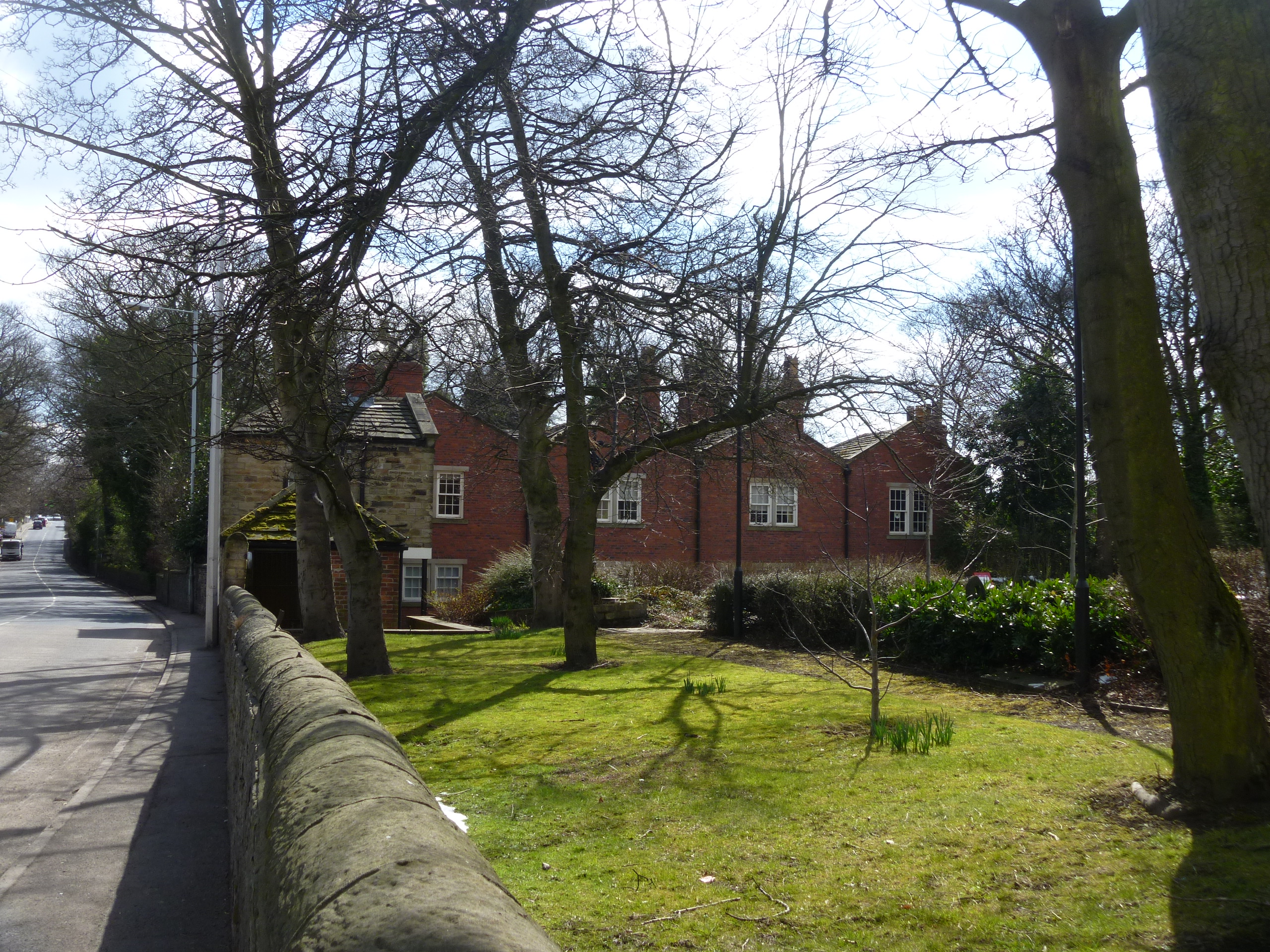
Back of Red House

Back of The Red House from the main road

A Music Room and a Castle and Lancastrian Hospitality

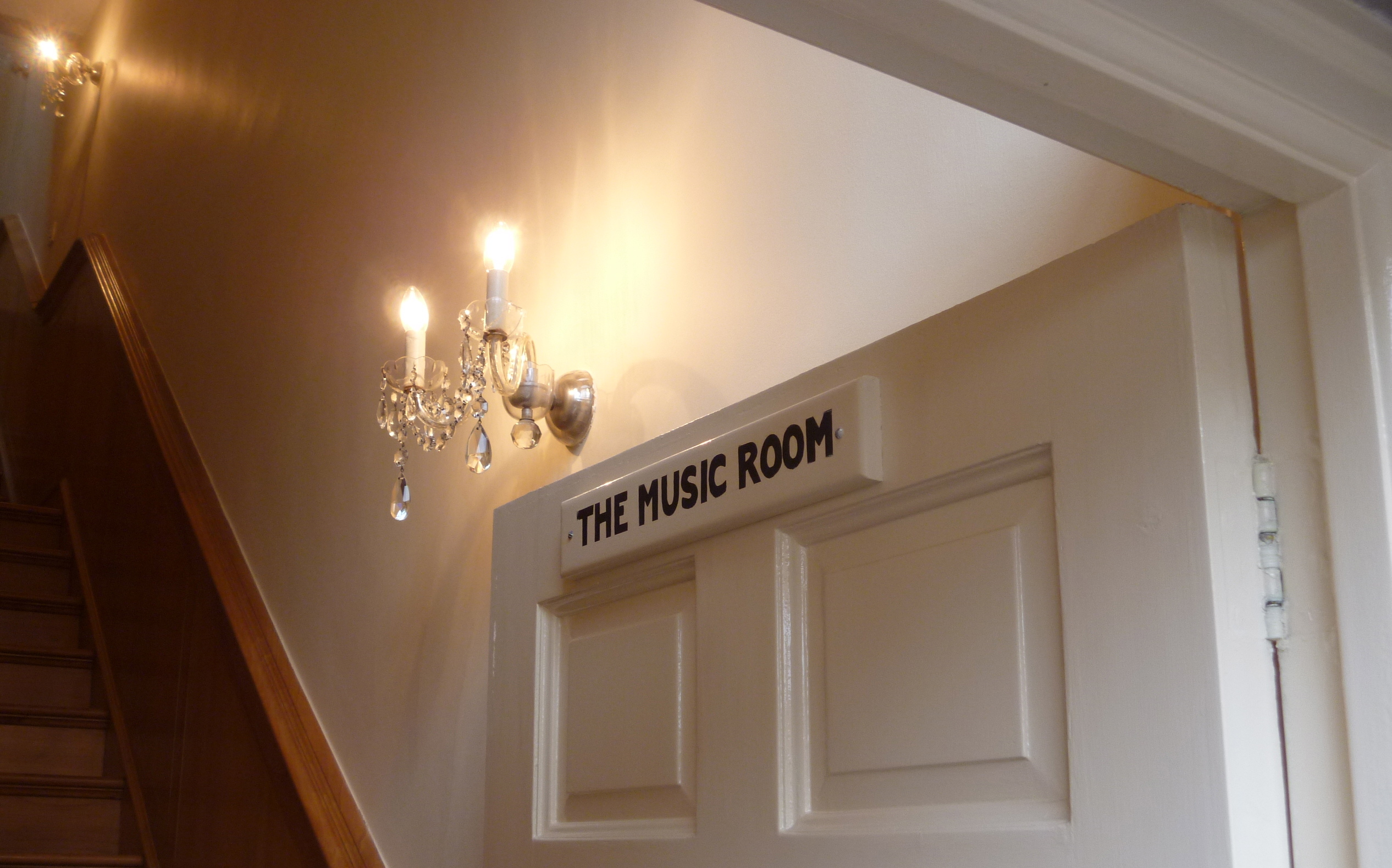
The Music Room sign

Yesterday was Open Day at The Music Room Landmark Trust property in Lancaster. Last weekend a fellow Friend of the Landmark Trust, and friend of mine now, asked if I’d like to join her to visit the newly refurbished and freshly repainted apartment in the centre of the city. There’s a direct train from nearby Shipley, which has plenty of useful parking availability on a Saturday morning, and an early start gave us six and a half hours to inspect the property, chat with organisers and fellow visitors and include an unhurried lunch (Morecambe Bay Shrimp Platter – what else??) and a tour of the major Lancaster landmark – its Castle … and more!

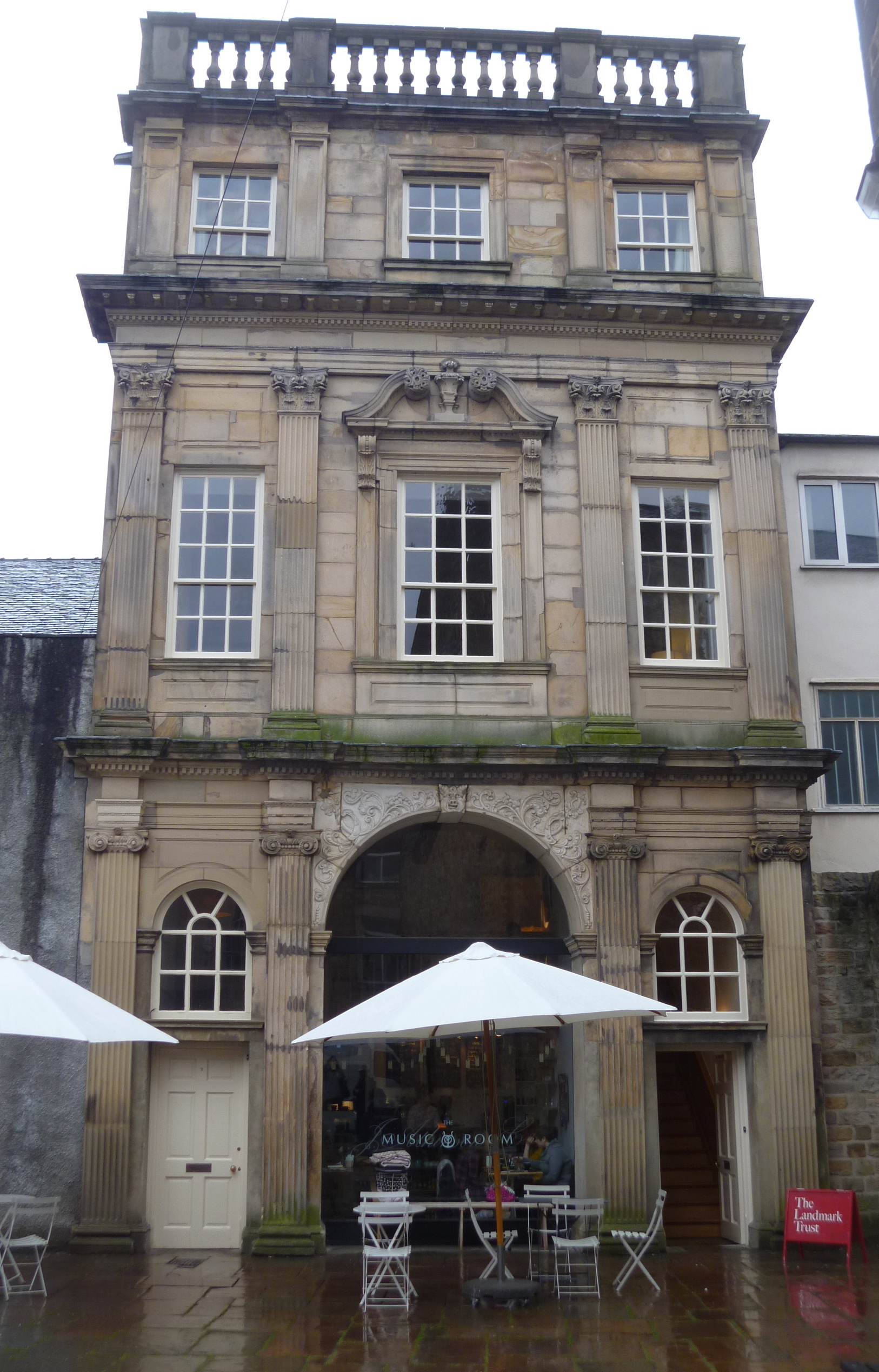
The Music Room ext

From the station the Music Room is only a few steps away. We were glad to take shelter from the rain and we spent a couple of hours inside and out on the roof top (during a lull in the rain). Coffee was supplied courtesy of the nearby coffee merchant and dispensed by the Housekeeper to which she added information about the before-and-after appearance of the property.

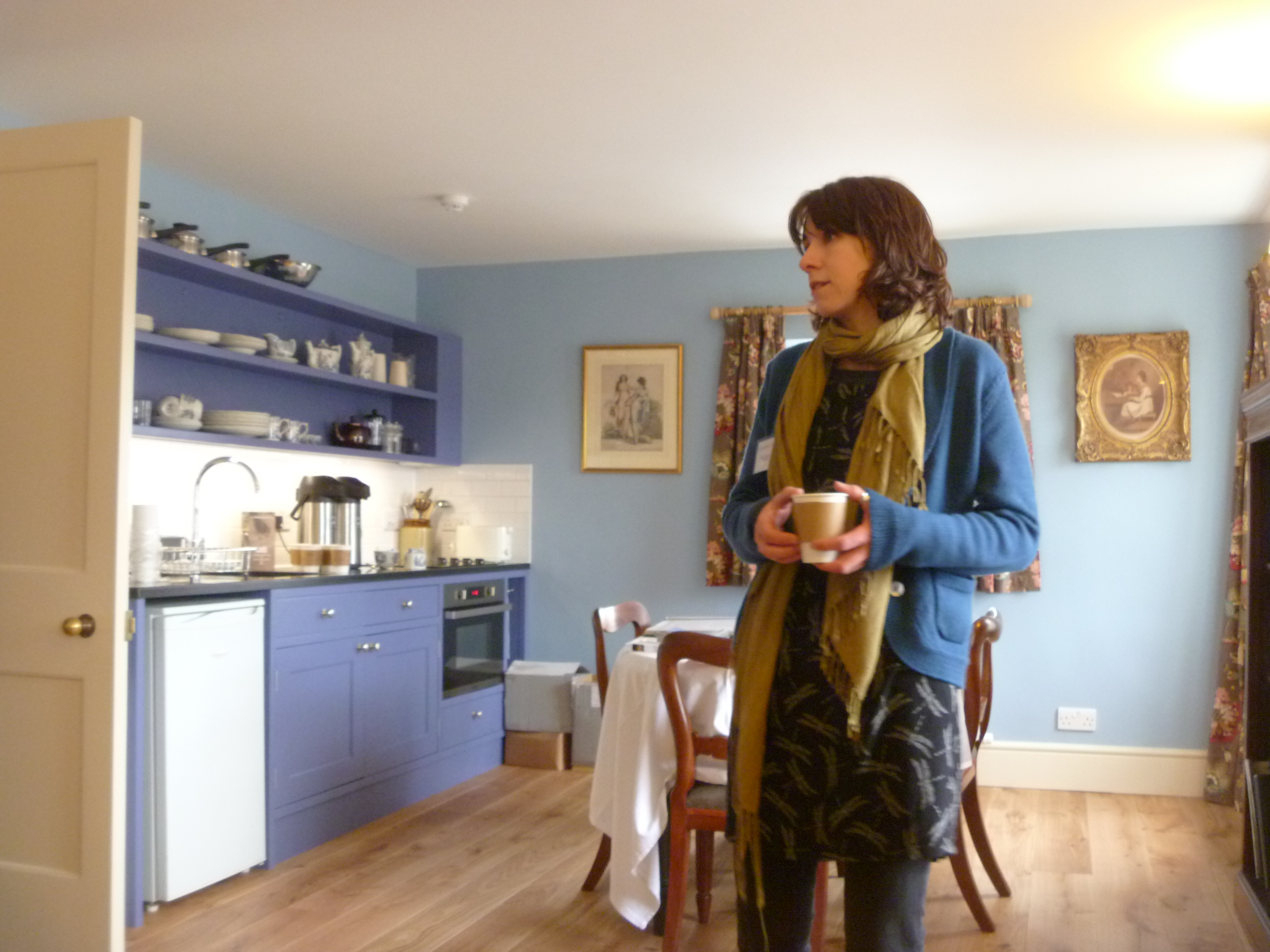
The Music Room - Kazia

A member of Landmark’s Head Office staff, Kasia, the Education Officer, (above, in the new kitchen) was also on hand to fill us in on news, plans and  future events at Landmarks.

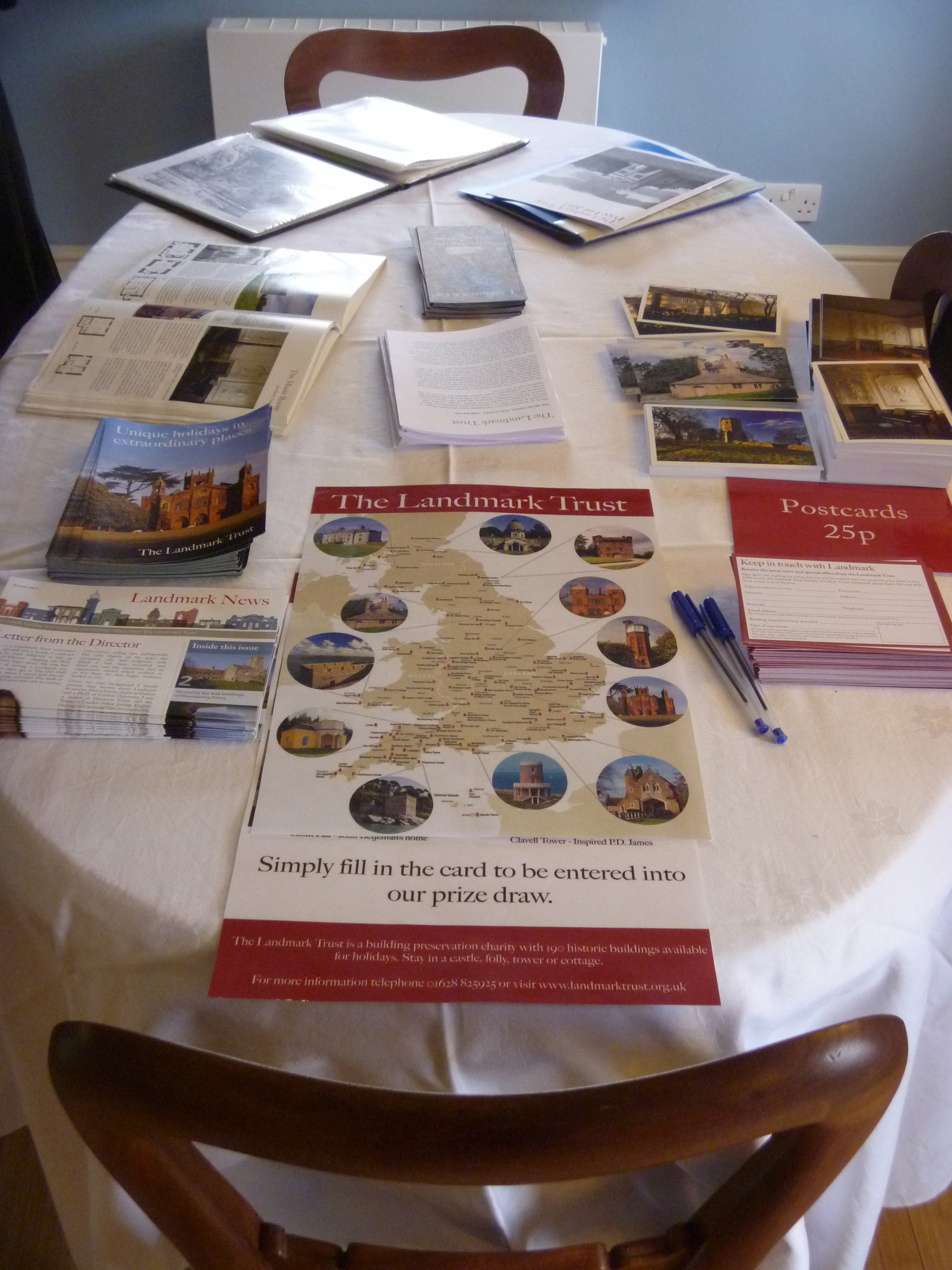
Music Room help yourself

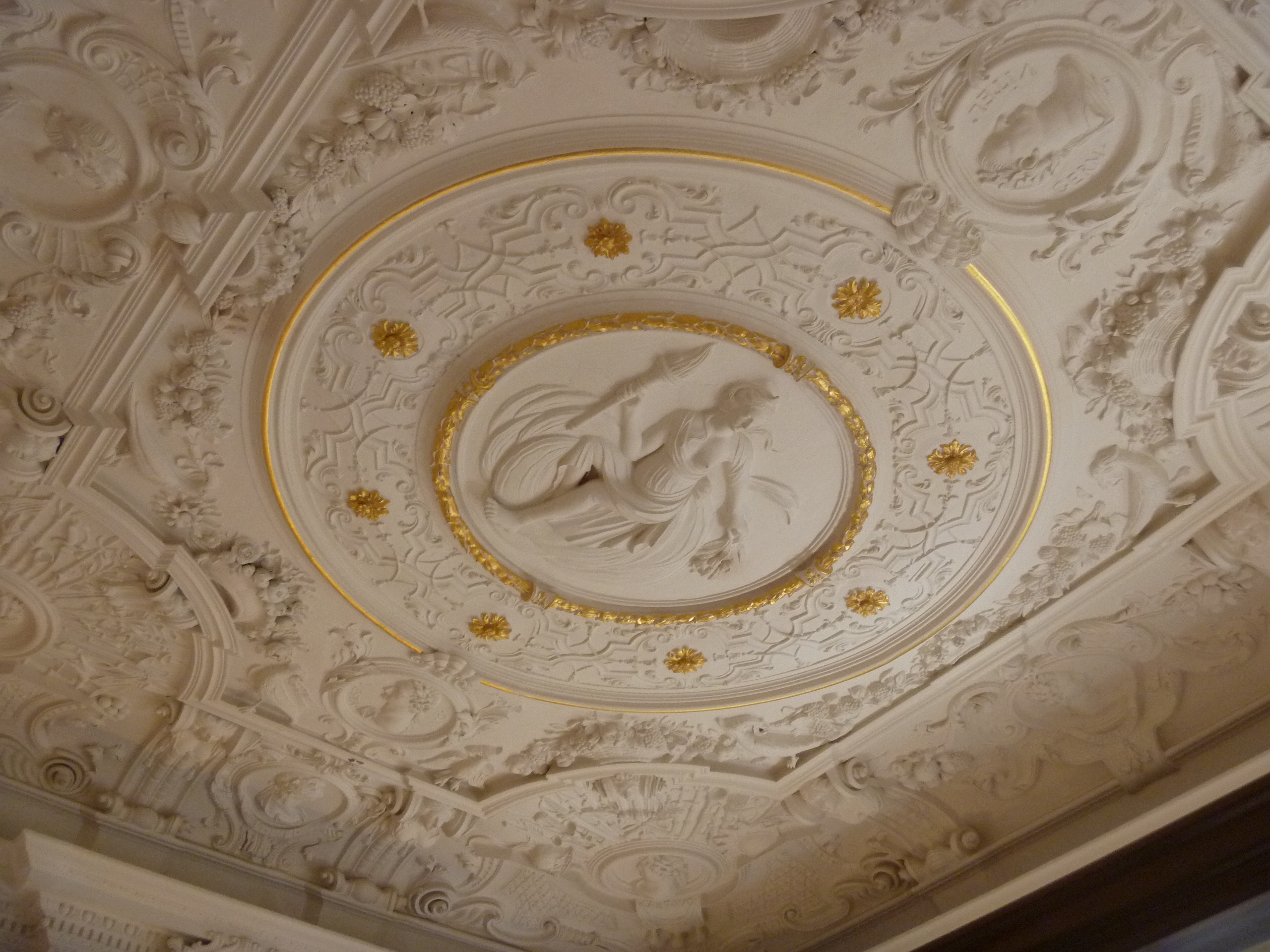
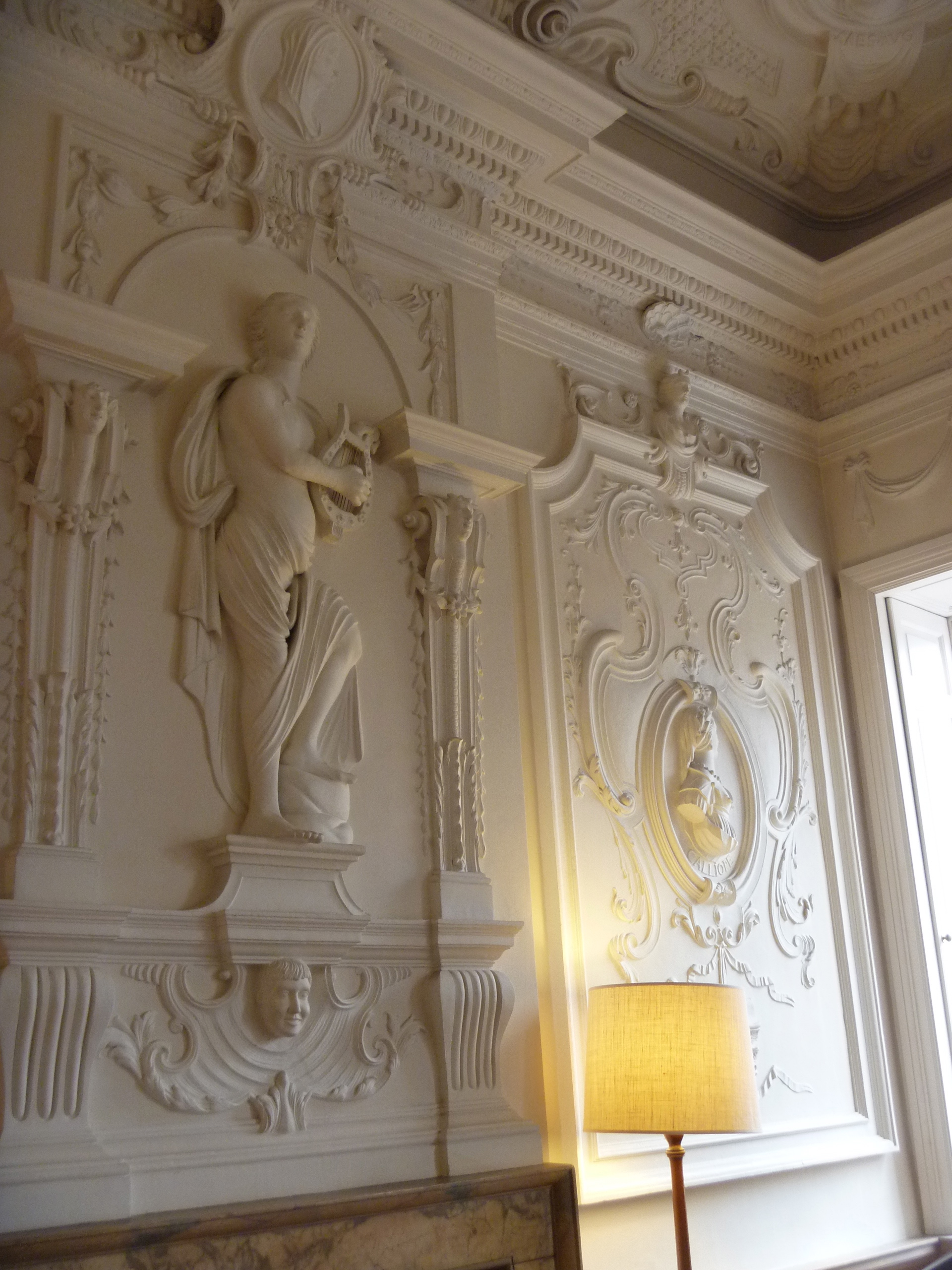
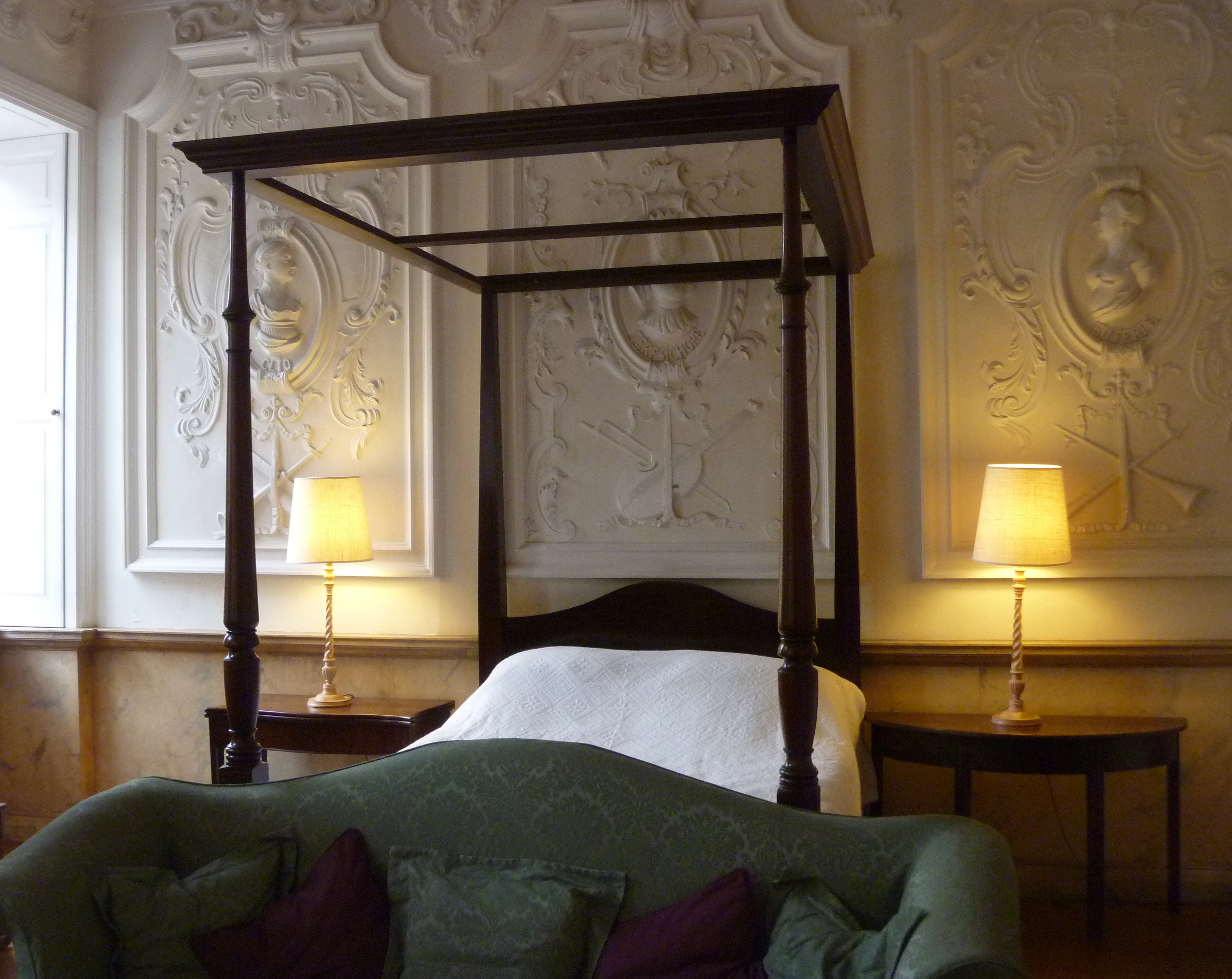
The Music Room dates back to about 1730 and was probably originally a garden pavilion; hard as this is to imagine, being now in the busy city centre. I also note from the free history sheet which is available, along with other Landmark Trust free literature and postcards and handbooks for sale, that music never really had anything to do with the building and that Music Room is probably a corruption of Muses Room (nine plasterwork muses adorn the room).

Music Room plasterwork 1

Music Room plasterwork 2

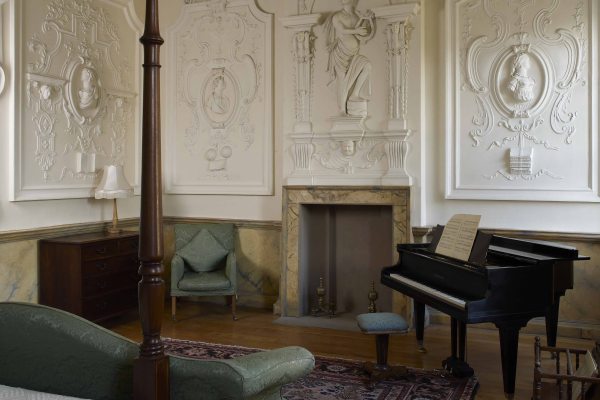
Still, it must be very special to have an elegant grand piano in your bedroom!

R

Photo : From the Landmark Trust website

When the Landmark Trust took on the property in the early 1970s it “was in an appalling condition” and when it was finally opened for letting it slept 4 in two bedrooms and the Music Room, with its exquisite plasterwork, was the sitting room or grand salon. I now quote from the history sheet :

In 2013, 35 years after the first restoration, it was time for a thorough refurbishment, including overhaul of the Baroque plasterwork, which needed hairline cracks repairing and a really good clean. The opportunity was taken to reconfigure the attic floor, since few visitors seemed to be occupying the now rather second-class twin bedroom up there. Partitions were moved and a larger bathroom and a larger area for a new kitchen at one end of the opened-up living room, with its fine views out across the roofs of Lancaster. They are even better from the roof terrace.”

The Music Room bed

The Music Room bed

Sitting room view

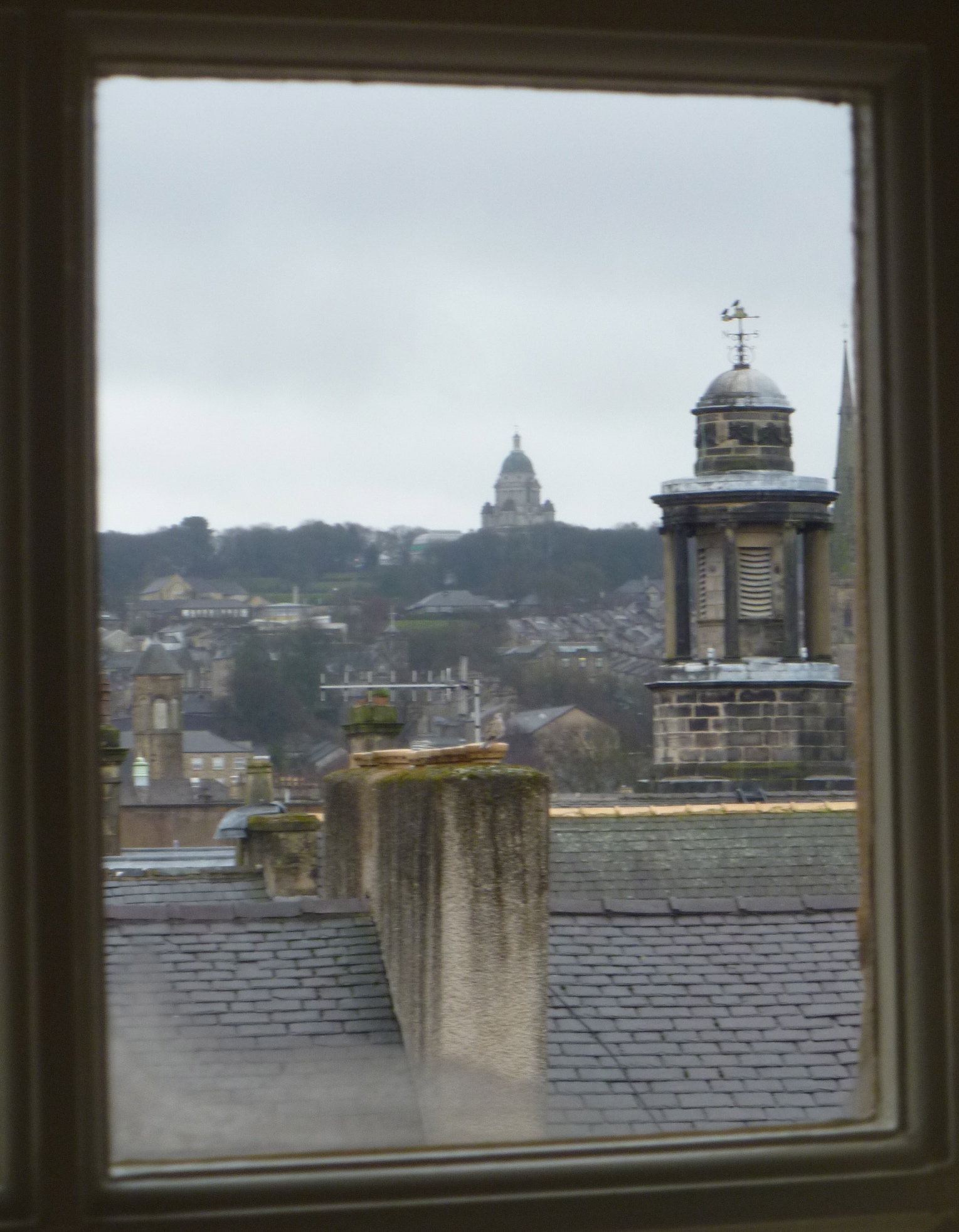
View from Sitting Room Window (Ashton Memorial on the distant hill)

Castle from roof terrace

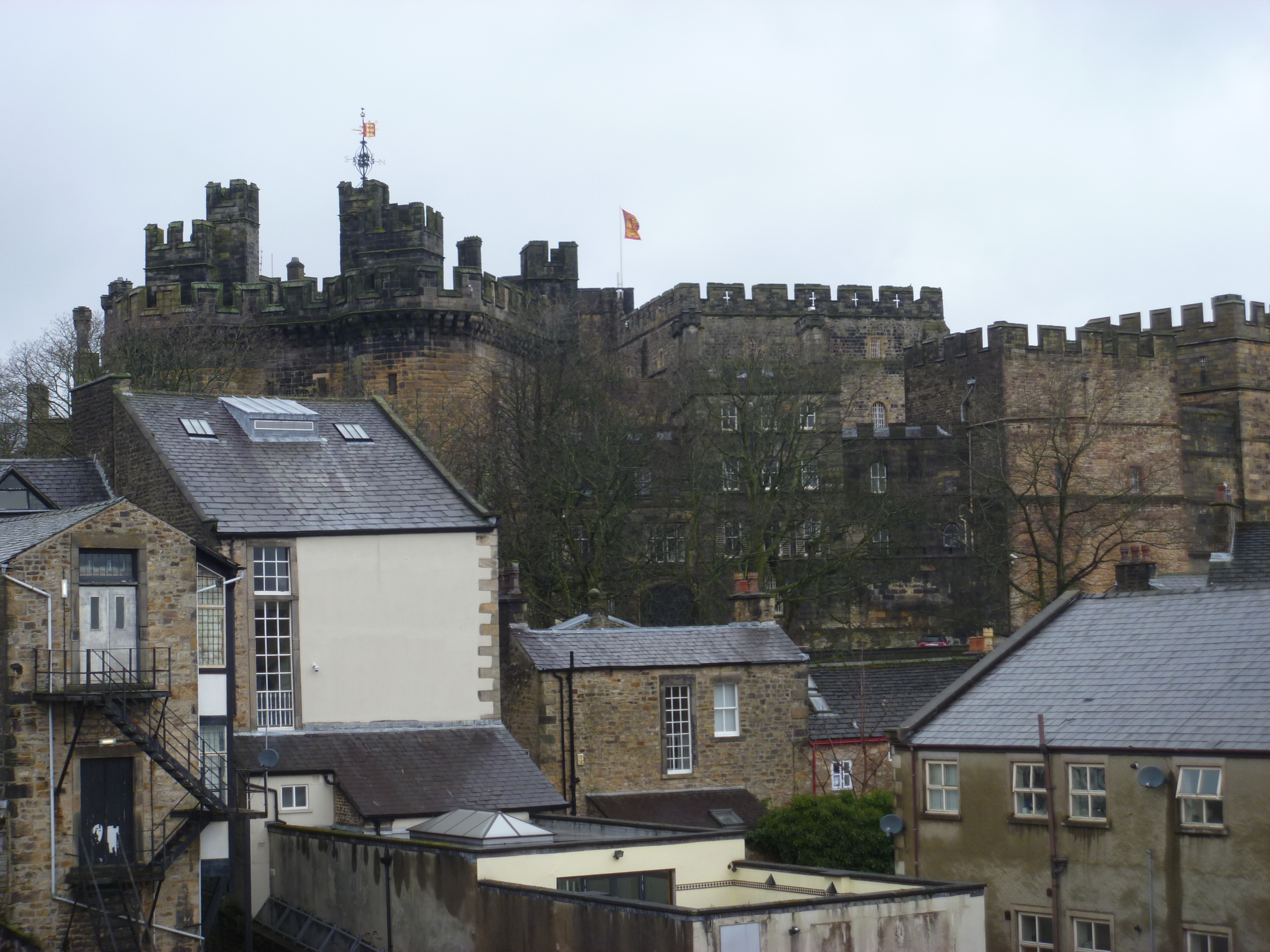
The Castle from the Music Room Roof Terrace

On the Roof Terrace a most delightful thing happened! We were taking pictures of each other when another visitor offered to take a photo of us both. We thanked her and got talking to her – she’d pointed out her house in the background of the picture she’d just taken – she is also a keen Landmarker, lives in an historic house herself and by the end, as we were saying goodbye, she invited us to call in and have a look round her own home and have a cup of tea with her just before returning to the station! In addition to this she recommended a place for lunch (The NICE cafe inside The Storey) and that we join the 2pm Tour of Lancaster Castle. Both of which we did and even managed a peep inside the Priory Church of St Mary next door to the Castle.

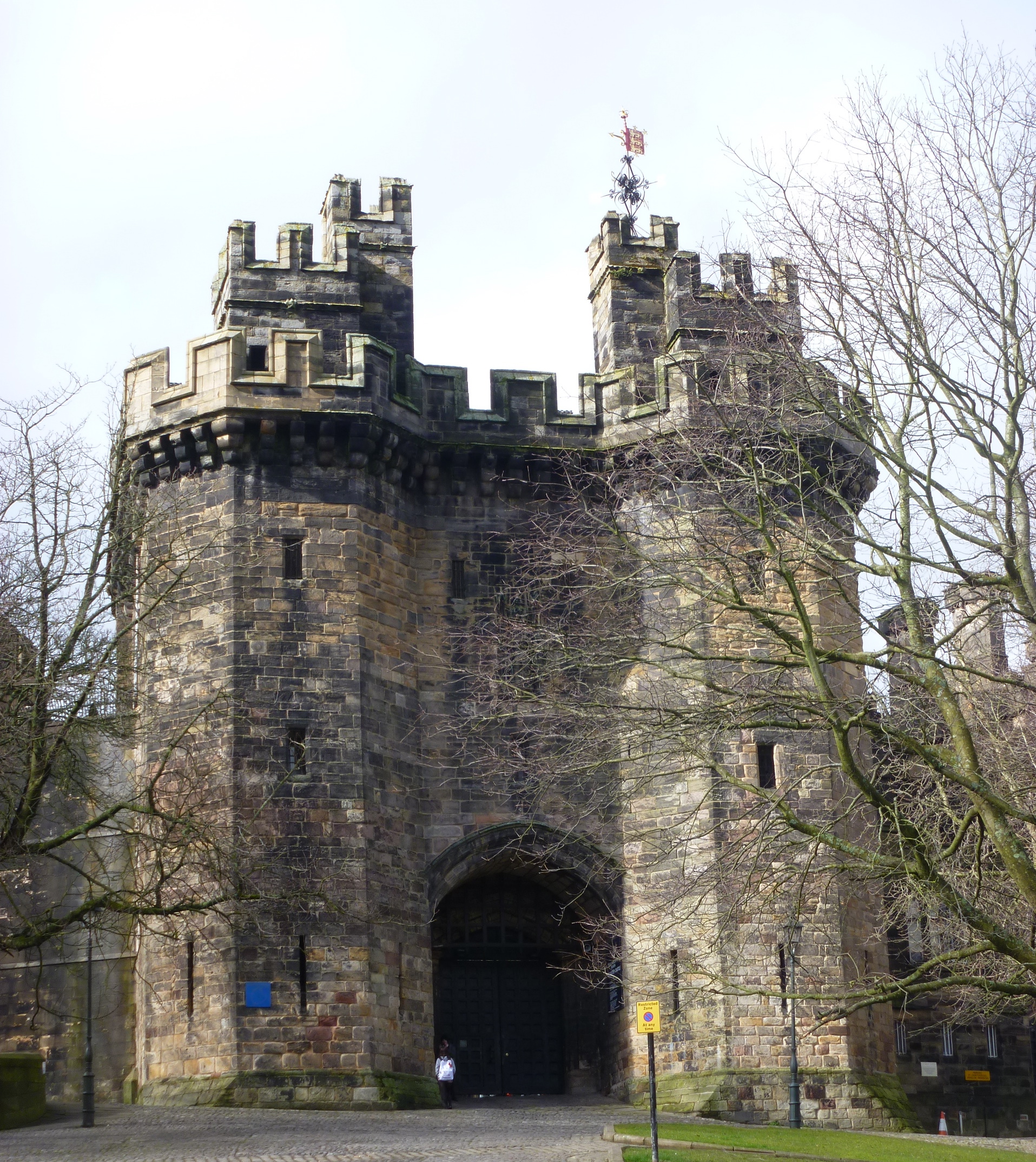
Main Castle entrance

Main Castle entrance

The Tour of the Castle is excellent and well worth doing. No photography is allowed but you are taken into two court rooms, the old cells, the grand jury room and much more. We learnt that it is a Royal Castle as our Queen is also Duke of Lancaster, that it had connections with the Pendle Witches, it housed a Debtors’ Prison in addition to a regular prison and that prison is now closed and due for refurbishment and change of use.

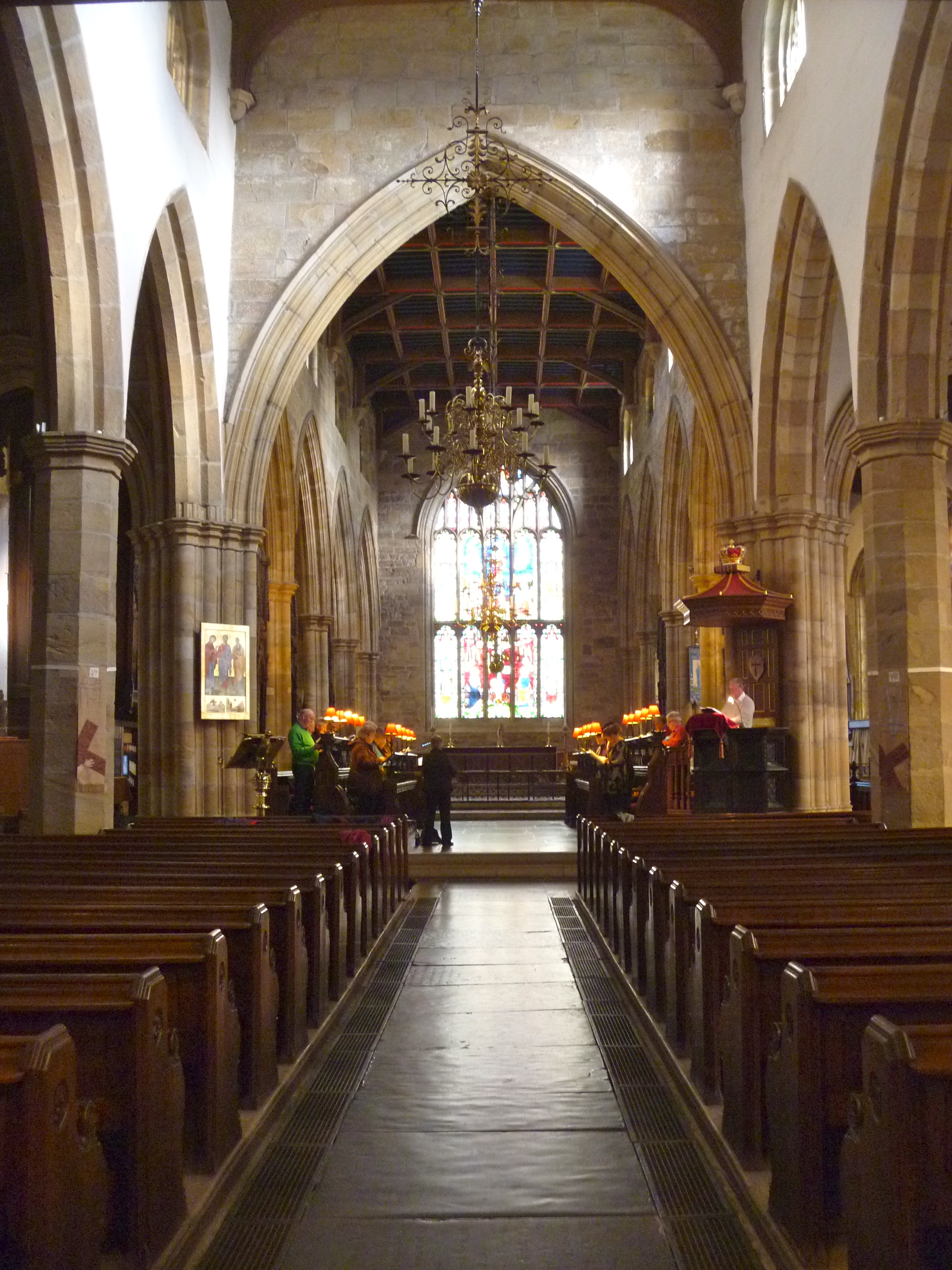
Inside Lancaster Priory Church

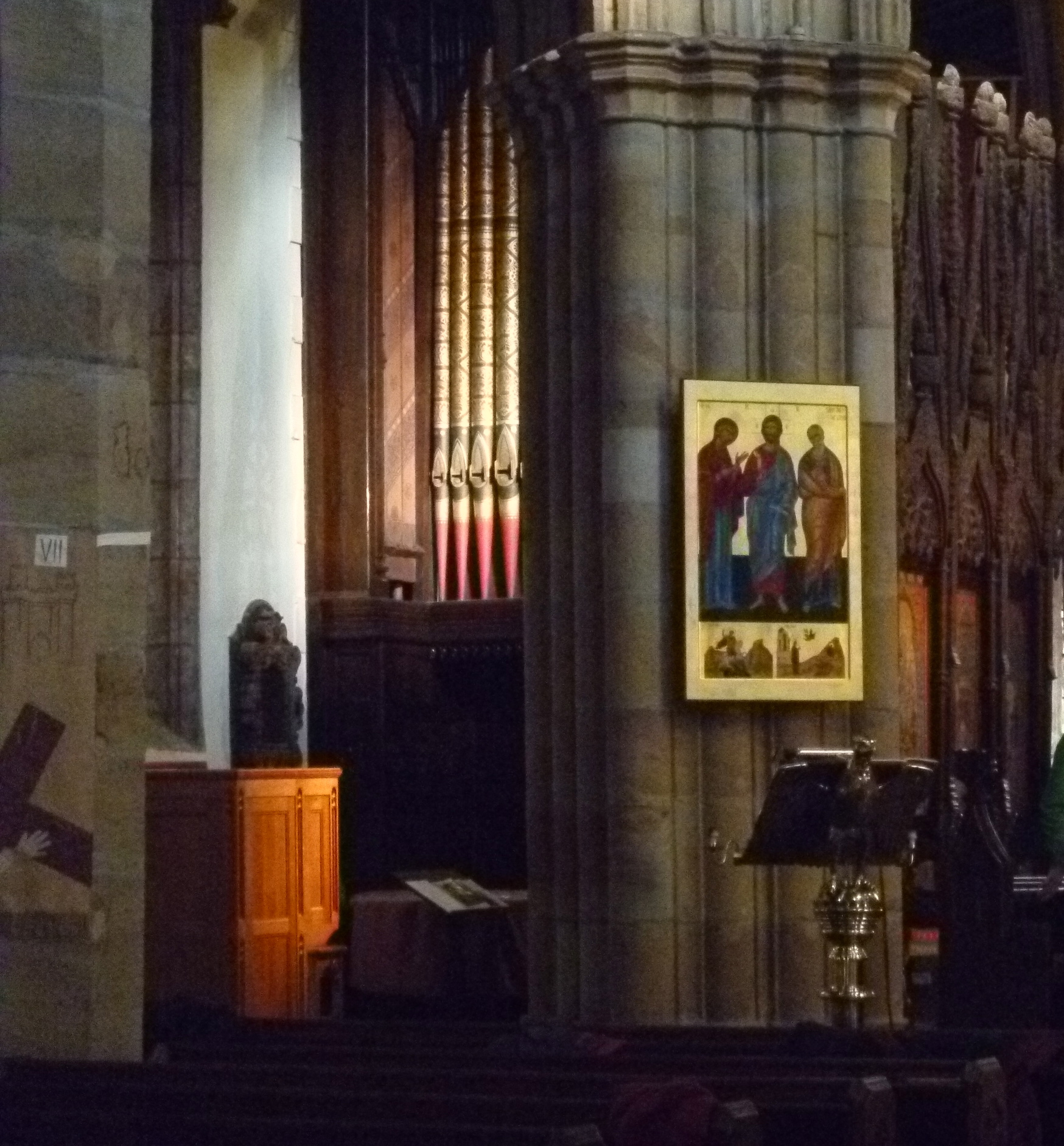
Following the hour long tour we had just time to peep inside the Priory Church and admire the view of Morecambe Bay. The choir were rehearsing for a concert this evening so we were unable to inspect the Choir Stalls which are an important feature of the church. There are some beautiful 17th century chandeliers, a Russian icon and two organs.

Organ, icon and choir stalls

One of the organs, the icon and a glimpse of the choir stalls

It was soon time to take up the kind offer of our fellow Landmarker and we enjoyed a house tour and cup of tea before heading back to the station for our trains. Despite the cold winds and rain we came away with a very warm feeling towards the city, the buildings  and the inhabitants of Lancaster and we have a lot more ideas for future visits!

“High Up, High On The Mountain, We’ve Founded Our Chalet”

Our Chalet cards and map

1. High up, high on the mountain,

We’ve founded our Chalet,

Its sloping roof and wide

Shall shelter us without a care.

And each Girl Scout and Guide Shall find a welcome there.

2. High up, high on the mountain,

We’ll go to our Chalet;

Our simple life is free,

Our hearts are light, our songs are gay,

We ever shall remember The joys of our Chalet.

3. High up. high on the mountain,

We’ve founded our Chalet;

And this its dedication

Shall never fail nor be undone:

Each race, each creed, each nation,

Beneath its roof are one.

Welcome to OC

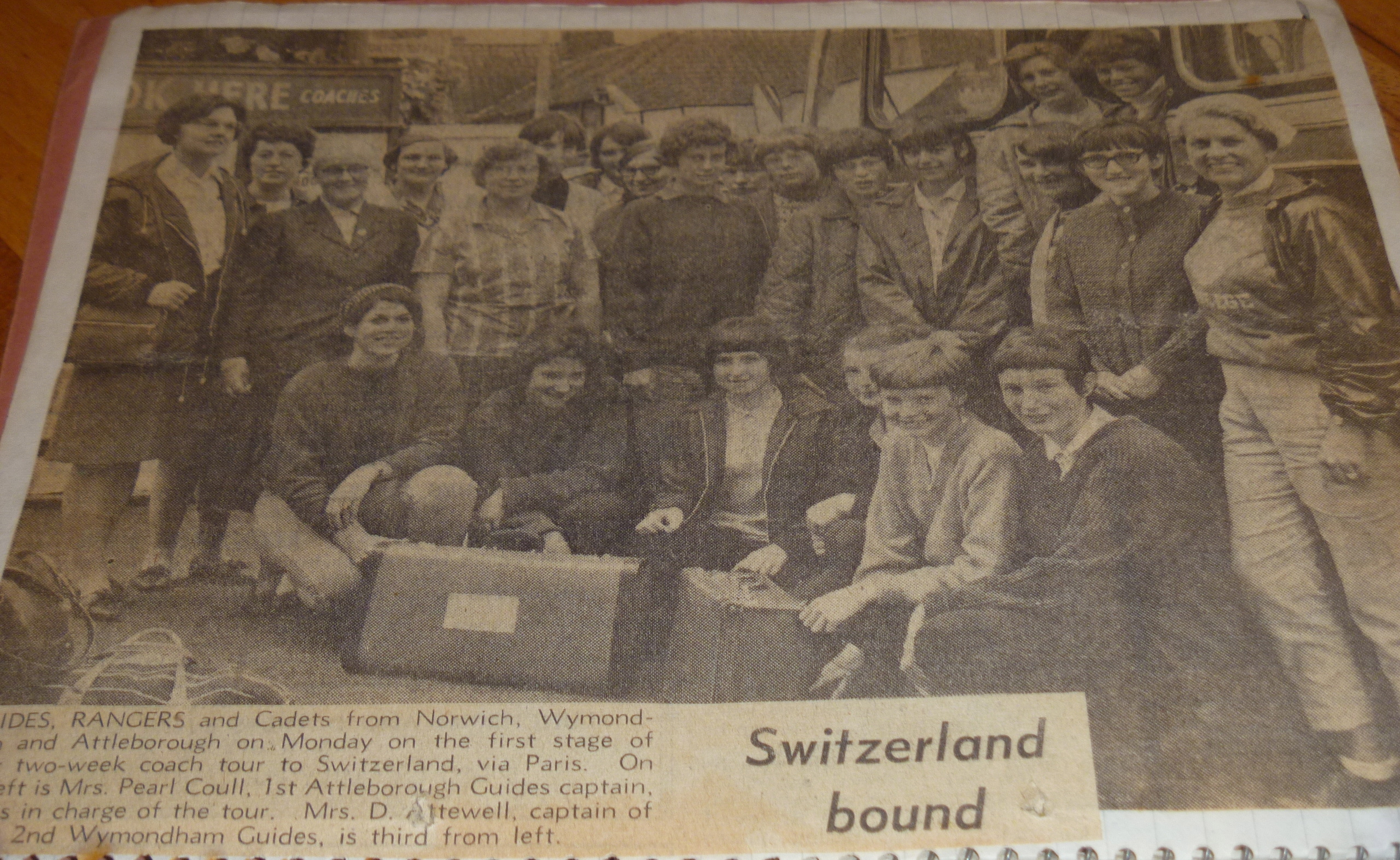
I remember ‘Our Chalet’ song from my first ever visit abroad when I travelled by coach from Norwich with a group of other Girl Guides and our Leaders to Switzerland, via Paris. Those two places visited on that occasion have remained two of my favourite places – ever. Here’s photo taken for our local newspaper which I stuck into my Swiss notebook :

EEN pic

Finding myself with a free day on the Friday I decided to retrace those early steps and revisit ‘Our Chalet’. I looked up the details online and booked one of the tours offered at 11am and 2pm daily.

Postbus

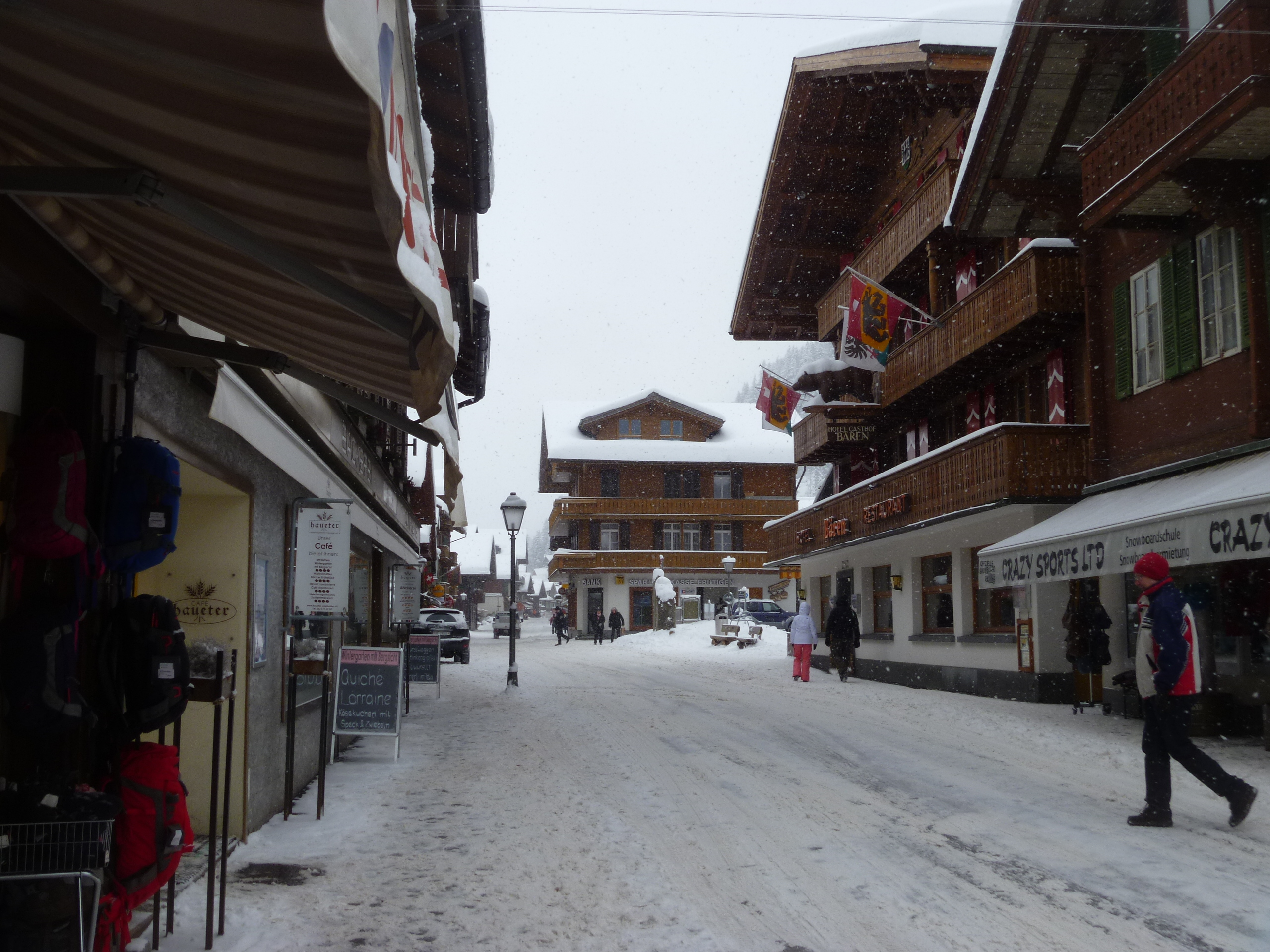
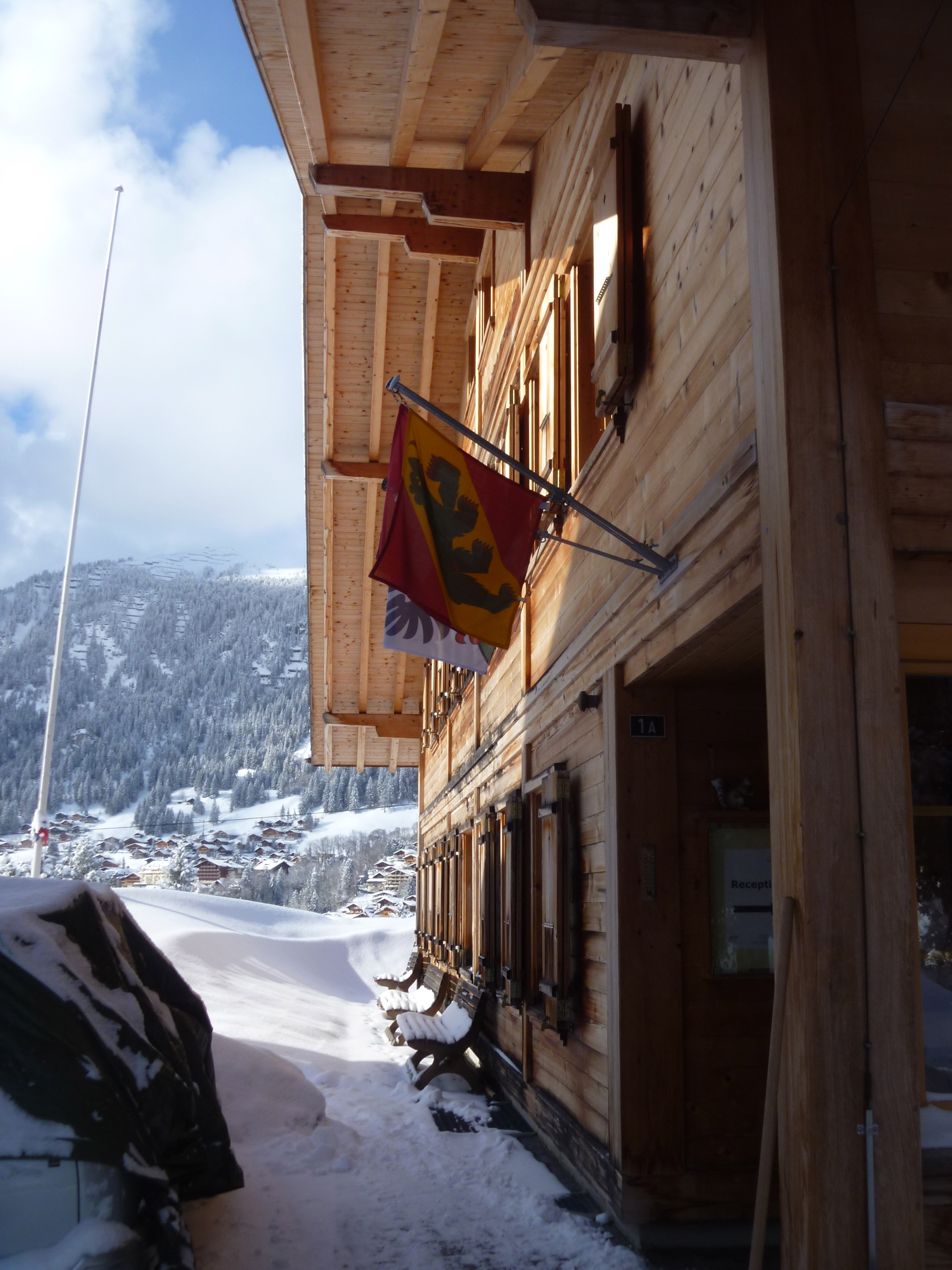
The journey to Adelboden involves taking the train via Spiez on Lake Thun to Frutigen from where a Postbus takes you up, up, up, to very snowy Adelboden. I instantly had my bearings even after 47 years and remembered the church on the village street (Dorfstrasse) and the pretty chalet-style shops.

The only difference to me was the presence of an amazing amount of snow. Of course, my first visit had been during the school holidays in August.

English Church Adelboden

The English Church, Adelboden

Dorf Strasse

Dorf Strasse Adelboden

In the tourist office I picked up a map, the details of a walk along so-called cleared paths (more about this half of the day later) and exact instructions as to the location of Our Chalet.

Adelboden

Adelboden from the path to Our Chalet

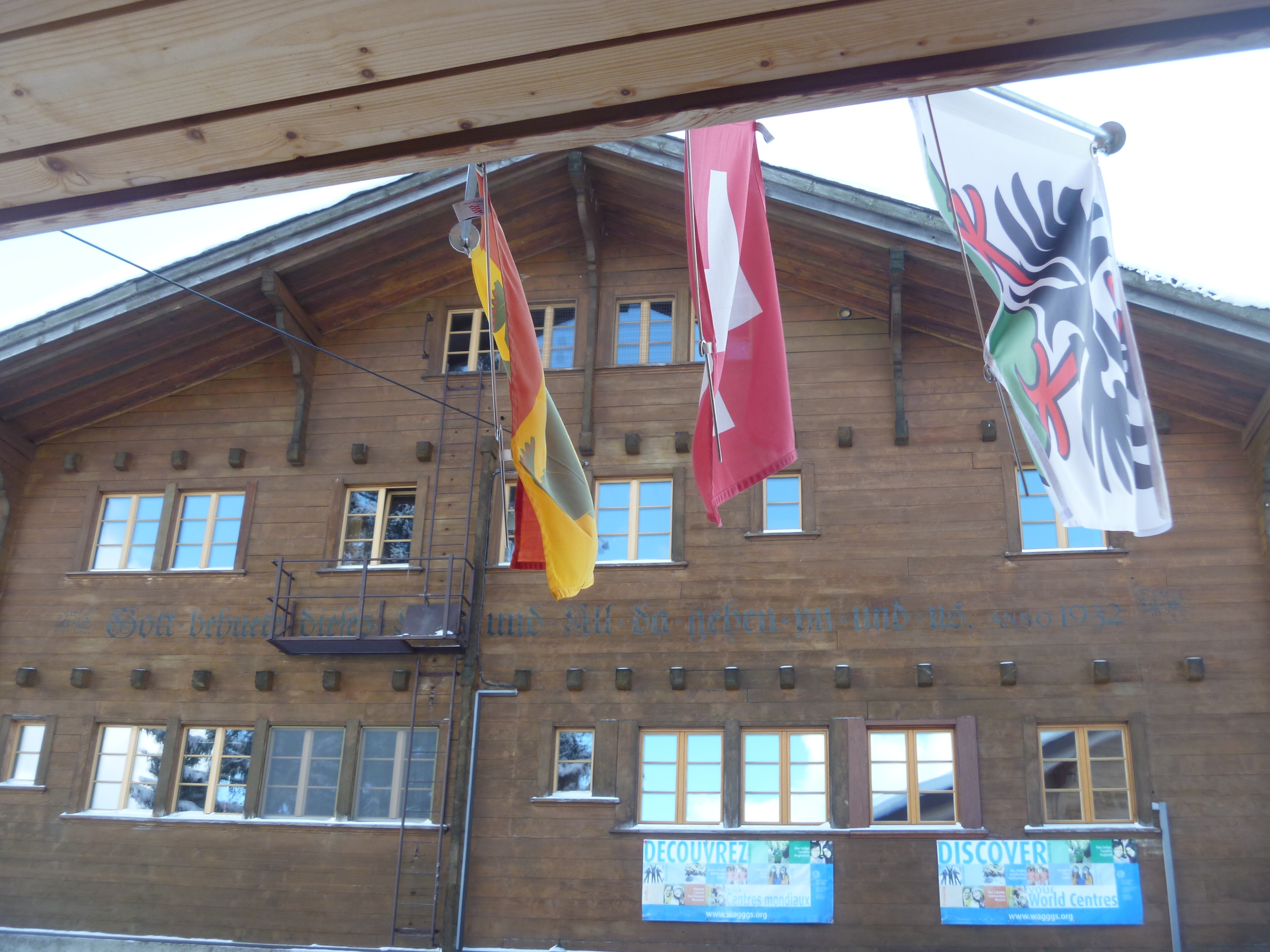
Arriving at Spycher

Arriving at Our Chalet

It was an easy walk – mostly down hill – and I arrived just on time at the Chalet for my 2pm tour. I was welcomed by Cat (Guest Services) and Skippy (the cat).

Skippy

Sonya from Rwanda The Guest Services Intern was to be my guide for the afternoon. The tour starts with a PowerPoint Presentation on the history of WAGGGS (World Association of Girl Scouts and Girl Guides) and of how Our Chalet came into being back in the 1930s.

Sonya

Sonya

British Visitor map

Map indicating British visitors to Our Chalet so far this year – the blue drawing pin in Yorkshire is me!

After inspecting the notice boards and maps and displays in the conference room Sonya showed me around the buildings and in particular the main and original ‘Our Chalet’ where we had spent an evening singing campfire songs and meeting other Girl Guides from around the world, all those years ago.

OC dining room

Our Chalet Dining Room

Our Chalet

OC shop

The Shop

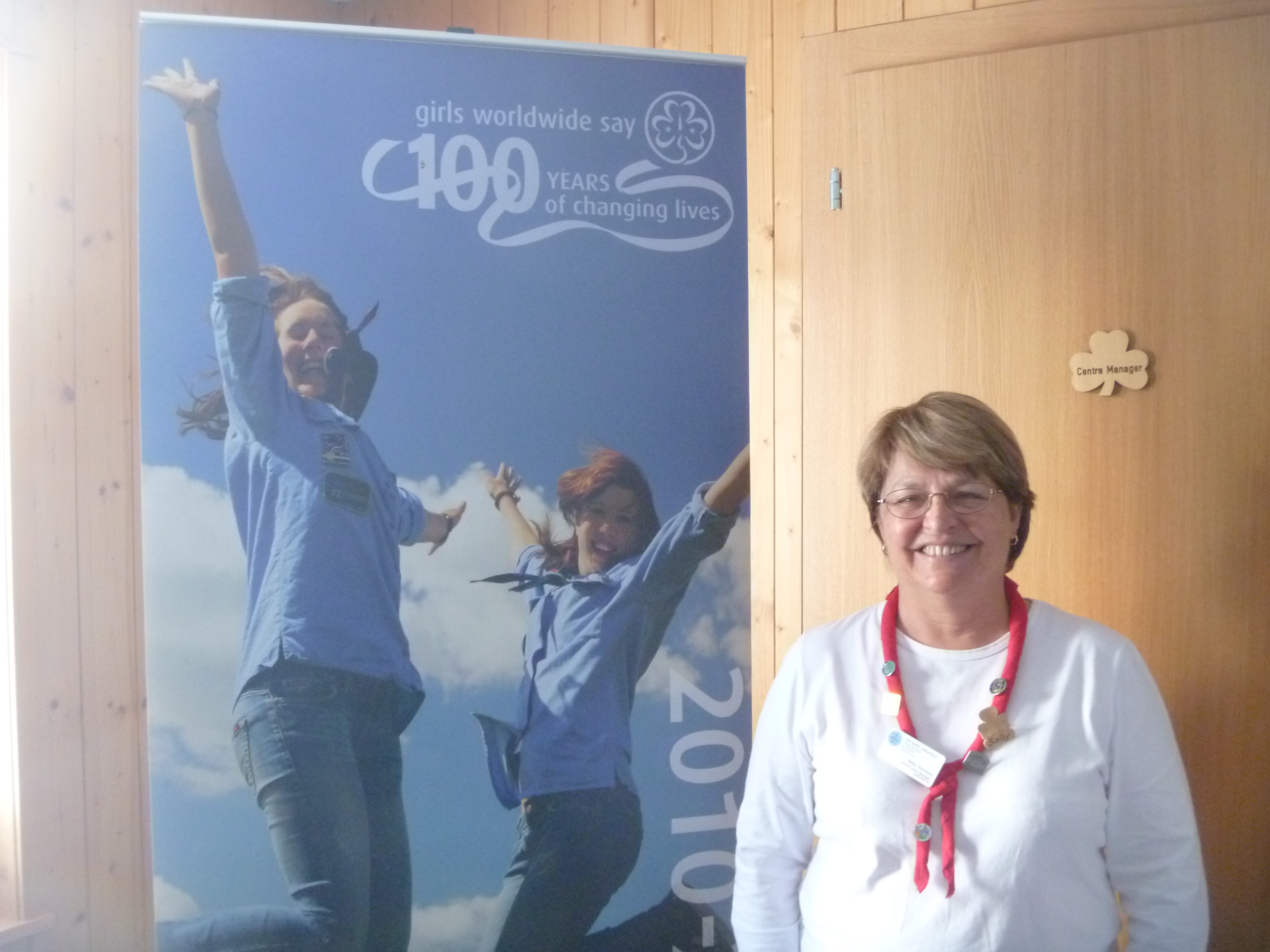
All too soon the tour ended with a visit to the shop and I bought a few postcards (illustrated at the top and to go with the postcard I bought on my last visit). I already had an Our Chalet badge. As I was leaving and saying ‘Goodbye’ to Skippy the cat I was happy to exchange a few words with Sally Thornton Our Chalet Manager. Sally is from Australia, has been at OC since 2009 and plans to retire in April and return to family in Oz.

Sally Thornton

Sally Thornton, Our Chalet Manager

P1080307

A Complete Face Lift at Dickens House Museum

On my first visit to The Dickens House Museum a few years ago I came away thinking what a very disappointing experience it had been. As a Dickens fan I had had high hopes of the visit.

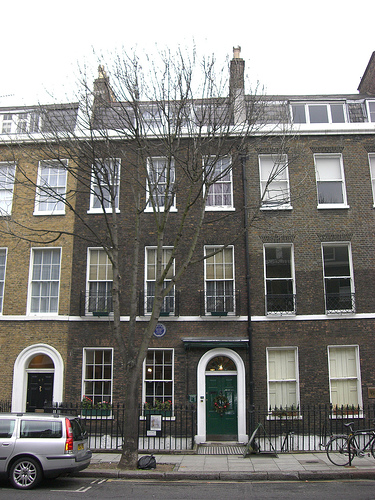
Dickens House Museum (Jan 2008)

Dickens House Museum (January 2008)

Dickens House (Jan 2013)

The Dickens House Museum (January 2013)

On Friday 4th January after our stay at Hampton Court Palace we decided to visit the newly re-opened Museum to see whether matters had improved.

The Dickens House Museum is the only remaining London home that Dickens occupied and that was for only about two years. It was at a time when he was not long married, was making a name for himself and it was here that he wrote Oliver Twist and Nicholas Nickleby. The address is 48 Doughty Street in Bloomsbury, WC1.

Number 48 Doughty Street was an important place in Charles Dickens’s life where he resided from 1837 until 1839. Dickens described the terraced Georgian dwelling as ‘my house in town’.

Two of his daughters were born here, his sister-in-law Mary died aged 17 in an upstairs bedroom and some of Dickens’s best-loved novels were written here, including Oliver Twist and Nicholas Nickleby. However Dickens required more space for his growing family and moved to 1 Devonshire Terrace in 1839. The house remained a residential property, but was threatened with demolition in 1923, when the Dickens Fellowship acquired it. The Museum was opened in 1925 and has become the home of the world’s finest Dickens-related collection.” From the Dickens House Museum website.

I have to concur with what fellow WordPress blogger “Visiting Houses and Gardens” said about it here. However, the house has been closed for renovations [The Great Expectations Project] for a good part of 2012 – the Dickens Bicentenary Year.

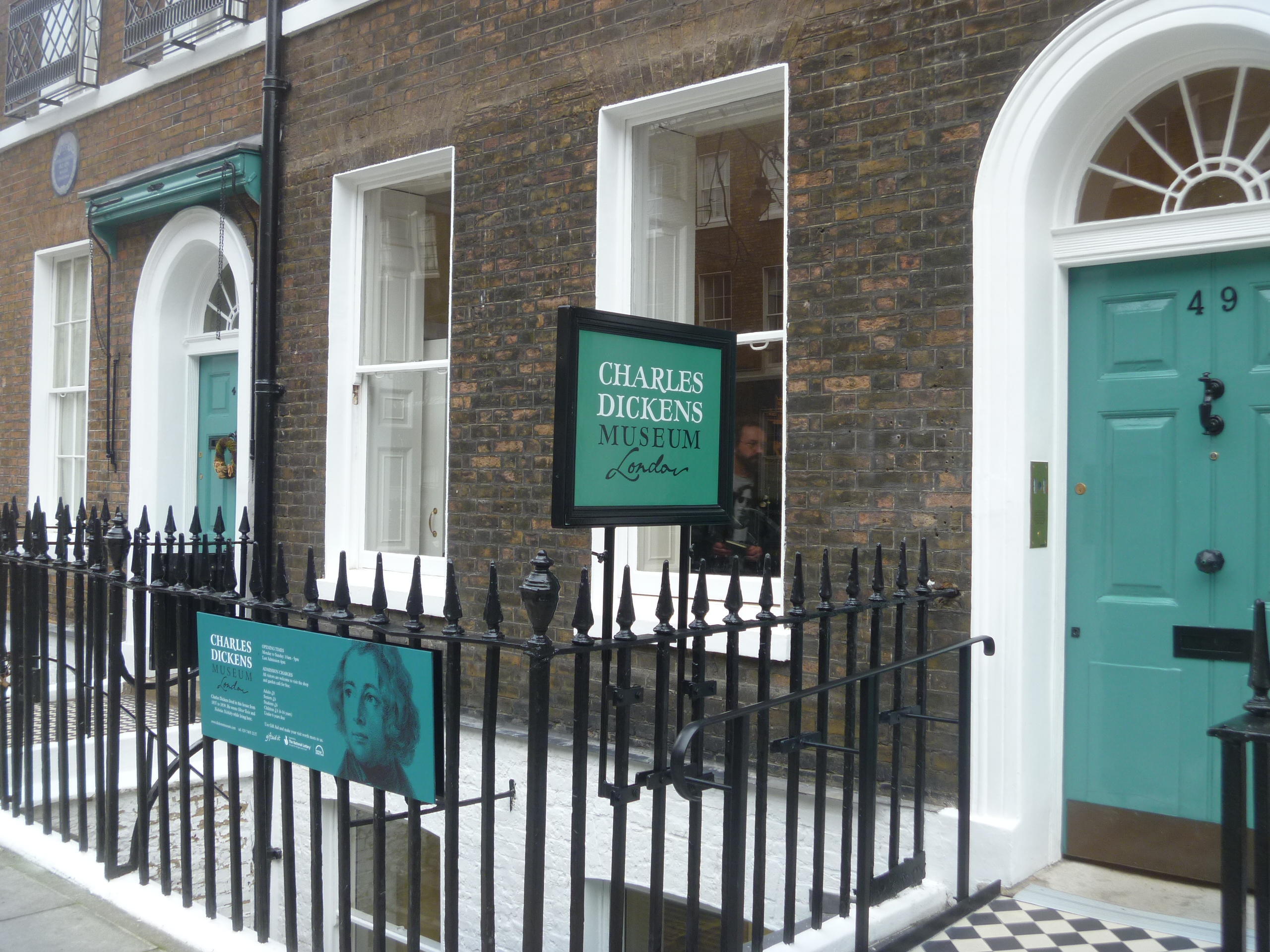
It reopened in December last year and a great amount of work must have been done during that time. With the help of National Heritage Lottery Funding the adjacent house was purchased and that now houses all the offices, the shop, cafe and other requirements for this modern age of “Heritage Visiting”. Number 48 is now purely Dickens’ Home as it might have looked at the time that he lived there – 1837-1839.

We are invited by the Museum to : “Step this way”

“Visitors to 48 Doughty Street can see the house as it might have been when Dickens lived here.  Rooms are decorated in the early Victorian style that Dickens would have favoured and personal posessions of Dickens from his lifetime as well as manuscripts, letters and portraits are on display.”

So, on entering number 49 we were directed into the front room of this house where there was a shop and the cash desk. We were handed a guidebook each with instructions to return it on leaving the Museum. From there we stepped into number 48 and toured the house that Dickens knew and we enjoyed (and learned from) the experience.

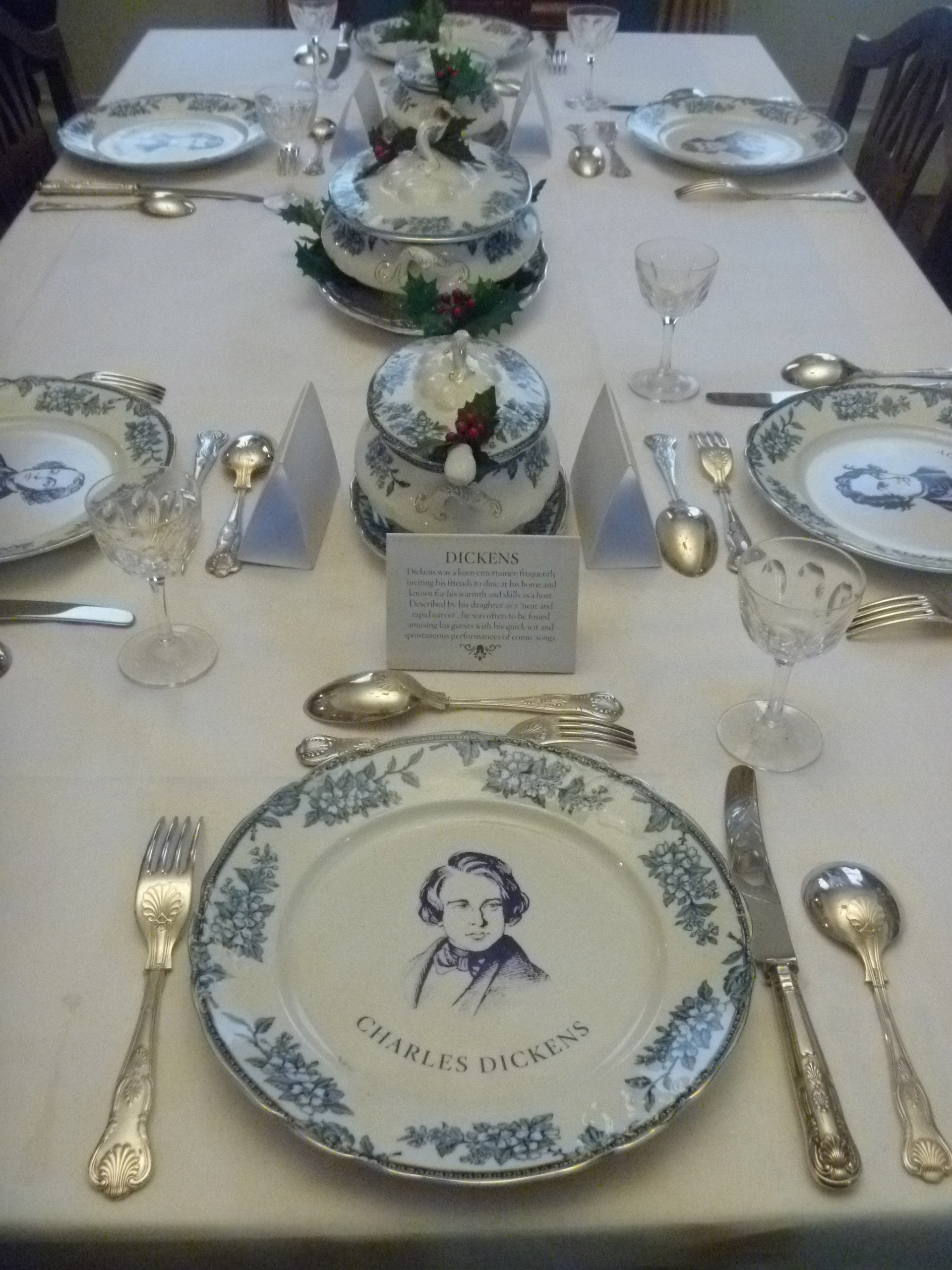
Dining with Dickens

Dining with Charles Dickens

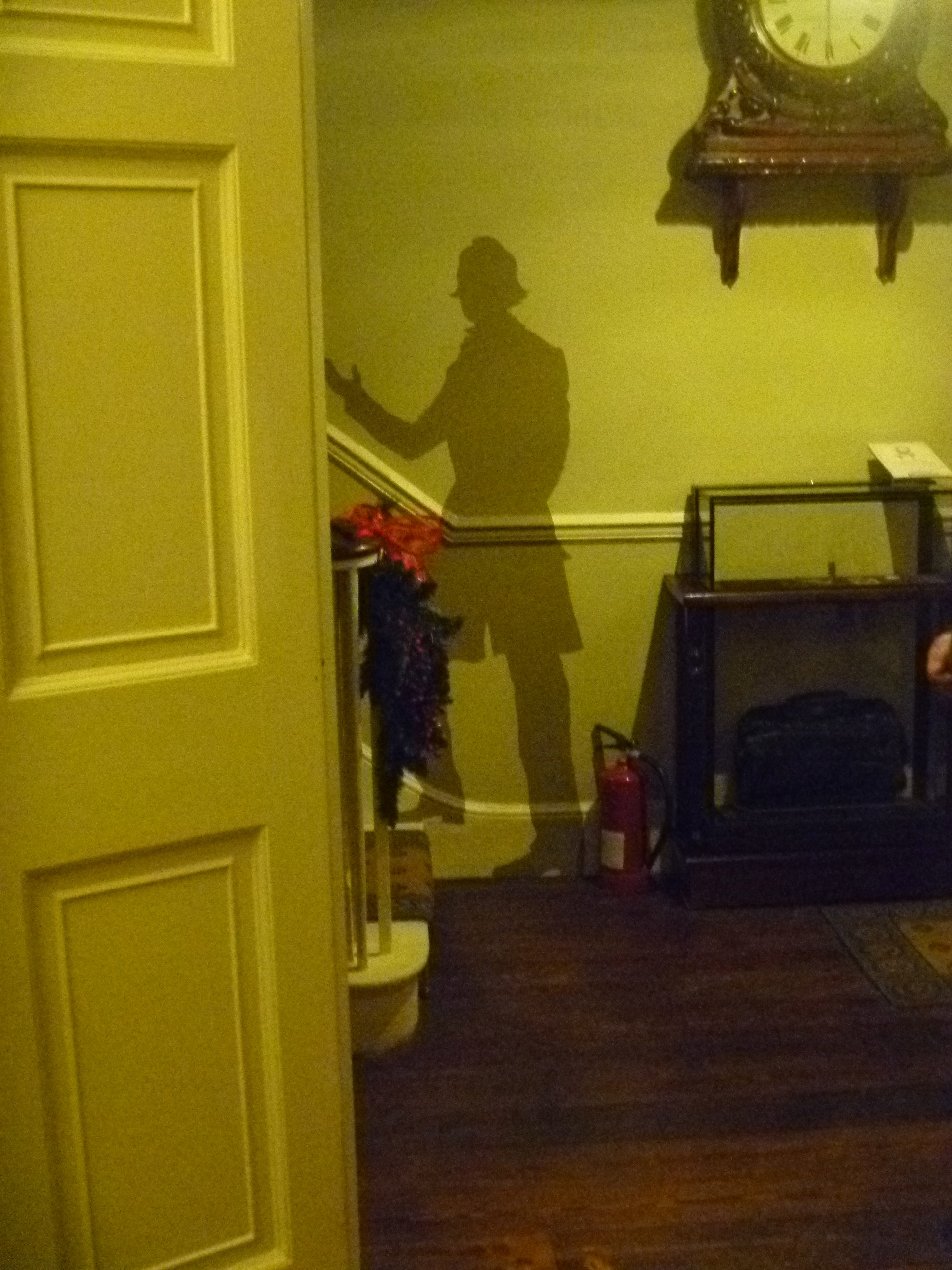
This Way!

This way to the Sitting Room, Everyone!

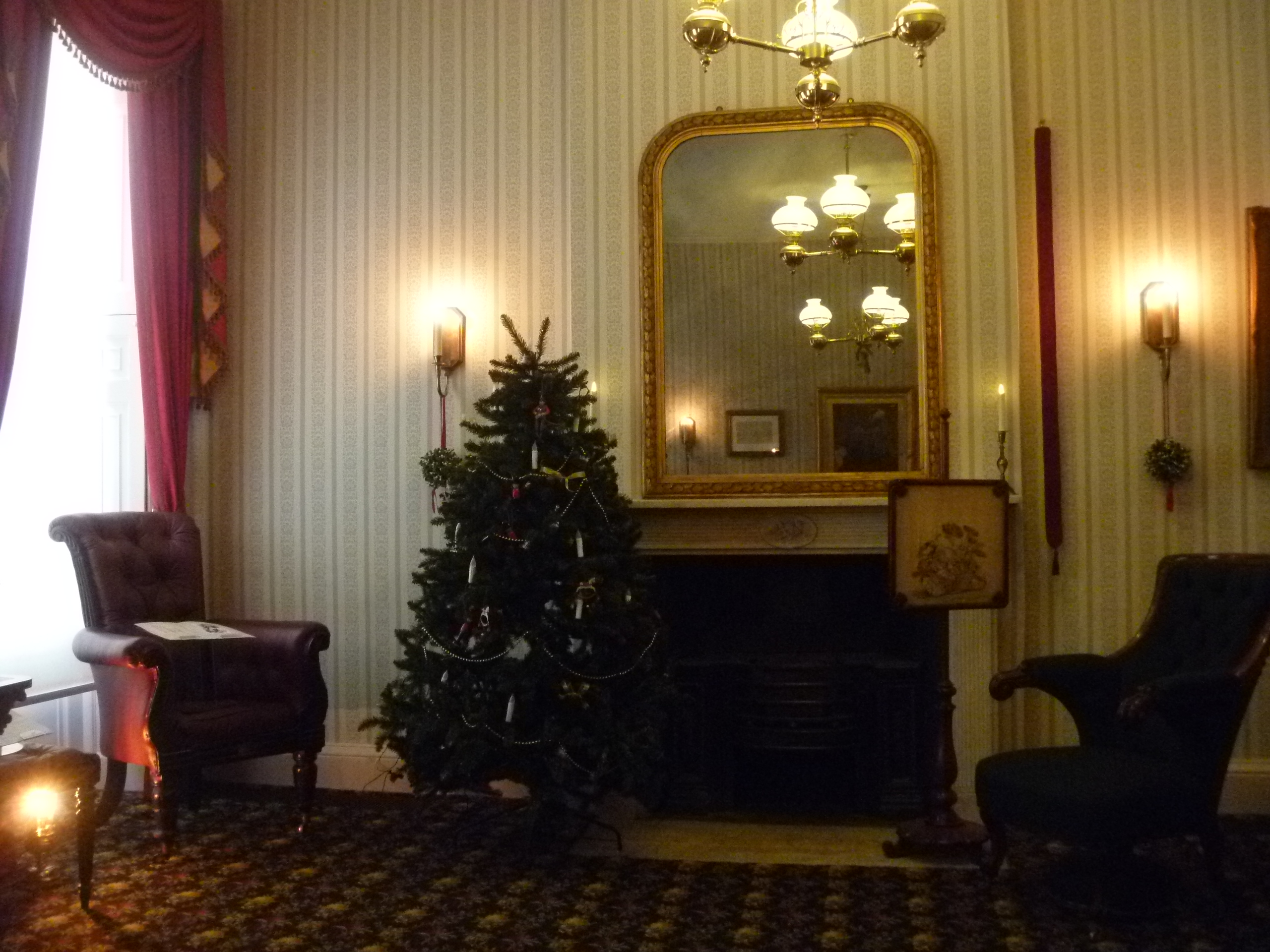
First Floor Sitting Room

The Dickens Family Sitting Room at Christmas

Living at Hampton Court Palace

“I’ve often thought I should like to live at Hampton Court. It looks so
peaceful and so quiet, and it is such a dear old place to ramble round in
the early morning before many people are about.”

Hampton Court

One of my favourite humorous books of all time is “Three Men in a Boat (to say nothing of the dog)”  by Jerome K. Jerome from which the above quotation has been taken.

Fish Court sign

Lucky me, last week I was able to stay a couple of nights in this 1,000 room palace and ramble around it out of hours when few or even no people were around. Since 1993 The Landmark Trust have run the two Hampton Court Properties on behalf of the Royal Palaces. We visited friends at The Georgian House two years ago and this year my sister and I stayed in the Fish Court apartment.

Fish Court

Fish Court and the door to the Apartment

Tennis Court Lane

Tennis Court Lane – The Georgian House is on the left and Fish Court on the right

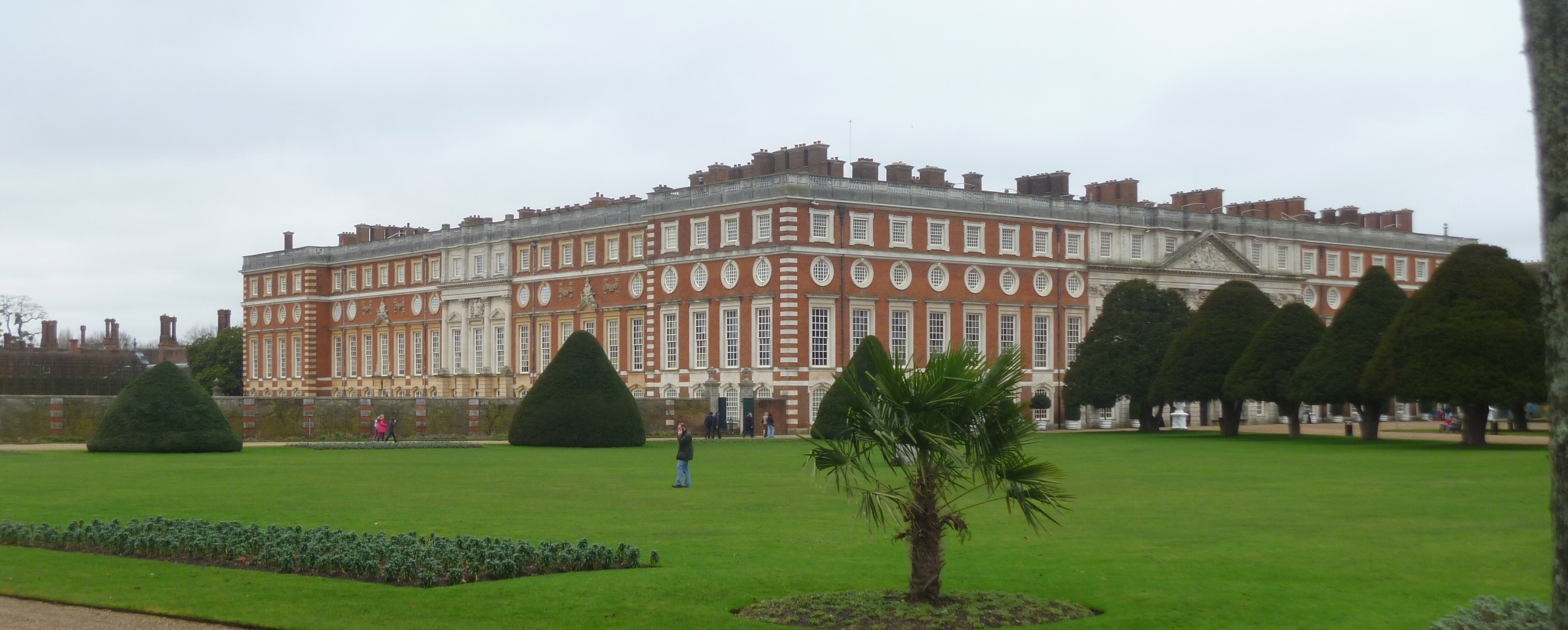
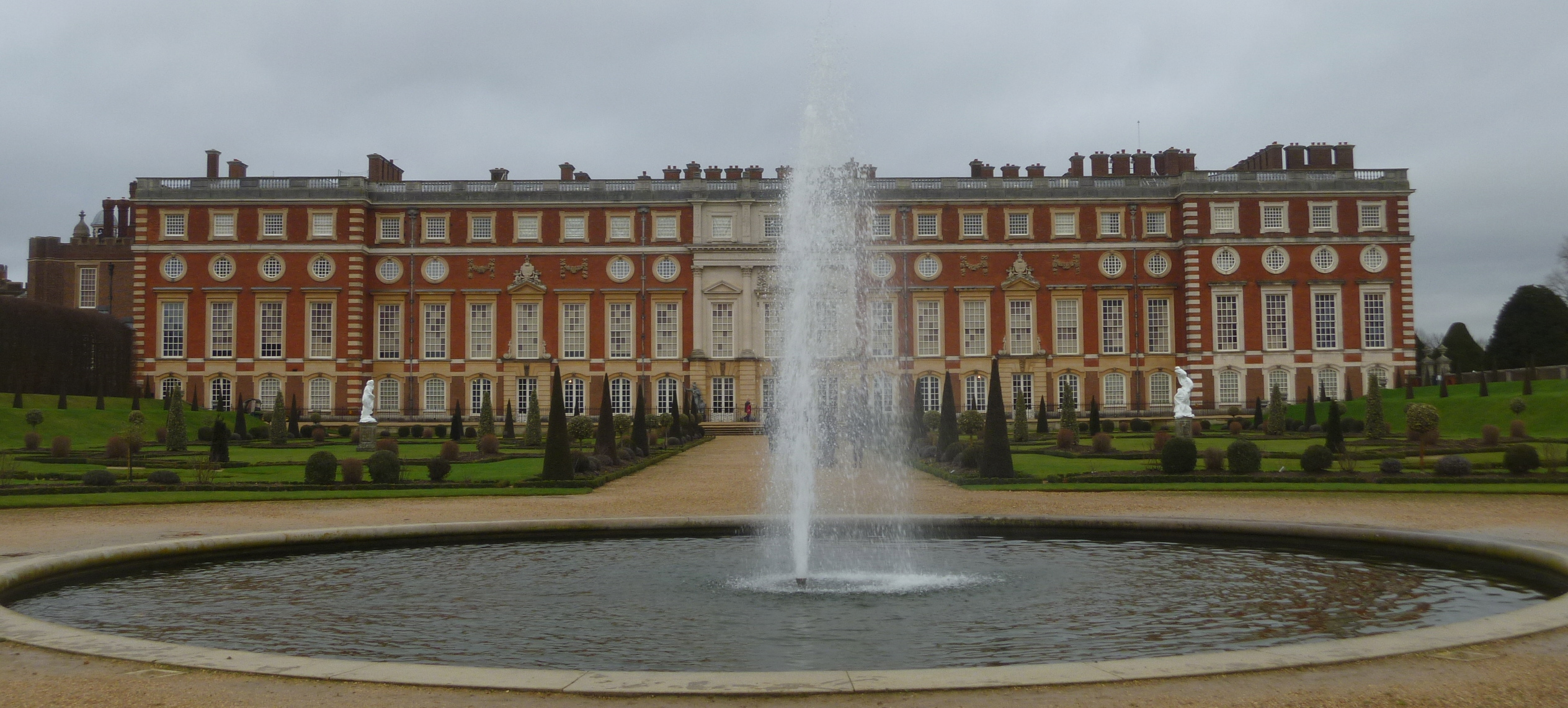
Hampton Court Palace was built by Cardinal Thomas Wolsey during the years after 1514 when he first acquired the riverside site. In 1529 as a last-ditch effort to appease the king’s wrath he presented the sumptuous palace to His Majesty King Henry VIII. He had failed to obtain an acceptable result with regard to the king and his first wife, Catherine of Aragon. Soon after, all of his property was made forfeit to the King. And so the Palace became a favourite home of Henry and his children and his descendants and royalty until 1760 and the death of George II. Henry built and extended the Tudor Palace further and William III and Mary (1689-1702) brought about further rebuilding and remodelling.

HCP East Front

There’s a huge contrast between the original west-facing Tudor building (top) and the newer East and South Fronts (above).

During and after the reign of George III the palace ceased to be used by royalty and was subdivided into a large number of dwellings and apartments. These residences were called ‘Grace and Favour’ homes. I have long known about there existence because I remember in the 1950s and early 1960s when I was a Brownie and later a Girl Guide one of the annuals featured a story about Lady Olave Baden-Powell, the widow of Lord Robert Baden-Powell, the then Chief Guide, living in a Grace and favour apartment at the Palace.

A celebrated and much-loved 20th century figure, Lady Baden-Powell, moved into her palace apartment in 1942. She was heavily involved in the Scouting Movement that her husband had founded. Lady Baden-Powell’s response following the offer of a palace apartment in 1942. “I was astounded; I had never dreamed of such a privilege being accorded me’. The apartment was ‘a bit dilapidated’ because of the war but most importantly would be ‘home’”. She described how, during the war, she survived a bomb, which exploded causing her ceiling to collapse in 1944.”

Taken from : Grace and Favour HCP

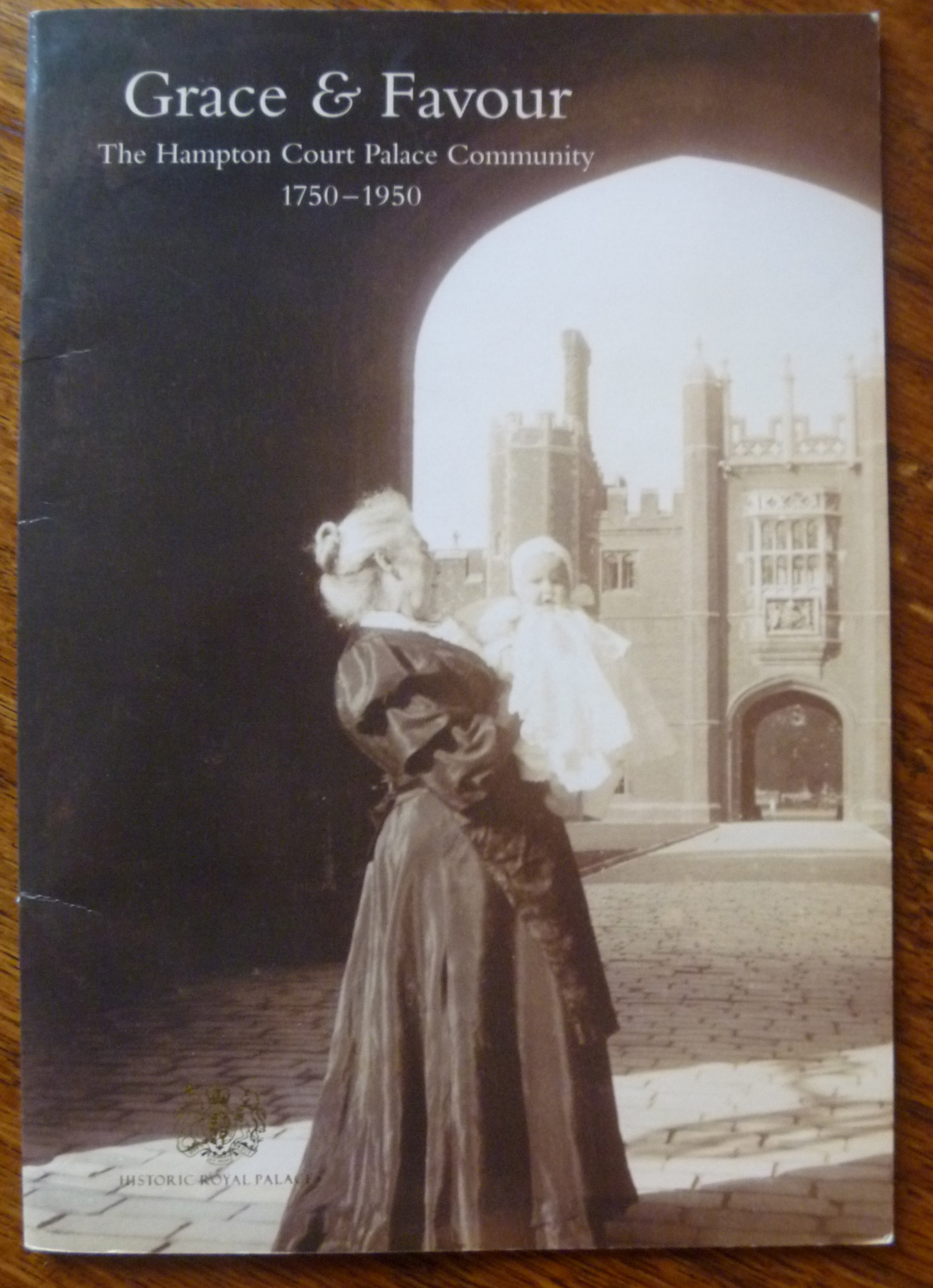
In the Fish Court Library I also found a book about the history of the apartments “Grace & Favour: the story of the Hampton Court Palace Community, 1750-1950”. 

Grace and Favour Book

Staying at Hampton Court in January we still noticed lots of visitors during the day and even late into the evening at the temporary ice rink erected just within the main (Trophy) Gates.

Ice Rink HCP

The Temporary Hampton Court Ice Rink

Being residents we were able to enter the palace and  join in any tours free of charge. We had to wear our passes all the time.

Resident pass

We only had one full day so we joined a costumed tour and visited two sets of apartments that we had missed on our previous visit. In the middle of the day it was so nice to just turn the key of our apartment door and have a bite of lunch and relax before heading out to the gardens and grounds and visit more of the Palace in the afternoon.

Costumed Tour HCP

Actor as Thomas Seymour

Actor playing the part of Thomas Seymour on the eve of Henry VIII’s death in January 1547

The most well-known feature in the grounds and probably in the whole Palace is its world famous Maze. I first visited Hampton Court Palace in the early 1960s and my top priority was to get into that Maze. I seem remember finding it a bit disappointing but loved Jerome K. Jerome’s witty description of his friend Harris’s earlier visit to the Maze:

“Harris asked me if I’d ever been in the
maze at Hampton Court. He said he went in once to show somebody else the
way. He had studied it up in a map, and it was so simple that it seemed
foolish—hardly worth the twopence charged for admission. Harris said he
thought that map must have been got up as a practical joke, because it
wasn’t a bit like the real thing, and only misleading.”

Lancelot ‘Capability’ Brown was appointed Chief Gardener here in 1769 and lived in Wilderness House on the edge of the grounds near the Lion Gates. Just two years ago a blue plaque was unveiled by  the present Head Gardener. Read about it here. It was very difficult to get a decent angle for a photo of either the house or the plaque.

Plaque to Capability Brown

Even in January the fountains are spurting water and the gardeners have their heads down preparing the ground for spring planting and some other people were also enjoying walking along the stony paths and terraces.

Fountain

Knot Garden

Pond Garden and Banqueting House

At the far end of the garden is the Great Vine planted by Capability Brown.

The Great Vine

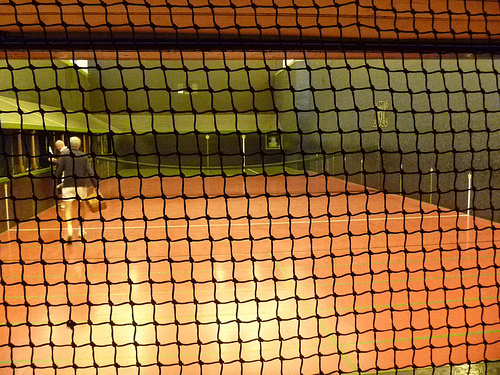
In the evening we could creep along passages and watch a game of Real Tennis still being played on the original court where Henry himself enjoyed a game or two!

Real Tennis

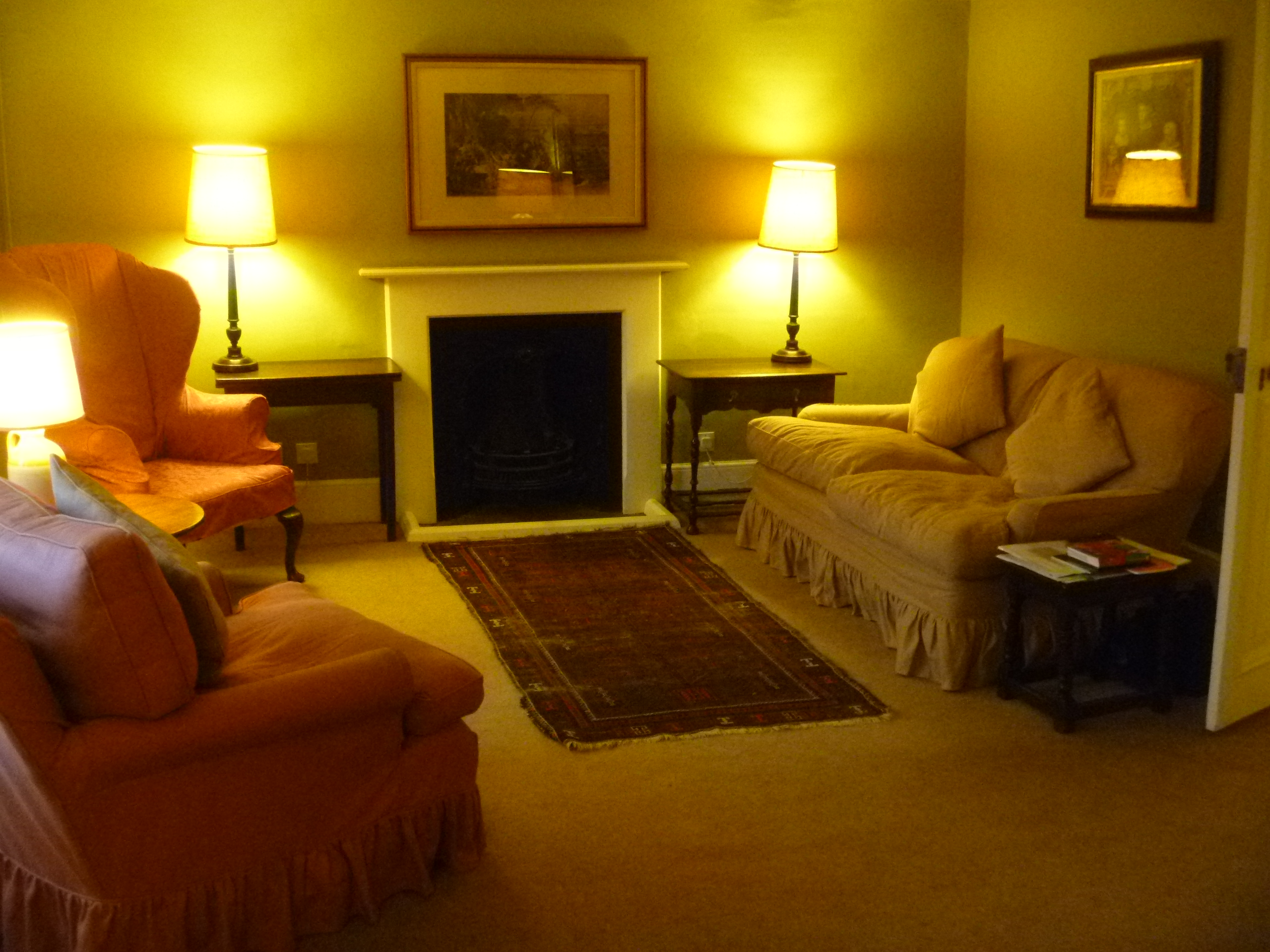
Before returning to our very own private Royal apartment to plan the rest of our London visit.

Sitting room at Fish Court

‘Deck the halls’ at Oakwell

Oakwell Hall

Step back in time and enjoy Oakwell Hall’s period rooms decorated with greenery from the park with the theme of traditional Christmas carols. Enjoy the rich and historic splendour of Oakwell Hall, decorated for a 1690 Christmas.”

Oakwell Hall

“It was neither a grand nor a comfortable house; within
as without it was antique, rambling and incommodious.”

Charlotte Brontë’s description of ‘Fieldhead’ (Oakwell Hall) from ‘Shirley’.”

We have had days and days of constant rain. The dark misty clouds mean that the days seem even shorter than the time of year supposes that they should be, so I decided to ‘step back in time’ to a nearby house with Bronte connections – Oakwell Hall in Gomersall. It is now owned by Kirklees Council but has had an interesting history and the lovely house dates back to the 16th century. Read about the fascinating study of the timbers, panelling, layout and construction of Oakwell Hall here. It is such a shame that photography is no longer allowed inside Oakwell Hall as the greenery and decorations brighten up the rooms at this time of year.

Oakwell - rear

Rear view of Oakwell Hall

Thought to be built by one John Batt, whose initials appear above the door, Oakwell was occupied by him and his family for way over a century. Between 1789 and 1927 when the hall was bought by the local council it had several owners and was at times a private residence, at times occupied by short term tenants (families and schools) and at one point was threatened to be “taken down, brick by brick, and shipped to America”. A local appeal was then launched and with the help of two particular wealthy benefactors (Sir Henry Norman Rae and John Earl Sharman) the house was saved and passed to Batley Corporation (now Kirklees Council). Since 1927 the house has been a museum and more recently the surrounding parkland has come into Council ownership and the whole is now Oakwell Hall Country Park.

As you tour the house, after being greeted in the Great Hall, at one point on the ground floor you pass into the Buttery. This bare room with stone floor is now a small information space and here I read more about the Bronte connection with Oakwell Hall.

Whilst a pupil at Roehead School in Mirfield Charlotte Bronte made friends with Ellen Nussey and Mary Taylor. Ellen later attended a school at Oakwell Hall and CB frequently visited her here. She was inspired to base her descriptions of the house Fieldhead on Oakwell Hall and she also based The Yorke family in the same book on her friends The Taylors.

Accurate descriptions of the house interior and exterior can be lifted straight from Chapter 11 “Fieldhead” in Shirley.

“If Fieldhead had few other merits as a building, it might at least be
termed picturesque. Its regular architecture, and the gray and mossy
colouring communicated by time, gave it a just claim to this epithet.
The old latticed windows, the stone porch, the walls, the roof, the
chimney-stacks, were rich in crayon touches and sepia lights and shades.
The trees behind were fine, bold, and spreading; the cedar on the lawn
in front was grand; and the granite urns on the garden wall, the fretted
arch of the gateway, were, for an artist, as the very desire of the eye.”

“Mr. and Miss Helstone were ushered into a parlour. Of course, as was to
be expected in such a Gothic old barrack, this parlour was lined with
oak: fine, dark, glossy panels compassed the walls gloomily and grandly.
Very handsome, reader, these shining brown panels are, very mellow in
colouring and tasteful in effect …”

Talking with one of the Museum staff I also discovered that several filmings had taken place at Oakwell over the years. Notably in 1921 a silent film version of Shirley. 

A 2009 TV version of Wuthering Heights used Oakwell for its interior scenes. Fast forward to around 48 minutes in if you are only interested in seeing some interior shots of Oakwell. The exterior shots look to me as if they were filmed using East Riddlesden Hall near Keighley.

The interior scenes of  The Secret Diaries of Miss Anne Listeralso made for TV was filmed here at Oakwell. The true home of Miss Lister was nearby Shibden Hall at Halifax but I was told that the rooms at Oakwell were much larger to allow for all the cameramen’s paraphernalia.

Oakwell Gardens

On leaving the cosiness of the hall you enter the lovely, beautifully ordered, Elizabethan gardens. I made a mental note to revisit these on a less wet and grey day. I hurried home to light my own Christmas tree lights and relax with a mince pie.

My own Christmas tree

A MERRY CHRISTMAS EVERYONE!