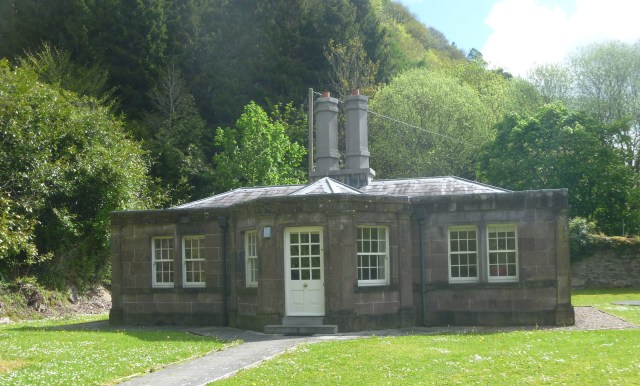
Salterbridge Gatelodge and Salterbridge House

1 gatelodge

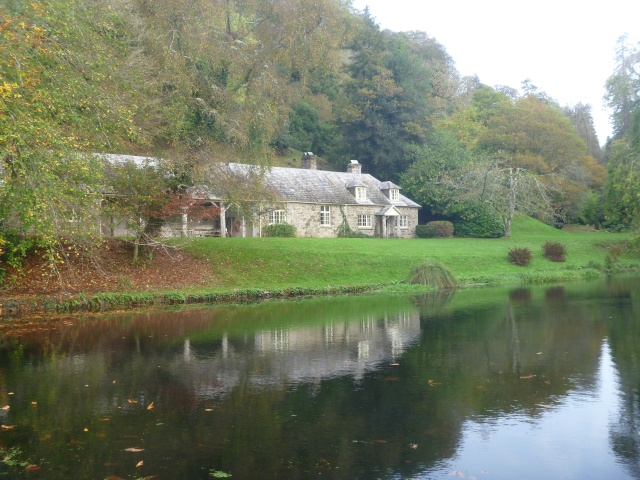
Funnily enough, I know which one I prefer to be in! The Gatelodge, of course. I’ve reproduced here the descriptions from a leaflet I found here at the Lodge :

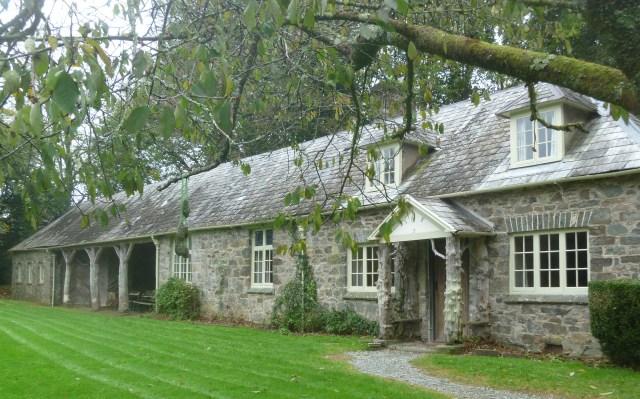
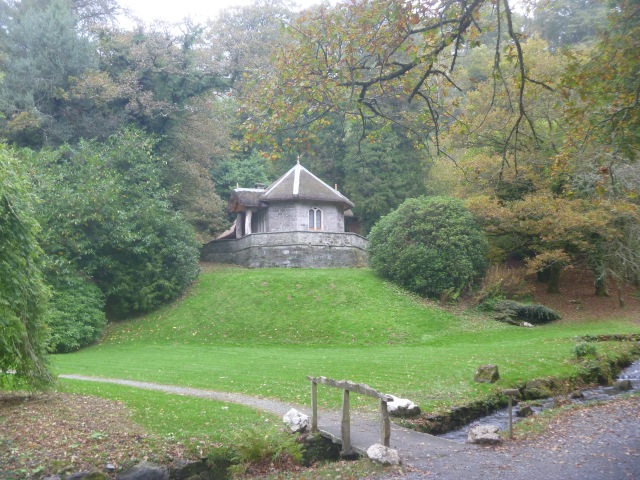
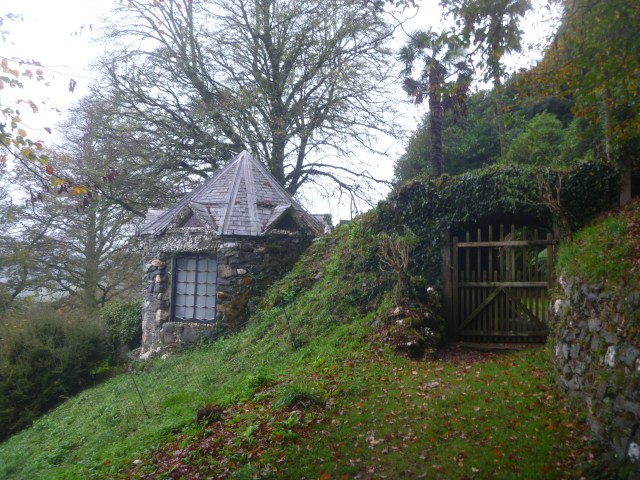
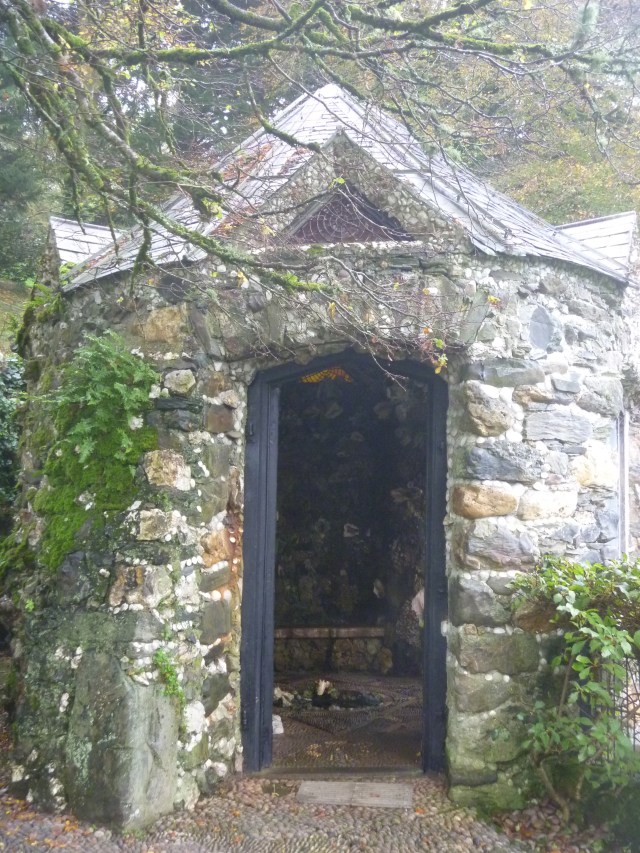
This tiny pavilion is located in the gorgeous Blackwater Valley within a mile of Cappoquin and near the Knockmealdown Mountains. It was built in around 1849 by the Chearnley family who owned the Salterbridge estate since the mid 18th century until the early 20th century. The Lodge, though obviously in habitation in the thirties when the Glanville family lived there, became derelict after the 1950s. Its function, like all gatelodges, was to indicate to the passer-by the good standing and taste of the original owner, and to showcase some of the features of the architect’s work, reinterpreted from the Big House.
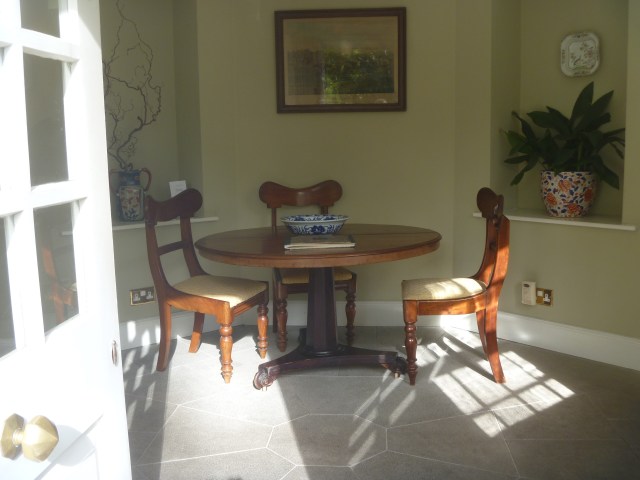
 2 garden room

Among The Lodge’s interesting features is an octagonal garden room, from which the two main rooms, bedroom and sitting room, lead. The kitchen and bathroom are to the rear. The sense of balance and symmetry has been retained, and although when finding a modern use for such buildings, a bathroom and kitchen must inevitably be added, the rear extension has been carefully matched to the proportions of the existing rooms.

 The Irish Landmark Trust officially launched the property to visitors on 15th January 2002.

 Architectural Description

5 the gatelodge

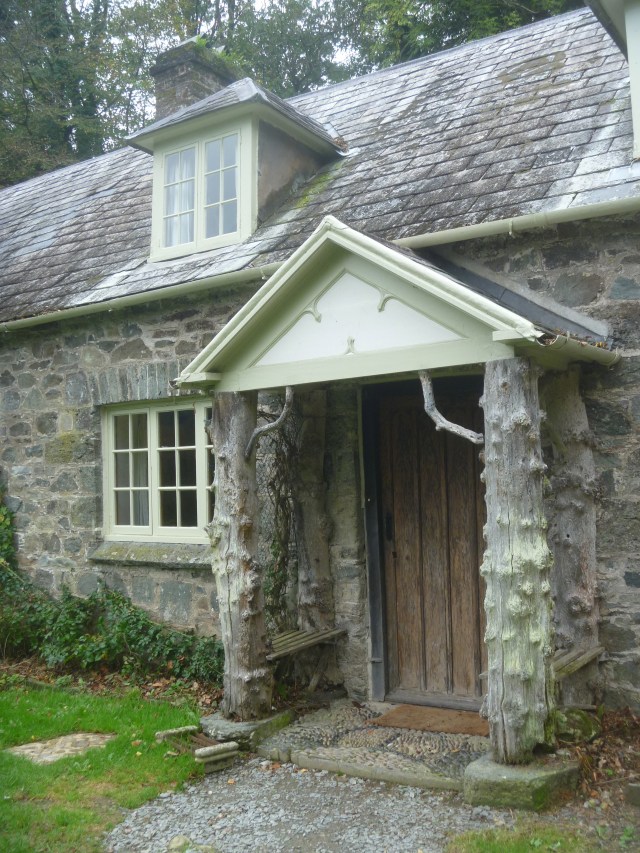
It is a building of fine ashlar stonework and of charming classical proportions. When the Irish Landmark Trust took it on as a restoration project in 1999 the building was roofless, windowless, overgrown and a section of the back wall had collapsed. A considerable amount of repair to the stone was required – its long exposure to the weather and, in places, original bedding of the stone, had resulted in loss of some of the decorative surface of the ashlar blocks.

The restoration works involved the retention and repair of most of the original stone. Fallen facing sections from the surrounding overgrowth were salvaged and reinstated. Three pieces of new stone were required in total and this stone was obtained from small loose blocks in the disused quarry at Lismore Castle – a possible source of the original.
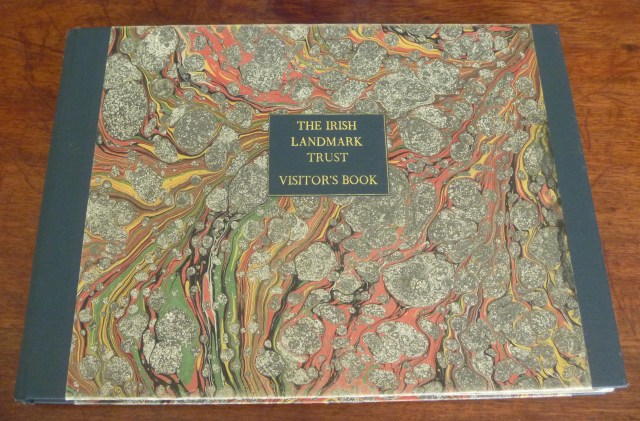
15 visitors book

 The symmetrical layout of the original lodge was retained with a small extension formed to the rear. The fine proportions of the building have been retained. The extension has been finished externally with a lined lime render. Internal walls and ceilings throughout are finished with lime plasters and paints and, with a fine quality of natural light in all rooms, this provides a healthy and pleasing atmosphere throughout.

The carefully crafted work of the masons, joiners, plasterers and other tradespeople involved has brought this formerly ruinous and vulnerable building back to health and restored it to use again.

 Interior Design Notes

The Lodge is simply furnished in an elegant Victorian style using a muted palette throughout and historic colours in a raw pigment limewash. The principal rooms are furnished in a vernacular style using mahogany pieces.
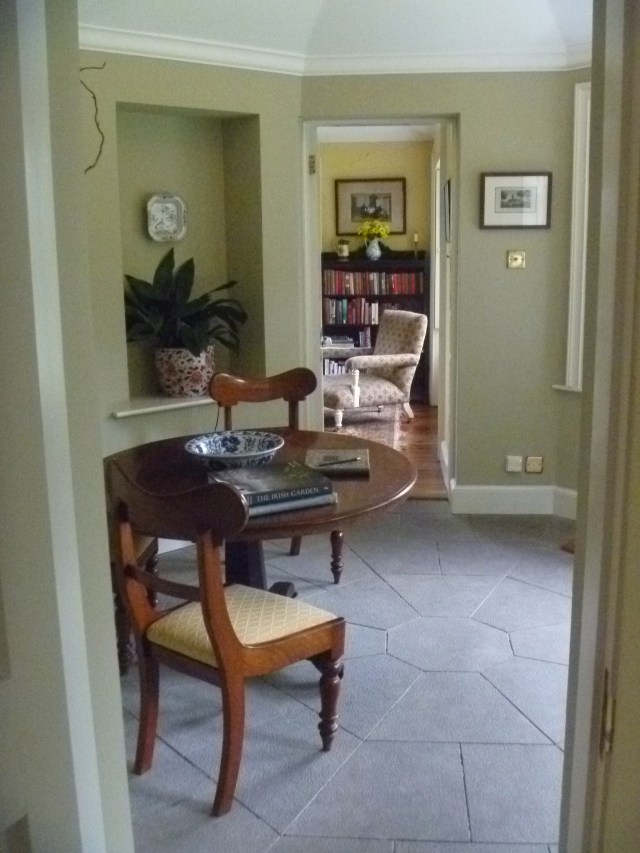
3 Sb garden room

The original entrance hall, now designated “The Garden Room” is apple green, with a round table.
6 bedroom

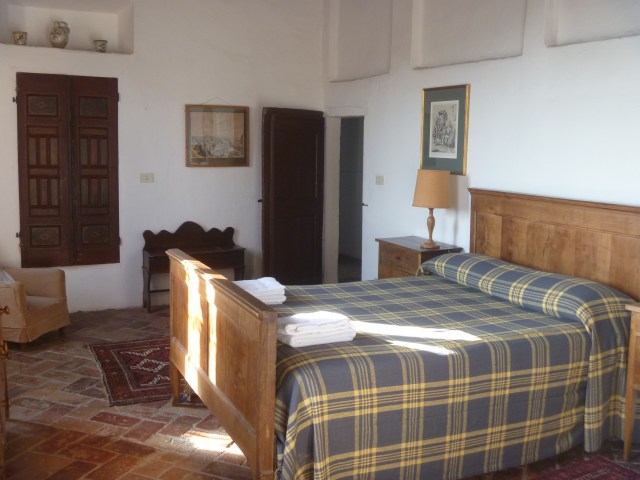
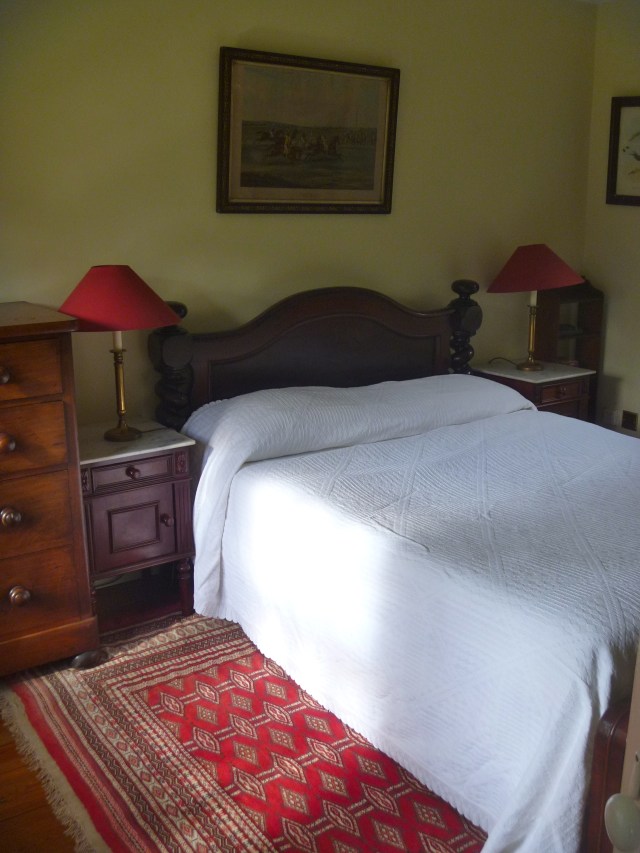
The bedroom is painted off-white and has an early Victorian mahogany double bed with barley twist ends and a traditional handwoven carpet in crimson. The wardrobe, chest of drawers and lockers are plain early Victorian. The shutters have been reinstated in the windows with Holland blinds added.
7 sitting room

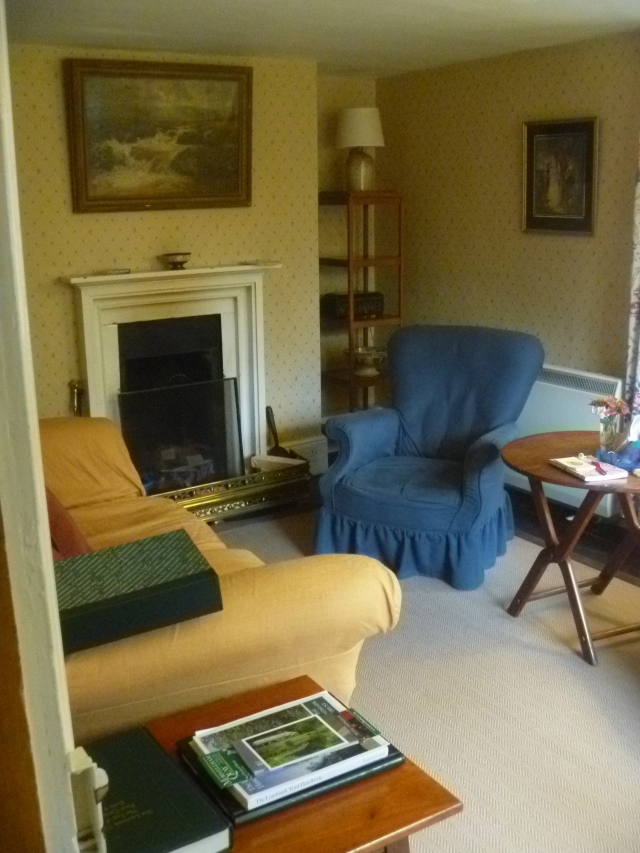
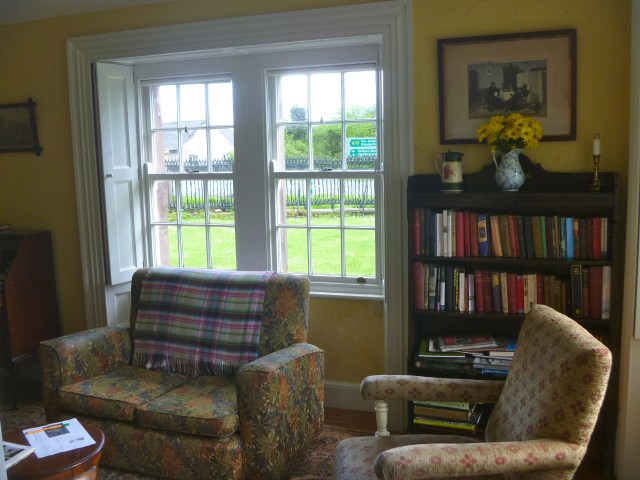
The sitting room is pale yellow with a handwoven carpet in gold and ochre. There is a Regency two-seater sofa and two comfortable chairs. A writing desk stands at the window and a bookshelf completes the furnishings.
8 bathroom

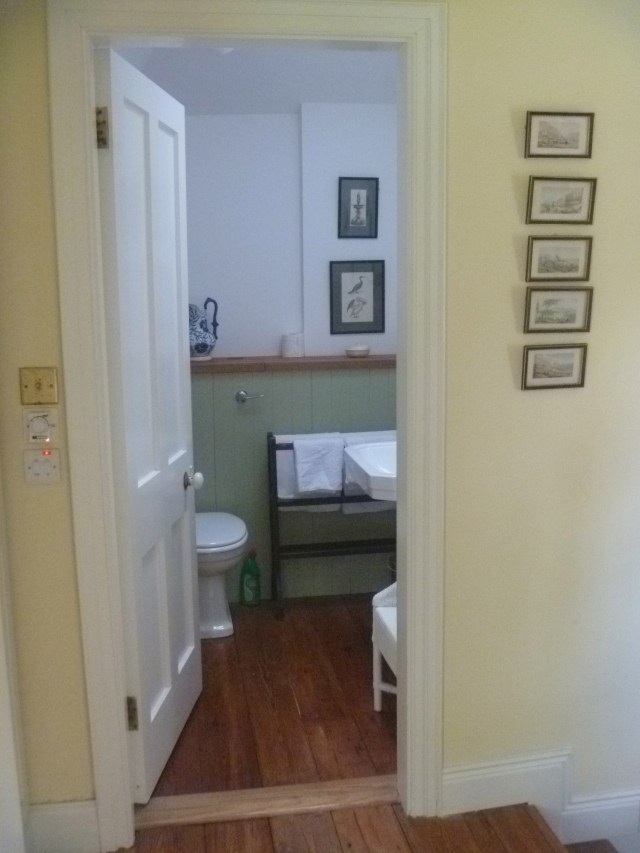
The bathroom is plainly finished in white; and there are timber floors throughout except for the flagged hall.
9 kitchen

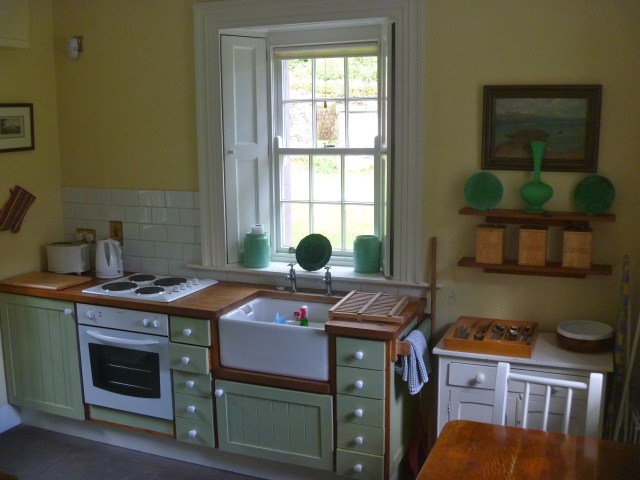
The kitchen is fitted with an oak table and traditional sugan chairs, a traditional dresser, timber counter tops and a Belfast sink. The fittings are blue-green.”
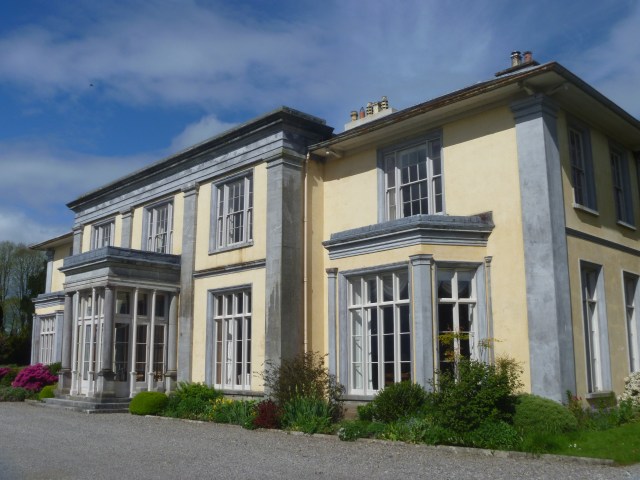
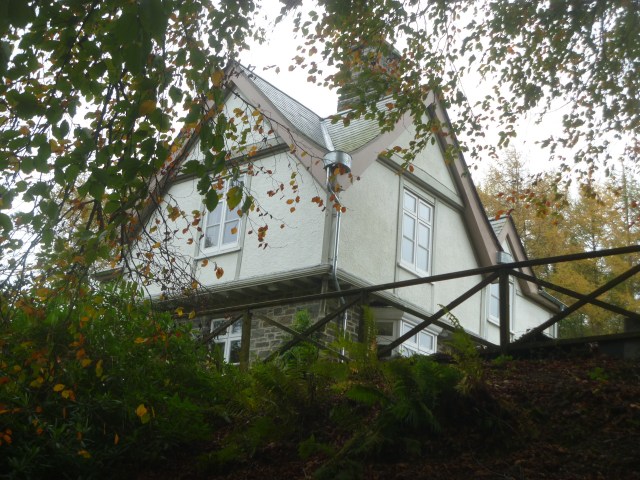
10 Salterbridge House

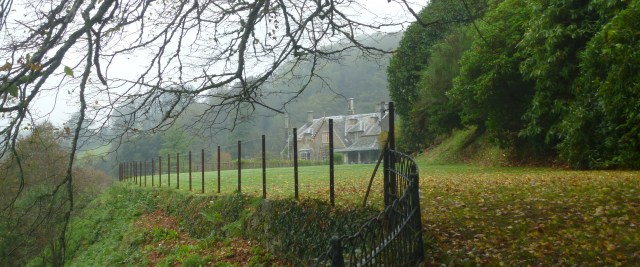
To visit I walked over a mile up the drive to the Big House – Salterbridge House. It’s open this month on a very ad hoc basis.
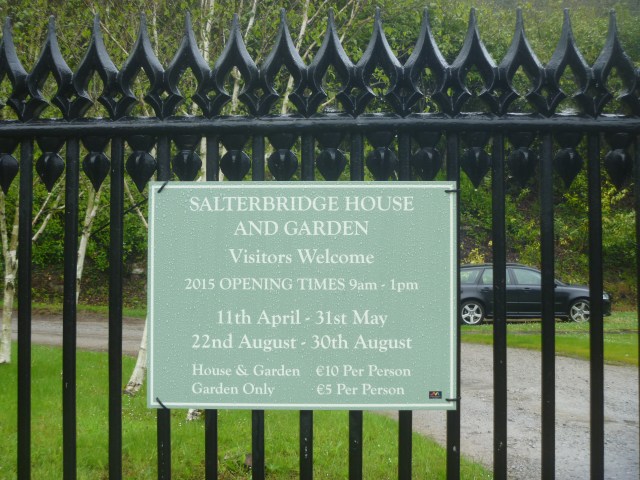
11 opening times

The owners weren’t home and I was shown around by the housekeeper. No photography was allowed but my overall feeling was a big house, not very cosy, but light and airy. Modern day furniture, of course, always looks too small and insignificant in big houses. Its saving grace was a beautiful walnut table in the entrance hall created from a tree from the estate. The book themes are political, historical and military with some modern novels.
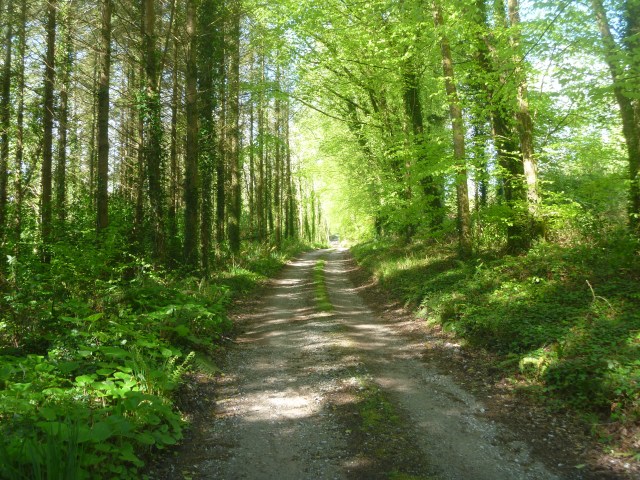
14 1 mile+ track

The Drive to the House

There was a house on the site, built by Richard Musgrave, since about 1750. Through his daughter it was owned by the Chearnley family until 1947. In 1940 it was occupied by the army for a few years and in 1947 it was sold to the present owner’s parents. The house was substantially rebuilt during the 19th century – architect unknown.
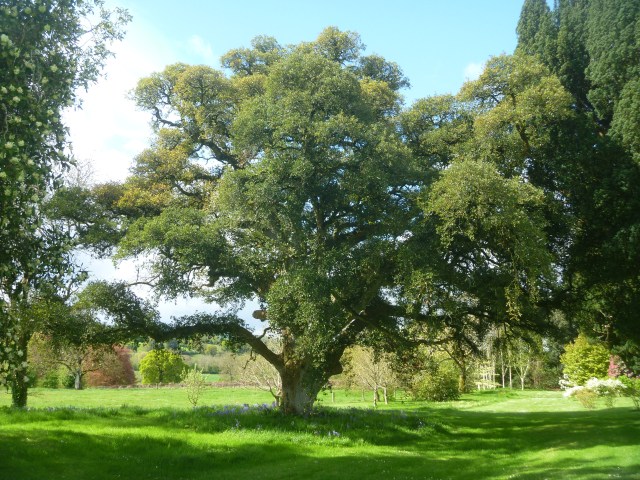
12The Cork Oak

From the garden notes there’s a Cork Oak and four Irish yews. On a grassy area is a “Woodhenge” created by sculptress Rebecca Johnson from a branch of one of the garden’s yew trees.
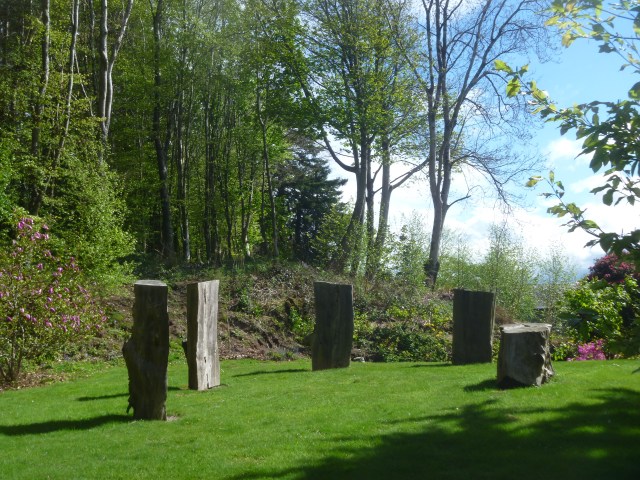
13 woodhenge

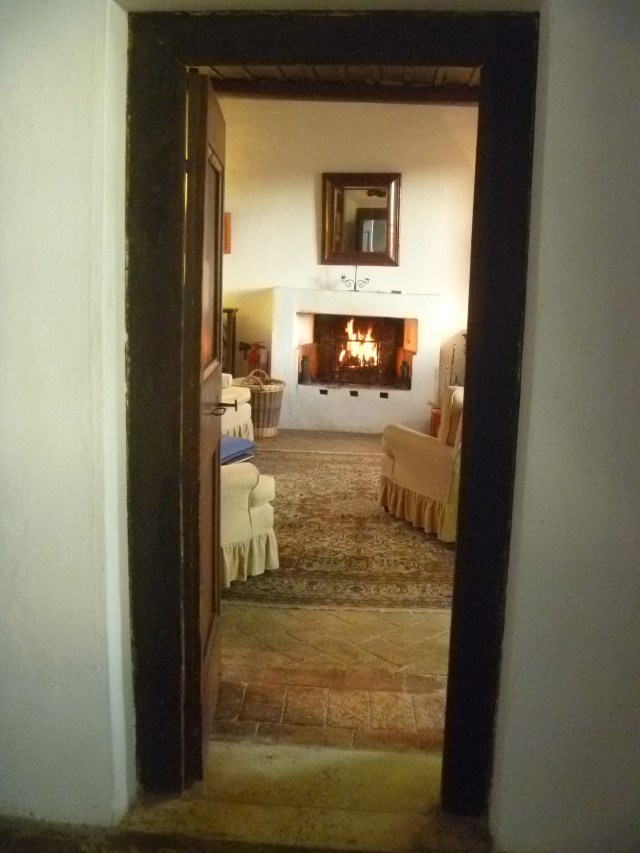
And can you believe it on an evening in May :
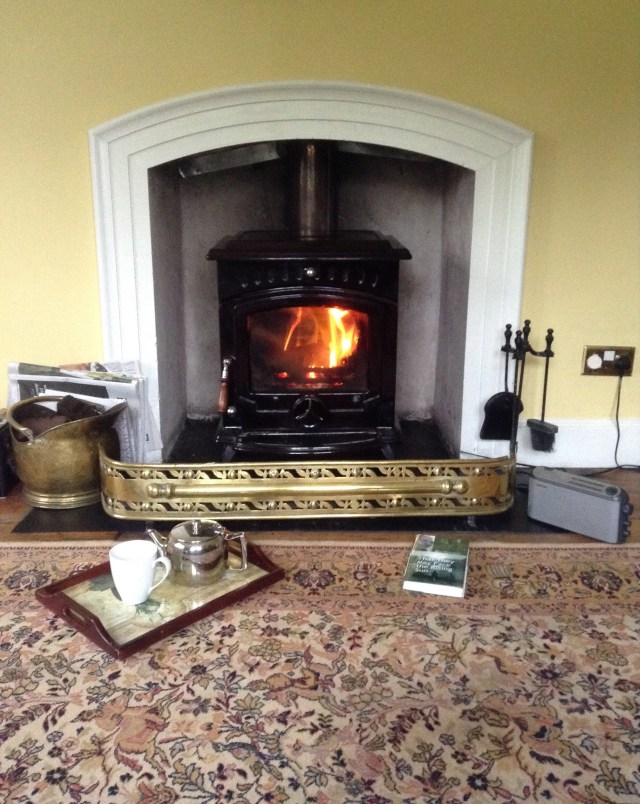
14 fireplace

A Beautiful Oasis of Peace and Tranquility in the Heart of Durham City : Crook Hall and Gardens

Durham Cathedral

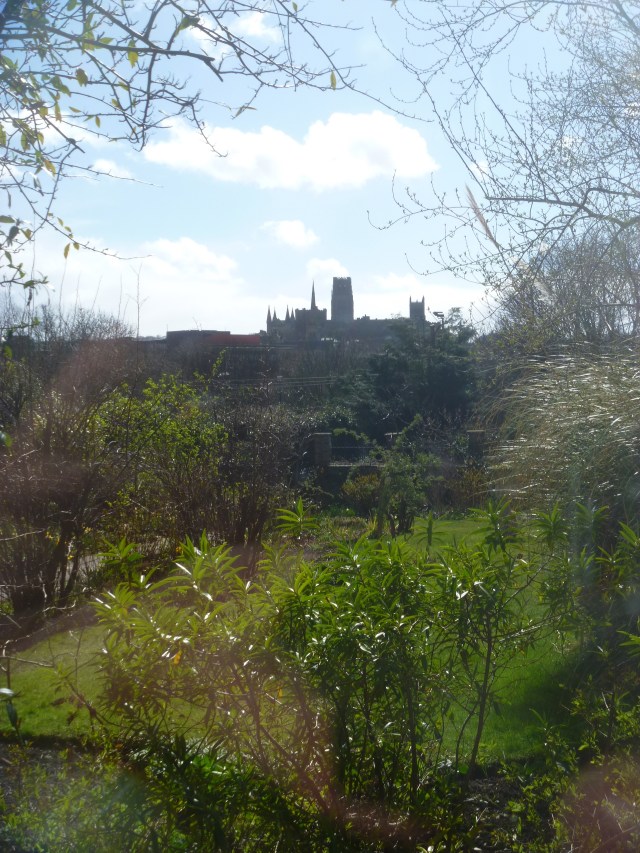
Durham Cathedral from Crook Hall Tea Room

Writing this on a warm sunny Easter Monday it’s hard to believe that last Tuesday in Durham I managed to avoid snow showers whilst meeting a friend from my online book group for a day out at Crook Hall and Gardens in Durham.

Crook Hall

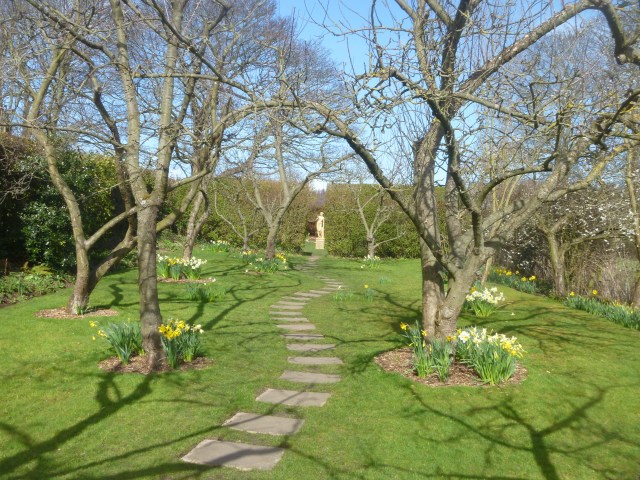
This fascinating house and garden deserve another visit in the summer time when there will be more colour and a less forbidding sky. However, we did manage to visit each garden and delighted in what we saw.

The Hall


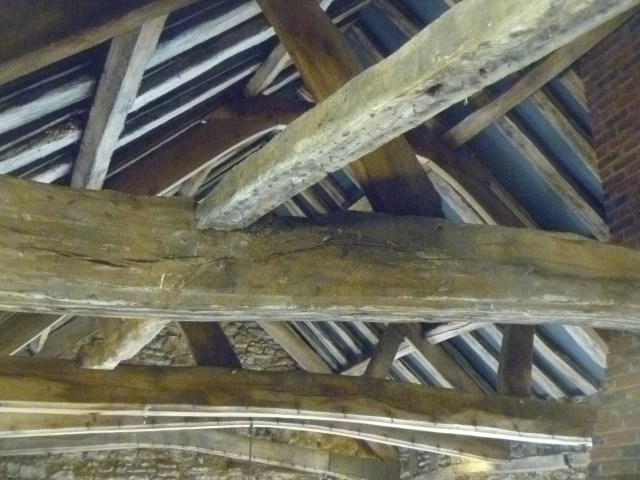
Beams

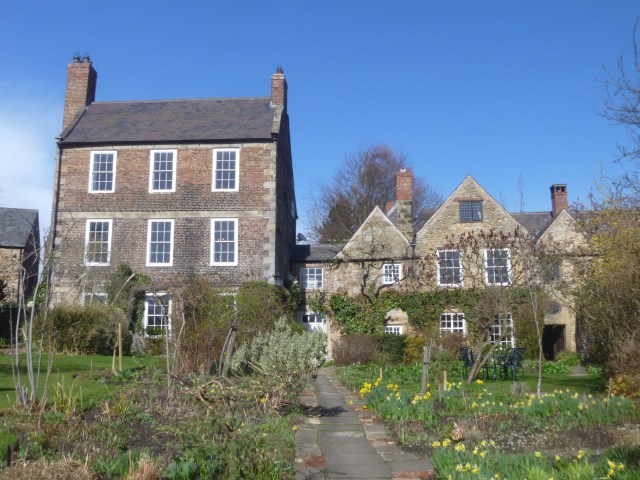
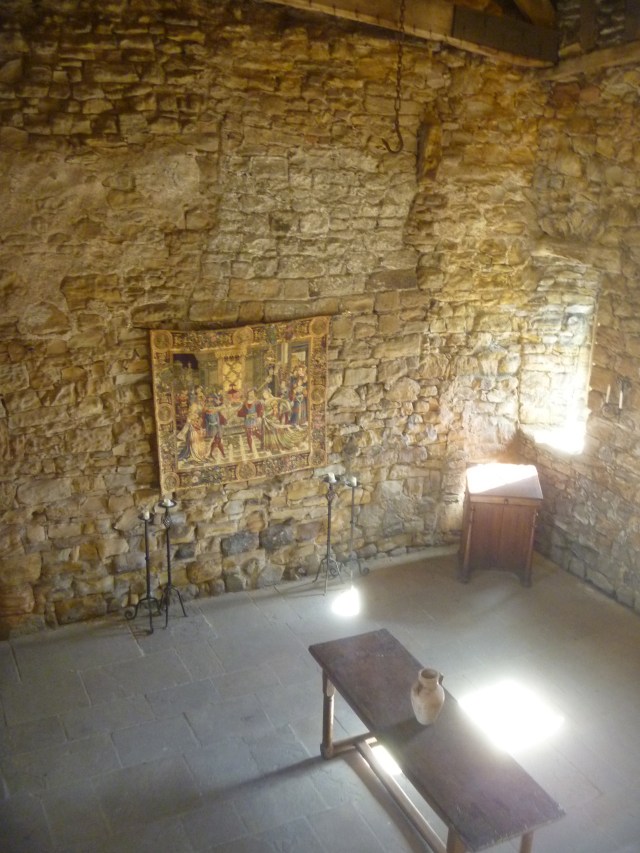
The Hall is 13th century and provides a spectacular backdrop to the stunning gardens. It’s a short walk from the bustling city centre to this oasis of peace. There’s a tea room in the Georgian wing served by the house kitchen and you can visit many of the rooms in the house including the medieval hall with exposed beams.

The Orchard

The Orchard

Shakespeare garden

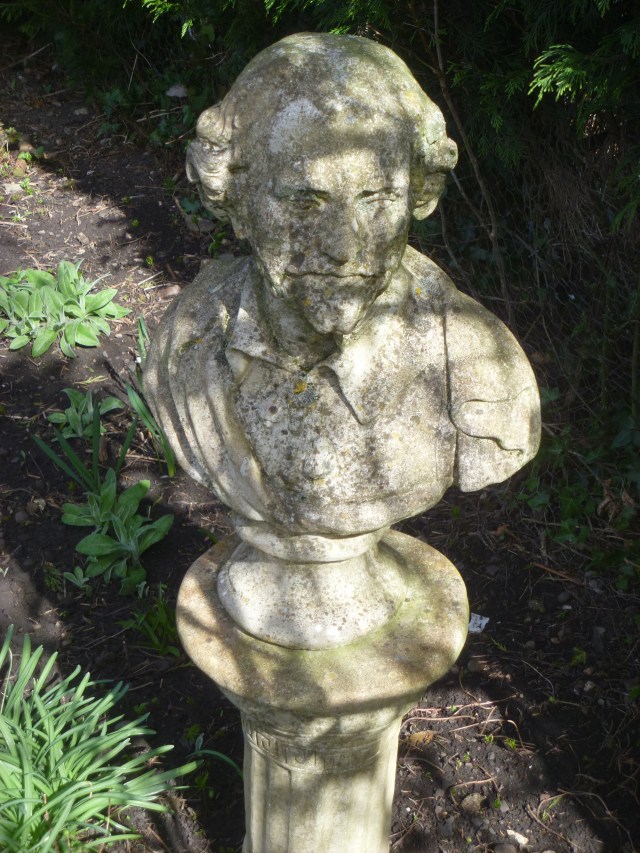
The Shakespeare Garden inspired by a book on plants in Shakespeare’s plays

Shakespeare in his garden

Shakespeare in his garden

Moat

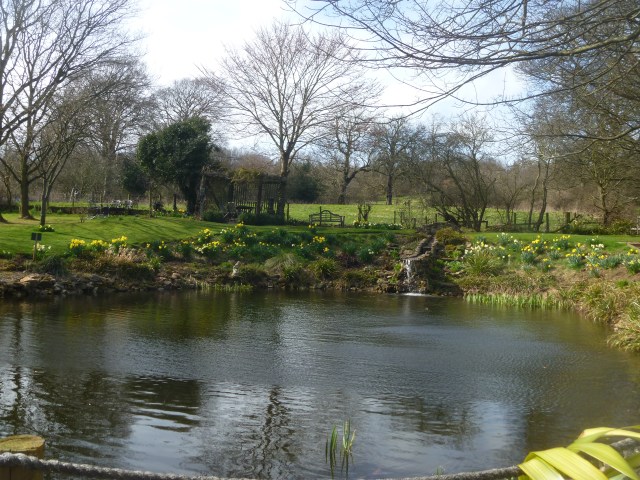
The Moat Pool

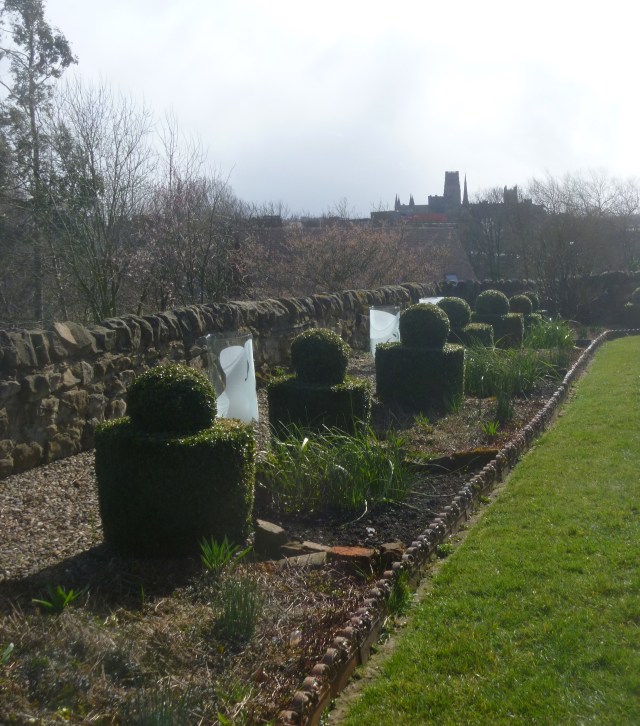
Cathedral garden

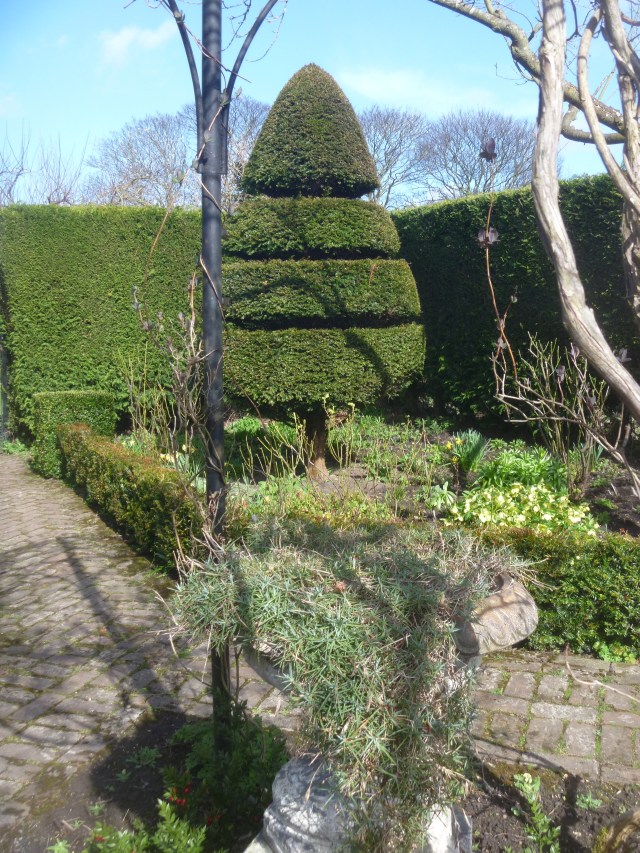
The Cathedral Garden : the beds echo stained glass windows

Monks in garden

Durham Cathedral from the Cathedral Garden: the Topiary Box represent the Monks

Be entertained by Clare Balding as she takes a walk with the owners of Crook Hall and finds out about the history of Crook Hall and Gardens :

Crook Hall on Ramblings

Goethe’s Italian Journey

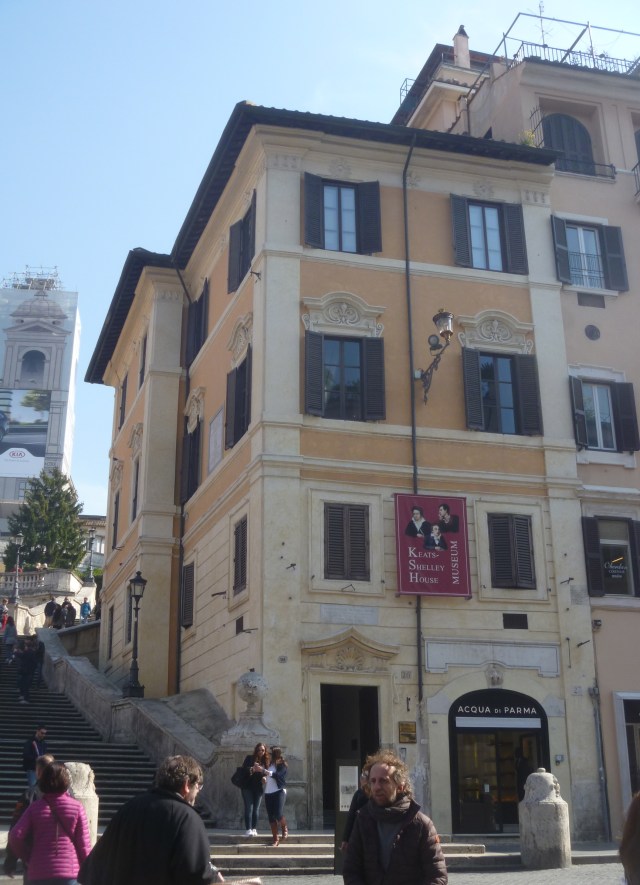
Probably my favourite of the museums and locations I’ve visited in Rome on previous trips is the Keats-Shelley Museum by the Spanish Steps. It’s a quiet oasis of 18th century England amidst the crowds of tourists milling around the Piazza di Spagna. It’s a few years since I was there and I didn’t repeat the visit on this recent trip.

K S House

Keats Shelley House, Rome, on Second Floor with Landmark Trust Apartment Above

Spanish Steps in March

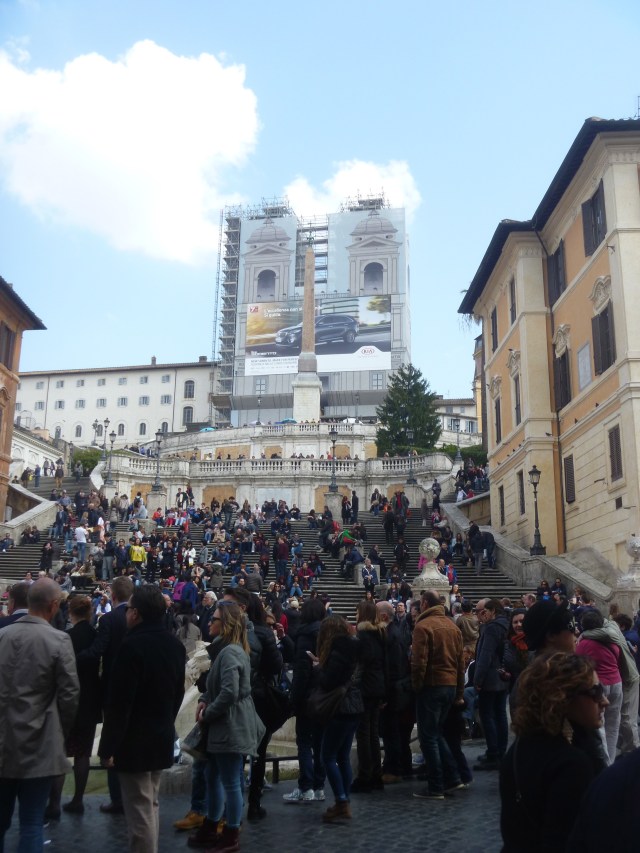
Crowds on the Spanish Steps – in early March

Babbingtons

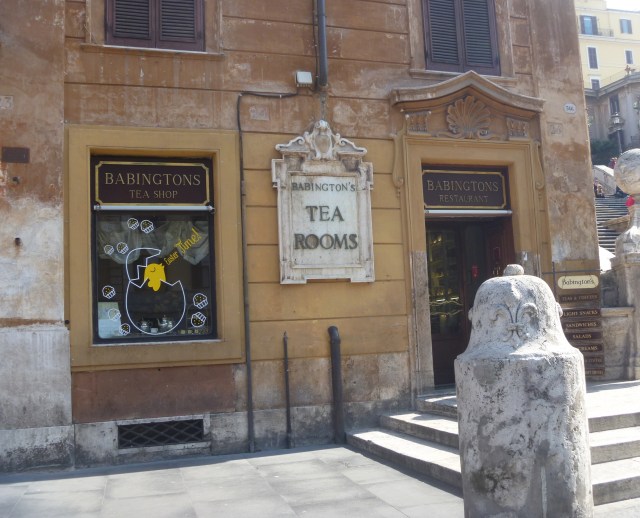
Babington’s English Tea Room by the Spanish Steps

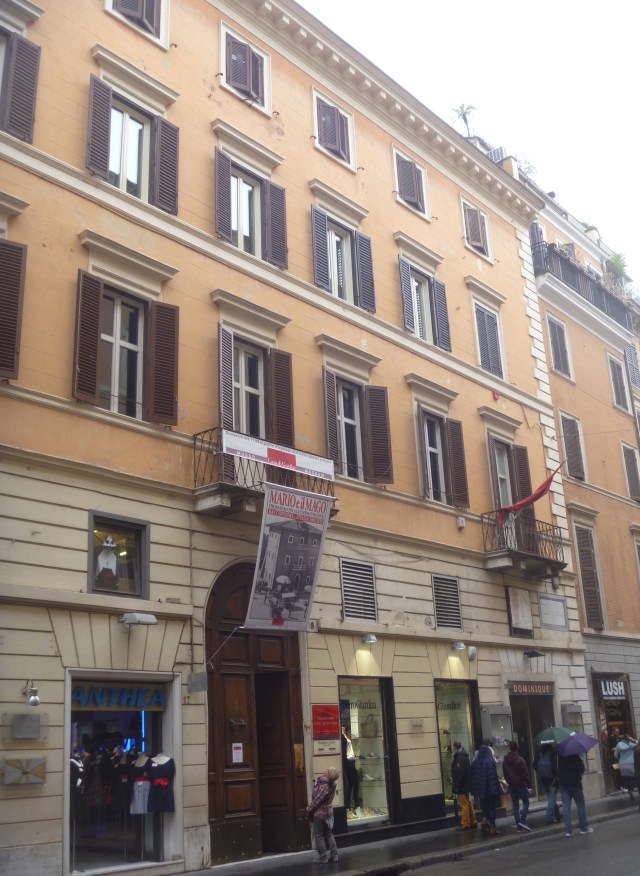
But I did discover the existence of the Casa di Goethe in my LV Guide Bari, Milan, Naples, Rome 2012. So my final port of call in the City of Rome itself (after fortification at Canova) was a visit to the Casa di Goethe on the Via del Corso nearby. I wrote a little bit about Goethe earlier this year. Here is another place of peace and calm and amazingly right on the Via Del Corso.

via del corso

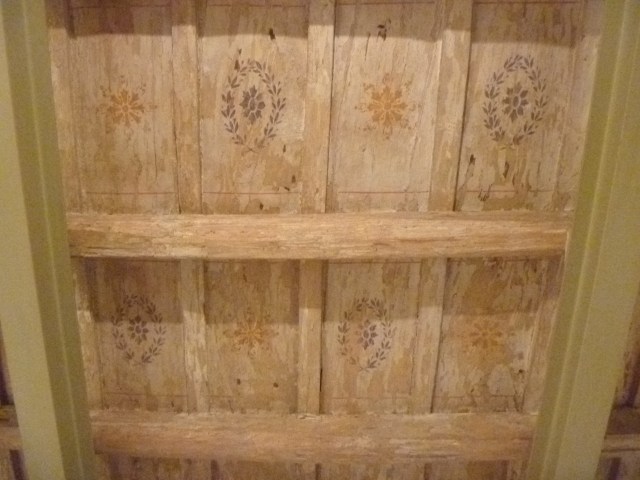
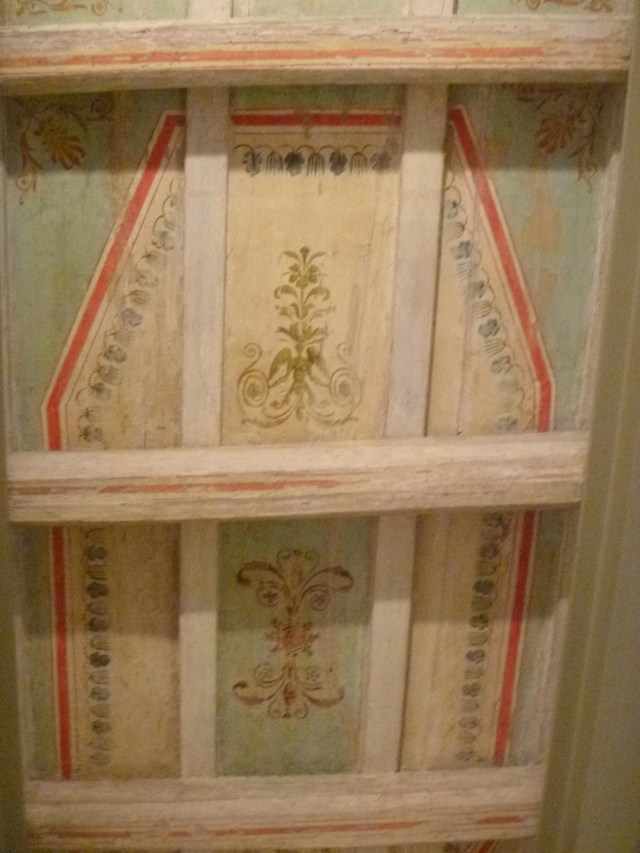
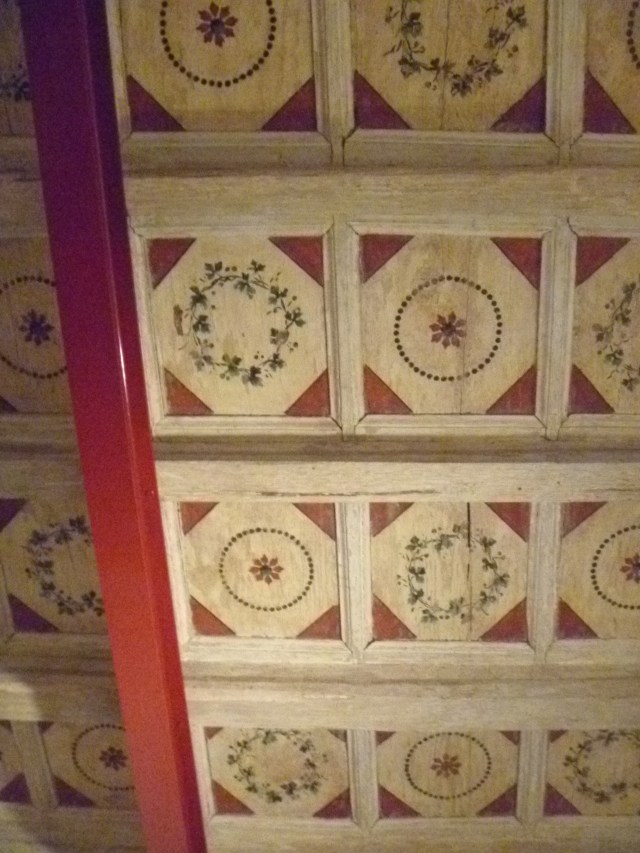
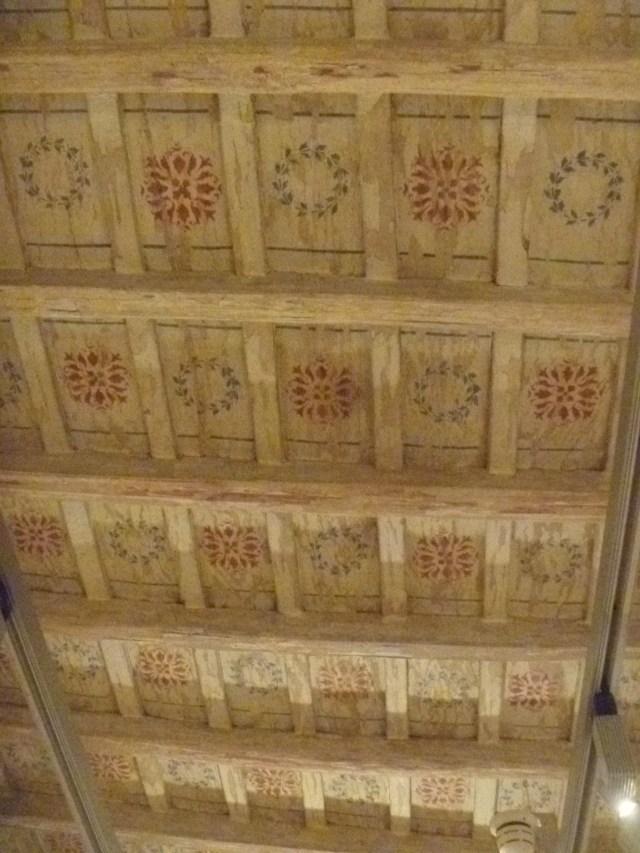
In September 1786, Goethe started out on the longest journey of his life. He was 37 when he achieved his dream of visiting Italy. He later wrote in his journal “Italienische Reise”, that he had spent the happiest period of his life there. On his arrival in Rome he stayed on the Via del Corso with his painter friend Johann Heinrich Wilhelm Tischbein, scion of a dynasty of renowned artists. This huge apartment, which gives onto the Piazza Del Popolo, is still redolent of Goethe’s time here during his Grand Tour of 18th-century Italy. It has superbly painted coffered ceilings which are set off by the white of the walls. On display are writings, letters, annotations, and drawings, as well as the paintings of his friend Tischbein.

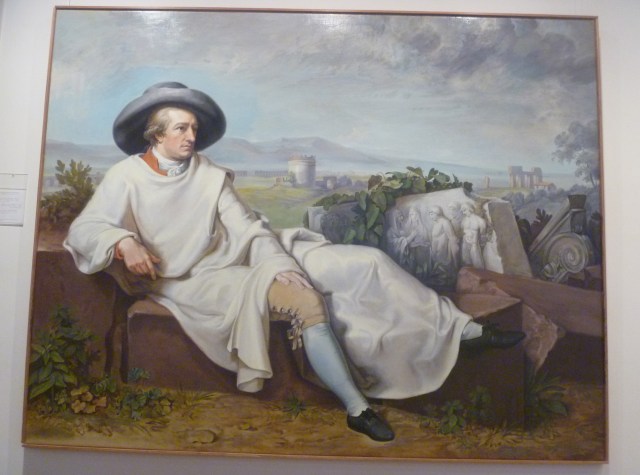
g in roman countryside

The most famous of them, Goethe in the Roman Campagna, was painted on this very spot in 1787, although the version seen here is only a copy, the original being in the Staedelsches Kunstmuseum in Frankfurt. It never fails to impress all the same. This sumptuous collection of artworks and documentary material gives us an idea of what the journey to Italy meant at the time for artists and cultivated travellers. The Casa di Goethe also offers temporary exhibitions that encourage German-Italian cultural relations. By appointment it’s possible to visit the Library which holds a number of first editions of Goethe’s work.” [LV Guide Rome 2012]

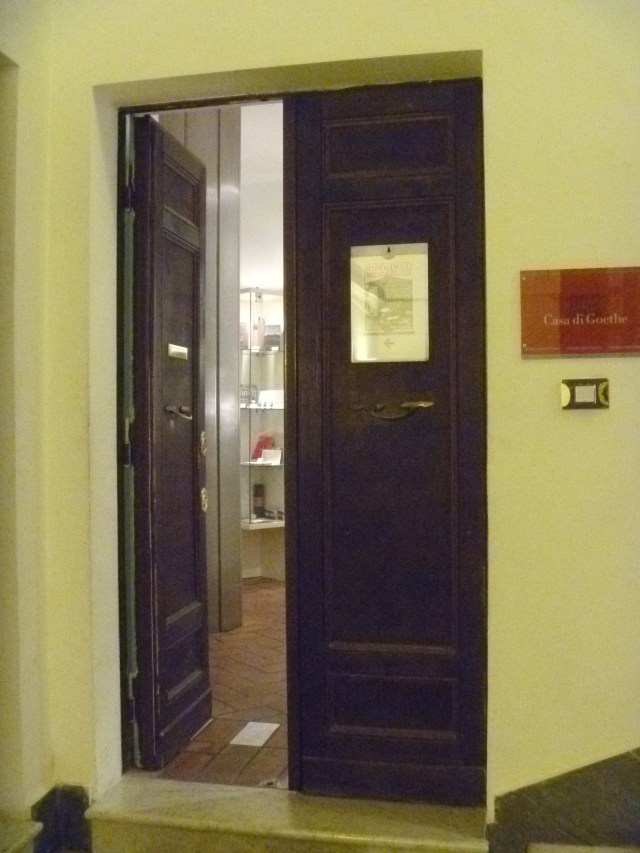
welcome

Welcome to the Casa!

This is the only German Museum on foreign soil and it was opened to the public in 1997 with support of the German Government and German cultural associations. Regular events are held here – readings, lectures, conferences, discussions and concerts – followed by gatherings and discussions in the library over a glass of wine. The Museum is also able to offer scholarships (sponsored by DaimlerChrysler) to literary figures, publishers, scientists, translators, and artists, allowing them to spend a few months in Rome collecting ideas and inspiration for their own work or finishing off projects. The work doesn’t have to be related to Goethe.

library

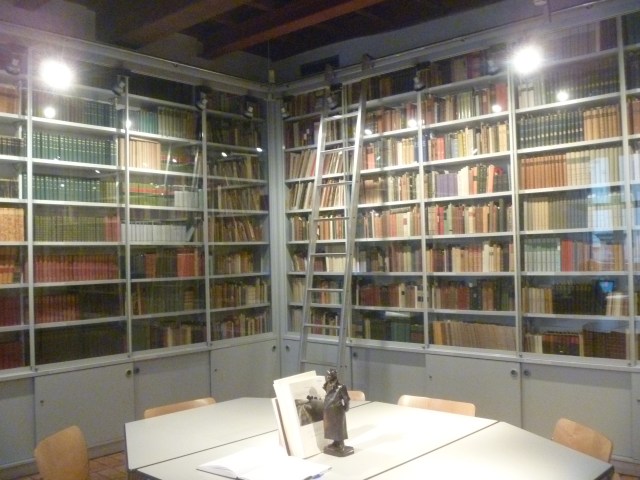
Goethe Library in Rome

The first few rooms are dedicated to the temporary exhibitions; currently Thomas Mann and his Italian novella Mario and the Magician. Displays relate to the historical and political background as it was written during the rise of Nazism and Fascism. The notes were all in German and as time was tight I didn’t spend much time in these rooms but moved on to the rooms occupied by Goethe at the front of the building.

ceiling 1

ceiling 2

ceiling 3

ceiling 4

Painted Coffered Ceilings

The restored painted wooden ceilings, which date back to Goethe’s time, contrast well with the pale walls which show off the displays and pictures. No furniture or furnishings dating back to Goethe’s time here. To me they are reminiscent of Swiss and German chalet decorations.

I was glad that I bought the excellent illustrated guide book. The first section, as in the rooms themselves, tells the story of Goethe’s time in Rome and Italy. There then follow pages of quotations by Goethe himself from his letters and his journal Italian Journey and by his friends and colleagues. Many of these quotations also accompany the room displays.

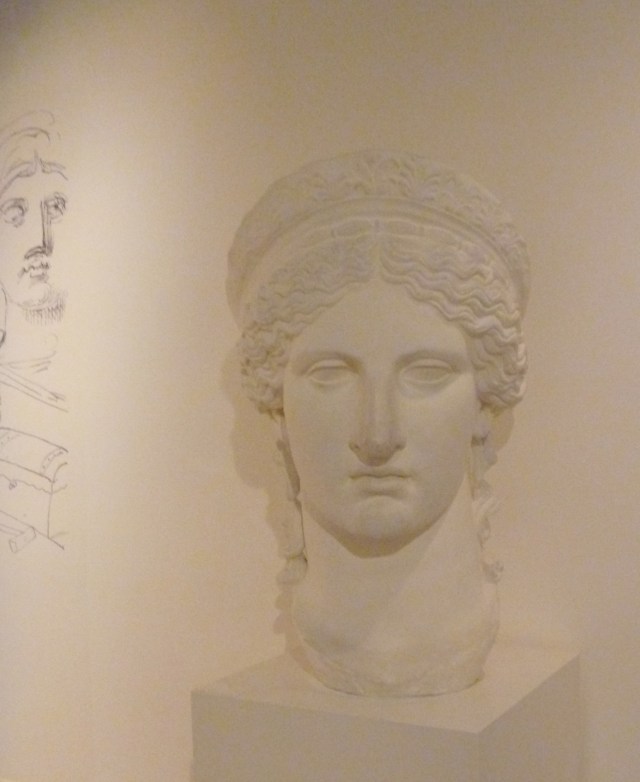
cast of jupiter

“I could not resist buying the cast of a colossal head of Jupiter . It now stands in a good light facing my bed, so that I can say prayers to him the first thing in the morning.” (Italian journey 25 December 1786

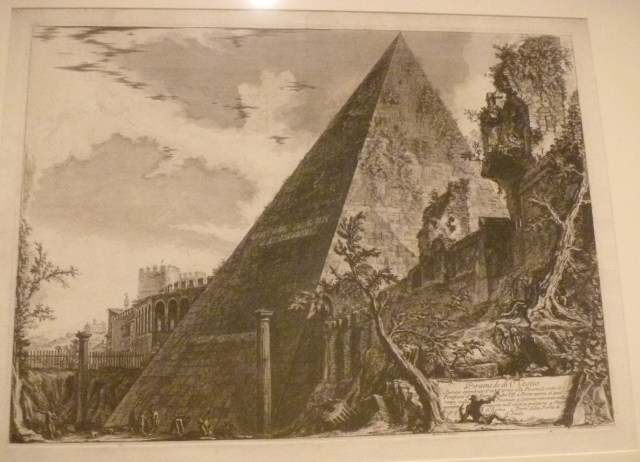
Piranesi print

Piranesi Print of the Caius Cestius Pyramid

“Water pipes, baths, theatres, amphitheatres, the stadium, temples! And then the palaces of the Ceasars , the graves of the great – with these images I have fed and strengthened my mind.” to Carl Ludwig von Knebel 17 November 1786

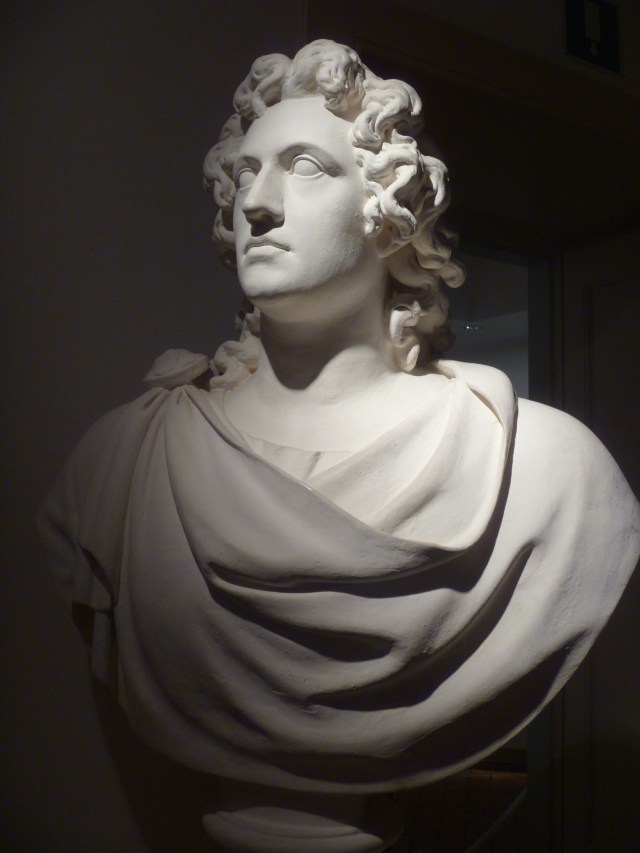
bust by trippel

1787 bust of J. W. v. Goethe by Alexander Trippel

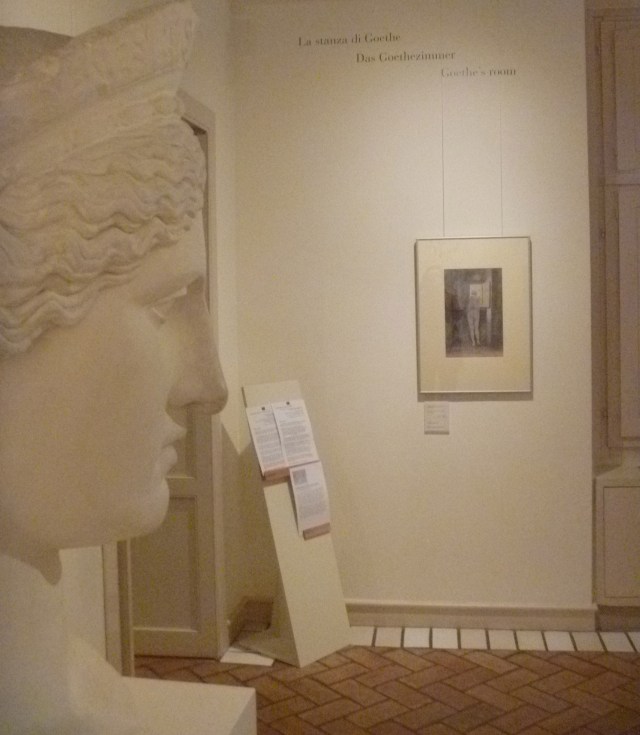
In goethe's room

Goethe’s Room

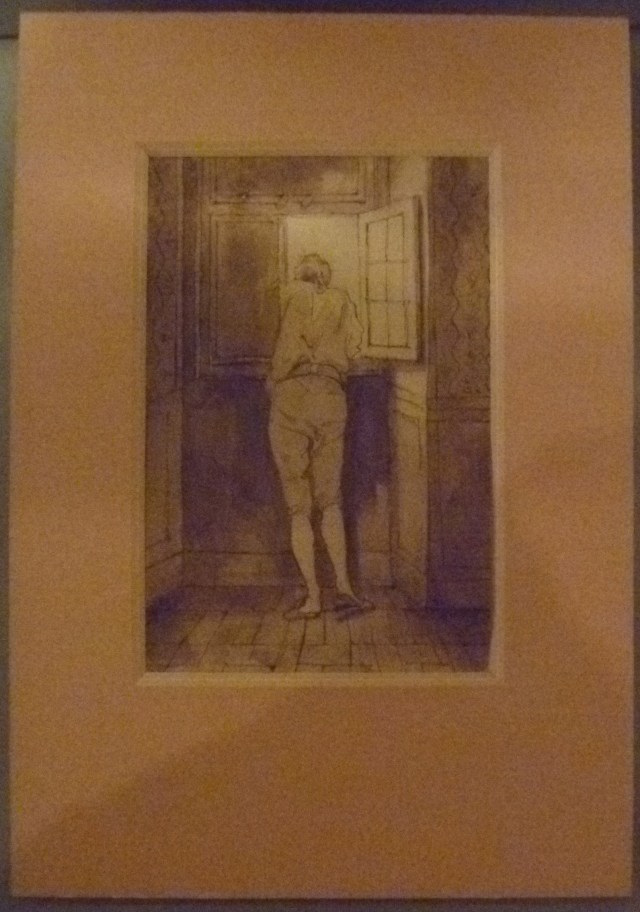
G at window

Tischbein ‘s watercolour of Goethe at the window

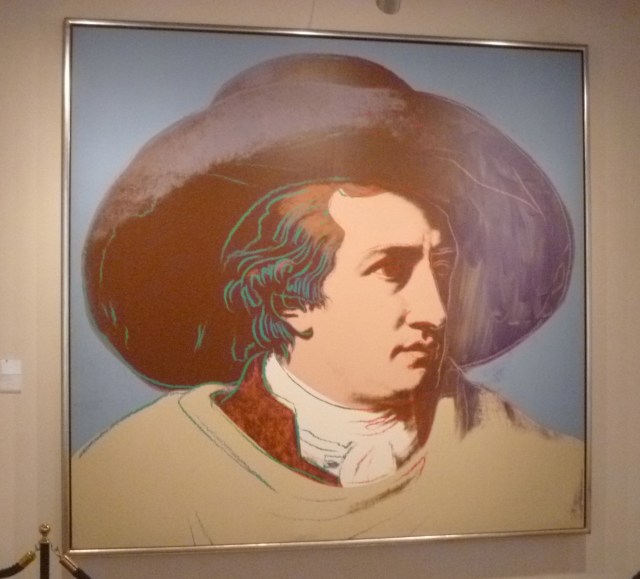
1991 and 1992 were excellent years for the acquisition of many Goethe related papers, books and artefacts by the Casa including the Andy Warhol iconic contemporary adaptation of Tischbein ‘s portrait. Also some autographs of Goethe’s including a letter card written in his own hand and giving his rome address and the Goethe library of publisher Richard Dorn.

Warhol

Screen Print and Acrylic on Linen 1982

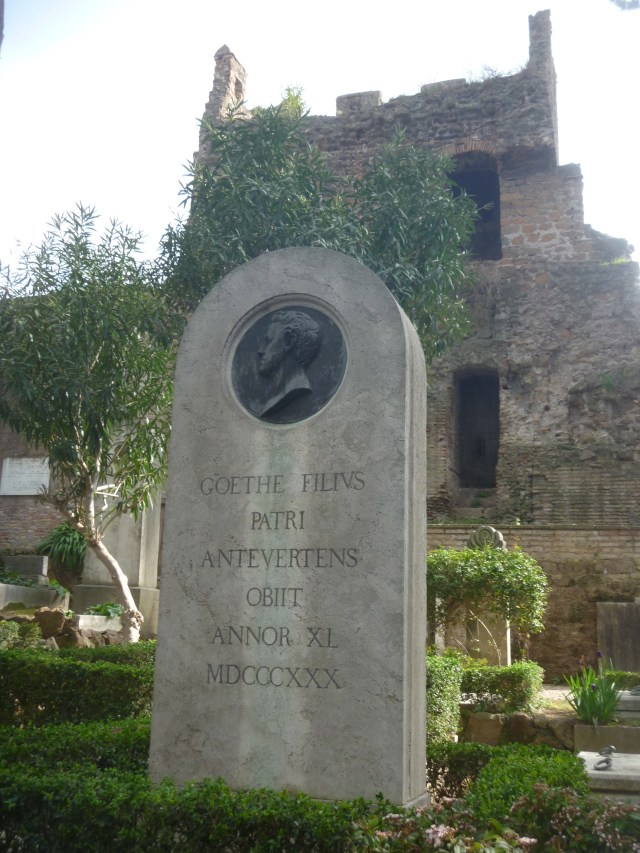
At the very end of the guide book is a list of museums and memorials to Goethe in both Italy and in Germany. Amongst those listed is the grave of his son, August, in the Protestant Cemetery. Interestingly, even though he was an adult at death his father arranged for the following to be inscribed on his gravestone.

GOETHE FILIVS / PATRI / ANTEVERTENS / Obiit / Annor [VM] XL / MDCCCXXX (Goethe’s son / father / above / died / 40 years / 1830)

August Goethe


At Horace’s House : Sant’ Antonio, Tivoli

Sant' Antonio

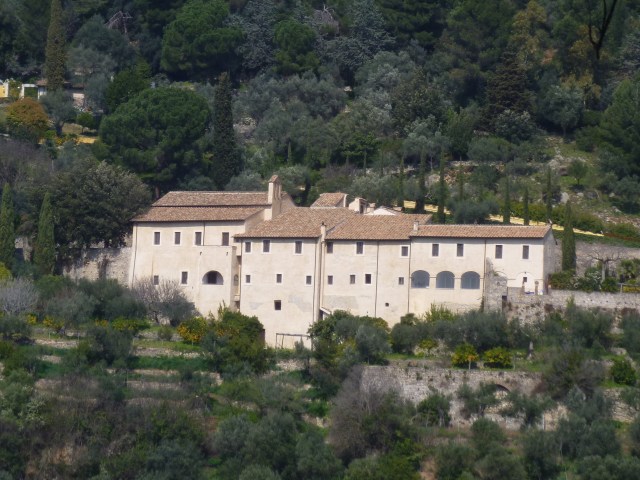
In the summer of 2013 I had the great good luck to be offered a room and to stay with fellow Landmarkers in the Italian countryside near Tivoli, about 20 miles northeast of Rome. I leapt at the chance and finally last week the trip became a reality. I have just spent a fabulous week at Sant’ Antonio and made a few excursions too when I could manage to drag myself away from this wonderful old house.

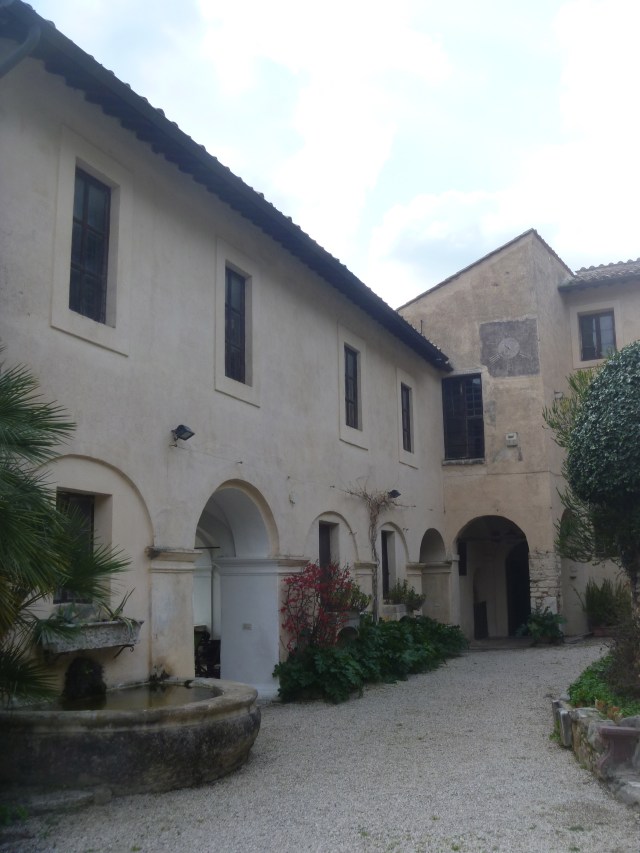
According to the History Album Sant’ Antonio was built around 100 BC.  The upper parts were rebuilt in the late 16th and early 17th centuries: the monastery between 1583 and 1590; the east wing about 1625 and the church in 1647. It was acquired for preservation by Frederick Searle in 1879. The present owner, Vicomte Roger de Brisis, is his descendant but Sant’ Antonio has been managed by The Landmark Trust since 1995. It consists of a medieval monastery grafted onto a Roman villa of the time of Caesar Augustus, or maybe even before. It was rescued from abandon in 1879 by an Englishman newly returned from West Indies.

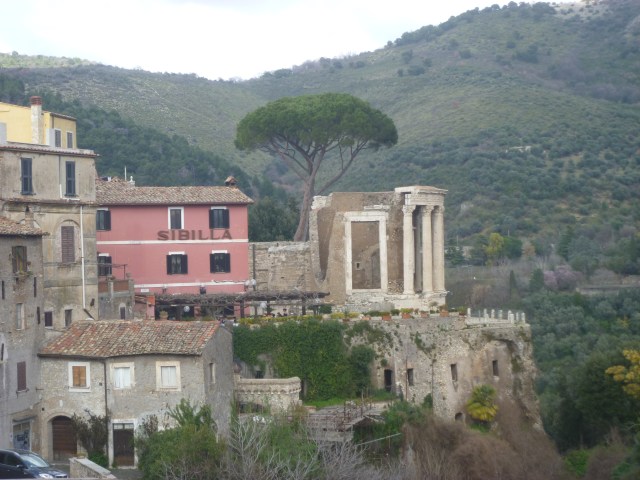
vesta temple

Temple of Vesta, Tivoli

A well-founded belief is that a frequent guest, if not an early owner, was the poet Horace. Across the ravine thunders the water of Anio, with temples of Vesta and the Sibyl poised above it. All these on the outskirts of Tivoli, the Roman Tibur, and you are approaching something very near the heart of the civilisation that has moulded Europe for two millennia.

It is fitting that the revival of this place should have fallen to an Englishman, because those two names – Horace and Tivoli have a particular resonance for his countrymen. From the Middle Ages , English boys learned their reading and writing by means of Horace’s Odes and Satires, along with the works of Virgil and other writers of the Augustan Age. Only in the late 20th century has academic education ceased to be built on these cornerstones.

In the 17th century Englishmen first began to visit Italy in large numbers and carried its influence home in the most direct manner, in their paintings, and their buildings and their gardens. The dramatic influence of Tivoli appealed strongly to painters, notably the great French creators of an ideal classical world: Claud Lorrain and Gaspard Dughet. The English imitators eg Richard Wilson, followed them here. Writers like Joseph Addison sought the places which the best paintings might be composed and the. Murmured to themselves of “Tivoli’s delightful shades and Anio rolling in cascades.”

In 1879 Frederick Searle was searching for a place to sketch the waterfall when he first saw Sant’ Antonio – “La casa di Orazio”. He made it his home; spent 20 years renovating and repairing it and encouraged scholars and archaeologists to share his discoveries. His daughter Georgina and her husband George Hallam and then her great-niece Lucy d’Aihaud de Brisis continued the tradition. In this generation Count Roger de Brisis took on the care of Sant’ Atonio and with Landmark’s help has made it possible for guests to stay here. Sant’ Antonio has long enjoyed the soubriquet ‘Horace’s Villa’ . There are several schools of thought relating to whether Horace lived here or not. It is known through the writings of Suetonius that Horace lived in Tibur (Tivoli).

The Sant’ Antonio History Album goes on to give various scholars’ opinions on the exact location of Horace’s Villa but I like to think that it was Sant’ Antonio and unless some future academic gives me proof to the contrary I will stick with this theory and the celebrity link with the house.

The Franciscan Friars took over the remains of a Roman villa – it had continued operating as a villa farm – with ample storage spaces, good water supply and fertile terraces. By becoming a monastery its survival was ensured for a further five centuries. Sant’ Antonio was a monastery complex of the lesser kind; common in the mountains of central Italy. The little church of this monastery is still an object of devotion for the many Catholics of the town. The feast day of St Anthony is 13 June.

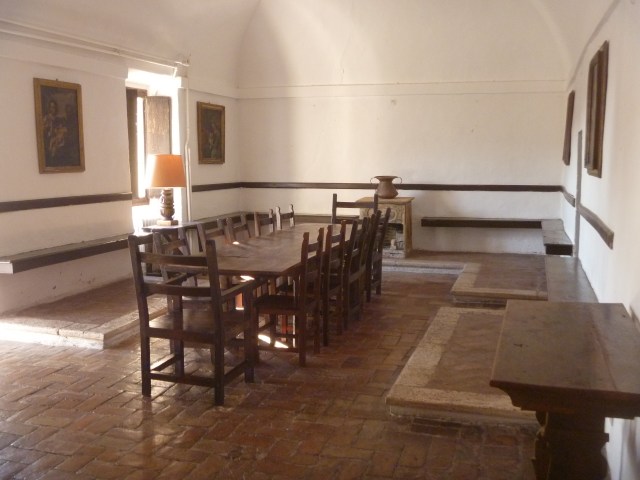
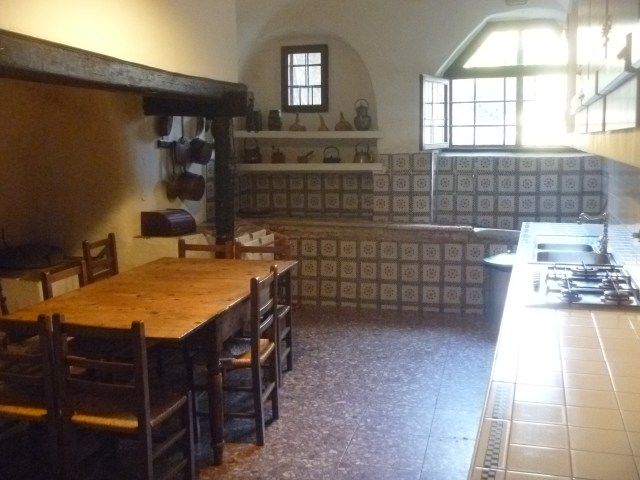
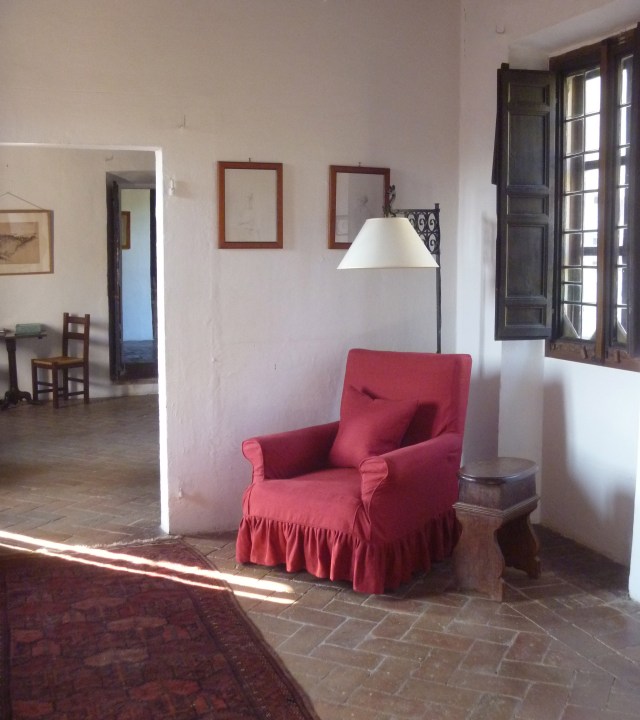
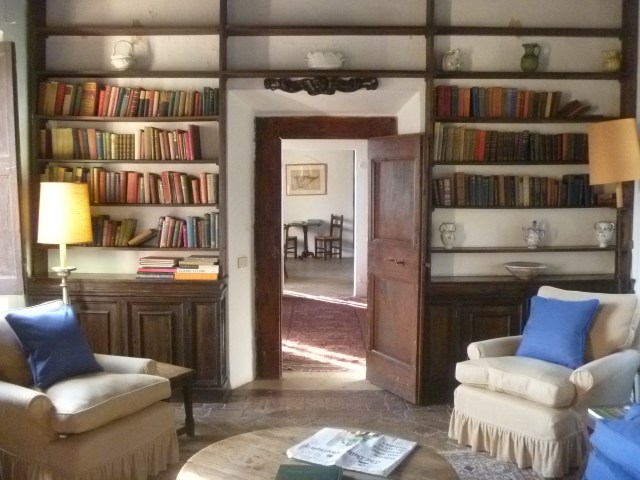
Having read details of the architectural plans of the monastery it would appear that the arrangement of the rooms and their various uses has changed little over the centuries. We dined in the Refectory, cooked in the kitchen, slept in the monks’ cells (the numbers still painted on the doors) off long wide corridors decorated with church ornaments, crucifixes and reliquaries. Our sitting rooms – a range of three – occupy a northeast projecting wing. The main floors are of rectangular terracotta bricks laid in coursed and herringbone patterns with borders, a technique common to Italy. The small casement windows are a rare feature to have lasted so long in Italy, the details of the dark unpainted wood, the panes of glass and their fixings, and the modest catches all being precious survivals.

Welcome to Sant’ Antonio – come and have a look inside.

Refectory

The Refectory

kitchen

The Kitchen

Roman wall in kitchen

Roman Wall in the Kitchen

a dble room

A Double Bedroom with Herringbone Pattern Floor

Twin bedroom

A Twin Room with Sitting Area

Upper floor

Upper Corridor

lower floor

Lower Corridor

reliquary

One of the Reliquaries

sitting room

The Sitting Room

a reading corner

A Quiet Reading Corner

sitting rm

Three Sitting Rooms

Anio falls and window

The “Anio Rolling In Cascades” seen through a Casement Window

SA Garden

Former Main Entrance now Rear Door into the Garden

Main Entrance

Today’s Entrance Approached from the Main Road

Staying at Mr Peake’s House

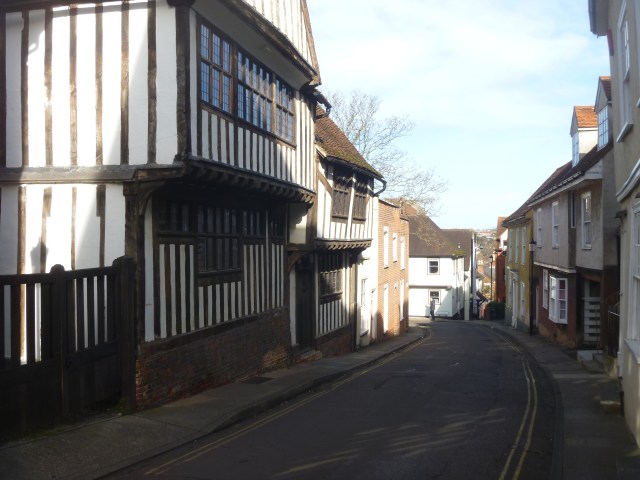
It’s not easy driving in Colchester. Even with very concise instructions as to how to reach the Landmark Trust’s Peake’s House we managed to take wrong turnings and narrowly missed driving in a bus lane. It was a big relief to reverse the car into the parking space provided and leave it there for the rest of our stay.

Stockwell Street

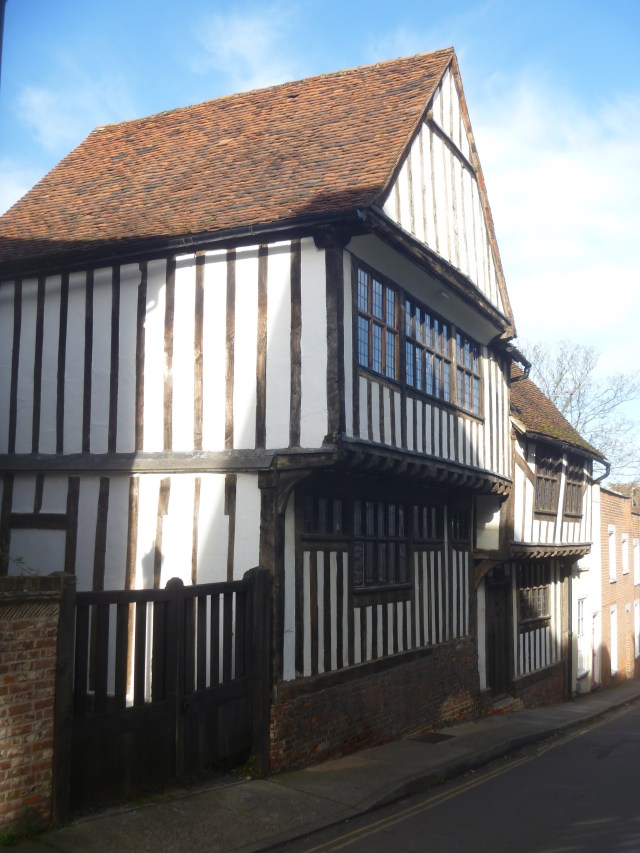
East Stockwell Street, Colchester. Peake’s House is the timbered building on the left.

Here’s what the Trust say about it :

“Originally three cottages at the centre of Colchester’s cloth trade, the long mullioned windows were designed to give light to the weavers at their looms. It is a snug retreat from which you can explore the historic town surrounding you.

Peake's House

Peake’s House stands in the Dutch Quarter, north of the High Street, which has retained its old layout as well as many of its older houses, making its atmospheric streets a delight to wander. Here Flemish weavers settled in the 1570s, driven into exile by religious persecution.

The satisfying, late-Elizabethan interiors of this merchant’s house provide a particularly atmospheric existence within its walls. Workmanly, evenly set wall timbers inside and out give the house its character. The interiors of Peake’s House have barely changed since those weavers made themselves a prosperous new life.”

Mr Peake had been the last owner before he generously gave it to the Borough Council in 1946, specifying that it was to be used for social and cultural purposes only. The Landmark Trust secured a 99 year lease on the house in 1995. A detailed history can be read on the Trust’s website.

Here is a brief tour of this wonderful old house:

peakes-house-2

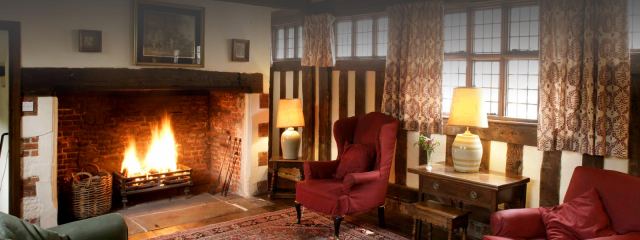
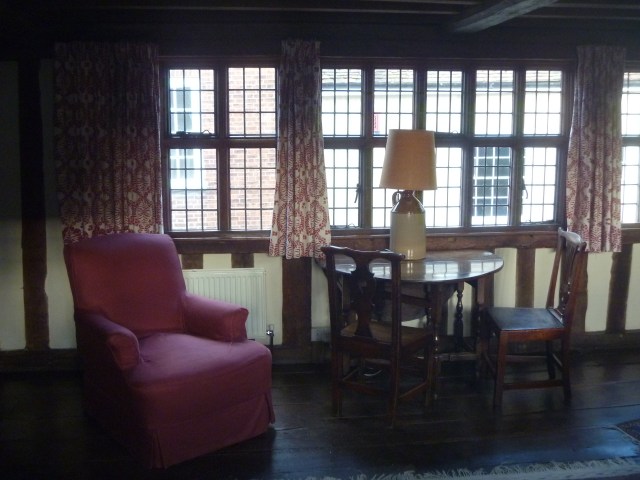
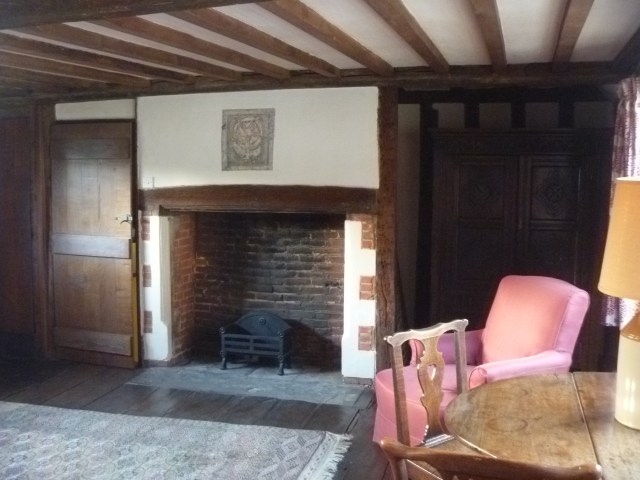
Sitting Room with Large Inglenook Fireplace [source]

PH logbook fire

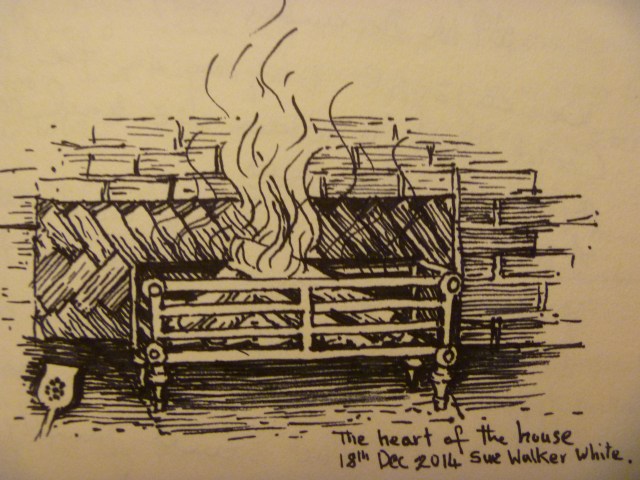
Log Book Fire

PH Library

The Landmark Library (rather dimly lit)

Peake's House Table

Peake's House kitchen

Welcoming, fully equipped kitchen

Kitchen Clock

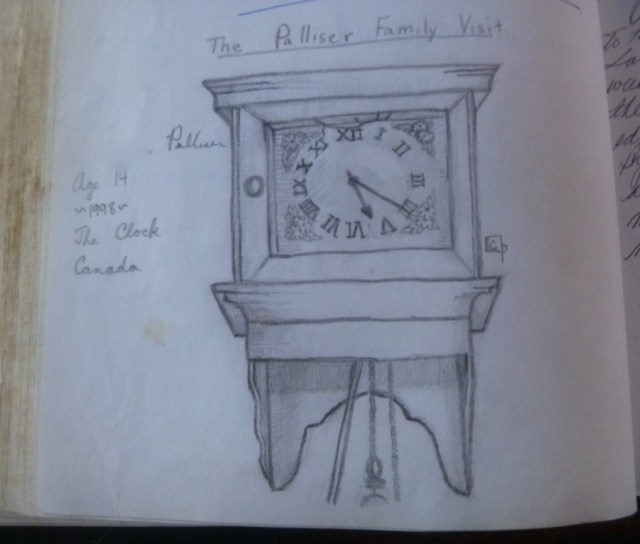
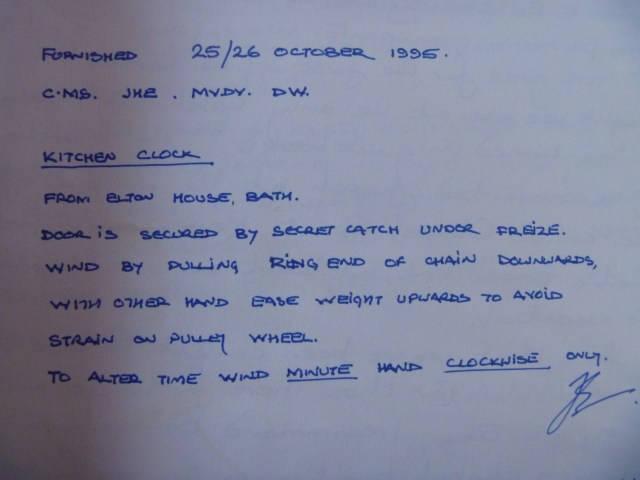
The Clock was a great point of interest

Logbook clock

Clock in the Log Book

Clock instructions

Clock Winding Instructions from the Log Book

PH twin room

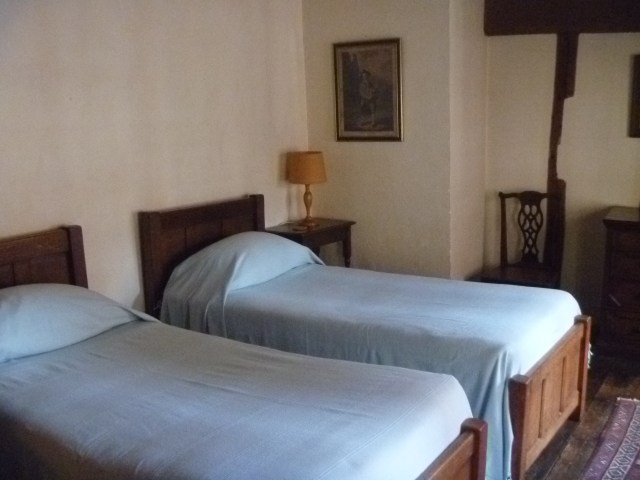
The Twin Bedroom

PH double room

Double room PH

Peake's double rm

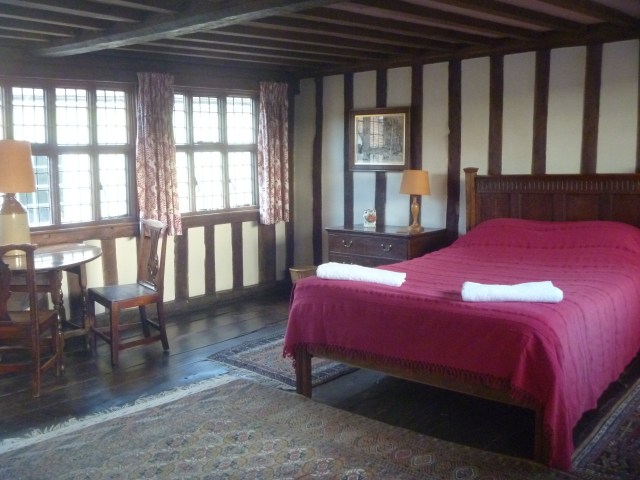
The Double Bedroom (all 3 pictures above)

Curtain print

The specially printed curtain fabric. Lady Smith, wife of the Landmark Trust founder John Smith, designed and hand printed the curtain fabric for each individual property.

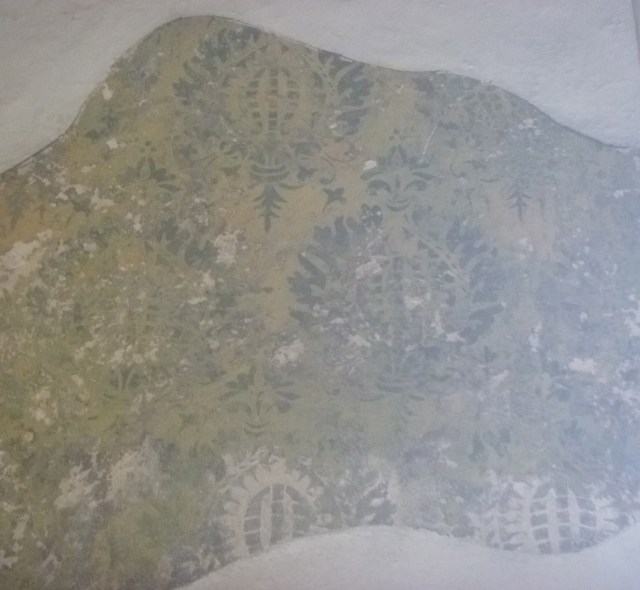
Wall Painting

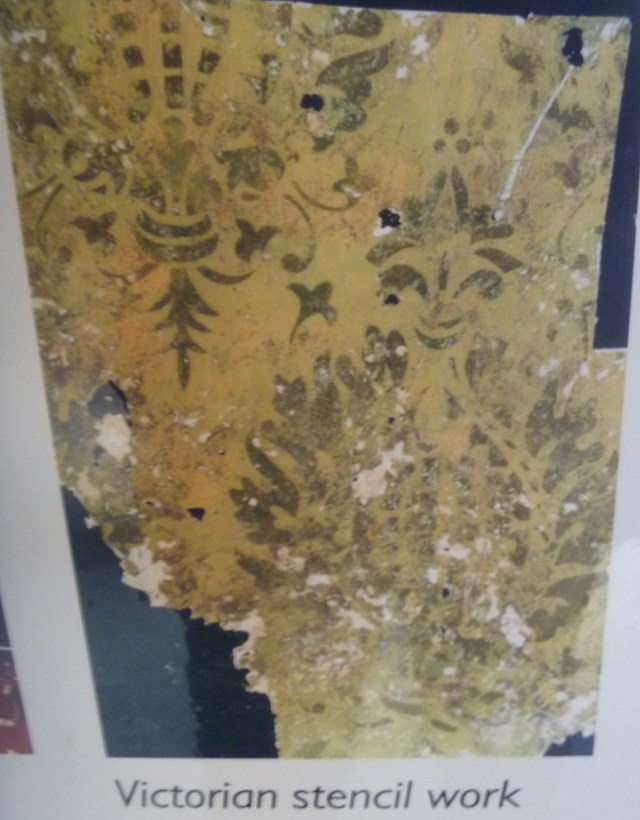
Could the design for Peake’s House curtains have come from the wall painting in nearby St Martin’s Church? Not quite, but very similar.

Victorian Stencil Work

Photograph on the Church Display Board

Curtains

Lovely Effective Curtains

‘Embosomed in all the sublimity of umbrageous majesty’ : The Dairy Dell and Pond Cottage

Better view of PC

Thus wrote Humphry Repton in his “The landscape gardening and landscape architecture of the late Humphry Repton, esq. : being his entire works on these subjects”; edited by J. C. Loudon. [London : Printed for the editor, and sold by Longman, 1840.] I think he meant that it was nestled in the shade of majestic trees and landscape. Or something like that.

I wasn’t staying at the Endsleigh Hotel. Oh no, I had the good fortune to be invited to join my Landmarking friends at Pond Cottage one of two Landmark Trust properties in the grounds of Endsleigh House.

Pond Cottage exterior

A purposely Rustic cottage designed by Jeffrey Wyatville beside a pond, Pond Cottage is set within the ornamental gardens of Endsleigh with its streams and cascades.  Endsleigh is still a complete example of that most imaginative and English taste, the Picturesque.  Pond Cottage has a Rustic porch, with tree-trunk columns and cosy rooms.” [Source]

Welcome to Pond Cottage

Rustic Porch

Fireplace at PC

Cosy Sitting Room

Pond Cottage and its surroundings had, and still has, all the quintessential ingredients of the 18th and early 19th century Picturesque landscape. Here at Dairy Dell are the favoured ingredients of such a landscape – water, both moving and still; splendid trees; antiquity, represented by the well and its inscription; rural industry, the Dairy itself.

Moving water

Moving Water

PC Pond

Still Water : The Pond

The well

The Ancient Well with inscription stone on the left

The Dairy

The Dairy

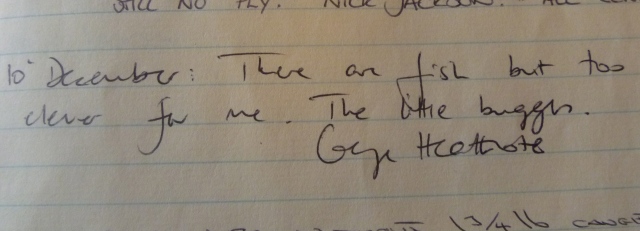
Facilities & features : there is a sunny loggia for outside dining and you can fly-fish in the pond. The tiny model Dairy stands nearby, from whose verandah you can enjoy spectacular views.” [Source] I enjoyed reading the cottage fishing diary where fishermen young and old made comments on their success, or lack of it, when fishing the Pond.

Fishing Diary

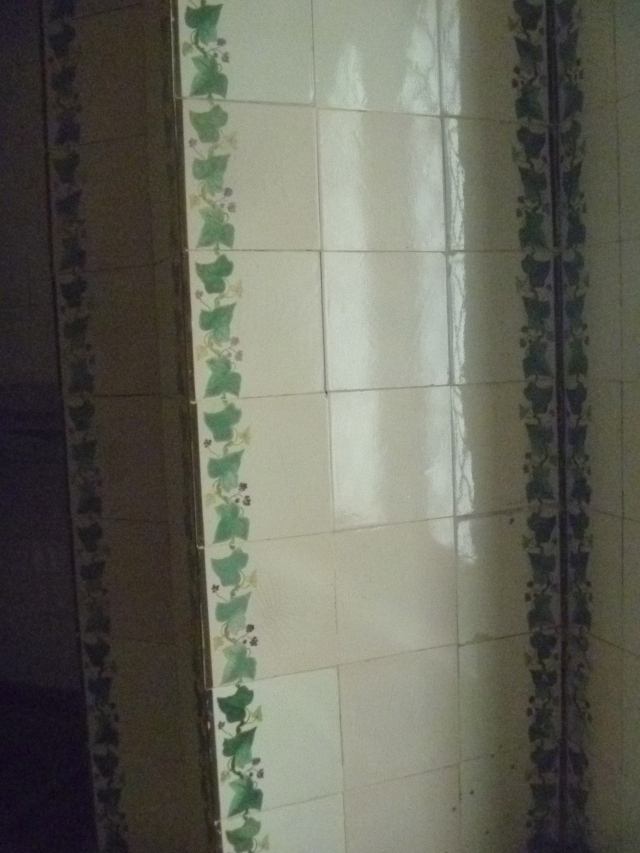
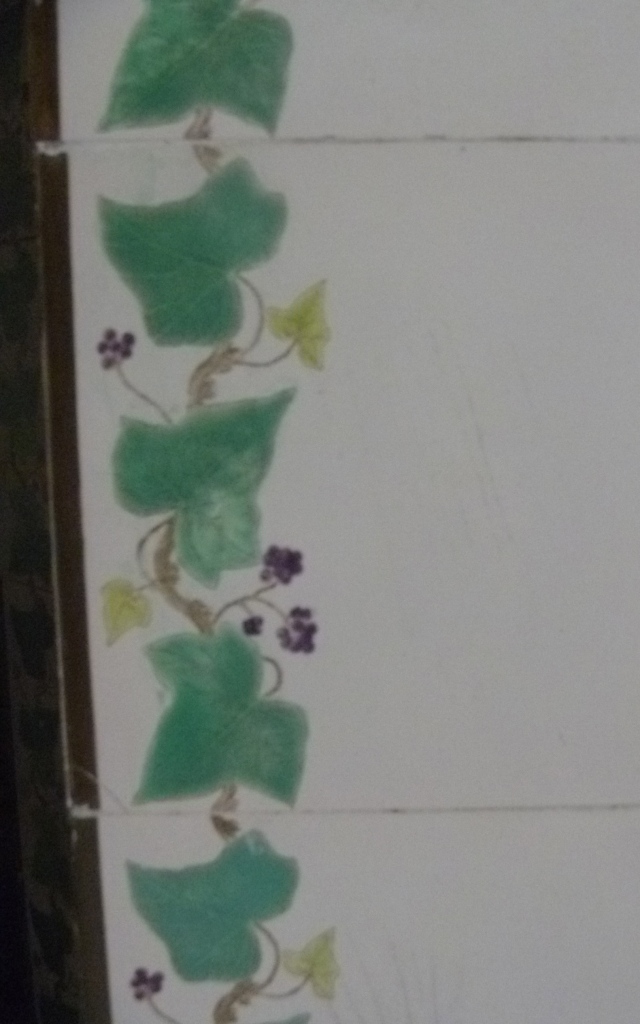
Pond Cottage has a Rustic porch, with tree-trunk columns and honeysuckle, and cosy rooms. The Dairy, which had to be rescued from the undergrowth, is perched on a knoll above, a cool chamber of marble (a local variety) and ivy-leaf tiles. From its verandah, ‘embosomed’, as Repton put it, ‘in all the sublimity of umbrageous majesty’, you may open yourself to those keen responses to the surrounding scene that were so carefully planned by its creators – while contemplating the making of a very superior butter.” Source

Ivy tiles

Inside The Dairy : The Ivy Tiles

Ivy close up

Close-up of the tiles. During restoration Kate Evans a potter from Shropshire who specialises in reproducing old glazes made copies to replace irreparable broken tiles.

Pond Teapot

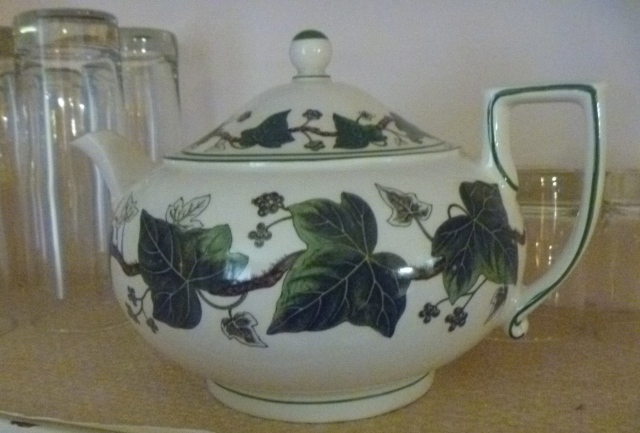
The Ivy Pattern Repeated in the Pond Cottage Crockery (Wedgwood Napoleon Ivy Design as used by Napoleon at St Helena 1815)

Real Endsleigh Ivy

Real Live Endsleigh Ivy

“One of the Loveliest Places Possible – Endsleigh” : an introduction

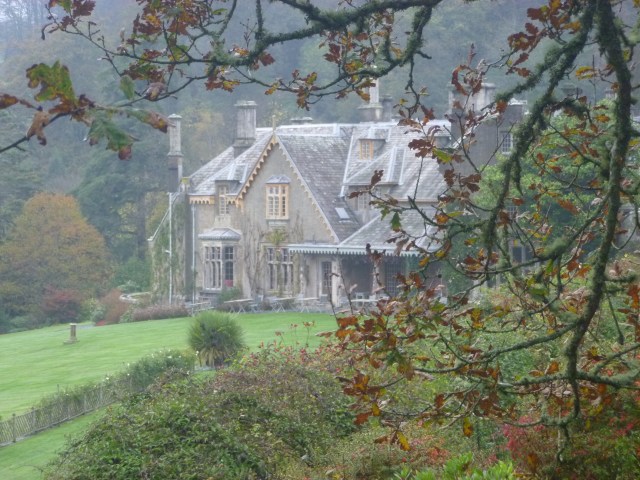
House closer

Today the original Endsleigh Cottage is a 16 bedroom luxury hotel.

“We saw yesterday one of the loveliest places possible – Endsleigh – the Duke of Bedford’s, about twenty miles from here”. Thus wrote Queen Victoria in her diary on 14 August 1856.

The result of the work of Humphry Repton and Jeffry Wyattville this truly beautiful estate on Devon’s border with Cornwall is still lovely today. It’s a private and secluded place which has been remarkably well-documented in the estate accounts still kept at Woburn Abbey home the Dukes of Bedford the original developers of Endsleigh.

The  Picturesque taste was popular in England between 1790 and 1840 and Endsleigh is one of its prime examples.

Repton first visited Endsleigh in 1809 and he encouraged the development of a more ‘natural landscape’ than the formality of Capability Brown. Repton proposed the buildings and Wyattville designed them. The main ‘cottage’ dates from 1810 and the subsidiary buildings 1812-1816.  Endsleigh was his first large scale work which was a collaboration with Georgina second wife of the 6th Duke of Bedford.

Whilst at Endsleigh I read her fascinating story in the book “Mistress of the Arts: The Passionate Life of Georgina, Duchess of Bedford” by Rachel Trethewey (Headline Review, 2003).

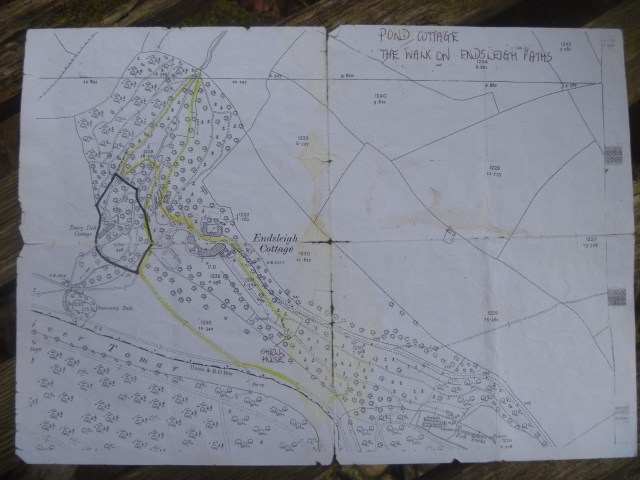
Endsleigh map

Within limits as a guest I could walk within the estate, down to the Tamar River and in the formal gardens close to the house. I also took tea one afternoon and enjoyed inspecting the various manmade features of the landscape which include a Swiss Chalet, a Shell Grotto and a Dairy. More about the Chalet and the Dairy in future posts.

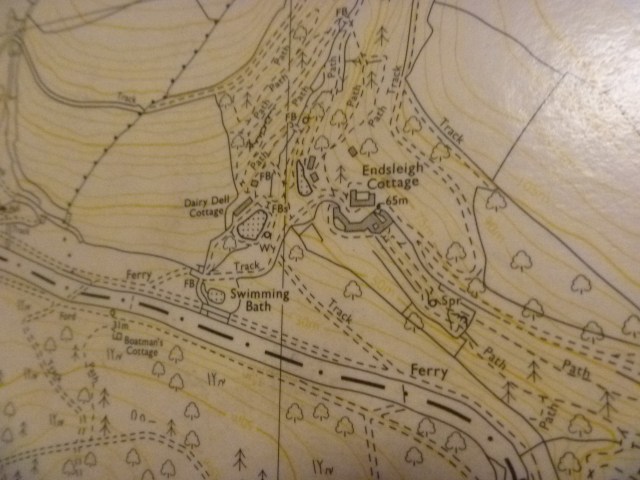
Endsleigh map close-up

Stepping down the track from the house to the river a stream and muddy path made it impossible to go beyond the former swimming pool so I headed to the river bank and followed it downstream as far as possible. Eventually a notice on a gate prevents you going any further.

Former swimming pool

 The Former Swimming Pool

River Tamar

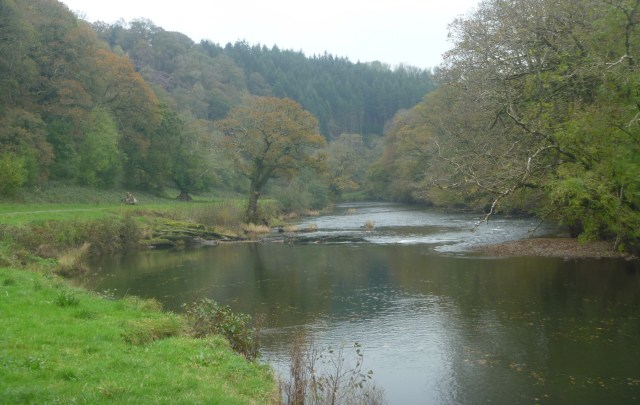
The peaceful River Tamar


Tamar path

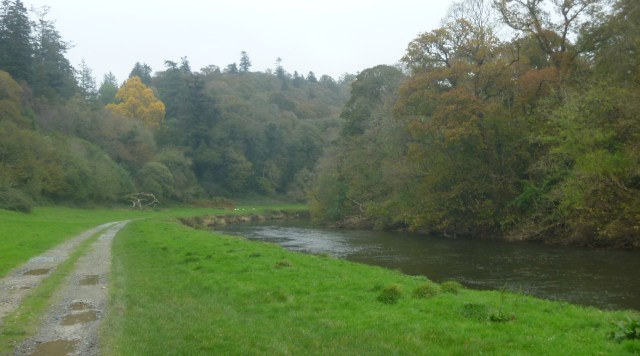
River Tamar and Path heading downstream

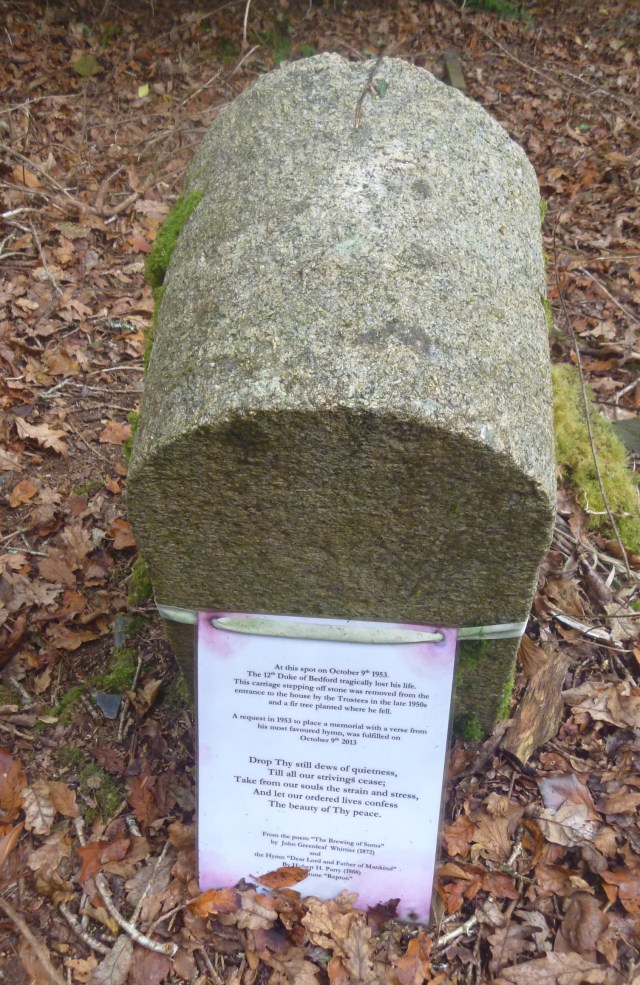
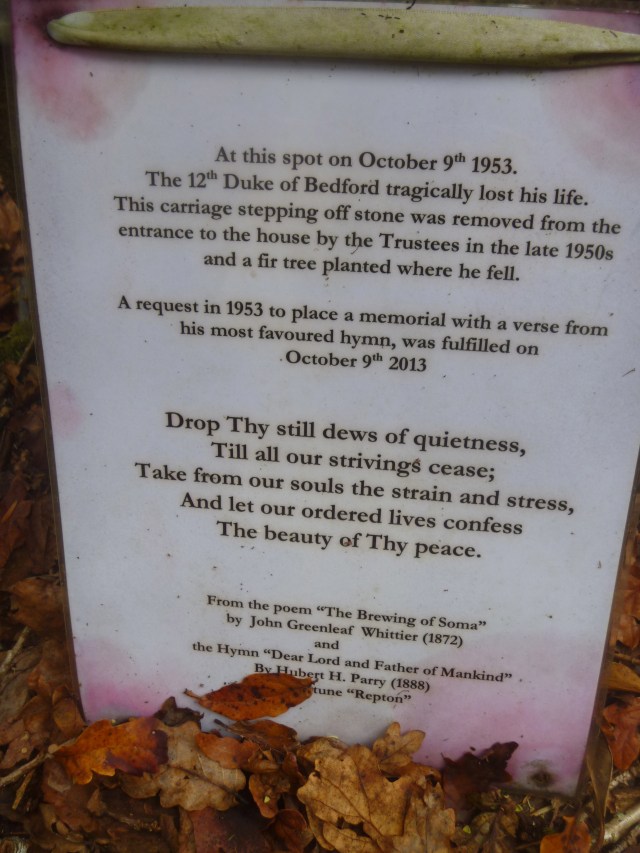
I returned along the path until I found a track leading up, up, up the valley side to a footpath which I hoped might lead to the Swiss Cottage. It didn’t; but I did find the memorial stone commemorating the spot where the 12th Duke was found dead in 1953.

Memorial to 12th Duke of B

Memorial wording

I’d read about this tragedy in another book “Endsleigh: the memoirs of a riverkeeper” by Horace Adams and edited by Clive Murphy [Braunton : Merlin Books, 1994]. I had the impression that Adams spoke or answered questions about his long life working first for various Dukes of Bedford and later for the Fshing Syndicate that took over the ‘cottage’ when the Bedfords needed to raise Death Duties. Murphy just transliterated Adams’s words to the page.

Fishery Cottage

Fishery Cottage overlooking the Tamar Valley

I didn’t manage to get more than a glimpse of the Swiss Cottage but nearby is Fishery Cottage at one time the estate home of Horace Adams. It’s now up for sale. Horace would be staggered – by the price and by the elegance!

From the main drive it’s possible to go into the formal gardens that surround the Hotel. They are now still beautifully maintained by about half a dozen full- and part-time staff. I didn’t make a note of the numbers of gardeners during the Bedfords’ tenure but there were probably around 5o.

Shell Grotto

A rough path leads to The Shell Grotto set on a cliff high above the river.

The grotto

The Shell Grotto

House view

View of Endsleigh from Shell Grotto

With the rise of the Romantic Movement in the 18th century and the return of the great explorers, building grottoes became increasingly fashionable … Some took the form of artificial underground caves;  others were built above ground in some picturesque spot deep in the woods or overlooking a beautiful view. The chief ingredients remained the same. They must be dark, have water, preferably a cascade or spring and be decorated with shells and minerals. … The grotto at Endsleigh is a rather late example … It is believed that the original intention was for it to be decorated with shells and minerals from Devon and Cornwall. … Obviously this scheme was not carried out as the grotto is full of tropical shells and corals. … It has been lately carefully restored and other shells and minerals have filled the gaps where the originals had crumbled away.” Patricia, Viscountess Boyd, October 1984 [Adapted from the description in the grotto]

Garden bower

Tamar Valley from the Grotto

From the Grotto and formal gardens I returned to the main drive and behind the house are the former stables.

Stables

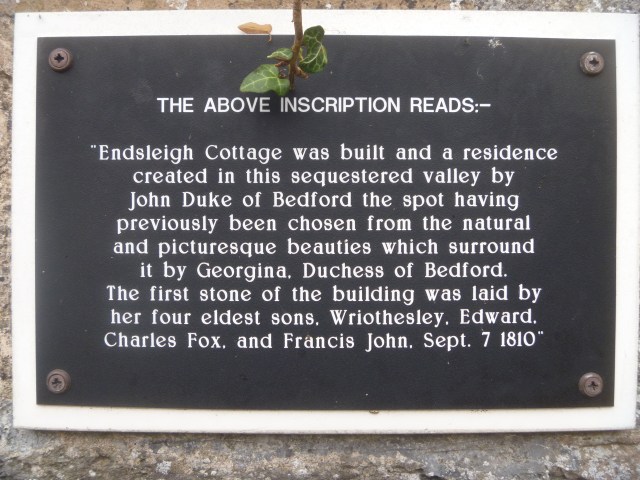
There’s a plaque in the stables commemorating the laying of the foundation stone by her four eldest sons.

Foundation stone

The Foundation Stone above the arch is nearly covered with ivy

Foundation stone words

There is an arboretum with little bridges crossing streams and which contains unusual trees from around the world. But after further garden exploration in the damp weather and on slippery footpaths with the light beginning to fade even in the early October afternoon it was a relief to take tea in the library at Endsleigh Hotel.

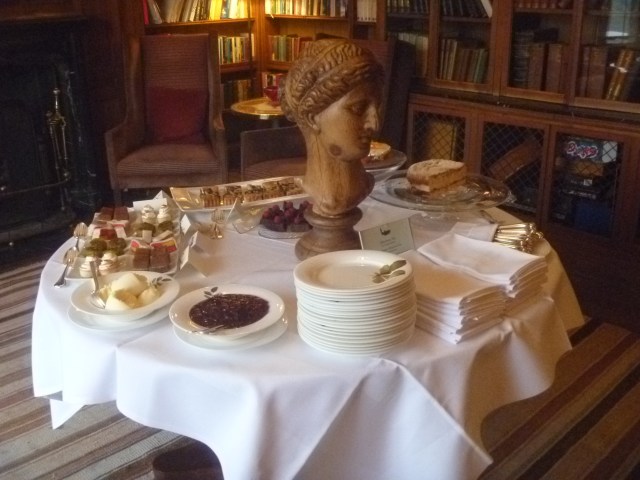
Time for tea

Time for Afternoon Tea

The Wadsworth-Longfellow House, Portland, Maine

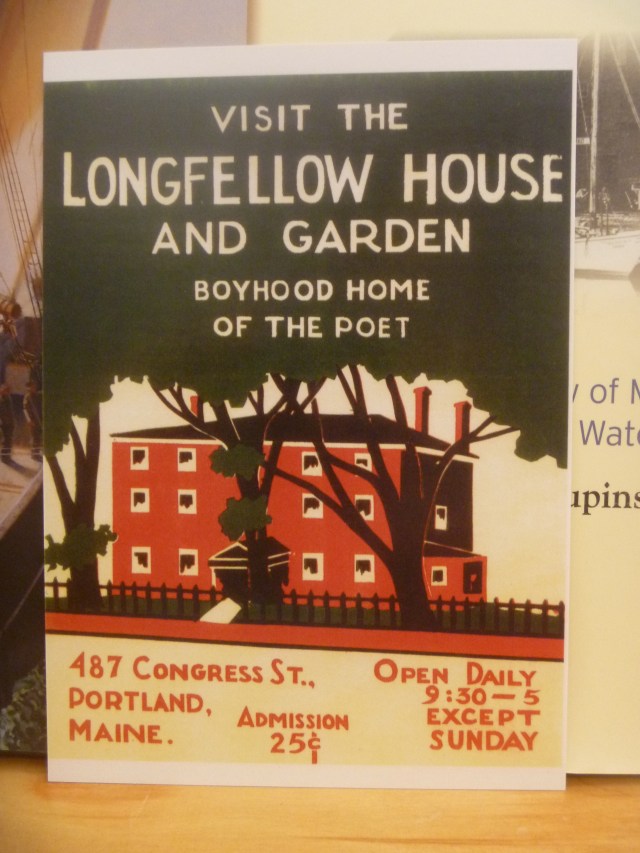
Visit the HWL House

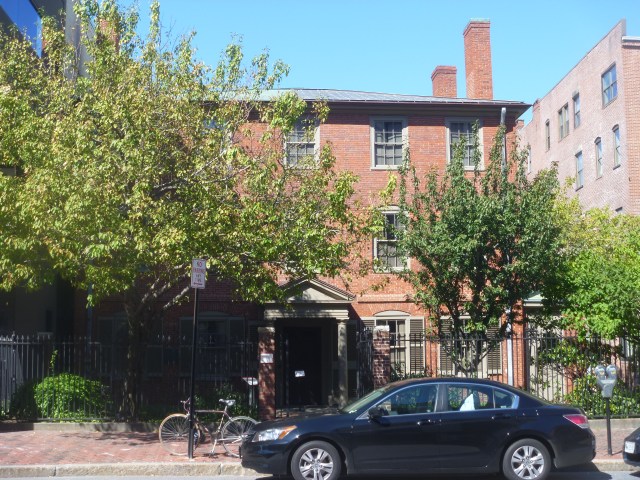
On our last full day in New England, before heading off to LLBean, I joined a morning tour of the Wadsworth-Longfellow House, located right in the middle of Portland on Congress Street. The house is not his birthplace. Although he was born in Portland that house has now been demolished.

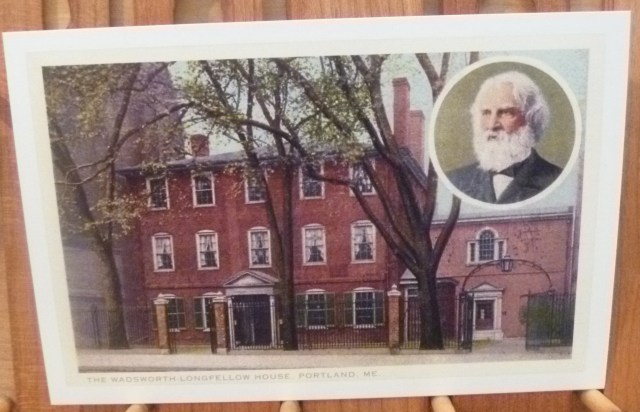
HLW House postcard


No Parking but always a car

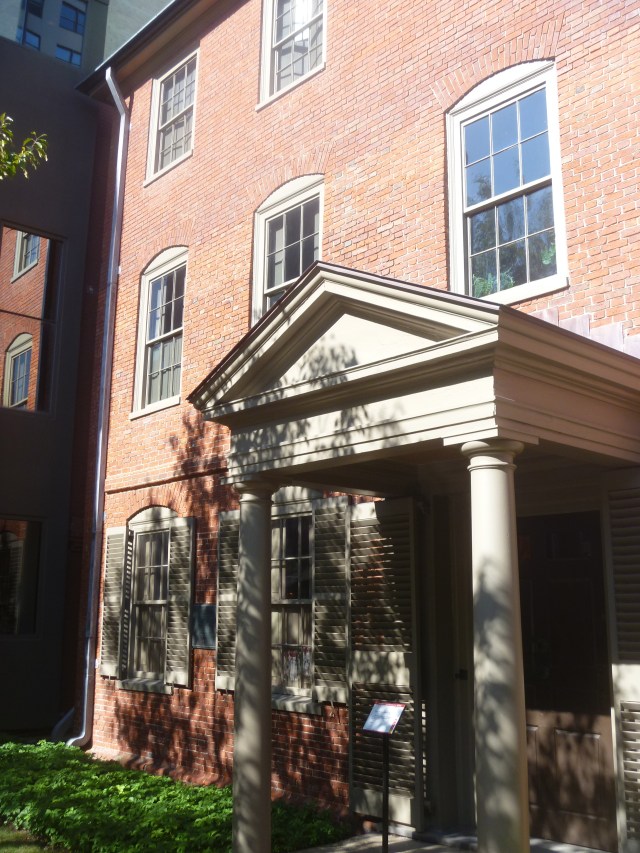
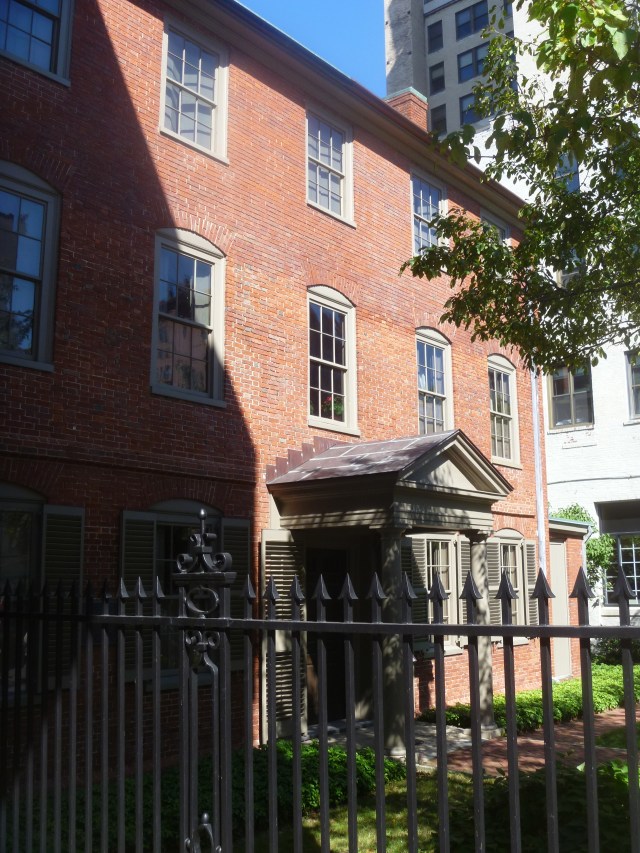
Faithfully restored to the 1850s, the Wadsworth-Longfellow House was the childhood home of Henry Wadsworth Longfellow. Built in 1785-86 by the poet’s grandfather, the house is decorated with original furnishings and family memorabilia. Tours offer a unique glance into the poet’s family, as well as into the cultural and social history of mid-19th century Portland.” [Information Board outside the house]

WLF House door

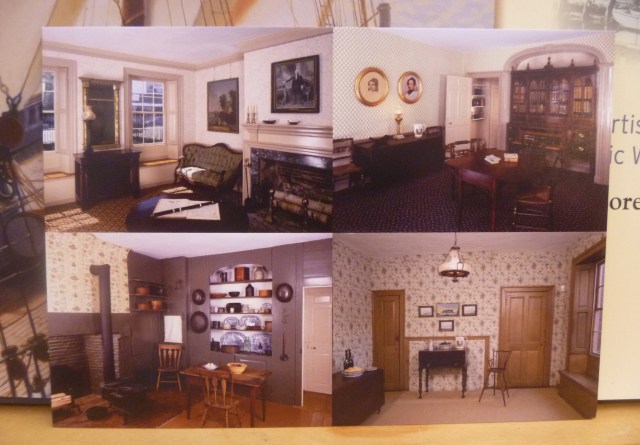
Yet again I enjoyed an entertaining and informative tour. No photography was allowed but there are pictures and descriptions of the rooms on the website and postcards of a selection were available in the excellent bookshop attached to the house.

Inside HWL House


Postcard shows the interior of Wadsworth-Longfellow House

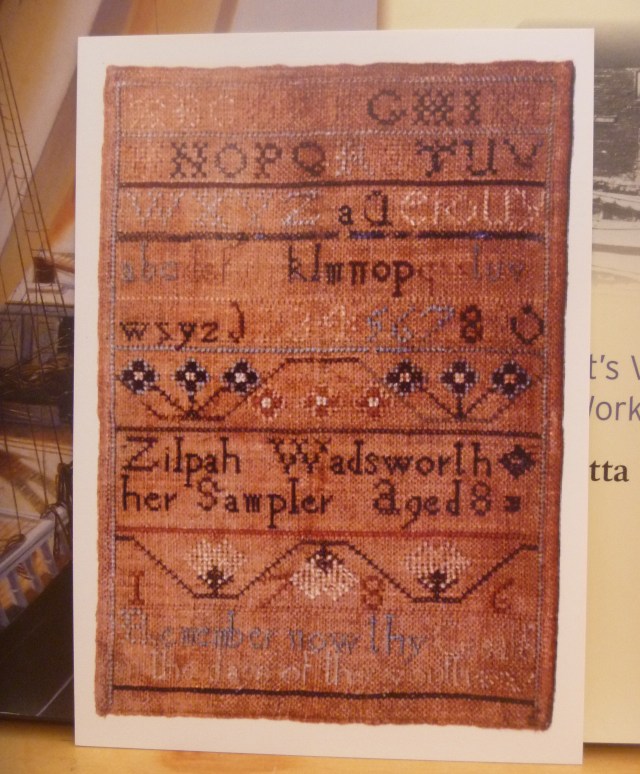
Zilpa sampler

Zilpa’s Sampler (still on display in the house)

Peleg (love that name!) and Elizabeth Wadsworth, Henry’s grandparents, built the house in 1785-86 and Henry, born in February 1807, lived there from just a few months later throughout his childhood. With 9 siblings his father Stephen (and mother Zilpa) extended the house by adding another floor. Henry entered Bowdoin College in Brunswick, ME in 1822. After graduation in 1825 he moved to Cambridge, Massachusetts where his home there is also a national historical monument and open to the public : Longfellow National Historic Site, 105, Brattle Street, Cambridge, MA. He made regular return visits to his family home although, except for once, he and his wife never actually stayed there overnight.

Henry’s sister Anne lived here for almost all her long life; and when she died in 1901 left the house to the Maine Historical Society (MHS) requesting that the rooms “be kept with appropriate articles for a memorial of the Home of Longfellow” insisting that certain items be left where they had been during Henry’s residence.

There were interesting displays in the museum next door concerning the Emergence and History of Portland and about the Wadsworth-Longfellow Family.

Longfellow House

I also learned that :

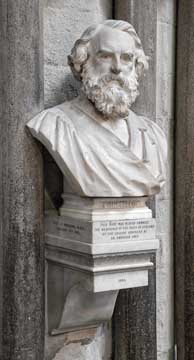
In 1884, Longfellow became the first non-British writer for whom a commemorative sculpted bust was placed in Poet’s Corner of Westminster Abbey in London; he remains the only American poet represented with a bust. [Wikipedia]

The over life-size white marble bust of the poet Henry Wadsworth Longfellow was unveiled in Poets’ Corner Westminster Abbey in 1884, on a pillar near to the tomb of Geoffrey Chaucer. It is by the sculptor Sir Thomas Brock and the main inscription reads:

Longfellow bust, Westminster Abbey

LONGFELLOW. This bust was placed amongst the memorials of the poets of England by the English admirers of an American poet.1884″

On the left and right sides of the plinth is inscribed:

“Born at Portland, U.S.A. February 27th 1807. Died at Cambridge, U.S.A. March 24th 1882”.

Longfellow’s ancestor, William Longfellow, had emigrated to New England in 1676 from Yorkshire. His parents were Stephen, a lawyer, and Zilpah. Henry taught at Harvard University and his prose romance Hyperion was published in 1839 after the death of his first wife. Ballads and other Poems includes ‘The Village Blacksmith’ and ‘The Wreck of the Hesperus’. The Song of Hiawatha is one of his best known works and he was second only to Lord Tennyson in popularity. His grave is in Cambridge, Massachusetts.

A photograph of his bust can be purchased from Westminster Abbey Library.

Further reading:

“England’s homage to Longfellow” by E.C.Lathem, 2007

[source of text and photo]

Before the tour, after the  tour or at any time during opening hours anyone may visit the Longfellow Garden behind the house.

HWL better garden

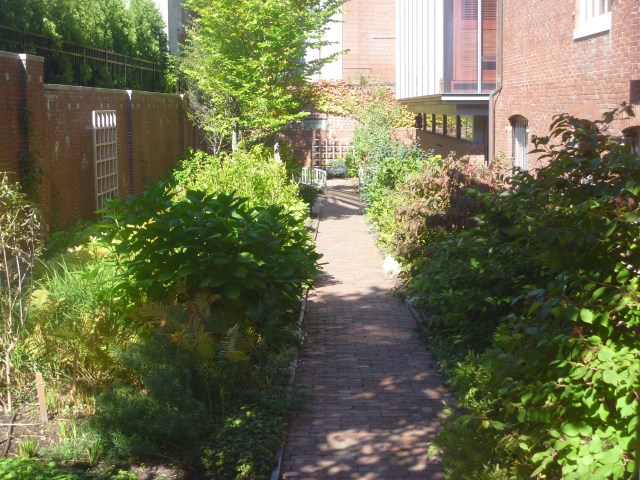
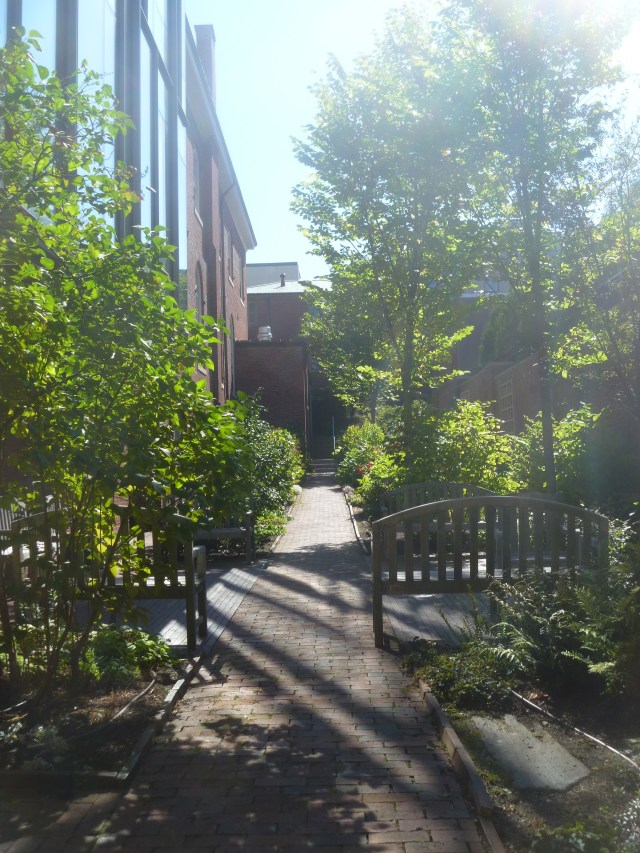
The secluded Longfellow Garden located behind the House is an oasis of green and quiet in the heart of downtown Portland. Beautifully landscaped, the public is welcome.” [Information Board]

Looking back up garden

Looking back up the garden towards the house

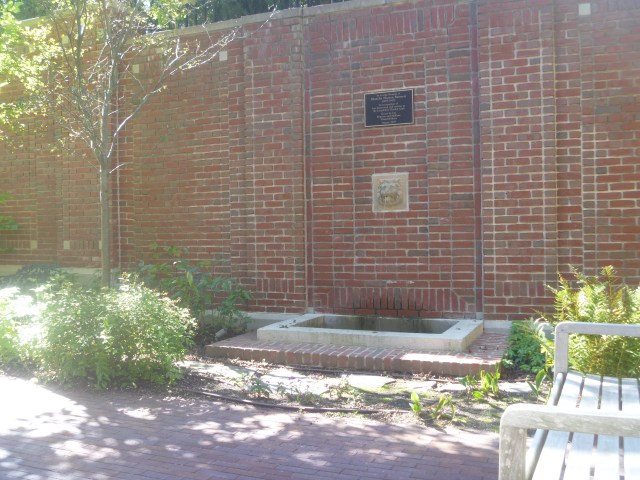
The members of the Longfellow Garden Club have tended this oasis of peace and calm in the centre of the bustling city of Portland for 90 years. These volunteers weed the beds, prune the overgrowth, plant annuals, maintain the soil and much much more.  In 1924 Mrs Pearl Wing set about restoring the garden. She encouraged the local community to help her and to donate plants and create a fountain in the garden. She also established the bye-laws and operating principles of the Club.

Presnt day fountain

Present day fountain

Naturally, there have been changes in the area and garden surroundings since then. Until 1980 the garden was only visited by those touring the house but the Club convinced the MHS to allow public access during house opening hours. It is a popular quiet retreat and “hidden treasure”.

Read more about the life and works of the author of The Song of Hiawatha (possibly his best-known work here in the UK) here and see whether you can recognise his many quotations here.

“The love of learning, the sequestered nooks, and all the sweet serenity of books”

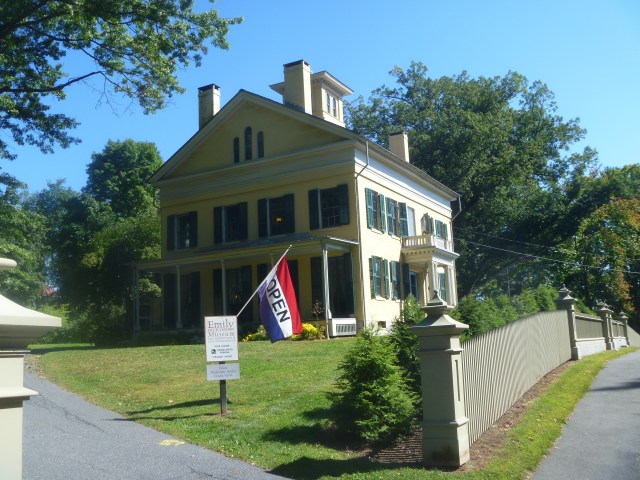
Emily Dickinson Museum : The Homestead and The Evergreens

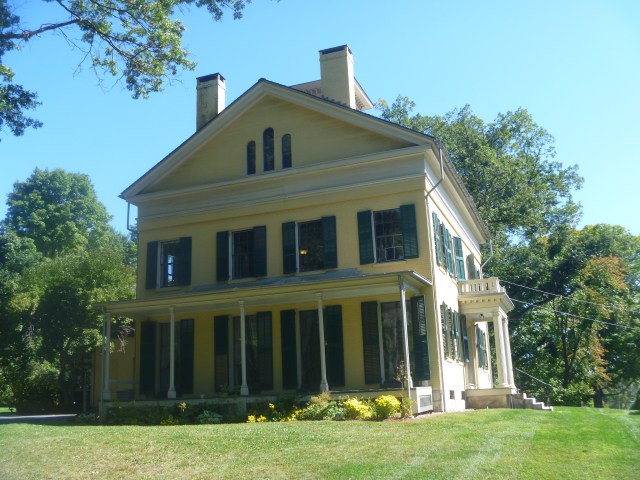
The Emily Dickinson Home

This year we made our third visit to Brattleboro, Vermont and on each visit I have wanted to make the trip an hour south to Amherst where the former home of the poet Emily Dickinson is open to the public as a museum. Amherst is an attractive College town – five in all in the area – with some interesting shops and plenty of eateries.

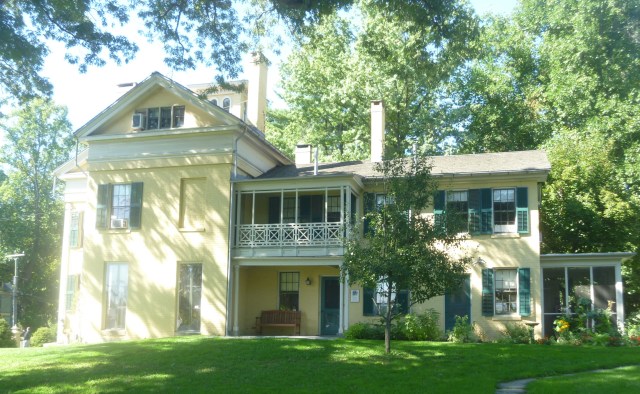
Emily Dickinson Homestead

On the Friday of our stay I drove myself back down into Massachusetts. The museum was easy to find and I was able to book onto the second tour of the day : Emily Dickinson’s World a 90-minute guided tour of both the Homestead (Emily Dickinson’s house) and The Evergreens (Austin and Susan Dickinson’s home). This constitutes an in-depth focus on Emily Dickinson’s life and family and the major influences on her writing. Includes the parlors, library, and the poet’s bedroom at the Homestead; the library, parlor, dining room, kitchen, maid’s room, water closet, nursery, and “Emily Room” at The Evergreens.
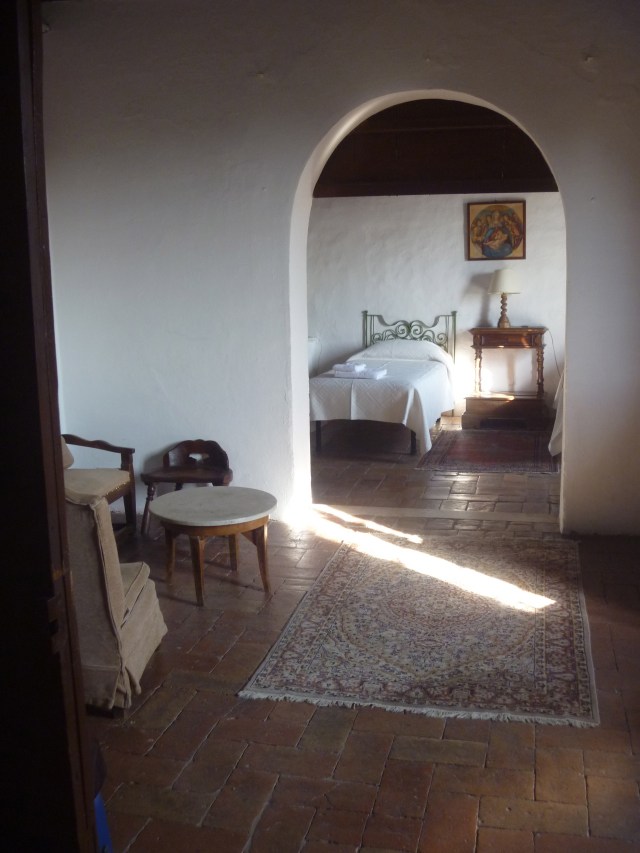
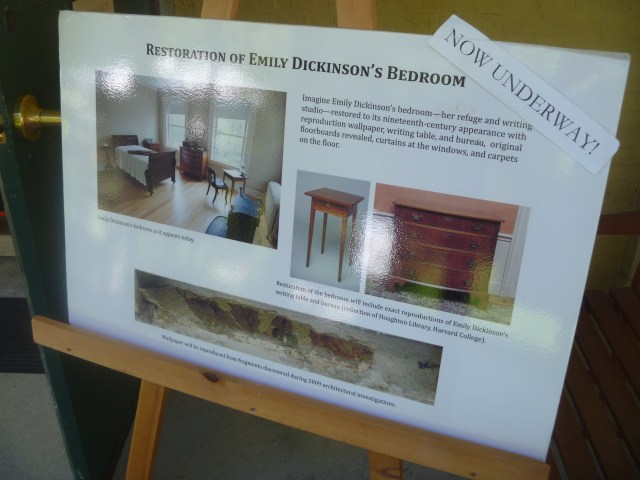
Emily Dickinson room

The Poet’s Bedroom is currently under renovation

As I had just missed the first tour by a few minutes I decided to buy the tour of the grounds which is an audio and self-guided.

“Grounds of Memory: a guide to the Dickinson landscape” The audio tour of the outdoor Dickinson grounds (duration of full-length tour is 60 minutes; visitors may tailor the tour to fit their needs) Explores Emily Dickinson’s fascination with the natural world and her family’s deep interest in the land and  includes eighteen stops outside the Homestead and The Evergreens. Stops may be visited in any order. Each stop offers a 2- or 3-minute narration and at least one Dickinson poem appropriate to that stop.

Narrated by poet laureate Richard Wilbur
Voice of Emily Dickinson provided by poet Mary Jo Salter

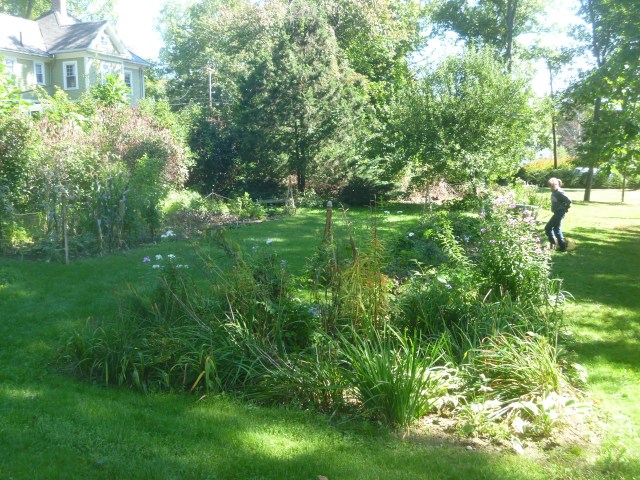
The Flower Garden

 First three stops are at the Flower Garden

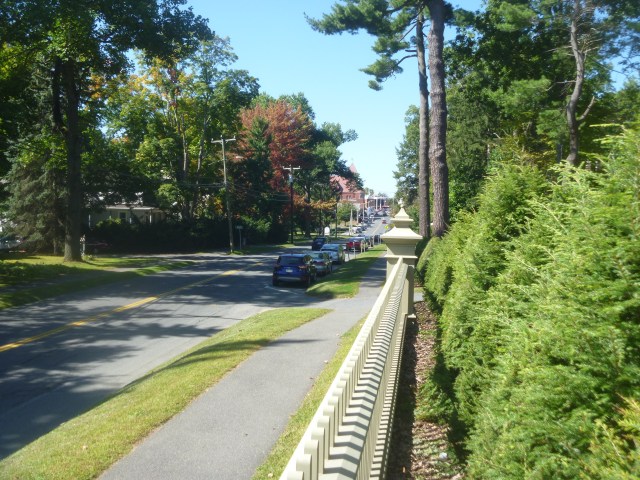
Flower Garden and Home

The Ornamental Flower Garden and the Homestead

Main St and Amherst

Main Street looking towards Amherst

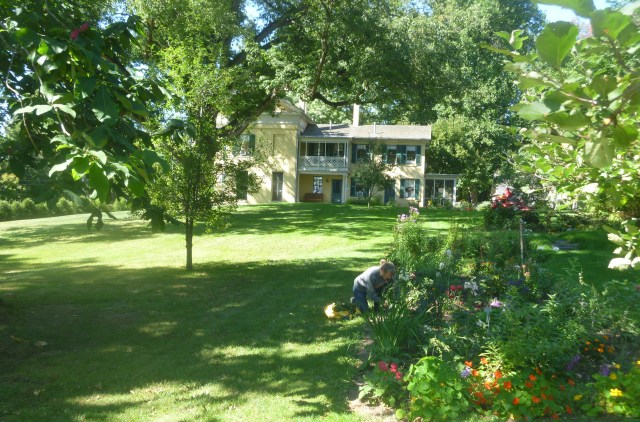
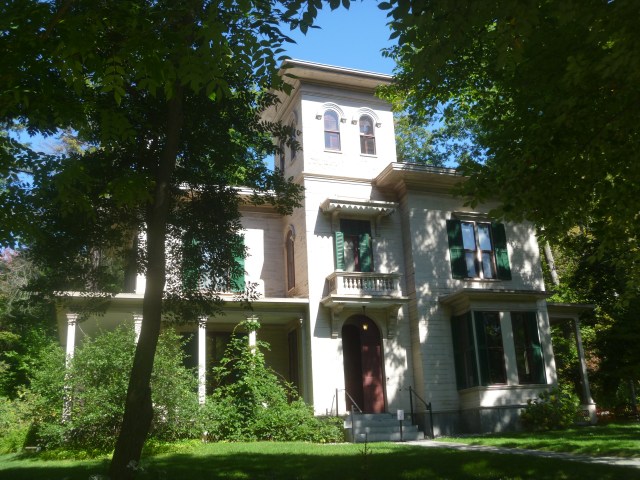
Evergreens

The West Bedroom (1st floor, RHS) was Emily’s

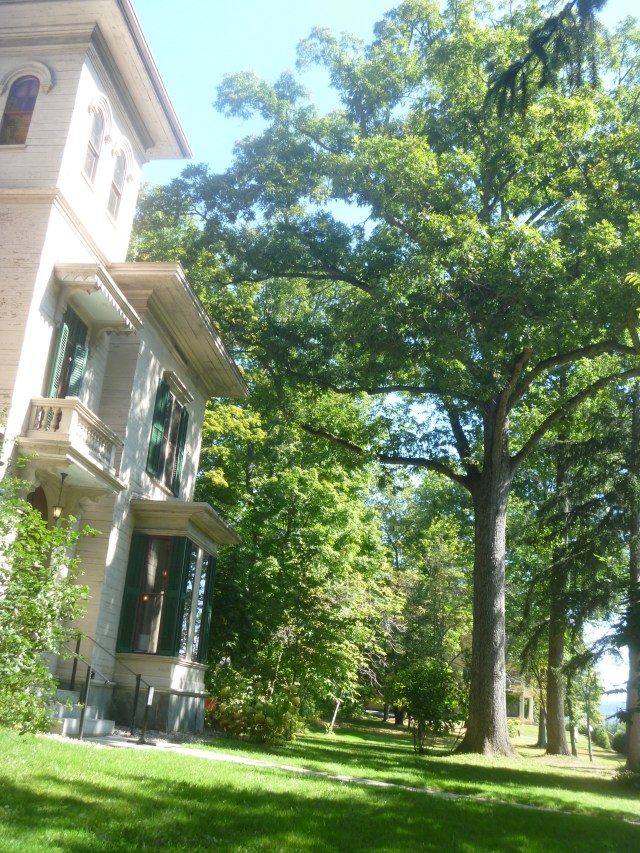
The Evergreens

The Evergreens – built by Edward Dickinson as a wedding gift to his son and daughter-in-law on their marriage

The grassy path

The grassy path between the two homes – “Just wide enough for two who love” (ED)

Here is a brief biography of the poet but the tour really brought to life her life and the lives of her family in particular her sister, Lavinia, her mother and father and her brother, Austen and his family.

EMILY DICKINSON was born in Amherst at the Homestead on December 10, 1830. Her quiet life was infused with a creative energy that produced almost 1800 poems and a profusion of vibrant letters.

Her lively childhood and youth were filled with schooling, reading, explorations of nature, religious activities, significant friendships, and several key encounters with poetry. [She was not always the recluse that many choose to characterise her – at one  time she called herself The Belle of Amherst.] Her most intense writing years consumed the decade of her late 20s and early 30s; during that time she composed almost 1100 poems. She made few attempts to publish her work, choosing instead to share them privately with family and friends. In her later years Dickinson increasingly withdrew from public life. Her garden, her family (especially her brother’s family at The Evergreens) and close friends, and health concerns occupied her.

With a few exceptions, her poetry remained virtually unpublished until after she died on May 15, 1886. After her death, her poems and life story were brought to the attention of the wider world through the competing efforts of family members and intimates.” [source]

This was a house visit par excellence. The 90 minute houses tour was filled with interest and insight into the lives. The Dickinson Landscape self-guided audio tour complete with poetry readings added to almost complete immersion into ED’s life and thoughts. Our house guide was entertainment herself and added poetry quotations and a quick ‘class’ in the importance of word choice in a ‘schoolroom’ – in which we all participated. No photography was allowed in the house but the tour was such fun and so informative that I will forgive them for that. Having visited the home of a poet I had barely heard of I came away feeling as if I met her myself. Well done, Emily Dickinson House Museum!

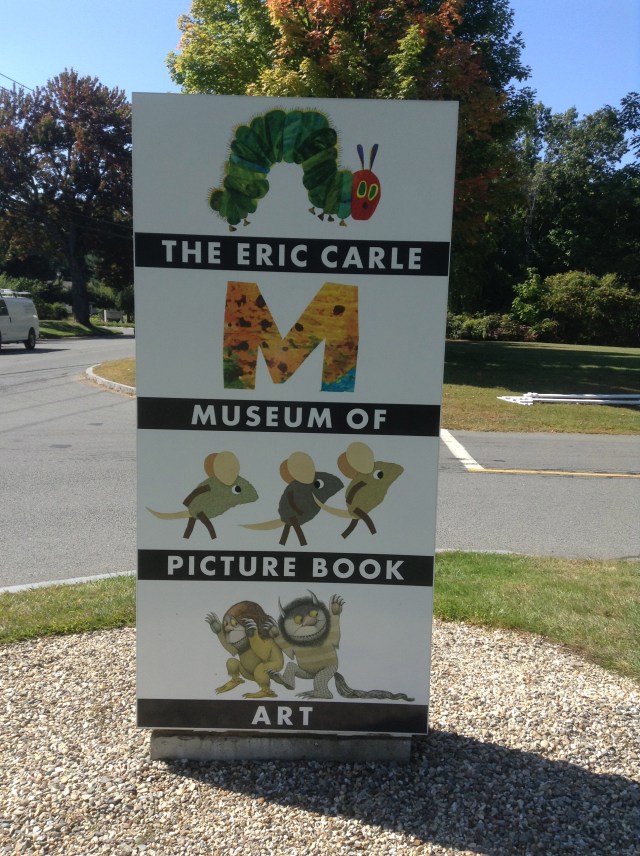
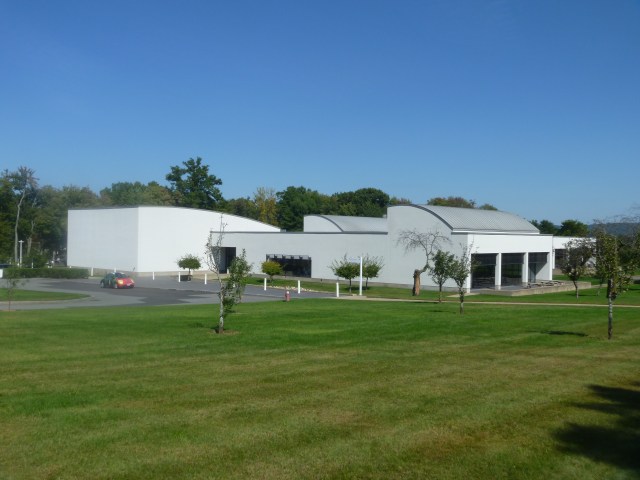
On leaving the Museum I couldn’t resist a quick visit to another nearby museum – almost from the sublime to the ridiculous – The Eric Carle Museum of Picture Book Art. A purpose-built centre devoted to the art of contemporary children’s book illustrator Eric Carle. We still have a very dog-eared copy of The Very Hungry Caterpillar at home.

Picture Book Art


Carle Museum

 The Eric Carle Museum

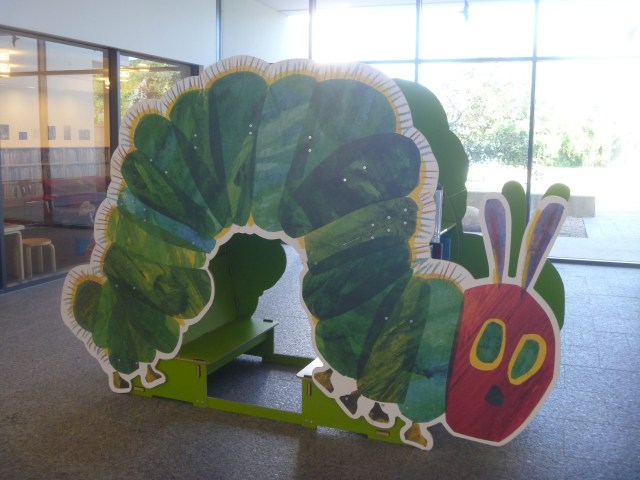
The very hungry caterpillar

This is what a Very Hungry Caterpillar looks like!

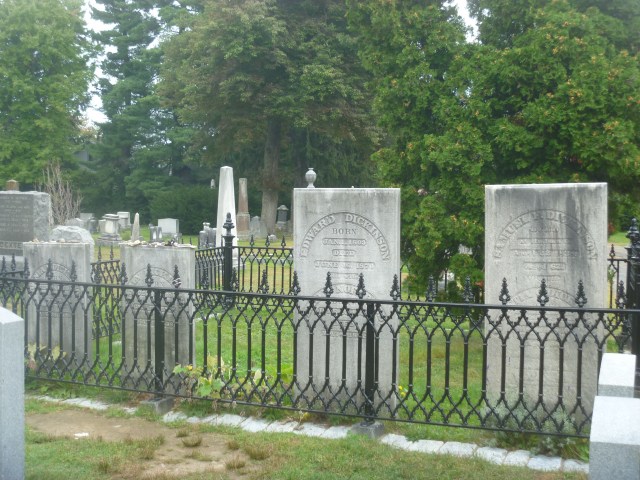
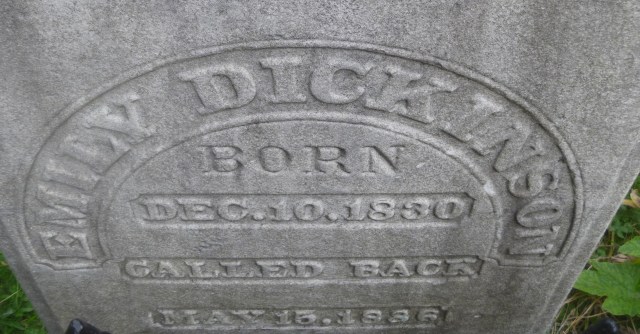
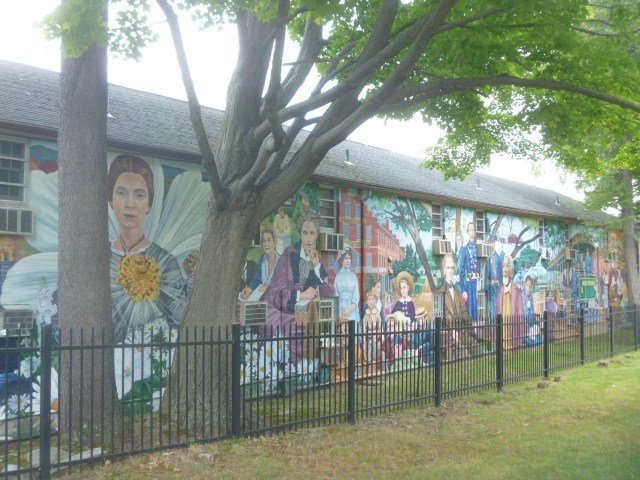
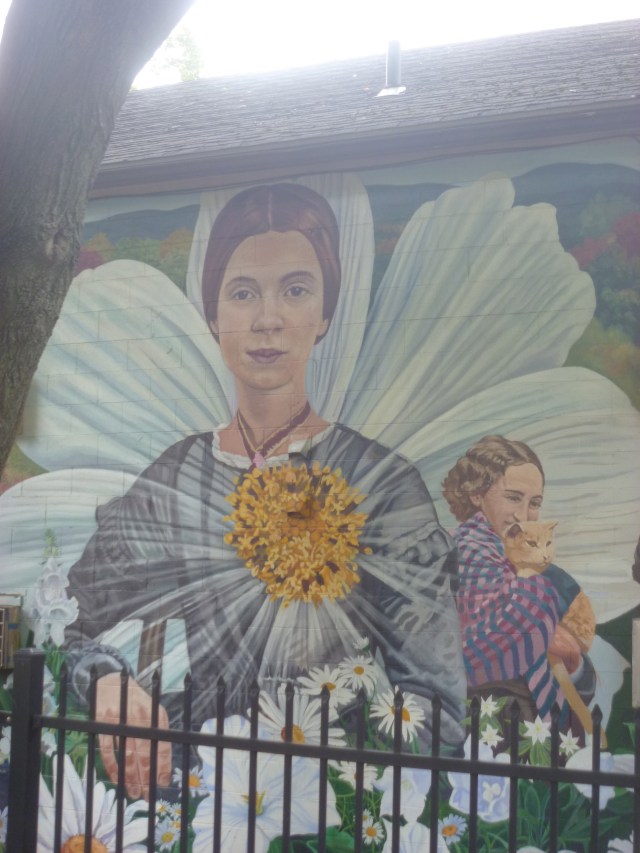
And finally, the next day we both made the journey back down to Amherst, enjoyed a decent lunch and I tracked down the Dickinson graves in West Cemetery where there is also a Community History Mural featuring characters from the Amherst story from all fields of experience (farming, literature, domestic life, education, military, industry and economic life) and including, of course, Emily Dickinson herself.

Dickinson family graves

The Dickinson Graves in West Cemetery, Amherst

Emily Dickinson grave stone

Wording on Emily’s Gravestone

History Mural West Cemetery Amherst

The Amherst Community Mural, West Cemetery

Emily Dickinson on History Mural

Emily Dickinson (Lavinia behind) on the Community Mural

Elizabeth Gaskell’s House and Home

GH Blue Plaque

In the 28 September Arts and Books supplement to The Independent on Sunday I was pleased to read about the imminent opening in Manchester of the former home of Elizabeth Gaskell – more commonly known as the novelist Mrs Gaskell. Her Cranford books have been serialised on TV recently. But there is much much more to Mrs Gaskell and her writing than this rather cosy drama portrays. I recently read “Ruth” and for a novel written by the respectable wife of a Unitarian Minister it is really quite an eye-opener but an excellent read. Read a resumé here. In addition two excellent miniseries of her books ‘North and South‘ and ‘Wives and Daughters‘ were first broadcast on BBC TV in 2004 and 1999 respectively.

I straightaway headed to the house website and read this :
Tuesday, October 14, 2014 – 14:30 to 16:00

Book Launch: Carolyn Lambert ‘The Meanings of Home in Elizabeth Gaskell’s Fiction”
Book

Join us for the launch of Carolyn Lambert’s new book ‘The Meanings of Home in Elizabeth Gaskell’s Fiction’. Lambert explores how Gaskell challenges the convention of the Victorian home as a place of safety in her novels. In particular she illustrates her theme through the importance of homelessness in Gaskell’s work. Lambert’s book draws not only on the novels but also Gaskell’s letters and non-fiction writings and has recently been shortlisted for the Sonia Rudikoff Prize for the best Victorian book by a first time author.

A tour of the house and refreshments are included in the ticket price. Copies of the book will be on sale at a special price.

Gaskell House

84 Plymouth Grove, Manchester

So I booked a ticket for the talk and for the train and yesterday set off for Manchester. I’m afraid I don’t find Manchester any easy city to get around. Perhaps I don’t know it well enough. I eventually found a bus that would take me to Plymouth Grove and which  dropped me off outside number 84.

Welcome to Gaskell House

Carolyn’s talk took place in the Gaskell’s sitting room – yes, the very room in which Charlotte Bronte hid behind the curtains in order to avoid being seen by guests! Photography is allowed and we could sit on the comfy chairs, sofas and chaise longues. I was told that items covered in perspex were original to the house and had been gifted or lent by various donors or galleries and the rest of the furnishings and fittings were either of the period and style of the house during the time when the Gaskells had lived there or were reproductions.

Sitting room

The comfortable, relaxed sitting room

Carolyn began her talk with a resumé of Mrs Gaskell’s life. I have lifted this from the House website :
Elizabeth Cleghorn Gaskell was born in 1810 and lived at 84 Plymouth Grove with her family from 1850 until her death in 1865.

“To begin with the old rigmarole of childhood…” Wives and Daughters

She was born as Elizabeth Cleghorn Stevenson in London in 1810. A year later, on the death of her mother, she was taken to live in Knutsford, Cheshire, with her aunt, Hannah Lumb. The arrangement was a happy one – she was to refer to her aunt as “my more than mother” and was to use Knutsford as the inspiration for her fictitious town of Cranford. Knutsford also became ‘Hollingford’ in Wives and Daughters.

In 1832 Elizabeth married William Gaskell, the assistant minister at Cross Street Unitarian Chapel in Manchester. Their third home was a large house near open fields – 42 (now 84) Plymouth Grove. Here they grew flowers and vegetables, and kept a cow, pigs and poultry. The House was always bustling and the family entertained a stream of visitors, including many eminent people. Gaskell connections included such people as the Wedgwoods, the Darwins and the Nightingales, but girls from the Sunday School also came to the house regularly, as did William’s students and fellow clergy.”

She then went on to discuss some of the aspects of home touched upon in the Gaskell novels as well as in Mrs Gaskell’s own life. (Interestingly, she was a keen traveller and some years spent only half the year at home). The home in the novels symbolises security, it’s where relationships develop, it’s a place for creativity and self-expression. But she also wrote about homelessness and the role of servants. Elizabeth Gaskell was ambivalent about Manchester and was torn between family and a longing for the rural environment. Her large house looks rather incongruous these days amidst modern buildings and areas of wasteland on Plymouth Grove but when she was living and writing here it was rural area and the house had a long garden stretching back down Swinton Grove but now built upon by flats.

There wasn’t time in the end to do the full tour – so I will have to return on another occasion and make a more full report of the house but I did peep into ground floor rooms :
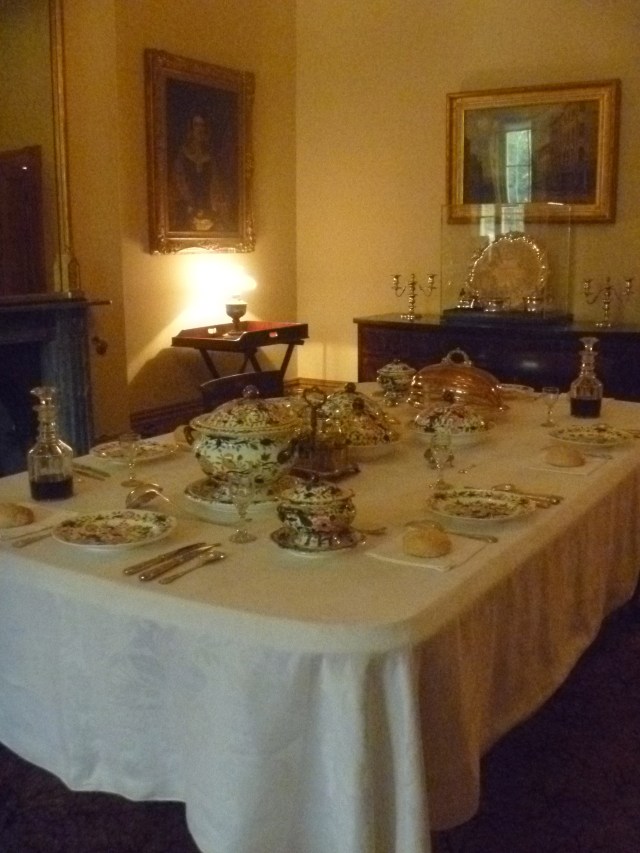
Dining Table

The Dining Room

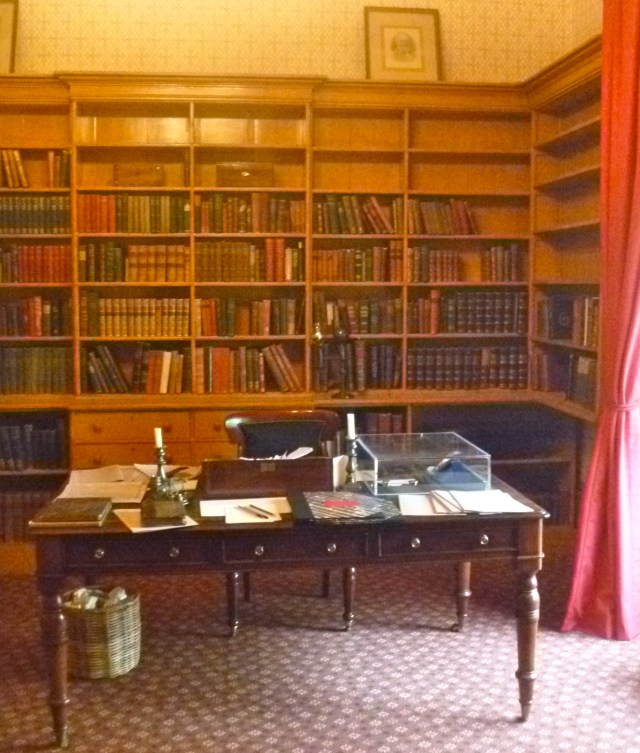
Gaskell writing desk

Mrs Gaskell’s Desk at one end of the Dining Room

William's study

William Gaskell’s Study

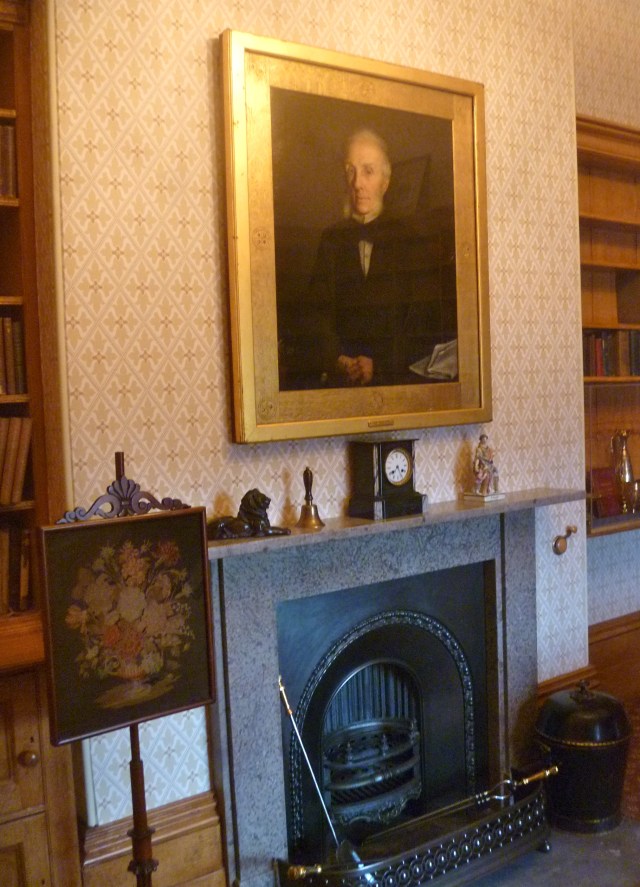
William portrait in study

William Gaskell

and refreshments were served downstairs in the basement tea room and bookshop (new and secondhand).

Tea room

The Tea Room

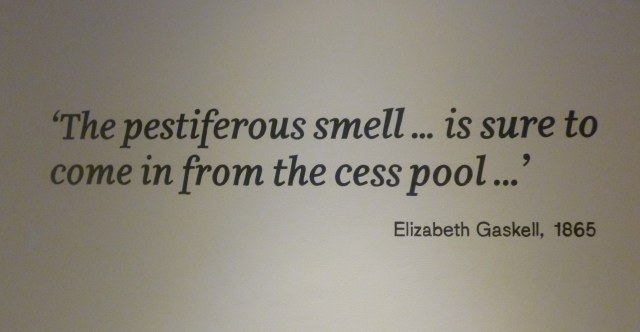
Pertinent quotations from Mrs Gaskell add a touch of humour

Quote 1


Quote 2

And in the Ladies Loos :

Ladies' quote

As the instructions for finding a bus that would take me back to Piccadilly Station didn’t work out I was thankful for one thing about Manchester – taxis with lights were easy to hail and thus I made my way back to the train and thence to my own home in comfort.

GH Rear view

Rear of Gaskell House