More Watery Landscapes in Tivoli : The Villa D’Este and The Villa Gregoriana

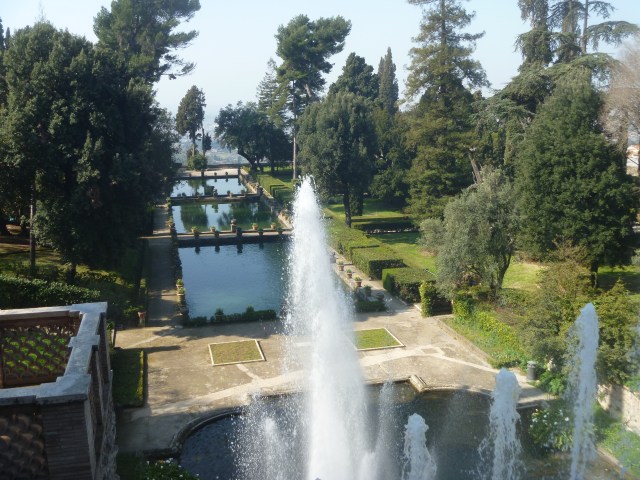
Perhaps the most famous location in the town of Tivoli itself is the Garden of the Villa D’Este. The sun was shining on my last day at Sant’ Antonio and I decided that I would visit the garden and that of the nearby Villa Gregoriana.
Vd'este 1

Thursday 19 March just happened to be St Joseph’s Day (Father’s Day) and a big celebration filled the town centre of Tivoli. Was this the reason why the Gardens of the Villas D’Este and Gregoriana were practically deserted that morning? Anyway, it was very pleasant to have the gardens virtually to myself.
v d'este2

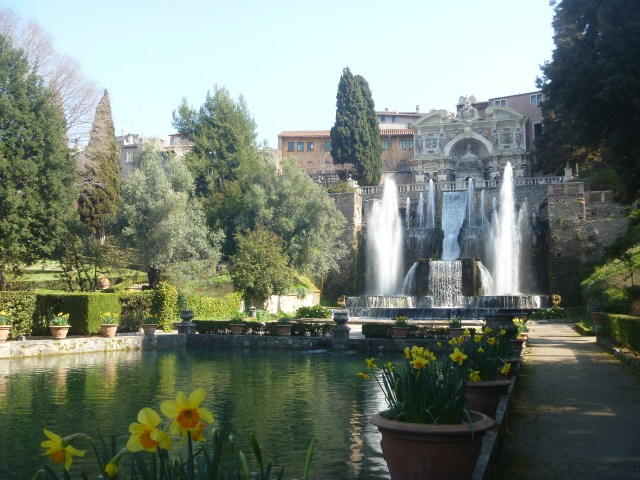
Cardinal Hippolyte D’Este (1509-1572) became governor of Tivoli and set about establishing a garden. Today it’s approached from the house but originally the entrance was at the bottom of the garden and visitors slowly climbed the hill to take in the wonders of the garden. Upon reaching the top, where the Cardinal would be waiting, you’d be in a ‘sense of breathless awe’. (According to Monty Don in the 2011 series of BBC programmes visiting Italian Gardens).
d'este gardens view

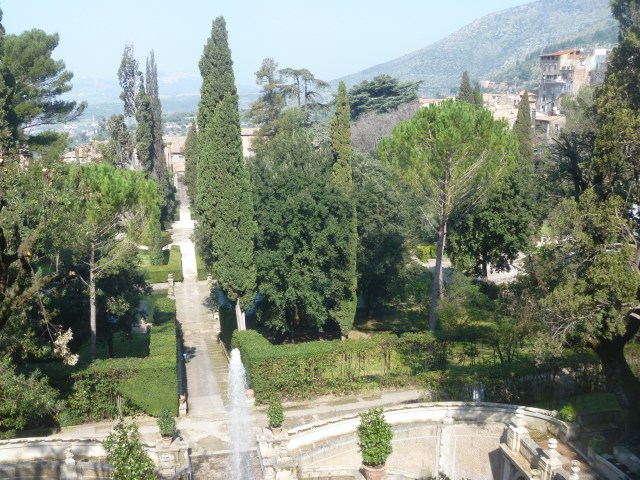
The View from the Villa

D’Este had great wealth but the one thing he wanted above all was to be Pope. He failed in 1549. So he demolished streets and had water brought to the site by a sophisticated method from a nearby aqueduct. All the water still comes from this same source and using the same methods. No pumps are used and the whole is still powered by pressure. The speed and movement of the water are still controlled by different sized pipes and spouts.
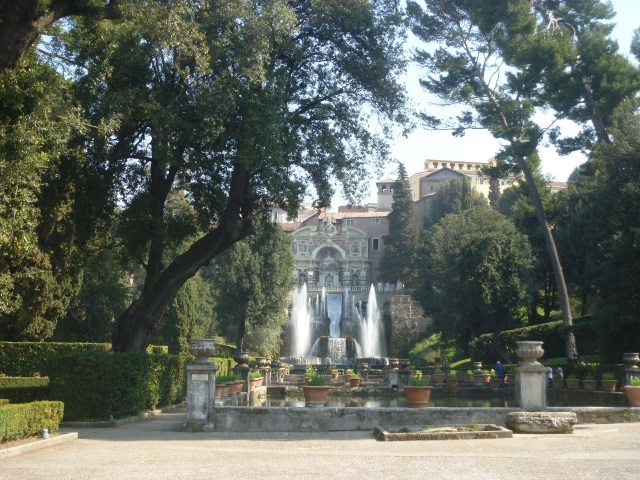
V d'este 3

The whole estate took 20 years to construct during which time the Cardinal made 5 attempts to become Pope. Here “Rometta” is his model of Rome – he never did achieve his goal. Here is an expression of power built to impress. But he ran up huge debts: the whole project is said to have cost the equivalent of £100 million in today’s money.
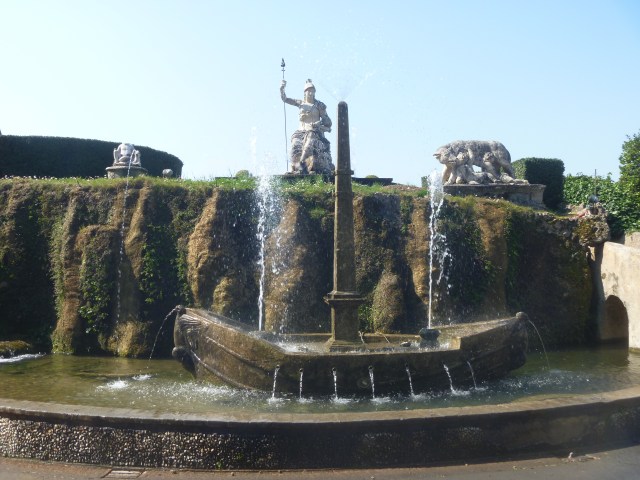
fontana di rometta

Fontana di Rometta

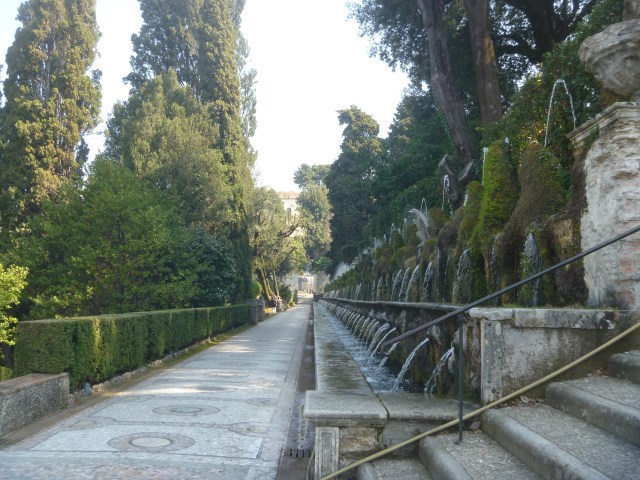
100 fountains

The 100 Fountains – they have the same rhythm and sound as you walk along beside them
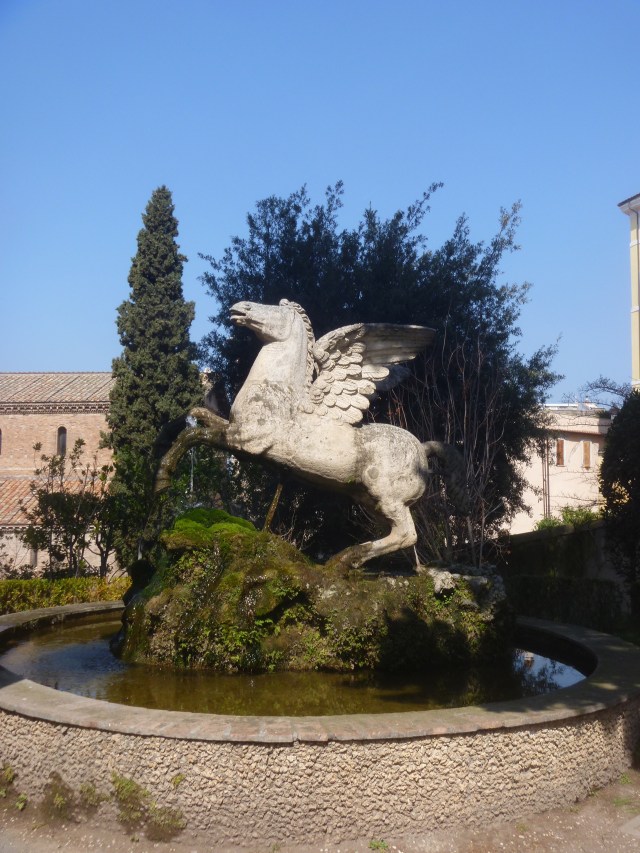
pegasus fountain

Pegasus Fountain

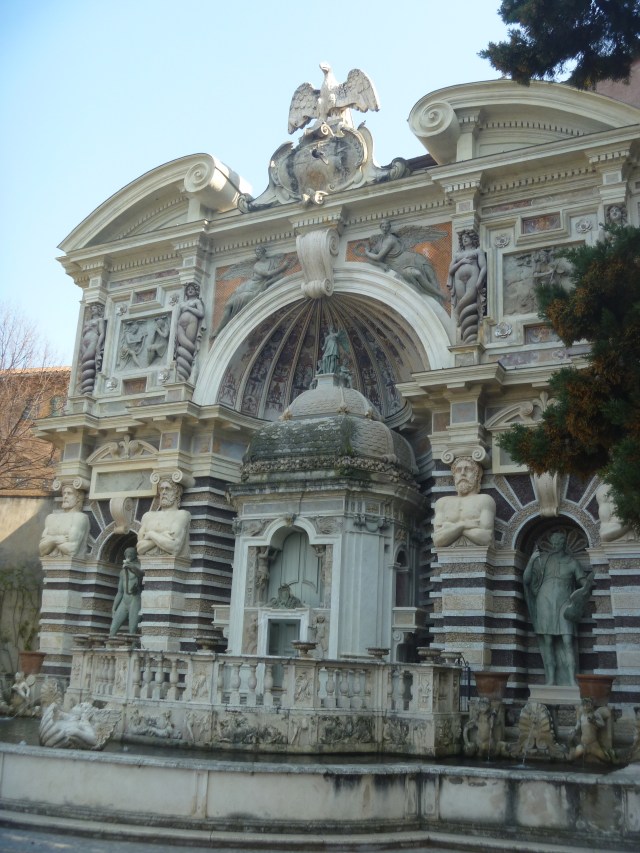
Organ fountain

The Organ Fountain Plays Every Two Hours on the Half Hour

It’s a wonderful theatrical performance full of drama and excitement; entertainment and playfulness with surprises and jokes. In addition to the gardens you can visit the mansion atop the hill the mansion is open too – room after room of breath-taking painted ceilings but little else. Like Hadrian’s Villa the Villa D’Este is a UNESCO World Heritage Site.

I spent over two hours wandering around the gardens and house but felt the call of the Villa Greogoriana and, ultimately, Sant’ Antonio.
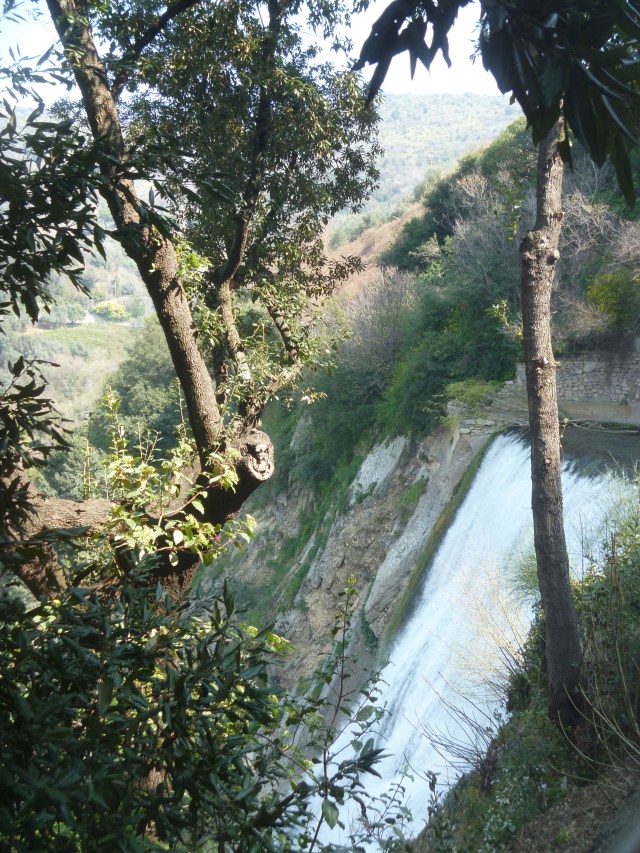
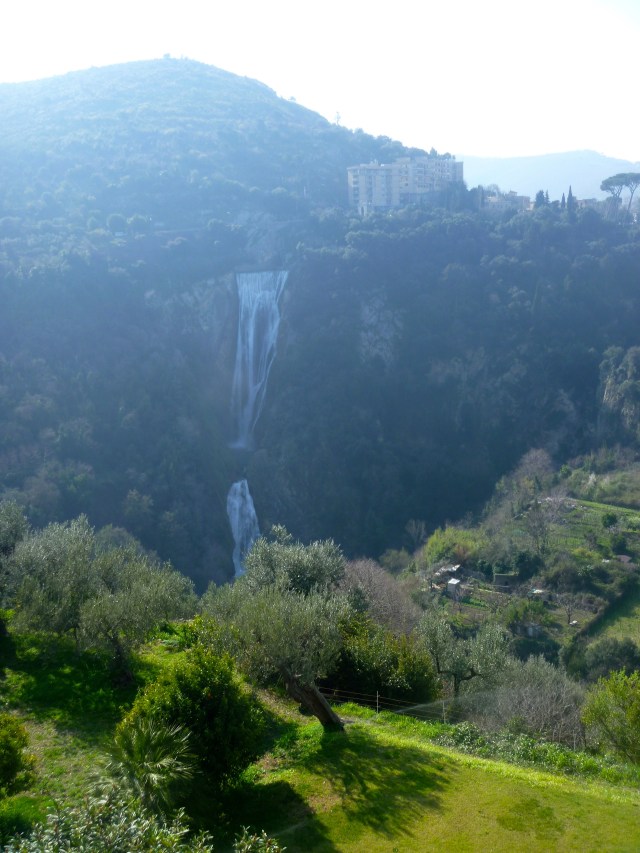
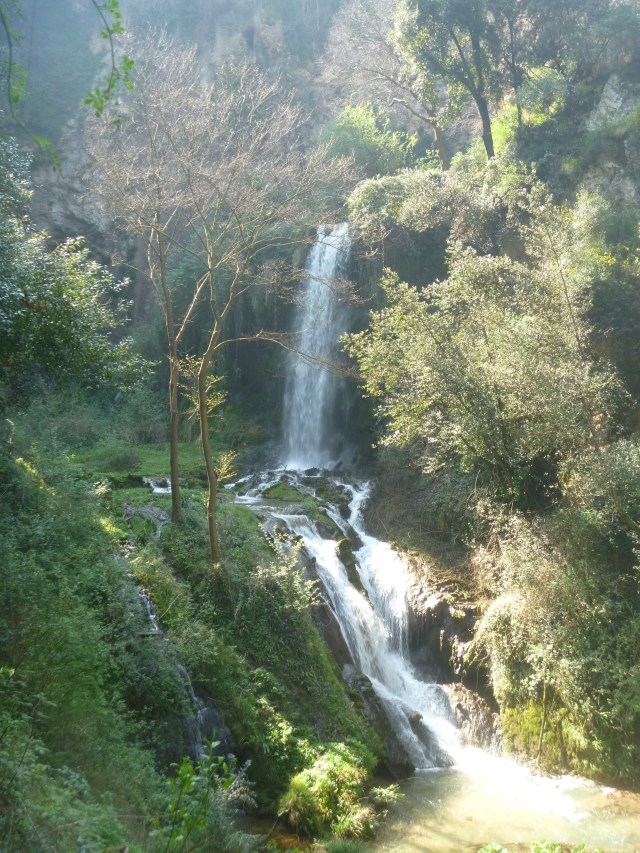
VG Grand Cascade

The Grand Cascade

Cascade from window

The Grand Cascade from my window at Sant’ Antonio

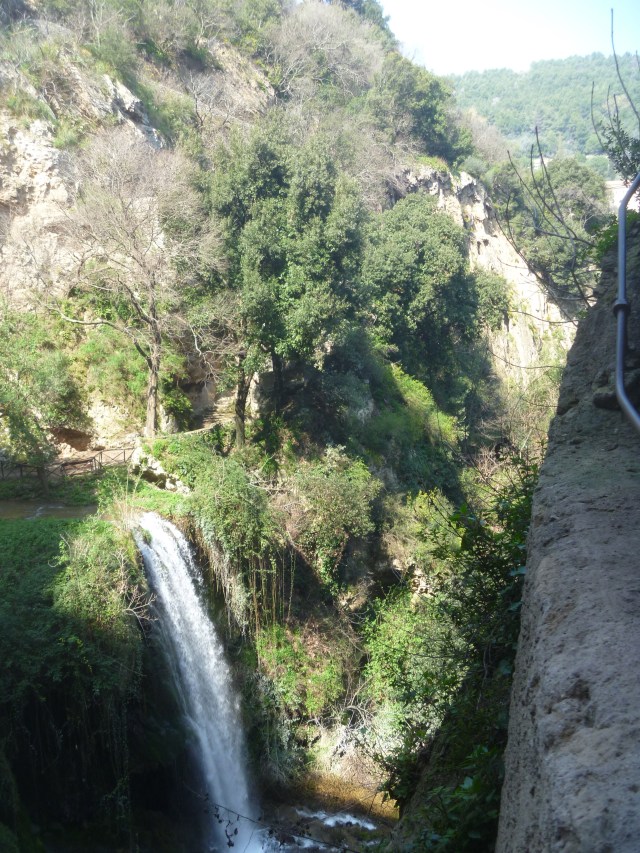
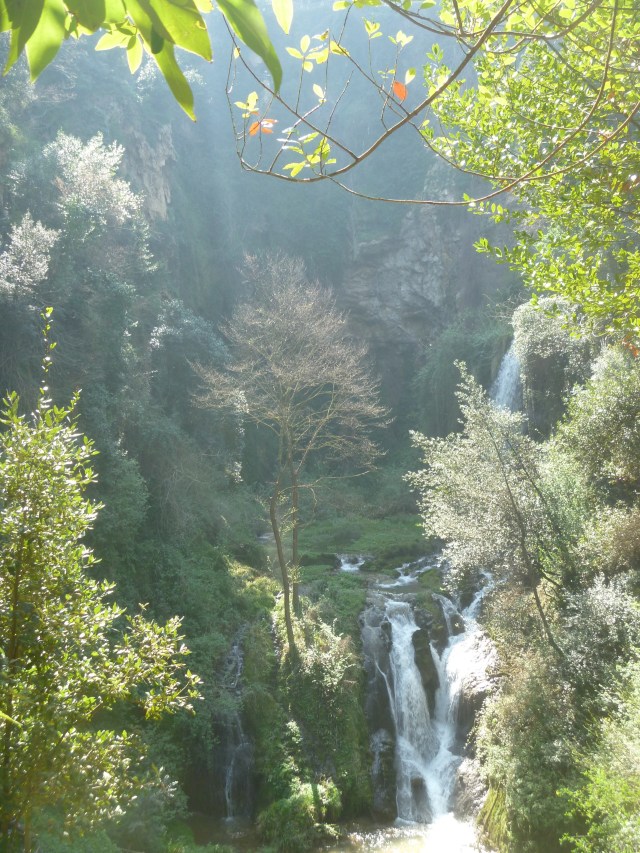
The Park of the Villa Gregoriana, for the Villa itself is no more, fills both sides of a wooded gorge where the waters of the River Aniene spill over precipices and lie still in pools in the valley bottom, is perhaps my favourite of the three gardens of Tivoli. Much of it, including the huge waterfall, can be seen from Sant’ Antonio and it appears more natural and less planned than the other two. Sant’ Antonio can be seen from the park.
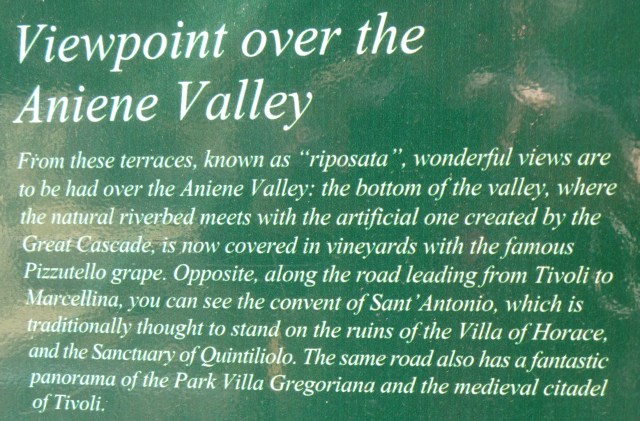
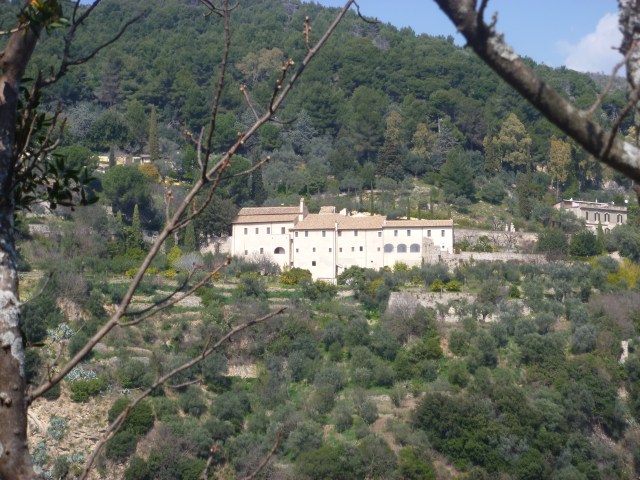
SA view info

SA view

Sant’ Antonio from the Villa Gregoriana

If you ever plan to visit be sure to wear strong, rubber-soled walking shoes as the paths and steps are uneven and slippery when wet and take your National Trust card with you, if you’re a member. Entry is free to NT members. The FAI in Italy aims to preserve Italy’s art, nature and landscape and has reciprocal arrangements with our National Trust.
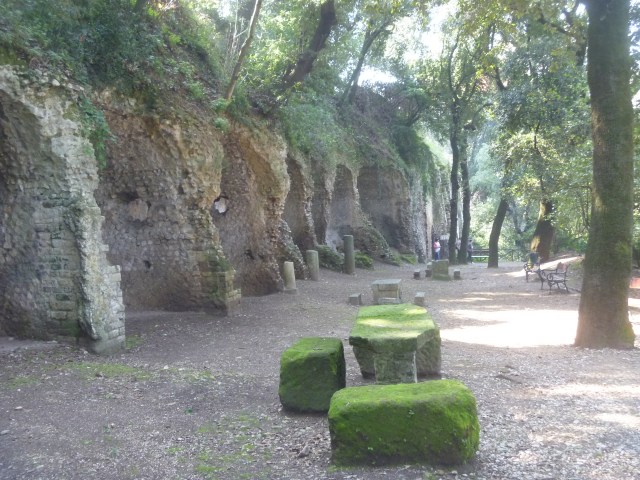
Remains of VG

Remains of the Villa of Manlius Vopiscus
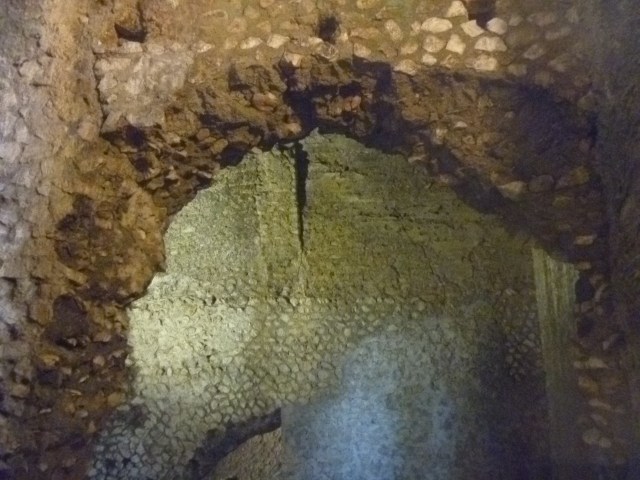
Inside the ruins

Roman Wall inside the Villa remains

The park was commissioned by Pope Gregory XVI to rebuild the bed of the Aniene River, which had been damaged by the terrible flood of 1826. It had fallen into rack and ruin by the end of the 20th century, but has been reopened to the public in 2005 thanks to a major landscape recovery project orchestrated by FAI, the Italian National Trust.

It was in 1835, after the Aniene River had burst its banks yet again, that Pope Gregory XVI decided to transform this enchanting but extremely dangerous location into a model of integration between art and nature. The project saw a tunnel being dug through Mount Catillo in order to deviate the river and thus preserve the town of Tivoli. This was then followed by the construction of an extraordinary natural garden dominated by the acropolis with Vesta and Tiburno’s Temples.

As you walk through the thick woodland of Parco Villa Gregoriana you will discover the delightful combination of the majestic landscape and the tranquillity of the paths that meander through it. En route, you will get to the caves of Neptune and of the Sirens, which form part of an incredible series of gorges and cascades, and to the Great Waterfall, with its whirling mass of water that seems to fall directly onto those who stand and gaze at it.”
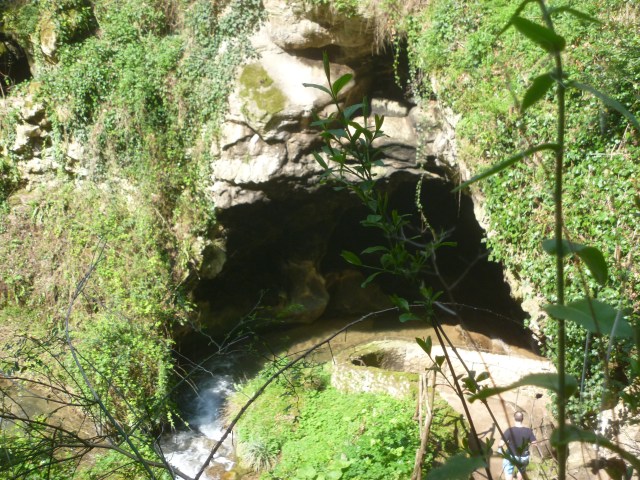
cave of sirens

The Cave of the Sirens

Valley of Hell upper viewpt

valley of hell 2

valley of hell 3

valley of hell 4

Views of the Valley of Hell from Upper Viewpoints

According to the leaflet/map guide to the gardens “Goethe was among those who were amazed by the area. ‘I was recently in Tivoli, where I admired a breathtaking natural spectacle. The sight of the waterfall there, along with the ruins and the whole landscape, greatly enriches the soul’. Goethe visited during the heyday of the Grand Tour, when Italy was the destination of choice for upper-class travellers from all across Europe, affording them and unrivalled classical education.” And this was long before Pope Gregory XVI’s re-creation of the original garden.


Goethe’s Italian Journey

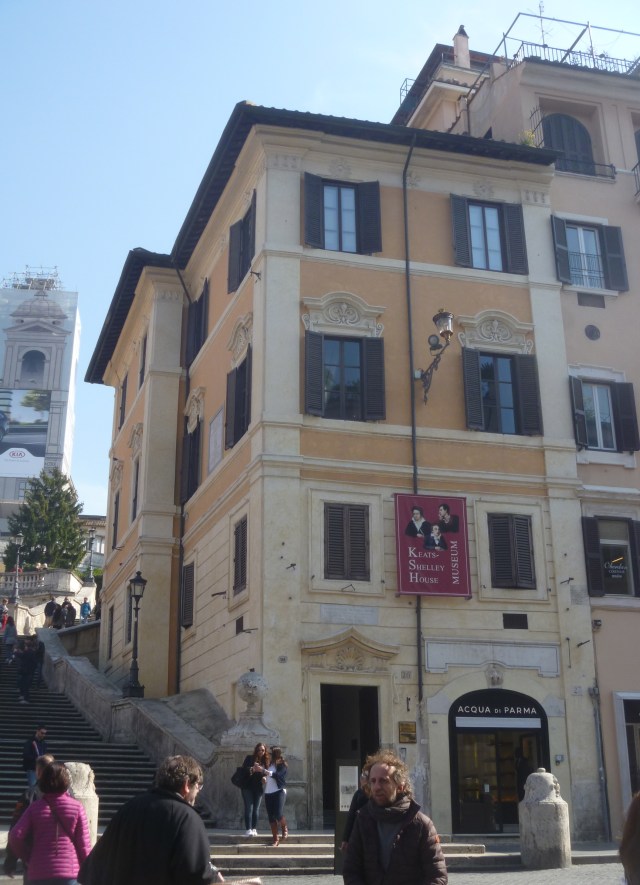
Probably my favourite of the museums and locations I’ve visited in Rome on previous trips is the Keats-Shelley Museum by the Spanish Steps. It’s a quiet oasis of 18th century England amidst the crowds of tourists milling around the Piazza di Spagna. It’s a few years since I was there and I didn’t repeat the visit on this recent trip.

K S House

Keats Shelley House, Rome, on Second Floor with Landmark Trust Apartment Above

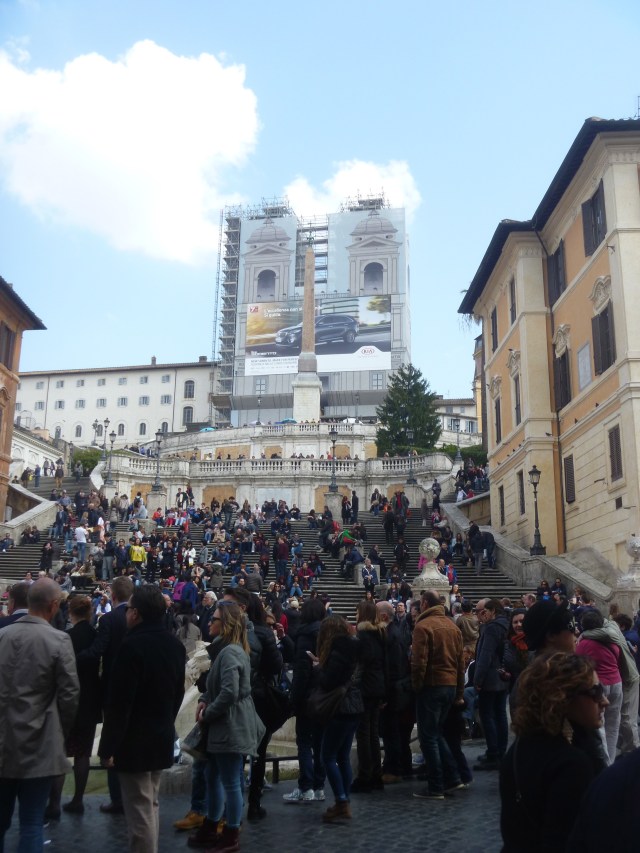
Spanish Steps in March

Crowds on the Spanish Steps – in early March

Babbingtons

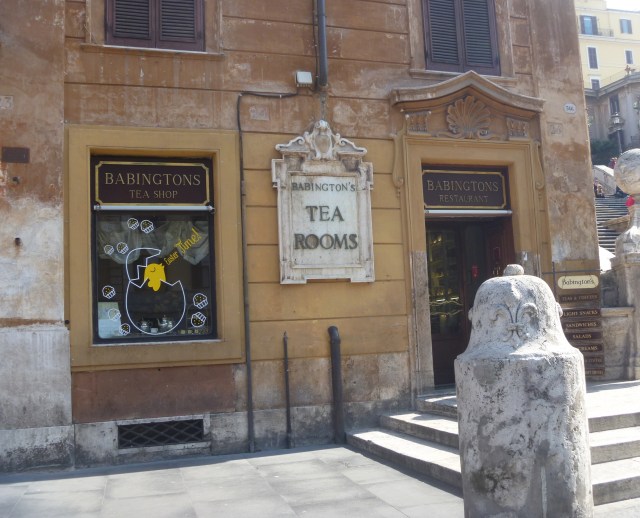
Babington’s English Tea Room by the Spanish Steps

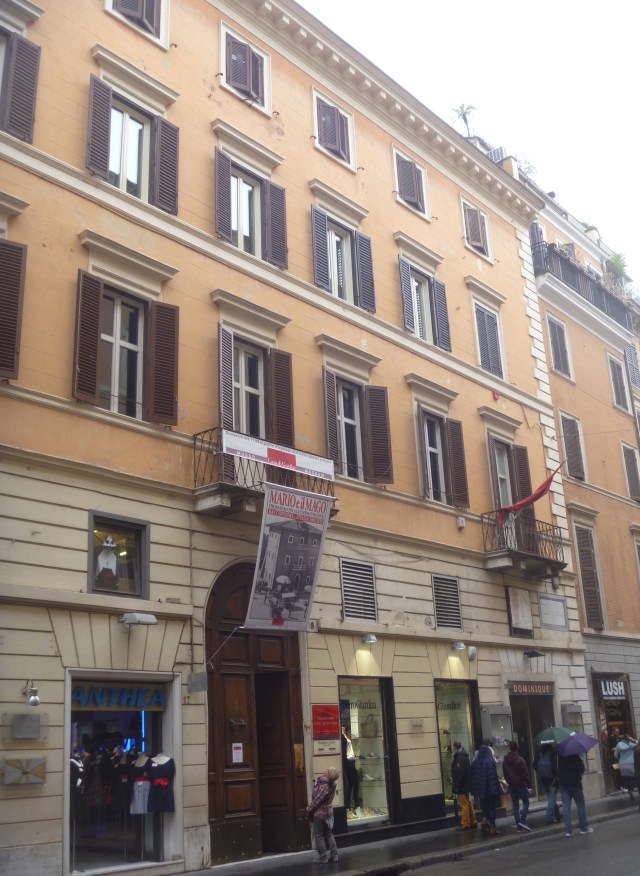
But I did discover the existence of the Casa di Goethe in my LV Guide Bari, Milan, Naples, Rome 2012. So my final port of call in the City of Rome itself (after fortification at Canova) was a visit to the Casa di Goethe on the Via del Corso nearby. I wrote a little bit about Goethe earlier this year. Here is another place of peace and calm and amazingly right on the Via Del Corso.

via del corso

In September 1786, Goethe started out on the longest journey of his life. He was 37 when he achieved his dream of visiting Italy. He later wrote in his journal “Italienische Reise”, that he had spent the happiest period of his life there. On his arrival in Rome he stayed on the Via del Corso with his painter friend Johann Heinrich Wilhelm Tischbein, scion of a dynasty of renowned artists. This huge apartment, which gives onto the Piazza Del Popolo, is still redolent of Goethe’s time here during his Grand Tour of 18th-century Italy. It has superbly painted coffered ceilings which are set off by the white of the walls. On display are writings, letters, annotations, and drawings, as well as the paintings of his friend Tischbein.

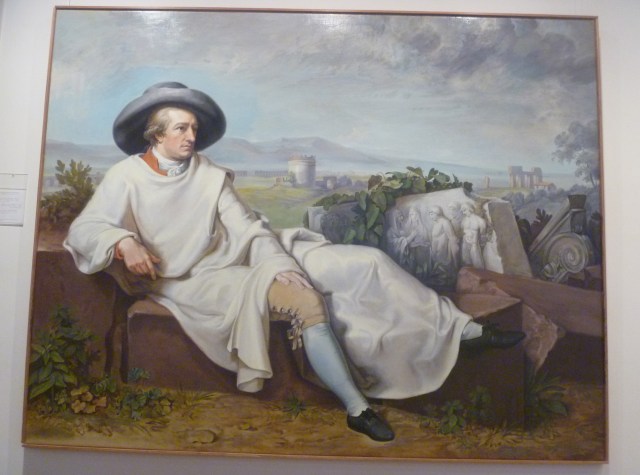
g in roman countryside

The most famous of them, Goethe in the Roman Campagna, was painted on this very spot in 1787, although the version seen here is only a copy, the original being in the Staedelsches Kunstmuseum in Frankfurt. It never fails to impress all the same. This sumptuous collection of artworks and documentary material gives us an idea of what the journey to Italy meant at the time for artists and cultivated travellers. The Casa di Goethe also offers temporary exhibitions that encourage German-Italian cultural relations. By appointment it’s possible to visit the Library which holds a number of first editions of Goethe’s work.” [LV Guide Rome 2012]

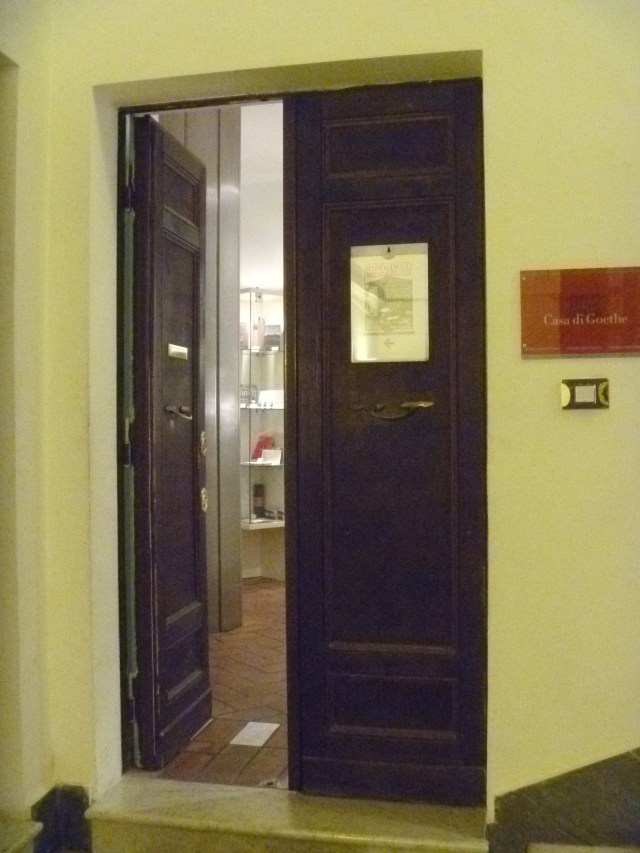
welcome

Welcome to the Casa!

This is the only German Museum on foreign soil and it was opened to the public in 1997 with support of the German Government and German cultural associations. Regular events are held here – readings, lectures, conferences, discussions and concerts – followed by gatherings and discussions in the library over a glass of wine. The Museum is also able to offer scholarships (sponsored by DaimlerChrysler) to literary figures, publishers, scientists, translators, and artists, allowing them to spend a few months in Rome collecting ideas and inspiration for their own work or finishing off projects. The work doesn’t have to be related to Goethe.

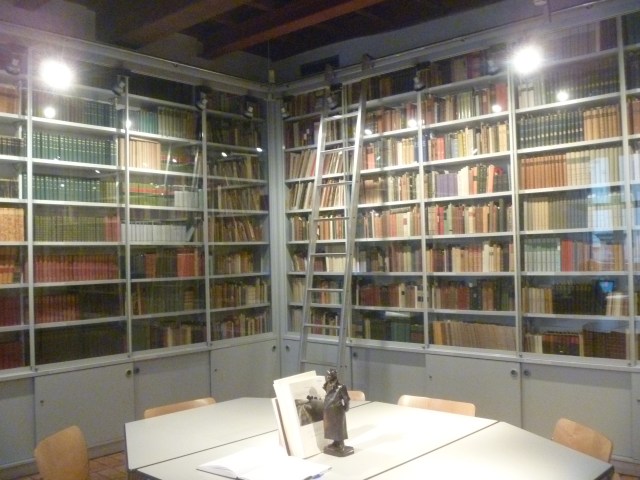
library

Goethe Library in Rome

The first few rooms are dedicated to the temporary exhibitions; currently Thomas Mann and his Italian novella Mario and the Magician. Displays relate to the historical and political background as it was written during the rise of Nazism and Fascism. The notes were all in German and as time was tight I didn’t spend much time in these rooms but moved on to the rooms occupied by Goethe at the front of the building.

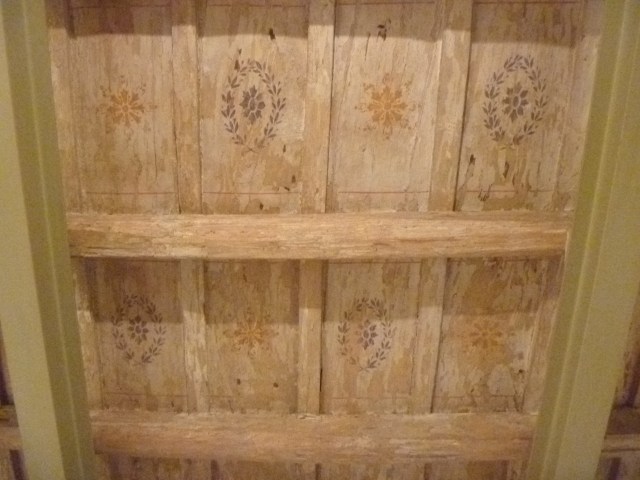
ceiling 1

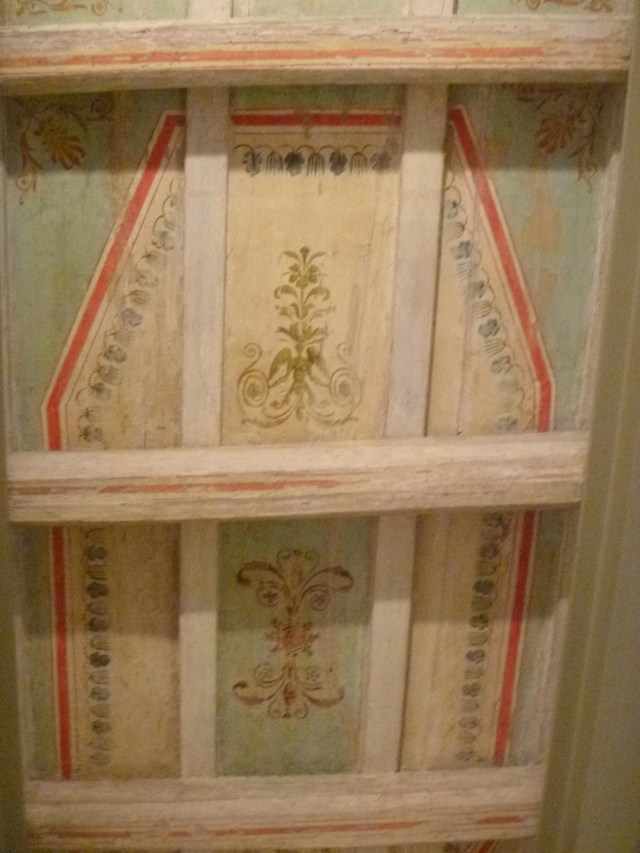
ceiling 2

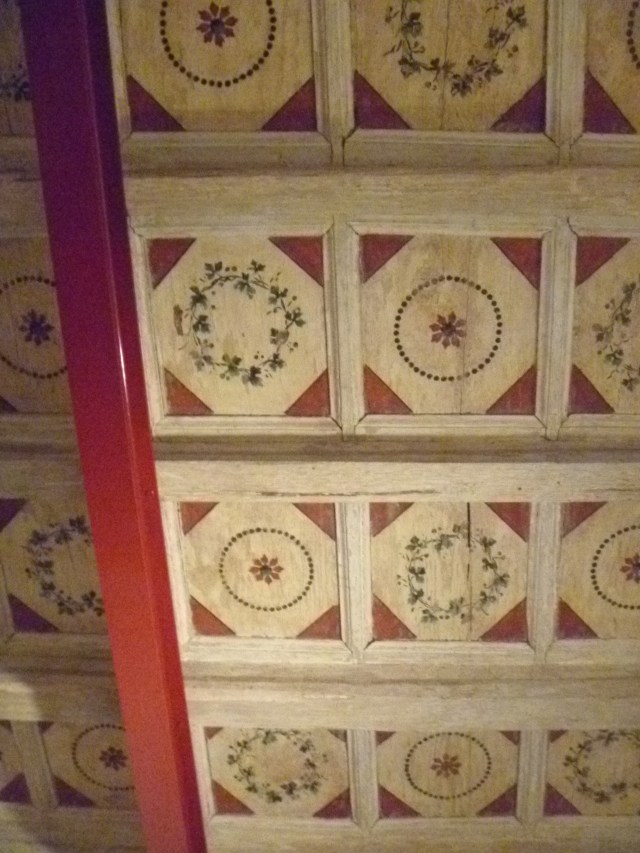
ceiling 3

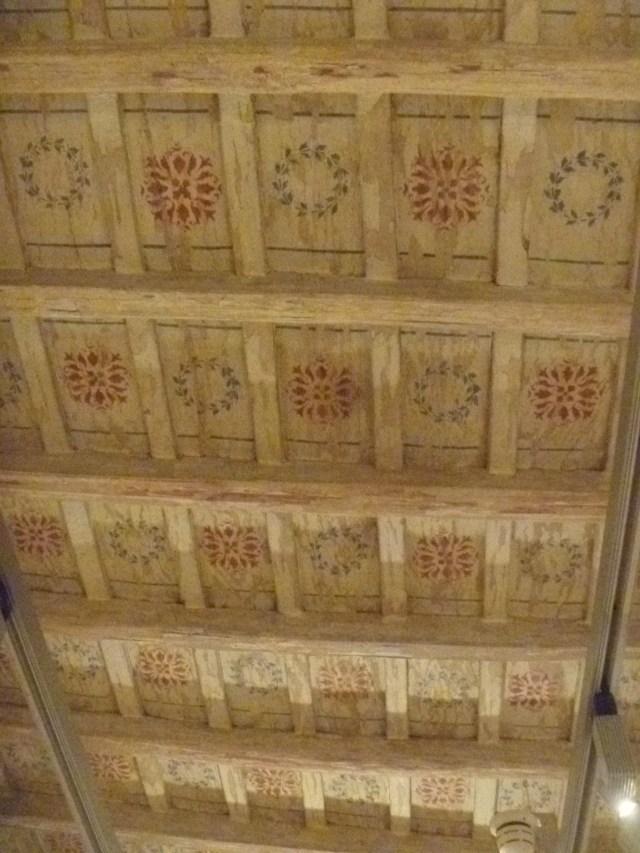
ceiling 4

Painted Coffered Ceilings

The restored painted wooden ceilings, which date back to Goethe’s time, contrast well with the pale walls which show off the displays and pictures. No furniture or furnishings dating back to Goethe’s time here. To me they are reminiscent of Swiss and German chalet decorations.

I was glad that I bought the excellent illustrated guide book. The first section, as in the rooms themselves, tells the story of Goethe’s time in Rome and Italy. There then follow pages of quotations by Goethe himself from his letters and his journal Italian Journey and by his friends and colleagues. Many of these quotations also accompany the room displays.

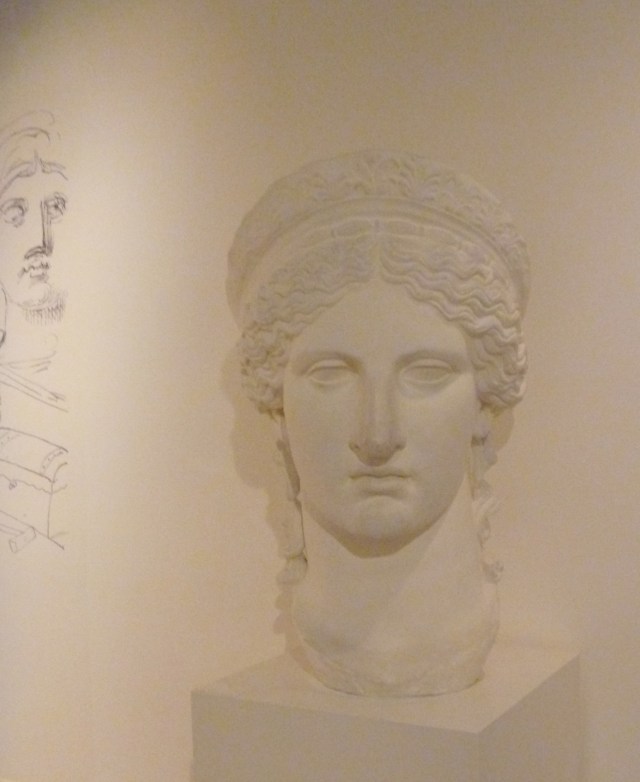
cast of jupiter

“I could not resist buying the cast of a colossal head of Jupiter . It now stands in a good light facing my bed, so that I can say prayers to him the first thing in the morning.” (Italian journey 25 December 1786

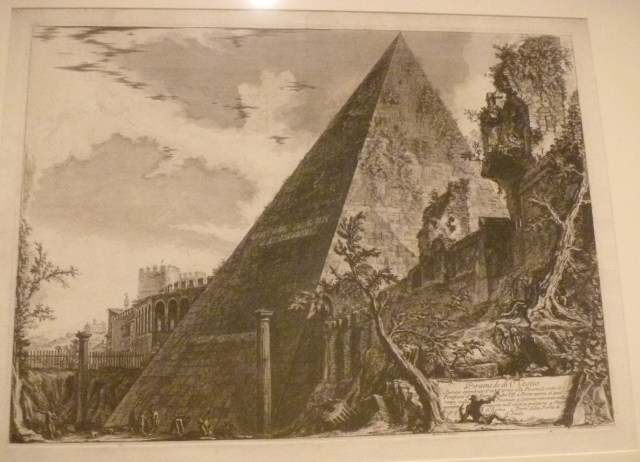
Piranesi print

Piranesi Print of the Caius Cestius Pyramid

“Water pipes, baths, theatres, amphitheatres, the stadium, temples! And then the palaces of the Ceasars , the graves of the great – with these images I have fed and strengthened my mind.” to Carl Ludwig von Knebel 17 November 1786

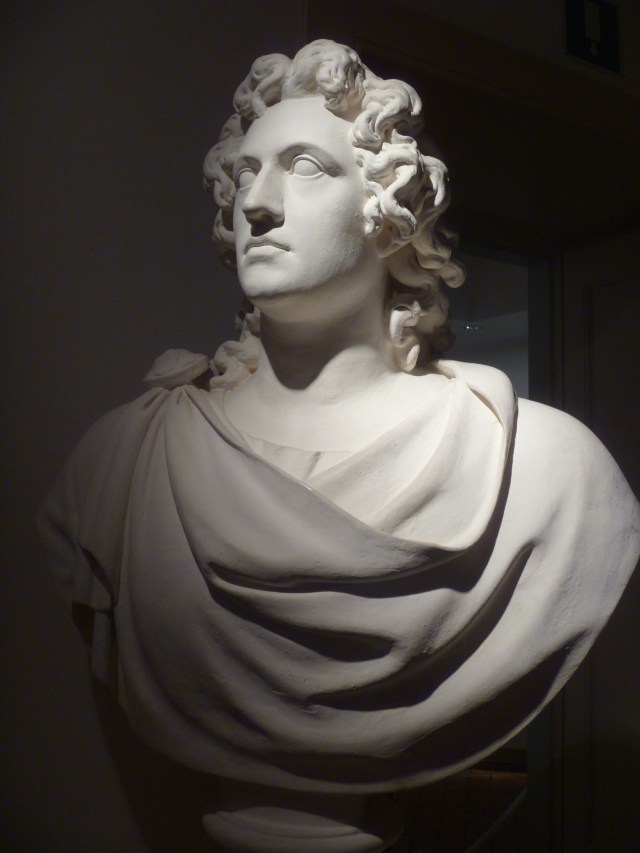
bust by trippel

1787 bust of J. W. v. Goethe by Alexander Trippel

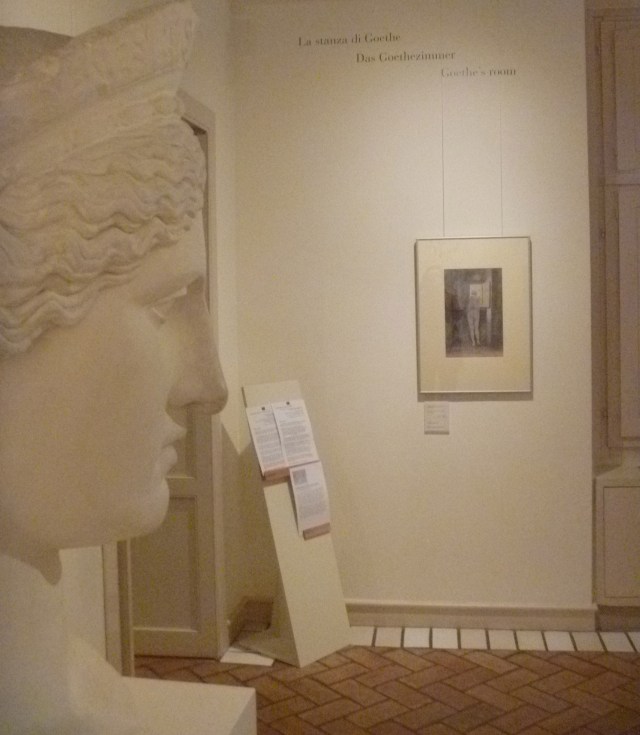
In goethe's room

Goethe’s Room

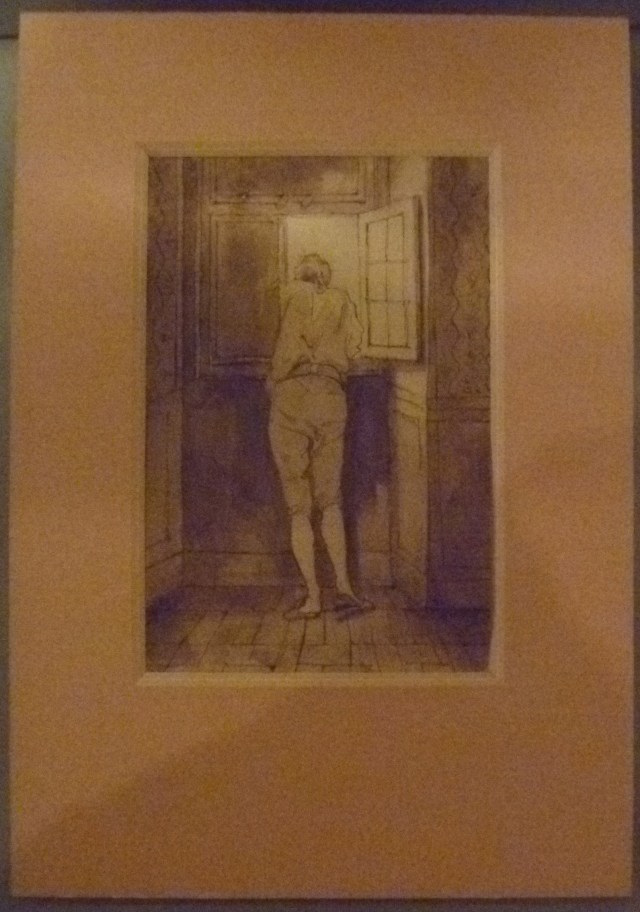
G at window

Tischbein ‘s watercolour of Goethe at the window

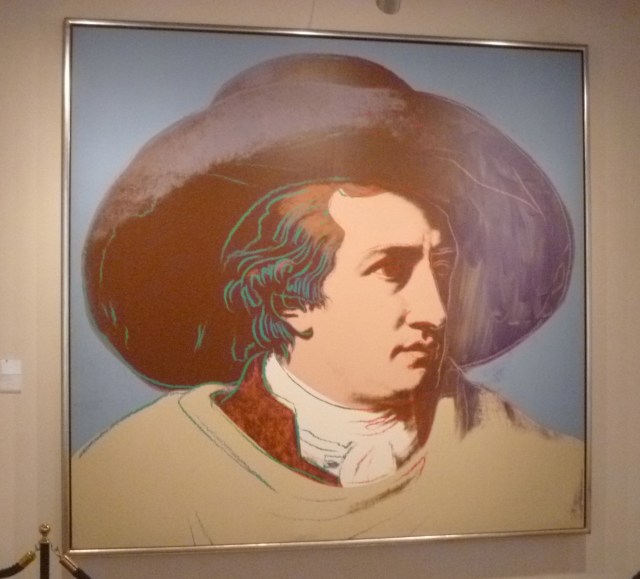
1991 and 1992 were excellent years for the acquisition of many Goethe related papers, books and artefacts by the Casa including the Andy Warhol iconic contemporary adaptation of Tischbein ‘s portrait. Also some autographs of Goethe’s including a letter card written in his own hand and giving his rome address and the Goethe library of publisher Richard Dorn.

Warhol

Screen Print and Acrylic on Linen 1982

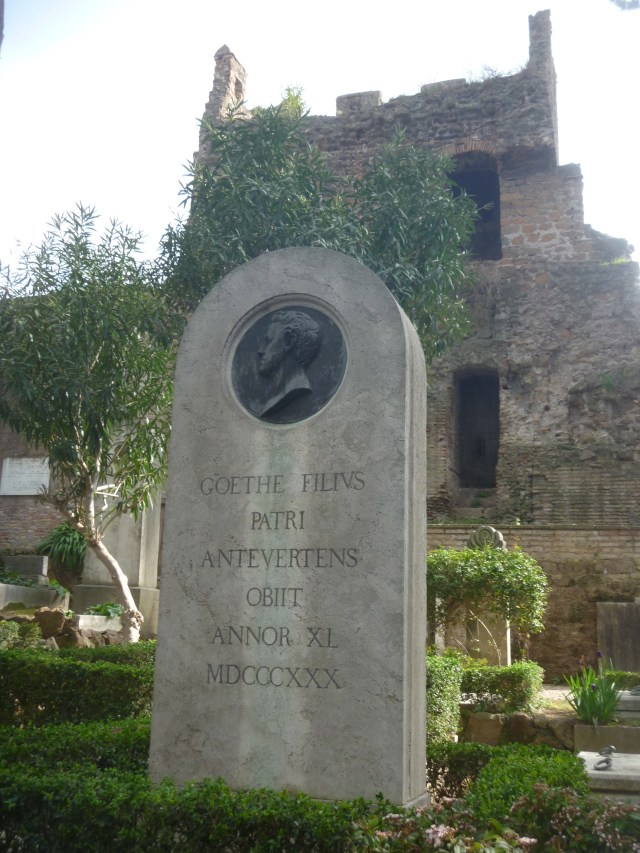
At the very end of the guide book is a list of museums and memorials to Goethe in both Italy and in Germany. Amongst those listed is the grave of his son, August, in the Protestant Cemetery. Interestingly, even though he was an adult at death his father arranged for the following to be inscribed on his gravestone.

GOETHE FILIVS / PATRI / ANTEVERTENS / Obiit / Annor [VM] XL / MDCCCXXX (Goethe’s son / father / above / died / 40 years / 1830)

August Goethe


A Roman Road : Walking The Appian Way

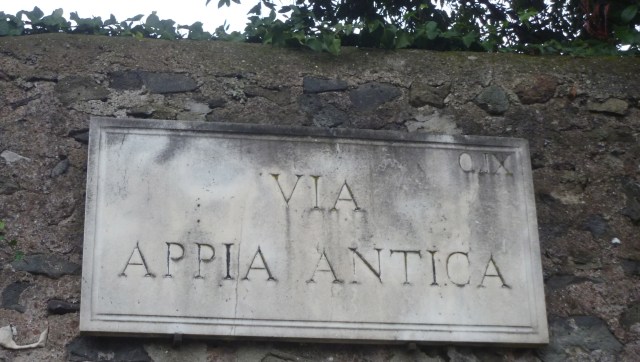
AA wall sign

A walk along the Appian Way was something I’d read about in my Quiet Rome book and in other guides so I’d added it to my ‘to-do’ list for when I was next in Rome. I studied various ways to approach the way and in the end booked the excursion ‘Catacombs and Roman Countryside Group’ with Enjoy Rome. I’ve written about the Catacombs and Aqueduct visits already. Now its the turn of The Appian Way. You’ll have noticed already that it was a rainy day but nevertheless we did manage a brief walk for a few hundred metres and now, maybe on a future visit, I feel confident to take public transport and do a further walk like the 90-Minute one described in the Dorling Kindersley Eyewitness Guide.

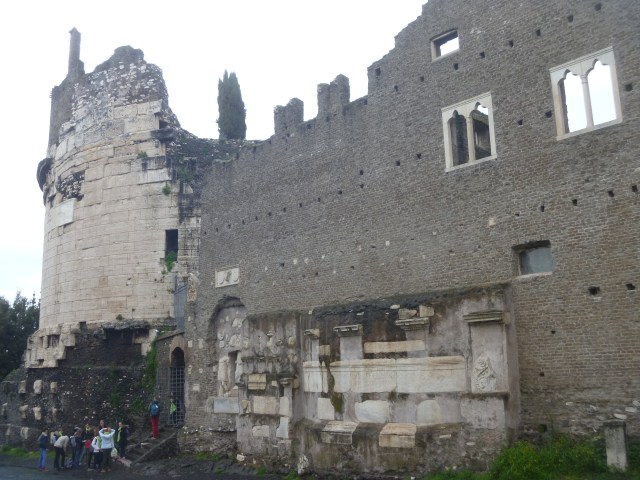
cecilia metella

Mausoleum of Cecilia Metella

We were a small group of 15 and the half-day excursion included travel by minibus from the ER offices near Termini Station and back. From the Catacombs we bumped and jostled (I don’t recommend doing this by car!) along the Way and finally parked opposite the Mausoleum of Cecilia Metella on the Third Mile Section.

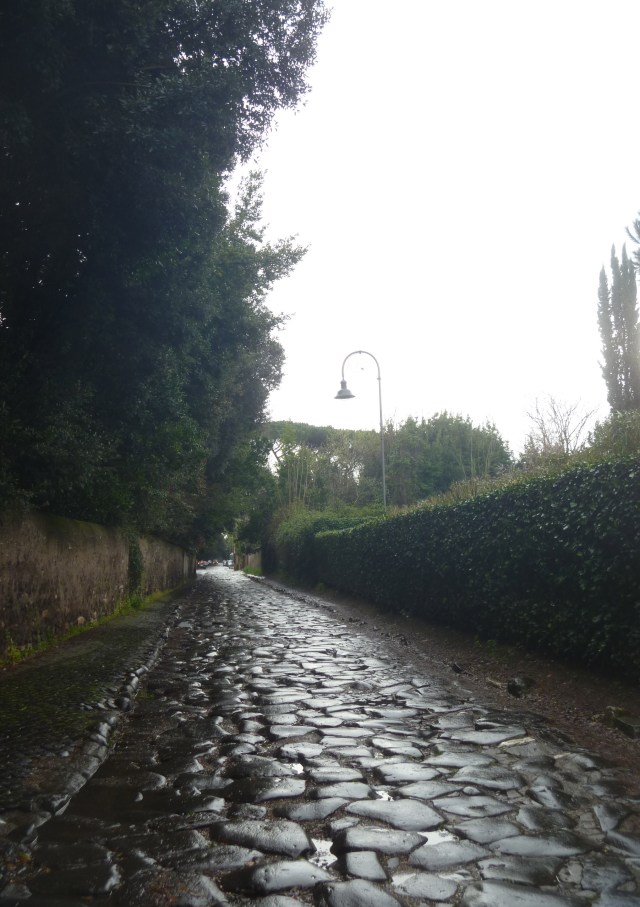
wet way

A wet Appian Way

From here we took to the wet cobbles of the road which had been built to link Rome with Brindisi in southeast Italy. The road is named after Appius Claudius Caecus, the Roman censor who began and completed the first section as a military road to the south in 312 BC. It is a Roman standard 4 metres wide surfaced with ancient basalt flagstones and flanked on either side by private villas (many built upon the original Roman foundations), cypress trees and pines. Needless to say the basalt cobbles were rather slippery when wet.

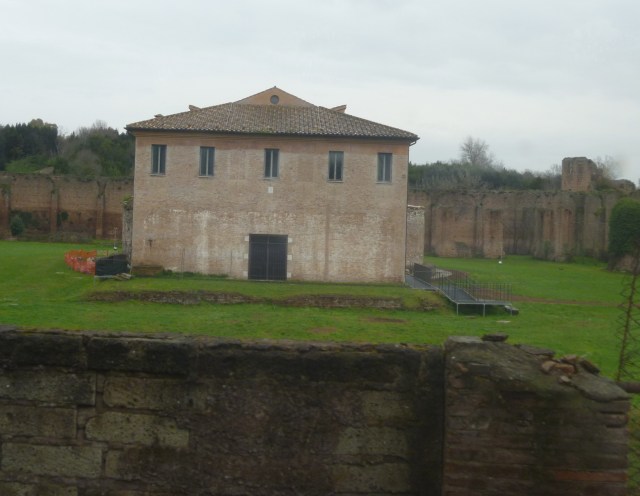
AA Villa

Villa along the Way

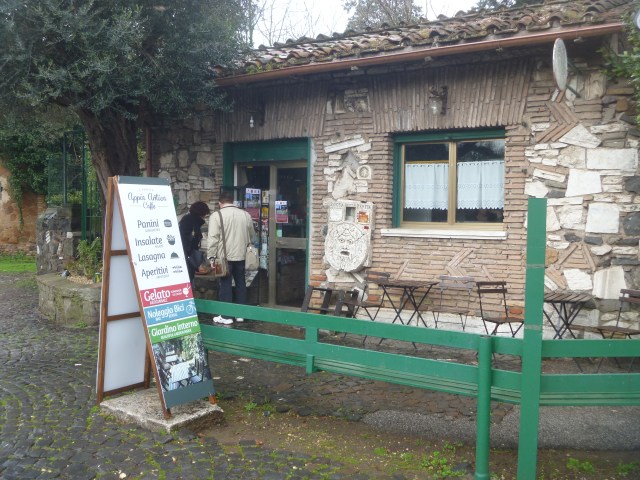
AA Cafe

The Bar Caffe del Appia Antica

Refreshment stops along the Way are few and far between but this cafe hires out bikes in summer and is (apparently) near the bus stop for the 660 which would take you to Metro Station San Giovanni – but don’t take my word for it!!

St Nicholas church

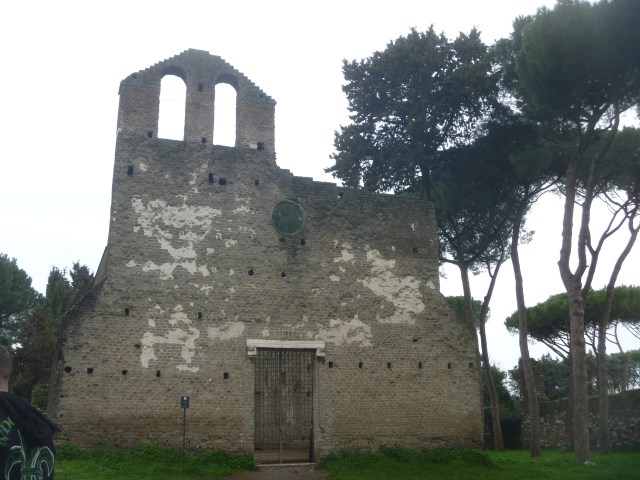
St Nicholas Church on The Appian Way

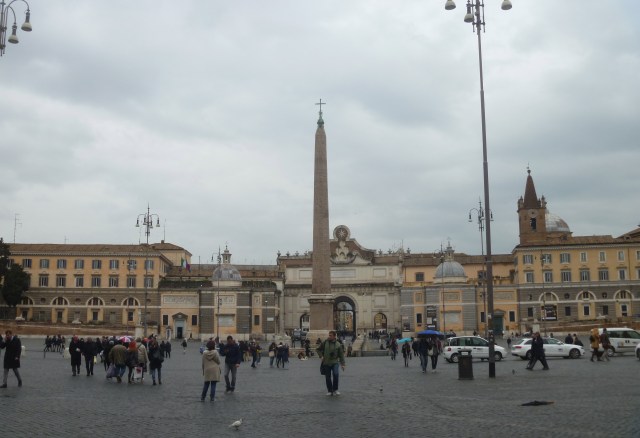
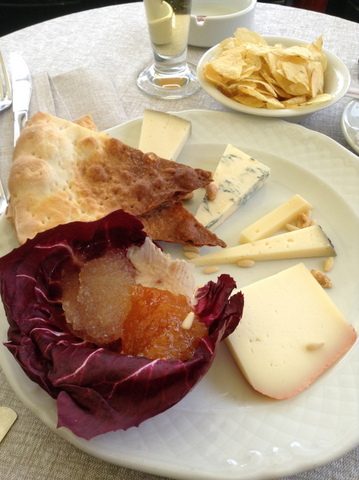
After the excursion I took the Metro to the Piazza del Popolo, crossed it in the rain and took shelter at Canova to eat a five cheese lunch and watch the dripping brollies go by!

Piazza del Popolo

Piazza Del Popolo

Canova lunch

Five Cheeses and What looks like Jelly but tastes like Hot Mustard!

Water, water everywhere: The Caracalla Baths and The Claudio Aqueduct

The trip to The Protestant Cemetery took less time than I had envisaged and I’d booked the Appian Way walk so, as a friend had recommended seeing the Baths of Caracalla and they were just one Metro stop away, I decided to spend a couple of hours there, even though it started to drizzle with rain.

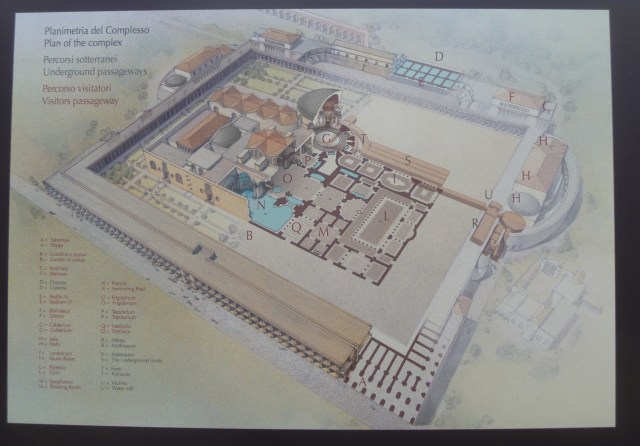
aerial view

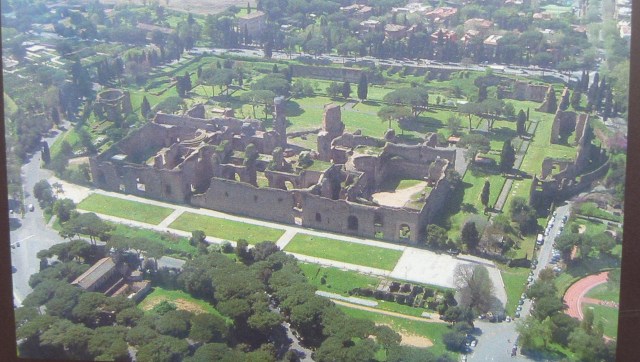
Aerial View of the Baths

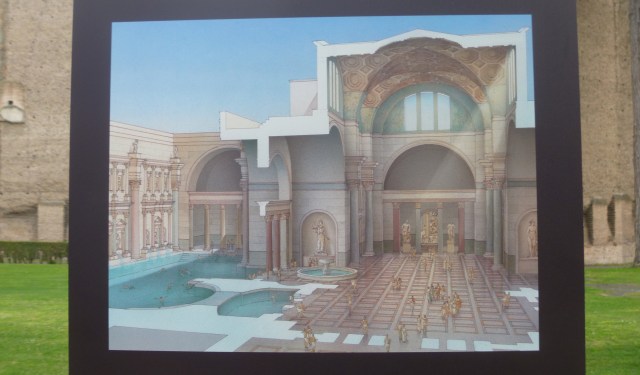
impression

Artist’s Impression of Caracalla

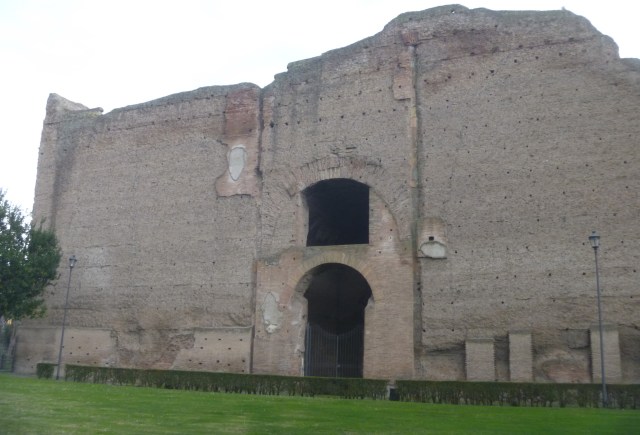
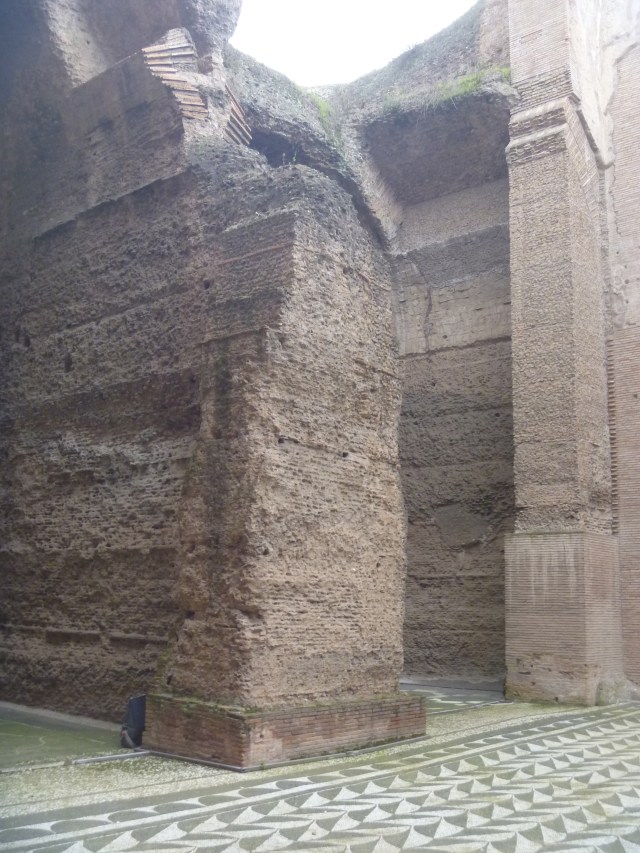
Now, Colchester may be full of Roman superlatives but, as you probably know, Rome knocks every other place that was part of the Roman Empire, into a cocked hat when it comes to remains. The Caracalla Baths are HUGE. The walls tower over you and the scale of everything was (and still is) vast.

Caracalla 1

caracalla 2

These, the largest and best preserved thermal baths, were entirely built by Emperor Caracalla since AD212. Apparently 9,000 workers were employed daily for approximately five years to create a huge platform 337m x 328m. Water was brought to the bath house by aqueduct and the whole place was abandoned after the siege of Rome when the Goths destroyed the aqueduct and cut of the supply of water to the city.

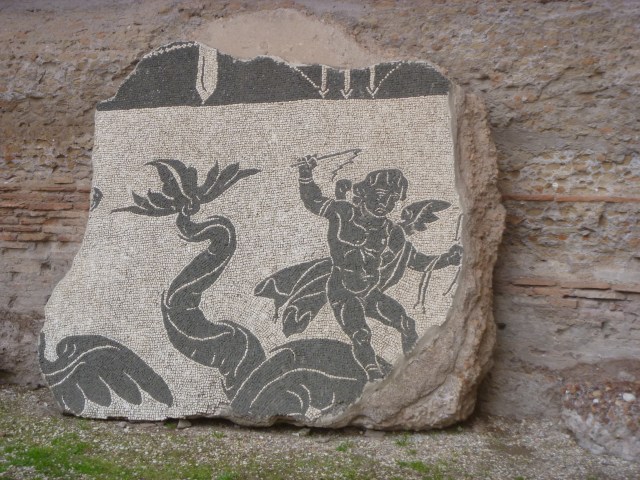
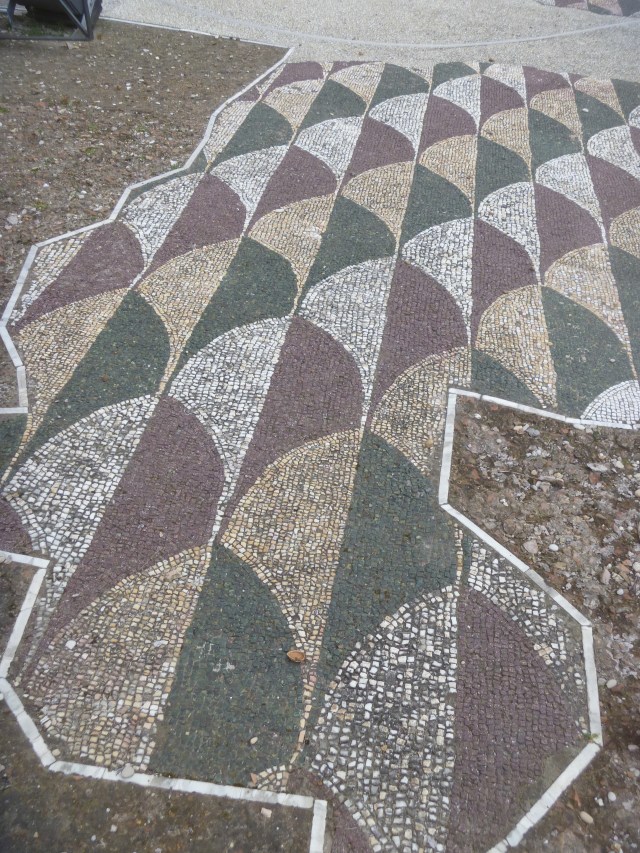
mosaic

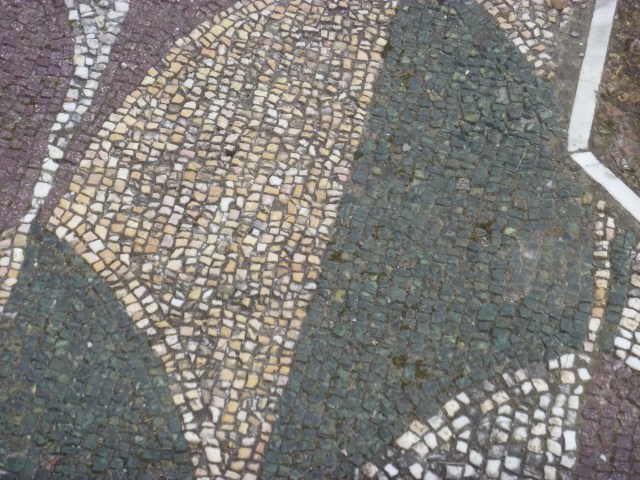
Many of the decorations and works of art were removed from the site over the centuries. There is a particularly fine collection in the Vatican Museum since several popes were involved with excavations. Some mosaics remain roughly in situ but otherwise there are few artefacts remaining. There had been bronze statues in niches, fountains, marble floors and columns and painted frescoes.

mosaic pavement

mosaic close up

Romans enjoyed board games and a tabula lusoria has been preserved here. Many such gaming boards were carved into floors and, as here, round the edges of pools. The game involved getting a walnut (or marble or knucklebone) into the holes.

natatio

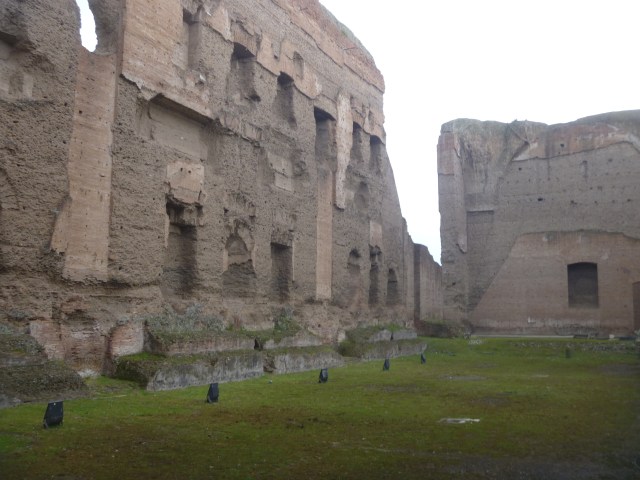
The Natatio was a huge Olympic size swimming pool – the board game is alongside – is 50m x 22m and the walls are 20m high. It was not very deep and certainly not suitable for diving.

the natatio

The Pool Today

original baths

Artist’s Impression of the Pool in its Heyday

cypress trees in gardens

The Gardens – Cypress Trees – at Caracalla

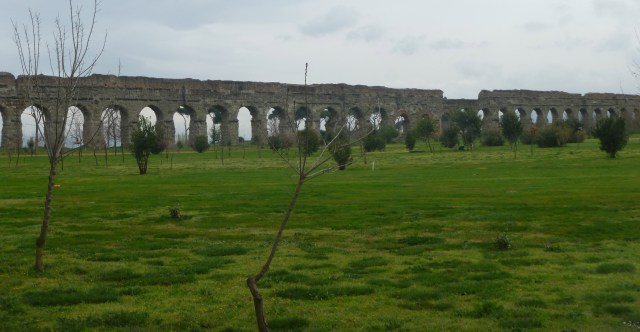
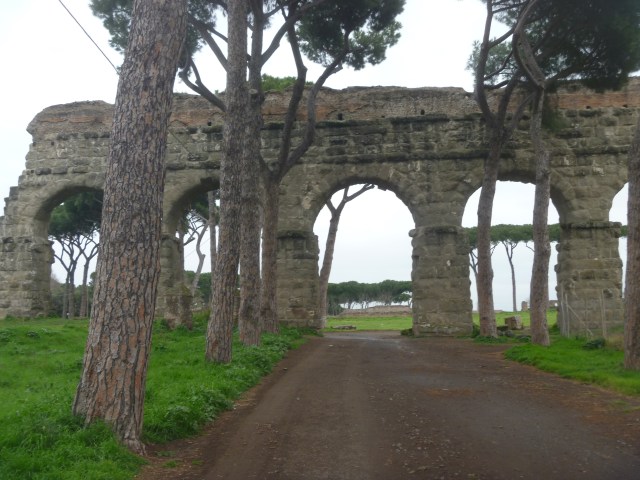
Following our visit to the Catacombs and walking along the Appian Way our Enjoy Rome Tour included a visit to the extensive remains of the Claudio Aqueduct. The aqueduct was one of several that supplied Roman Rome with its water.

Claudio Aqueduct

The Claudio Aqueduct

The Parco degli Acquedotti is a public park about 8 kilometres from the city. It is part of the Appian Way Regional Park and is of approximately 15 ha. The park is named after the aqueducts that go through it. My guess is that it’s not easy to reach by public transport but I was glad to have seen it as I had no idea of its existence before.

approaching aqueduct

Approaching the Aqueduct

Next up is a report of my visit to Hadrian’s Villa at Tivoli where there is even more Roman water!

At Horace’s House : Sant’ Antonio, Tivoli

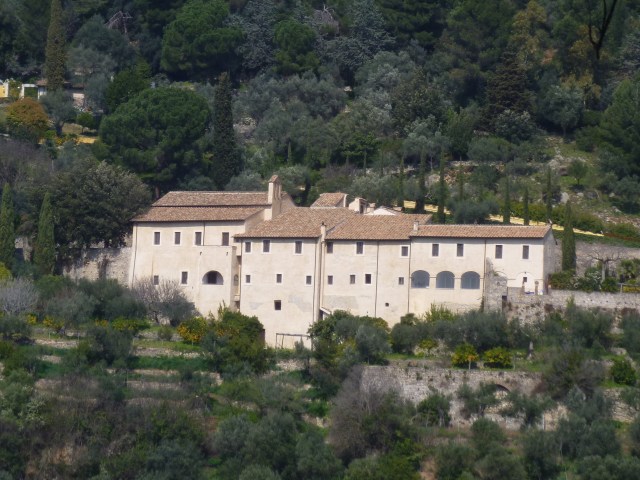
Sant' Antonio

In the summer of 2013 I had the great good luck to be offered a room and to stay with fellow Landmarkers in the Italian countryside near Tivoli, about 20 miles northeast of Rome. I leapt at the chance and finally last week the trip became a reality. I have just spent a fabulous week at Sant’ Antonio and made a few excursions too when I could manage to drag myself away from this wonderful old house.

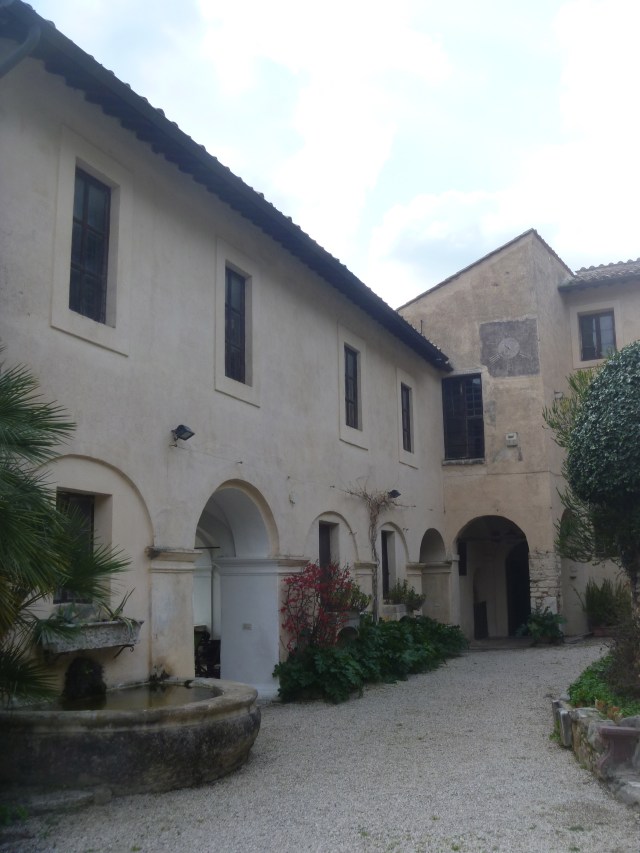
According to the History Album Sant’ Antonio was built around 100 BC.  The upper parts were rebuilt in the late 16th and early 17th centuries: the monastery between 1583 and 1590; the east wing about 1625 and the church in 1647. It was acquired for preservation by Frederick Searle in 1879. The present owner, Vicomte Roger de Brisis, is his descendant but Sant’ Antonio has been managed by The Landmark Trust since 1995. It consists of a medieval monastery grafted onto a Roman villa of the time of Caesar Augustus, or maybe even before. It was rescued from abandon in 1879 by an Englishman newly returned from West Indies.

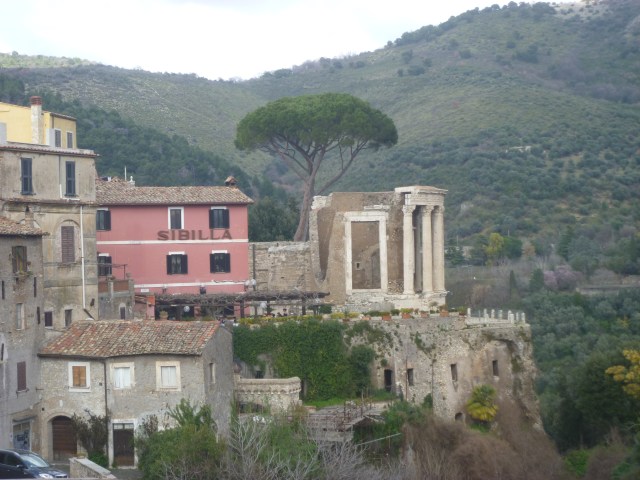
vesta temple

Temple of Vesta, Tivoli

A well-founded belief is that a frequent guest, if not an early owner, was the poet Horace. Across the ravine thunders the water of Anio, with temples of Vesta and the Sibyl poised above it. All these on the outskirts of Tivoli, the Roman Tibur, and you are approaching something very near the heart of the civilisation that has moulded Europe for two millennia.

It is fitting that the revival of this place should have fallen to an Englishman, because those two names – Horace and Tivoli have a particular resonance for his countrymen. From the Middle Ages , English boys learned their reading and writing by means of Horace’s Odes and Satires, along with the works of Virgil and other writers of the Augustan Age. Only in the late 20th century has academic education ceased to be built on these cornerstones.
In the 17th century Englishmen first began to visit Italy in large numbers and carried its influence home in the most direct manner, in their paintings, and their buildings and their gardens. The dramatic influence of Tivoli appealed strongly to painters, notably the great French creators of an ideal classical world: Claud Lorrain and Gaspard Dughet. The English imitators eg Richard Wilson, followed them here. Writers like Joseph Addison sought the places which the best paintings might be composed and the. Murmured to themselves of “Tivoli’s delightful shades and Anio rolling in cascades.”

In 1879 Frederick Searle was searching for a place to sketch the waterfall when he first saw Sant’ Antonio – “La casa di Orazio”. He made it his home; spent 20 years renovating and repairing it and encouraged scholars and archaeologists to share his discoveries. His daughter Georgina and her husband George Hallam and then her great-niece Lucy d’Aihaud de Brisis continued the tradition. In this generation Count Roger de Brisis took on the care of Sant’ Atonio and with Landmark’s help has made it possible for guests to stay here. Sant’ Antonio has long enjoyed the soubriquet ‘Horace’s Villa’ . There are several schools of thought relating to whether Horace lived here or not. It is known through the writings of Suetonius that Horace lived in Tibur (Tivoli).
The Sant’ Antonio History Album goes on to give various scholars’ opinions on the exact location of Horace’s Villa but I like to think that it was Sant’ Antonio and unless some future academic gives me proof to the contrary I will stick with this theory and the celebrity link with the house.

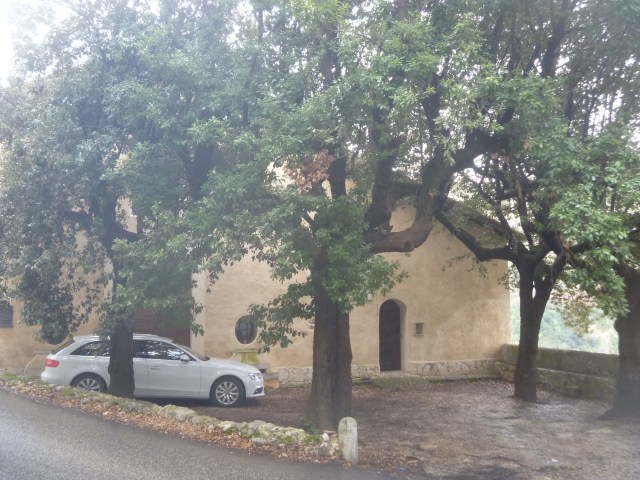
The Franciscan Friars took over the remains of a Roman villa – it had continued operating as a villa farm – with ample storage spaces, good water supply and fertile terraces. By becoming a monastery its survival was ensured for a further five centuries. Sant’ Antonio was a monastery complex of the lesser kind; common in the mountains of central Italy. The little church of this monastery is still an object of devotion for the many Catholics of the town. The feast day of St Anthony is 13 June.
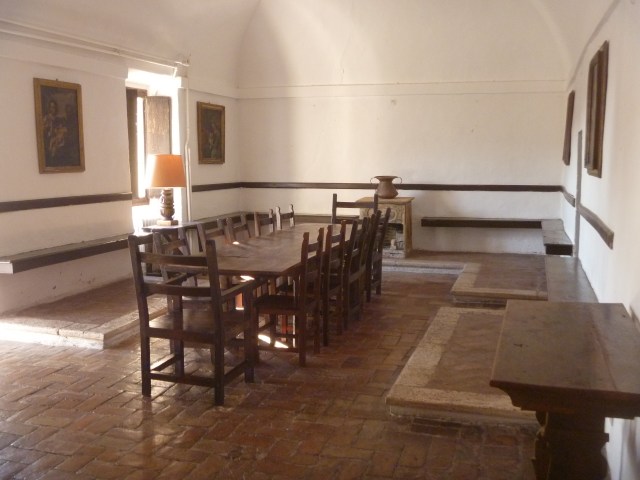
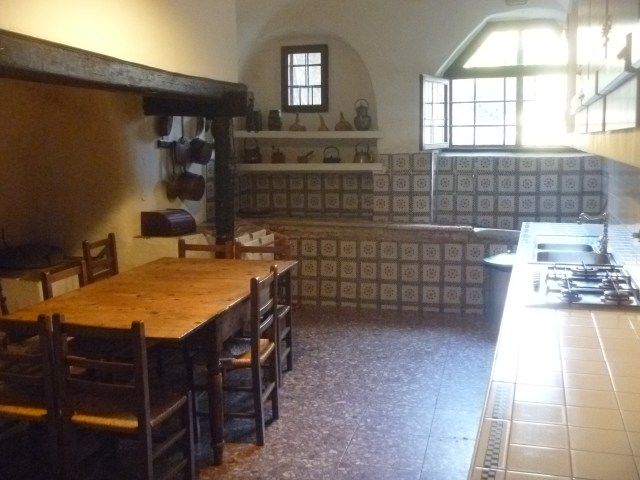
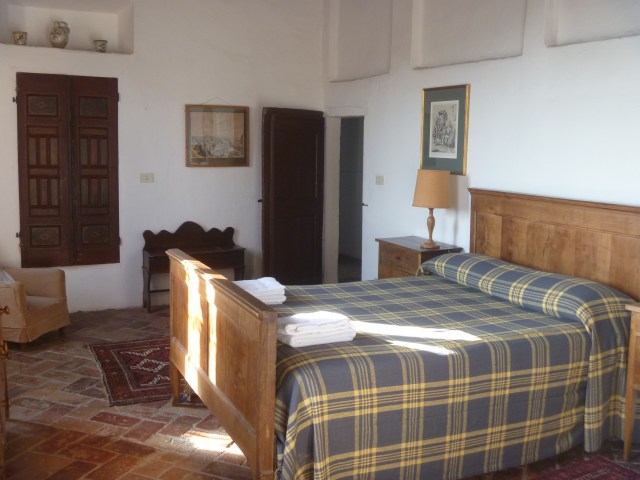
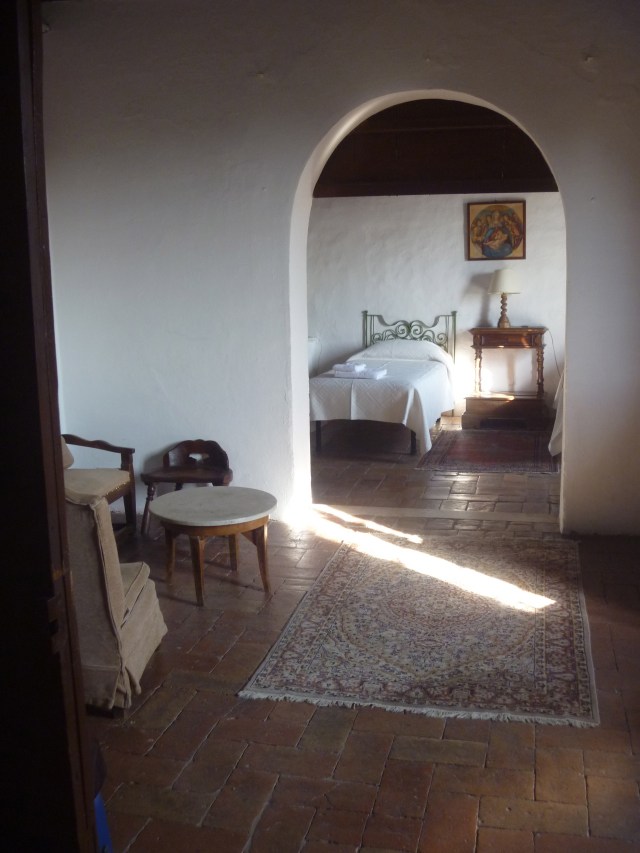
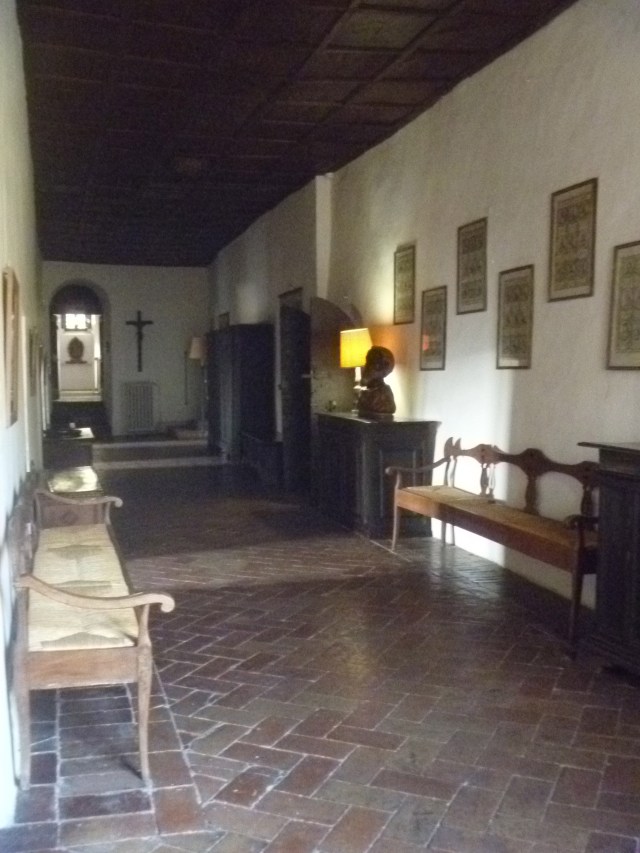
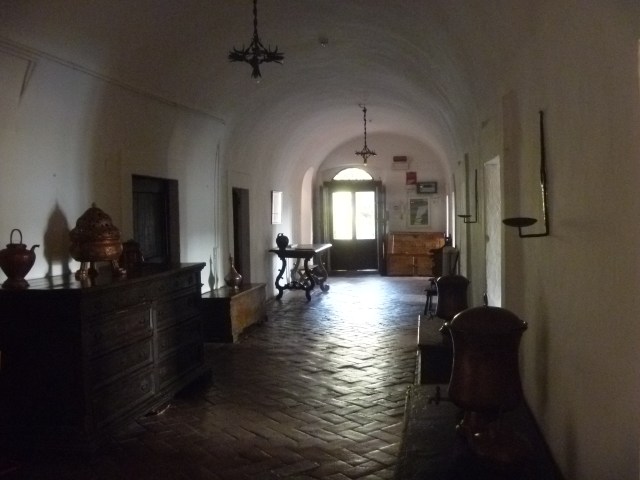
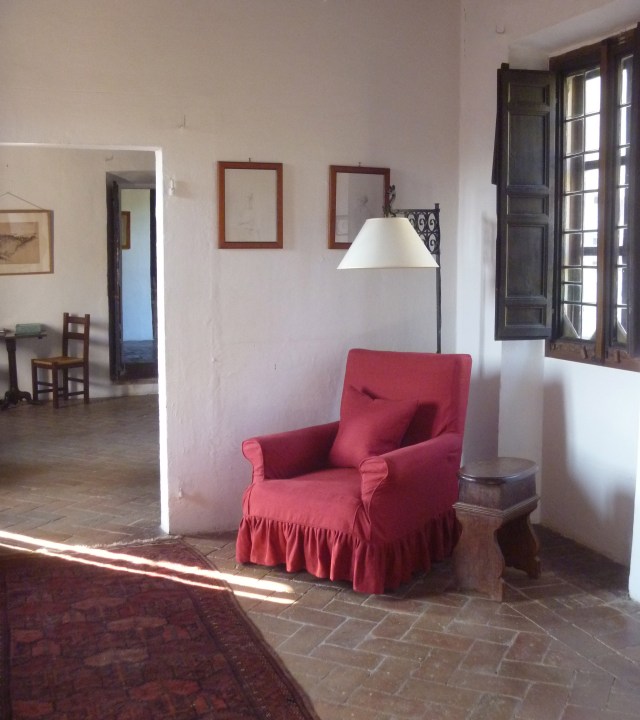
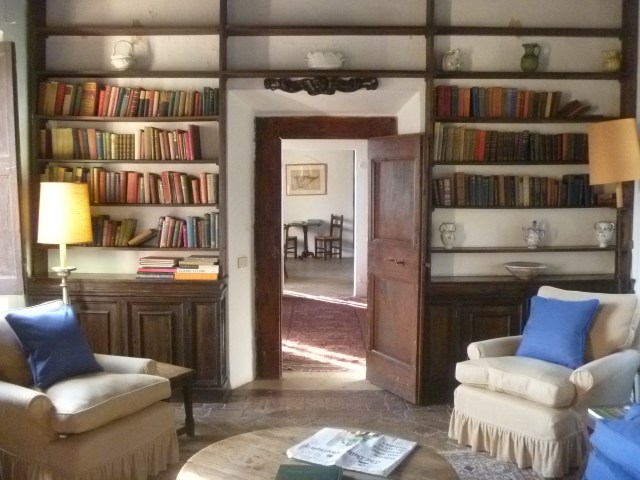
Having read details of the architectural plans of the monastery it would appear that the arrangement of the rooms and their various uses has changed little over the centuries. We dined in the Refectory, cooked in the kitchen, slept in the monks’ cells (the numbers still painted on the doors) off long wide corridors decorated with church ornaments, crucifixes and reliquaries. Our sitting rooms – a range of three – occupy a northeast projecting wing. The main floors are of rectangular terracotta bricks laid in coursed and herringbone patterns with borders, a technique common to Italy. The small casement windows are a rare feature to have lasted so long in Italy, the details of the dark unpainted wood, the panes of glass and their fixings, and the modest catches all being precious survivals.

Welcome to Sant’ Antonio – come and have a look inside.

Refectory

The Refectory

kitchen

The Kitchen

Roman wall in kitchen

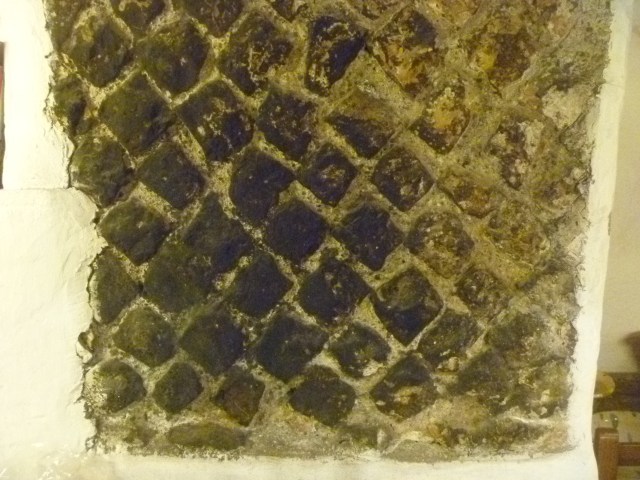
Roman Wall in the Kitchen

a dble room

A Double Bedroom with Herringbone Pattern Floor

Twin bedroom

A Twin Room with Sitting Area

Upper floor

Upper Corridor

lower floor

Lower Corridor

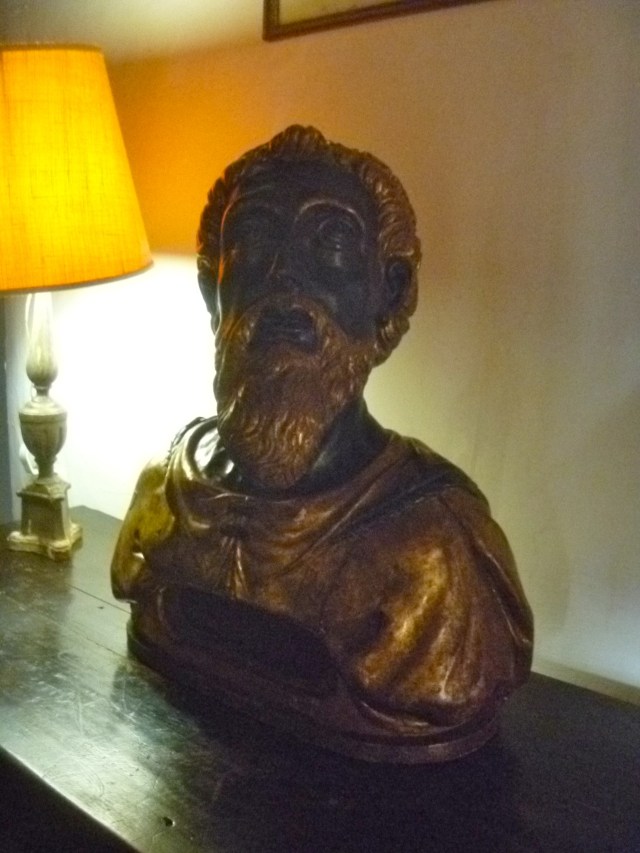
reliquary

One of the Reliquaries

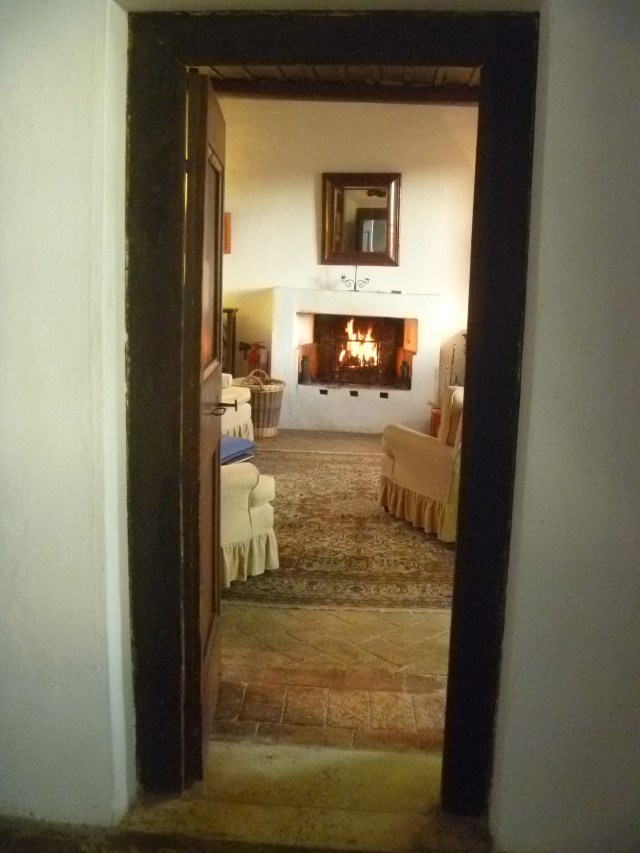
sitting room

The Sitting Room

a reading corner

A Quiet Reading Corner

sitting rm

Three Sitting Rooms

Anio falls and window

The “Anio Rolling In Cascades” seen through a Casement Window

SA Garden

Former Main Entrance now Rear Door into the Garden

Main Entrance

Today’s Entrance Approached from the Main Road

Miladys Grand Tour and August Summing-Up

After Cornwall and Port Eliot Festival I returned home briefly on 28 July, made excursions to Manchester, Jervaulx and Scarborough and on 12 August set off on a Swiss adventure with a foray into Italy only returning last Thursday 21 August.

Here are links to a couple of my posts over at Lynne’s blog Dovegreyreader

http://dovegreyreader.typepad.com/dovegreyreader_scribbles/2014/08/barbara-visits-the-idler-academy-porteliotfest.html

http://dovegreyreader.typepad.com/dovegreyreader_scribbles/2014/08/st-germans-and-the-great-war-exhibition.html

Not my post but here is my entry for the Port Eliot Flower and Fodder Show Tea Cosy Competition:

http://dovegreyreader.typepad.com/dovegreyreader_scribbles/2014/08/teacosies-part-two.html
On 11 August I re-opened My Swiss Diary  briefly and a further Swiss Post will follow here shortly. Meanwhile I can show you a few photos of the places visited in Italy :

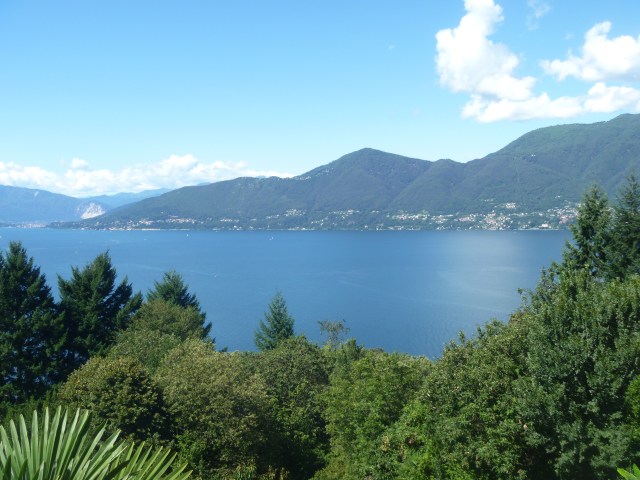
The View

The View from the house at Luino (Lake Maggiore)

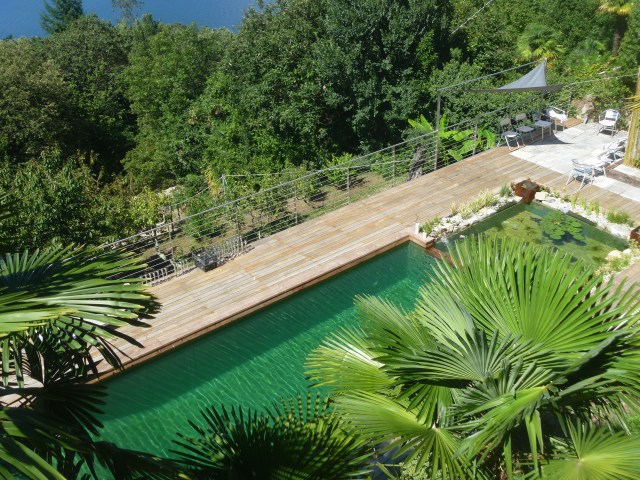
The Pool

The Ecological Swimming Pool

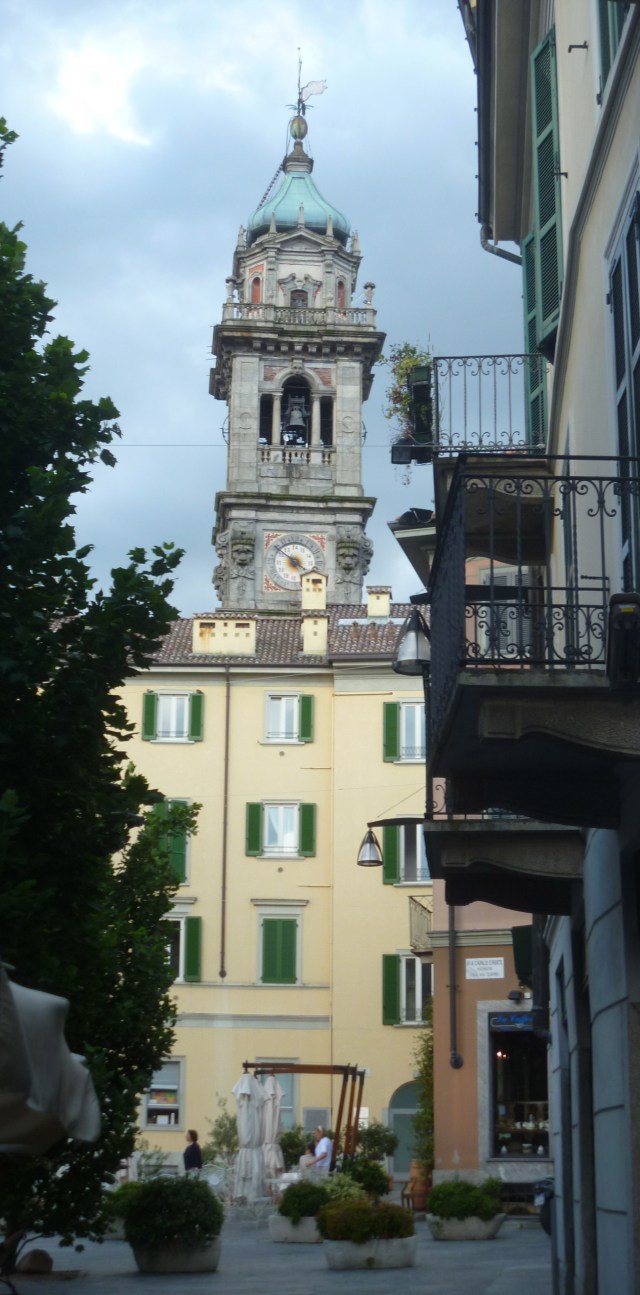
Varese

Il campanile (1585-1774) Varese

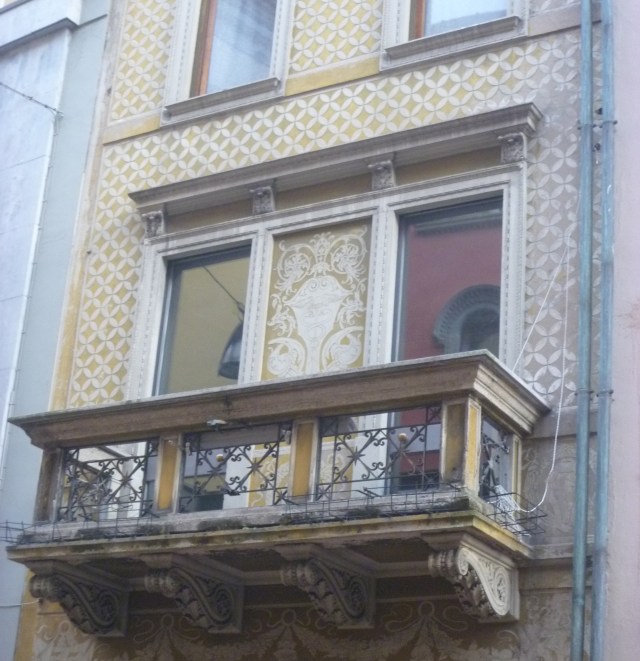
Art Deco Varese

Art Nouveau in Varese

Varese Art Deco

Art Nouveau Varese

Cannobio Market

Arriving in Canobbio on Lake Maggiore for the Sunday Market


In a Quiet Corner of Rome – The Aventine

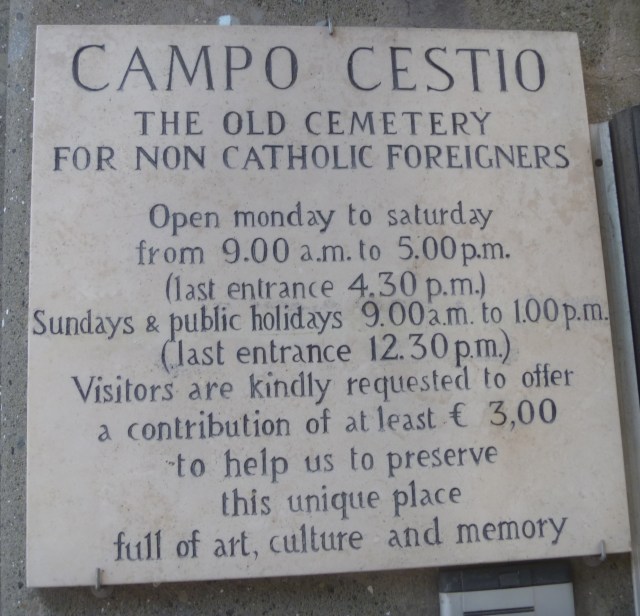
Cemetery sign

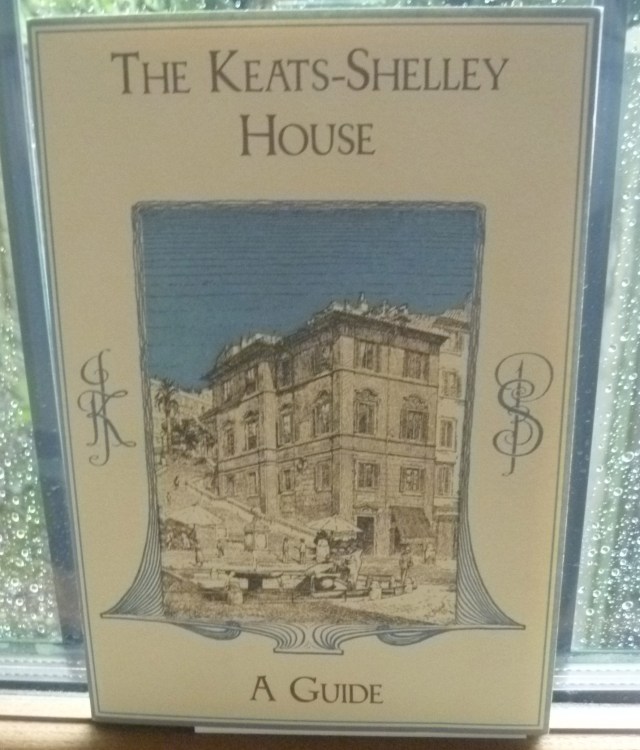
We’d both visited Rome before so I decided to book us at a hotel in an area slightly out of the main hustle and bustle of the centre of Rome and in a leafy residential area within walking distance of a certain cemetery that was brought to my attention on my first visit. The highlight of that trip, although we visited The Forum and The Coliseum and the Trevi Fountain and The Spanish Steps and The Pantheon and I had my picture taken at the Bocca della Verita, turned out to be the peaceful and tranquil Keats-Shelley House.

Keats House

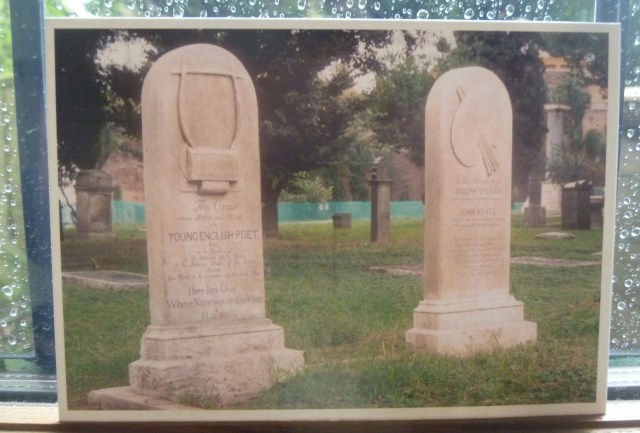
John Keats and Percy Bysshe Shelley are both buried at The Non-Catholic Cemetery in Testaccio and the more I have read about the place the more I have wanted to visit what sounds like a peaceful rural idyll so close to the centre of Rome.

K and S graves

The Keats and Shelley Graves in the Protestant Cemetery [postcard]

What I had failed to take into account – and I could have done nothing about it anyway – was the fact that a second Italian public holiday was to fall during our week’s visit. The 1st of May is a public holiday in Italy. So, after dropping our bags at our hotel room, we made our way at about 1.30pm to the Campo Cestio a 10 minute walk away only to find that it had closed that day at 1pm.

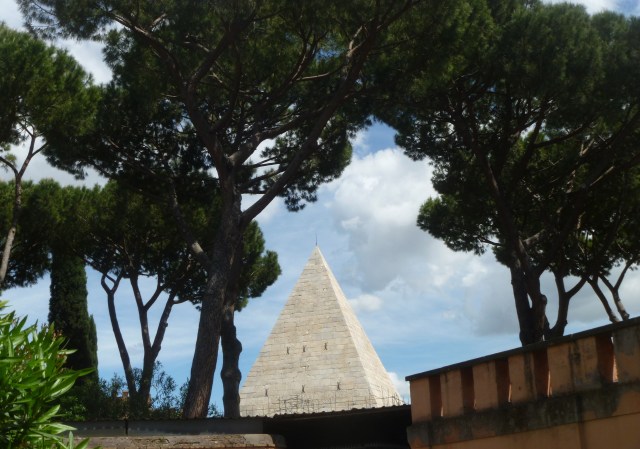
Pyramid

Very near to the Cemetery is the famous Caius Cestius Pyramid built during the 1st century BC when Roman funerary architecture was influenced by the ancient Egyptians.

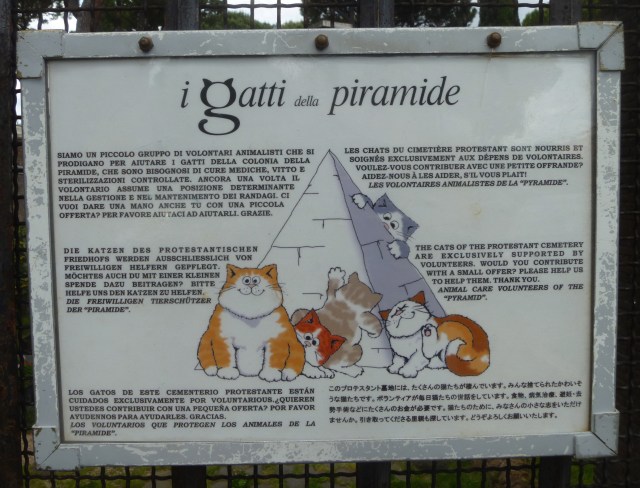
Pyramid cats

The Cats in the Area even have their own website!

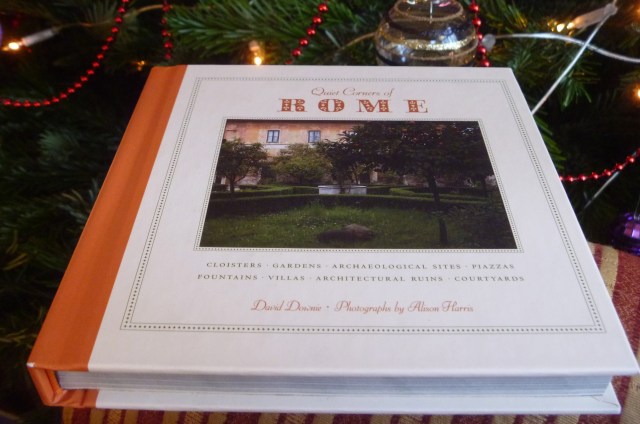
Quiet Corners Rome

Disappointed, we turned to other entries in my ‘Quiet Corners of Rome’ book by David Downie.

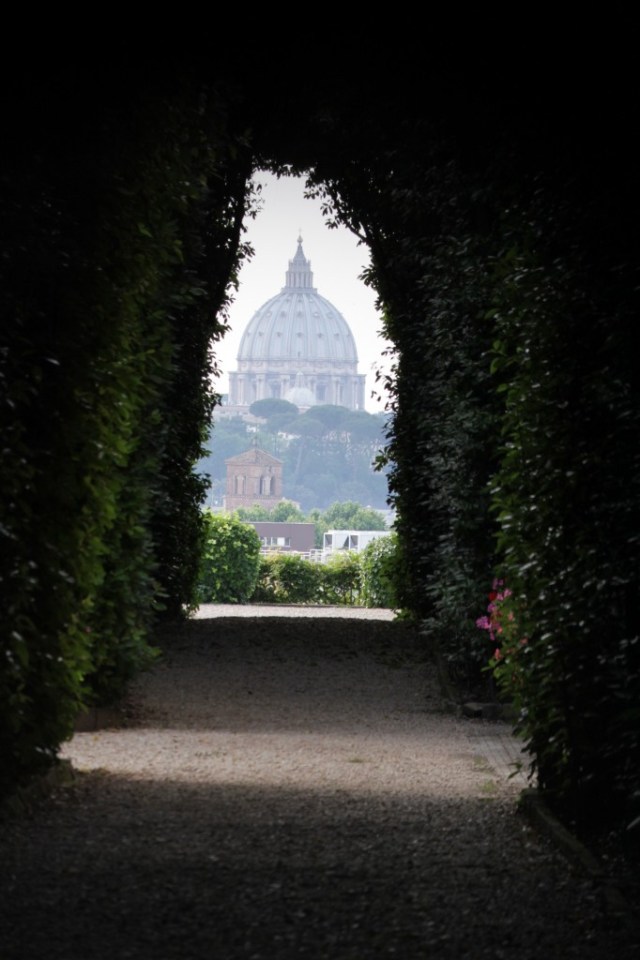
I was first told about The Magic Keyhole by a former work colleague who had lived for some time in Rome. But it is also mentioned in the Quiet Corners of Rome book so we made it our next stop : “Piazza dei Cavalieri di Malta and Piranesi Monument”. There was about a half hour queue and yes, indeed, when you reach the front there is the dome of St Peter’s framed by the keyhole in Piranesi’s door.

IMG_6617-e1337419469157-682x1024

This is the view that you get [source]

Needless to say my own photo turned out rubbish but with a long queue of people waiting behind you it is all a bit of a rush when you finally get to the front.

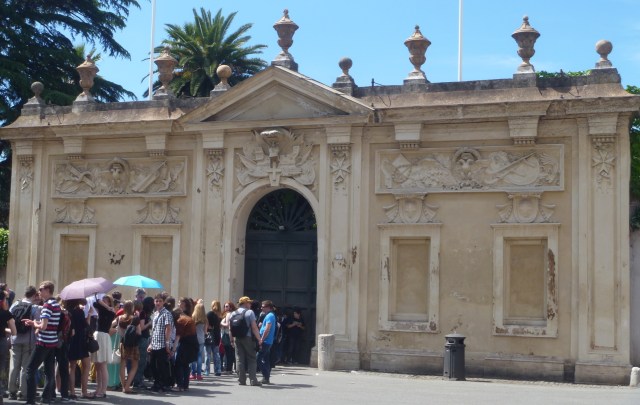
Piranesi Square

The Piranesi or Knights of Malta Square

Keyhole queue

The Keyhole Queue

The doors seal off the grounds of the Knights’ [of Malta] headquarters and are opened only to the pious and powerful … The piazza is egalitarian. Flame cypresses and palms rise behind the extravagantly long, L-shaped wall, erected in 1765 and conveniently lined with benches.”

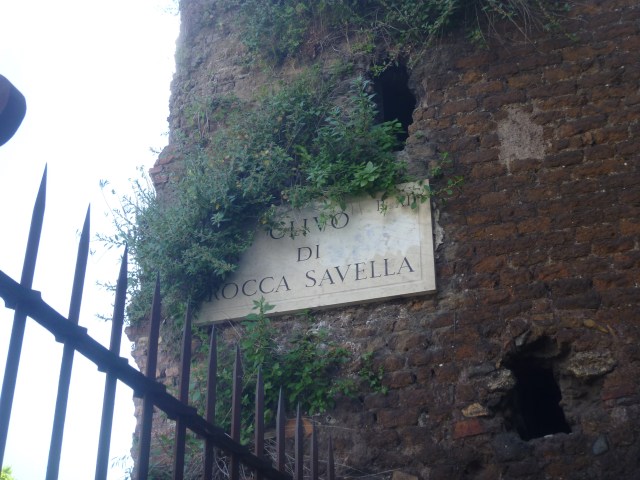
Clivo di Rocca Savella, Parco Savello, Giardino degli Aranci”

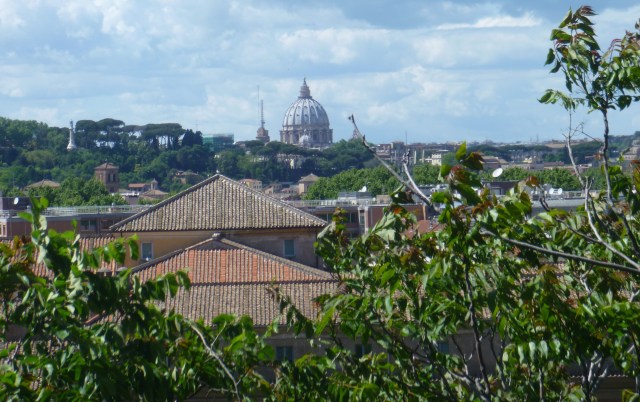
Vatican View

Vatican View

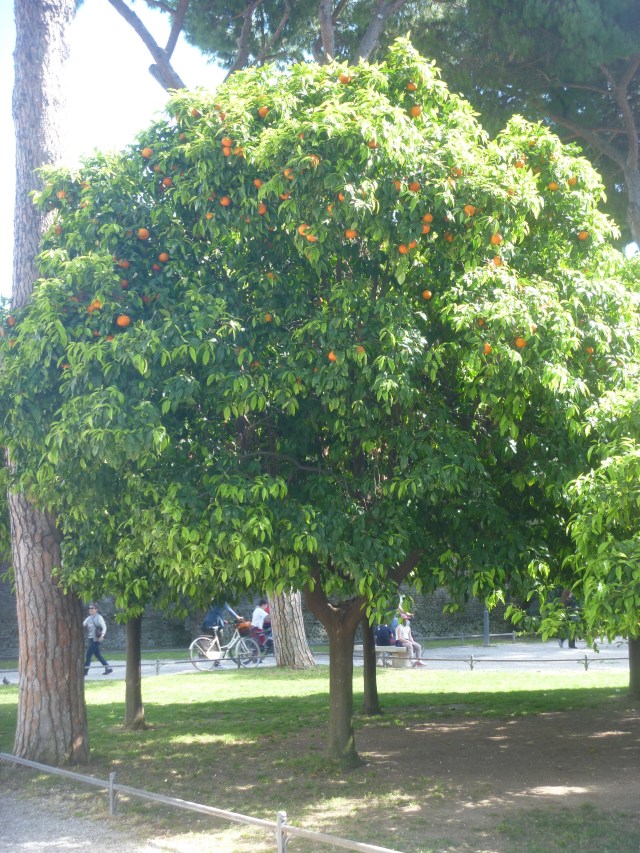
orange tree

Orange Tree

Drinking fountain 1

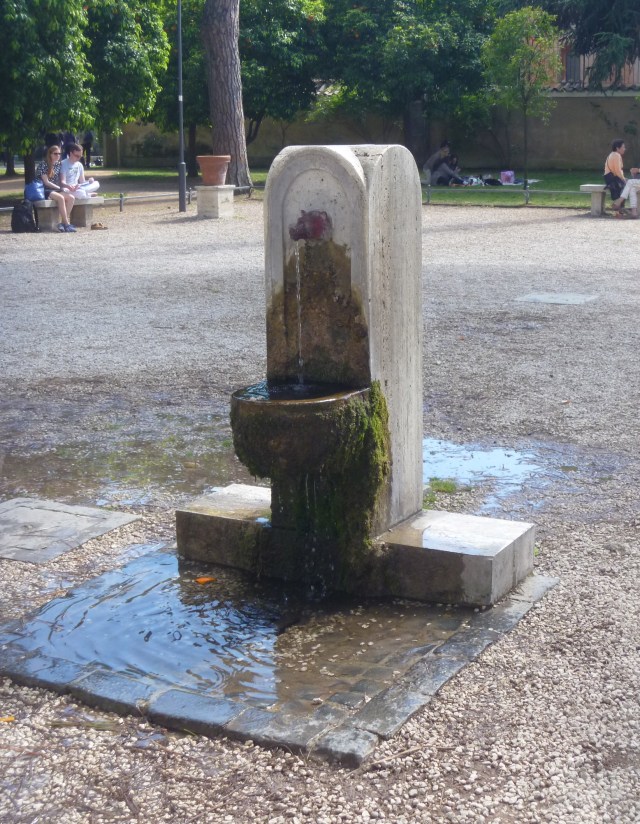
Drinking Fountain

Fountain 2

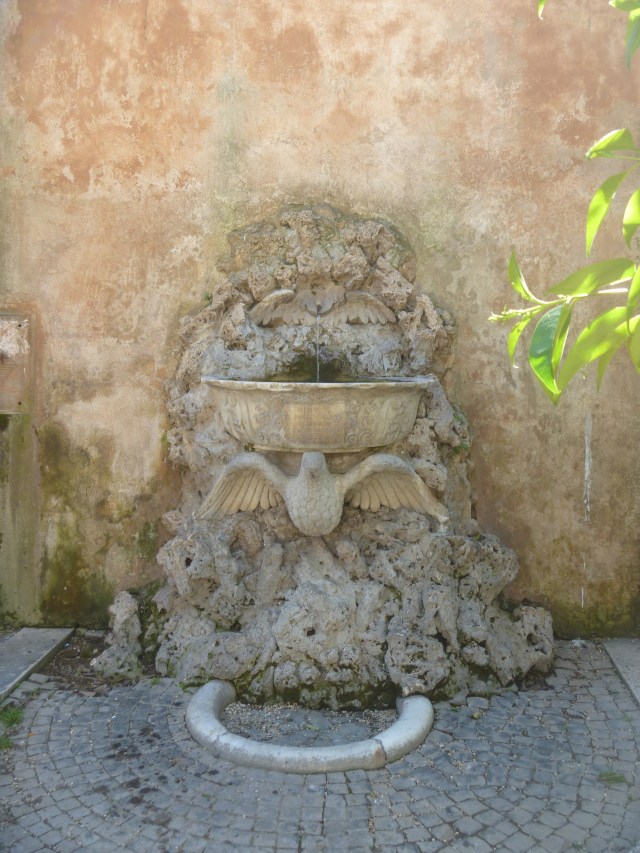
Parco Savello Fountain

Next to the Knights of Malta HQ are several churches and two parks. One of the parks is the Parco Savello but both of them more or less fitted the book’s description: view of the Vatican, orange trees, drinking fountains.

Clivo sign

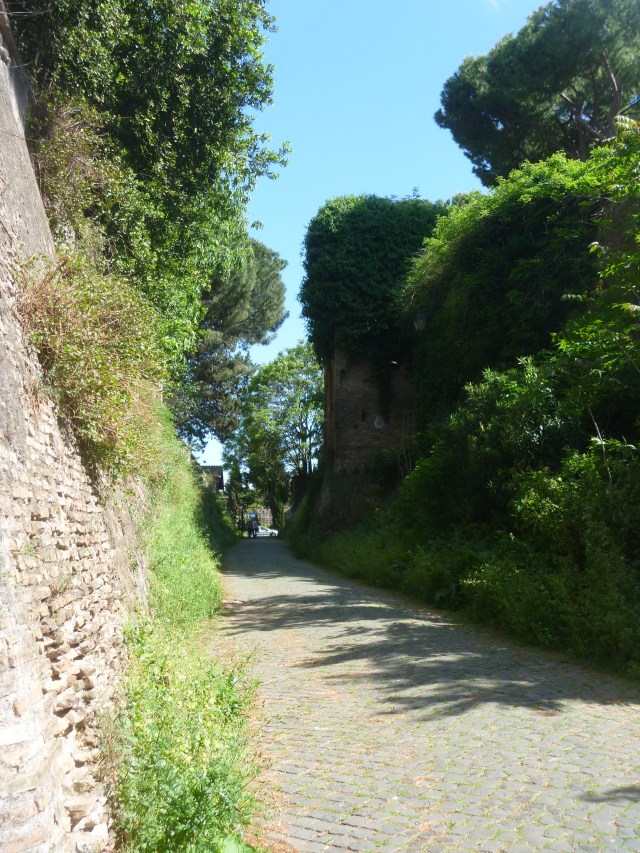
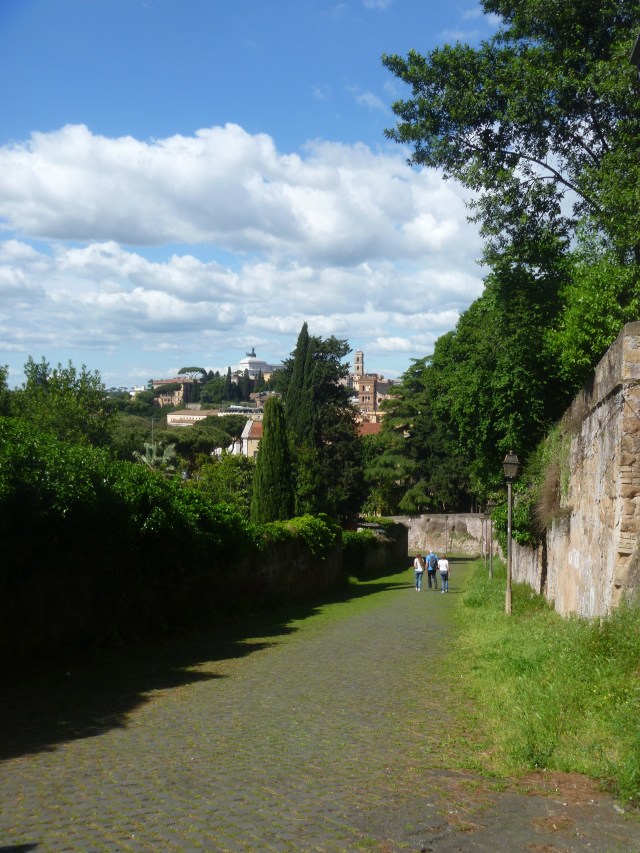
The Clivo di Rocca Savello is a narrow car-free lane that slopes down to the Tiber “mossy and picturesquely weed-grown, the clivo is as atmospheric as it is empty”. Well one or two people were walking up and down and also as the book says “stray cats own it”.

Clivo 1

Clivo 2

The Clivo di Rocca Savello

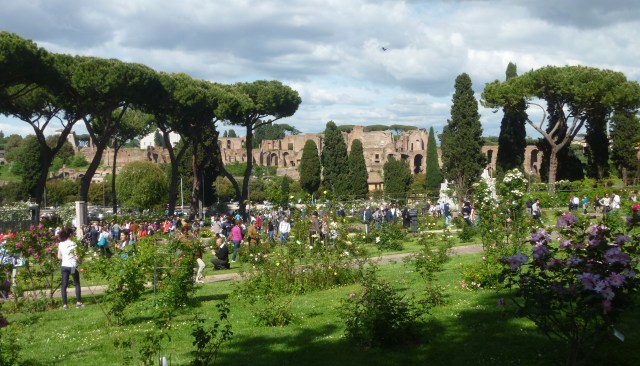
With it being a public holiday none of the places were particularly people-free and the final venue least of all. It seemed that all of Rome wished to visit the Roseto Comunale (Rose Garden) on that sunny May 1st afternoon. 1,100 varieties of rose grow on the northern slope of the Aventine Hill. All types of rose and from all corners of the earth grow here and the park is only open for about one month a year. So this time we struck it lucky !

Rose garden

The Rose Garden with the Forum behind

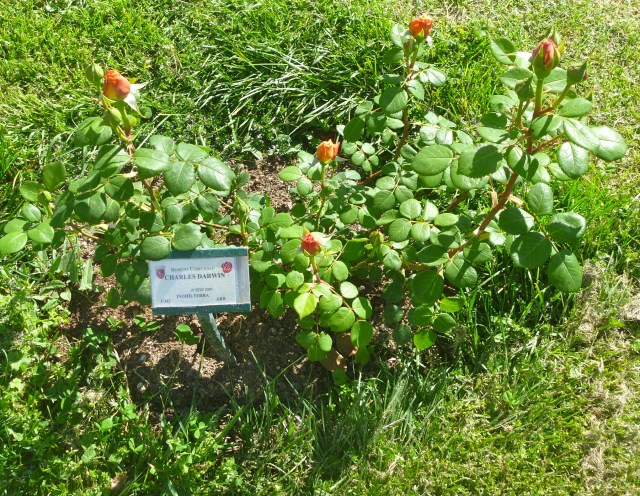
Charles Darwin rose

Charles Darwin rose still in bud (UK)

We were very happy with our choice of hotel in a Quiet Corner of Rome.

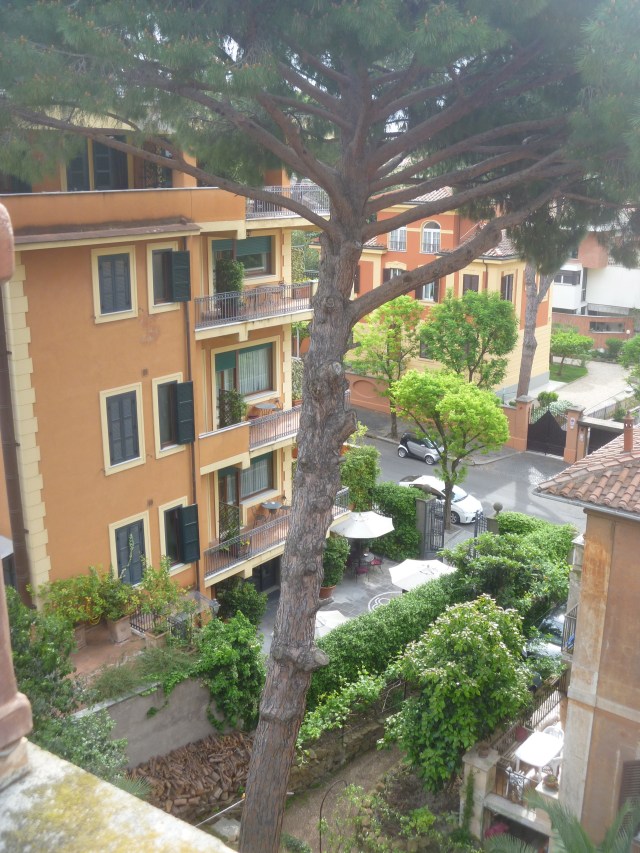
Balcony view

The Villa San Pio

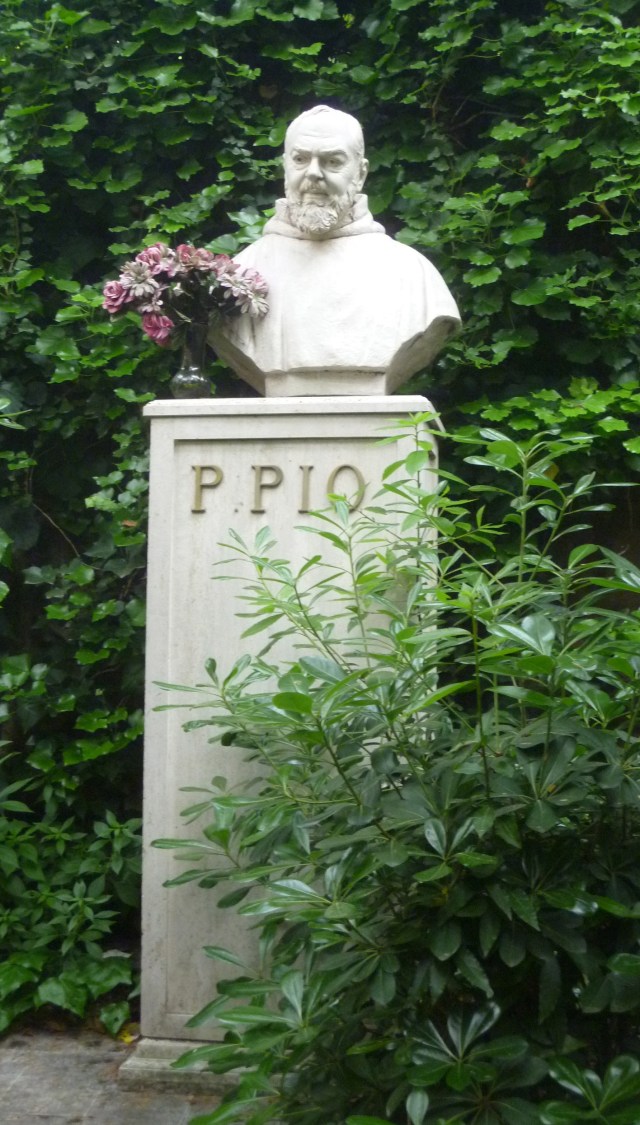
Pio

Padre Pio bids us Farewell as we make our way to the Airport


Acquapendente to Bolsena and Bolsena to Orvieto

Day 6

Free day in Bolsena: Explore Bolsena, its ancient streets, castle, Etruscan temples and church, and catacombs of Santa Cristina, site of the miracle of Corpus Christi. Swimming in the lake. Optional walk from Acquapendente through the low Monti Volsinii (12.2 miles, 6 hours).

Bolsena

Bolsena comes into view as we complete our walk from Acquapendente

Being gluttons for punishment of course we’d decided all along on the optional walk from Acquapendente. Lucky for us that Tuesday morning had been assigned by Annalisa as our ‘feedback’ time for the trip. So, as previously arranged, we met Annalisa in the hotel lobby and gave our views on the walks and hotels, restaurants etc. This slightly delayed our departure so A, whose home is in Acquapendente, offered us a lift to the start of the walk advising on places to buy lunch and water for the day. We bid her a very fond farewell as she drove off to her next assignment.

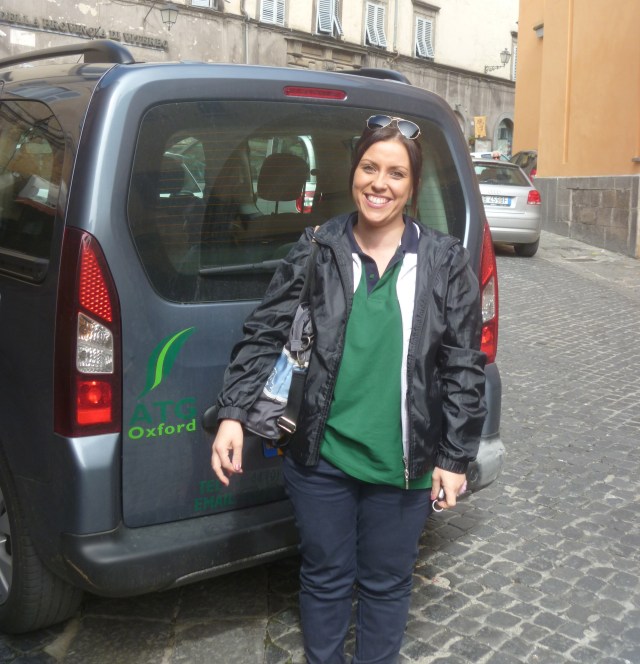
Farewell Annalisa

Goodbye Annalisa and Thank you! – Keep Smiling! You’re doing a great job!

Day 7

Bolsena to Orvieto: An old Etruscan lane leads up through woods to a plateau and across farmland. The first view of Orvieto, situated high on its extinct volcano, is unforgettable (11.3 miles, 5.5 hours). Don’t miss the magnificent cathedral with frescoes.

Wednesday, the final day of our journey to Orvieto, the weather was back to its usual blue sky and sunshine. We walked up through the old town of Bolsena and up out of the crater following a paved Roman Road and an Etruscan Lane. We were told that the route follows the historic trail of the procession of the Miracle of Bolsena.

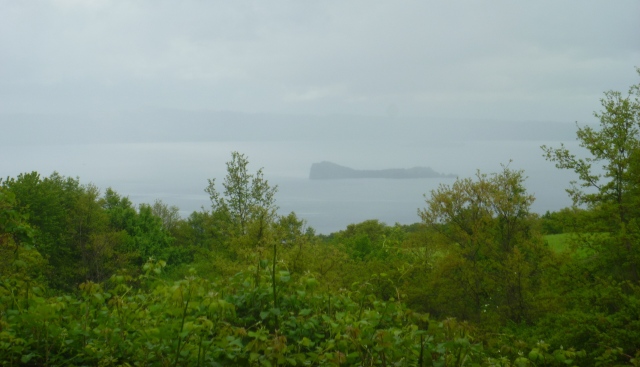
Lake Bolsena last morning

Lake Bolsena as we leave the town

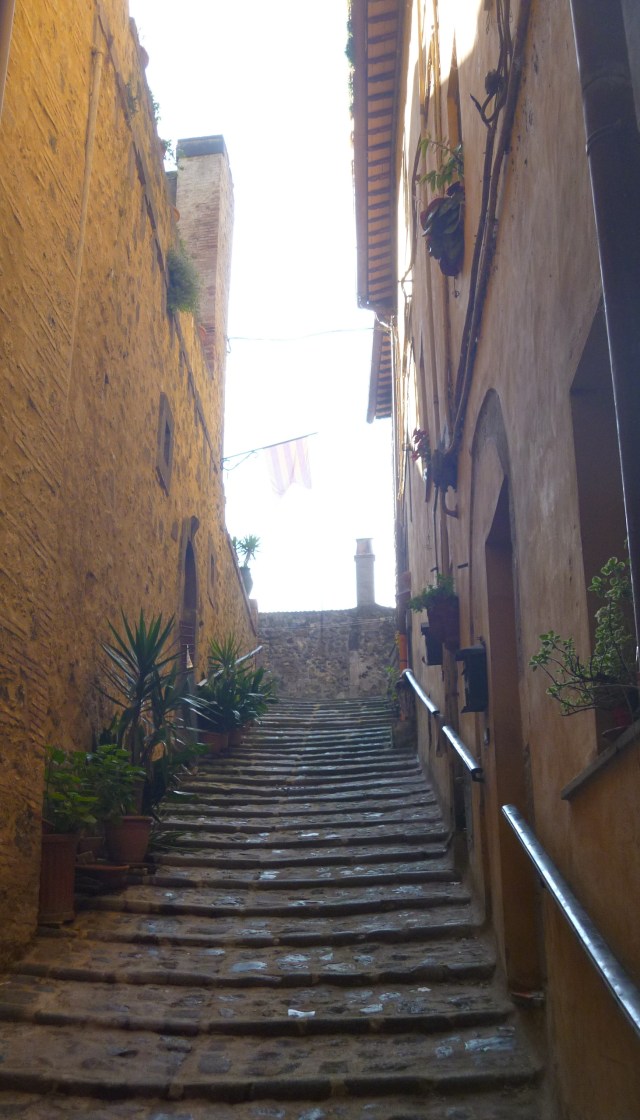
Bolsena 1

Historic Bolsena

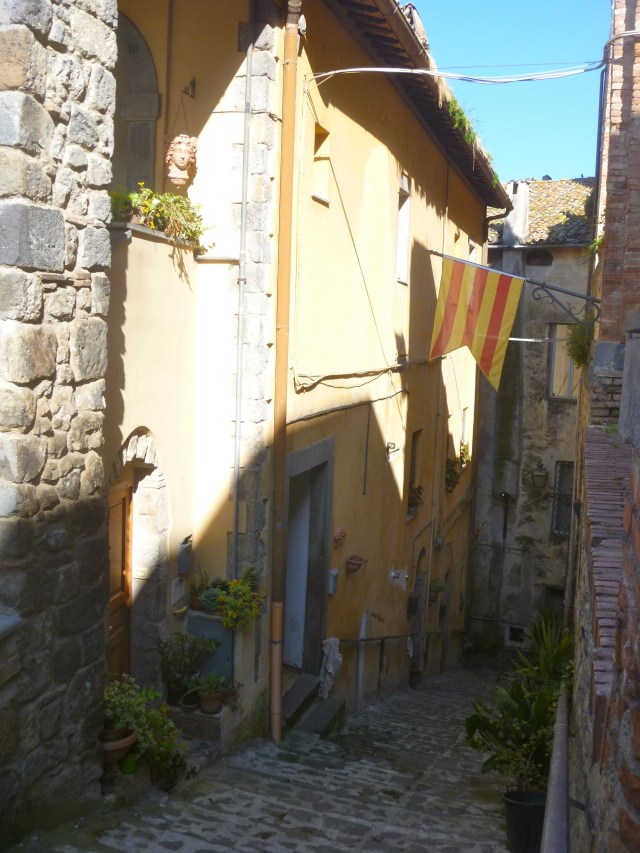
Bolsena 2

Old Bolsena

La Medusa  Shop

La Medusa Shop – Maker of Replica Roman/Etruscan Artefacts??

La Medusa

La Medusa

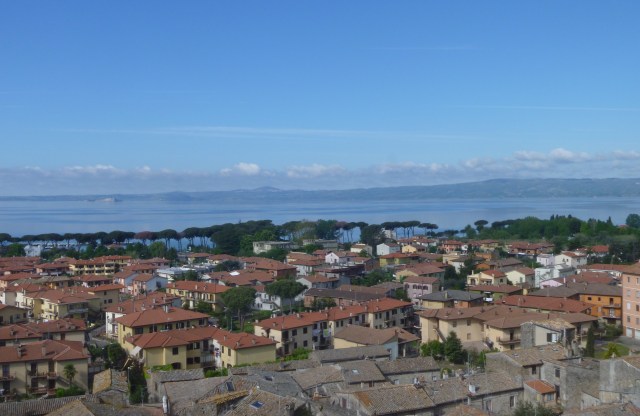
Bolsena rooftops

The Rooftops and Lake – Bolsena

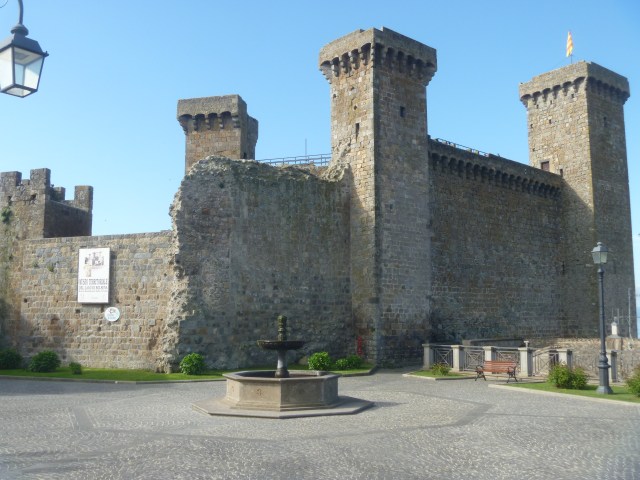
Bolsena Castle

Bolsena Castle

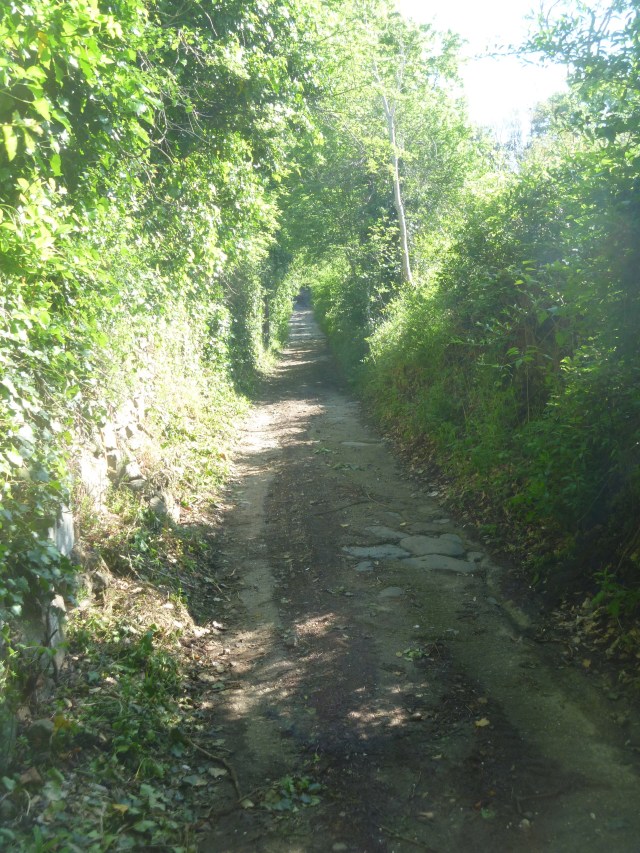
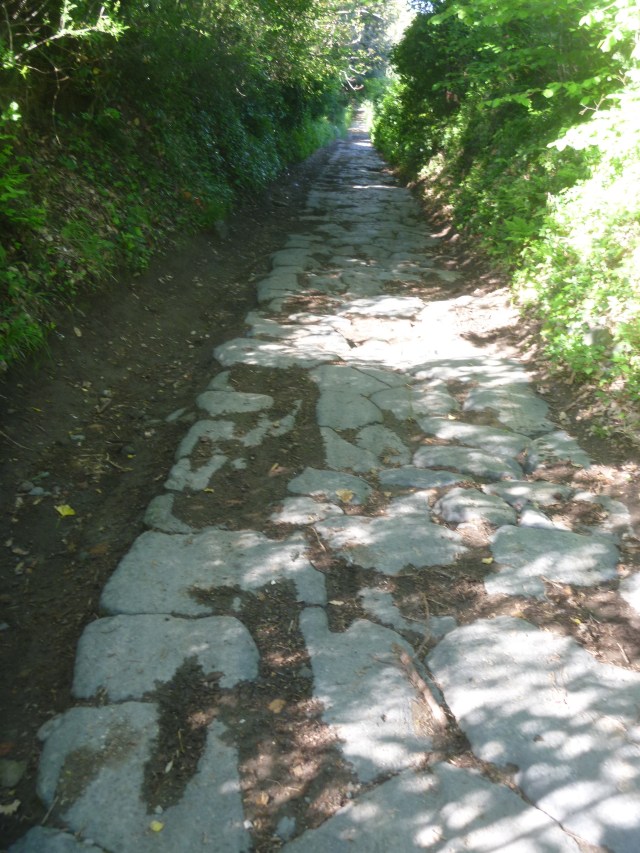
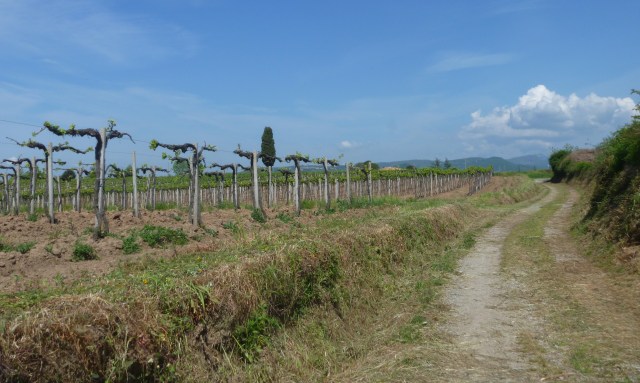
Leaving the town we soon turned from the tarmac road onto a long ancient track. “You are now walking on the old paved Roman Road to Orvieto with the flagstones clearly visible underfoot” declared the Route Booklet. I think possibly our route diverted quite a bit from the typical Roman straight-line road but we certainly approached Orvieto downhill and then uphill in a straight line.

Roman Road

The Roman Road leaving Bolsena

Ronman Road 2

Flagstones clearly visible underfoot

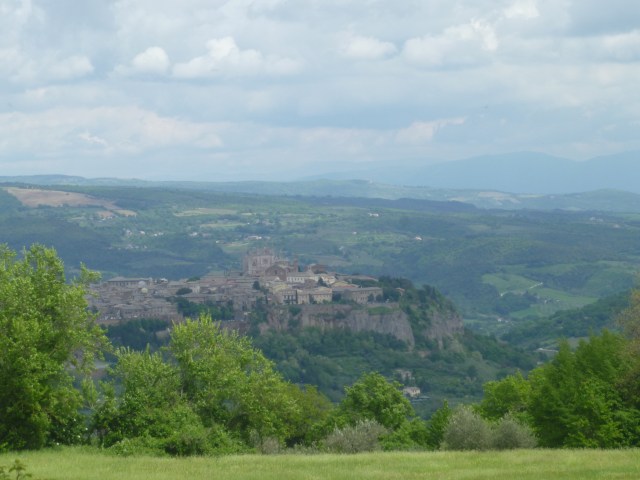
We crossed the border from Lazio into Umbria (Bolsena and Acquapendente are both in Lazio we left Tuscany behind between San Quirico and Latera on Monday). A couple of kilometres later we visited our final 9 Etruscan tombs. They appeared rather abandoned and the Information Board had been stripped of all information. About 5 km from our hotel in Orvieto we had our first view of the city perched on its extinct volcanic rock.

Some of 9 Etruscan tombs

Some of the 9 Etruscan Tombs

First view of Orvieto

Our first view of Orvieto

We made it! We arrived at our hotel in Orvieto with a great feeling of satisfaction and achievement. Our last night was spent in Orvieto but although the ATG holiday finished with breakfast the next day we were to travel on to Rome for a further night before returning to Yorkshire on Friday.

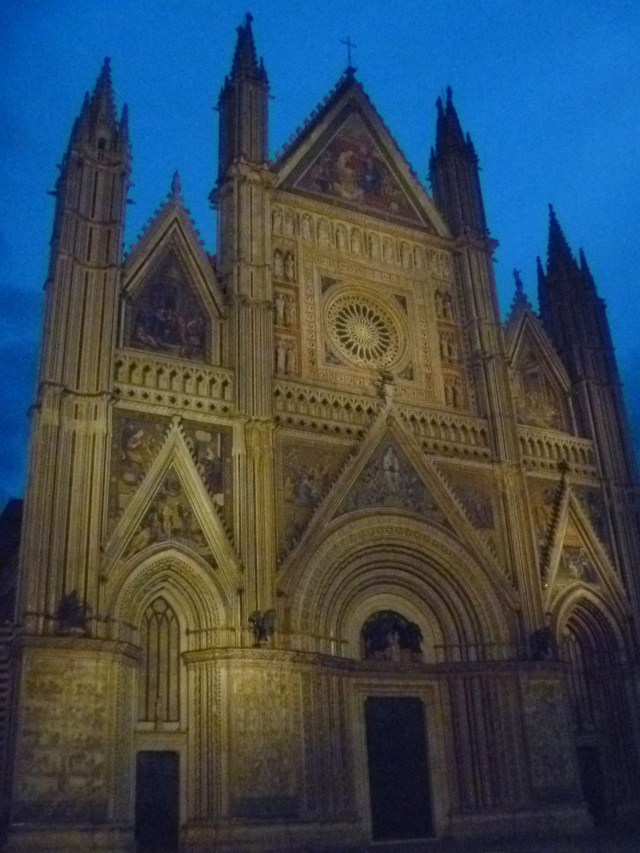
Orvieto Cathedral 1

The Orvieto Duomo or Cathedral at night

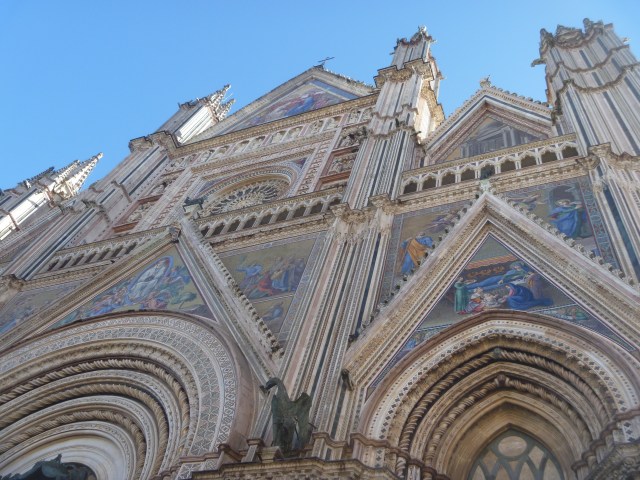
Orvieto Cathedral day

Begun in 1290 it is probably the finest example of Romanesque Gothic in Italy – The Duomo by day

Like our achievement – Magnificent!!


Sovana to Bolsena – Tracks and Tombs and Troglodytes … and Rain

Day 4

Sovana to San Quirico: Paths across farmland lead to an isolated church and fine Etruscan lane that descends into a gorge, from which rises crag-top Sorano. After exploring Sorano, paths along the gorge lead to the troglodyte habitations at Vitozza and the village of San Quirico (10.3 miles, 5 hours).

On the Sunday the walking began in earnest. Over 40 miles in 4 days – not bad going!

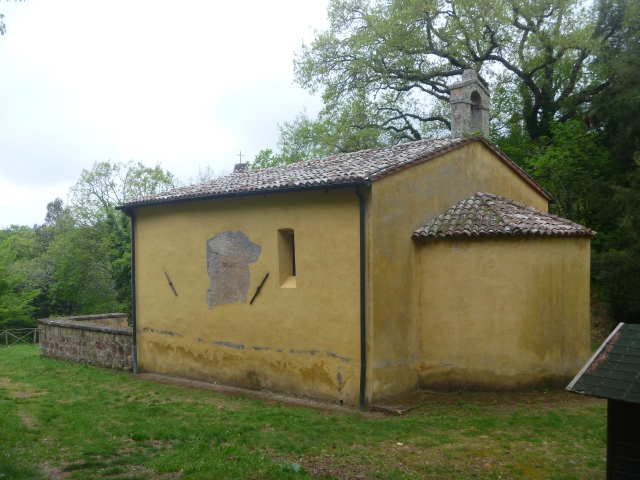
Church of San Rocco

The Abandoned Isolated Church of San Rocco

Sorana

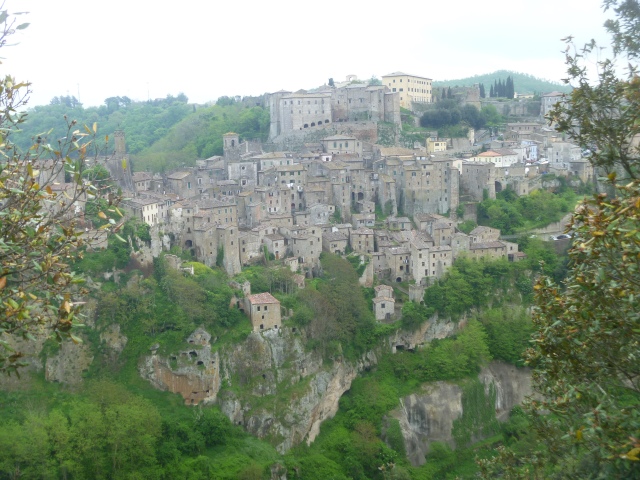
Crag-top Sorana from San Rocco Viewpoint

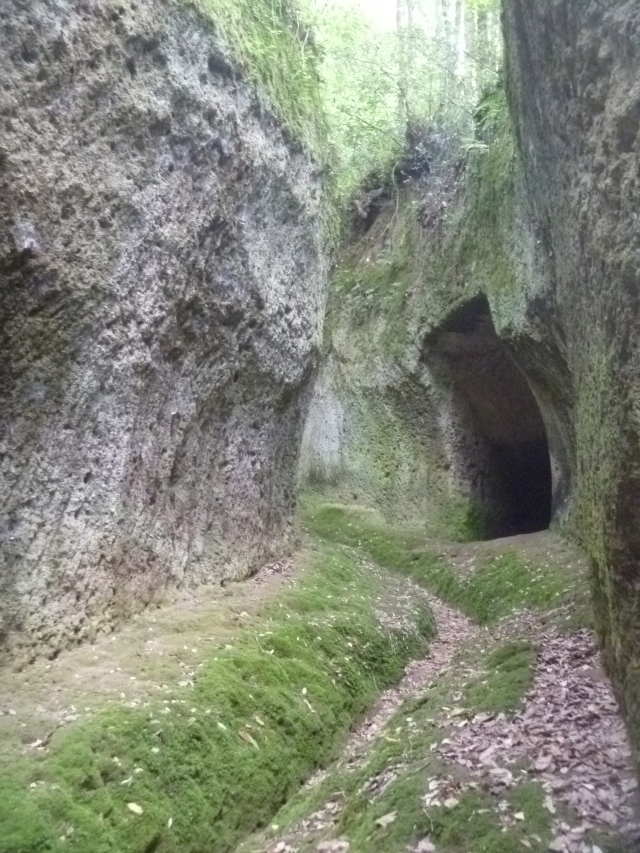
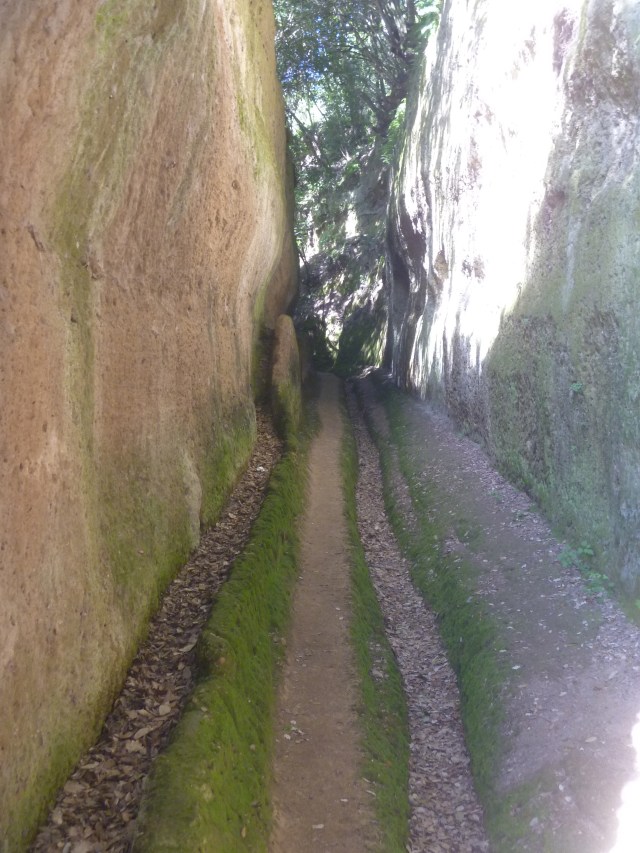
Via Cava San Rocco

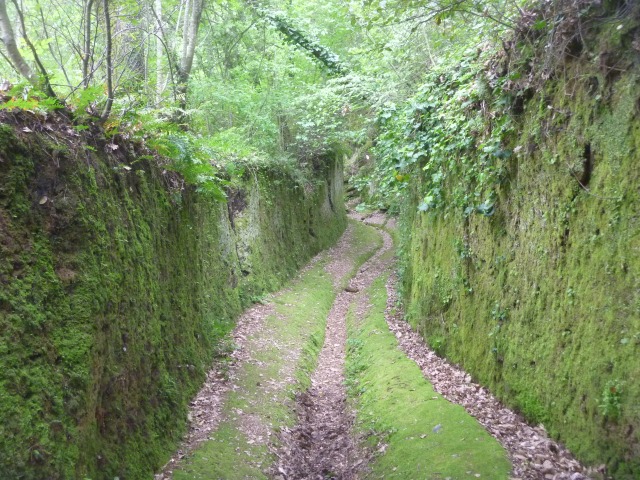
Etruscan Lane of San Rocco

Via Cava SR tomb

Tombs along the Via Cava di San Rocco

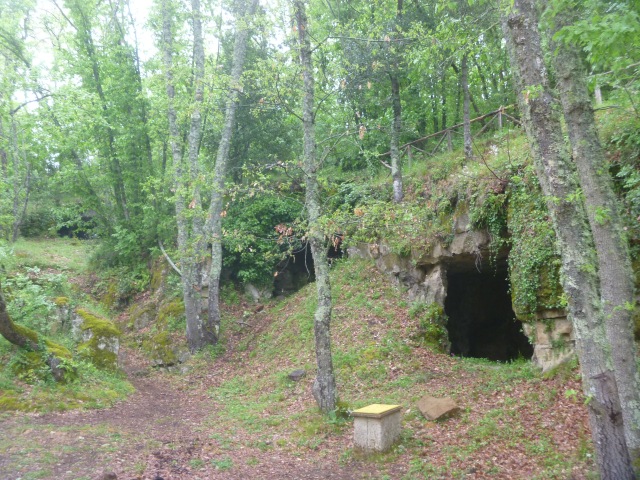
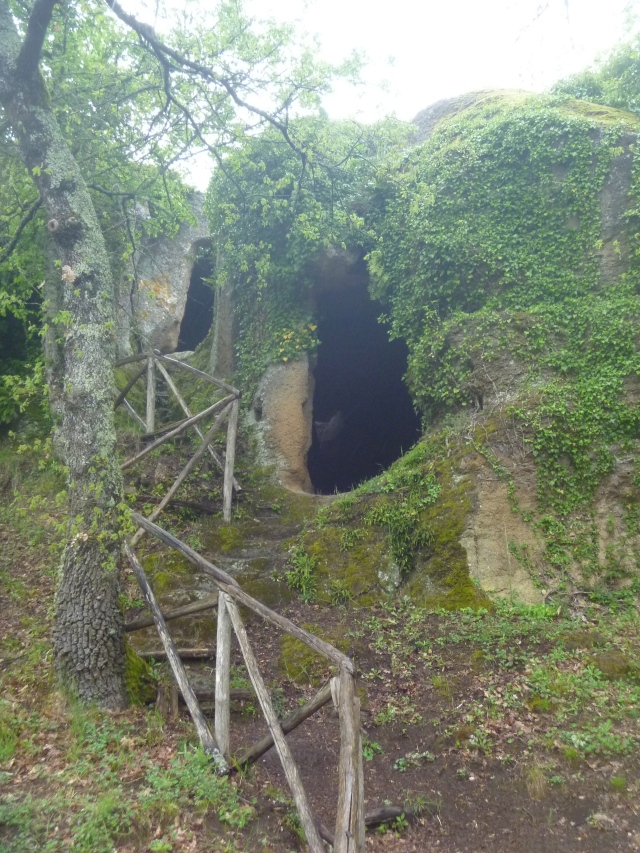
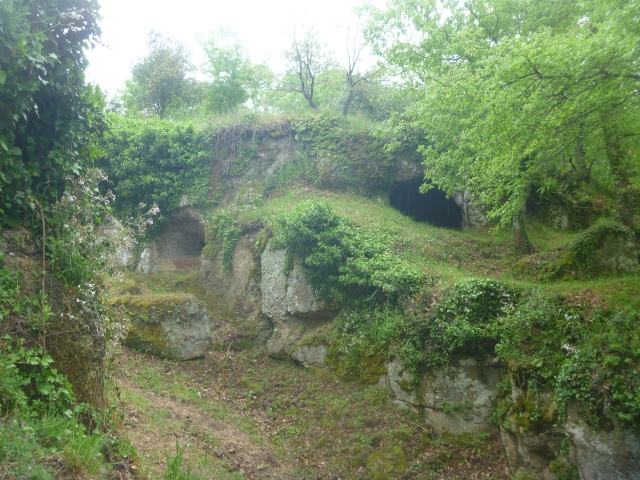
Near the village of San Quirico (our destination on Day 4) we passed through the abandoned troglodyte village of Vitozza. This fascinating, rather eerie, place had been a medieval settlement dating back to the 12th century. There are the remains of castles, churches, and many other buildings plus many caves which were used as stables, storerooms and homes.

Troglodite homes Vitozza

Vitozza groto

Vitoza caves

Cave homes at Vitozza

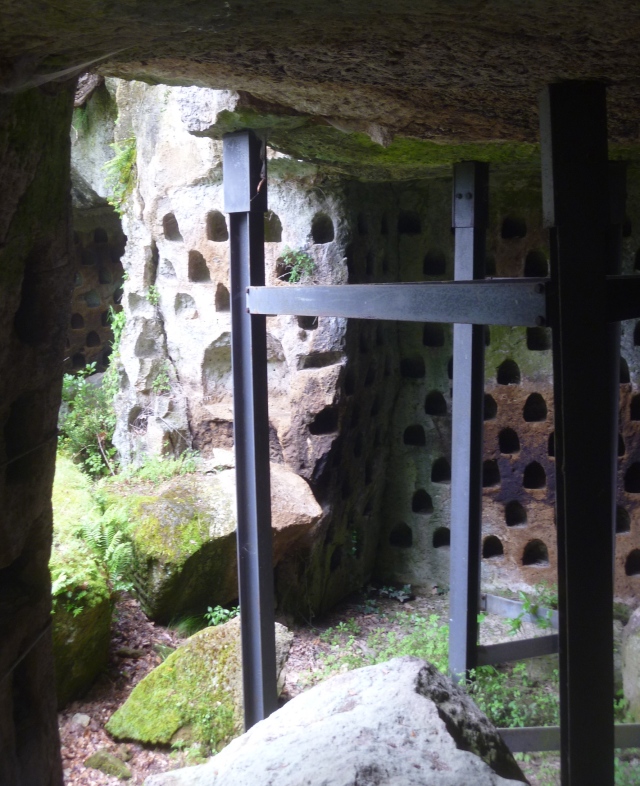
Il Colombaio Vitozza

Dovecote or Columbario – 1st Century AD

Day 5

San Quirico to Bolsena: Cart tracks across farmland lead to an escarpment, where paths descend towards the small town of Latera. A climb through chestnut woods to the rim of a volcanic crater offers superb views. Tracks lead down to Lake Bolsena (10.4 miles, 5.5 hours), from where a private boat takes you across the lake to Bolsena (town).

Latera

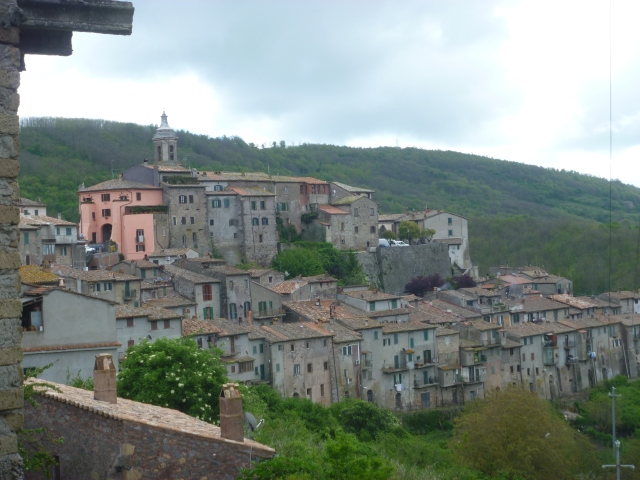
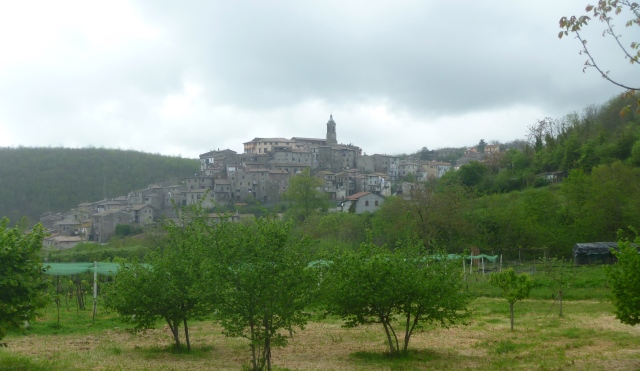
Approaching Latera

Latera Square

We ate our picnic lunch on a bench in this square in Latera: Church of San Clemente and 1790 bell-tower

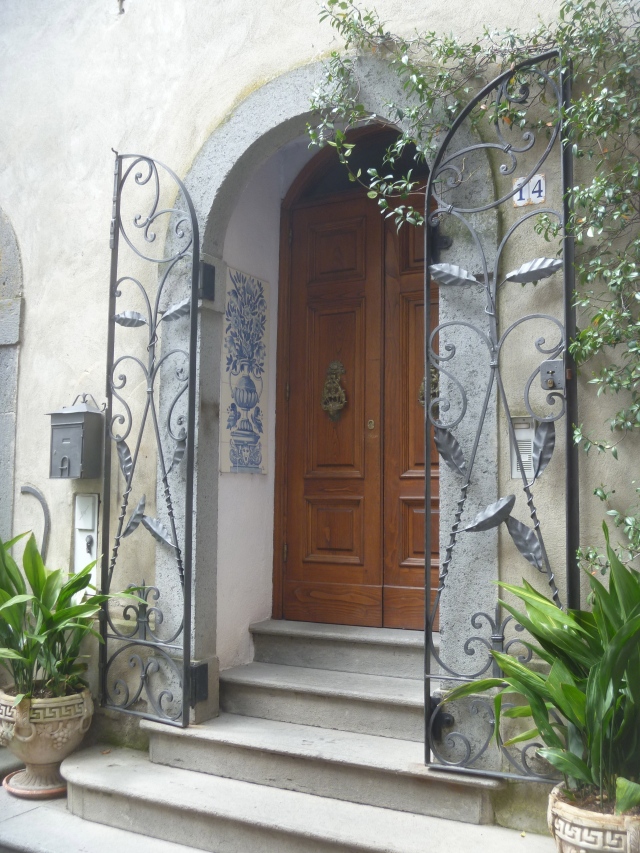
Pretty doorway in Latera

Pretty Doorway in Latera Piazza San Clemente

Leaing Latera

Leaving Latera

After leaving Latera and as we approached the crater edge with views of Lake Bolsena the rain began. Unfortunately, this meant that we were unable to take the boat trip across the lake. Annalisa had to come to our rescue and drive us round the lake to our next hotel by the lakeside at Bolsena.

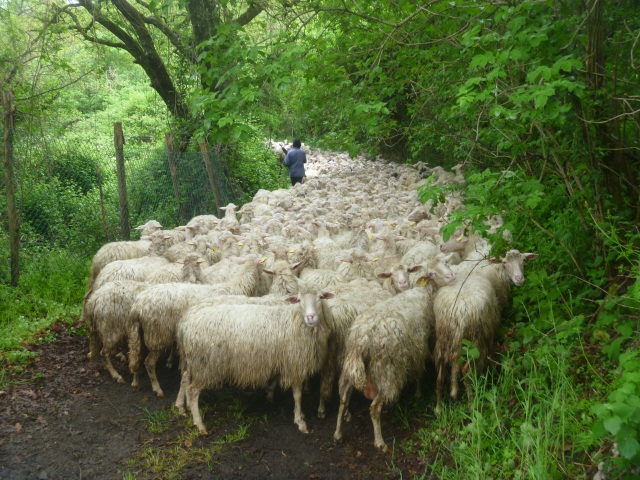
A herd of sheep blocked our path

Our path is blocked by sheep – but not for too long!

Lake Bolsena in the rain

An early view of Lake Bolsena in the rain

Lake Bolsena

We arrive at the Trattoria Da Giggetto jetty


Tracks and Tombs around Sovana, Tuscany

“Day 2

Pitigliano to Sovana: Free morning to explore crag-top Pitigliano, its Etruscan houses, medieval fortress and synagogue. Then follow an Etruscan lane to a small plateau, with pastures and vines, to the charming village of Sovana (4.9 miles, 3 hours).

Day 3

Free day in Sovana: Visit Sovana’s fine Romanesque churches. Walk to see the outstanding Etruscan necropolis, including the Tomba della Sirena, restored by the ATG Trust (2.5 miles).”

After breakfast and our orientation meeting with Annalisa we set off on our first day’s walking. We felt that we had explored Pitigliano sufficiently the previous afternoon and were happy to get started with the walk in earnest.

Our next port-of-call was to be Sovana a pretty village, popular with day visitors (especially so probably because Friday 25 April was an Italian public holiday and the weather was good), just a few miles from Pitigliano.

Our path lead us through further fine examples of Vie Cave, past ancient Etruscan tombs carved out of the local tufa rock and along the ubiquitous strada bianca (small gravel country roads connecting farms) – marked ‘SB’ in our trusty route booklet.

Via Cava di San Giuseppe

Via Cava di San Giuseppe

Etruscan Tombs

Etruscan Tombs – good examples of ‘tomba a camera’

strada bianca

Our first Strada Bianca

After this relatively easy walk along open tracks and through woodland and further vie cave we arrived in Sovana in the early afternoon allowing us plenty of time to have lunch, explore the village and relax in the beautiful gardens of the Sovana Hotel and Resort right next door to the ancient Duomo.

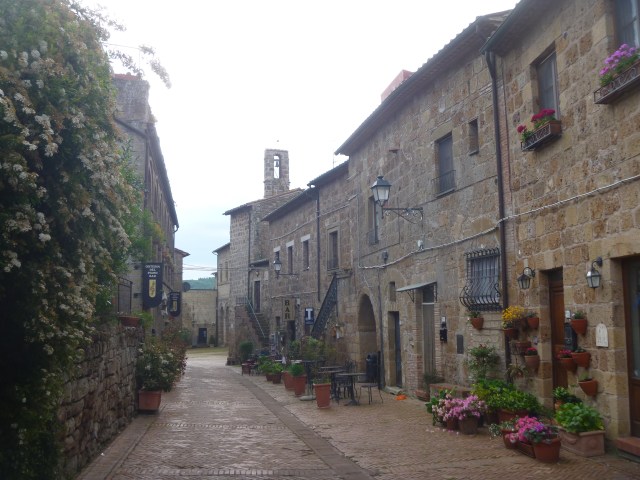
Main piazza Sovana

Arriving in the main Piazza in Sovana

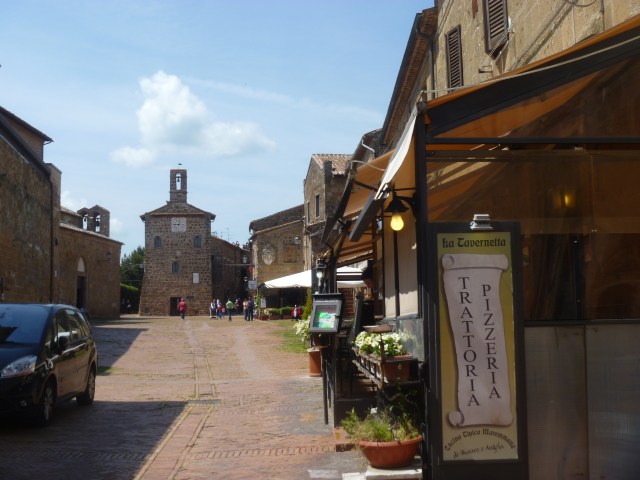
Via del Duomo

The Via Del Duomo, Sovana

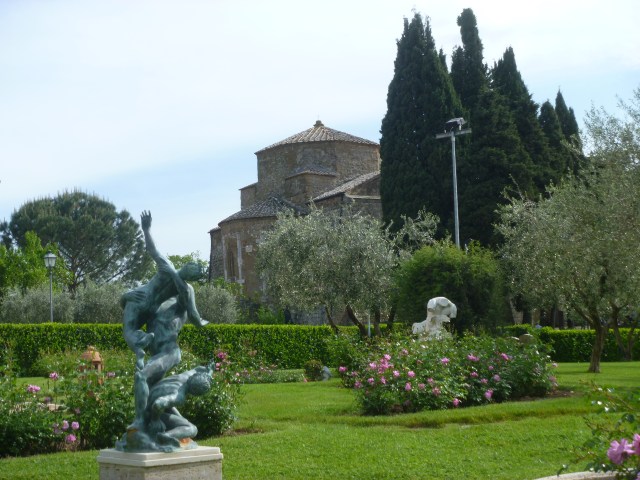
Sovana Duomo

The Romanesque Duomo from the hotel gardens

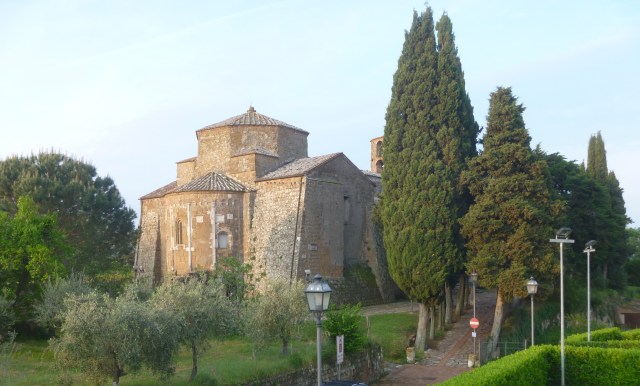
Duomo from hotel window

The Duomo from the Hotel window

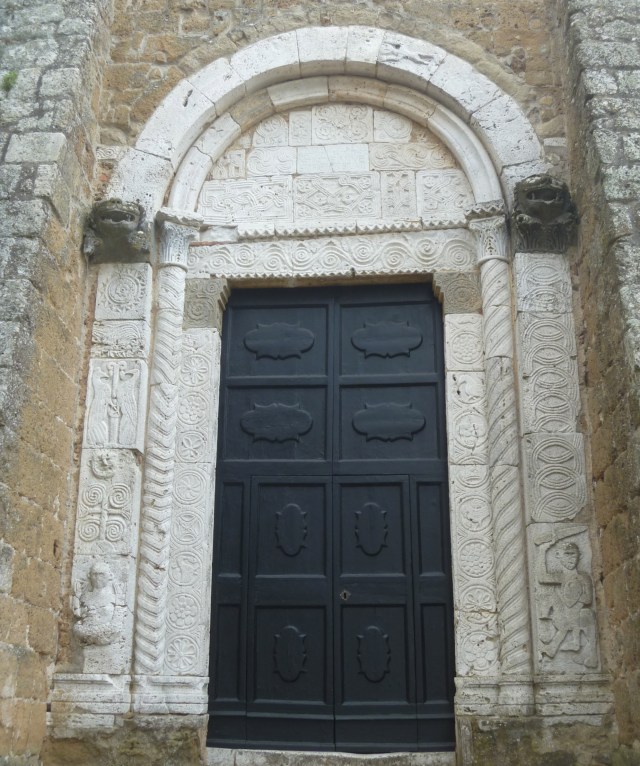
Carved Cathedral Door

The Carved Cathedral Doorway

It was lovely to spend two nights at the Sovana Hotel. The ‘free’ day was a Saturday and many people were visiting the village but our circular walk was mostly very quiet although we did join some others at the necropolis Parco Archeologico “Citta’ del Tufo” 

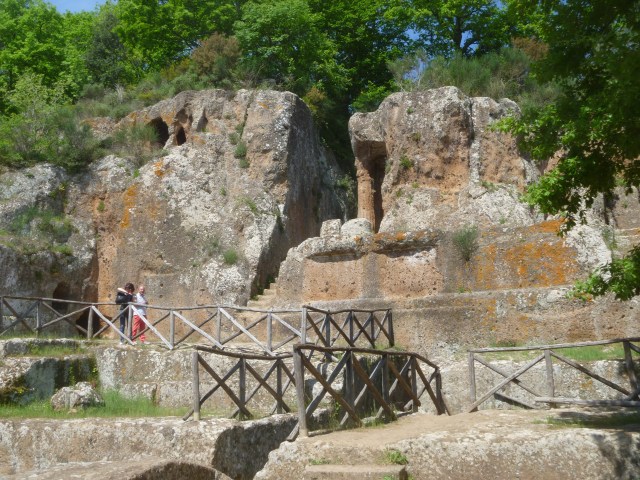
Discovered by S.J. Ainsley and George Dennis in 1843, the Etruscan Tombs are situated along the road from Sovana to S. Martino Sul Fiora. This valley, lined with tombs, is possibly the best preserved Etruscan necropolis. Whilst the tombs themselves are underground, above many of them Greek ‘temple’ style monuments have been carved into the rock. They were not only burial tombs but the flights of steps up the ‘temples’ meant they were places of worship as well. They were stuccoed and painted.” [Adapted from the Route Booklet]

At the Parco Archeologico

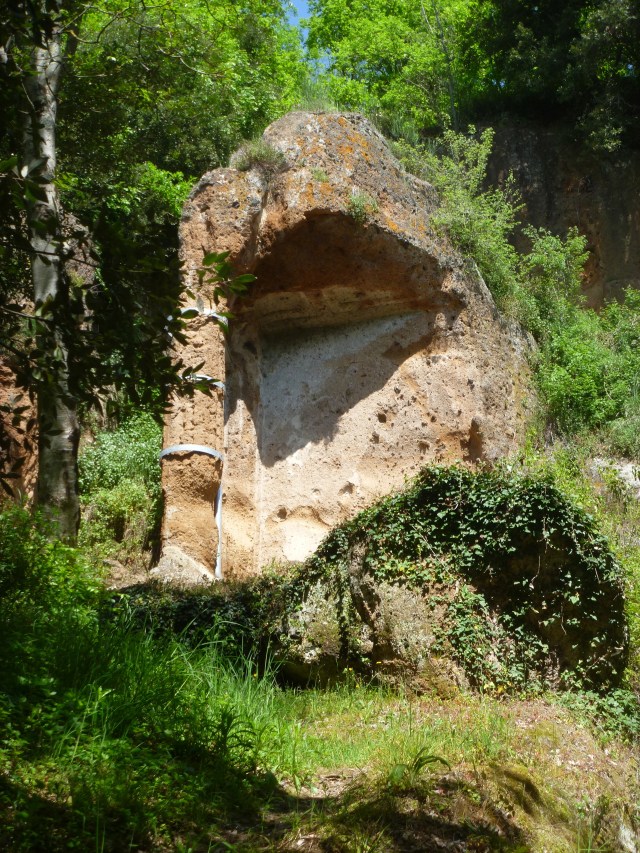
Tomba Pola

Tomba Pola

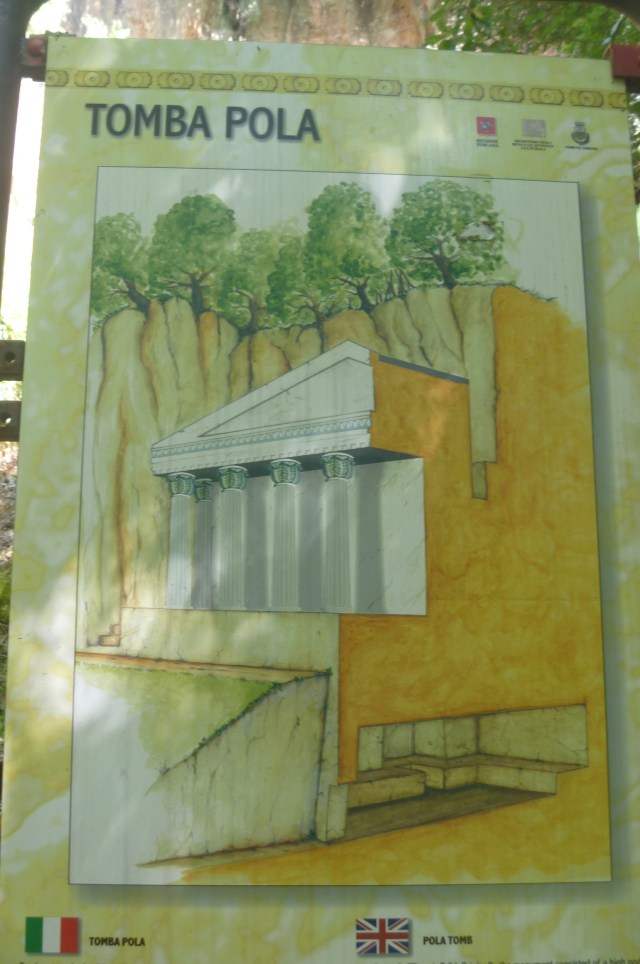
TP Impression

Artist’s Impression of the Tomba Pola

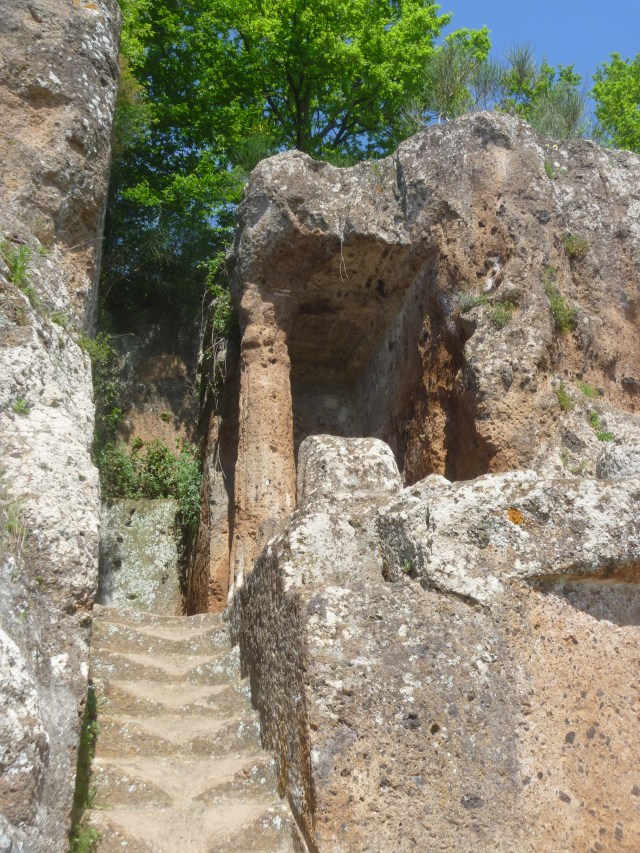
Ildebranda tomb

Tomba Ildebranda

IT column

Close-up view of the column at the Tomba Ildebranda

About the Tomba Ildebranda it says in the Route Booklet : “The magnificent tomb/temple was discovered only in 1925 and named in honour of Pope Gregory (who was previously Ildebrando [and born in Sovana in the Middle Ages], with whom the tomb clearly has nothing whatsoever to do! It was evidently the tomb of some wealthy, Etruscan-Roman governor of the municipium. It has an exterior resembling a Greek temple, with pillars and roof – all carved out of the rock in the 3rd to 2nd centuries BC.”

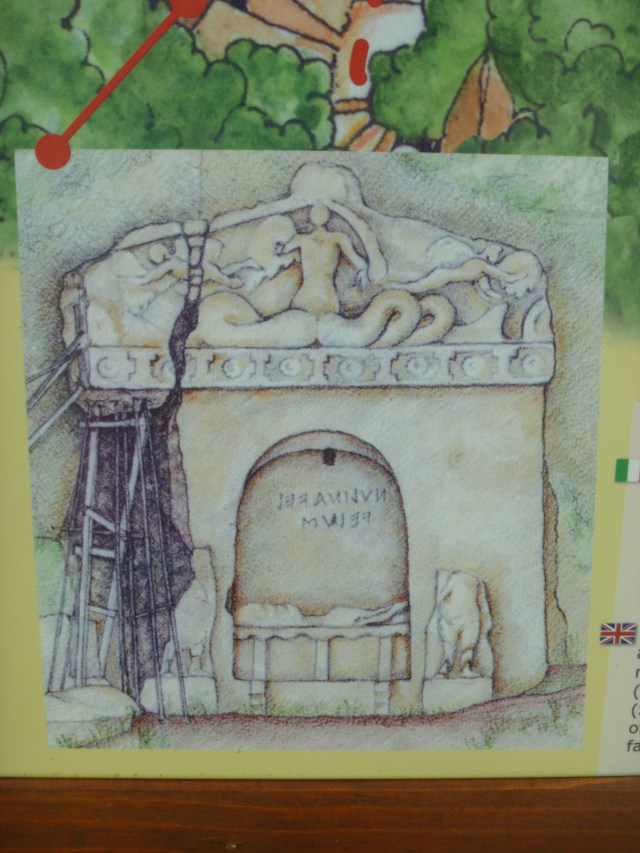
LTDS picture

La Tomba della Sirena impression

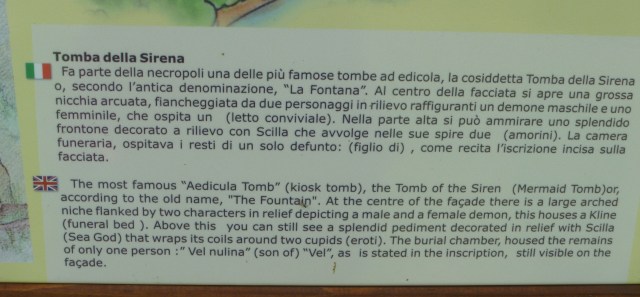
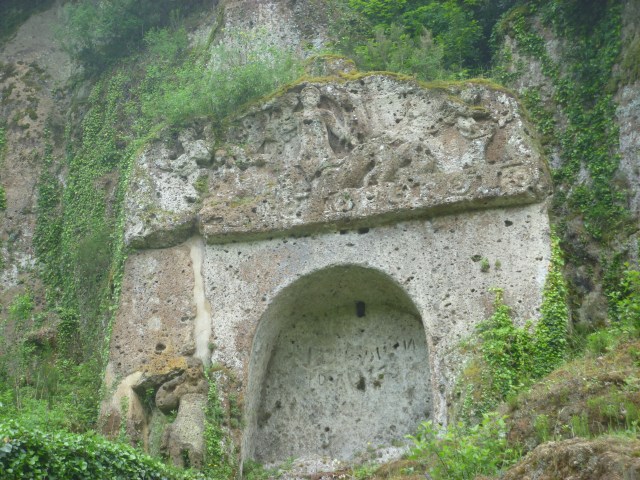
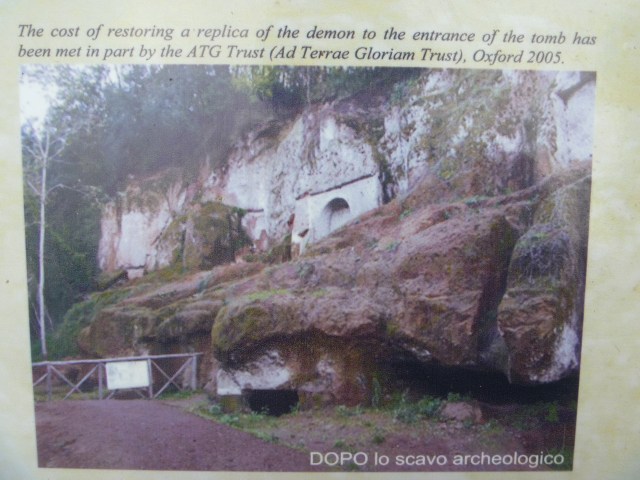
A short walk away and across the road from the Tomba Ildebranda etc is the Tomba della Sirena [Tomb of the Mermaid] the restoration of which was partly paid for by the ATG Trust. Dating back to 250 BC it was the first tomb to be discovered by Ainsley and Dennis in 1843.

LTDS notice

 La Tomba della Sirena from the Information Board

La Tomba della sirena

La Tomba della Sirena

LTDS ATG

La Tomba della Sirena – Acknowledgement of ATG Contribution

Via Cava SS

The now closed-off Via Cava di San Sebastiano

We spent much of the morning inspecting the tombs area and then completed the circular walk back to Sovana for lunch again at a pavement cafe on the Via del Duomo. We had hoped to take the opportunity this afternoon to visit one of the nearby thermal springs. Before the trip we had understood them to be within a short distance of the village but it turned out that they were over 20 kms away, were located within private spa resorts and transport seemed complicated and not helped by it being a public holiday weekend. They also threatened to be very busy. In the end we opted to relax again in the afternoon in preparation for the next four days walking – over 10 miles each day!