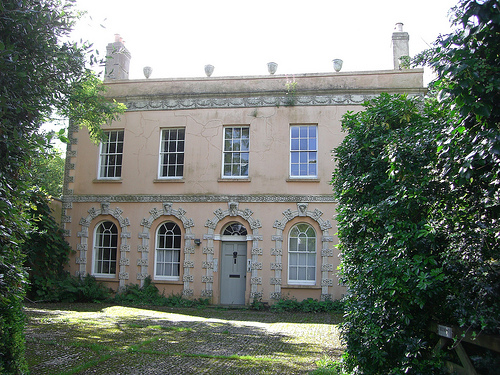
Help save Belmont – a literary landmark in lovely Lyme Regis!

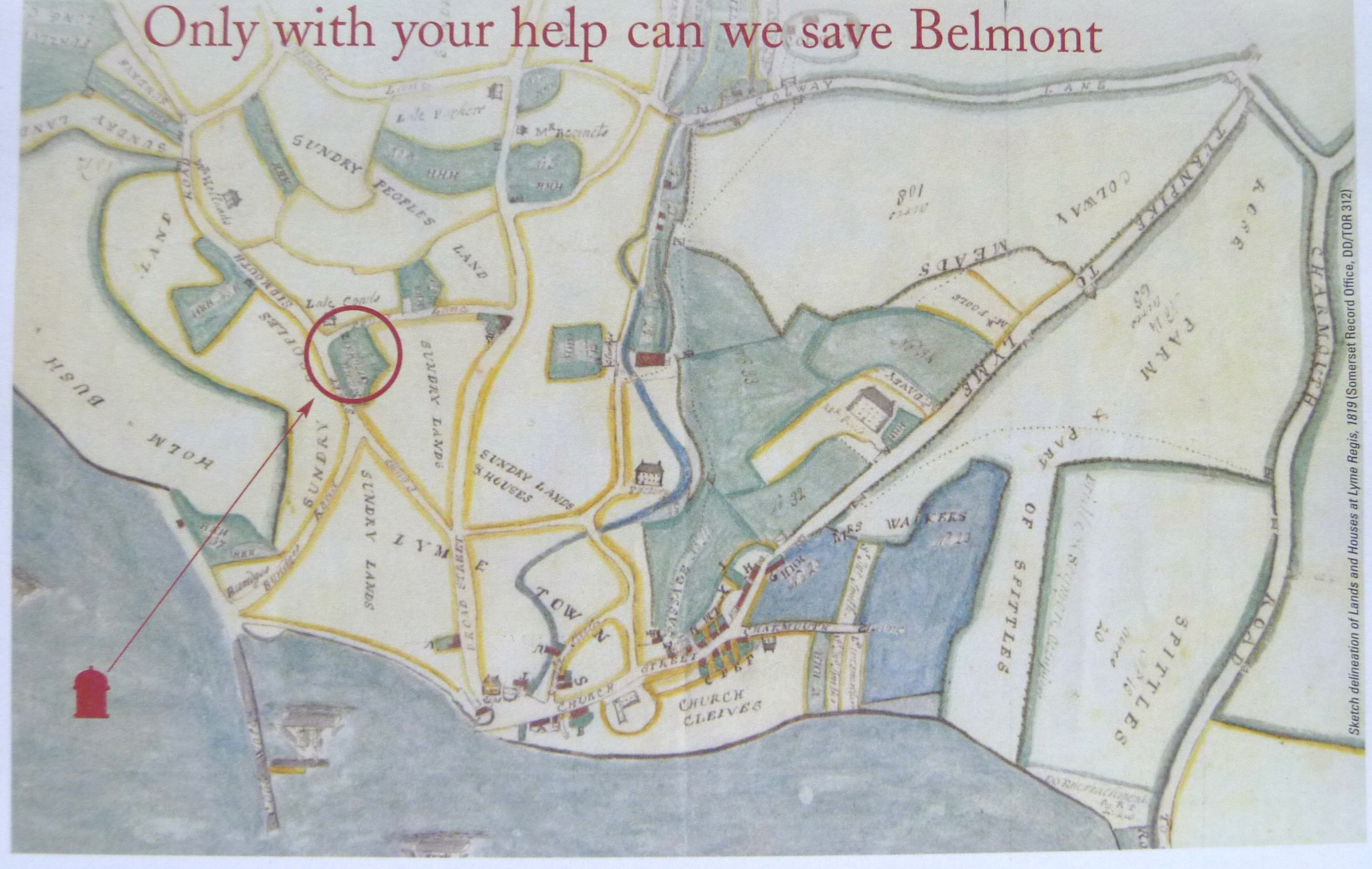
Today I received a fund-raising email from the Landmark Trust to encourage support for donations to help save Belmont House in Lyme Regis.

Follow this link to read more about the house and its present desperate state :

Belmont, Lyme Regis

Belmont was the former home of two interesting people. During the 18th century it was the home of Mrs Eleanor Coade the lady who devised a formula to mass produce architectural embellishments and statuary of the highest quality which she named ‘Coade stone’. And between 1968 and 2005 it was the home of novelist John Fowles and it was here that he finished his most famous work “The French Lieutenant’s Woman”. Lyme Regis is the setting for the book. It was through his generosity that Belmont was left to the Landmark Trust. The Trust’s website explains why further funds are needed to restore the house and make it habitable for future holiday lets through this unique organisation:

Belmont stands empty, decaying and at risk and urgently needs funds to enable its restoration. The Grade II* house is a fine, early example of a maritime villa, a new building type that sprang up in the second half of the 18th century with the rising popularity of seaside holidays. Today the fabric of the building is deteriorating, the parapet is sagging, there are rotten wall plates and lintels, the stone skin is coming away and water is trapped behind impermeable cement render.

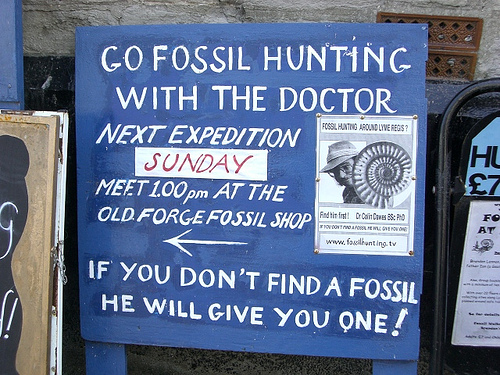
Lyme Regis is a delightful and interesting little seaside town on the Dorset coast. Each year for the past five years I have spent a week at nearby Branscombe in Devon and on each occasion I have visited Lyme at least twice. On three occasions I’ve been fossil hunting (without any luck!) for Lyme lies within the World Heritage Site Jurassic Coast.
Lyme has a promenade and sandy and pebbly beaches. You can tell which is the sandy one by the numbers of people crammed into the small area where huge amounts of sand were imported from Normandy. A lot of effort; but it has made a huge difference. I’ve never actually managed to get onto the beach as there is always so much more of interest to me. There’s a High Street crammed with shops – many of them small and individual and very many of them selling or in some other way connected with the fossils that are Lyme’s trademark.
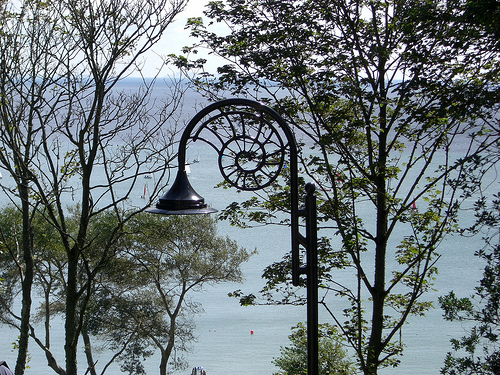
The Philpot Museum is well worth a visit, or several. Fossil Hunts are organised from the Museum. Lyme Regis has a colourful little harbour/marina protected from the sea by the famous Cobb – mentioned in Jane Austen’s ‘Persuasion‘ and featured in the film of Fowles’ ‘French Lieutenant’s Woman’. By the Cobb is the fascinating Marine Aquarium. There is good food to be had from the small cafes along the promenade, to the Town Bakery, to Hix Oyster and Fish House.
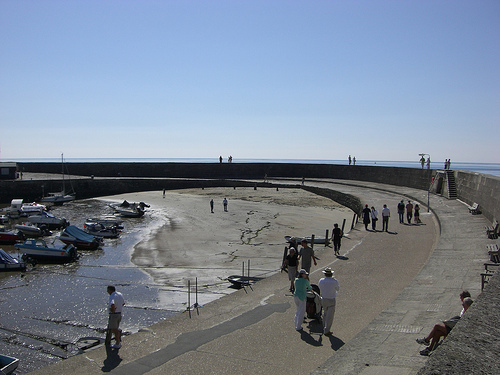
Lyme Regis :  The quintessential seaside resort for literature lovers everywhere – Jane Austen and Beatrix Potter visited it.  John Fowles lived in it.

Belmont, Lyme Regis : “Mrs Coade made it; John Fowles loved it. Now it must be saved.”
“I am just going outside and may be some time”: a very gallant gentleman.

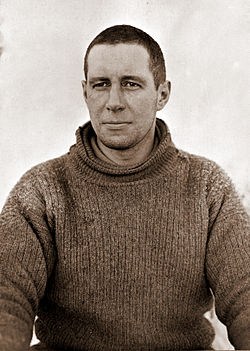
Captain Lawrence Oates

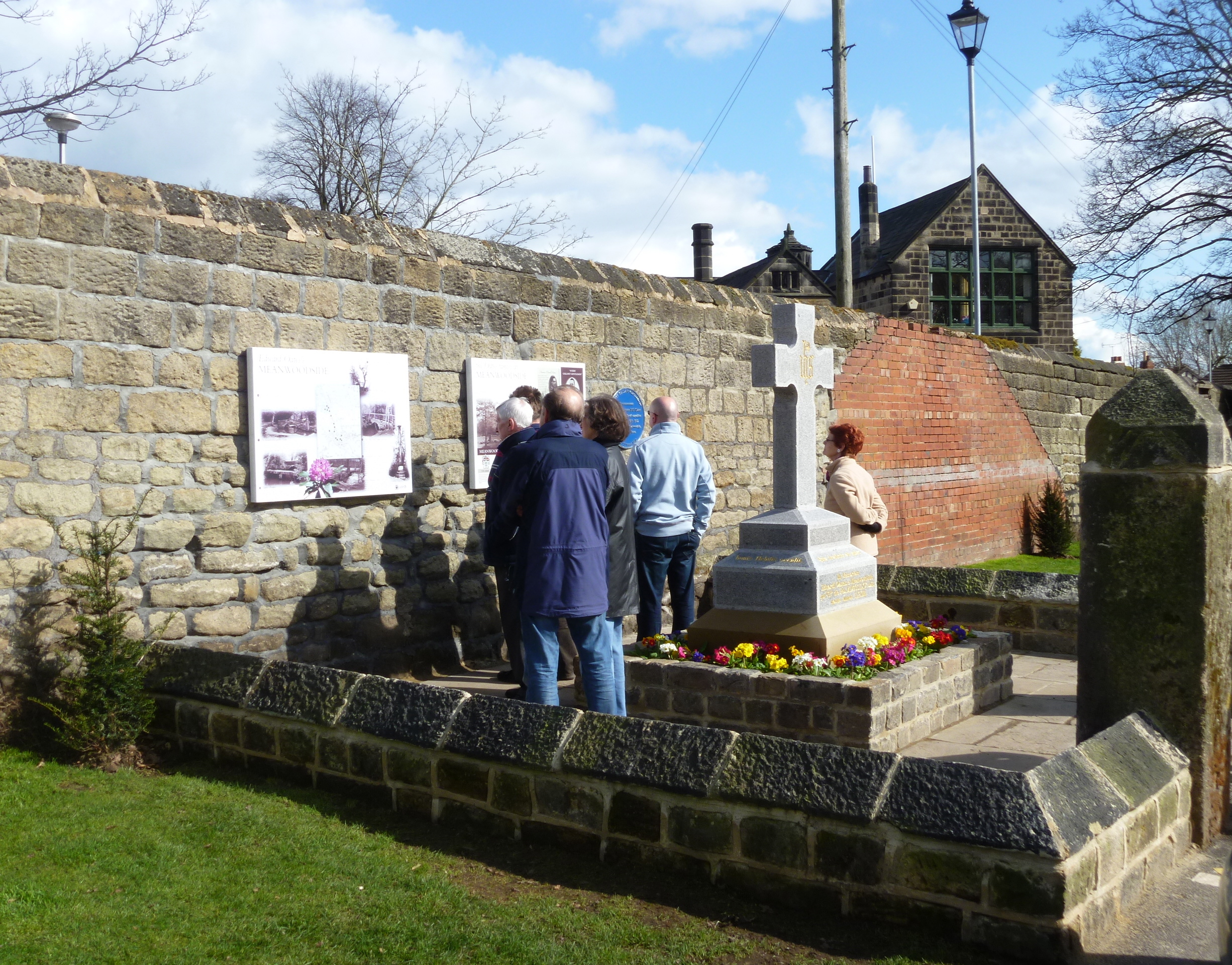
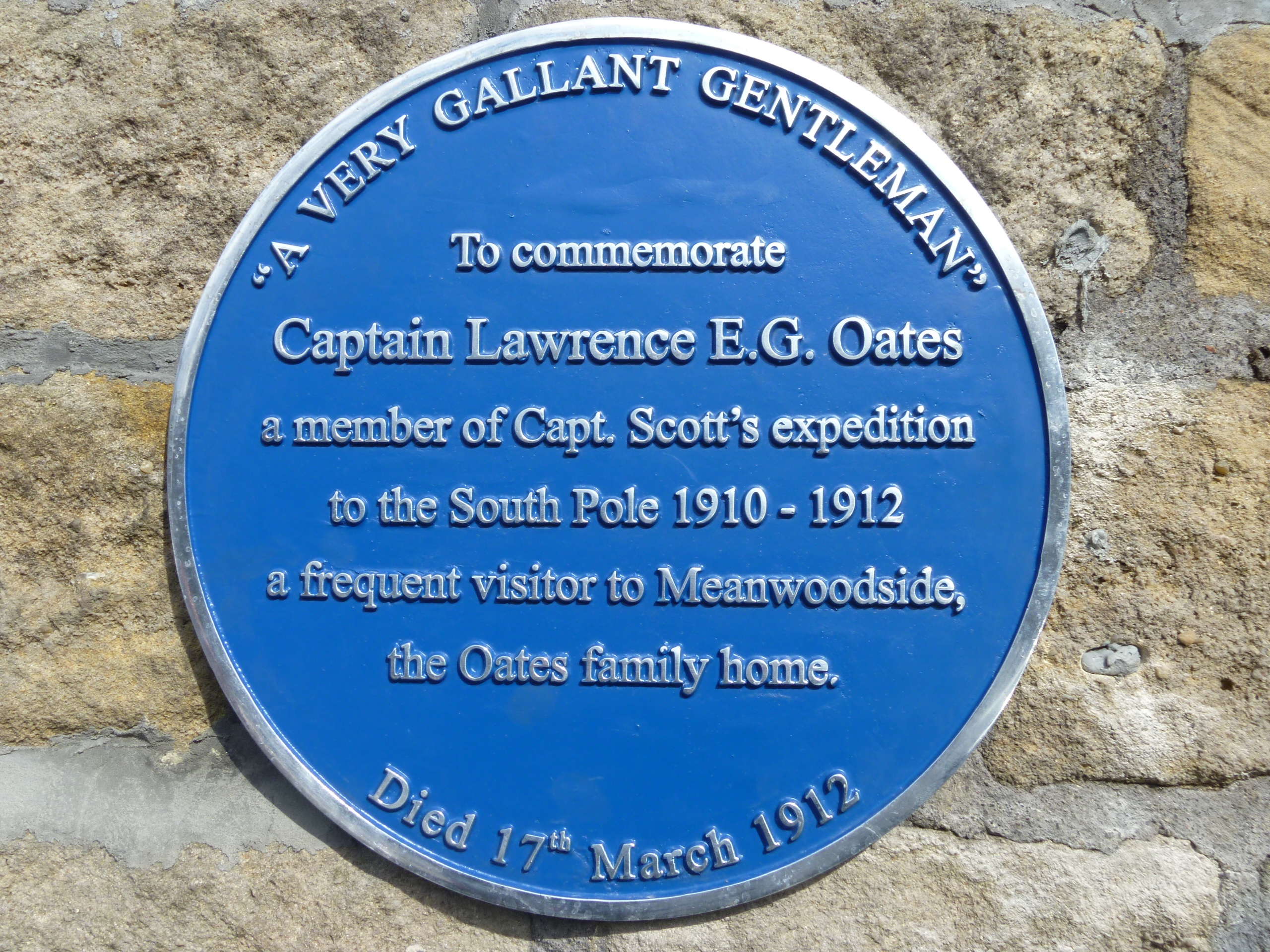
Yesterday I heard on the national BBC Radio 4 news that there was to be the unveiling of a plaque in memory of Captain Lawrence Oates in Meanwood Park in Leeds.

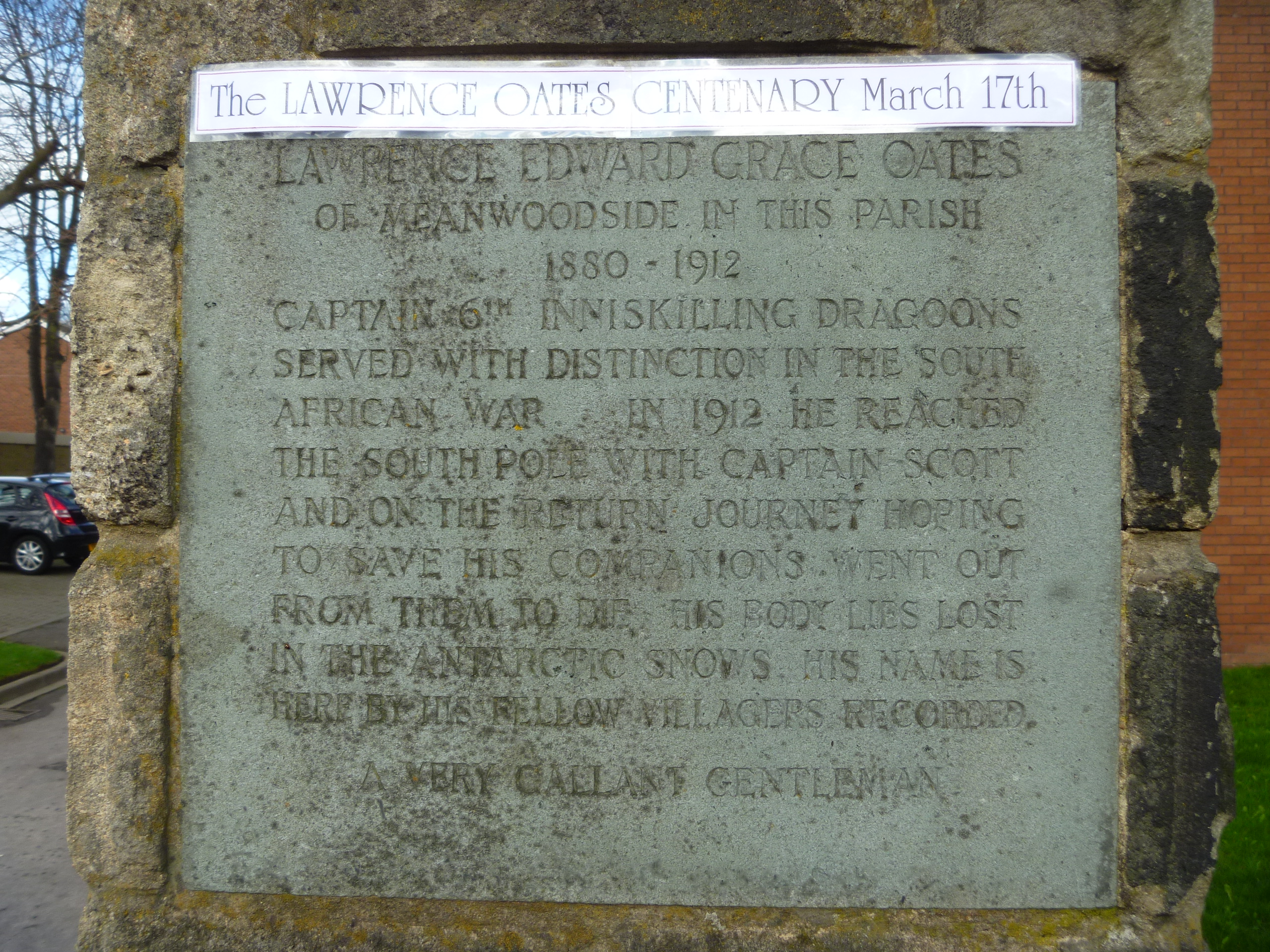
Lawrence Oates Memorial

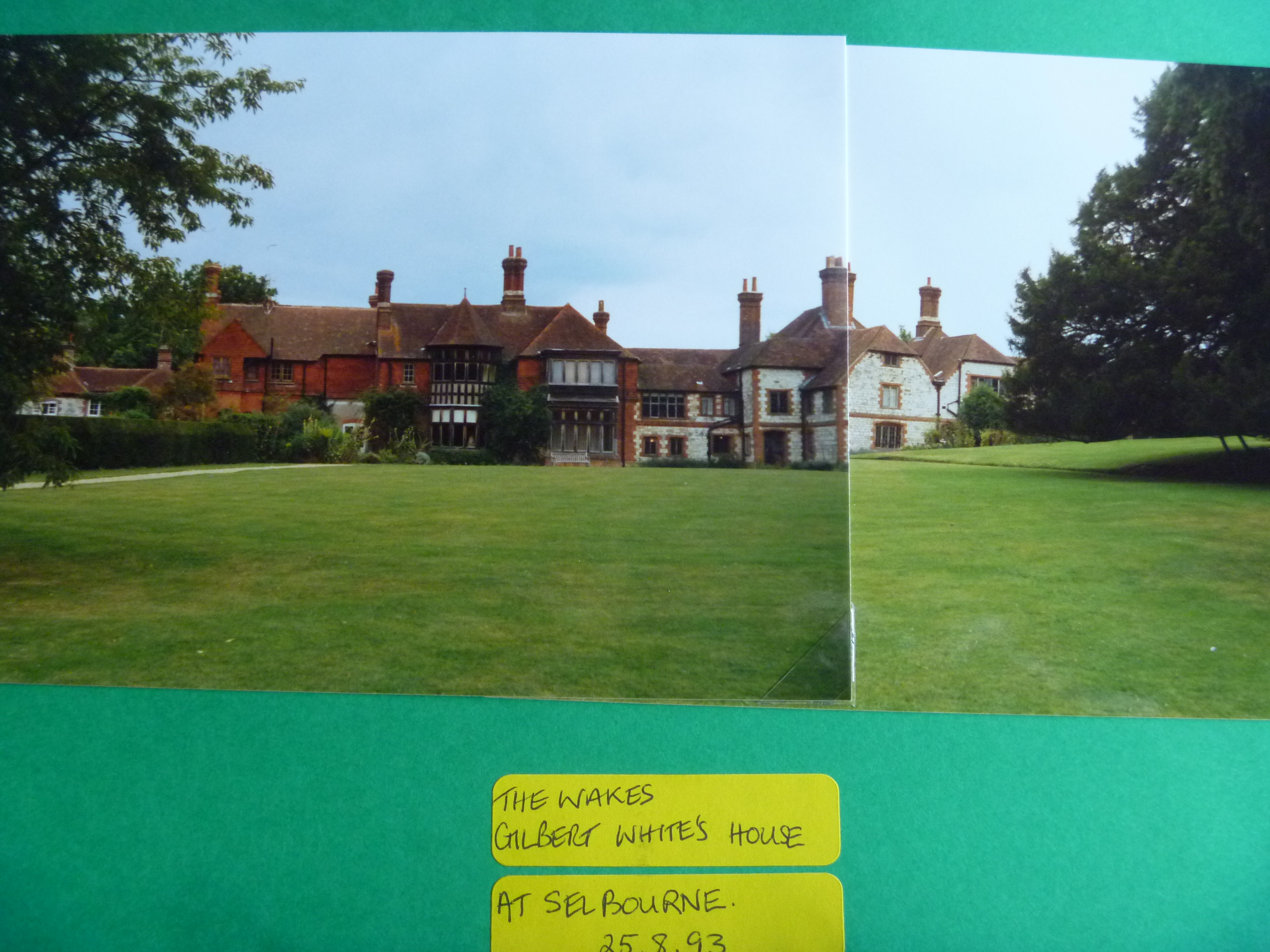
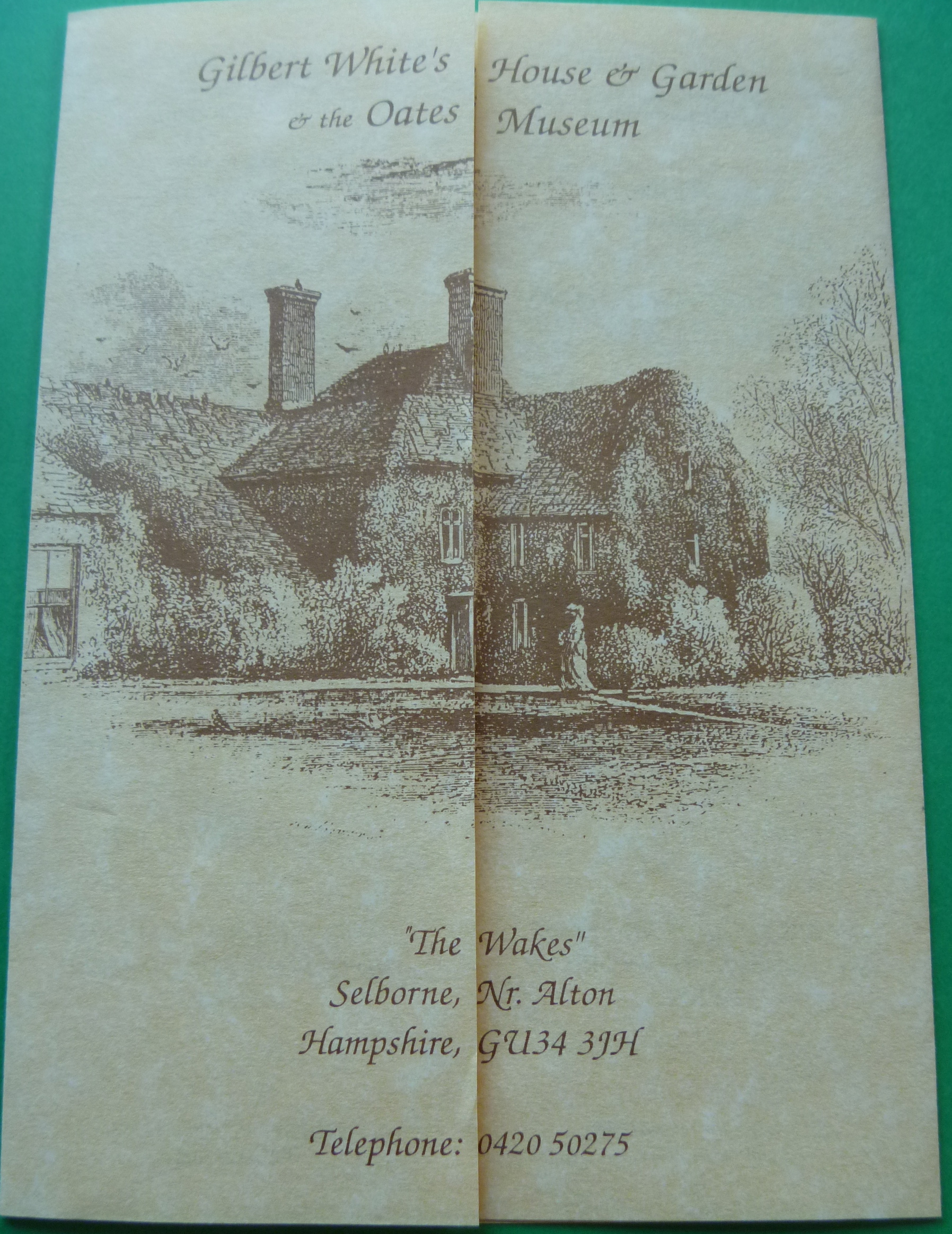
My interest was piqued as many years ago I visited Selborne in Hampshire where the Lawrence Oates Museum is located in the attic area of Gilbert White’s The Wakes.

More recently, of course, I had read Cherry’s ‘The worst journey in the world’ and visited the Polar Research Institute in Cambridge and attended the Antarctica talks in January at The Leeds Library.

As I work in the library on Saturdays I was unable to attend the unveiling but I went along today – parking nearby at Waitrose – and visited the park to view, along with many other visitors, the plaque and information boards.

Lawrence Oates’ connection with the Meanwood area of Leeds has long been commemorated by a stone plaque on the gatepost of Holy Trinity church and there’s a brass plaque in the Leeds Parish Church, which I have yet to see.

From the Oates Collection website :

Captain Lawrence Oates (1880 – 1912) 
Captain Lawrence Oates is best remembered as the brave Antarctic hero who was chosen to be part of Captain Robert Scott’s team to undertake the epic journey of discovery to the South Pole 1911-12. The ill-fated expedition turned into a race for the pole when the explorers learnt of the presence of the Norwegian team led by Admundsen. Scott’s team suffered inadequate food supplies, severe weather conditions and failing health so Oates sacrificed his life in the hope of saving his comrades, leaving the tent in a terrible blizzard with the famous last words “I am just going outside and may be some time.” His body has never been found.”
I was sent to The Tower – but I kept my head!

I’ve just returned from a couple of nights in London staying at the lovely Landmark Trust property at 13, Princelet Street. The house was built in 1719 in the Spitalfields area of east London for Huguenot silk weavers. It’s a lovely, warm, characterful house with all the comforts you could wish for on a cold winter’s evening in the east end of London when the wind and rain are blowing outside – as they were on our first evening. Fetch a takeaway curry from one of about 50 curry houses on Brick Lane, then over a cup of tea inspect the Landmark Library and plan the next day’s entertainment, review the day that’s just finished or take up the Landmark Handbook and plan another trip. I visited the house for a Friends’ Reception last October and wrote about it here.

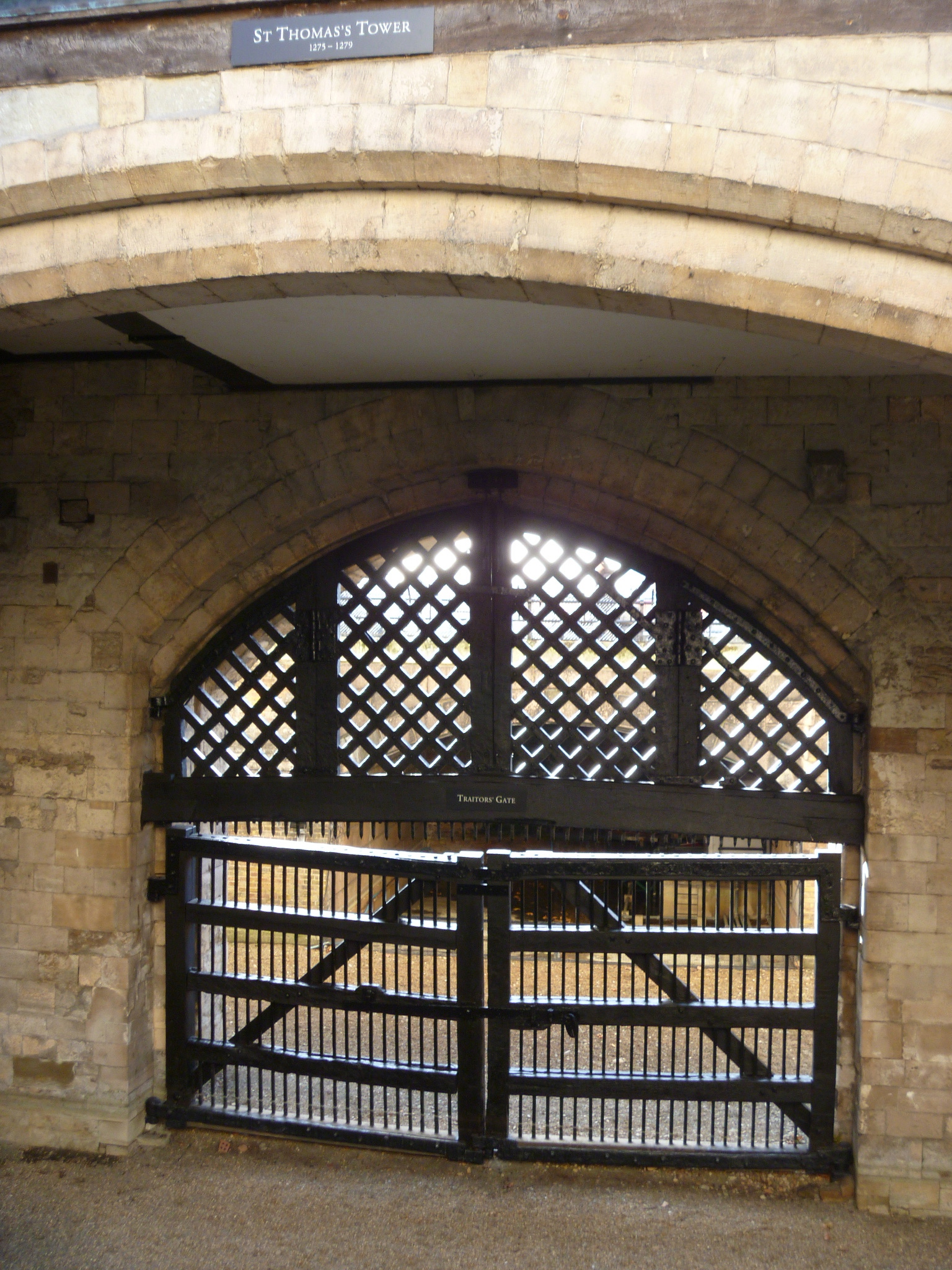
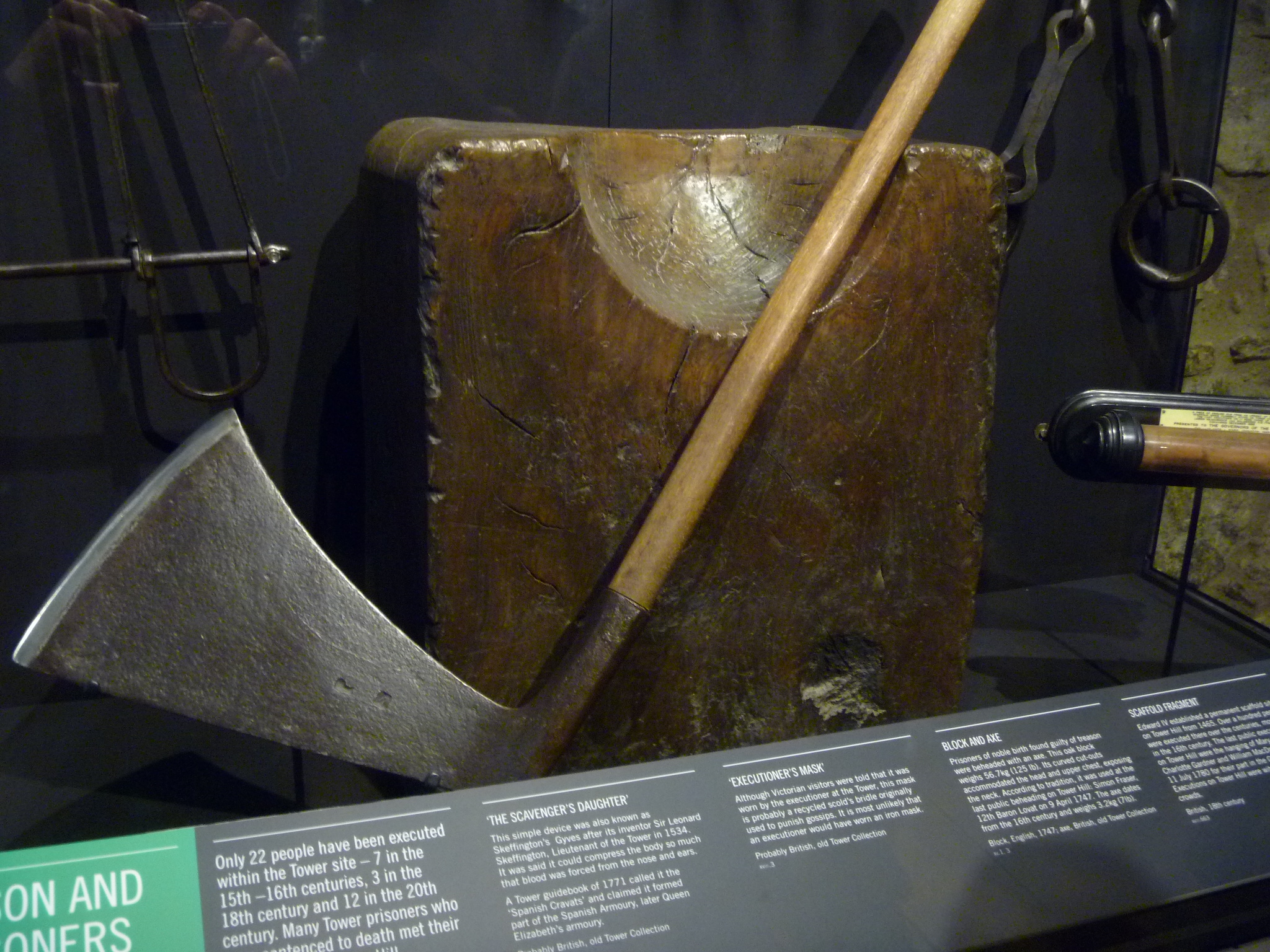
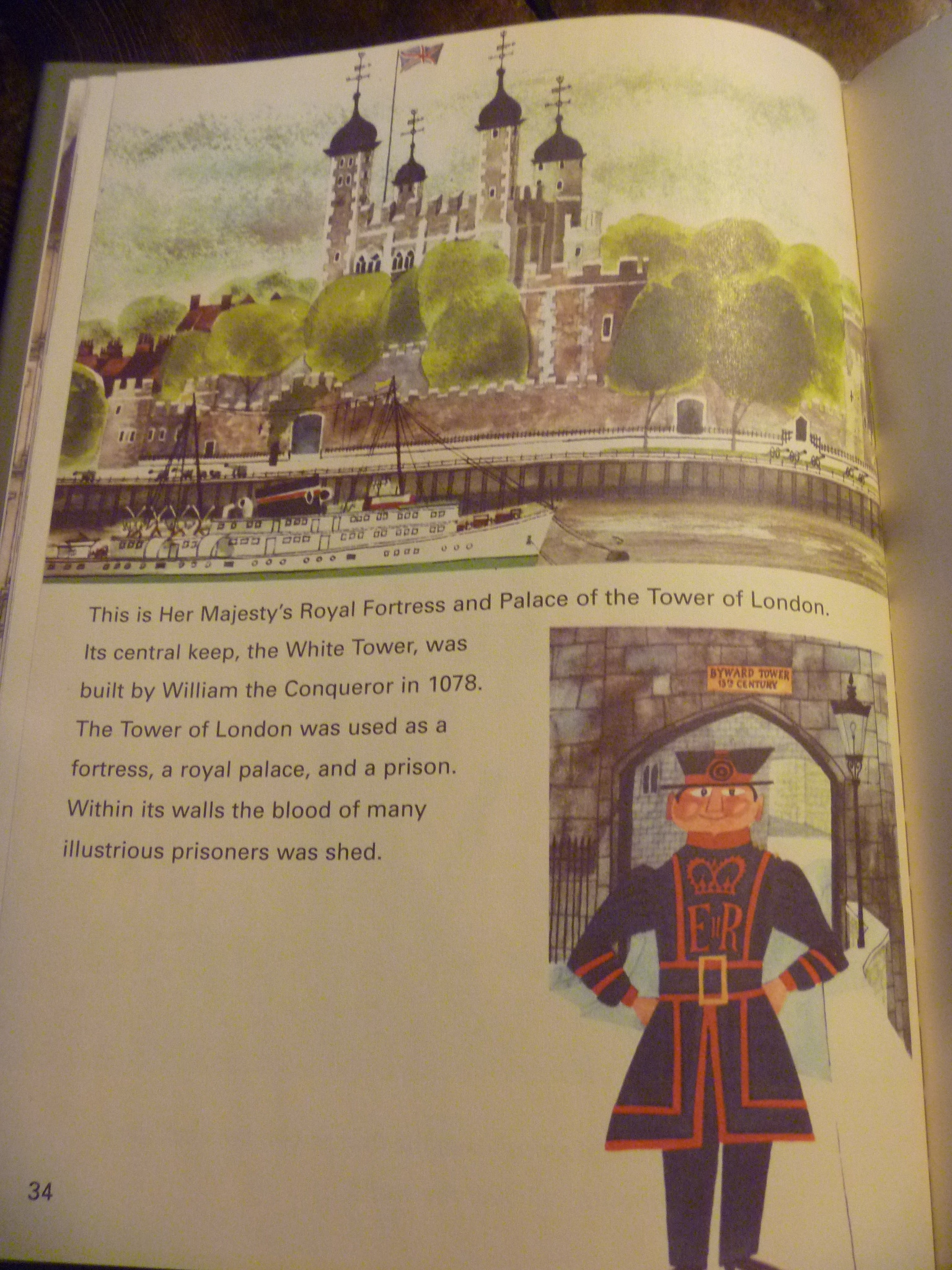
Staying just two nights gave us only one full day in London and we decided to spend it at The Tower of London. I have visited this Historic Royal Palace on two previous occasions. The first time was at the age of 10 on the annual schools visit to London with my primary school in Norwich. I remember clearly seeing the Crown Jewels in one of the towers, that we all giggled at the name of one of the towers The Bloody Tower, seeing the ravens hopping over the lawns, their wings clipped, seeing The Traitors’ Gate and the wooden block and axe which took the life of Queen Anne Boleyn. I had long wished to return and my next visit was with a Swiss guest in 2010. We had a lot of London sights to fit into our day so I planned to return on the next appropriate occasion to have a closer look.

The Traitors Gate

Off with her head!

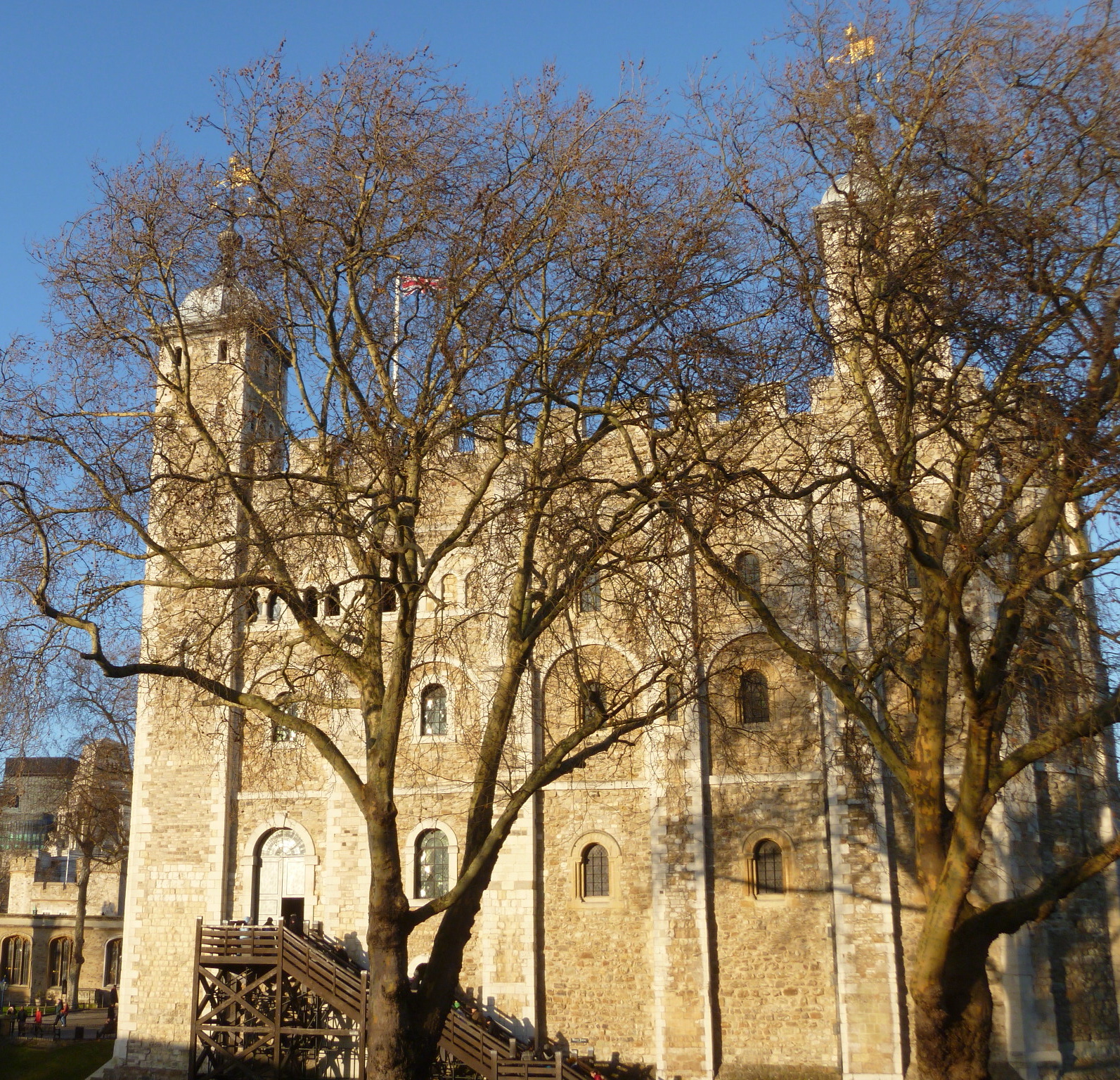
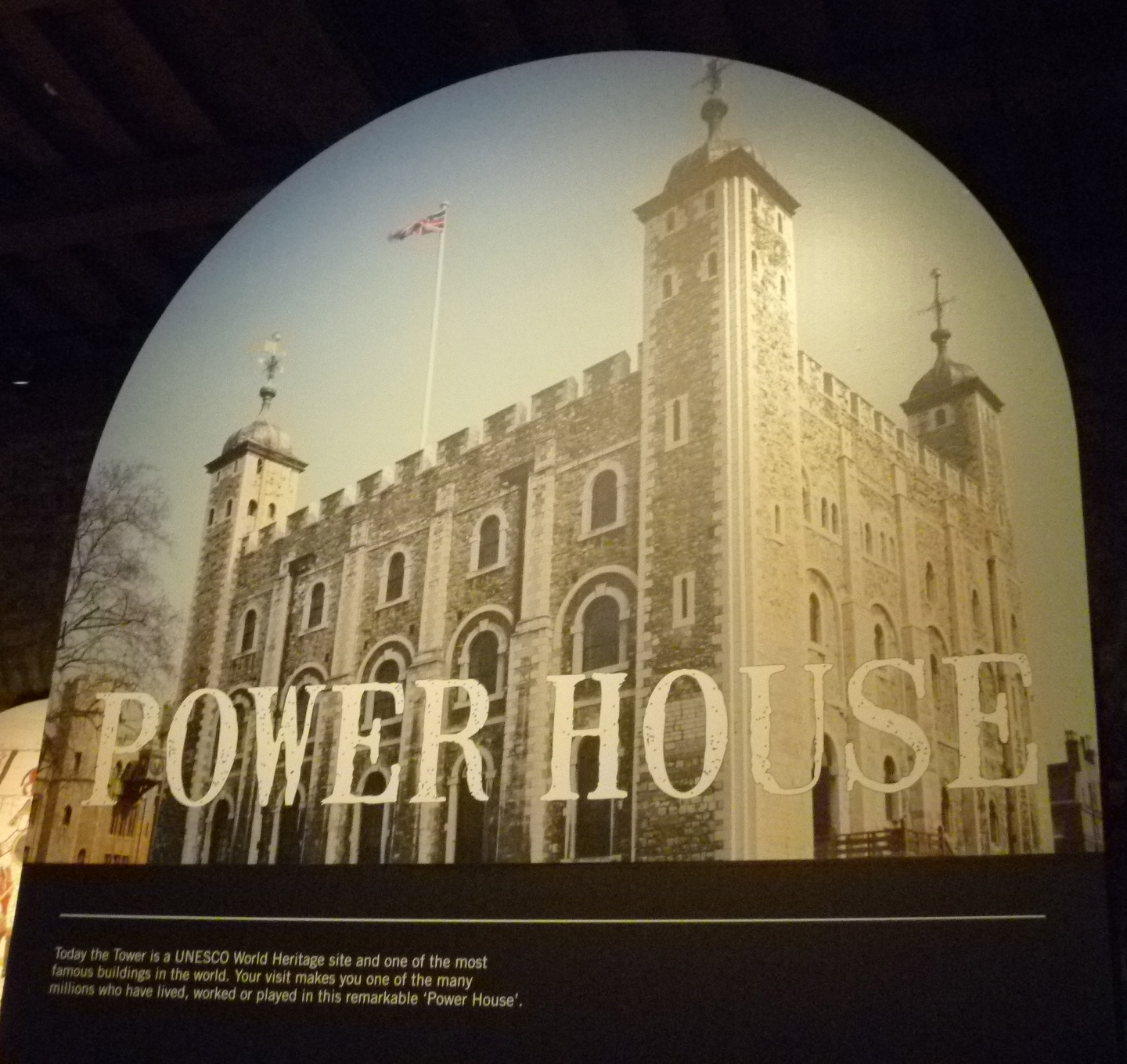
On Thursday with our 85 year old mother in tow we made a beeline for the Crown Jewels. These magnificent symbols of the British monarchy are displayed in such a way that everyone gets a good look at them however crowded the Tower may be. In fact, on this bright and dry early January day, although there seemed to be lots of people – of all nationalities – there were no queues at all. Our next port of call was the White Tower which houses an exhibition, The Power House, which tells about all the institutions that originally had their homes at The Tower – The Royal Mint, The Menagerie (now London Zoo), The Ordnance Survey, The Royal Observatory. There are also displays of royal armour and, rather strangely, gifts given to our royalty by nations around the world.

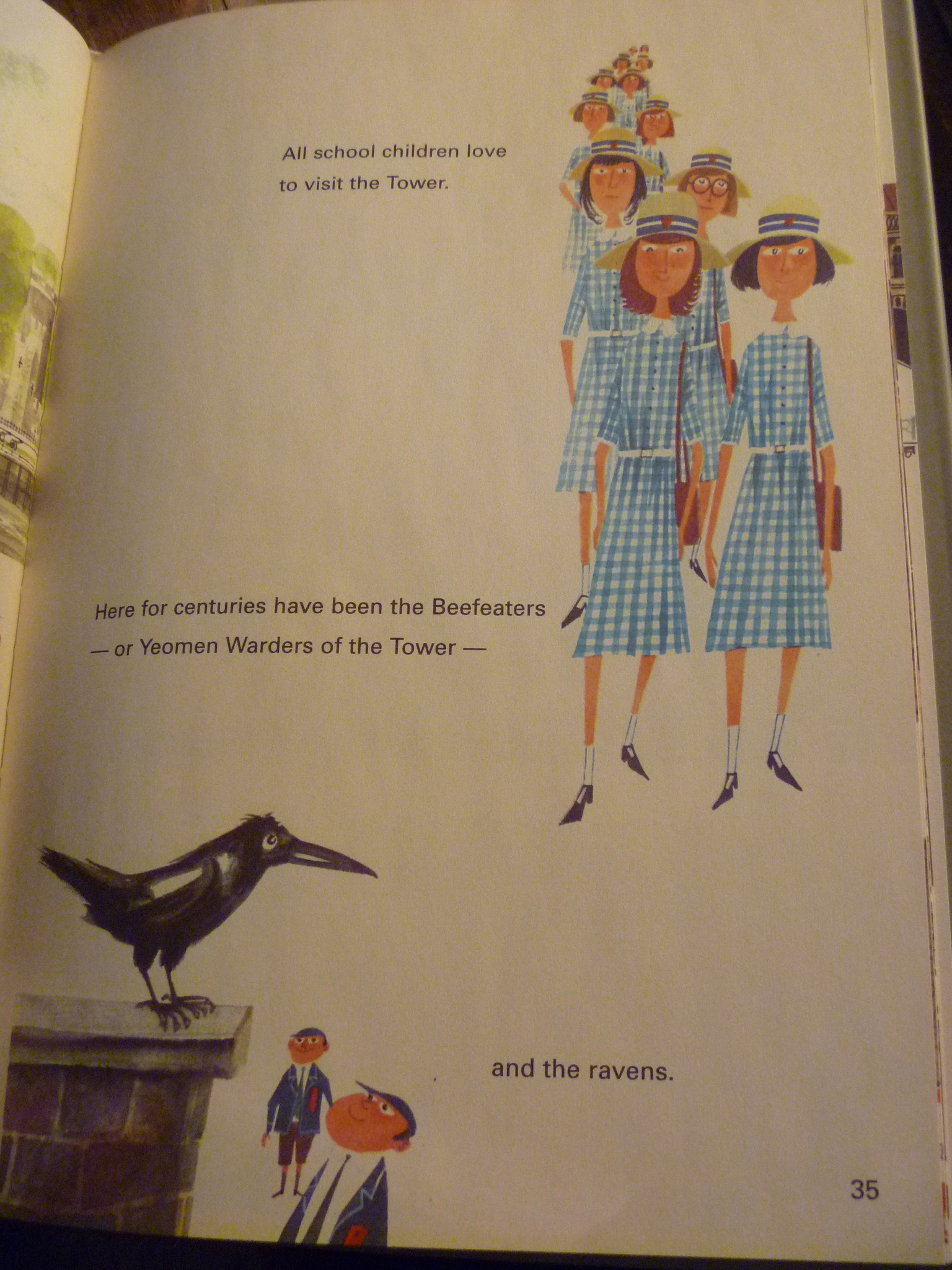
Chatting with a Yeoman Warder (or Beefeater) I discovered that 37 YWs and their families live within The Tower’s walls, plus a doctor and a priest. They have their own church and pub and it’s like a village community. But the Power House exhibition showed that in former times The Tower had been a virtual town.

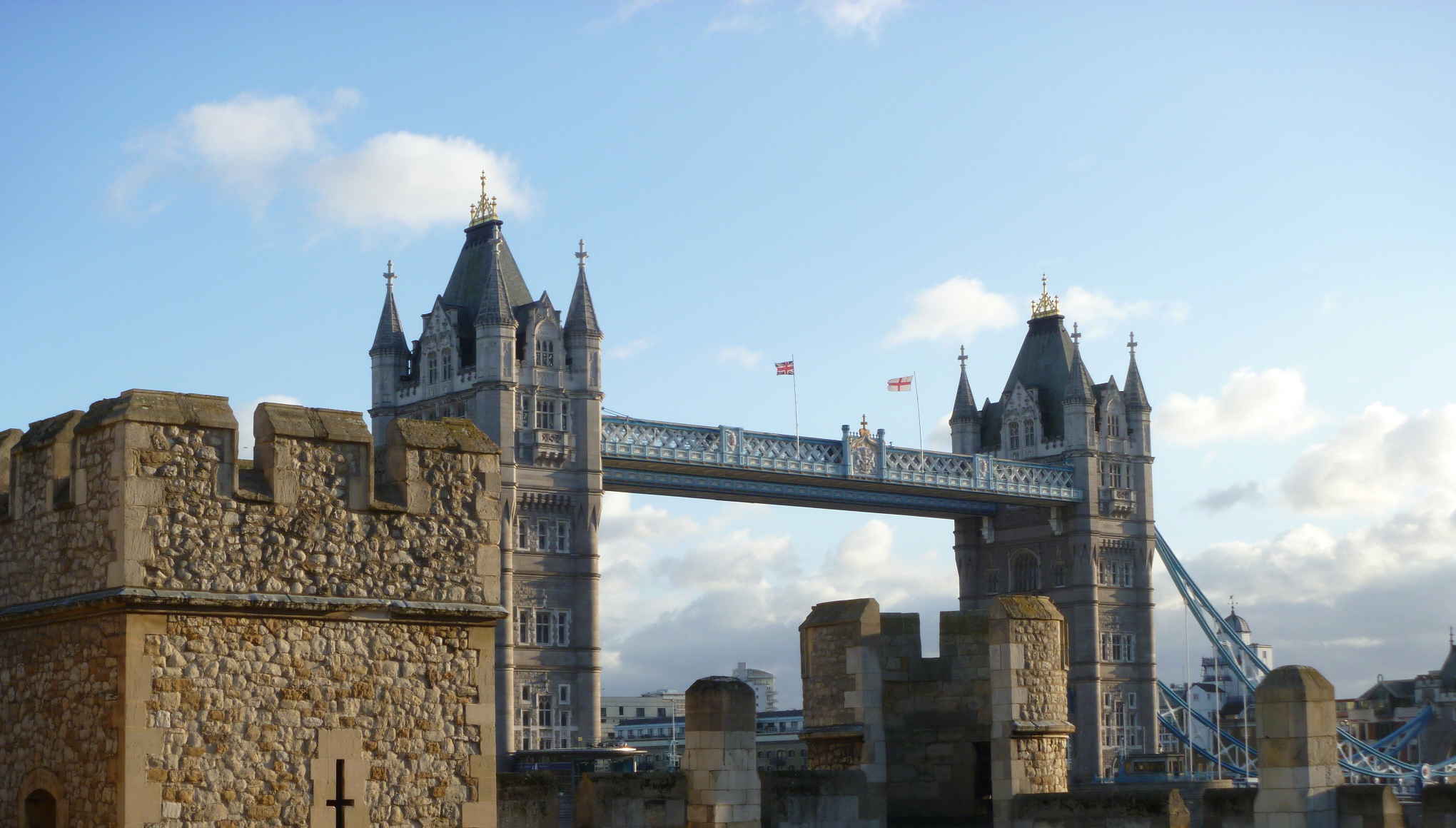
After lunch we left mum in the warmth of the cafe to have a walk round the walls (for a great view of Tower Bridge)

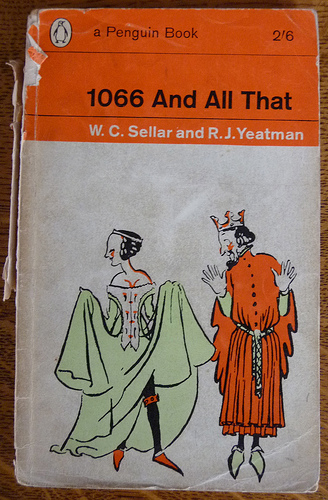
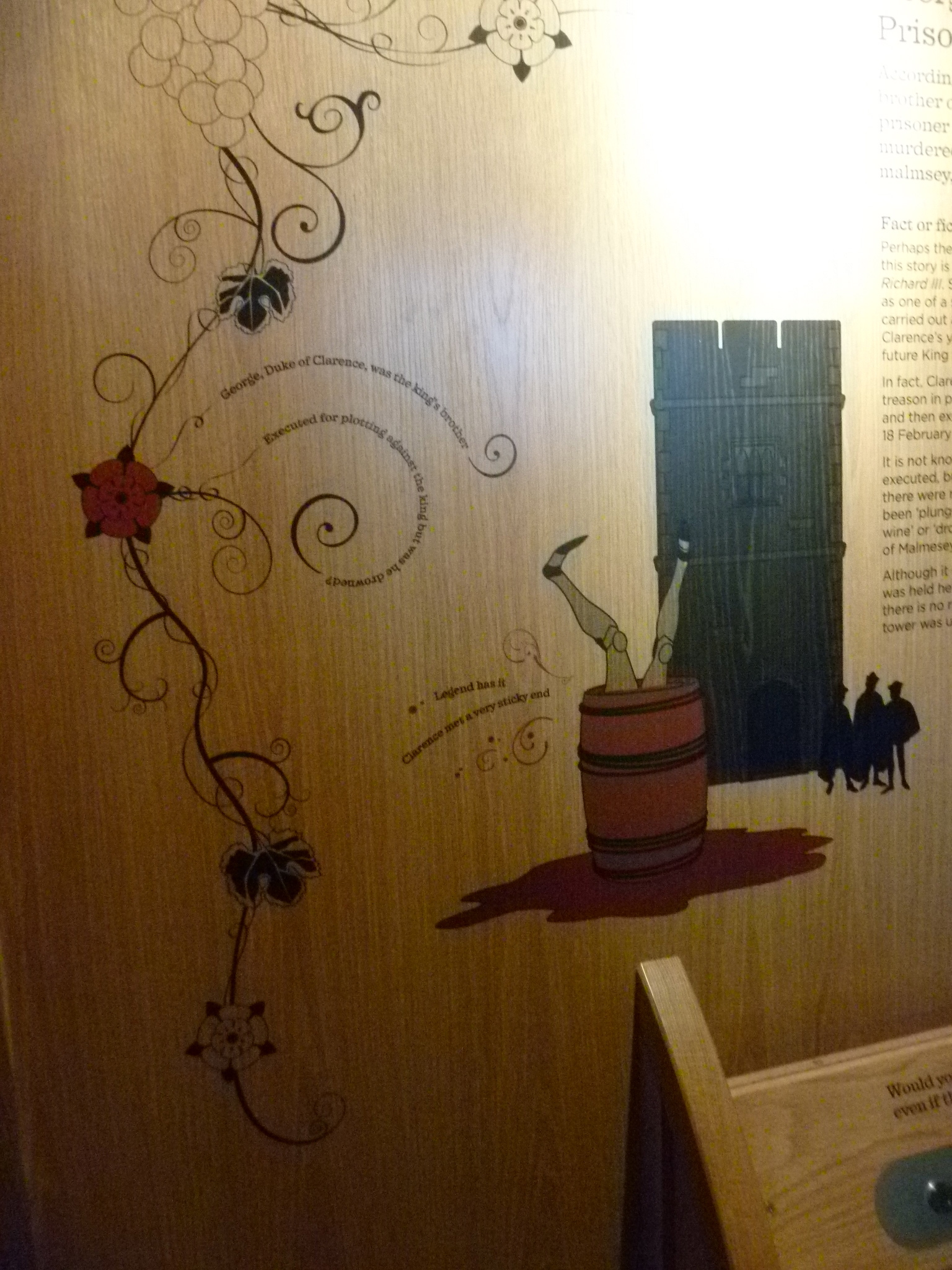
and to see inside some of the other towers (the ones with narrow stone spiral staircases) to discover more about the Duke of Clarence who drowned in a Butt of Malmsey wine, about The Little Princes murdered in the Tower and about other prisoners including Sir Walter Raleigh. And my thoughts go back to that earlier visit and to the discovery a few years later of my best history book ever – W. C. Sellar and R. J. Yeatman’s “1066 and all that”

“During the Wars of the Roses the Kings became less and less memorable (sometimes even getting in the wrong order) until at least one of them was nothing but some little princes smothered in the Tower, and another, finding that his name was Clarence, had himself drowned in a spot of Malmsey wine; while the last of all even attempted to give his kingdom to a horse.”

Looking Back on the Missed Months of 2011

A Happy New Year to You All!

Transferring stuff from one year’s diary to the next’s made me think I might make a note here on an event/category from each month of 2011 up to my starting this blogging lark in August. One event with one picture is quite a tough call – especially in the summer months – but I will give it a go.

January 2011 : Landmarking with Milady

The year started well with my usual London Landmarking Trip but this January I was fortunate enough to get a double dose of London Landmarks. I stayed in the 45A Cloth Fair property for 3 nights and visited friends at the Hampton Court Georgian House on one of the days. There is so much to see and do at Hampton Court that we have booked our January 2013 London stay at Fish Court in order to experience more. If you stay there is no extra charge for visiting the Palace. On the other day at Cloth Fair we took tea at the recently totally renovated Savoy Hotel – an out-of-this-world experience from the moment your carriage arrives to the moment you are driven away.

February 2011 : Milady gets culture

An early wet and windy two night excursion to Cambridge led to the wonderful discovery of Kettles Yard. Our trip was planned around a visit to The Scott-Polar Research Institute whose museum had just re-opened after extensive renovation work. But interesting as it was to see the exhibits at the SPRI the highlight of my visit was Kettle’s Yard. We even went there twice. On the Thursday afternoon of our arrival we took a walk from the hotel and ended up at the house that is Kettles Yard. It is like walking into someone’s home – you ring the doorbell and are welcomed, photography is no problem, you may sit and look at the books and the place is crammed full of art and artefacts of what I suppose is called the modern era. It was on this visit that we heard about the Friday Lunchtime Concerts so from the SPRI we headed back to KY and joined a winding queue of keen concert-goers and enjoyed with them a chamber group of student musicians.

March 2011 : Milady gets Culture

Photograph: Robert Workman

At the end of March Out of Joint brought their play  “A Dish of Tea with Dr Johnson” to The Carriageworks in Leeds. I’d read quite a bit a bit about Dr Samuel Johnson and visited his house in Gough Square in London so was intrigued to see this well-reviewed piece. I was not disappointed. It is quite short, full of fun but with some pathos and there is also the most wonderful dog actor who must have been standing in for Johnson’s cat, Hodge. I would have loved to have seen the performance actually at Dictionary Johnson’s House but this was the next best thing. Highly recommended although I think the tour is finished now.
April 2011 : Landmarking with Milady

Friday 29th April 2011 must have seen the high point of the year in Britain – The Royal Wedding of HRH Prince William and Miss Catherine Middleton. That very day I had booked (long before the wedding date was announced) to spend the May Day Holiday Weekend in France at Gif-Sur-Yvette the former weekend home of the Duke and Duchess of Windsor just outside Paris and now managed as a holiday let by The Landmark Trust. I was visited there on one of the days by my good friend MN and we spent a literary day visiting Alexandre Dumas’ The Chateau of Monte Cristo at Port-Marly and La Maison Litteraire de Victor Hugo at Bievres, Île de France. It was such a good trip that we’ve booked to go back again next May so I’ll be posting in more detail then.

May 2011 : Milady Visits

Window shopping at Didier Ludot in the Jardin du Palais Royale

On 12th May the Optimist celebrated a special birthday! And on that very day we were booked to travel – in style, I might add – by Eurostar train from Yorkshire to Paris to attend our nephew’s wedding in Vincennes, just outside Paris, on the Saturday. What a fab weekend we had – lovely hotel quiet but right in the centre of Paris, lovely weather, except that it rained on the Sunday as we were leaving, excellent company and good food and wine with some “flanez” and pavement cafes thrown in for good measure.

June 2011 : Milady Reads and Visits

In Spring 2011 Persephone Books published a reprint of Adam Fergusson’s “The Sack of Bath”. On June 16th there was an Afternoon of Walks in Bath led by Caroline Kay, of the Bath Preservation Trust, and Adam Fergusson. We met at The Circus cafe for a lovely two course lunch and were then taken on a walking tour to view the effects of City planning policy on Bath during the 1960s. The walk ended at The Museum of the Building of Bath where we were served tea and cakes. But before all those pleasures I had the great pleasure of spending the morning with my online reading group friend Carol who lives in Bath and took time out to show me all the bookish delights of that city – of which there are very many. It was one of those days where looking back it seems impossible to have fitted so much into a mere 7 hours.

July 2011 : Milady Steps Out

On 30th June I set out with my sister on my first long distance walking trail – Wild Edric’s Way in Shropshire. The ‘holiday’ was organised by a local company with the delightful name of Wheely Wonderful Cycling Holidays which deals mainly in cycling holidays but with some walking tours also on their books. I say ‘holiday’ but at times it was jolly hard work!  We walked from the Stiperstones to Ludlow over 3.5 days. Approximately 40 miles was covered in total with 4 overnight stops. For the most part it followed the route of The Shropshire Way which coincided also with The Kerry Ridgeway and Offa’s Dyke National Trail. There were several places of interest on the route – churches at More, Churchtown and Ludlow and castles at Clun, Stokesay and Ludlow. We met other walkers and some lovely B&B owners along the way. I was glad to have done it and it felt like quite an achievement but I was not sure whether I wished to repeat the experience. However, the further away it has become the more I think maybe I would indeed like to do another such walk in the future.


Family Matters at Christmas

My trip to Norwich for the weekend coincided with a highly recommended exhibition at Norwich Castle Museum. Luckily I managed to fit in a visit first thing on Saturday morning – before proceeding to other more personal ‘family matters’.

The exhibition, subtitled “The family in British art”, covered a wide variety of media and time periods and was subdivided into 5 sections: Inheritance, Childhood, Couple and Kinship, Parenting and Home. A number of galleries have contributed to the exhibit which will show next year in Sheffield, Newcastle and at Tate Britain. I would love to tell about every picture, installation and sculpture but will just highlight a few which I found particularly relevant or interesting.

Many of the pictures included in Family Matters are from Norwich Castle’s own collection. I know that this is pretty extensive as I have in the past participated in behind-the-scenes tours and there are also many fine works of art in the permanent galleries. John Crome and John Sell Cotman and other Norwich School painters being particularly well represented.

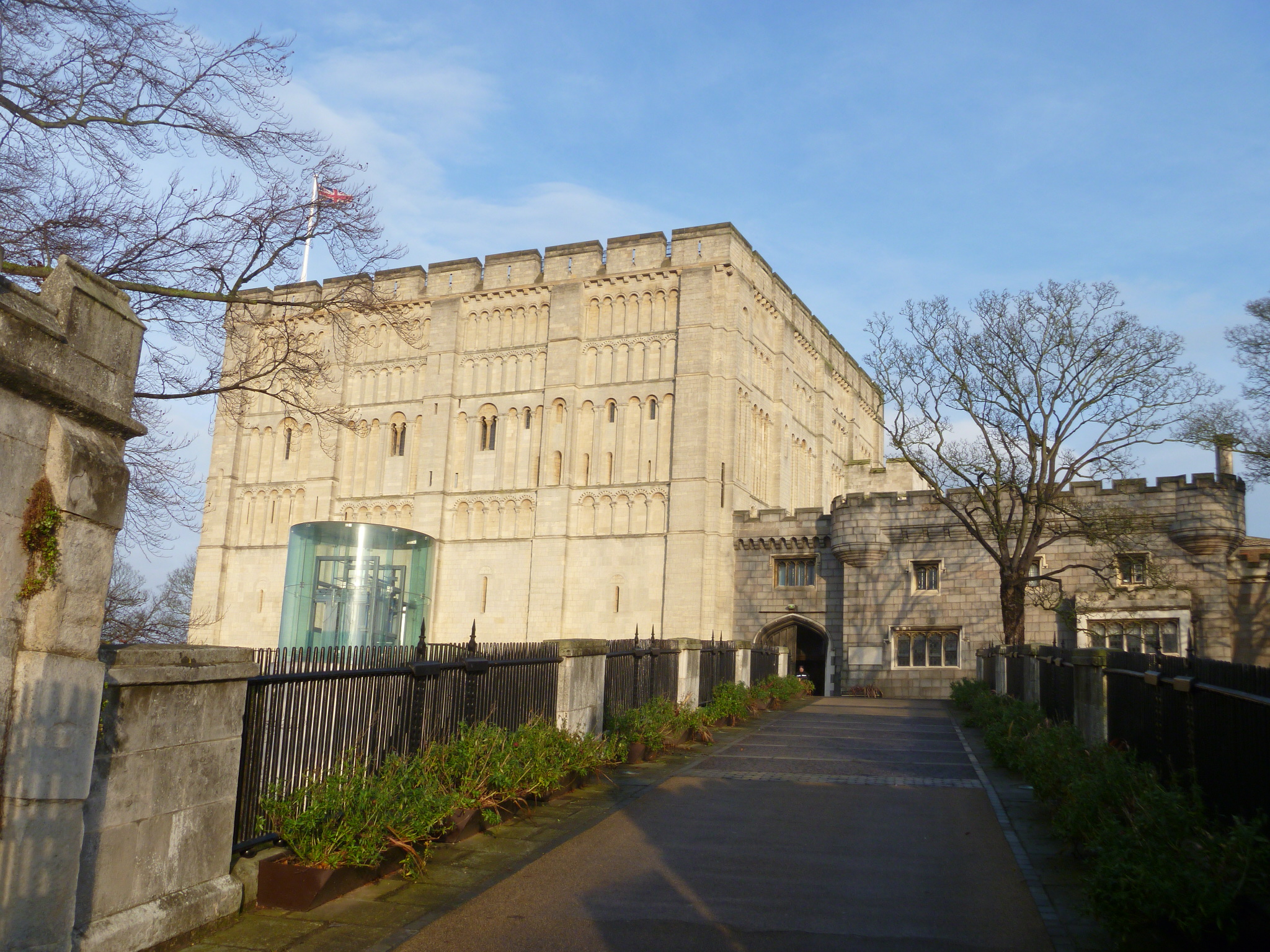
Approaching Norwich Castle

Inheritance.

One of my favourite pictures fell into this category: The Harvey Family of Norwich, c.1820 by Joseph Clover. Outside the gallery, in the Castle Rotunda is a life-size copy of this painting with a few faces missing. So I had a go at filling one of the gaps!

The Harvey Family of Norwich, plus one!

In addition there’s The Descent of King James I by an unknown 17th century artist – a kind of visual family tree and right up to date is a 3 screen video installation by Zineb Sedira featuring 3 generations of one family who speak Arabic, French and English in turn.

Childhood

I loved the Gainsborough painting of his Daughters Chasing a Butterfly (c.1756). The butterfly is said to denote fragility and one of the daughters, Mary, was named after a previous daughter who had died two years earlier.

Picture credit 

Bang up to date was a Grayson Perry vase made in 2000 and titled Difficult Background. Look past the innocent 1950s children in the foreground to horrors of war, burning buildings, naked figures.

Couples and Kinship

To me the most touching of all the pictures was Batoni’s “The Hon. Thomas and Mrs Barrett-Lennard with their daughters Barbara Anne” (1750). Thomas and Anna Maria Pratt had married in 1739. Their daughter Barbara had died in 1749 and to console themselves they had taken a European tour. In Rome they commissioned Pompeo Batoni to paint their portrait and to include (using a miniature of her likeness) their daughter.

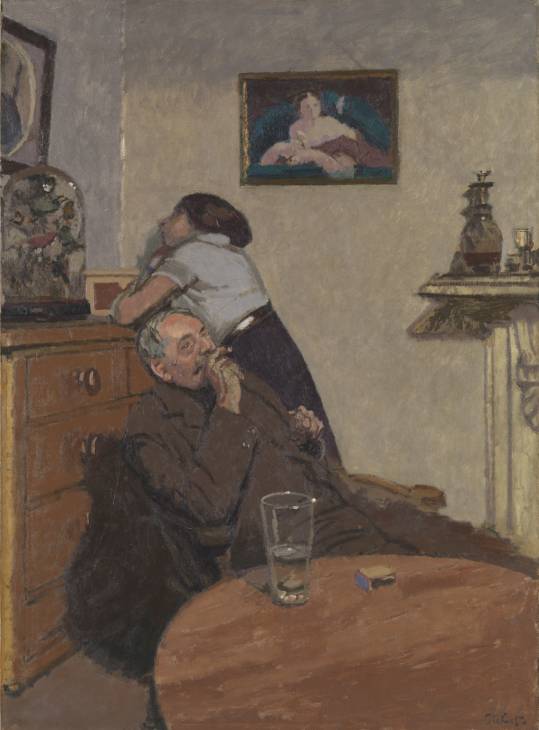
Walter Sickert’s “Ennui” depicts another couple but in what appears to be a totally restrained relationship. It depicts “a sense of suffocating boredom” but is in fact a posed picture using as models a friend of Sickert’s and his own maidservant.

Picture Credit

Parenting

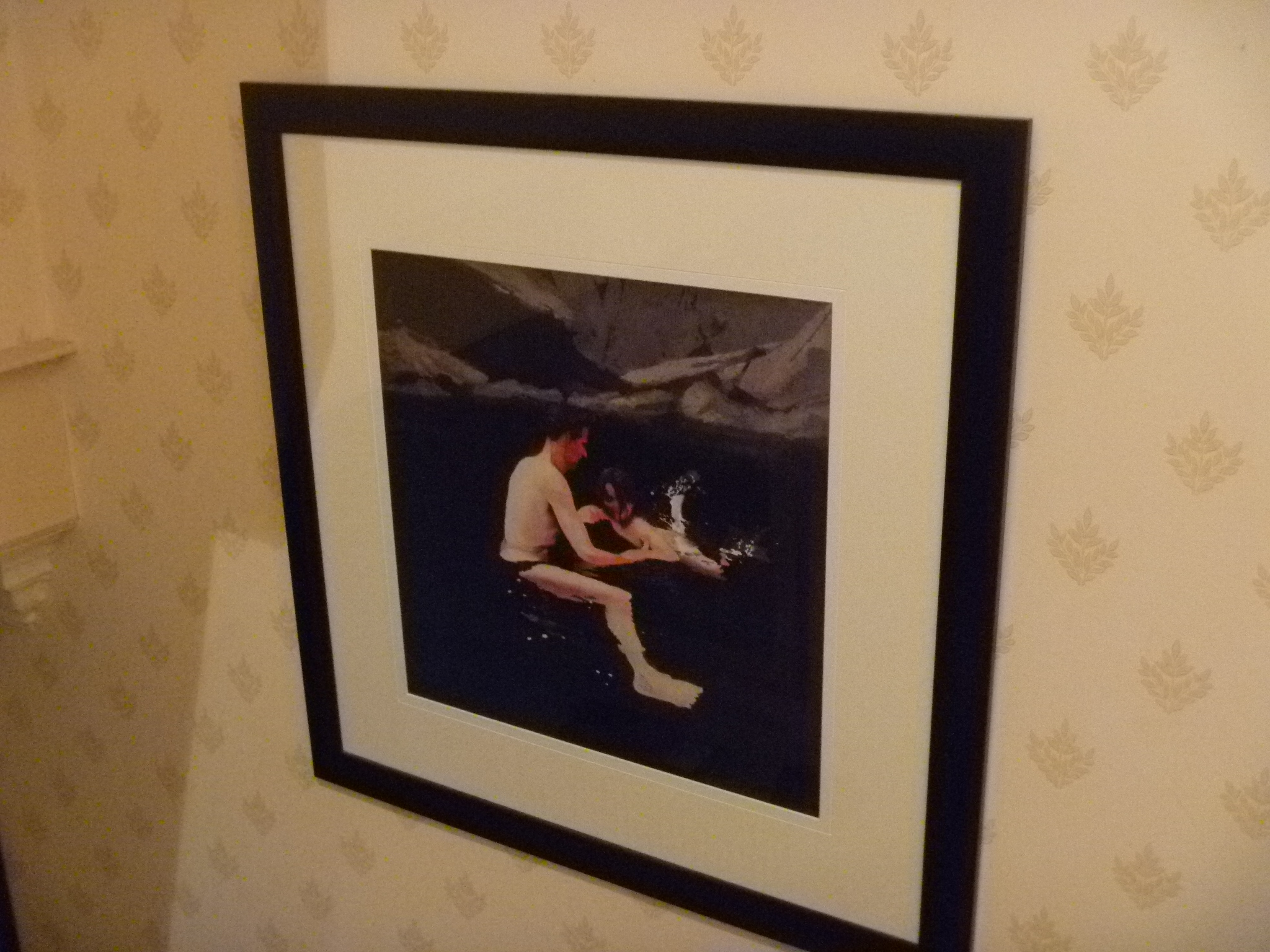
We have a print on our staircase of “Melanie and me swimming” by Michael Andrews (1978-9). Our print measures about 38cm square. The actual painting is about 2m x 2m. It’s based on a holiday photograph taken years earlier of the artist teaching his daughter to swim.

Several other pictures in this section interested me – not least David Hockney’s painting of his parents (1977). I recognised the Habitat folding chairs! We bought these very chairs that same year – the year we got married – for our kitchen. We’ve still got them and use them now and again when we number more than 4 at the kitchen table.

Picture credit 

Home 

Finally the section titled ‘Home’ like the others included a right mixture of interpretations! Several were photographs including one by Thomas Struth (a German photographer born in 1954) called “The Smith family, Fife” (1989). I had only earlier this week read an article in the New Yorker about Struth and his National Portrait Gallery photo of The Queen and Prince Philip commissioned for the Queen’s Diamond Jubilee next year. You can read the article here.

Photo credit

The curator poses some thought-provoking questions. “What makes a house a home? Is home a real place or just a dream of intimacy? Can we ever return home, or is it always somewhere irretrievably in our past?”

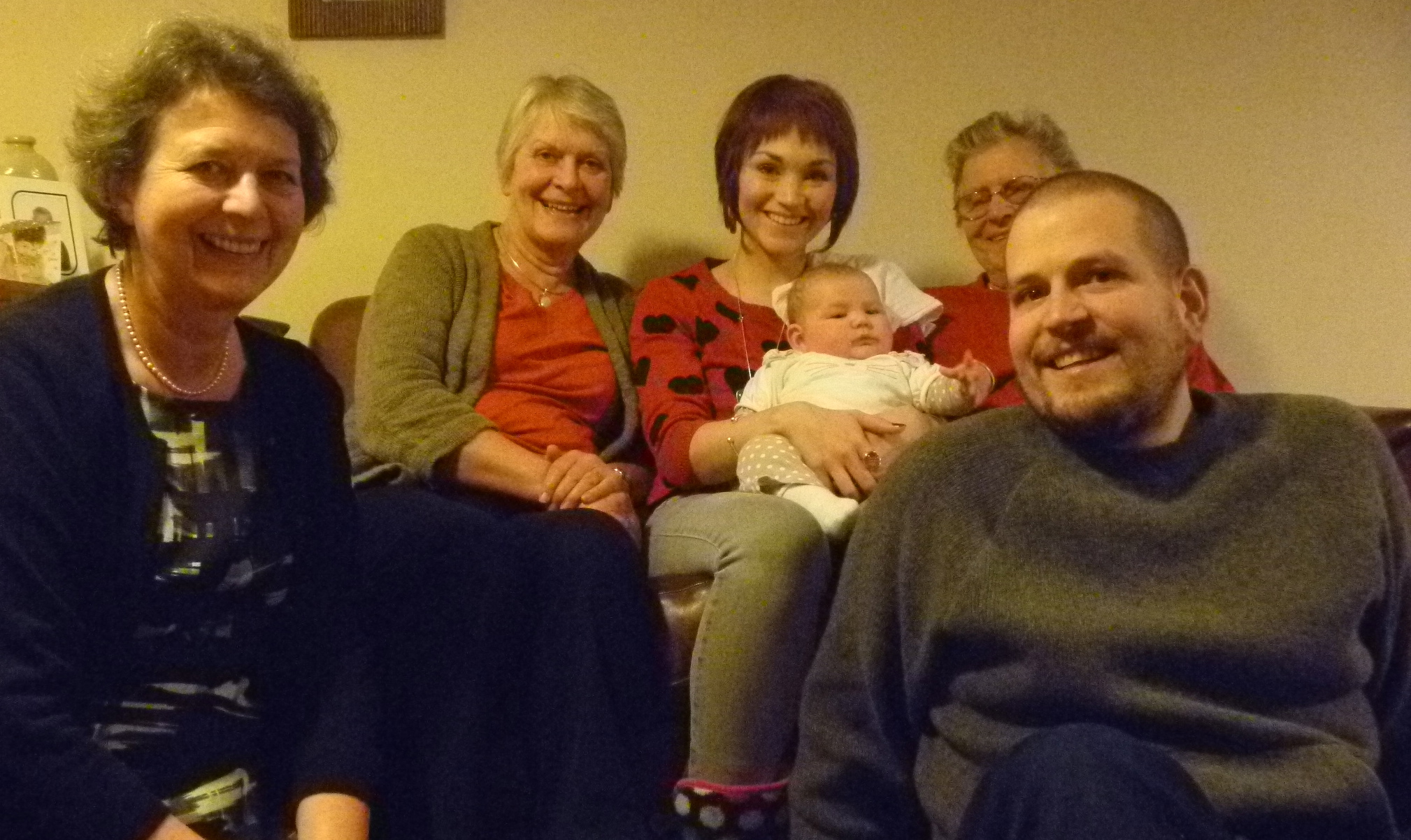
With these thoughts on my mind I then proceeded to Family Matters of my own and here are four generations of my family in Norwich.

Christmas Past: 400 Years of Seasonal Traditions in English Homes, plus Seven Years of Friendship

It’s becoming an annual Christmas tradition to meet up with some of my fellow online book discussion group members around the very beginning of December. Last year 10 of us planned to meet up at the London Review of Books Cake Shop on Bury Street near The British Museum. Then the snow fell … and fell and fell … so that in the end we were much reduced in number. Those who made it were mainly from way outside London – me from Yorkshire, also Bath, Oxford, plus two nearby Londoners from Chiswick and Dulwich.

This year 9 of us descended on The Geffrye Museum in Kingsland Road, east London. We’d booked a table in the restaurant to meet formally for lunch at 2.30pm. Travelling down from Leeds for the day this arrangement suited me fine. In fact I made the booking myself, just to make sure it would happen!

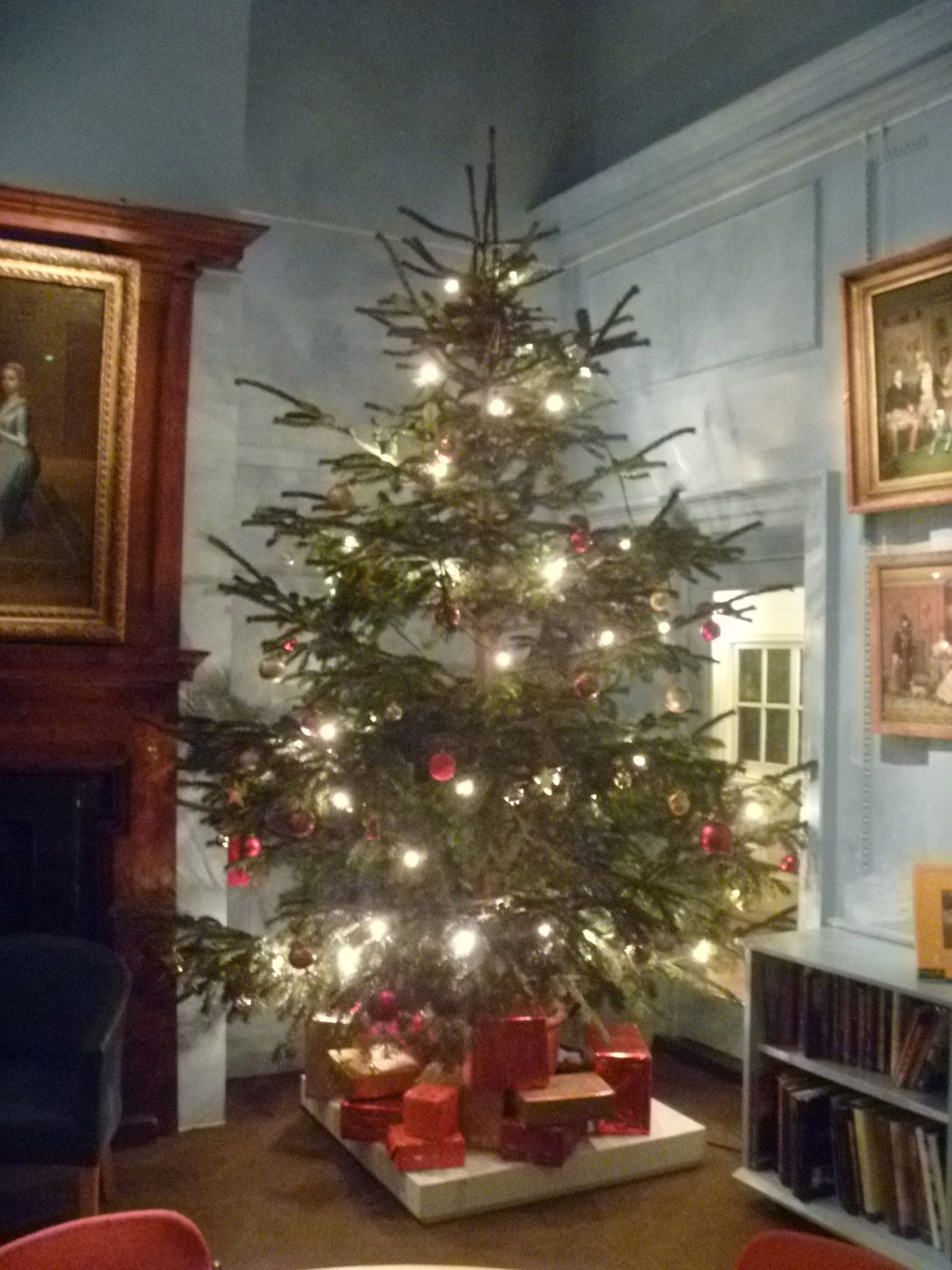
Christmas at the Geffrye Museum

The weather was certainly kinder to us this year. Although there was rain I hardly noticed it as almost all of my time was spent under cover. The Museum consists of a series of period rooms which at this time of year are decorated for Christmas according to the period. We didn’t really have much time to study the rooms in any depth as our main reason for being there was for lunch, book swops and natter. Our suburban London and Essex members had no problem getting here this time and Eurostar behaved itself so that our member living in Brussels was able to join us as well.

Two tall piles of book swops disappearing fast!

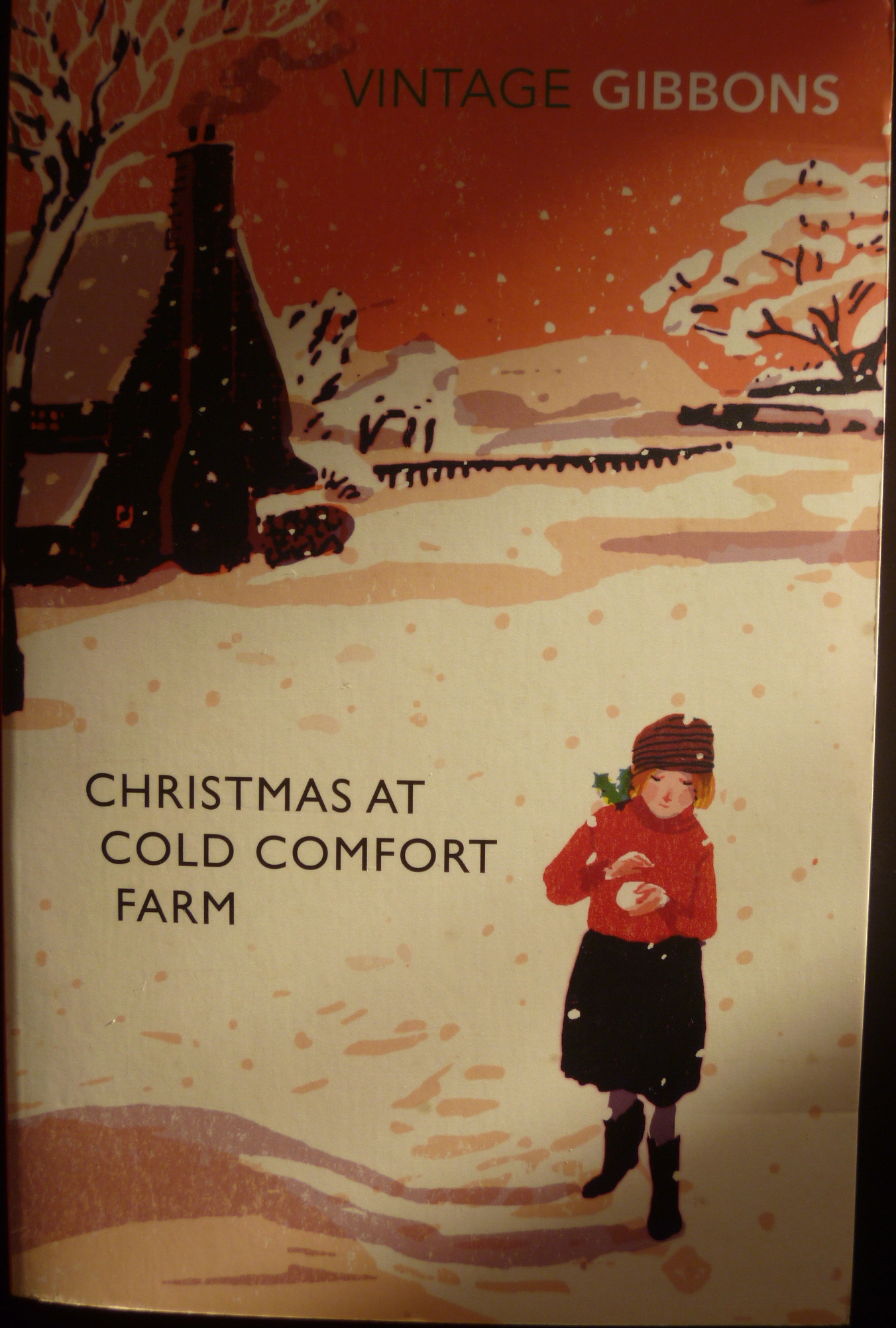
What happens is this. There are two parts to our celebration apart from the meal and tea. Those who wish to do so bring a gift-wrapped book – one they think that it will be unlikely that others will not own or will not have read – not an easy challenge but it was successful. These are all collected up and then the bag full is passed round so that we can each have a ‘lucky’ dip. This we did between courses i.e. after the Geffrye Pie but before the Christmas pudding. I’m now the owner of “Christmas at Cold Comfort Farm” by Stella Gibbons. It’s a collection of short stories previously published in magazines such as The Lady, The Bystander, Good Housekeeping and now reprinted in a lovely new paperback edition by Vintage.

We also bring along some unwrapped swops and throw them all into the ‘ring’. These made two fair-sized piles which we put aside until after we’d finished eating. There is none of that “After you Cecil” “No, after you Claude” – we speak up straightaway when we see a book we should like to have. The picture shows a much-diminished pile but by the end there were just 2 books left to donate to the charity shop.

Long may this ‘Countdown to Christmas’ tradition last!

Leighton House in Kensington.

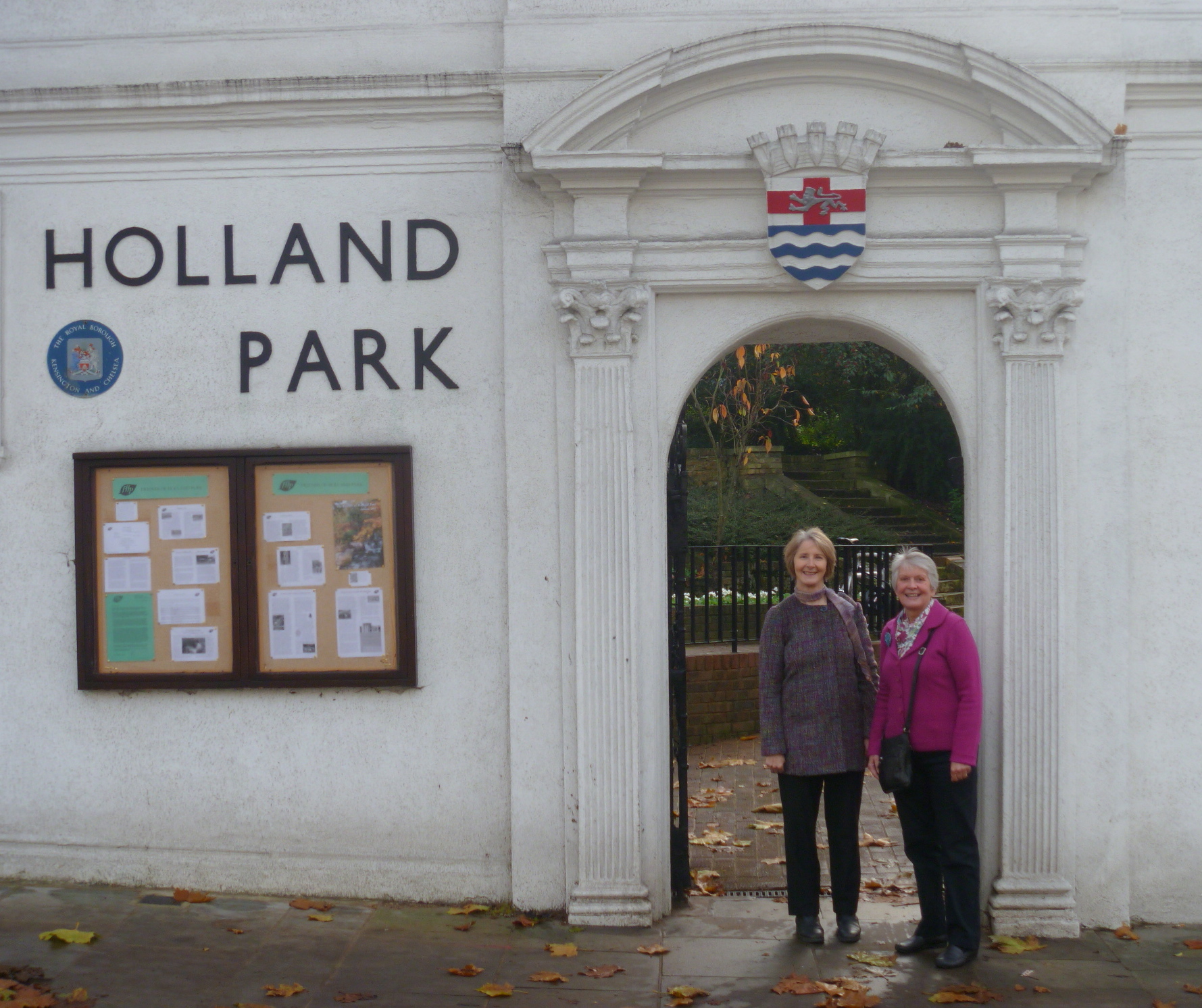
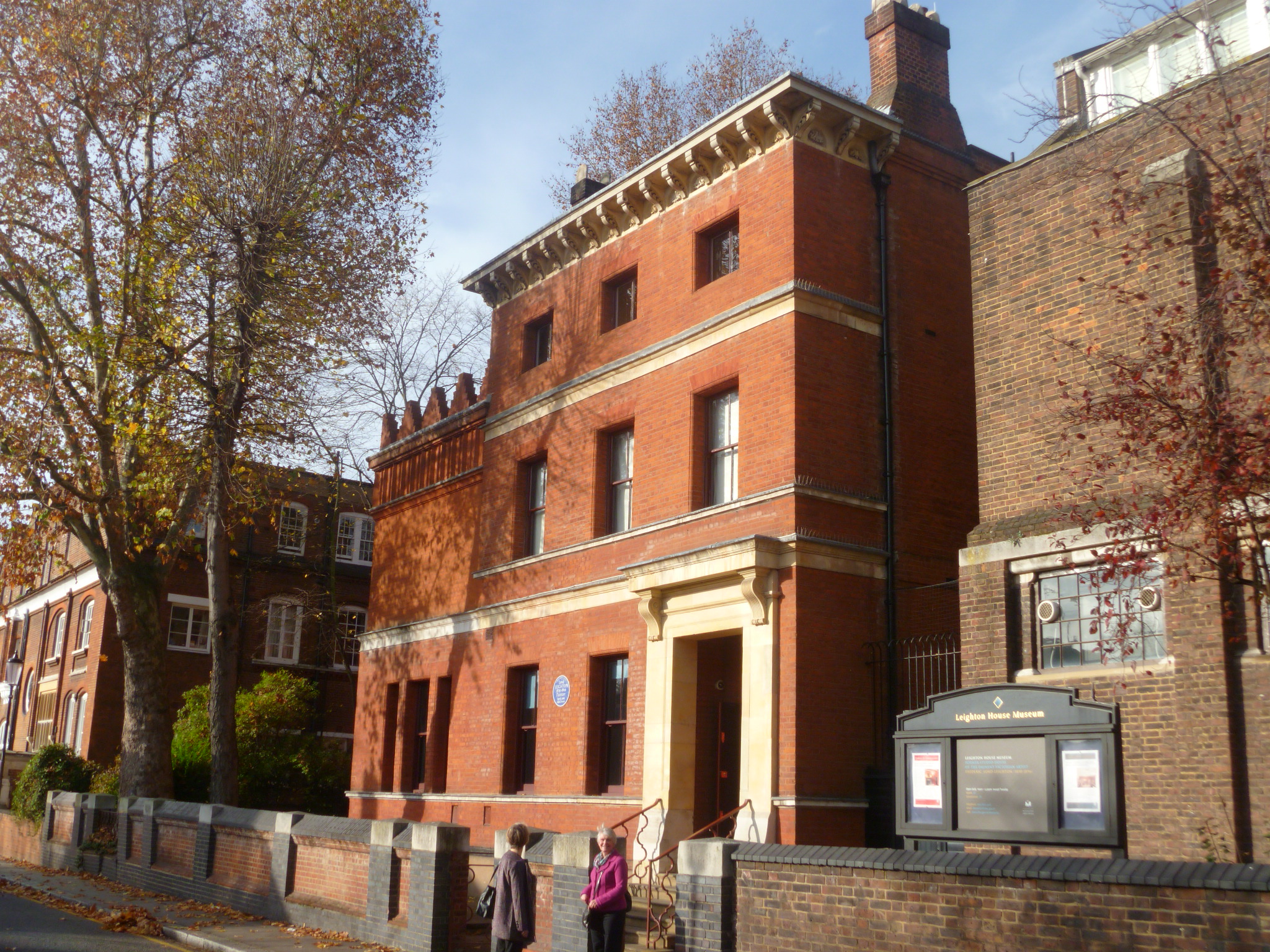
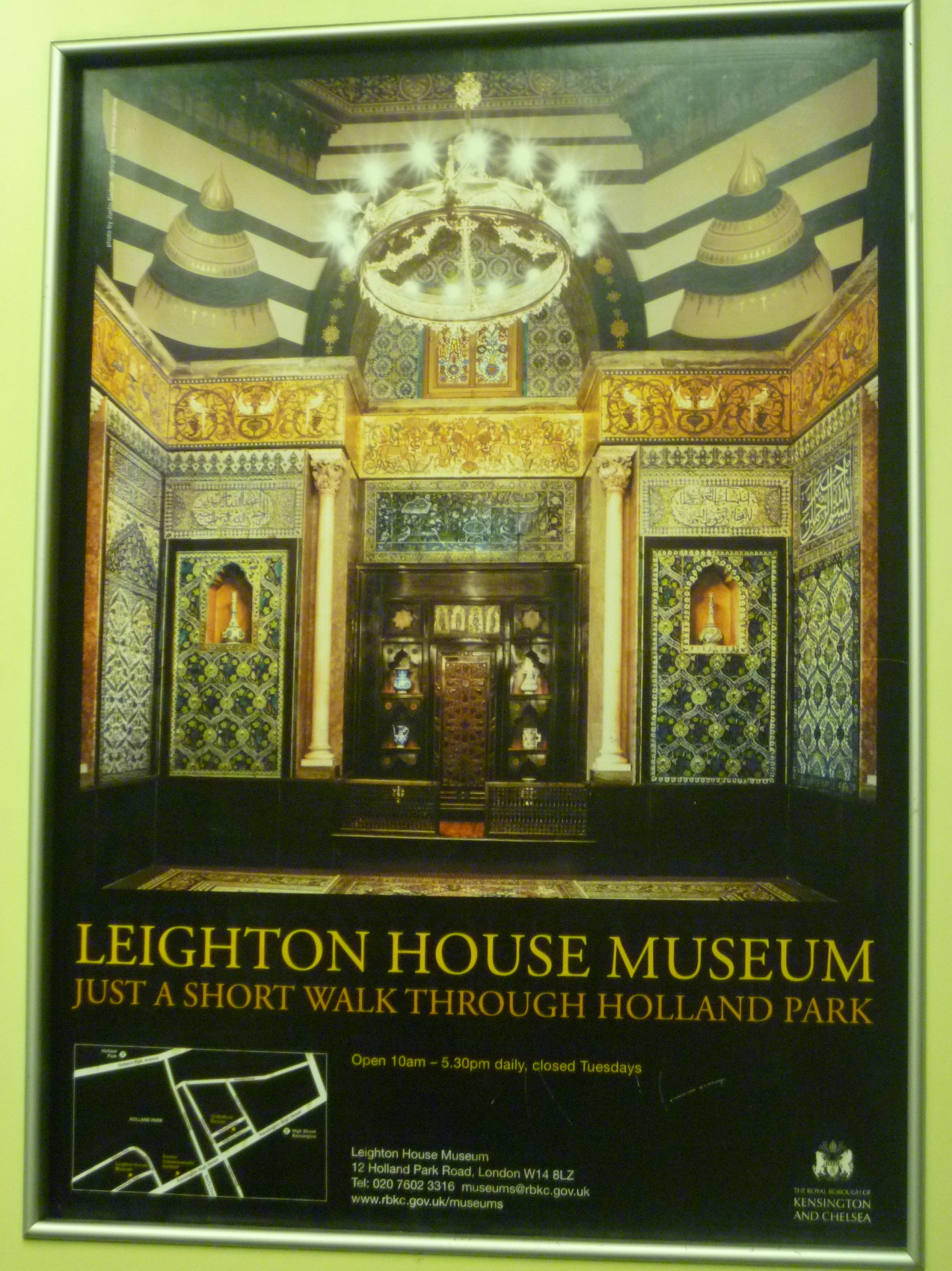
Today I met up with my sister and friend and visited Leighton House in Kensington. It was a beautiful day – unseasonably warm – and we met at Holland Park Tube Station. It’s short walk from there to Holland Park itself. Once inside the park you could be miles away from the busy metropolis that is central London. It was easy to forget that we were only just in Zone 2!

There’s a modern cafe in the middle of the park and it was here that we stopped for coffee (or, in my case, tea) and a chat before heading to the house.

Frederic, Lord Leighton (1830 – 1896), was born in Scarborough, my favourite Yorkshire seaside resort. His father was a doctor and so was his grandfather. In fact his grandfather was primary physician to the Russian royal family in St Petersburg. He amassed a large fortune and because of this Leighton was cushioned for the rest of his life. Although his parents were unhappy with his choice of career they agreed to it and expected him to become “eminent in art”. His successes were many – not least that Queen Victoria bought his first major painting and in 1878 he was appointed President of the Royal Academy. On his death his sisters ensured that the house was left to the nation, or at least to the Royal Borough of Kensington and Chelsea.

As usual no photography is allowed in the house. You enter a huge staircase hall, narcissus hall and the fabulous Arab hall. Leighton was a consummate collector of things Middle Eastern – tiles, textiles, ceramics, woodwork and other crafts collected on his travels – and art – from paintings by  Corot and Tintoretto to his contemporaries G. F. Watts, John Everett Millais and William de Morgan. Despite all the oriental artefacts the house struck me as rather spare and un-Victorian. There’s a lovely big garden at the back but it’s closed in winter. I noticed that they also plan some entertaining events. There’s an Operatic Evening and a Carol Singing evening coming up in December.

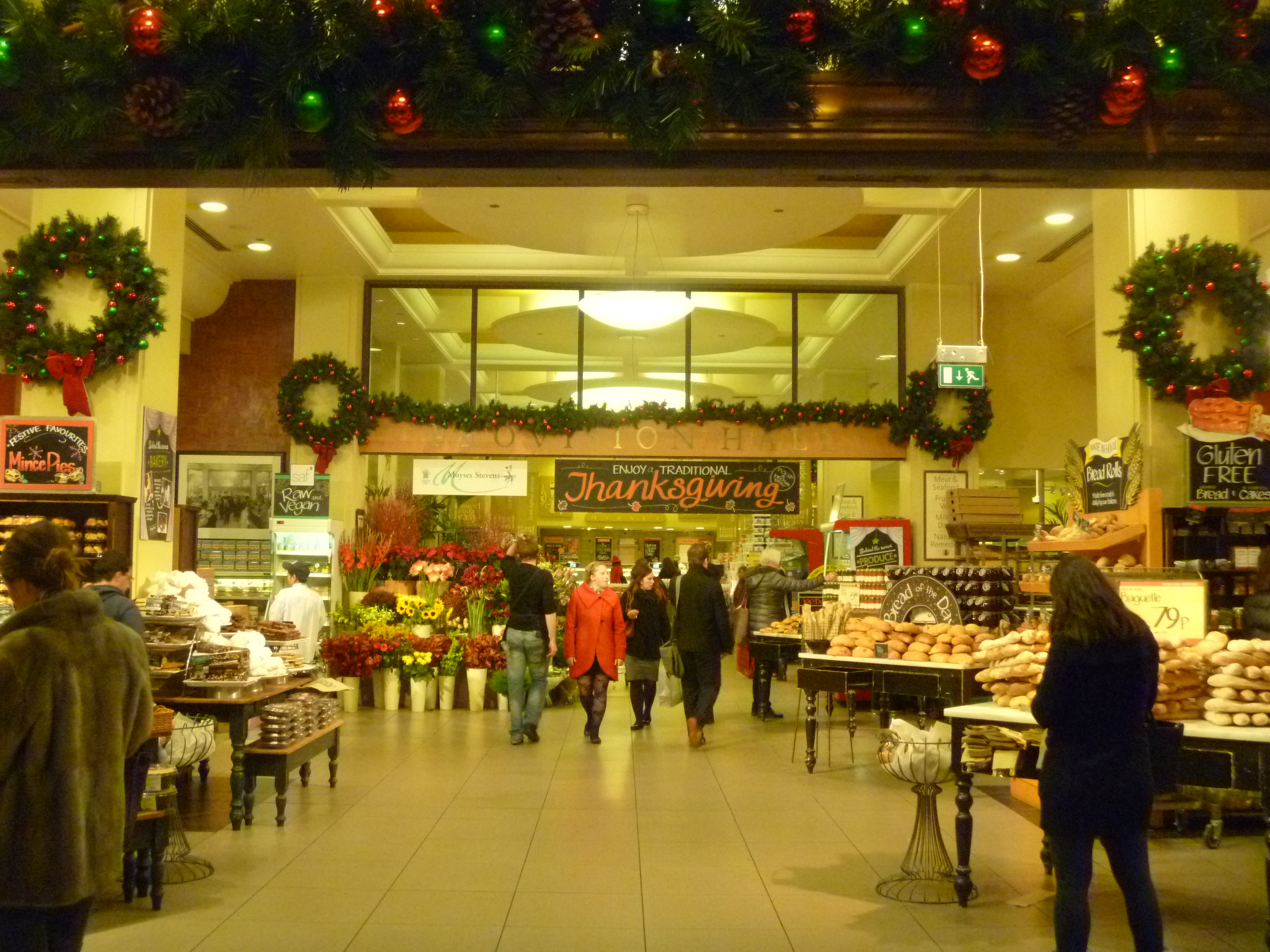
For lunch we headed down High Street Kensington to Whole Foods Market where Thanksgiving was in full swing!

We Will Remember Them

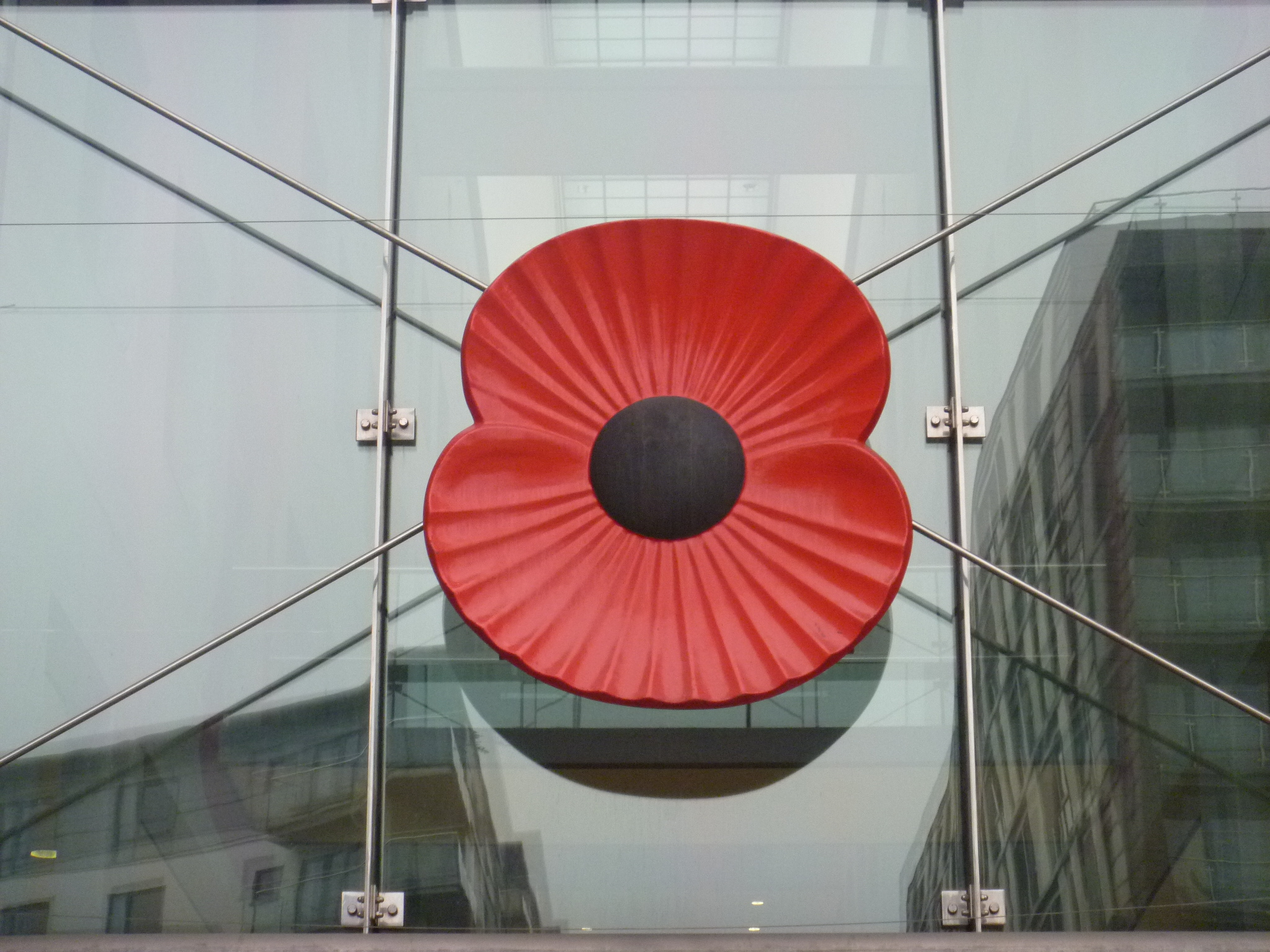
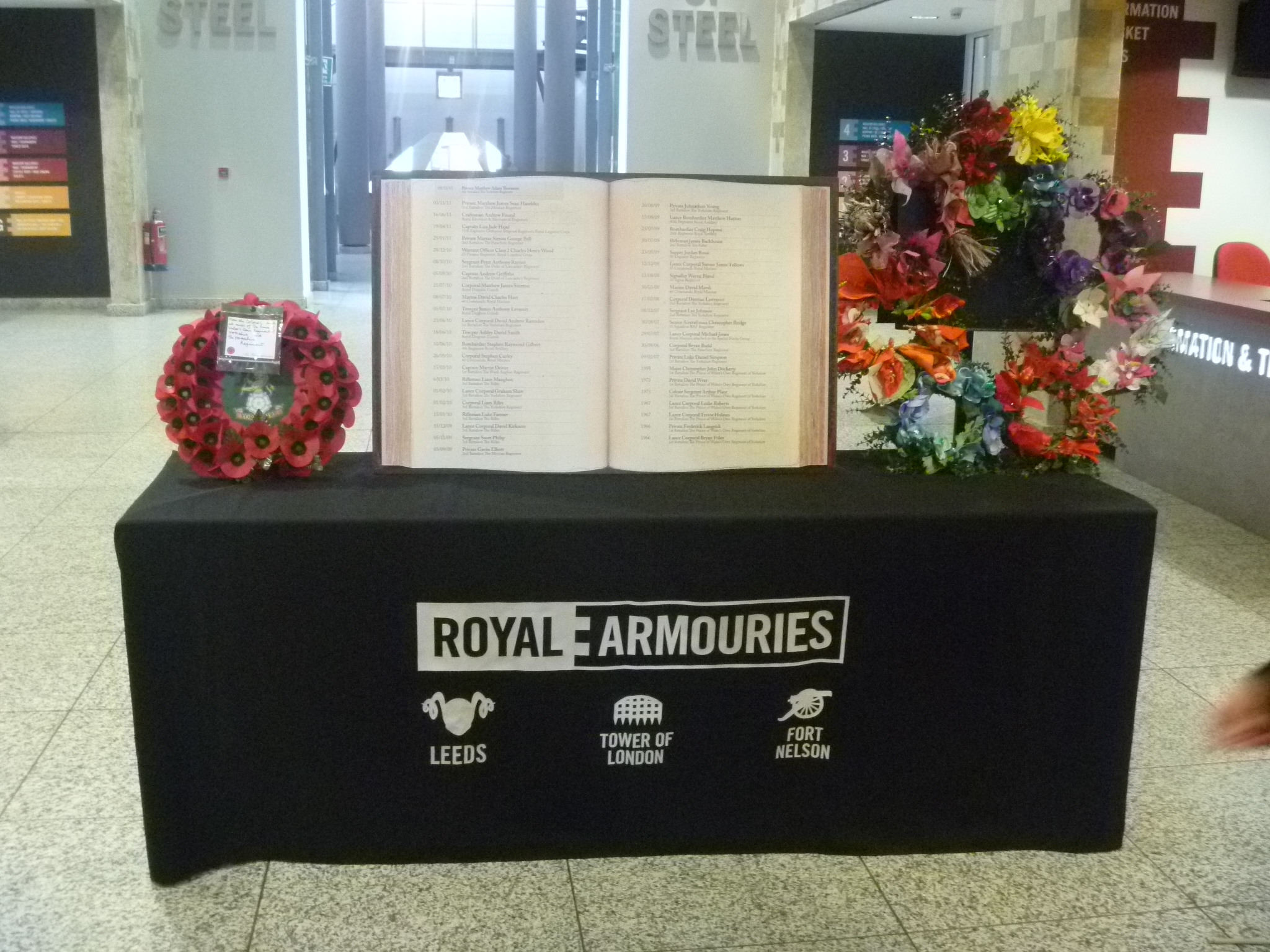
Today a Service of Remembrance was held at The Royal Armouries in Leeds. The Regimental Standards were presented and after The Last Post, the Two Minutes Silence and The Reveille the names of the British servicemen and women from Yorkshire and The Yorkshire Regiment to fall in Afghanistan and Iraq, as well as the names of all the fallen from The Prince of Wales’s Own Regiment of Yorkshire since 1966 were read. At the same time wreaths were laid and poppies floated down from the galleries above the main atrium where the service was held.

Ode to Remembrance

from For The Fallen by Lawrence Binyon

They shall not grow old as we that are left grow old,

Age shall not weary them, nor the years condemn,

At the going down of the sun and in the morning

We will remember them

We will remember them

At The Tomb of the Unknown Craftsmen

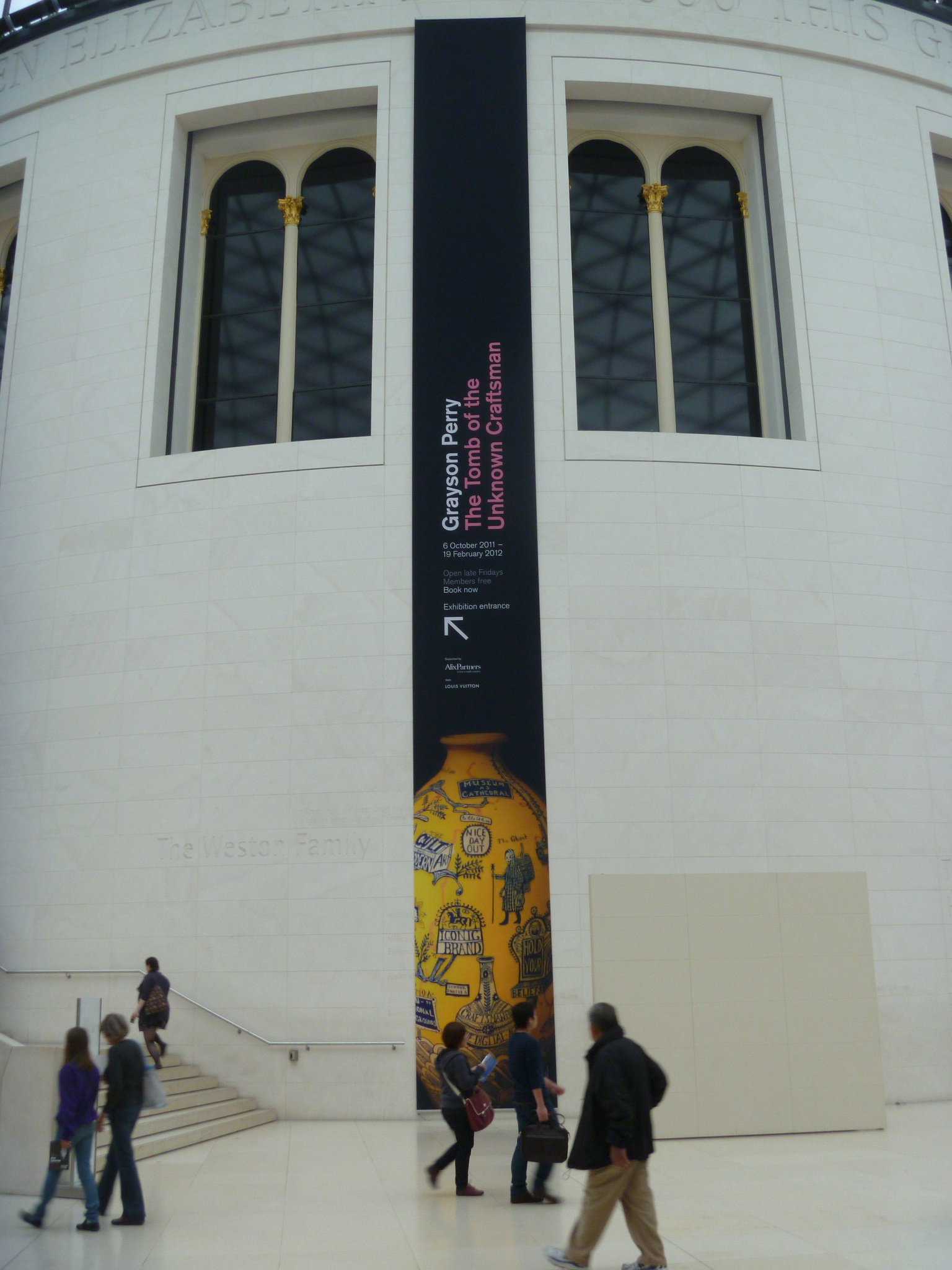
I’ve been hesitating as to whether to post about my visit to the British Museum on Thursday. Obviously I am no art critic, have no training in art and very little knowledge on the subject and even less knowledge about Grayson Perry himself so this is just my own personal comment. When I first heard about “The Tomb of the Unknown Craftsman”  I was very excited to see it.

I had no idea what to expect but the thought of choosing artefacts, items made by craftsmen and women over the decades, centuries and millennia, from the vast archive of the British Museum had overwhelming appeal for me. Put together with recently crafted pots and tapestries and what I believe are called installations for me the mix was a huge success. I loved it!

We’ve had A History of The World in 100 objects and Our Top Ten British Treasures and now we have a kind of temporary memorial to all of the unknown craftsmen and women whose work has been collected by the museum – or donated to it – over the centuries of its existence.

The exhibition is divided into themes such as Shrines, Journeys, Magick, Maps, Souvenirs of Pilgrimage, Sexuality and Gender, Scary Figures and Patina and Texture. I think I’ve remembered them correctly.

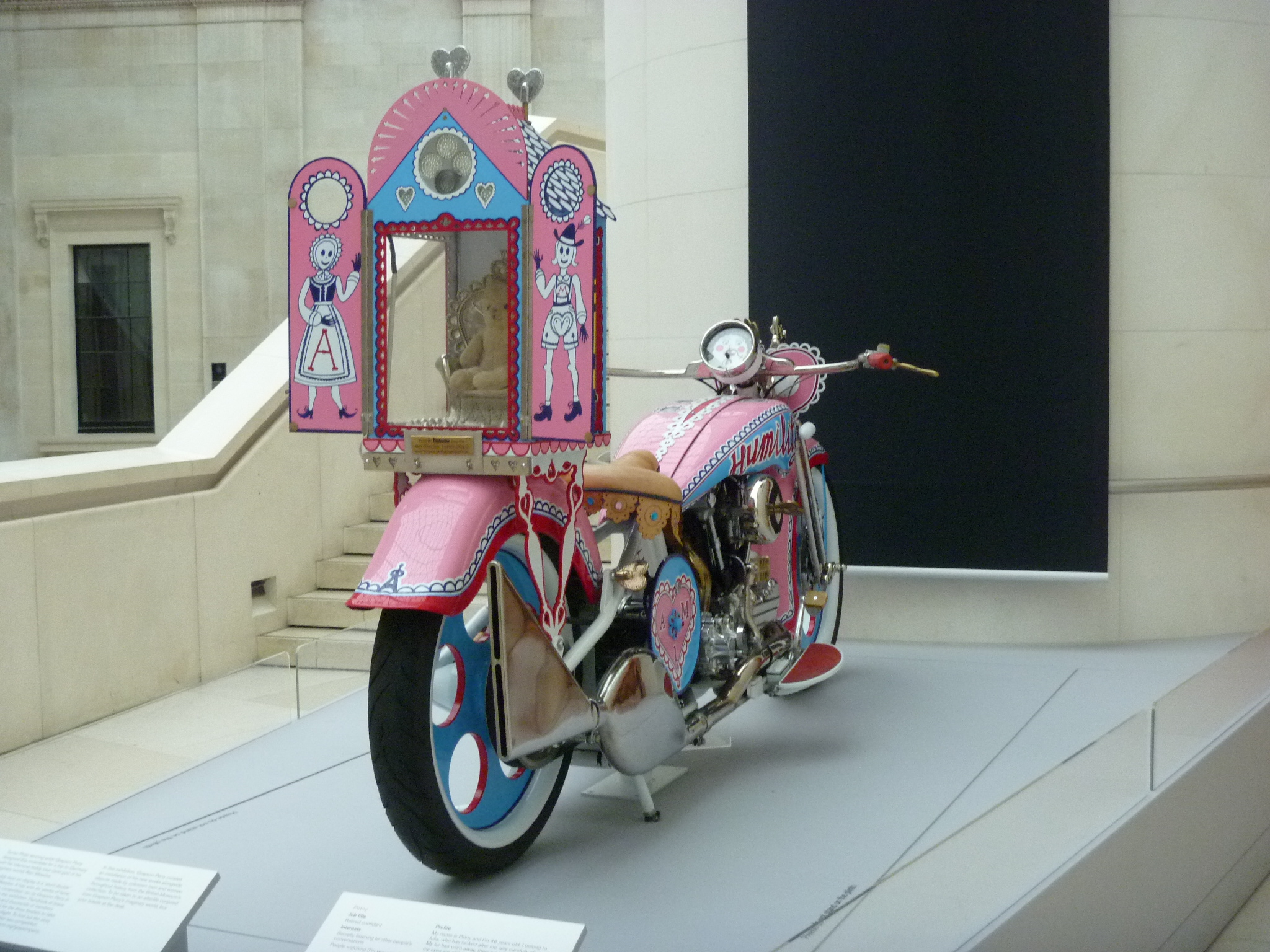
There is Grayson Perry’s teddy bear Alan Measles in his own shrine on the back of GP’s motorcycle. There was a radio programme about the journey they made to Germany on the bike on Radio 4 last November.

No photography is allowed inside the Exhibition but I did take a few notes of GP’s comments on some of the themes that most interested me.

On the topic of Journeys he says :

“The “journey” has become a tired metaphor of reality TV describing a transformative experience. I come on a journey every time I visit the British Museum. I enjoy idealised foreign travel in my head. Walking from my house in WC1 within 20 minutes I can have an encounter with the world.” 

You may have thought the title of this post included a typing error but it is intentional because GP and many of us see The British Museum as a Tomb to Unknown Craftsmen. A pot by Perry on display is called “A Walk in Bloomsbury”.

On Maps he says :

We trust maps. Maps are meant to be a trustworthy diagram of reality. All maps though contain some very human bias. They emphasise desirable features and leave out the undesirable. I like maps of feelings, beliefs and the irrational, they use our trust of maps to persuade us that there might be truth in their beauty.”

I have always loved maps and was delighted see a copy of  a book recommended to me by a friend and which has long lain in my Amazon shopping basket:  You are here : personal geographies ; by Katharine Harmon. A fabric map by Perry fills one wall – to see it at its best wait until you have moved into the next room and view it through a hatch in the wall.

On Souvenirs of Pilgrimage he says :

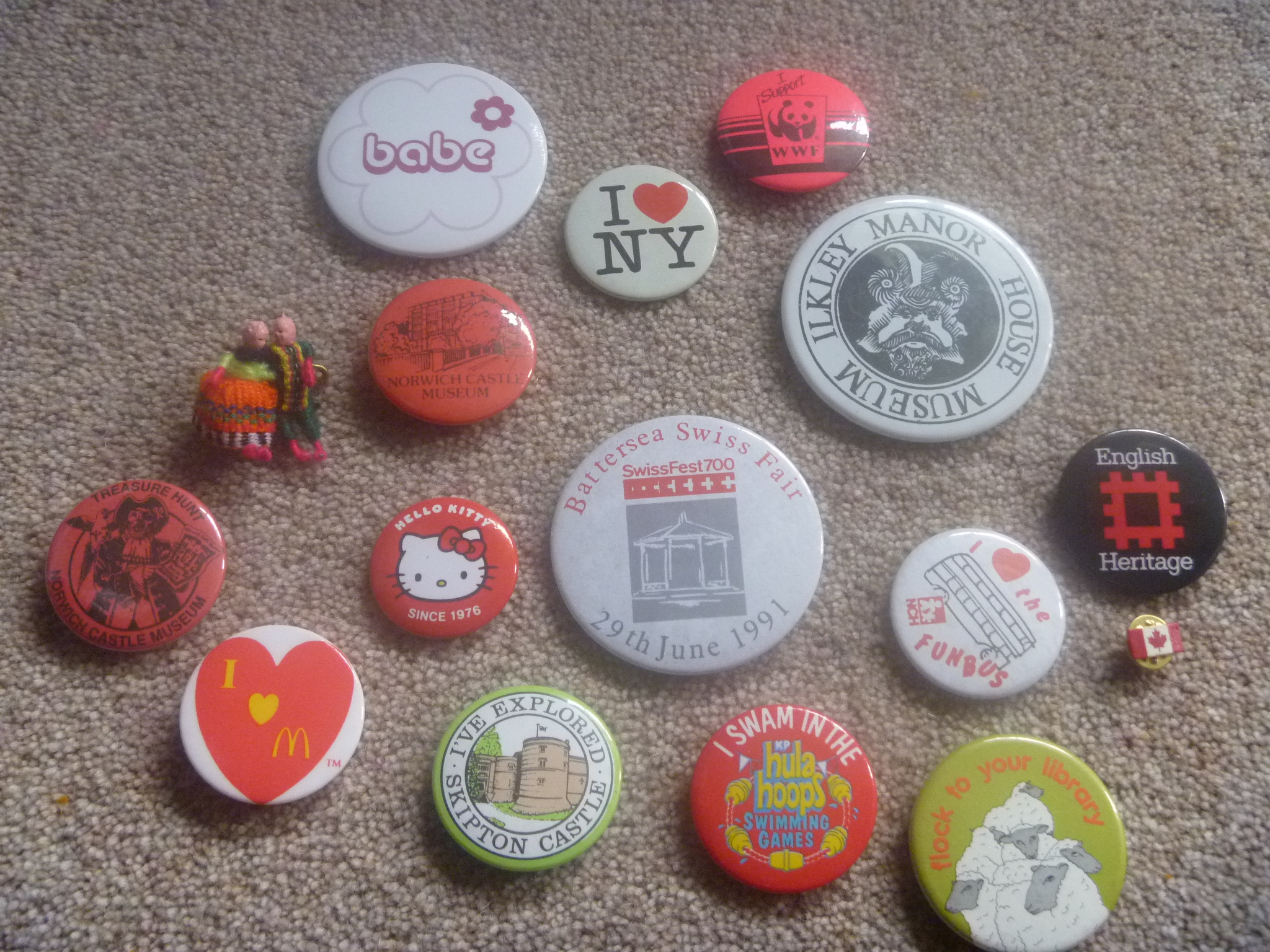
We all make journeys to see places or people that are significant to us. It is natural to want a keepsake of the trip to remind ourselves and show others. Pilgrims usually travel light so the souvenir may only be a badge, a photo or a signature.”

I was delighted to see masses of badges collected over the years by the British Museum. Even such ephemera has a role in the exhibition. I smile because I have a box full of badges up in the attic.

This final quotation has a resonance for me too. I’m a great visitor to churches on my travels. On the subject of Scary Figures Perry says :

“We have always had images at gateways to warn and protect. Cathedrals had carvings over the doors showing the Last Judgement and the damned going to hell – now we have CCTV.”

To find out more  there’s a book that accompanies the exhibition (of course) and here’s a link to the exhibition in pictures :

Grayson Perry’s Tomb of the Unknown Craftsman – in pictures

In the end I didn’t buy a souvenir but I saw three books which will go on my library suggestions list :

50 British Artists you should know, by Lucinda Hawksley

You are here : personal geographies ; by Katharine Harmon.

The Tomb of the Unknown Craftsman by Grayson Perry.

The House that Mrs Jack Built

“Years ago I decided that the greatest need in our Country was Art… We were a very young country and had very few opportunities of seeing beautiful things, works of art… So, I determined to make it my life’s work if I could.” Isabella Stewart Gardner, 1917.

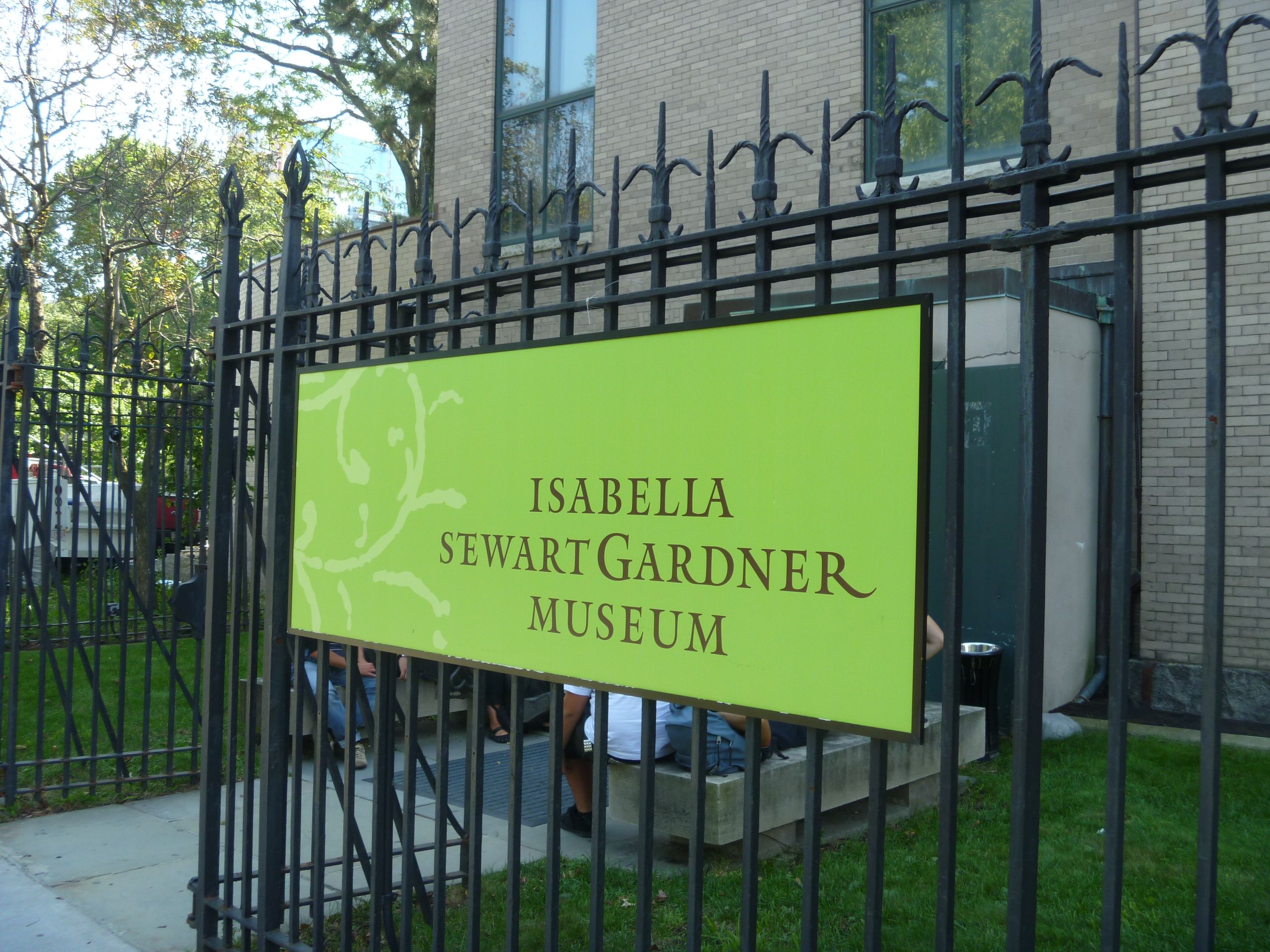
One of the loveliest and most interesting art museums that I have ever visited is just a few stops on the ‘T’ from downtown Boston.

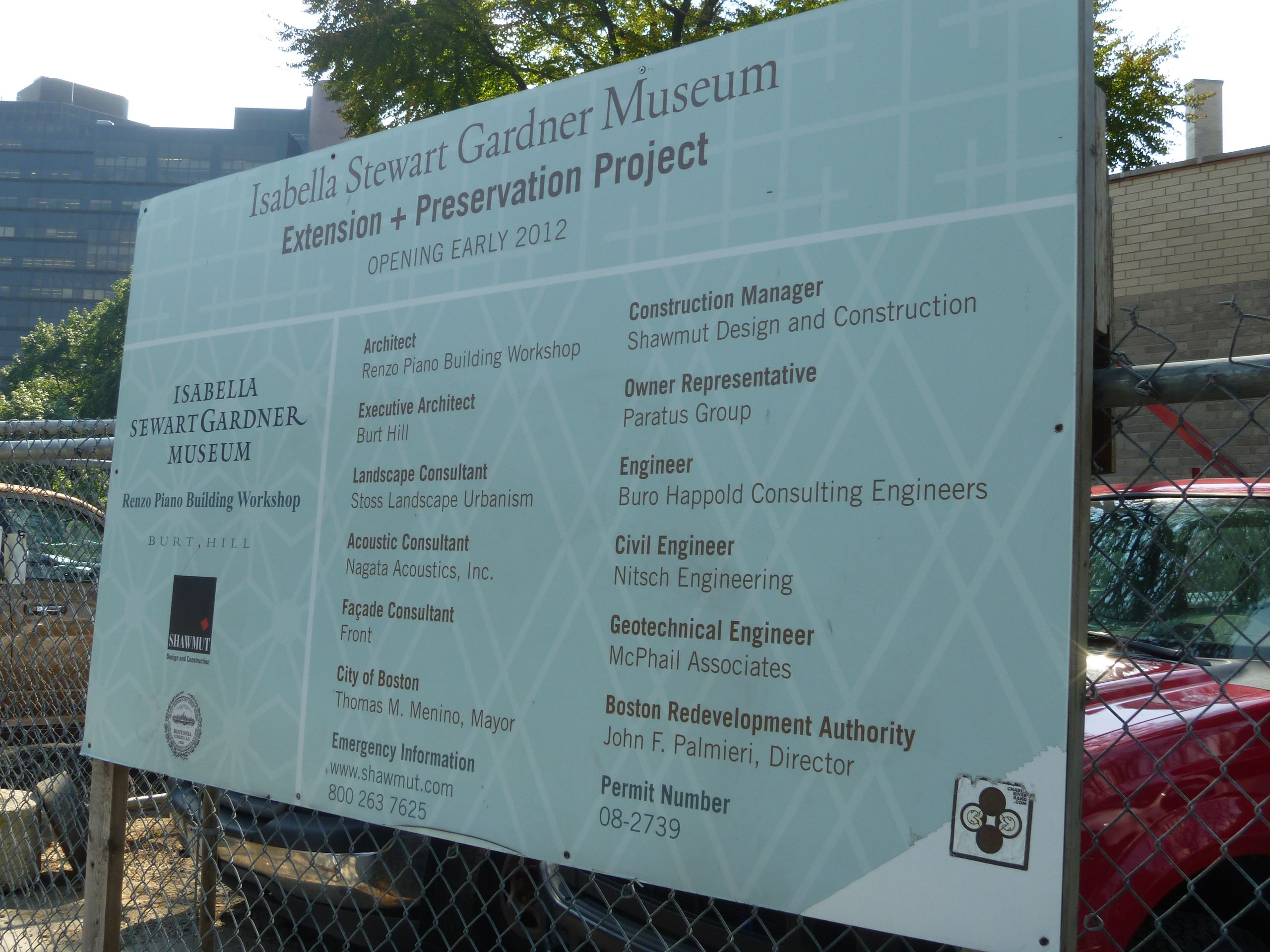
The Isabella Stewart Gardner Museum is currently undergoing change. Not too sure what Mrs Jack Gardner would make of that but there you go. We’re told on the audio guide that she planned the whole place herself from the building to the purchase of the works of art themselves to where she meant them to hang and then left strict instructions that that was how it was to stay.

Isabella Stewart was born in 1840 in New York and married John (‘Jack’) Gardner in 1860. They travelled widely and ‘Mrs Jack’ developed an interest in art which turned into a passion for collecting after her father left her his entire fortune when he died in 1891. Jack died in 1898 and she continued to collect, purchasing some land on Fenway and designing and planning the museum just as it is today. It opened to the public in 1903. She died in 1924.

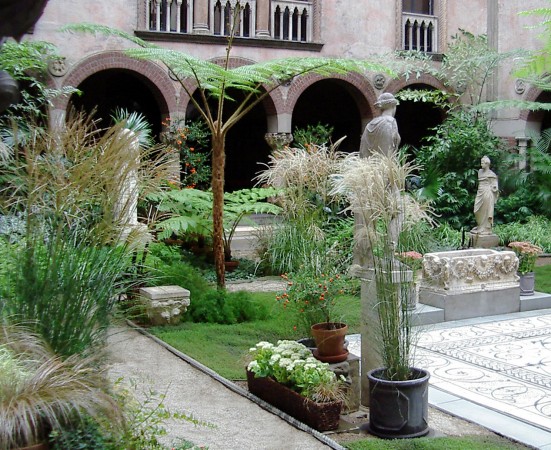
Photo from ISGM website

The Museum centres on the dramatic Japanese-style courtyard full of greenery and mosaic tiles which is in such great contrast to the darker rooms through which you approach it. On three floors each room has a theme of its own from The Titian Room to the Blue Room and the Yellow Room through to a Tapestry Room and a Gothic Room. Due to the work going on just now some of the rooms were closed and others had items removed.

My favourite room was the Dutch Room where an early Rembrandt self portrait hangs.

Photo from ISGM website

But when you enter the Dutch Room you are also in for a shock. There on the wall hangs an empty frame – where once Rembrandt’s ‘Storm on the Sea of Galilee’ was hanging. In 1990 the ISGM was victim of the largest single property theft in the world. None of the works of art has yet been recovered.

Also due to all the building works going on the shop and cafe are both closed. There were just two books for sale:

The Yale Guide, by H. T. Goldfarb and a biography of Mrs Jack by Louise Hall Tharp. No fridge magnets, no rubbers, no pens and not even one postcard!

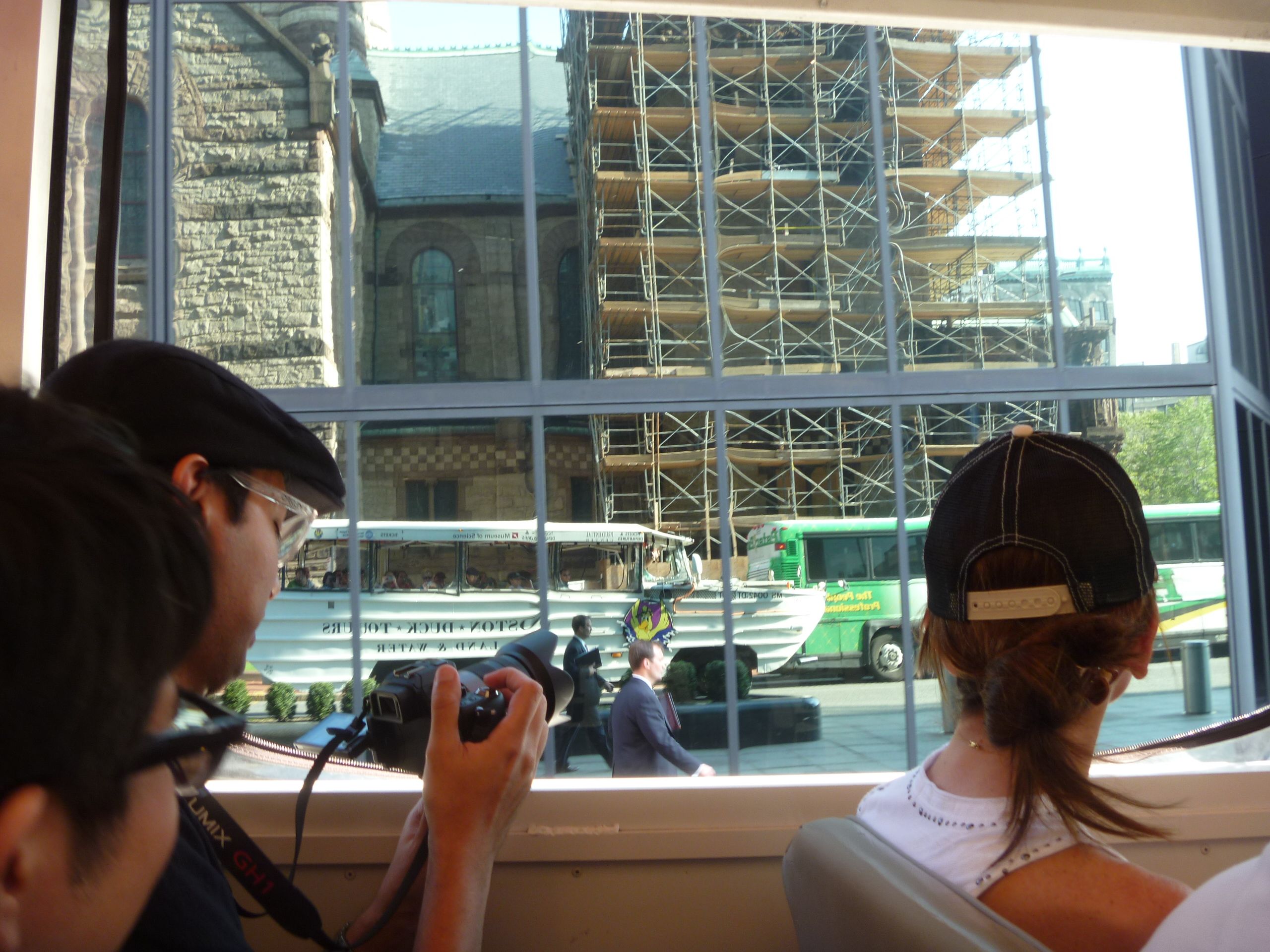
Then, from the sublime to the ridiculous, I fulfilled a long term wish of mine since first seeing it in 1995 – I went on DUCK TOUR!

There we are reflected in office windows on Copley Square!