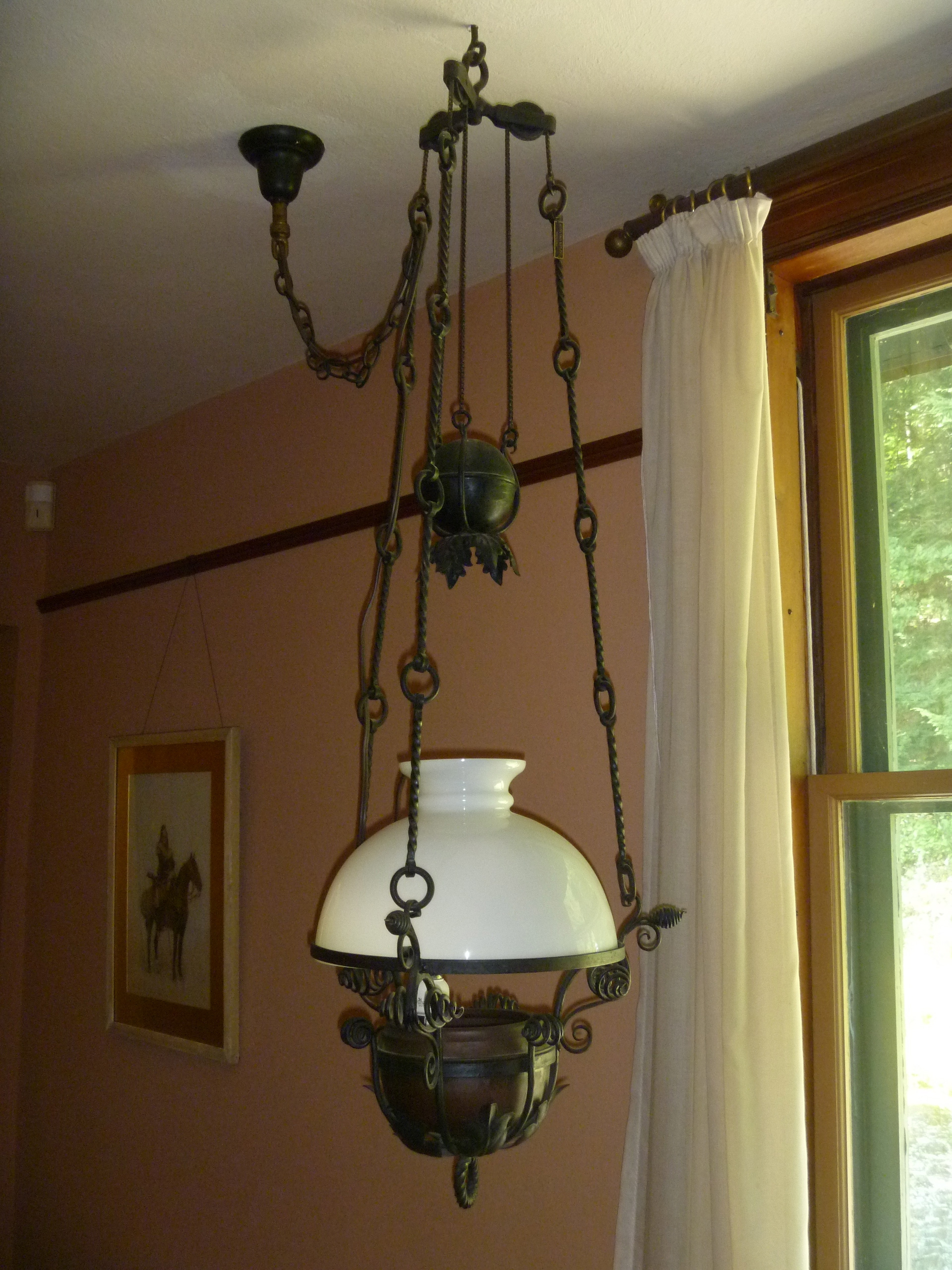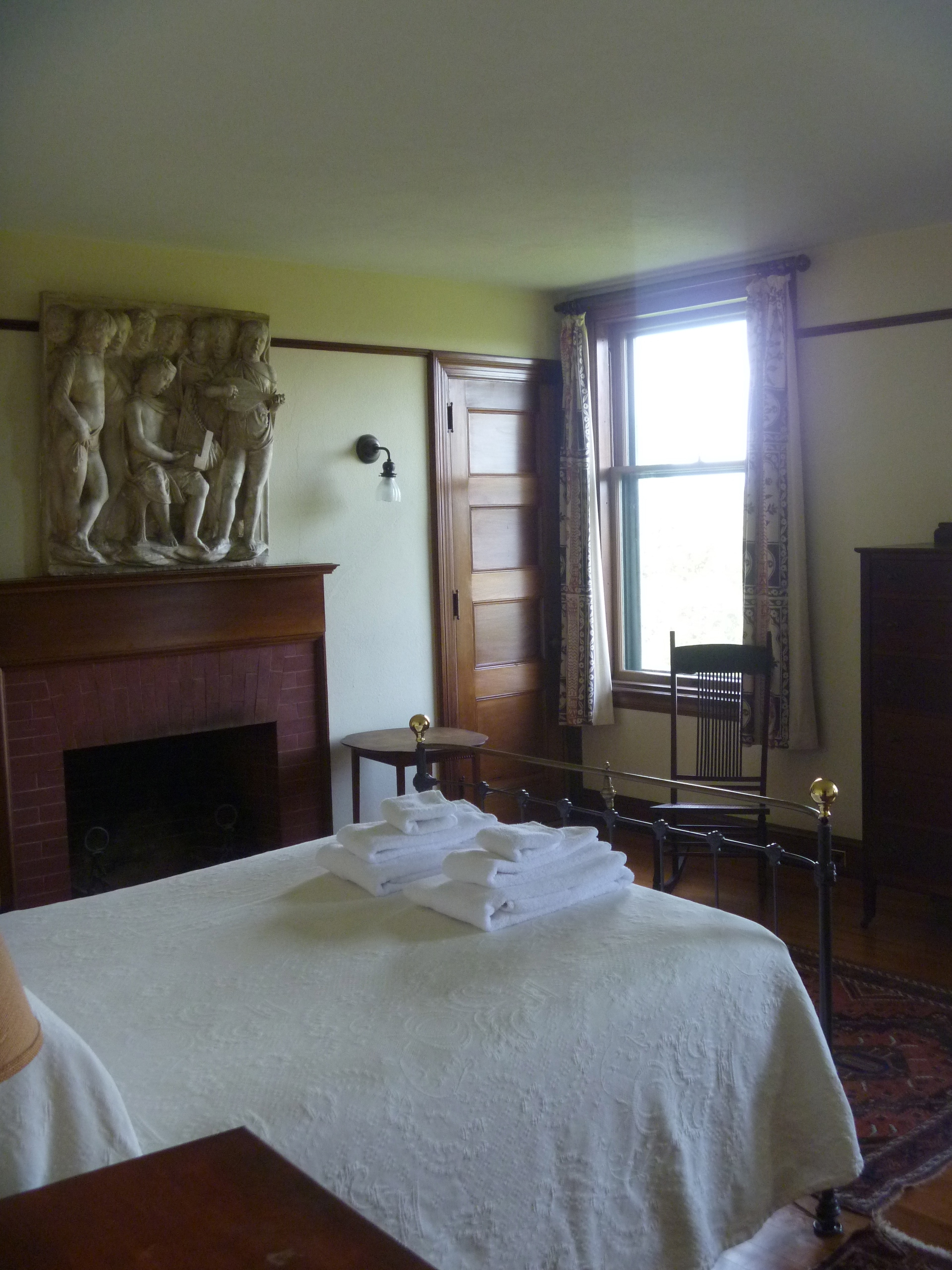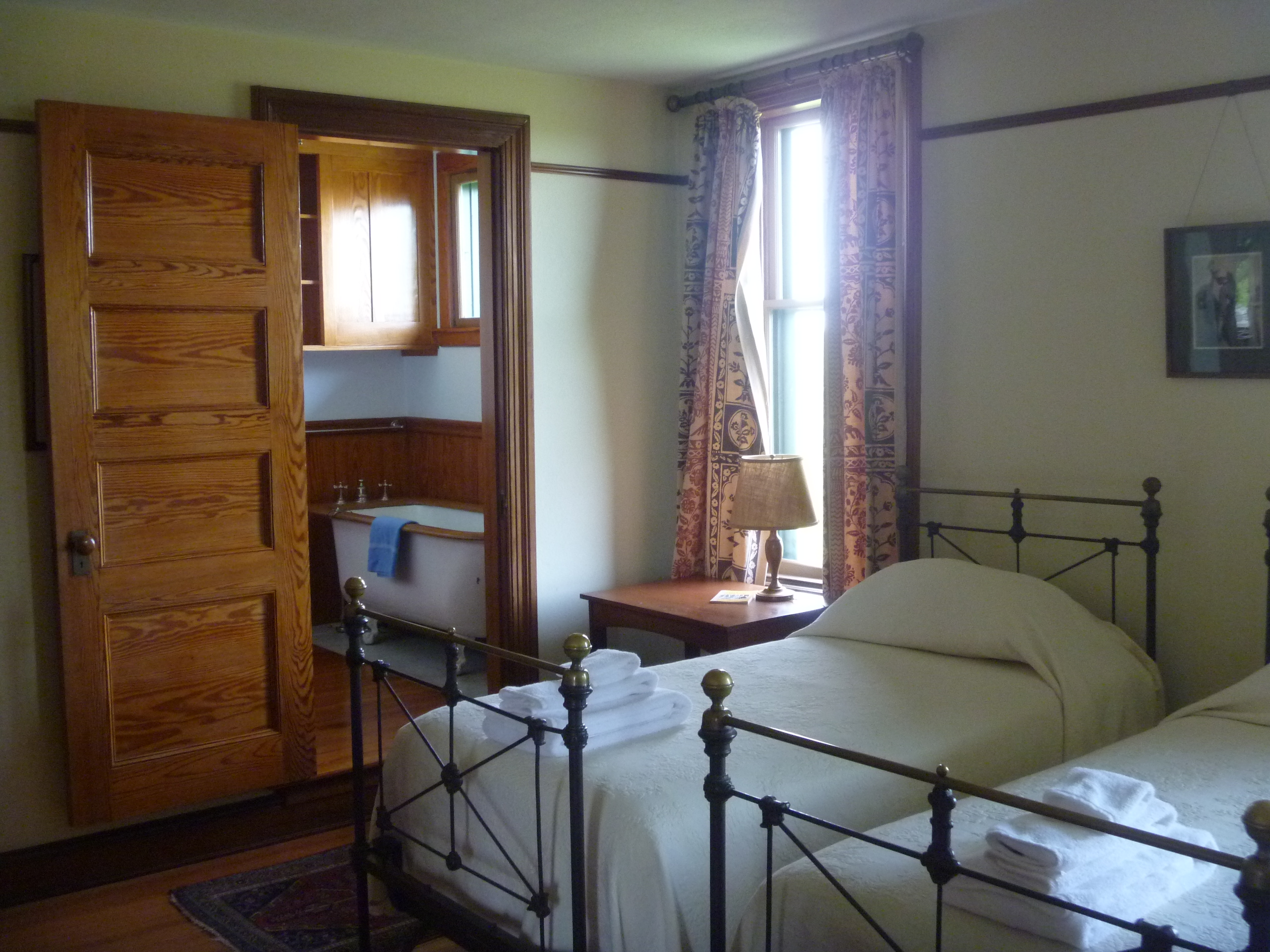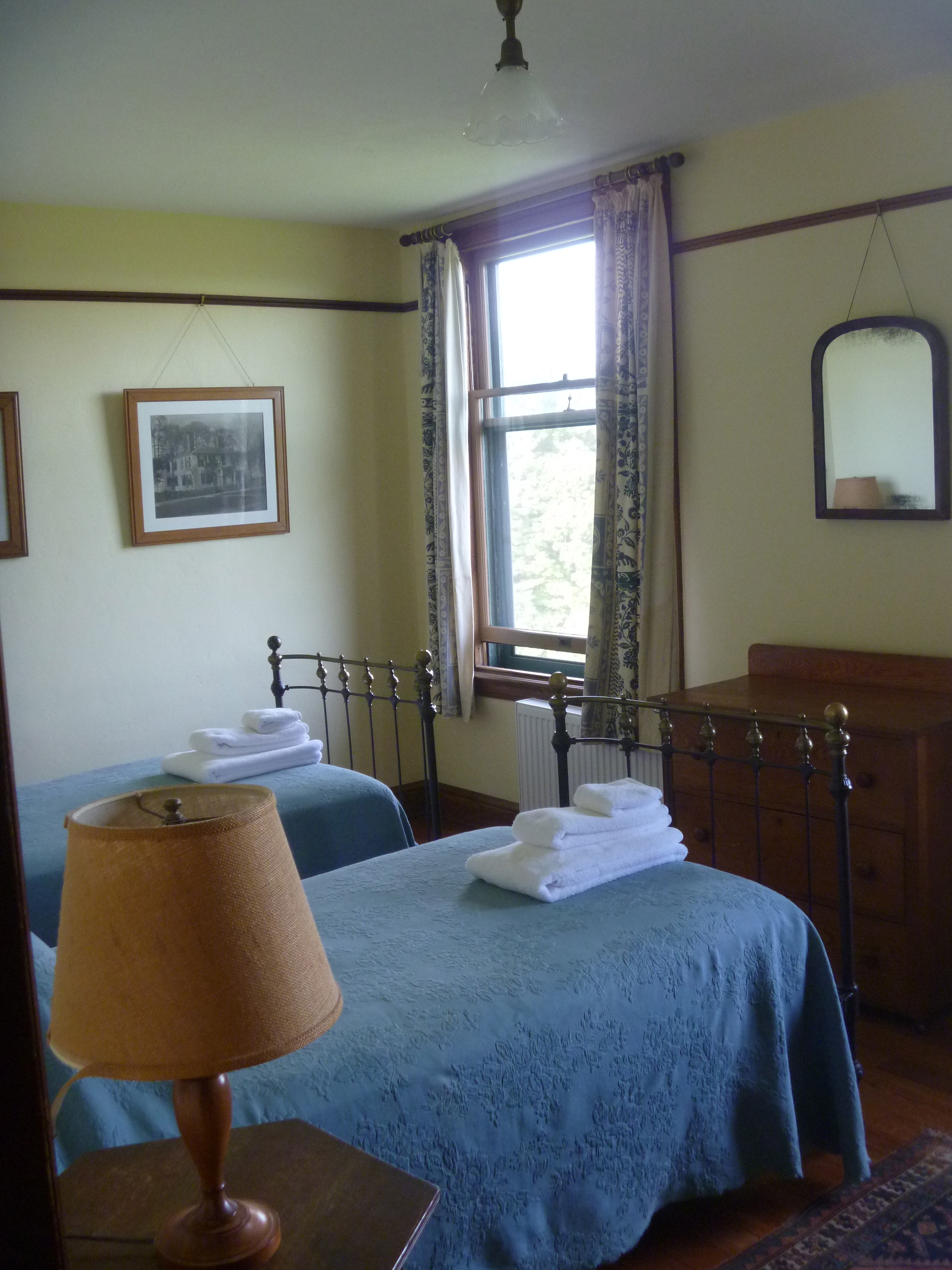
The Decoration of Houses : a Visit to Edith Wharton’s New England Home : The Mount

There will be some readers here who know very much more about Edith Wharton than I do and who will have read many more of her books than I have but for many years I have wished to visit her home The Mount in western Massachusetts. I have a collection of newspaper clippings about the house, its renovation plans and about her library of 2,600 volumes that finally arrived back at her American home in 2005 after 100 years spent in Europe.
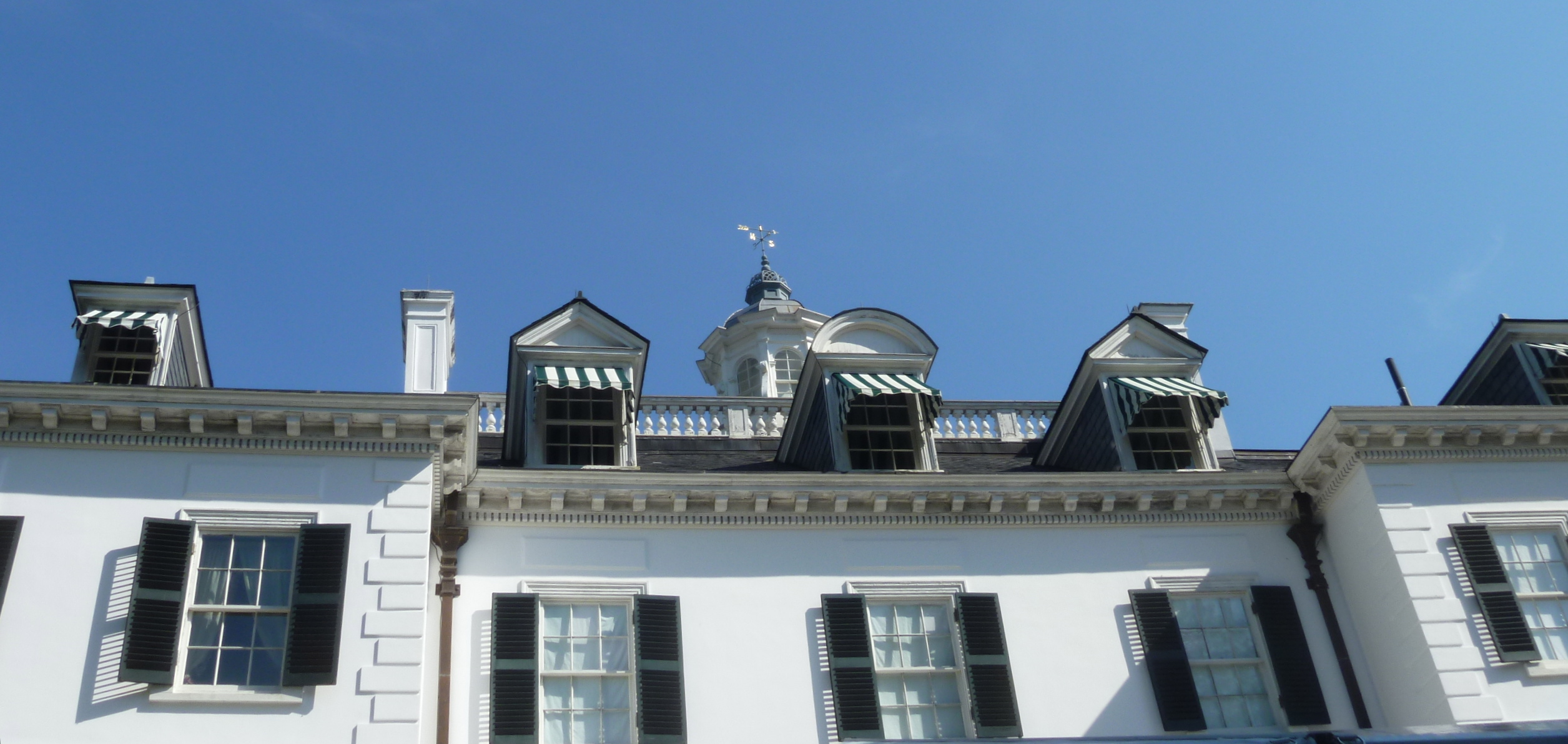
On 14 September, the day we left Naulakha, we arrived in Lenox, the location of The Mount, and after a delightful lunch on the tree-lined main street we set off to find the house. It’s a little way out of town but handily placed just off the Highway. But once dropped off at the ticket office I was in another world of peace and comfort a million miles from the roar of traffic.

That Friday was the start of a weekend-long Wordfest a literary festival of writers and readers the first talk due to begin at 5pm. I’d checked this out in advance and been told that although the house would remain open to the general public there would be no guided house tours. Luckily, I arrived with minutes to spare before the final house tour of the week.
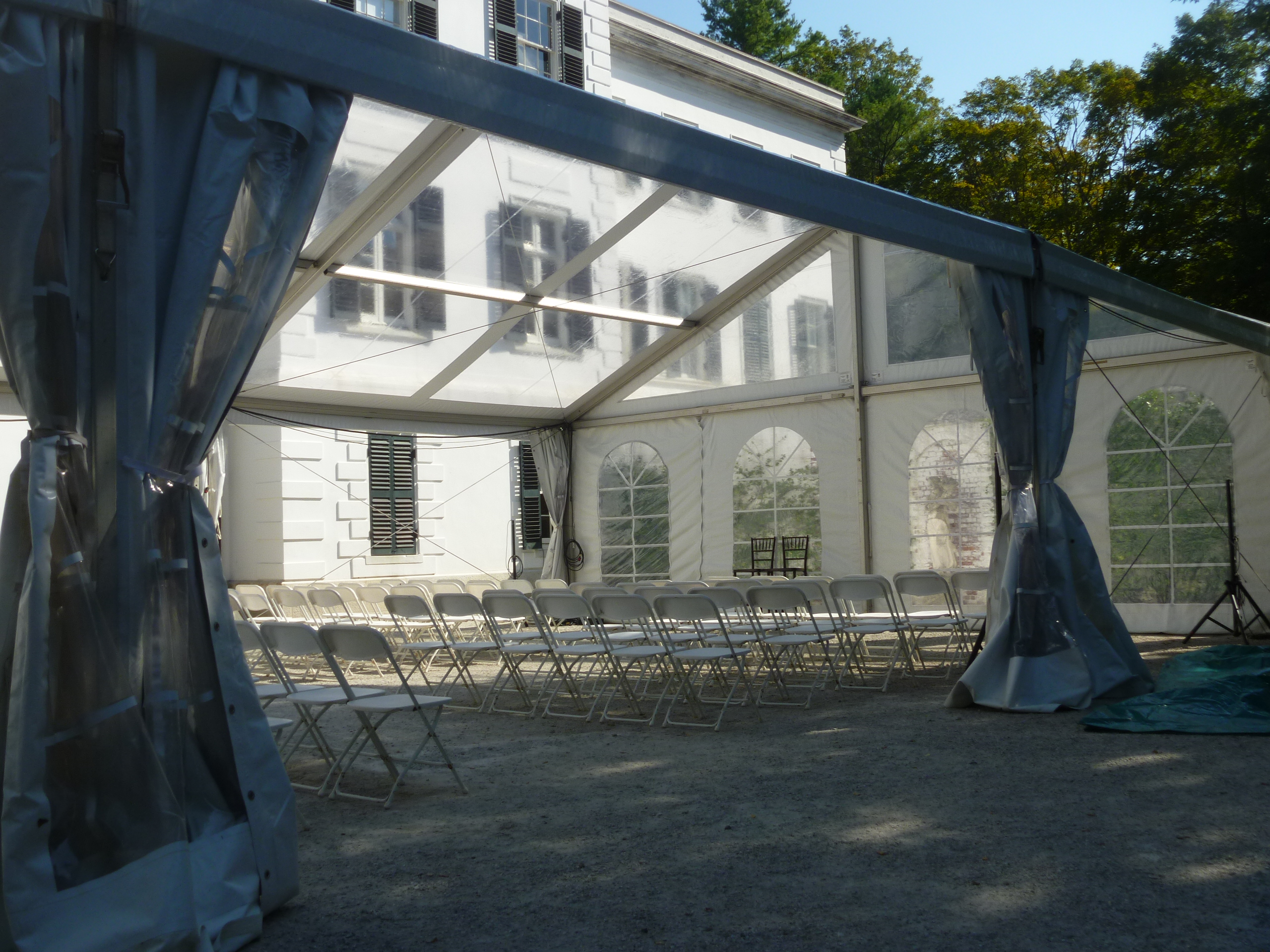
We assembled at the back of the house in a courtyard, which that day was covered with an awning to protect Wordfest members from either sun or rain, to be told about EW’s plans to build The Mount and their execution. As I heard more and more about this remarkable woman throughout the afternoon I began to think that here was another American polymath about whom I knew only the merest facts and of whose literary output I have read very little. (But I have seen several of her films!)
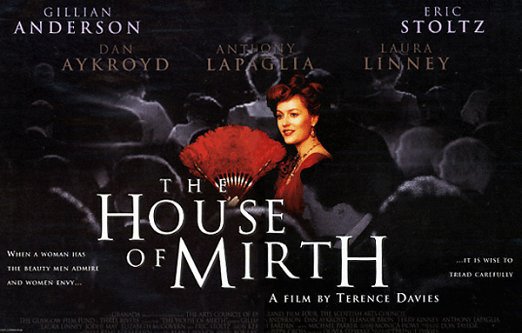
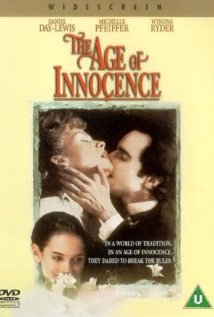
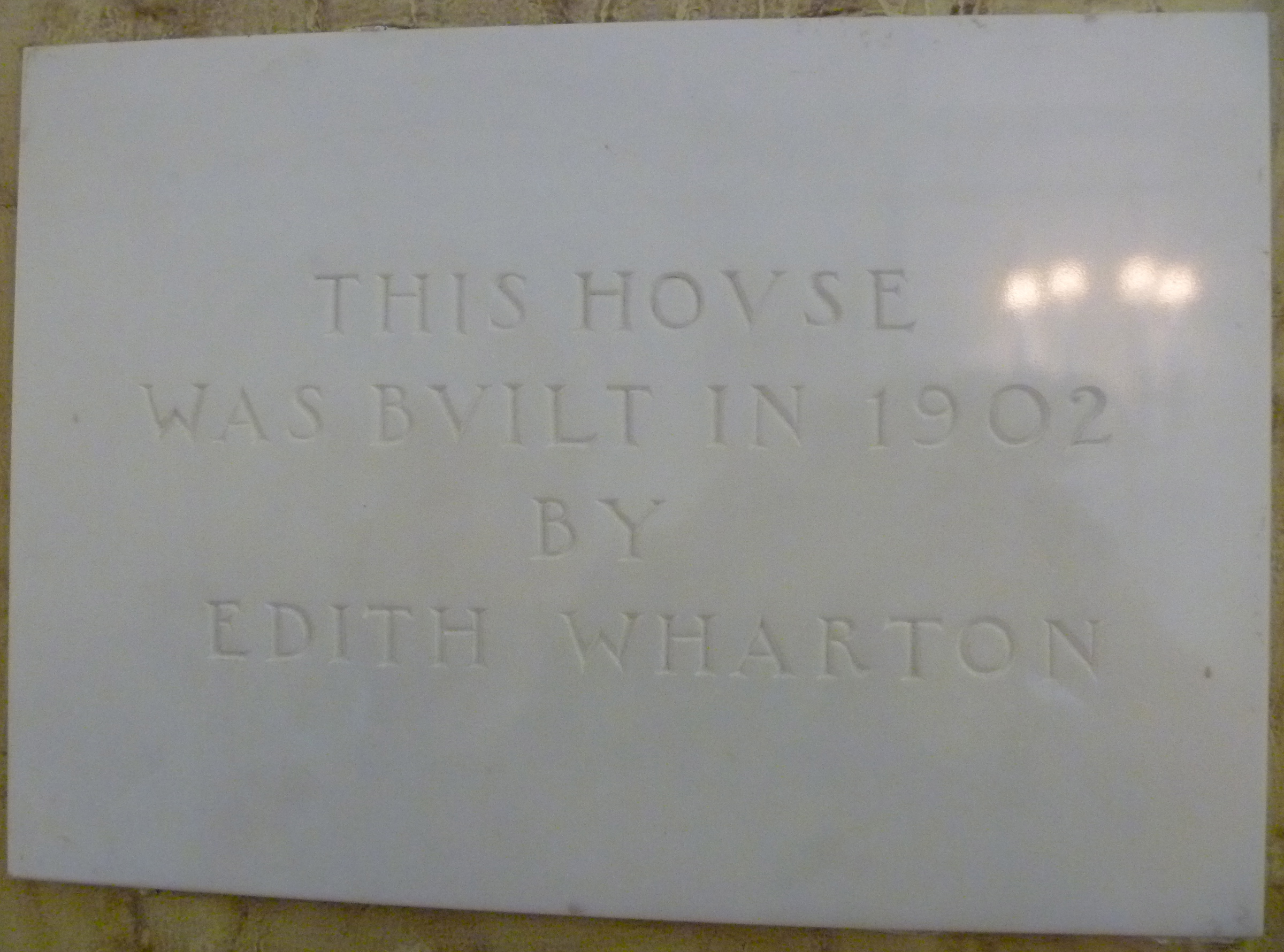
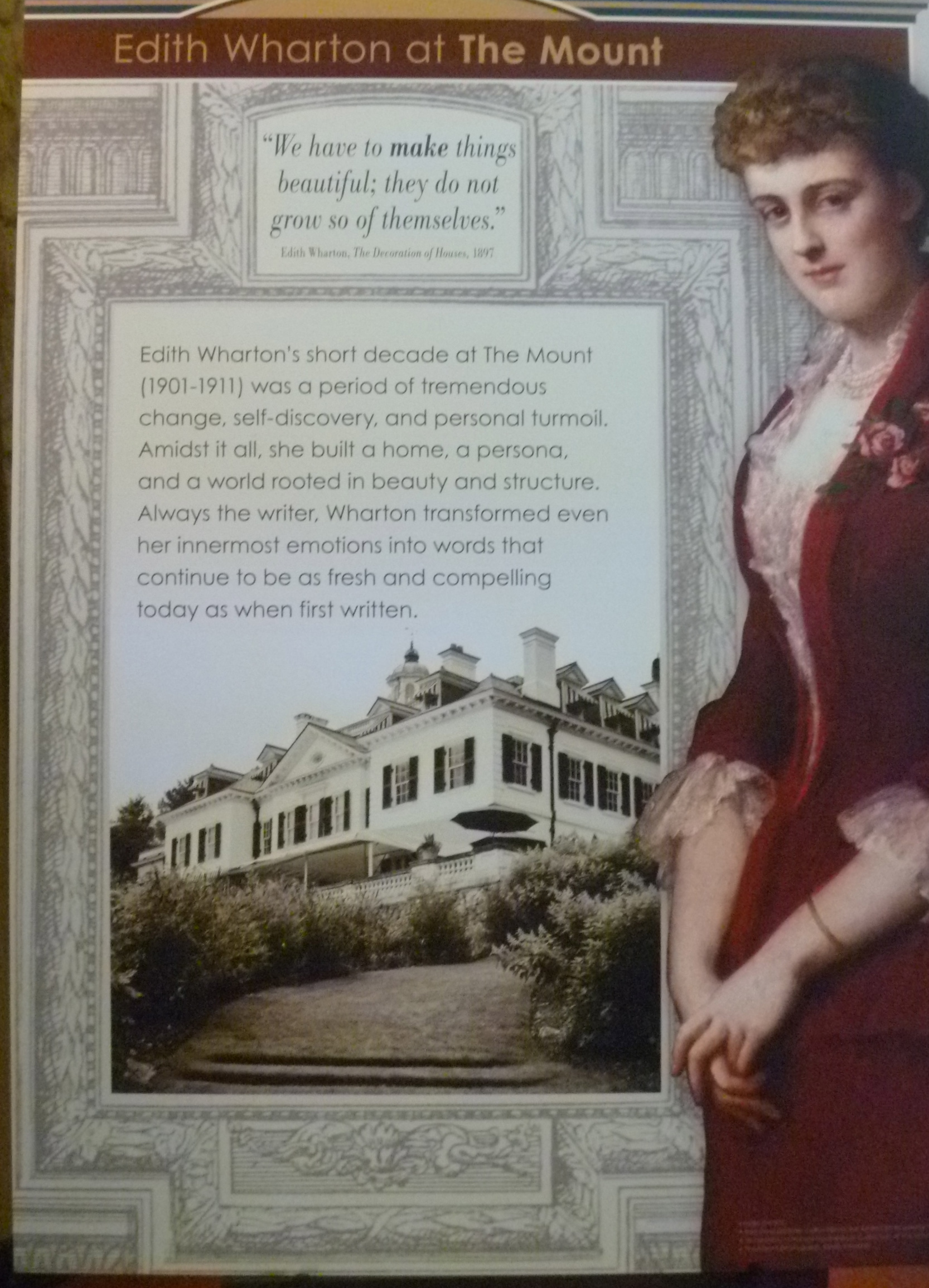
Edith Wharton collaborated with architect Ogden Codman to produce her first book The Decoration of Houses. Published in 1897 it was a denunciation of all the excesses of Victorian interior decoration and a plea for a return to classical proportions, harmony and simplicity. She designed and built The Mount according to these principles. She was able to move in in 1902 and spent the summers and autumns between 1902 and 1911 at the house (the rest of the year she lived in France). By 1911 her marriage to Teddy had failed and she moved to live permanently in France. That year the house was put on the market.
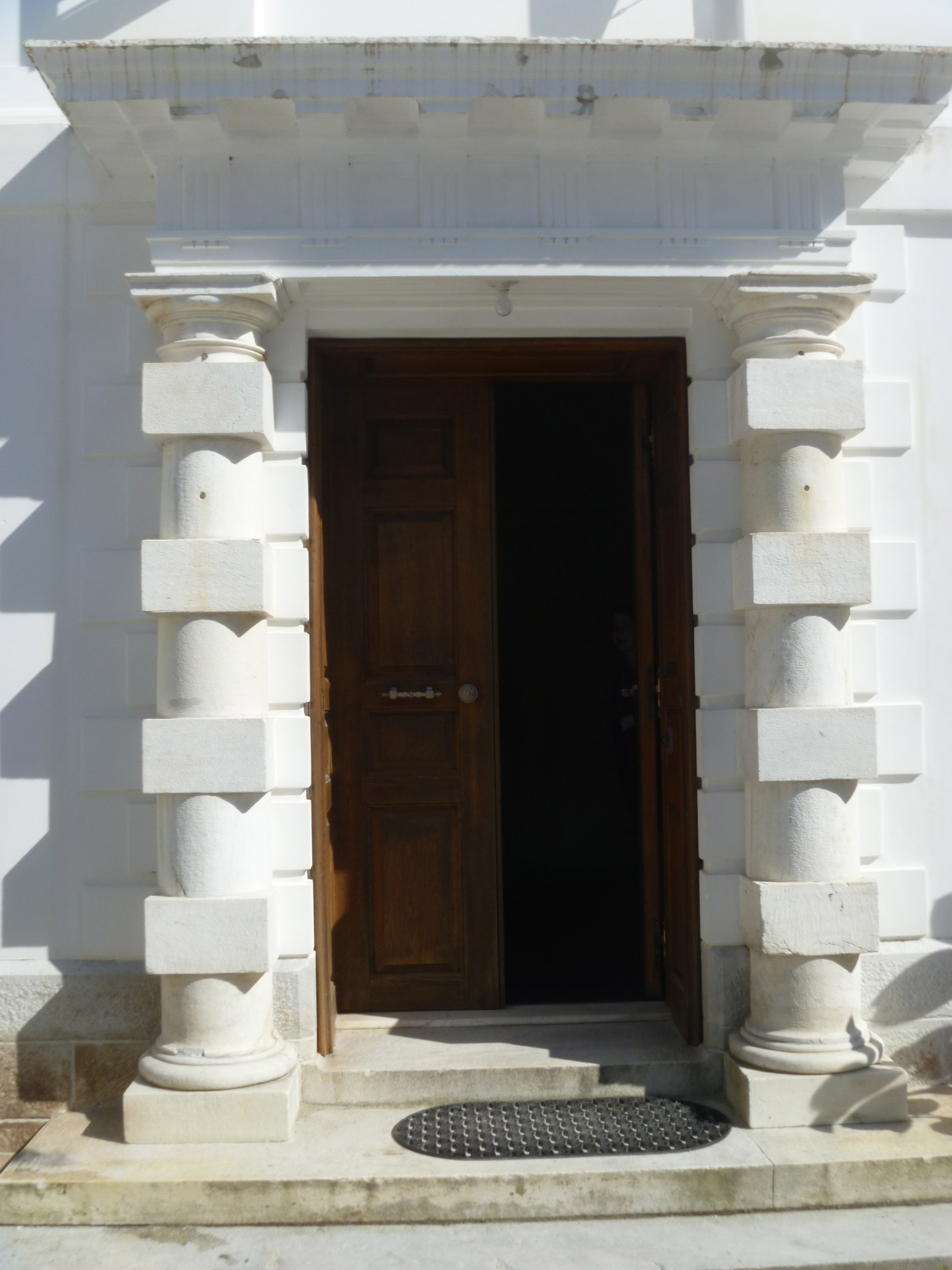
From the courtyard (which was to serve as a bridge between the outside of the house and the inside) we went in at the back door. The entrance hall was planned to bring the outside into the house. It was conceived as an artificial cave or grotto with statues and fountains. Here visitors wishing to see the great novelist had to wait to know whether they would be admitted to her presence or not. It was here that we learned that The Mount was modelled on the English 17th century Palladian-style Belton House in Lincolnshire and on neo-classical Italian and French examples.

Next time I will take you on a tour of the house but just now I want to show you what a lovely lovely place it is.  After the tour free access is allowed throughout the house and grounds. There are room stewards handily placed who are able to answer any questions and Information Boards in every room.
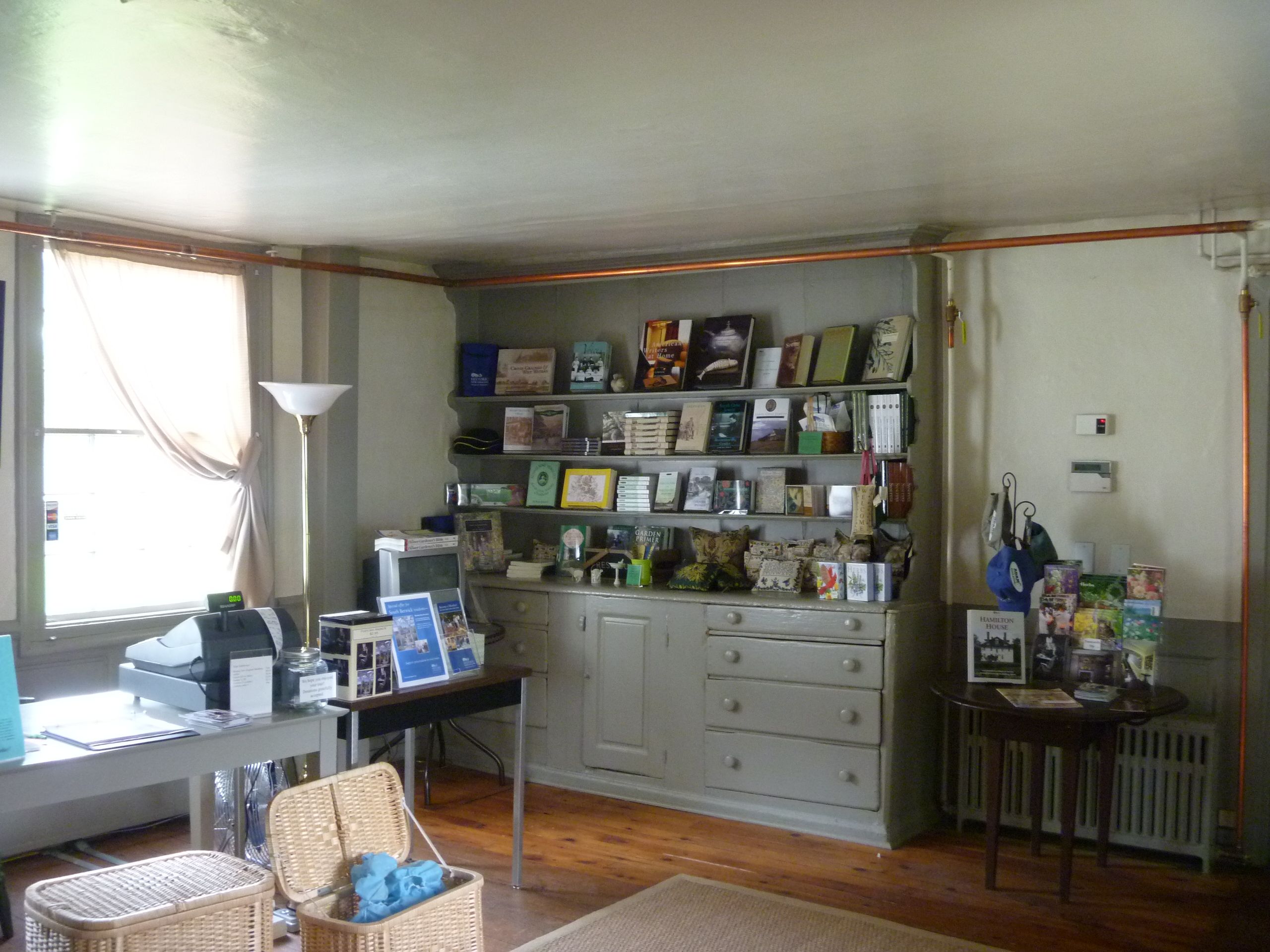
Photography is allowed everywhere. There is a great gift and book shop in the basement scullery.
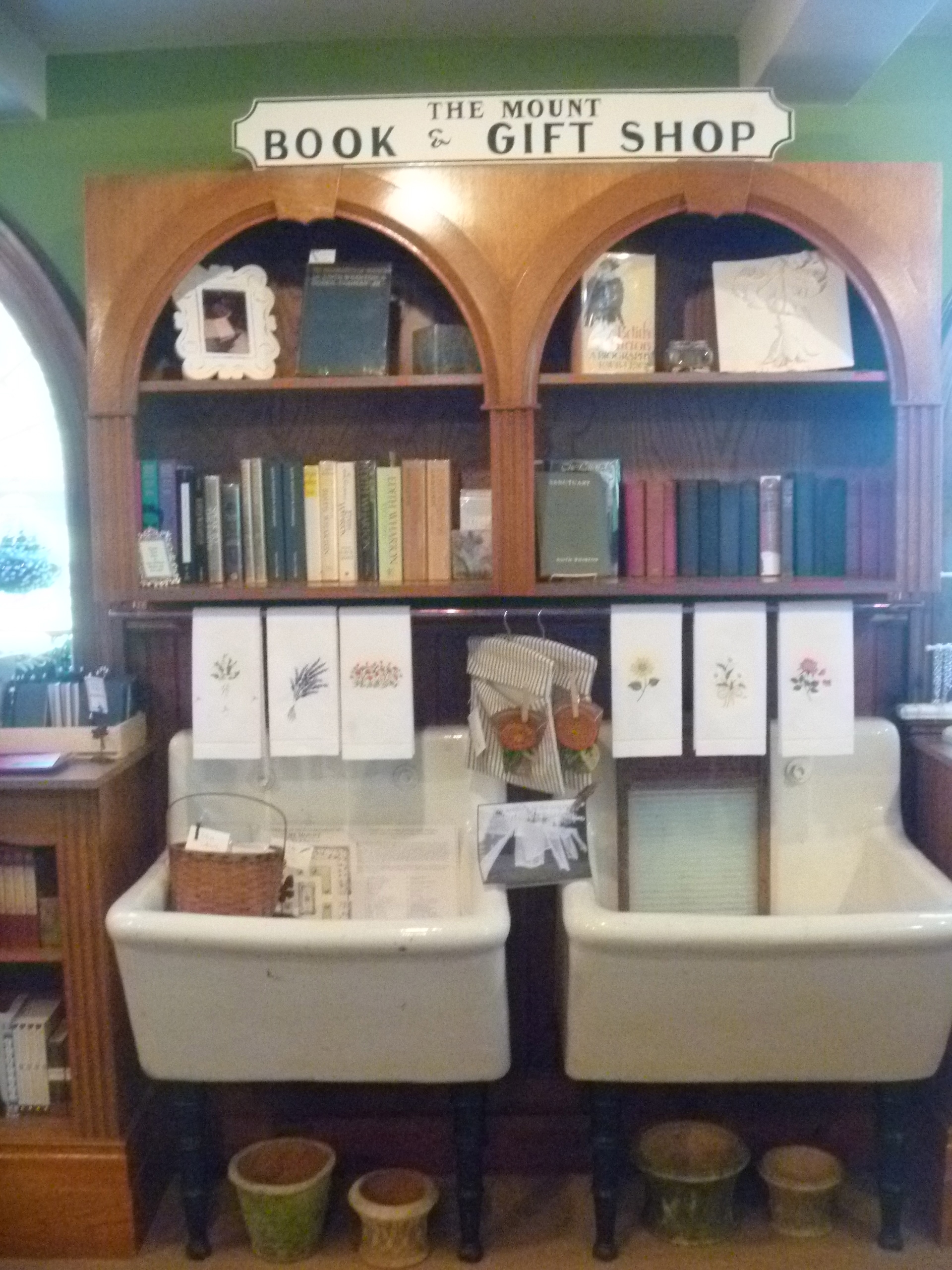
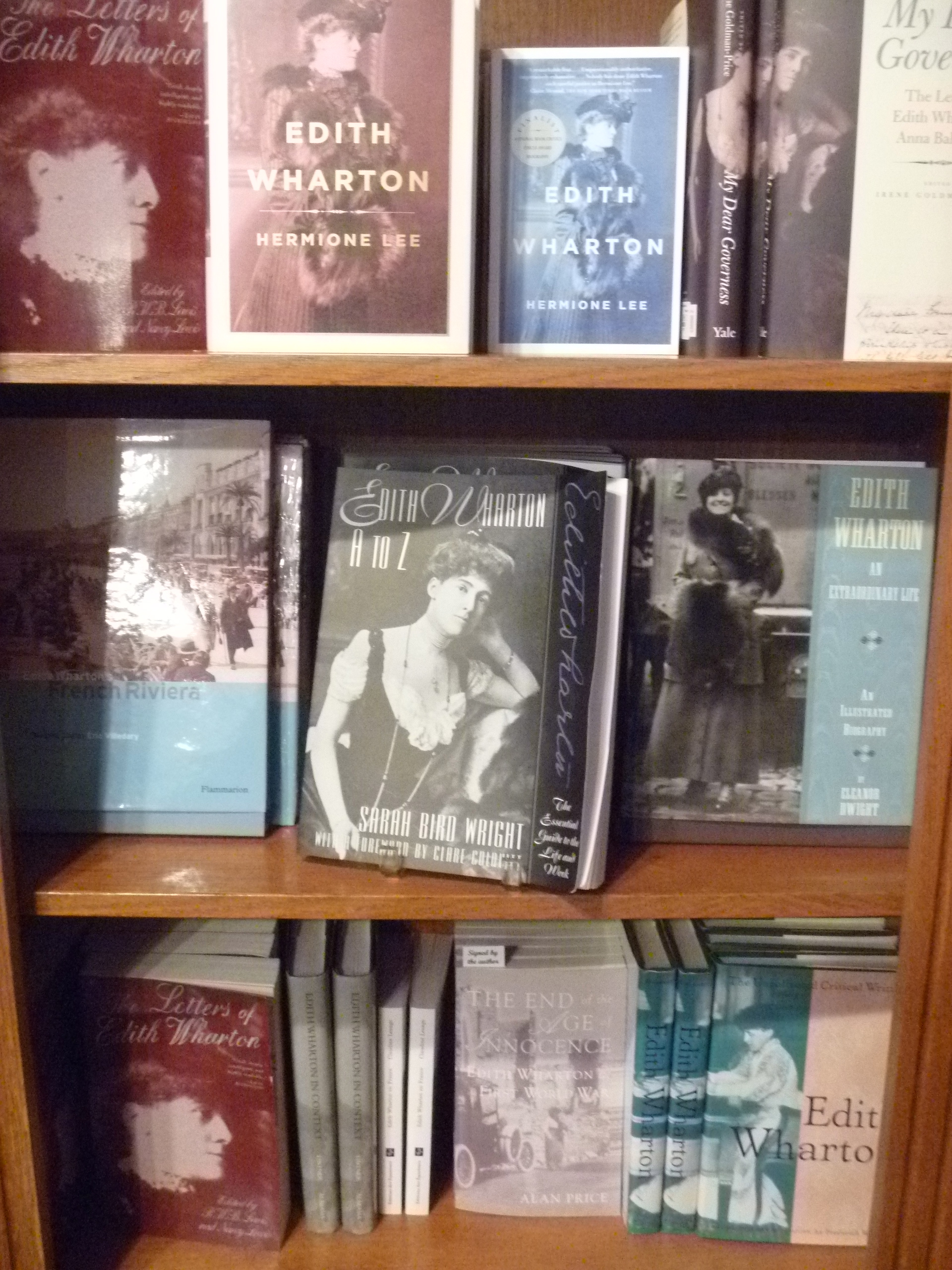
Some of the many book displays in the shop

Teas and other refreshments are served on the terrace and you may sit at tables on the front lawn.
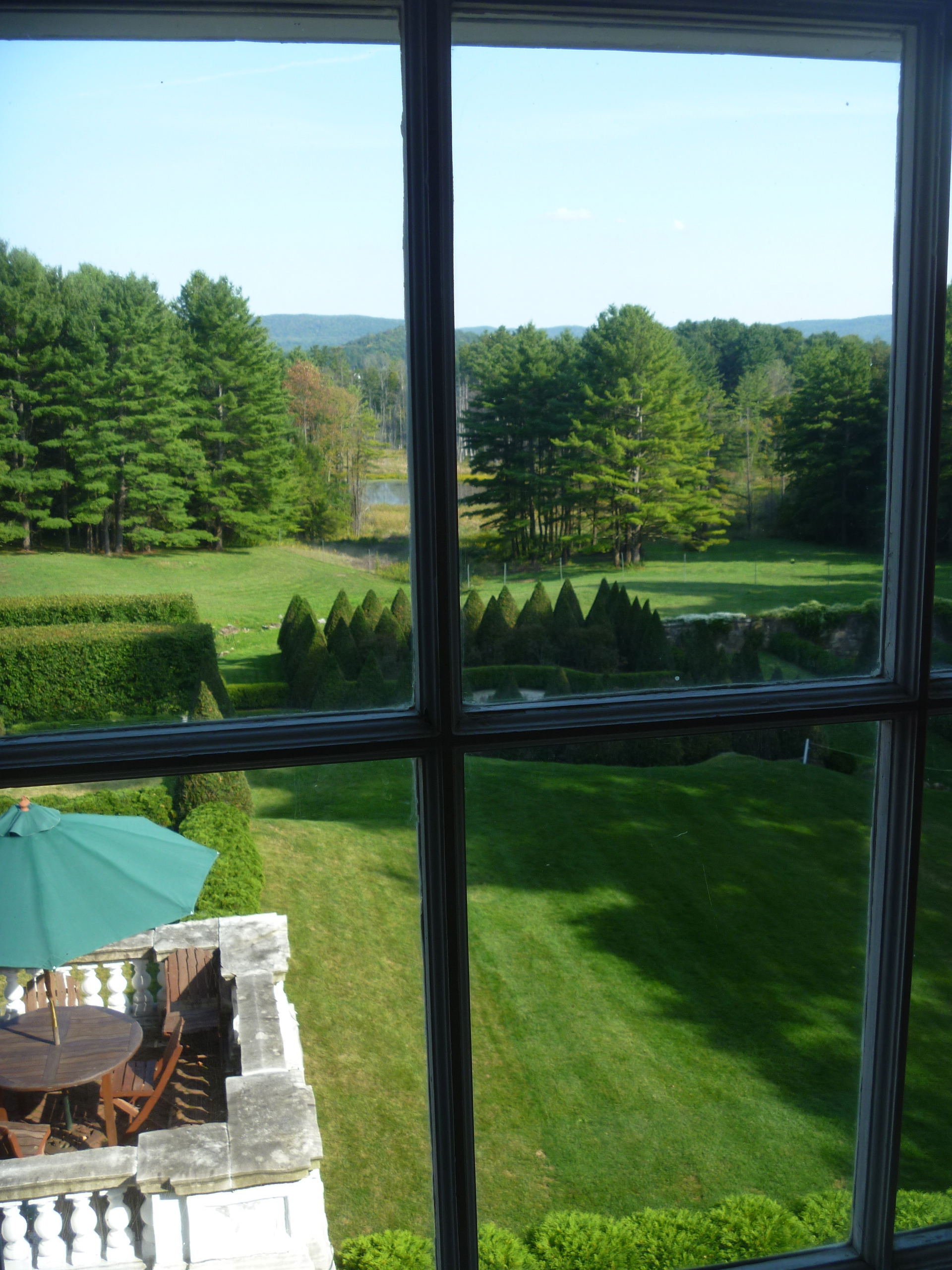
The View and A Terrace Tea Table
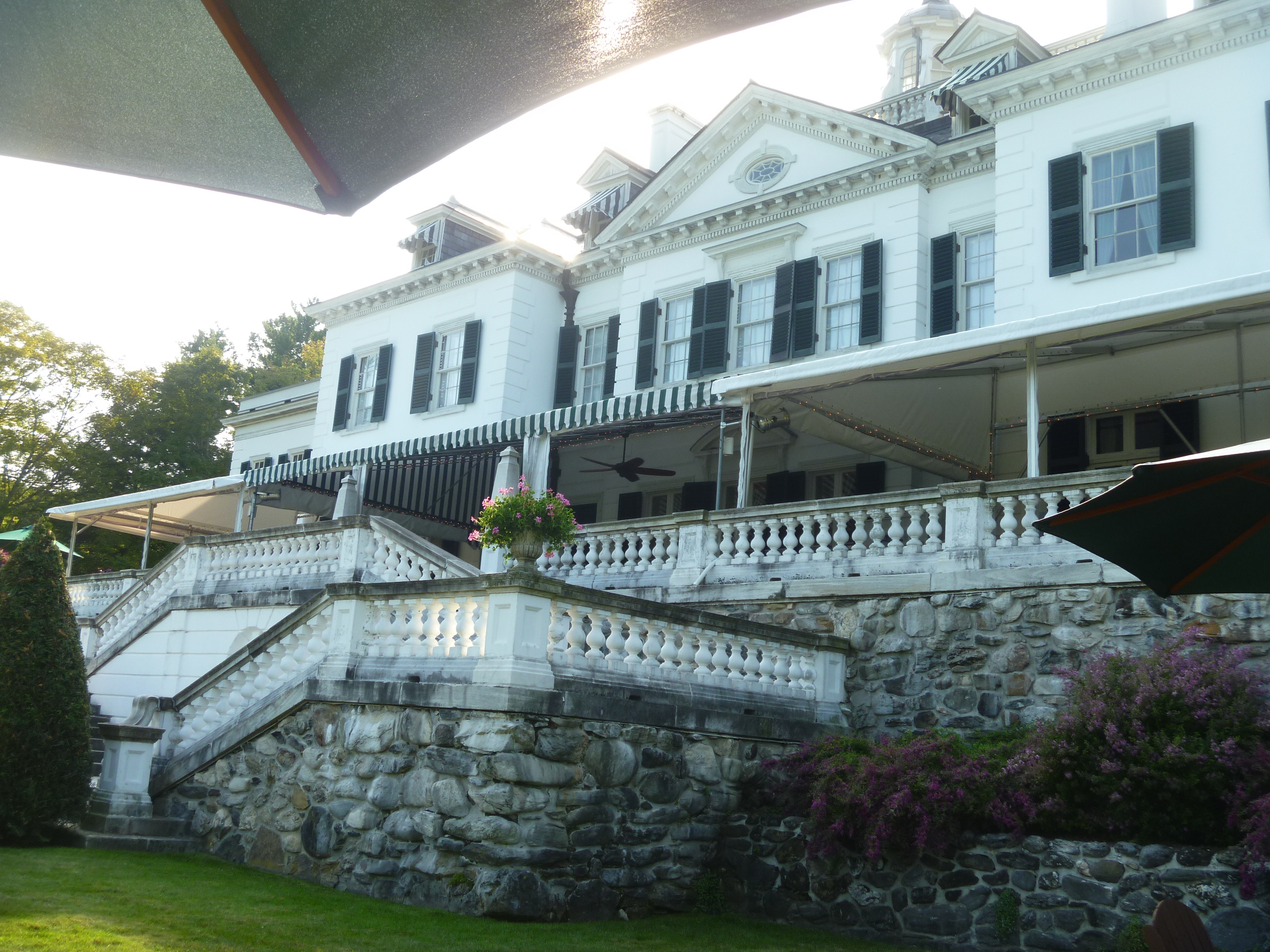
The house from my terrace tea table

There are two interesting and entertaining exhibitions on the second floor.
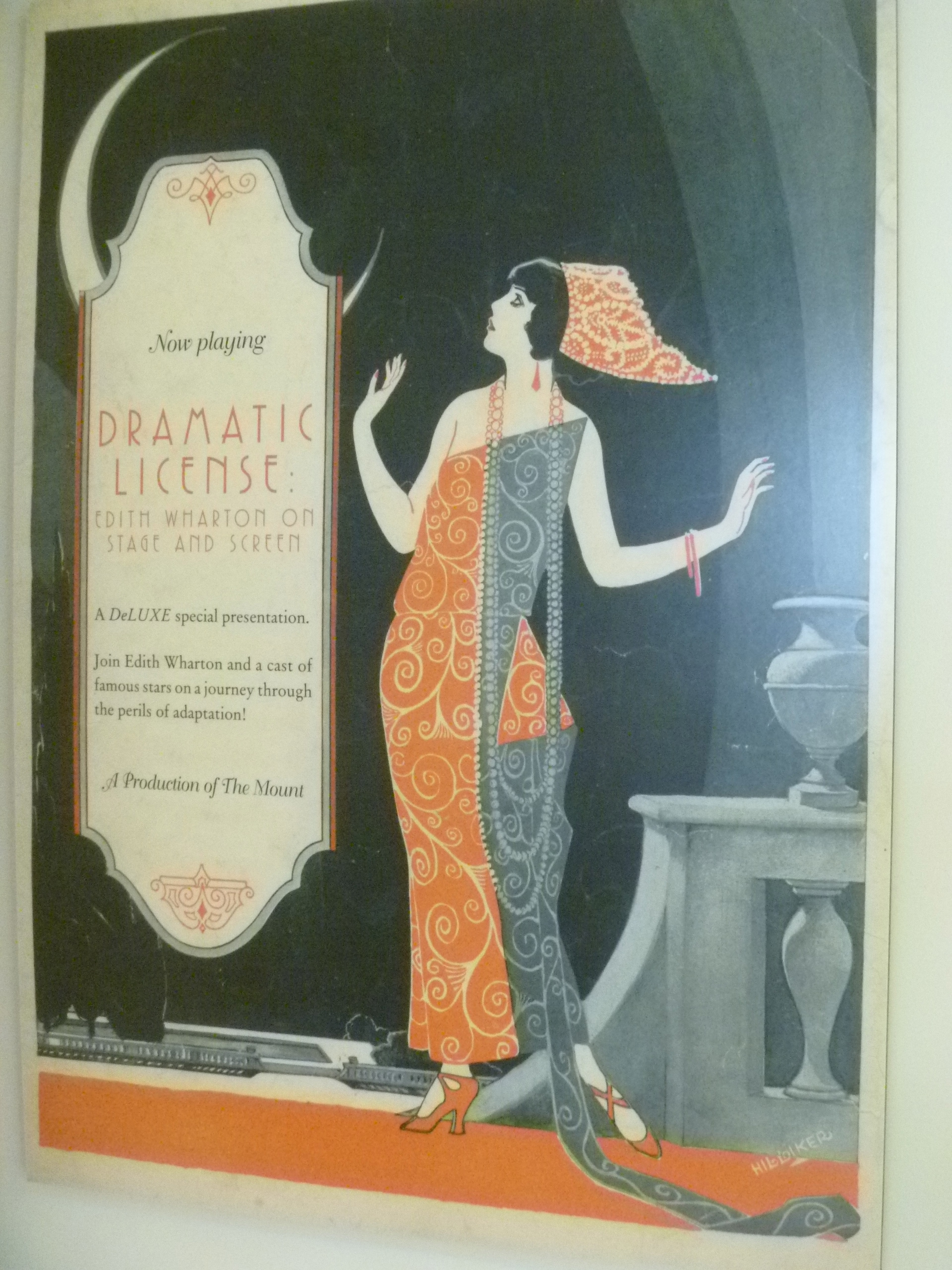
and
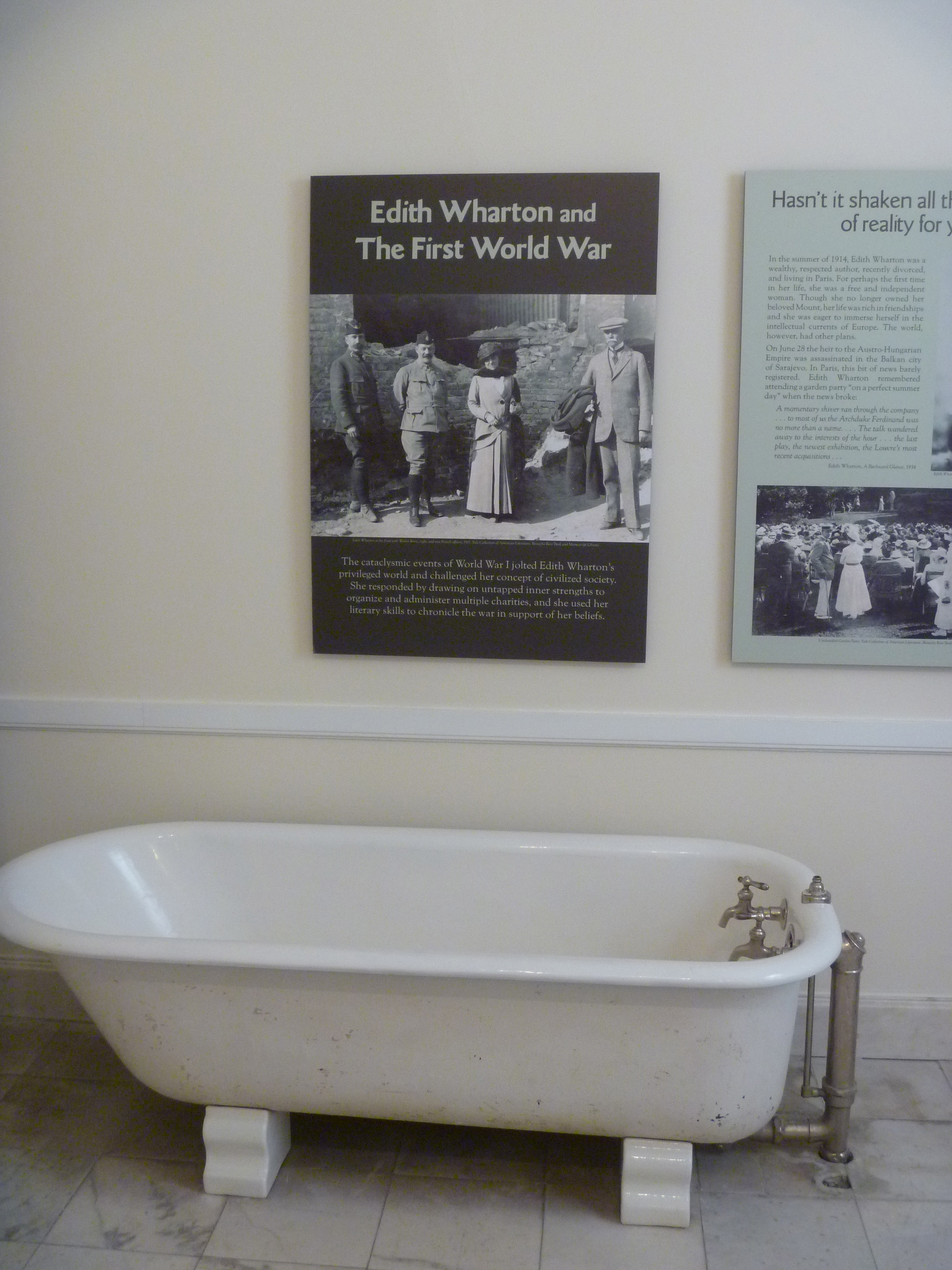
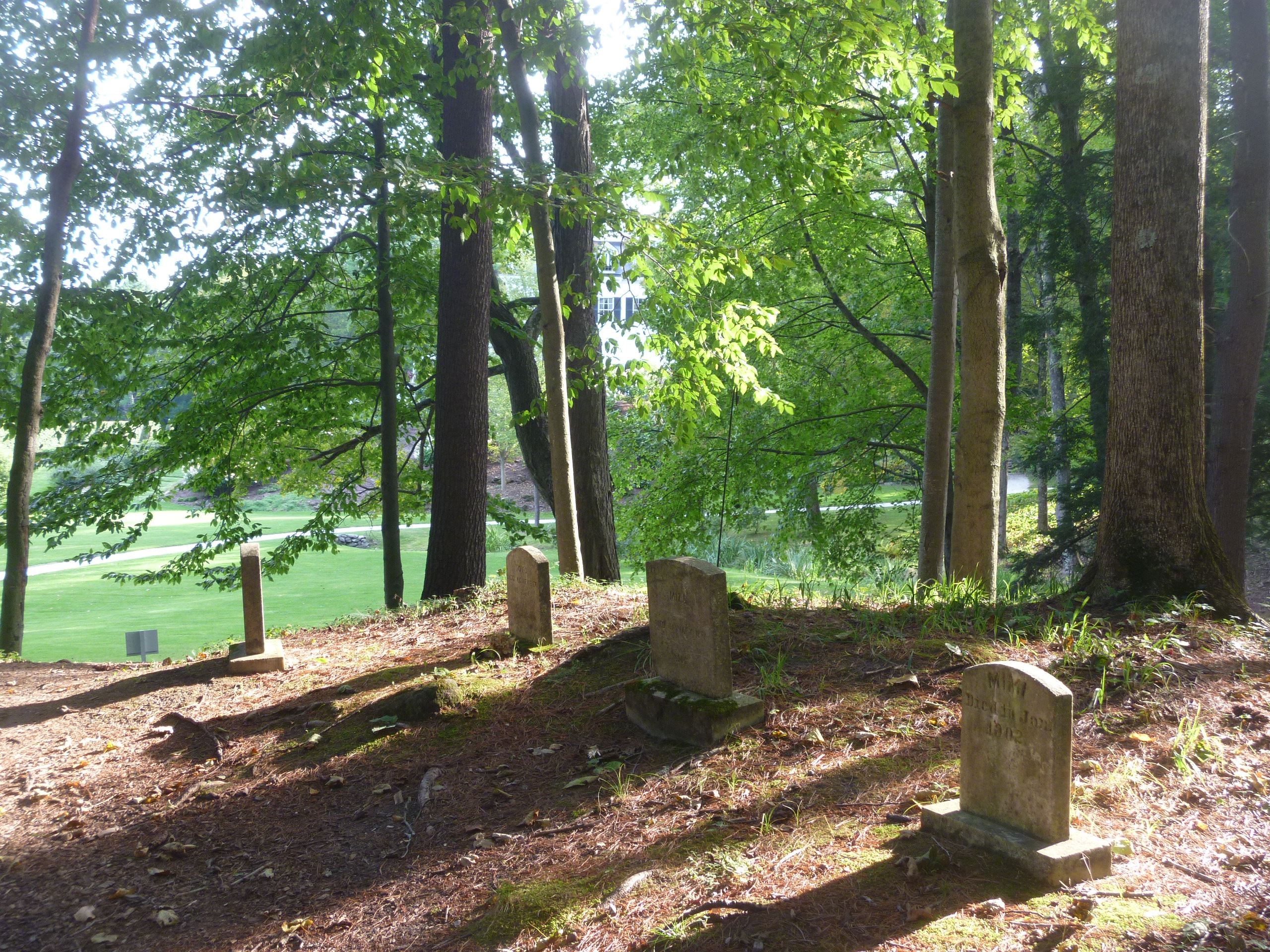
You may walk around the estate and the gardens and even visit the mound where her beloved dogs are buried.
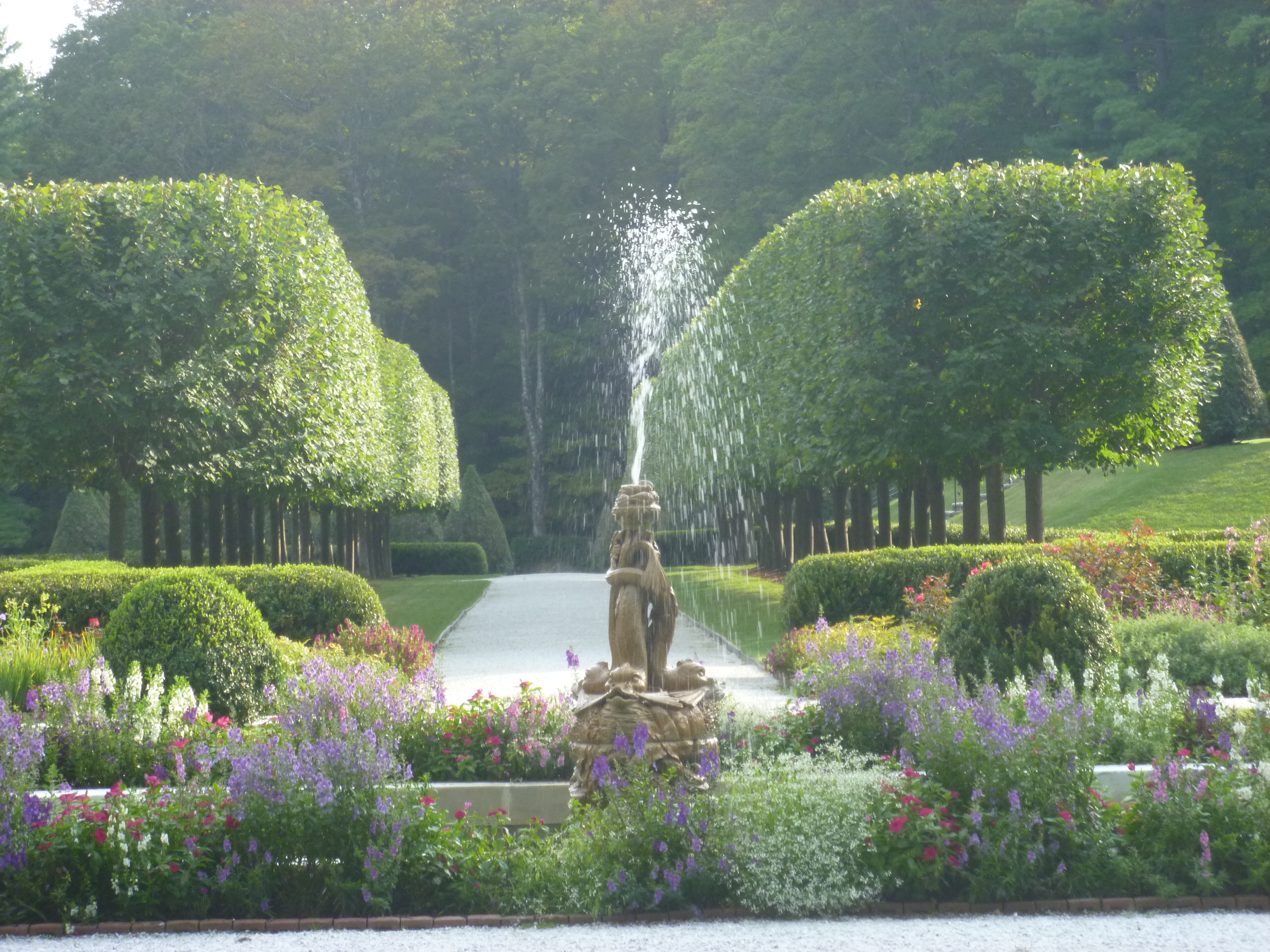
There’s a further exhibit in the Stables but these were being prepared and were already receiving the Wordfest participants.
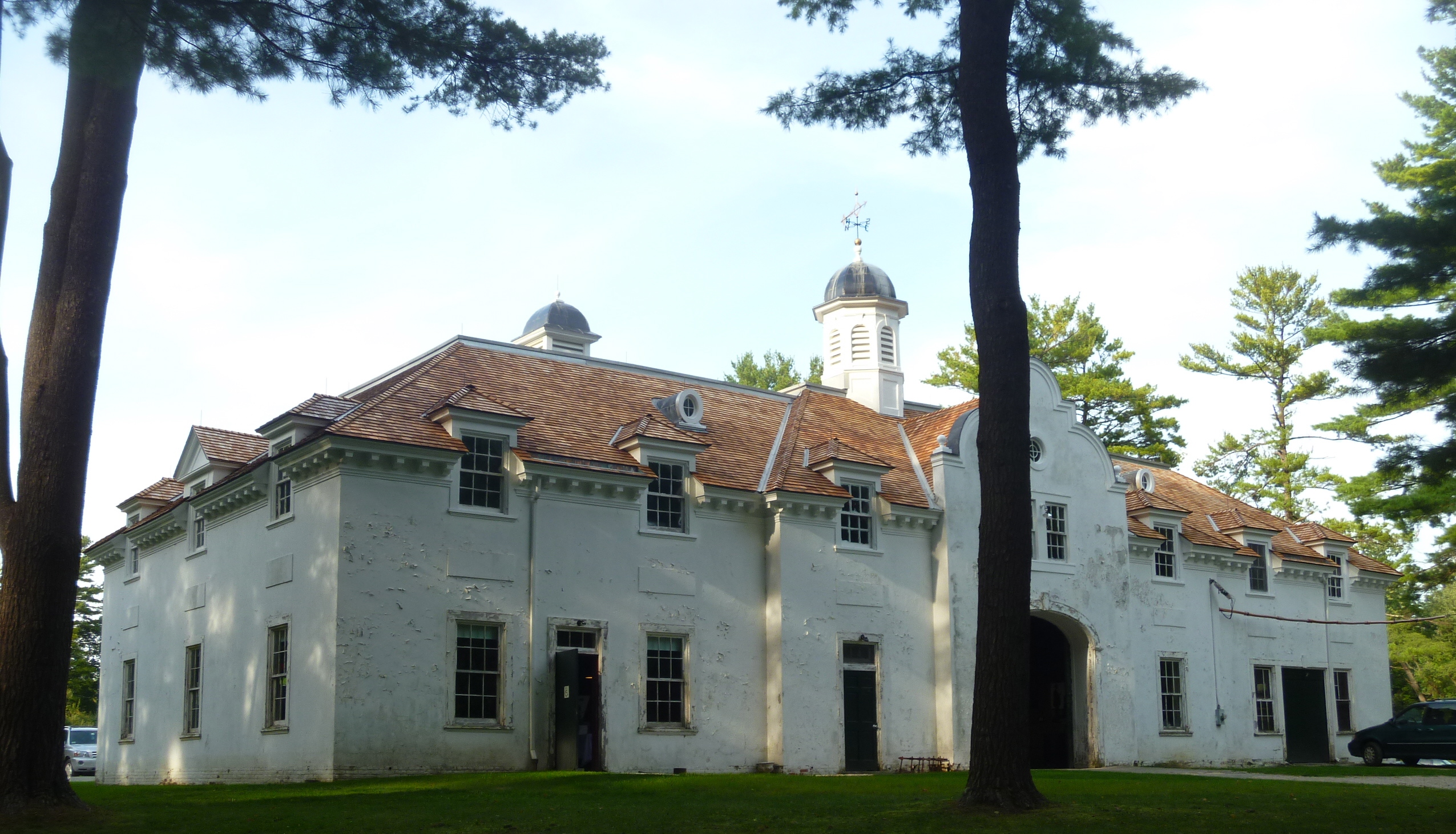
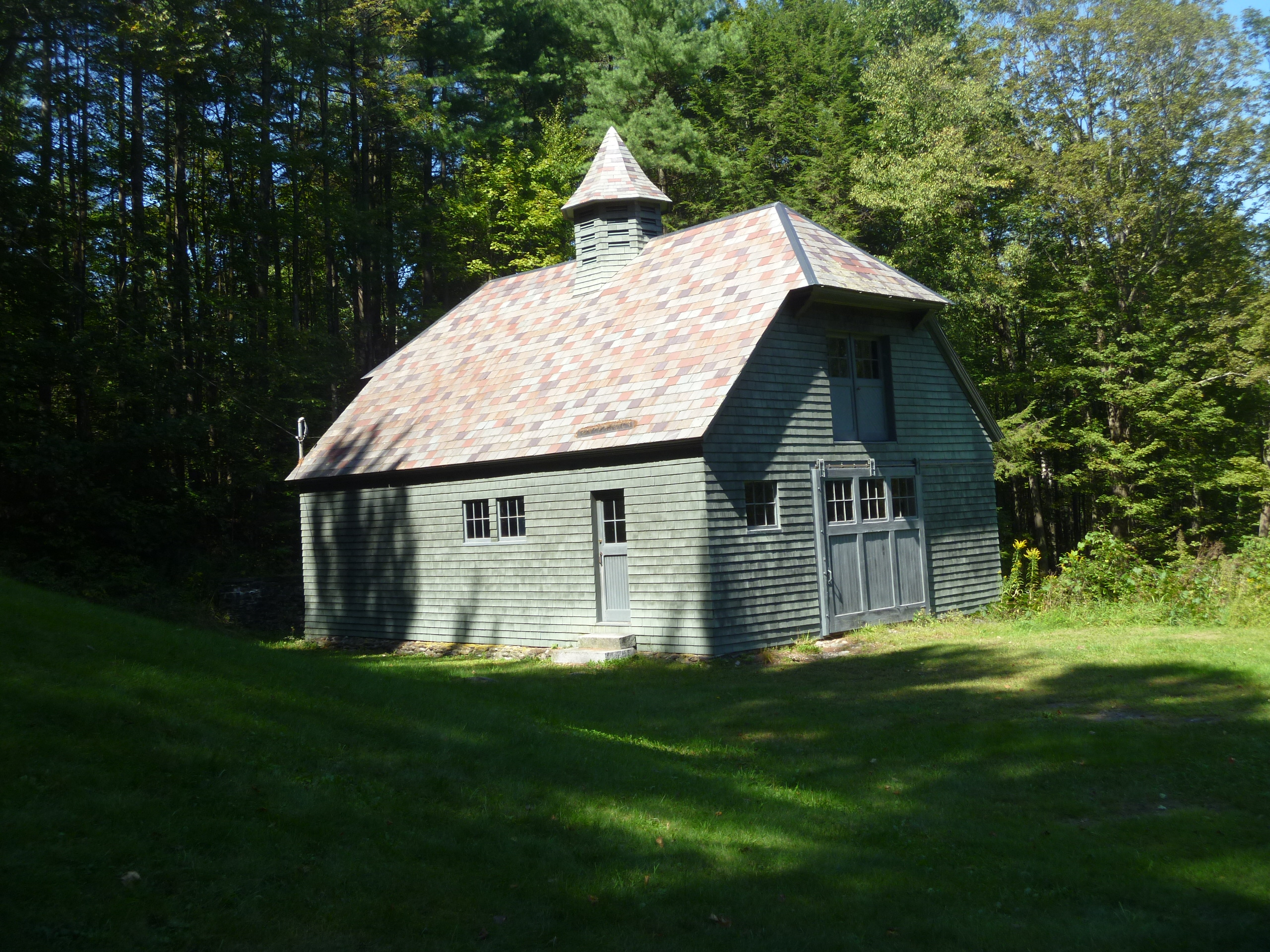
The Stables

All in all my time there was too short to take it all in and I’m definitely up for another visit if I can manage to pass by again in future. Because of the Wordfest event I decided not to return that same weekend.
The Landmark Trust USA and The Scott Farm, Dummerston

There is much more to The Landmark Trust USA than Naulakha!

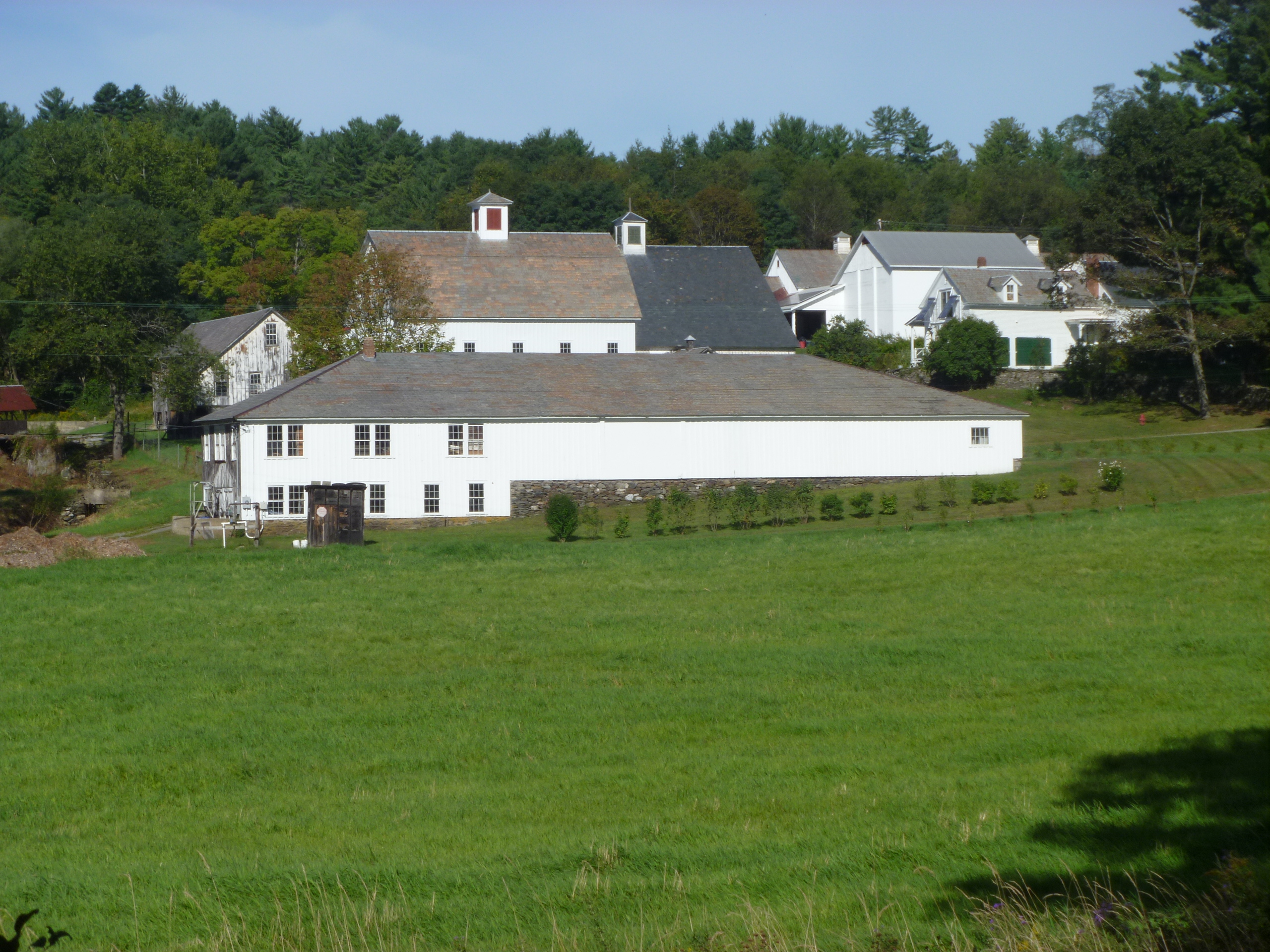
Based at The Scott Farm on Kipling Road, Dummerston, VT the Trust owns three other rental properties and plans to renovate a further one. The Scott Farm itself operates a Heritage Apple growing farm that covers 626 acres. It has been planted with orchards producing over 70 varieties of organically grown apples, plus some other fruits, peaches for example. The apples are marketed through whole food shops throughout Vermont and selected markets in Massachusetts.

Scott Farm Heritage Apples in the Brattleboro Food Co-op

Read more about the Scott Farm here.

Our trip to Vermont last month was not our first visit to a Landmark Trust USA property. In 2008 we spent a week at The Sugarhouse where maple syrup had been produced up to 1970.  It’s a very simple, basic but cosy single storey building accommodating just two people. The interior is a single space with partitioned bedroom and the walls lined with warm honey-coloured pine panels. Like all Landmarks it has its shelf of books and a supply of jigsaw puzzles and games.

The Sugarhouse

The Sugarhouse Library

Another larger property on the Scott Farm is the Dutton Farmhouse. On both I visits I was lucky enough to be able to visit the house on changeover days but this year was extra special as we were accompanied on our visit by Kelly Carlin the Landmark USA’s Office Manager and fount of much knowledge about the houses, ownership and history. She told us lots about the work of the Scott Farm and its various projects.

It was a lovely walk up to the Farmhouse from Naulakha along a broad track with orchards of trees overladen with apples on the one side and forest/woodland on the other.

At one time the Dutton Farmhouse provided accommodation for the seasonal apple pickers working for the Scott Farm. They painted this mural on the wall in the dining room. It is too fragile to be moved.

The third Landmark Trust USA property, Amos Brown House, is located about 12 miles away from the Scott Farm in Whitingham, Vermont. Built by Amos Brown in 1802 it operated as a farmhouse for well over 100 years and in the 1930s the farm became home to Carthusian monks, a contemplative order founded in France.

“For nearly 20 years, the monks lived in shacks in the woods and held services and prepared meals in the house. By the 1990s the Amos Brown house had declined considerably and was abandoned. The owner gave the house to the local historical society.

The Landmark Trust USA acquired the property in 2000 from the historical society who found management of the property beyond their means and expertise. The house enjoyed its first visitors in 2003 after 2 years of restoration.” (From the Amos Brown webpage)

ABH sleeps 6 and is the most popular of all the accommodations with British visitors.

Plans are afoot at Scott Farm to convert a Milk House located on the farm itself and attached to the large barn into a bijou Landmark to sleep two. David Tansey the President and Farm Manager at Scotts showed us the Milk House and explained the plans for its conversion when we visited the Farm Shop on the Sunday of our stay.

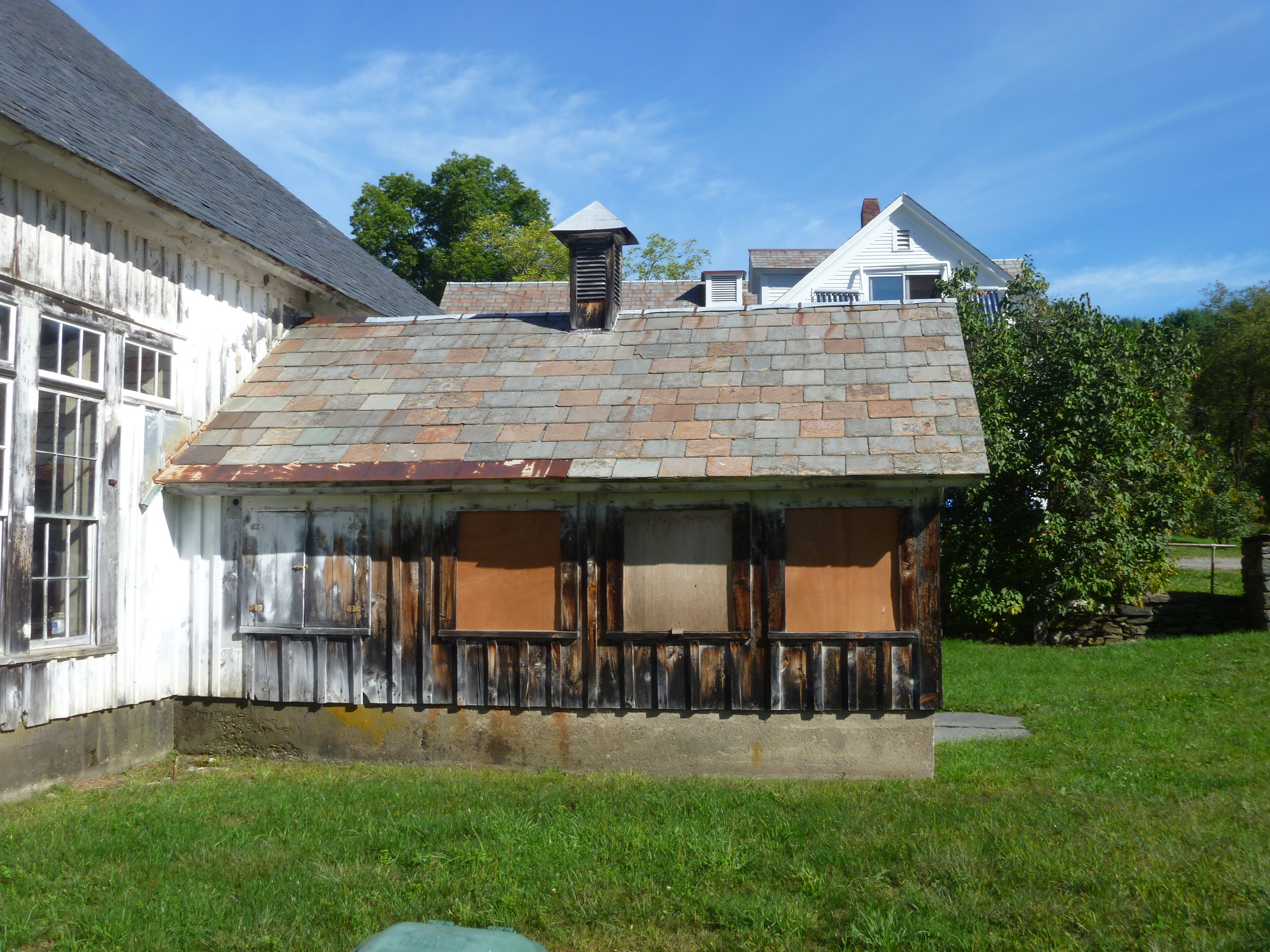
The Milk House

The Milk House (It’s very small!)

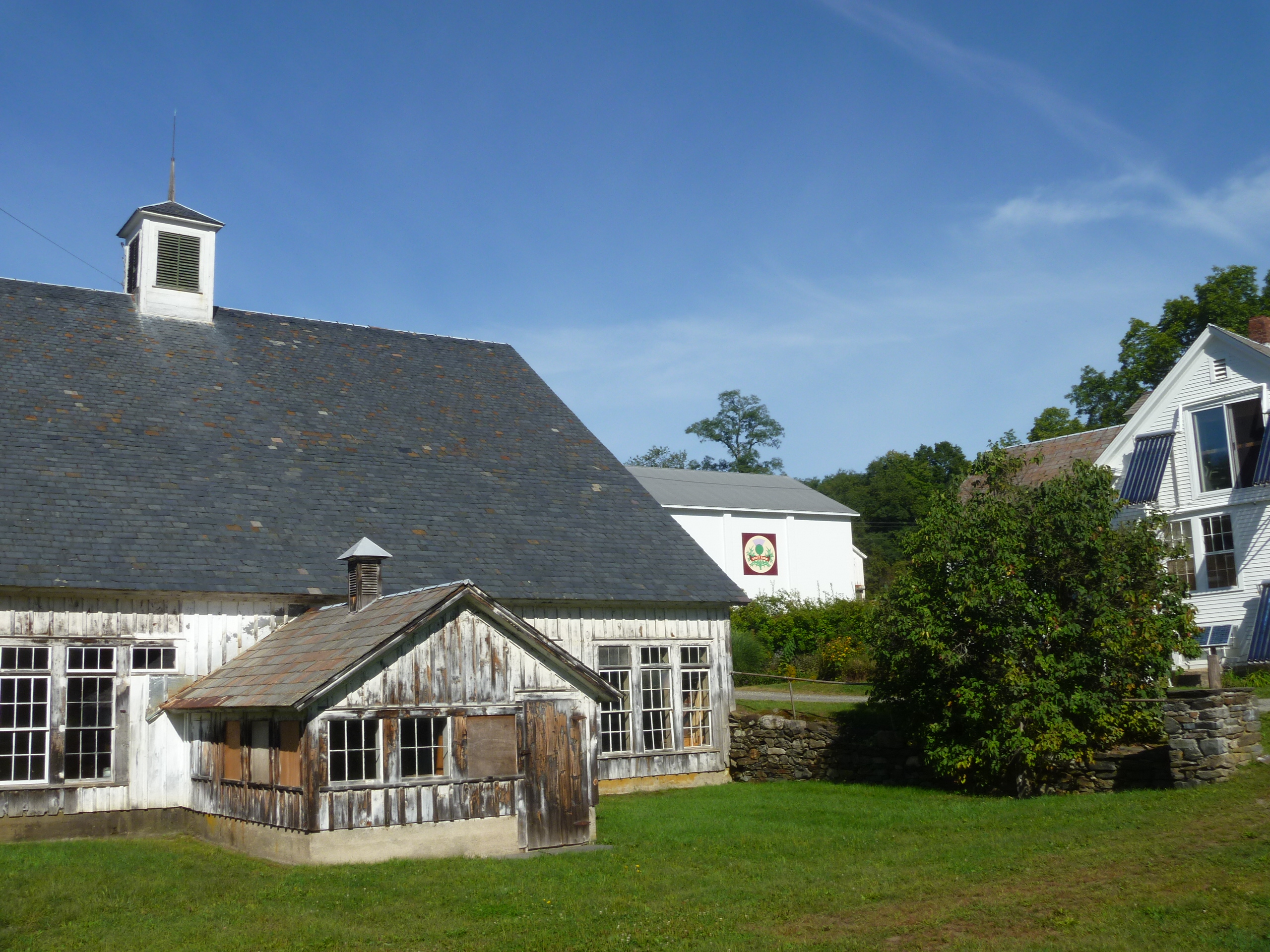
The Milk House in the midst of The Scott Farm

The Trust has also taken on an educational role and encourages the maintaining of building and other craft skills. We noticed two examples of this. During the weekend of our visit the Scott Farm was hosting a class of dry stone walling students/enthusiasts. David showed us the results of the weekend’s work in the barn and Kelly explained that the stone walls surrounding the fields opposite the Dutton Farmhouse were gradually being completed by visiting wall building enthusiasts.

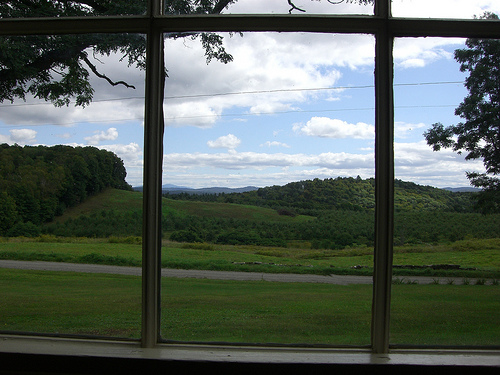
2008 View from the Dutton Farmhouse (of the Green Mountains of New Hampshire) NB no stone wall

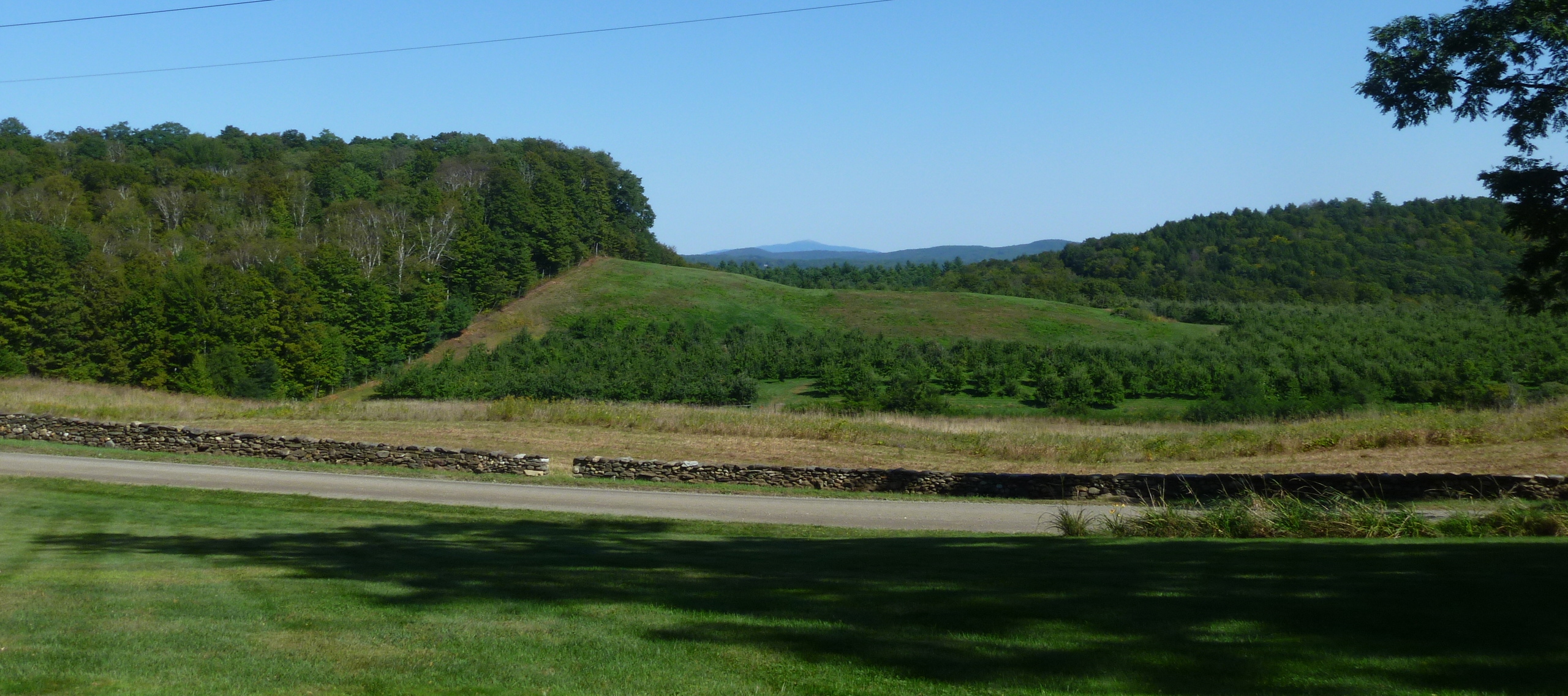
The View in September 2012 – NB dry stone wall nearly complete

In the Naulakha logbook there are comments by a regular visitor who leads dramatisations of the works of Rudyard Kipling for local school children in the house in which some of them were written.

“February 8-11 2013 – Brattleboro VT, Might you be sitting on some great stories that you’d like to put out there…? For the 7th year, Jackson offers Springboards for Stories workshop/retreat in one of New England’s most inspiring settings: Rudyard Kipling’s historic VT home, “Naulakha”. Open to all regardless of performing experience.”

Display at The Farm Shop

The Farm Shop not only sells apples and related products – cider and frozen fruits and, if you are lucky, homemade apple pies but also has some interesting displays. Needless to say the property leaflets are available to take away and there are some of Kipling’s books on display.

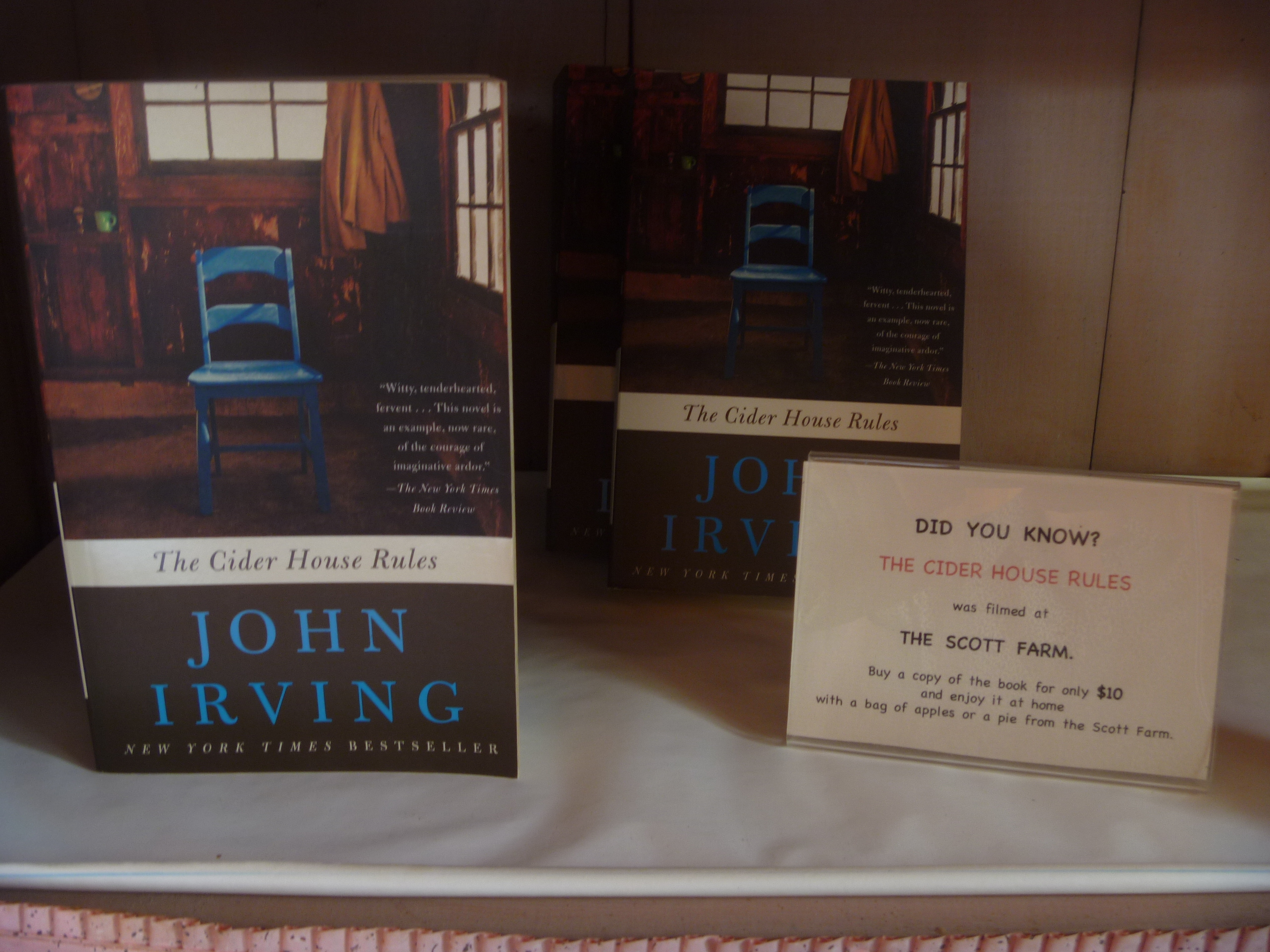
Our attention was also drawn to the fact that the movie The Cider House Rules (1999) starring Michael Caine was partly filmed on the Scott Farm premises.

A Tale of Bliss and Tragedy : Rudyard Kipling in Vermont, 1892-1896

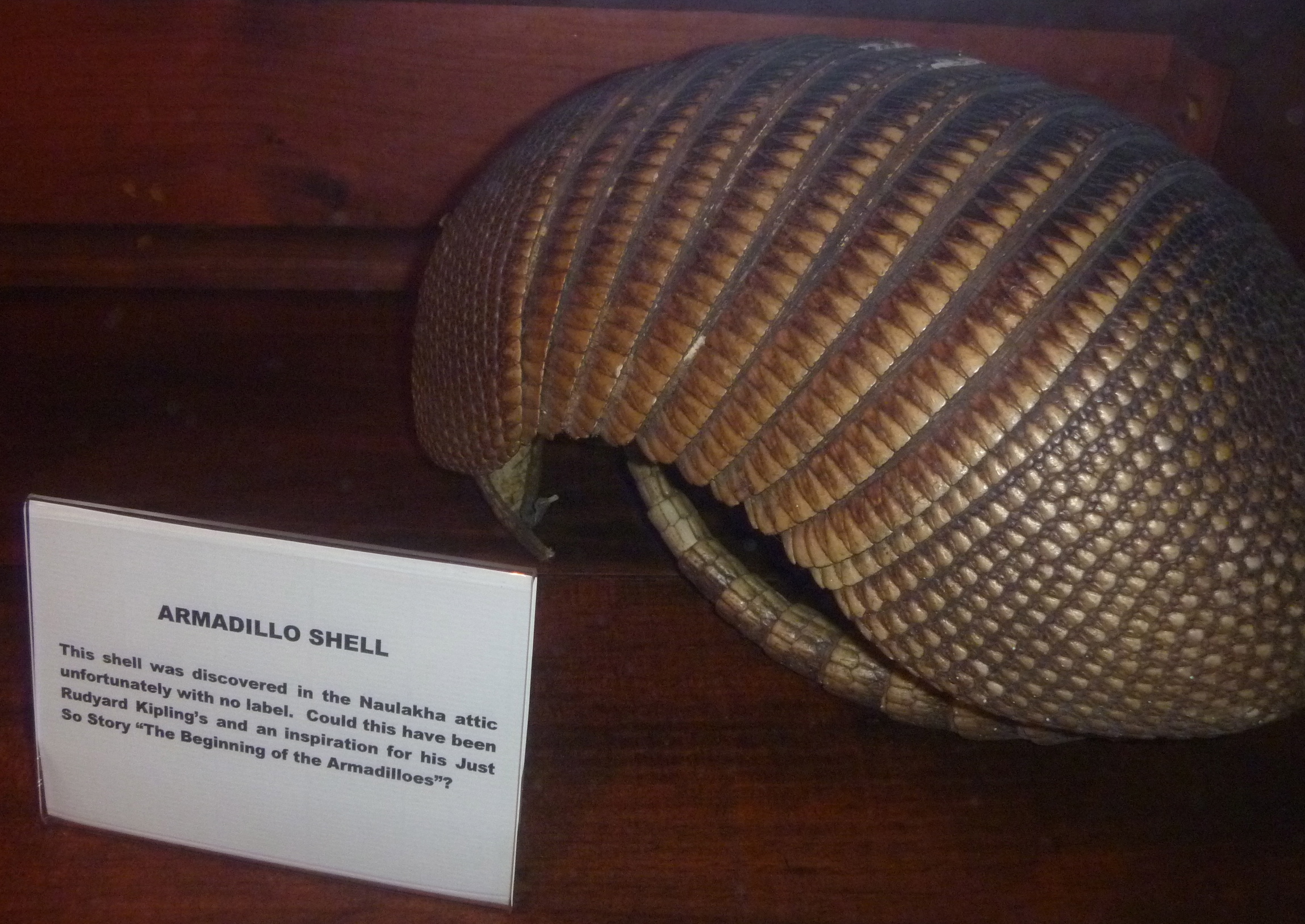
Naulakha has been wonderfully restored and there are a great many original furnishings and fittings, as I have mentioned already. In addition there is a barn set  out like a museum with Kipling-related artefacts and display cases in the second floor attic showing some of the smaller stuff.

Bliss Cottage as it stands today on the opposite side of the road from that upon which it stood in Kipling’s day

I imagine that the Bliss in the title must come from the name of the cottage in which the Kiplings lived,  just down the road in Brattlebooro, whilst Naulakha was being built and where baby Josephine was born but also from the fact that Rudyard states that his Naulakha days were the happiest of his life. His second child, another daughter, Elsie, was born at Naulakha.

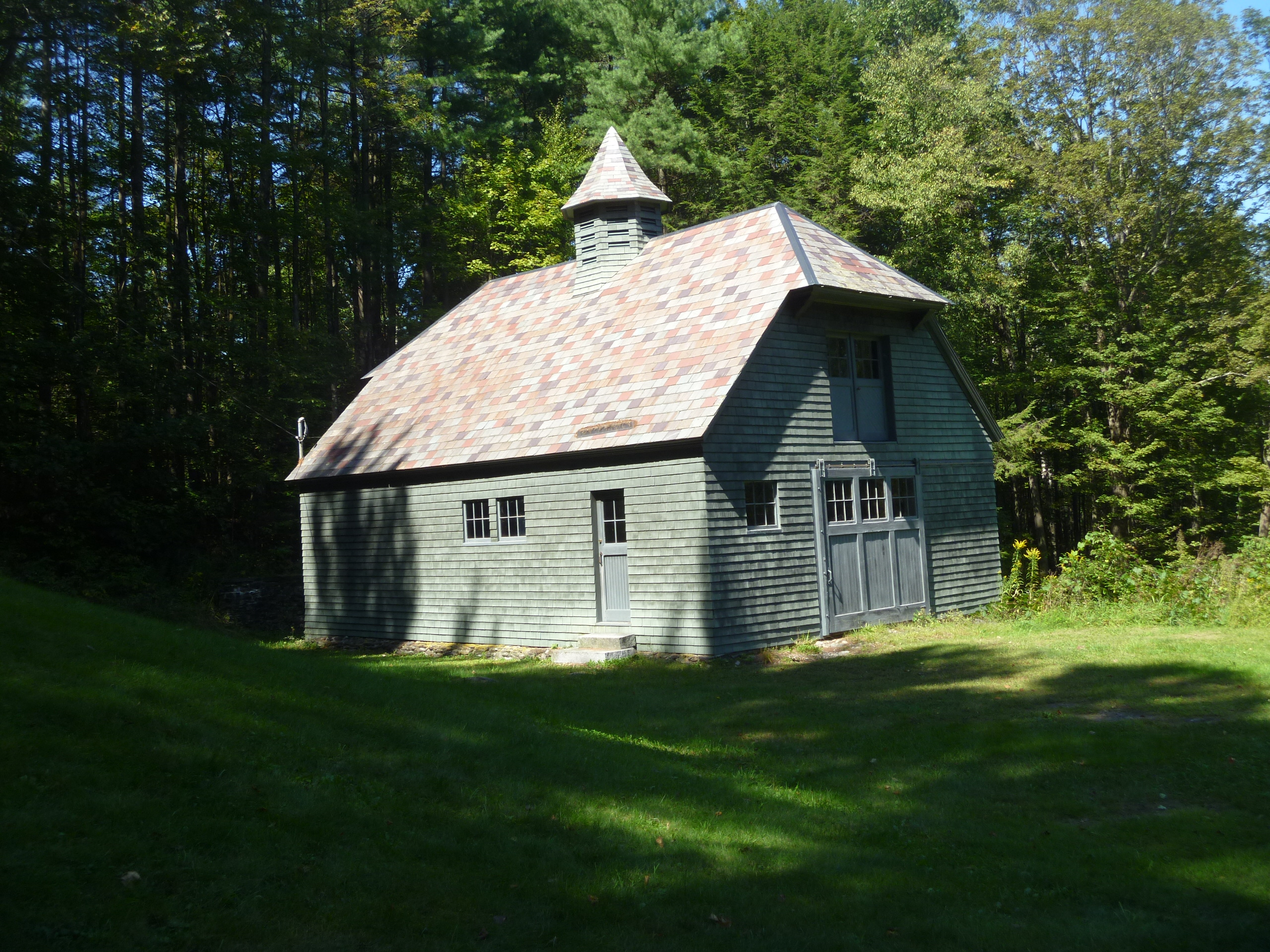
The Barn Museum – exterior

Note the very strong connection with British Landmark Trust. All of their properties abroad – in France, Italy and Naulakha – have British connections.

The Barn Museum – interior

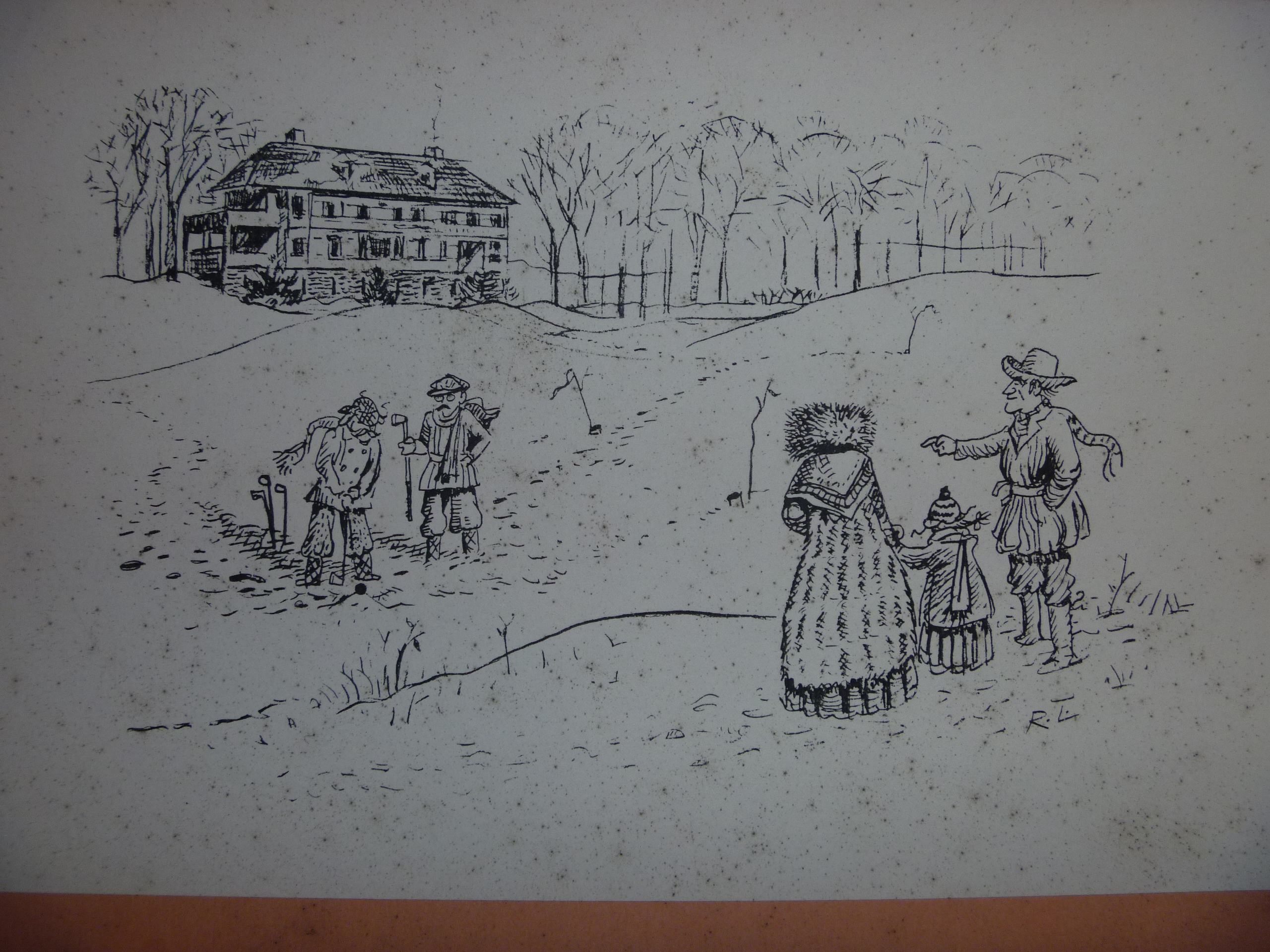
Kipling invents Snow Golf

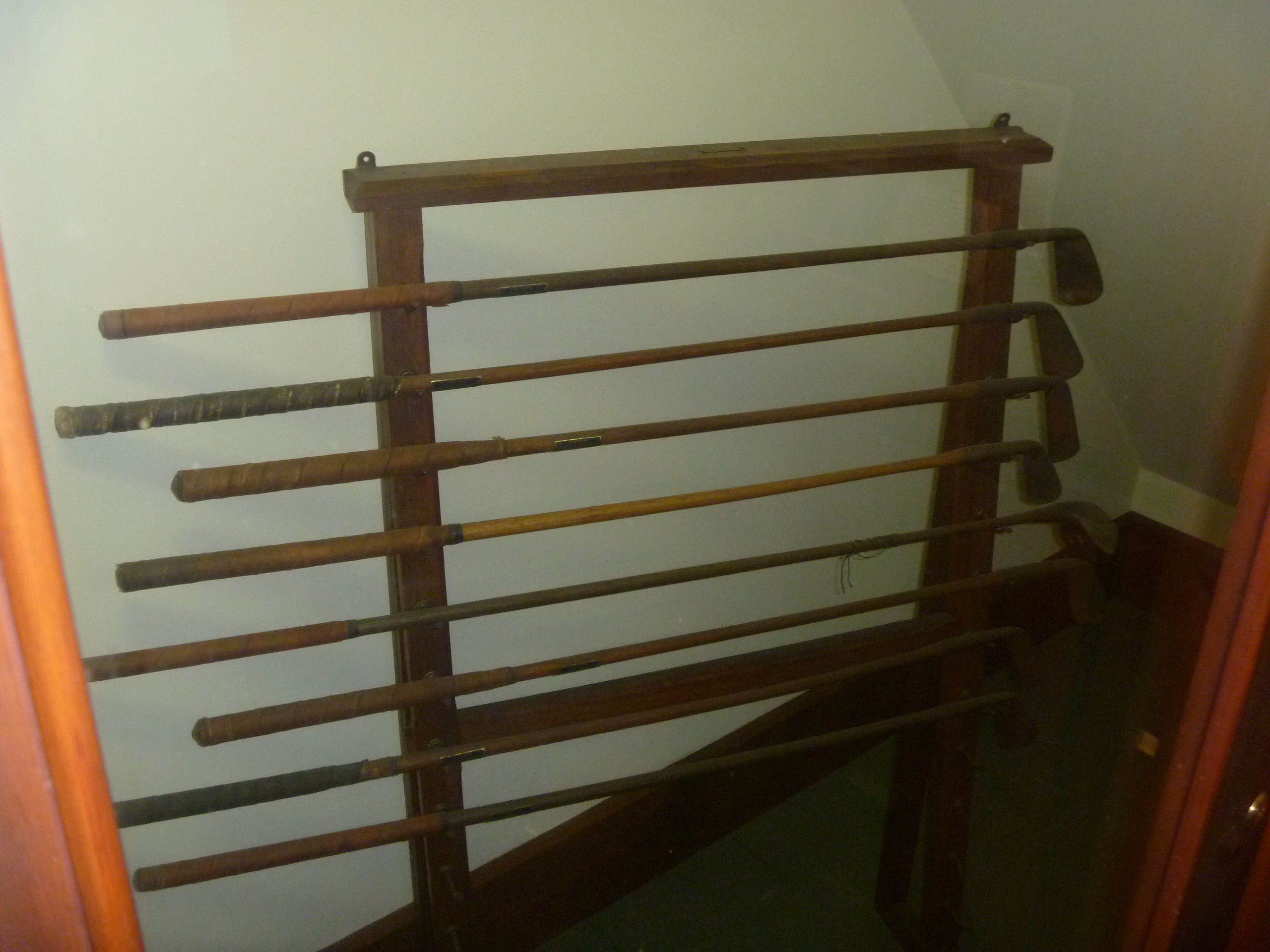
In the attic are a set of Rudyard Kipling’s golf clubs. These must once have stood in the Entry Hall or Loggia as the House Tour states :

The golf clubs and rack are Kipling’s also. According to the United States Golf Association, Kipling invented “snow golf” here in Dummerston.

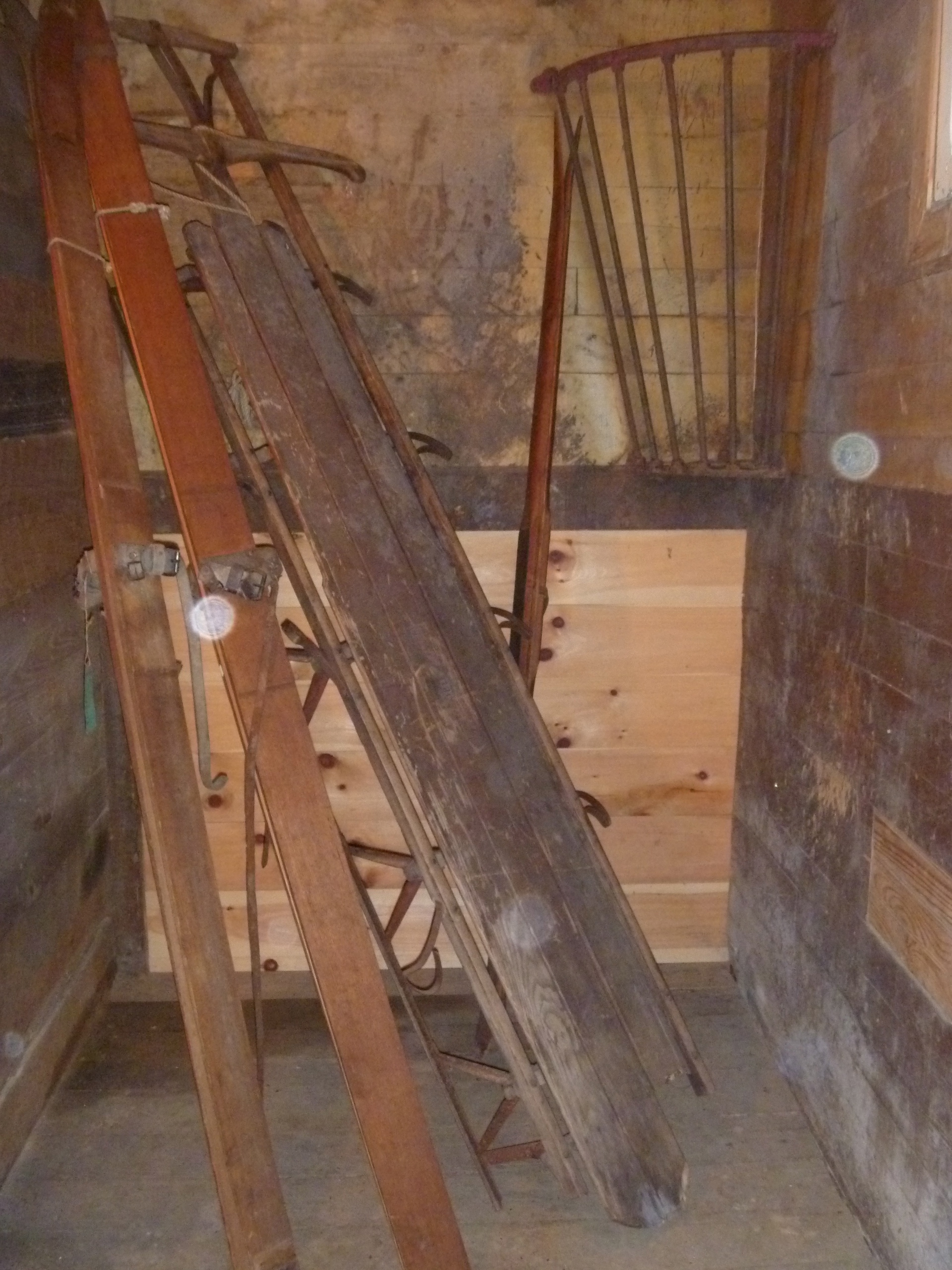
The giant sled, “Red Phaeton”, stands in pieces in one of the abandoned horse boxes.

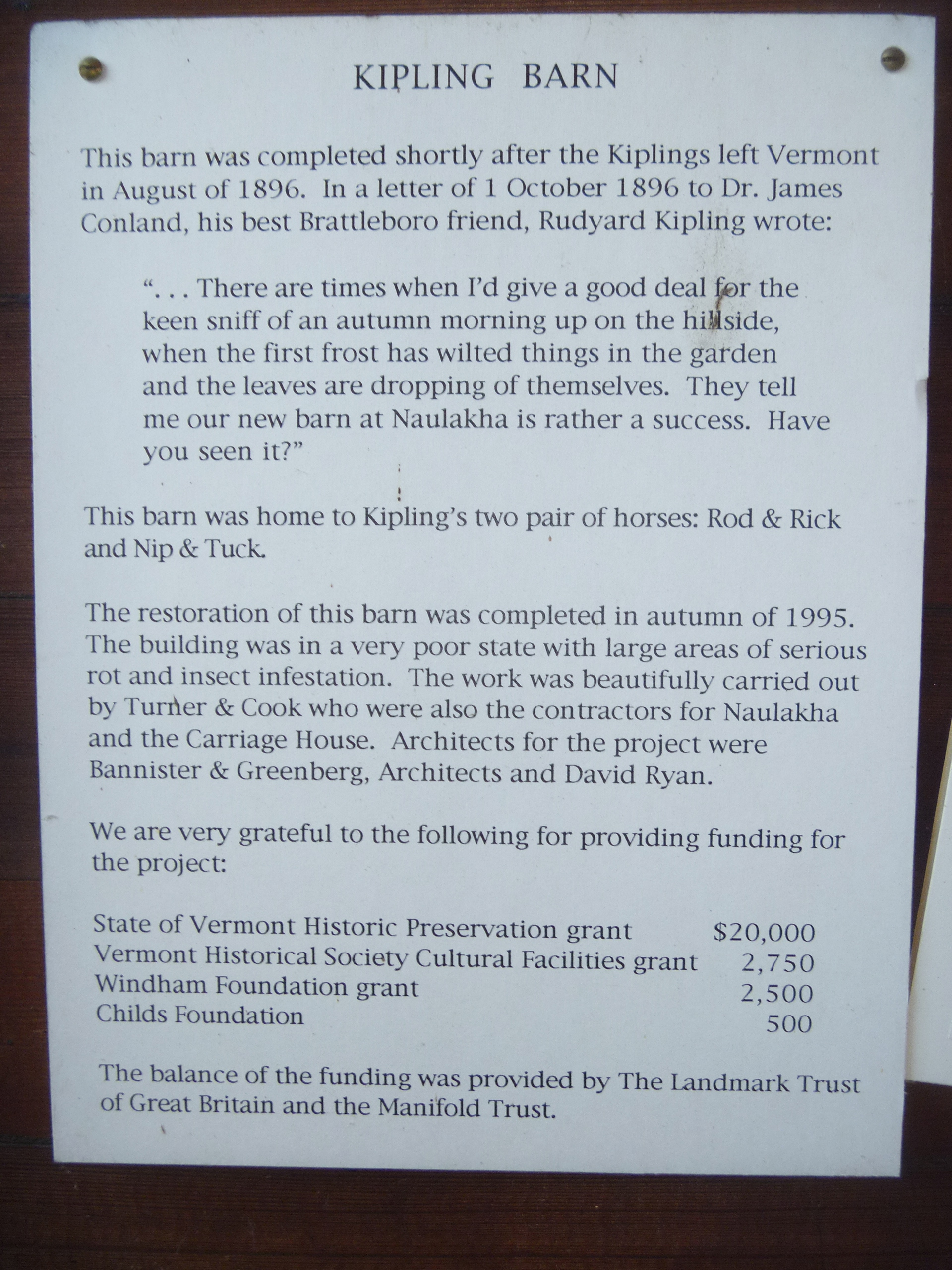
The Barn Museum really puts the story of the Kiplings and their time at Naulakha into perspective. Mostly it’s told on storyboards with copies of illustrations and typed out quotations.

There is more memorabilia in the Attic Display Cases.  Not everything dates from the Kipling era.

Top: Present day postcards and leaflet (my display!). Middle: Close up of the postcards and a postal first day cover. Bottom: The postcards display case.

Also in the attic is a double fronted bookcase containing many many volumes of Kipling biography and criticism. It’s a separate collection of British, US and some French books donated to Naulakha. Most of the information that I absorbed about the author and his New England home came from the box file of notes which contained the House Tour, the very detailed notes of submission for the house to be included on the [US] National Register of Historic Places and magazine and newspaper articles; from the museum information boards and from the 96 page The Hated Wife ; Carrie Kipling, 1862-1939 by Adam Nicolson and published in the short lives series by Short Books in 2001. Lent to me by a friend (and reader here) it sums up the Kipling life stories but left me still sympathetic to Caroline and, of course, their tragic lives which included the early deaths of two of their three children.

Rudyard Kipling never built any other homes for himself and eventually settled in a 17th century house in the Sussex Weald.  He lived there for 32 years from 1902 to 1936. Since 1940 it has been in the ownership of The National Trust. How I long to visit Bateman’s.

Josephine Kipling died of influenza in New York in 1899 as the family were on their way to visit Caroline’s mother in New England. Kipling was very ill at the same time  and after his recovery they returned to the UK. They were never to revisit New England and their beloved Naulakha was sold.
Do watch, if you haven’t already, the 2007 BBC film ‘My Boy Jack’.

‘My Boy Jack’

1914-18

 “HAVE you news of my boy Jack? “

Not this tide.
“When d’you think that he’ll come back?”
Not with this wind blowing, and this tide.
“Has any one else had word of him?”
Not this tide.
For what is sunk will hardly swim,
Not with this wind blowing, and this tide.

“Oh, dear, what comfort can I find?”
None this tide,
Nor any tide,
Except he did not shame his kind—
Not even with that wind blowing, and that tide.

Then hold your head up all the more,
This tide,
And every tide;
Because he was the son you bore,
And gave to that wind blowing and that tide.

So you see how Bliss turned to Tragedy for Rudyard and Carrie Kipling.

The Complete [Water] Works of Rudyard Kipling

Writing my description of the House Tour of Naulakha yesterday I purposely omitted any mention of bathrooms. I thought that they deserved a separate post of their own.

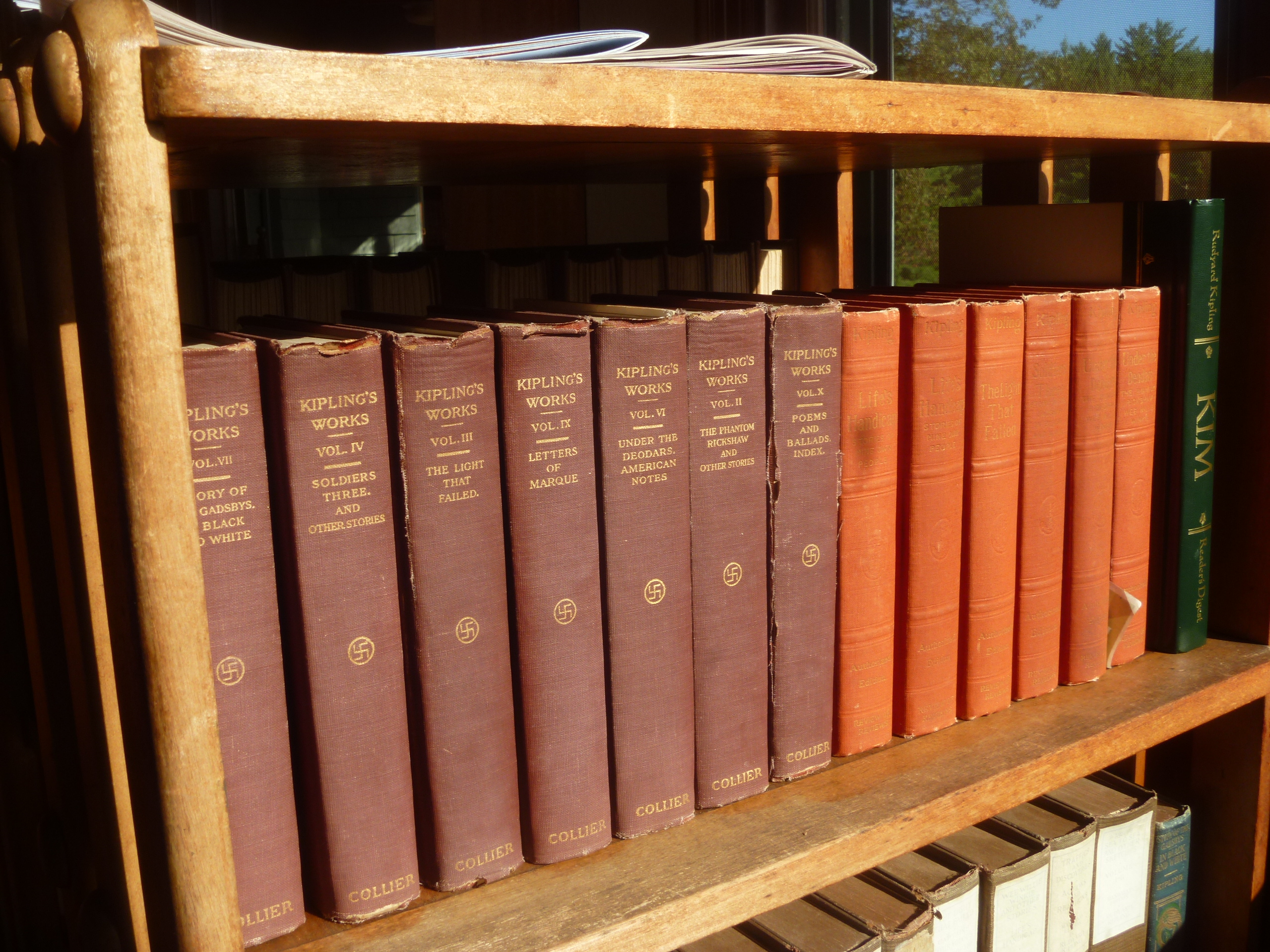
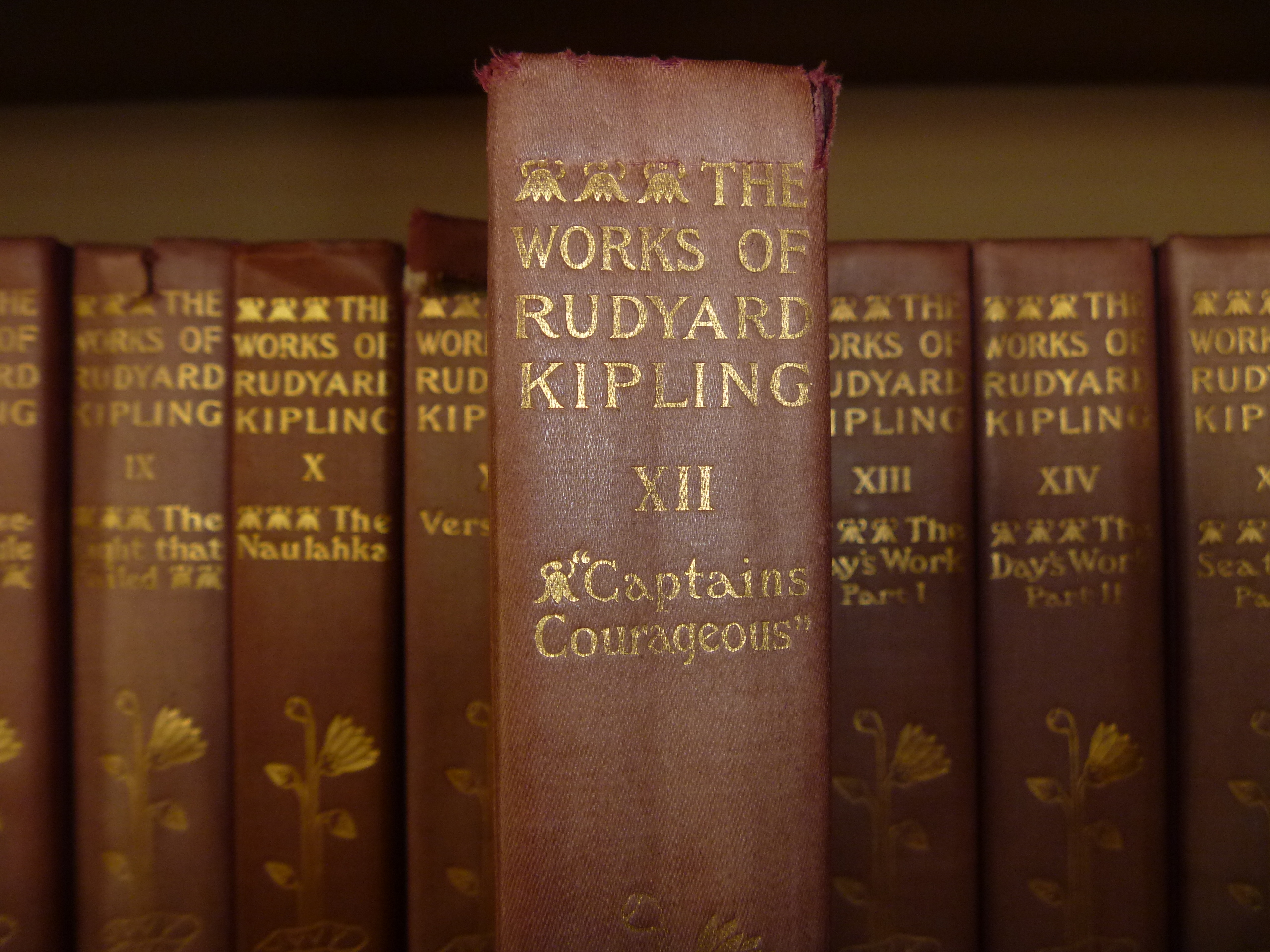
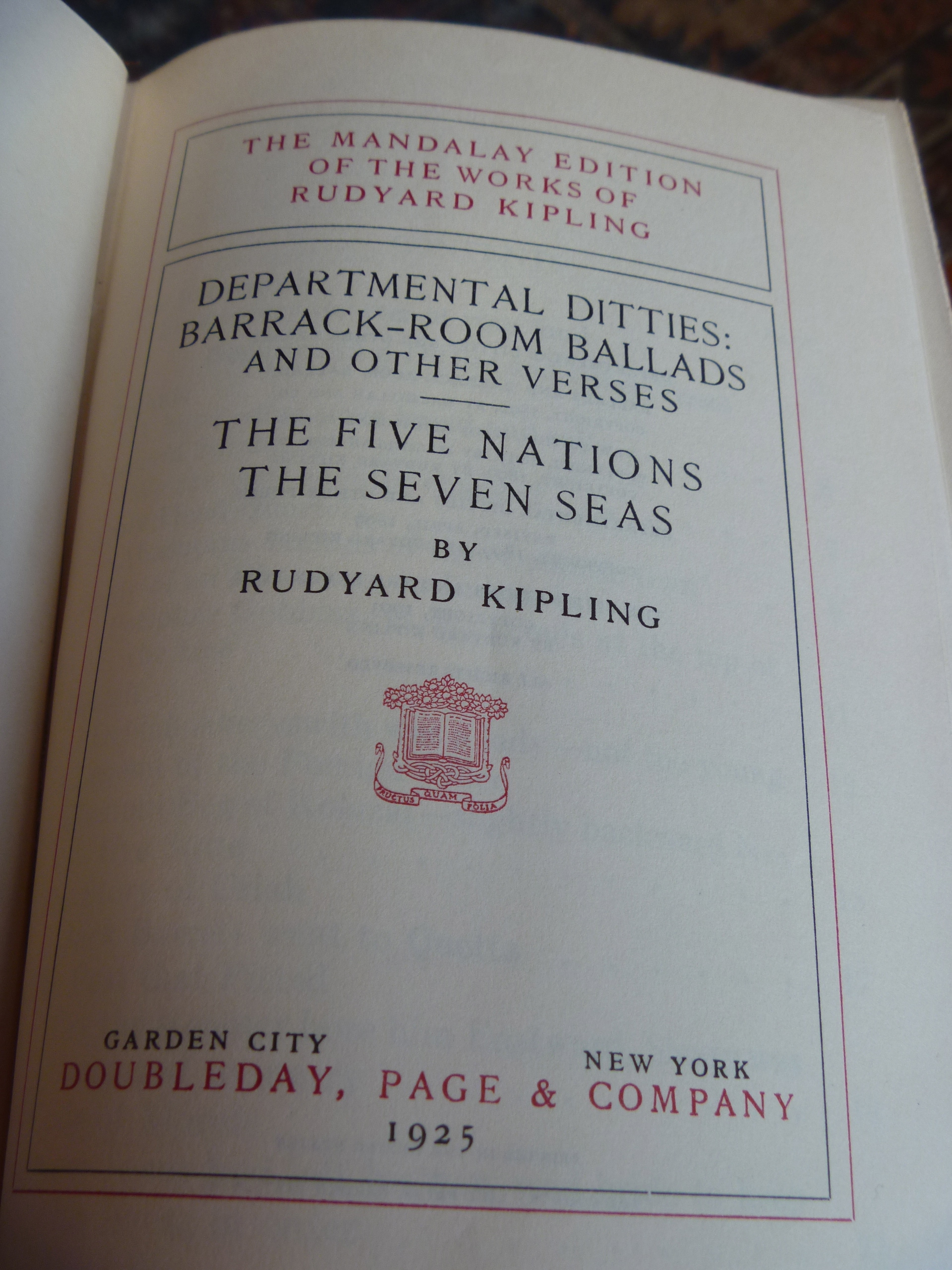
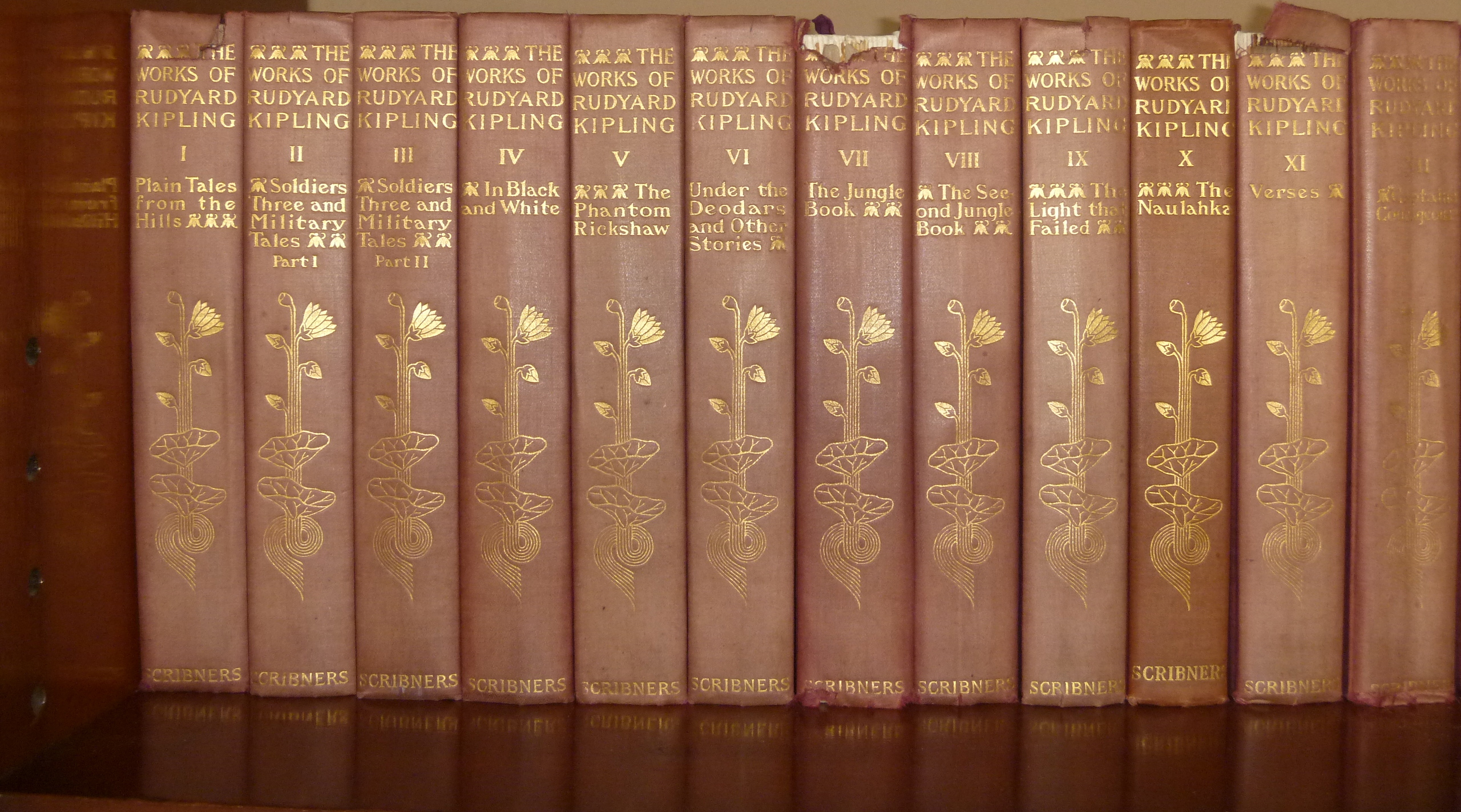
A quick deviation to books here before I start on bathroom descriptions. Compared with all other Landmarks that I’ve visited the library (like the house itself) is h-u-g-e. In fact, it could be called a library (as in room) if it were not already called a study. Bookshelves fill all wall space not already occupied by desk, couch and fireplace. There is the usual couple of shelves of local and house related books but in addition there are full sets of classic authors – Hawthorne, Austen, Scott – unfortunately no Edith Wharton (more about her later) and there are many ‘old’, but no less interesting I’m sure, books. In addition there are, as you might suppose, several runs of The Complete Works of Rudyard Kipling.

From the House Tour notes :

CENTRAL BATHROOMS

The Kiplings had one L-shaped bathroom. The Holbrooks divided this in two and made a pair of complete bathrooms. We left the latter arrangement as more suitable to modern usage. The toilet in the middle bath and the tub in the south bath are original.

We didn’t dare to use it!

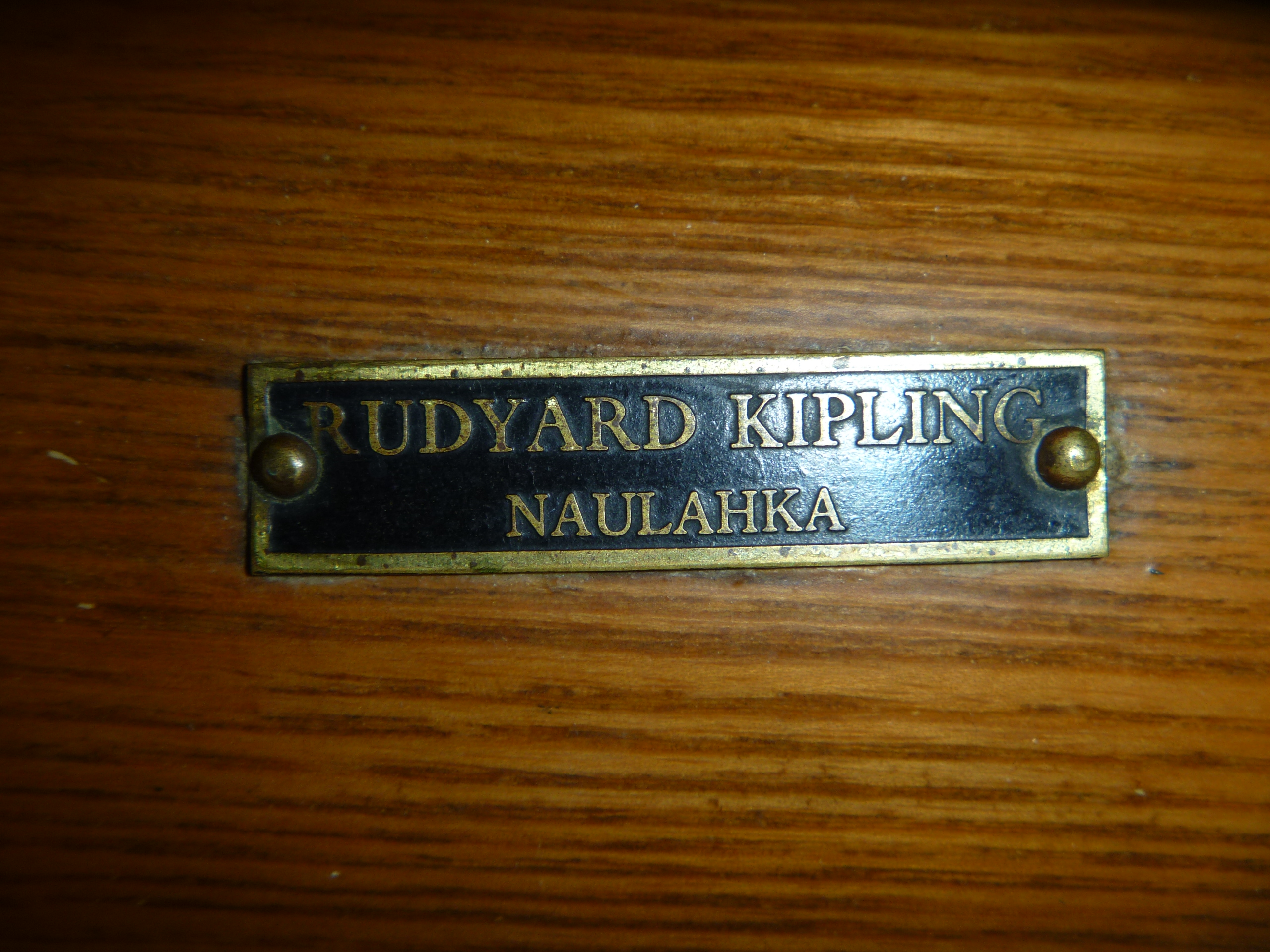
We know it’s RK’s bath because it has his nameplate on it :

The fixtures all required re-nickeling.

One of the servant’s rooms was converted to a bathroom by the Holbrooks. The Trust removed the concrete floor that had been installed during these alterations, and replaced it with tile in a typical turn-of-the-century design.

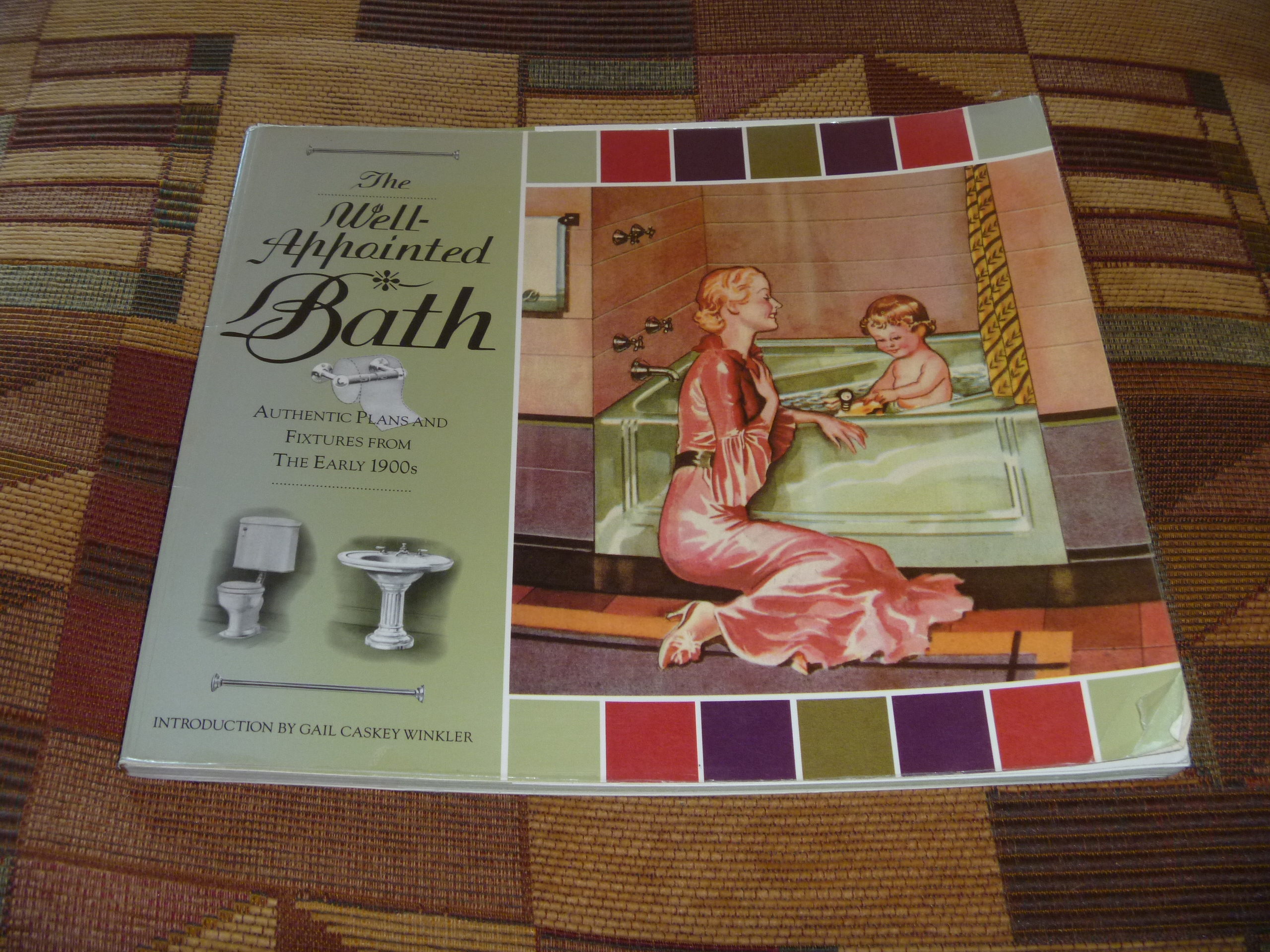
In amongst the local/house related books I found :

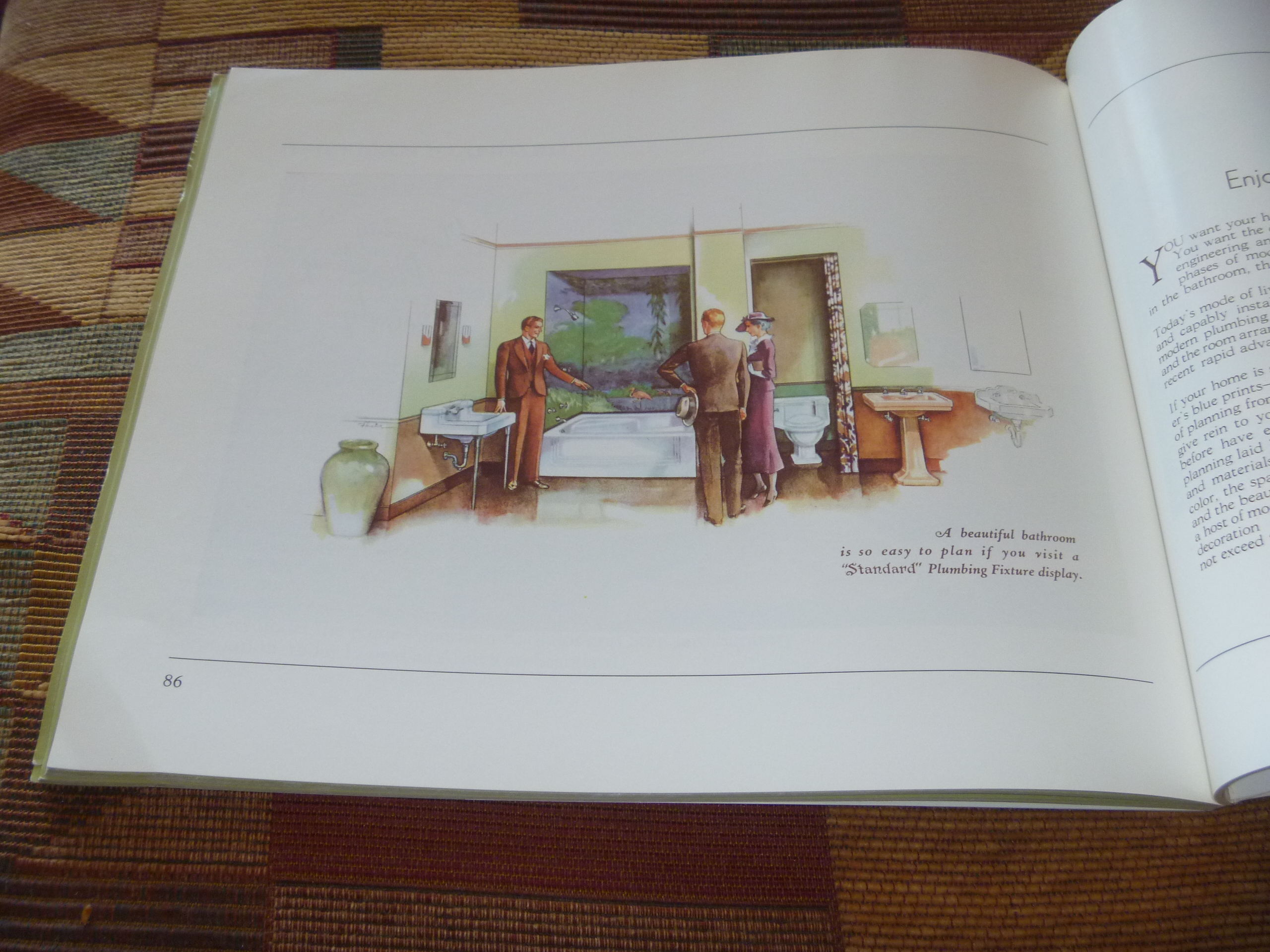
It’s a fascinating study of bathrooms but I can’t believe it dates all the way back to the early 1900s. It’s a reprint, but even so … I’m sure this would not be Rudyard Kipling choosing his sanitary wear.

Or even the Holbrooks – theirs is far too complicated :

Naulakha : a tour of Rudyard Kipling’s New England home

For a whole week from 7th to 14th September I was immersed in Kiplingiana. I stayed at Naulakha near Brattleboro Vermont and enjoyed chota pegs on Rudyard Kipling’s verandah, ate vegetable curry at his dining table, slept in his (and his wife Carrie’s) bedroom, relaxed in his bath, read his books in the study where he wrote some of them and wrote postcards home from his desk for Naulakha is a Landmark Trust USA property and anyone can book to stay to there.

In a box file in the study is a typescript House Tour Guide so I have adapted this and added my own photographs in order to take you on a tour of this wonderful house.

BACKGROUND

Naulakha is a Hindi word that means ‘great jewel’. It was built in 1892-1893 on an 11 acre plot that the Kiplings bought from Beatty Balestier, Mrs Kipling’s brother. Henry Rutgers Marshall of New York was the architect who carried out Rudyard Kipling’s wishes. The house, described as a ship by  Kipling, is 90 feet by 22 feet with the rooms facing the lovely view over the Connecticut River valley; a hallway runs along the uphill side.The windows are  large and were called “lavish and wide” by Kipling. The house cost just over $11,000 and is the only one built by Kipling.

ENTRY HALL AND LOGGIA

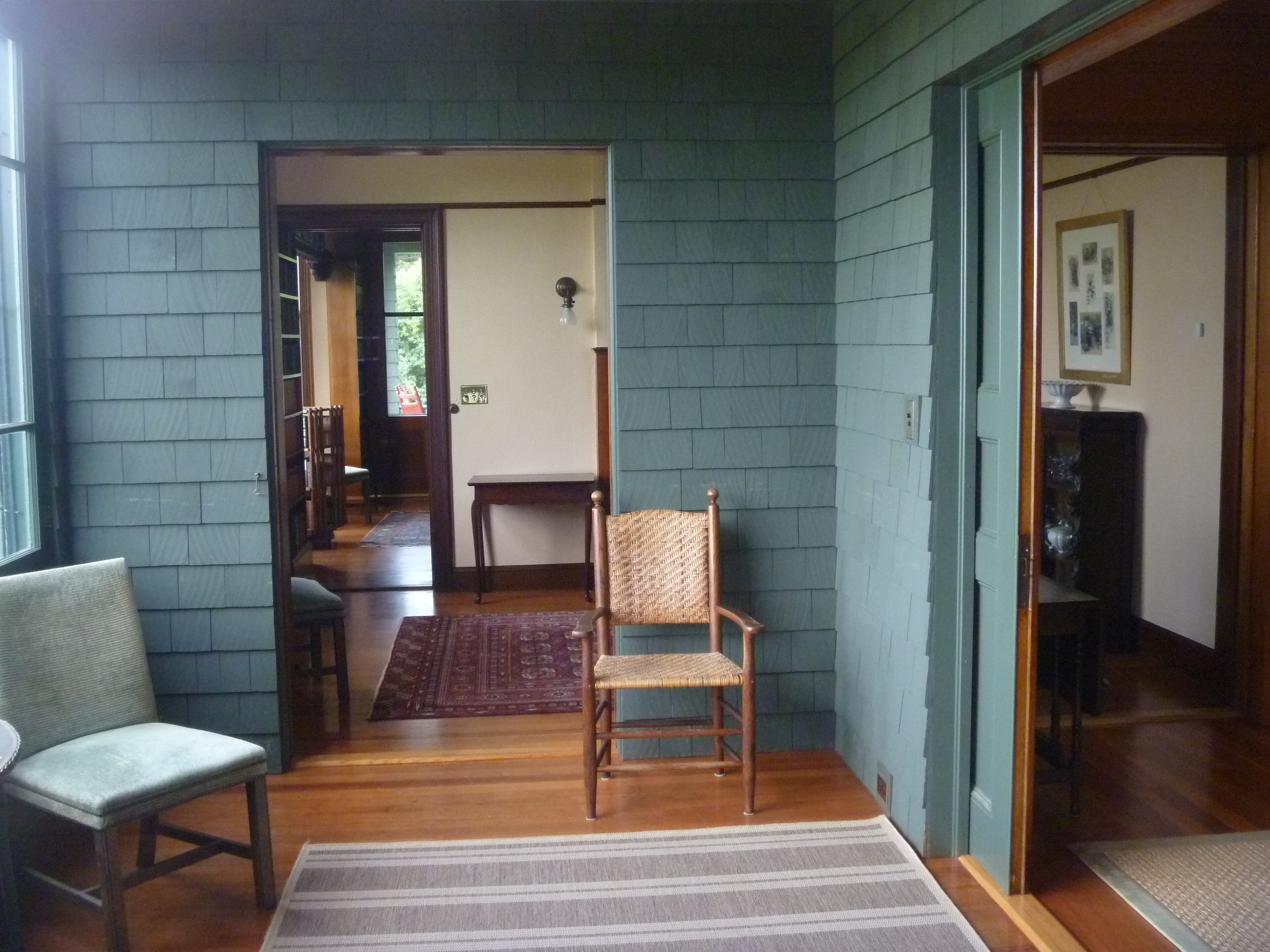
The interior walls forming these rooms were removed by later owners, the Holbrooks, in order to create a large, open central space. Rudyard Kipling himself said that the Loggia was “the joy of the house” so its reinstatement was important. Fortunately, the original pocket doors and ash panelling were discovered in a barn up the road. The two brown wicker chairs are original.

MRS KIPLING’S STUDY

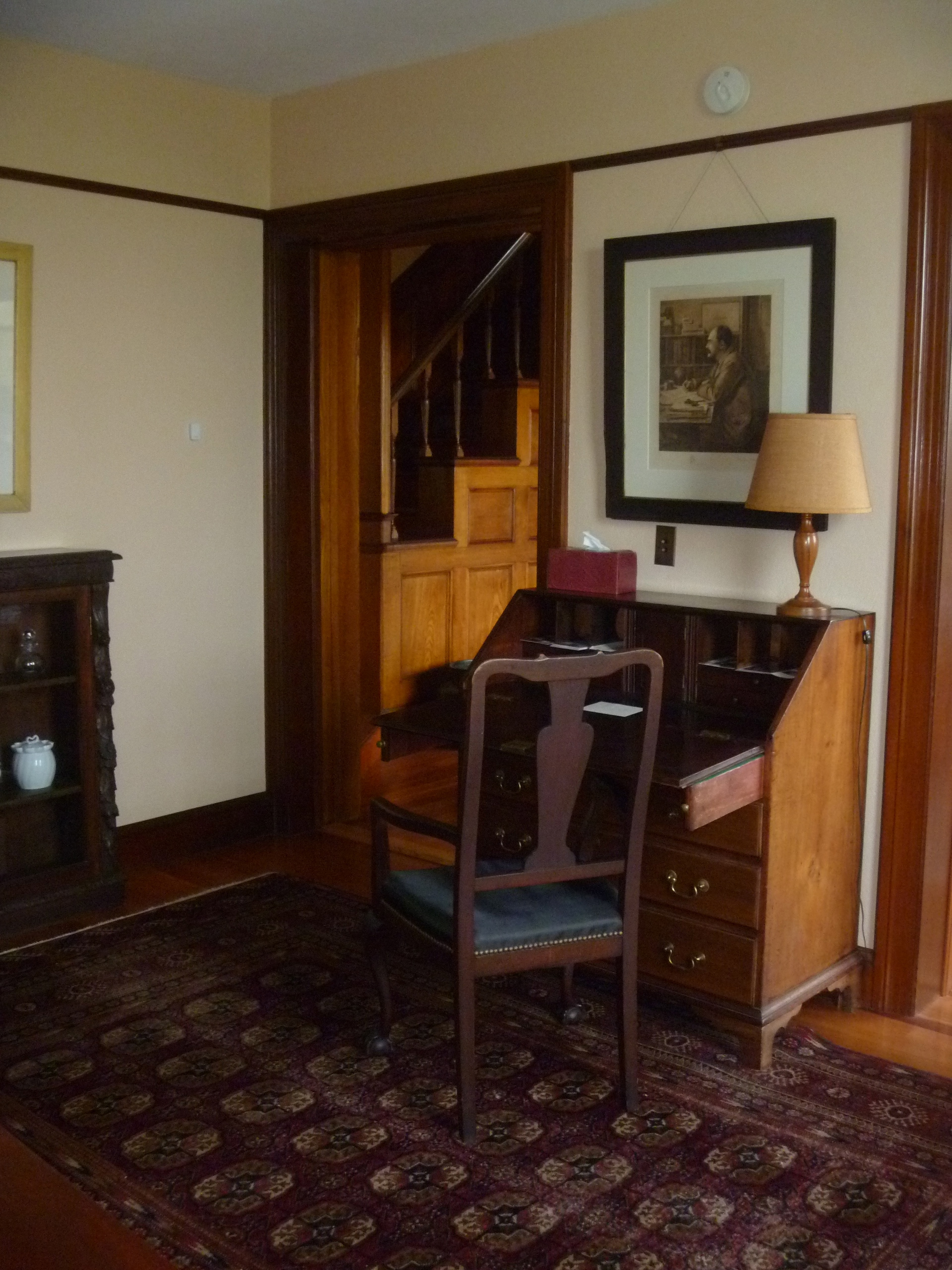
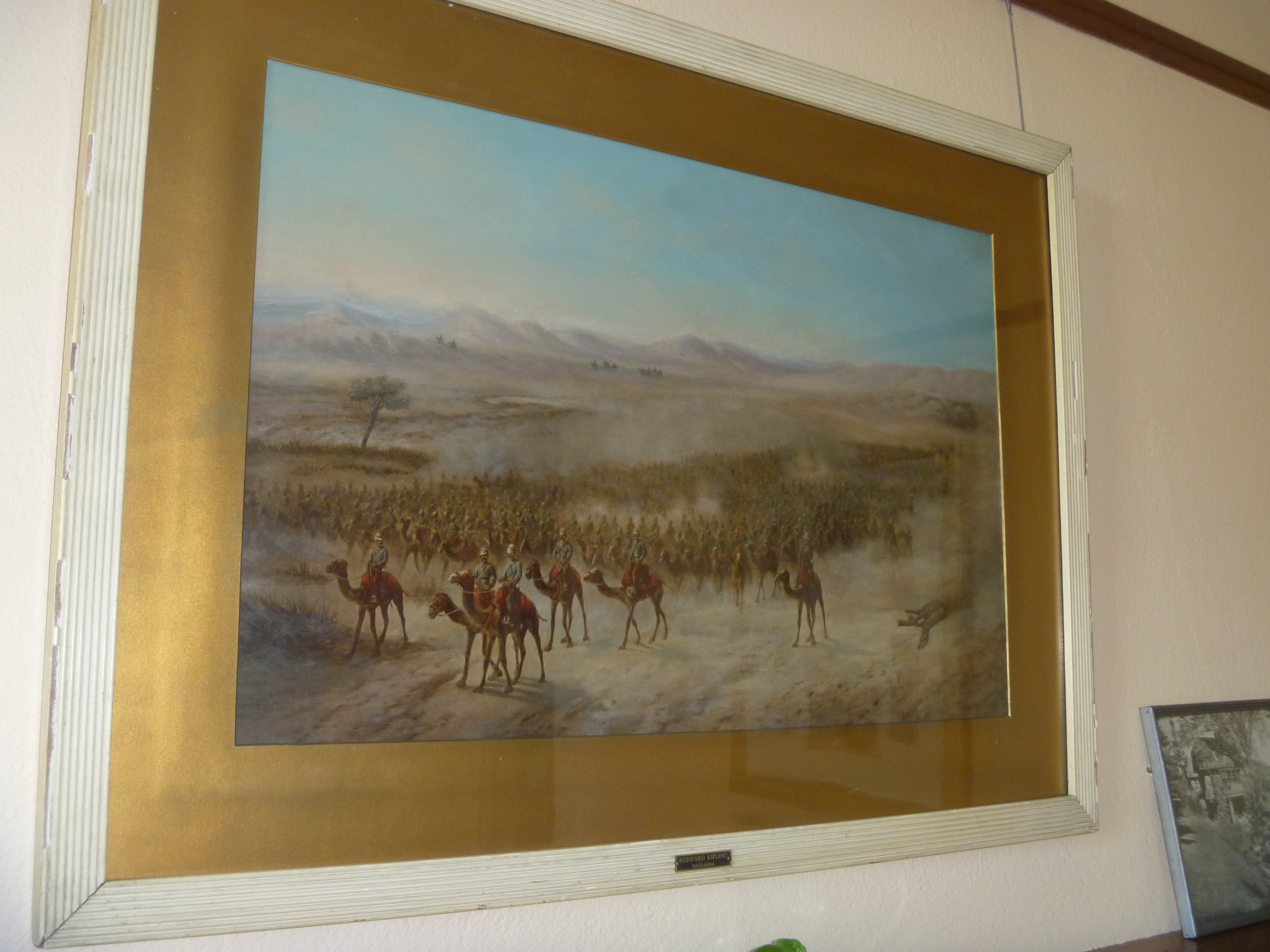
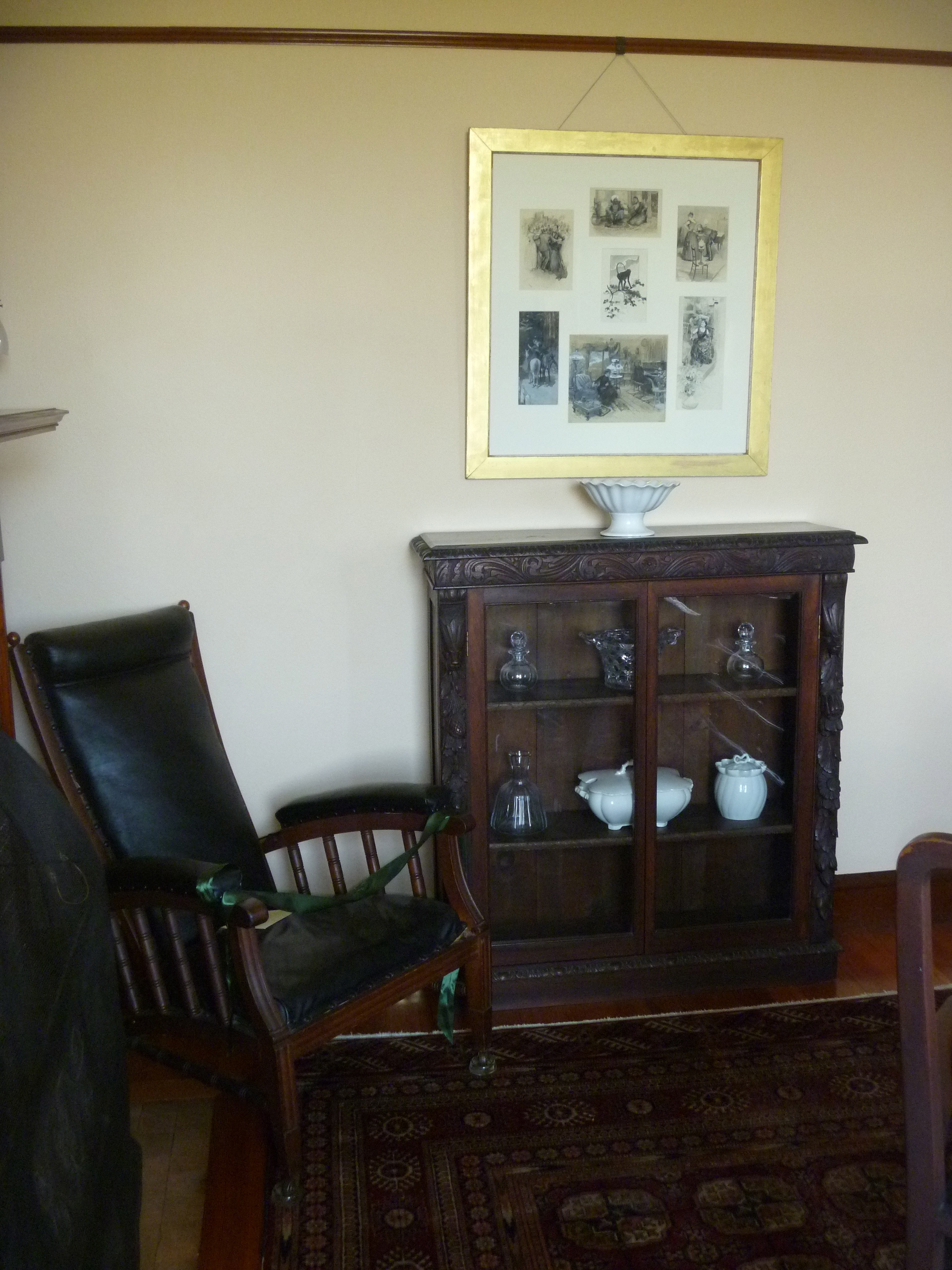
Visitors wishing to see Rudyard had to pass through this room. Carrie diligently protected her husband’s work time and privacy – so effective was Mrs K that this became known as the ‘dragon’s chamber’. The picture ‘The camel corps’ and illustrations from Mrs Hauksbee stories are original.

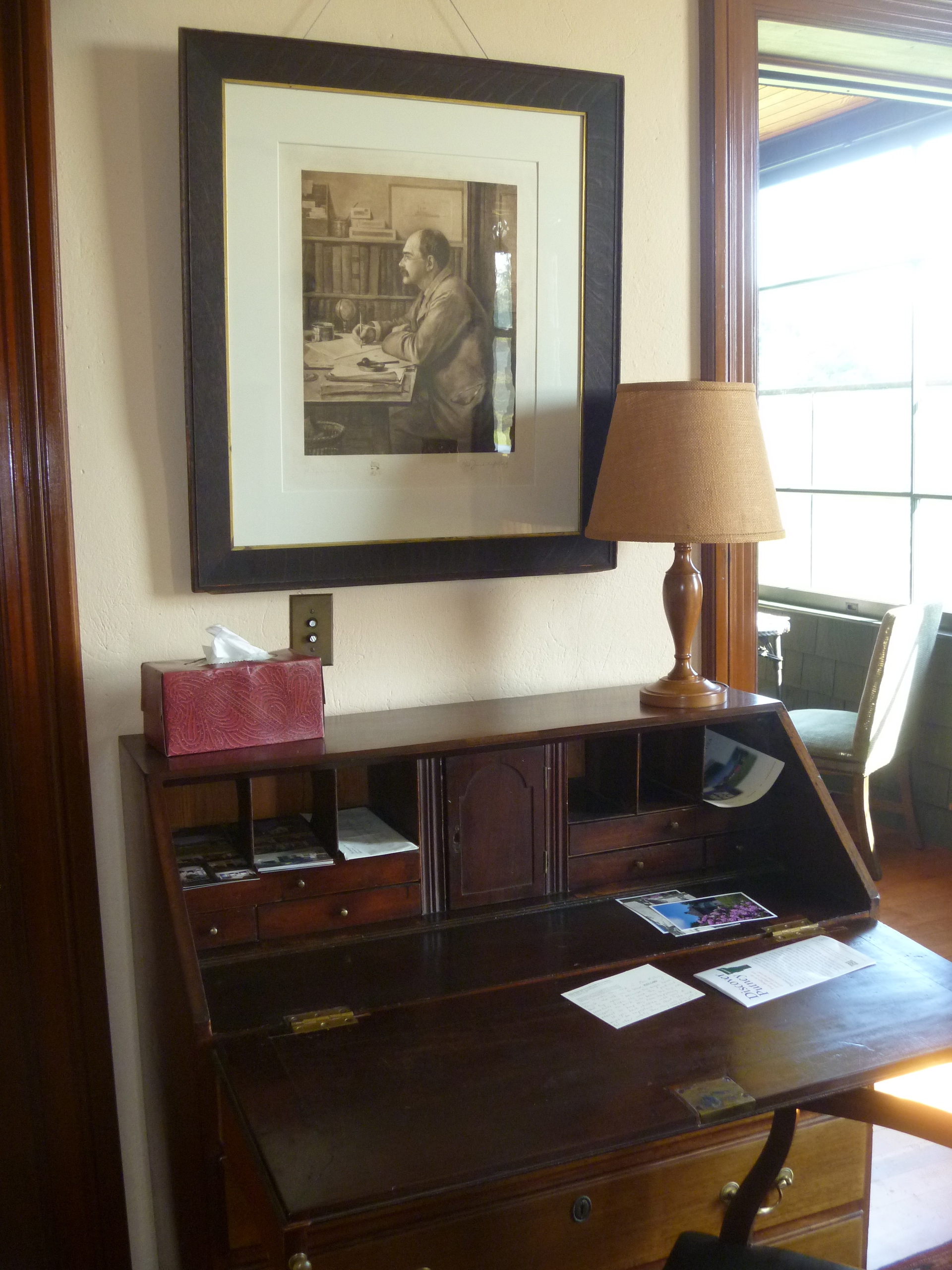
The lithograph of Kipling is based on the oil painting by his cousin Philip Burne-Jones which now hangs in the National Portrait Gallery in London. Philip and Rudyard made this lithograph.

RUDYARD KIPLING’S STUDY

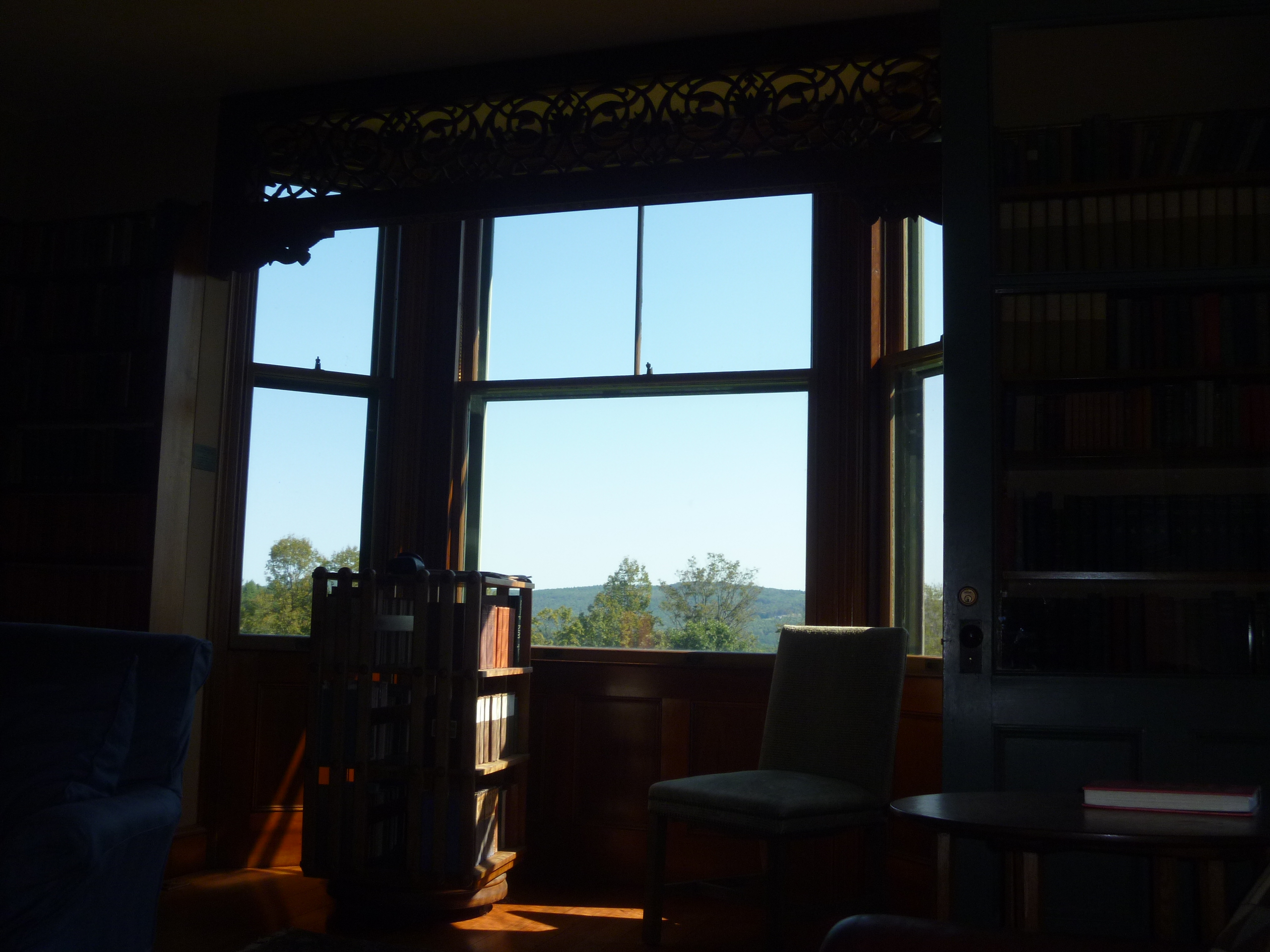
Most of the bookcases are original including the revolving case. The inscription over the fireplace was done in 1893 by Rudyard’s father, John Lockwood Kipling and is from the Gospel of St John.

“The Night Cometh When No Man Can Work”

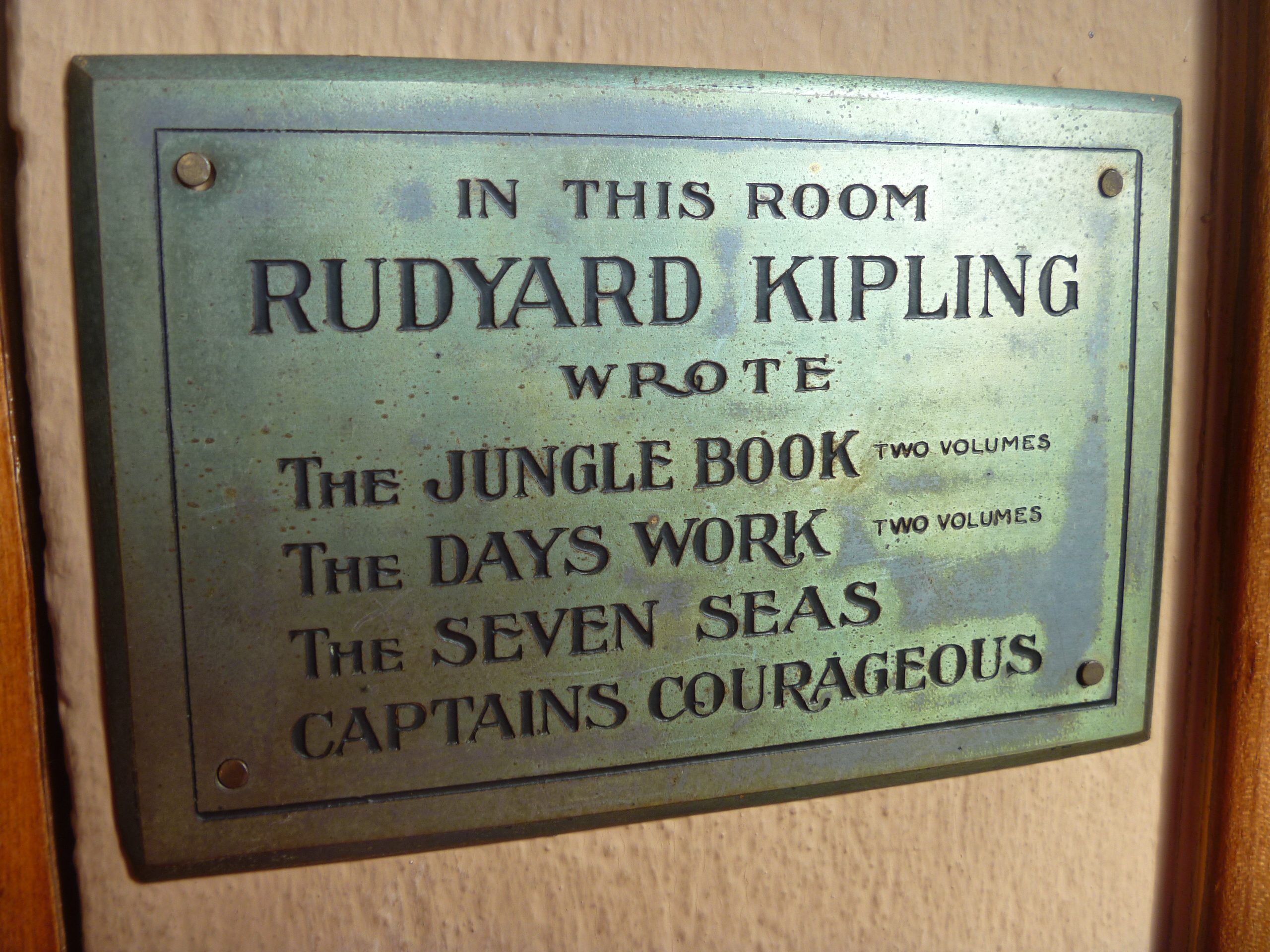
In this room Rudyard Kipling wrote the Jungle Books, Captains Courageous, A Day’s Work and The Seven Seas. He also began Kim and the Just So Stories.

The original leather couch is too frail to leave out. The decorative screen in the bay window is likely from Kashmir. The bookcases and stained glass panels on the west wall were added to ensure privacy.

MAIN STAIRCASE

This is the original oil light fixture, later electrified by the Holbrooks. Most of the pictures on the first floor landing are original.

GUEST BEDROOM

At the top of the main flight of stairs is the main guest room. Sir Arthur Conan Doyle and William James (brother of novelist Henry) are two famous guests who have slept here.

MASTER BEDROOM

This was the bedroom of Rudyard and Carrie Kipling.

NURSERY

This is divided into the day and the night nurseries. The decorative plaster work in the day nursery was done by John Lockwood Kipling for his first granddaughter, Josephine. It was for Josephine that the Just So Stories were composed. Jospehine was born down the road at Bliss Cottage in 1892. Elsie Kipling was born in Naulakha in 1896.

ATTIC

There is a large playroom used by the Kiplings (still a games room today) and a small bedroom (now houses display cases and a book collection) probably used by the maid.

SERVANTS ROOMS

The north end of the house was for servants’ use. One of the sernants’ bedrooms was converted to a bathroom by the Holbrooks. The bedroom furniture is not original. There are no records of how these rooms were furnished.

KITCHEN

The layout is original including the stove hood and hearth stone. The small windows to the east of the stove allowed light but did not allow the servants to see the Kiplings on the small porch. The Holbrooks used this room as a study and moved the kitchen to the basement. The Trust have restored it to its original ground floor location.

DINING ROOM

The table and china cabinet are original The sideboard was built for the Kiplings in New York with panels brought from India. Most of the dining chairs are too fragile to use and were, in fact, broken over the years; they are currently in storage. The stained glass is original except for one panel which was broken. The small porch was built as a fun space and gives the feeling of being on a ship’s deck.

THE GROUNDS

The tennis court and small gazebo (called ‘the summerhouse’ by the Kiplings) were built by the Kiplings.

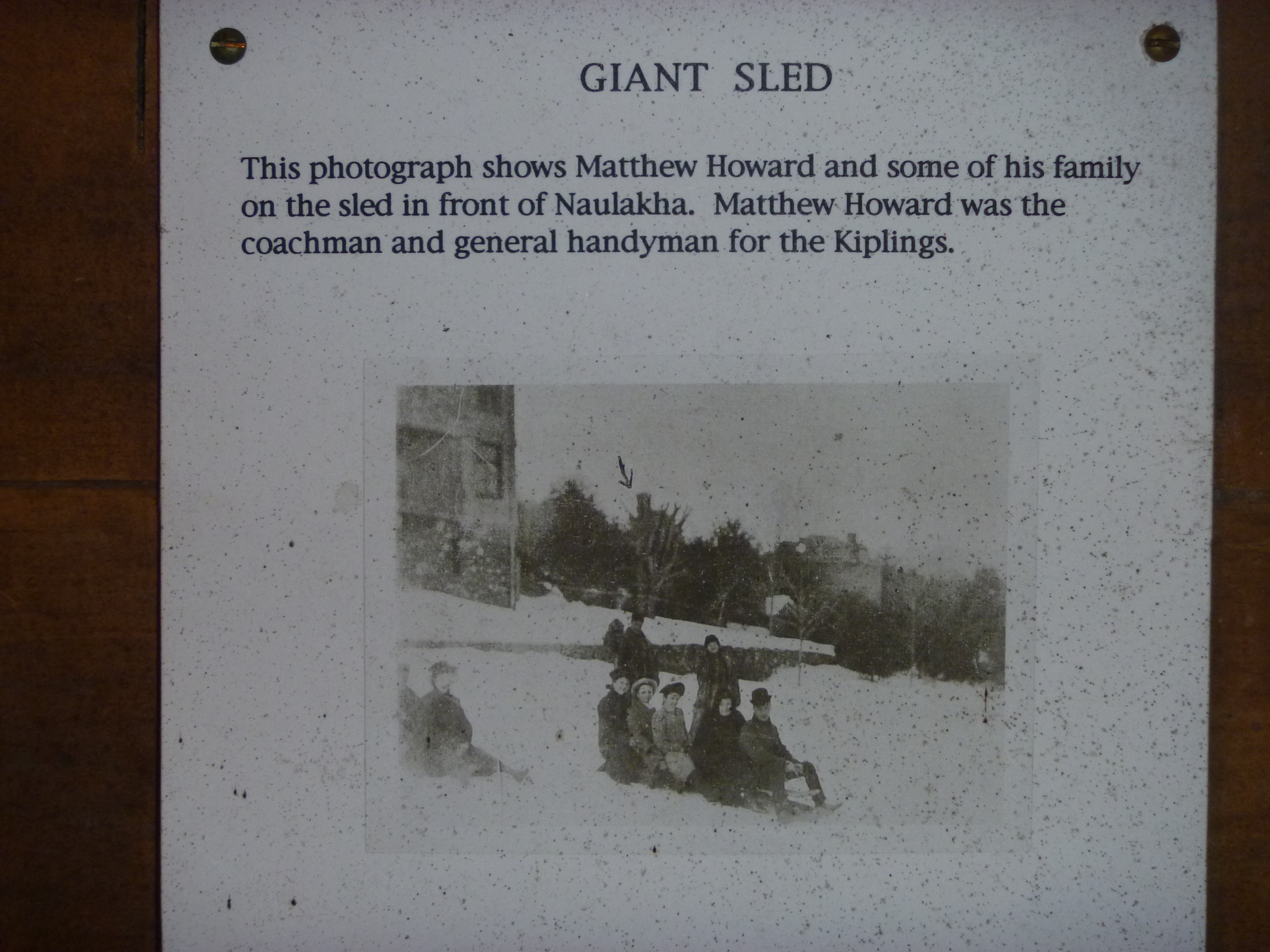
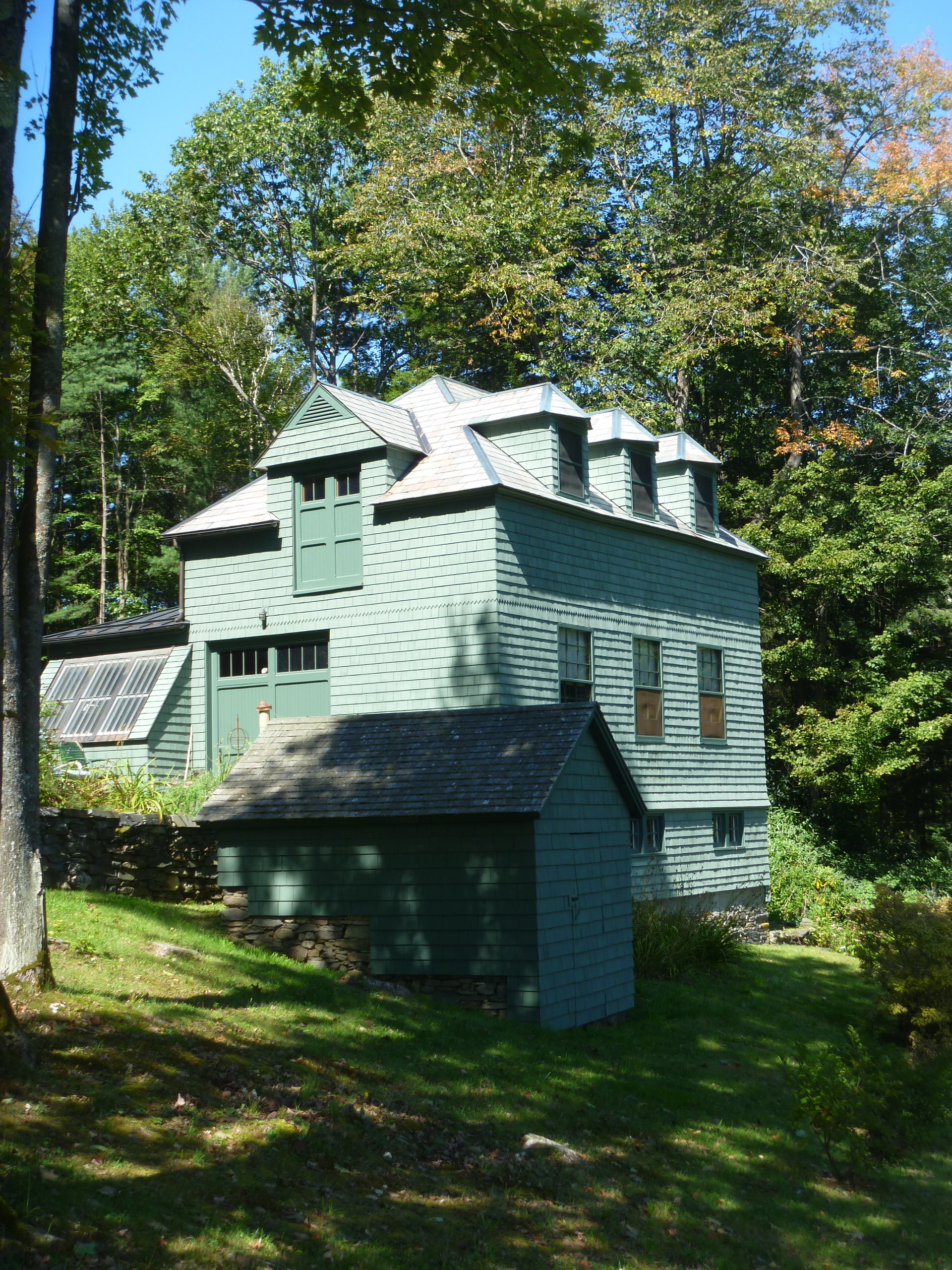
The small gabled building along the driveway was the Kiplings’ ice house. The house behind was originally the carriage house with living quarters above for the coachman, Matthew Howard, and his family.

The barn, which now houses displays of Kipling’s years in Vermont, was built by the Kiplings in 1896. No other buildings are from the time of the Kiplings. The layout of the garden walls is the same as for the Kiplings, although all of the walls have collapsed at different times over the years and been rebuilt.

The House that Mrs Jack Built

“Years ago I decided that the greatest need in our Country was Art… We were a very young country and had very few opportunities of seeing beautiful things, works of art… So, I determined to make it my life’s work if I could.” Isabella Stewart Gardner, 1917.

One of the loveliest and most interesting art museums that I have ever visited is just a few stops on the ‘T’ from downtown Boston.

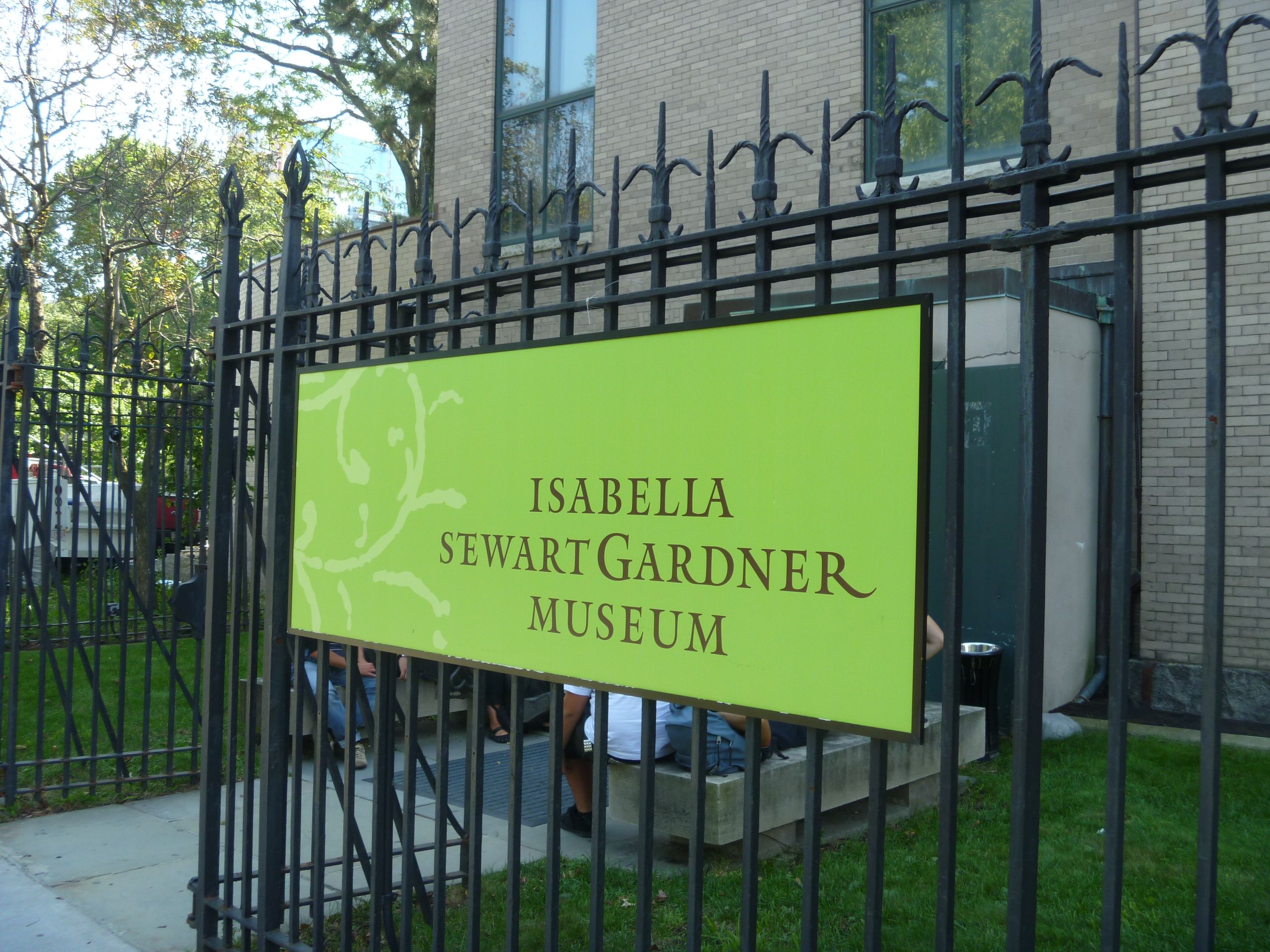
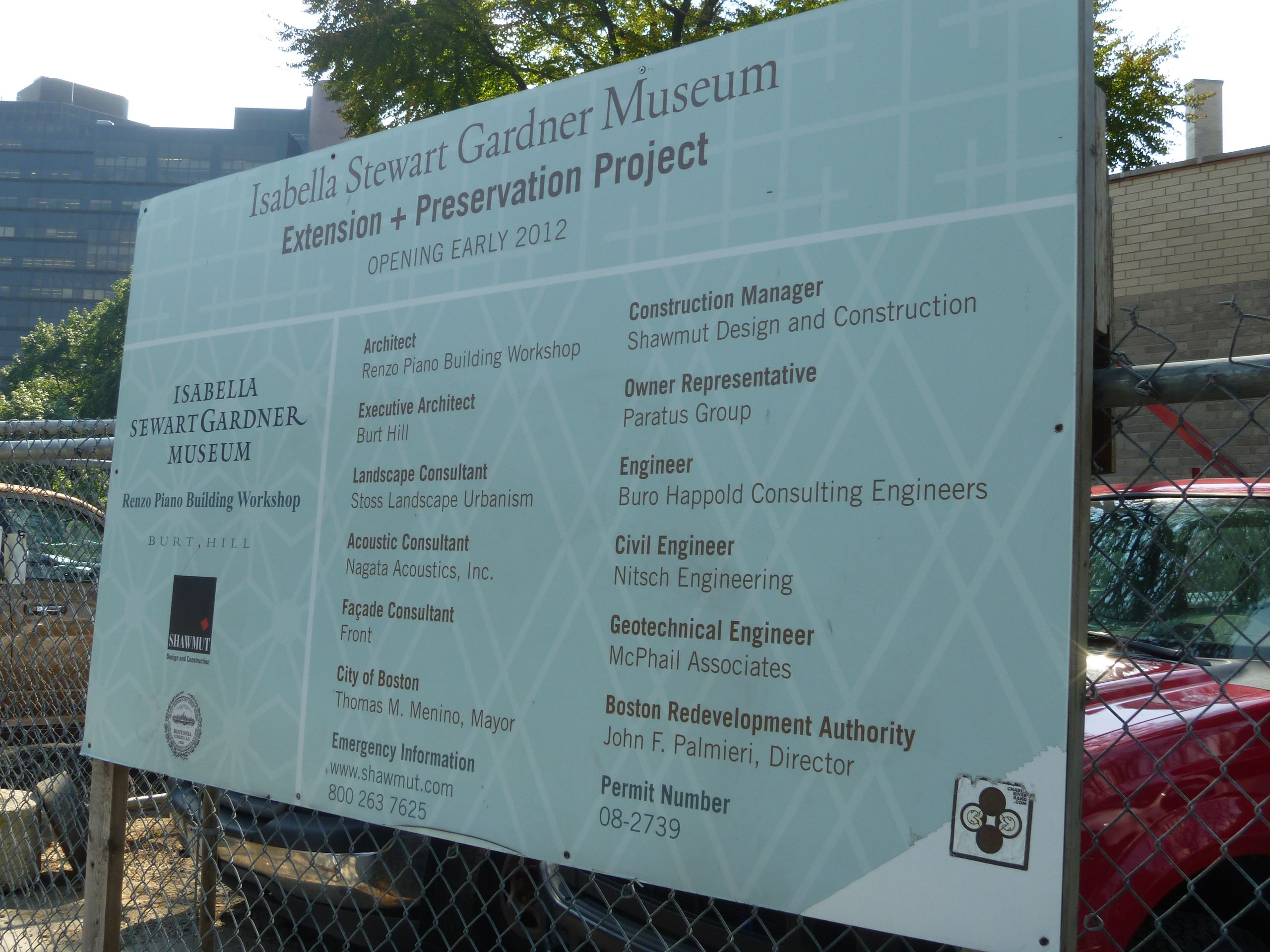
The Isabella Stewart Gardner Museum is currently undergoing change. Not too sure what Mrs Jack Gardner would make of that but there you go. We’re told on the audio guide that she planned the whole place herself from the building to the purchase of the works of art themselves to where she meant them to hang and then left strict instructions that that was how it was to stay.

Isabella Stewart was born in 1840 in New York and married John (‘Jack’) Gardner in 1860. They travelled widely and ‘Mrs Jack’ developed an interest in art which turned into a passion for collecting after her father left her his entire fortune when he died in 1891. Jack died in 1898 and she continued to collect, purchasing some land on Fenway and designing and planning the museum just as it is today. It opened to the public in 1903. She died in 1924.

Photo from ISGM website

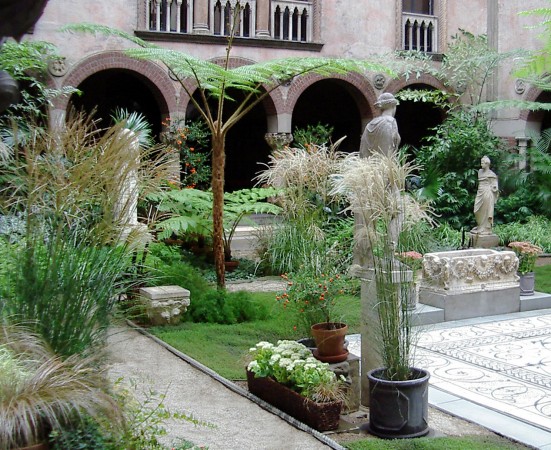
The Museum centres on the dramatic Japanese-style courtyard full of greenery and mosaic tiles which is in such great contrast to the darker rooms through which you approach it. On three floors each room has a theme of its own from The Titian Room to the Blue Room and the Yellow Room through to a Tapestry Room and a Gothic Room. Due to the work going on just now some of the rooms were closed and others had items removed.

My favourite room was the Dutch Room where an early Rembrandt self portrait hangs.

Photo from ISGM website

But when you enter the Dutch Room you are also in for a shock. There on the wall hangs an empty frame – where once Rembrandt’s ‘Storm on the Sea of Galilee’ was hanging. In 1990 the ISGM was victim of the largest single property theft in the world. None of the works of art has yet been recovered.

Also due to all the building works going on the shop and cafe are both closed. There were just two books for sale:

The Yale Guide, by H. T. Goldfarb and a biography of Mrs Jack by Louise Hall Tharp. No fridge magnets, no rubbers, no pens and not even one postcard!

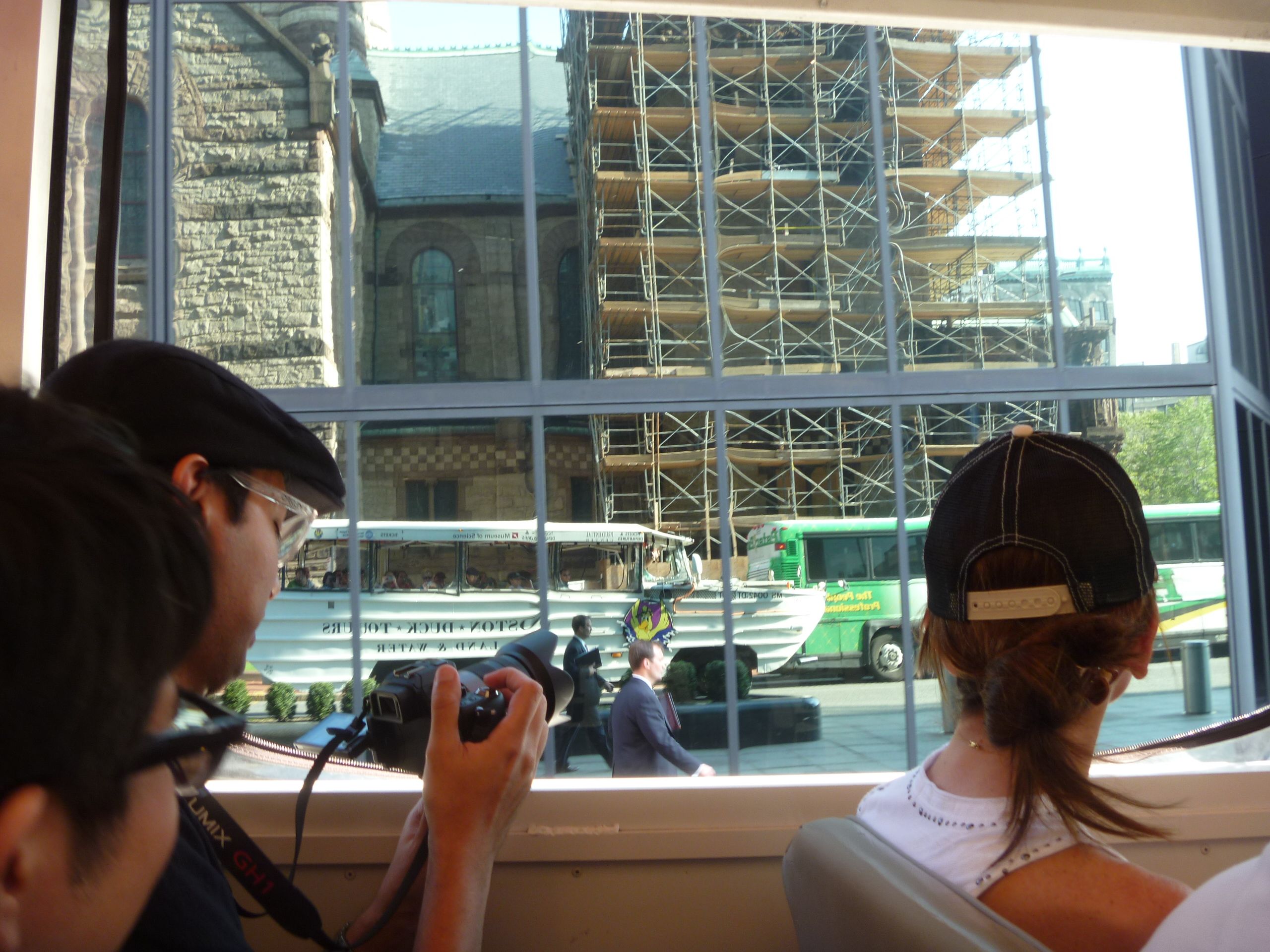
Then, from the sublime to the ridiculous, I fulfilled a long term wish of mine since first seeing it in 1995 – I went on DUCK TOUR!

There we are reflected in office windows on Copley Square!

My Historic Maine Coast 2

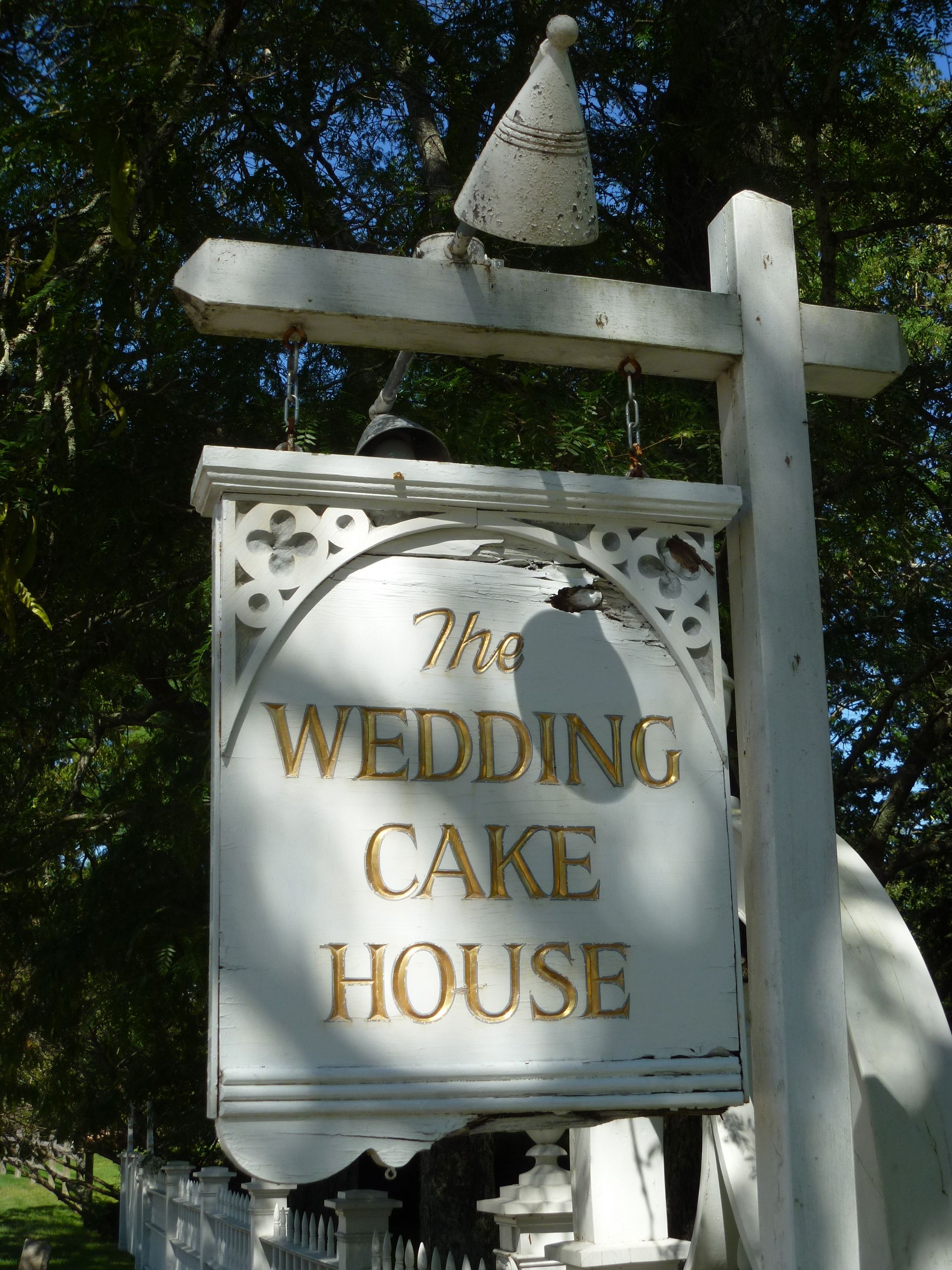
The Wedding Cake House in Kennebunk is said to be one of the most photographed houses in Maine and you can certainly see why!

The local myth is that it was built by a sea captain for his bride as an apology for leaving for his ship before the ceremony reached the cutting-the-cake stage! It’s a private home so not open to the public at all but I understand that a fund-raising event was held a few years back in aid of Hurricane Katrina victims.

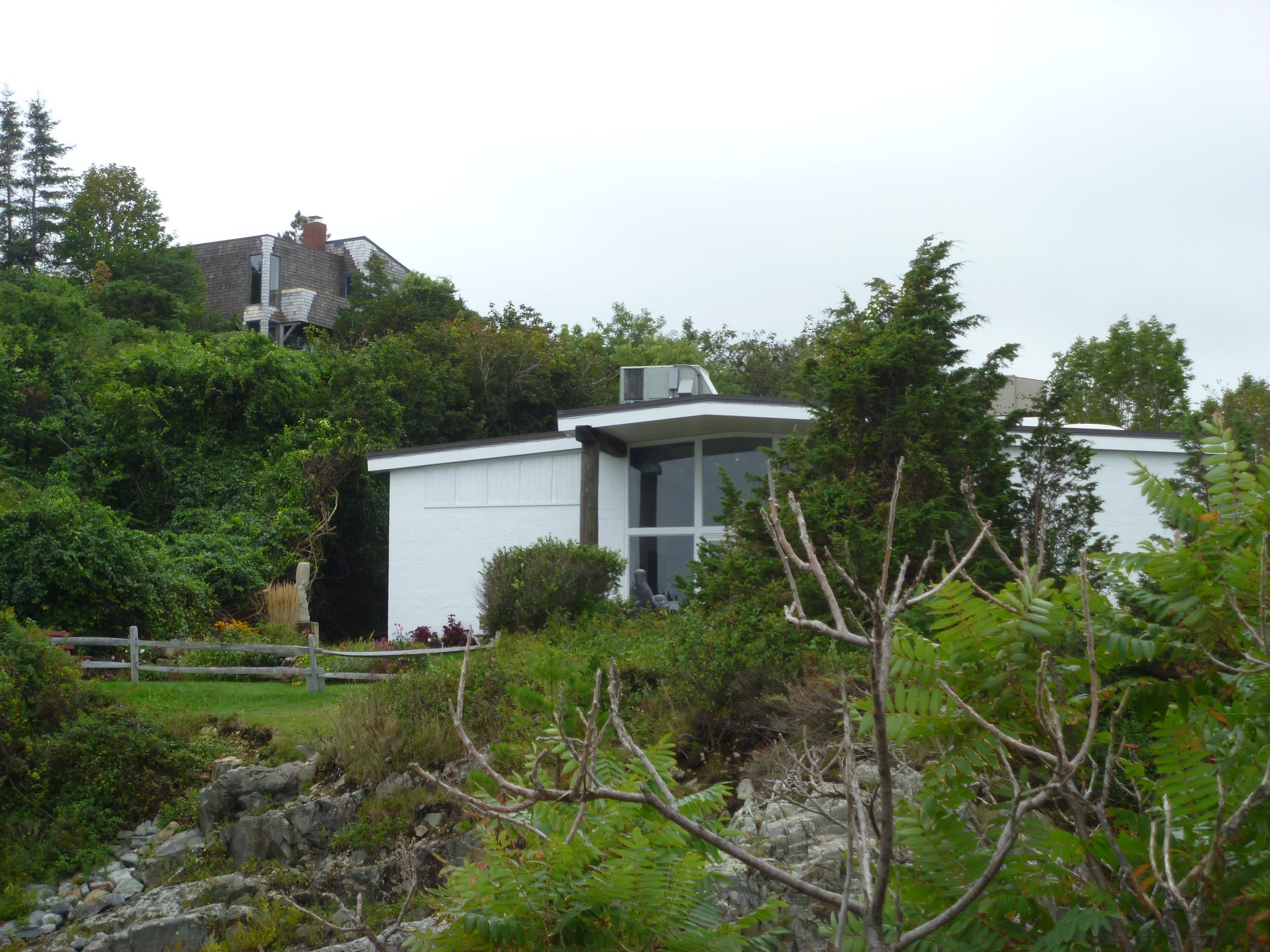
The Ogunquit Museum of American Art is the least historic of my selection of Historic Maine Coast visits. The Museum first opened in 1953 but has been extended since. Artist Henry Strater founded the Museum at 543 Shore Road, Ogunquit by first buying the Ocean facing plot of land on which it stands in 1950. Ogunquit and the Maine Coast area had long been the haunt of artists – an Ogunquit Art Colony was founded here in 1898.

In 2009 we visited The Portland Museum of Art and it was an exhibition there “Call of the Coast: exploring art colonies of New England” that drew my attention to the significant contribution of the Ogunquit colony to the American art scene in the 20th century.

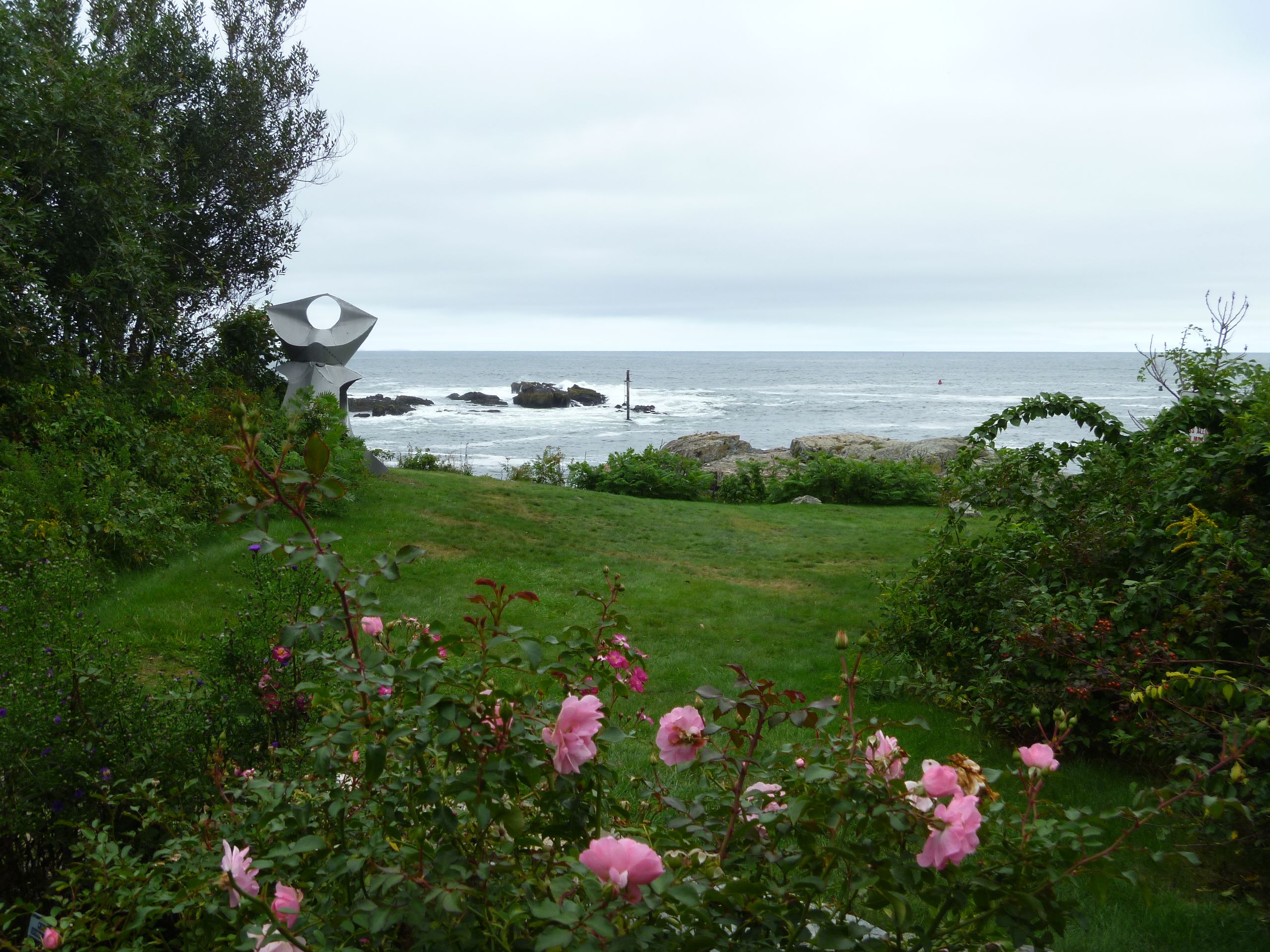
The Museum is surrounded by beautiful sculpture gardens with a wonderful view of the Ocean. The Museum and Gardens are a delight to visit during the Summer months and it is no surprise that it rates as one of the finest small art museums in the United States.

My Historic Maine Coast 1


” The last day of October in 1777, Colonel Jonathan Hamilton came out of his high house on the river bank with a handsome, impatient company of guests, all Berwick gentlemen. They stood on the flagstones, watching a coming boat that was just within sight under the shadow of the pines of the farther shore, and eagerly passed from hand to hand a spyglass covered with worn red morocco leather

‘The Tory Lover’ by Sarah Orne Jewett (1901)

Hamilton House is another property of Historic New England. This beautiful house is situated overlooking a peaceful and very wide stretch of the Salmon Falls River, just a couple of miles outside the town of South Berwick, Maine. It wasn’t always like this. When it was built in 1785 Jonathan Hamilton’s graceful Georgian home overlooked his busy shipping and ship building business and quayside.
The decor of the house today reflects the more recent ownership of Emily Tyson and her stepdaughter Elise. The Tysons made it their summer retreat during the late 19th and early 20th centuries. This “Colonial Revival” style characterises the house today. Again no photography is allowed inside but it’s a large, light and airy summer house with breathtaking painted murals on the walls of the downstairs reception rooms. There are antiques, hooked rugs and other handcrafted decorative arts in all rooms.

The house has limited opening hours but the beautiful garden is free for all to visit and admire daily from dawn to dusk.

Sayward-Wheeler House is in York Harbor and like The Hamilton House stands on a bank above a wide river – in this case the York River.

On the obligatory house tour we are told that this house is unique amongst all 36 Historic New England properties in that it is the least changed over the centuries with virtually all its original furnishings, including wall coverings, in tact. The most curious room in the house is the Parlour where the larger items of furniture (that can be dated back to when the house was built) never fitted properly! A clock has had its finials removed, a cabinet, too tall for the room, had its pediment removed and it’s always been a mystery as to how the sideboard ever got into the room in the first place – by its dimensions it could not fit through any of the room’s doorways in any direction!

In The Country of The Pointed Firs

Just before leaving for my trip to New England I discovered the existence of an organisation that sounded like just my cup of tea: Historic New England. A close study of the website lead me to list 3 properties within easy reach of places where I’d be staying AND that would be open on a day or days when I would be able to visit.  I was especially happy to discover an author’s home just a 30 minute drive from our lodgings (The Dunes on the Waterfront) in Ogunquit, Maine.
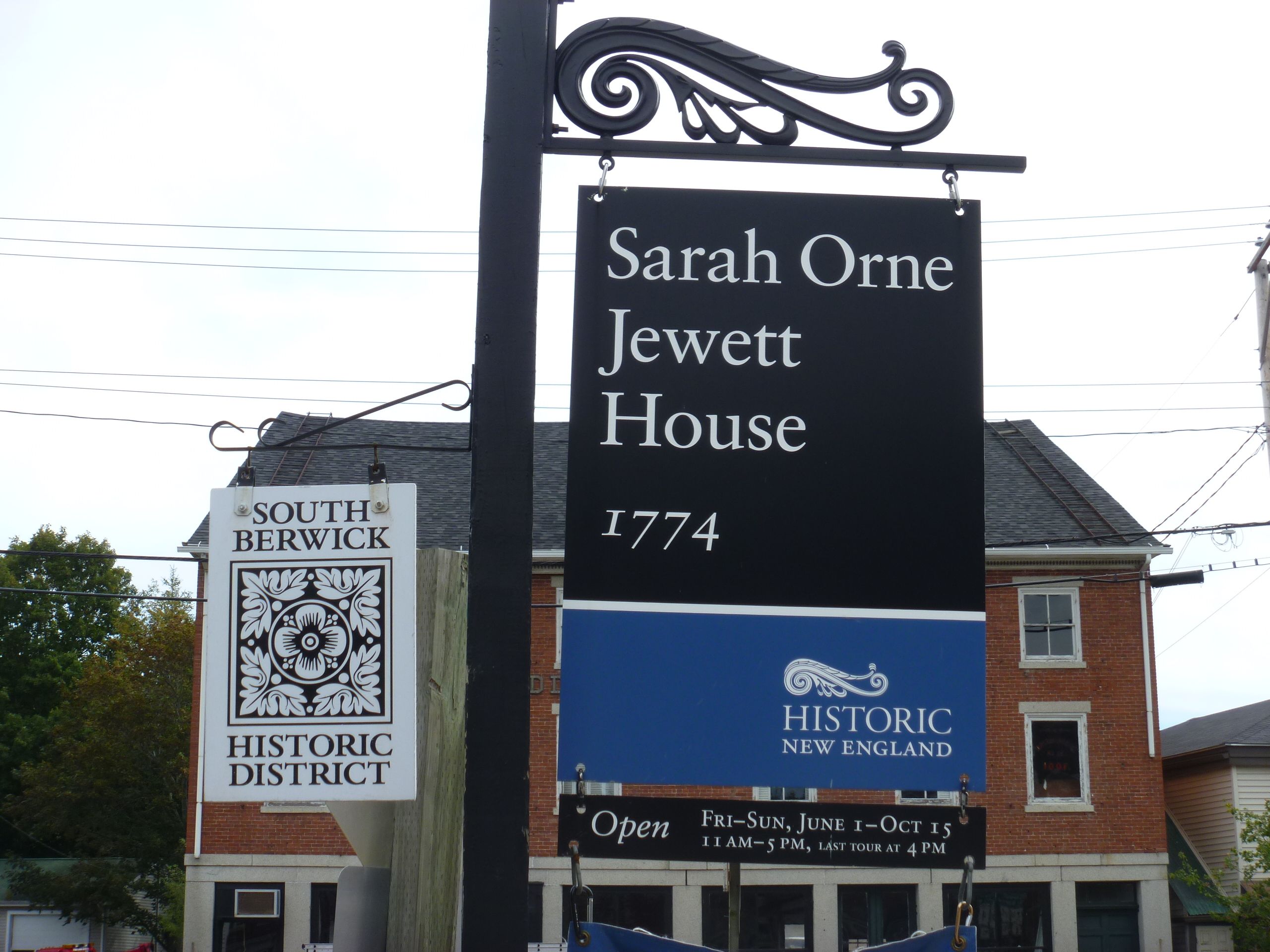
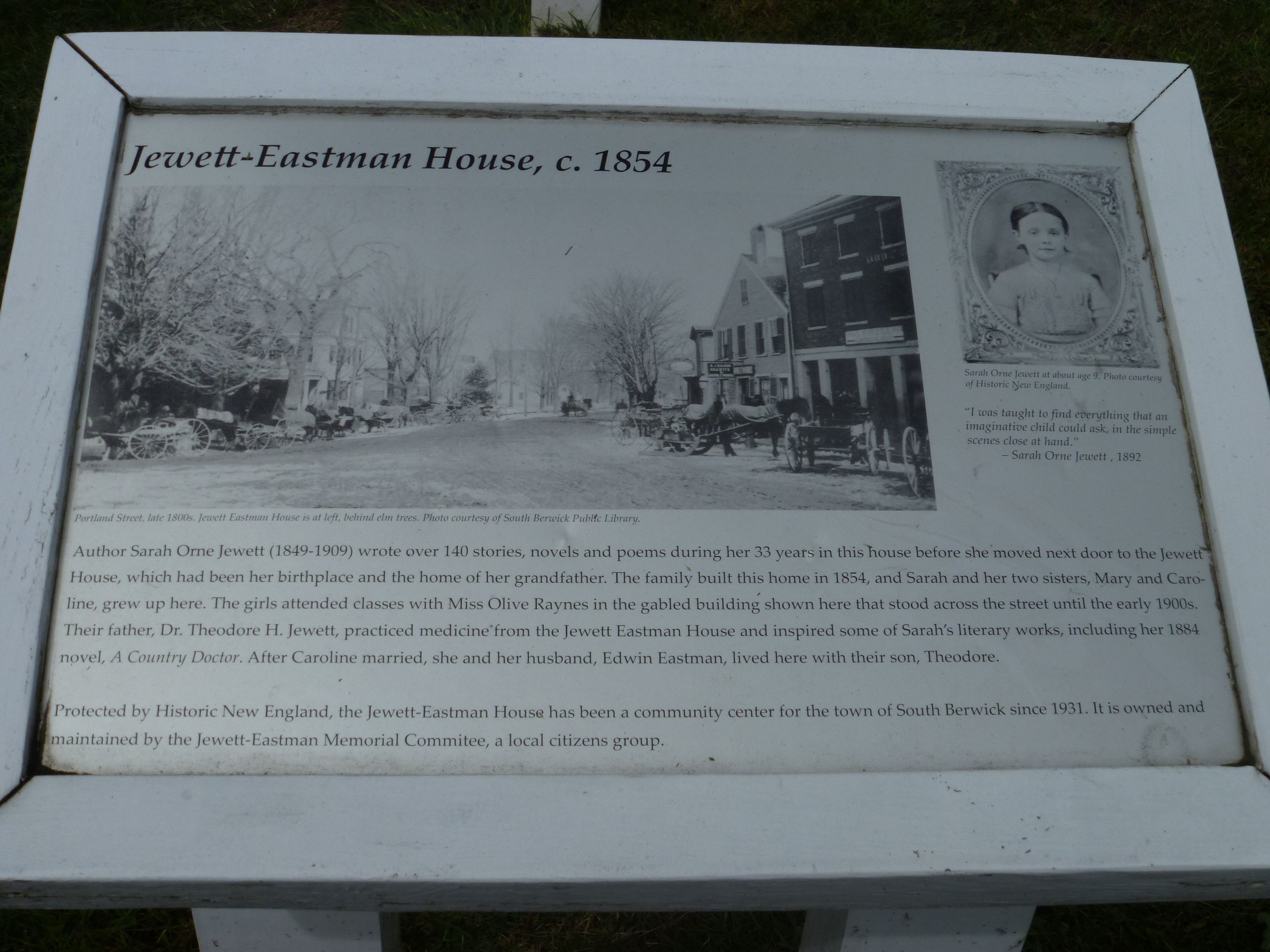
Sarah Orne Jewett (1849-1909) lived much of her life in the town of South Berwick, Maine. She was born in this house at 5, Portland Street when it belonged to her shipbuilding grandfather but soon the family built a home of their own next door (now the town’s public library).

Sarah and her sister moved back to the original house in 1887. She spent much of her time in Boston and travelling but this house was always home. No photography is allowed  in the house but it was fascinating to see the decor is still the same as Sarah and her sister Mary chose for it. Following their deaths a lot of the furniture was distributed to members of the family but Historic New England have bought back many original pieces at auction.

Having discovered the existence of the house I was anxious to read one of her books in advance of my visit. I chose a good one! A Country Doctor was first published in 1884. Like most of Jewett’s writing it is concerned with the everyday lives of the people living in the countryside of Maine. In particular Doctor Leslie is based on her beloved father, Dr Jewett.

My friend Marion kindly gave me an illustrated copy of what is probably Jewett’s best known work The Country of The Pointed Firs. Her (Jewett’s) Deephaven is still in print in the USA and is set in the coastal Maine area around Ogunquit. Her books (those still in print) and other related works are available in the shop (where photography was allowed!).

There is a small garden around the house where today a gardener still carefully tends many of the herbs of the types that the Jewett sisters grew there during the nineteenth century.

On my way back to Ogunquit I sought out Sarah Orne Jewett’s grave on Agamenticus Road just outside South Berwick. I had been given instructions as to where to find it by the guide at the house. I expected a well-tended grave and was sorry that I hadn’t brought my own flowers. The tombstone was just about legible and the area filled with weeds. Sarah lies peacefully surrounded by various relatives including her sister. On the following Sunday a special ‘party’ was planned at the house in celebration of her birthday but sadly her grave is rather a forgotten memorial.

“Until the day breaks and the shadows flee away”

Don’t call me Ishmael

I have never read Herman Melville’s classic fictional work ‘Moby Dick’. That is, if you don’t count the numerous extracts from it that we had to read for English comprehension tests at school. I always marvelled that so much could be written on the subject of a whaling expedition – the Penguin Classics edition fills 720 pages.

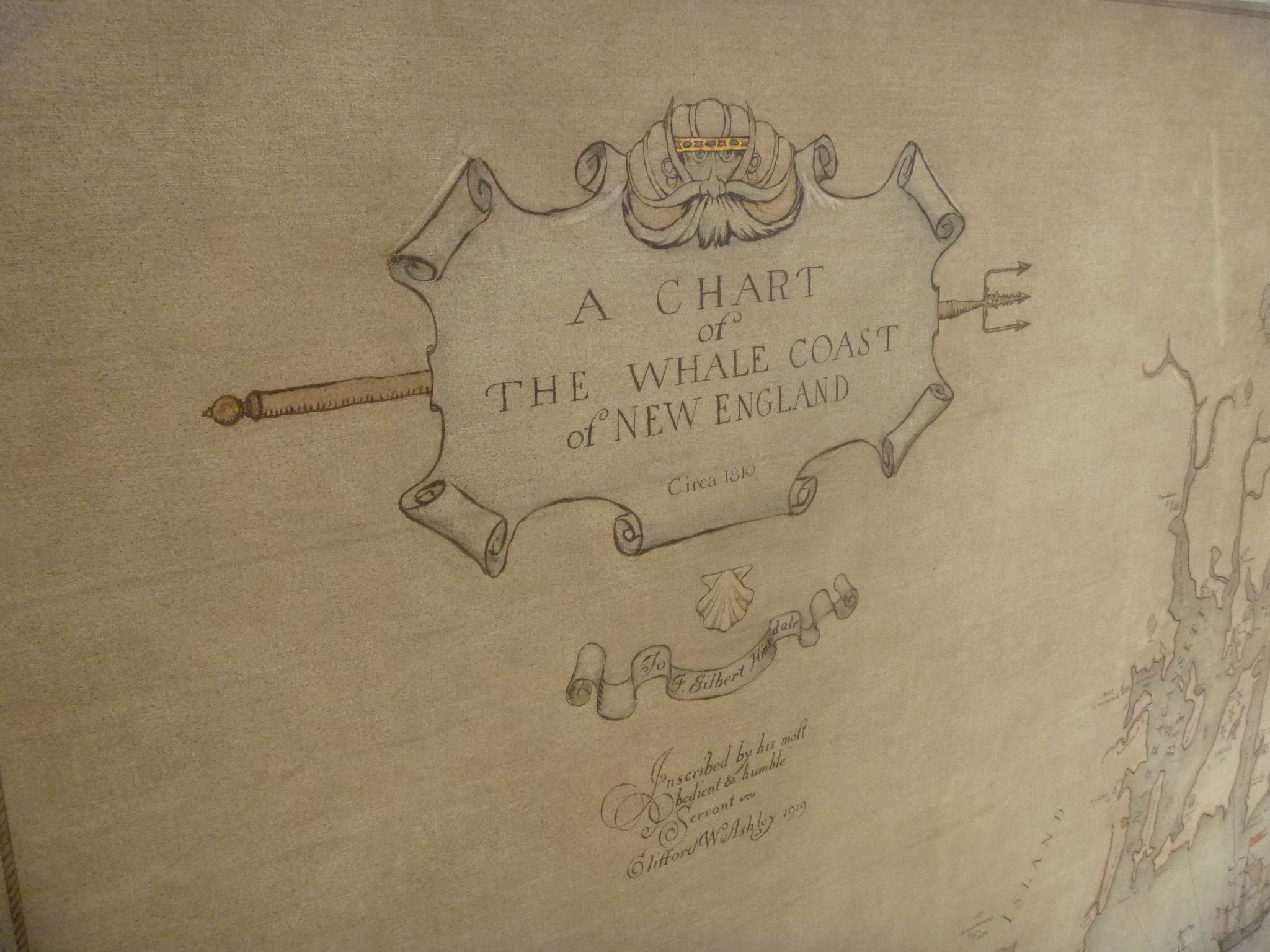
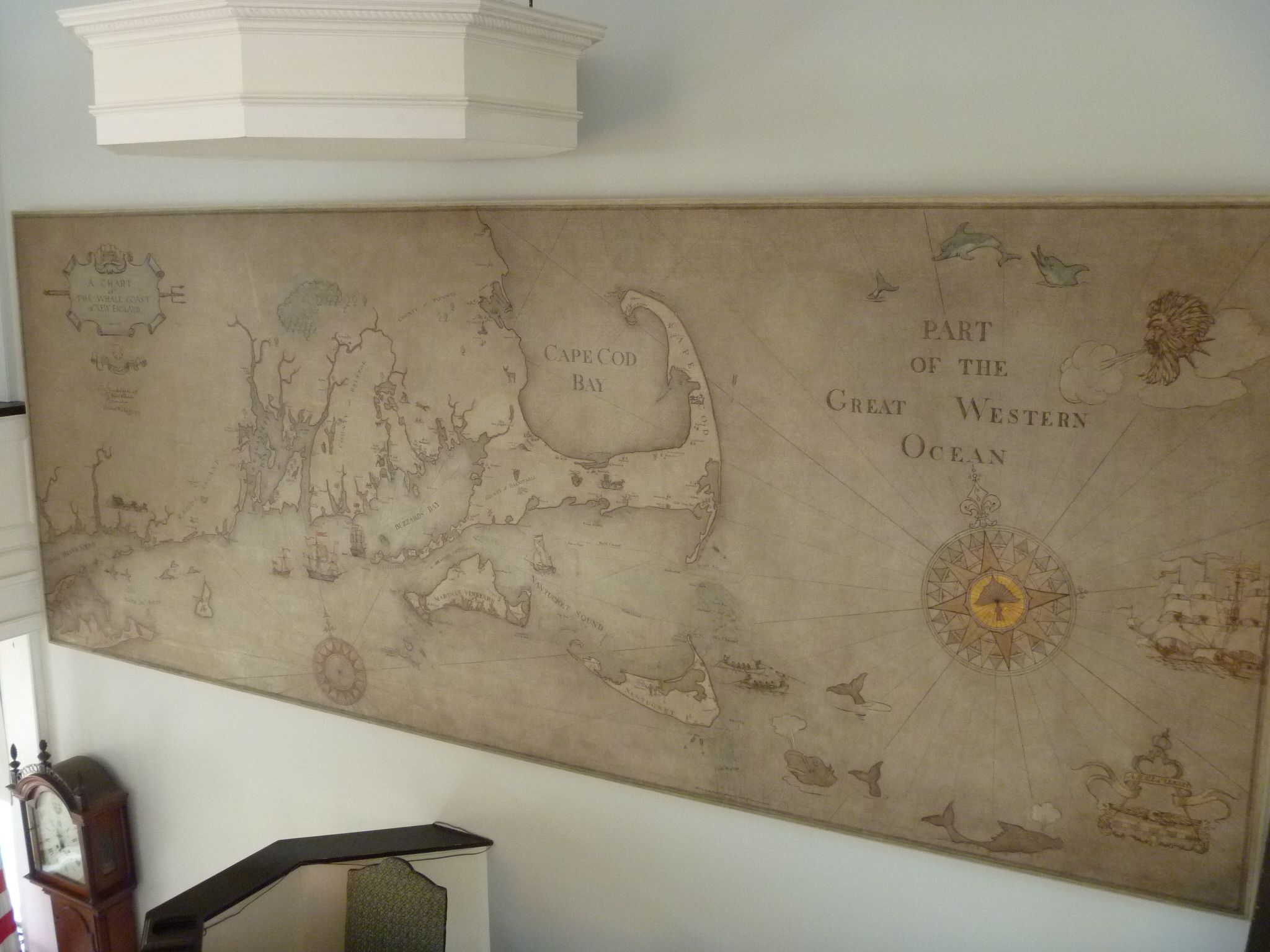
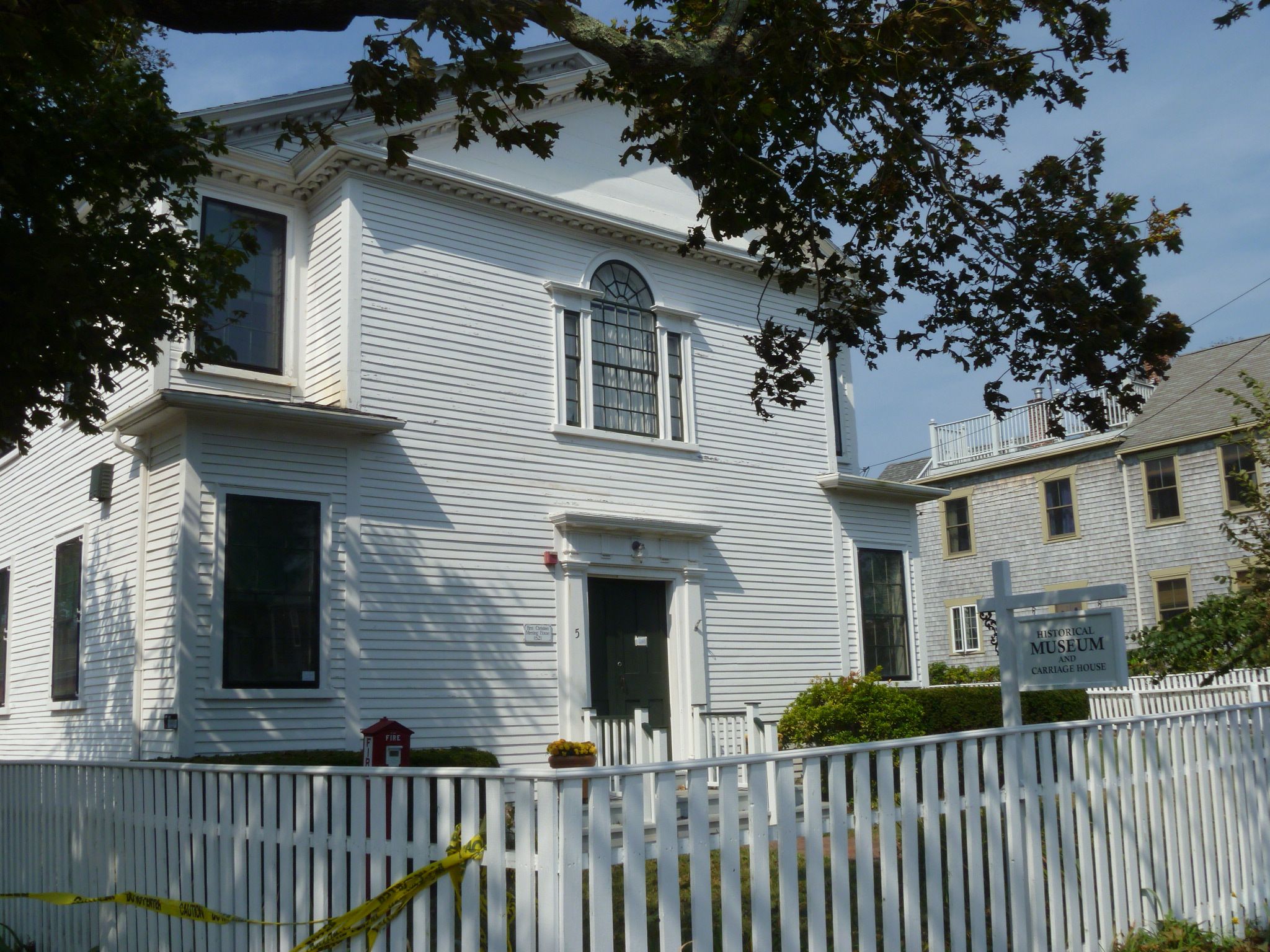
On a recent trip to Cape Cod I spent a day with my friend Marion who lives on the other side of Buzzards Bay. She knew just what I would be interested to see  – A Chart of the Whale Coast of New England.  M had chanced upon a newspaper report telling about a mural that had lately been removed from a seaside (bayside) home, had been carefully renovated and was now hanging proudly in the local museum. After lunch we drove to the Mattapoisett Historical Museum housed in a former Baptist church.

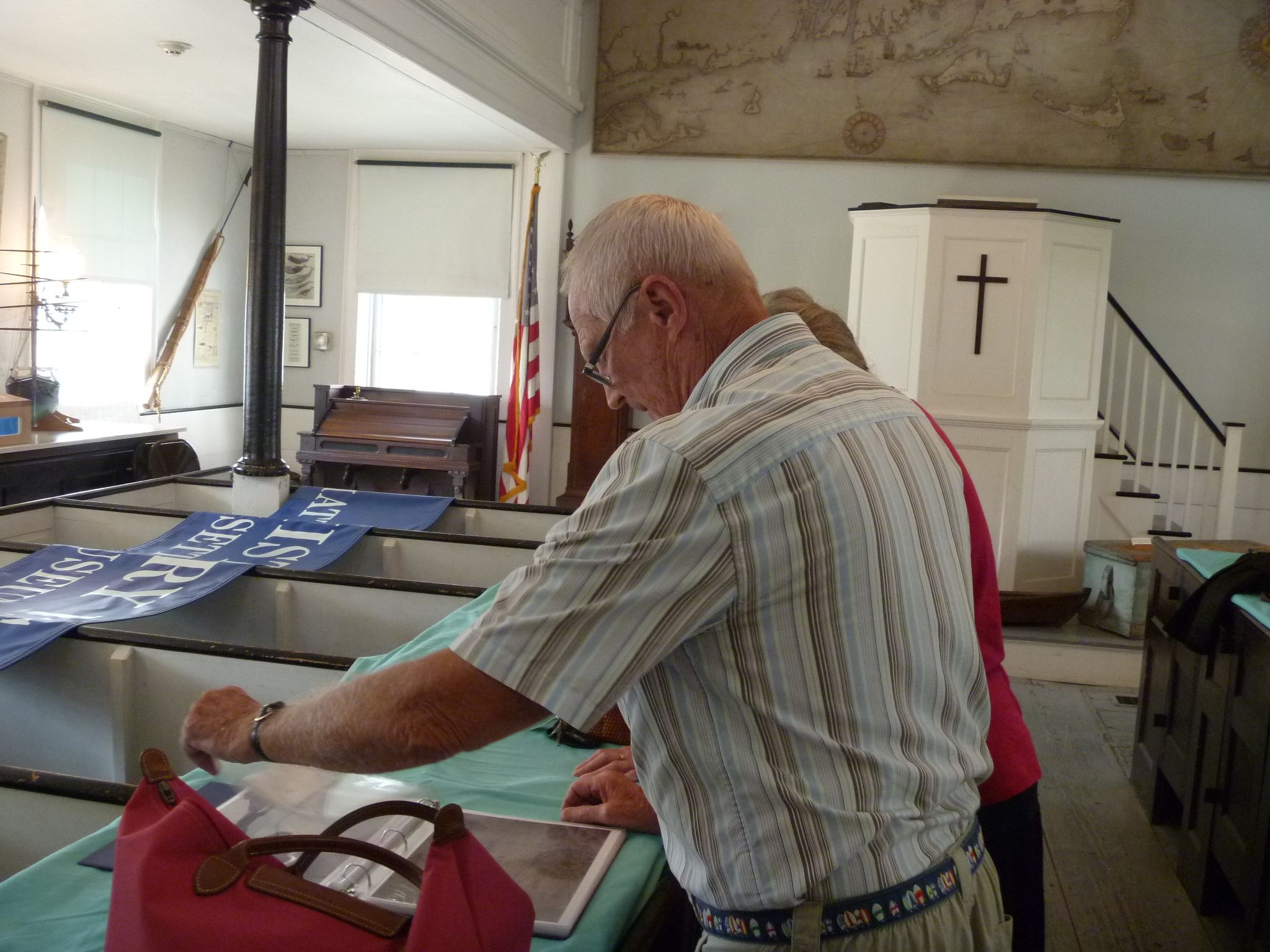
The icing on the cake for us was that we were welcomed to the Museum and shown in detail the Ashley Mural (as it is called) by Mr Seth Mendell himself, President of the Historical Society and a primer mover in the preservation of this wonderful piece of local whaling history for the community.

Mr Mendell explained all the intricacies involved in the creation, removal, renovation and final re-hanging of the Mural via the photo proofs for his book which is due to be published this autumn.

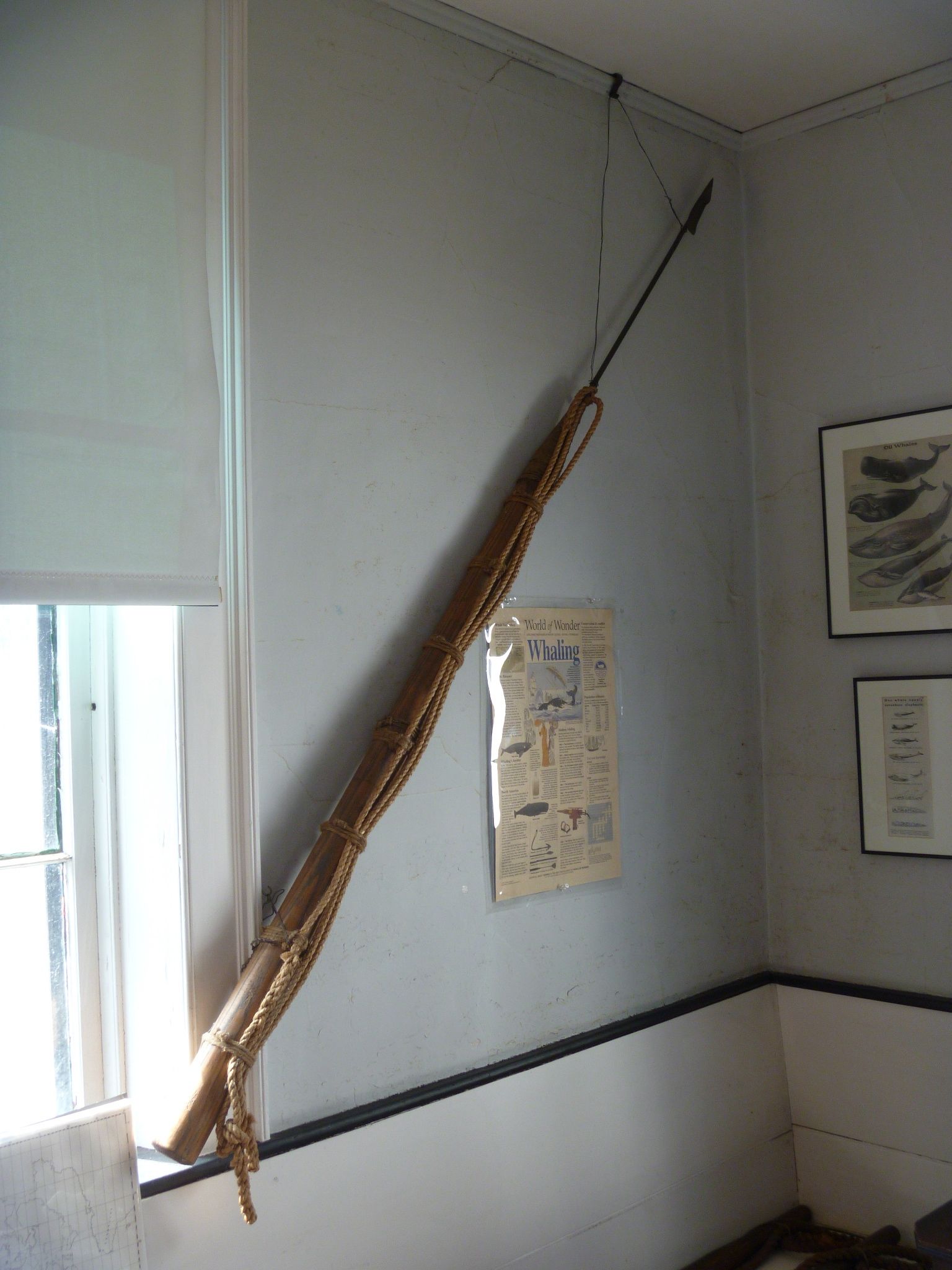
In addition to the Mural we were introduced to various forms of whaling harpoon.

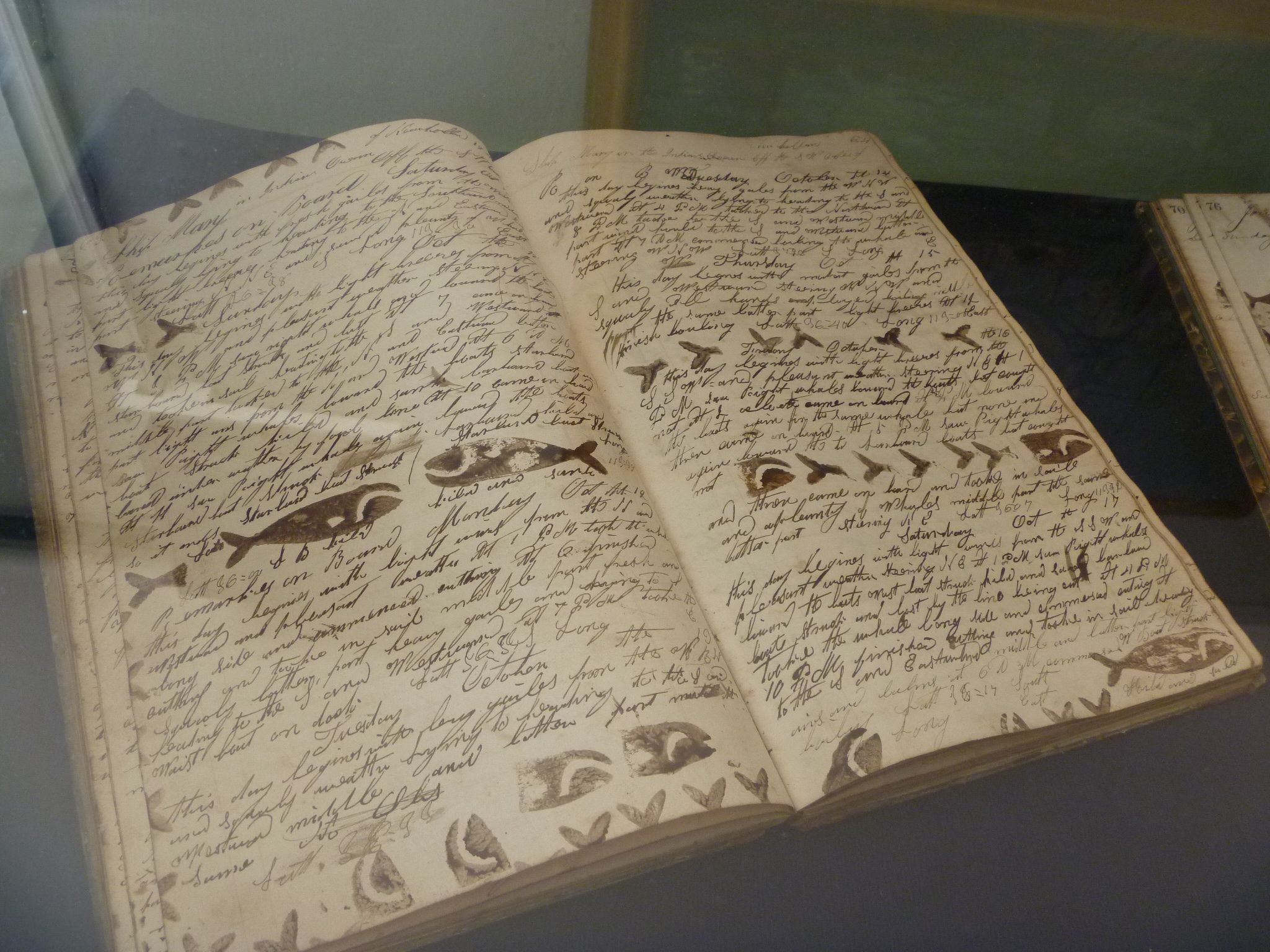
And we were delighted to inspect some very fine examples of Whaling Journals. After pages and pages of seemingly undecipherable handwriting there suddenly appear ink stamp prints of whale tails (indicating sightings/attempted harpoonings) and full whales (indicating capture). One of the museum copies was also decorated with beautiful drawings of full-masted ships.

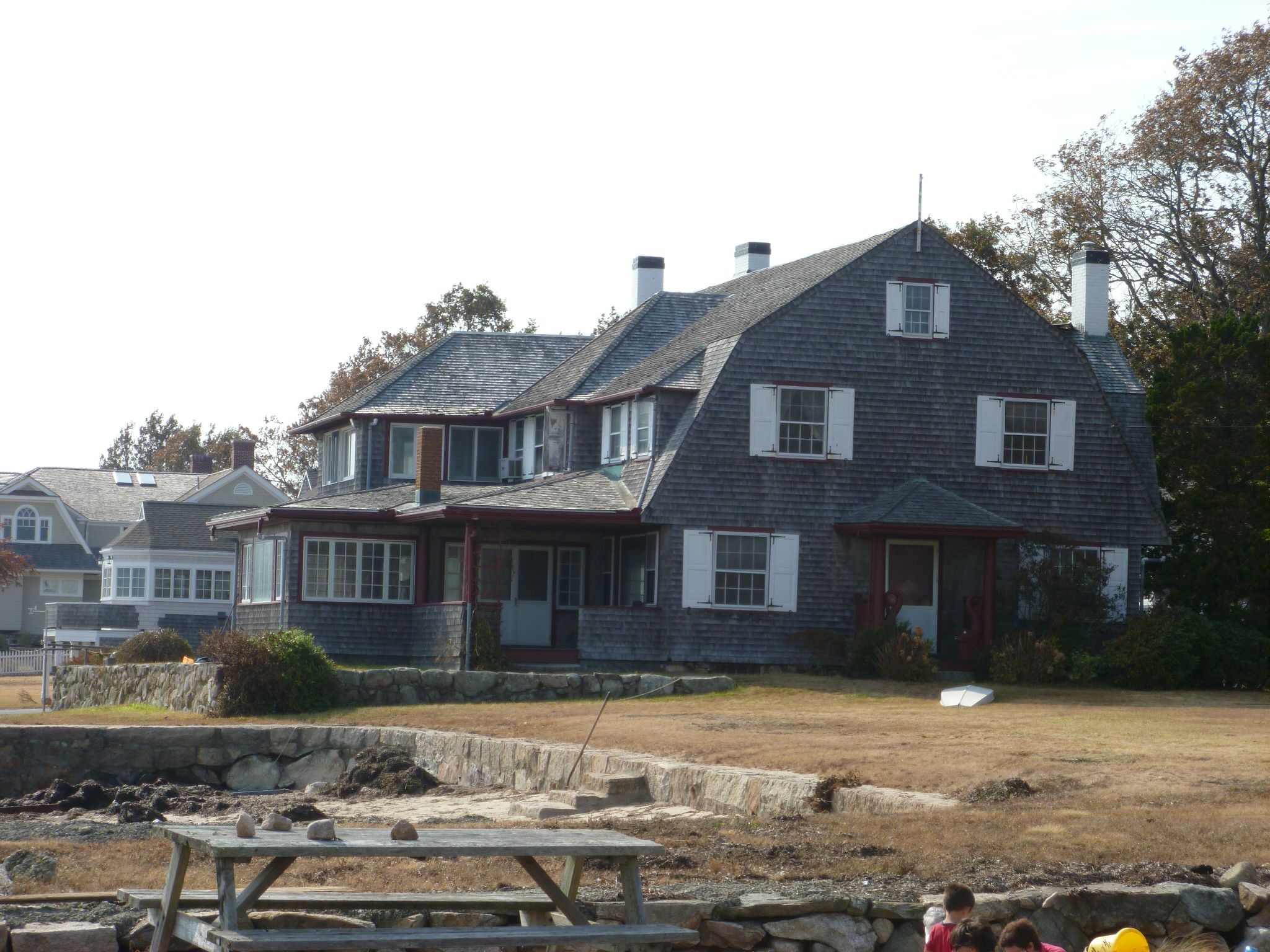
Later we went off to find the house where the Mural had hung for 90 years. It was discovered hanging at an angle from the ceiling in the conservatory at the front of the house (20, Water Street, Mattapoisett) overlooking the bay.

Yet, even after all this new-found whaling knowledge I was still not tempted to take a Whale Watch Cruise out into the Atlantic Ocean! And will I read the book? ….. probably not.