Built for Comfort not for Defence : Harewood Castle

Sunday 14th October was the 946th anniversary of The Battle of Hastings. Our guide Sally Lawless deemed it therefore a fitting date on which to embark on one of a series of new initiatives at the Harewood EstateThe Harewood Castle Tour.

Earlier in the year I’d picked up the leaflet ‘Medieval Harewood 2012 : step back in time … ‘  This outlined a series of events, workshops, tours, tours and walks. Of course, it was the walk that appealed to me. I’d seen some of the archaeological dig results at Gawthorpe Hall last October on my ‘Capability Brown’ walk and I decided earlier in the week to sign up to visit Harewood Castle today.
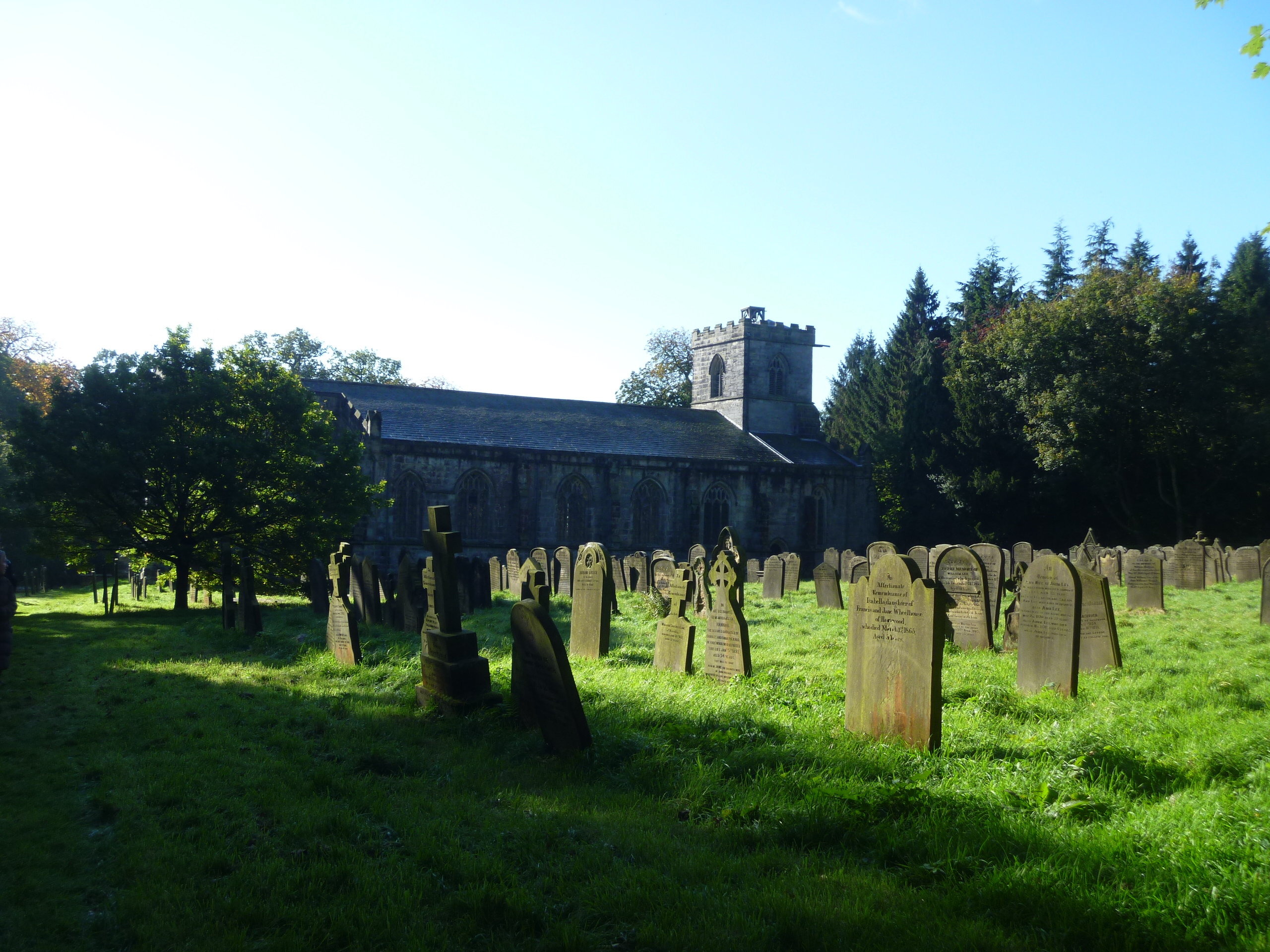
We all assembled in All Saints Church the Harewood Estate church which is now under the protection of the Churches Conservation Trust. Sally gave us a brief introduction to the church and the Harewood Estate in general. We were shown the important Alabaster Tombs – 6 pairs comprising some of the best surviving examples in England. All the figures represented had played a part in the history of the Castle.
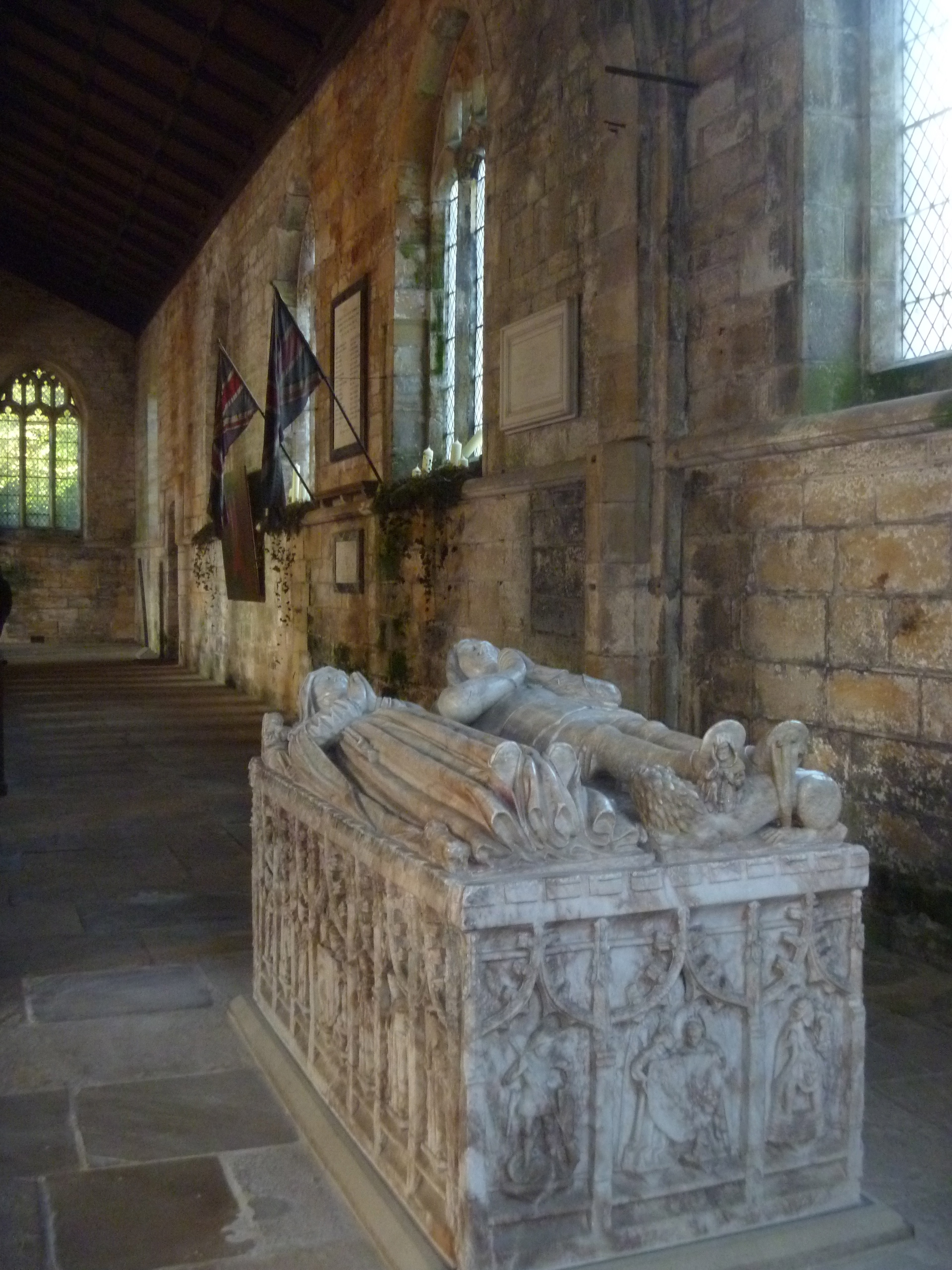
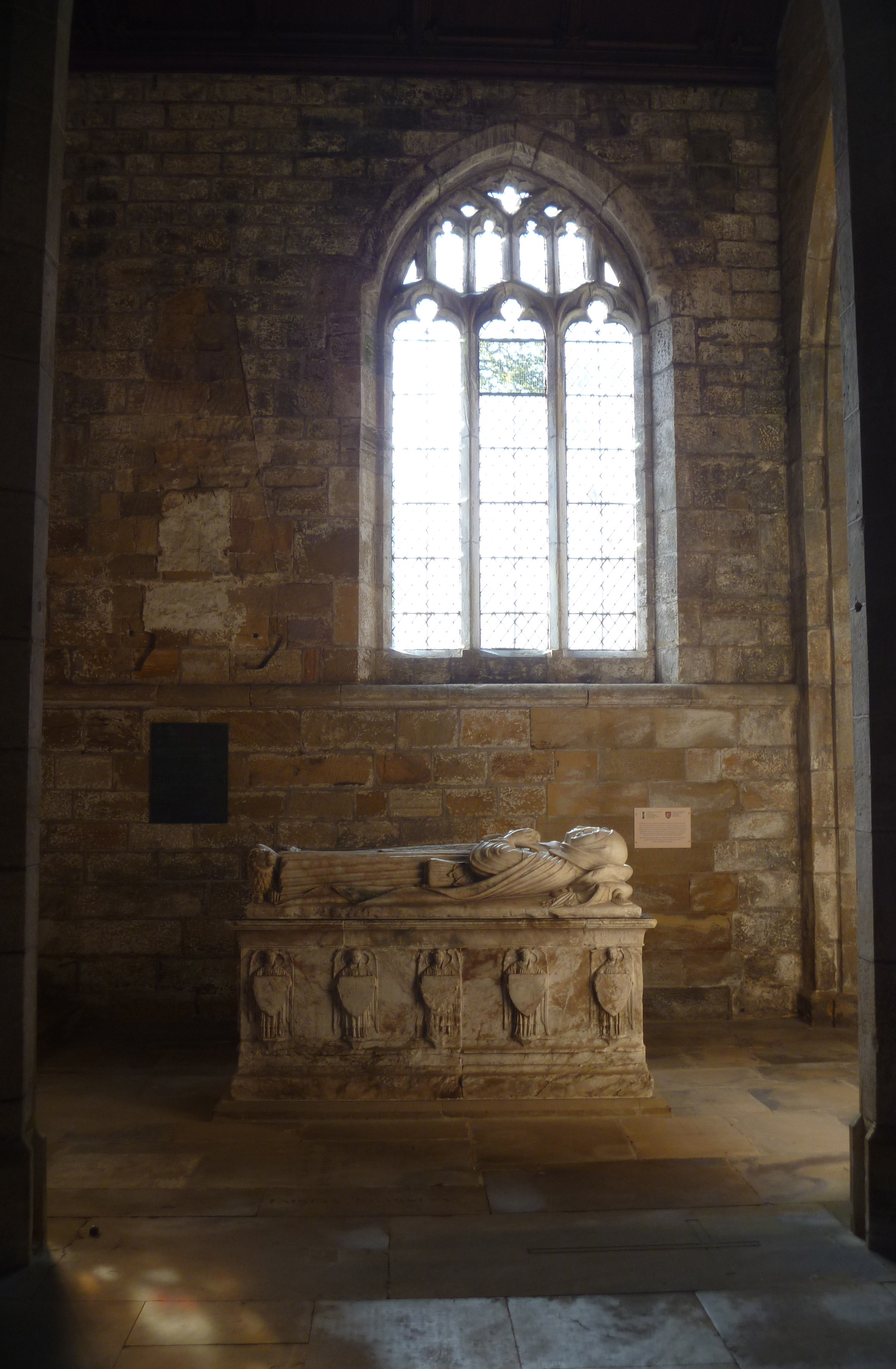
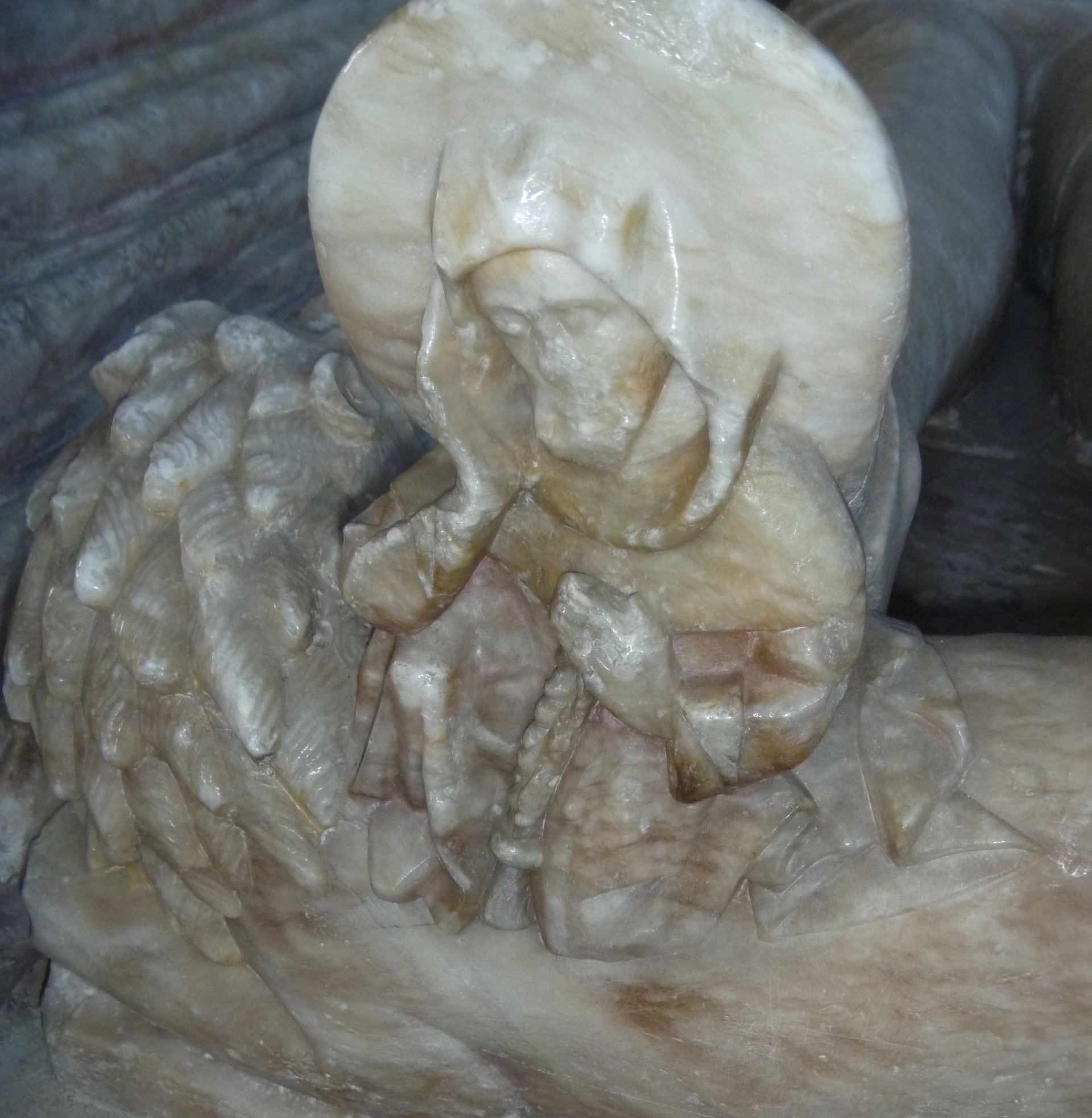
Close up of an alabaster beadsman or professional mourner

Then our walk began, through the churchyard where many of the estate and household workers are now buried, and out down a track to the public footpath Church Lane. This is was the former turnpike road between Tadcaster and Otley. It cuts through what was formerly the northern pleasure grounds of the Estate.
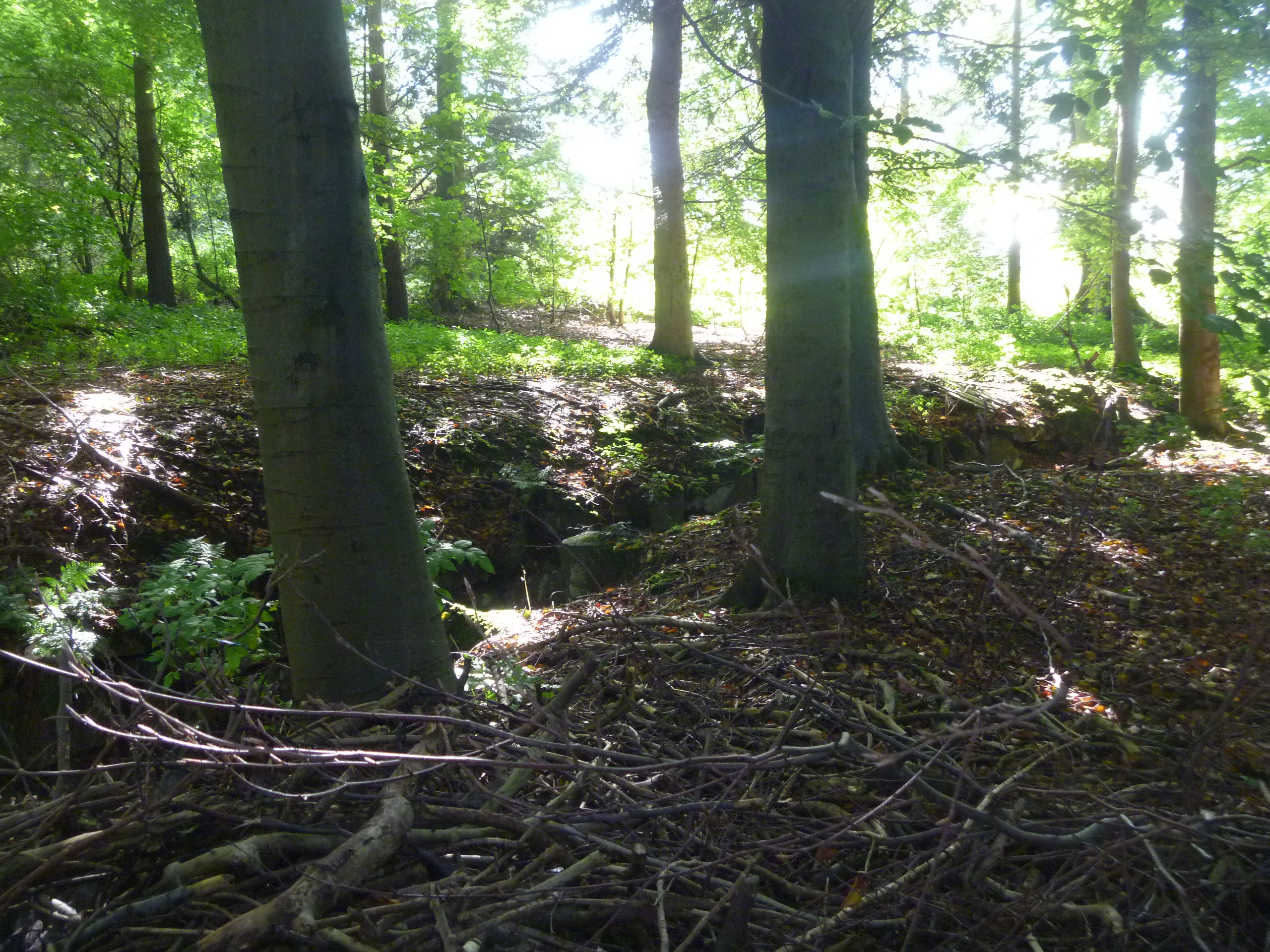
Sunken  tracks like this criss-cross the Harewood Pleasure Grounds

Peering over the wall we were fascinated to see the various tunnels and trenches which passed under the road so that  the vicar could reach his church and the local inhabitants cross the Estate without being seen by the Lord and Lady and their family and guests.
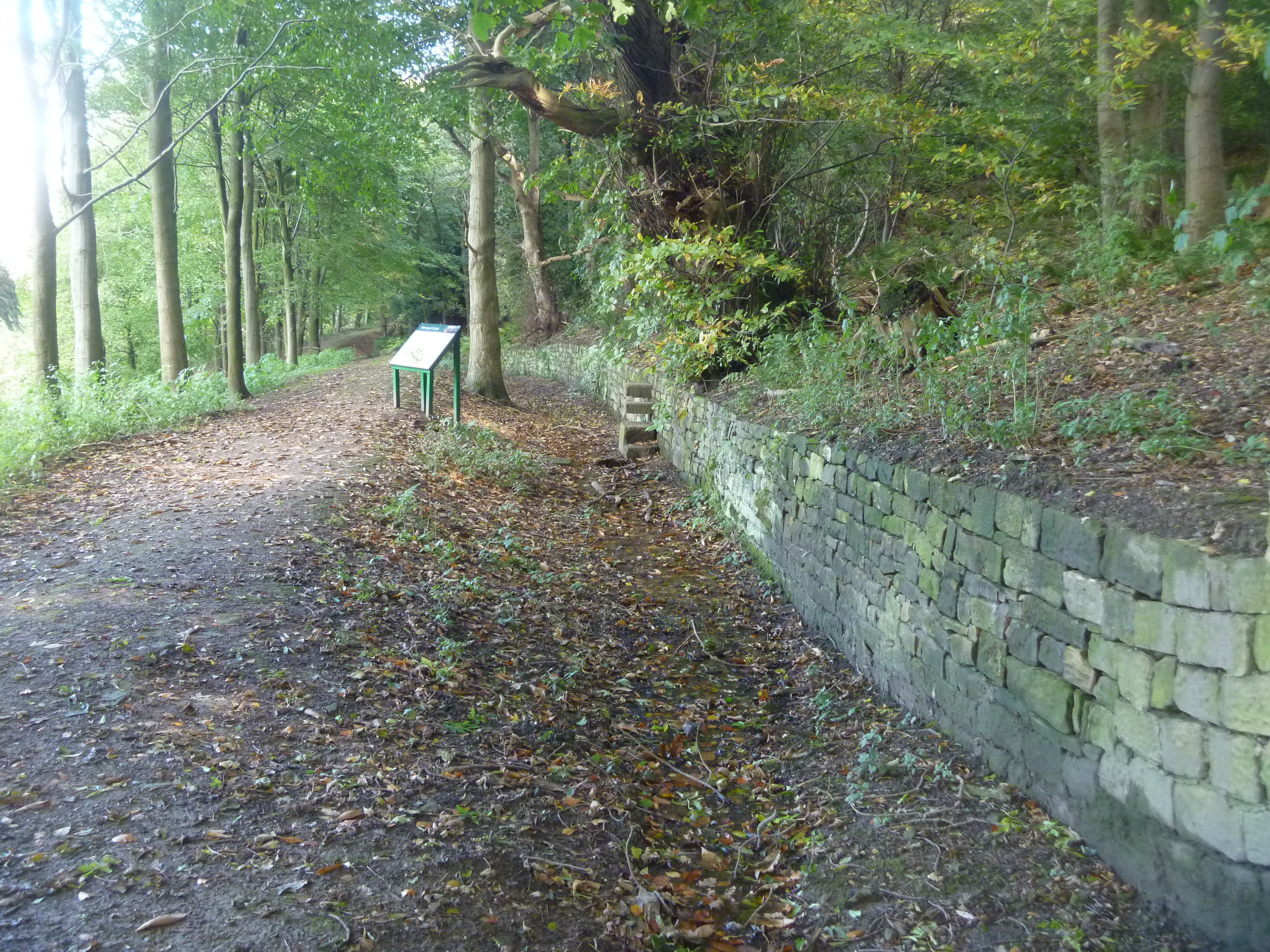
The Ha-ha approach to the Castle
From Church Lane we entered the original Harewood village and proceeded down a deep walled public footpath to the Ha-ha which separated the Pleasure Grounds from the Deer Park –  where we could still see deer today.
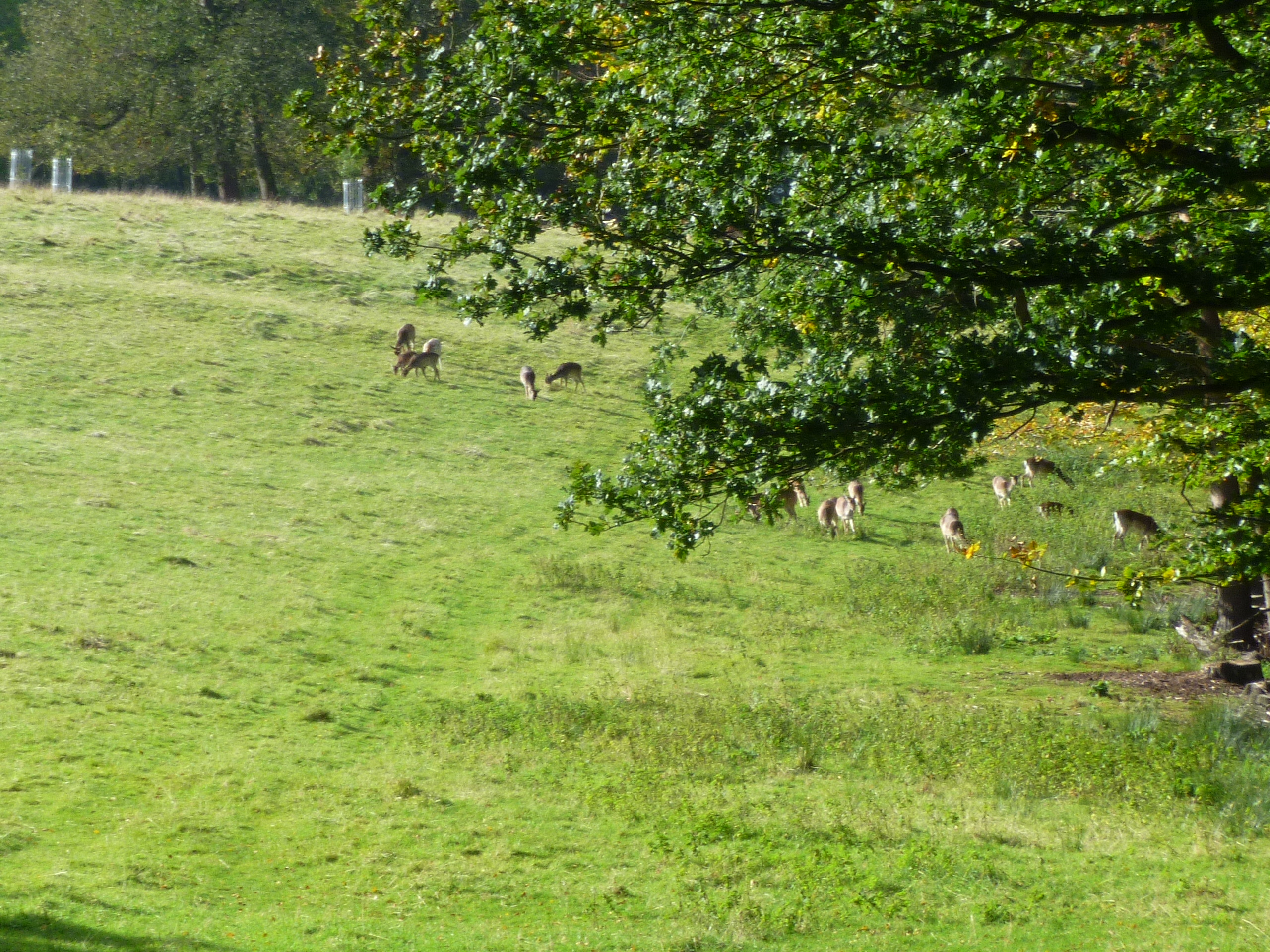
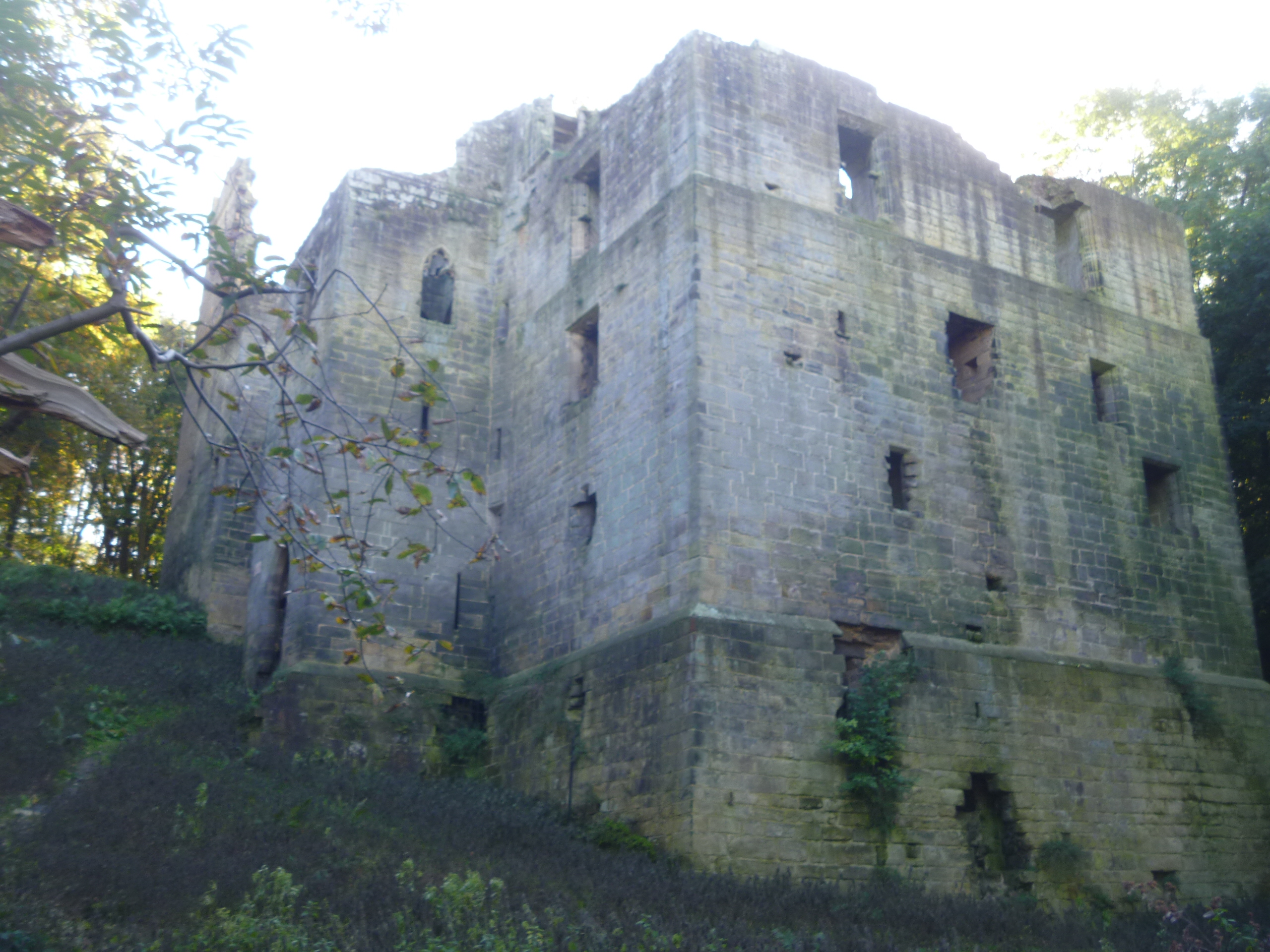
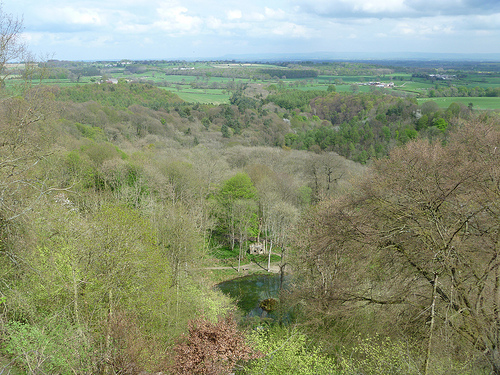
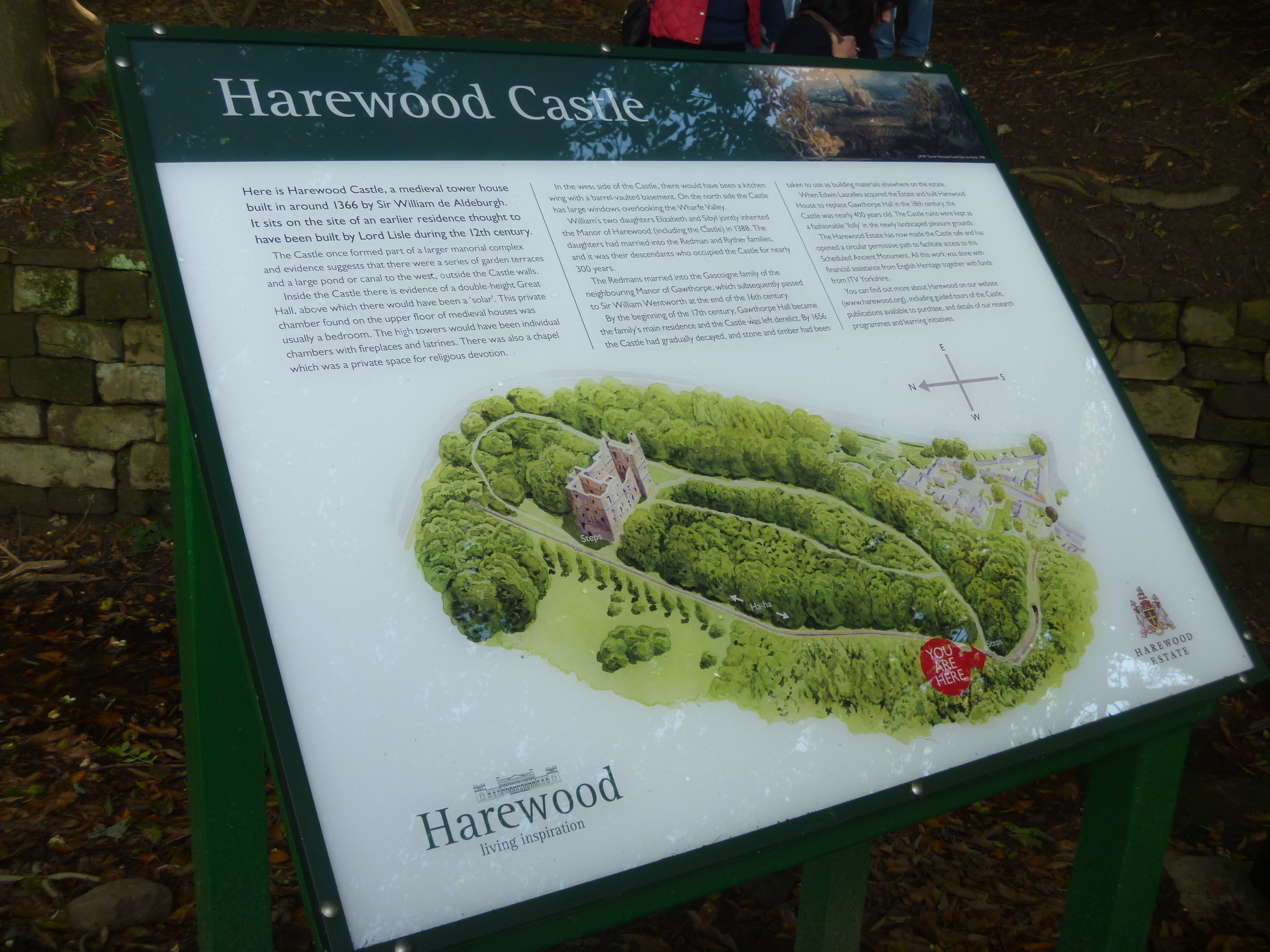
Harewood Castle built into the hillside looks out over Wharfedale

The Castle itself now stands very near to the A61 main road between Leeds and Harrogate but despite its size and proximity it’s almost impossible to see it from the road. There has been some tree clearance in the area lately and the view across Wharfedale can be seen more clearly.
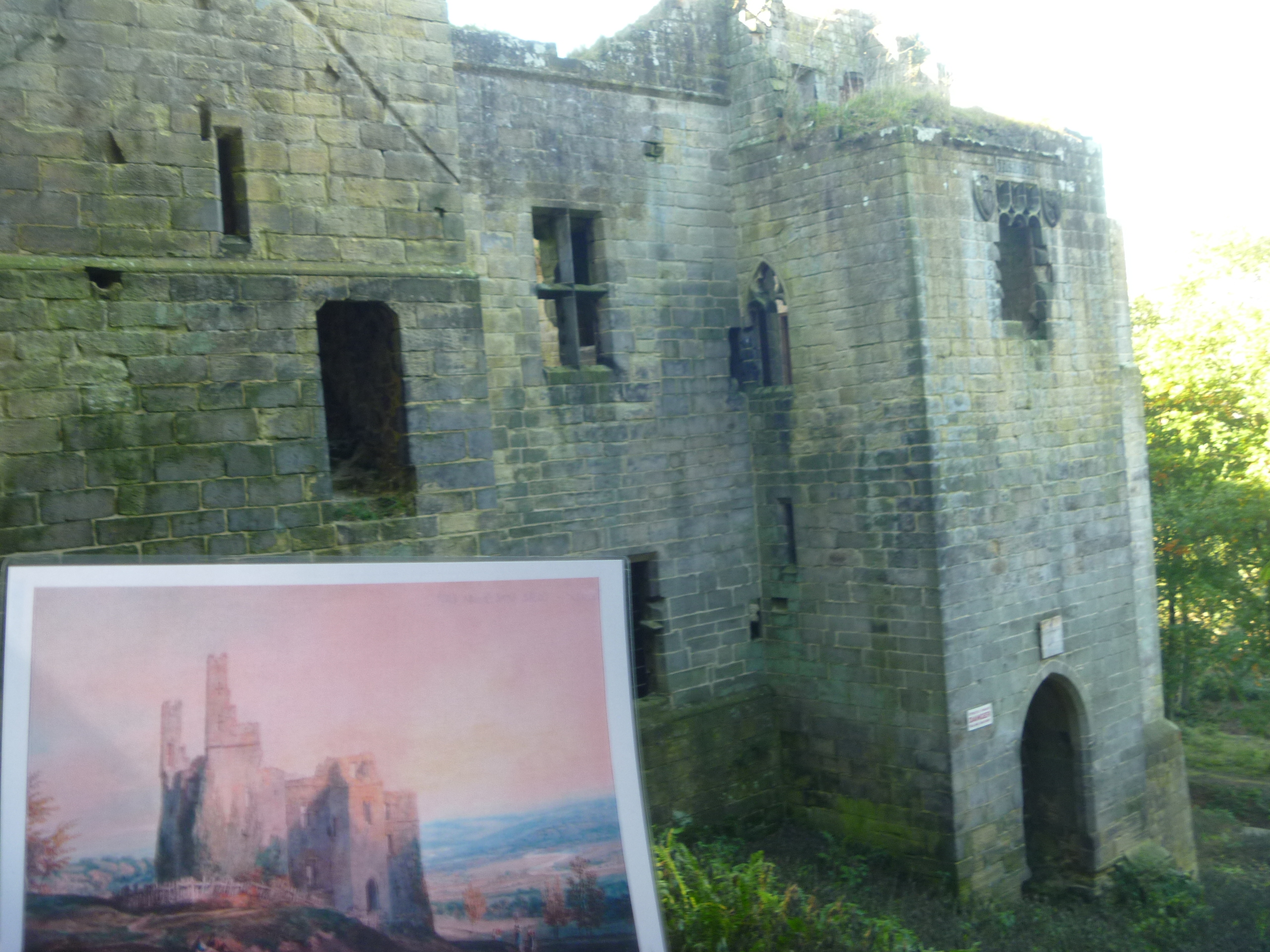
Castle with Turner watercolour from similar standpoints

After hearing more about the history of the castle, comparing Turner’s watercolour views with today’s view we were admitted into the ruin and able to inspect more closely the layout and remains of the Harewood Tower House.

Following the path in a loop around the castle (it’s not open to the general public) we retraced our steps to the church where the tour finished.
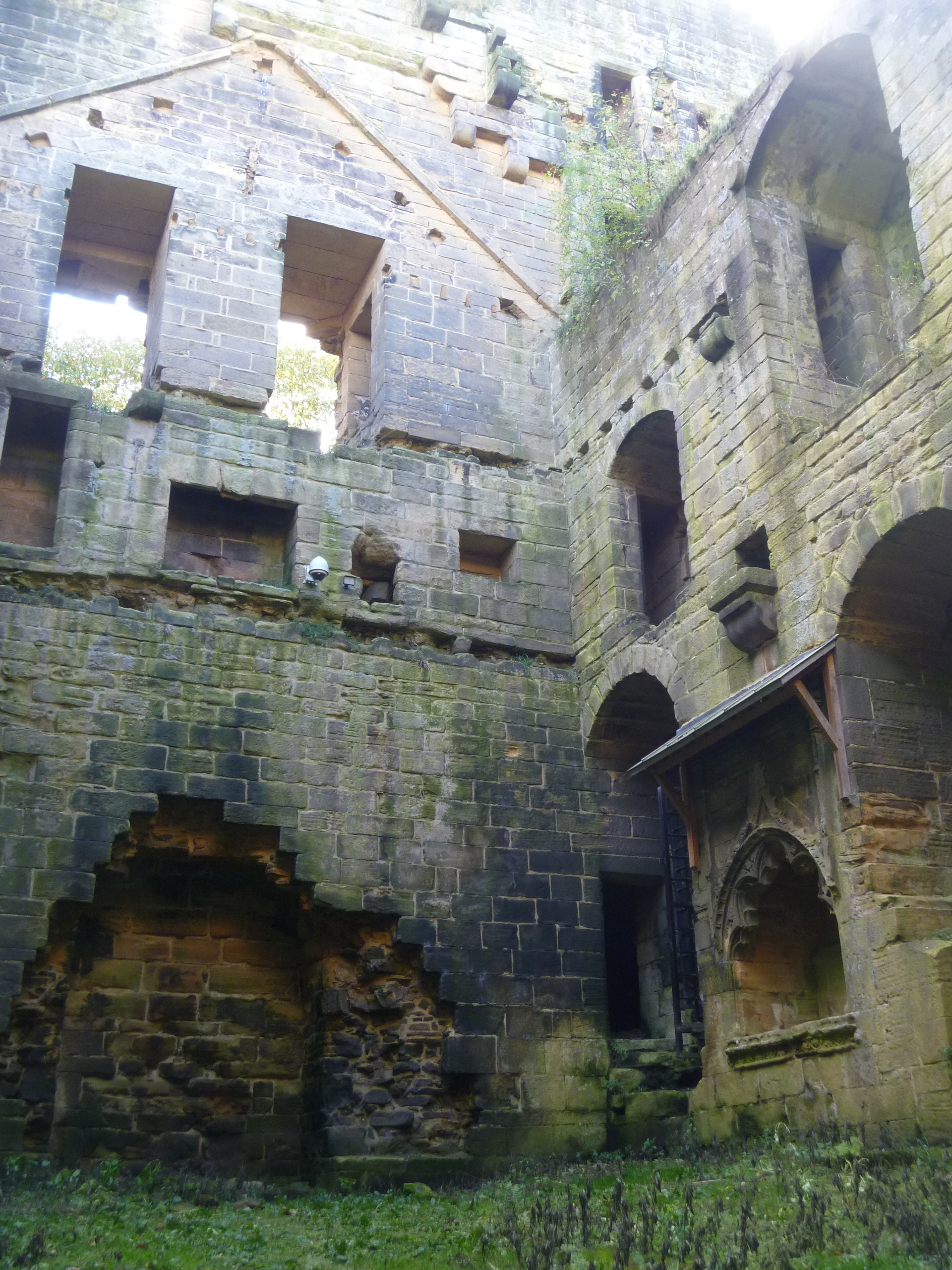
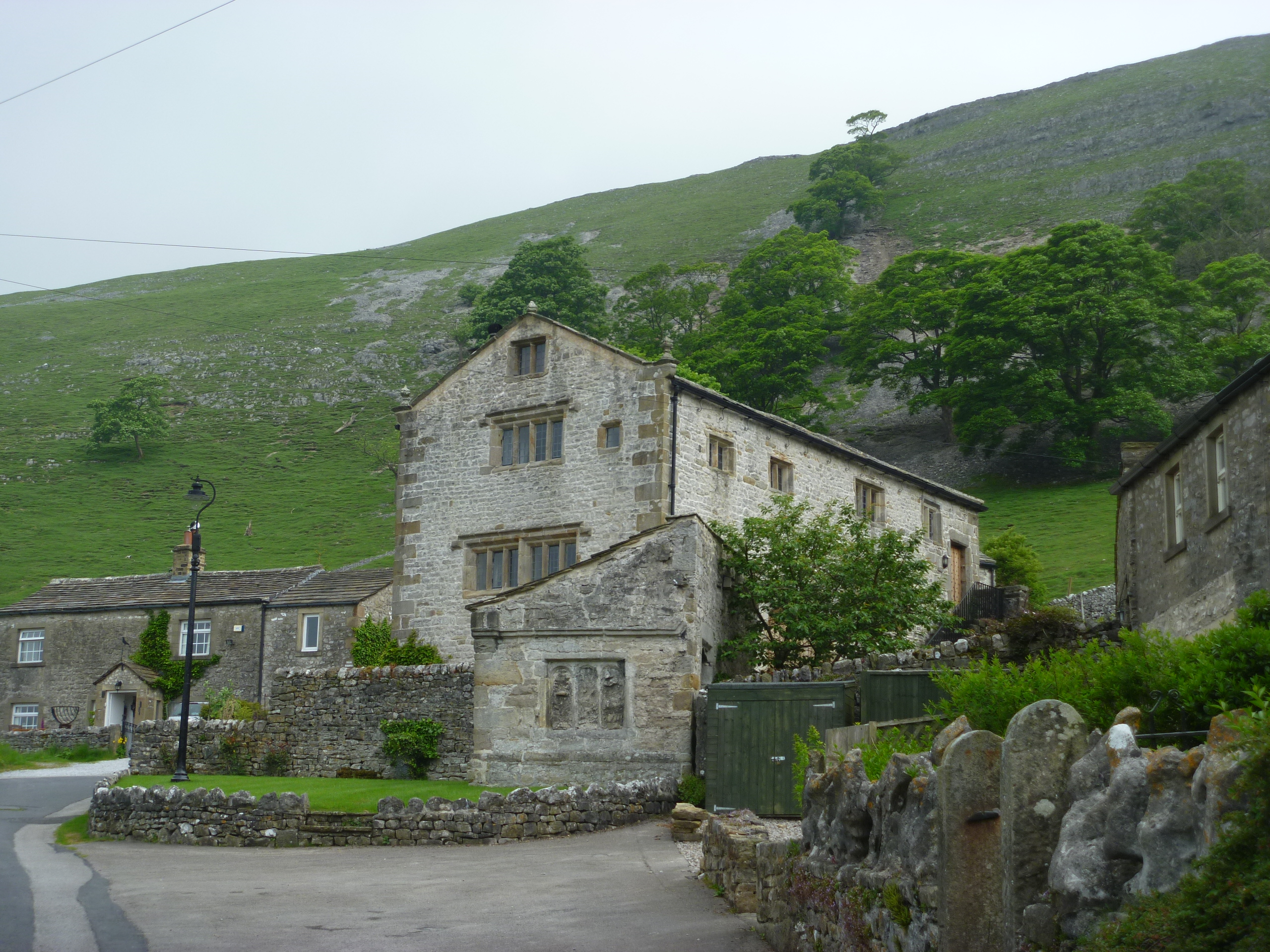
Harewood Castle is technically not a castle but a fortified manse, a converted manor house. A ‘licence to crenellate’ (to fortify) was granted to William De Aldeburgh in the mid-14th century. Two families, the Redmaynes and the Rythers, whose tombs are in Harewood church, shared occupation during the 15th and 16th centuries. It was abandoned in the early 17th century and its stone and ornamental masonry plundered for use in other buildings nearby. By the late 18th century it was a picturesque ruin, painted by Turner, Varley, De Wint, Cotman and Buckler. It remained in that condition until 2004 when stabilisation work was carried out with financial support from English Heritage and matched funding from the Harewood Estate.”
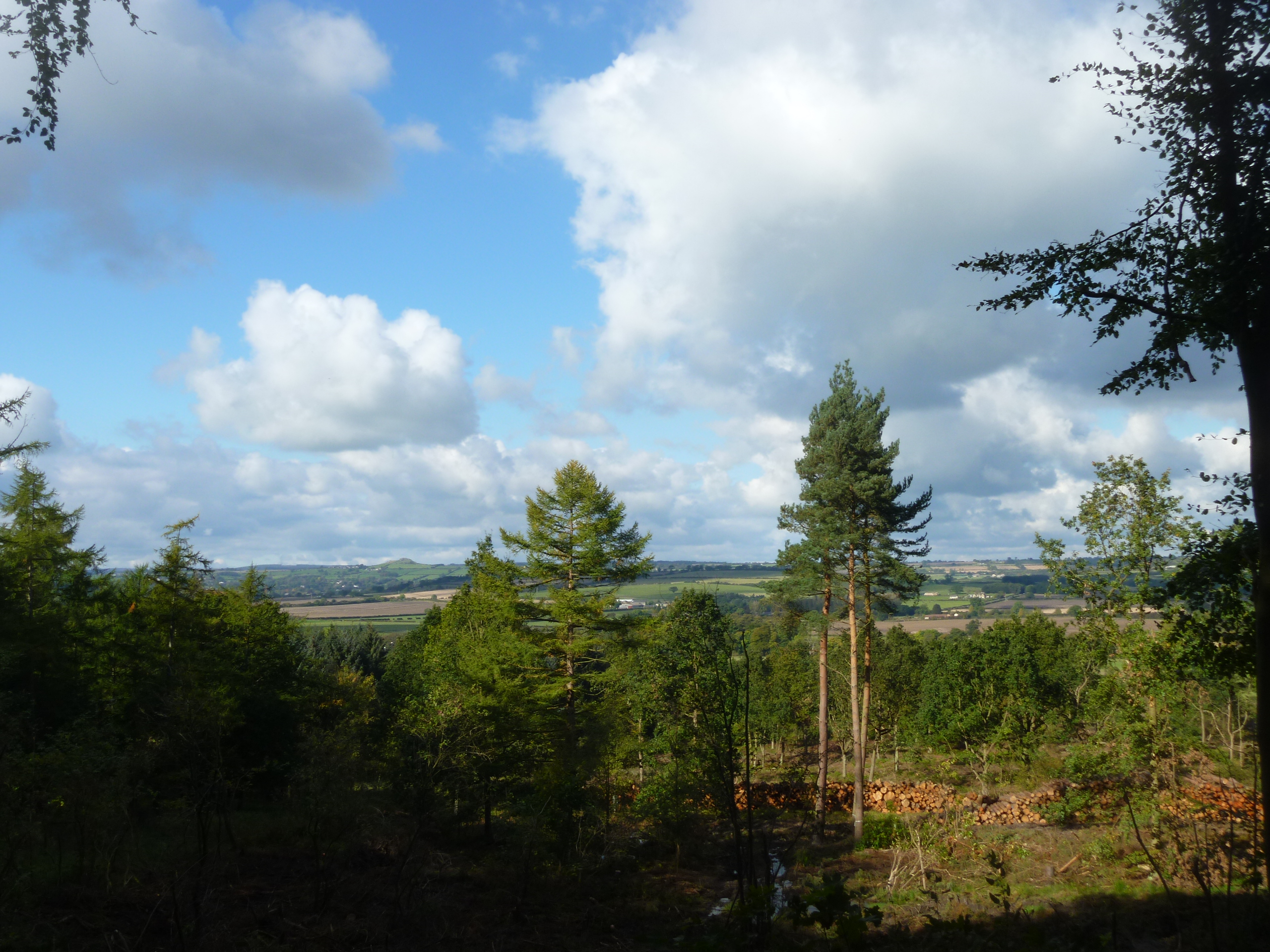
The View over Wharfedale

Bolton Percy : the Perfect October Morning Out

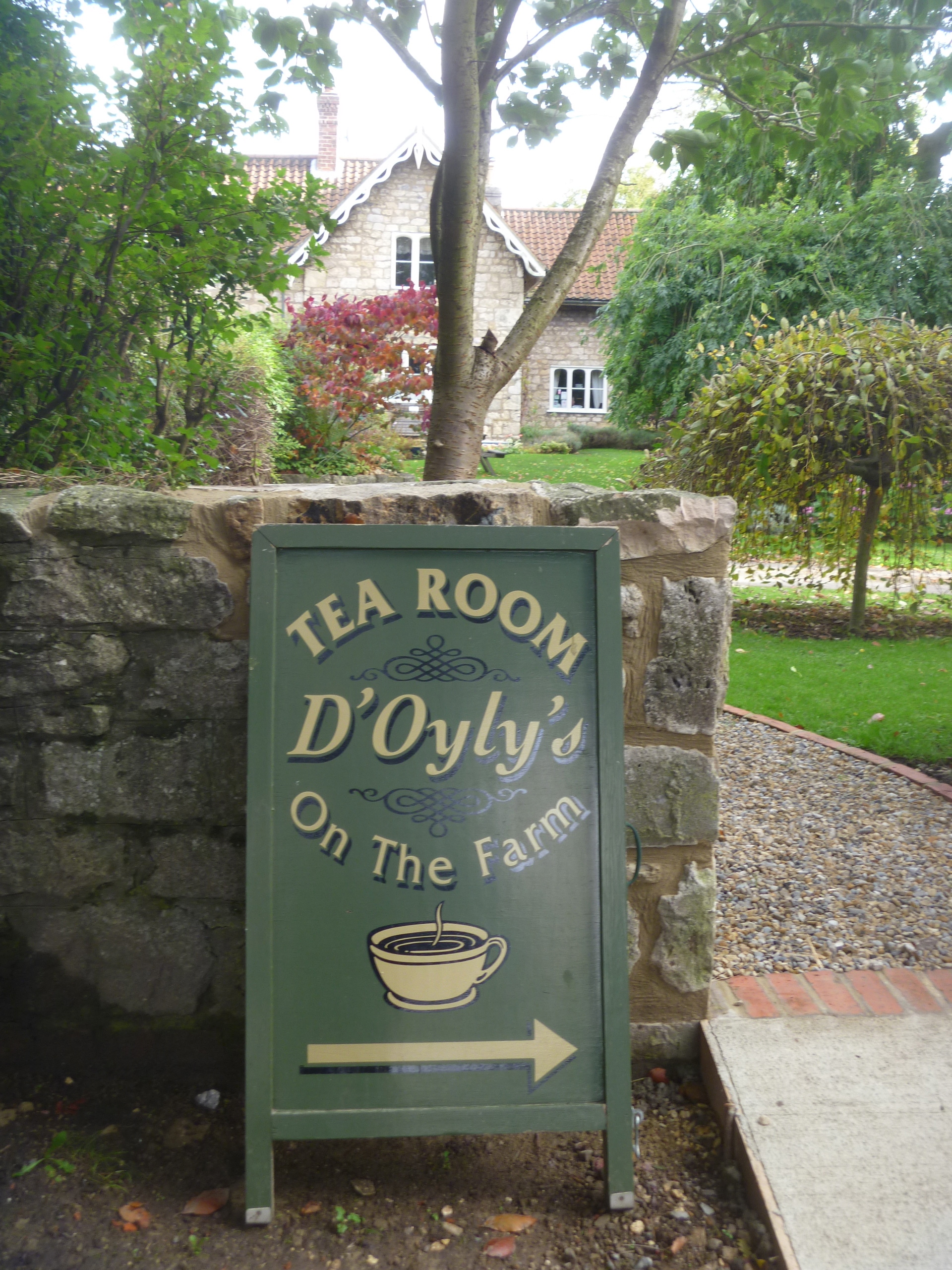
Barely half an hour’s drive from home we turned off the A64 Leeds to York road into Tadcaster and there’s a little sign ‘Bolton Percy’, which would be easy to miss, just after crossing the River Wharfe in the centre of town. About 3 or 4 miles down this lane and we arrived at the village of Bolton Percy. On the right as you enter the village there’s a cricket green and pavilion and soon on the left is the car park for D’Oyly’s Tea Room.

We parked up and went to explore the village. Right in the centre are the four other things we came to see –

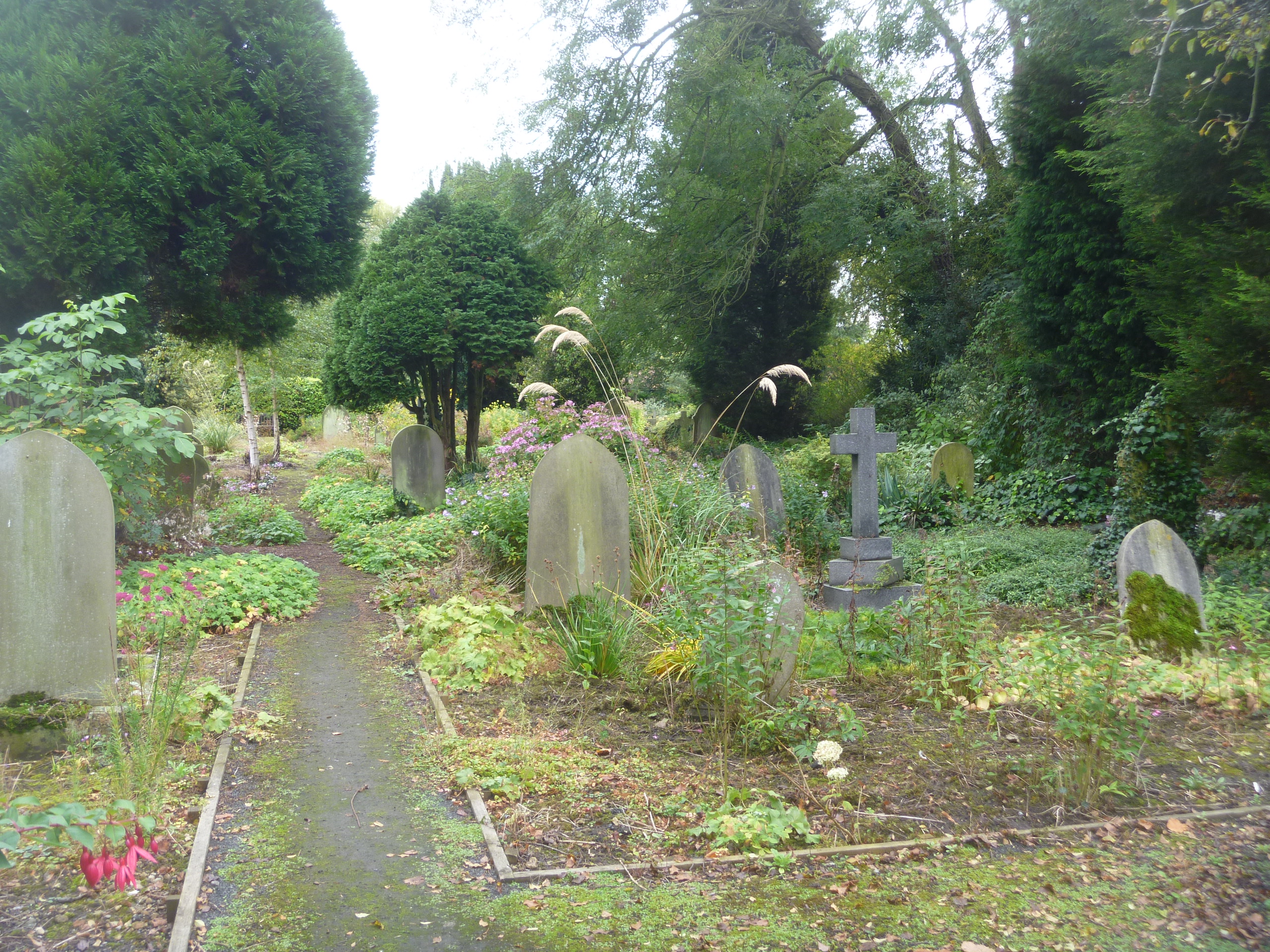
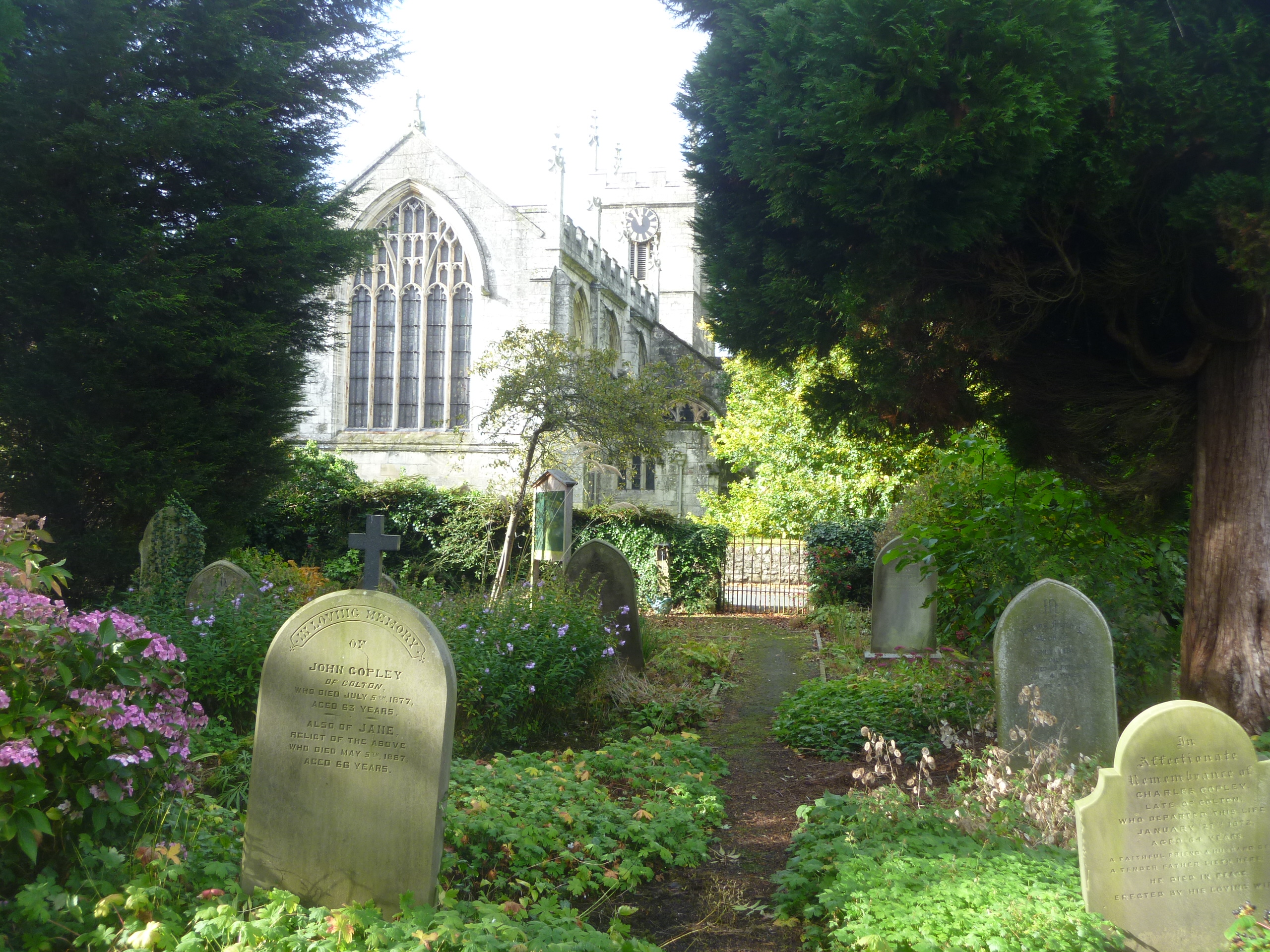
the No-dig churchyard,

All Saints church,

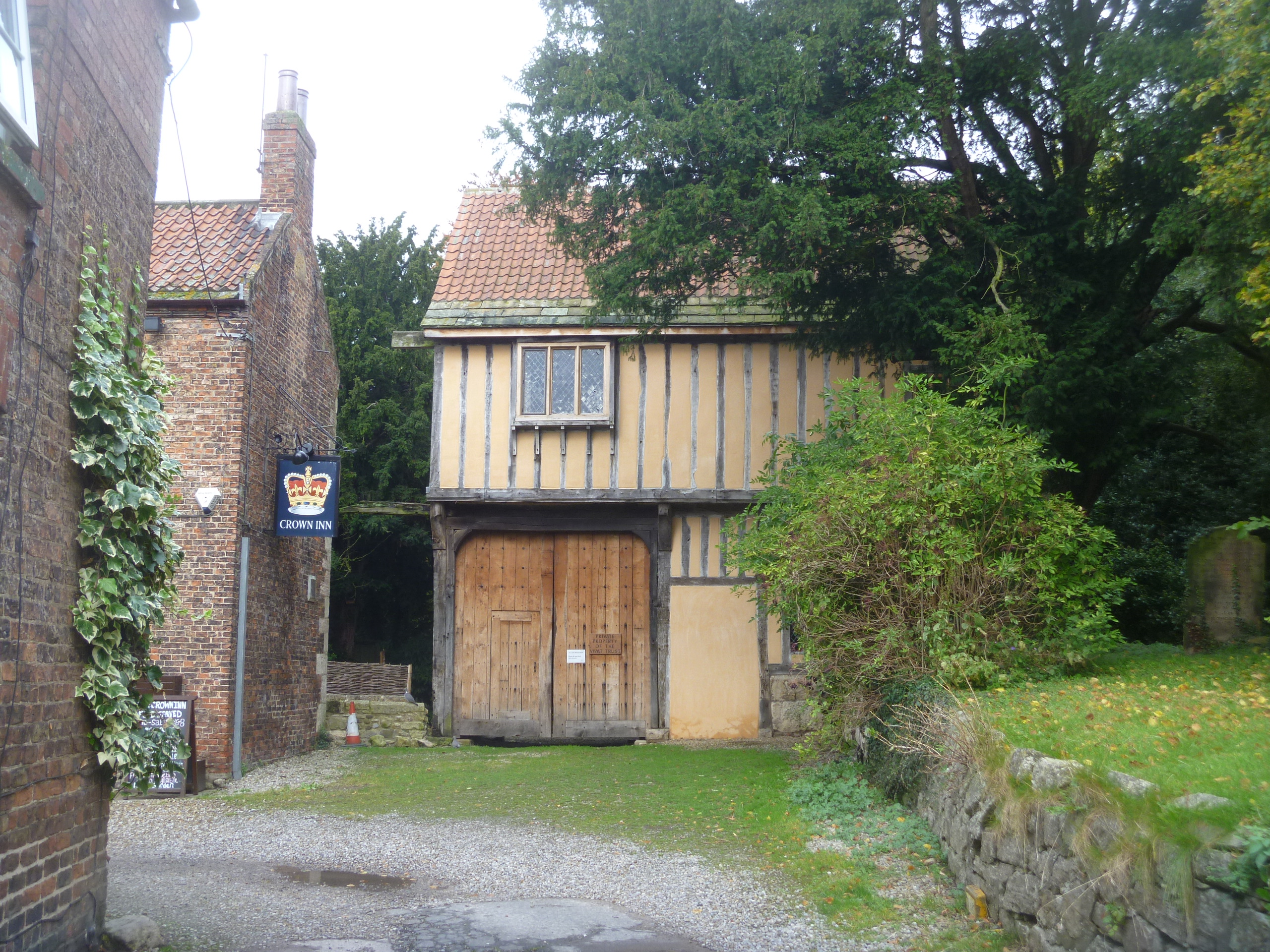
the Crown Inn

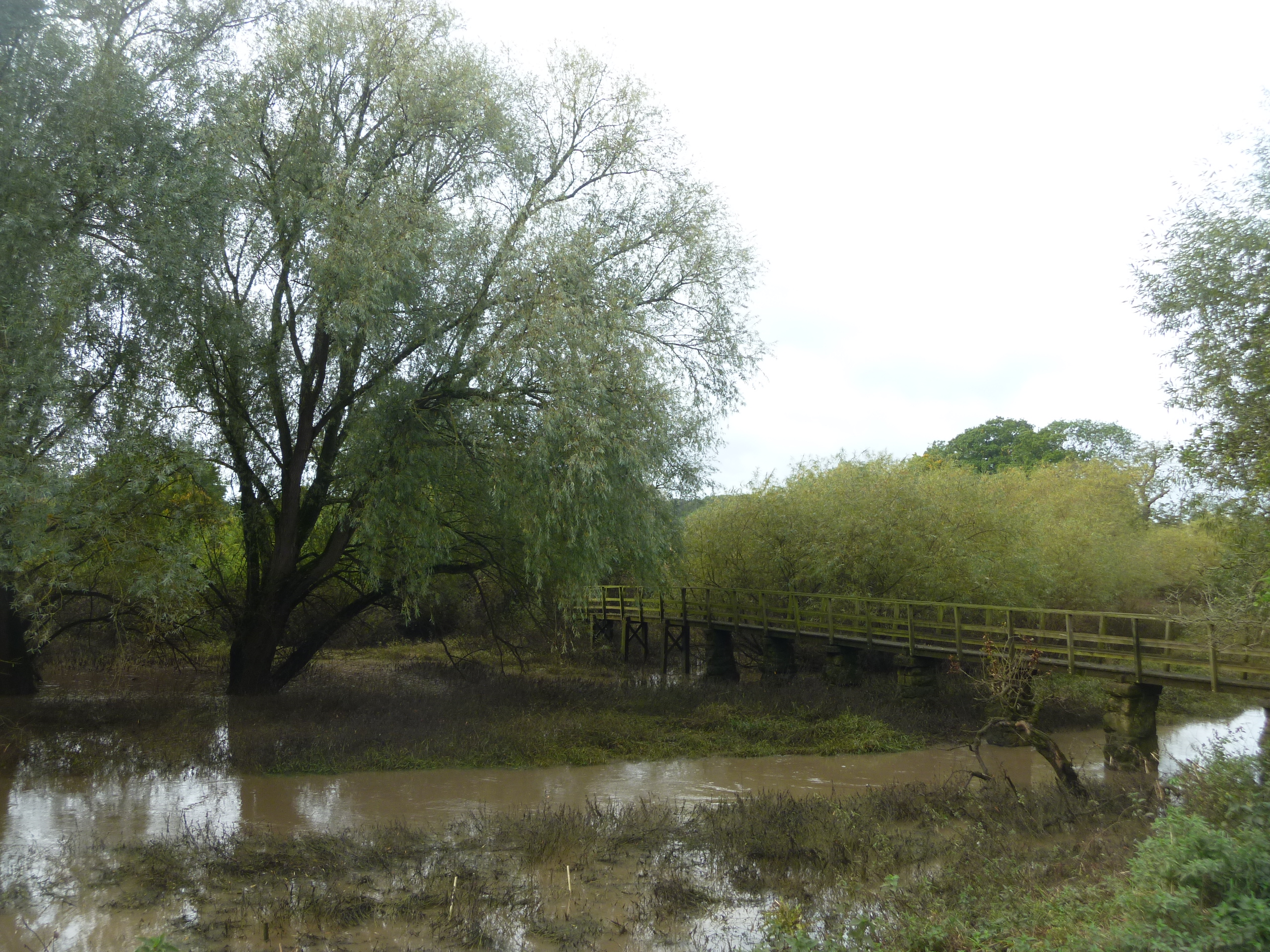
by the ancient river crossing

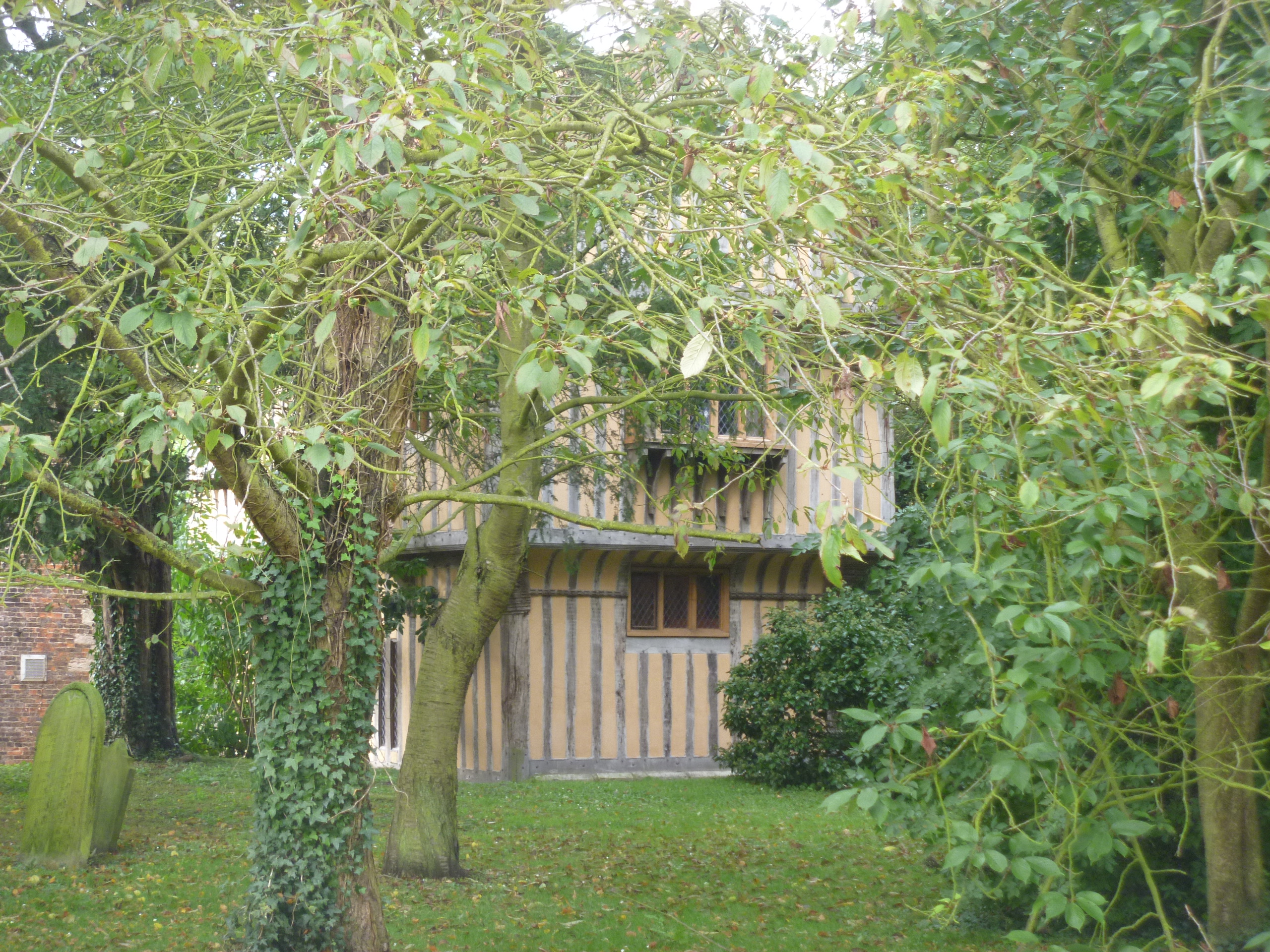
and the piece de resistance the fifteenth century Bolton Percy Gatehouse recently fully restored and now let as holiday accommodation by The Vivat Trust.

I first heard about the village of Bolton Percy when The Vivat Trust added the Gatehouse to its portfolio. Later I read a magazine feature in Intelligent Life about Tom Denny and the installation of the Millennium Window in All Saints Church. Any reference to English country (or other) churches always leads me to my Simon Jenkins’ ‘England’s thousand best churches(All Saints was awarded one star) and a couple of years ago Nun Appleton Hall (about a mile or so from BP) turned up in another book I was reading : Michael Holroyd’s ‘A Book of Secrets: illegitimate daughters, absent fathers‘. (I checked with the waitress at D’Oyly’s) and it’s impossible to see the Hall from the road and no Rights of Way pass through the estate). Internet searches for Bolton Percy bring up D’Oyly’s and further searches for All Saints church bring up references to Roger Brook and his No-Dig Gardening in the churchyard. So, when a walking friend urged me to let her treat me to lunch or tea as a ‘thank you’ for the lifts I’ve given her (I’m always happy to have her company anyway) I suggested we might give Bolton Percy a try.

Jenkins says : “The church sits on the Yorkshire plain next to the remains of a river crossing. The gatehouse of an ancient manor lurks next  door among the trees”

The early 15th century church is big and grey, its white limestone interior darkened by age and stained glass, but saved from impenetrable gloom by some clear windows in the south aisle.”

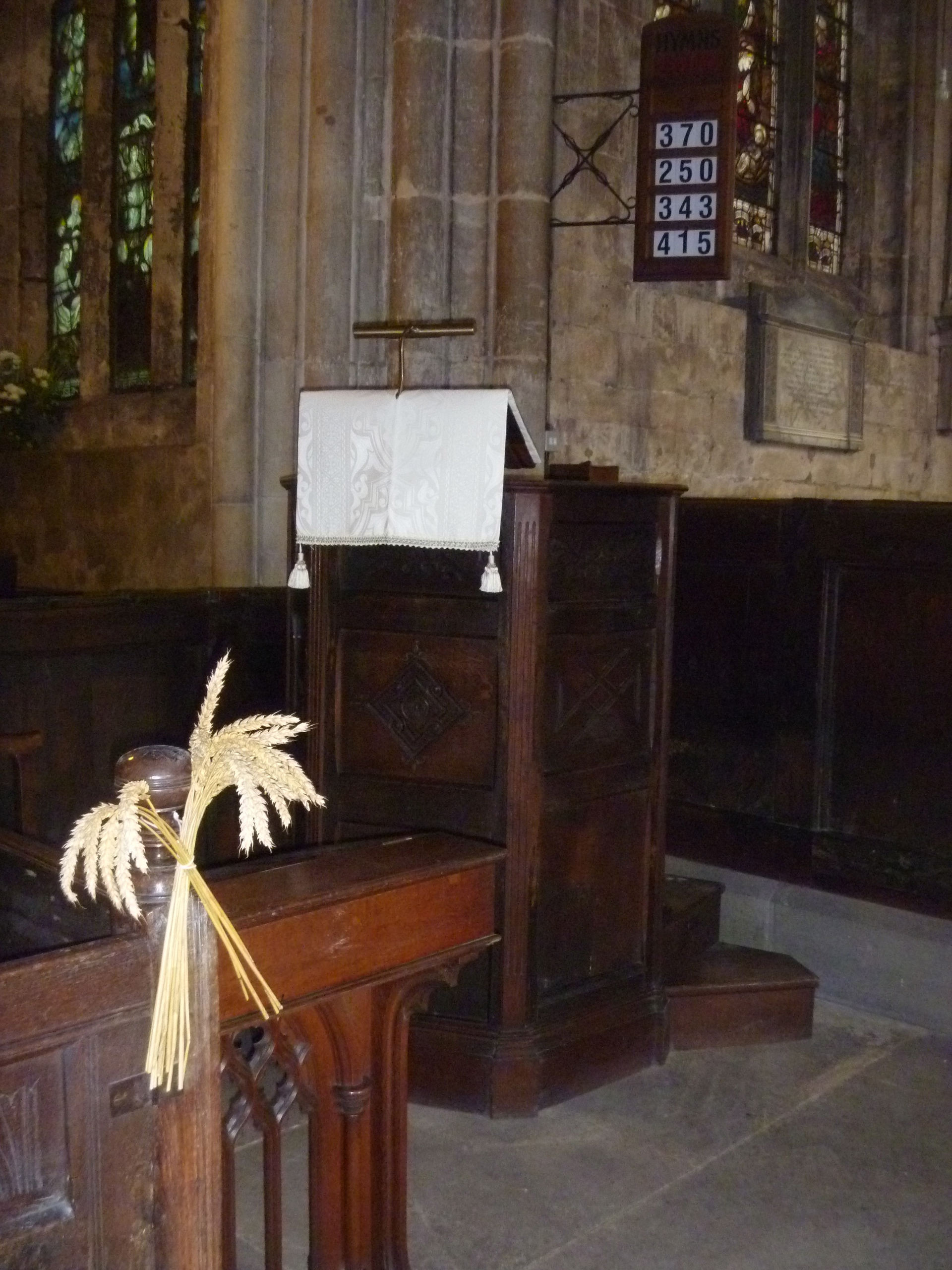
“The Jacobean box pews are complete, with charming knobs as poppy-heads.” Currently decorated in anticipation of Harvest Festival.

“There are two pulpits,  one early 17th century and one early 18th century, the former austere, the latter more flamboyant, its tester supported on an Ionic column.”

Then there are the stained glass windows : an east window with a rare depiction of the Virgin Mary as its centre piece;

the Burne-Jones for Morris and Co. Caritas window;

the Millennium window by Tom Denny inspired by Isaiah 43: “I will even make a way in the wilderness, and rivers in the desert.” The River Wharfe flows through it and an owl and a curlew are flying.

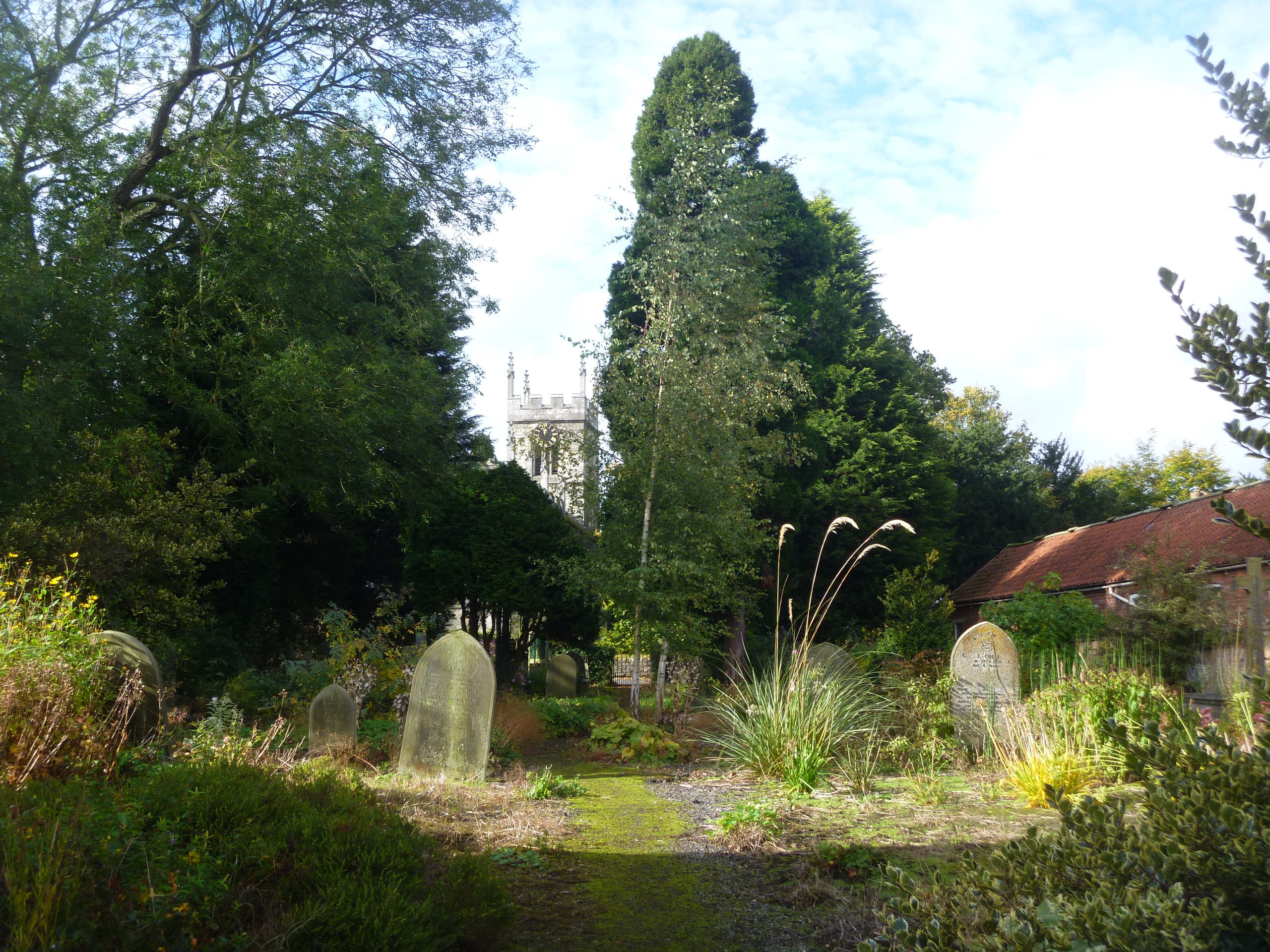
Outside and just across the road is the continuation of the churchyard. This lovely, natural space is full of wildflowers and a haven for wildlife and a peaceful resting place for Bolton Percy villagers. I’m sure it is hard work keeping it looking naturally ‘unkempt’.

It was a difficult decision as to where to take lunch but we finally chose the tea room and enjoyed a toastie followed by tea and lemon cake. All homemade and beautifully served on classic china. A perfect morning out.

Crackpots and Conker Crafts : Moor Mosaics and More Mosaics

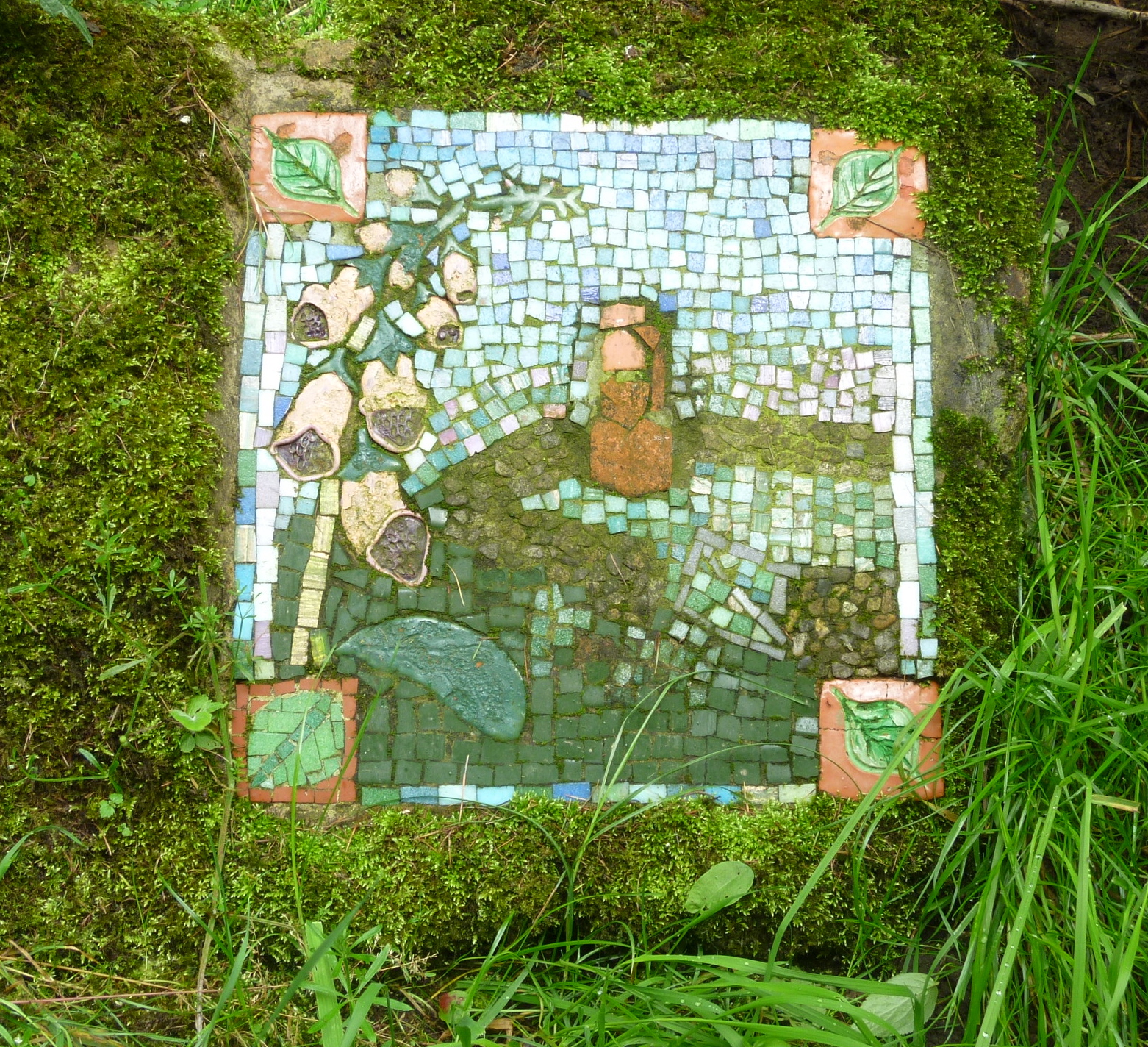
Meeting up with my friend Rosanna this weekend reminded me that I had not yet posted about a recent walk in North Yorkshire. Rosanna is a Mosaic Artist and she designs and produces (and sells) her lovely craft work. You can read about her and her work here. It was when I was looking at her nature mosaics – birds and other creatures that I was reminded of the walk I lead one Thursday in August : The Crackpots Mosaic Trail.

1. Sheep – local farmers have the right to graze their sheep on the moor (by Kirtsy Hallett)

2. Red Grouse – The moor is managed for the grouse which feed on the ling heather (by Patrice Lyth)

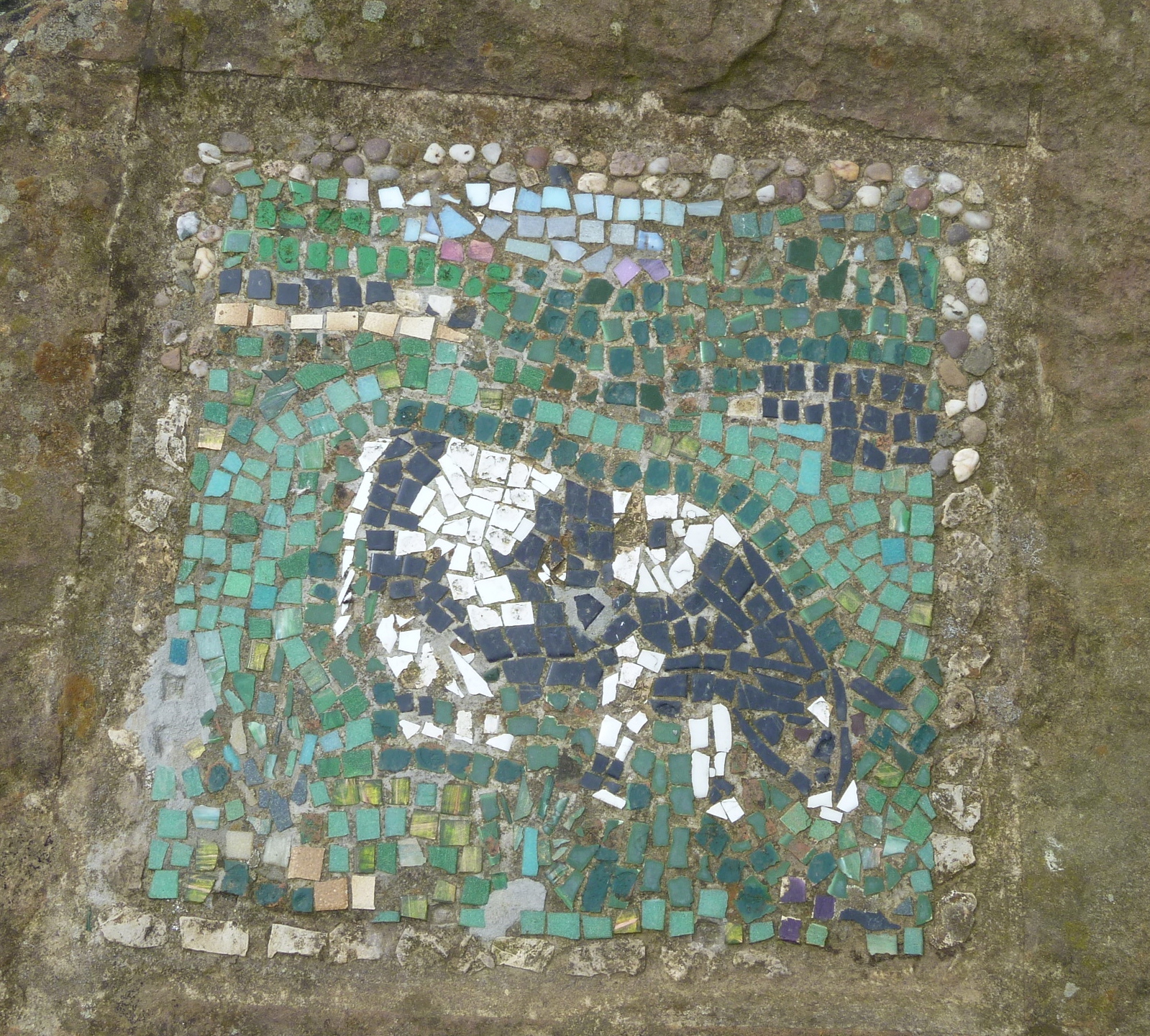
The six and a half mile trail starts several miles northeast of Pateley Bridge in the Nidderdale Area of Outstanding Natural Beauty. Indeed it was to celebrate this designation that a local group of crafts people decided create the trail. In all there are 22 mosaics and a leaflet has been produced with the trail notes, map and brief description of each mosaic.

3. Dragon Fly – common on heathlands and moors they lay eggs in water or mud or in water plants (by Margaret Crosfield)

4. Adder – sometimes seen basking on rocks (by Nora Whipp) [I’m glad I didn’t see one!]

I chose that we parked near to the ‘first’ mosaic but there’s a car park by the ‘last’ one. From here, and it’s a pretty exposed windy spot, we were soon branching off the road onto a moorland track. This track takes you along to numbers 2, 3 and 4 then, on a track through the hamlet of Carlesmoor, you come across the first non-nature mosaic : number 5 The Potato House. Known locally as “taty houses’ it was/is used for storing … potatoes.

5. The Potato House (by Gwynneth Jackson)

The Potato House today

The next mosaic illustrates The Sighting Tower which stands on a nearby hill and was built to achieve the level for a tunnel from Round Hill Reservoir for Harrogate’s water supply.

6. The Sighting Tower (by Naomi Lyth)

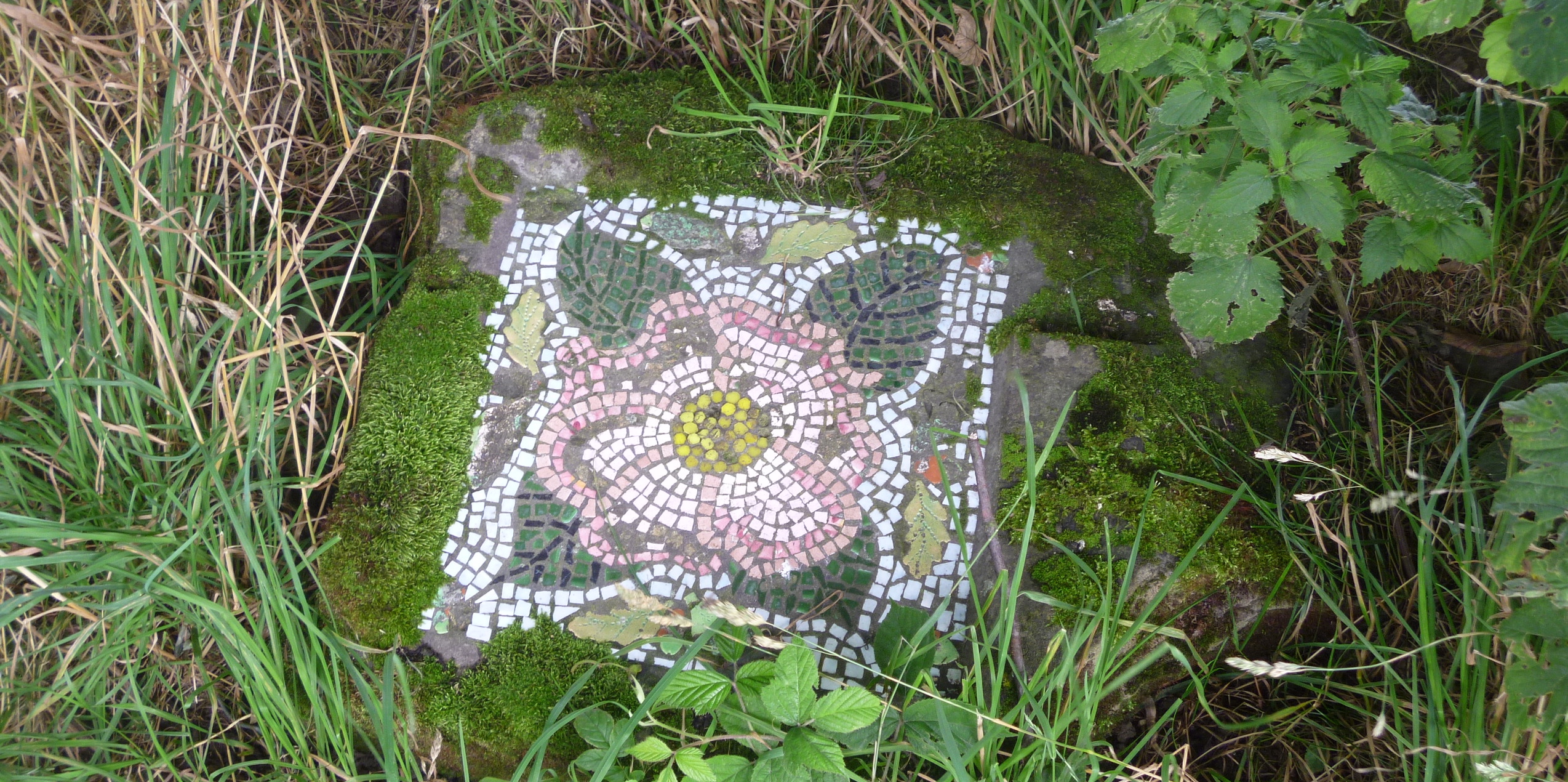
7. Wild Rose – can be seen in abundance in local hedgerows in May and June (by Judy Schlehr)

We rejoined the road briefly and then took a track/bridleway which also appeared to be a water conduit and was therefore rather muddy, even at times of dry weather. Each ford we crossed though had its own footbridge, which was handy. Mosaics 8 to 12 indicated that we were on the right track and some were also indicative of local dampness!

8. Greater Spotted Woodpecker – at home in both coniferous and deciduous woodland (by Sue Swales)

9. Friesian Cow – one of the most popular dairy breeds (by Audrey Mackenzie)

10. Flag Iris & Tadpoles – both like pools and marshy areas (by Hilary Roome & Nora Whipp)

11. Brown Trout – coming from the moor, Stock Beck joins the River Laver and eventually the Skell and the Ure (by Patrice Lyth)

Eventually we joined a country lane and then briefly had to walk along the side of a busyish road.

12. Leaves – a wide selection of species abound in this area – beech, oak, hawthorn, hazel (by Margaret Crosfield)

13. Curlew – a large wading bird that nests and breeds in upland areas (by Nora Whipp)

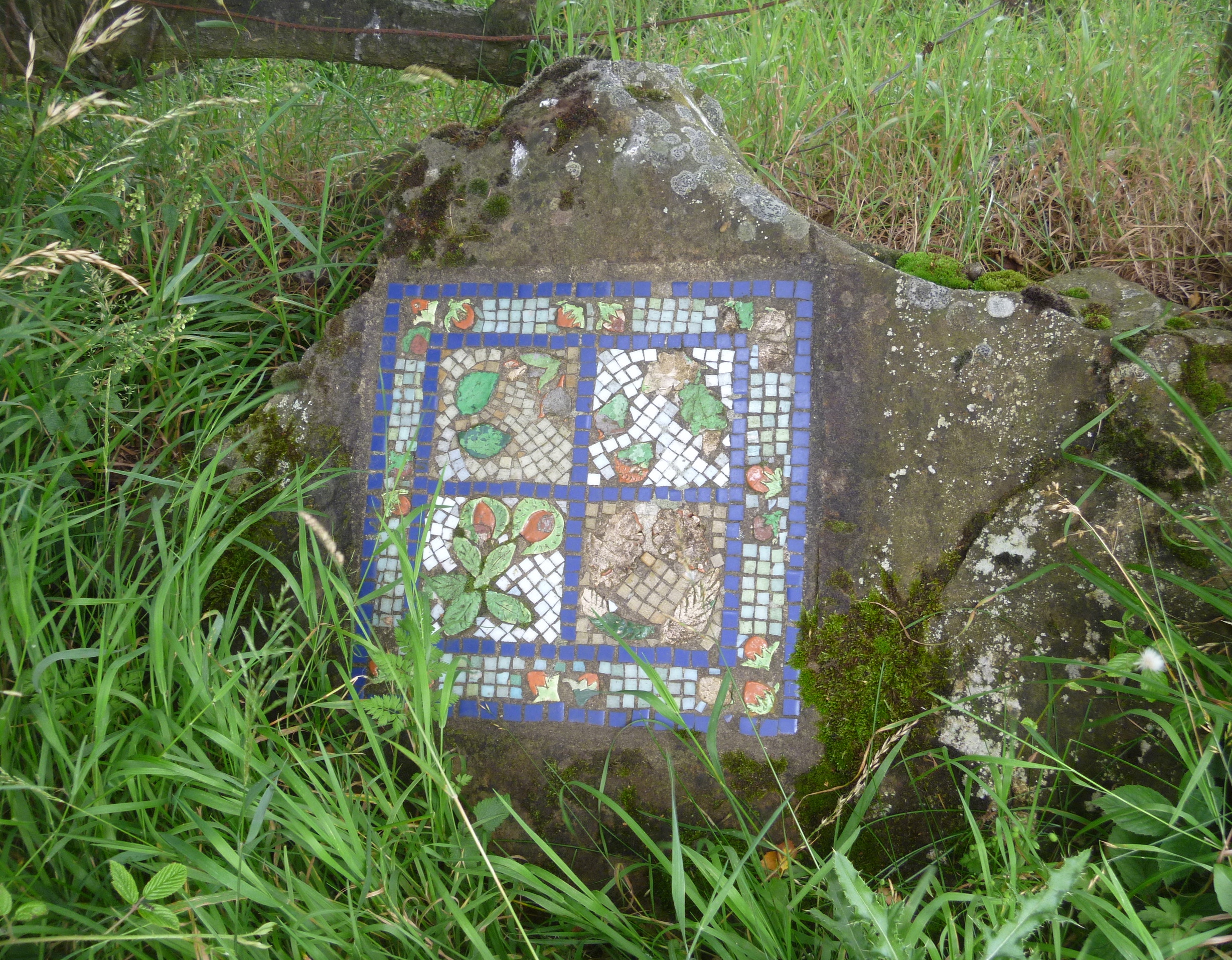
There’s a pub by the road, The Drovers Inn, but it was closed on the Thursday when we passed by. This being the case we decided anyway to stop and eat our lunches at the handily placed picnic tables. The Drovers has its own mosaic set on a rock by the roadside.

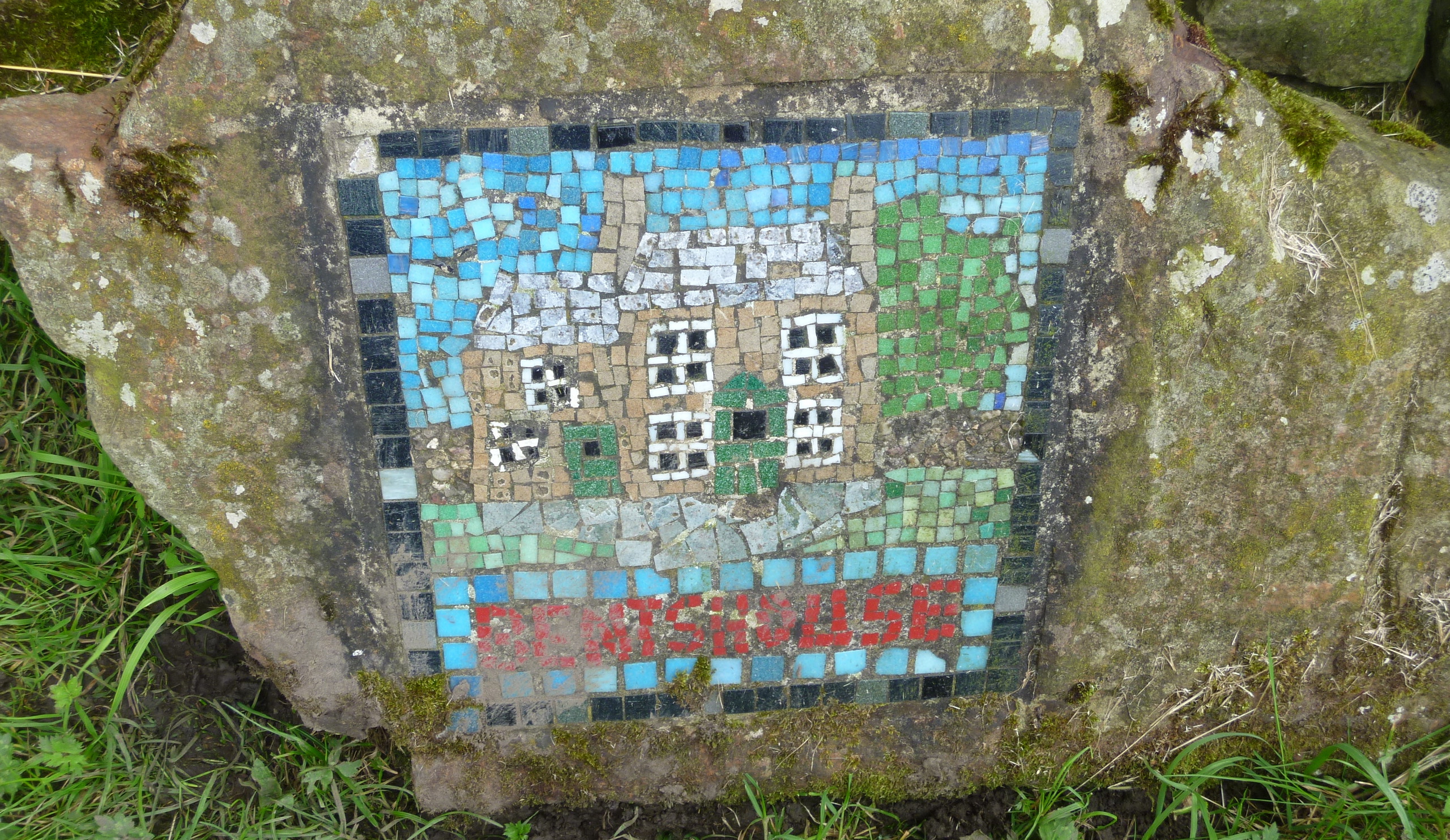
14. Boots & beer – stop here for refreshment and good company [we brought our own of both!], but not on Mondays (by Gerry Mass)

Here’s what I found about the inn (there’s no website) :

“Dallowgill – ‘The Drovers Inn’

Free House. Locally and affectionately known as ‘The Little Drovers’. Not technically in Nidderdale but an allowable indulgence as the characterful Drovers Inn has strong connections with the dale, lying about five miles or so eastwards from Pateley Bridge at the far end of Dallowgill Moor. An isolated moor edge pub notable for its tiny ‘living room’ 1960’s feel bar. The pub is owned by Dallowgill shooting estate and as such remains unspoilt and un-commercialised. Closed all day Mondays.
Built between 1856-1861 by Joseph Atkinson. Friendly licensee in Steve Plews, with the pub offering bar meals and two/three Real Ales (normally inc. Hambleton Bitter plus one other)
Tel. 01765 658510”

[http://www.nidderdale.fslife.co.uk/nidderdale.html]

Refreshed, we moved on along this road for probably just under a mile and by Castiles Farm another track (with its own mosaic of bluebells) led off down to Dallow hamlet.

15. Bluebells – a common sight in May along hedgerows and on woodland floors (by Margaret Crosfield)

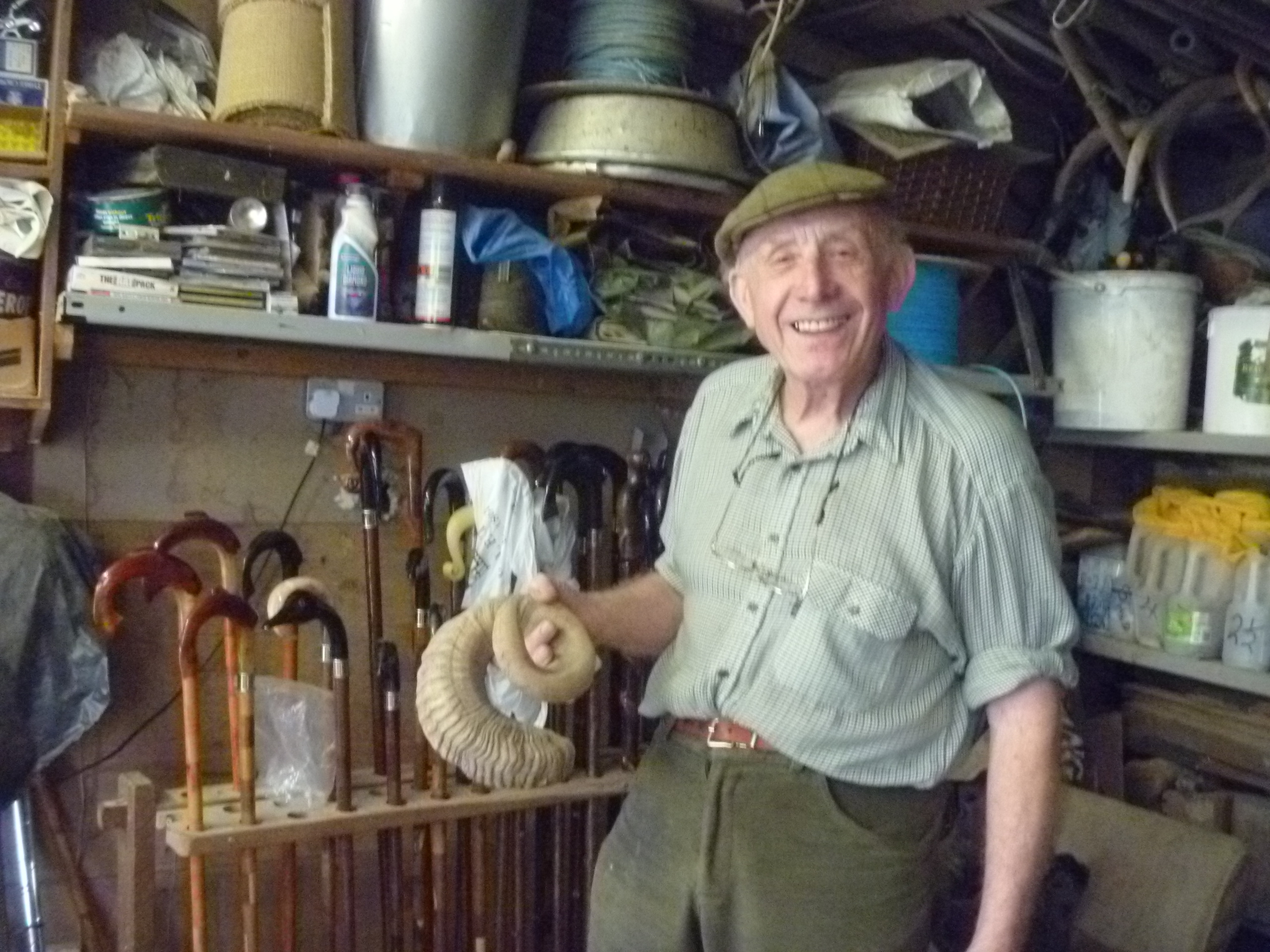
There we met the ‘stick man’. He showed us a wonderful collection of sticks that he made – each one different from the next. The pub is owned by the Dallowgill shooting estate so indeed is the hamlet of Dallow and our stick maker Terry Holman is a beater. From the ‘Glorious Twelfth’ (of August) he’s a beater or some such for the estate up on the local moors and (he told us) his business is put on hold for 12 weeks.

16. Fungi – found in the woods in autumn (Gwynneth Jackson)

17. Deer – most commonly roe deer who are rather partial to young trees (by Wahneta Thorne)

18. Rabbits – the farmers’ pest, six of these furry creatures eat as much as one sheep! (James Stewart)

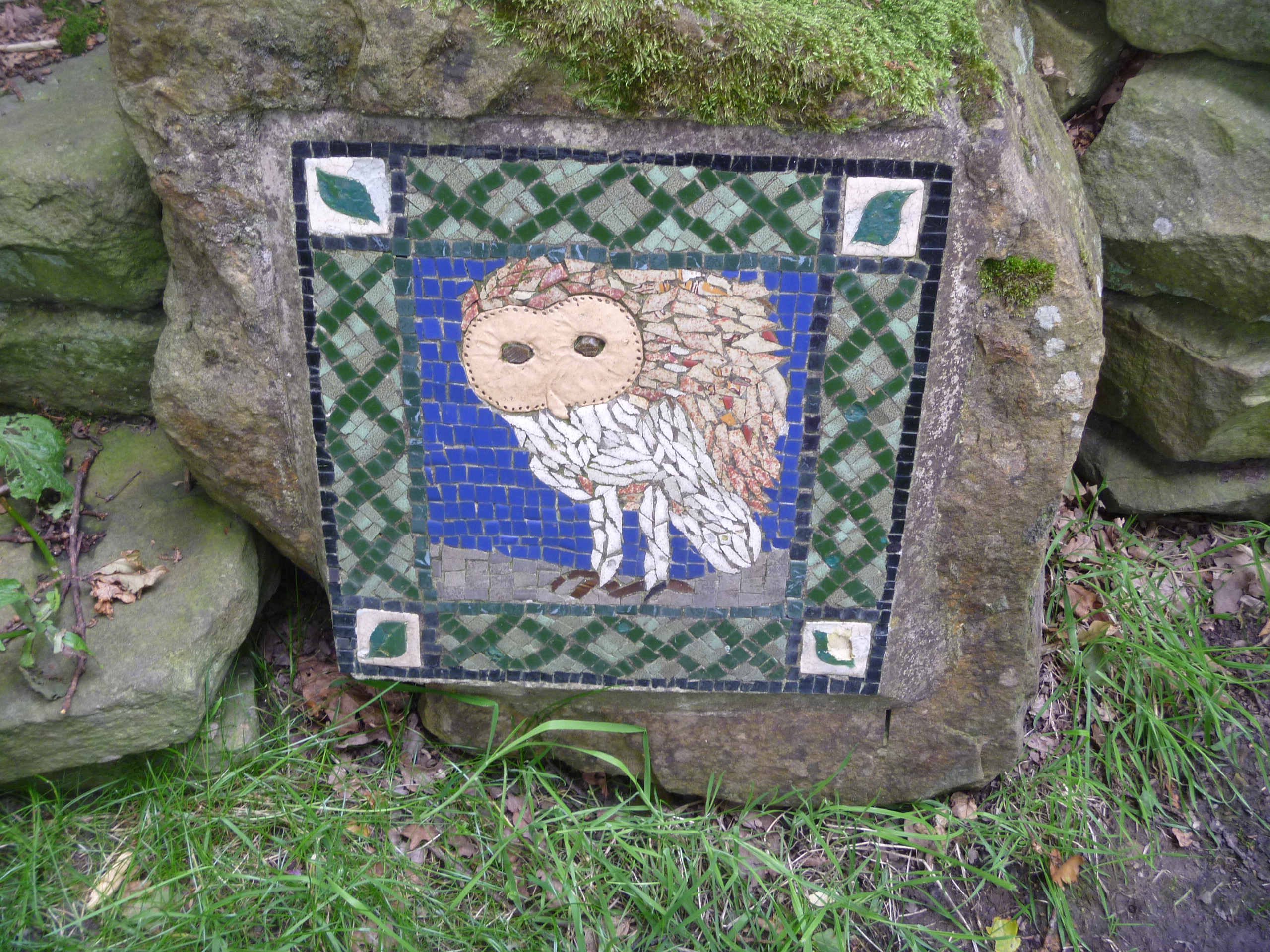
19. Barn owl – sadly in decline. Lives in deserted barns. (Patrice Lyth)

After Dallow there’s a lot of woodland or forest path to cover until finally we strike across fields from one building (Bents House with its own mosaic)

20. Bents House – built in the late 18th century, named after Bent, a type of grass (Really??) (by Frances Lyth)

to another (a buttressed barn)

21. Pheasant – very colourful birds with a distinct lack of road sense! (by Margaret Crosfield)

to another (Pete’s Place) and finally a last climb up to the road where lies the final mosaic (and a car park). Our own parking place was just a few paces on from this. The final mosaic is of a Roman soldier whose remains were found on Grewelthorpe Moor and buried in Kirkby Malzeard churchyard.

22 Roman soldier (By Gerry Mass)

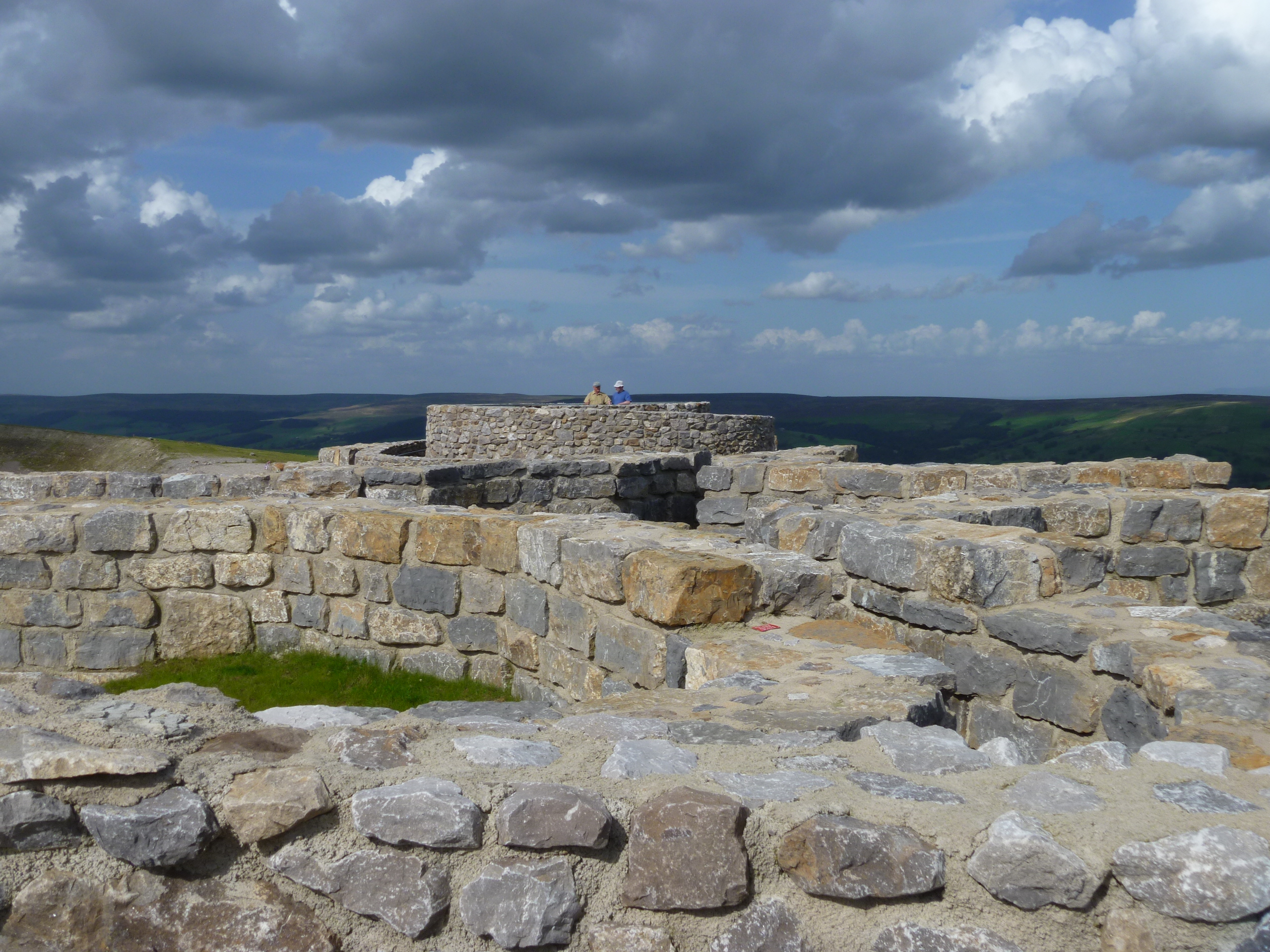
This being a shortish walk for the group we drove home via The Coldstones Cut a “monumental sculpture for spectacular views of North Yorkshire” (leaflet). Just outside Pateley Bridge on the B6265 road to Skipton there’s a free car park and its a toughish climb up but well worth the effort for the views and the panorama that awaits you. The orientation ‘table’ set in the wall top indicates the direction to locations near and far and very very far away!

Then what better way to round of the day than a round of drinks at The Royal Oak in Dacre one of my favourite Dales pub stops!

I Miss Miro but Make a Beeline for The Bee Library

A Sunny September Saturday Afternoon at The Yorkshire Sculpture Park

Oh dear, I seem to have lots of favourite places to walk and yesterday I revisited another but it’s a good place to take visitors who enjoy stepping out in the countryside but not too strenuously and with added cultural interest. Yesterday we spent a lovely warm sunny afternoon at The Yorkshire Sculpture Park. I was last there on a cold blustery January morning earlier this year. Despite a busy car park and visitor centre it was easy to get away from the crowds and although our aim was to see the Joan Miro exhibits we never actually got to them! The plan was to hike up to the Longside Gallery to see the Anish Kapoor exhibits and return to the car via the Underground Gallery and Miro exhibition.

Of course, it didn’t turn out like that as we were constantly stopping to inspect the wonderful sculptures dotted around the Park.

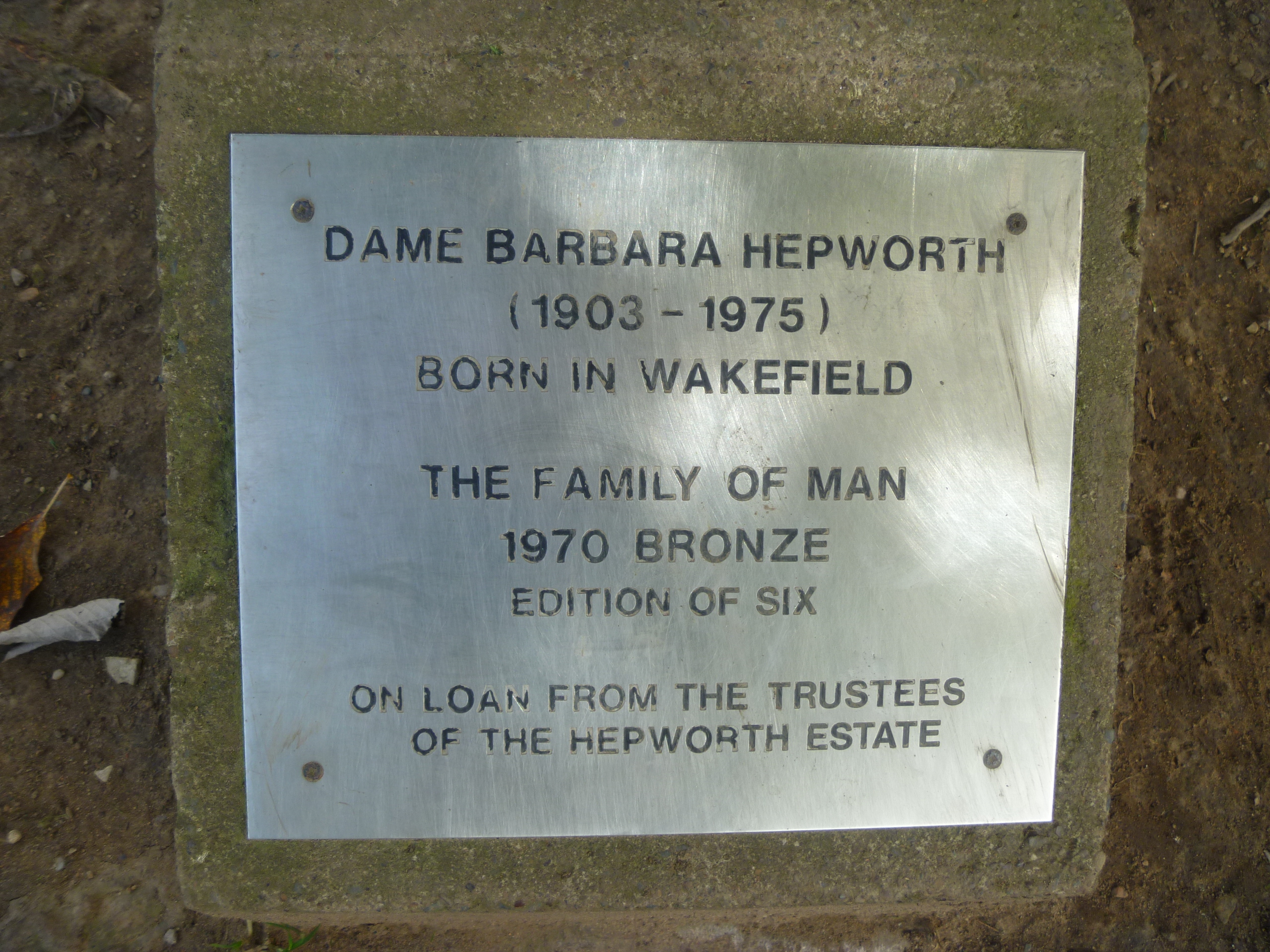
One of the first up was Barbara Hepworth‘s The Family of Man. Only as recently as July I had come across an edition of this bronze work at Snape Maltings in Suffolk.

Family of Man at Yorkshire Sculpture Park

Family of Man at Snape Maltings

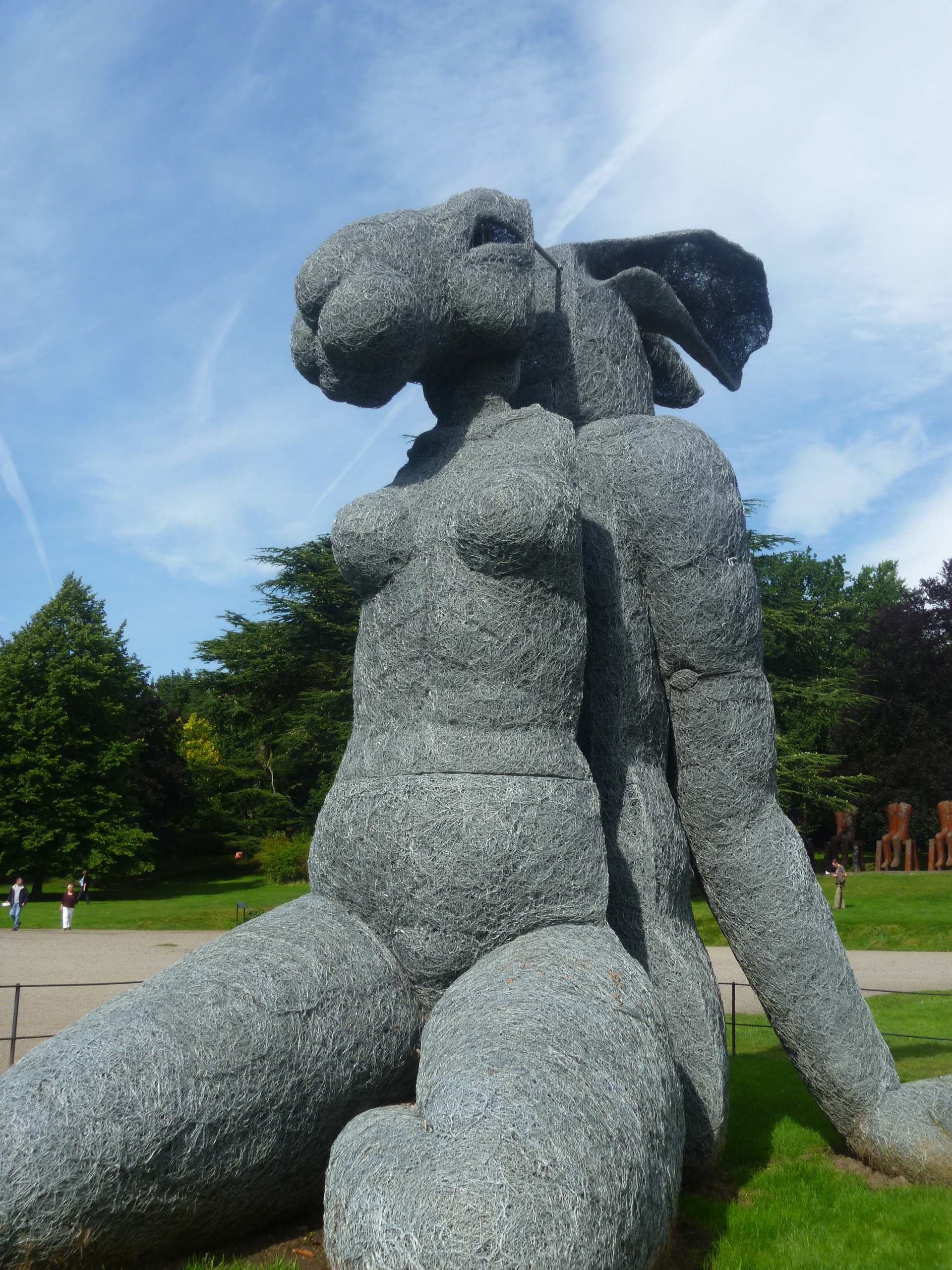
Descending through the park we were waylaid by other intriguing and clever works of art including The Greyworld Playground (make your own music!), Magdalena Abakanowicz’s Ten Seated Figures and nearby Sophie Ryder‘s Lady-Hare Sitting.

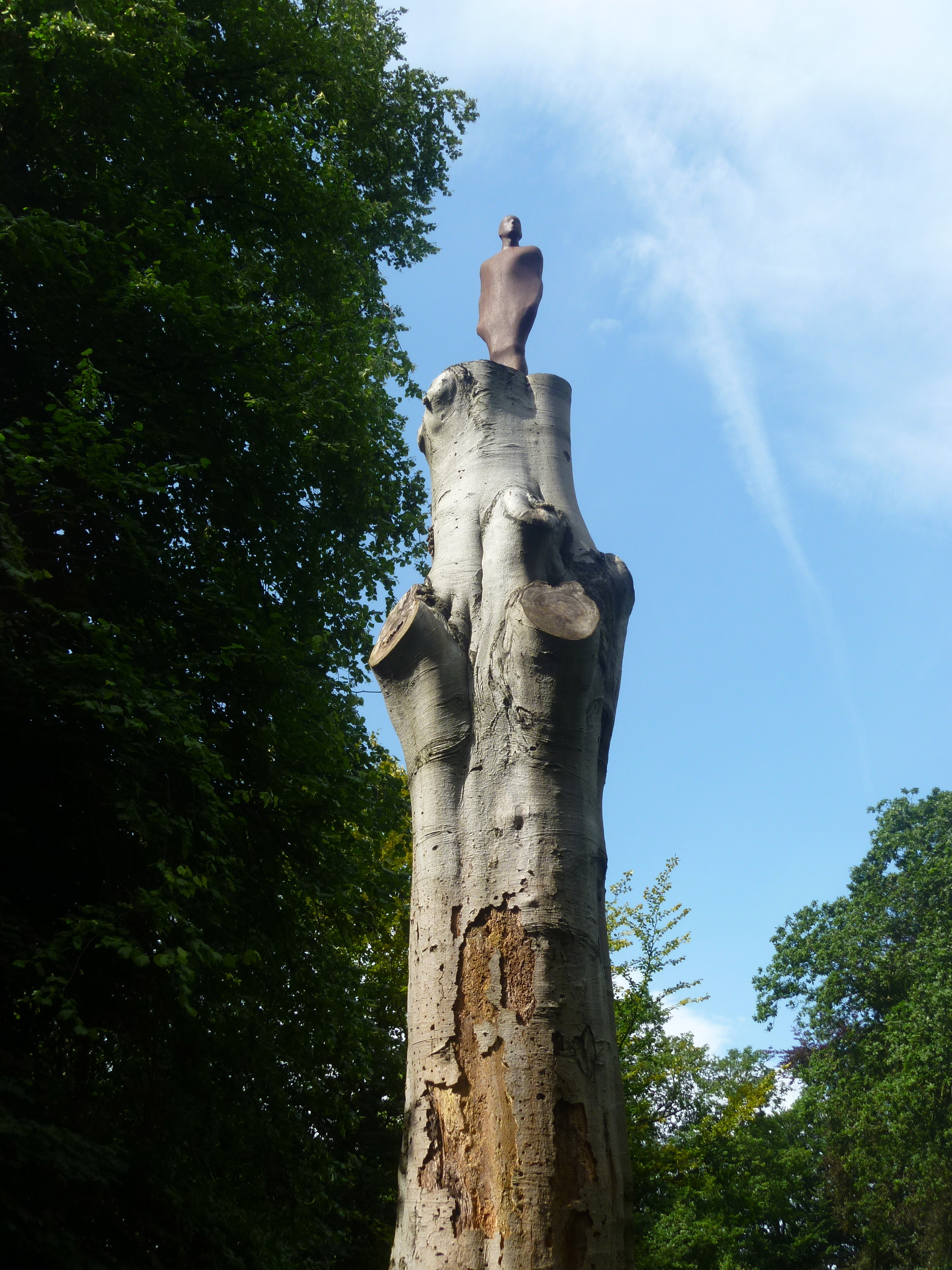
Our visitors have connections with the northeast and were expecting to see an Antony Gormley, almost featureless but still expressive, sculpture as they, like me, are fans of The Angel of The North.

They were not disappointed. Right by the gate, through which you head into open country and fields of sheep and cattle, and standing high above our heads on a massive tree trunk is Gormley’s One & Other.

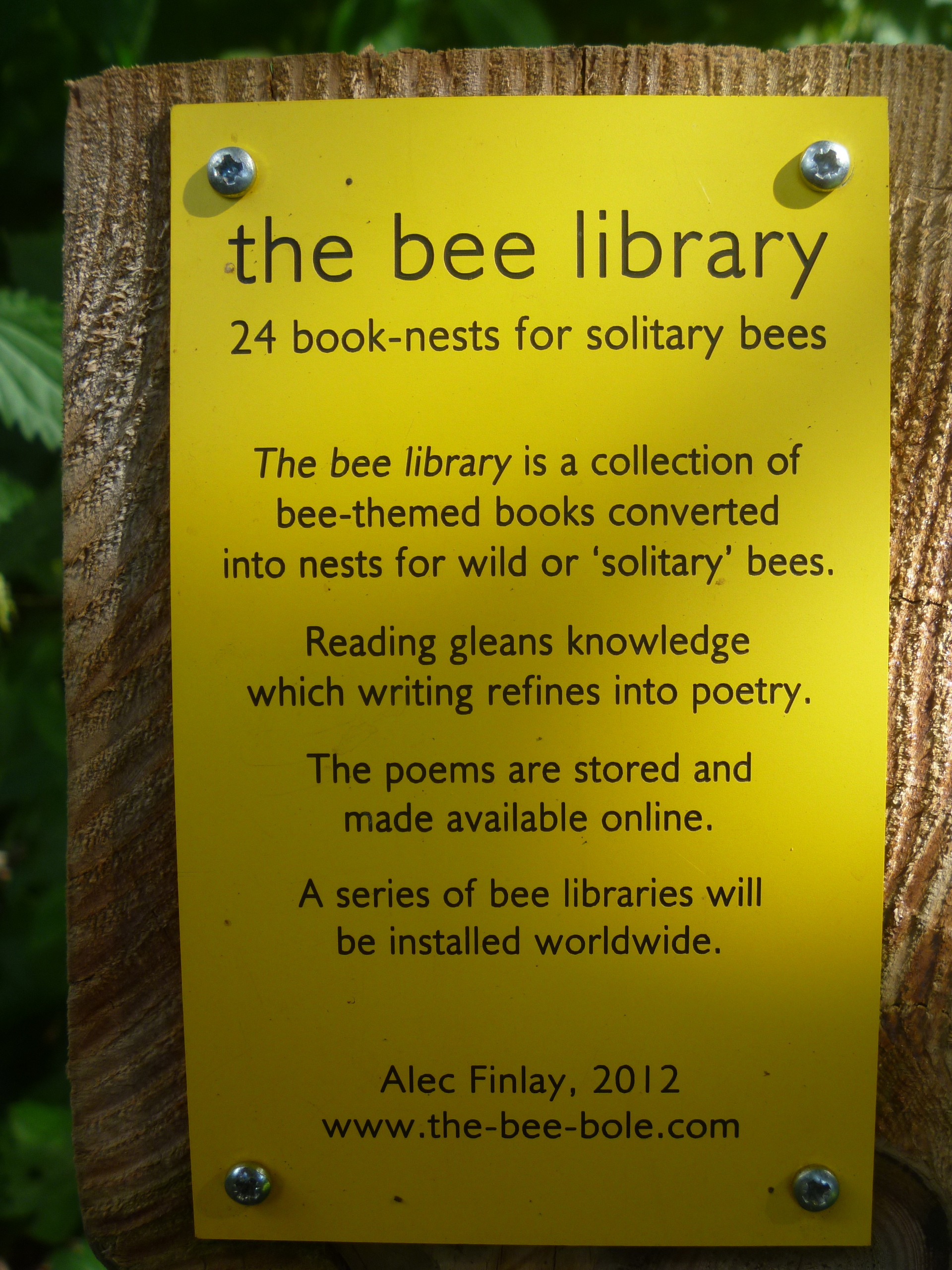
At this point we were intrigued to take a detour from our proposed route to inspect Alec Finlay’s The Bee Library. Along a path through woodland surrounding the Upper Lake hang 24 ‘Bee Hotels’ each is labelled with the title of the book and a link to the website www.the-bee-bole.com where the full story can be read.

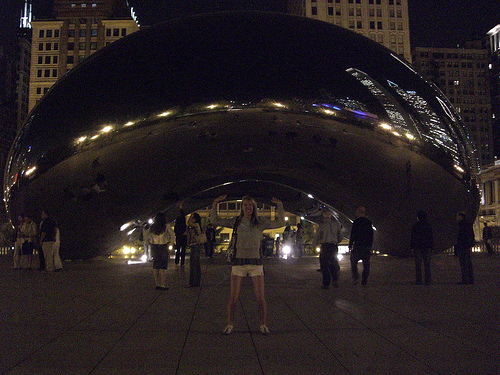
Finally we headed up the hill to the Longside Gallery which features currently an exhibition of the work of Anish Kapoor designer and creator of the Orbit structure in the London 2012 Olympic Park and of Cloudgate, commonly called “The Bean”, in Chicago.

Chicago’s Cloudgate by Anish Kapoor at night

No photography is allowed inside the gallery. After a brief stop for refreshments we headed back down hill past work of Andy Goldsworthy and down David Nash’s Seventy One Steps returning to the car with only the briefest glance round the lovely shop. Maybe I will get back to see the Miro exhibits before they move on in January 2013 – I hope so!

[Post updated with links 03.09.12]

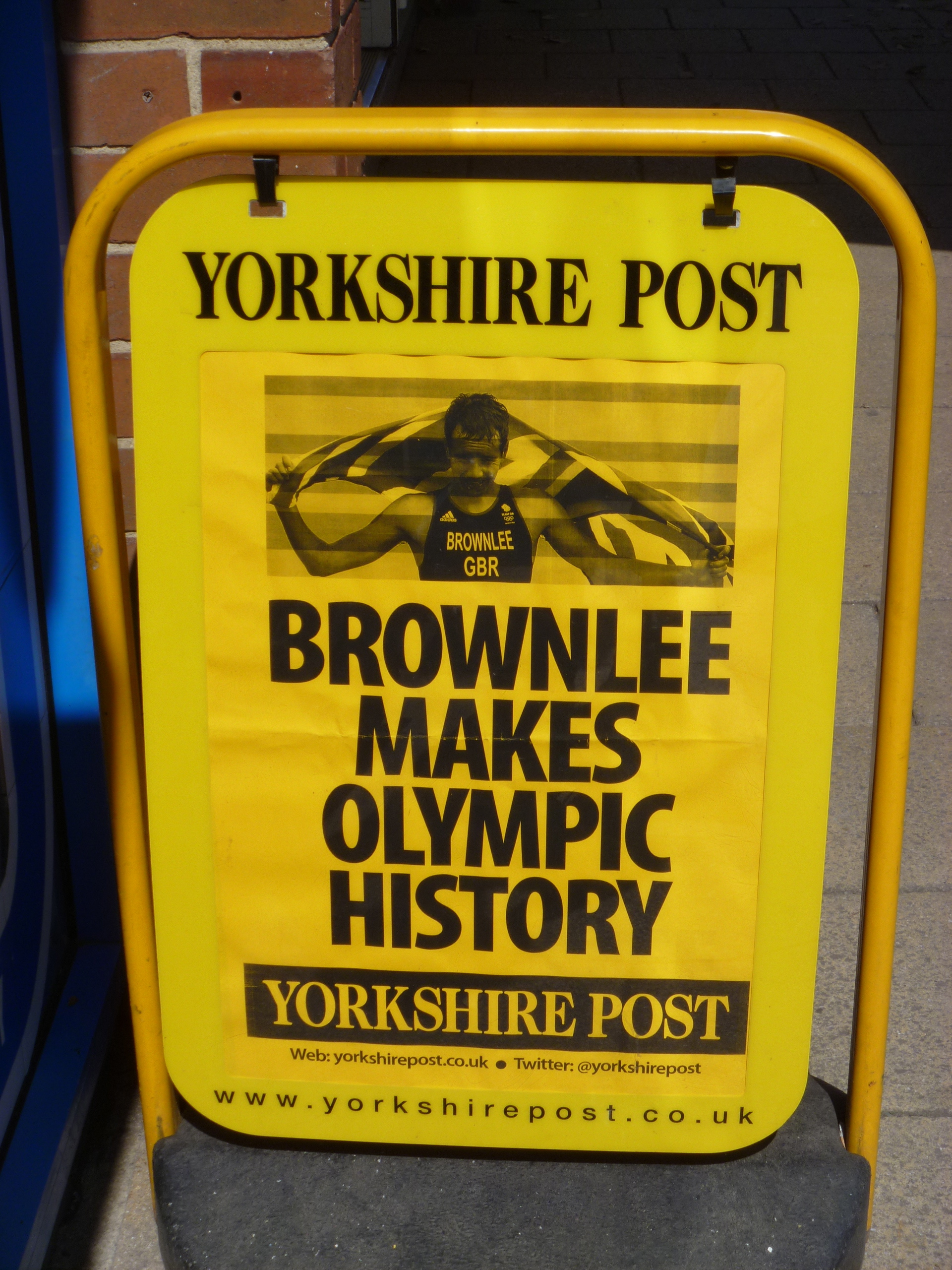
The Brownlee Brothers of Bramhope

Read All About It! Read all about it!

The Golden Post Box on New Road Side Horsforth

Yesterday I was in Morecambe. I planned the trip a few weeks ago not realising that the 2012 London Olympics Men’s Triathlon was to take place from 11.30 on that very day. I missed seeing the race in its entirety, there was no public TV at the hotel (we did ask), but I received the good news by text almost instantly from a friend, followed by several others, whilst lunching at The Midland Hotel.

What we wanted to hear was that one of the brothers had won gold and the other silver. In fact the result was Alistair Brownlee – Gold and his brother Jonathan – Bronze. A superb effort and result nonetheless.

Alistair and Jonathan now live in Bramhope having moved there from nearby Horsforth. Both boys attended Bradford Grammar School where, along with my own two sons, they were keen members of the Cross Country Team. Sometimes we would share lifts to and from the school cross country coach on a Saturday.

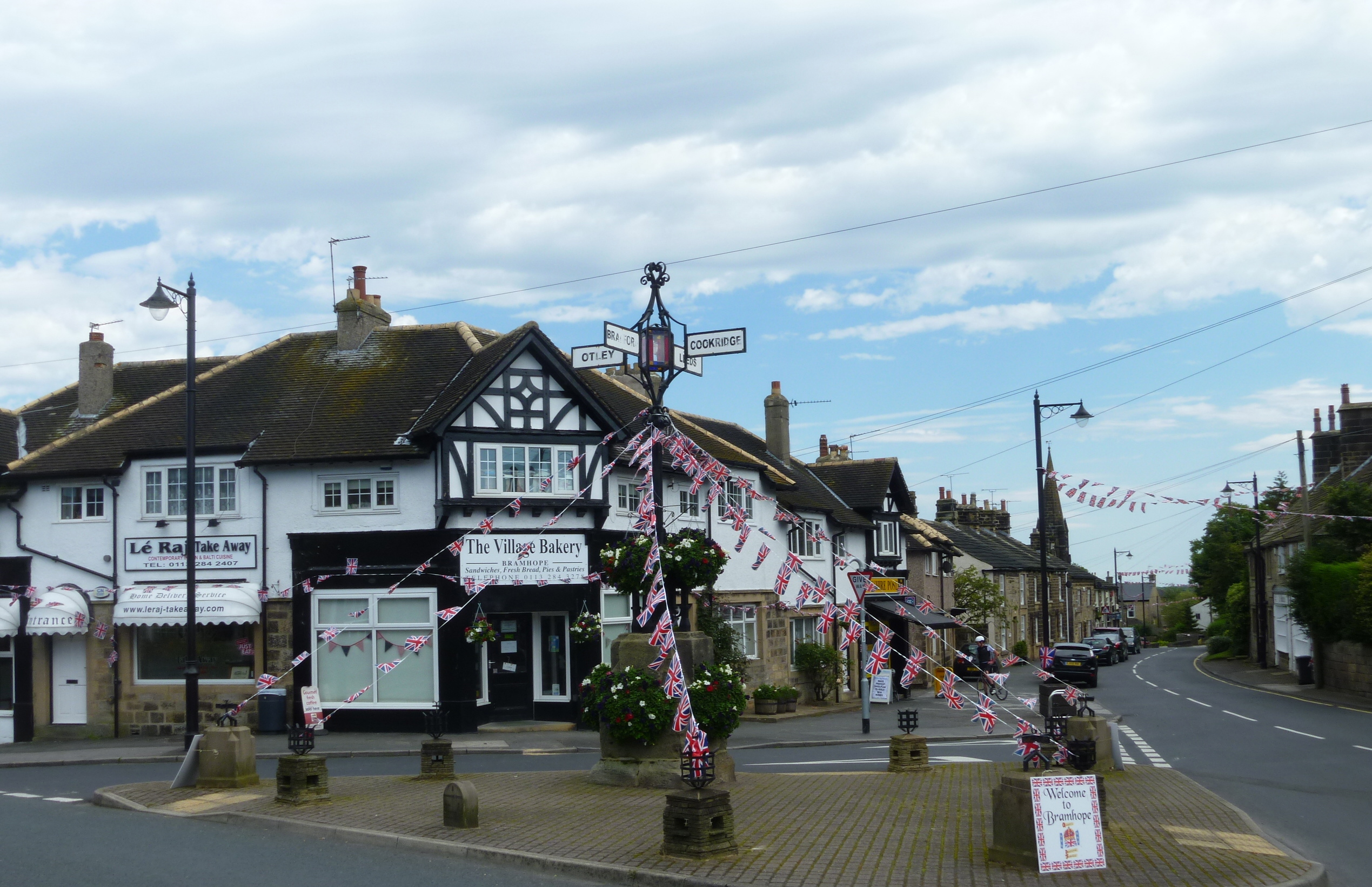
Every Sunday I drive through the village of Bramhope and for the last several months have noticed the street decorations for the Queen’s Diamond Jubilee which have stayed in place for the London Olympic Games. Two Sundays ago I remembered to take my camera with me and stopped to take a snap of the decorated village signpost. As I walked around trying to find the best angle my eye fell on two cyclists who had stopped outside the village shop. Two cyclists in Bramhope? Surely they must be Alistair and Jonny so I wandered over to say ‘hello’ and wish them good luck. We had a chat and I’m sorry I didn’t think to take a photo of them. You can just see a white cycle helmet behind the display in the picture below. That is Alistair.

Well done, boys! You have done Yorkshire and Britain proud. And Good Luck in the future.

I leave you with one further comment. Yesterday, after Alistair’s win, the medals table showed the county of Yorkshire in 10th position!

The Old Ways Part Two : Mastiles Lane Revisited and Meet the Author

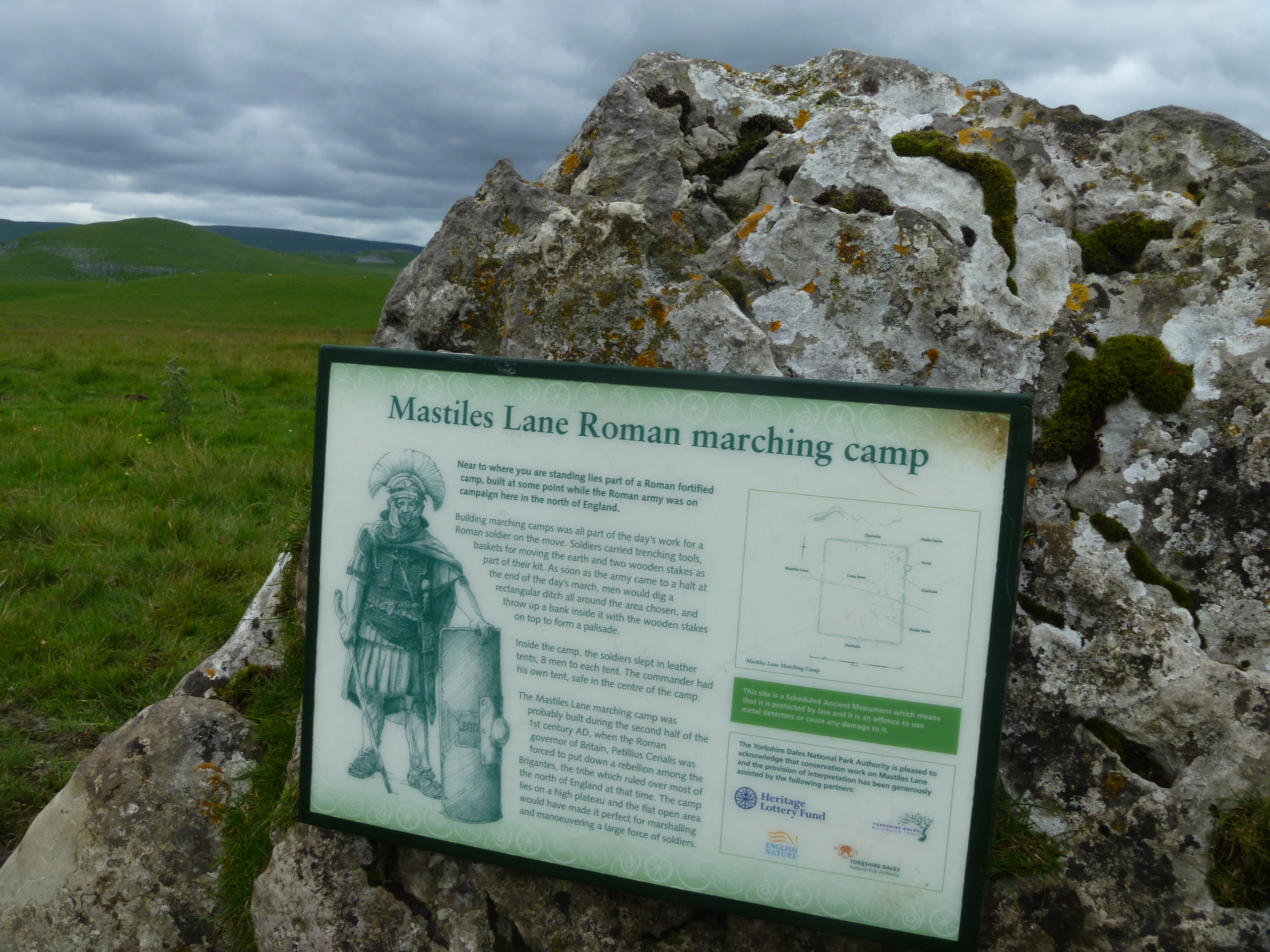
Well, it finally happened a few weeks ago in the middle of July, I walked the length of the Yorkshire old way, Mastiles Lane. The weather stayed reasonable and it’s a dry track most of the way but there was a fair wind blowing on the top. Amazing to see the remains of the Roman Camp – how did those soldiers feel about the winds and rain up there in such an exposed location? – and we managed to spot for sure one of the two remaining stone cross bases where the monks from Fountains placed crosses along the way.

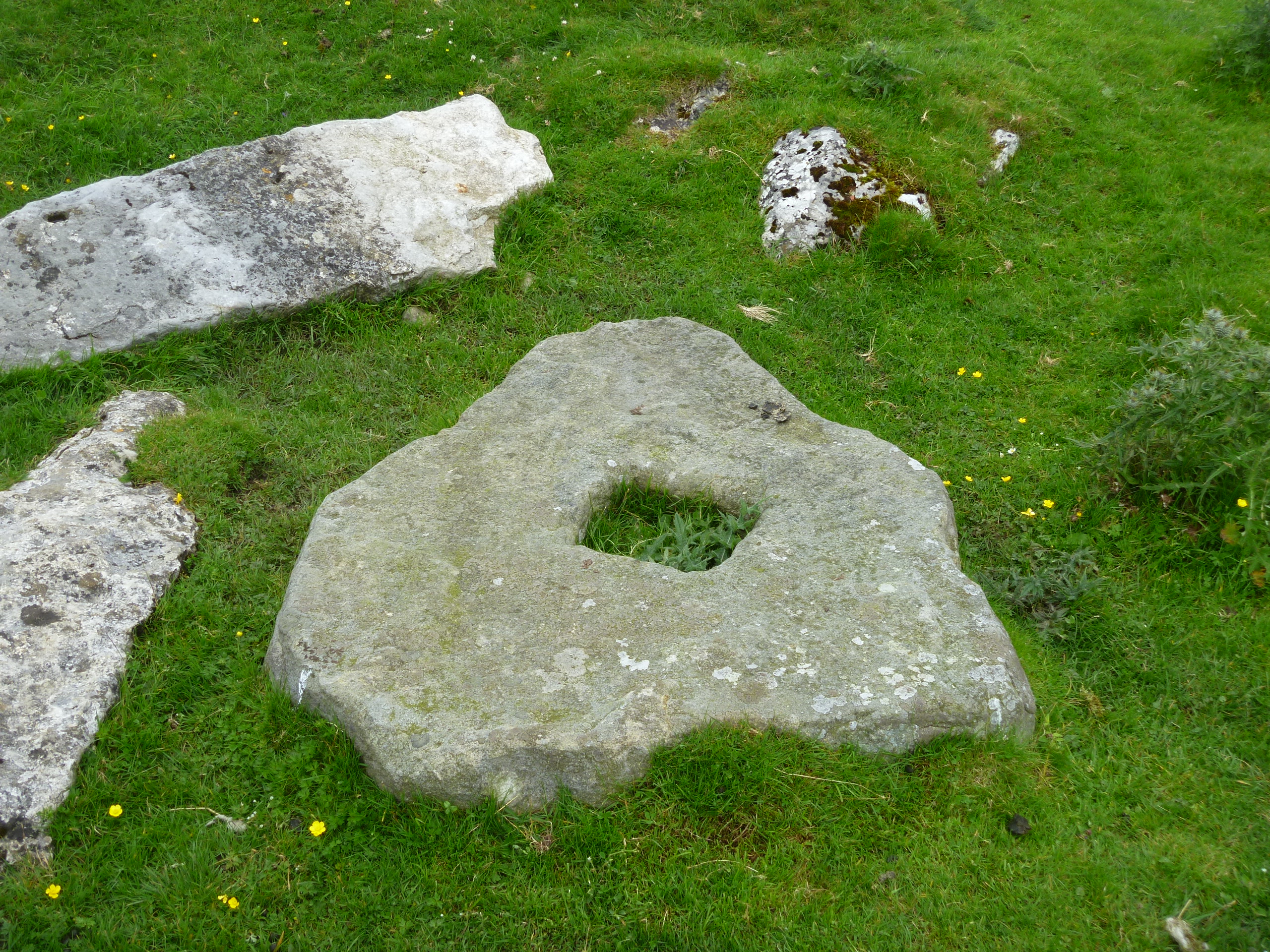
“Along the lines of monastic roads it was the custom to place crosses at prominent points, partly to stand as landmarks pointing the way and partly as a symbol of consecration or dedication to the service of the church. Crosses were usually a very plain and rather stumpy shaft, roughly squared or sometimes bevelled to a rough octagon and set in a socket cut in a large base block but in others it is squared up and tooled. five of these crosses lie alongside the old road across Malham Moor, one near Strete Gate.” [Malham and Malham Moor, by Arthur Raistrick]

Most Dales hikes that I undertake tend to be circular but it made a nice change to do a there and back one and my fellow hikers agreed. Mastiles Lane starts in the village of Kilnsey.

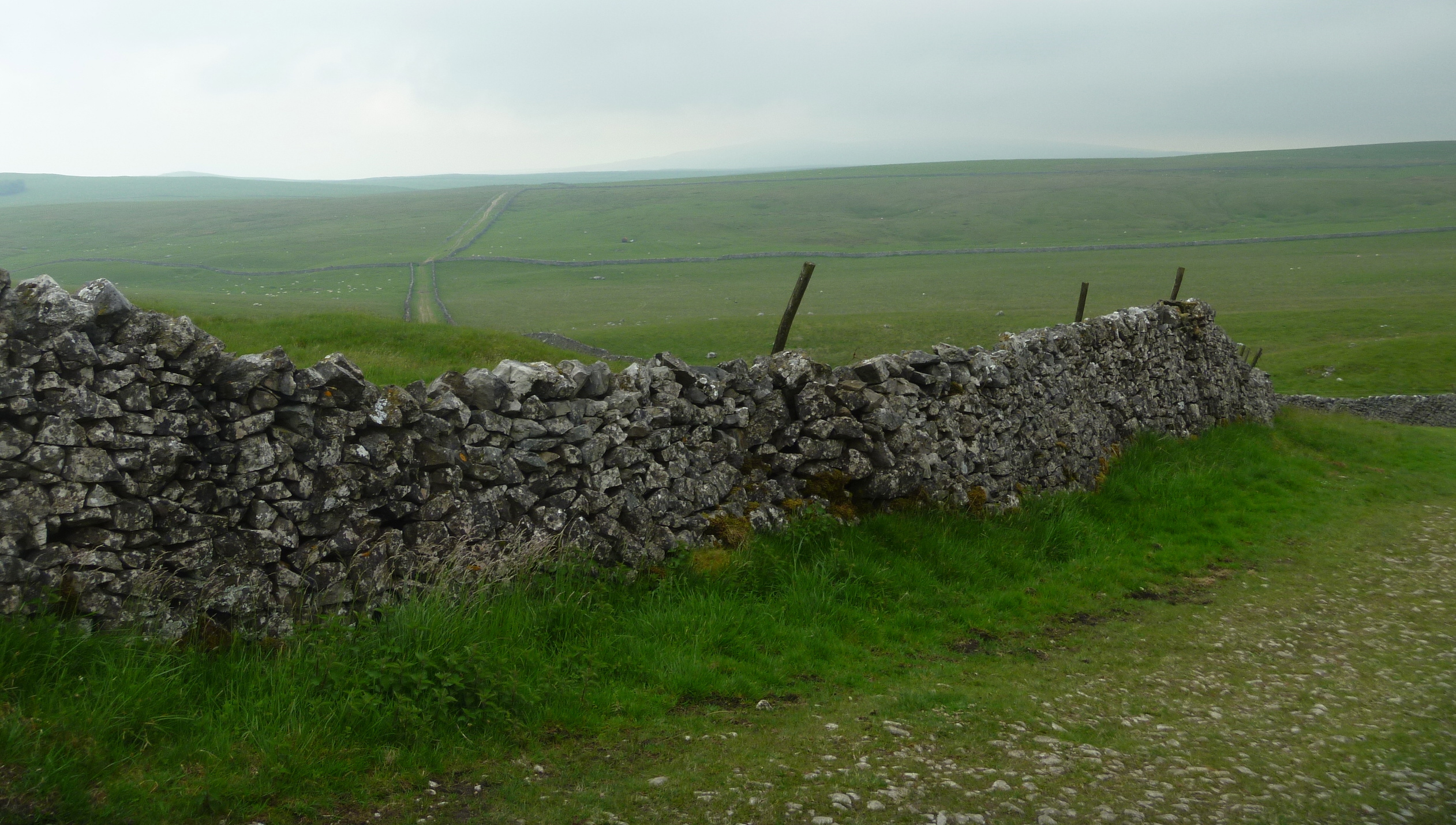
This high limestone landscape is unsuited to arable but the monks of Fountains Abbey brought their flocks of sheep to this area and the lane itself was established by them. Mastiles Lane is almost totally for its full length a walled lane and those walls are just a small proportion of the dry stone walls that criss-cross the county (and other counties too, of course).

We reach Strete Gate

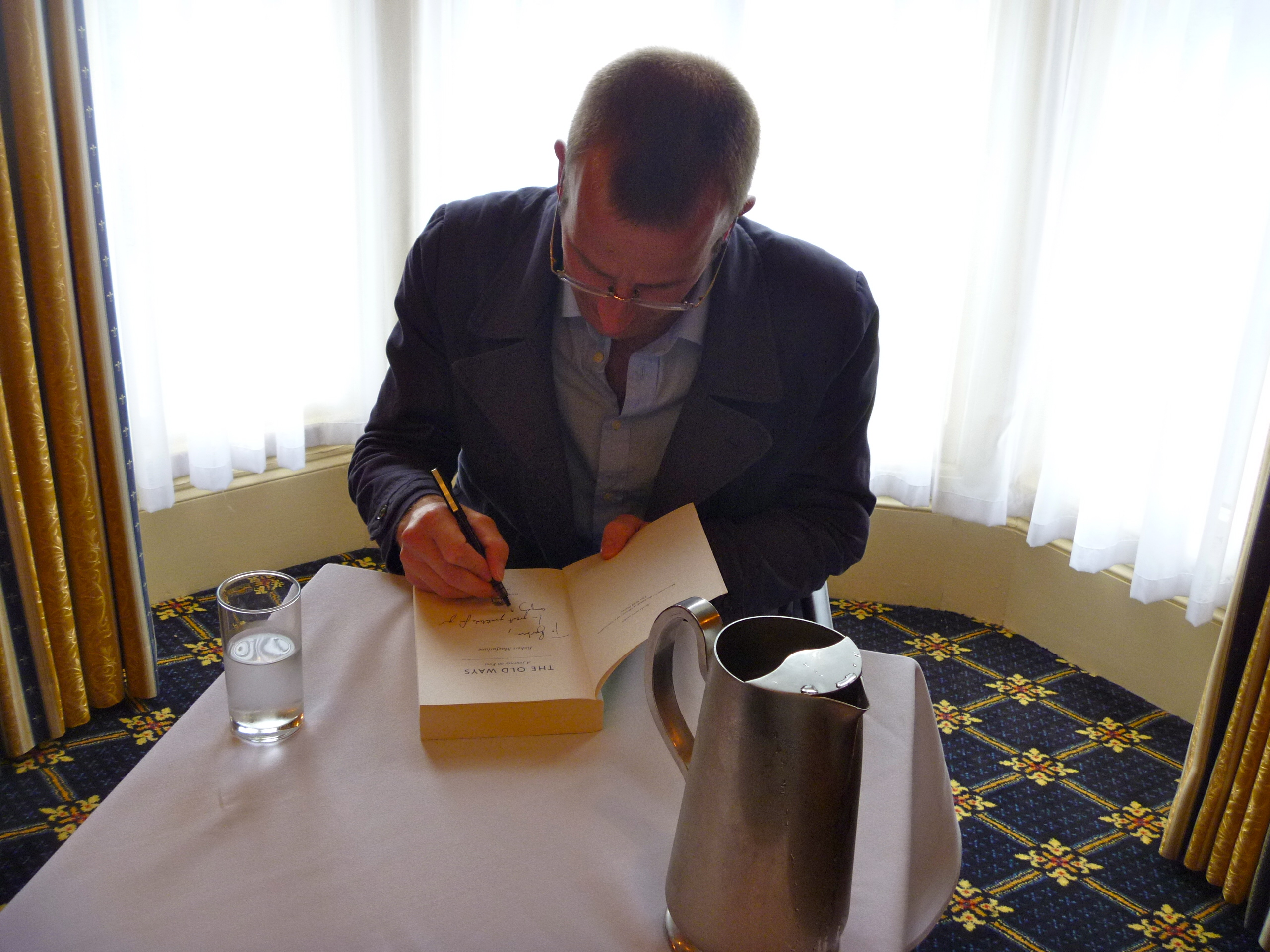
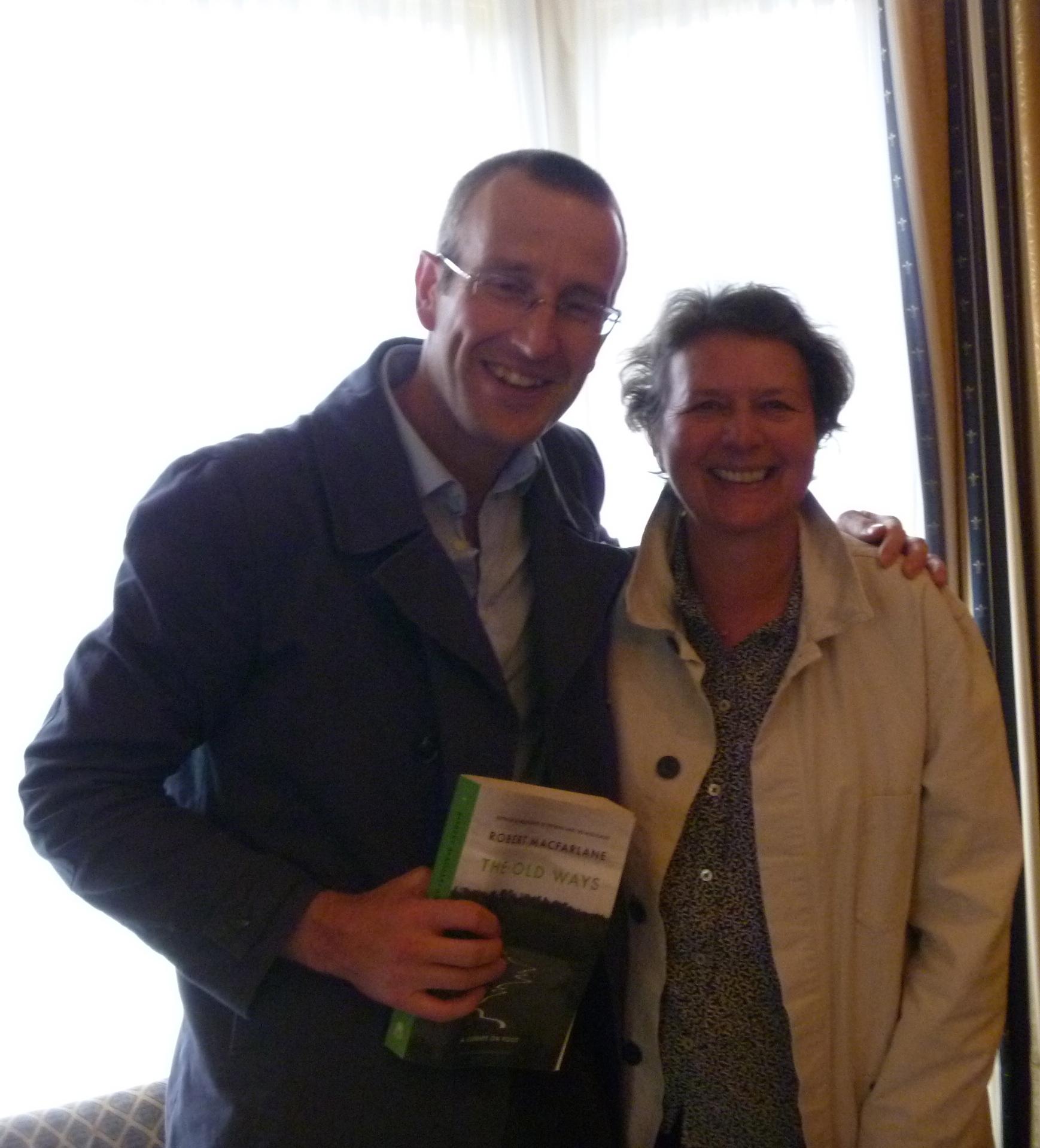
About ten days before the walk I had the good fortune to meet Robert Macfarlane author of The Old Ways book. He was speaking at The Buxton Festival. I was interested to hear him talk about how landscapes shape us and he talked (and wrote in the book) at length about the East Anglian walker and writer George Borrow who was one of the first people to note the connection between walking and health and memory-making and re-walking in the memory. His (Borrow’s) walks were full of meetings and conversations with people. A fine example is his book Wild Wales.

From Borrow Robert moved on to talk about his walk along The Icknield Way, which he chose because of its proximity to Cambridge where he lives. Edward Thomas’s “The Icknield Way was an inspiration to him as well. Thomas in turn was influenced by a poem by Robert Frost :

The Road Not Taken

Two roads diverged in a yellow wood,
And sorry I could not travel both
And be one traveler, long I stood
And looked down one as far as I could
To where it bent in the undergrowth;

Then took the other, as just as fair,
And having perhaps the better claim
Because it was grassy and wanted wear,
Though as for that the passing there
Had worn them really about the same,

And both that morning equally lay
In leaves no step had trodden black.
Oh, I marked the first for another day!
Yet knowing how way leads on to way
I doubted if I should ever come back.

I shall be telling this with a sigh
Somewhere ages and ages hence:
Two roads diverged in a wood, and I,
I took the one less traveled by,
And that has made all the difference.

Robert Frost
This poem prompted ET to sign up to serve in the army during The First World War. He was killed at The Battle of Arras on Easter Day (8 April), 1917. Thomas and Frost had become friends and Frost encouraged ET to move from prose into poetry. There’s much more in The Old Ways about the two poets, about Thomas’s war service and death and about the South Downs Way. And Macfarlane asked, do we trust Frost’s poem?

The Old Ways – Mastiles Lane Drovers’ Road

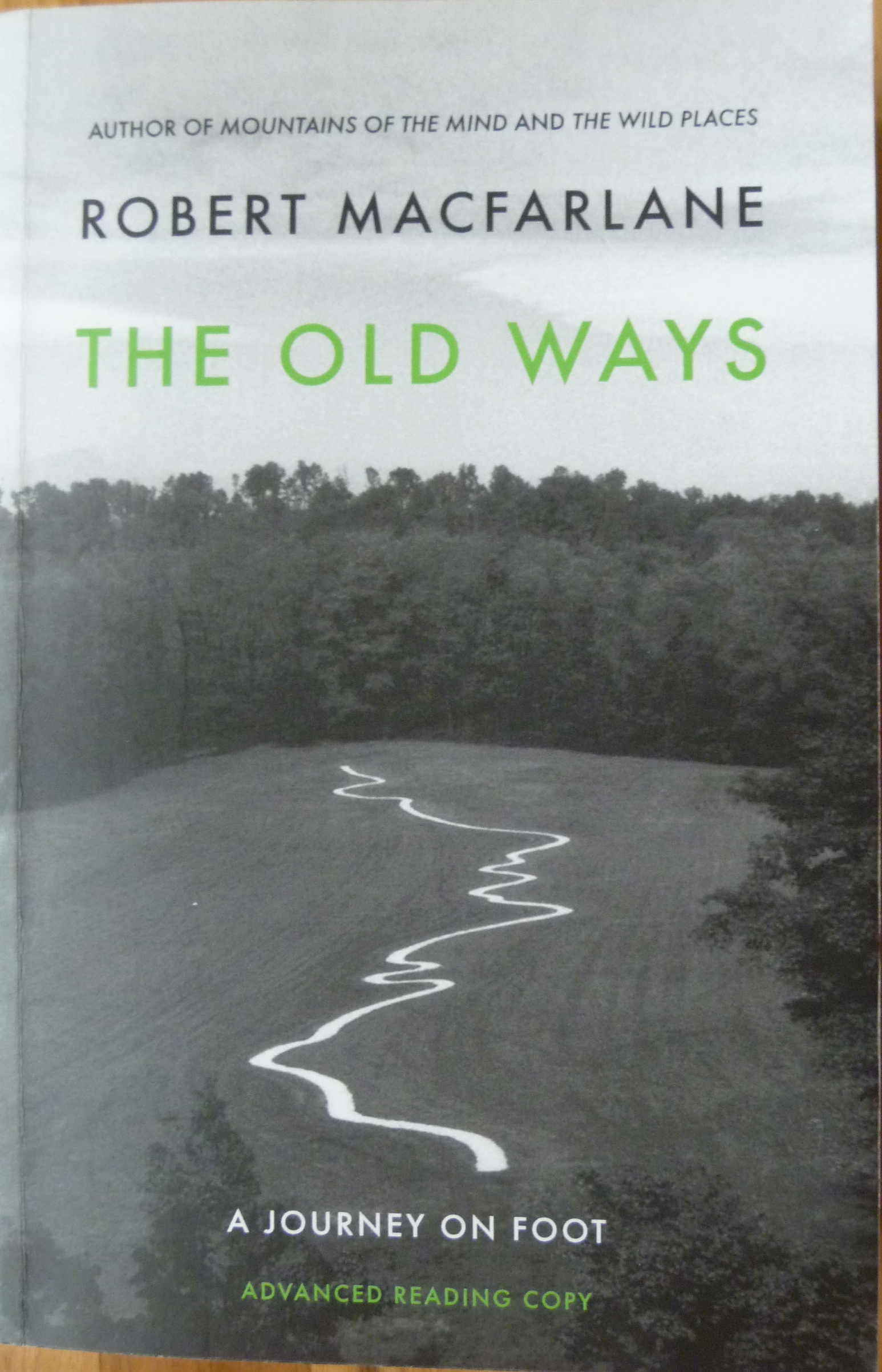
I’m currently reading a book called ‘The Old Ways : a journey on foot‘ by Robert Macfarlane. In fact, I have a pre-publication copy. A couple of months ago I decided that I would like to participate in a group read of the book organised by Lynne – the Dovegreyreader.

The plan is to read the book and and record our own ‘journey on foot’ along an ‘old way’. My hike was originally planned with a group friends for a Saturday in April but the weather on the days leading up to the trip was so bad that it has been postponed and hopefully the full walk will take place in July or August. Mastiles Lane is to be ‘my’ Old Way.

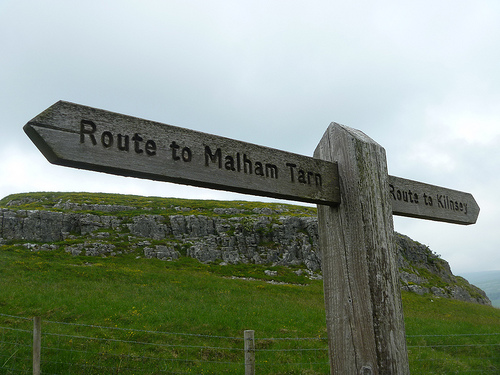
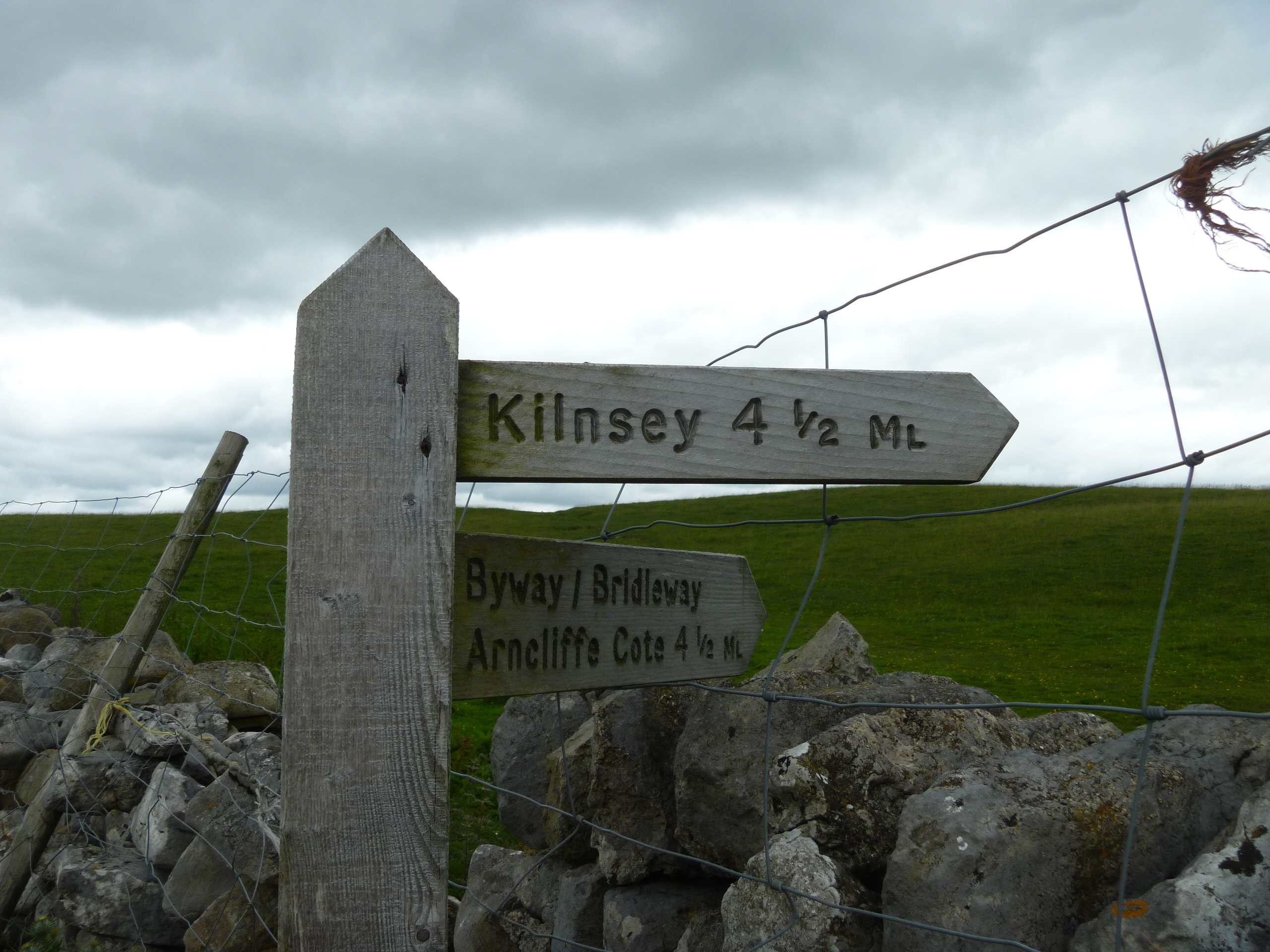
On Thursday I had been invited by my Landmarking friends to visit them during their stay at one of the latest Landmark properties : Cowside. It’s way up in Langstrothdale in Upper Wharfedale, North Yorkshire and as the invitation was for tea I set off early from home in order to fit in a couple of hours hiking along the beginning of Mastiles Lane. It is just part of an old monastic road which linked Cumbria with Fountains Abbey. Mastiles Lane itself is the stretch between Strete Gate, on Malham Moor, and Kilnsey – a distance of about 5 miles. The Cistercian monks of Fountains established a grange at Kilnsey which formed an administrative centre for the vast sheep farming estate.

Kilnsey is the village at the start of the route and it is most famous for its Kilnsey Crag a great rocky outcrop that juts out almost over the main road and is very popular with rock climbers. There are places to park in the village and along the main road and Mastiles Lane itself, although I never noticed an actual sign for it, is easy enough to find.

Kilnsey Old Hall

Built over the site of the former Kilnsey Grange

Kilnsey Old Hall (17th century) built on the site of the original Kilnsey grange (Fountains Abbey – by Herbert Whone, 1987.)

As you start uphill out of the village you notice Kilnsey Old Hall. The seventeenth century hall is built over the site of the original Kilnsey Grange

Kilnsey was the place to which the immense flock of this [Fountains] Abbey were driven from the surrounding hills for their annual shearing; a scene of primitive festivity to which the imagination delights on recurring'” 

from ‘The Deanery of Craven’ by T. D. Whitaker (1878).

The tarmac road is soon replaced by an open track which itself is replaced, after a passing through a gate, by a walled track.

Mastiles Lane walled track in the Yorkshire Dales

Mastiles Lane continues on in a WSW direction towards Malham Moor

 I walked for about an hour on a gradual incline until I reached the highest point of the track as indicated by 1384 feet/423 meter marks on my Ordnance Survey maps. A few paces further along and I was over the brow, round a bend and could see the walled track clearly wending its way for possibly another couple of miles before disappearing over another brow.

At this point I turned back. The picture above shows the return route to Kilnsey. Many of the members of the discussion group are keen on flowers and birds and I duly noted that these both existed along the route but my own interest lies in the influence of man on the landscape and I hope to report back later in the year on the walk in full and on the evidence man has had on the landscape.

And so back to Kilnsey and a further drive deeper into the more remote part of the Dales – Langstrothdale Chase where the kettle at Cowside was whistling on the stove and the fruit cake and Yorkshire parkin were lying in wait for one hungry walker!

A Shared Experience with Mary Shelley

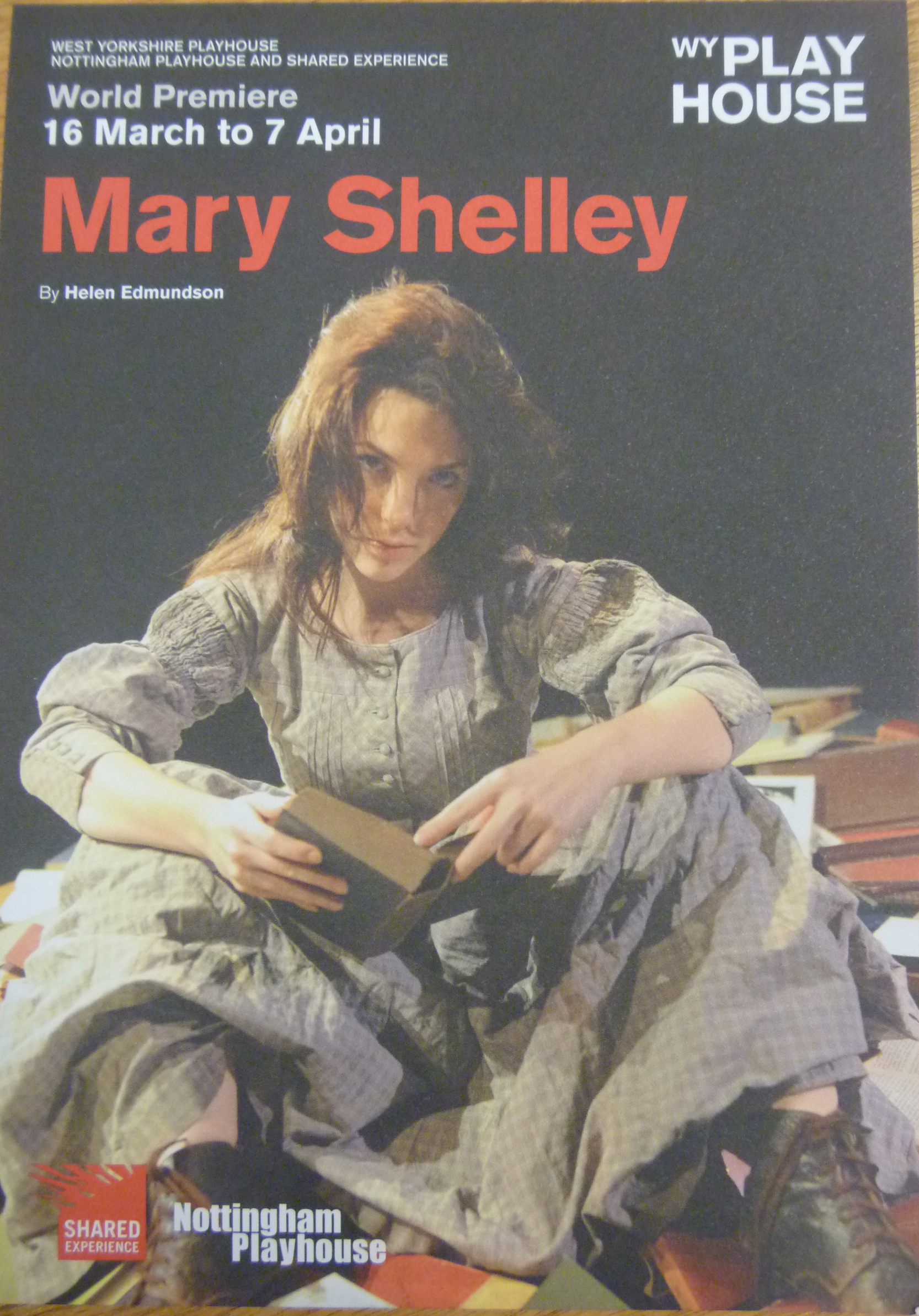
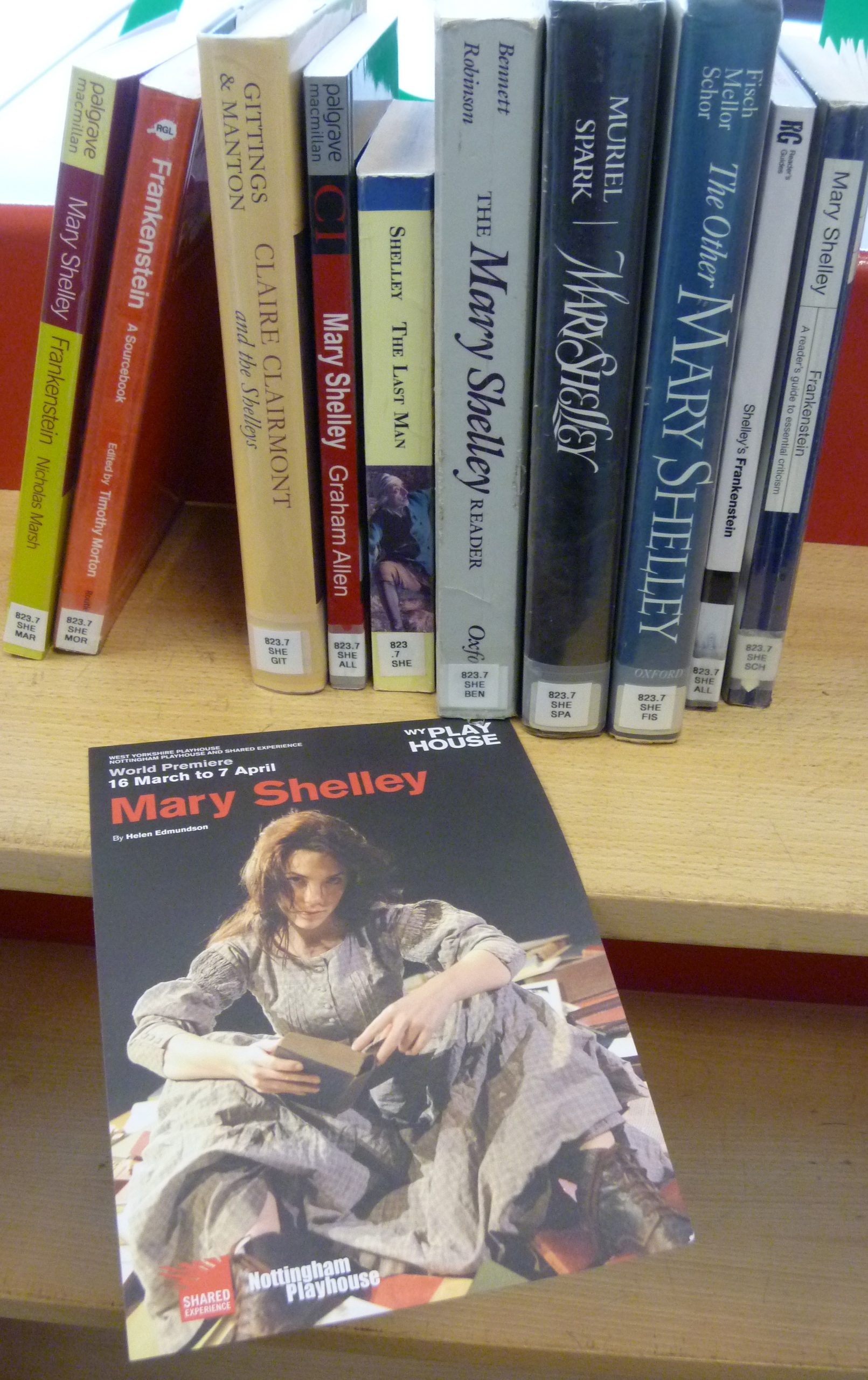
Shared Experience theatre company are back at the West Yorkshire Playhouse this month with their latest production ‘Mary Shelley‘. It’s a dramatic and powerful account of the late teenage years of Mary Godwin, later Shelley, and her very unconventional family and lifestyle during the years 1813-1816. Mary Shelley wrote and had published her famous novel ‘Frankenstein’ before she was 20. She married the poet Percy Bysshe Shelley. Her father was William Godwin a well-known political philosopher and novelist and author of  ‘Political Justice’, published in 1793. Her mother was Mary Wollstonecroft author of  ‘A Vindication of the Rights of Woman’ whose suicide is depicted at the beginning of the play.

Mary had two sisters Fanny and Jane. Jane Clairmont later changed her name to Clare Clairmont and was the mother of one of Lord Byron’s children, Clara Allegra. Read more about Mary here and here :

The play goes a long way in explaining the relationships between the members of this unconventional family and P. B. Shelley; those are  ‘crazy mixed-up kids’. With only 6 actors and a versatile set consisting of a very large dining table which also doubles as a tombstone and a quay and a desk and even a bedroom plus several tall bookcases crammed with books and papers and boxes the words flow quickly and the tension mounts throughout.

I think that I have been far too influenced by the over-hype connected with all the Frankenstein-related films and books which, although I have never seen nor read any of them, have totally put me off reading the original book. A colleague highly recommends reading it and suggests that I put ‘Frankenstein, a modern Prometheus’  forward as a suggestion at my next book group meeting. And do you know? After seeing ‘Mary Shelley’ I think I probably will!

Walking The Huddersfield Narrow Canal

About once a year we each volunteer to lead the other Weekday Wanderers on one of our monthly hikes. My choice of walk usually involves  something more than just pleasant green paths, nice views and heart-failure-inducing climbs – although I love these too! (Well, not the actual climbs, but the resultant views and feelings of achievement). For some time simmering on the back-burner  has been my idea of using public transport and doing an end-to-end walk as opposed to a circular one. With my interest in historical geography and since I heard about its re-opening about 10 years ago I’ve been wanting to plan a walk along the towpath beside The Huddersfield Narrow Canal. My chance finally arrived yesterday when I did a practice run for my ‘turn’ to lead in April.

The Huddersfield Narrow Canal was originally opened back in 1811 at the time of the great expansion of transport by waterways across England. The Canal runs for 20 miles between Huddersfield to the east of the Pennines and Ashton-under-Lyne in Lancashire to the west. This was no mean feat of engineering. Some facts from the website state :

“The summit of the Huddersfield Narrow Canal is the highest navigable waterway in Britain.
Standedge Tunnel on the Huddersfield Narrow Canal is Britain’s longest canal tunnel.
The canal has a total of 74 locks. It connects end on with the Ashton Canal and the Huddersfield Broad Canal.”

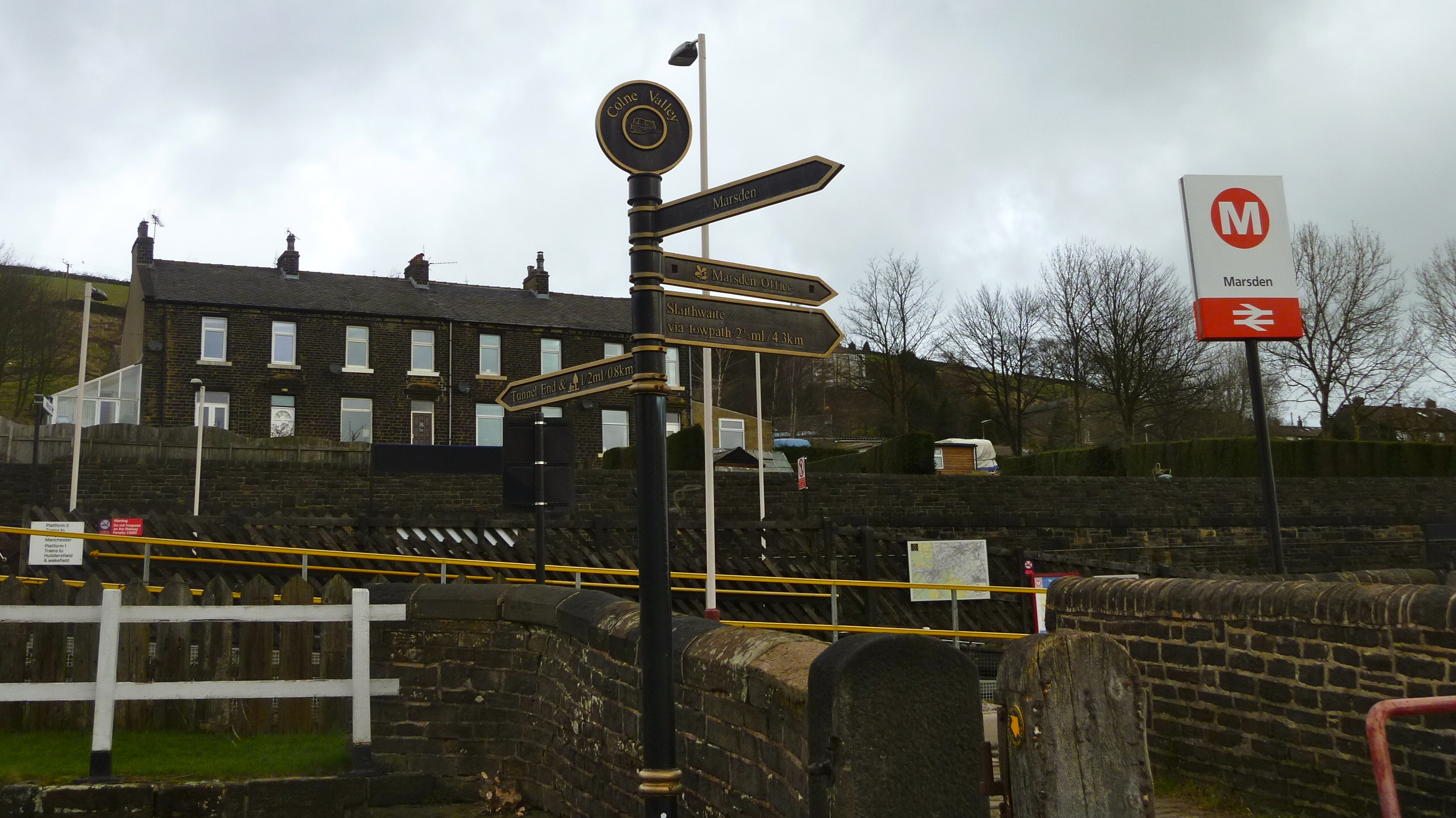
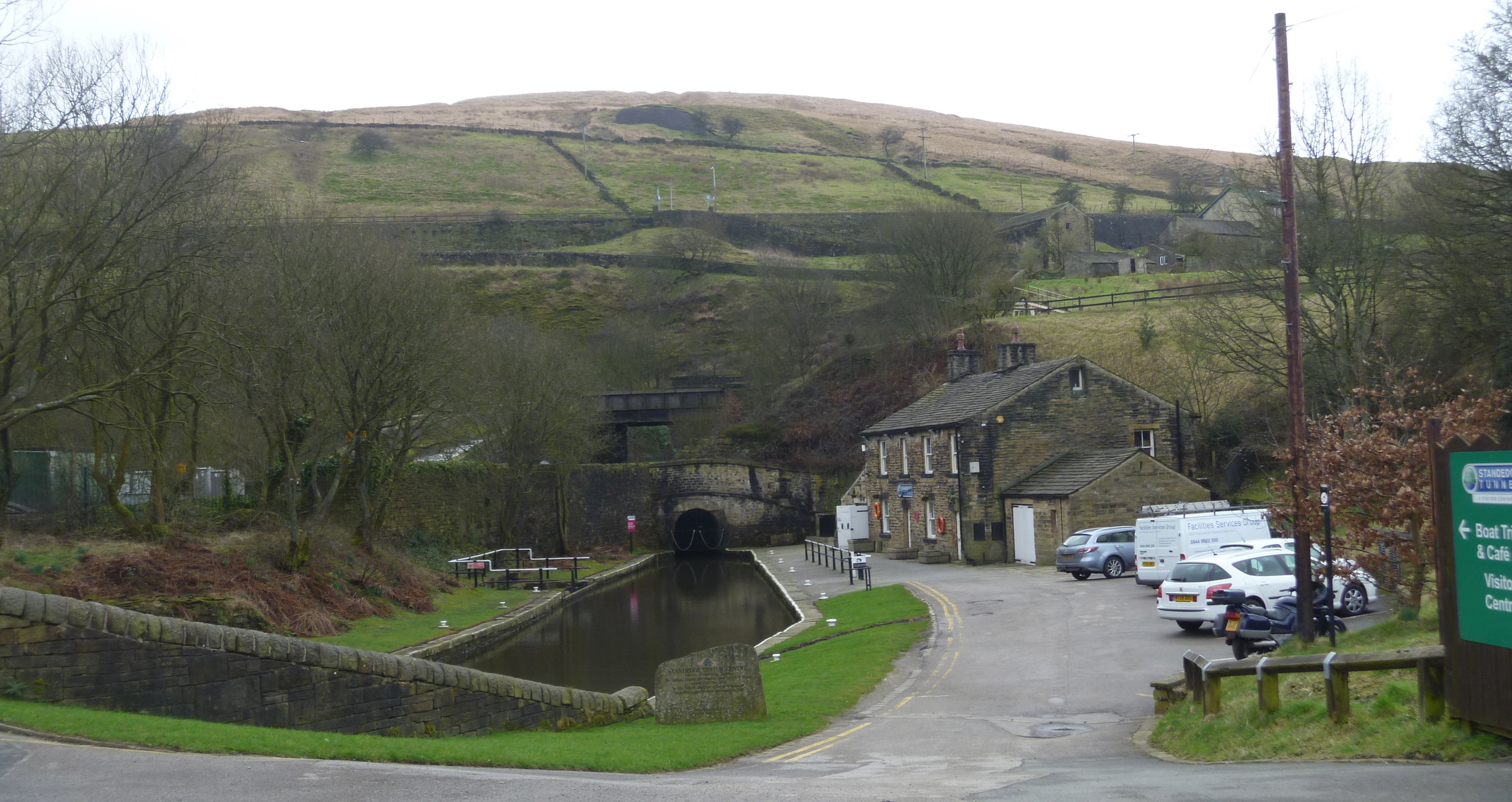
I travelled by train via Leeds and Huddersfield to one of the furthermost stations in Yorkshire – Marsden. Alighting at Marsden I chose to walk back up the canal, as far as one may go on this side of the Pennines in fact. About half a mile from Marsden is the Standedge Tunnel entrance and Tunnel End. Here there’s a Visitor Centre and the starting point in summer of public tours into the Standedge Tunnel in glass-roofed narrow boats.

Tunnel End

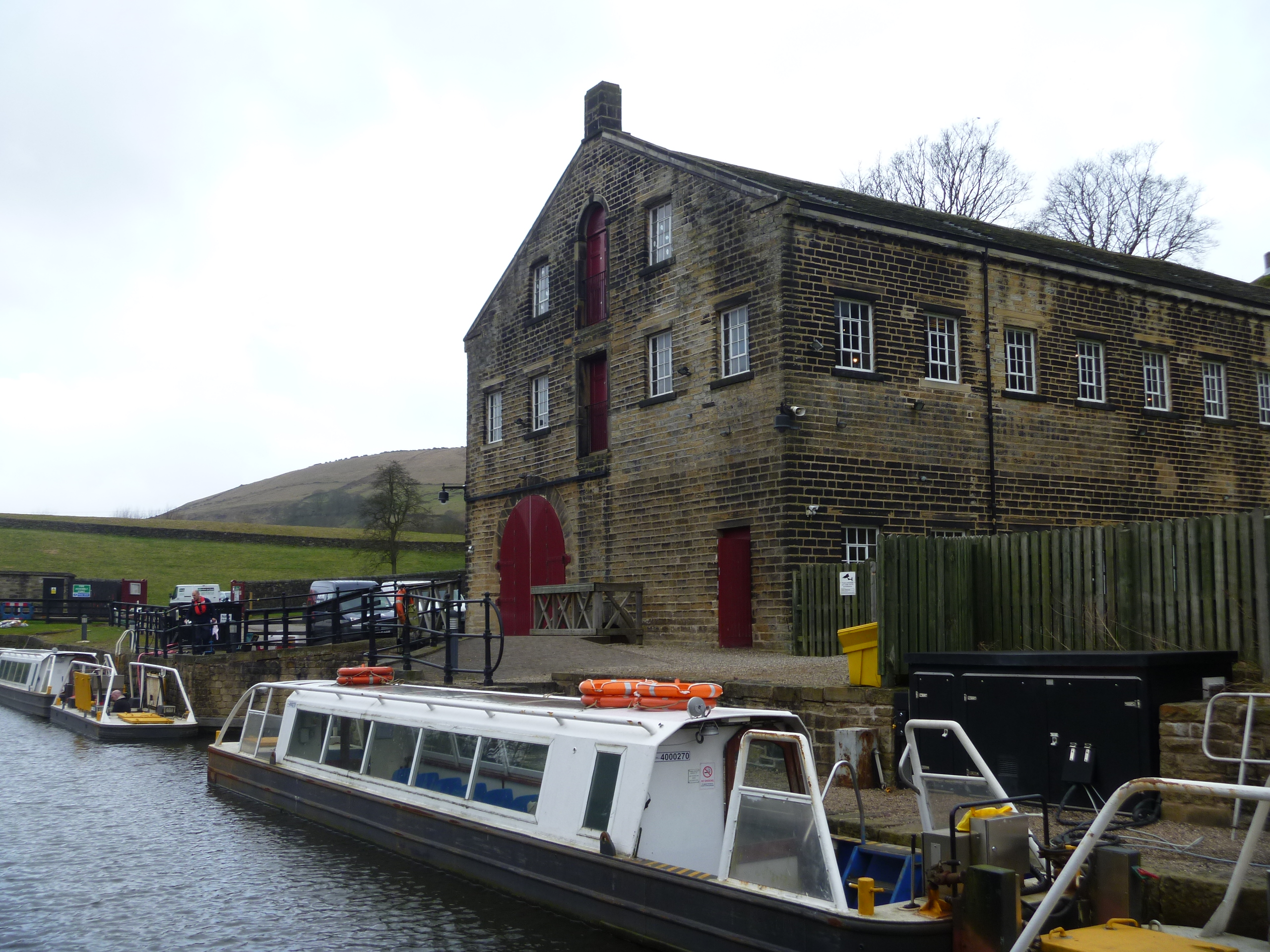
Tunnel End Visitor Centre and glass-topped tour boats

The tunnel being 3 miles long and with no towpath for a horse to pull the boat it was down to men to do their own “legging” to get the boat from Yorkshire into Lancashire or vice versa. These days the tour boats are hauled into the tunnel by electric tug boats.

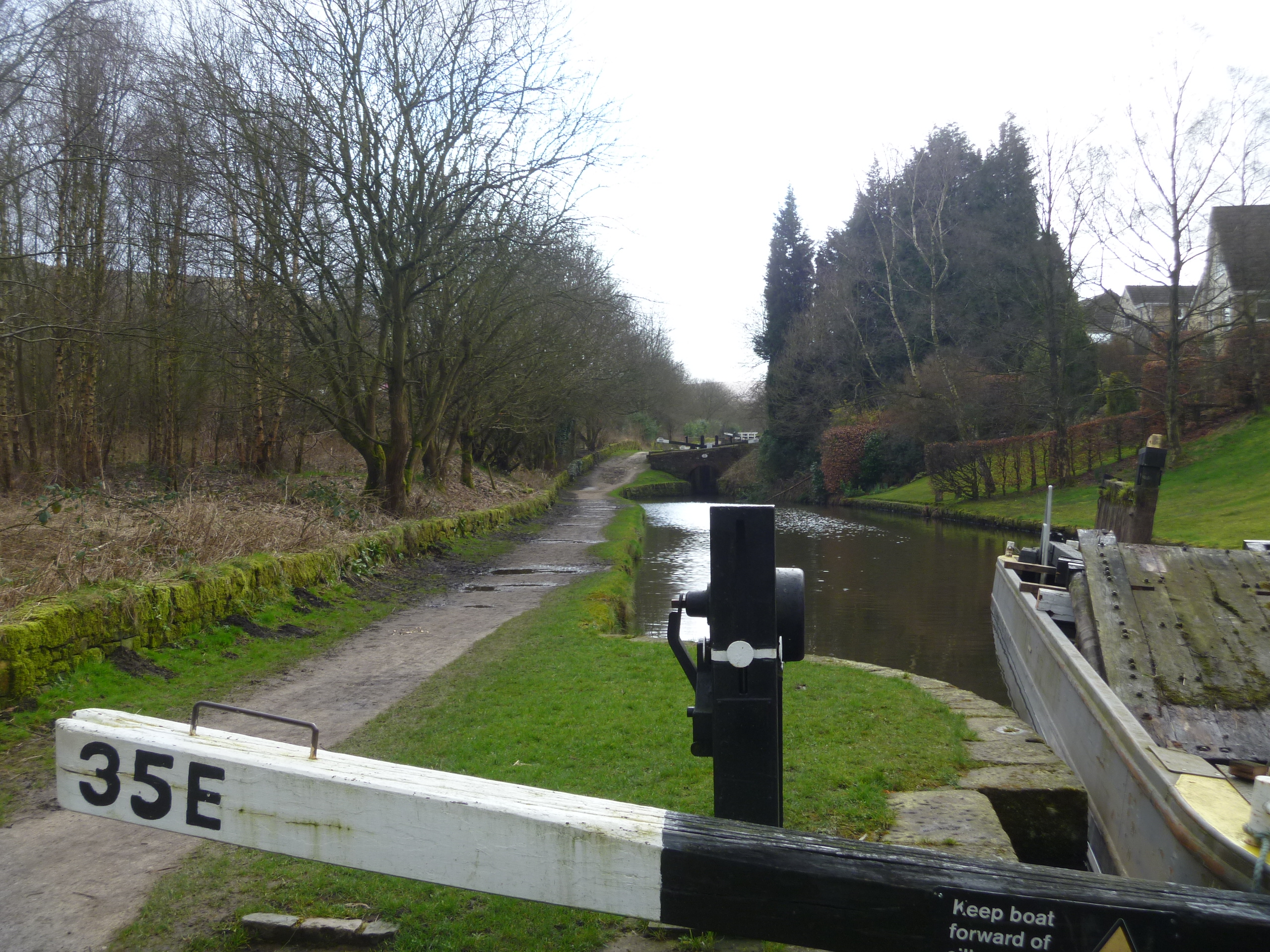
It’s about seven and a half miles from the Standedge  (pronounced Stannige) Tunnel down to the centre of Huddersfield and this section also includes more than 40 locks. Yesterday the walk was very peaceful. There were no boats on the canal but I hope there will be more ‘action’ on our April visit. Each narrow lock area has its own number and character and it was intriguing to look down into the depths of the lock itself.

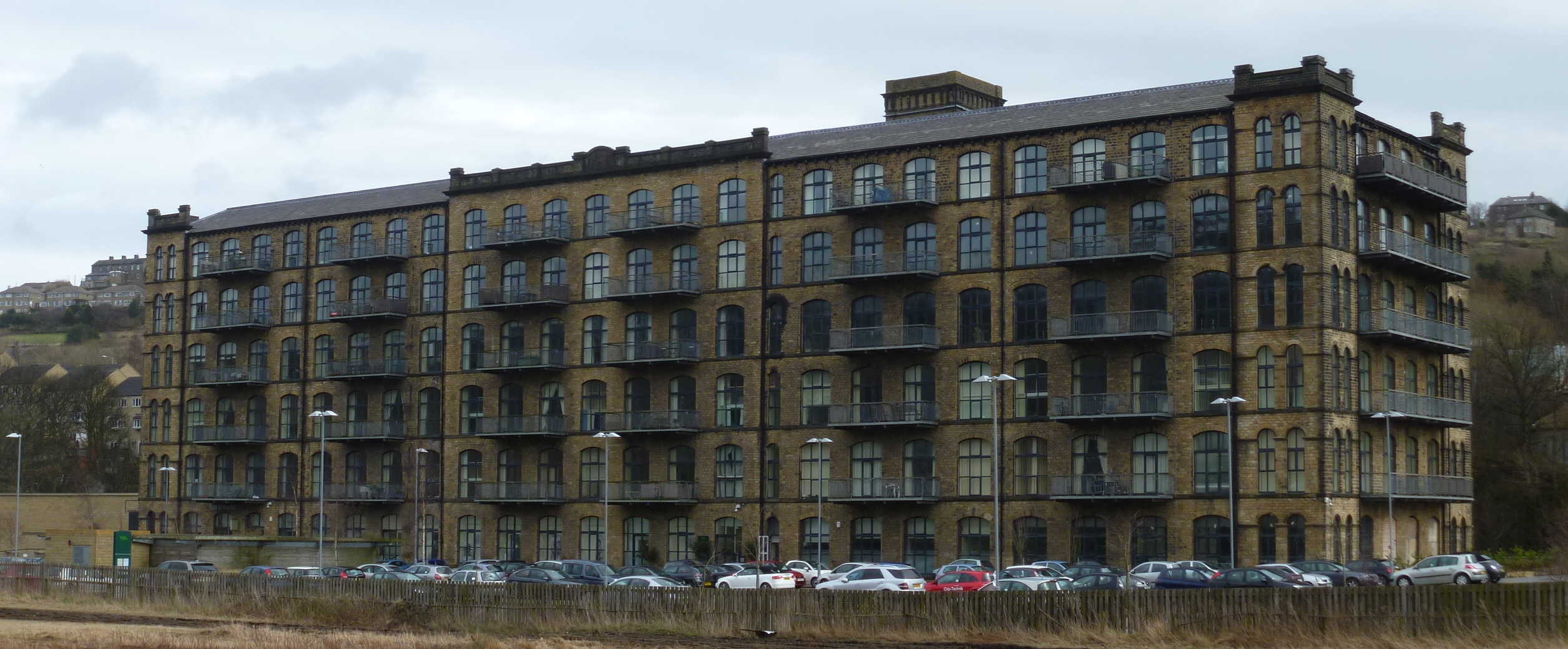
There are stretches of shady wooded paths, paths past green fields and reservoirs, past old out-of-operation mills, past mills now converted to a multitude of innovative uses such as The Titanic Mill (below) opened in 1912 and named for the ill-fated liner launched in the same year now a luxury hotel, spa and apartment building …

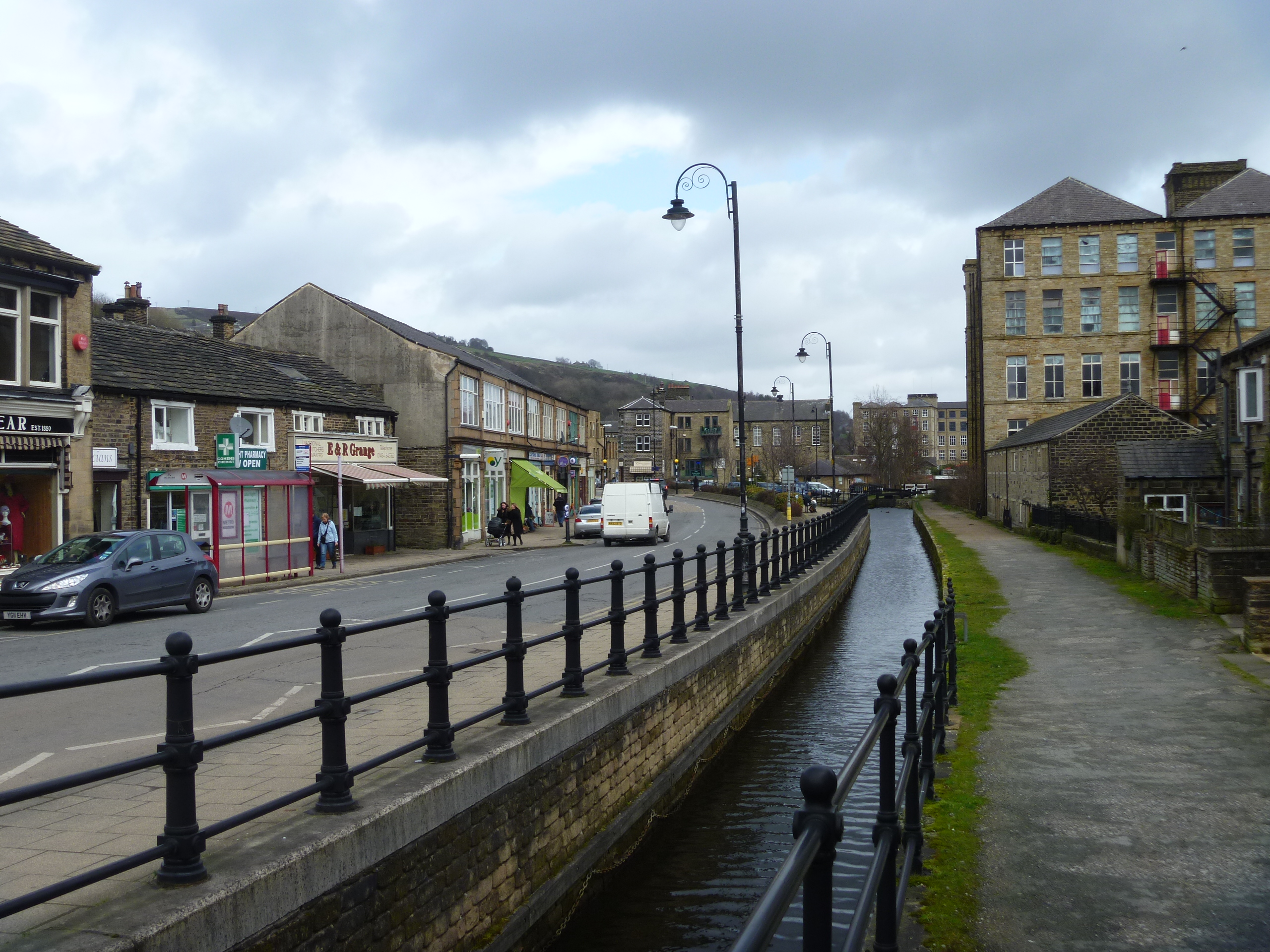
… and through small towns like Slaithwaite (pronounced Slawit) where we popped into the irresistible Slaithwaite Bakery, noted the pretty Moonraker Floating Tearoom, saw the only working guillotine lock gate in the country and ate our sandwiches under shadow of the towering Globe Mill between the canal and the main street.

At Lock 4E you are diverted away from the canal as it passes under buildings in Huddersfield. The Pennine Waterways website provides a useful map and directions to get you back on track for the last section to where the Huddersfield Narrow joins the Huddersfield Broad Canal at Aspley Marina. Reaching the town and feeling the solid pavement under my feet I felt ready to hunt out the station and start for my journey home.

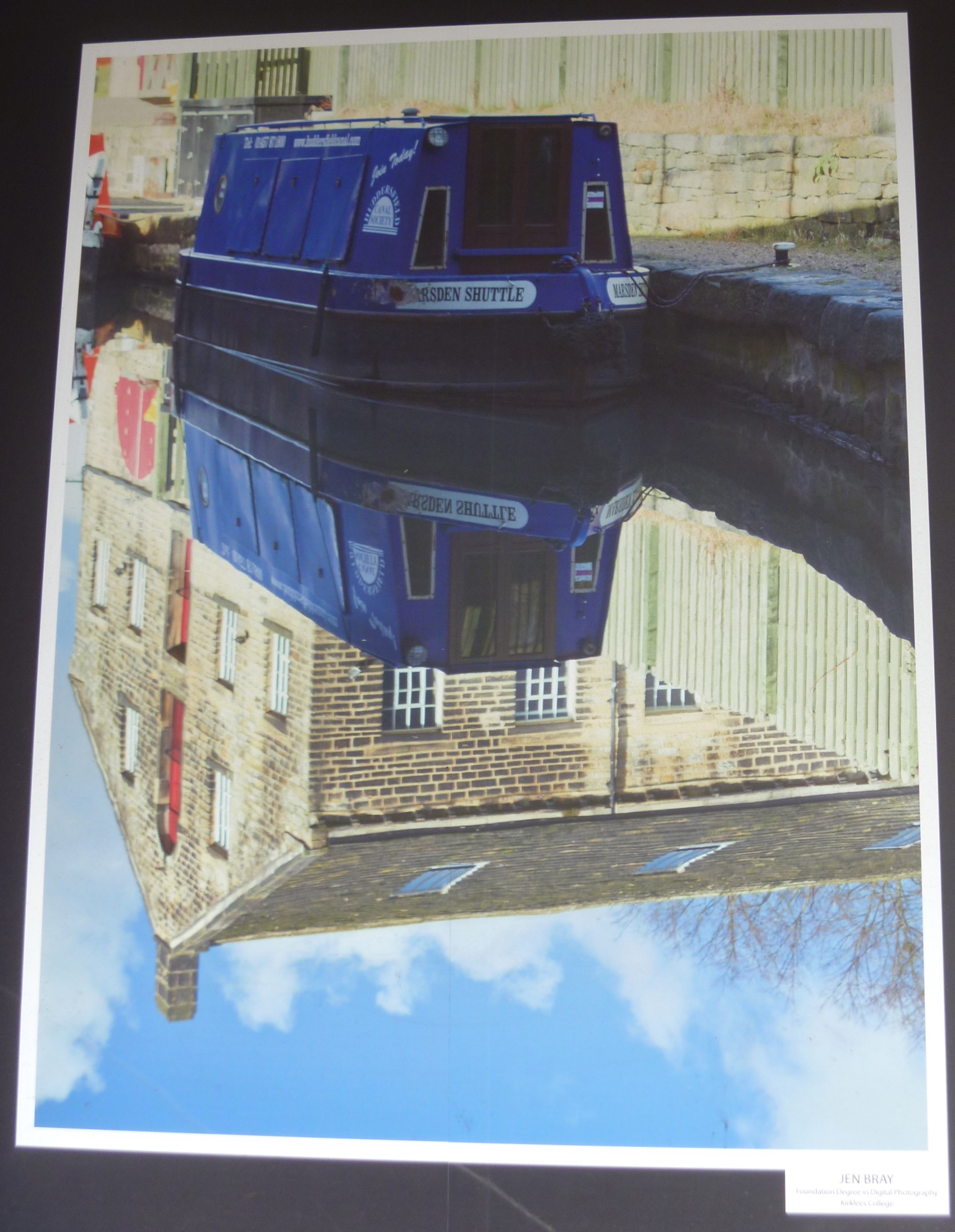
Poster seen on an unoccupied shop building in Huddersfield town centre

A walk in the woods: a Ruin, follies and another Turner view

A Walk in the Woods‘ is one of my favourite walks in Yorkshire. I made three visits last year. The walk starts from Masham car park and initially follows the Ripon Rowel route alongside the River Ure. After about 3 miles you enter Hackfall Woods.

There’s a choice of walks through the woods and all of them include views of the river and follies. The first viewpoint is Limehouse Hill. At the top turn and look back to see the river and the spire of Masham Church from where you have just walked. I think you can just about spot it right in the middle of the picture.

The next view is pretty special. There’s a seat at Sandbed Hut and from this point William Mallord Turner painted his view of Hackfall. The painting itself forms part of the Wallace Collection in London. In the distance is Mowbray Castle a mock ruin thought to have been built for William Aislabie some time between 1750 and 1767.

John Aislabie of Studley Royal bought Hackfall in 1731 but it was his son William who set about transforming the woods into an ornamental landscape in 1749/1750 and this work continued until around 1767. The Hackfall website includes a potted history of the site and here’s a list of the features Aislablie created :

“1750 Fisher’s Hall was completed, inscribed on plaque above the door.

1751 The view from Limehouse Hill to Masham church was created by felling trees and digging a ditch.

1752 Work on the reservoir above the 40 foot Fails and ‘Alcoves in ye wood’.

1755 Kent’s Seat completed.

1755 Planting and work on a wooden stable at Hackfall it is thought near to Fishers Hall.

1756 Fountain Pond dug and Rustic Temple completed.

1766 Work started on the Banqueting House at Mowbray Point. The pond at the entrance to the Grewelthorpe Beck valley and wiers had been completed; Fisher’s Hall was used for entertaining guests; Nicholas Dall the landscape artist painted two views of Hackfall.

(1768 William Aislabie purchased Fountains Abbey ruins and set about incorporating the Abbey into Studley Royal gardens.)”

William died at Studley Royal in 1781.

It’s good to see that the Hackfall Trust, founded in 1988, are restoring many of the paths and features. But they are not the only ‘Trust’ to be involved in preservation and conservation at Hackfall. The piece de resistance is the former Banqueting House mentioned above which is now owned by the Landmark Trust and let as holiday accommodation for two people. The public path out of Hackfall Woods (after a gentle climb) emerges onto the terrace of the Ruin (as it is now called) from where there’s a marvellous view over the wood and landscape beyond.

 View of Hackfall from the terrace at The Ruin
The Landmark Trust hold regular Open Days at some of their properties throughout the year and the Ruin is one that is regularly open one weekend each September :

The Ruin

Hackfall, North Yorkshire

Saturday 8 to Sunday 9 September 2012 10am to 4pm

As part of Heritage Open Days

This little pavilion is dramatically perched above a steep wooded gorge, in the remnants of an outstanding mid eighteenth-century garden at Hackfall, conceived and created by the Aislabies.

The walk then leaves this fascinating area of woodland and continues through Oak Bank, Nutwith Common (sounds like somewhere out of a Rupert Bear story!), along Roomer Lane and with a glance at Swinton Park the last section of the walk is along the quiet roadside between the Park and Masham.

Swinton Castle, near Masham, now a posh hotel, was bought in 1882 by Samuel Cunliffe-Lister born at Calverley Old Hall (another Landmark Trust property) and later owner of Lister’s Mill (also known as Manningham Mill) in Heaton, Bradford.

If you’ve time there are some good tea shops and pubs for refreshments in Masham and I recommend The White Bear Hotel where, if the weather is fine, as it was for me, you can have tea or something stronger on their terrace outside.