Only in England : Photographs by Tony Ray-Jones and Martin Parr

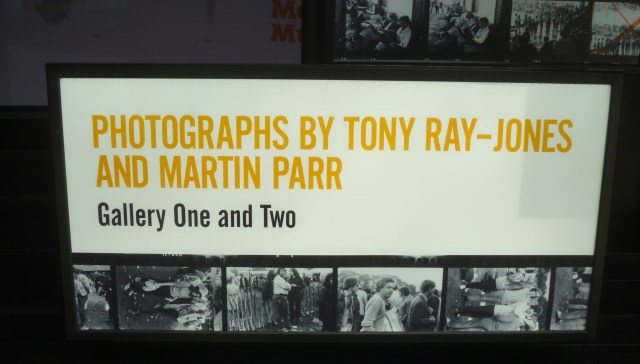
Intro Poster

Later this month I’ll be assisting Dovegreyreader (alias Lynne) at the Port Eliot Festival in Cornwall. Any posts I may do about events may be on here or maybe over at Lynne’s blog.

M Parr 1976

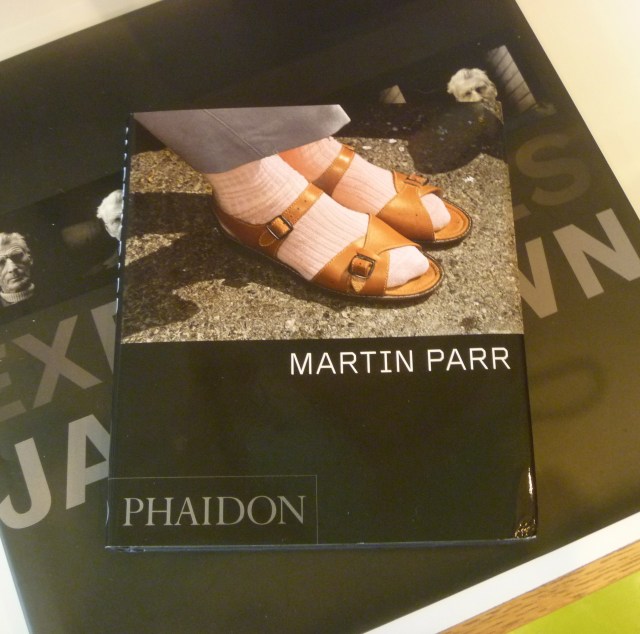
One of Lynne’s guests will be the photographer Martin Parr. For many years I have been intrigued by Parr’s photos. We had lots of his titles in my library so I would often have a look and wonder to myself – Is this a put up job? Or are the subjects unaware that they are having their picture taken?
MP book

Parr Book

 A Couple of Parr’s books in the Museum Shop : sandals are the theme of the day

Until Lynne gave me the nod I was unaware that Parr was involved in an exhibition locally: Only in England : Photographs by Tony Ray-Jones and Martin Parr. It was showing at the National Media Museum in Bradford until the end of June. Bradford is but a few miles away so the other Saturday afternoon I took a trip over there to see what the exhibition was all about.

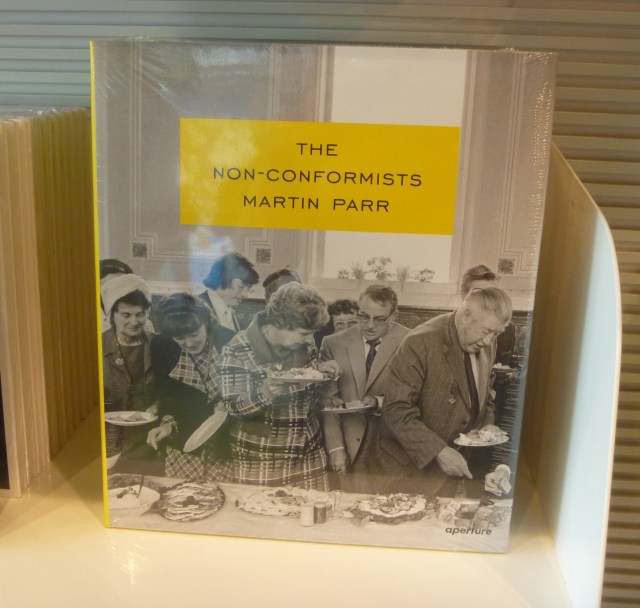
I found that the two galleries of the exhibition were complementary to each other exploring the relationships between Tony Ray-Jones (1941-72) and Martin Parr (b.1952). Parr was invited by the Curator of Photographs, Greg Hobson, to study the Ray-Jones archive (acquired by the Museum in 1993) and help bring together a collection for display alongside early work of Parr’s centred on the local Calder Valley between 1975 and 1979 when he himself lived in Hebden Bridge. “The Non-Conformists” was his first major body of work.
Non-Con Book

Ray-Jones spent the latter half of the 1960s travelling around England photographing what he thought of as fast-disappearing way of life. He also spent half a year travelling in the USA but sadly Tony Ray-Jones died in 1972, aged 30, of leukaemia.

“Ray-Jones was interested in the eccentricities of human behaviour, which for him embodied the English personality. He approached his project like an anthropologist, thoroughly researching his methods, locations and subjects. The resulting photographs are remarkable. Characterised by wry humour, they are nonetheless full of melancholy and lament the disappearing cultures that influenced Ray-Jones’s own emotional and artistic development. The England that Ray-Jones photographed is very different to the England of today.” [Information board at the exhibition]

“Ray-Jones’s photographs of the English seaside were a powerful influence on Martin Parr. He was fascinated by Ray-Jones’s ability to see the quirky and absurd in the everyday.” [Information board at the exhibition]
Impressions of north

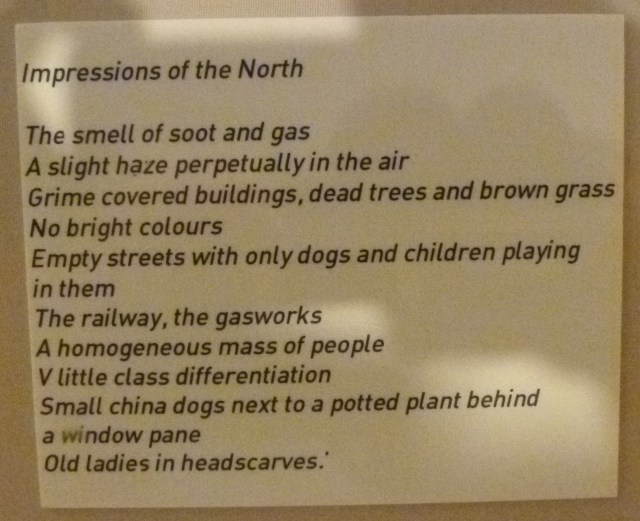
Impressions of the north

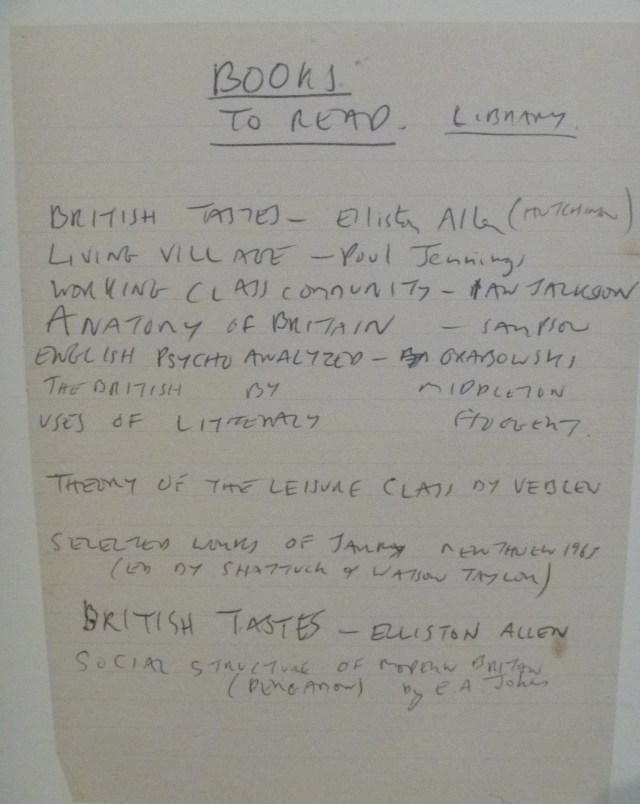
I liked reading his notebooks and inspecting other memorabilia on display.

R-J's notes

Ray-Jones’s notes

Books to read

Books to Read

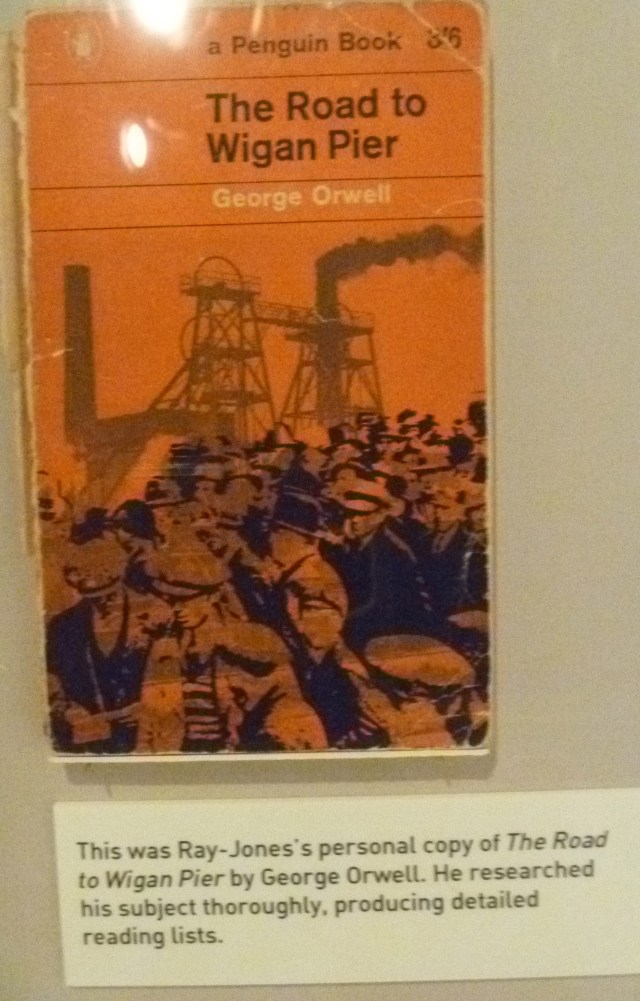
Road to Wigan Pier

His well-thumbed The Road to Wigan Pier

Martin Parr’s selection were based on his collection The Non-Conformists taken in Hebden Bridge and the surrounding area in 1975 when he and his wife moved to live in the town. He focussed on the chapels and their declining congregations and the changing way of life. Being in black-and-white, like Ray-Jones’s, this gives his pictures an old-fashioned, dated, sad, shabby and gloomy feel. It’s grim up north, you know.

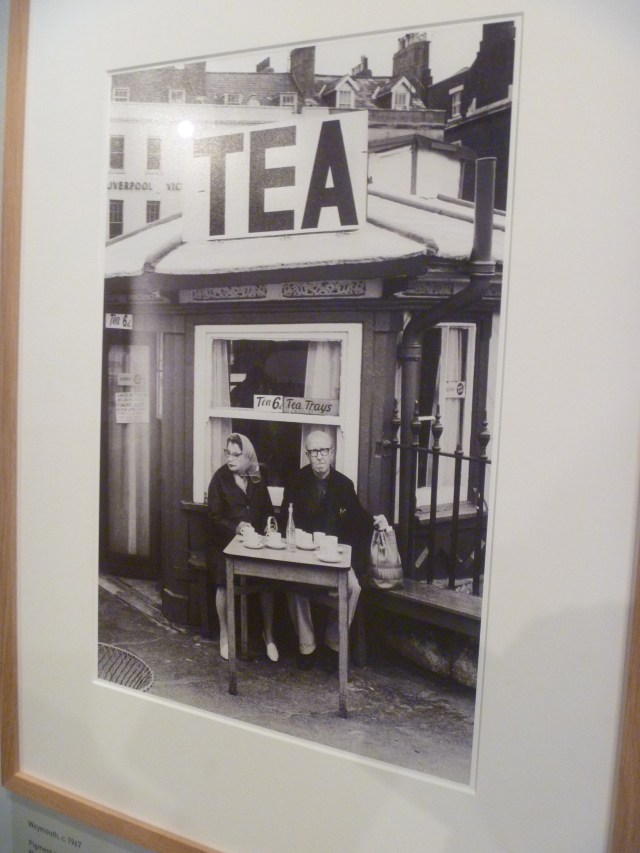
I’ve just chosen two photographs – one from Parr and one from Ray-Jones – that both made me smile.
Tea

Love this Ray-Jones Tea Scene taken at Weymouth in 1967

Last Cuppa

 And I call this one The Last Cuppa (Parr)

A fellow WordPress blogger took much better notes and has written more extensively about the exhibition here.
Two Henrys : The Fourth Part Two and Moore

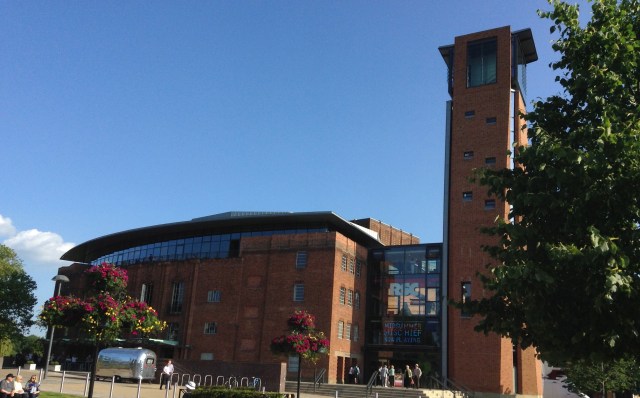
From Renishaw Hall on the eighteenth of June we made our way to Stratford upon Avon where we checked in at our hotel in time to wash and brush up before heading on foot (only a few minutes distant) to the Royal Shakespeare Theatre by the River Avon. It was a lovely warm evening and there were lots of people about enjoying relaxing by the River and the Canal.

RST

We were booked for supper at The Rooftop Restaurant followed by a performance of Shakespeare’s Henry IV Part Two by the Royal Shakespeare Company. This was no dull, boring history play rather it seemed to me dominated by comedy. Anthony Sher played Falstaff and the whole performance was being filmed and relayed simultaneously to a greater audience in cinemas throughout the country. This meant that the director, Greg Doran, came on stage at the beginning to introduce the play.

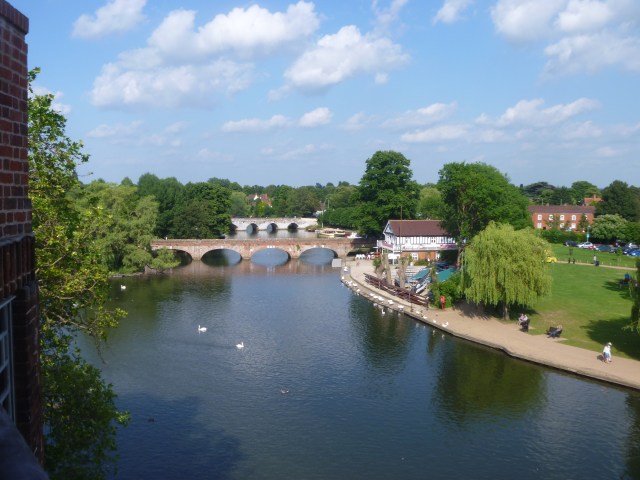
Swans of Avon

The Swans of Avon and Clopton Bridge from The Rooftop Restaurant

HT Church

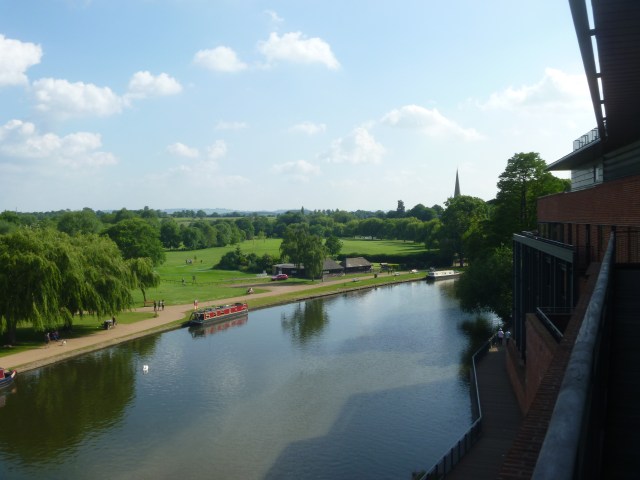
River Avon and Spire of Holy Trinity church from The Rooftop Restaurant

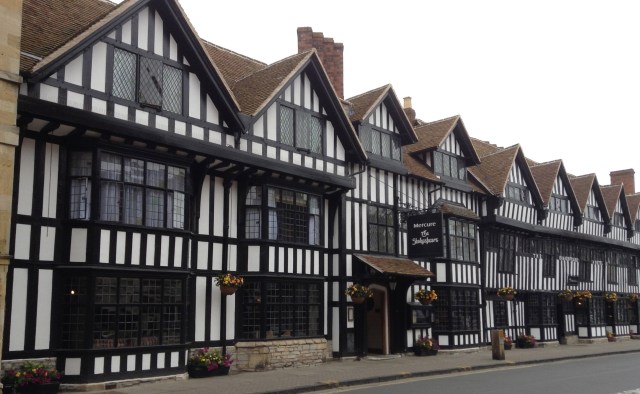
Shakespeare Hotel

The Shakespeare Hotel – one time I stayed here

Grammar School

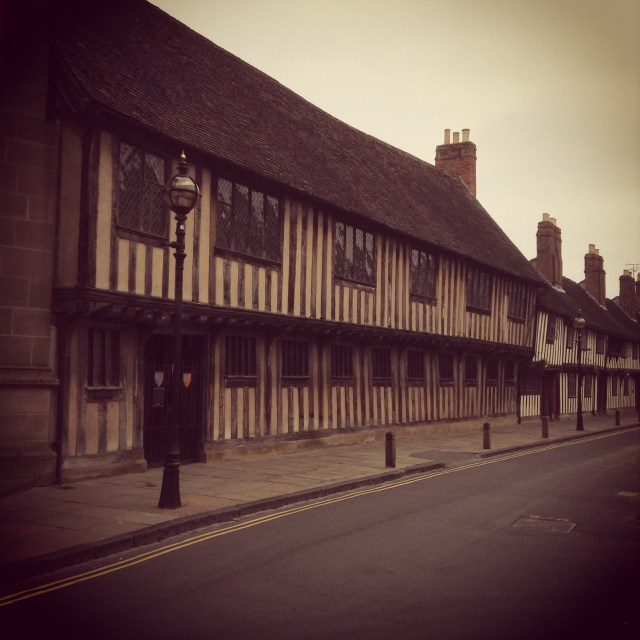
The Grammar School, Stratford upon Avon

Birthplace

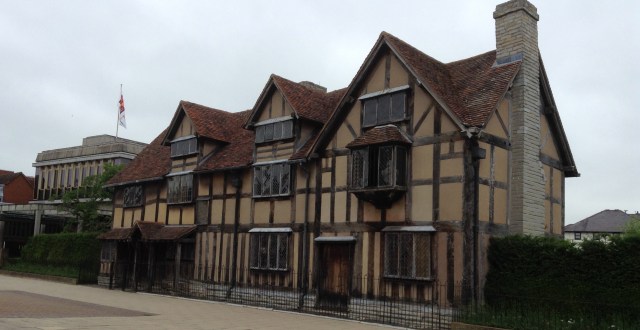
The Birthplace

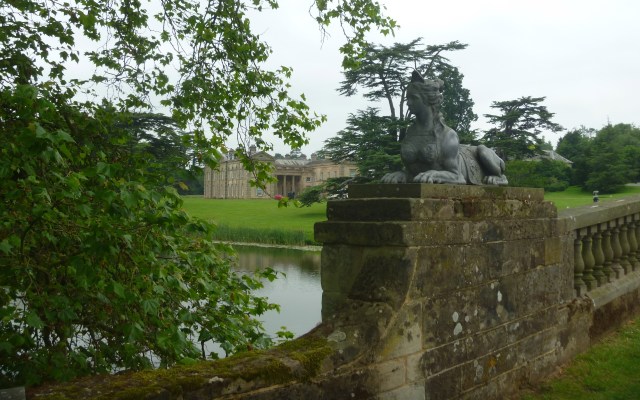
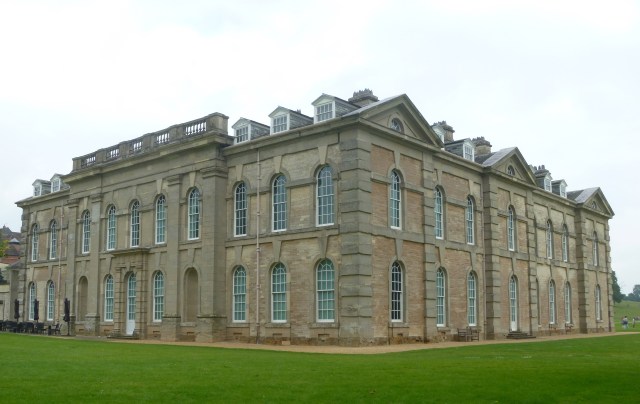
The next morning after a leisurely breakfast and opportunity to take a walk in Stratford we headed off to nearby Compton Verney where we had a full programme of tours, a sandwich lunch and time also to walk in the park, visit the chapel and spend time (and money) in the attractive gift shop.

Approaching CV

CV and 3 piece

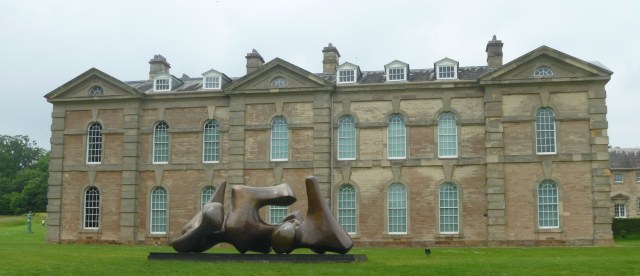
CV House

“10.30am Depart for Compton Verney. Set in a park designed by the ubiquitous ‘Capability’ Brown, this long-derelict house of the Willoughby de Broke family is now resurgent under the inspiration of the [Peter] Moore’s Foundation. The collections are numerous and varied. The morning will be given over to the current display of sculptures by Henry Moore and Auguste Rodin, while the afternoon will feature a guided tour of salient points of the main collection which encompasses British Portraits, Chinese Ceramics and Bronzes, British Folk Art and for Textile-buffs The Marx-Lambert Collection. You will be free to visit those parts of the collection which are your particular interest. www.comptonverney.org.uk” [Our Programme]

Moore Rodin

Moore – Rodin

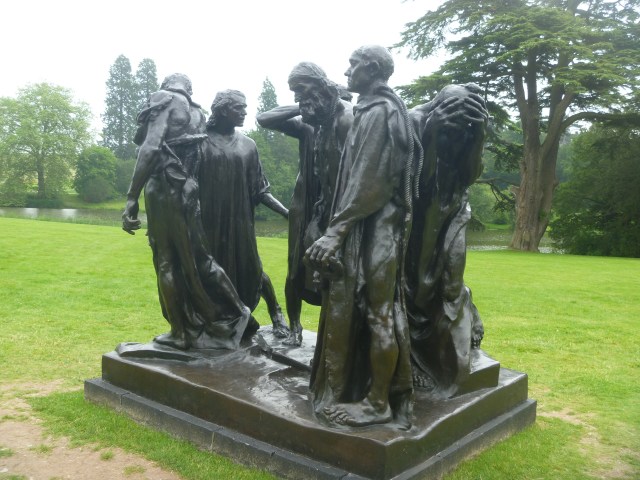
Calais Burghers

Rodin’s Burghers of Calais

Exhibition
Moore Rodin
15 February 2014 to 31 August 2014
10th Anniversary Year – Moore Rodin at Compton Verney

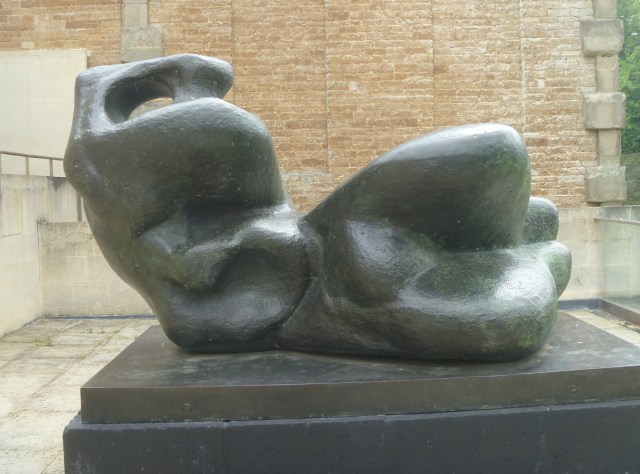
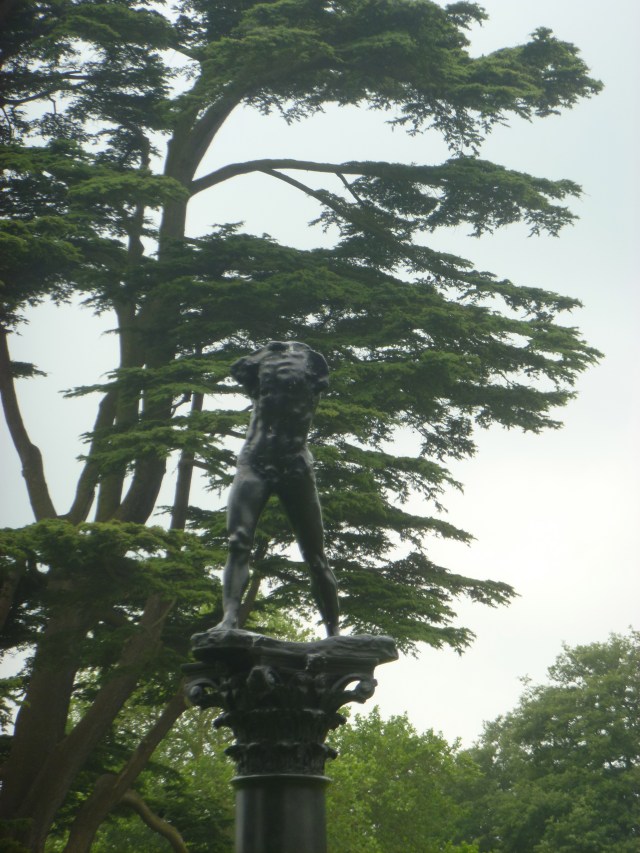
This ground-breaking international exhibition compares the work of two giants of modern sculpture: Henry Moore and Auguste Rodin. This is the first exhibition to be devoted exclusively to these artists, with major works being displayed in our ‘Capability’ Brown landscape as well as in our exhibition spaces.

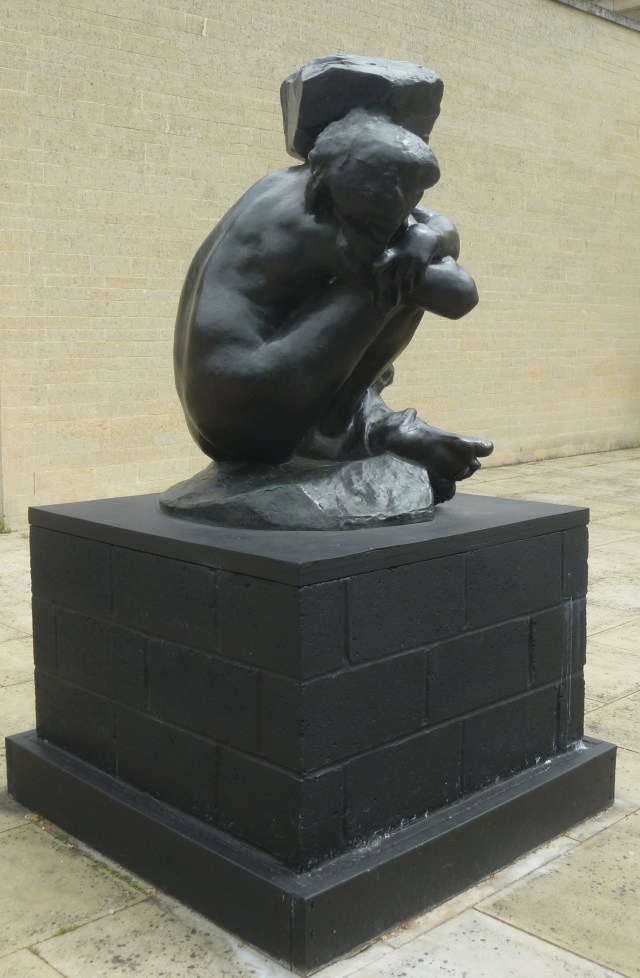
Fallen Caryatid

Fallen Caryatid by Rodin

Bunched figure

Reclining Figure : Bunched by Henry Moore

In the grounds
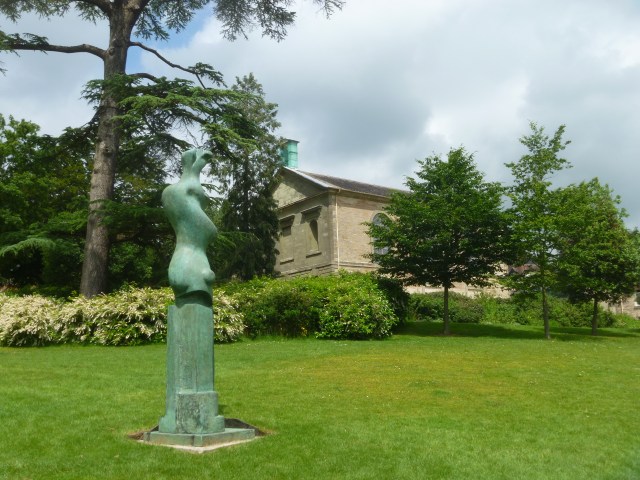
Enjoy eleven large scale works which complement, challenge and create new perspectives to vistas ‘Capability’ Brown formed in the 1760s. Amongst these amazing pieces is one of Rodin’s most famous works, Monument to the Burghers of Calais (usually on display outside the Houses of Parliament), Moore’s magnificent monumental Three Piece Sculpture: Vertebrae and The Arch.

Walking man on column

Rodin’s Walking Man on Column

Upright Motive No. 9

Henry Moore Upright Motive No. 9 with Chapel

Inside the galleries

Gain an amazing insight into the works of these two artists. Explore the parallels between their treatment of the figure through a beautiful collection of drawings and models made for larger works. See a special display curated by Moore’s daughter Mary which reveals both artists as keen collectors of antiquities and found objects which profoundly influenced their work. The final treat is a display of rarely seen archival documents and photographs taken by Henry Moore revealing that … ‘as time has gone on, my admiration for Rodin has grown and grown’.

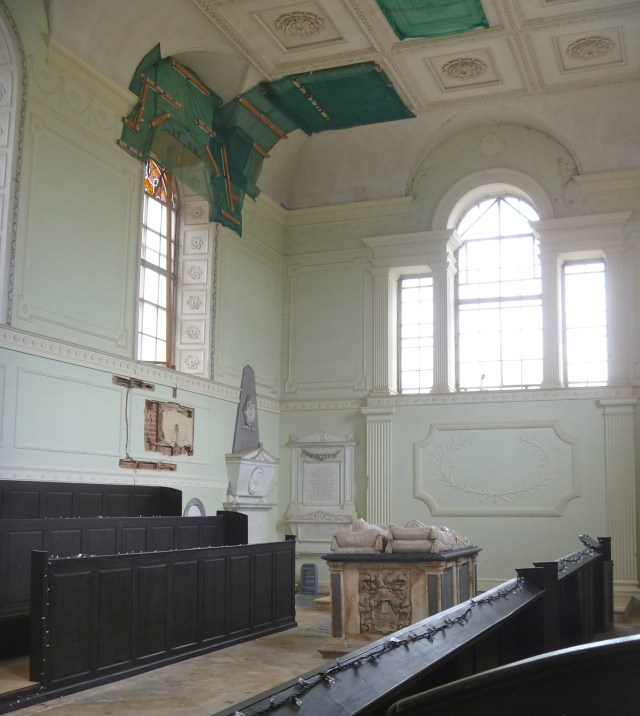
After our sandwich lunch I wandered round the grounds and visited the Capability Brown Chapel.  This was built in 1776 as part of the relandscaping of the site and is one of the few surviving Georgian chapels in Britain, and one of the very few remaining architectural works by ‘Capability’ Brown. It is currently undergoing a restoration project and more funds are needed to support this work as it’s hoped to use the building in future for music and learning.

CB's chapel

The Chapel Interior

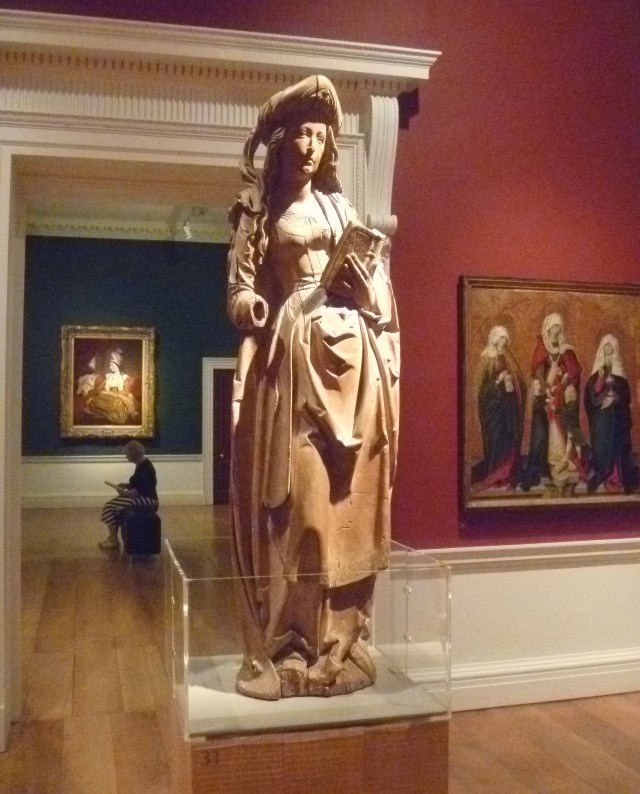
And in the afternoon we had a tour of the permanent collection – British Portraits

Beautiful display

Beautiful Displays

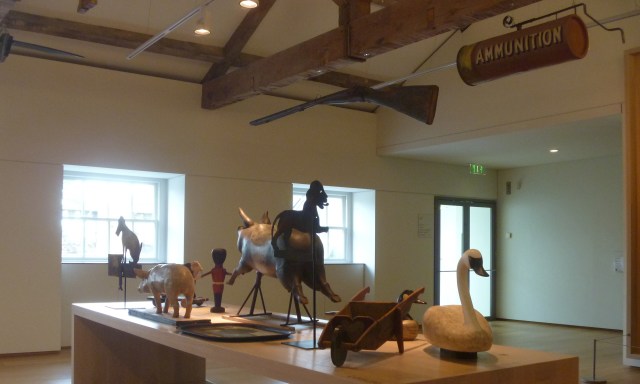
and British Folk Art. Currently there is an exhibition of British Folk Art at Tate Britain and this will then come to Compton Verney  from 27 September 2014 to 14 December 2014.

British Folk Art

British Folk Art

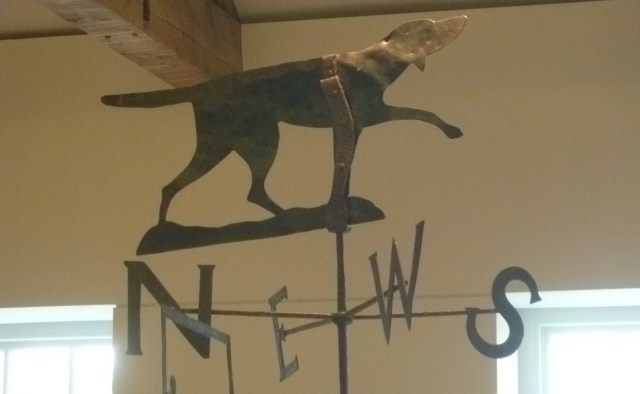
Weather vane

Weather Vane

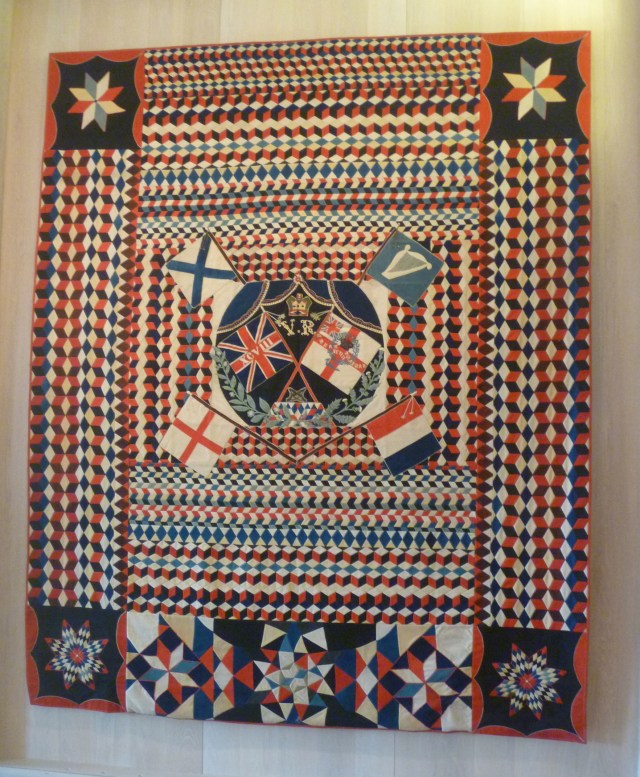
Quilt

Quilt

And finally, the Marx-Lambert Collection.

Marx Lambert collection

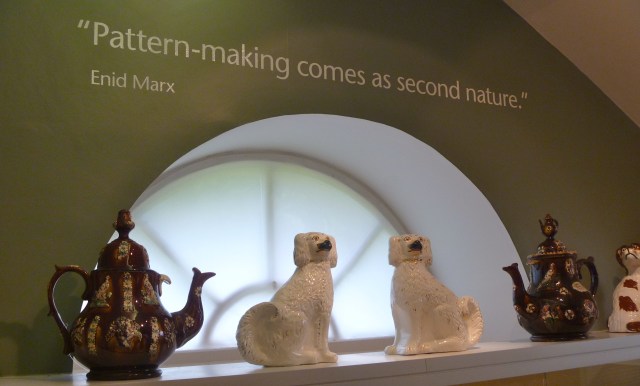
Enid Marx (1902-1998) was one of the brightest design stars to emerge from the Design School of London’s Royal College of Art (RCA) during the interwar years. She was an author and illustrator of children’s books, a book designer, a printmaker, a textile designer and a painter.
The Marx-Lambert collection at Compton Verney features both work produced by Marx and a large number of pieces of folk or popular art which were collected by Marx and her friend Margaret Lambert (1906-95). These then inspired Marx’s own work -sometimes directly, as seen in the pair of ceramic wall-mounted cornucopia cases which inspired her ‘Cornucopia’ textile design.”

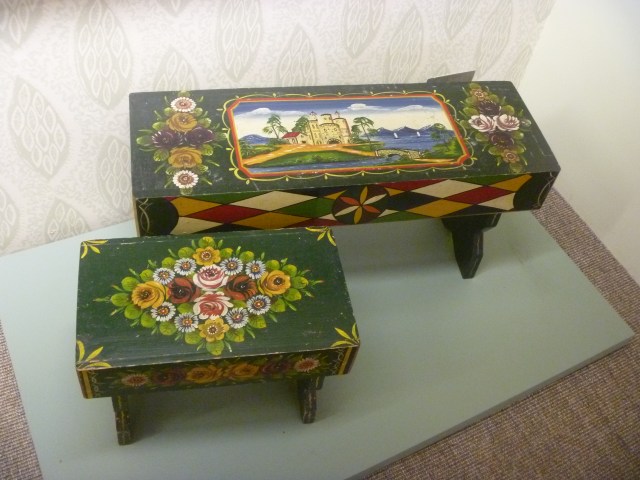
Canal art and wallpaper

Canal Art and Wallpaper

A wonderful trip full of interest and variety marred only by a 3 hour delay on the M1 due to a lorry on fire.


Allez, Leeds! Allez, Yorkshire! Turning Yorkshire Yellow – Le Grand Départ

At last the weekend of the Tour de France is almost here. It’s the time of year when I’m out and about and behind with my posts (which is true – I was at Compton Verney three weeks ago and since then down in Norfolk and Suffolk). However, this weekend I’m very much staying put. Hopefully I’ll be able to get closer to bringing my posts up to date before my next expedition.
grand-depart-route-map2

Map of the UK Tour de France [source]

The first leg of the famous cycle race – Le Tour de France – is coming to Yorkshire this weekend. I’m not at all interested so am definitely staying put. That isn’t to say that I’m against it being held here – in fact, quite the contrary. I think it’s great for the country, the county and the millions who will enjoy it. I do hope the sun shines (right now it’s raining) and everyone has a great time and enjoys the festivities laid on. With roads closed and transport crowded or disrupted I’m just going to stay at home in the Boudoir.

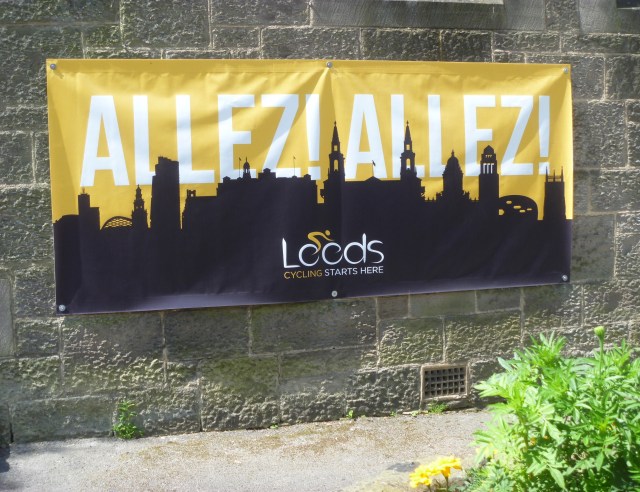
Allez, allez Leeds

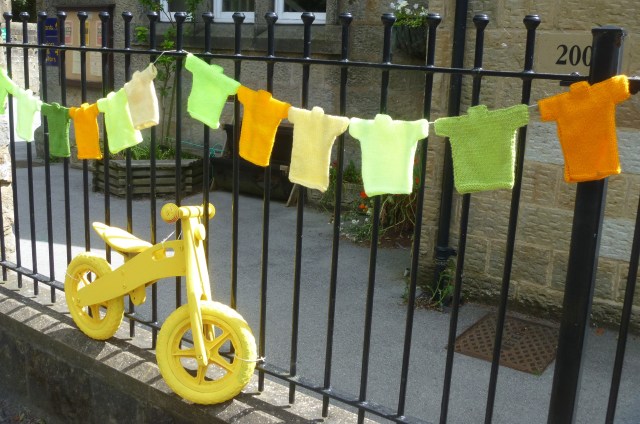
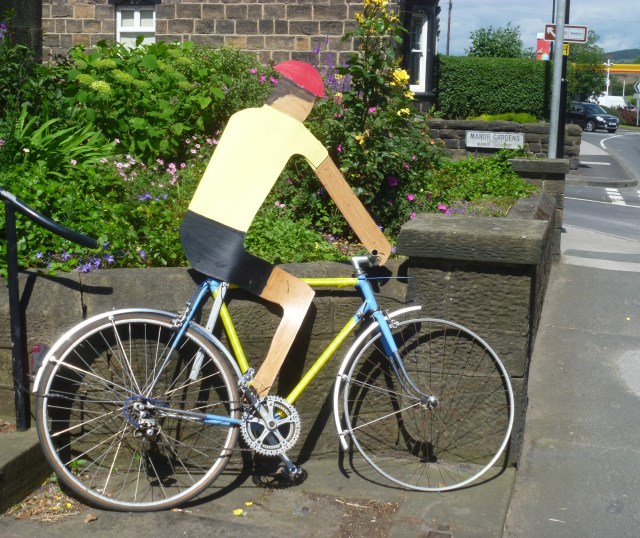
As I have driven around the local area and further afield in the Dales I’ve noticed everywhere along the route and nearby old bikes – big and small – penny farthings and trikes – all sprayed yellow. It’s hard to stop at each one when you’re driving so the other Saturday on my way back from a little shopping at Bettys at Harlow Carr I drew up in Pool and took a few snaps.

Window Bettys HC

 Tour de France window, Bettys Harlow Carr

Pool in Wharfedale is near the beginning of the route just after the official start at Harewood House where the cyclists will be waved off by big crowds including their Royal Highnesses The Duke and Duchess of Cambridge. I wonder whether they’ll wave them off on the 3rd leg from Cambridge to London?

Yellow bike

Yellow kiddies bike, Beckwithshaw Primary School

School jerseys and bike

The ‘yellow’ jerseys and bike, Beckwithshaw

Welcome to Pool

Welcome to Pool-in-Wharfedale banner

Pool bike

Bike and cyclist

Yellow bike Pool

Yellow Bikes in Pool

Good Luck and Bon Chance to all riders!


English Eccentricity Lives On at Renishaw Hall

On Thursday I returned from a two-day Art Fund Expedition to Compton Verney and Stratford. I never need asking twice to go to Stratford to see world class Shakespeare being performed live before my very eyes. I have made several visits over the years. So, when a flyer arrived advertising the expedition to Stratford and to include a tour of Renishaw Hall (generally very limited access) and visit to Compton Verney House in Warwickshire I was ready to sign up and go.

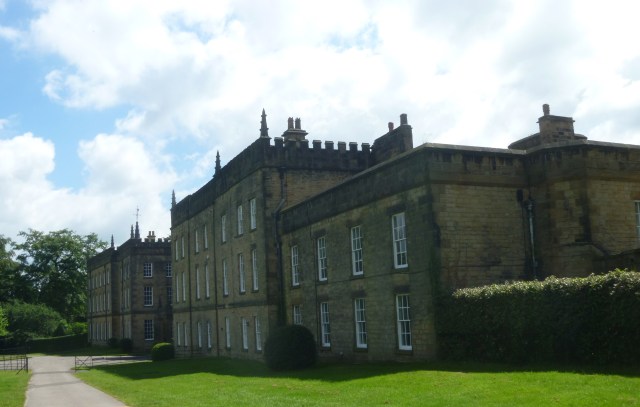
Renishaw

Our band of 25 set of from Leeds at 9.30 on Wednesday arriving at Renishaw about 10.45. Our visit began with tea (or coffee) in the Gallery Cafe followed by a personal tour of the house.

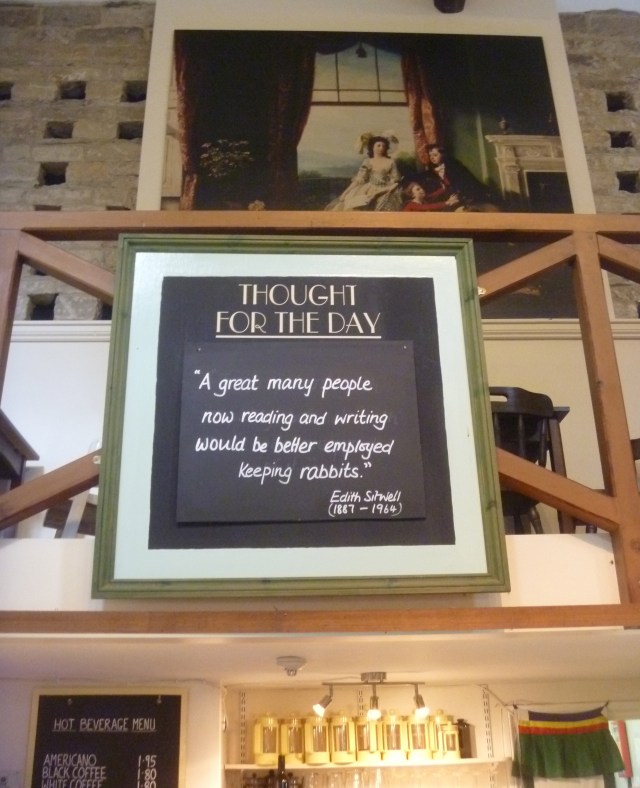
Thought for the day

Thought for the Day in the Courtyard Cafe

After a brief introduction outside we ventured inside to see the fabulous interior. Definitely the former home of eccentrics and eclectic collectors. It is a Sitwell descendant’s home. Here’s a potted introduction to the famous Sitwell siblings from the Renishaw Hall website :

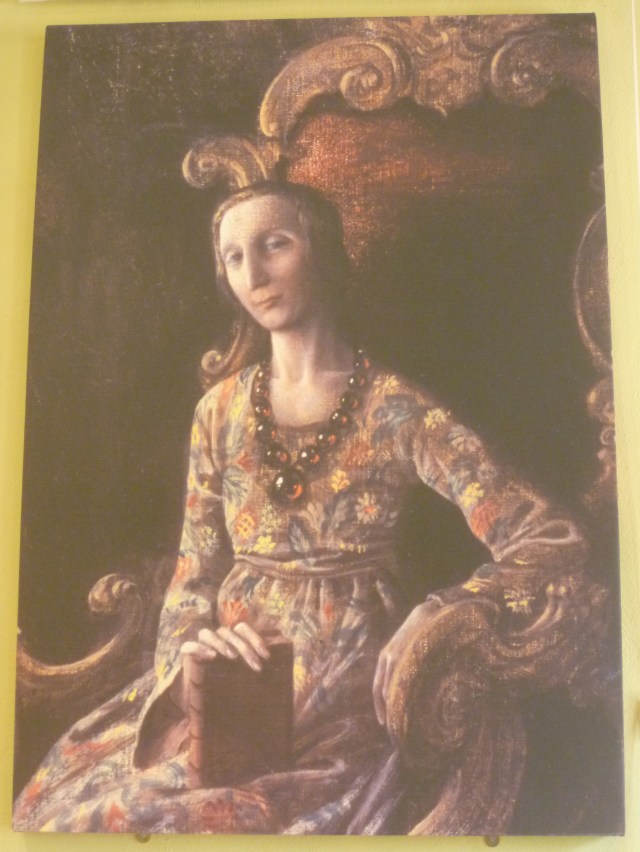
Edith oversees luncheon

Edith Sitwell overlooked our luncheon. The throne is still to be seen in the ballroom.

The Sitwells

The current owner of Renishaw is Alexandra Sitwell, daughter of the late Sir Reresby and Lady Sitwell. Her extraordinary family have lived at Renishaw for nearly 400 years.

The Sitwells have always been avid collectors and patrons of the arts and the history of the family is filled with writers, innovators and eccentrics.

Perhaps the most famed of the Sitwells were the prolific writers Edith, Osbert and Sacheverell:

Dame Edith Sitwell (1887 – 1964) was a grandly eccentric poet and novelist, described by one observer as “an altar on the move.” Perhaps better known for her poetry, two of her most important works were the books English Eccentrics and Fanfare for Elizabeth

Sir Osbert Sitwell (1892-1969) wrote prose, poetry and also many short stories and novels, including Before the Bombardment (1926). He is probably best known for his five volume autobiography Left Hand Right Hand

Sir Sacheverell Sitwell (1897-1988) was well known for his work on art, architecture, ballet and travel and arguably his greatest book was Southern Baroque Art which secured him a reputation as author and art historian.”

But they were by no means the only family members to have influenced the Hall over the centuries.

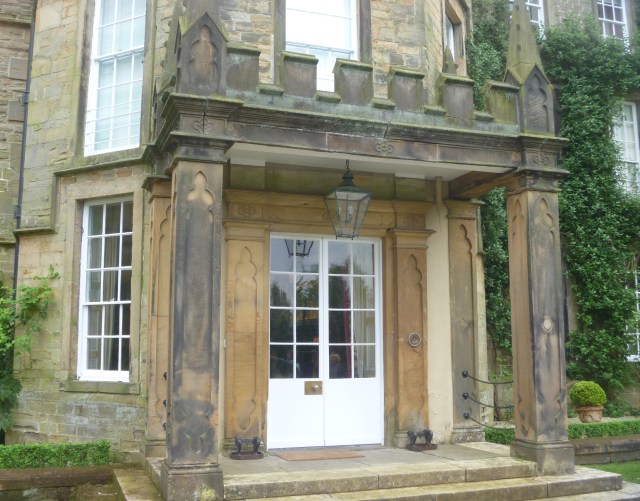
Main Entrance

The Main Entrance of the original house still used as such today

The house was built in 1625 by George Sitwell (1601–67). The Sitwell fortune was made between the 17th and 20th centuries from iron nails, coal, land and through marriage.

Between 1793 and 1808 Joseph Badger of Sheffield made additions and alterations to the original and in 1908 Sir Edwin Lutyens made some changes; about some of which our guide was rather scathing. Lutyens was a good friend of Sir George Sitwell and forty of his notebooks were found in the attics. But he apparently did very little – Christine pointed out the black pillars, the garden doors and the ceiling of the Old Billiard Room plus the recycling of piano keys as surrounds for tapestries in the ballroom.

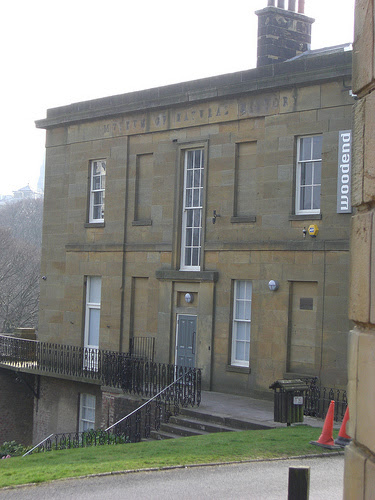
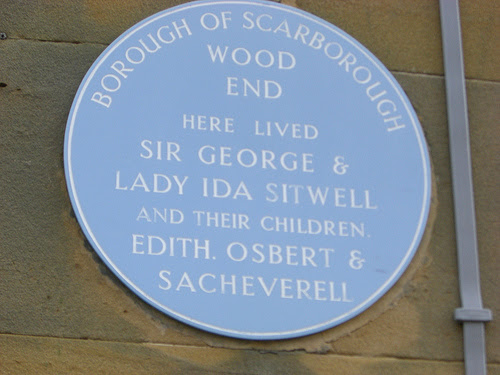
Sir George Sitwell (1860-1943) who had succeeded to the baronetcy in 1862  was responsible for laying out the stunning Italianate gardens in the late 19th Century. For many years he lived in Scarborough where he was the town’s MP. A Blue Plaque at Woodend his home in Scarborough now  commemorates his children Edith, Osbert and Sacheverell. He bought a castle in Tuscany and assembled the largest private collection of John Piper’s paintings.

Woodend

Woodend, Scarborough

Blue Plaque Scarboro

Blue Plaque at Woodend commemorating the famous Sitwell siblings

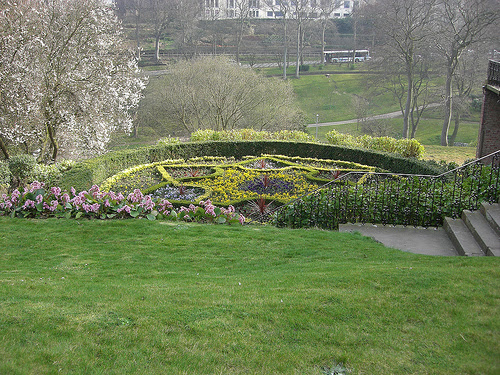
Woodend garden

The Woodend Garden in March 2009

Besides the Pipers there was a host of other paintings including a Sir John Singer Sargent of Sir George Sitwell Lady Ida Sitwell and Family. 

[wallcoo]_Sargent_John_Singer_Sir_George_Sitwell_Lady_Ida_Sitwell_and_Family

Here is Ida in a gown by … Madam Clapham of Hull

The library was somewhere I could have stayed for the rest of the day – comfy sofas and chairs and with a beautiful view of the gardens; plus walls of books including lots of first half of the 20th century volumes. There are 30,000 books in the house altogether. What’s wrong with that? I say.

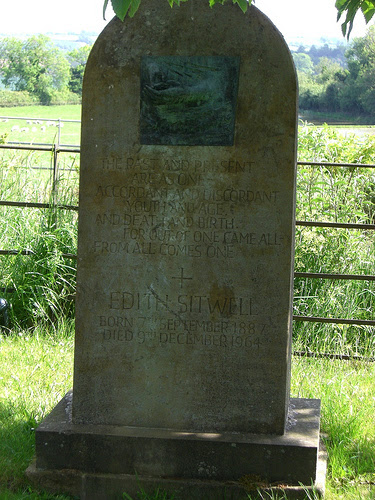
Several years ago whilst staying in Northamptonshire I visited the church and graveyard at Weedon Lois where Edith and her brother Sacheverell are buried. Interestingly, her gravestone is the work of Henry Moore. Weston Hall nearby was another family home of the Sitwells.

Weedon Lois

The ‘new’ churchyard at Weedon Lois in June 2009

Headstone by Henry Moore

Edith Sitwell Headstone by Henry Moore

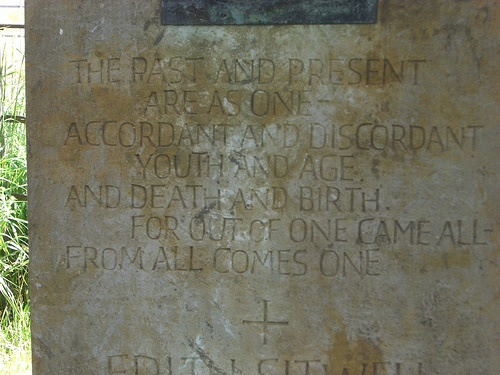
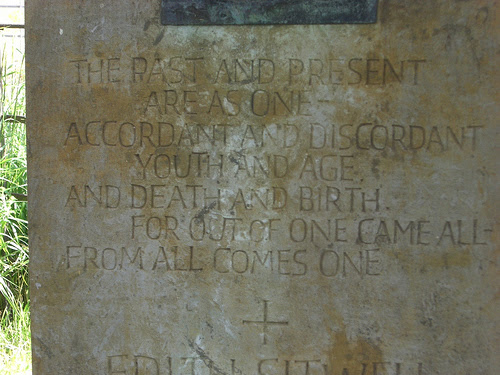
Sitwell wording


Sitwell wording

I have always suspected that the editor of the Waitrose Kitchen free magazine William Sitwell is a member of that illustrious and eccentric family … and indeed he is cousin of the present owner of Renishaw, Alexandra Sitwell.

This year is the 50th anniversary of the death of Dame Edith Sitwell and I see from the website of the Sitwell Society that some interesting events are planned to coincide with this including :

1st November 2014, Edith Sitwell (1887-1964) Remembered by Chris Beevers, archivist at Renishaw Hall, Derbyshire, the present day home of Lady Alexandra Sitwell (Edith Sitwell’s great-niece).
‘Edith Sitwell Remembered (1887-1964)’ commemorates the fiftieth anniversary of her death by looking back over the public and private lives of this extraordinary woman. She was not only a key 20th century literary figure but also a much loved sister, aunt and great aunt to the Sitwell family. Using material from Alexandra Sitwell’s family archive, along with published biographical information, Chris Beevers will present the life of Edith, illustrating key milestones in her personal and professional life. A complex individual, the talk attempts to reveal the ‘real’ Edith, and what lay behind her public ‘facade’ as an avant garde poet, performer and fashion figure, often labelled ‘eccentric’, as well as highlighting the literary significance of her work. It will also represent another Edith, a kind, generous and loyal friend who did much to help others in private, as well as supporting new, undiscovered talent.
Friends of the Library event. 1st November, 2014, 11.15am-midday (tea & coffee served from 10.30am) Cost: Free to members of Friends of the Library, £1 to non-members. Contact: Karen McCabe, 01723 367009 or Colin Langford, 01723 375602

After the House Tour we returned to the Courtyard where we had our soup and sandwich lunch in a separate dining room. We then had a further hour or so to inspect the gardens and courtyard shop before continuing down to Stratford-Upon-Avon.

Renishaw Shop

Inside the Renishaw Shop

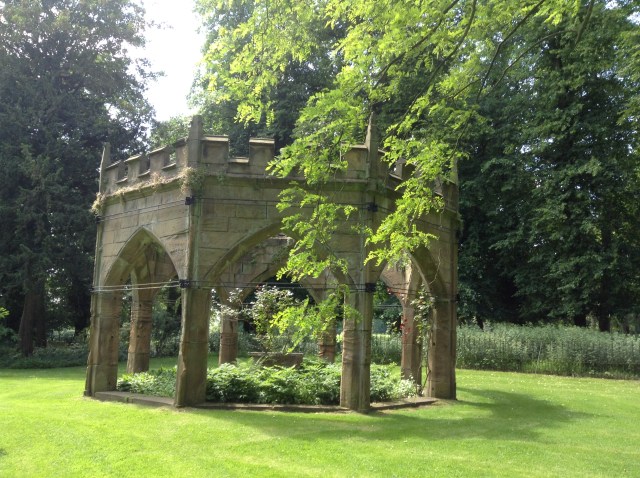
Gothic Aviary

Gothic Aviary in Renishaw Garden

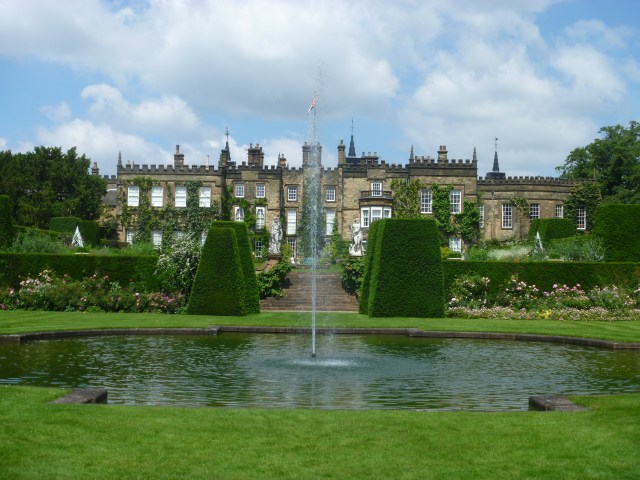
Renishaw and garden

Renishaw Hall and Garden

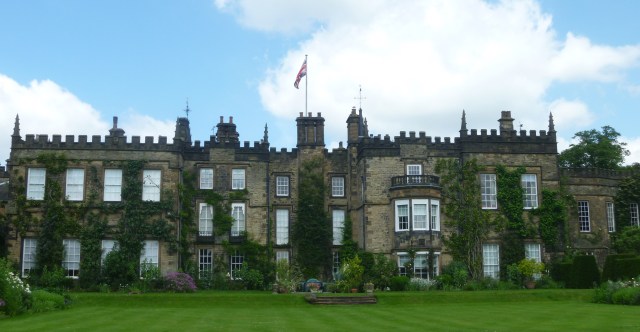
Rear of Renishaw

Rear of Renishaw Hall

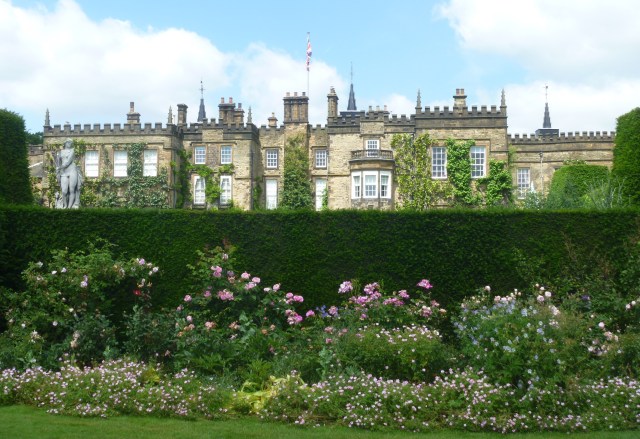
Flower beds and hall

Flowerbeds and hall

The Gems of Bewerley Village, Nidderdale

SUNDAY 8TH JUNE 2014: THE GEMS OF BEWERLEY VILLAGE
After discovering some interesting facts about this beautiful village we climb to join the Nidderdale Way before returning via field and woodland paths.
Start: Pateley Bridge, Bus Stand 10.50
Finish: Pateley Bridge approx. 15.30
Distance/Grading: 4.5 miles / Easy to Moderate

Last Sunday's walk

Nidderdale is my new favourite rambling region so I was happy to join fellow members and supporters of The Dalesbus Ramblers last Sunday for a shortish walk full of interest.

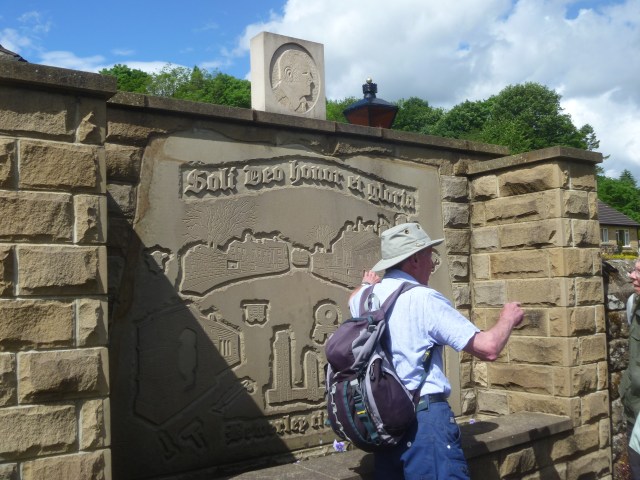
From Pateley Bridge it was a short walk to Bewerley where we stopped to study the local stone mason’s work – a depiction of the major features of the village carved in stone.

Stone carving of Bewerley

The Stone Mason’s Work. Frank explains the Latin Motto.

“soli deo honor et gloria” Honour and Glory to the only God.

Yorkes Folly picked out

Yorkes Folly picked out in stone


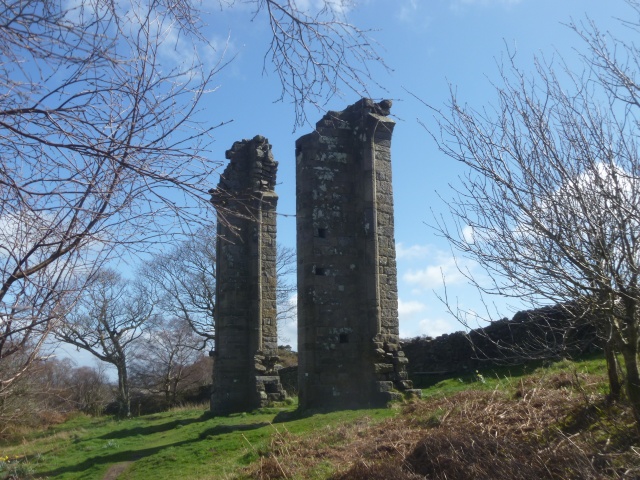
Leaving Yorke's Folly

Yorkes Folly for real (on a previous walk)

“Built around 1810 the folly was constructed by labourers working for John Yorke of Bewerley Hall. He commissioned the folly during a depression to keep his labourers in work and above the poverty line. Each labourer was paid a shilling a day and an loaf of bread. The folly was known as Three Stoops until a violent storm during the night of 17th November 1893 blew one of the towers down. Today it is known locally as the Two Stoops.” [Information Board at the folly]

Further along through the village we arrived at The Chapel of Ease.

“A small grange chapel of Fountains Abbey built by Marmaduke Huby which has remained intact. The Chapel was fully restored for worship in 1965. The chapel is open during daylight hours. We have services on the first and third Sundays of the month at 9am.”

Latin motto

Our leader Frank showed us the Latin motto on the exterior rear wall of the Chapel and Marmaduke Huby’s initials carved on the wall and in the windows.

Chapel window


MH window

MH

MH on windows and walls

From the Chapel we hurried along to meet, as arranged, the owner, Dr Peter Brambleby, of Fishpond Wood. We had a guided tour through the wood which Dr B called his “Natural Health Service”.

Peter says one of his priorities will be to support educational use, and especially to encourage a love and respect for nature amongst children. He has already entered into an agreement to permit the Bewerley Park centre for Outdoor Education to use the area to the east of the public footpath and pond.

Woodland, like much of the English countryside, is shaped by generations of active management, and Fishpond Wood is no different. It will benefit from thinning out of invasive rhododendrons, from planting young trees to renew the aging stock, and from restoration of the pond, paths and walls.” Read more about Peter’s work and plans here.
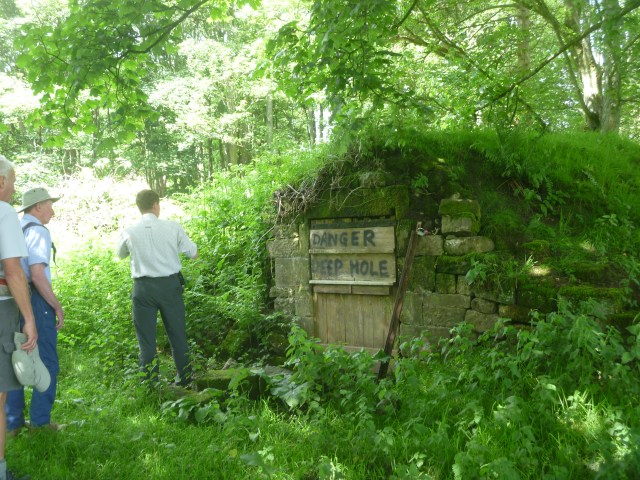
Ice House

The Recently Rediscovered Ice House – we were able to go in and look down at its full depth

Fishpond

The Fishpond

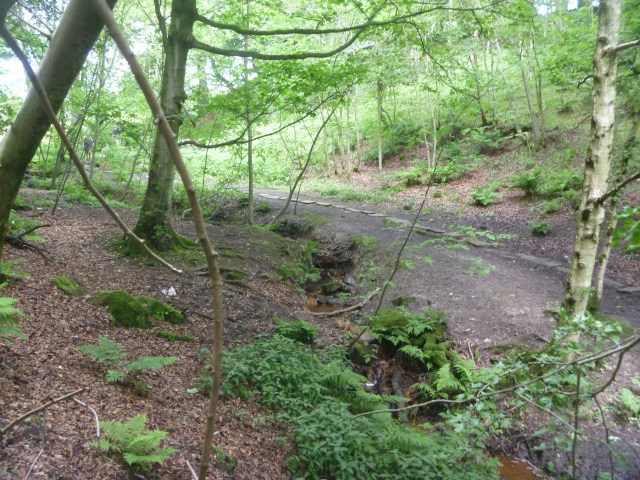
Footpath

Improved Footpaths through the Woods

Dr Brambleby showed us the route out of the wood and we were soon climbing up, up, up steadily before the walk levelled out and we crossed the busy B6265 and descended to The Nidderdale Way and thence back to Pateley Bridge.


The Leeds Library Summer Day Out In The Lake District

How can you tell you’re on a summer day trip to the Lake District? Yes, it teems with rain all day long. Still, we were not deterred as we waited for our coach to pick us up at Bramhope Church bus stop. We hoped the rain would cease but unfortunately it didn’t. Never mind our main aims were not to climb  the peaks nor to stride out across the fells but to make indoor visits to The Armitt Library in Ambleside in the morning and to Blackwell near Bowness in the afternoon.

logo_header

How true! How true!

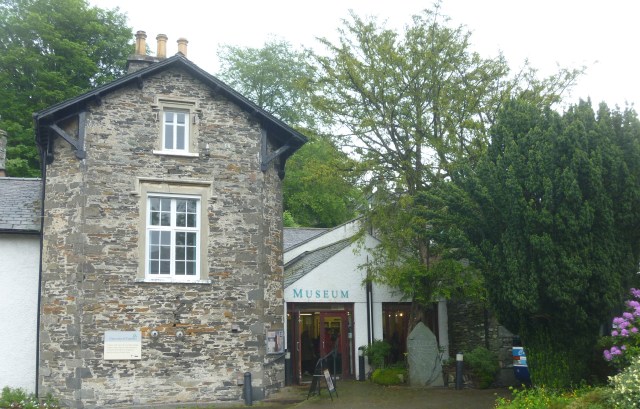
Armitt

The Armitt Library was founded by the will of Mary Louise Armitt and the wishes of her two sisters, “to create a collection of books of scientific, literary and antiquarian value” for the “student and book-lover”, and eventually a small museum. It was opened in 1912, and embodied the old 1828 Ambleside Book Society, of which William Wordsworth had been a member, and the Ambleside Ruskin Library, founded by Hardiwcke Rawnsley in 1882 with the active support of John Ruskin. The Library is now in a purpose-built home just north of Ambleside on the Rydal Road.

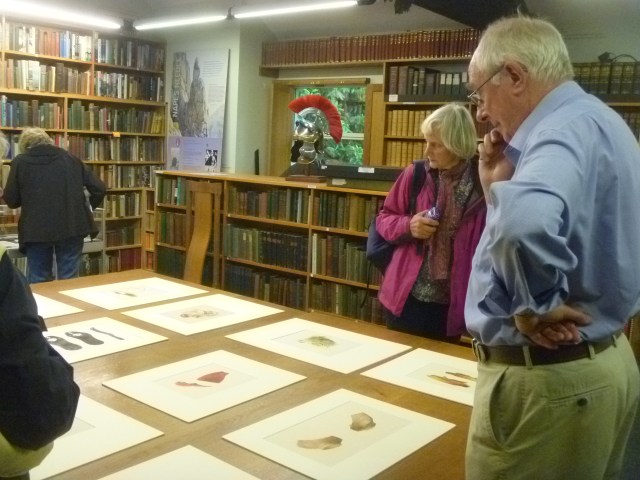
In 1934 Beatrix Potter gave many of her watercolours and drawings of fungi, mosses and fossils to the  Armitt Library some of which are on display. She had become a member on her marriage to William Heelis in 1913 who was the Library’s solictor since 1912.”

Potter's work

Admiring Potter’s drawings and watercolours

The Armitt Museum houses so much more than just the original core book collection. Alongside the story of Beatrix Potter and the Lake District is a large collection of her exquisite drawings, the library of The Fell and Rock Climbing Club and a gallery devoted to the work of German artist Kurt Schwitters.

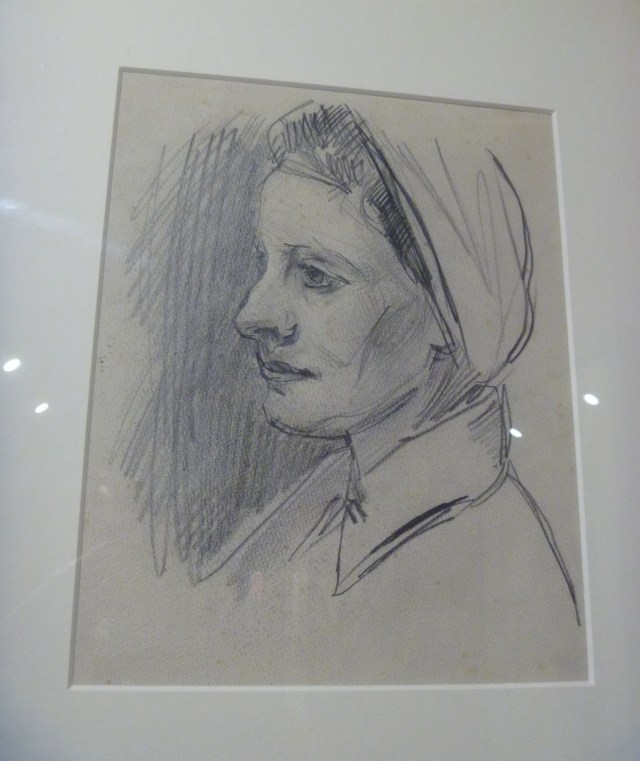
Edith Thomas

Portrait of Edith Thomas by Kurt Schwitters

Born in Hanover in 1887, he studied art at Dresden, but it was not until the Dada movement of 1916 that he finally liberated himself from conventional art. Schwitters took from Dada the freedom to use what materials he wanted to in his pictorial compositions … In 1937 for a variety of compelling reasons Schwitters left Hanover for Norway, never to return to his home again. The Norwegian experience was mixed … and in 1940 Schwitters and his son fled to Britain where they were both interned on the Isle of Man. Afterwards Schwitters lived in London until the end of the war in 1945, when he moved to Ambleside where he remained until his death in poverty and obscurity in 1948. Schwitters never received the recognition in Britain he had enjoyed in Europe, and his art did not sell. However, in 1947 he was fortunate enough to start his third Merzbau in a barn in Elterwater. Regrettably only a fragment was completed before his death, and this small monument to his genius can now be seen in the Hatton Gallery, Newcastle.” [Armitt Museum website]

Fell and Rock Collection

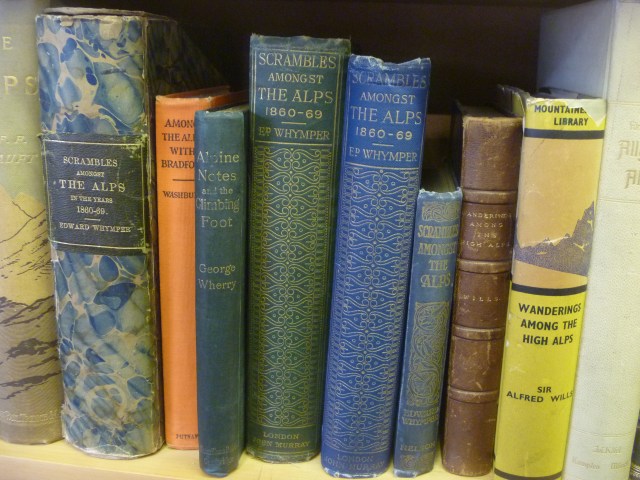
Books on an Alpine theme

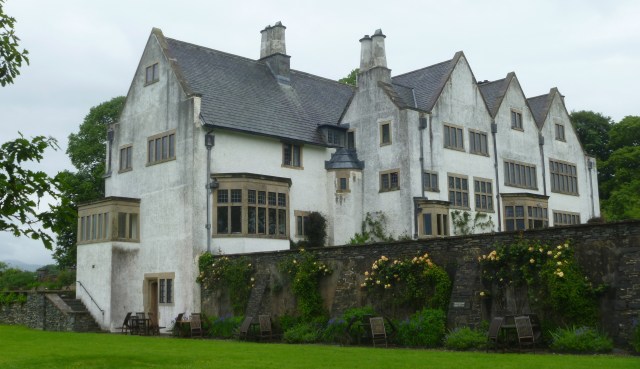
After lunch in Windermere we continued to Blackwell the Arts and Crafts House overlooking Lake Windermere. This was my second visit to the house, my first being in 2002 which was not long after the house was opened to the public.
Blackwell

When the architect Mackay Hugh Baillie Scott (1865 – 1945) built a holiday home overlooking Windermere for his client Sir Edward Holt, a brewer from Manchester, he created Blackwell, a masterpiece of twentieth-century design; a perfect example of the Arts & Crafts Movement.

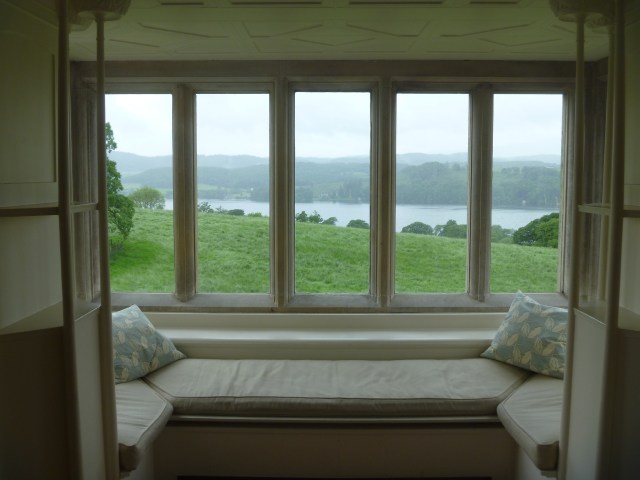
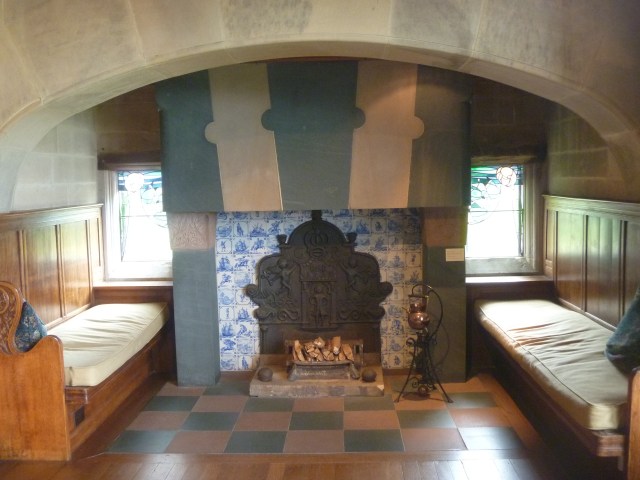
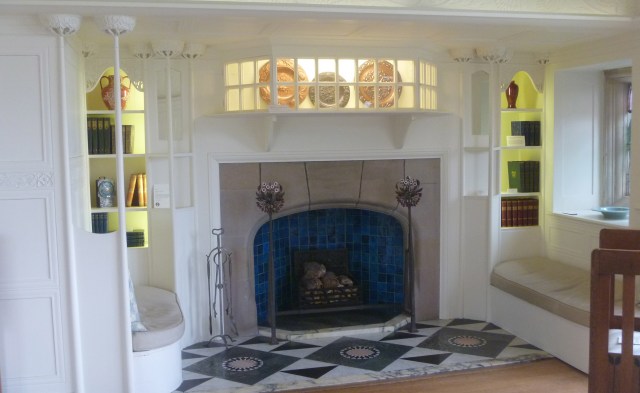
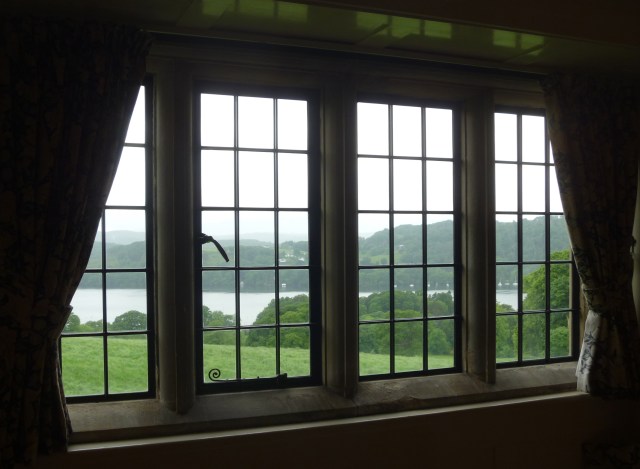
Enjoy a lovingly crafted day out at one of the most enchanting historic houses in the Lake District. When you visit you are invited to relax and immerse yourself in all the beauty and craftsmanship of Blackwell. We encourage you to sit and soak up the atmosphere in Blackwell’s fireplace inglenooks, which have fine examples of tiles by Arts & Crafts designer William de Morgan. The inviting window seats offer stunning views of the surrounding Lake District scenery. You can appreciate the house as it was originally intended, without roped-off areas.

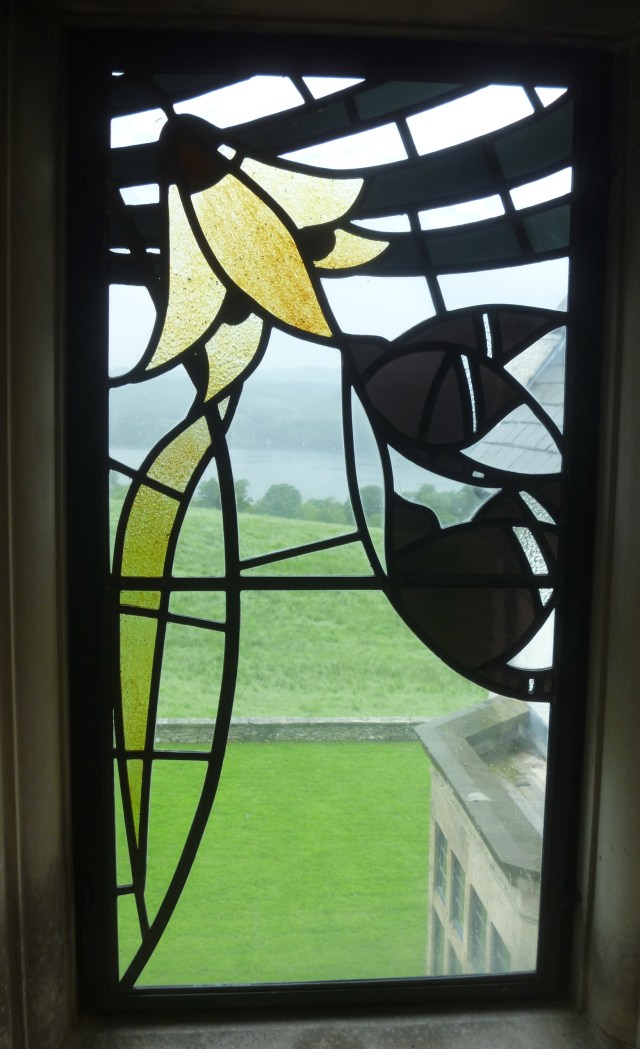
Window 1

Stained glass window

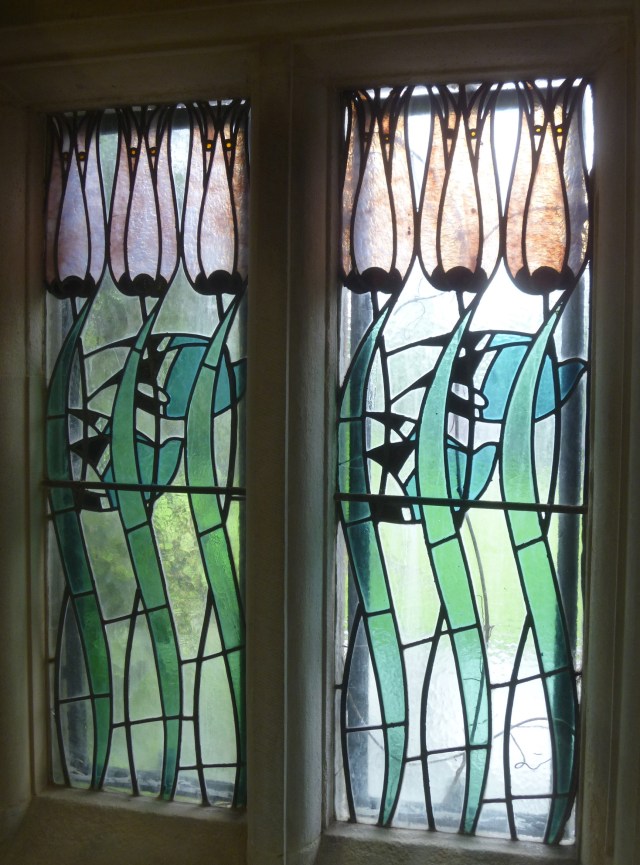
Window 2

Another stained glass window

Window seat

Window Seat

Blackwell retains many of its original decorative features, including a rare hessian wall-hanging in the Dining Room, leaf-shaped door handles, curious window catches, spectacular plasterwork, stained glass and carved wooden panelling by Simpsons of Kendal. The rooms contain furniture and objects by many of the leading Arts & Crafts designers and studios – metalwork by WAS Benson, ceramics by Pilkingtons and Ruskin Pottery and furniture by Morris & Co., Stanley Webb Davies, Ernest Gimson and Baillie Scott himself.”

Fireplace 1

Fireplace

Fireplace 2

Another Fireplace (My Favourite)

For more and better pictures of Blackwell see here a fellow Blog Poster’s visit to the House earlier this year.

Windermere


Farewell to Armitt, Blackwell and Windermere, but not, alas, to rain … it followed us home.


A Sussex Tea Garden, a Long Man and a Landmark Priory : Litlington and Wilmington

Last year Simon over at Stuck-in-a-Book lent me his copy of  ‘Tea is so Intoxicating’ by Mary Essex which is one of several pen names of romantic novelist (and my brother-in-law’s Godmother!) Ursula Bloom.

One thing I especially loved about the book was the choice of chapter headings. Shall I quote them all here?

1. Tea for Two,and Two for Tea

2. I do like a Nice Cup of Tea

3. For all the Tea in China

4. The Cups that Cheer but not Inebriate

5. Everything Stops for Tea

6. Cold Tea may be Endured, but not Cold Looks (Japanese Proverb)

7. Tea and Scandal

Written in 1950 it is basically the story of a London couple who set up a Tea Garden in the South of England but the marriage is not a success.

P1130717

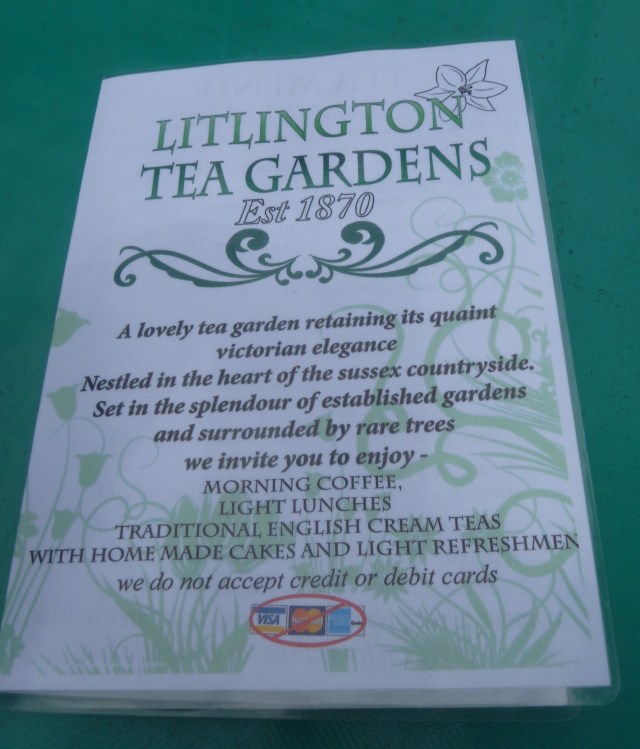
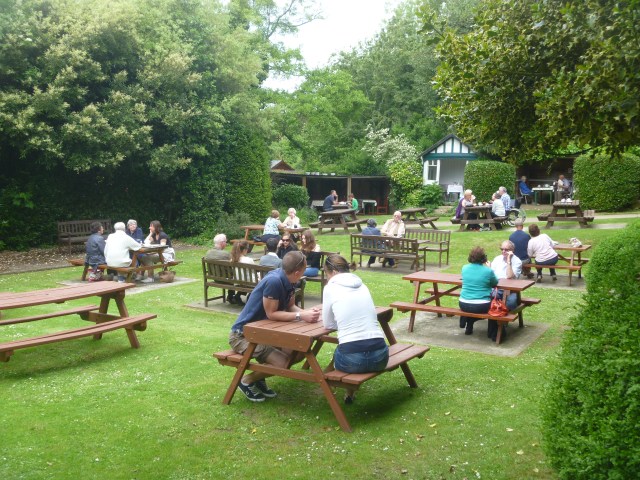
Anyway, when Fran told me that Tea Gardens were a particular feature of the East Sussex countryside around Laughton I knew, should the weather remain sympathetic, that I would have to take my Swiss friends to one of these minor Sussex institutions. So, after the walk on Sunday at Firle Beacon and the visit to Firle village we headed for Litlington Tea Garden.

Litlington tea garden

In the Tea Garden – there are a few sheltered places should the weather turn inclement

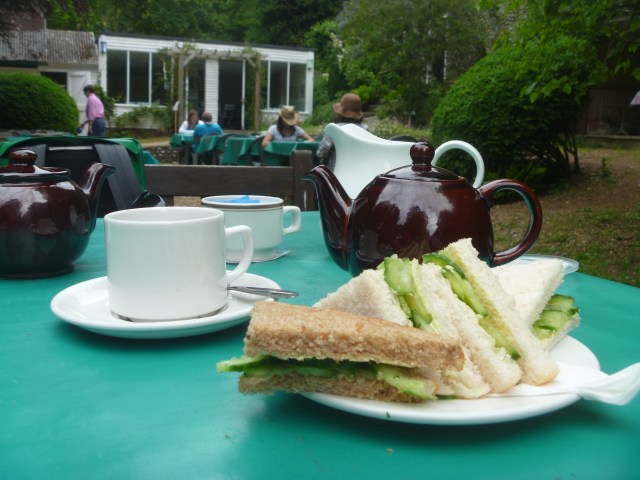
We were in luck – the day remained warm and dry. We ordered cucumber sandwiches to be followed by scones and jam and accompanied by plenty of tea.

cucumber sandwiches

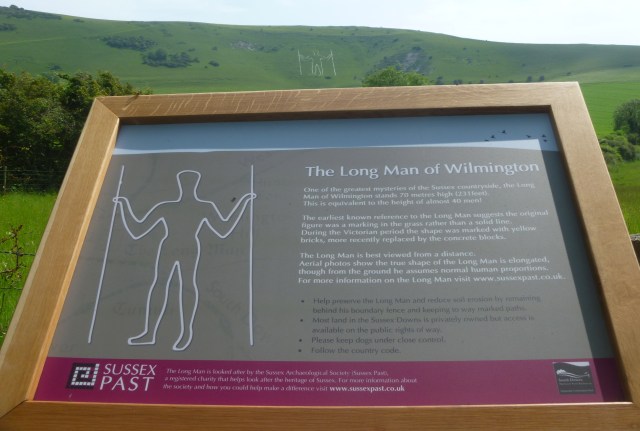
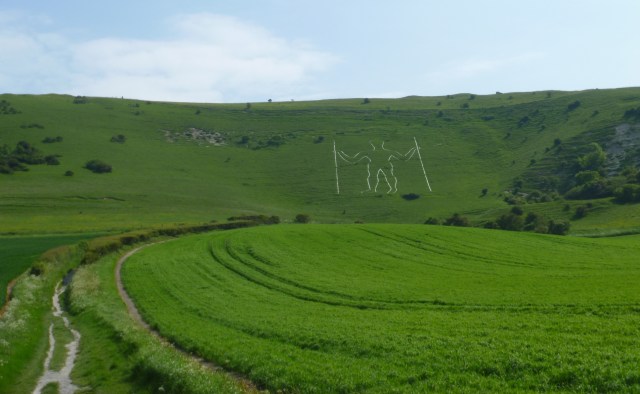
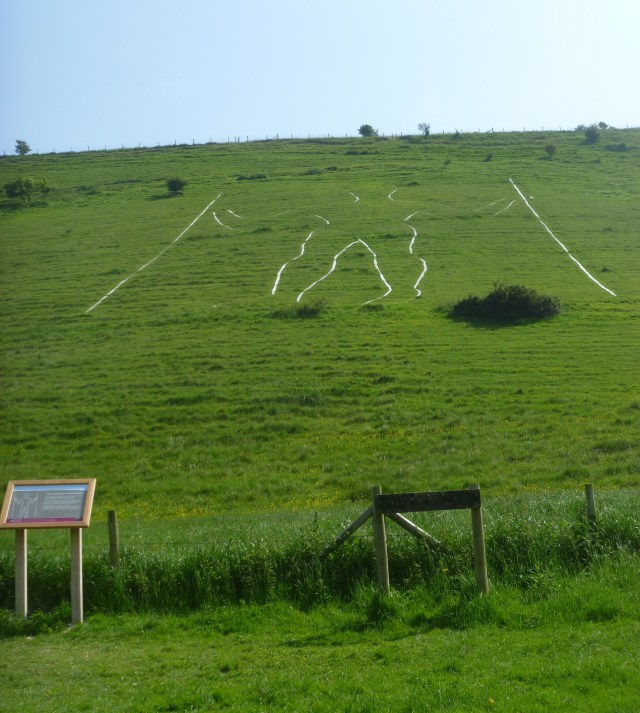
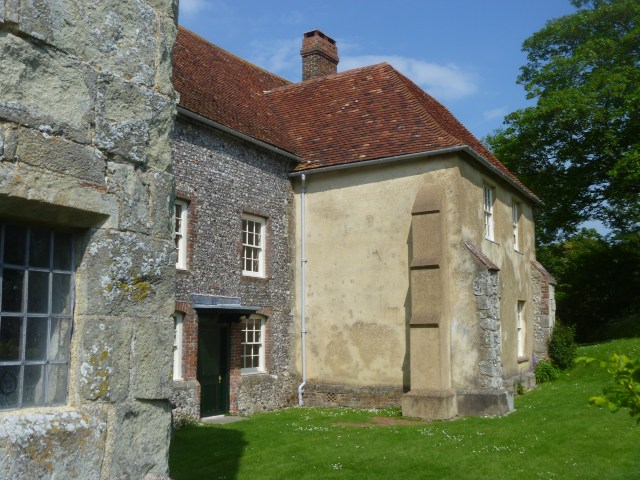
From Litlington it was just a short drive to Wilmington. Here is the famous Long Man carved into the chalk hillside many centuries ago. Here also is Wilmington Priory another Landmark Trust property.

The Long Man Info

Wilmington Long Man

After tea and scones and jam we were ready for a little exercise so parked up in the small car park on the edge of Wilmington and walked about the half mile or so to the bottom of the hillside upon which he is marked out. The nearer you get to him the less of him there is to see. Still, it was a nice walk.

Approaching the Long Man

Approaching the Long Man

Close up

We Reach The Long Man

The enigmatic Long Man of Wilmington attracts many theories but provides little evidence to back them up. Now outlined in stone, he was formerly carved in the chalk of the hill. His first definite mention was as late as 1710, but the monument was old then. A picture drawn by bored monks, commemoration of the Saxon conquest of Pevensey, a Roman soldier or Neolithic god opening the gates of dawn. The ‘Long Man asking the traveller – like the Sphinx – to solve the dark mystery of its own origins’.” [Wealden Walks]

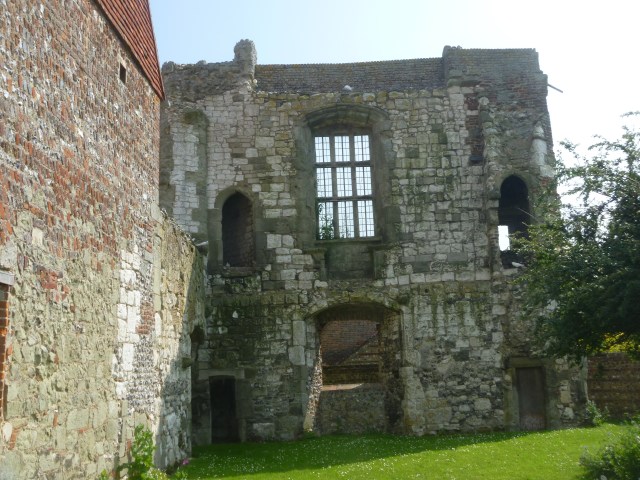
Wilmington Priory

Wilmington Priory

“The remains of a once highly regarded Benedictine Priory Wilmington Priory was a cell of the Benedictine Abbey at Grestain in Normandy. It was never a conventional priory with cloister and chapter, the monks prayed in the adjoining parish church where the thousand-year-old yews are testimony to the age of the site. The Priory has been added to and altered in every age and some of it has been lost to ruin and decay, but what is left shows how highly it was once regarded.” [Landmark Trust website]

Rear of Wilmington Priory

Rear of Wilmington Priory

Ruined Priory

The Ruined Priory

WP garden

Wilmington Priory Gardens

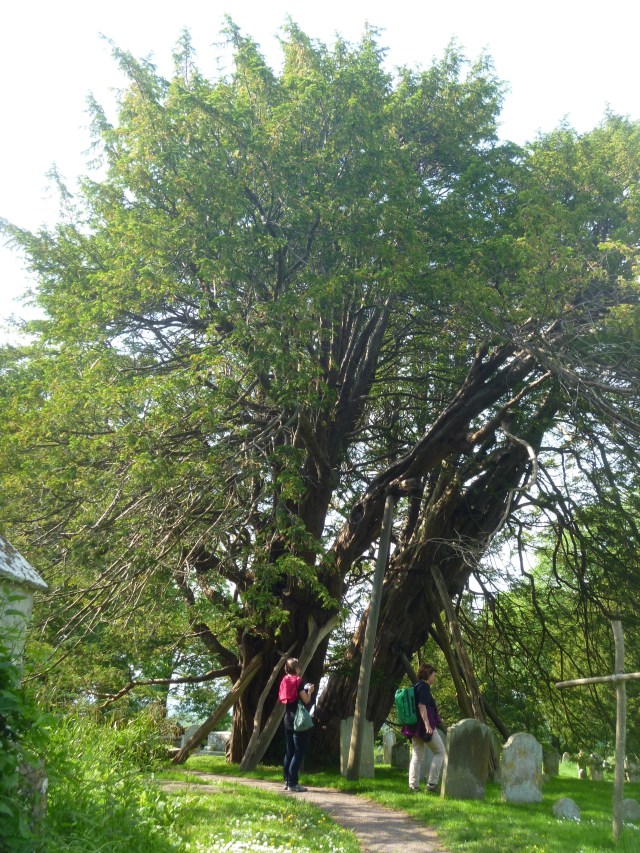
1000 year old yew

The 1,000 Year Old Yew Tree in the Churchyard

Great Dixter : A Visit to the Garden and House

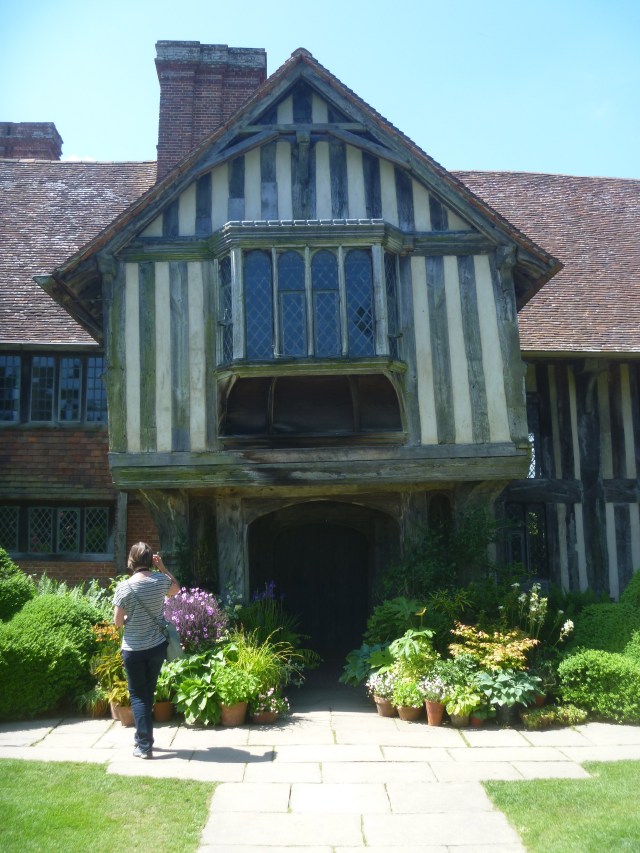
Arriving at Great Dixter

We arrive at Great Dixter

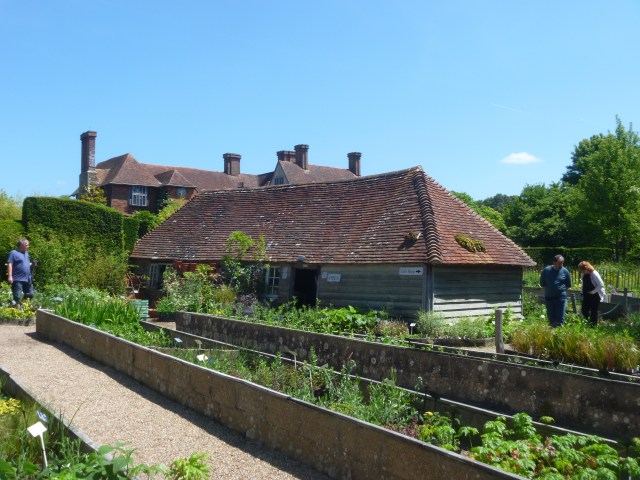
Our Saturday excursion in Sussex was intended to be to Sissinghurst former home of Vita Sackville-West : a kind of continuing of the Bloomsbury trail. However, word must have reached the Swiss Alps to the effect that the house and garden at Great Dixter must not be missed. Thus we wended our way across county to near the Kent border to visit this wonderful house and its almost overpowering garden.

Gt Dixter

Great Dixter recently featured in a one hour presentation on the BBC TV series British Gardens in Time.

http://www.bbc.co.uk/programmes/p01wjd2t

http://www.bbc.co.uk/programmes/p01wjcl2

I’d seen the programme and therefore knew a bit about Christopher Lloyd (1921-2006) whose parents moved to Great Dixter in 1910. He was born here; the youngest of 6 children. In 1954, after attending Rugby School and King’s College, Cambridge and studying and later teaching horticulture at Wye College, he moved back to Dixter to live with his mother Daisy. They shared their love gardening until 1972 when Daisy died. He lived here until his own death in 2006 gardening and writing and encouraging students of gardening to stay at the house and study. His work continues today under the stewardship of Fergus Garrett and the Great Dixter Charitable Trust.  Read more about Christopher Lloyd here.
GD Nursery

Great Dixter Nursery Garden

You can only visit the House in the afternoons between 2 and 5pm so we spent the morning in the Nursery Garden, walking in the Wild Flower Meadows and Orchard, visiting the shop and refreshment area and generally the more informal garden areas. After a (disappointing) lunch we visited the House and the more formal parts of the garden nearer to the house.
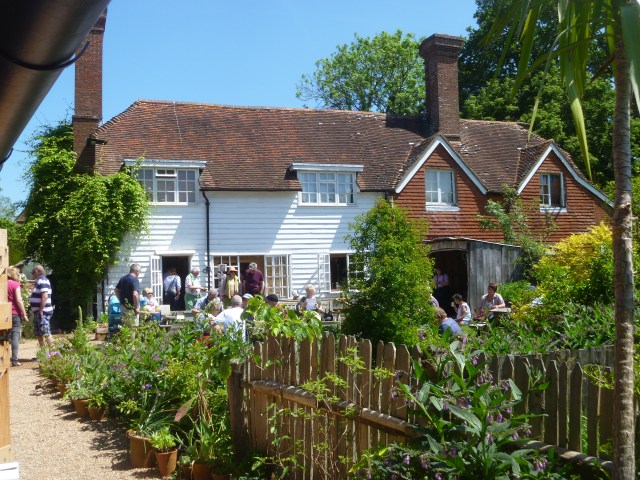
GD shop and cafe garden

Shop and Picnic Garden

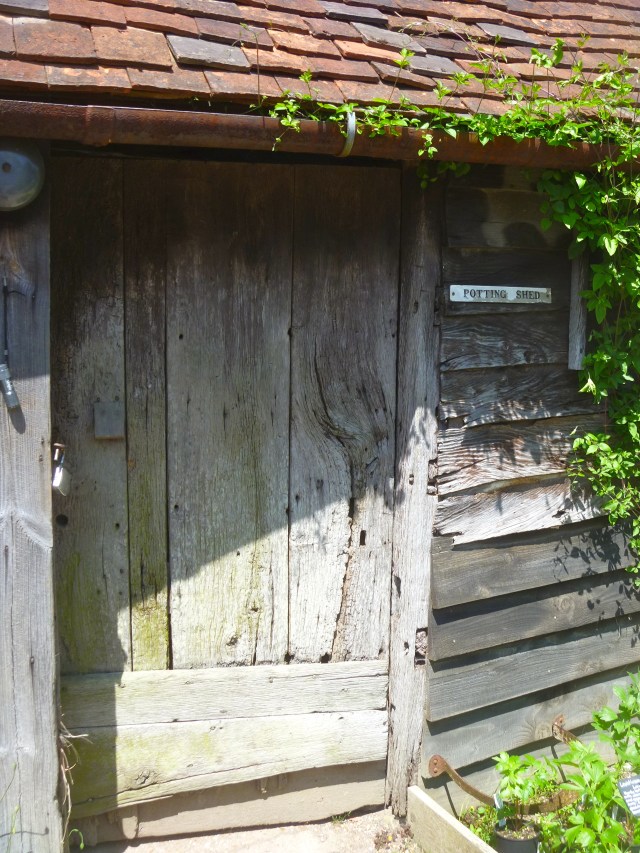
GD Potting shed

The Potting Shed

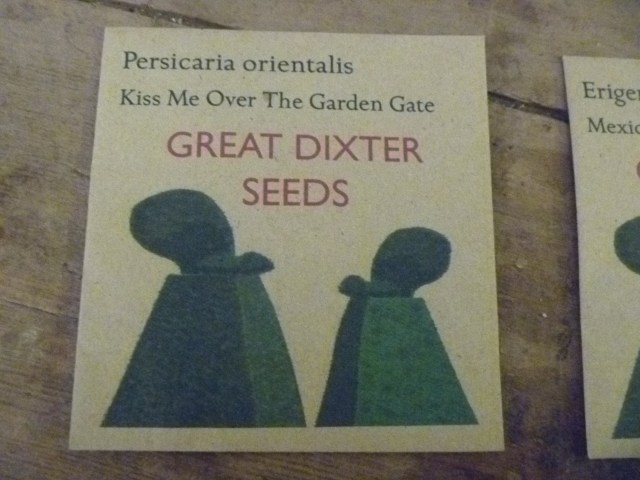
GD Seeds Packet

Great Dixter Seeds

Wild flower meadow and house

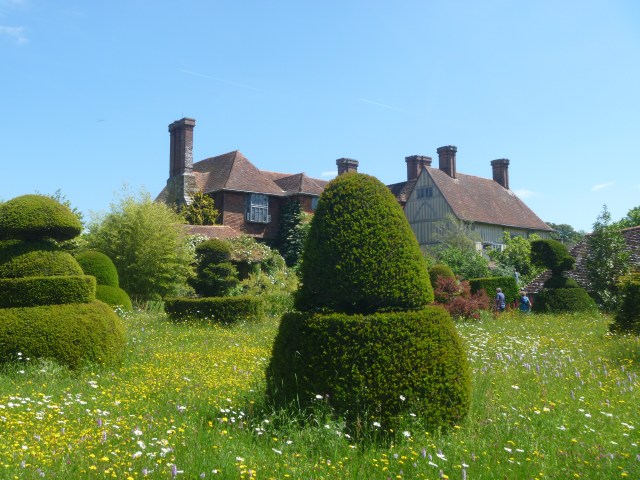
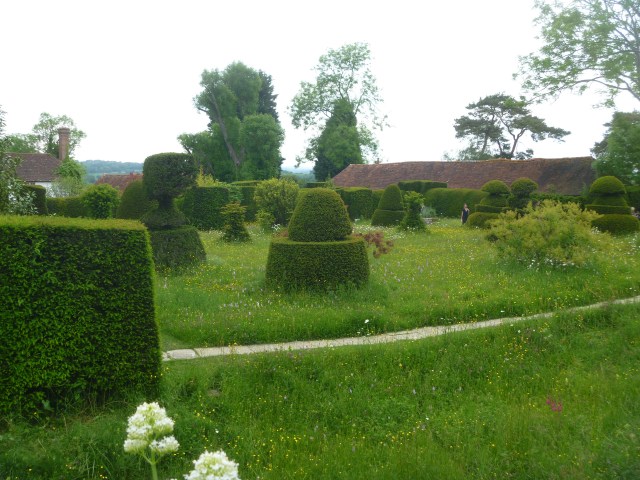
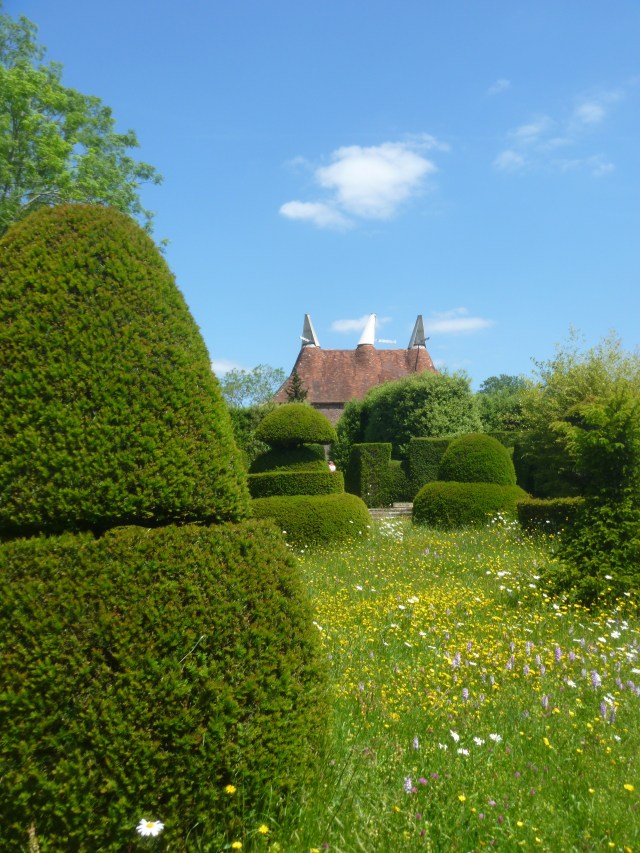
Wild Flower Meadow, Topiary and House

Meadow path

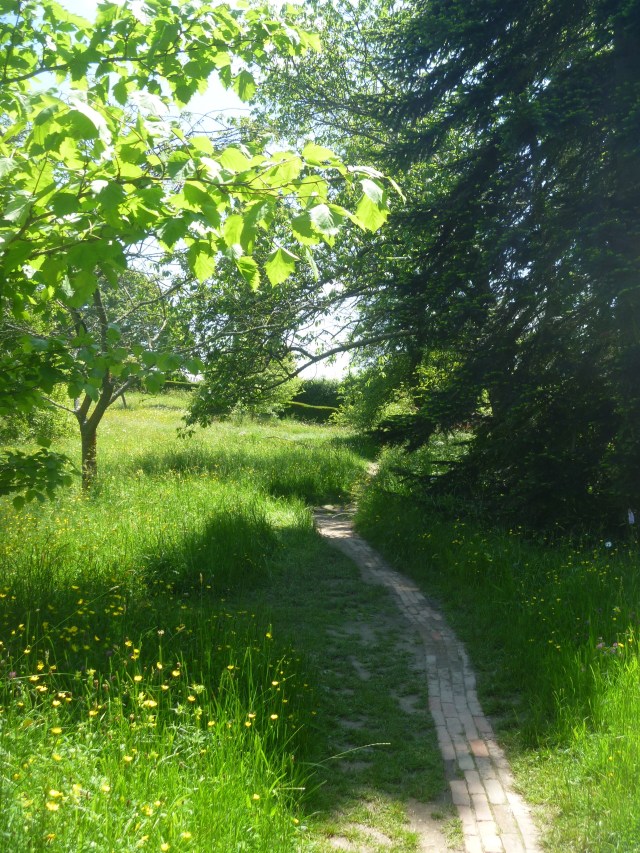
Meadow Path

Just three rooms in the Great Dixter House are open to the public : The Great Hall, The Solar and The Parlour. No photography is allowed inside. There were knowledgable room stewards in each room. None of these rooms were part of the Edwin Lutyens ‘extension’ as this is used still today to accommodate GD’s horticulture students. I learned that a barn had been spotted by Lutyens some miles away and bought and removed to Great Dixter beam by beam. The ‘Benenden’ House and the Lutyens features are described here :

As you face the entrance side of Great Dixter, the porch and everything to the right is 15th or early 16th-century, while the left hand side of the house, containing service quarters below and bedrooms above, is by Edwin Lutyens.

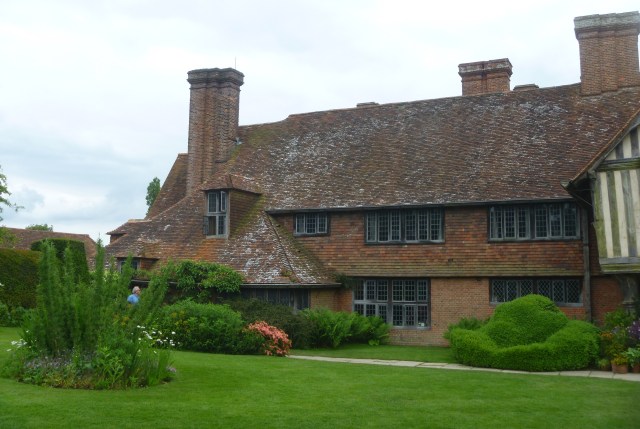
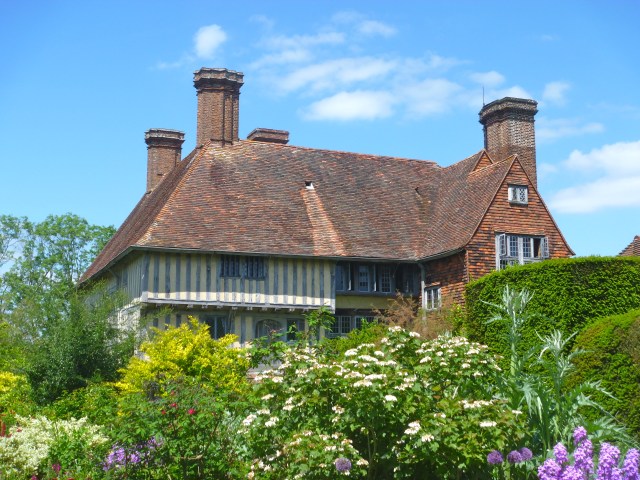
The extraordinary sweep of the tiled roof, particularly when seen from the upper garden, punctuated by tall chimneys and small dormer windows, is the most dramatic element of Lutyens’ otherwise self-effacing work at Great Dixter.

Following the path to the right, the huge chimney breast on the end wall of the house was a substitution by Lutyens for the miserable small flues then serving the Parlour and Solar.

The ground on the garden side of the house falls away quite steeply, so a terrace was built where additions to the south side of the Great Hall were destroyed, and the reconstructed house from Benenden was erected on a high brick base (containing the Billiard Room).

As you begin to walk along the Long Border, look back at the east side of the house. On the right on the first floor is a small window on a different level from all the others. This was a characteristic touch of Lutyens’ and is a floor level window in the Day Nursery. He called it the Crawling Window. Few great architects would have bothered to ensure that the smallest inhabitant, unable to reach a conventional window sill, could also see out.

The doorway (now blocked) in the end of the Benenden house is original.” [Source]
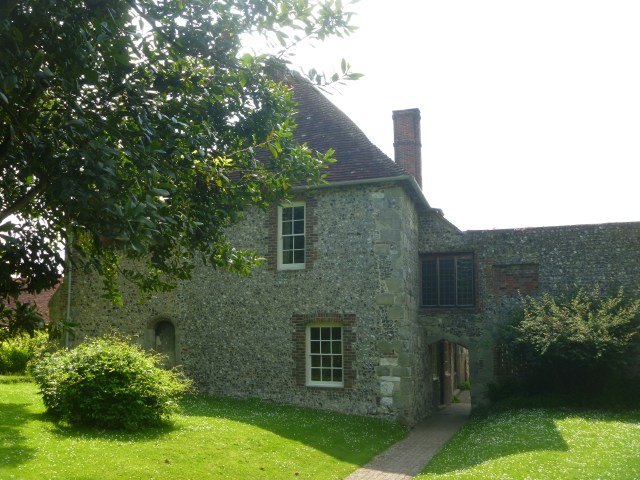
Benenden House extension

Benenden House Wing

I was intrigued to learn that the exterior of the ‘Benenden House’ wing is reflected in the two Lutyens garden seats strategically placed at the end of the Long Border and by the Topiary Lawn.

Lutyens Garden Seat

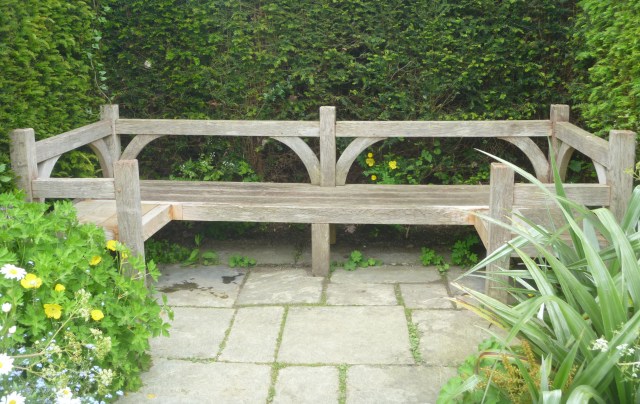
Lutyens Garden Seat at the Long Border

Topiary Garden

Topiary Garden

It was such a beautiful day that we didn’t go into the Oast House and White Barn exhibitions. Great Dixter is not just a place to visit and although it is the gardening students who stay here there are courses for everyone.

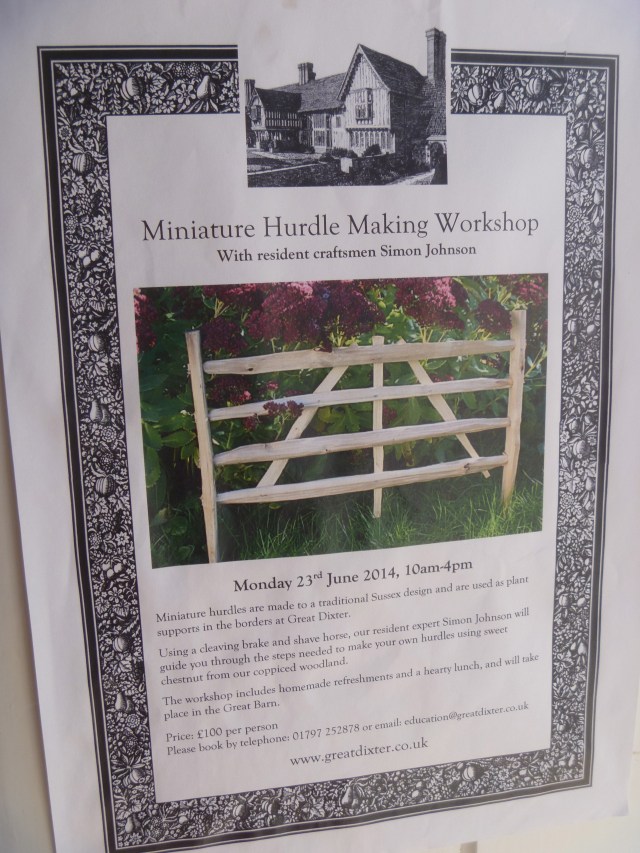
Hurdle workshops

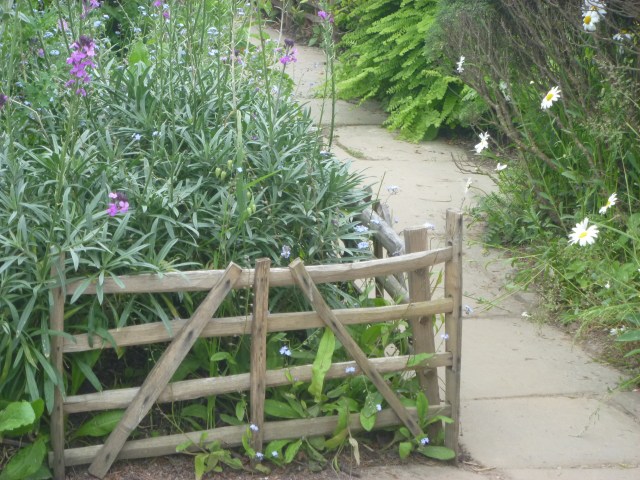
A miniature hurdle

Miniature Hurdles ‘in action’ in the garden

Oast house

Oast House

The only disappointment as far as we were concerned was the refreshment ‘kiosk’; I suppose it was just meant to be a place to obtain a minimal amount of sustenance and the intention was not to turn it into a destination in its own right. My advice would be – take your own picnic!

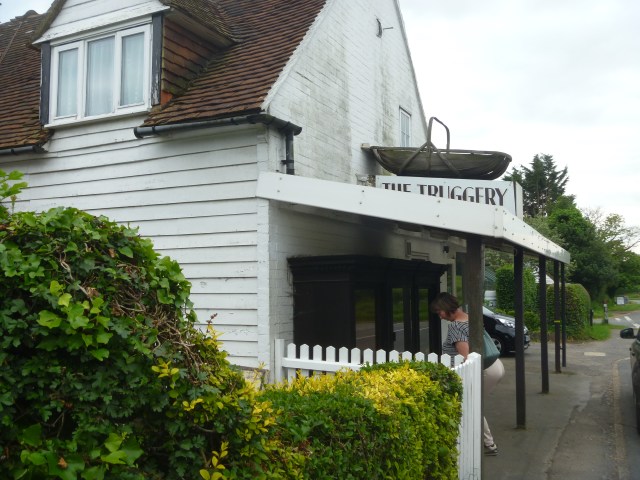
Our journey to and from Great Dixter took us through Herstmonceux and on our way we noticed the Sussex Truggery and decided to call in on our return journey. Unfortunately The Truggery closes at 1pm on Saturdays but we did stock up with fruit and vegetables at a nearby country farm shop.

Truggery

The Sussex Trugggery

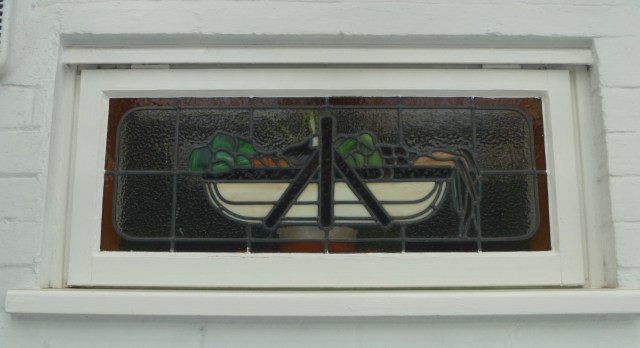
Trug window


Charleston Farmhouse : An Artists’ Home and Garden

Welcome to CF shop

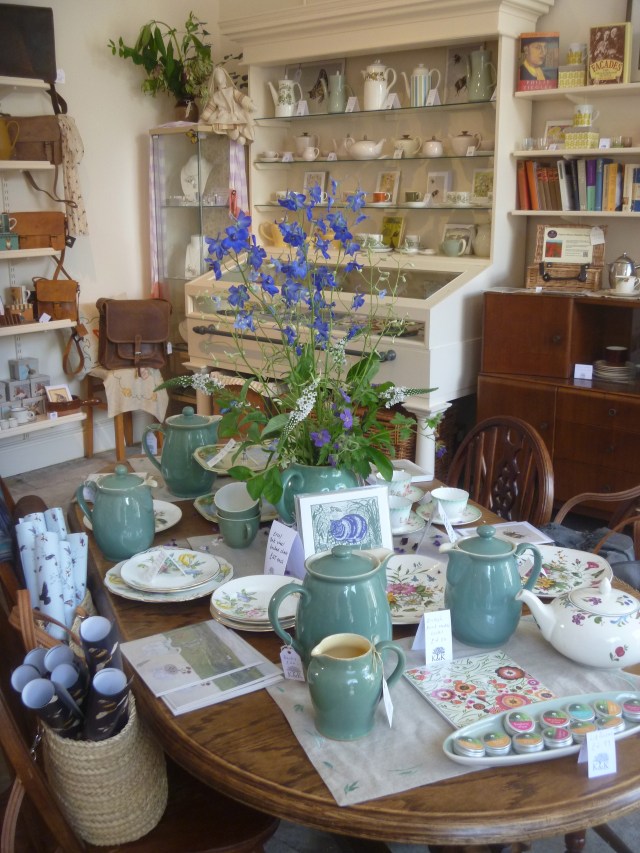
Welcome to Charleston Farmhouse Shop

In some ways very different from Monks House but in other ways similar; on the Friday of our stay we headed to Charleston Farmhouse just a few miles from Laughton Place. It’s a rather more slick presentation in that tickets are sold and one is booked on one of the timed tours which take place at twenty minute intervals throughout the opening hours (just Wednesday to Sunday during the season). No photography is allowed in the house. But like Monks House there is colour inside and out and the garden is relaxed and colourful and again reflected the atmosphere of the house itself.

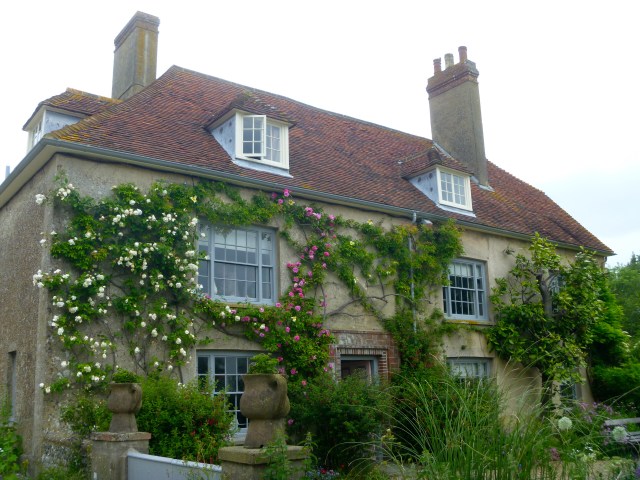
Chareston

Charleston Farmhouse

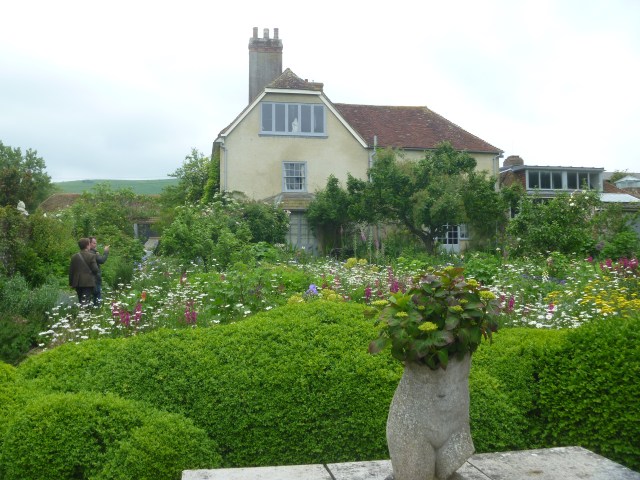
“Charleston is a property associated with the Bloomsbury group. It was the country home of Vanessa Bell and Duncan Grant and is an example of their decorative style within a domestic context, representing the fruition of over sixty years of artistic creativity.

In 1916 the artists Vanessa Bell and Duncan Grant moved to Sussex with their unconventional household. Over the following half century it became the country meeting place for the group of artists, writers and intellectuals known as Bloomsbury. Clive Bell, David Garnett and Maynard Keynes lived at Charleston for considerable periods; Virginia and Leonard Woolf, E. M. Forster, Lytton Strachey and Roger Fry were frequent visitors. Inspired by Italian fresco painting and the Post-Impressionists, the artists decorated the walls, doors and furniture at Charleston. The walled garden was redesigned in a style reminiscent of southern Europe, with mosaics, box hedges, gravel pathways and ponds, but with a touch of Bloomsbury humour in the placing of the statuary.

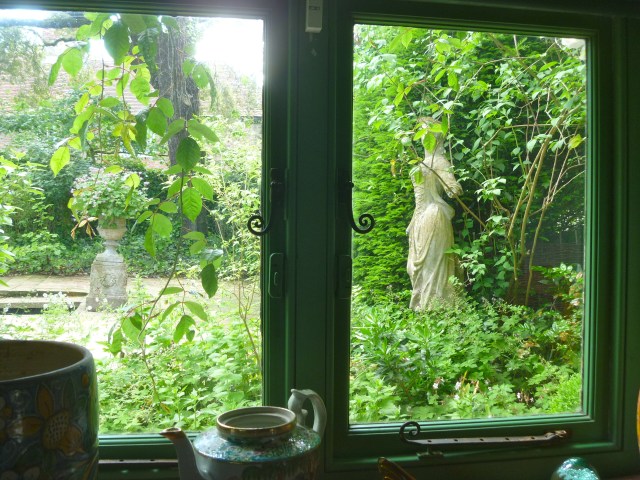
Statuary

… humour in the placing of the statuary

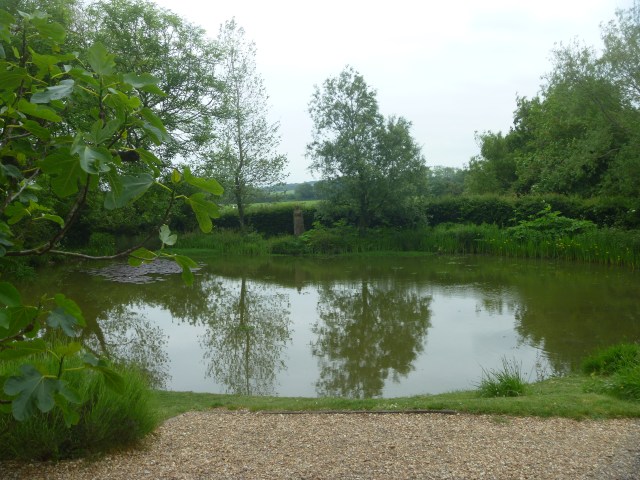
“It’s most lovely, very solid and simple, with … perfectly flat windows and wonderful tiled roofs. The pond is most beautiful, with a willow at one side and a stone or flint wall edging it all round the garden part, and a little lawn sloping down to it, with formal bushes on it.” — Vanessa Bell

Charleston Pond

The pond is beautiful

The rooms on show form a complete example of the decorative art of the Bloomsbury artists: murals, painted furniture, ceramics, objects from the Omega Workshops, paintings and textiles. The collection includes work by Auguste Renoir, Picasso, Derain, Matthew Smith, Sickert and Eugène Delacroix.” [Adapted from here]

We arrived by 12 noon, when tickets go on sale, and our tour was booked for 1.20pm. In the meantime there was a delicious shop to mooch around and a video to watch. There is a cafe but it’s very limited in what it serves.

Our House Tour with Meg focused on A Day in the Life of Charleston, taking us on a journey of daily life in the house which included the Charleston kitchen not normally visited on other days. In fact the gardener actually lives in the house and it is his private kitchen.

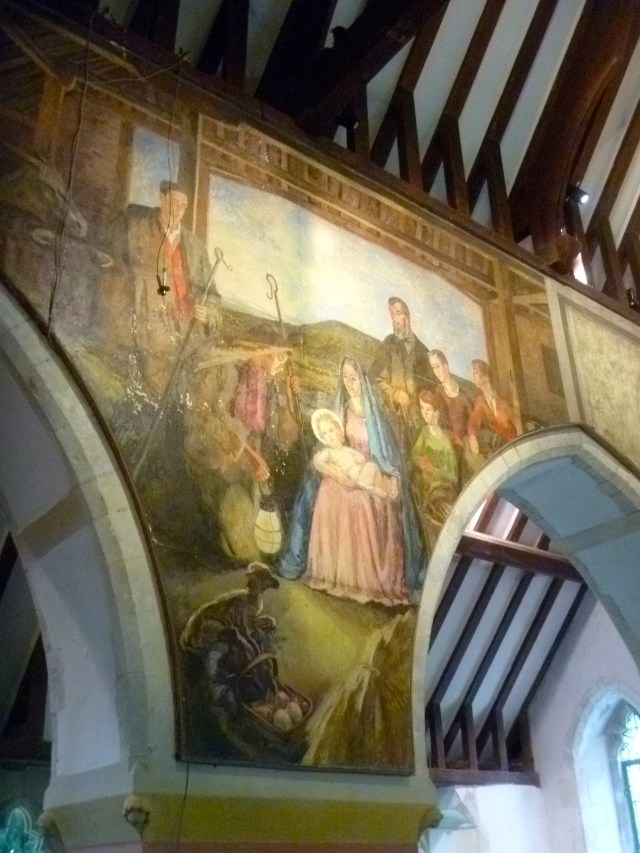
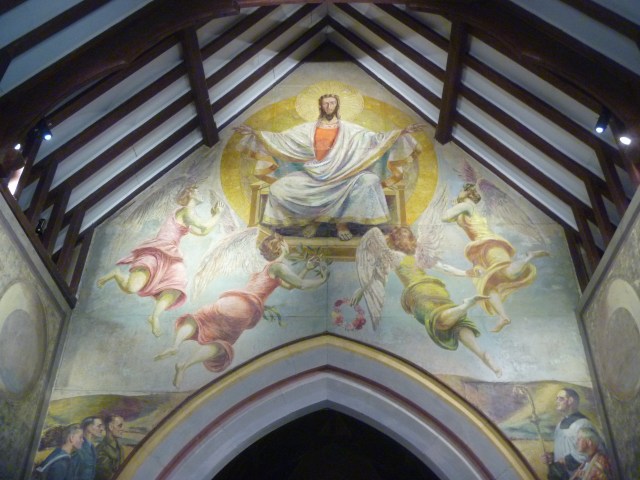
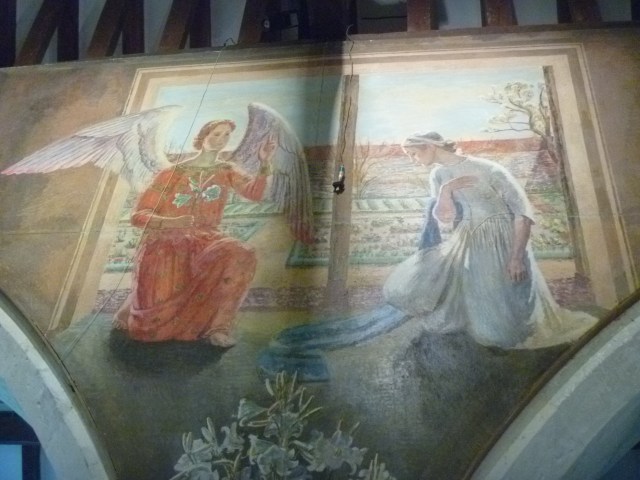
From Charleston we headed for the nearby village of Berwick where we had lunch at Cricketers Arms and afterwards visited the Church of St Michael and All Angels where Duncan Grant and Vanessa Bell decorated the walls with murals. The church itself had a rather unusual feel not just because of the famous murals but because in contrast to so many churches the windows are plain glass.

All the scenes are set in the local Sussex countryside and they were painted, for the most part, during the Second World War and they used members of their families and their Bloomsbury circle as models.


Nativity

The Nativity by Vanessa Bell

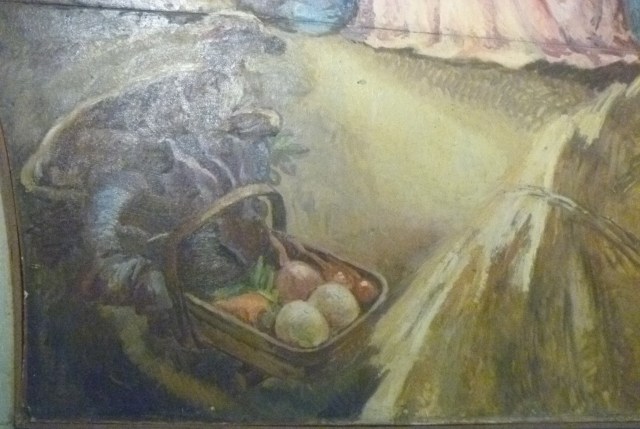
A Sussex trug

The Nativity Close-up : A Sussex Trug

P1130644

Christ in Majesty by Duncan Grant

Annunciation

The Annunciation by Vanessa Bell


A Room of One’s Own at Monk’s House, Rodmell

A Room of one's own

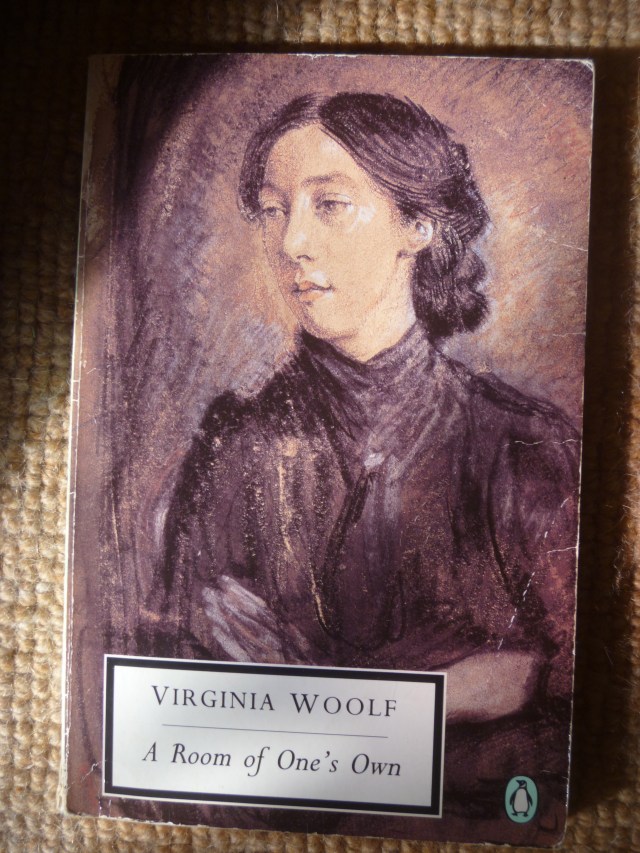
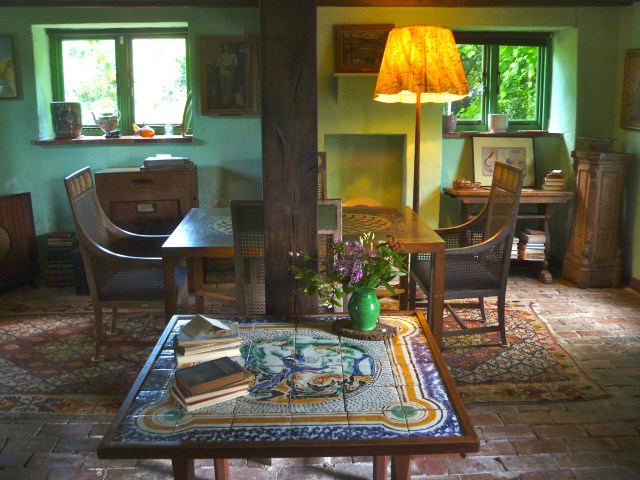
‘A Room of One’s Own’ by Virginia Woolf in the Library at Laughton Place

The moment my Swiss friends stepped off the London train at Lewes Station the sun came out and this set the scene for the next few days. We stuffed the cases in the boot and I whisked them straight off down shady narrow lanes to the quiet village of Rodmell just a few miles from the town centre of Lewes. We parked up in the Monk’s House (NT) car park and ambled back up the lane past wisteria covered cottages and pretty gardens to the Abergavenny Arms for lunch where, wonder of wonders, we were able to sit outside in the garden.

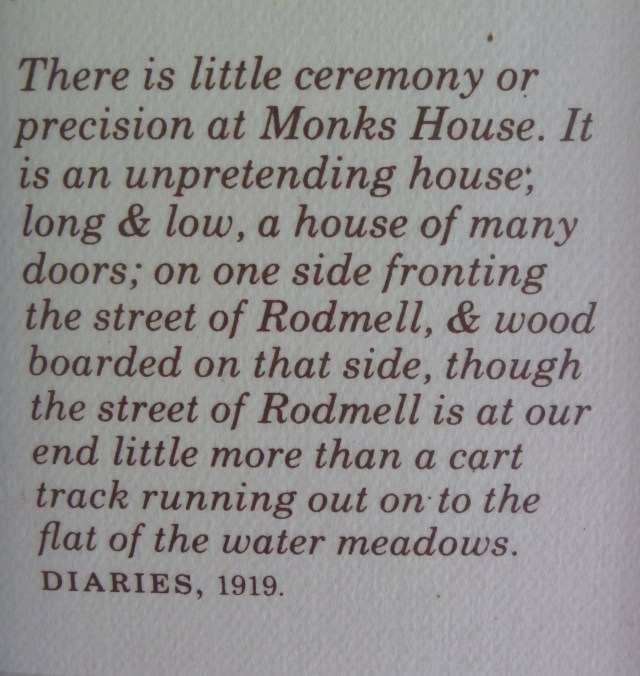
MH Quote VW Diaries

Description of Monk’s House by Virginia Woolf

Monk’s House is the former 17th century summer cottage home of Virginia and Leonard Woolf. They lived here together from 1919 until Virginia’s death in 1941 and Leonard continued to live here permanently with his companion, Trekkie Parsons, until his death in 1969. The house was left to Trekkie but before she died in 1995 she had sold the house in 1972 to The University of Sussex. Visiting lecturers and researchers stayed here until 1980 when the National Trust took on the property.

Monk's House

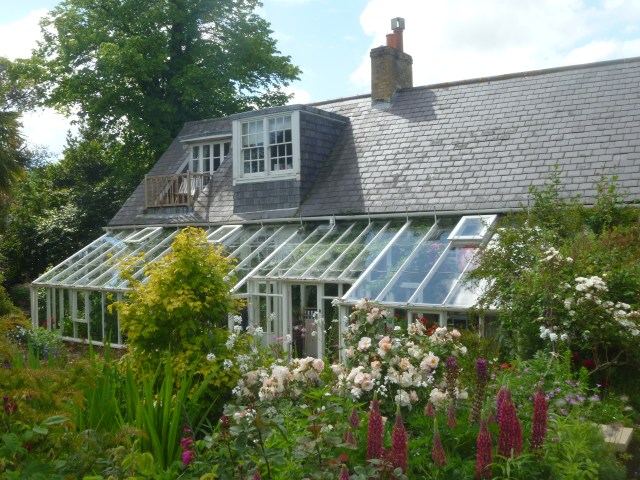
Leonard Woolf had the Conservatory added when he was too frail to walk to the Greenhouses

VW Writing Garden House

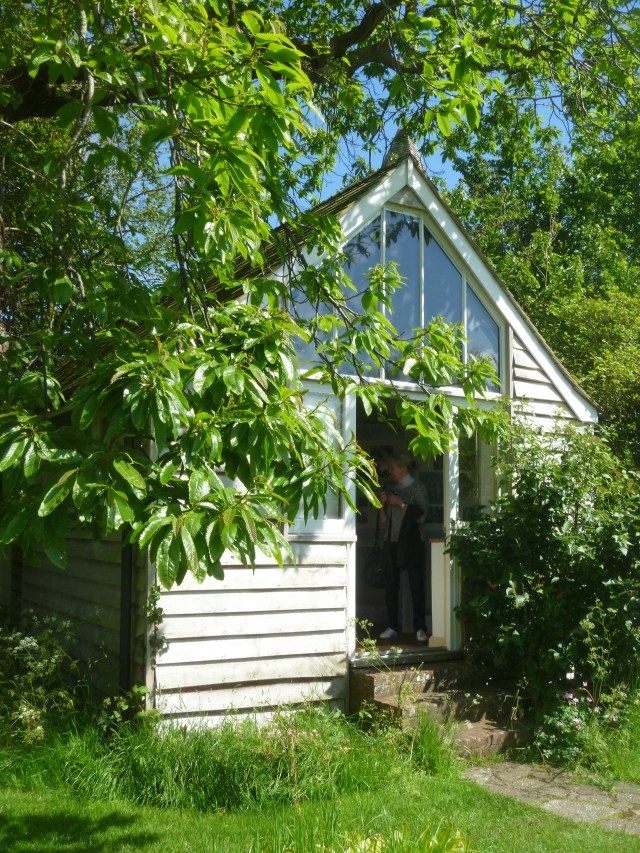
The Writing Lodge

Here Virginia Woolf wrote in the small wooden lodge at the bottom of the garden. Jacob’s Room was published in 1922, Mrs Dalloway in 1925, To The Lighthouse in 1927, Orlando in 1928, The Waves in 1931, The Years in 1937 and Between The Acts, published posthumously, in 1941. This latter is, apparently, steeped in references to Rodmell and the traditions and values of its villagers.

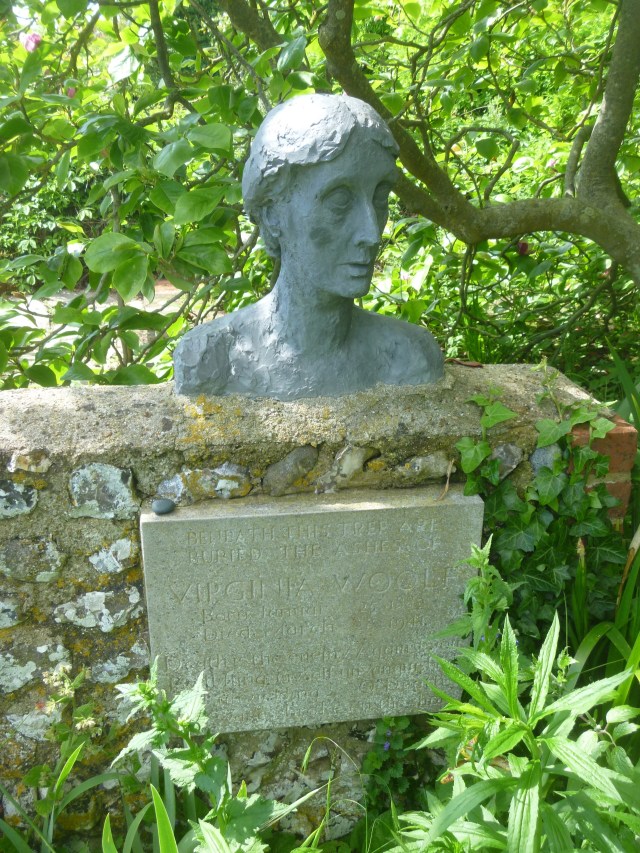
VW burial

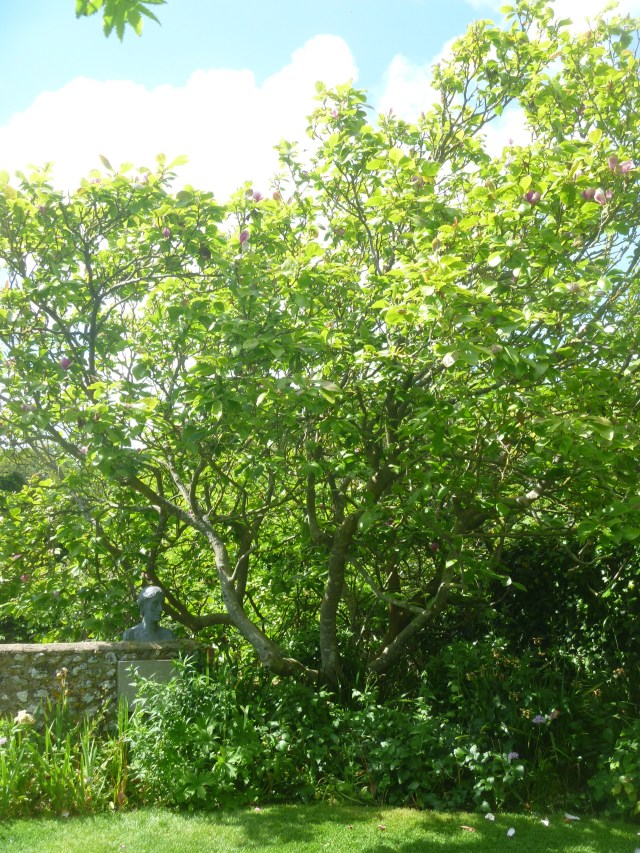
Both Virginia and Leonard’s ashes are buried beneath the magnolia tree in the garden.

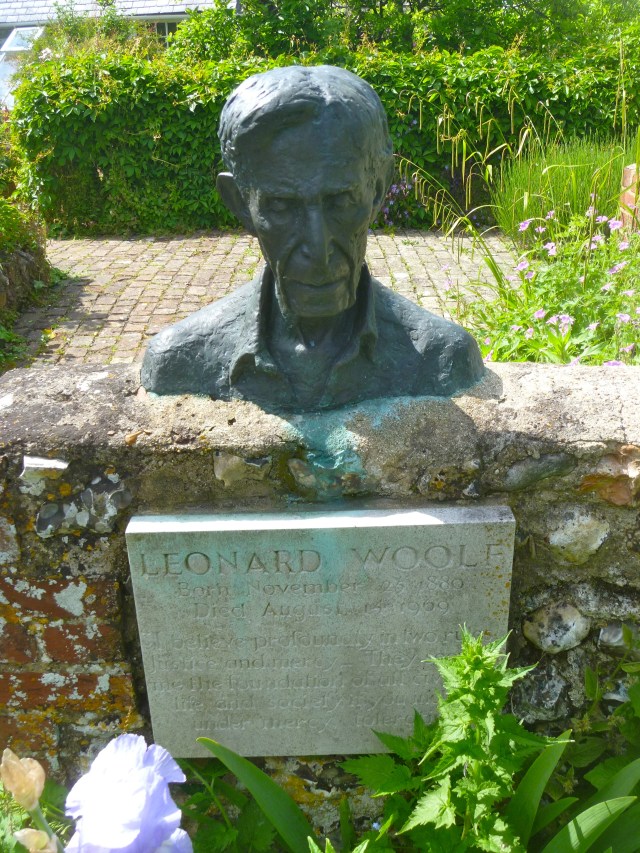
LW Burial


Beneath the tree

The tree beneath which the ashes are buried

It’s a wonderful house. You can wander around as your fancy takes you and the garden is very pretty. Photography is not restricted and friendly local volunteers are on hand to answer questions as best they can.

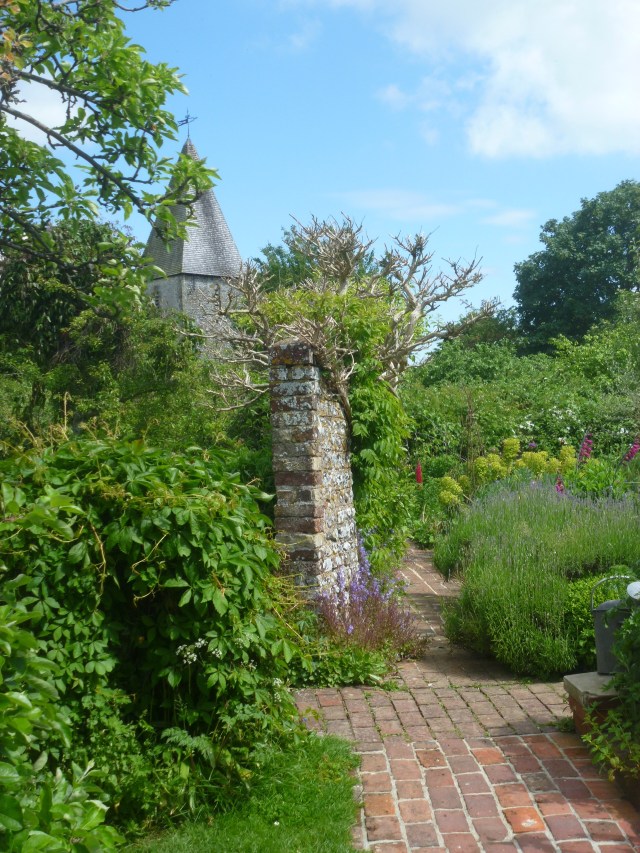
Garden and church

Garden and Rodmell Parish Church

Leonard was the gardener, despite the recently published ‘Virginia Woolf’s Garden‘ by Jacqui Zoob who for ten years from 2000 lived at the house as a tenant of the National Trust. However, we were able to visit Virginia’s bedroom which is very much a garden room in an extension which they had added to the house.

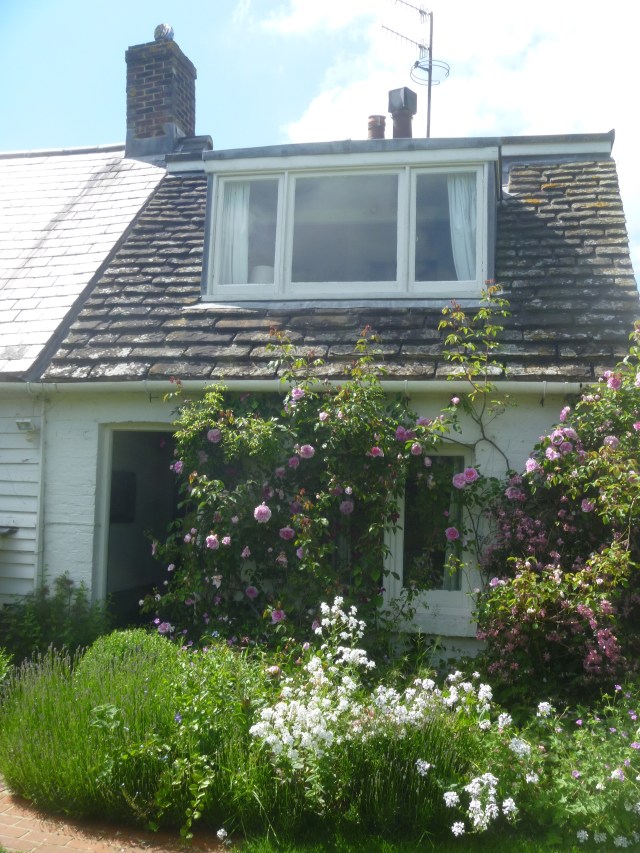
VW Garden room

Virginia Woolf’s Garden Bedroom Exterior

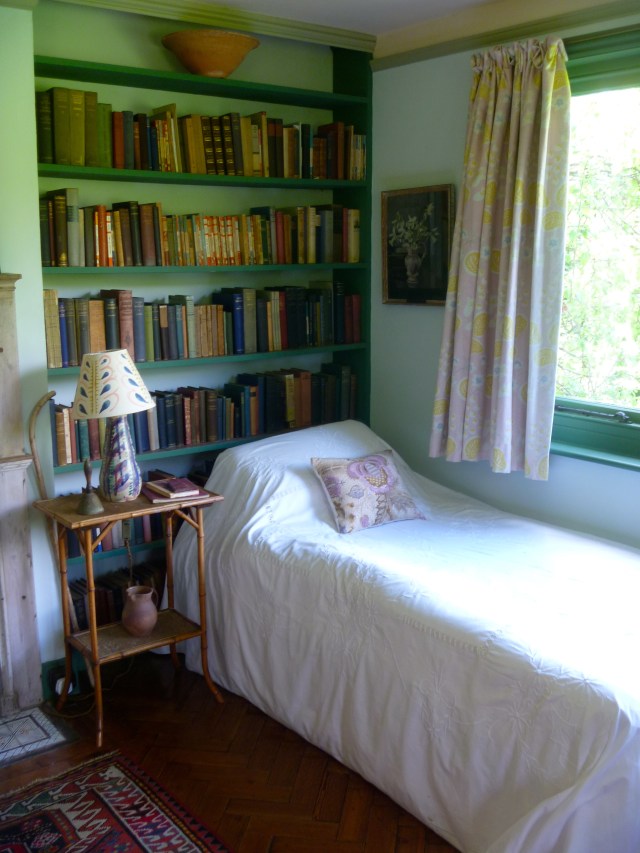
VW Garden Room Interior

Virginia Woolf’s Garden Bedroom Interior

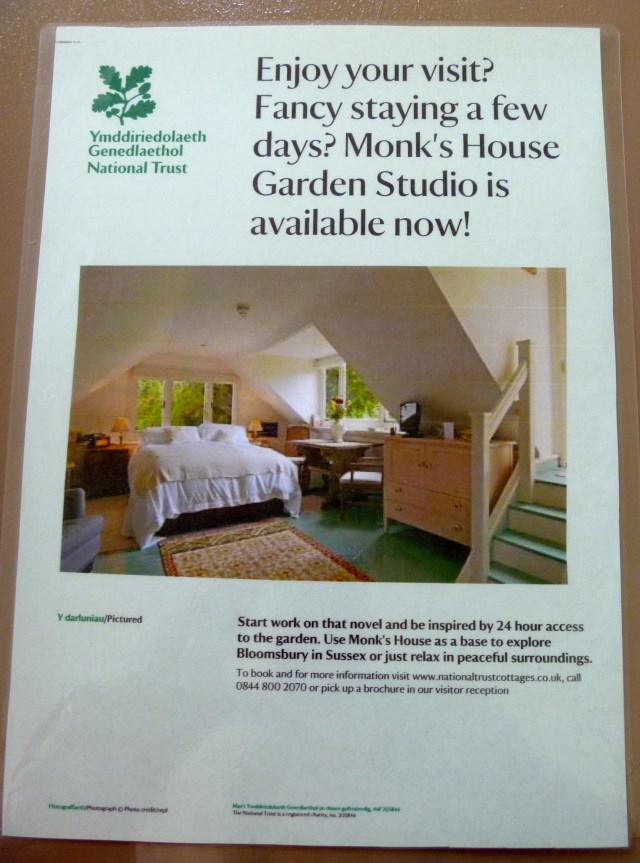
Originally proposed as the sitting room it was given over to VW when they realised that the view from the room above would be more suited to a sitting room. This room, which we didn’t see, is now let by the Trust as holiday accommodation.

Stay at MH

Room to Let

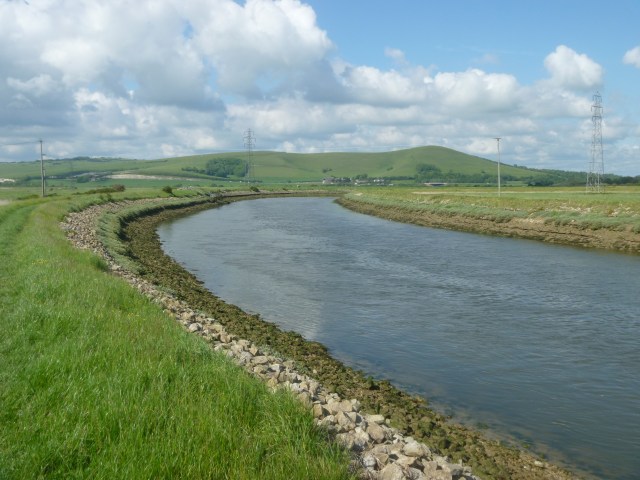
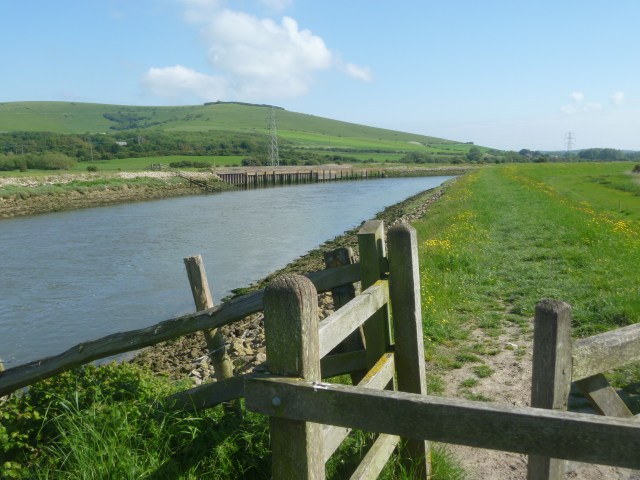
On leaving the house we walked the same route to the River Ouse that Virginia took on that fateful day 28 March 1941.

River Ouse

R Ouse

The River Ouse near Rodmell

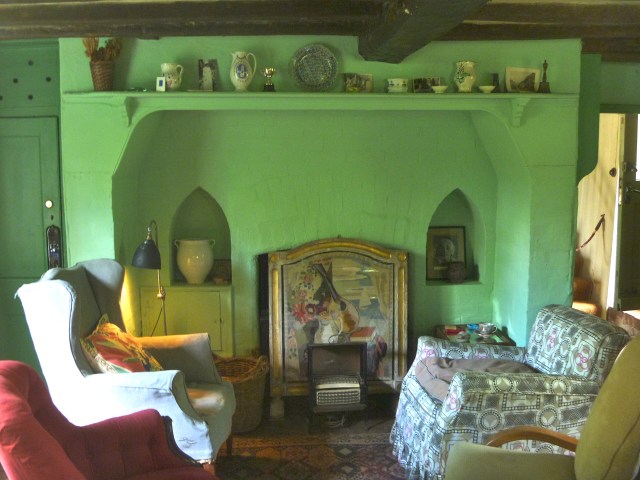
More pictures inside Monk’s House :

Woolf sitting room

Sitting Room MH

Garden from sitting room MH

 Bloomsbury style