When the quarterly reader’s magazine Slightly Foxed: the real reader’s quarterly started ten years ago I took out a subscription but this year now that I can borrow issues from The Leeds Library I have cancelled my subscription. The result is that I actually read the magazine instead of flicking through it and putting it in a pile “to read later”. However, I am still a great fan of all things ‘Slightly Foxed’ which includes the lovely bookshop on Gloucester Road, Kensington.
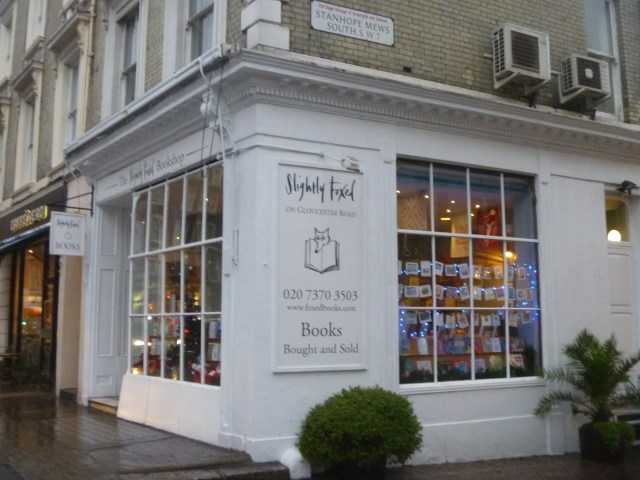
Due to predictions of inclement weather yesterday I left home in Leeds extra early to drive down to London. The journey presented no problems and I arrived in good time; leaving the afternoon free.
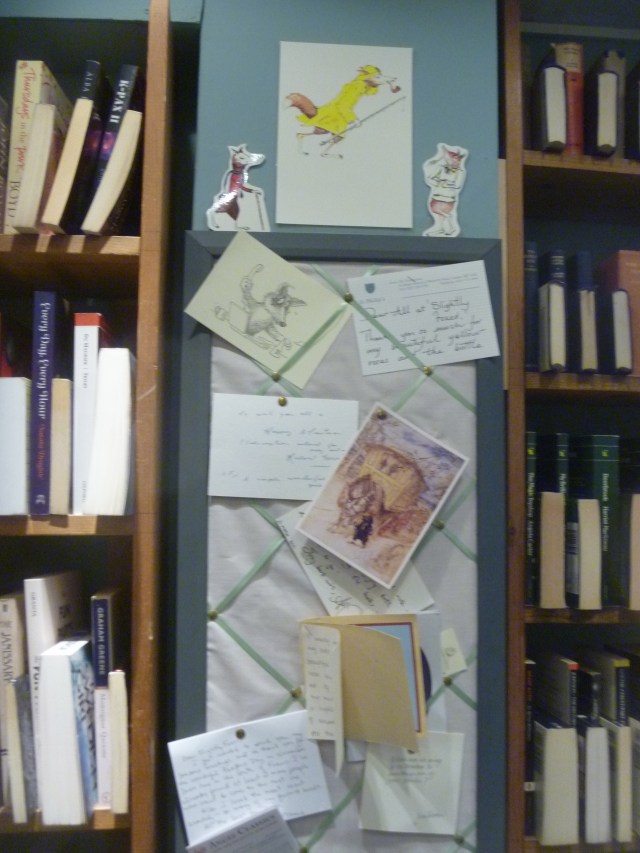
Letters and messages to the Sly Fox
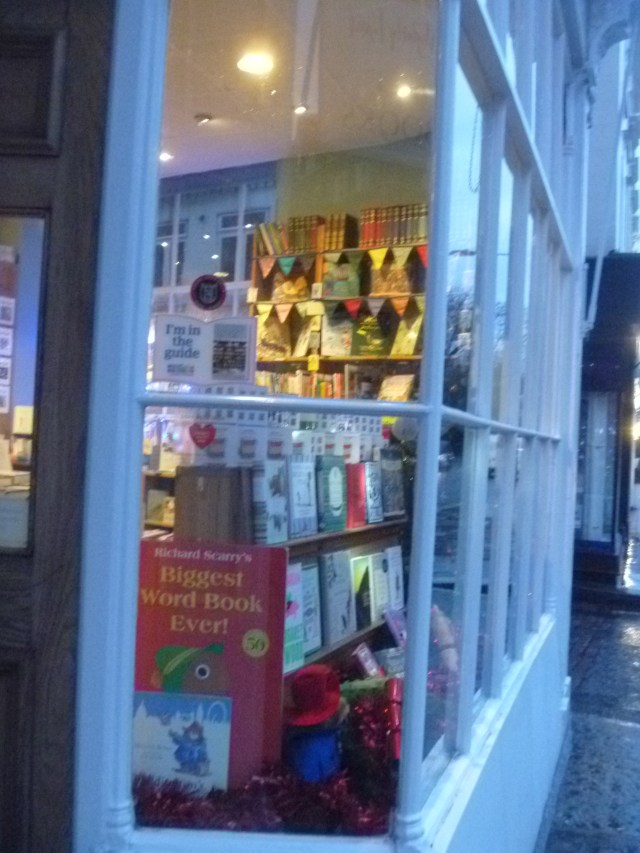
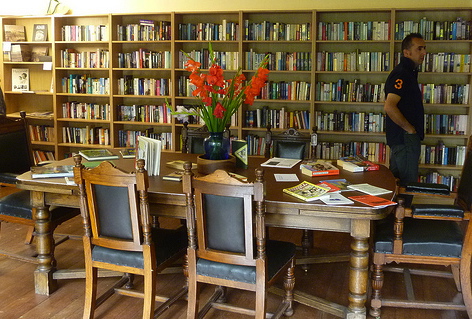
So I took the Underground Train to Gloucester Road Tube Station and revisited this lovely bookshop. Stocks include new books as well as secondhand, plus cards and bags and mugs. The friendly bookseller [Tony] found me the titles I was interested in from the Winter Catalogue.
In addition to publishing the Quarterly SF also reprint some lovely out-of-print classic memoirs in their Slightly Foxed Editions and Paperbacks.
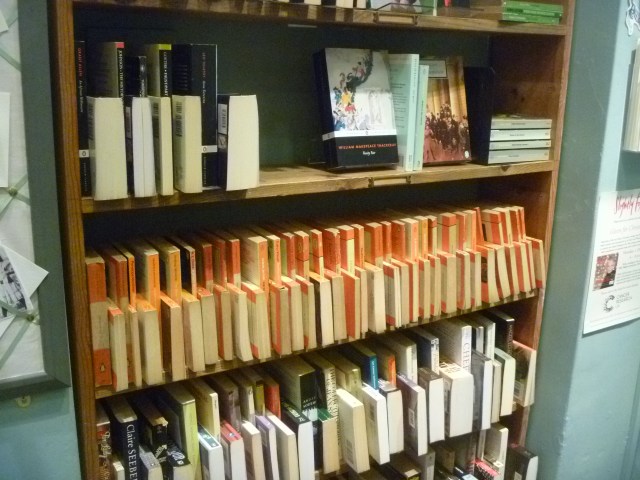
Preparations for stocktaking at Slightly Foxed Bookshop
Browsing wasn’t easy in the downstairs secondhand department as staff are preparing to stock-take on the 2nd January. The shop was about to close for the Christmas and New Year holiday at 5pm today and is due to re-open on 3rd January 2014.
If you are wondering where the name/term ‘slightly foxed‘ comes from here is one definition:
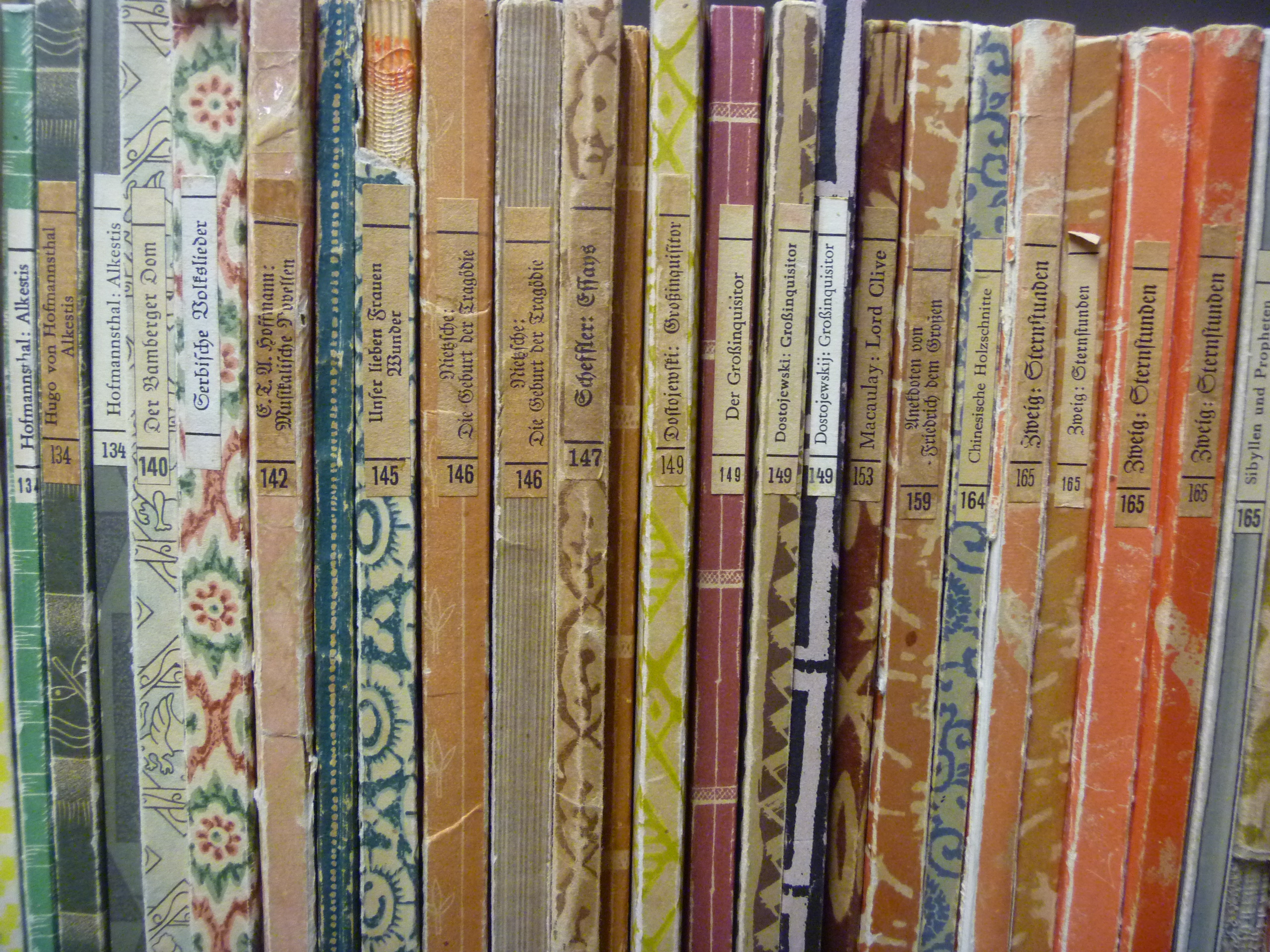
“Foxing: In a nutshell, a foxed book’s pages have some spotting, ranging from sort of a beige color to a rusty brown (like a fox’s footprints, or maybe its reddish coat). Sometime foxed spots are referred to as “age spots.” The causes of foxing include temperature & humidity changes (don’t store your books in damp or unheated places!), and impurities within the paper (high acidity – most common in modern books with cheap paper, or iron or copper, commonly found in 19th century & older books). There may be other causes as well, such as fungus or other microorganisms. The reason for foxing in a particular book is often difficult to discern.
Foxing is very common in antique books (due to the paper used) and can certainly be found in contemporary books as well.
A book conservator / archivist can sometimes remove foxing, but it’s a very difficult & expensive process.
As far as how it effects value, well, it just depends on how easy it is to find an unfoxed copy. Some very old books may be difficult to find in unfoxed condition; in that case value will not be greatly affected. Modern books are devalued by foxing to a greater degree, because they are more readily available in fine condition.”
Of course, there’s another meaning to fox – sly, clever, crafty. So the sly fox can cleverly suggest all sorts of books for all sorts of reading problems.

















































 miladysboudoir