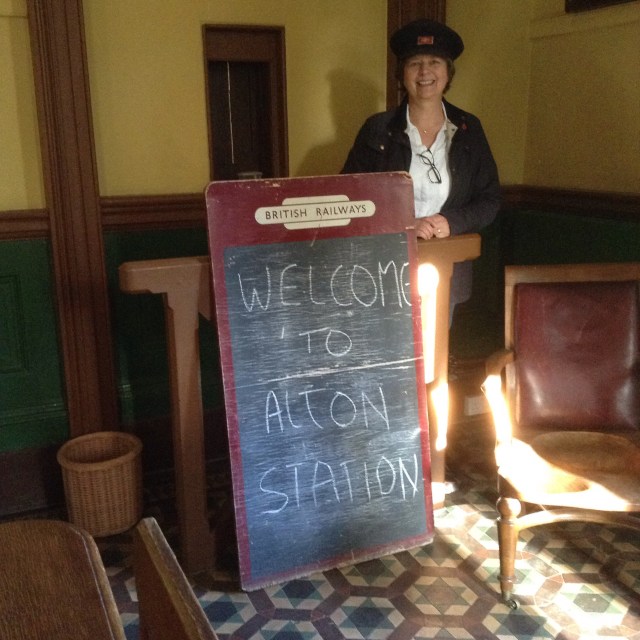
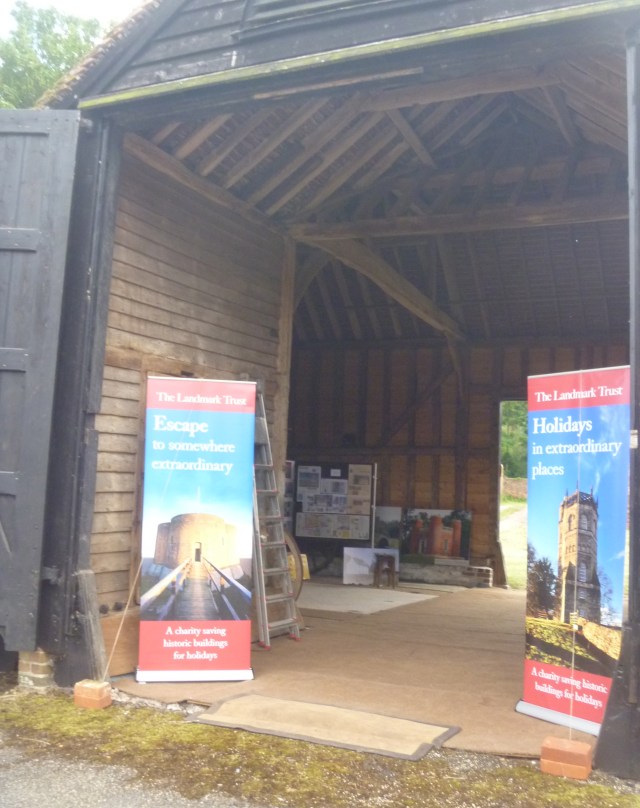
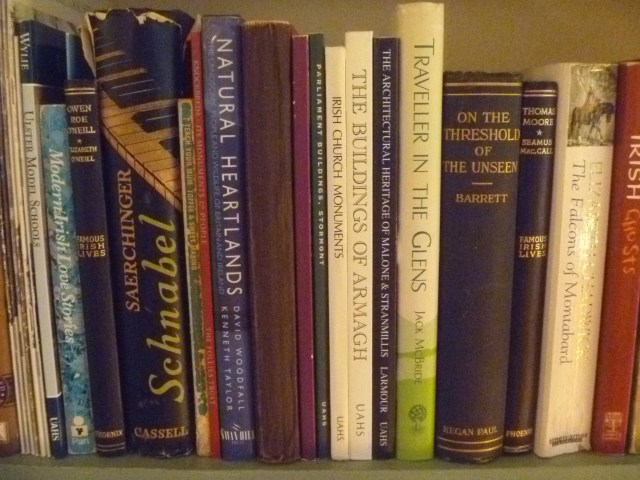
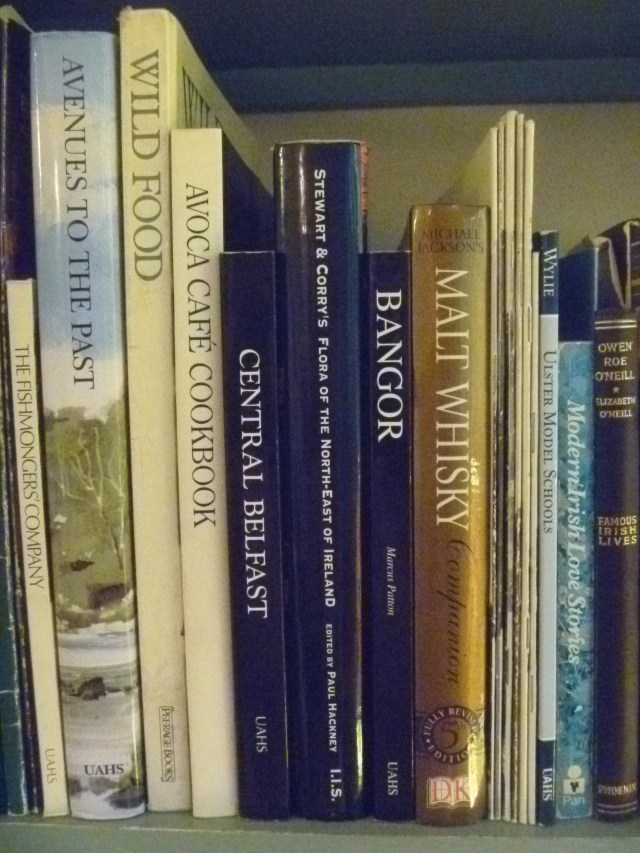
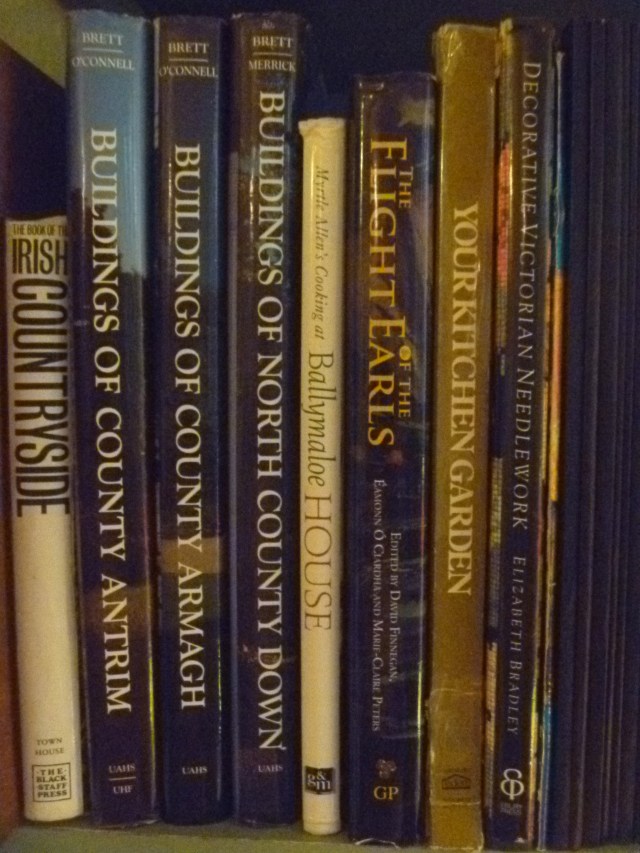
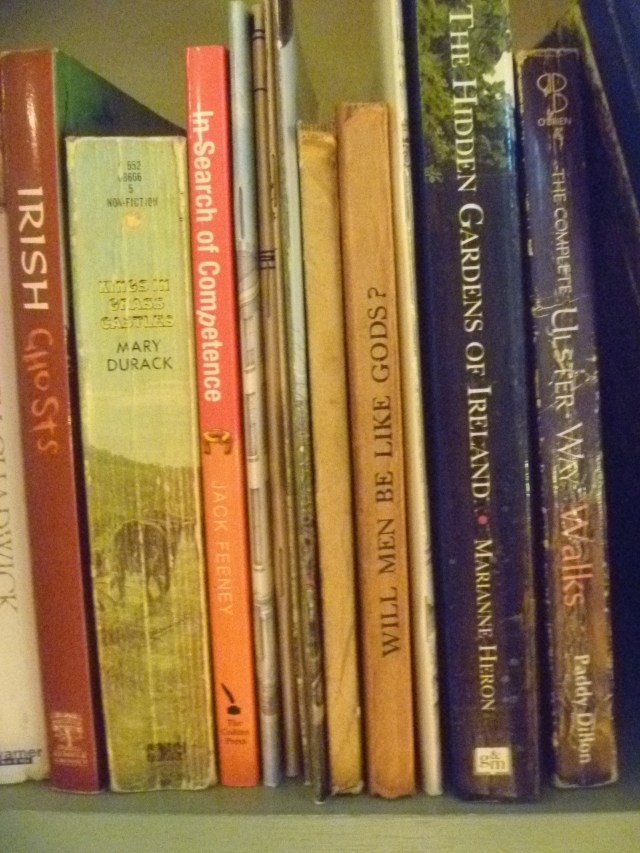
On Friday I stepped back in time visiting a pre-Beeching era railway station. My friend, Ann, and I were on our way to spend a weekend visiting Pugin-related buildings in East Staffordshire, staying at a National Trust cottage in the Manifold Valley (Peak District) and, hopefully, fitting in a country walk in the valley. More about these in future posts; but our first destination of the weekend was the Landmark Trust’s Alton Station which Ann arranged for us to visit on this changeover day. Continue reading
Tag Archives: Books
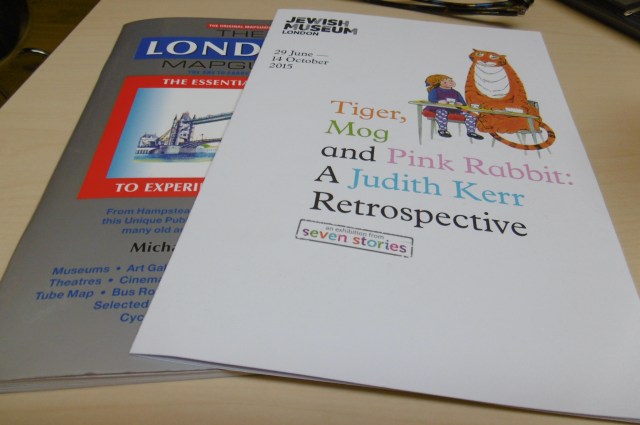
Tiger, Mog, Pink Rabbit and More : The Jewish Museum, London
On Sunday I met my sister, who was visiting me in London for the day, at the Jewish Museum, in Camden. As her train was somewhat delayed and she had had to leave the train at Stratford instead of Liverpool Street we had only a limited amount of time to look round. We chose to visit the current temporary exhibition on the third floor :
and then quickly work our way through the History: A British Story section on the second floor. While I was waiting I spent time on the ground floor looking at the crowd-sourced Sacrifice displays. Continue reading
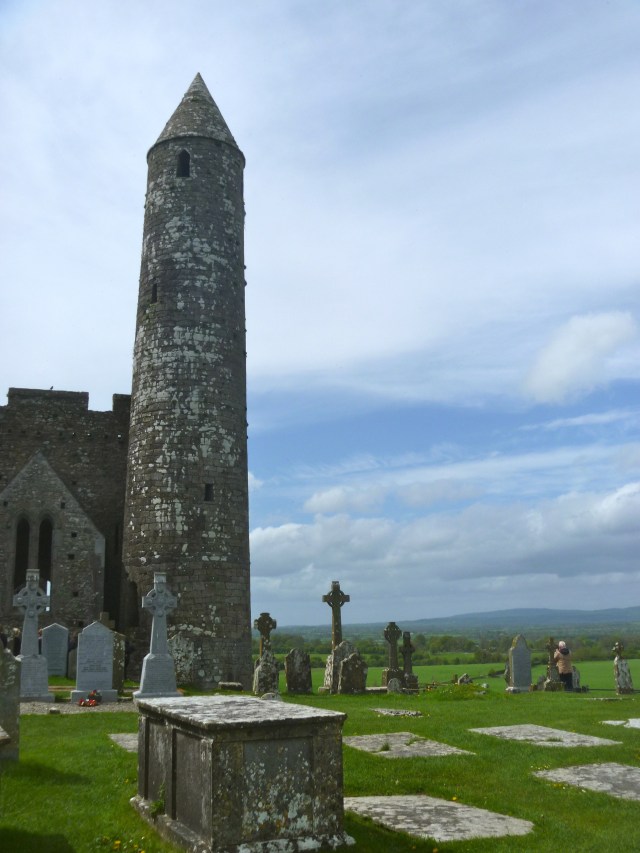
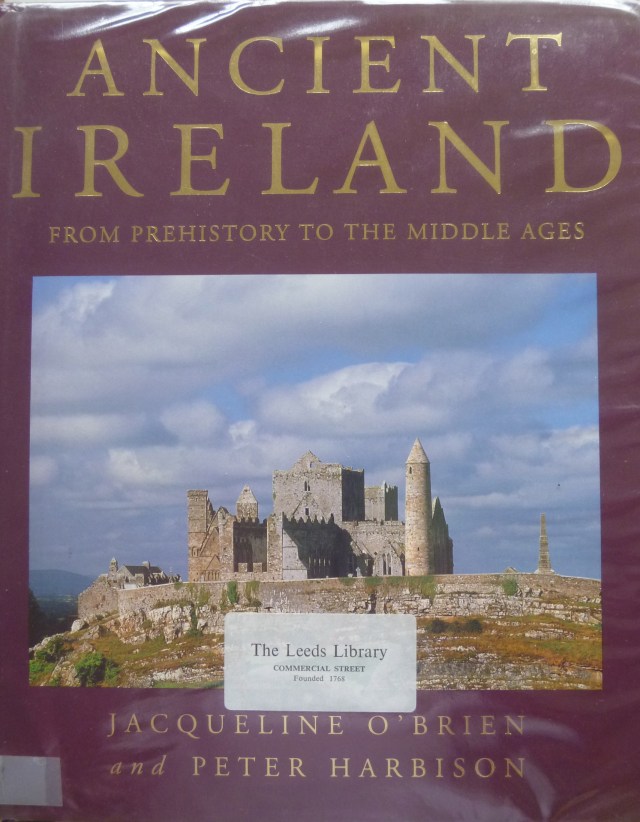
Ancient Ireland [2] : The Round Towers
One unusual, mysterious but distinctive feature of the ancient Irish landscape was the Round Tower. Many of these are still well preserved and can be seen at, mainly monastic, sites across Ireland today. At the time they were built they would have been exceptionally prominent features in a largely untamed landscape. They were defensive but also prestigious.
Rock of Cashel, Co, Tipperary
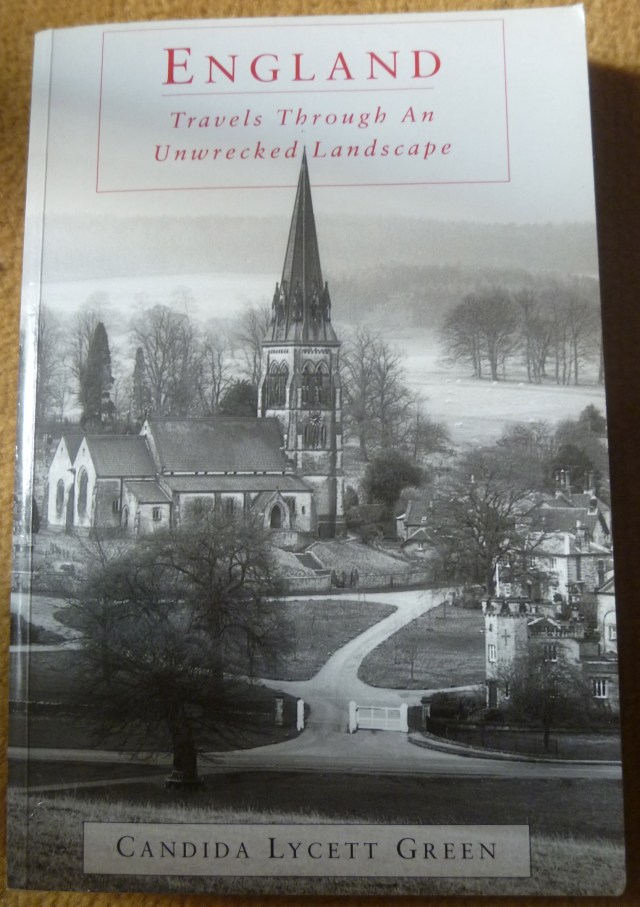
Travels in an Unwrecked Landscape : Elmley Castle, Worcestershire
The book “England : travels in an unwrecked landscape” published in 1996 is a collection of essays by the late Candida Lycett-Green which first appeared in The Oldie magazine.
My well-thumbed copy
If you enjoy discovering lovely places here in England this book can act as a guide. But I’ve also enjoyed just reading it from cover to cover.
Ancient Ireland [1]
When planning my trip to Ireland in May I checked the Library Catalogue to see what was available and found this :
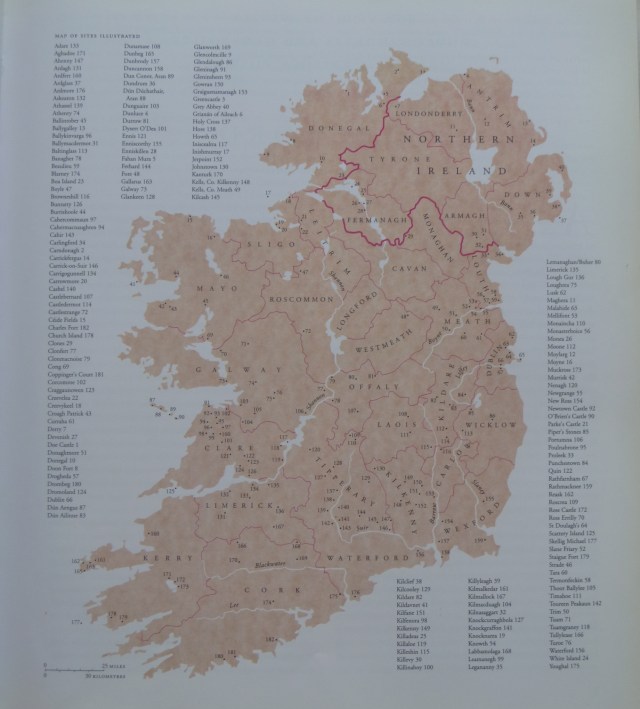
I was quite amazed at the amount, variety and quality of ancient monuments to be found, and visited, all over Ireland.
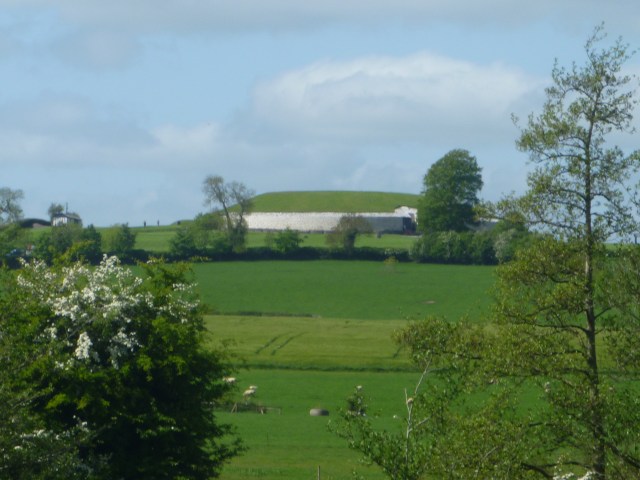
Newgrange from the approach lane
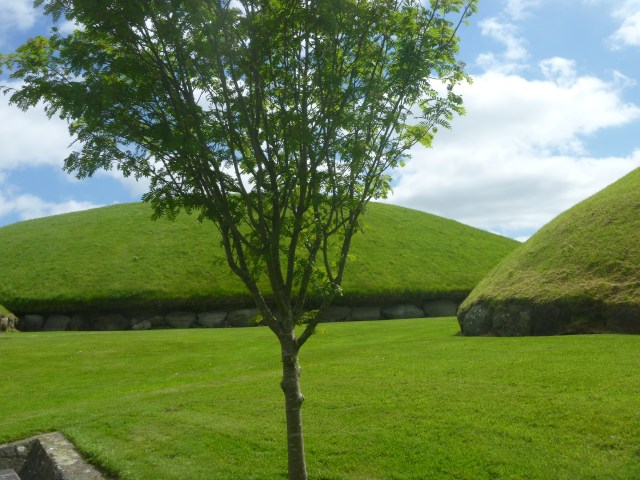
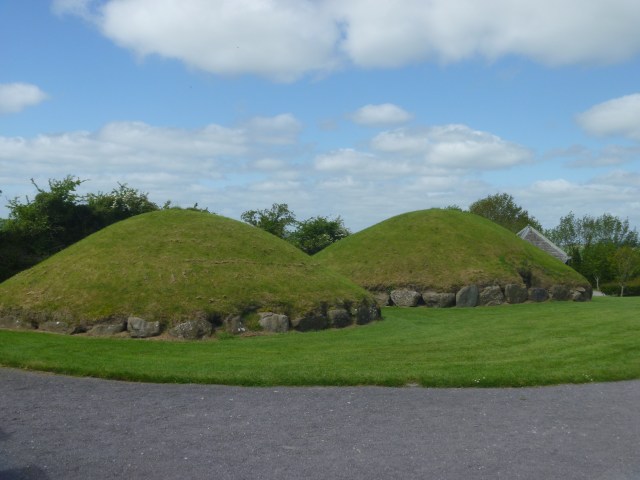
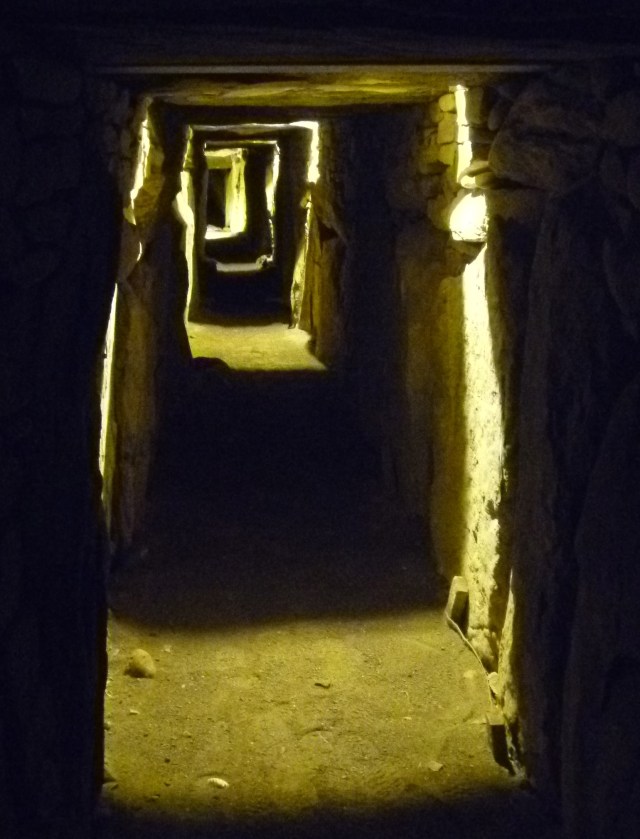
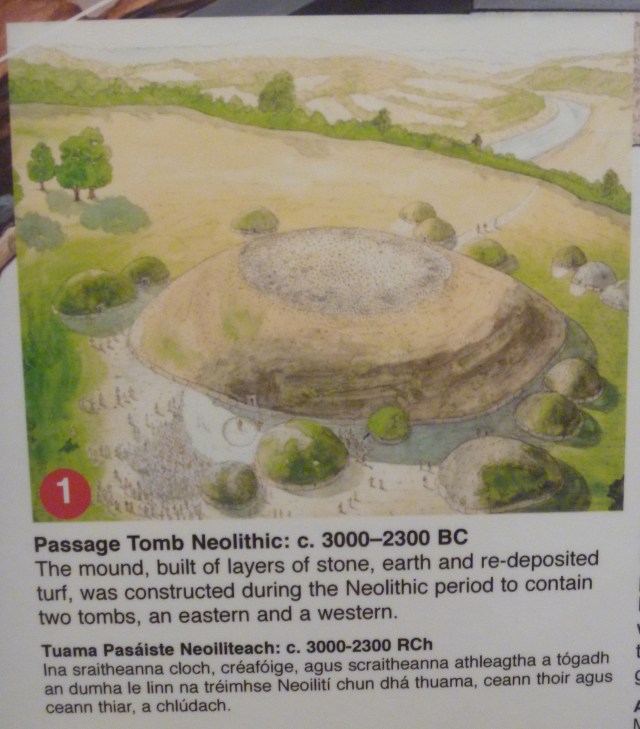
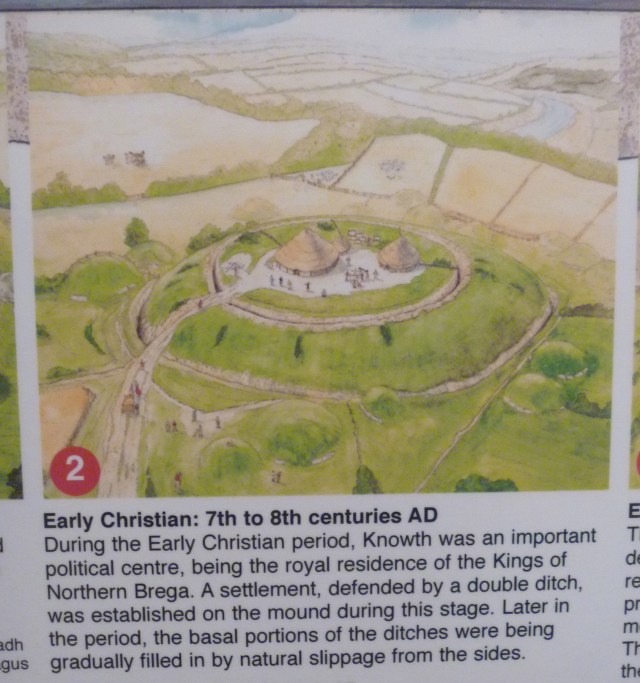
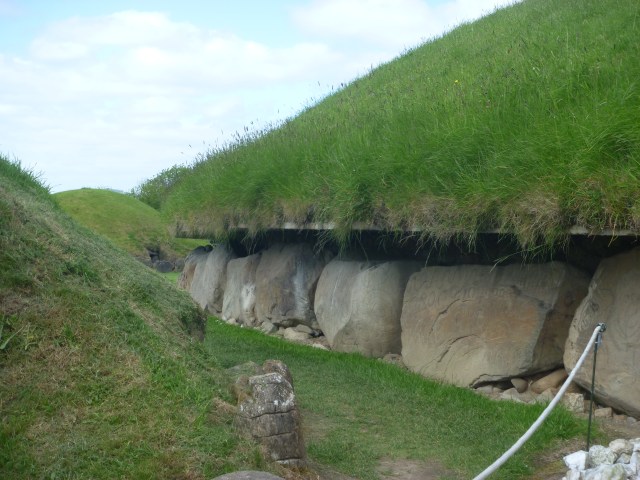
In order of age the earliest site that I visited, and featuring also at the beginning of the first chapter ‘Ireland Before History: The Stone Age’ is Knowth which, along with its, probably better known, neighbour, Newgrange, is “one of three great burial mounds erected in the ‘sacred landscape’ of the Lower Boyne Valley in Co. Meath.” The two passage-tombs under the great tumulus were probably erected before 2500BC. Around the main mound are several recently reconstructed ‘satellite’ tombs.
Knowth Main Mound
and Satellites
One of the Passage Tombs
I didn’t have time to visit both mounds as I was travelling between Co. Kildare and Co. Fermanagh but I did manage Knowth and will definitely return to see Newgrange, especially now that I know how the system for visiting works! My Heritage Ireland Card gave me free admittance to the site.
“Please note this is a very busy site and it is important to be at the Centre early in the day to ensure a visit to the monuments, as places on the tours are limited each day. There is no direct access to either Newgrange or Knowth. All access is through the Visitor Centre and by guided tour only.”
I had arrived across country and found the approach lanes surprisingly quiet but on arrival in the crowded car park and on joining the queues at the Visitor Centre I discovered that most people and all coaches arrive via the nearby Motorway. There’s plenty to see in the Centre and then time to catch the timed minibus to Knowth where you get a very full guided tour inside and outside the tumulus.
We were able to enter the tomb and to climb to the top for a wonderful view towards Newgrange and also The Hill of Tara the ‘most historic place in all Ireland, having played an important mythical and symbolic role in the country from the Stone Age to the 19th century, including the nominal centre of the ‘High Kingship’ of Ireland.’
The Surface on the Top of Knowth
Newgrange from Knowth
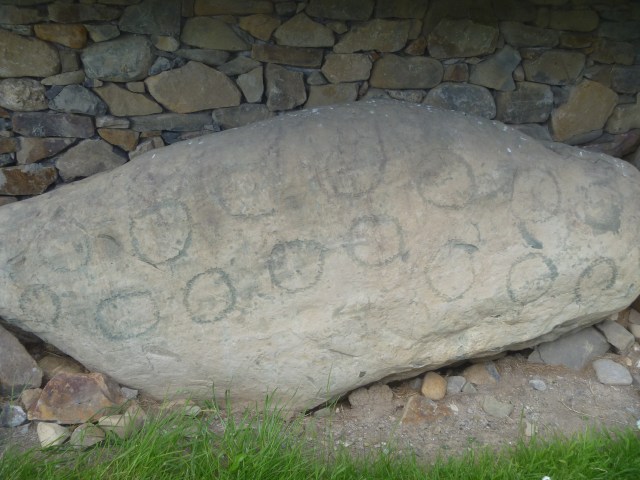
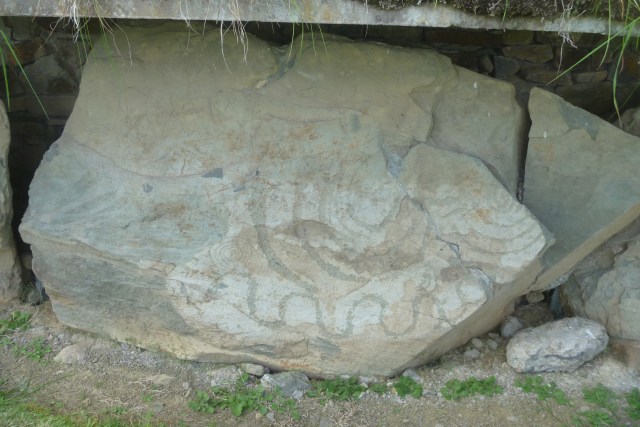
It’s quite amazing that the carved stones around the base of the mound have been preserved across the centuries.
Just one example of the stone carvings!
And another
Quartz from the Wicklow Mountains and Granite from the Mountains of Mourne
I will definitely visit again and get to Newgrange and maybe also the site of the Hill Tara which seems to be very little visited.
With Friends at Shottesbrooke for a Landmark Occasion
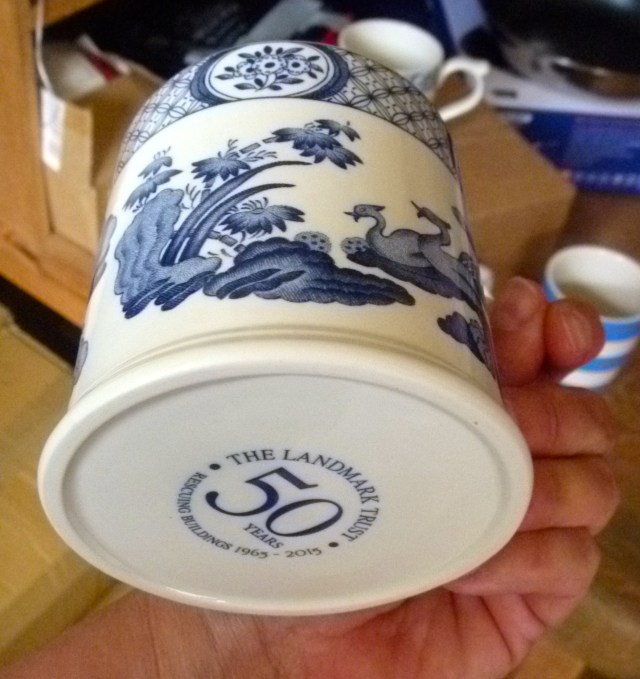
Back in May, when I was in Ireland, The Landmark Trust celebrated it’s 50th anniversary with a variety of activities and events on a Golden Weekend – the sun even shone! That weekend (16 and 17 May) properties were open to the public, Antony Gormley’s LAND sculptures were unveiled and visitors at all properties were entertained by choirs singing simultaneous performances of An Anthem for Landmark.
I was disappointed to miss this event but in the annual Friends’ mailing I received an invitation to attend “A reception for Friends to include a talk and tour about Shottesbrooke, its church and Landmark’s offices” and the date was to be the afternoon of Friday 26 June. I knew already that I’d be flying out of Gatwick on 18 June and back on 25. So I decided to drive to London, leaving the car at Belsize Park, and drive to Shottesbrooke in Berkshire on the Friday in question.
What a beautiful day it was and how lucky the Landmark Trust staff are to work in such beautiful, rural surroundings. A buffet lunch was spread before us upon arrival; and not long after the first group was assembled to have an introduction to the Estate and its deserted medieval village by local historian David Ford. You can read here his history of the Estate and his entertaining history of the Church.
Spire inspired by Salisbury Cathedral
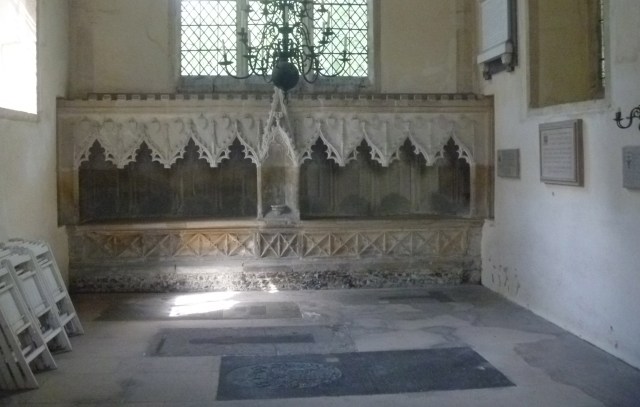
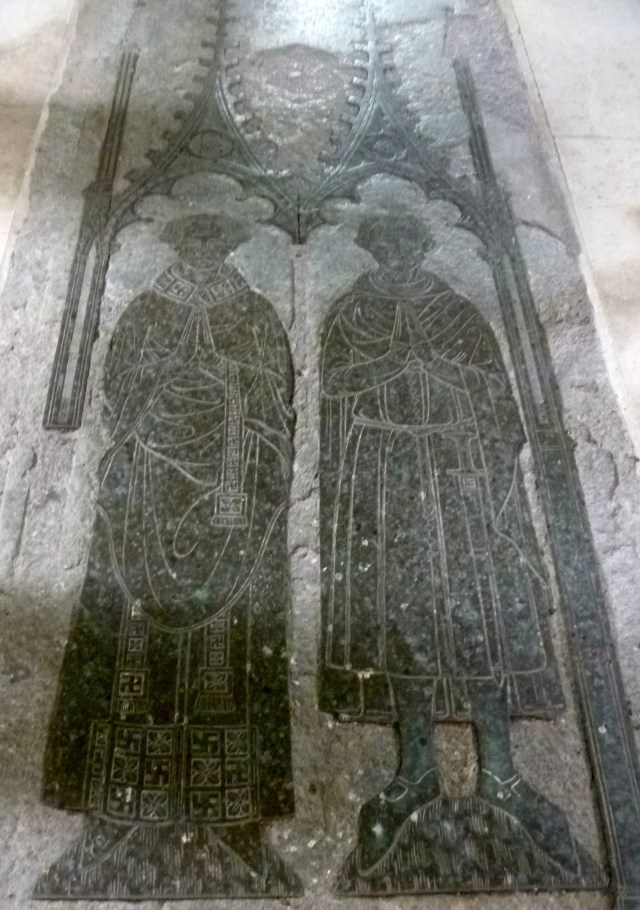
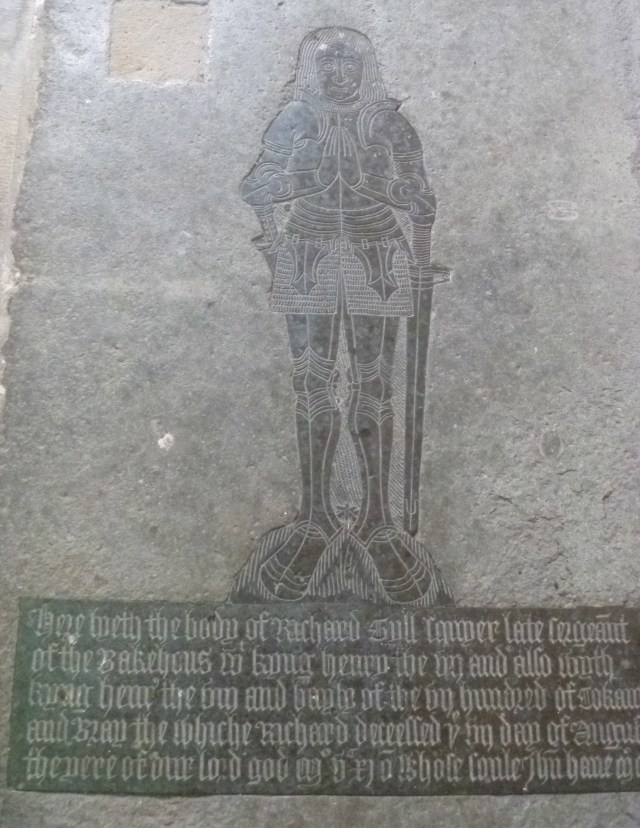
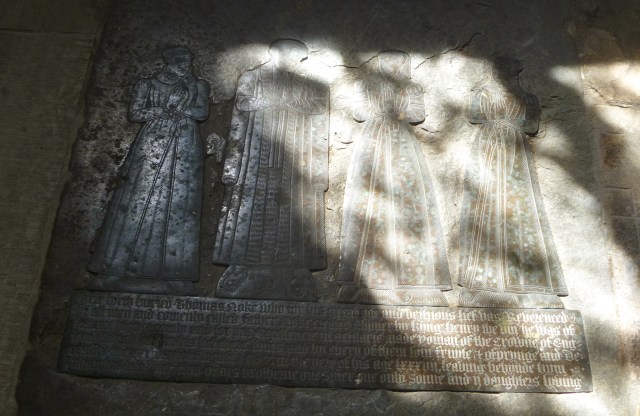
St John’s Church, Shottesbrooke features in Simon Jenkins’s “England’s Thousand Best Churches” which I’ve mentioned here several times before. “The spire is visible rising over the woods from a distance and is a splendid feature of the landscape.” Inside there are several extraordinary tombs, including the double tomb of Sir William Trussell and his lady with a canopy of eight ogee arches, and “The floors of Shottesbrooke are littered with splendid brasses still in place. one pair, of a priest and a layman of c.1370, has them both in prayer with singularly grim expressions on their faces.”
The Trussell Double Tomb
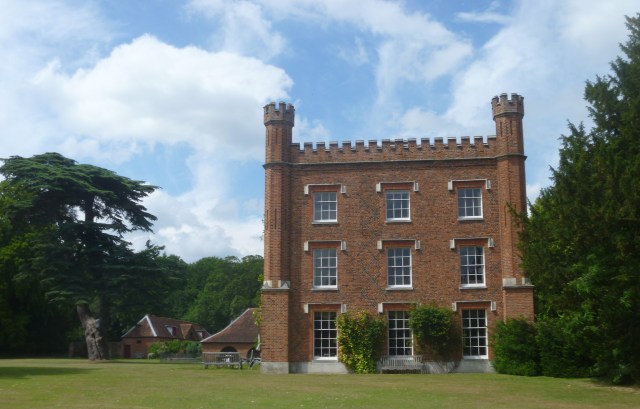
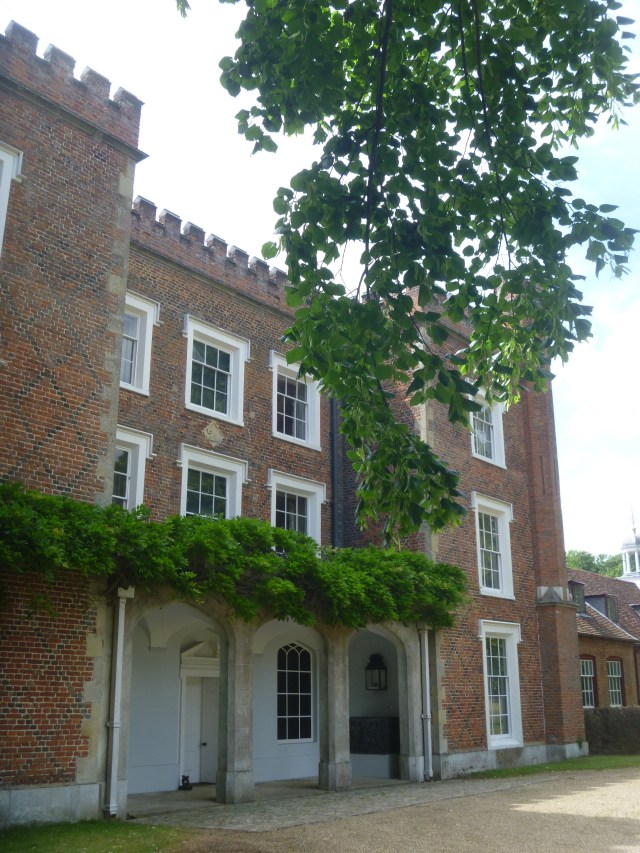
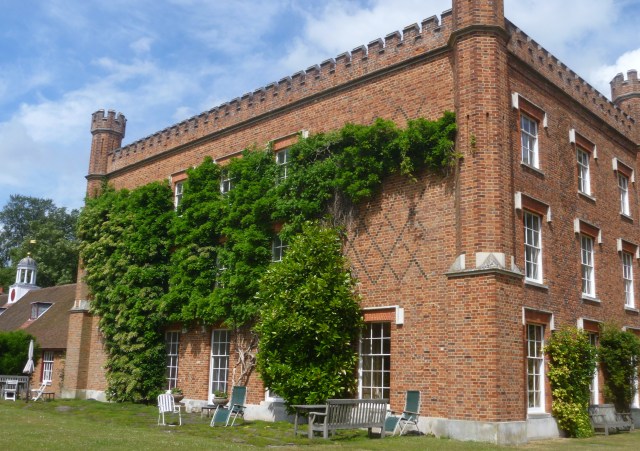
After visiting the church we were taken across the lawns to view the exterior of Shottesbrooke Park House. It is still owned by descendants of cousins of the Vansittart family who bought the property in 1716, namely the widow and son of Sir John Smith (founder of The Landmark Trust).
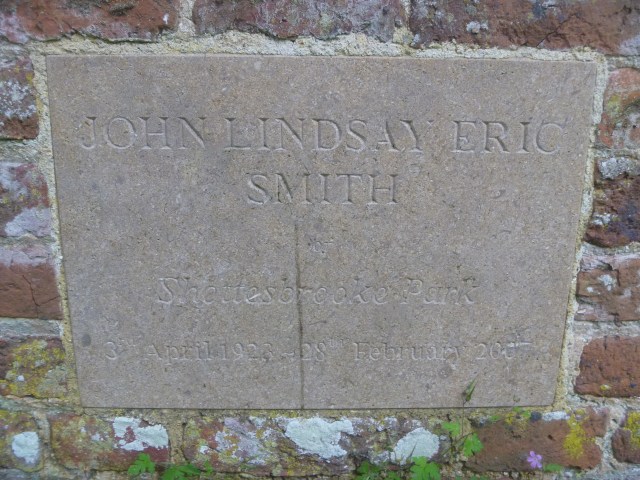
Sir John Smith Memorial in the Churchyard
Side View of the House
House Front
Rear of House
Following David’s tour we adjourned back to the cottage for further cups of tea and home made cake before being taken to see the anniversary exhibition in a barn, to offices in farm out-buildings and the Landmark main offices in the former farmhouse.
Welcome to the Exhibition
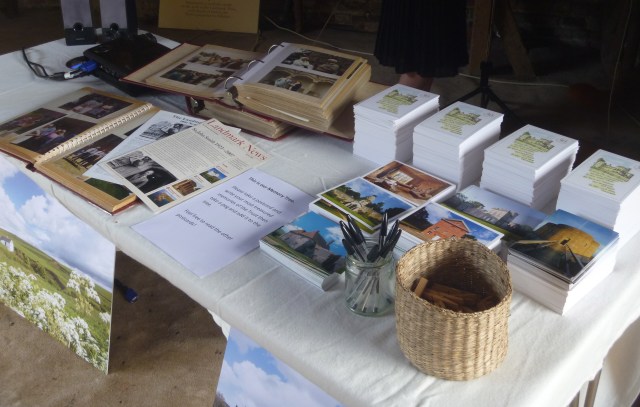
A Display Table
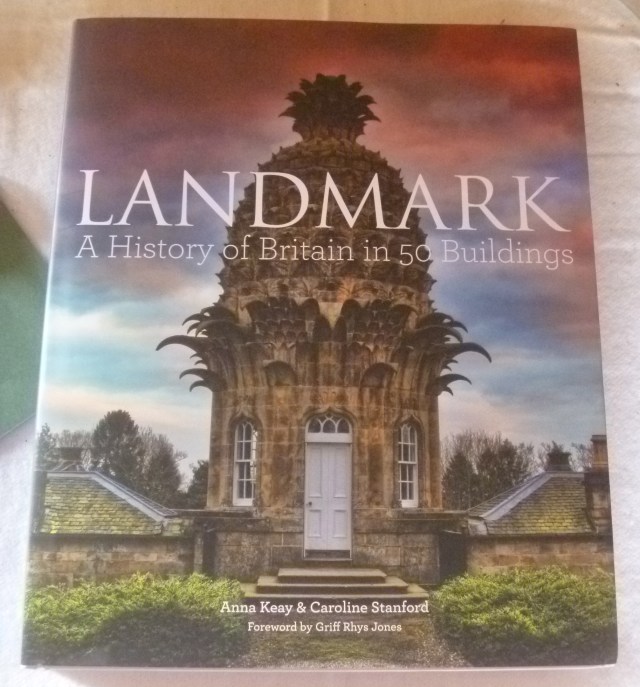
To be published soon!
The Director of The Landmark Trust, Anna Keay, then welcomed us and thanked us for our support before going on to tell us about two properties that are opening this year (Belmont at Lyme Regis and St Edward’s Presbytery at Ramsgate) and future projects. Strawberries and cream were served to round off a wonderful afternoon. Friday was the start of a weekend of festivities and receptions at Shottesbrooke including a Director’s Lunch for Landmark Patrons on the Saturday and a big anniversary celebration on the Sunday to which all staff including housekeepers and gardeners were invited.
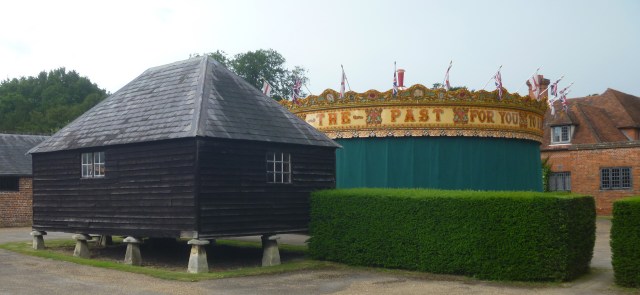
Carousel Fun on Sunday!
Libraries Big and Libraries Small [1]
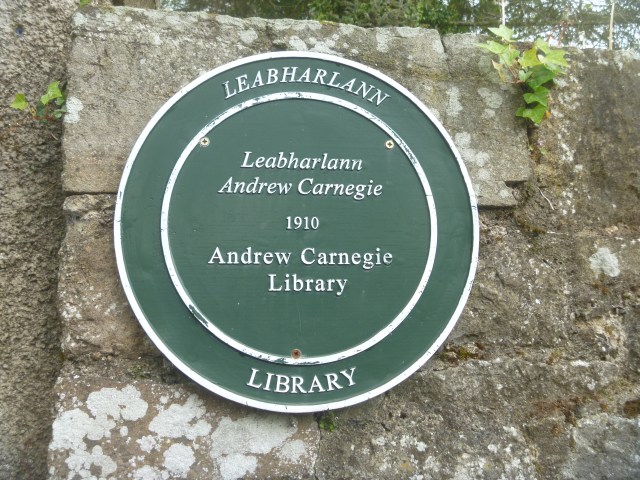
One Irish word I came to recognize on my recent trip, although I don’t know how it’s pronounced, was Leabharlann. Needless to say, it means Library.
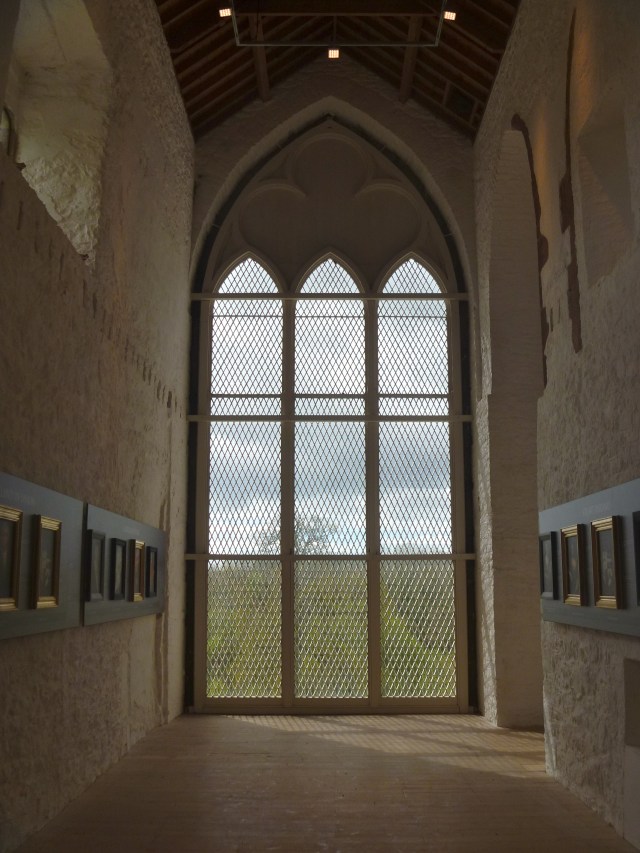
Colclough Room, former Tintern Abbey Library
And the first Library I came across was no longer in use as such. It was the library at Tintern Abbey. Since restoration this room is now known as the Colclough Room and is used as a gallery to tell the stories of the families who lived here.
To my mind the best place to pick up wifi is at a Public Library and I made a couple of visits to Lismore Public Library and Dungarvan Library on some of the wetter days that I spent at Salterbridge Gatelodge.
Lismore Public Library
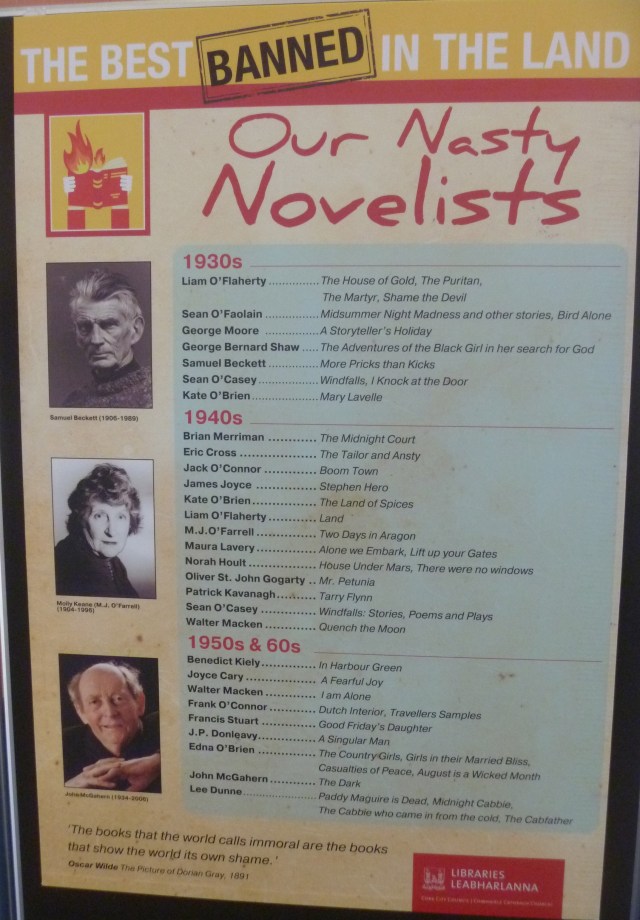
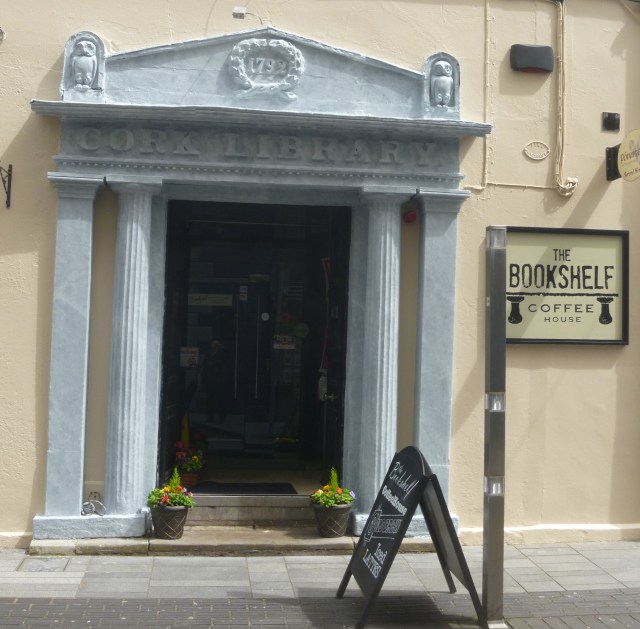
On my day out in Cork I popped into the Cork Public Library. There was an interesting display in the foyer : The Best Banned in the Land featuring books banned by the Catholic church in Ireland.
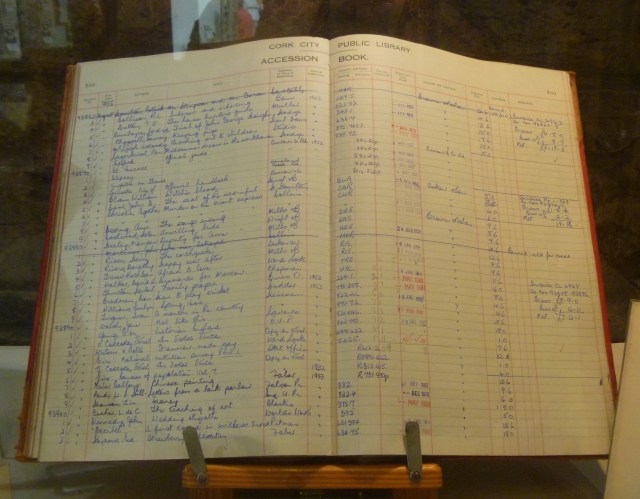
The Cork Library Register of Banned Books
Best Banned Books
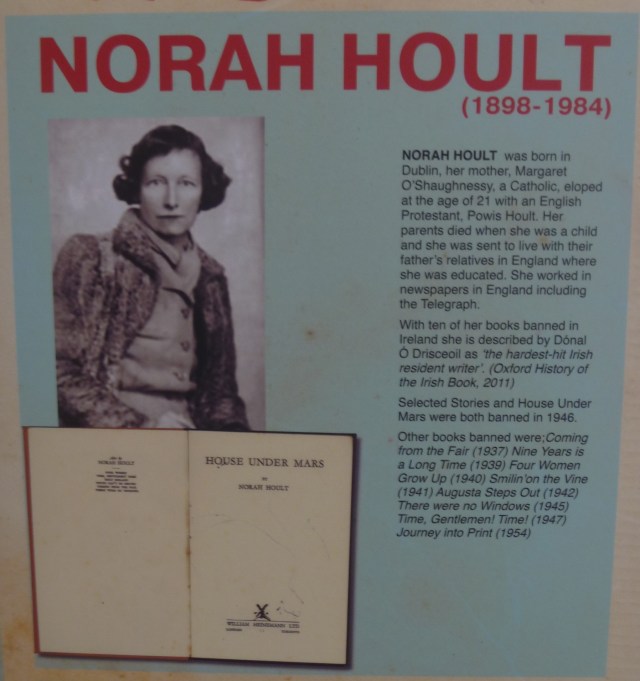
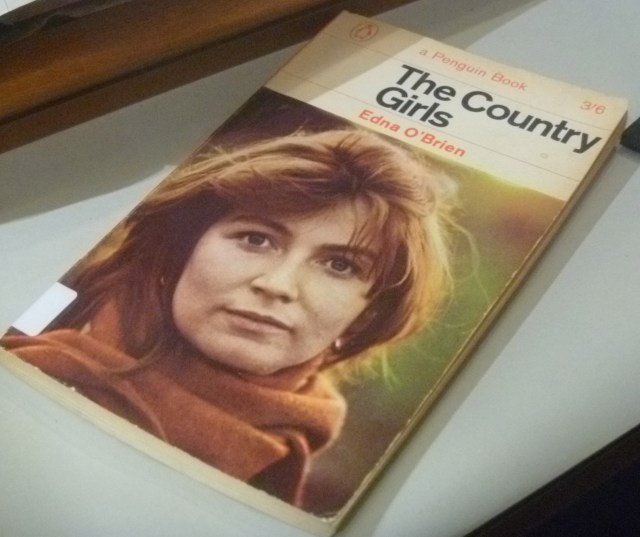
Many of the authors were Irish and often the Library had bought copies which were later removed from shelves and returned to booksellers for credit. The exhibition focussed on those Irish authors. The list of “Our Nasty Novelists” included George Bernard Shaw, Edna O’Brien, James Joyce, M J O’Farrell (Molly Keane), and I recognised ‘Persephone’ author Norah Hoult (Persephone Book 59 “There were no windows”)
Banned Women
Norah Hoult – Banned
Edna O’Brien – Banned
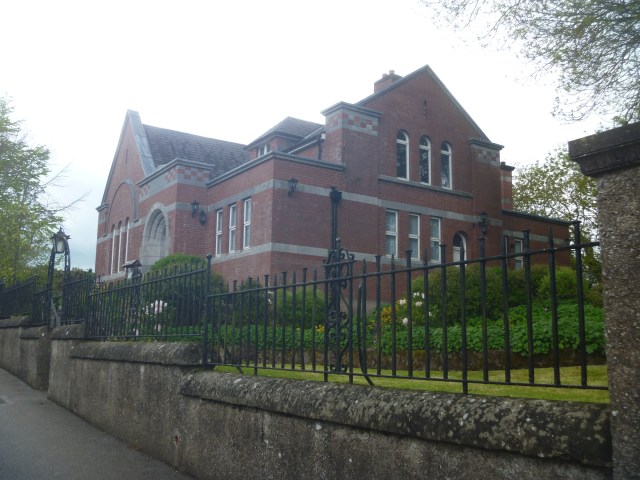
Later, on a Walking Tour in Cork, I spotted a new use for an old library
Northern Irish Gate Lodges
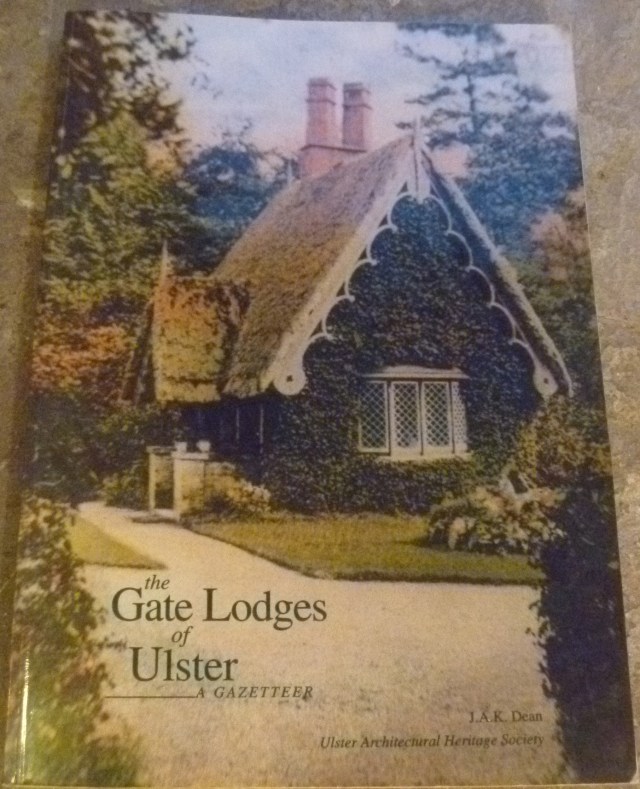
Gate lodge, or gatelodge, seems me to be an Irish term for what we, over here, would just call a Lodge. In amongst the majority of what I could only call dross (although there was one excellent shelf of local (in the sense of Northern Irish) books [see photos below]) in the Library at The Barbican, an Irish Landmark Trust property on the coast of Antrim in Northern Ireland, I found a most interesting book. “The Gate Lodges of Ulster : a gazetteer” by J A K Dean; Ulster Architectural Heritage Society, 1994.
The book came about as a result of research carried out by Dean 30 years earlier. Another look at the topic during the early 1990s revealed much demolition and decay had occurred and a comprehensive renewal of study lead to the publication of the gazetteer. I’m wondering whether a similar study has been carried out in the South – a much greater project. Gate lodges had much to teach about developing awareness and ambitions of their patrons, and the changing skills of builders and architects. There’s a huge variety- from vernacular tradition to architectural sophistication yet they had a single simple purpose – to house the gatekeeper and his family. The Gazetteer is a fascinating study of individual gate lodges. Here I’ve abstracted details from the book and added my photos. 
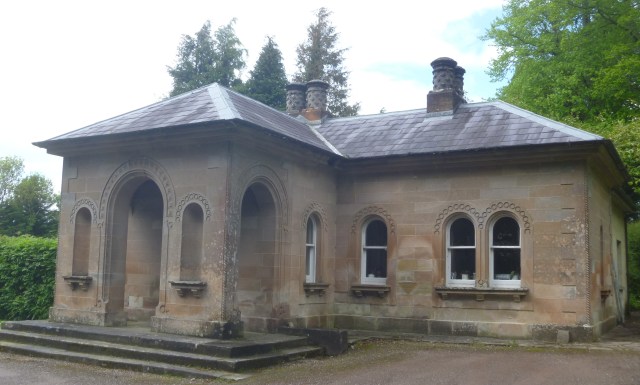
Gate Lodge at Castle Coole – Weir’s Bridge Lodge
Built c1880 i.e. after the Weir’s Bridge was built to carry the Enniskillen-Florence Court-Belcoo line of the Sligo, Leitrim and Northern Counties Railway. It’s a fine building in the Lombardie style [sic]. Built from the highest quality ashlar sandstone with immaculately carved detailing. Single-storey on a T-plan. It has a raised stepped platform to form a “porte-cochere” with semi-circular headed arches. 
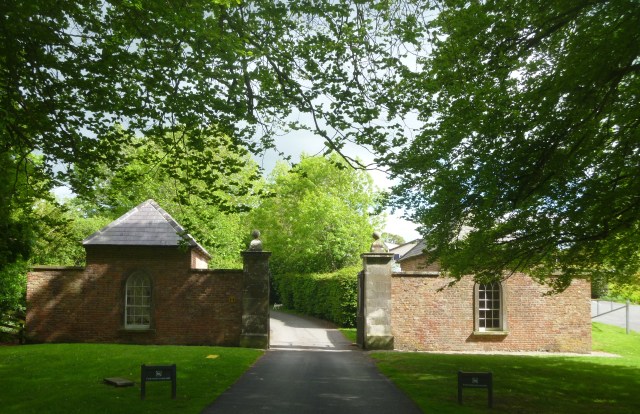
Gate Lodges – Castle Coole Twin Lodges
These were even recorded as being dilapidated in 1834. They not even mentioned on OS maps until 1857. Now they’re presented as Georgian Gothick. Built so close together a family carriage could hardly pass through. The chimney stacks have now been lost. Armar Lowry-Corry (1st earl of Belmore) the builder died in 1802 and his son Somerset had an energetic building programme for 40 years. He built up a lasting relationship with architect Sir Richard Morrison. 
Single gate Lodge at Castle Coole
Gate Lodge at Crom
The main entrance lodge at Crom was built in 1838 by Edward Blore, architect. Blore was responsible for many other buildings on the Crom Estate. It’s an irregular Tudor picturesque cottage on one and a half storeys. Dean’s book also contains interior plans. It has two main gables and pretty serrated bargeboards plus finialed hipknobs. On Wikipedia I found that a Hip-knob, in architecture, is the finial on the hip of a roof, between the barge-boards of a gable. The small gabled hall/porch has the only remaining lattice panes. 
Gate Lodge at Springhill
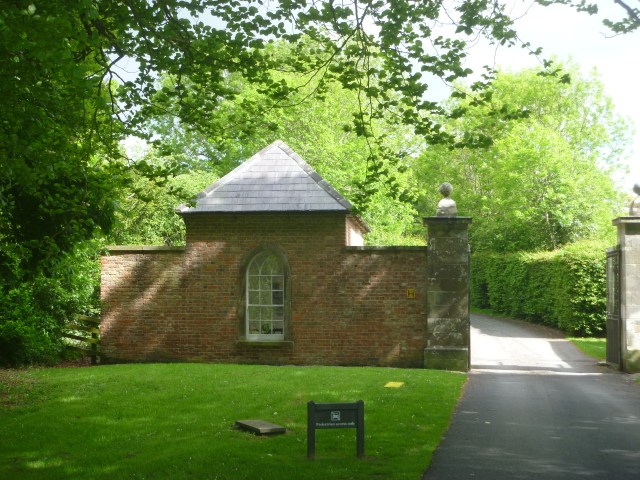
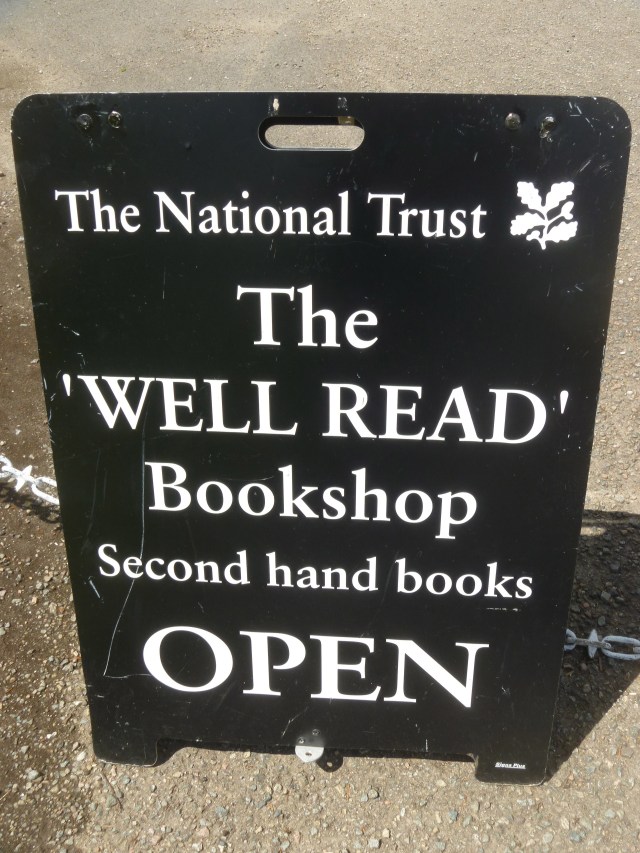
The Gate Lodge at the National Trust property Springhill in County Londonderry is now the secondhand bookshop. It stands at the original main entrance (which is now now the exit) and was built not long after George Lenox-Conyngham succeeded to the property in 1788. It is the sole survivor of a pair of Georgian Gothick porters’ lodges. Their gables faced each other across the avenue entrance. It is a simple rectangular two roomed structure, has steeply pitched gables with a wide door opening and a minuscule lancet opening above to light a bed loft. 
The Well Read Bookshop
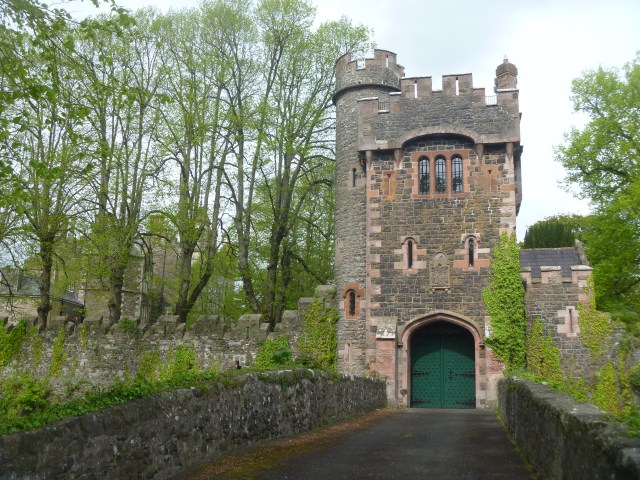
The Glenarm Barbican
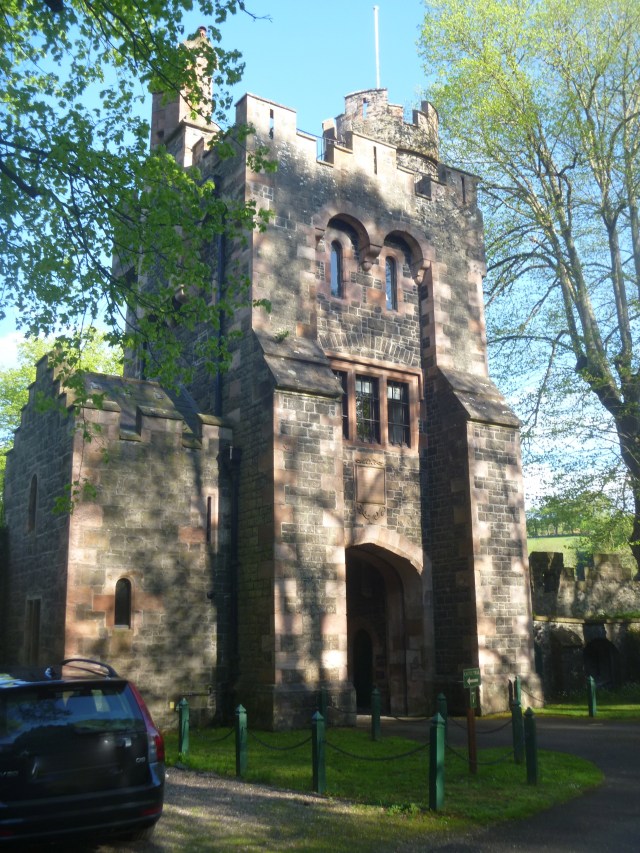
Built in 1824, the Barbican’s architect was William Vitruvius Morrison. Dean writes : “Beloved of photographers and Victorian illustrators for its dramatic architecture and romantic setting. Approached across a two-arched bridge spanning the Glenarm River the Barbican is a three-storey castellated gatehouse. An ancient sandstone coat of arms was inserted.” This had originally graced the front of the castle when it had been built by the first earl in 1636, while the other side of The Barbican was also given a commemorative plaque: THIS GATEWAY WAS BUILT AND THE CASTLE RESTORED BY EDMUND M’DONNELL, ESQUIRE, AND HIS WIFE ANNE KATHERINE, IN HER OWN RIGHT COUNTESS OF ANTRIM AND VISCOUNTESS DUNLUCE A.D. 1825. Attached to one side is the two-storey porter’s accommodation – one up and one down.
Rear of the Barbican
The Barbican Bookshelf
Death in Rome : The Protestant Cemetery and The Catacombs of San Callisto
One visit I had promised myself on this trip to Rome was pay to a call at the Cimitero Acattolico or, as usually known in English, The Protestant Cemetery at Rome.
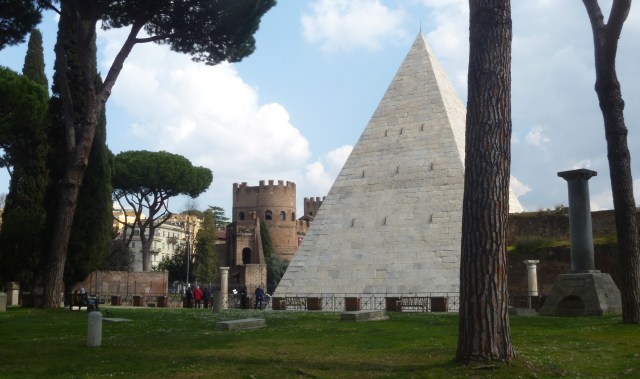
“The cemetery is an open space among ruins, covered in winter with violets and daisies. It might make one in love with death, to think one should be buried in so sweet a place”
Percy Bysshe Shelley: Adonais: an elegy on the death of John Keats (1821)
I checked the website carefully before leaving home and made extra sure that Saturday 14 March was not a holiday and so after taking the train from Tivoli to Rome I made my way to the cemetery. When you emerge from the Pyramide Metro Station you can’t miss the huge Pyramid to Gaius Cestius and the cemetery is right next door: but you risk life and limb when crossing the roads to get to it!
Thomas Hardy wrote a poem entitled
“Rome at the Pyramid of Cestius Near the Graves of Shelley and Keats (1887)”
Who, then, was Cestius,
And what is he to me? –
Amid thick thoughts and memories multitudinous
One thought alone brings he.
I can recall no word
Of anything he did;
For me he is a man who died and was interred
To leave a pyramid
Whose purpose was exprest
Not with its first design,
Nor till, far down in Time, beside it found their rest
Two countrymen of mine.
Cestius in life, maybe,
Slew, breathed out threatening;
I know not. This I know: in death all silently
He does a kindlier thing,
In beckoning pilgrim feet
With marble finger high
To where, by shadowy wall and history-haunted street,
Those matchless singers lie . . .
–Say, then, he lived and died
That stones which bear his name
Should mark, through Time, where two immortal Shades abide;
It is an ample fame.
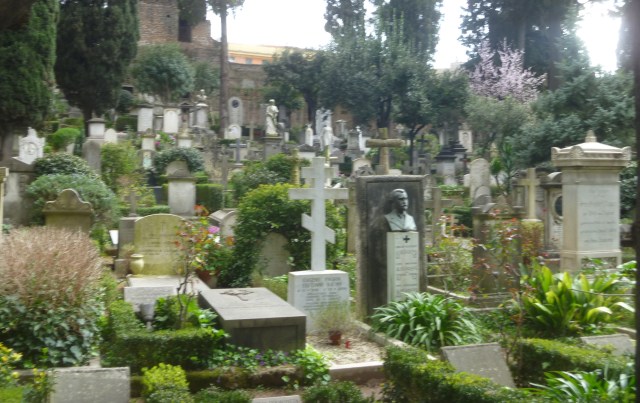
I was not disappointed. It’s truly an oasis of peace and tranquility. It’s divided into sections pre- and post- 1821; which is why Shelley’s ashes are not buried near Keats’s grave.
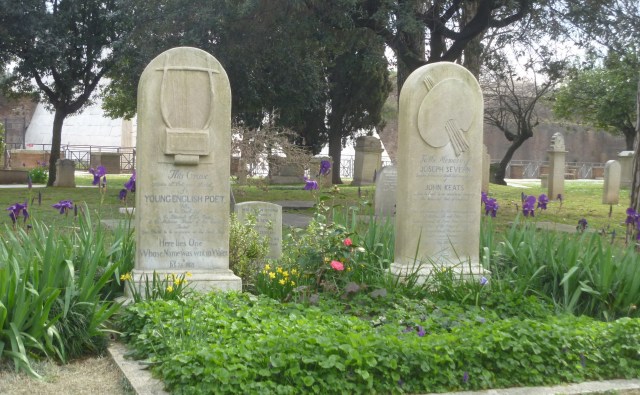
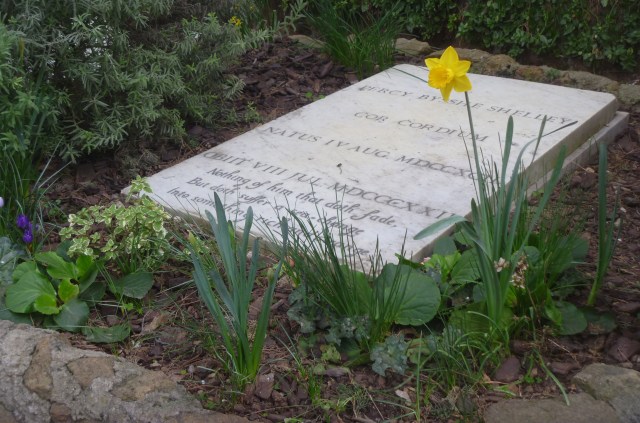
The Graves of Keats and Severn (and Severn’s son)
‘Here Lies One Whose Name Was Writ in Water’ [The only words Keats wished to be on his gravestone]
‘This Grave contains all that was mortal, of a YOUNG ENGLISH POET, who on his Death Bed, in the Bitterness of his heart, at the Malicious Power of his enemies, desired these words to be Engraven on his Tomb Stone’ [Words added by his friends Joseph Severn and Charles Brown]
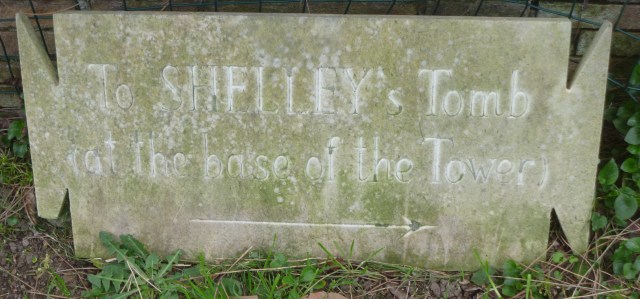
‘Nothing of him that doth fade
But doth suffer a sea-change
Into something rich and strange’
From Shakespeare’s The Tempest [Shelley was drowned and only his ashes are buried here]
There is an especially good chapter about the cemetery in Peter Stanford’s “How to read a graveyard“.
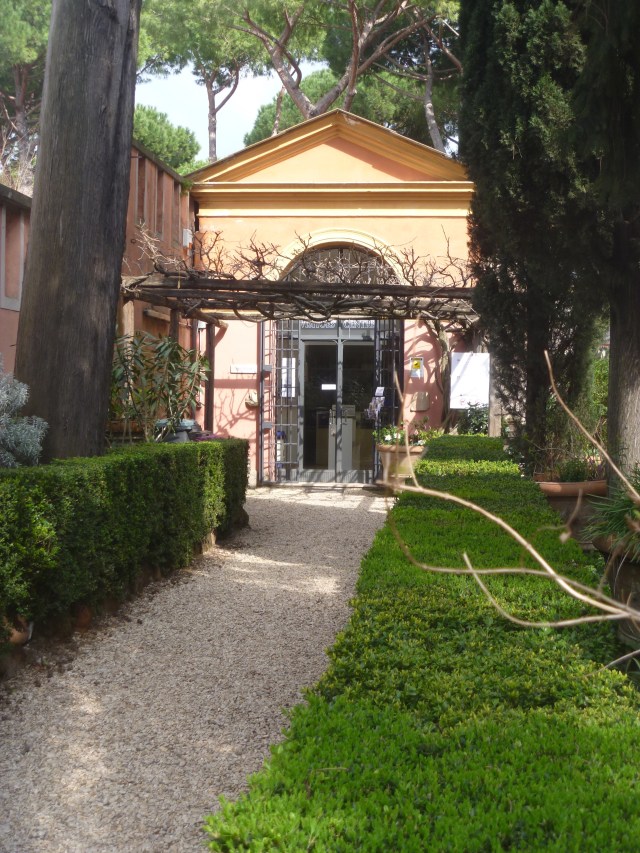
There’s a small bookshop and information office (above) near the entrance and the English guide helped me to pinpoint the grave of a little-known Australian author whose books I enjoy : Martin Boyd.
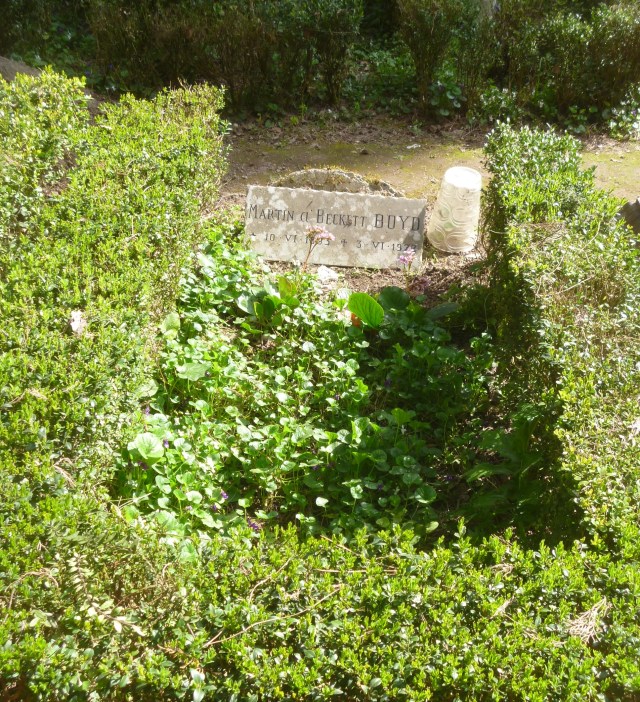
His best-known book is “Lucinda Brayford” but I’ve enjoyed reading his Langton tetralogy lately :
The Langton tetralogy which, though not published as a series during his lifetime, is now referred to as a collective:
The Cardboard Crown (London, England: Cresset Press, 1952.)
A Difficult Young Man (London, England : Cresset Press, 1955.)
Outbreak of Love (London, England: John Murray, 1957.)
When Blackbirds Sing (London, England: Abelard-Schuman, 1962.)
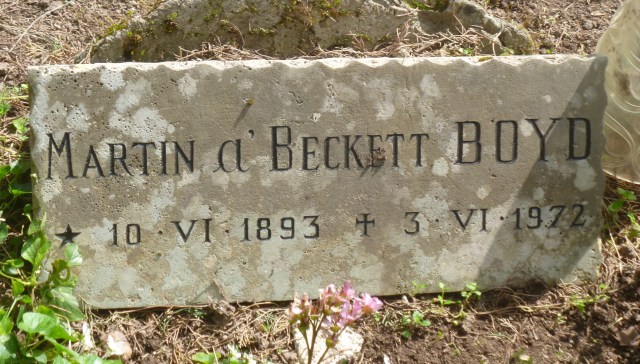
Martin Boyd’s Headstone
Even though the Protestant Cemetery was high on my list this visit I also hoped to walk some of the famous Appian Way, the Roman road that connects Rome with Brindisi in southeast Italy. I read in my guidebooks how to get there and which were the best parts to see then noticed in small inset box this note : Enjoy Rome offers a 3-hour bus and walking tour of the Appia Antica … Call for tour times.
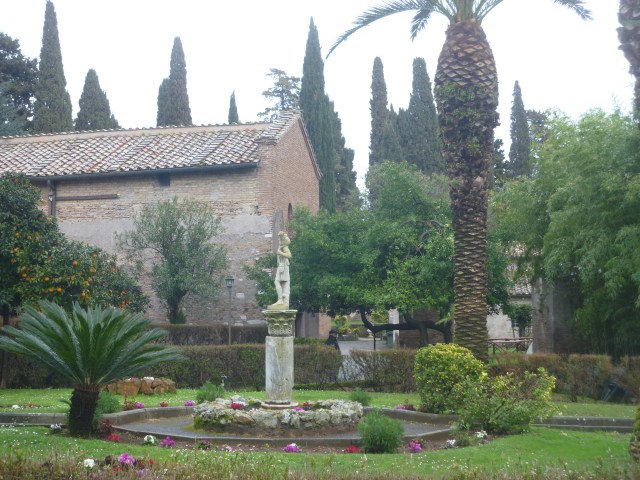
At the Catacombs
I discovered that the Enjoy Rome office is very near to Termini Station so I bought a ticket for the Tuesday 10am departure. The first stop of the excursion is at The Catacombs of San Callisto. We were able to descend into a maze of tunnels and see various types of burial chambers with and without mural decorations.
“Ancient Roman law forbade burials, regardless of religion, inside the city walls. San Callisto is one of the most famous of over 60 catacombs in the city area. There are multiple levels of 1900 year old hand-dug corridors, past a mind-boggling number of tomb niches. Christian-themed inscriptions and frescoes, often endearingly simplistic but carrying strong messages of faith, are everywhere in the catacombs.” [Adapted from Frommer’s Rome Day-By-Day] Several Popes were entombed here.
“The Crypt of St. Cecilia: the popular patron saint of music. Of a noble Roman family, she was martyred in the 3rd c. and entombed where the statue now lies. She was venerated in this crypt for at least five centuries. In 821 her relics were transferred to Trastevere, in the basilica dedicated to her.
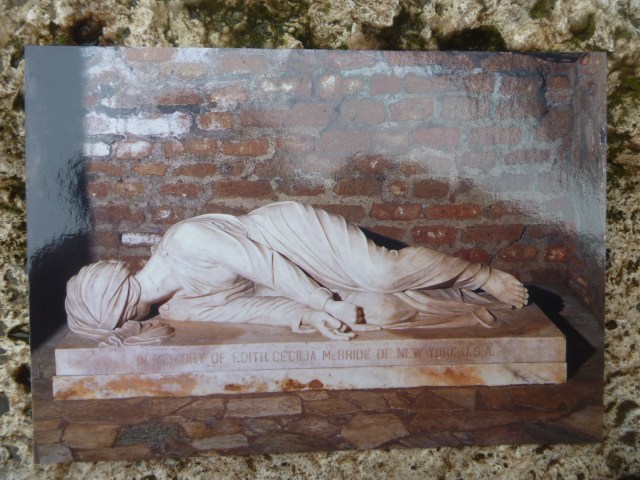
The statue of St. Cecilia is a copy of the celebrated work sculptured by Stefano Maderno in 1599.
The crypt was all covered with mosaics and paintings (beginning of the IX Century). On the wall, near the statue, we see an ancient painting of St. Cecilia in an attitude of prayer; lower down, in a small niche, is a fresco representing Christ holding a Gospel. On the right side is the figure of St.Urban. On the wall of the shaft is the painting of three martyrs: Polycamus, Sebastian and Quirinus.” [Source]
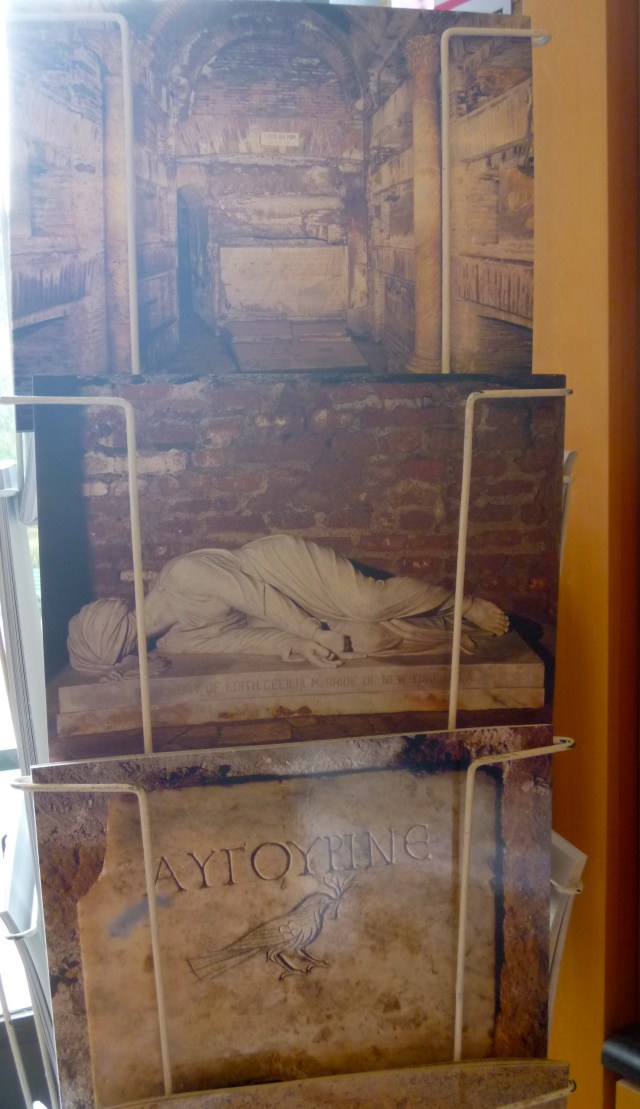
No photography is allowed in the catacombs but I snapped a couple of postcards showing what it’s like down in the depths!
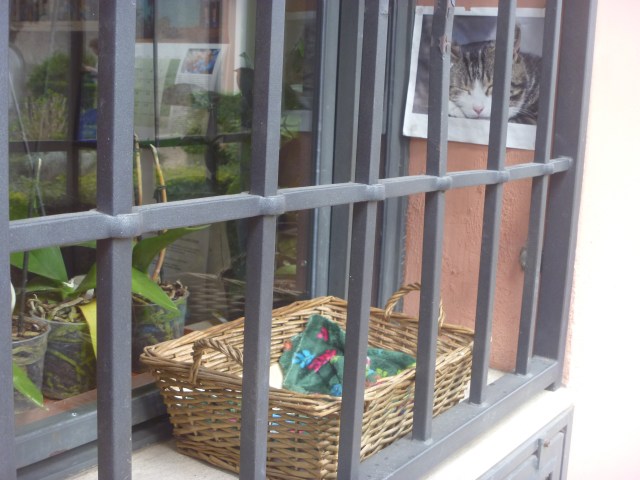
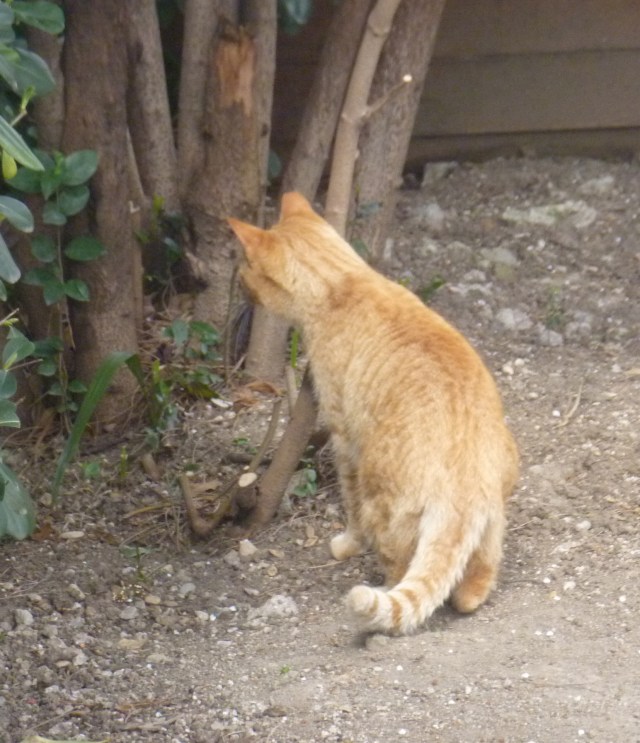
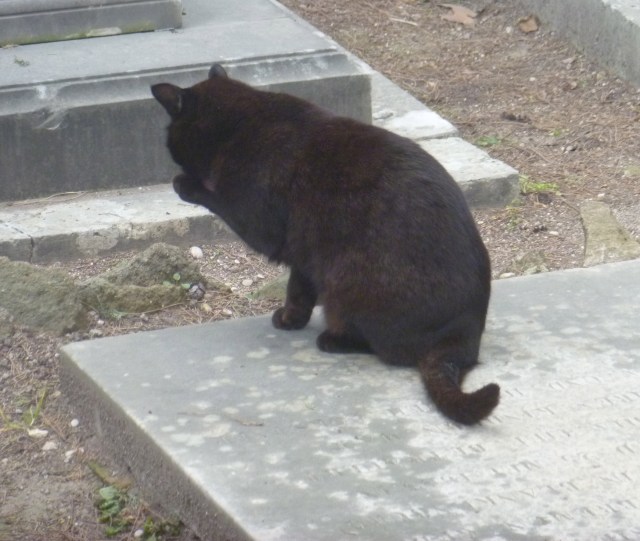
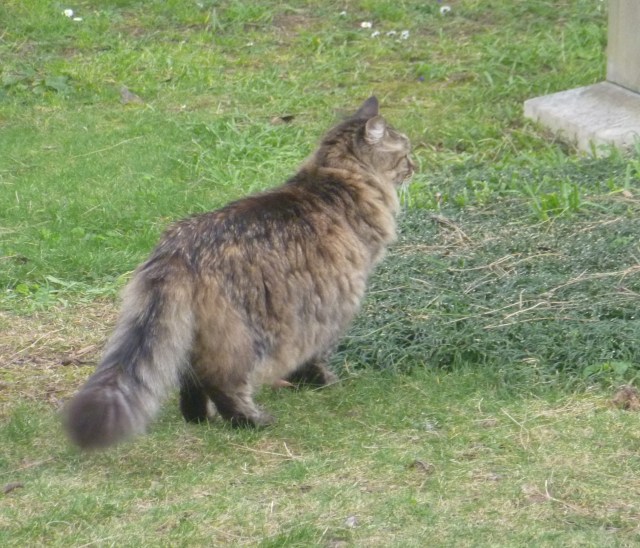
Back at the Cemetery the cats are looked after by volunteers and even have their own website.
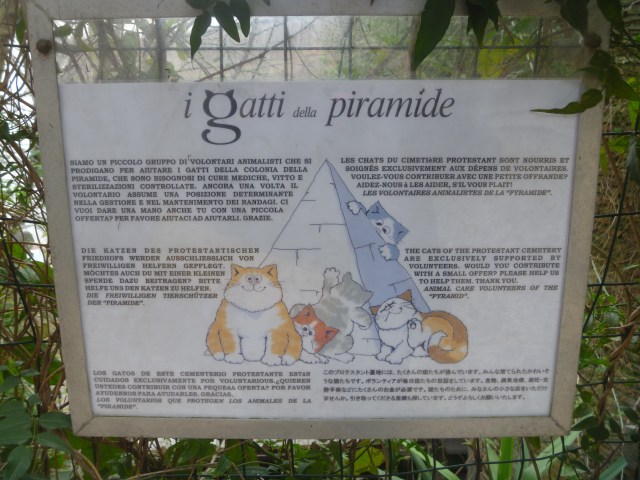
Empty Basket – Where can they be?
Walking and Talking on Hampstead Heath : The Garden of the Finzi-Continis
This post is not a discussion or review of the book in question: Emily does that so much better than I could.
Rather, I’d like to tell you about how a Walking Book Club works.
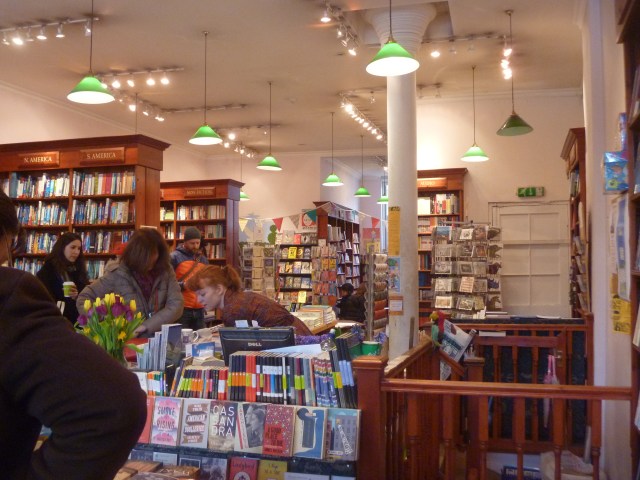
Inside Daunt Books South End Road
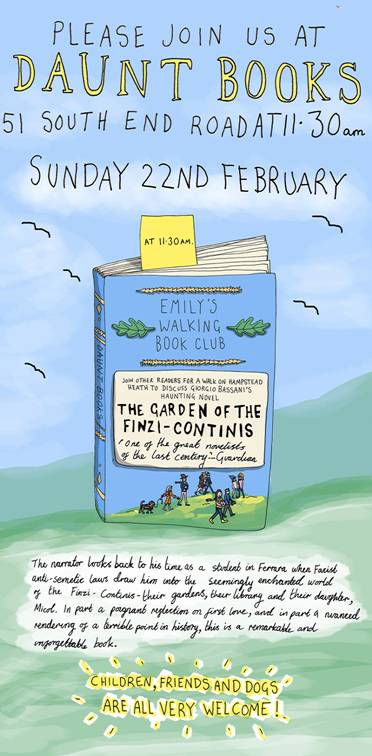
You may remember that I mentioned Daunt Books‘ Walking Book Group in a previous post. Well, at last I have managed to coincide my visit to London with a Sunday meeting of the group. Only a couple of weeks ago did I discover that the group was back in action after Emily’s baby, Vita, was born just 4 months ago.
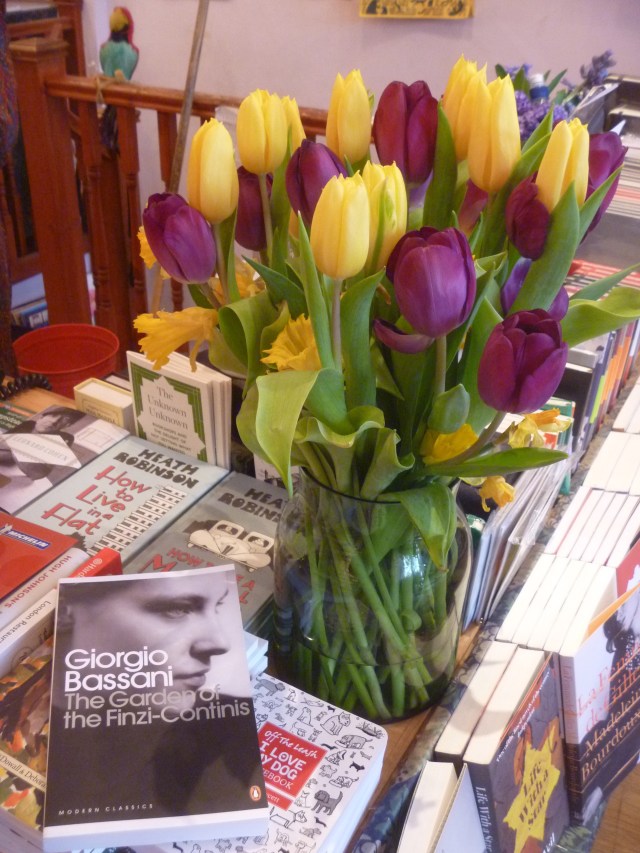
A group of about a dozen or so keen walker-readers gathered together at the shop on Sunday 22 February to walk on Hampstead Heath to talk about the chosen book – The Garden of the Finzi-Continis by Giorgio Bassani. As I’d only discovered this about a week before and as it wasn’t available from my library ordered a copy directly from Daunts. I just managed to finish reading it on the train down from Leeds. This was good as it meant that the book was fresh in my mind. Also, the evening before I had just watched the dvd version of the 1970 film.
At 11.30 we left the shop, crossed the road and before setting off Emily introduced herself : some of the group were regular reader-walkers, some occasional and others, like me, were there for the first time. The only man was later joined by a couple more; we were delighted to have two Italian nationals amongst us who had read the book in its original and were able to offer us other insights into Italian life and culture relevant to our discussions.
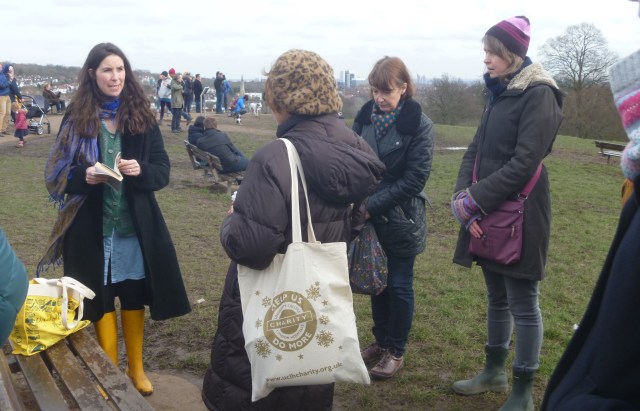
Book talk with Emily [left]
We set off walking and talking in pairs or small groups and every ten minutes or so Emily would bring us all together to sum up, ask questions, provide answers and suggest further topics for conversation. We would then find we started discussion with someone else. The formula works very well. At the highest point of the walk, with long views over London, Emily shared her home-baked cake with us.
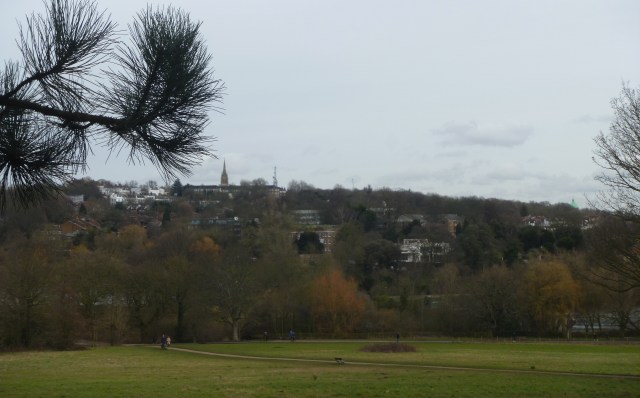
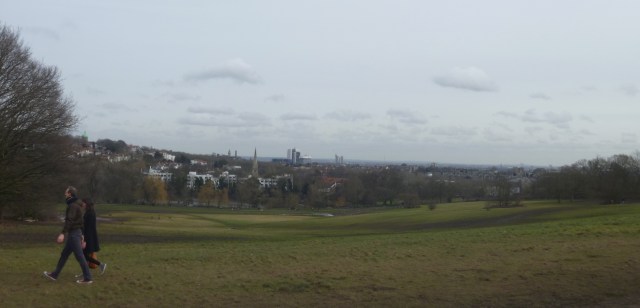
Highgate from The Heath
View from the Heath
Somehow after about an hour we found ourselves back where we started and Emily summed up the discussion, distributed copies of the 2015 2nd Daunt Books Festival programme (there’ll be a walking book group from the Marylebone shop on 20 March) and told the group the next date and book for the regular Sunday Heath walk : 19th April “the Living Mountain” by Nan Shepherd :
“Shepherd wrote a short nonfiction book, The Living Mountain, during the 1940s. The Living Mountain is a reflection her experiences walking in the Cairngorm Mountains. Having completed it, Shepherd chose not to publish the book until 1977.” (Source)
If you’d like to hear a Walking Book Club session in progress you can listen here to Clare Balding who joined Emily on one of her walks in February two years ago.